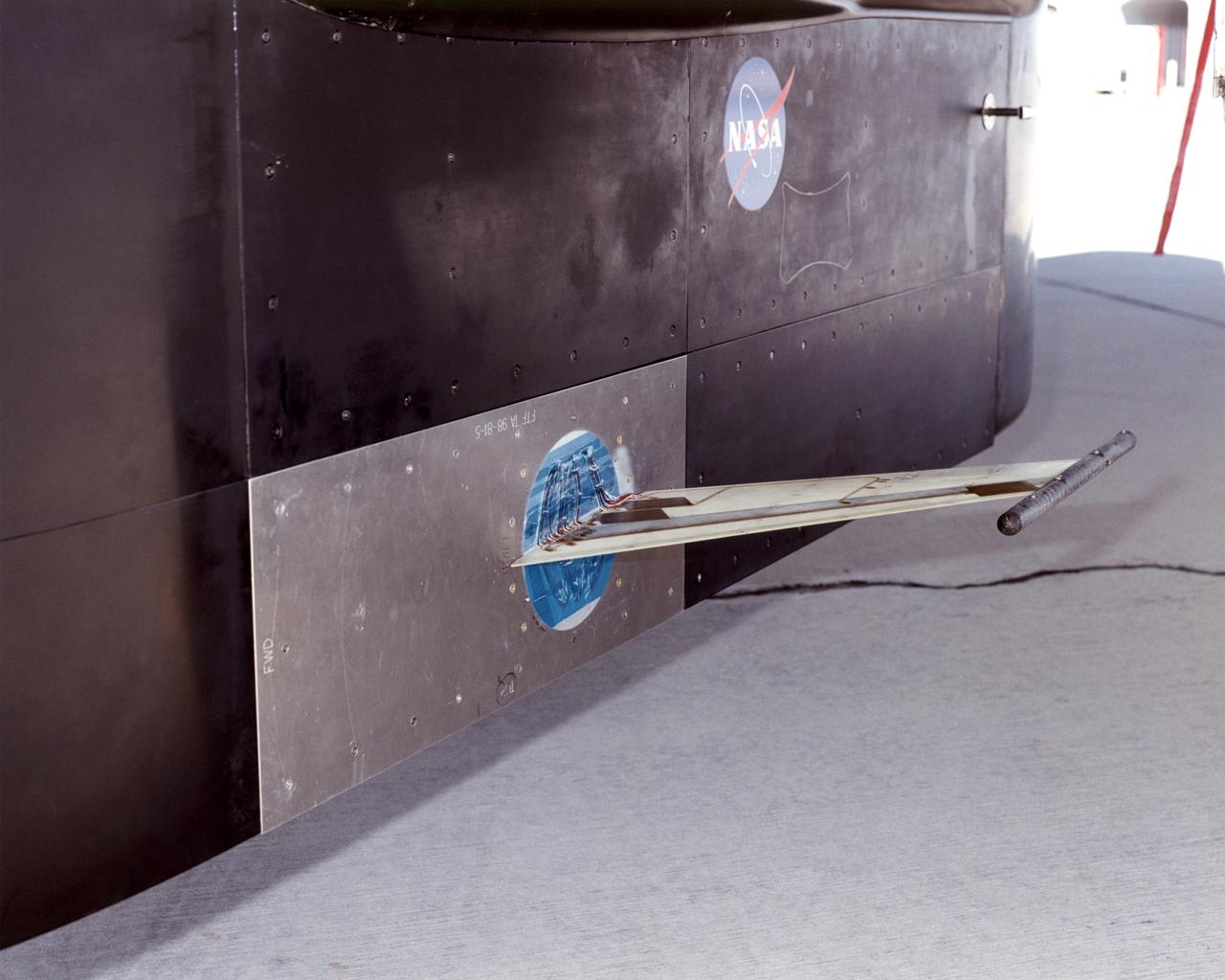
The Aerostructures Test Wing (ATW), which consisted of an 18-inch carbon fiber test wing with surface-mounted piezoelectric strain actuators, was mounted on a special ventral flight test fixture and flown on Dryden's F-15B Research Testbed aircraft
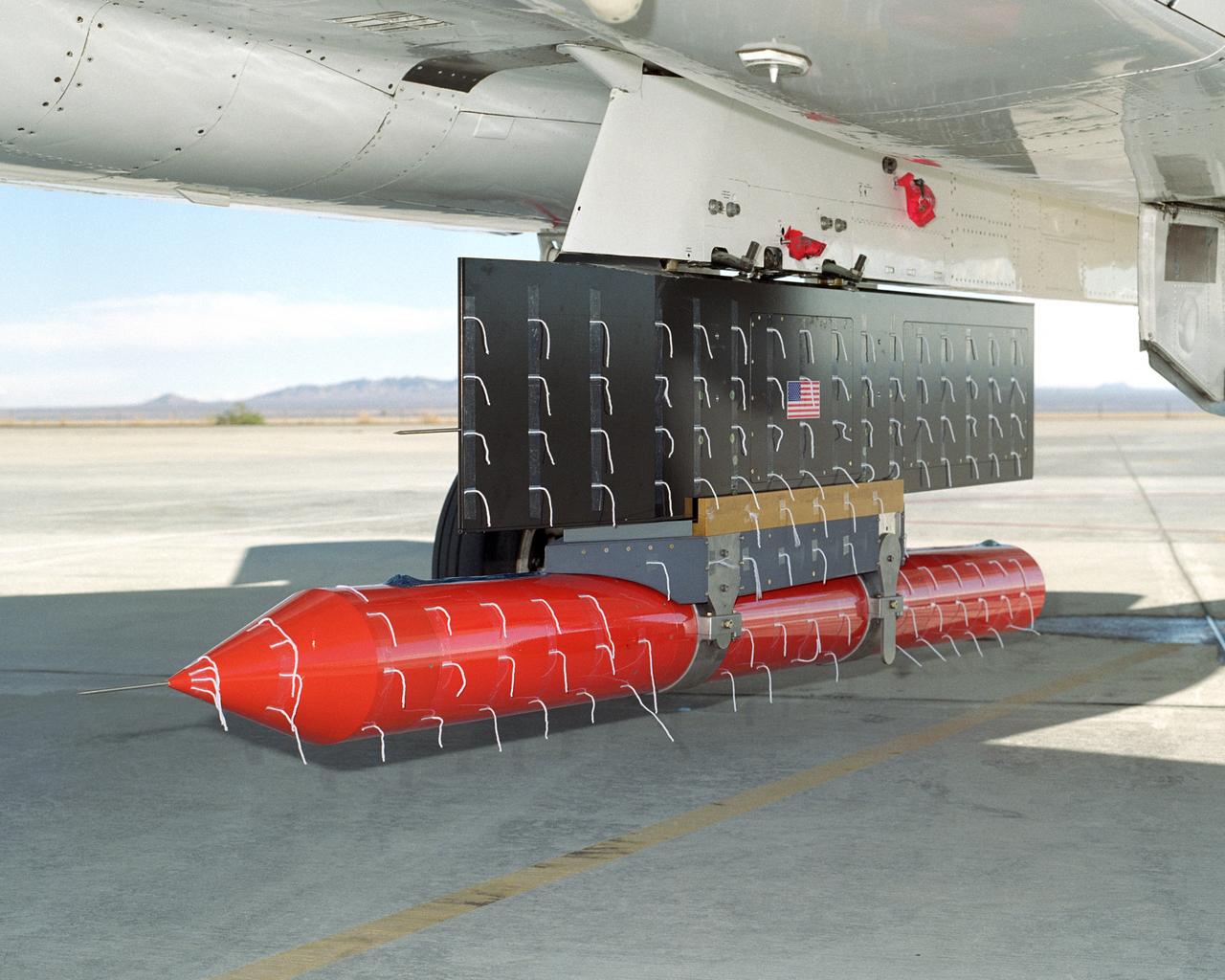
NASA Dryden's new in-house designed Propulsion Flight Test Fixture (PFTF), carried on an F-15B's centerline attachment point, underwent flight envelope expansion in order to verify its design and capabilities.
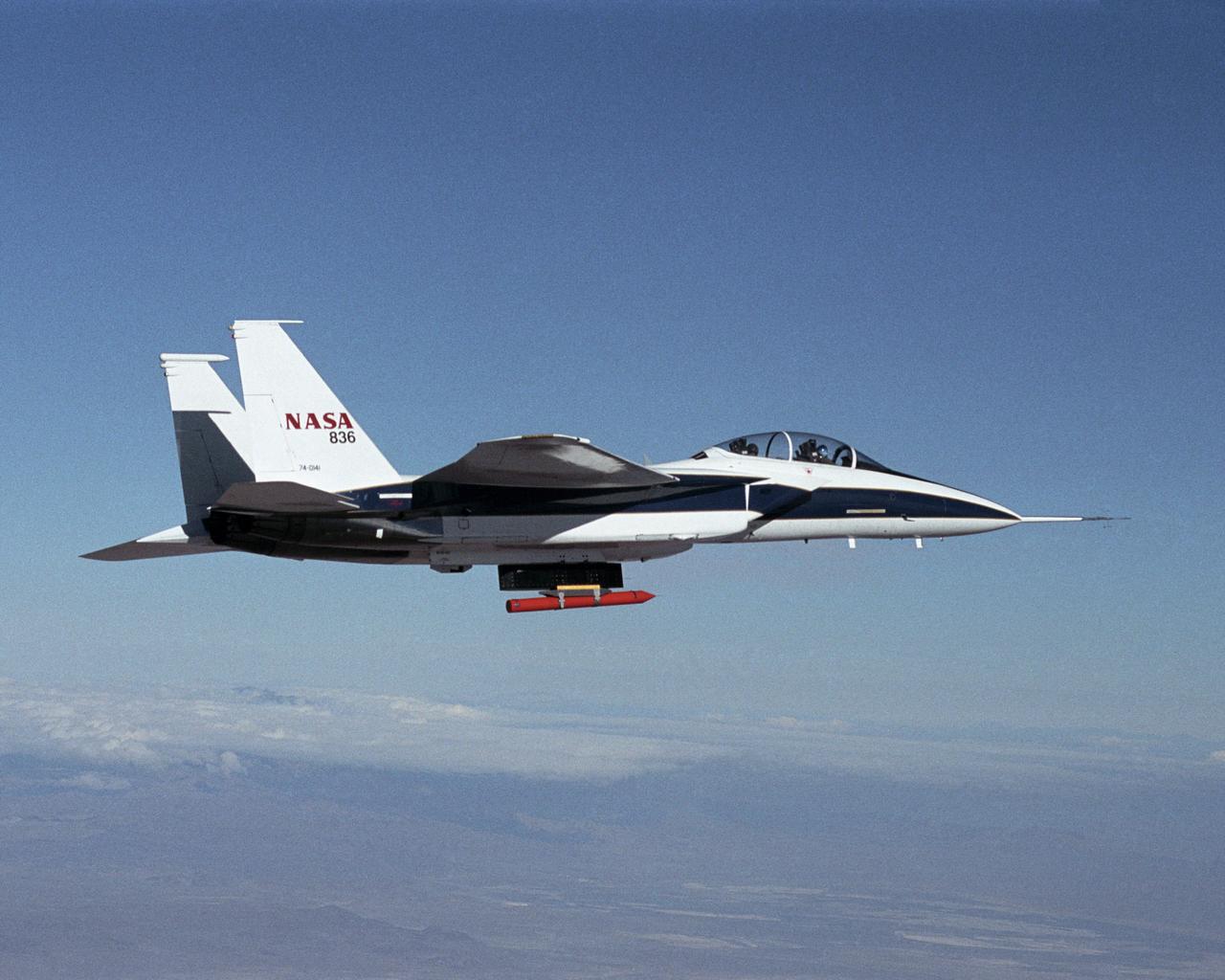
NASA Dryden's new in-house designed Propulsion Flight Test Fixture (PFTF) flew mated to a specially-equipped supersonic F-15B research aircraft during December 2001 and January 2002.
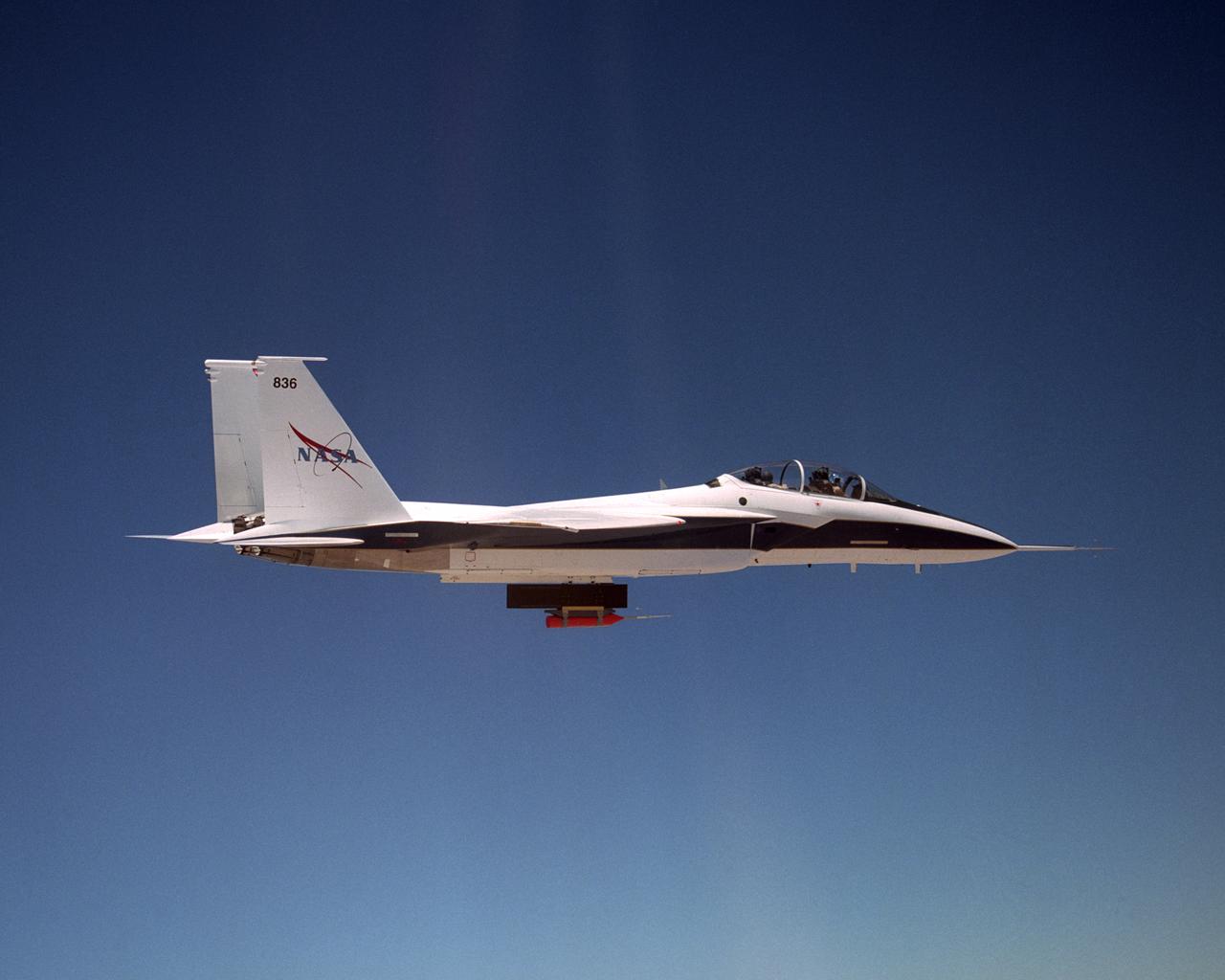
NASA's F-15B Research Testbed aircraft flew instrumentation in June 2004 called the Local Mach Investigation (LMI), designed to gather local airflow data for future research projects using the aircraft's Propulsion Flight Test Fixture (PFTF). The PFTF is the black rectangular fixture attached to the aircraft's belly. The LMI package was located in the orange device attached to the PFTF.
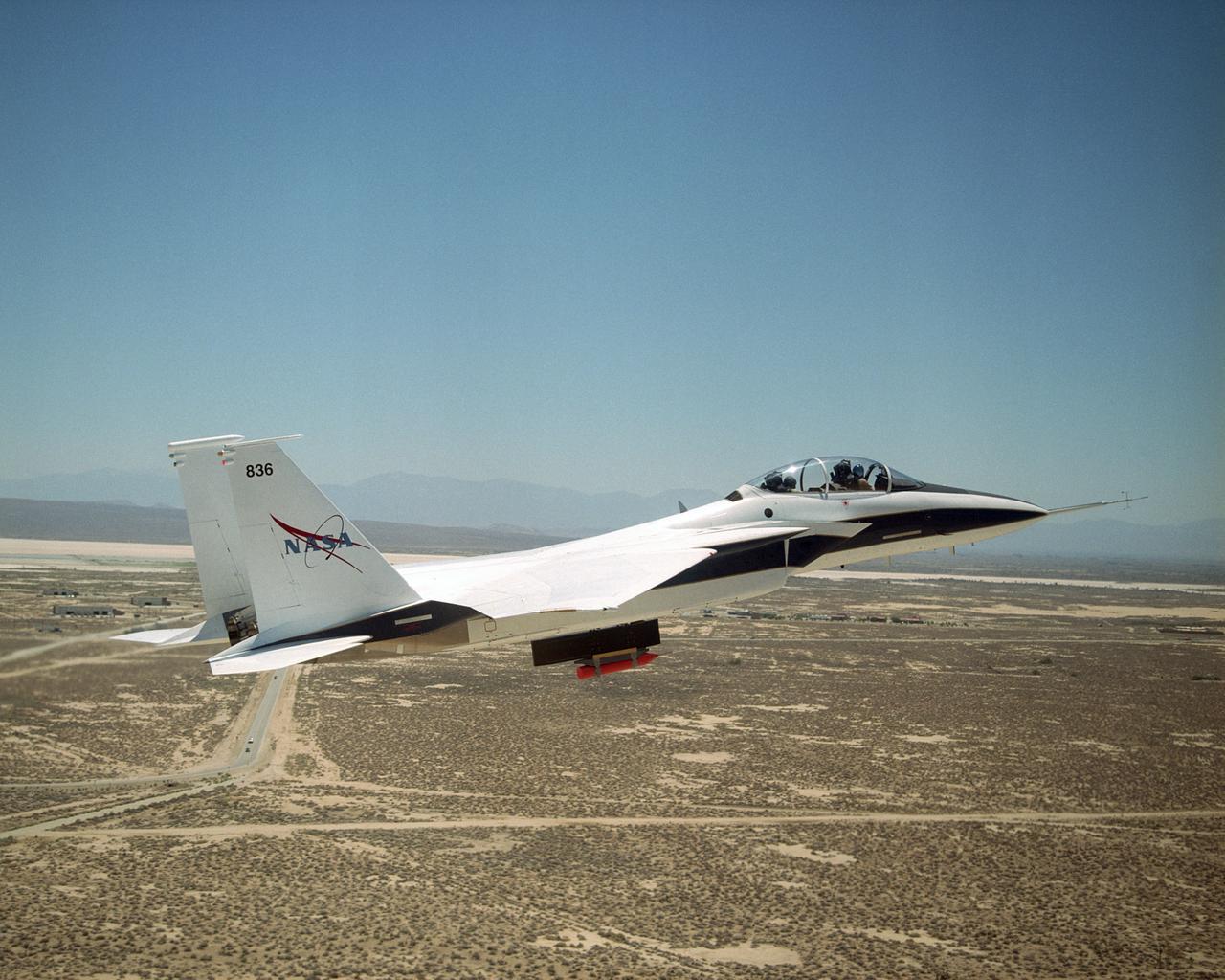
NASA's F-15B Research Testbed aircraft flew instrumentation in June 2004 called the Local Mach Investigation (LMI), designed to gather local airflow data for future research projects using the aircraft's Propulsion Flight Test Fixture (PFTF). The PFTF is the black rectangular fixture attached to the aircraft's belly. The LMI package was located in the orange device attached to the PFTF.

NASA's F-15B Research Testbed aircraft flew instrumentation in June 2004 called the Local Mach Investigation (LMI), designed to gather local airflow data for future research projects using the aircraft's Propulsion Flight Test Fixture (PFTF). The PFTF is the black rectangular fixture attached to the aircraft's belly. The LMI package was located in the orange device attached to the PFTF.
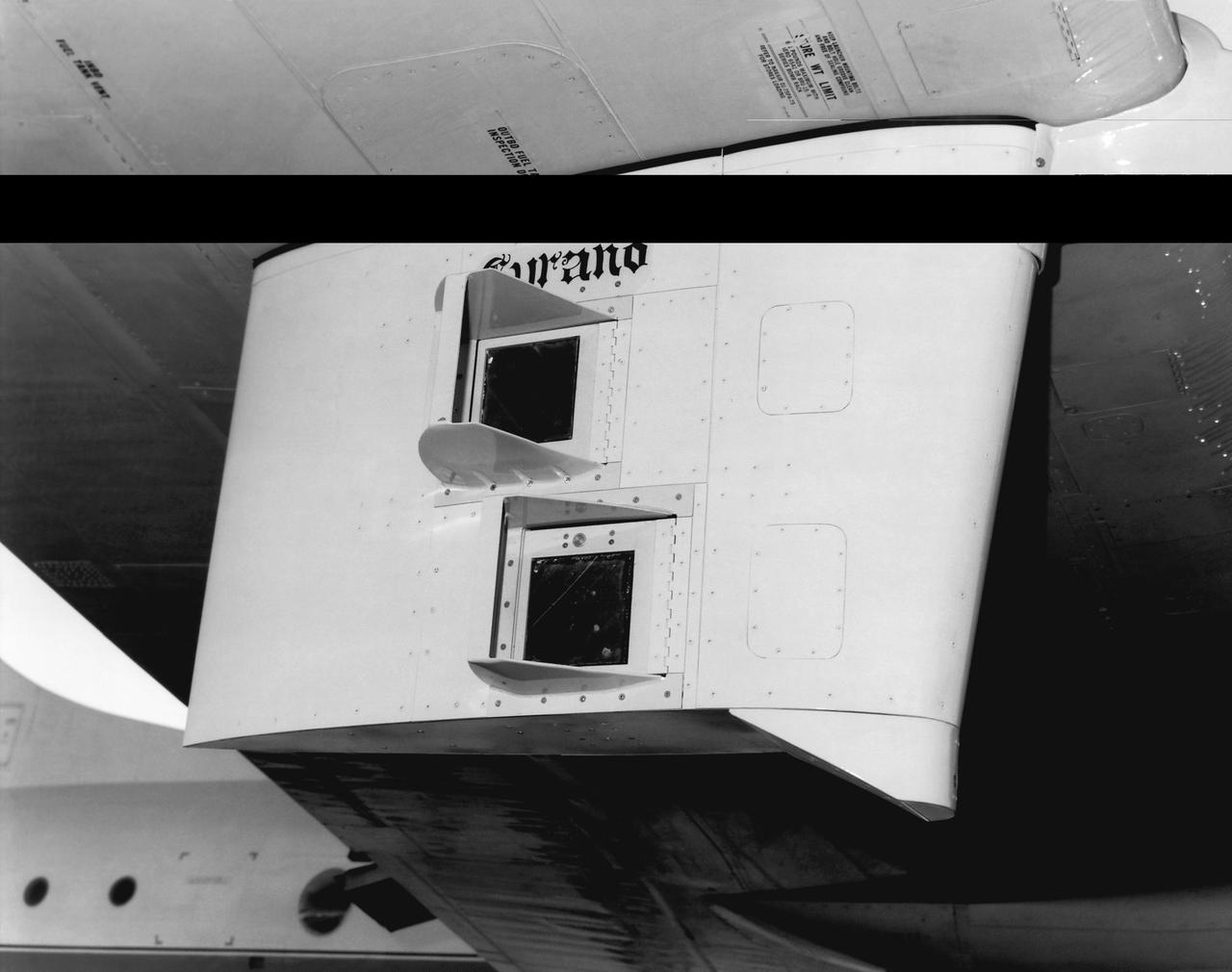
This photo shows the Shuttle tile flight test fixture under the wing of a National Oceanographic and Atmospheric Administration WP-3D aircraft.
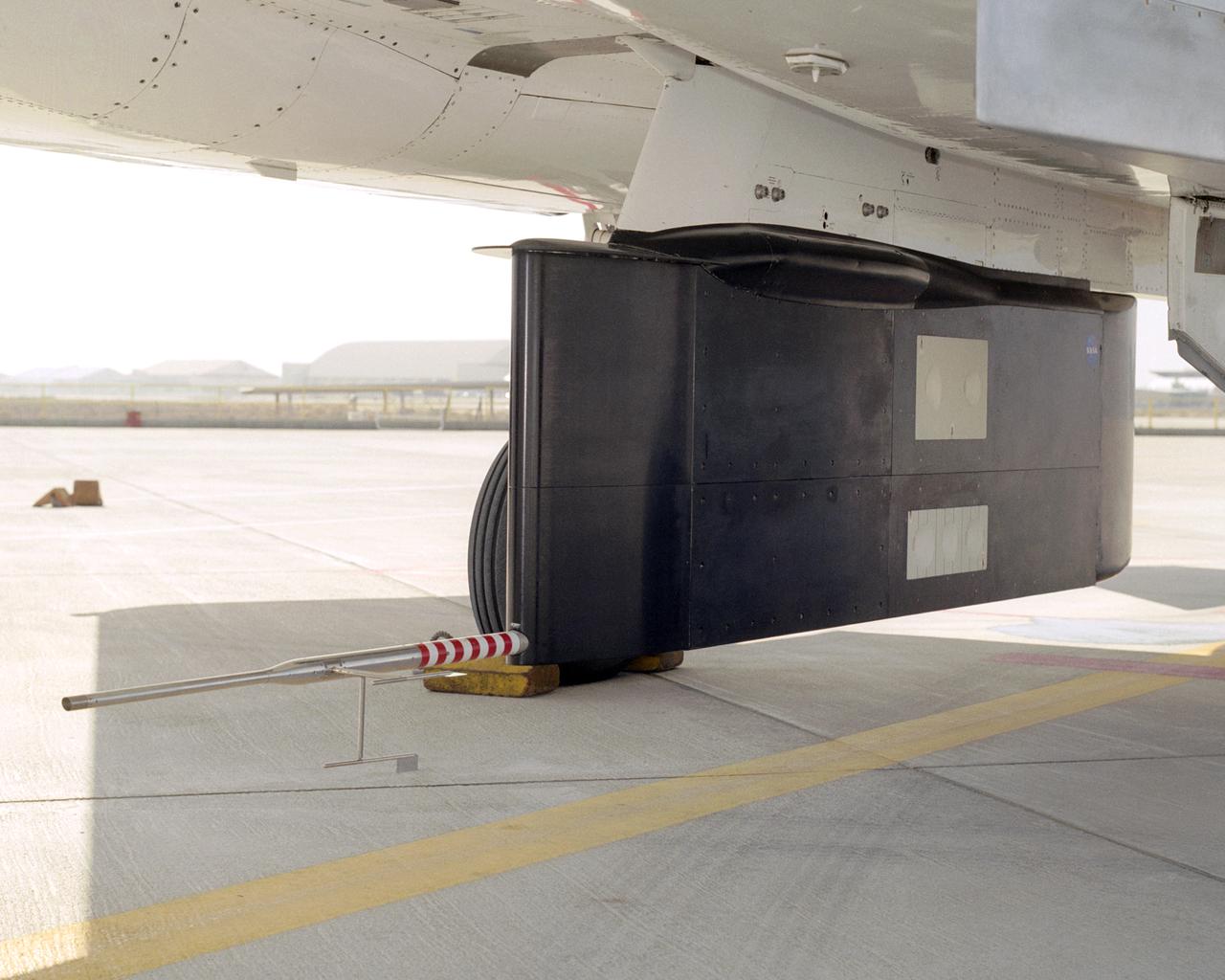
A post-flight inspection of the panels on the F-15B's flight test fixture shows five divots of TPS foam were successfully ejected during the LIFT experiment flight #2, the first flight with TPS foam.

A close up of the Flight Test Fixture II, mounted on the underside of the F-15B Aerodynamic Flight Facility aircraft. The Thermal Protection System (TPS) samples, which included metallic Inconel tiles, soft Advanced Flexible Reusable Surface Insulation tiles, and sealing materials, were attached to the forward-left side position of the test fixture. In-flight video from the aircraft's on-board video system, as well as chase aircraft photos and video footage, documented the condition of the TPS during flights. Surface pressures over the TPS was measured by thermocouples contained in instrumentation "islands," to document shear and shock loads.
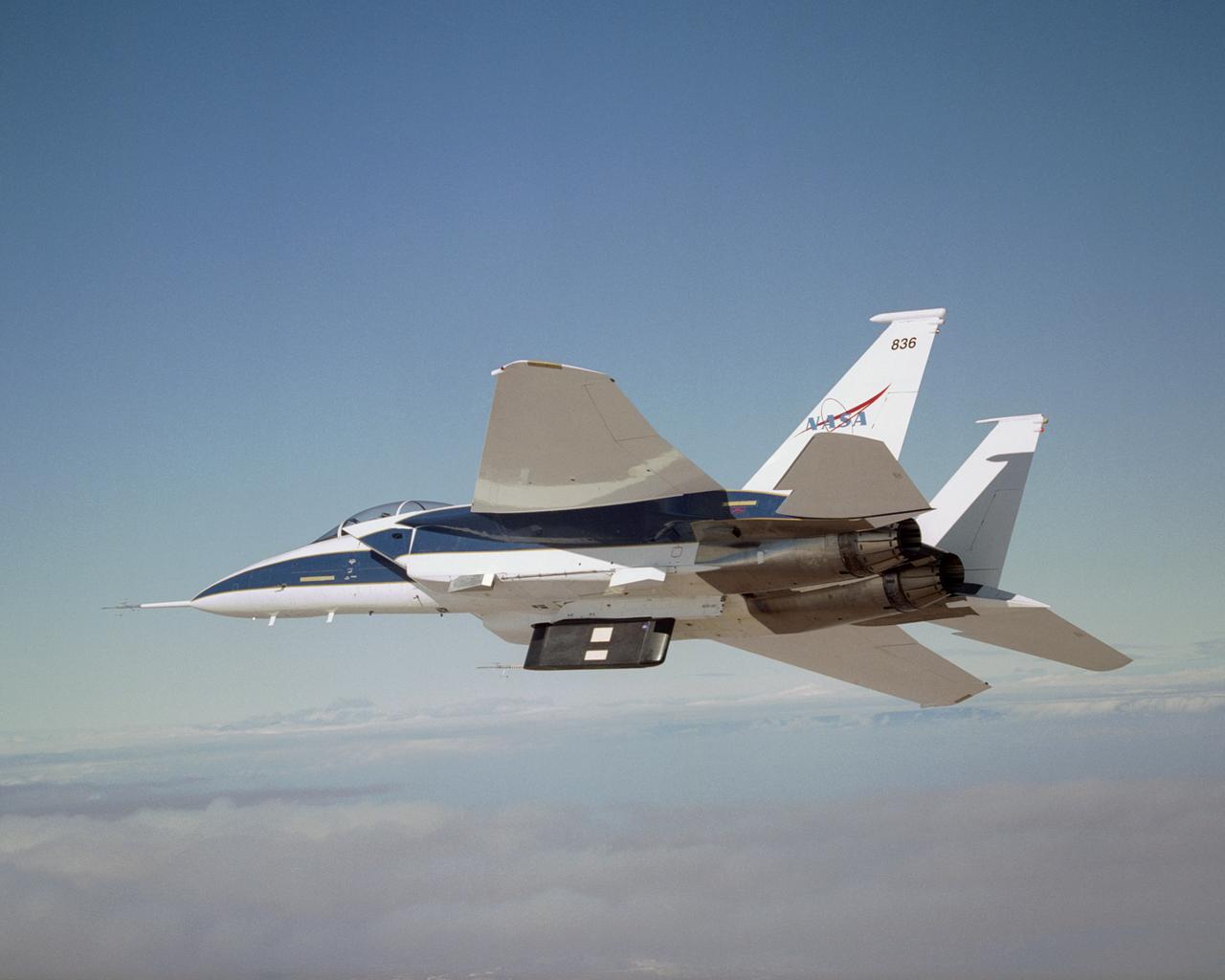
Two panels of Space Shuttle TPS insulation were mounted on the flight test fixture underneath NASA's F-15B during the Lifting Foam Trajectory flight test series.
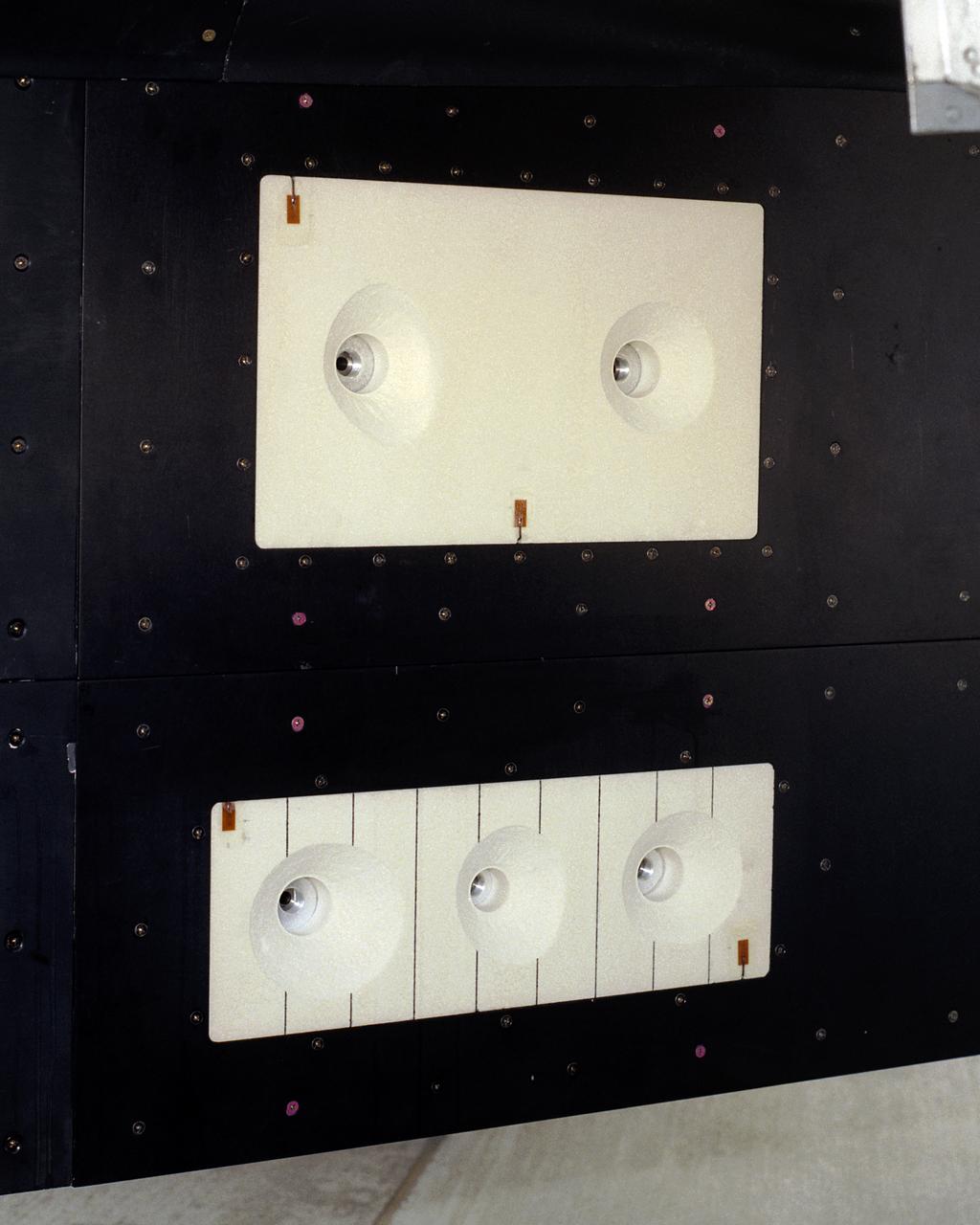
A close-up of the panels on the F-15B's flight test fixture shows five divots of TPS foam were successfully ejected during the LIFT experiment flight #2, the first flight with TPS foam.
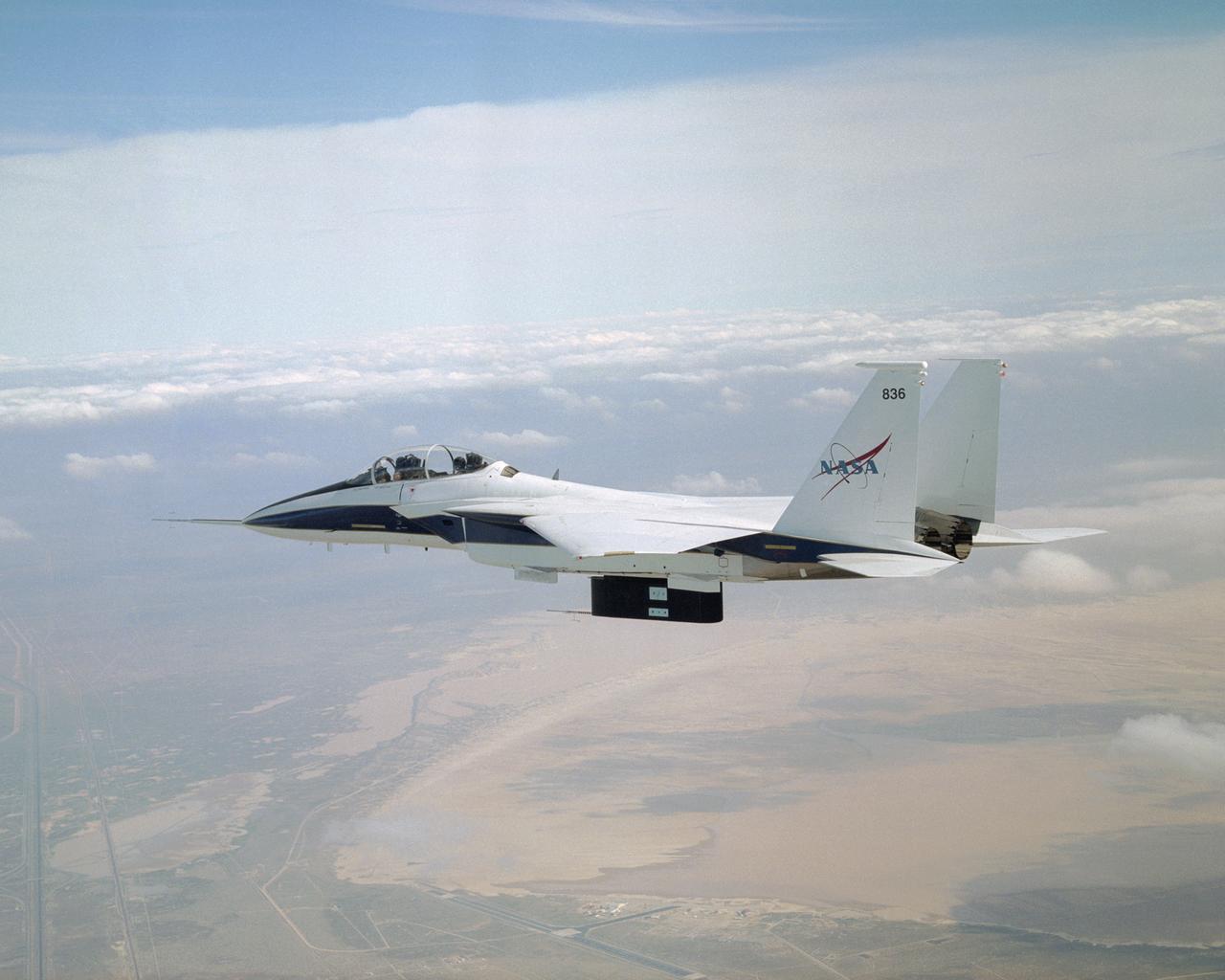
All six divots of thermal insulation foam have been ejected from the flight test fixture on NASA's F-15B testbed as it returns from a LIFT experiment flight.
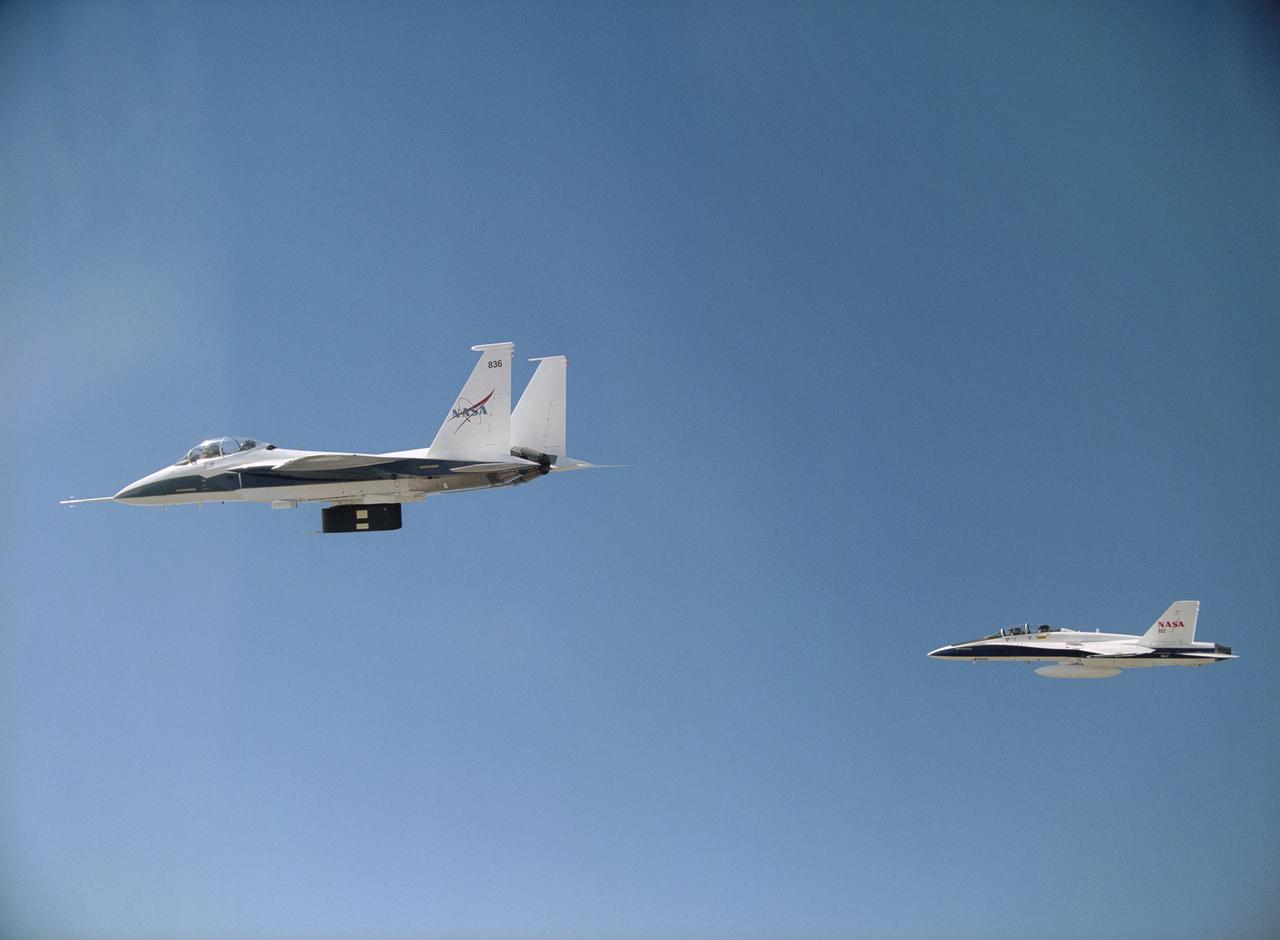
NASA's F-15B carrying thermal insulation foam on its flight test fixture is shadowed by a NASA F-18B chase aircraft during a LIFT experiment research flight.
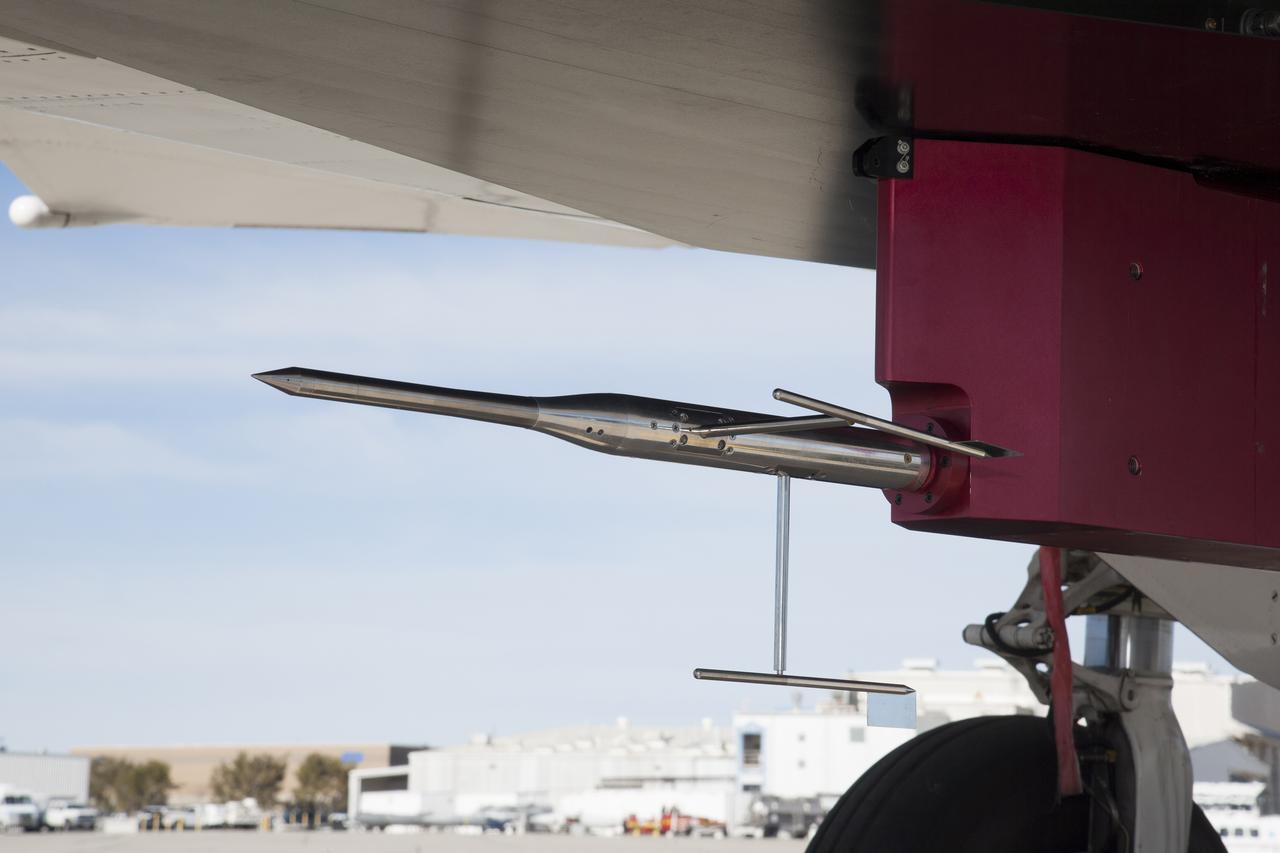
A new supersonic probe seen affixed to a F-15B flight test fixture might one day measure the sonic booms of a new generation of supersonic aircraft.
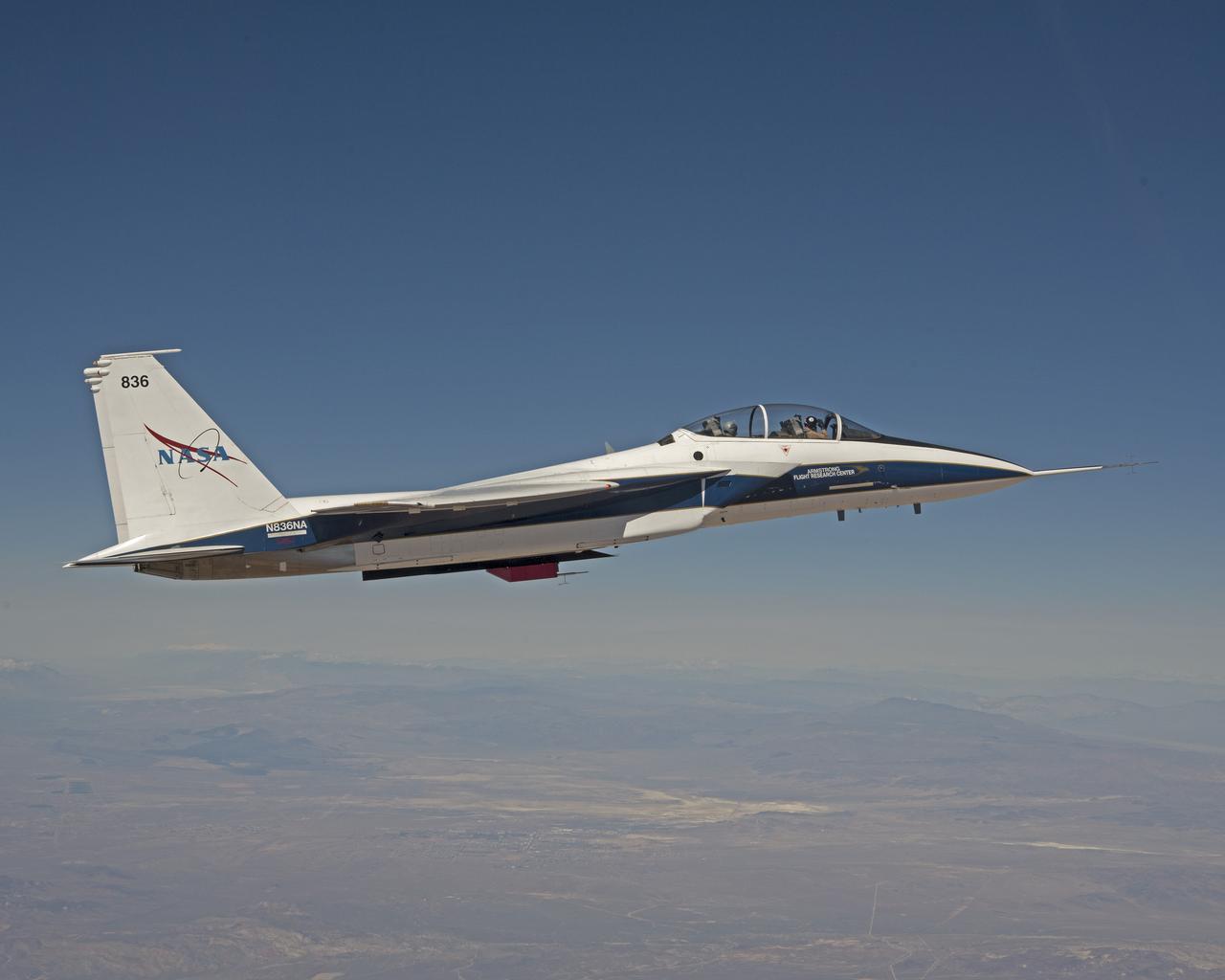
Research on the Eagle Aero Probe is ongoing from an F-15B flight test fixture, as the aircraft flies missions over the high desert.
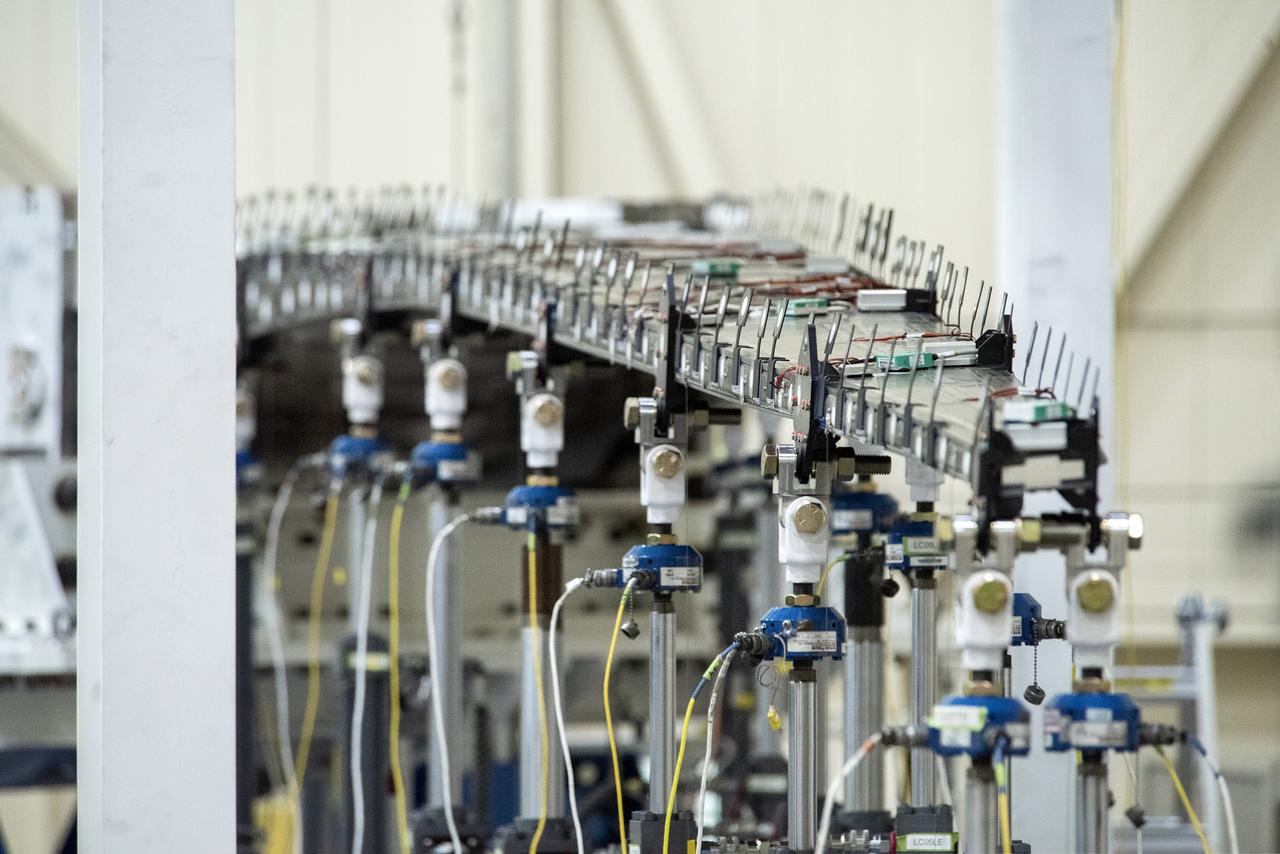
The Passive Aeroelastic Tailored wing is tested in a fixture at the NASA Armstrong Flight Test Center’s Flight Loads Laboratory in California.
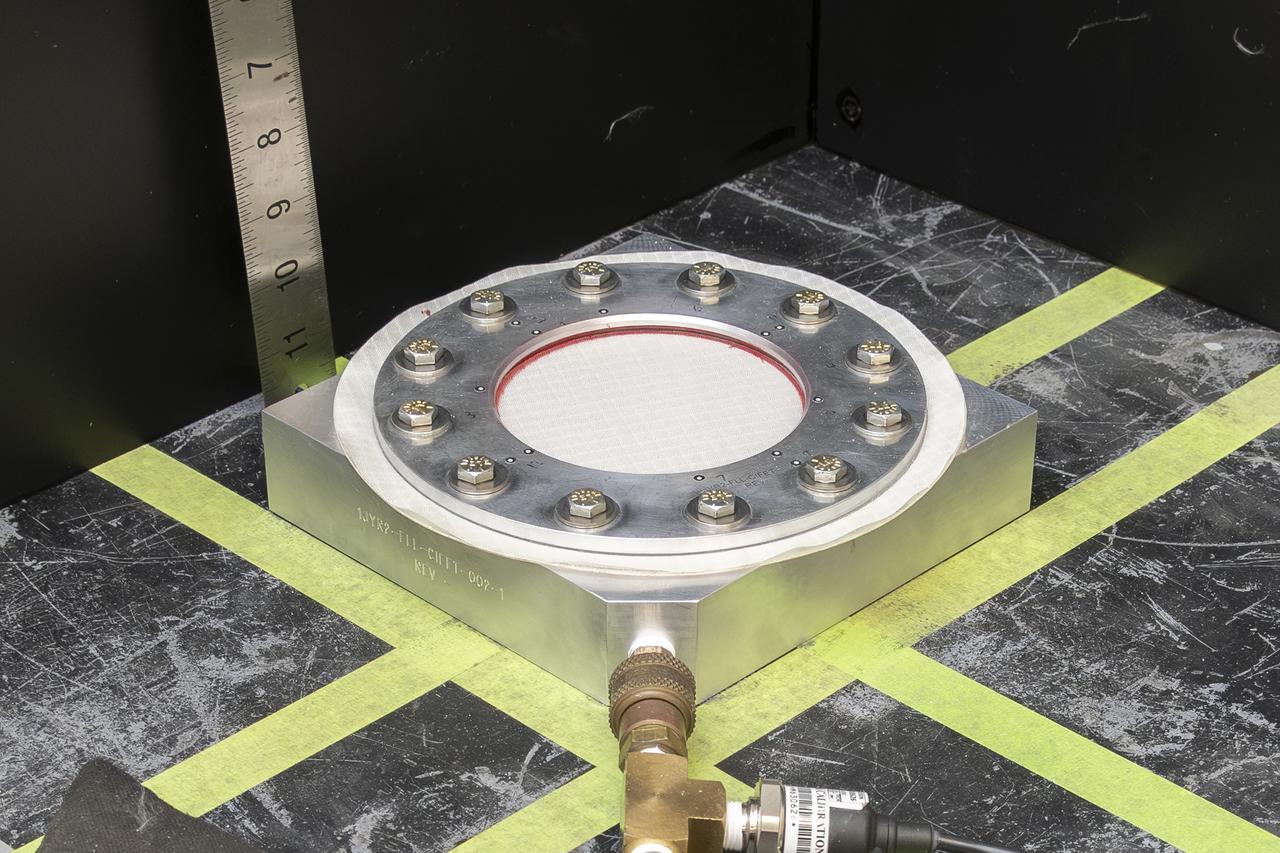
The test team prepares a test fixture with a nylon fabric sample at NASA’s Armstrong Flight Research Center in Edwards, California. The fabric in the test fixture forms a bubble when pressure is applied to the silicone bladder underneath. A similar test can be performed with a sensor on the fabric to verify the sensor will work when stretched in three dimensions.
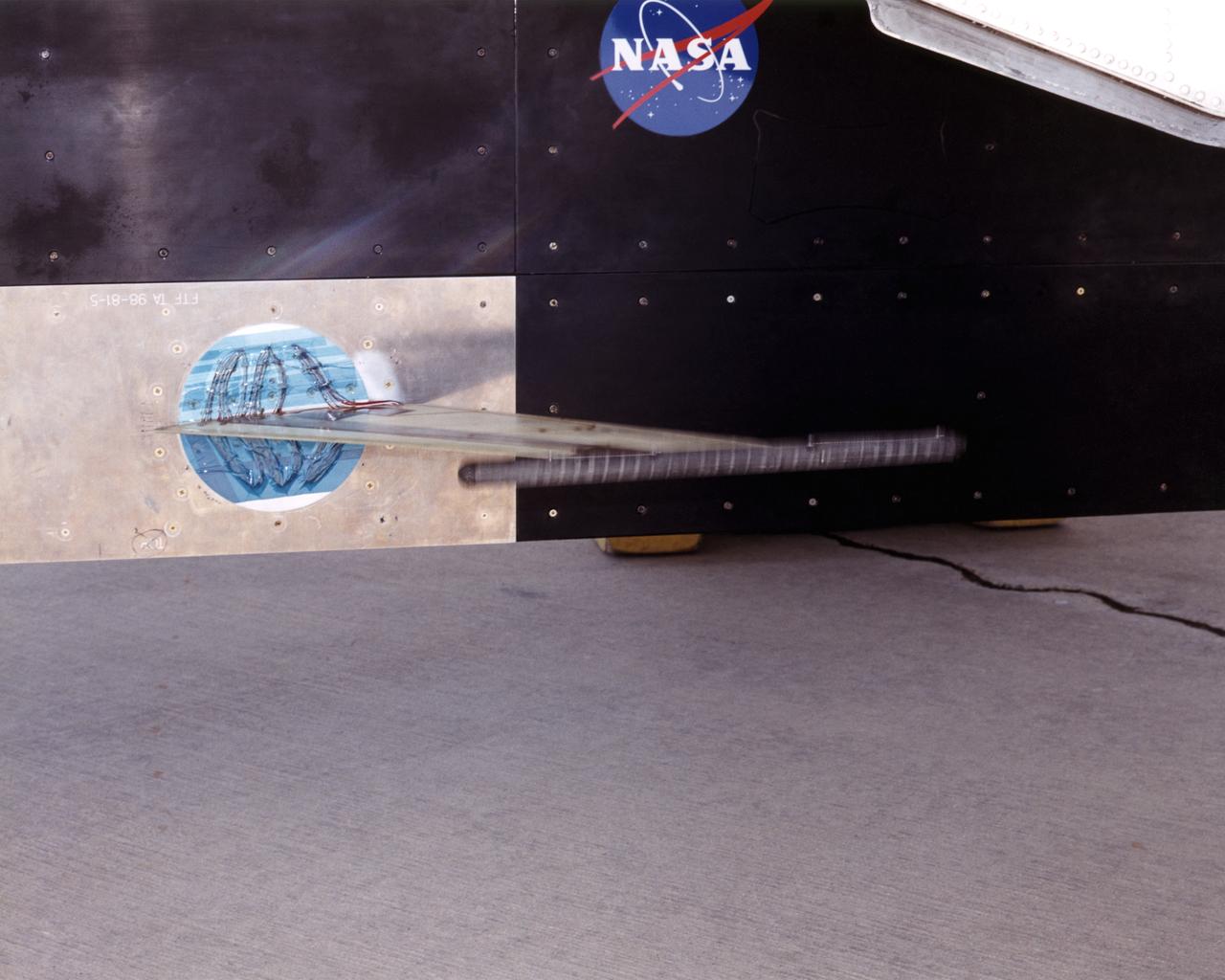
The Aerostructures Test Wing (ATW) experiment, which consisted of an 18-inch carbon fiber test wing with surface-mounted piezoelectric strain actuators, undergoing ground testing prior to flight on Dryden's F-15B Research Testbed aircraft
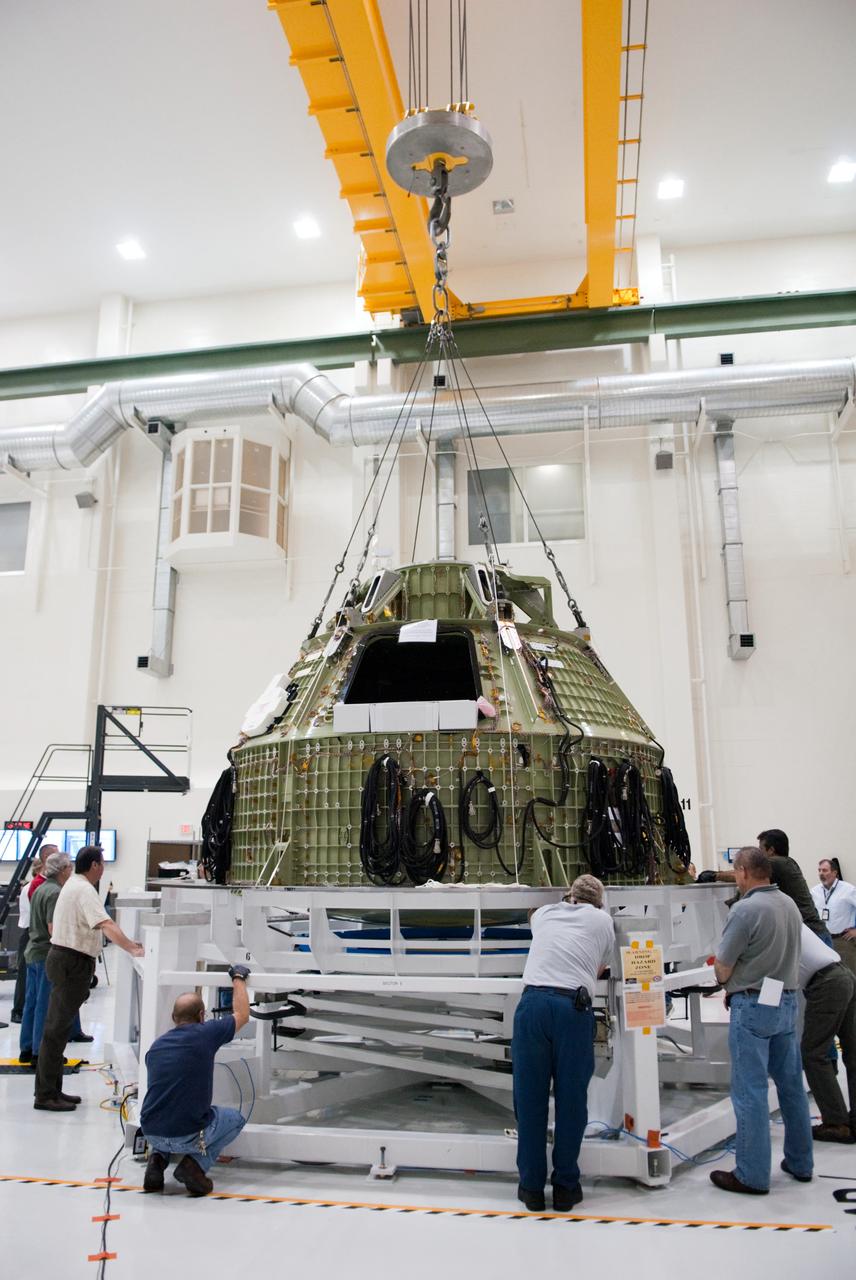
Orion technicians at the Operations and Checkout (O&C) Facility at the Kennedy Space Center move the Orion Exploration Flight Test-1 (EFT-1) crew module from the clean room into the birdcage fixture on Dec. 5, 2012. The fixture is designed to enable precise pre-launch processing of the Orion spacecraft.
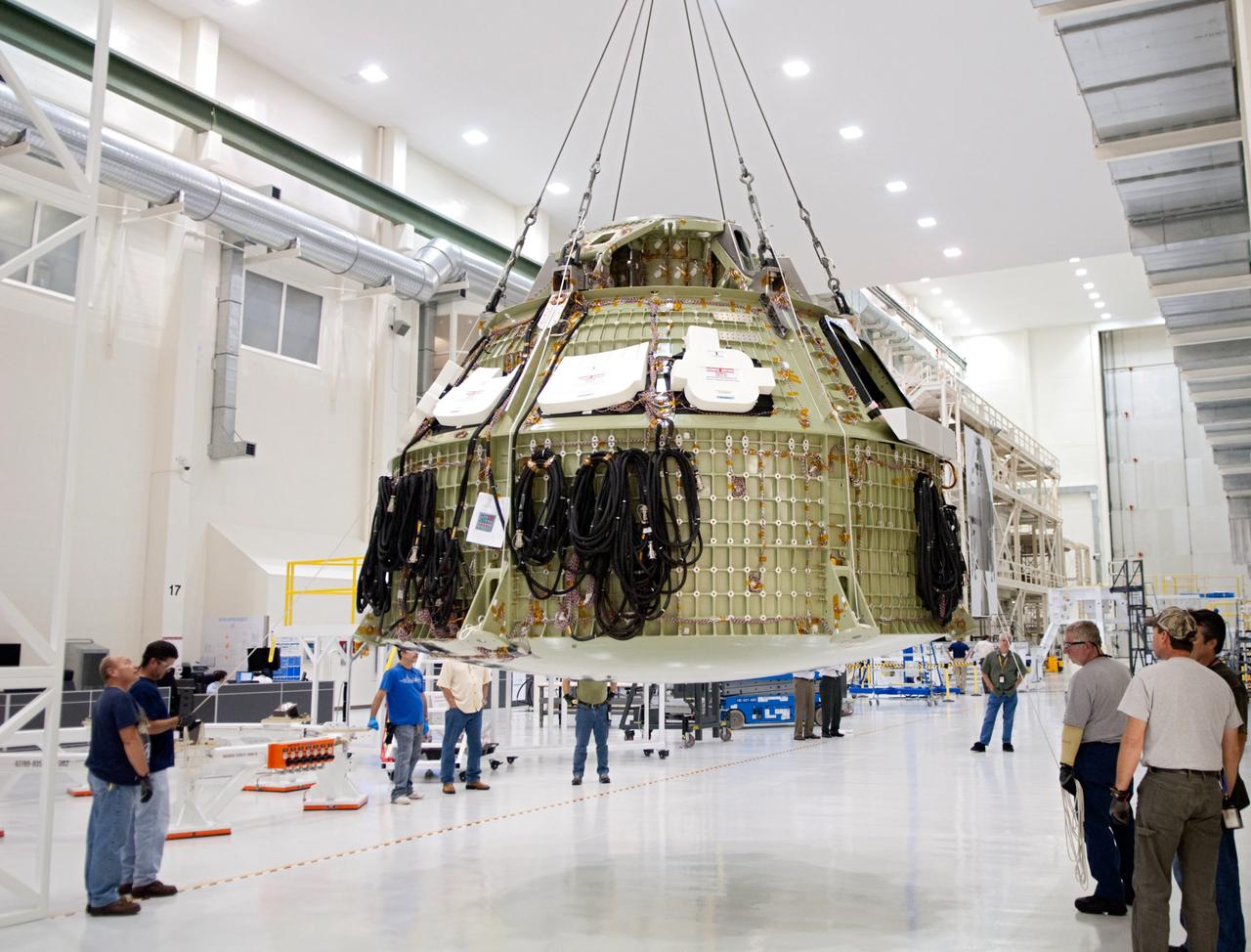
Orion technicians at the Operations and Checkout (O&C) Facility at the Kennedy Space Center move the Orion Exploration Flight Test-1 (EFT-1) crew module from the clean room into the birdcage fixture on Dec. 5, 2012. The fixture is designed to enable precise pre-launch processing of the Orion spacecraft.
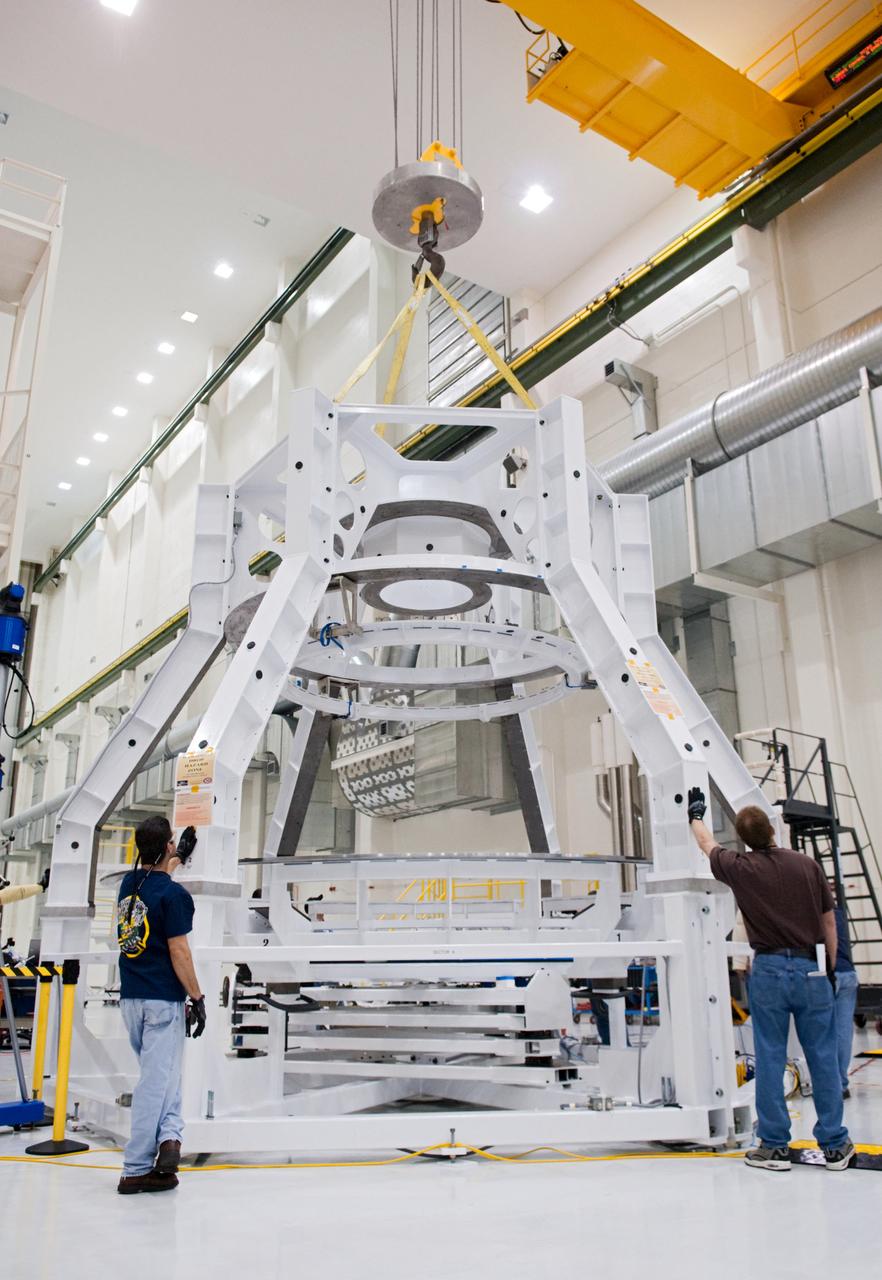
Orion technicians at the Operations and Checkout (O&C) Facility at the Kennedy Space Center move the Orion Exploration Flight Test-1 (EFT-1) crew module from the clean room into the birdcage fixture on Dec. 5, 2012. The fixture is designed to enable precise pre-launch processing of the Orion spacecraft.

Orion technicians at the Operations and Checkout (O&C) Facility at the Kennedy Space Center move the Orion Exploration Flight Test-1 (EFT-1) crew module from the clean room into the birdcage fixture on Dec. 5, 2012. The fixture is designed to enable precise pre-launch processing of the Orion spacecraft.
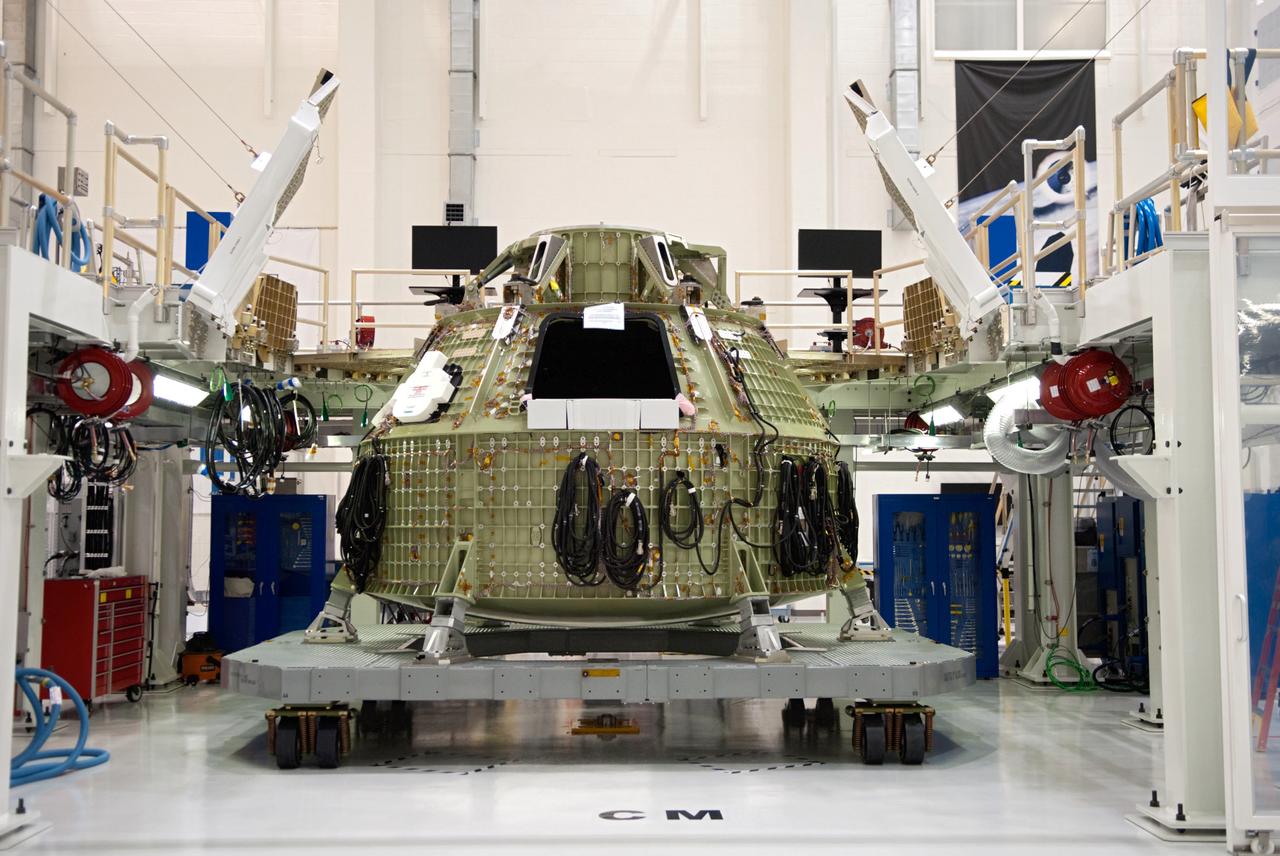
Orion technicians at the Operations and Checkout (O&C) Facility at the Kennedy Space Center move the Orion Exploration Flight Test-1 (EFT-1) crew module from the clean room into the birdcage fixture on Dec. 5, 2012. The fixture is designed to enable precise pre-launch processing of the Orion spacecraft.
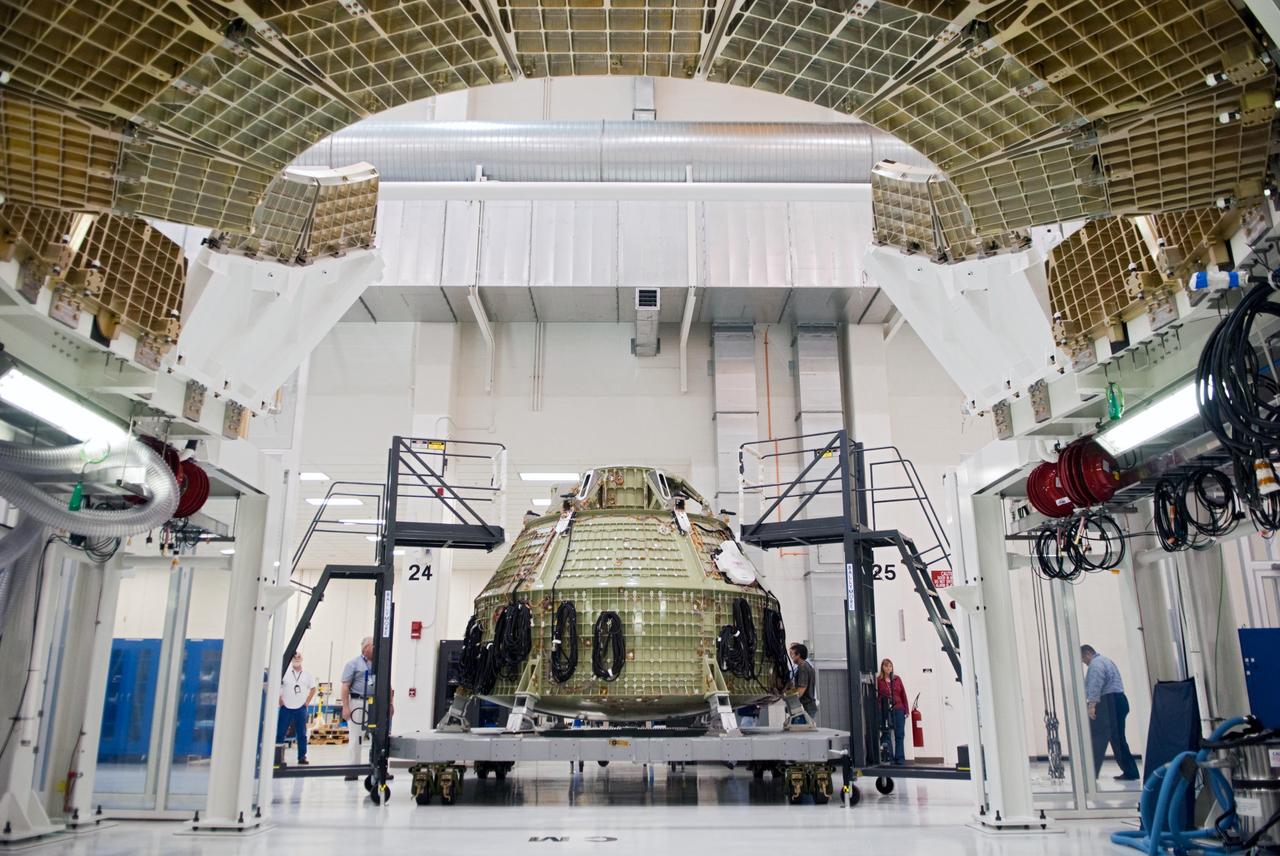
Orion technicians at the Operations and Checkout (O&C) Facility at the Kennedy Space Center move the Orion Exploration Flight Test-1 (EFT-1) crew module from the clean room into the birdcage fixture on Dec. 5, 2012. The fixture is designed to enable precise pre-launch processing of the Orion spacecraft.
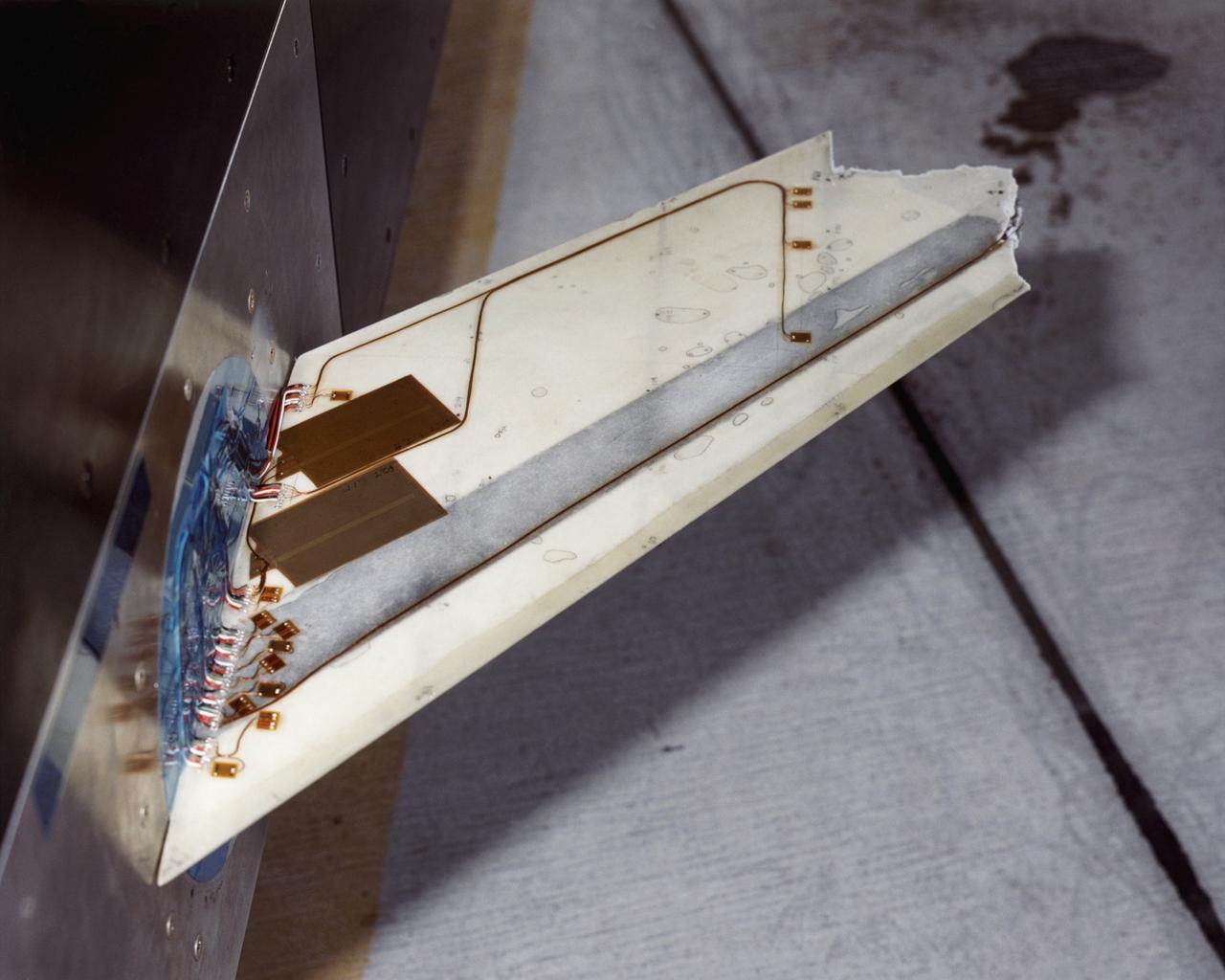
The Aerostructures Test Wing (ATW), which consisted of an 18-inch carbon fiber test wing with surface-mounted piezoelectric strain actuators, following intentional failure on its final flight
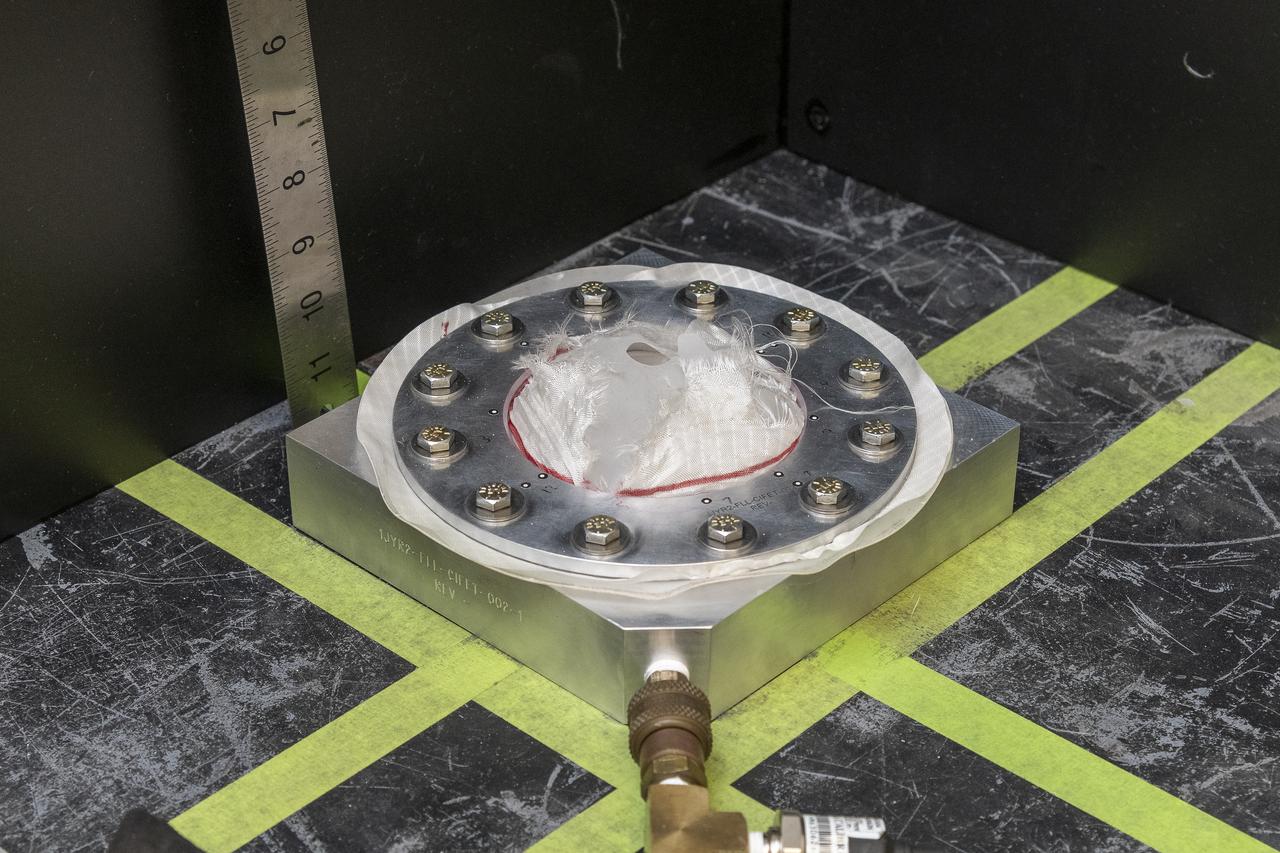
Pressure is applied to a test fixture with a nylon fabric sample until it fails at NASA’s Armstrong Flight Research Center in Edwards, California. The fabric in the test fixture forms a bubble when pressure is applied to the silicone bladder underneath. In this frame, the silicone bladder is visible underneath the torn fabric after it was inflated to failure. A similar test can be performed with a sensor on the fabric to verify the sensor will work when stretched in three dimensions.
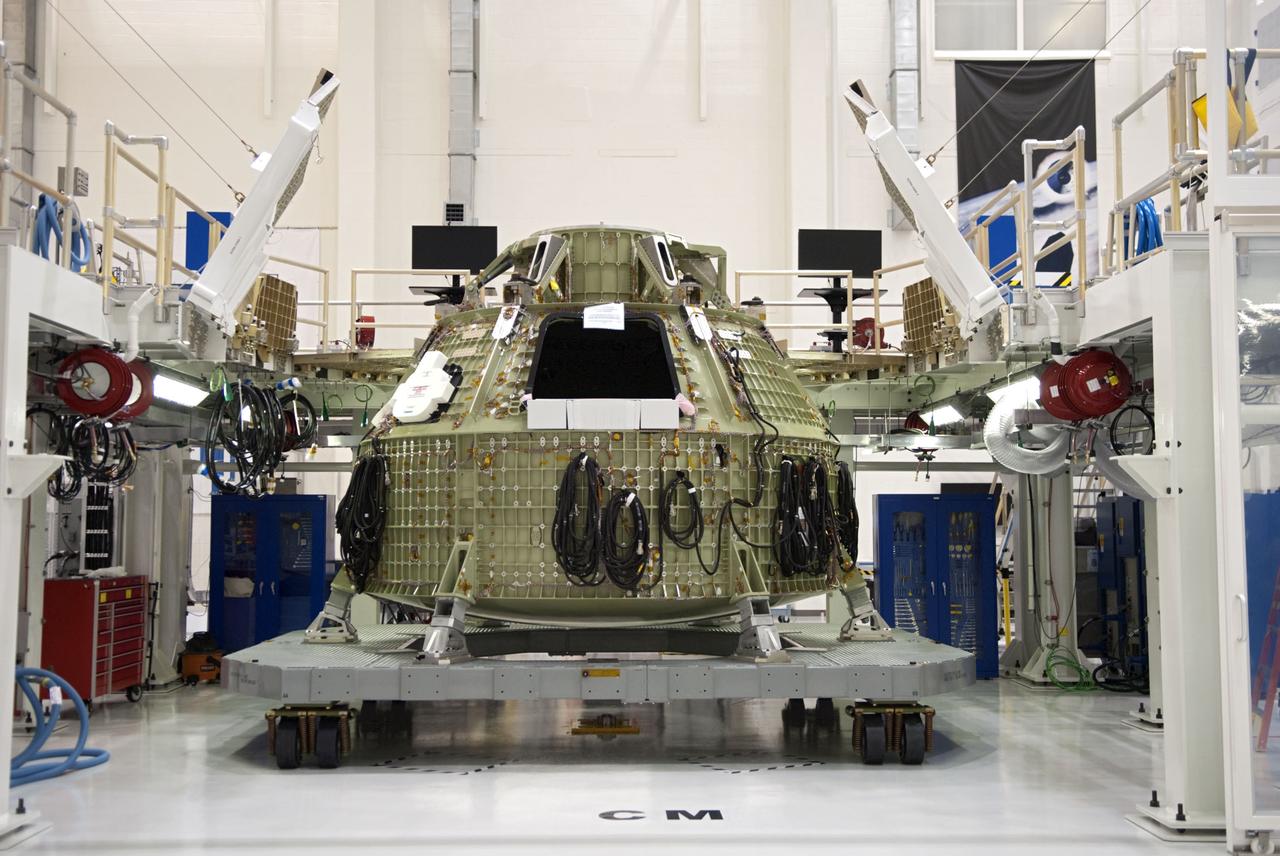
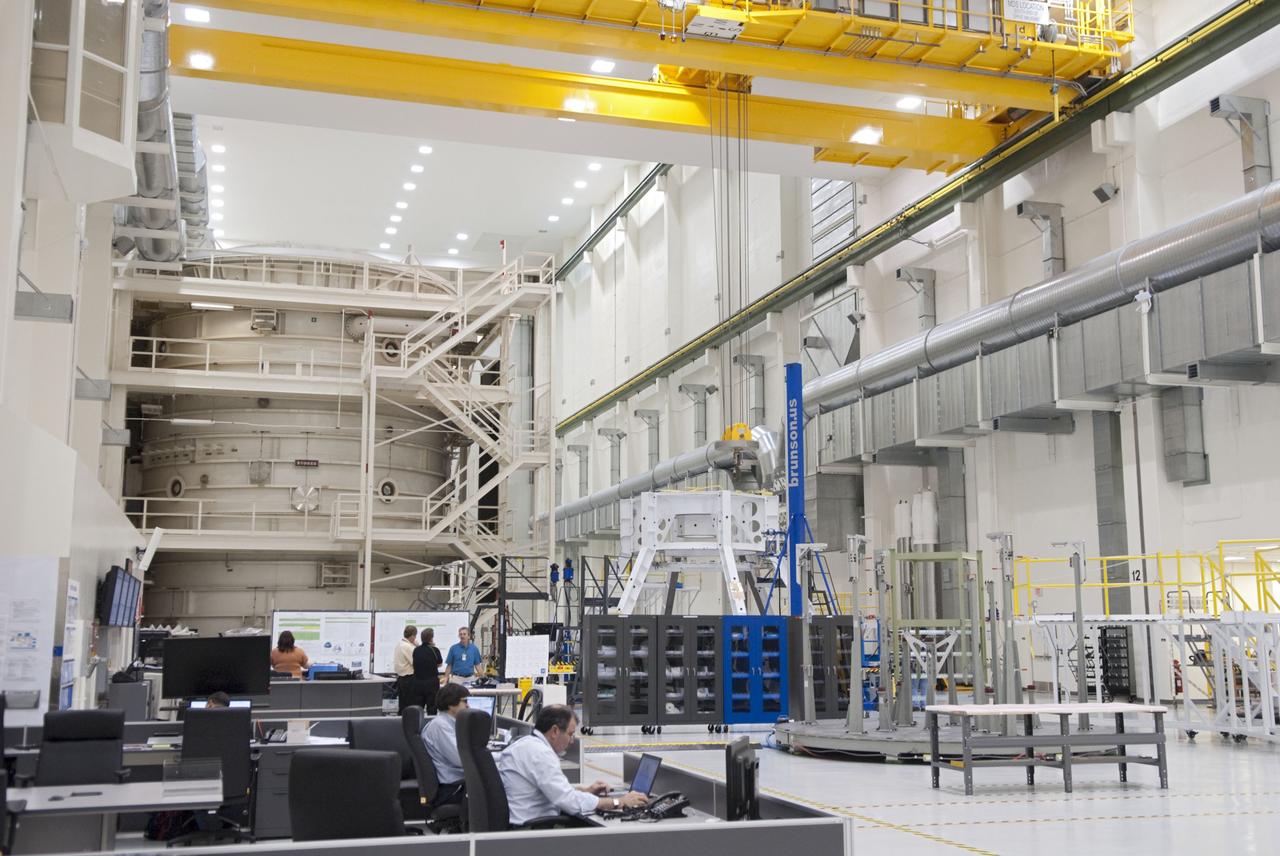
CAPE CANAVERAL, Fla. – Technicians prepare to fit a special fixture around an Orion capsule inside the high bay of the Operations & Checkout Building at NASA's Kennedy Space Center in Florida. The fixture is designed to enable precise pre-launch processing of the Orion spacecraft. An Orion capsule is being prepared to make a flight test in 2014 on a mission that will not carry any astronauts. Photo by Tim Jacobs
CAPE CANAVERAL, Fla. – Technicians prepare to lift a special fixture inside the high bay of the Operations & Checkout Building at NASA's Kennedy Space Center in Florida. The fixture is designed to enable precise pre-launch processing of the Orion spacecraft. An Orion capsule is being prepared to make a flight test in 2014 on a mission that will not carry any astronauts. Photo by Tim Jacobs
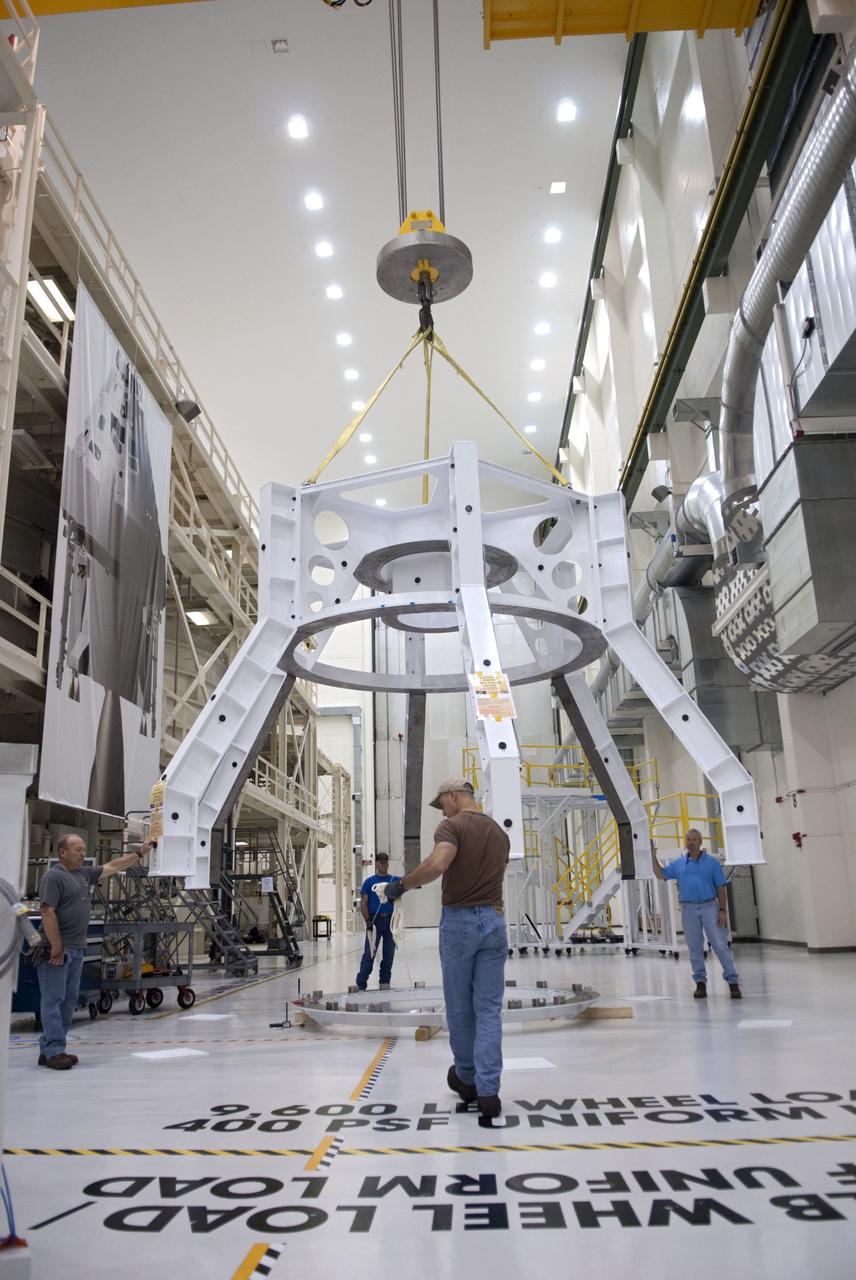
CAPE CANAVERAL, Fla. – Technicians lift a special fixture inside the high bay of the Operations & Checkout Building at NASA's Kennedy Space Center in Florida. The fixture is designed to enable precise pre-launch processing of the Orion spacecraft. An Orion capsule is being prepared to make a flight test in 2014 on a mission that will not carry any astronauts. Photo by Tim Jacobs
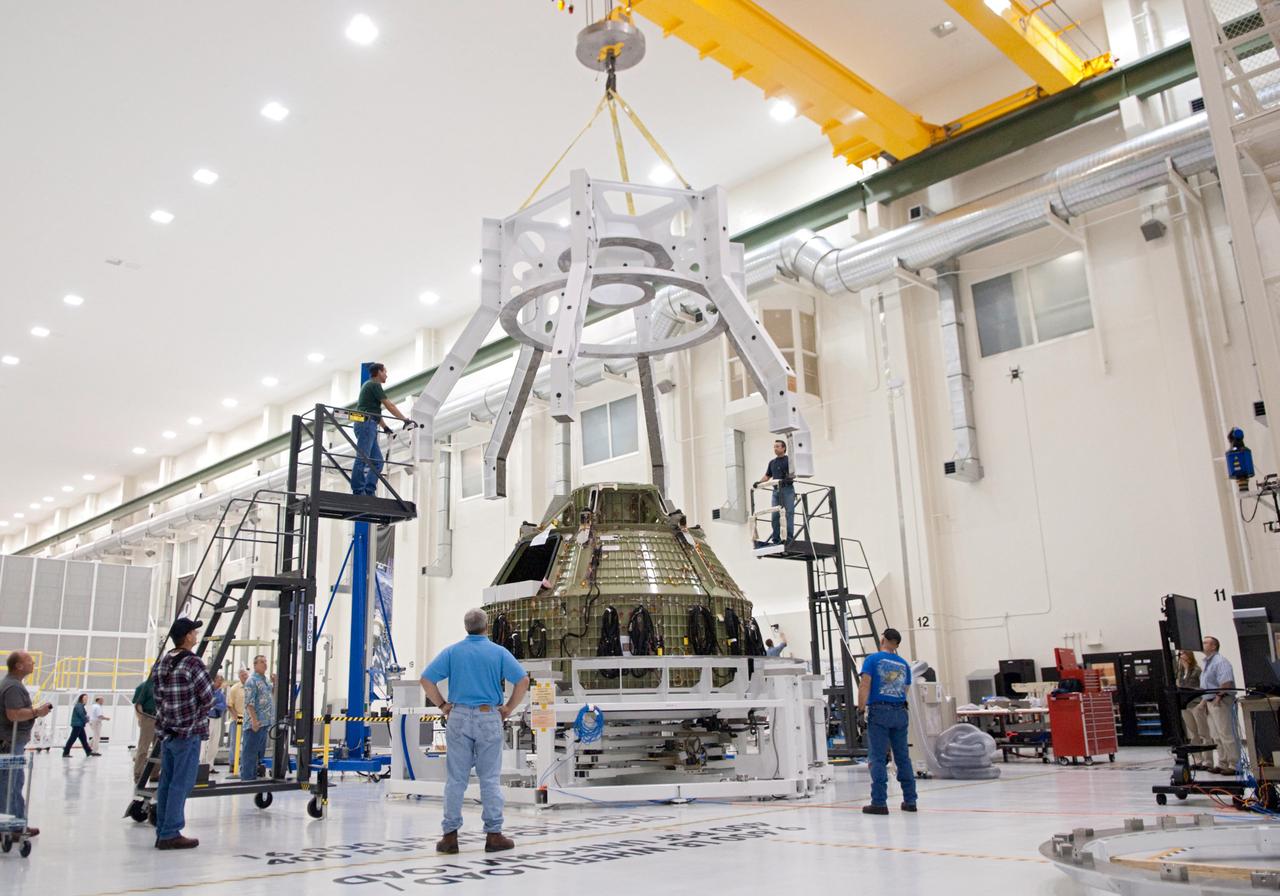
Orion technicians at the Operations and Checkout (O&C) Facility at the Kennedy Space Center move the Orion Exploration Flight Test-1 (EFT-1) crew module from the clean room into the birdcage fixture on Dec. 6, 2012. The fixture is designed to enable precise pre-launch processing of the Orion spacecraft. Part of Batch image transfer from Flickr.
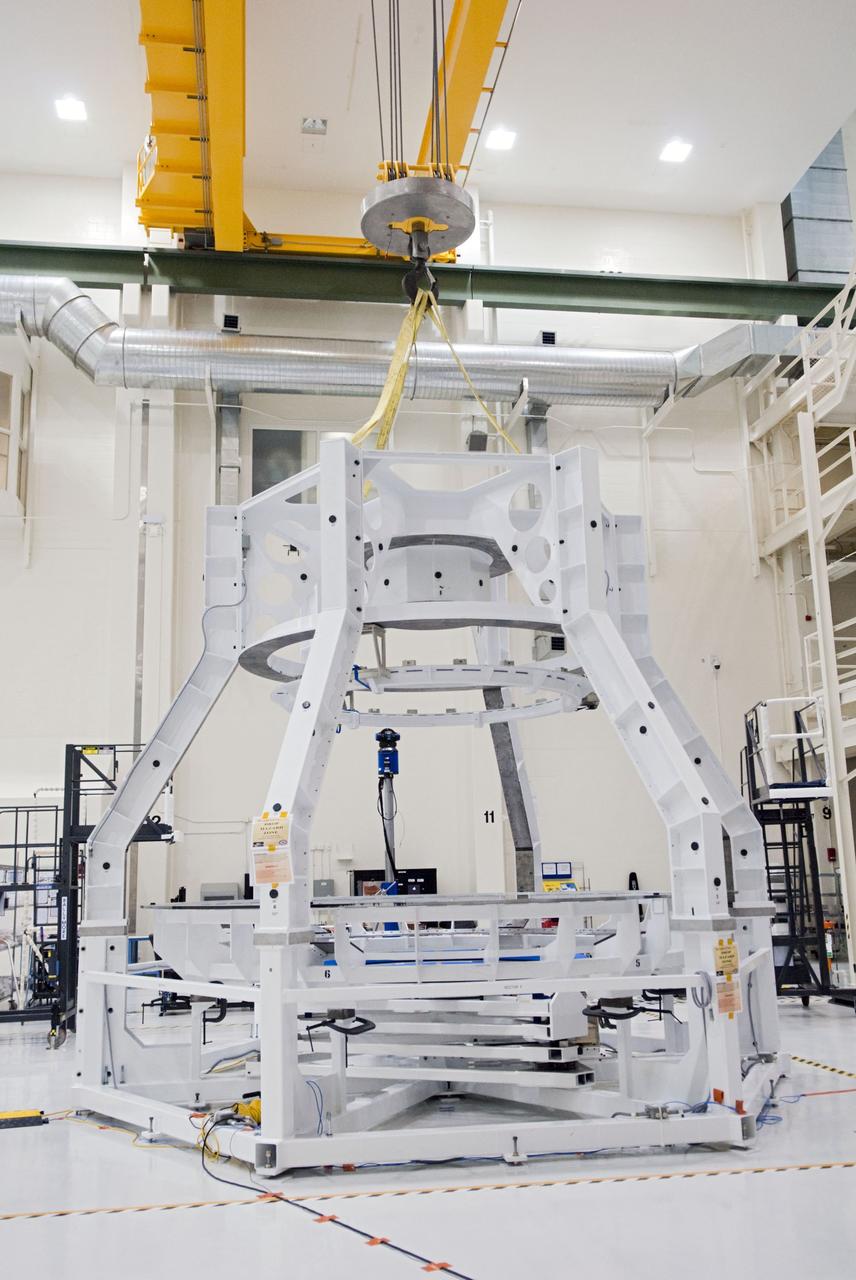
CAPE CANAVERAL, Fla. – Technicians prepare to lift a special fixture inside the high bay of the Operations & Checkout Building at NASA's Kennedy Space Center in Florida. The fixture is designed to enable precise pre-launch processing of the Orion spacecraft. An Orion capsule is being prepared to make a flight test in 2014 on a mission that will not carry any astronauts. Photo by Tim Jacobs
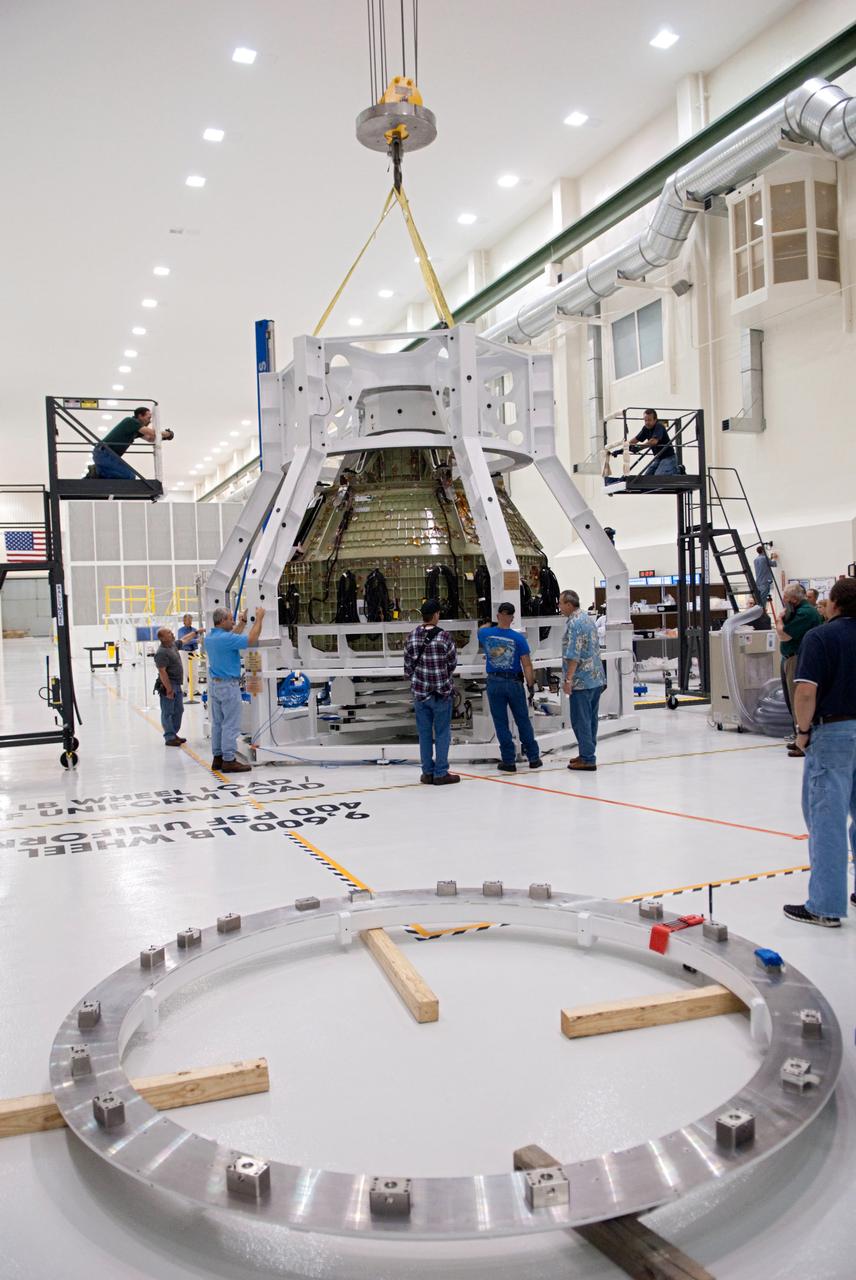
Orion technicians at the Operations and Checkout (O&C) Facility at the Kennedy Space Center move the Orion Exploration Flight Test-1 (EFT-1) crew module from the clean room into the birdcage fixture on Dec. 6, 2012. The fixture is designed to enable precise pre-launch processing of the Orion spacecraft. Part of Batch image transfer from Flickr.
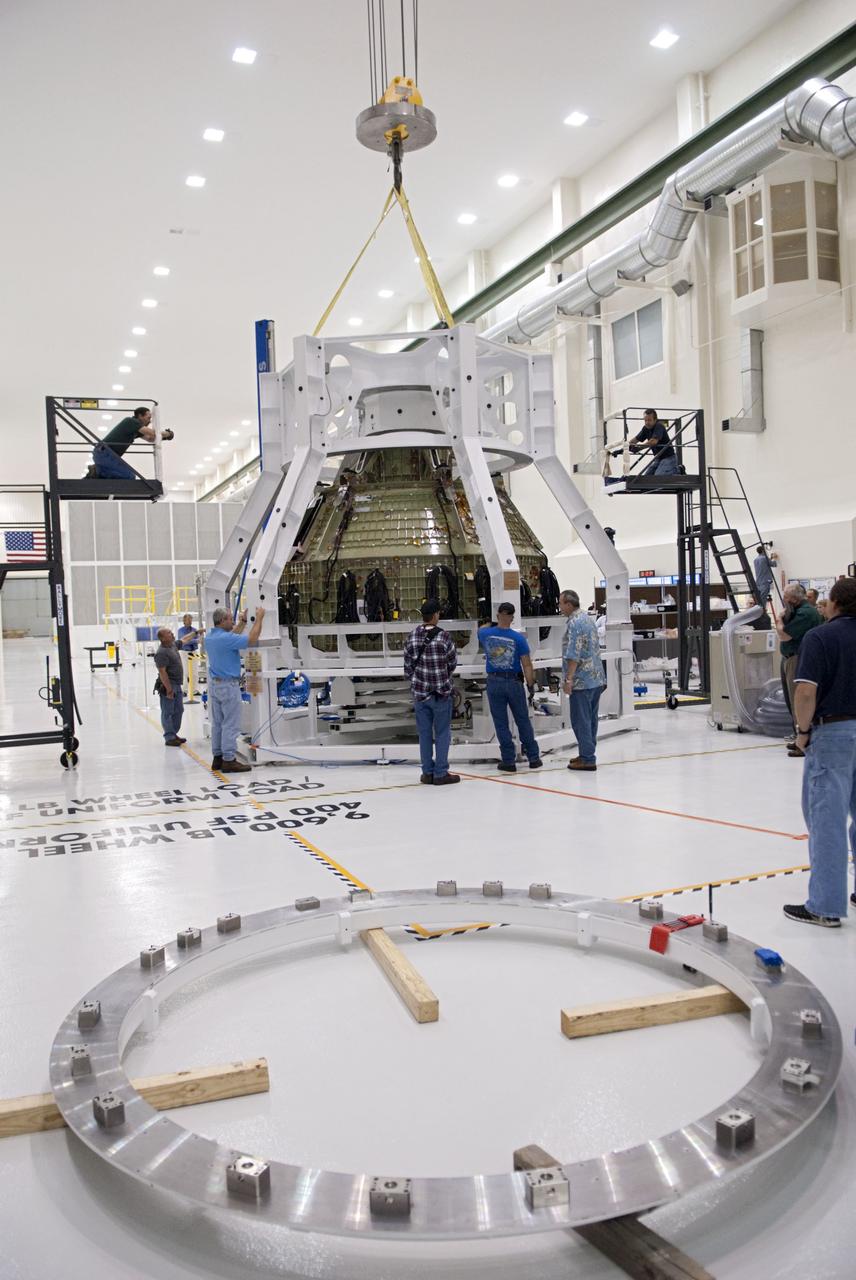
CAPE CANAVERAL, Fla. – Technicians lower a special fixture around an Orion spacecraft inside the high bay of the Operations & Checkout Building at NASA's Kennedy Space Center in Florida. The fixture is designed to enable precise pre-launch processing of the Orion spacecraft. An Orion capsule is being prepared to make a flight test in 2014 on a mission that will not carry any astronauts. Photo by Tim Jacobs
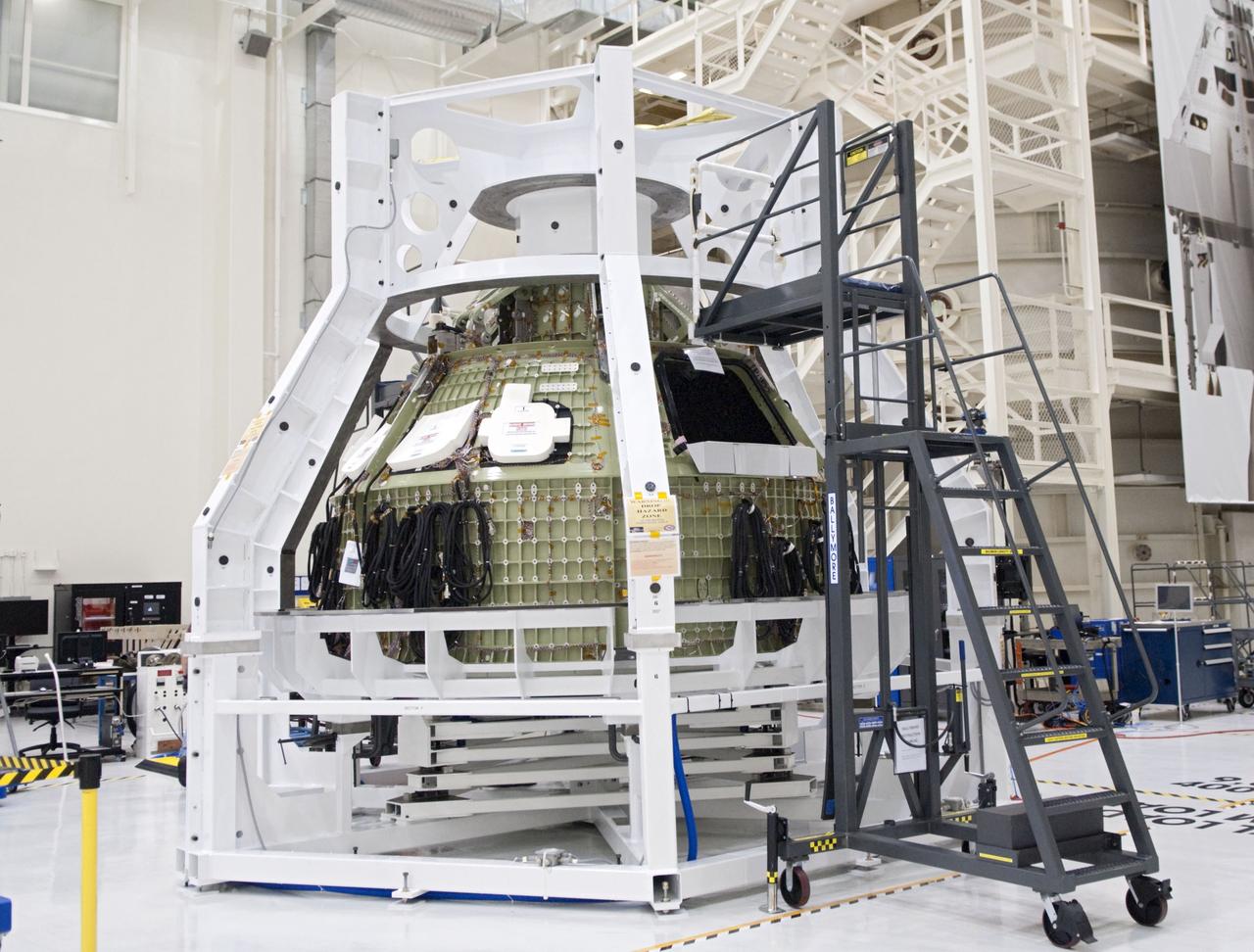
CAPE CANAVERAL, Fla. – A special fixture stands in place around an Orion spacecraft inside the high bay of the Operations & Checkout Building at NASA's Kennedy Space Center in Florida. The fixture is designed to enable precise pre-launch processing of the Orion spacecraft. An Orion capsule is being prepared to make a flight test in 2014 on a mission that will not carry any astronauts. Photo by Tim Jacobs
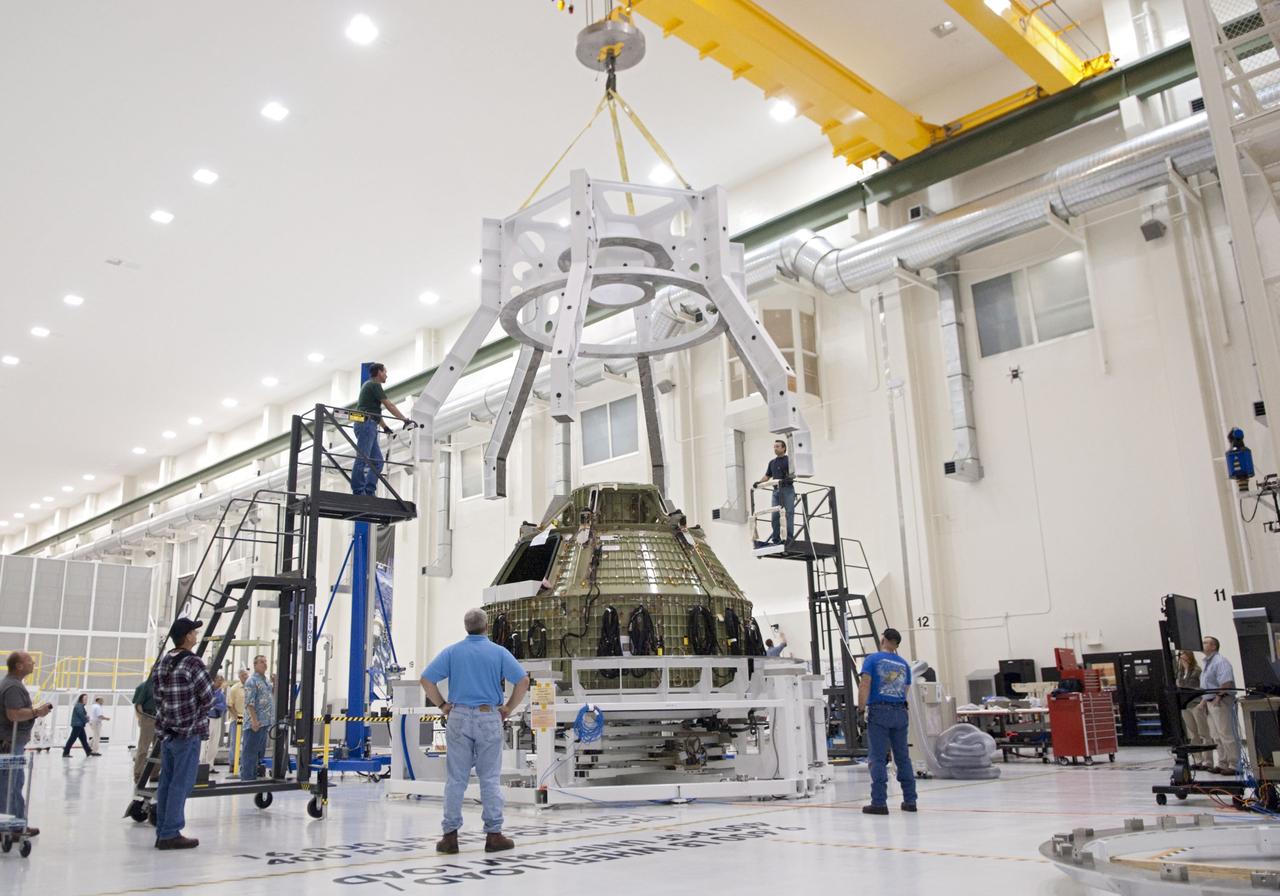
CAPE CANAVERAL, Fla. – Technicians lift a special fixture inside the high bay of the Operations & Checkout Building at NASA's Kennedy Space Center in Florida. The fixture is designed to enable precise pre-launch processing of the Orion spacecraft. An Orion capsule is being prepared to make a flight test in 2014 on a mission that will not carry any astronauts. Photo by Tim Jacobs
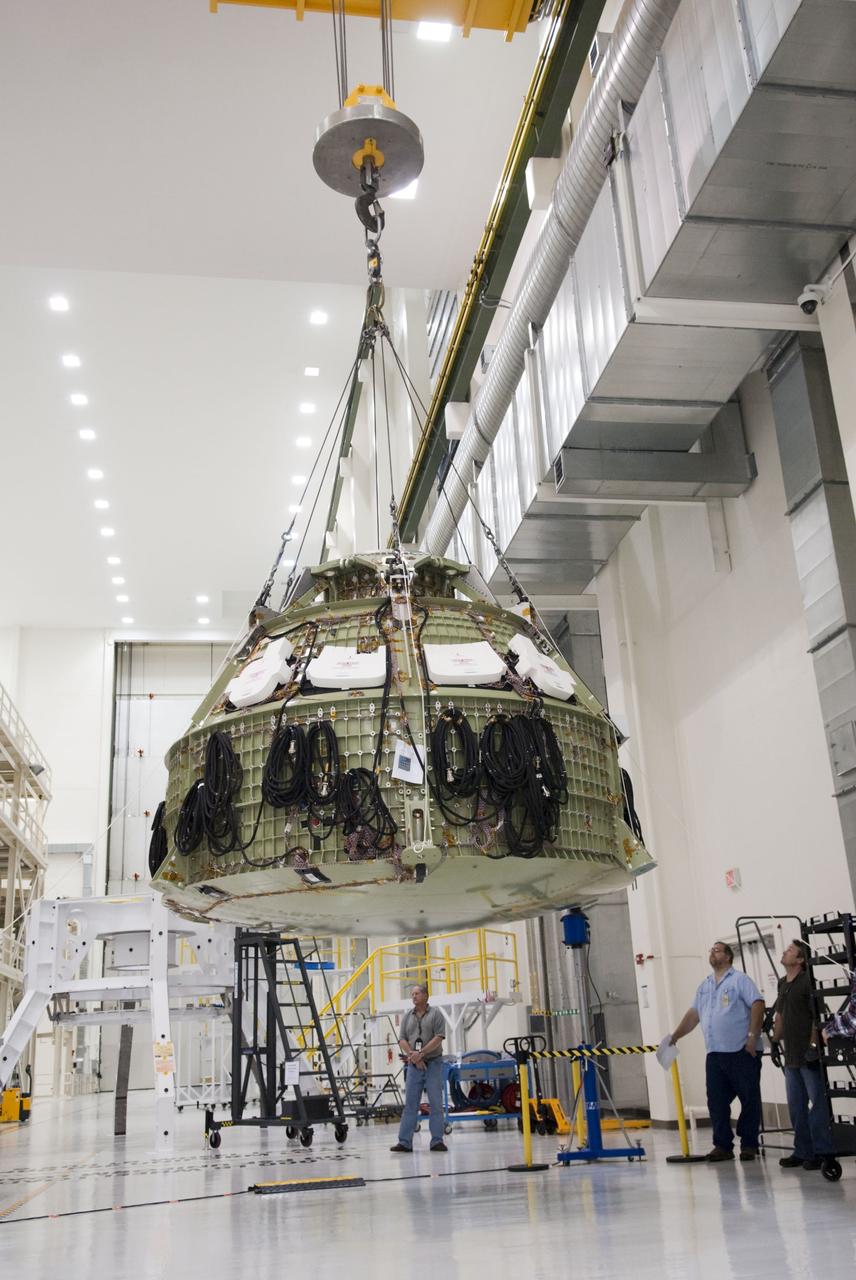
CAPE CANAVERAL, Fla. – Technicians prepare to fit a special fixture around an Orion capsule inside the high bay of the Operations & Checkout Building at NASA's Kennedy Space Center in Florida. The fixture is designed to enable precise pre-launch processing of the Orion spacecraft. An Orion capsule is being prepared to make a flight test in 2014 on a mission that will not carry any astronauts. Photo by Tim Jacobs
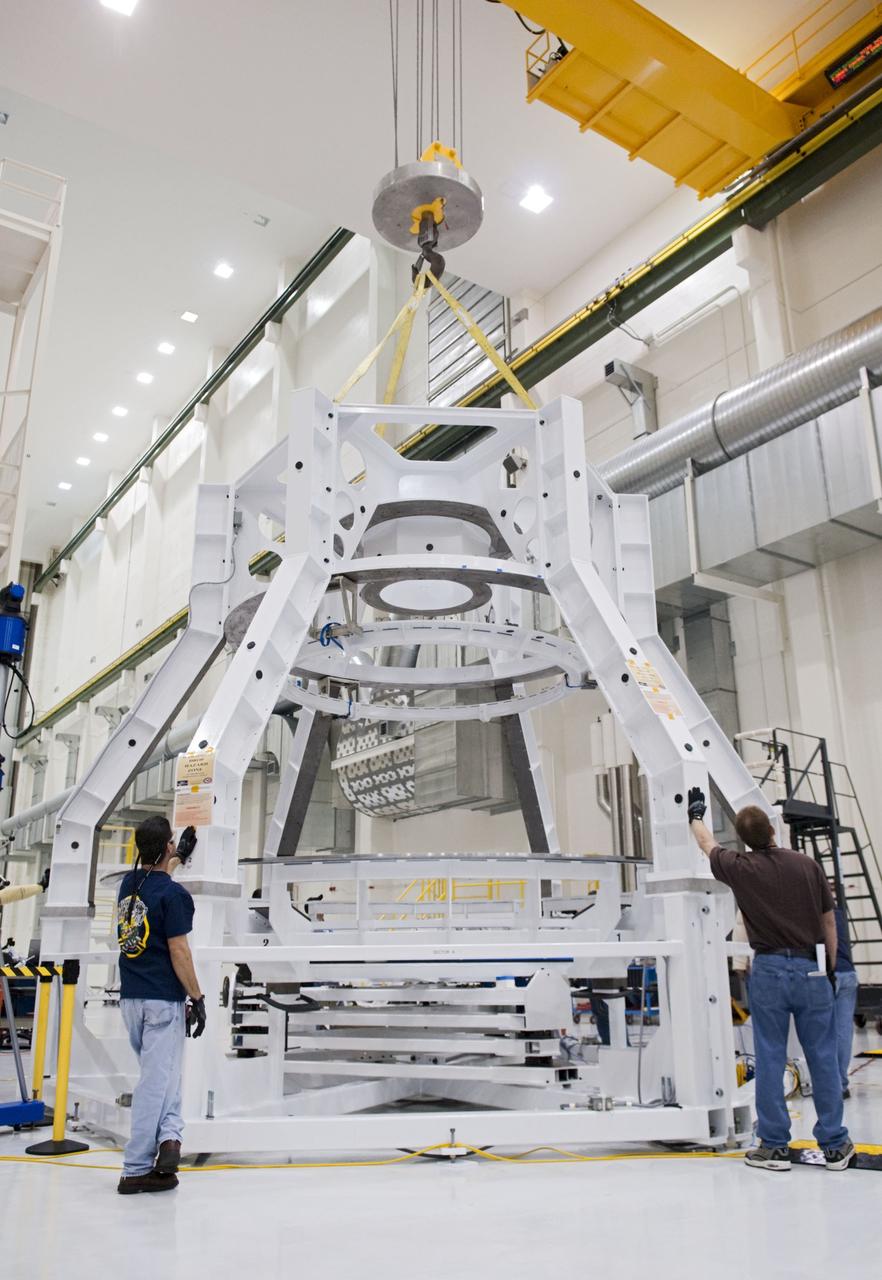
CAPE CANAVERAL, Fla. – Technicians prepare to lift a special fixture inside the high bay of the Operations & Checkout Building at NASA's Kennedy Space Center in Florida. The fixture is designed to enable precise pre-launch processing of the Orion spacecraft. An Orion capsule is being prepared to make a flight test in 2014 on a mission that will not carry any astronauts. Photo by Tim Jacobs
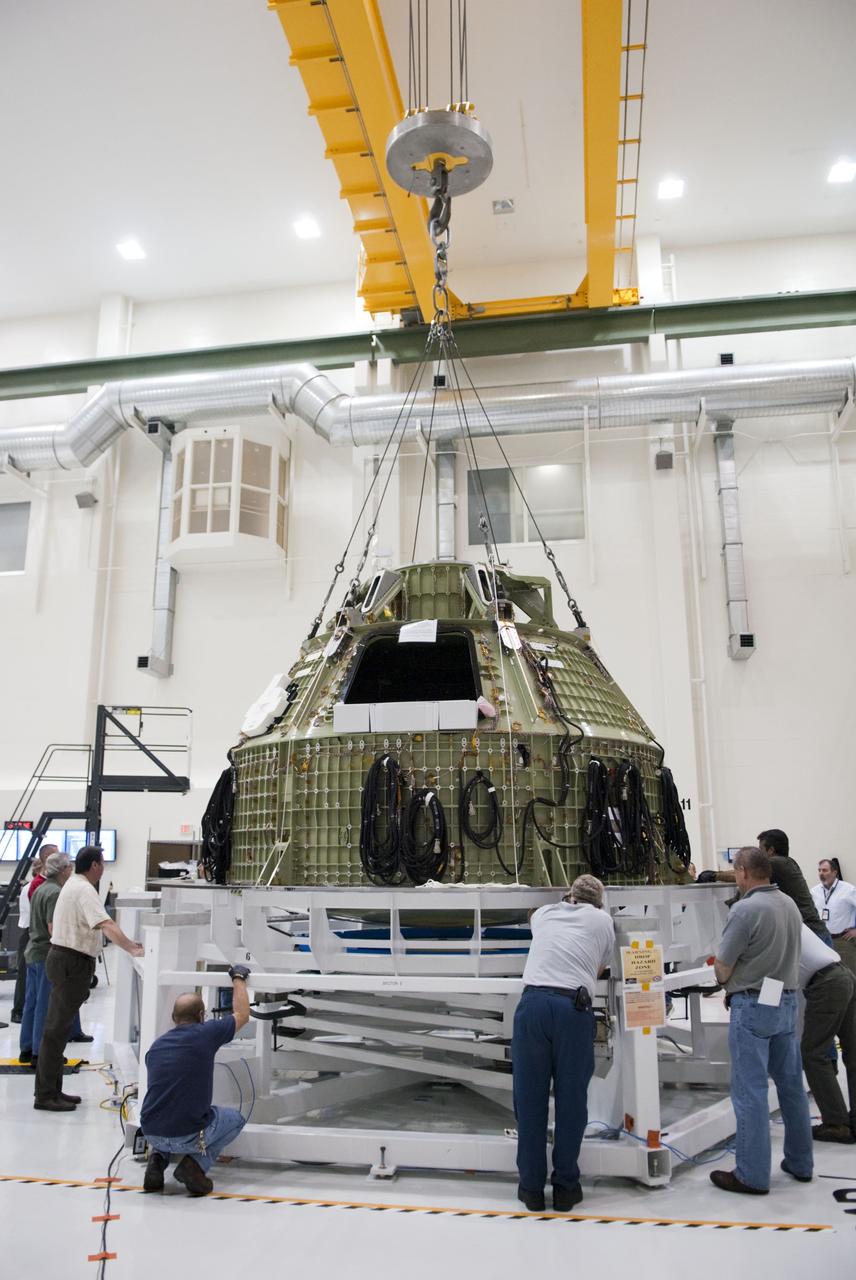
CAPE CANAVERAL, Fla. – Technicians prepare to fit a special fixture around an Orion capsule inside the high bay of the Operations & Checkout Building at NASA's Kennedy Space Center in Florida. The fixture is designed to enable precise pre-launch processing of the Orion spacecraft. An Orion capsule is being prepared to make a flight test in 2014 on a mission that will not carry any astronauts. Photo by Tim Jacobs
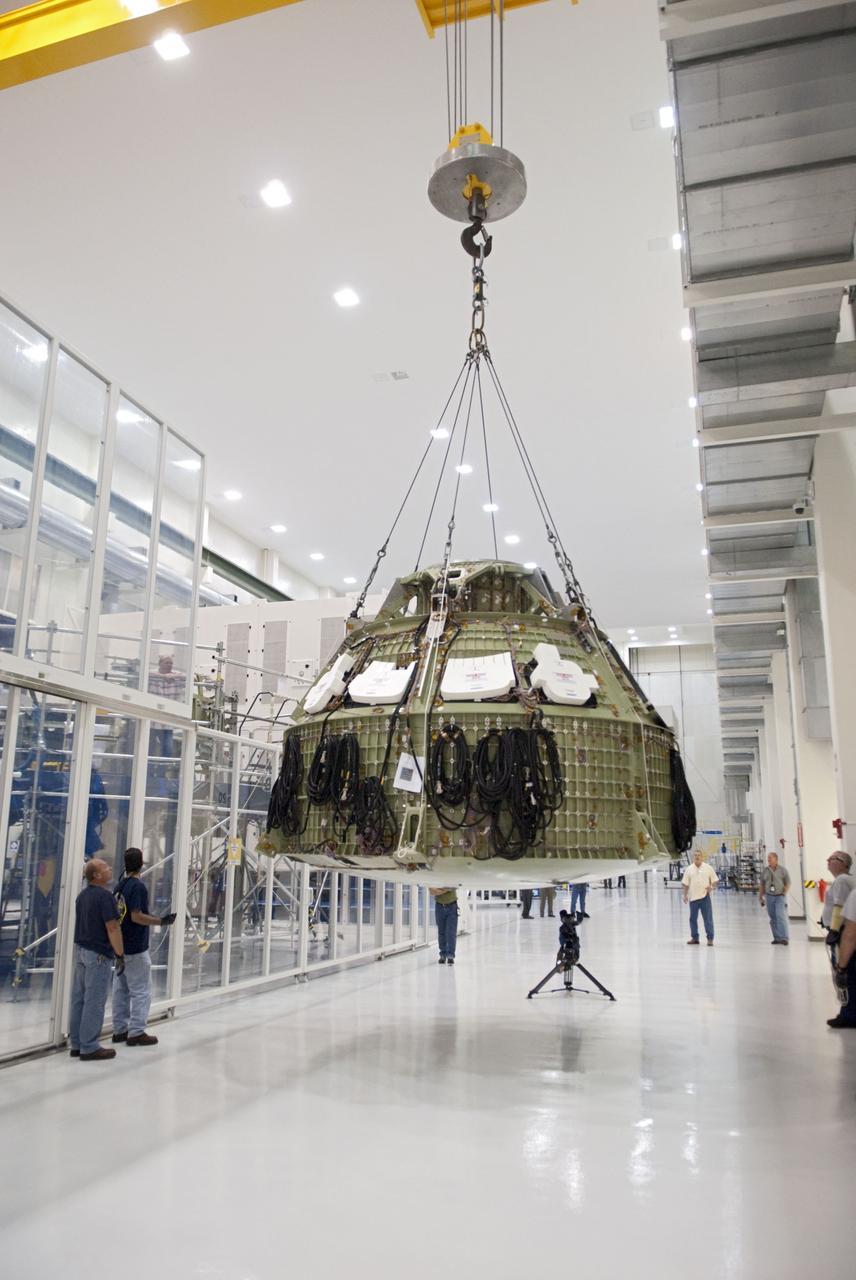
CAPE CANAVERAL, Fla. – Technicians prepare to fit a special fixture around an Orion capsule inside the high bay of the Operations & Checkout Building at NASA's Kennedy Space Center in Florida. The fixture is designed to enable precise pre-launch processing of the Orion spacecraft. An Orion capsule is being prepared to make a flight test in 2014 on a mission that will not carry any astronauts. Photo by Tim Jacobs
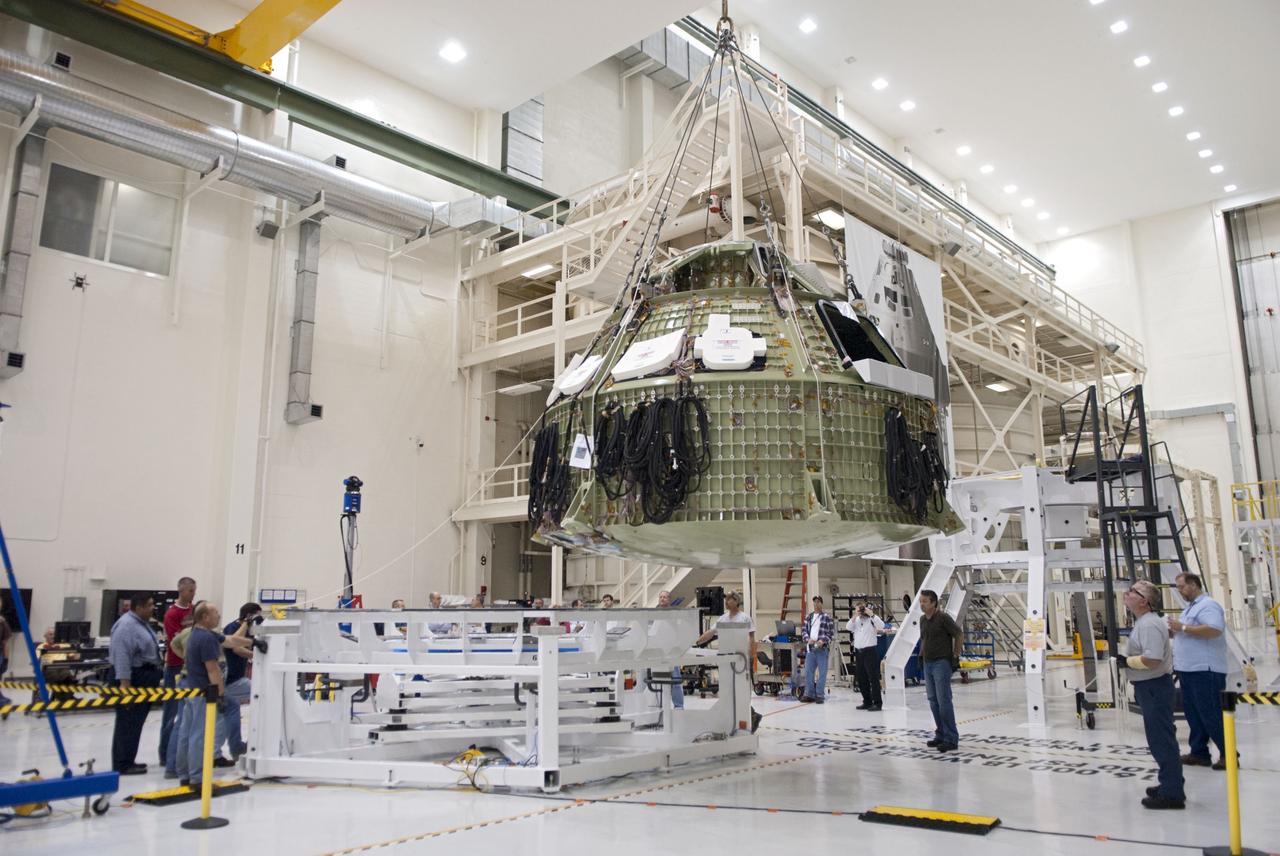
CAPE CANAVERAL, Fla. – Technicians prepare to fit a special fixture around an Orion capsule inside the high bay of the Operations & Checkout Building at NASA's Kennedy Space Center in Florida. The fixture is designed to enable precise pre-launch processing of the Orion spacecraft. An Orion capsule is being prepared to make a flight test in 2014 on a mission that will not carry any astronauts. Photo by Tim Jacobs
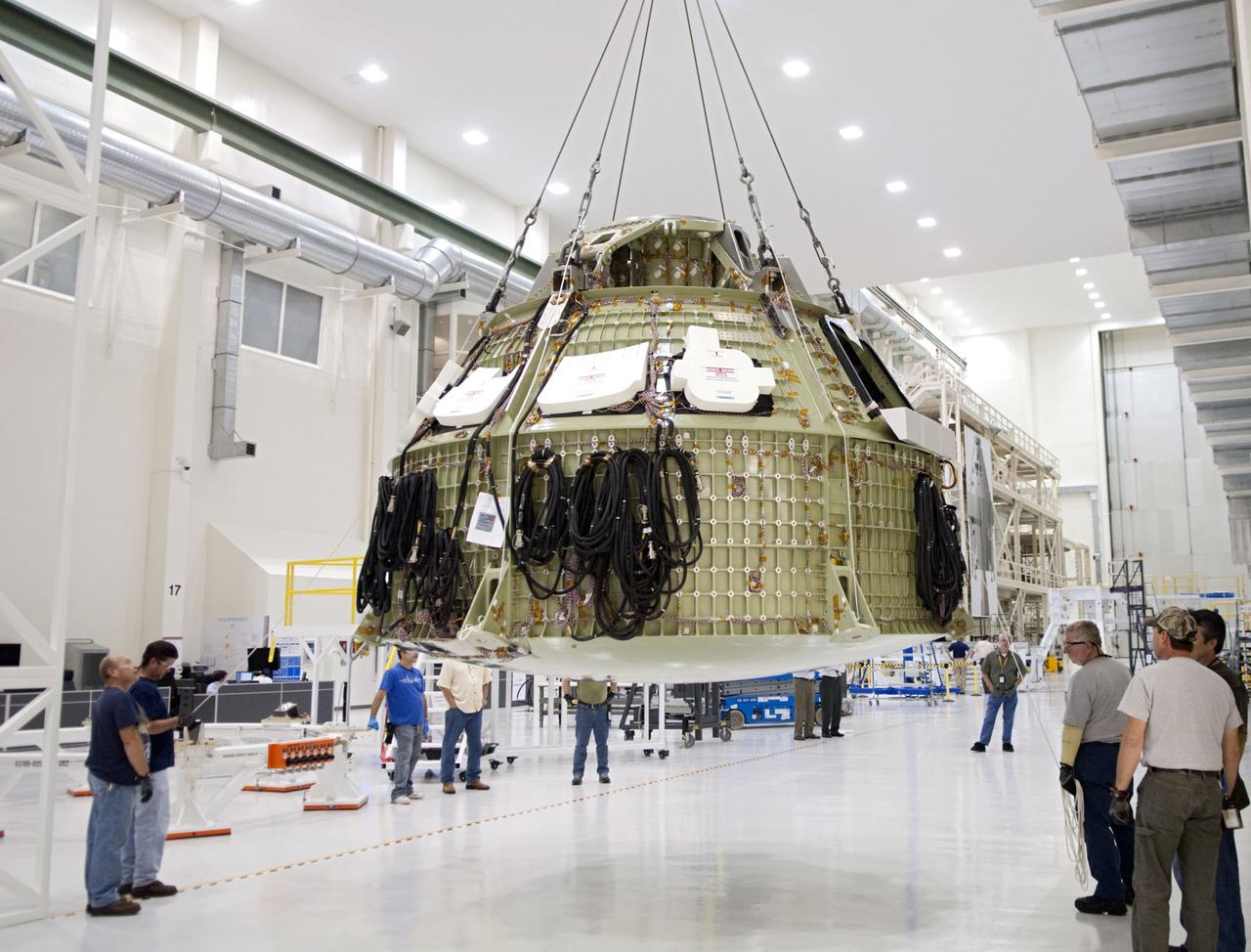
CAPE CANAVERAL, Fla. – Technicians prepare to fit a special fixture around an Orion capsule inside the high bay of the Operations & Checkout Building at NASA's Kennedy Space Center in Florida. The fixture is designed to enable precise pre-launch processing of the Orion spacecraft. An Orion capsule is being prepared to make a flight test in 2014 on a mission that will not carry any astronauts. Photo by Tim Jacobs
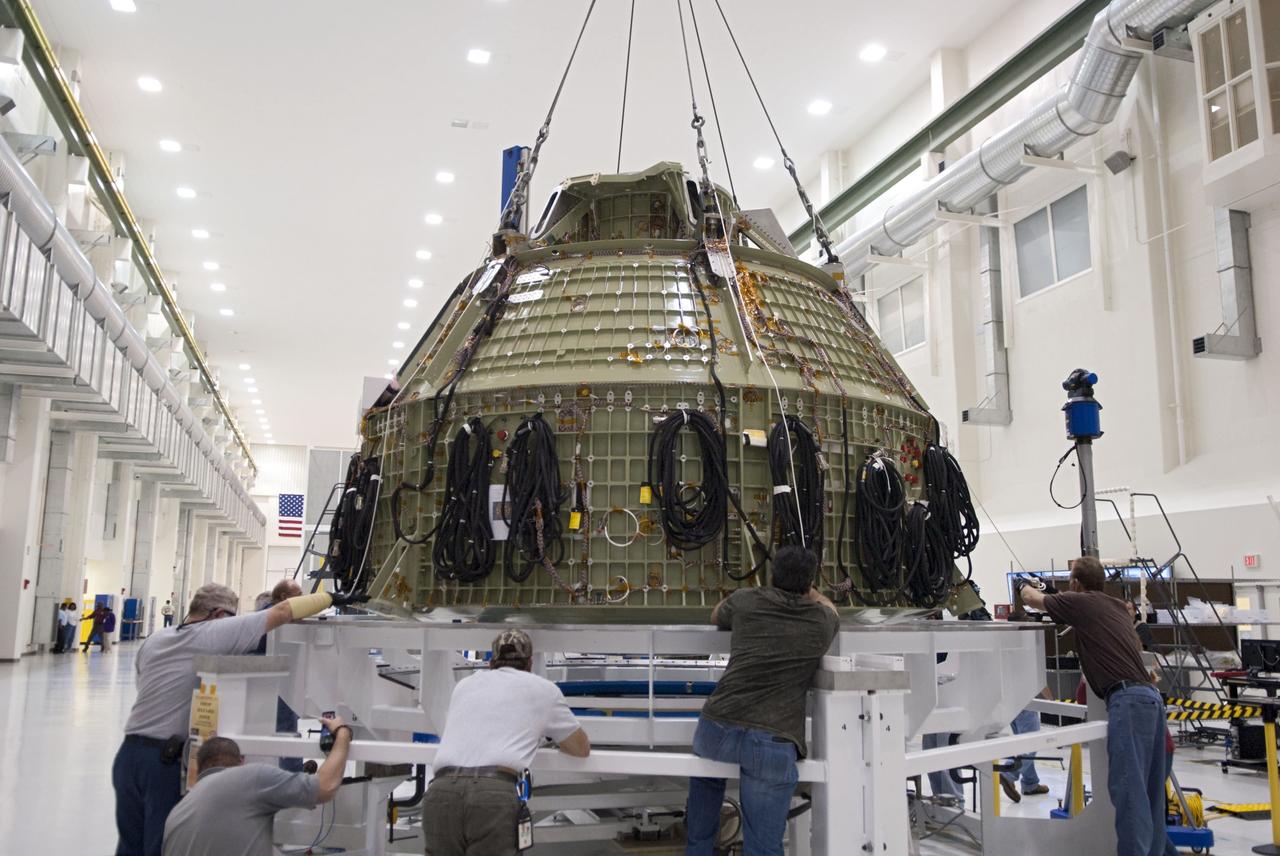
CAPE CANAVERAL, Fla. – Technicians prepare to fit a special fixture around an Orion capsule inside the high bay of the Operations & Checkout Building at NASA's Kennedy Space Center in Florida. The fixture is designed to enable precise pre-launch processing of the Orion spacecraft. An Orion capsule is being prepared to make a flight test in 2014 on a mission that will not carry any astronauts. Photo by Tim Jacobs
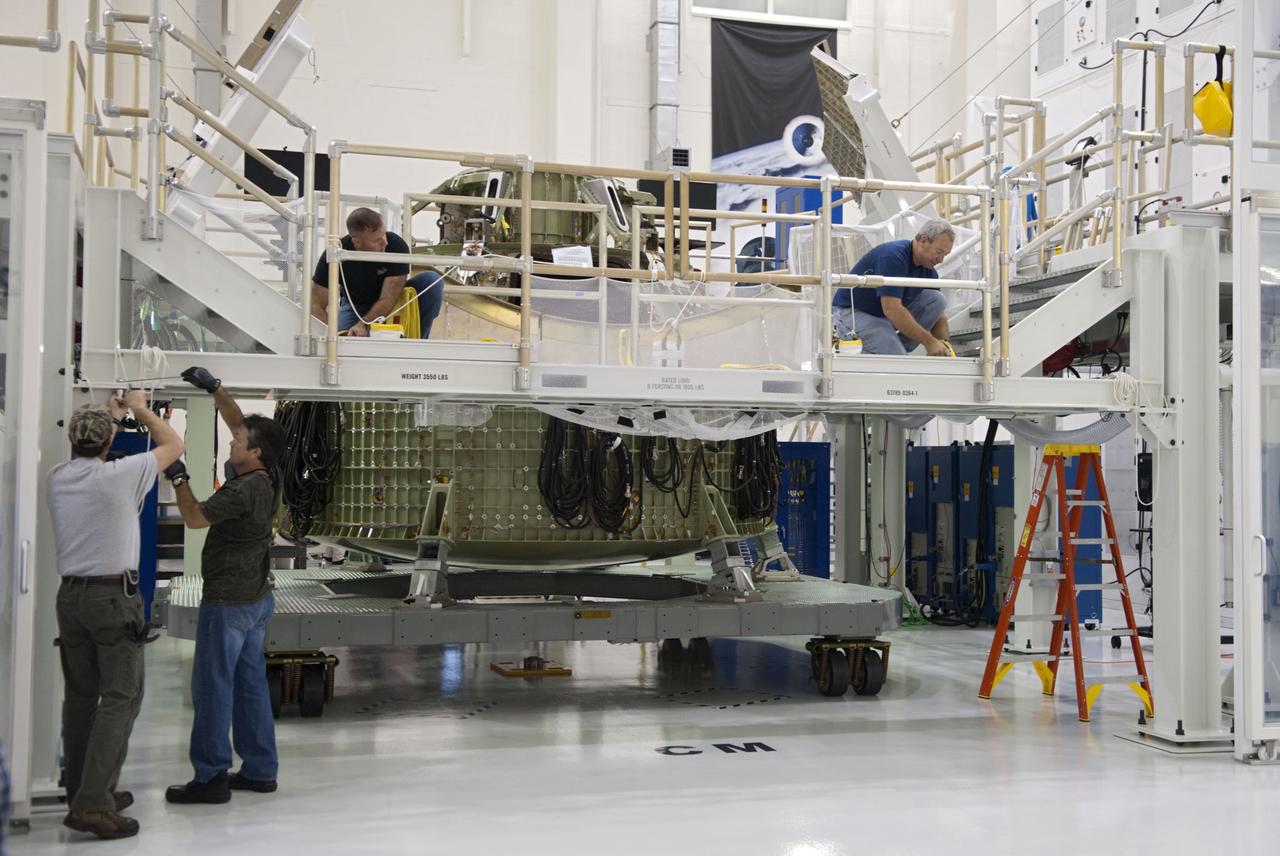
CAPE CANAVERAL, Fla. – Technicians prepare to fit a special fixture around an Orion capsule inside the high bay of the Operations & Checkout Building at NASA's Kennedy Space Center in Florida. The fixture is designed to enable precise pre-launch processing of the Orion spacecraft. An Orion capsule is being prepared to make a flight test in 2014 on a mission that will not carry any astronauts. Photo by Tim Jacobs
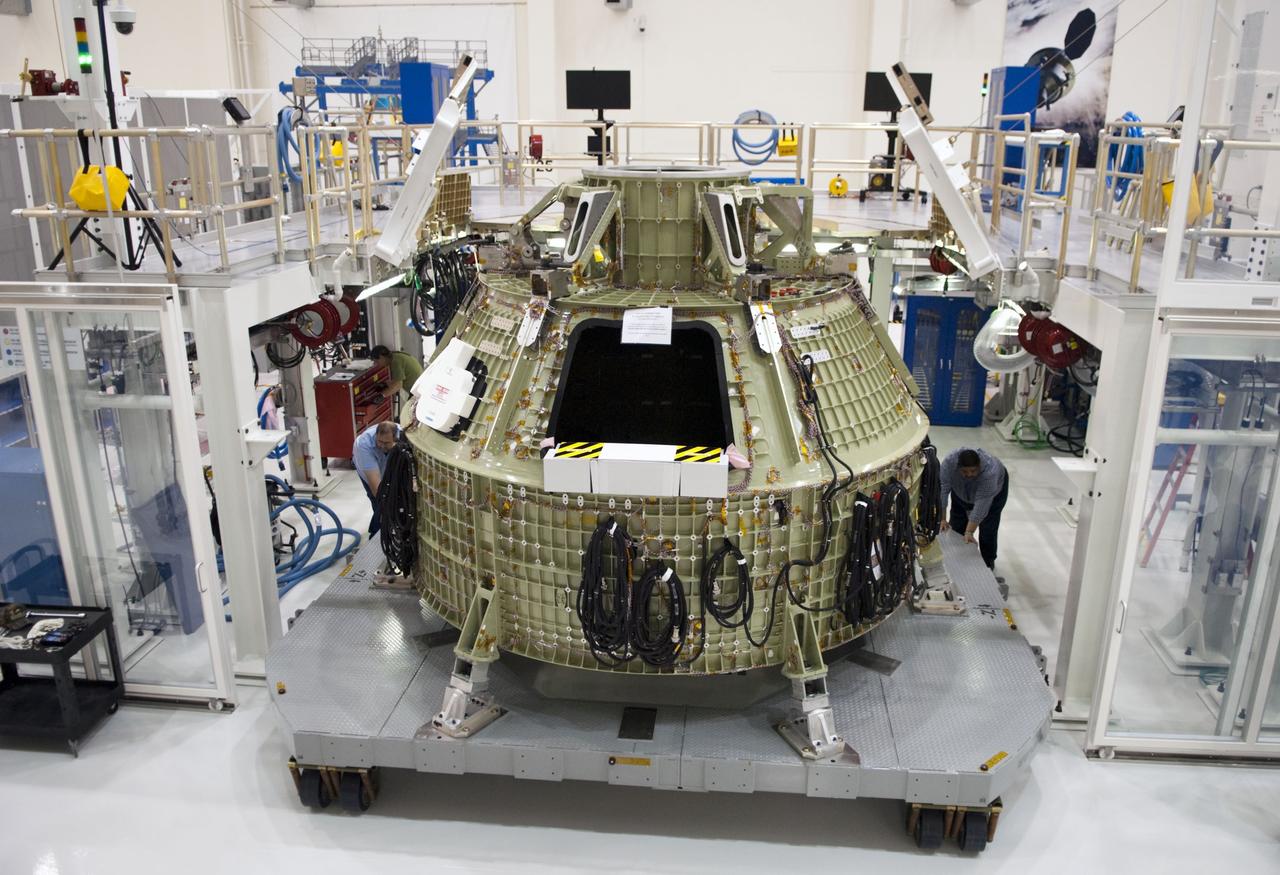
CAPE CANAVERAL, Fla. – Technicians prepare to fit a special fixture around an Orion capsule inside the high bay of the Operations & Checkout Building at NASA's Kennedy Space Center in Florida. The fixture is designed to enable precise pre-launch processing of the Orion spacecraft. An Orion capsule is being prepared to make a flight test in 2014 on a mission that will not carry any astronauts. Photo by Tim Jacobs
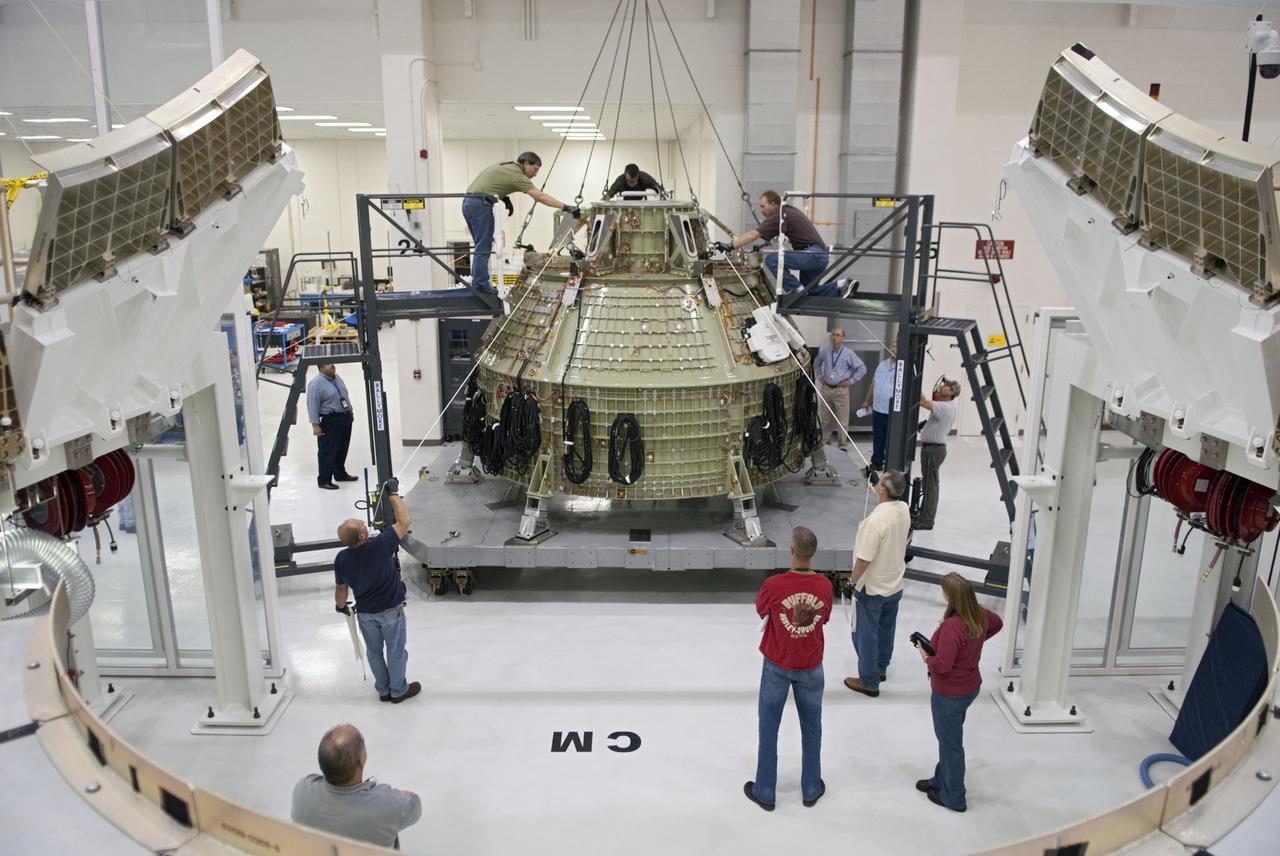
CAPE CANAVERAL, Fla. – Technicians prepare to fit a special fixture around an Orion capsule inside the high bay of the Operations & Checkout Building at NASA's Kennedy Space Center in Florida. The fixture is designed to enable precise pre-launch processing of the Orion spacecraft. An Orion capsule is being prepared to make a flight test in 2014 on a mission that will not carry any astronauts. Photo by Tim Jacobs
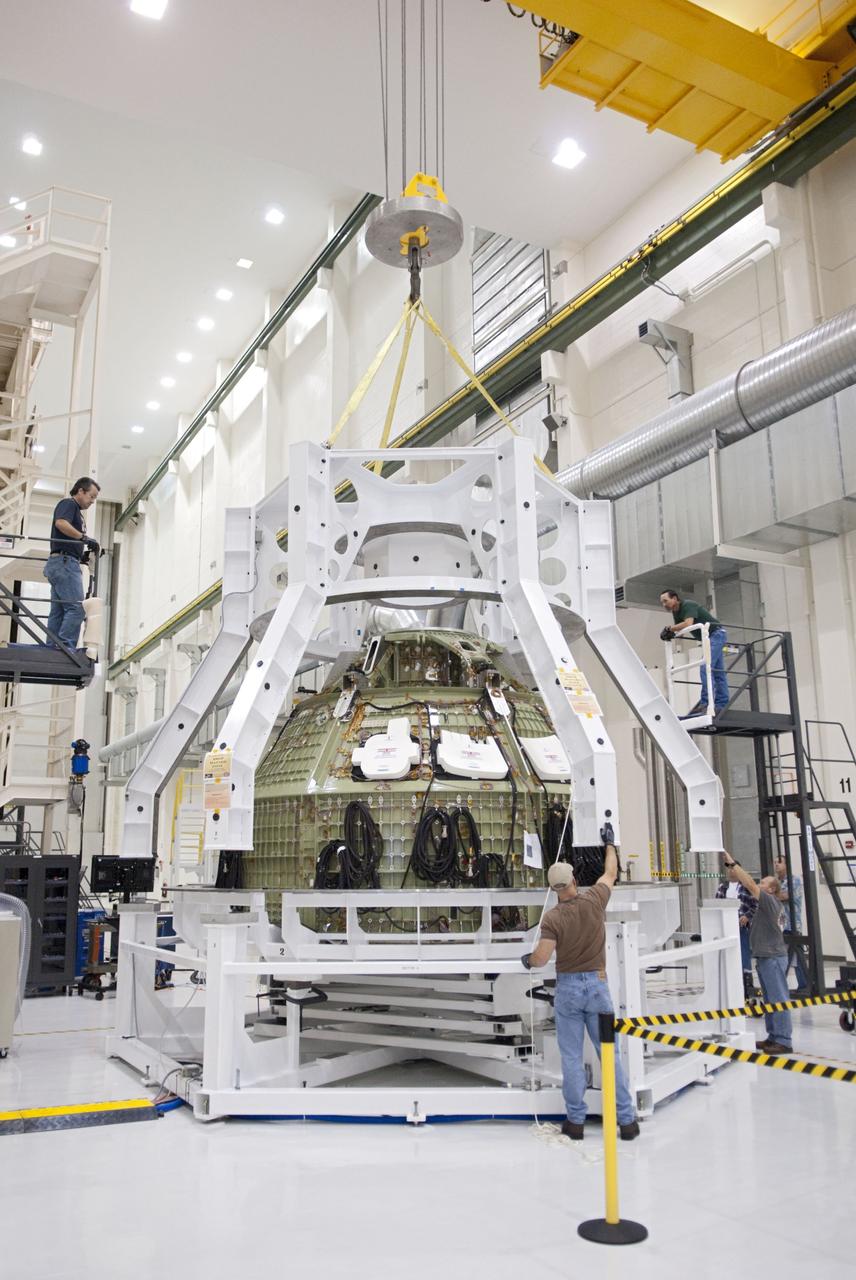
CAPE CANAVERAL, Fla. – Technicians lower a special fixture around an Orion spacecraft inside the high bay of the Operations & Checkout Building at NASA's Kennedy Space Center in Florida. The fixture is designed to enable precise pre-launch processing of the Orion spacecraft. An Orion capsule is being prepared to make a flight test in 2014 on a mission that will not carry any astronauts. Photo by Tim Jacobs

CAPE CANAVERAL, Fla. – Technicians prepare to fit a special fixture around an Orion capsule inside the high bay of the Operations & Checkout Building at NASA's Kennedy Space Center in Florida. The fixture is designed to enable precise pre-launch processing of the Orion spacecraft. An Orion capsule is being prepared to make a flight test in 2014 on a mission that will not carry any astronauts. Photo by Tim Jacobs
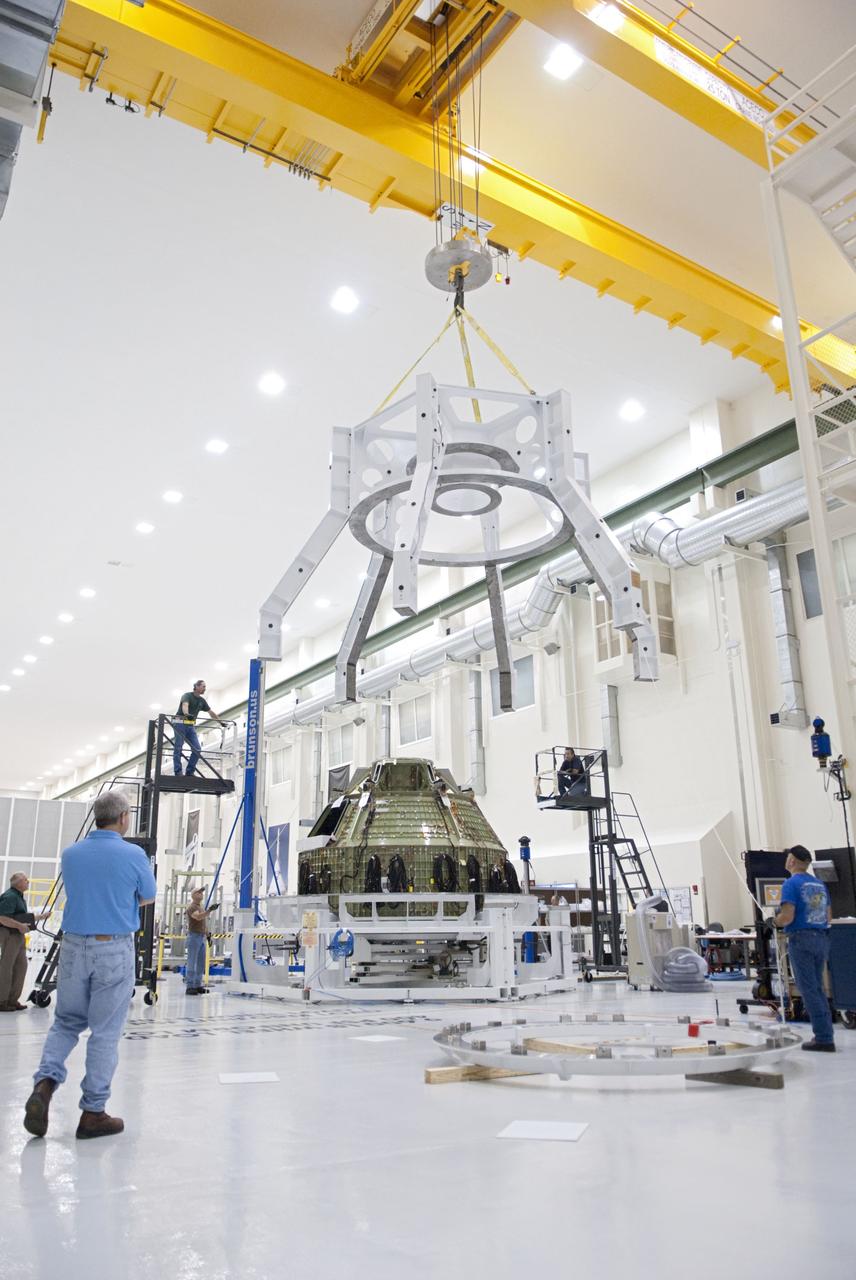
CAPE CANAVERAL, Fla. – Technicians lift a special fixture inside the high bay of the Operations & Checkout Building at NASA's Kennedy Space Center in Florida. The fixture is designed to enable precise pre-launch processing of the Orion spacecraft. An Orion capsule is being prepared to make a flight test in 2014 on a mission that will not carry any astronauts. Photo by Tim Jacobs
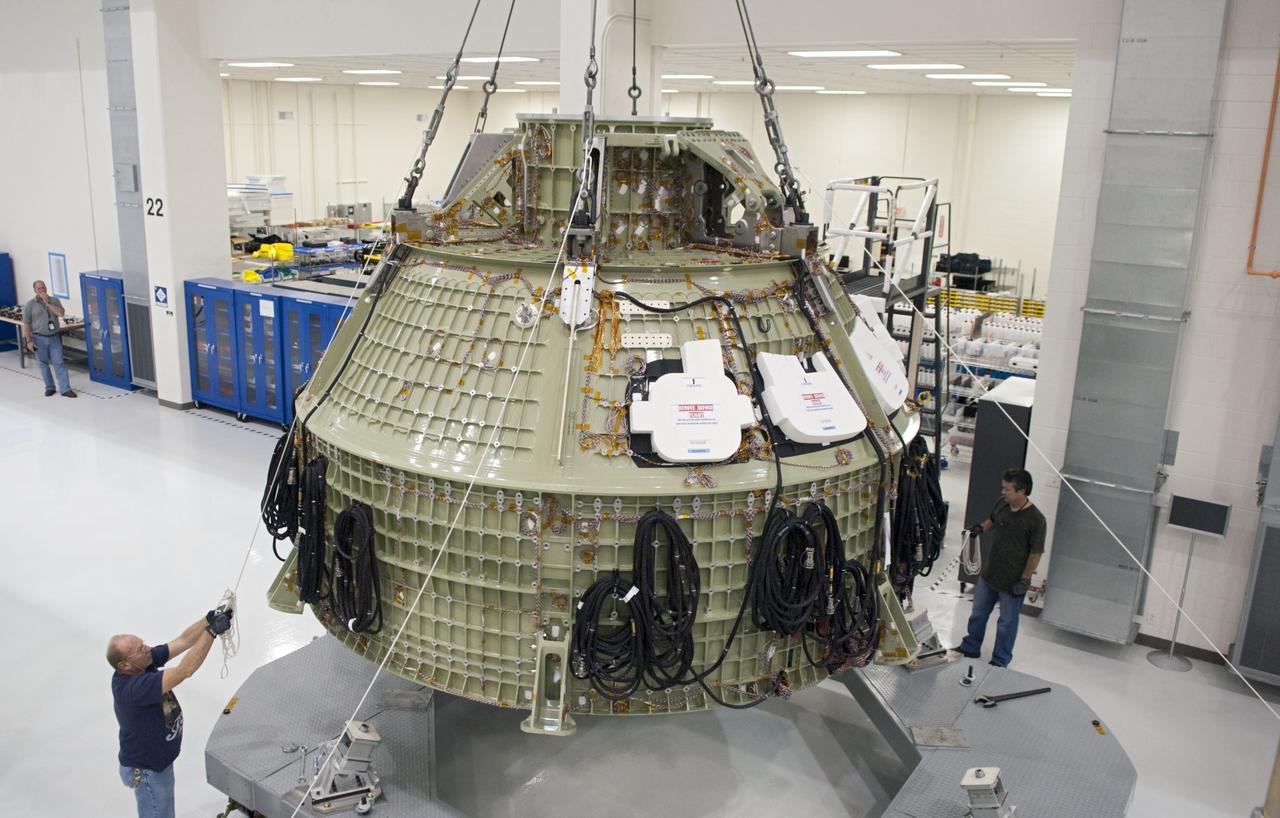
CAPE CANAVERAL, Fla. – Technicians prepare to fit a special fixture around an Orion capsule inside the high bay of the Operations & Checkout Building at NASA's Kennedy Space Center in Florida. The fixture is designed to enable precise pre-launch processing of the Orion spacecraft. An Orion capsule is being prepared to make a flight test in 2014 on a mission that will not carry any astronauts. Photo by Tim Jacobs
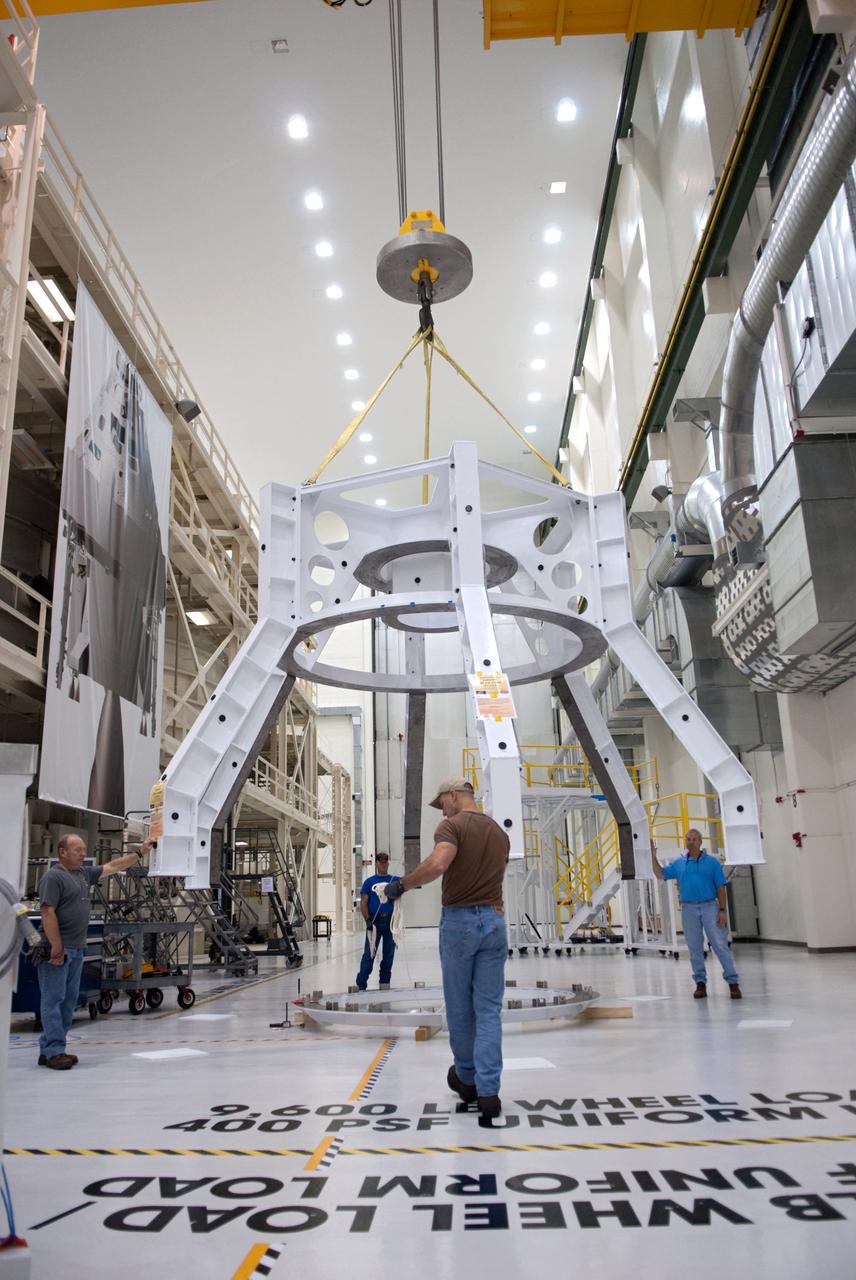
Orion technicians at the Operations and Checkout (O&C) Facility at the Kennedy Space Center move the Orion Exploration Flight Test-1 (EFT-1) crew module from the clean room into the birdcage fixture on Dec. 6, 2012. The fixture is designed to enable precise pre-launch processing of the Orion spacecraft. Part of Batch image transfer from Flickr.
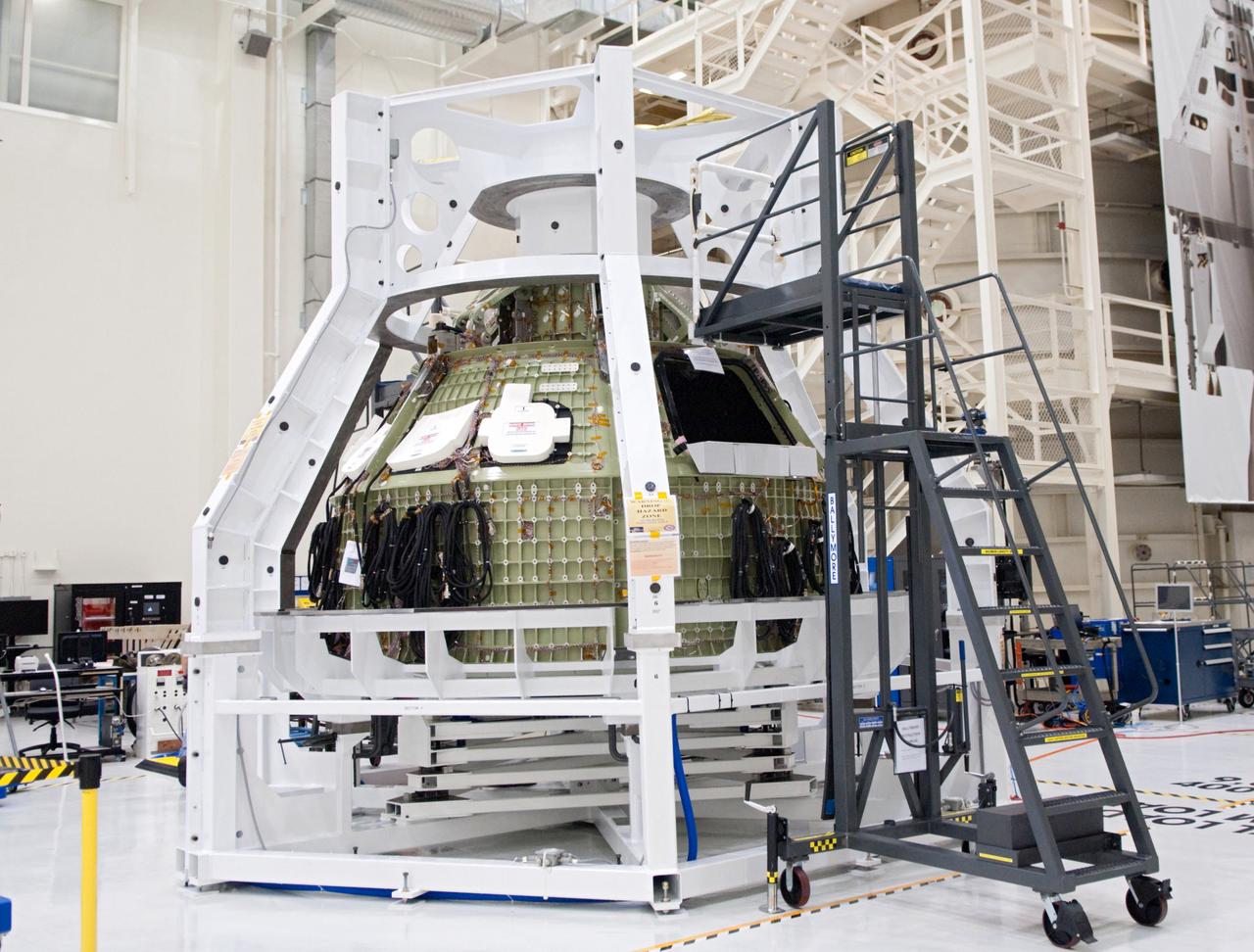
Orion technicians at the Operations and Checkout (O&C) Facility at the Kennedy Space Center move the Orion Exploration Flight Test-1 (EFT-1) crew module from the clean room into the birdcage fixture on Dec. 6, 2012. The fixture is designed to enable precise pre-launch processing of the Orion spacecraft. Part of Batch image transfer from Flickr.
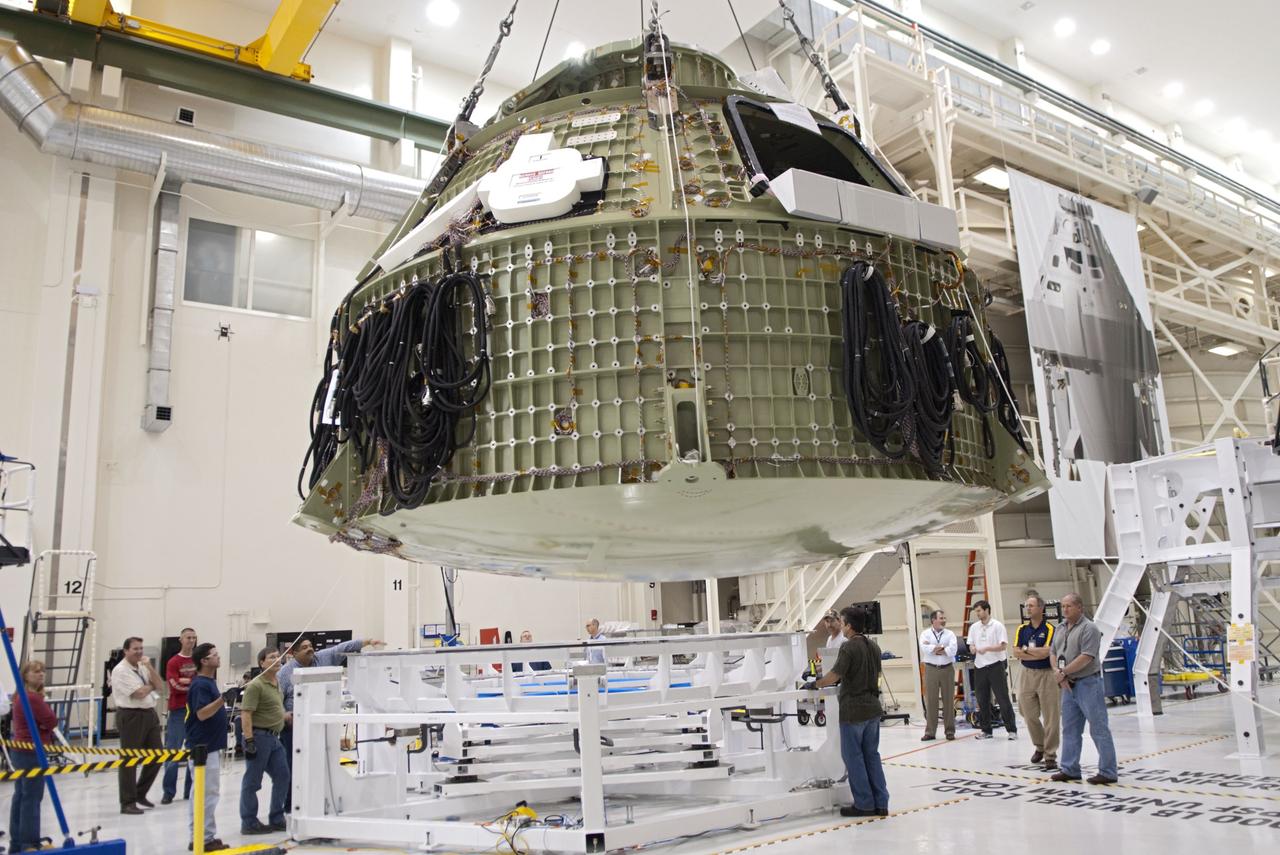
CAPE CANAVERAL, Fla. – Technicians prepare to fit a special fixture around an Orion capsule inside the high bay of the Operations & Checkout Building at NASA's Kennedy Space Center in Florida. The fixture is designed to enable precise pre-launch processing of the Orion spacecraft. An Orion capsule is being prepared to make a flight test in 2014 on a mission that will not carry any astronauts. Photo by Tim Jacobs
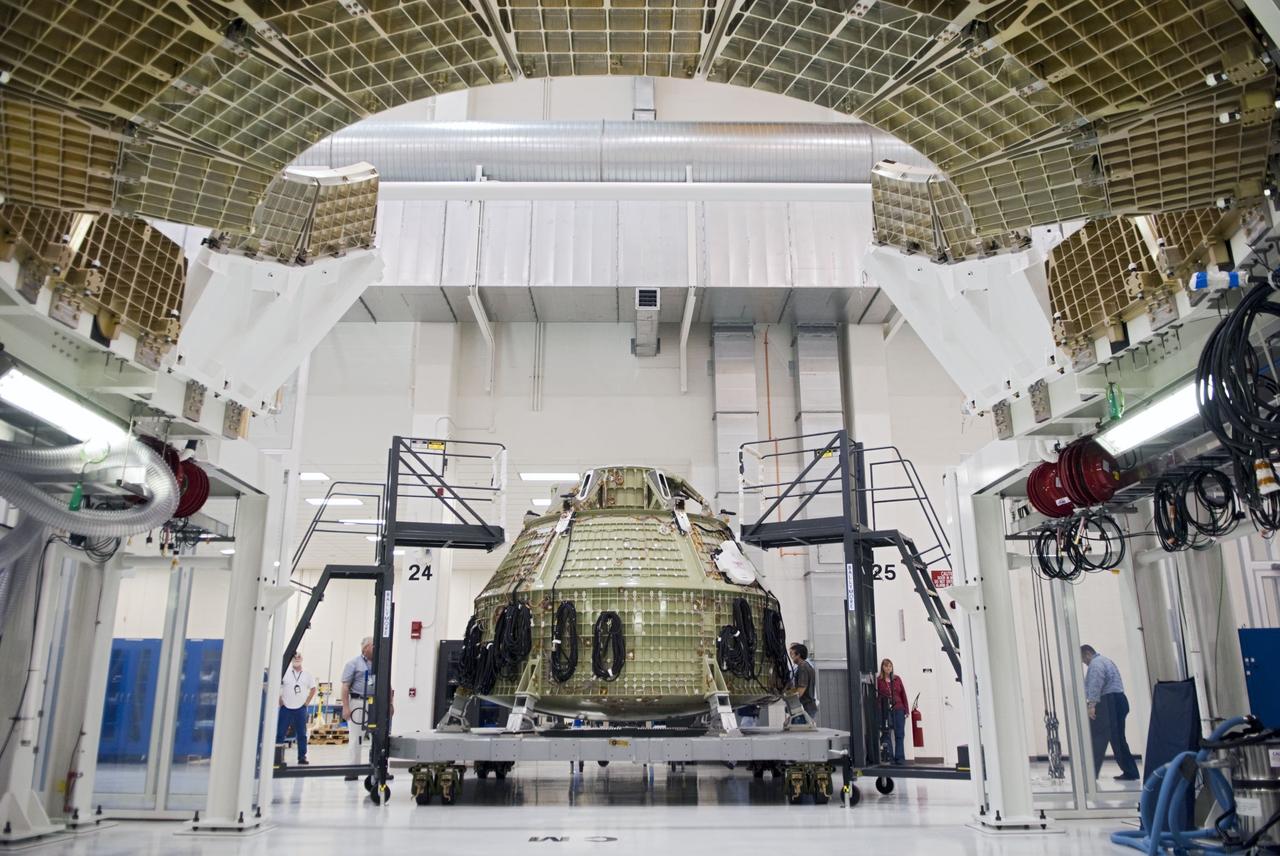
CAPE CANAVERAL, Fla. – Technicians prepare to fit a special fixture around an Orion capsule inside the high bay of the Operations & Checkout Building at NASA's Kennedy Space Center in Florida. The fixture is designed to enable precise pre-launch processing of the Orion spacecraft. An Orion capsule is being prepared to make a flight test in 2014 on a mission that will not carry any astronauts. Photo by Tim Jacobs
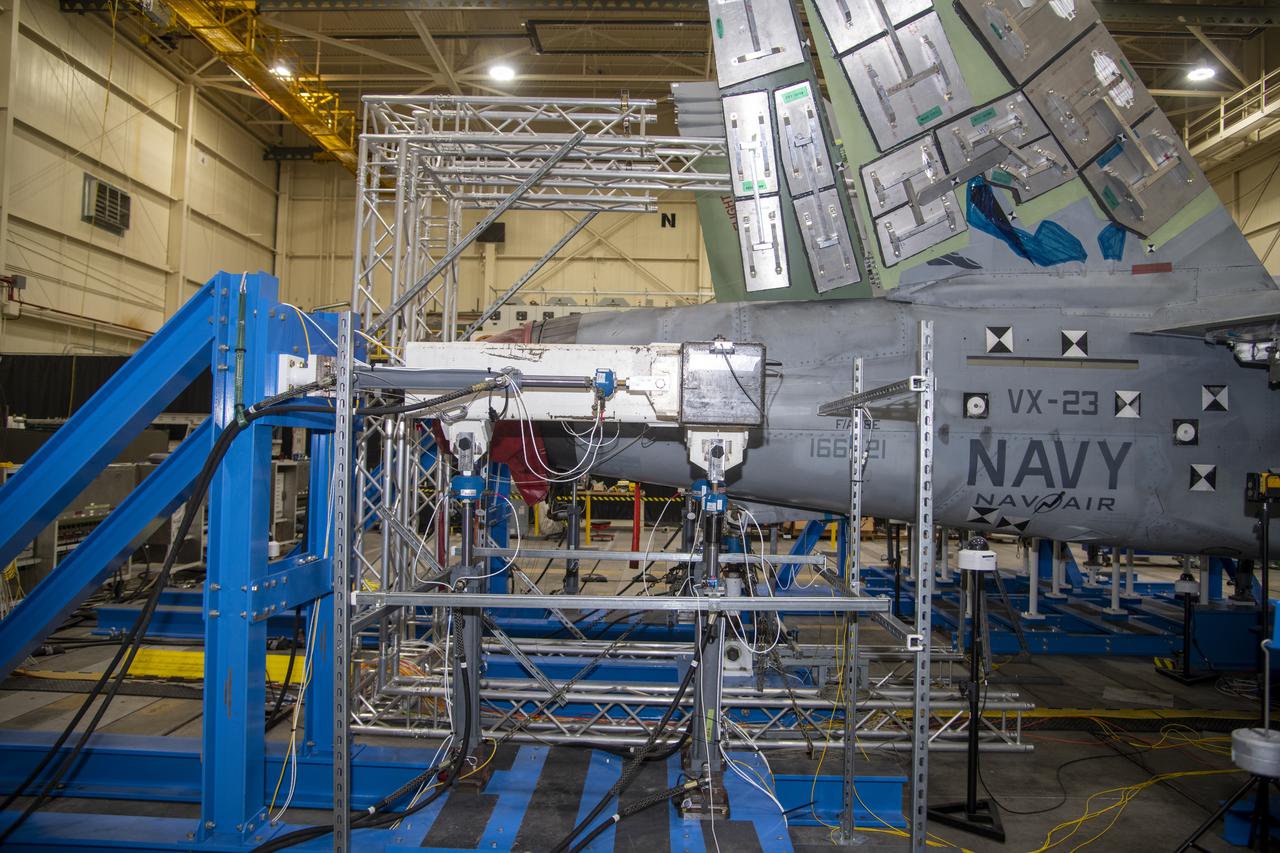
– Hydraulic actuators are pinned to horizontal tail test fixture for testing a F/A-18E from the Naval Air Systems Command (NAVAIR) in Patuxent River, Maryland. The aircraft is in NASA’s Armstrong Flight Research Center Flight Loads Laboratory in Edwards, California, for the center’s biggest load calibrations tests. This testing is needed before the aircraft can serve as a test vehicle for determining if it can safely manage maneuvers and proposed upgrades.
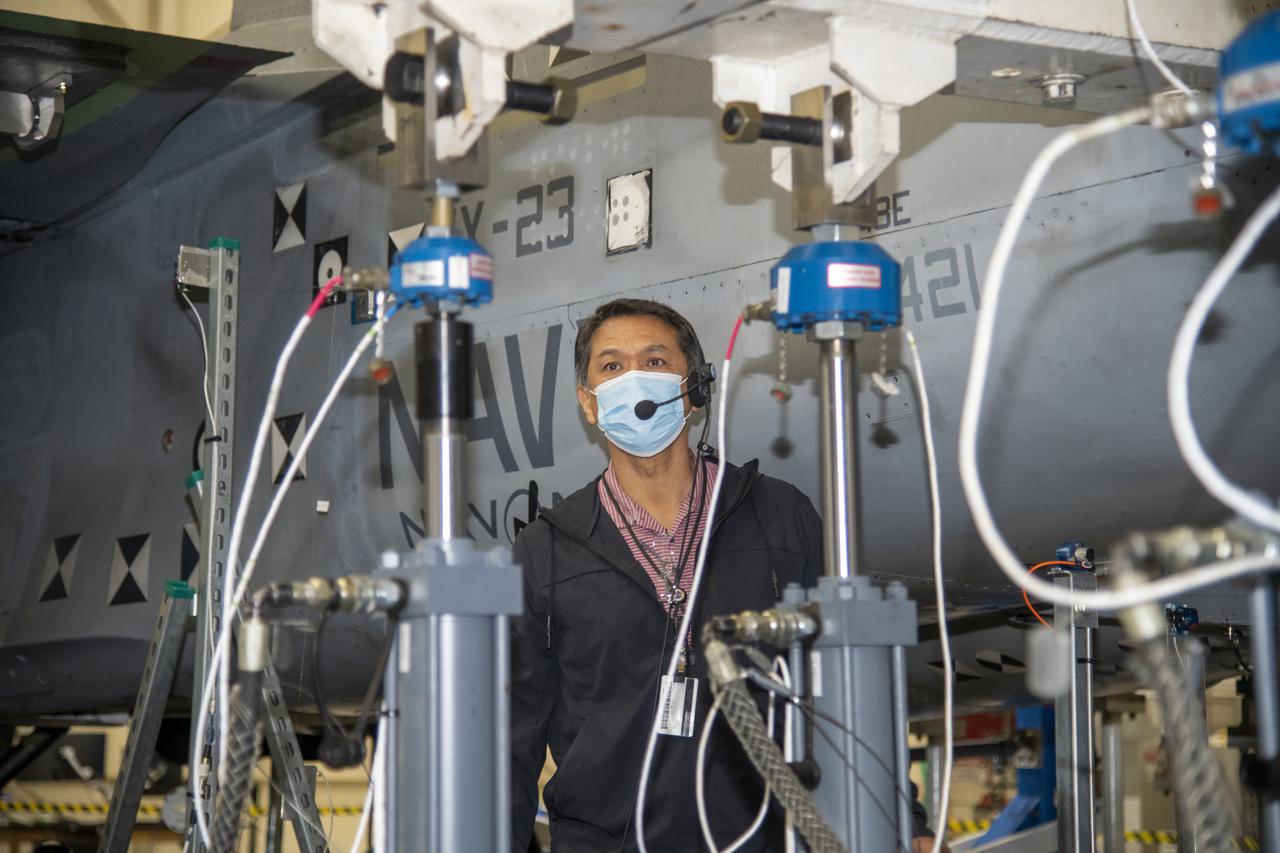
Larry Hudson does an inspection after the actuator on the F/A-18E from the Naval Air Systems Command (NAVAIR) in Patuxent River, Maryland, is pinned to the horizontal tail load test fixture. The aircraft is in NASA’s Armstrong Flight Research Center Flight Loads Laboratory in Edwards, California, for the center’s biggest load calibrations tests. This testing is needed before the aircraft can serve as a test vehicle for determining if it can safely manage maneuvers and proposed upgrades.
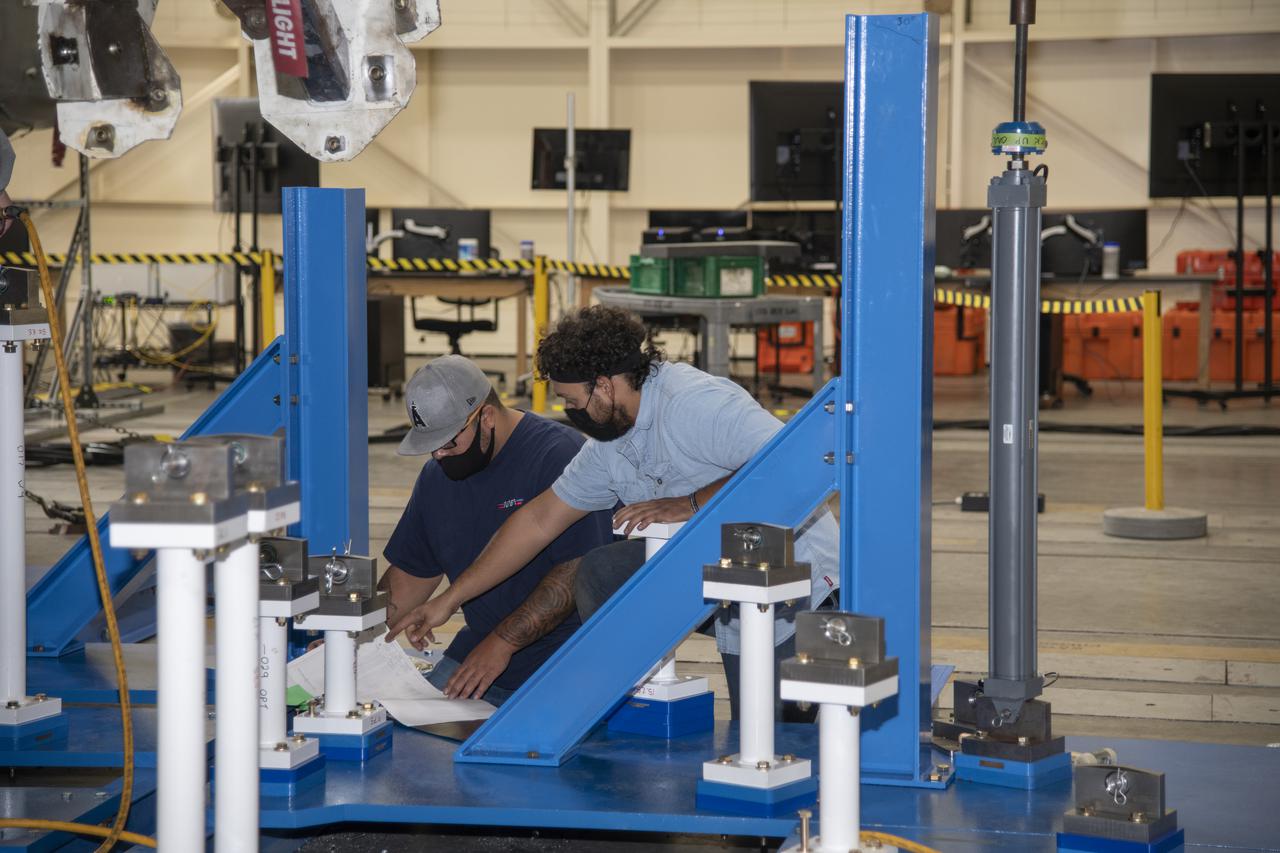
From left, Dominic Barela and Lucas Oramas review a drawing for installing the wing load test fixturing on a F/A-18E from the Naval Air Systems Command (NAVAIR) in Patuxent River, Maryland. The aircraft is in NASA’s Armstrong Flight Research Center Flight Loads Laboratory in Edwards, California, for the center’s biggest load calibrations tests. This testing is needed before the aircraft can serve as a test vehicle for determining if it can safely manage maneuvers and proposed upgrades.
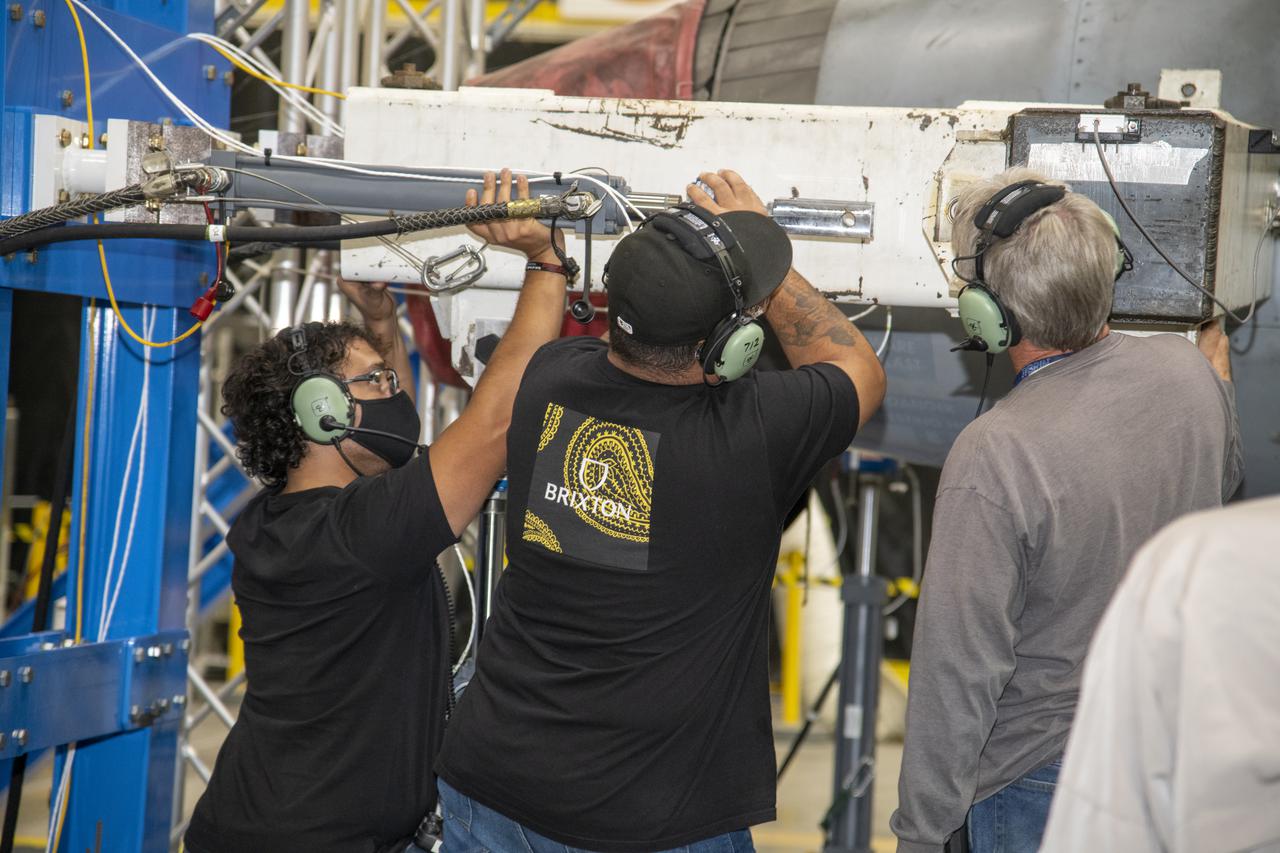
The actuator on the F/A-18E from the Naval Air Systems Command (NAVAIR) in Patuxent River, Maryland, is positioned for pinning to the horizontal tail load test fixture. The aircraft is in NASA’s Armstrong Flight Research Center Flight Loads Laboratory in Edwards, California, for the center’s biggest load calibrations tests. This testing is needed before the aircraft can serve as a test vehicle for determining if it can safely manage maneuvers and proposed upgrades.
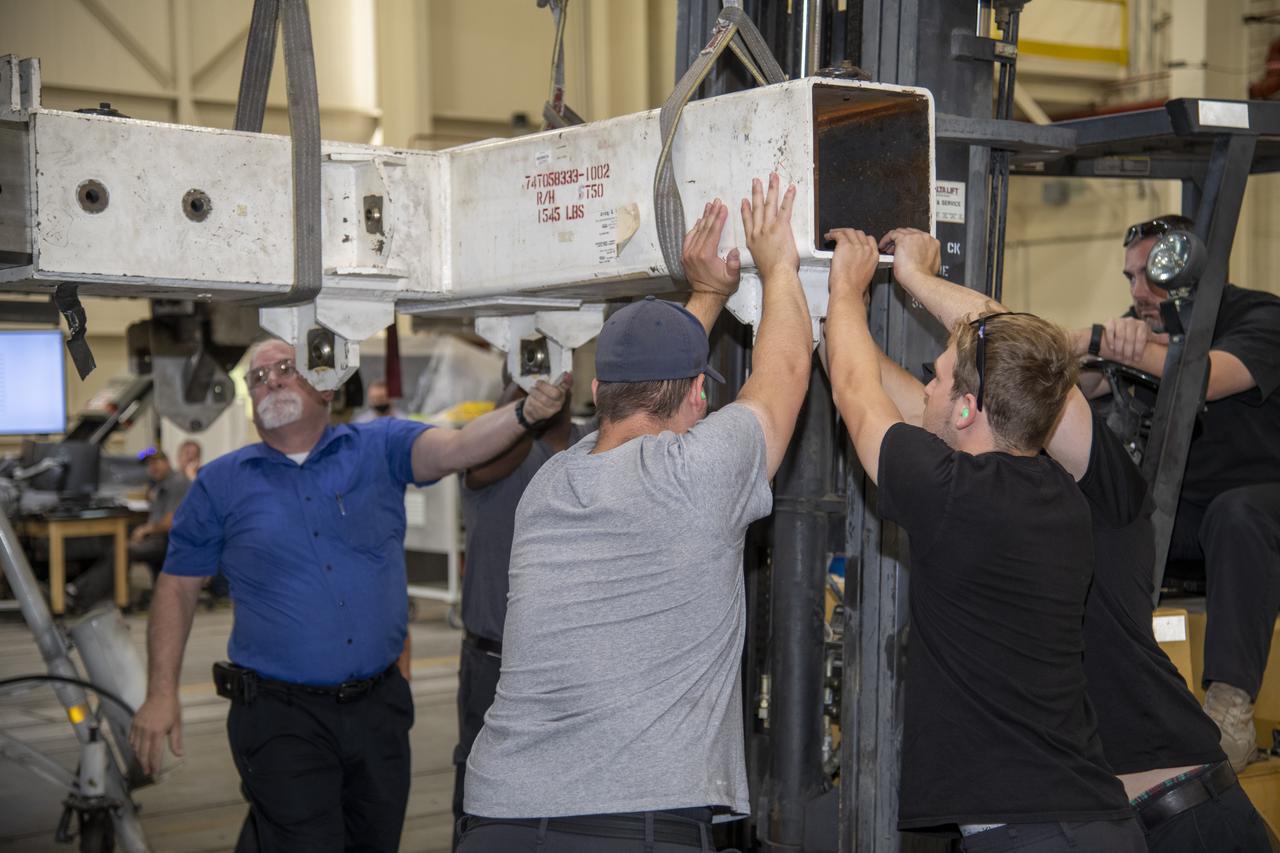
The horizontal tail and load fixture is moved into position for testing the F/A-18E from the Naval Air Systems Command (NAVAIR) in Patuxent River, Maryland. The aircraft is in NASA’s Armstrong Flight Research Center Flight Loads Laboratory in Edwards, California, for the center’s biggest load calibrations tests. This testing is needed before the aircraft can serve as a test vehicle for determining if it can safely manage maneuvers and proposed upgrades.
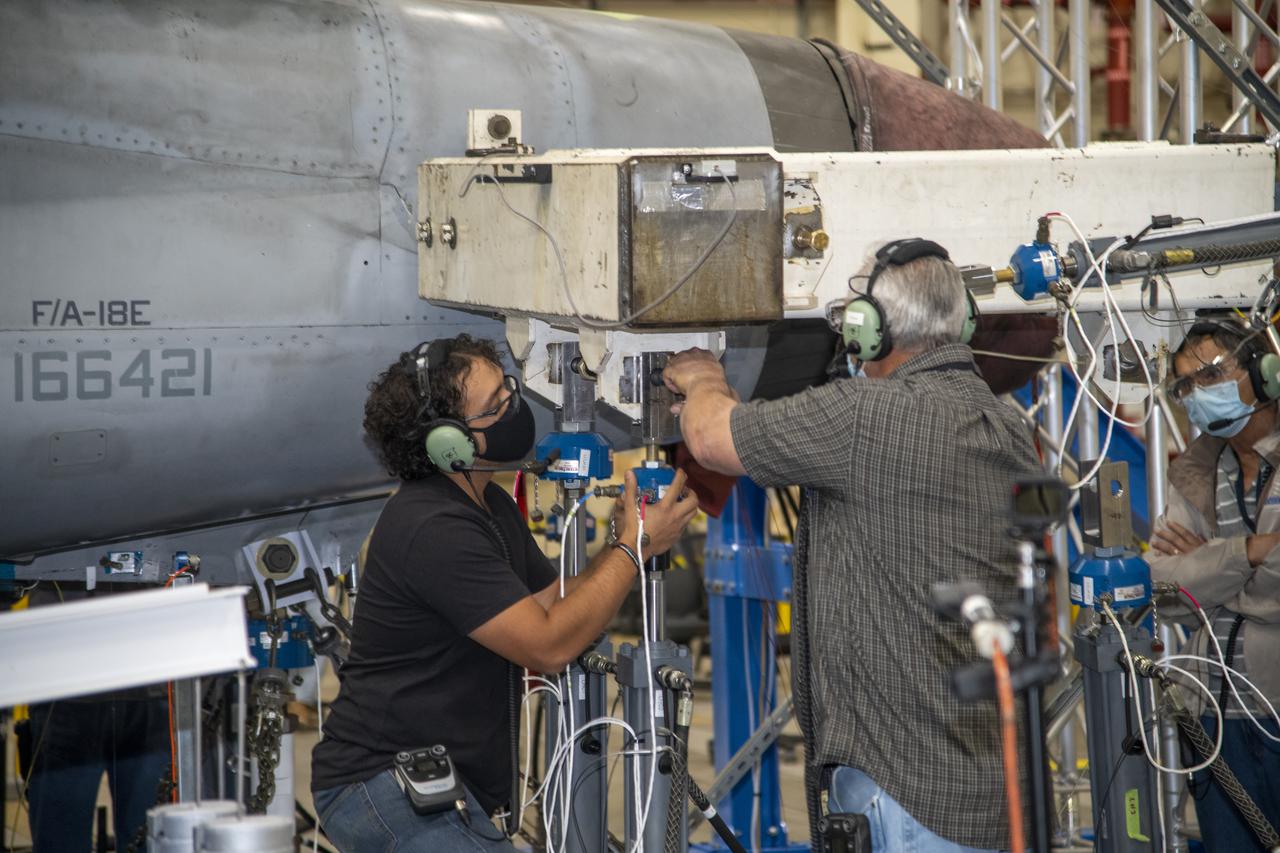
The actuator on the F/A-18E from the Naval Air Systems Command (NAVAIR) in Patuxent River, Maryland, is pinned to the horizontal tail load test fixture. The aircraft is in NASA’s Armstrong Flight Research Center Flight Loads Laboratory in Edwards, California, for the center’s biggest load calibrations tests. This testing is needed before the aircraft can serve as a test vehicle for determining if it can safely manage maneuvers and proposed upgrades.
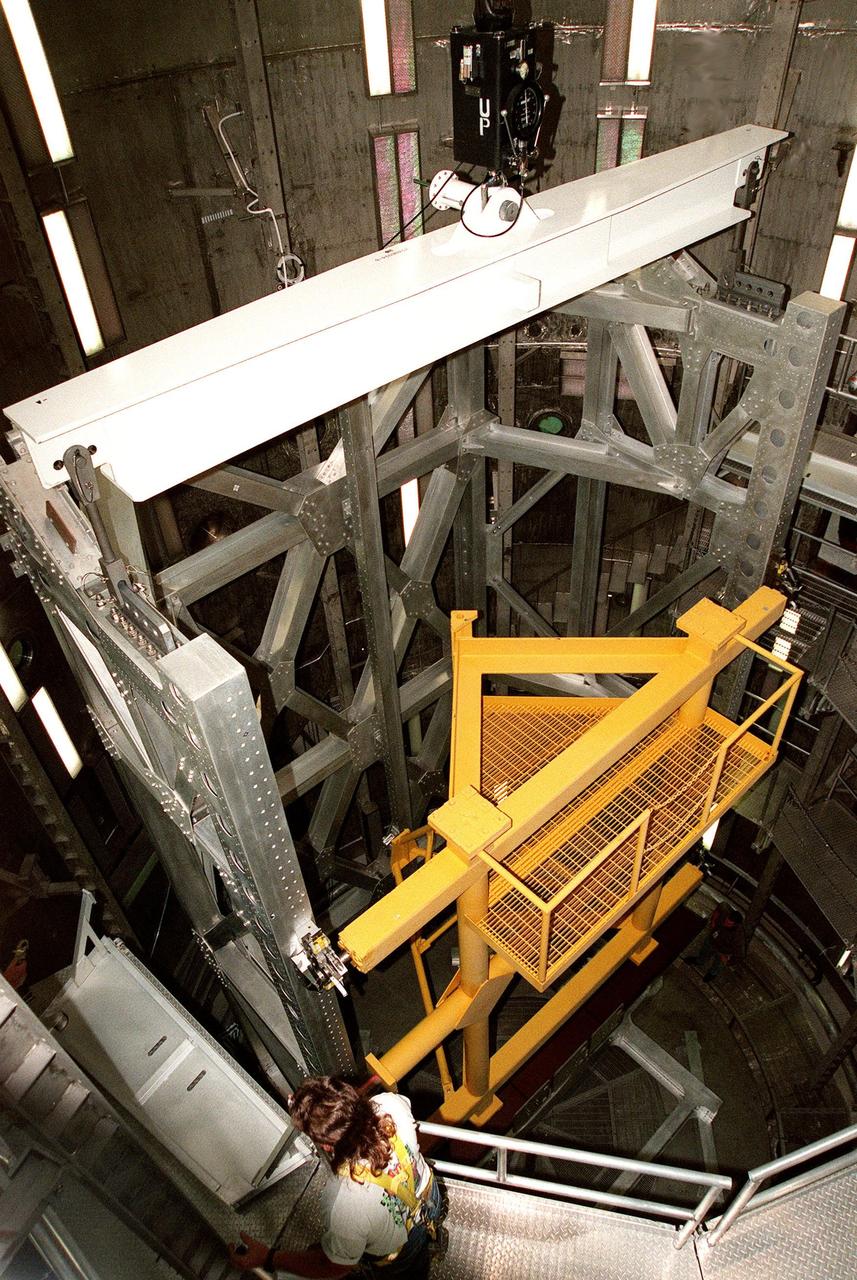
KENNEDY SPACE CENTER, FLA. -- In the Operations and Checkout Building's high bay, the Rotation Handling Fixture (RHF), with a simulated module attached, is viewed from above the altitude chamber into which it was lowered during a test. Under normal operation, the RHF will hold a pressurized module intended for the International Space Station, depositing it into the altitude chamber for leak testing. The chamber was recently reactivated after a 20-year hiatus. Originally, two chambers were built to test Apollo Program flight hardware. They were last used in 1975 during the Apollo-Soyuz Test Project. In 1997, in order to increase the probability of successful missions aboard the ISS, NASA decided to perform leak tests on ISS pressurized modules at the launch site. After installation of new vacuum pumping equipment and controls, a new control room, and a new rotation and handling fixture, the chamber again became operational in February 1999. The chamber, which is 33 feet in diameter and 50 feet tall, is constructed of stainless steel. The rotation handling fixture is aluminum. The first module that will be tested for leaks is the U.S. Laboratory. No date has been determined for the test
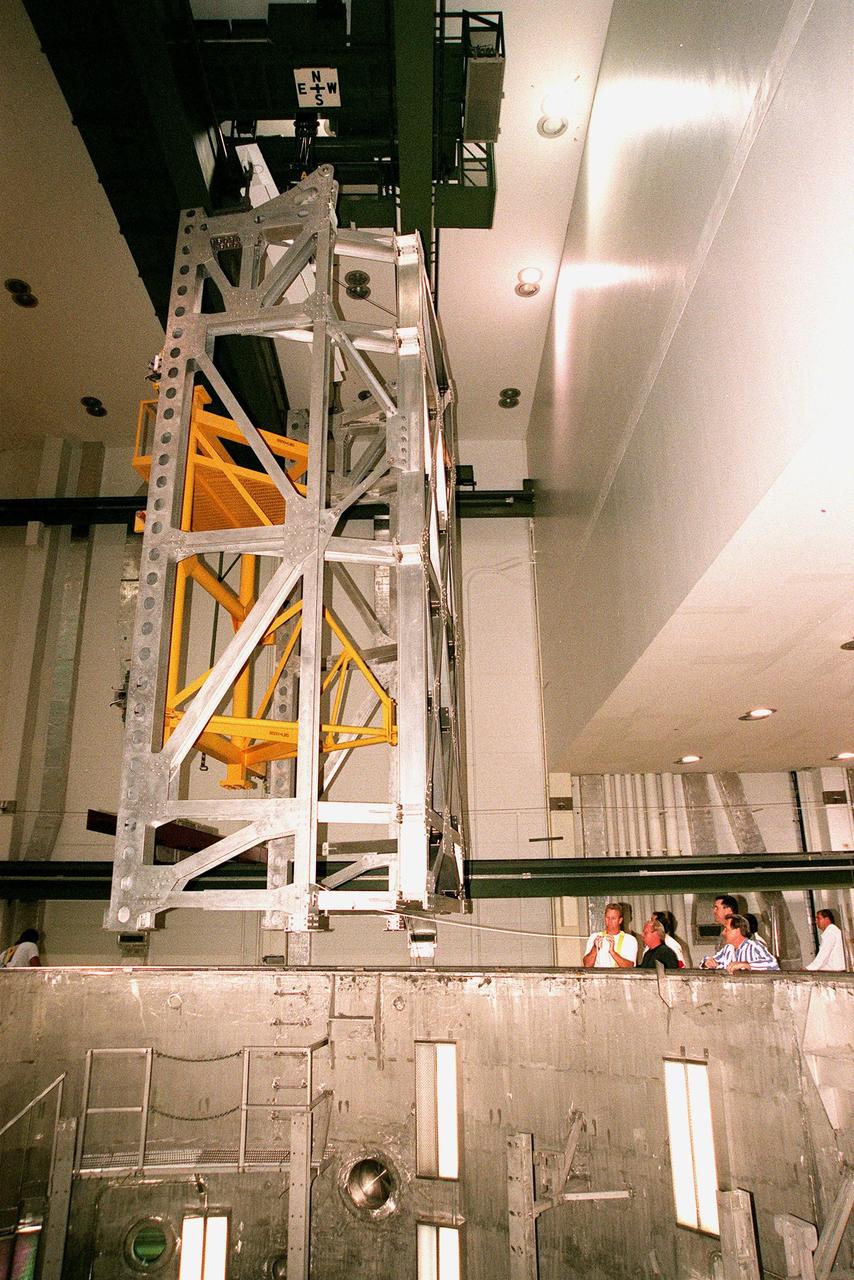
KENNEDY SPACE CENTER, FLA. -- In the Operations and Checkout Building's high bay, the Rotation Handling Fixture (RHF), with a simulated module attached, is lowered by crane into the altitude chamber below during a test. Under normal operation, the RHF will hold a pressurized module intended for the International Space Station, depositing it into the altitude chamber for leak testing. The chamber was recently reactivated after a 24-year hiatus. Originally, two chambers were built to test Apollo Program flight hardware. They were last used in 1975 during the Apollo-Soyuz Test Project. In 1997, in order to increase the probability of successful missions aboard the ISS, NASA decided to perform leak tests on ISS pressurized modules at the launch site. After installation of new vacuum pumping equipment and controls, a new control room, and a new rotation and handling fixture, the chamber again became operational in February 1999. The chamber, which is 33 feet in diameter and 50 feet tall, is constructed of stainless steel. The rotation handling fixture is aluminum. The first module that will be tested for leaks is the U.S. Laboratory. No date has been determined for the test
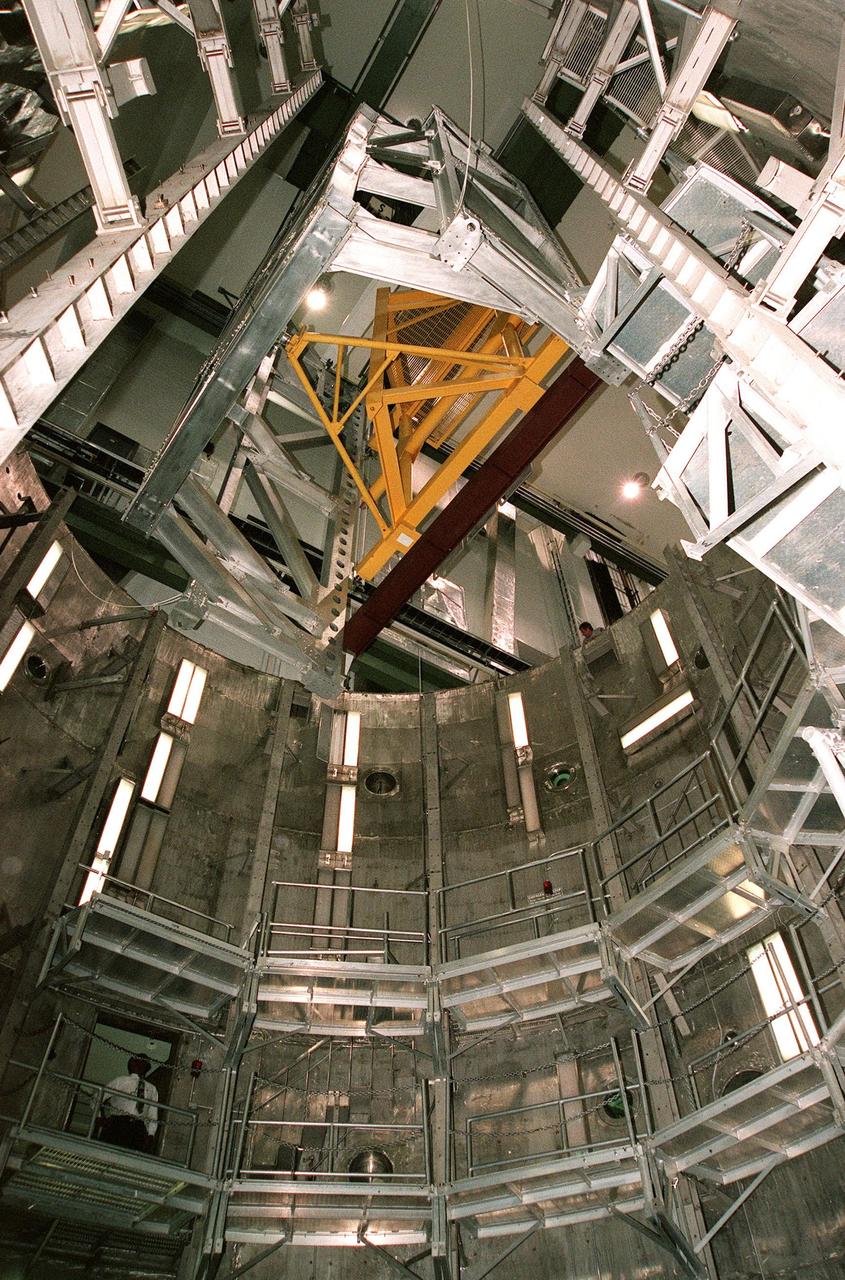
KENNEDY SPACE CENTER, FLA. -- Viewed from inside the altitude chamber in the Operations and Checkout Building's high bay, the Rotation Handling Fixture (RHF), with a simulated module attached, is lowered during a test. Under normal operation, the RHF will hold a pressurized module intended for the International Space Station, depositing it into the altitude chamber for leak testing. The chamber was recently reactivated after a 24-year hiatus. Originally, two chambers were built to test Apollo Program flight hardware. They were last used in 1975 during the Apollo-Soyuz Test Project. In 1997, in order to increase the probability of successful missions aboard the ISS, NASA decided to perform leak tests on ISS pressurized modules at the launch site. After installation of new vacuum pumping equipment and controls, a new control room, and a new rotation and handling fixture, the chamber again became operational in February 1999. The chamber, which is 33 feet in diameter and 50 feet tall, is constructed of stainless steel. The rotation handling fixture is aluminum. The first module that will be tested for leaks is the U.S. Laboratory. No date has been determined for the test
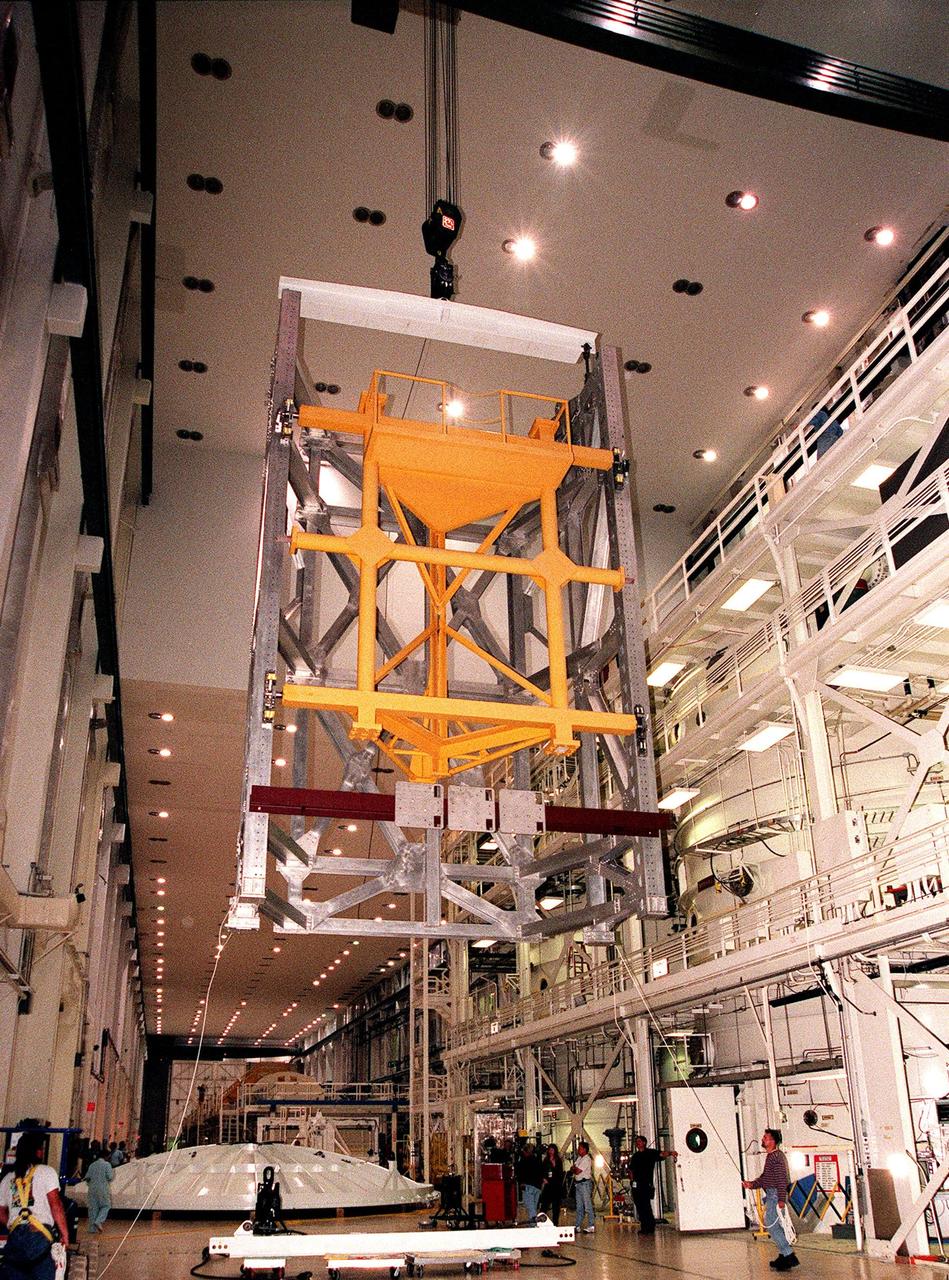
KENNEDY SPACE CENTER, FLA. -- In the Operations and Checkout Building's high bay, a crane lifts the Rotation Handling Fixture (RHF) and simulated module during a test. Under normal operation, the RHF will hold a pressurized module intended for the International Space Station, lifting it up and into an altitude chamber for leak testing. The chamber was recently reactivated after a 24-year hiatus. Originally, two chambers were built to test Apollo Program flight hardware. They were last used in 1975 during the Apollo-Soyuz Test Project. In 1997, in order to increase the probability of successful missions aboard the ISS, NASA decided to perform leak tests on ISS pressurized modules at the launch site. After installation of new vacuum pumping equipment and controls, a new control room, and a new rotation and handling fixture, the chamber again became operational in February 1999. The chamber, which is 33 feet in diameter and 50 feet tall, is constructed of stainless steel. The rotation handling fixture is aluminum. The first module that will be tested for leaks is the U.S. Laboratory. No date has been determined for the test
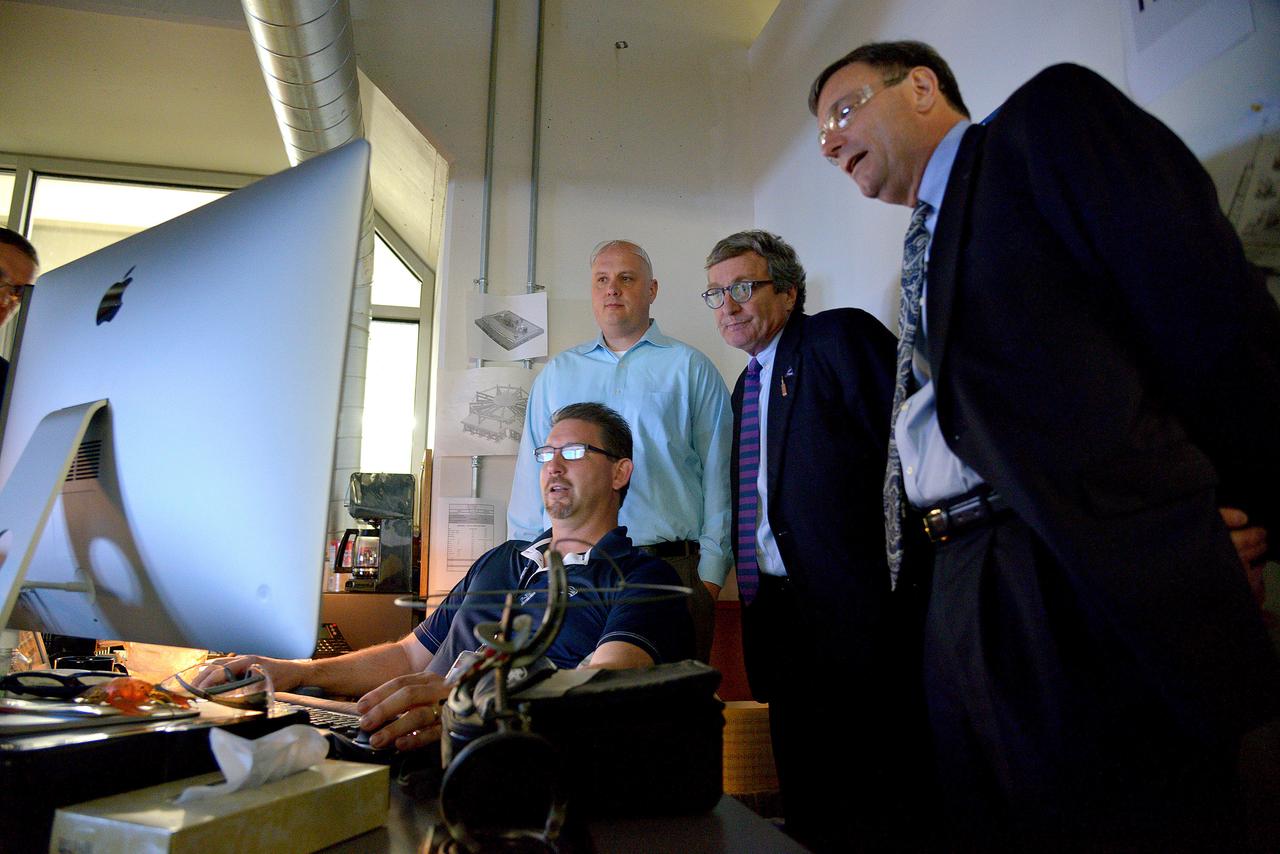
The Orion leadership team visits Janicki Industries in Sedro-Woolley, Washington on March 9, 2015 to thank them for their work in support of Exploration Flight Test-1 (EFT-1). Janicki is a small business that specializes in producing custom tooling fixtures and composite structures. Part of Batch image transfer from Flickr.
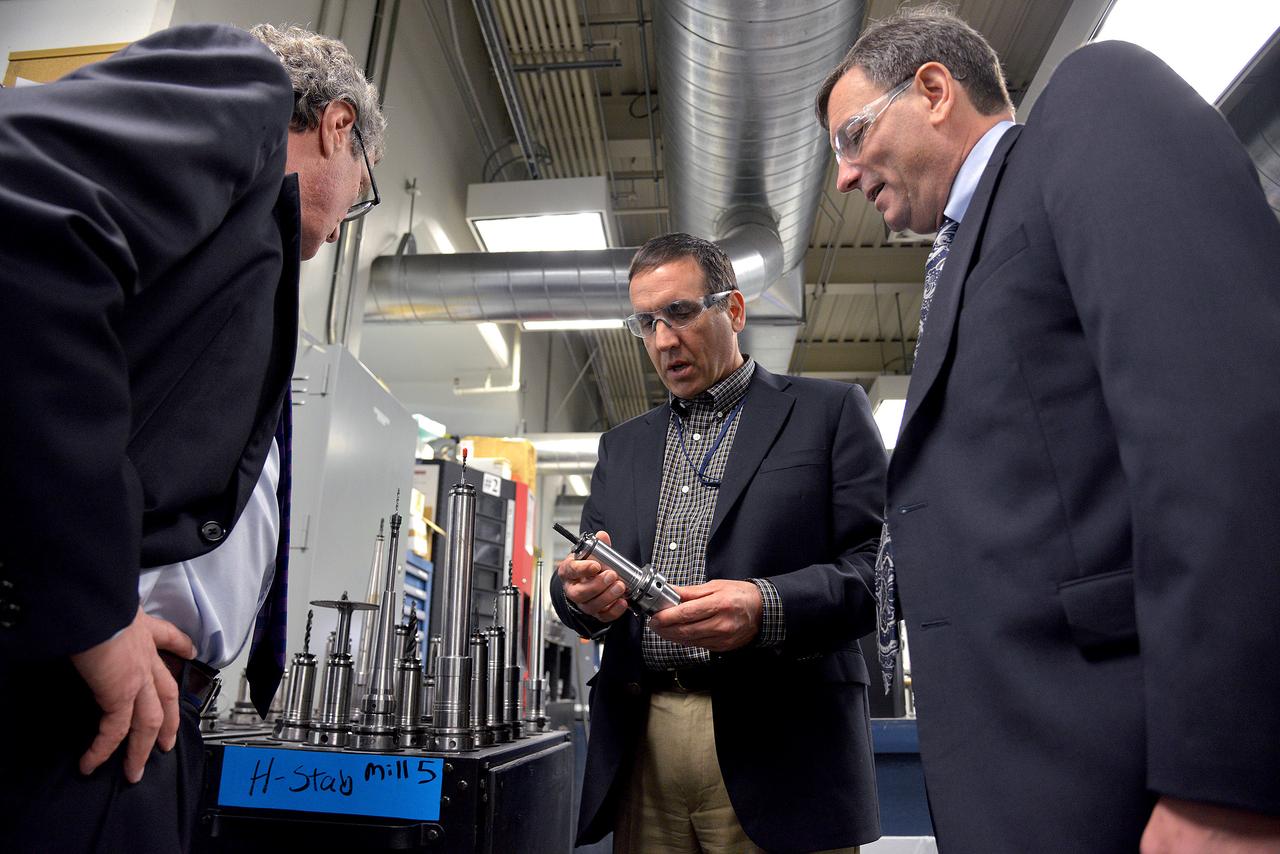
The Orion leadership team visits Janicki Industries in Sedro-Woolley, Washington on March 9, 2015 to thank them for their work in support of Exploration Flight Test-1 (EFT-1). Janicki is a small business that specializes in producing custom tooling fixtures and composite structures. Part of Batch image transfer from Flickr.
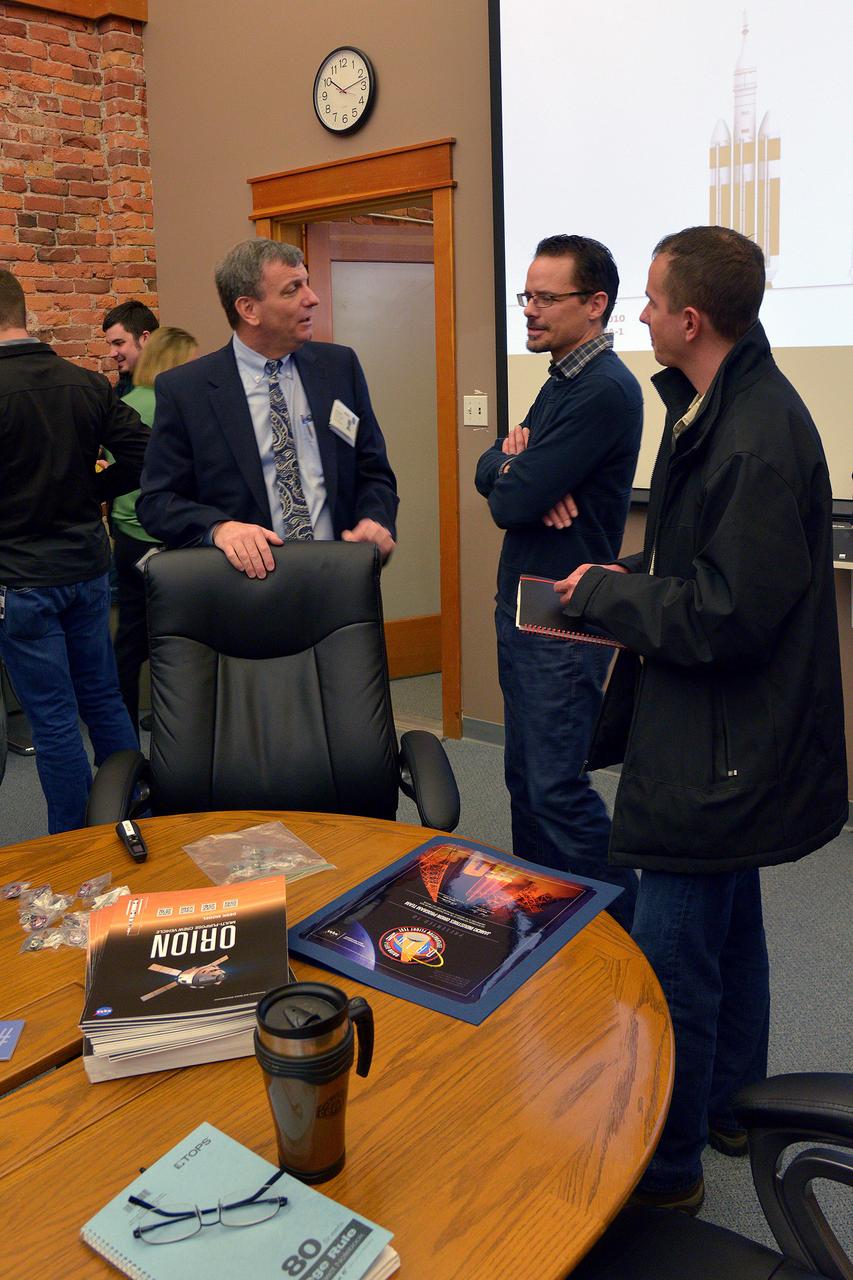
The Orion leadership team visits Janicki Industries in Sedro-Woolley, Washington on March 9, 2015 to thank them for their work in support of Exploration Flight Test-1 (EFT-1). Janicki is a small business that specializes in producing custom tooling fixtures and composite structures. Part of Batch image transfer from Flickr.
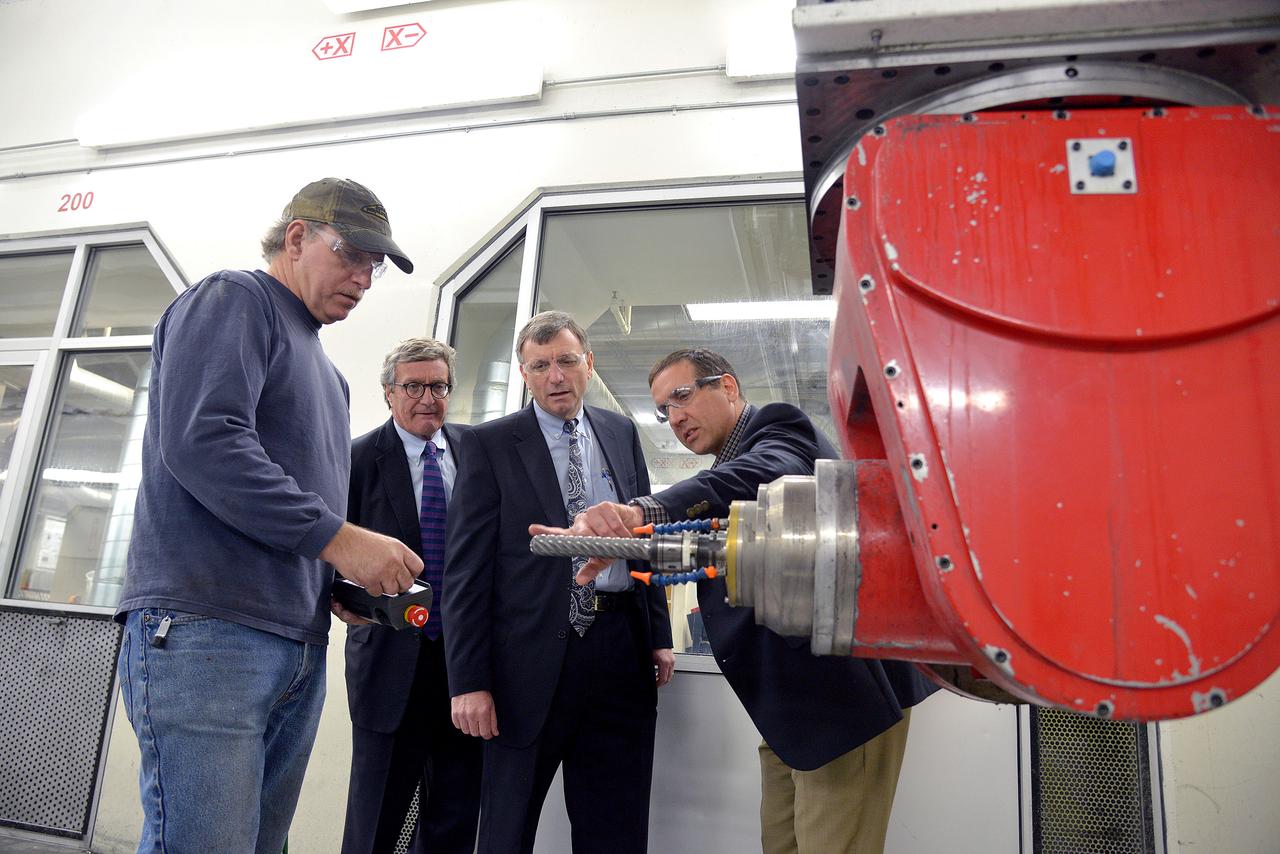
The Orion leadership team visits Janicki Industries in Sedro-Woolley, Washington on March 9, 2015 to thank them for their work in support of Exploration Flight Test-1 (EFT-1). Janicki is a small business that specializes in producing custom tooling fixtures and composite structures. Part of Batch image transfer from Flickr.

The Orion leadership team visits Janicki Industries in Sedro-Woolley, Washington on March 9, 2015 to thank them for their work in support of Exploration Flight Test-1 (EFT-1). Janicki is a small business that specializes in producing custom tooling fixtures and composite structures. Part of Batch image transfer from Flickr.
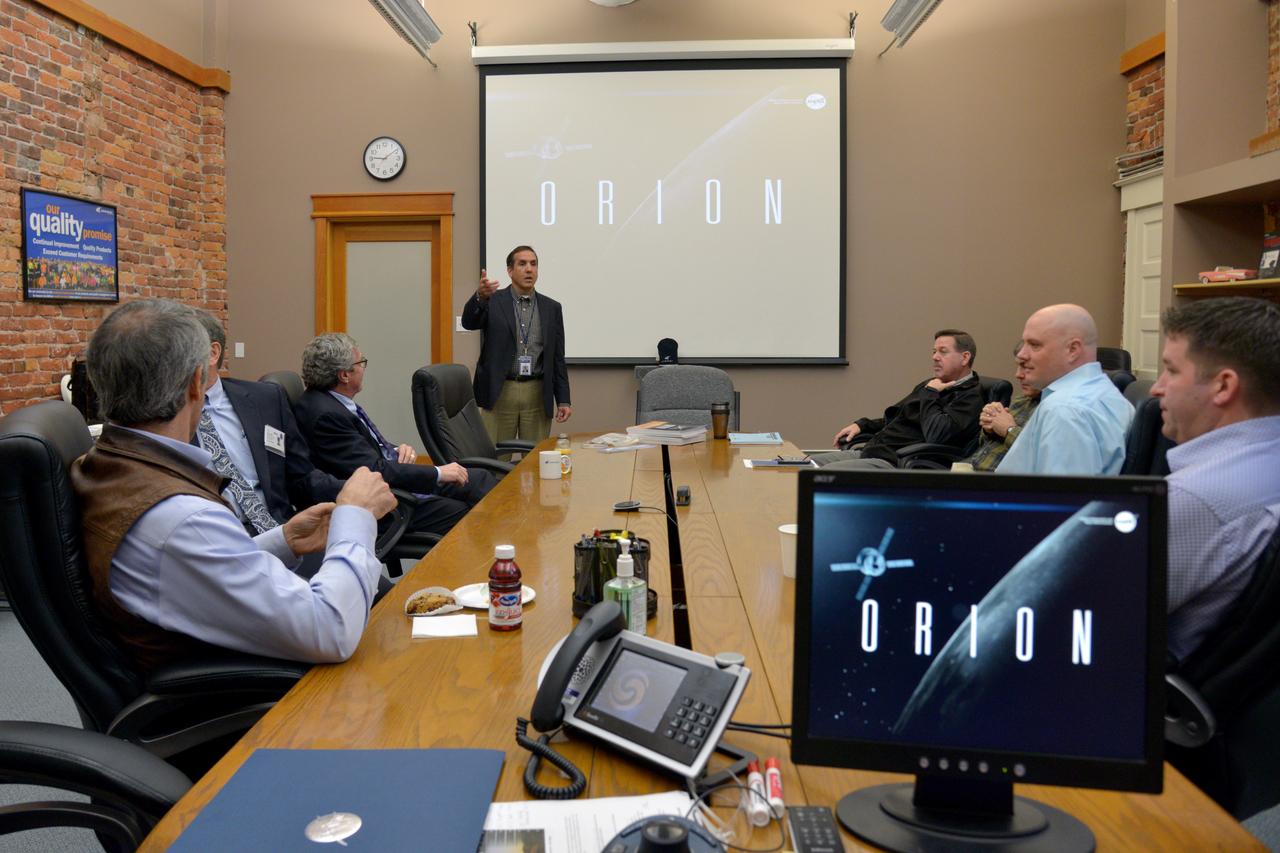
The Orion leadership team visits Janicki Industries in Sedro-Woolley, Washington on March 9, 2015 to thank them for their work in support of Exploration Flight Test-1 (EFT-1). Janicki is a small business that specializes in producing custom tooling fixtures and composite structures. Part of Batch image transfer from Flickr.
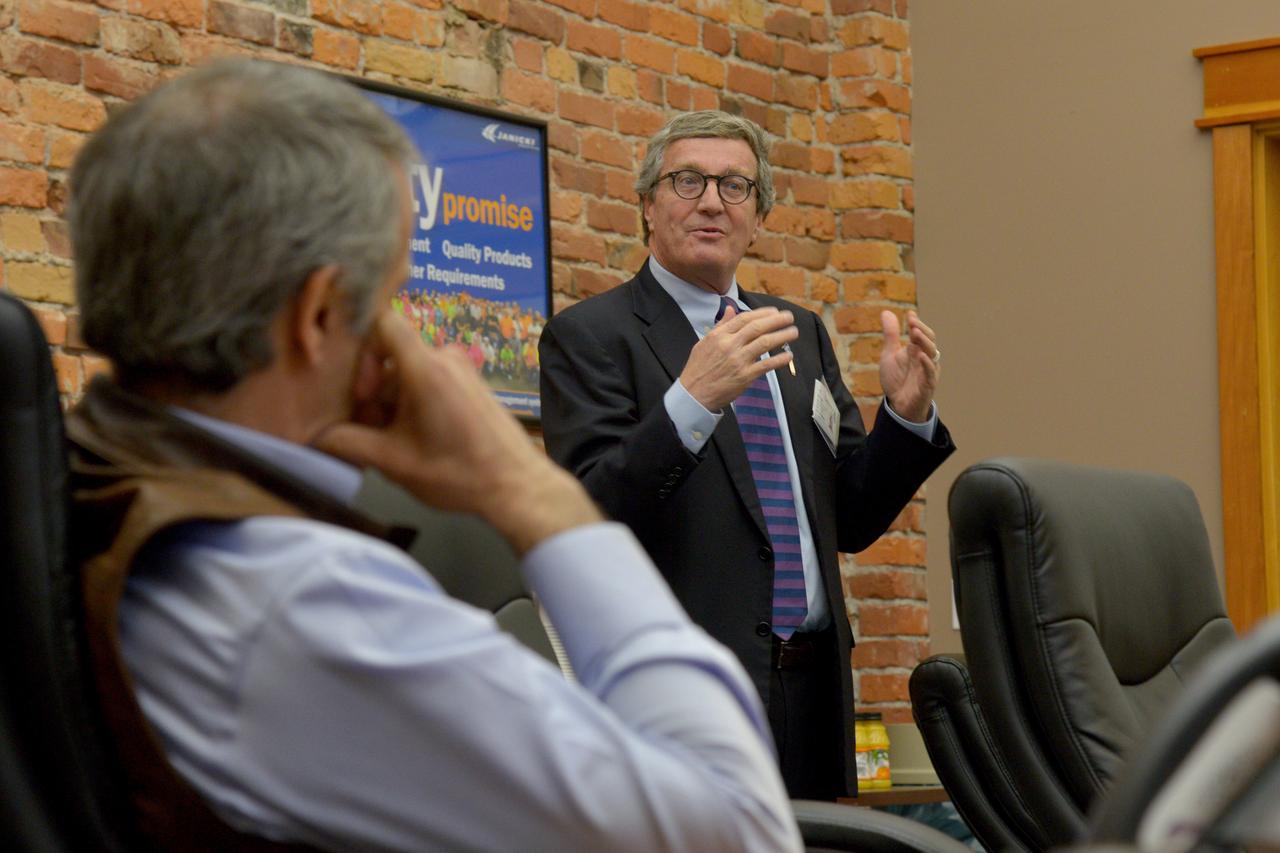
The Orion leadership team visits Janicki Industries in Sedro-Woolley, Washington on March 9, 2015 to thank them for their work in support of Exploration Flight Test-1 (EFT-1). Janicki is a small business that specializes in producing custom tooling fixtures and composite structures. Part of Batch image transfer from Flickr.
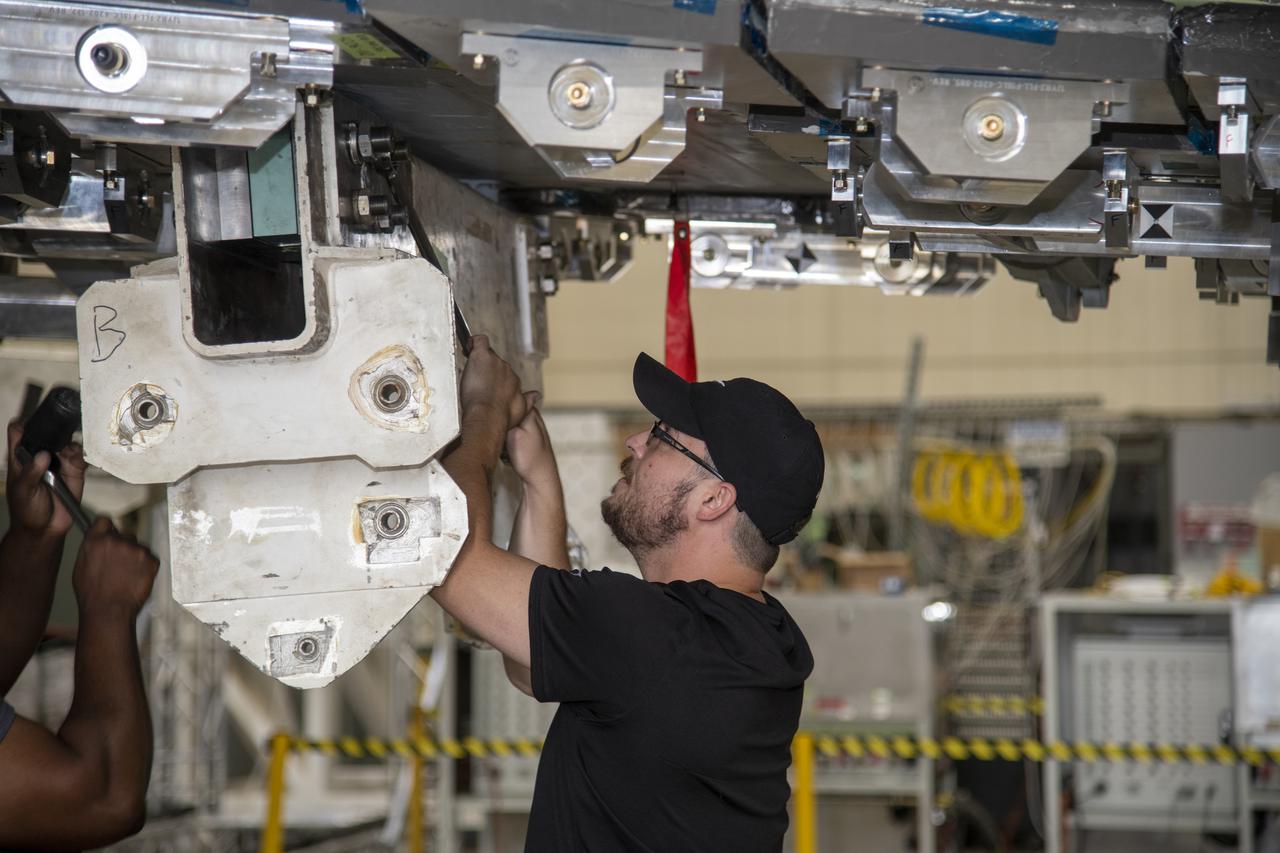
The outboard pylon load fixture is secured for the F/A-18E from the Naval Air Systems Command (NAVAIR) in Patuxent River, Maryland. The aircraft is in NASA’s Armstrong Flight Research Center Flight Loads Laboratory in Edwards, California, for the center’s biggest load calibrations tests. This testing is needed before the aircraft can serve as a test vehicle for determining if it can safely manage maneuvers and proposed upgrades.
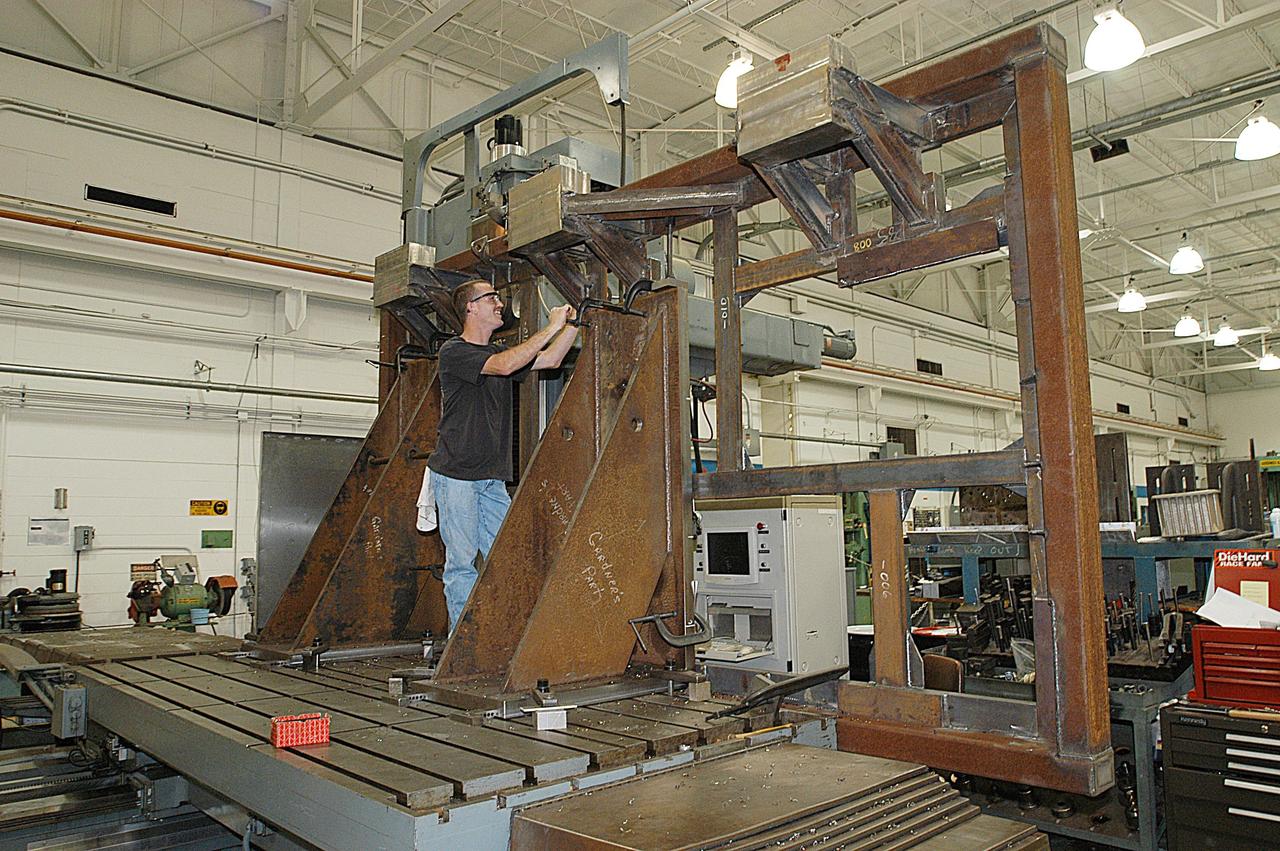
KENNEDY SPACE CENTER, FLA. -- United Space Alliance technician Matt Boonstra works on a main landing gear door mounting fixture in the Launch Equipment Shop. The fixture is being used to support the Columbia mishap investigation. A simulated orbiter wing and several test panels, along with sections of Space Shuttle orbiter Enterprise (OV-101), will be transferred to the Southwest Research Institute for testing after Thermal Protection System (TPS) tile installation on them is complete. The testing has been requested by the Columbia Accident Investigation Board. For this initiative, sections of Enterprise were borrowed from the Smithsonian Institution's Air and Space Museum where the orbiter is being stored at the Washington Dulles International Airport. Enterprise was the first orbiter built in the Shuttle fleet and was used to conduct the Approach and Landing Test Program before the first powered Shuttle flight.
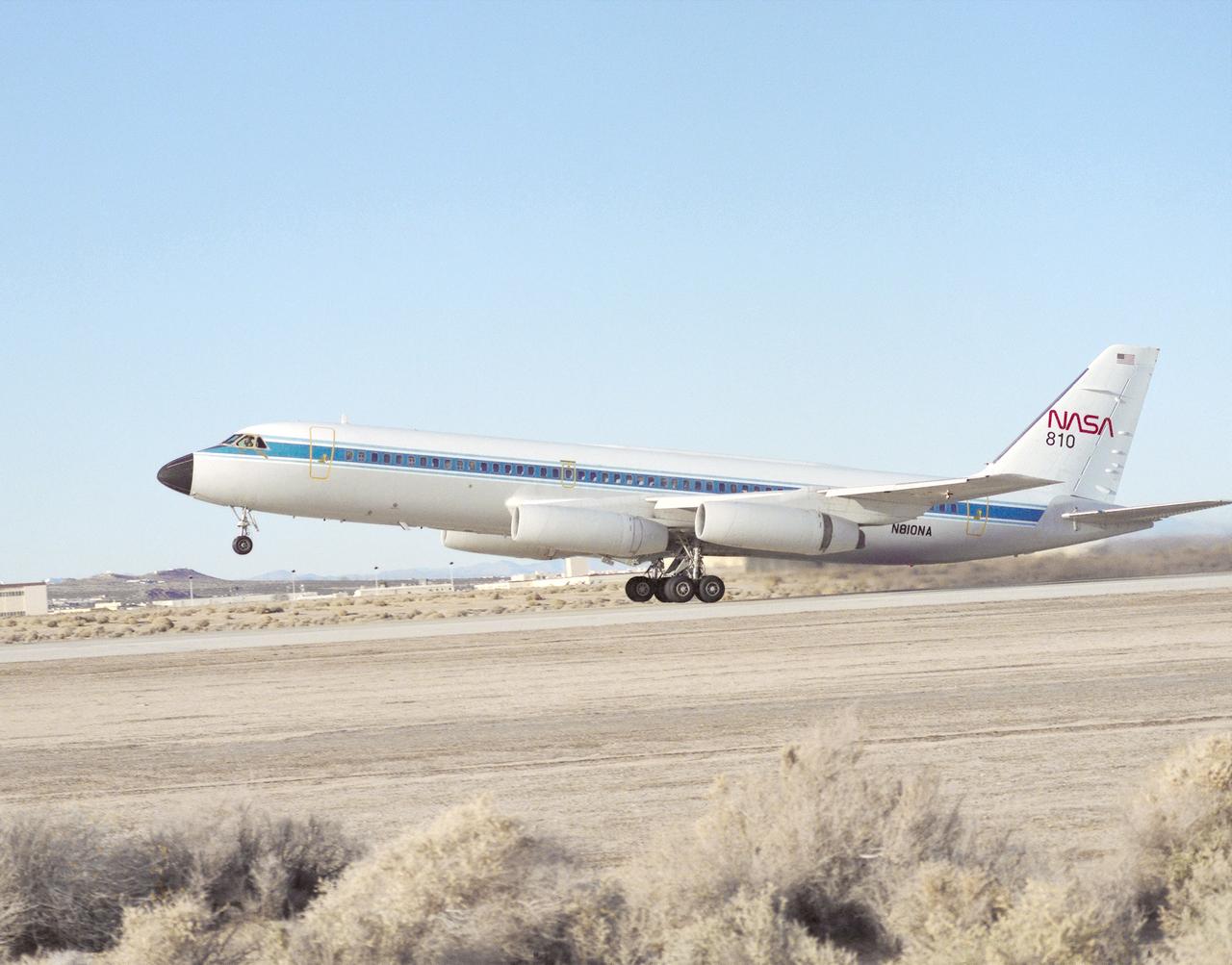
Taking off on a flight from NASA's Dryden Flight Research Center, Edwards, California, is NASA's Landing Systems Research Aircraft (LSRA), a modified Convair (CV) 990. A new landing gear test fixture representative of the shuttle's landing gear system had been installed in the lower fuselage of the CV-990 test aircraft between the aircraft's normal main landing gear. Following initial flights, static loads testing and calibration of the test gear were conducted at Dryden. Tests allowed engineers to assess the performance of the space shuttle's main and nose landing gear systems under varying conditions.
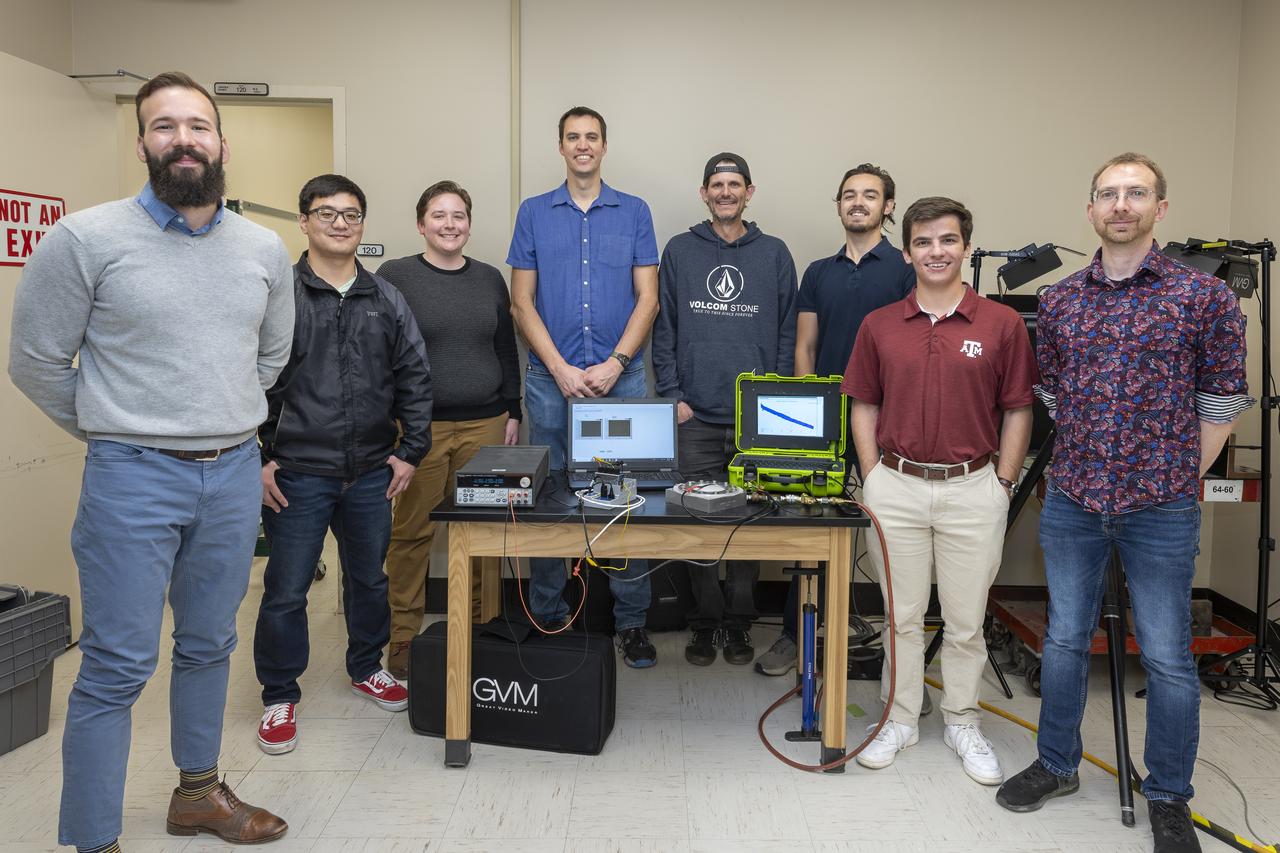
Erick Rossi De La Fuente, from left, John Rudy, L. J. Hantsche, Adam Curry, Jeff Howell, Coby Asselin, Benjamin Mayeux, and Paul Bean pose with a test fixture, material, sensor, and data acquisition systems at NASA’s Armstrong Flight Research Center in Edwards, California. The sensor tests seek to quantify the limits of the material to improve computer models and make more reliable supersonic parachutes.

In-flight photo of the NASA F-15B used in tests of the X-33 Thermal Protection System (TPS) materials. Flying at subsonic speeds, the F-15B tests measured the air loads on the proposed X-33 protective materials. In contrast, shock loads testing investigated the local impact of the supersonic shock wave itself on the TPS materials. Similar tests had been done in 1985 for the space shuttle tiles, using an F-104 aircraft.
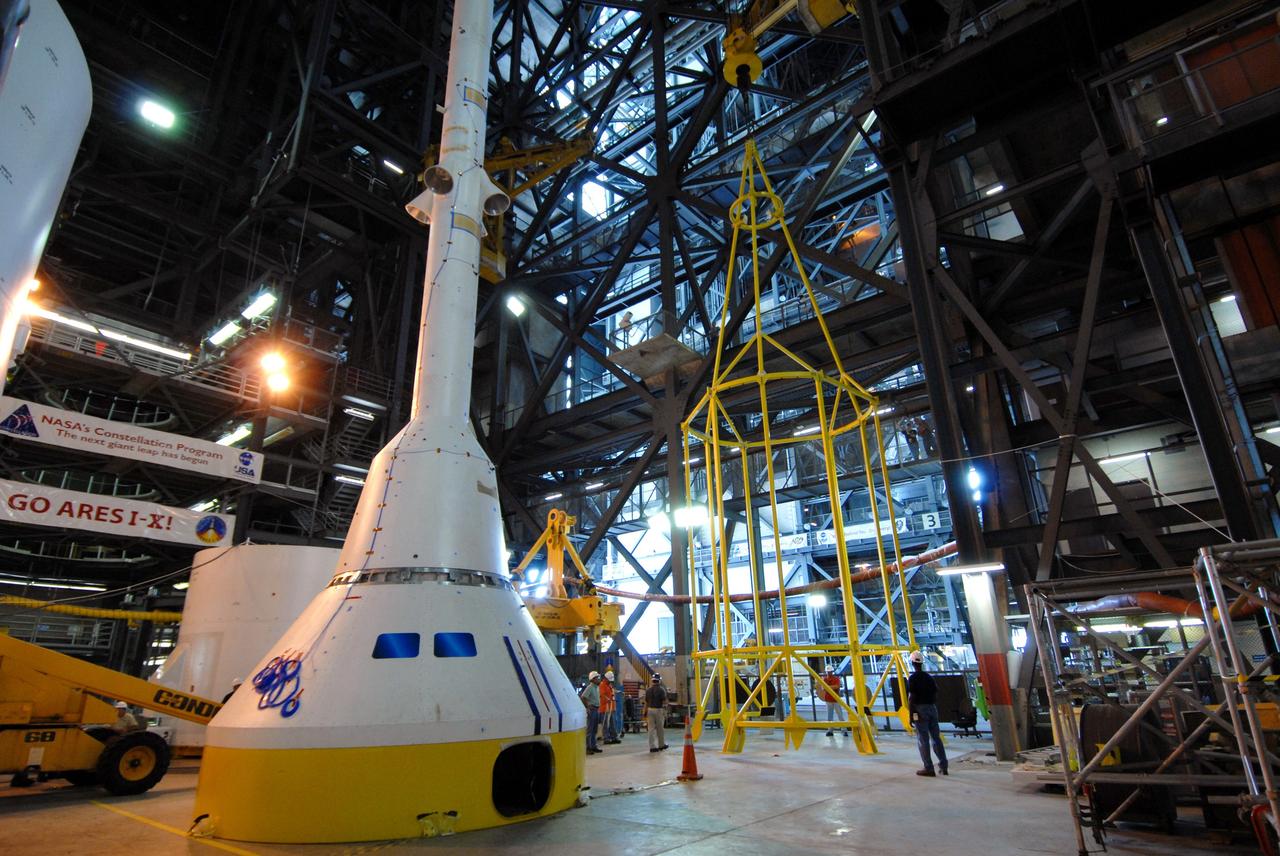
CAPE CANAVERAL, Fla. –– In High Bay 4 of the Vehicle Assembly Building at NASA's Kennedy Space Center in Florida, the yellow framework at center will undergo a fit check. Nicknamed the "birdcage," it is the lifting fixture that will have the ability to lift the Crew Module, or CM, and Launch Abort System, or LAS, assembly for the Ares I-X rocket. Ares I-X is the flight test for the Ares I. The I-X flight will provide NASA an early opportunity to test and prove hardware, facilities and ground operations associated with Ares I. The launch of the 327-foot-tall, full-scale Ares I-X is targeted for July 2009. Photo credit: NASA/Jack Pfaller
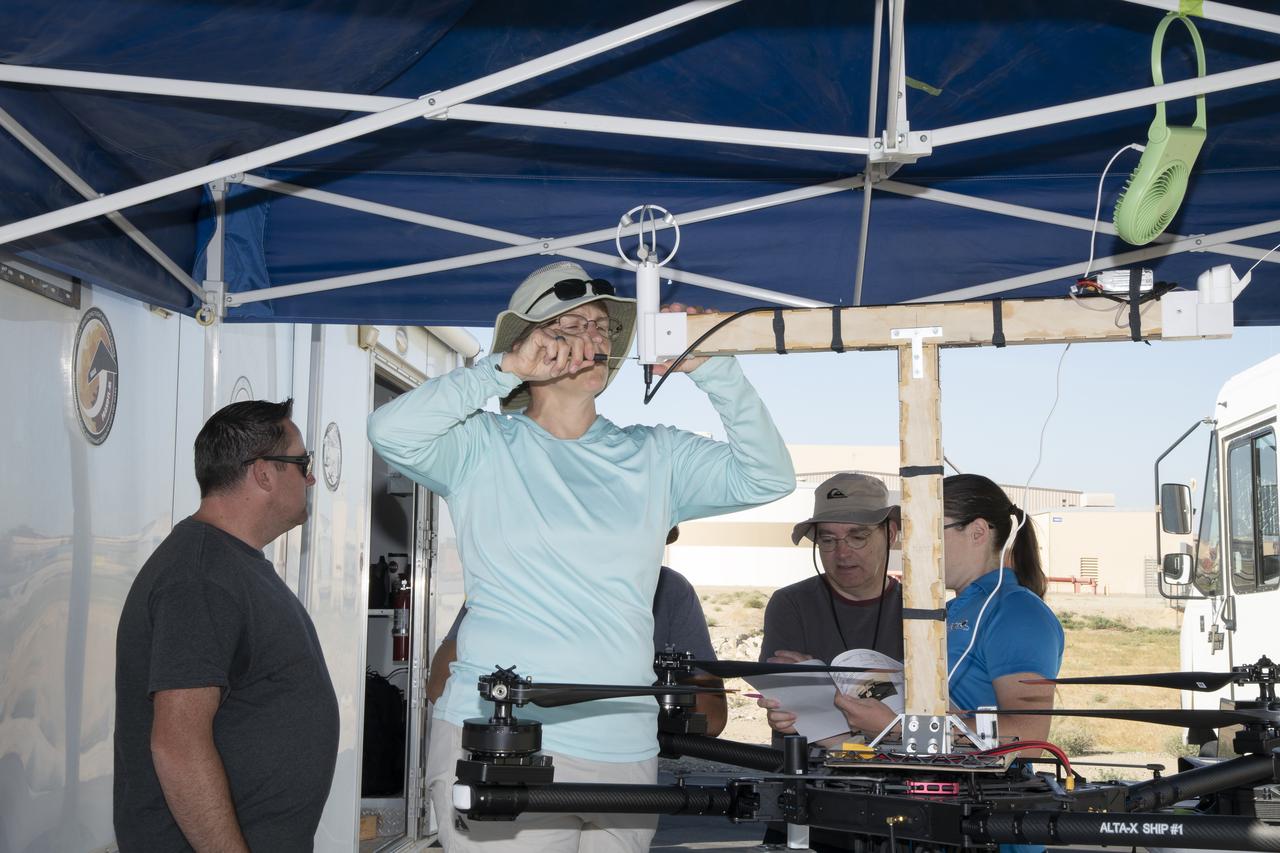
Jennifer Fowler works on securing sensors onto the test fixture on the Alta-X aircraft. Justin Link, Grady Koch, and Tyler Willhite are in the background. The Advanced Exploration of Reliable Operation at Low Altitudes: Meteorology, Simulation and Technology campaign was at NASA’s Armstrong Flight Research Center in Edwards, California. The focus was to study wind from the ground to 2,000 feet to provide data to assist future drones to safely land on rooftop hubs called vertiports and to potentially improve weather prediction.
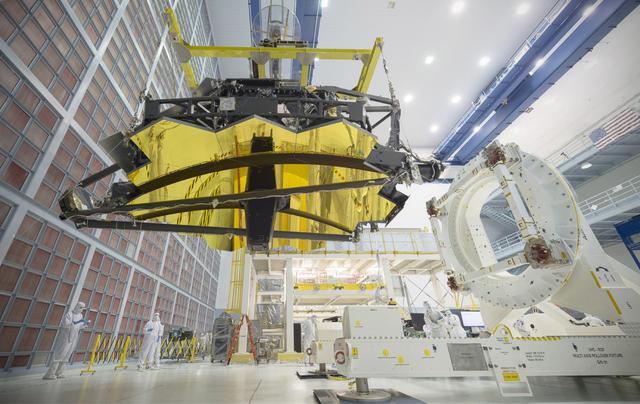
The James Webb Space Telescope was lifted out of its assembly stand for the last time at NASA's Goddard Space Flight Center in Greenbelt, Md. In this photo, the telescope was hanging upside down as the lift crew were about to install it in the rollover fixture where it will be situated before moving on to its upcoming center of curvature test. Image credit: NASA/Goddard/Chris Gunn
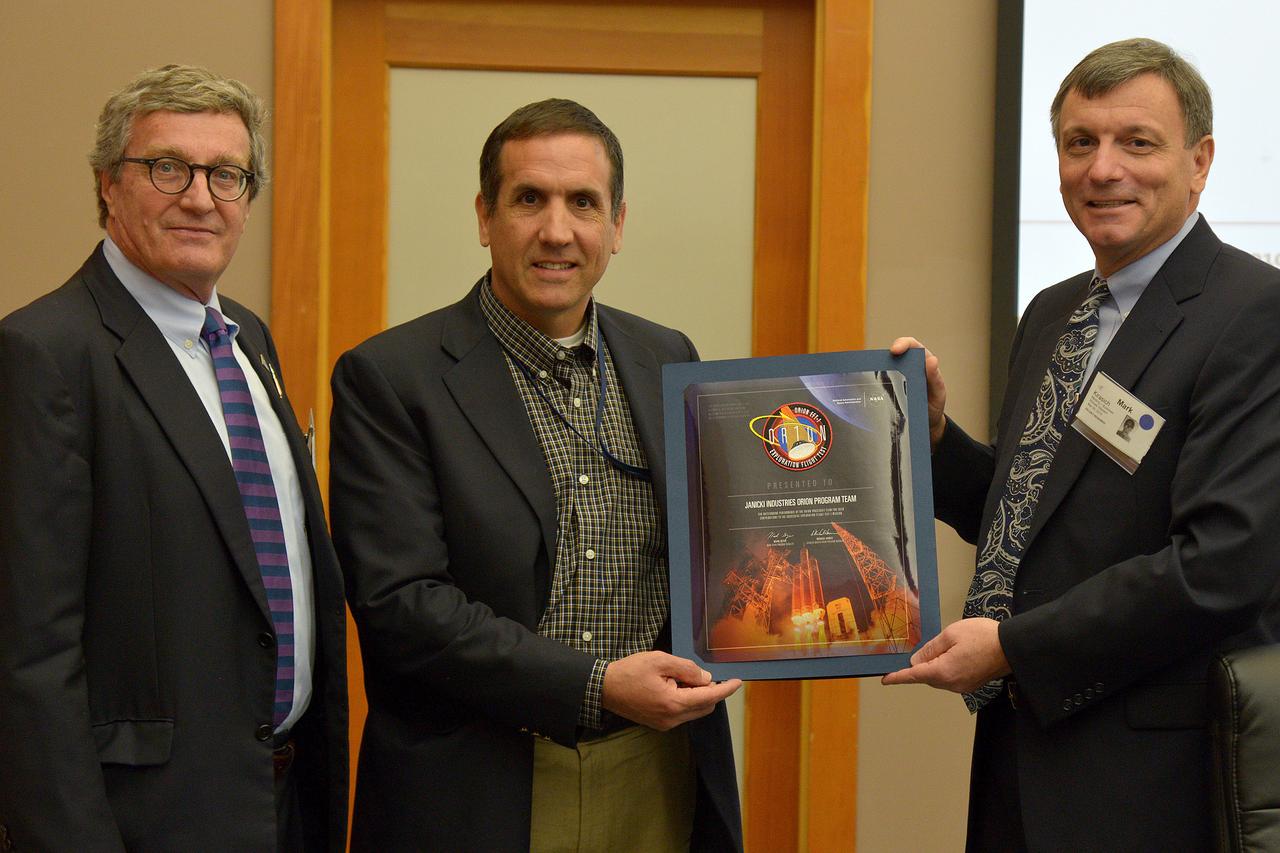
The Orion leadership team visits Janicki Industries in Sedro-Woolley, Washington on March 9, 2015 to thank them for their work in support of Exploration Flight Test-1 (EFT-1). Award presented to Janicki Industries Orion Program Team. Janicki is a small business that specializes in producing custom tooling fixtures and composite structures. Part of Batch image transfer from Flickr.
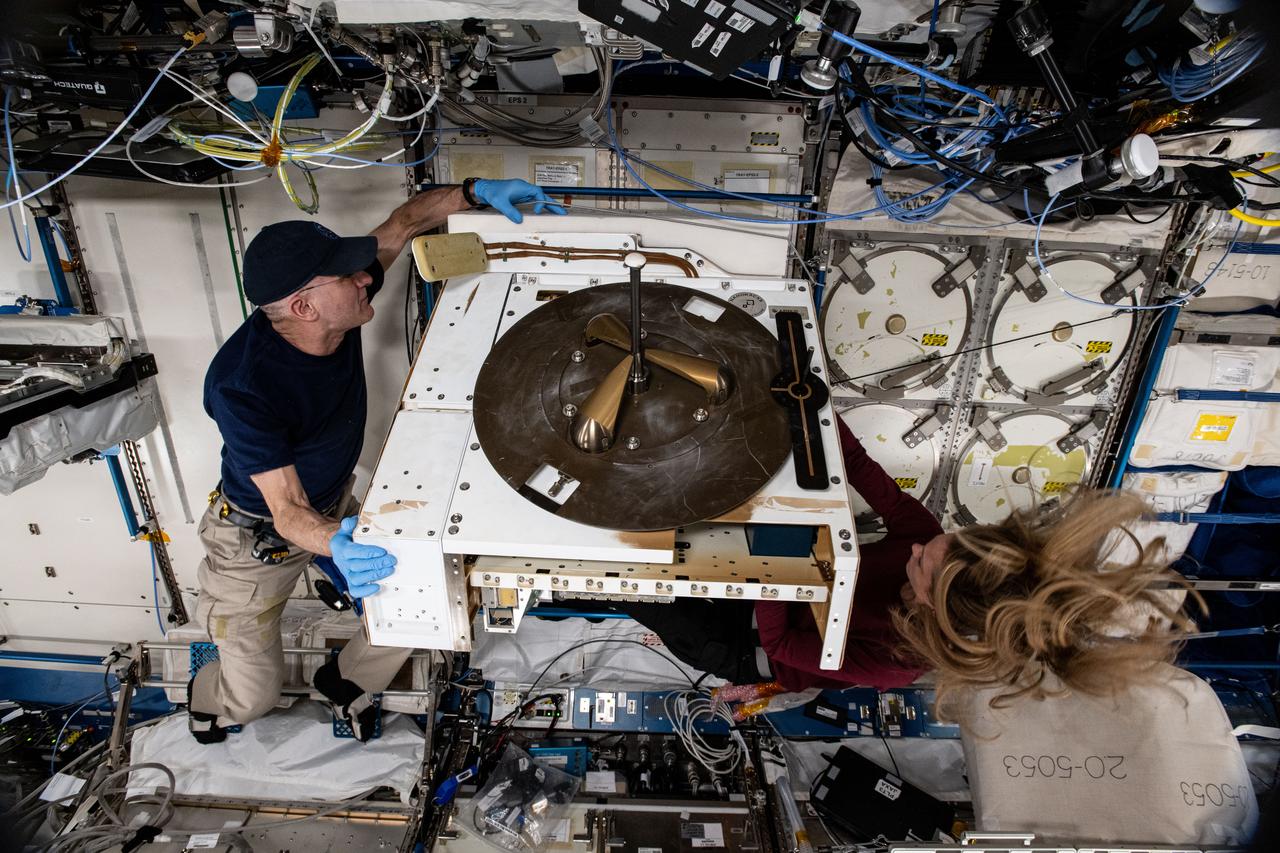
iss072e861726 (March 28, 2025) --- NASA astronauts Don Pettit and Nichole Ayers, both Expedition 72 Flight Engineers, prepare the NanoRacks External Platform with its grapple fixture attached for stowage aboard the International Space Station's Kibo laboratory module. The commercial research platform housed three different electrical and optical experiments that tested operations while exposed to the vacuum of space.
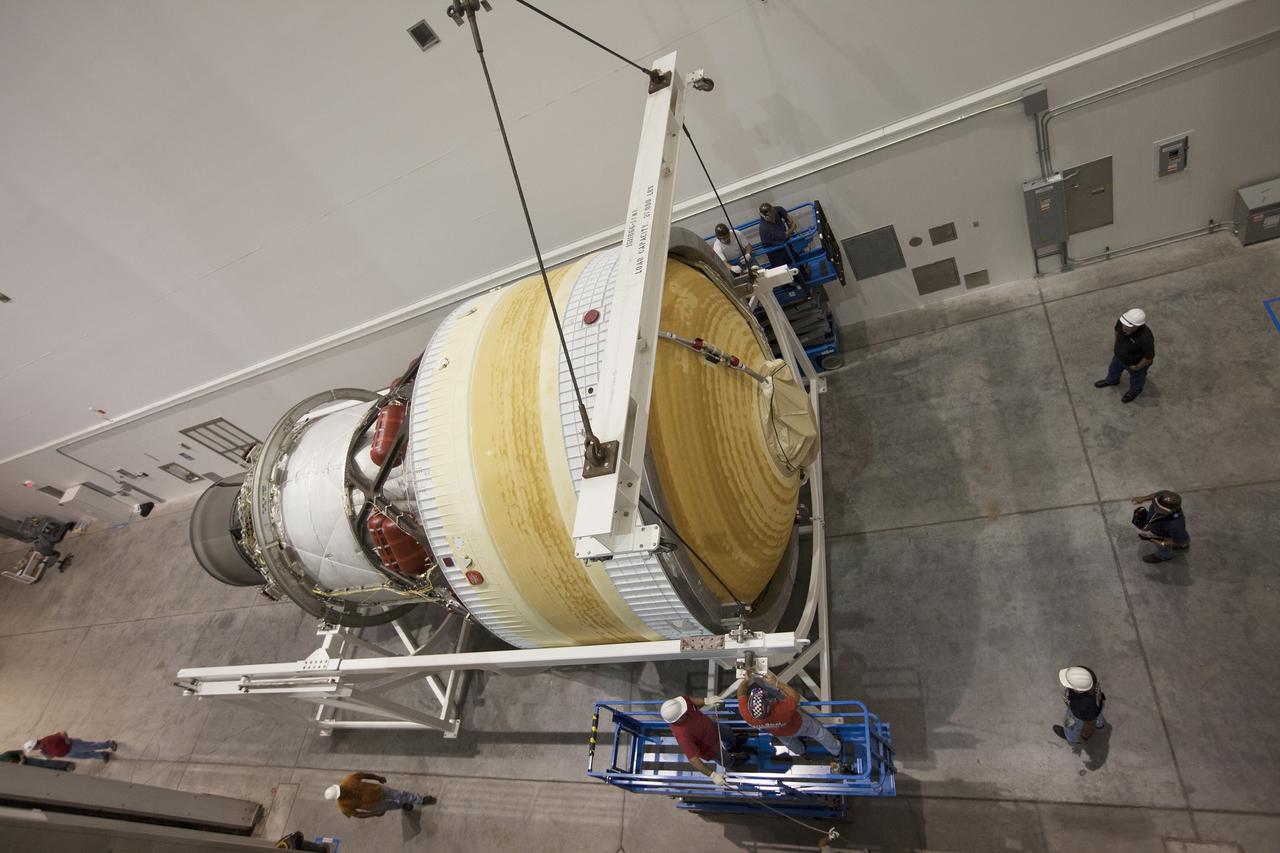
CAPE CANAVERAL, Fla. – Inside the Delta Operations Center at Cape Canaveral Air Force Station, United Launch Alliance technicians place the second stage of a Delta IV Heavy rocket on a support fixture following testing in preparation for the unpiloted Exploration Flight Test-1, or EFT-1. The second stage will be placed on a transporter for the move to the Horizontal Integration Facility at Space Launch Complex 37 for mating with the Delta IV Heavy booster stages. During the mission, Orion will travel farther into space than any human spacecraft has gone in more than 40 years. The data gathered during the flight will influence design decisions, validate existing computer models and innovative new approaches to space systems development, as well as reduce overall mission risks and costs for later Orion flights. Liftoff of Orion on the first flight test is planned for December 2014. Photo credit: NASA/Kim Shiflett
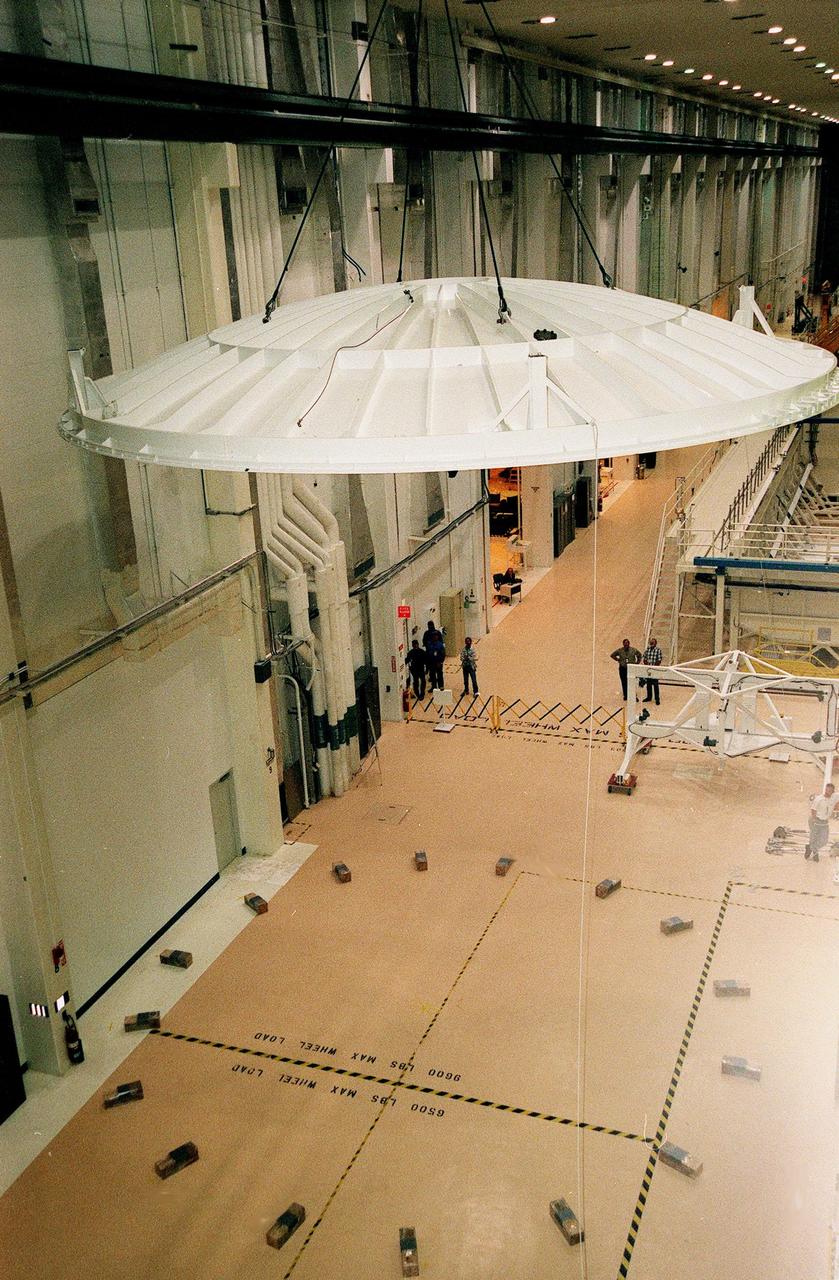
KENNEDY SPACE CENTER, FLA. -- Looking as if poised in flight, the saucer-like lid of an altitude chamber is lifted from the floor in the Operations and Checkout Building high bay to its place on top of the chamber. The chamber was recently reactivated, after a 24-year hiatus, to perform leak tests on International Space Station pressurized modules at the launch site. Originally, two chambers were built to test Apollo Program flight hardware. They were last used in 1975 during the Apollo-Soyuz Test Project. After installation of new vacuum pumping equipment and controls, a new control room, and a new rotation handling fixture, the chamber again became operational in February 1999. The chamber, which is 33 feet in diameter and 50 feet tall, is constructed of stainless steel. The first module that will be tested for leaks is the U.S. Laboratory. No date has been determined for the test
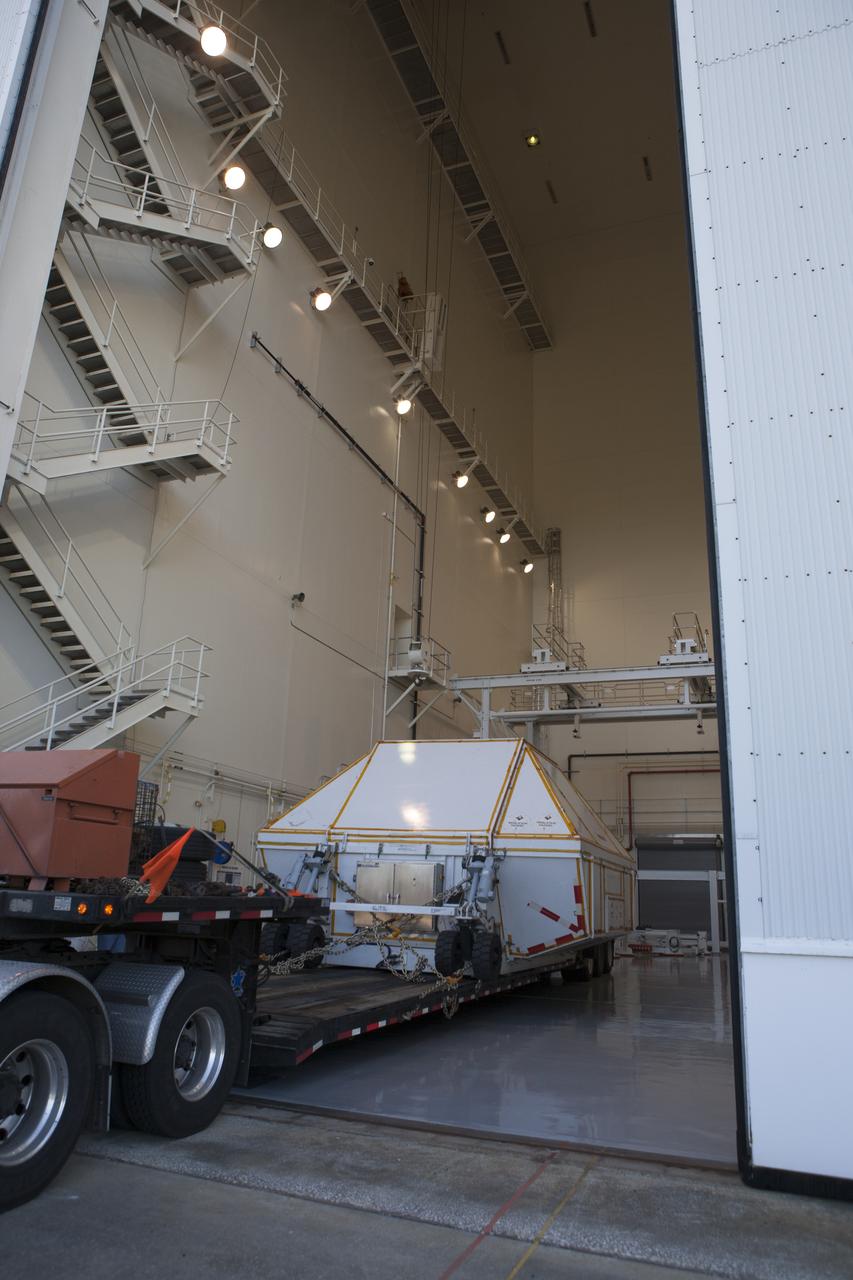
NASA's Orion spacecraft arrives at the Launch Abort System Facility at Kennedy Space Center in Florida. The spacecraft was transported 2,700 miles overland from Naval Base San Diego in California, on a flatbed truck secured in its crew module transportation fixture for the trip. During its first flight test, Orion completed a two-orbit, four-and-a-half hour mission Dec. 5 to test systems critical to crew safety, including the launch abort system, the heat shield and the parachute system. The Ground Systems Development and Operations Program led the recovery, offload and transportation efforts.
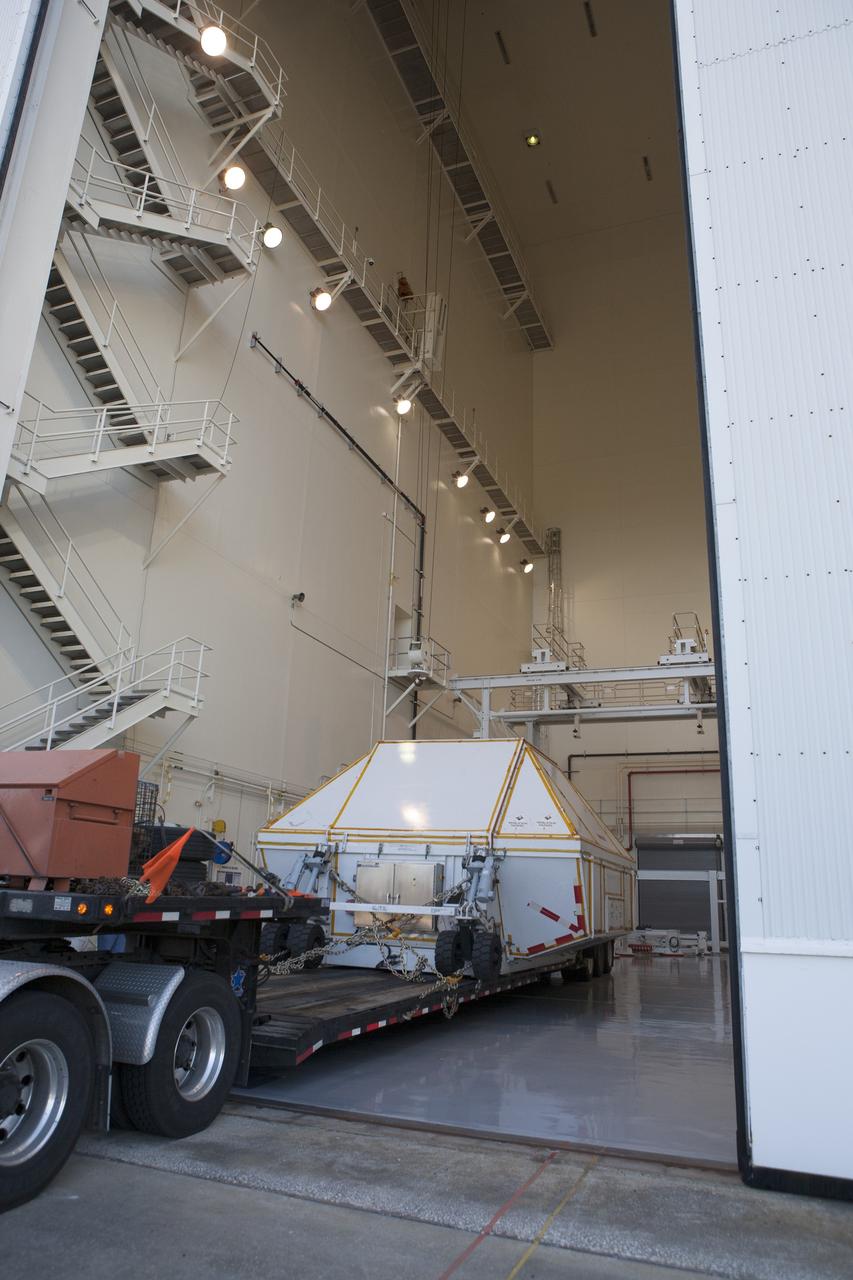
CAPE CANAVERAL, Fla. -- NASA's Orion spacecraft arrives at the Launch Abort System Facility at Kennedy Space Center in Florida. The spacecraft was transported 2,700 miles overland from Naval Base San Diego in California, on a flatbed truck secured in its crew module transportation fixture for the trip. During its first flight test, Orion completed a two-orbit, four-and-a-half hour mission Dec. 5 to test systems critical to crew safety, including the launch abort system, the heat shield and the parachute system. The Ground Systems Development and Operations Program led the recovery, offload and transportation efforts. For more information, visit www.nasa.gov/orion. Photo credit: NASA/Kim Shiflett
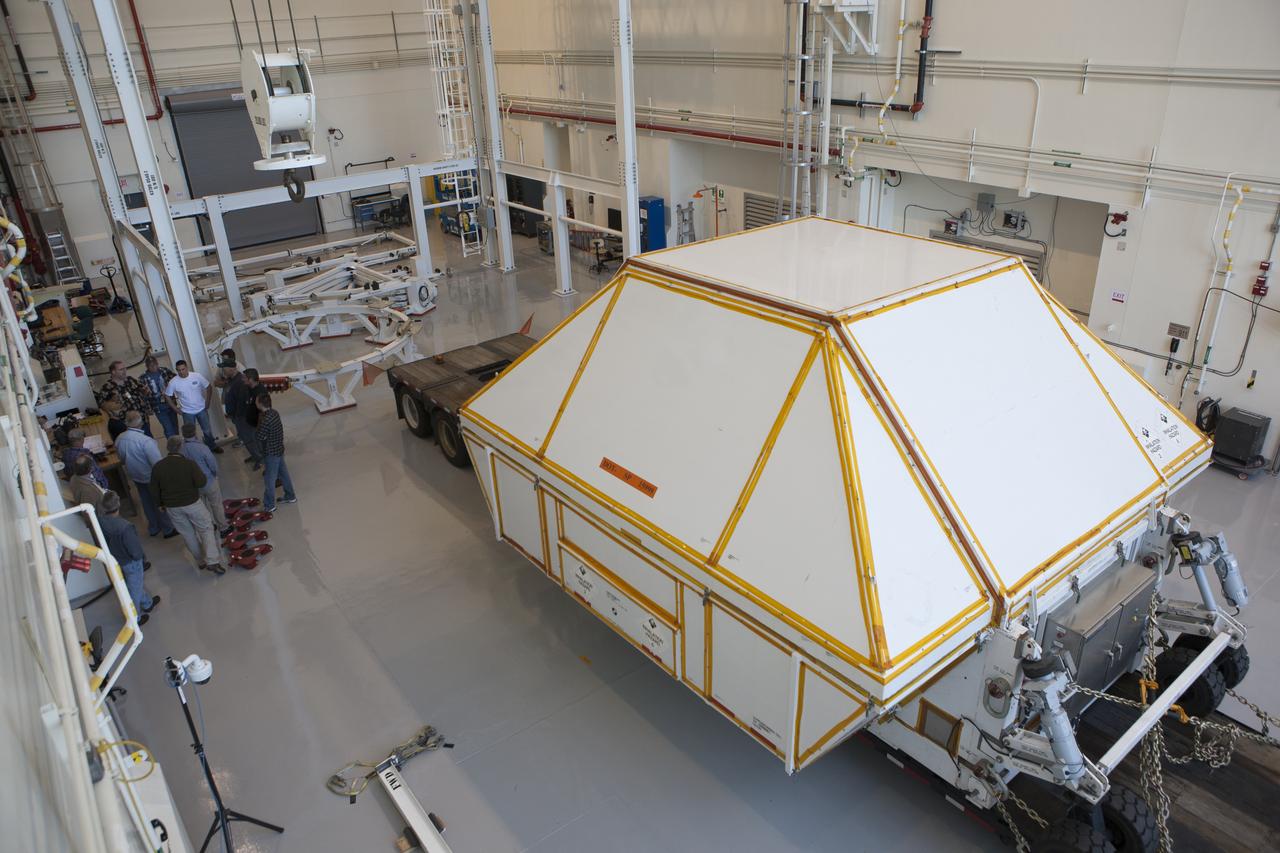
NASA's Orion spacecraft arrives inside the Launch Abort System Facility at Kennedy Space Center in Florida. The spacecraft was transported 2,700 miles overland from Naval Base San Diego in California, on a flatbed truck secured in its crew module transportation fixture for the trip. During its first flight test, Orion completed a two-orbit, four-and-a-half hour mission Dec. 5 to test systems critical to crew safety, including the launch abort system, the heat shield and the parachute system. The Ground Systems Development and Operations Program led the recovery, offload and transportation efforts.
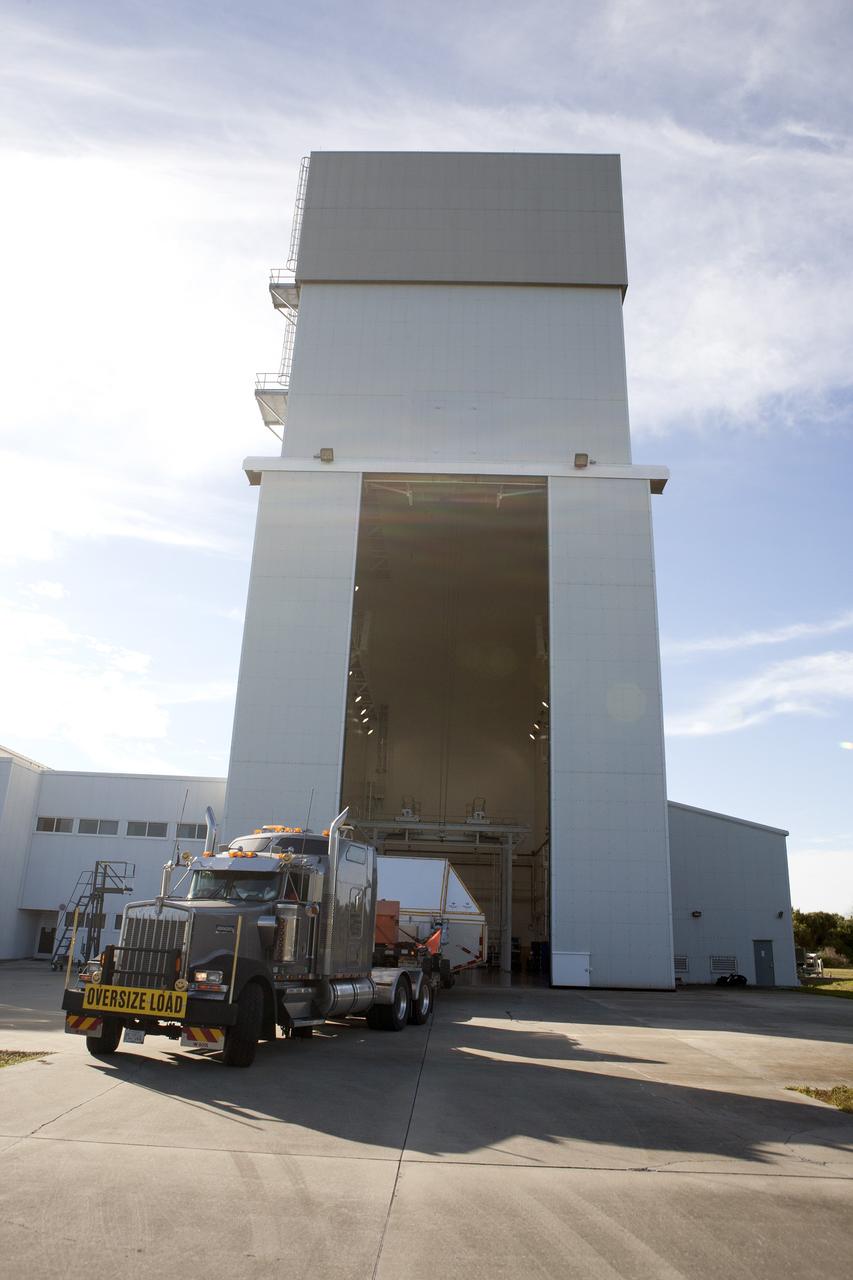
CAPE CANAVERAL, Fla. -- NASA's Orion spacecraft arrives at the Launch Abort System Facility at Kennedy Space Center in Florida. The spacecraft was transported 2,700 miles overland from Naval Base San Diego in California, on a flatbed truck secured in its crew module transportation fixture for the trip. During its first flight test, Orion completed a two-orbit, four-and-a-half hour mission Dec. 5 to test systems critical to crew safety, including the launch abort system, the heat shield and the parachute system. The Ground Systems Development and Operations Program led the recovery, offload and transportation efforts. For more information, visit www.nasa.gov/orion. Photo credit: NASA/Kim Shiflett
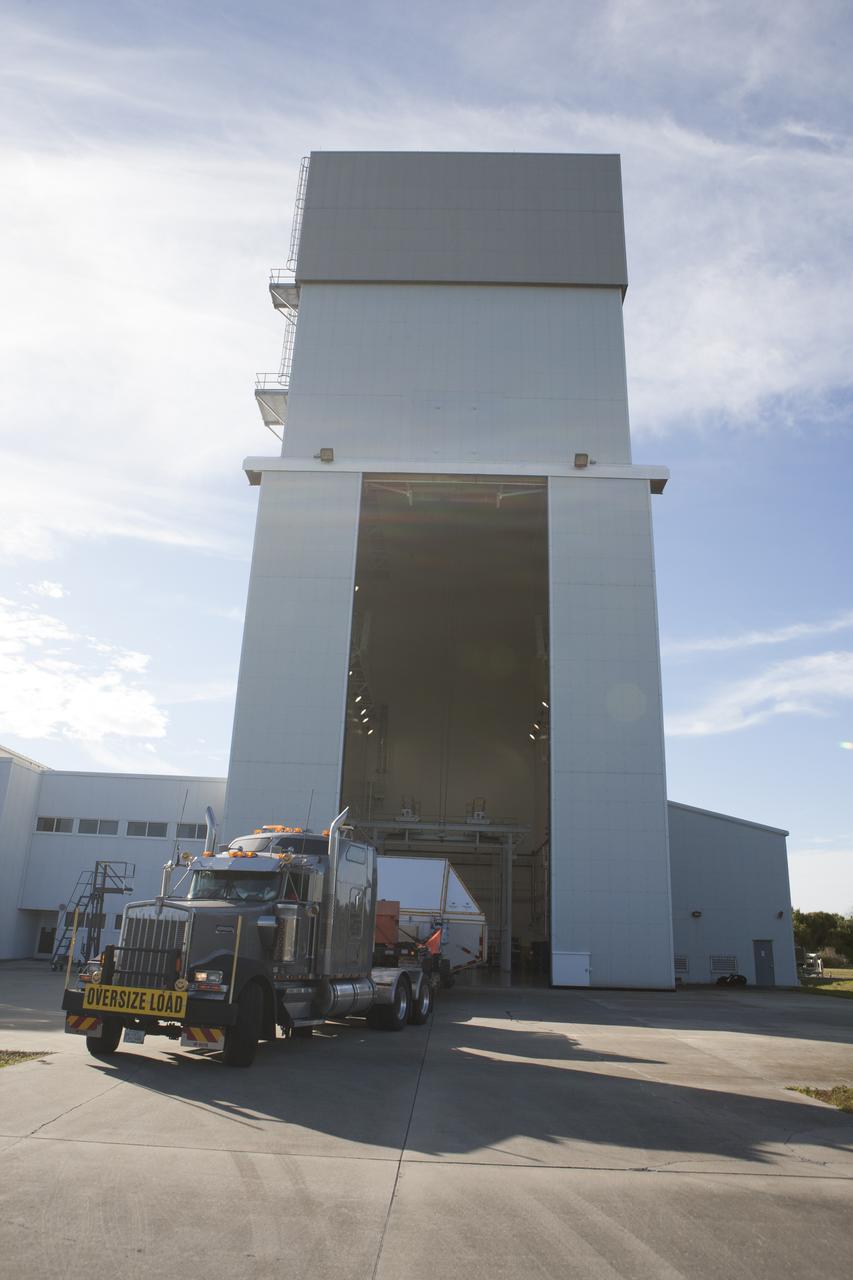
NASA's Orion spacecraft arrives at the Launch Abort System Facility at Kennedy Space Center in Florida. The spacecraft was transported 2,700 miles overland from Naval Base San Diego in California, on a flatbed truck secured in its crew module transportation fixture for the trip. During its first flight test, Orion completed a two-orbit, four-and-a-half hour mission Dec. 5 to test systems critical to crew safety, including the launch abort system, the heat shield and the parachute system. The Ground Systems Development and Operations Program led the recovery, offload and transportation efforts.
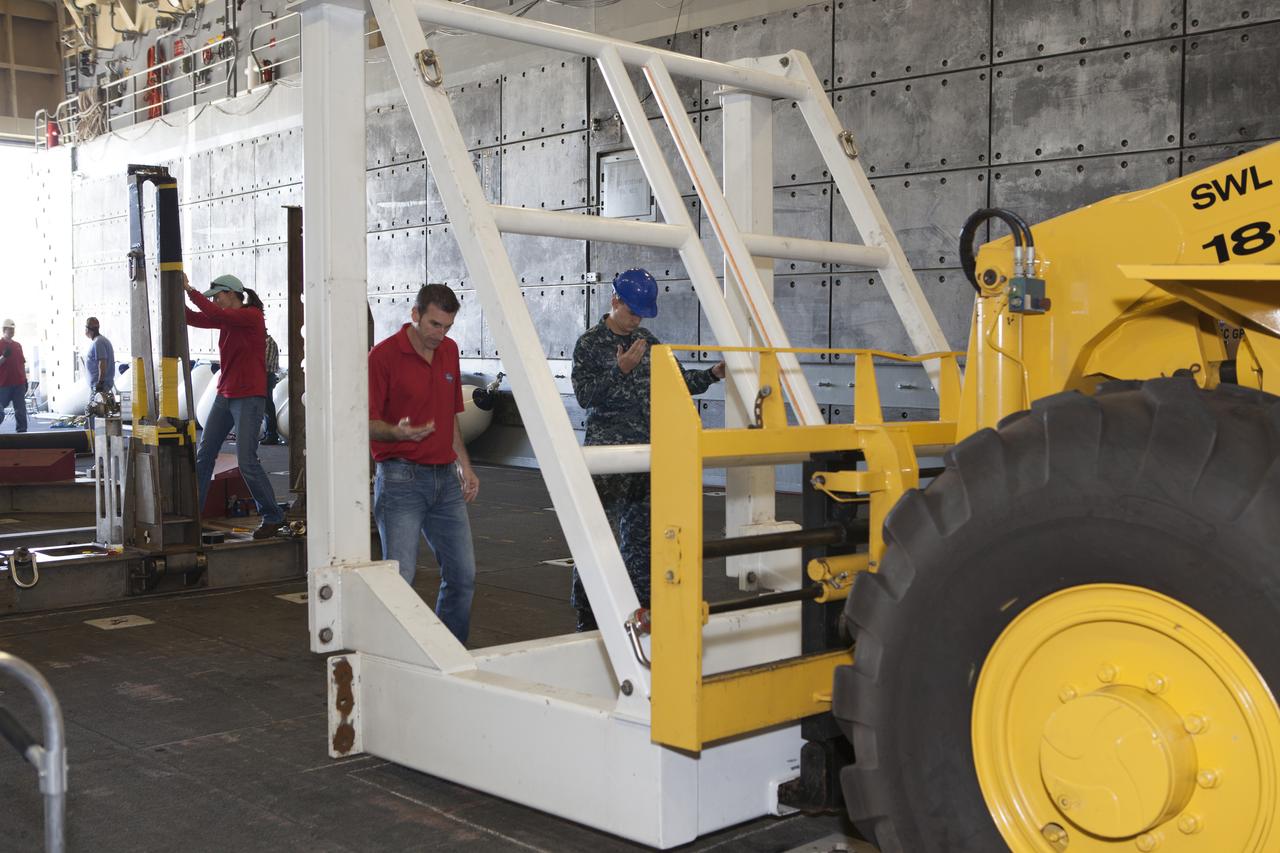
A forklift is used to set the Orion handling fixture down in the well deck of the USS Anchorage at Naval Base San Diego in California. The fixture and other ground support equipment will be used during recovery of the Orion crew module after its first flight test. Before launch of Orion on a Delta IV Heavy rocket from Cape Canaveral Air Force Station in Florida, NASA, Lockheed Martin and U.S. Navy personnel will head out to sea in the USS Anchorage and the USNS Salvor, a salvage ship, and wait for splashdown of the Orion crew module in the Pacific Ocean. The Ground Systems Development and Operations Program will lead the recovery efforts. Orion is the exploration spacecraft designed to carry astronauts to destinations not yet explored by humans, including an asteroid and Mars. It will have emergency abort capability, sustain the crew during space travel and provide safe re-entry from deep space return velocities. The first unpiloted flight test of Orion is scheduled to launch in December atop a United Launch Alliance Delta IV Heavy rocket and in 2018 on NASA’s Space Launch System rocket.
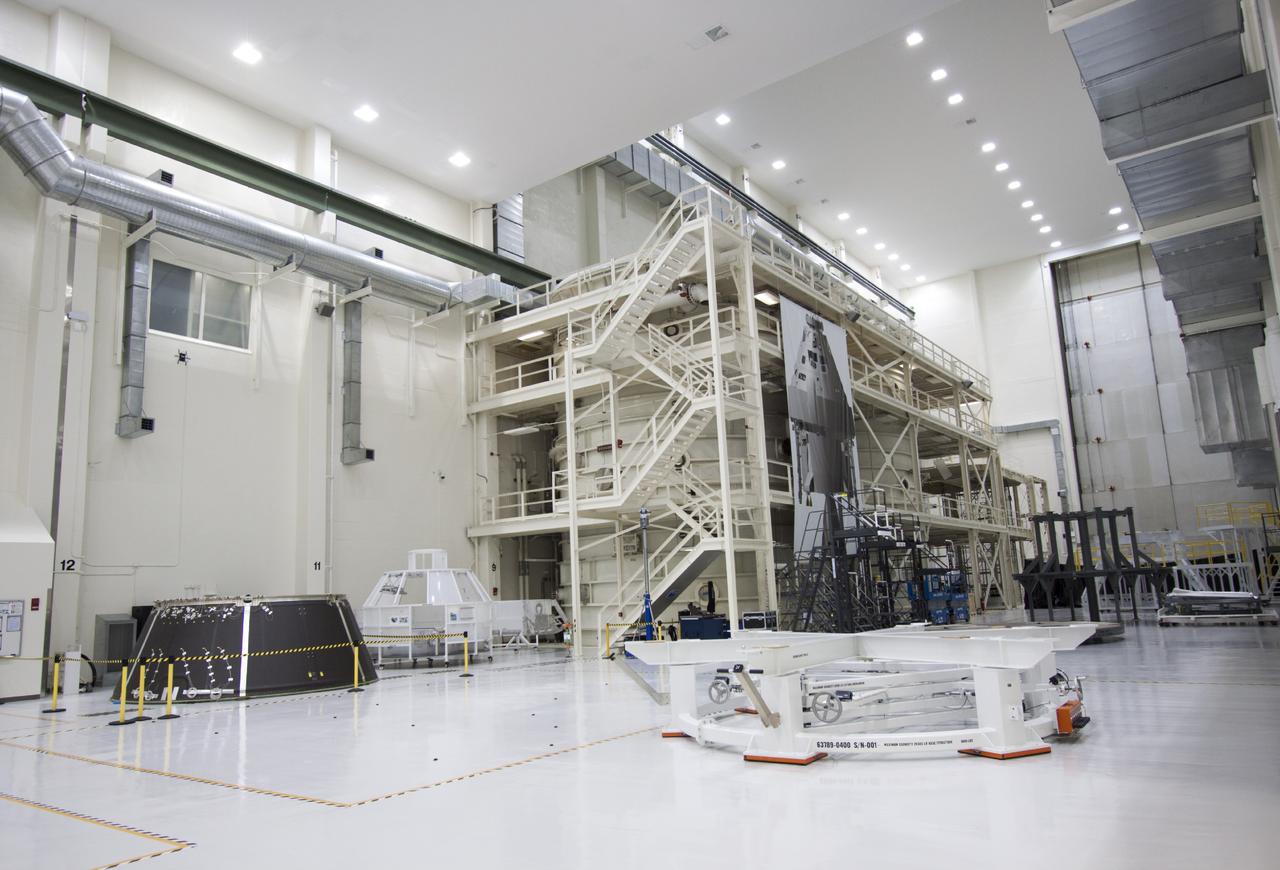
CAPE CANAVERAL, Fla. – Inside the Operations and Checkout Building high bay at NASA’s Kennedy Space Center in Florida, the Orion service module spacecraft adapter cone for Exploration Flight Test 1 has arrived for checkout and processing. Tooling and test fixtures have been attached to the cone. Orion is the exploration spacecraft designed to carry crews to space beyond low Earth orbit. It will provide emergency abort capability, sustain the crew during the space travel and provide safe re-entry from deep space return velocities. The first unpiloted test flight of the Orion is scheduled to launch in 2014 atop a Delta IV rocket and in 2017 on a Space Launch System rocket. For more information, visit http://www.nasa.gov/orion. Photo credit: NASA/Jim Grossmann
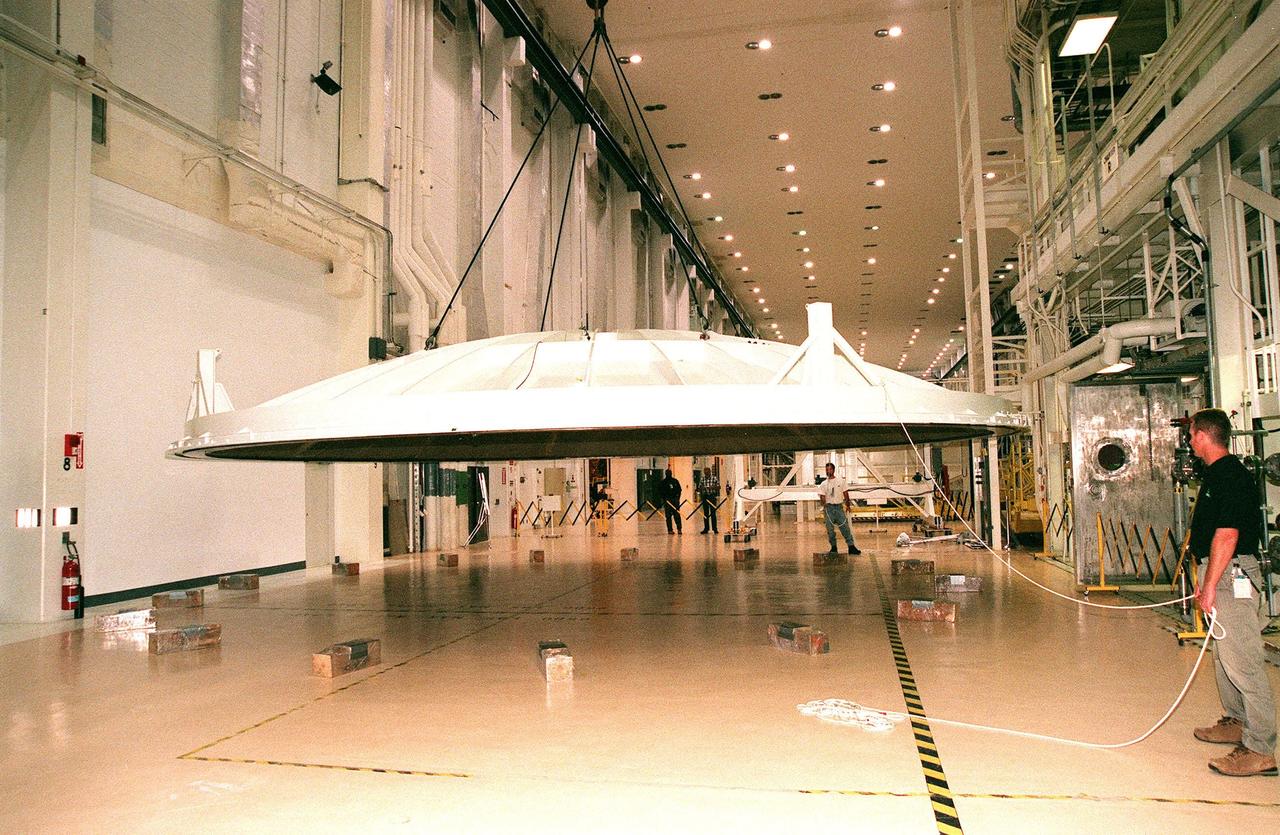
KENNEDY SPACE CENTER, FLA. -- An overhead crane lifts the saucer-like 27.5-ton lid of an altitude chamber in the Operations and Checkout Building high bay. The chamber was recently reactivated, after a 24-year hiatus, to perform leak tests on International Space Station pressurized modules at the launch site. Originally, two chambers were built to test Apollo Program flight hardware. They were last used in 1975 during the Apollo-Soyuz Test Project. After installation of new vacuum pumping equipment and controls, a new control room, and a new rotation handling fixture, the chamber again became operational in February 1999. The chamber, which is 33 feet in diameter and 50 feet tall, is constructed of stainless steel. The first module that will be tested for leaks is the U.S. Laboratory. No date has been determined for the test
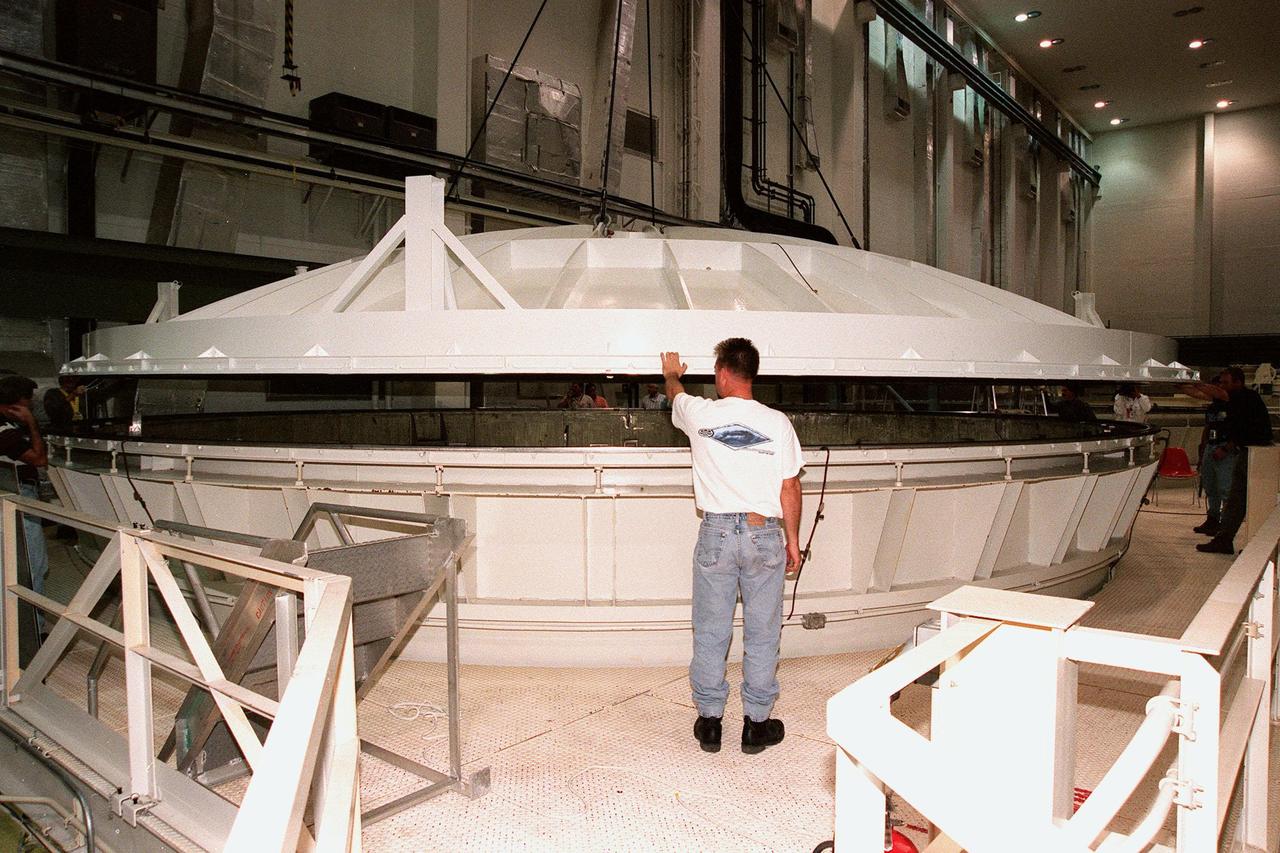
KENNEDY SPACE CENTER, FLA. -- Workers watch as the 27.5-ton lid is lowered onto the top of an altitude chamber in the Operations and Checkout Building high bay. The chamber was recently reactivated, after a 24-year hiatus, to perform leak tests on International Space Station pressurized modules at the launch site. Originally, two chambers were built to test Apollo Program flight hardware. They were last used in 1975 during the Apollo-Soyuz Test Project. After installation of new vacuum pumping equipment and controls, a new control room, and a new rotation handling fixture, the chamber again became operational in February 1999. The chamber, which is 33 feet in diameter and 50 feet tall, is constructed of stainless steel. The first module that will be tested for leaks is the U.S. Laboratory. No date has been determined for the test
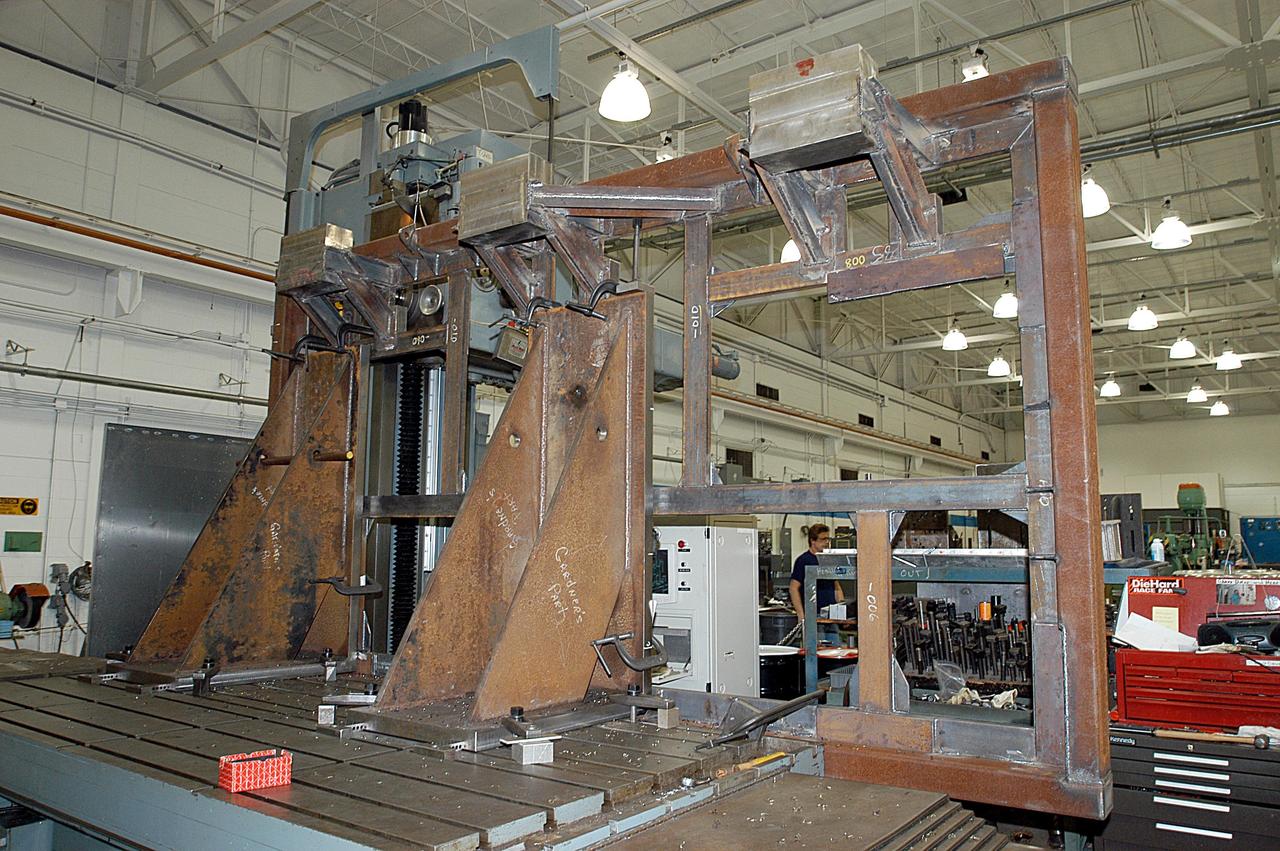
KENNEDY SPACE CENTER, FLA. -- A main landing gear door mounting fixture in the Launch Equipment Shop is being used to support the Columbia mishap investigation. A simulated orbiter wing and several test panels, along with sections of Space Shuttle orbiter Enterprise (OV-101), will be transferred to the Southwest Research Institute for testing after Thermal Protection System (TPS) tile installation is complete. The testing has been requested by the Columbia Accident Investigation Board. For this initiative, sections of Enterprise were borrowed from the Smithsonian Institution's Air and Space Museum where the orbiter is being stored at the Washington Dulles International Airport. Enterprise was the first orbiter built in the Shuttle fleet and was used to conduct the Approach and Landing Test Program before the first powered Shuttle flight.
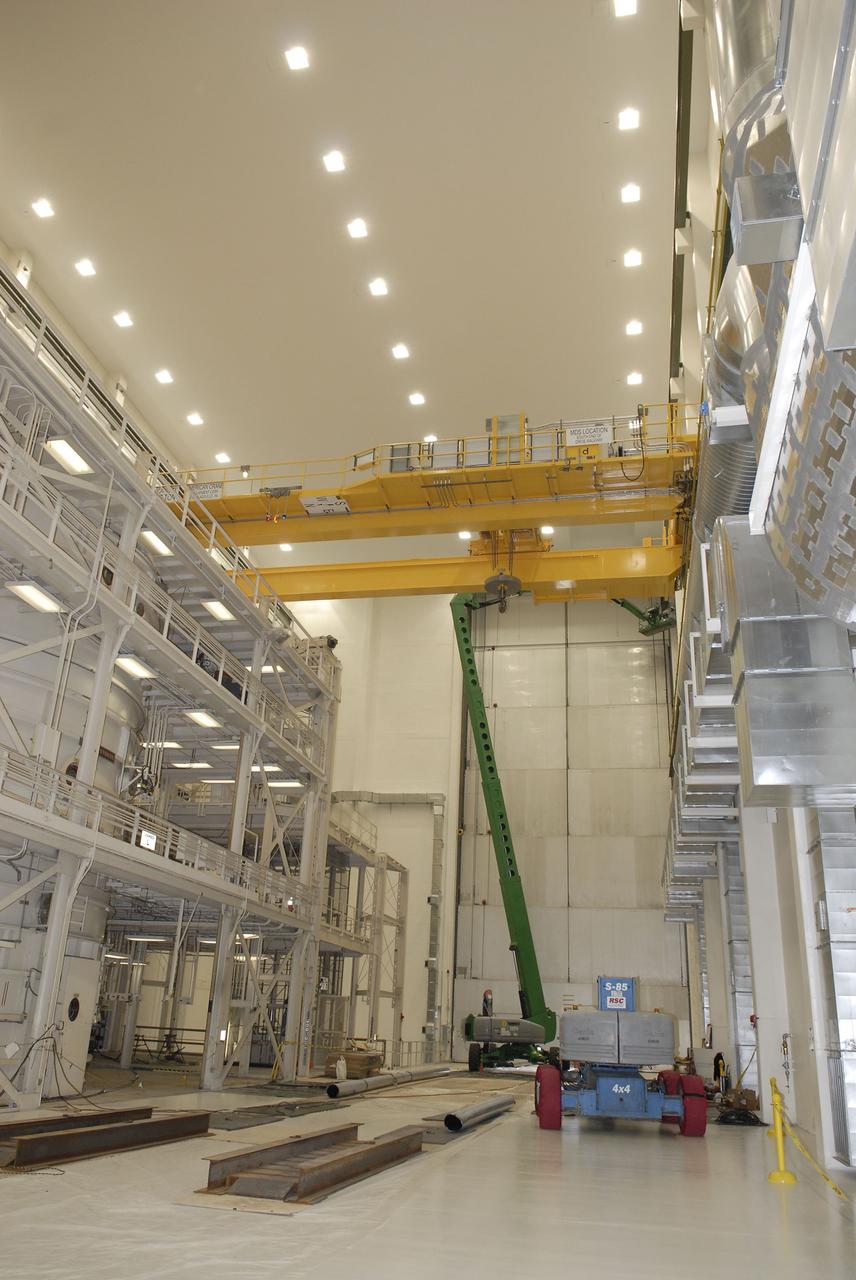
CAPE CANAVERAL, Fla. – Segments of a new crane are tested inside the Operations and Checkout Building at NASA's Kennedy Space Center in Florida. The new O&C low-bay crane is a 25-ton overhead bridge crane built for Lockheed Martin and Space Florida by American Crane and Equipment Corporation in Douglasville, Pa. The crane has a bridge span of 78’-2” and a hook height of 48’-10”. The crane will be used for lifting and moving flight hardware, fixtures and equipment in support of the Orion spacecraft manufacturing. Part of NASA's Constellation Program, the Orion spacecraft will return humans to the moon and prepare for future voyages to Mars and other destinations in our solar system. Photo credit: NASA/Kim Shiflett
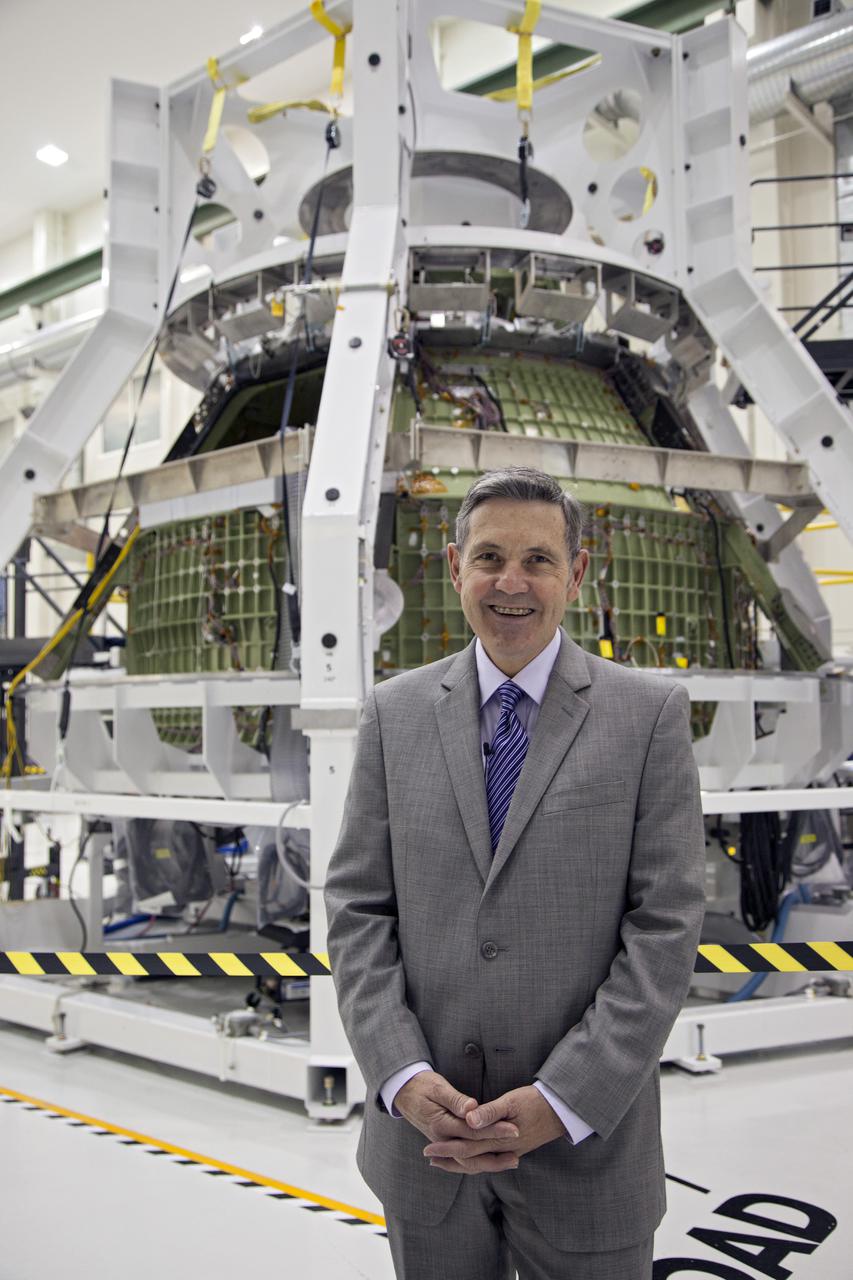
CAPE CANAVERAL, Fla. – Inside the high bay of Kennedy Space Center's Operations and Checkout Building, Kennedy Director Bob Cabana, stands in front of the Orion spacecraft which is surrounded by a special pre-launch processing access fixture. Orion is the exploration spacecraft designed to carry crews to space beyond low Earth orbit. It will provide emergency abort capability, sustain the crew during the space travel and provide safe re-entry from deep space return velocities. The first unpiloted test flight of the Orion is scheduled to launch in 2014 atop a Delta IV rocket and in 2017 on a Space Launch System rocket. For more information, visit http:__www.nasa.gov_orion Photo credit: NASA_Kim Shiflett
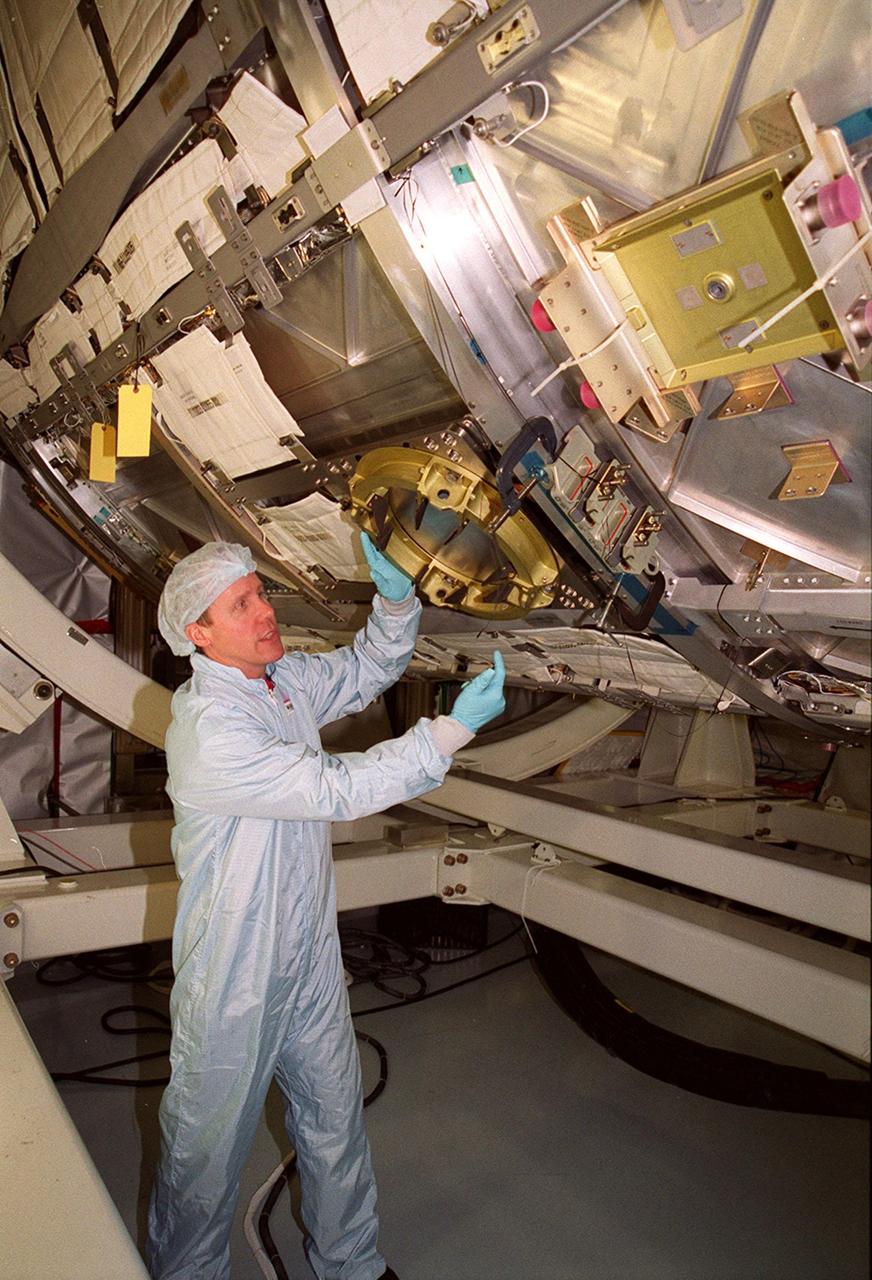
In the Space Station Processing Facility, STS-98 Mission Specialist Thomas D. Jones (Ph.D.) examines a power data grapple fixture outside the U.S. Lab Destiny. Jones is taking part in a Multi-Equipment Interface Test (MEIT), along with other crew members Commander Kenneth D. Cockrell and Pilot Mark Polansky. The remaining members of the crew (not present for the MEIT) are Mission Specialists Robert L. Curbeam Jr. and Marsha S. Ivins. During the STS-98 mission, the crew will install the Lab on the International Space Station during a series of three space walks. The grapple fixture will be the base of operations for the robotic arm on later flights The mission will provide the station with science research facilities and expand its power, life support and control capabilities. The U.S. Laboratory Module continues a long tradition of microgravity materials research, first conducted by Skylab and later Shuttle and Spacelab missions. Destiny is expected to be a major feature in future research, providing facilities for biotechnology, fluid physics, combustion, and life sciences research. The Lab is planned for launch aboard Space Shuttle Atlantis on the sixth ISS flight, currently targeted no earlier than Aug. 19, 2000
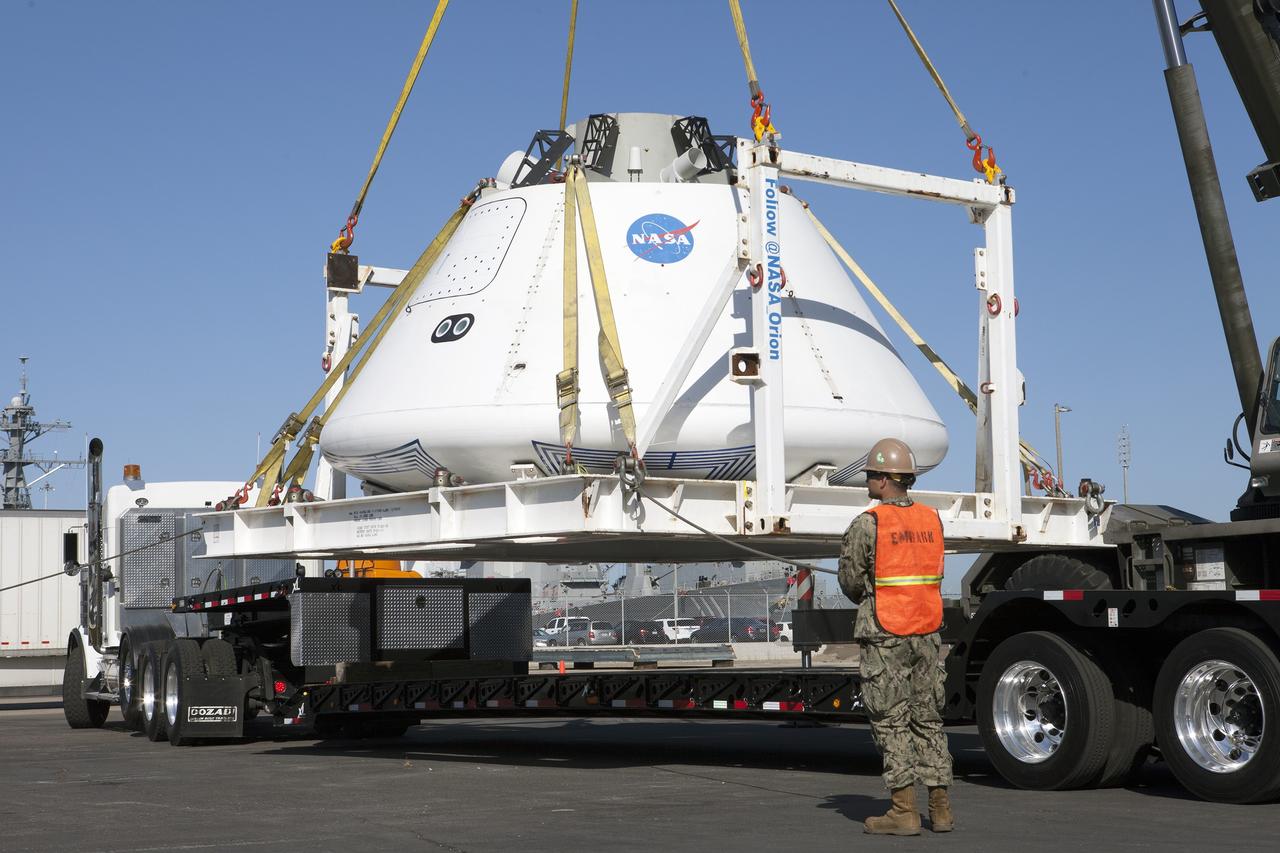
SAN DIEGO, Calif. – A crane lifts the Orion boilerplate test vehicle from a flatbed truck to lower it to the ground at a warehouse at the Naval Base San Diego in California. The test vehicle is attached to the BTA handling fixture. The Ground Systems Development and Operations Program, Lockheed Martin and the U.S. Navy are evaluating the hardware and processes for preparing the Orion crew module for Exploration Flight Test-1, or EFT-1, for overland transport from the naval base to NASA's Kennedy Space Center in Florida. Orion is the exploration spacecraft designed to carry astronauts to destinations not yet explored by humans, including an asteroid and Mars. It will have emergency abort capability, sustain the crew during space travel and provide safe re-entry from deep space return velocities. The first unpiloted test flight of the Orion is scheduled to launch later this year atop a Delta IV rocket from Cape Canaveral Air Force Station in Florida to an altitude of 3,600 miles above the Earth's surface. The two-orbit, four-hour flight test will help engineers evaluate the systems critical to crew safety including the heat shield, parachute system and launch abort system. For more information, visit http://www.nasa.gov/orion. Photo credit: NASA/Kim Shiflett
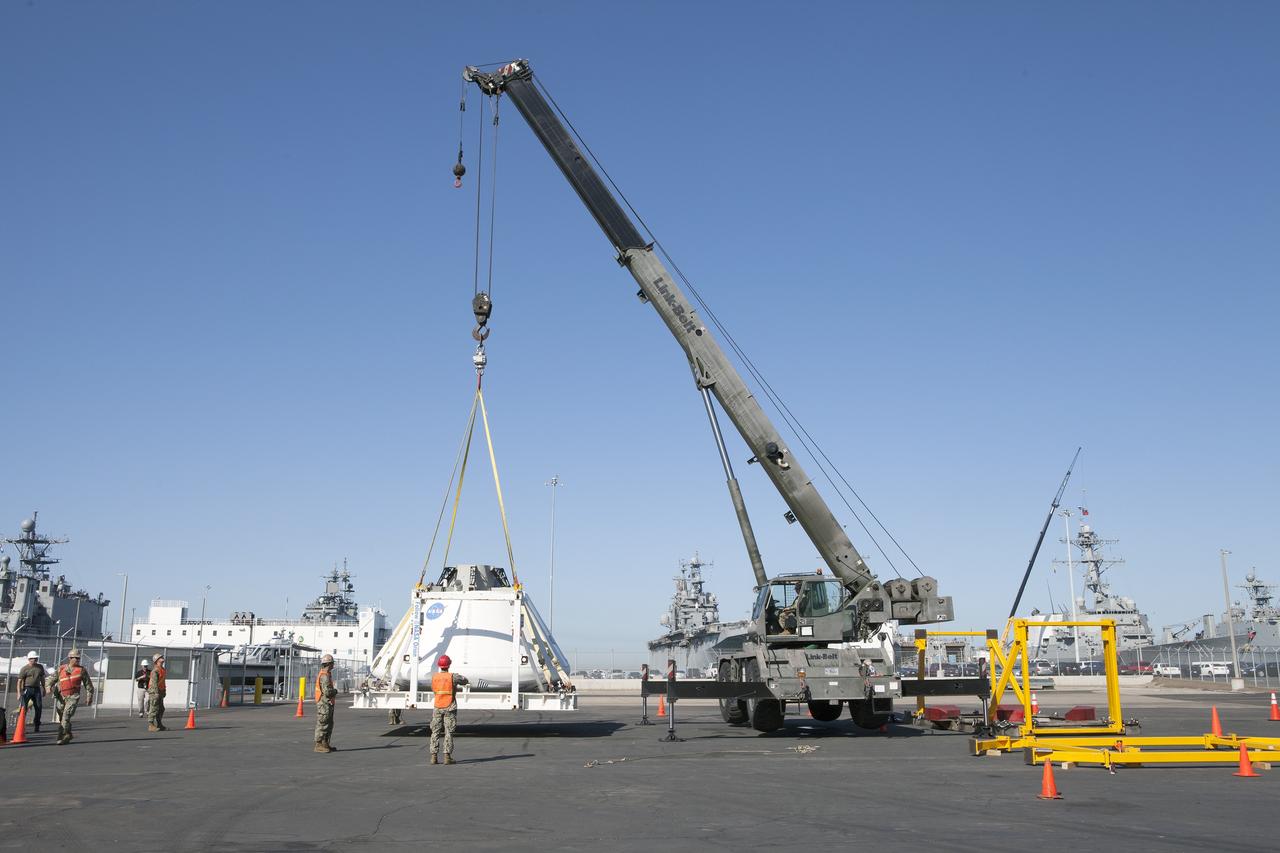
SAN DIEGO, Calif. – A crane lowers the Orion boilerplate test vehicle onto the ground at a warehouse at the Naval Base San Diego in California. The test vehicle is attached to the BTA handling fixture. The Ground Systems Development and Operations Program, Lockheed Martin and the U.S. Navy are evaluating the hardware and processes for preparing the Orion crew module for Exploration Flight Test-1, or EFT-1, for overland transport from the naval base to NASA's Kennedy Space Center in Florida. Orion is the exploration spacecraft designed to carry astronauts to destinations not yet explored by humans, including an asteroid and Mars. It will have emergency abort capability, sustain the crew during space travel and provide safe re-entry from deep space return velocities. The first unpiloted test flight of the Orion is scheduled to launch later this year atop a Delta IV rocket from Cape Canaveral Air Force Station in Florida to an altitude of 3,600 miles above the Earth's surface. The two-orbit, four-hour flight test will help engineers evaluate the systems critical to crew safety including the heat shield, parachute system and launch abort system. For more information, visit http://www.nasa.gov/orion. Photo credit: NASA/Kim Shiflett
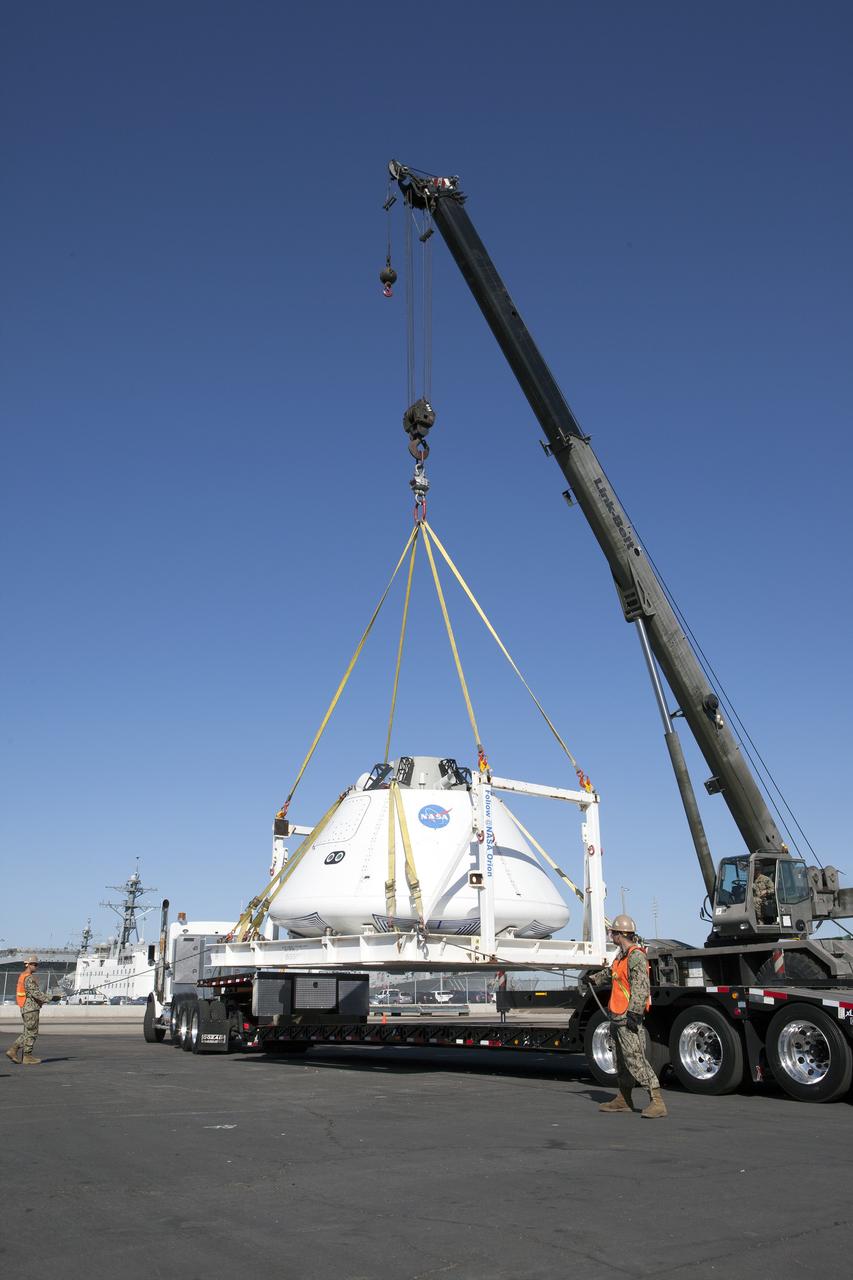
SAN DIEGO, Calif. – A crane lifts the Orion boilerplate test vehicle from a flatbed truck to lower it to the ground at a warehouse at the Naval Base San Diego in California. The test vehicle is attached to the BTA handling fixture. The Ground Systems Development and Operations Program, Lockheed Martin and the U.S. Navy are evaluating the hardware and processes for preparing the Orion crew module for Exploration Flight Test-1, or EFT-1, for overland transport from the naval base to NASA's Kennedy Space Center in Florida. Orion is the exploration spacecraft designed to carry astronauts to destinations not yet explored by humans, including an asteroid and Mars. It will have emergency abort capability, sustain the crew during space travel and provide safe re-entry from deep space return velocities. The first unpiloted test flight of the Orion is scheduled to launch later this year atop a Delta IV rocket from Cape Canaveral Air Force Station in Florida to an altitude of 3,600 miles above the Earth's surface. The two-orbit, four-hour flight test will help engineers evaluate the systems critical to crew safety including the heat shield, parachute system and launch abort system. For more information, visit http://www.nasa.gov/orion. Photo credit: NASA/Kim Shiflett
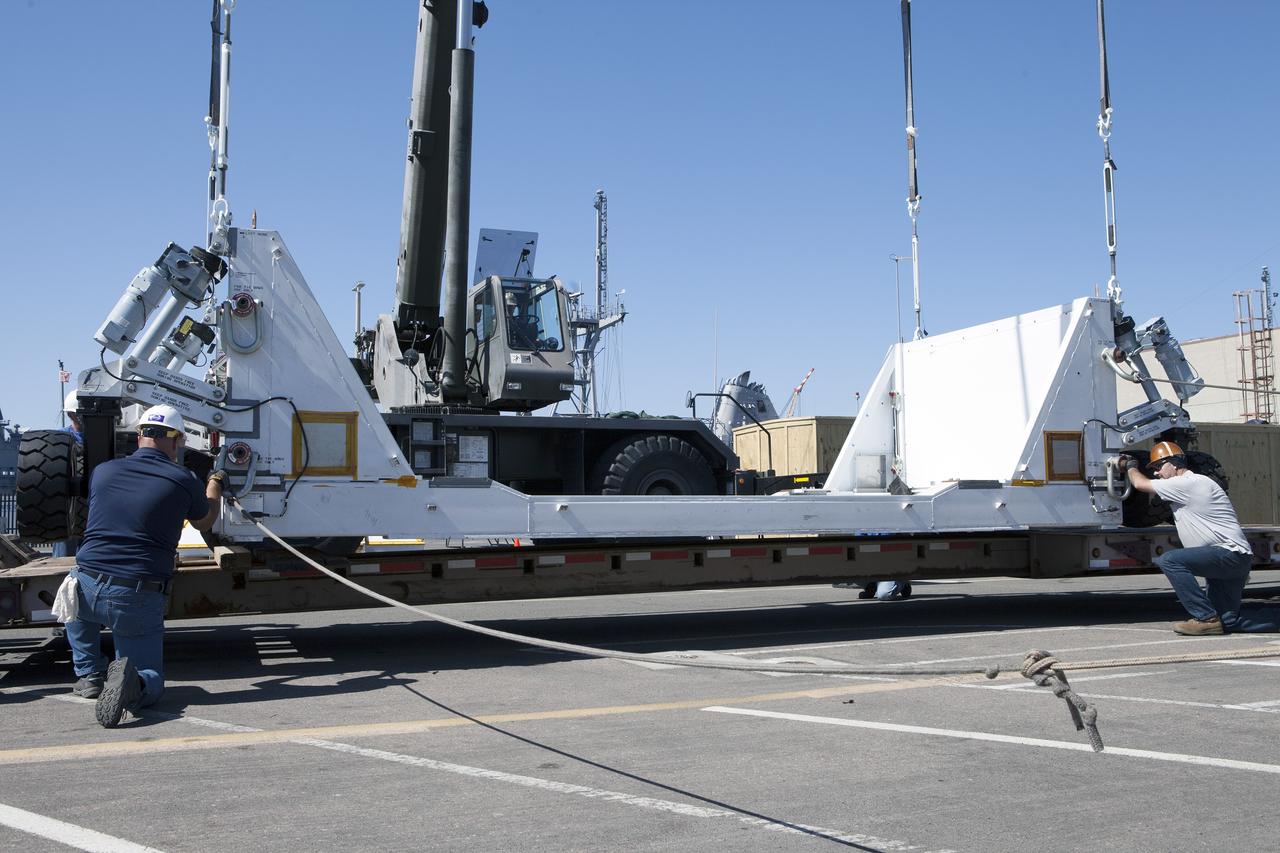
SAN DIEGO, Calif. – Workers prepare the base of the crew module transportation fixture for the Orion boilerplate test vehicle at the Mole Pier at Naval Base San Diego in California. The test vehicle will be moved from the pier to a warehouse hangar at the naval base. The Ground Systems Development and Operations Program, Lockheed Martin and the U.S. Navy are evaluating the hardware and processes for preparing the Orion crew module for Exploration Flight Test-1, or EFT-1, for overland transport from the naval base to NASA's Kennedy Space Center in Florida. Orion is the exploration spacecraft designed to carry astronauts to destinations not yet explored by humans, including an asteroid and Mars. It will have emergency abort capability, sustain the crew during space travel and provide safe re-entry from deep space return velocities. The first unpiloted test flight of the Orion is scheduled to launch later this year atop a Delta IV rocket from Cape Canaveral Air Force Station in Florida to an altitude of 3,600 miles above the Earth's surface. The two-orbit, four-hour flight test will help engineers evaluate the systems critical to crew safety including the heat shield, parachute system and launch abort system. For more information, visit http://www.nasa.gov/orion. Photo credit: NASA/Kim Shiflett
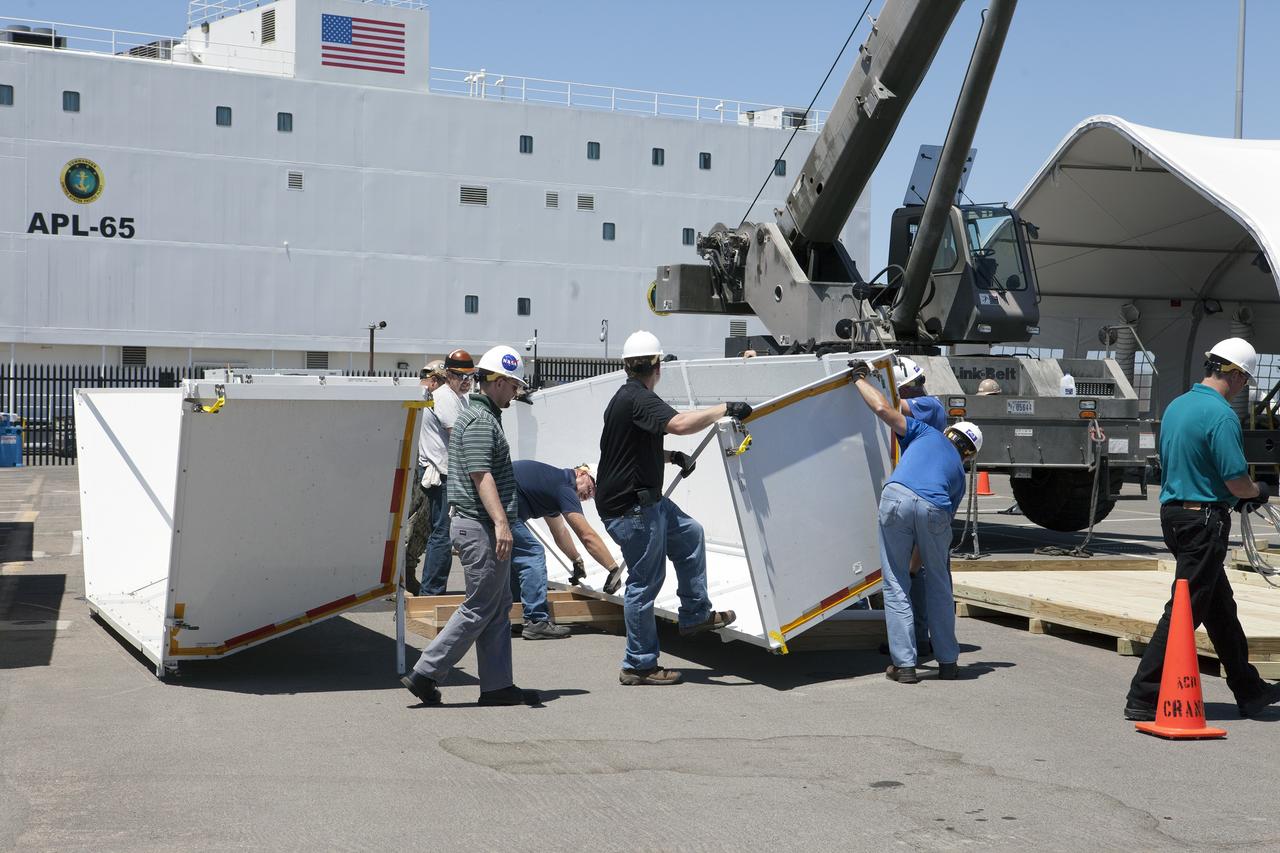
SAN DIEGO, Calif. – Workers prepare to assemble the crew module transportation fixture for the Orion boilerplate test vehicle at the Mole Pier at Naval Base San Diego in California. The test vehicle will be moved from the pier to a warehouse at the naval base. The Ground Systems Development and Operations Program, Lockheed Martin and the U.S. Navy are evaluating the hardware and processes for preparing the Orion crew module for Exploration Flight Test-1, or EFT-1, for overland transport from the naval base to NASA's Kennedy Space Center in Florida. Orion is the exploration spacecraft designed to carry astronauts to destinations not yet explored by humans, including an asteroid and Mars. It will have emergency abort capability, sustain the crew during space travel and provide safe re-entry from deep space return velocities. The first unpiloted test flight of the Orion is scheduled to launch later this year atop a Delta IV rocket from Cape Canaveral Air Force Station in Florida to an altitude of 3,600 miles above the Earth's surface. The two-orbit, four-hour flight test will help engineers evaluate the systems critical to crew safety including the heat shield, parachute system and launch abort system. For more information, visit http://www.nasa.gov/orion. Photo credit: NASA/Kim Shiflett