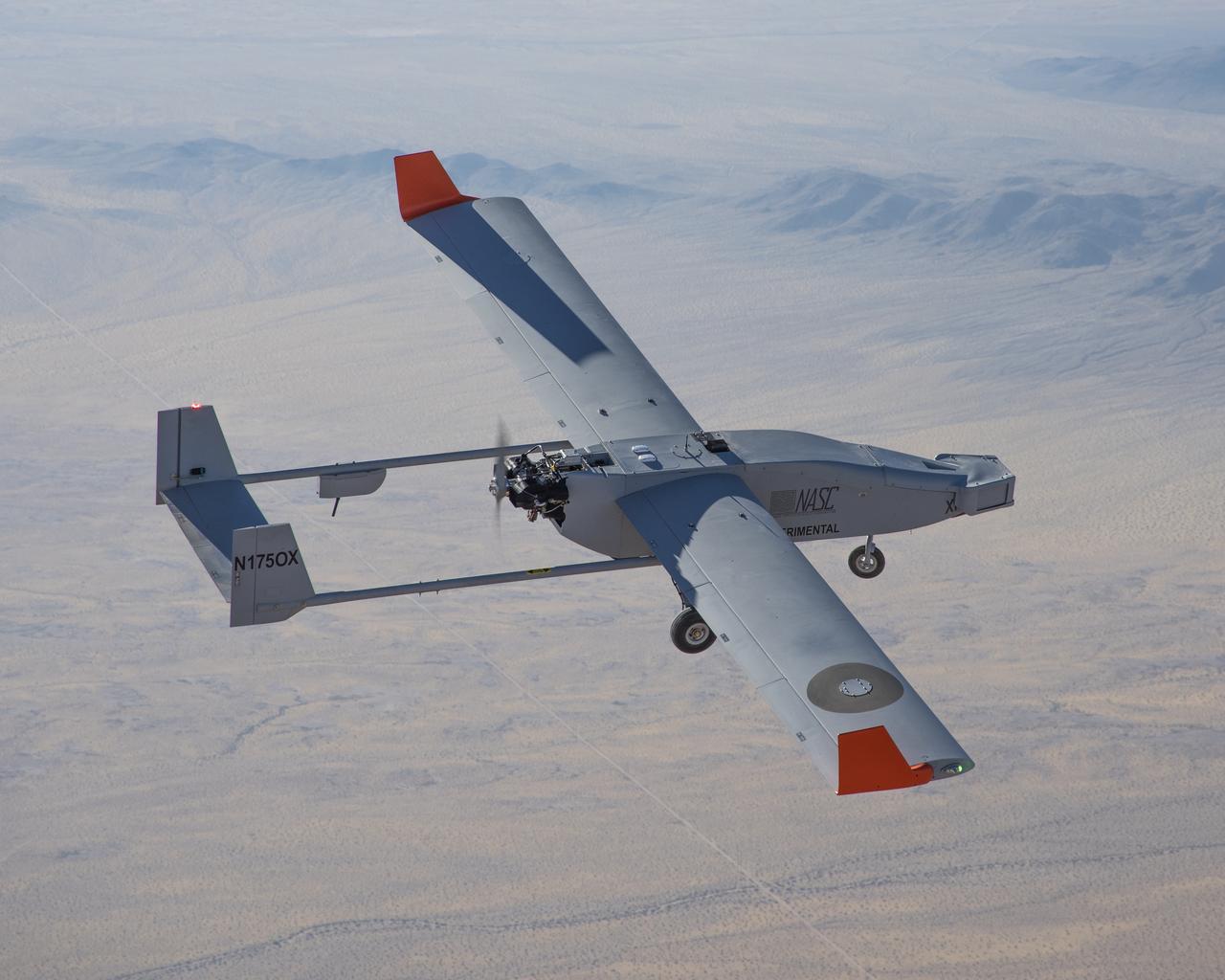
The NAVMAR Applied Sciences Corporation TigerShark, flew over Edwards Air Force Base on July 9, 2019 during a systems checkout flight for Flight Test Six.
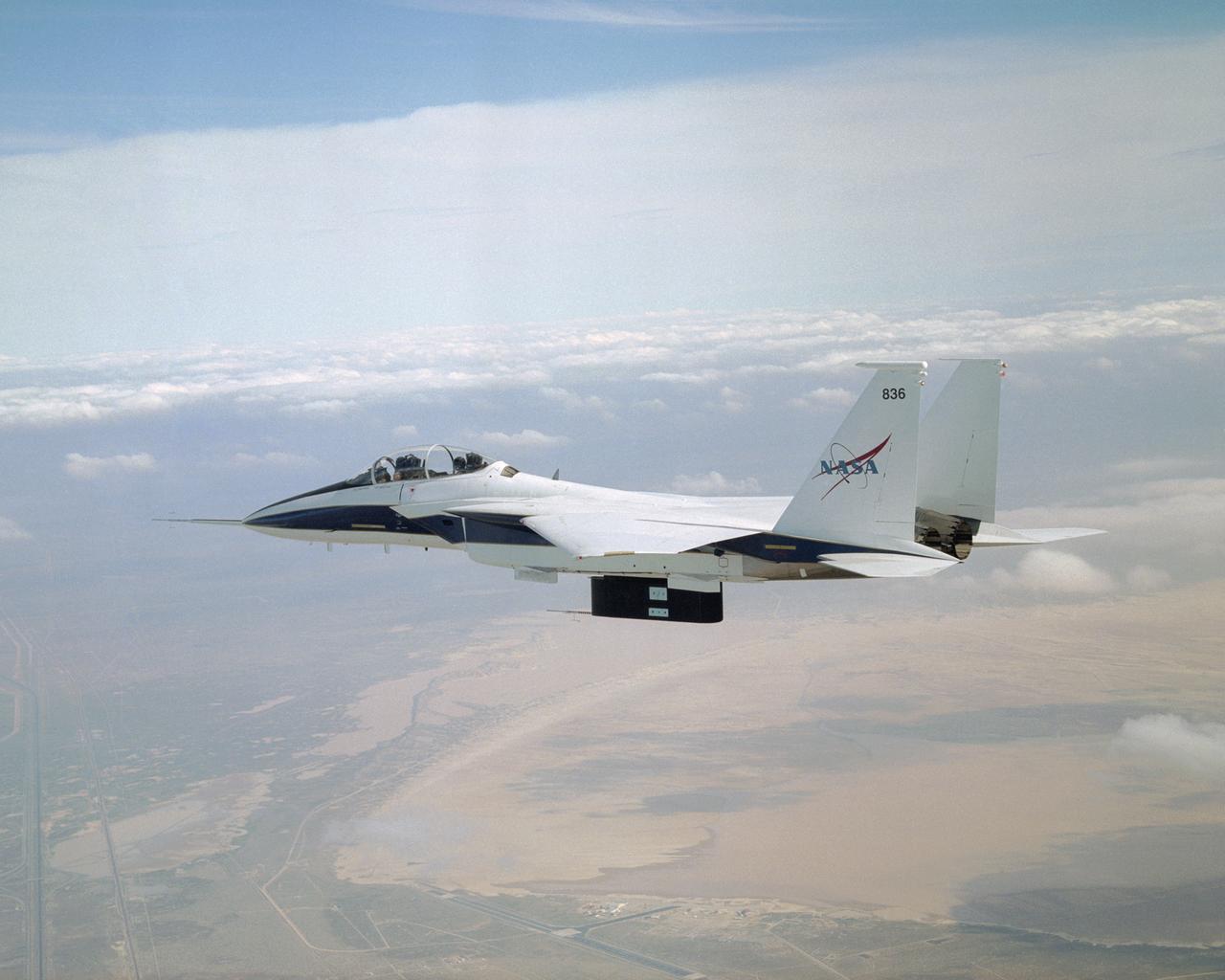
All six divots of thermal insulation foam have been ejected from the flight test fixture on NASA's F-15B testbed as it returns from a LIFT experiment flight.
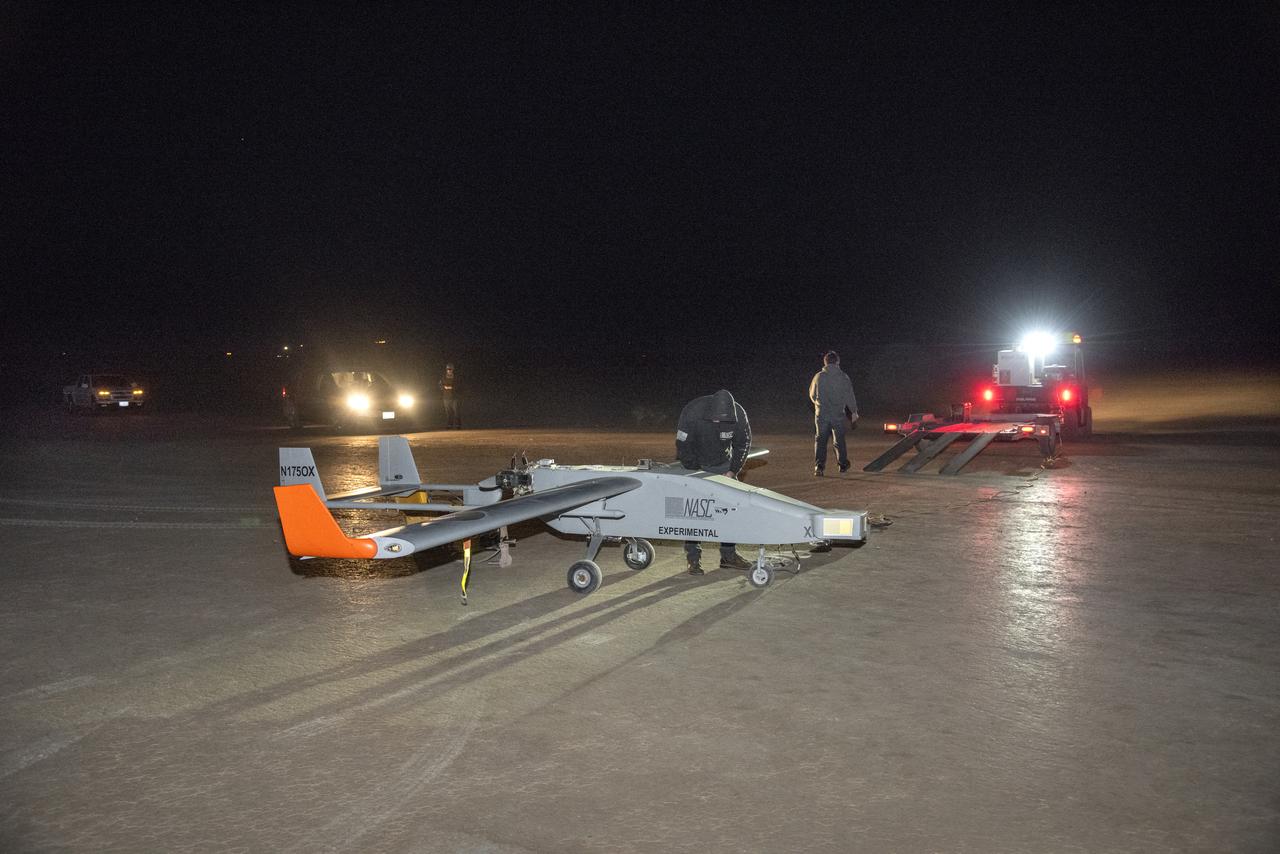
The Navmar Applied Sciences Corporation’s TigerShark prepares for its final takeoff at Edwards Air Force Base for the Unmanned Aircraft Systems integration in the National Airspace Systems, Flight Test Series Six (FT6) project. FT6 flight tests took place at NASA’s Armstrong Flight Research Center in California and focused on low size weight and power sensors for Detect and Avoid (DAA) operations in controlled airspace to inform the FAA through the RTCA Special Committee DAA Working Group on the phase 2 minimum operational performance standards for DAA and air-to-air radar.
The Navmar Applied Sciences Corporation’s TigerShark prepares for its final takeoff at Edwards Air Force Base for the Unmanned Aircraft Systems integration in the National Airspace Systems, Flight Test Series Six (FT6) project. FT6 flight tests took place at NASA’s Armstrong Flight Research Center in California and focused on low size weight and power sensors for Detect and Avoid (DAA) operations in controlled airspace to inform the FAA through the RTCA Special Committee DAA Working Group on the phase 2 minimum operational performance standards for DAA and air-to-air radar.
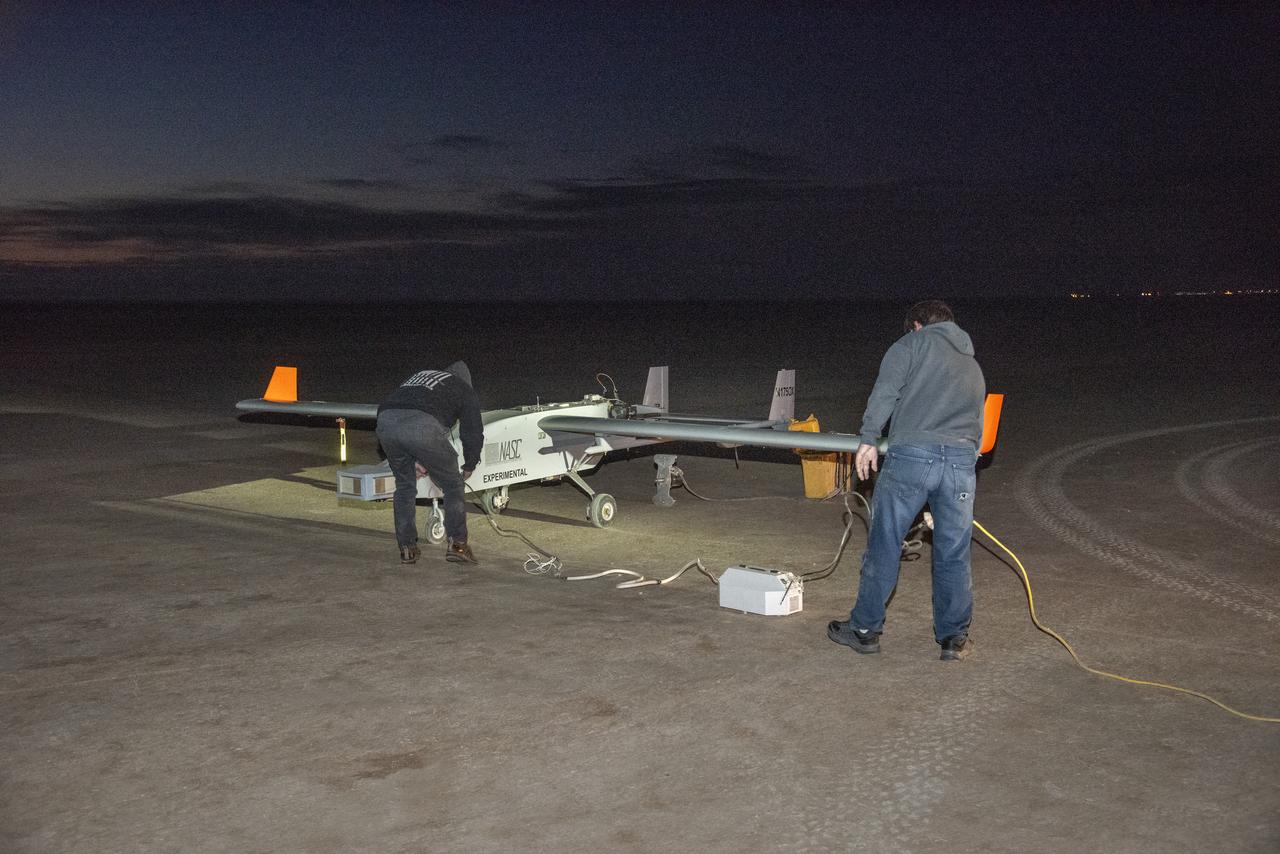
The Navmar Applied Sciences Corporation’s TigerShark prepares for its final takeoff at Edwards Air Force Base for the Unmanned Aircraft Systems integration in the National Airspace Systems, Flight Test Series Six (FT6) project. FT6 flight tests took place at NASA’s Armstrong Flight Research Center in California and focused on low size weight and power sensors for Detect and Avoid (DAA) operations in controlled airspace to inform the FAA through the RTCA Special Committee DAA Working Group on the phase 2 minimum operational performance standards for DAA and air-to-air radar.
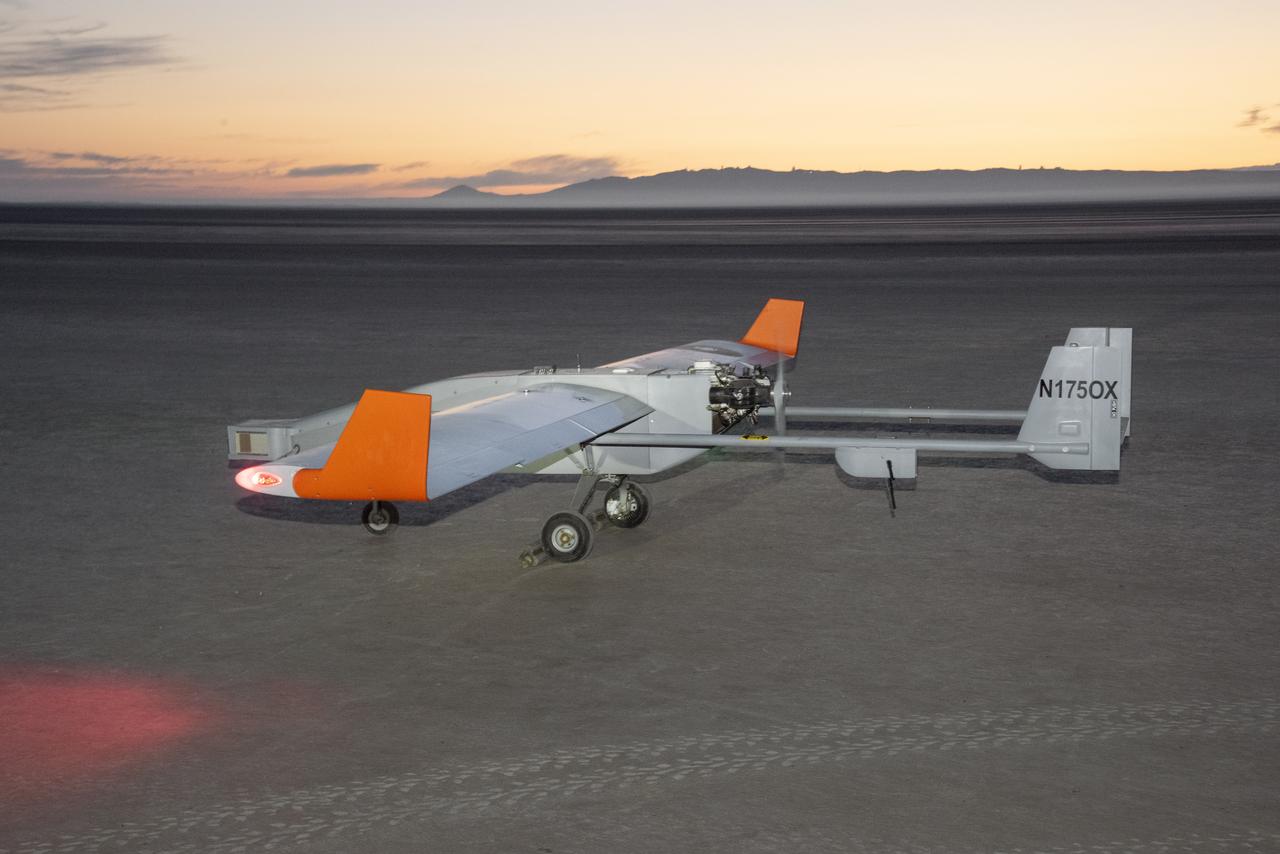
The Navmar Applied Sciences Corporation’s TigerShark prepares for its final takeoff at Edwards Air Force Base for the Unmanned Aircraft Systems integration in the National Airspace Systems, Flight Test Series Six (FT6) project. FT6 flight tests took place at NASA’s Armstrong Flight Research Center in California and focused on low size weight and power sensors for Detect and Avoid (DAA) operations in controlled airspace to inform the FAA through the RTCA Special Committee DAA Working Group on the phase 2 minimum operational performance standards for DAA and air-to-air radar.
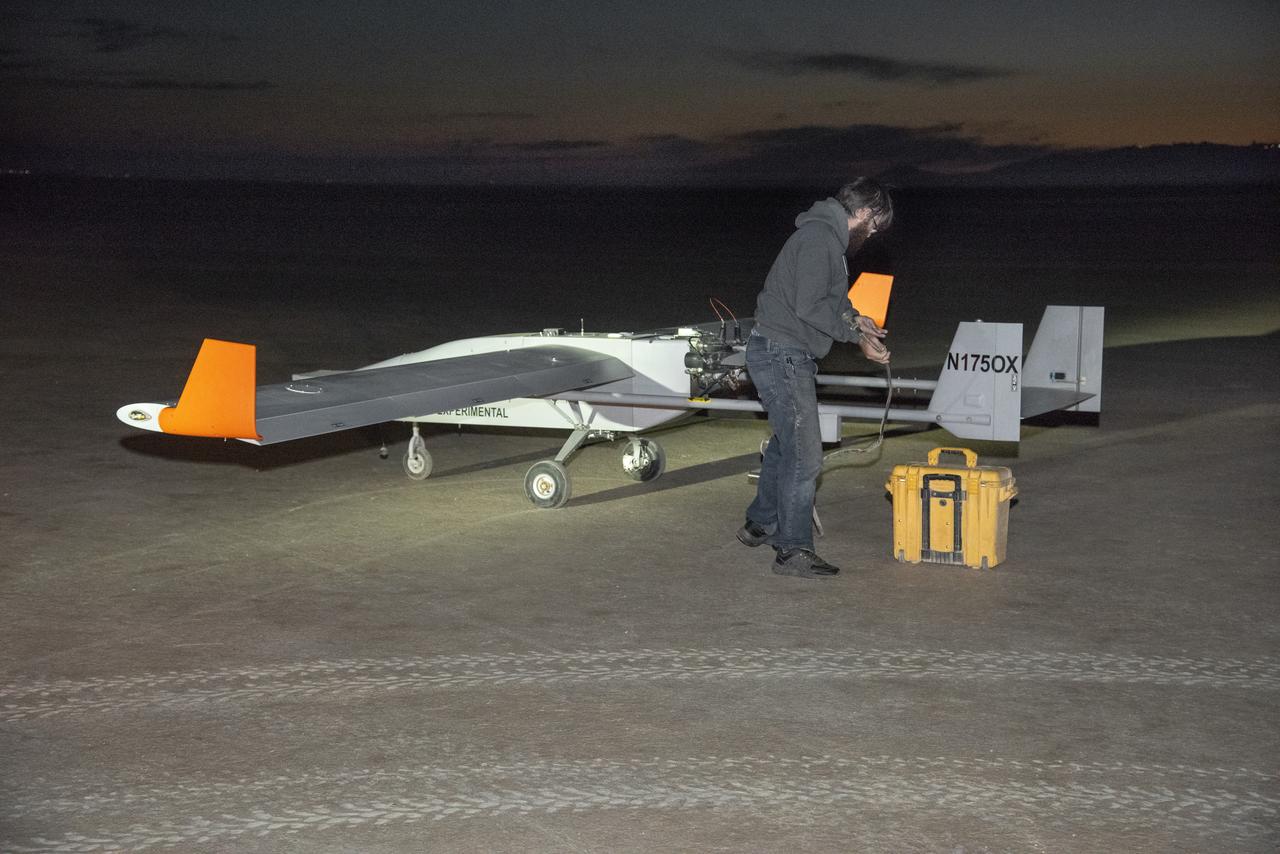
The Navmar Applied Sciences Corporation’s TigerShark prepares for its final takeoff at Edwards Air Force Base for the Unmanned Aircraft Systems integration in the National Airspace Systems, Flight Test Series Six (FT6) project. FT6 flight tests took place at NASA’s Armstrong Flight Research Center in California and focused on low size weight and power sensors for Detect and Avoid (DAA) operations in controlled airspace to inform the FAA through the RTCA Special Committee DAA Working Group on the phase 2 minimum operational performance standards for DAA and air-to-air radar.
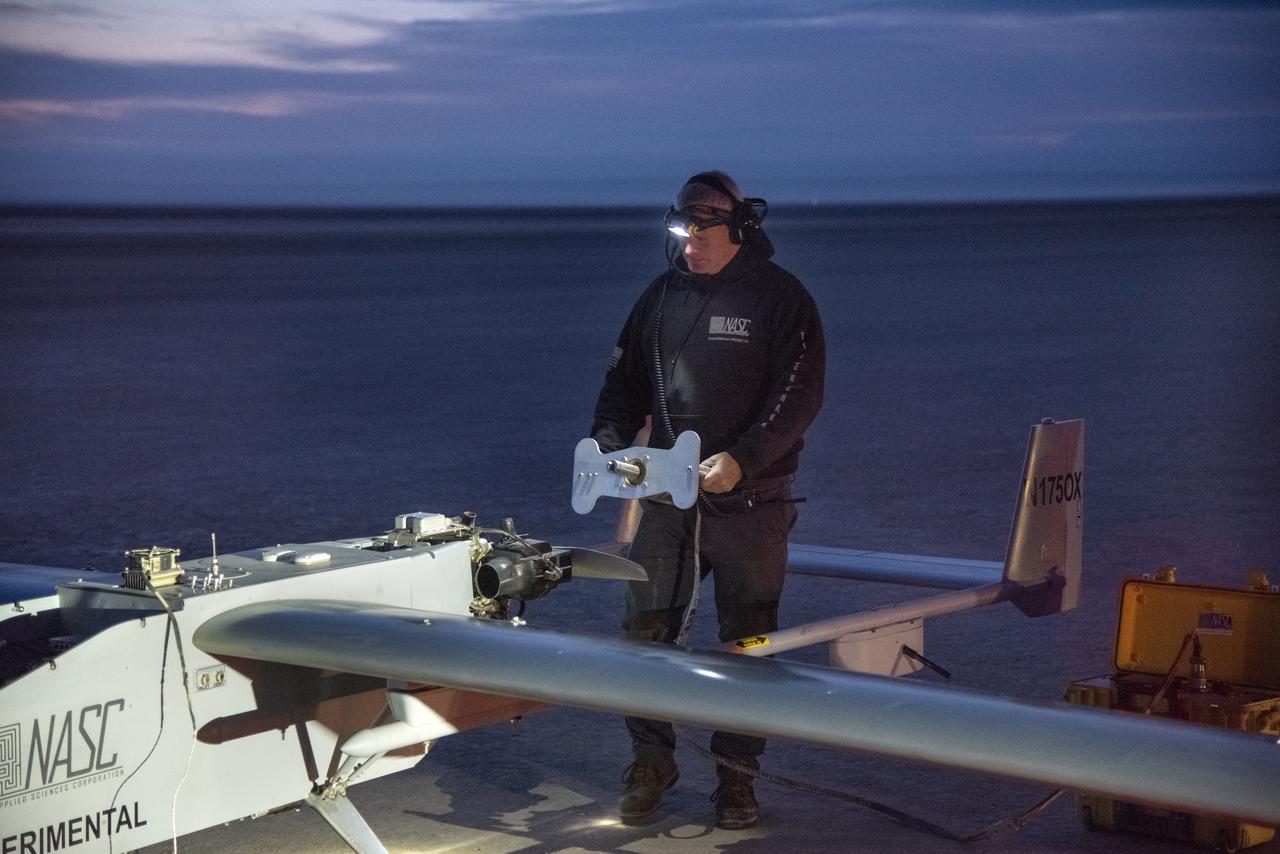
The Navmar Applied Sciences Corporation’s TigerShark prepares for its final takeoff at Edwards Air Force Base for the Unmanned Aircraft Systems integration in the National Airspace Systems, Flight Test Series Six (FT6) project. FT6 flight tests took place at NASA’s Armstrong Flight Research Center in California and focused on low size weight and power sensors for Detect and Avoid (DAA) operations in controlled airspace to inform the FAA through the RTCA Special Committee DAA Working Group on the phase 2 minimum operational performance standards for DAA and air-to-air radar.
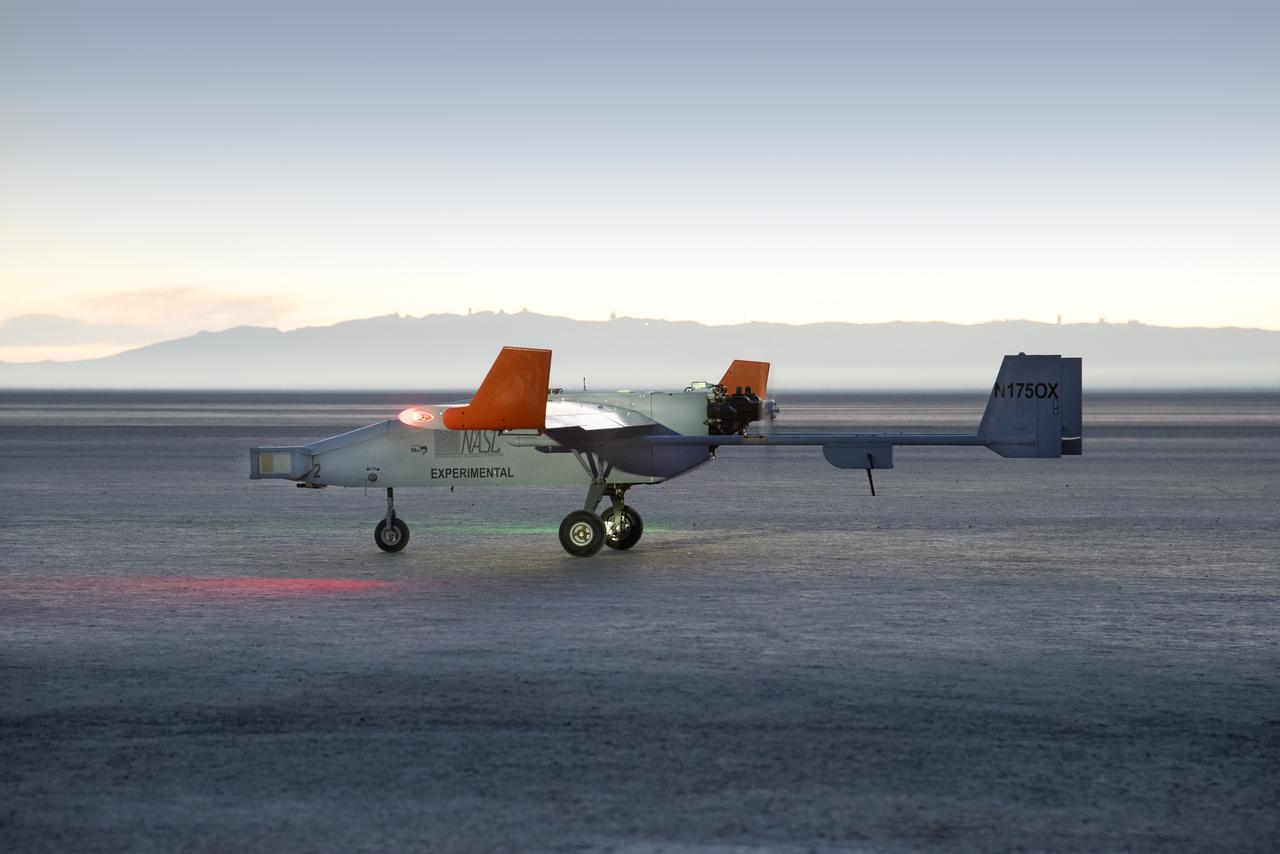
The Navmar Applied Sciences Corporation’s TigerShark prepares for its final takeoff at Edwards Air Force Base for the Unmanned Aircraft Systems integration in the National Airspace Systems, Flight Test Series Six (FT6) project. FT6 flight tests took place at NASA’s Armstrong Flight Research Center in California and focused on low size weight and power sensors for Detect and Avoid (DAA) operations in controlled airspace to inform the FAA through the RTCA Special Committee DAA Working Group on the phase 2 minimum operational performance standards for DAA and air-to-air radar.
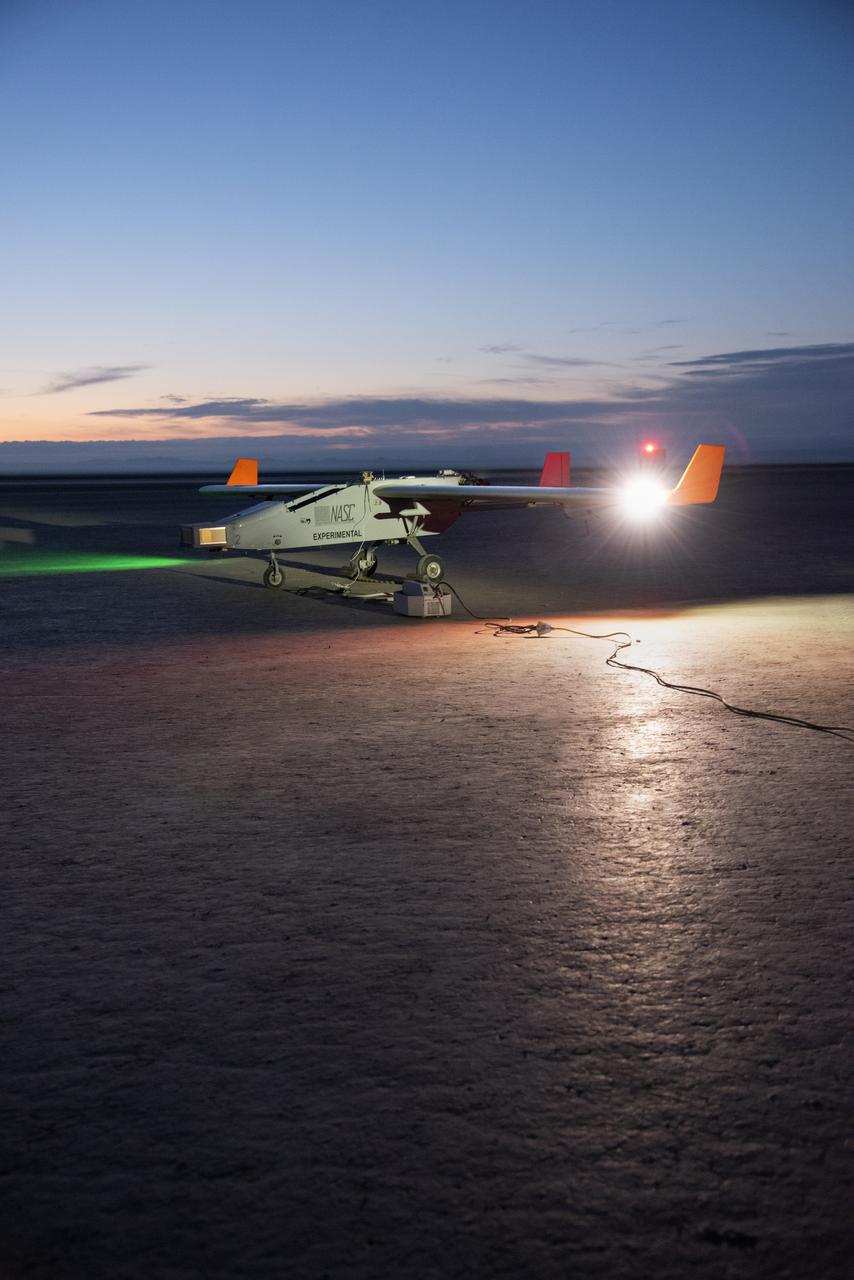
The Navmar Applied Sciences Corporation’s TigerShark prepares for its final takeoff at Edwards Air Force Base for the Unmanned Aircraft Systems integration in the National Airspace Systems, Flight Test Series Six (FT6) project. FT6 flight tests took place at NASA’s Armstrong Flight Research Center in California and focused on low size weight and power sensors for Detect and Avoid (DAA) operations in controlled airspace to inform the FAA through the RTCA Special Committee DAA Working Group on the phase 2 minimum operational performance standards for DAA and air-to-air radar.
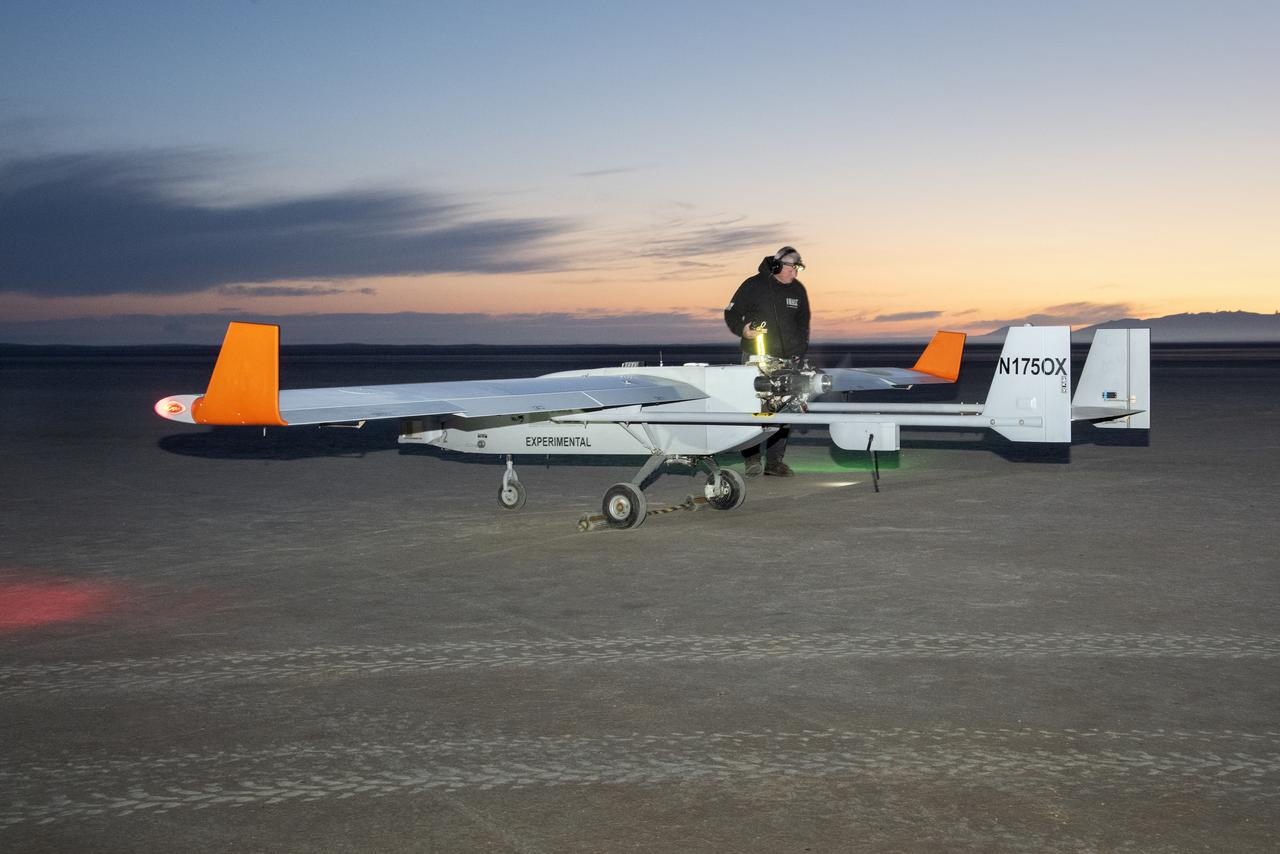
The Navmar Applied Sciences Corporation’s TigerShark prepares for its final takeoff at Edwards Air Force Base for the Unmanned Aircraft Systems integration in the National Airspace Systems, Flight Test Series Six (FT6) project. FT6 flight tests took place at NASA’s Armstrong Flight Research Center in California and focused on low size weight and power sensors for Detect and Avoid (DAA) operations in controlled airspace to inform the FAA through the RTCA Special Committee DAA Working Group on the phase 2 minimum operational performance standards for DAA and air-to-air radar.
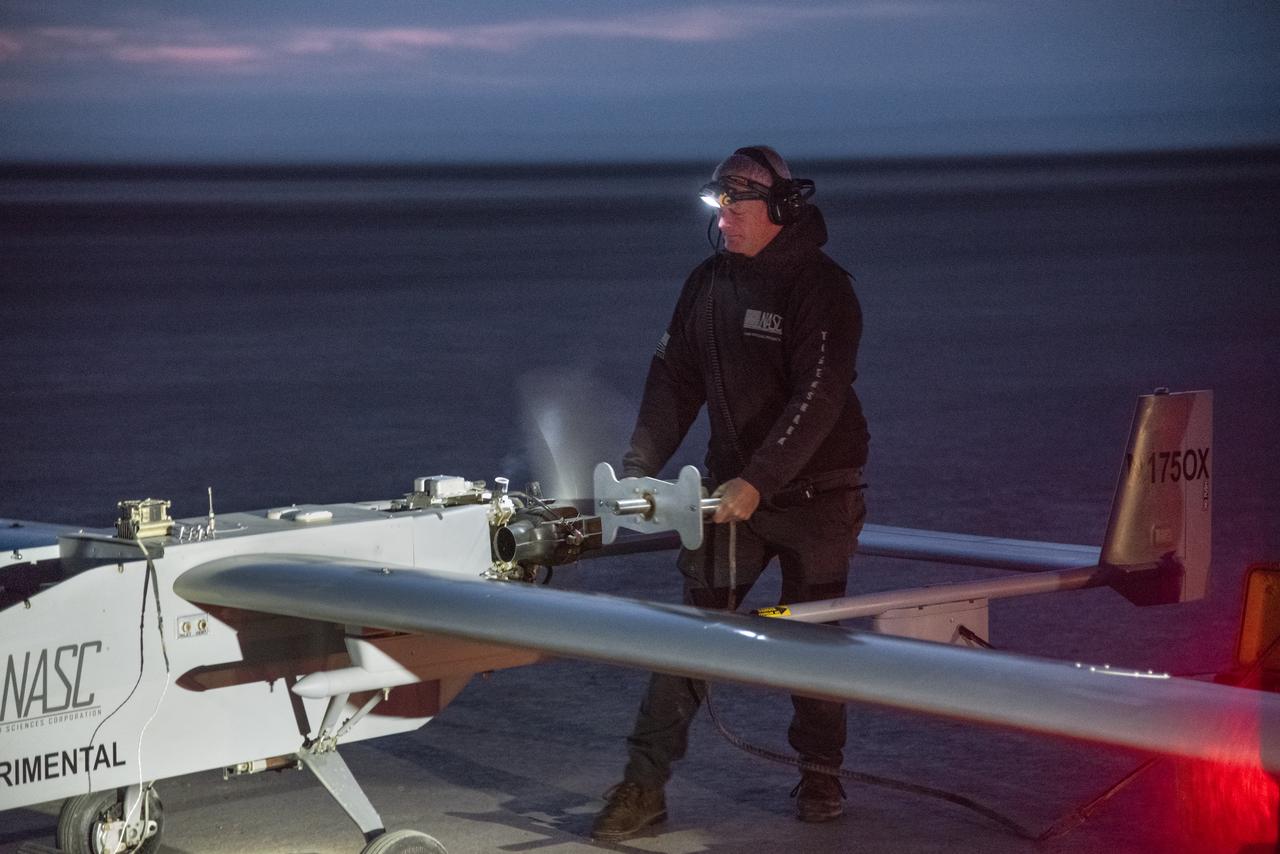
The Navmar Applied Sciences Corporation’s TigerShark prepares for its final takeoff at Edwards Air Force Base for the Unmanned Aircraft Systems integration in the National Airspace Systems, Flight Test Series Six (FT6) project. FT6 flight tests took place at NASA’s Armstrong Flight Research Center in California and focused on low size weight and power sensors for Detect and Avoid (DAA) operations in controlled airspace to inform the FAA through the RTCA Special Committee DAA Working Group on the phase 2 minimum operational performance standards for DAA and air-to-air radar.
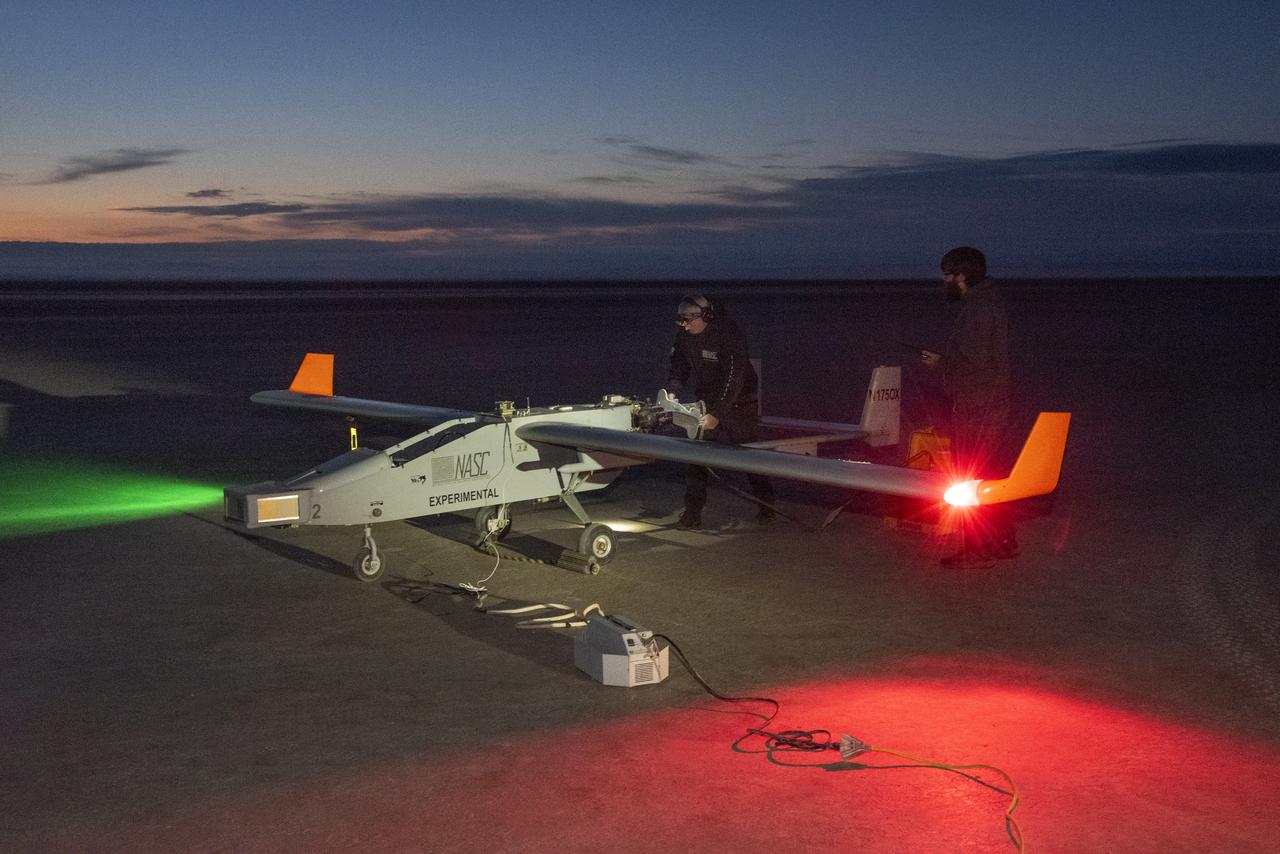
The Navmar Applied Sciences Corporation’s TigerShark prepares for its final takeoff at Edwards Air Force Base for the Unmanned Aircraft Systems integration in the National Airspace Systems, Flight Test Series Six (FT6) project. FT6 flight tests took place at NASA’s Armstrong Flight Research Center in California and focused on low size weight and power sensors for Detect and Avoid (DAA) operations in controlled airspace to inform the FAA through the RTCA Special Committee DAA Working Group on the phase 2 minimum operational performance standards for DAA and air-to-air radar.
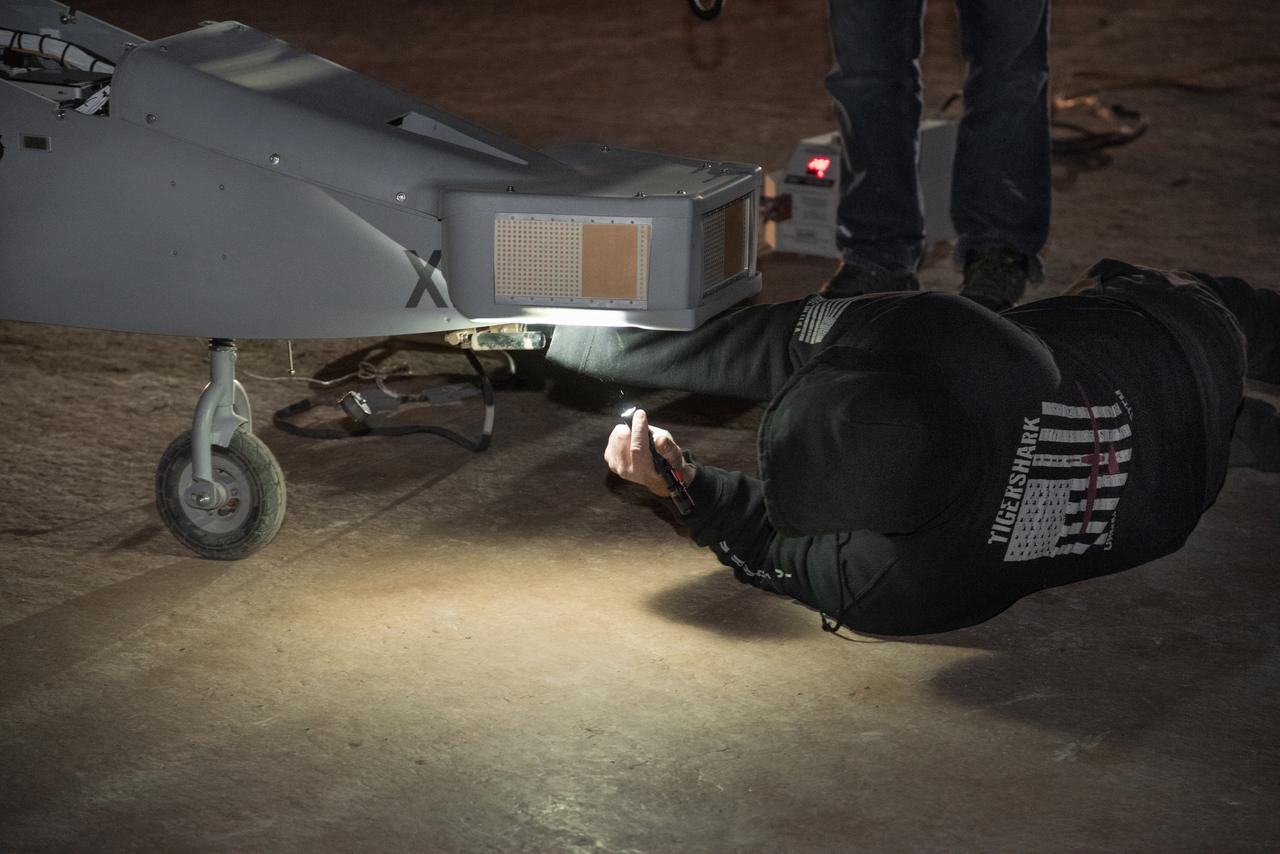
The Navmar Applied Sciences Corporation’s TigerShark prepares for its final takeoff at Edwards Air Force Base for the Unmanned Aircraft Systems integration in the National Airspace Systems, Flight Test Series Six (FT6) project. FT6 flight tests took place at NASA’s Armstrong Flight Research Center in California and focused on low size weight and power sensors for Detect and Avoid (DAA) operations in controlled airspace to inform the FAA through the RTCA Special Committee DAA Working Group on the phase 2 minimum operational performance standards for DAA and air-to-air radar.
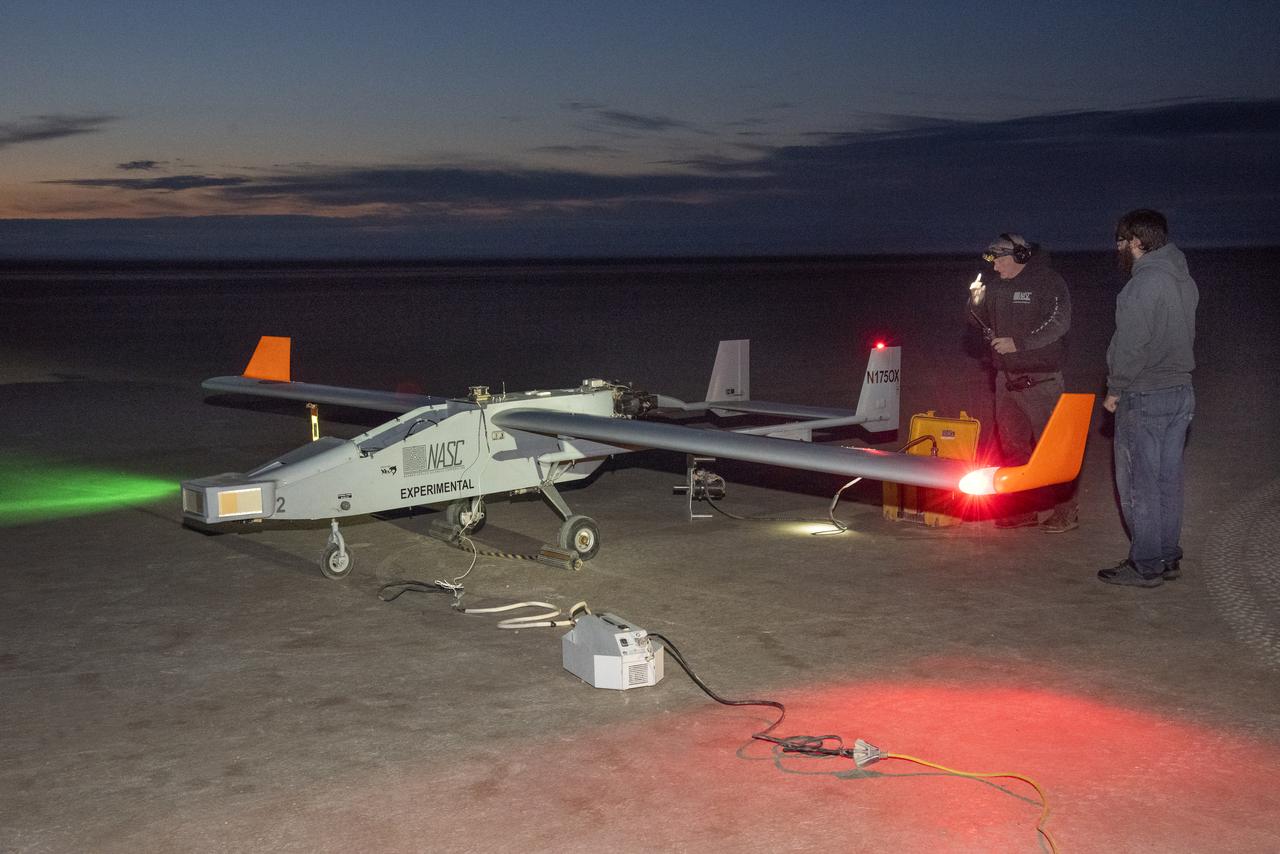
The Navmar Applied Sciences Corporation’s TigerShark prepares for its final takeoff at Edwards Air Force Base for the Unmanned Aircraft Systems integration in the National Airspace Systems, Flight Test Series Six (FT6) project. FT6 flight tests took place at NASA’s Armstrong Flight Research Center in California and focused on low size weight and power sensors for Detect and Avoid (DAA) operations in controlled airspace to inform the FAA through the RTCA Special Committee DAA Working Group on the phase 2 minimum operational performance standards for DAA and air-to-air radar.
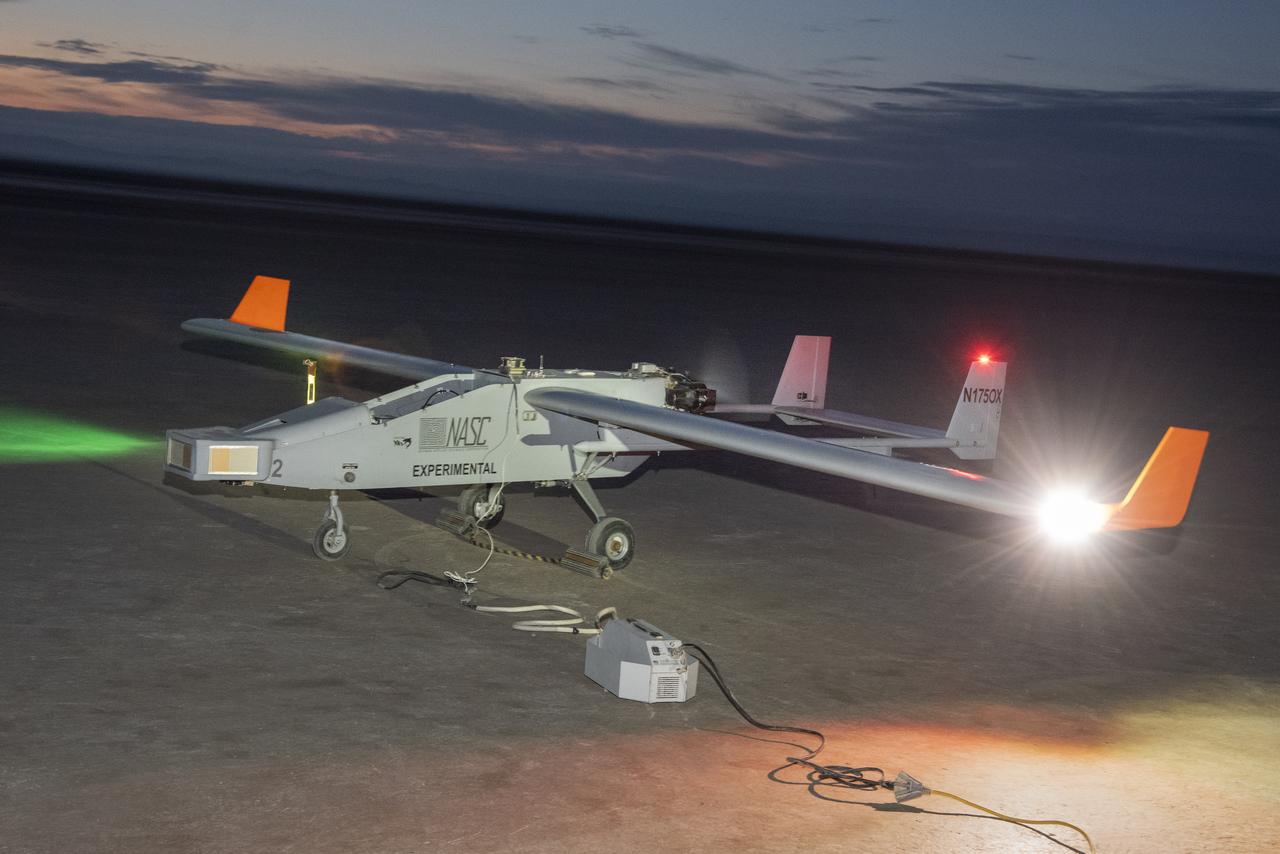
The Navmar Applied Sciences Corporation’s TigerShark prepares for its final takeoff at Edwards Air Force Base for the Unmanned Aircraft Systems integration in the National Airspace Systems, Flight Test Series Six (FT6) project. FT6 flight tests took place at NASA’s Armstrong Flight Research Center in California and focused on low size weight and power sensors for Detect and Avoid (DAA) operations in controlled airspace to inform the FAA through the RTCA Special Committee DAA Working Group on the phase 2 minimum operational performance standards for DAA and air-to-air radar.
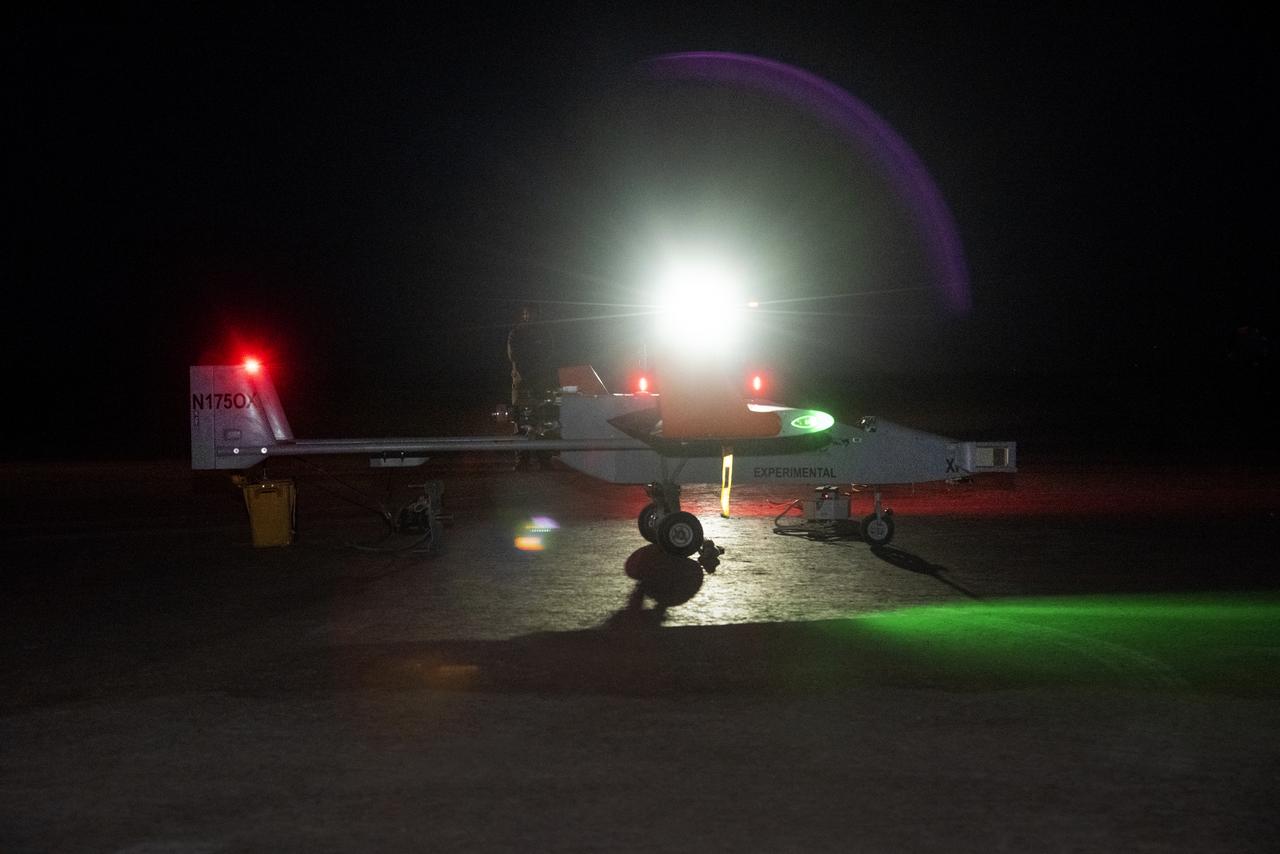
The Navmar Applied Sciences Corporation’s TigerShark prepares for its final takeoff at Edwards Air Force Base for the Unmanned Aircraft Systems integration in the National Airspace Systems, Flight Test Series Six (FT6) project. FT6 flight tests took place at NASA’s Armstrong Flight Research Center in California and focused on low size weight and power sensors for Detect and Avoid (DAA) operations in controlled airspace to inform the FAA through the RTCA Special Committee DAA Working Group on the phase 2 minimum operational performance standards for DAA and air-to-air radar.
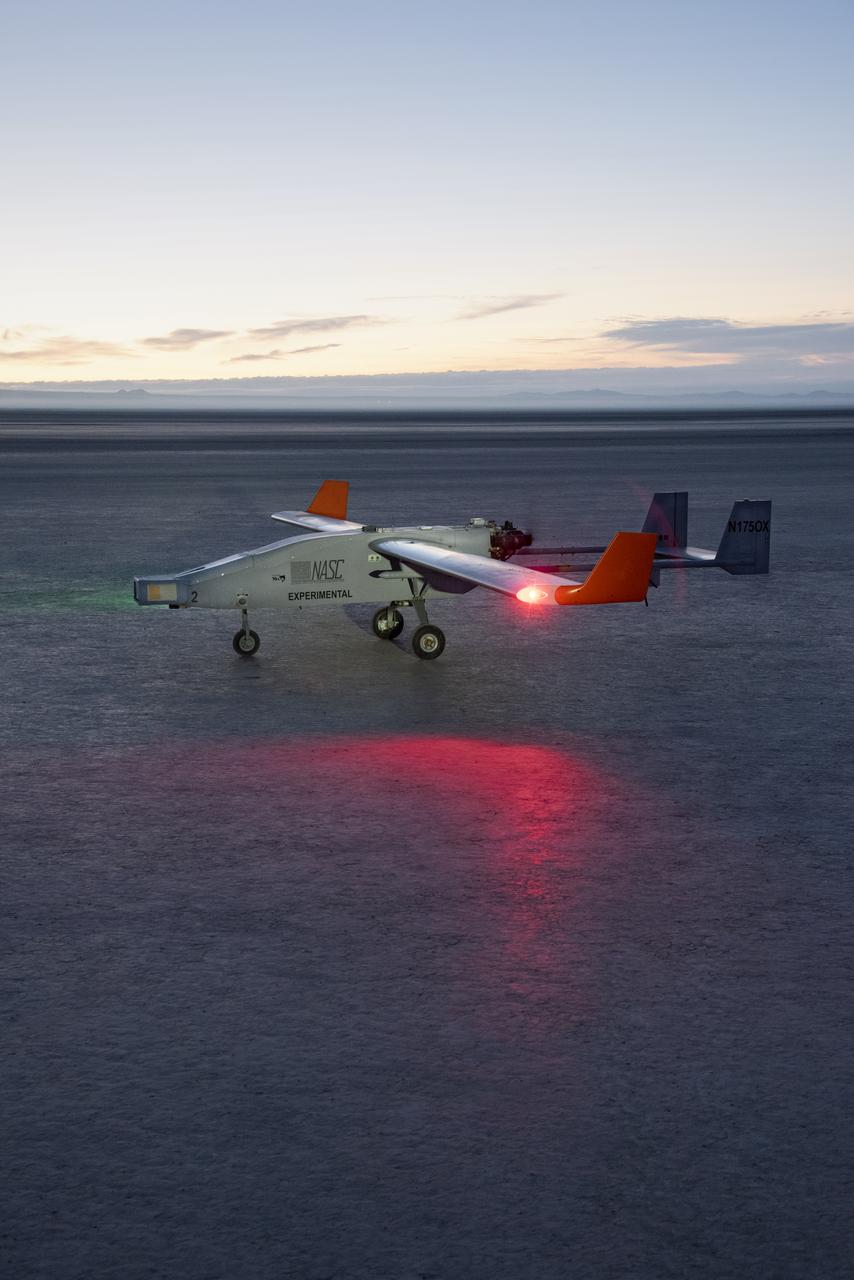
The Navmar Applied Sciences Corporation’s TigerShark prepares for its final takeoff at Edwards Air Force Base for the Unmanned Aircraft Systems integration in the National Airspace Systems, Flight Test Series Six (FT6) project. FT6 flight tests took place at NASA’s Armstrong Flight Research Center in California and focused on low size weight and power sensors for Detect and Avoid (DAA) operations in controlled airspace to inform the FAA through the RTCA Special Committee DAA Working Group on the phase 2 minimum operational performance standards for DAA and air-to-air radar.
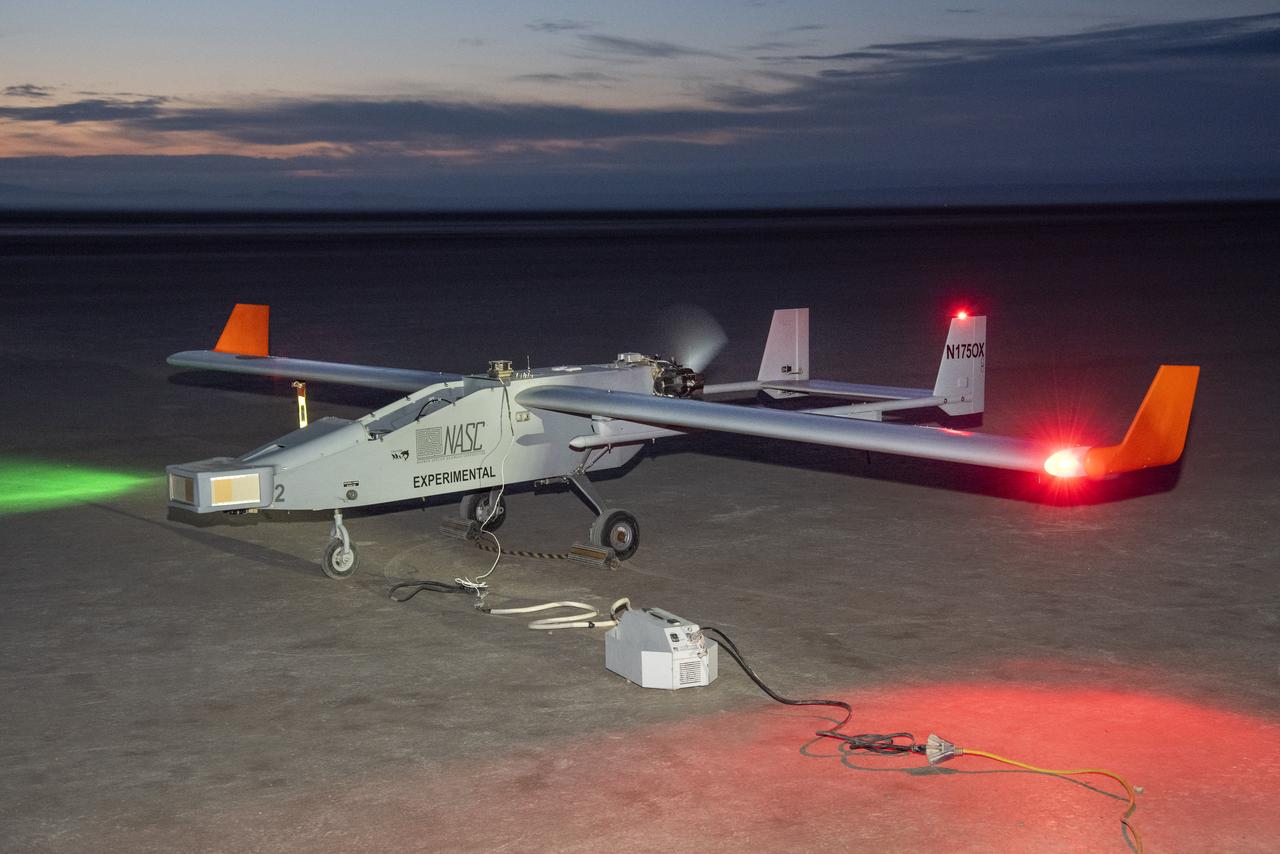
The Navmar Applied Sciences Corporation’s TigerShark prepares for its final takeoff at Edwards Air Force Base for the Unmanned Aircraft Systems integration in the National Airspace Systems, Flight Test Series Six (FT6) project. FT6 flight tests took place at NASA’s Armstrong Flight Research Center in California and focused on low size weight and power sensors for Detect and Avoid (DAA) operations in controlled airspace to inform the FAA through the RTCA Special Committee DAA Working Group on the phase 2 minimum operational performance standards for DAA and air-to-air radar.
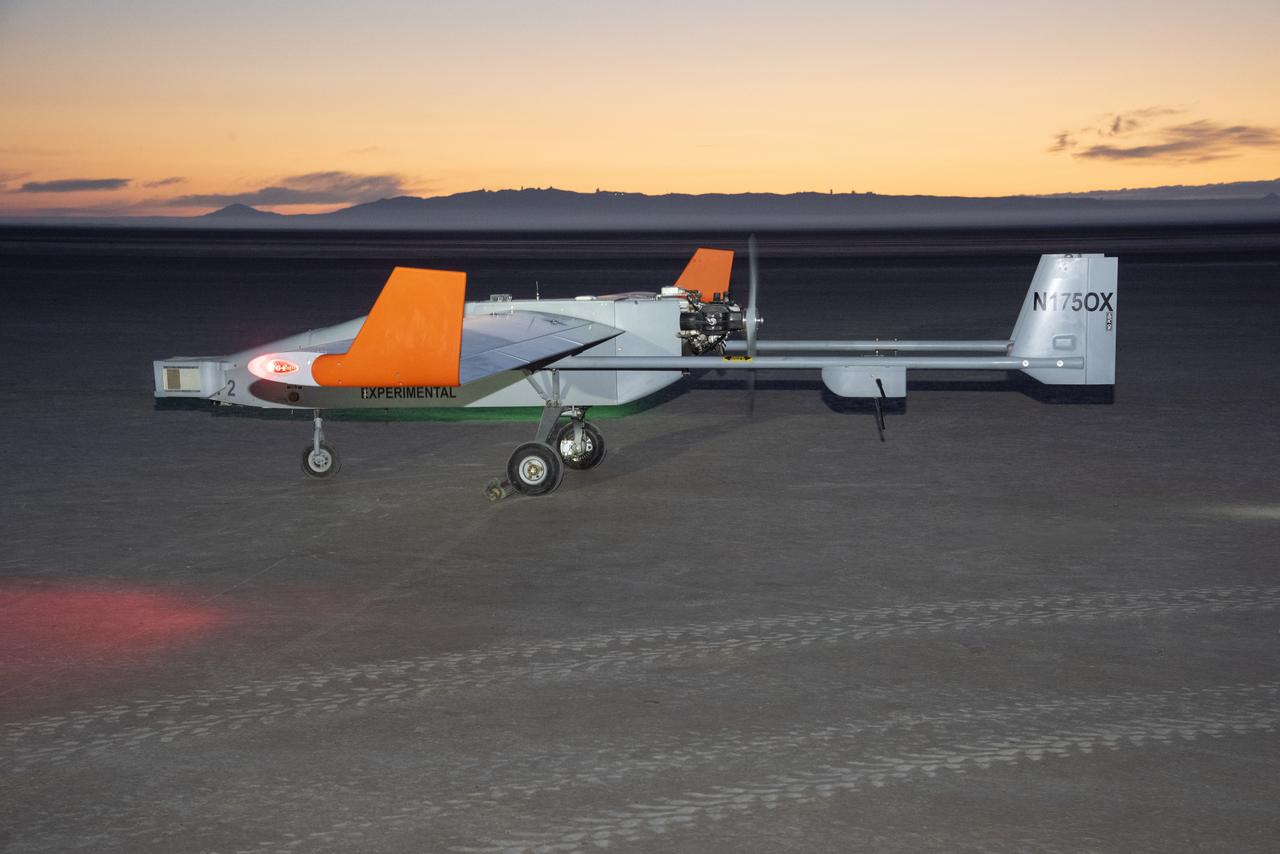
The Navmar Applied Sciences Corporation’s TigerShark prepares for its final takeoff at Edwards Air Force Base for the Unmanned Aircraft Systems integration in the National Airspace Systems, Flight Test Series Six (FT6) project. FT6 flight tests took place at NASA’s Armstrong Flight Research Center in California and focused on low size weight and power sensors for Detect and Avoid (DAA) operations in controlled airspace to inform the FAA through the RTCA Special Committee DAA Working Group on the phase 2 minimum operational performance standards for DAA and air-to-air radar.
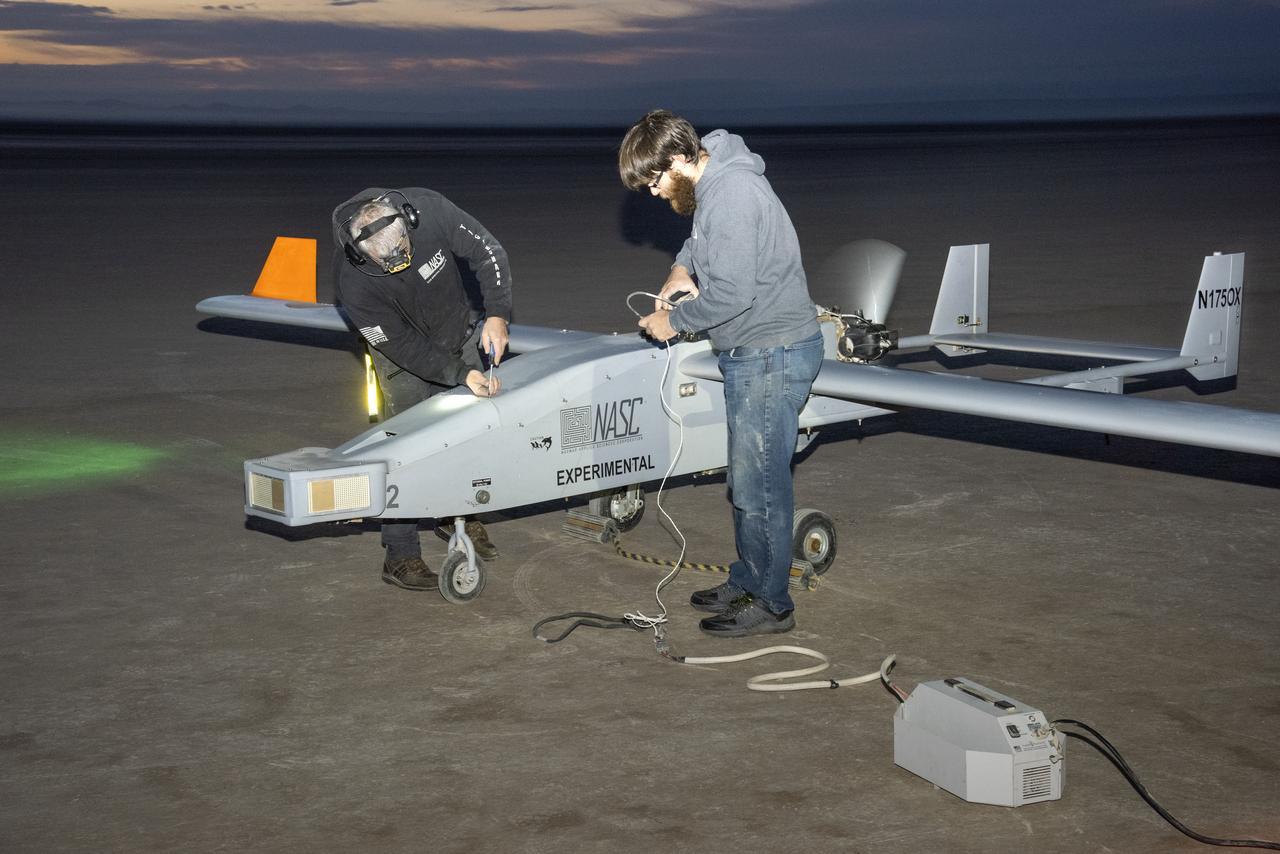
The Navmar Applied Sciences Corporation’s TigerShark prepares for its final takeoff at Edwards Air Force Base for the Unmanned Aircraft Systems integration in the National Airspace Systems, Flight Test Series Six (FT6) project. FT6 flight tests took place at NASA’s Armstrong Flight Research Center in California and focused on low size weight and power sensors for Detect and Avoid (DAA) operations in controlled airspace to inform the FAA through the RTCA Special Committee DAA Working Group on the phase 2 minimum operational performance standards for DAA and air-to-air radar.
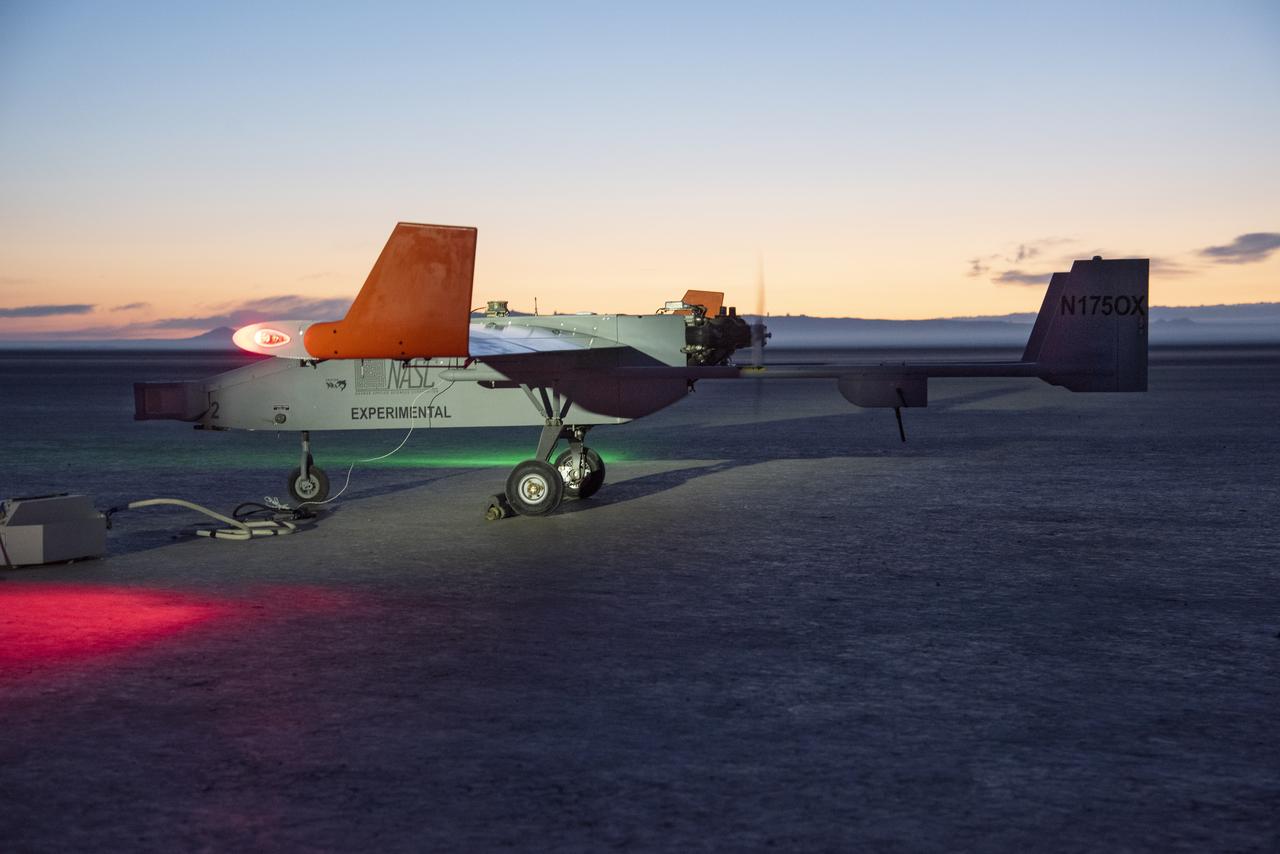
The Navmar Applied Sciences Corporation’s TigerShark prepares for its final takeoff at Edwards Air Force Base for the Unmanned Aircraft Systems integration in the National Airspace Systems, Flight Test Series Six (FT6) project. FT6 flight tests took place at NASA’s Armstrong Flight Research Center in California and focused on low size weight and power sensors for Detect and Avoid (DAA) operations in controlled airspace to inform the FAA through the RTCA Special Committee DAA Working Group on the phase 2 minimum operational performance standards for DAA and air-to-air radar.
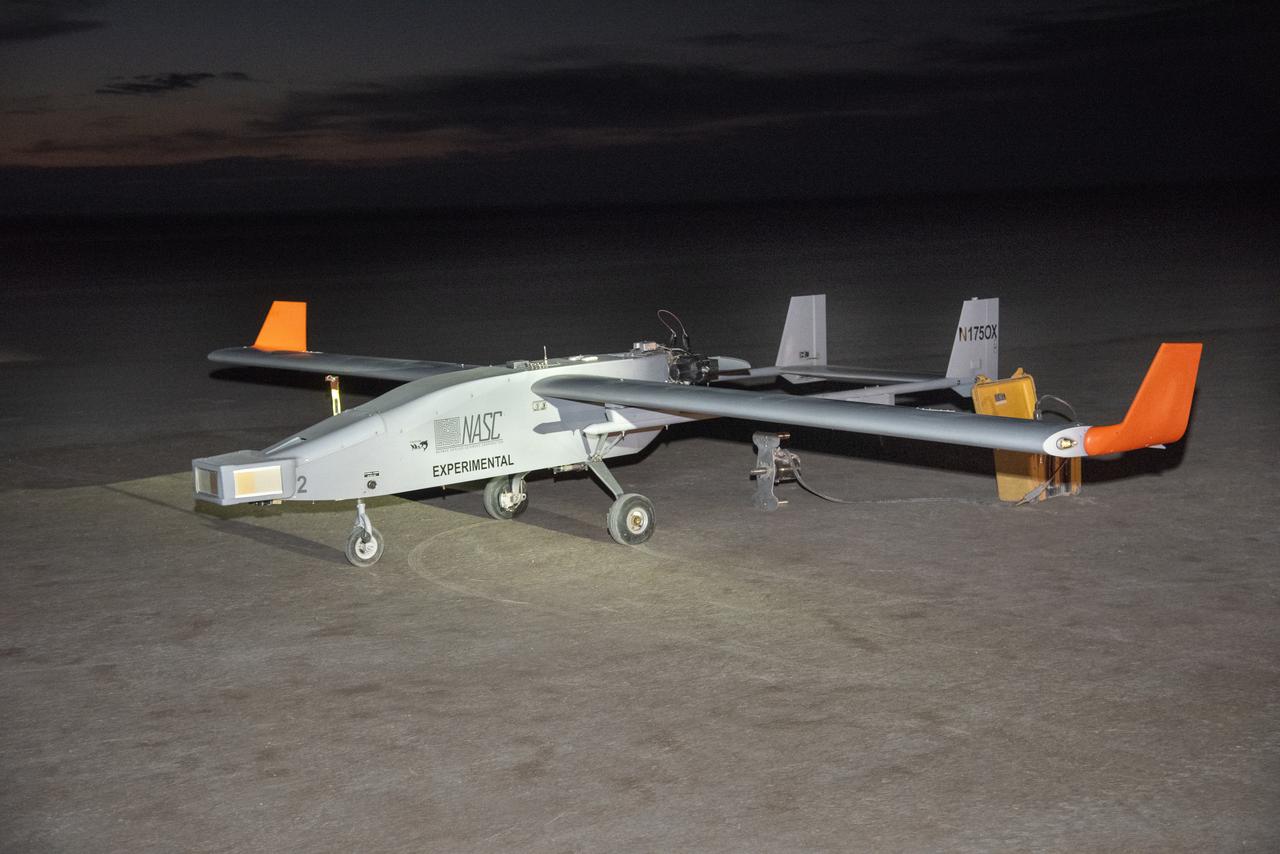
The Navmar Applied Sciences Corporation’s TigerShark prepares for its final takeoff at Edwards Air Force Base for the Unmanned Aircraft Systems integration in the National Airspace Systems, Flight Test Series Six (FT6) project. FT6 flight tests took place at NASA’s Armstrong Flight Research Center in California and focused on low size weight and power sensors for Detect and Avoid (DAA) operations in controlled airspace to inform the FAA through the RTCA Special Committee DAA Working Group on the phase 2 minimum operational performance standards for DAA and air-to-air radar.
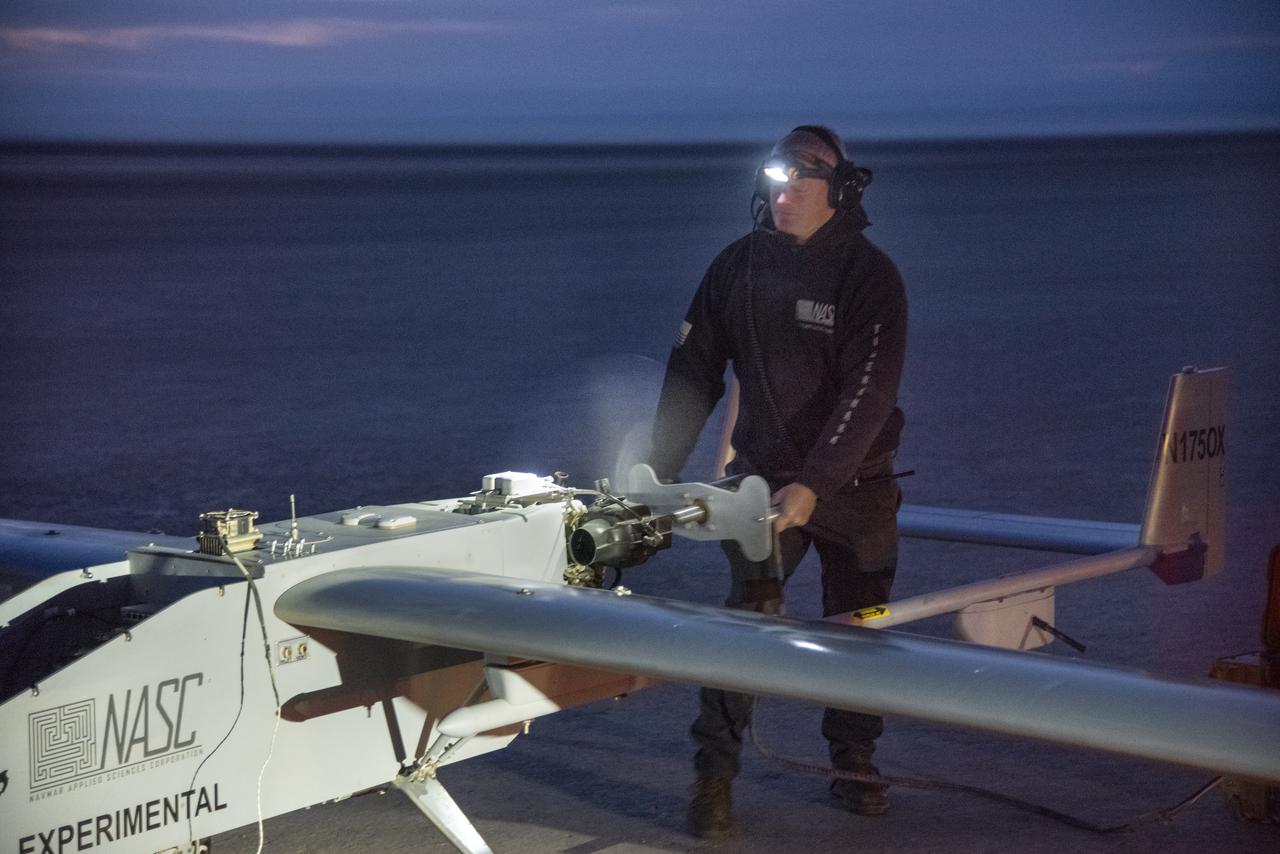
The Navmar Applied Sciences Corporation’s TigerShark prepares for its final takeoff at Edwards Air Force Base for the Unmanned Aircraft Systems integration in the National Airspace Systems, Flight Test Series Six (FT6) project. FT6 flight tests took place at NASA’s Armstrong Flight Research Center in California and focused on low size weight and power sensors for Detect and Avoid (DAA) operations in controlled airspace to inform the FAA through the RTCA Special Committee DAA Working Group on the phase 2 minimum operational performance standards for DAA and air-to-air radar.
The Navmar Applied Sciences Corporation’s TigerShark prepares for its final takeoff at Edwards Air Force Base for the Unmanned Aircraft Systems integration in the National Airspace Systems, Flight Test Series Six (FT6) project. FT6 flight tests took place at NASA’s Armstrong Flight Research Center in California and focused on low size weight and power sensors for Detect and Avoid (DAA) operations in controlled airspace to inform the FAA through the RTCA Special Committee DAA Working Group on the phase 2 minimum operational performance standards for DAA and air-to-air radar.
The Navmar Applied Sciences Corporation’s TigerShark prepares for its final takeoff at Edwards Air Force Base for the Unmanned Aircraft Systems integration in the National Airspace Systems, Flight Test Series Six (FT6) project. FT6 flight tests took place at NASA’s Armstrong Flight Research Center in California and focused on low size weight and power sensors for Detect and Avoid (DAA) operations in controlled airspace to inform the FAA through the RTCA Special Committee DAA Working Group on the phase 2 minimum operational performance standards for DAA and air-to-air radar.
The Navmar Applied Sciences Corporation’s TigerShark prepares for its final takeoff at Edwards Air Force Base for the Unmanned Aircraft Systems integration in the National Airspace Systems, Flight Test Series Six (FT6) project. FT6 flight tests took place at NASA’s Armstrong Flight Research Center in California and focused on low size weight and power sensors for Detect and Avoid (DAA) operations in controlled airspace to inform the FAA through the RTCA Special Committee DAA Working Group on the phase 2 minimum operational performance standards for DAA and air-to-air radar.
The Navmar Applied Sciences Corporation’s TigerShark prepares for its final takeoff at Edwards Air Force Base for the Unmanned Aircraft Systems integration in the National Airspace Systems, Flight Test Series Six (FT6) project. FT6 flight tests took place at NASA’s Armstrong Flight Research Center in California and focused on low size weight and power sensors for Detect and Avoid (DAA) operations in controlled airspace to inform the FAA through the RTCA Special Committee DAA Working Group on the phase 2 minimum operational performance standards for DAA and air-to-air radar.
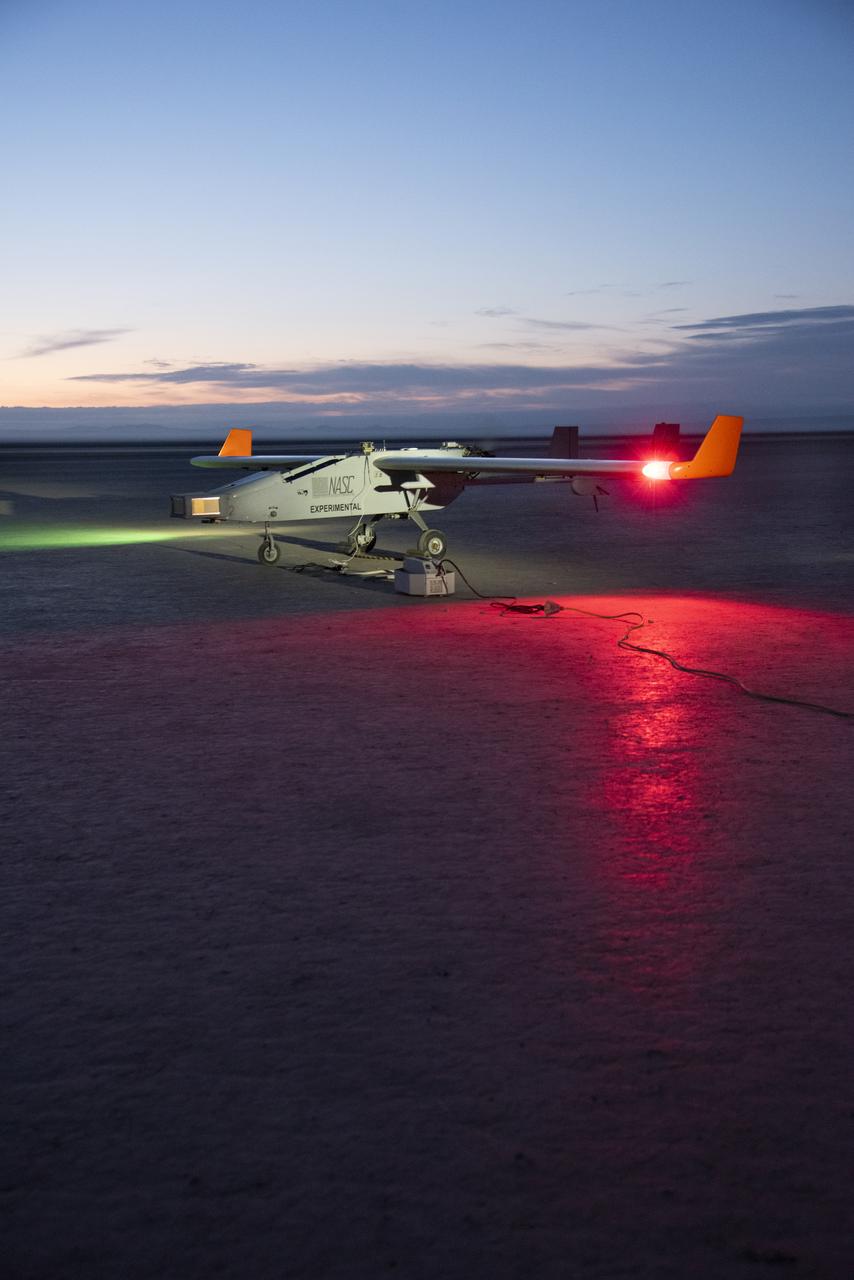
The Navmar Applied Sciences Corporation’s TigerShark prepares for its final takeoff at Edwards Air Force Base for the Unmanned Aircraft Systems integration in the National Airspace Systems, Flight Test Series Six (FT6) project. FT6 flight tests took place at NASA’s Armstrong Flight Research Center in California and focused on low size weight and power sensors for Detect and Avoid (DAA) operations in controlled airspace to inform the FAA through the RTCA Special Committee DAA Working Group on the phase 2 minimum operational performance standards for DAA and air-to-air radar.
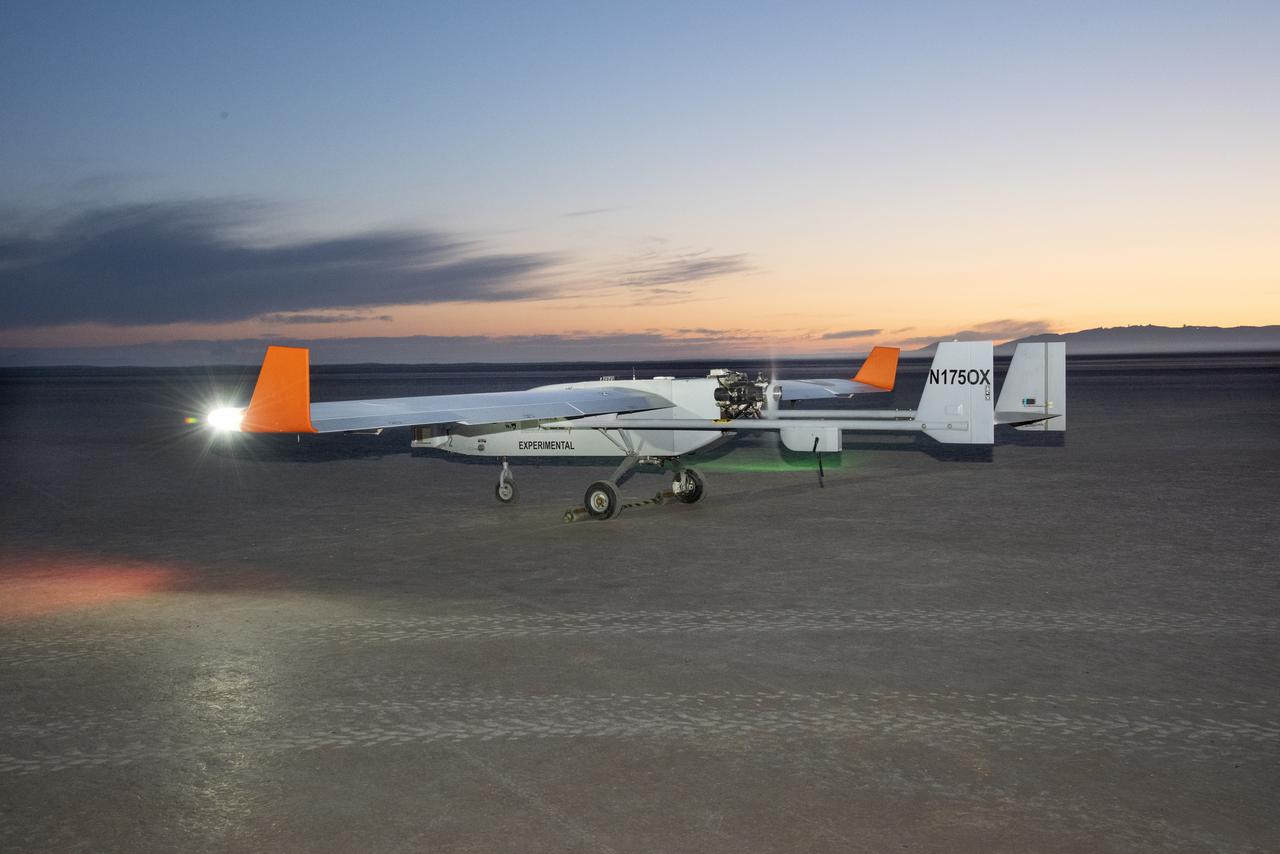
The Navmar Applied Sciences Corporation’s TigerShark prepares for its final takeoff at Edwards Air Force Base for the Unmanned Aircraft Systems integration in the National Airspace Systems, Flight Test Series Six (FT6) project. FT6 flight tests took place at NASA’s Armstrong Flight Research Center in California and focused on low size weight and power sensors for Detect and Avoid (DAA) operations in controlled airspace to inform the FAA through the RTCA Special Committee DAA Working Group on the phase 2 minimum operational performance standards for DAA and air-to-air radar.
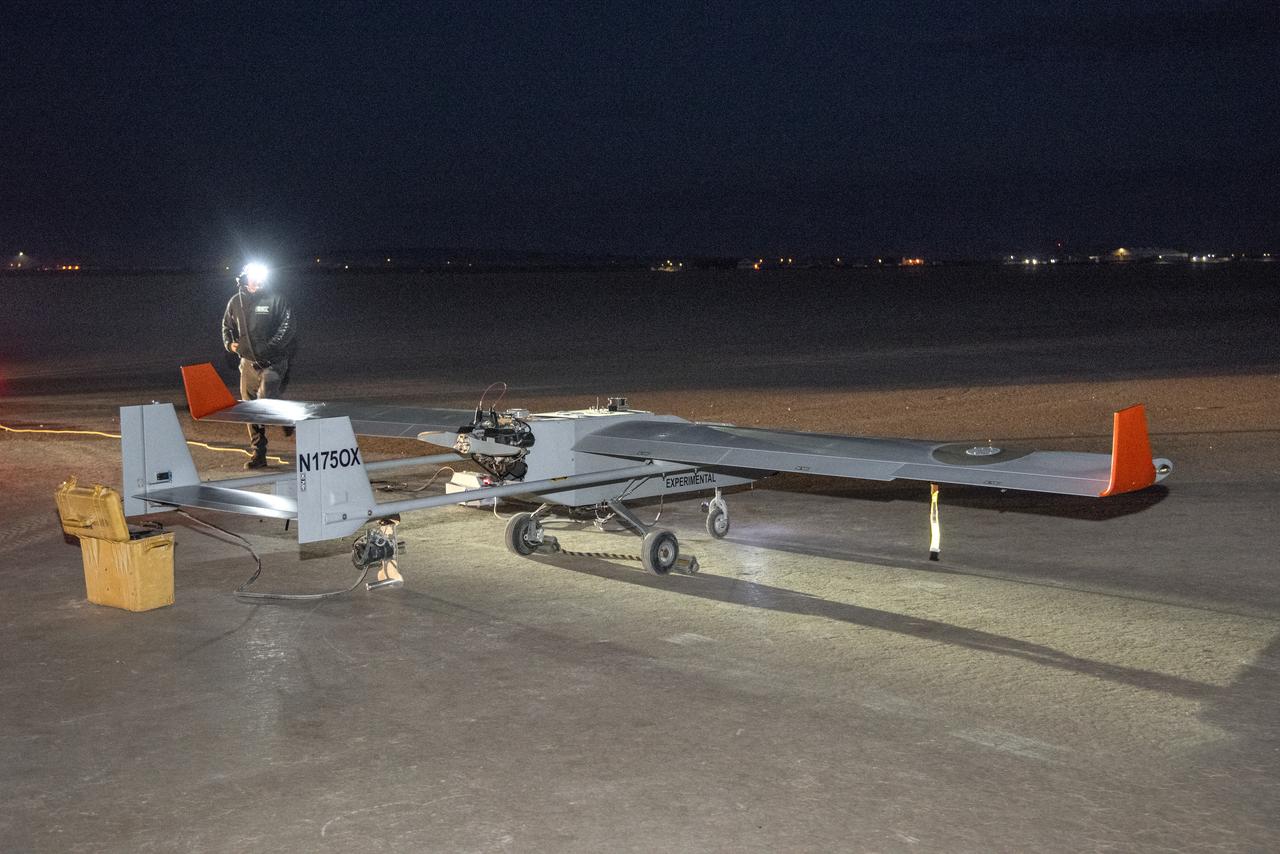
The Navmar Applied Sciences Corporation’s TigerShark prepares for its final takeoff at Edwards Air Force Base for the Unmanned Aircraft Systems integration in the National Airspace Systems, Flight Test Series Six (FT6) project. FT6 flight tests took place at NASA’s Armstrong Flight Research Center in California and focused on low size weight and power sensors for Detect and Avoid (DAA) operations in controlled airspace to inform the FAA through the RTCA Special Committee DAA Working Group on the phase 2 minimum operational performance standards for DAA and air-to-air radar.

The Navmar Applied Sciences Corporation’s TigerShark prepares for its final takeoff at Edwards Air Force Base for the Unmanned Aircraft Systems integration in the National Airspace Systems, Flight Test Series Six (FT6) project. FT6 flight tests took place at NASA’s Armstrong Flight Research Center in California and focused on low size weight and power sensors for Detect and Avoid (DAA) operations in controlled airspace to inform the FAA through the RTCA Special Committee DAA Working Group on the phase 2 minimum operational performance standards for DAA and air-to-air radar.
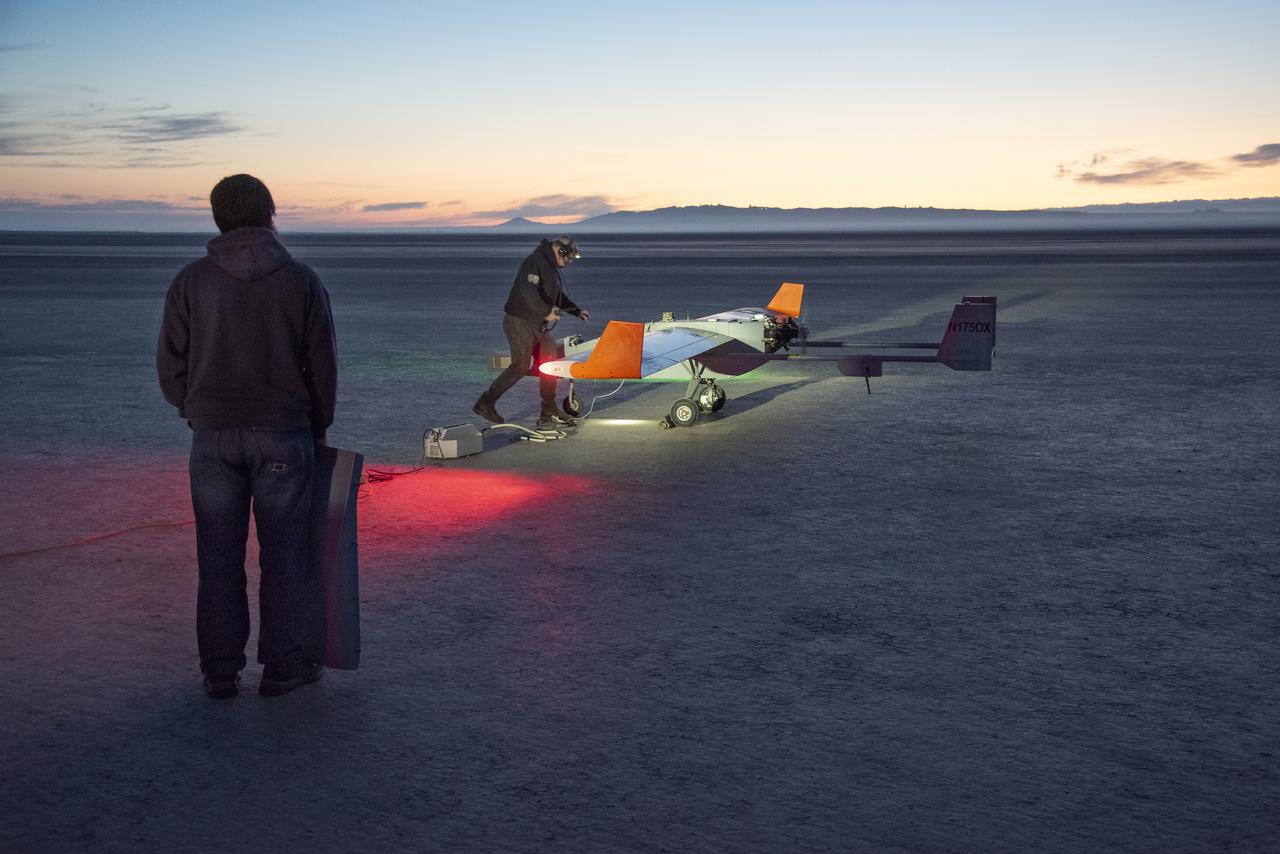
The Navmar Applied Sciences Corporation’s TigerShark prepares for its final takeoff at Edwards Air Force Base for the Unmanned Aircraft Systems integration in the National Airspace Systems, Flight Test Series Six (FT6) project. FT6 flight tests took place at NASA’s Armstrong Flight Research Center in California and focused on low size weight and power sensors for Detect and Avoid (DAA) operations in controlled airspace to inform the FAA through the RTCA Special Committee DAA Working Group on the phase 2 minimum operational performance standards for DAA and air-to-air radar.
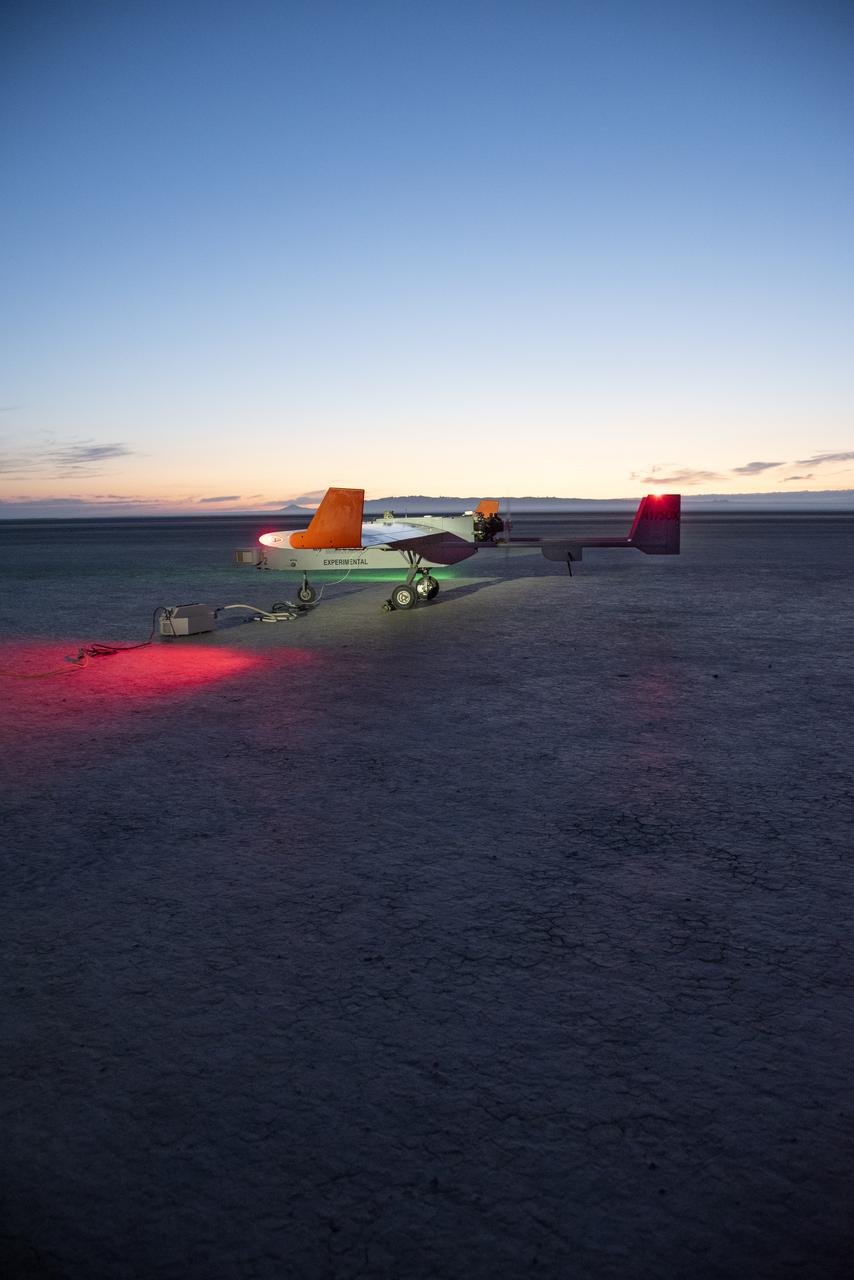
The Navmar Applied Sciences Corporation’s TigerShark prepares for its final takeoff at Edwards Air Force Base for the Unmanned Aircraft Systems integration in the National Airspace Systems, Flight Test Series Six (FT6) project. FT6 flight tests took place at NASA’s Armstrong Flight Research Center in California and focused on low size weight and power sensors for Detect and Avoid (DAA) operations in controlled airspace to inform the FAA through the RTCA Special Committee DAA Working Group on the phase 2 minimum operational performance standards for DAA and air-to-air radar.
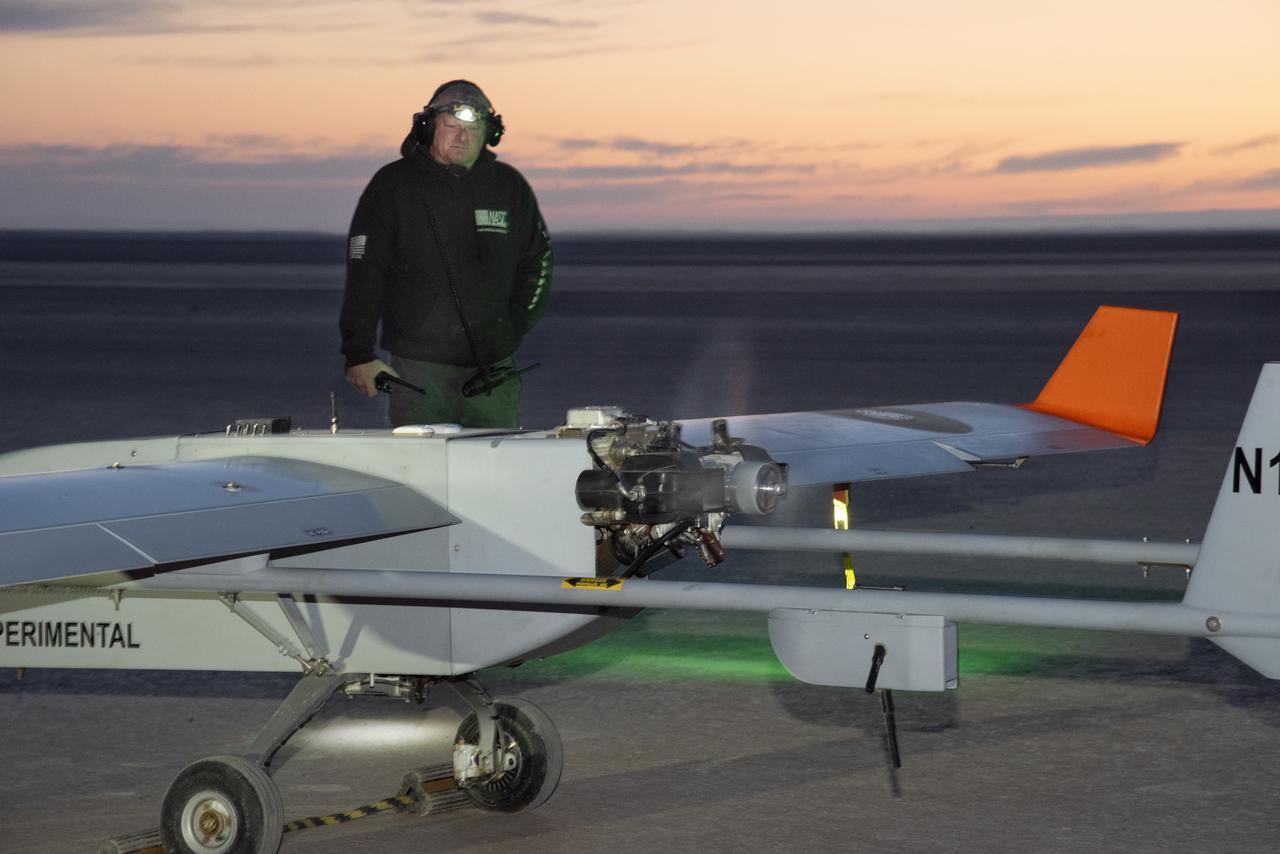
The Navmar Applied Sciences Corporation’s TigerShark prepares for its final takeoff at Edwards Air Force Base for the Unmanned Aircraft Systems integration in the National Airspace Systems, Flight Test Series Six (FT6) project. FT6 flight tests took place at NASA’s Armstrong Flight Research Center in California and focused on low size weight and power sensors for Detect and Avoid (DAA) operations in controlled airspace to inform the FAA through the RTCA Special Committee DAA Working Group on the phase 2 minimum operational performance standards for DAA and air-to-air radar.
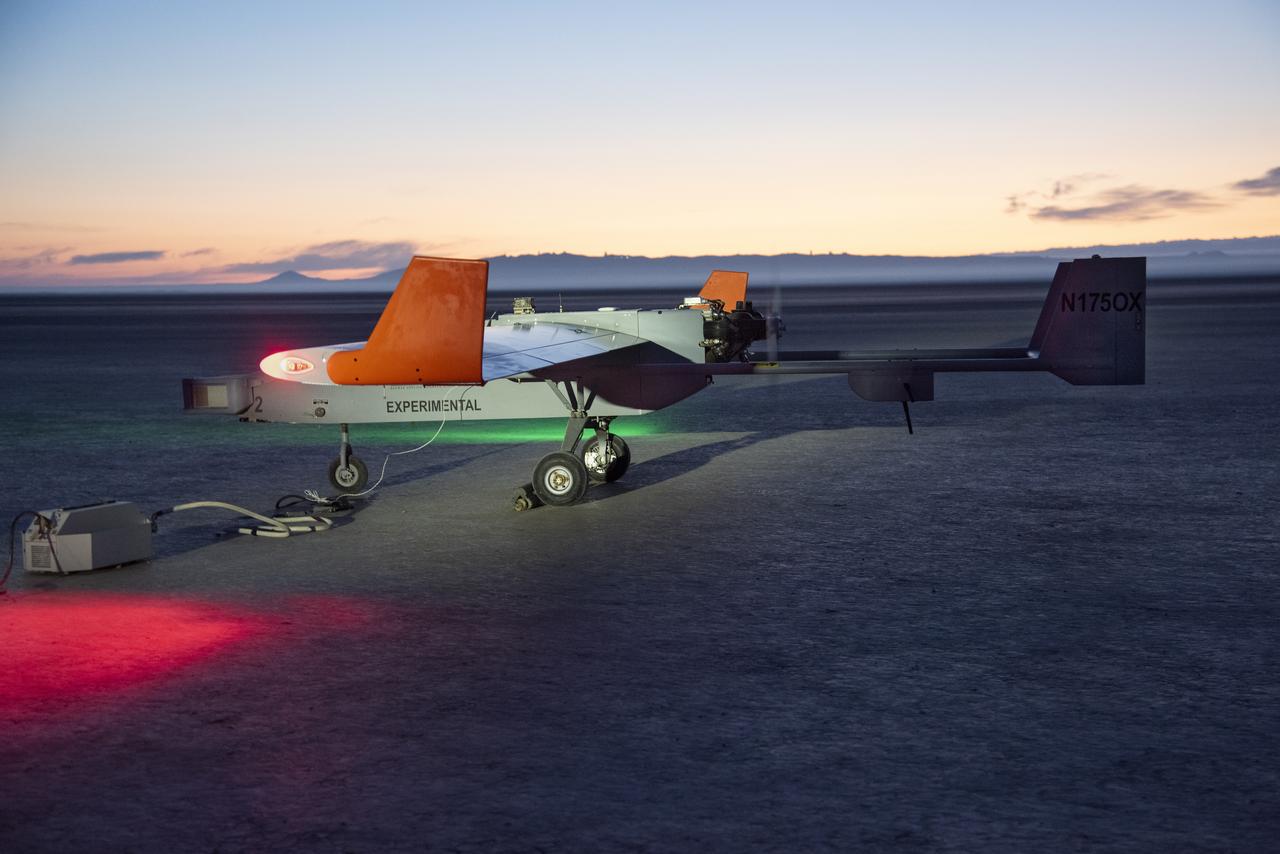
The Navmar Applied Sciences Corporation’s TigerShark prepares for its final takeoff at Edwards Air Force Base for the Unmanned Aircraft Systems integration in the National Airspace Systems, Flight Test Series Six (FT6) project. FT6 flight tests took place at NASA’s Armstrong Flight Research Center in California and focused on low size weight and power sensors for Detect and Avoid (DAA) operations in controlled airspace to inform the FAA through the RTCA Special Committee DAA Working Group on the phase 2 minimum operational performance standards for DAA and air-to-air radar.
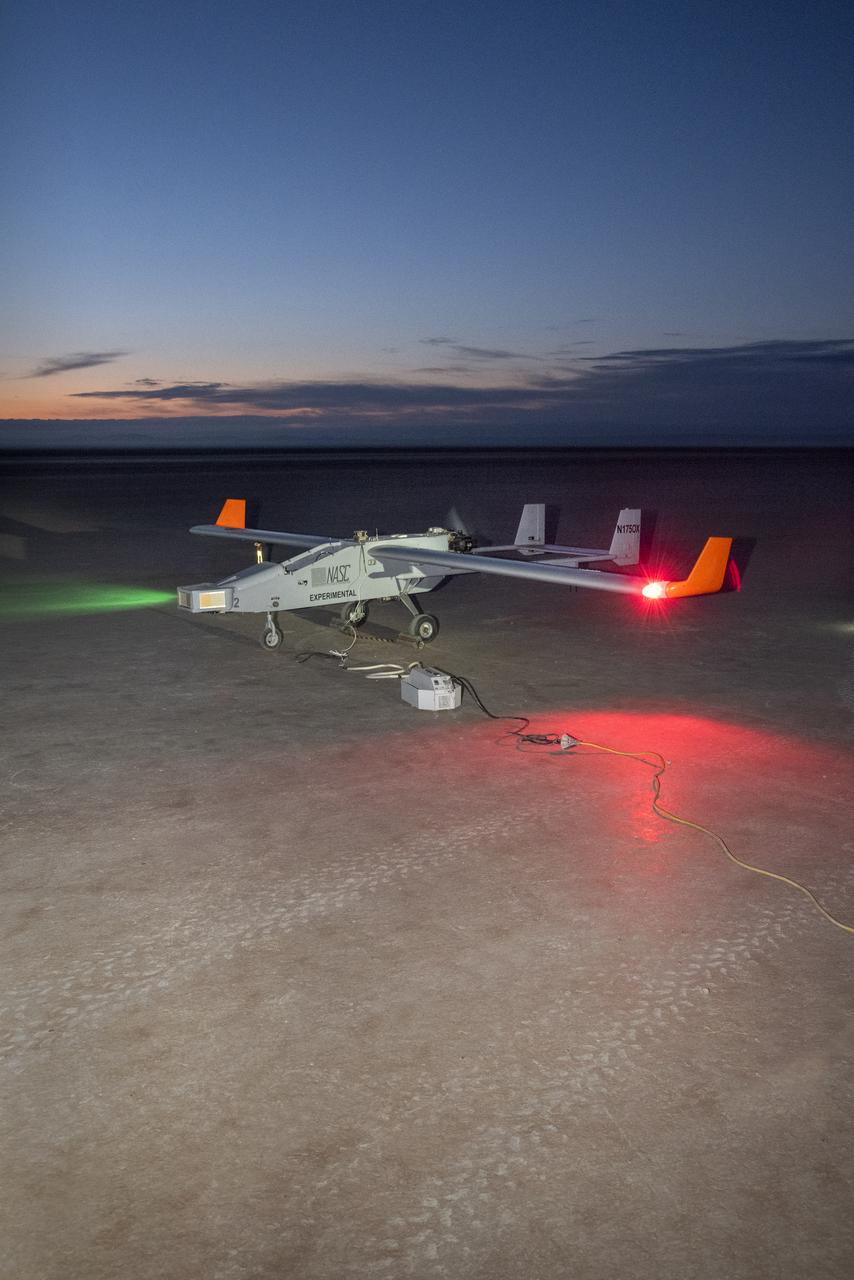
The Navmar Applied Sciences Corporation’s TigerShark prepares for its final takeoff at Edwards Air Force Base for the Unmanned Aircraft Systems integration in the National Airspace Systems, Flight Test Series Six (FT6) project. FT6 flight tests took place at NASA’s Armstrong Flight Research Center in California and focused on low size weight and power sensors for Detect and Avoid (DAA) operations in controlled airspace to inform the FAA through the RTCA Special Committee DAA Working Group on the phase 2 minimum operational performance standards for DAA and air-to-air radar.
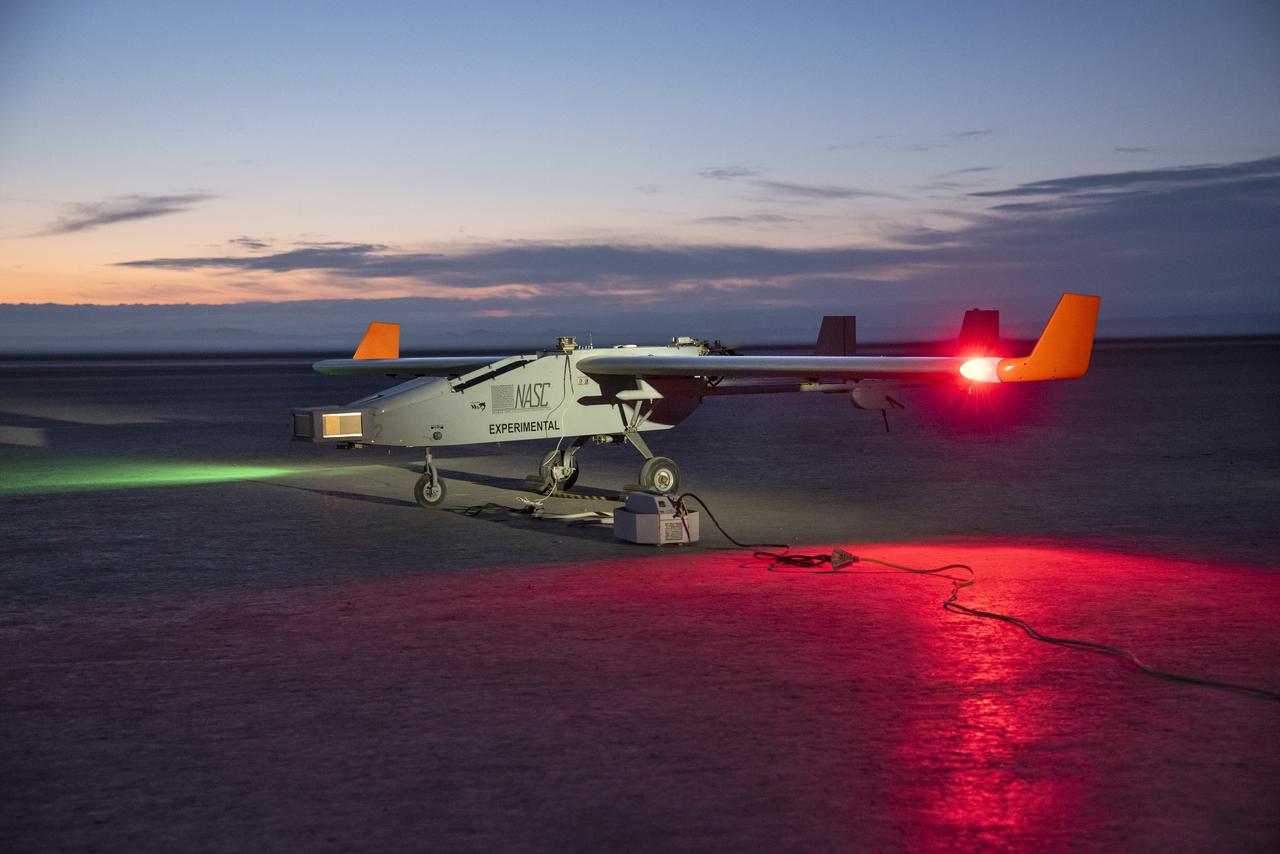
The Navmar Applied Sciences Corporation’s TigerShark prepares for its final takeoff at Edwards Air Force Base for the Unmanned Aircraft Systems integration in the National Airspace Systems, Flight Test Series Six (FT6) project. FT6 flight tests took place at NASA’s Armstrong Flight Research Center in California and focused on low size weight and power sensors for Detect and Avoid (DAA) operations in controlled airspace to inform the FAA through the RTCA Special Committee DAA Working Group on the phase 2 minimum operational performance standards for DAA and air-to-air radar.
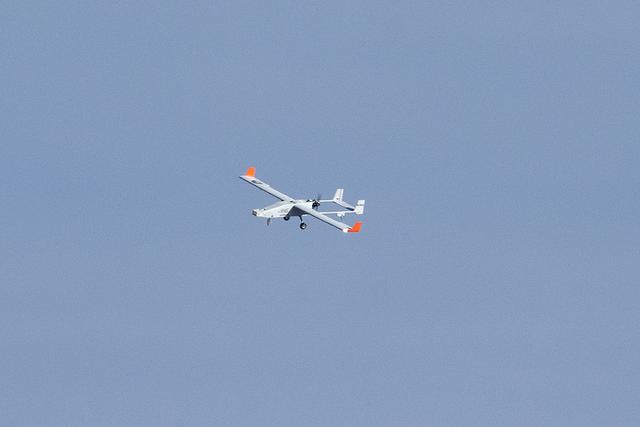
The TigerShark unmanned aircraft by Navmar Applied Sciences Corporation flew over the skies at NASA’s Armstrong Flight Research Center for the Unmanned Aircraft Systems integration in the National Airspace Systems, Flight Test Series Six (FT6) project. FT6 focused on low size weight and power sensors for Detect and Avoid (DAA) operations in controlled airspace to inform the FAA through the RTCA Special Committee DAA Working Group on the phase 2 minimum operational performance standards for DAA and air-to-air radar.
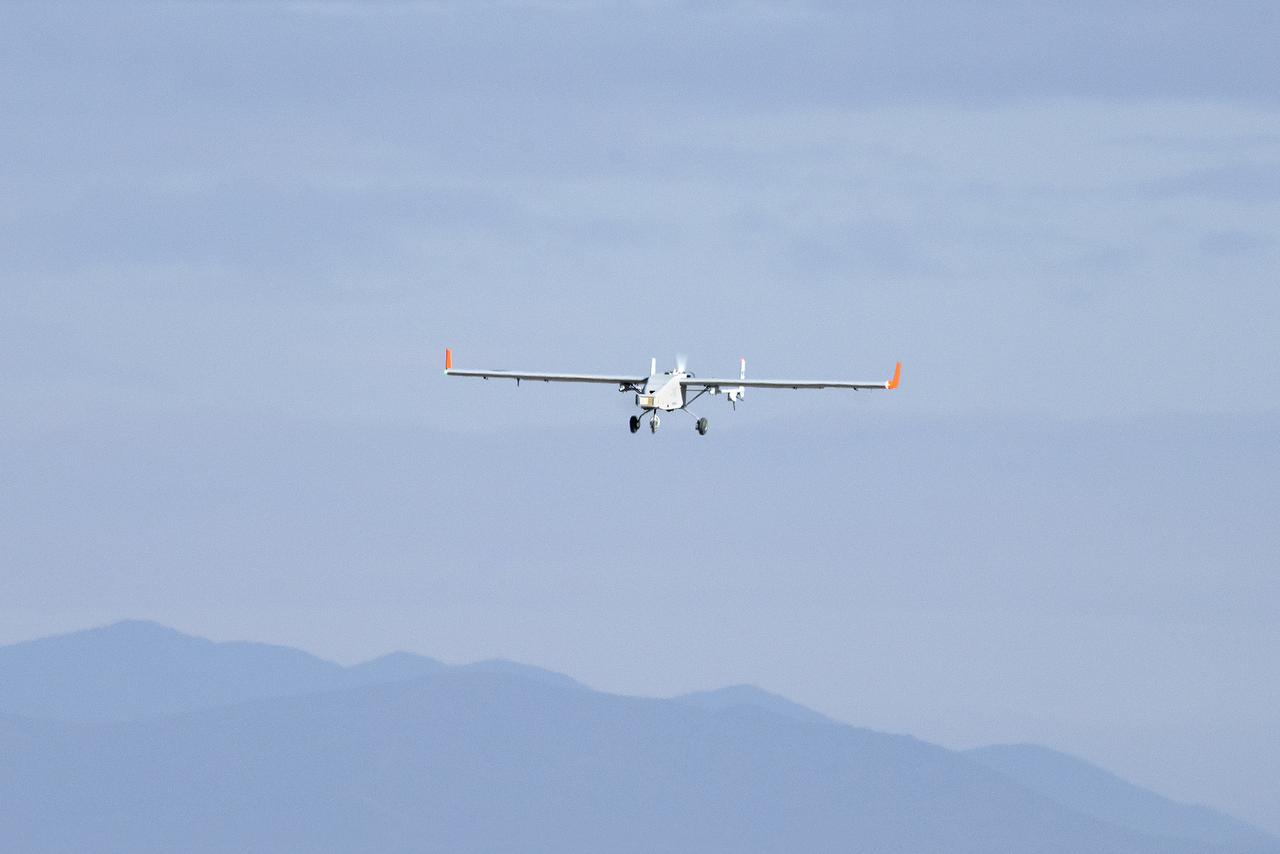
The TigerShark unmanned aircraft by Navmar Applied Sciences Corporation flew over the skies at NASA’s Armstrong Flight Research Center for the Unmanned Aircraft Systems integration in the National Airspace Systems, Flight Test Series Six (FT6) project. FT6 focused on low size weight and power sensors for Detect and Avoid (DAA) operations in controlled airspace to inform the FAA through the RTCA Special Committee DAA Working Group on the phase 2 minimum operational performance standards for DAA and air-to-air radar.
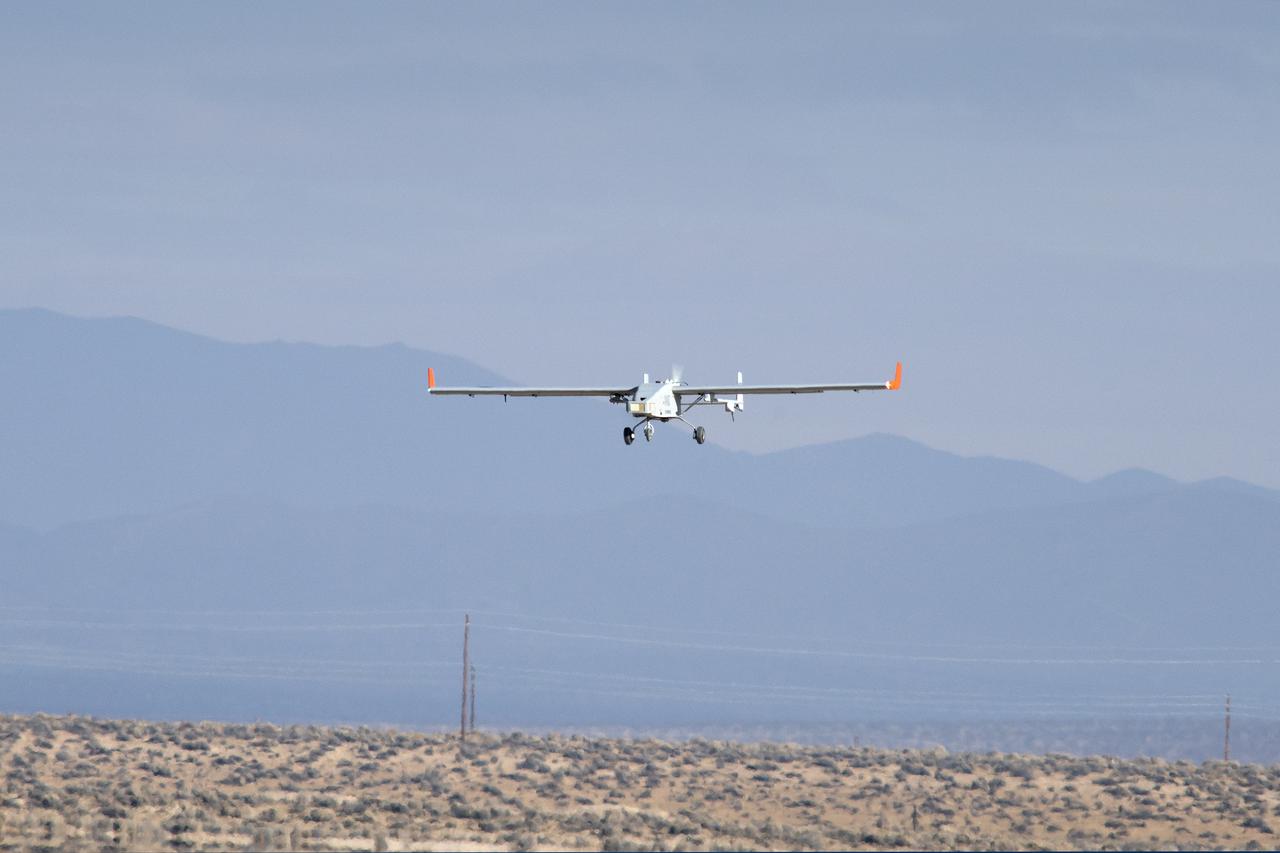
The TigerShark unmanned aircraft by Navmar Applied Sciences Corporation flew over the skies at NASA’s Armstrong Flight Research Center for the Unmanned Aircraft Systems integration in the National Airspace Systems, Flight Test Series Six (FT6) project. FT6 focused on low size weight and power sensors for Detect and Avoid (DAA) operations in controlled airspace to inform the FAA through the RTCA Special Committee DAA Working Group on the phase 2 minimum operational performance standards for DAA and air-to-air radar.
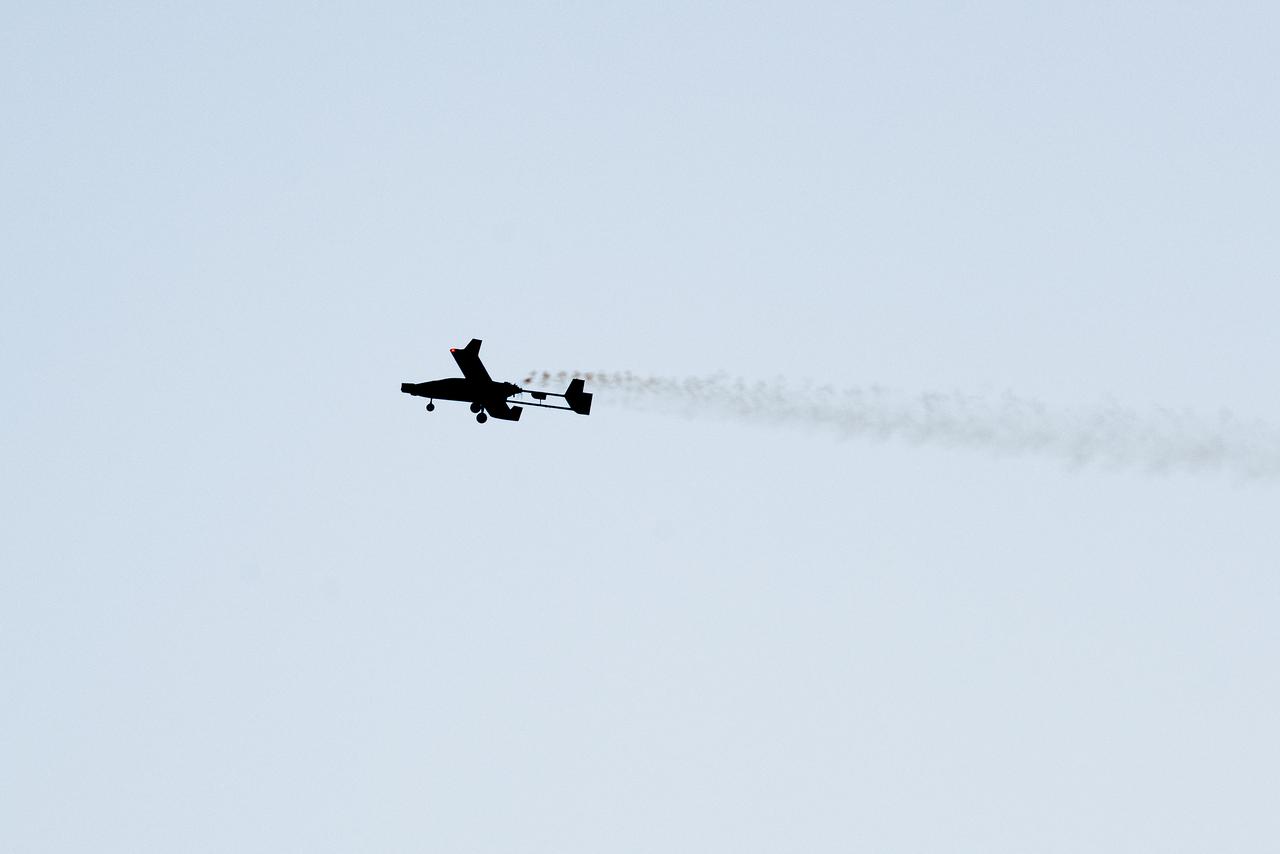
The TigerShark unmanned aircraft by Navmar Applied Sciences Corporation flew over the skies at NASA’s Armstrong Flight Research Center for the Unmanned Aircraft Systems integration in the National Airspace Systems, Flight Test Series Six (FT6) project. FT6 focused on low size weight and power sensors for Detect and Avoid (DAA) operations in controlled airspace to inform the FAA through the RTCA Special Committee DAA Working Group on the phase 2 minimum operational performance standards for DAA and air-to-air radar.
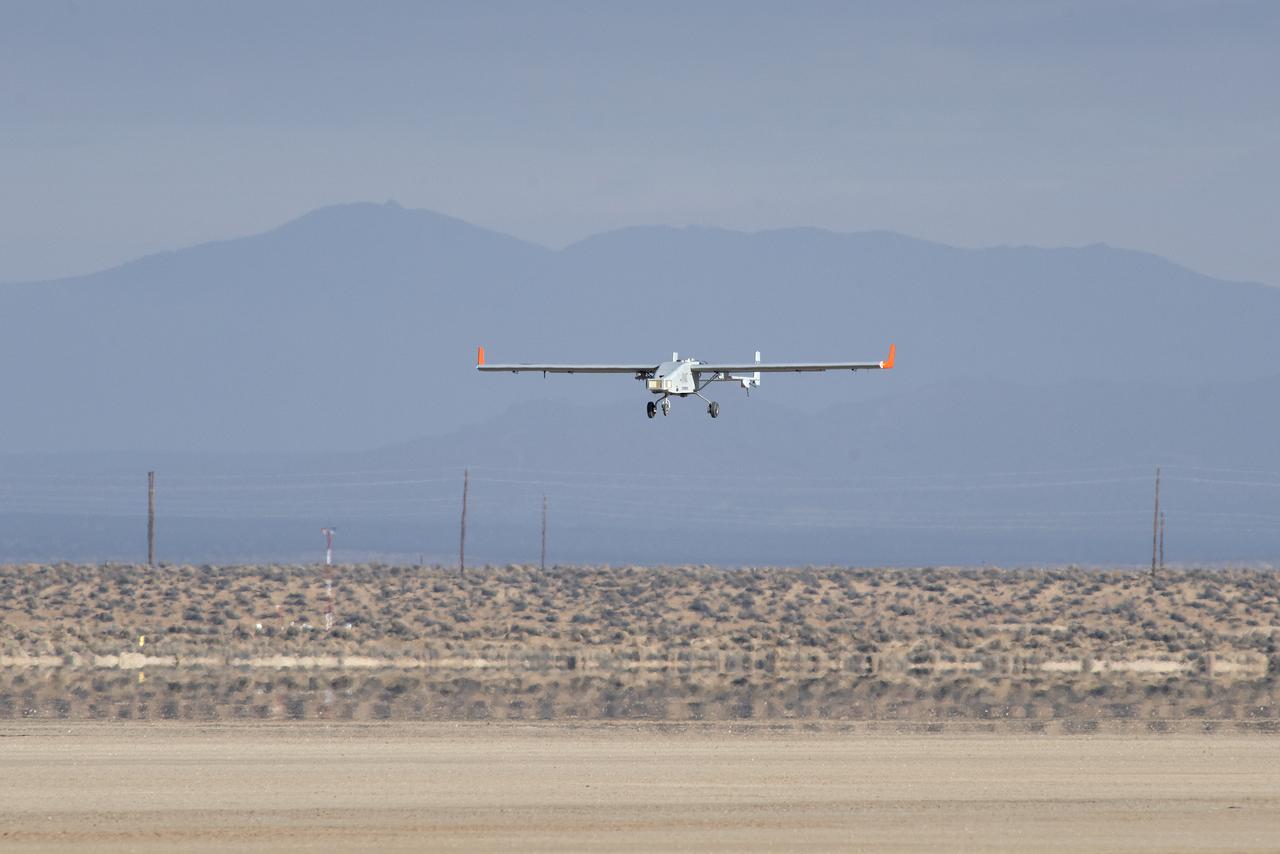
The TigerShark unmanned aircraft by Navmar Applied Sciences Corporation flew over the skies at NASA’s Armstrong Flight Research Center for the Unmanned Aircraft Systems integration in the National Airspace Systems, Flight Test Series Six (FT6) project. FT6 focused on low size weight and power sensors for Detect and Avoid (DAA) operations in controlled airspace to inform the FAA through the RTCA Special Committee DAA Working Group on the phase 2 minimum operational performance standards for DAA and air-to-air radar.
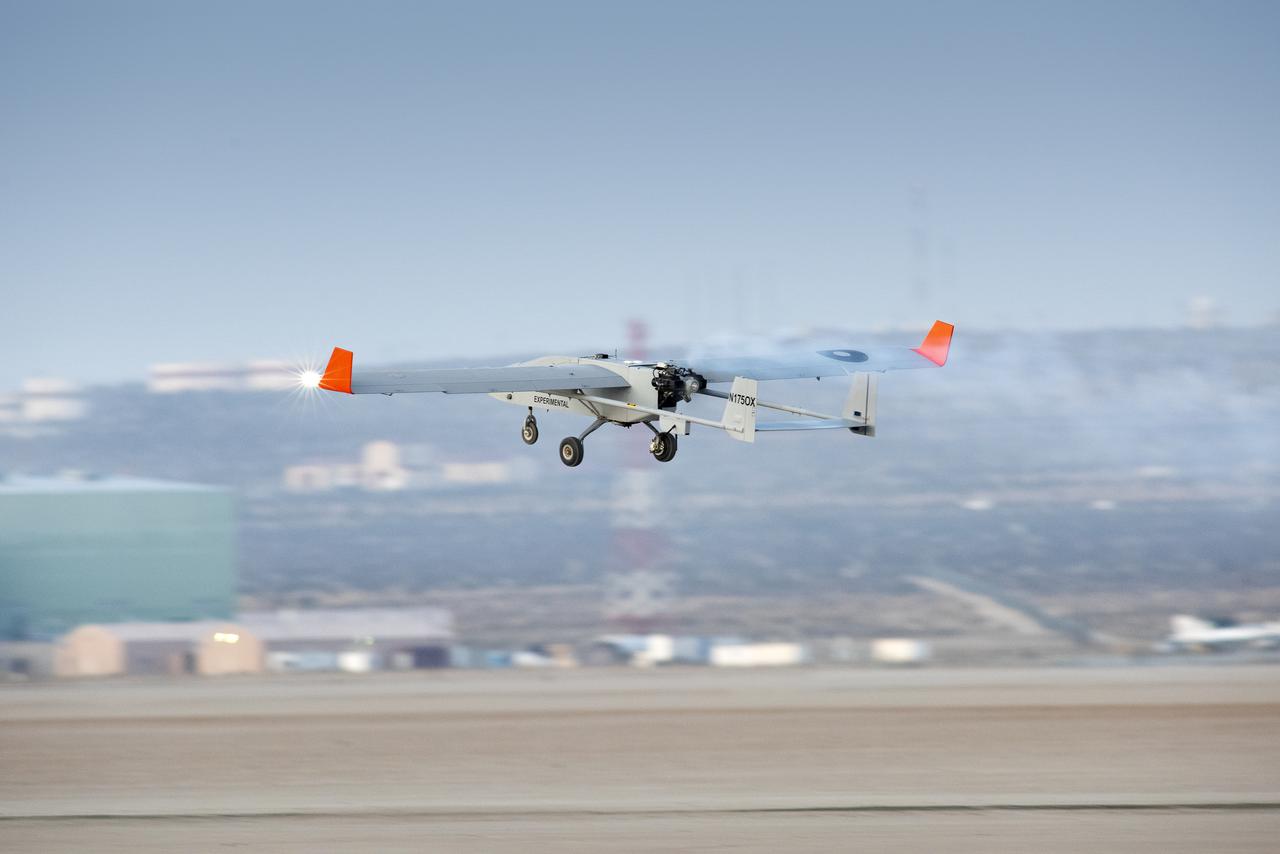
The TigerShark unmanned aircraft by Navmar Applied Sciences Corporation flew over the skies at NASA’s Armstrong Flight Research Center for the Unmanned Aircraft Systems integration in the National Airspace Systems, Flight Test Series Six (FT6) project. FT6 focused on low size weight and power sensors for Detect and Avoid (DAA) operations in controlled airspace to inform the FAA through the RTCA Special Committee DAA Working Group on the phase 2 minimum operational performance standards for DAA and air-to-air radar.
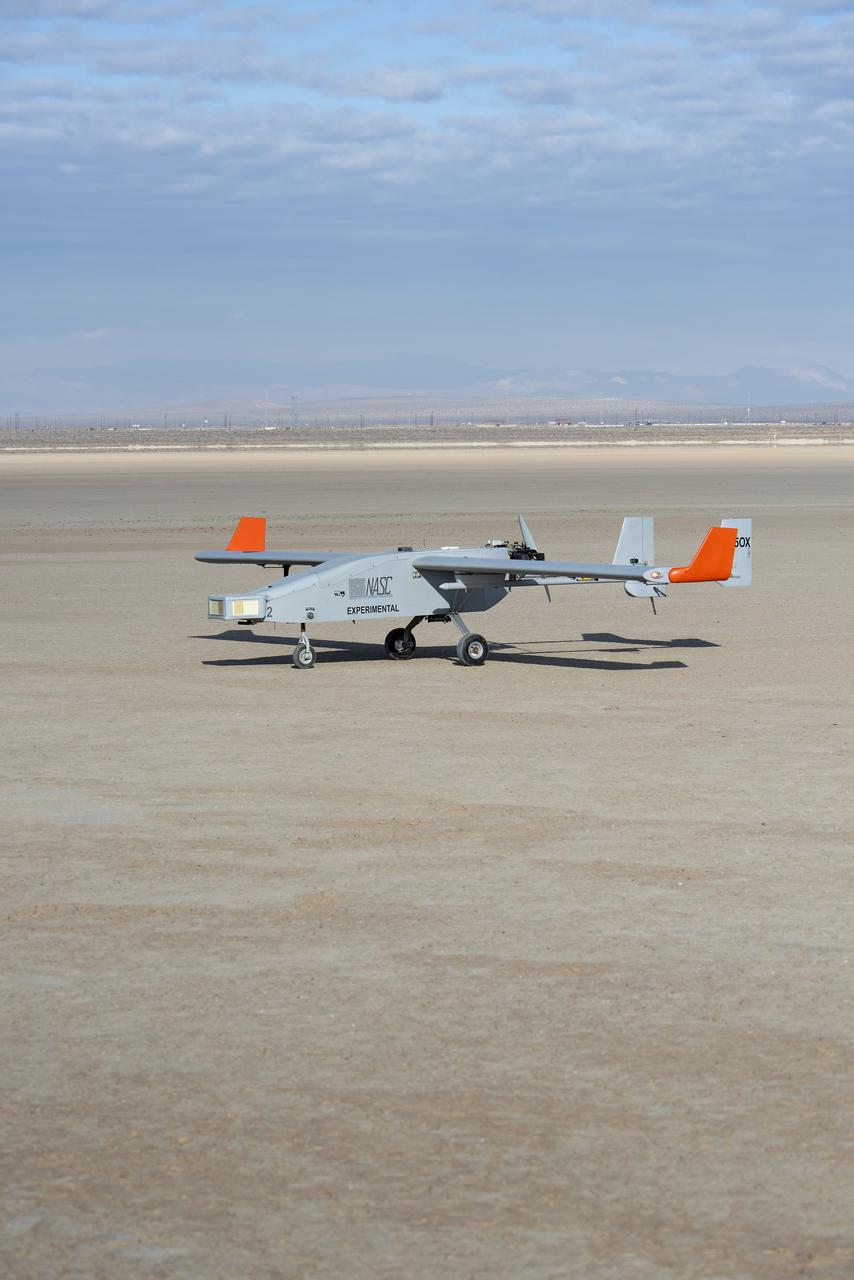
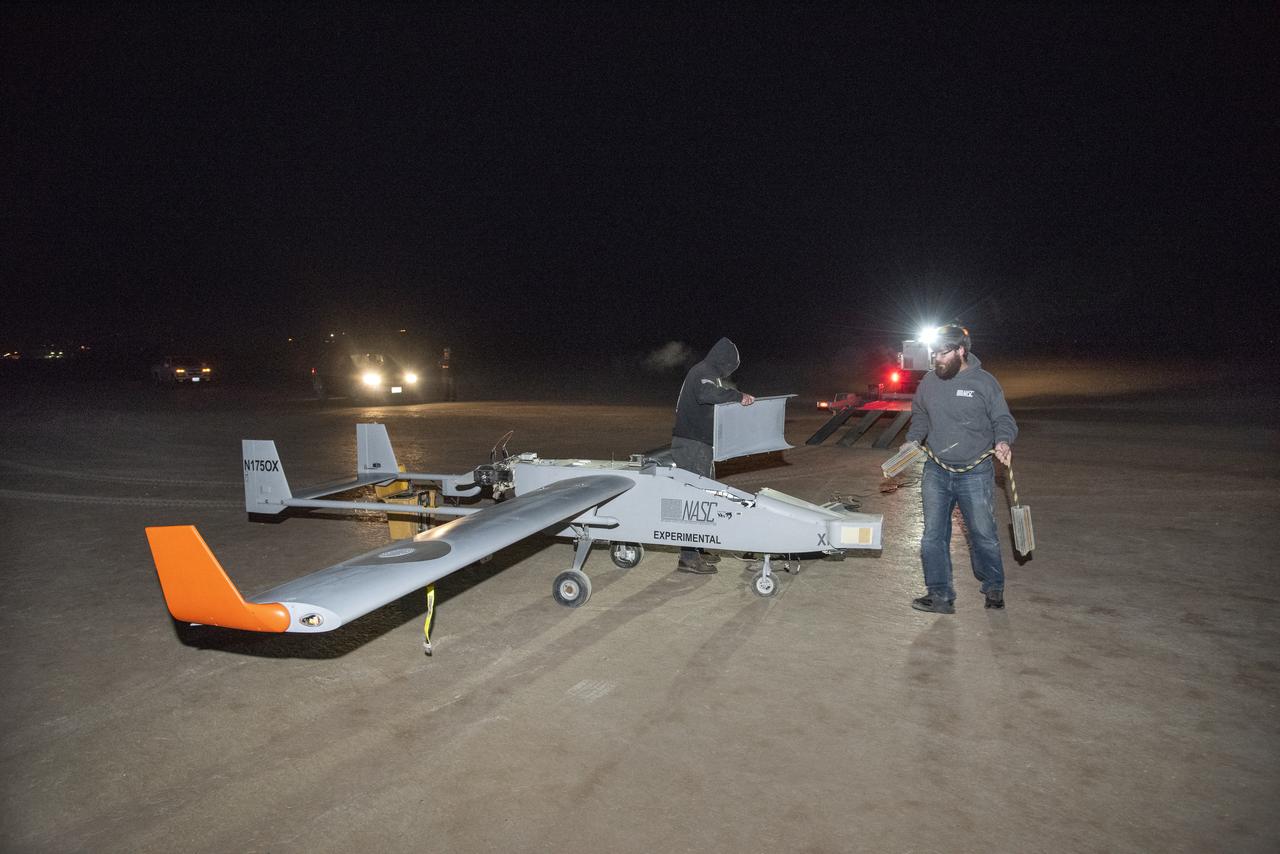
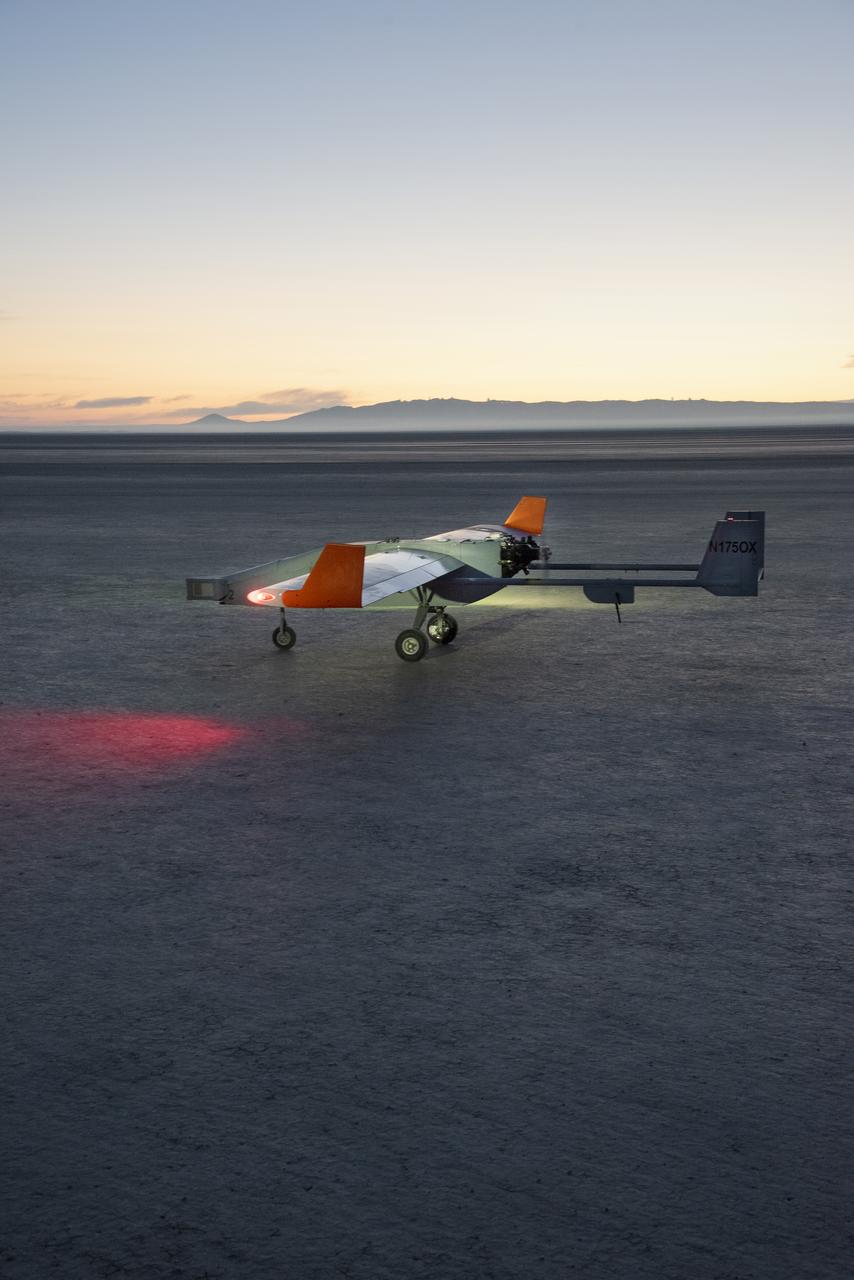
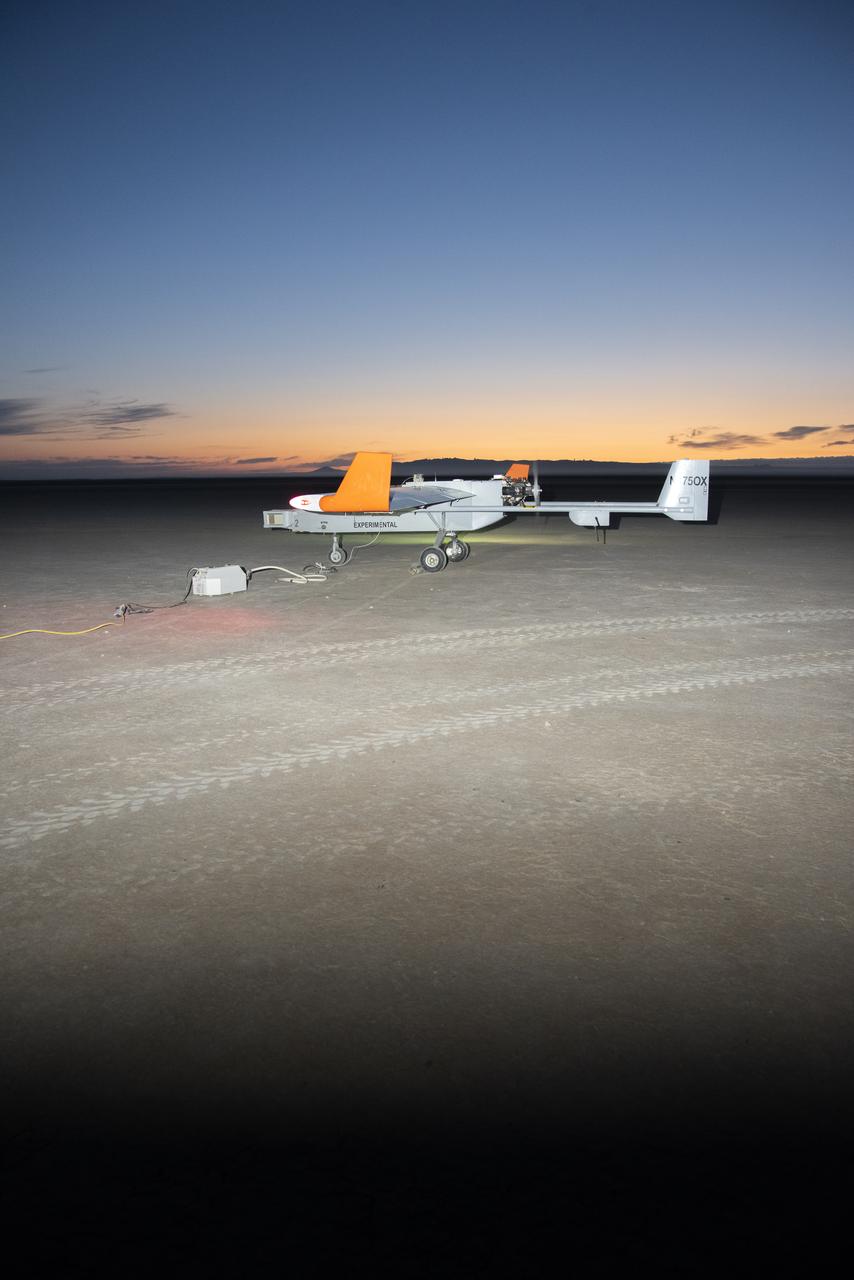
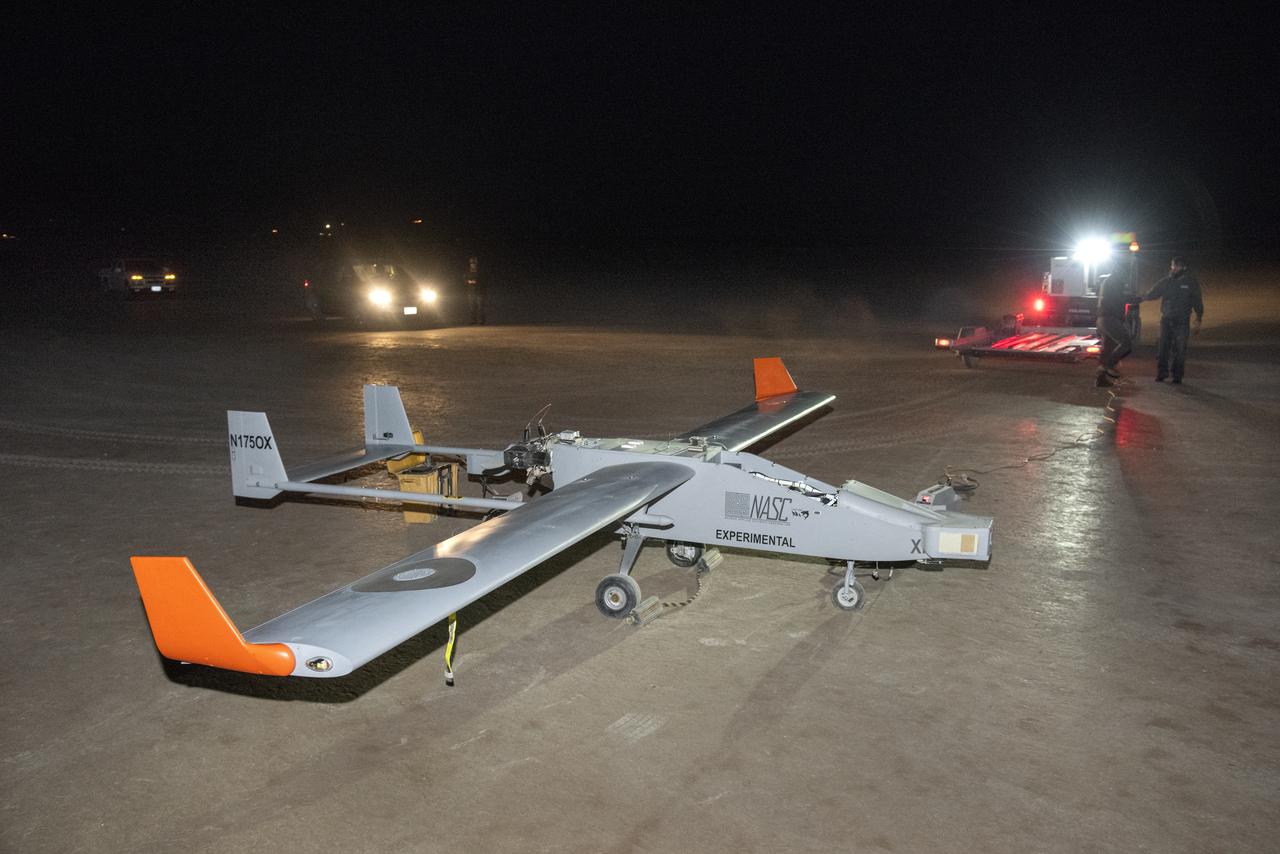
The Navmar Applied Sciences Corporation’s TigerShark sits on the lakebed at Edwards Air Force Base after completing a flight for the Unmanned Aircraft Systems integration in the National Airspace Systems, Flight Test Series Six (FT6) project. FT6 took place at NASA’s Armstrong Flight Research Center in California and focused on low size weight and power sensors for Detect and Avoid (DAA) operations in controlled airspace to inform the FAA through the RTCA Special Committee DAA Working Group on the phase 2 minimum operational performance standards for DAA and air-to-air radar.
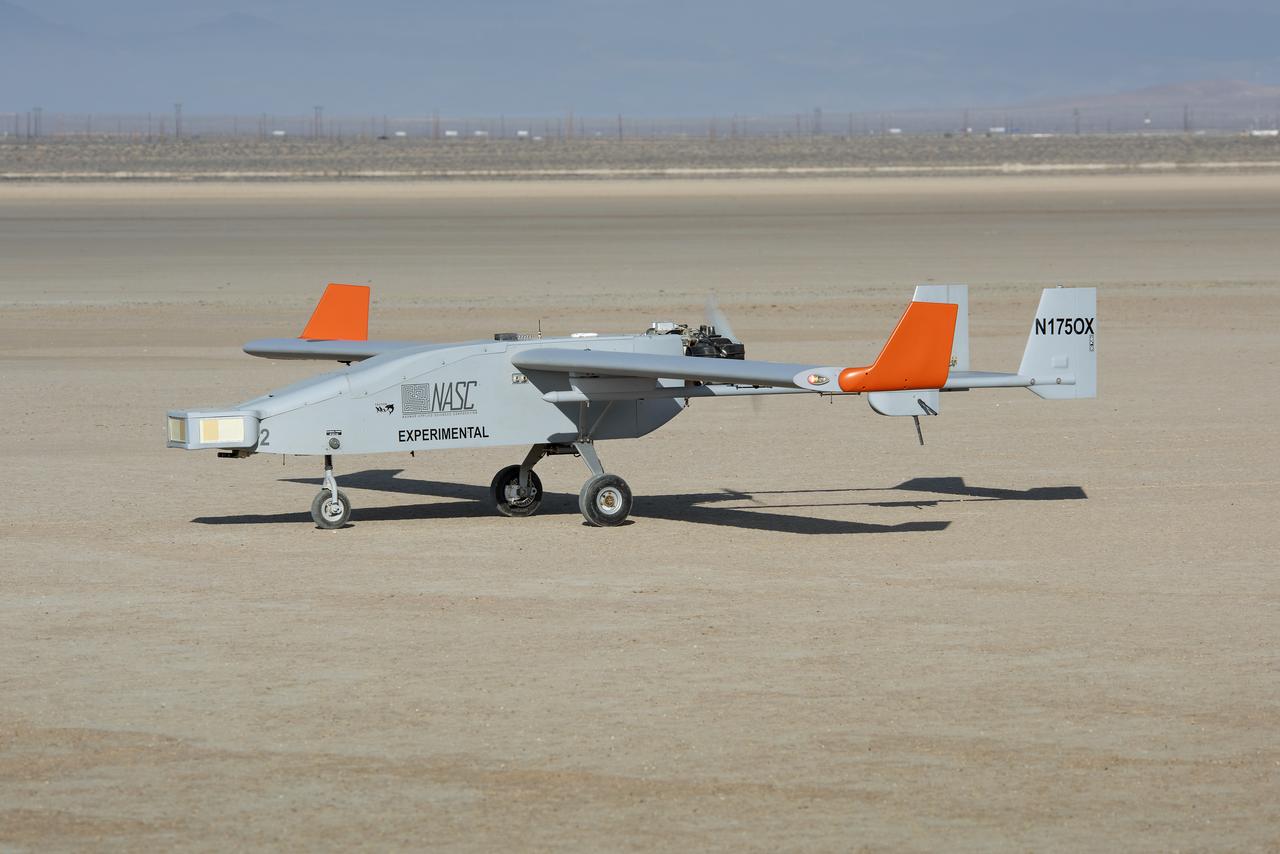
The Navmar Applied Sciences Corporation’s TigerShark sits on the lakebed at Edwards Air Force Base after completing a flight for the Unmanned Aircraft Systems integration in the National Airspace Systems, Flight Test Series Six (FT6) project. FT6 took place at NASA’s Armstrong Flight Research Center in California and focused on low size weight and power sensors for Detect and Avoid (DAA) operations in controlled airspace to inform the FAA through the RTCA Special Committee DAA Working Group on the phase 2 minimum operational performance standards for DAA and air-to-air radar.
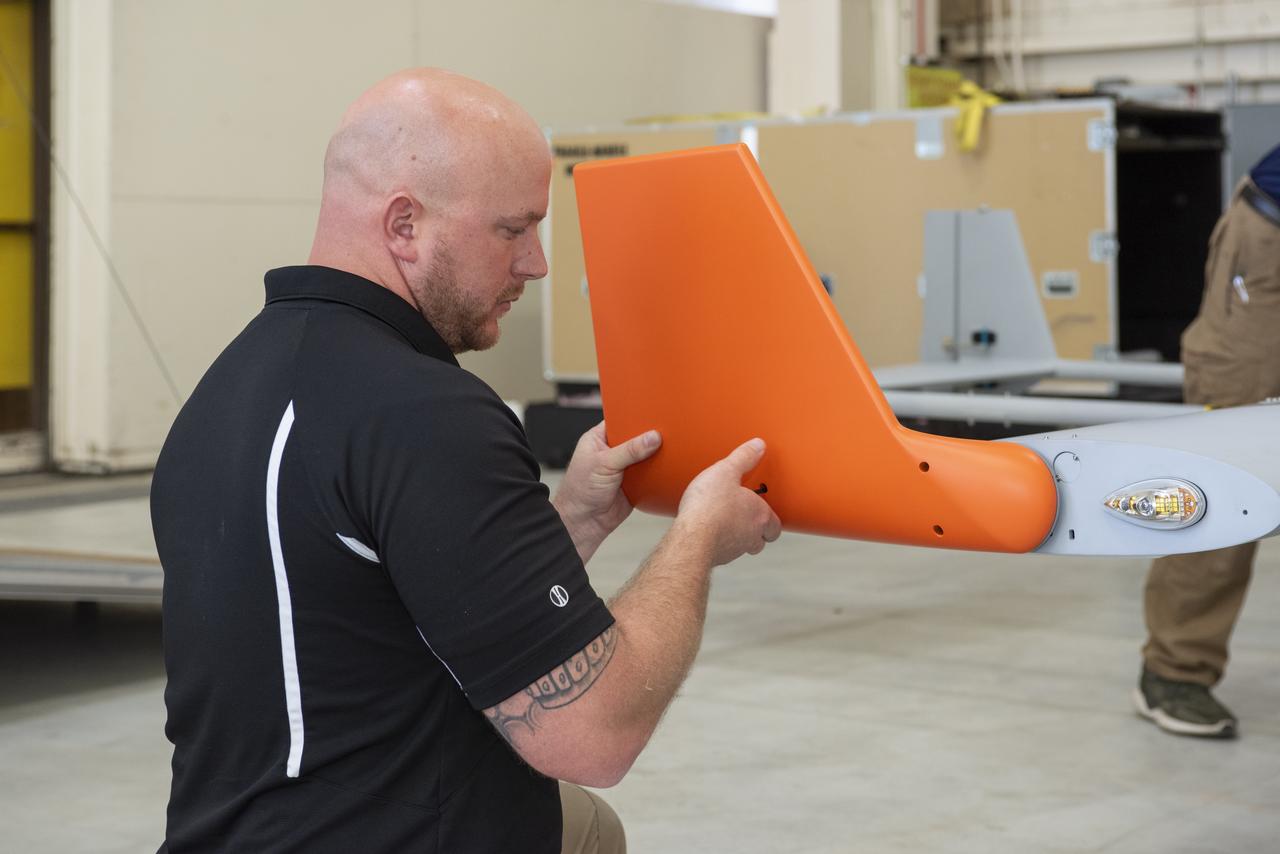
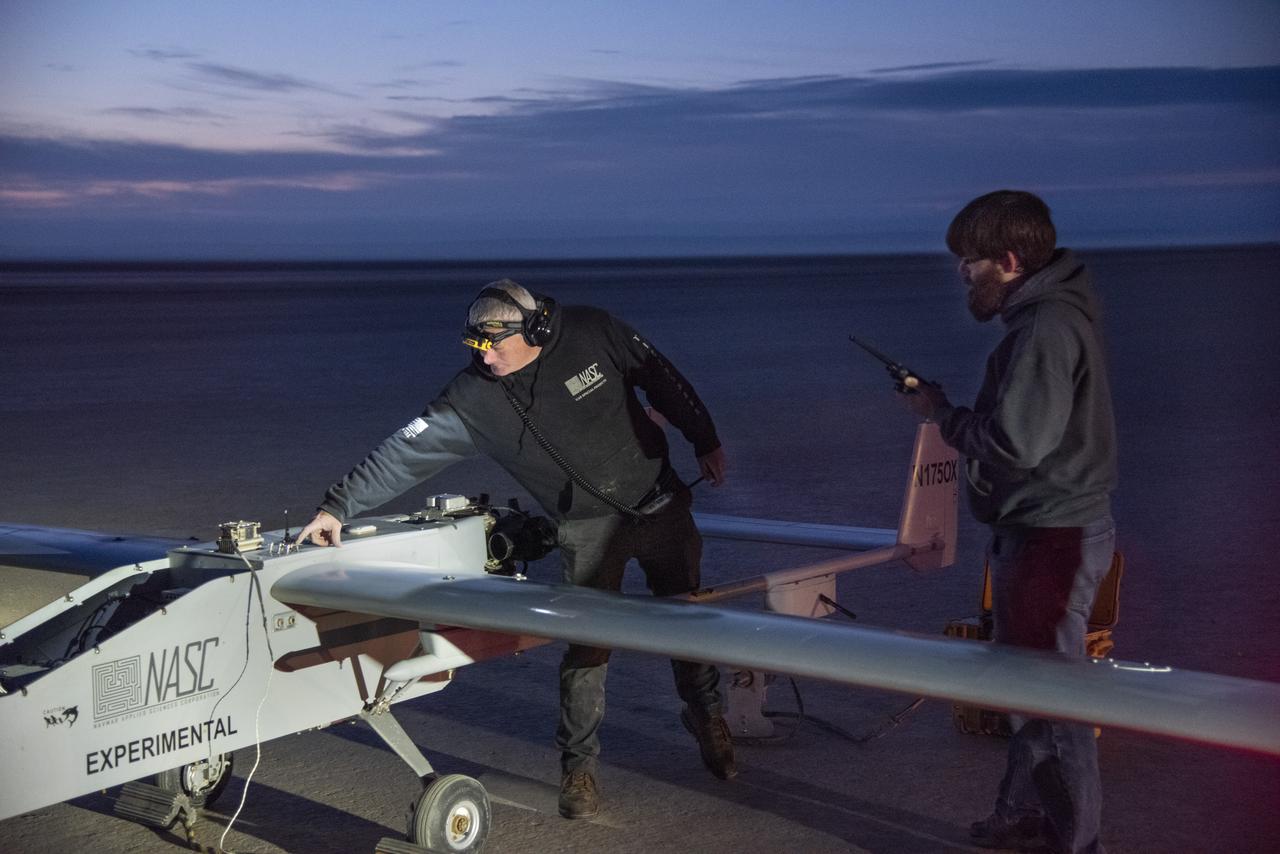
Brad Petty from Navmar Applied Sciences Corporation attaches a winglet to the TigerShark upon arrival at NASA Armstrong Flight Research Center.
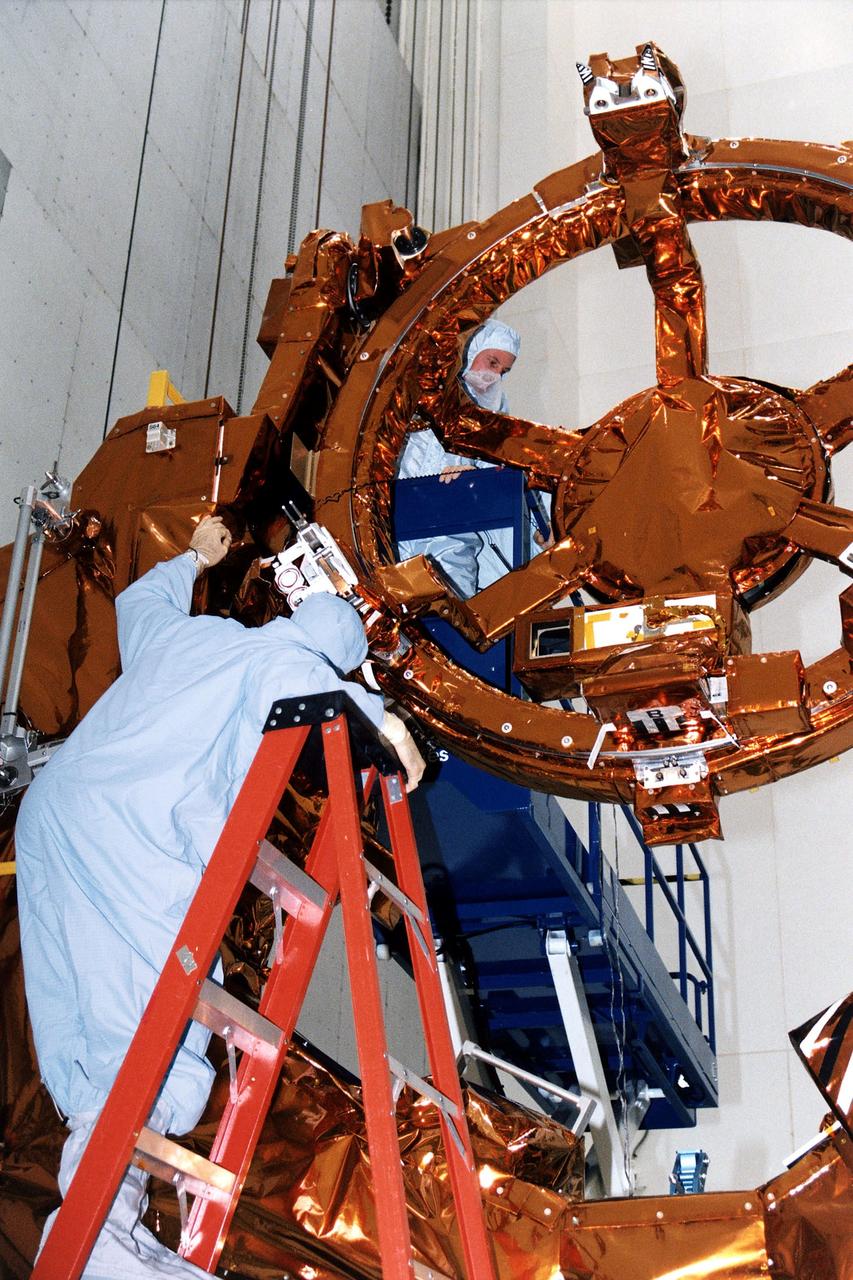
KENNEDY SPACE CENTER, FLA. - STS-82 Mission Specialist Gregory J. Harbaugh, at top, inspects part of the Flight Support System during the Crew Equipment Integration Test (CEIT) at KSC's Vertical Processing Facility. Harbaugh and the other six STS-82 crew members will conduct the second Hubble Space Telescope (HST) servicing mission aboard the Space Shuttle Discovery. Harbaugh will be one of four spacewalkers. Liftoff aboard Discovery is scheduled Feb. 11.
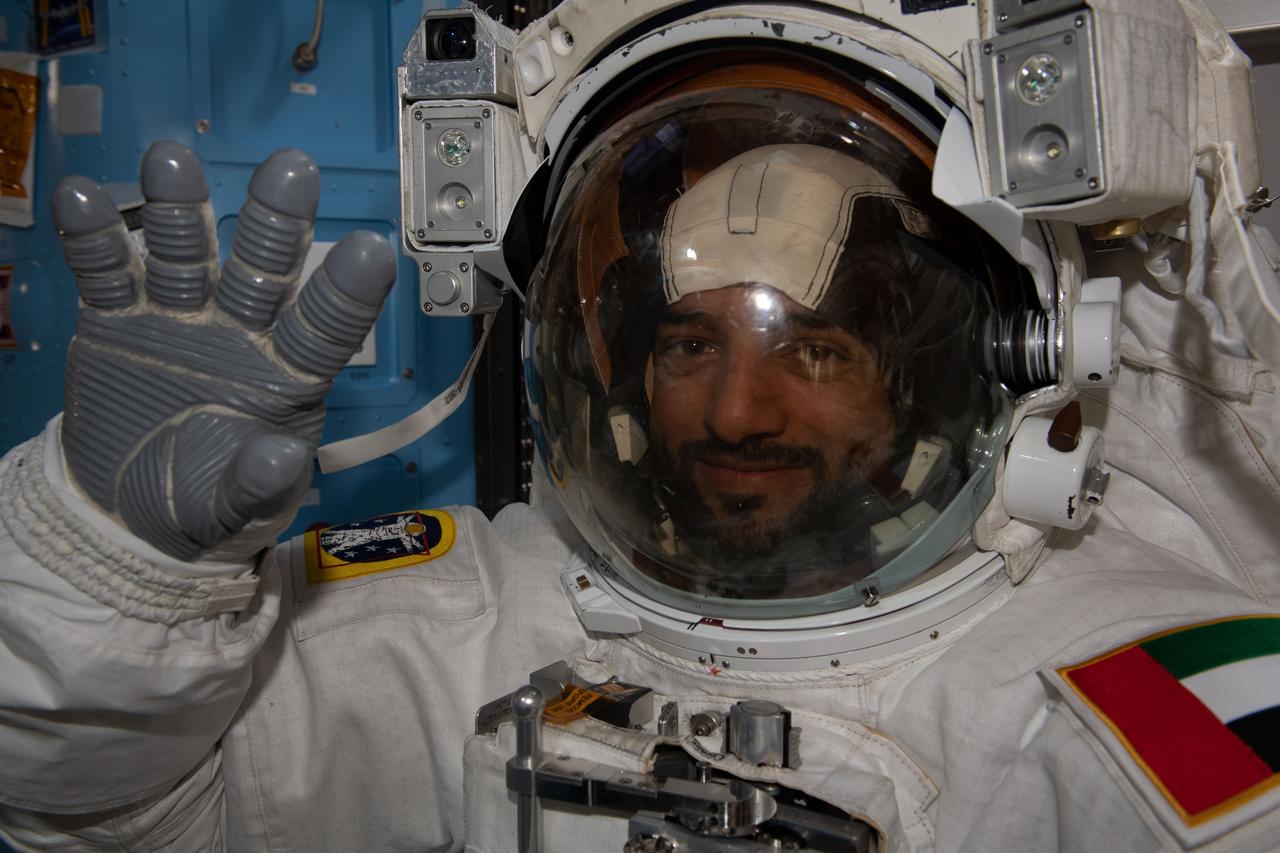
iss069e005102 (April 24, 2023) --- UAE (United Arab Emirates) astronaut and Expedition 69 Flight Engineer Sultan Alneyadi is pictured trying on his Extravehicular Mobility Unit, or spacesuit, and testing it ahead of a spacewalk planned for Friday, April 28. Alneyadi, along with NASA astronaut Stephen Bowen, will spend about six-and-a-half hours in the vacuum of space continuing to upgrade the International Space Station’s power generation system readying the orbiting lab for its next set of roll-out solar arrays.
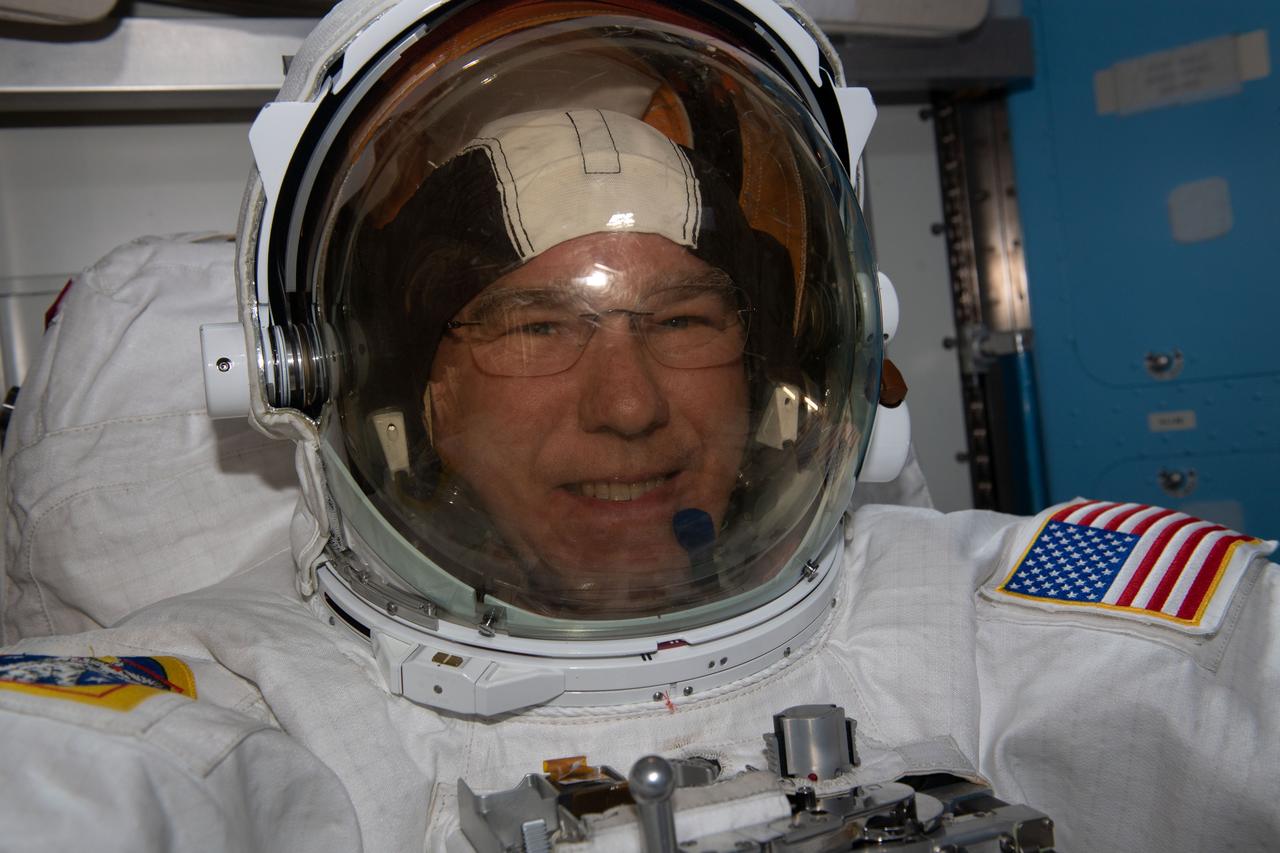
iss069e005093 (April 24, 2023) --- NASA astronaut and Expedition 69 Flight Engineer Stephen Bowen is pictured trying on his Extravehicular Mobility Unit, or spacesuit, and testing it ahead of a spacewalk planned for Friday, April 28. Bowen, along with UAE (United Arab Emirates) astronaut Sultan Alneyadi, will spend about six-and-a-half hours in the vacuum of space continuing to upgrade the International Space Station’s power generation system readying the orbiting lab for its next set of roll-out solar arrays.
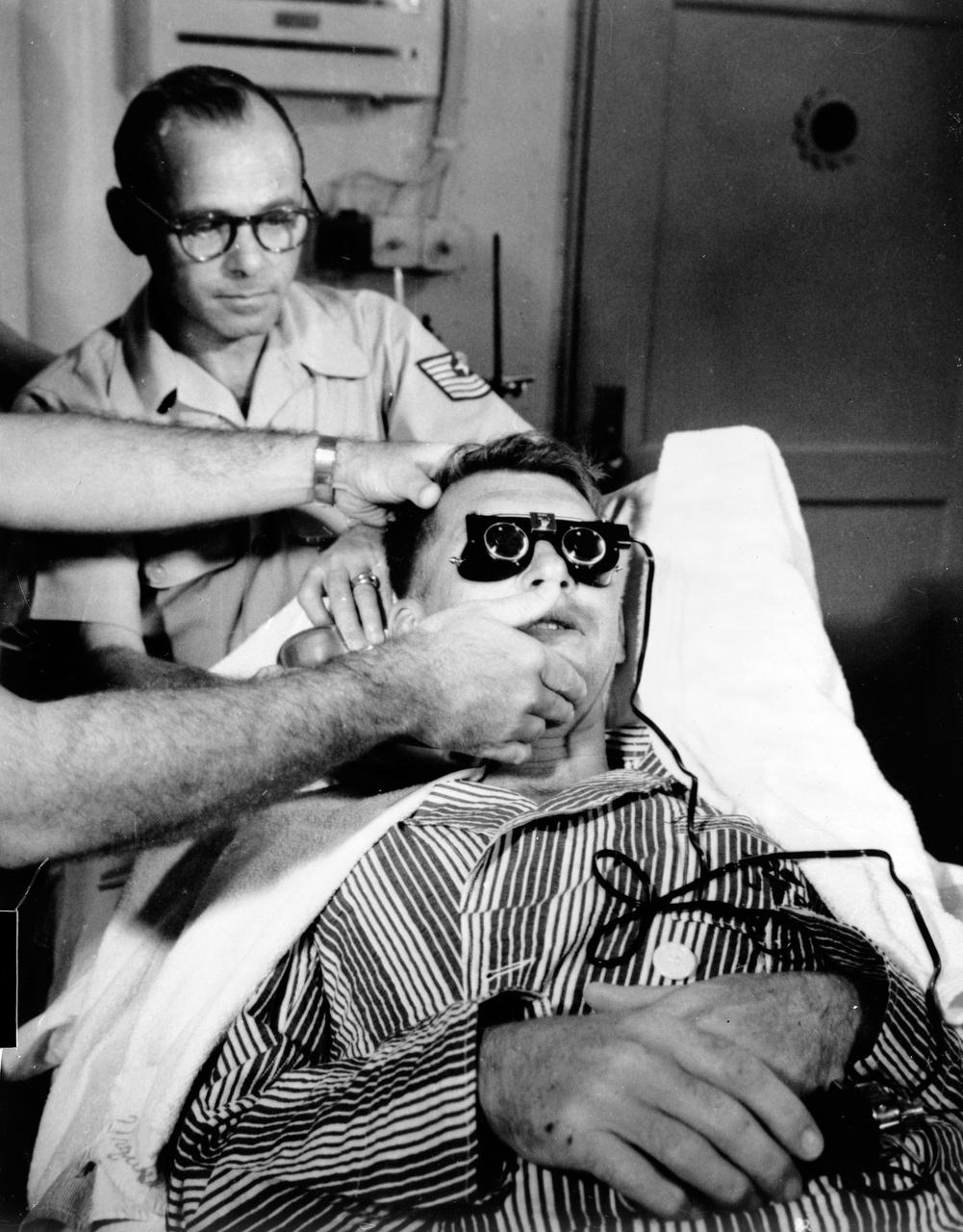
S62-06157 (1962) --- Astronaut Walter Schirra Jr. gets modified calonic test. His balance mechanism (semicircular canals) are tested by running cool water into ear and measuring effect on eye motions (nystagmus) after his six-orbit flight in the Sigma 7 spacecraft. Photo credit: NASA
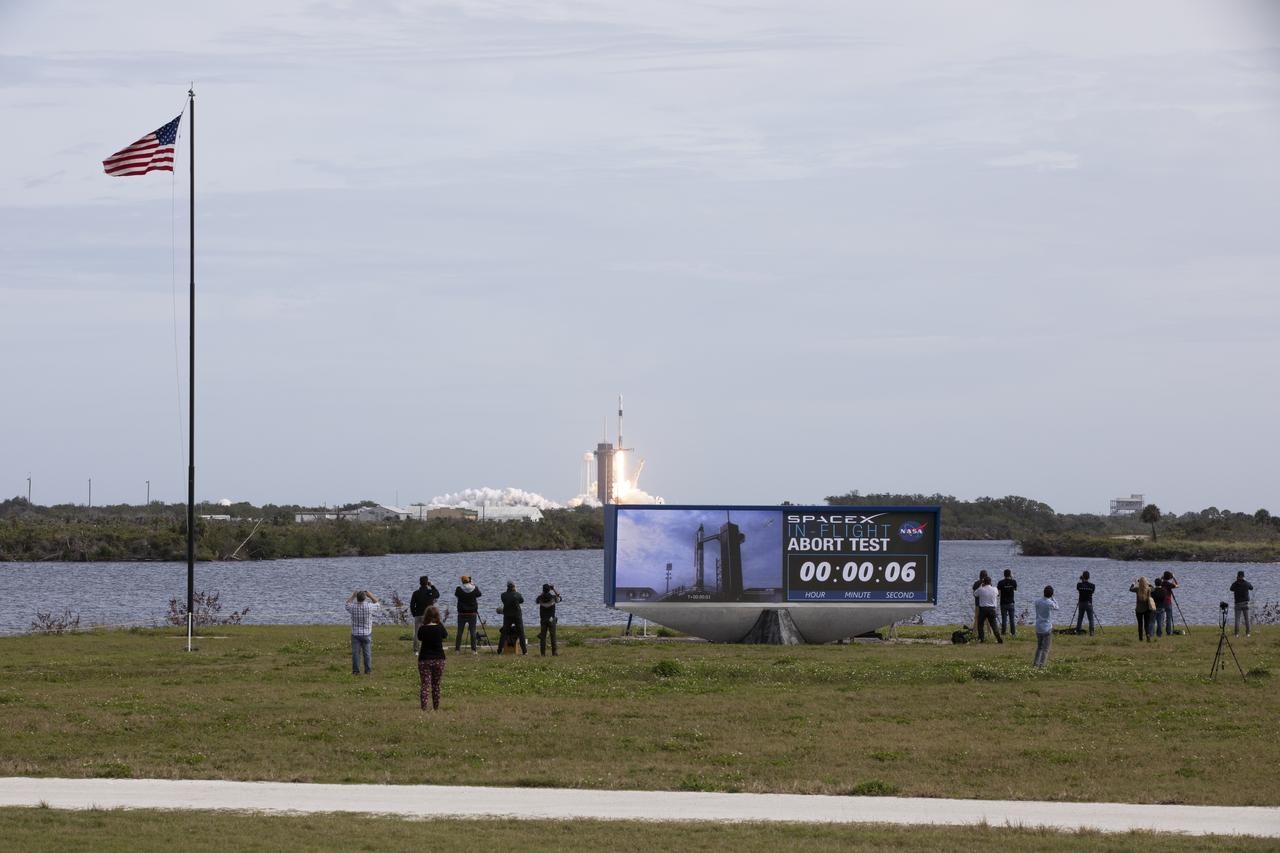
The countdown clock at NASA’s Kennedy Space Center in Florida shows an elapsed time of six seconds as the SpaceX Falcon 9 rocket lifts off from Launch Complex 39A on the uncrewed In-Flight Abort Test, Jan. 19, 2020. The rocket carried the company’s Crew Dragon on a flight test that demonstrated the spacecraft’s escape capabilities in preparation for crewed flights to the International Space Station as part of the agency’s Commercial Crew Program.
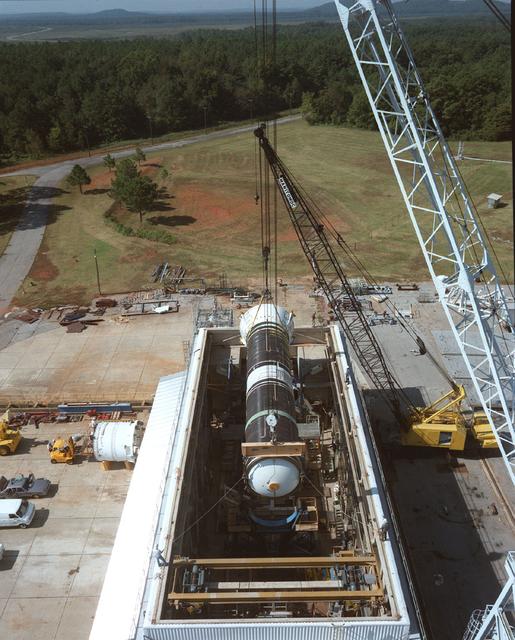
Marshall Space Flight Center workers install Structural Test Article Number Three (STA-3) into a Center test facility. From December 1987 to April 1988, STA-3 (a test model of the Redesigned Solid Rocket Motor) underwent a series of six tests at the Marshall Center designed to demonstrate the structural strength of the Space Shuttle's Solid Rocket Booster, redesigned after the January 1986 Challenger accident.
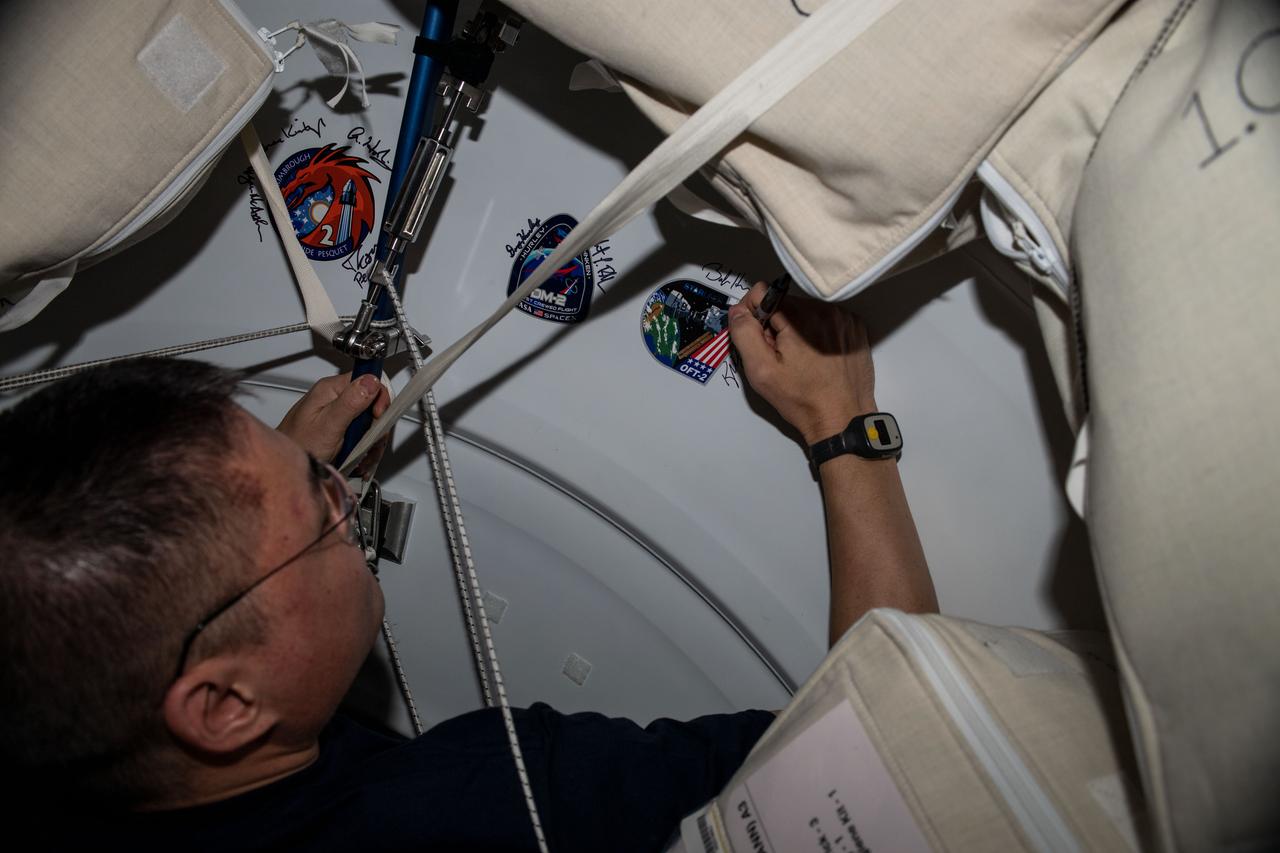
iss068e012479 (Oct. 5, 2022) --- NASA astronaut and Expedition 68 Flight Engineer Kjell Lindgren signs his name around the OFT-2 (Orbital Flight Test-2) mission insignia sticker affixed to the Harmony module's vestibule. Lindgren was aboard the International Space Station when Boeing's CST-100 Starliner spacecraft docked to Harmony's forward port on May 19, 2022, for a six-day uncrewed test mission.
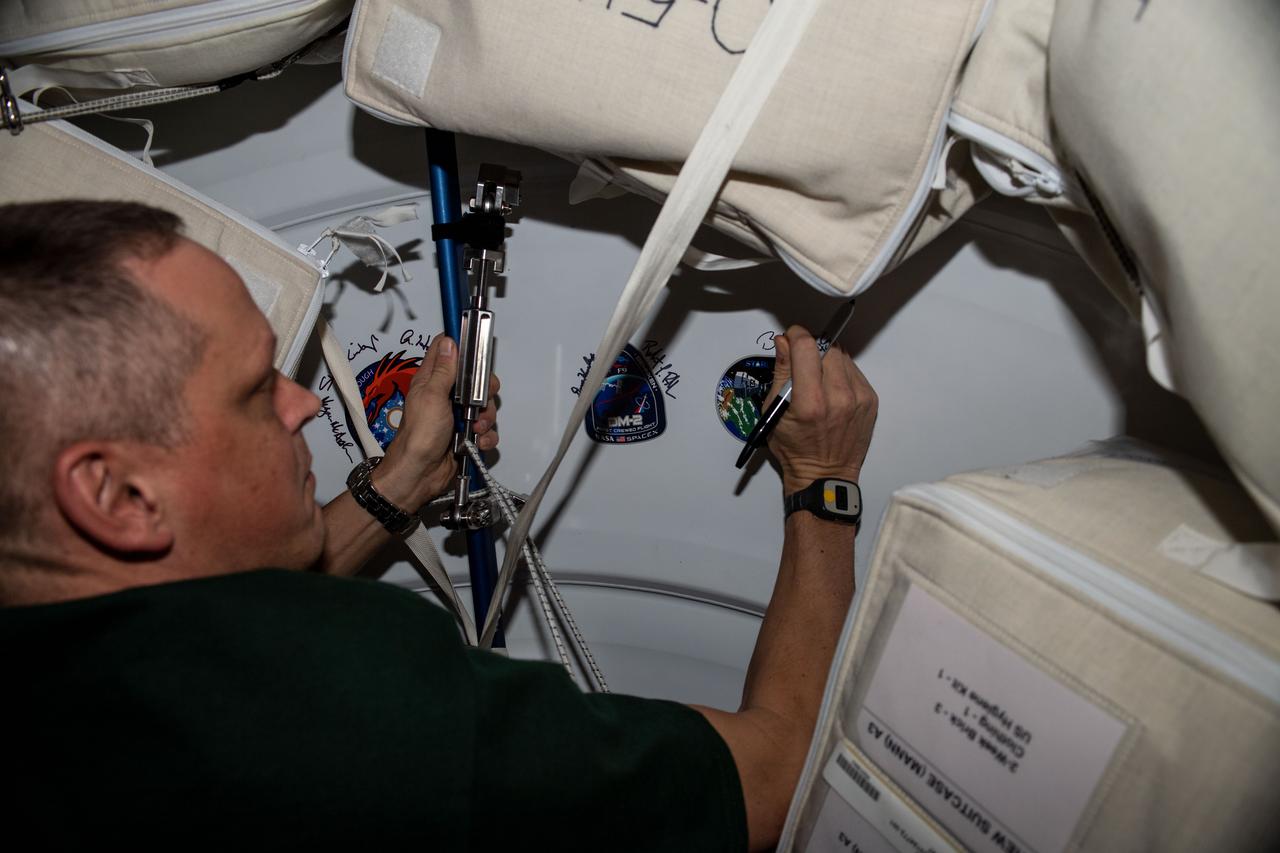
iss068e012476 (Oct. 5, 2022) --- NASA astronaut and Expedition 68 Flight Engineer Bob Hines signs his name around the OFT-2 (Orbital Flight Test-2) mission insignia sticker affixed to the Harmony module's vestibule. Hines was aboard the International Space Station when Boeing's CST-100 Starliner spacecraft docked to Harmony's forward port on May 19, 2022, for a six-day uncrewed test mission.
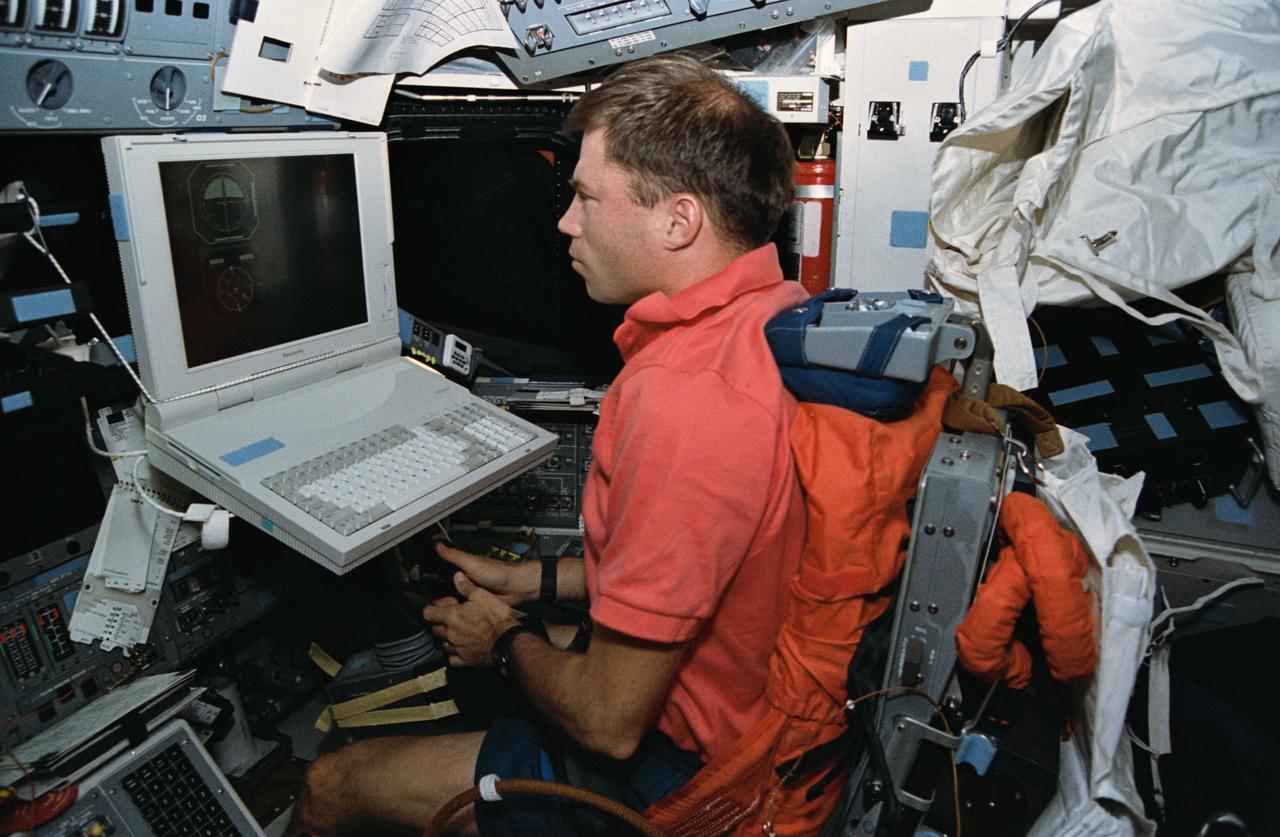
STS058-14-006 (18 Oct- 1 Nov 1993) --- Astronaut Richard A. Searfoss, pilot, participates in an experiment that measures the effects of space flight on pilot proficiency. Astronauts Searfoss (seen here at the pilot's station) and John E. Blaha, mission commander, are conducting the first tests of the Portable Inflight Landing Operations Trainer (PILOT). STS-58 is the first of six scheduled test flights of PILOT designed to determine its effectiveness as a training tool.
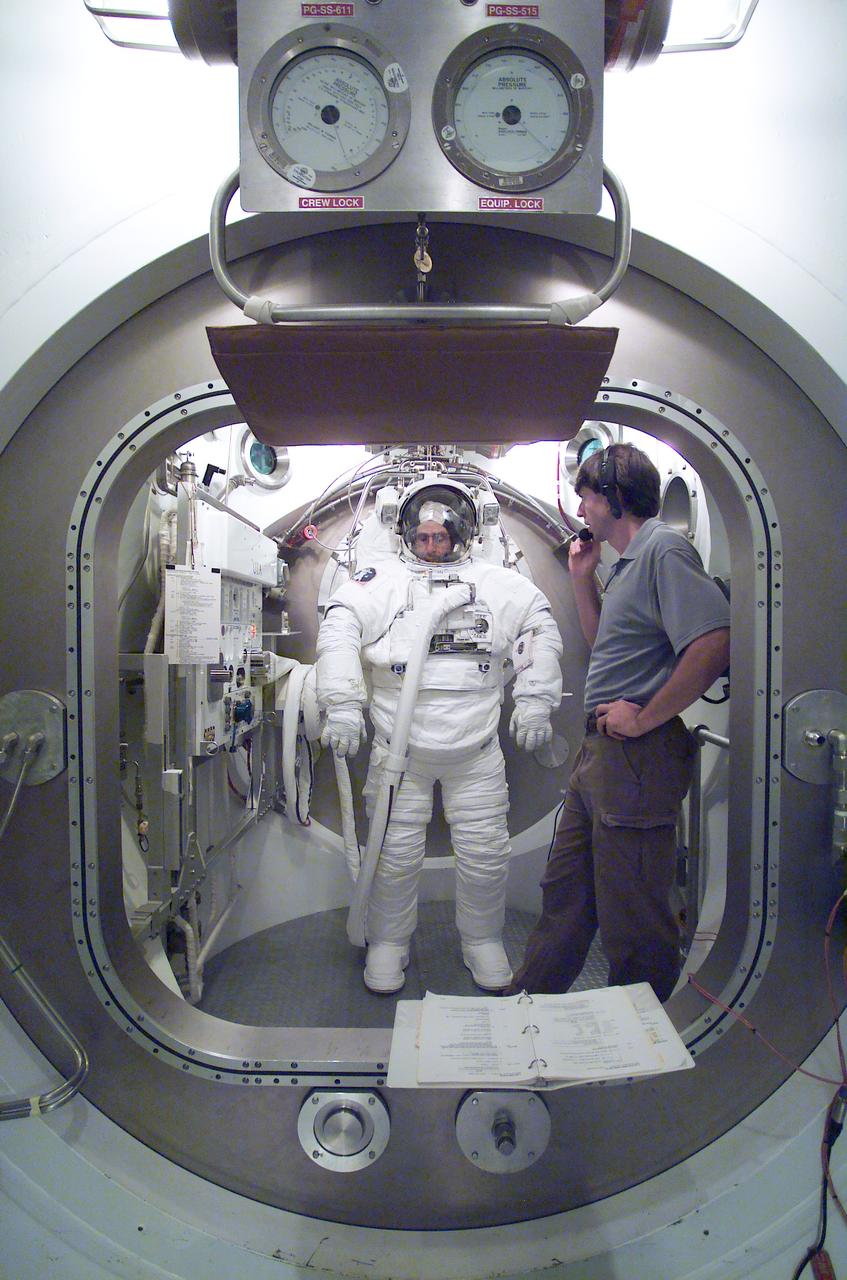
JSC2002-E-36202 (27 August 2002) --- Astronaut Donald R. Pettit, Expedition Six flight engineer, participates in an Extravehicular Mobility Unit (EMU) spacesuit fit check in a Space Station Airlock Test Article (SSATA) in the Crew Systems Laboratory at the Johnson Space Center (JSC). Zebulon L. Scoville assisted Pettit.
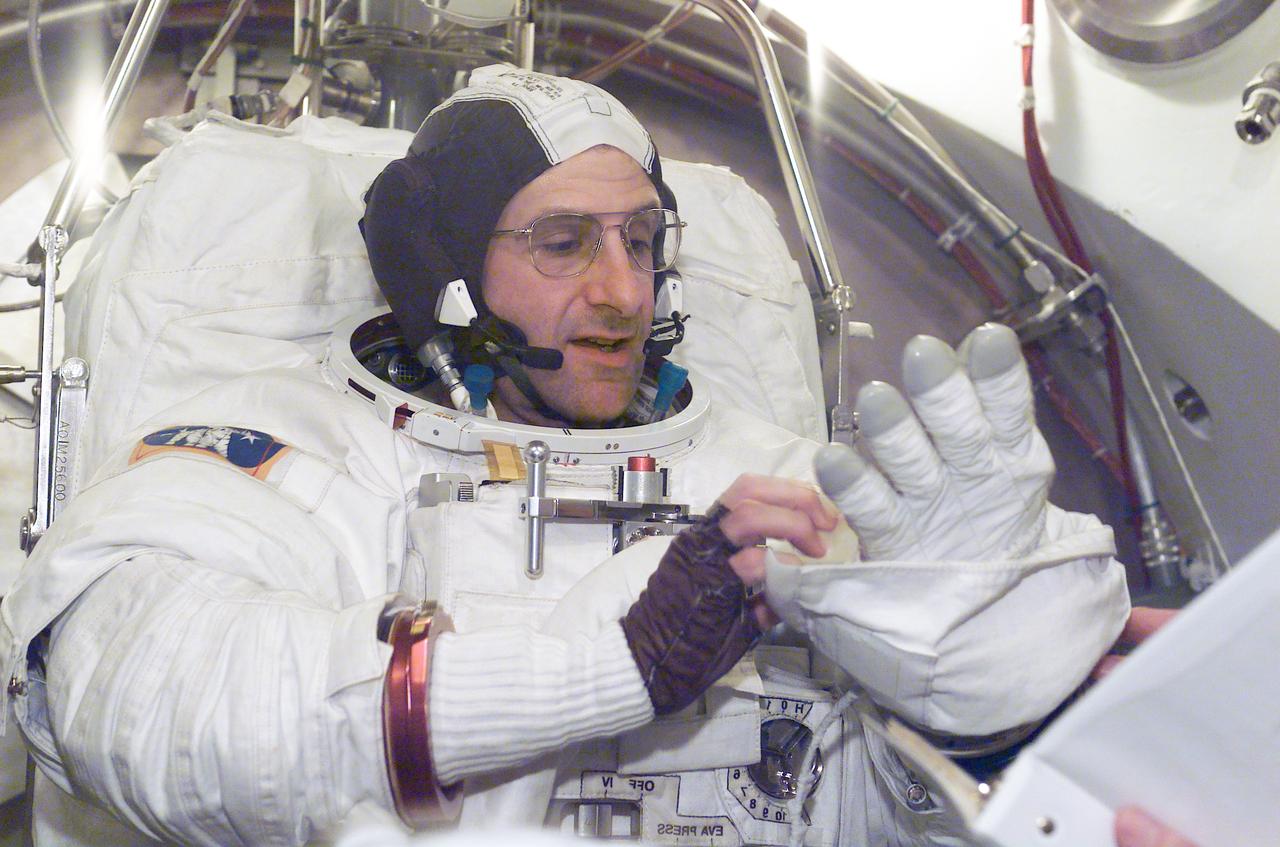
JSC2002-E-36194 (27 August 2002) --- Astronaut Donald R. Pettit, Expedition Six flight engineer, participates in an Extravehicular Mobility Unit (EMU) spacesuit fit check in a Space Station Airlock Test Article (SSATA) in the Crew Systems Laboratory at the Johnson Space Center (JSC).
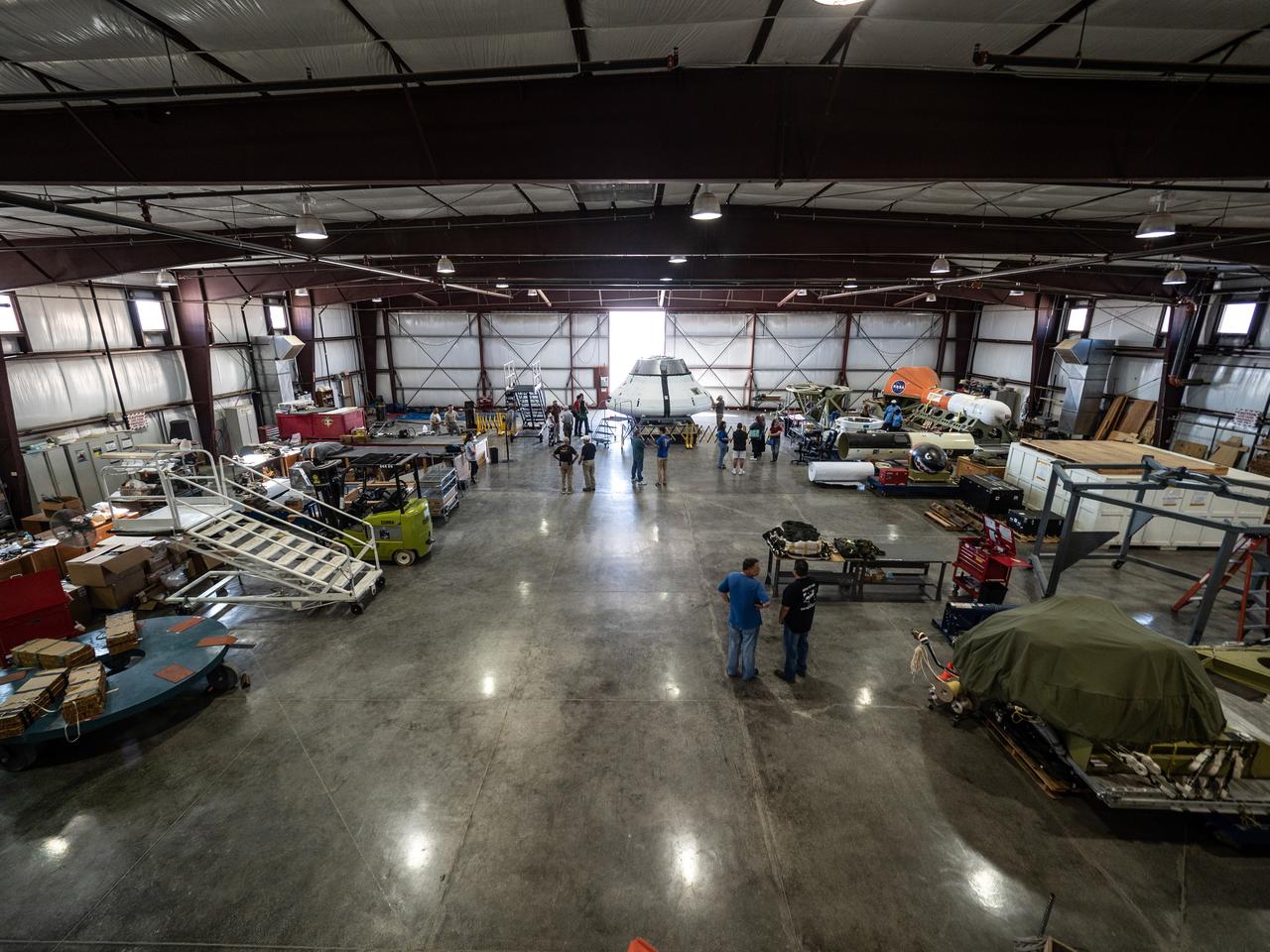
The Orion team prepares the parachute test vehicle for the final drop test which will qualify Orion's parachutes for human flight on Sept. 10, 2018...On September 12, 2018 an Orion test capsule will be dropped from a C-17 aircraft at an altitude of more than six miles to verify the spacecraft’s complex system of 11 parachutes, cannon-like mortars, and pyrotechnic devices work in sequence to slow the capsule’s descent for a safe landing on Earth.
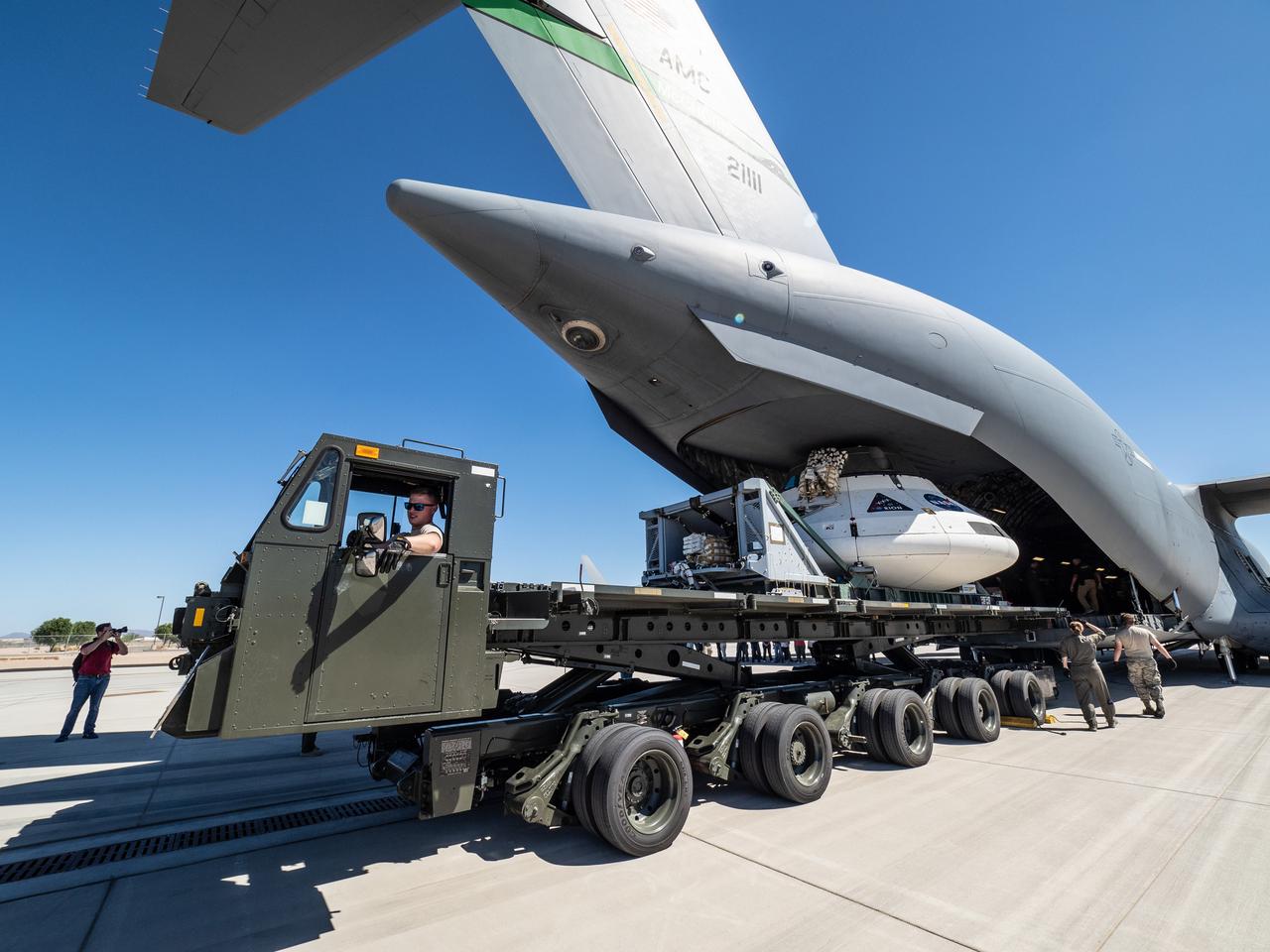
The Orion team prepares the parachute test vehicle for the final drop test which will qualify Orion's parachutes for human flight on Sept. 10, 2018...On September 12, 2018 an Orion test capsule will be dropped from a C-17 aircraft at an altitude of more than six miles to verify the spacecraft’s complex system of 11 parachutes, cannon-like mortars, and pyrotechnic devices work in sequence to slow the capsule’s descent for a safe landing on Earth.
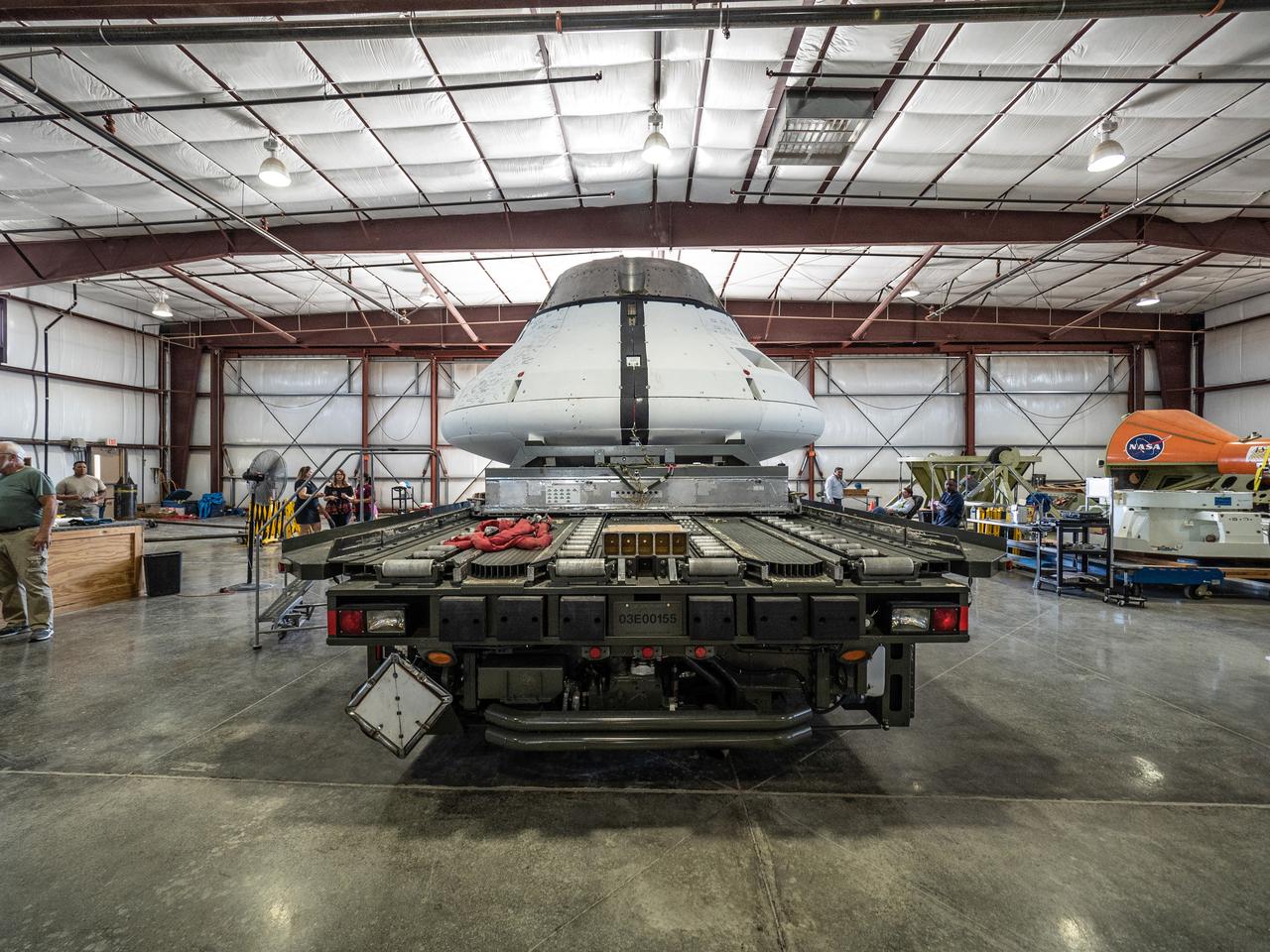
The Orion team prepares the parachute test vehicle for the final drop test which will qualify Orion's parachutes for human flight on Sept. 10, 2018...On September 12, 2018 an Orion test capsule will be dropped from a C-17 aircraft at an altitude of more than six miles to verify the spacecraft’s complex system of 11 parachutes, cannon-like mortars, and pyrotechnic devices work in sequence to slow the capsule’s descent for a safe landing on Earth.

The Orion team prepares the parachute test vehicle for the final drop test which will qualify Orion's parachutes for human flight on Sept. 10, 2018...On September 12, 2018 an Orion test capsule will be dropped from a C-17 aircraft at an altitude of more than six miles to verify the spacecraft’s complex system of 11 parachutes, cannon-like mortars, and pyrotechnic devices work in sequence to slow the capsule’s descent for a safe landing on Earth.
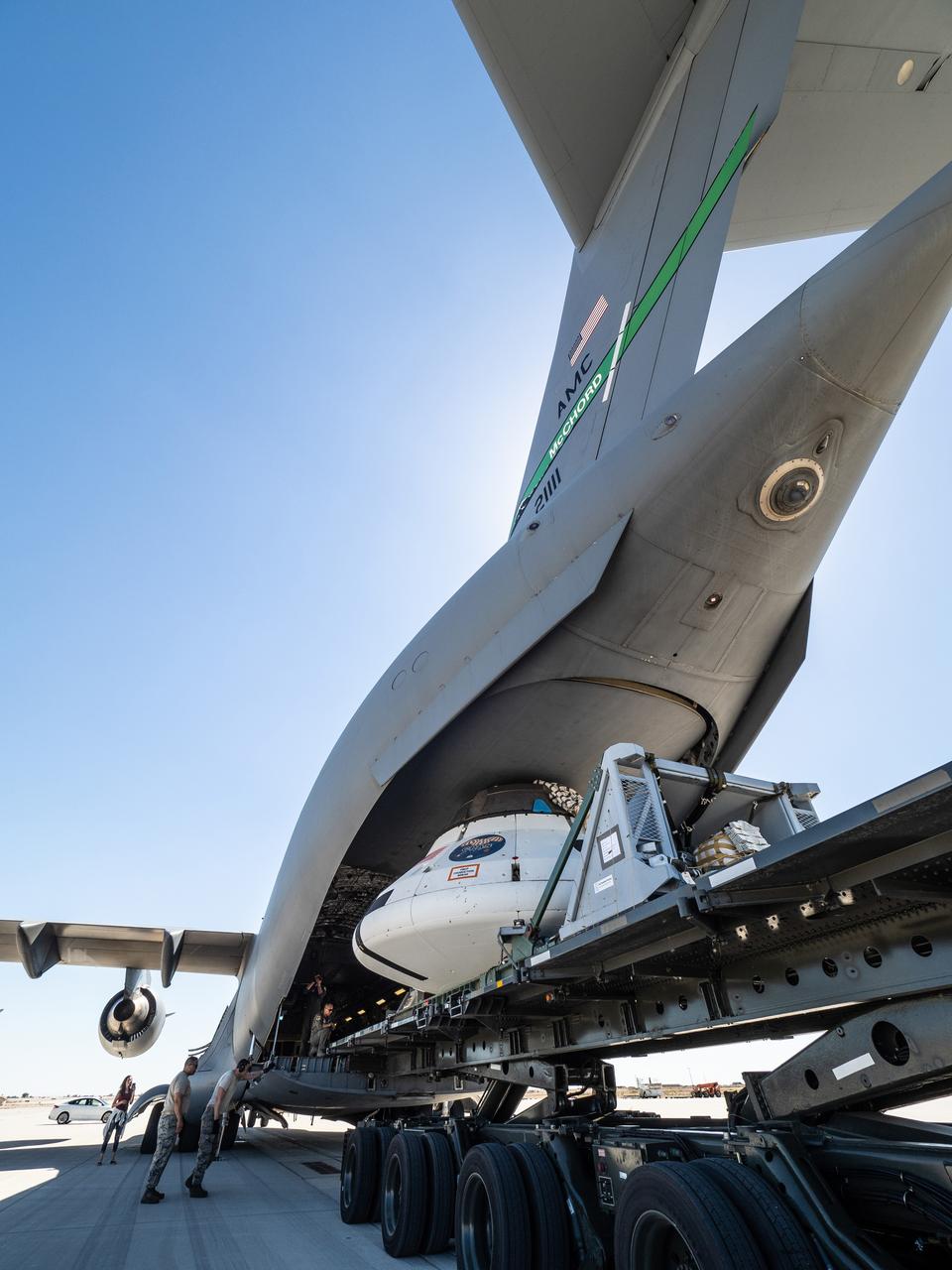
The Orion team prepares the parachute test vehicle for the final drop test which will qualify Orion's parachutes for human flight on Sept. 10, 2018...On September 12, 2018 an Orion test capsule will be dropped from a C-17 aircraft at an altitude of more than six miles to verify the spacecraft’s complex system of 11 parachutes, cannon-like mortars, and pyrotechnic devices work in sequence to slow the capsule’s descent for a safe landing on Earth.
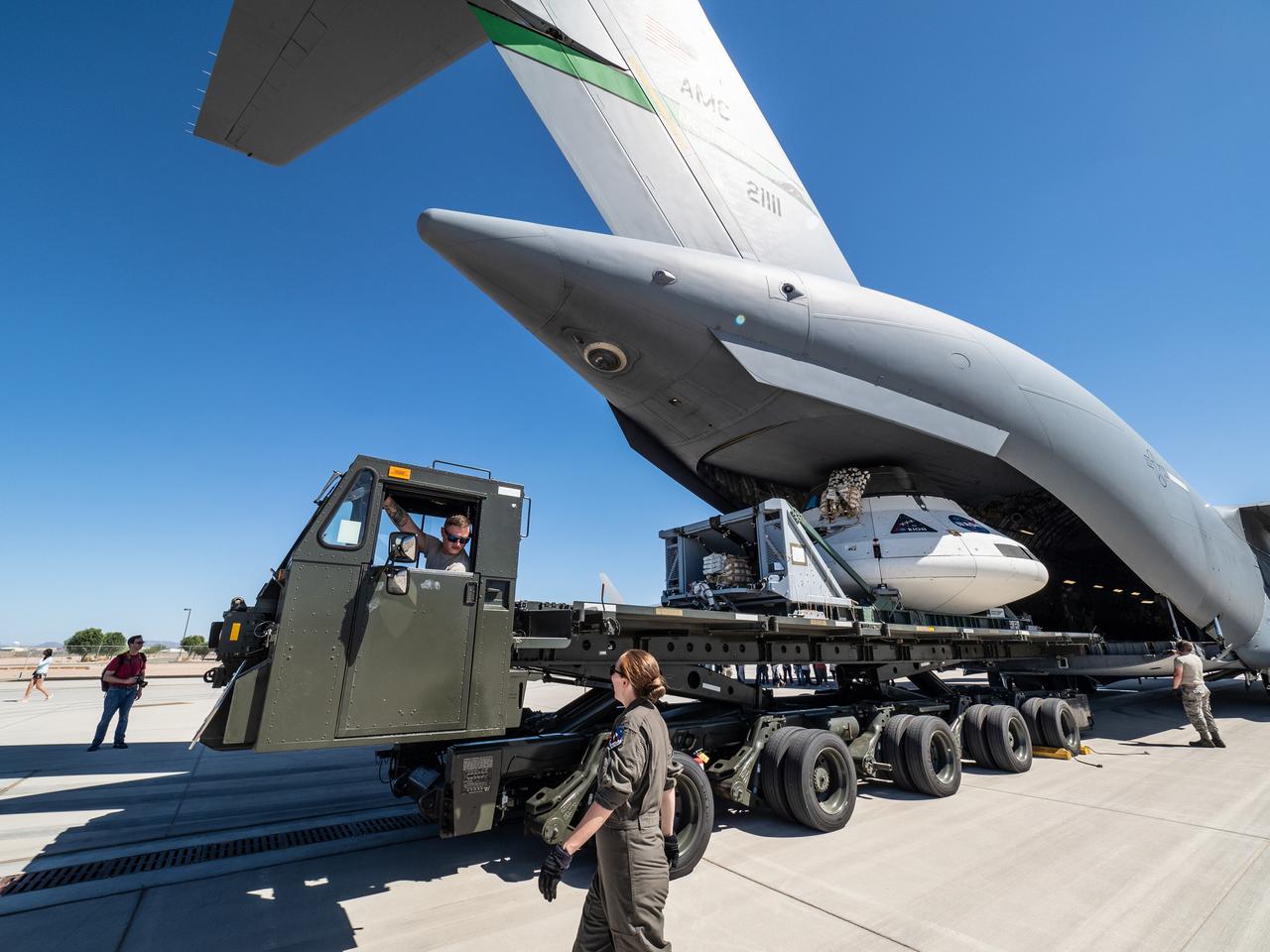
The Orion team prepares the parachute test vehicle for the final drop test which will qualify Orion's parachutes for human flight on Sept. 10, 2018...On September 12, 2018 an Orion test capsule will be dropped from a C-17 aircraft at an altitude of more than six miles to verify the spacecraft’s complex system of 11 parachutes, cannon-like mortars, and pyrotechnic devices work in sequence to slow the capsule’s descent for a safe landing on Earth.
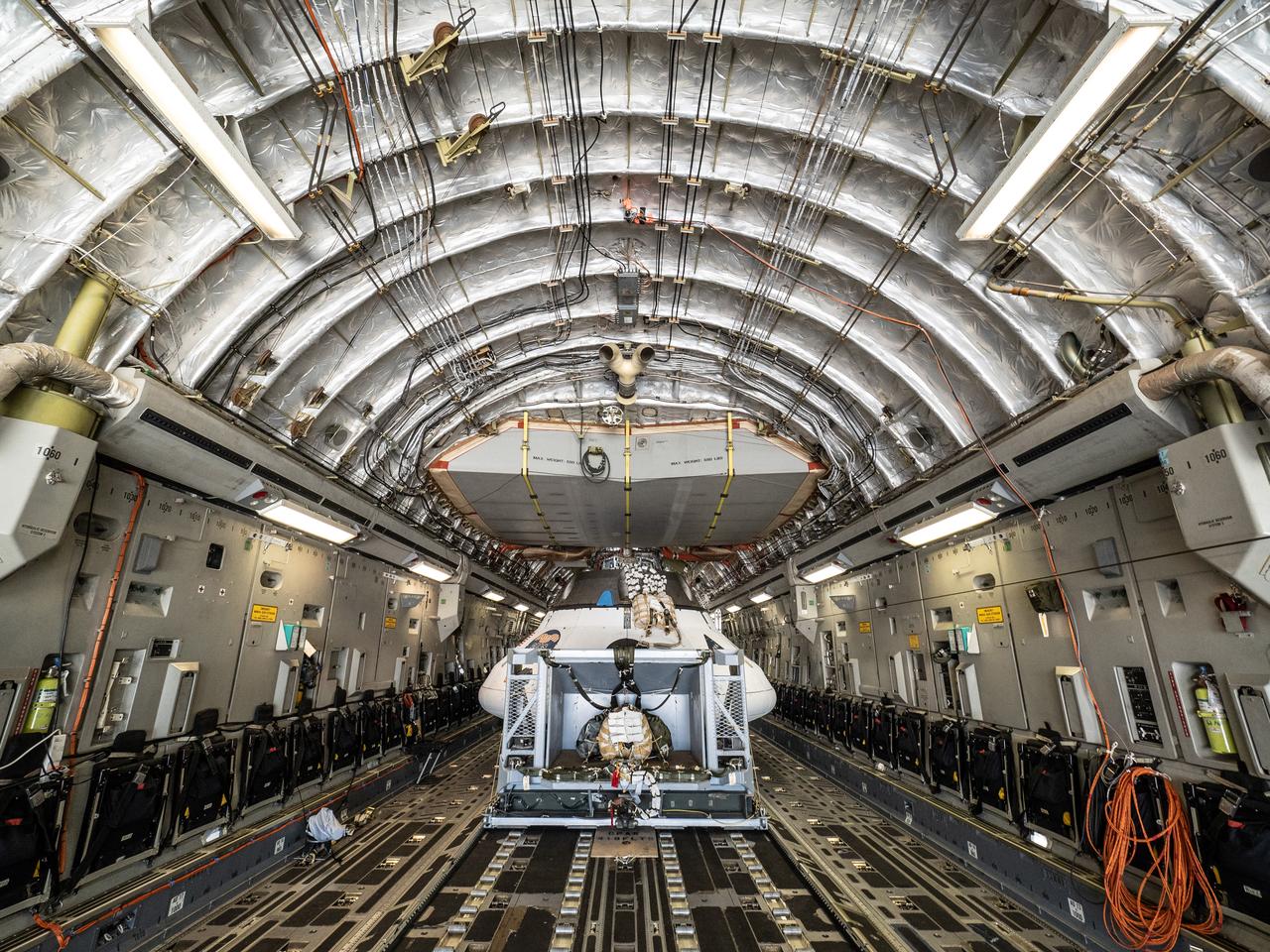
The Orion team prepares the parachute test vehicle for the final drop test which will qualify Orion's parachutes for human flight on Sept. 10, 2018...On September 12, 2018 an Orion test capsule will be dropped from a C-17 aircraft at an altitude of more than six miles to verify the spacecraft’s complex system of 11 parachutes, cannon-like mortars, and pyrotechnic devices work in sequence to slow the capsule’s descent for a safe landing on Earth.
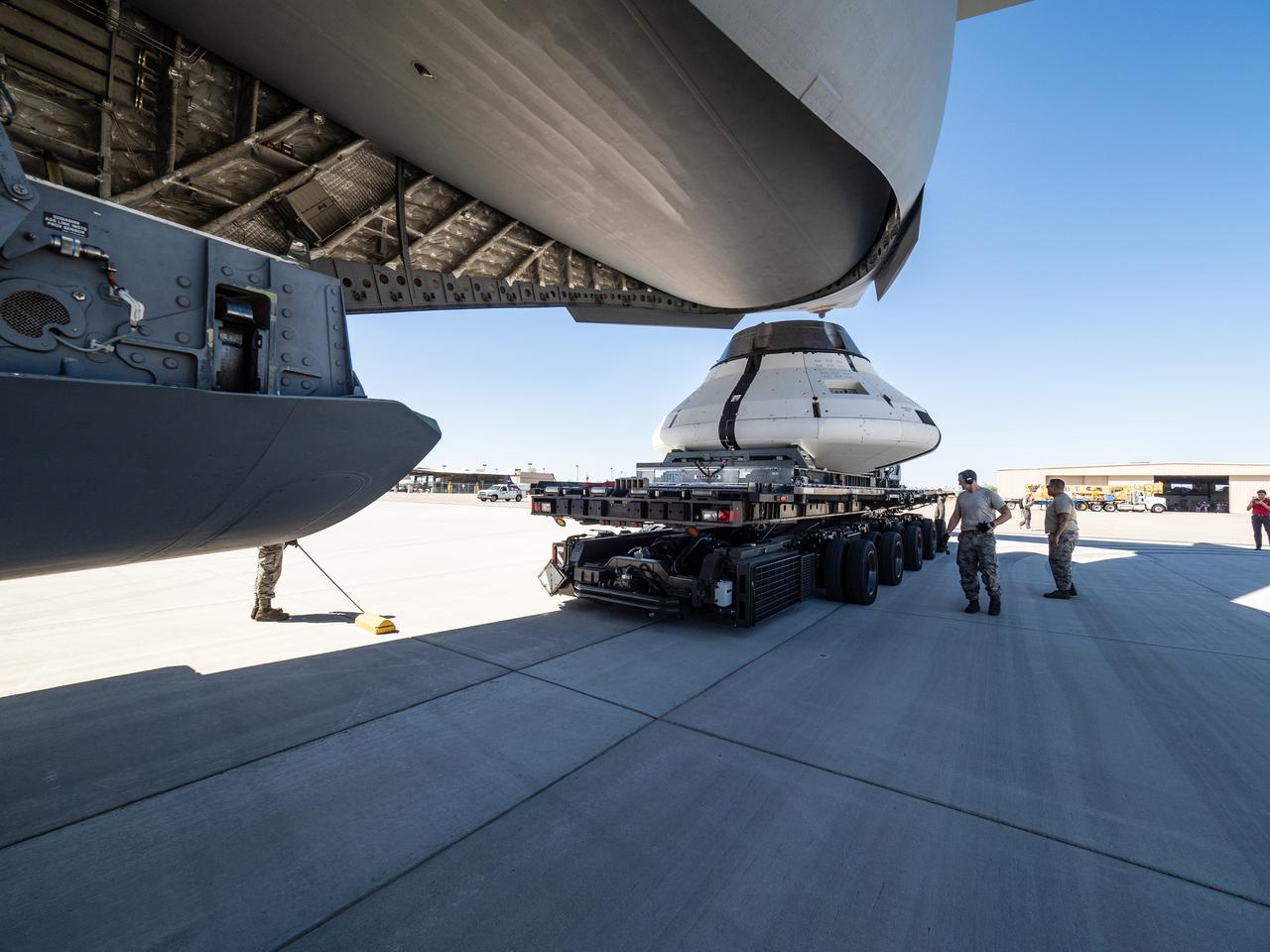
The Orion team prepares the parachute test vehicle for the final drop test which will qualify Orion's parachutes for human flight on Sept. 10, 2018...On September 12, 2018 an Orion test capsule will be dropped from a C-17 aircraft at an altitude of more than six miles to verify the spacecraft’s complex system of 11 parachutes, cannon-like mortars, and pyrotechnic devices work in sequence to slow the capsule’s descent for a safe landing on Earth.
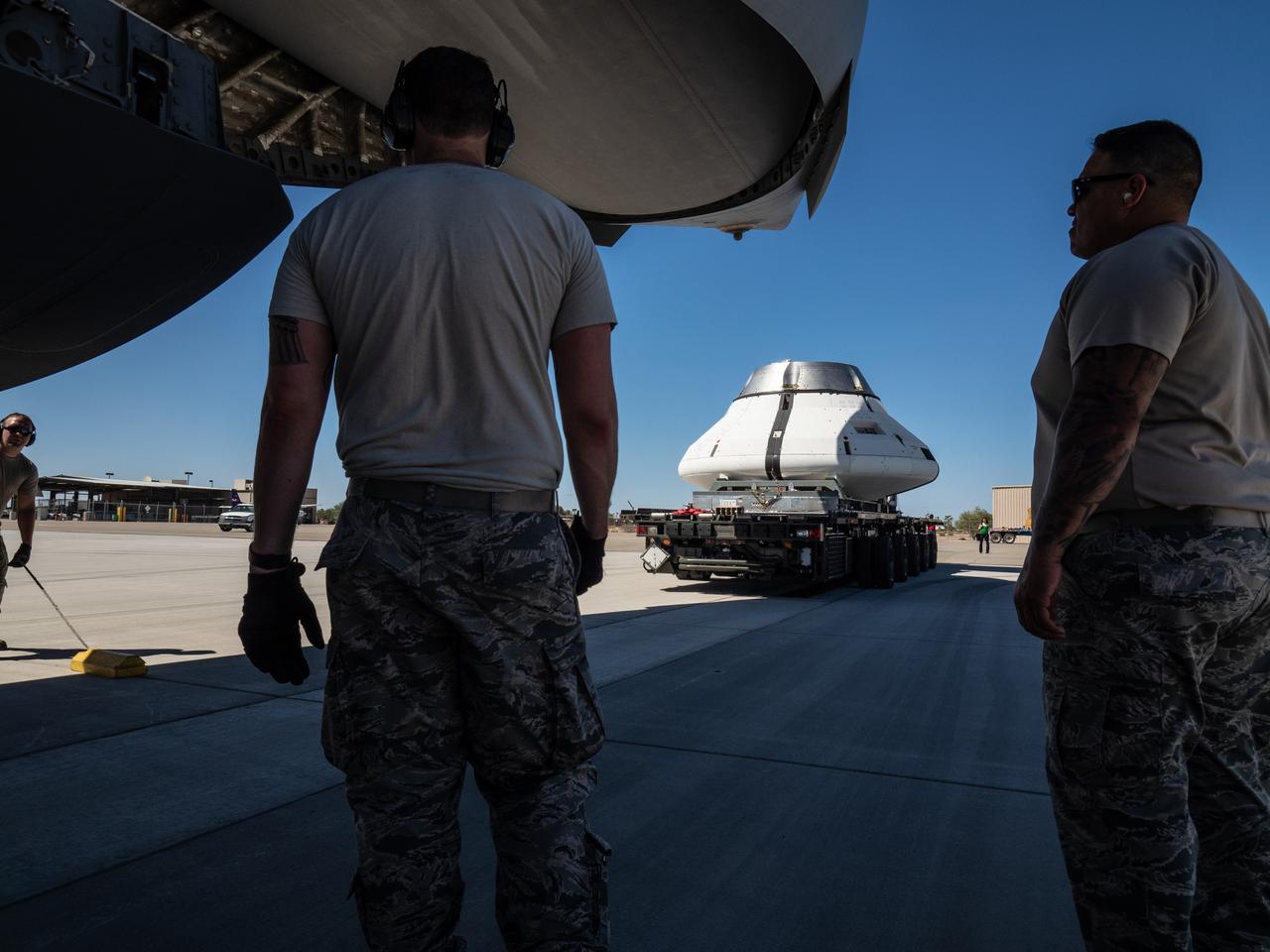
The Orion team prepares the parachute test vehicle for the final drop test which will qualify Orion's parachutes for human flight on Sept. 10, 2018...On September 12, 2018 an Orion test capsule will be dropped from a C-17 aircraft at an altitude of more than six miles to verify the spacecraft’s complex system of 11 parachutes, cannon-like mortars, and pyrotechnic devices work in sequence to slow the capsule’s descent for a safe landing on Earth.
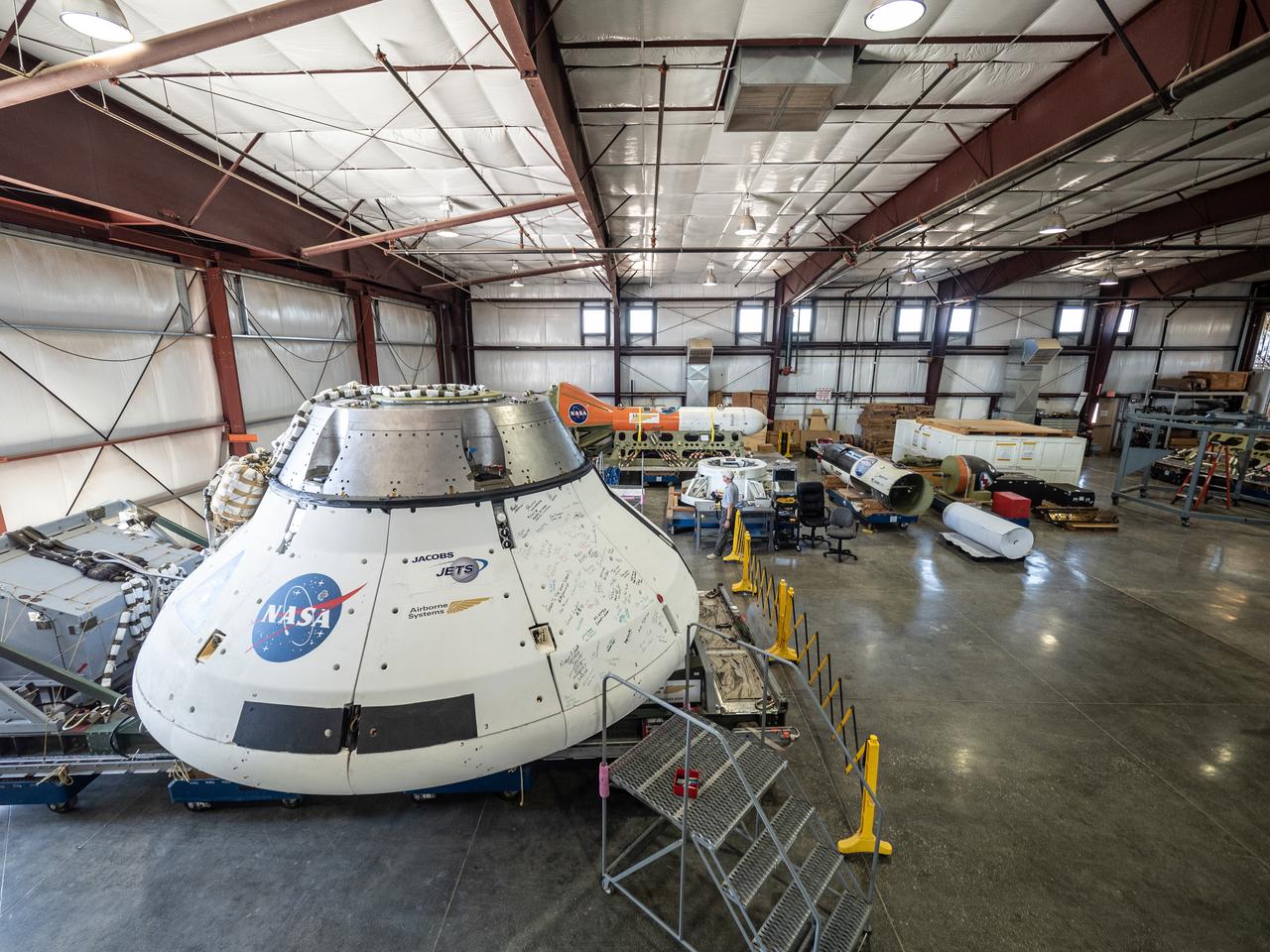
The Orion team prepares the parachute test vehicle for the final drop test which will qualify Orion's parachutes for human flight on Sept. 10, 2018...On September 12, 2018 an Orion test capsule will be dropped from a C-17 aircraft at an altitude of more than six miles to verify the spacecraft’s complex system of 11 parachutes, cannon-like mortars, and pyrotechnic devices work in sequence to slow the capsule’s descent for a safe landing on Earth.
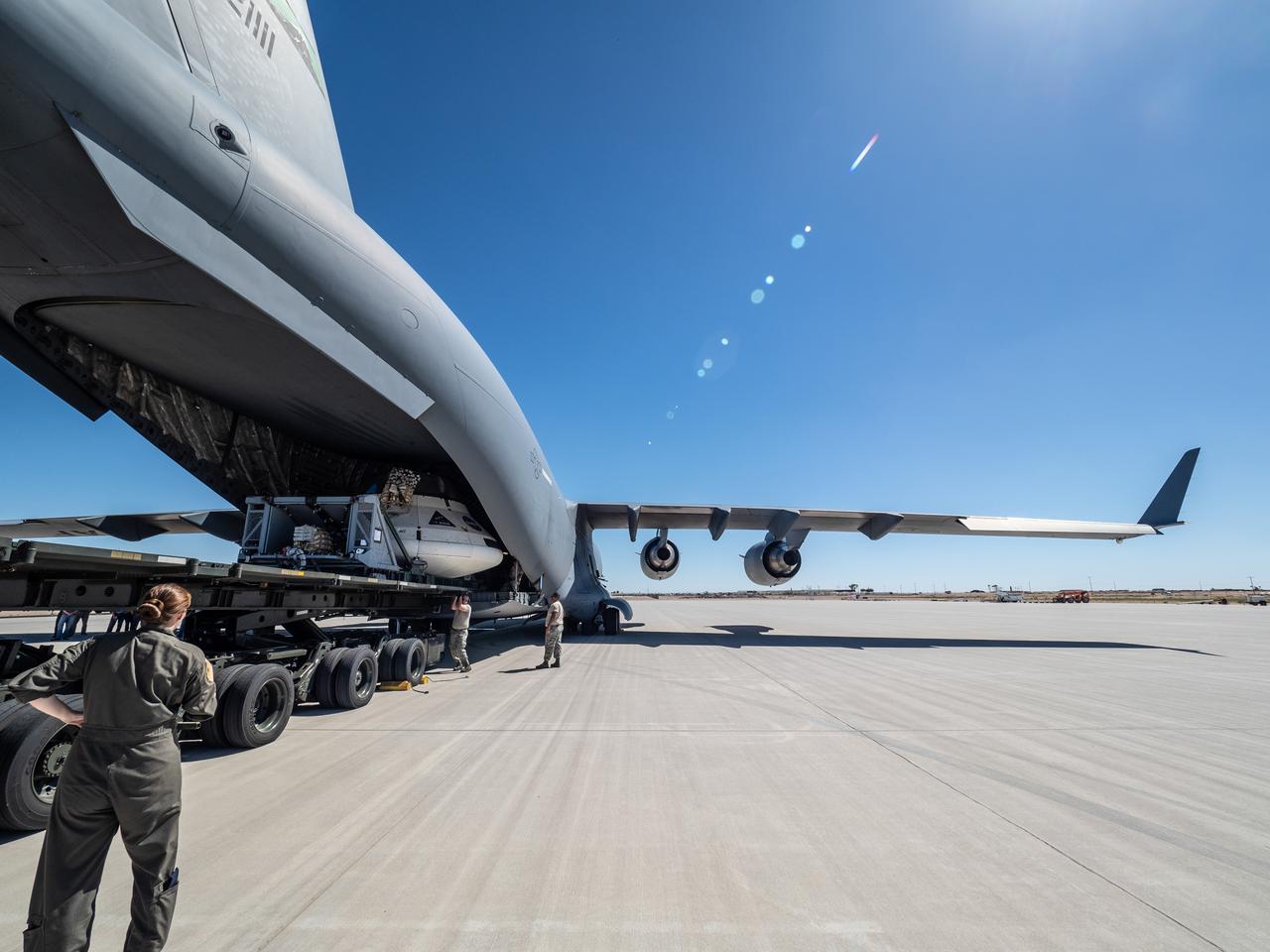
The Orion team prepares the parachute test vehicle for the final drop test which will qualify Orion's parachutes for human flight on Sept. 10, 2018...On September 12, 2018 an Orion test capsule will be dropped from a C-17 aircraft at an altitude of more than six miles to verify the spacecraft’s complex system of 11 parachutes, cannon-like mortars, and pyrotechnic devices work in sequence to slow the capsule’s descent for a safe landing on Earth.
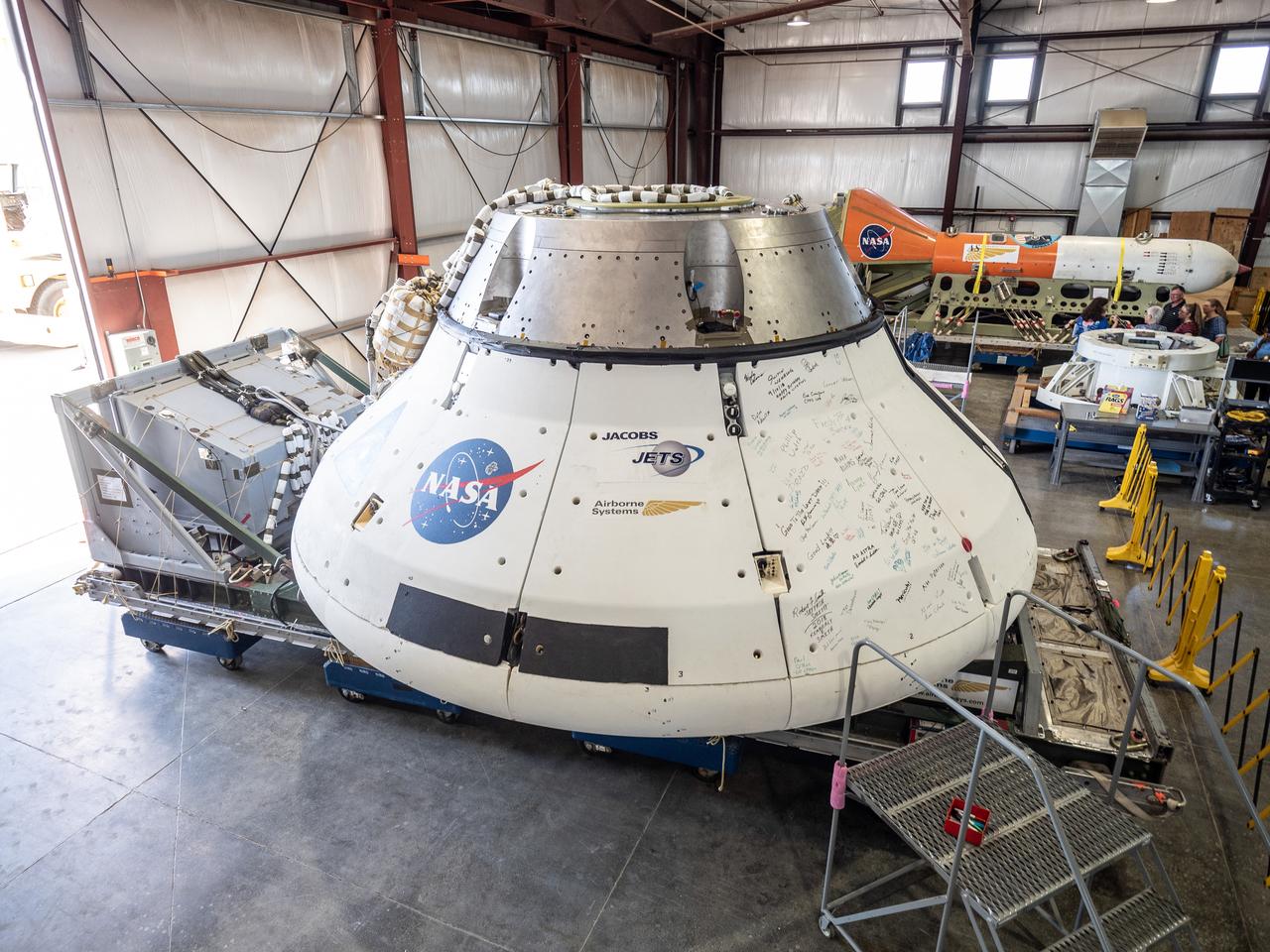
The Orion team prepares the parachute test vehicle for the final drop test which will qualify Orion's parachutes for human flight on Sept. 10, 2018...On September 12, 2018 an Orion test capsule will be dropped from a C-17 aircraft at an altitude of more than six miles to verify the spacecraft’s complex system of 11 parachutes, cannon-like mortars, and pyrotechnic devices work in sequence to slow the capsule’s descent for a safe landing on Earth.
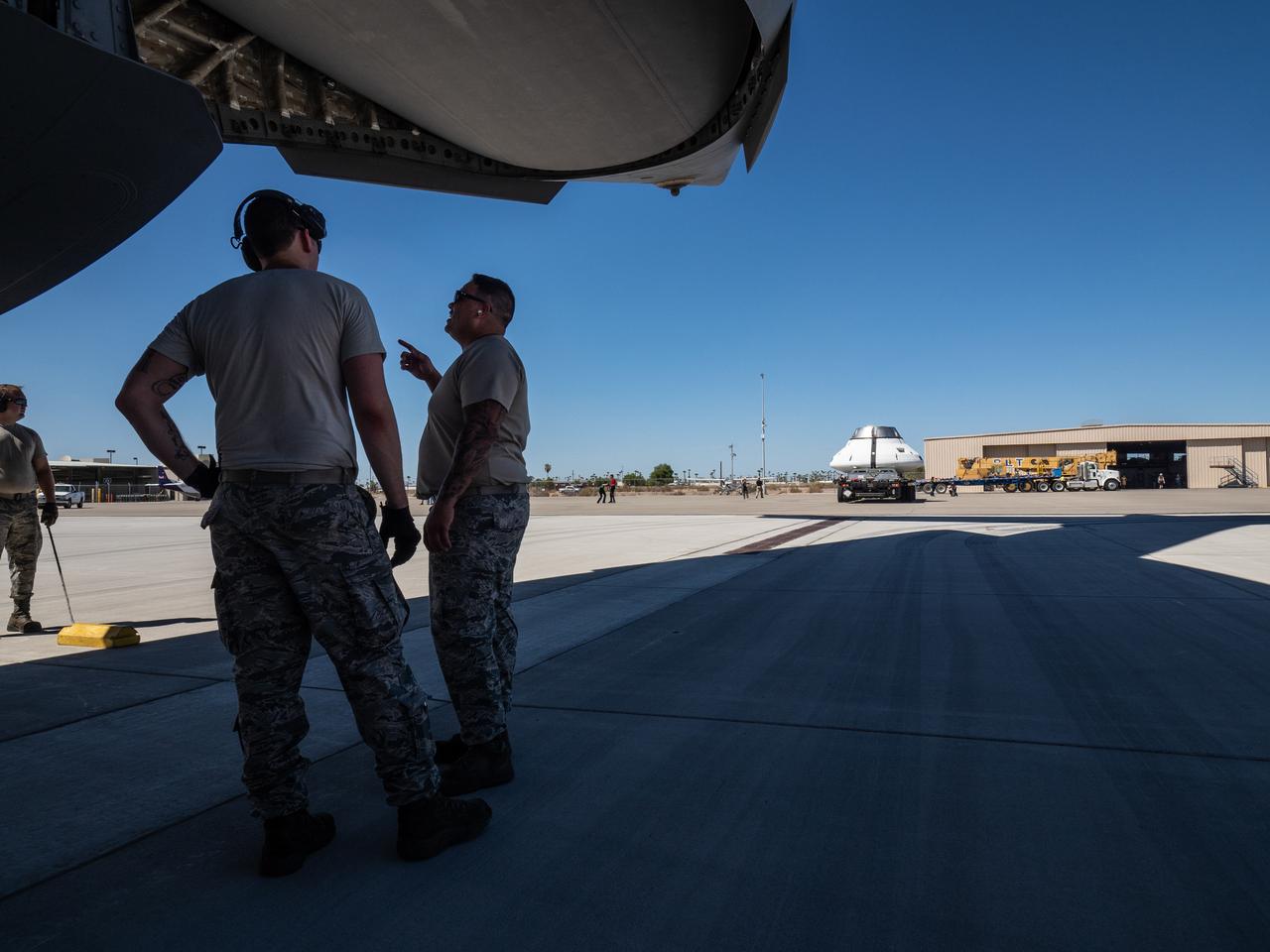
The Orion team prepares the parachute test vehicle for the final drop test which will qualify Orion's parachutes for human flight on Sept. 10, 2018...On September 12, 2018 an Orion test capsule will be dropped from a C-17 aircraft at an altitude of more than six miles to verify the spacecraft’s complex system of 11 parachutes, cannon-like mortars, and pyrotechnic devices work in sequence to slow the capsule’s descent for a safe landing on Earth.
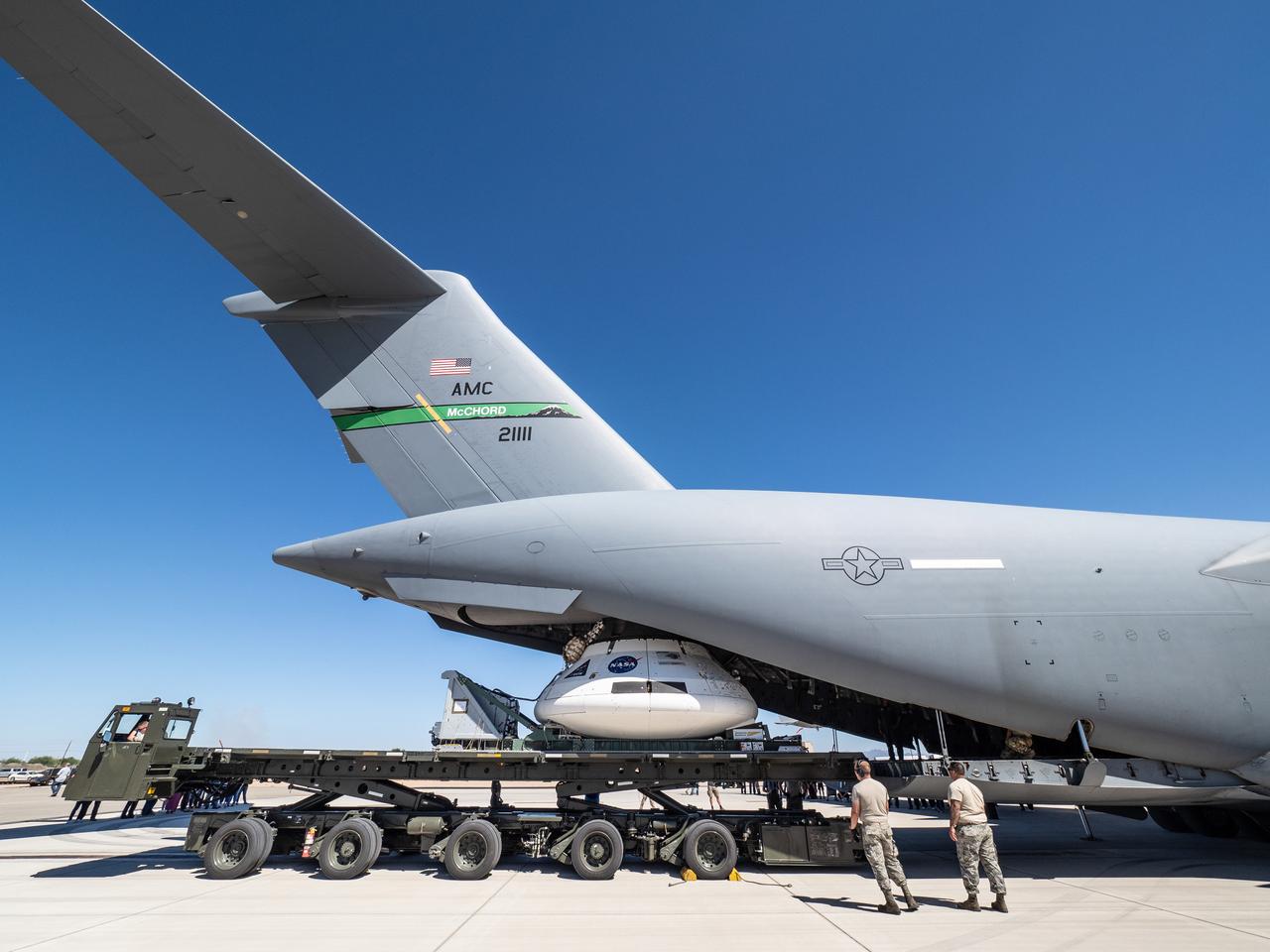
The Orion team prepares the parachute test vehicle for the final drop test which will qualify Orion's parachutes for human flight on Sept. 10, 2018...On September 12, 2018 an Orion test capsule will be dropped from a C-17 aircraft at an altitude of more than six miles to verify the spacecraft’s complex system of 11 parachutes, cannon-like mortars, and pyrotechnic devices work in sequence to slow the capsule’s descent for a safe landing on Earth.
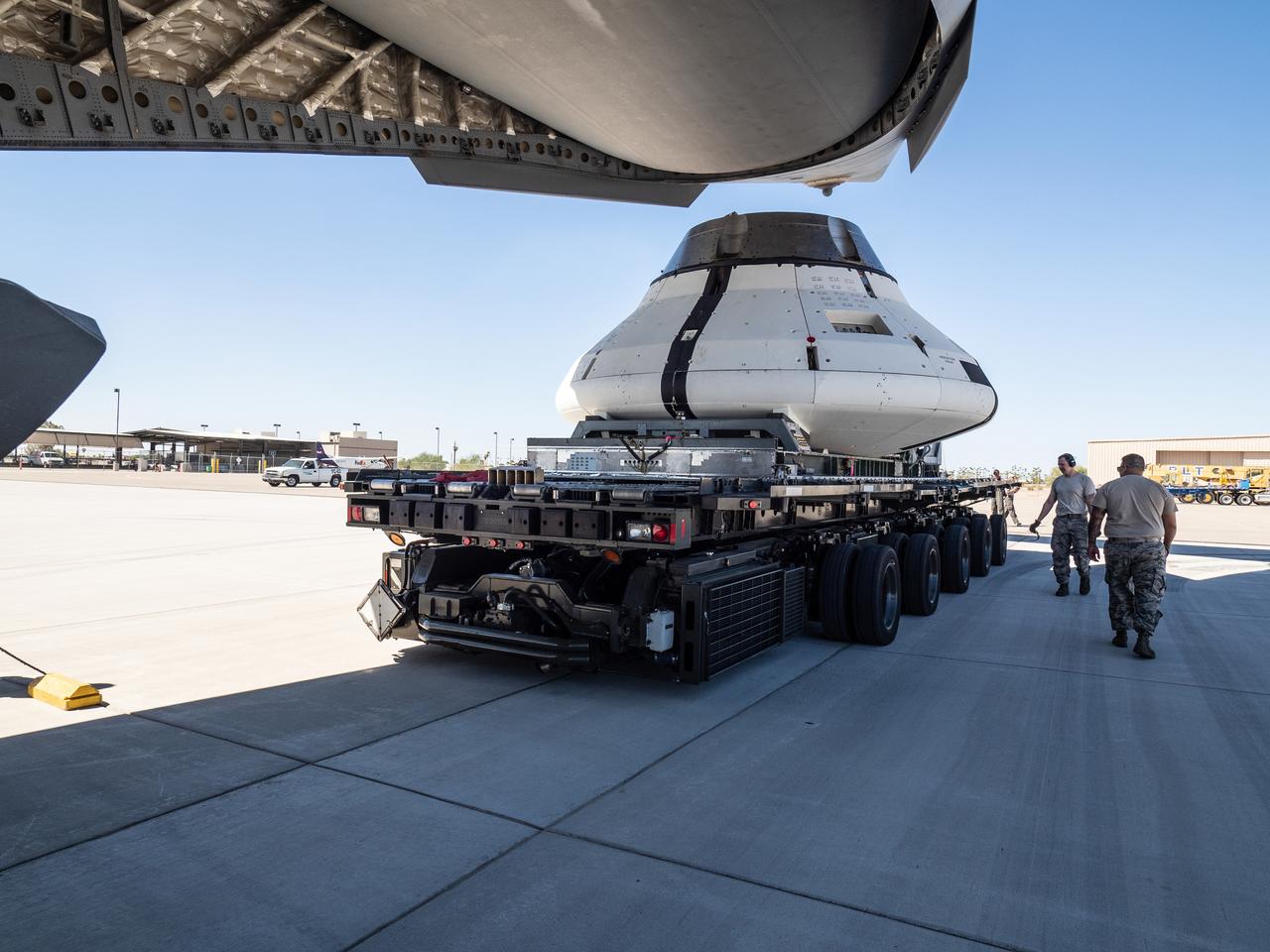
The Orion team prepares the parachute test vehicle for the final drop test which will qualify Orion's parachutes for human flight on Sept. 10, 2018...On September 12, 2018 an Orion test capsule will be dropped from a C-17 aircraft at an altitude of more than six miles to verify the spacecraft’s complex system of 11 parachutes, cannon-like mortars, and pyrotechnic devices work in sequence to slow the capsule’s descent for a safe landing on Earth.
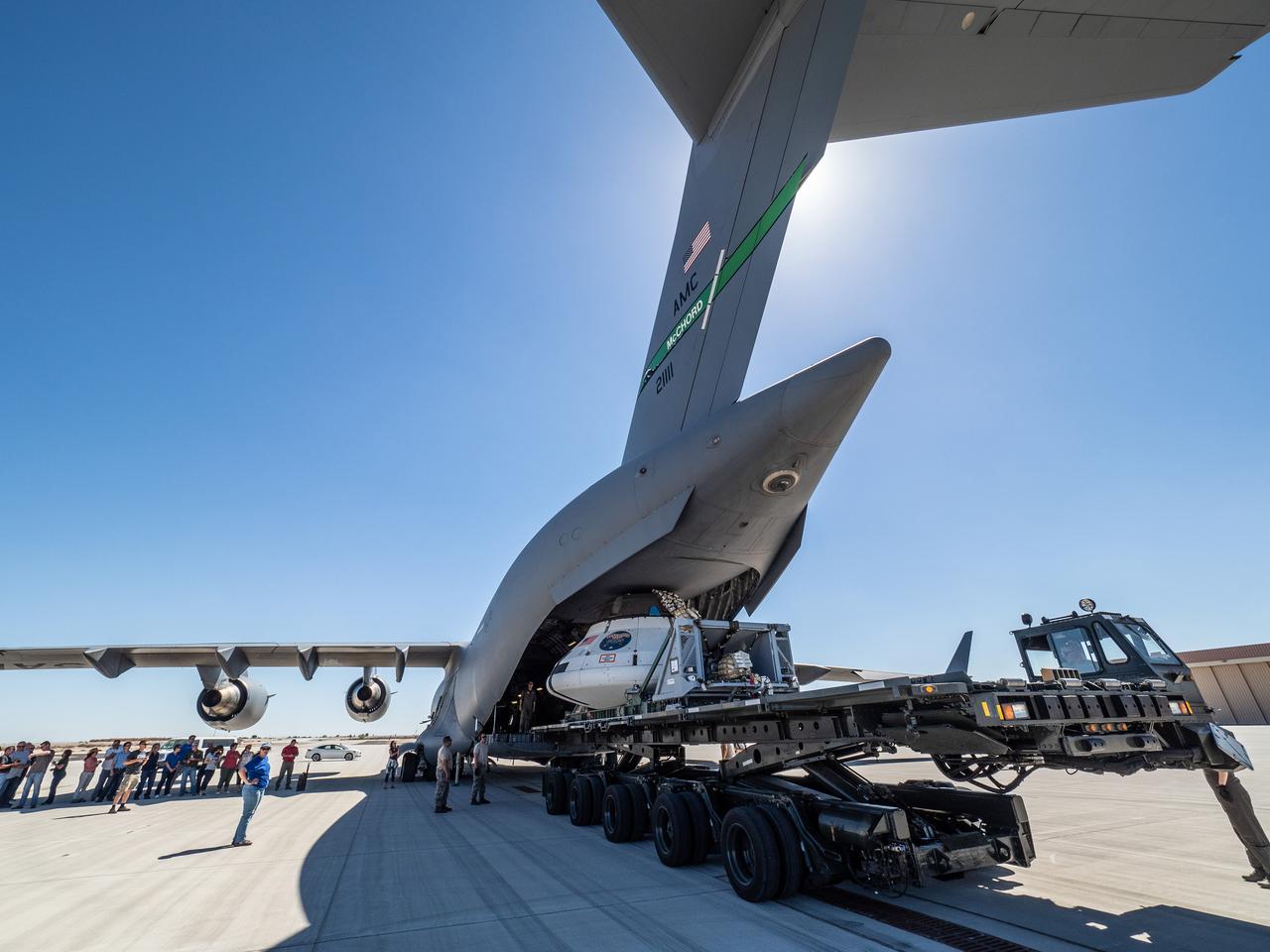
The Orion team prepares the parachute test vehicle for the final drop test which will qualify Orion's parachutes for human flight on Sept. 10, 2018...On September 12, 2018 an Orion test capsule will be dropped from a C-17 aircraft at an altitude of more than six miles to verify the spacecraft’s complex system of 11 parachutes, cannon-like mortars, and pyrotechnic devices work in sequence to slow the capsule’s descent for a safe landing on Earth.
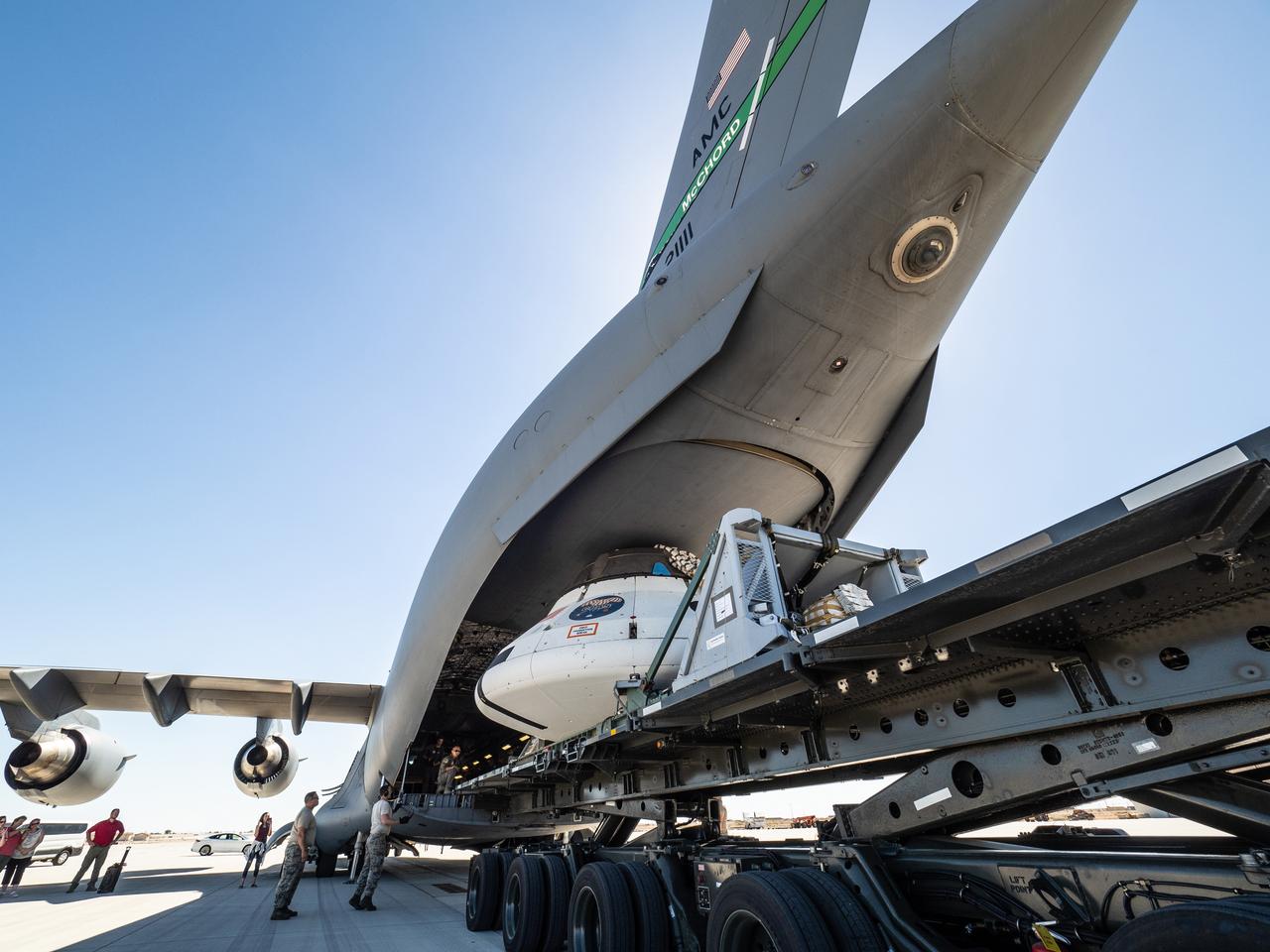
The Orion team prepares the parachute test vehicle for the final drop test which will qualify Orion's parachutes for human flight on Sept. 10, 2018...On September 12, 2018 an Orion test capsule will be dropped from a C-17 aircraft at an altitude of more than six miles to verify the spacecraft’s complex system of 11 parachutes, cannon-like mortars, and pyrotechnic devices work in sequence to slow the capsule’s descent for a safe landing on Earth.
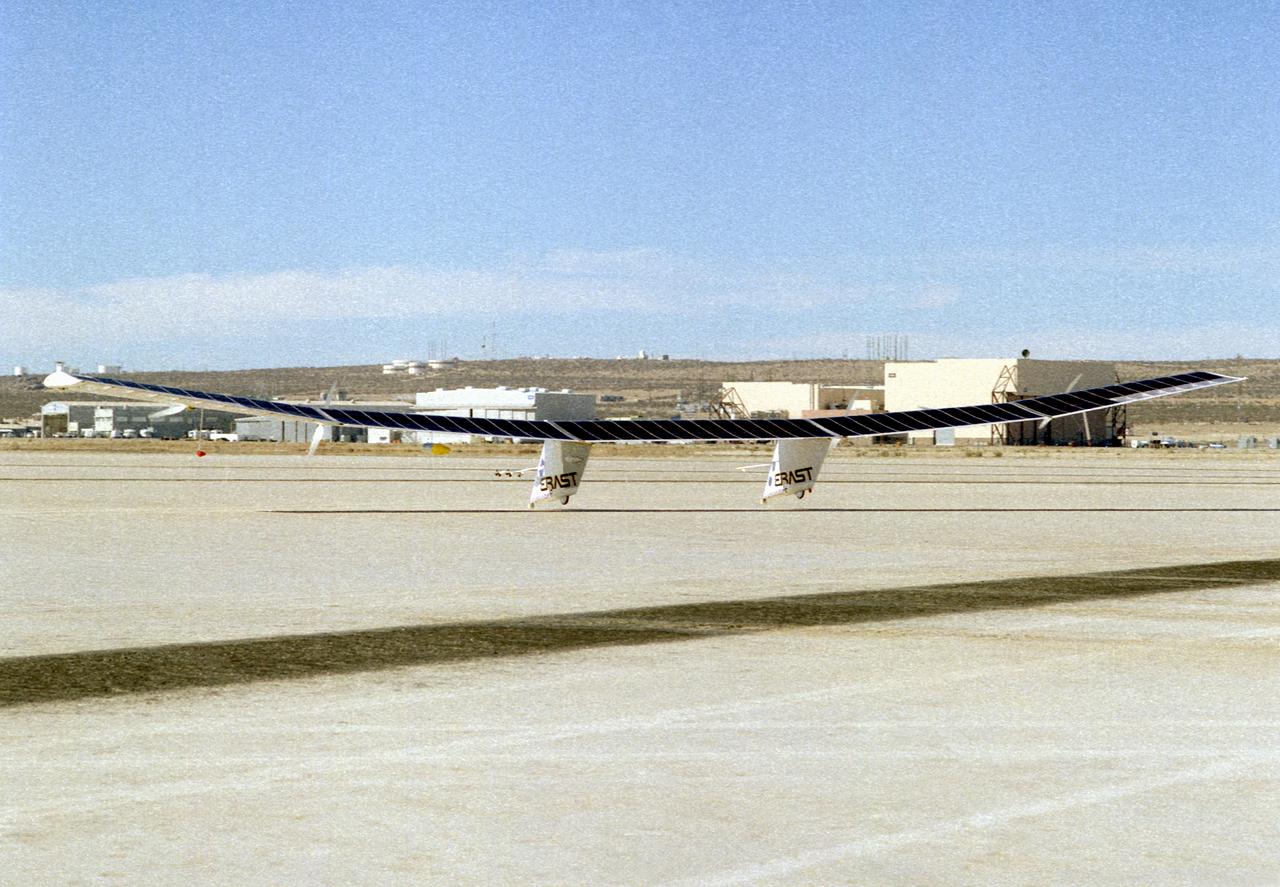
The Pathfinder research aircraft's solar cell arrays are prominently displayed as it touches down on the bed of Rogers Dry Lake at the Dryden Flight Research Center, Edwards, California, following a test flight. The solar arrays covered more than 75 percent of Pathfinder's upper wing surface, and provided electricity to power its six electric motors, flight controls, communications links and a host of scientific sensors.
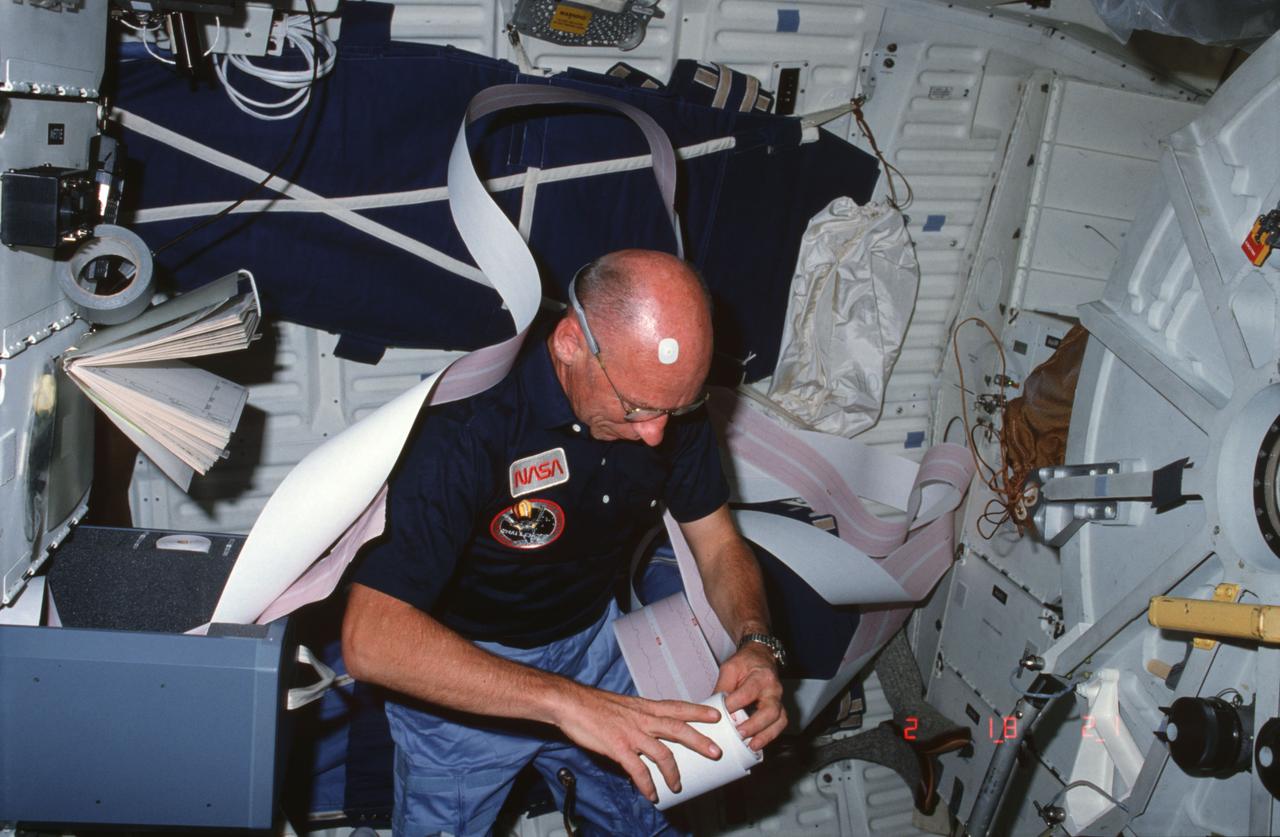
STS008-14-378 (30 Aug-5 Sept 1983) --- Astronaut William E. Thornton, a very busy mission specialist conducting a great deal of bio-medical experimentation, checks a prolific roll of data in the mid deck of the Earth-orbiting Space Shuttle Challenger. The electrode on Dr. Thornton’s forehead indicates that his four crewmates were not his only test subjects during the extensive test on this six-day flight.

Outlined with gold stripes are the hinged nose strakes, modifications made to NASA's F-18 HARV (High Alpha Research Vehicle) at the Dryden Flight Research Center, Edwards, California. Actuated Nose Strakes for Enhanced Rolling (ANSER) were installed to fly the third and final phase in the HARV flight test project. Normally folded flush, the units -- four feet long and six inches wide -- can be opened independently to interact with the nose vortices to produce large side forces for control. Early wind tunnel tests indicated that the strakes would be as effective in yaw control at high angles of attack as rudders are at lower angles. Testing involved evaluation of the strakes by themselves as well as combined with the aircraft's Thrust Vectoring System. The strakes were designed by NASA's Langley Research Center, then installed and flight tested at Dryden.
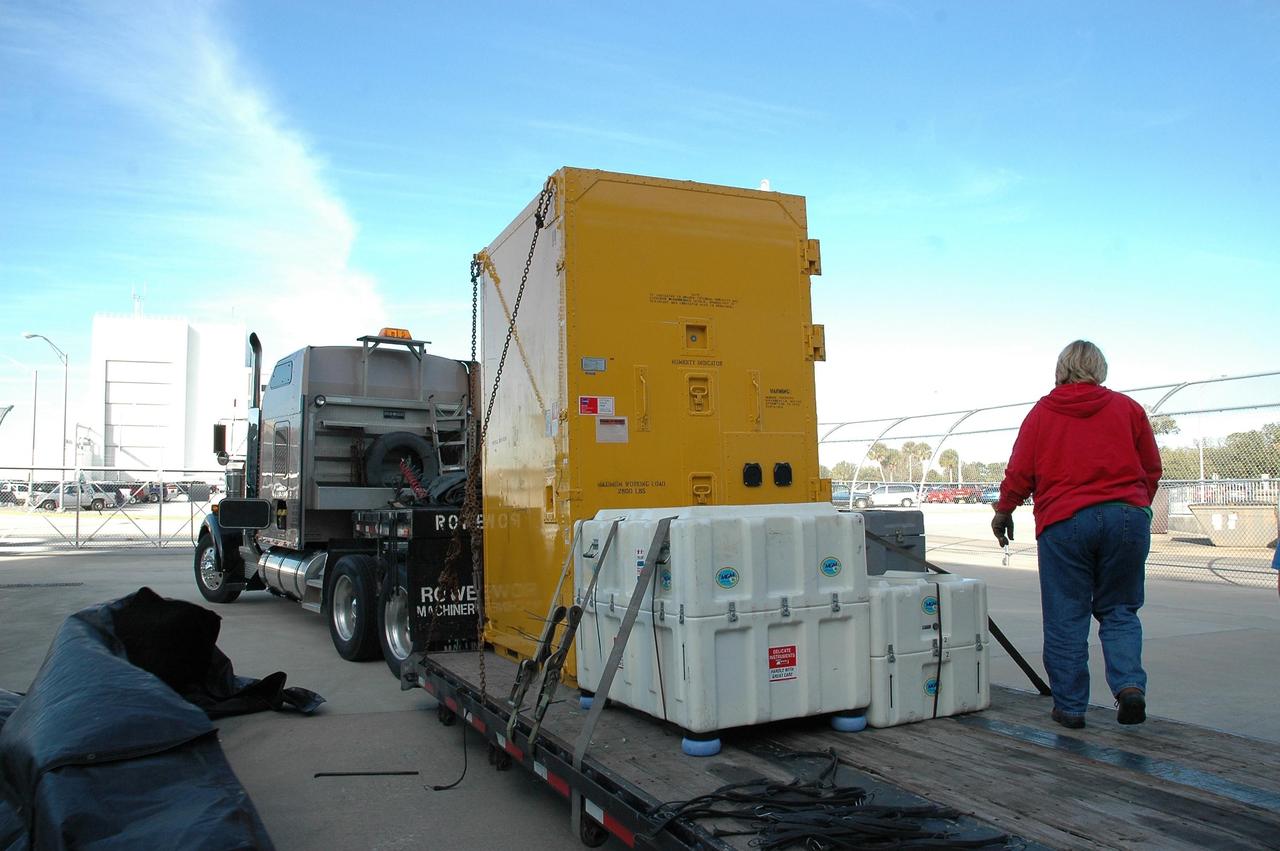
KENNEDY SPACE CENTER, FLA. — A truck arrives at NASA Kennedy Space Center carrying a new environmental control and life support system. The life support system is part of the payload on the second return-to-flight test mission, STS-121, aboard space shuttle Discovery to the International Space Station. The system will add to the station’s oxygen-making capabilities and could provide enough oxygen for up to six people. Managed by Marshall Space Flight Center in Huntsville, the system was built by Hamilton Sundstrand Corp. in Connecticut. Discovery will carry more than two tons of equipment and supplies to the station. This second return-to-flight test mission is to carry on analysis of safety improvements that debuted on the first return-to-flight mission, STS-114, and build upon those tests. The launch is targeted for a date no earlier than May. Photo credit: NASA/Jack Pfaller
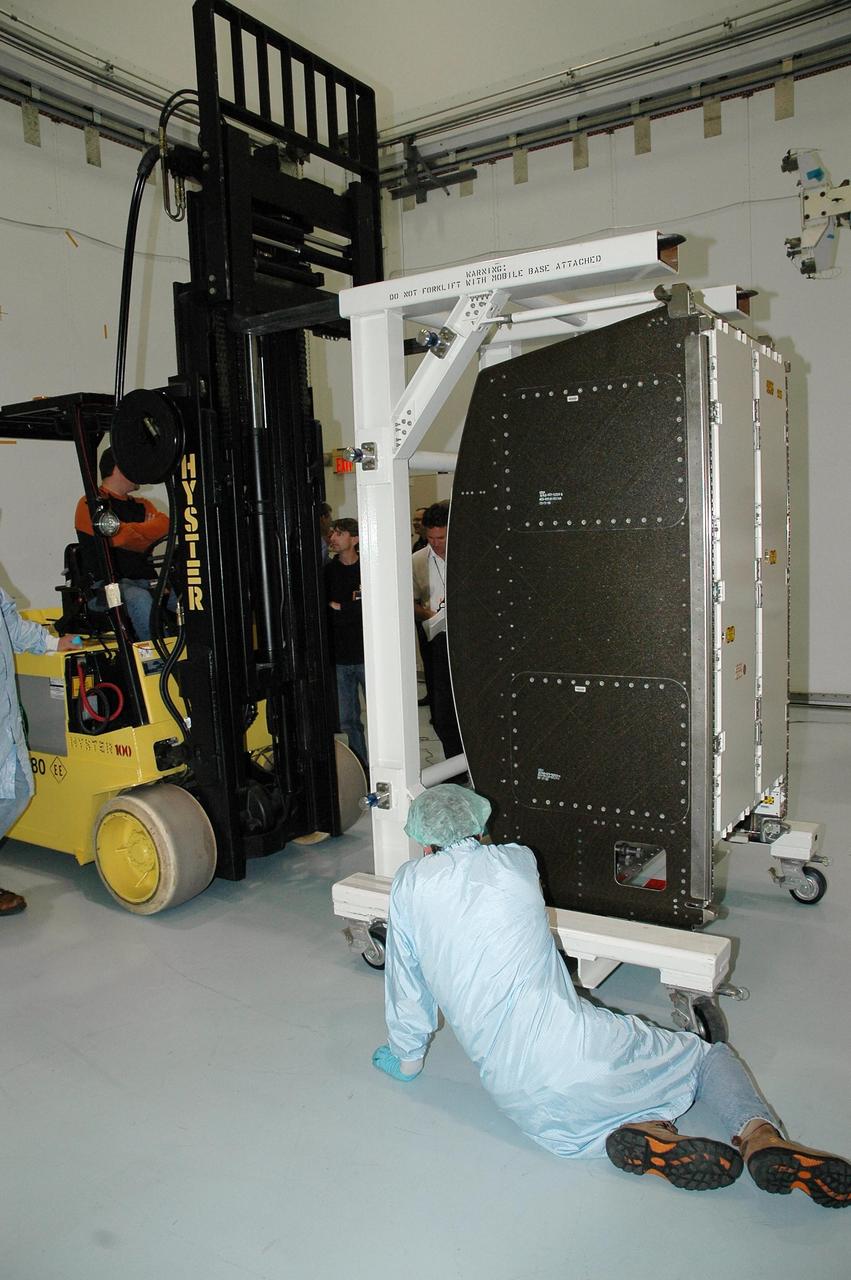
KENNEDY SPACE CENTER, FLA. — At NASA Kennedy Space Center, a new environmental control and life support system is moved into the Space Station Processing Facility after being removed from its shipping container. The life support system is part of the payload on the second return-to-flight test mission, STS-121, aboard space shuttle Discovery to the International Space Station. The system will add to the station’s oxygen-making capabilities and could provide enough oxygen for up to six people. Managed by Marshall Space Flight Center in Huntsville, the system was built by Hamilton Sundstrand Corp. in Connecticut. Discovery will carry more than two tons of equipment and supplies to the station. This second return-to-flight test mission is to carry on analysis of safety improvements that debuted on the first return-to-flight mission, STS-114, and build upon those tests. The launch is targeted for a date no earlier than May. Photo credit: NASA/Jack Pfaller
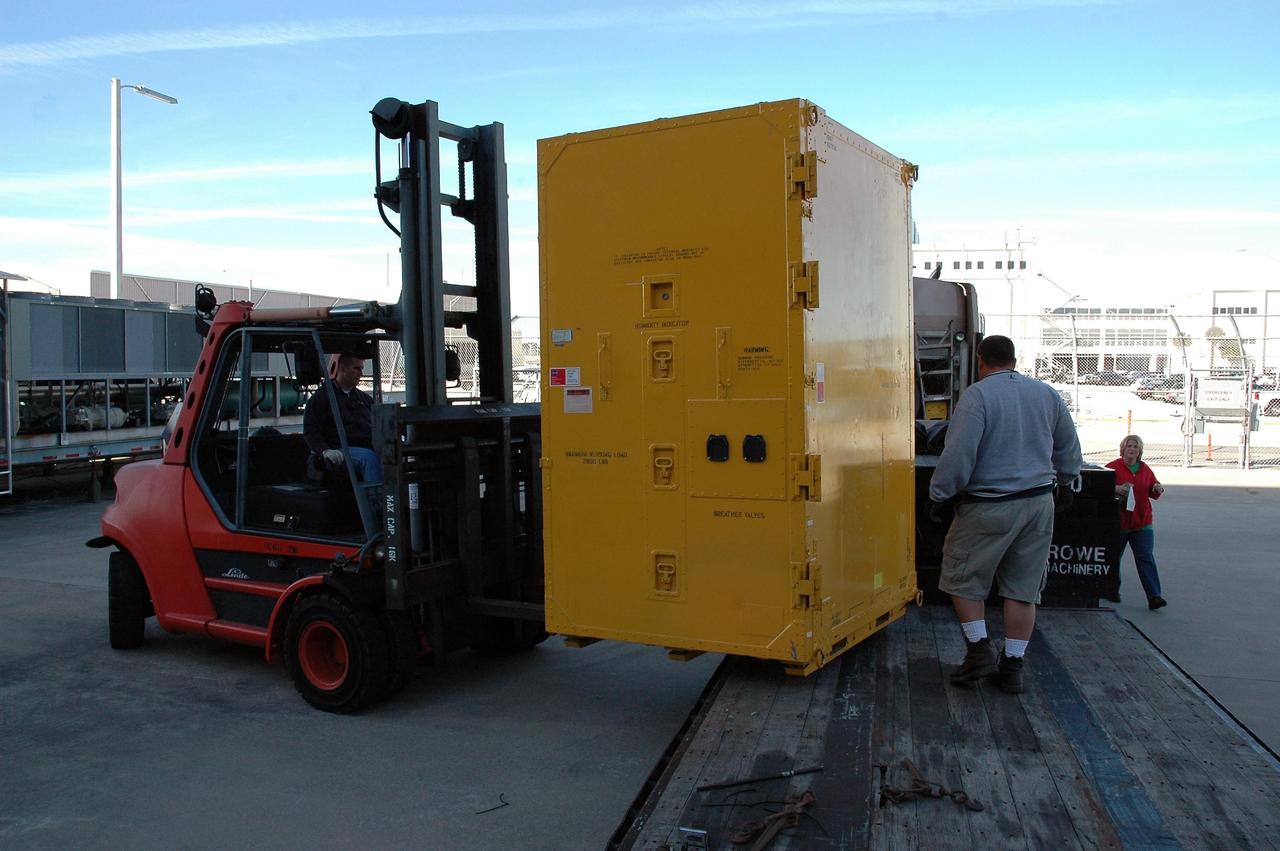
KENNEDY SPACE CENTER, FLA. — At NASA Kennedy Space Center, a new environmental control and life support system is offloaded from a truck. The life support system is part of the payload on the second return-to-flight test mission, STS-121, aboard space shuttle Discovery to the International Space Station. The system will add to the station’s oxygen-making capabilities and could provide enough oxygen for up to six people. Managed by Marshall Space Flight Center in Huntsville, the system was built by Hamilton Sundstrand Corp. in Connecticut. Discovery will carry more than two tons of equipment and supplies to the station. This second return-to-flight test mission is to carry on analysis of safety improvements that debuted on the first return-to-flight mission, STS-114, and build upon those tests. The launch is targeted for a date no earlier than May. Photo credit: NASA/Jack Pfaller
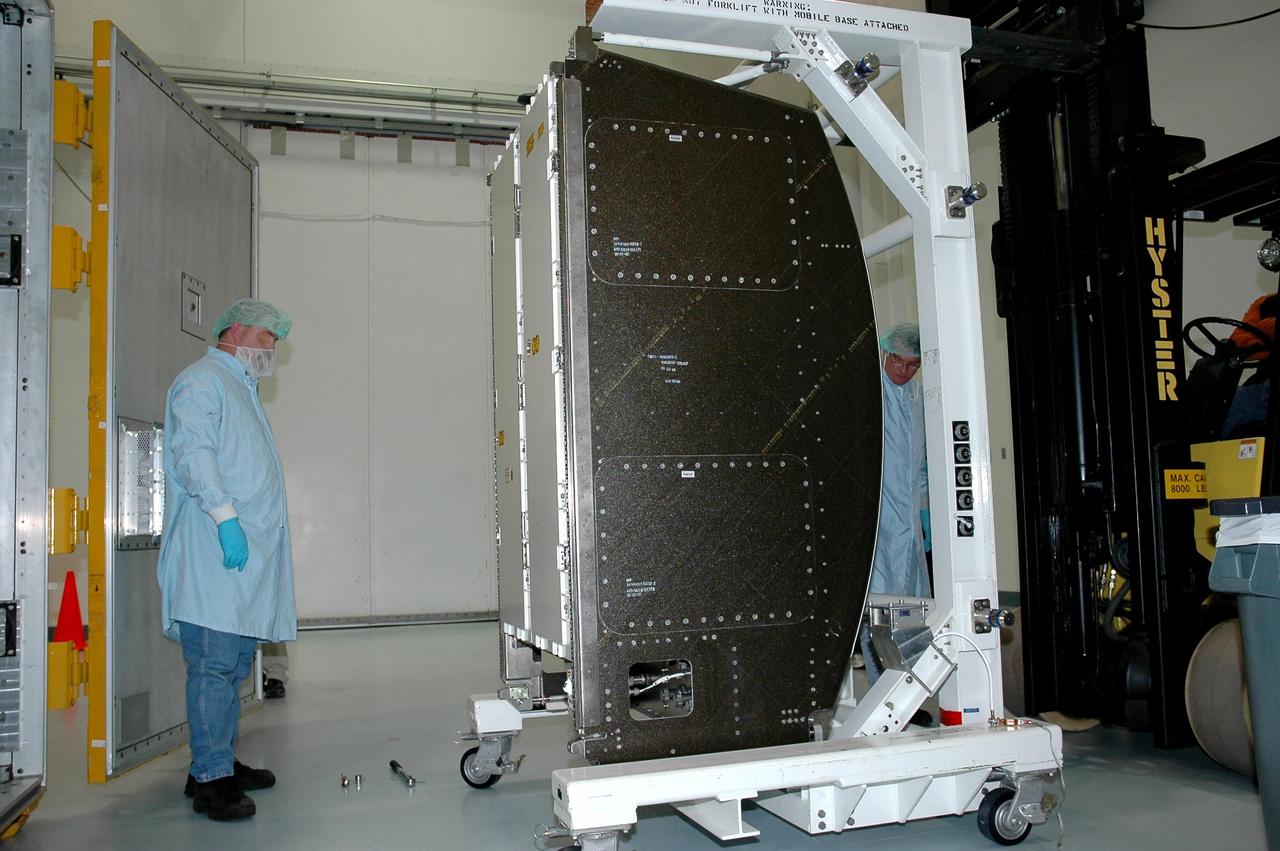
KENNEDY SPACE CENTER, FLA. — At NASA Kennedy Space Center, a new environmental control and life support system is moved into the Space Station Processing Facility. The life support system is part of the payload on the second return-to-flight test mission, STS-121, aboard space shuttle Discovery to the International Space Station. The system will add to the station’s oxygen-making capabilities and could provide enough oxygen for up to six people. Managed by Marshall Space Flight Center in Huntsville, the system was built by Hamilton Sundstrand Corp. in Connecticut. Discovery will carry more than two tons of equipment and supplies to the station. This second return-to-flight test mission is to carry on analysis of safety improvements that debuted on the first return-to-flight mission, STS-114, and build upon those tests. The launch is targeted for a date no earlier than May. Photo credit: NASA/Jack Pfaller
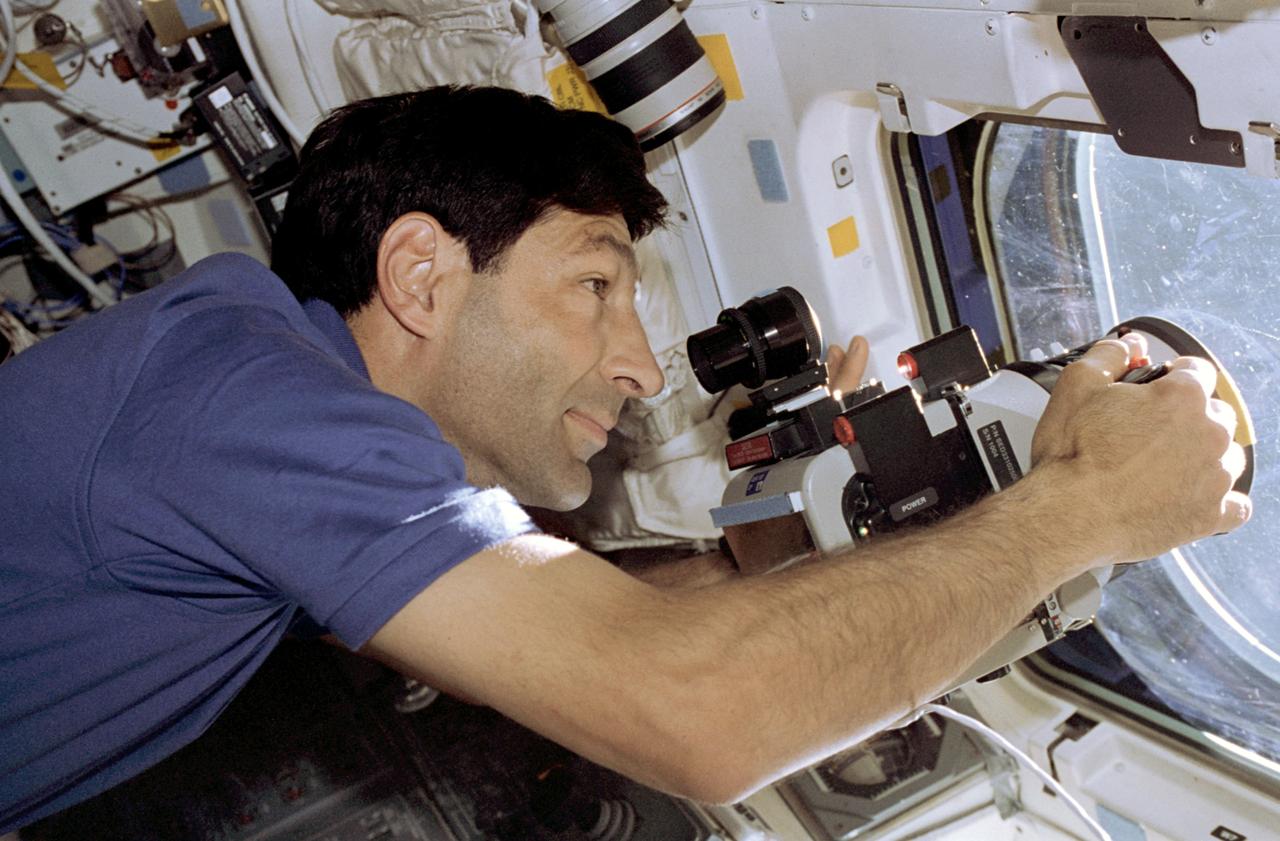
STS077-372-020 (19-29 May 1996) --- On the Space Shuttle Endeavour?s aft flight deck, astronaut Mario Runco, Jr., mission specialist, uses a large format camera during station keeping operations with the Passive Aerodynamically Stabilized Magnetically Damped Satellite (PAMS)/Satellite Test Unit (STU). During the flight, the six-member crew was involved in deployment and rendezvous operations with the Spartan 207/Inflatable Antenna Experiment (IAE) as well as the PAMS/STU.
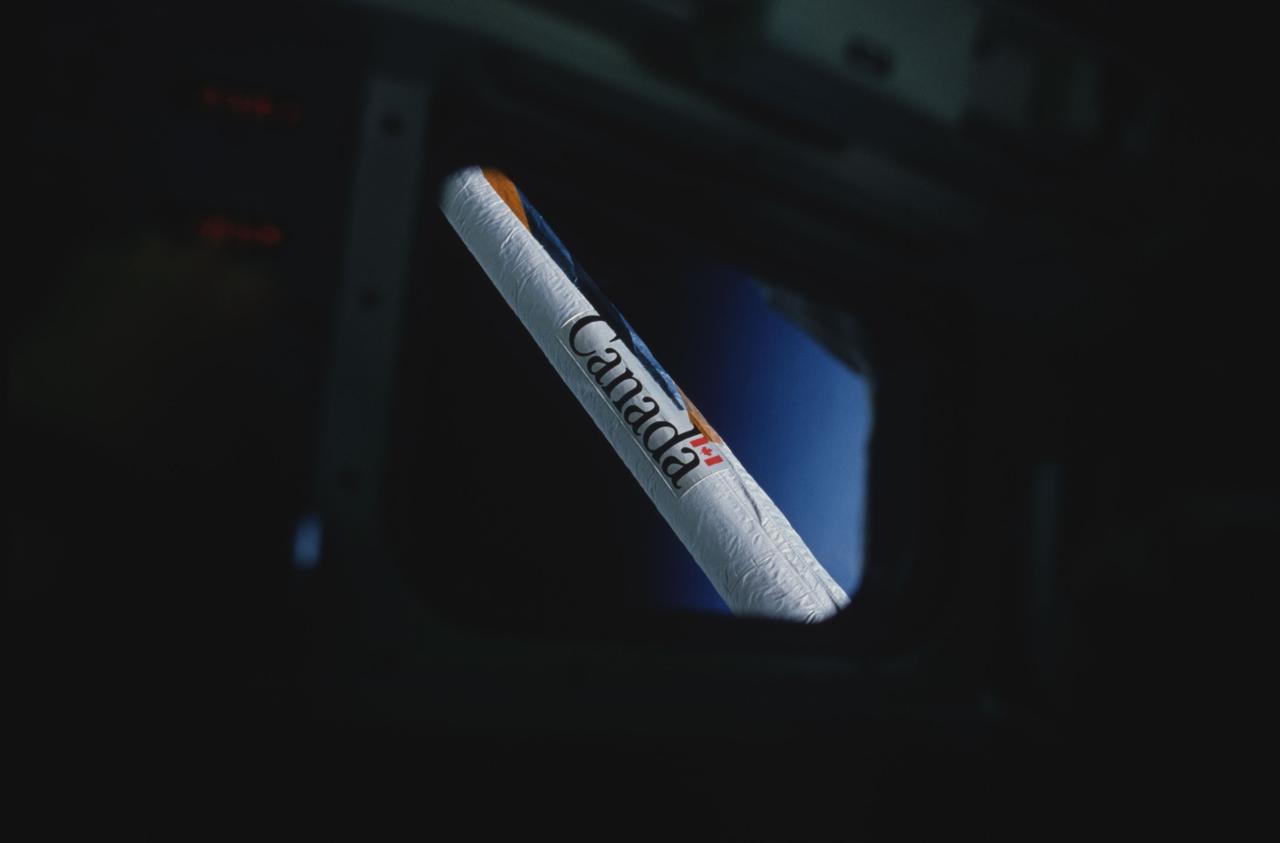
STS008-04-098 (30 Aug-5 Sept 1983) --- A portion of the Canadian-built remote manipulator system (RMS) arm is centered in this frame, photographed through a window on the flight deck of the Earth-orbiting Space Shuttle Challenger. The arm was getting a workout with the payload flight test article (PFTA), which joined the five-member astronaut crew on the six-day mission in space.
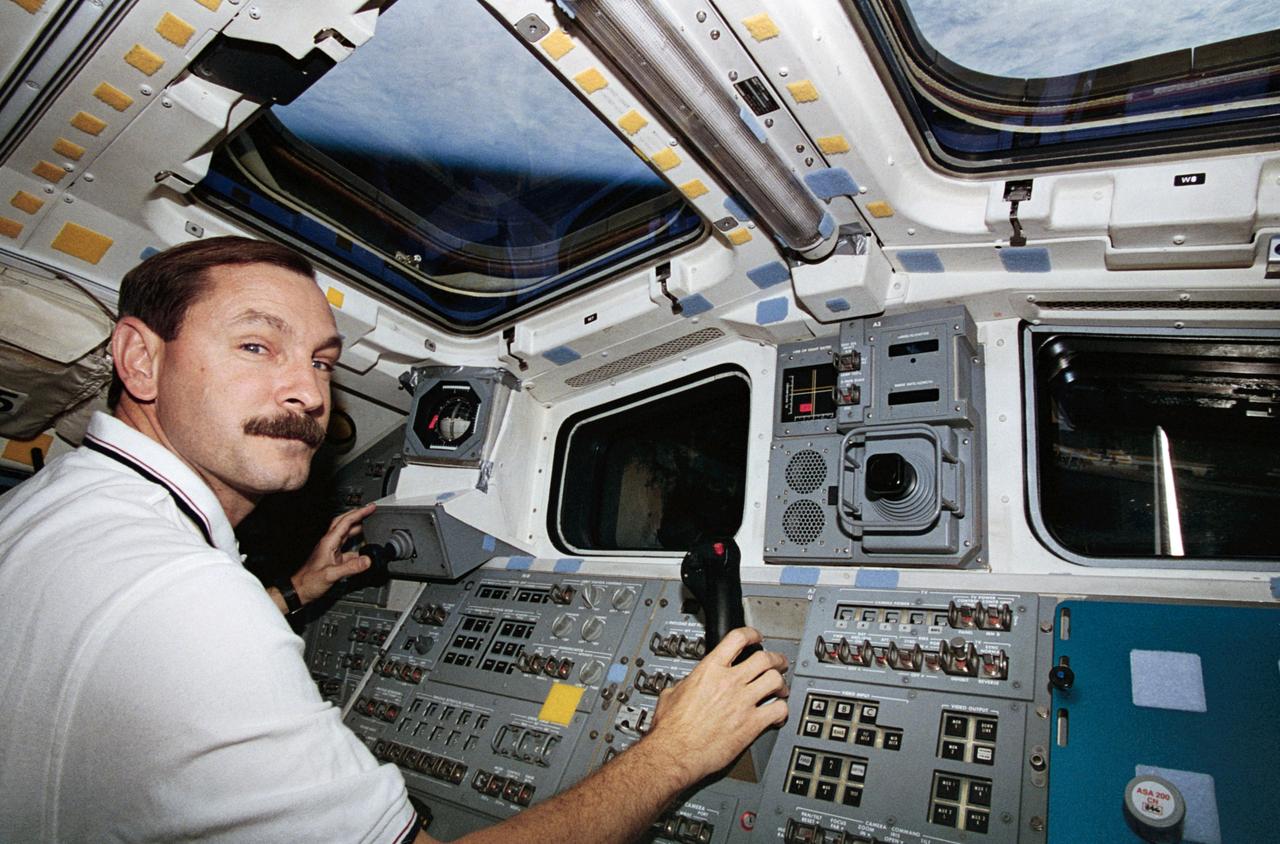
STS077-312-015 (19-29 May 1996) --- Astronaut Curtis L. Brown, Jr., pilot, mans the controls for the Remote Manipulator System (RMS) on the Space Shuttle Endeavour?s aft flight deck during rendezvous operations. During the flight, the six-member crew was involved in deployment and rendezvous operations with the Spartan 207/Inflatable Antenna Experiment (IAE) as well as the Passive Aerodynamically Stabilized Magnetically Damped Satellite (PAMS)/Satellite Test Unit (STU).
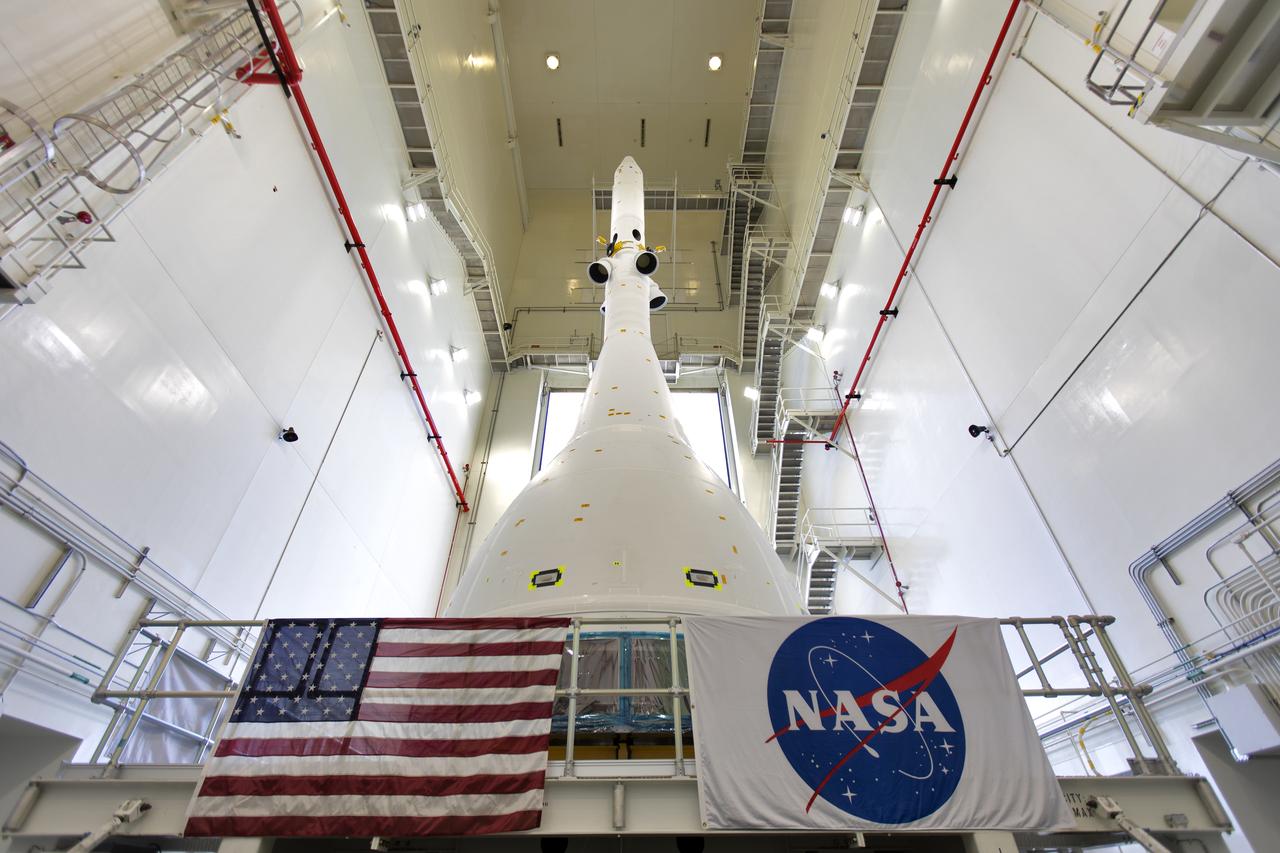
The test version of Orion attached to the Launch Abort System for the Ascent Abort-2 (AA-2) flight test exits the Launch Abort System Facility at NASA’s Kennedy Space Center in Florida on May 22, 2019. The flight test article will make the 21.5 mile trek to Space Launch Complex 46 at Cape Canaveral Air Force Station in preparation for its launch this summer. During AA-2, a test version of Orion will launch on a booster to more than six miles in altitude, where Orion’s launch abort system will pull the capsule and its crew away to safety if an emergency occurs during ascent on the Space Launch System rocket. The AA-2 elements will be stacked together at the launch pad over the next several weeks. The launch is planned for July 2 and is a critical safety test that helps pave the way for Artemis missions near the Moon, and will enable astronauts to set foot on the lunar surface by 2024.
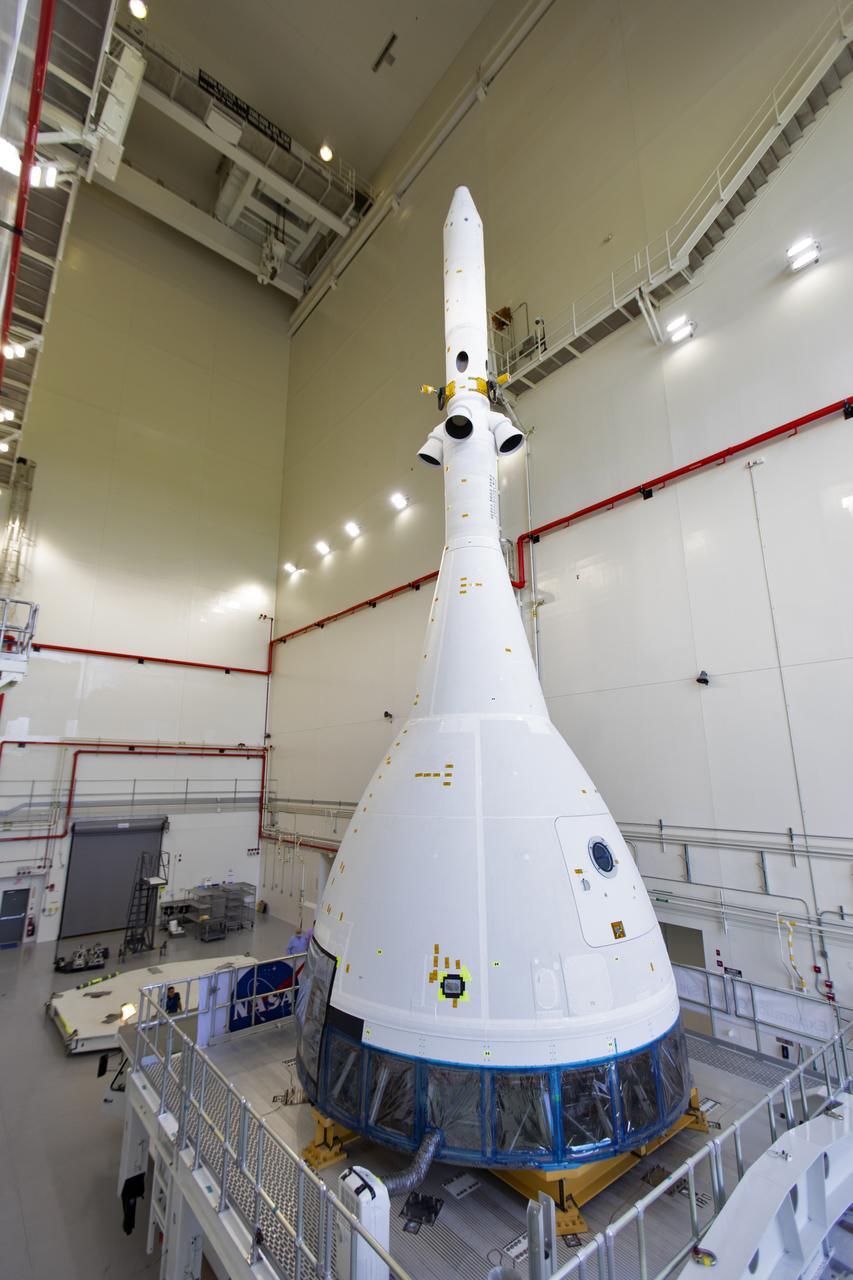
The test version of Orion attached to the Launch Abort System for the Ascent Abort-2 (AA-2) flight test is ready to exit the Launch Abort System Facility at NASA’s Kennedy Space Center in Florida on May 22, 2019. The flight test article will make the 21.5 mile trek to Space Launch Complex 46 at Cape Canaveral Air Force Station in preparation for its launch this summer. During AA-2, a test version of Orion will launch on a booster to more than six miles in altitude, where Orion’s launch abort system will pull the capsule and its crew away to safety if an emergency occurs during ascent on the Space Launch System rocket. The AA-2 elements will be stacked together at the launch pad over the next several weeks. The launch is planned for July 2 and is a critical safety test that helps pave the way for Artemis missions near the Moon, and will enable astronauts to set foot on the lunar surface by 2024.
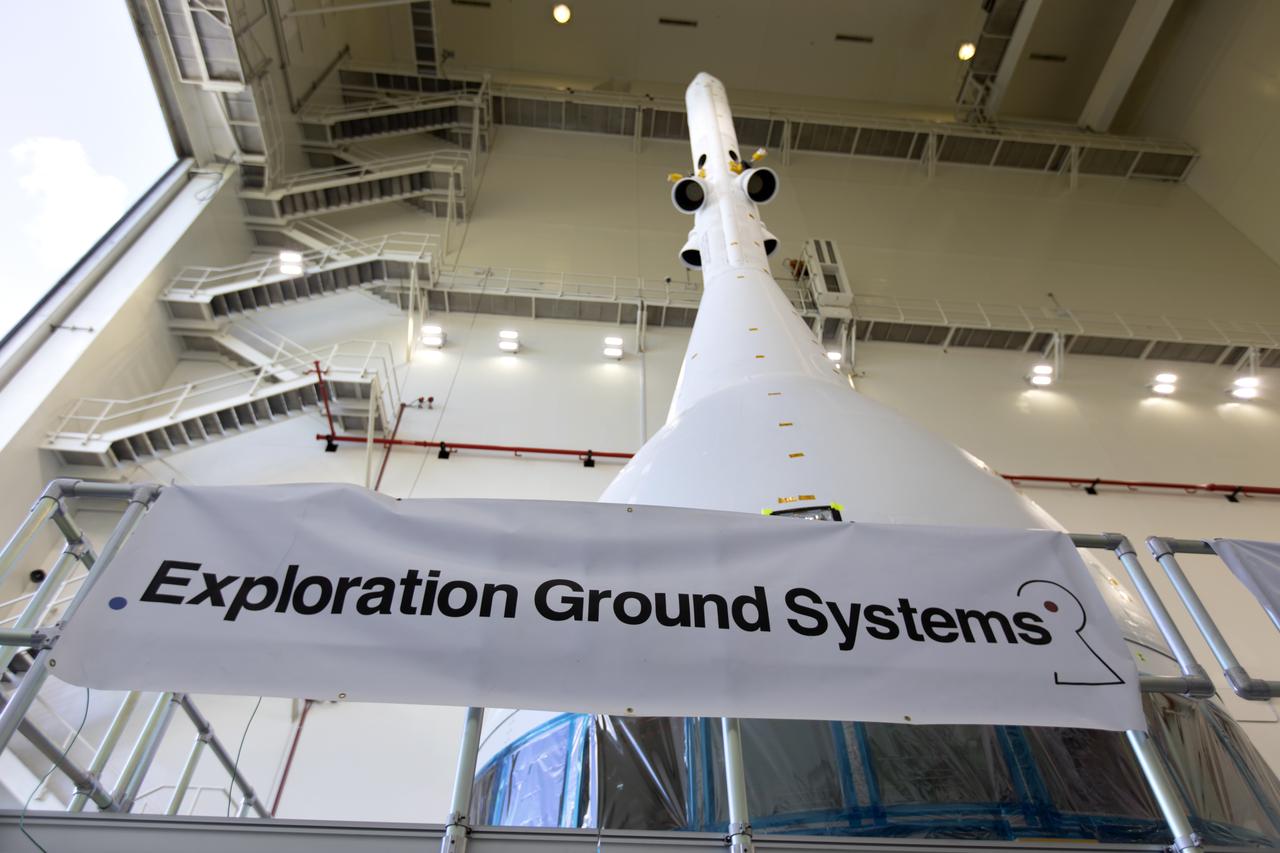
The test version of Orion attached to the Launch Abort System for the Ascent Abort-2 (AA-2) flight test exits the Launch Abort System Facility at NASA’s Kennedy Space Center in Florida on May 22, 2019. The flight test article will make the 21.5 mile trek to Space Launch Complex 46 at Cape Canaveral Air Force Station in preparation for its launch this summer. During AA-2, a test version of Orion will launch on a booster to more than six miles in altitude, where Orion’s launch abort system will pull the capsule and its crew away to safety if an emergency occurs during ascent on the Space Launch System rocket. The AA-2 elements will be stacked together at the launch pad over the next several weeks. The launch is planned for July 2 and is a critical safety test that helps pave the way for Artemis missions near the Moon, and will enable astronauts to set foot on the lunar surface by 2024.

The test version of Orion attached to the Launch Abort System for the Ascent Abort-2 (AA-2) flight test exits the Launch Abort System Facility at NASA’s Kennedy Space Center in Florida on May 22, 2019. The flight test article will make the 21.5 mile trek to Space Launch Complex 46 at Cape Canaveral Air Force Station in preparation for its launch this summer. During AA-2, a test version of Orion will launch on a booster to more than six miles in altitude, where Orion’s launch abort system will pull the capsule and its crew away to safety if an emergency occurs during ascent on the Space Launch System rocket. The AA-2 elements will be stacked together at the launch pad over the next several weeks. The launch is planned for July 2 and is a critical safety test that helps pave the way for Artemis missions near the Moon, and will enable astronauts to set foot on the lunar surface by 2024.
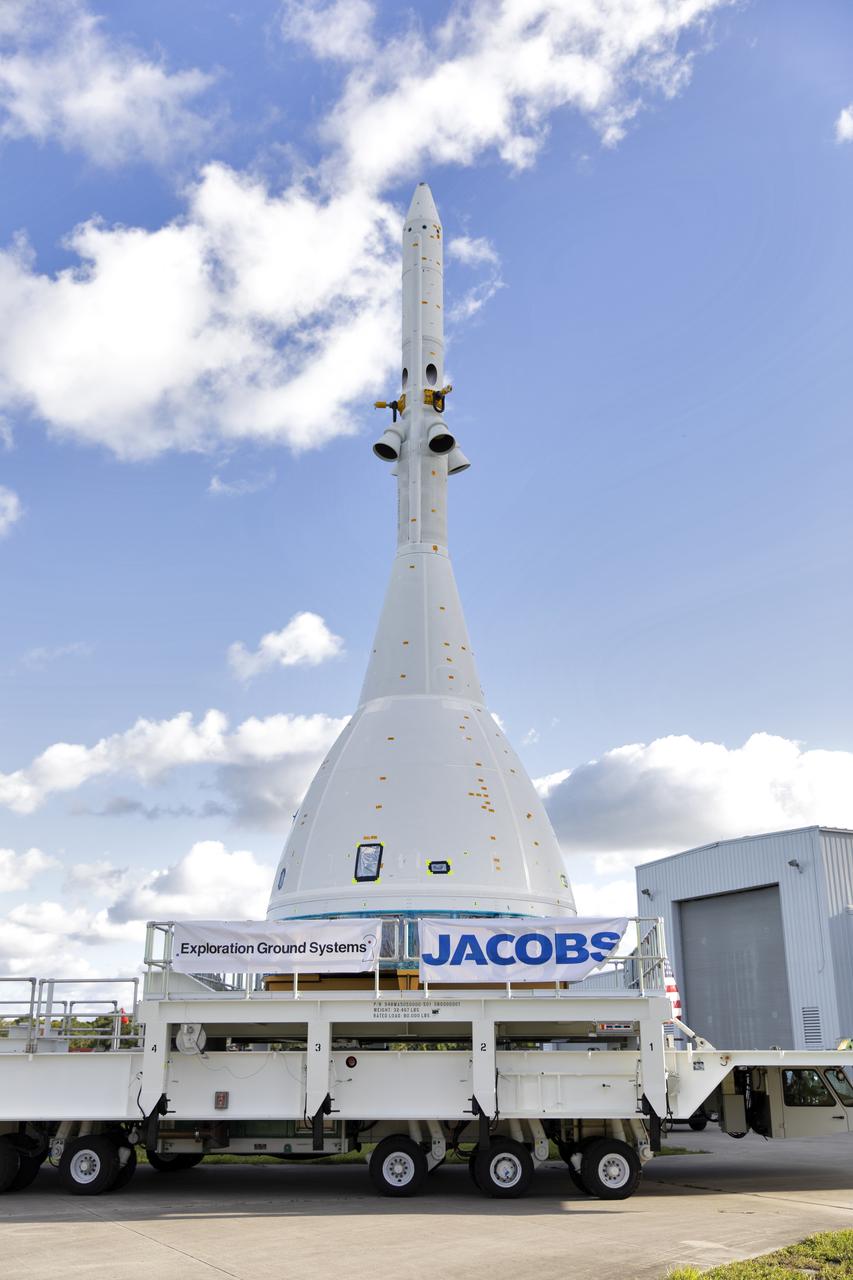
The test version of Orion attached to the Launch Abort System for the Ascent Abort-2 (AA-2) flight test exited the Launch Abort System Facility at NASA’s Kennedy Space Center in Florida on May 22, 2019. The flight test article will make the 21.5 mile trek to Space Launch Complex 46 at Cape Canaveral Air Force Station in preparation for its launch this summer. During AA-2, a test version of Orion will launch on a booster to more than six miles in altitude, where Orion’s launch abort system will pull the capsule and its crew away to safety if an emergency occurs during ascent on the Space Launch System rocket. The AA-2 elements will be stacked together at the launch pad over the next several weeks. The launch is planned for July 2 and is a critical safety test that helps pave the way for Artemis missions near the Moon, and will enable astronauts to set foot on the lunar surface by 2024.
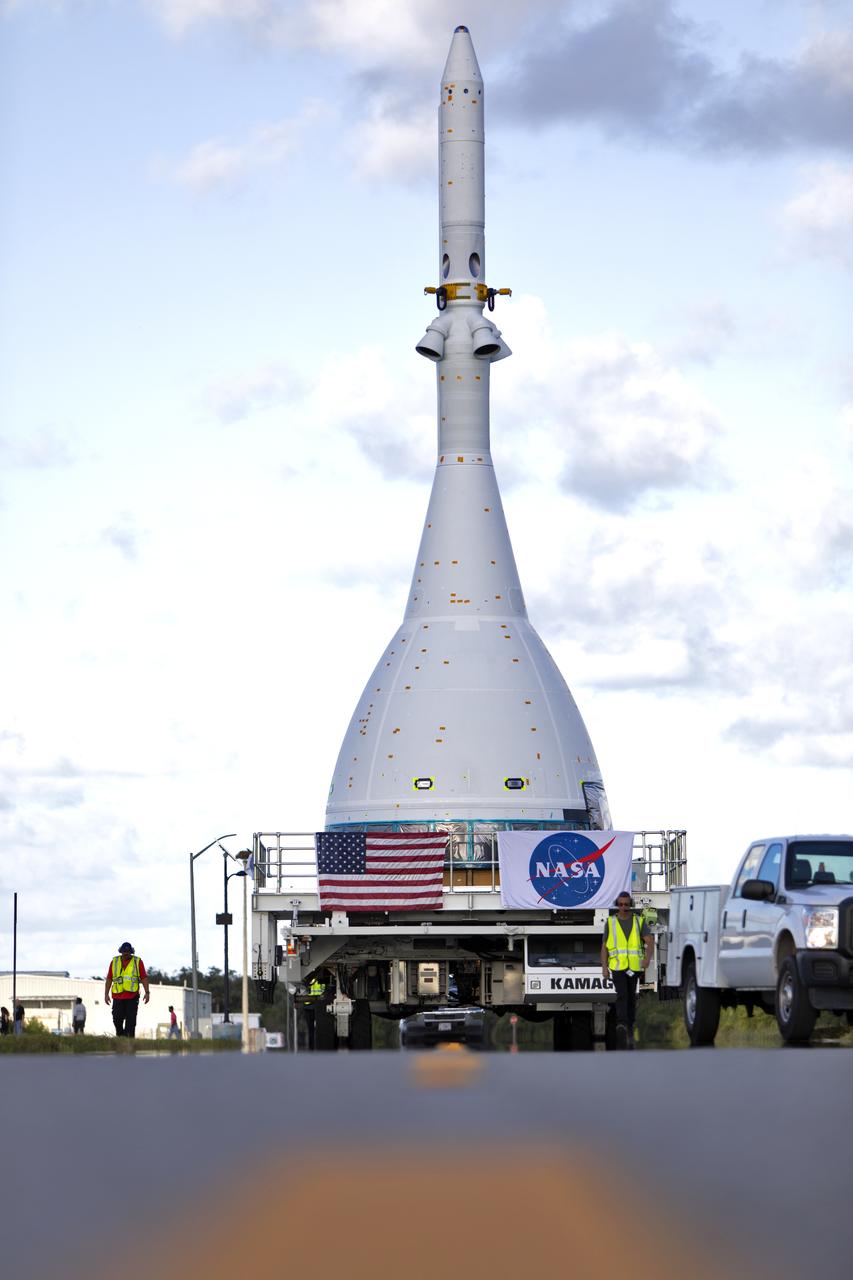
The test version of Orion attached to the Launch Abort System for the Ascent Abort-2 (AA-2) flight test exited the Launch Abort System Facility at NASA’s Kennedy Space Center in Florida on May 22, 2019. The flight test article will make the 21.5 mile trek to Space Launch Complex 46 at Cape Canaveral Air Force Station in preparation for its launch this summer. During AA-2, a test version of Orion will launch on a booster to more than six miles in altitude, where Orion’s launch abort system will pull the capsule and its crew away to safety if an emergency occurs during ascent on the Space Launch System rocket. The AA-2 elements will be stacked together at the launch pad over the next several weeks. The launch is planned for July 2 and is a critical safety test that helps pave the way for Artemis missions near the Moon, and will enable astronauts to set foot on the lunar surface by 2024.
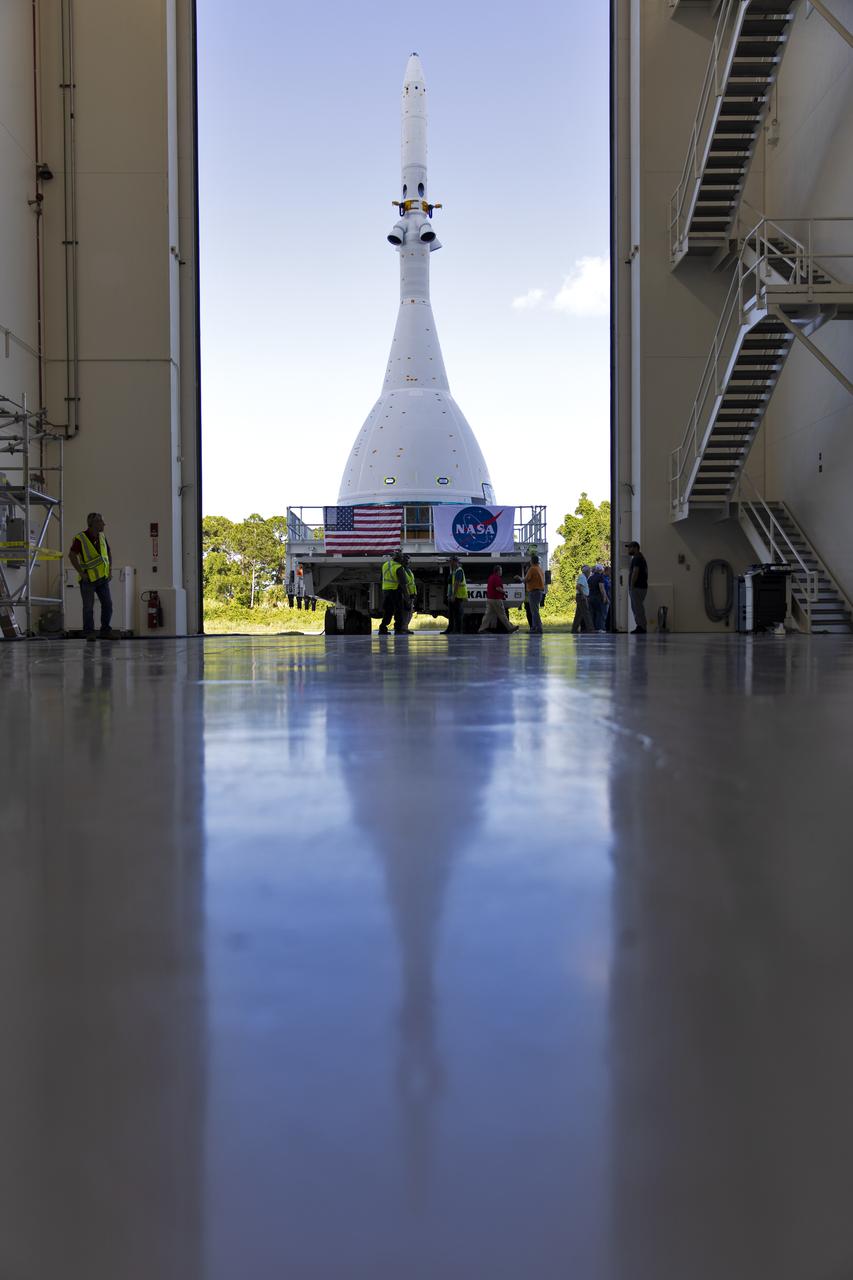
The test version of Orion attached to the Launch Abort System for the Ascent Abort-2 (AA-2) flight test exits the Launch Abort System Facility at NASA’s Kennedy Space Center in Florida on May 22, 2019. The flight test article will make the 21.5 mile trek to Space Launch Complex 46 at Cape Canaveral Air Force Station in preparation for its launch this summer. During AA-2, a test version of Orion will launch on a booster to more than six miles in altitude, where Orion’s launch abort system will pull the capsule and its crew away to safety if an emergency occurs during ascent on the Space Launch System rocket. The AA-2 elements will be stacked together at the launch pad over the next several weeks. The launch is planned for July 2 and is a critical safety test that helps pave the way for Artemis missions near the Moon, and will enable astronauts to set foot on the lunar surface by 2024.

The test version of Orion attached to the Launch Abort System for the Ascent Abort-2 (AA-2) flight test arrives at Space Launch Complex 46 at Cape Canaveral Air Force Station in Florida on May 23, 2019. The flight test article will be hoisted up and moved inside the vertical integration facility for stacking atop the booster. The booster was procured by the U.S. Air Force and manufactured by Northrop Grumman. During AA-2, targeted for July 2, the LAS with Orion will launch on the booster more than six miles in altitude, where Orion’s launch abort system will pull the capsule and its crew away to safety if an emergency occurs during ascent on the Space Launch System rocket. AA-2 is a critical safety test that helps pave the way for Artemis missions near the Moon, and will enable astronauts to set foot on the lunar surface by 2024.
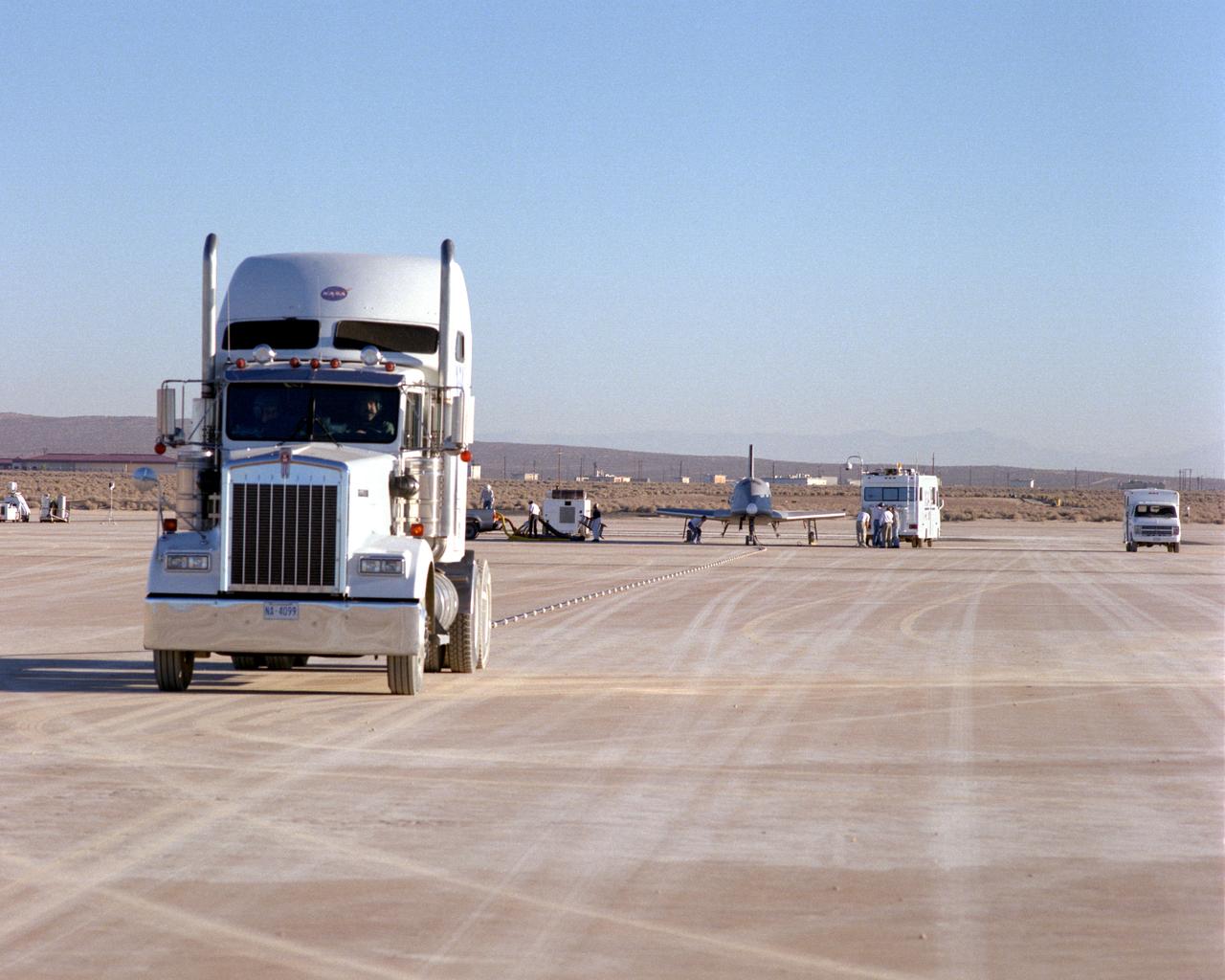
Following initial captive flight tests last year at NASA's Dryden Flight Research Center, Edwards Air Force Base, California, the X-34 technology demonstrator began a new series of tests last week in which it is being towed behind a semi-truck and released to coast on the Edwards dry lakebed. On July 20, 2000, it was towed and released twice at speeds of five and 10 miles per hour. On July 24, 2000, it was towed and released twice at 10 and 30 miles per hour. Twelve tests are planned during which the X-34 will be towed for distances up to 10,000 feet and released at speeds up to 80 miles per hour. The test series is expected to last at least six weeks.
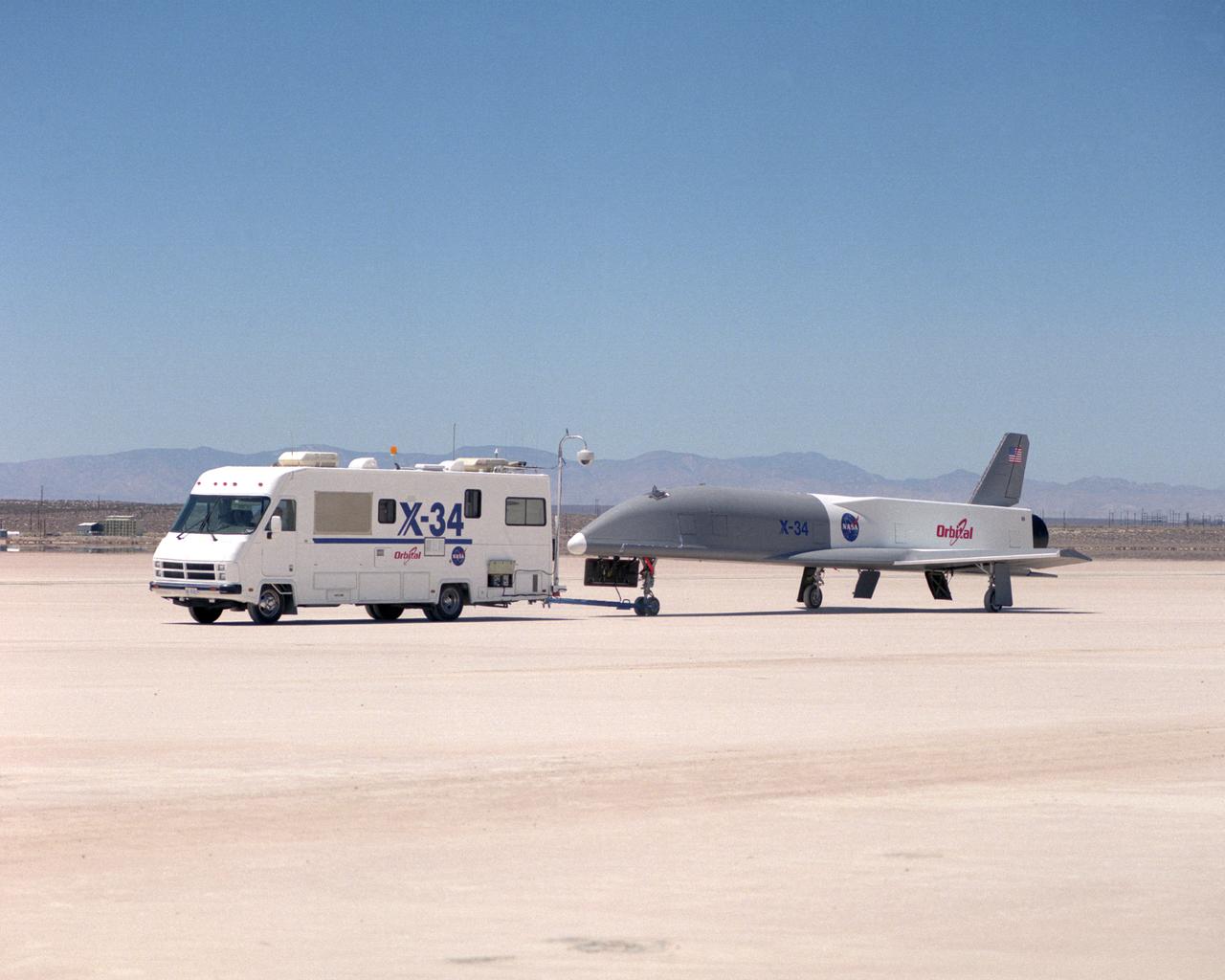
Following initial captive flight tests last year at NASA's Dryden Flight Research Center, Edwards Air Force Base, California, the X-34 technology demonstrator began a new series of tests last week in which it is being towed behind a semi-truck and released to coast on the Edwards dry lakebed. On July 20, 2000, it was towed and released twice at speeds of five and 10 miles per hour. On July 24, 2000, it was towed and released twice at 10 and 30 miles per hour. Twelve tests are planned during which the X-34 will be towed for distances up to 10,000 feet and released at speeds up to 80 miles per hour. The test series is expected to last at least six weeks.
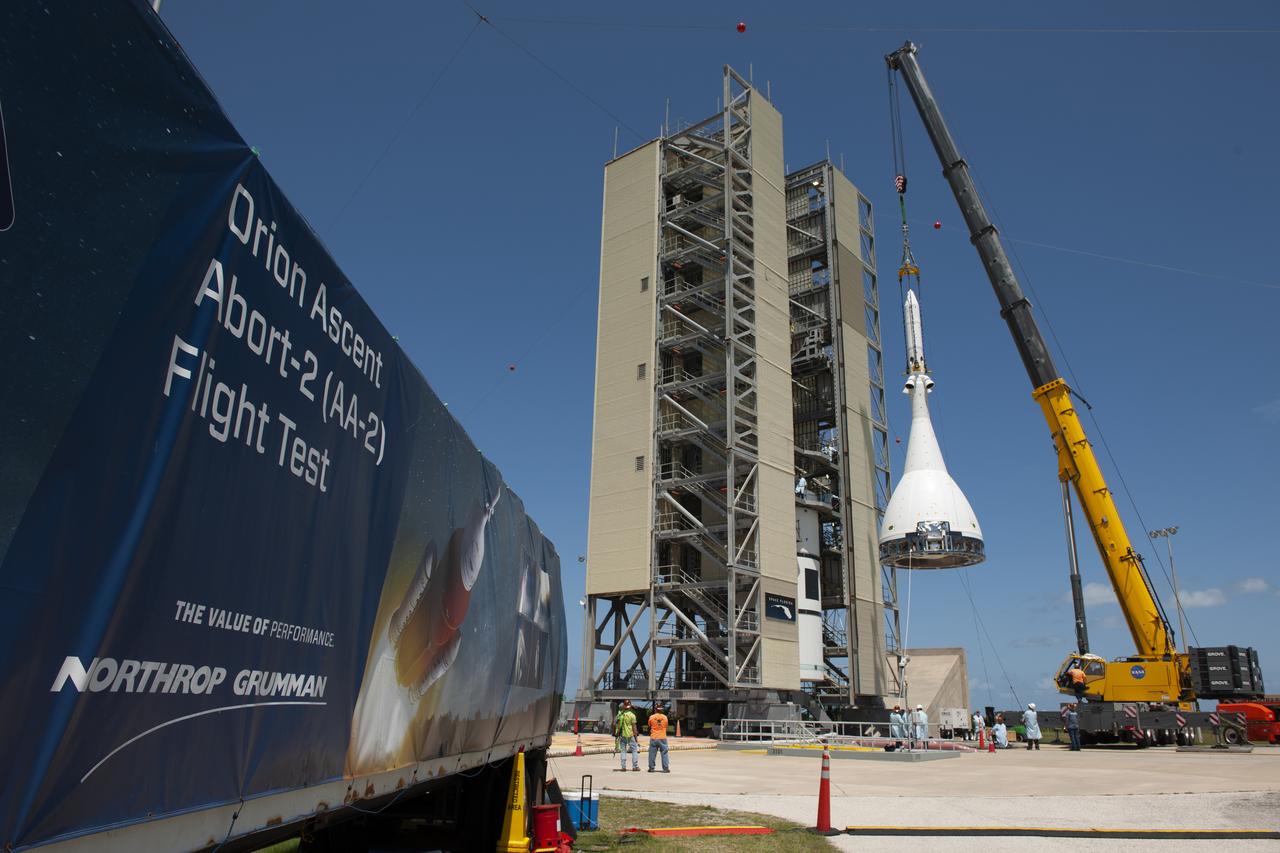
The test version of Orion attached to the Launch Abort System for the Ascent Abort-2 (AA-2) flight test is moved by crane into the vertical integration facility at Space Launch Complex 46 at Cape Canaveral Air Force Station in Florida on May 23, 2019. The flight test article will be stacked atop the booster, which was procured by the U.S. Air Force and manufactured by Northrop Grumman. During AA-2, targeted for July 2, the LAS with Orion will launch on the booster more than six miles in altitude, where Orion’s launch abort system will pull the capsule and its crew away to safety if an emergency occurs during ascent on the Space Launch System rocket. AA-2 is a critical safety test that helps pave the way for Artemis missions near the Moon, and will enable astronauts to set foot on the lunar surface by 2024.
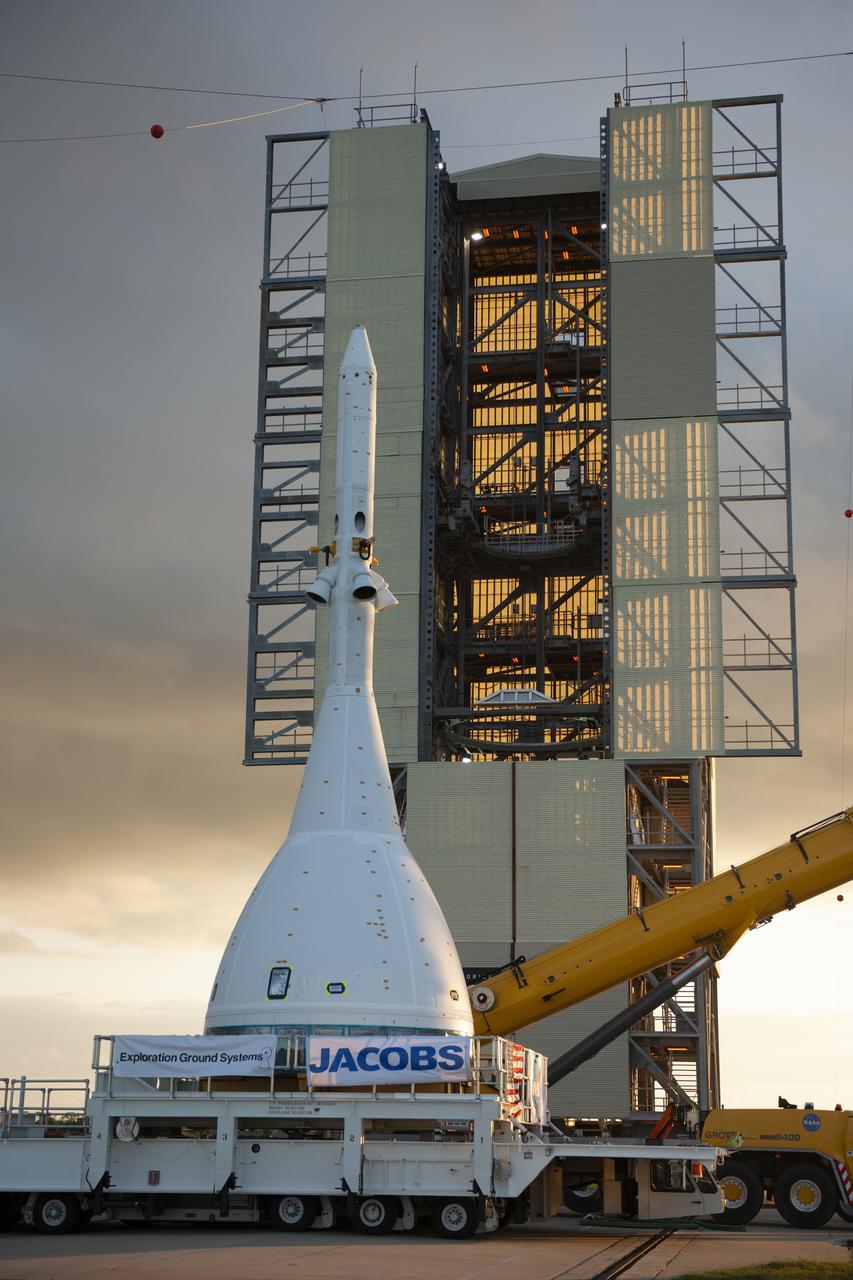
The test version of Orion attached to the Launch Abort System for the Ascent Abort-2 (AA-2) flight test arrives at Space Launch Complex 46 at Cape Canaveral Air Force Station in Florida on May 23, 2019. The flight test article will be hoisted up and moved inside the vertical integration facility for stacking atop the booster. The booster was procured by the U.S. Air Force and manufactured by Northrop Grumman. During AA-2, targeted for July 2, the LAS with Orion will launch on the booster more than six miles in altitude, where Orion’s launch abort system will pull the capsule and its crew away to safety if an emergency occurs during ascent on the Space Launch System rocket. AA-2 is a critical safety test that helps pave the way for Artemis missions near the Moon, and will enable astronauts to set foot on the lunar surface by 2024.
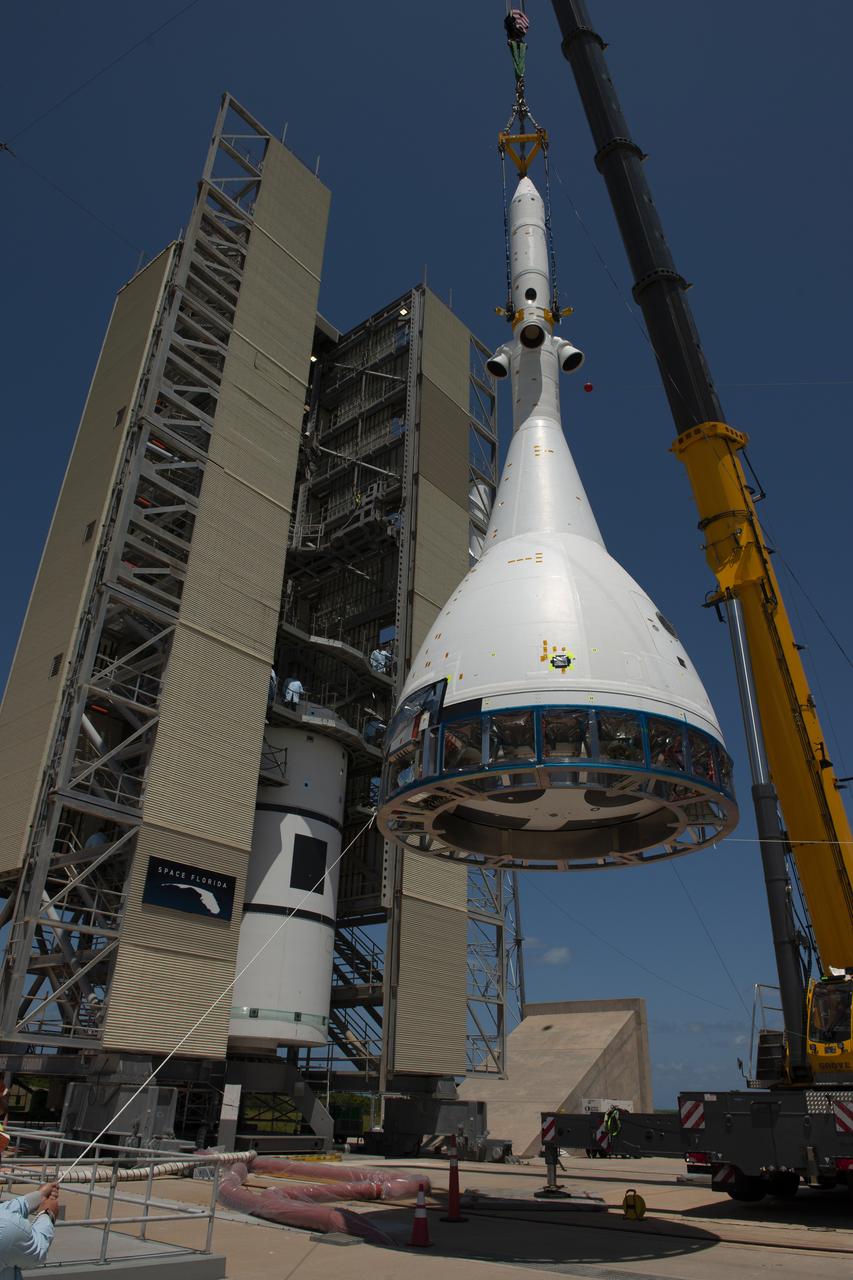
The test version of Orion attached to the Launch Abort System for the Ascent Abort-2 (AA-2) flight test is hoisted up by crane at Space Launch Complex 46 at Cape Canaveral Air Force Station in Florida on May 23, 2019. The flight test article will be moved inside the vertical integration facility for stacking atop the booster. The booster was procured by the U.S. Air Force and manufactured by Northrop Grumman. During AA-2, targeted for July 2, the LAS with Orion will launch on the booster more than six miles in altitude, where Orion’s launch abort system will pull the capsule and its crew away to safety if an emergency occurs during ascent on the Space Launch System rocket. AA-2 is a critical safety test that helps pave the way for Artemis missions near the Moon, and will enable astronauts to set foot on the lunar surface by 2024.
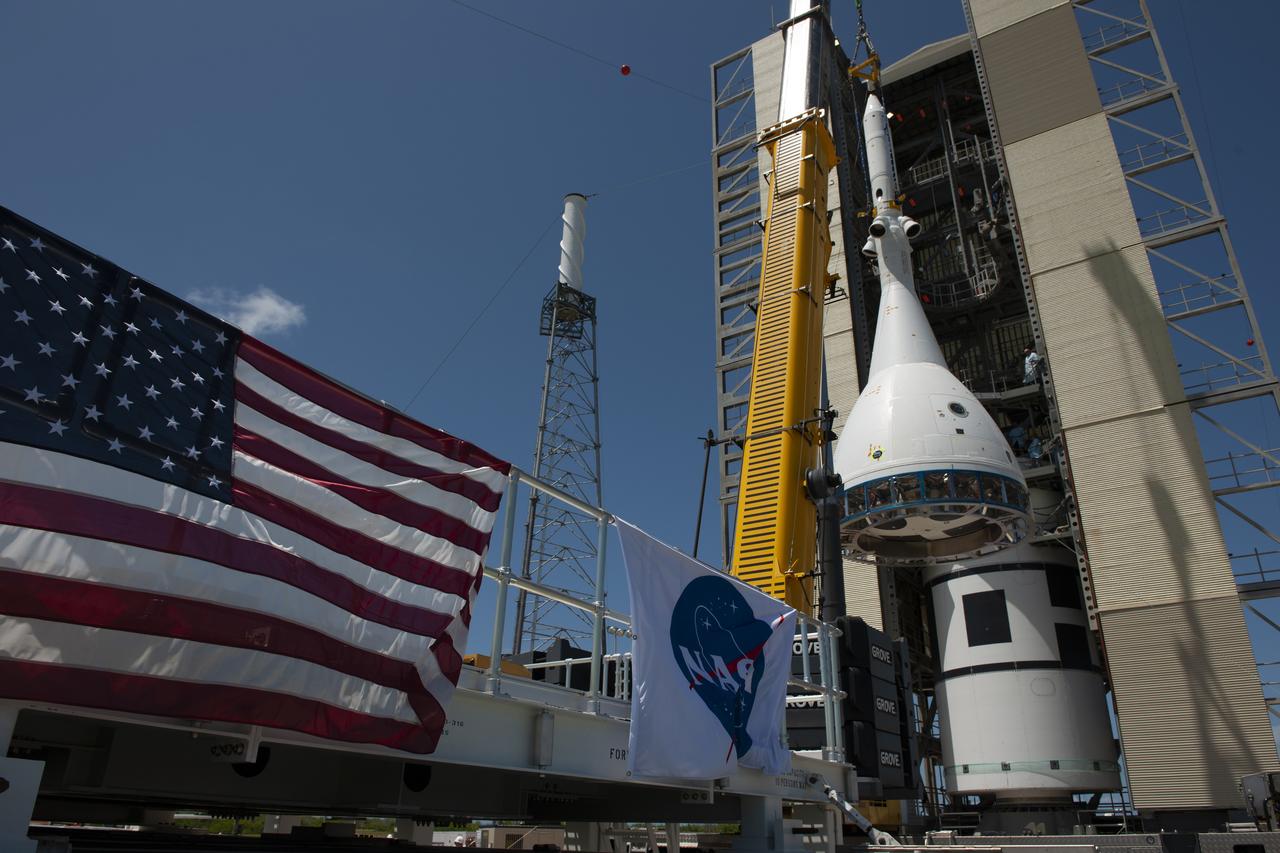
The test version of Orion attached to the Launch Abort System for the Ascent Abort-2 (AA-2) flight test is moved by crane into the vertical integration facility at Space Launch Complex 46 at Cape Canaveral Air Force Station in Florida on May 23, 2019. The flight test article will be stacked atop the booster, which was procured by the U.S. Air Force and manufactured by Northrop Grumman. During AA-2, targeted for July 2, the LAS with Orion will launch on the booster more than six miles in altitude, where Orion’s launch abort system will pull the capsule and its crew away to safety if an emergency occurs during ascent on the Space Launch System rocket. AA-2 is a critical safety test that helps pave the way for Artemis missions near the Moon, and will enable astronauts to set foot on the lunar surface by 2024.
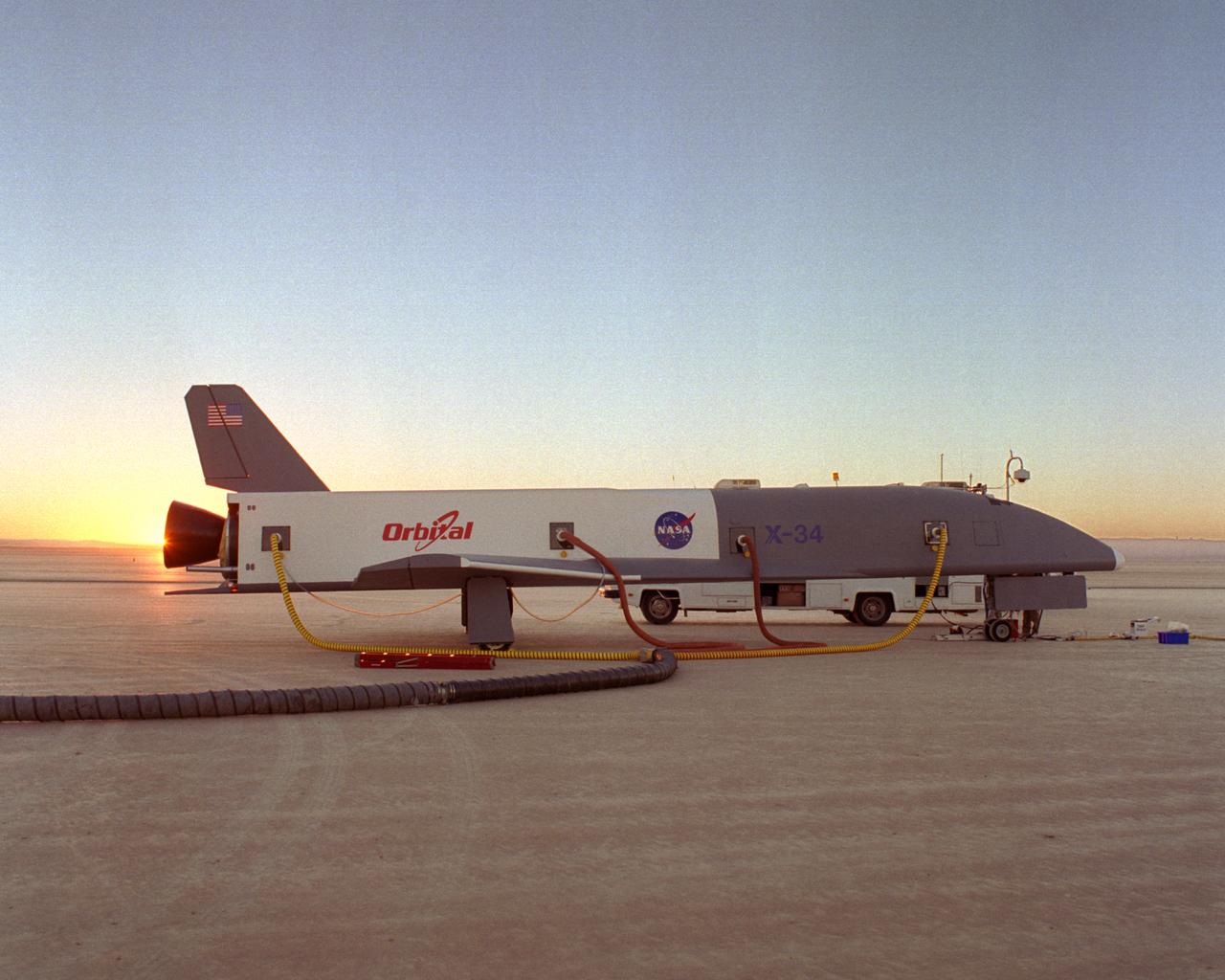
Following initial captive flight tests last year at NASA's Dryden Flight Research Center, Edwards Air Force Base, California, the X-34 technology demonstrator began a new series of tests last week in which it is being towed behind a semi-truck and released to coast on the Edwards dry lakebed. On July 20, 2000, it was towed and released twice at speeds of five and 10 miles per hour. On July 24, 2000, it was towed and released twice at 10 and 30 miles per hour. Twelve tests are planned during which the X-34 will be towed for distances up to 10,000 feet and released at speeds up to 80 miles per hour. The test series is expected to last at least six weeks.