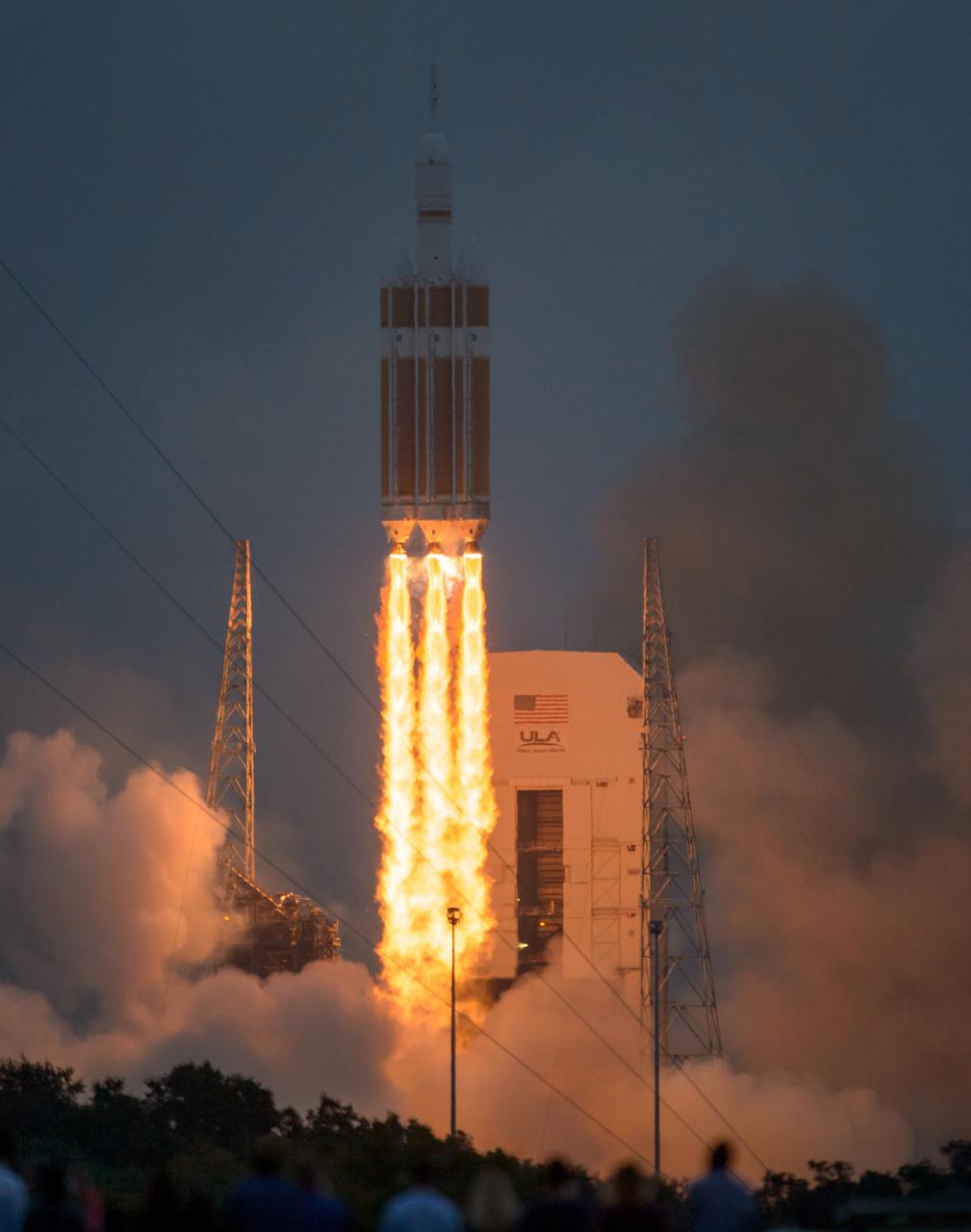
The United Launch Alliance Delta IV Heavy rocket with NASA’s Orion spacecraft mounted atop, lifts off on Exploration Flight Test-1 (EFT-1) from Cape Canaveral Air Force Station's Space Launch Complex 37 at at 7:05 a.m. EST, Friday, Dec. 5, 2014, in Florida. Part of Batch image transfer from Flickr.
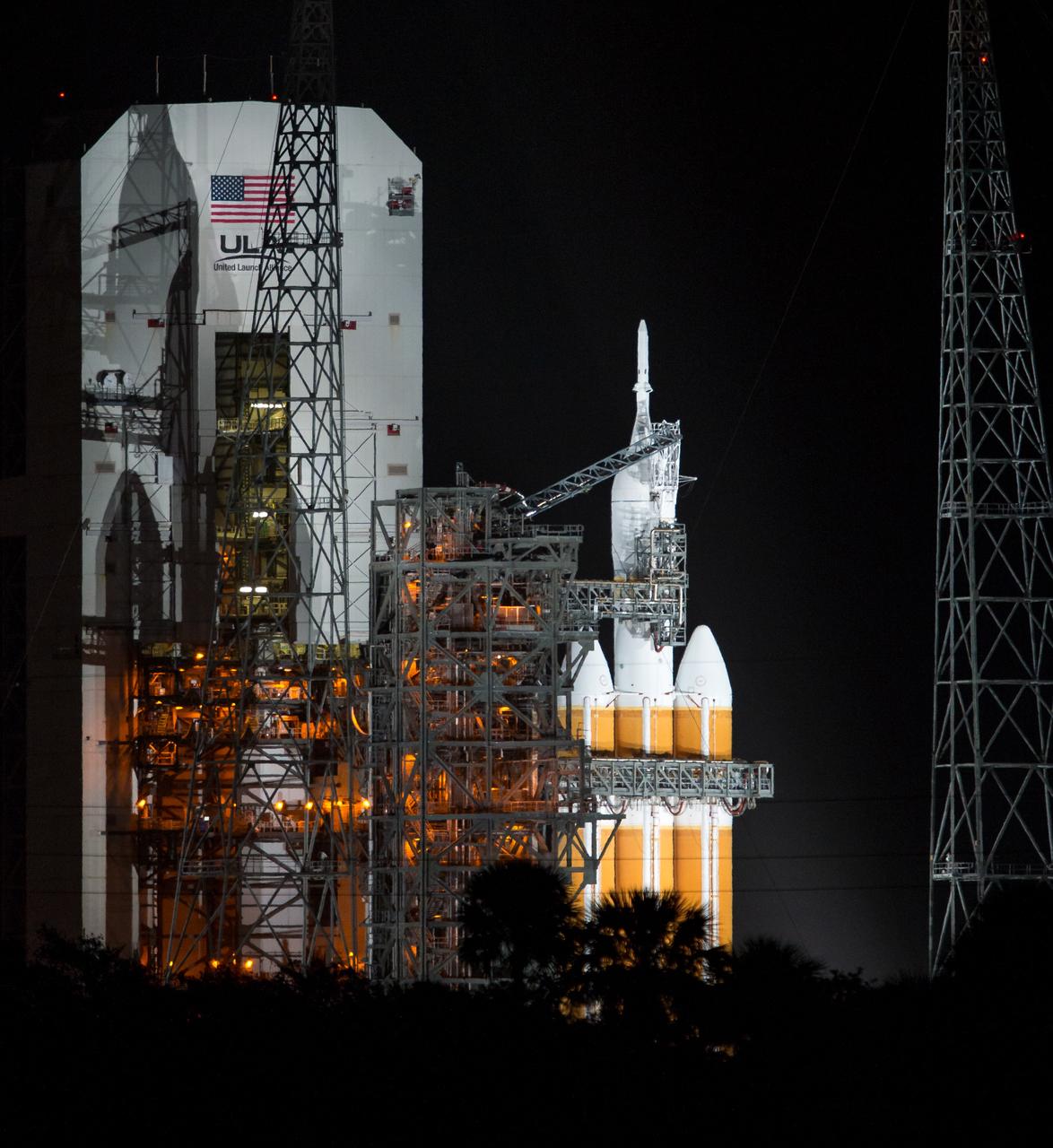
The United Launch Alliance Delta IV Heavy rocket with NASA’s Orion spacecraft mounted atop for Exploration Flight Test-1 (EFT-1) is seen early on Friday, Dec. 5, 2014, at Cape Canaveral Air Force Station's Space Launch Complex 37, Florida. Part of Batch image transfer from Flickr.

Charlie Lundquist, NASA Orion deputy program manager, right, presents an American flag flown aboard the Orion capsule during the Exploration Flight Test-1 mission to Armstrong Deputy Director Patrick Stoliker.
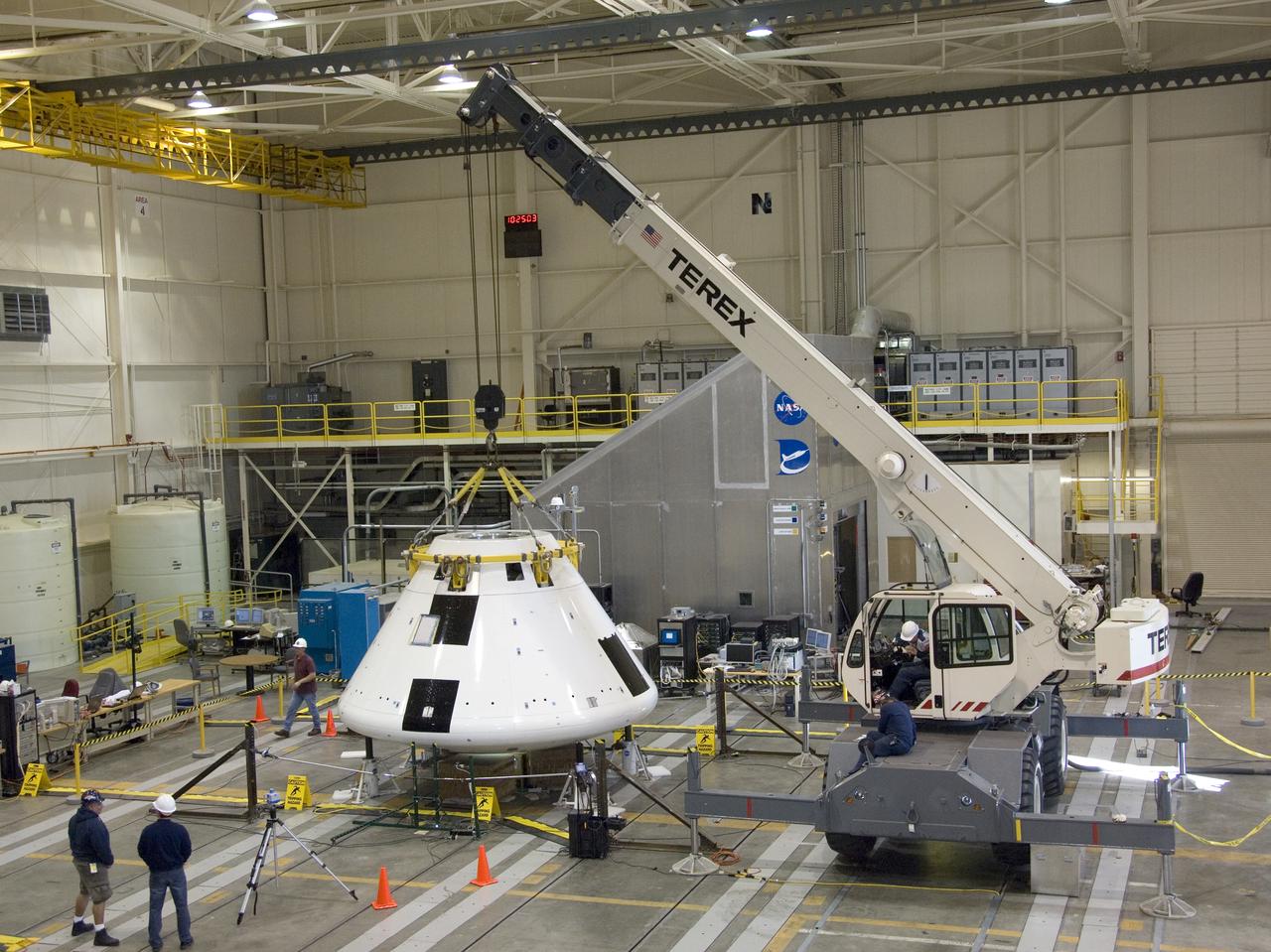
Under the watchful eyes of technicians, a crane positions the Orion PA-1 Abort Flight Test module for mass properties testing in NASA Dryden's Flight Loads Lab.
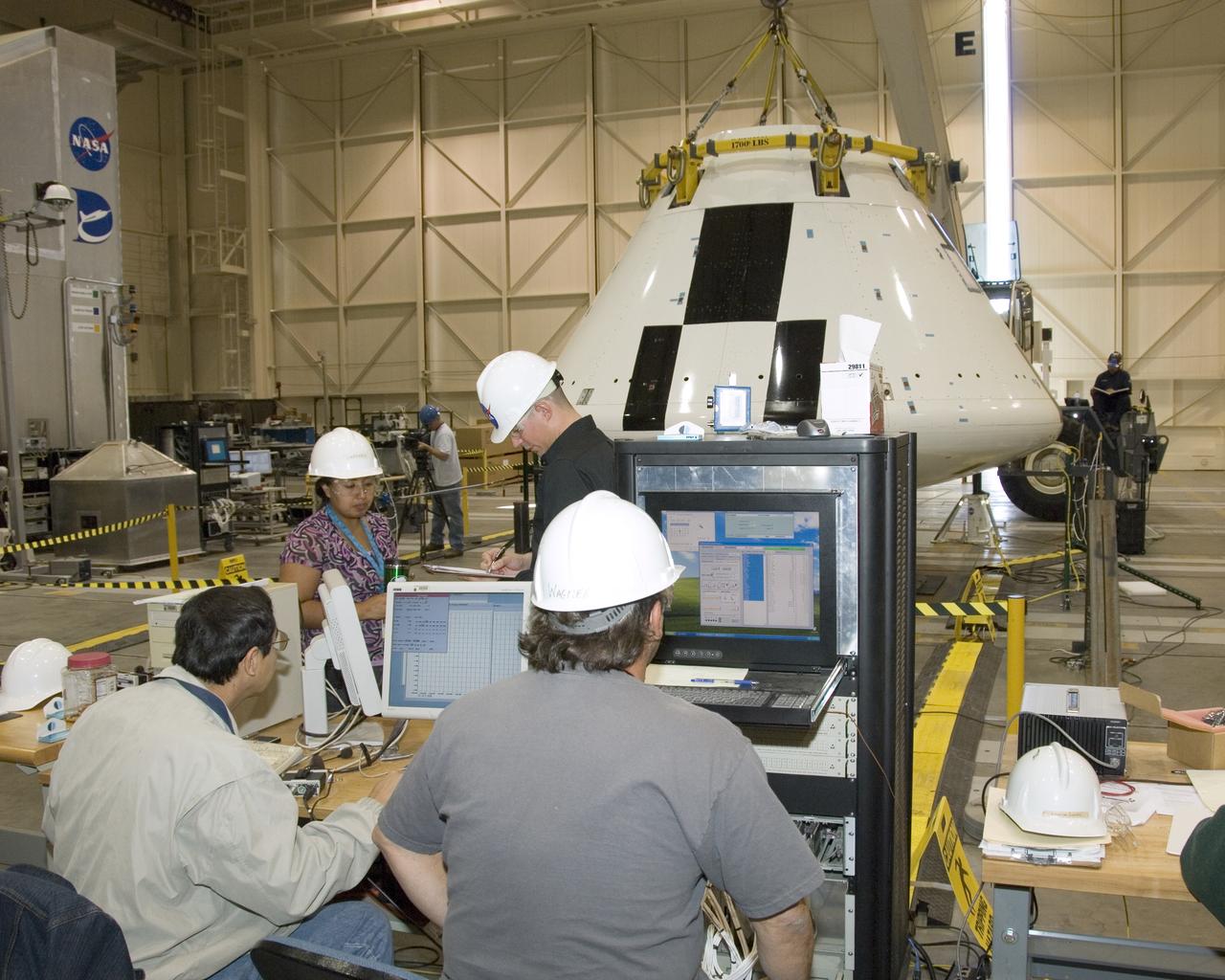
Engineers and technicians pore over data during moment-of-inertia testing on the Orion PA-1 Abort Flight Test module in the NASA Dryden Flight Loads Laboratory.
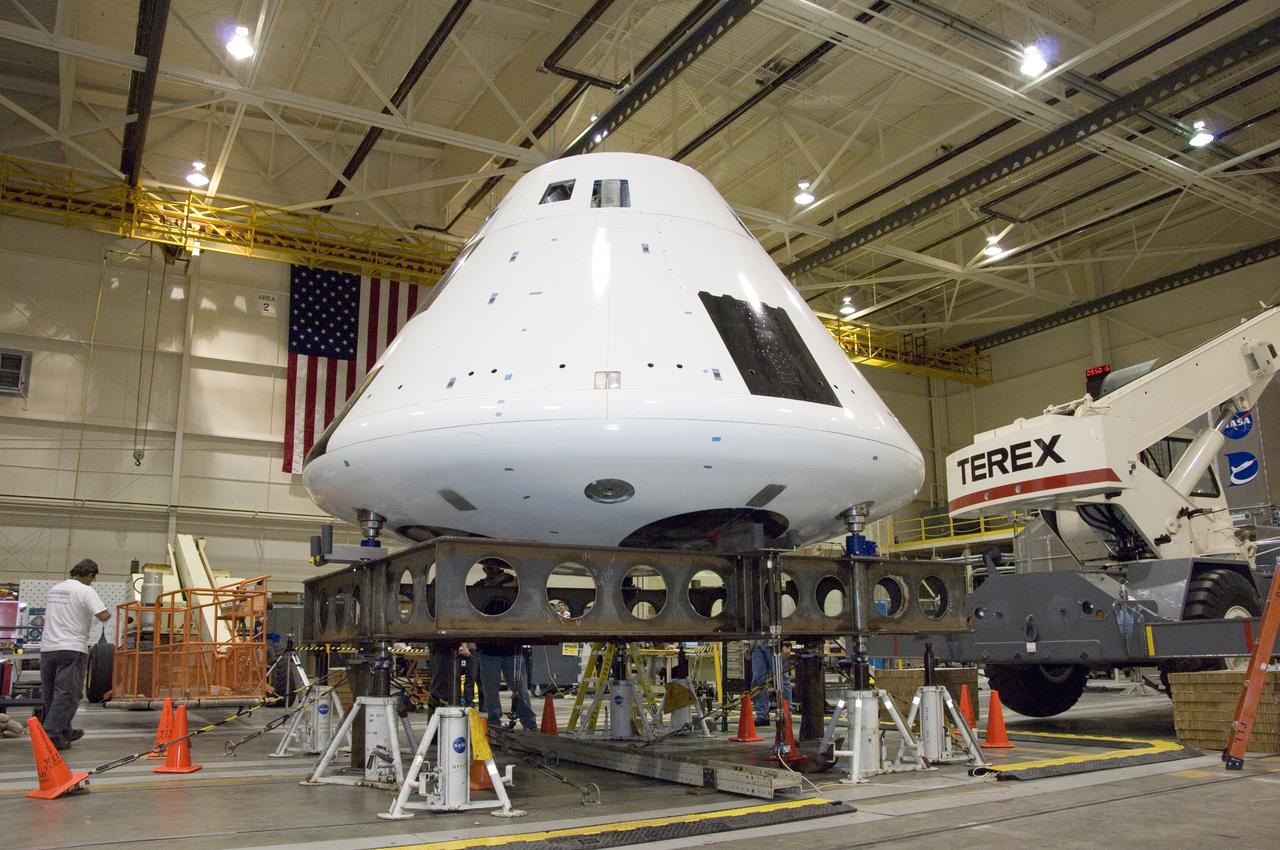
The boilerplate Orion crew module for the Orion Launch Abort System Pad Abort-1 flight test undergoes moment-of-inertia testing at NASA Dryden's Flight Loads Lab.
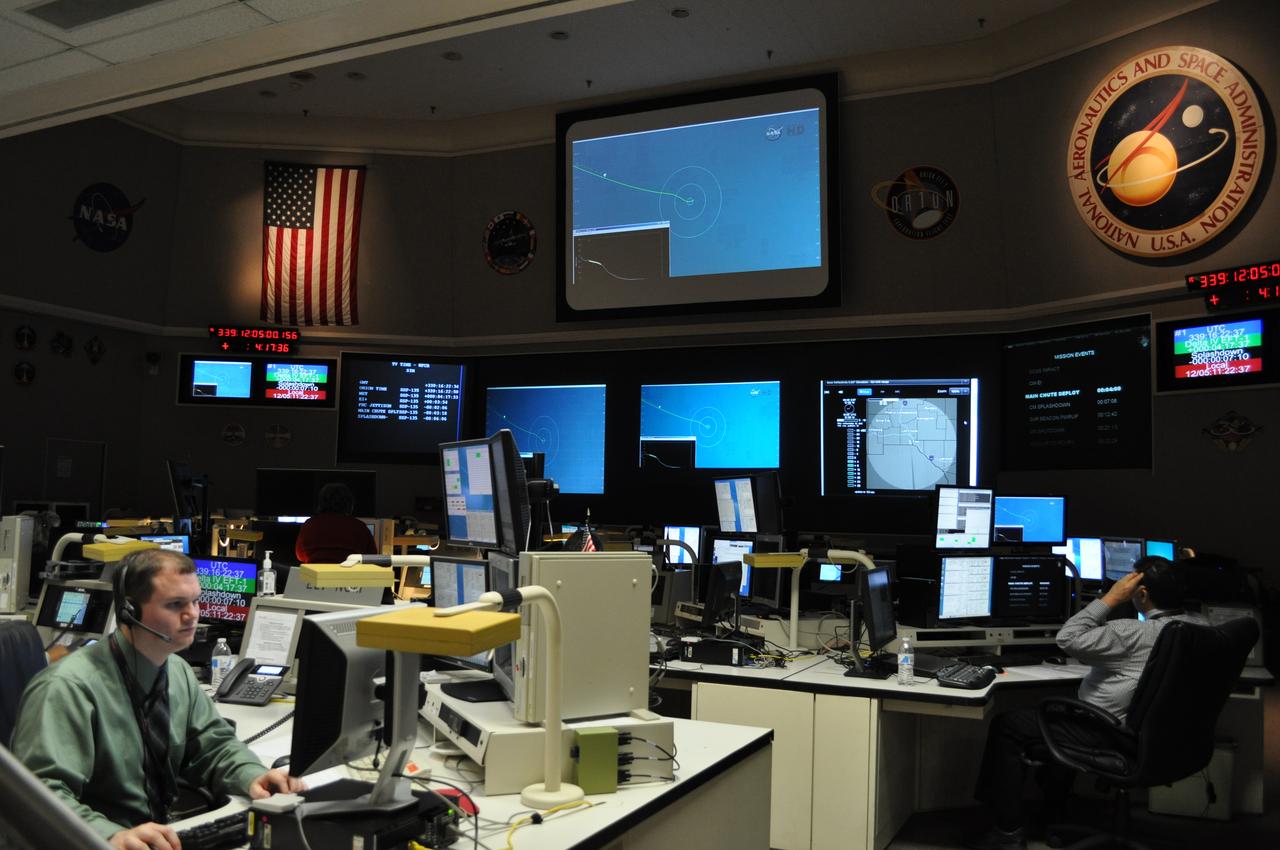
NASA's Goddard Space Flight Center in Greenbelt, Maryland, played a critical role in the test flight of the #Orion spacecraft on Dec. 5, 2014. Goddard's Networks Integration Center, pictured here, coordinated the communications support for both the Orion vehicle and the Delta IV rocket, ensuring complete communications coverage through NASA's Space Network and Tracking and Data Relay Satellite. The Orion spacecraft lifted off from Cape Canaveral Air Force Station's Space Launch Complex 37 in Florida at 7:05 a.m. EST. The Orion capsule splashed down about four and a half hours later, at 11:29 a.m. EST, about 600 miles off the coast of San Diego, California. While no humans were aboard Orion for this test flight, in the future, Orion will allow humans to travel deeper in to space than ever before, including an asteroid and Mars. Credit: NASA/Goddard/Amber Jacobson Credit: NASA/Goddard/Amber Jacobson <b><a href="http://www.nasa.gov/audience/formedia/features/MP_Photo_Guidelines.html" rel="nofollow">NASA image use policy.</a></b> <b><a href="http://www.nasa.gov/centers/goddard/home/index.html" rel="nofollow">NASA Goddard Space Flight Center</a></b> enables NASA’s mission through four scientific endeavors: Earth Science, Heliophysics, Solar System Exploration, and Astrophysics. Goddard plays a leading role in NASA’s accomplishments by contributing compelling scientific knowledge to advance the Agency’s mission. <b>Follow us on <a href="http://twitter.com/NASAGoddardPix" rel="nofollow">Twitter</a></b> <b>Like us on <a href="http://www.facebook.com/pages/Greenbelt-MD/NASA-Goddard/395013845897?ref=tsd" rel="nofollow">Facebook</a></b> <b>Find us on <a href="http://instagram.com/nasagoddard?vm=grid" rel="nofollow">Instagram</a></b>
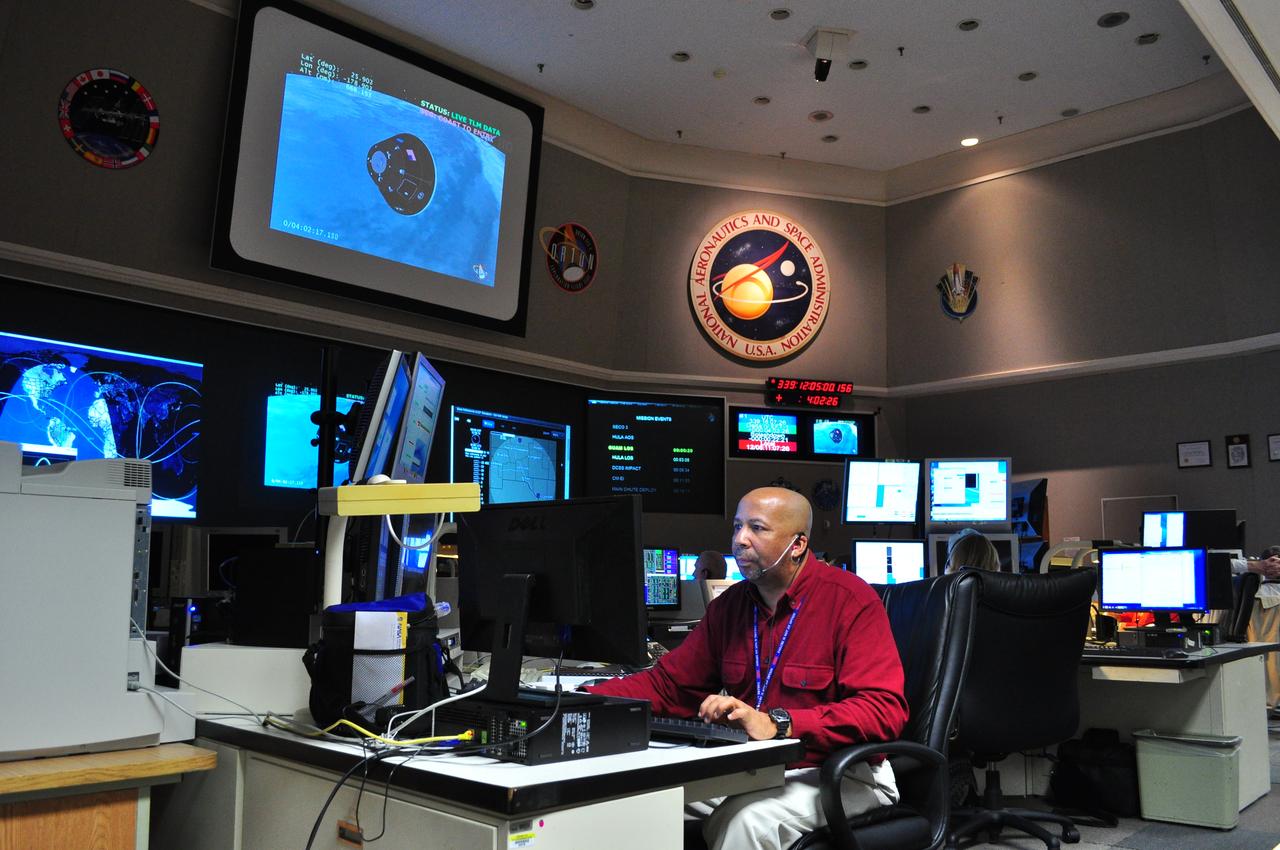
NASA's Goddard Space Flight Center in Greenbelt, Maryland, played a critical role in the test flight of the #Orion spacecraft on Dec. 5, 2014. Goddard's Networks Integration Center, pictured here, coordinated the communications support for both the Orion vehicle and the Delta IV rocket, ensuring complete communications coverage through NASA's Space Network and Tracking and Data Relay Satellite. The Orion spacecraft lifted off from Cape Canaveral Air Force Station's Space Launch Complex 37 in Florida at 7:05 a.m. EST. The Orion capsule splashed down about four and a half hours later, at 11:29 a.m. EST, about 600 miles off the coast of San Diego, California. While no humans were aboard Orion for this test flight, in the future, Orion will allow humans to travel deeper in to space than ever before, including an asteroid and Mars. Credit: NASA/Goddard/Amber Jacobson Credit: NASA/Goddard/Amber Jacobson <b><a href="http://www.nasa.gov/audience/formedia/features/MP_Photo_Guidelines.html" rel="nofollow">NASA image use policy.</a></b> <b><a href="http://www.nasa.gov/centers/goddard/home/index.html" rel="nofollow">NASA Goddard Space Flight Center</a></b> enables NASA’s mission through four scientific endeavors: Earth Science, Heliophysics, Solar System Exploration, and Astrophysics. Goddard plays a leading role in NASA’s accomplishments by contributing compelling scientific knowledge to advance the Agency’s mission. <b>Follow us on <a href="http://twitter.com/NASAGoddardPix" rel="nofollow">Twitter</a></b> <b>Like us on <a href="http://www.facebook.com/pages/Greenbelt-MD/NASA-Goddard/395013845897?ref=tsd" rel="nofollow">Facebook</a></b> <b>Find us on <a href="http://instagram.com/nasagoddard?vm=grid" rel="nofollow">Instagram</a></b>
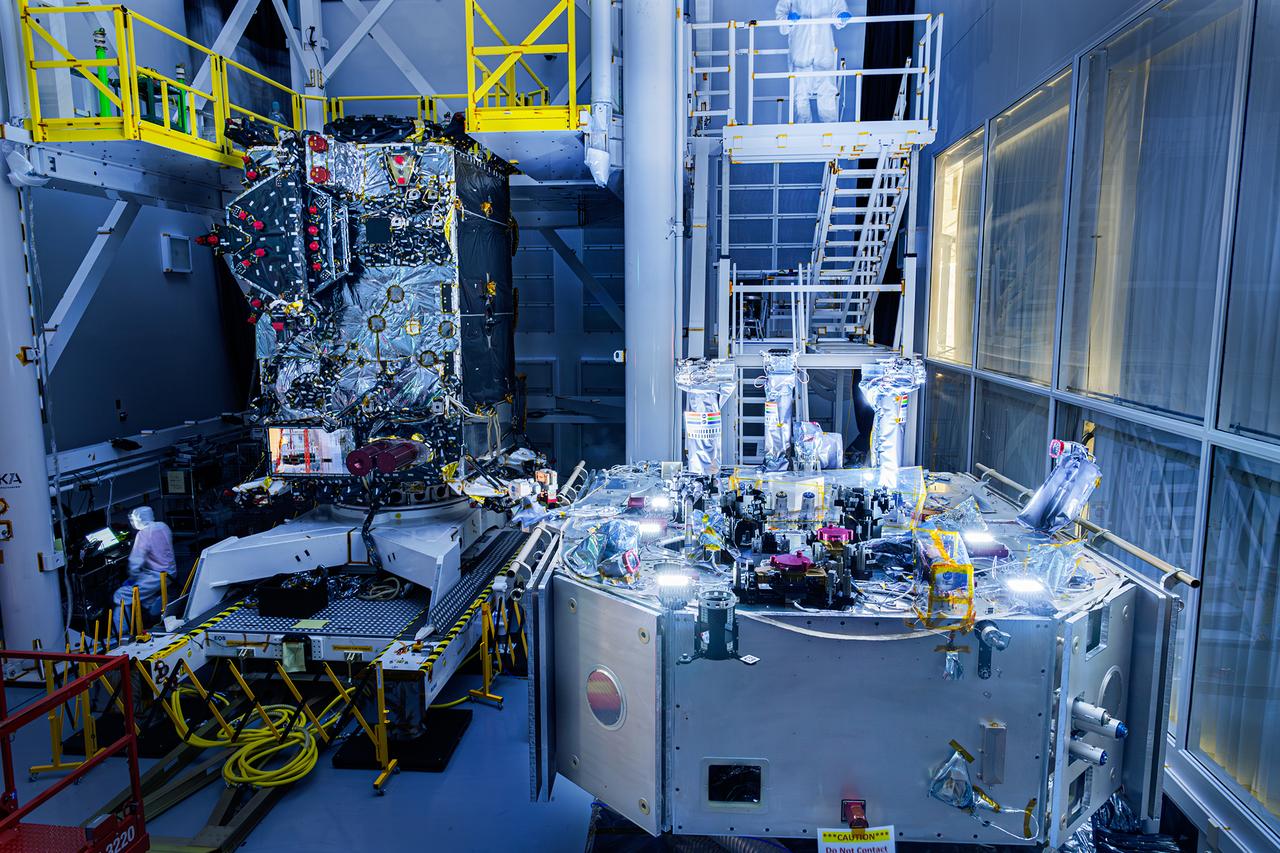
The OSAM-1 Servicing Payload Integration team tests the mounted floodlights at Goddard Space Flight Center, Greenbelt Md., Apr 17, 2024. This photo has been reviewed by Maxar, OSAM1 project management, and the Export Control Office and is released for public view. NASA/Mike Guinto
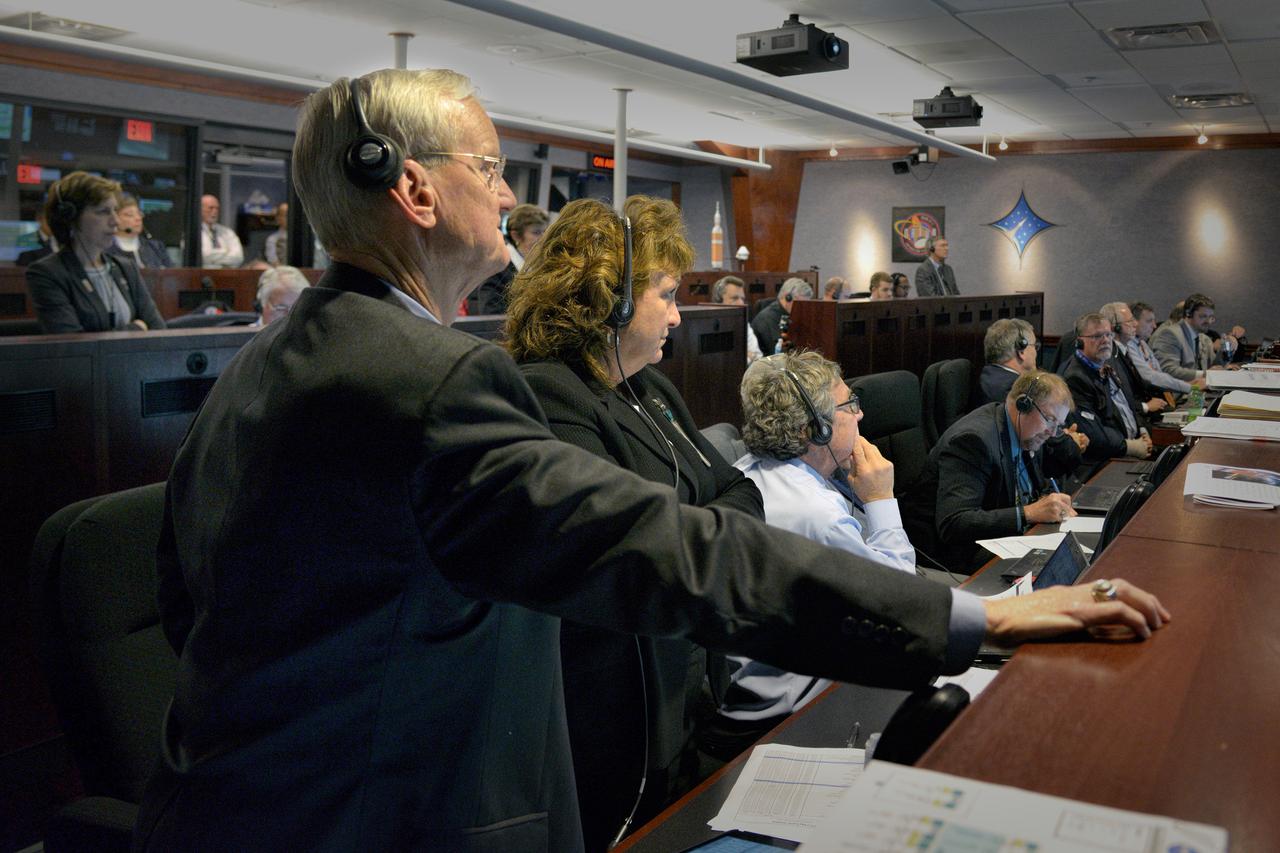
The Orion team watches the flight in Building AE at Cape Canaveral Air Force Station during Exploration Flight Test-1 (EFT-1) on Dec. 5, 2014. Part of Batch image transfer from Flickr.
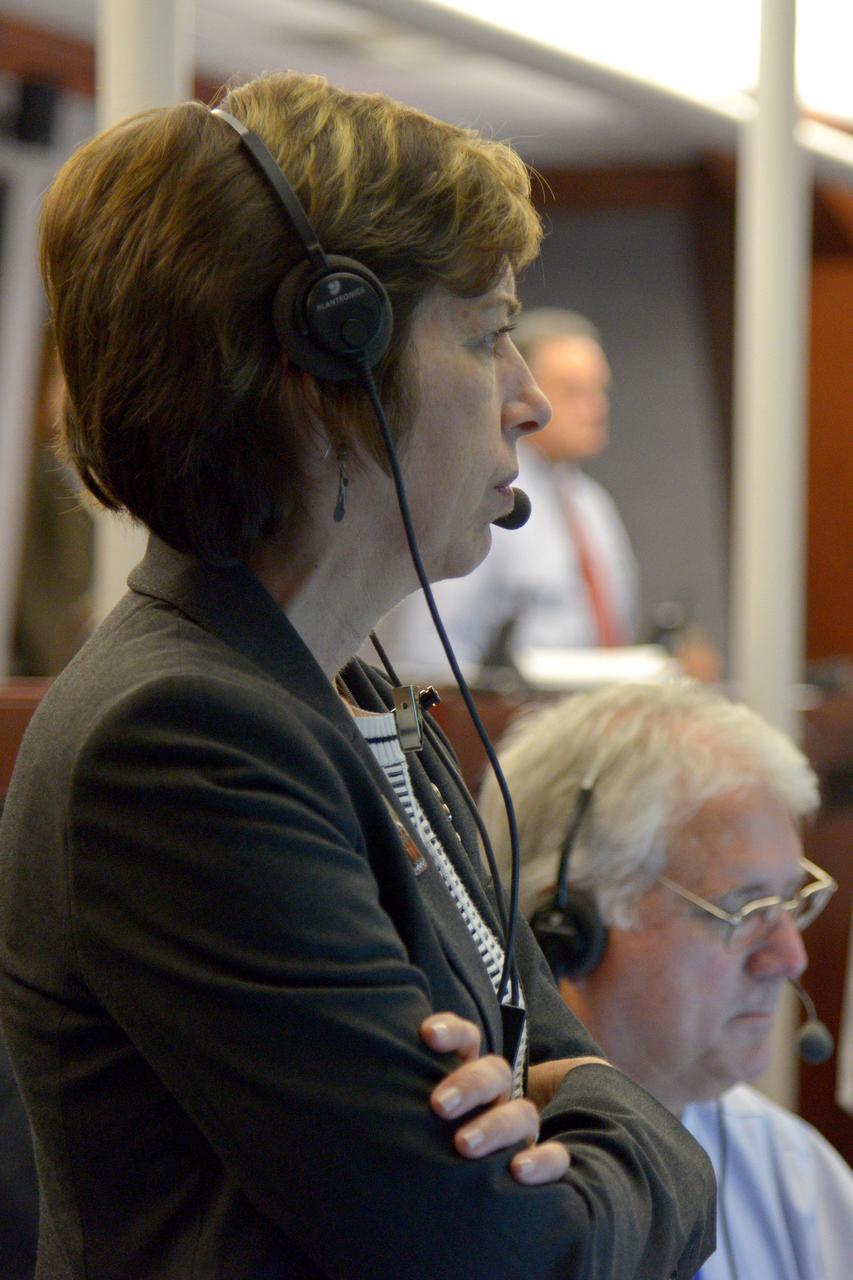
The Orion team watches the flight in Building AE at Cape Canaveral Air Force Station during Exploration Flight Test-1 (EFT-1) on Dec. 5, 2014. Part of Batch image transfer from Flickr.
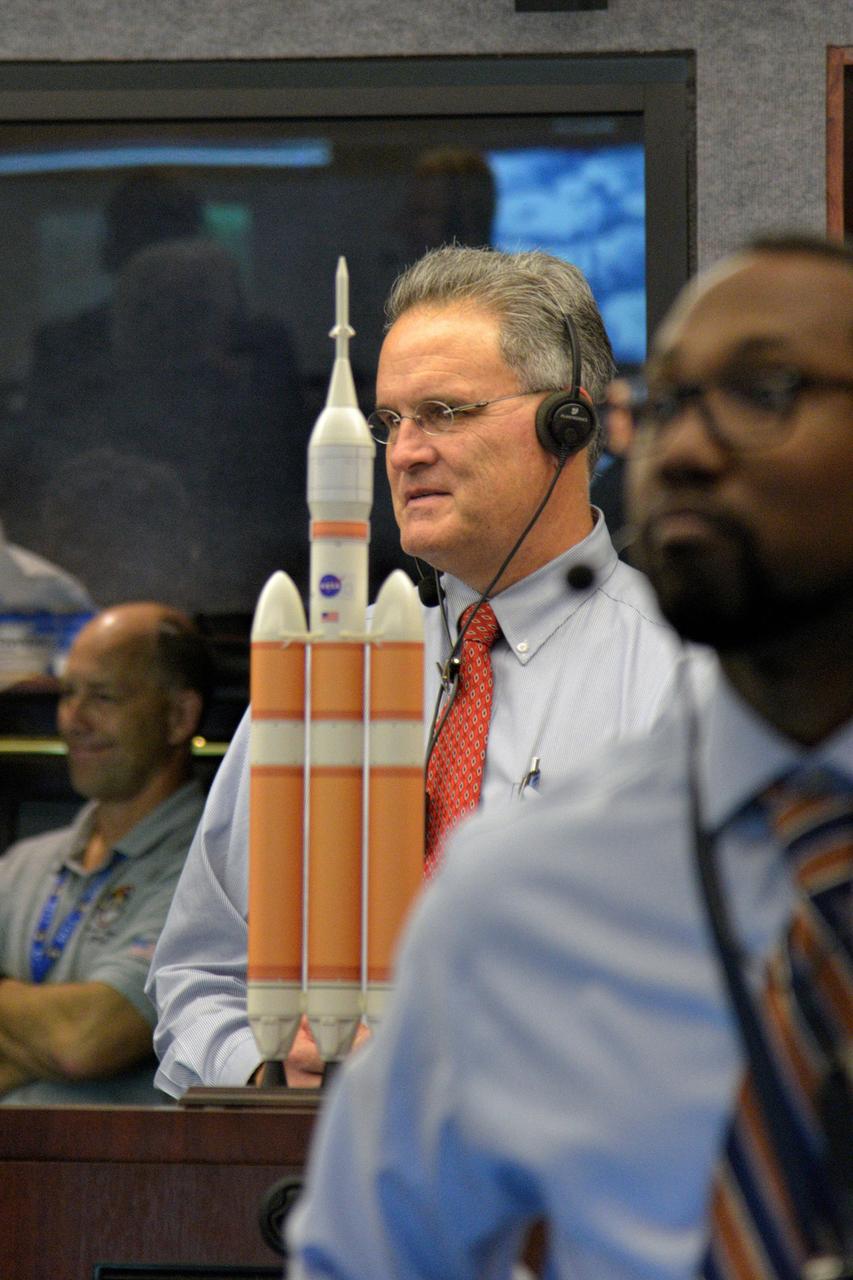
The Orion team watches the flight in Building AE at Cape Canaveral Air Force Station during Exploration Flight Test-1 (EFT-1) on Dec. 5, 2014. Part of Batch image transfer from Flickr.
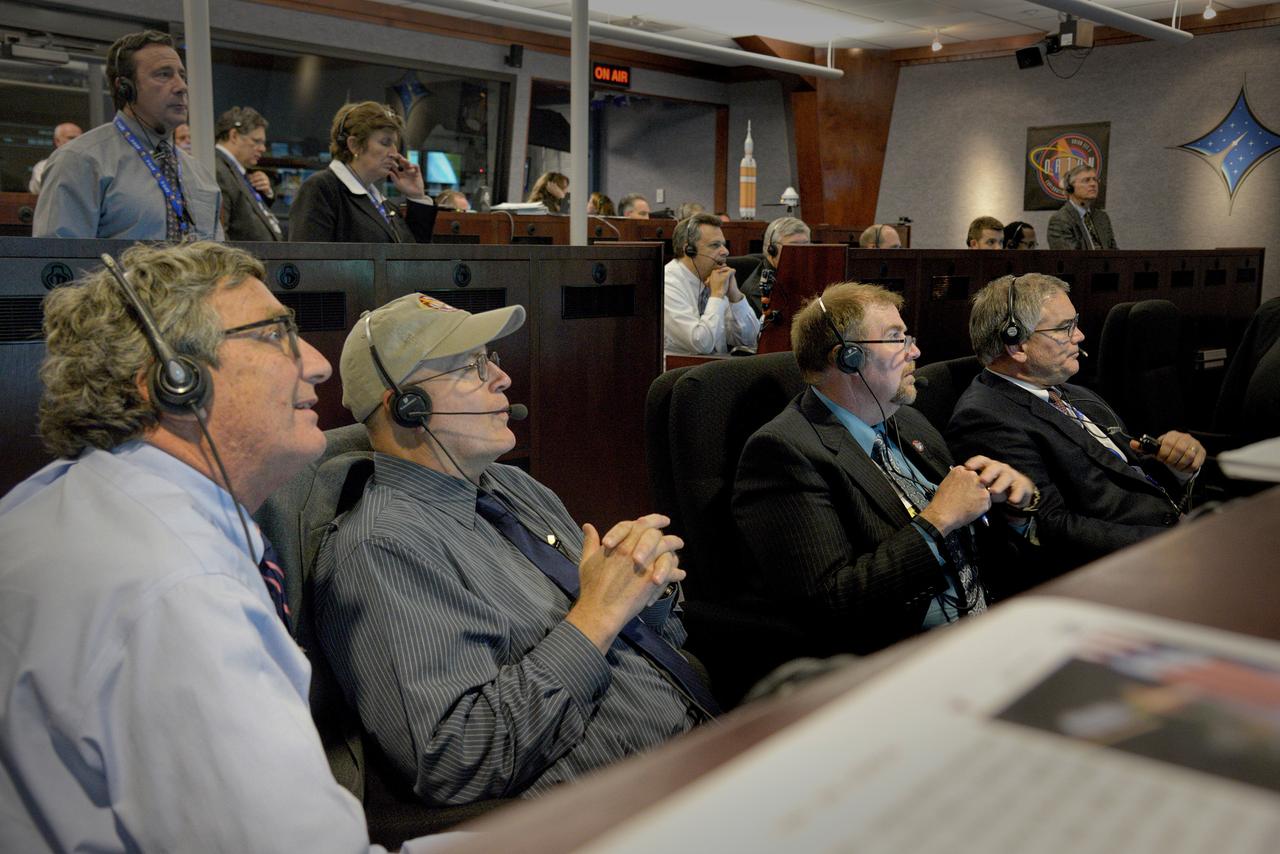
The Orion team watches the flight in Building AE at Cape Canaveral Air Force Station during Exploration Flight Test-1 (EFT-1) on Dec. 5, 2014. Part of Batch image transfer from Flickr.
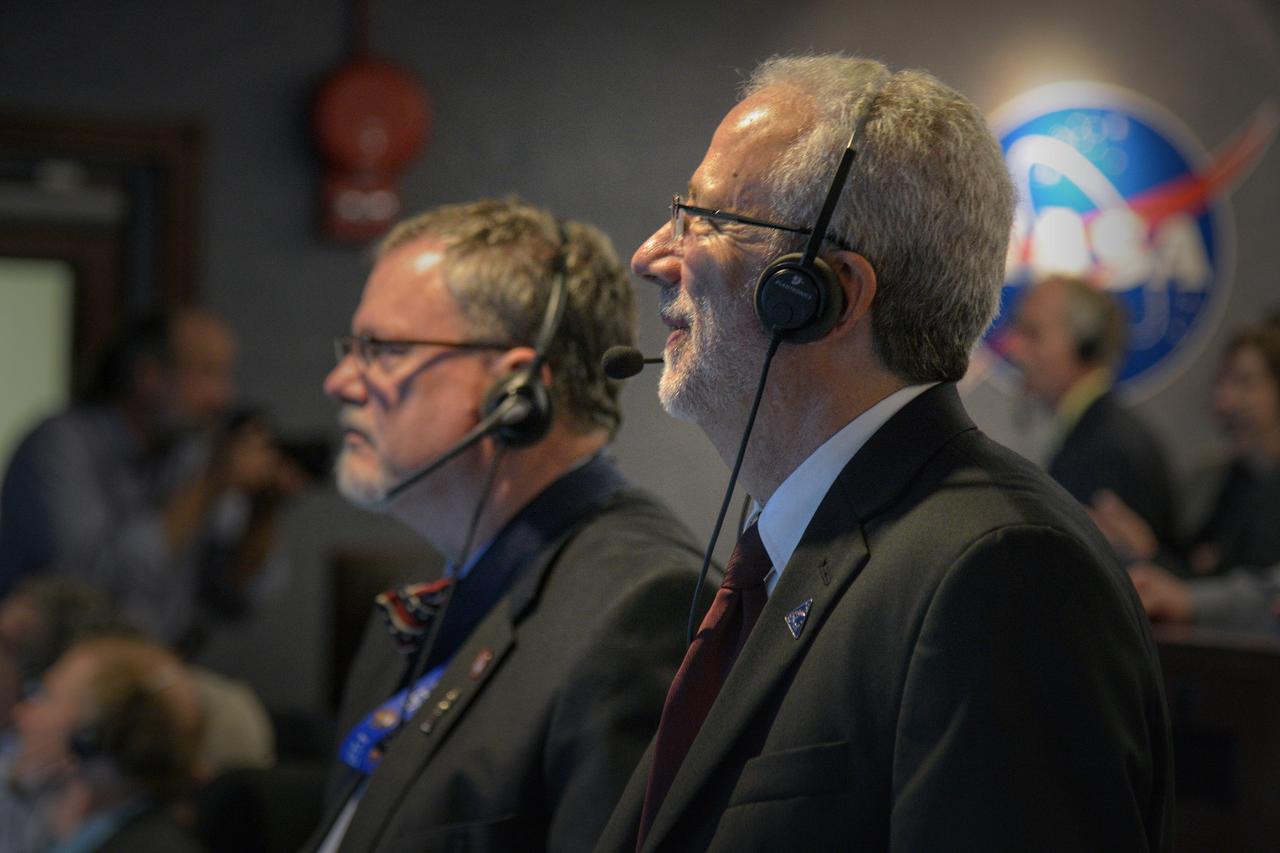
The Orion team watches the flight in Building AE at Cape Canaveral Air Force Station during Exploration Flight Test-1 (EFT-1) on Dec. 5, 2014. Part of Batch image transfer from Flickr.
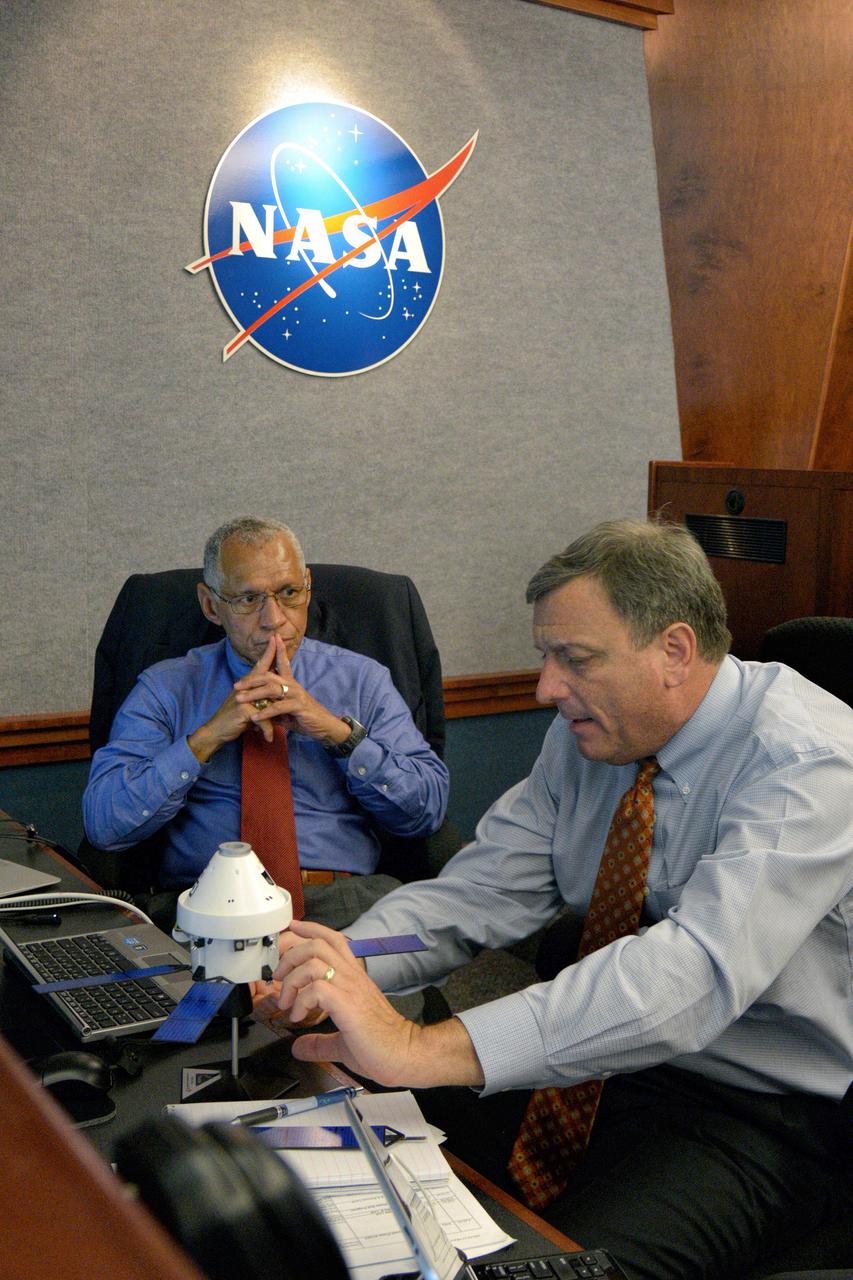
The Orion team discusses Orion operations in Building AE at Cape Canaveral Air Force Station during Exploration Flight Test-1 (EFT-1) on Dec. 5, 2014. Part of Batch image transfer from Flickr.
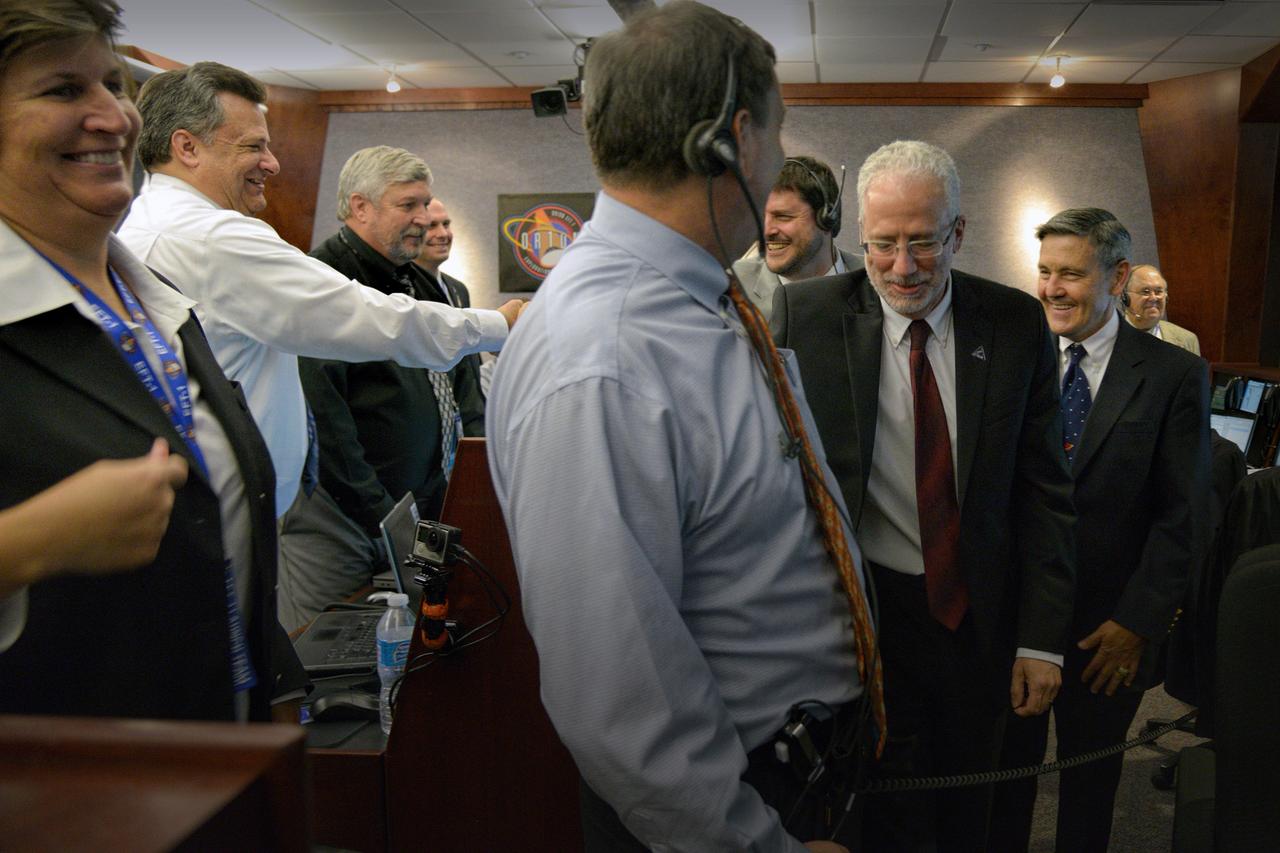
The Orion team celebrates Orion's successful Exploration Flight Test-1 (EFT-1) mission in Building AE at Cape Canaveral Air Force Station on Dec. 5, 2014. The Orion spacecraft orbited Earth twice, reaching an altitude of approximately 3,600 miles above Earth before landing. No one was aboard Orion for this flight test, but the spacecraft is designed to allow us to journey to destinations never before visited by humans, including an asteroid and Mars. Part of Batch image transfer from Flickr.
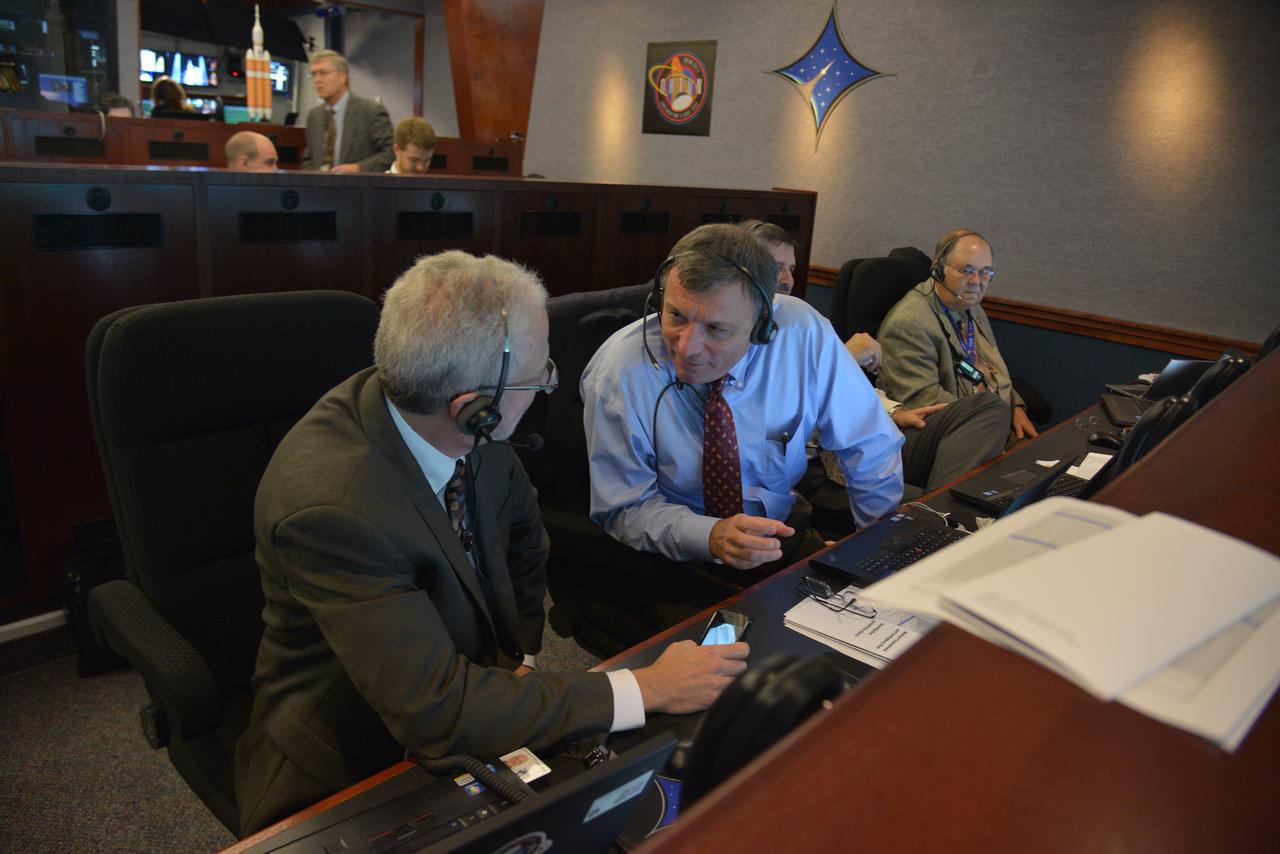
The Orion team reviews the launch procedure in Building AE at Cape Canaveral Air Force Station ahead of the launch of Orion on Exploration Flight Test-1 (EFT-1) on Dec. 4, 2014. Part of Batch image transfer from Flickr.
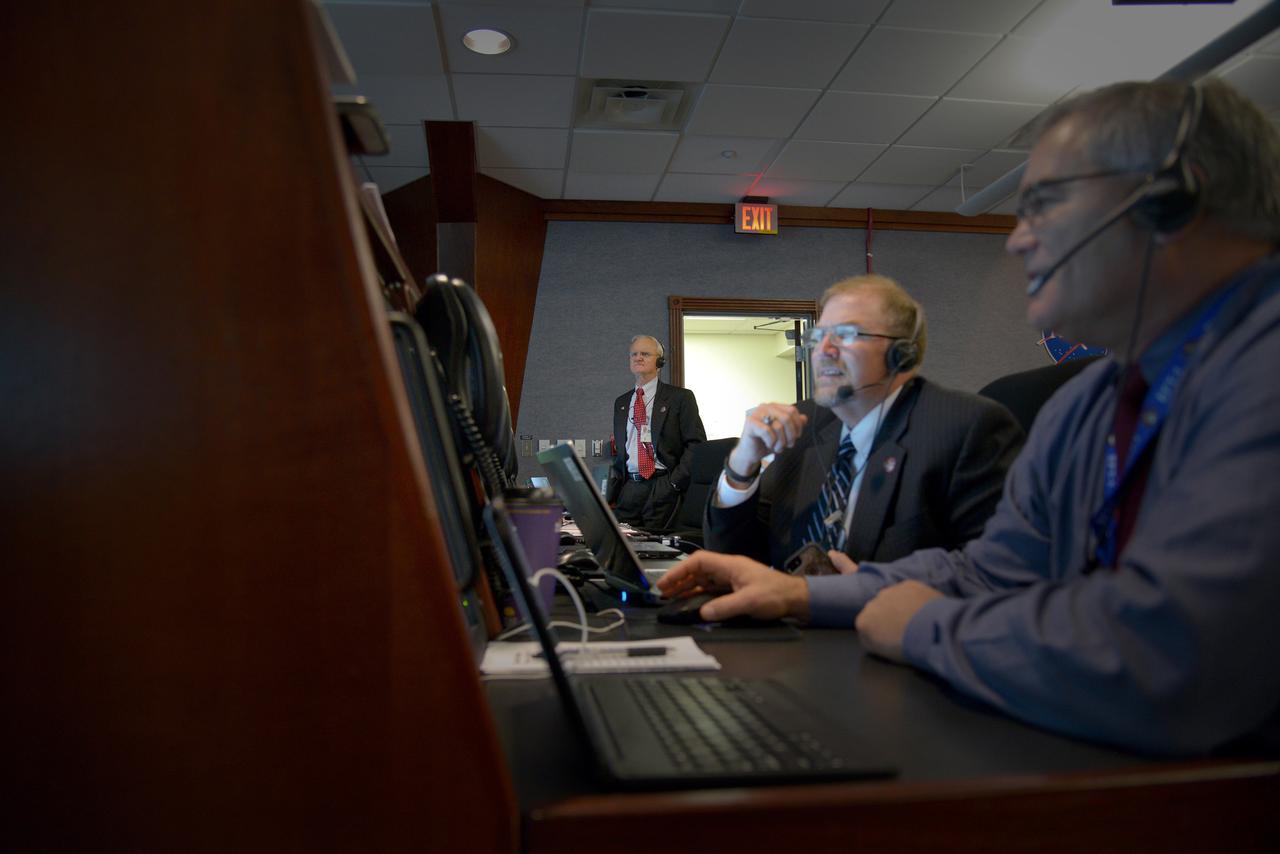
The Orion team reviews the launch procedure in Building AE at Cape Canaveral Air Force Station ahead of the launch of Orion on Exploration Flight Test-1 (EFT-1) on Dec. 4, 2014. Part of Batch image transfer from Flickr.
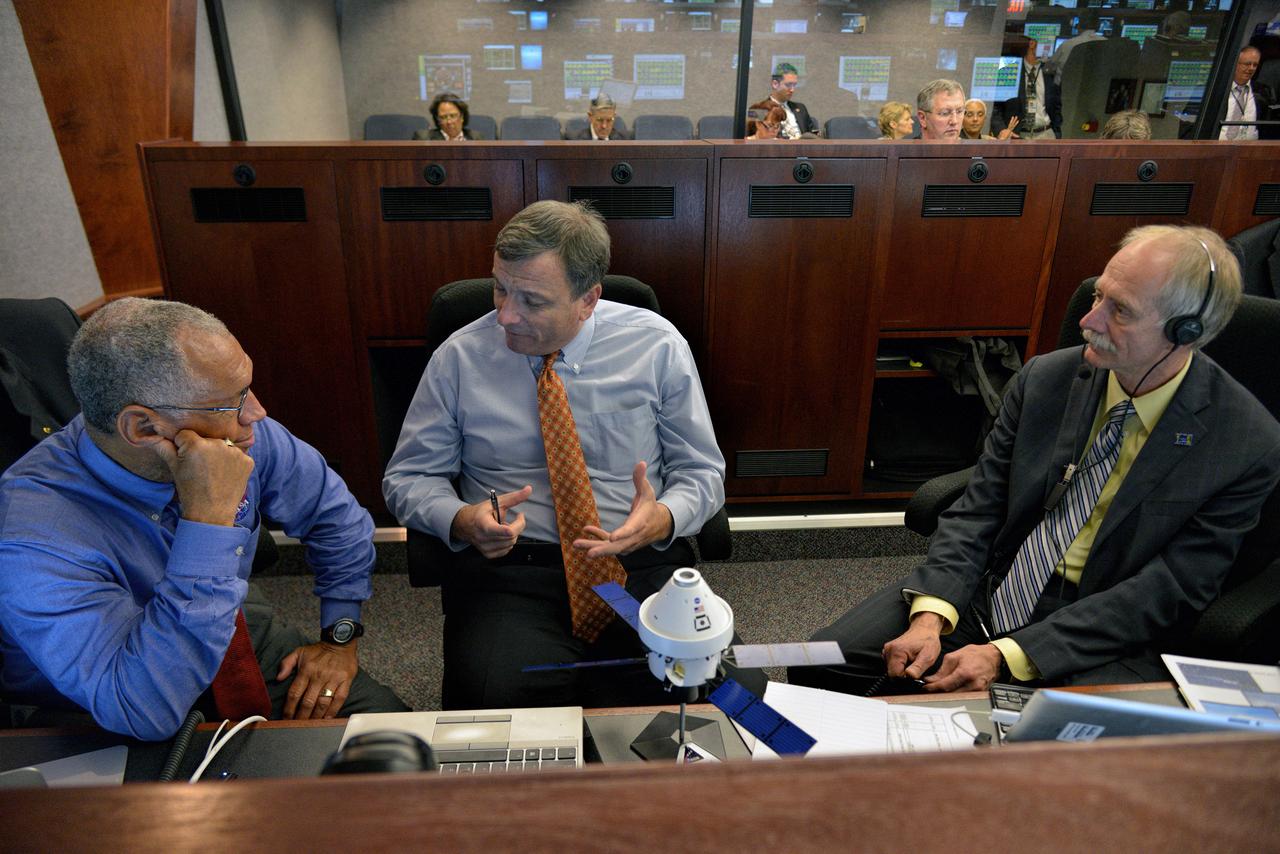
The Orion team (including NASA Administrator Charles Bolden and Operations Directorate William Gerstenmaier) discuss Orion operations in Building AE at Cape Canaveral Air Force Station during Exploration Flight Test-1 (EFT-1) on Dec. 5, 2014. Part of Batch image transfer from Flickr.
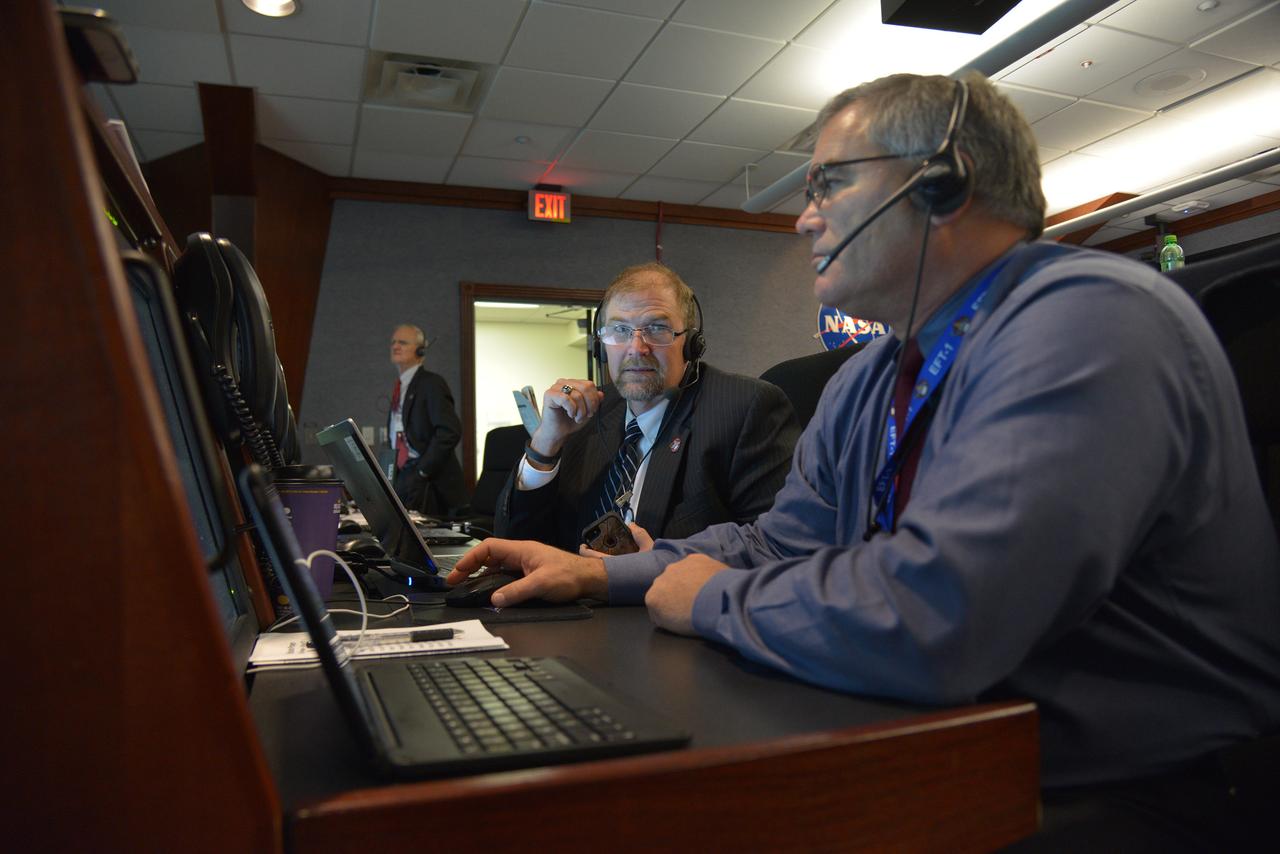
The Orion team reviews the launch procedure in Building AE at Cape Canaveral Air Force Stationahead of the launch of Orion on Exploration Flight Test-1 (EFT-1) on Dec. 4, 2014. Part of Batch image transfer from Flickr.
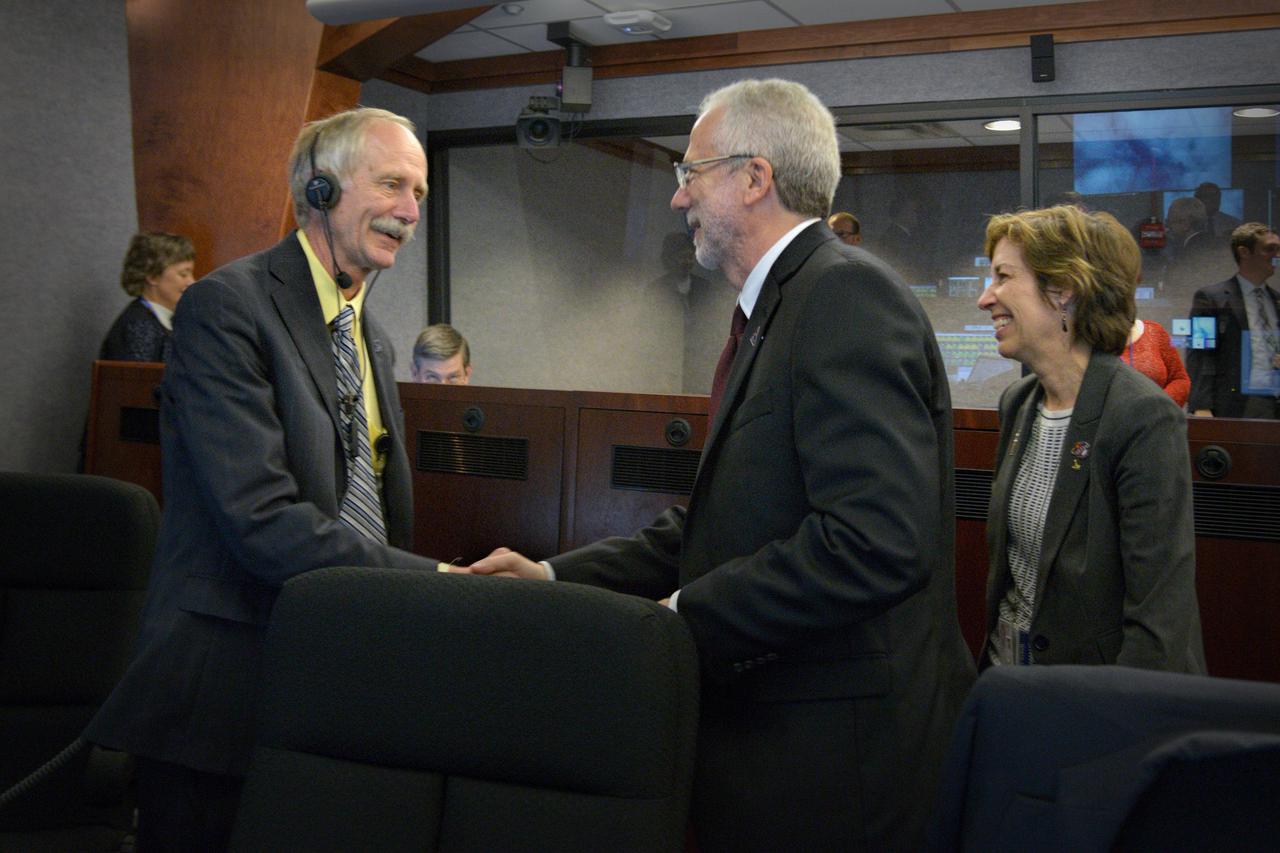
The Orion team celebrates Orion's successful Exploration Flight Test-1 (EFT-1) mission in Building AE at Cape Canaveral Air Force Station on Dec. 5, 2014. Orion Program Manager Mark Geyer, NASA Director Ellen Ochoa and NASA Associate Administrator for the Human Exploration and Operations Directorate William Gerstenmaier are in frame. The Orion spacecraft orbited Earth twice, reaching an altitude of approximately 3,600 miles above Earth before landing. No one was aboard Orion for this flight test, but the spacecraft is designed to allow us to journey to destinations never before visited by humans, including an asteroid and Mars. Part of Batch image transfer from Flickr.
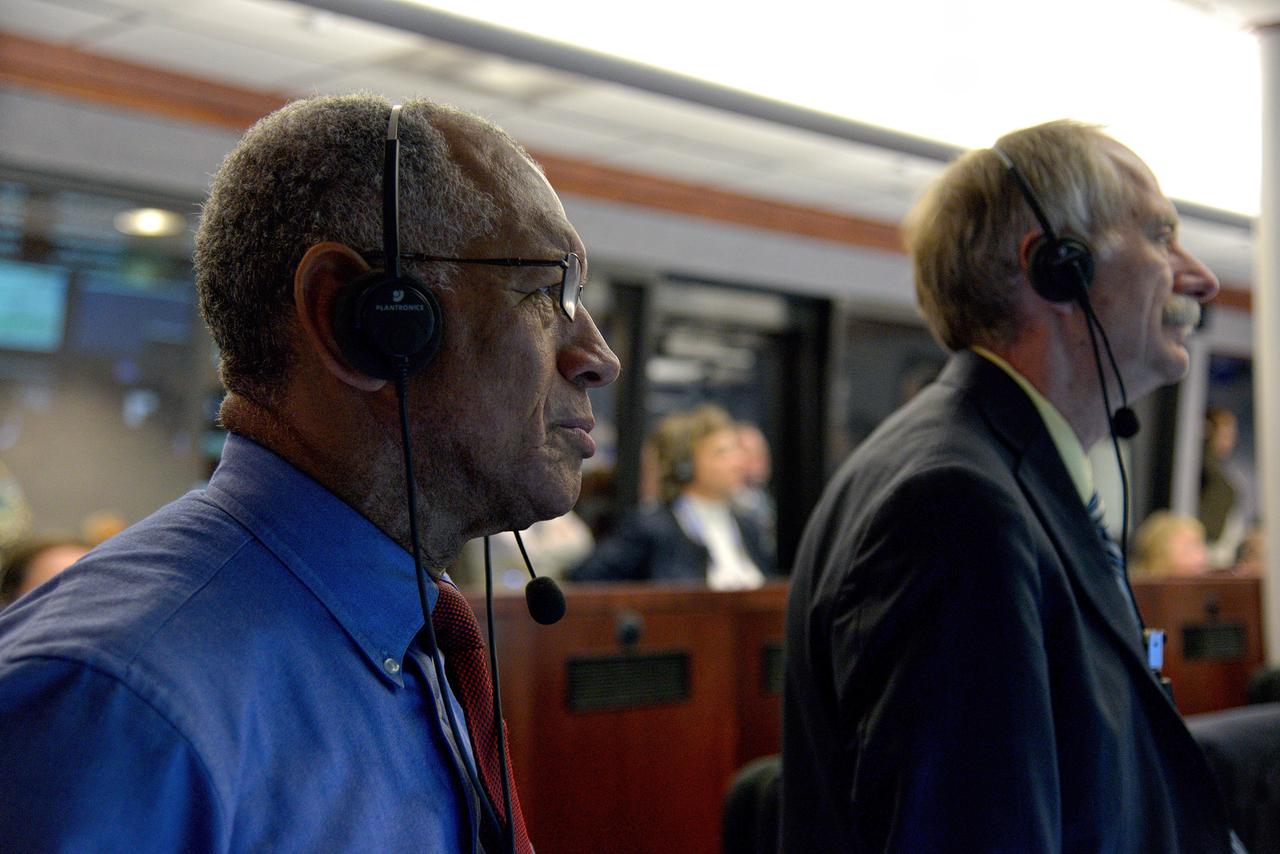
The Orion team watches the flight in Building AE at Cape Canaveral Air Force Station during Exploration Flight Test-1 (EFT-1) on Dec. 5, 2014. NASA Administrator Charles Bolden, left, NASA Associate Administrator for the Human Exploration and Operations Directorate William Gerstenmaier, are in frame. Part of Batch image transfer from Flickr.
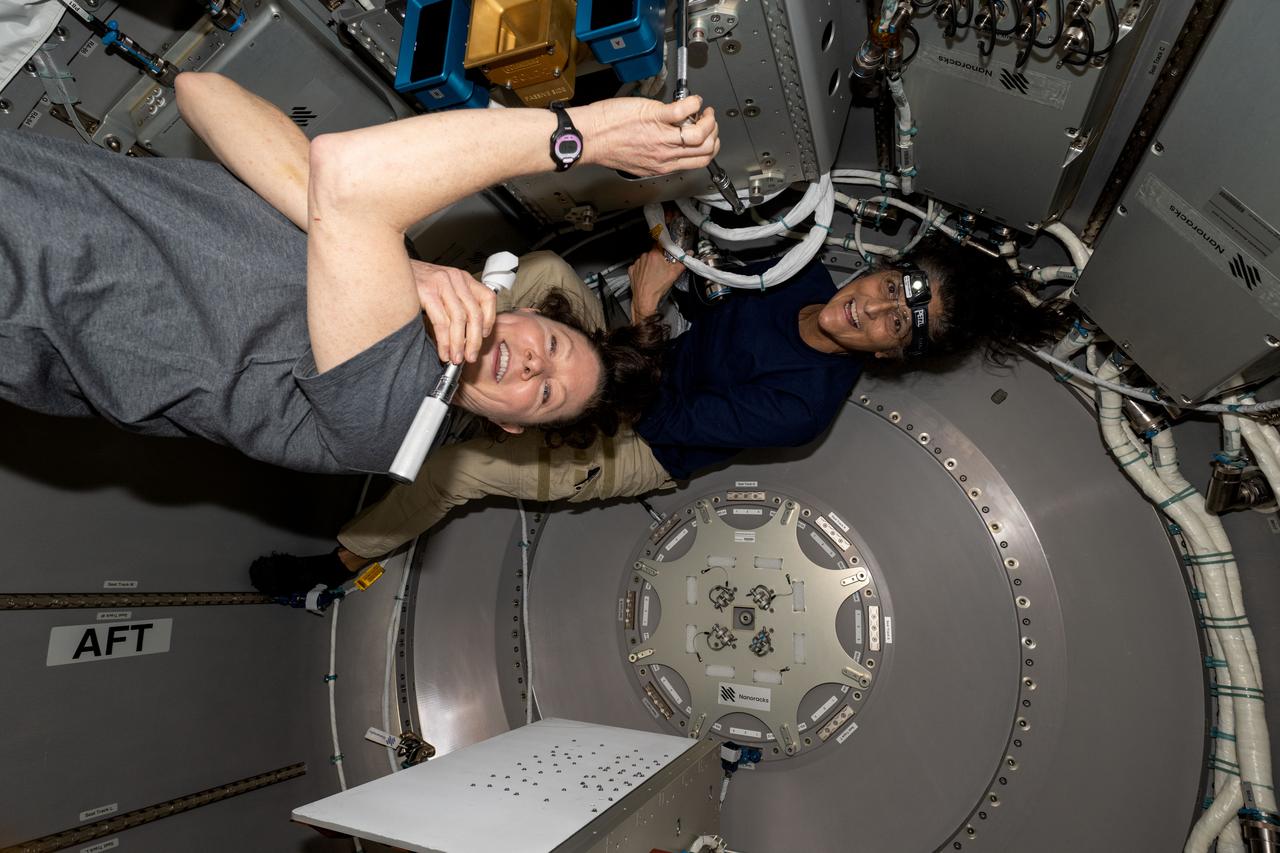
iss071e403704 (July 24, 2024) --- NASA astronauts (from left) Tracy C. Dyson, Expedition 71 Flight Engineer, and Suni Williams, Pilot for Boeing's Crew Flight Test, work inside the NanoRacks Bishop airlock located in the port side of the International Space Station's Tranquility module. The duo installed the the ArgUS Mission-1 technology demonstration hardware inside Bishop for placement outside in the vacuum of space to test the external operations of communications, computer processing, and high-definition video gear.
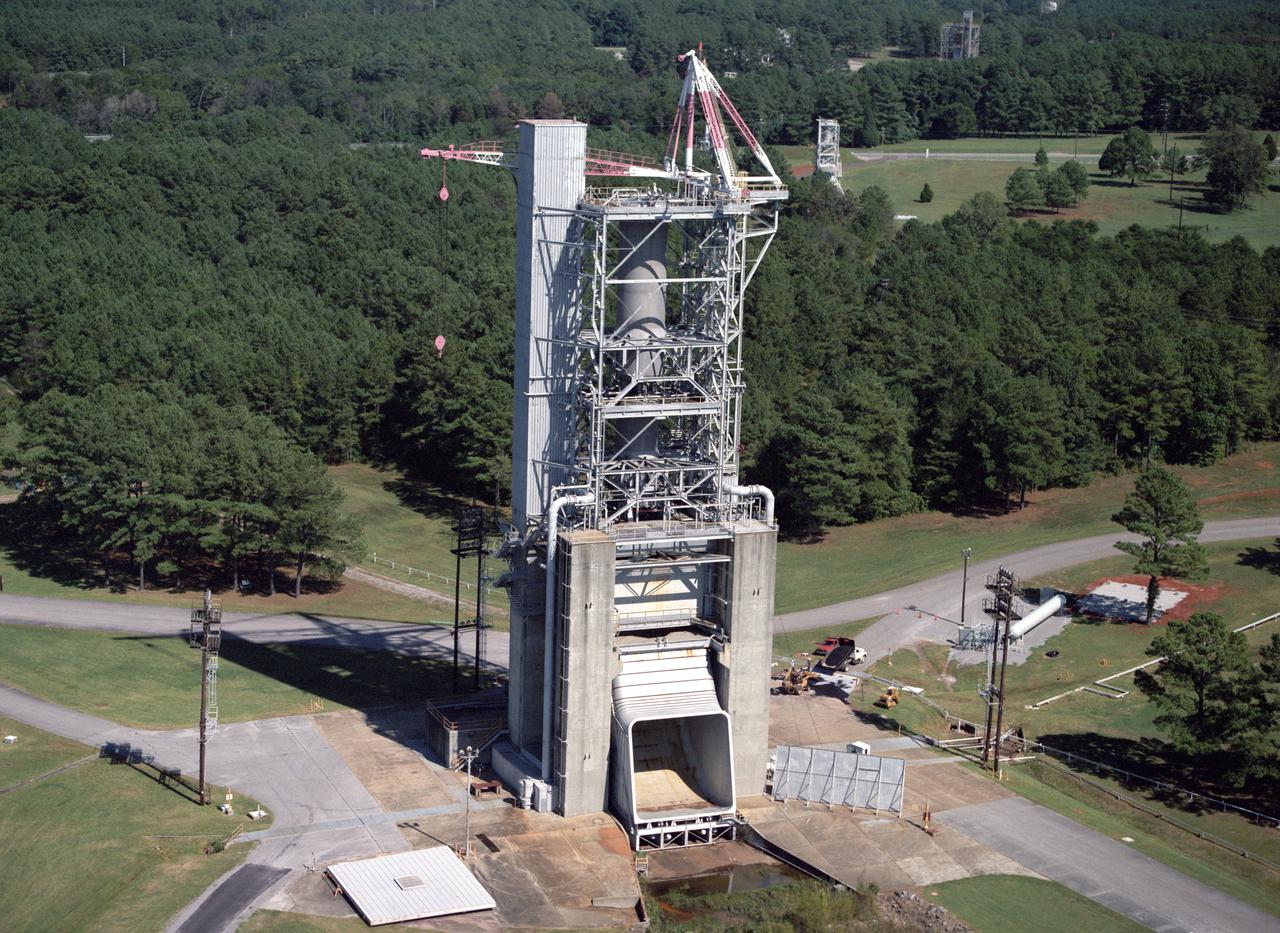
Marshall Space Flight Center's F-1 Engine Test Stand is shown in this picture. Constructed in 1963, the test stand is a vertical engine firing test stand, 239 feet in elevation and 4,600 square feet in area at the base, and was designed to assist in the development of the F-1 Engine. Capability is provided for static firing of 1.5 million pounds of thrust using liquid oxygen and kerosene. The foundation of the stand is keyed into the bedrock approximately 40 feet below grade.
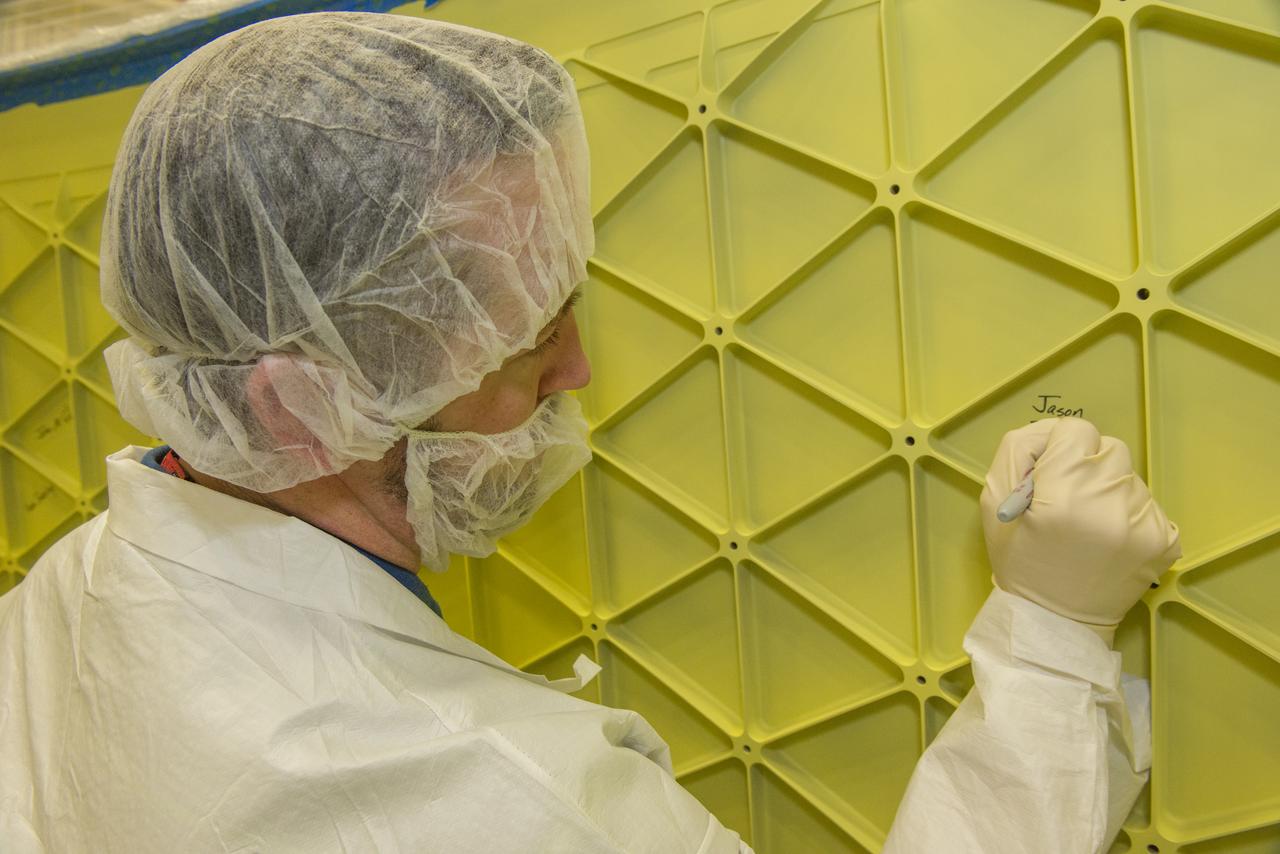
JASON ELDRIDGE, AN ERC INCORPORATED EMPLOYEE SUPPORTING THE MATERIALS & PROCESSES LABORATORY AT NASA'S MARSHALL SPACE FLIGHT CENTER, SIGNS HIS NAME ON THE INTERIOR OF THE ADAPTER THAT WILL CONNECT THE ORION SPACECRAFT TO A UNITED LAUNCH ALLIANCE DELTA IV ROCKET FOR EXPLORATION FLIGHT TEST (EFT)-1. MARSHALL CENTER TEAM MEMBERS WHO WERE INVOLVED IN THE DESIGN, CONSTRUCTION AND TESTING OF THE ADAPTER HAD THE OPPORTUNITY TO AUTOGRAPH IT BEFORE THE HARDWARE IS SHIPPED TO NASA'S KENNEDY SPACE CENTER IN FEBRUARY. ELDRIDGE WAS ON A TEAM THAT PERFORMED ULTRASONIC INSPECTIONS ON THE ADAPTER'S WELDS -- ENSURING THEY ARE STRUCTURALLY SOUND. EFT-1, SCHEDULED FOR 2014, WILL PROVIDE EARLY EXPERIENCE FOR NASA SPACE LAUNCH SYSTEM (SLS) HARDWARE AHEAD OF THE ROCKET'S FIRST FLIGHT IN 2017.
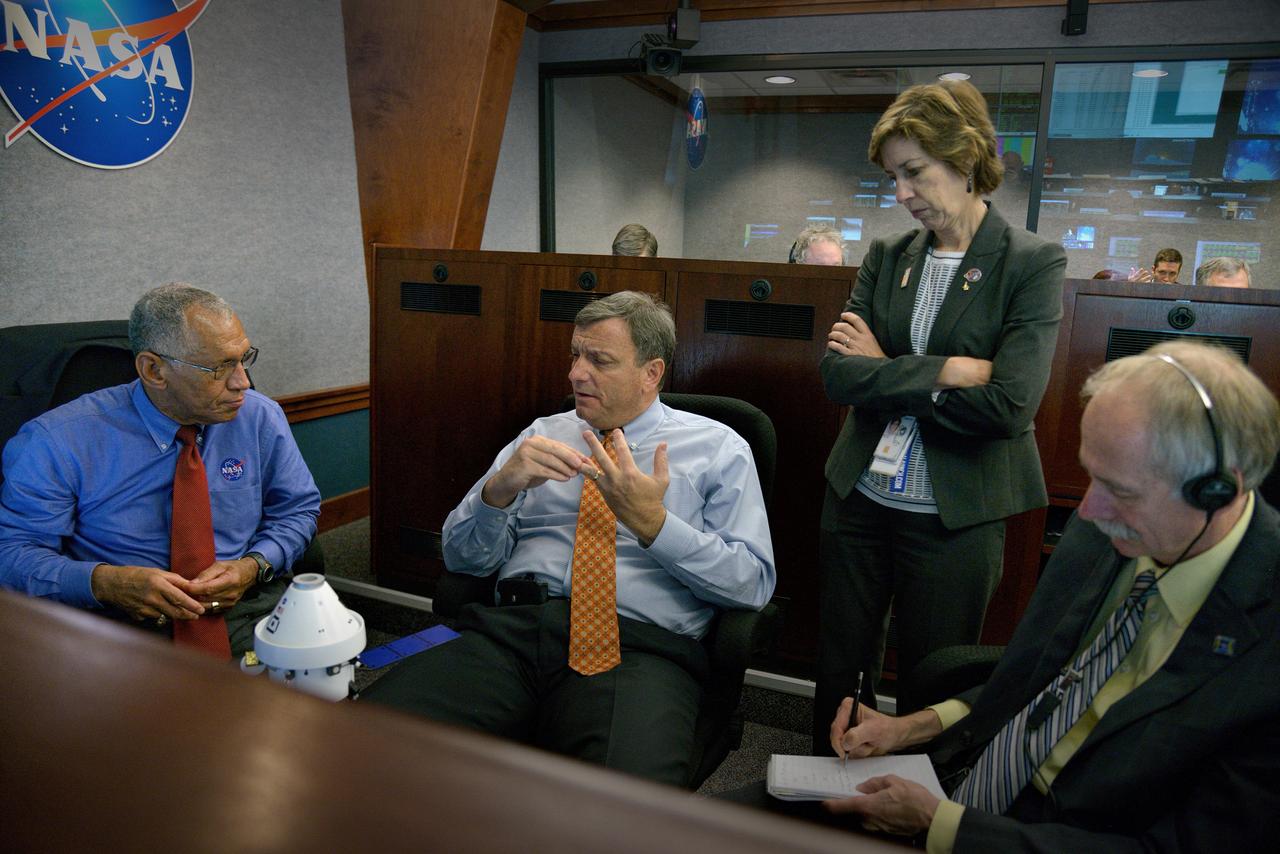
The Orion team (including JSC Director Ellen Ochoa, NASA Administrator Charles Bolden and Operations Directorate William Gerstenmaier) discuss Orion operations in Building AE at Cape Canaveral Air Force Station during Exploration Flight Test-1 (EFT-1) on Dec. 5, 2014. Part of Batch image transfer from Flickr.
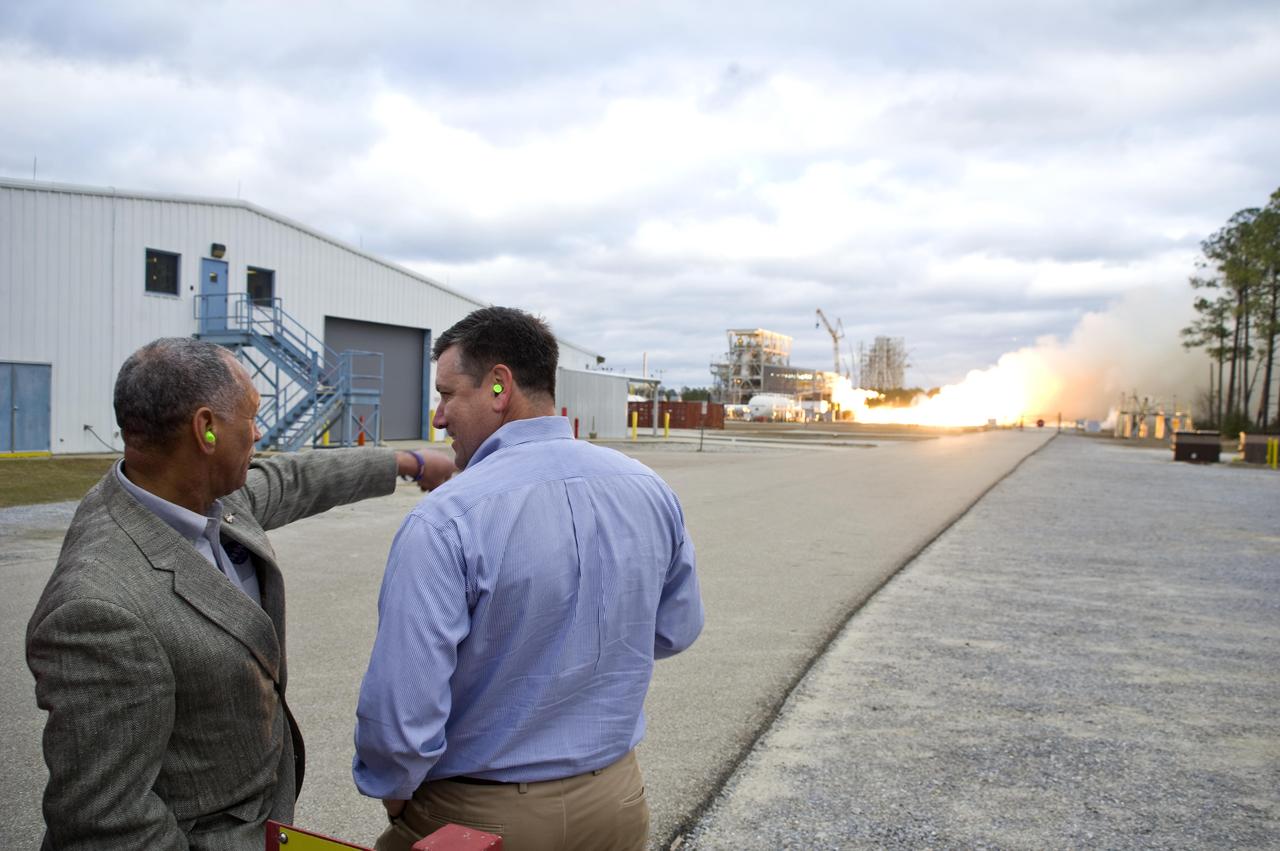
NASA Administrator Charles Bolden (l) and John C. Stennis Space Center Director Patrick Scheuermann watch the successful test of the first Aerojet AJ26 flight engine Feb. 7, 2011. The test was conducted on the E-1 Test Stand at Stennis. The engine now will be sent to Wallops Flight Facility in Virginia, where it will be used to power the first stage of Orbital Sciences Corporation's Taurus II space vehicle. The Feb. 7 test supports NASA's commitment to partner with companies to provide commercial cargo flights to the International Space Station. NASA has partnered with Orbital to carry out the first of eight cargo missions to the space station in early 2012.
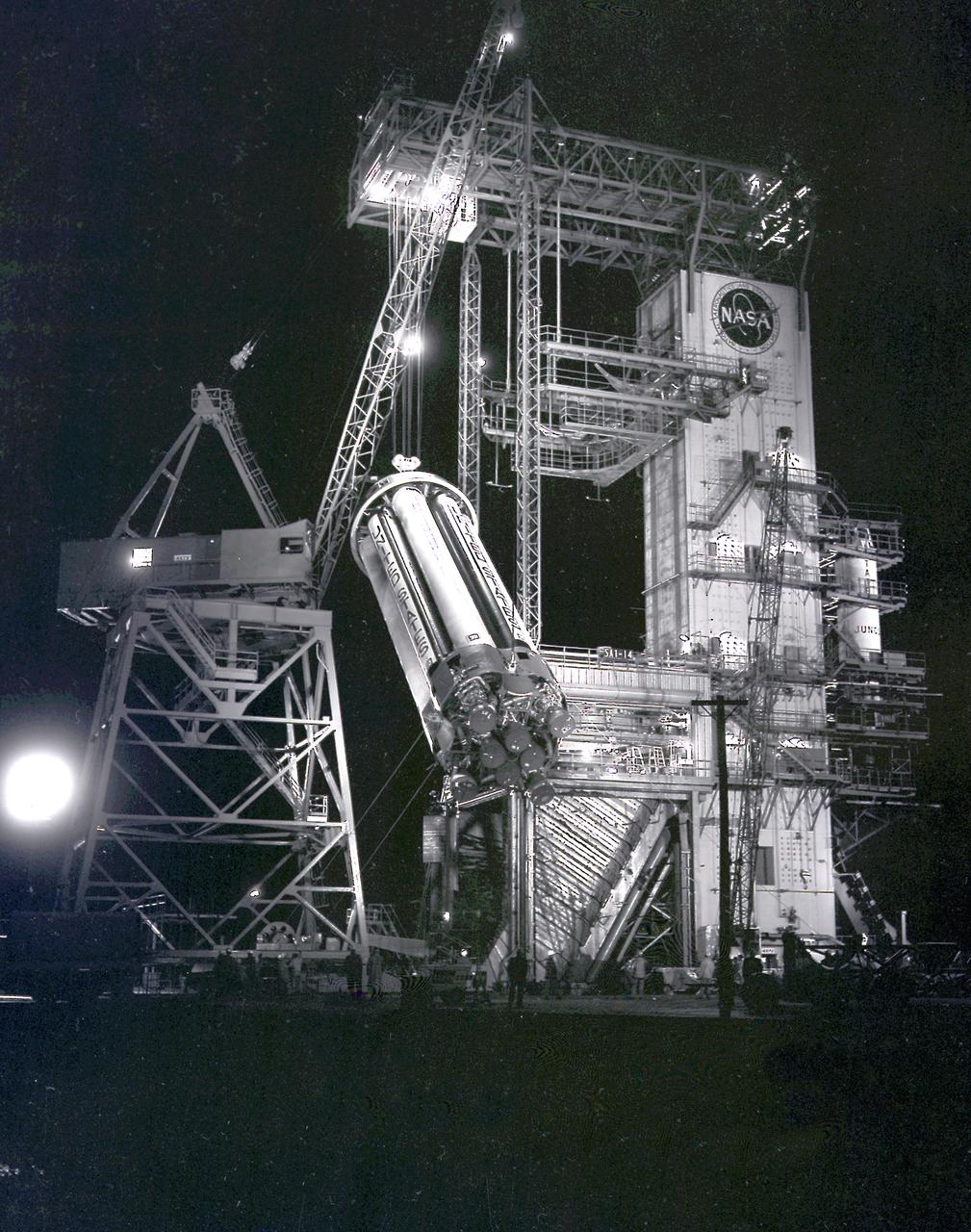
This night photograph depicts the SA-1 booster (Saturn I S-I stage) being removed from the test stand after the first flight qualification testing at the Marshall Space Flight Center (MSFC).
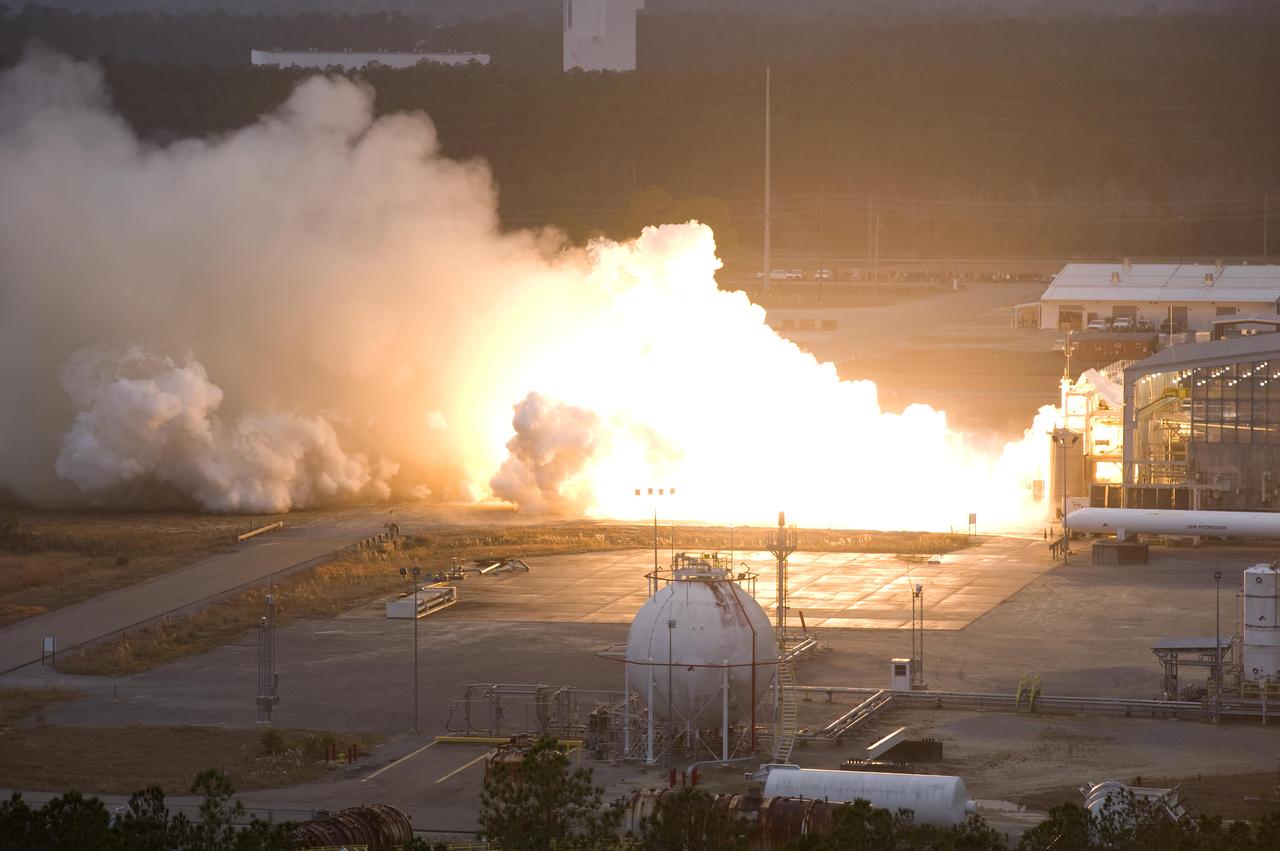
John C. Stennis Space Center engineers conduct a 55-second test fire of Aerojet's liquid-fuel AJ26 rocket engine that will power the first stage of Orbital Sciences Corporation's Taurus II space launch vehicle. The Dec. 17, 2010 test was conducted on the E-1 Test Stand at Stennis in support of NASA's Commercial Transportation Services partnerships to enable commercial cargo flights to the International Space Station. Orbital is under contract with NASA to provide eight cargo missions to the space station through 2015.
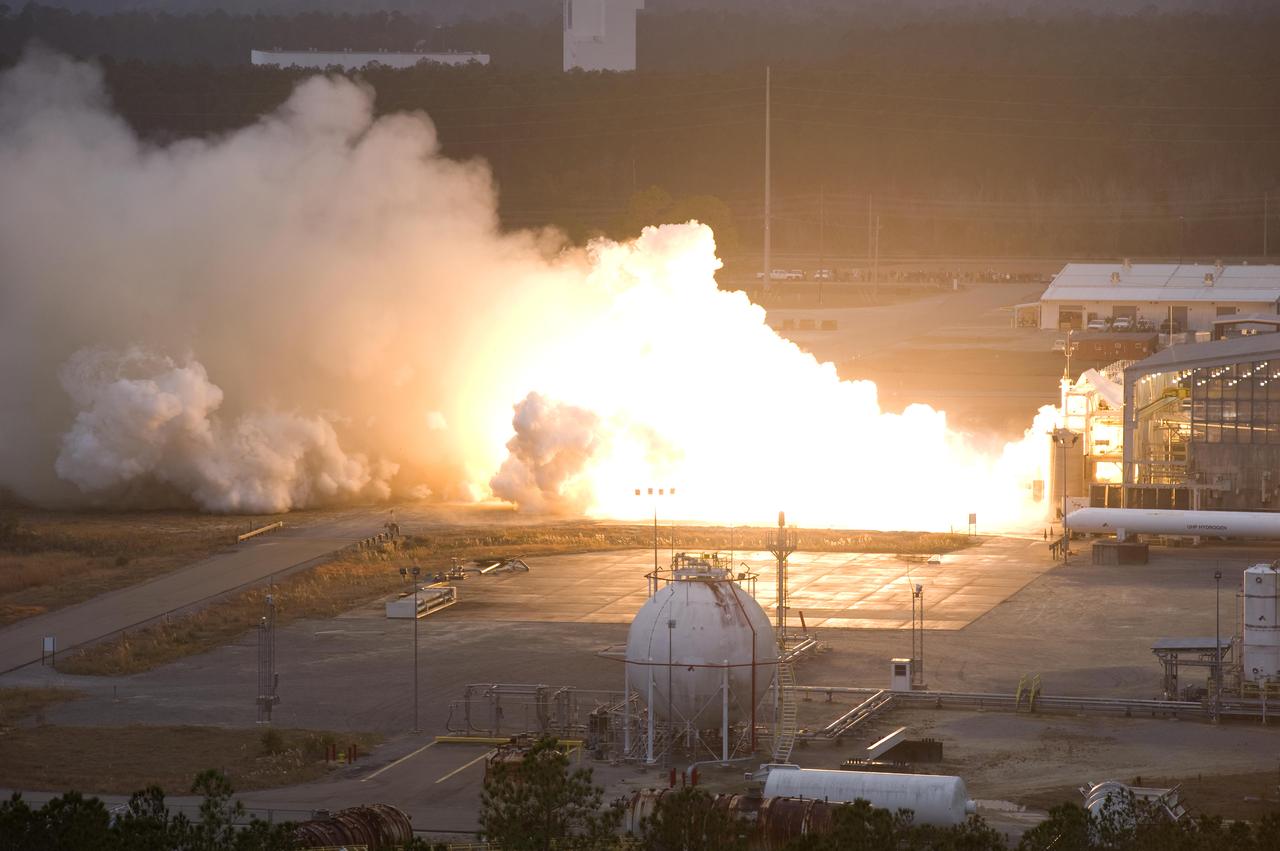
John C. Stennis Space Center engineers conduct a 55-second test fire of Aerojet's liquid-fuel AJ26 rocket engine that will power the first stage of Orbital Sciences Corporation's Taurus II space launch vehicle. The Dec. 17, 2010 test was conducted on the E-1 Test Stand at Stennis in support of NASA's Commercial Transportation Services partnerships to enable commercial cargo flights to the International Space Station. Orbital is under contract with NASA to provide eight cargo missions to the space station through 2015.
NASA's Orion spacecraft that flew Exploration Flight Test-1 on Dec. 5, 2014 is seen as it arrives at the White House complex, Saturday, July 21, 2018 in Washington, DC. Lockheed Martin, NASA’s prime contractor for Orion, began manufacturing the Orion crew module in 2011 and delivered it in July 2012 to NASA's Kennedy Space Center where final assembly, integration and testing was completed. More than 1,000 companies across the country manufactured or contributed elements to the spacecraft. Photo Credit: (NASA/Joel Kowsky)
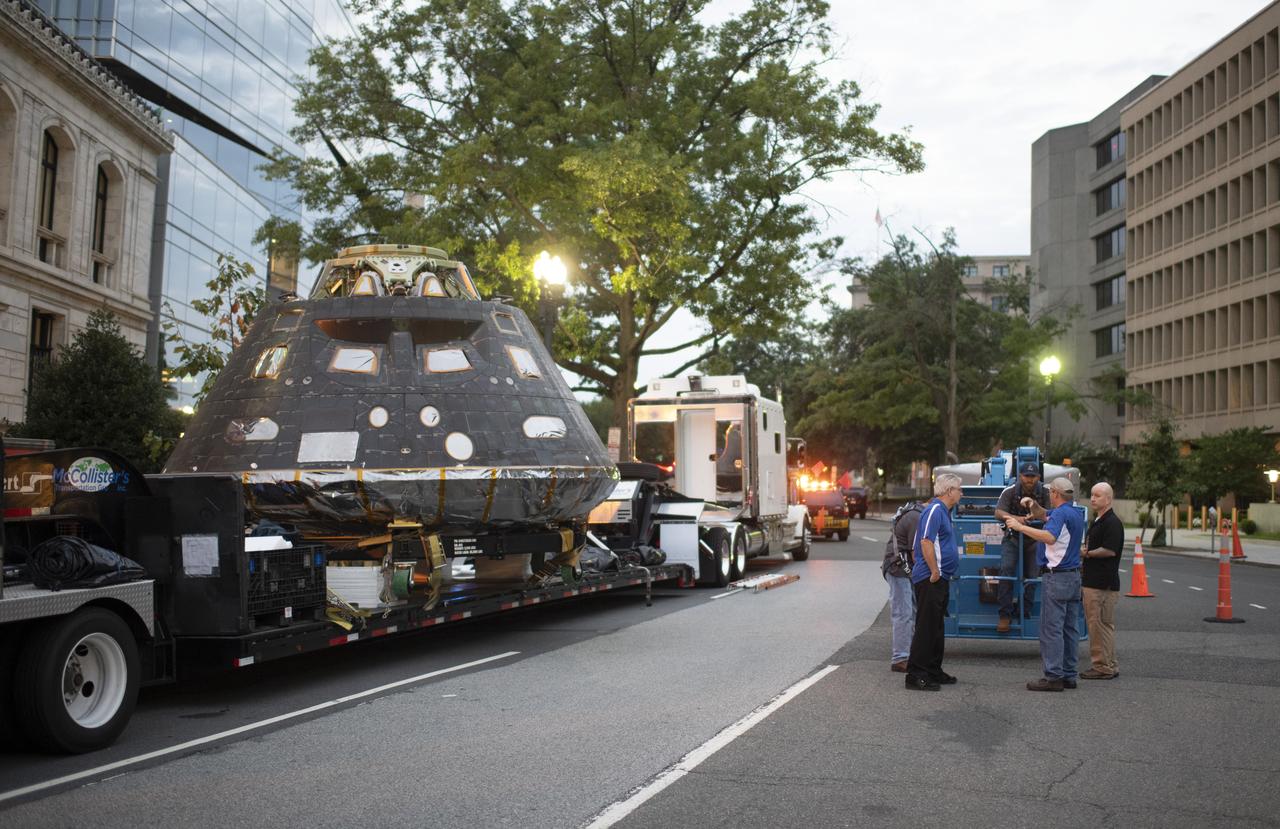
NASA's Orion spacecraft that flew Exploration Flight Test-1 on Dec. 5, 2014 is seen as it arrives at the White House complex, Saturday, July 21, 2018 in Washington, DC. Lockheed Martin, NASA’s prime contractor for Orion, began manufacturing the Orion crew module in 2011 and delivered it in July 2012 to NASA's Kennedy Space Center where final assembly, integration and testing was completed. More than 1,000 companies across the country manufactured or contributed elements to the spacecraft. Photo Credit: (NASA/Joel Kowsky)
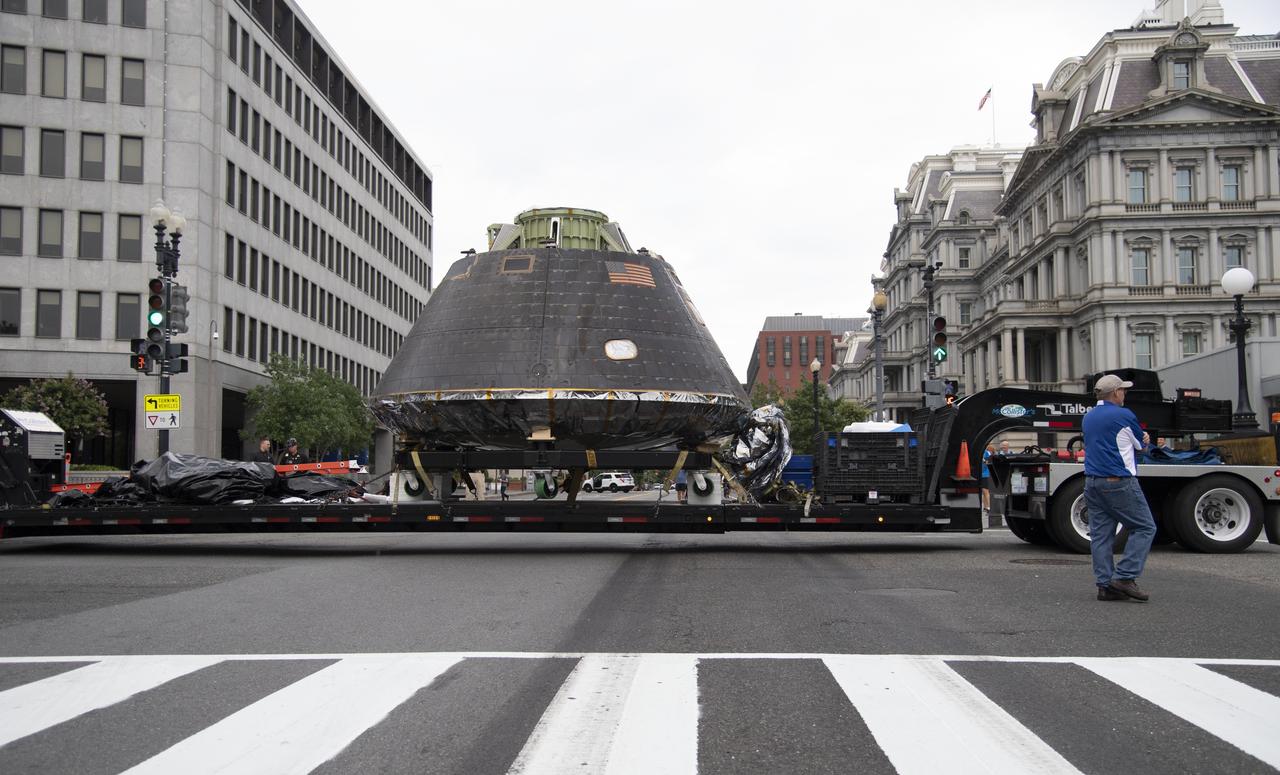
NASA's Orion spacecraft that flew Exploration Flight Test-1 on Dec. 5, 2014 is seen as it arrives at the White House complex, Saturday, July 21, 2018 in Washington, DC. Lockheed Martin, NASA’s prime contractor for Orion, began manufacturing the Orion crew module in 2011 and delivered it in July 2012 to NASA's Kennedy Space Center where final assembly, integration and testing was completed. More than 1,000 companies across the country manufactured or contributed elements to the spacecraft. Photo Credit: (NASA/Joel Kowsky)
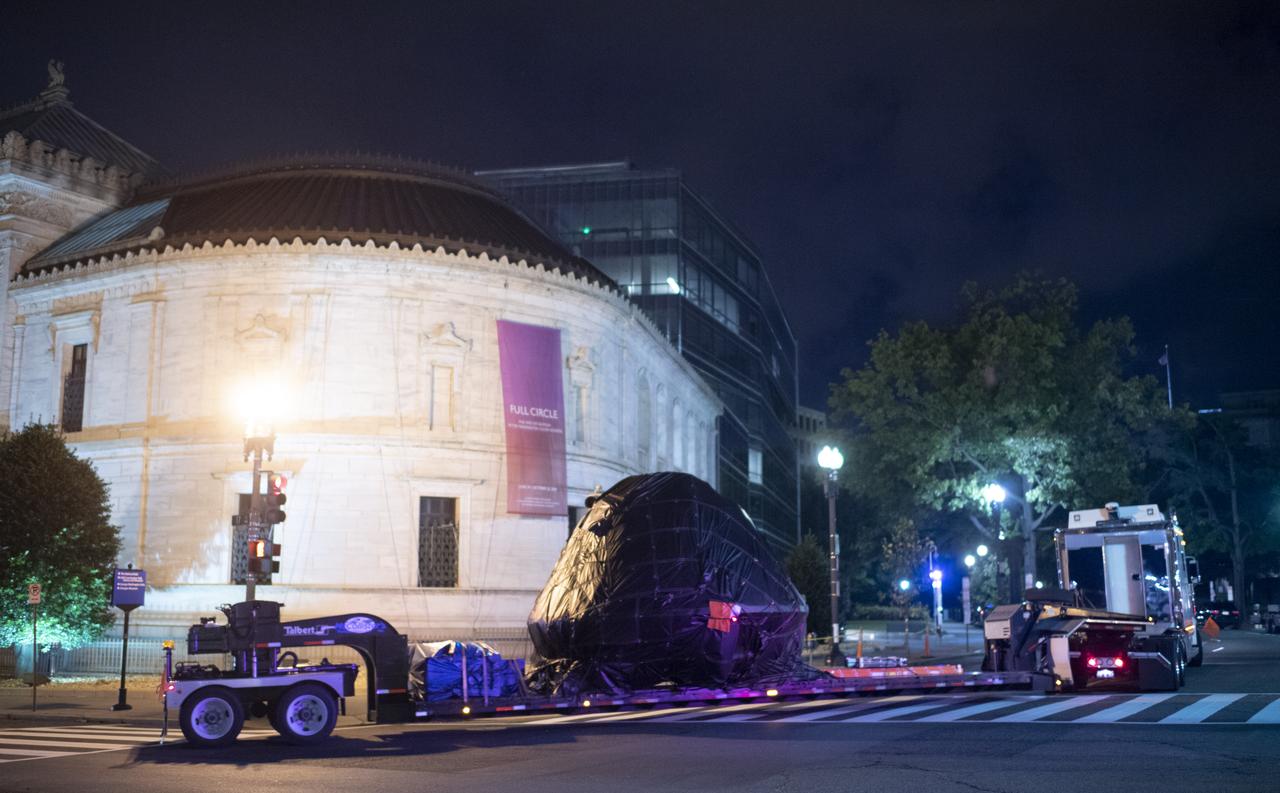
NASA's Orion spacecraft that flew Exploration Flight Test-1 on Dec. 5, 2014 is seen as it arrives at the White House complex, Saturday, July 21, 2018 in Washington, DC. Lockheed Martin, NASA’s prime contractor for Orion, began manufacturing the Orion crew module in 2011 and delivered it in July 2012 to NASA's Kennedy Space Center where final assembly, integration and testing was completed. More than 1,000 companies across the country manufactured or contributed elements to the spacecraft. Photo Credit: (NASA/Joel Kowsky)
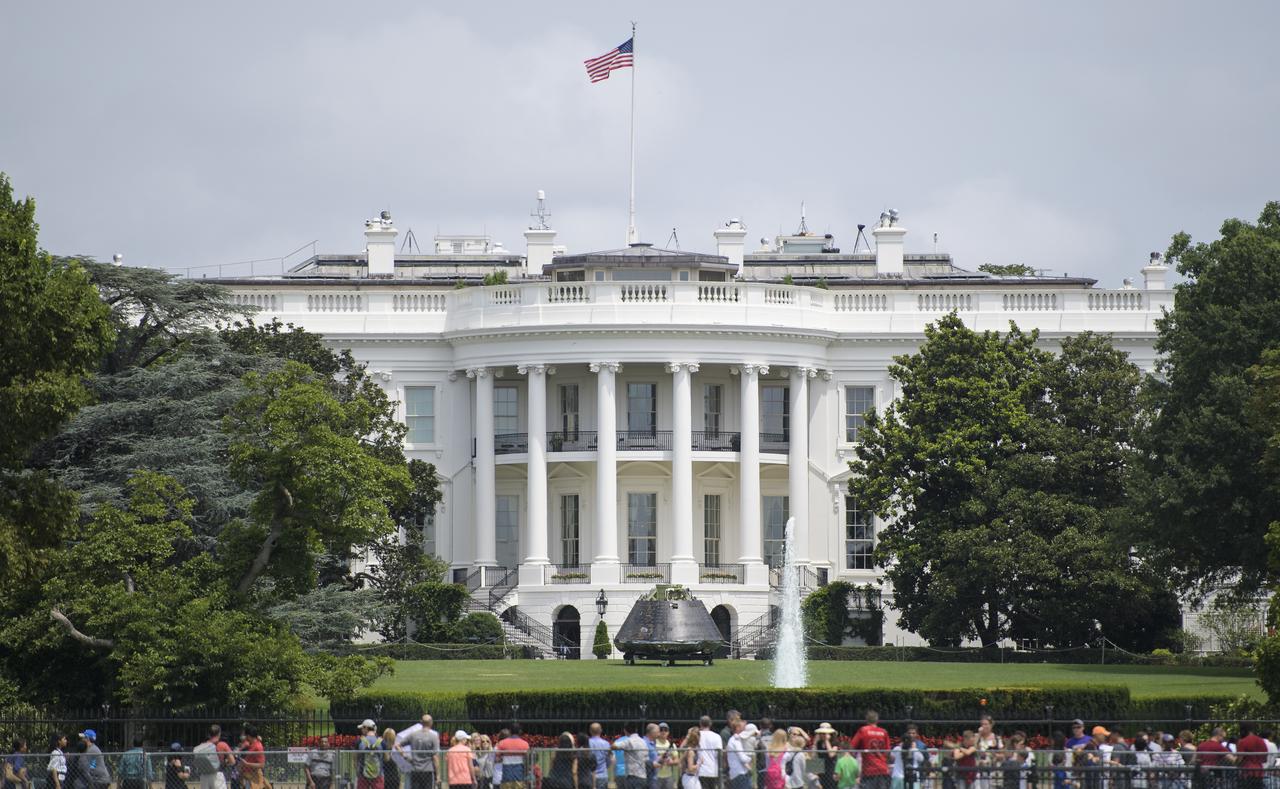
NASA's Orion spacecraft that flew Exploration Flight Test-1 on Dec. 5, 2014 is seen on the South Lawn of the White House, Sunday, July 22, 2018 in Washington, DC. Lockheed Martin, NASA’s prime contractor for Orion, began manufacturing the Orion crew module in 2011 and delivered it in July 2012 to NASA's Kennedy Space Center where final assembly, integration and testing was completed. More than 1,000 companies across the country manufactured or contributed elements to the spacecraft. Photo Credit: (NASA/Joel Kowsky)
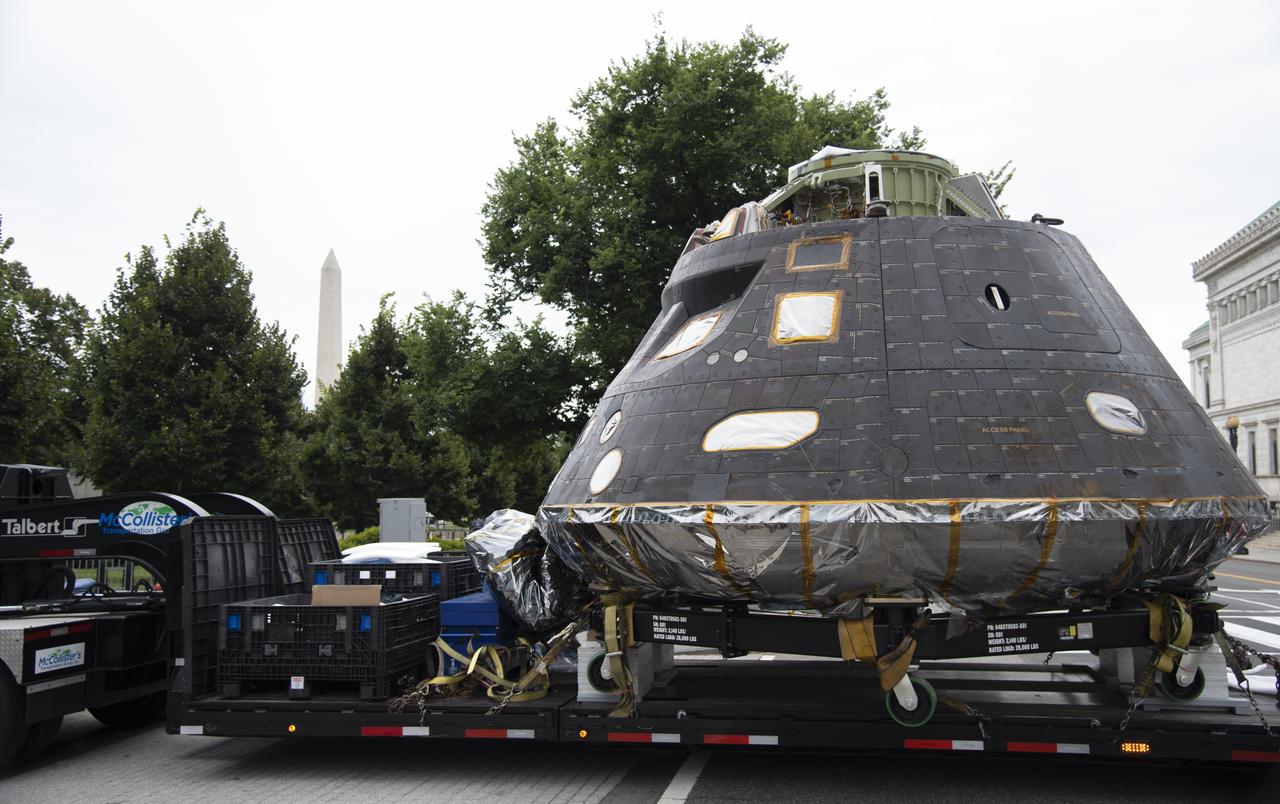
NASA's Orion spacecraft that flew Exploration Flight Test-1 on Dec. 5, 2014 is seen as it arrives at the White House complex, Saturday, July 21, 2018 in Washington, DC. Lockheed Martin, NASA’s prime contractor for Orion, began manufacturing the Orion crew module in 2011 and delivered it in July 2012 to NASA's Kennedy Space Center where final assembly, integration and testing was completed. More than 1,000 companies across the country manufactured or contributed elements to the spacecraft. Photo Credit: (NASA/Joel Kowsky)
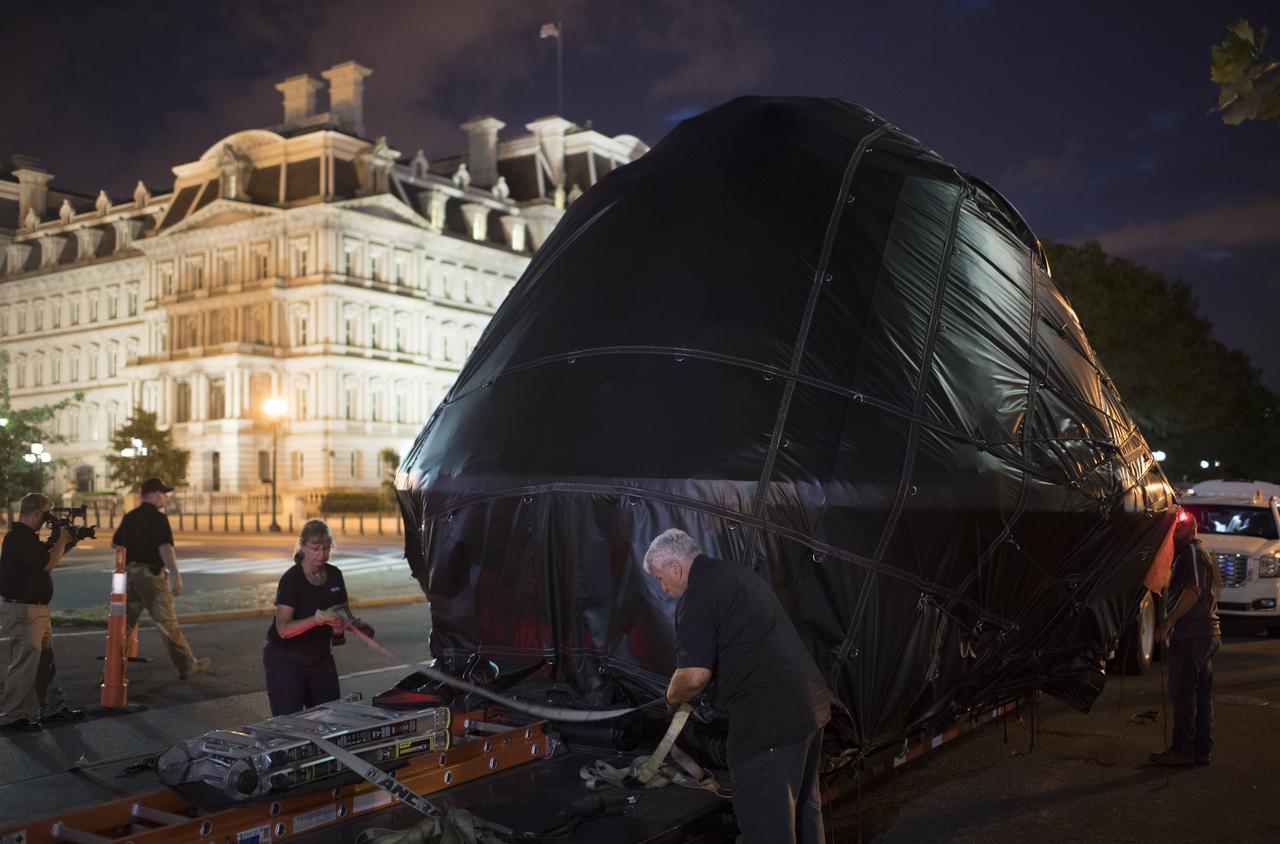
NASA's Orion spacecraft that flew Exploration Flight Test-1 on Dec. 5, 2014 is seen as it arrives at the White House complex, Saturday, July 21, 2018 in Washington, DC. Lockheed Martin, NASA’s prime contractor for Orion, began manufacturing the Orion crew module in 2011 and delivered it in July 2012 to NASA's Kennedy Space Center where final assembly, integration and testing was completed. More than 1,000 companies across the country manufactured or contributed elements to the spacecraft. Photo Credit: (NASA/Joel Kowsky)
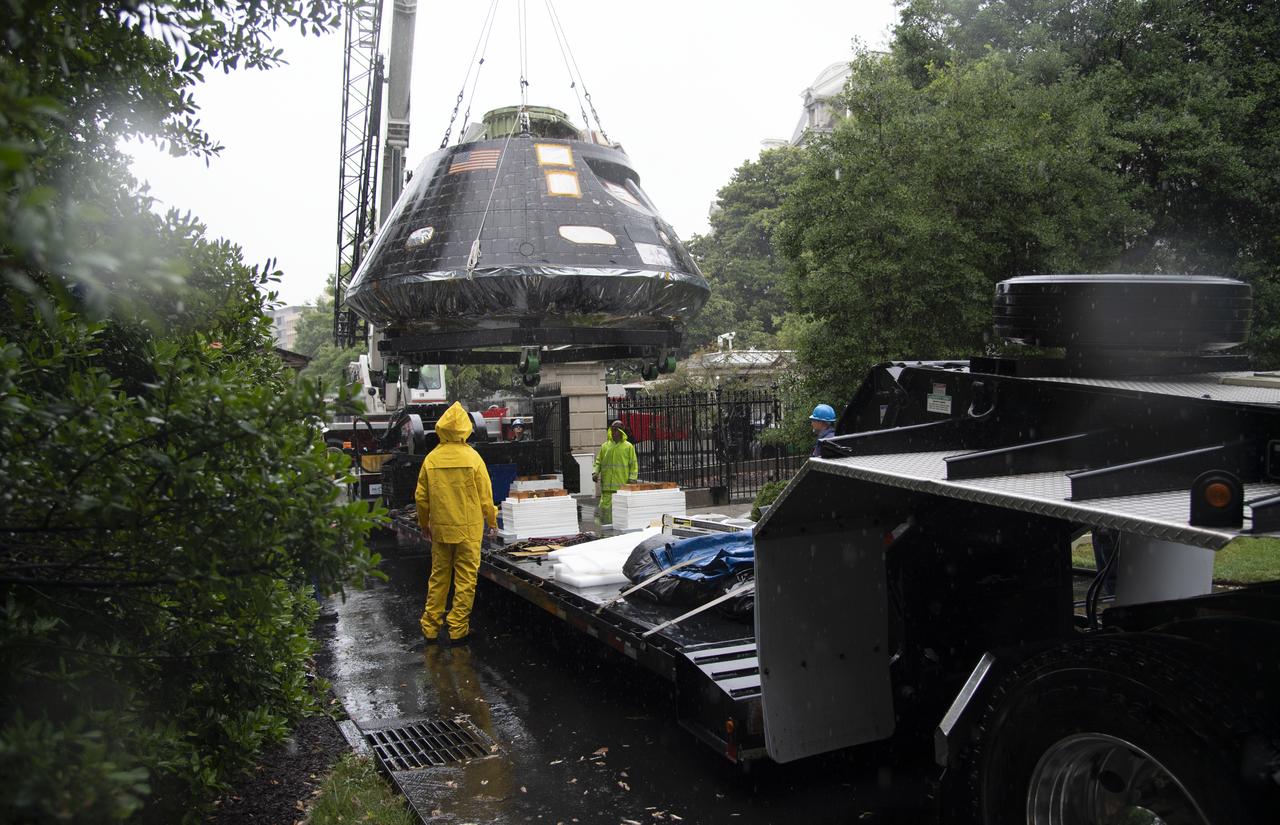
NASA's Orion spacecraft that flew Exploration Flight Test-1 on Dec. 5, 2014 is seen while being lifted over a gate and onto the South Lawn of the White House, Saturday, July 21, 2018 in Washington, DC. Lockheed Martin, NASA’s prime contractor for Orion, began manufacturing the Orion crew module in 2011 and delivered it in July 2012 to NASA's Kennedy Space Center where final assembly, integration and testing was completed. More than 1,000 companies across the country manufactured or contributed elements to the spacecraft. Photo Credit: (NASA/Joel Kowsky)
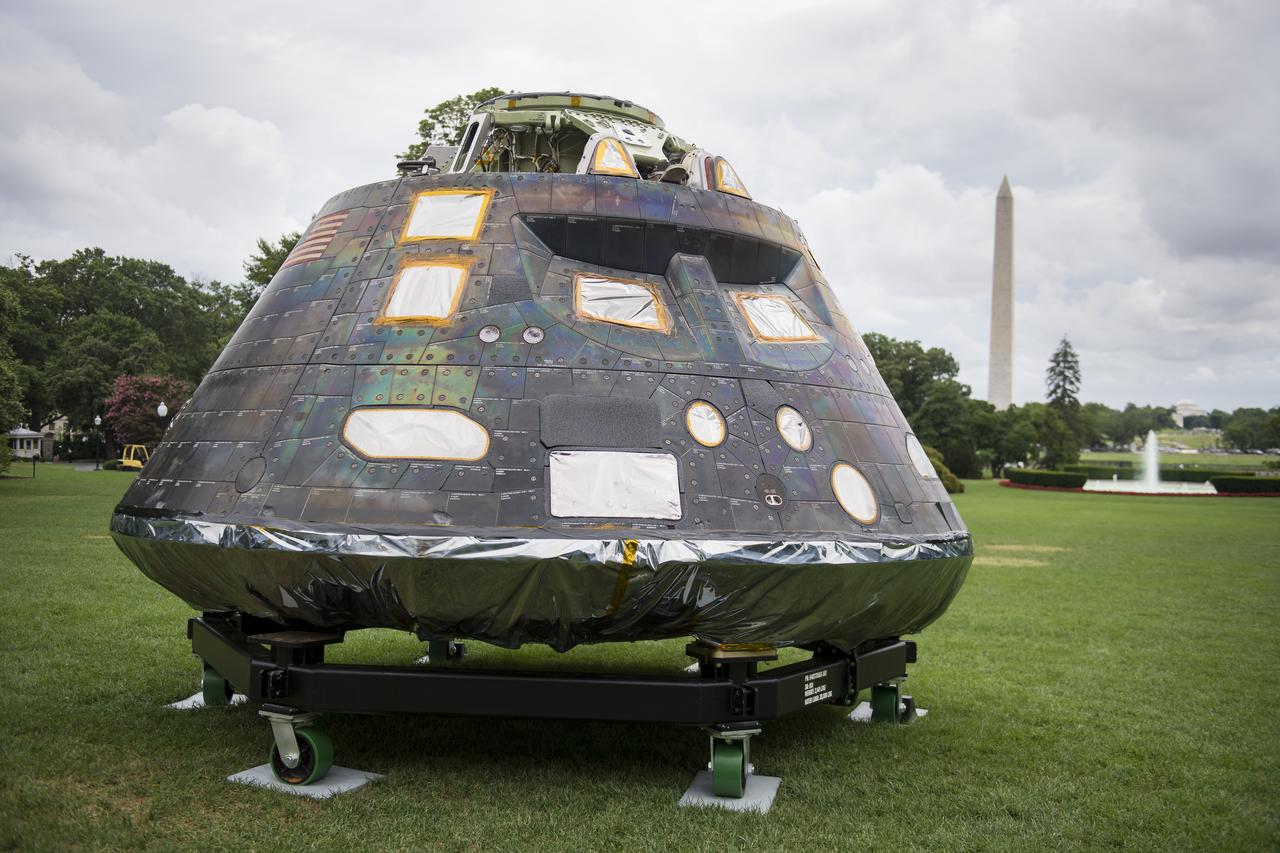
NASA's Orion spacecraft that flew on Exploration Flight Test-1 on Dec. 5, 2014, is seen on the south lawn of the White House during a Made in America Product Showcase, Monday, July 23, 2018 in Washington. Lockheed Martin, NASA’s prime contractor for Orion, began manufacturing the Orion crew module in 2011 and delivered it in July 2012 to NASA's Kennedy Space Center where final assembly, integration and testing was completed. More than 1,000 companies across the country manufactured or contributed elements to the spacecraft. Photo Credit: (NASA/Aubrey Gemignani)
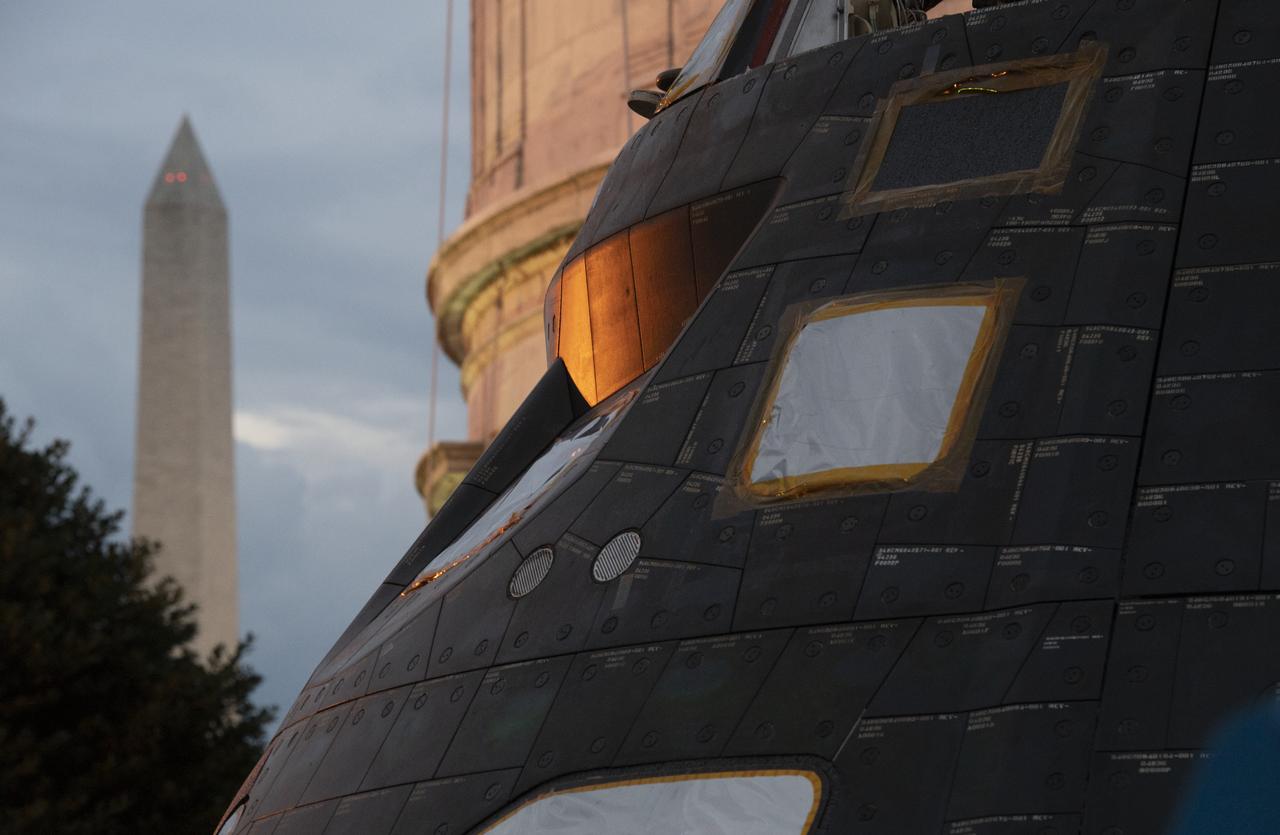
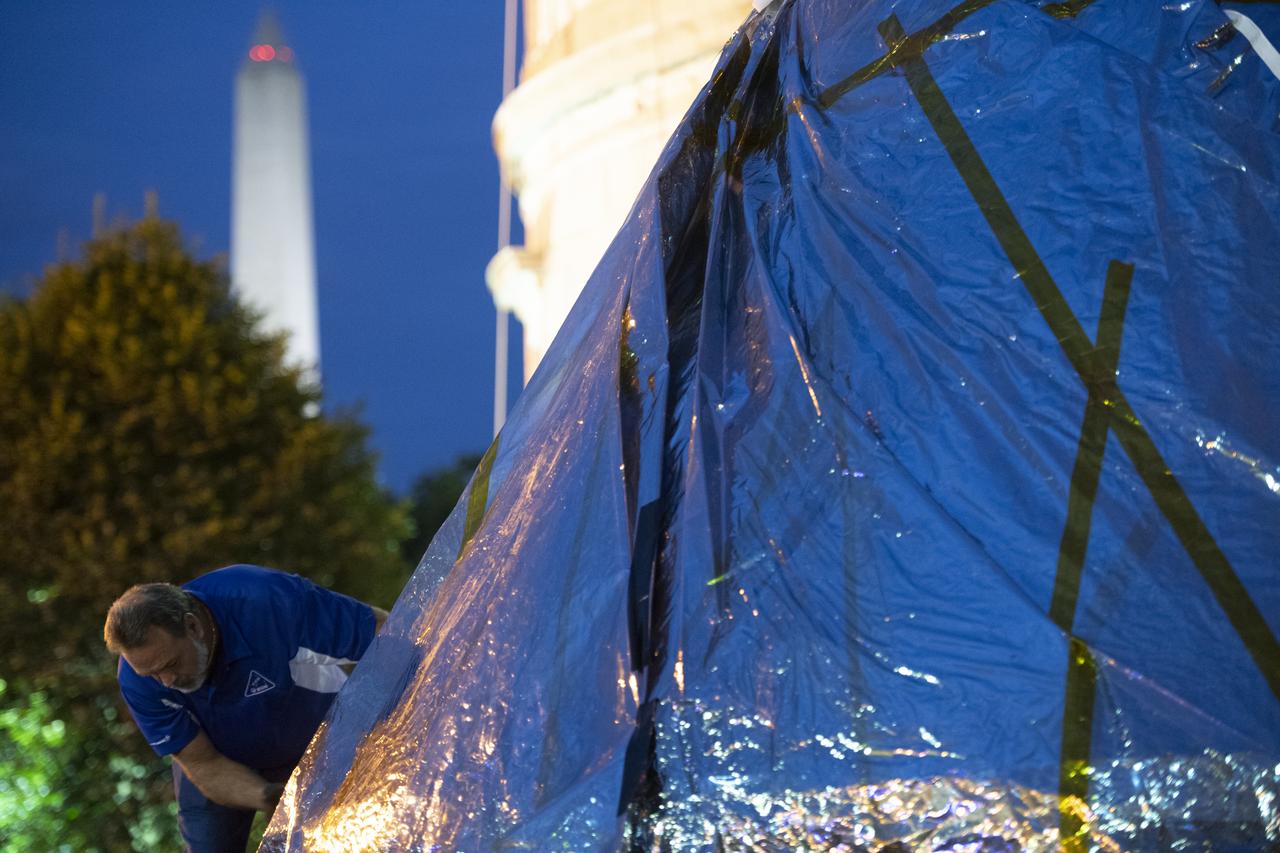
NASA's Orion spacecraft that flew Exploration Flight Test-1 on Dec. 5, 2014 is seen after being uncovered in preparation for being moved onto the White House complex, Saturday, July 21, 2018 in Washington, DC. Lockheed Martin, NASA’s prime contractor for Orion, began manufacturing the Orion crew module in 2011 and delivered it in July 2012 to NASA's Kennedy Space Center where final assembly, integration and testing was completed. More than 1,000 companies across the country manufactured or contributed elements to the spacecraft. Photo Credit: (NASA/Joel Kowsky)
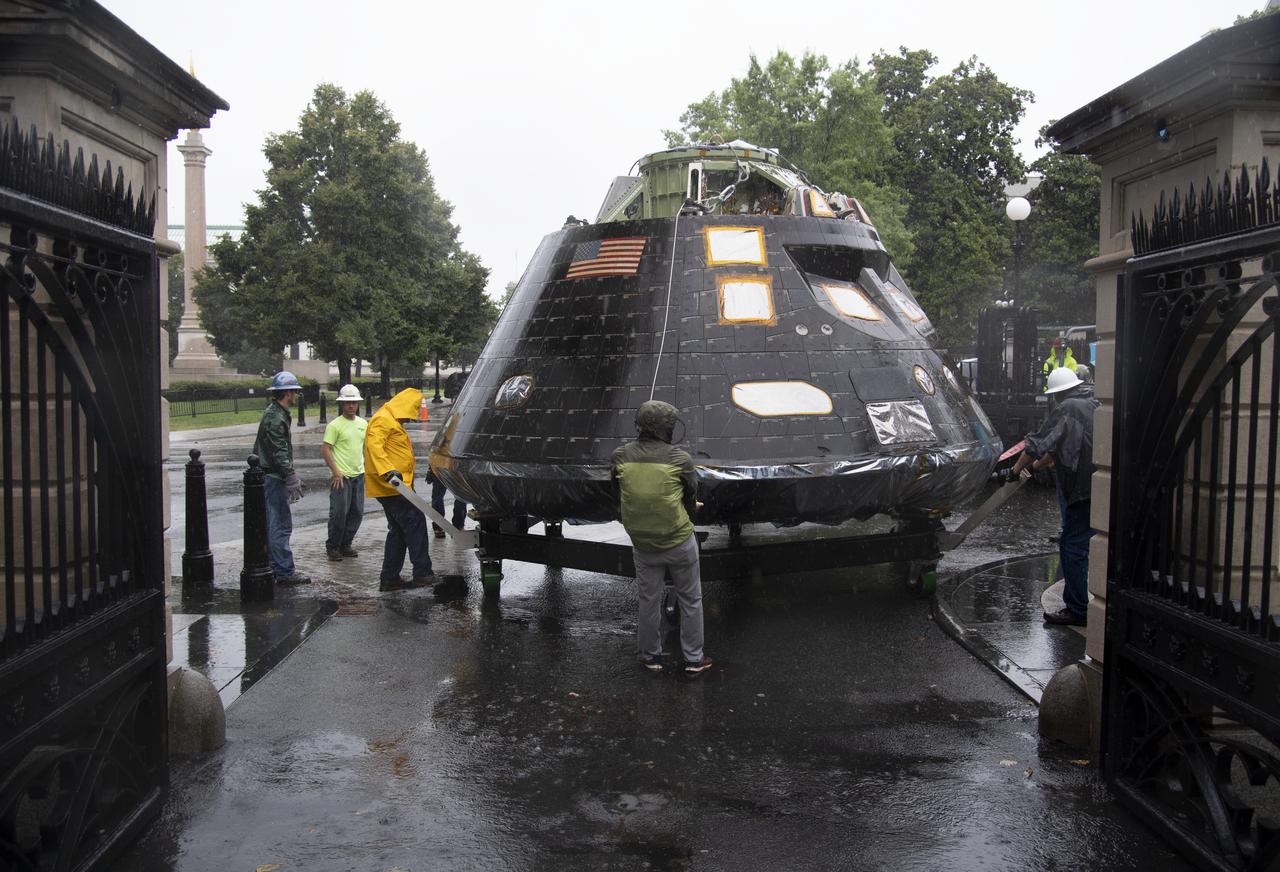
NASA's Orion spacecraft that flew Exploration Flight Test-1 on Dec. 5, 2014 is seen while being moved into position to be lifted over a gate and onto the South Lawn of the White House, Saturday, July 21, 2018 in Washington, DC. Lockheed Martin, NASA’s prime contractor for Orion, began manufacturing the Orion crew module in 2011 and delivered it in July 2012 to NASA's Kennedy Space Center where final assembly, integration and testing was completed. More than 1,000 companies across the country manufactured or contributed elements to the spacecraft. Photo Credit: (NASA/Joel Kowsky)
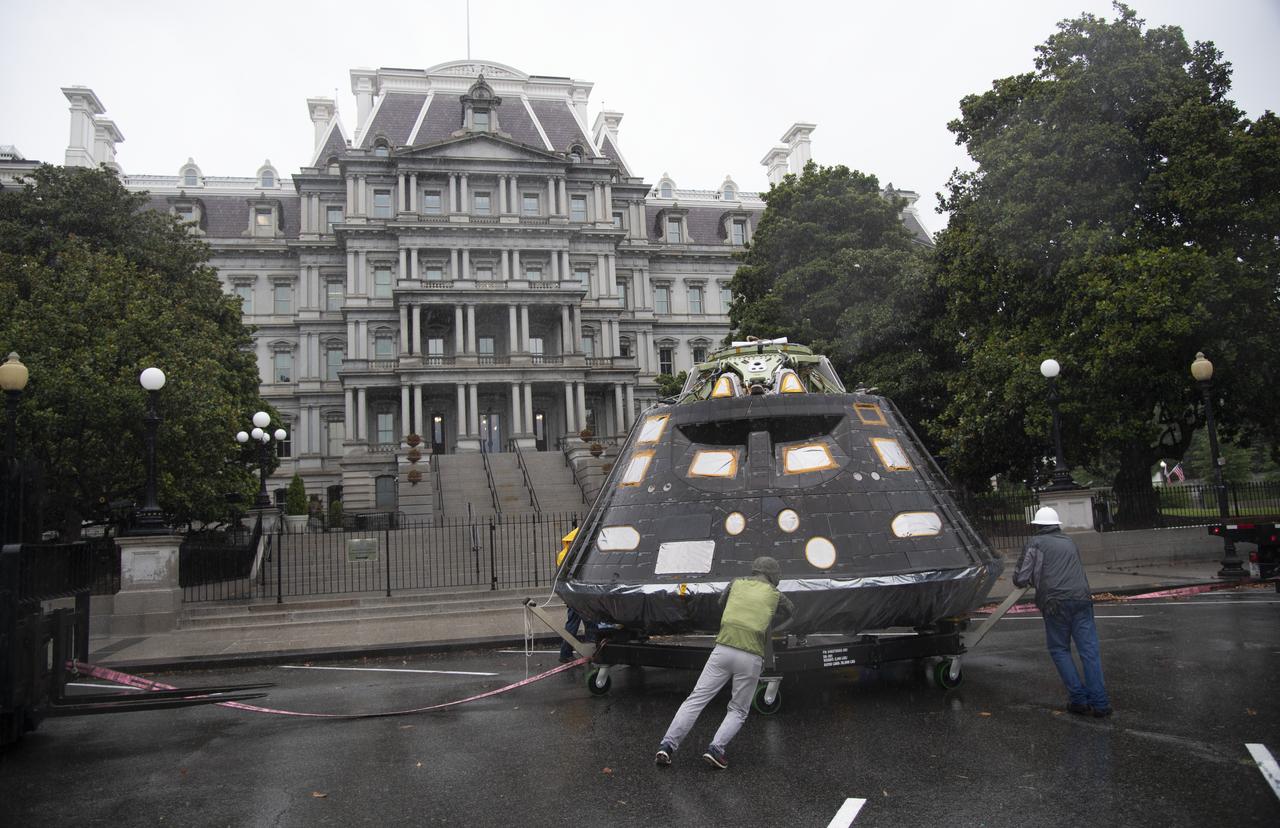
NASA's Orion spacecraft that flew Exploration Flight Test-1 on Dec. 5, 2014 is seen in front of the Eisenhower Executive Office Building on the White House complex, Saturday, July 21, 2018 in Washington, DC. Lockheed Martin, NASA’s prime contractor for Orion, began manufacturing the Orion crew module in 2011 and delivered it in July 2012 to NASA's Kennedy Space Center where final assembly, integration and testing was completed. More than 1,000 companies across the country manufactured or contributed elements to the spacecraft. Photo Credit: (NASA/Joel Kowsky)
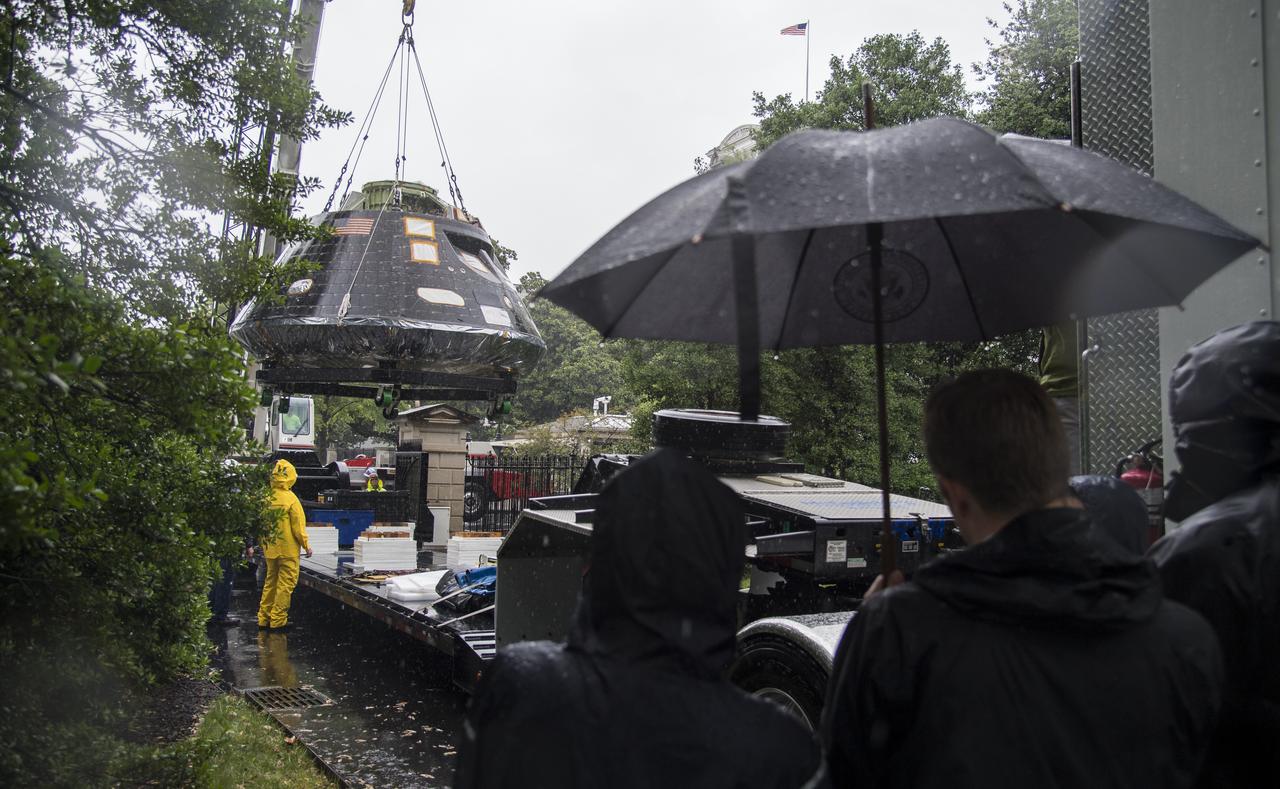
NASA's Orion spacecraft that flew Exploration Flight Test-1 on Dec. 5, 2014 is seen while being lifted over a gate and onto the South Lawn of the White House, Saturday, July 21, 2018 in Washington, DC. Lockheed Martin, NASA’s prime contractor for Orion, began manufacturing the Orion crew module in 2011 and delivered it in July 2012 to NASA's Kennedy Space Center where final assembly, integration and testing was completed. More than 1,000 companies across the country manufactured or contributed elements to the spacecraft. Photo Credit: (NASA/Joel Kowsky)
NASA's Orion spacecraft that flew Exploration Flight Test-1 on Dec. 5, 2014 is seen as it is lifted over a gate onto the White House complex, Saturday, July 21, 2018 in Washington, DC. Lockheed Martin, NASA’s prime contractor for Orion, began manufacturing the Orion crew module in 2011 and delivered it in July 2012 to NASA's Kennedy Space Center where final assembly, integration and testing was completed. More than 1,000 companies across the country manufactured or contributed elements to the spacecraft. Photo Credit: (NASA/Joel Kowsky)
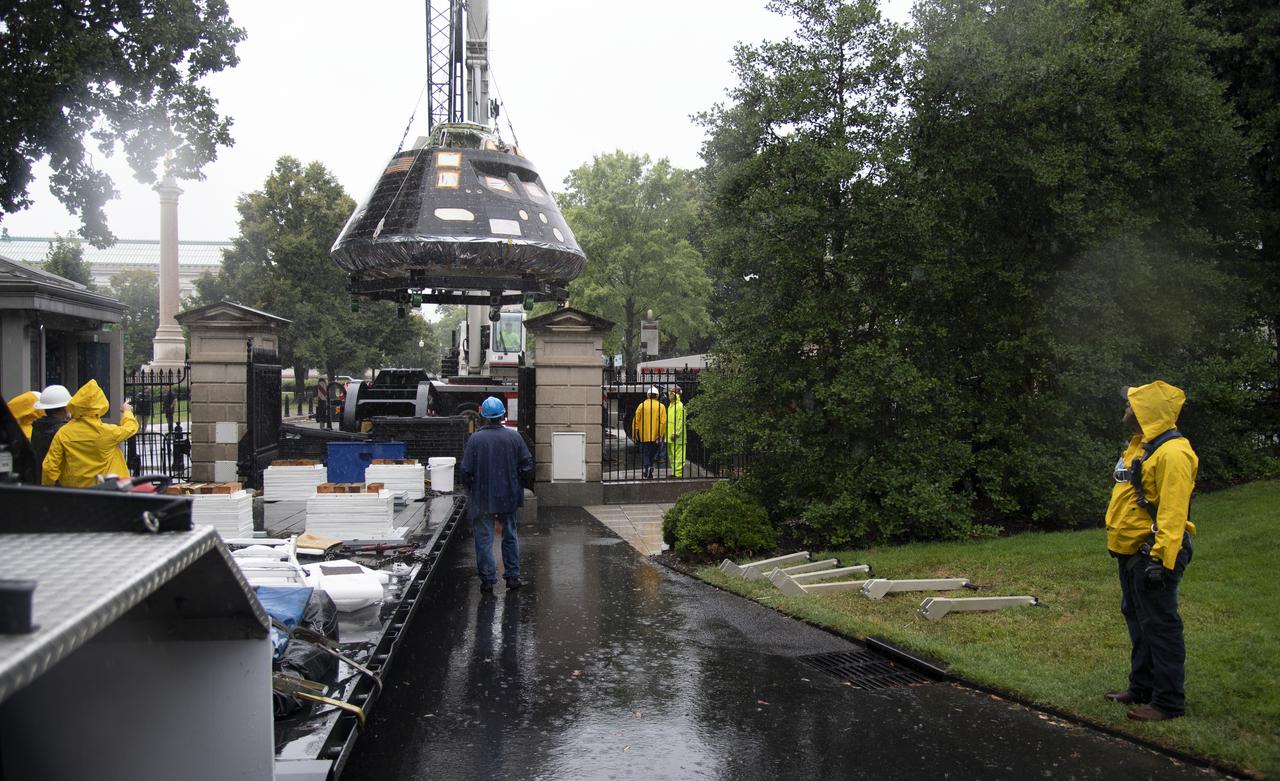
NASA's Orion spacecraft that flew Exploration Flight Test-1 on Dec. 5, 2014 is seen while being lifted over a gate and onto the South Lawn of the White House, Saturday, July 21, 2018 in Washington, DC. Lockheed Martin, NASA’s prime contractor for Orion, began manufacturing the Orion crew module in 2011 and delivered it in July 2012 to NASA's Kennedy Space Center where final assembly, integration and testing was completed. More than 1,000 companies across the country manufactured or contributed elements to the spacecraft. Photo Credit: (NASA/Joel Kowsky)
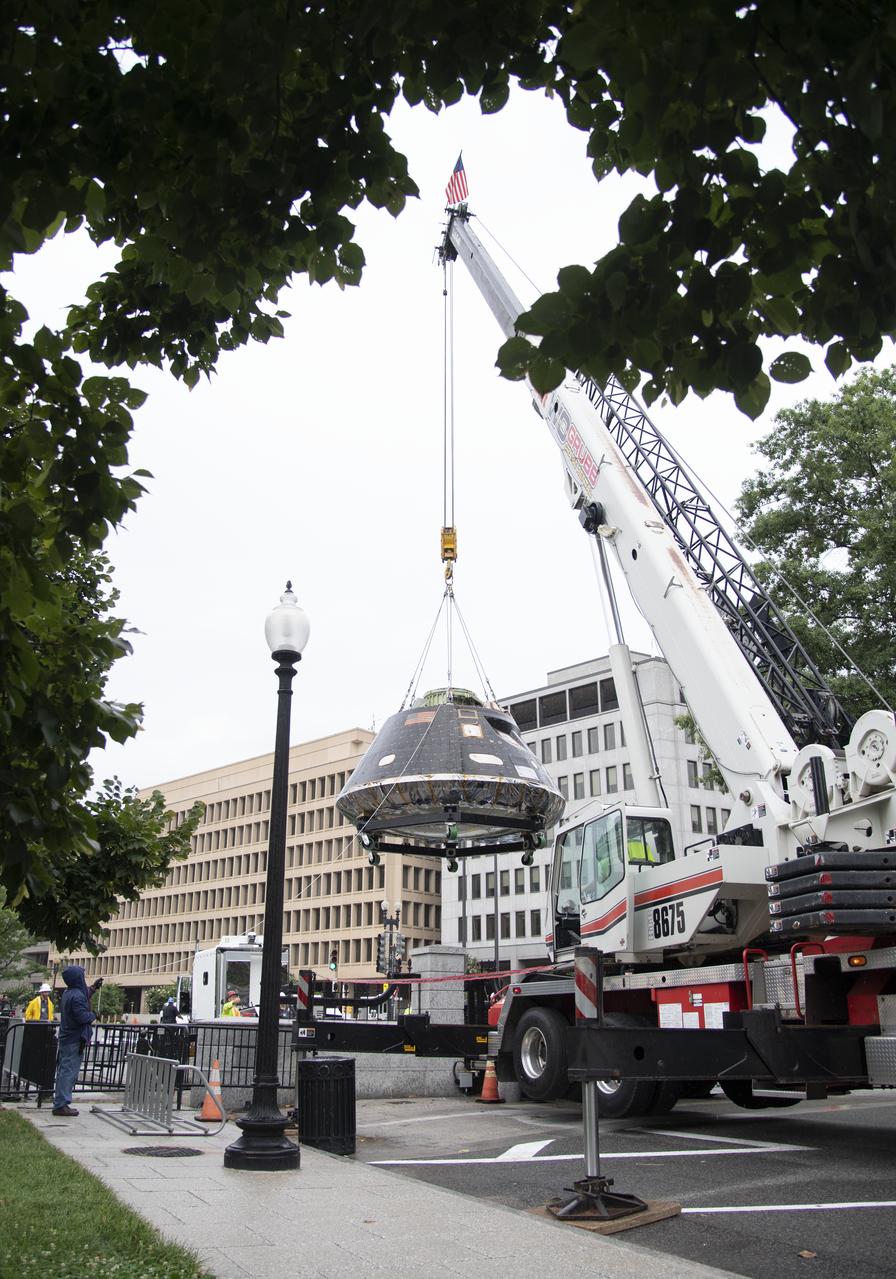
NASA's Orion spacecraft that flew Exploration Flight Test-1 on Dec. 5, 2014 is seen as it is lifted over a gate onto the White House complex, Saturday, July 21, 2018 in Washington, DC. Lockheed Martin, NASA’s prime contractor for Orion, began manufacturing the Orion crew module in 2011 and delivered it in July 2012 to NASA's Kennedy Space Center where final assembly, integration and testing was completed. More than 1,000 companies across the country manufactured or contributed elements to the spacecraft. Photo Credit: (NASA/Joel Kowsky)

NASA's Orion spacecraft that flew Exploration Flight Test-1 on Dec. 5, 2014 is seen after being uncovered in preparation for being moved onto the White House complex, Saturday, July 21, 2018 in Washington, DC. Lockheed Martin, NASA’s prime contractor for Orion, began manufacturing the Orion crew module in 2011 and delivered it in July 2012 to NASA's Kennedy Space Center where final assembly, integration and testing was completed. More than 1,000 companies across the country manufactured or contributed elements to the spacecraft. Photo Credit: (NASA/Joel Kowsky)
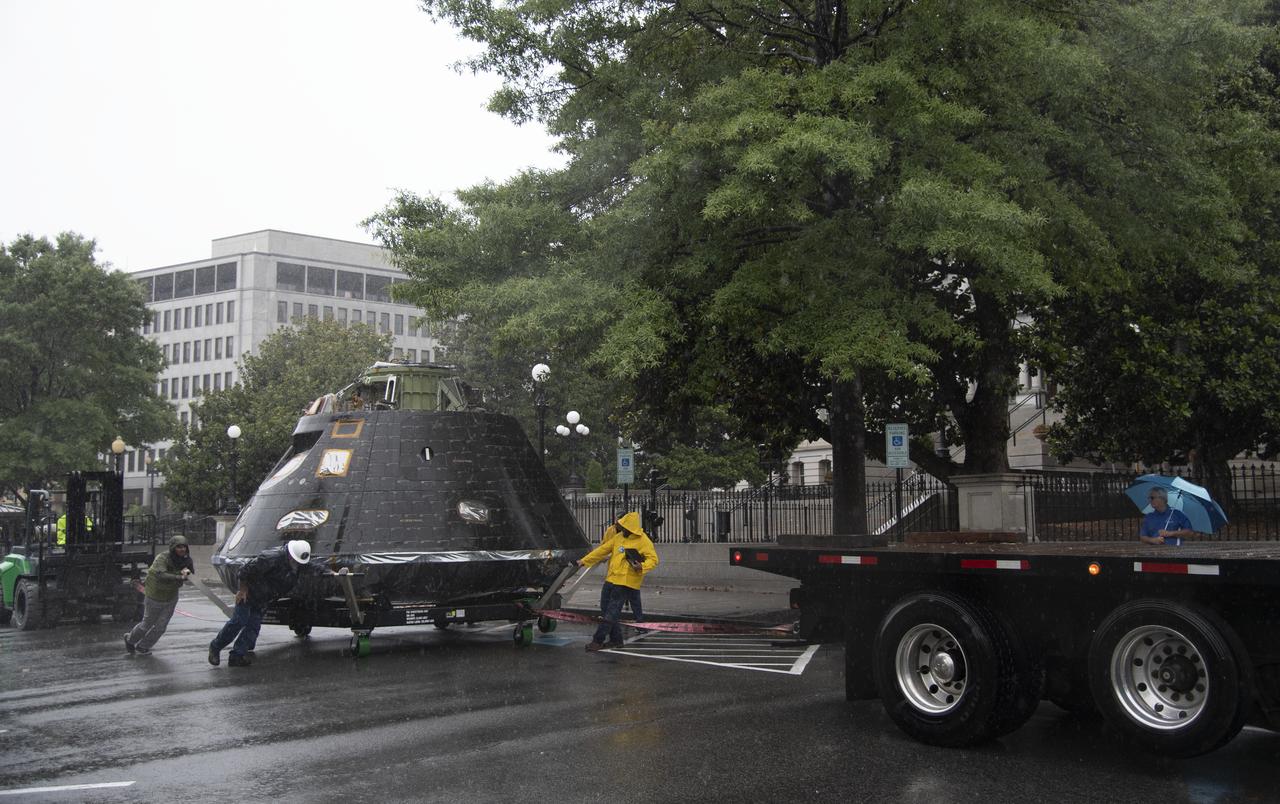
NASA's Orion spacecraft that flew Exploration Flight Test-1 on Dec. 5, 2014 is seen in front of the Eisenhower Executive Office Building on the White House complex, Saturday, July 21, 2018 in Washington, DC. Lockheed Martin, NASA’s prime contractor for Orion, began manufacturing the Orion crew module in 2011 and delivered it in July 2012 to NASA's Kennedy Space Center where final assembly, integration and testing was completed. More than 1,000 companies across the country manufactured or contributed elements to the spacecraft. Photo Credit: (NASA/Joel Kowsky)
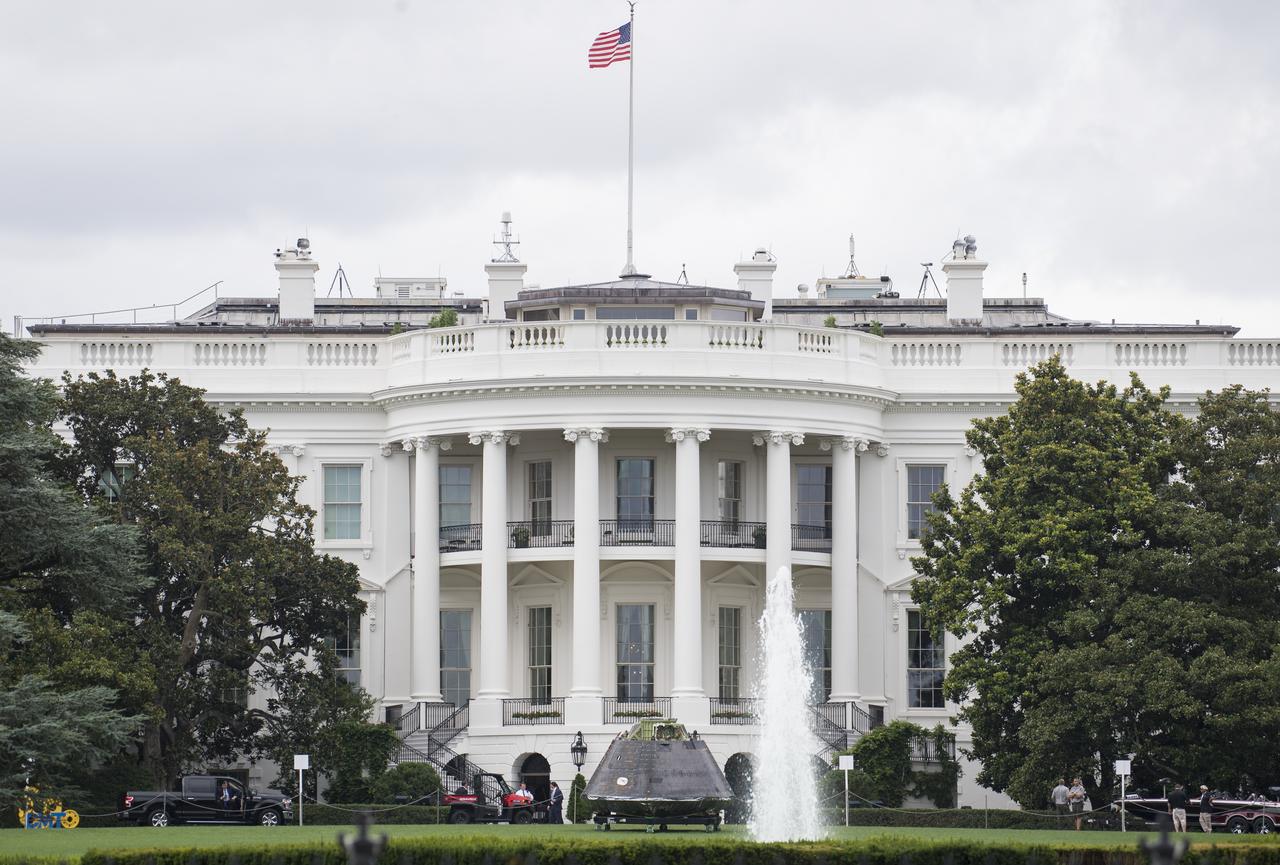
NASA's Orion spacecraft that flew on Exploration Flight Test-1 on Dec. 5, 2014, is seen on the south lawn of the White House during a Made in America Product Showcase, Monday, July 23, 2018 in Washington. Lockheed Martin, NASA’s prime contractor for Orion, began manufacturing the Orion crew module in 2011 and delivered it in July 2012 to NASA's Kennedy Space Center where final assembly, integration and testing was completed. More than 1,000 companies across the country manufactured or contributed elements to the spacecraft. Photo Credit: (NASA/Aubrey Gemignani)
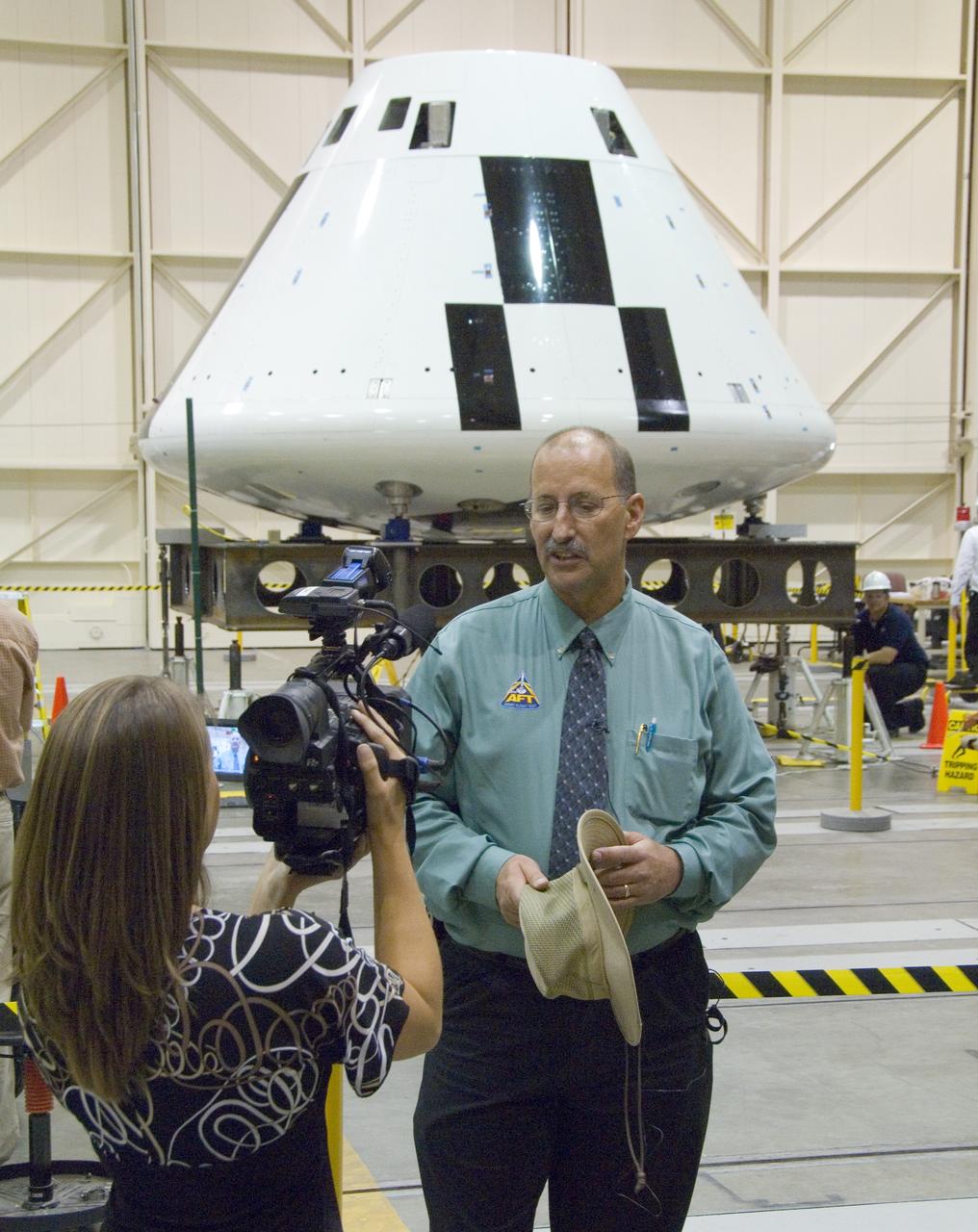
Reporter Julie Flannery of KERO-TV, Bakersfield, interviews NASA Dryden's Orion Abort Flight Test project manager Gary Martin in front of the Orion PA-1 crew module.
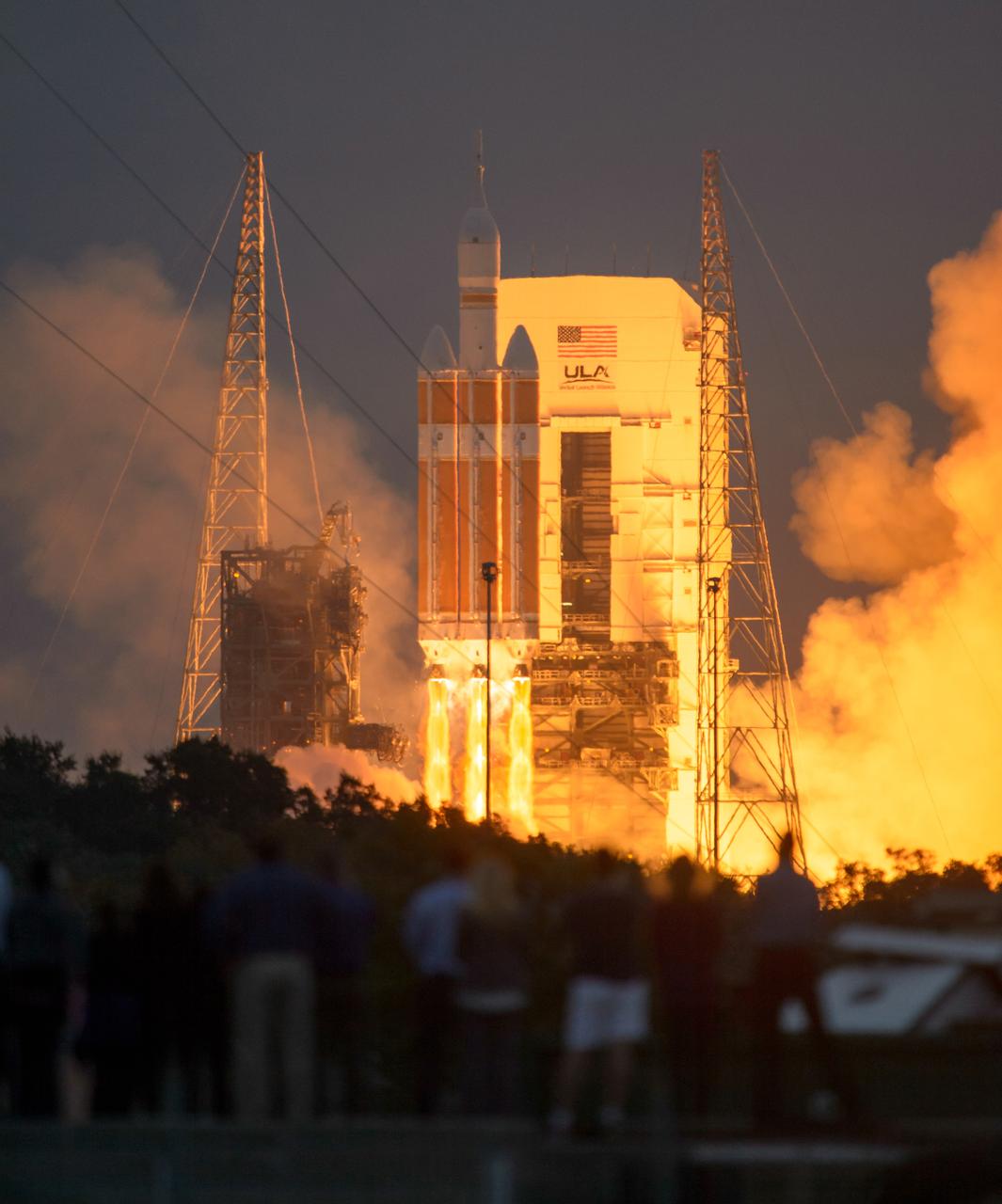
The United Launch Alliance Delta IV Heavy rocket with NASA’s Orion spacecraft mounted atop, lifts off on Exploration Flight Test-1 (EFT-1) from Cape Canaveral Air Force Station's Space Launch Complex 37 at at 7:05 a.m. EST, Friday, Dec. 5, 2014, in Florida. Part of Batch image transfer from Flickr.
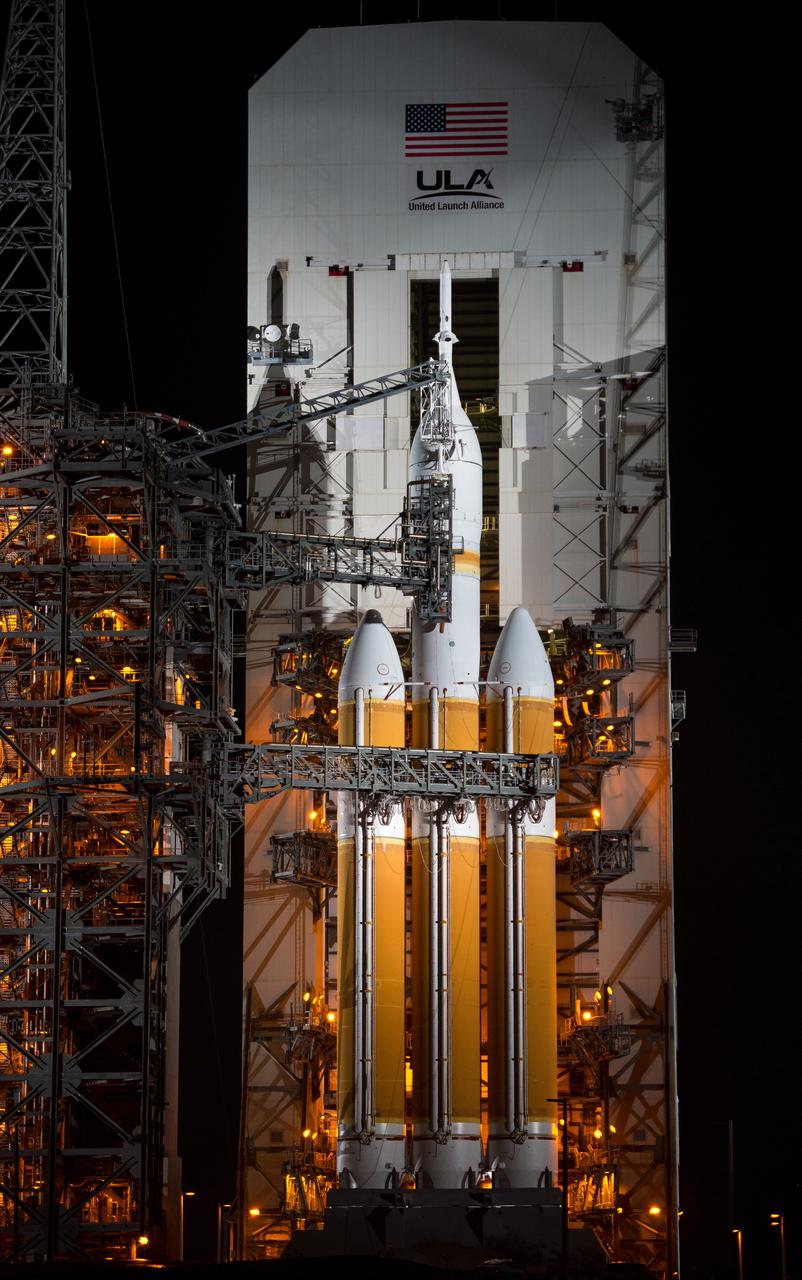
A United Launch Alliance Delta IV Heavy rocket with NASA’s Orion spacecraft mounted atop is seen as the Mobile Service Tower is rolled back on Dec. 3, 2014, at Cape Canaveral Air Force Station's Space Launch Complex 37, Florida. Orion is scheduled to make its first flight test on Exploration Flight Test-1 (EFT-1) on Dec. 4 with a morning launch atop the Delta IV Heavy. Part of Batch image transfer from Flickr.
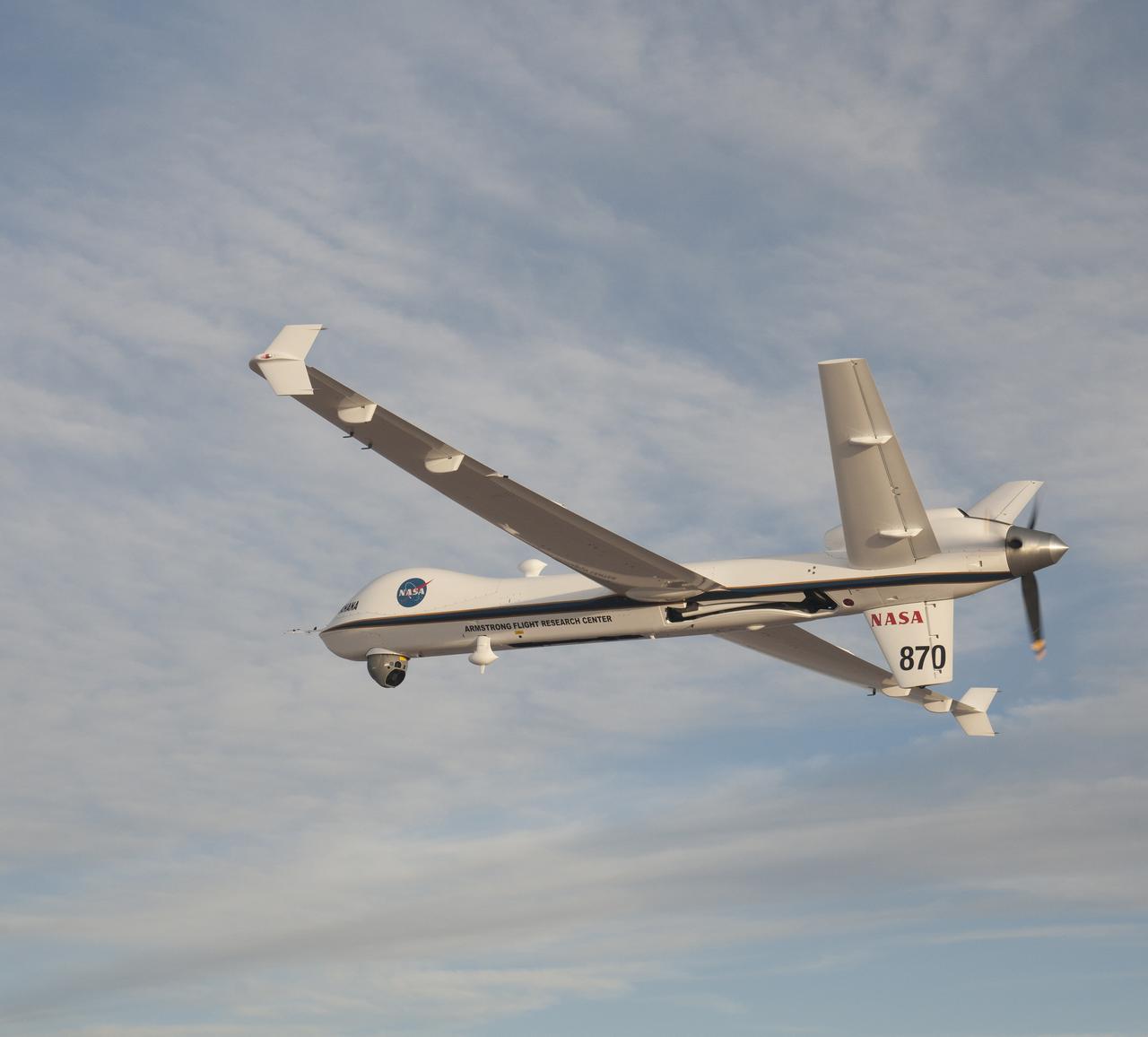
The Ikhana remotely piloted aircraft captured real-time video when the Orion Exploration Flight Test-1 mission concluded on Dec. 5, 2014. It is planned for the Ikhana to capture video again for the Orion and Space Launch System Exploration Mission-1 (EM-1) certification flight.
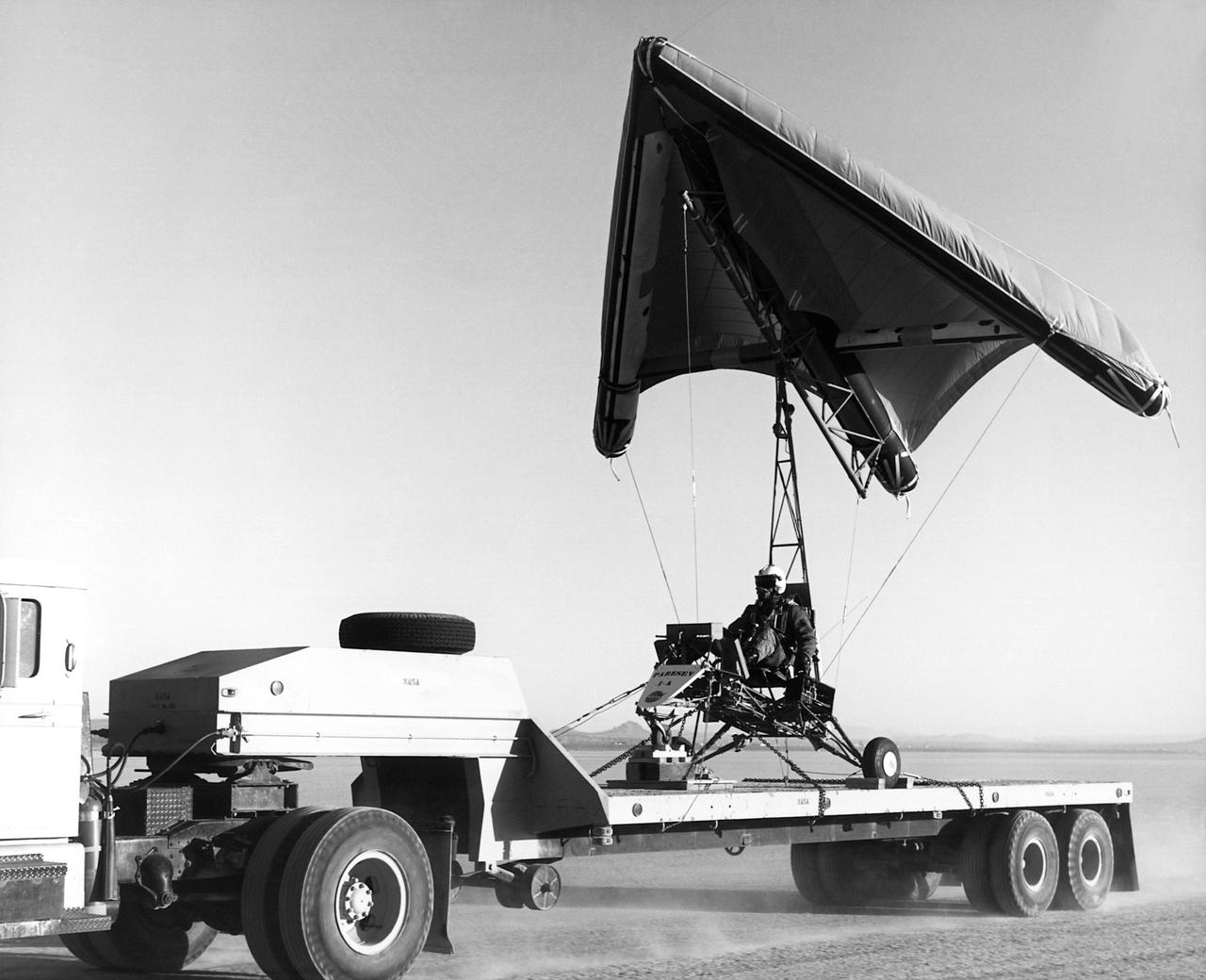
Aboard a truck and ready for a test flight is the Paresev 1-C on the ramp at the NASA Flight Research Center, Edwards, California. The half-scale version of the inflatable Gemini parawing was pre-flighted by being carried across the Rosamond dry lakebed on the back of a truck before a tow behind a International Harvester Carry-All. The inflatable center spar ran fore and aft and measured 191 inches, two other inflatable spars formed the leading edges. The three compartments were filled with nitrogen under pressure to make them rigid. The Paresev 1-C was very unstable in flight with this configuration.

A United Launch Alliance Delta IV Heavy rocket with NASA’s Orion spacecraft mounted atop for Exploration Flight Test-1 (EFT-1) is seen illuminated in the distance in this long exposure photograph taken early on Dec. 4, 2014, at Cape Canaveral Air Force Station's Space Launch Complex 37, Florida. Part of Batch image transfer from Flickr.
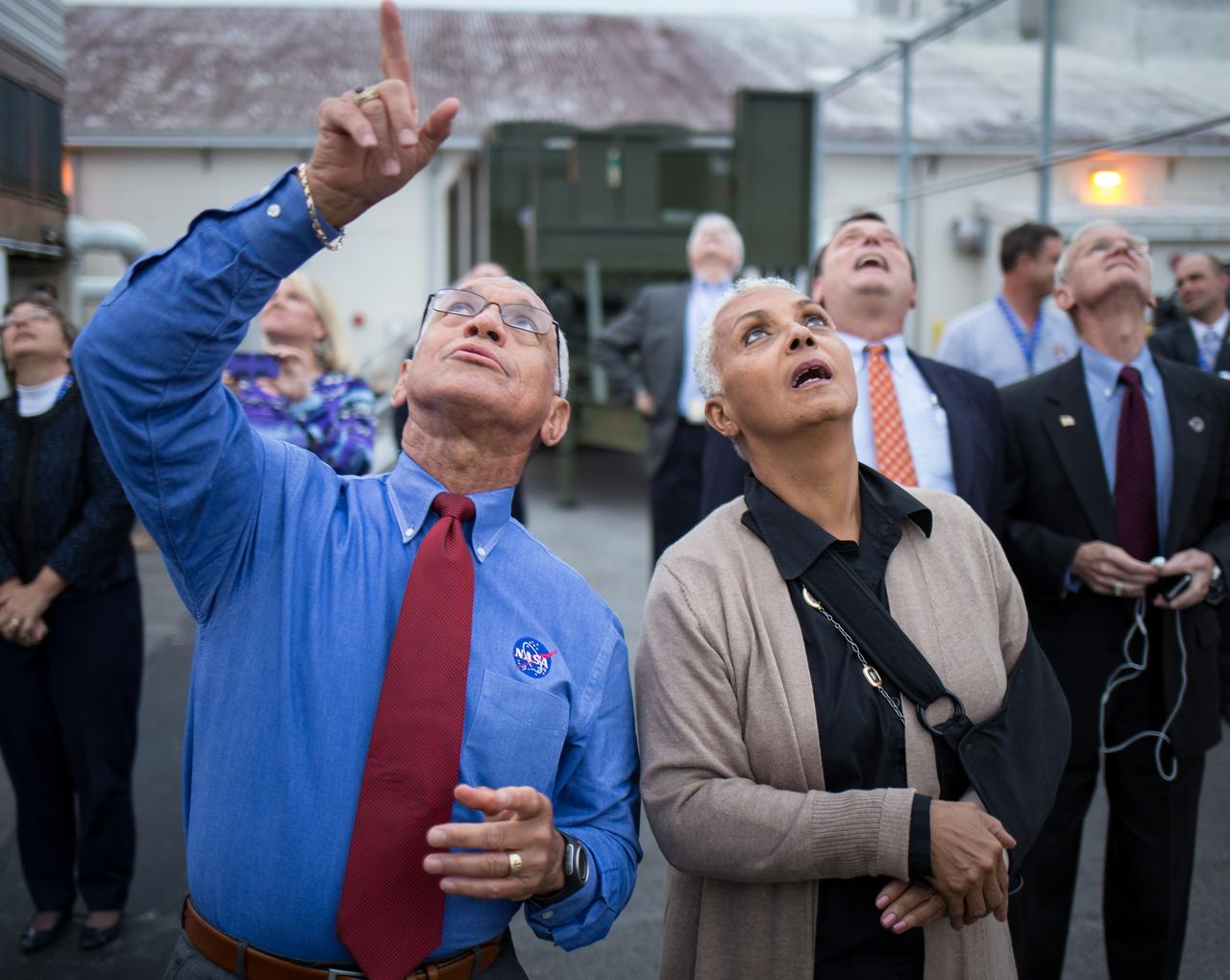
NASA Administrator Charles Bolden and his wife Jackie Bolden watch as the United Launch Alliance Delta IV Heavy rocket, with NASA’s Orion spacecraft mounted atop, lifts off on Exploration Flight Test-1 (EFT-1) from Cape Canaveral Air Force Station's Space Launch Complex 37 at at 7:05 a.m. EST, Friday, Dec. 5, 2014, Cape Canaveral, Florida. Part of Batch image transfer from Flickr.
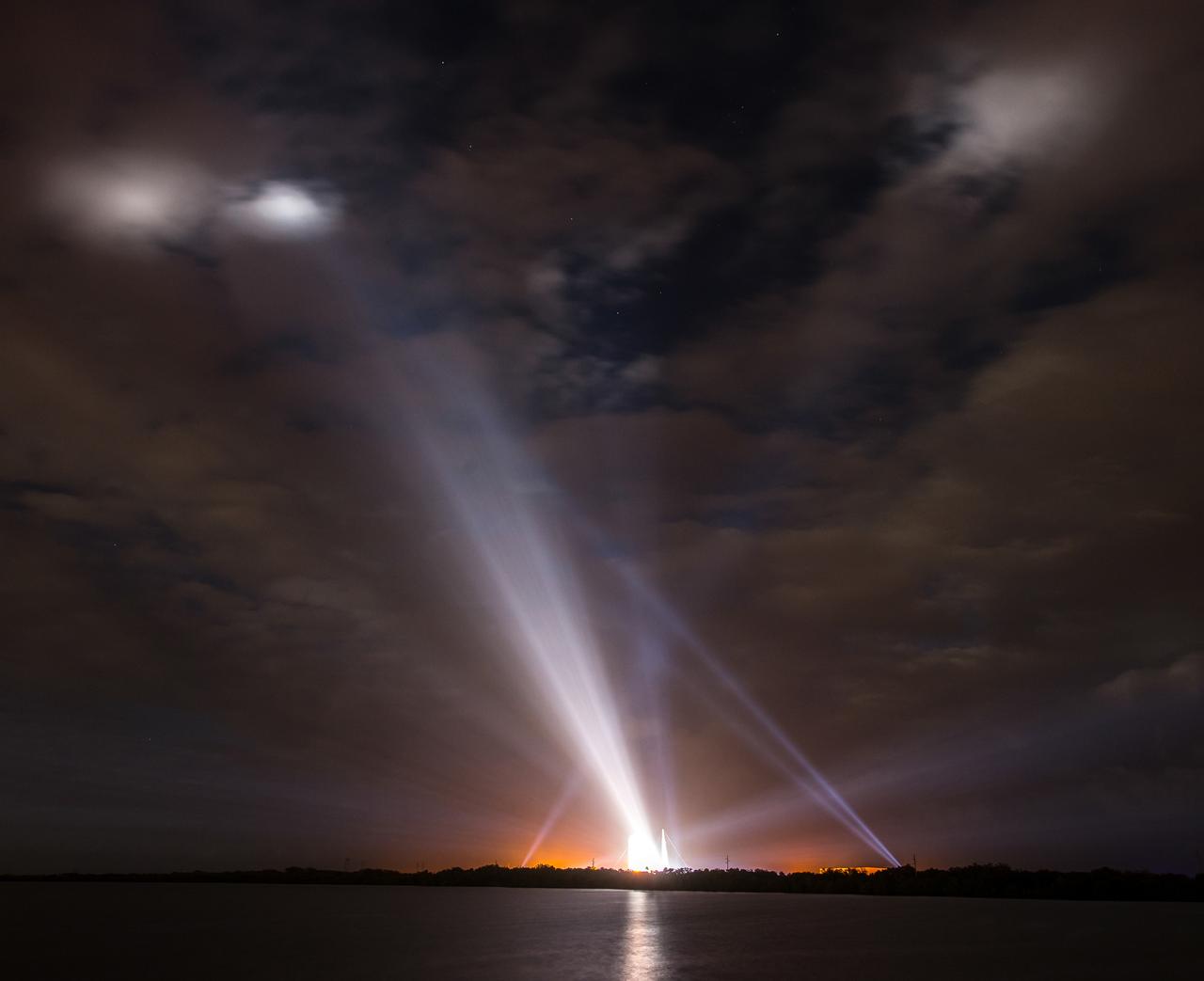
Bright lights illuminate the United Launch Alliance Delta IV Heavy rocket with NASA’s Orion spacecraft mounted atop for Exploration Flight Test-1 (EFT-1), early on Friday, Dec. 5, 2014, at Cape Canaveral Air Force Station's Space Launch Complex 37, Florida. Part of Batch image transfer from Flickr.
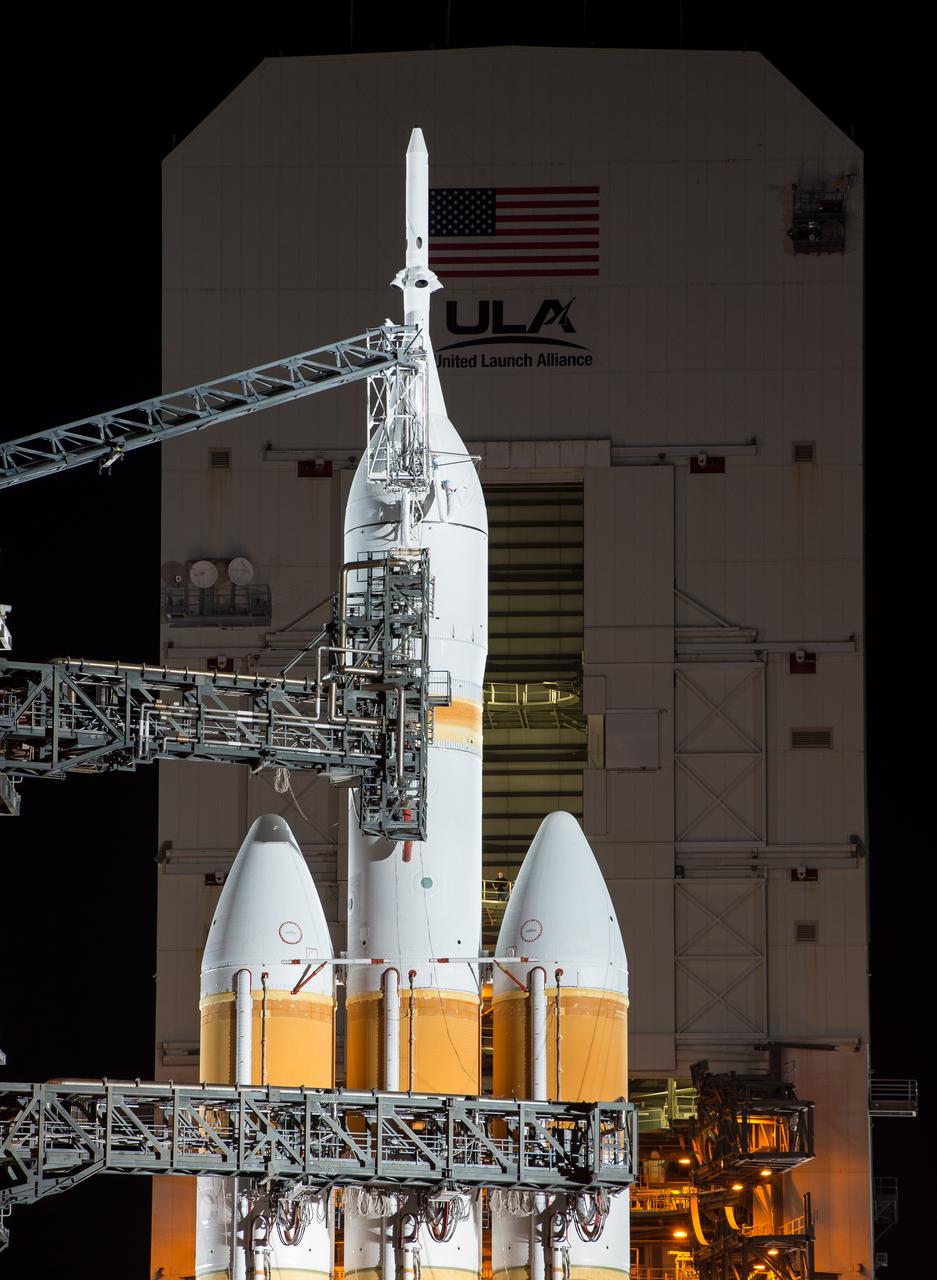
A United Launch Alliance Delta IV Heavy rocket with NASA’s Orion spacecraft mounted atop for Exploration Flight Test-1 (EFT-1) is seen after the Mobile Service Tower was finished rolling back early on Dec. 4, 2014, at Cape Canaveral Air Force Station's Space Launch Complex 37, Florida. Part of Batch image transfer from Flickr.
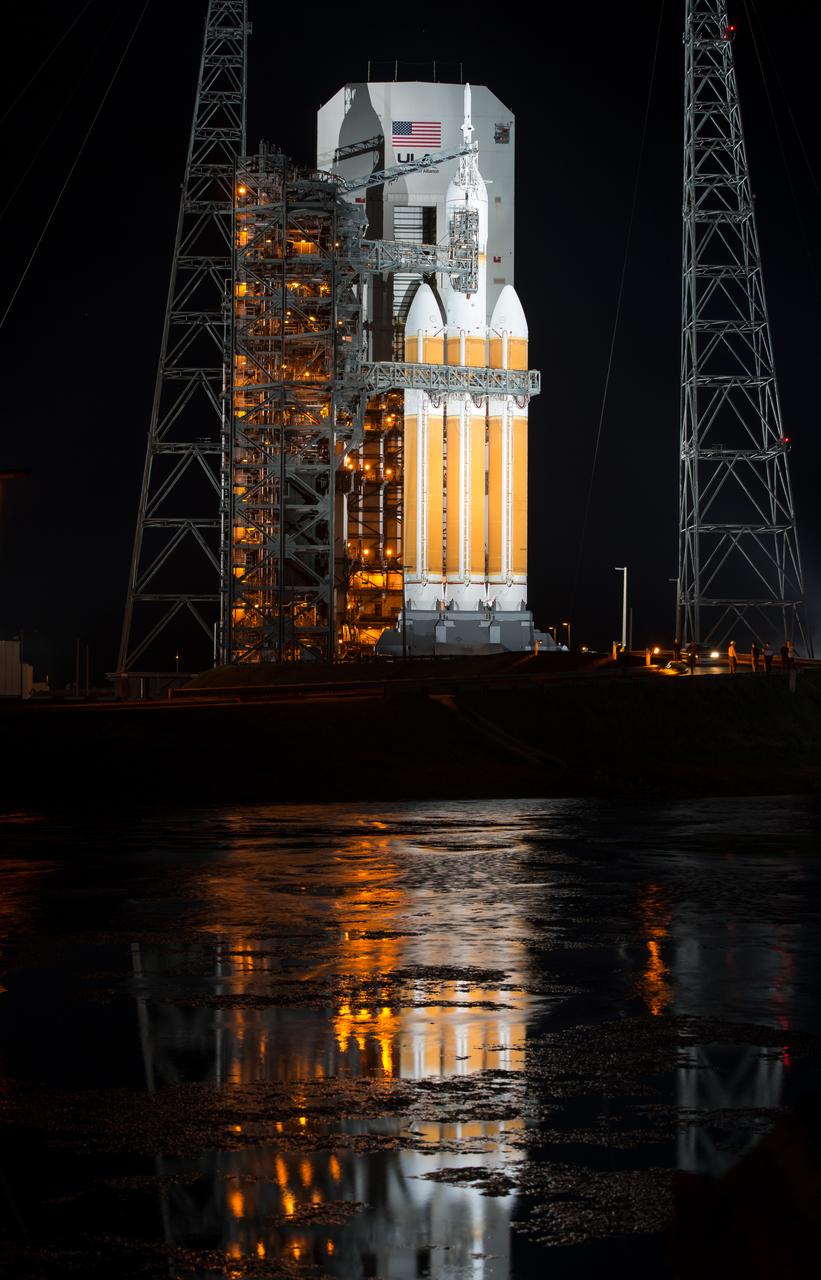
A United Launch Alliance Delta IV Heavy rocket with NASA’s Orion spacecraft mounted atop for Exploration Flight Test-1 (EFT-1) is seen after the Mobile Service Tower was finished rolling back early on Dec. 4, 2014, at Cape Canaveral Air Force Station's Space Launch Complex 37, Florida. Part of Batch image transfer from Flickr.
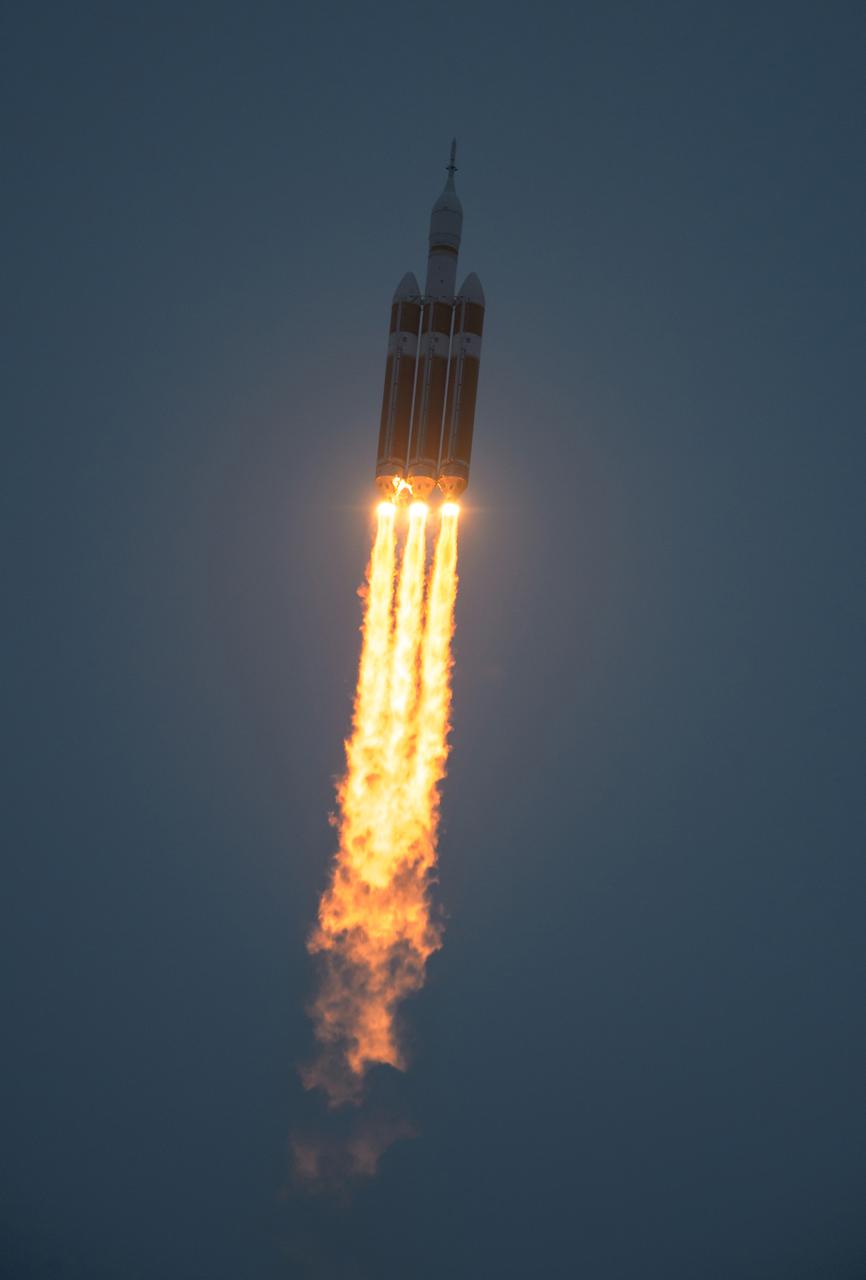
The United Launch Alliance Delta IV Heavy rocket with NASA’s Orion spacecraft mounted atop, lifts off on Exploration Flight Test-1 (EFT-1) from Cape Canaveral Air Force Station's Space Launch Complex 37 at at 7:05 a.m. EST, Friday, Dec. 5, 2014, in Florida. Part of Batch image transfer from Flickr.
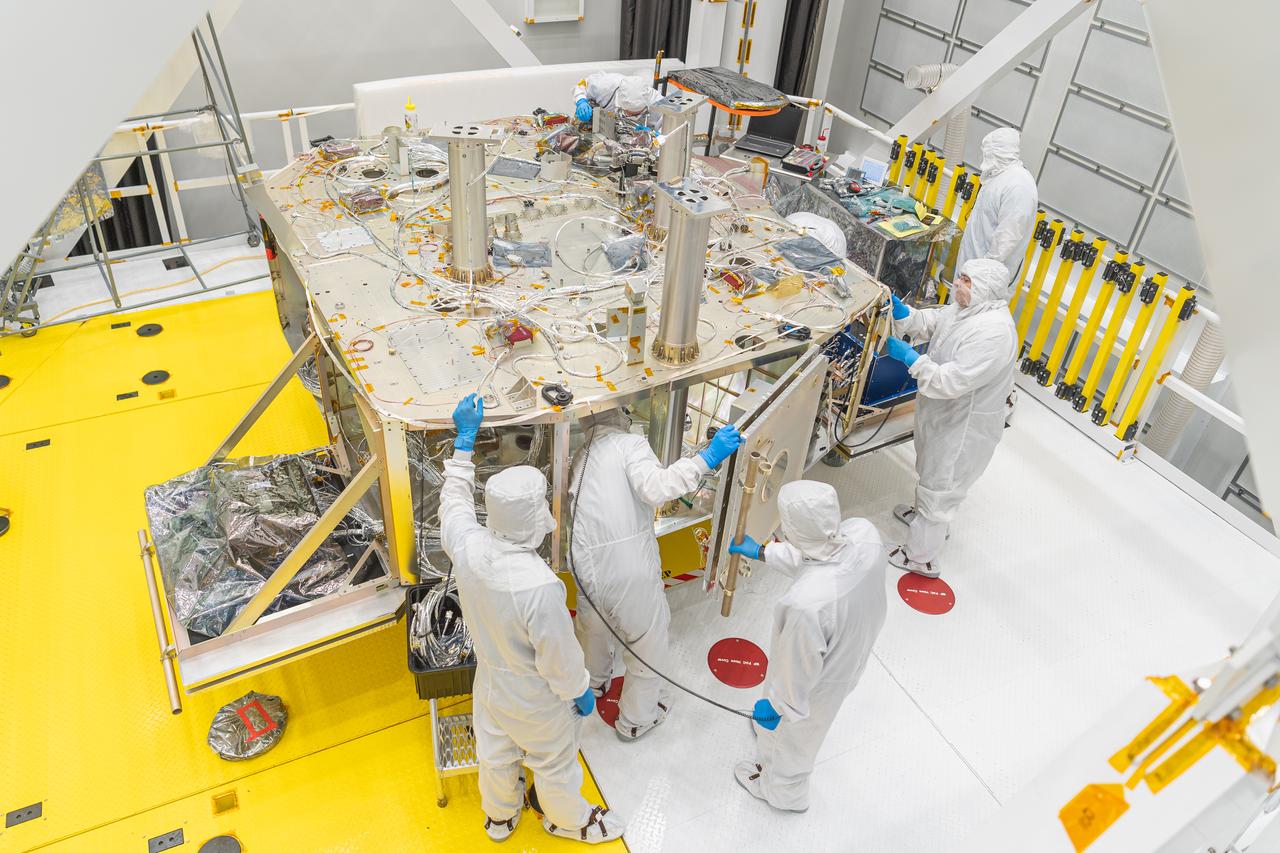
The OSAM-1 integration and testing team deploys and stows the radiator panels on the OSAM-1 servicing payload at Goddard Space Flight Center, Greenbelt Md., Sept 14, 2023. This photo has been reviewed by OSAM1 project management and the Export Control Office and is released for public view. NASA/Mike Guinto
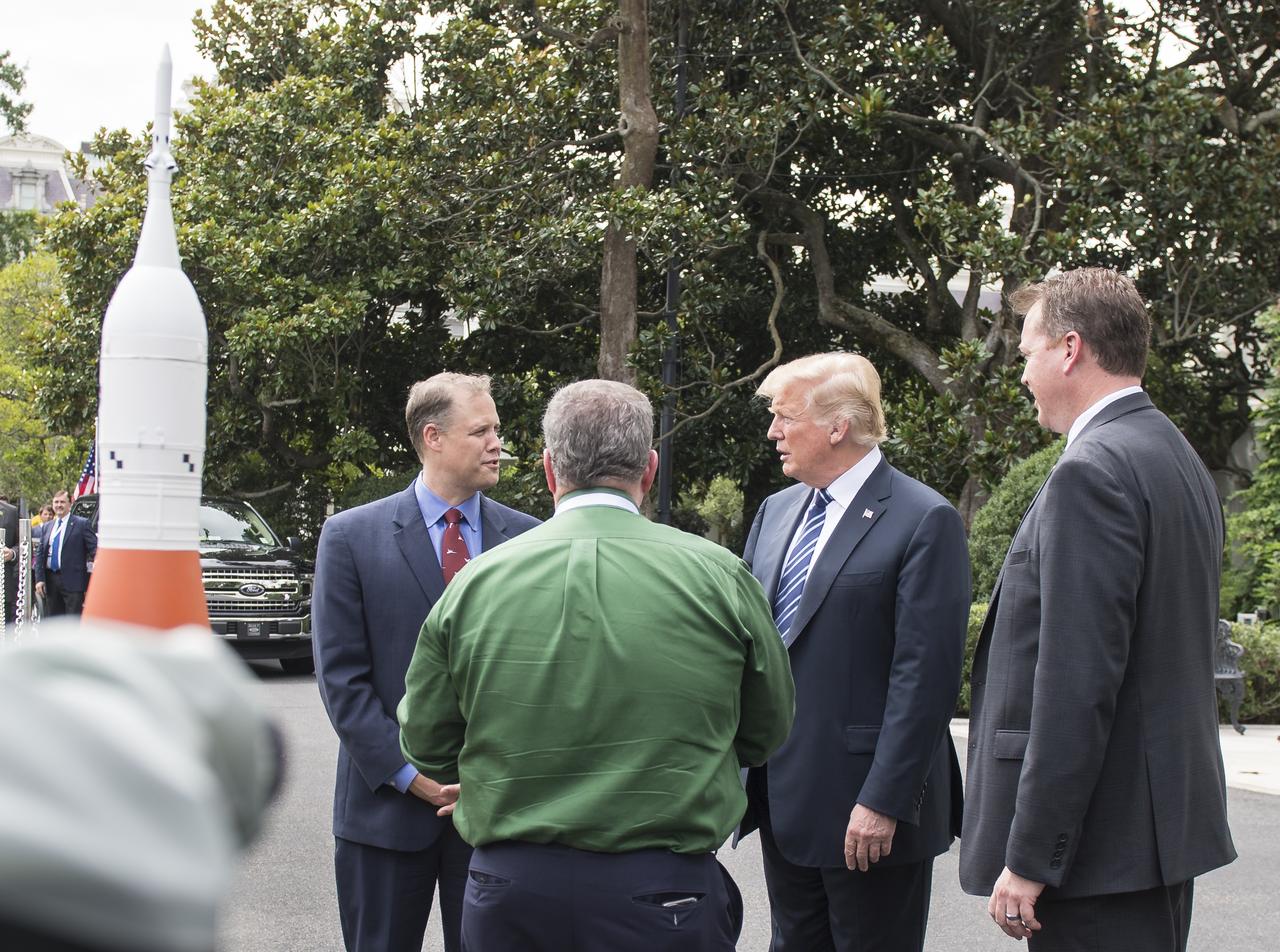
NASA Administrator Jim Bridenstine, left, speaks with President Donald Trump, NASA Chief Financial Officer, Jeff DeWitt, right, and Orion Program Manager, W. Michael Hawes, front, about NASA's Orion spacecraft that is currently on display on the south lawn of the White House as part of the Made in America showcase, at the White House, Monday, July 23, 2018 in Washington. Lockheed Martin, NASA’s prime contractor for Orion, began manufacturing the Orion crew module in 2011 and delivered it in July 2012 to NASA's Kennedy Space Center where final assembly, integration and testing was completed. The successful launch of Orion on the Exploration Flight Test-1 was on Dec. 5, 2014. More than 1,000 companies across the country manufactured or contributed elements to the spacecraft. Photo Credit: (NASA/Aubrey Gemignani)

President Donald Trump meets NASA Administrator Jim Bridenstine, front, NASA Chief Financial Officer Jeff DeWitt, second from left, and Orion Program Manager, W. Michael Hawes, right, during a Made in America Product Showcase at the White House, Monday, July 23, 2018 in Washington. The Orion crew module that launched on Dec. 5, 2014 on the Exploration Flight Test-1 was also on display during the event. Lockheed Martin, NASA’s prime contractor for Orion, began manufacturing the Orion crew module in 2011 and delivered it in July 2012 to NASA's Kennedy Space Center where final assembly, integration and testing was completed. More than 1,000 companies across the country manufactured or contributed elements to the spacecraft. Photo Credit: (NASA/Aubrey Gemignani)

NASA astronauts Barry “Butch” Wilmore, left, and Sunita "Suni" Williams visit the Commercial Crew and Cargo Processing Facility at Kennedy Space Center in Florida on Dec. 17, 2020. The astronauts are at Kennedy to prepare for their flights to the International Space Station on Boeing’s CST-100 Starliner, as part of the agency’s Commercial Crew Program. Wilmore and Williams will command the Crew Flight Test and the Starliner-1 mission, respectively.
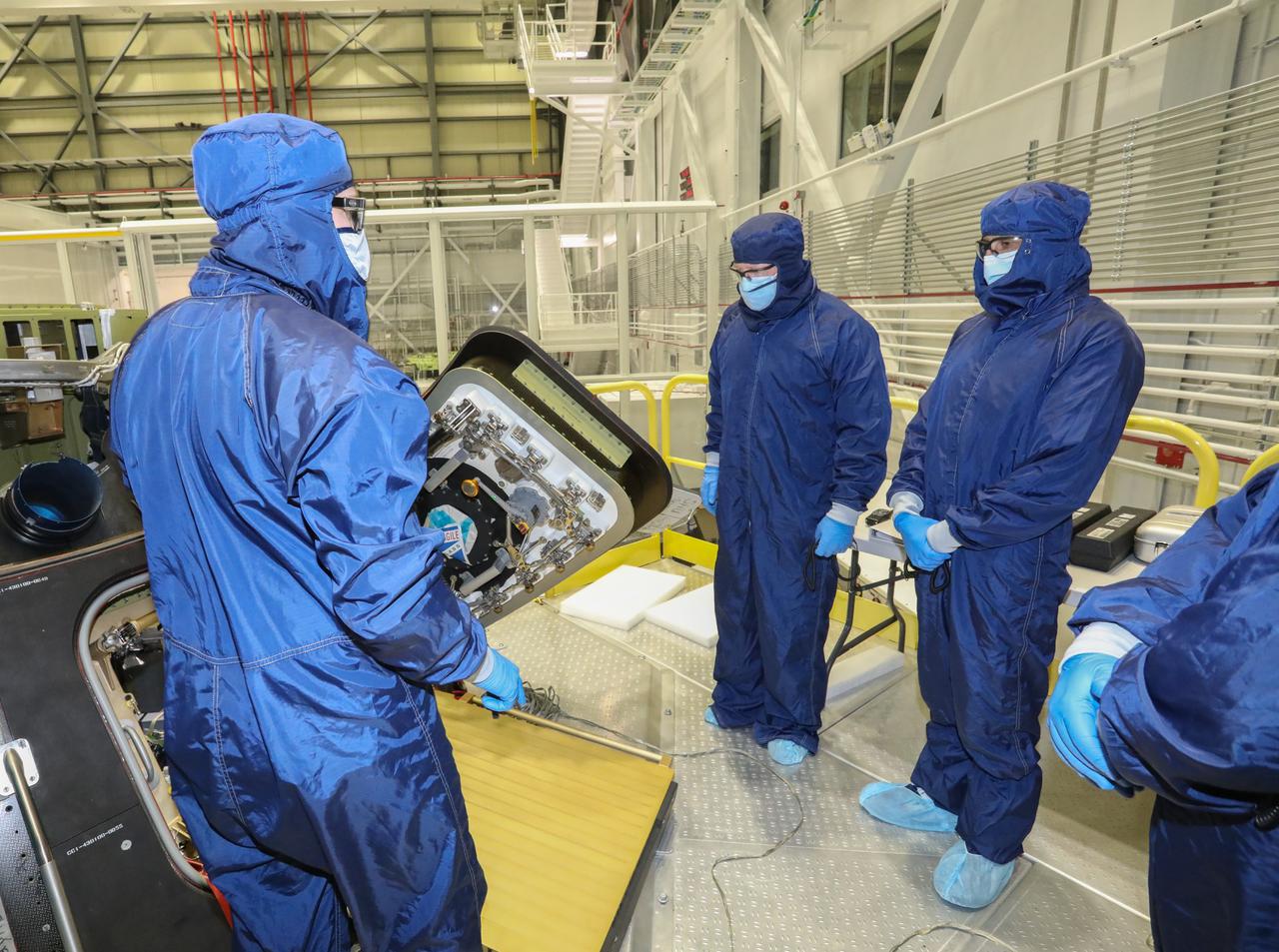
NASA astronauts Barry “Butch” Wilmore and Sunita "Suni" Williams visit the Commercial Crew and Cargo Processing Facility at Kennedy Space Center in Florida on Dec. 17, 2020. The astronauts are at Kennedy to prepare for their flights to the International Space Station on Boeing’s CST-100 Starliner, as part of the agency’s Commercial Crew Program. Wilmore and Williams will command the Crew Flight Test and the Starliner-1 mission, respectively.
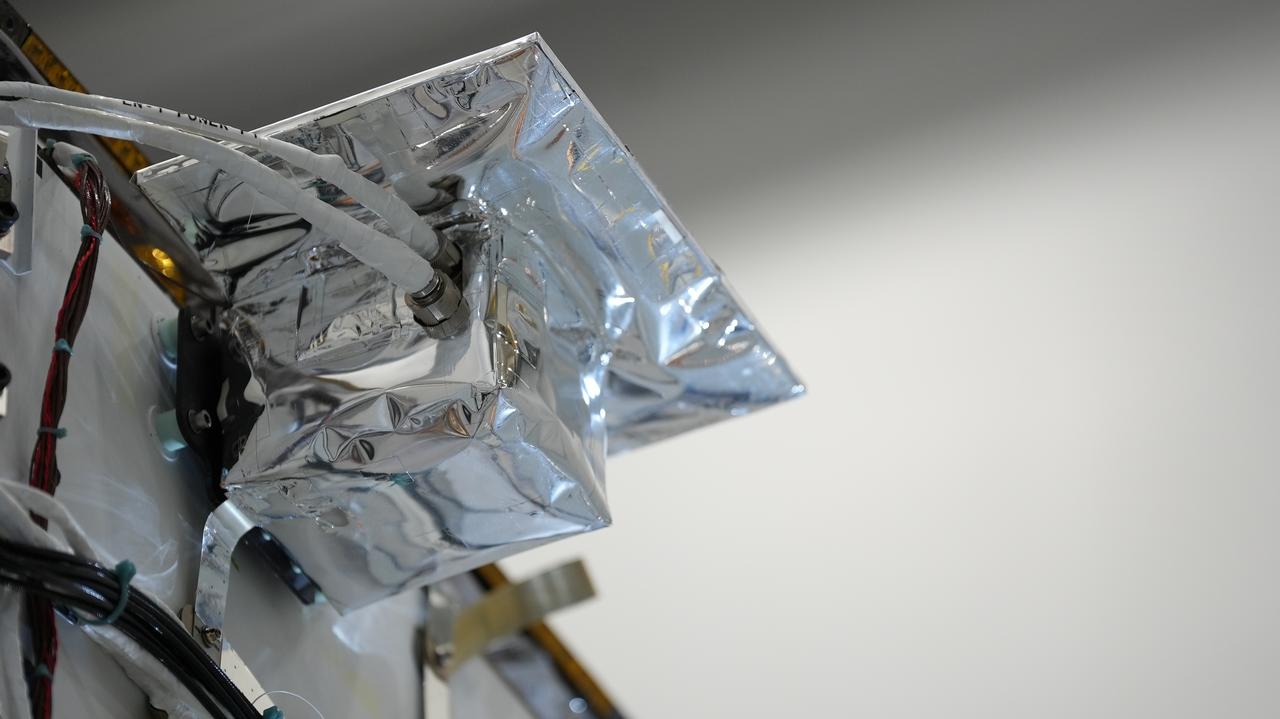
Lunar Node-1, an autonomous navigation payload that will change how human explorers safely traverse the Moon’s surface and live and work in lunar orbit, awaits liftoff as part of Intuitive Machines’ IM-1 mission, its first under NASA’s Commercial Lunar Payload Services initiative. LN-1 was developed, built, and tested at NASA’s Marshall Space Flight Center in Huntsville, Alabama.
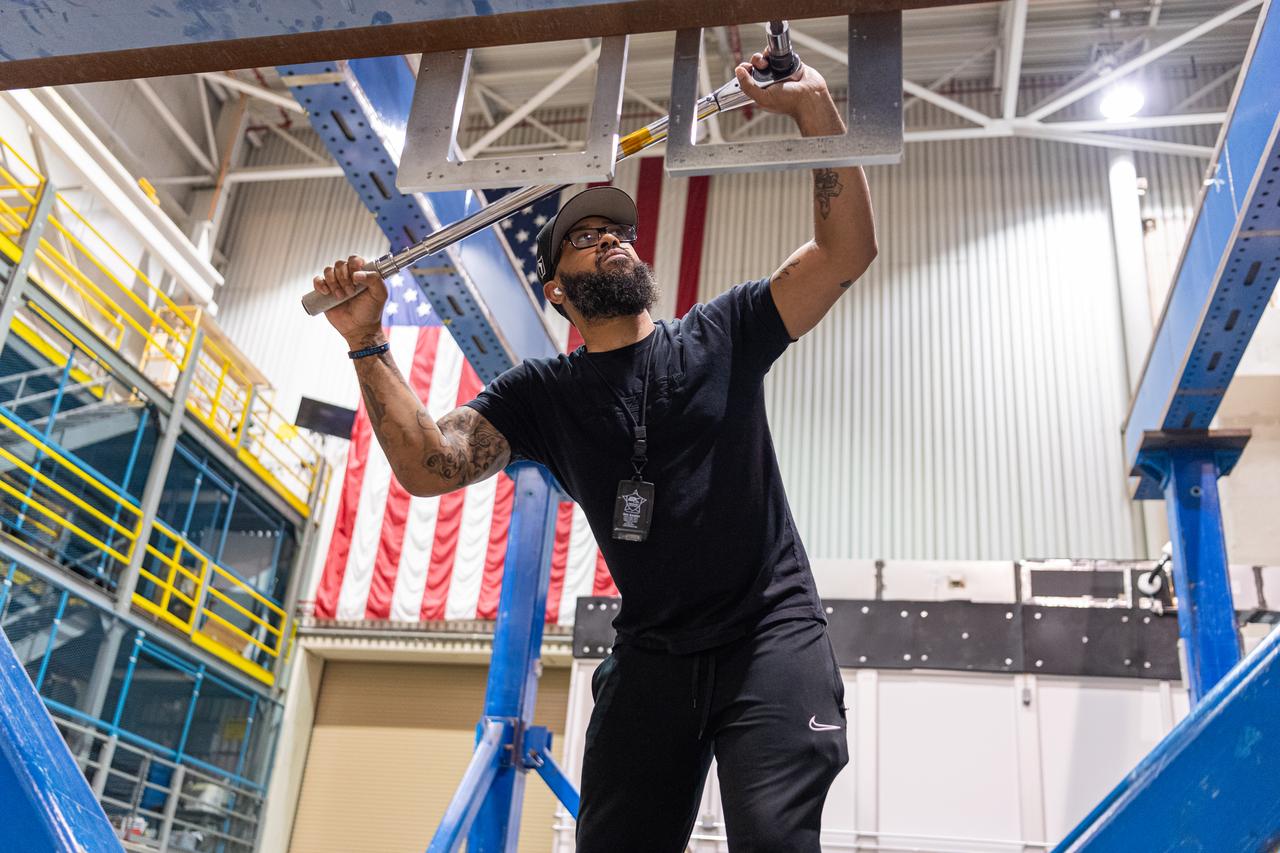
Mechanical engineering and integration technician Ivan Pratt installs brackets onto the static load testing platform in preparation of an OSAM-1 ground support equipment proof test at Goddard Space Flight Center, Greenbelt Md., July 19, 2023. This photo has been reviewed by OSAM1 project management and the Export Control Office and is released for public view. NASA/Mike Guinto
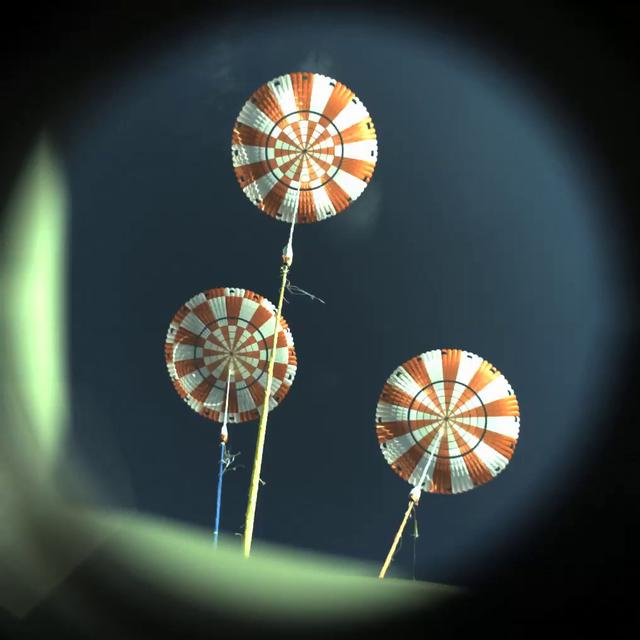
The main parachutes deploy on Orion's first flight test, Exploration Flight Test-1 (EFT-1), on December 5, 2014.
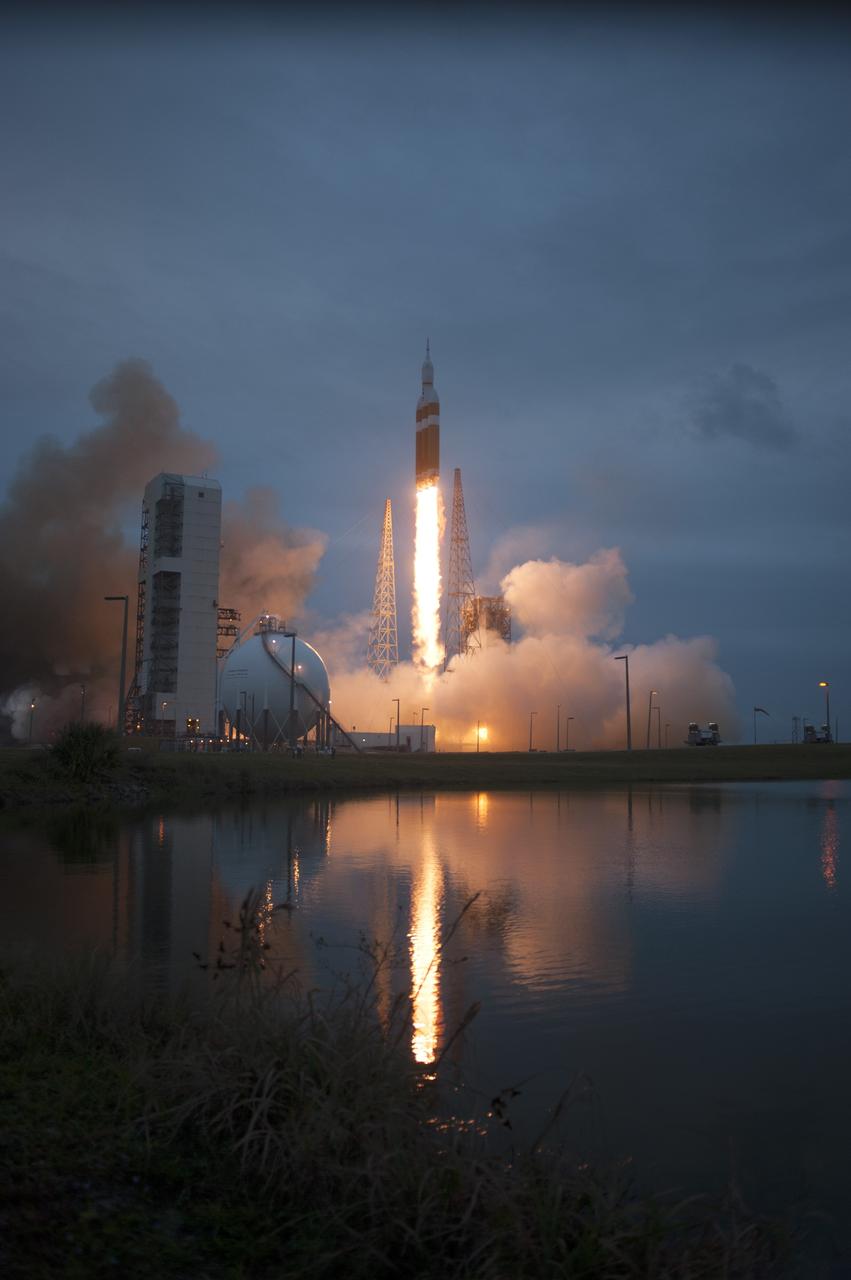
CAPE CANAVERAL, Fla. -- A Delta IV Heavy rocket lifts off from Space Launch Complex 37 at Cape Canaveral Air Force Station in Florida carrying NASA's Orion spacecraft on an unpiloted flight test to Earth orbit. Liftoff was at 7:05 a.m. EST. During the two-orbit, four-and-a-half hour mission, engineers will evaluate the systems critical to crew safety, the launch abort system, the heat shield and the parachute system. For more information, visit www.nasa.gov/orion Photo credit: NASA/ Sandy Joseph/Kevin O’Connell
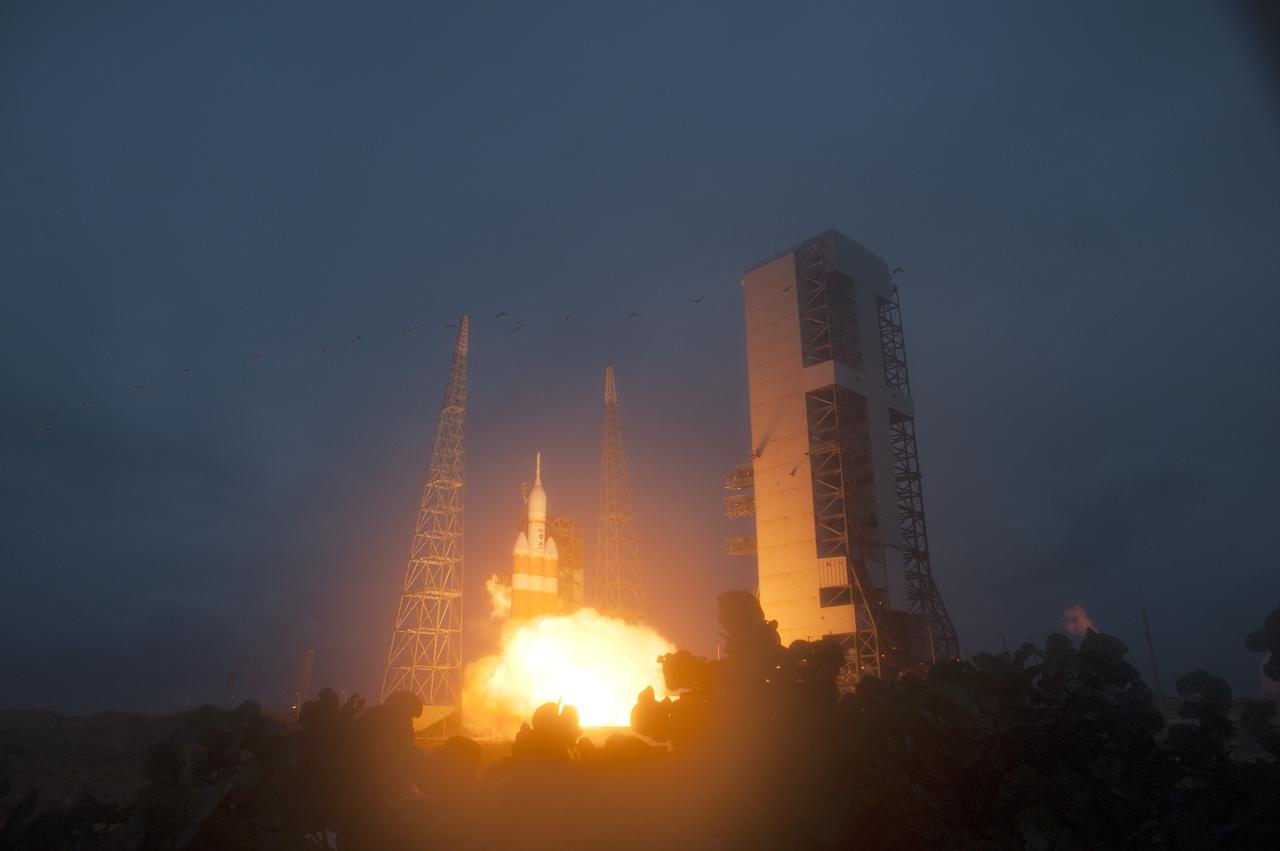
CAPE CANAVERAL, Fla. -- A Delta IV Heavy rocket lifts off from Space Launch Complex 37 at Cape Canaveral Air Force Station in Florida carrying NASA's Orion spacecraft on an unpiloted flight test to Earth orbit. Liftoff was at 7:05 a.m. EST. During the two-orbit, four-and-a-half hour mission, engineers will evaluate the systems critical to crew safety, the launch abort system, the heat shield and the parachute system. Photo credit: NASA/Sandra Joseph and Kevin O'Connell

CAPE CANAVERAL, Fla. -- A Delta IV Heavy rocket lifts off from Space Launch Complex 37 at Cape Canaveral Air Force Station in Florida carrying NASA's Orion spacecraft on an unpiloted flight test to Earth orbit. Liftoff was at 7:05 a.m. EST. During the two-orbit, four-and-a-half hour mission, engineers will evaluate the systems critical to crew safety, the launch abort system, the heat shield and the parachute system. For more information, visit www.nasa.gov/orion Photo credit: NASA/ Sandy Joseph/Kevin O’Connell
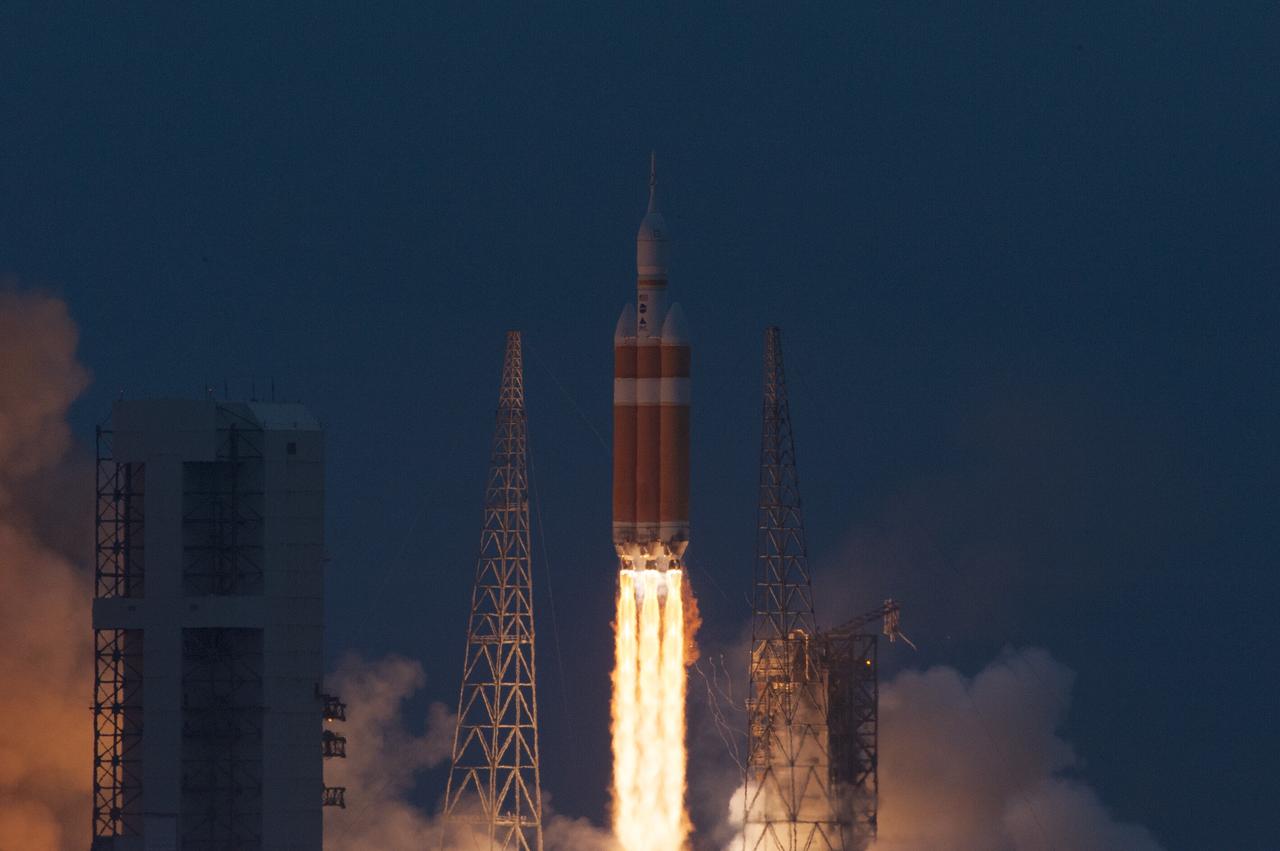
CAPE CANAVERAL, Fla. -- A Delta IV Heavy rocket lifts off from Space Launch Complex 37 at Cape Canaveral Air Force Station in Florida carrying NASA's Orion spacecraft on an unpiloted flight test to Earth orbit. Liftoff was at 7:05 a.m. EST. During the two-orbit, four-and-a-half hour mission, engineers will evaluate the systems critical to crew safety, the launch abort system, the heat shield and the parachute system. Photo credit: NASA/George Roberts
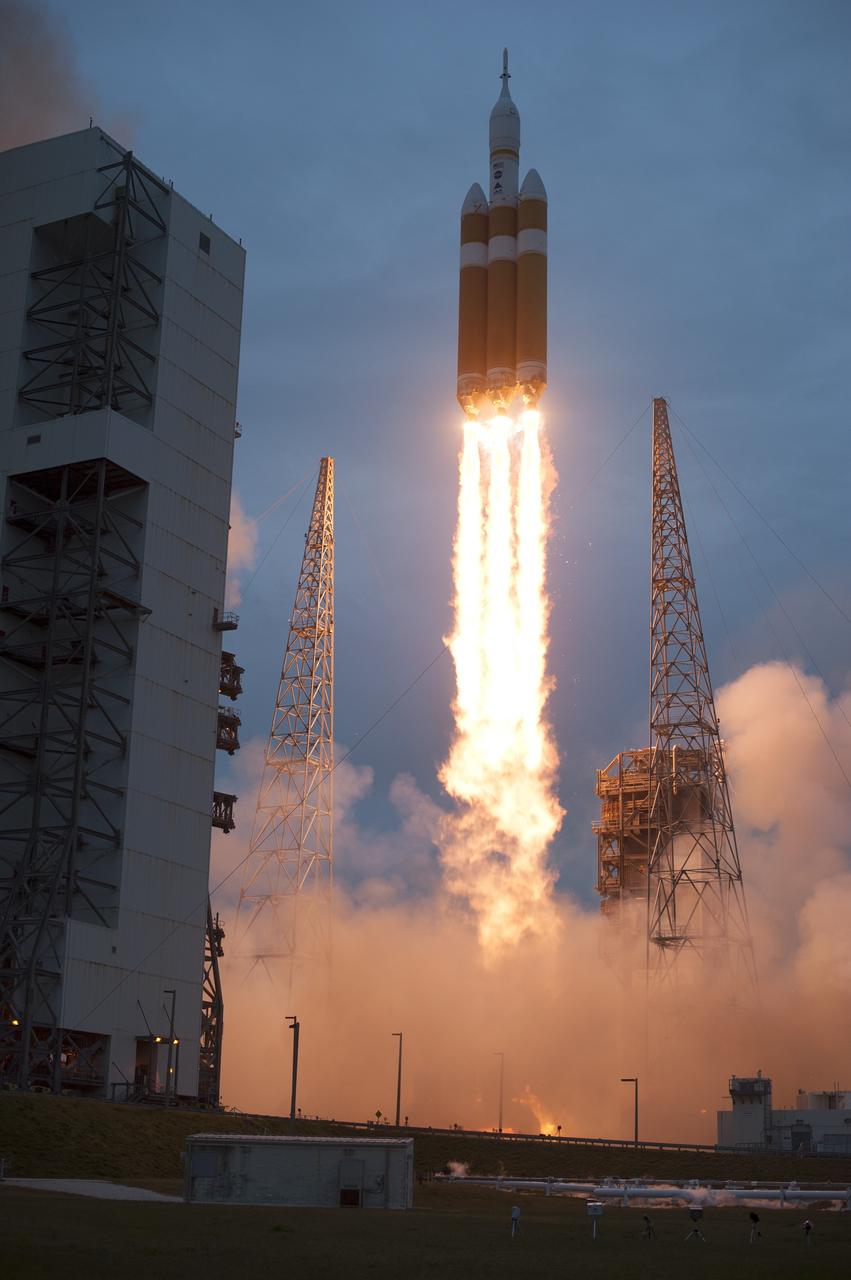
CAPE CANAVERAL, Fla. -- A Delta IV Heavy rocket lifts off from Space Launch Complex 37 at Cape Canaveral Air Force Station in Florida carrying NASA's Orion spacecraft on an unpiloted flight test to Earth orbit. Liftoff was at 7:05 a.m. EST. During the two-orbit, four-and-a-half hour mission, engineers will evaluate the systems critical to crew safety, the launch abort system, the heat shield and the parachute system. For more information, visit www.nasa.gov/orion Photo credit: NASA/Sandra Joseph and Kevin O'Connell
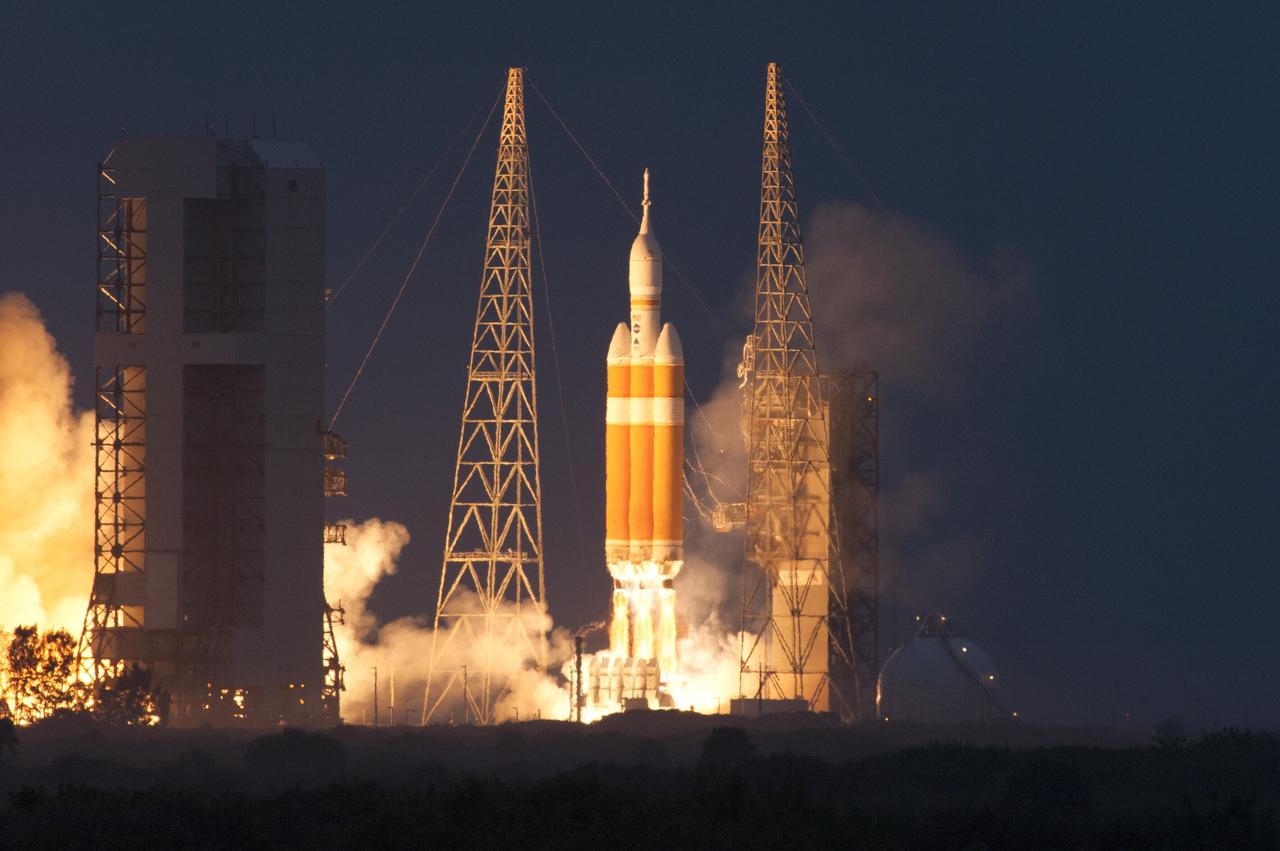
CAPE CANAVERAL, Fla. -- A Delta IV Heavy rocket lifts off from Space Launch Complex 37 at Cape Canaveral Air Force Station in Florida carrying NASA's Orion spacecraft on an unpiloted flight test to Earth orbit. Liftoff was at 7:05 a.m. EST. During the two-orbit, four-and-a-half hour mission, engineers will evaluate the systems critical to crew safety, the launch abort system, the heat shield and the parachute system. Photo credit: NASA/George Roberts
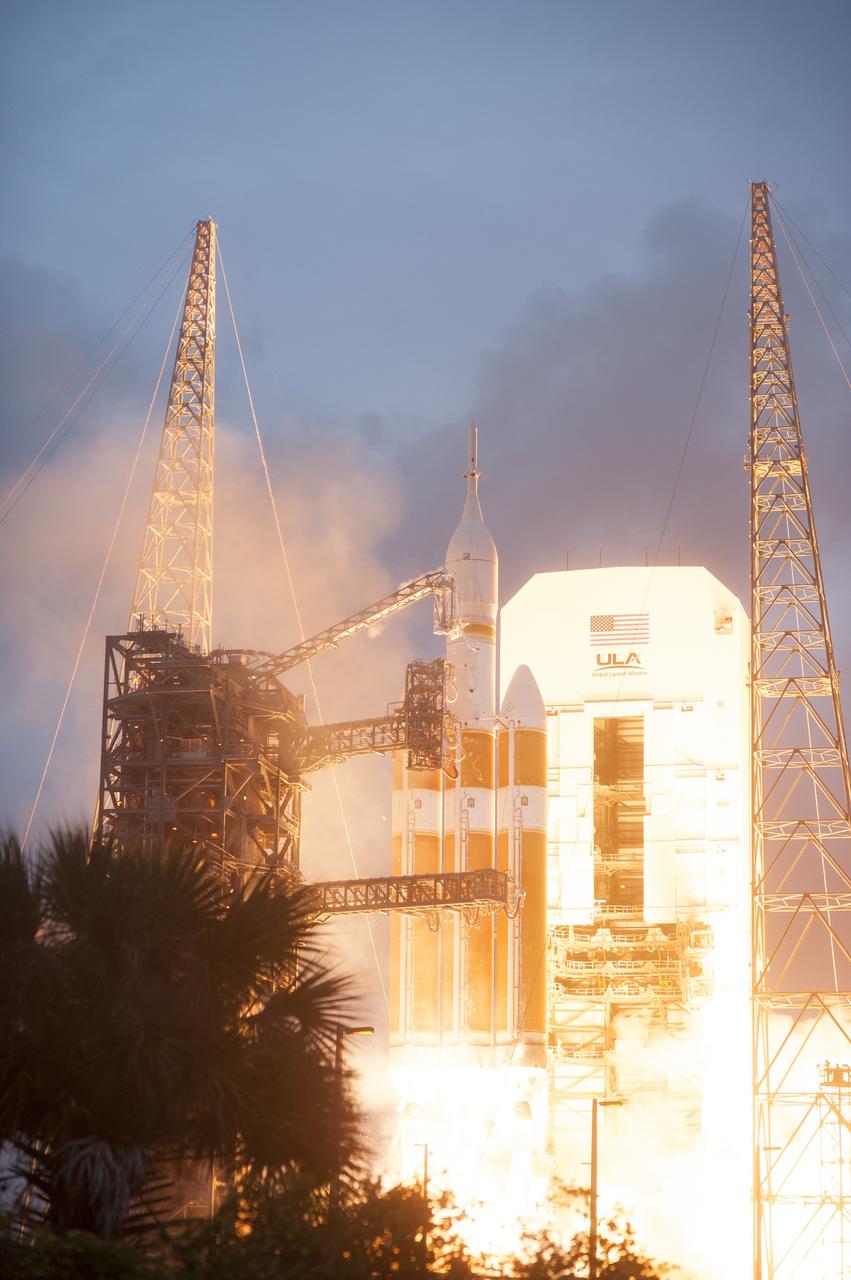
CAPE CANAVERAL, Fla. -- A Delta IV Heavy rocket lifts off from Space Launch Complex 37 at Cape Canaveral Air Force Station in Florida carrying NASA's Orion spacecraft on an unpiloted flight test to Earth orbit. Liftoff was at 7:05 a.m. EST. During the two-orbit, four-and-a-half hour mission, engineers will evaluate the systems critical to crew safety, the launch abort system, the heat shield and the parachute system. For more information, visit www.nasa.gov/orion Photo credit: NASA/ Sandy Joseph/Kevin O’Connell
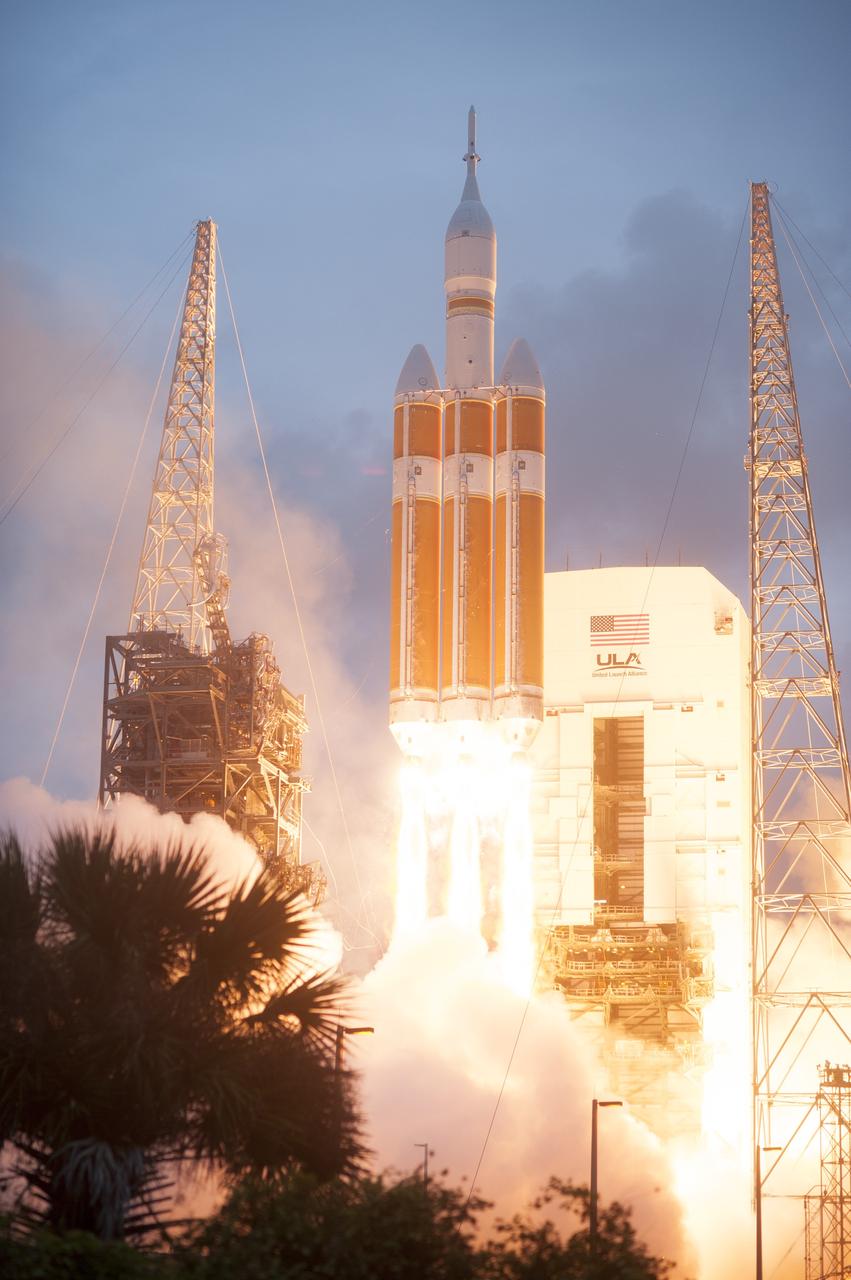
CAPE CANAVERAL, Fla. -- A Delta IV Heavy rocket lifts off from Space Launch Complex 37 at Cape Canaveral Air Force Station in Florida carrying NASA's Orion spacecraft on an unpiloted flight test to Earth orbit. Liftoff was at 7:05 a.m. EST. During the two-orbit, four-and-a-half hour mission, engineers will evaluate the systems critical to crew safety, the launch abort system, the heat shield and the parachute system. For more information, visit www.nasa.gov/orion Photo credit: NASA/ Sandy Joseph/Kevin O’Connell
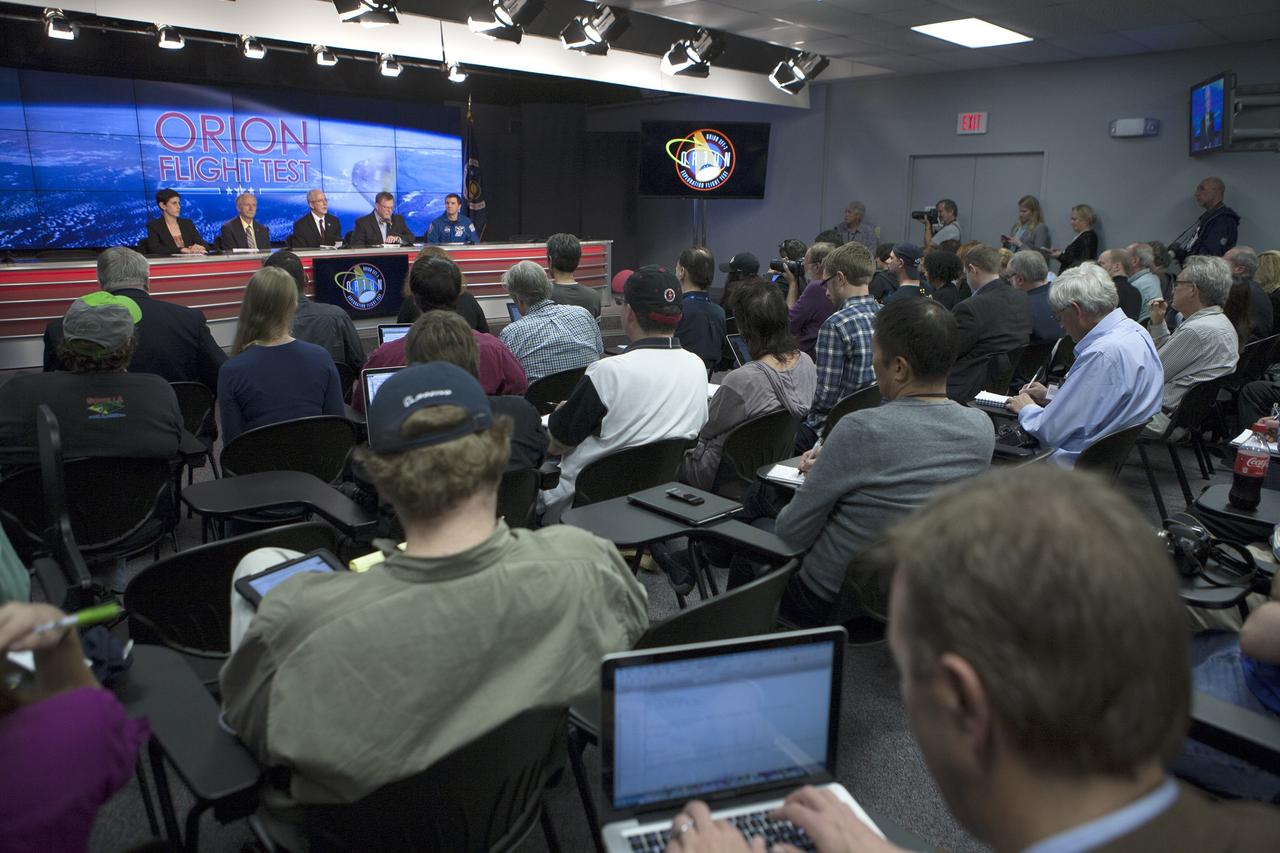
CAPE CANAVERAL, Fla. -- In the Kennedy Space Center’s Press Site auditorium, agency leaders spoke to members of the news media about the successful Orion Flight Test. From left are: Rachel Kraft, of NASA Public Affairs, Bill Gerstenmaier, NASA associate administrator for Human Exploration and Operations, Mark Geyer, Orion program manager, Mike Hawes, Lockheed Martin Orion Program manager, and NASA astronaut Rex Walheim. For more information, visit www.nasa.gov/orion Photo credit: NASA/Kim Shiflett
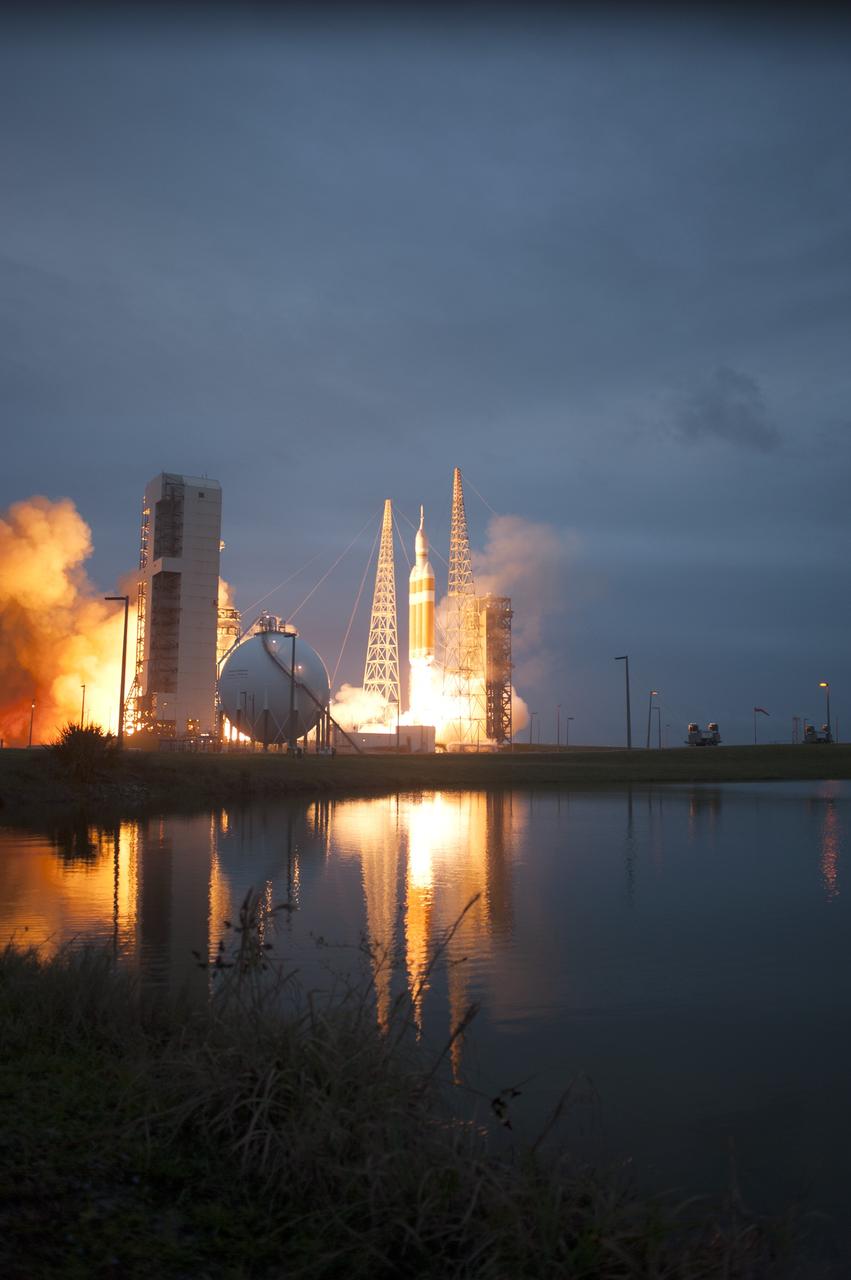
CAPE CANAVERAL, Fla. -- A Delta IV Heavy rocket lifts off from Space Launch Complex 37 at Cape Canaveral Air Force Station in Florida carrying NASA's Orion spacecraft on an unpiloted flight test to Earth orbit. Liftoff was at 7:05 a.m. EST. During the two-orbit, four-and-a-half hour mission, engineers will evaluate the systems critical to crew safety, the launch abort system, the heat shield and the parachute system. For more information, visit www.nasa.gov/orion Photo credit: NASA/ Sandy Joseph/Kevin O’Connell
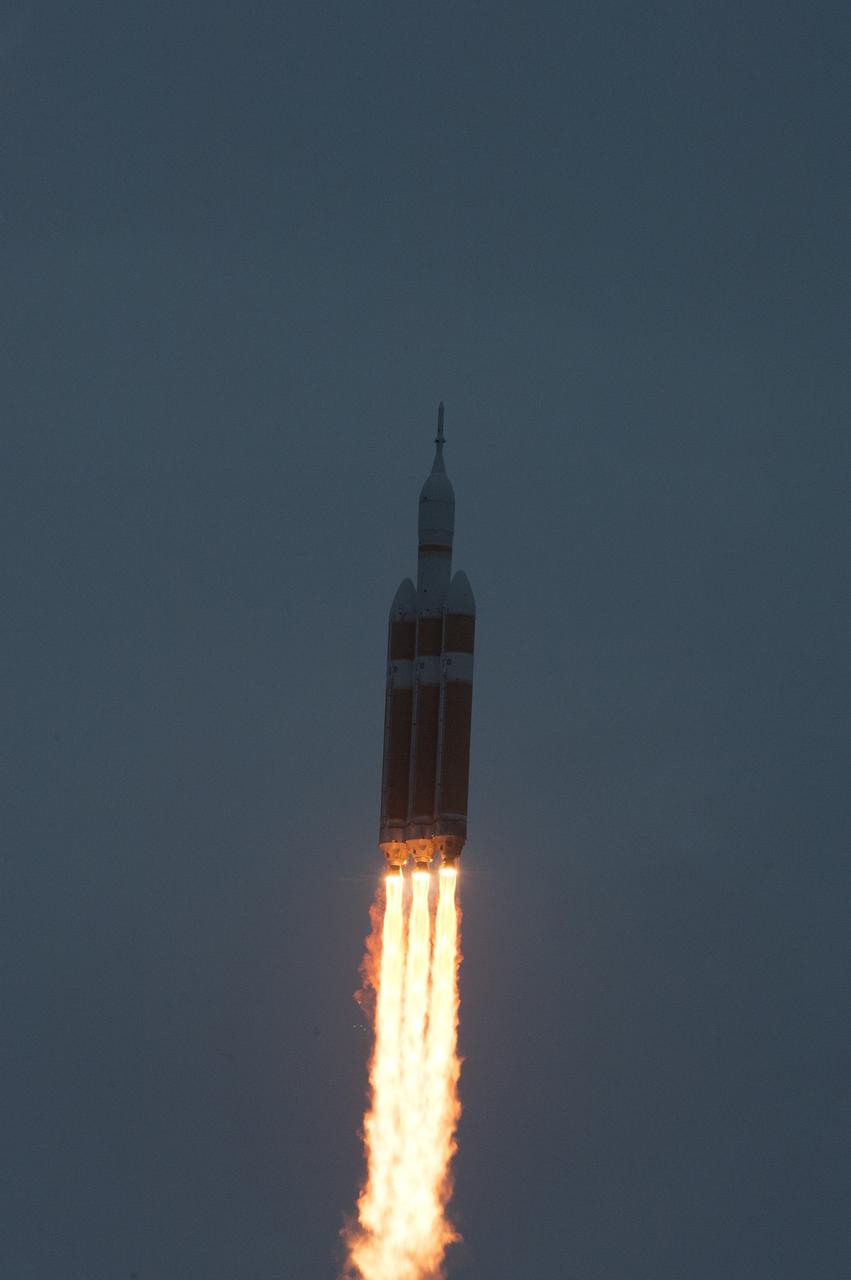
CAPE CANAVERAL, Fla. -- A Delta IV Heavy rocket lifts off from Space Launch Complex 37 at Cape Canaveral Air Force Station in Florida carrying NASA's Orion spacecraft on an unpiloted flight test to Earth orbit. Liftoff was at 7:05 a.m. EST. During the two-orbit, four-and-a-half hour mission, engineers will evaluate the systems critical to crew safety, the launch abort system, the heat shield and the parachute system. For more information, visit www.nasa.gov/orion Photo credit: NASA/Tim Terry
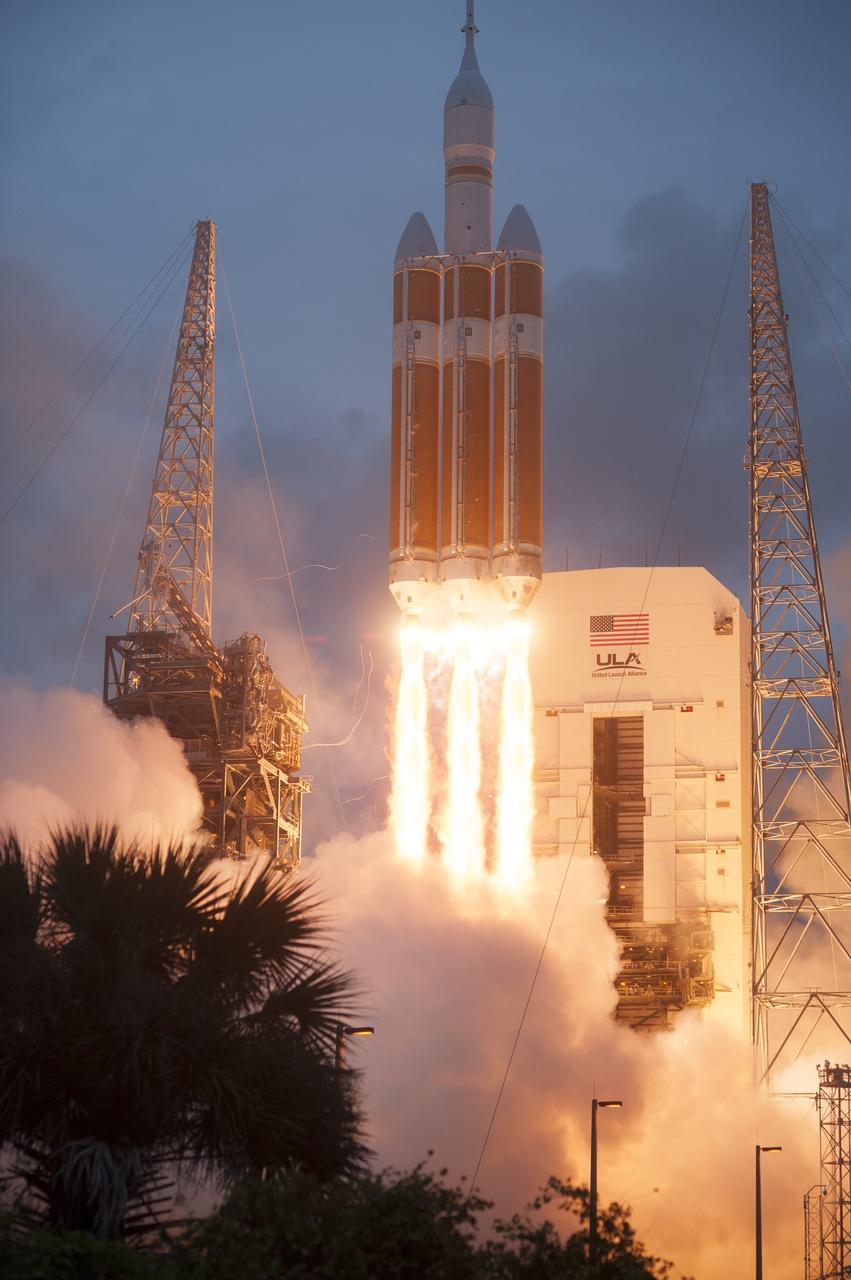
CAPE CANAVERAL, Fla. -- A Delta IV Heavy rocket lifts off from Space Launch Complex 37 at Cape Canaveral Air Force Station in Florida carrying NASA's Orion spacecraft on an unpiloted flight test to Earth orbit. Liftoff was at 7:05 a.m. EST. During the two-orbit, four-and-a-half hour mission, engineers will evaluate the systems critical to crew safety, the launch abort system, the heat shield and the parachute system. For more information, visit www.nasa.gov/orion Photo credit: NASA/ Sandy Joseph/Kevin O’Connell
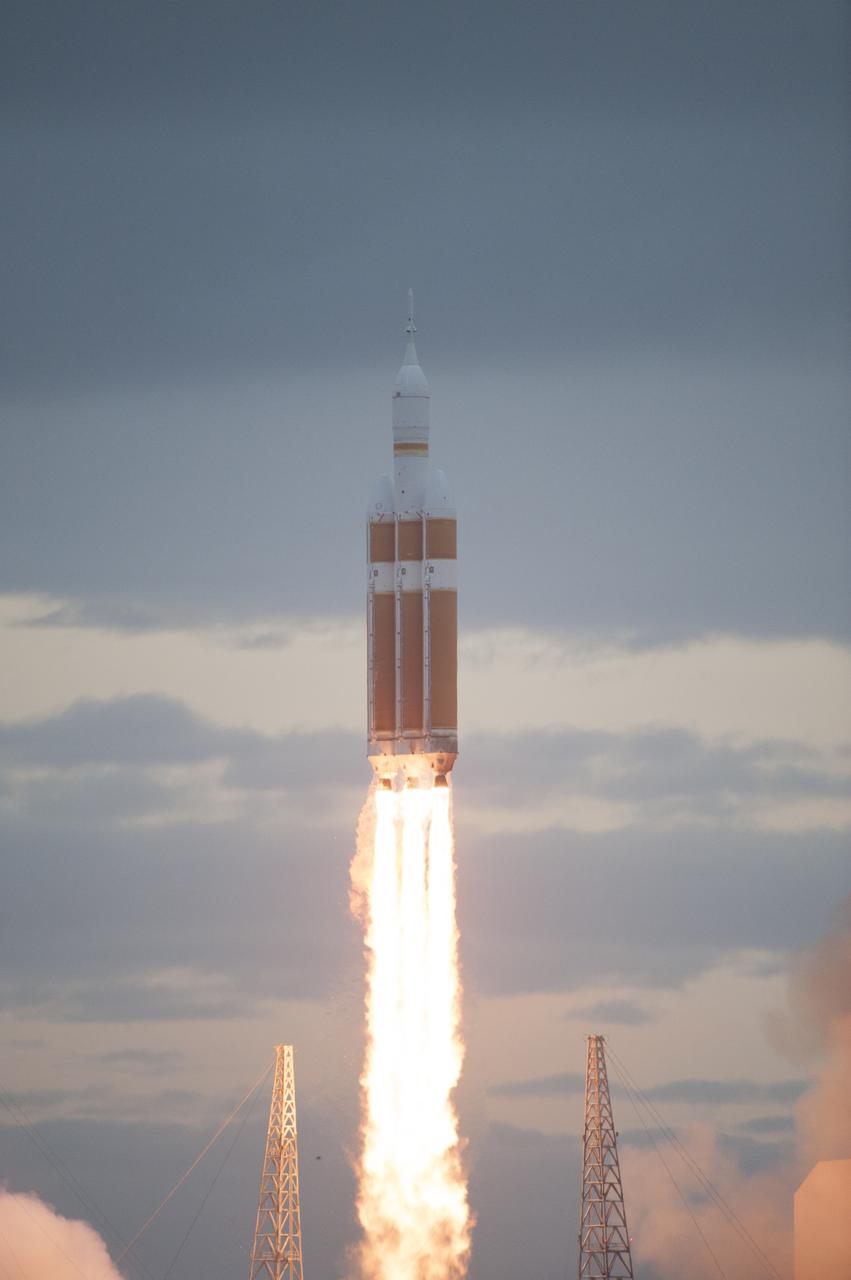
CAPE CANAVERAL, Fla. -- A Delta IV Heavy rocket lifts off from Space Launch Complex 37 at Cape Canaveral Air Force Station in Florida carrying NASA's Orion spacecraft on an unpiloted flight test to Earth orbit. Liftoff was at 7:05 a.m. EST. During the two-orbit, four-and-a-half hour mission, engineers will evaluate the systems critical to crew safety, the launch abort system, the heat shield and the parachute system. For more information, visit www.nasa.gov/orion Photo credit: NASA/Sandra Joseph
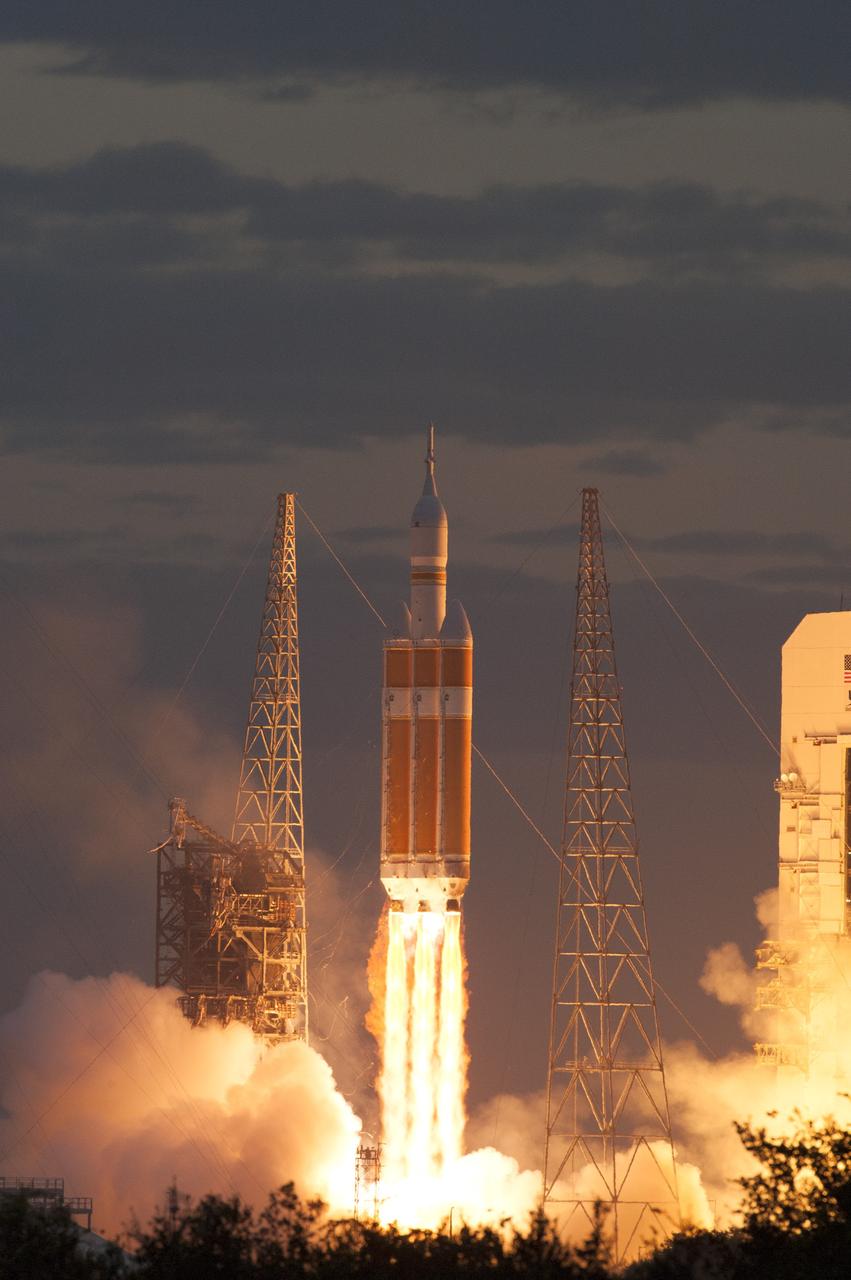
CAPE CANAVERAL, Fla. -- A Delta IV Heavy rocket lifts off from Space Launch Complex 37 at Cape Canaveral Air Force Station in Florida carrying NASA's Orion spacecraft on an unpiloted flight test to Earth orbit. Liftoff was at 7:05 a.m. EST. During the two-orbit, four-and-a-half hour mission, engineers will evaluate the systems critical to crew safety, the launch abort system, the heat shield and the parachute system. For more information, visit www.nasa.gov/orion Photo credit: NASA/Tim Terry
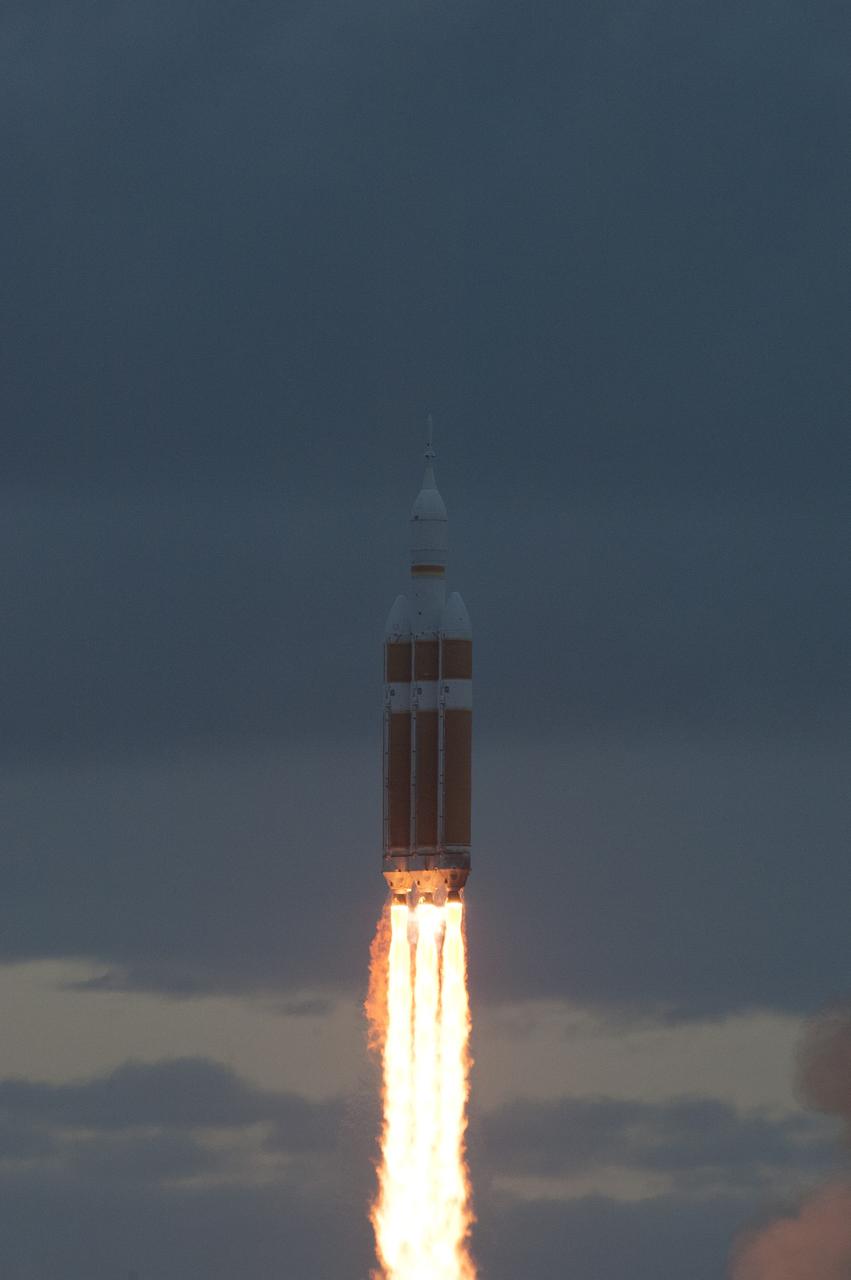
CAPE CANAVERAL, Fla. -- A Delta IV Heavy rocket lifts off from Space Launch Complex 37 at Cape Canaveral Air Force Station in Florida carrying NASA's Orion spacecraft on an unpiloted flight test to Earth orbit. Liftoff was at 7:05 a.m. EST. During the two-orbit, four-and-a-half hour mission, engineers will evaluate the systems critical to crew safety, the launch abort system, the heat shield and the parachute system. For more information, visit www.nasa.gov/orion Photo credit: NASA/Tim Terry
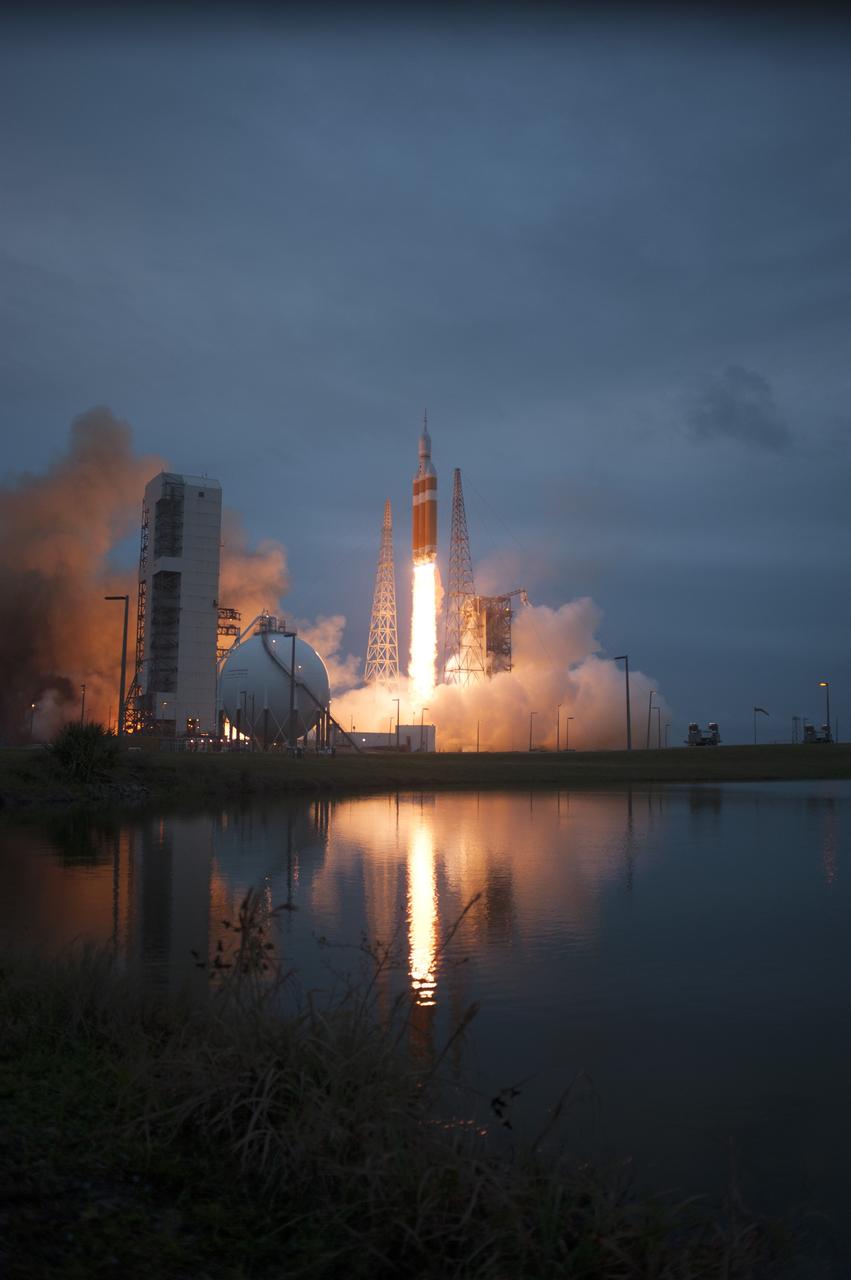
CAPE CANAVERAL, Fla. -- A Delta IV Heavy rocket lifts off from Space Launch Complex 37 at Cape Canaveral Air Force Station in Florida carrying NASA's Orion spacecraft on an unpiloted flight test to Earth orbit. Liftoff was at 7:05 a.m. EST. During the two-orbit, four-and-a-half hour mission, engineers will evaluate the systems critical to crew safety, the launch abort system, the heat shield and the parachute system. For more information, visit www.nasa.gov/orion Photo credit: NASA/ Sandy Joseph/Kevin O’Connell
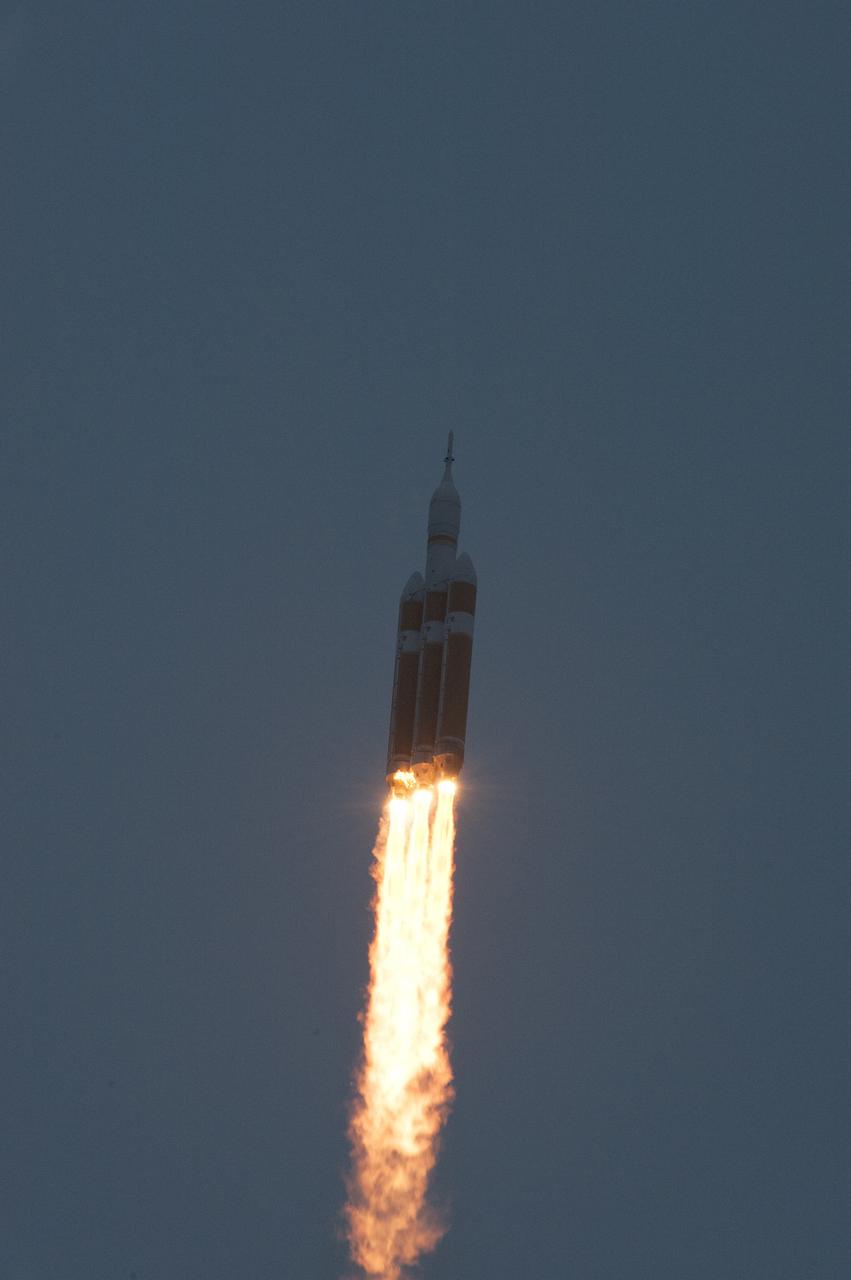
CAPE CANAVERAL, Fla. -- A Delta IV Heavy rocket lifts off from Space Launch Complex 37 at Cape Canaveral Air Force Station in Florida carrying NASA's Orion spacecraft on an unpiloted flight test to Earth orbit. Liftoff was at 7:05 a.m. EST. During the two-orbit, four-and-a-half hour mission, engineers will evaluate the systems critical to crew safety, the launch abort system, the heat shield and the parachute system. For more information, visit www.nasa.gov/orion Photo credit: NASA/Tim Terry
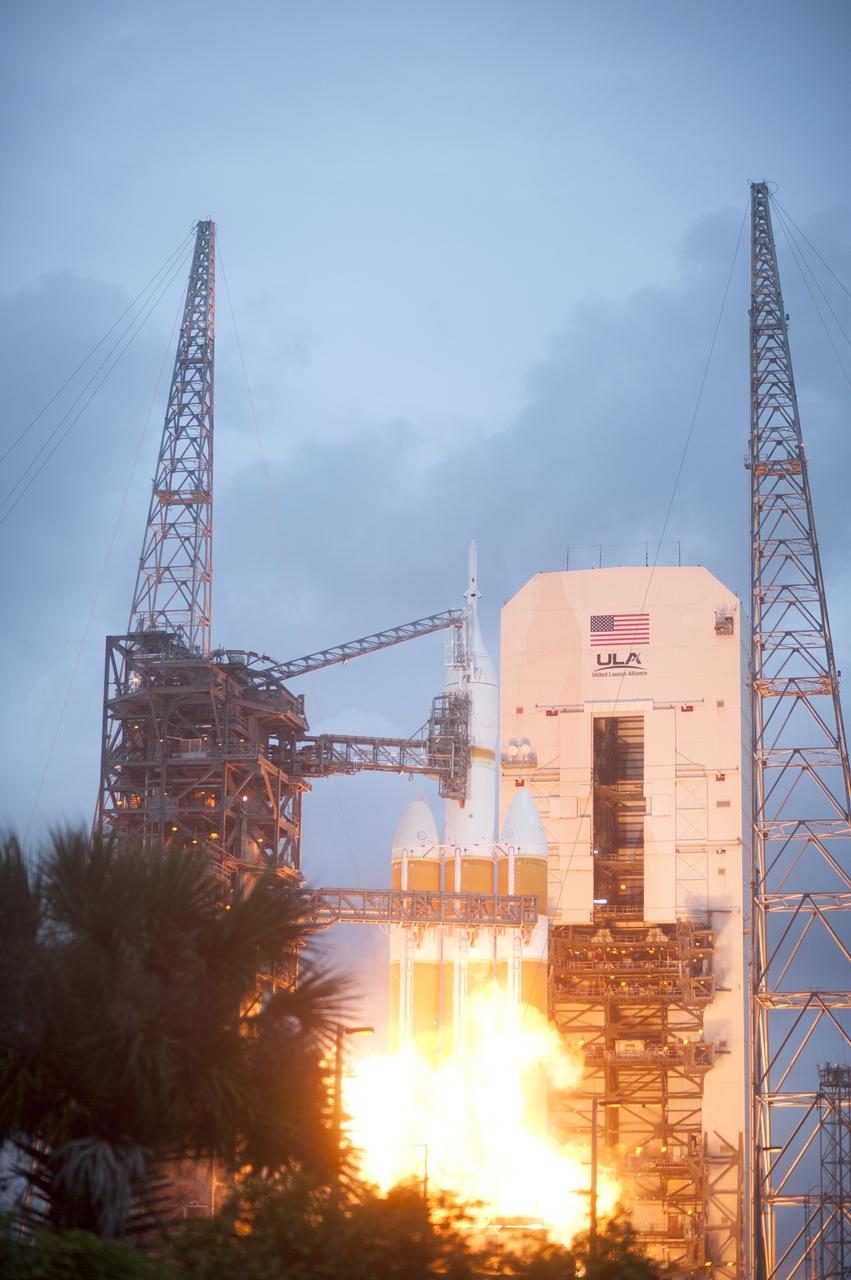
CAPE CANAVERAL, Fla. -- A Delta IV Heavy rocket lifts off from Space Launch Complex 37 at Cape Canaveral Air Force Station in Florida carrying NASA's Orion spacecraft on an unpiloted flight test to Earth orbit. Liftoff was at 7:05 a.m. EST. During the two-orbit, four-and-a-half hour mission, engineers will evaluate the systems critical to crew safety, the launch abort system, the heat shield and the parachute system. For more information, visit www.nasa.gov/orion Photo credit: NASA/ Sandy Joseph/Kevin O’Connell
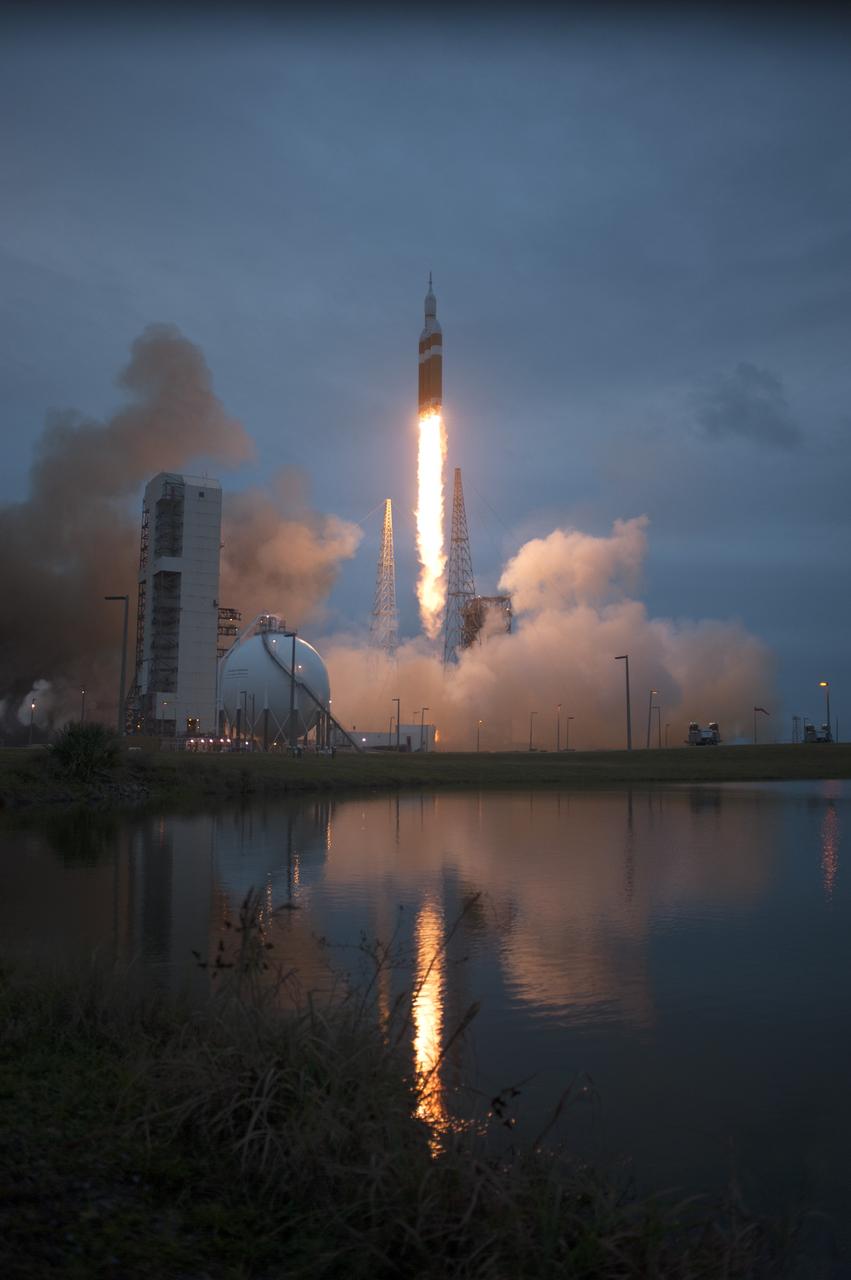
CAPE CANAVERAL, Fla. -- A Delta IV Heavy rocket lifts off from Space Launch Complex 37 at Cape Canaveral Air Force Station in Florida carrying NASA's Orion spacecraft on an unpiloted flight test to Earth orbit. Liftoff was at 7:05 a.m. EST. During the two-orbit, four-and-a-half hour mission, engineers will evaluate the systems critical to crew safety, the launch abort system, the heat shield and the parachute system. For more information, visit www.nasa.gov/orion Photo credit: NASA/ Sandy Joseph/Kevin O’Connell
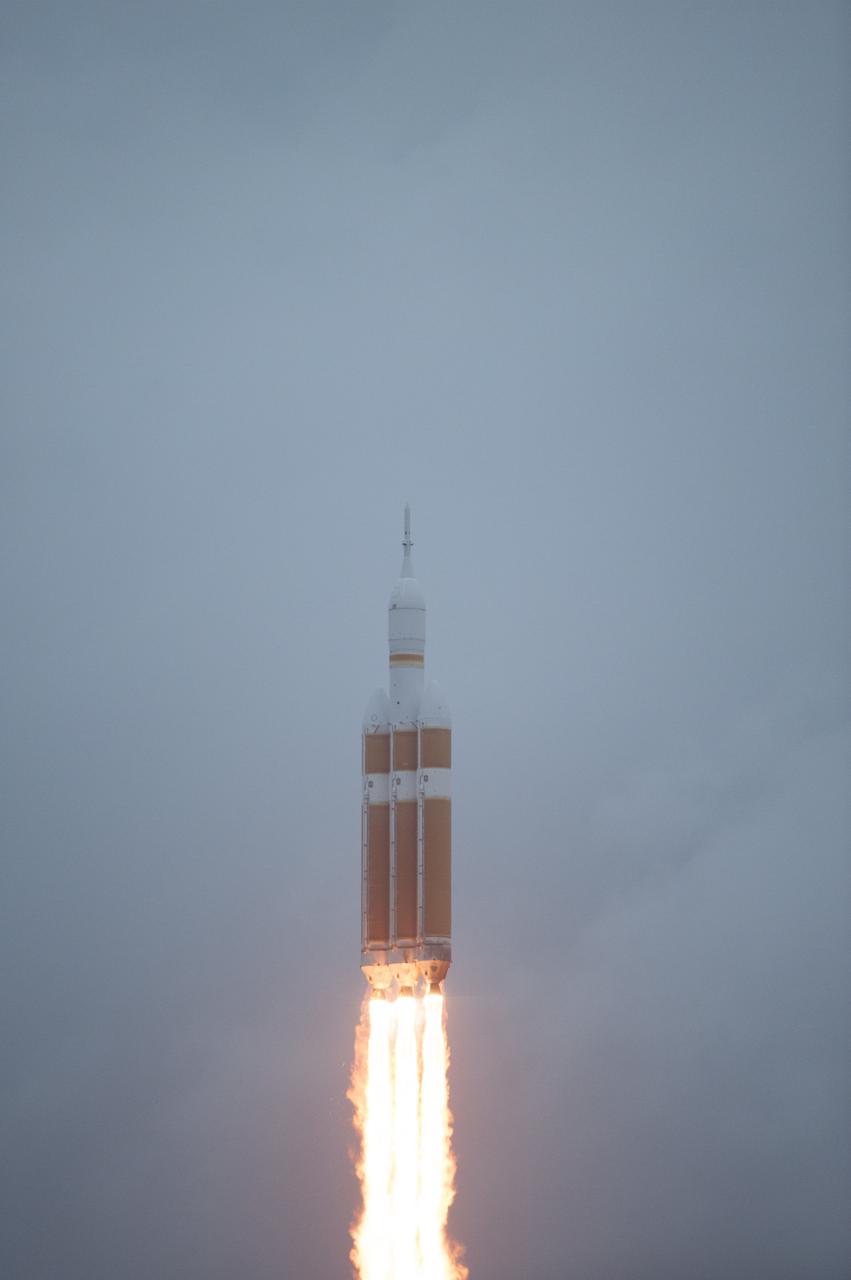
CAPE CANAVERAL, Fla. -- A Delta IV Heavy rocket lifts off from Space Launch Complex 37 at Cape Canaveral Air Force Station in Florida carrying NASA's Orion spacecraft on an unpiloted flight test to Earth orbit. Liftoff was at 7:05 a.m. EST. During the two-orbit, four-and-a-half hour mission, engineers will evaluate the systems critical to crew safety, the launch abort system, the heat shield and the parachute system. For more information, visit www.nasa.gov/orion Photo credit: NASA/Sandra Joseph
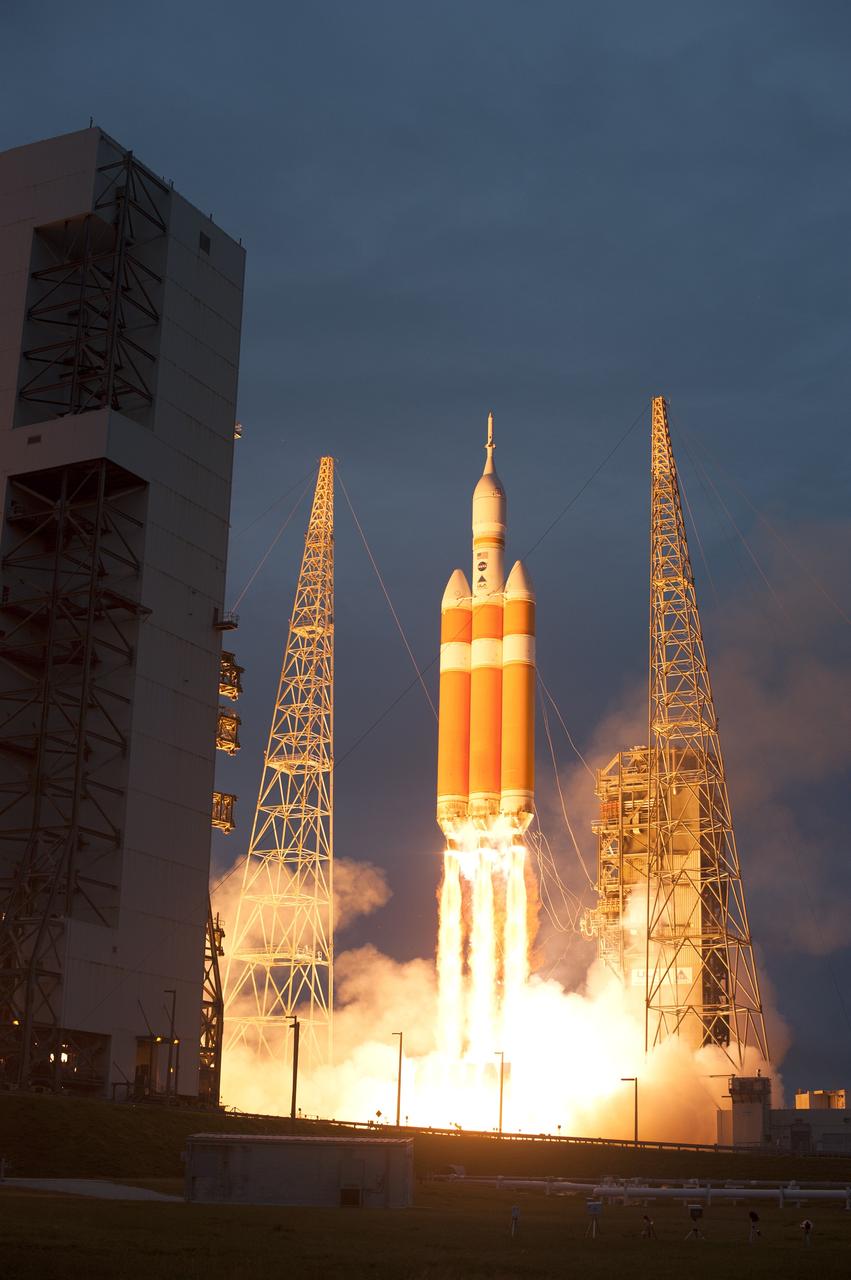
CAPE CANAVERAL, Fla. -- A Delta IV Heavy rocket lifts off from Space Launch Complex 37 at Cape Canaveral Air Force Station in Florida carrying NASA's Orion spacecraft on an unpiloted flight test to Earth orbit. Liftoff was at 7:05 a.m. EST. During the two-orbit, four-and-a-half hour mission, engineers will evaluate the systems critical to crew safety, the launch abort system, the heat shield and the parachute system. For more information, visit www.nasa.gov/orion Photo credit: NASA/Sandra Joseph and Kevin O'Connell
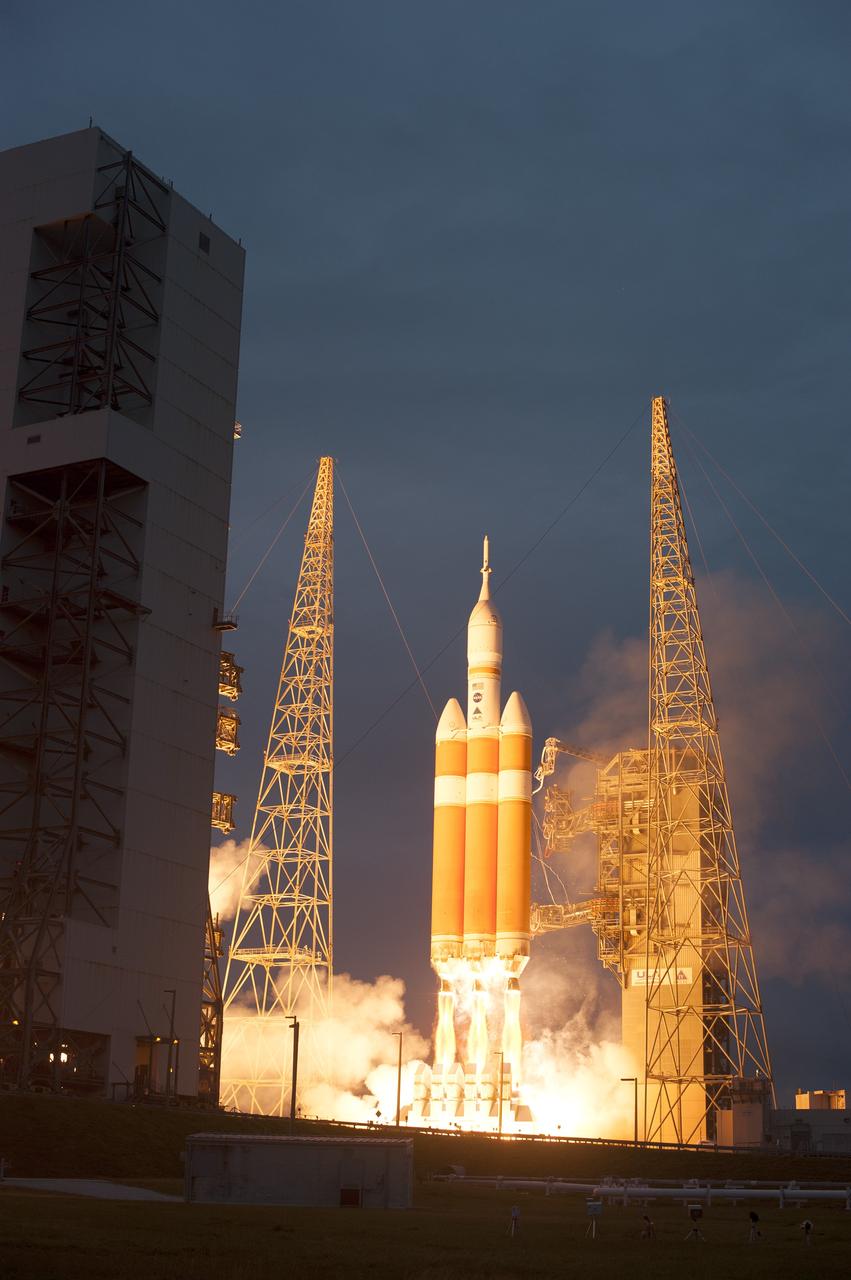
CAPE CANAVERAL, Fla. -- A Delta IV Heavy rocket lifts off from Space Launch Complex 37 at Cape Canaveral Air Force Station in Florida carrying NASA's Orion spacecraft on an unpiloted flight test to Earth orbit. Liftoff was at 7:05 a.m. EST. During the two-orbit, four-and-a-half hour mission, engineers will evaluate the systems critical to crew safety, the launch abort system, the heat shield and the parachute system. For more information, visit www.nasa.gov/orion Photo credit: NASA/Sandra Joseph and Kevin O'Connell
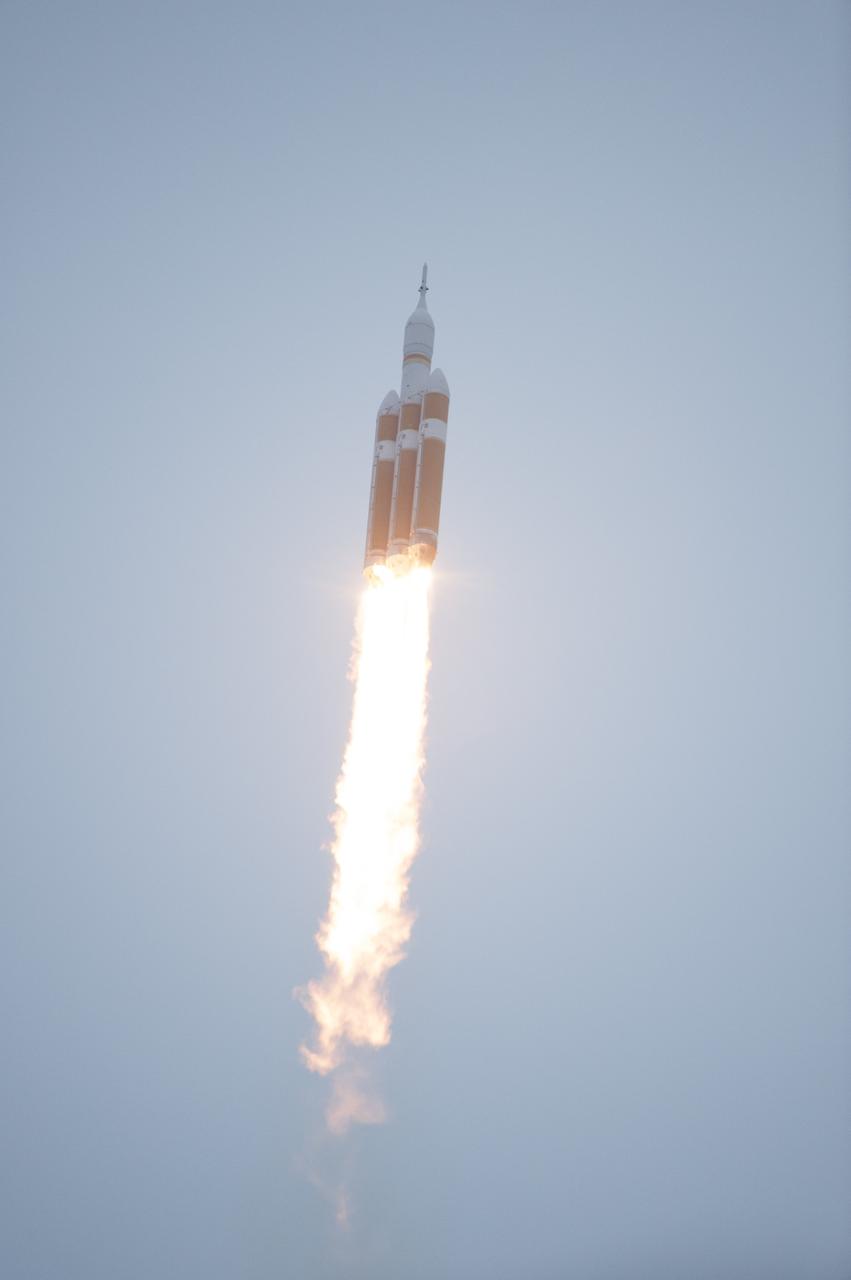
CAPE CANAVERAL, Fla. -- A Delta IV Heavy rocket lifts off from Space Launch Complex 37 at Cape Canaveral Air Force Station in Florida carrying NASA's Orion spacecraft on an unpiloted flight test to Earth orbit. Liftoff was at 7:05 a.m. EST. During the two-orbit, four-and-a-half hour mission, engineers will evaluate the systems critical to crew safety, the launch abort system, the heat shield and the parachute system. For more information, visit www.nasa.gov/orion Photo credit: NASA/Sandra Joseph
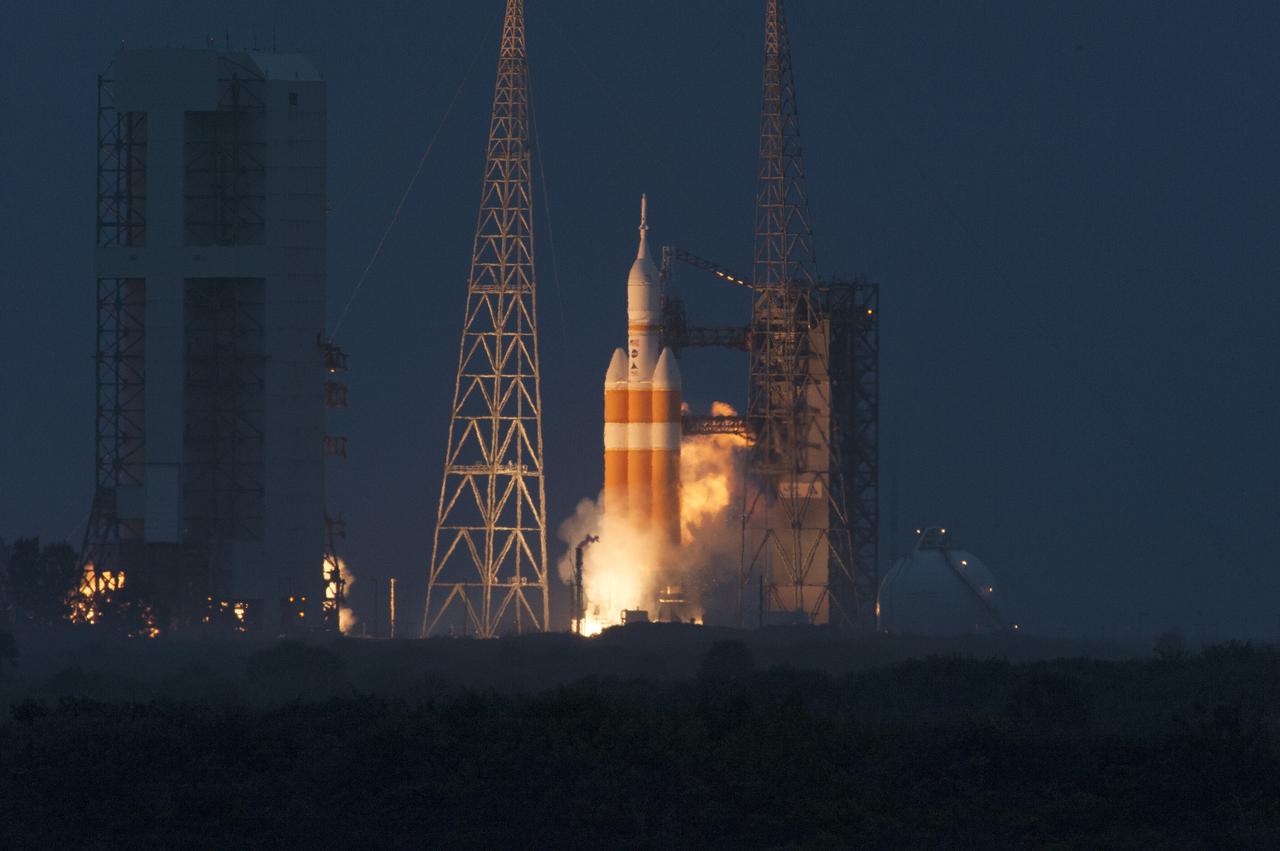
CAPE CANAVERAL, Fla. -- A Delta IV Heavy rocket roars to life at Space Launch Complex 37 at Cape Canaveral Air Force Station in Florida. The launch vehicle is carrying NASA's Orion spacecraft on an unpiloted flight test to Earth orbit. Liftoff was at 7:05 a.m. EST. The flight will send Orion 3,600 miles in altitude beyond the Earth's surface on a four-and-a-half hour mission. Photo credit: NASA/George Roberts
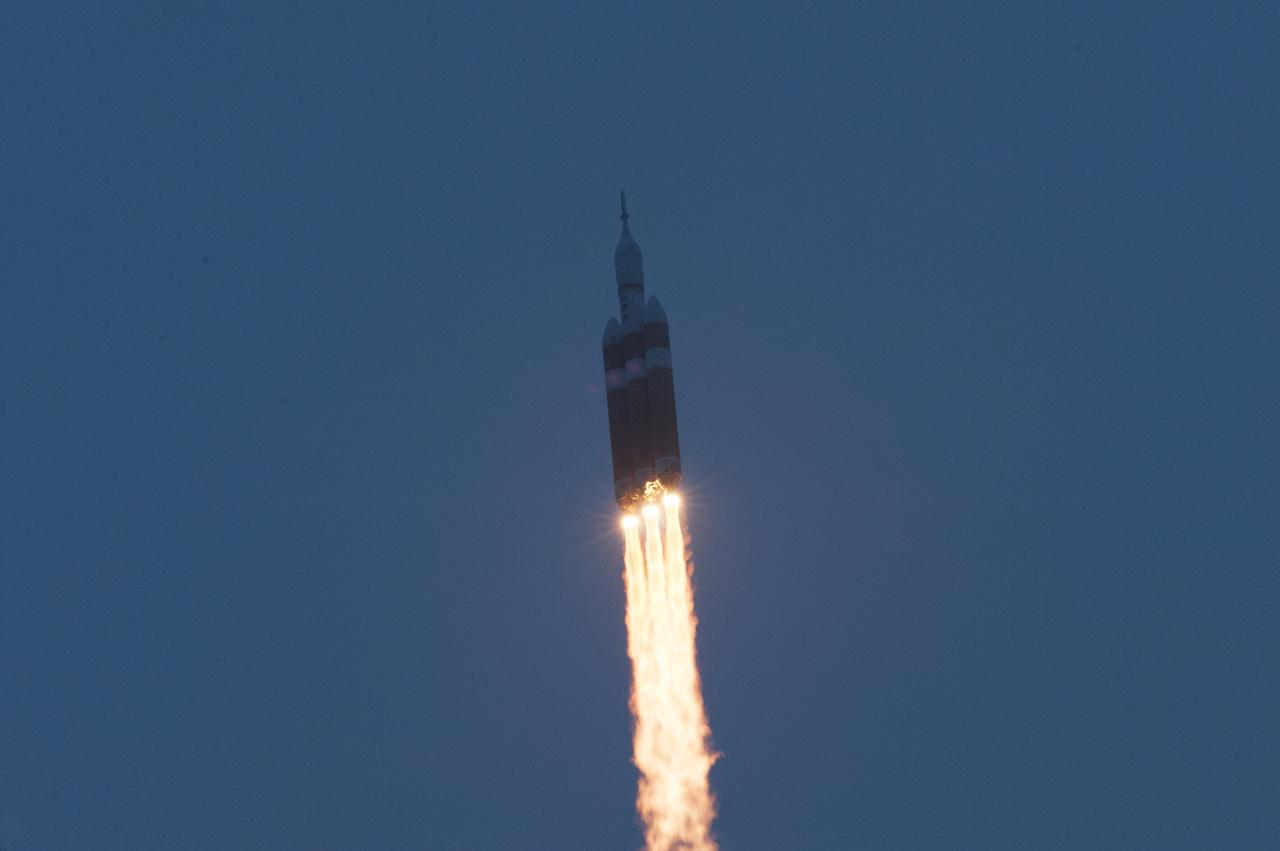
CAPE CANAVERAL, Fla. -- A Delta IV Heavy rocket soars after liftoff from Space Launch Complex 37 at Cape Canaveral Air Force Station in Florida carrying NASA's Orion spacecraft on an unpiloted flight test to Earth orbit. Liftoff was at 7:05 a.m. EST. During the two-orbit, four-and-a-half hour mission, engineers will evaluate the systems critical to crew safety, the launch abort system, the heat shield and the parachute system. Photo credit: NASA/George Roberts
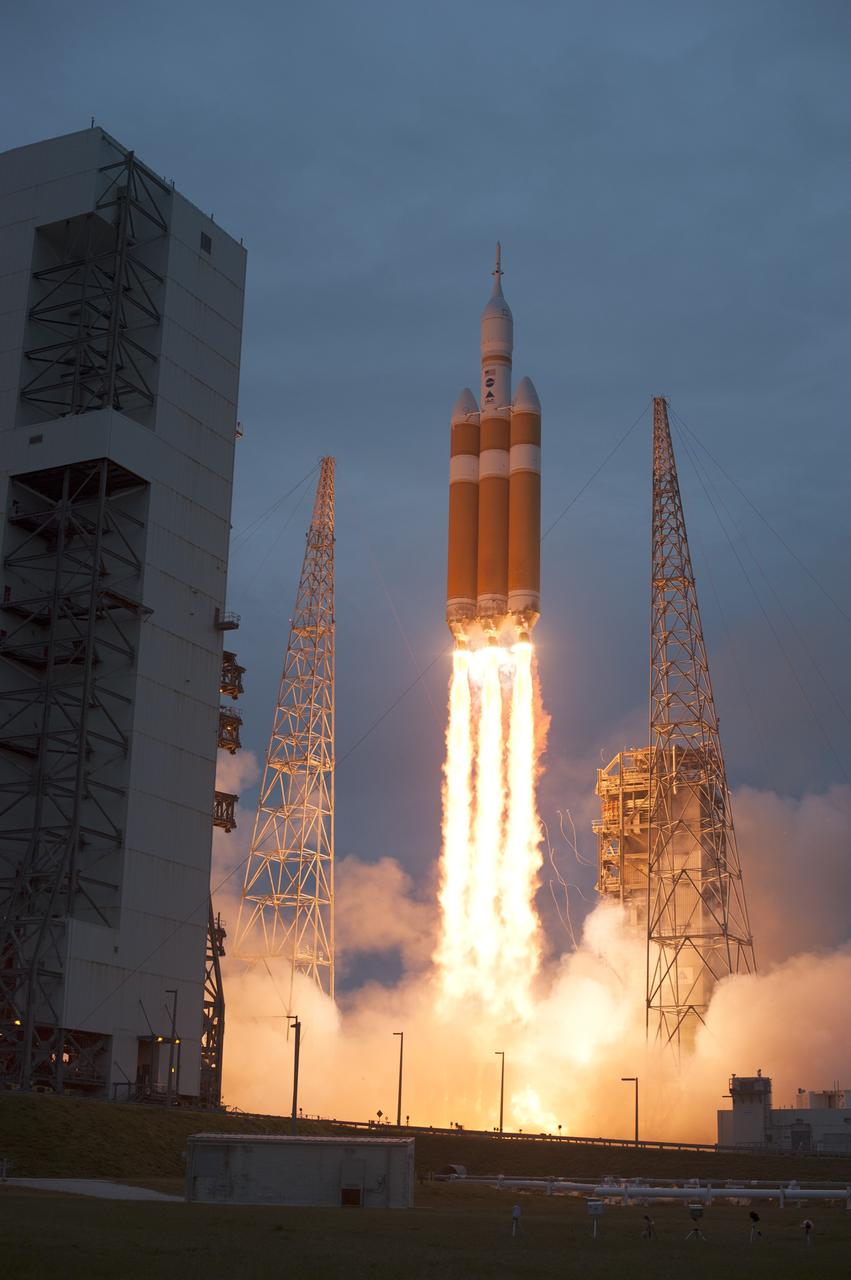
CAPE CANAVERAL, Fla. -- A Delta IV Heavy rocket lifts off from Space Launch Complex 37 at Cape Canaveral Air Force Station in Florida carrying NASA's Orion spacecraft on an unpiloted flight test to Earth orbit. Liftoff was at 7:05 a.m. EST. During the two-orbit, four-and-a-half hour mission, engineers will evaluate the systems critical to crew safety, the launch abort system, the heat shield and the parachute system. For more information, visit www.nasa.gov/orion Photo credit: NASA/Sandra Joseph and Kevin O'Connell
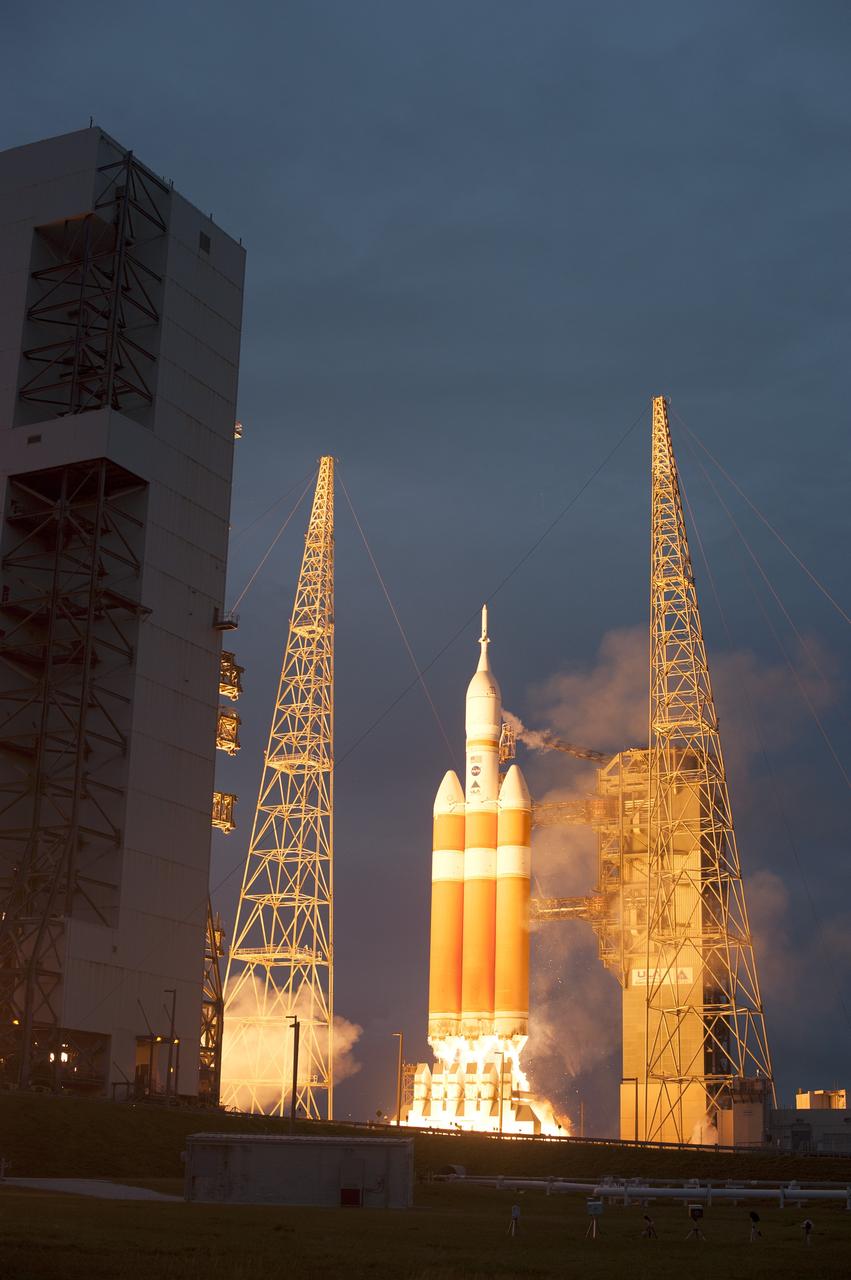
CAPE CANAVERAL, Fla. -- A Delta IV Heavy rocket lifts off from Space Launch Complex 37 at Cape Canaveral Air Force Station in Florida carrying NASA's Orion spacecraft on an unpiloted flight test to Earth orbit. Liftoff was at 7:05 a.m. EST. During the two-orbit, four-and-a-half hour mission, engineers will evaluate the systems critical to crew safety, the launch abort system, the heat shield and the parachute system. For more information, visit www.nasa.gov/orion Photo credit: NASA/Sandra Joseph, Kevin O'Connell
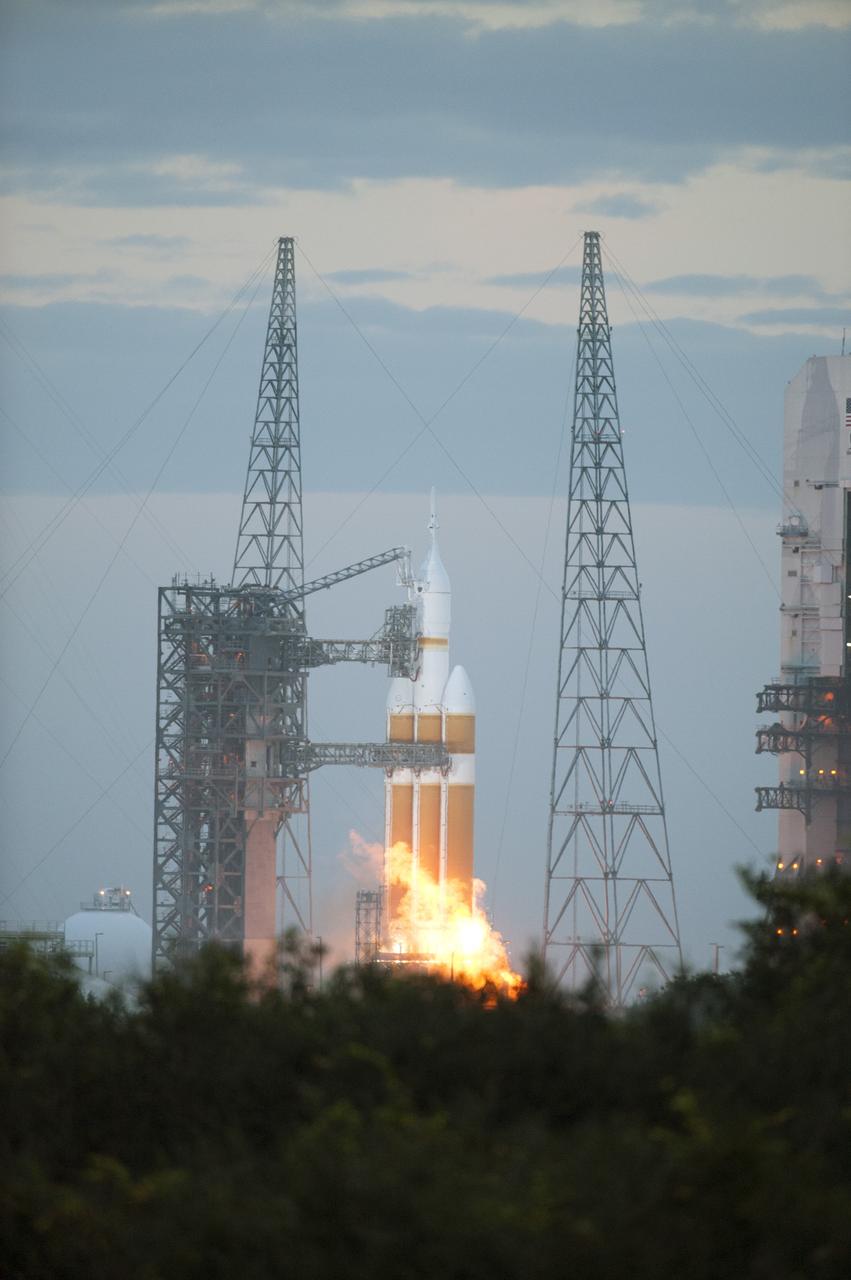
CAPE CANAVERAL, Fla. -- A Delta IV Heavy rocket lifts off from Space Launch Complex 37 at Cape Canaveral Air Force Station in Florida carrying NASA's Orion spacecraft on an unpiloted flight test to Earth orbit. Liftoff was at 7:05 a.m. EST. During the two-orbit, four-and-a-half hour mission, engineers will evaluate the systems critical to crew safety, the launch abort system, the heat shield and the parachute system. For more information, visit www.nasa.gov/orion Photo credit: NASA/Tim Terry
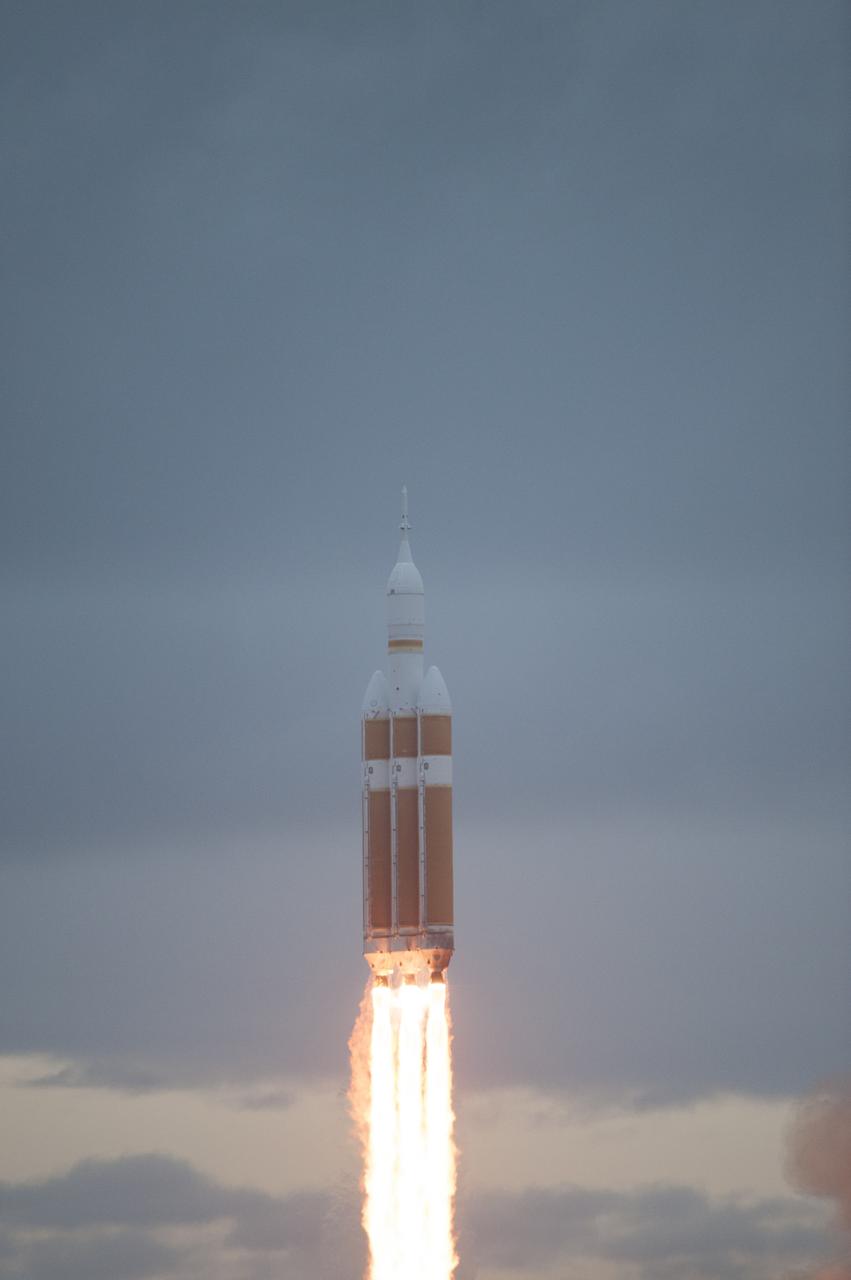
CAPE CANAVERAL, Fla. -- A Delta IV Heavy rocket lifts off from Space Launch Complex 37 at Cape Canaveral Air Force Station in Florida carrying NASA's Orion spacecraft on an unpiloted flight test to Earth orbit. Liftoff was at 7:05 a.m. EST. During the two-orbit, four-and-a-half hour mission, engineers will evaluate the systems critical to crew safety, the launch abort system, the heat shield and the parachute system. For more information, visit www.nasa.gov/orion Photo credit: NASA/Sandra Joseph
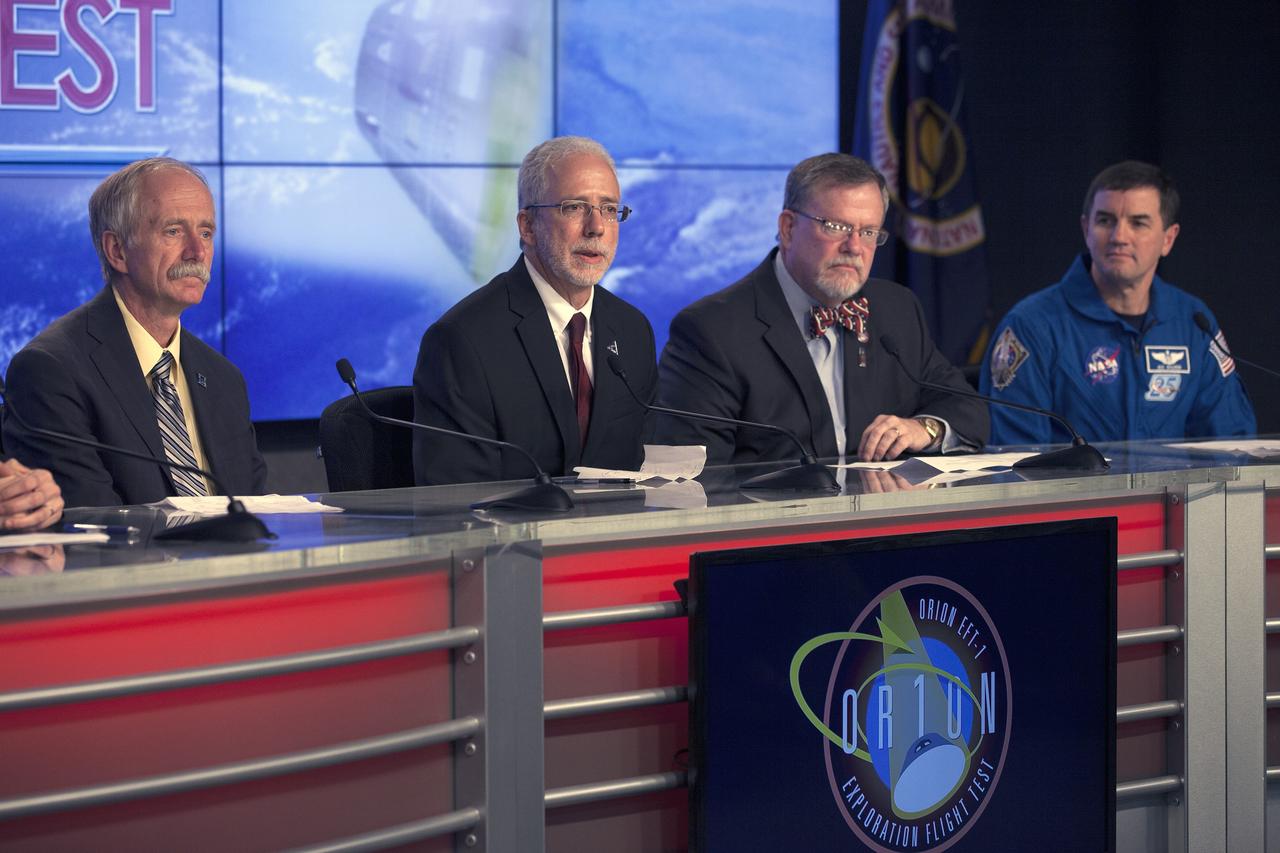
CAPE CANAVERAL, Fla. -- In the Kennedy Space Center’s Press Site auditorium, agency leaders spoke to members of the news media about the successful Orion Flight Test. From left are: Bill Gerstenmaier, NASA associate administrator for Human Exploration and Operations, Mark Geyer, Orion program manager, Mike Hawes, Lockheed Martin Orion Program manager, and NASA astronaut Rex Walheim. For more information, visit www.nasa.gov/orion Photo credit: NASA/Kim Shiflett
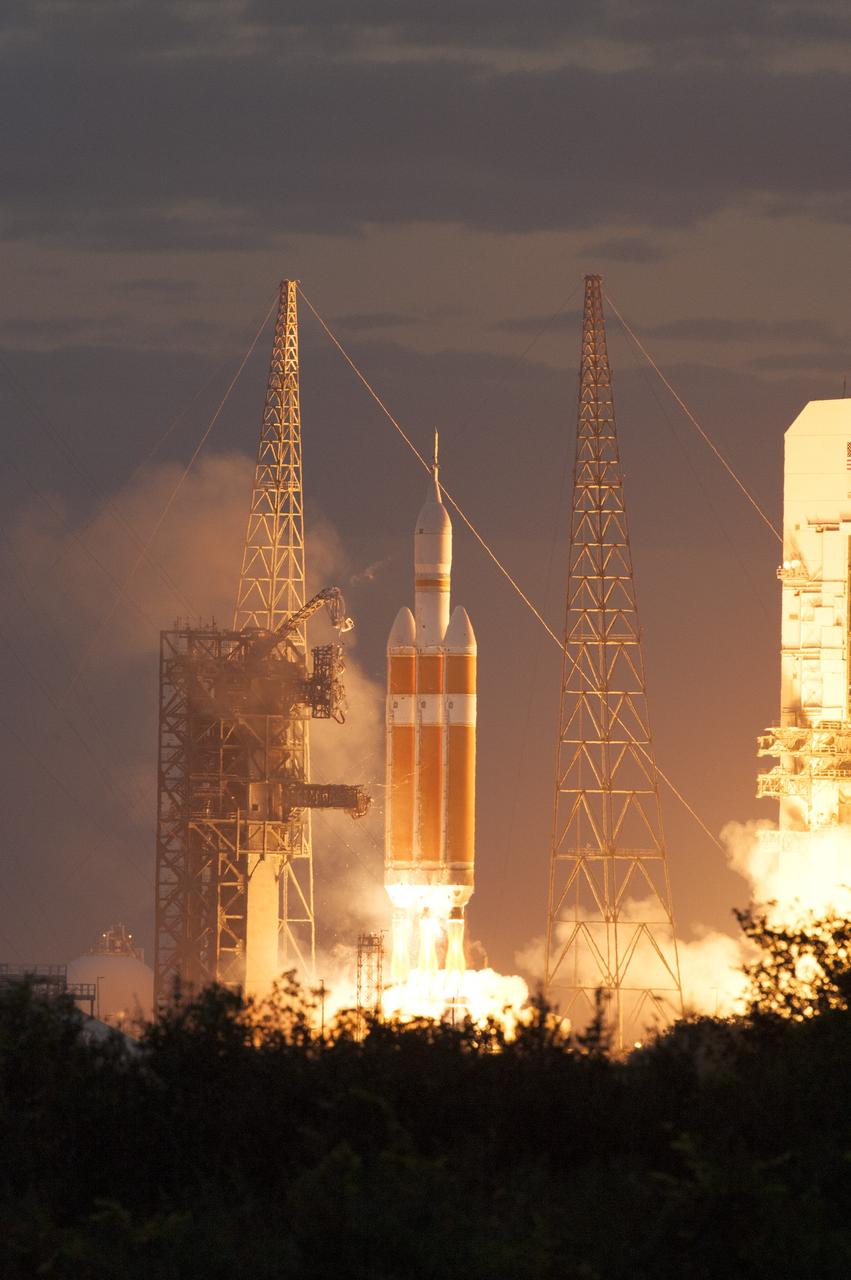
CAPE CANAVERAL, Fla. -- A Delta IV Heavy rocket lifts off from Space Launch Complex 37 at Cape Canaveral Air Force Station in Florida carrying NASA's Orion spacecraft on an unpiloted flight test to Earth orbit. Liftoff was at 7:05 a.m. EST. During the two-orbit, four-and-a-half hour mission, engineers will evaluate the systems critical to crew safety, the launch abort system, the heat shield and the parachute system. For more information, visit www.nasa.gov/orion Photo credit: NASA/Tim Terry
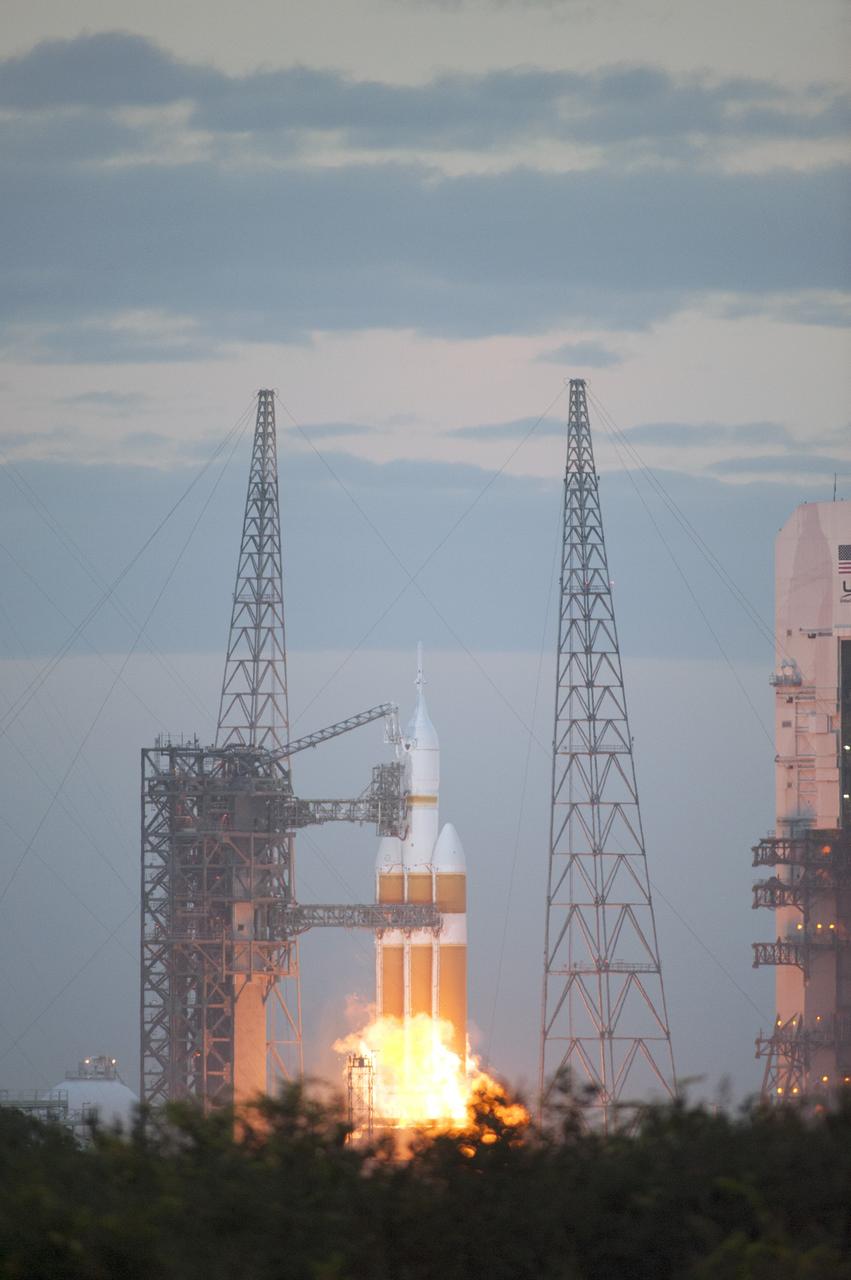
CAPE CANAVERAL, Fla. -- A Delta IV Heavy rocket lifts off from Space Launch Complex 37 at Cape Canaveral Air Force Station in Florida carrying NASA's Orion spacecraft on an unpiloted flight test to Earth orbit. Liftoff was at 7:05 a.m. EST. During the two-orbit, four-and-a-half hour mission, engineers will evaluate the systems critical to crew safety, the launch abort system, the heat shield and the parachute system. For more information, visit www.nasa.gov/orion Photo credit: NASA/Sandra Joseph