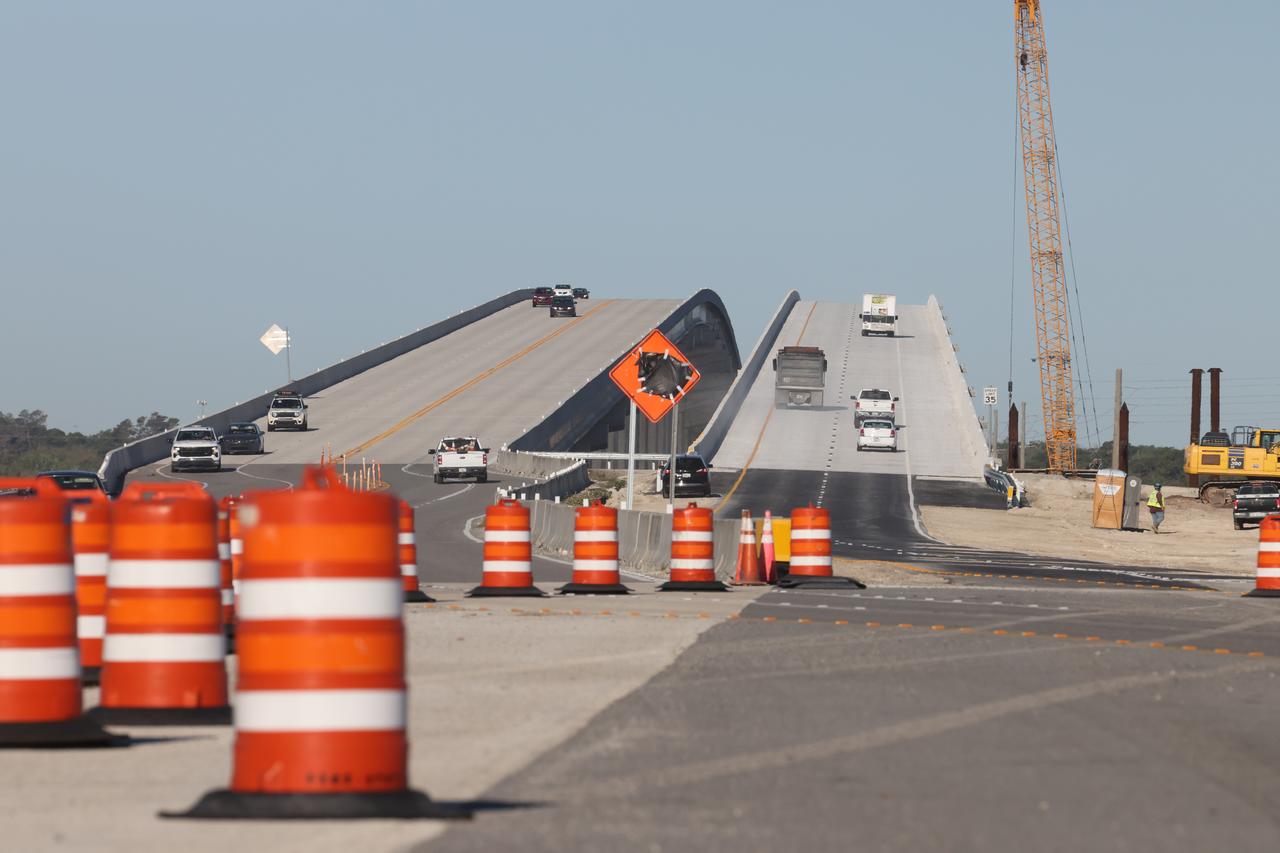
Cars drive over the newly completed westbound portion (right side of photo) of the NASA Causeway Bridge leading away from NASA’s Kennedy Space Center in Florida on Wednesday, March 19, 2025. The Florida Department of Transportation (FDOT) opened the span on Tuesday, March 18, 2025, alongside its twin on the eastbound side, which has accommodated traffic in both directions since FDOT opened it on June 9, 2023. The high-rise bridge spans the Indian River Lagoon and connects NASA Kennedy and the Cape Canaveral Space Force Station to the mainland via State Road 405/NASA Causeway in Titusville, replacing the two-lane drawbridge built in the mid-1960s to support the Apollo program.
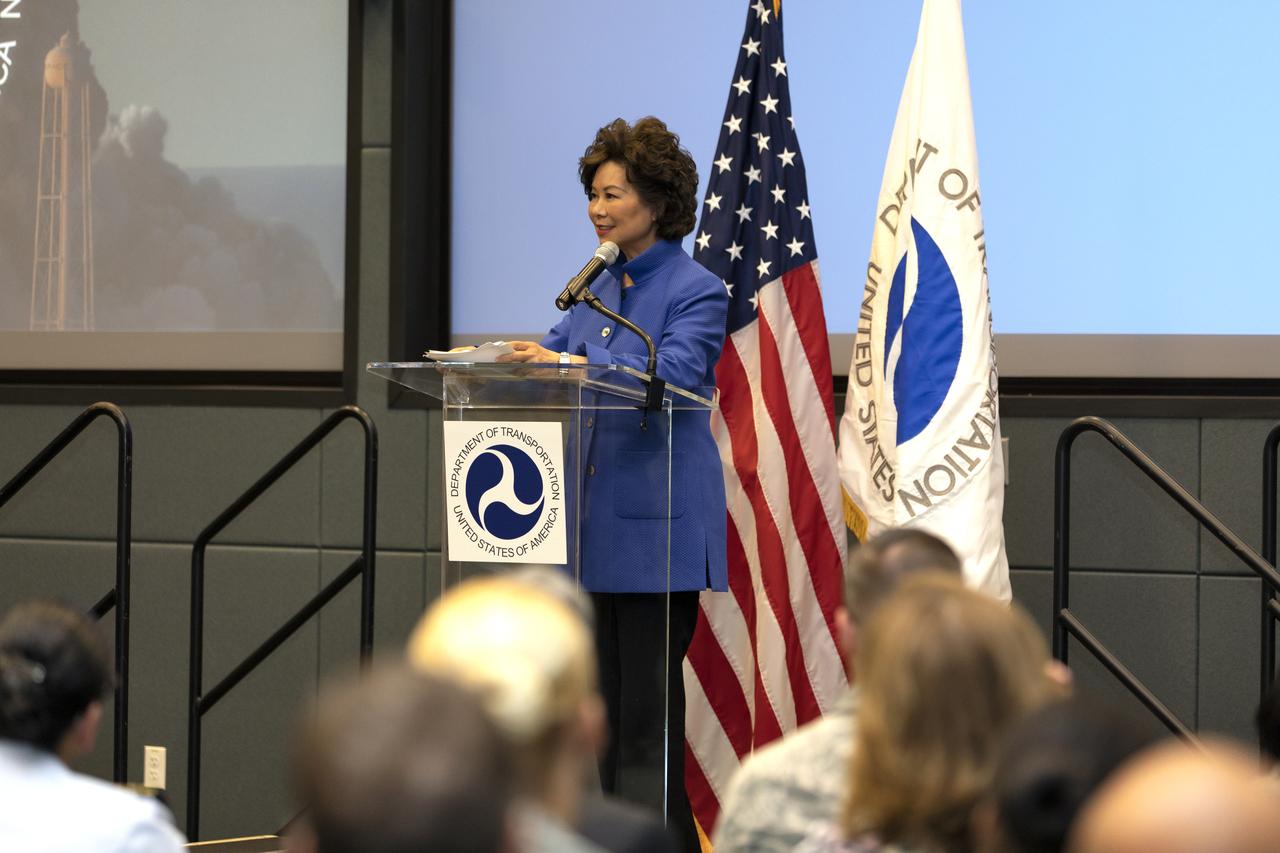
Secretary Elaine L. Chao, of the U.S. Department of Transportation (DOT), visits NASA’s Kennedy Space Center in Florida on April 24, 2019. She spoke to Kennedy’s leadership in the Operations and Support Building II and discussed the DOT’s role in enabling commercial space.
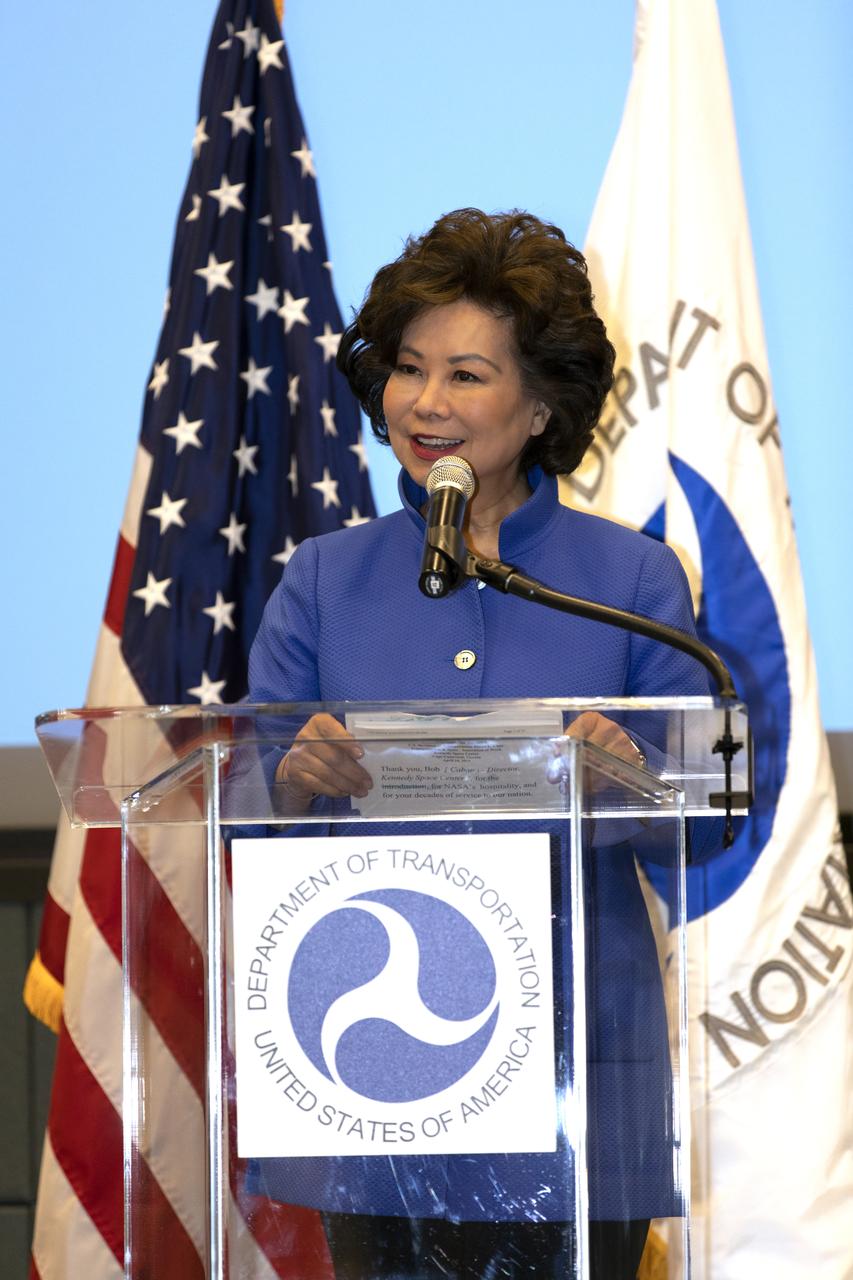
Secretary Elaine L. Chao, of the U.S. Department of Transportation (DOT), visits NASA’s Kennedy Space Center in Florida on April 24, 2019. She spoke to Kennedy’s leadership in the Operations and Support Building II and discussed the DOT’s role in enabling commercial space.
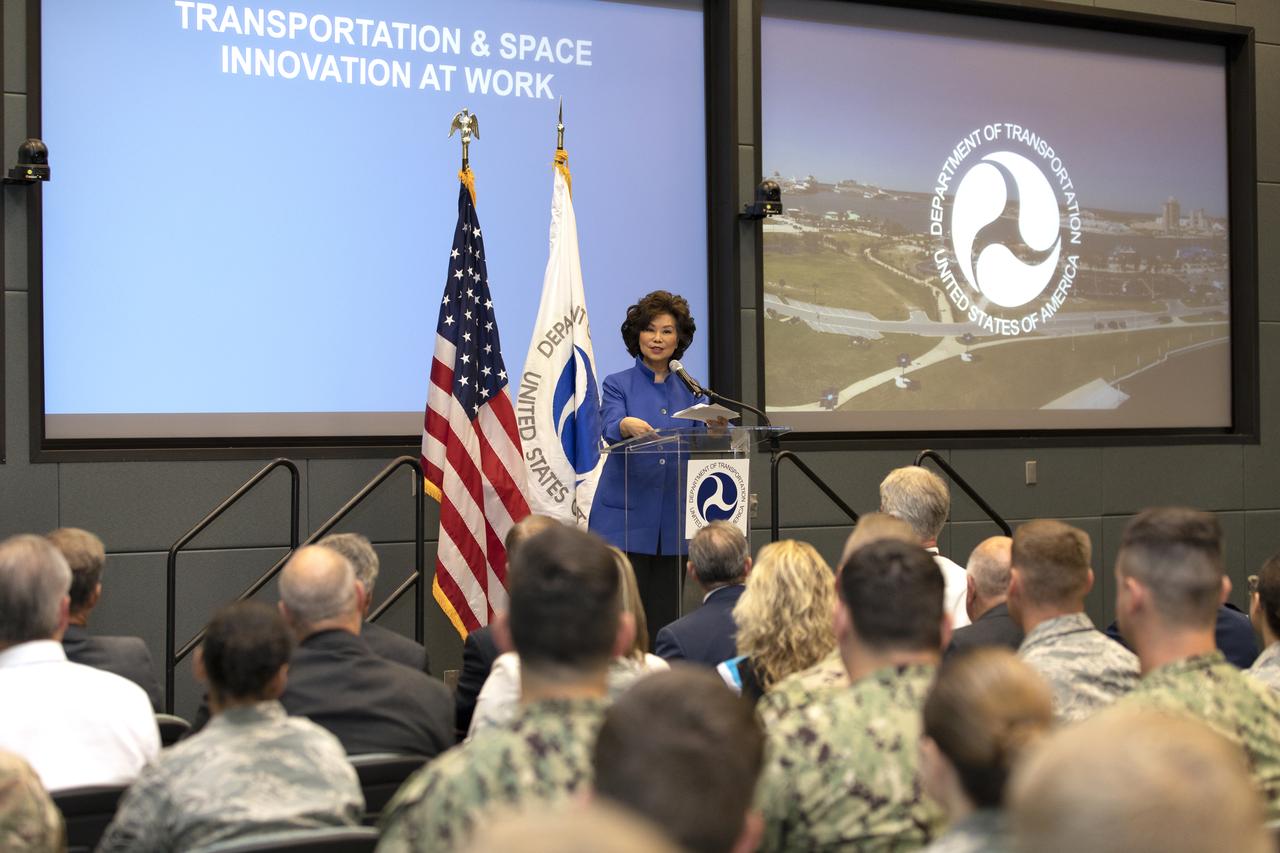
Secretary Elaine L. Chao, of the U.S. Department of Transportation (DOT), visits NASA’s Kennedy Space Center in Florida on April 24, 2019. She spoke to Kennedy’s leadership in the Operations and Support Building II and discussed the DOT’s role in enabling commercial space.
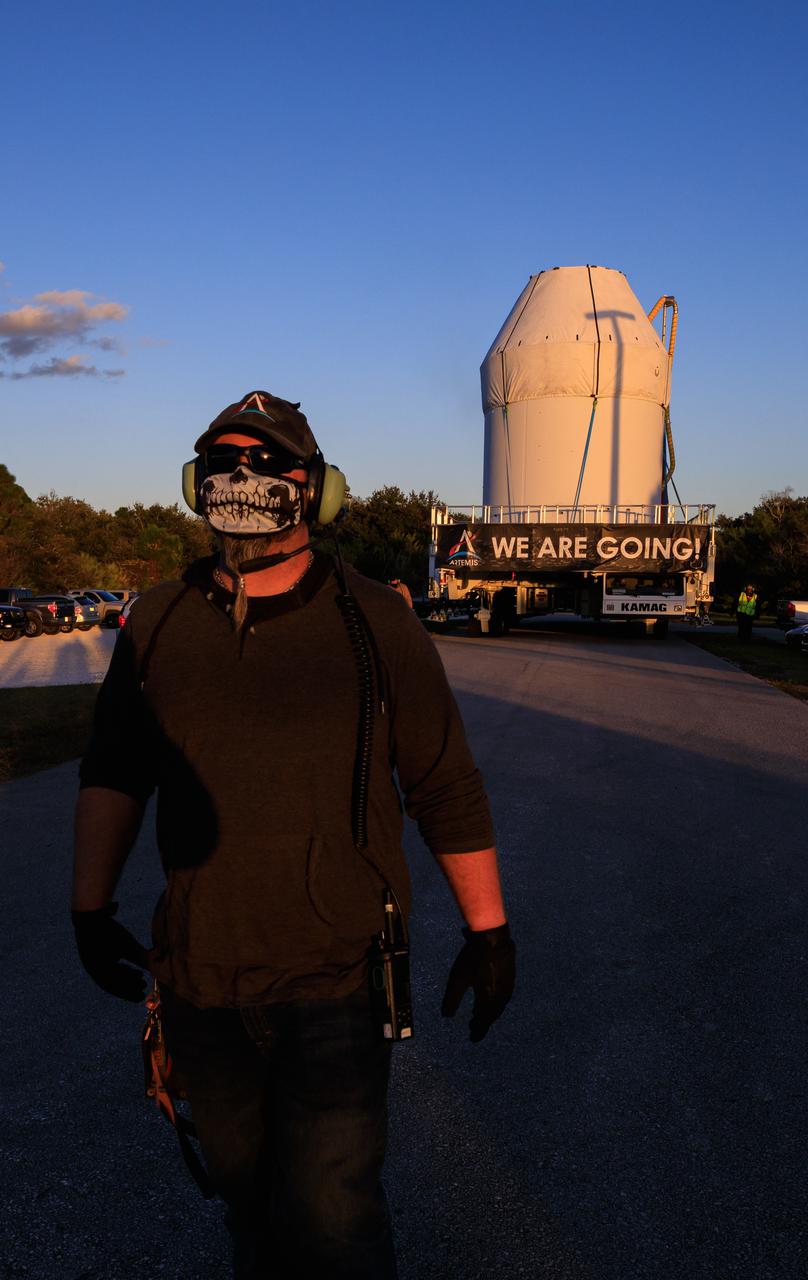
Secured atop a transport vehicle, Orion moves along the route to the Multi-Payload Processing Facility (MPPF) on Jan. 16, 2021, after departing from the Neil Armstrong Operations and Checkout Building at NASA’s Kennedy Space Center in Florida. Jason Parrish, a mechanical technician, Crawler Transporter Systems, with Jacobs, is one of the workers assisting with the move. Inside the MPPF, Orion will undergo processing with the Exploration Ground Systems team taking over ground processing ahead of the Artemis I launch.
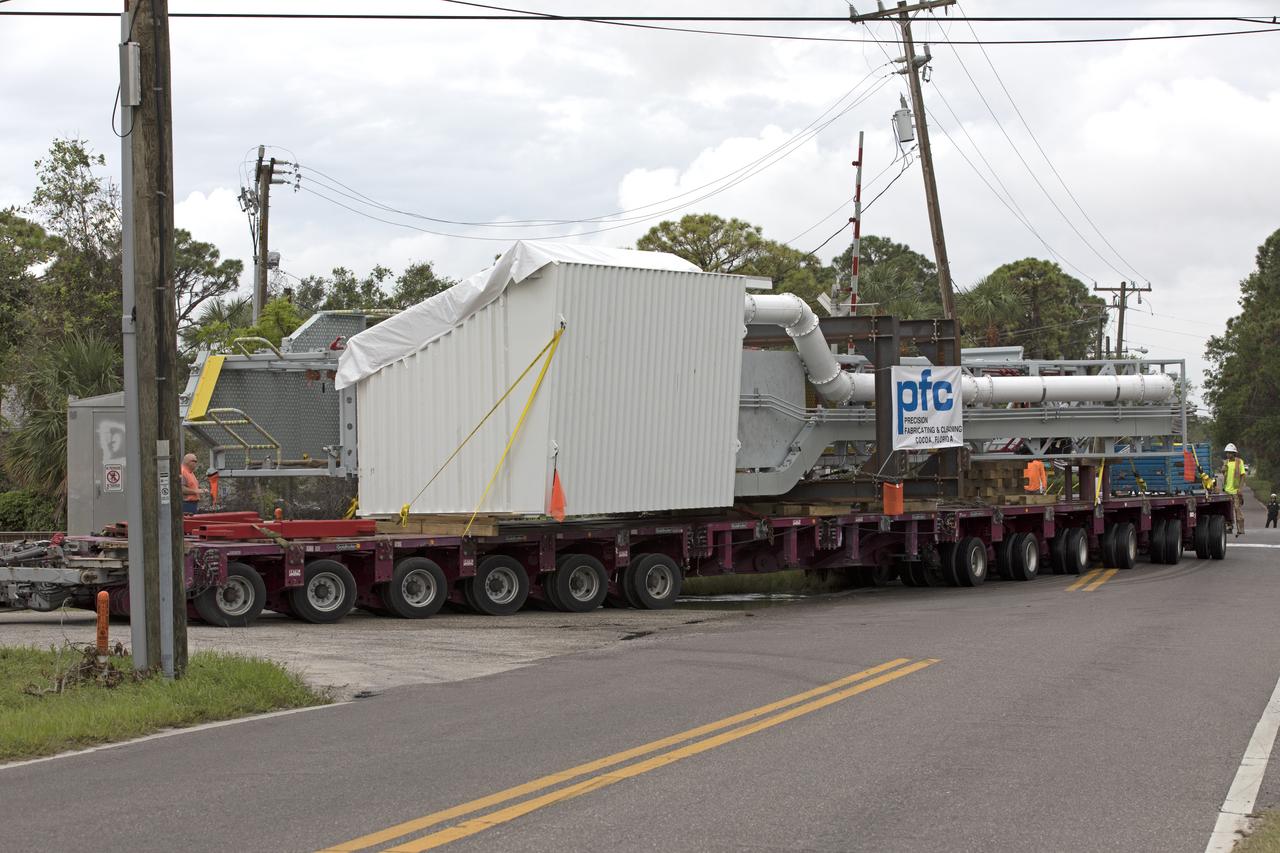
The Orion crew access arm departs Precision Fabricating and Cleaning in Cocoa, Florida, atop a flatbed truck. The access arm will be transported to a storage location at NASA's Kennedy Space Center in Florida. Later this month, the arm will be transported to the mobile launcher (ML) tower at the center. The crew access arm will be located at about the 274-foot level on the tower. It will rotate from its retracted position and interface with the Orion crew hatch location to provide entry to the Orion crew module. The Ground Systems Development and Operations Program is overseeing installation of umbilicals and launch accessories on the ML tower.
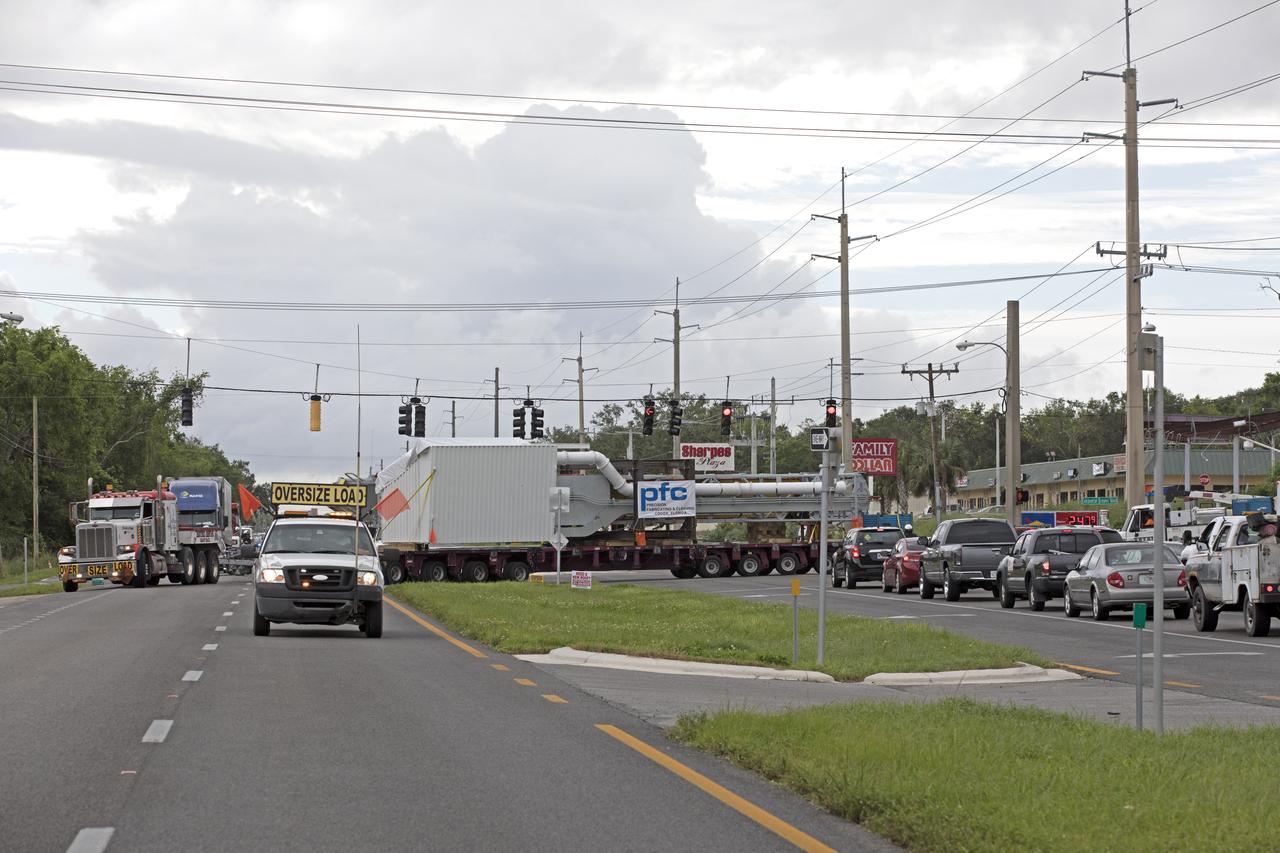
A flatbed truck with the Orion crew access arm secured atop travels along a road in Cocoa, Florida, after departing Precision Fabricating and Cleaning. The access arm will be transported to a storage location at NASA's Kennedy Space Center in Florida. Later this month, the arm will be transported to the mobile launcher (ML) tower at the center. The crew access arm will be located at about the 274-foot level on the tower. It will rotate from its retracted position and interface with the Orion crew hatch location to provide entry to the Orion crew module. The Ground Systems Development and Operations Program is overseeing installation of umbilicals and launch accessories on the ML tower.
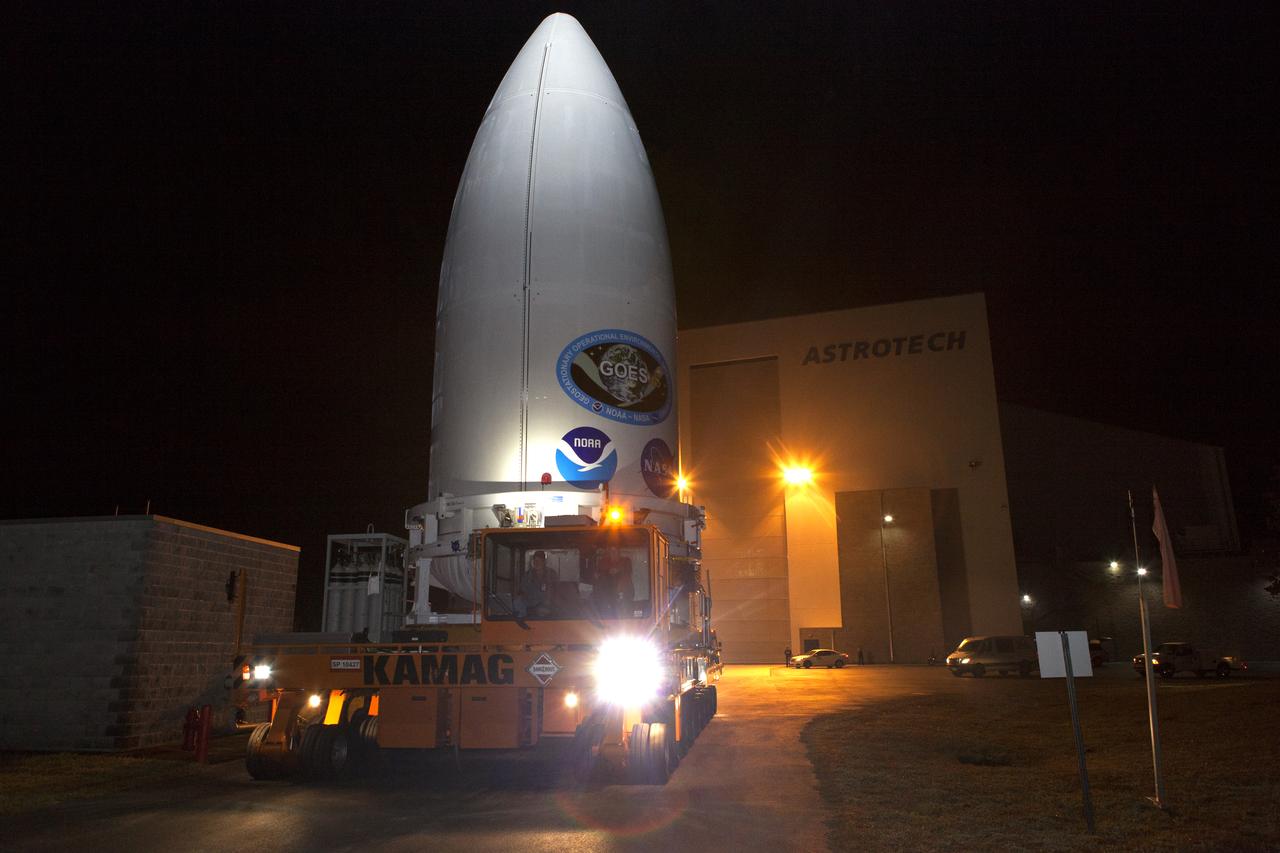
The payload fairing containing NOAA's Geostationary Operational Environmental Satellite-S (GOES-S), secured on a transporter, departs the Astrotech Space Operations facility in Titusville, Florida. GOES-S will be transported to the United Launch Alliance (ULA) Vertical Integration Facility at Space Launch Complex 41 at Cape Canaveral Air Force Station in Florida. The payload fairing will be lifted and mated to the ULA Atlas V rocket. GOES-S is the second in a series of four advanced geostationary weather satellites. GOES-S is slated to launch aboard the ULA Atlas V on March 1.
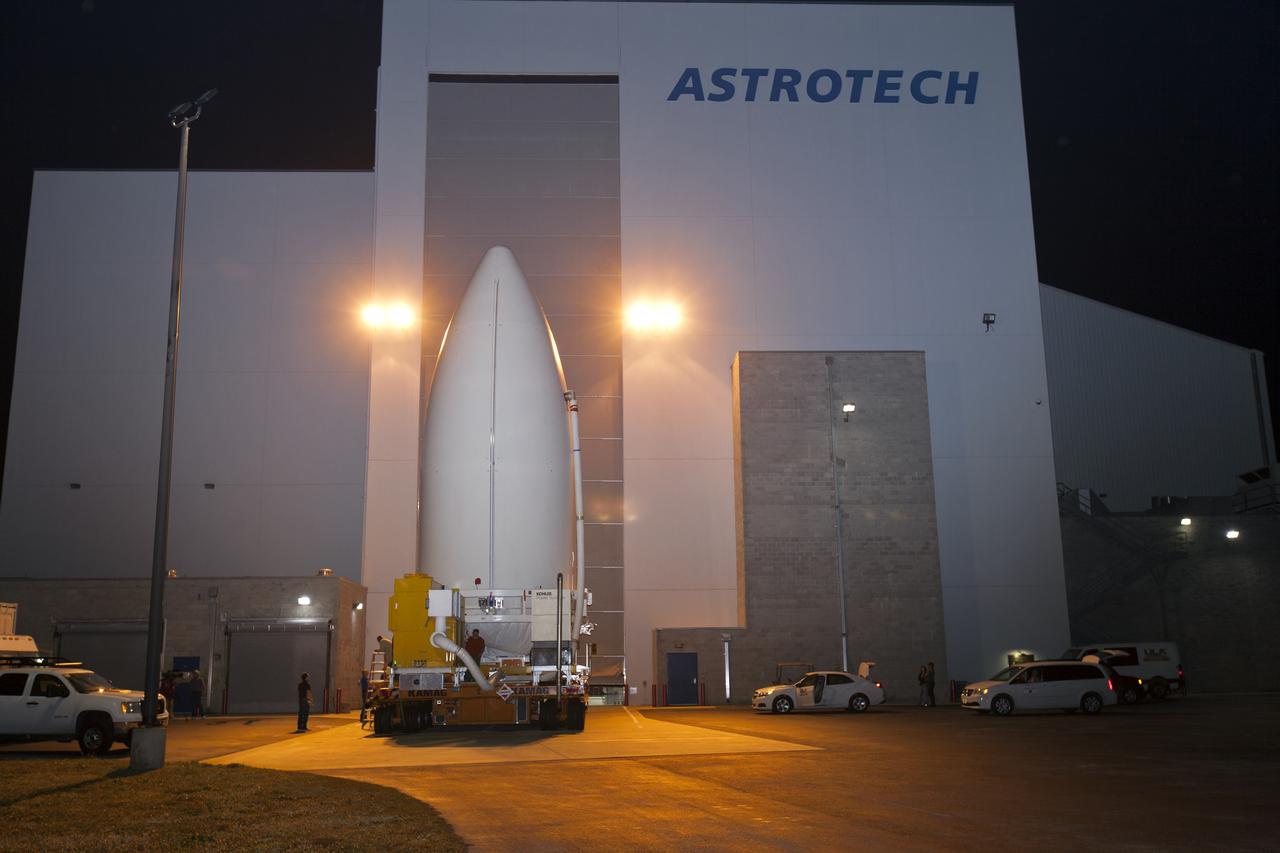
Secured on a transporter, the payload fairing containing NOAA's Geostationary Operational Environmental Satellite-S (GOES-S) departs the Astrotech Space Operations facility in Titusville, Florida. GOES-S will be transported to the United Launch Alliance (ULA) Vertical Integration Facility at Space Launch Complex 41 at Cape Canaveral Air Force Station in Florida. The payload fairing will be lifted and mated to the ULA Atlas V rocket. GOES-S is the second in a series of four advanced geostationary weather satellites. GOES-S is slated to launch aboard the ULA Atlas V on March 1.
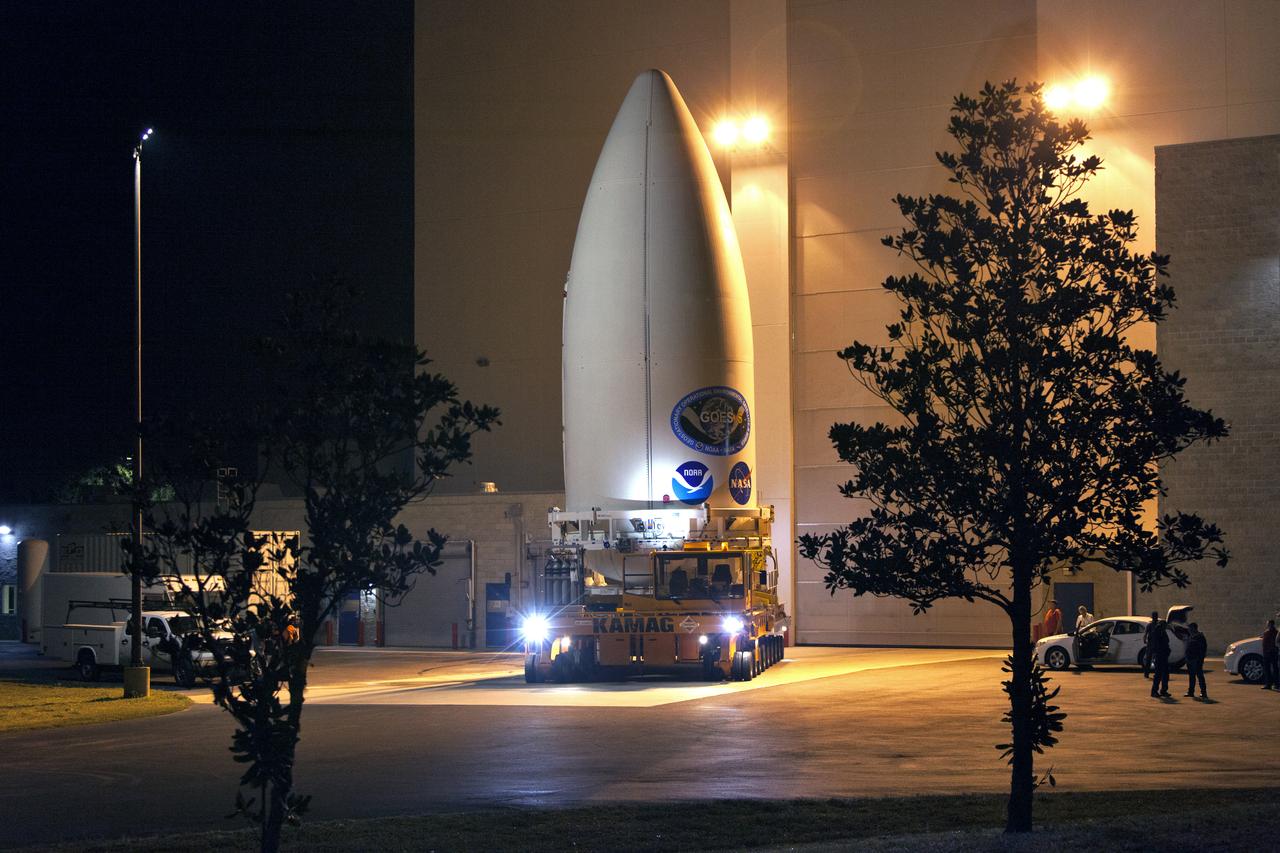
The payload fairing containing NOAA's Geostationary Operational Environmental Satellite-S (GOES-S), secured on a transporter, departs the Astrotech Space Operations facility in Titusville, Florida. GOES-S will be transported to the United Launch Alliance (ULA) Vertical Integration Facility at Space Launch Complex 41 at Cape Canaveral Air Force Station in Florida. The payload fairing will be lifted and mated to the ULA Atlas V rocket. GOES-S is the second in a series of four advanced geostationary weather satellites. GOES-S is slated to launch aboard the ULA Atlas V on March 1.
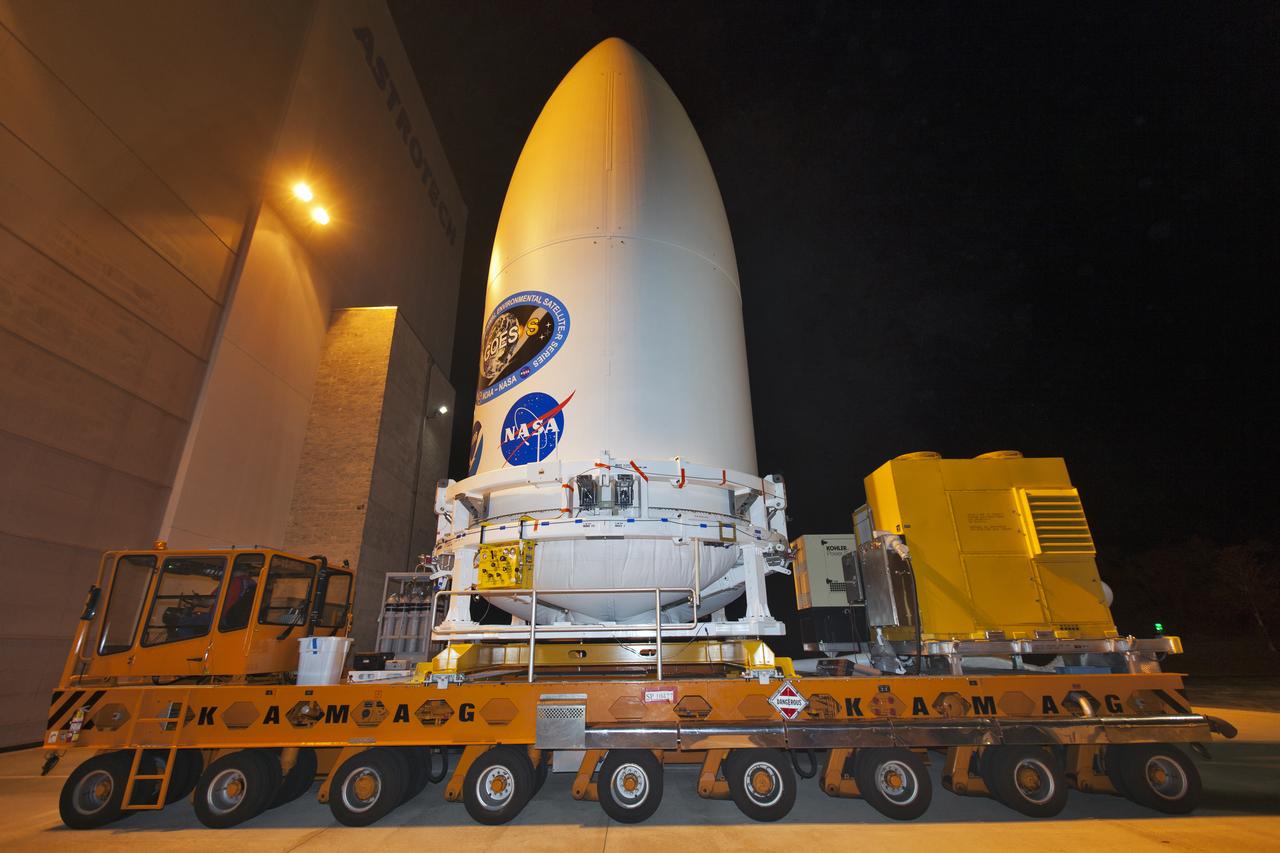
Secured on a transporter, the payload fairing containing NOAA's Geostationary Operational Environmental Satellite-S (GOES-S) departs the Astrotech Space Operations facility in Titusville, Florida. GOES-S will be transported to the United Launch Alliance (ULA) Vertical Integration Facility at Space Launch Complex 41 at Cape Canaveral Air Force Station in Florida. The payload fairing will be lifted and mated to the ULA Atlas V rocket. GOES-S is the second in a series of four advanced geostationary weather satellites. GOES-S is slated to launch aboard the ULA Atlas V on March 1.
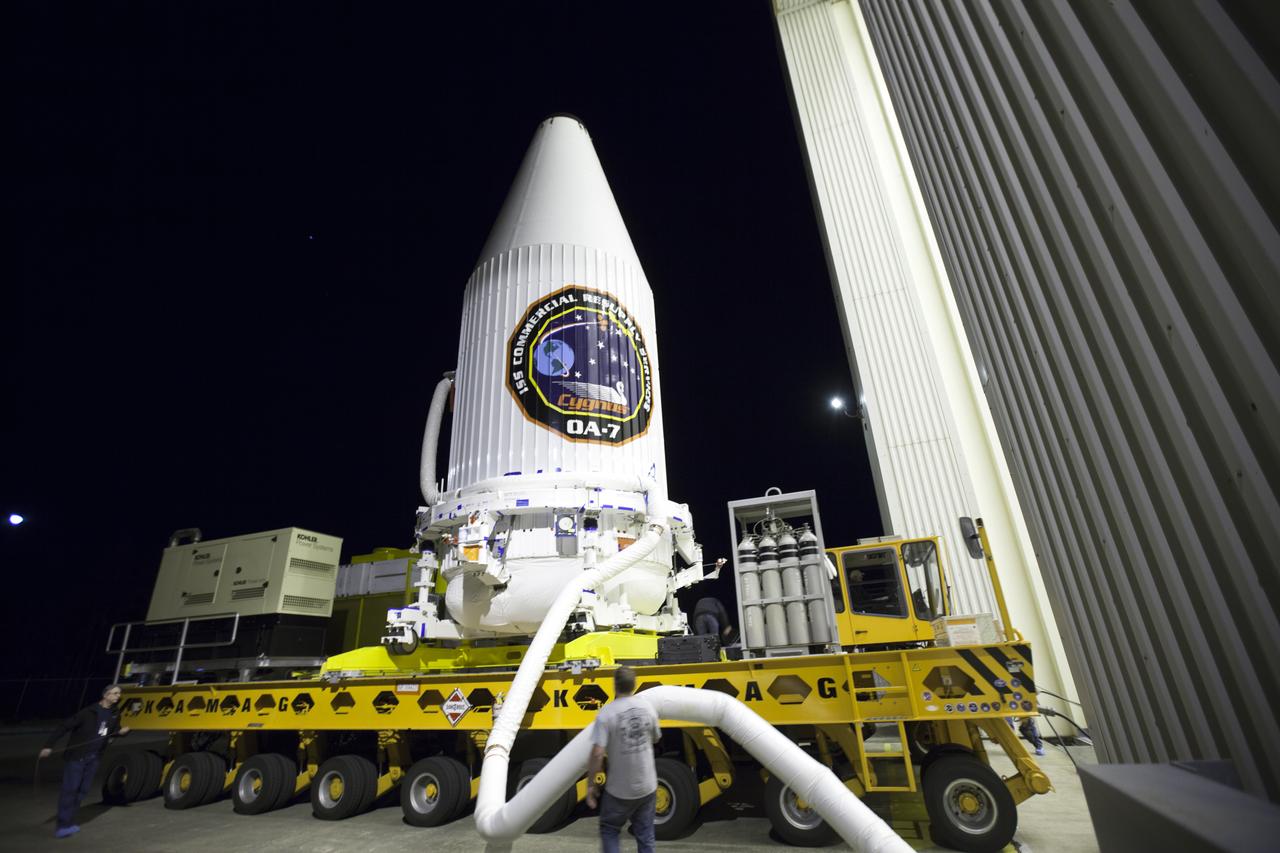
The Orbital ATK Cygnus pressurized cargo module, enclosed in its payload fairing and secured on a KAMAG transporter, departs the Payload Hazardous Servicing Facility at NASA's Kennedy Space Center in Florida secured on a KAMAG transporter. Cygnus will be transported to Space Launch Complex 41 at Cape Canaveral Air Force Station for mating to the United Launch Alliance (ULA) Atlas V rocket. The Orbital ATK CRS-7 commercial resupply services mission to the International Space Station is scheduled to launch atop the Atlas V from pad 41. Cygnus will deliver 7,600 pounds of supplies, equipment and scientific research materials to the space station.
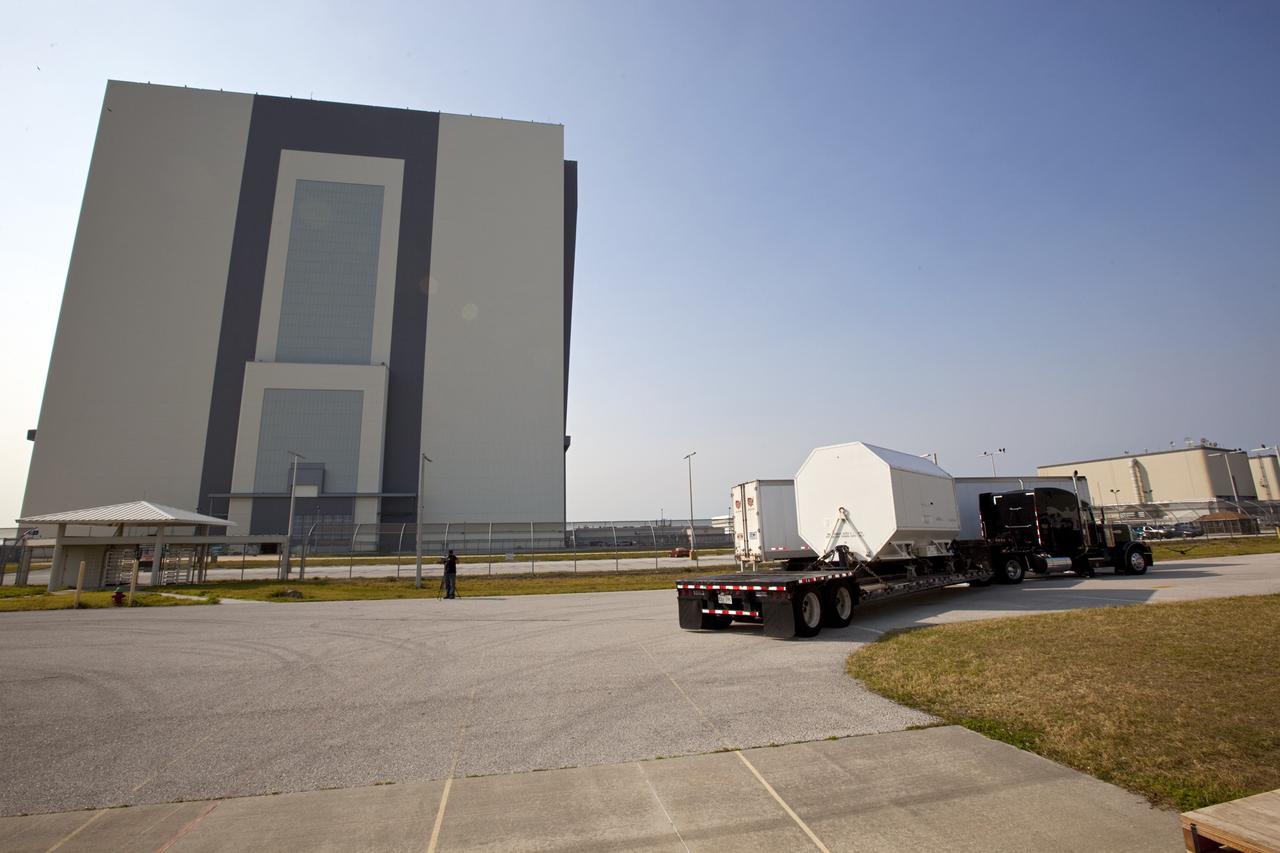
CAPE CANAVERAL, Fla. – A flatbed truck departs from the Orbiter Processing Facility-3 engine shop at NASA's Kennedy Space Center in Florida transporting the last Pratt and Whitney Rocketdyne space shuttle main engine, or SSME, to NASA's Stennis Space Center in Mississippi. The first two groups of engines were shipped from Kennedy to Stennis in November 2011 and January 2012 the remaining engines departed today. Altogether, 15 shuttle-era engines will be stored at Stennis for reuse on NASA’s Space Launch System heavy-lift rocket, under development. Photo credit: NASA/Dimitri Gerondidakis
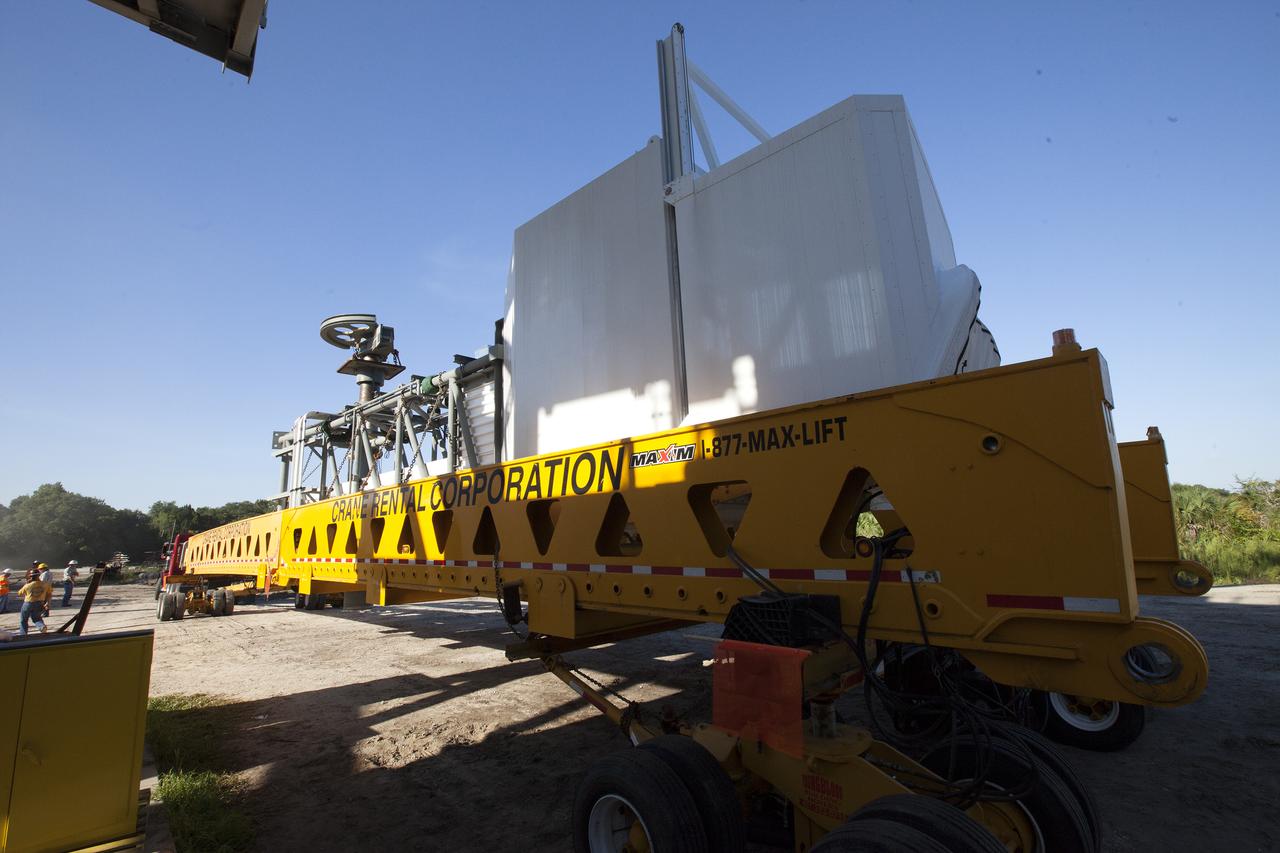
A heavy-lift transport truck, carrying the Crew Access Arm for Space Launch Complex 41, departs from Oak Hill, Florida, and heads to NASA’s Kennedy Space Center in Florida. The arm will be installed on the Complex 41 Crew Access Tower at Cape Canaveral Air Force Station. It will be used as a bridge by astronauts to board Boeing's CST-100 Starliner spacecraft as it stands on the launch pad atop a United Launch Alliance Atlas V rocket.
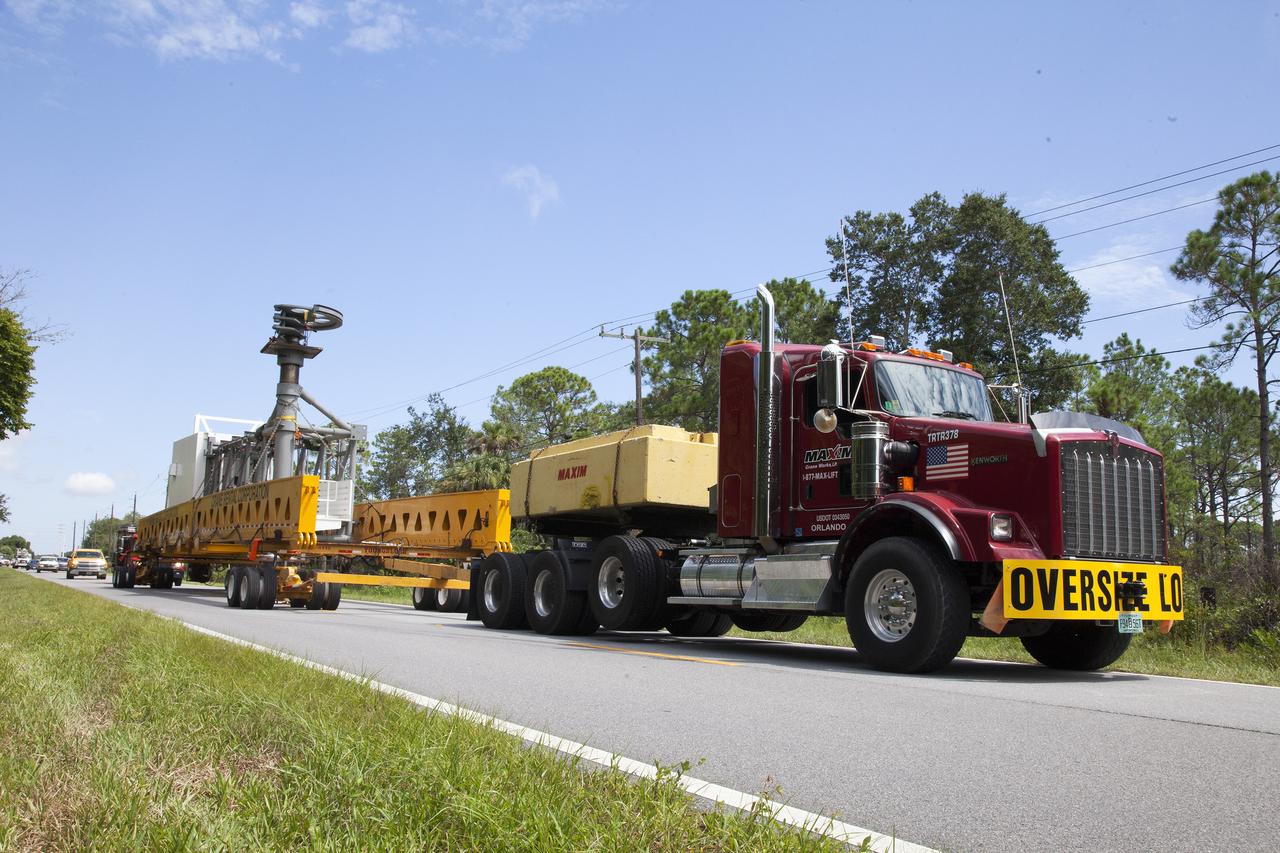
A heavy-lift transport truck, carrying the Crew Access Arm for Space Launch Complex 41, departs from Oak Hill, Florida, and heads to NASA’s Kennedy Space Center in Florida. The arm will be installed on the Complex 41 Crew Access Tower at Cape Canaveral Air Force Station. It will be used as a bridge by astronauts to board Boeing's CST-100 Starliner spacecraft as it stands on the launch pad atop a United Launch Alliance Atlas V rocket.
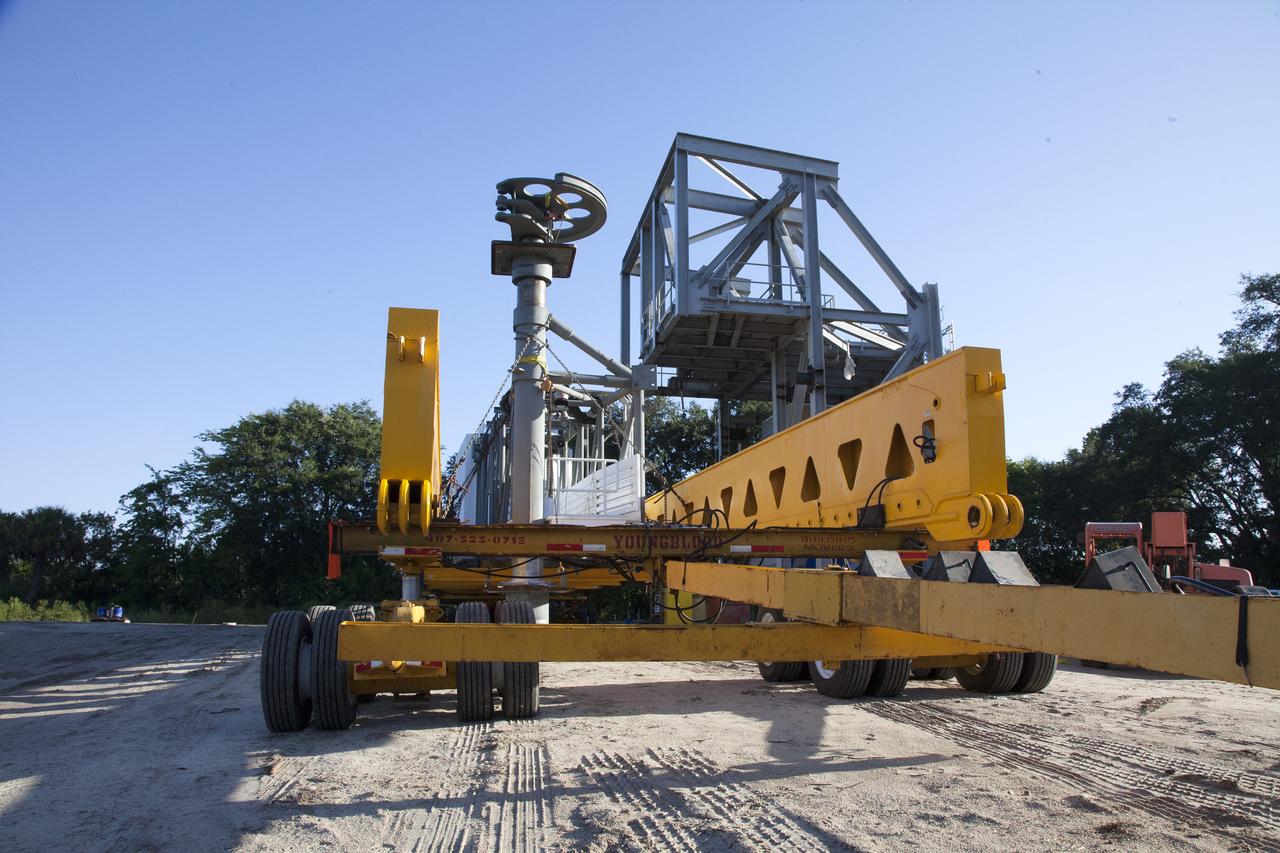
A heavy-lift transport truck, carrying the Crew Access Arm for Space Launch Complex 41, departs from Oak Hill, Florida, and heads to NASA’s Kennedy Space Center in Florida. The arm will be installed on the Complex 41 Crew Access Tower at Cape Canaveral Air Force Station. It will be used as a bridge by astronauts to board Boeing's CST-100 Starliner spacecraft as it stands on the launch pad atop a United Launch Alliance Atlas V rocket.
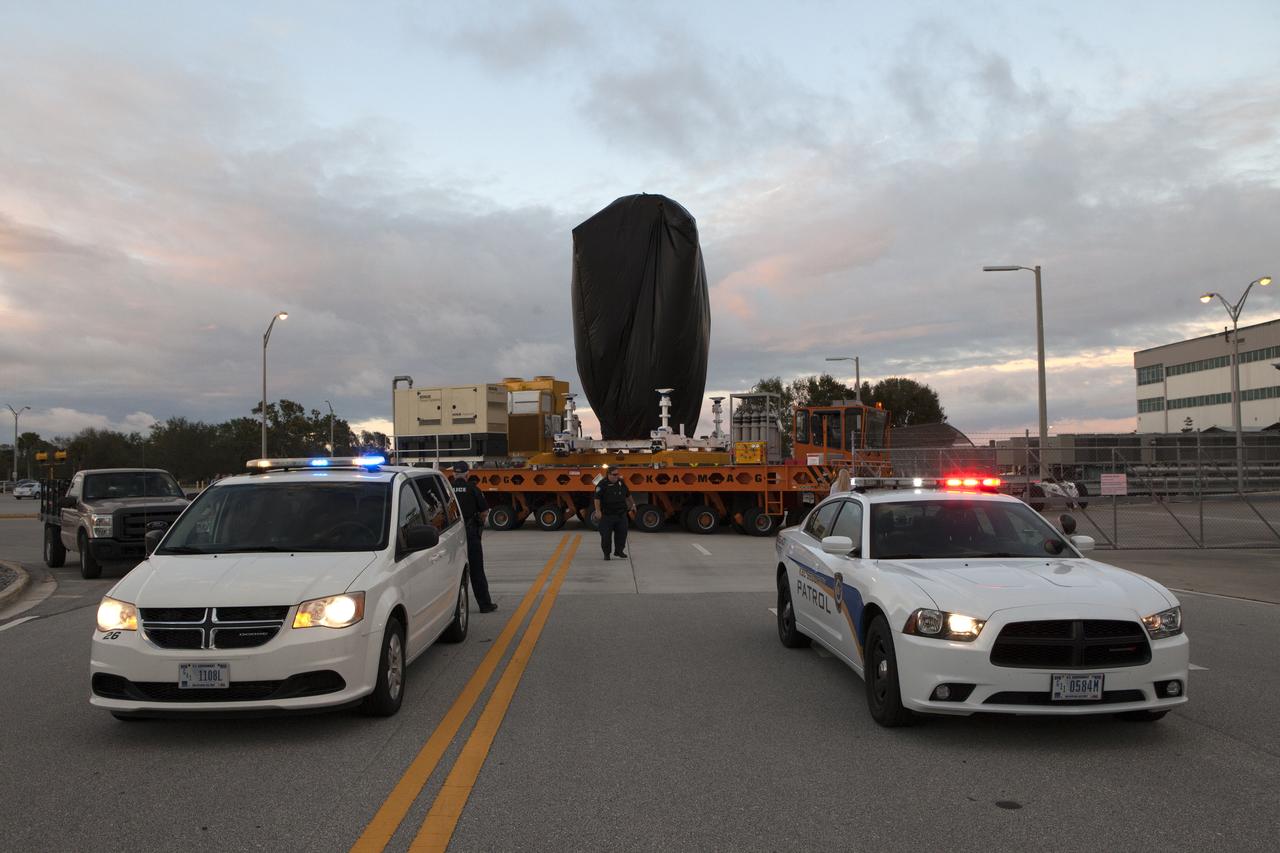
A KAMAG transporter with Orbital ATK's CYGNUS pressurized cargo module secured on top departs the Space Station Processing Facility at NASA's Kennedy Space Center in Florida. CYGNUS will be transported to the Payload Hazardous Servicing Facility for final propellant loading and late cargo stowage. The Orbital ATK CRS-7 commercial resupply services mission to the International Space Station is scheduled to launch atop a United Launch Alliance Atlas V rocket from Space Launch Complex 41 at Cape Canaveral Air Force Station on March 19, 2017. CYGNUS will deliver thousands of pounds of supplies, equipment and scientific research materials to the space station.
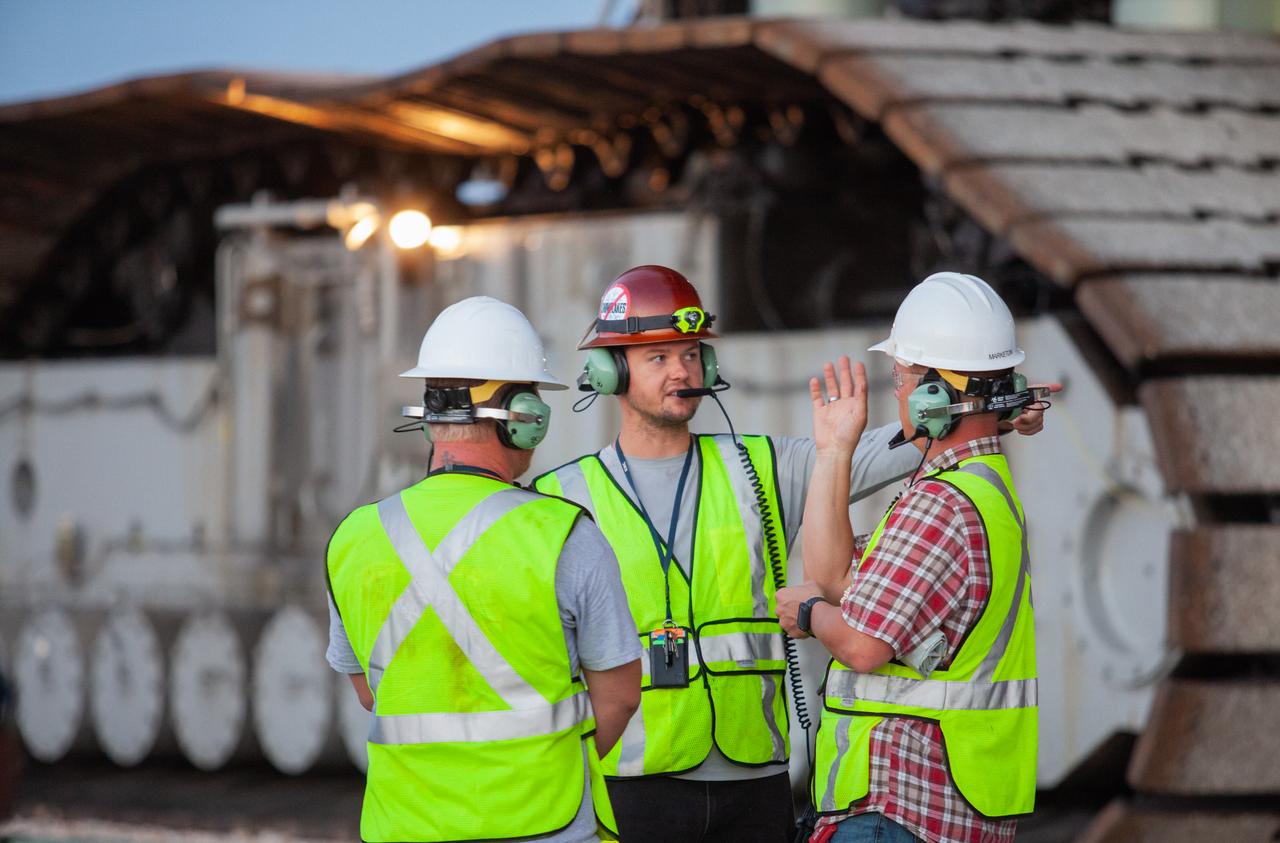
Kennedy Space Center employees stand near NASA’s crawler-transporter 2 at Kennedy’s Launch Complex 39B area in Florida on June 28, 2019. The crawler-transporter 2 successfully carried the Exploration Ground Systems’ mobile launcher to the pad from the Vehicle Assembly Building, departing at midnight on June 27. On June 28, the mobile launcher continued its journey up to the pad surface, where it will remain for the summer, undergoing final testing and checkouts. Its next roll to the pad will be with the agency’s Space Launch System rocket and Orion in preparation for the launch of Artemis 1.
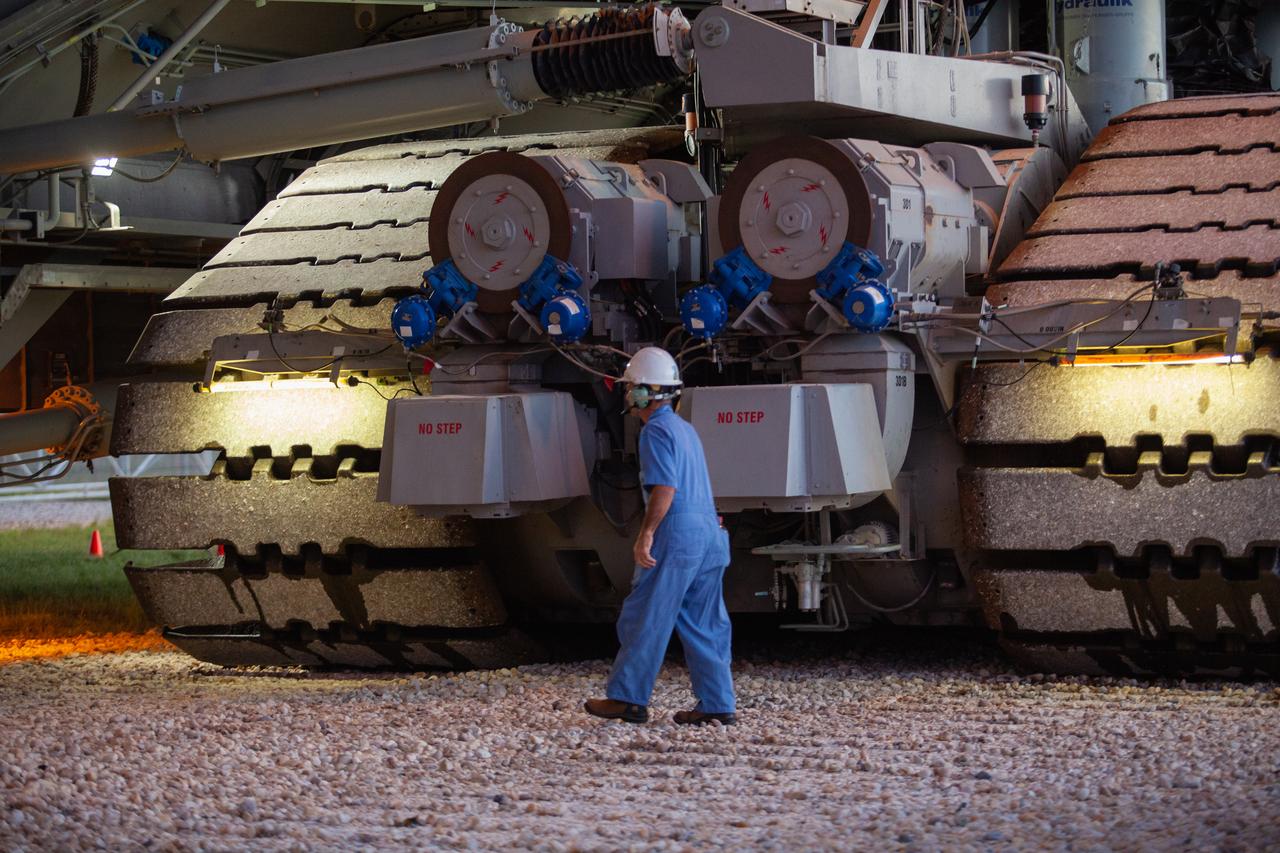
A Kennedy Space Center employee walks near NASA’s crawler-transporter 2 at Kennedy’s Launch Complex 39B area in Florida on June 28, 2019. The crawler-transporter 2 successfully carried Exploration Ground Systems’ mobile launcher to the pad from the Vehicle Assembly Building, departing at midnight on June 27. On June 28, the mobile launcher continued its journey up to the pad surface, where it will remain for the summer, undergoing final testing and checkouts. Its next roll to the pad will be with the agency’s Space Launch System rocket and Orion in preparation for the launch of Artemis 1.
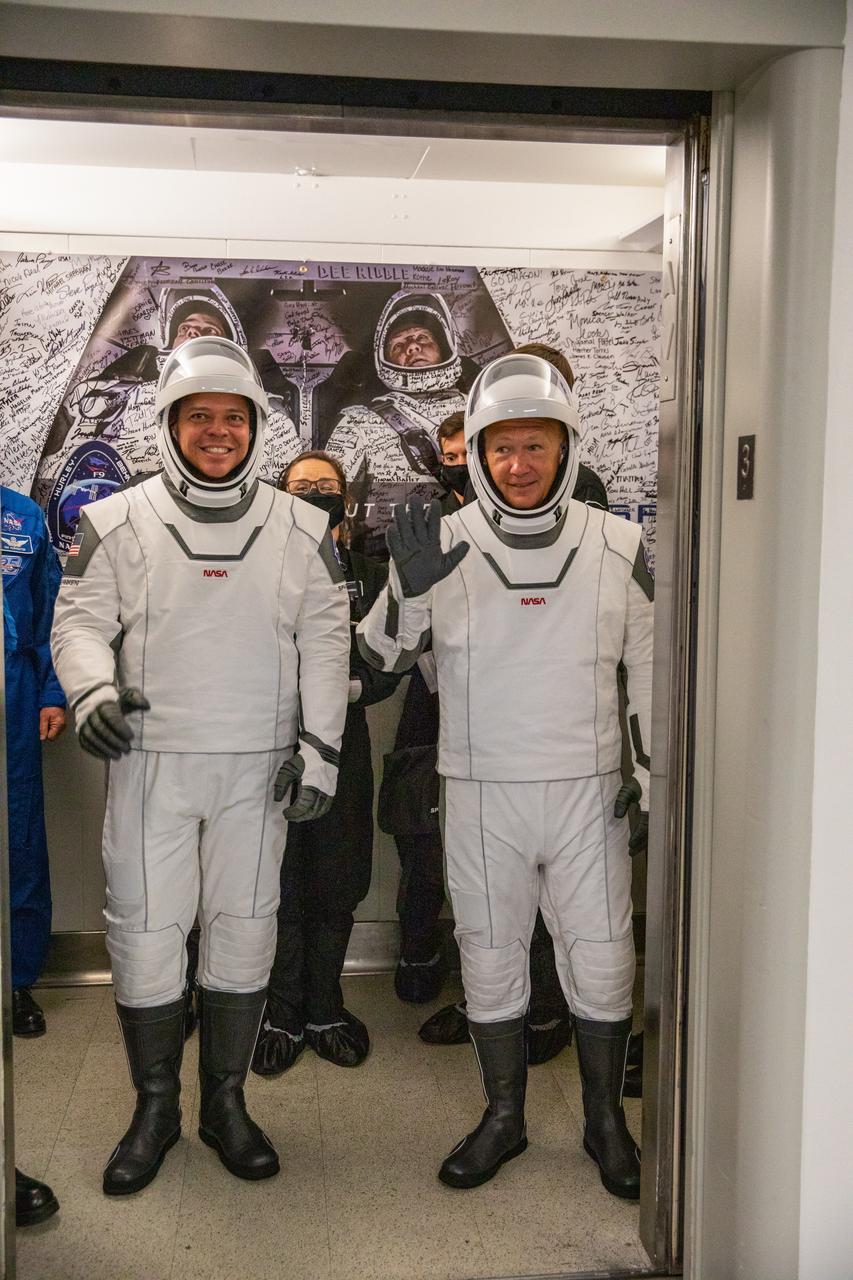
NASA astronauts Robert Behnken (left) and Douglas Hurley depart the Neil A. Armstrong Operations and Checkout Building at the agency’s Kennedy Space Center in Florida on May 30, 2020, in preparation for transport to Launch Complex 39A ahead of NASA’s SpaceX Demo-2 mission. Liftoff of the SpaceX Falcon 9 rocket and Crew Dragon spacecraft occurred at 3:22 p.m. EDT. Behnken and Hurley are the first astronauts to launch to the International Space Station from U.S. soil since the end of the Space Shuttle Program in 2011. Part of NASA’s Commercial Crew Program, this will be SpaceX’s final flight test, paving the way for the agency to certify the crew transportation system for regular, crewed flights to the orbiting laboratory.
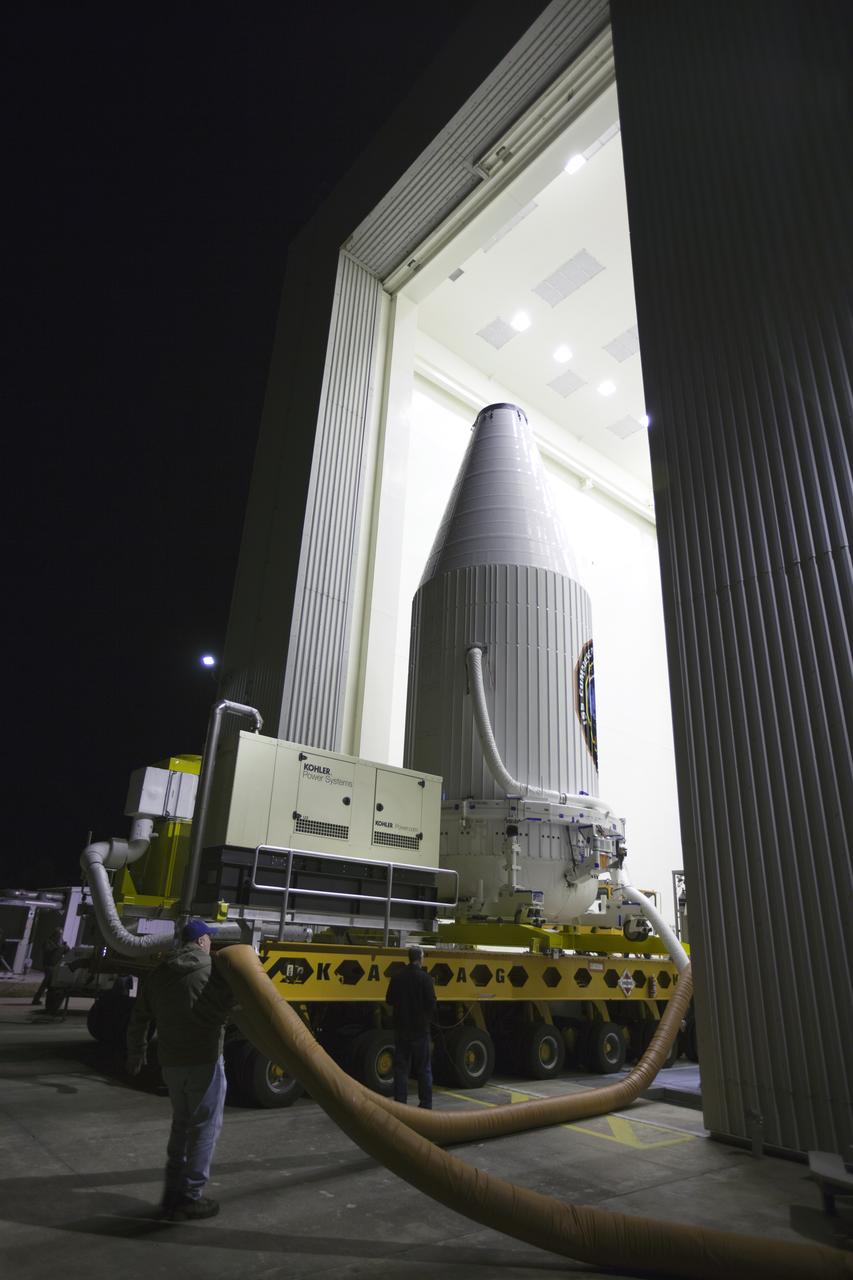
The Orbital ATK Cygnus pressurized cargo module, enclosed in its payload fairing and secured on a KAMAG transporter, departs the Payload Hazardous Servicing Facility at NASA's Kennedy Space Center in Florida. Cygnus will be transported to Space Launch Complex 41 at Cape Canaveral Air Force Station for mating to the United Launch Alliance (ULA) Atlas V rocket. The Orbital ATK CRS-7 commercial resupply services mission to the International Space Station is scheduled to launch atop the Atlas V from pad 41. Cygnus will deliver 7,600 pounds of supplies, equipment and scientific research materials to the space station.
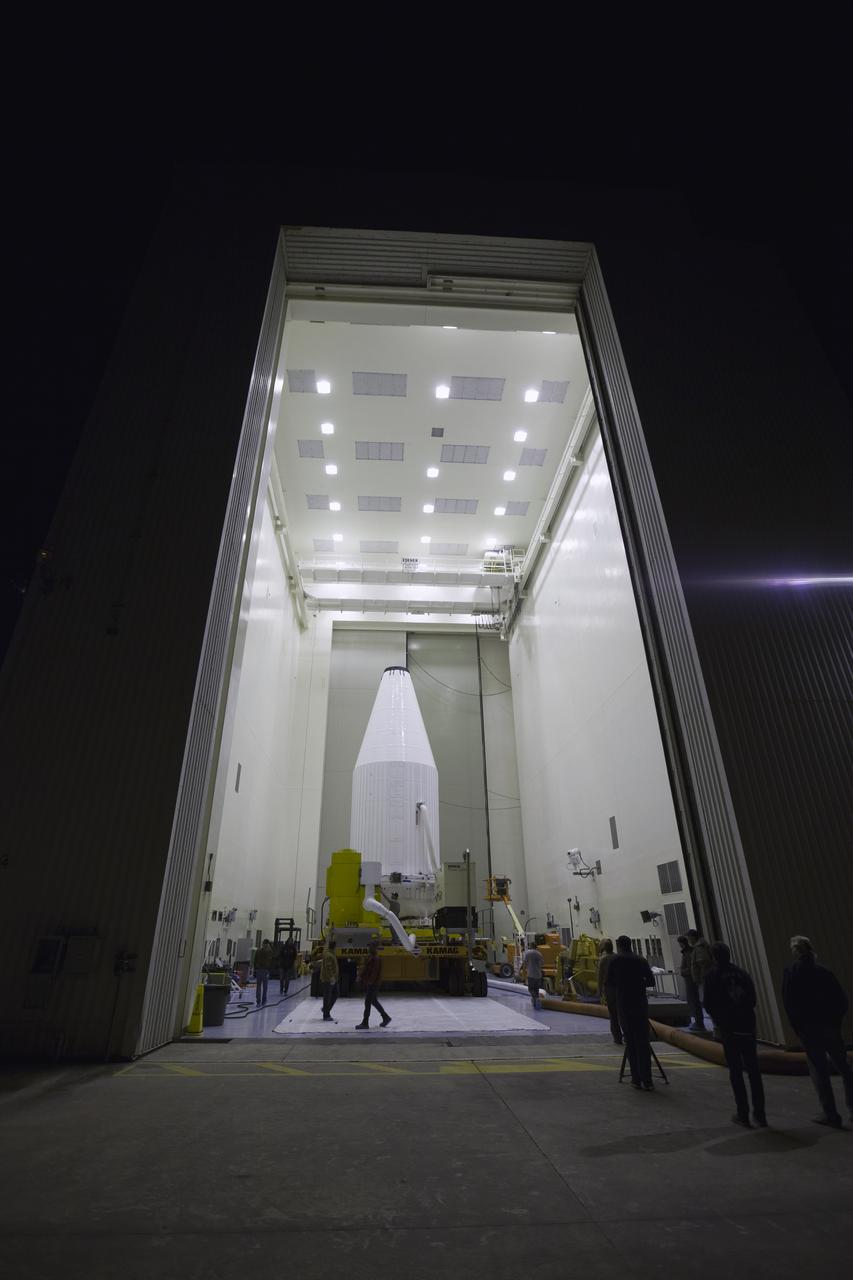
The Orbital ATK Cygnus pressurized cargo module, enclosed in its payload fairing, is secured on a KAMAG transporter and ready to depart the Payload Hazardous Servicing Facility at NASA's Kennedy Space Center in Florida. Cygnus will be transported to Space Launch Complex 41 at Cape Canaveral Air Force Station for mating to the United Launch Alliance (ULA) Atlas V rocket. The Orbital ATK CRS-7 commercial resupply services mission to the International Space Station is scheduled to launch atop the Atlas V from pad 41. Cygnus will deliver 7,600 pounds of supplies, equipment and scientific research materials to the space station.
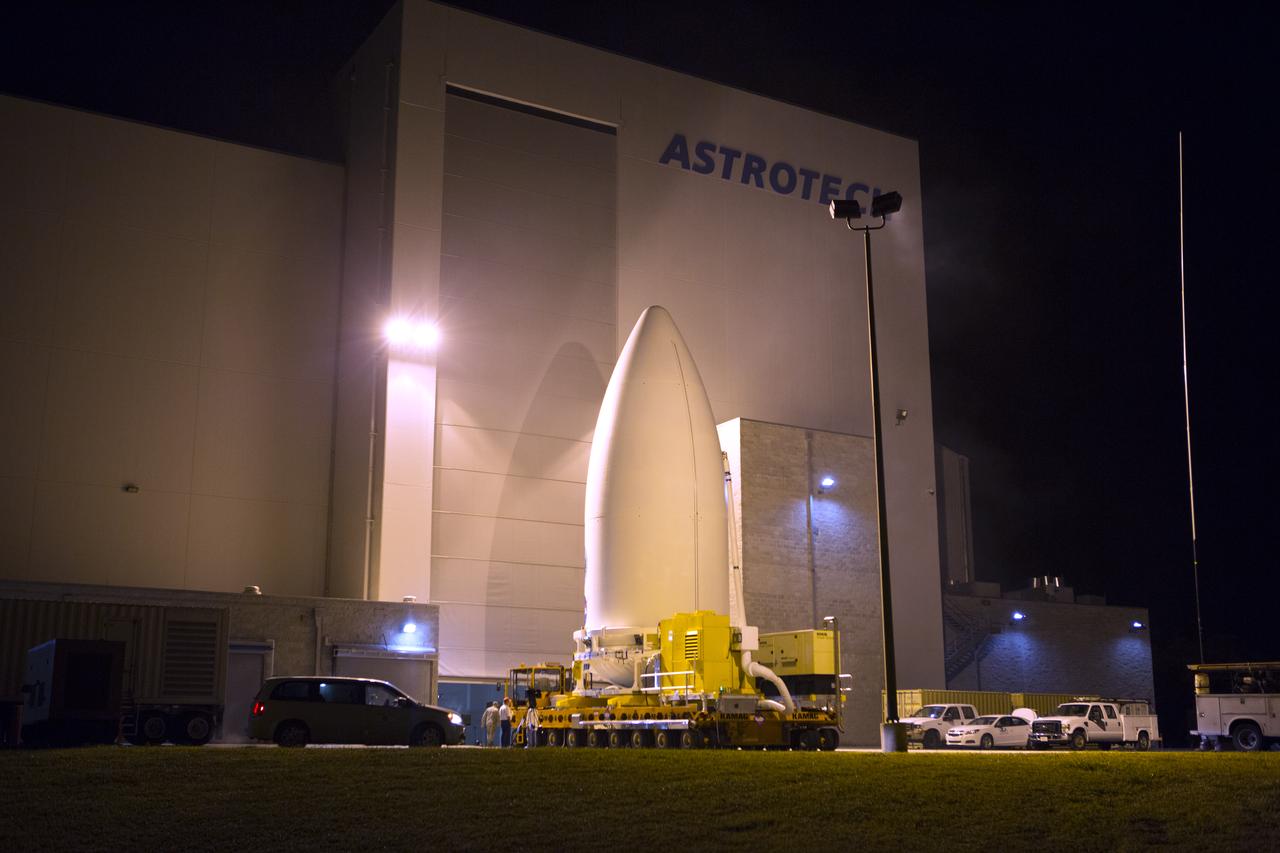
Enclosed in its payload fairing, NOAA's Geostationary Operational Environmental Satellite (GOES-R) departs from the Astrotech payload processing facility in Titusville, Florida, near NASA's Kennedy Space Center. GOES-R will be transported to the Vertical Integration Facility at Space Launch Complex 41 at Cape Canaveral Air Force Station. The satellite will launch aboard a United Launch Alliance Atlas V rocket in November. GOES-R is the first satellite in a series of next-generation NOAA GOES Satellites.
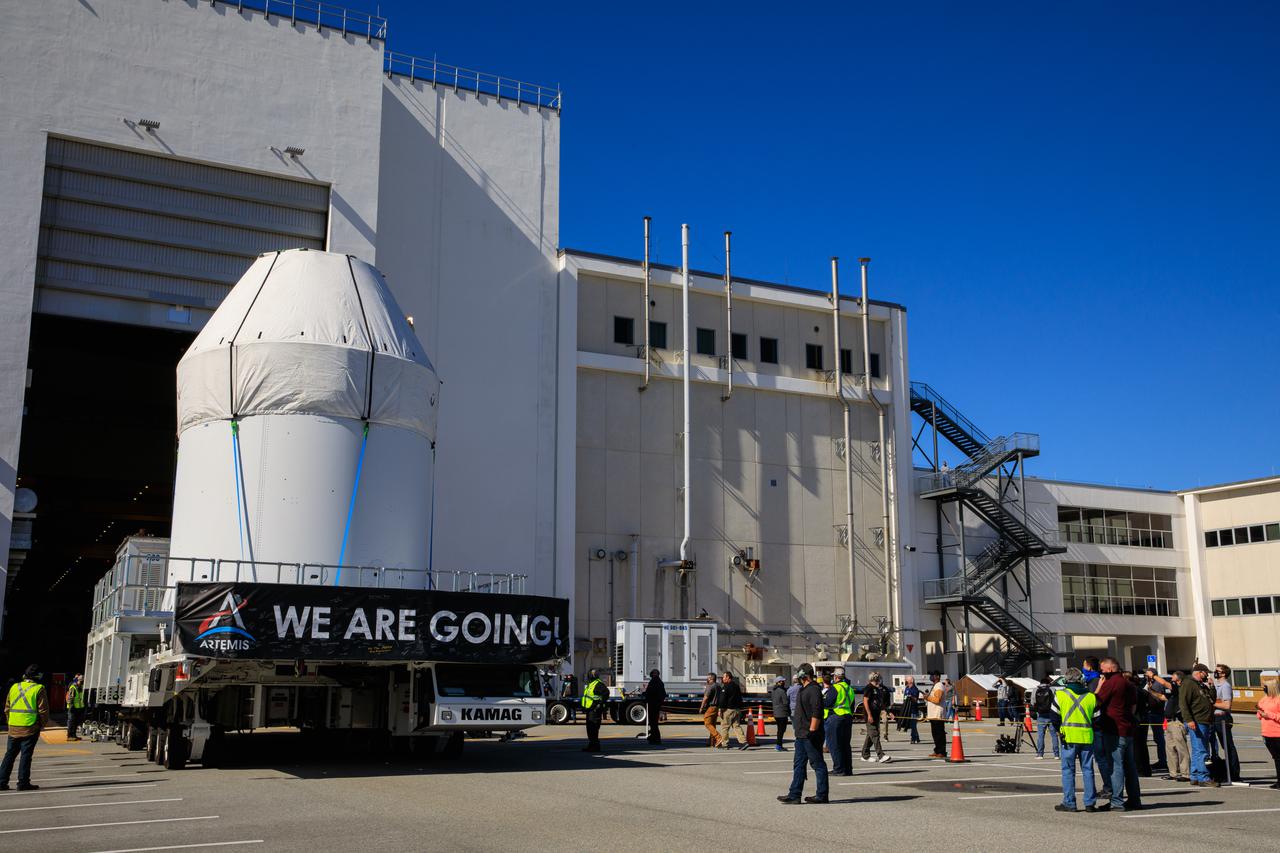
Orion sits atop a transport vehicle as it departs from its home at the Neil Armstrong Operations and Checkout Building at NASA’s Kennedy Space Center in Florida on Jan.16, 2021. Orion will begin its trek to the Multi-Payload Processing Facility. There it will undergo ground processing with the Exploration Ground Systems team taking over ground processing ahead of the Artemis I launch.
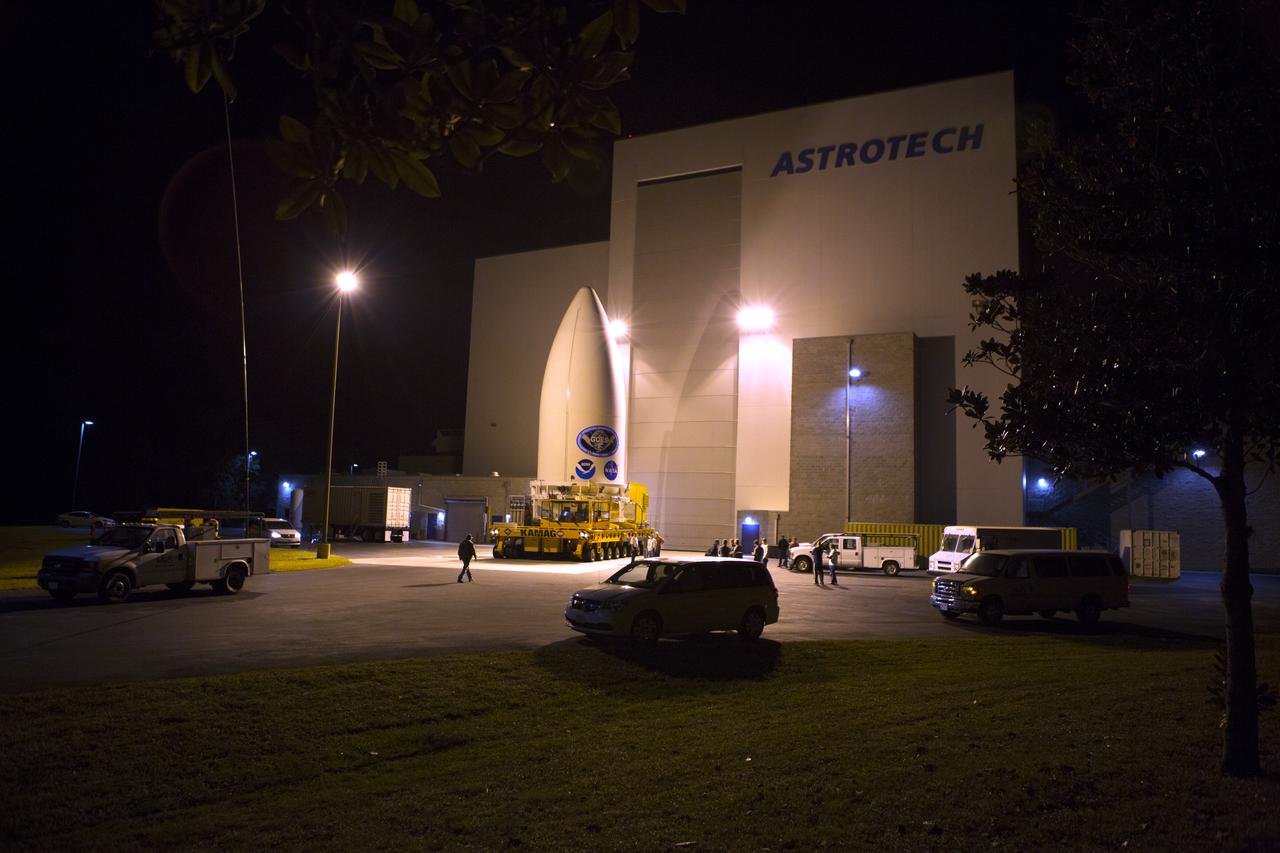
Enclosed in its payload fairing, NOAA's Geostationary Operational Environmental Satellite (GOES-R) departs from the Astrotech payload processing facility in Titusville, Florida, near NASA's Kennedy Space Center. GOES-R will be transported to the Vertical Integration Facility at Space Launch Complex 41 at Cape Canaveral Air Force Station. The satellite will launch aboard a United Launch Alliance Atlas V rocket in November. GOES-R is the first satellite in a series of next-generation NOAA GOES Satellites.
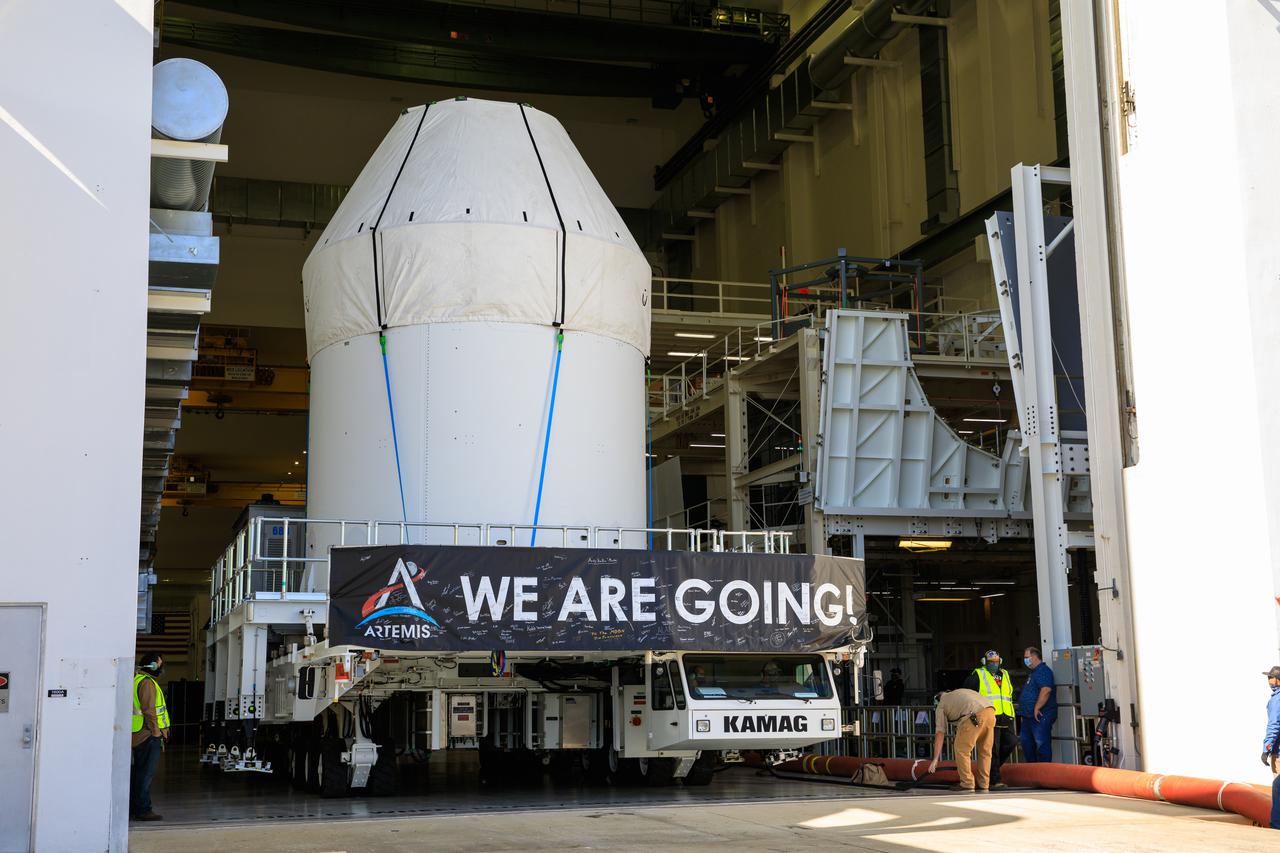
Orion is buttoned up as it sits atop a transport vehicle ready to depart from its home at the Neil Armstrong Operations and Checkout Building at NASA’s Kennedy Space Center in Florida on Jan.16, 2021. Orion will begin its trek to the Multi-Payload Processing Facility. There it will undergo ground processing with the Exploration Ground Systems team taking over ground processing ahead of the Artemis I launch.
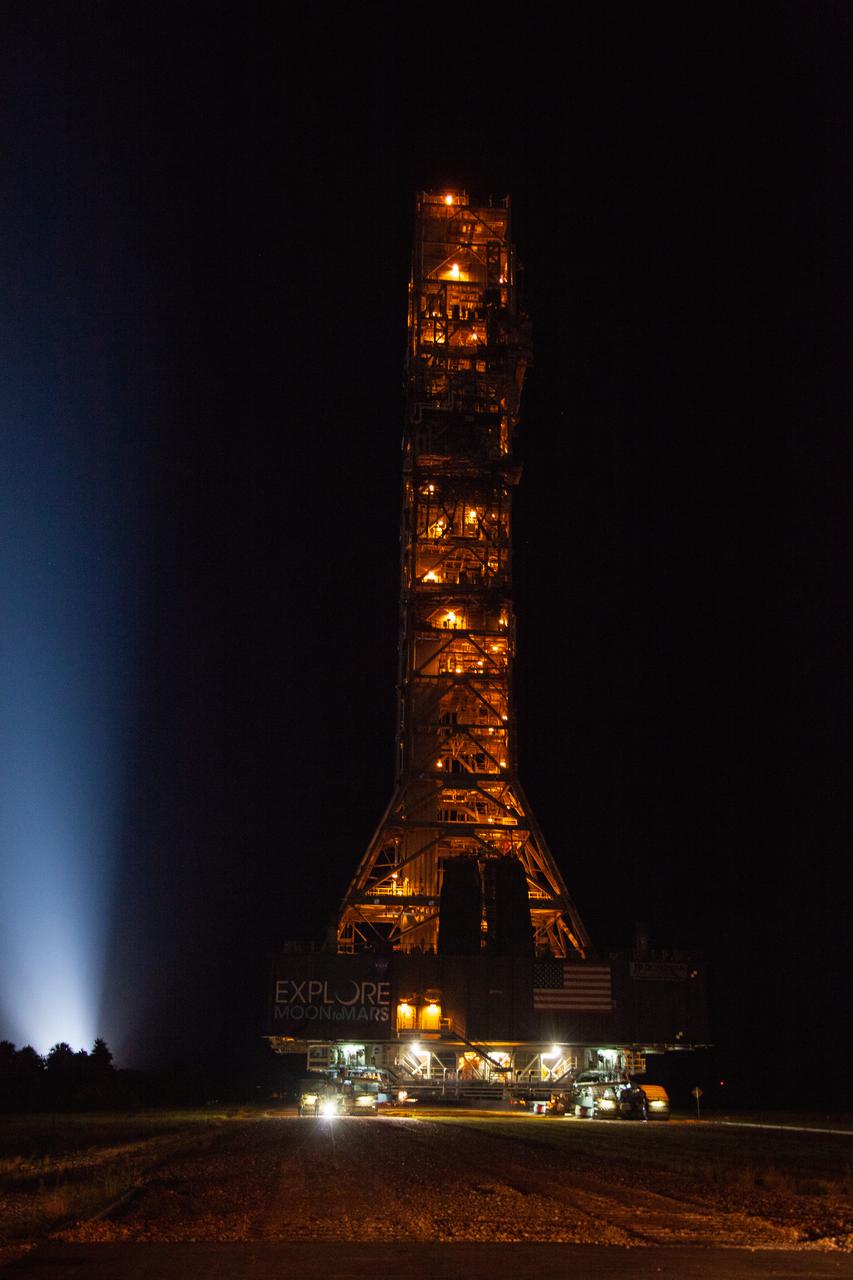
Exploration Ground Systems’ mobile launcher makes its last solo trek along the crawlerway atop crawler-transporter 2 to Kennedy Space Center’s Launch Complex 39B in Florida on June 27, 2019. The mobile launcher departed from the Vehicle Assembly Building at midnight on June 27 for the 10-hour journey to the pad, where it will remain for the summer, undergoing final testing and checkouts. Its next roll to the pad will be with the agency’s Space Launch System rocket and Orion spacecraft in preparation for the launch of Artemis 1.
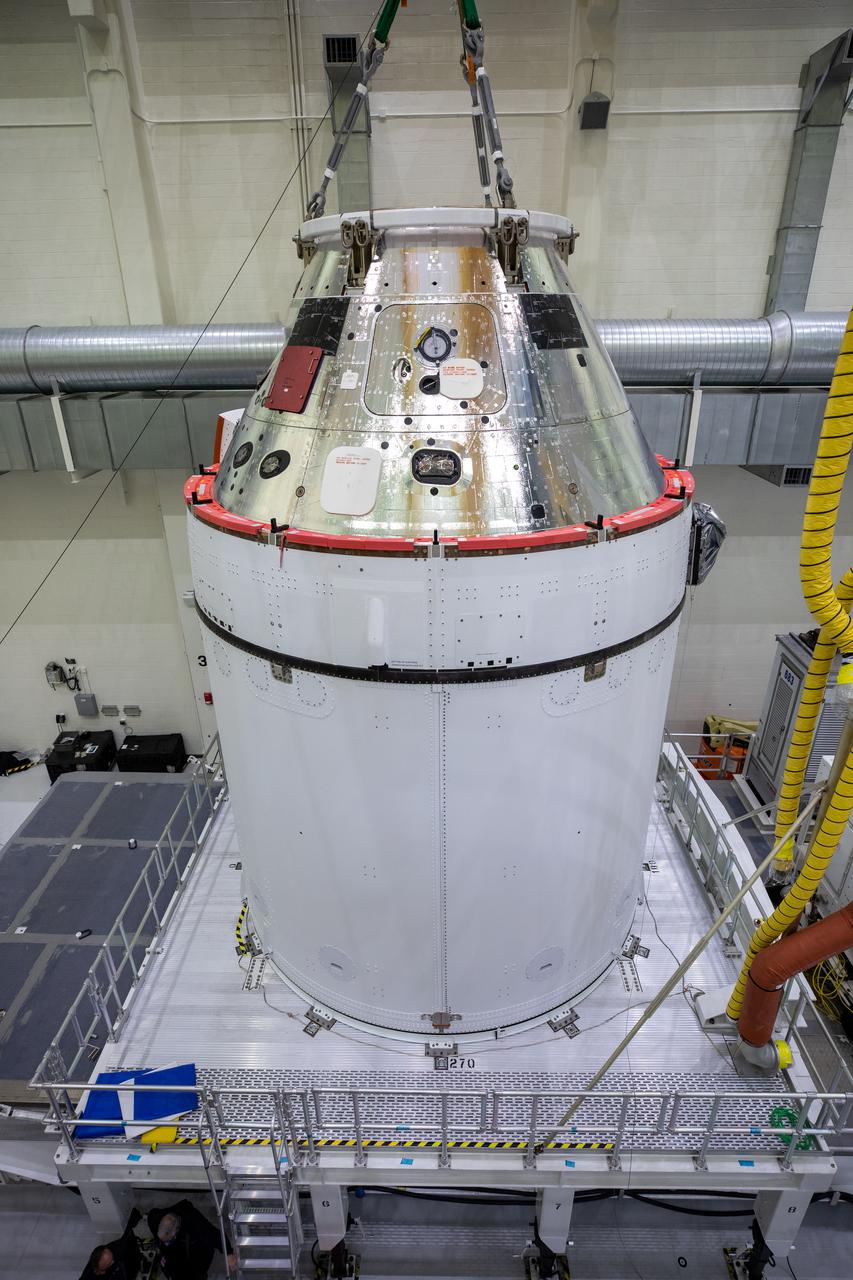
Orion is revealed for one of the final times on Jan. 14, as it is readied atop its transport pallet from the Neil Armstrong Operations and Checkout Building at NASA’s Kennedy Space Center in Florida, along its path to the pad ahead of the Artemis I launch. Teams across the globe have worked tirelessly to assemble the spacecraft, which will receive a protective covering prior to departing for the Multi-Payload Processing Facility to begin ground processing by the Exploration Ground Systems and Jacobs teams.
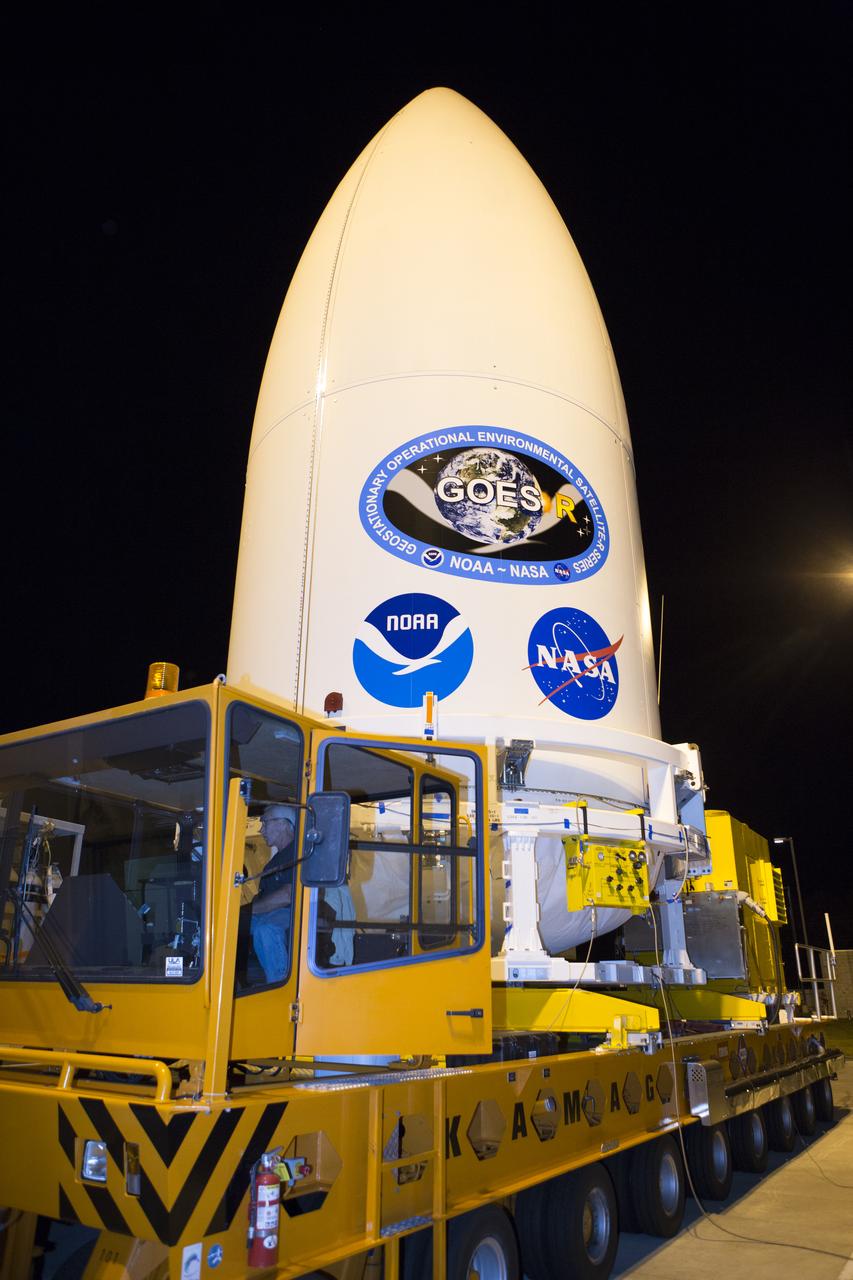
Enclosed in its payload fairing, NOAA's Geostationary Operational Environmental Satellite (GOES-R) departs from the Astrotech payload processing facility in Titusville, Florida, near NASA's Kennedy Space Center. GOES-R will be transported to the Vertical Integration Facility at Space Launch Complex 41 at Cape Canaveral Air Force Station. The satellite will launch aboard a United Launch Alliance Atlas V rocket in November. GOES-R is the first satellite in a series of next-generation NOAA GOES Satellites.
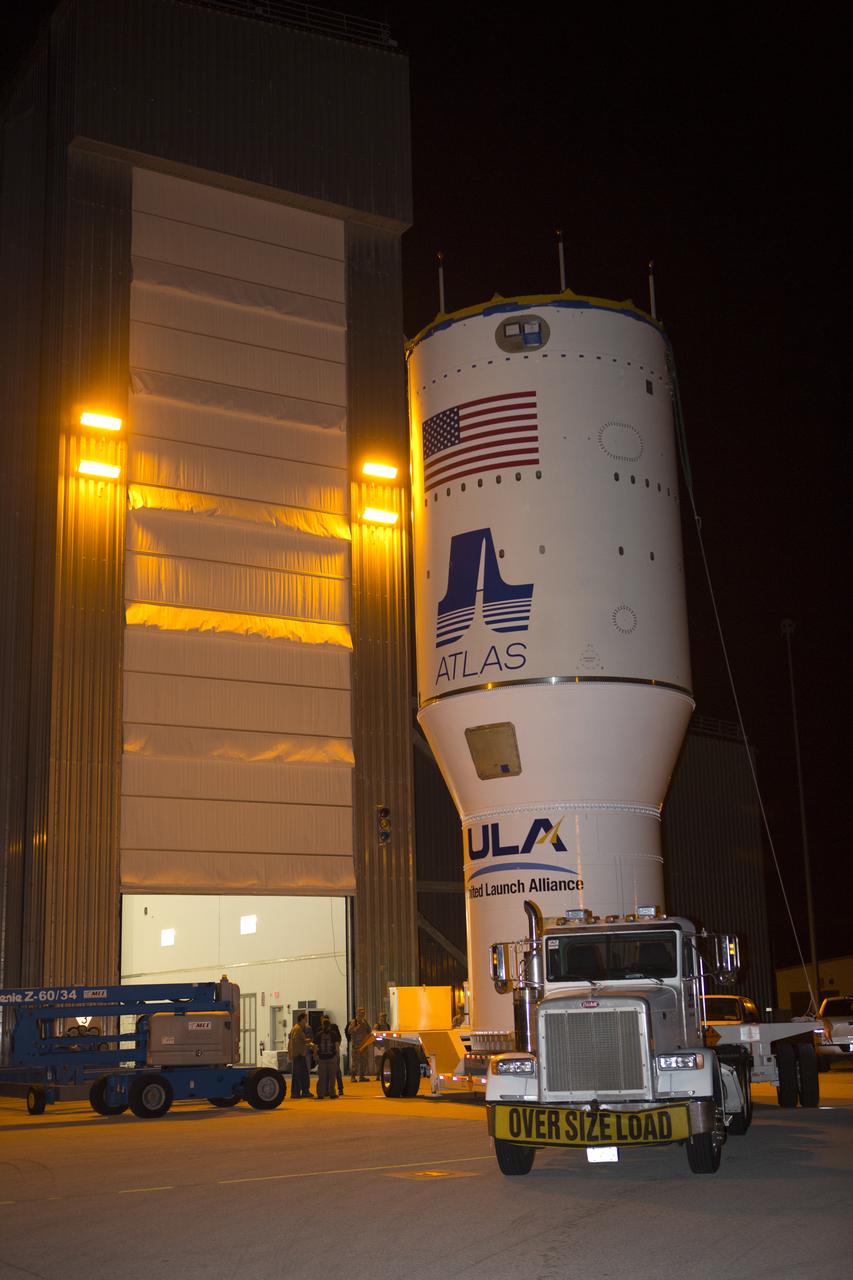
The United Launch Alliance Atlas V Centaur second stage departs the Launch Vehicle Integration Facility aboard a transport trailer for delivery to the Vertical Integration Facility at Space Launch Complex 41 at Cape Canaveral Air Force Station in Florida. The Geostationary Operational Environmental Satellite (GOES-R) will launch aboard the Atlas V rocket in November. GOES-R is the first satellite in a series of next-generation NOAA GOES Satellites.
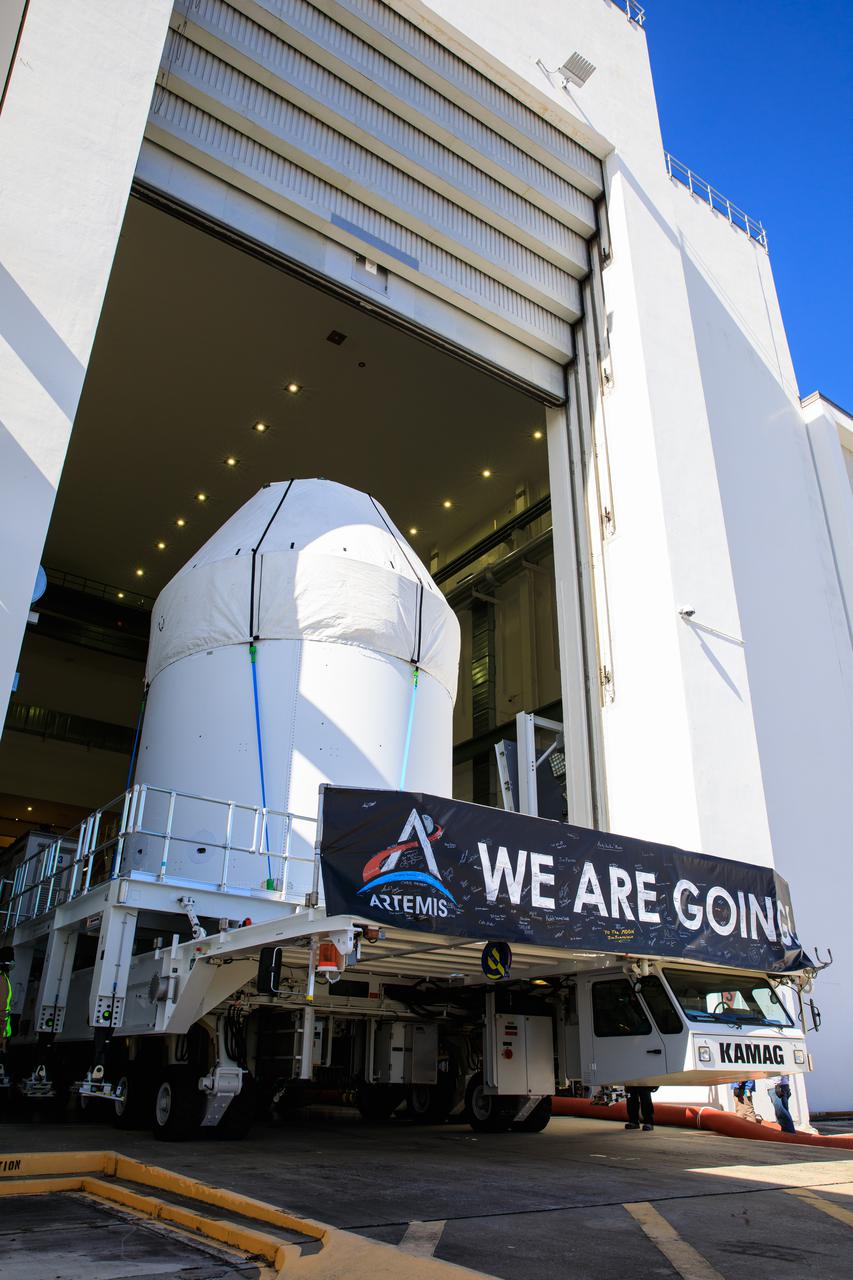
Orion is buttoned up as it sits atop a transport vehicle ready to depart from its home at the Neil Armstrong Operations and Checkout Building at NASA’s Kennedy Space Center in Florida on Jan.16, 2021. Orion will begin its trek to the Multi-Payload Processing Facility. There it will undergo ground processing with the Exploration Ground Systems team taking over ground processing ahead of the Artemis I launch.
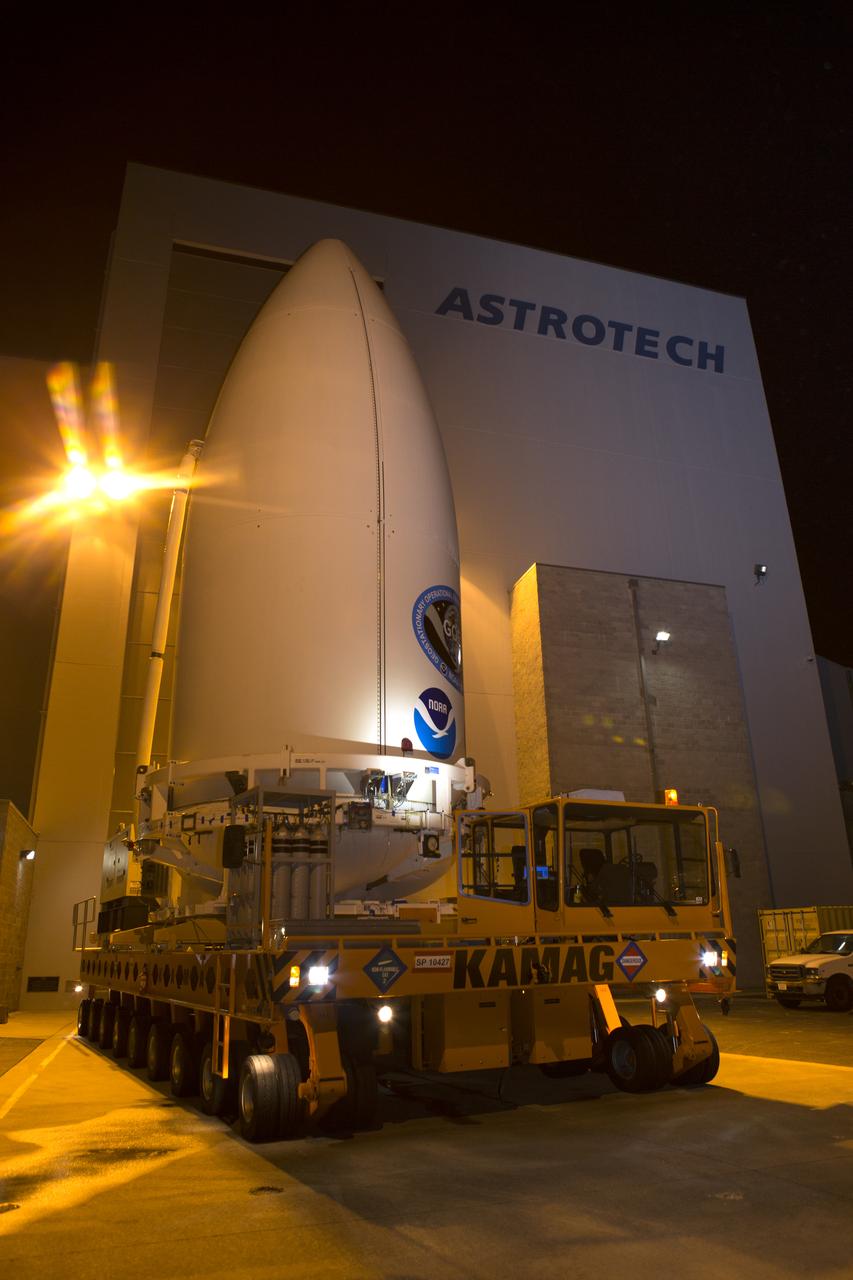
Enclosed in its payload fairing, NOAA's Geostationary Operational Environmental Satellite (GOES-R) departs from the Astrotech payload processing facility in Titusville, Florida, near NASA's Kennedy Space Center. GOES-R will be transported to the Vertical Integration Facility at Space Launch Complex 41 at Cape Canaveral Air Force Station. The satellite will launch aboard a United Launch Alliance Atlas V rocket in November. GOES-R is the first satellite in a series of next-generation NOAA GOES Satellites.
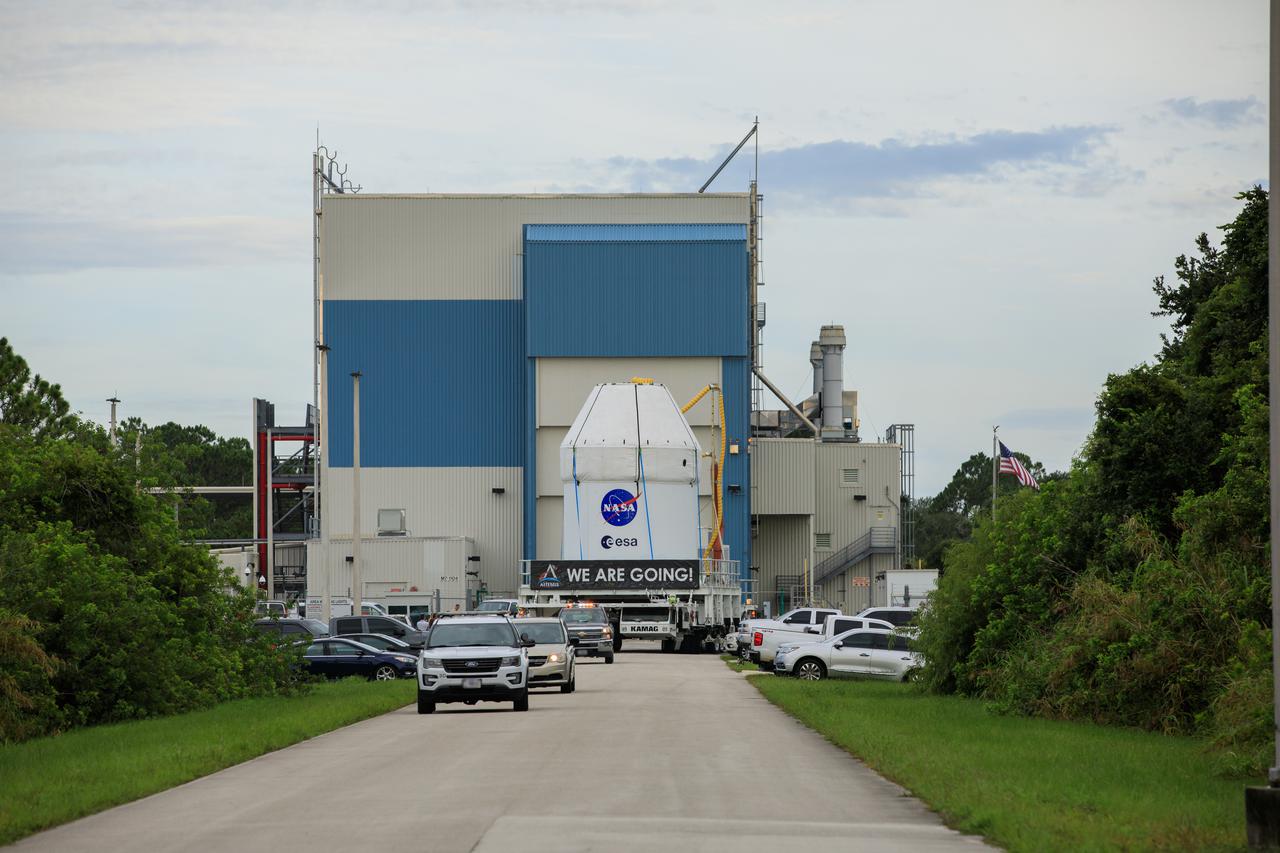
After recently completing fueling and servicing checks, the Orion spacecraft for the Artemis I mission departs Kennedy Space Center’s Multi-Payload Processing on July 10, 2021. The capsule is being transported to the Florida spaceport’s Launch Abort System Facility, where teams with Exploration Ground Systems and contractor Jacobs will integrate components of the launch abort system onto the spacecraft. Launching later this year, Artemis I will be a test of the Orion spacecraft and SLS rocket as an integrated system ahead of crewed flights to the Moon.

Orion is revealed for one of the final times on Jan. 14, as it is readied atop its transport pallet from the Neil Armstrong Operations and Checkout Building at NASA’s Kennedy Space Center in Florida, along its path to the pad ahead of the Artemis I launch. Teams across the globe have worked tirelessly to assemble the spacecraft which will receive a protective covering prior to departing for the Multi-Payload Processing Facility to begin ground processing by the Exploration Ground Systems and Jacobs teams.
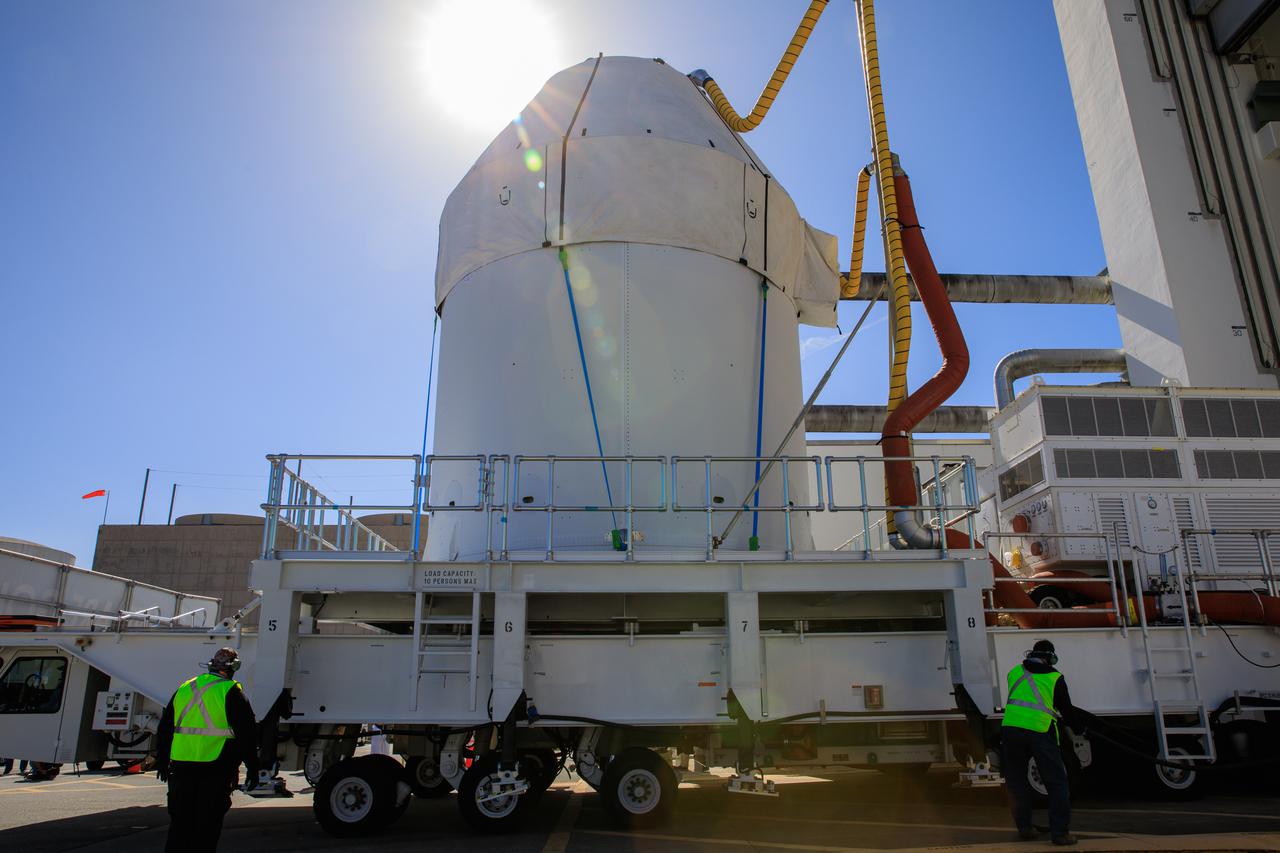
Orion sits atop a transport vehicle as it departs from its home at the Neil Armstrong Operations and Checkout Building at NASA’s Kennedy Space Center in Florida on Jan.16, 2021. Orion will begin its trek to the Multi-Payload Processing Facility. There it will undergo ground processing with the Exploration Ground Systems team taking over ground processing ahead of the Artemis I launch.
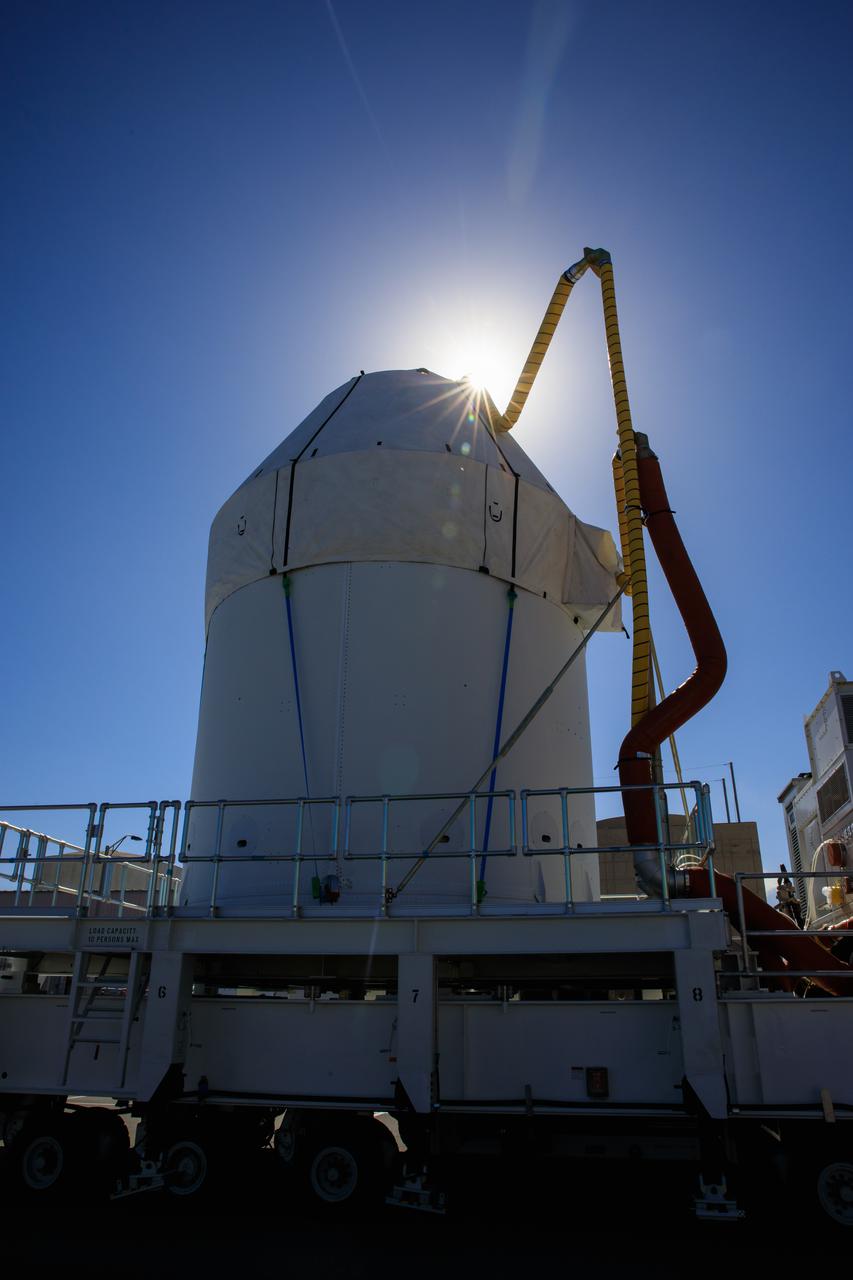
A close-up view of Orion secured atop a transport vehicle as it departs from its home at the Neil Armstrong Operations and Checkout Building at NASA’s Kennedy Space Center in Florida on Jan.16, 2021. Orion’s next stop will be the Multi-Payload Processing Facility where it will undergo ground processing with the Exploration Ground Systems team taking over ground processing ahead of the Artemis I launch.
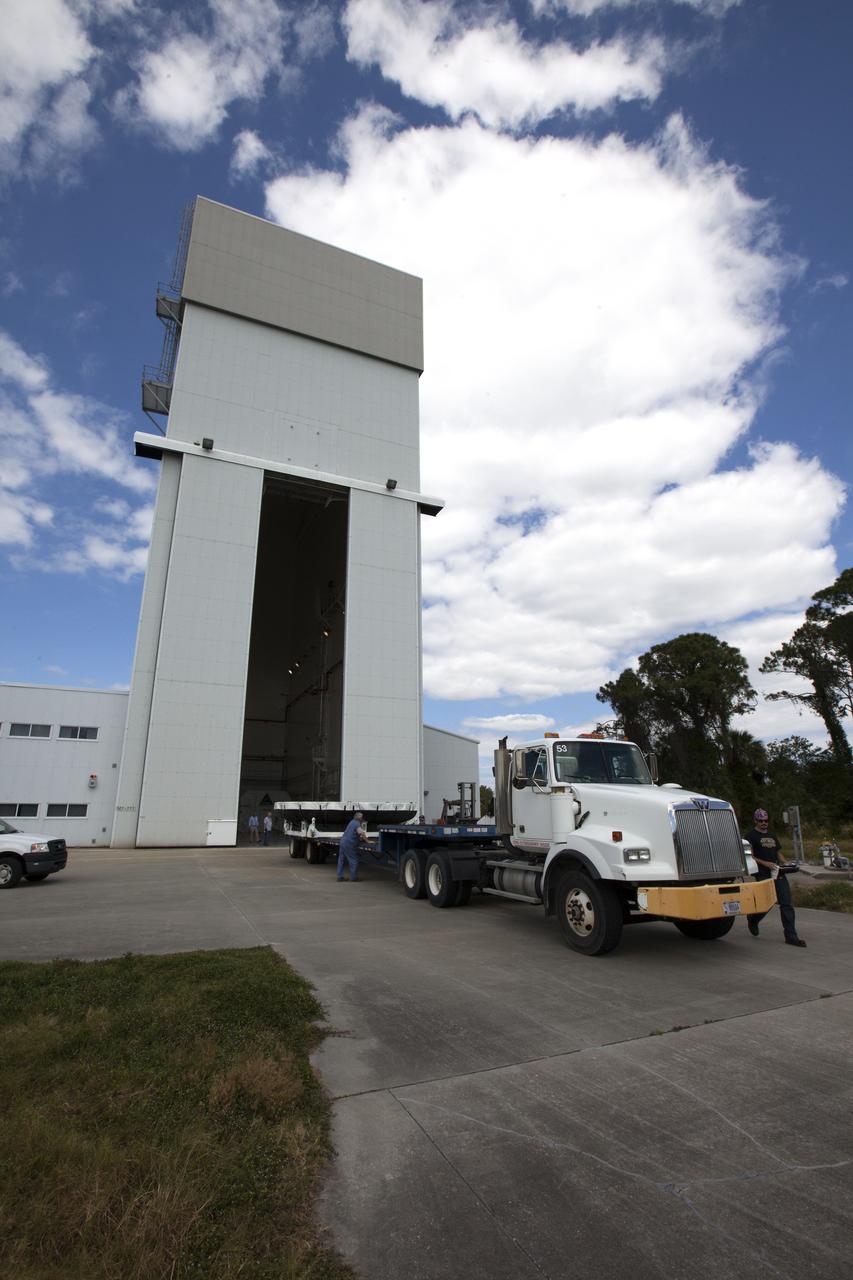
The Orion heat shield from Exploration Flight Test-1, secured on a transporter, departs the Launch Abort System Facility at NASA's Kennedy Space Center in Florida, for its move to the Vehicle Assembly Building (VAB). The heat shield is being transferred from the Orion Program to the Ground Systems Development and Operations Program, Landing and Recovery Operations. In the VAB, the heat shield will be integrated with the Orion ground test article and used for future underway recovery testing.
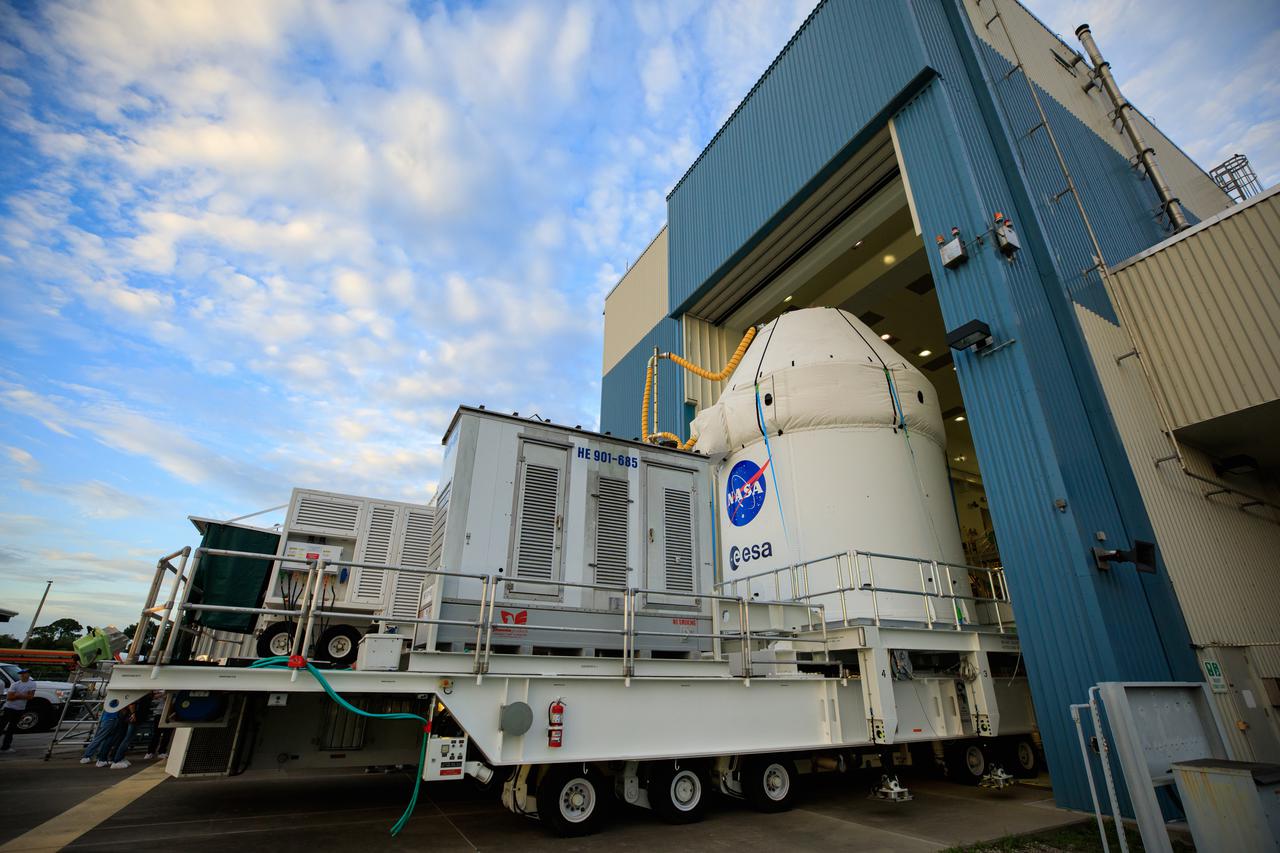
After recently completing fueling and servicing checks, the Orion spacecraft for the Artemis I mission departs from Kennedy Space Center’s Multi-Payload Processing on July 10, 2021. It is being transported to the Florida spaceport’s Launch Abort System Facility, where teams with Exploration Ground Systems and contractor Jacobs will integrate components of the launch abort system onto the spacecraft. Launching later this year, Artemis I will be a test of the Orion spacecraft and SLS rocket as an integrated system ahead of crewed flights to the Moon.
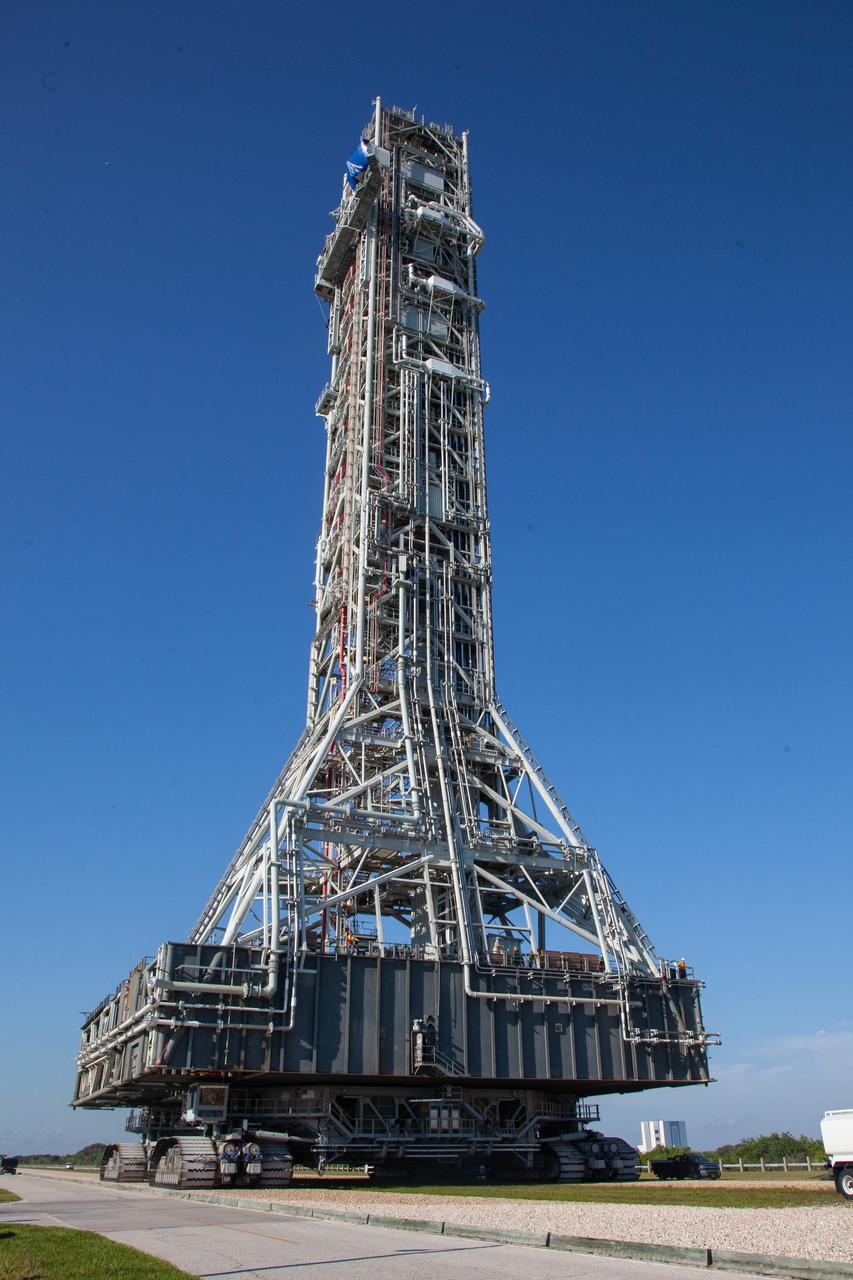
On June 27, 2019, Exploration Ground Systems’ mobile launcher, atop crawler-transporter 2, makes its last solo trek to Kennedy Space Center’s Launch Complex 39B in Florida, where it will remain for the summer, undergoing final testing and checkouts. The mobile launcher departed from the Vehicle Assembly Building at midnight on June 27 for the 10-hour journey to the pad. Its next roll to the pad will be with the agency’s Space Launch System rocket and Orion spacecraft in preparation for the launch of Artemis 1.
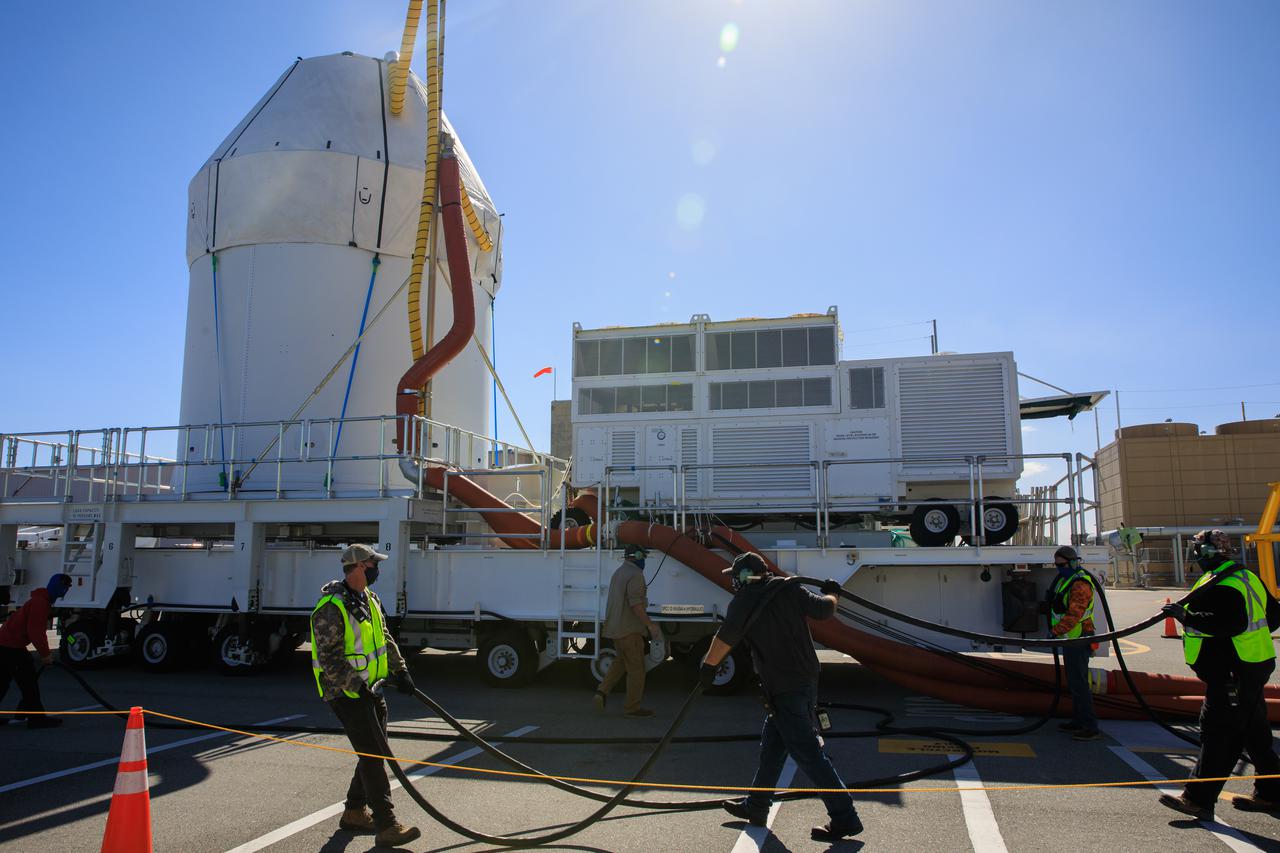
A close-up view of Orion secured atop a transport vehicle as it departs from its home at the Neil Armstrong Operations and Checkout Building at NASA’s Kennedy Space Center in Florida on Jan.16, 2021. Orion’s next stop will be the Multi-Payload Processing Facility where it will undergo ground processing with the Exploration Ground Systems team taking over ground processing ahead of the Artemis I launch.
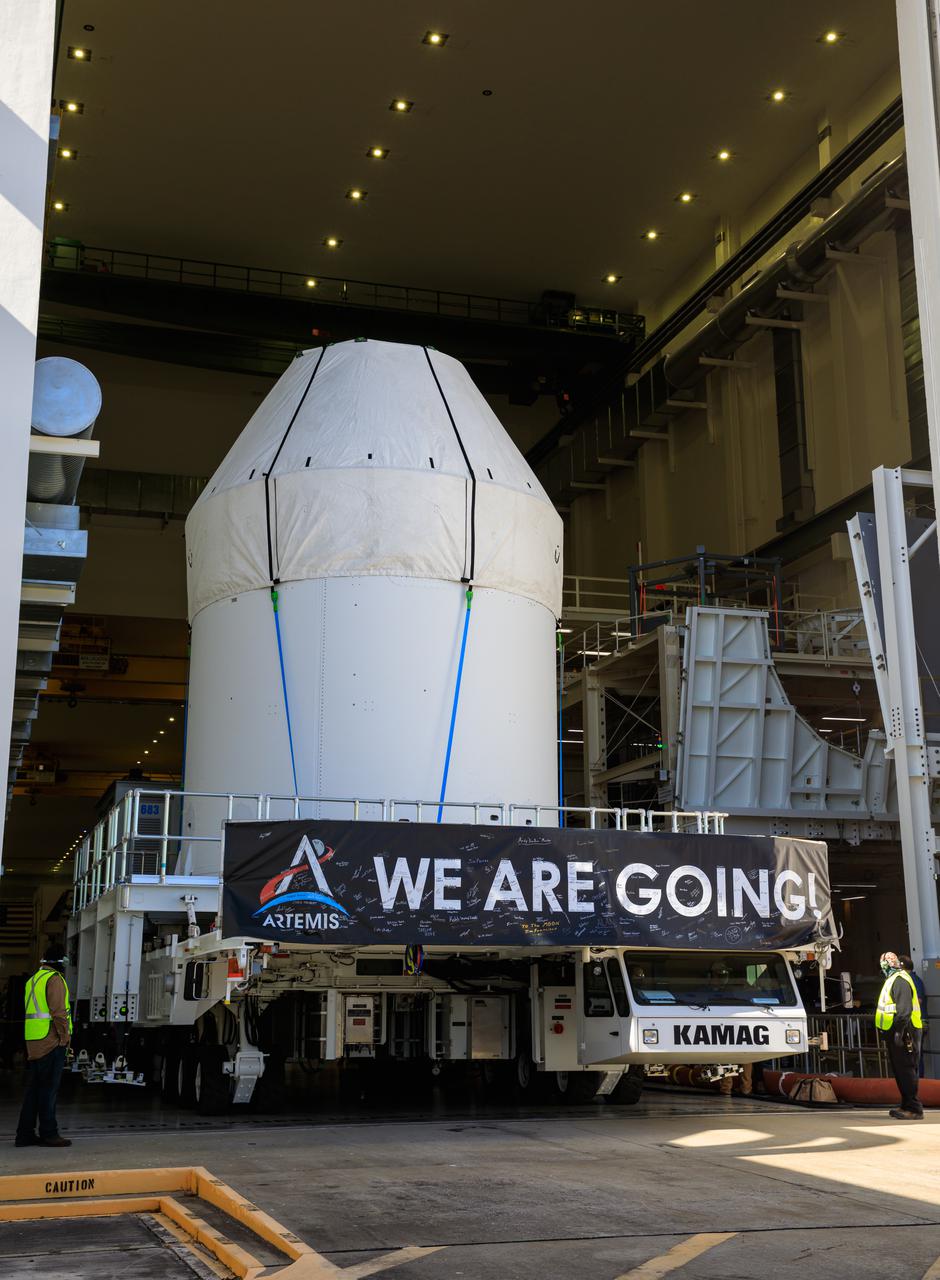
Orion is buttoned up as it sits atop a transport vehicle ready to depart from its home at the Neil Armstrong Operations and Checkout Building at NASA’s Kennedy Space Center in Florida on Jan.16, 2021. Orion will begin its trek to the Multi-Payload Processing Facility. There it will undergo ground processing with the Exploration Ground Systems team taking over ground processing ahead of the Artemis I launch.
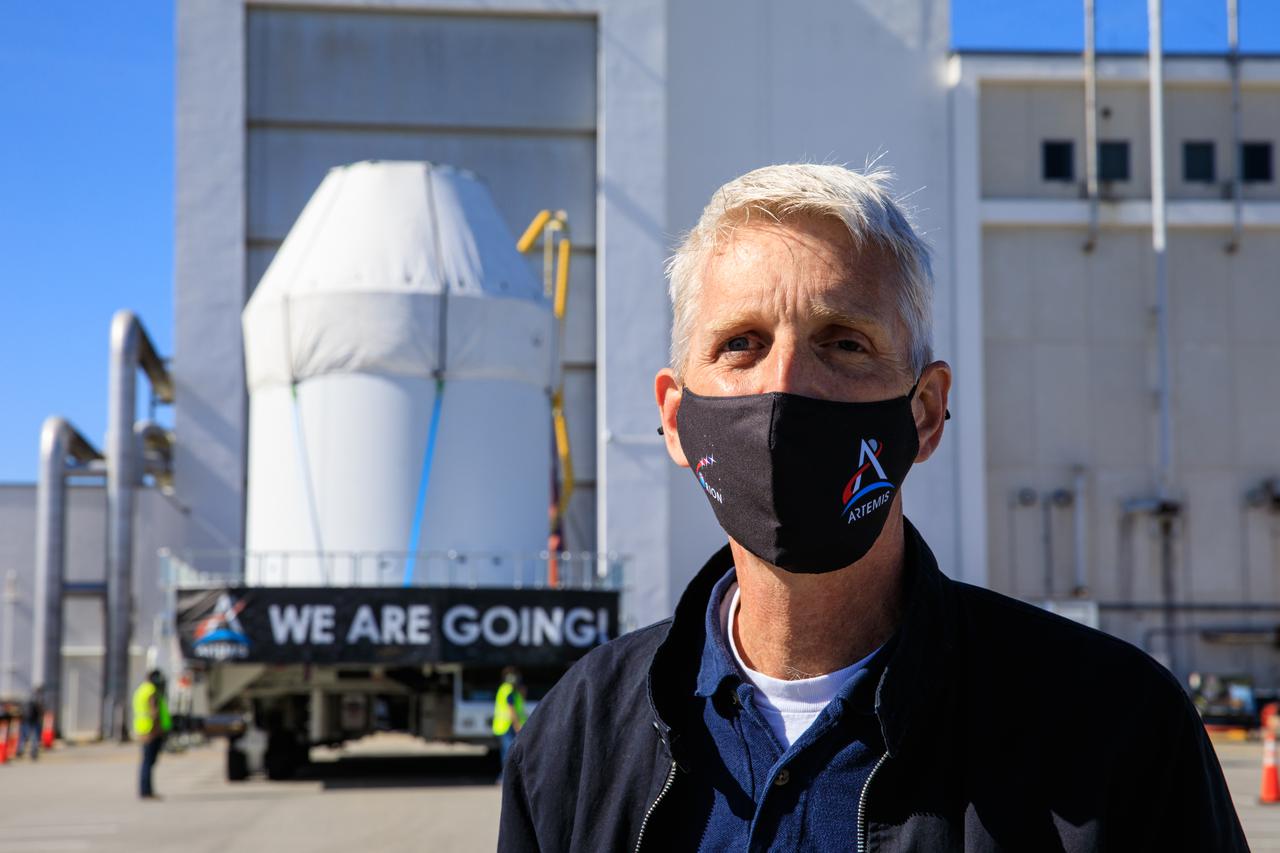
Orion sits atop a transport vehicle as it departs from its home at the Neil Armstrong Operations and Checkout Building at NASA’s Kennedy Space Center in Florida on Jan.16, 2021. In view is Scott Wilson, manager of production operations for NASA’s Orion Program. Orion will begin its trek to the Multi-Payload Processing Facility. There it will undergo ground processing with the Exploration Ground Systems team taking over ground processing ahead of the Artemis I launch.
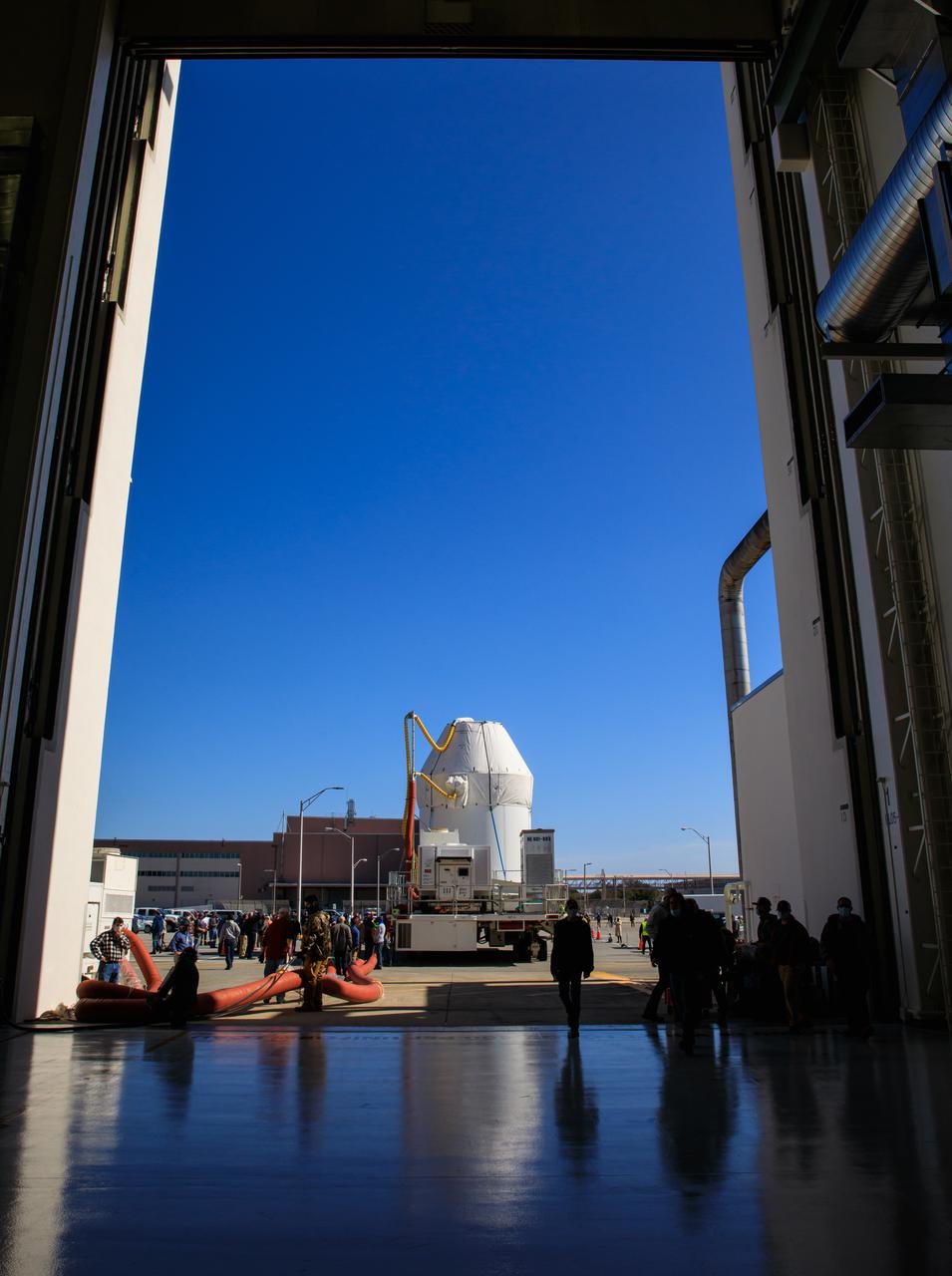
Orion sits atop a transport vehicle as it departs from its home at the Neil Armstrong Operations and Checkout Building at NASA’s Kennedy Space Center in Florida on Jan.16, 2021. Orion will begin its trek to the Multi-Payload Processing Facility. There it will undergo ground processing with the Exploration Ground Systems team taking over ground processing ahead of the Artemis I launch.
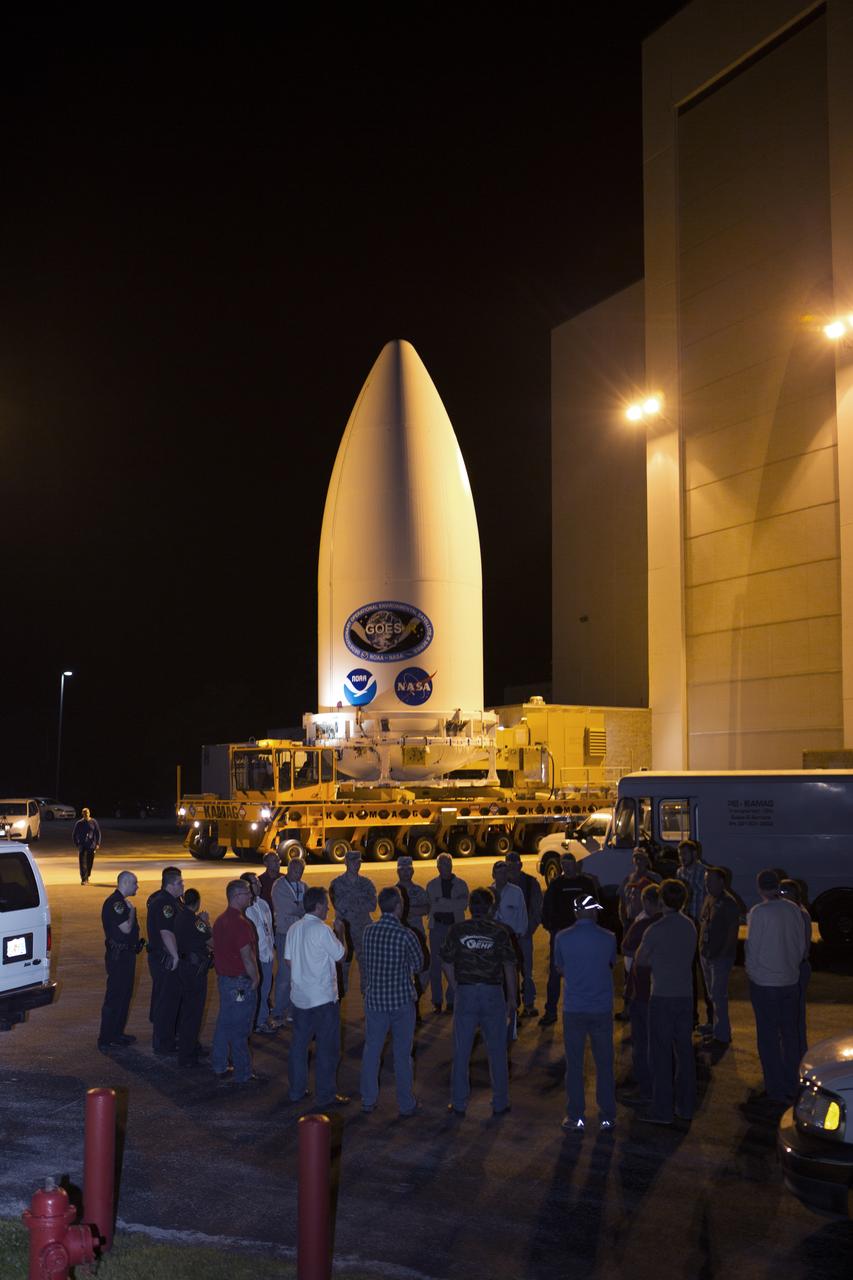
Enclosed in its payload fairing, NOAA's Geostationary Operational Environmental Satellite (GOES-R) departs from the Astrotech payload processing facility in Titusville, Florida, near NASA's Kennedy Space Center. GOES-R will be transported to the Vertical Integration Facility at Space Launch Complex 41 at Cape Canaveral Air Force Station. The satellite will launch aboard a United Launch Alliance Atlas V rocket in November. GOES-R is the first satellite in a series of next-generation NOAA GOES Satellites.
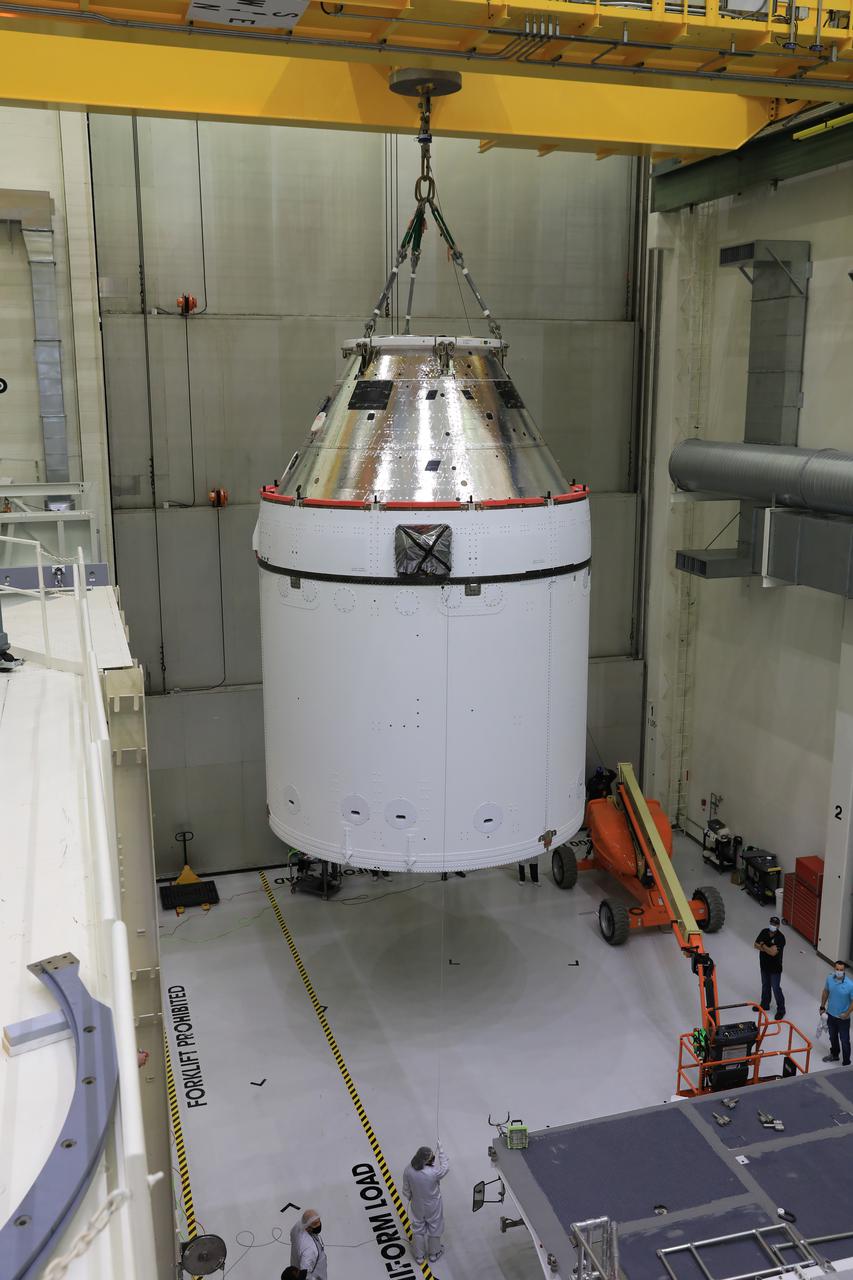
Orion is revealed for one of the final times on Jan. 14, as it is lowered by crane onto its transport pallet inside the Neil Armstrong Operations and Checkout Building at NASA’s Kennedy Space Center in Florida, along its path to the pad ahead of the Artemis I launch. Teams across the globe have worked tirelessly to assemble the spacecraft which will receive a protective covering prior to departing for the Multi-Payload Processing Facility to begin ground processing by the Exploration Ground Systems and Jacobs teams.
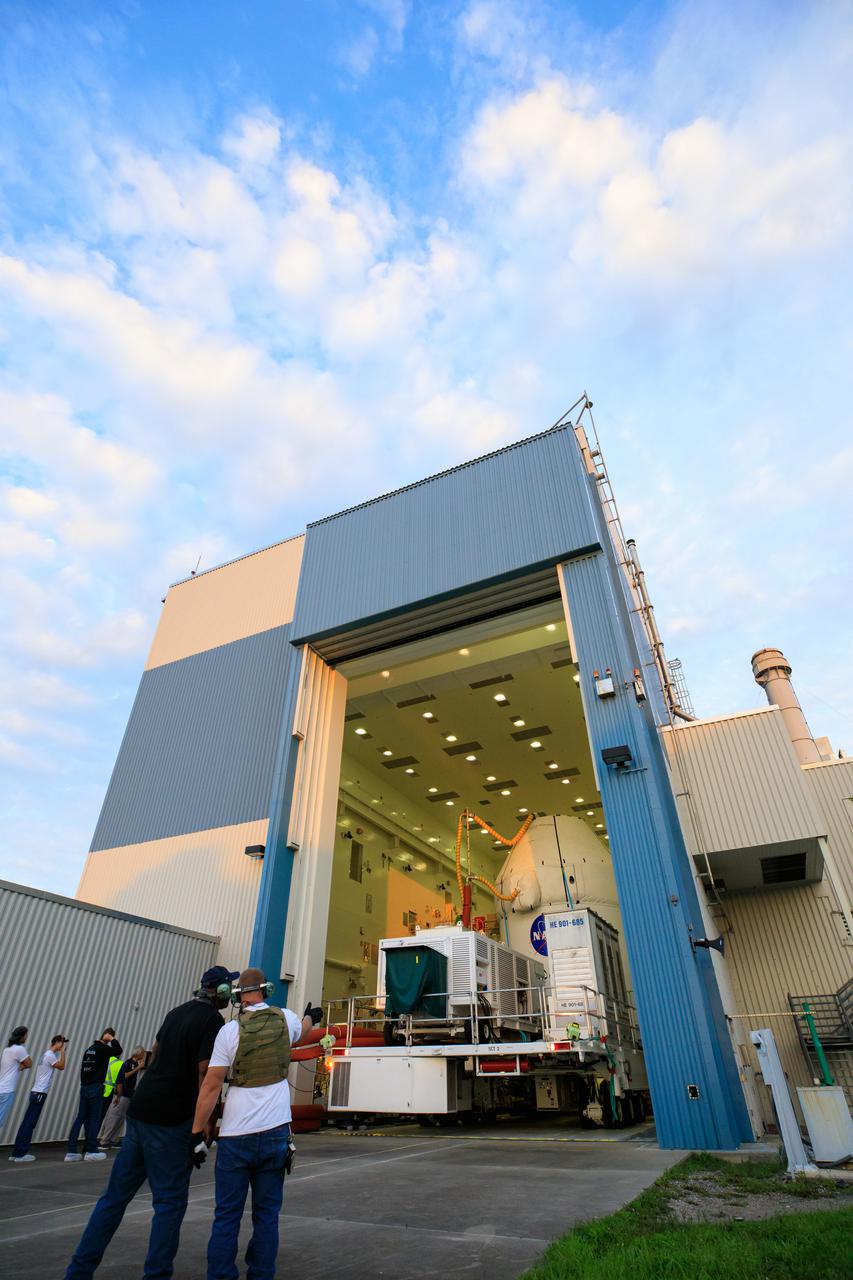
After recently completing fueling and servicing checks, the Orion spacecraft for the Artemis I mission departs from Kennedy Space Center’s Multi-Payload Processing on July 10, 2021. It is being transported to the Florida spaceport’s Launch Abort System Facility, where teams with Exploration Ground Systems and contractor Jacobs will integrate components of the launch abort system onto the spacecraft. Launching later this year, Artemis I will be a test of the Orion spacecraft and SLS rocket as an integrated system ahead of crewed flights to the Moon.
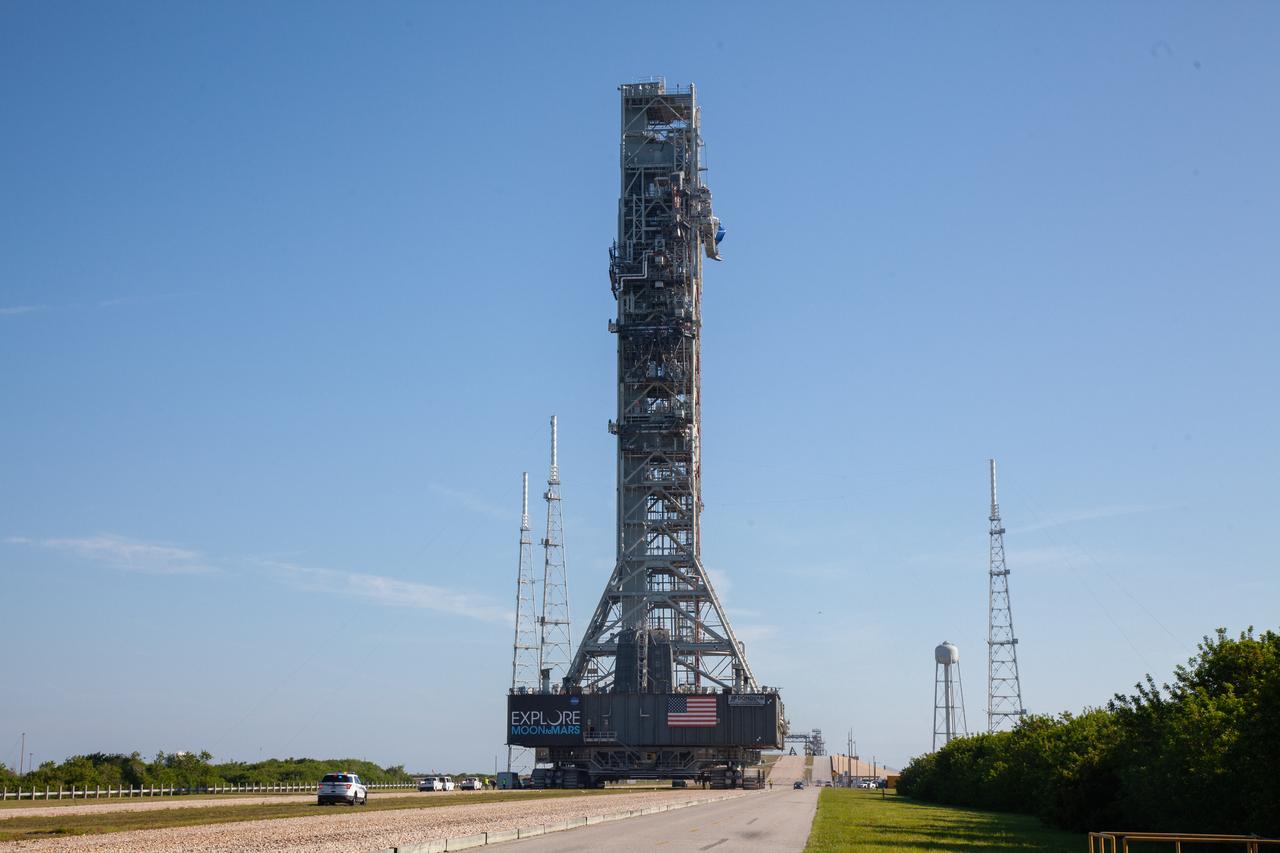
On June 27, 2019, Exploration Ground Systems’ mobile launcher, atop crawler-transporter 2, approaches Kennedy Space Center’s Launch Complex 39B in Florida, where it will remain for the summer, undergoing final testing and checkouts. The mobile launcher departed from the Vehicle Assembly Building at midnight on June 27 for the 10-hour journey to the pad. Its next roll to the pad will be with the agency’s Space Launch System rocket and Orion spacecraft in preparation for the launch of Artemis 1.
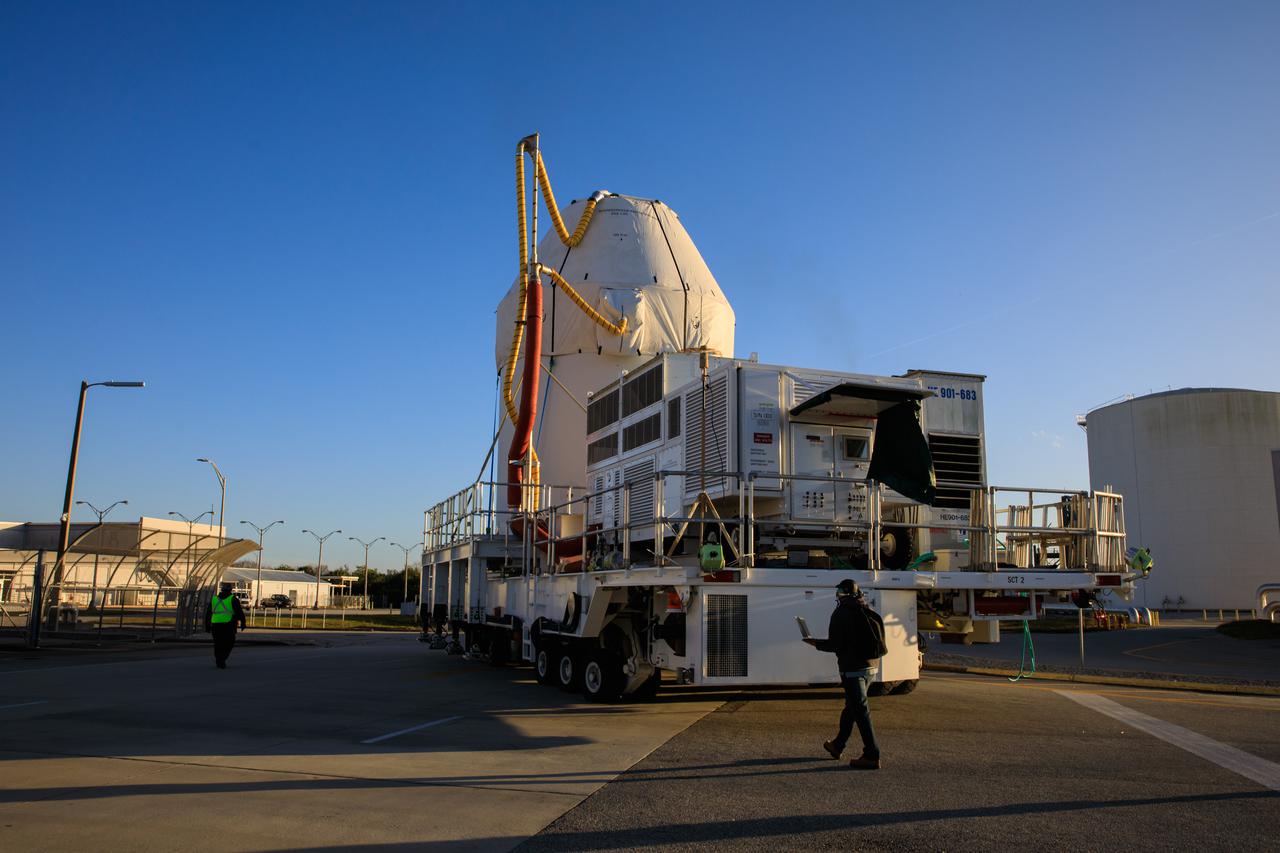
Orion sits atop a transport vehicle as it departs from its home at the Neil Armstrong Operations and Checkout Building at NASA’s Kennedy Space Center in Florida on Jan.16, 2021. Orion’s next stop will be the Multi-Payload Processing Facility where it will undergo ground processing with the Exploration Ground Systems team taking over ground processing ahead of the Artemis I launch.
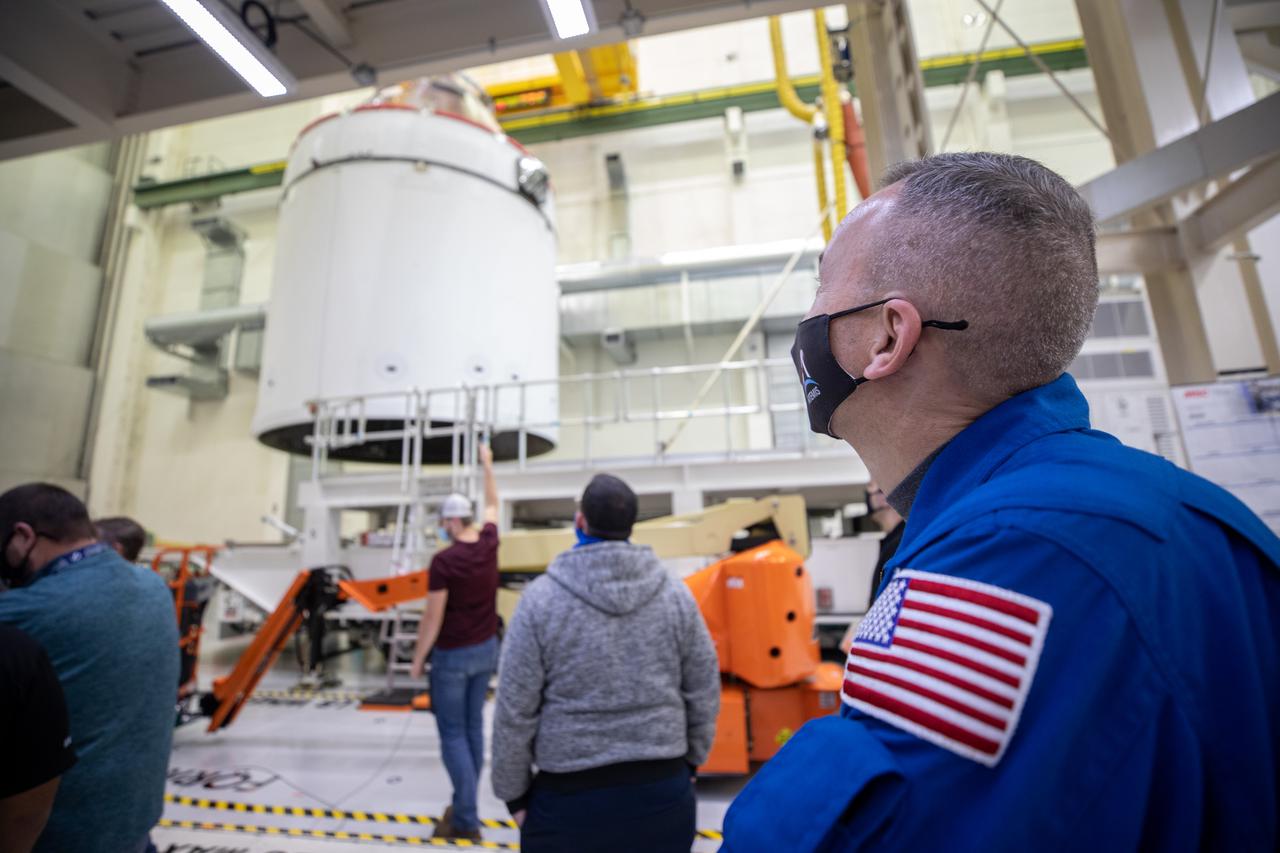
Orion is revealed for one of the final times on Jan. 14, as it is moved by crane to its transport pallet inside the Neil Armstrong Operations and Checkout Building at NASA’s Kennedy Space Center in Florida, along its path to the pad ahead of the Artemis I launch. Teams across the globe have worked tirelessly to assemble the spacecraft which will receive a protective covering prior to departing for the Multi-Payload Processing Facility to begin ground processing by the Exploration Ground Systems and Jacobs teams.

Orion is revealed for one of the final times on Jan. 14, as it is moved by crane to its transport pallet inside the Neil Armstrong Operations and Checkout Building at NASA’s Kennedy Space Center in Florida, along its path to the pad ahead of the Artemis I launch. Teams across the globe have worked tirelessly to assemble the spacecraft, which will receive a protective covering prior to departing for the Multi-Payload Processing Facility to begin ground processing by the Exploration Ground Systems and Jacobs teams.
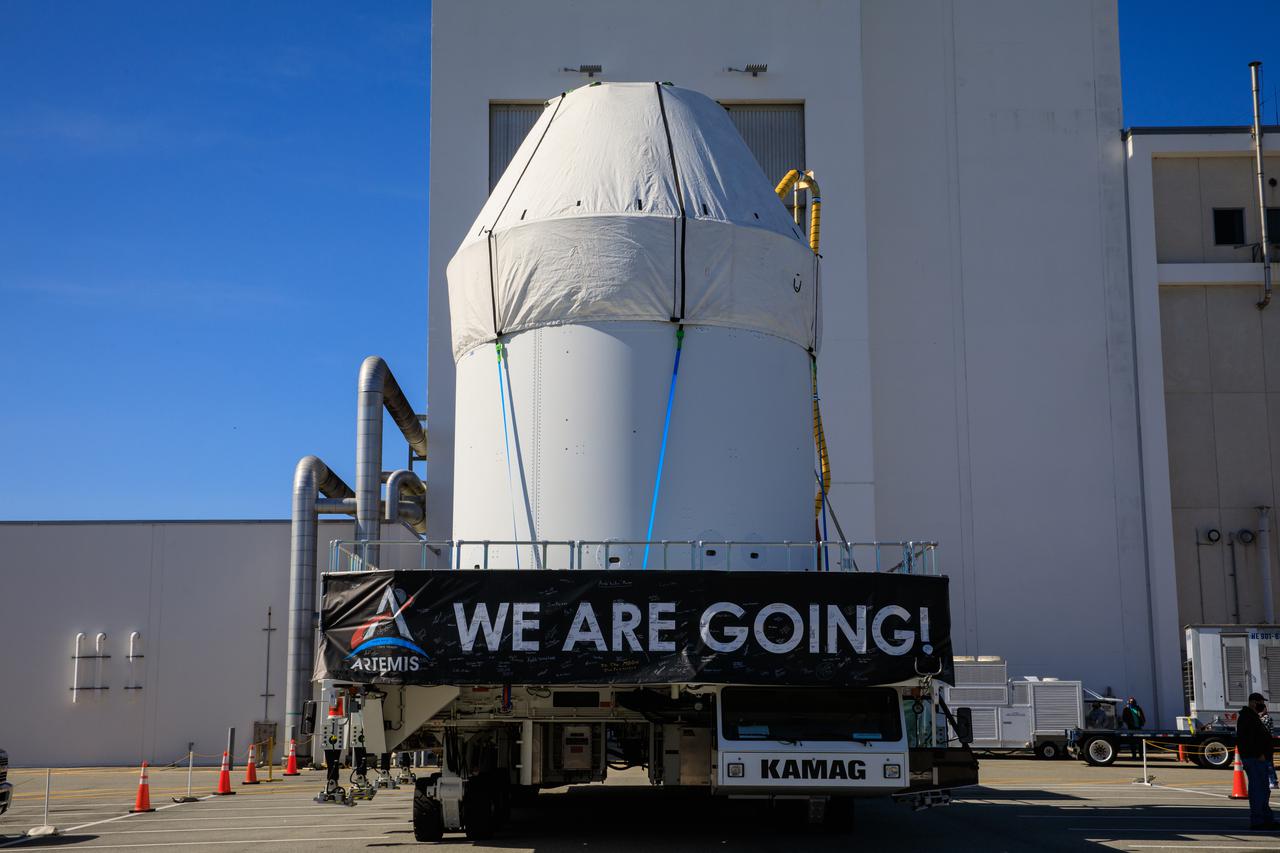
Orion sits atop a transport vehicle as it departs from its home at the Neil Armstrong Operations and Checkout Building at NASA’s Kennedy Space Center in Florida on Jan.16, 2021. Orion will begin its trek to the Multi-Payload Processing Facility. There it will undergo ground processing with the Exploration Ground Systems team taking over ground processing ahead of the Artemis I launch.
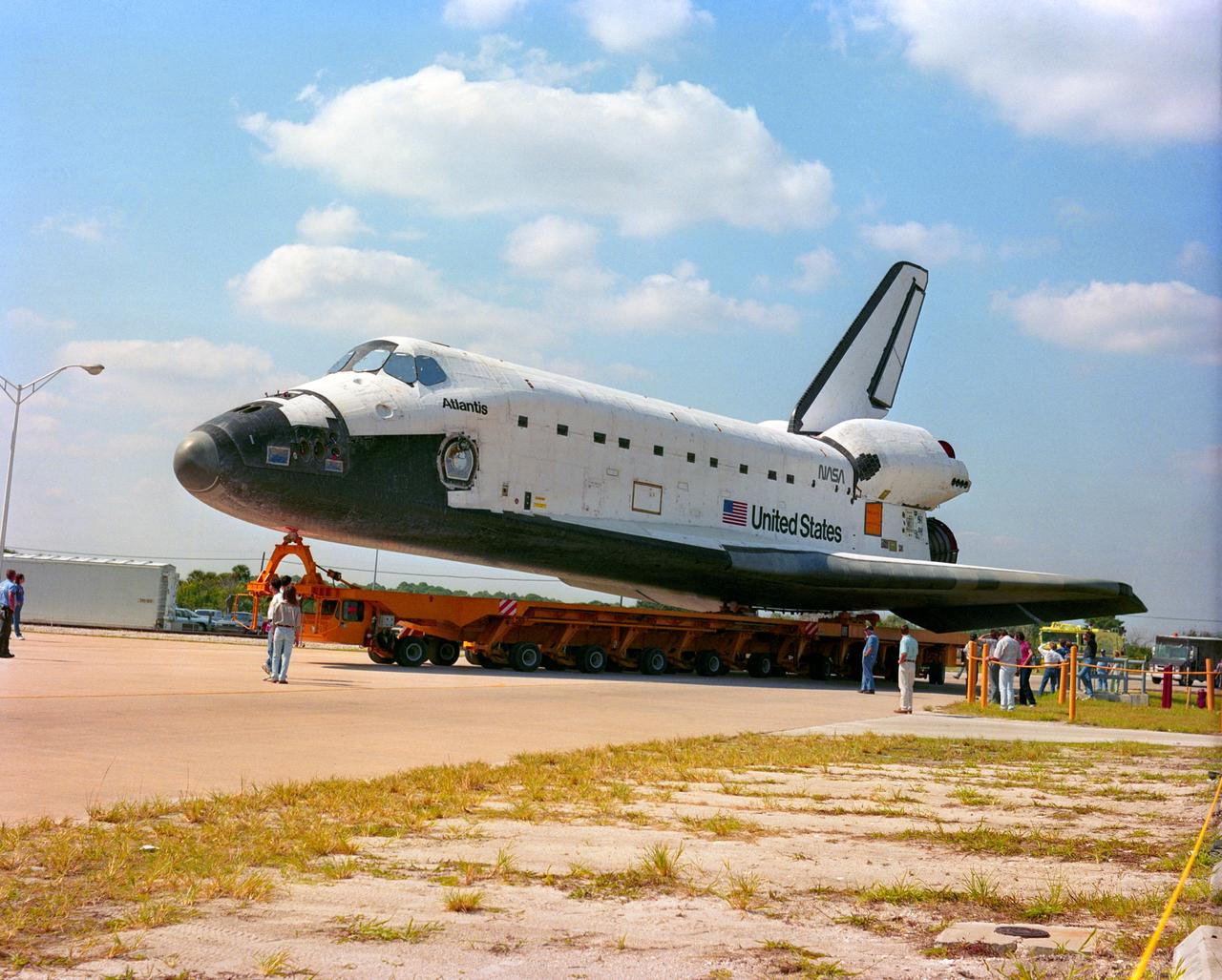
S91-50776 (18 Oct 1991) --- The Space Shuttle Atlantis is moved from the Orbital Processing Facility (OPF) Bay 2 to the Vehicle Assembly Building (VAB) at Kennedy Space Center, Florida. The Atlantis will be mated with the external fuel tank and solid rocket boosters before it is transported to Pad 39A, where it will launch a Department of Defense payload, Mission STS-44, in late 1991.
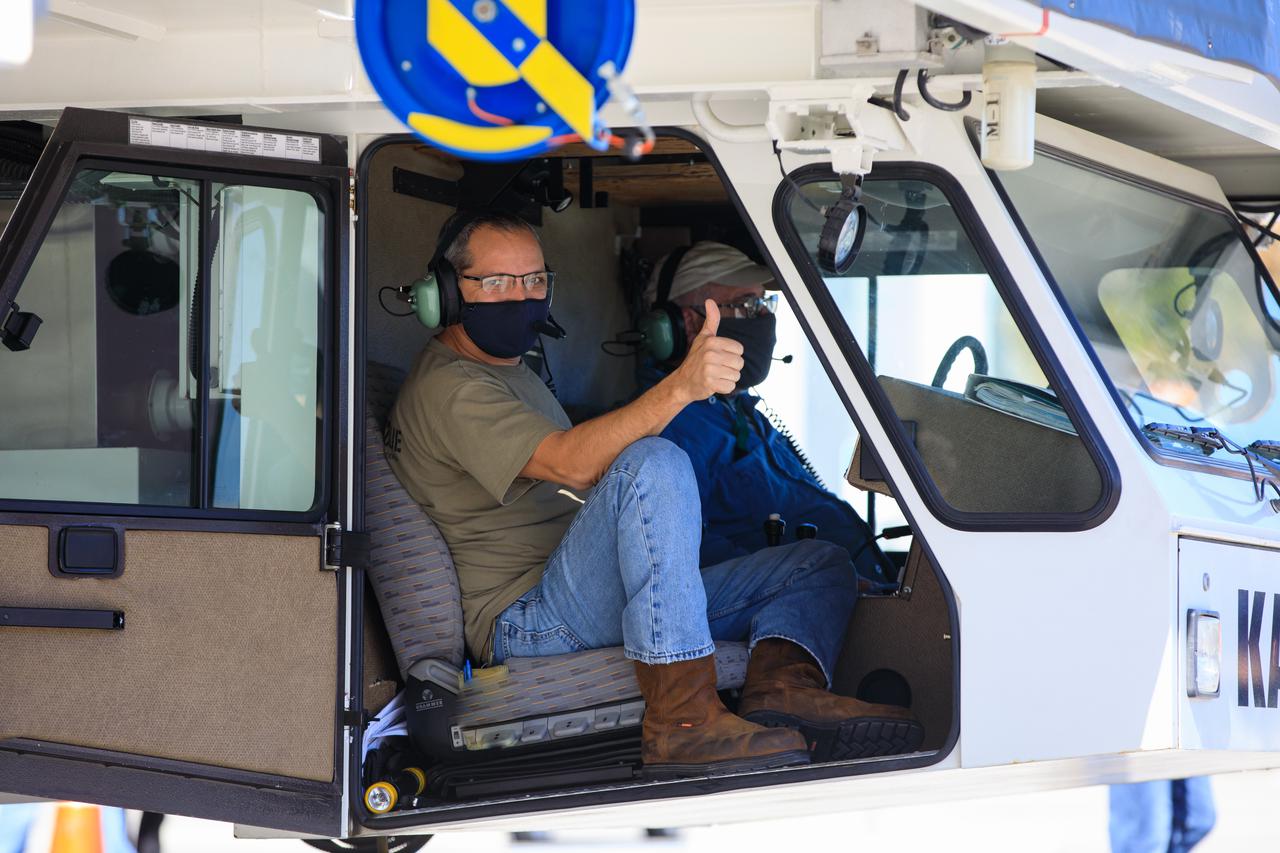
Ryan Kiechle of Jacobs Technology gives a thumbs-up inside the transporter with Orion secured atop as the spacecraft prepares to depart the Neil Armstrong Operations and Checkout Building at NASA’s Kennedy Space Center in Florida on Jan.16, 2021. Orion’s next stop will be the Multi-Payload Processing Facility where it will undergo ground processing with the Exploration Ground Systems team taking over ground processing ahead of the Artemis I launch.
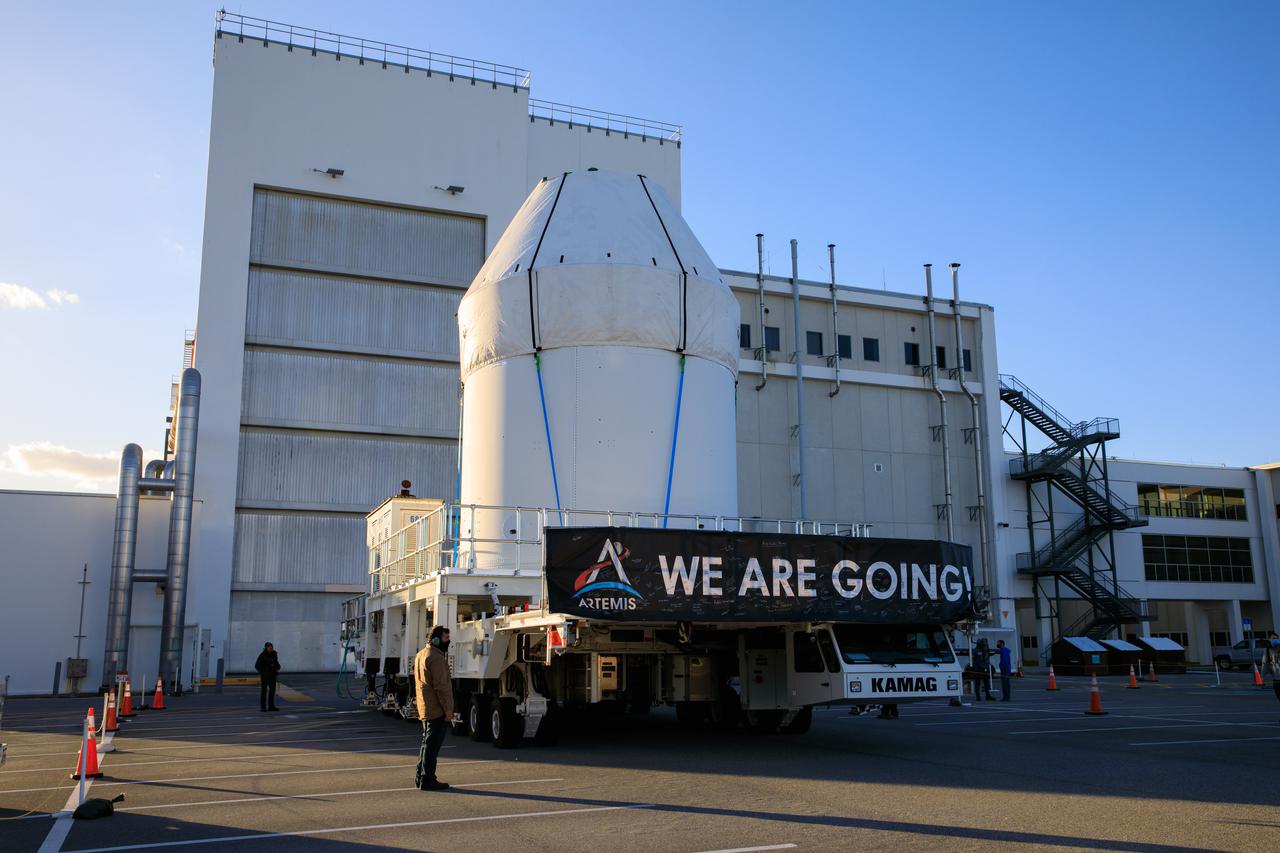
Orion sits atop a transport vehicle as it departs from its home at the Neil Armstrong Operations and Checkout Building at NASA’s Kennedy Space Center in Florida on Jan.16, 2021. Orion’s next stop will be the Multi-Payload Processing Facility where it will undergo ground processing with the Exploration Ground Systems team taking over ground processing ahead of the Artemis I launch.
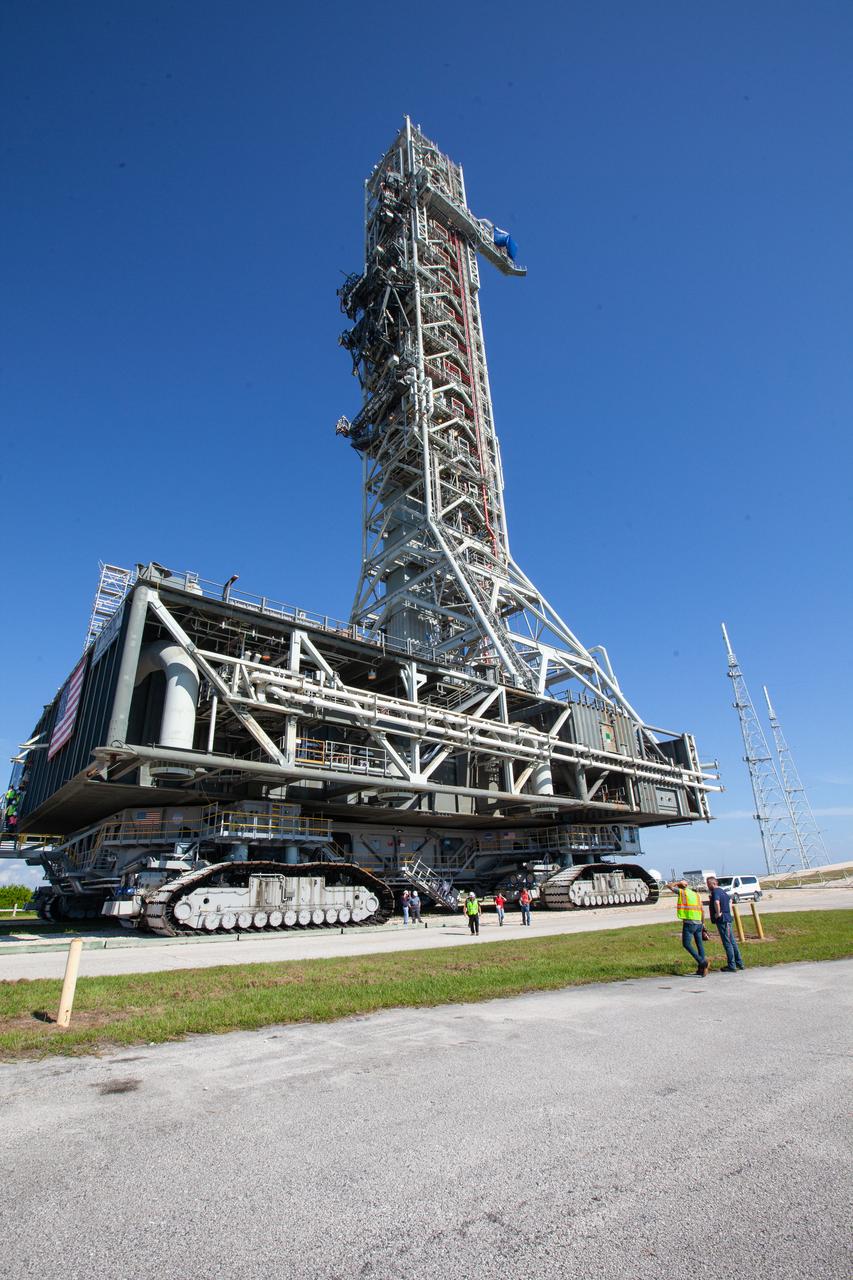
Exploration Ground Systems’ mobile launcher is seen atop crawler-transporter 2 at Kennedy Space Center’s Launch Complex 39B in Florida on June 27, 2019. The mobile launcher departed from the Vehicle Assembly Building at midnight on June 27 for its last solo trek to the pad, where it will remain for the summer, undergoing final testing and checkouts. Its next roll to the pad will be with the agency’s Space Launch System rocket and Orion spacecraft in preparation for the launch of Artemis 1.

Secured atop a transport vehicle, Orion moves along the route to the Multi-Payload Processing Facility (MPPF) on Jan. 16, 2021, after departing from the Neil Armstrong Operations and Checkout Building at NASA’s Kennedy Space Center in Florida. In the MPPF, Orion will undergo processing with the the Exploration Ground Systems team taking over ground processing ahead of the Artemis I launch.
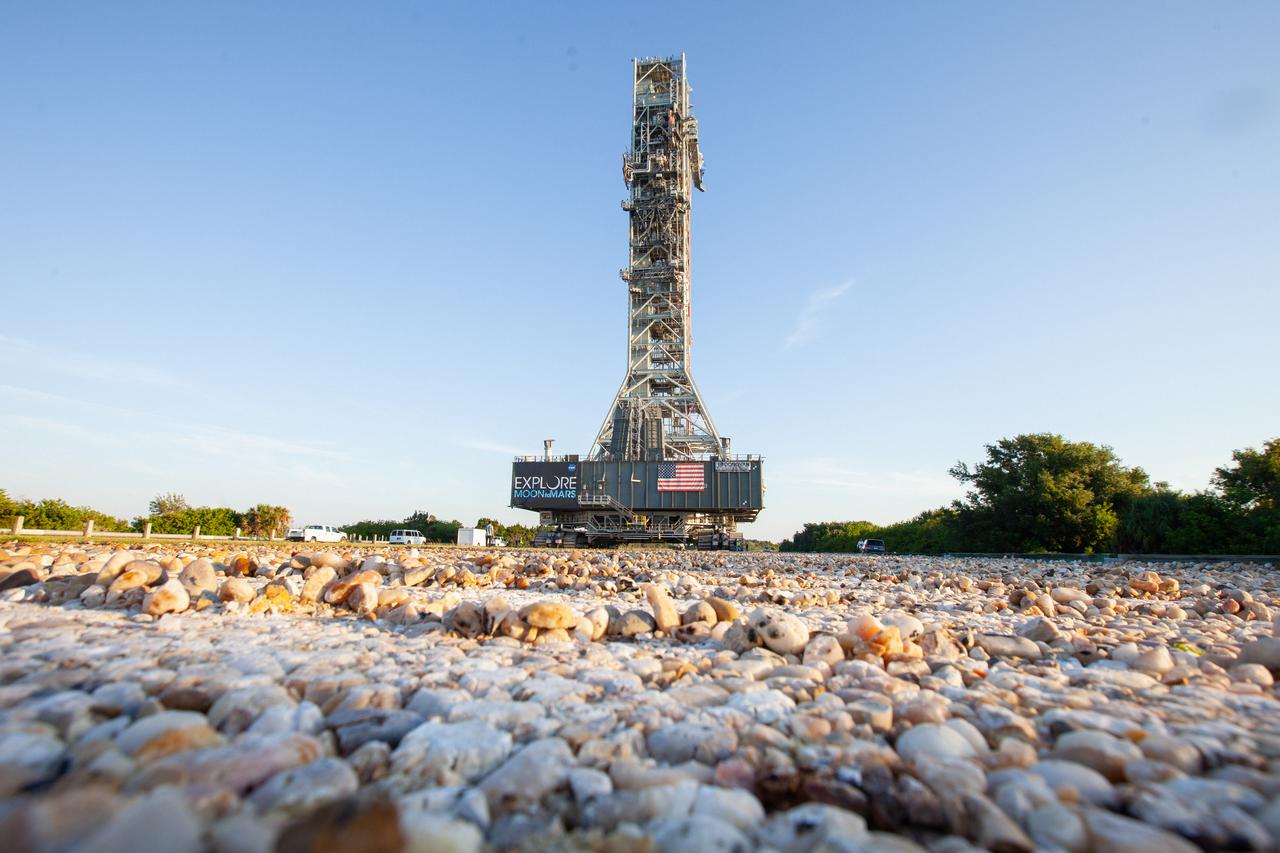
Exploration Ground Systems’ mobile launcher makes its last solo trek along the crawlerway atop crawler-transporter 2 to Kennedy Space Center’s Launch Complex 39B in Florida on June 27, 2019. The mobile launcher departed from the Vehicle Assembly Building at midnight on June 27 for the 10-hour journey to the pad and will remain there for the summer, undergoing final testing and checkouts. Its next roll to the pad will be with the agency’s Space Launch System rocket and Orion spacecraft in preparation for the launch of Artemis 1.
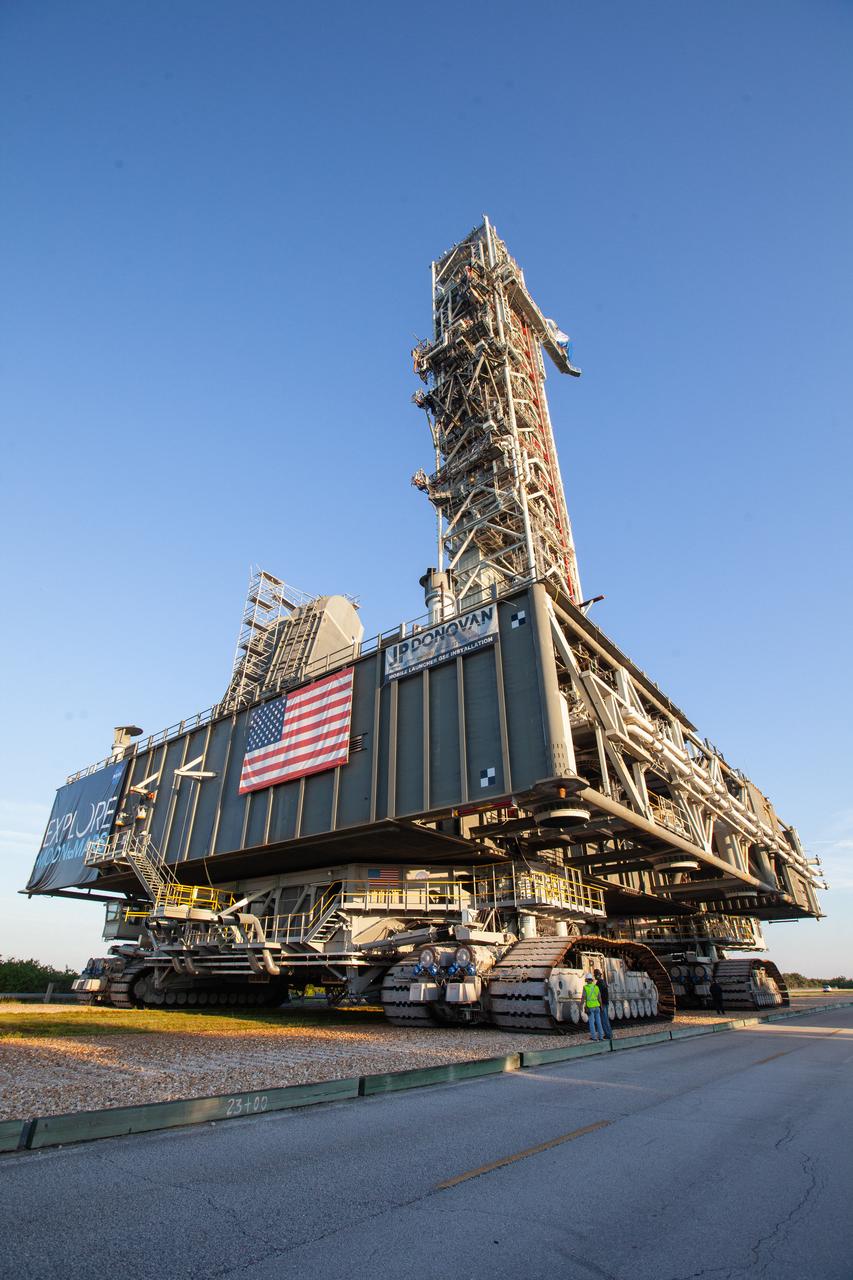
Exploration Ground Systems’ mobile launcher makes its last solo trek along the crawlerway atop crawler-transporter 2 to Kennedy Space Center’s Launch Complex 39B in Florida on June 27, 2019. The mobile launcher departed from the Vehicle Assembly Building at midnight on June 27 for the 10-hour journey to the pad and will remain there for the summer, undergoing final testing and checkouts. Its next roll to the pad will be with the agency’s Space Launch System rocket and Orion spacecraft in preparation for the launch of Artemis 1.
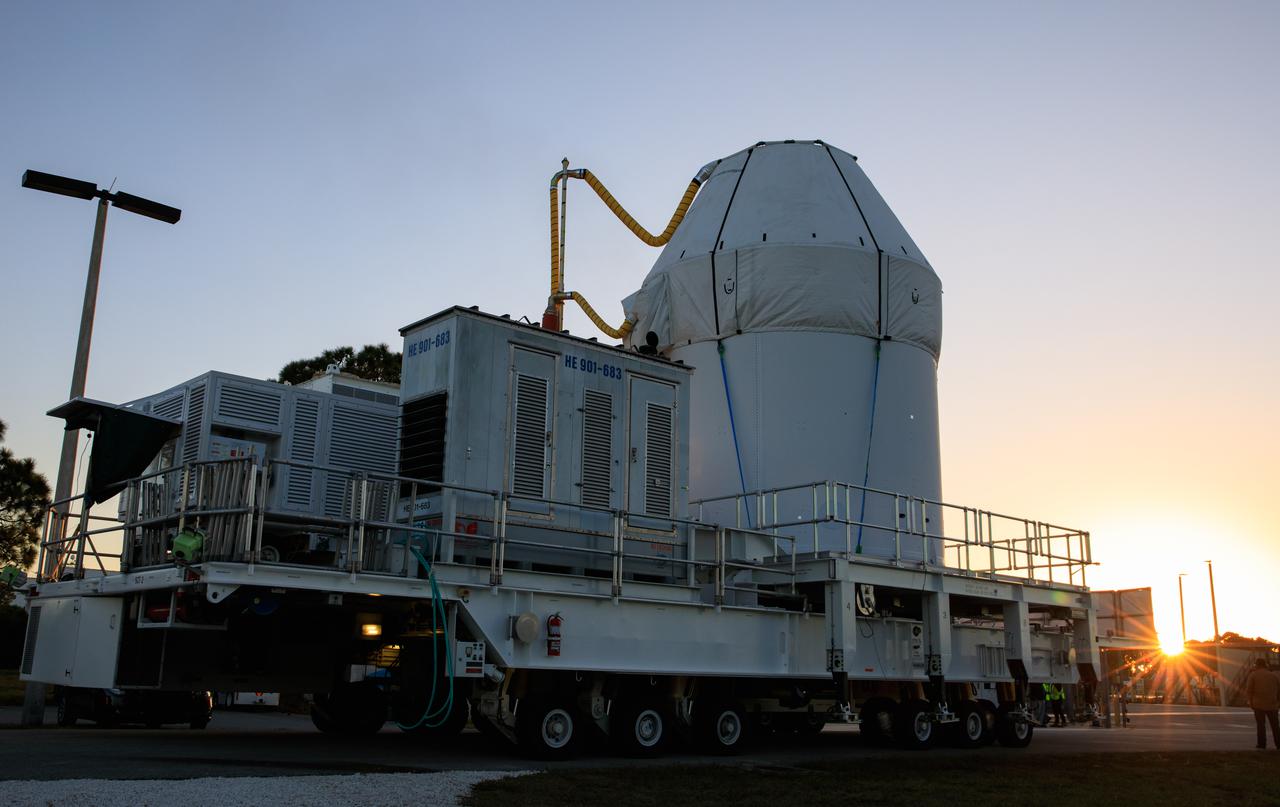
Secured atop a transport vehicle, Orion moves along the route to the Multi-Payload Processing Facility (MPPF) on Jan. 16, 2021, after departing from the Neil Armstrong Operations and Checkout Building at NASA’s Kennedy Space Center in Florida. In the MPPF, Orion will undergo processing with the the Exploration Ground Systems team taking over ground processing ahead of the Artemis I launch.

Orion is revealed for one of the final times on Jan. 14, as it is moved by crane to its transport pallet inside the Neil Armstrong Operations and Checkout Building at NASA’s Kennedy Space Center in Florida, along its path to the pad ahead of the Artemis I launch. Teams across the globe have worked tirelessly to assemble the spacecraft which will receive a protective covering prior to departing for the Multi-Payload Processing Facility to begin ground processing by the Exploration Ground Systems and Jacobs teams.
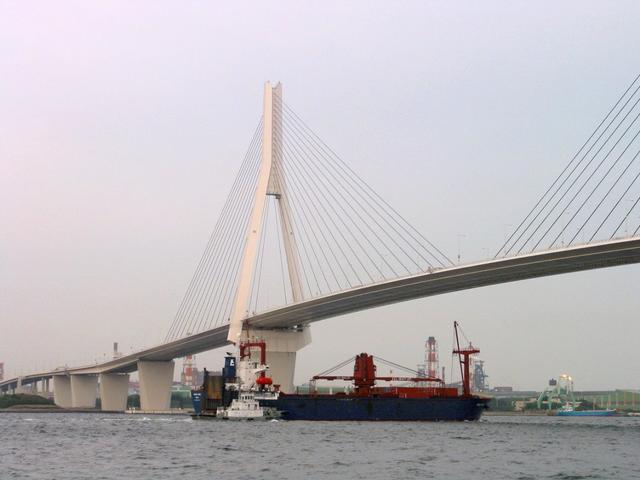
JSC2003-E-34750 (2 May 2003) --- A container transport ship carrying is shown departing Yokohama Harbor, Yokohama, Japan, bound for the Port Canaveral, Florida. The Kibo Pressurized Module, built by National Space Development Agency (NASDA), is expected to arrive at the Kennedy Space Center for module integration tests with Node 2 and pre-launch processing in early June. Photo Credit: NASA
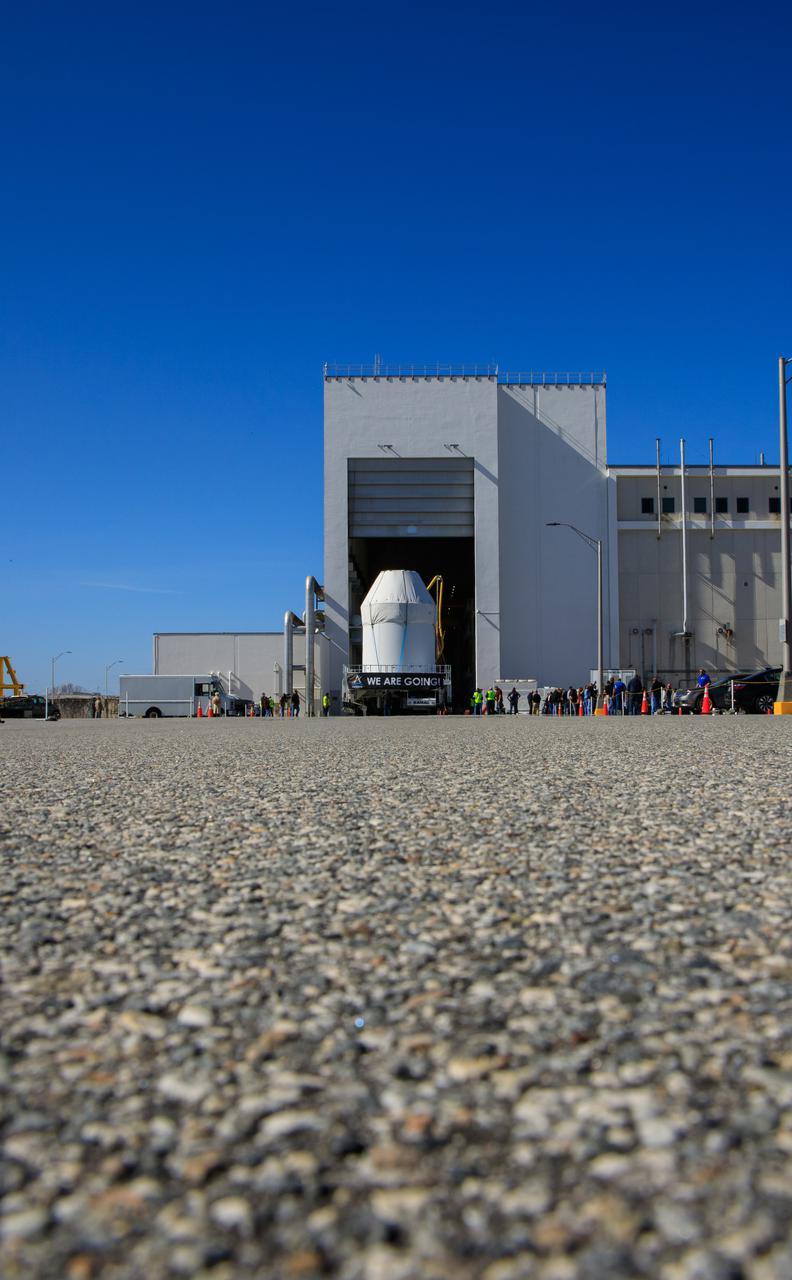
Orion sits atop a transport vehicle as it departs from its home at the Neil Armstrong Operations and Checkout Building at NASA’s Kennedy Space Center in Florida on Jan.16, 2021. Orion’s next stop will be the Multi-Payload Processing Facility where it will undergo ground processing with the Exploration Ground Systems team taking over ground processing ahead of the Artemis I launch.
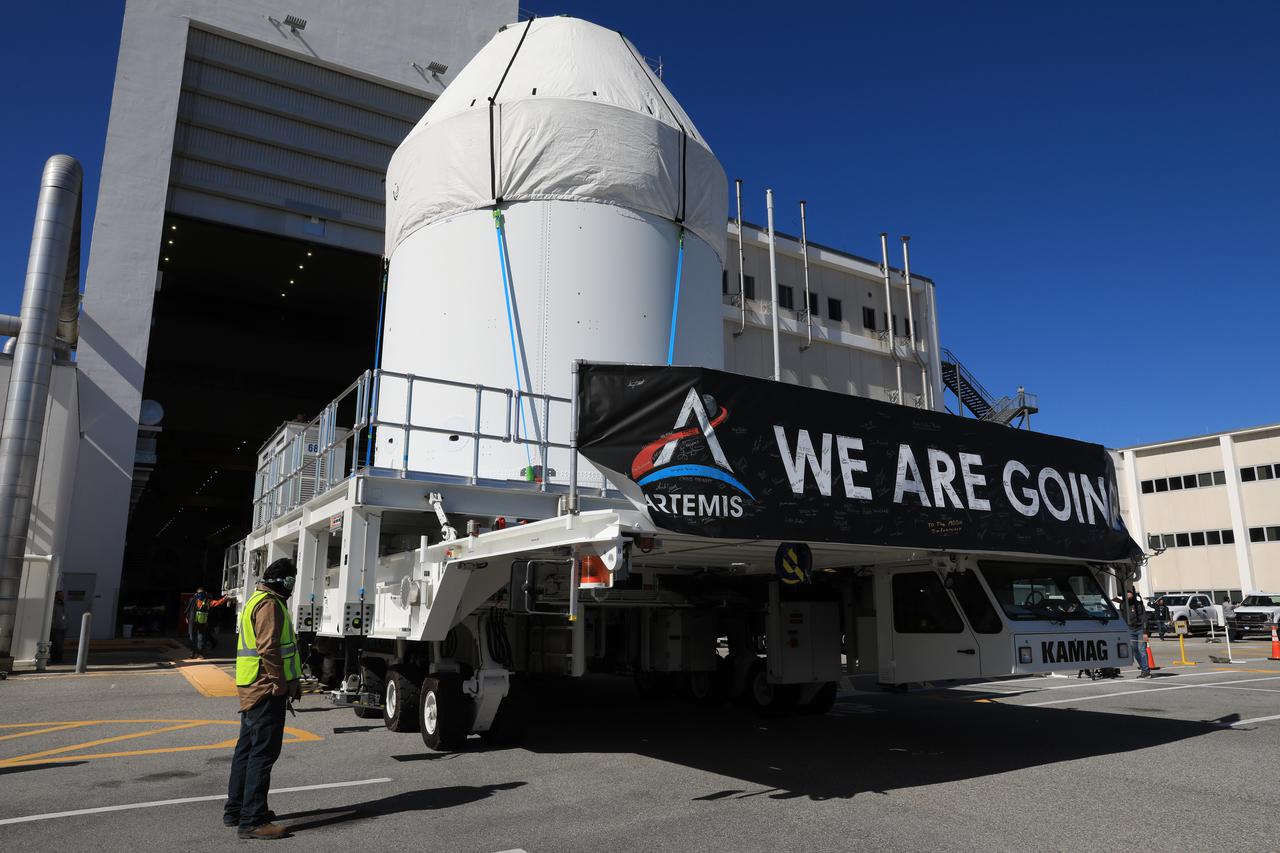
Orion is buttoned up and ready to march towards the Multi-Payload Processing Facility to begin ground processing by the Exploration Ground Systems and Jacobs teams ahead of the Artemis I launch. Shielded by a protective covering for transport, the spacecraft departs its home at the Neil Armstrong Operations and Checkout Building at NASA's Kennedy Space Center in Florida on Jan. 16, 2021.
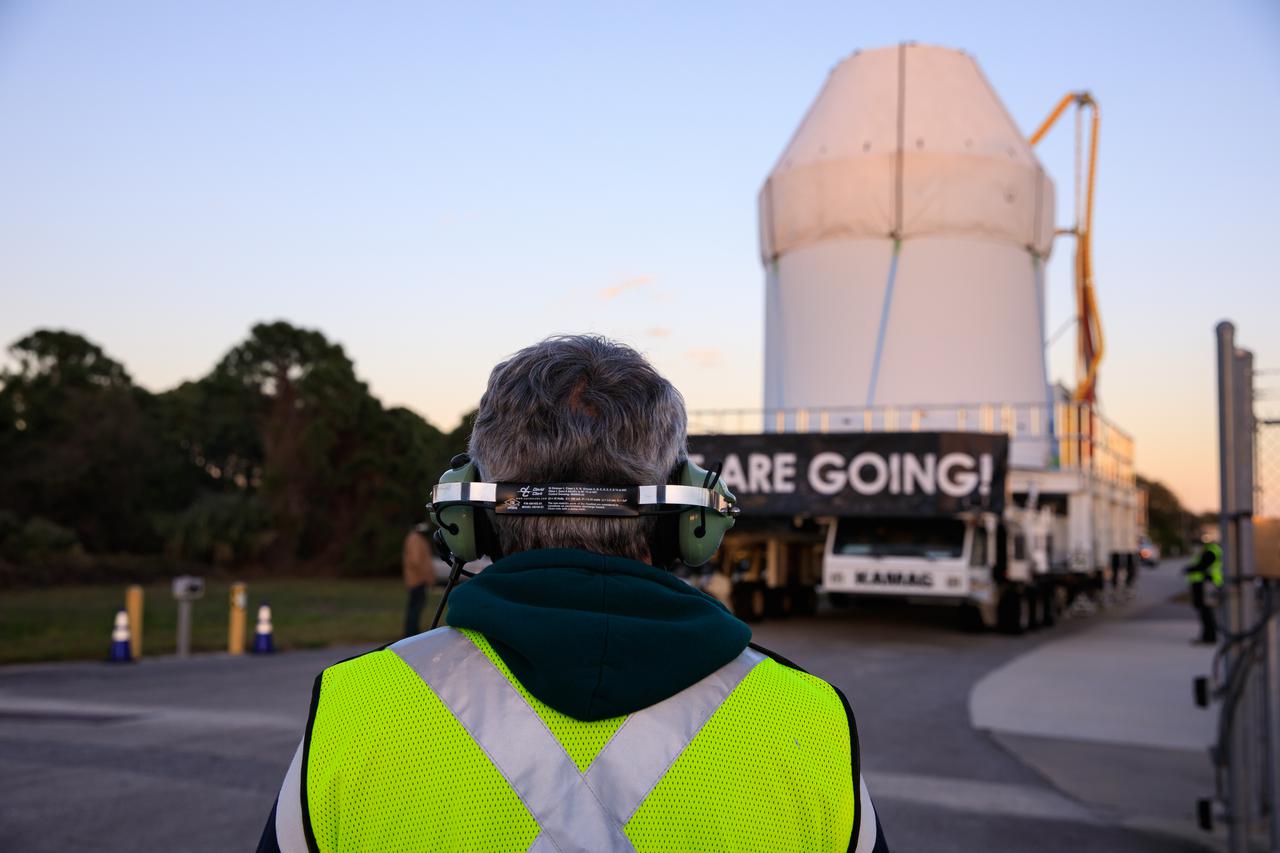
Secured atop a transport vehicle, Orion moves along the route to the Multi-Payload Processing Facility (MPPF) on Jan. 16, 2021, after departing from the Neil Armstrong Operations and Checkout Building at NASA’s Kennedy Space Center in Florida. In the MPPF, Orion will undergo processing with the Exploration Ground Systems team taking over ground processing ahead of the Artemis I launch.
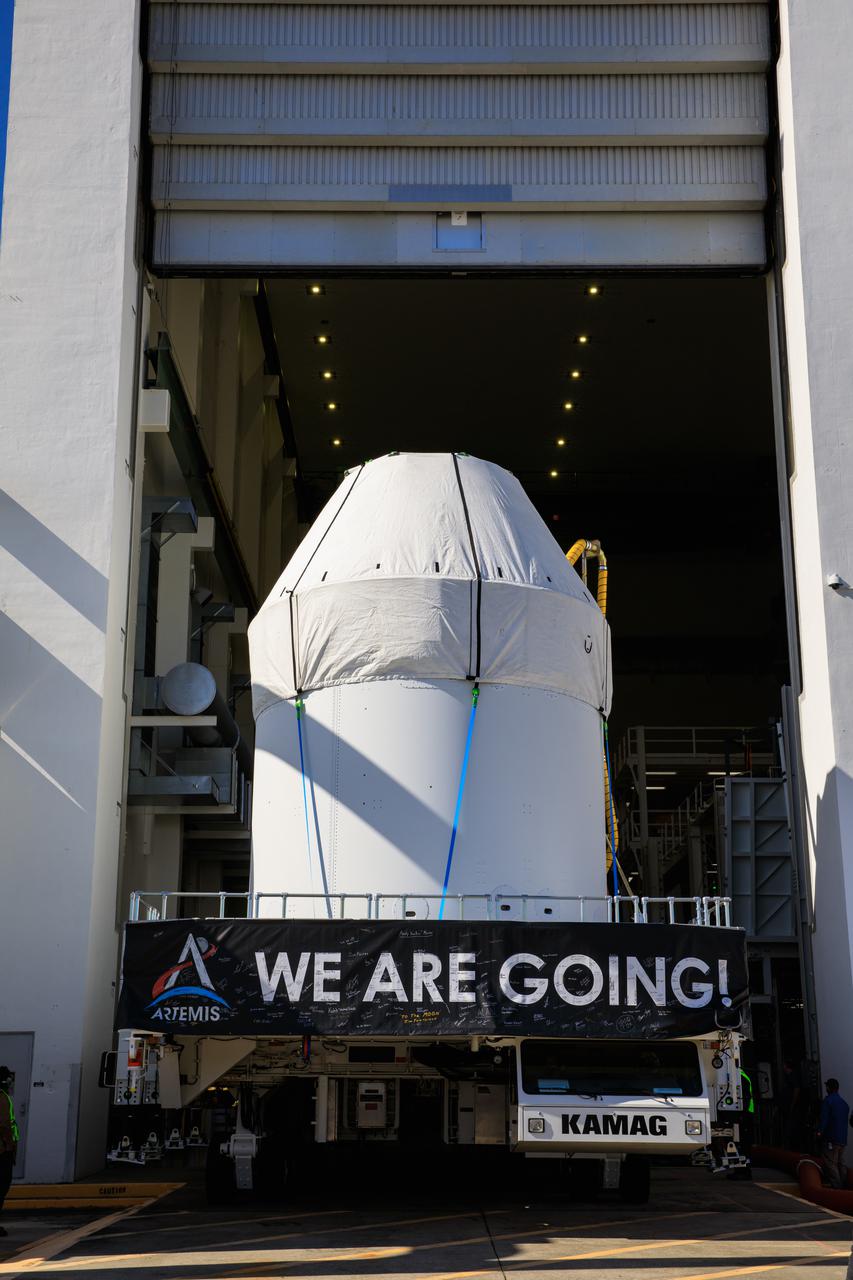
Orion is buttoned up as it sits atop a transport vehicle ready to depart from its home at the Neil Armstrong Operations and Checkout Building at NASA’s Kennedy Space Center in Florida on Jan.16, 2021. Orion will begin its trek to the Multi-Payload Processing Facility. There it will undergo ground processing with the Exploration Ground Systems team taking over ground processing ahead of the Artemis I launch.
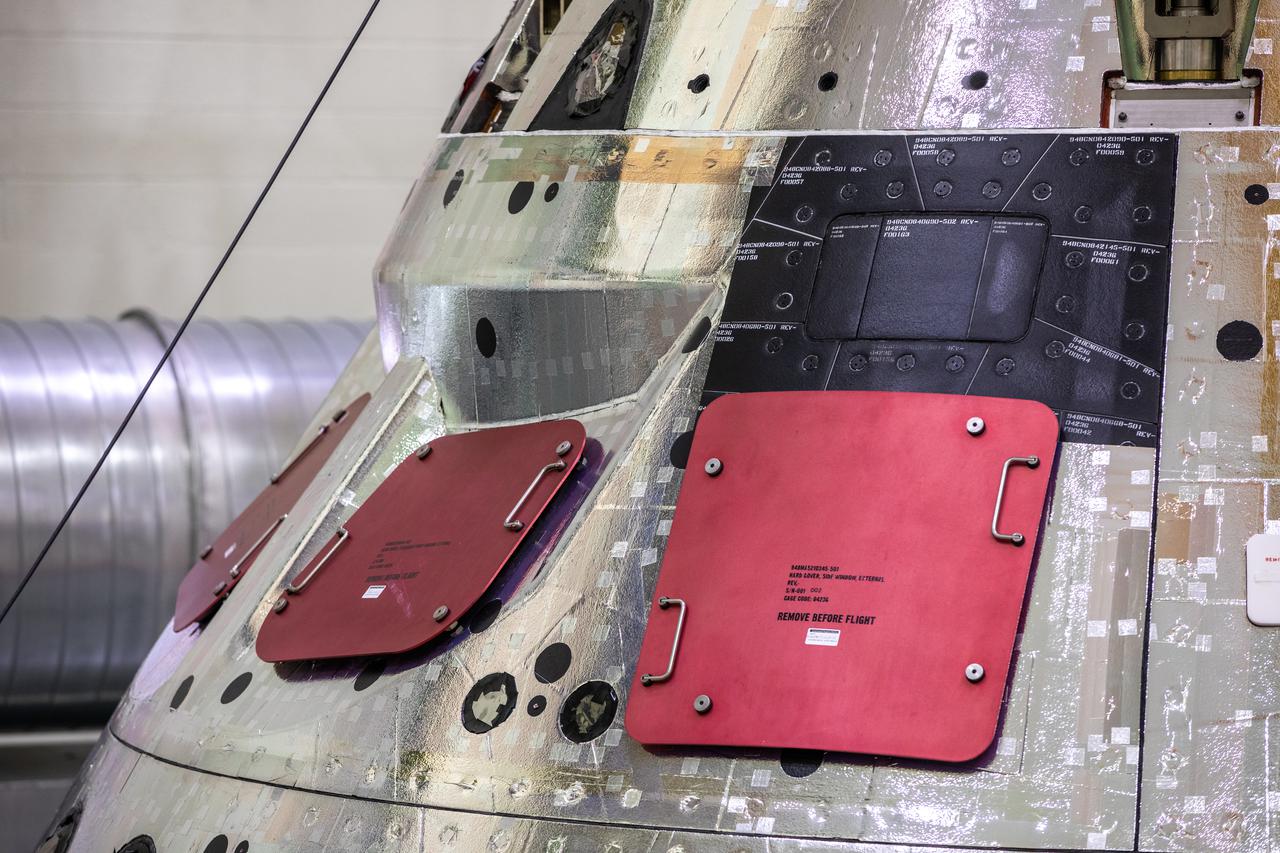
Orion is revealed for one of the final times on Jan. 14, as it is readied atop its transport pallet from the Neil Armstrong Operations and Checkout Building at NASA’s Kennedy Space Center in Florida, along its path to the pad ahead of the Artemis I launch. Teams across the globe have worked tirelessly to assemble the spacecraft which will receive a protective covering prior to departing for the Multi-Payload Processing Facility to begin ground processing by the Exploration Ground Systems and Jacobs teams.
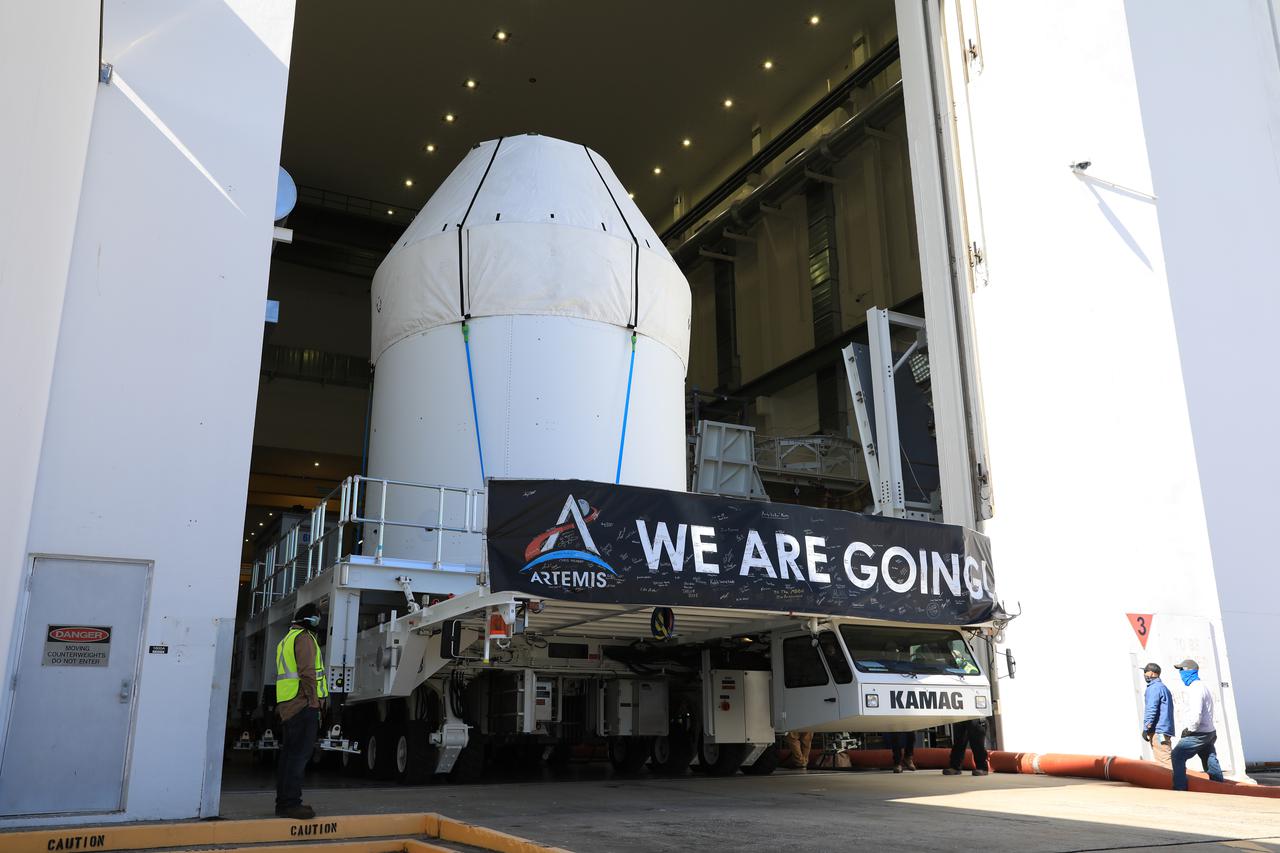
Orion is buttoned up and ready to march towards the Multi-Payload Processing Facility to begin ground processing by the Exploration Ground Systems and Jacobs teams ahead of the Artemis I launch. Shielded by a protective covering for transport, the spacecraft departs its home at the Neil Armstrong Operations and Checkout Building at NASA's Kennedy Space Center in Florida on Jan. 16, 2021.
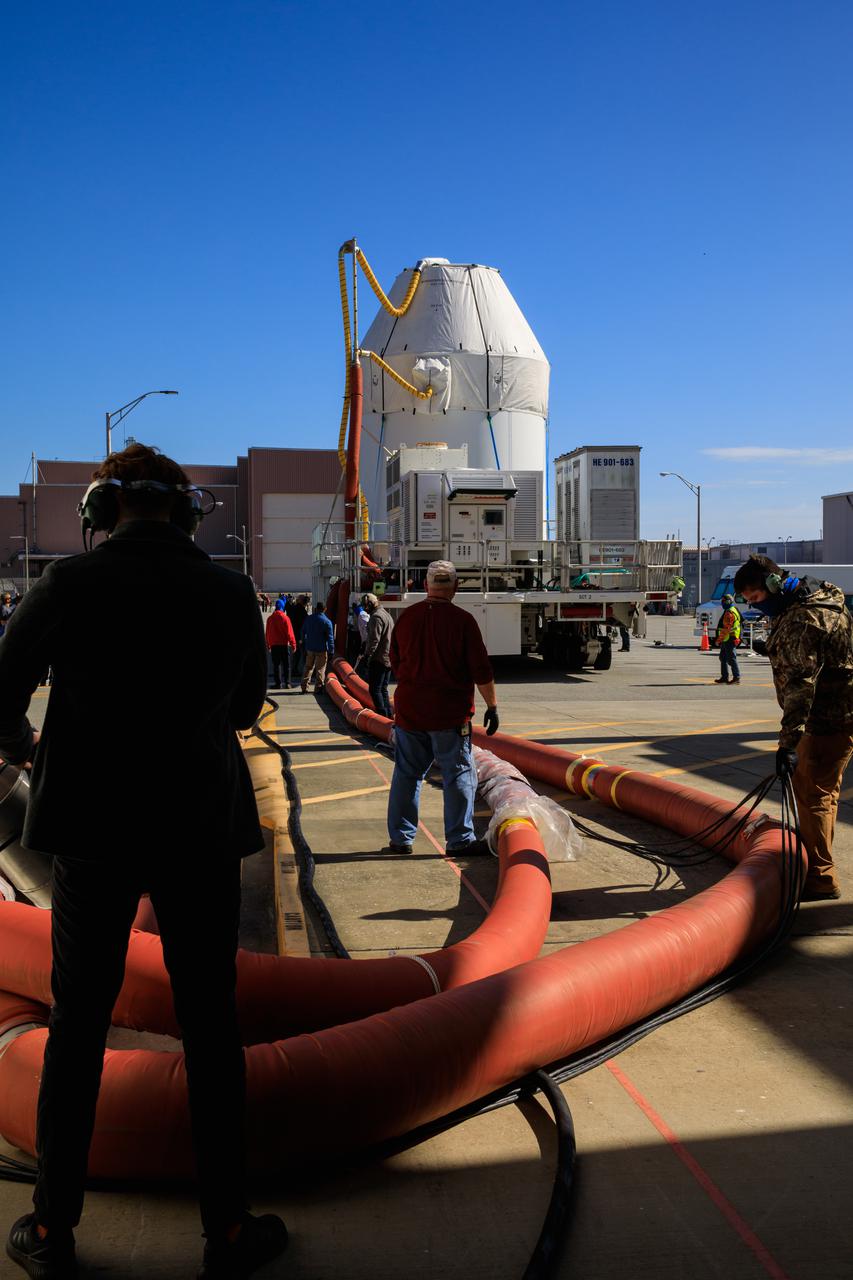
Orion sits atop a transport vehicle as it departs from its home at the Neil Armstrong Operations and Checkout Building at NASA’s Kennedy Space Center in Florida on Jan.16, 2021. Orion will begin its trek to the Multi-Payload Processing Facility. There it will undergo ground processing with the Exploration Ground Systems team taking over ground processing ahead of the Artemis I launch.
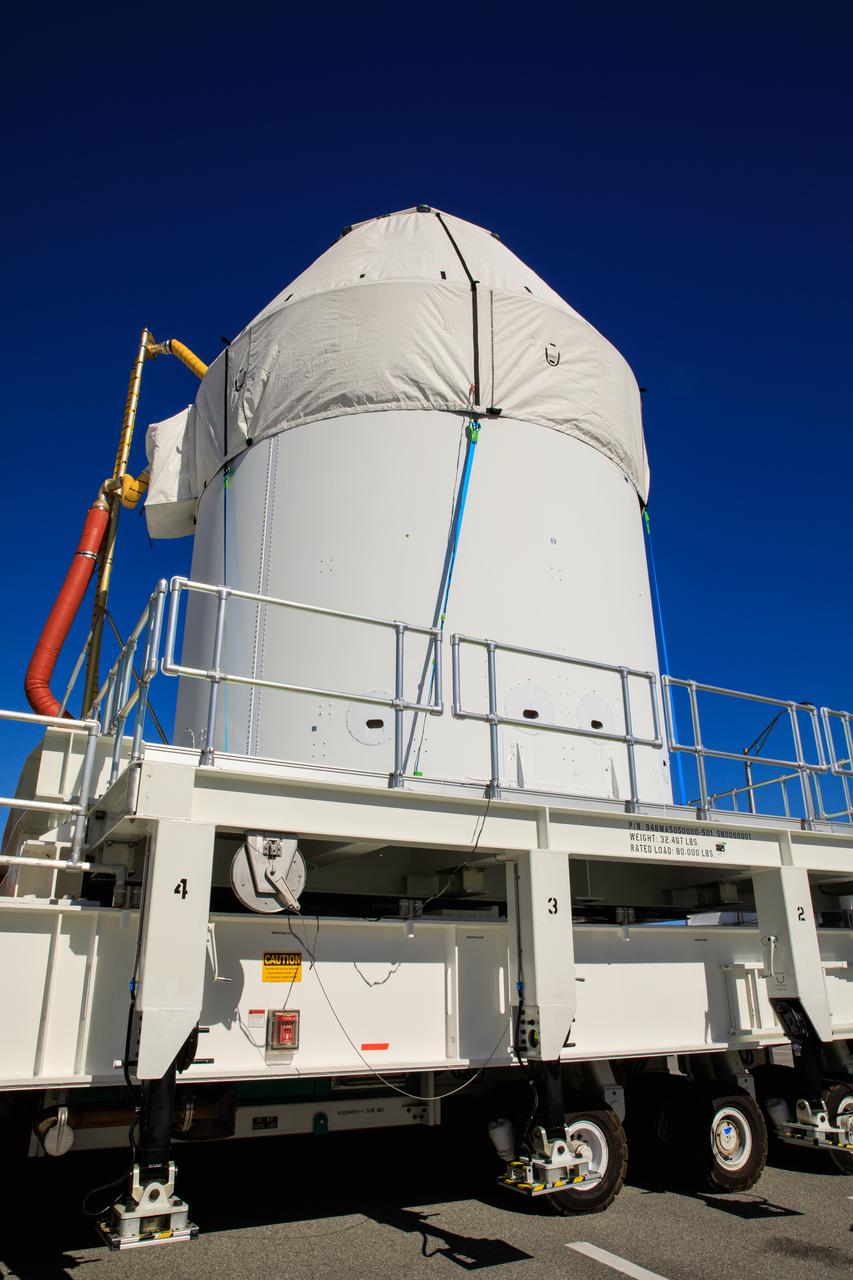
Orion sits atop a transport vehicle as it departs from its home at the Neil Armstrong Operations and Checkout Building at NASA’s Kennedy Space Center in Florida on Jan.16, 2021. Orion will begin its trek to the Multi-Payload Processing Facility. There it will undergo ground processing with the Exploration Ground Systems team taking over ground processing ahead of the Artemis I launch.
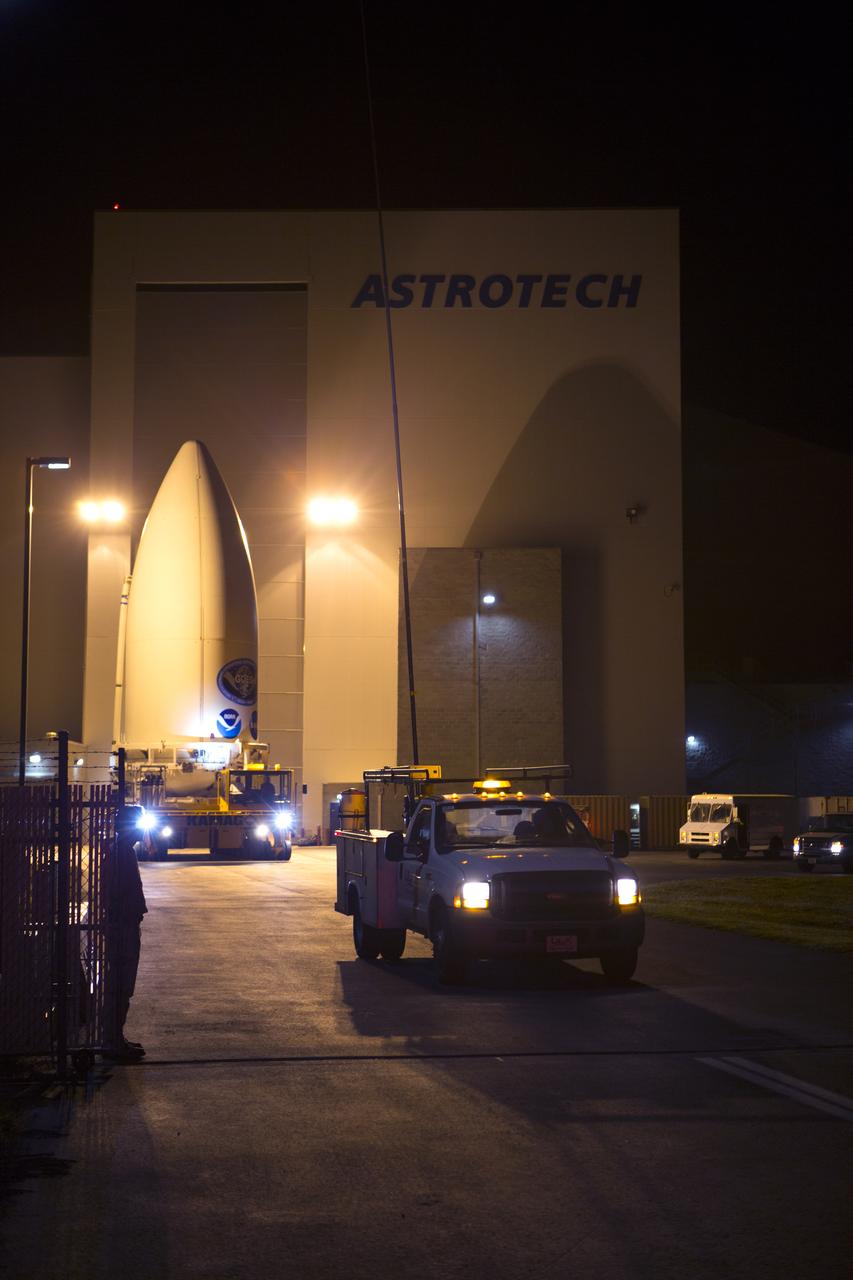
Enclosed in its payload fairing, NOAA's Geostationary Operational Environmental Satellite (GOES-R) departs from the Astrotech payload processing facility in Titusville, Florida, near NASA's Kennedy Space Center. GOES-R will be transported to the Vertical Integration Facility at Space Launch Complex 41 at Cape Canaveral Air Force Station. The satellite will launch aboard a United Launch Alliance Atlas V rocket in November. GOES-R is the first satellite in a series of next-generation NOAA GOES Satellites.

Kennedy Space Center Director Bob Cabana, left, talks with Florida Department of Transportation Secretary Kevin Thibault during a ceremony on Jan. 10, 2020, to recognize the Vehicle Assembly Building with the National Historic Civil Engineering Landmark award. The Florida Section American Society of Civil Engineers nominated the historic building and bestowed the award. The VAB is the first building at Kennedy Space Center to earn this distinction. At the time of its completion, the 129-million-cubic-foot structure was the largest building in the world. Originally designed and built to accommodate the Saturn V/Apollo used in Project Apollo, the VAB was later modified for its role in the Space Shuttle Program.
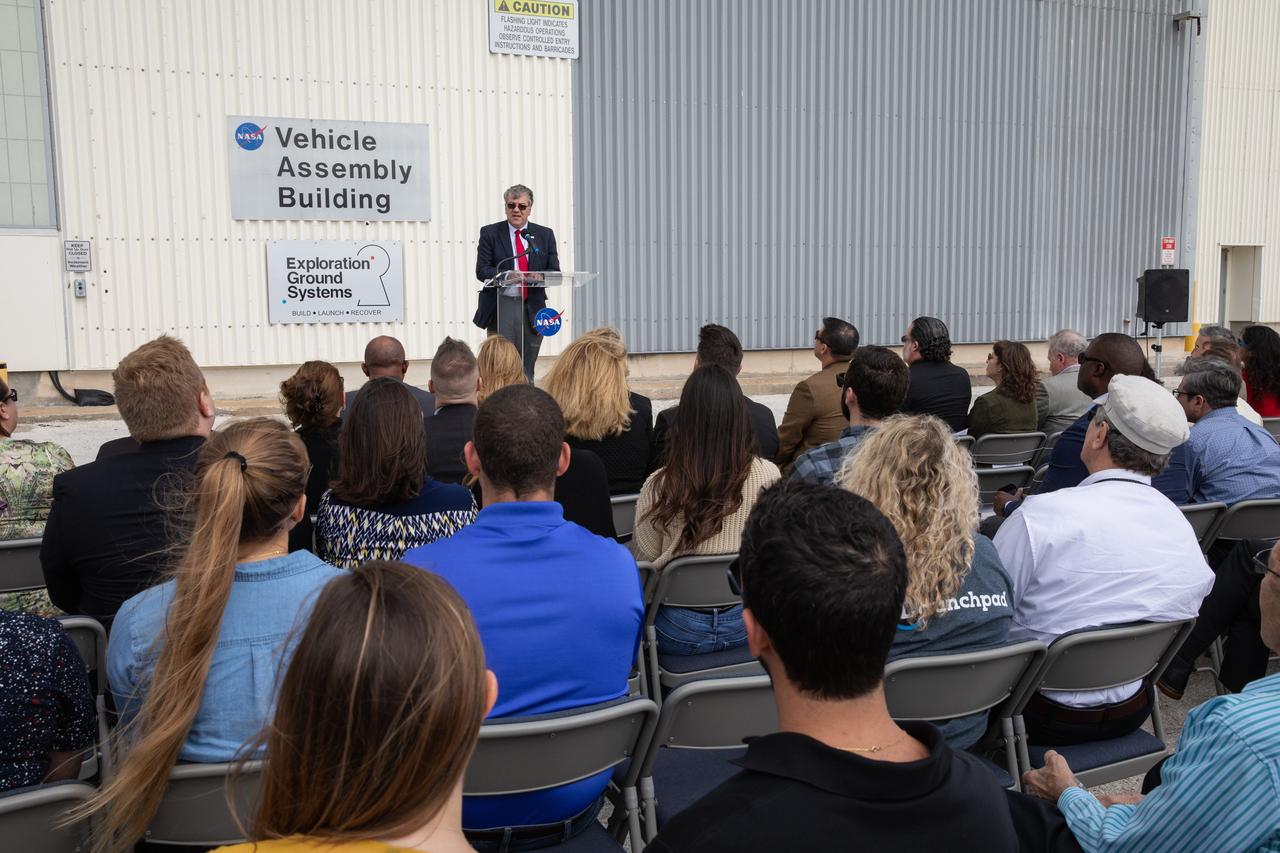
Florida Department of Transportation Secretary Kevin Thibault speaks to attendees during a ceremony on Jan. 10, 2020, to recognize the Vehicle Assembly Building with the National Historic Civil Engineering Landmark award. The Florida Section American Society of Civil Engineers nominated the historic building and bestowed the award. The VAB is the first building at Kennedy Space Center to earn this distinction. At the time of its completion, the 129-million-cubic-foot structure was the largest building in the world. Originally designed and built to accommodate the Saturn V/Apollo used in Project Apollo, the VAB was later modified for its role in the Space Shuttle Program.
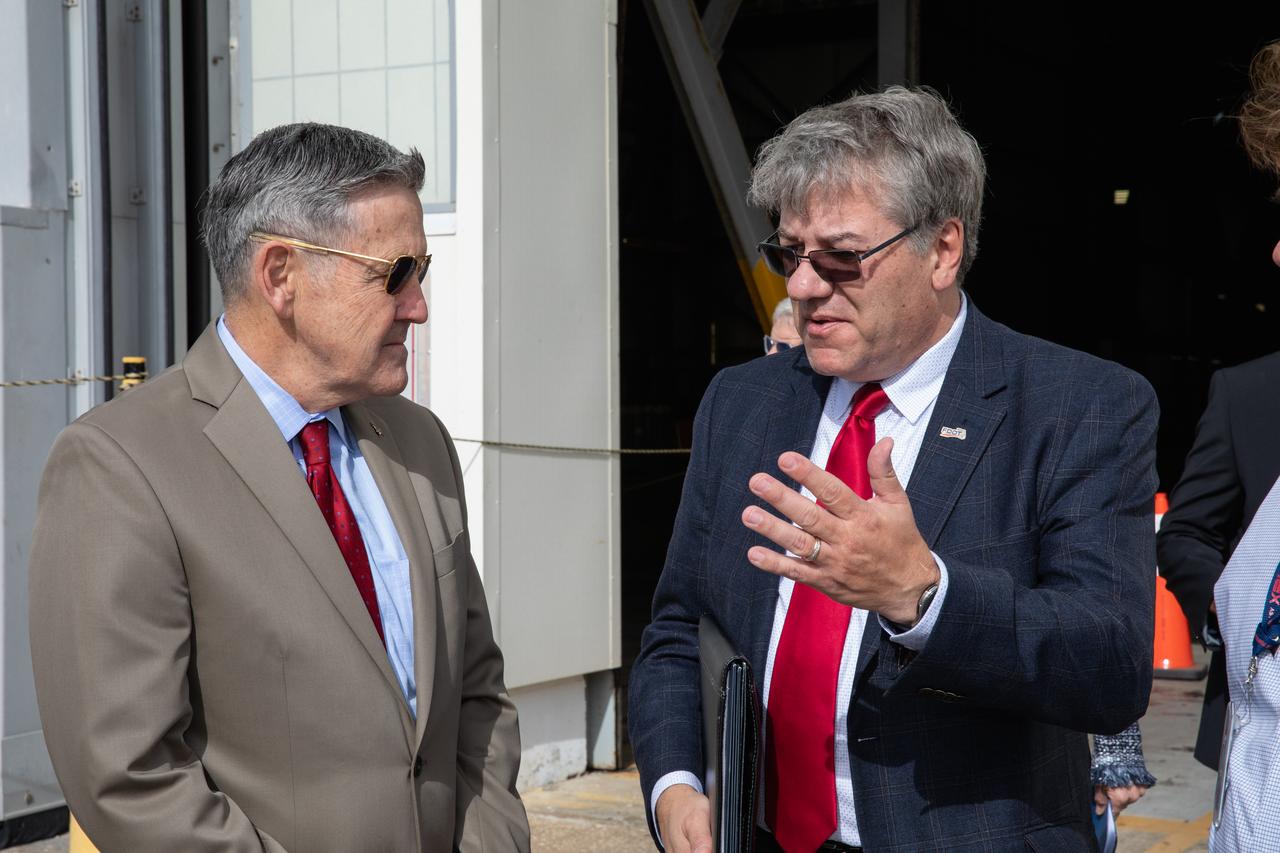
Kennedy Space Center Director Bob Cabana, left, talks with Florida Department of Transportation Secretary Kevin Thibault during a ceremony on Jan. 10, 2020, to recognize the Vehicle Assembly Building with the National Historic Civil Engineering Landmark award. The Florida Section American Society of Civil Engineers nominated the historic building and bestowed the award. The VAB is the first building at Kennedy Space Center to earn this distinction. At the time of its completion, the 129-million-cubic-foot structure was the largest building in the world. Originally designed and built to accommodate the Saturn V/Apollo used in Project Apollo, the VAB was later modified for its role in the Space Shuttle Program.
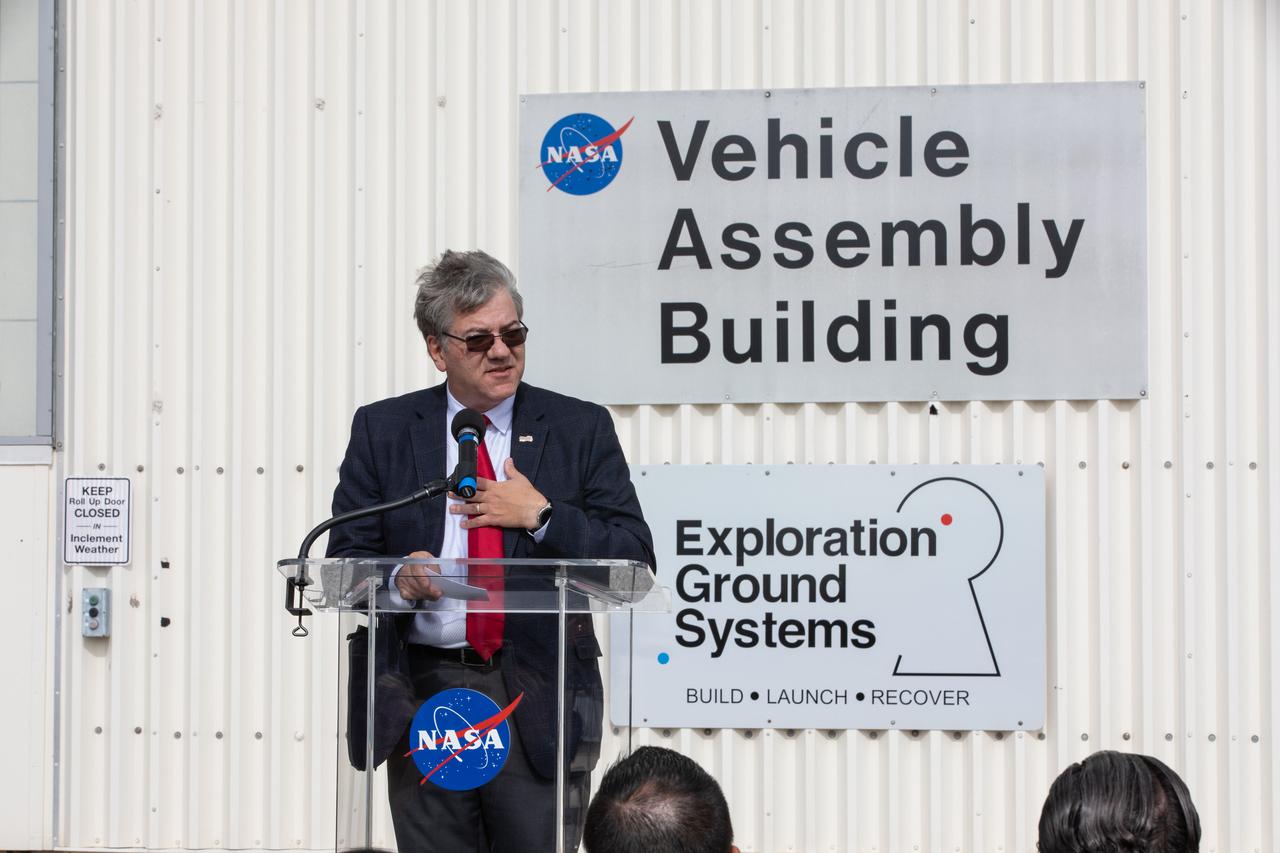
Florida Department of Transportation Secretary Kevin Thibault speaks to attendees during a ceremony on Jan. 10, 2020, to recognize the Vehicle Assembly Building with the National Historic Civil Engineering Landmark award. The Florida Section American Society of Civil Engineers nominated the historic building and bestowed the award. The VAB is the first building at Kennedy Space Center to earn this distinction. At the time of its completion, the 129-million-cubic-foot structure was the largest building in the world. Originally designed and built to accommodate the Saturn V/Apollo used in Project Apollo, the VAB was later modified for its role in the Space Shuttle Program.

CAPE CANAVERAL, Fla. -- At NASA's Kennedy Space Center in Florida, Mark Huetter, assistant chief of Training for the center's Fire Rescue Department, is interviewed near the Shuttle Landing Facility. He discussed working with pilots in NASA Aircraft Operations to develop procedures for using agency helicopters to transport injured patients to a local hospital. The training activity took place in Kennedy's Launch Complex 39 turn-basin parking lot. It was part of a new training program developed by Kennedy's Fire Rescue department along with NASA Aircraft Operations to sharpen the skills needed to help rescue personnel learn how to collaborate with helicopter pilots in taking injured patients to hospitals as quickly as possible. Photo credit: NASA/Dimitri Gerondidakis

CAPE CANAVERAL, Fla. -- At NASA's Kennedy Space Center in Florida, Mark Huetter, assistant chief of Training for the center's Fire Rescue Department, is interviewed near the Shuttle Landing Facility. He discussed working with pilots in NASA Aircraft Operations to develop procedures for using agency helicopters to transport injured patients to a local hospital. The training activity took place in Kennedy's Launch Complex 39 turn-basin parking lot. It was part of a new training program developed by Kennedy's Fire Rescue department along with NASA Aircraft Operations to sharpen the skills needed to help rescue personnel learn how to collaborate with helicopter pilots in taking injured patients to hospitals as quickly as possible. Photo credit: NASA/Dimitri Gerondidakis
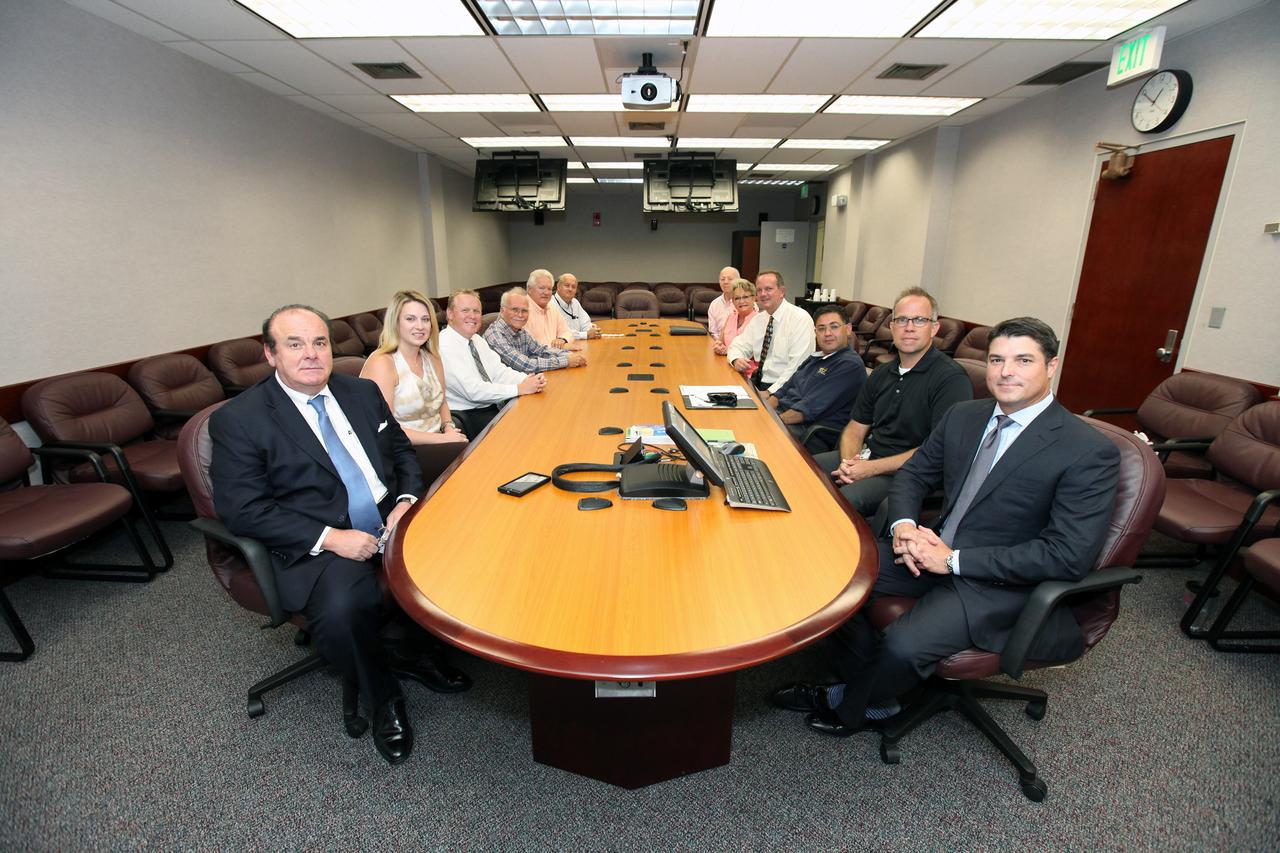
NASA, local and state officials met at Kennedy Space Center in Florida for the sixth KSC Roundtable, in which participants exchanged ideas about the center’s current plans. The meeting was hosted by Kennedy’s Center Planning and Development Directorate (CPD). Seated from left to right are Greg Weiner of the Economic Development Commission of Florida’s Space Coast; Ashley Guinn, legislative assistant to Steve Crisafulli, speaker of the Florida House of Representatives; Todd Pokrywa of The Viera Co.; Charles Lee of the Florida Audubon Society; Rich Biter, former assistant secretary of Intermodal Systems Development, Florida Department of Transportation (FDOT); David Pierce of CPD; Marshall Heard, retired Boeing senior executive; Nancy Potts of CPD; Tom Engler, acting director of CPD; Moataz Hassan of FDOT District 5; Trey Carlson of CPD; and Rep. Crisafulli.
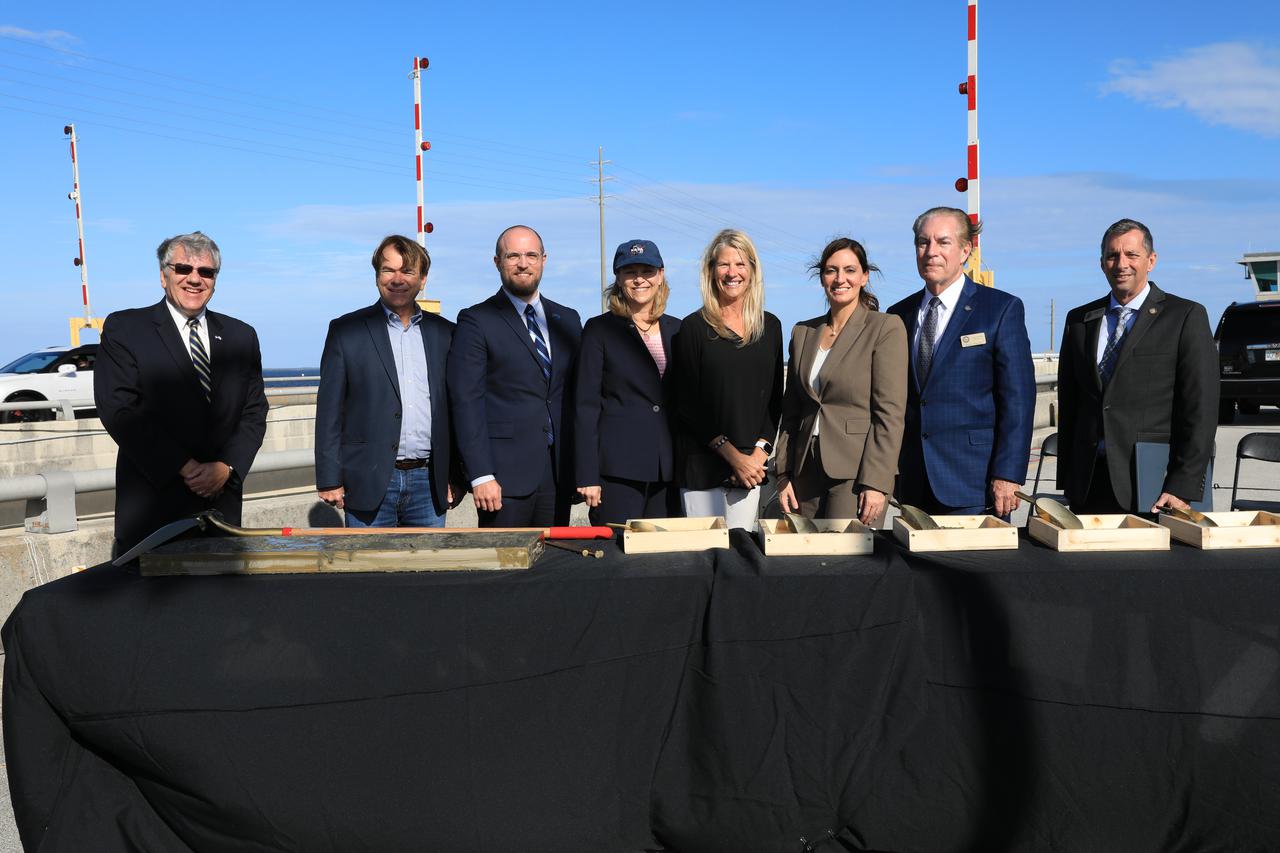
Center Director Janet Petro joins partners and elected officials for a groundbreaking ceremony on a new NASA Causeway bridge over the Indian River leading to NASA’s Kennedy Space Center on Merritt Island in Florida. The construction is made possible through a $90M Infrastructure for Rebuilding America (INFRA) grant, which was awarded thanks to an extensive effort by NASA, the State of Florida – through Florida Department of Transportation and Space Florida – as well as support from industry partners, other local, state, and federal government agencies. The new bridge enables Kennedy’s growth as a multi-user spaceport and will allow NASA to better support the space industry. Construction is scheduled to take several years. To commemorate the day, speakers left a handprint and signed their name in cement.
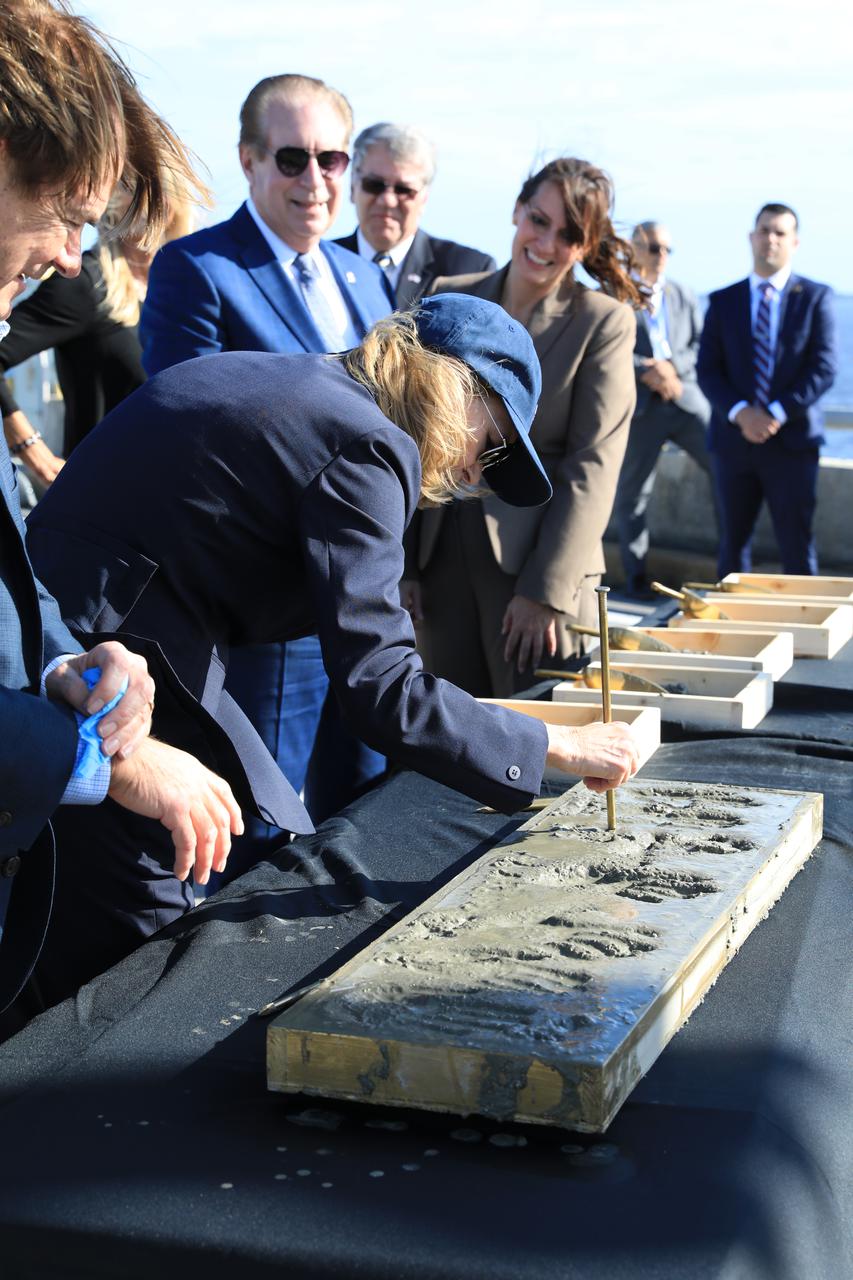
Center Director Janet Petro joins partners and elected officials for a groundbreaking ceremony on a new NASA Causeway bridge over the Indian River leading to NASA’s Kennedy Space Center on Merritt Island in Florida. The construction is made possible through a $90M Infrastructure for Rebuilding America (INFRA) grant, which was awarded thanks to an extensive effort by NASA, the State of Florida – through Florida Department of Transportation and Space Florida – as well as support from industry partners, other local, state, and federal government agencies. The new bridge enables Kennedy’s growth as a multi-user spaceport and will allow NASA to better support the space industry. Construction is scheduled to take several years. To commemorate the day, speakers left a handprint and signed their name in cement.
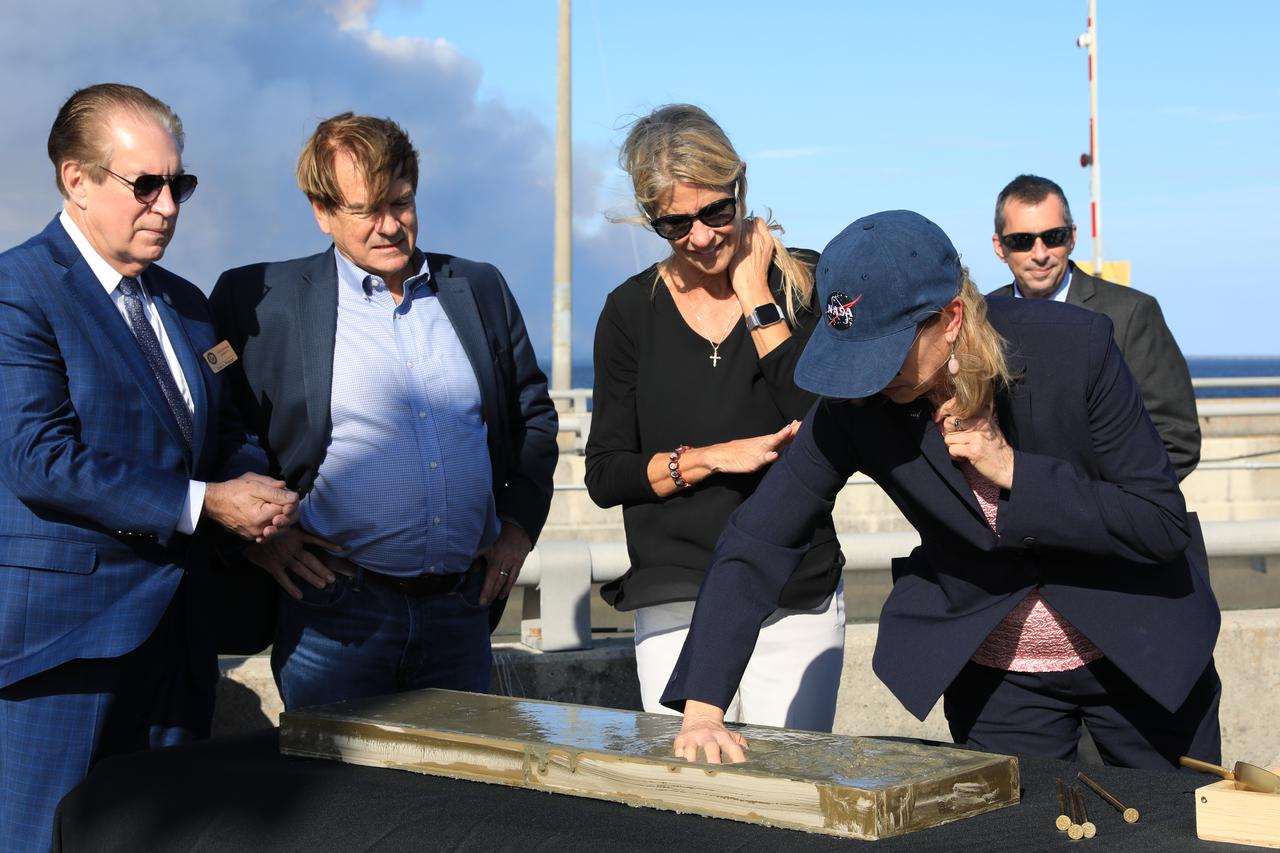
Center Director Janet Petro joins partners and elected officials for a groundbreaking ceremony on a new NASA Causeway bridge over the Indian River leading to NASA’s Kennedy Space Center on Merritt Island in Florida. The construction is made possible through a $90M Infrastructure for Rebuilding America (INFRA) grant, which was awarded thanks to an extensive effort by NASA, the State of Florida – through Florida Department of Transportation and Space Florida – as well as support from industry partners, other local, state, and federal government agencies. The new bridge enables Kennedy’s growth as a multi-user spaceport and will allow NASA to better support the space industry. Construction is scheduled to take several years. To commemorate the day, speakers left a handprint and signed their name in cement.
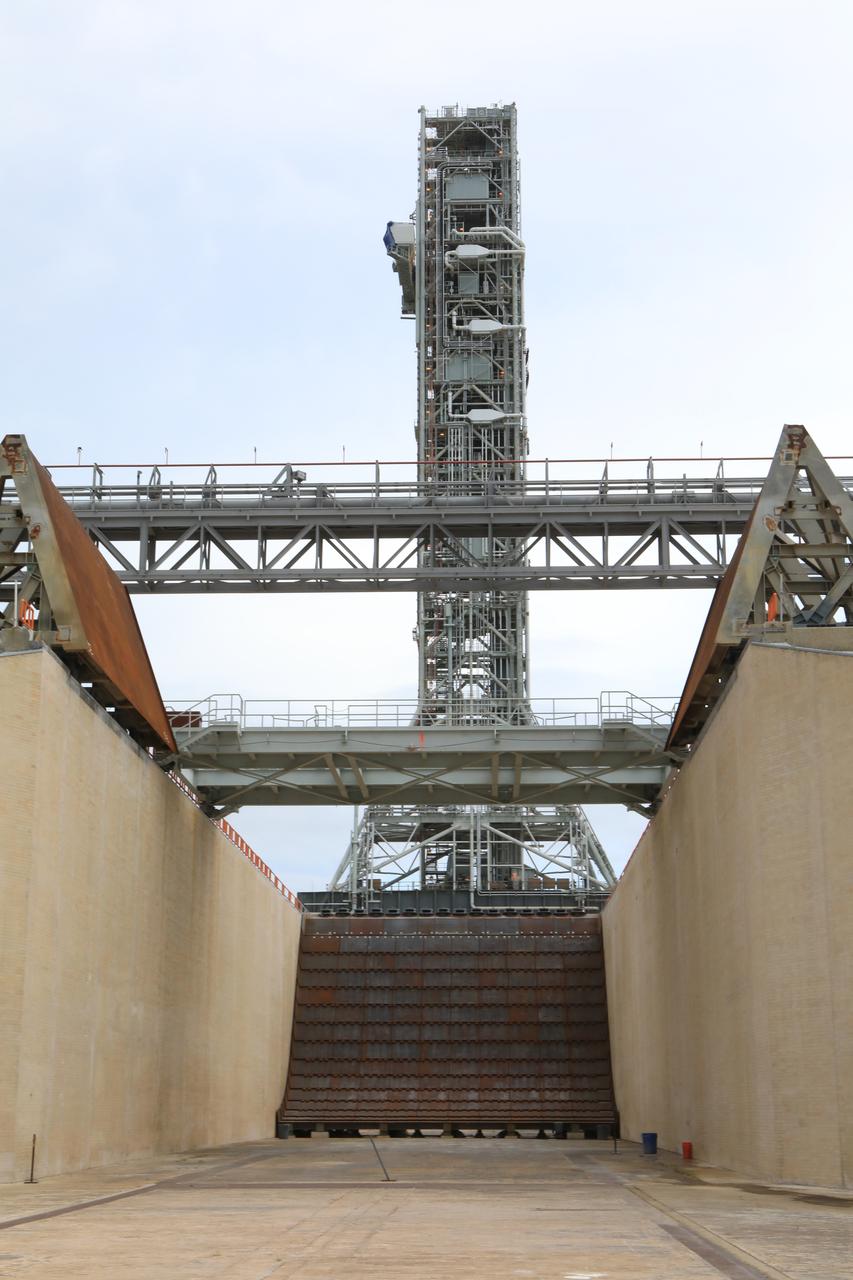
In this view from the flame trench at Kennedy Space Center’s Launch Complex 39B in Florida, Exploration Ground Systems’ mobile launcher can be seen on the pad surface on June 28, 2019. The mobile launcher began its final solo trek – atop crawler-transporter 2 – to the pad at midnight on June 27, departing from NASA’s Vehicle Assembly Building and continuing up to the pad surface on June 28. The mobile launcher will remain at the pad over the summer, undergoing final testing and checkouts. Its next roll to the pad will be with the agency’s Space Launch System rocket and Orion in preparation for the launch of Artemis 1.
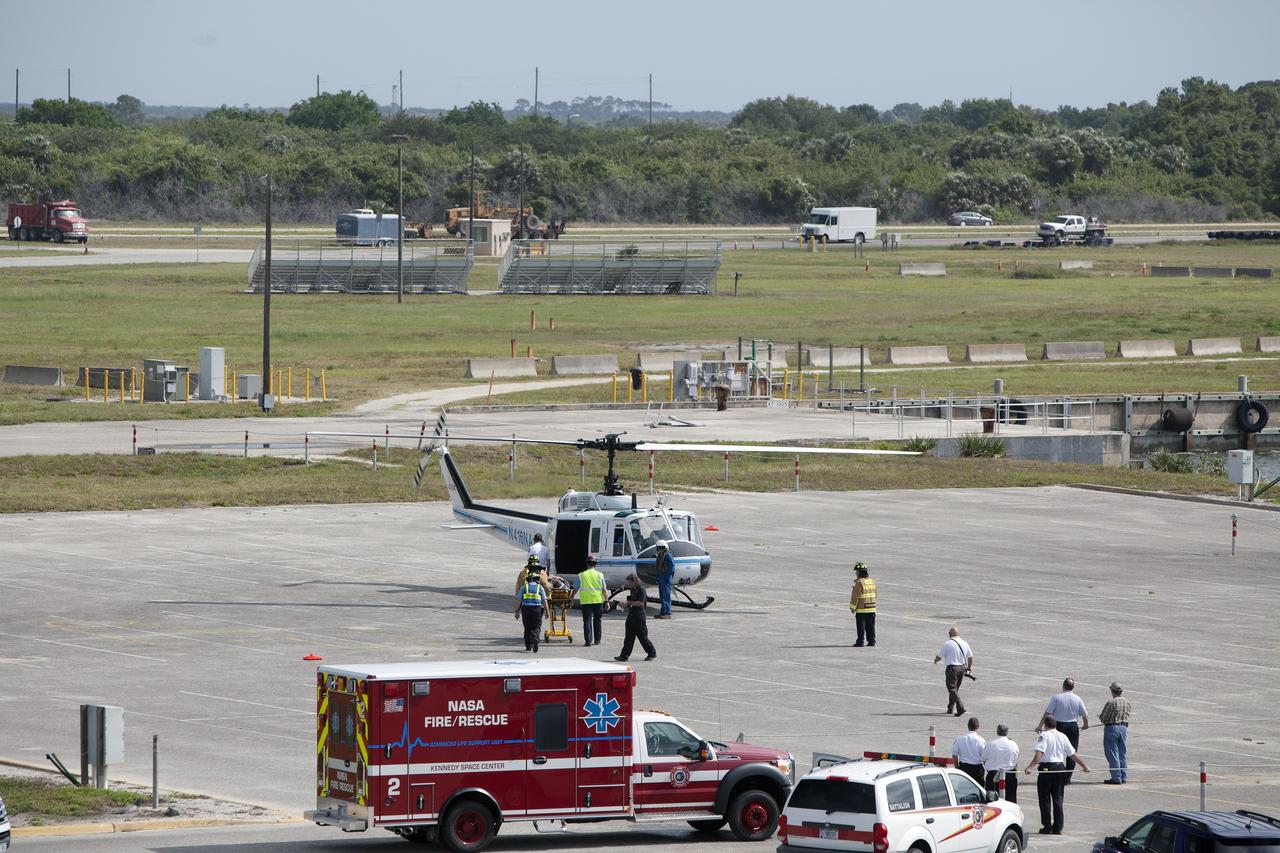
CAPE CANAVERAL, Fla. -- At NASA's Kennedy Space Center in Florida, paramedics and Fire Rescue personnel move a stretcher to the waiting helicopter as they work quickly to have the patient ready to transport five minutes after he was removed from a vehicle. The activity taking place in Kennedy's Launch Complex 39 turn-basin parking lot was only one of several drills. It was part of a new training program that was developed by Kennedy's Fire Rescue department along with NASA Aircraft Operations to sharpen the skills needed to help rescue personnel learn how to collaborate with helicopter pilots in taking injured patients to hospitals as quickly as possible. Photo credit: NASA/Dan Casper
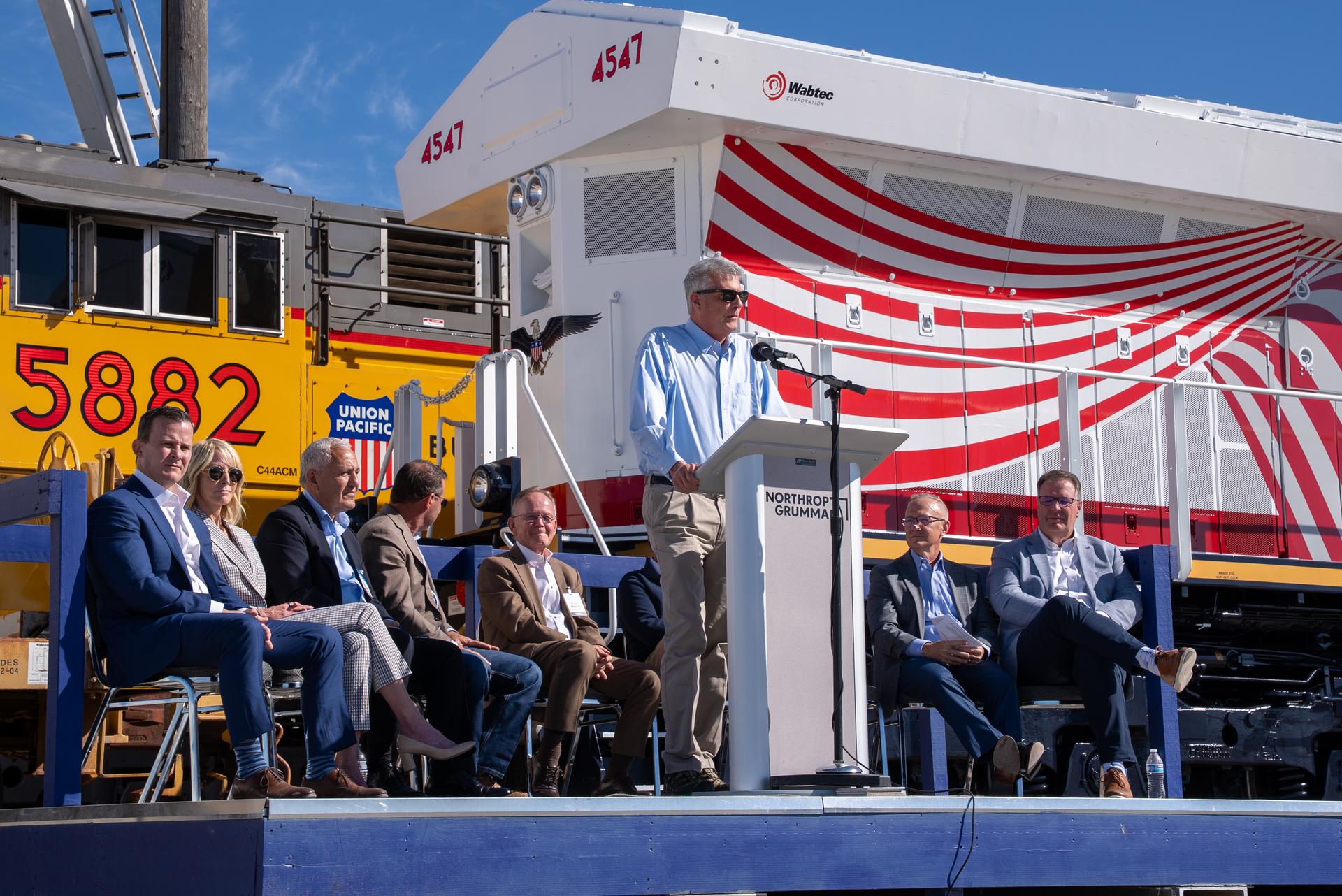
These images capture the final booster motor segments for NASA’s Artemis III mission departing Northrop Grumman’s Railyard Shipping Facility in Corinne, Utah, June 2. The eight segments will form the twin five-segment solid rocket boosters for the agency’s SLS (Space Launch System) rocket, providing more than 75% of the vehicle’s total thrust at liftoff. Due to their immense size and weight, the booster segments are transported in specialized carriers and are being hauled by Union Pacific Railroad’s newest commemorative locomotive, No. 4547. Marking its inaugural mission, the locomotive will deliver the flight hardware to NASA’s Kennedy Space Center in Florida, where stacking operations for Artemis III are set to begin later this year.
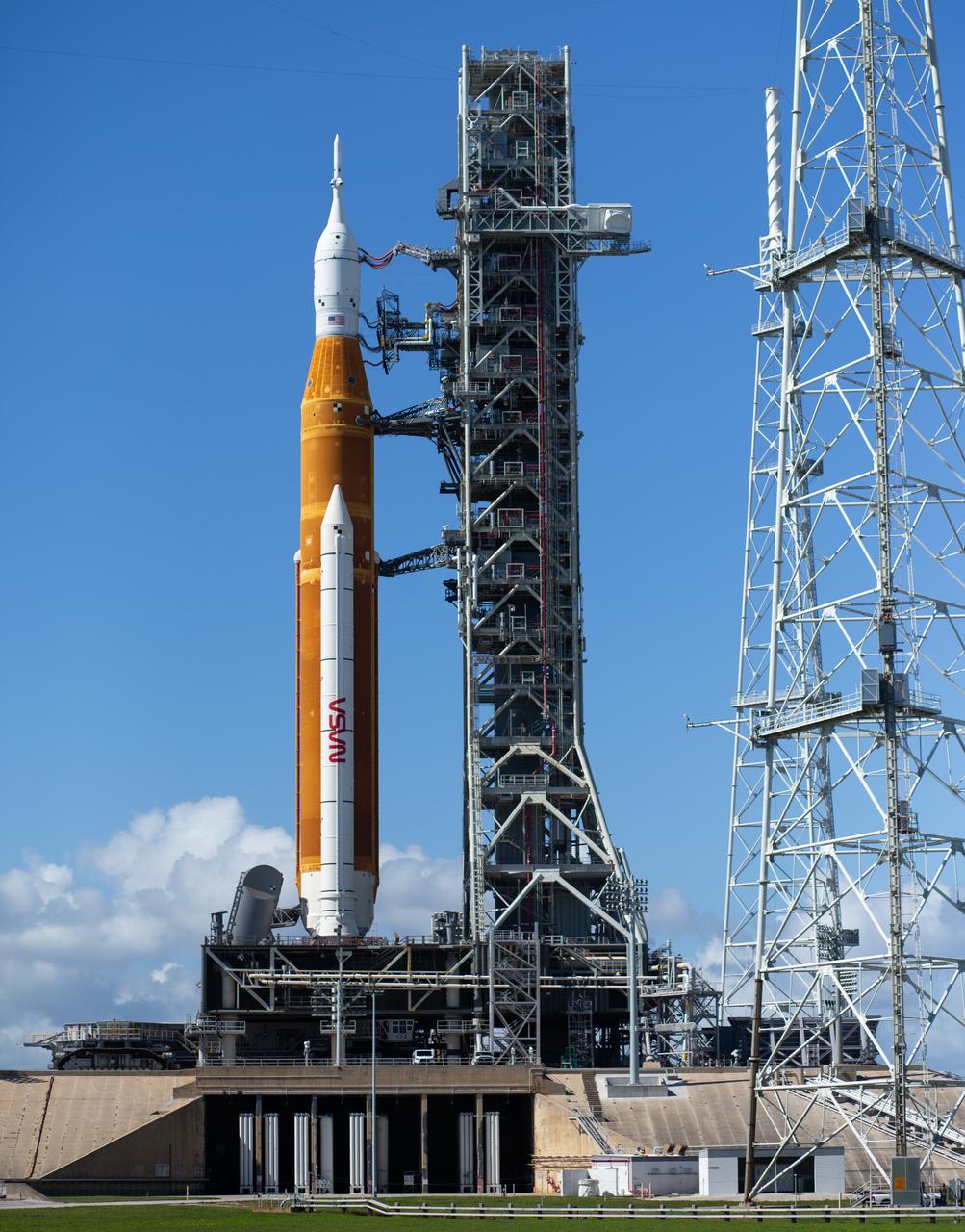
NASA’s Space Launch System (SLS) rocket with the Orion spacecraft aboard is seen atop a mobile launcher at Launch Pad 39B as Crawler Transporter-2 (CT-2) begins to depart the pad, Friday, Nov. 4, 2022, after being rolled out to the launch pad at NASA’s Kennedy Space Center in Florida. NASA’s Artemis I mission is the first integrated test of the agency’s deep space exploration systems: the Orion spacecraft, SLS rocket, and supporting ground systems. Launch of the uncrewed flight test is targeted for Nov. 14 at 12:07 a.m. EST. Photo Credit: (NASA/Joel Kowsky)
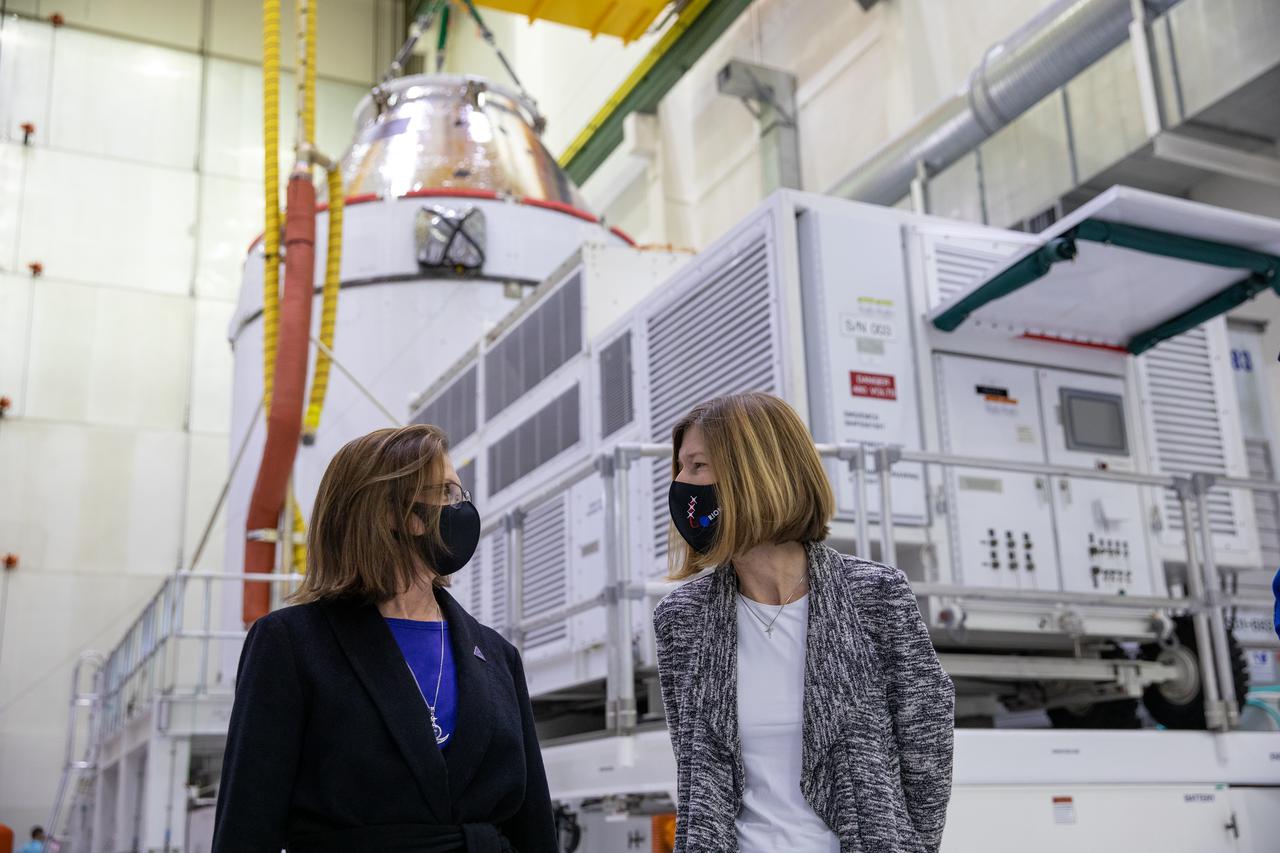
Orion is revealed for one of the final times on Jan. 14, as it is readied atop its transport pallet from the Neil Armstrong Operations and Checkout Building at NASA’s Kennedy Space Center in Florida, along its path to the pad ahead of the Artemis I launch. Viewing Orion in the high bay, from left, are Cathy Koerner, Orion Program Manager, and Kathy Lueders, associated administrator of the Human Exploration and Operations Mission Directorate. Teams across the globe have worked tirelessly to assemble the spacecraft, which will receive a protective covering prior to departing for the Multi-Payload Processing Facility to begin ground processing by the Exploration Ground Systems and Jacobs teams.
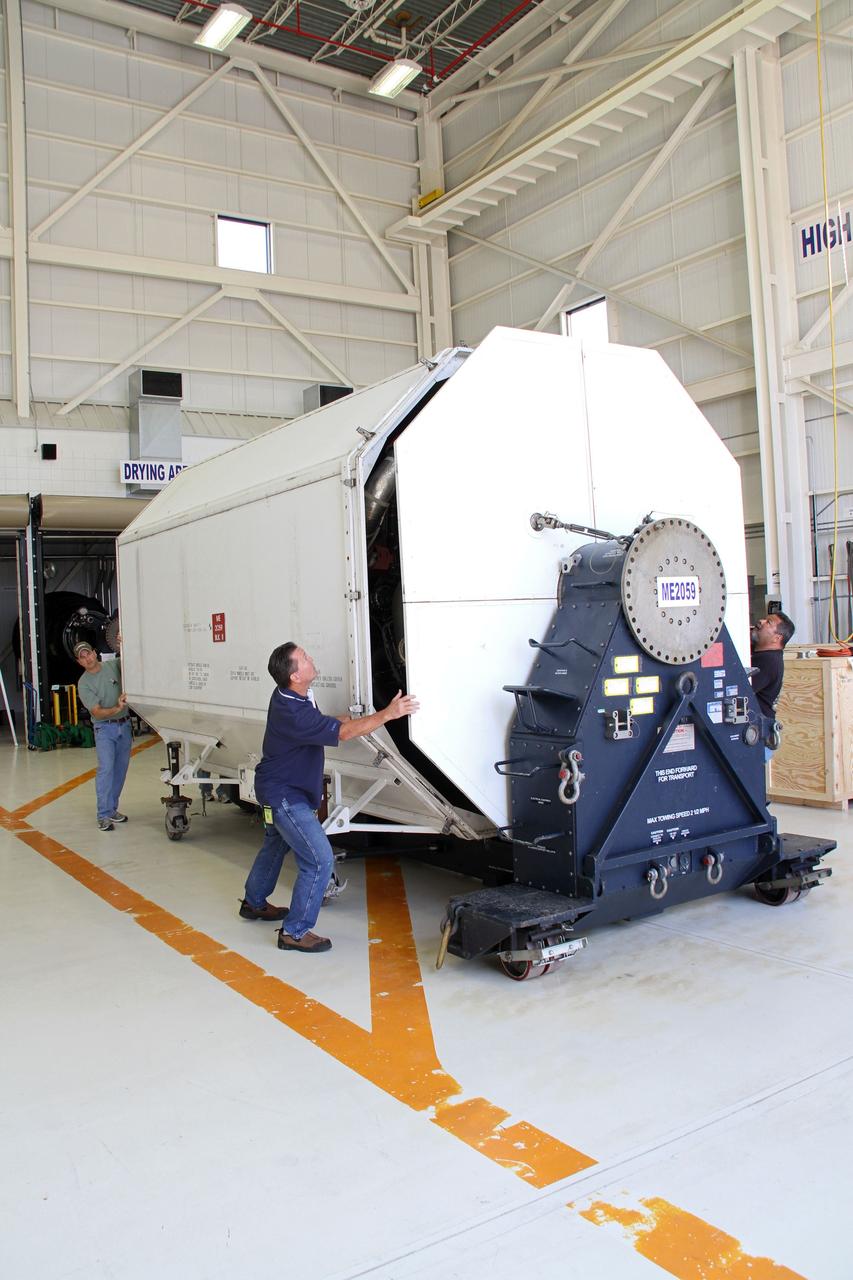
CAPE CANAVERAL, Fla. -- Jeff Huie of Pratt and Whitney Rocketdyne watches as the last of the space shuttle main engines disappears into a transportation canister in the Orbiter Processing Facility-3 engine shop at NASA's Kennedy Space Center in Florida. The engine was packed for shipment to NASA's Stennis Space Center in Mississippi. The first two groups of engines were shipped from Kennedy to Stennis in November 2011 and January 2012, and the remaining engines are scheduled to depart on April 9. Altogether, 15 shuttle-era engines will be stored at Stennis for reuse on NASA’s Space Launch System heavy-lift rocket, under development. Photo credit: NASA/Cory Huston
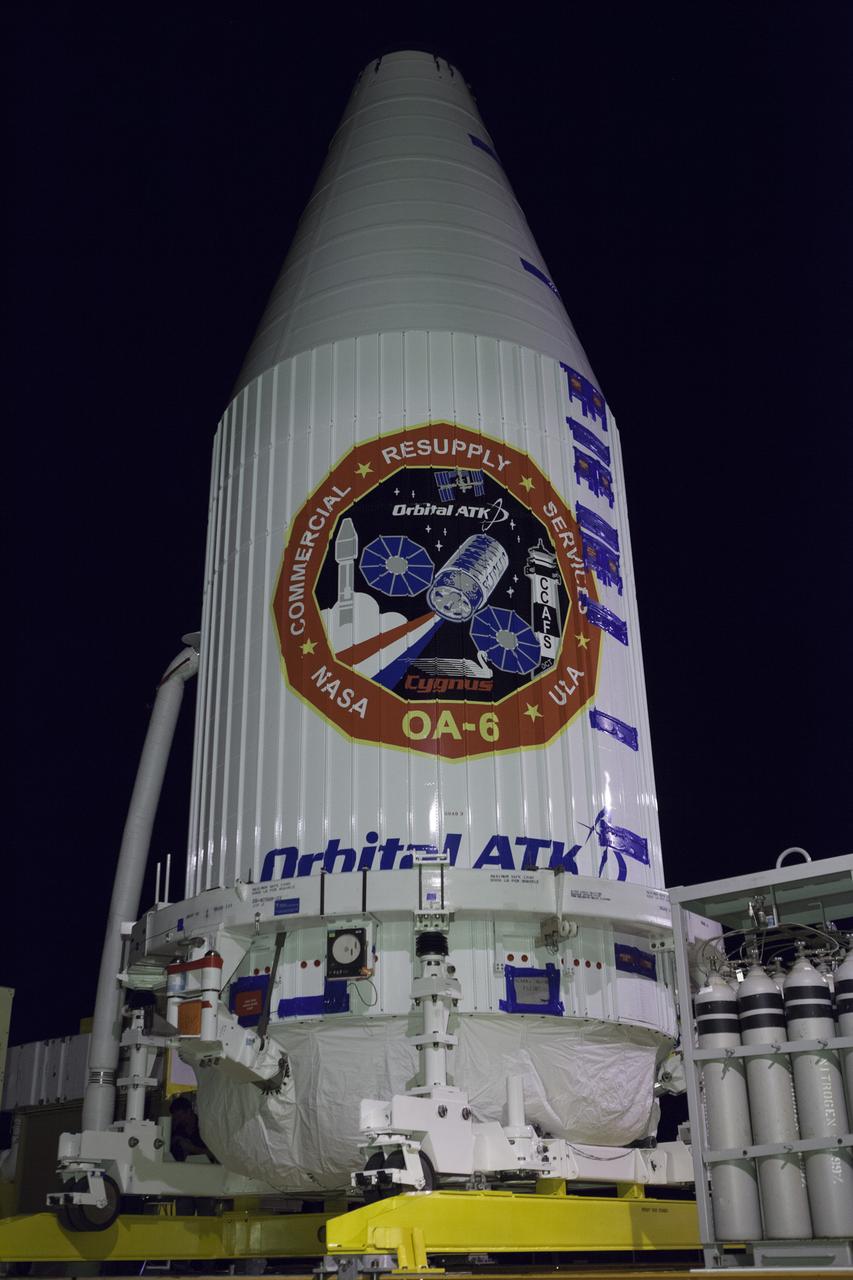
Encapsulated inside its payload fairing, the Cygnus spacecraft for the upcoming Orbital ATK Commercial Resupply Services-6 mission departs the Payload Hazardous Servicing Facility at NASA's Kennedy Space Center in Florida. Mounted atop a KAMAG transporter, Cygnus is being moved to Space Launch Complex-41 at Cape Canaveral Air Force Station where it will be mounted atop a United Launch Alliance Atlas V rocket. The Cygnus is scheduled to lift off atop a United Launch Alliance Atlas V rocket on March 22 to deliver hardware and supplies to the International Space Station.
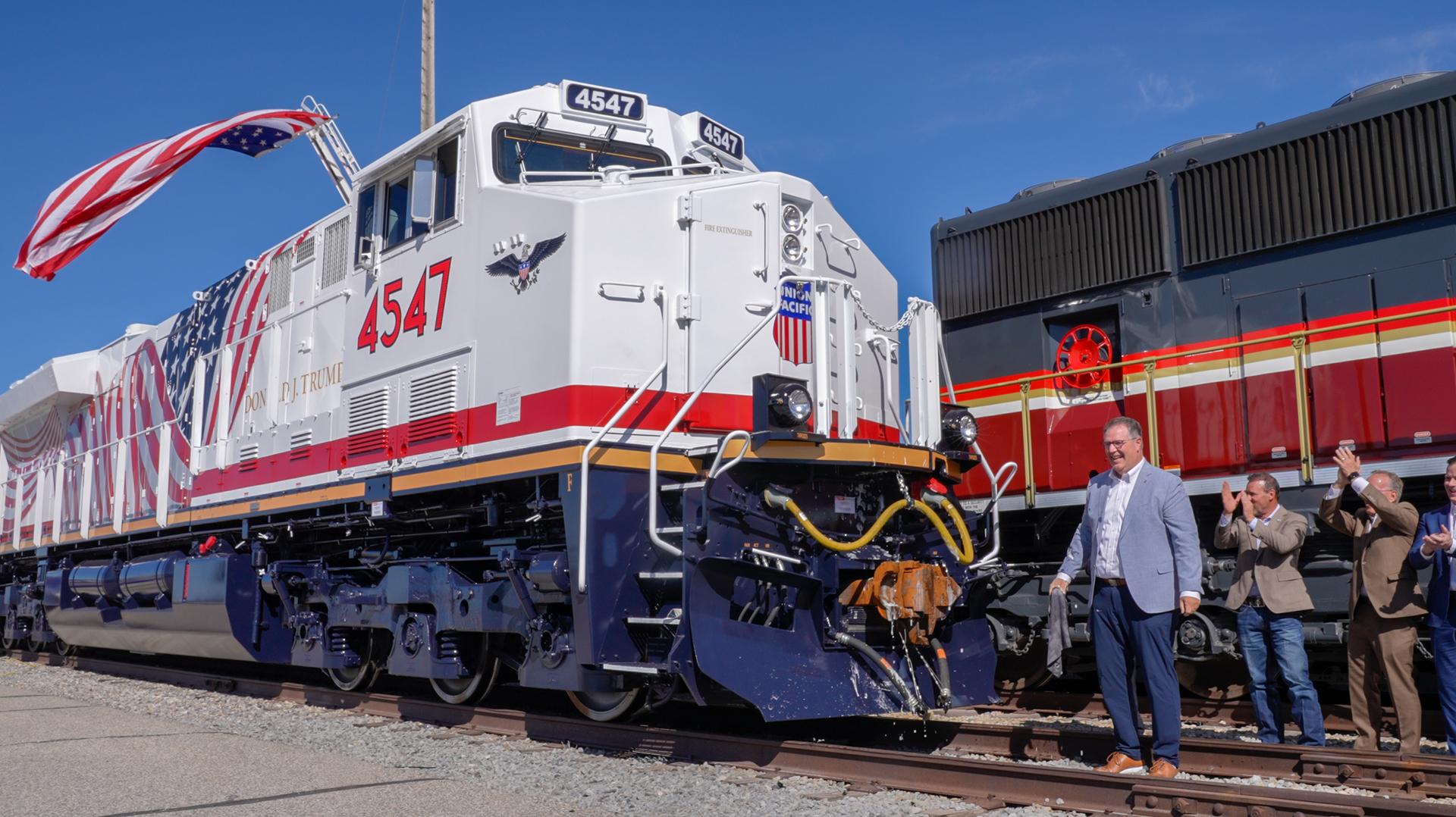
These images capture the final booster motor segments for NASA’s Artemis III mission departing Northrop Grumman’s Railyard Shipping Facility in Corinne, Utah, June 2. The eight segments will form the twin five-segment solid rocket boosters for the agency’s SLS (Space Launch System) rocket, providing more than 75% of the vehicle’s total thrust at liftoff. Due to their immense size and weight, the booster segments are transported in specialized carriers and are being hauled by Union Pacific Railroad’s newest commemorative locomotive, No. 4547. Marking its inaugural mission, the locomotive will deliver the flight hardware to NASA’s Kennedy Space Center in Florida, where stacking operations for Artemis III are set to begin later this year.
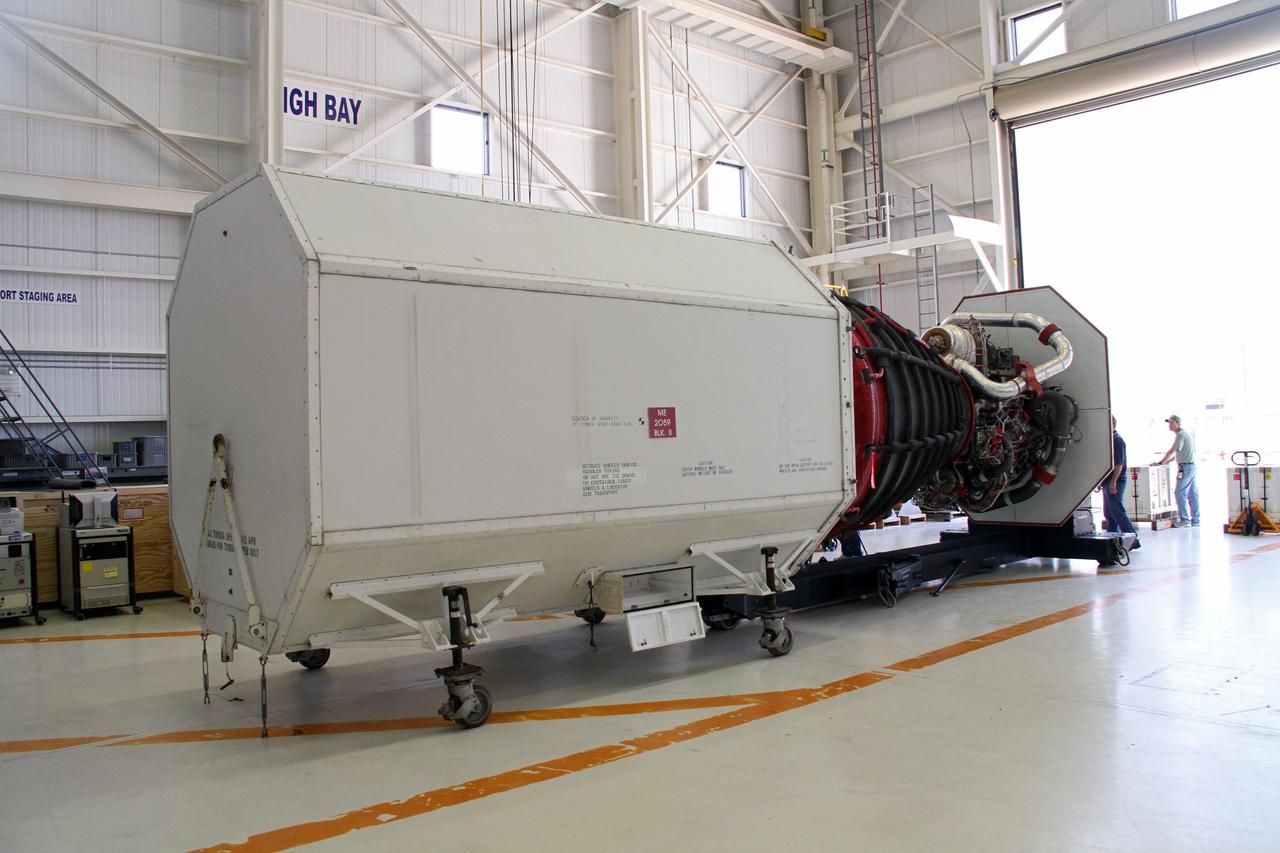
CAPE CANAVERAL, Fla. -- A Pratt and Whitney Rocketdyne space shuttle main engine, or SSME, is aligned with a transportation canister in the Orbiter Processing Facility-3 engine shop at NASA's Kennedy Space Center in Florida. The engine is the last to be packed for shipment to NASA's Stennis Space Center in Mississippi. The first two groups of engines were shipped from Kennedy to Stennis in November 2011 and January 2012, and the remaining engines are scheduled to depart on April 9. Altogether, 15 shuttle-era engines will be stored at Stennis for reuse on NASA’s Space Launch System heavy-lift rocket, under development. Photo credit: NASA/Cory Huston
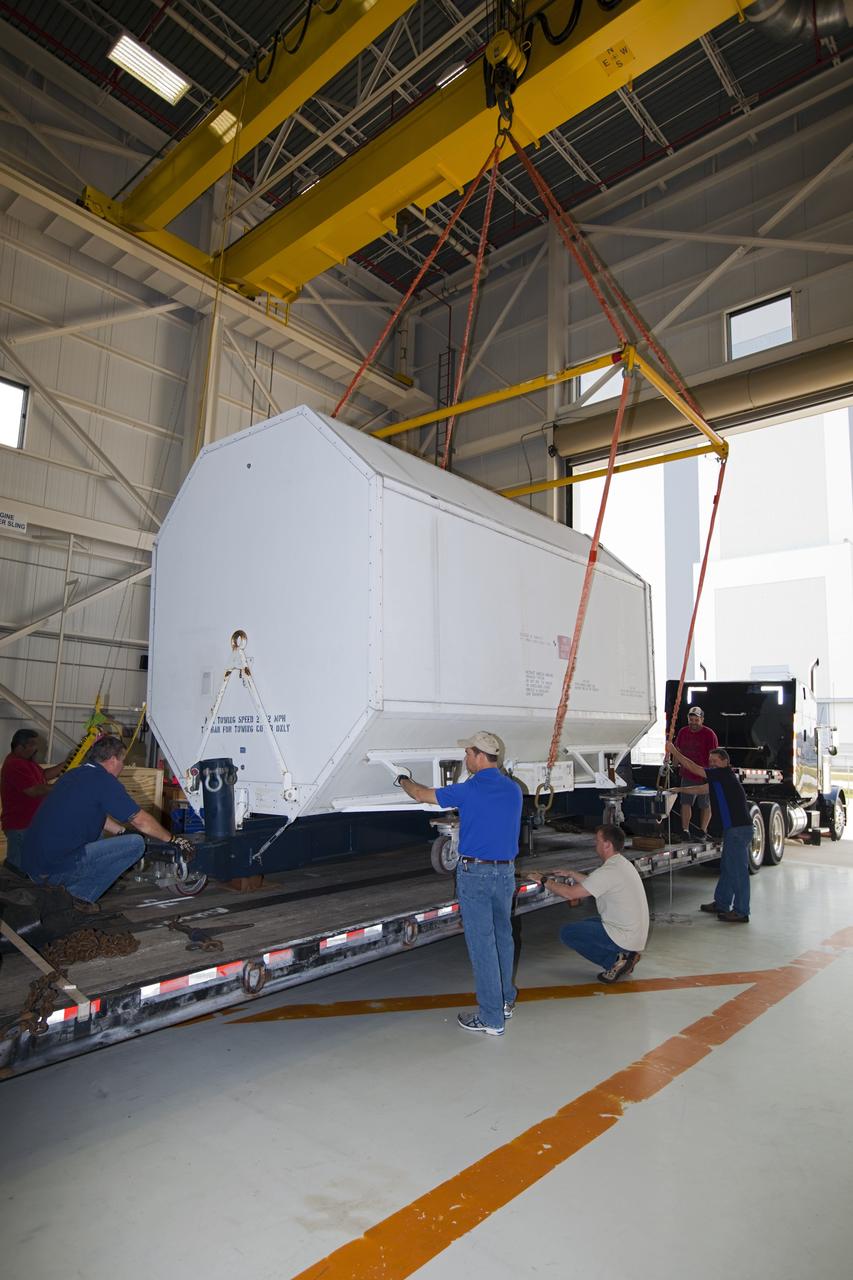
CAPE CANAVERAL, Fla. – In the Orbiter Processing Facility-3 engine shop at NASA's Kennedy Space Center in Florida, a transportation canister containing the last Pratt and Whitney Rocketdyne space shuttle main engine, or SSME, is lowered onto a flatbed truck for shipment to NASA's Stennis Space Center in Mississippi. The first two groups of engines were shipped from Kennedy to Stennis in November 2011 and January 2012 the remaining engines departed today. Altogether, 15 shuttle-era engines will be stored at Stennis for reuse on NASA’s Space Launch System heavy-lift rocket, under development. Photo credit: NASA/Dimitri Gerondidakis
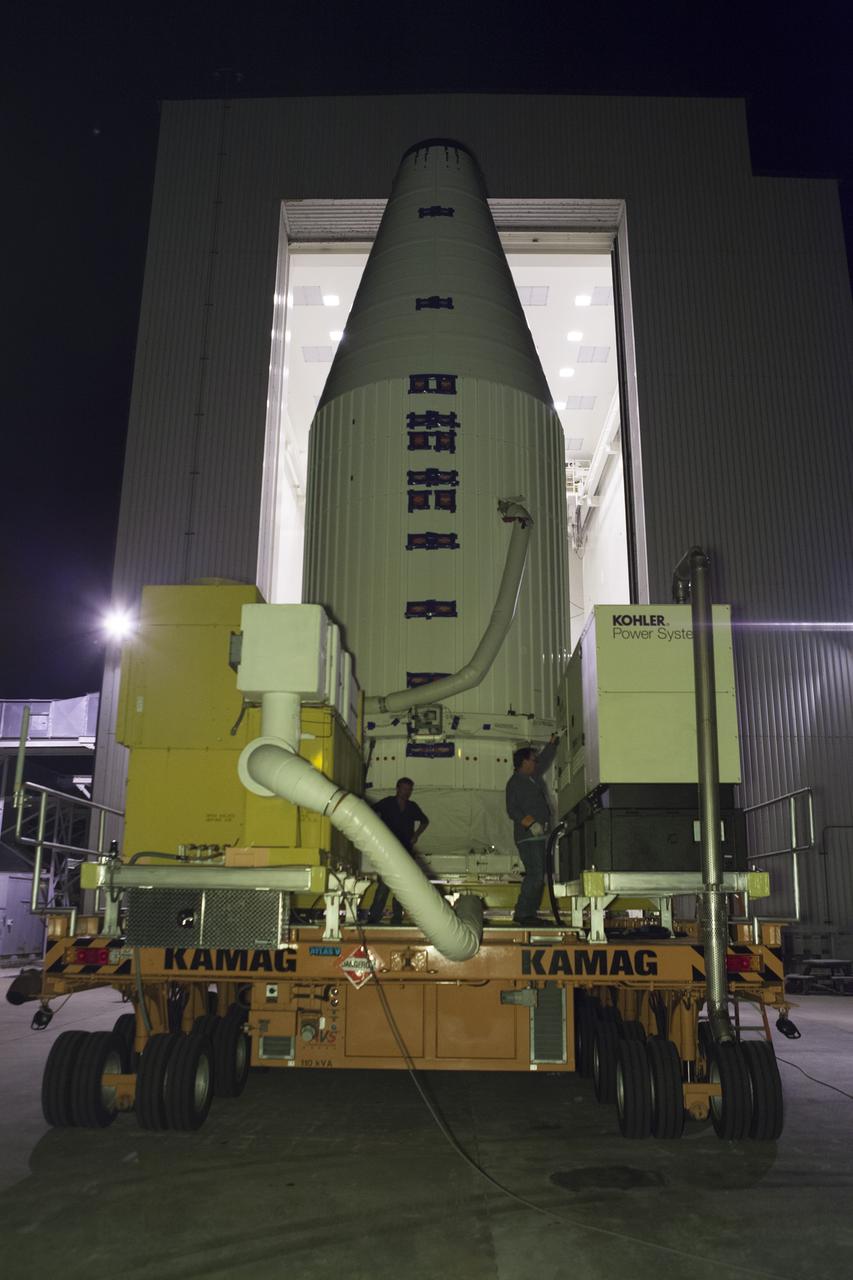
Encapsulated inside its payload fairing, the Cygnus spacecraft for the upcoming Orbital ATK Commercial Resupply Services-6 mission departs the Payload Hazardous Servicing Facility at NASA's Kennedy Space Center in Florida. Mounted atop a KAMAG transporter, Cygnus is being moved to Space Launch Complex-41 at Cape Canaveral Air Force Station where it will be mounted atop a United Launch Alliance Atlas V rocket. The Cygnus is scheduled to lift off atop a United Launch Alliance Atlas V rocket on March 22 to deliver hardware and supplies to the International Space Station.
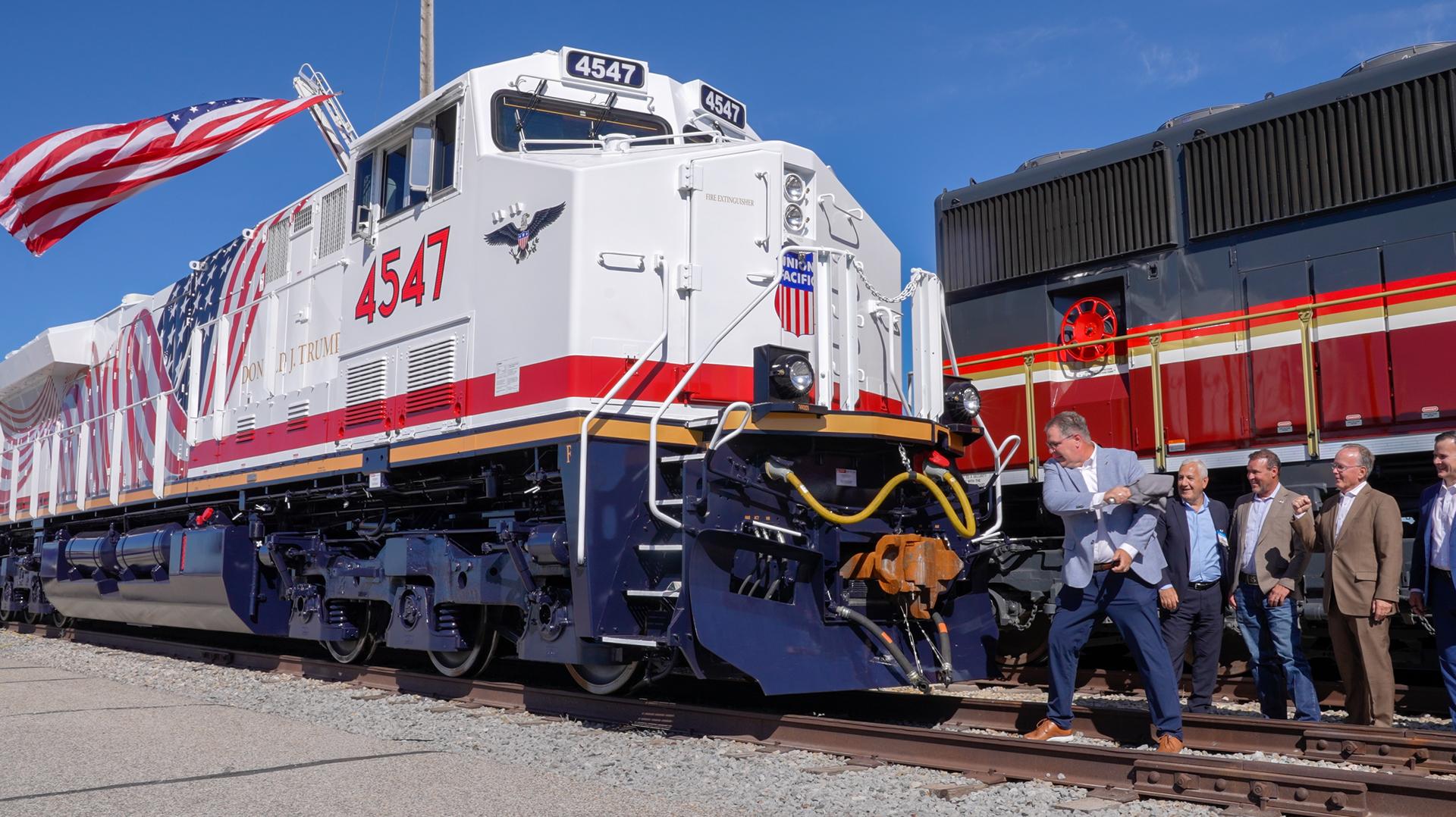
These images capture the final booster motor segments for NASA’s Artemis III mission departing Northrop Grumman’s Railyard Shipping Facility in Corinne, Utah, June 2. The eight segments will form the twin five-segment solid rocket boosters for the agency’s SLS (Space Launch System) rocket, providing more than 75% of the vehicle’s total thrust at liftoff. Due to their immense size and weight, the booster segments are transported in specialized carriers and are being hauled by Union Pacific Railroad’s newest commemorative locomotive, No. 4547. Marking its inaugural mission, the locomotive will deliver the flight hardware to NASA’s Kennedy Space Center in Florida, where stacking operations for Artemis III are set to begin later this year.

These images capture the final booster motor segments for NASA’s Artemis III mission departing Northrop Grumman’s Railyard Shipping Facility in Corinne, Utah, June 2. The eight segments will form the twin five-segment solid rocket boosters for the agency’s SLS (Space Launch System) rocket, providing more than 75% of the vehicle’s total thrust at liftoff. Due to their immense size and weight, the booster segments are transported in specialized carriers and are being hauled by Union Pacific Railroad’s newest commemorative locomotive, No. 4547. Marking its inaugural mission, the locomotive will deliver the flight hardware to NASA’s Kennedy Space Center in Florida, where stacking operations for Artemis III are set to begin later this year.

Orion is revealed for one of the final times on Jan. 14, as it is readied atop its transport pallet from the Neil Armstrong Operations and Checkout Building at NASA’s Kennedy Space Center in Florida, along its path to the pad ahead of the Artemis I launch. Orion was officially transferred from the Orion Program to Exploration Ground Systems (EGS). Mike Bolger, EGS manager, stands inside the high bay with Orion in the background. Teams across the globe have worked tirelessly to assemble the spacecraft which, will receive a protective covering prior to departing for the Multi-Payload Processing Facility to begin ground processing by the EGS and Jacobs teams.
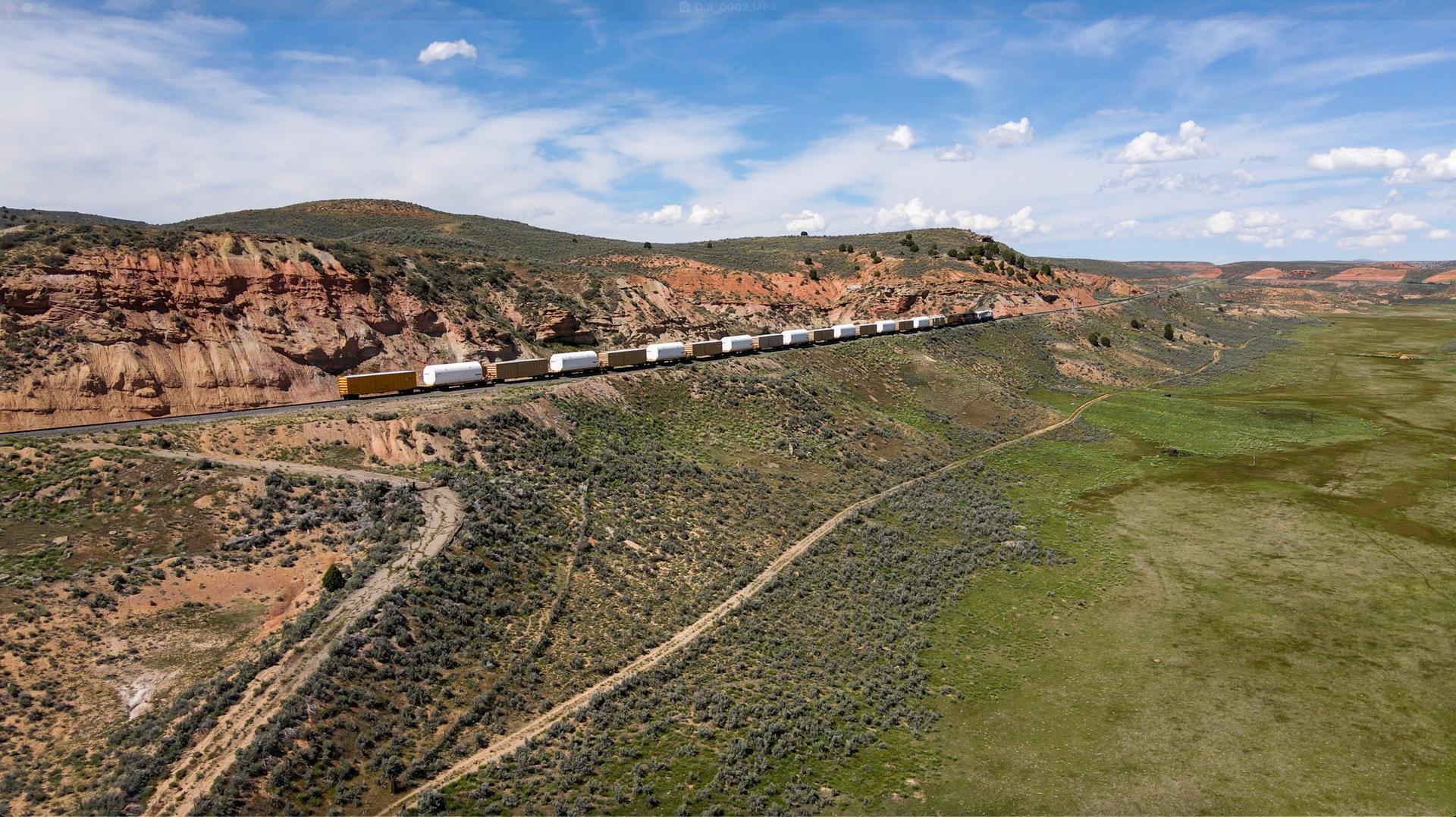
These images capture the final booster motor segments for NASA’s Artemis III mission departing Northrop Grumman’s Railyard Shipping Facility in Corinne, Utah, June 2. The eight segments will form the twin five-segment solid rocket boosters for the agency’s SLS (Space Launch System) rocket, providing more than 75% of the vehicle’s total thrust at liftoff. Due to their immense size and weight, the booster segments are transported in specialized carriers and are being hauled by Union Pacific Railroad’s newest commemorative locomotive, No. 4547. Marking its inaugural mission, the locomotive will deliver the flight hardware to NASA’s Kennedy Space Center in Florida, where stacking operations for Artemis III are set to begin later this year.
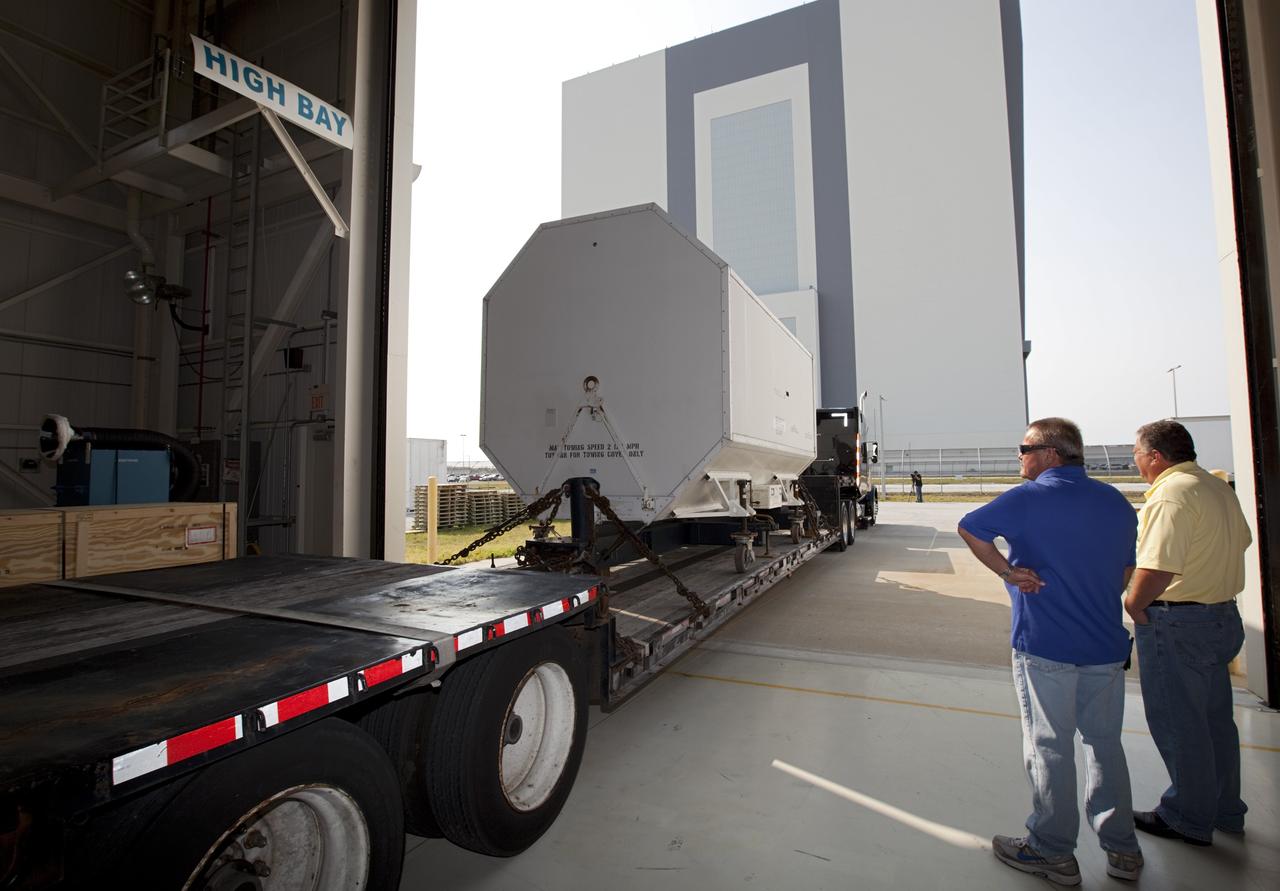
CAPE CANAVERAL, Fla. – In the Orbiter Processing Facility-3 engine shop at NASA's Kennedy Space Center in Florida, a transportation canister containing the last Pratt and Whitney Rocketdyne space shuttle main engine, or SSME, is secured on a flatbed truck and ready for departure to NASA's Stennis Space Center in Mississippi. The first two groups of engines were shipped from Kennedy to Stennis in November 2011 and January 2012 the remaining engines departed today. Altogether, 15 shuttle-era engines will be stored at Stennis for reuse on NASA’s Space Launch System heavy-lift rocket, under development. Photo credit: NASA/Dimitri Gerondidakis
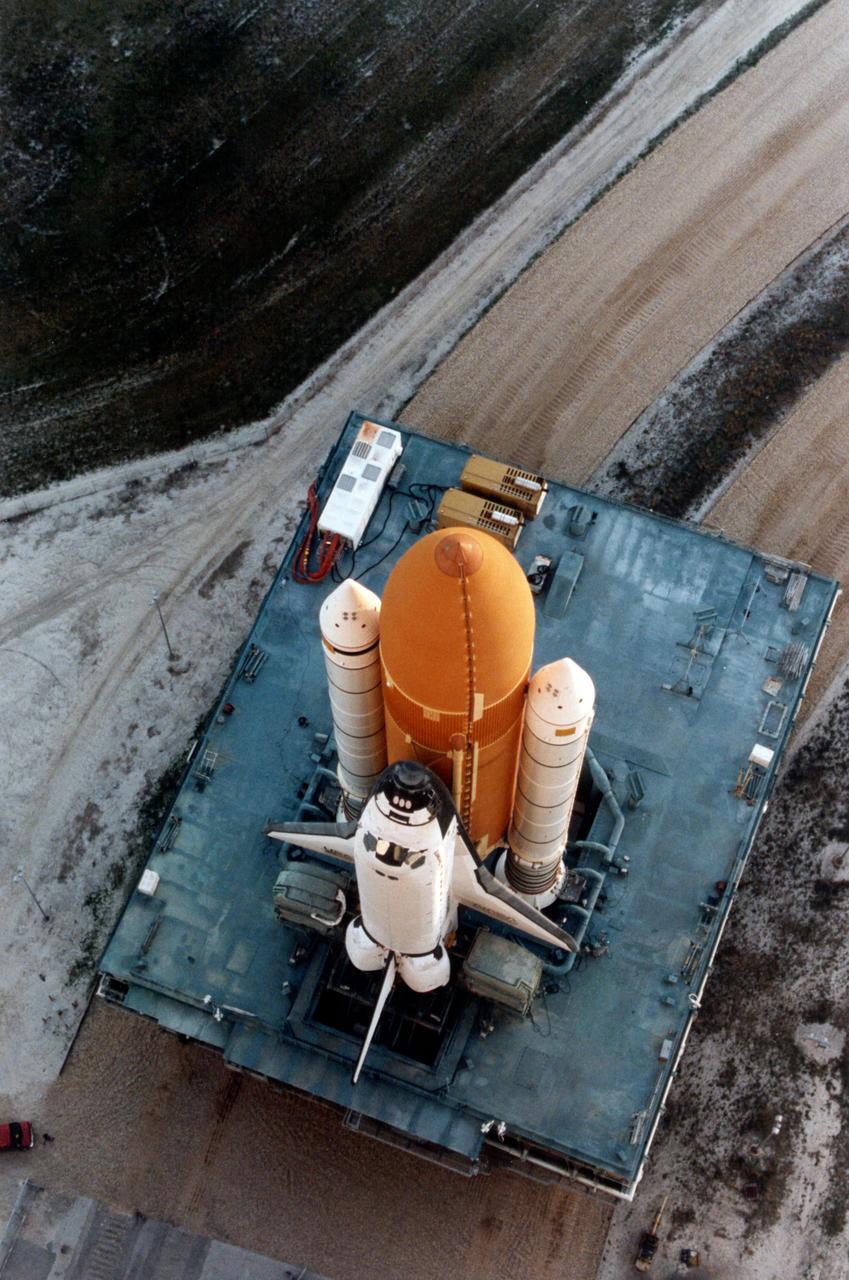
KENNEDY SPACE CENTER, FLORIDA STS-82 ROLL-OUT VIEW --- After departing the Vehicle Assembly Building (VAB), the Space Shuttle Discovery moves slowly - about one mile per hour - along the Kennedy Space Center (KSC) Crawlerway toward Launch Pad 39A in preparation for the STS-82 mission. The Shuttle is on a mobile launch platform, and the entire assemblage is being carried by a large tracked vehicle called the Crawler Transporter. A seven-member crew of astronauts will perform the second servicing of the orbiting Hubble Space Telescope (HST) during the scheduled ten-day STS-82 flight. Launch is currently targeted for February 11, 1997.
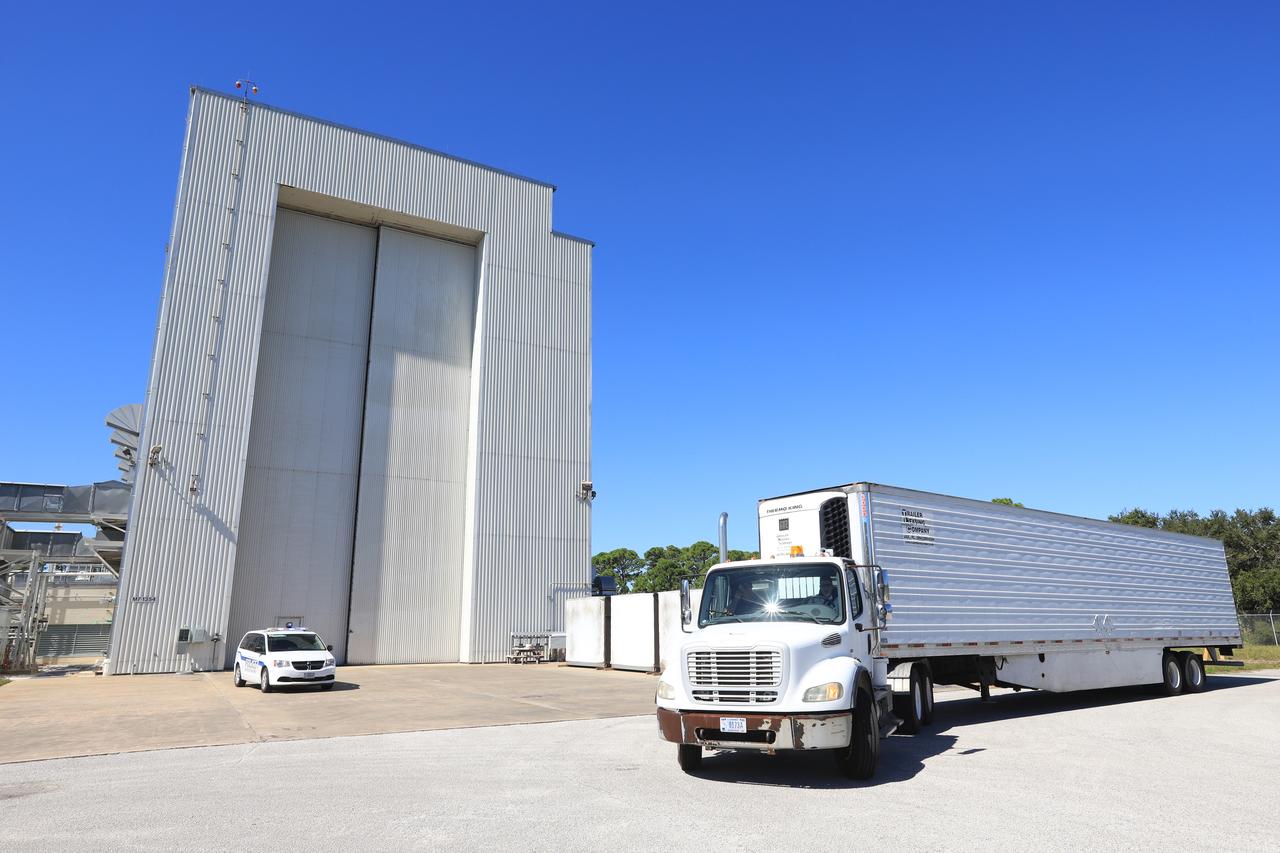
A truck containing the Robotic Refueling Mission-3 (RRM3) payload departs the Fuel Transfer Building near the Payload Hazardous Servicing Facility for transport to the SpaceX facility on Oct. 30, 2018, at NASA's Kennedy Space Center in Florida. The payload will be carried to the International Space Station on SpaceX's 16th Commercial Resupply Services mission. RRM3 demonstrates the transfer of xenon gas and liquid methane in microgravity, and advances technologies for storing and manipulating these cryogenic fuels robotically. RRM3 also supports development of technology for the Restore-L mission, a robotic spacecraft equipped to service satellites in-orbit.
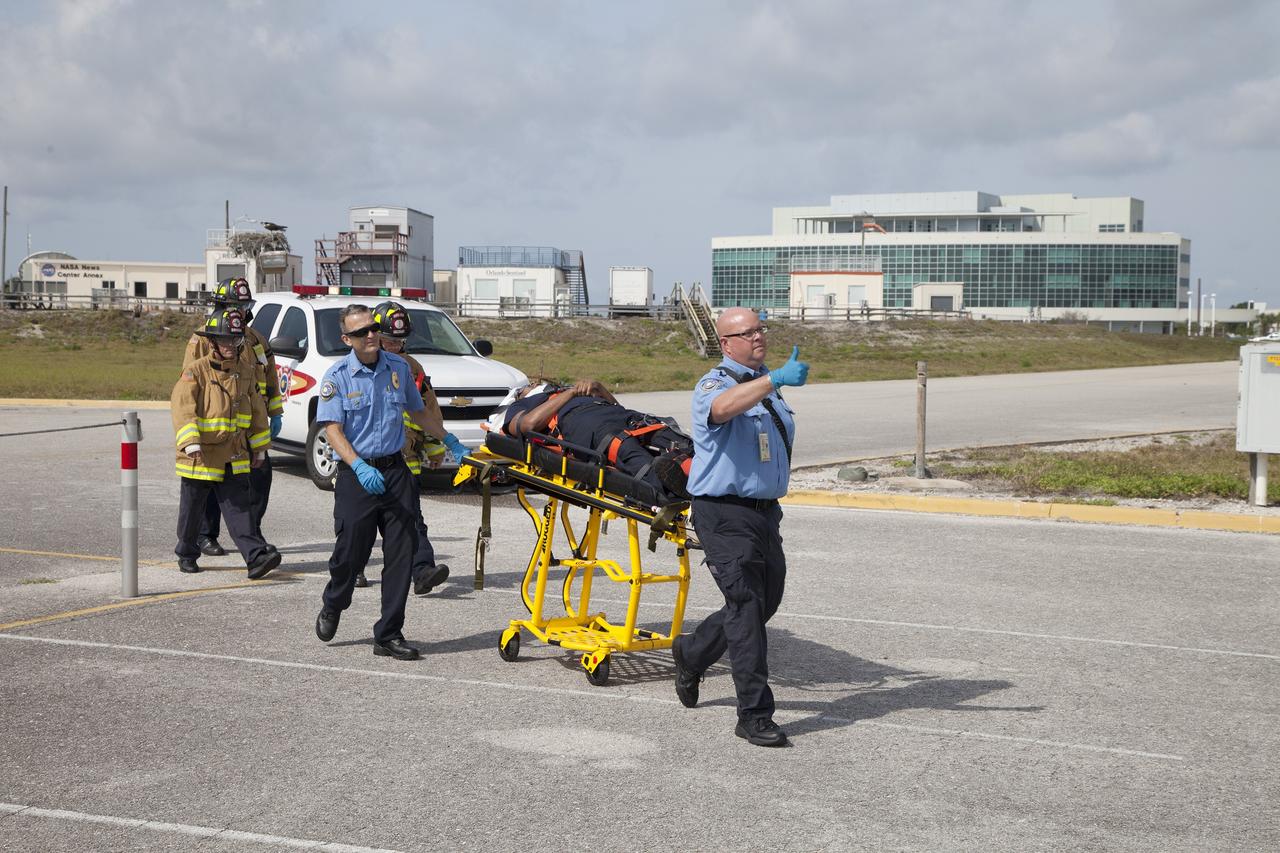
CAPE CANAVERAL, Fla. -- At NASA's Kennedy Space Center in Florida, paramedics and Fire Rescue personnel move a stretcher to the waiting helicopter as they work quickly to have the patient ready to transport after he was removed from a vehicle. The activity taking place in Kennedy's Launch Complex 39 turn-basin parking lot was only one of several drills. It was part of a new training program that was developed by Kennedy's Fire Rescue department along with NASA Aircraft Operations to sharpen the skills needed to help rescue personnel learn how to collaborate with helicopter pilots in taking injured patients to hospitals as quickly as possible. Photo credit: NASA/Dan Casper
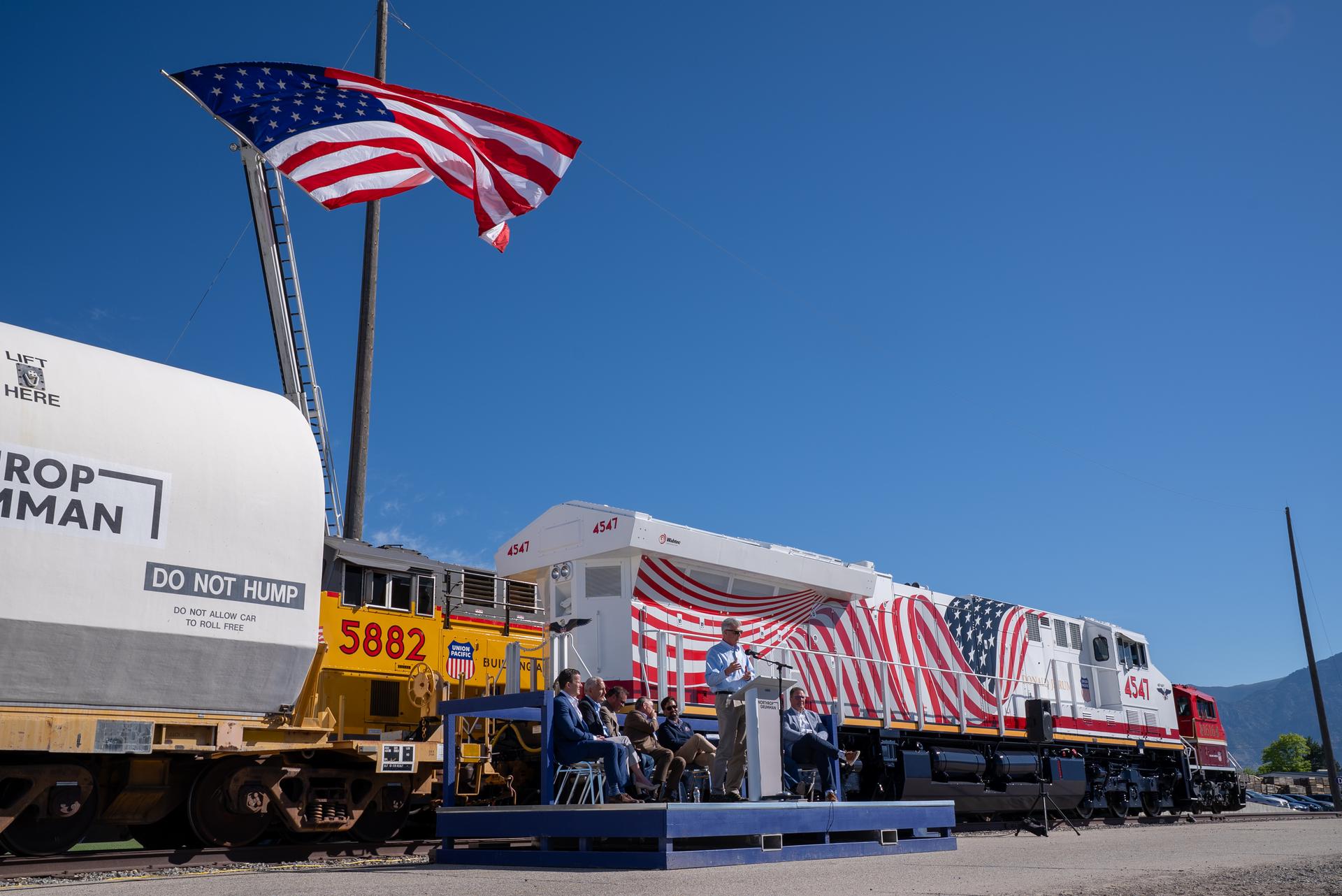
These images capture the final booster motor segments for NASA’s Artemis III mission departing Northrop Grumman’s Railyard Shipping Facility in Corinne, Utah, June 2. The eight segments will form the twin five-segment solid rocket boosters for the agency’s SLS (Space Launch System) rocket, providing more than 75% of the vehicle’s total thrust at liftoff. Due to their immense size and weight, the booster segments are transported in specialized carriers and are being hauled by Union Pacific Railroad’s newest commemorative locomotive, No. 4547. Marking its inaugural mission, the locomotive will deliver the flight hardware to NASA’s Kennedy Space Center in Florida, where stacking operations for Artemis III are set to begin later this year.