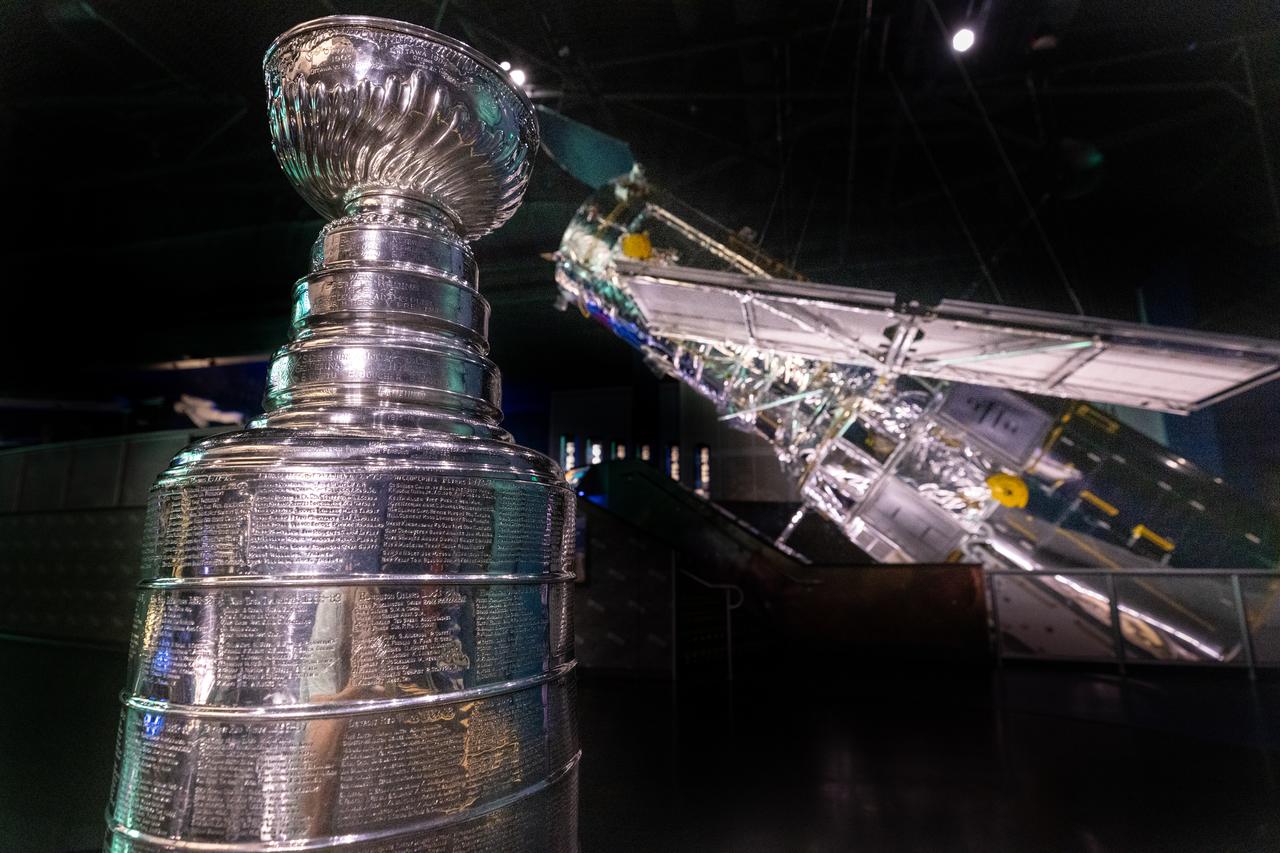
Earlier this year, the Florida Panthers won their first NHL championship and brought victory to the state of Florida. As part of its championship tour, the Stanley Cup made a visit to NASA’s Kennedy Space Center. Pictured here is the shining silver Stanley Cup in the foreground with a large-scale mockup of the Hubble Space Telescope in the background at the Kennedy Space Center Visitor’s Complex on Tuesday Sept. 17, 2024.
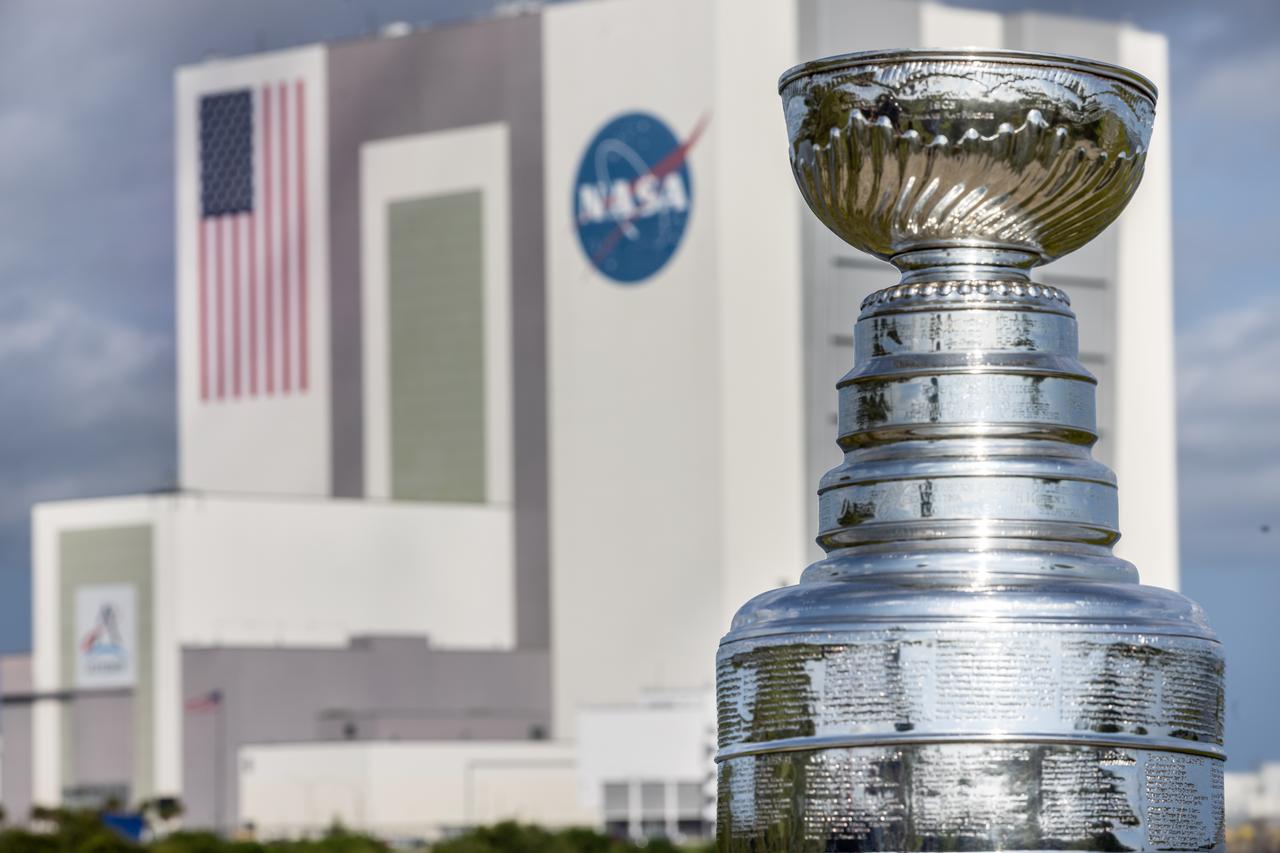
Earlier this year, the Florida Panthers won their first NHL championship and brought victory to the state of Florida. As part of its championship tour, the Stanley Cup made a visit to NASA’s Kennedy Space Center. Pictured here is the silver Stanley Cup with NASA’s iconic Vehicle Assembly Building, which currently houses components of the agency’s Artemis II mission, shown in the background at the Kennedy Space Center on Tuesday Sept. 17, 2024.
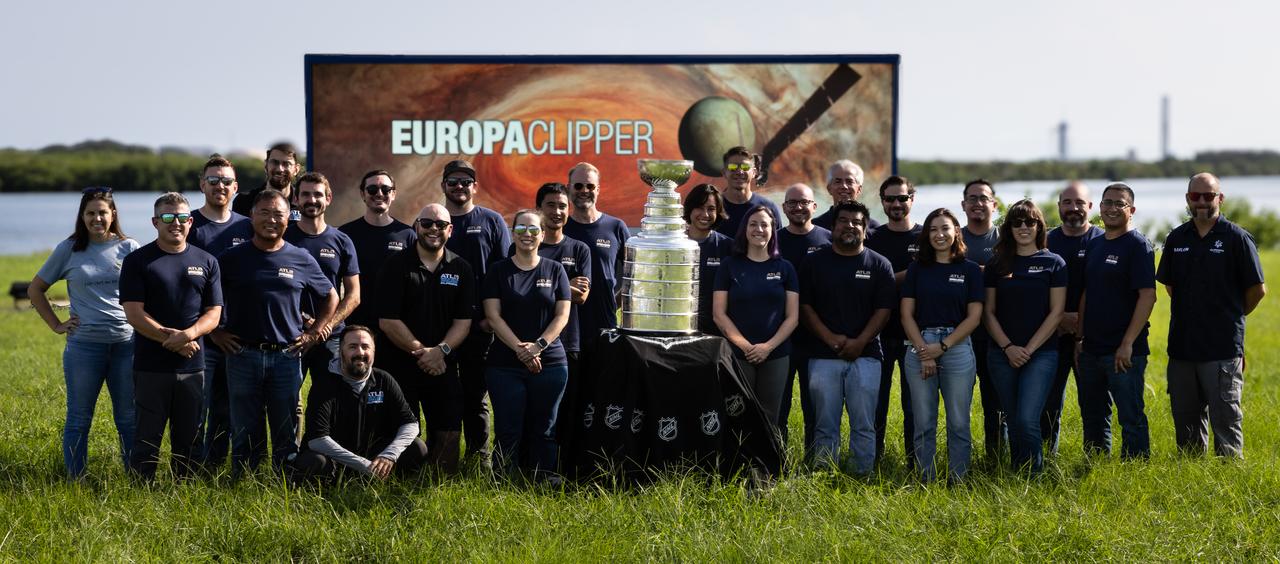
Earlier this year, the Florida Panthers won their first NHL championship and brought victory to the state of Florida. As part of its championship tour, the Stanley Cup made a visit to NASA’s Kennedy Space Center. Here, members of NASA’s Europa Clipper team pose with the National Hockey League’s Stanley Cup trophy in front of the countdown clock near the NASA News Center at Kennedy on Tuesday, Sept. 17, 2024. Europa Clipper will soon begin its Jupiter to explore if places below Europa’s surface could support life.
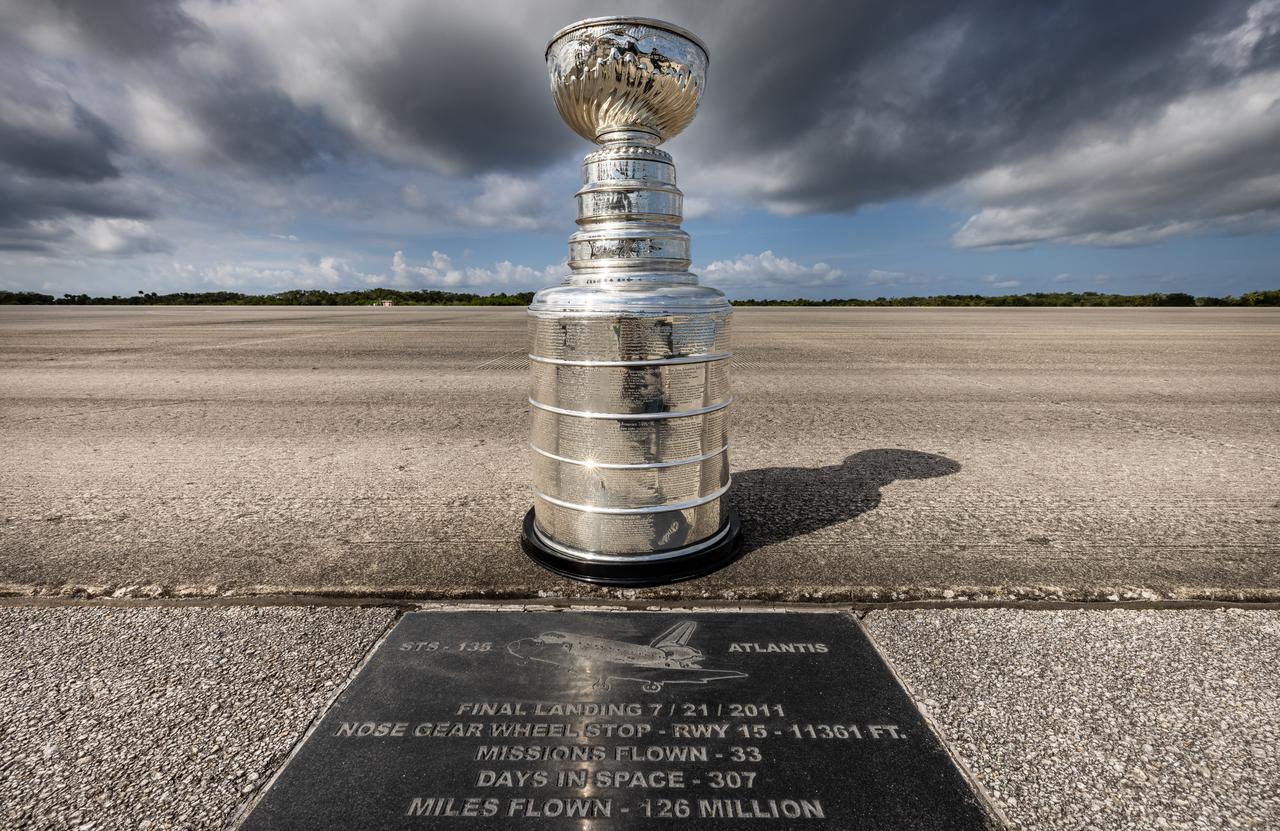
Earlier this year, the Florida Panthers won their first NHL championship and brought victory to the state of Florida. As part of its championship tour, the Stanley Cup made a visit to Kennedy Space Center. Pictured here is the Stanley Cup on the runway of the Launch and Landing Facility, formerly the Shuttle Landing Facility at NASA’s Kennedy Space Center on Tuesday Sept. 17, 2024. The trophy is beside the Space Shuttle Atlantis landmark, a commemorative plaque marking the landing spot of the last shuttle flight that occurred in July 2011.
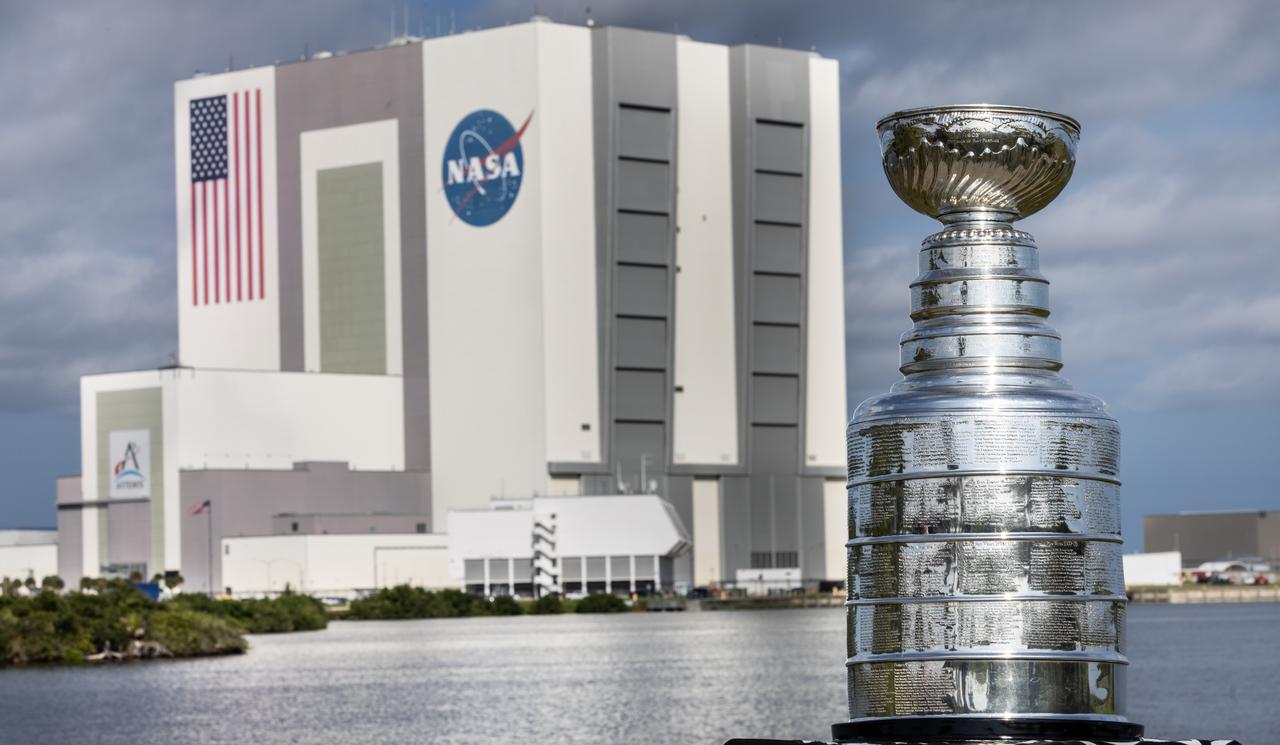
Earlier this year, the Florida Panthers won their first NHL championship and brought victory to the state of Florida. As part of its championship tour, the Stanley Cup made a visit to NASA’s Kennedy Space Center. Pictured here is the silver Stanley Cup with NASA’s iconic Vehicle Assembly Building, which currently houses components of the agency’s Artemis II mission, shown in the background at the Kennedy Space Center on Tuesday Sept. 17, 2024.
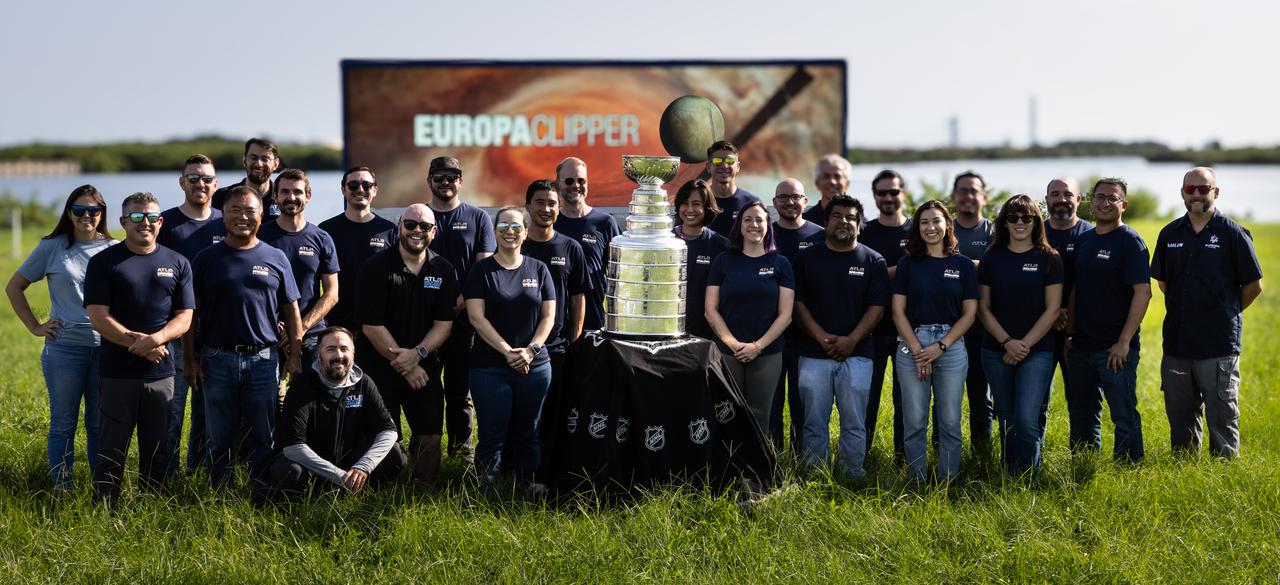
Earlier this year, the Florida Panthers won their first NHL championship and brought victory to the state of Florida. As part of its championship tour, the Stanley Cup made a visit to NASA’s Kennedy Space Center. Here, members of NASA’s Europa Clipper team pose with the National Hockey League’s Stanley Cup trophy in front of the countdown clock near the NASA News Center at Kennedy on Tuesday, Sept. 17, 2024. Europa Clipper will soon begin its Jupiter to explore if places below Europa’s surface could support life.
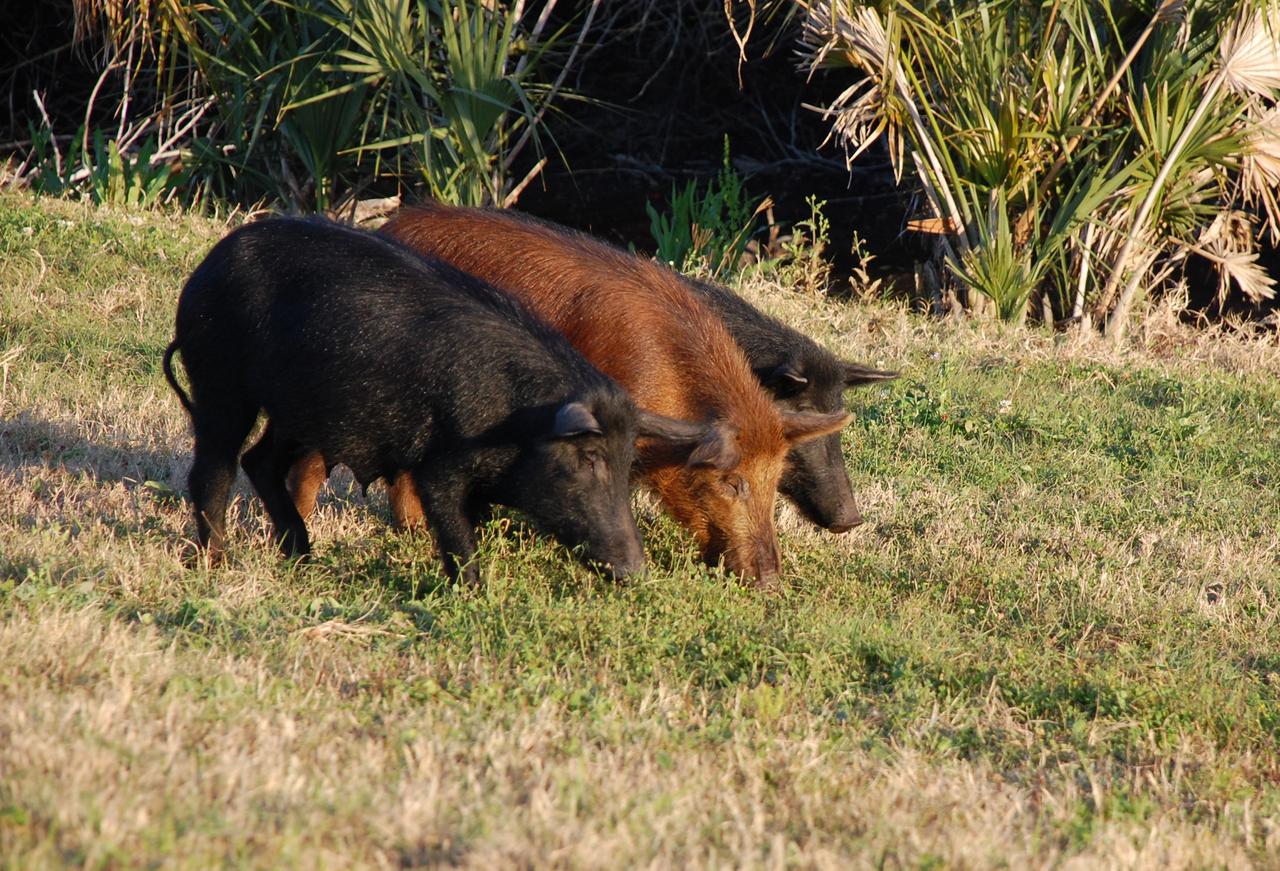
CAPE CANAVERAL, Fla. – – At NASA's Kennedy Space Center in Florida, adult wild pigs line up for their food hunt in the grassy field The wild pigs have flourished in the environs around Kennedy, which shares a border with the Merritt Island National Wildlife Refuge, without many predators other than panthers and humans. Pigs were introduced to Florida in the 1500s and are now found statewide in wooded areas close to water. Pigs are omnivores, foraging on the ground and rooting just beneath the surface, which damages the groundcover. Wild pigs eat almost anything that has nutritional value, including tubers, roots, shoots, acorns, fruits, berries, earthworms, amphibians, reptiles and rodents. Their appearance is similar to domestic hogs, but leaner, with a longer, narrower head and a coarser, denser coat. Females may have two litters per year. The piglets are weaned in a few weeks but remain with the mother for several months. Photo credit: NASA/Ben Smegelsky
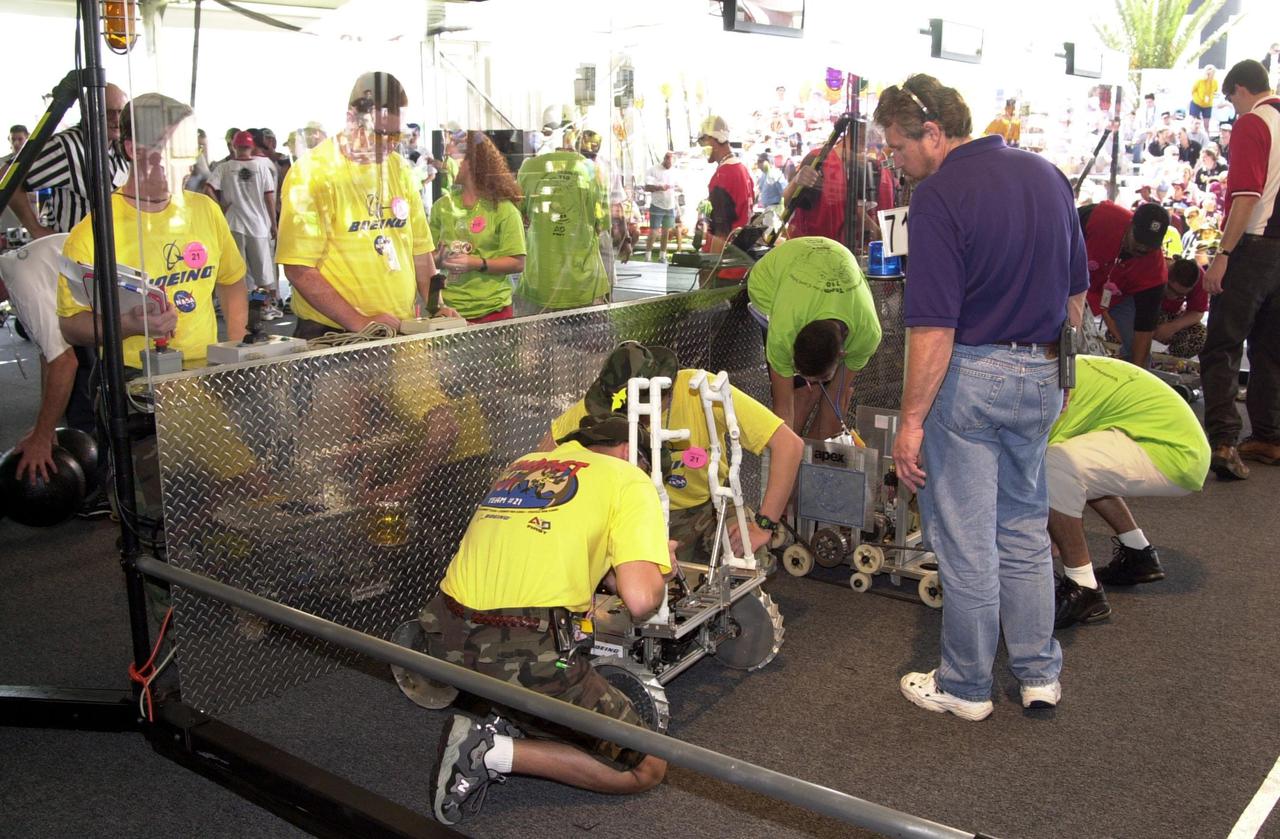
Student teams adjust their robots before competing on the playing field field during the NASA_KSC FIRST Southeastern Regional event held March 1-3, 2001. At left is the ComBBAT 2001 team from Astronaut and Titusville High Schools, Florida. It is a KSC joint-sponsored team. At right is the PC Panthers, no. 710, from Pine Crest School, Fort Lauderdale, Fla. FIRST (For Inspiration and Recognition of Science and Technology) events are held nationwide, pitting robots against each other and the clock on a playing field. Many teams are sponsored by corporations and academic institutions. There are 27 teams throughout the State of Florida who are competing. KSC, which sponsors nine teams, has held the regional event for two years
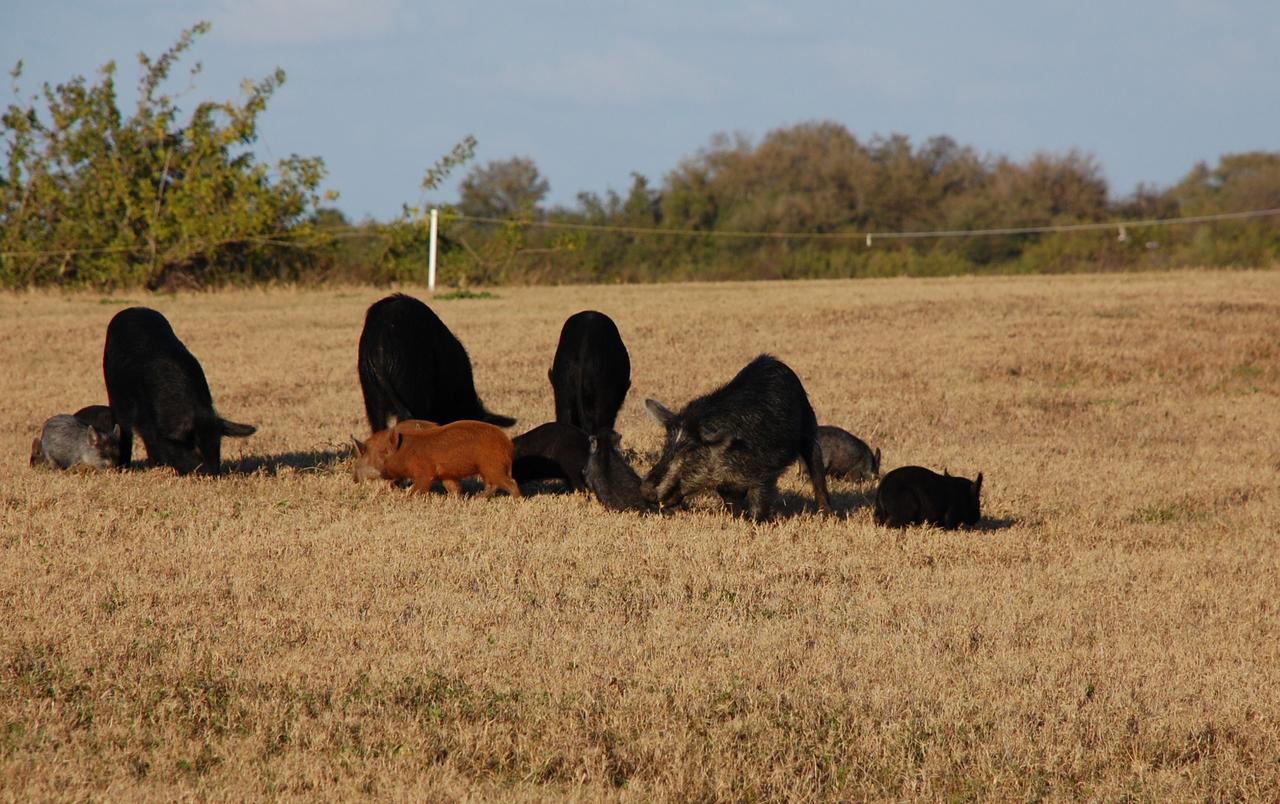
CAPE CANAVERAL, Fla. – At NASA's Kennedy Space Center in Florida, a family of wild pigs roots through the grass for food. The wild pigs have flourished in the environs around Kennedy, which shares a border with the Merritt Island National Wildlife Refuge, without many predators other than panthers and humans. Pigs were introduced to Florida in the 1500s and are now found statewide in wooded areas close to water. Pigs are omnivores, foraging on the ground and rooting just beneath the surface, which damages the groundcover. Wild pigs eat almost anything that has nutritional value, including tubers, roots, shoots, acorns, fruits, berries, earthworms, amphibians, reptiles and rodents. Their appearance is similar to domestic hogs, but leaner, with a longer, narrower head and a coarser, denser coat. Females may have two litters per year. The piglets are weaned in a few weeks but remain with the mother for several months. Photo credit: NASA/Ben Smegelsky
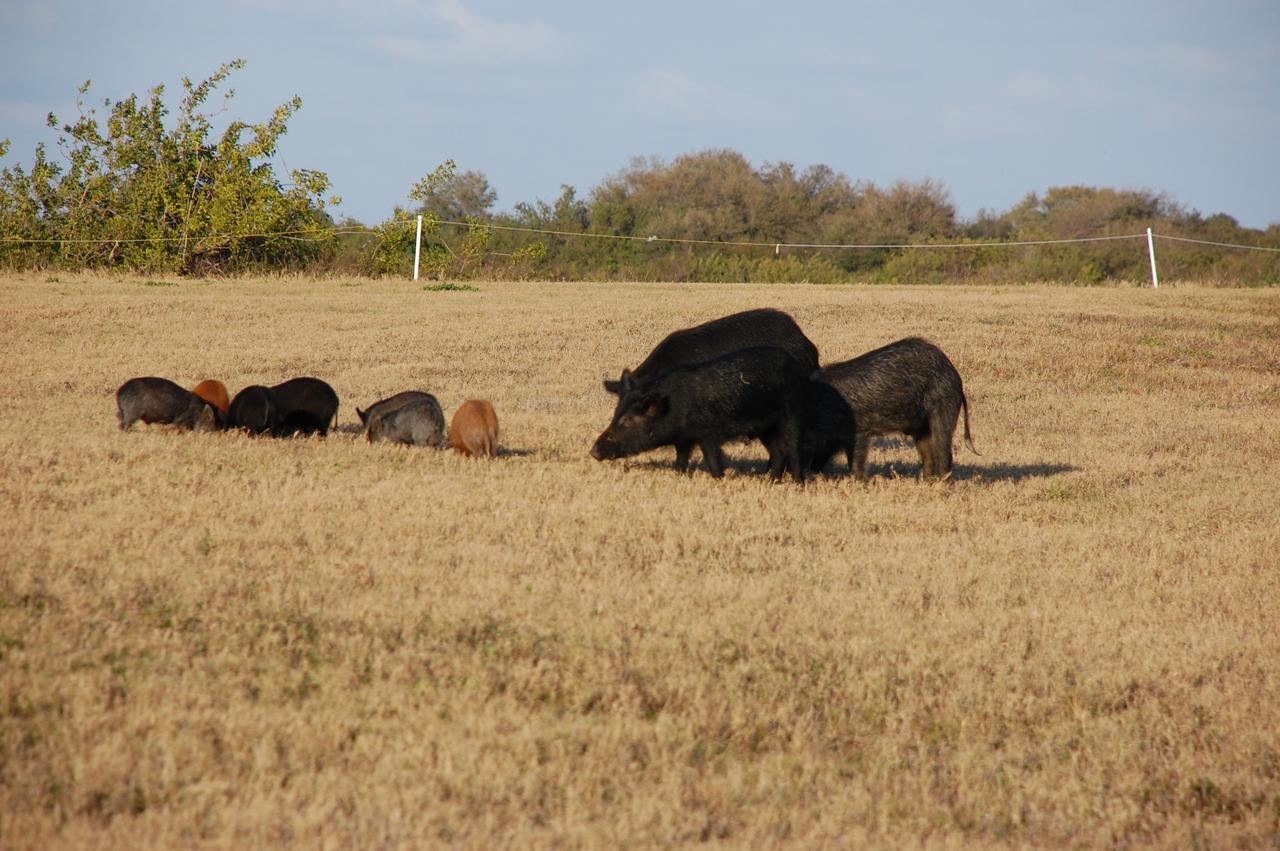
CAPE CANAVERAL, Fla. – At NASA's Kennedy Space Center in Florida, a family of wild pigs roots through the grass for food. The wild pigs have flourished in the environs around Kennedy, which shares a border with the Merritt Island National Wildlife Refuge, without many predators other than panthers and humans. Pigs were introduced to Florida in the 1500s and are now found statewide in wooded areas close to water. Pigs are omnivores, foraging on the ground and rooting just beneath the surface, which damages the groundcover. Wild pigs eat almost anything that has nutritional value, including tubers, roots, shoots, acorns, fruits, berries, earthworms, amphibians, reptiles and rodents. Their appearance is similar to domestic hogs, but leaner, with a longer, narrower head and a coarser, denser coat. Females may have two litters per year. The piglets are weaned in a few weeks but remain with the mother for several months. Photo credit: NASA/Ben Smegelsky
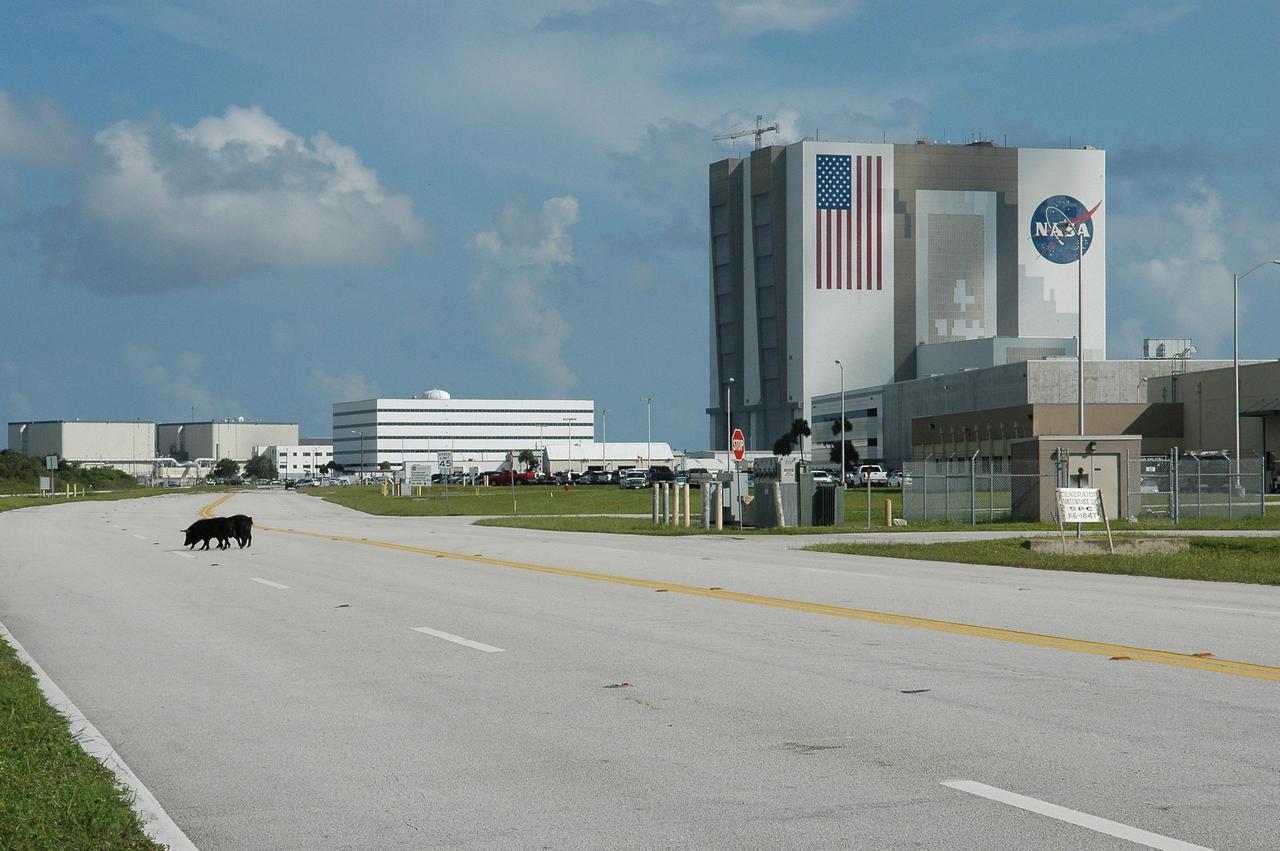
KENNEDY SPACE CENTER, FLA. - Out for a stroll on a sunny Florida day, a trio of wild pigs cross the road near NASA Kennedy Space Center’s Vehicle Assembly Building, in the background. The wild pigs have flourished in the environs around KSC, which shares a border with the Merritt Island National Wildlife Refuge, without many predators other than panthers and humans. Pigs were introduced to Florida in the 1500s and are now found statewide in wooded areas close to water. Pigs are omnivores, foraging on the ground and rooting just beneath the surface, which damages the groundcover. Wild pigs eat almost anything that has nutritional value, including tubers, roots, shoots, acorns, fruits, berries, earthworms, amphibians, reptiles and rodents. Appearance is similar to domestic hogs, but leaner, with a longer, narrower head and a coarser, denser coat. Females may have two litters per year. The piglets are weaned in a few weeks but remain with the mother for several months.
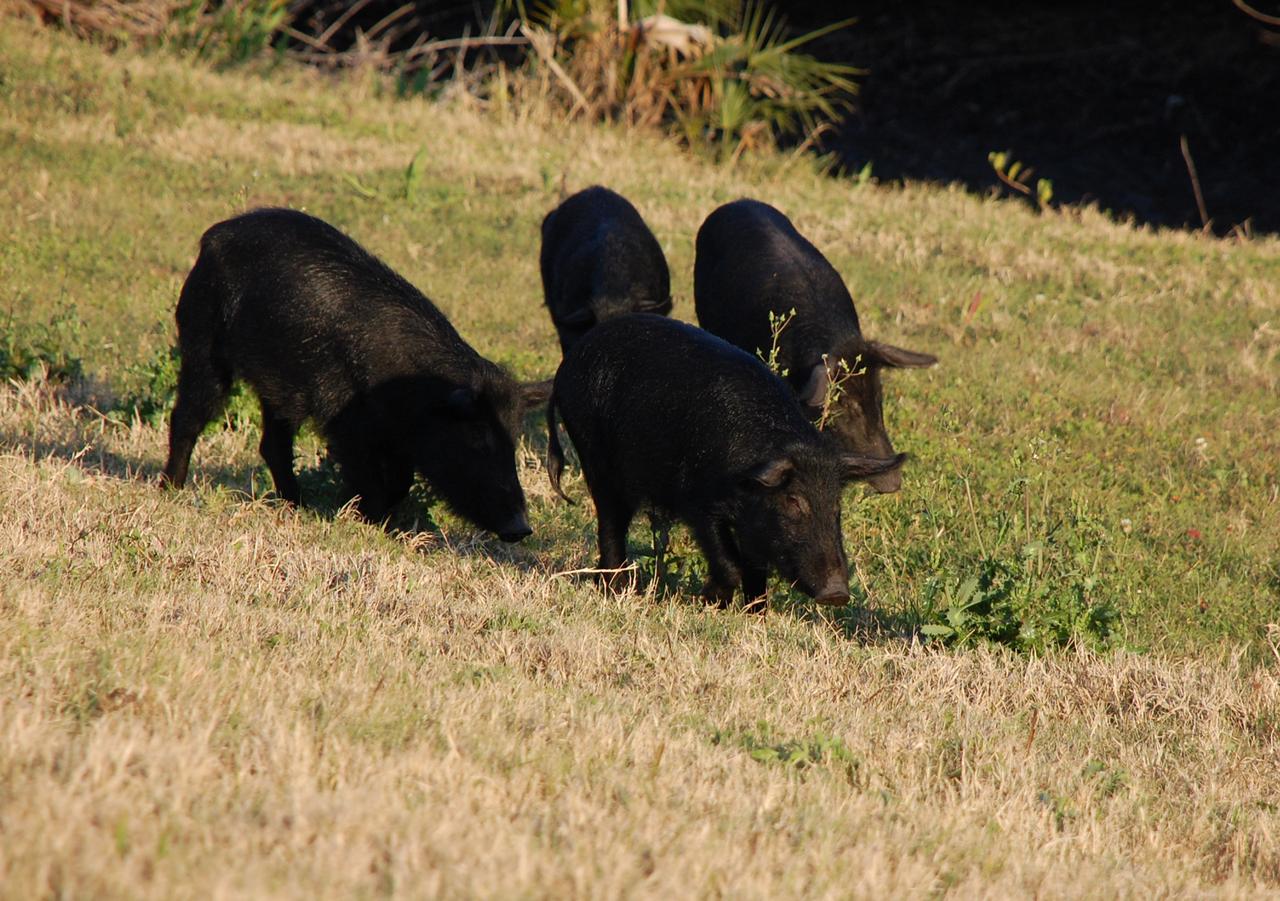
CAPE CANAVERAL, Fla. – At NASA's Kennedy Space Center in Florida, adult wild pigs hunt for food in the grassy field. The wild pigs have flourished in the environs around Kennedy, which shares a border with the Merritt Island National Wildlife Refuge, without many predators other than panthers and humans. Pigs were introduced to Florida in the 1500s and are now found statewide in wooded areas close to water. Pigs are omnivores, foraging on the ground and rooting just beneath the surface, which damages the groundcover. Wild pigs eat almost anything that has nutritional value, including tubers, roots, shoots, acorns, fruits, berries, earthworms, amphibians, reptiles and rodents. Their appearance is similar to domestic hogs, but leaner, with a longer, narrower head and a coarser, denser coat. Females may have two litters per year. The piglets are weaned in a few weeks but remain with the mother for several months. Photo credit: NASA/Ben Smegelsky
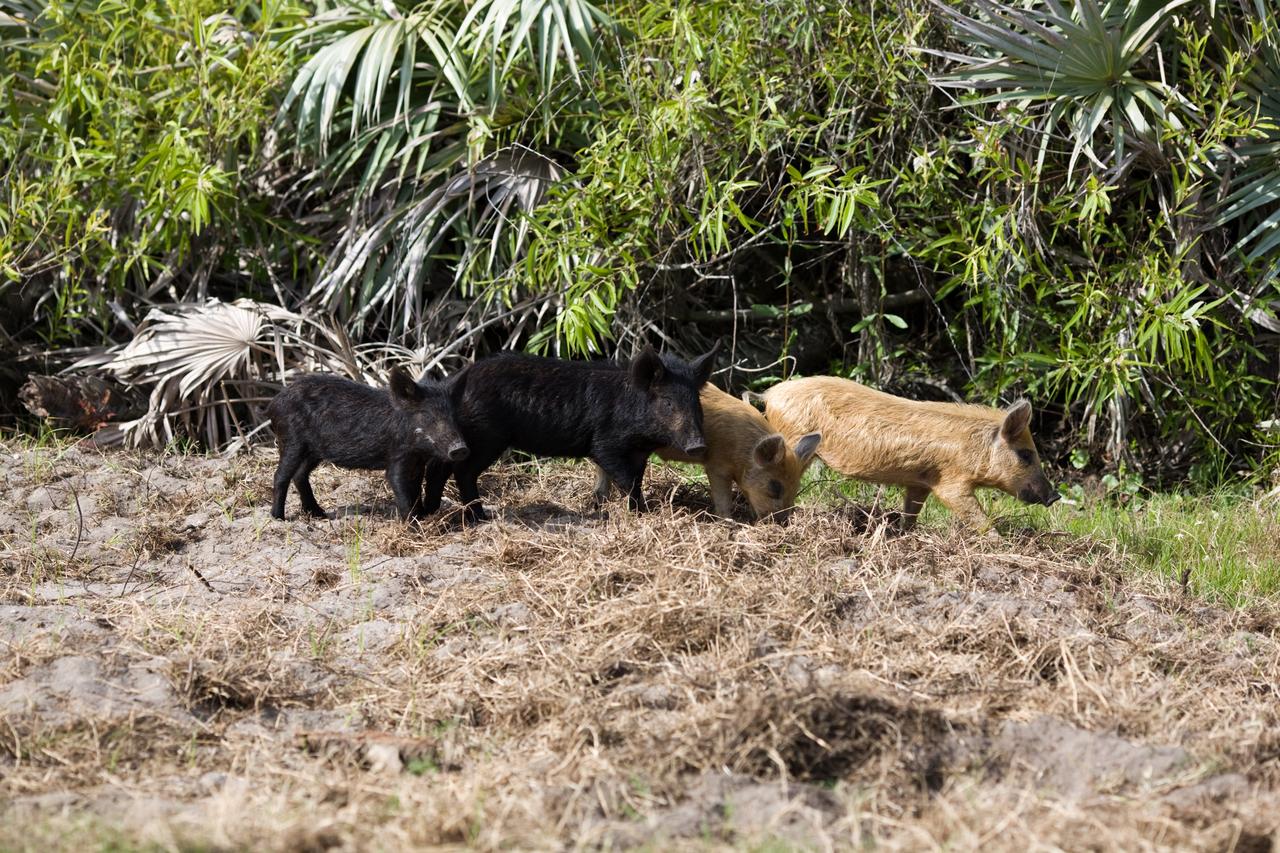
CAPE CANAVERAL, Fla. –– Wild pigs forage for food near a road through NASA's Kennedy Space Center in Florida. The wild pigs have flourished in the environs around Kennedy, which shares a border with the Merritt Island National Wildlife Refuge, without many predators other than panthers and humans. Pigs were introduced to Florida in the 1500s and are now found statewide in wooded areas close to water. Pigs are omnivores, foraging on the ground and rooting just beneath the surface, which damages the groundcover. Wild pigs eat almost anything that has nutritional value, including tubers, roots, shoots, acorns, fruits, berries, earthworms, amphibians, reptiles and rodents. Their appearance is similar to domestic hogs, but leaner, with a longer, narrower head and a coarser, denser coat. Females may have two litters per year. The piglets are weaned in a few weeks but remain with the mother for several months. Photo credit: NASA/Dimitri Gerondidakis
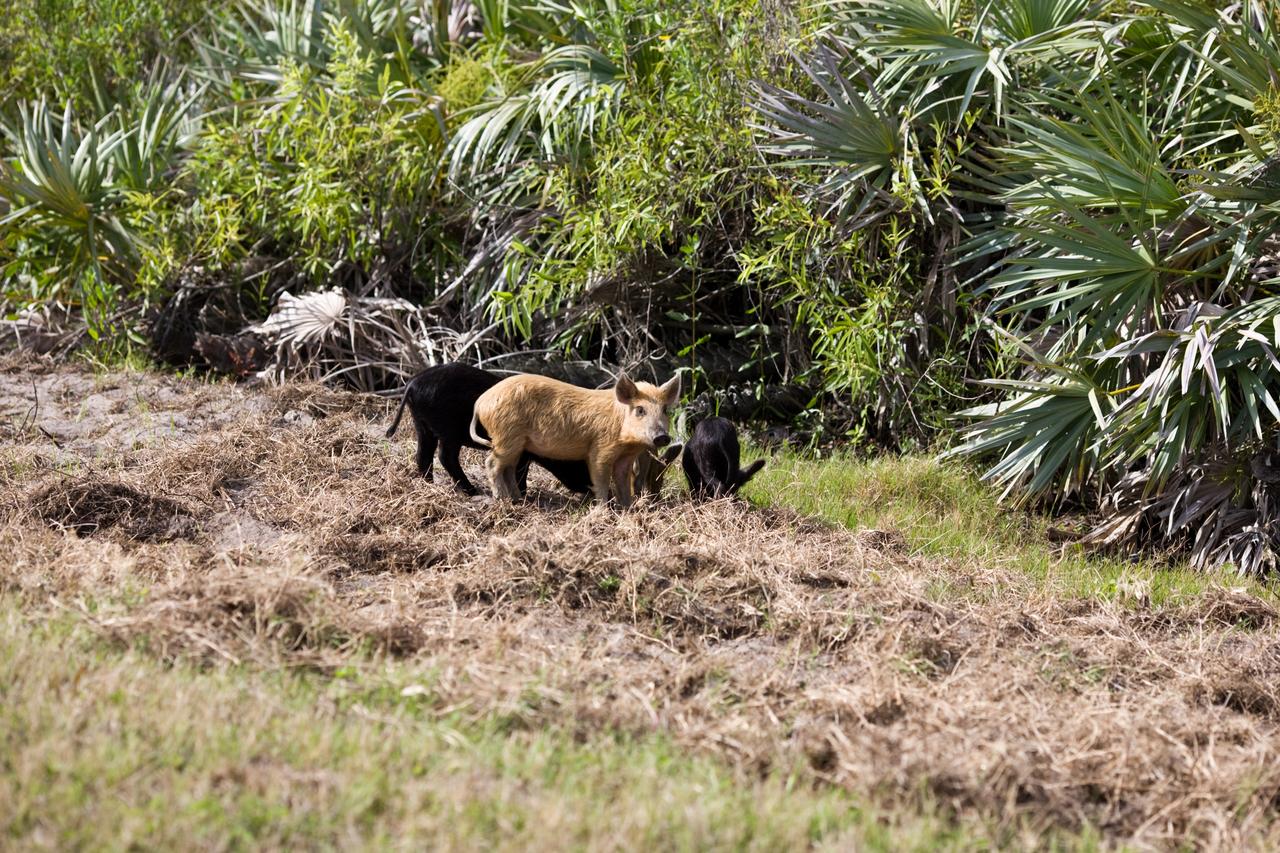
CAPE CANAVERAL, Fla. –– Wild pigs forage for food near a road through NASA's Kennedy Space Center in Florida. The wild pigs have flourished in the environs around Kennedy, which shares a border with the Merritt Island National Wildlife Refuge, without many predators other than panthers and humans. Pigs were introduced to Florida in the 1500s and are now found statewide in wooded areas close to water. Pigs are omnivores, foraging on the ground and rooting just beneath the surface, which damages the groundcover. Wild pigs eat almost anything that has nutritional value, including tubers, roots, shoots, acorns, fruits, berries, earthworms, amphibians, reptiles and rodents. Their appearance is similar to domestic hogs, but leaner, with a longer, narrower head and a coarser, denser coat. Females may have two litters per year. The piglets are weaned in a few weeks but remain with the mother for several months. Photo credit: NASA/Dimitri Gerondidakis
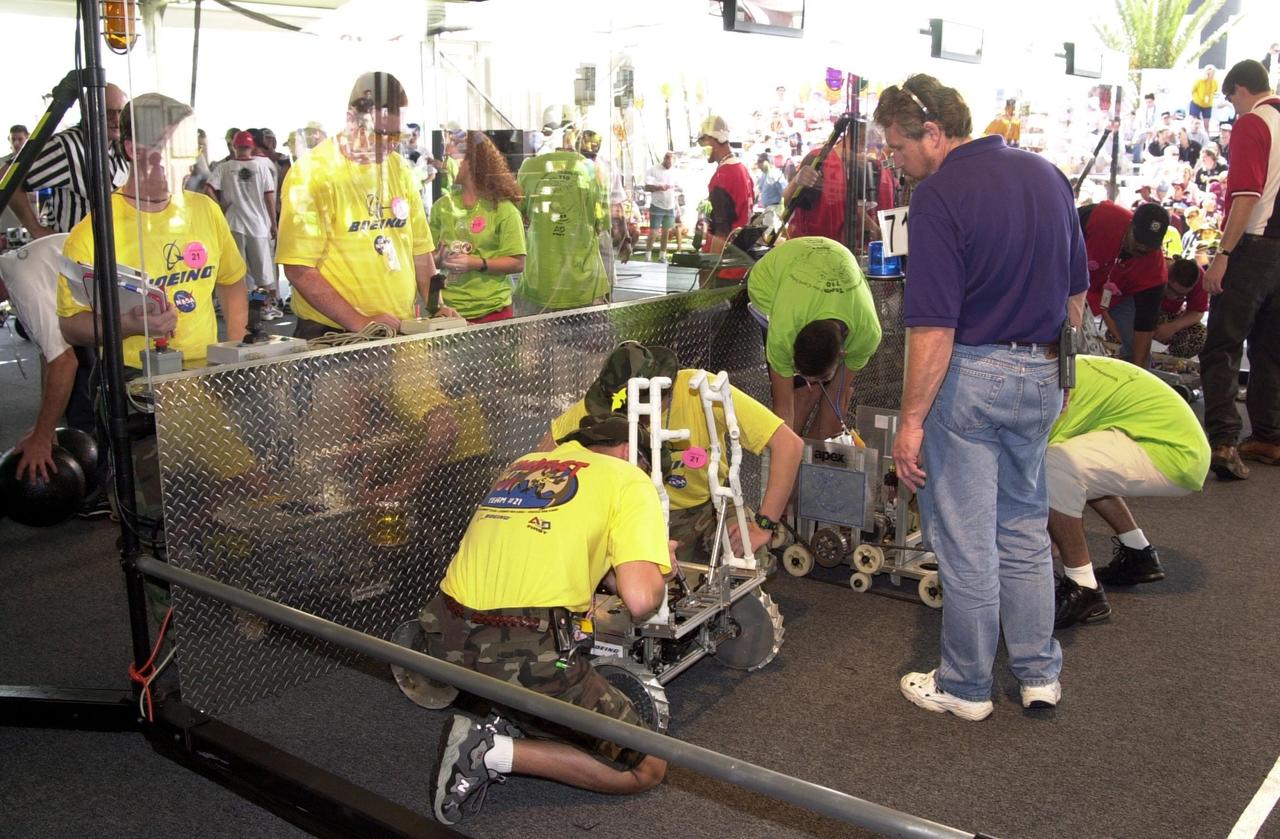
Student teams adjust their robots before competing on the playing field field during the NASA/KSC FIRST Southeastern Regional event held March 1-3, 2001. At left is the ComBBAT 2001 team from Astronaut and Titusville High Schools, Florida. It is a KSC joint-sponsored team. At right is the PC Panthers, no. 710, from Pine Crest School, Fort Lauderdale, Fla. FIRST (For Inspiration and Recognition of Science and Technology) events are held nationwide, pitting robots against each other and the clock on a playing field. Many teams are sponsored by corporations and academic institutions. There are 27 teams throughout the State of Florida who are competing. KSC, which sponsors nine teams, has held the regional event for two years
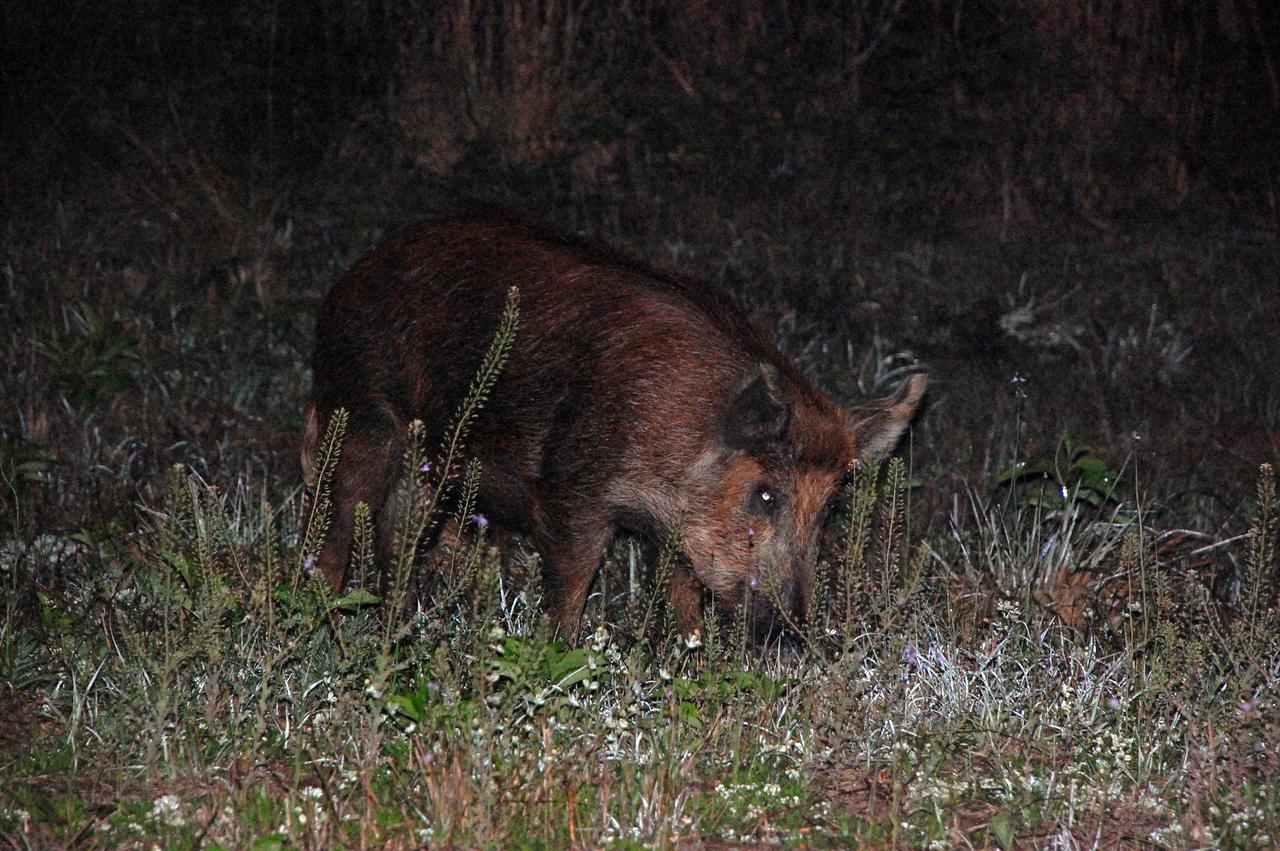
CAPE CANAVERAL, Fla. - A young feral hog roots for his breakfast at NASA's Kennedy Space Center in Florida. Wild hogs flourish in the environs around Kennedy, which coexists with the Merritt Island National Wildlife Refuge, without many predators other than panthers and humans. Hogs were introduced to Florida in the 1500s and are now found statewide in wooded areas close to water. Estimates of the hog population on the refuge vary from 5,000 to 12,000. The Merritt Island National Wildlife Refuge coexists with Kennedy Space Center and provides a habitat for 330 species of birds and a variety of other wildlife - 117 kinds of fish, 65 types of amphibians and reptiles, 31 different mammals, and 1,045 species of plants. For information on the refuge, visit http:__www.fws.gov_merrittisland_Index.html. For information on Kennedy Space Center, visit http:__www.nasa.gov_kennedy. Photo credit: NASA_Ben Smegelsky
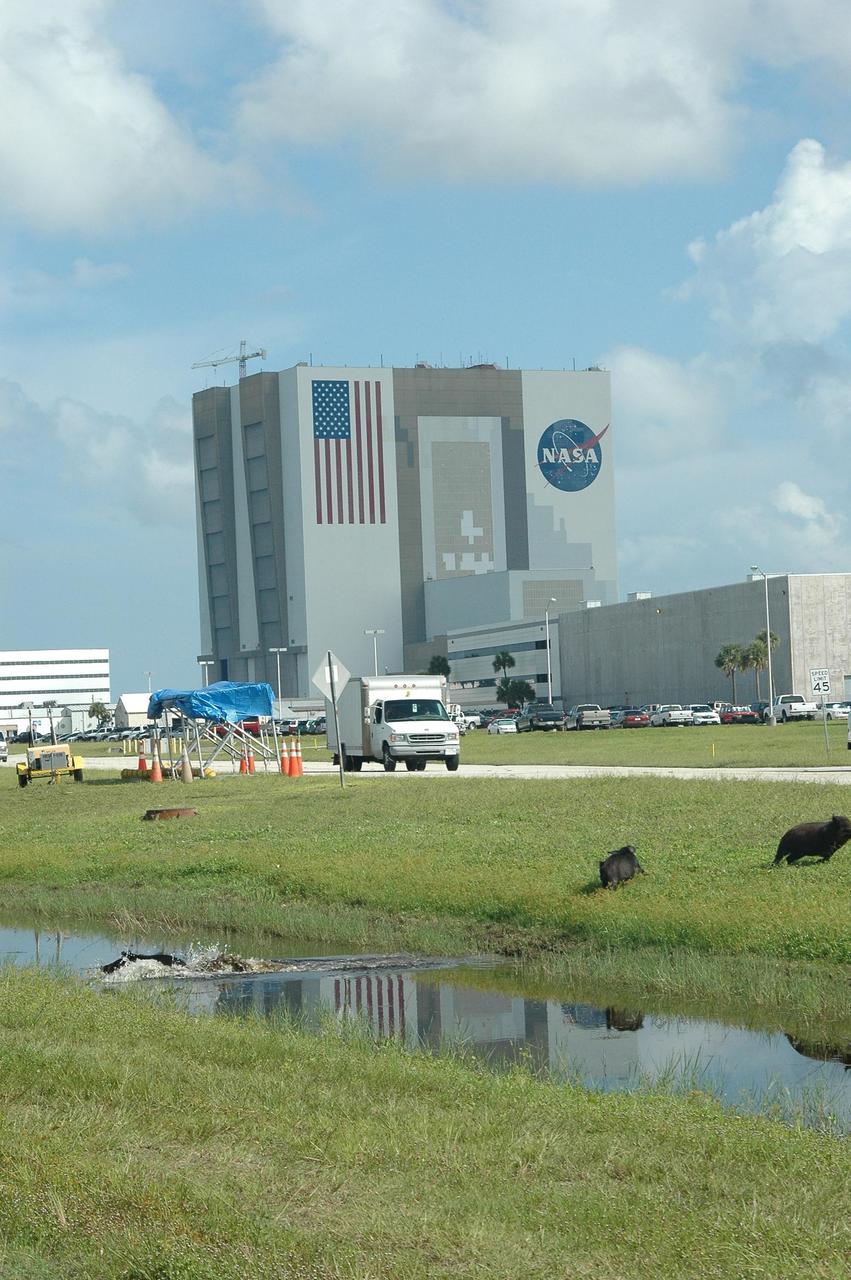
KENNEDY SPACE CENTER, FLA. - A wild pig splashes through a canal near NASA Kennedy Space Center’s Vehicle Assembly Building while its companions stay nearby on the bank. The wild pigs have flourished in the environs around KSC, which shares a border with the Merritt Island National Wildlife Refuge, without many predators other than panthers and humans. Pigs were introduced to Florida in the 1500s and are now found statewide in wooded areas close to water. Pigs are omnivores, foraging on the ground and rooting just beneath the surface, which damages the groundcover. Wild pigs eat almost anything that has nutritional value, including tubers, roots, shoots, acorns, fruits, berries, earthworms, amphibians, reptiles and rodents. Appearance is similar to domestic hogs, but leaner, with a longer, narrower head and a coarser, denser coat. Females may have two litters per year. The piglets are weaned in a few weeks but remain with the mother for several months.
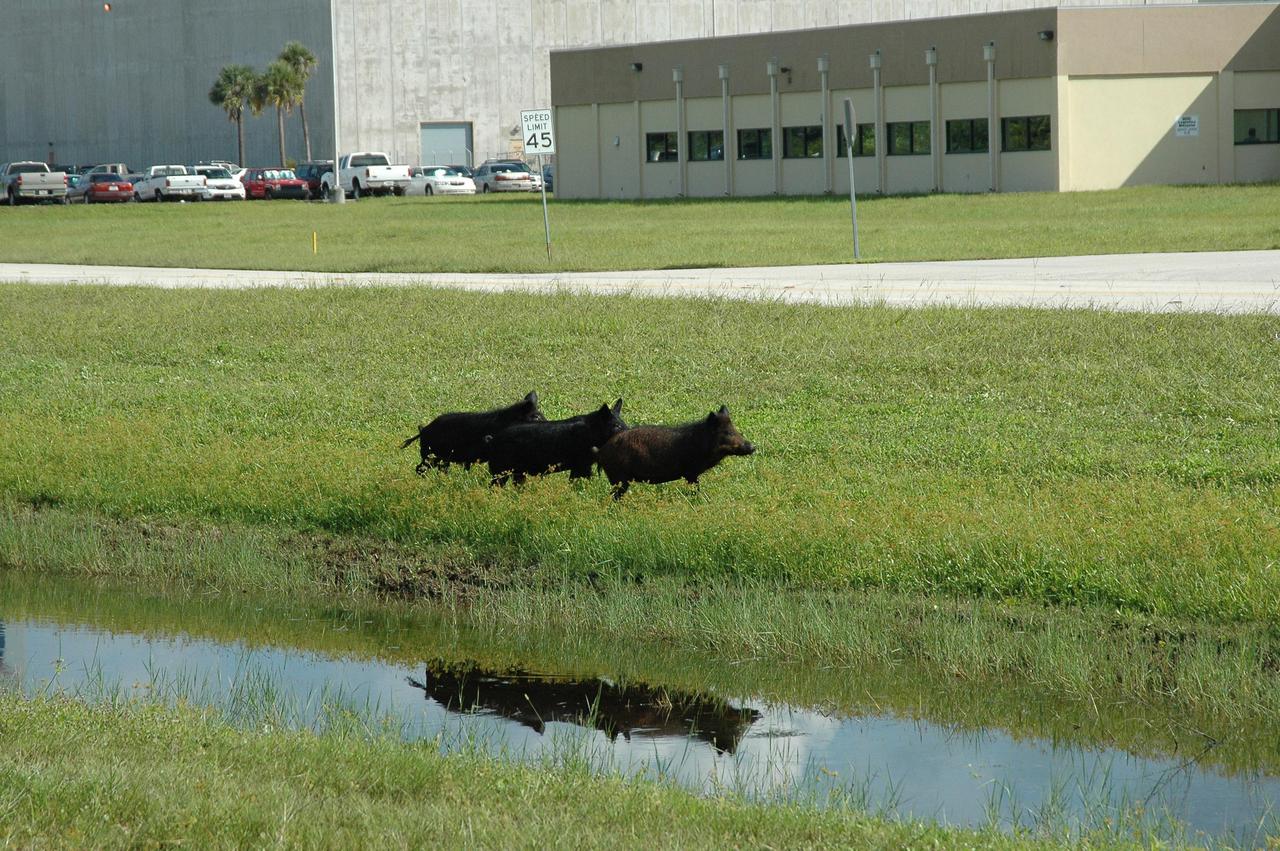
KENNEDY SPACE CENTER, FLA. - As if posing for the photographer, a trio of wild pigs pause during their stroll along a canal near NASA Kennedy Space Center’s Launch Control Center, in the background. The wild pigs have flourished in the environs around KSC, which shares a border with the Merritt Island National Wildlife Refuge, without many predators other than panthers and humans. Pigs were introduced to Florida in the 1500s and are now found statewide in wooded areas close to water. Pigs are omnivores, foraging on the ground and rooting just beneath the surface, which damages the groundcover. Wild pigs eat almost anything that has nutritional value, including tubers, roots, shoots, acorns, fruits, berries, earthworms, amphibians, reptiles and rodents. Appearance is similar to domestic hogs, but leaner, with a longer, narrower head and a coarser, denser coat. Females may have two litters per year. The piglets are weaned in a few weeks but remain with the mother for several months.
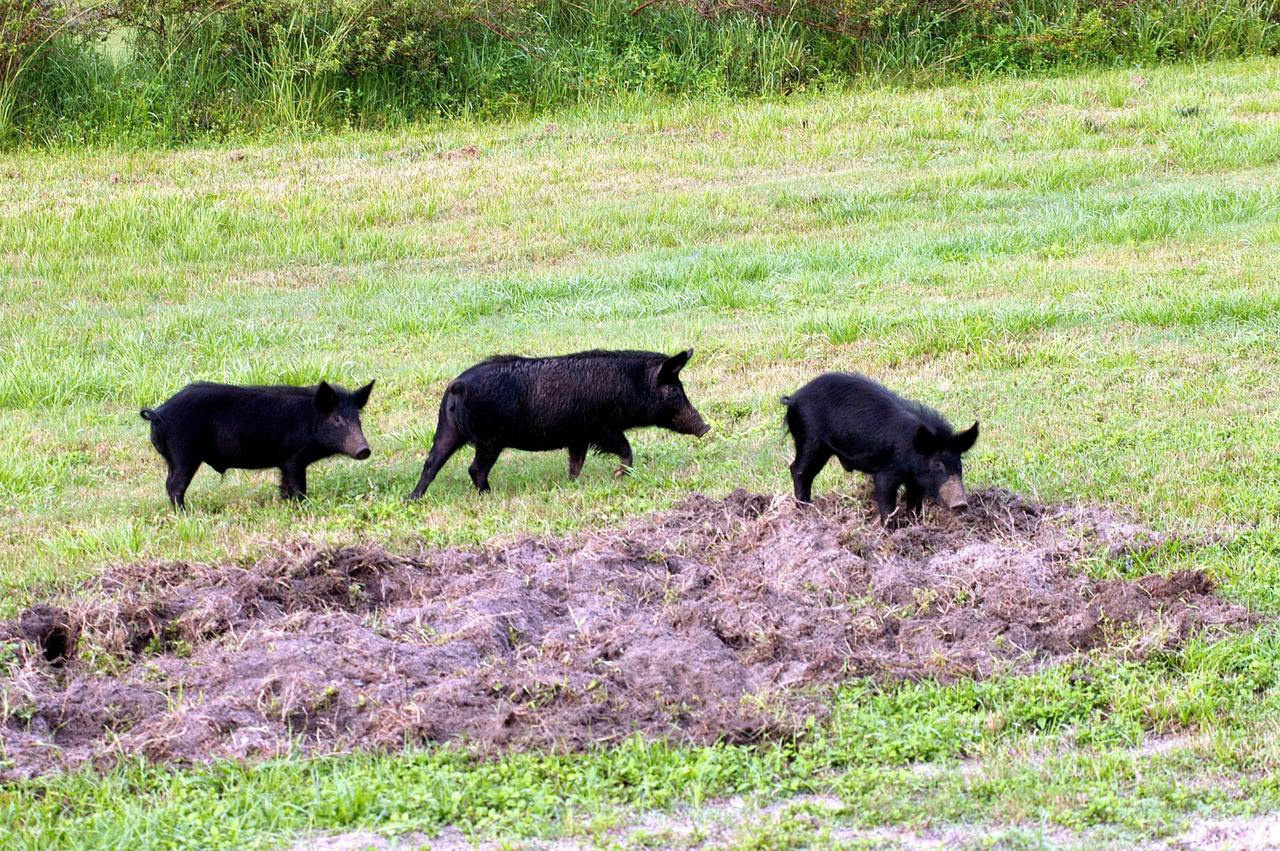
KENNEDY SPACE CENTER, FLA. - Three wild pigs - a mother and her two offspring - root for food in the grass near the NASA News Center at KSC. Feral pigs were introduced to Florida in the 1500s and are now found statewide in wooded areas close to water. The pigs have flourished in the environs around KSC, which shares a border with the Merritt Island National Wildlife Refuge, without many predators other than panthers and humans. Pigs are omnivores, foraging on the ground and rooting just beneath the surface, which damages the groundcover. Wild pigs eat almost anything that has nutritional value, including tubers, roots, shoots, acorns, fruits, berries, earthworms, amphibians, reptiles and rodents. Appearance is similar to domestic hogs, but leaner, with a longer, narrower head and a coarser, denser coat. Females may have two litters per year. The piglets are weaned in a few weeks but remain with the mother for several months.
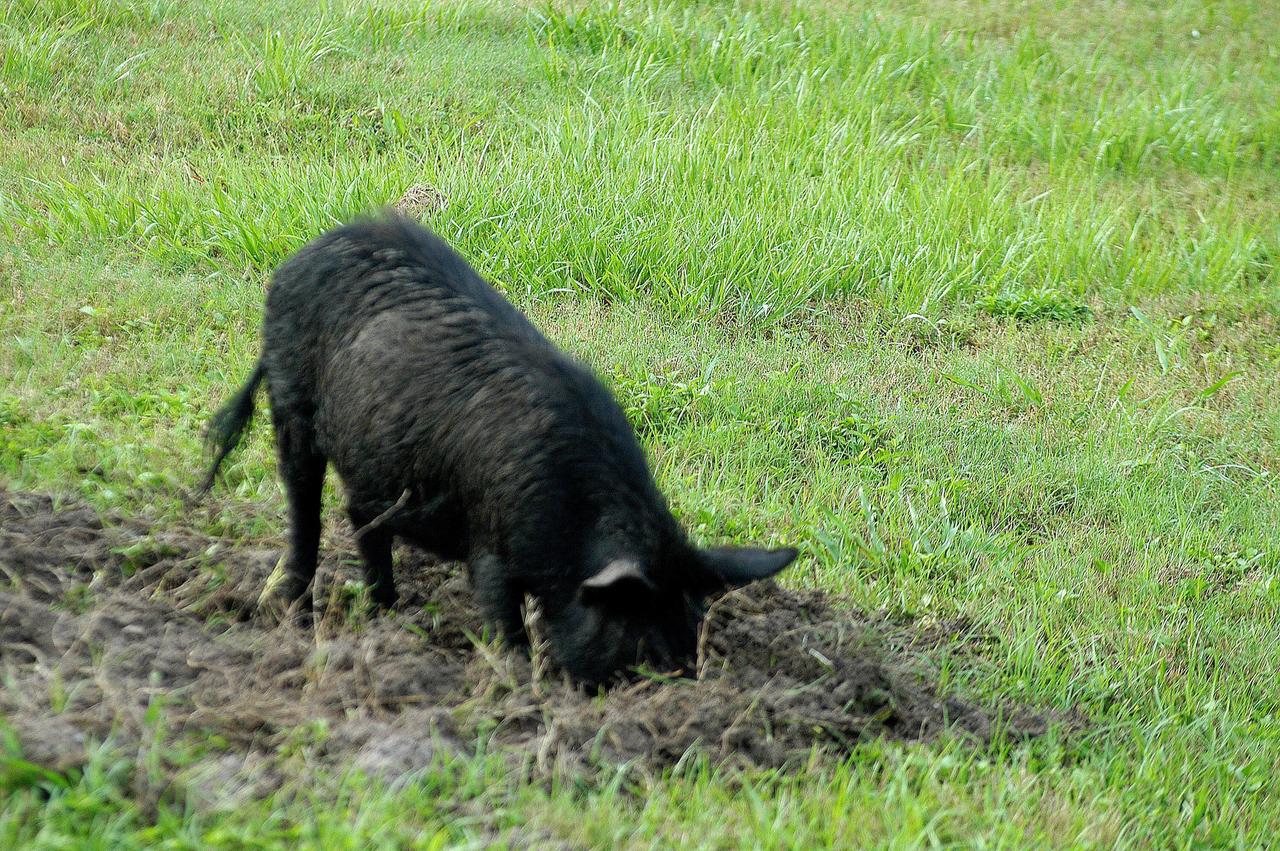
KENNEDY SPACE CENTER, FLA. - A young wild pig roots in the grass for food in an area near the NASA News Center at KSC. Feral pigs were introduced to Florida in the 1500s and are now found statewide in wooded areas close to water. The pigs have flourished in the environs around KSC, which shares a border with the Merritt Island National Wildlife Refuge, without many predators other than panthers and humans. Pigs are omnivores, foraging on the ground and rooting just beneath the surface, which damages the groundcover. Wild pigs eat almost anything that has nutritional value, including tubers, roots, shoots, acorns, fruits, berries, earthworms, amphibians, reptiles and rodents. Appearance is similar to domestic hogs, but leaner, with a longer, narrower head and a coarser, denser coat. Females may have two litters per year. The piglets are weaned in a few weeks but remain with the mother for several months.
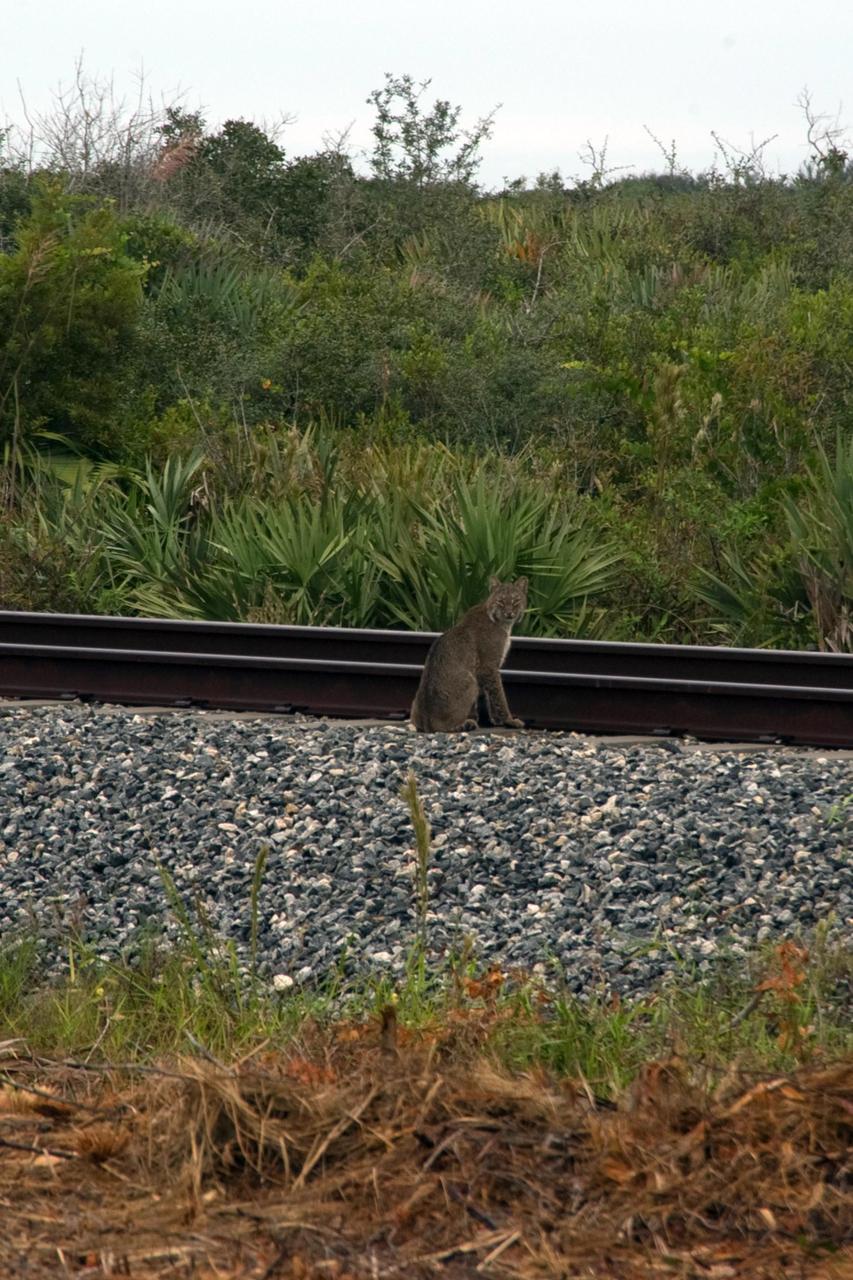
KENNEDY SPACE CENTER, FLA. -- A rare view of a bobcat, spotted near the NASA Railroad tracks on a mid-morning. The bobcat is a solitary and territorial predator mammal. They are mostly nocturnal and solitary, but will travel long distances for a mate. Not as big as a panther, but about the size of a medium-sized dog, male and female bobcats average 39 inches and 36 inches in length, and 24 pounds and 15 pounds in weight, respectively. They are most easily identified by their short tails which are about 5.5 inches long. Their fur, which is short, soft and dense, ranges from light tan to reddish or yellowish brown and markings vary from tabby stripes to spotting. They swim more than other native cats. The backs of their ears are white with a black outline. Their underparts are generally white. Bobcats can most likely be found in every county in Florida. Photo credit: NASA/Sandra Joseph
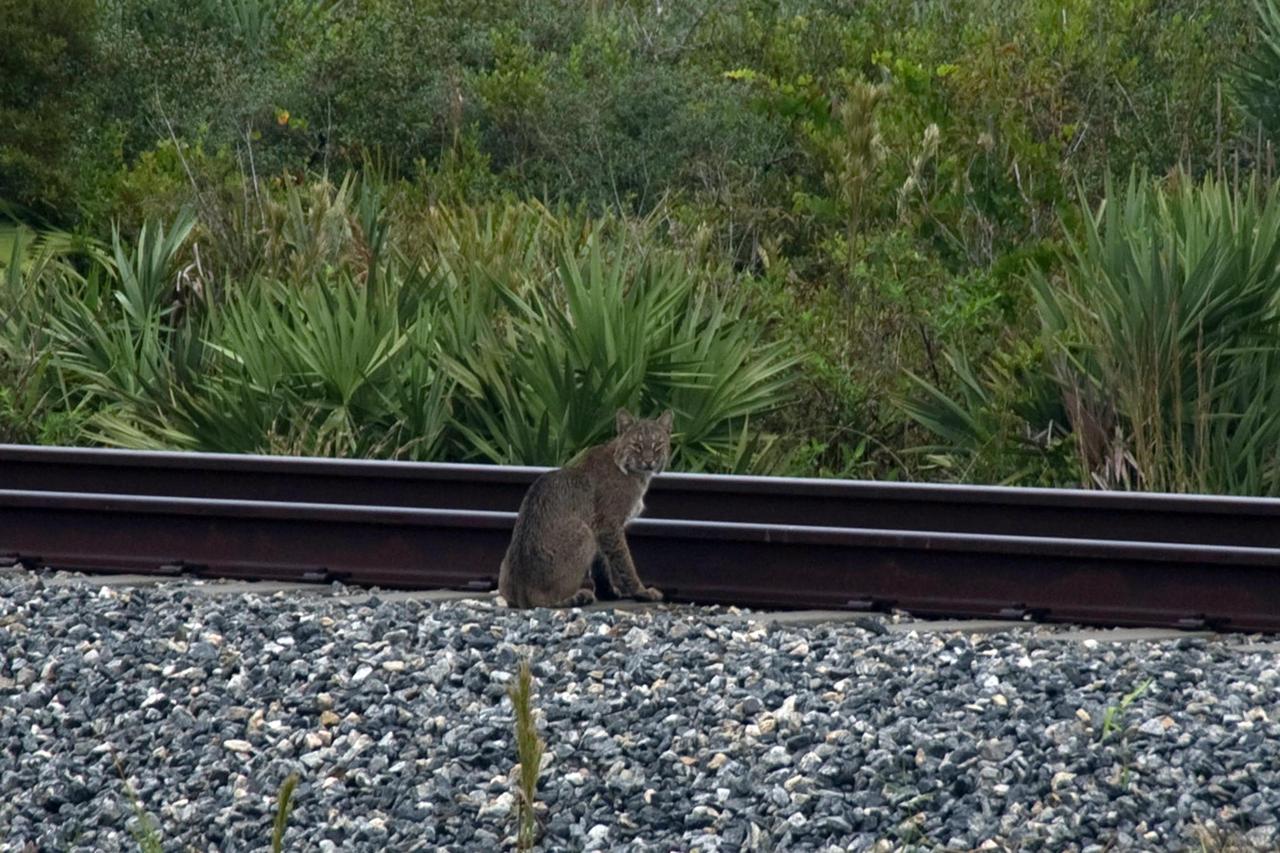
KENNEDY SPACE CENTER, FLA. -- A rare view of a bobcat, spotted near the NASA Railroad tracks on a mid-morning. The bobcat is a solitary and territorial predator mammal. They are mostly nocturnal and solitary, but will travel long distances for a mate. Not as big as a panther, but about the size of a medium-sized dog, male and female bobcats average 39 inches and 36 inches in length, and 24 pounds and 15 pounds in weight, respectively. They are most easily identified by their short tails which are about 5.5 inches long. Their fur, which is short, soft and dense, ranges from light tan to reddish or yellowish brown and markings vary from tabby stripes to spotting. They swim more than other native cats. The backs of their ears are white with a black outline. Their underparts are generally white. Bobcats can most likely be found in every county in Florida. Photo credit: NASA/Sandra Joseph
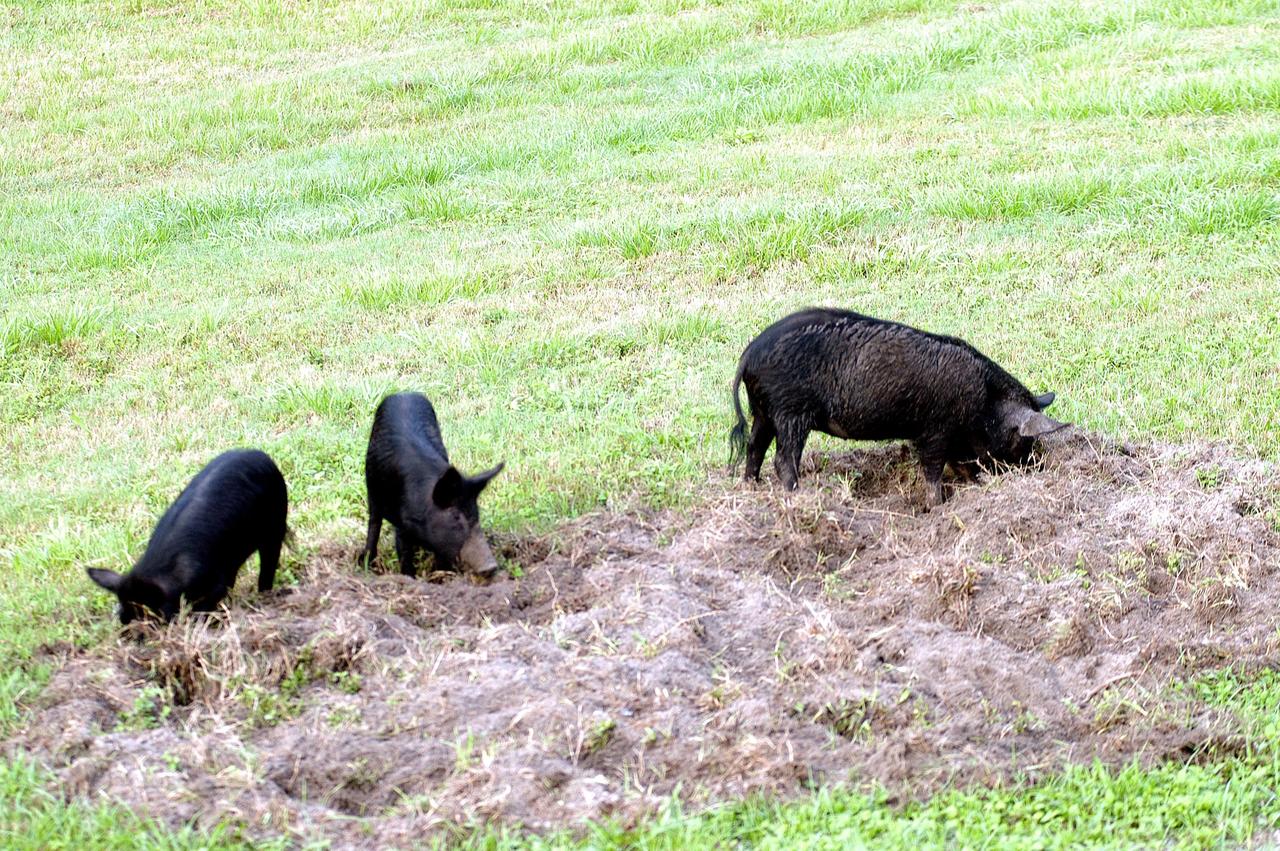
KENNEDY SPACE CENTER, FLA. - Three wild pigs - a mother and her two offspring - root for food in the grass near the NASA News Center at KSC. Feral pigs were introduced to Florida in the 1500s and are now found statewide in wooded areas close to water. The pigs have flourished in the environs around KSC, which shares a border with the Merritt Island National Wildlife Refuge, without many predators other than panthers and humans. Pigs are omnivores, foraging on the ground and rooting just beneath the surface, which damages the groundcover. Wild pigs eat almost anything that has nutritional value, including tubers, roots, shoots, acorns, fruits, berries, earthworms, amphibians, reptiles and rodents. Appearance is similar to domestic hogs, but leaner, with a longer, narrower head and a coarser, denser coat. Females may have two litters per year. The piglets are weaned in a few weeks but remain with the mother for several months.
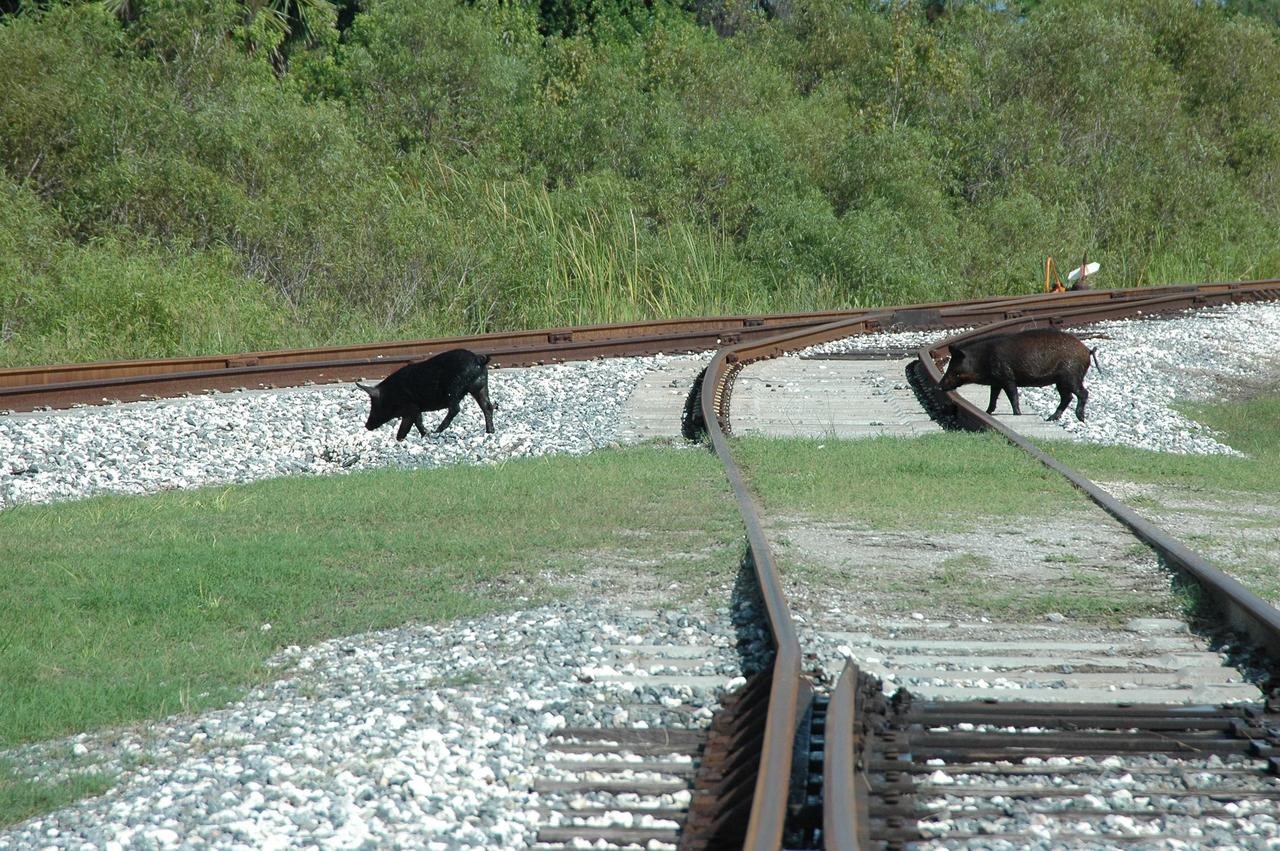
KENNEDY SPACE CENTER, FLA. - Two wild pigs cross railroad tracks on grounds at NASA Kennedy Space Center. The wild pigs have flourished in the environs around KSC, which shares a border with the Merritt Island National Wildlife Refuge, without many predators other than panthers and humans. Pigs were introduced to Florida in the 1500s and are now found statewide in wooded areas close to water. Pigs are omnivores, foraging on the ground and rooting just beneath the surface, which damages the groundcover. Wild pigs eat almost anything that has nutritional value, including tubers, roots, shoots, acorns, fruits, berries, earthworms, amphibians, reptiles and rodents. Appearance is similar to domestic hogs, but leaner, with a longer, narrower head and a coarser, denser coat. Females may have two litters per year. The piglets are weaned in a few weeks but remain with the mother for several months.
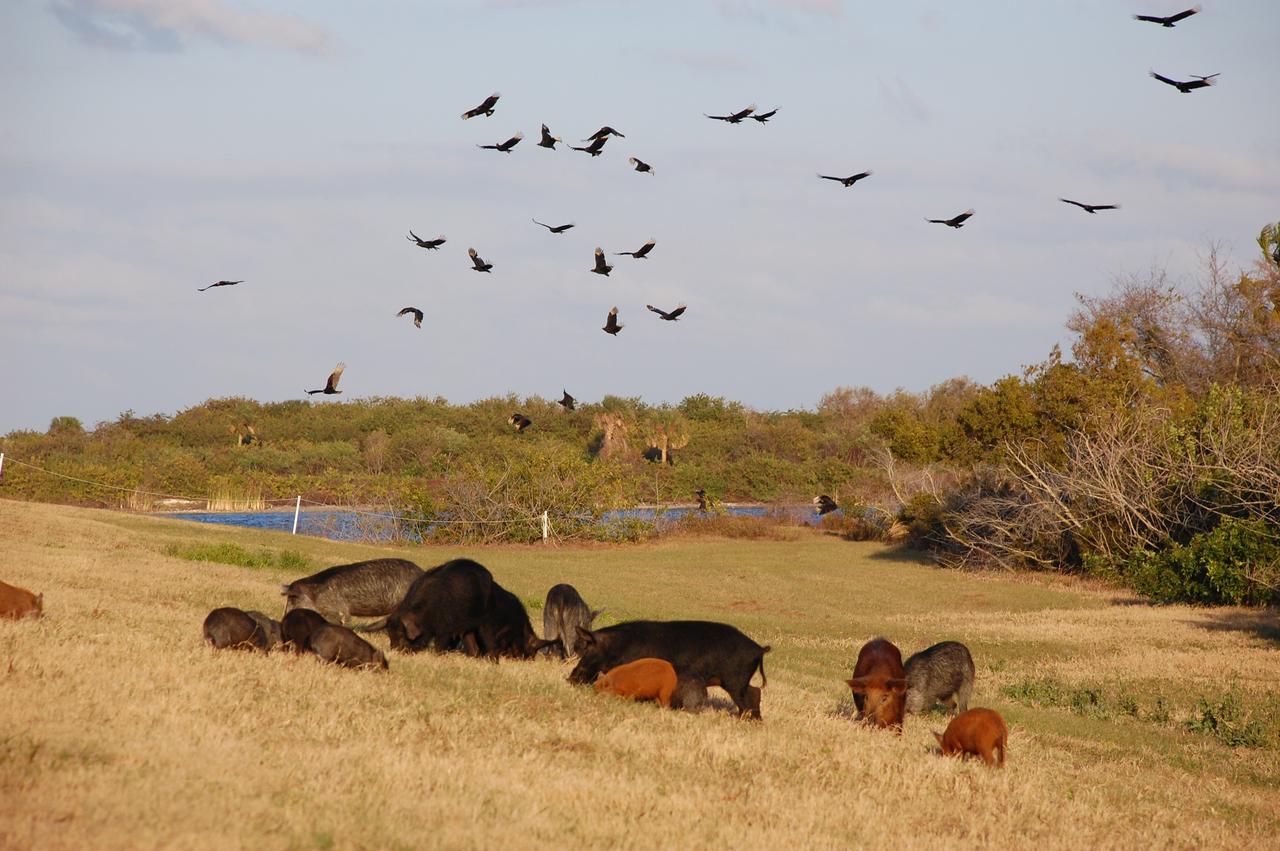
CAPE CANAVERAL, Fla. – At NASA's Kennedy Space Center in Florida, a family of wild pigs roots through the grass for food. Overhead, vultures circle, hunting for their share of food. The wild pigs have flourished in the environs around Kennedy, which shares a border with the Merritt Island National Wildlife Refuge, without many predators other than panthers and humans. Pigs were introduced to Florida in the 1500s and are now found statewide in wooded areas close to water. Pigs are omnivores, foraging on the ground and rooting just beneath the surface, which damages the groundcover. Wild pigs eat almost anything that has nutritional value, including tubers, roots, shoots, acorns, fruits, berries, earthworms, amphibians, reptiles and rodents. Their appearance is similar to domestic hogs, but leaner, with a longer, narrower head and a coarser, denser coat. Females may have two litters per year. The piglets are weaned in a few weeks but remain with the mother for several months. Photo credit: NASA/Ben Smegelsky

CAPE CANAVERAL, Fla. – At NASA's Kennedy Space Center in Florida, a wild pig stops hunting for food to eye the photographer. This pig is part of a larger family in the area. The wild pigs have flourished in the environs around Kennedy, which shares a border with the Merritt Island National Wildlife Refuge, without many predators other than panthers and humans. Pigs were introduced to Florida in the 1500s and are now found statewide in wooded areas close to water. Pigs are omnivores, foraging on the ground and rooting just beneath the surface, which damages the groundcover. Wild pigs eat almost anything that has nutritional value, including tubers, roots, shoots, acorns, fruits, berries, earthworms, amphibians, reptiles and rodents. Their appearance is similar to domestic hogs, but leaner, with a longer, narrower head and a coarser, denser coat. Females may have two litters per year. The piglets are weaned in a few weeks but remain with the mother for several months. Photo credit: NASA/Ben Smegelsky
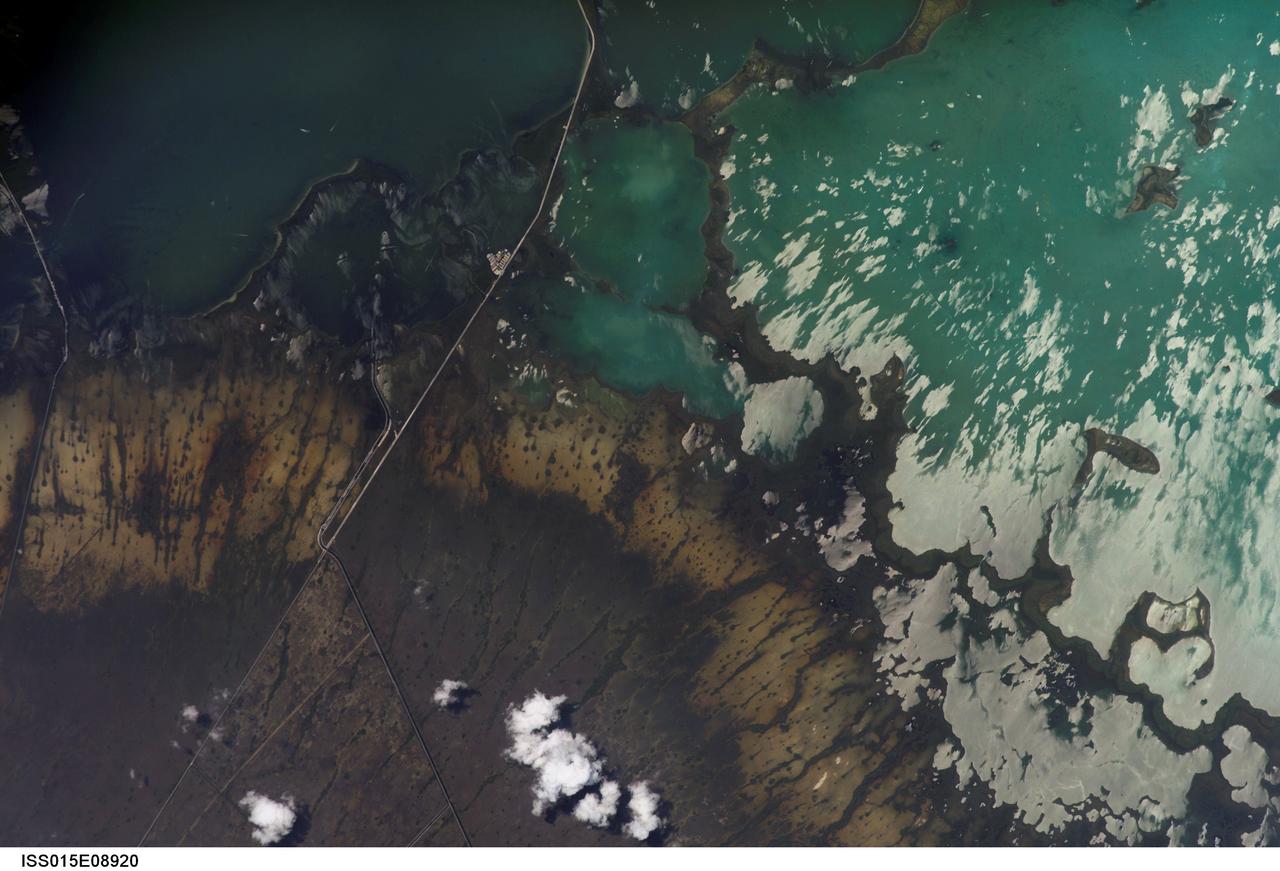
ISS015-E-08920 (19 May 2007) --- Southern Everglades National Park, Florida is featured in this image photographed by an Expedition 15 crewmember on the International Space Station. Everglades National Park in southern Florida is the largest subtropical wilderness in the United States. Known as the "river of grass", the Everglades wetlands and wooded uplands host a variety of endangered species including crocodiles, manatees, and panthers. During the late 19th and 20th centuries, the original 11,000 square miles of wetlands were viewed as useless swampland in need of reclamation. The success of reclamation efforts -- for agriculture and urban expansion in southern Florida -- has led to the loss of approximately 50 per cent of the original wetlands and 90 per cent of wading bird species. Today, an extensive restoration effort is underway to return portions of the Everglades to a more natural state and prevent further ecosystem degradation. This view highlights the southern Everglades estuarine ecosystem where the wetlands meet Florida Bay. Thin fingers of land and small islands (keys) host mangrove, hardwood hammocks, marsh and prairie (mainly dark to light green in the image). The tan and grayish-brown areas are dominantly scrub, marshland and prairie; small green "dots" and narrow lines in this region are isolated mangrove and hardwood stands indicating the general direction of slow water flow toward the bay. The silver-gray regions are water surfaces highlighted by sunglint. The roadway forming the western boundary of the National Park is US Route 1 connecting the Miami metropolitan area to the north (not shown) with the Florida Keys to the south (not shown). A small built feature visible along the roadway is a fishing camp.