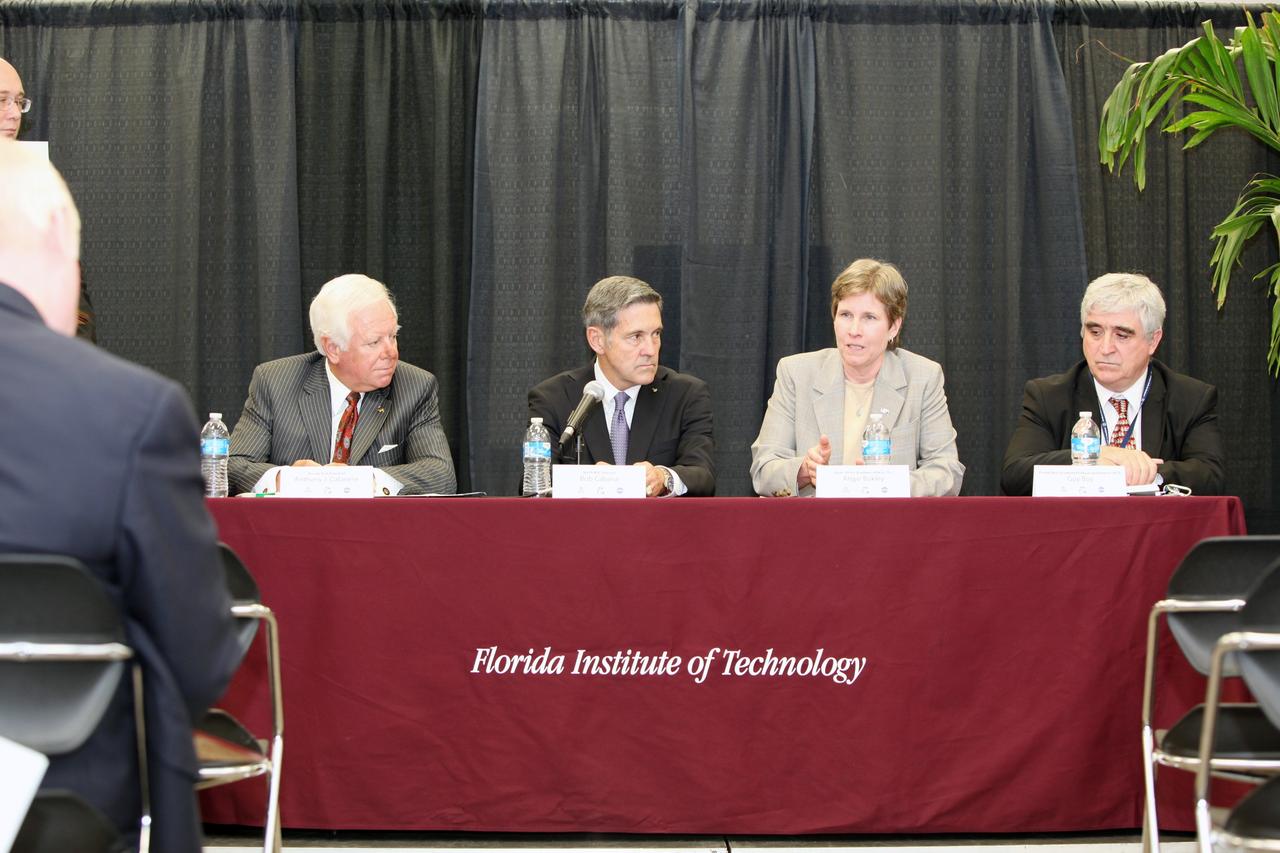
MELBOURNE, Fla. – Professor Angie Bukley, dean and vice president for Academic Affairs, International Space University, addresses the audience during opening ceremonies for the university's 25th annual Space Studies Program session at the Florida Institute of Technology in Melbourne, Fla. Seated from left are Anthony J. Catanese, president of Florida Tech NASA Kennedy Space Center Director Bob Cabana Bukley and Dr. Guy A. Boy, chair of the Space Studies Program’s local organizing committee. The nine-week intensive course is designed for post-graduate university students and professionals during the summer. The program is hosted by a different country each year, providing a unique educational experience for participants from around the globe. NASA Kennedy Space Center and Florida Tech are co-hosting this year's event which runs from June 4 to Aug. 3. This year, there are about 125 participants representing 31 countries. For more information, visit http://www.isunet.edu. Photo credit: NASA/Dimitri Gerondidakis
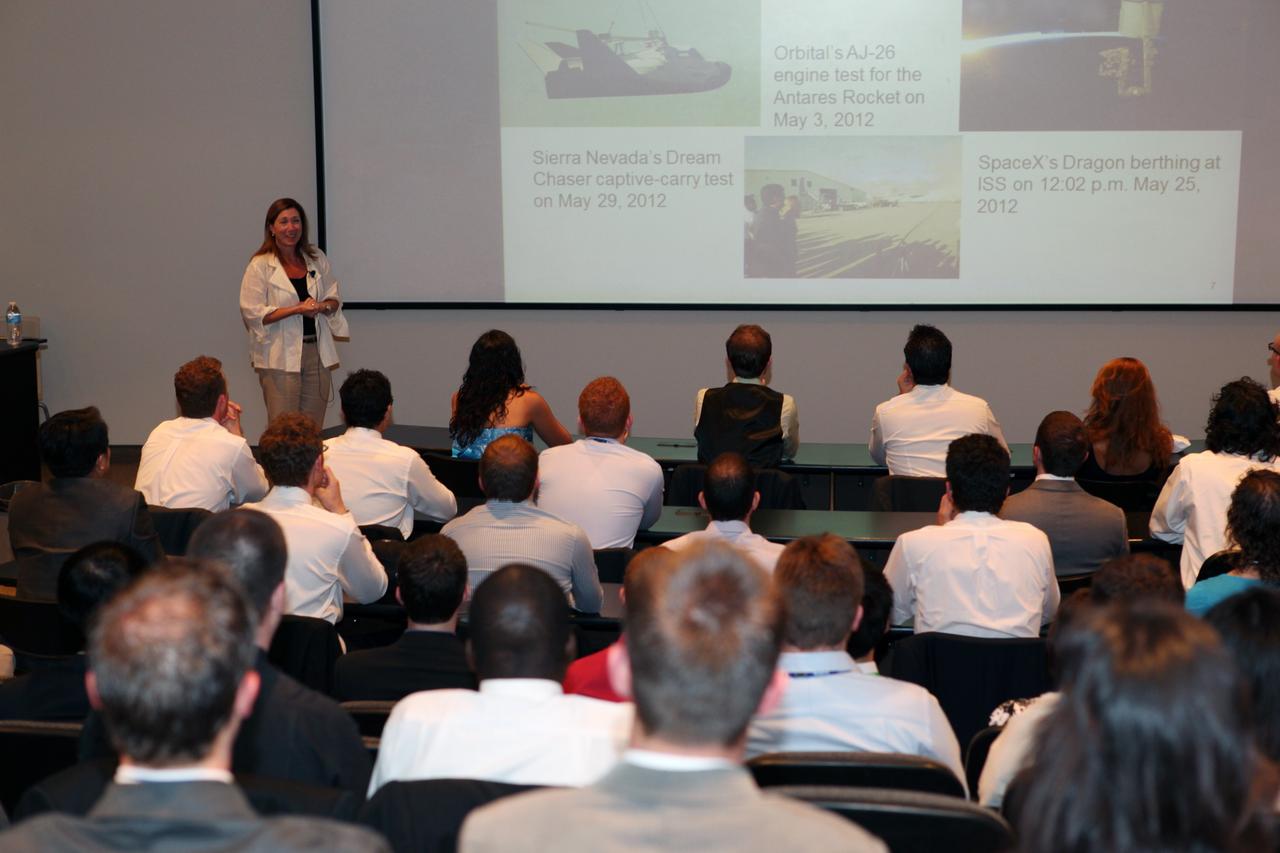
MELBOURNE, Fla. – NASA Deputy Administrator Lori Garver addresses students on the opening day of the International Space University's 25th annual Space Studies Program session at the Florida Institute of Technology in Melbourne, Fla. The nine-week intensive course is designed for post-graduate university students and professionals during the summer. The program is hosted by a different country each year, providing a unique educational experience for participants from around the globe. NASA Kennedy Space Center and Florida Tech are co-hosting this year's event which runs from June 4 to Aug. 3. This year, there are about 125 participants representing 31 countries. For more information, visit http://www.isunet.edu. Photo credit: NASA/Dimitri Gerondidakis
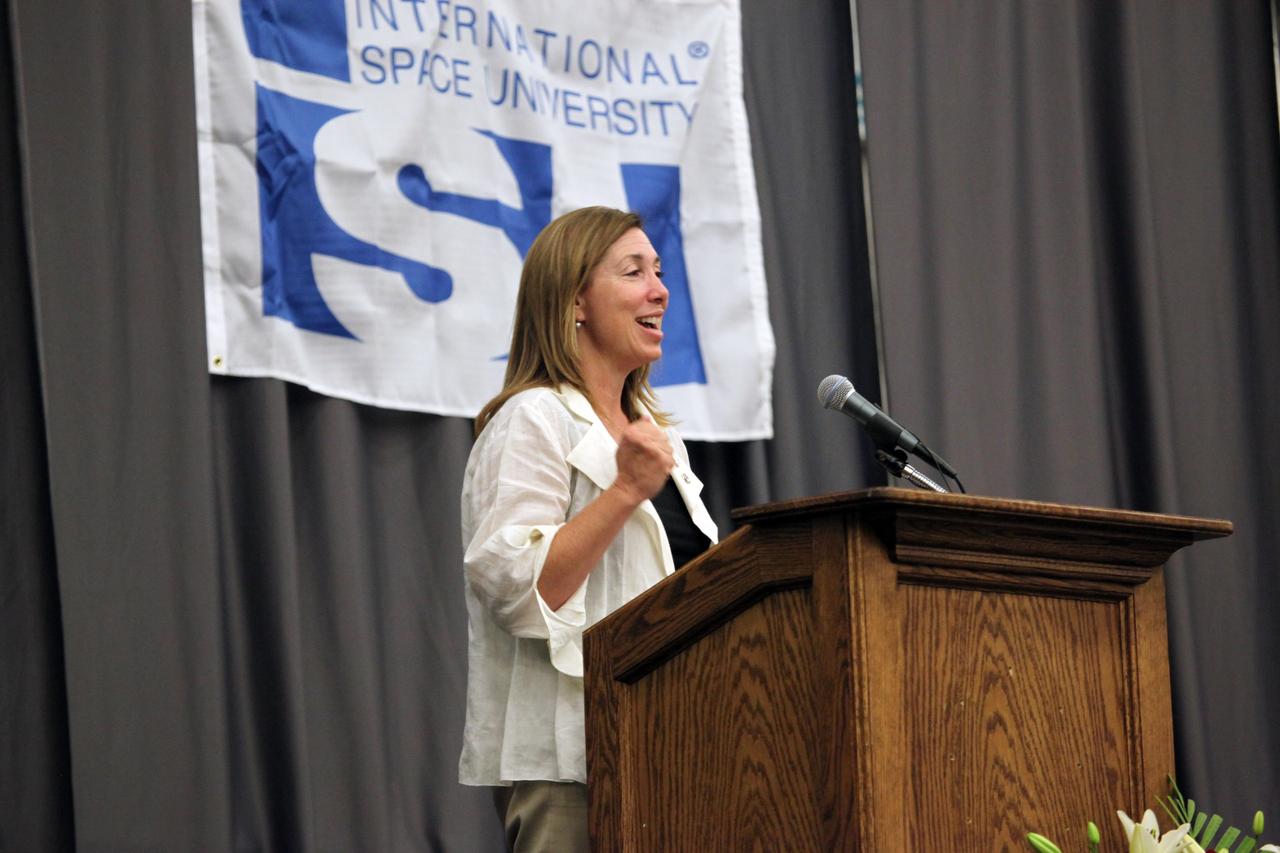
MELBOURNE, Fla. – NASA Deputy Administrator Lori Garver addresses the audience during opening ceremonies for the International Space University's 25th annual Space Studies Program session at the Florida Institute of Technology in Melbourne, Fla. The nine-week intensive course is designed for post-graduate university students and professionals during the summer. The program is hosted by a different country each year, providing a unique educational experience for participants from around the globe. NASA Kennedy Space Center and Florida Tech are co-hosting this year's event which runs from June 4 to Aug. 3. This year, there are about 125 participants representing 31 countries. For more information, visit http://www.isunet.edu. Photo credit: NASA/Dimitri Gerondidakis
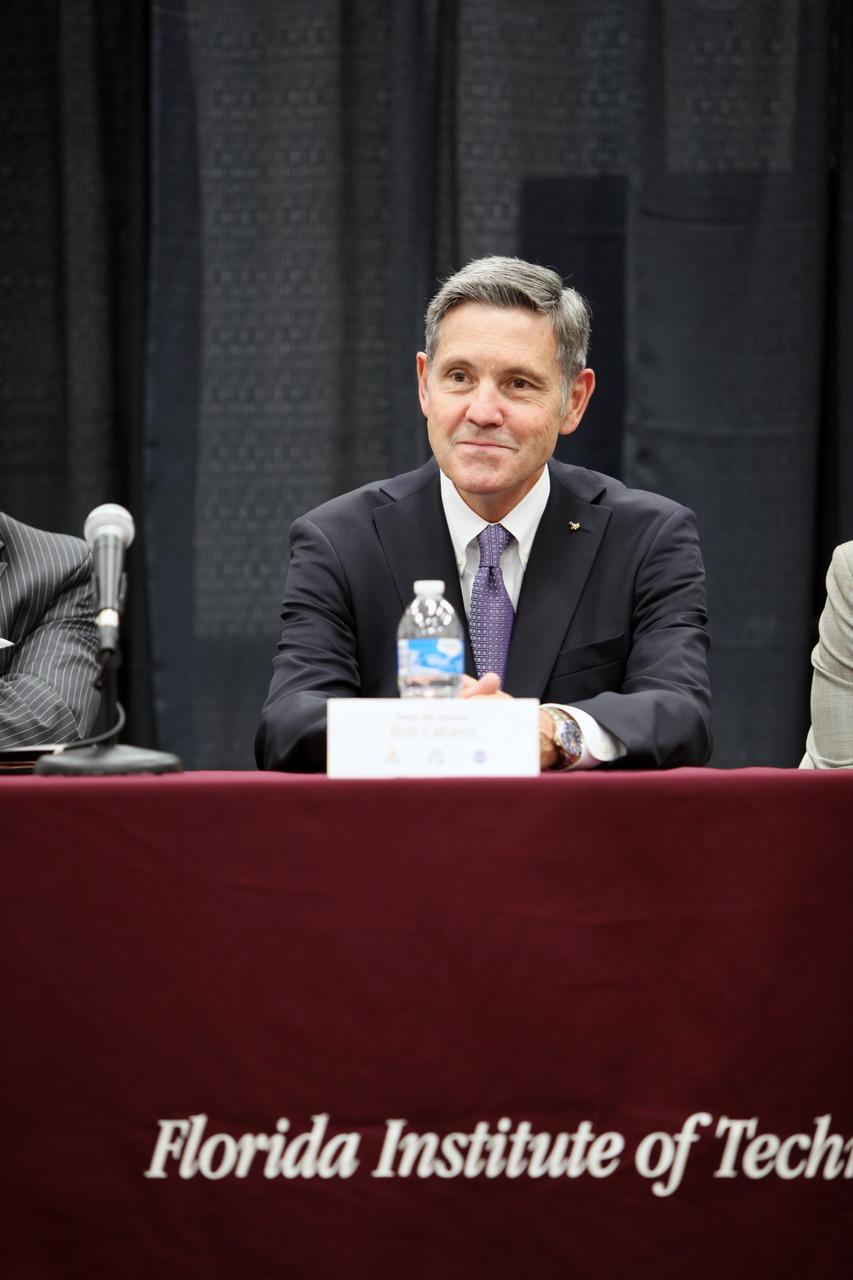
MELBOURNE, Fla. – NASA Kennedy Space Center Director Bob Cabana participates in the opening ceremonies for the International Space University's 25th annual Space Studies Program session at the Florida Institute of Technology in Melbourne, Fla. The nine-week intensive course is designed for post-graduate university students and professionals during the summer. The program is hosted by a different country each year, providing a unique educational experience for participants from around the globe. NASA Kennedy Space Center and Florida Tech are co-hosting this year's event which runs from June 4 to Aug. 3. This year, there are about 125 participants representing 31 countries. For more information, visit http://www.isunet.edu. Photo credit: NASA/Dimitri Gerondidakis
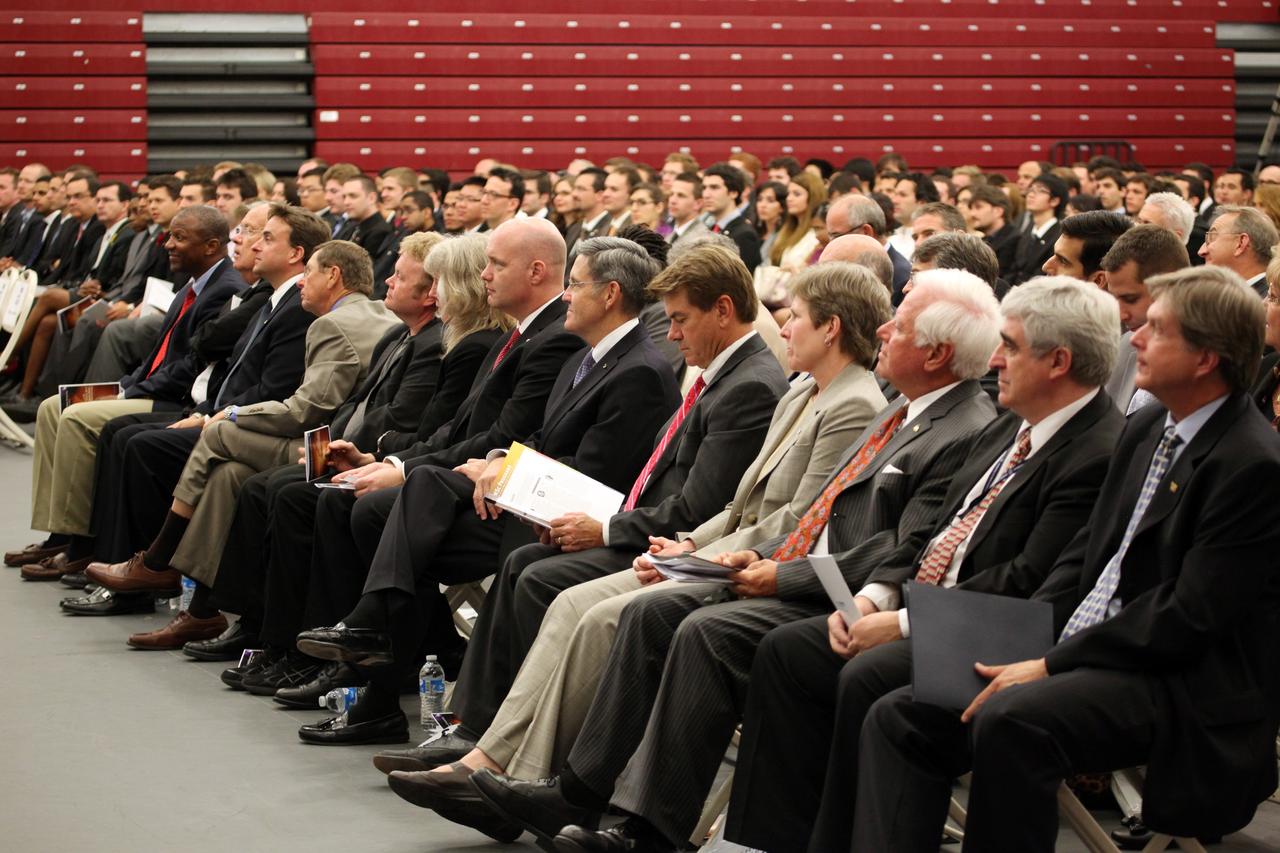
MELBOURNE, Fla. – NASA Deputy Administrator Lori Garver has a rapt audience of space program managers and students for her remarks during opening ceremonies for the International Space University's 25th annual Space Studies Program session at the Florida Institute of Technology in Melbourne, Fla. The nine-week intensive course is designed for post-graduate university students and professionals during the summer. The program is hosted by a different country each year, providing a unique educational experience for participants from around the globe. NASA Kennedy Space Center and Florida Tech are co-hosting this year's event which runs from June 4 to Aug. 3. This year, there are about 125 participants representing 31 countries. For more information, visit http://www.isunet.edu. Photo credit: NASA/Dimitri Gerondidakis
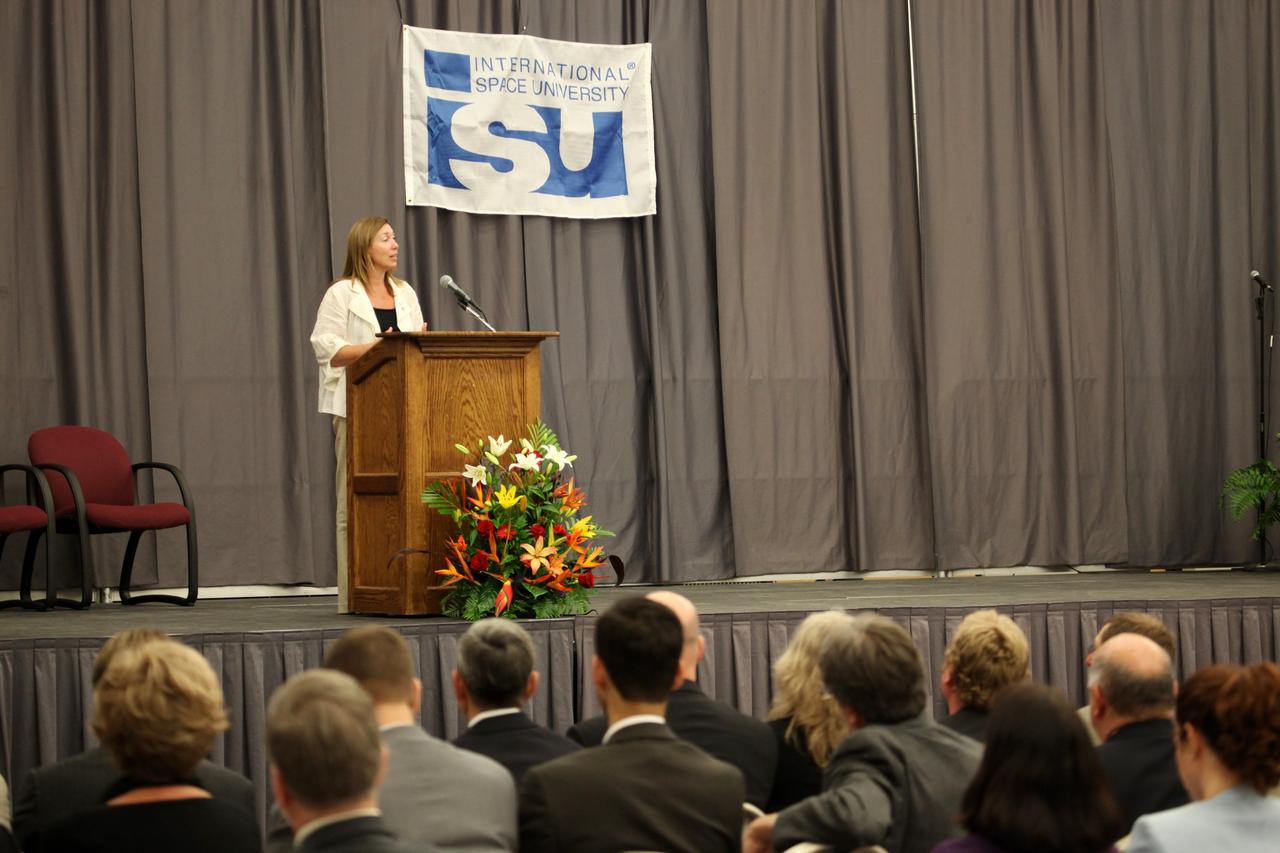
MELBOURNE, Fla. – NASA Deputy Administrator Lori Garver addresses the audience during opening ceremonies for the International Space University's 25th annual Space Studies Program session at the Florida Institute of Technology in Melbourne, Fla. The nine-week intensive course is designed for post-graduate university students and professionals during the summer. The program is hosted by a different country each year, providing a unique educational experience for participants from around the globe. NASA Kennedy Space Center and Florida Tech are co-hosting this year's event which runs from June 4 to Aug. 3. This year, there are about 125 participants representing 31 countries. For more information, visit http://www.isunet.edu. Photo credit: NASA/Dimitri Gerondidakis
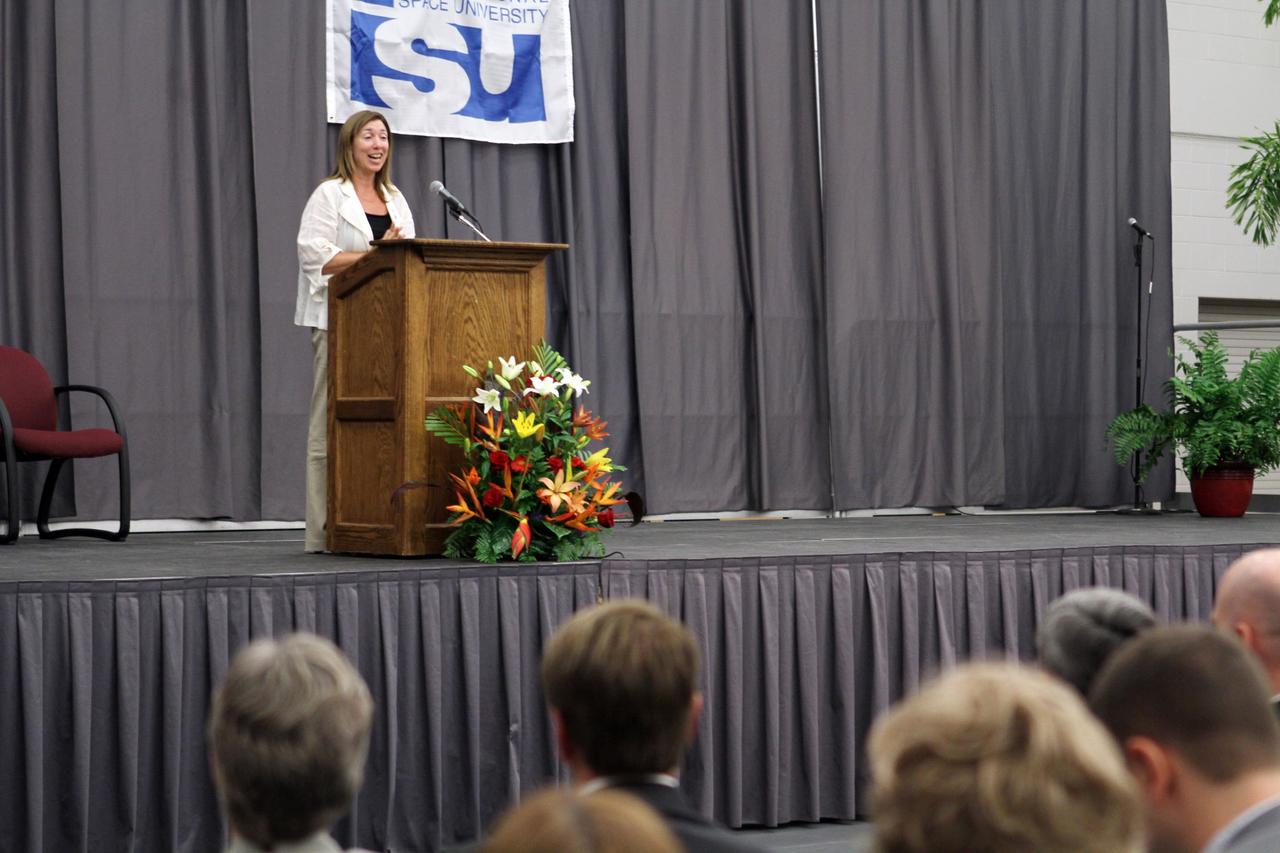
MELBOURNE, Fla. – NASA Deputy Administrator Lori Garver addresses the audience during opening ceremonies for the International Space University's 25th annual Space Studies Program session at the Florida Institute of Technology in Melbourne, Fla. The nine-week intensive course is designed for post-graduate university students and professionals during the summer. The program is hosted by a different country each year, providing a unique educational experience for participants from around the globe. NASA Kennedy Space Center and Florida Tech are co-hosting this year's event which runs from June 4 to Aug. 3. This year, there are about 125 participants representing 31 countries. For more information, visit http://www.isunet.edu. Photo credit: NASA/Kim Shiflett
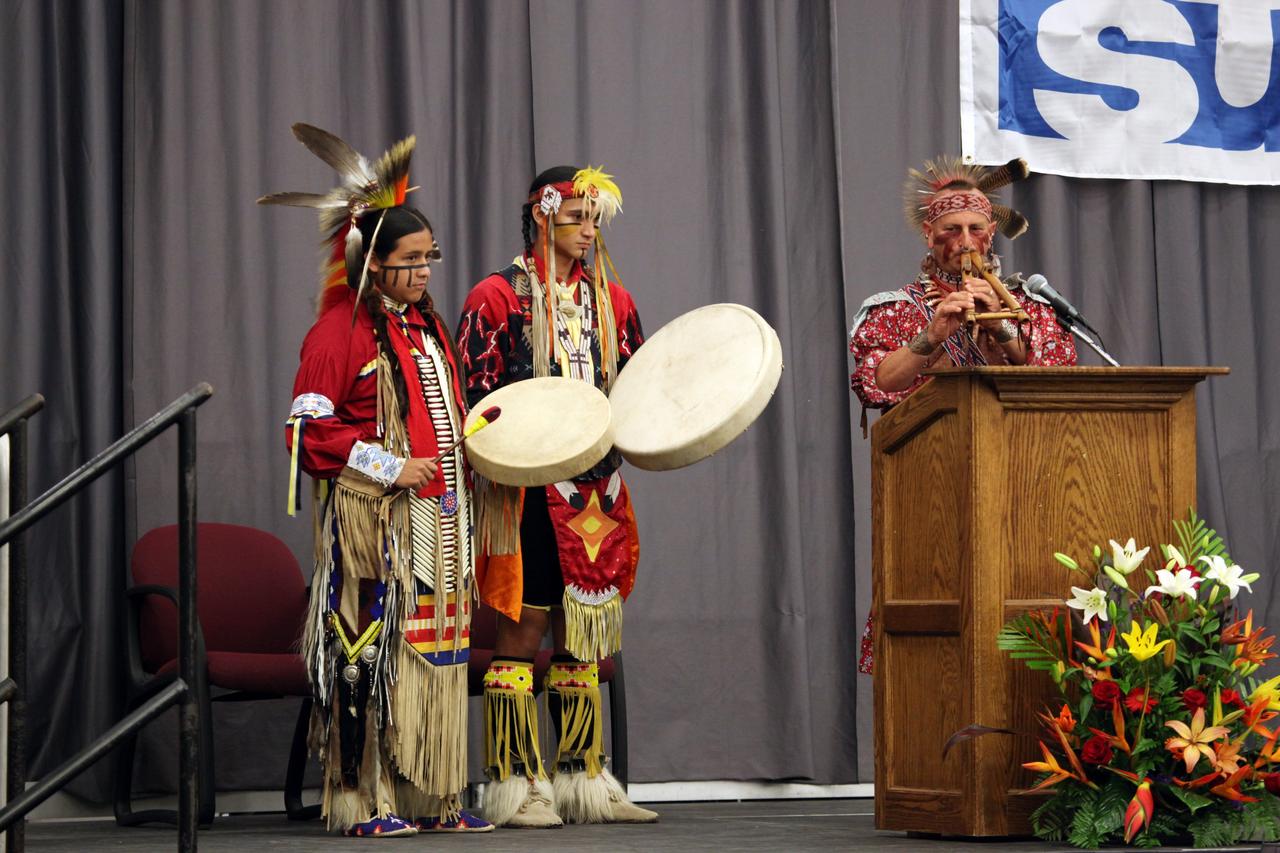
MELBOURNE, Fla. – Entertainment during the opening ceremonies for the International Space University's 25th annual Space Studies Program session at the Florida Institute of Technology in Melbourne, Fla., is provided by Jim Sawgrass and the Deep Forest Native American Indian Program dancers. The nine-week intensive course is designed for post-graduate university students and professionals during the summer. The program is hosted by a different country each year, providing a unique educational experience for participants from around the globe. NASA Kennedy Space Center and Florida Tech are co-hosting this year's event which runs from June 4 to Aug. 3. This year, there are about 125 participants representing 31 countries. For more information, visit http://www.isunet.edu. Photo credit: NASA/Dimitri Gerondidakis
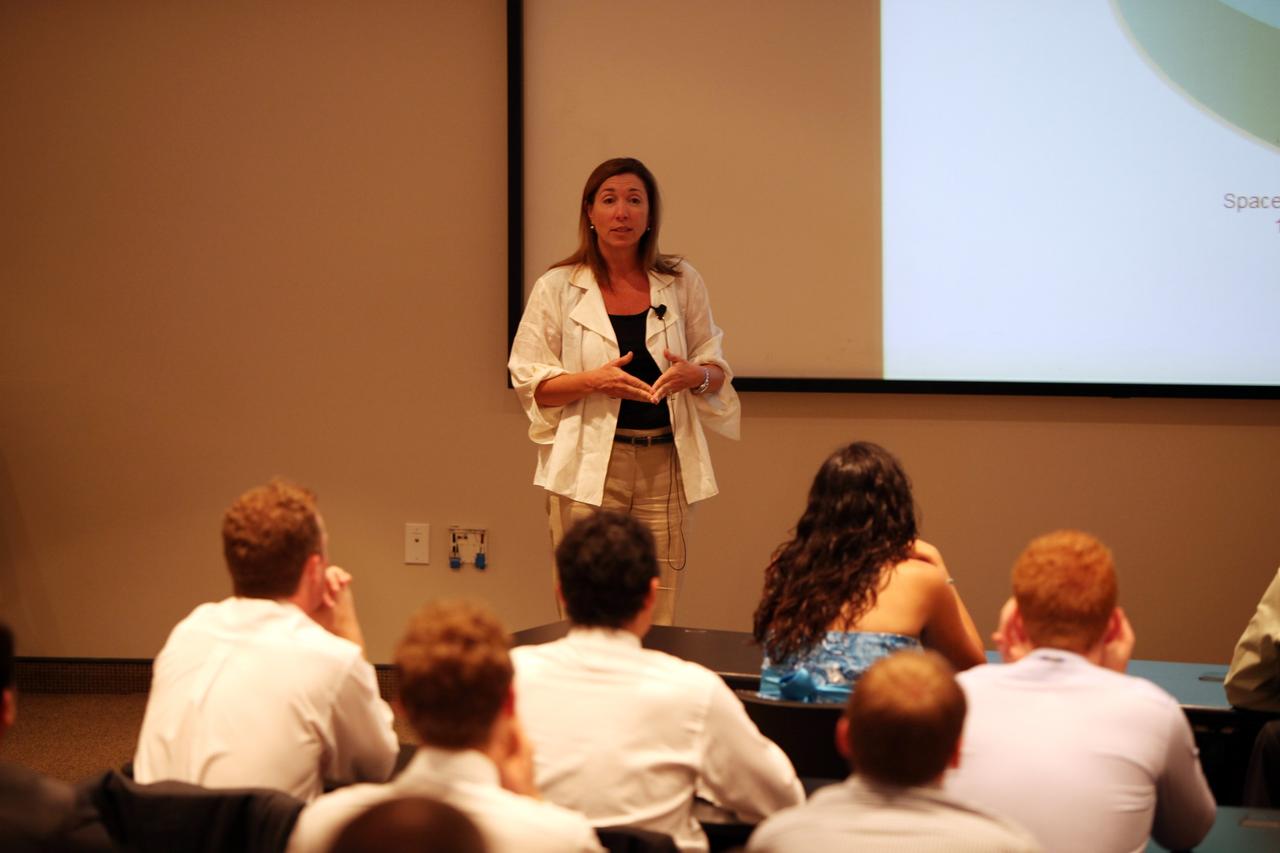
MELBOURNE, Fla. – NASA Deputy Administrator Lori Garver addresses students on the opening day of the International Space University's 25th annual Space Studies Program session at the Florida Institute of Technology in Melbourne, Fla. The nine-week intensive course is designed for post-graduate university students and professionals during the summer. The program is hosted by a different country each year, providing a unique educational experience for participants from around the globe. NASA Kennedy Space Center and Florida Tech are co-hosting this year's event which runs from June 4 to Aug. 3. This year, there are about 125 participants representing 31 countries. For more information, visit http://www.isunet.edu. Photo credit: NASA/Dimitri Gerondidakis
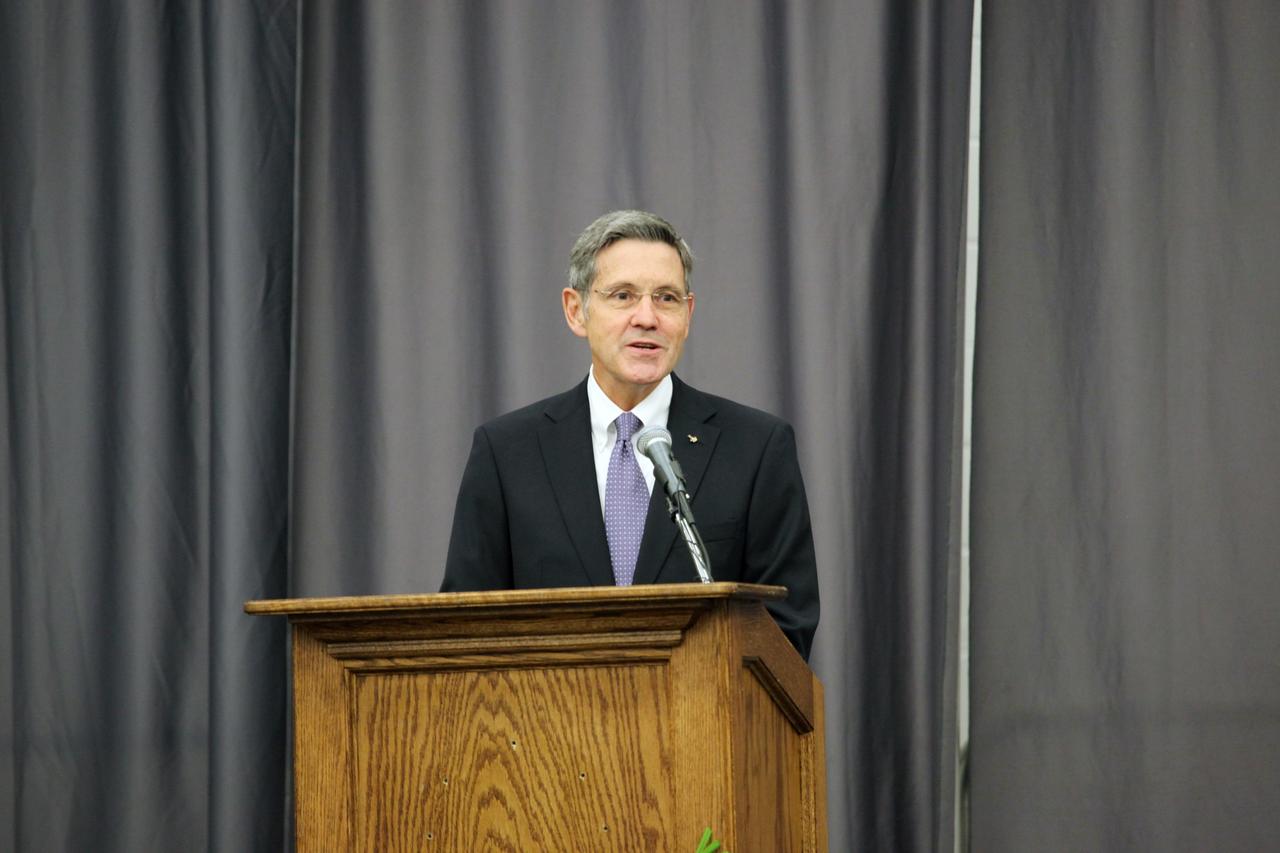
MELBOURNE, Fla. – NASA Kennedy Space Center Director and former astronaut Bob Cabana addresses the audience during opening ceremonies for the university's 25th annual Space Studies Program session at the Florida Institute of Technology in Melbourne, Fla. The nine-week intensive course is designed for post-graduate university students and professionals during the summer. The program is hosted by a different country each year, providing a unique educational experience for participants from around the globe. NASA Kennedy Space Center and Florida Tech are co-hosting this year's event which runs from June 4 to Aug. 3. This year, there are about 125 participants representing 31 countries. For more information, visit http://www.isunet.edu. Photo credit: NASA/Dimitri Gerondidakis
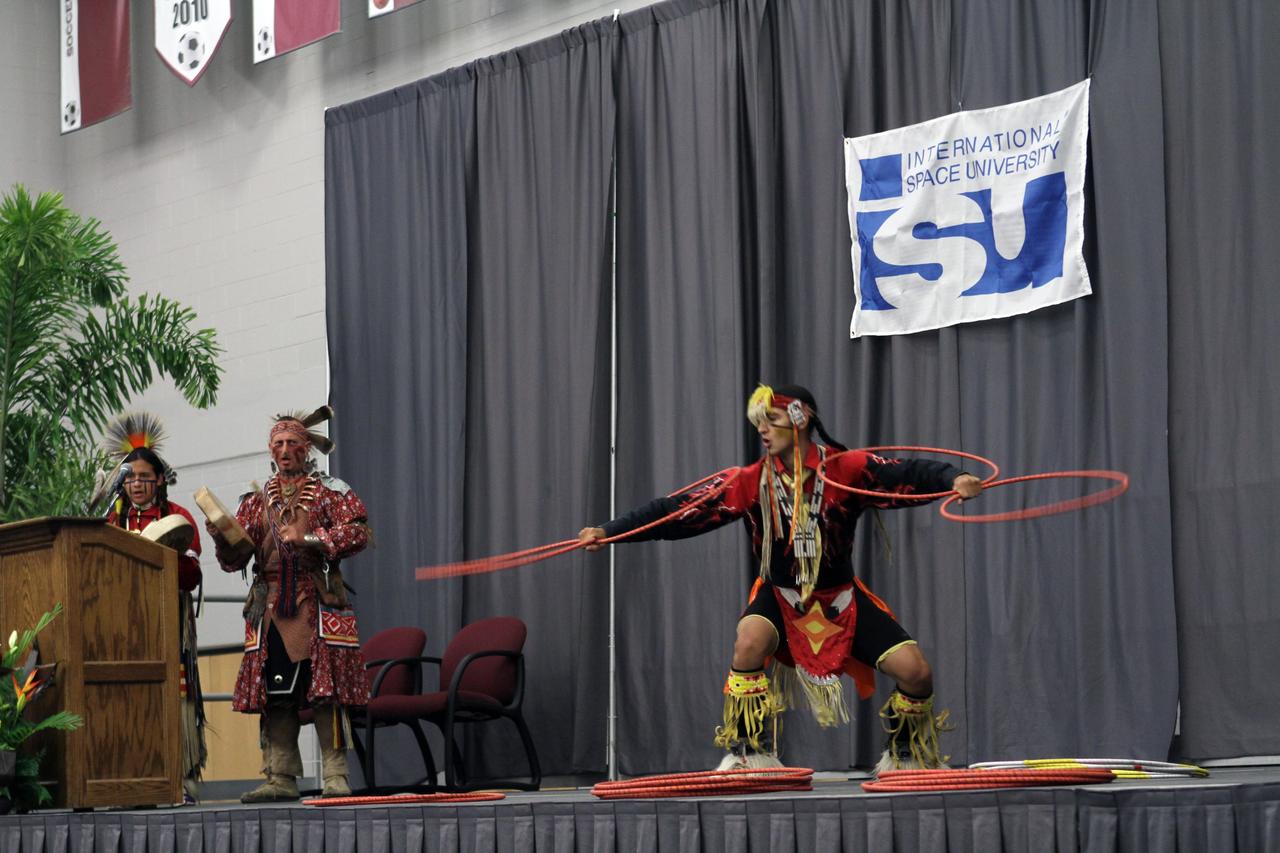
MELBOURNE, Fla. – Entertainment during the opening ceremonies for the International Space University's 25th annual Space Studies Program session at the Florida Institute of Technology in Melbourne, Fla., is provided by Jim Sawgrass and the Deep Forest Native American Indian Program dancers. The nine-week intensive course is designed for post-graduate university students and professionals during the summer. The program is hosted by a different country each year, providing a unique educational experience for participants from around the globe. NASA Kennedy Space Center and Florida Tech are co-hosting this year's event which runs from June 4 to Aug. 3. This year, there are about 125 participants representing 31 countries. For more information, visit http://www.isunet.edu. Photo credit: NASA/Kim Shiflett
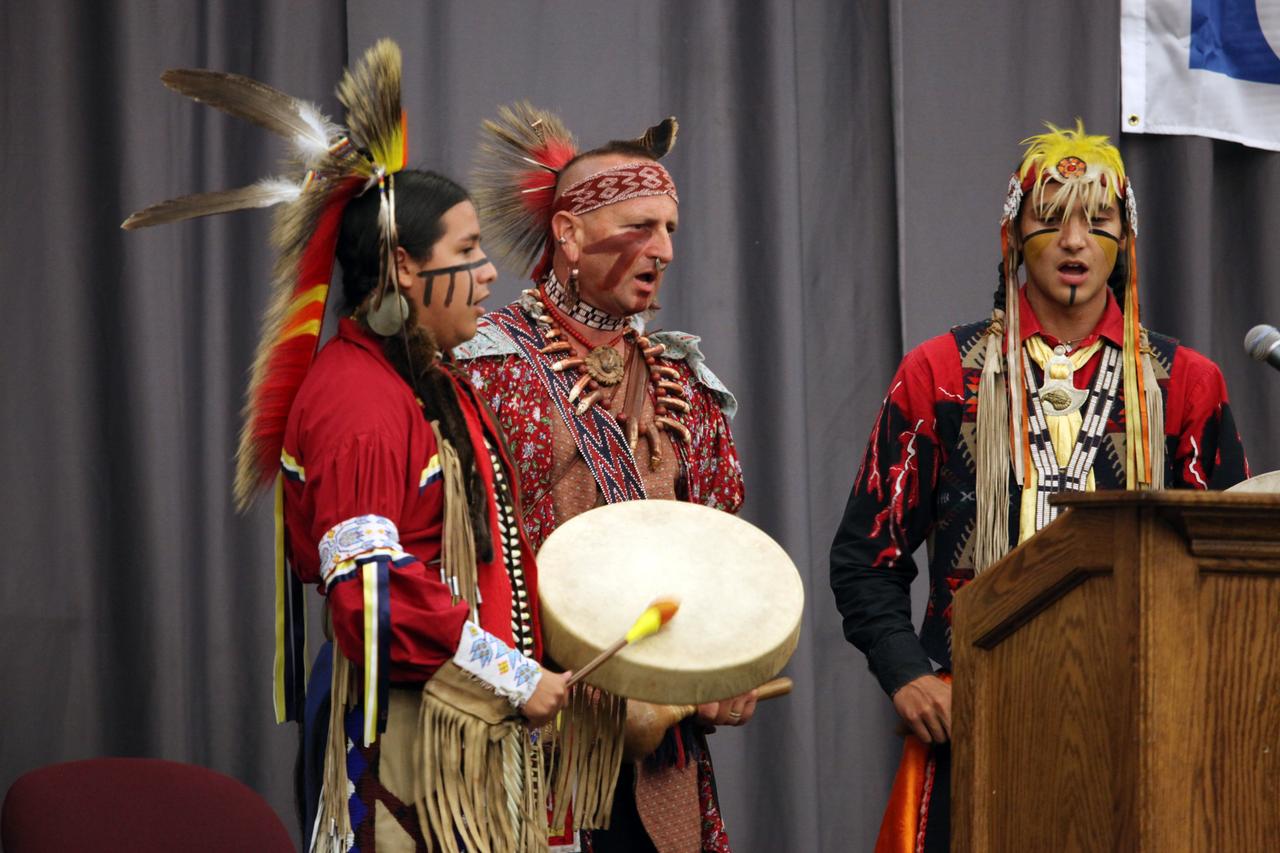
MELBOURNE, Fla. – Entertainment during the opening ceremonies for the International Space University's 25th annual Space Studies Program session at the Florida Institute of Technology in Melbourne, Fla., is provided by Jim Sawgrass and the Deep Forest Native American Indian Program dancers. The nine-week intensive course is designed for post-graduate university students and professionals during the summer. The program is hosted by a different country each year, providing a unique educational experience for participants from around the globe. NASA Kennedy Space Center and Florida Tech are co-hosting this year's event which runs from June 4 to Aug. 3. This year, there are about 125 participants representing 31 countries. For more information, visit http://www.isunet.edu. Photo credit: NASA/Dimitri Gerondidakis
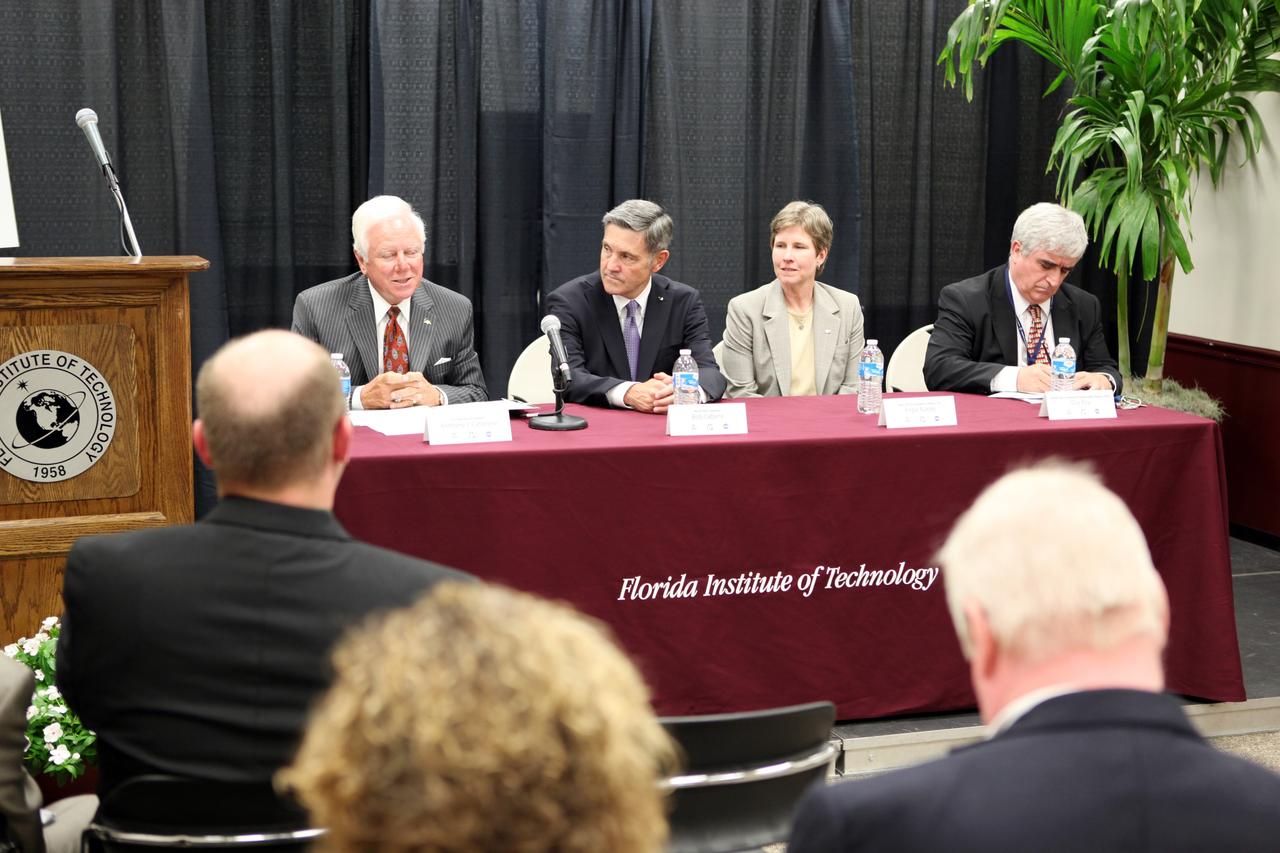
MELBOURNE, Fla. – Anthony J. Catanese, president of the Florida Institute of Technology, participates in the opening ceremonies for the International Space University's 25th annual Space Studies Program session at the Florida Institute of Technology in Melbourne, Fla. Seated from left are Catanese NASA Kennedy Space Center Director Bob Cabana Professor Angie Bukley, dean and vice president for Academic Affairs, International Space University and Dr. Guy A. Boy, chair of the Space Studies Program’s local organizing committee. The nine-week intensive course is designed for post-graduate university students and professionals during the summer. The program is hosted by a different country each year, providing a unique educational experience for participants from around the globe. NASA Kennedy Space Center and Florida Tech are co-hosting this year's event which runs from June 4 to Aug. 3. This year, there are about 125 participants representing 31 countries. For more information, visit http://www.isunet.edu. Photo credit: NASA/Dimitri Gerondidakis
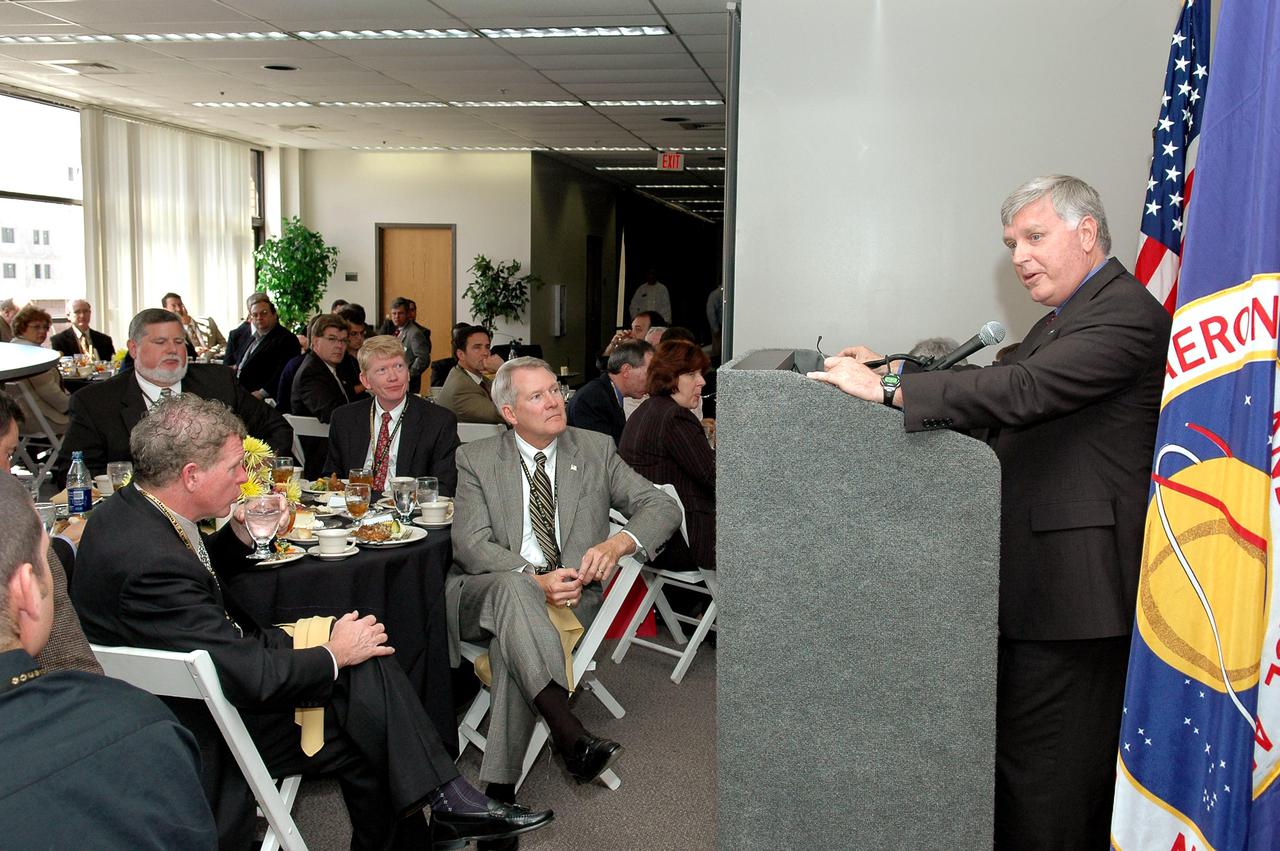
KENNEDY SPACE CENTER, FLA. - Center Director Jim Kennedy speaks to attendees at a VIP luncheon during the 2005 FIRST Robotics Regional Competition held at the University of Central Florida March 10-12. NASA and the University of Central Florida are co-hosts of the regional event and are joined by sponsors such as Motorola iDEN, the Florida High Tech Corridor Council, Walt Disney World Company and aerospace companies Lockheed Martin and United Space Alliance, just to name a few.

NASA’s Kennedy Space Center is partnering with the Florida Tech Buzz Aldrin Space Institute in Melbourne, Florida, to collaborate on research studying the performance of crop species grown in a simulated “Martian garden” — a proving ground for a potential future farm on the Red Planet. Plants were grown in a preliminary experiment comparing (left to right) potting soil, regolith simulant with added nutrients, and simulant without nutrients.
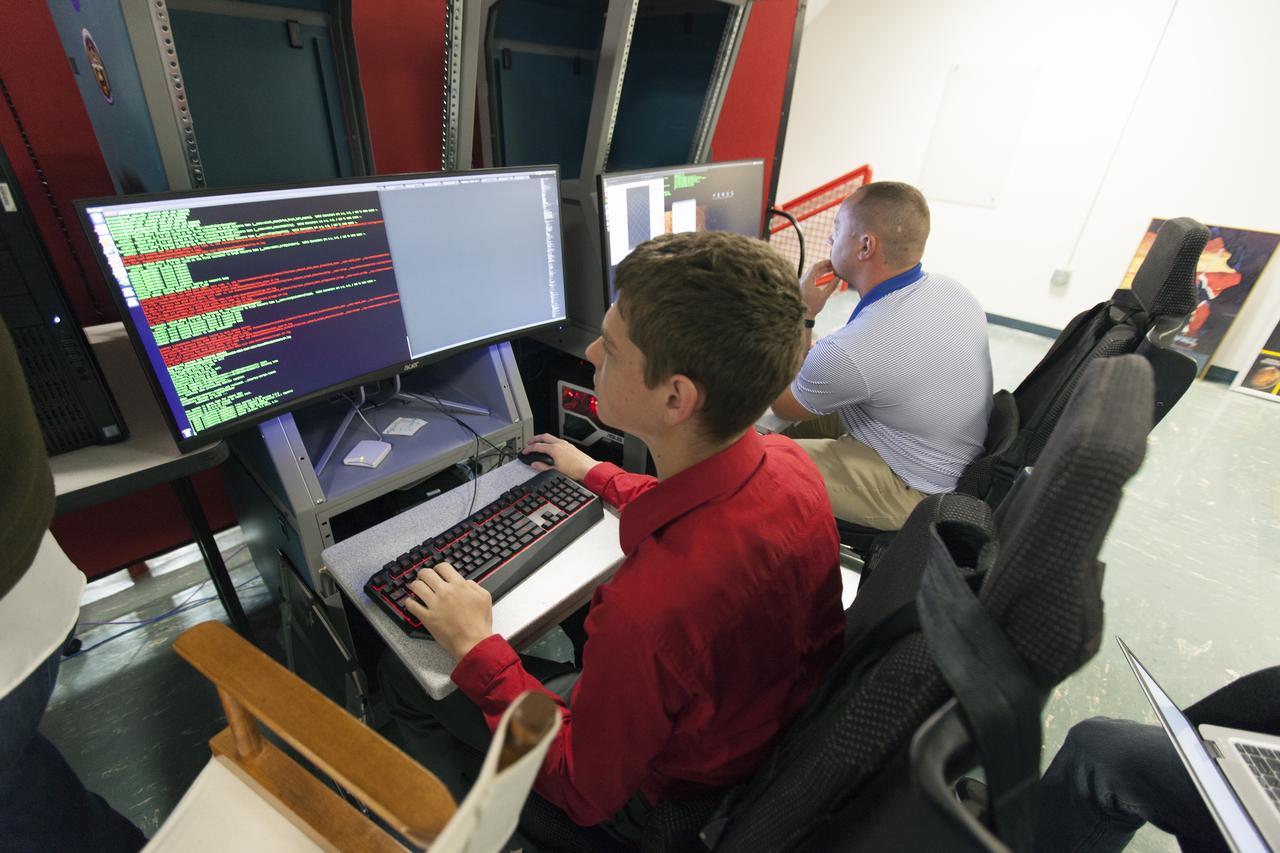
In the Swamp Works laboratory at NASA's Kennedy Space Center in Florida, student interns such as Thomas Muller, left, and Austin Langdon are joining agency scientists, contributing in the area of Exploration Research and Technology. Muller is pursuing a degree in computer engineering and control systems and Florida Tech. Langdon is an electrical engineering major at the University of Kentucky. The agency attracts its future workforce through the NASA Internship, Fellowships and Scholarships, or NIFS, Program.
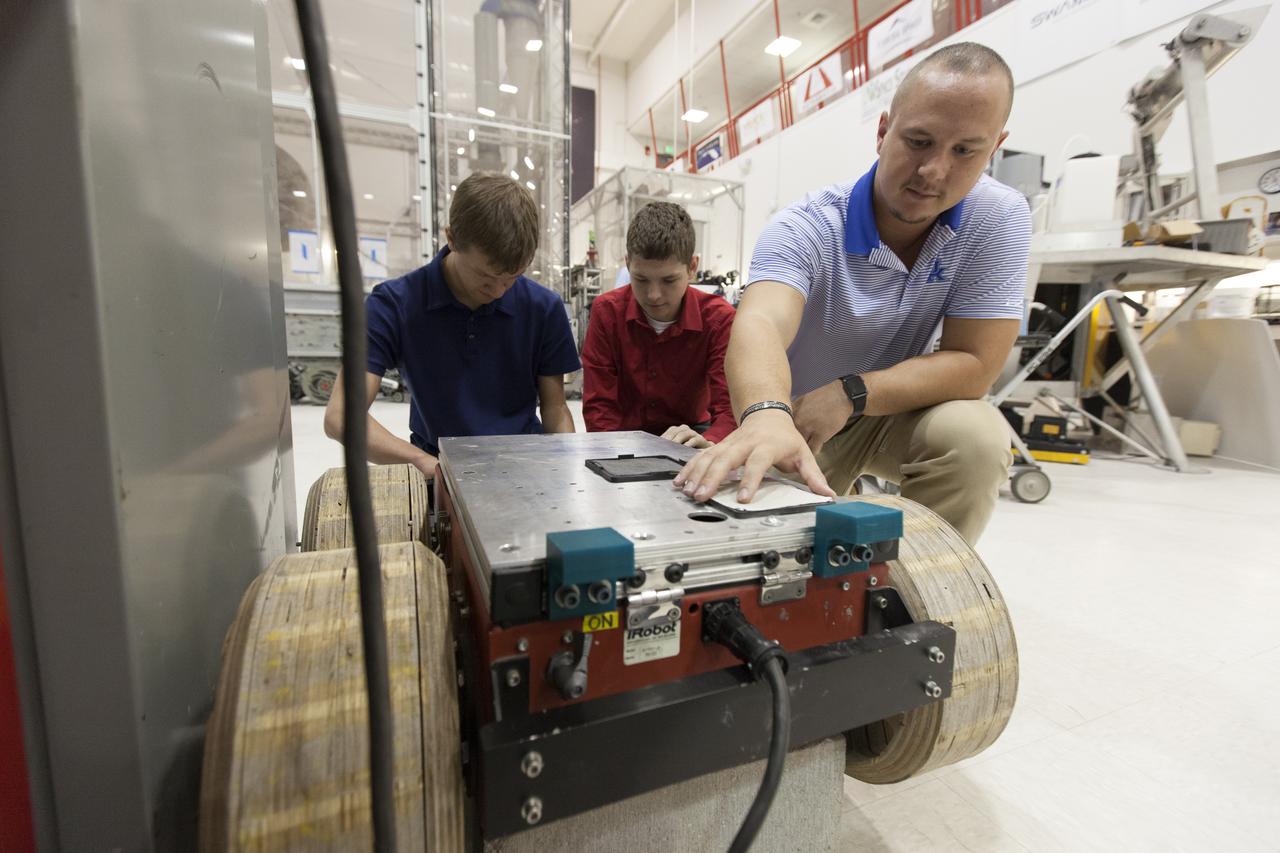
In the Swamp Works laboratory at NASA's Kennedy Space Center in Florida, student interns, from the left, Jeremiah House, Thomas Muller and Austin Langdon are joining agency scientists, contributing in the area of Exploration Research and Technology. House is studying computer/electrical engineering at John Brown University in Siloam Springs, Arkansas. Muller is pursuing a degree in computer engineering and control systems and Florida Tech. Langdon is an electrical engineering major at the University of Kentucky. The agency attracts its future workforce through the NASA Internship, Fellowships and Scholarships, or NIFS, Program.
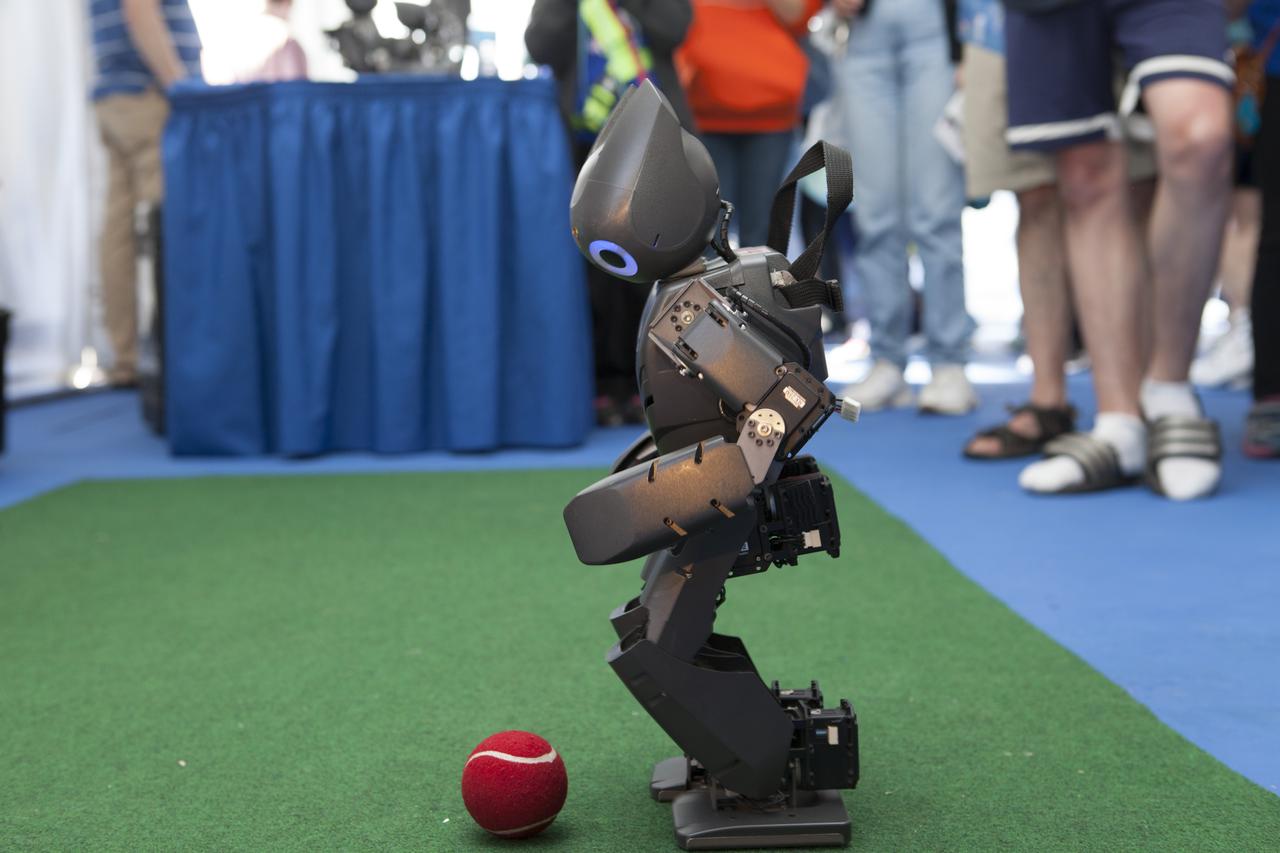
CAPE CANAVERAL, Fla. – A miniature humanoid robot known as DARwin-OP, from Virginia Tech Robotics, plays soccer with a red tennis ball for a crowd of students at the Robot Rocket Rally. The three-day event at Florida's Kennedy Space Center Visitor Complex is highlighted by exhibits, games and demonstrations of a variety of robots, with exhibitors ranging from school robotics clubs to veteran NASA scientists and engineers. Photo credit: NASA/Kim Shiflett
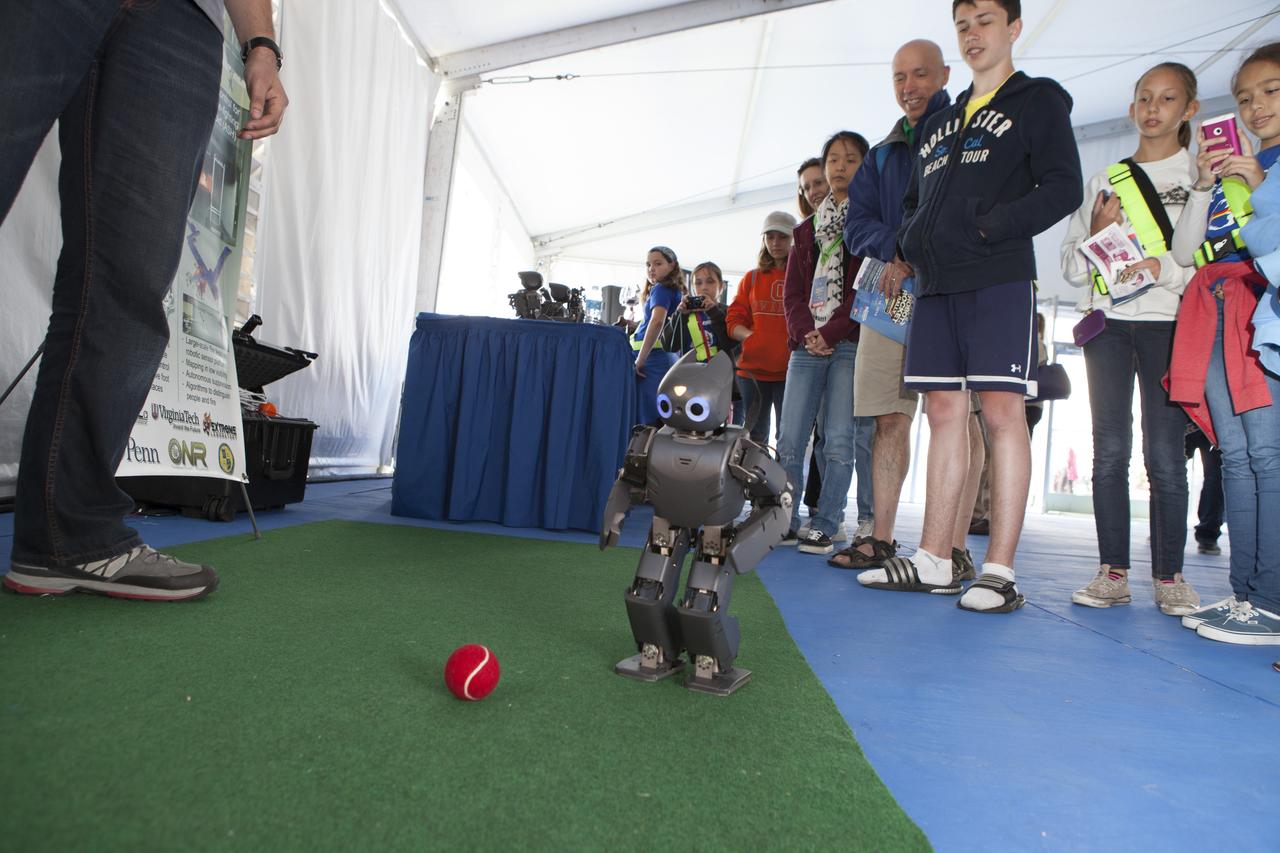
CAPE CANAVERAL, Fla. – Students gather to watch as a DARwin-OP miniature humanoid robot from Virginia Tech Robotics demonstrates its soccer abilities at the Robot Rocket Rally. The three-day event at Florida's Kennedy Space Center Visitor Complex is highlighted by exhibits, games and demonstrations of a variety of robots, with exhibitors ranging from school robotics clubs to veteran NASA scientists and engineers. Photo credit: NASA/Kim Shiflett
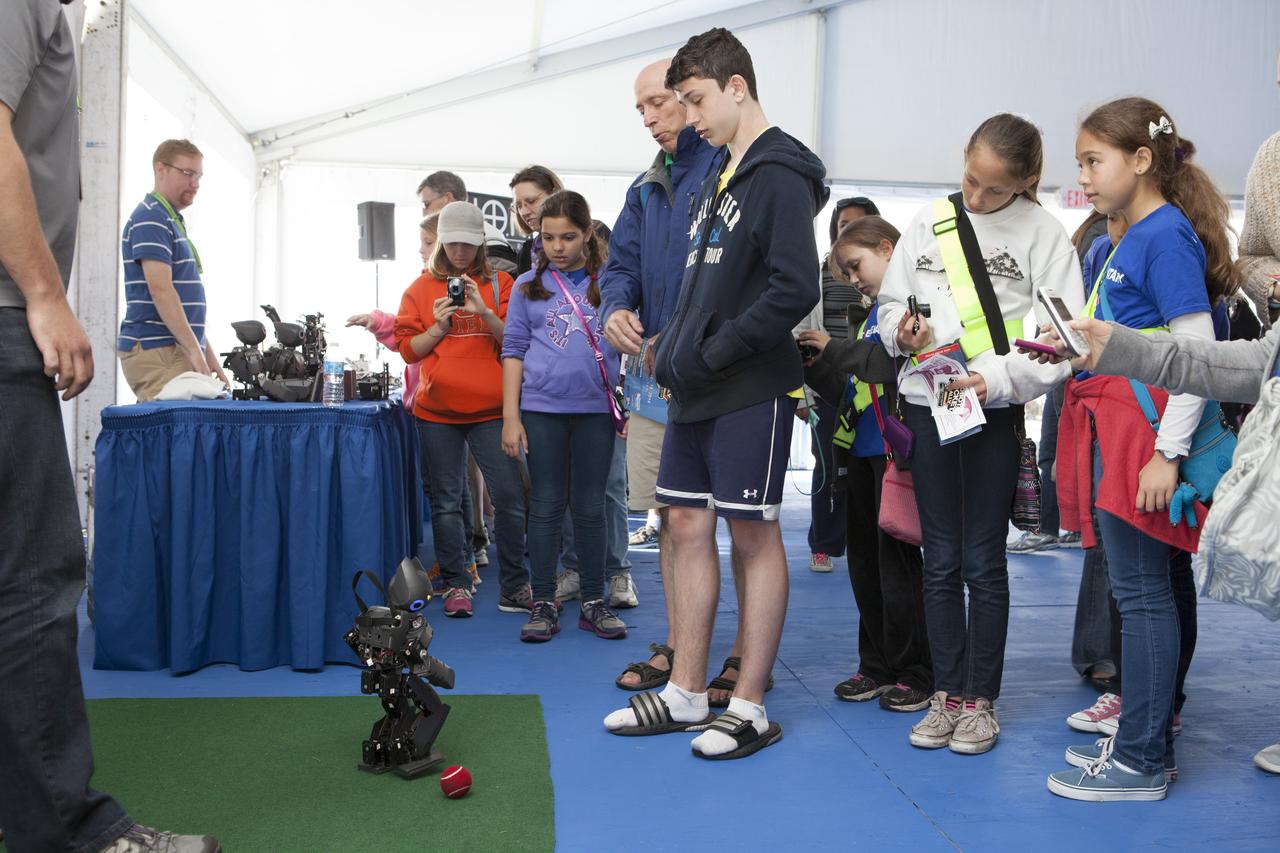
CAPE CANAVERAL, Fla. – Students gather to watch as a DARwin-OP miniature humanoid robot from Virginia Tech Robotics demonstrates its soccer abilities at the Robot Rocket Rally. The three-day event at Florida's Kennedy Space Center Visitor Complex is highlighted by exhibits, games and demonstrations of a variety of robots, with exhibitors ranging from school robotics clubs to veteran NASA scientists and engineers. Photo credit: NASA/Kim Shiflett
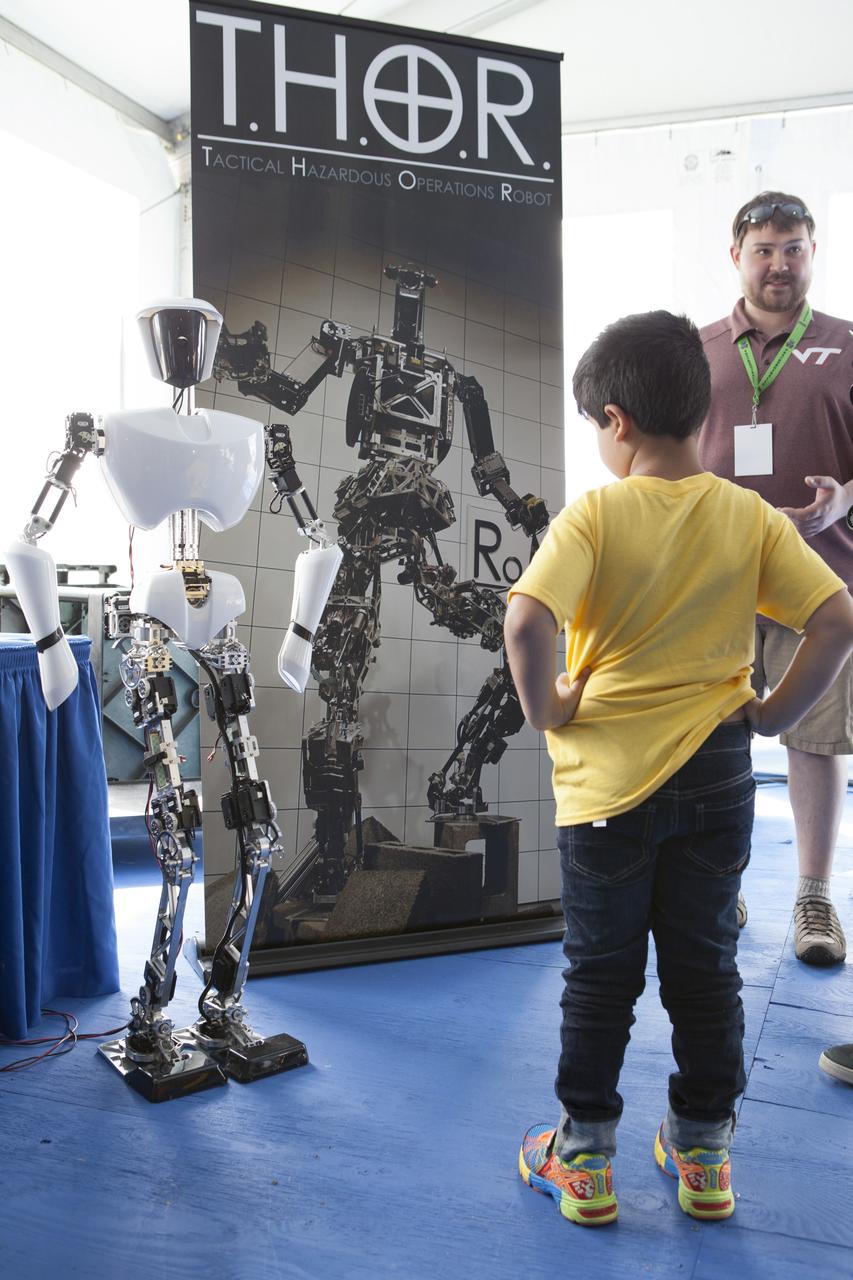
CAPE CANAVERAL, Fla. – A child gets an up-close look at Charli, an autonomous walking robot developed by Virginia Tech Robotics, during the Robot Rocket Rally. The three-day event at Florida's Kennedy Space Center Visitor Complex is highlighted by exhibits, games and demonstrations of a variety of robots, with exhibitors ranging from school robotics clubs to veteran NASA scientists and engineers. Photo credit: NASA/Kim Shiflett
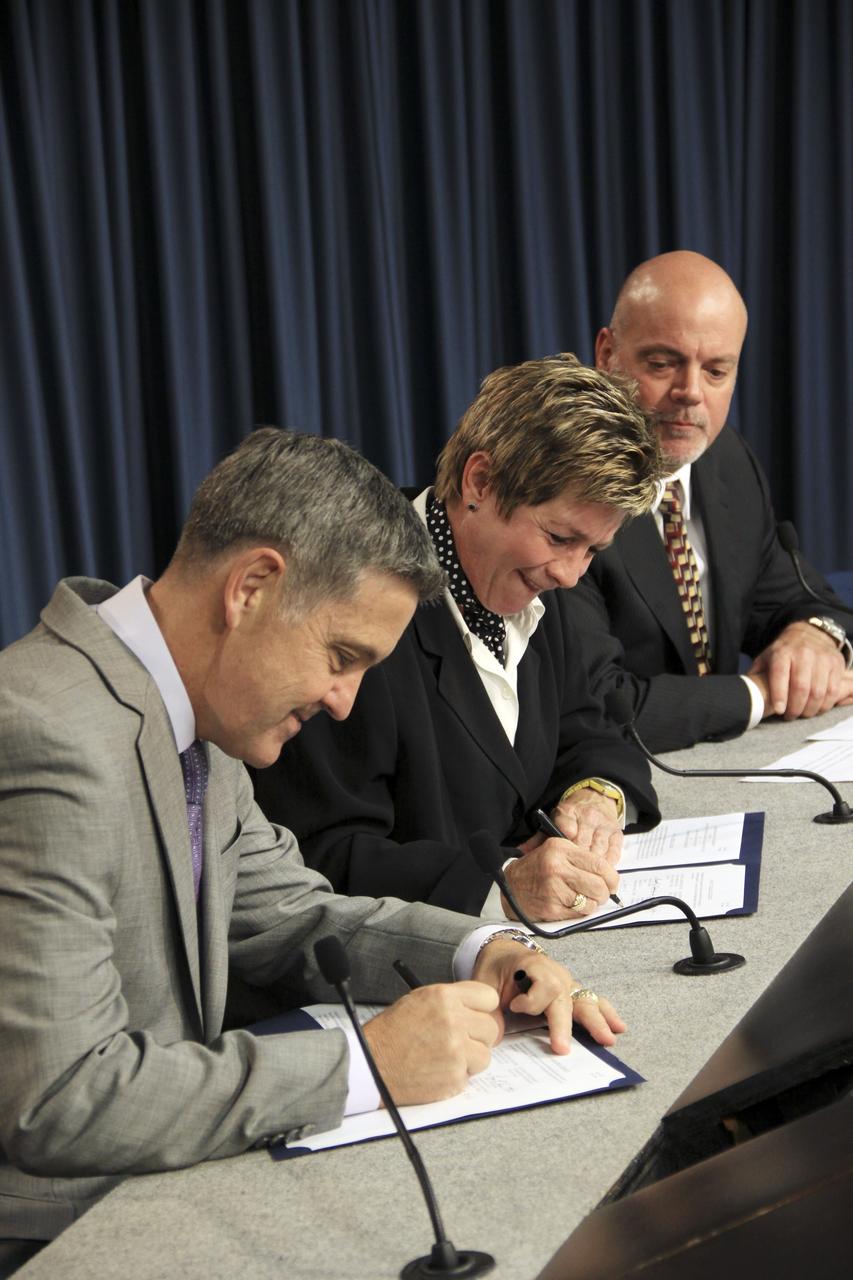
CAPE CANAVERAL, Fla. -- In the Press Site auditorium at NASA's Kennedy Space Center in Florida, Lynda Weatherman (center), Economic Development Commission (EDC) of Florida’s Space Coast president and CEO, shows her enthusiasm for the new five-year Space Act Agreement she is signing. Also signing the agreement, at left, is Kennedy Space Center Director Robert Cabana. Bob Whelen, chairman of the board of the EDC, looks on at right. The agreement calls for NASA and EDC senior leadership to meet regularly to discuss economic development matters of mutual interest. Managers from Kennedy’s Center Planning and Development Office will work with the EDC on potential business partnerships and meet with business leaders and committees to address space-related and high-tech economic development. EDC officials will assist NASA with disseminating information about potential partnership opportunities, as well as space-related and high-tech economic development, and increase awareness of Kennedy’s Engineering and Technology Directorate collaboration initiatives. They also will promote the commercial use of underutilized facilities at Kennedy. NASA and the EDC entered into their first economic cooperation agreement in 2005. For more information about the Economic Development Commission (EDC) of Florida’s Space Coast, visit http://www.spacecoastedc.org/. Photo credit: NASA/Jim Grossmann
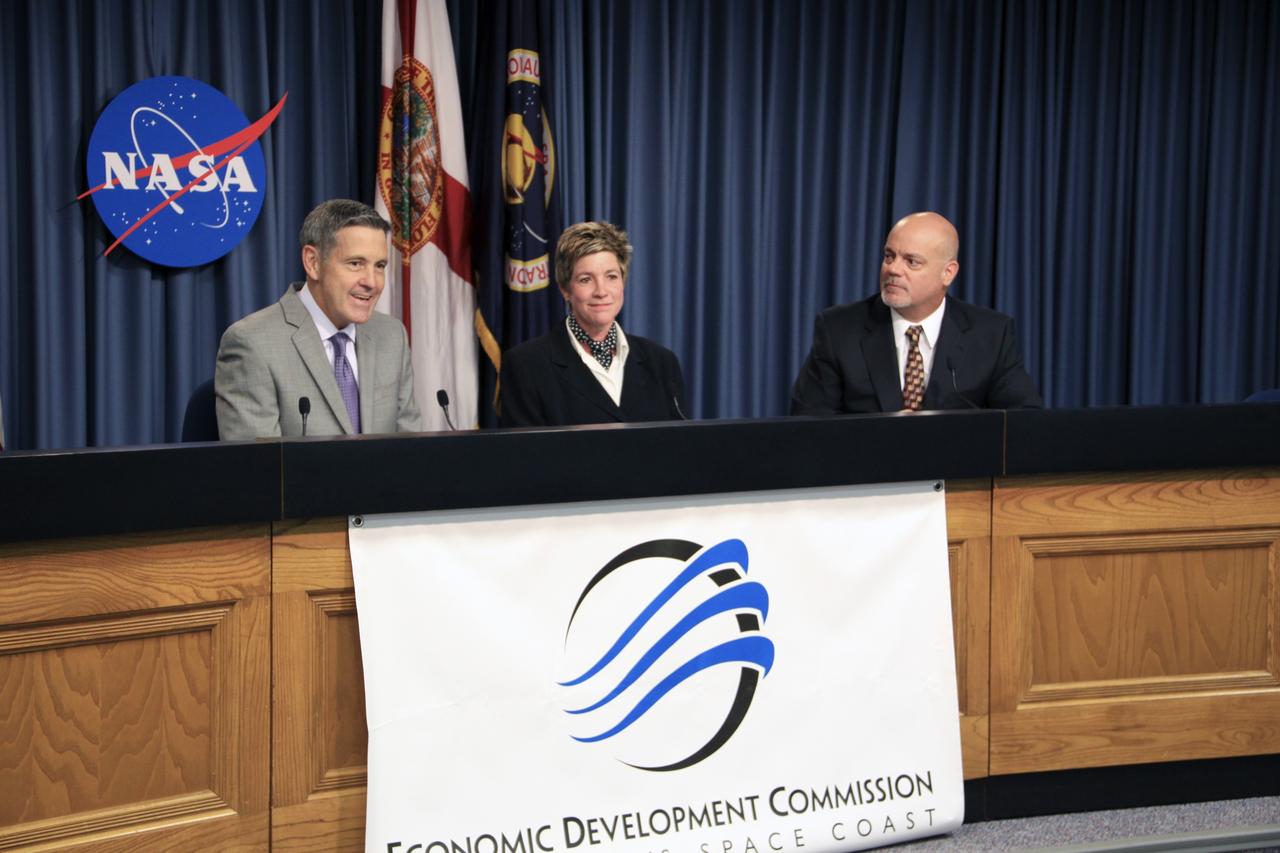
CAPE CANAVERAL, Fla. -- In the Press Site auditorium at NASA's Kennedy Space Center in Florida, managers from NASA and the Economic Development Commission (EDC) of Florida’s Space Coast discuss a new five-year Space Act Agreement reaffirming the partnership of the two organizations. From left are Kennedy Space Center Director Robert Cabana, EDC President and CEO Lynda Weatherman, and Chairman of the Board of the EDC Bob Whelen. The agreement calls for NASA and EDC senior leadership to meet regularly to discuss economic development matters of mutual interest. Managers from Kennedy’s Center Planning and Development Office will work with the EDC on potential business partnerships and meet with business leaders and committees to address space-related and high-tech economic development. EDC officials will assist NASA with disseminating information about potential partnership opportunities, as well as space-related and high-tech economic development, and increase awareness of Kennedy’s Engineering and Technology Directorate collaboration initiatives. They also will promote the commercial use of underutilized facilities at Kennedy. NASA and the EDC entered into their first economic cooperation agreement in 2005. For more information about the Economic Development Commission (EDC) of Florida’s Space Coast, visit http://www.spacecoastedc.org/. Photo credit: NASA/Jim Grossmann
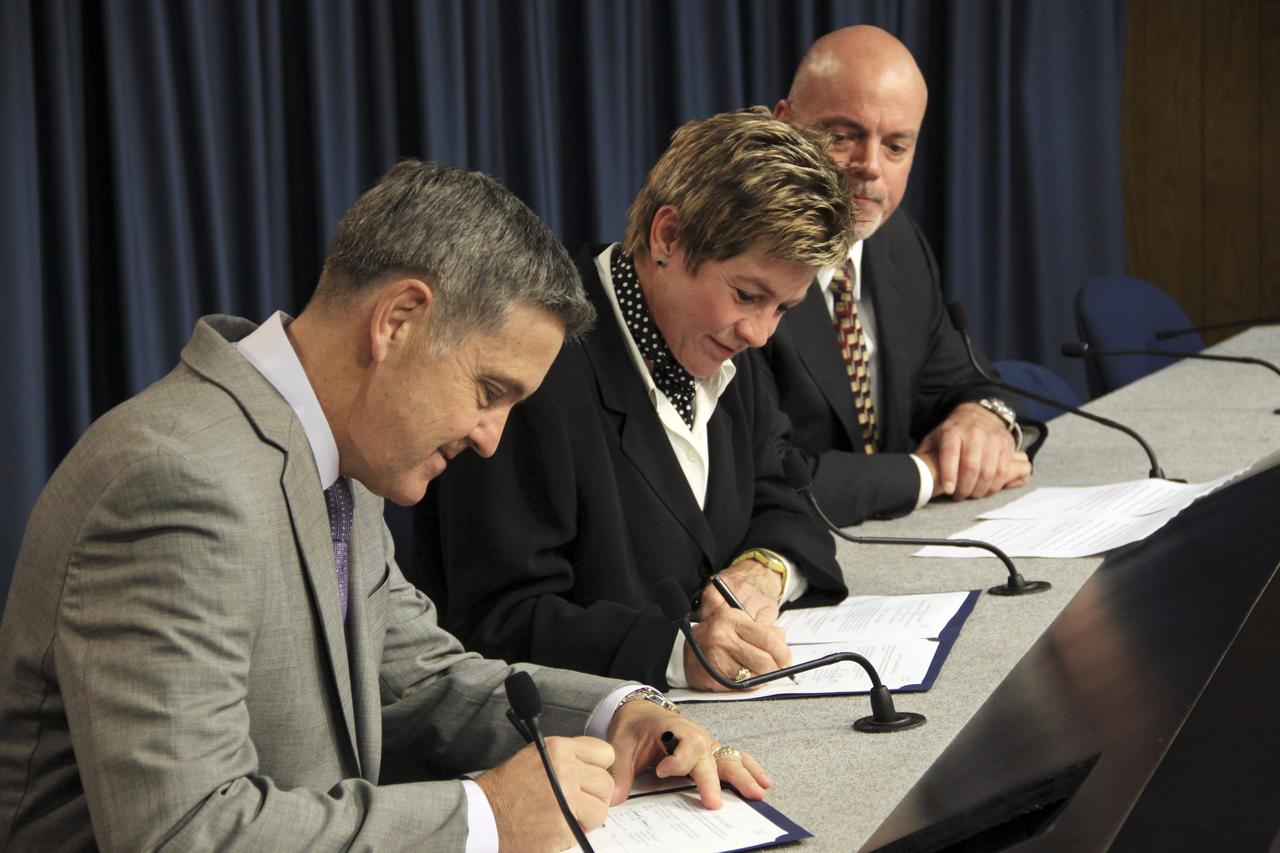
CAPE CANAVERAL, Fla. -- In the Press Site auditorium at NASA's Kennedy Space Center in Florida, representatives of NASA and the Economic Development Commission (EDC) of Florida’s Space Coast sign a new five-year Space Act Agreement. From left are Kennedy Space Center Director Director Robert Cabana and EDC President and CEO Lynda Weatherman, with Chairman of the Board of the EDC Bob Whelen looking on. The agreement calls for NASA and EDC senior leadership to meet regularly to discuss economic development matters of mutual interest. Managers from Kennedy’s Center Planning and Development Office will work with the EDC on potential business partnerships and meet with business leaders and committees to address space-related and high-tech economic development. EDC officials will assist NASA with disseminating information about potential partnership opportunities, as well as space-related and high-tech economic development, and increase awareness of Kennedy’s Engineering and Technology Directorate collaboration initiatives. They also will promote the commercial use of underutilized facilities at Kennedy. NASA and the EDC entered into their first economic cooperation agreement in 2005. For more information about the Economic Development Commission (EDC) of Florida’s Space Coast, visit http://www.spacecoastedc.org/. Photo credit: NASA/Jim Grossmann
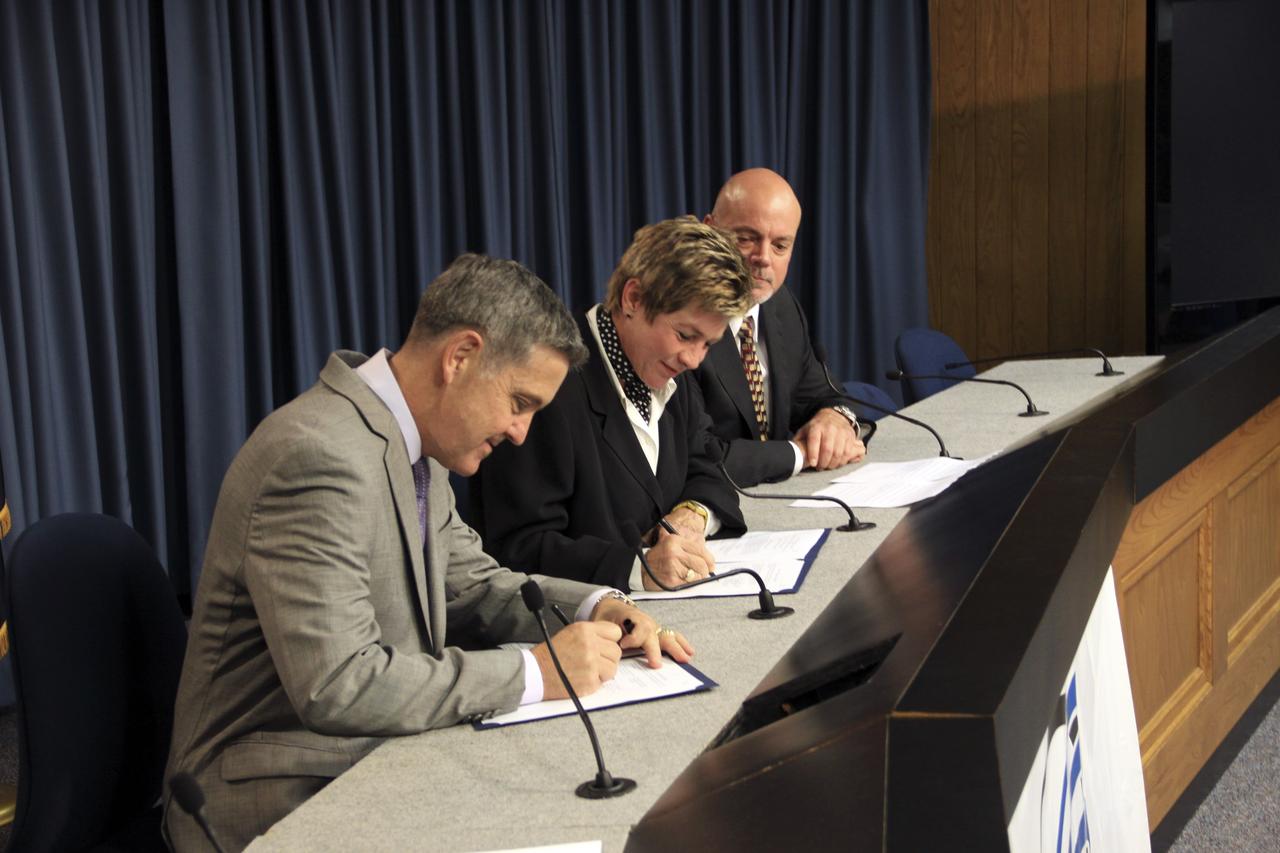
CAPE CANAVERAL, Fla. -- In the Press Site auditorium at NASA's Kennedy Space Center in Florida, representatives of NASA and the Economic Development Commission (EDC) of Florida’s Space Coast sign a new five-year Space Act Agreement. From left are Kennedy Space Center Director Robert Cabana and EDC President and CEO Lynda Weatherman, with Chairman of the Board of the EDC Bob Whelen looking on. The agreement calls for NASA and EDC senior leadership to meet regularly to discuss economic development matters of mutual interest. Managers from Kennedy’s Center Planning and Development Office will work with the EDC on potential business partnerships and meet with business leaders and committees to address space-related and high-tech economic development. EDC officials will assist NASA with disseminating information about potential partnership opportunities, as well as space-related and high-tech economic development, and increase awareness of Kennedy’s Engineering and Technology Directorate collaboration initiatives. They also will promote the commercial use of underutilized facilities at Kennedy. NASA and the EDC entered into their first economic cooperation agreement in 2005. For more information about the Economic Development Commission (EDC) of Florida’s Space Coast, visit http://www.spacecoastedc.org/. Photo credit: NASA/Jim Grossmann
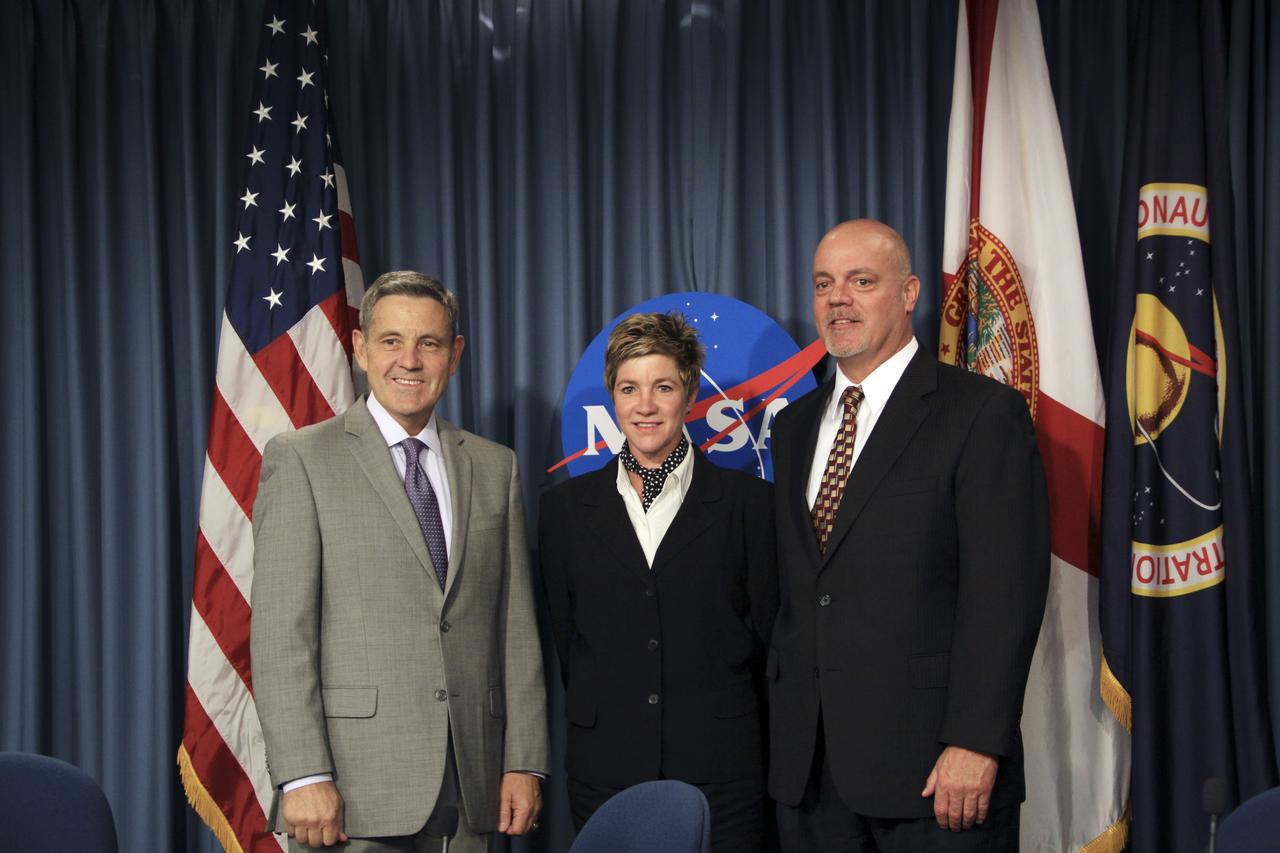
CAPE CANAVERAL, Fla. -- In the Press Site auditorium at NASA's Kennedy Space Center in Florida, managers from NASA and the Economic Development Commission (EDC) of Florida’s Space Coast pose for a portrait following the signing of a new five-year Space Act Agreement reaffirming the partnership of the two organizations. From left are Kennedy Space Center Director Robert Cabana, EDC President and CEO Lynda Weatherman, and Chairman of the Board of the EDC Bob Whelen. The agreement calls for NASA and EDC senior leadership to meet regularly to discuss economic development matters of mutual interest. Managers from Kennedy’s Center Planning and Development Office will work with the EDC on potential business partnerships and meet with business leaders and committees to address space-related and high-tech economic development. EDC officials will assist NASA with disseminating information about potential partnership opportunities, as well as space-related and high-tech economic development, and increase awareness of Kennedy’s Engineering and Technology Directorate collaboration initiatives. They also will promote the commercial use of underutilized facilities at Kennedy. NASA and the EDC entered into their first economic cooperation agreement in 2005. For more information about the Economic Development Commission (EDC) of Florida’s Space Coast, visit http://www.spacecoastedc.org/. Photo credit: NASA/Jim Grossmann
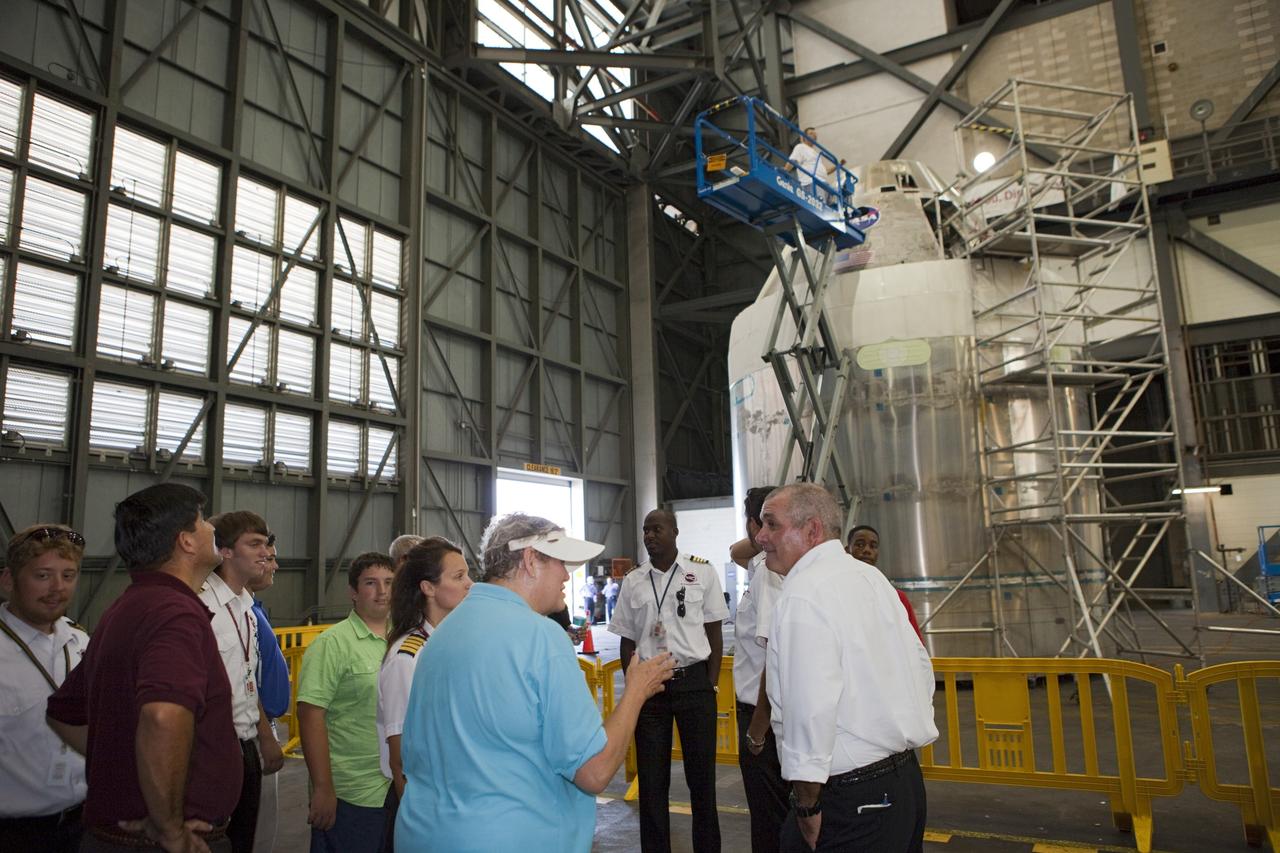
CAPE CANAVERAL, Fla. – Students and their flight instructors from Florida Tech, or FIT, in Melbourne, tour the Vehicle Assembly Building and view space shuttle Atlantis at NASA’s Kennedy Space Center in Florida. The instructors and their students arrived at the Shuttle Landing Facility, or SLF, in Cherokee Warrior and Cessna 172S lightweight aircraft. The middle and high school students are participating in FIT’s Av/Aero summer camp experience. They and their flight instructors also toured the SLF midfield control tower, viewed F104 Starfighters and NASA Huey helicopters in the RLV Hangar, and viewed the runway plaques marking wheels stop for each of the three space shuttles. Photo credit: NASA/Kim Shiflett
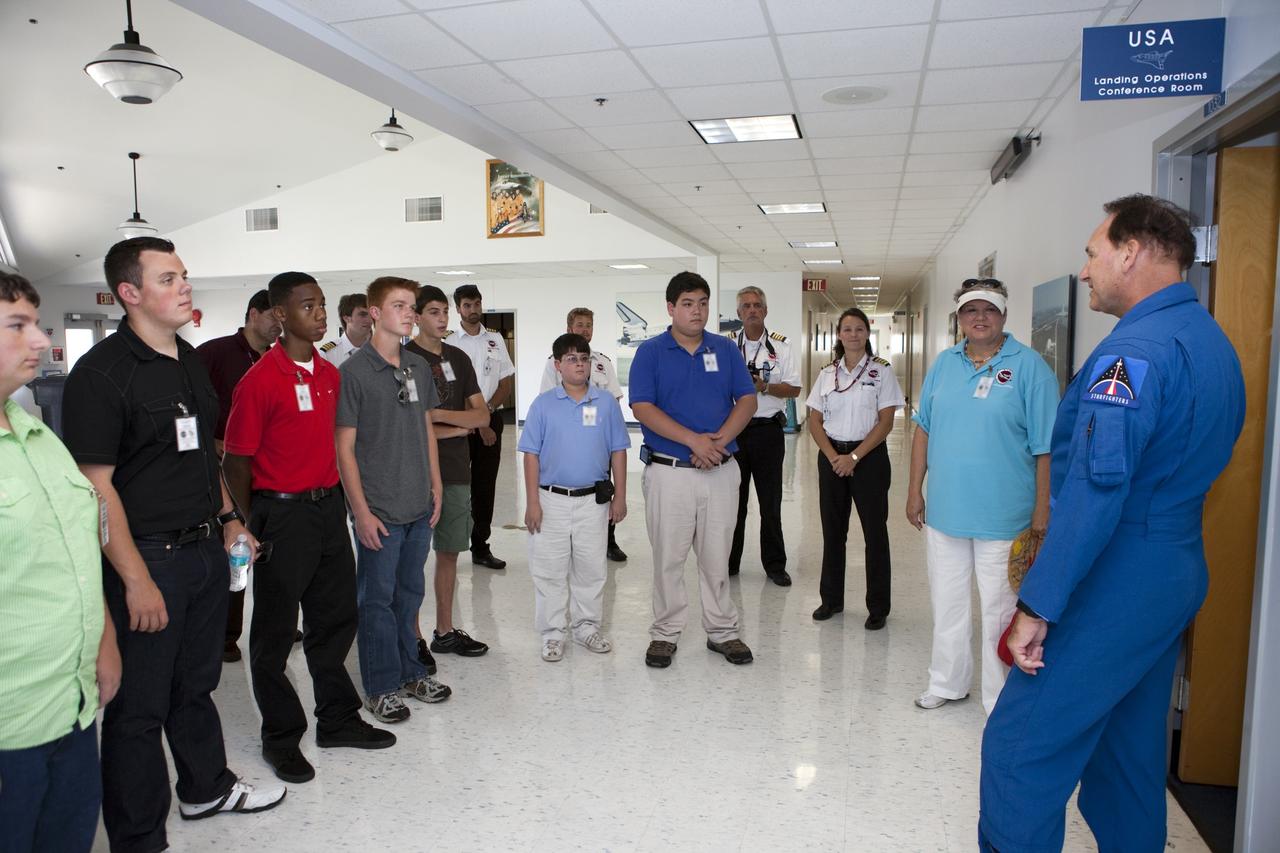
CAPE CANAVERAL, Fla. – In a support building near NASA Kennedy Space Center’s Shuttle Landing Facility, or SLF, in Florida, students and their flight instructors from Florida Tech, FIT, in Melbourne listen to F104 Starfighters Director Rick Svetkoff. The middle and high school students are participating in FIT’s Av/Aero summer camp experience. They and their flight instructors toured the SLF midfield control tower, viewed F104 Starfighters and NASA Huey helicopters in the RLV Hangar, viewed the runway plaques marking wheels stop for each of the three space shuttles, and toured the Vehicle Assembly Building where space shuttle Atlantis currently is stored. Photo credit: NASA/Kim Shiflett
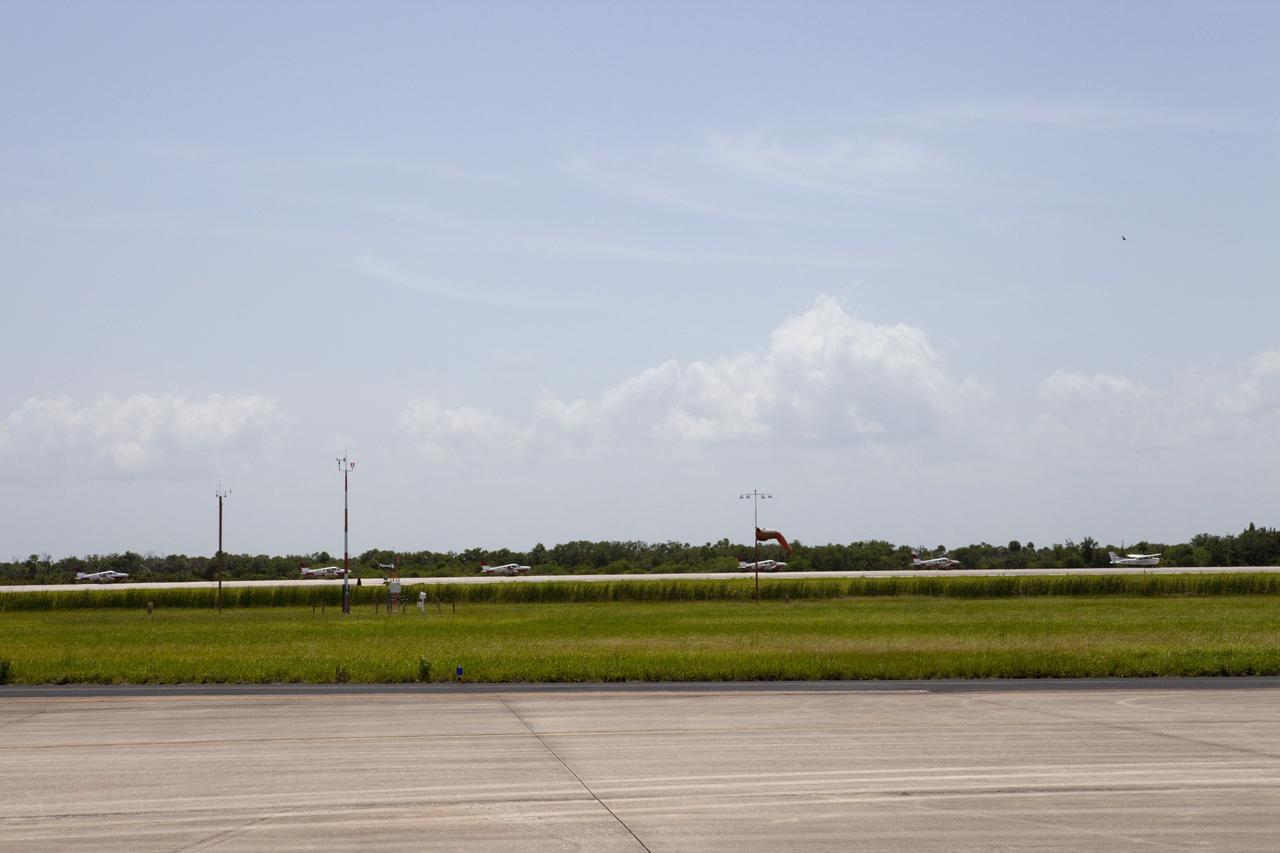
CAPE CANAVERAL, Fla. – At NASA Kennedy Space Center in Florida, flight instructors and their students from Florida Tech, or FIT, in Melbourne prepare to depart the Shuttle Landing Facility, or SLF, in Cherokee Warrior and Cessna 172S lightweight aircraft. The middle and high school students are participating in FIT’s Av/Aero summer camp experience. They and their flight instructors toured the SLF midfield control tower, viewed F104 Starfighters and NASA Huey helicopters in the RLV Hangar, viewed the runway plaques marking wheels stop for each of the three space shuttles, and toured the Vehicle Assembly Building where space shuttle Atlantis currently is stored. Photo credit: NASA/Kim Shiflett
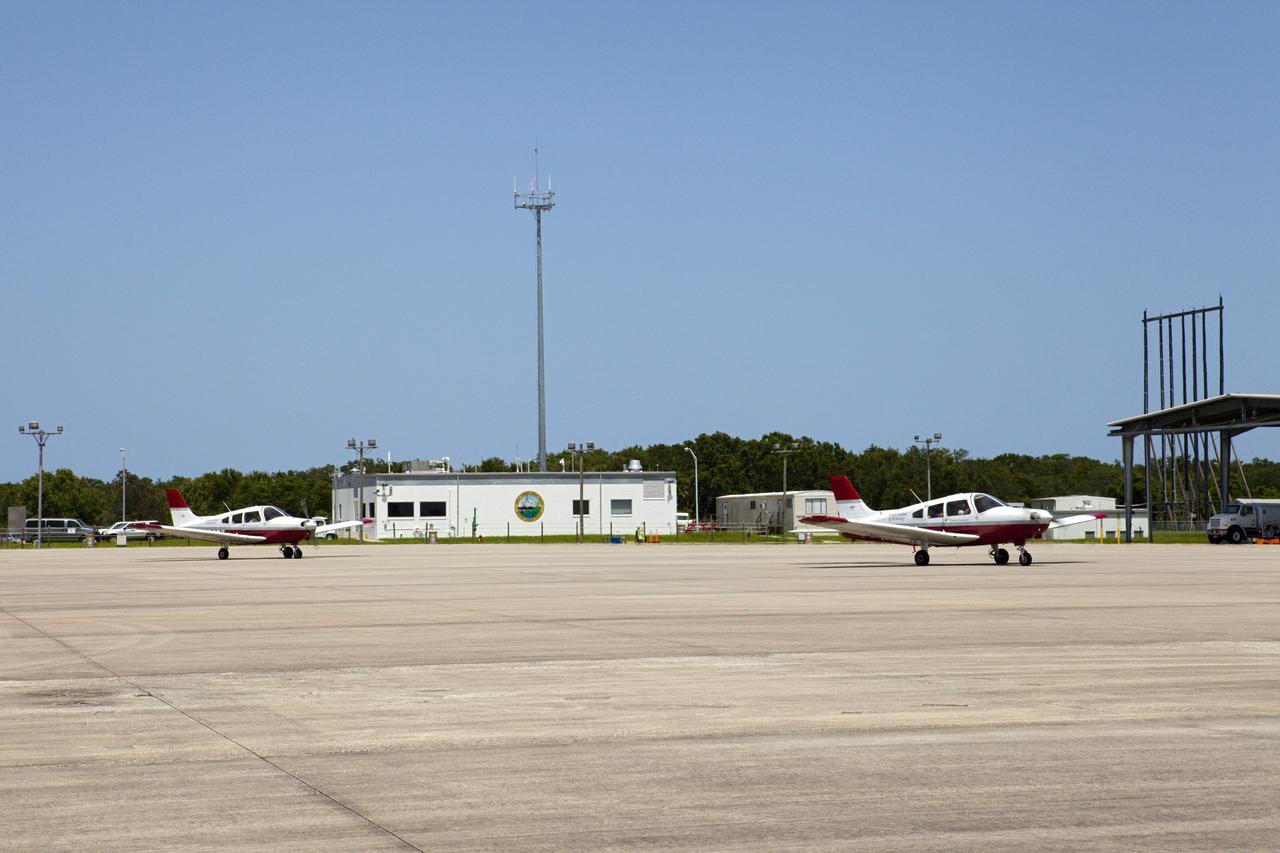
CAPE CANAVERAL, Fla. – At NASA Kennedy Space Center in Florida, flight instructors and their students from Florida Tech, or FIT, in Melbourne prepare to depart the Shuttle Landing Facility, or SLF, in Cherokee Warrior and Cessna 172S lightweight aircraft. The middle and high school students are participating in FIT’s Av/Aero summer camp experience. They and their flight instructors toured the SLF midfield control tower, viewed F104 Starfighters and NASA Huey helicopters in the RLV Hangar, viewed the runway plaques marking wheels stop for each of the three space shuttles, and toured the Vehicle Assembly Building where space shuttle Atlantis currently is stored. Photo credit: NASA/Kim Shiflett

CAPE CANAVERAL, Fla. – Students and their flight instructors from Florida Tech, or FIT, in Melbourne, tour the Vehicle Assembly Building and view space shuttle Atlantis at NASA’s Kennedy Space Center in Florida. The instructors and their students arrived at the Shuttle Landing Facility, or SLF, in Cherokee Warrior and Cessna 172S lightweight aircraft. The middle and high school students are participating in FIT’s Av/Aero summer camp experience. They and their flight instructors also toured the SLF midfield control tower, viewed F104 Starfighters and NASA Huey helicopters in the RLV Hangar, and viewed the runway plaques marking wheels stop for each of the three space shuttles. Photo credit: NASA/Kim Shiflett
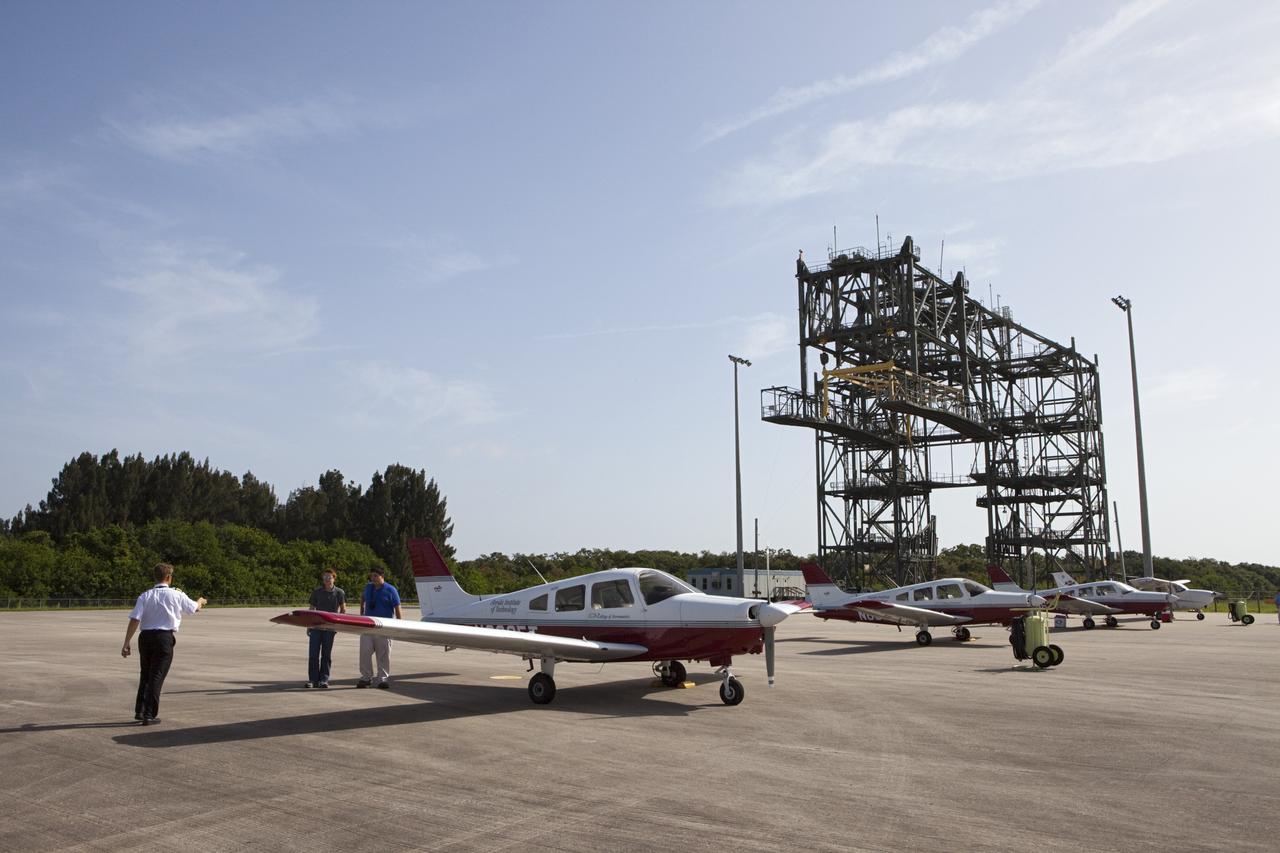
CAPE CANAVERAL, Fla. – Students and their flight instructors arrive at NASA Kennedy Space Center’s Shuttle Landing Facility, or SLF, in Florida in Cherokee Warrior and Cessna 172S lightweight aircraft from Florida Tech, or FIT, in Melbourne. The middle and high school students are participating in FIT’s Av/Aero summer camp experience. They and their flight instructors toured the SLF midfield control tower, viewed F104 Starfighters and NASA Huey helicopters in the RLV Hangar, viewed the runway plaques marking wheels stop for each of the three space shuttles, and toured the Vehicle Assembly Building where space shuttle Atlantis currently is stored. Photo credit: NASA/Kim Shiflett
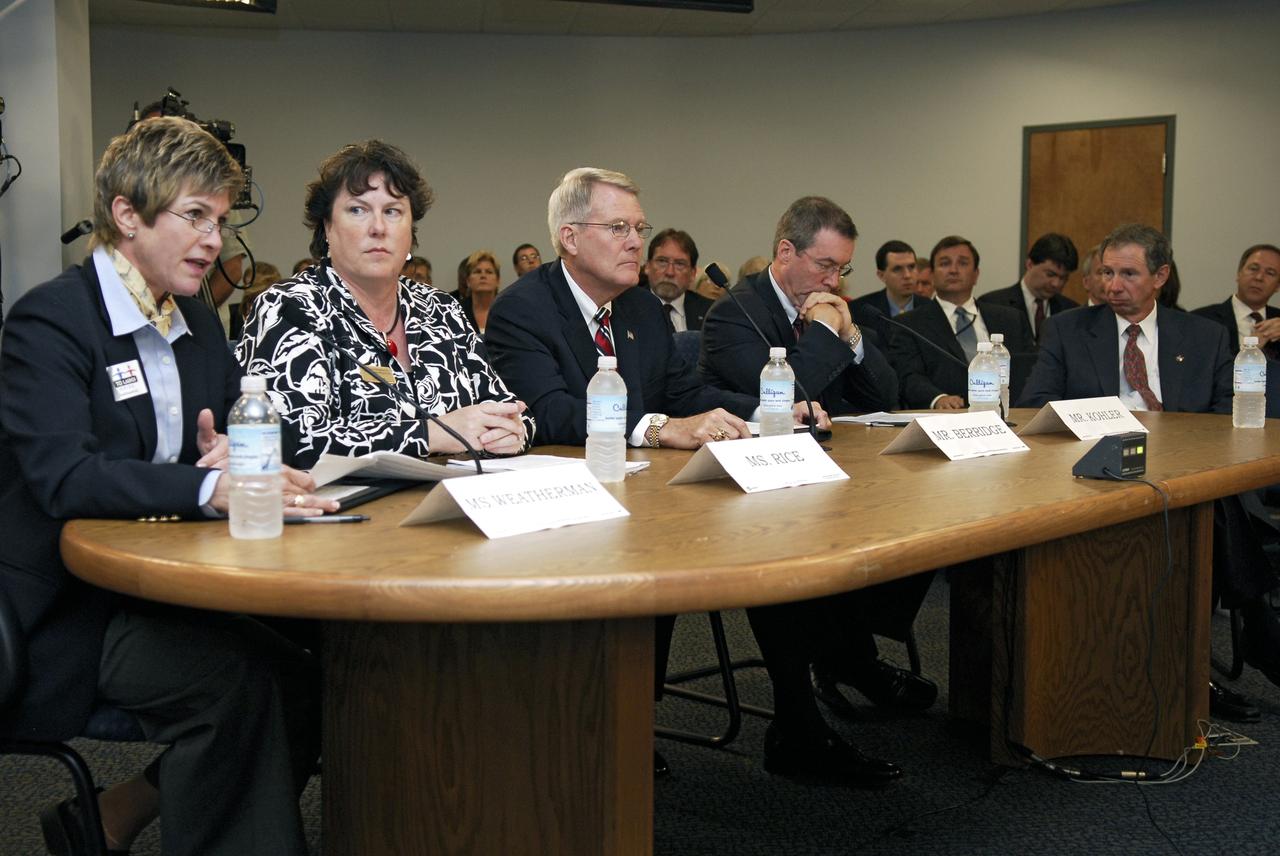
CAPE CANAVERAL, Fla. – A Senate field hearing held at the Canaveral Port Authority and chaired by Florida Sen. Bill Nelson focuses on workforce related challenges at NASA's Kennedy Space Center and potential solutions to mitigate the transition's effects on the community. The hearing examined issues surrounding the retirement of the space shuttle and the transition to the new Orion/Ares system. At the table are community representatives Lynda Weatherman, president and CEO of the Economic Development Commission of Florida's Space Coast; Lisa Rice, president of the Brevard Workforce Development Board Inc.; Randy Berridge, president of the Florida High Tech Corridor Council; and Steve Kohler, president of Space Florida. NASA Administrator Michael Griffin is seated at right. Photo credit: NASA/Kim Shiflett
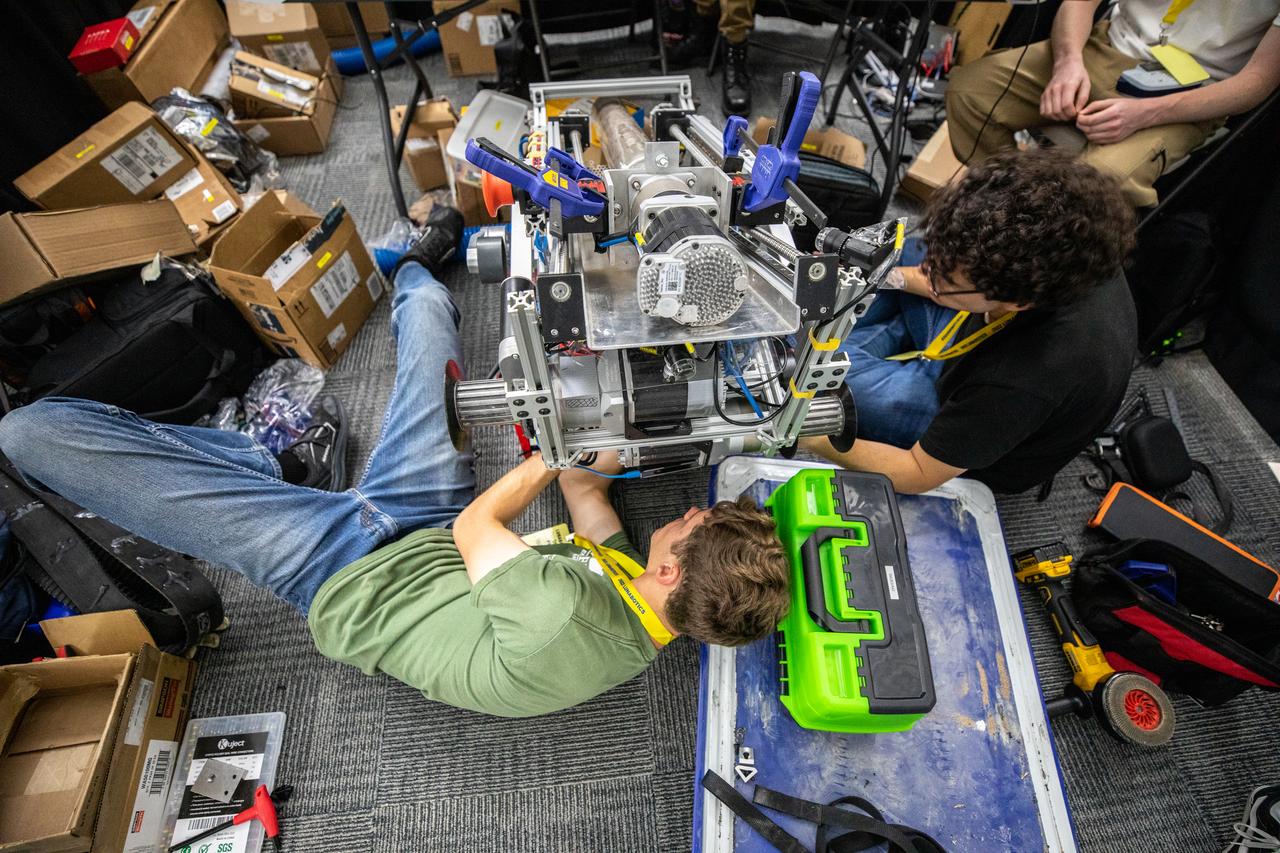
New Mexico Tech students prepare their robotic miner for its turn to dig in the mining arena during NASA’s LUNABOTICS competition on May 23, 2022, at the Center for Space Education near the Kennedy Space Center Visitor Complex in Florida. More than 35 teams from around the U.S. have designed and built remote-controlled robots for the mining competition. Teams use their autonomous or remote-controlled robots to maneuver and dig in a supersized sandbox filled with rocks and simulated lunar soil, or regolith. The objective of the challenge is to see which team’s robot can collect and deposit the most rocky regolith within a specified amount of time.

Cameron Symonds, of New Mexico Tech, prepares his team’s prototype lunar robot for its turn during the finals for NASA’s 2026 Lunabotics Challenge competition on Tuesday, May 19, 2026, inside the Astronauts Memorial Foundation’s Center for Space Education at the Kennedy Space Center Visitor Complex in Florida. Forty-seven teams from around the U.S. designed and built remote-controlled robots capable of traversing challenging lunar terrain while constructing regolith-based berm under conditions similar to those the agency will face as it returns to the lunar surface through Artemis.

Tammy Long, NASA Communicaions, moderates a Mars 2020 Mission Tech and Humans to Mars Briefing at NASA’s Kennedy Space Center in Florida on July 28, 2020. The Mars Perseverance rover is scheduled to launch July 30, on a United Launch Alliance Atlas V 541 rocket from Space Launch Complex 41 at nearby Cape Canaveral Air Force Station. The rover is part of NASA’s Mars Exploration Program, a long-term effort of robotic exploration of the Red Planet. The rover will search for habitable conditions in the ancient past and signs of past microbial life on Mars. The Launch Services Program at Kennedy is responsible for launch management.

Students from New Mexico Tech prepare their prototype lunar robot for its turn during the finals for NASA’s 2026 Lunabotics Challenge competition on Tuesday, May 19, 2026, inside the Astronauts Memorial Foundation’s Center for Space Education at the Kennedy Space Center Visitor Complex in Florida. Forty-seven teams from around the U.S. designed and built remote-controlled robots capable of traversing challenging lunar terrain while constructing regolith-based berm under conditions similar to those the agency will face as it returns to the lunar surface through Artemis.
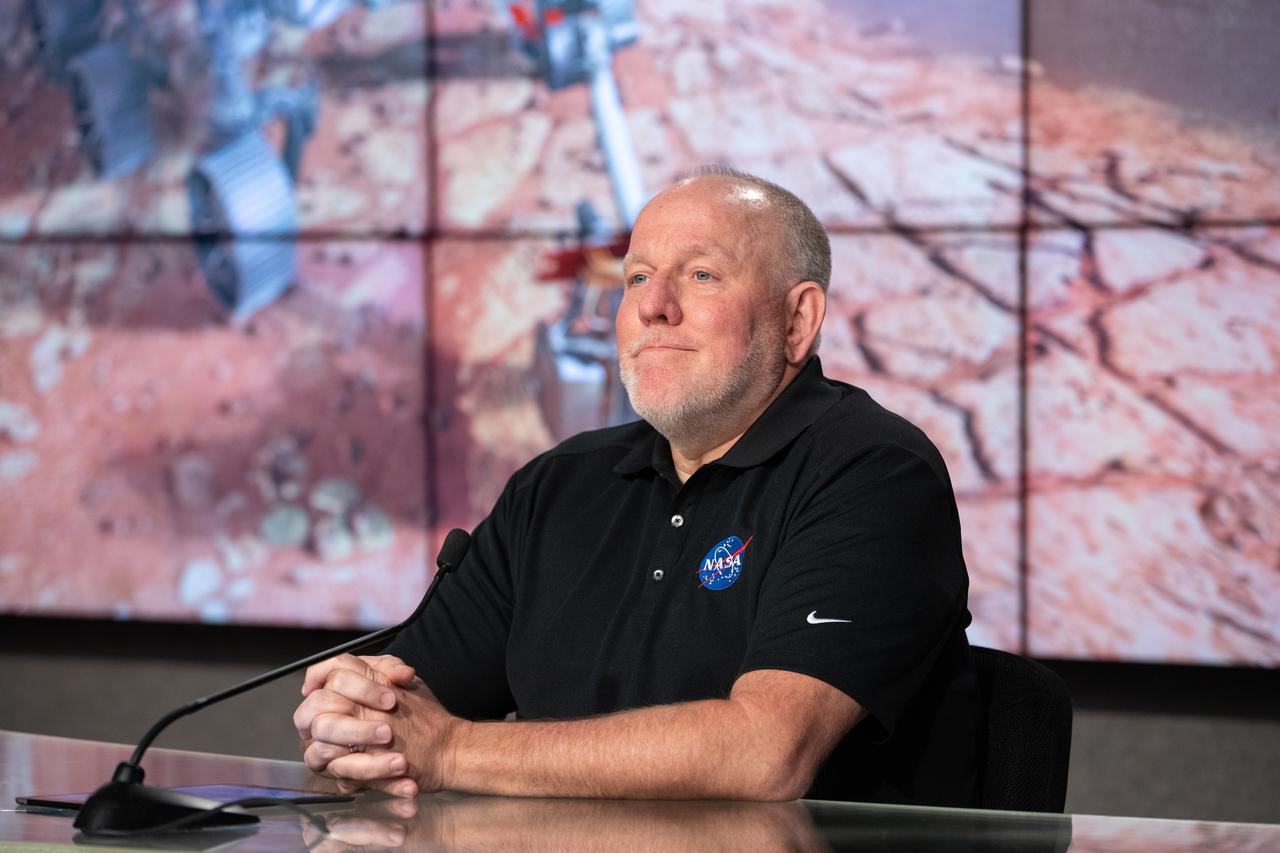
Jeff Sheehy, Space Technology Mission Directorate, NASA Headquarters, participates in a Mars 2020 Mission Tech and Humans to Mars Briefing at NASA’s Kennedy Space Center in Florida on July 28, 2020. The Mars Perseverance rover is scheduled to launch July 30, on a United Launch Alliance Atlas V 541 rocket from Space Launch Complex 41 at nearby Cape Canaveral Air Force Station. The rover is part of NASA’s Mars Exploration Program, a long-term effort of robotic exploration of the Red Planet. The rover will search for habitable conditions in the ancient past and signs of past microbial life on Mars. The Launch Services Program at Kennedy is responsible for launch management.
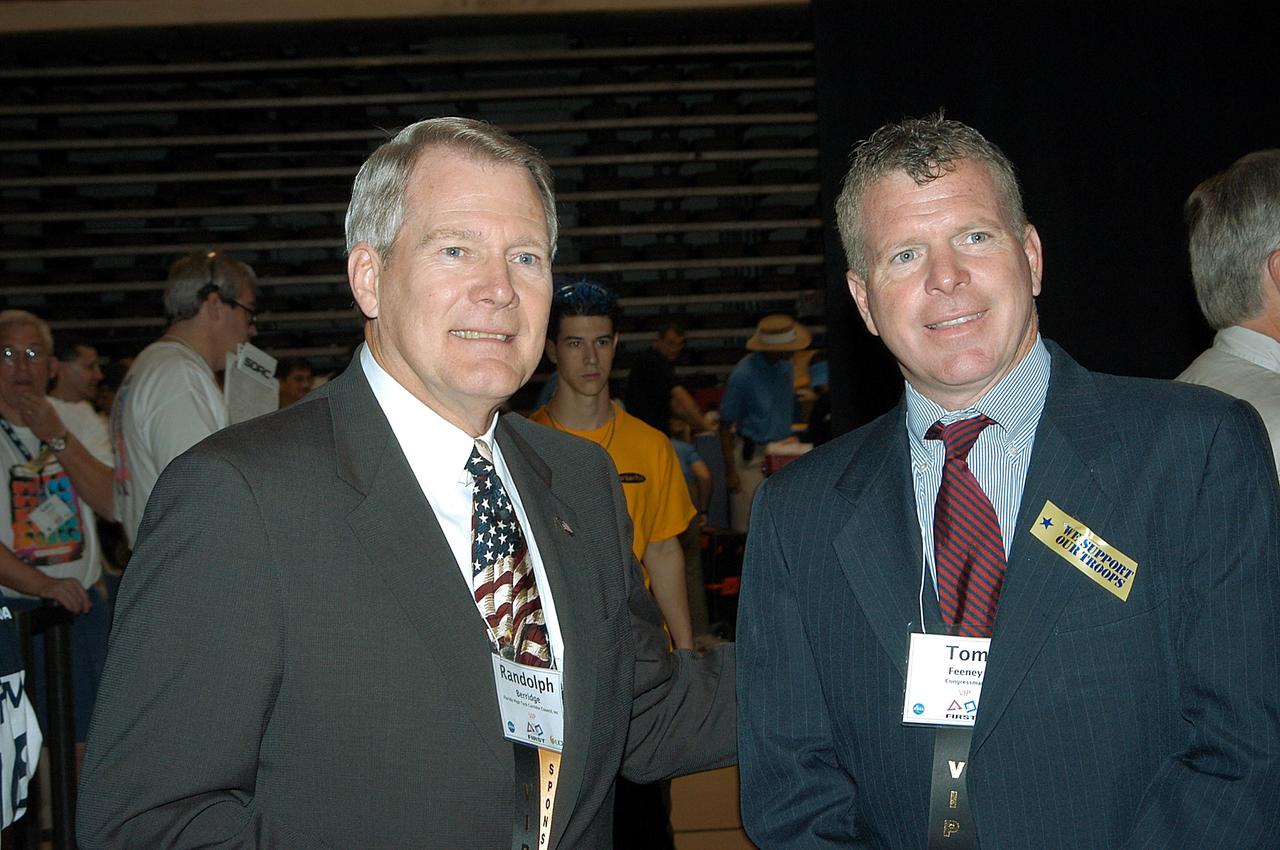
KENNEDY SPACE CENTER, FLA. - Randolph E. Berridge, president of the Florida High Tech Corridor Council, and Tom Feeney, Florida Representative from the 24th District, attend the 2003 Southeastern Regional FIRST Robotic Competition. The competition is being held at the University of Central Florida (UCF) in Orlando, March 20-23. Forty student teams from around the country are participating in the event that pits team-built gladiator robots against each other in an athletic-style competition. The teams are sponsored by NASA/Kennedy Space Center, The Boeing Company/Brevard Community College, and Lockheed Martin Space Operations/Mission Systems for the nonprofit organization For Inspiration and Recognition of Science and Technology, known as FIRST. The vision of FIRST is to inspire in the youth of our nation an appreciation of science and technology and an understanding that mastering these disciplines can enrich the lives of all mankind.
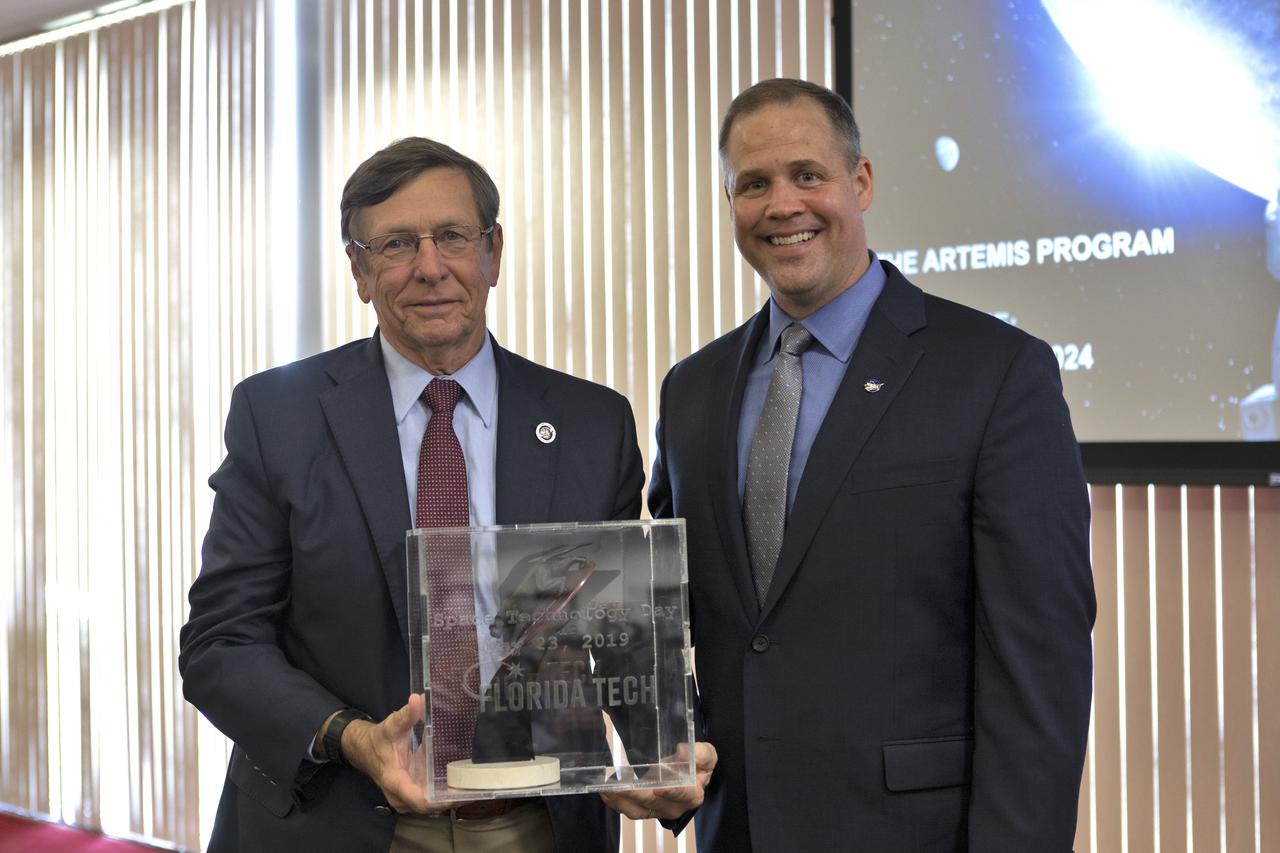
NASA Administrator Jim Bridenstine, right, poses with Florida Institute of Technology President T. Dwayne McCay on Thursday, May 23, 2019 at the Melbourne, FL campus. Bridenstine delivered the keynote address during the university’s Space Technology Day. Among the key topics Bridenstine discussed was NASA’s Artemis missions to the Moon, including the lunar Gateway, which will serve as an orbiting outpost for astronauts.
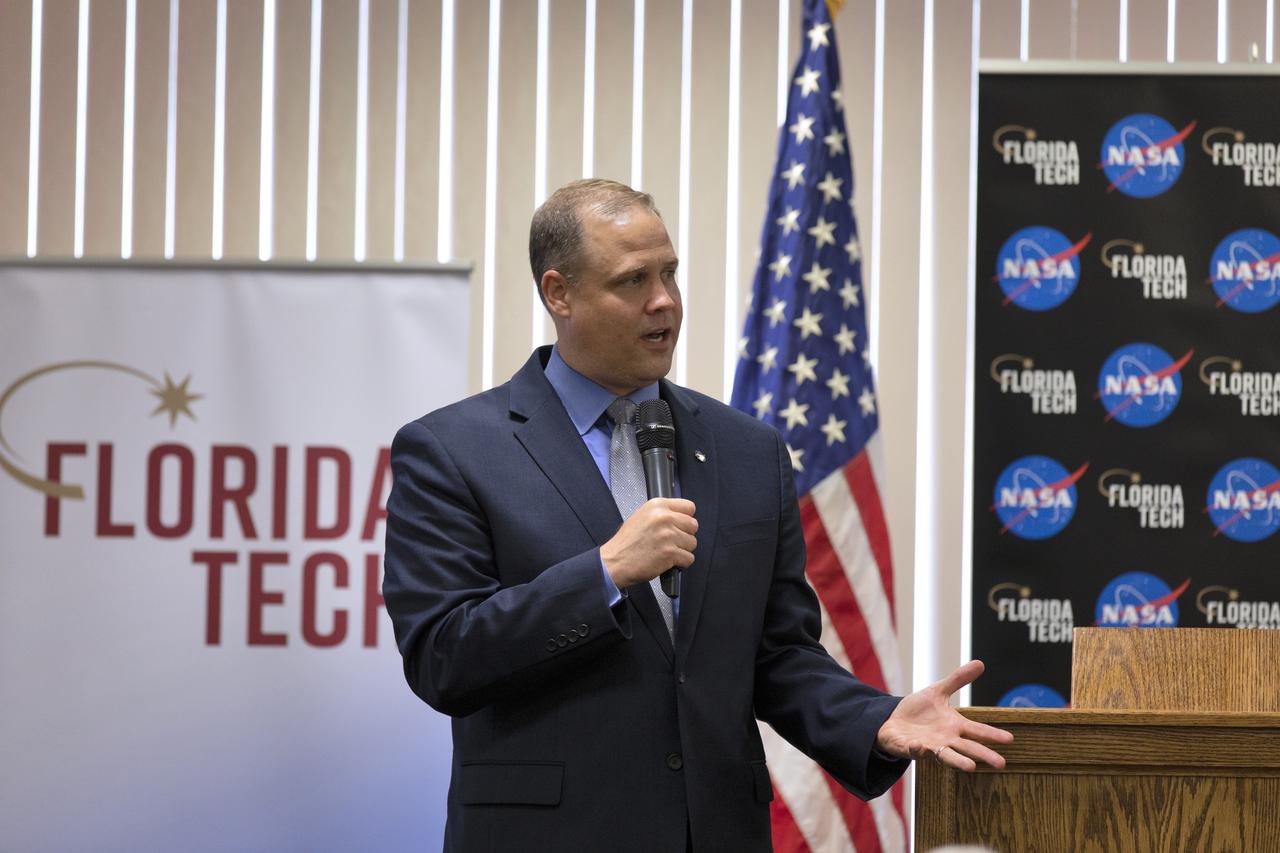
NASA Administrator Jim Bridenstine speaks to students, faculty, engineers and area business leaders at Florida Institute of Technology on Thursday, May 23, 2019. Bridenstine delivered the keynote address at the Melbourne, FL campus during the university’s Space Technology Day. Among the key topics Bridenstine discussed was NASA’s Artemis missions to the Moon, including the lunar Gateway, which will serve as an orbiting outpost for astronauts.
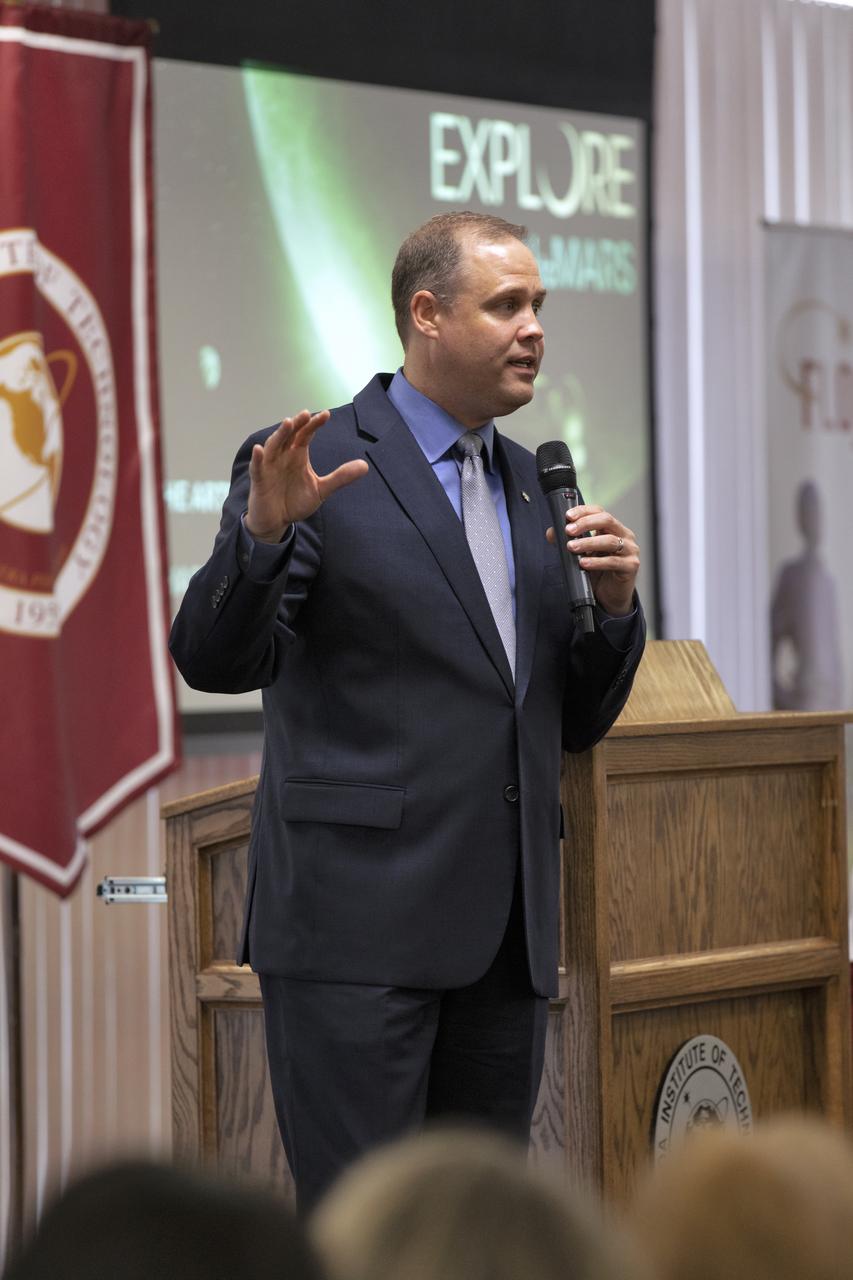
NASA Administrator Jim Bridenstine speaks to students, faculty, engineers and area business leaders at Florida Institute of Technology on Thursday, May 23, 2019. Bridenstine delivered the keynote address at the Melbourne, FL campus during the university’s Space Technology Day. Among the key topics Bridenstine discussed was NASA’s Artemis missions to the Moon, including the lunar Gateway, which will serve as an orbiting outpost for astronauts.
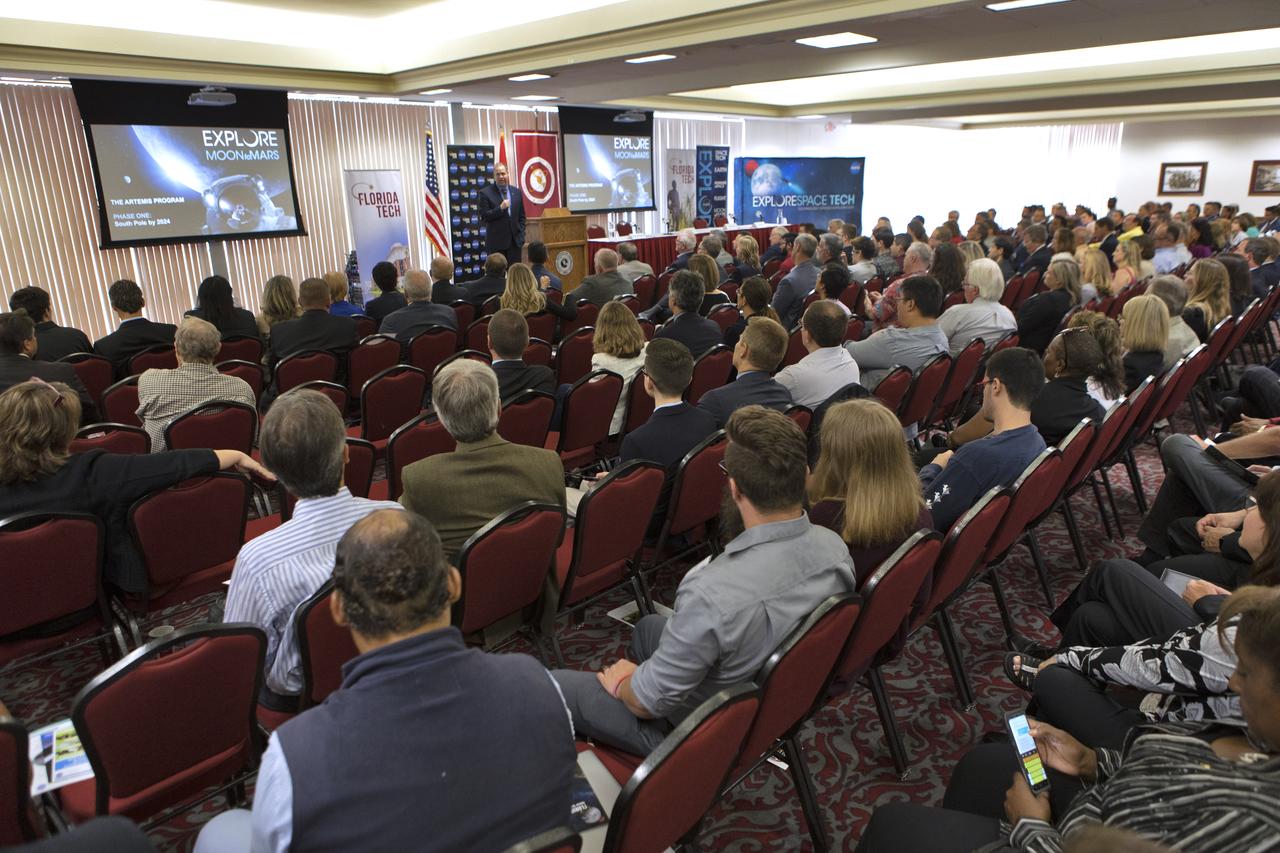
NASA Administrator Jim Bridenstine speaks to students, faculty, engineers and area business leaders at Florida Institute of Technology on Thursday, May 23, 2019. Bridenstine delivered the keynote address at the Melbourne, FL campus during the university’s Space Technology Day. Among the key topics Bridenstine discussed was NASA’s Artemis missions to the Moon, including the lunar Gateway, which will serve as an orbiting outpost for astronauts.
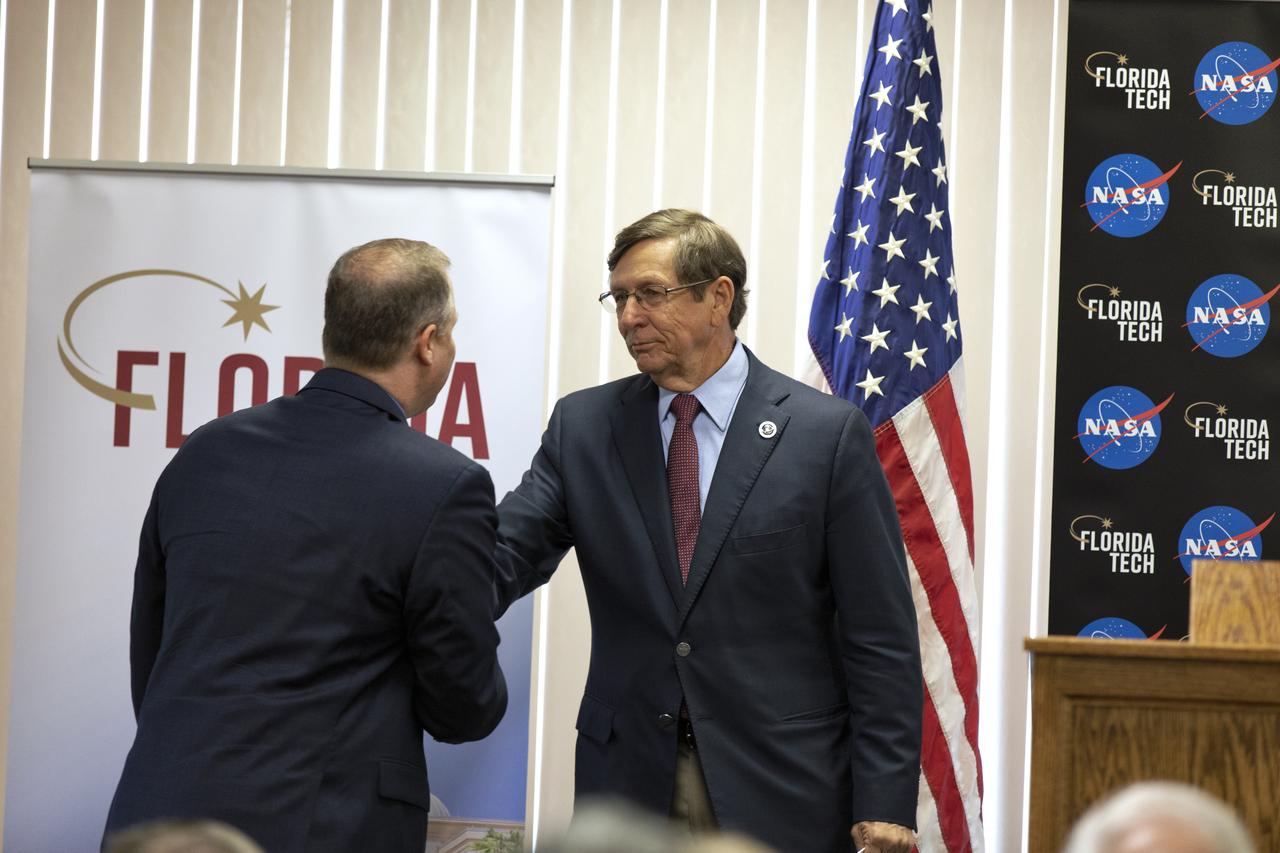
NASA Administrator Jim Bridenstine, left, shakes hands with Florida Institute of Technology President T. Dwayne McCay on Thursday, May 23, 2019 at the Melbourne, FL campus. Bridenstine delivered the keynote address during the university’s Space Technology Day. Among the key topics Bridenstine discussed was NASA’s Artemis missions to the Moon, including the lunar Gateway, which will serve as an orbiting outpost for astronauts.
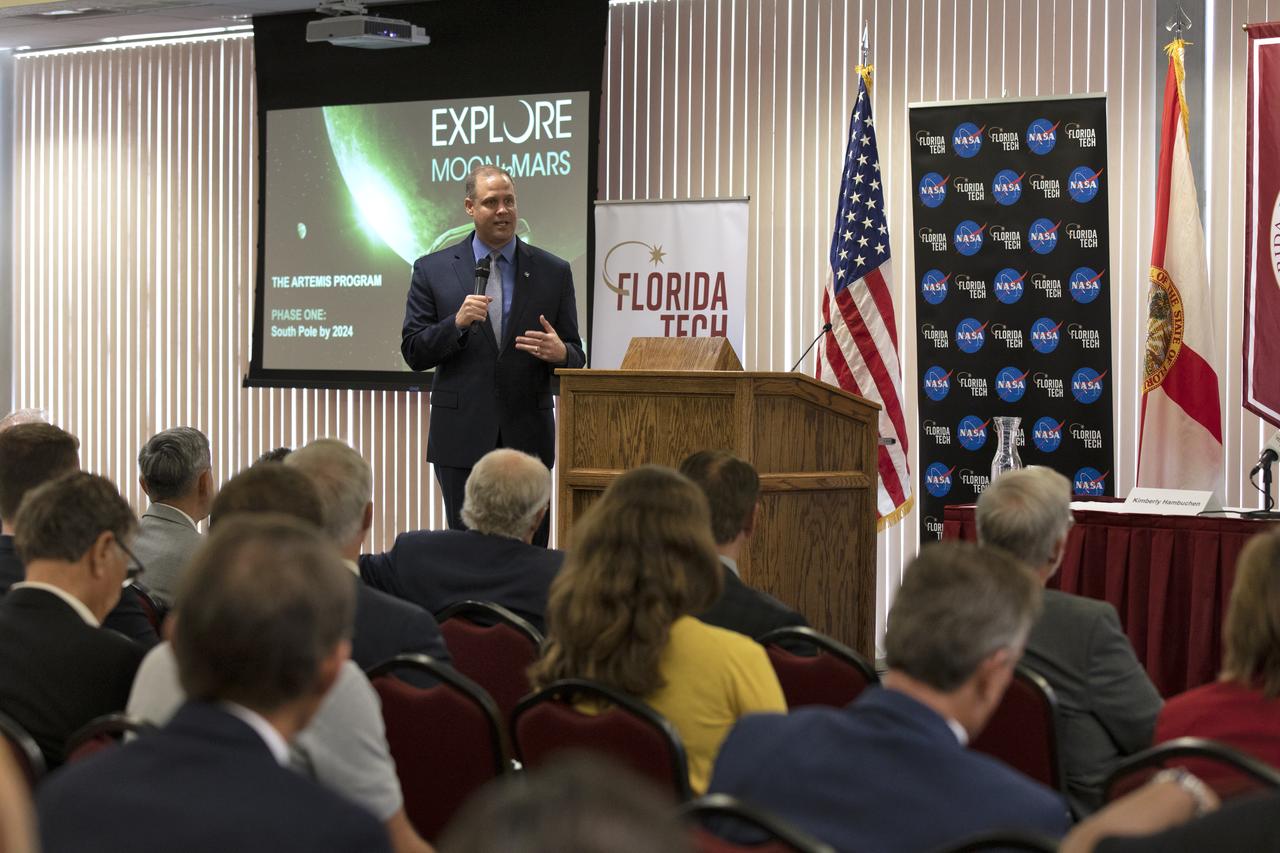
NASA Administrator Jim Bridenstine speaks to students, faculty, engineers and area business leaders at Florida Institute of Technology on Thursday, May 23, 2019. Bridenstine delivered the keynote address at the Melbourne, FL campus during the university’s Space Technology Day. Among the key topics Bridenstine discussed was NASA’s Artemis missions to the Moon, including the lunar Gateway, which will serve as an orbiting outpost for astronauts.
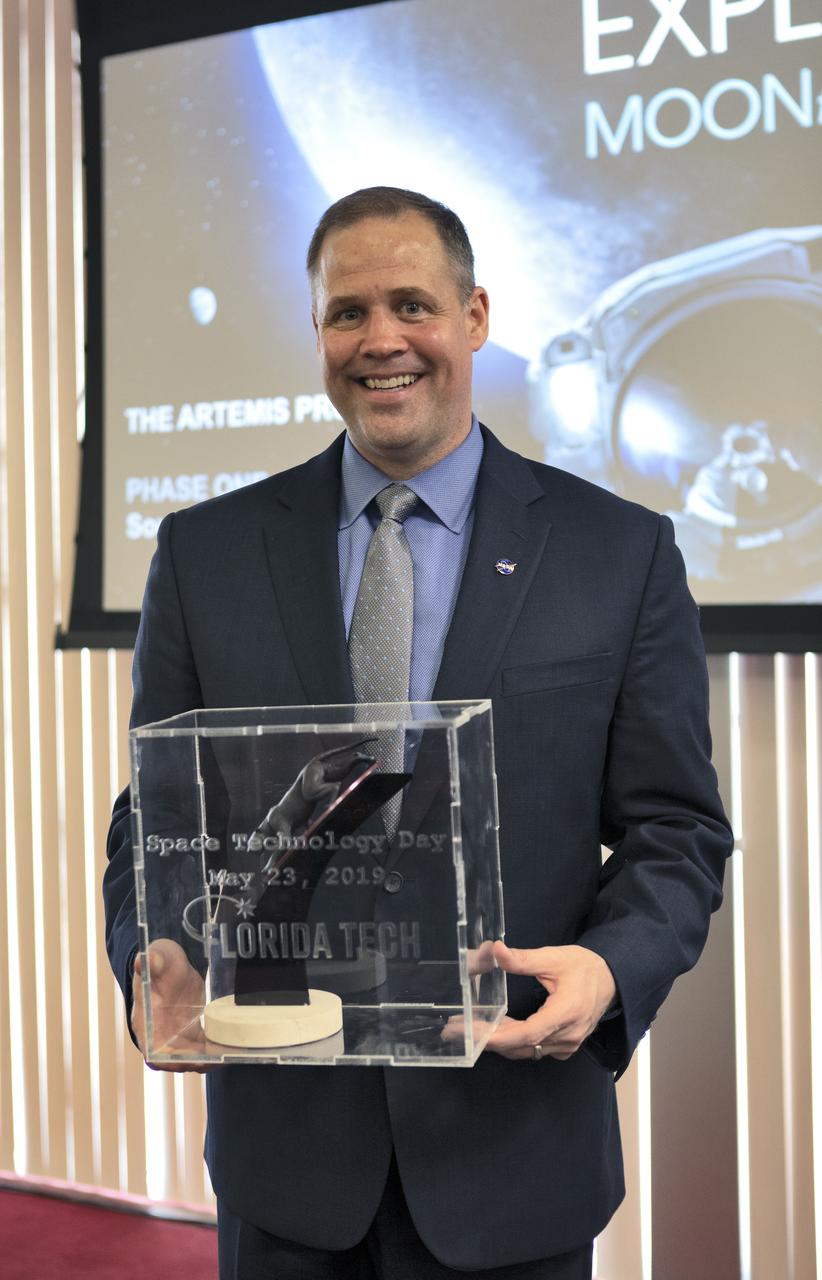
NASA Administrator Jim Bridenstine poses at Florida Institute of Technology on Thursday, May 23, 2019. Bridenstine delivered the keynote address at the Melbourne, FL campus during the university’s Space Technology Day. Among the key topics Bridenstine discussed was NASA’s Artemis missions to the Moon, including the lunar Gateway, which will serve as an orbiting outpost for astronauts.
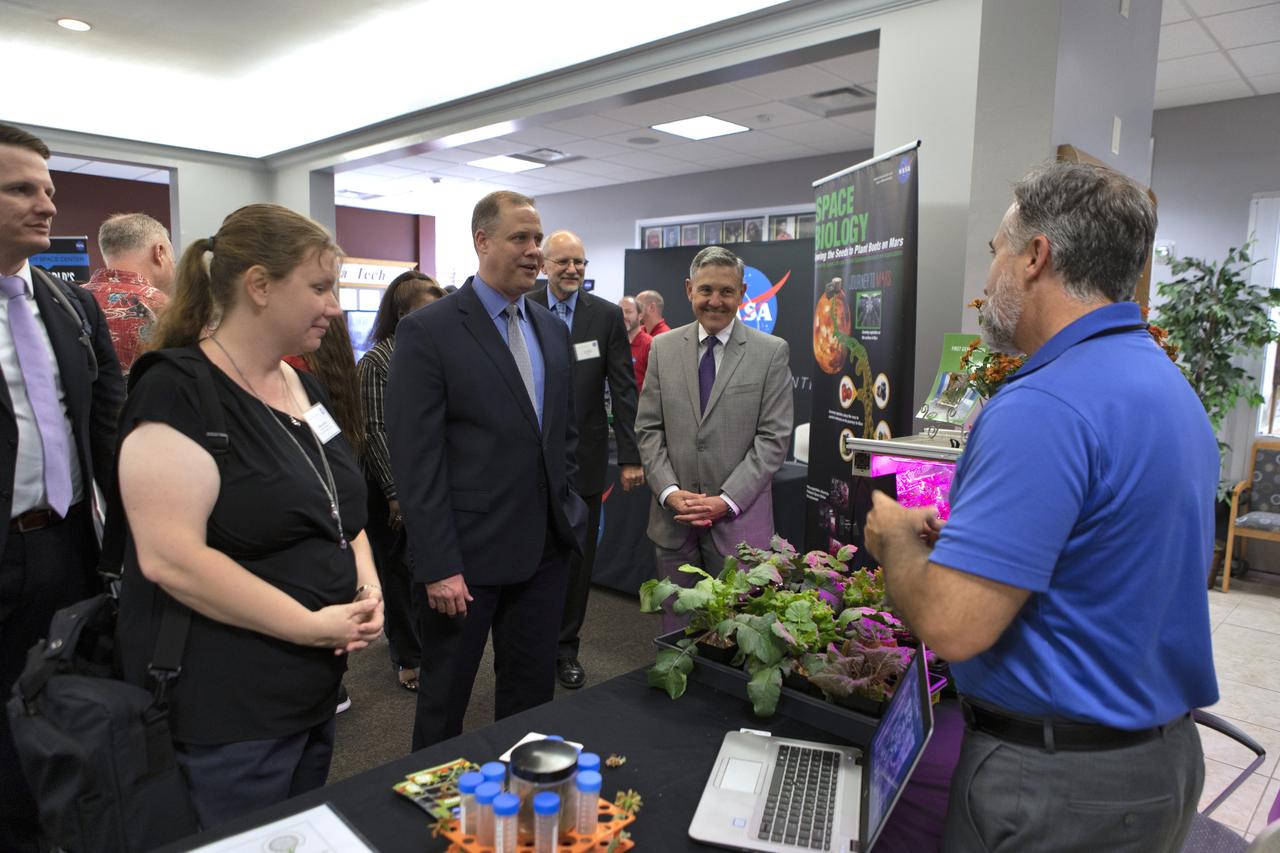
NASA Administrator Jim Bridenstine, center, and Kennedy Space Center Director Bob Cabana, right, visit Florida Institute of Technology on Thursday, May 23, 2019. Bridenstine delivered the keynote address at the Melbourne, FL campus during the university’s Space Technology Day. Among the key topics Bridenstine discussed was NASA’s Artemis missions to the Moon, including the lunar Gateway, which will serve as an orbiting outpost for astronauts.
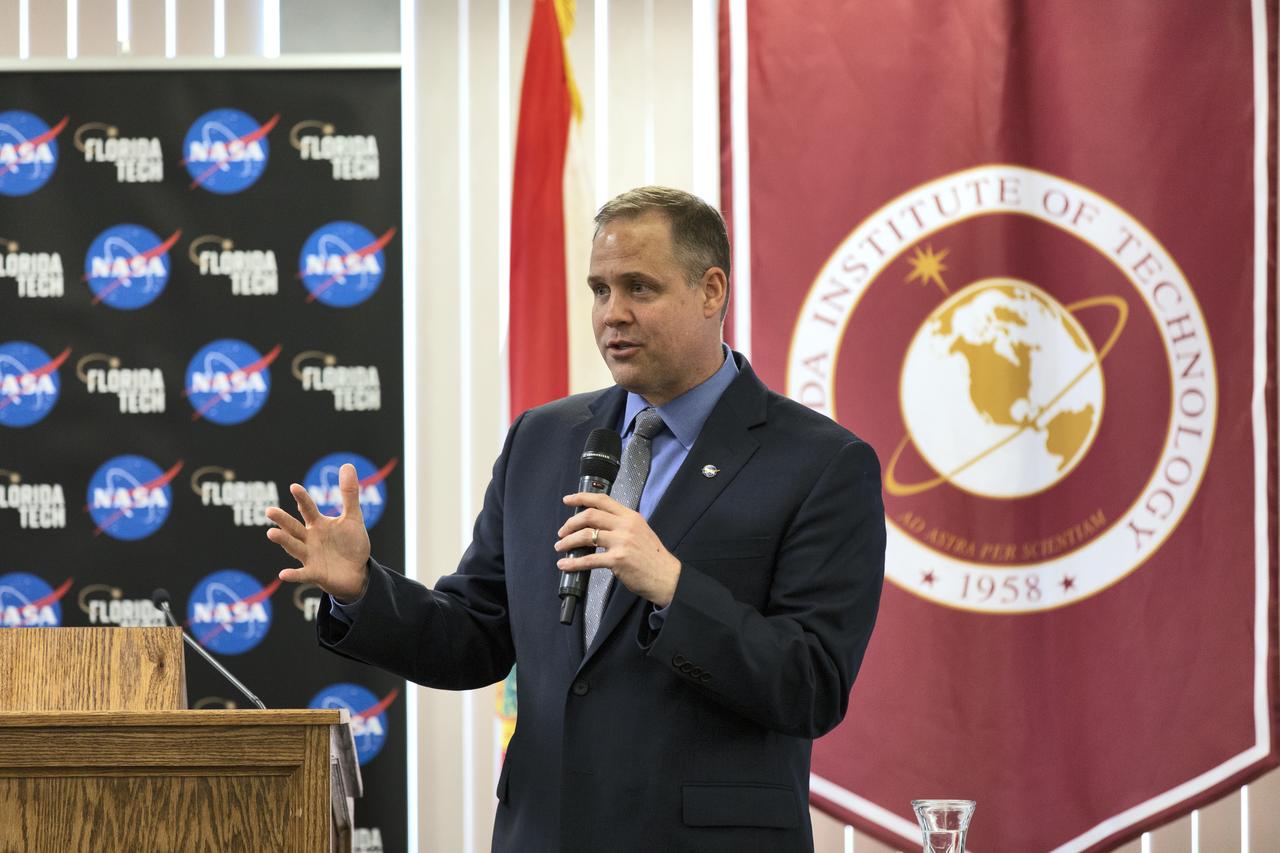
NASA Administrator Jim Bridenstine speaks to students, faculty, engineers and area business leaders at Florida Institute of Technology on Thursday, May 23, 2019. Bridenstine delivered the keynote address at the Melbourne, FL campus during the university’s Space Technology Day. Among the key topics Bridenstine discussed was NASA’s Artemis missions to the Moon, including the lunar Gateway, which will serve as an orbiting outpost for astronauts.
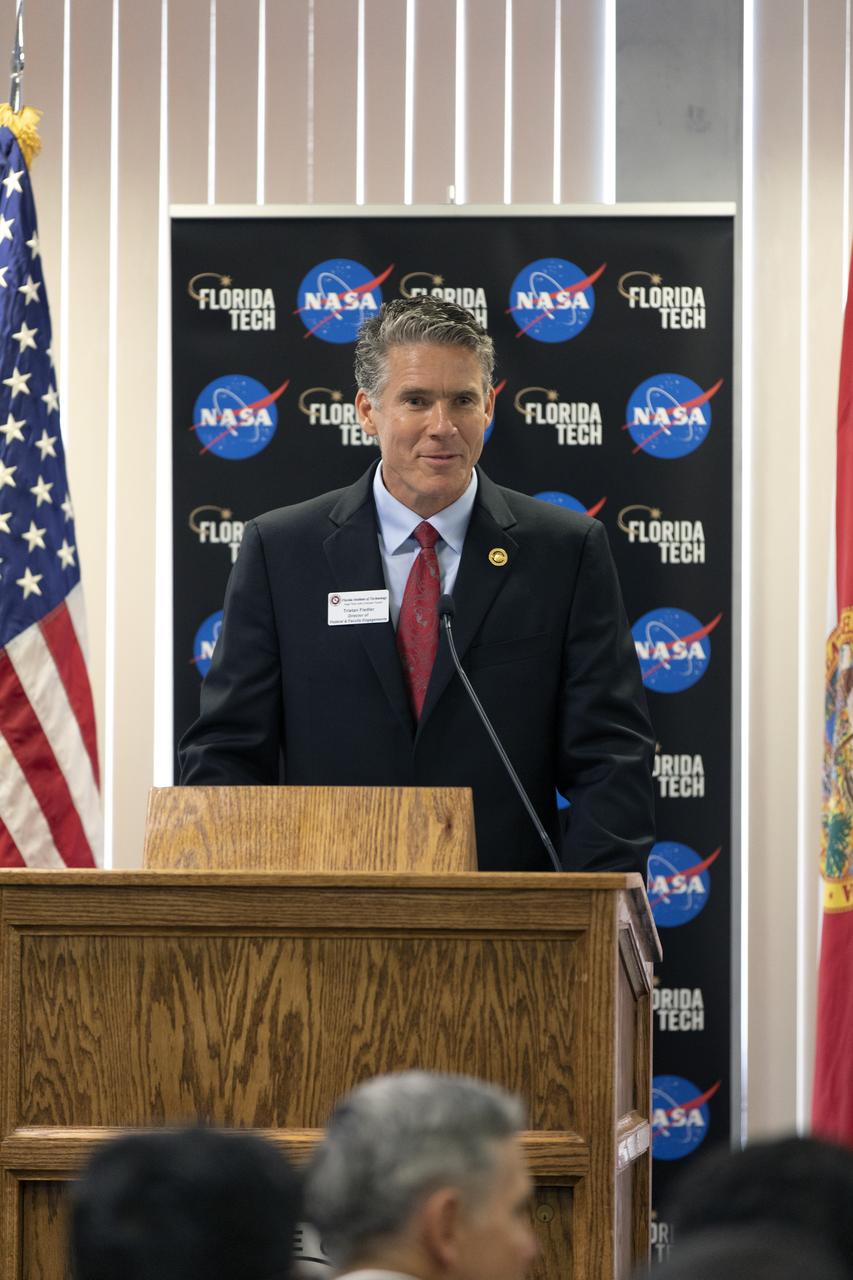
Tristan Fiedler, director of federal and faculty engagements at Florida Institute of Technology, speaks during the university’s Space Technology Day on Thursday, May 23, 2019. NASA Administrator Jim Bridenstine delivered the keynote address at the Melbourne, FL campus, which included students, faculty, engineers and area business leaders in attendance. Among the key topics Bridenstine discussed was NASA’s Artemis missions to the Moon, including the lunar Gateway, which will serve as an orbiting outpost for astronauts.
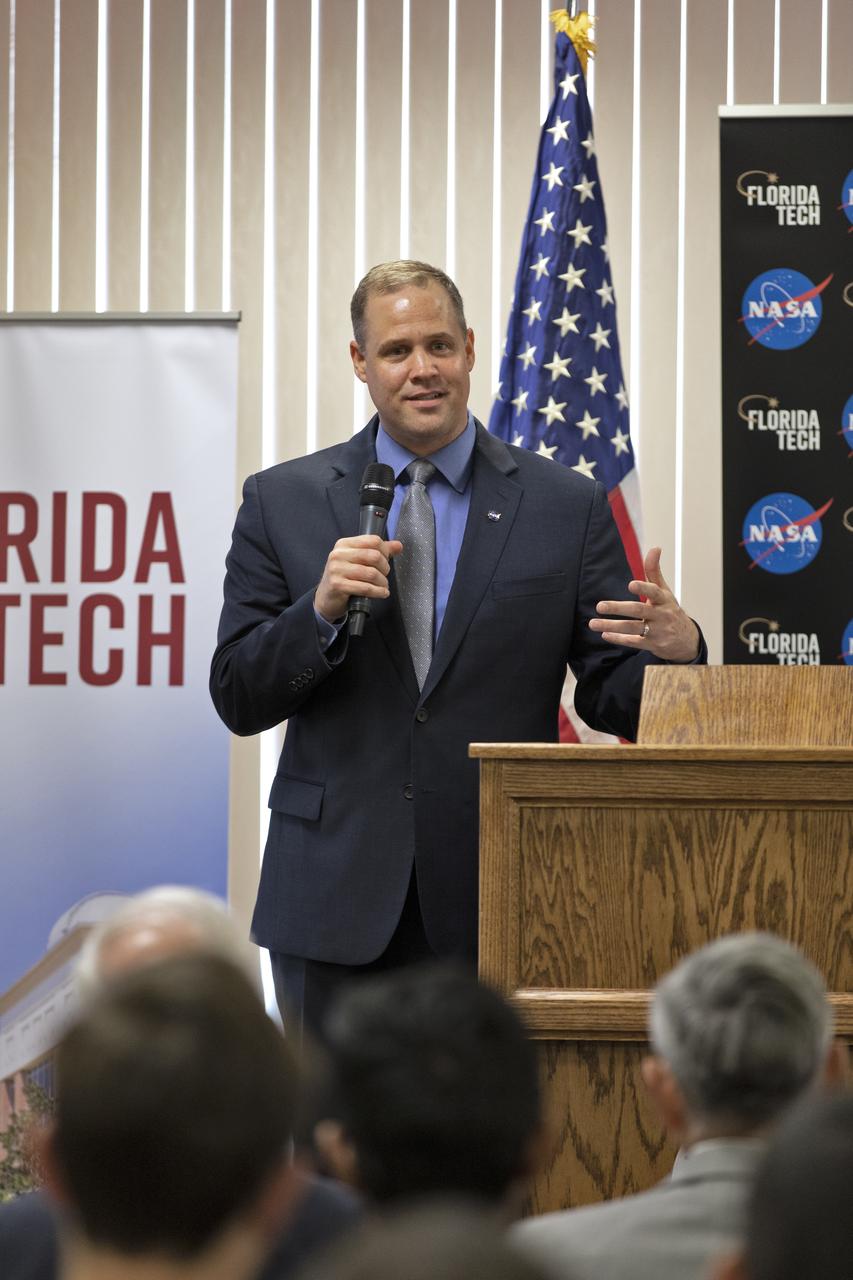
NASA Administrator Jim Bridenstine speaks to students, faculty, engineers and area business leaders at Florida Institute of Technology on Thursday, May 23, 2019. Bridenstine delivered the keynote address at the Melbourne, FL campus during the university’s Space Technology Day. Among the key topics Bridenstine discussed was NASA’s Artemis missions to the Moon, including the lunar Gateway, which will serve as an orbiting outpost for astronauts.
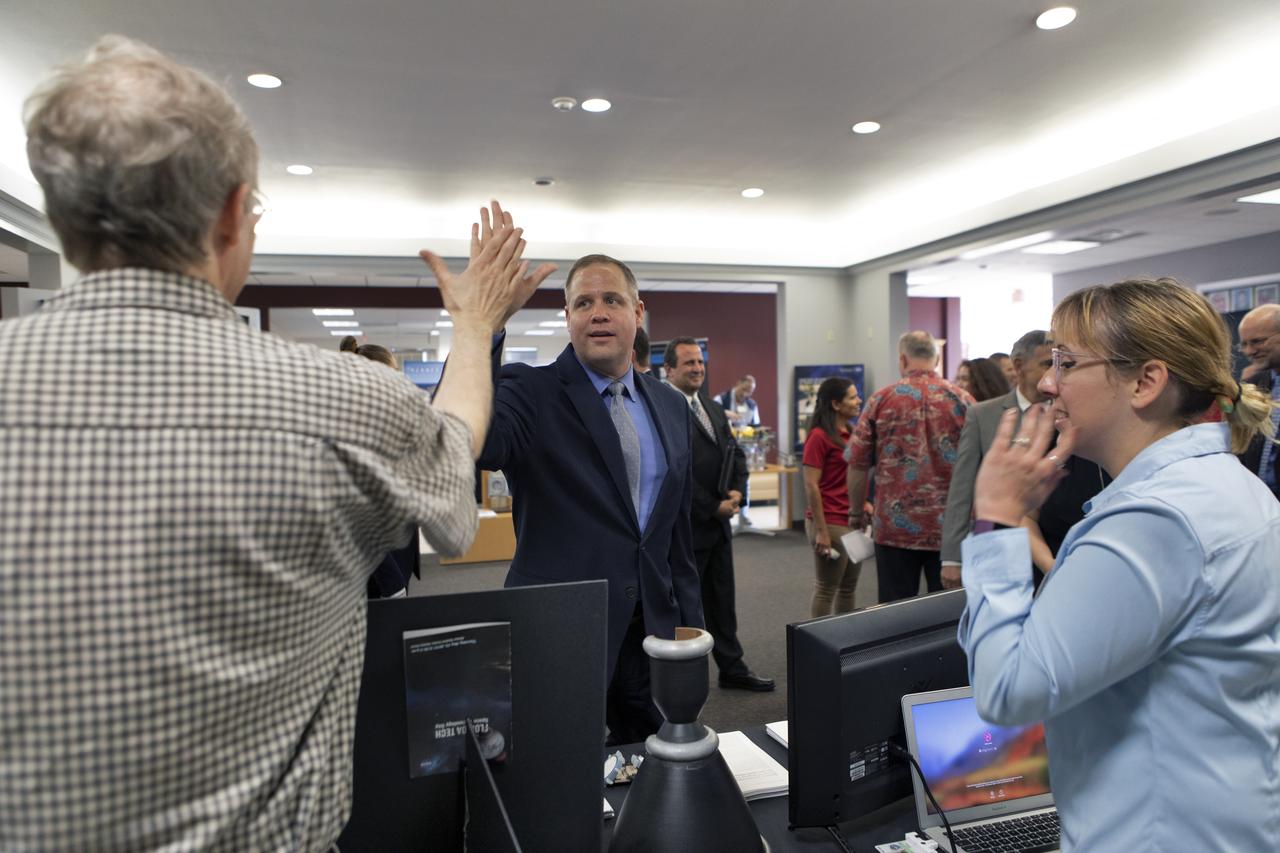
NASA Administrator Jim Bridenstine, center, speaks to students, faculty, engineers and area business leaders at Florida Institute of Technology on Thursday, May 23, 2019. Bridenstine delivered the keynote address at the Melbourne, FL campus during the university’s Space Technology Day. Among the key topics Bridenstine discussed was NASA’s Artemis missions to the Moon, including the lunar Gateway, which will serve as an orbiting outpost for astronauts.
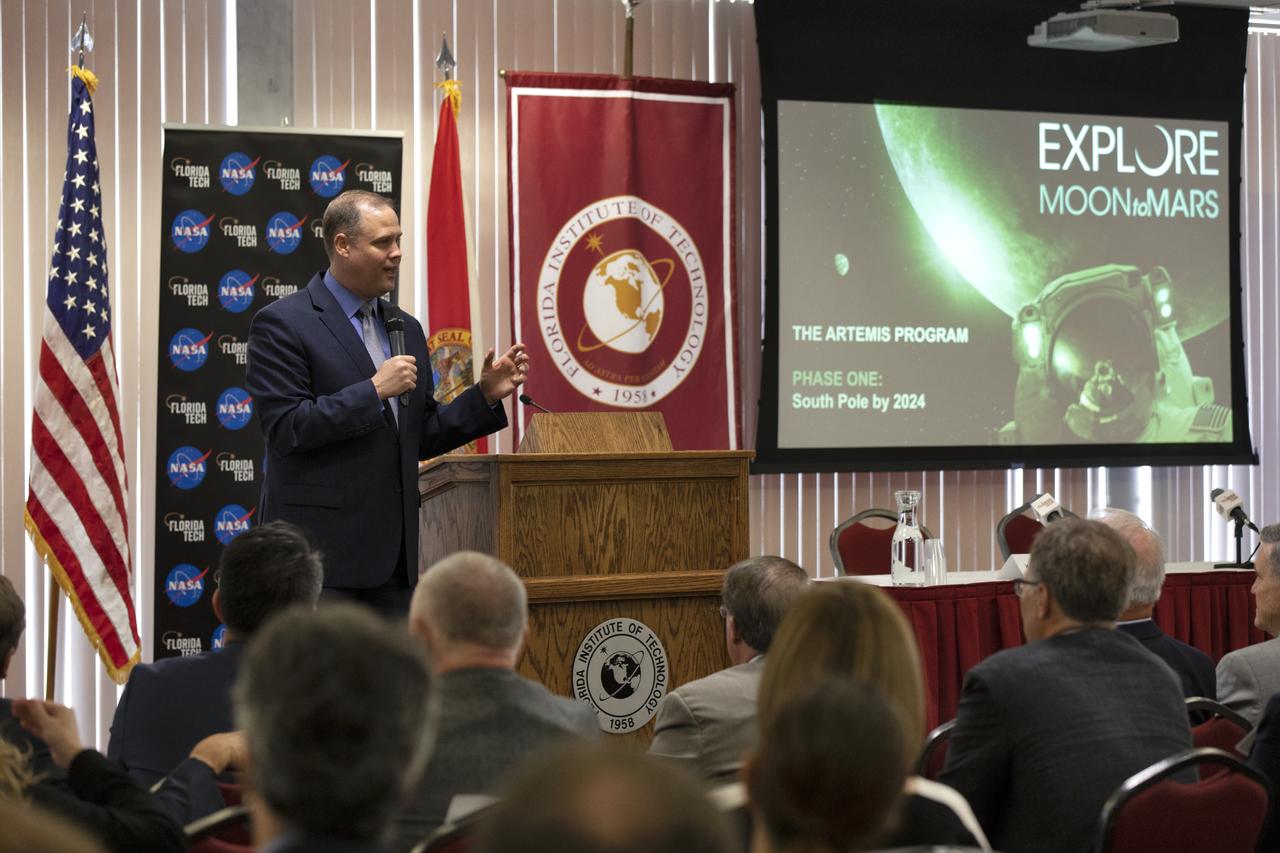
NASA Administrator Jim Bridenstine speaks to students, faculty, engineers and area business leaders at Florida Institute of Technology on Thursday, May 23, 2019. Bridenstine delivered the keynote address at the Melbourne, FL campus during the university’s Space Technology Day. Among the key topics Bridenstine discussed was NASA’s Artemis missions to the Moon, including the lunar Gateway, which will serve as an orbiting outpost for astronauts.
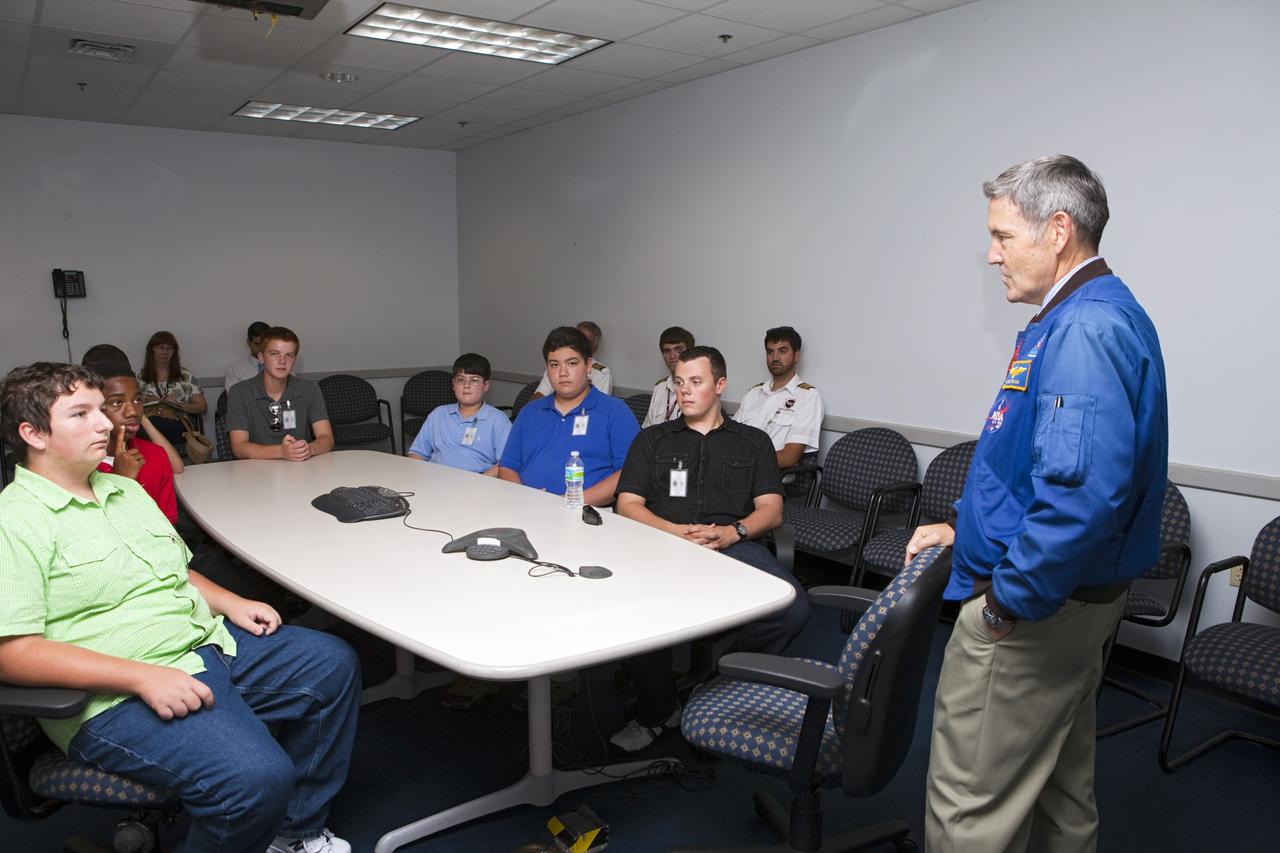
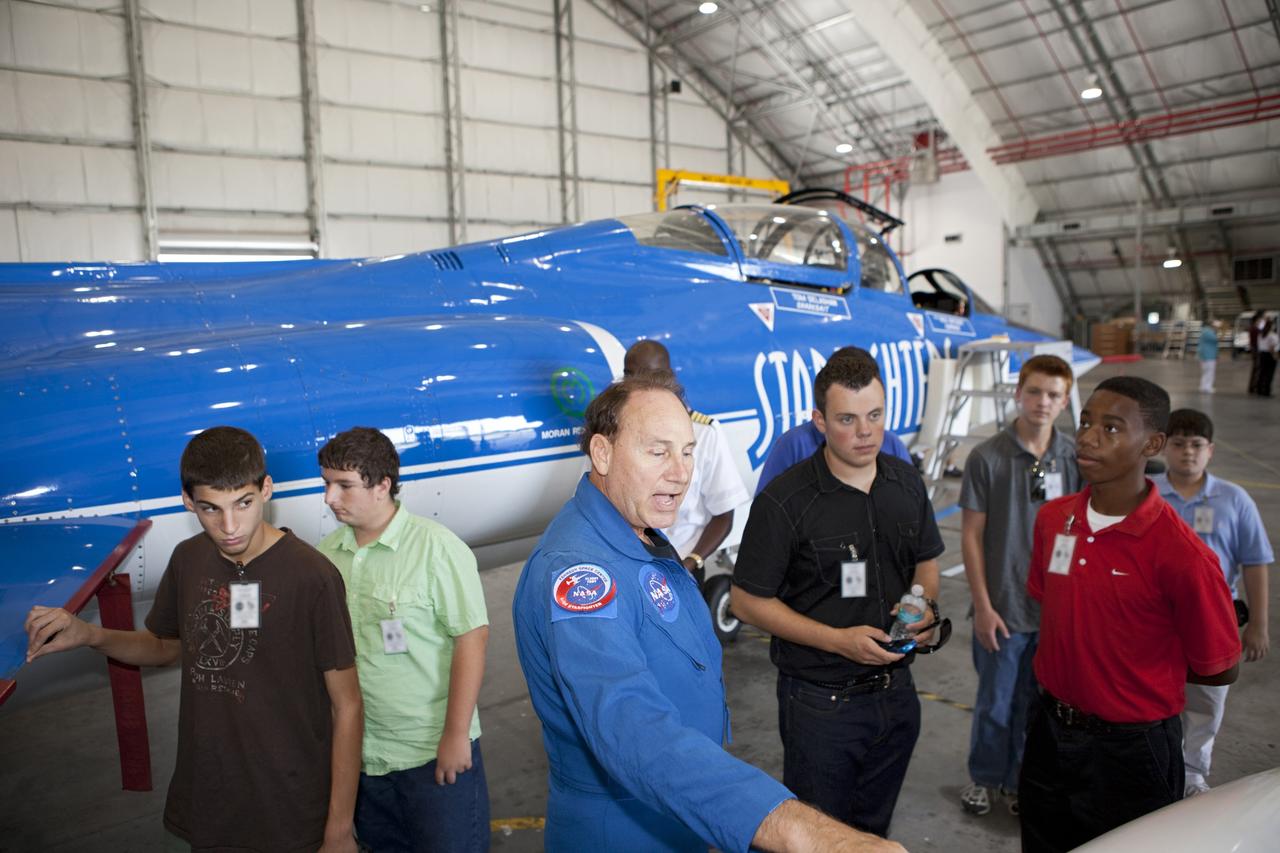
CAPE CANAVERAL, Fla. – In a support building near NASA Kennedy Space Center’s Shuttle Landing Facility, or SLF, in Florida, Center Director Bob Cabana speaks to students and their flight instructors from Florida Tech, or FIT, in Melbourne. The group arrived at the SLF in Cherokee Warrior and Cessna 172S lightweight aircraft. The middle and high school students are participating in FIT’s Av/Aero summer camp experience. They and their flight instructors toured the SLF midfield control tower, viewed F104 Starfighters and NASA Huey helicopters in the RLV Hangar, viewed the runway plaques marking wheels stop for each of the three space shuttles, and toured the Vehicle Assembly Building where space shuttle Atlantis currently is stored. Photo credit: NASA/Kim Shiflett
CAPE CANAVERAL, Fla. – Inside the RLV Hangar near NASA Kennedy Space Center’s Shuttle Landing Facility, or SLF, in Florida, students and their flight instructors from Florida Tech, FIT, in Melbourne, view F104 Starfighter aircraft and listen to Starfighter Director Rick Svetkoff. The flight instructors and their students arrived at the SLF in Cherokee Warrior and Cessna 172S lightweight aircraft. The middle and high school students are participating in FIT’s Av/Aero summer camp experience. They and their flight instructors toured the SLF midfield control tower, viewed F104 Starfighters and NASA Huey helicopters in the RLV Hangar, viewed the runway plaques marking wheels stop for each of the three space shuttles, and toured the Vehicle Assembly Building where space shuttle Atlantis currently is stored. Photo credit: NASA/Kim Shiflett
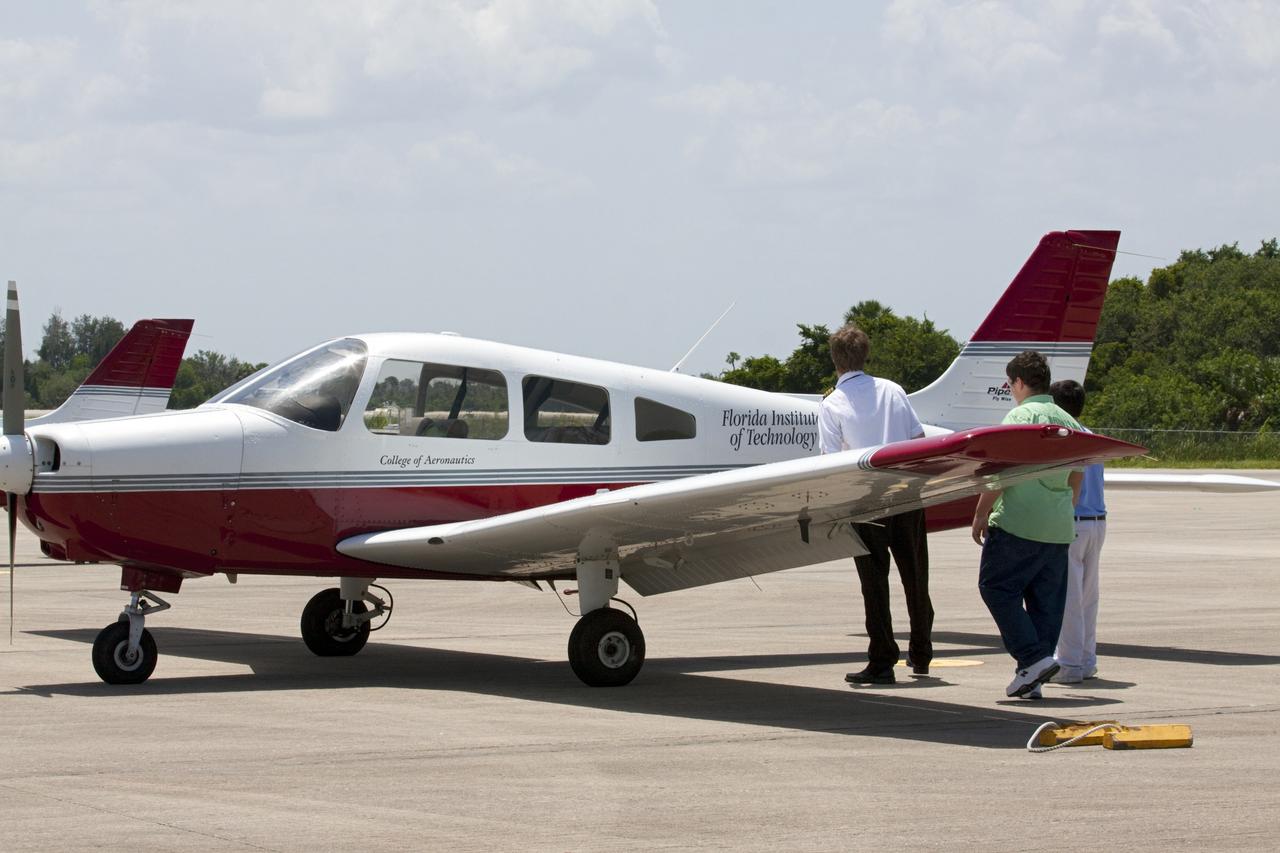
CAPE CANAVERAL, Fla. – At NASA Kennedy Space Center’s Shuttle Landing Facility, or SLF, in Florida, a flight instructor and his students inspect the lightweight aircraft they flew in earlier in the day from Florida Tech, or FIT, in Melbourne. Several instructors and their students arrived at the SLF in Cherokee Warrior and Cessna 172S lightweight aircraft. The middle and high school students are participating in FIT’s Av/Aero summer camp experience. They and their flight instructors toured the SLF midfield control tower, viewed F104 Starfighters and NASA Huey helicopters in the RLV Hangar, viewed the runway plaques marking wheels stop for each of the three space shuttles, and toured the Vehicle Assembly Building where space shuttle Atlantis currently is stored. Photo credit: NASA/Kim Shiflett
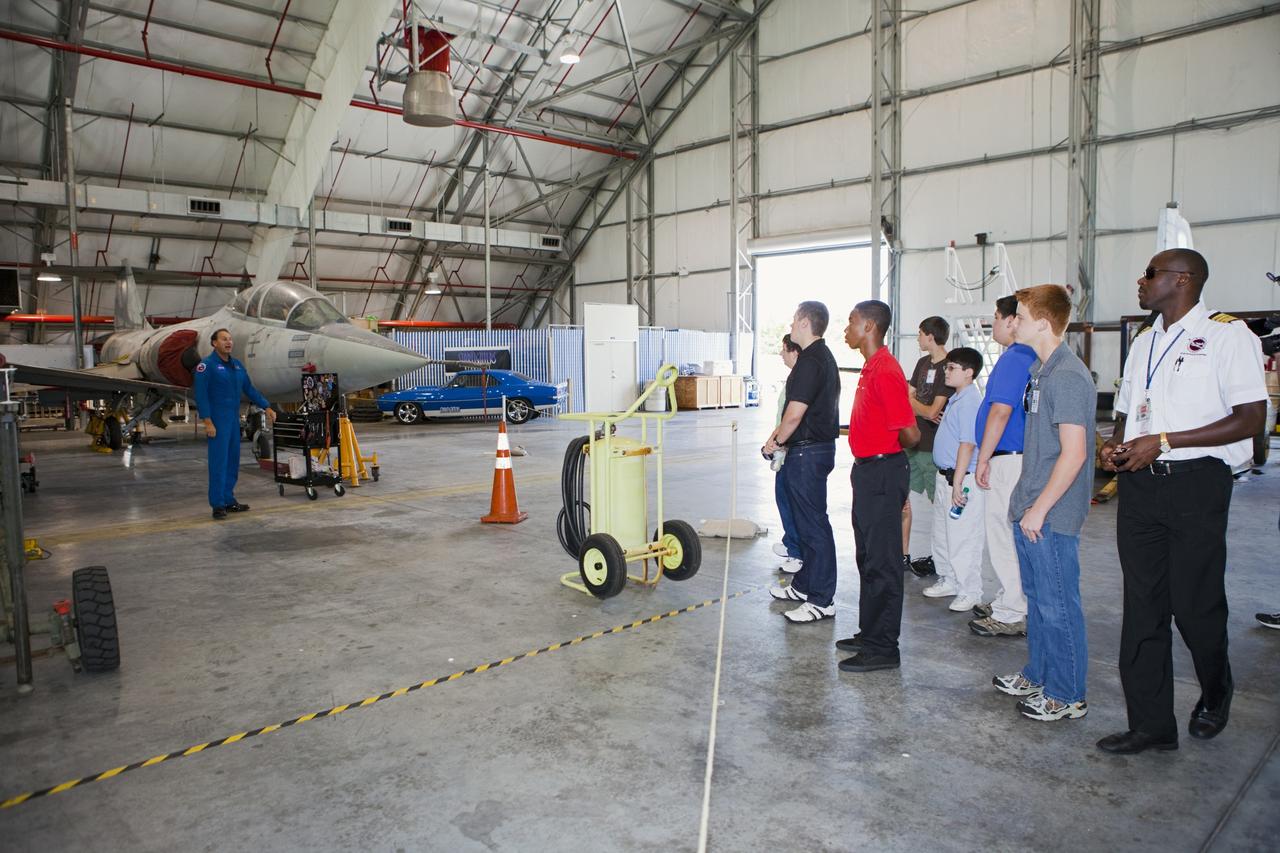
CAPE CANAVERAL, Fla. – Inside the RLV Hangar near NASA Kennedy Space Center’s Shuttle Landing Facility, or SLF, in Florida, students and their flight instructors from Florida Tech, FIT, in Melbourne view F104 Starfighter aircraft and hear a presentation from Starfighter Director Rick Svetkoff. The group arrived at the SLF in Cherokee Warrior and Cessna 172S lightweight aircraft. The middle and high school students are participating in FIT’s Av/Aero summer camp experience. They and their flight instructors toured the SLF midfield control tower, viewed F104 Starfighters and NASA Huey helicopters in the RLV Hangar, viewed the runway plaques marking wheels stop for each of the three space shuttles, and toured the Vehicle Assembly Building where space shuttle Atlantis currently is stored. Photo credit: NASA/Kim Shiflett
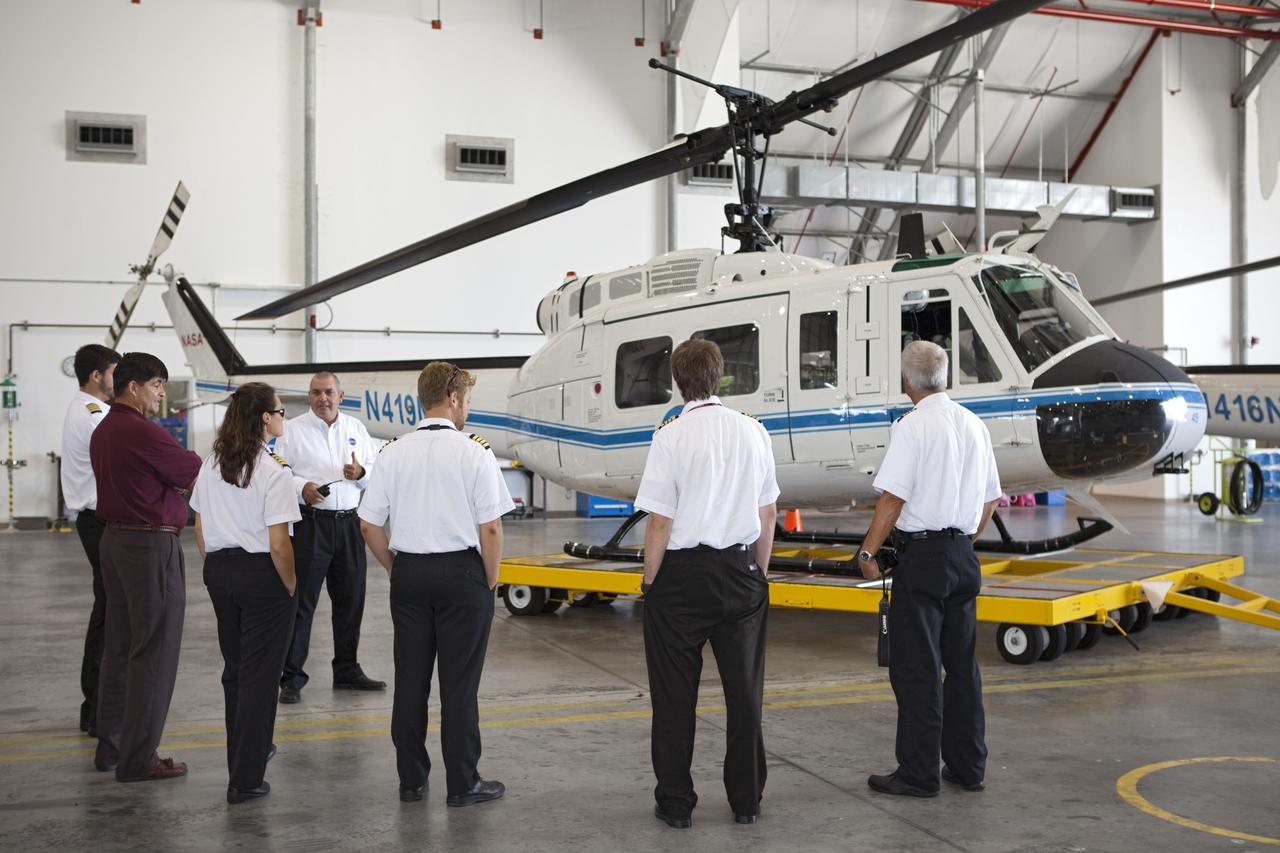
CAPE CANAVERAL, Fla. – Inside the RLV Hangar near NASA Kennedy Space Center’s Shuttle Landing Facility, or SLF, in Florida, flight instructors from Florida Tech, FIT, in Melbourne, listen to NASA Aviation Safety Officer Joe Torsani and view a NASA Huey helicopter. At left, in the red shirt is Glenn Vera, director of FIT Aviation. The flight instructors and their students arrived at the SLF in Cherokee Warrior and Cessna 172S lightweight aircraft. The middle and high school students are participating in FIT’s Av/Aero summer camp experience. They and their flight instructors toured the SLF midfield control tower, viewed F104 Starfighters and NASA Huey helicopters in the RLV Hangar, viewed the runway plaques marking wheels stop for each of the three space shuttles, and toured the Vehicle Assembly Building where space shuttle Atlantis currently is stored. Photo credit: NASA/Kim Shiflett
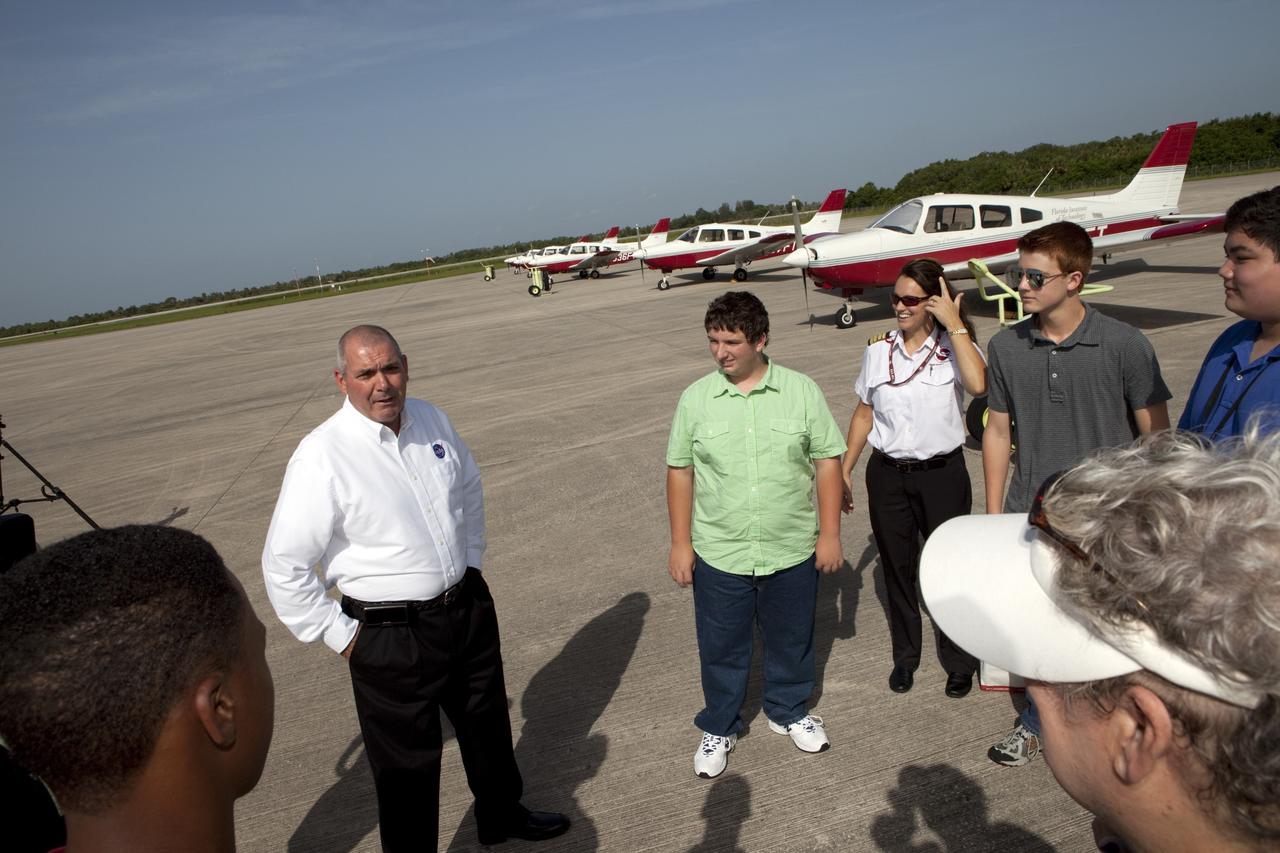
CAPE CANAVERAL, Fla. – At NASA Kennedy Space Center’s Shuttle Landing Facility, or SLF, in Florida, NASA Aviation Safety Officer Joe Torsani, at left, speaks with students and their flight instructors after they arrived in Cherokee Warrior and Cessna 172S lightweight aircraft from Florida Tech, FIT, in Melbourne. The middle and high school students are participating in FIT’s Av/Aero summer camp experience. They and their flight instructors toured the SLF midfield control tower, viewed F104 Starfighters and NASA Huey helicopters in the RLV Hangar, viewed the runway plaques marking wheels stop for each of the three space shuttles, and toured the Vehicle Assembly Building where space shuttle Atlantis currently is stored. Photo credit: NASA/Kim Shiflett
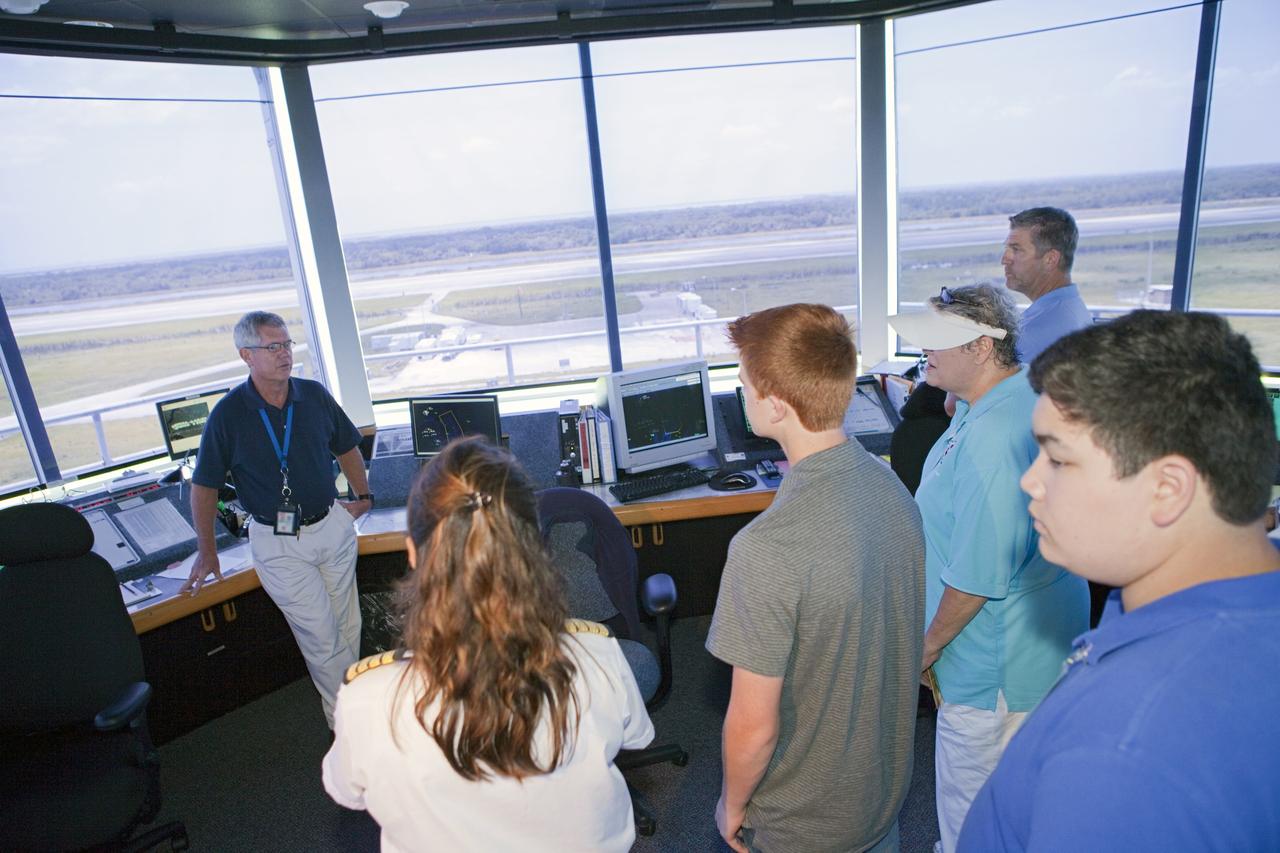
CAPE CANAVERAL, Fla. – At the Shuttle Landing Facility at NASA’s Kennedy Space Center in Florida, students and their flight instructors from Florida Tech, or FIT, in Melbourne, tour the midfield Air Traffic Control Tower. The instructors and their students arrived at the SLF in Cherokee Warrior and Cessna 172S lightweight aircraft. The middle and high school students are participating in FIT’s Av/Aero summer camp experience. They and their flight instructors toured the SLF midfield control tower, viewed F104 Starfighters and NASA Huey helicopters in the RLV Hangar, viewed the runway plaques marking wheels stop for each of the three space shuttles, and toured the Vehicle Assembly Building where space shuttle Atlantis currently is stored. Photo credit: NASA/Kim Shiflett
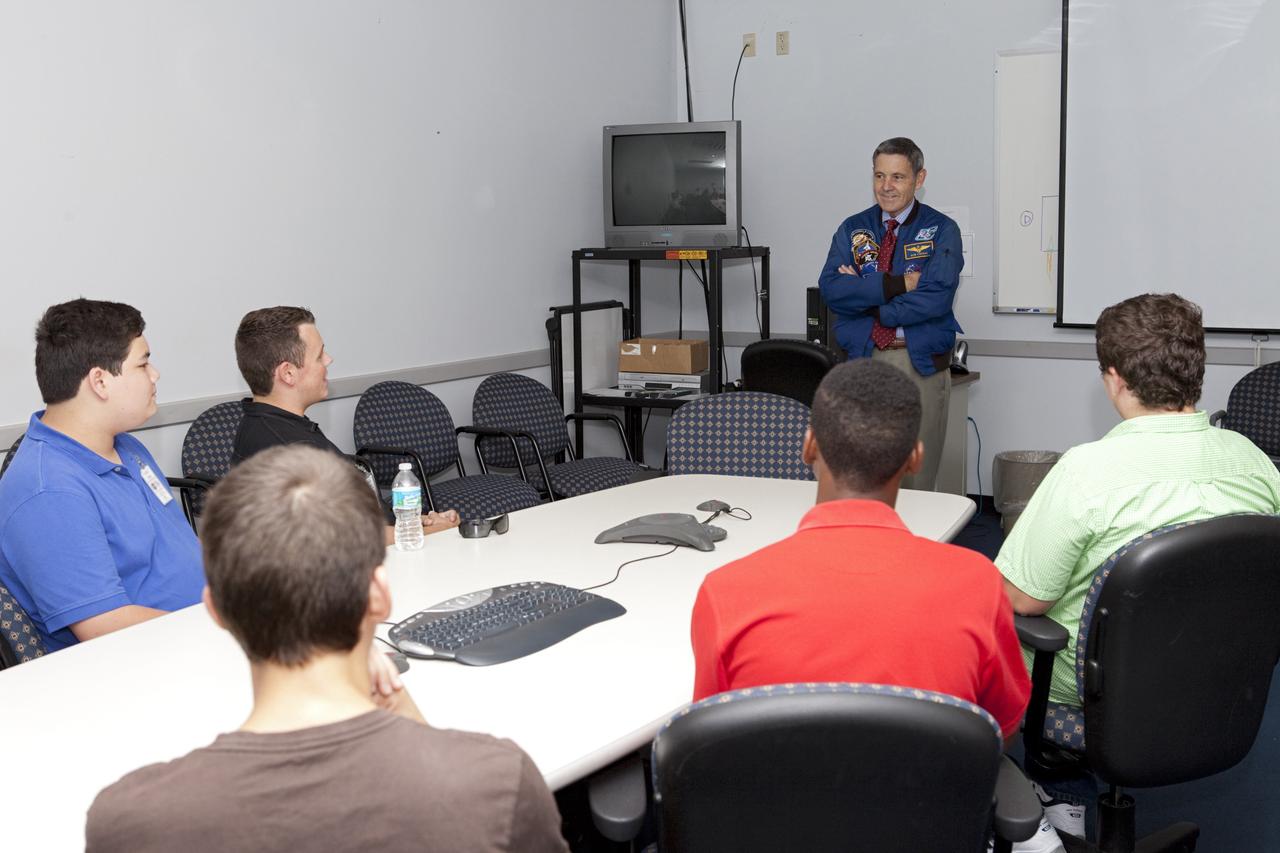
CAPE CANAVERAL, Fla. – In a support building near NASA Kennedy Space Center’s Shuttle Landing Facility, or SLF, in Florida, Center Director Bob Cabana speaks to students and their flight instructors from Florida Tech, or FIT, in Melbourne. The group arrived at the SLF in Cherokee Warrior and Cessna 172S lightweight aircraft.. The middle and high school students are participating in FIT’s Av/Aero summer camp experience. They and their flight instructors toured the SLF midfield control tower, viewed F104 Starfighters and NASA Huey helicopters in the RLV Hangar, viewed the runway plaques marking wheels stop for each of the three space shuttles, and toured the Vehicle Assembly Building where space shuttle Atlantis currently is stored. Photo credit: NASA/Kim Shiflett
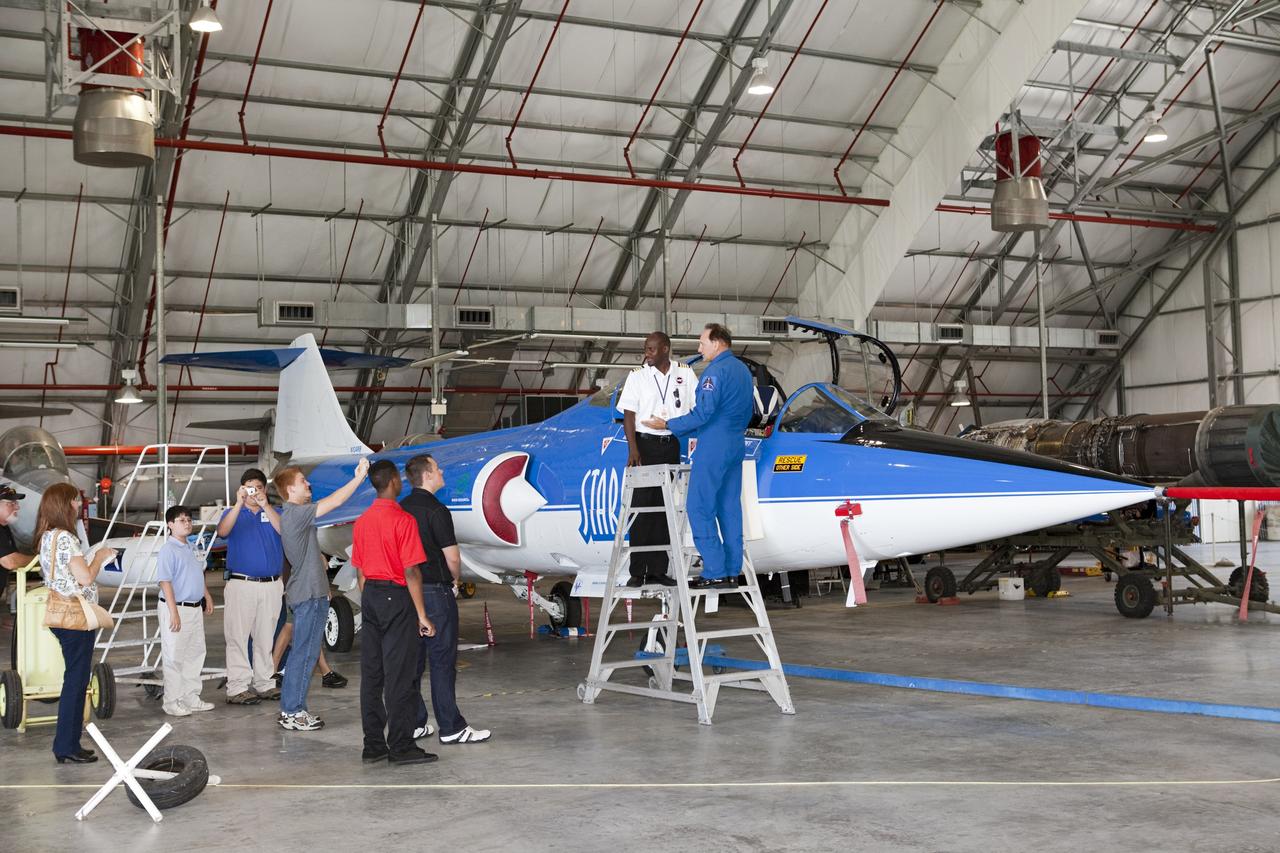
CAPE CANAVERAL, Fla. – Inside the RLV Hangar near NASA Kennedy Space Center’s Shuttle Landing Facility, or SLF, in Florida, Florida Tech, or FIT, Aviation Program Supervisor Tennesse Garvey, at left on the ladder, and several students view an F104 Starfighter. At right, on the ladder is Starfighter Director Rick Svetkoff. The FIT aviation instructors and their students arrived at the SLF in Cherokee Warrior and Cessna 172S lightweight aircraft. The middle and high school students are participating in FIT’s Av/Aero summer camp experience. They and their flight instructors toured the SLF midfield control tower, viewed F104 Starfighters and NASA Huey helicopters in the RLV Hangar, viewed the runway plaques marking wheels stop for each of the three space shuttles, and toured the Vehicle Assembly Building where space shuttle Atlantis currently is stored. Photo credit: NASA/Kim Shiflett
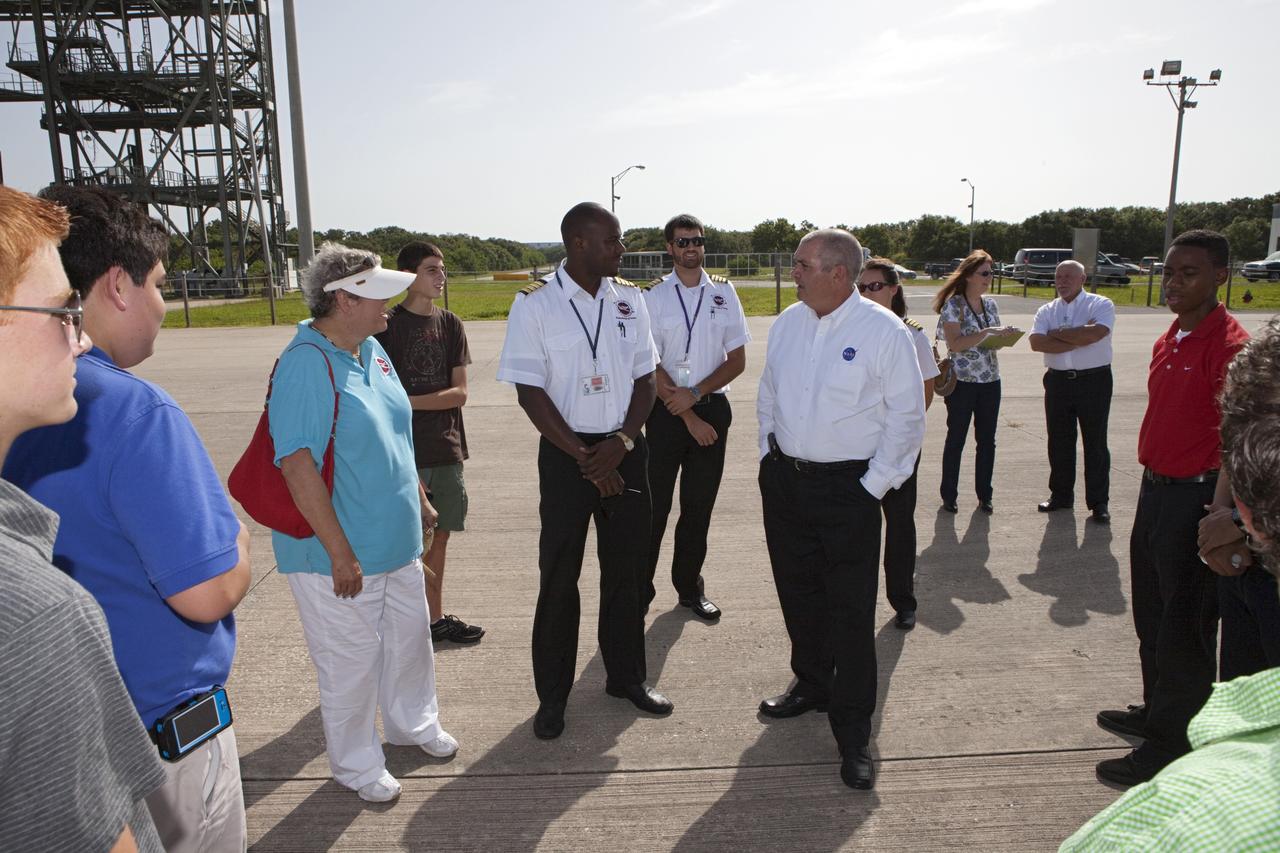
CAPE CANAVERAL, Fla. – At NASA Kennedy Space Center’s Shuttle Landing Facility, or SLF, in Florida, NASA Aviation Safety Officer Joe Torsani, at right, speaks with students and their flight instructors after they arrived in Cherokee Warrior and Cessna 172S lightweight aircraft from Florida Tech, or FIT, in Melbourne. The middle and high school students are participating in FIT’s Av/Aero summer camp experience. They and their flight instructors toured the SLF midfield control tower, viewed F104 Starfighters and NASA Huey helicopters in the RLV Hangar, viewed the runway plaques marking wheels stop for each of the three space shuttles, and toured the Vehicle Assembly Building where space shuttle Atlantis currently is stored. Photo credit: NASA/Kim Shiflett
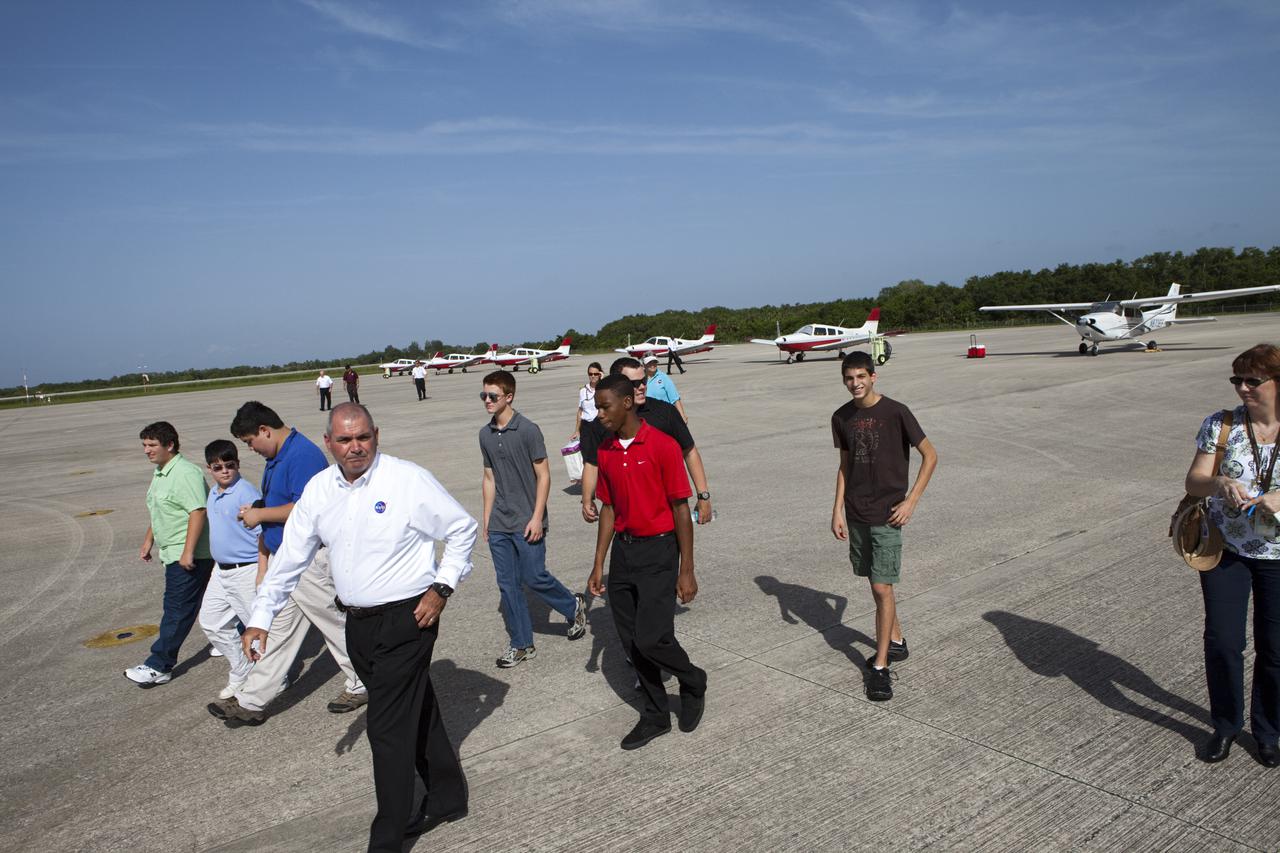
CAPE CANAVERAL, Fla. – At NASA Kennedy Space Center’s Shuttle Landing Facility, or SLF, in Florida, NASA Aviation Safety Officer Joe Torsani walks with students and their flight instructors after they arrived in Cherokee Warrior and Cessna 172S lightweight aircraft from Florida Tech, or FIT, in Melbourne. The middle and high school students are participating in FIT’s Av_Aero summer camp experience. They and their flight instructors toured the SLF midfield control tower, viewed F104 Starfighters and NASA Huey helicopters in the RLV Hangar, viewed the runway plaques marking wheels stop for each of the three space shuttles, and toured the Vehicle Assembly Building where space shuttle Atlantis currently is stored. Photo credit: NASA_Kim Shiflett
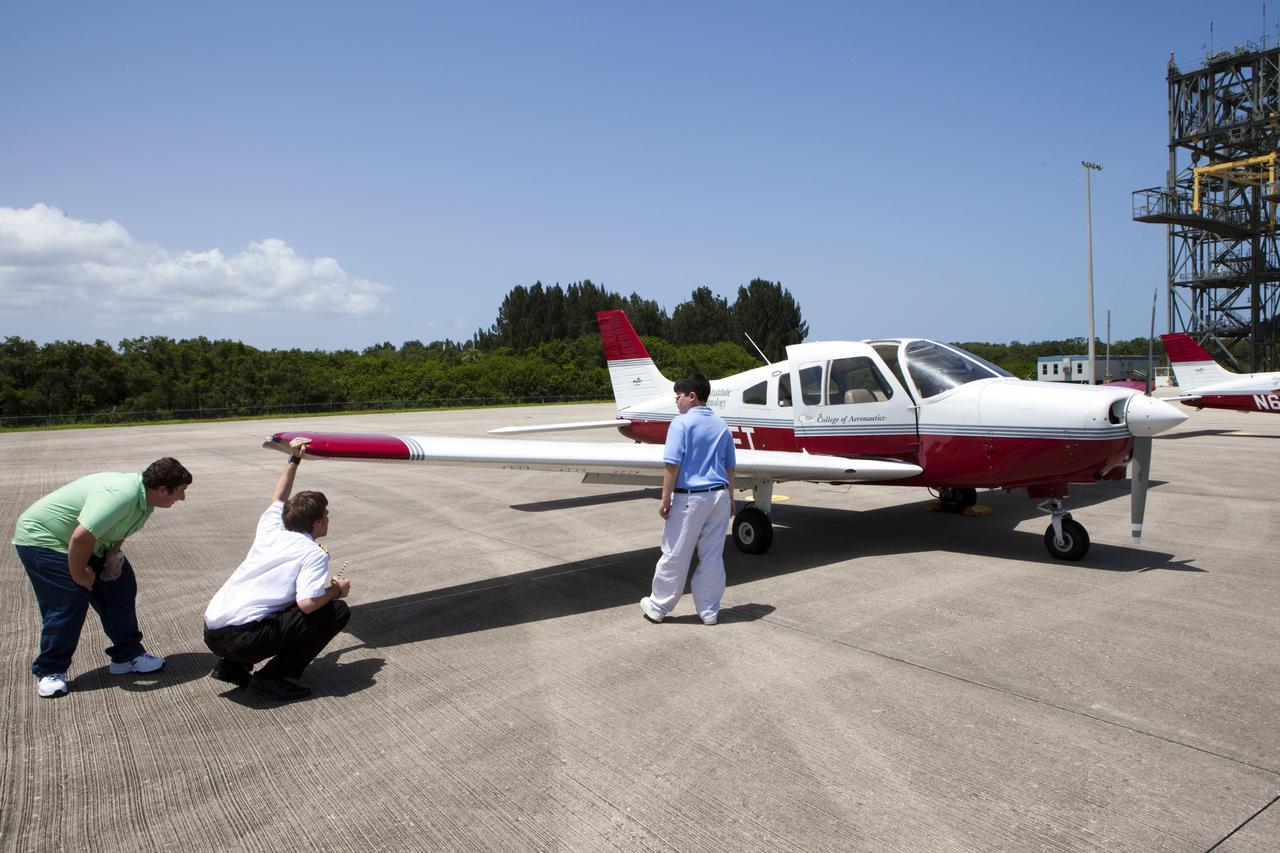
CAPE CANAVERAL, Fla. – At NASA Kennedy Space Center’s Shuttle Landing Facility, or SLF, in Florida, a flight instructor and his students inspect the lightweight aircraft they flew in earlier in the day from Florida Tech, or FIT, in Melbourne. Several instructors and their students arrived at the SLF in Cherokee Warrior and Cessna 172S lightweight aircraft. The middle and high school students are participating in FIT’s Av/Aero summer camp experience. They and their flight instructors toured the SLF midfield control tower, viewed F104 Starfighters and NASA Huey helicopters in the RLV Hangar, viewed the runway plaques marking wheels stop for each of the three space shuttles, and toured the Vehicle Assembly Building where space shuttle Atlantis currently is stored. Photo credit: NASA/Kim Shiflett
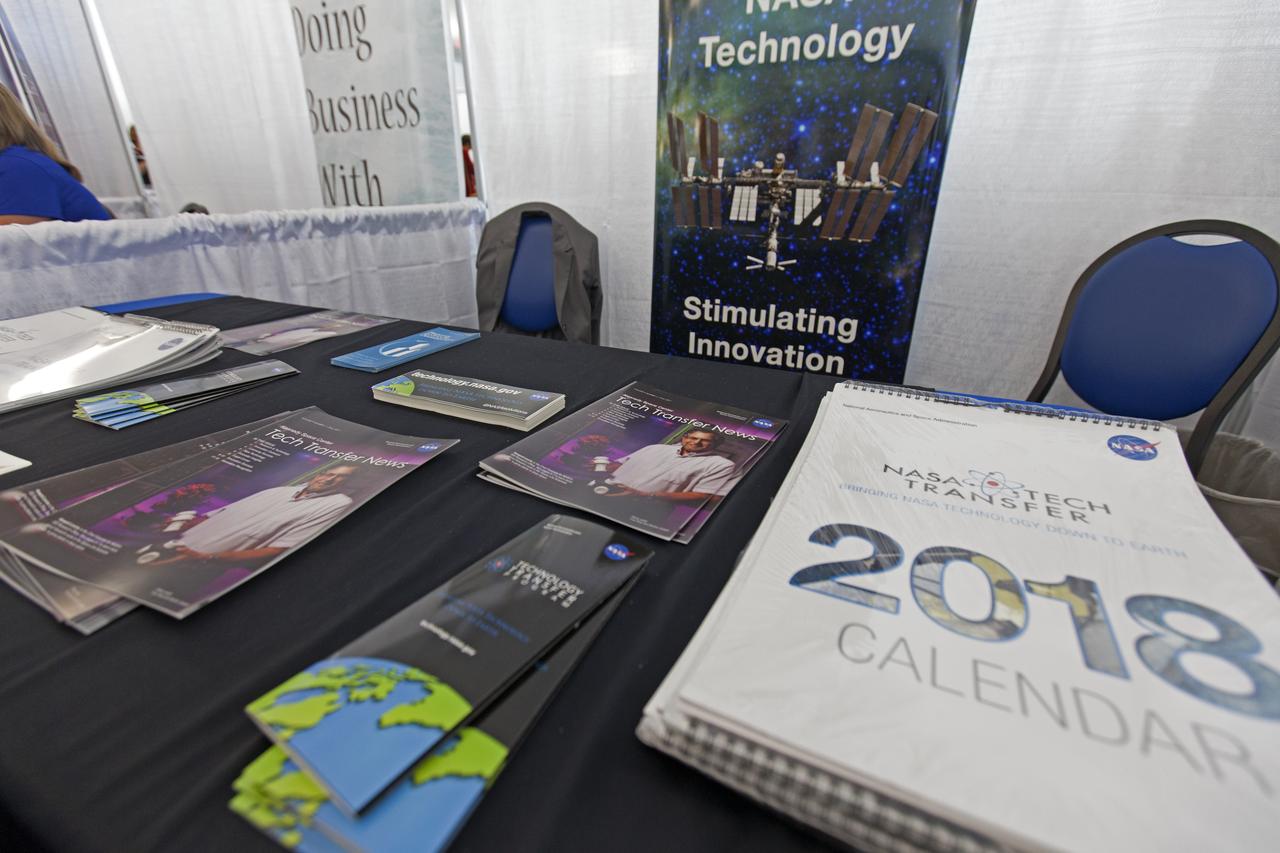
Information from NASA's Tech Transfer Office is on display at Kennedy Space Center's 27th Business Opportunities Expo held at Cruise Terminal 5 at Port Canaveral in Florida. The event featured more than 180 businesses, large and small, and government exhibitors from throughout the Space Coast and the nation. The Business Opportunities Expo is sponsored by the NASA KSC Prime Contractor Board, KSC Industry Assistance Office, 45th Space Wing and Canaveral Port Authority. Exhibitors included vendors from a variety of product and service areas, such as computer technology, engineering services, communication equipment and services, and construction and safety products, to name a few. Representatives from the 45th Space Wing, KSC prime contractors, NASA and many more agencies and organizations were on hand to provide information and answer questions.
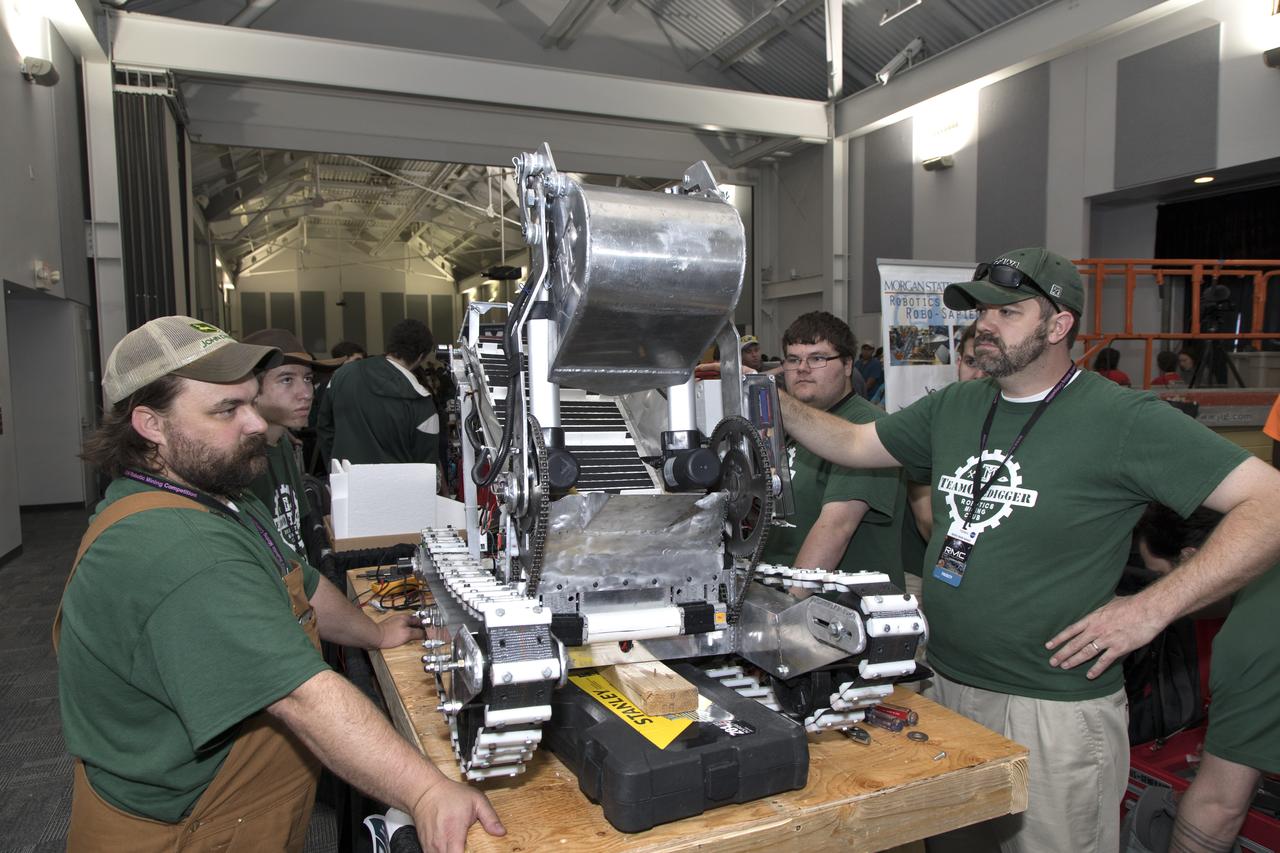
Team members and their advisor, far right, from Montana Tech of the University of Montana, prepare their robot miner on the second day of NASA's 9th Robotic Mining Competition, May 15, in the RobotPits in the Educator Resource Center at Kennedy Space Center Visitor Complex in Florida. More than 40 student teams from colleges and universities around the U.S. will use their mining robots to dig in a supersized sandbox filled with BP-1, or simulated Lunar soil, gravel and rocks, and participate in other competition requirements. The Robotic Mining Competition is a NASA Human Exploration and Operations Mission Directorate project designed to encourage students in science, technology, engineering and math, or STEM fields. The project provides a competitive environment to foster innovative ideas and solutions that could be used on NASA's deep space missions.
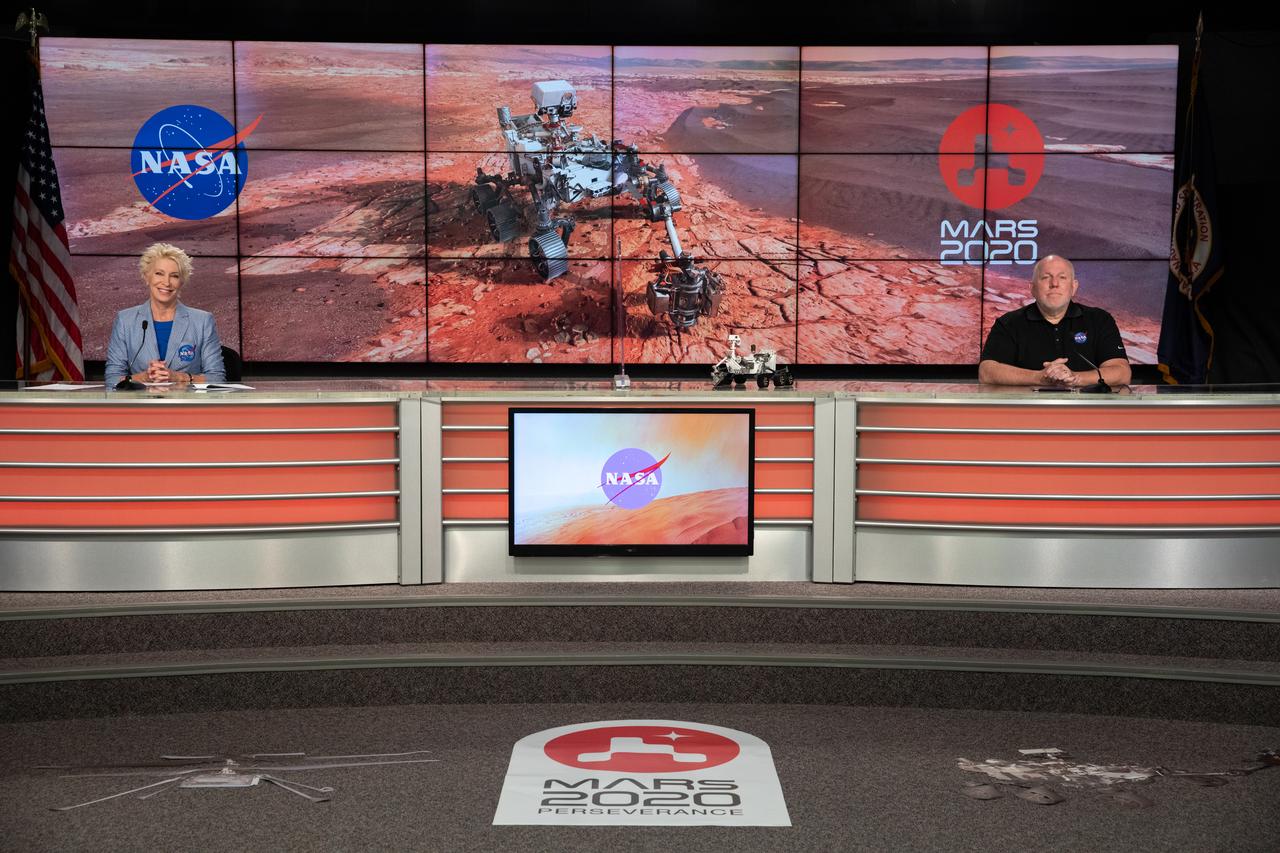
A Mars 2020 Mission Tech and Humans to Mars Briefing is held at NASA’s Kennedy Space Center in Florida on July 28, 2020. Participating in the briefing from left, are Tammy Long, moderator, NASA Communications, and Jeff Sheehy, Space Technology Mission Directorate, NASA Headquarters. The Mars Perseverance rover is scheduled to launch July 30, on a United Launch Alliance Atlas V 541 rocket from Space Launch Complex 41 at nearby Cape Canaveral Air Force Station. The rover is part of NASA’s Mars Exploration Program, a long-term effort of robotic exploration of the Red Planet. The rover will search for habitable conditions in the ancient past and signs of past microbial life on Mars. The Launch Services Program at Kennedy is responsible for launch management.
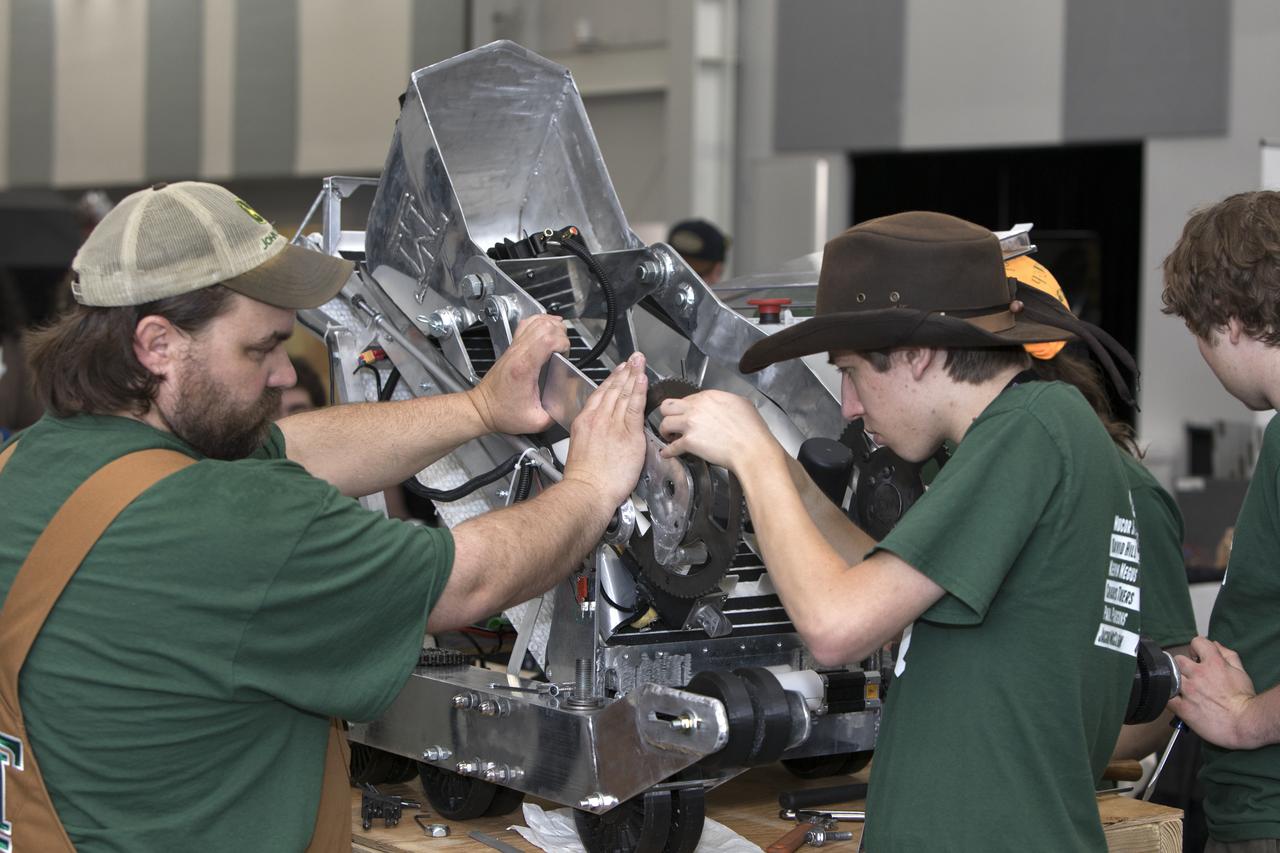
On the first day of NASA's 9th Robotic Mining Competition, set-up day on May 14, team members from Montana Tech of the University of Montana work on their robot miner in the RobotPits in the Educator Resource Center at Kennedy Space Center Visitor Complex in Florida. More than 40 student teams from colleges and universities around the U.S. will use their mining robots to dig in a supersized sandbox filled with BP-1, or simulated Lunar soil, gravel and rocks, and participate in other competition requirements. The Robotic Mining Competition is a NASA Human Exploration and Operations Mission Directorate project designed to encourage students in science, technology, engineering and math, or STEM fields. The project provides a competitive environment to foster innovative ideas and solutions that could be used on NASA's deep space missions.

CAPE CANAVERAL, Fla. – A panel session for participants in the International Space University's Space Studies Program 2012, or SSP, is held in the Operations Support Building II at NASA’s Kennedy Space Center in Florida. From left are Pete Worden, director, NASA Ames Research Center Yvonne Pendleton, observational astronomer, NASA Ames Research Center Scott Hubbard, professor, Stanford University Bill Nye, CEO, The Planetary Society and George Tahu, NASA program executive, Planetary Science Division, NASA Headquarters. The Soffen Memorial Panel session provided the opportunity for participants to engage with today's leaders in the planetary science field. The panel session is named in honor of Gerald Soffen, NASA scientist and leader of NASA's Viking Mars mission. The nine-week intensive SSP course is designed for post-graduate university students and professionals during the summer. The program is hosted by a different country each year, providing a unique educational experience for participants from around the globe. NASA Kennedy Space Center and Florida Tech are co-hosting this year's event which runs from June 4 to Aug. 3. For more information about the International Space University, visit http://www.isunet.edu. Photo credit: NASA/Tim Jacobs
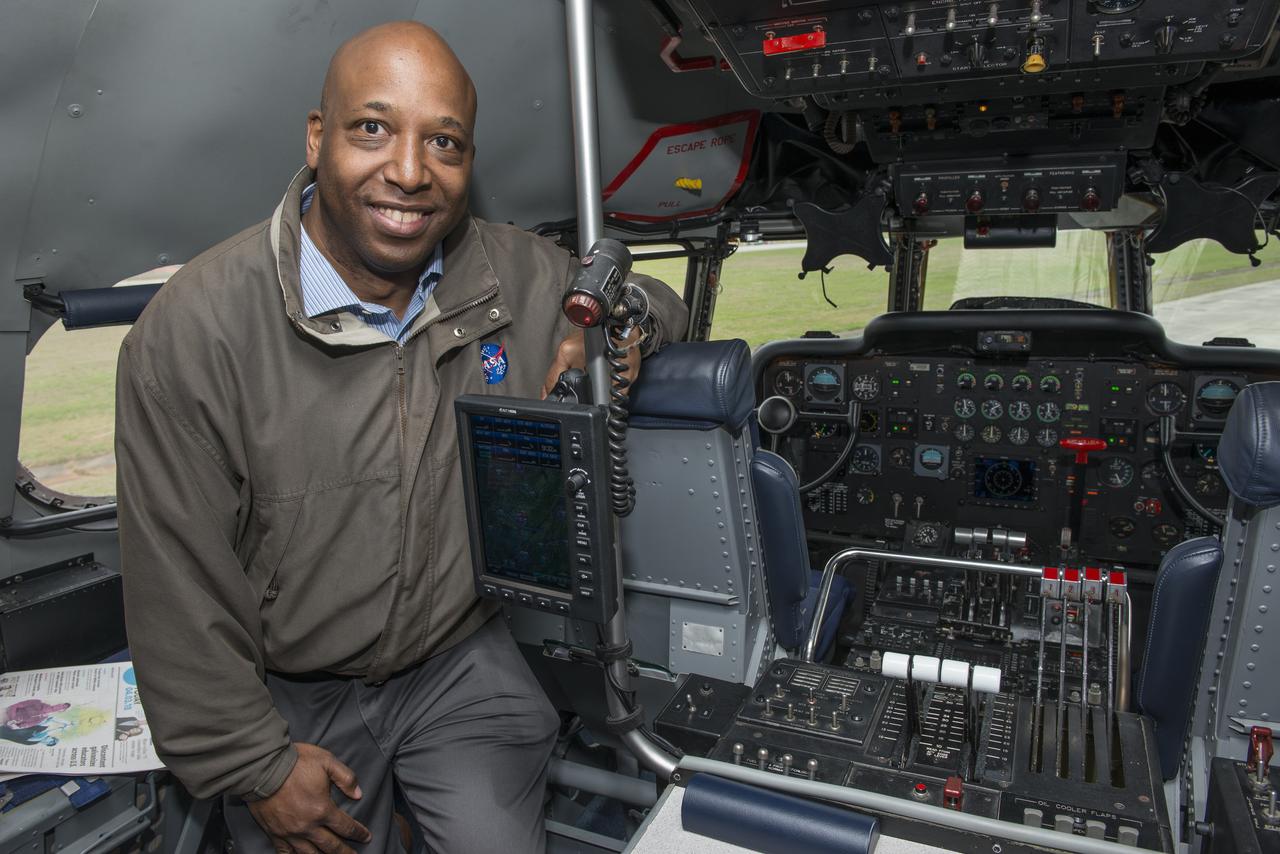
NASA's Super Guppy aircraft arrives to the U.S. Army’s Redstone Airfield in Huntsville, Alabama, April 2, to pick up flight hardware for NASA’s Space Launch System – its new, deep-space rocket that will enable astronauts to begin their journey to explore destinations far into the solar system. The Guppy will depart on Tuesday, April 3 to deliver the Orion stage adapter to NASA’s Kennedy Space Center in Florida for flight preparations. On Exploration Mission-1, the first integrated flight of the SLS and the Orion spacecraft, the adapter will connect Orion to the rocket and carry 13 CubeSats as secondary payloads. Rumaasha Maasha, an aerospace engineer in Marshall's Spacecraft & Vehicle Systems Department, tours the cockpit of NASA's Super Guppy aircraft April 3 when it landed at Marshall to pick up the Orion stage adapter for transportation to NASA's Kennedy Space Center. Maasha holds a master's degree in aerospace engineering, is a certified aviation maintenance tech and pilot and previously worked as a 747 loadmaster and airline refueler.
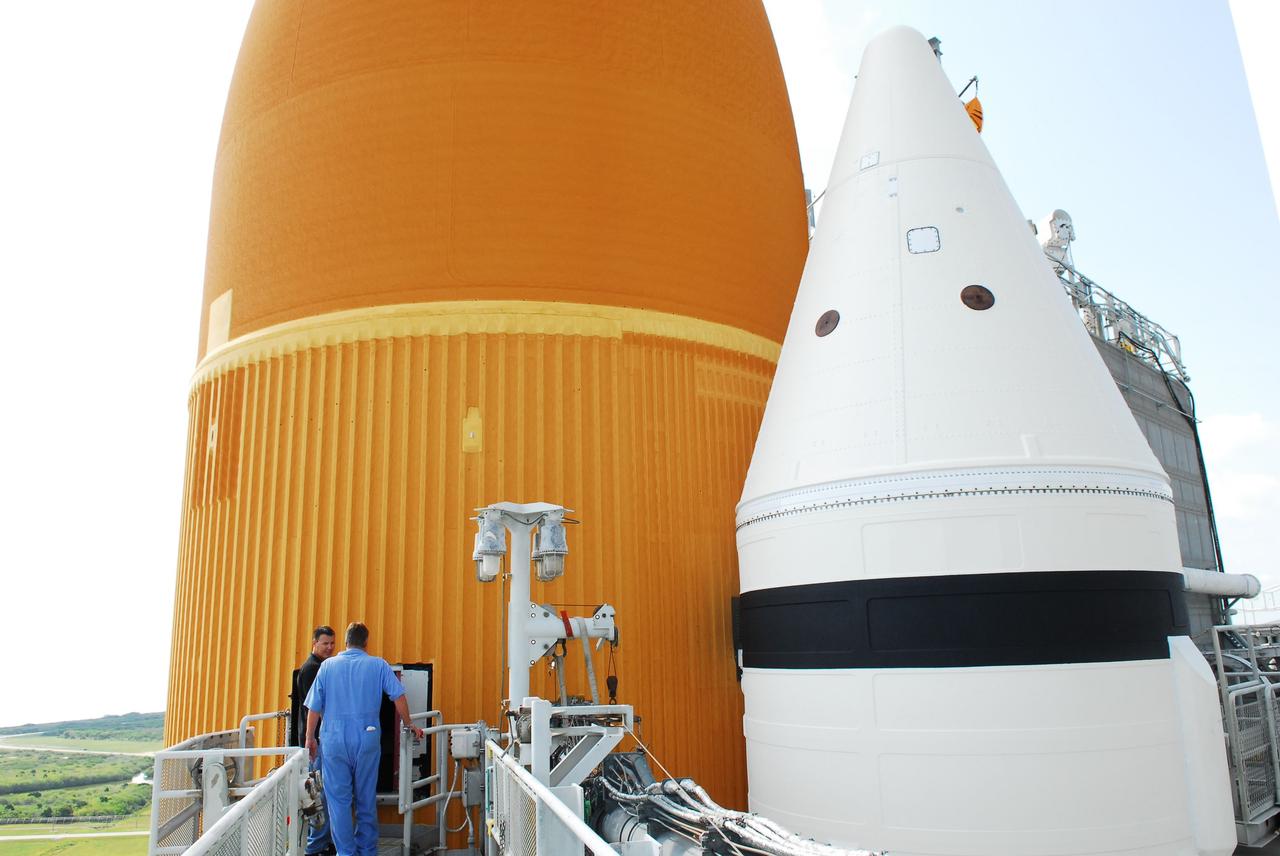
CAPE CANAVERAL, Fla. -- At NASA's Kennedy Space Center in Florida, technicians prepare to conduct Computed Radiography (CR) X-ray scans of 50 support beams, called stringers, on the shuttle-facing side of Atlantis' external tank at Launch Pad 39A. The hi-tech images will be taken of the tops and bottoms of the 21-foot long beams, which are located on the tank's intertank section. The scans follow a June 15th tanking test when the launch team filled then drained the tank of about 535,000 gallons of liquid hydrogen and liquid oxygen, just like for a launch. Earlier this year, managers directed teams to make the same stringer modifications to Atlantis' tank, ET-138, as they had after small cracks in the support beams of shuttle Discovery's STS-133 mission external tank were discovered. The scans will confirm there are no issues with Atlantis' tank. STS-135 Commander Chris Ferguson, Pilot Doug Hurley and Mission Specialists Sandy Magnus and Rex Walheim are targeted to lift off on space shuttle Atlantis July 8, taking with them the MPLM packed with supplies, logistics and spare parts to the International Space Station. The STS-135 mission also will fly a system to investigate the potential for robotically refueling existing satellites and return a failed ammonia pump module to help NASA better understand the failure mechanism and improve pump designs for future systems. STS-135 will be the 33rd flight of Atlantis, the 37th shuttle mission to the space station, and the 135th and final mission of NASA's Space Shuttle Program. For more information visit, www.nasa.gov/mission_pages/shuttle/shuttlemissions/sts135/index.html. Photo credit: NASA/Jim Grossmann
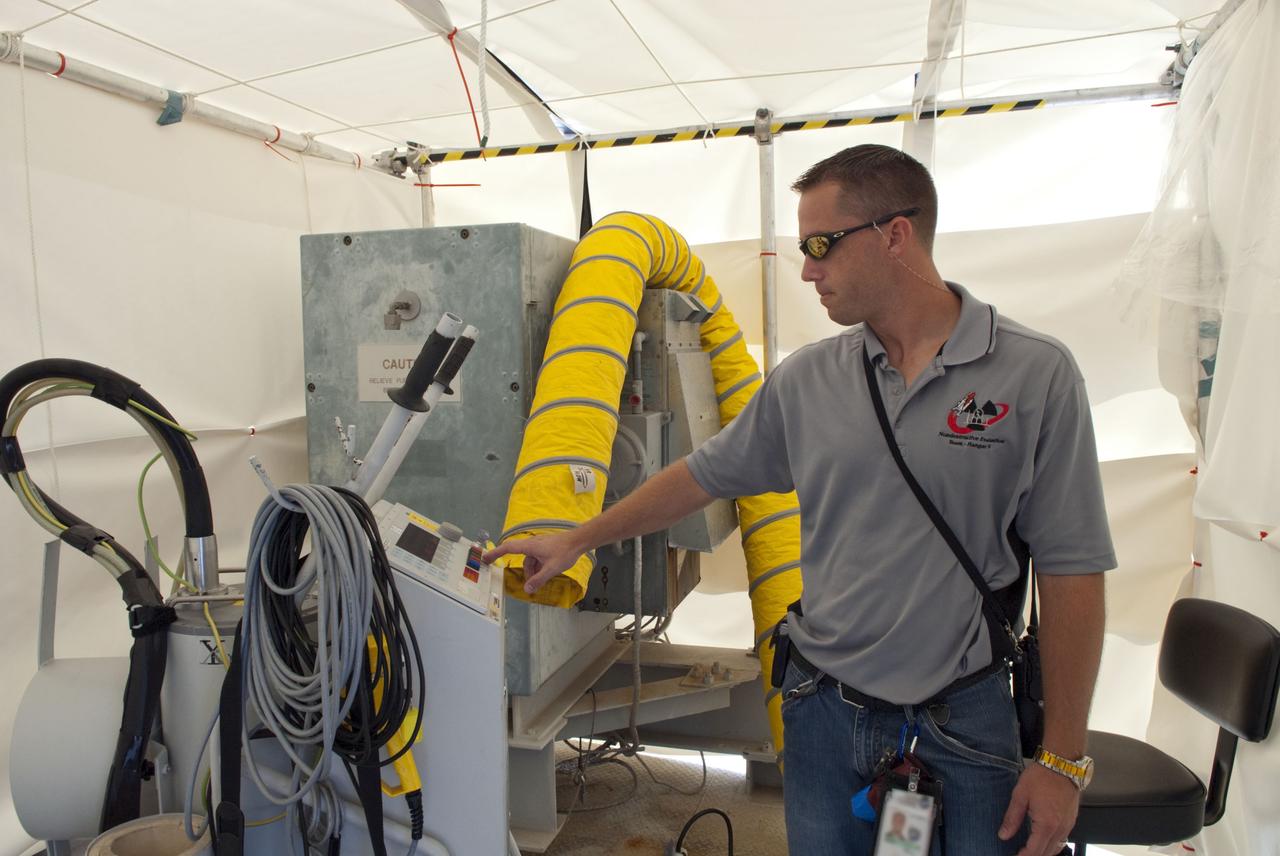
CAPE CANAVERAL, Fla. -- At NASA's Kennedy Space Center in Florida, technicians conduct Computed Radiography (CR) X-ray scans of 50 support beams, called stringers, on the shuttle-facing side of Atlantis' external tank at Launch Pad 39A. The hi-tech images will be taken of the tops and bottoms of the 21-foot long beams, which are located on the tank's intertank section. The scans follow a June 15th tanking test when the launch team filled then drained the tank of about 535,000 gallons of liquid hydrogen and liquid oxygen, just like for a launch. Earlier this year, managers directed teams to make the same stringer modifications to Atlantis' tank, ET-138, as they had after small cracks in the support beams of shuttle Discovery's STS-133 mission external tank were discovered. The scans will confirm there are no issues with Atlantis' tank. STS-135 Commander Chris Ferguson, Pilot Doug Hurley and Mission Specialists Sandy Magnus and Rex Walheim are targeted to lift off on space shuttle Atlantis July 8, taking with them the MPLM packed with supplies, logistics and spare parts to the International Space Station. The STS-135 mission also will fly a system to investigate the potential for robotically refueling existing satellites and return a failed ammonia pump module to help NASA better understand the failure mechanism and improve pump designs for future systems. STS-135 will be the 33rd flight of Atlantis, the 37th shuttle mission to the space station, and the 135th and final mission of NASA's Space Shuttle Program. For more information visit, www.nasa.gov/mission_pages/shuttle/shuttlemissions/sts135/index.html. Photo credit: NASA/Jim Grossmann
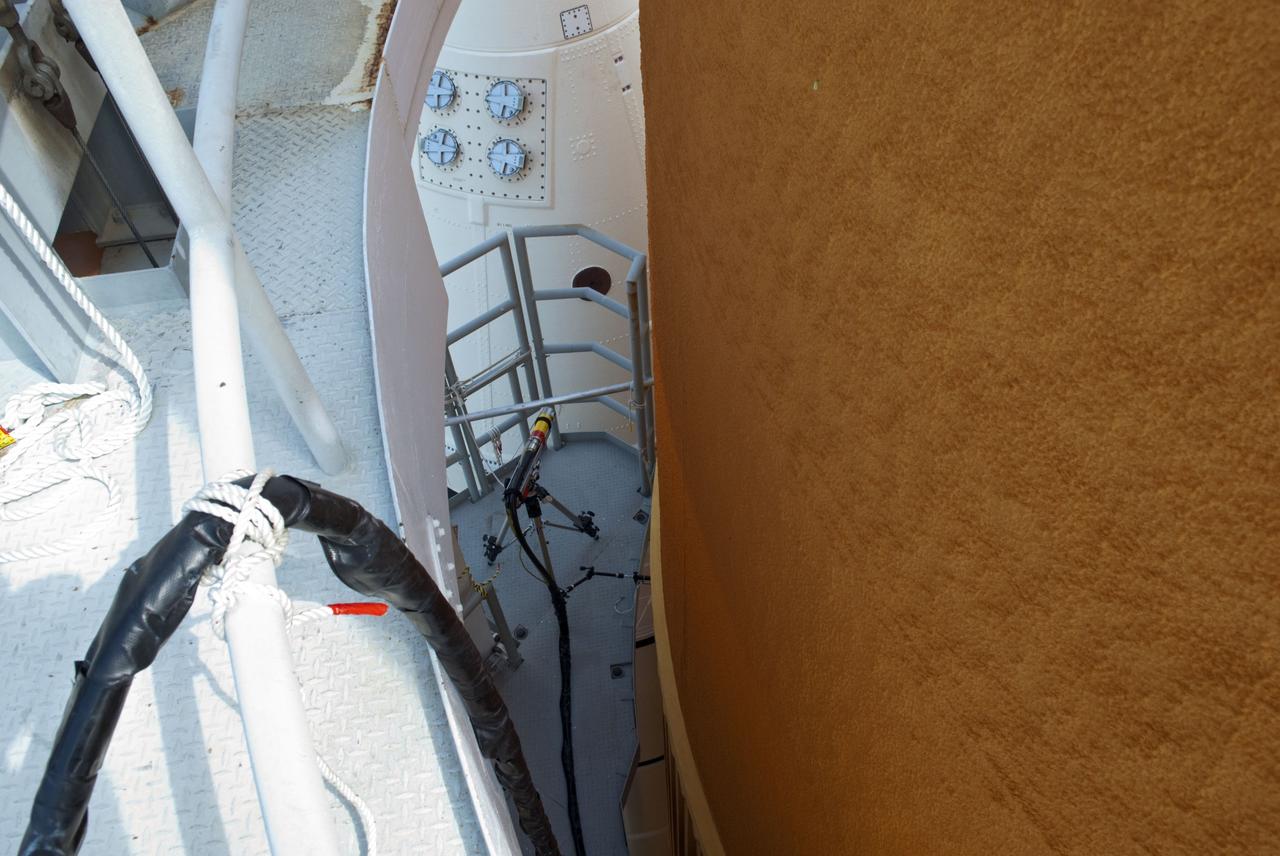
CAPE CANAVERAL, Fla. -- At NASA's Kennedy Space Center in Florida, technicians conduct Computed Radiography (CR) X-ray scans of 50 support beams, called stringers, on the shuttle-facing side of Atlantis' external tank at Launch Pad 39A. The hi-tech images will be taken of the tops and bottoms of the 21-foot long beams, which are located on the tank's intertank section. The scans follow a June 15th tanking test when the launch team filled then drained the tank of about 535,000 gallons of liquid hydrogen and liquid oxygen, just like for a launch. Earlier this year, managers directed teams to make the same stringer modifications to Atlantis' tank, ET-138, as they had after small cracks in the support beams of shuttle Discovery's STS-133 mission external tank were discovered. The scans will confirm there are no issues with Atlantis' tank. STS-135 Commander Chris Ferguson, Pilot Doug Hurley and Mission Specialists Sandy Magnus and Rex Walheim are targeted to lift off on space shuttle Atlantis July 8, taking with them the MPLM packed with supplies, logistics and spare parts to the International Space Station. The STS-135 mission also will fly a system to investigate the potential for robotically refueling existing satellites and return a failed ammonia pump module to help NASA better understand the failure mechanism and improve pump designs for future systems. STS-135 will be the 33rd flight of Atlantis, the 37th shuttle mission to the space station, and the 135th and final mission of NASA's Space Shuttle Program. For more information visit, www.nasa.gov/mission_pages/shuttle/shuttlemissions/sts135/index.html. Photo credit: NASA/Jim Grossmann
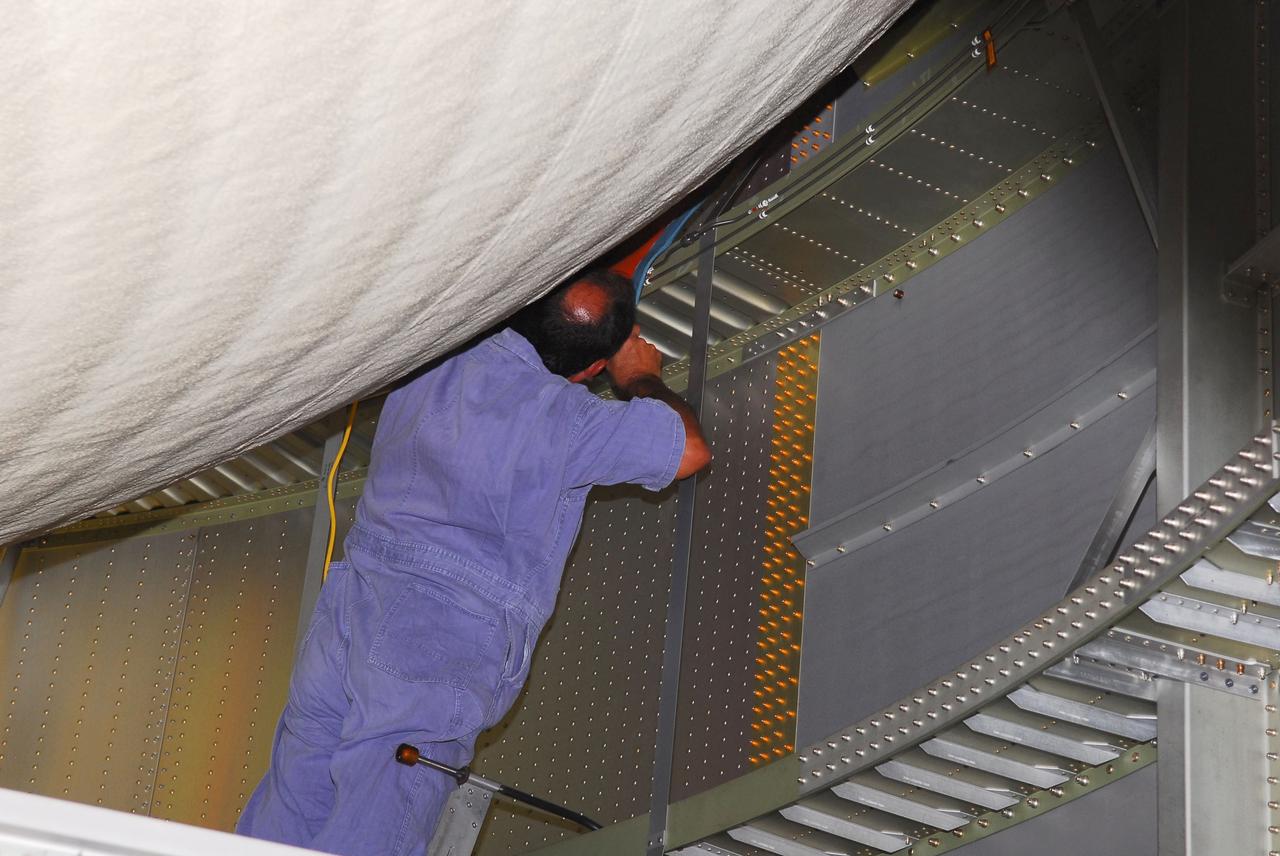
CAPE CANAVERAL, Fla. -- At NASA's Kennedy Space Center in Florida, technicians conduct Computed Radiography (CR) X-ray scans of 50 support beams, called stringers, on the shuttle-facing side of Atlantis' external tank at Launch Pad 39A. The hi-tech images will be taken of the tops and bottoms of the 21-foot long beams, which are located on the tank's intertank section. Here, a technician prepares an image plate inside the outertank. The scans follow a June 15th tanking test when the launch team filled then drained the tank of about 535,000 gallons of liquid hydrogen and liquid oxygen, just like for a launch. Earlier this year, managers directed teams to make the same stringer modifications to Atlantis' tank, ET-138, as they had after small cracks in the support beams of shuttle Discovery's STS-133 mission external tank were discovered. The scans will confirm there are no issues with Atlantis' tank. STS-135 Commander Chris Ferguson, Pilot Doug Hurley and Mission Specialists Sandy Magnus and Rex Walheim are targeted to lift off on space shuttle Atlantis July 8, taking with them the MPLM packed with supplies, logistics and spare parts to the International Space Station. The STS-135 mission also will fly a system to investigate the potential for robotically refueling existing satellites and return a failed ammonia pump module to help NASA better understand the failure mechanism and improve pump designs for future systems. STS-135 will be the 33rd flight of Atlantis, the 37th shuttle mission to the space station, and the 135th and final mission of NASA's Space Shuttle Program. For more information visit, www.nasa.gov/mission_pages/shuttle/shuttlemissions/sts135/index.html. Photo credit: NASA/Jim Grossmann

CAPE CANAVERAL, Fla. -- At NASA's Kennedy Space Center in Florida, technicians conduct Computed Radiography (CR) X-ray scans of 50 support beams, called stringers, on the shuttle-facing side of Atlantis' external tank at Launch Pad 39A. The hi-tech images will be taken of the tops and bottoms of the 21-foot long beams, which are located on the tank's intertank section. The scans follow a June 15th tanking test when the launch team filled then drained the tank of about 535,000 gallons of liquid hydrogen and liquid oxygen, just like for a launch. Earlier this year, managers directed teams to make the same stringer modifications to Atlantis' tank, ET-138, as they had after small cracks in the support beams of shuttle Discovery's STS-133 mission external tank were discovered. The scans will confirm there are no issues with Atlantis' tank. STS-135 Commander Chris Ferguson, Pilot Doug Hurley and Mission Specialists Sandy Magnus and Rex Walheim are targeted to lift off on space shuttle Atlantis July 8, taking with them the MPLM packed with supplies, logistics and spare parts to the International Space Station. The STS-135 mission also will fly a system to investigate the potential for robotically refueling existing satellites and return a failed ammonia pump module to help NASA better understand the failure mechanism and improve pump designs for future systems. STS-135 will be the 33rd flight of Atlantis, the 37th shuttle mission to the space station, and the 135th and final mission of NASA's Space Shuttle Program. For more information visit, www.nasa.gov/mission_pages/shuttle/shuttlemissions/sts135/index.html. Photo credit: NASA/Jim Grossmann
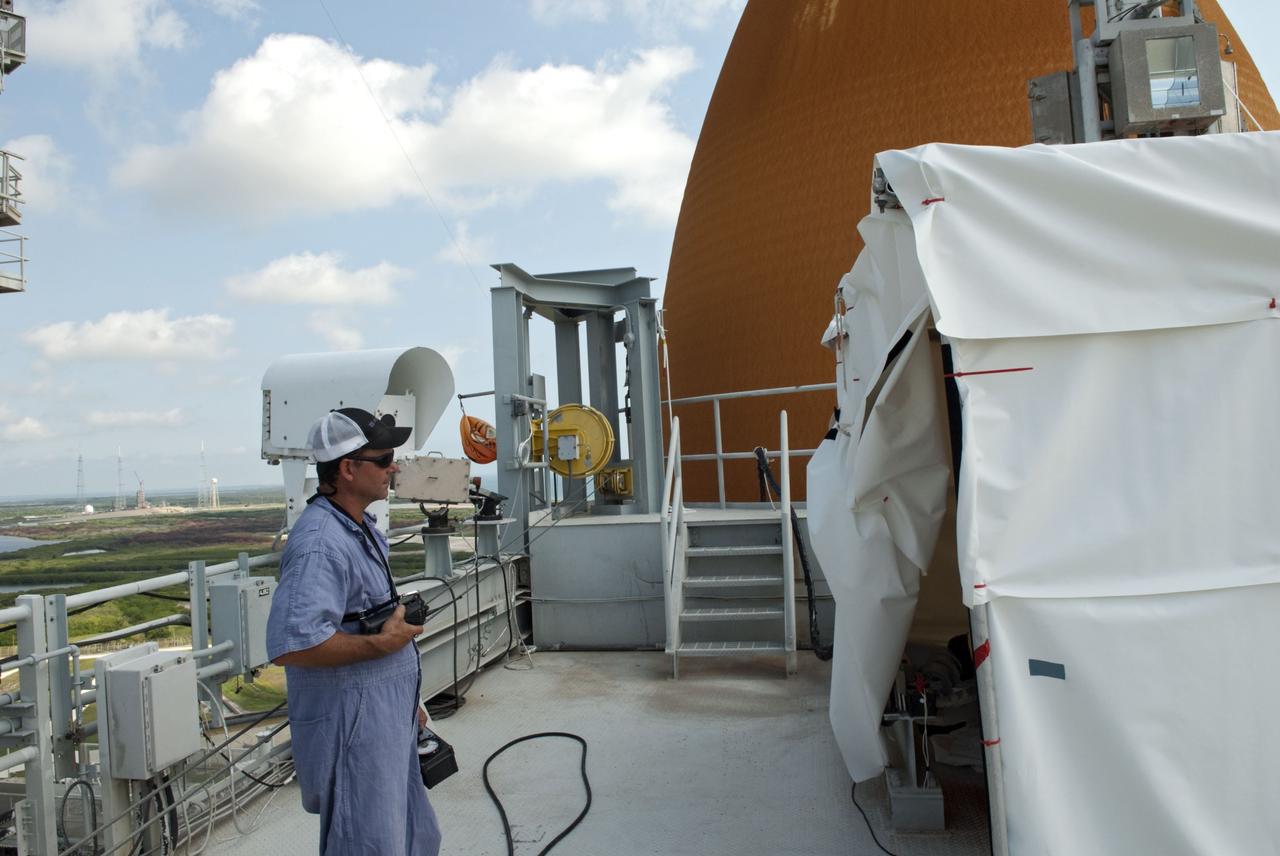
CAPE CANAVERAL, Fla. -- At NASA's Kennedy Space Center in Florida, technicians conduct Computed Radiography (CR) X-ray scans of 50 support beams, called stringers, on the shuttle-facing side of Atlantis' external tank at Launch Pad 39A. The hi-tech images will be taken of the tops and bottoms of the 21-foot long beams, which are located on the tank's intertank section. The scans follow a June 15th tanking test when the launch team filled then drained the tank of about 535,000 gallons of liquid hydrogen and liquid oxygen, just like for a launch. Earlier this year, managers directed teams to make the same stringer modifications to Atlantis' tank, ET-138, as they had after small cracks in the support beams of shuttle Discovery's STS-133 mission external tank were discovered. The scans will confirm there are no issues with Atlantis' tank. STS-135 Commander Chris Ferguson, Pilot Doug Hurley and Mission Specialists Sandy Magnus and Rex Walheim are targeted to lift off on space shuttle Atlantis July 8, taking with them the MPLM packed with supplies, logistics and spare parts to the International Space Station. The STS-135 mission also will fly a system to investigate the potential for robotically refueling existing satellites and return a failed ammonia pump module to help NASA better understand the failure mechanism and improve pump designs for future systems. STS-135 will be the 33rd flight of Atlantis, the 37th shuttle mission to the space station, and the 135th and final mission of NASA's Space Shuttle Program. For more information visit, www.nasa.gov/mission_pages/shuttle/shuttlemissions/sts135/index.html. Photo credit: NASA/Jim Grossmann
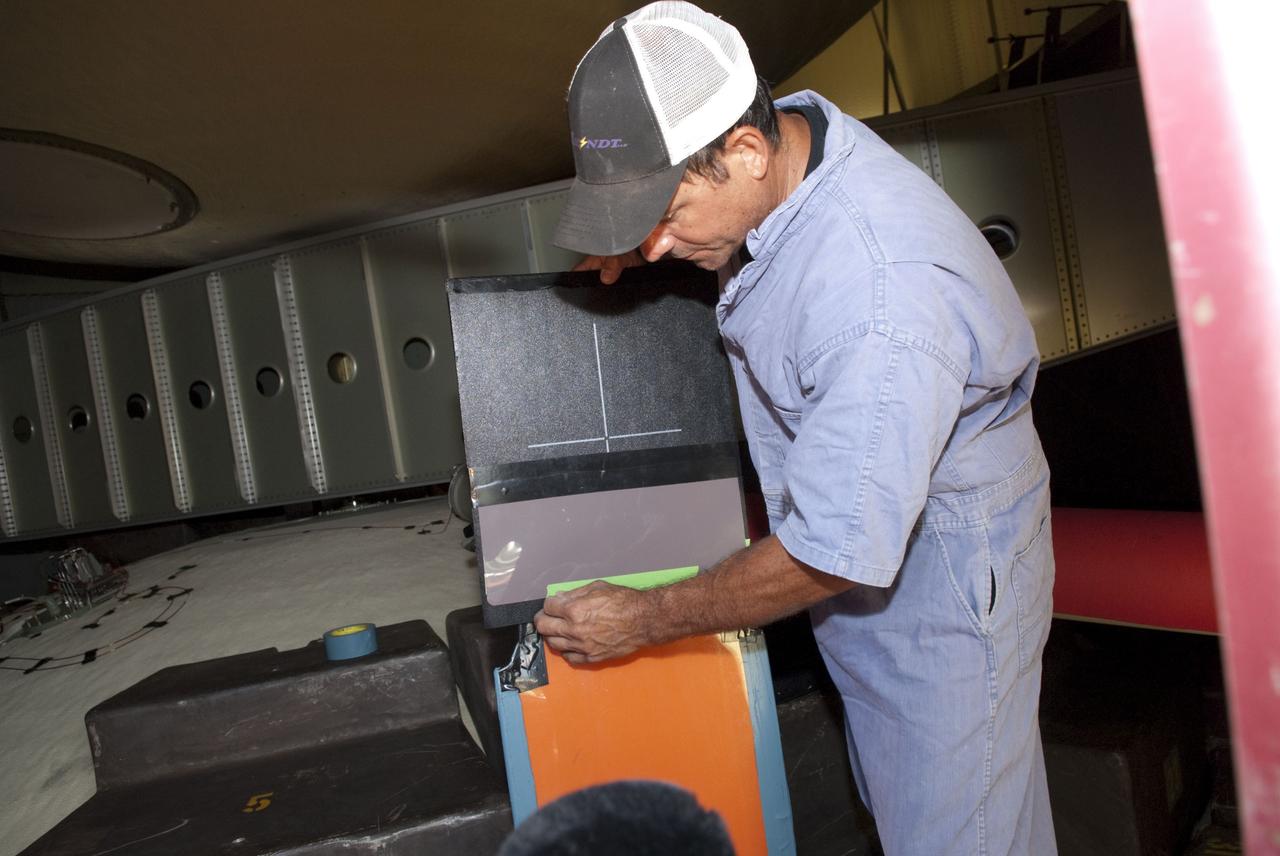
CAPE CANAVERAL, Fla. -- At NASA's Kennedy Space Center in Florida, technicians prepare to conduct Computed Radiography (CR) X-ray scans of 50 support beams, called stringers, on the shuttle-facing side of Atlantis' external tank at Launch Pad 39A. The hi-tech images will be taken of the tops and bottoms of the 21-foot long beams, which are located on the tank's intertank section. Here, a technician prepares an image plate inside the outertank. The scans follow a June 15th tanking test when the launch team filled then drained the tank of about 535,000 gallons of liquid hydrogen and liquid oxygen, just like for a launch. Earlier this year, managers directed teams to make the same stringer modifications to Atlantis' tank, ET-138, as they had after small cracks in the support beams of shuttle Discovery's STS-133 mission external tank were discovered. The scans will confirm there are no issues with Atlantis' tank. STS-135 Commander Chris Ferguson, Pilot Doug Hurley and Mission Specialists Sandy Magnus and Rex Walheim are targeted to lift off on space shuttle Atlantis July 8, taking with them the MPLM packed with supplies, logistics and spare parts to the International Space Station. The STS-135 mission also will fly a system to investigate the potential for robotically refueling existing satellites and return a failed ammonia pump module to help NASA better understand the failure mechanism and improve pump designs for future systems. STS-135 will be the 33rd flight of Atlantis, the 37th shuttle mission to the space station, and the 135th and final mission of NASA's Space Shuttle Program. For more information visit, www.nasa.gov/mission_pages/shuttle/shuttlemissions/sts135/index.html. Photo credit: NASA/Jim Grossmann
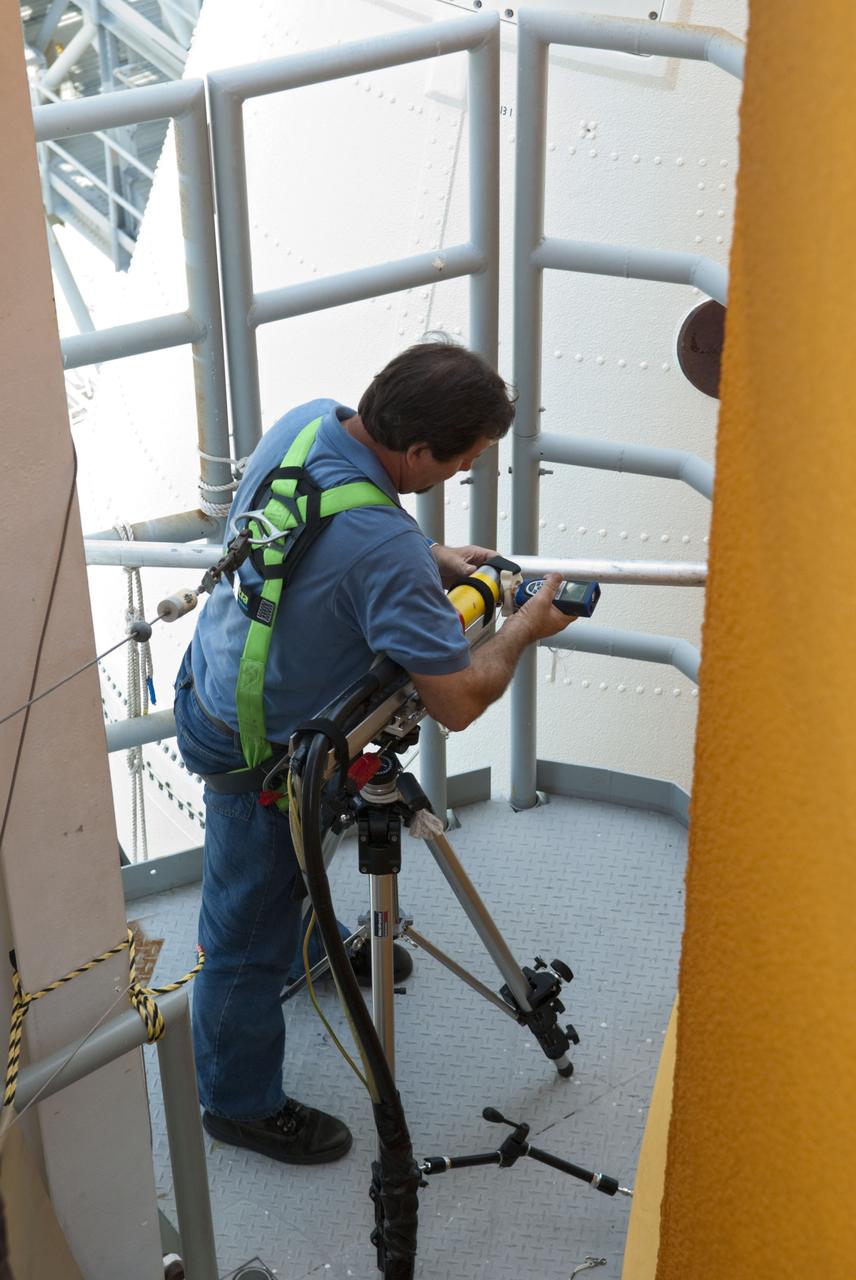
CAPE CANAVERAL, Fla. -- At NASA's Kennedy Space Center in Florida, technicians conduct Computed Radiography (CR) X-ray scans of 50 support beams, called stringers, on the shuttle-facing side of Atlantis' external tank at Launch Pad 39A. The hi-tech images will be taken of the tops and bottoms of the 21-foot long beams, which are located on the tank's intertank section. The scans follow a June 15th tanking test when the launch team filled then drained the tank of about 535,000 gallons of liquid hydrogen and liquid oxygen, just like for a launch. Earlier this year, managers directed teams to make the same stringer modifications to Atlantis' tank, ET-138, as they had after small cracks in the support beams of shuttle Discovery's STS-133 mission external tank were discovered. The scans will confirm there are no issues with Atlantis' tank. STS-135 Commander Chris Ferguson, Pilot Doug Hurley and Mission Specialists Sandy Magnus and Rex Walheim are targeted to lift off on space shuttle Atlantis July 8, taking with them the MPLM packed with supplies, logistics and spare parts to the International Space Station. The STS-135 mission also will fly a system to investigate the potential for robotically refueling existing satellites and return a failed ammonia pump module to help NASA better understand the failure mechanism and improve pump designs for future systems. STS-135 will be the 33rd flight of Atlantis, the 37th shuttle mission to the space station, and the 135th and final mission of NASA's Space Shuttle Program. For more information visit, www.nasa.gov/mission_pages/shuttle/shuttlemissions/sts135/index.html. Photo credit: NASA/Jim Grossmann
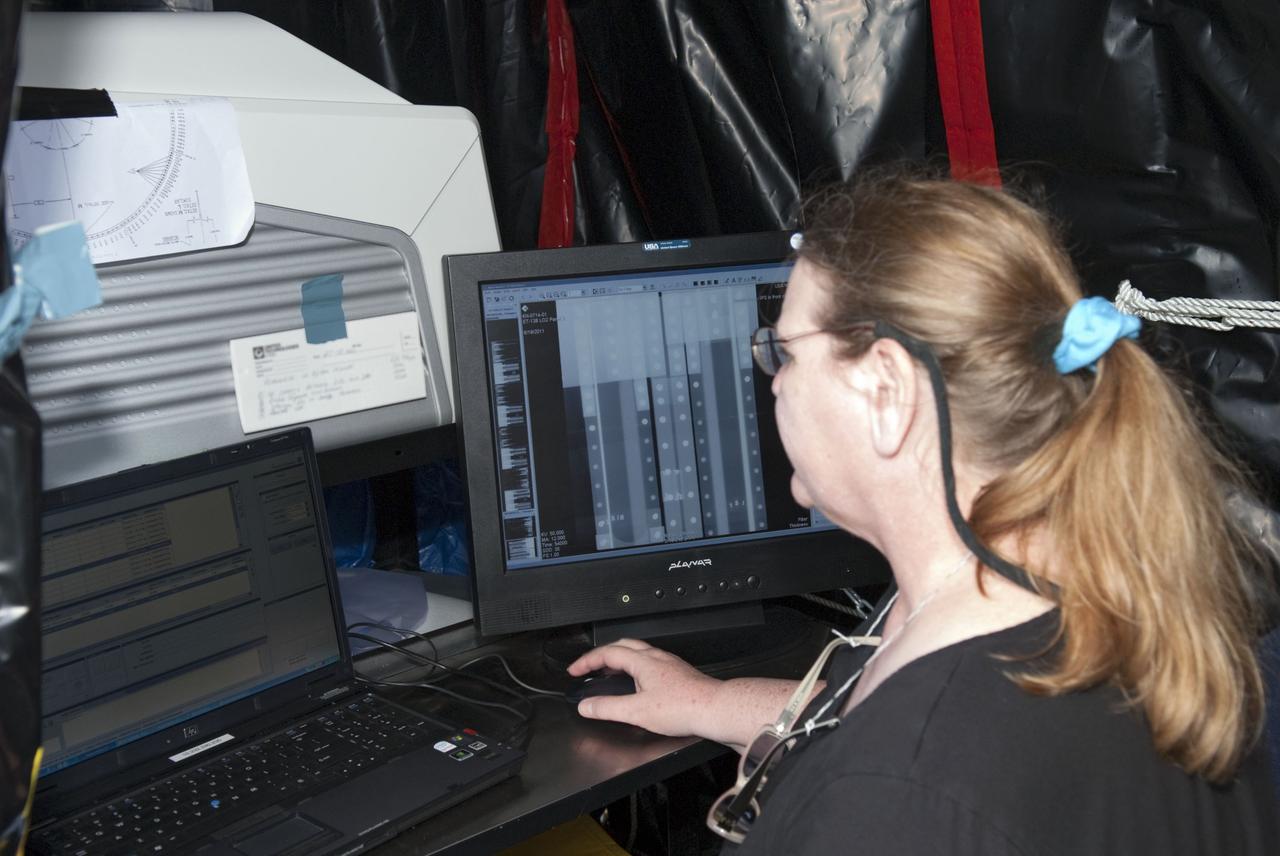
CAPE CANAVERAL, Fla. -- At NASA's Kennedy Space Center in Florida, technicians conduct Computed Radiography (CR) X-ray scans of 50 support beams, called stringers, on the shuttle-facing side of Atlantis' external tank at Launch Pad 39A. The hi-tech images will be taken of the tops and bottoms of the 21-foot long beams, which are located on the tank's intertank section. The scans follow a June 15th tanking test when the launch team filled then drained the tank of about 535,000 gallons of liquid hydrogen and liquid oxygen, just like for a launch. Earlier this year, managers directed teams to make the same stringer modifications to Atlantis' tank, ET-138, as they had after small cracks in the support beams of shuttle Discovery's STS-133 mission external tank were discovered. The scans will confirm there are no issues with Atlantis' tank. STS-135 Commander Chris Ferguson, Pilot Doug Hurley and Mission Specialists Sandy Magnus and Rex Walheim are targeted to lift off on space shuttle Atlantis July 8, taking with them the MPLM packed with supplies, logistics and spare parts to the International Space Station. The STS-135 mission also will fly a system to investigate the potential for robotically refueling existing satellites and return a failed ammonia pump module to help NASA better understand the failure mechanism and improve pump designs for future systems. STS-135 will be the 33rd flight of Atlantis, the 37th shuttle mission to the space station, and the 135th and final mission of NASA's Space Shuttle Program. For more information visit, www.nasa.gov/mission_pages/shuttle/shuttlemissions/sts135/index.html. Photo credit: NASA/Jim Grossmann
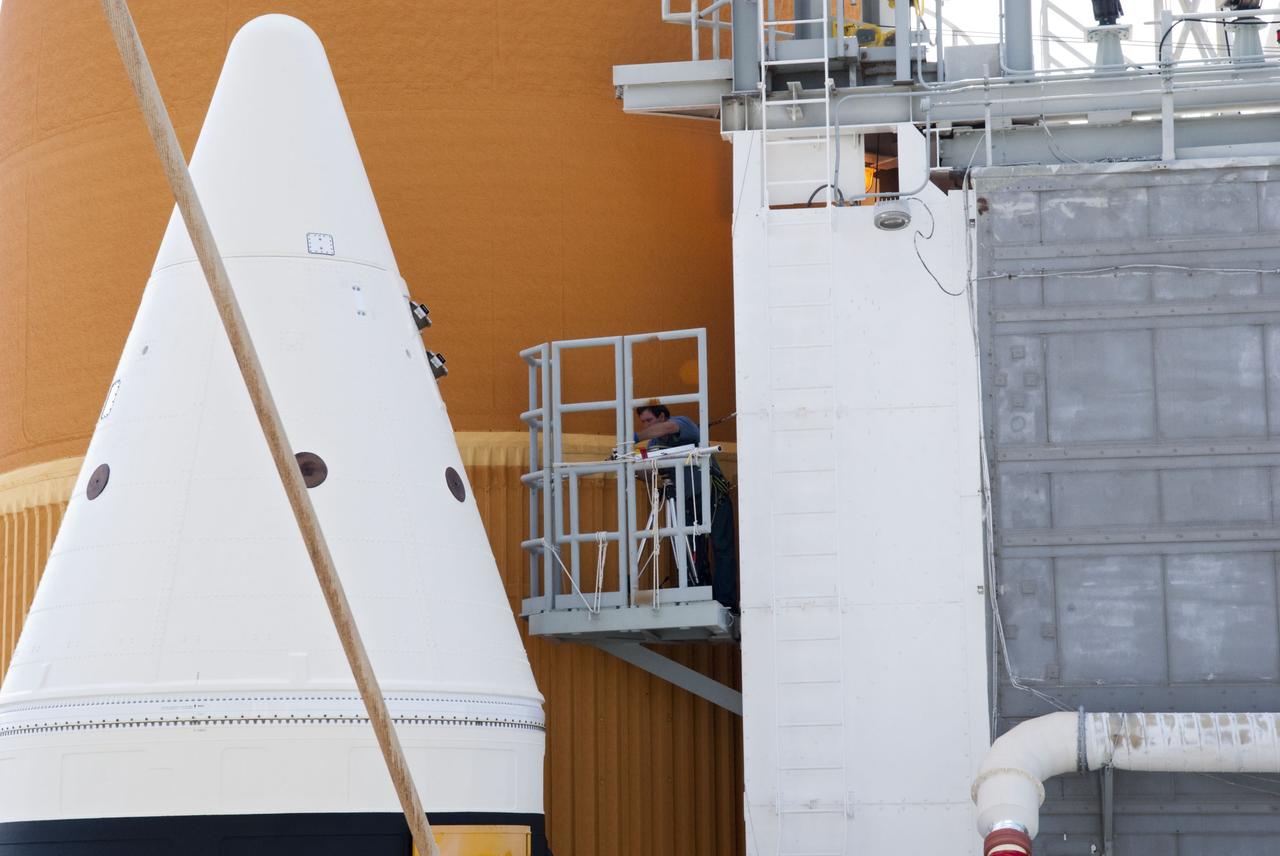
CAPE CANAVERAL, Fla. -- At NASA's Kennedy Space Center in Florida, technicians conduct Computed Radiography (CR) X-ray scans of 50 support beams, called stringers, on the shuttle-facing side of Atlantis' external tank at Launch Pad 39A. The hi-tech images will be taken of the tops and bottoms of the 21-foot long beams, which are located on the tank's intertank section. The scans follow a June 15th tanking test when the launch team filled then drained the tank of about 535,000 gallons of liquid hydrogen and liquid oxygen, just like for a launch. Earlier this year, managers directed teams to make the same stringer modifications to Atlantis' tank, ET-138, as they had after small cracks in the support beams of shuttle Discovery's STS-133 mission external tank were discovered. The scans will confirm there are no issues with Atlantis' tank. STS-135 Commander Chris Ferguson, Pilot Doug Hurley and Mission Specialists Sandy Magnus and Rex Walheim are targeted to lift off on space shuttle Atlantis July 8, taking with them the MPLM packed with supplies, logistics and spare parts to the International Space Station. The STS-135 mission also will fly a system to investigate the potential for robotically refueling existing satellites and return a failed ammonia pump module to help NASA better understand the failure mechanism and improve pump designs for future systems. STS-135 will be the 33rd flight of Atlantis, the 37th shuttle mission to the space station, and the 135th and final mission of NASA's Space Shuttle Program. For more information visit, www.nasa.gov/mission_pages/shuttle/shuttlemissions/sts135/index.html. Photo credit: NASA/Jim Grossmann

A team of engineers participates in simulation training for the Polar Resources Ice Mining Experiment-1 (PRIME-1) on Thursday, Nov. 2, 2023, inside the Neil Armstrong Operations and Checkout Building at NASA’s Kennedy Space Center in Florida. The purpose of the training is to get the integrated PRIME-1 team – engineers with PRIME-1’s MSOLO (Mass Spectrometer Observing Lunar Operations) and Honeybee Robotics’ TRIDENT (The Regolith and Ice Drill for Exploring New Terrain) drill – prepared to operate the instrument on the lunar surface. The team commanded the PRIME-1 hardware, located at Intuitive Machines in Houston, to operate MSOLO and TRIDENT. PRIME-1 is scheduled to launch through NASA’s CLPS (Commercial Lunar Payload Delivery Service) initiative and will be the first in-situ resource utilization demonstration on the Moon, with MSOLO and TRIDENT making up its two primary components. Through Artemis missions, CLPS deliveries will be used to perform science experiments, test technologies, and demonstrate capabilities to help NASA explore the Moon and prepare for human deep space exploration missions.
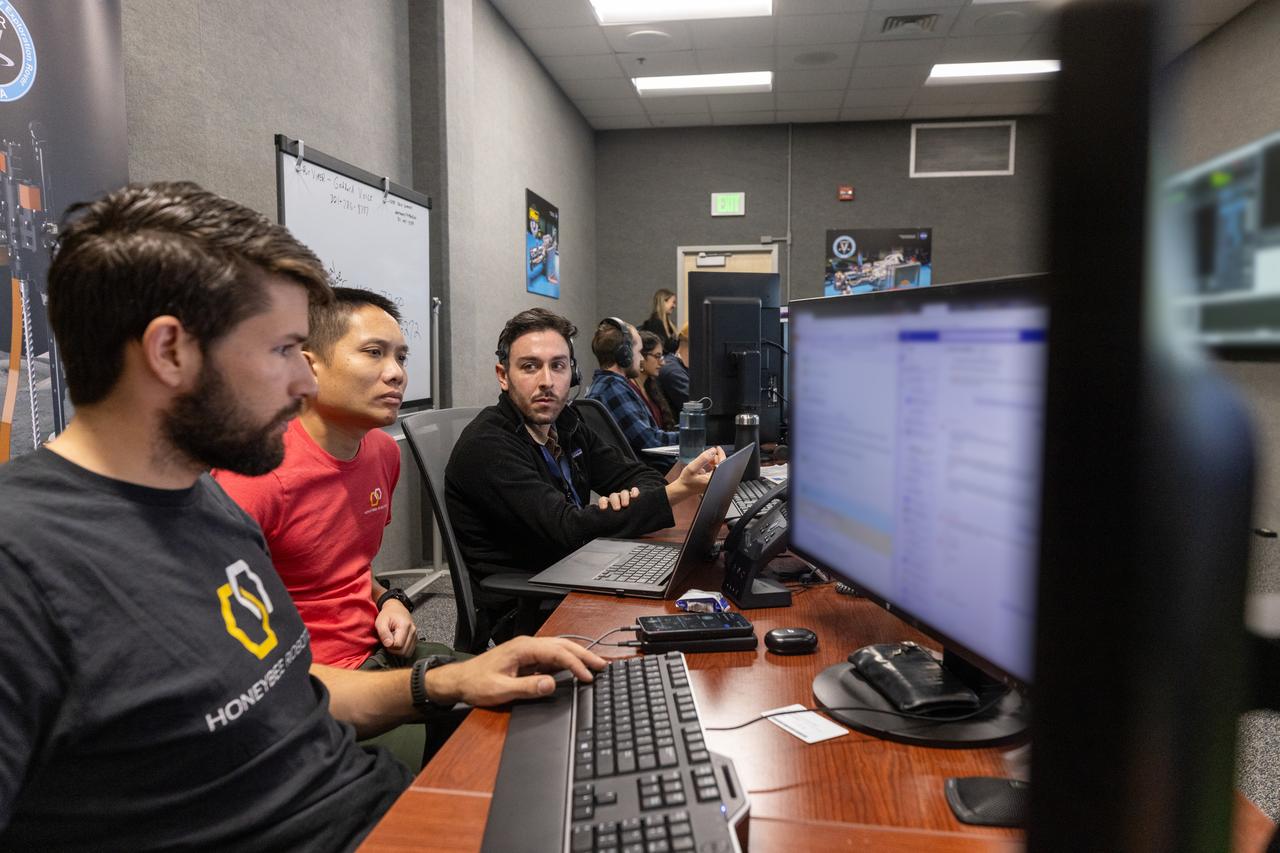
A team from Honeybee Robotics in Altadena, California participates in simulation training for the Polar Resources Ice Mining Experiment-1 (PRIME-1) on Thursday, Nov. 2, 2023, inside the Neil Armstrong Operations and Checkout Building at NASA’s Kennedy Space Center in Florida. The purpose of the training is to get the integrated PRIME-1 team – engineers with PRIME-1’s MSOLO (Mass Spectrometer Observing Lunar Operations) and Honeybee Robotics’ TRIDENT (The Regolith and Ice Drill for Exploring New Terrain) drill – prepared to operate the instrument on the lunar surface. The team commanded the PRIME-1 hardware, located at Intuitive Machines in Houston, to operate MSOLO and TRIDENT. PRIME-1 is scheduled to launch through NASA’s CLPS (Commercial Lunar Payload Delivery Service) initiative and will be the first in-situ resource utilization demonstration on the Moon, with MSOLO and TRIDENT making up its two primary components. Through Artemis missions, CLPS deliveries will be used to perform science experiments, test technologies, and demonstrate capabilities to help NASA explore the Moon and prepare for human deep space exploration missions.
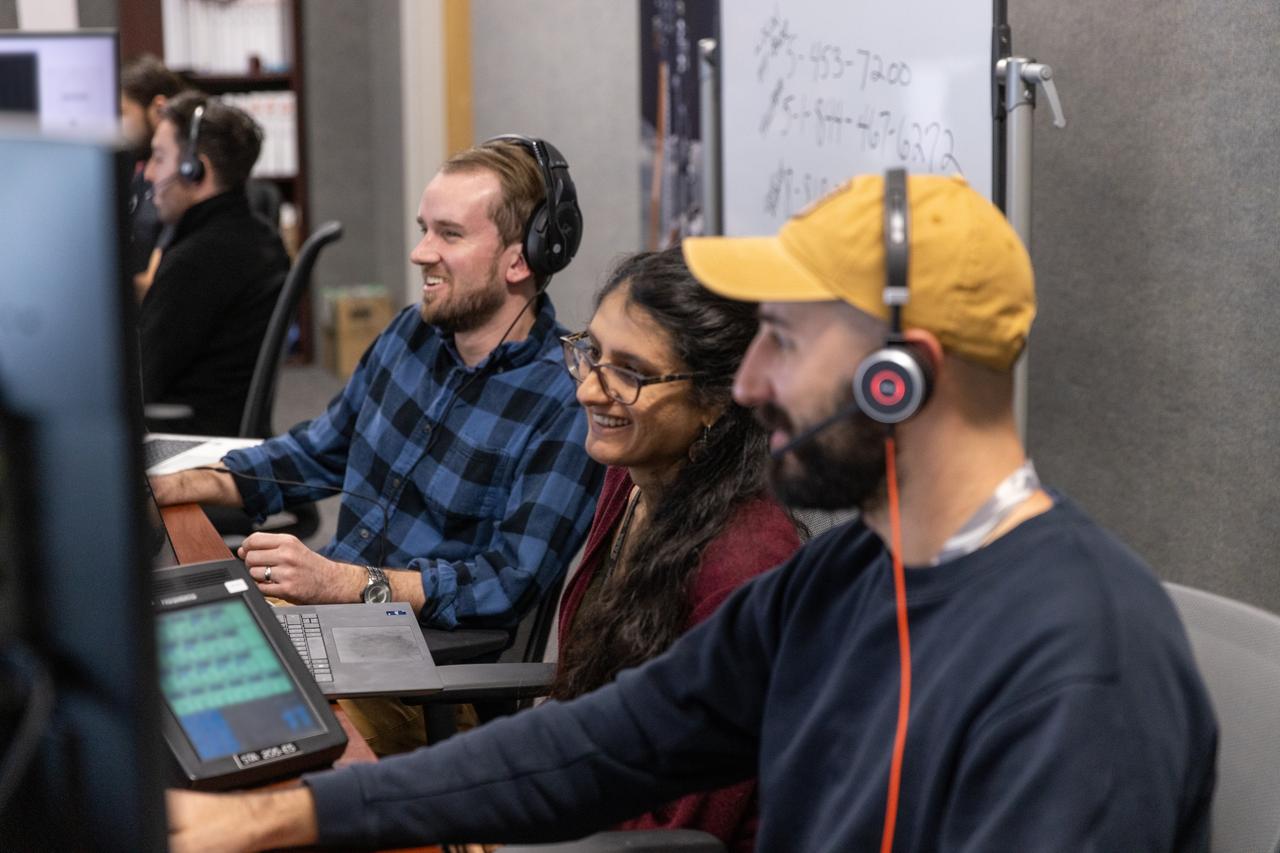
A team of engineers participates in simulation training for the Polar Resources Ice Mining Experiment-1 (PRIME-1) on Thursday, Nov. 2, 2023, inside the Neil Armstrong Operations and Checkout Building at NASA’s Kennedy Space Center in Florida. The purpose of the training is to get the integrated PRIME-1 team – engineers with PRIME-1’s MSOLO (Mass Spectrometer Observing Lunar Operations) and Honeybee Robotics’ TRIDENT (The Regolith and Ice Drill for Exploring New Terrain) drill – prepared to operate the instrument on the lunar surface. The team commanded the PRIME-1 hardware, located at Intuitive Machines in Houston, to operate MSOLO and TRIDENT. PRIME-1 is scheduled to launch through NASA’s CLPS (Commercial Lunar Payload Delivery Service) initiative and will be the first in-situ resource utilization demonstration on the Moon, with MSOLO and TRIDENT making up its two primary components. Through Artemis missions, CLPS deliveries will be used to perform science experiments, test technologies, and demonstrate capabilities to help NASA explore the Moon and prepare for human deep space exploration missions.
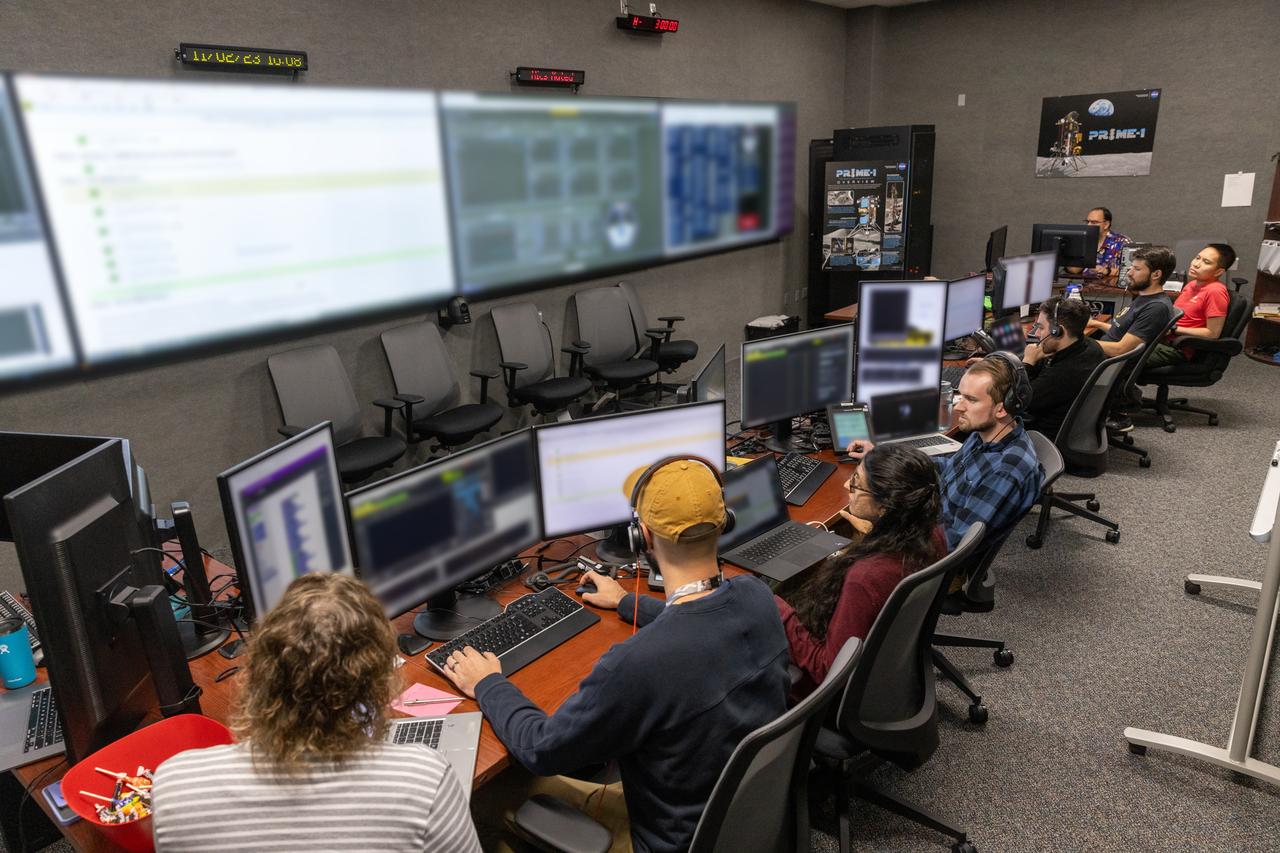
A team of engineers participates in simulation training for the Polar Resources Ice Mining Experiment-1 (PRIME-1) on Thursday, Nov. 2, 2023, inside the Neil Armstrong Operations and Checkout Building at NASA’s Kennedy Space Center in Florida. The purpose of the training is to get the integrated PRIME-1 team – engineers with PRIME-1’s MSOLO (Mass Spectrometer Observing Lunar Operations) and Honeybee Robotics’ TRIDENT (The Regolith and Ice Drill for Exploring New Terrain) drill – prepared to operate the instrument on the lunar surface. The team commanded the PRIME-1 hardware, located at Intuitive Machines in Houston, to operate MSOLO and TRIDENT. PRIME-1 is scheduled to launch through NASA’s CLPS (Commercial Lunar Payload Delivery Service) initiative and will be the first in-situ resource utilization demonstration on the Moon, with MSOLO and TRIDENT making up its two primary components. Through Artemis missions, CLPS deliveries will be used to perform science experiments, test technologies, and demonstrate capabilities to help NASA explore the Moon and prepare for human deep space exploration missions.
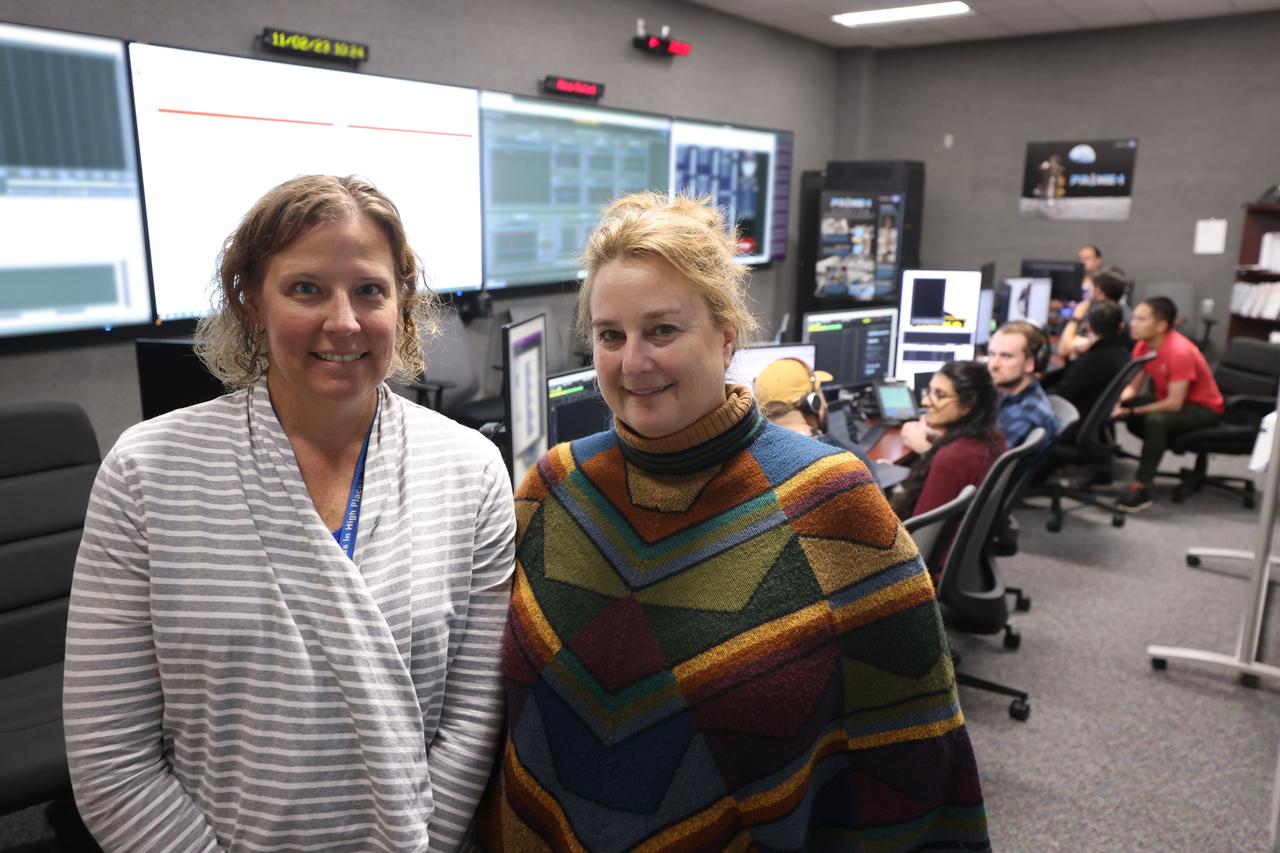
Janine Captain, left, and Jackie Quinn participate in simulation training for the Polar Resources Ice Mining Experiment-1 (PRIME-1) on Thursday, Nov. 2, 2023, inside the Neil Armstrong Operations and Checkout Building at NASA’s Kennedy Space Center in Florida. The purpose of the training is to get the integrated PRIME-1 team – engineers with PRIME-1’s MSOLO (Mass Spectrometer Observing Lunar Operations) and Honeybee Robotics’ TRIDENT (Regolith and Ice Drill for Exploring New Terrain) drill – prepared to operate the instrument on the lunar surface. The team commanded the PRIME-1 hardware, located at Intuitive Machines in Houston, to operate MSOLO and TRIDENT. PRIME-1 is scheduled to launch through NASA’s CLPS (Commercial Lunar Payload Delivery Service) initiative and will be the first in-situ resource utilization demonstration on the Moon, with MSOLO and TRIDENT making up its two primary components. Through Artemis missions, CLPS deliveries will be used to perform science experiments, test technologies, and demonstrate capabilities to help NASA explore the Moon and prepare for human deep space exploration missions.
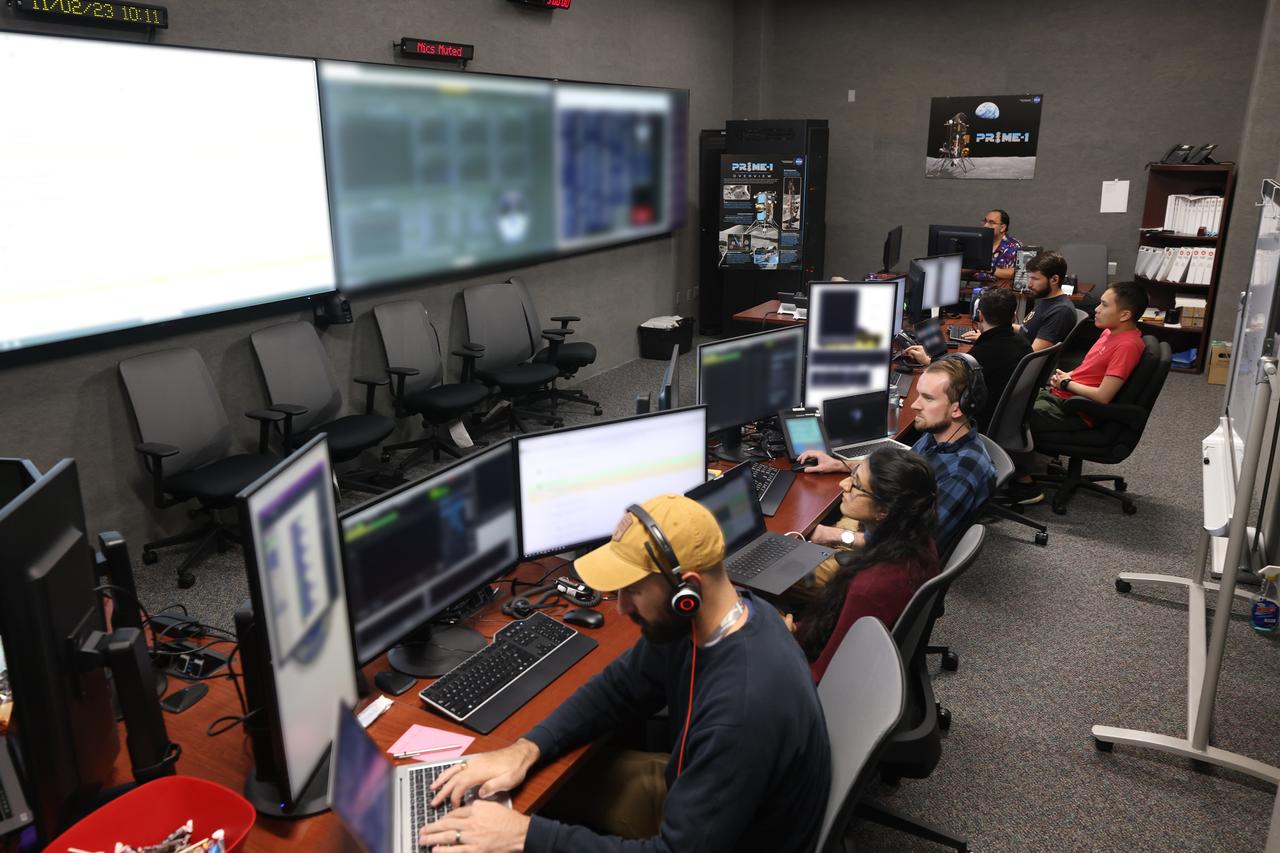
A team of engineers participates in simulation training for the Polar Resources Ice Mining Experiment-1 (PRIME-1) on Thursday, Nov. 2, 2023, inside the Neil Armstrong Operations and Checkout Building at NASA’s Kennedy Space Center in Florida. The purpose of the training is to get the integrated PRIME-1 team – engineers with PRIME-1’s MSOLO (Mass Spectrometer Observing Lunar Operations) and Honeybee Robotics’ TRIDENT (The Regolith and Ice Drill for Exploring New Terrain) drill – prepared to operate the instrument on the lunar surface. The team commanded the PRIME-1 hardware, located at Intuitive Machines in Houston, to operate MSOLO and TRIDENT. PRIME-1 is scheduled to launch through NASA’s CLPS (Commercial Lunar Payload Delivery Service) initiative and will be the first in-situ resource utilization demonstration on the Moon, with MSOLO and TRIDENT making up its two primary components. Through Artemis missions, CLPS deliveries will be used to perform science experiments, test technologies, and demonstrate capabilities to help NASA explore the Moon and prepare for human deep space exploration missions.