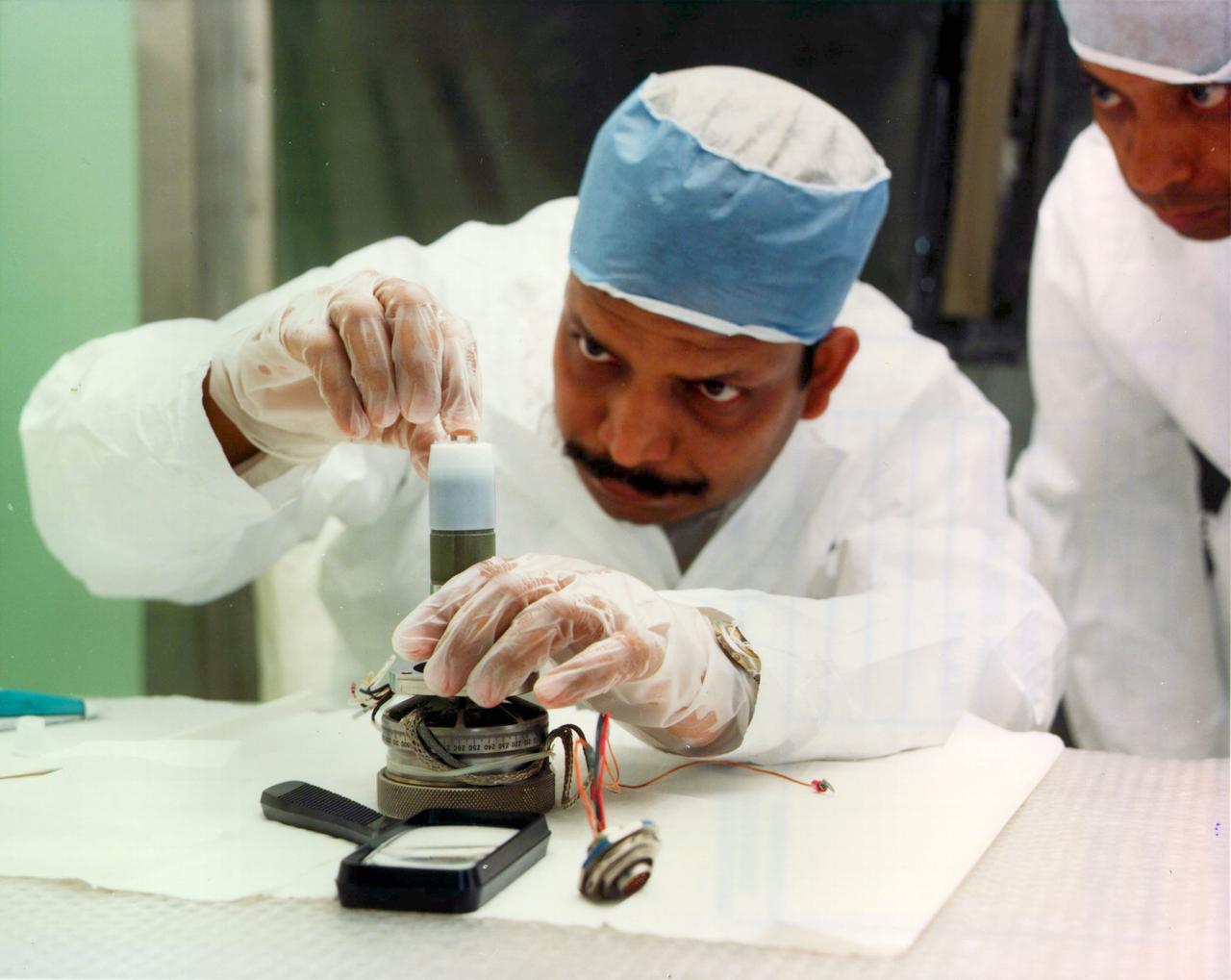
Dr. Aggarwal installing a flight seed in the Fluid Experiment System.
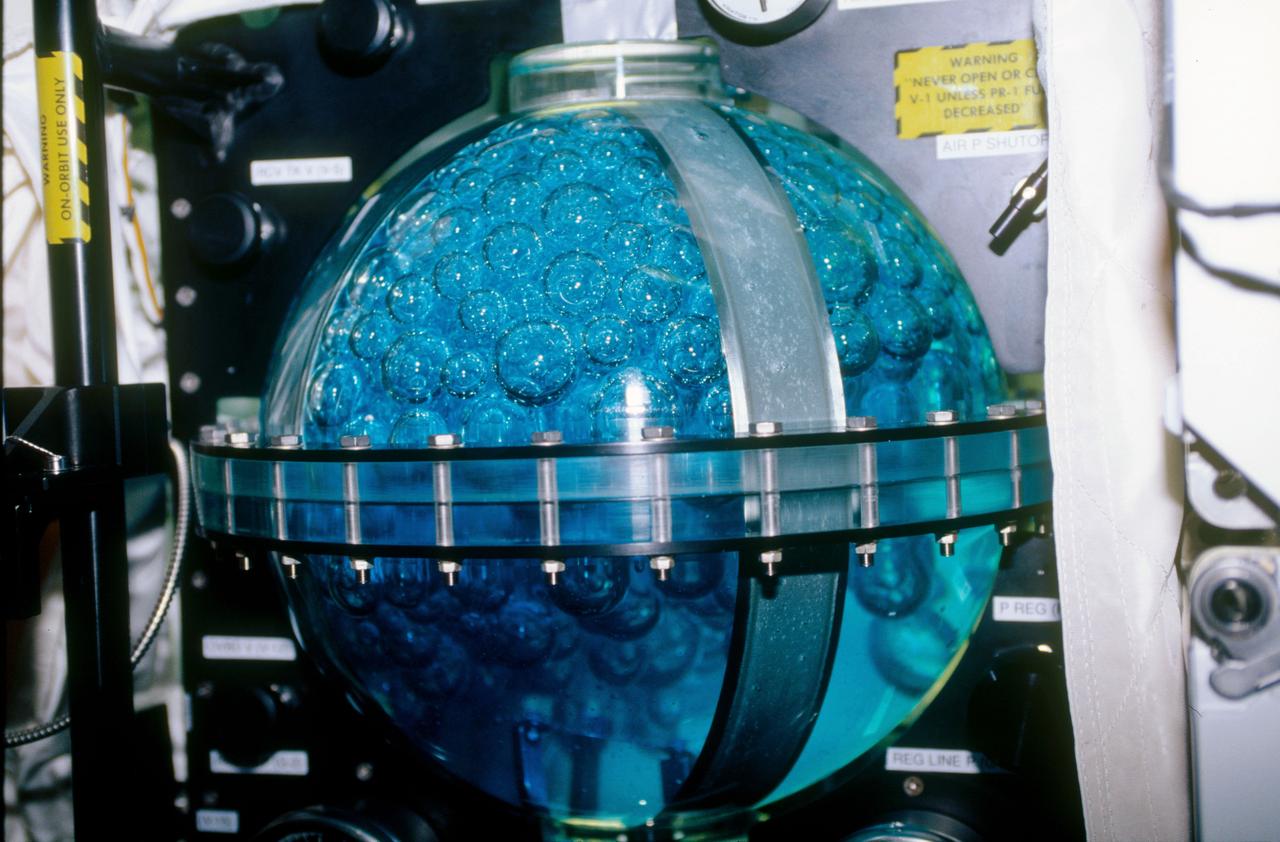
STS053-09-019 (2 - 9 Dec 1992) --- A medium close-up view of part of the Fluid Acquisition and Resupply Equipment (FARE) onboard the Space Shuttle Discovery. Featured in the mid-deck FARE setup is fluid activity in one of two 12.5-inch spherical tanks made of transparent acrylic. Pictured is the receiver tank. The other tank, out of frame below, is for supplying fluids. The purpose of FARE is to investigate the dynamics of fluid transfer in microgravity and develop methods for transferring vapor-free propellants and other liquids that must be replenished in long-term space systems like satellites, Extended-Duration Orbiters (EDO), and Space Station Freedom. Eight times over an eight-hour test period, the mission specialists conducted the FARE experiment. A sequence of manual valve operations caused pressurized air from the bottles to force fluids from the supply tank to the receiver tank and back again to the supply tank. Baffles in the receiver tank controlled fluid motion during transfer, a fine-mesh screen filtered vapor from the fluid, and the overboard vent removed vapor from the receiver tank as the liquid rose. FARE is managed by NASA's Marshall Space Flight Center (MSFC) in Alabama. The basic equipment was developed by Martin Marietta for the Storable Fluid Management Demonstration. Susan L. Driscoll is the principal investigator.
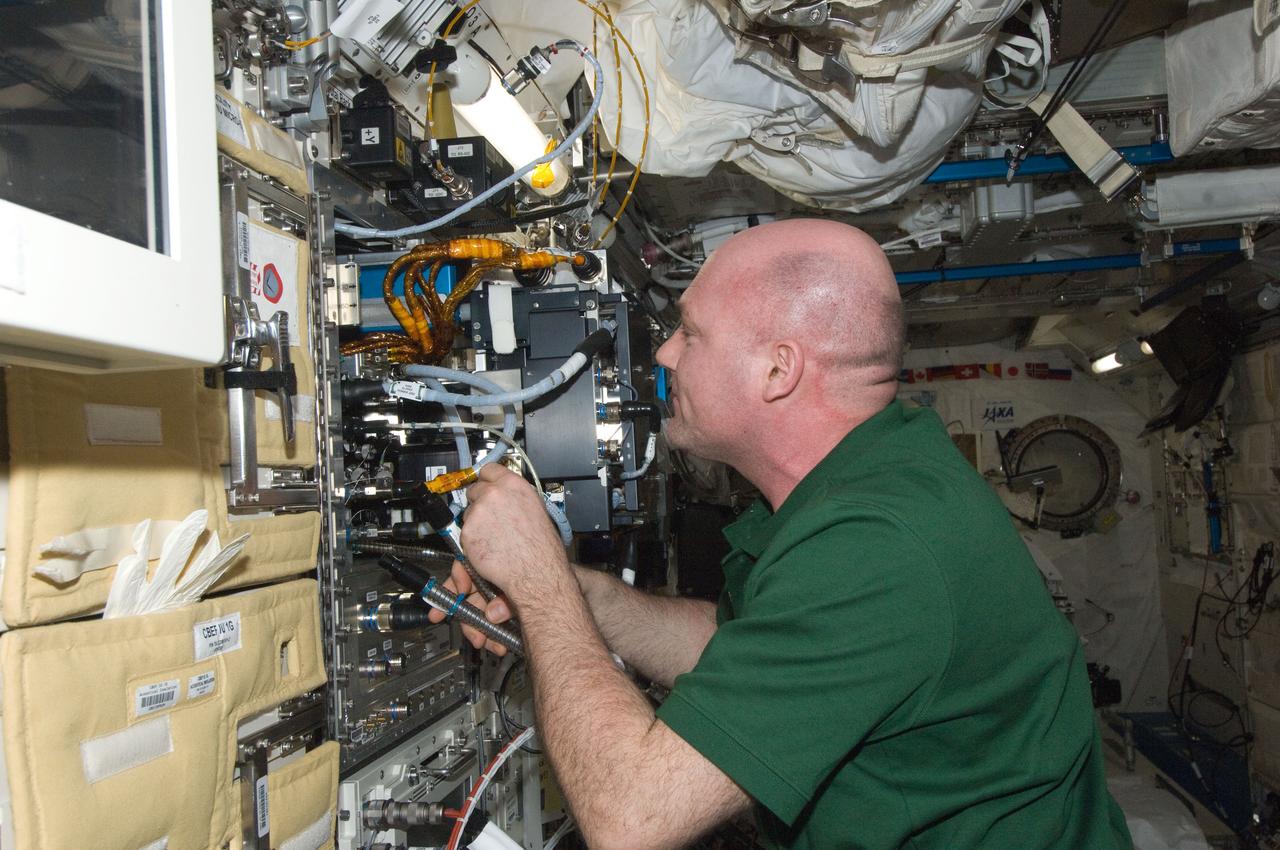
ISS030-E-142785 (15 March 2012) --- European Space Agency astronaut Andre Kuipers, Expedition 30 flight engineer, works to remove the Marangoni Surface fluid physics experiment from the Fluid Physics Experiment Facility (FPEF) in the Kibo laboratory of the International Space Station.
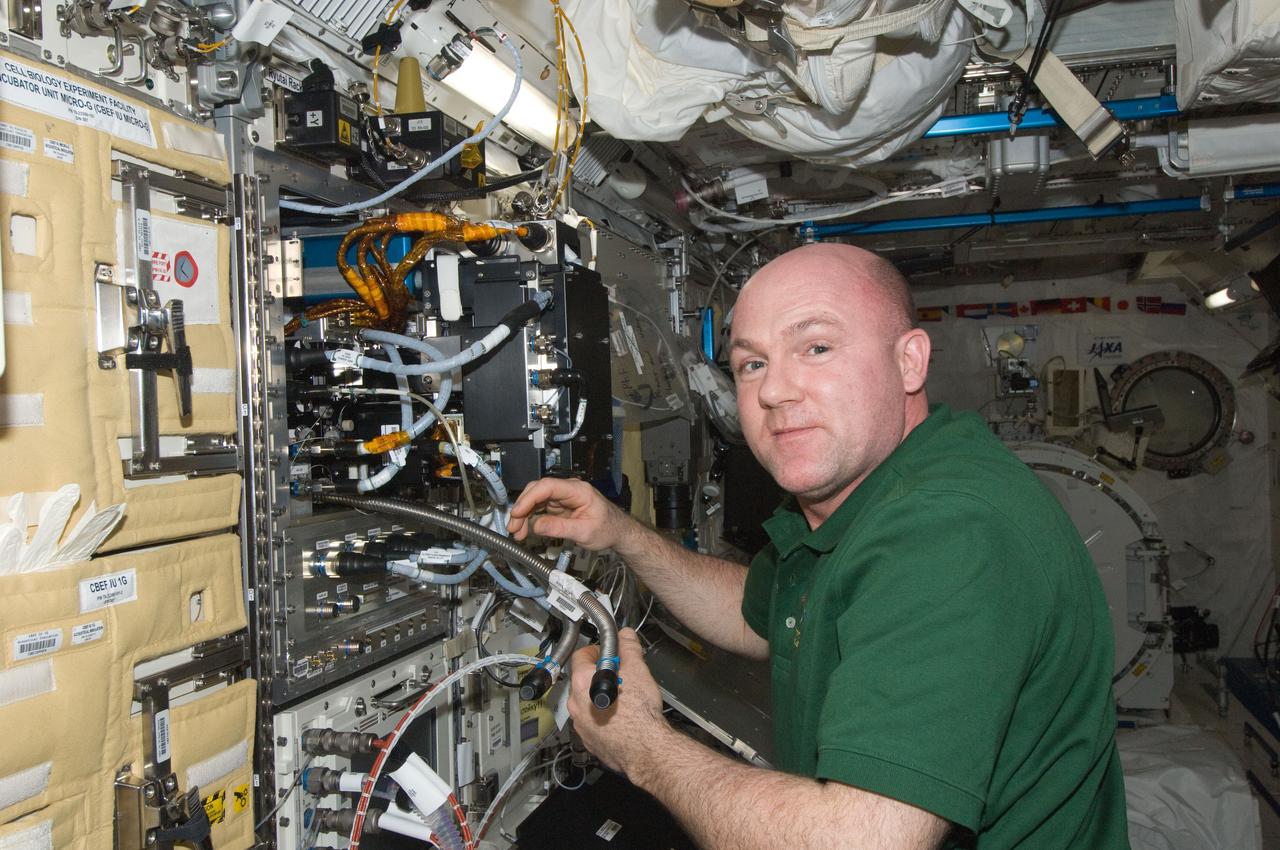
ISS030-E-142784 (15 March 2012) --- European Space Agency astronaut Andre Kuipers, Expedition 30 flight engineer, works to remove the Marangoni Surface fluid physics experiment from the Fluid Physics Experiment Facility (FPEF) in the Kibo laboratory of the International Space Station.
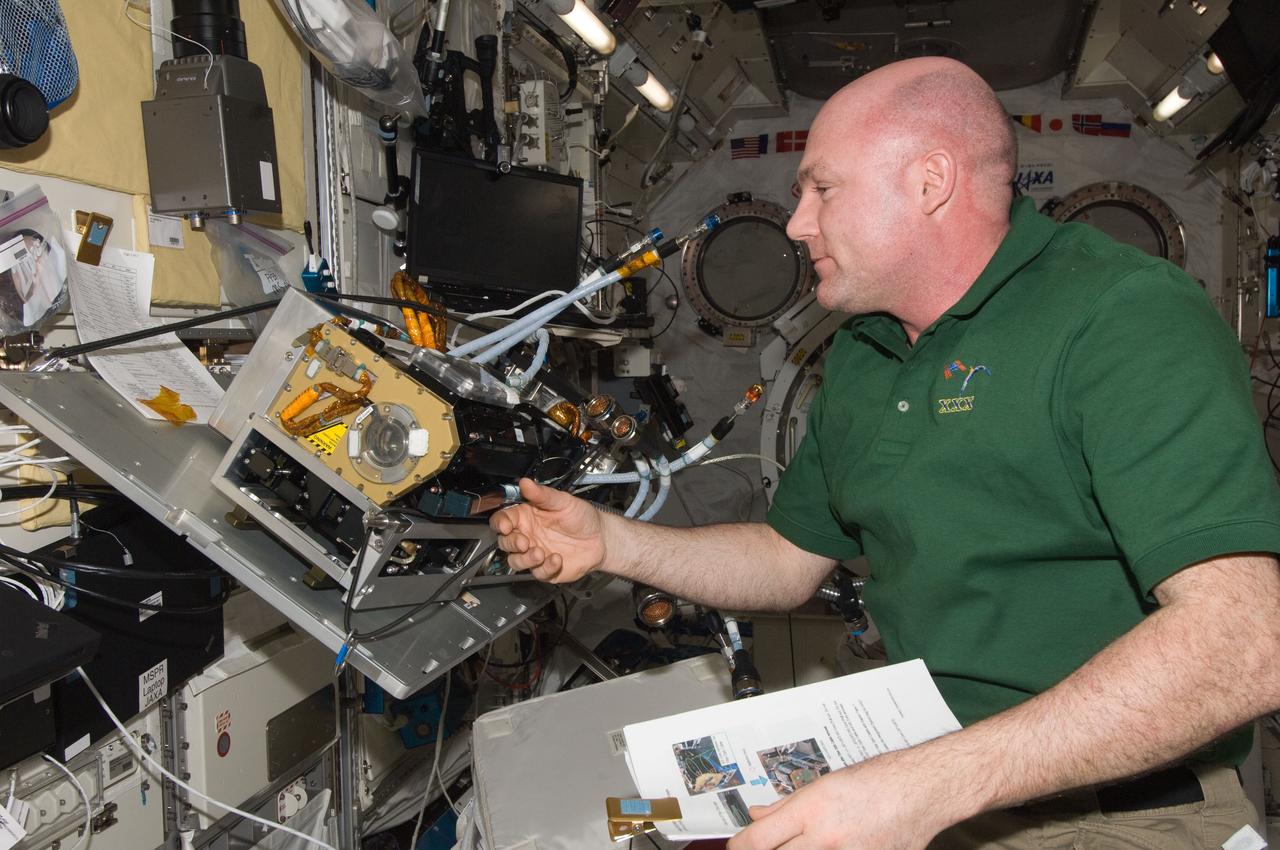
ISS030-E-142827 (15 March 2012) --- European Space Agency astronaut Andre Kuipers, Expedition 30 flight engineer, works to remove the Marangoni Surface fluid physics experiment from the Fluid Physics Experiment Facility (FPEF) in the Kibo laboratory of the International Space Station.
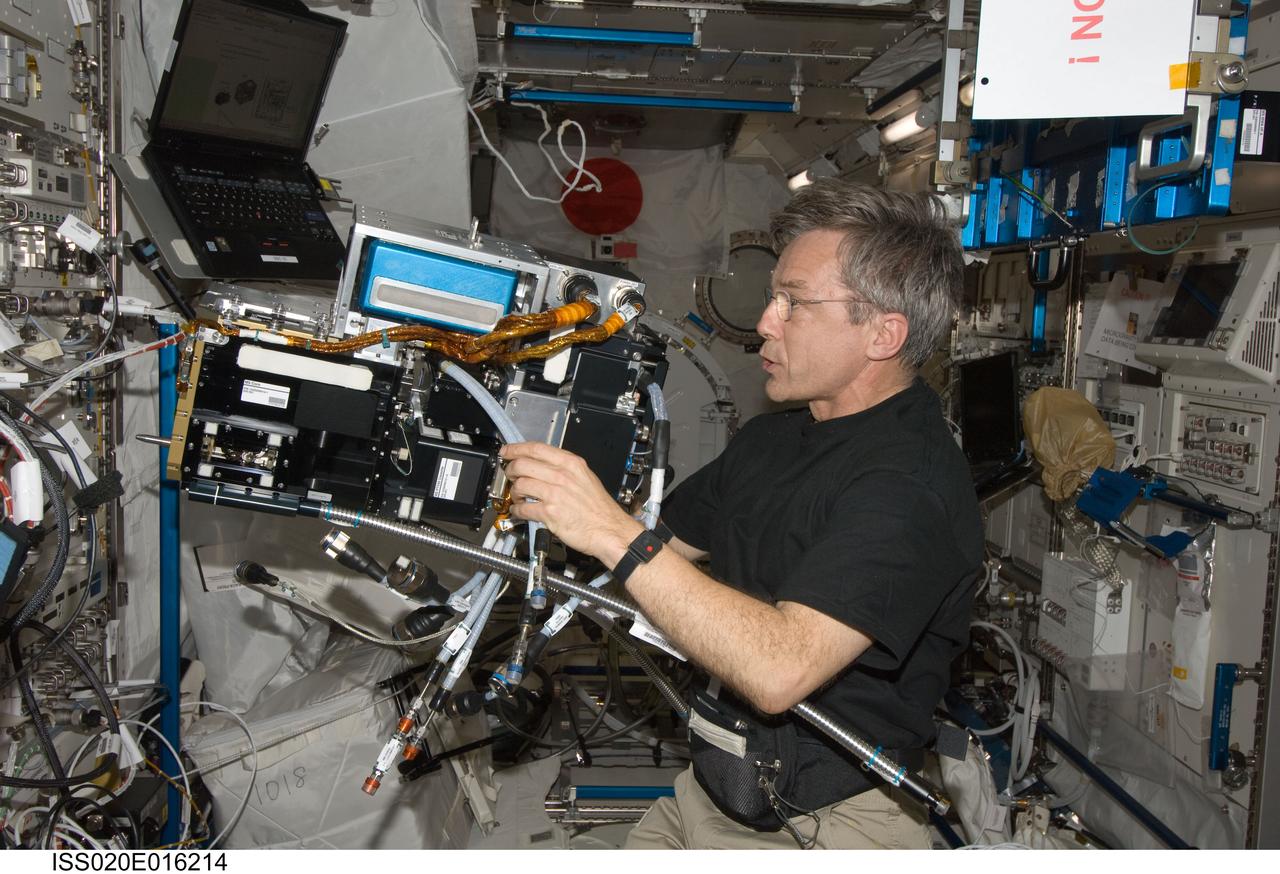
ISS020-E-016214 (1 July 2009) --- Canadian Space Agency astronaut Robert Thirsk, Expedition 20 flight engineer, prepares the Fluid Physics Experiment Facility (FPEF) for the planned Marangoni Surface experiment in the Kibo laboratory of the International Space Station.

Advanced Colloids Experiment, Thermal 5-2, ACE T5-2 International Space Station, ISS, Fluids Integrated Rack, FIR Operations in the Telescience Support Center, TSC
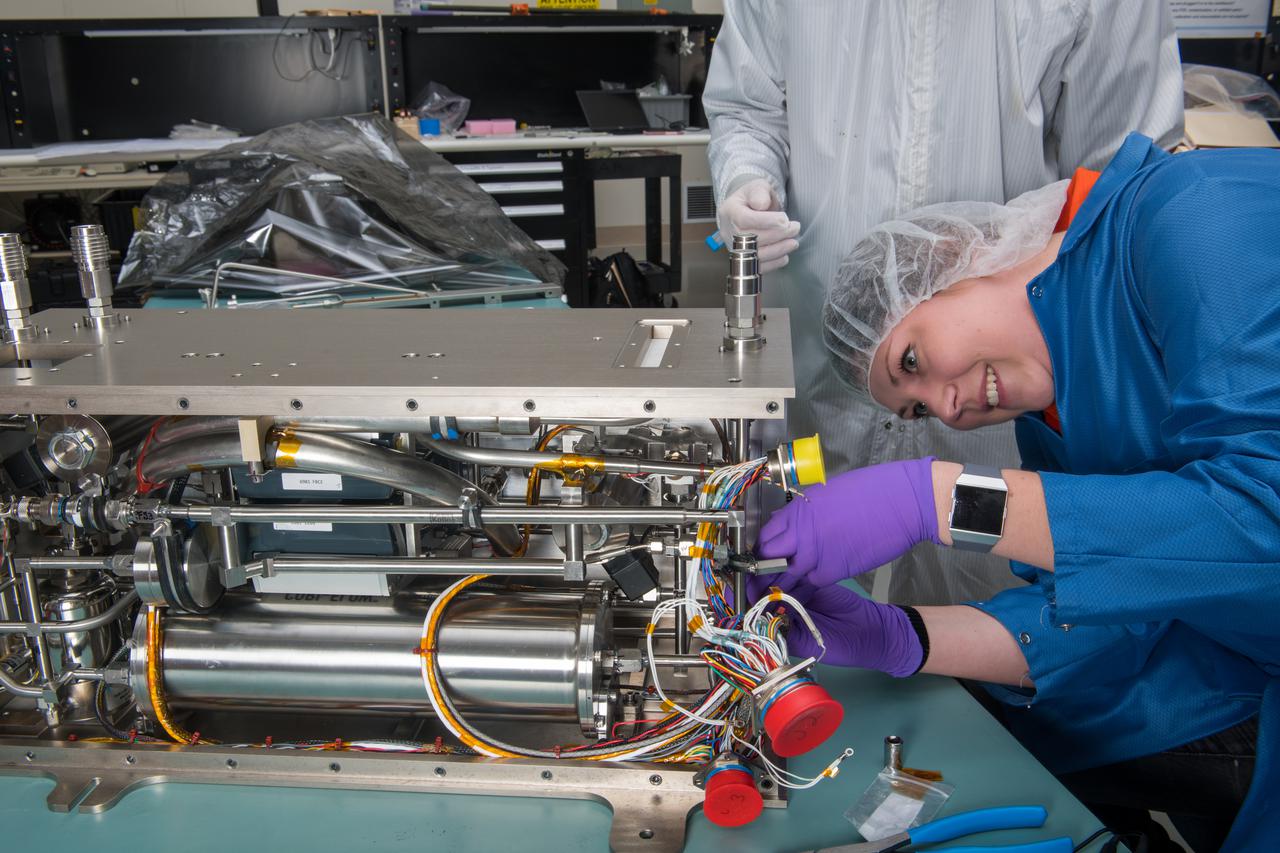
Flow Boiling and Condensation Experiment (FBCE) hardware. Project personnel perform engineering checks on the Fluid Module 1 prior to final hardware assembly.
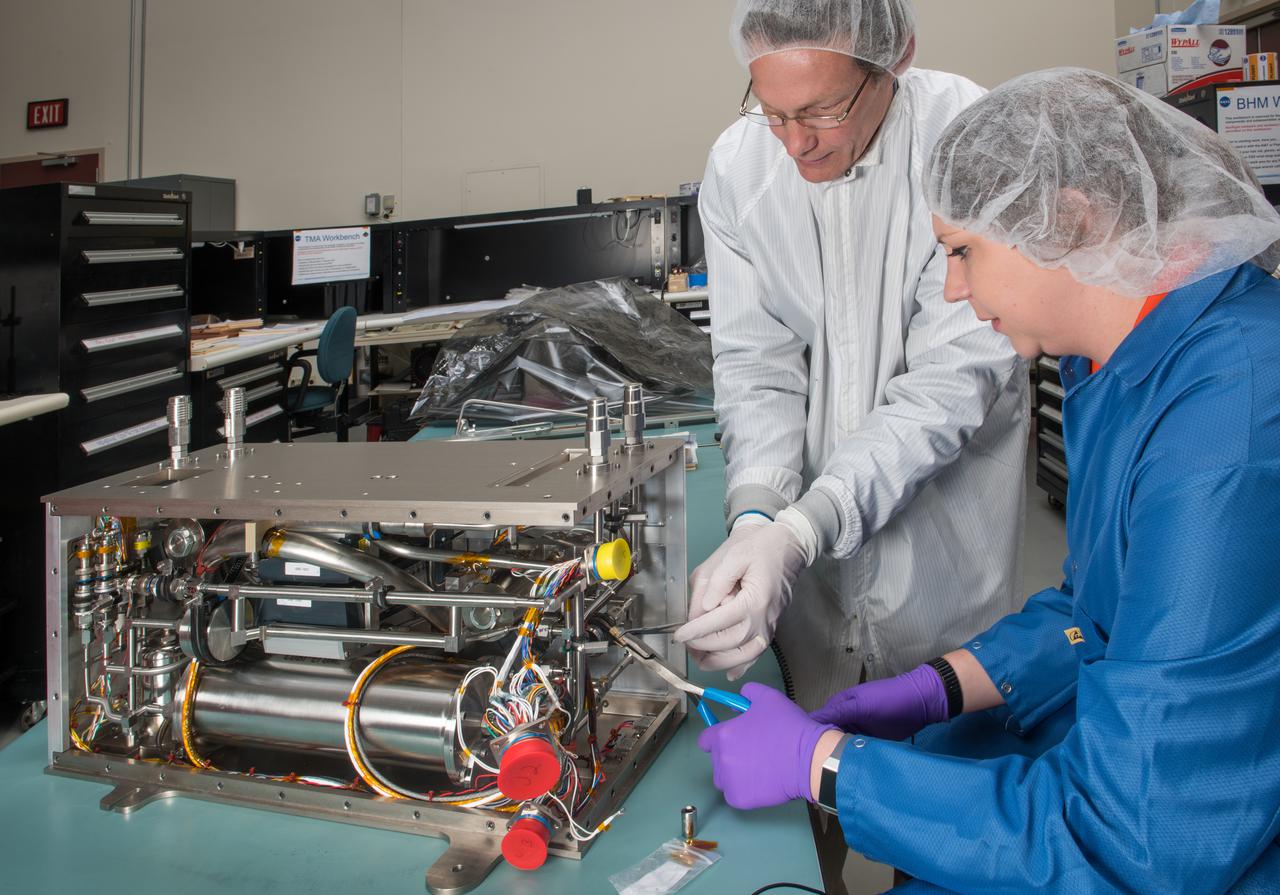
Flow Boiling and Condensation Experiment (FBCE) hardware. Project personnel perform engineering checks on the Fluid Module 1 prior to final hardware assembly.
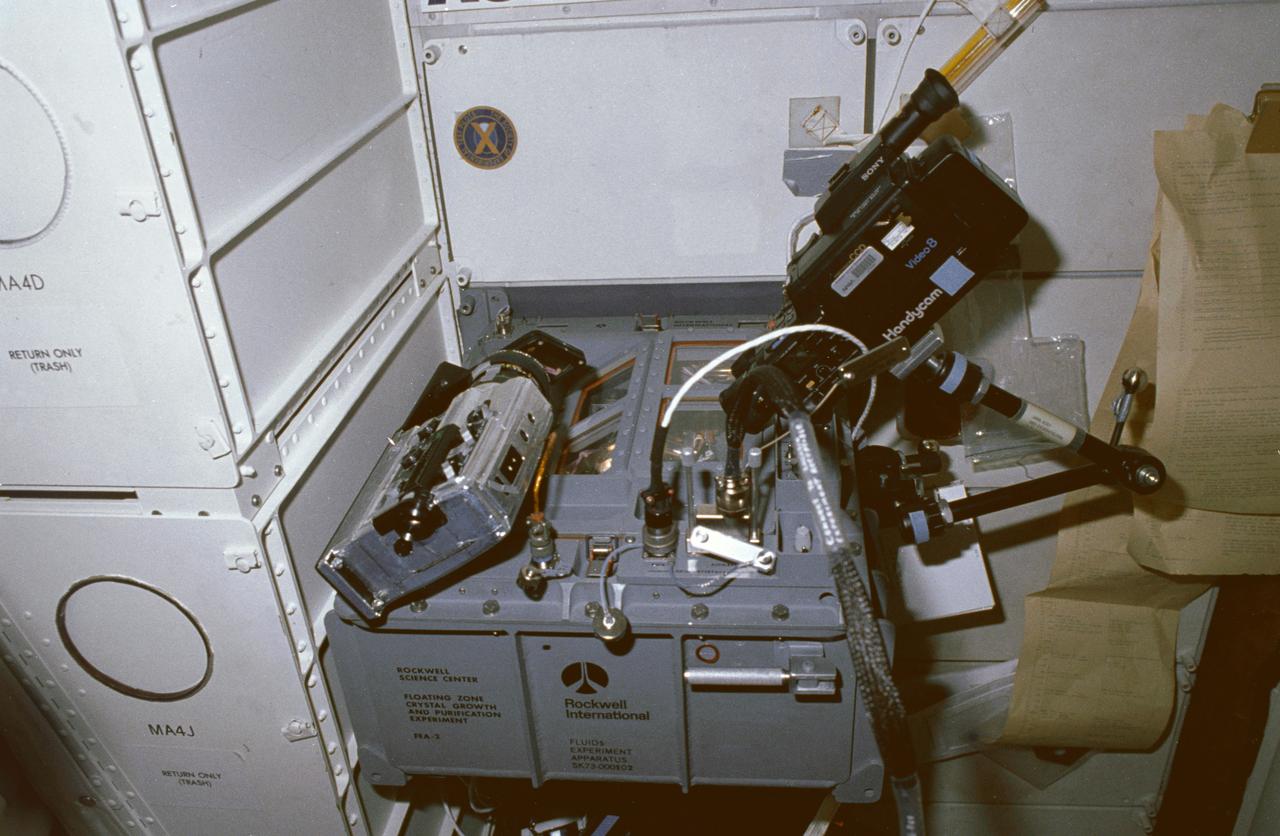
STS030-10-003 (4-8 May 1989) --- An overall scene of the onboard materials science project for STS-30. Seen is the fluids experiment apparatus, supported by an accompanying computer and an 8mm camcorder for its operation. Another major component of the project-- Astronaut Mary L. Cleave, who devoted a great deal of STS-30 monitoring various experiments--is out of frame.
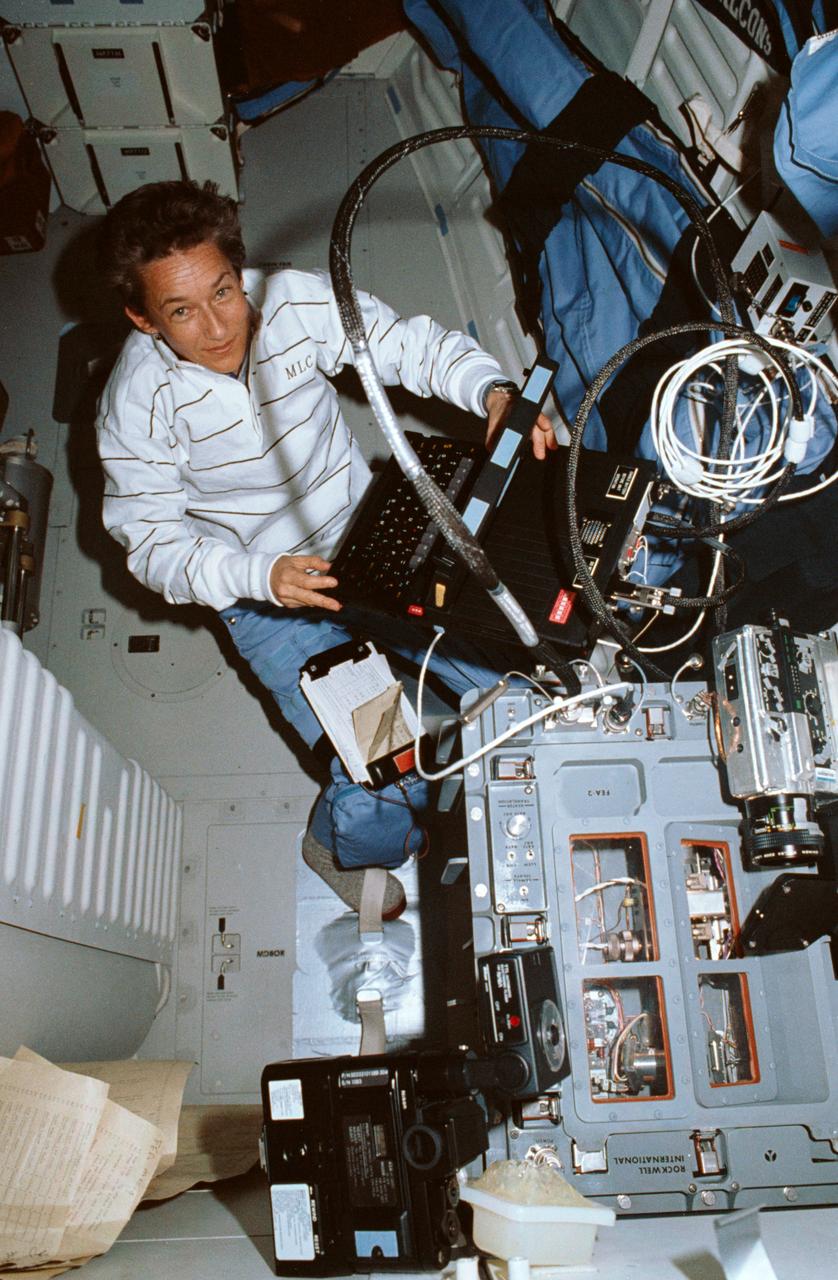
STS030-02-018 (4-8 May 1989) --- A 35mm overall scene of the operations devoted to the fluids experiment apparatus (FEA) aboard Atlantis for NASA’s STS-30 mission. Astronaut Mary L. Cleave, mission specialist, is seen with the computer which is instrumental in the carrying out of a variety of materials science experiments. Rockwell International is engaged in a joint endeavor agreement with NASA’s Office of Commercial Programs in the field of floating zone crystal growth and purification research. The March 1987 agreement provides for microgravity experiments to be performed in the company’s Microgravity Laboratory, the FEA. An 8 mm camcorder which documented details inside the apparatus is visible at bottom of the frame.
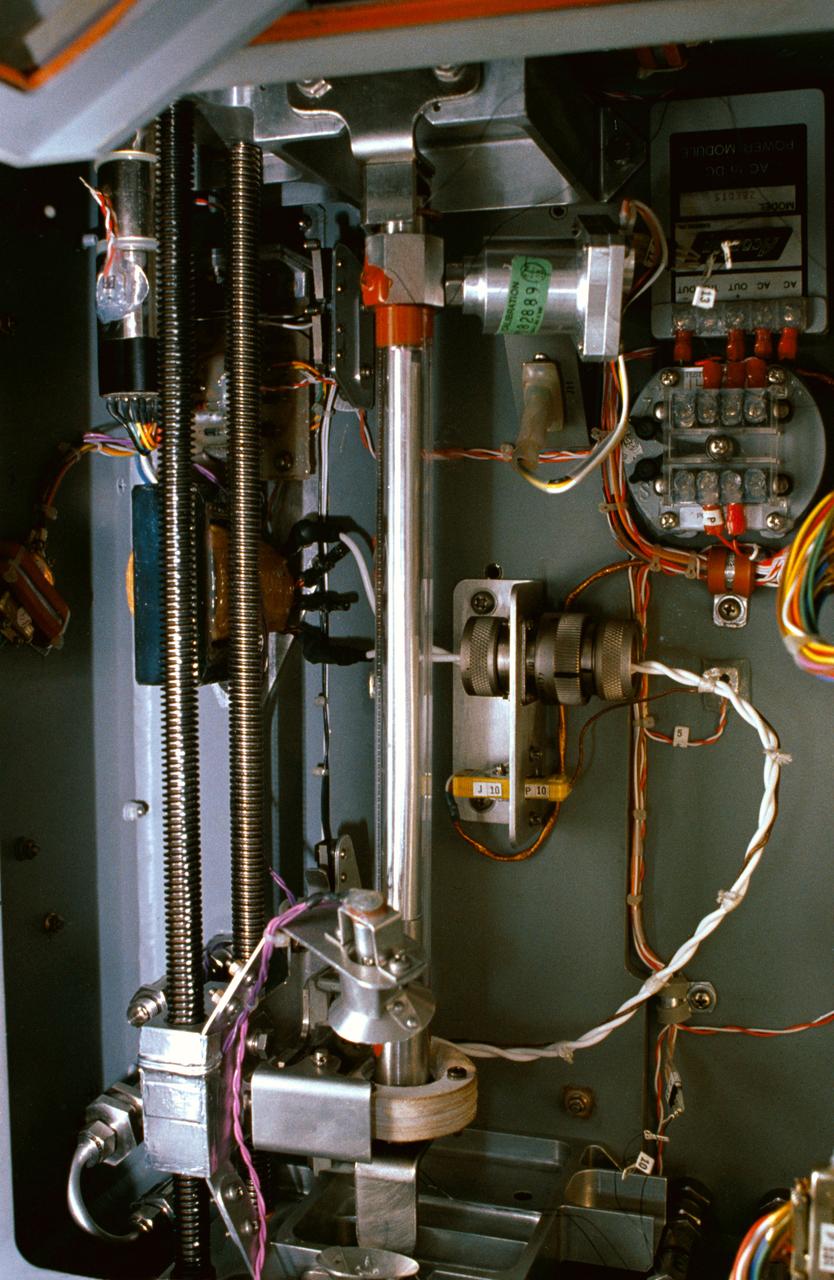
STS030-01-015 (4-8 May 1989) --- A 35mm close-up view of the Fluids Experiment Apparatus (FEA) aboard Atlantis for NASA’s STS-30 mission. Rockwell International is engaged in a joint endeavor agreement with NASA’s Office of Commercial Programs in the field of floating zone crystal growth and purification research. The March 1987 agreement provides for microgravity experiments to be performed in the company’s Microgravity Laboratory, the FEA. Crewmembers, especially Mary L. Cleave, devoted a great deal of onboard time to the monitoring of various materials science experiments using the apparatus.
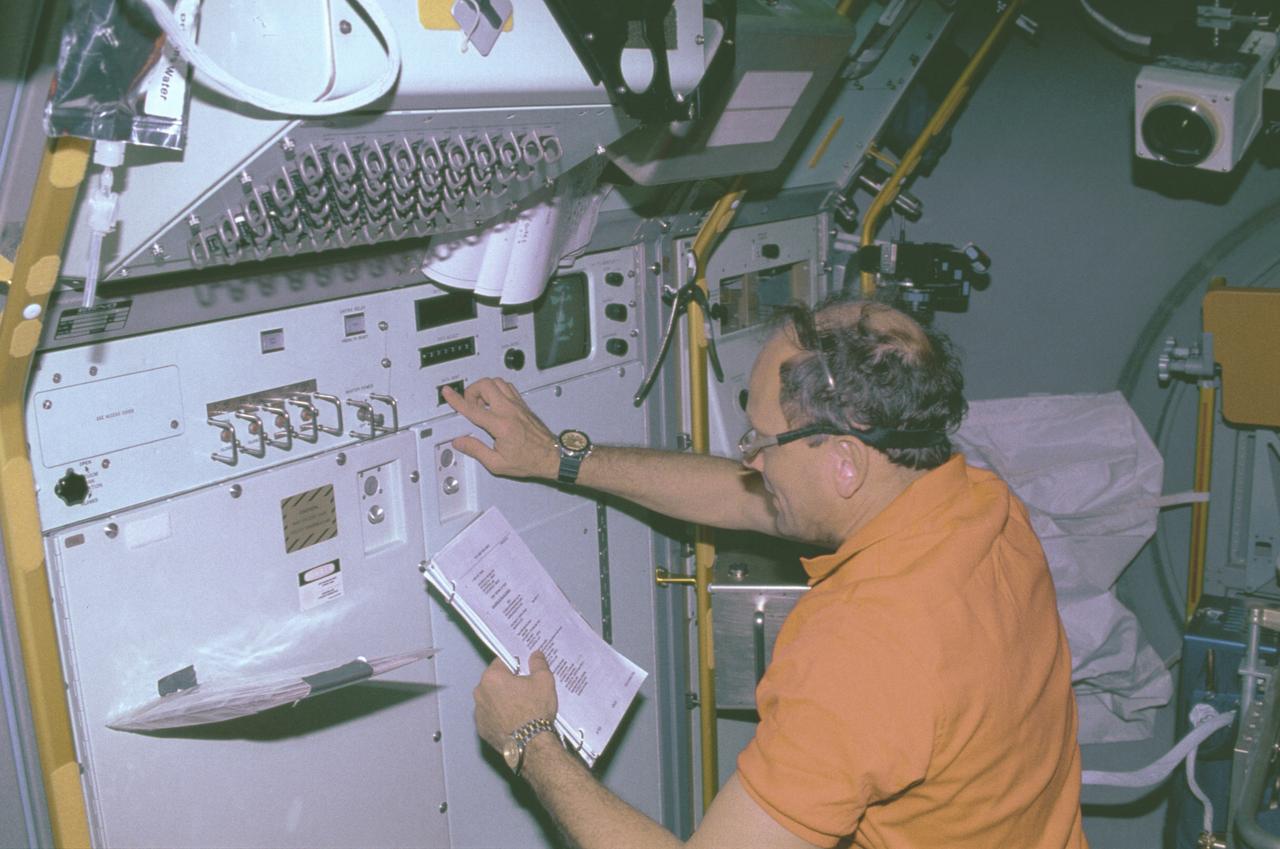
The IML-1 mission was the first in a series of Shuttle flights dedicated to fundamental materials and life sciences research with the international partners. The participating space agencies included: NASA, the 14-nation European Space Agency (ESA), the Canadian Space Agency (CSA), The French National Center of Space Studies (CNES), the German Space Agency and the German Aerospace Research Establishment (DAR/DLR), and the National Space Development Agency of Japan (NASDA). Dedicated to the study of life and materials sciences in microgravity, the IML missions explored how life forms adapt to weightlessness and investigated how materials behave when processed in space. Both life and materials sciences benefited from the extended periods of microgravity available inside the Spacelab science module in the cargo bay of the Space Shuttle Orbiter. This photograph shows Astronaut Norman Thagard performing the fluid experiment at the Fluid Experiment System (FES) facility inside the laboratory module. The FES facility had sophisticated optical systems for imaging fluid flows during materials processing, such as experiments to grow crystals from solution and solidify metal-modeling salts. A special laser diagnostic technique recorded the experiments, holograms were made for post-flight analysis, and video was used to view the samples in space and on the ground. Managed by the Marshall Space Flight Center (MSFC), the IML-1 mission was launched on January 22, 1992 aboard the Shuttle Orbiter Discovery (STS-42).
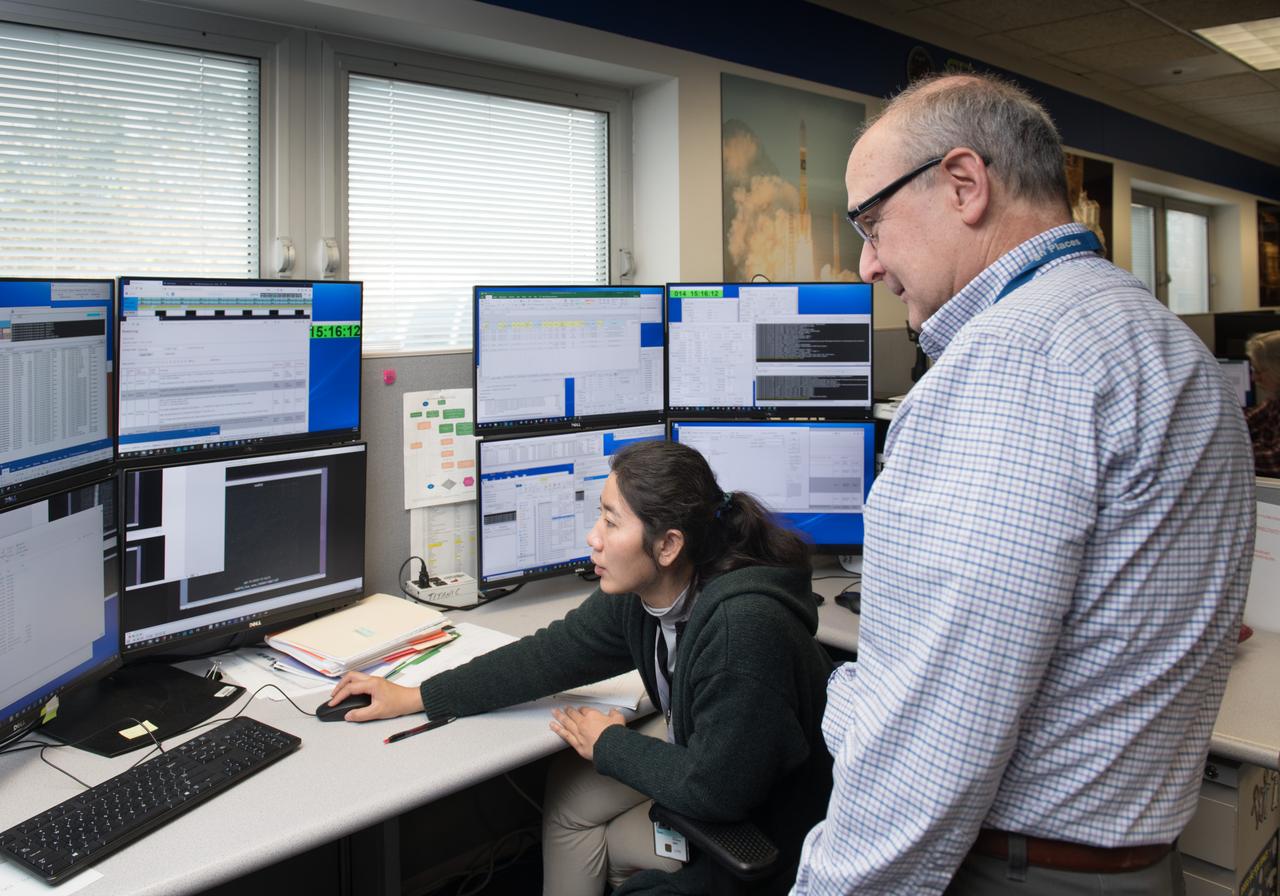
Advanced Colloids Experiment, Thermal 5-2, ACE T5-2 International Space Station, ISS, Fluids Integrated Rack, FIR Operations in the Telescience Support Center, TSC
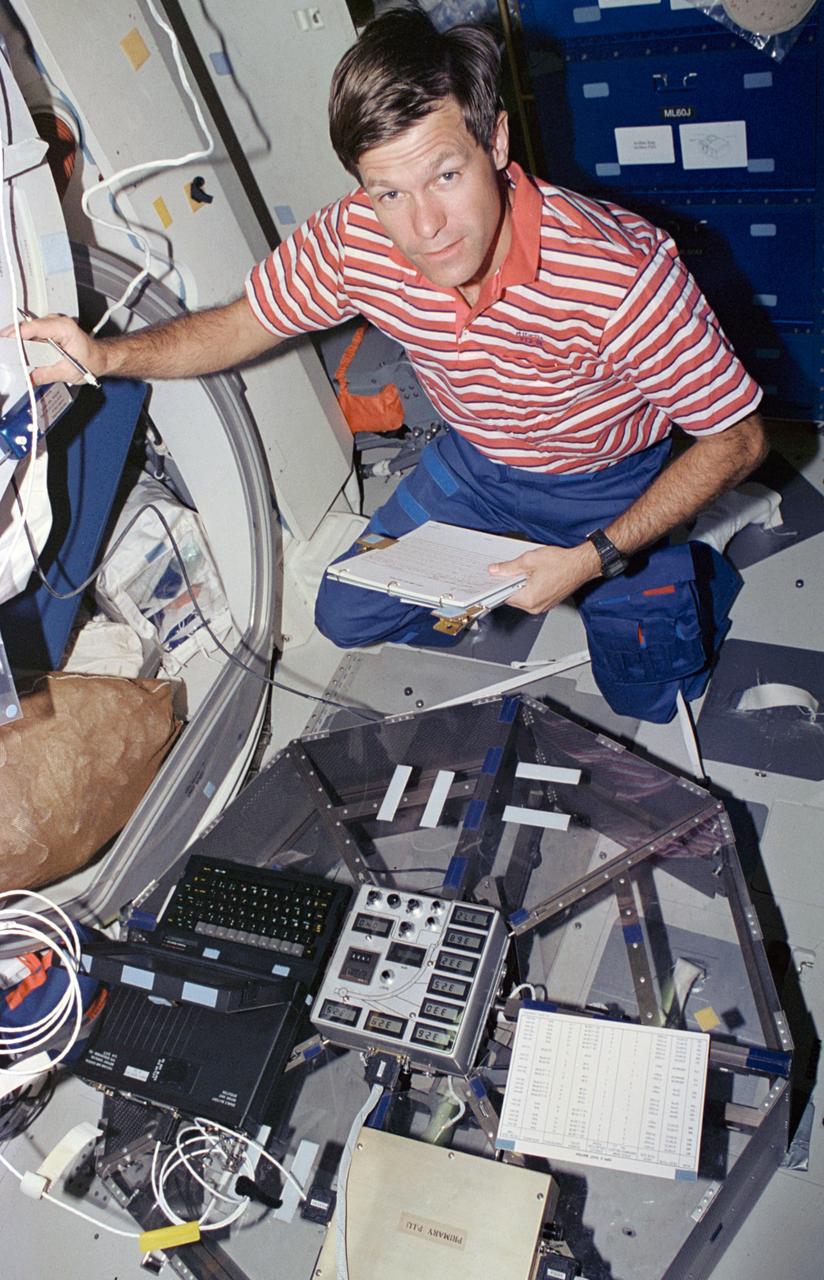
STS066-22-012 (3-14 Nov 1994) --- On the Space Shuttle Atlantis' mid-deck, astronaut Donald R. McMonagle, mission commander, works with the Heat Pipe Performance (HPP-2) experiment. HPP-2 was flown to investigate the thermal performance and fluid dynamics of heat pipes operating with asymmetric and multiple heating zones under microgravity conditions. McMonagle was joined by four other NASA astronauts and a European Space Agency (ESA) astronaut for 11-days aboard Atlantis in Earth-orbit in support of the Atmospheric Laboratory for Applications and Science (ATLAS-3) mission.
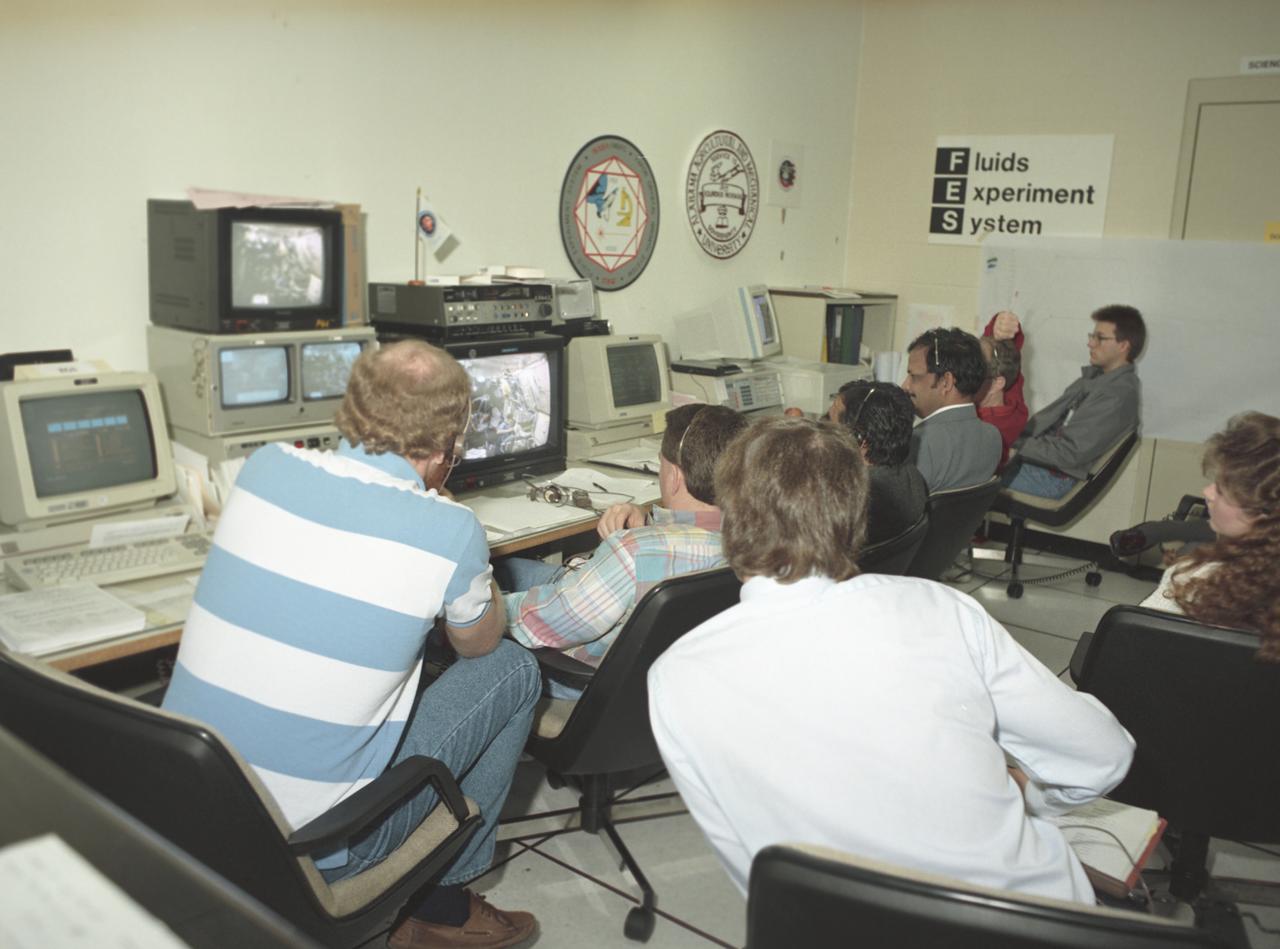
This photograph shows activities during the International Microgravity Laboratory-1 (IML-1) mission (STS-42) in the Payload Operations Control Center (POCC) at the Marshall Space Flight Center. Members of the Fluid Experiment System (FES) group monitor the progress of their experiment through video at the POCC. The IML-1 mission was the first in a series of Shuttle flights dedicated to fundamental materials and life sciences research. The mission was to explore, in depth, the complex effects of weightlessness on living organisms and materials processing. The crew conducted experiments on the human nervous system's adaptation to low gravity and the effects on other life forms such as shrimp eggs, lentil seedlings, fruit fly eggs, and bacteria. Low gravity materials processing experiments included crystal growth from a variety of substances such as enzymes, mercury, iodine, and virus. The International space science research organizations that participated in this mission were: The U.S. National Aeronautics and Space Administion, the European Space Agency, the Canadian Space Agency, the French National Center for Space Studies, the German Space Agency, and the National Space Development Agency of Japan. The POCC was the air/ground communication charnel used between astronauts aboard the Spacelab and scientists, researchers, and ground control teams during the Spacelab missions. The facility made instantaneous video and audio communications possible for scientists on the ground to follow the progress and to send direct commands of their research almost as if they were in space with the crew.
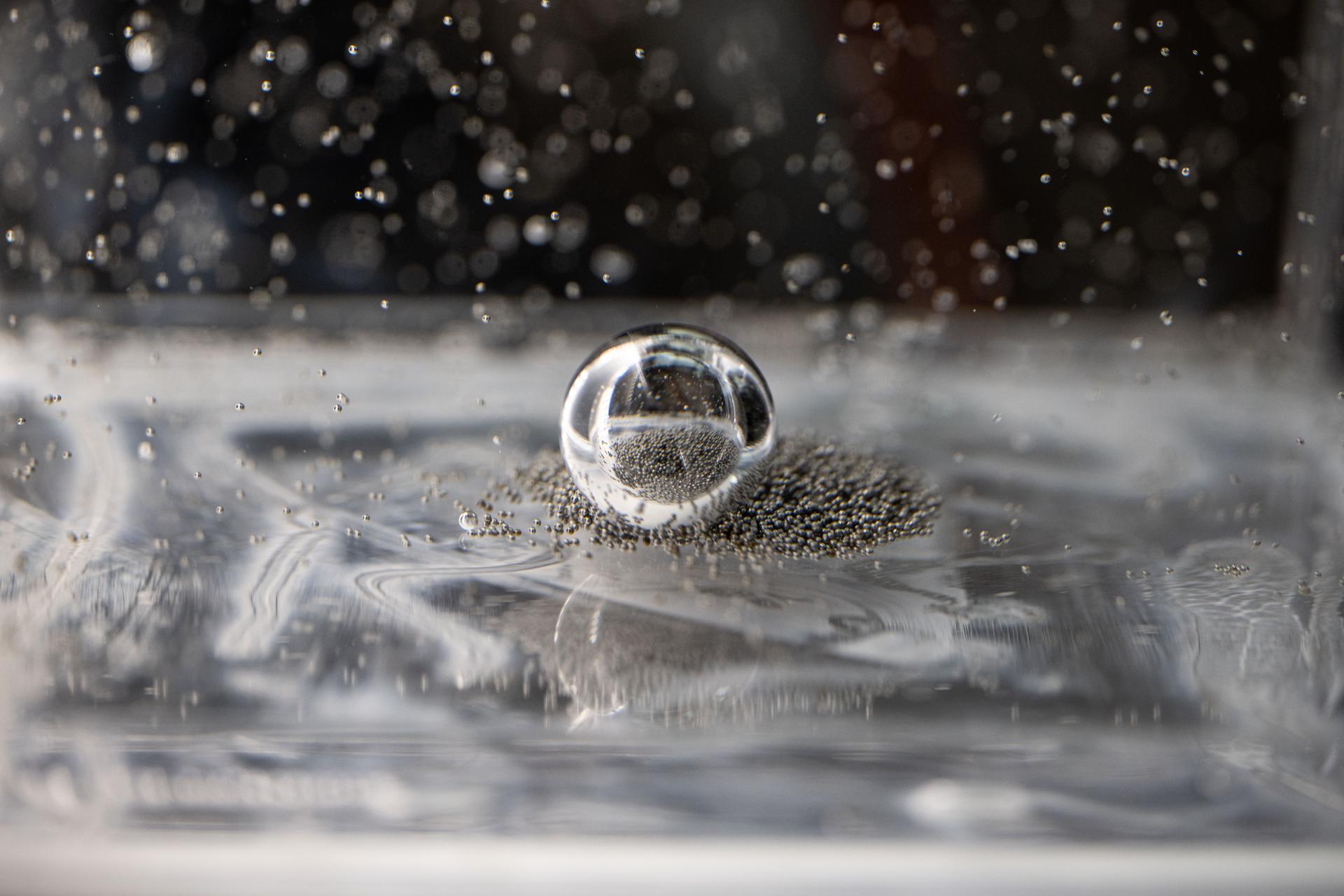
iss073e0917381 (Oct. 20, 2025) --- Tiny ball bearings surround a larger central bearing during the Fluid Particles experiment, conducted inside the Microgravity Science Glovebox (MSG) aboard the International Space Station’s Destiny laboratory module. A bulk container installed in the MSG, filled with viscous fluid and embedded particles, is subjected to oscillating frequencies to observe how the particles cluster and form larger structures in microgravity. Insights from this research may advance fire suppression, lunar dust mitigation, and plant growth in space. On Earth, the findings could inform our understanding of pollen dispersion, algae blooms, plastic pollution, and sea salt transport during storms.
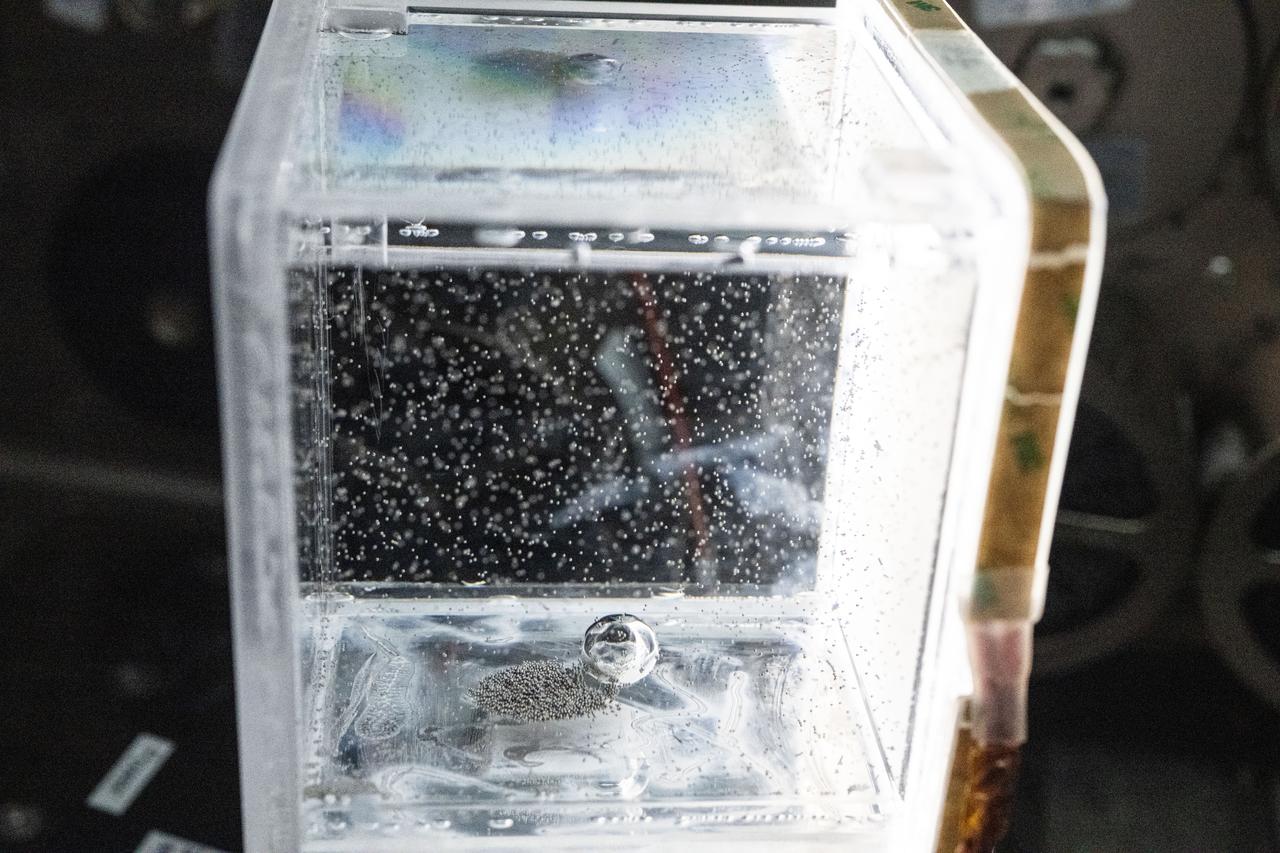
iss073e0917376 (Oct. 20, 2025) --- Tiny ball bearings surround a larger central bearing during the Fluid Particles experiment, conducted inside the Microgravity Science Glovebox (MSG) aboard the International Space Station’s Destiny laboratory module. A bulk container installed in the MSG, filled with viscous fluid and embedded particles, is subjected to oscillating frequencies to observe how the particles cluster and form larger structures in microgravity. Insights from this research may advance fire suppression, lunar dust mitigation, and plant growth in space. On Earth, the findings could inform our understanding of pollen dispersion, algae blooms, plastic pollution, and sea salt transport during storms.
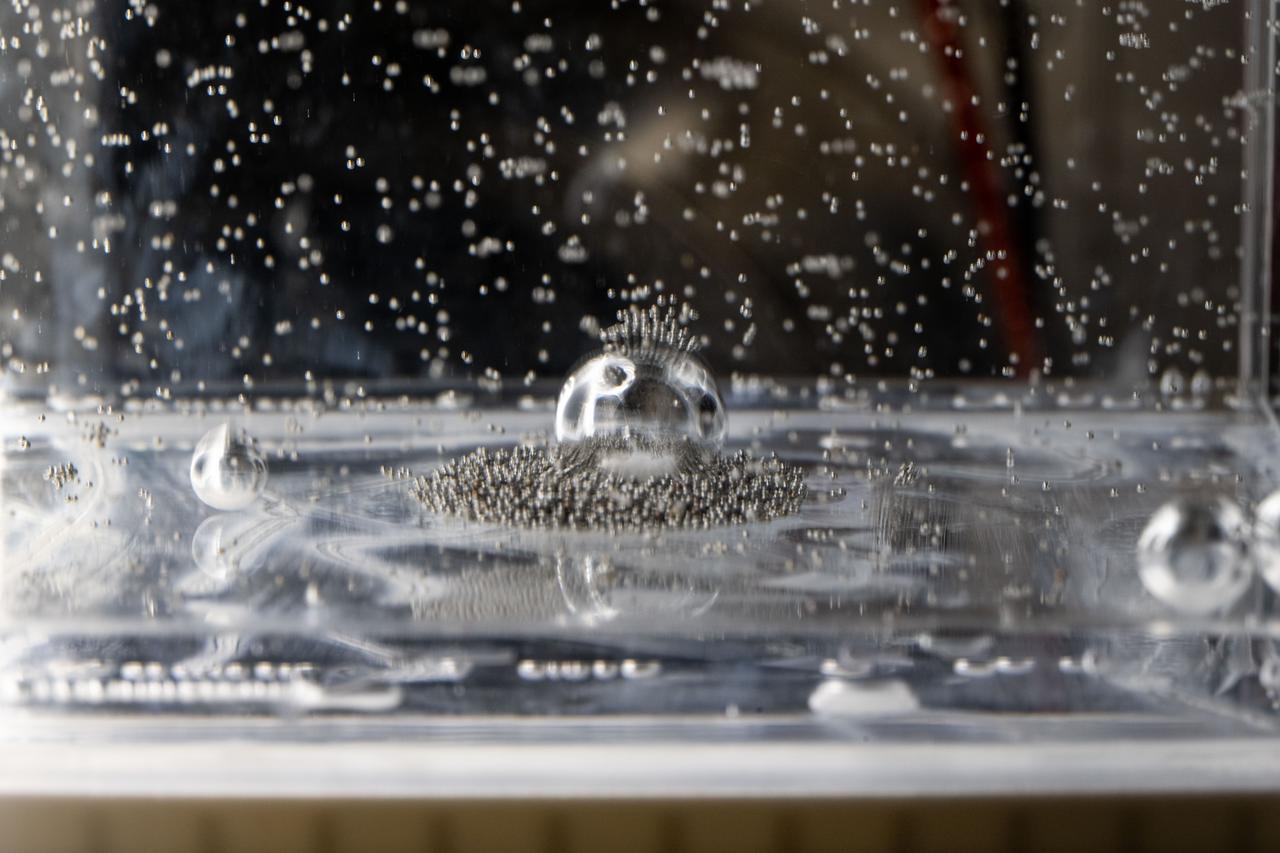
iss073e0917383 (Oct. 20, 2025) --- Tiny ball bearings surround a larger central bearing during the Fluid Particles experiment, conducted inside the Microgravity Science Glovebox (MSG) aboard the International Space Station’s Destiny laboratory module. A bulk container installed in the MSG, filled with viscous fluid and embedded particles, is subjected to oscillating frequencies to observe how the particles cluster and form larger structures in microgravity. Insights from this research may advance fire suppression, lunar dust mitigation, and plant growth in space. On Earth, the findings could inform our understanding of pollen dispersion, algae blooms, plastic pollution, and sea salt transport during storms.
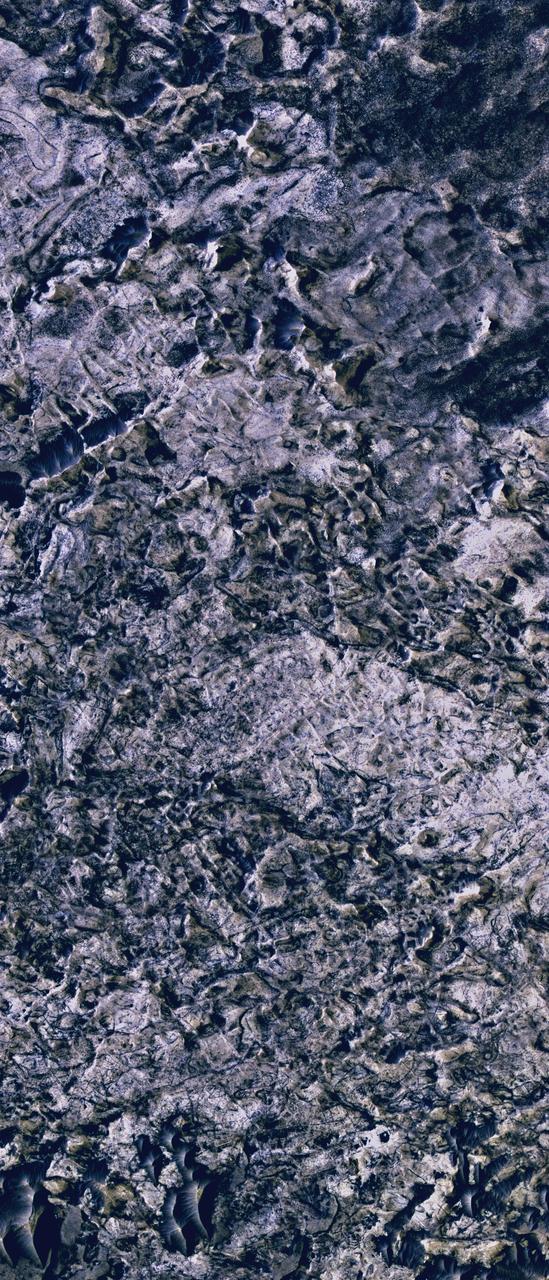
This image from the High Resolution Imaging Science Experiment camera on NASA Mars Reconnaissance Orbiter shows evidence for ancient fluid flow along fractures in Mars Meridiani Planum region
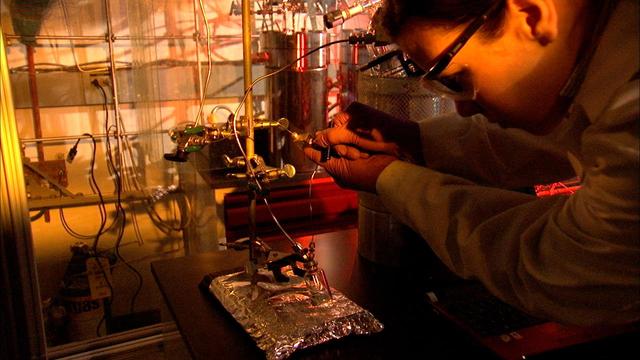
Lauren White, a scientist at NASA's Jet Propulsion Laboratory, adjusts an experiment that simulates how ancient seawater and fluid from hydrothermal vents could have reacted with minerals from the seafloor to create organic molecules 4.5 billion years ago. The image was taken at JPL in 2014. https://photojournal.jpl.nasa.gov/catalog/PIA23688
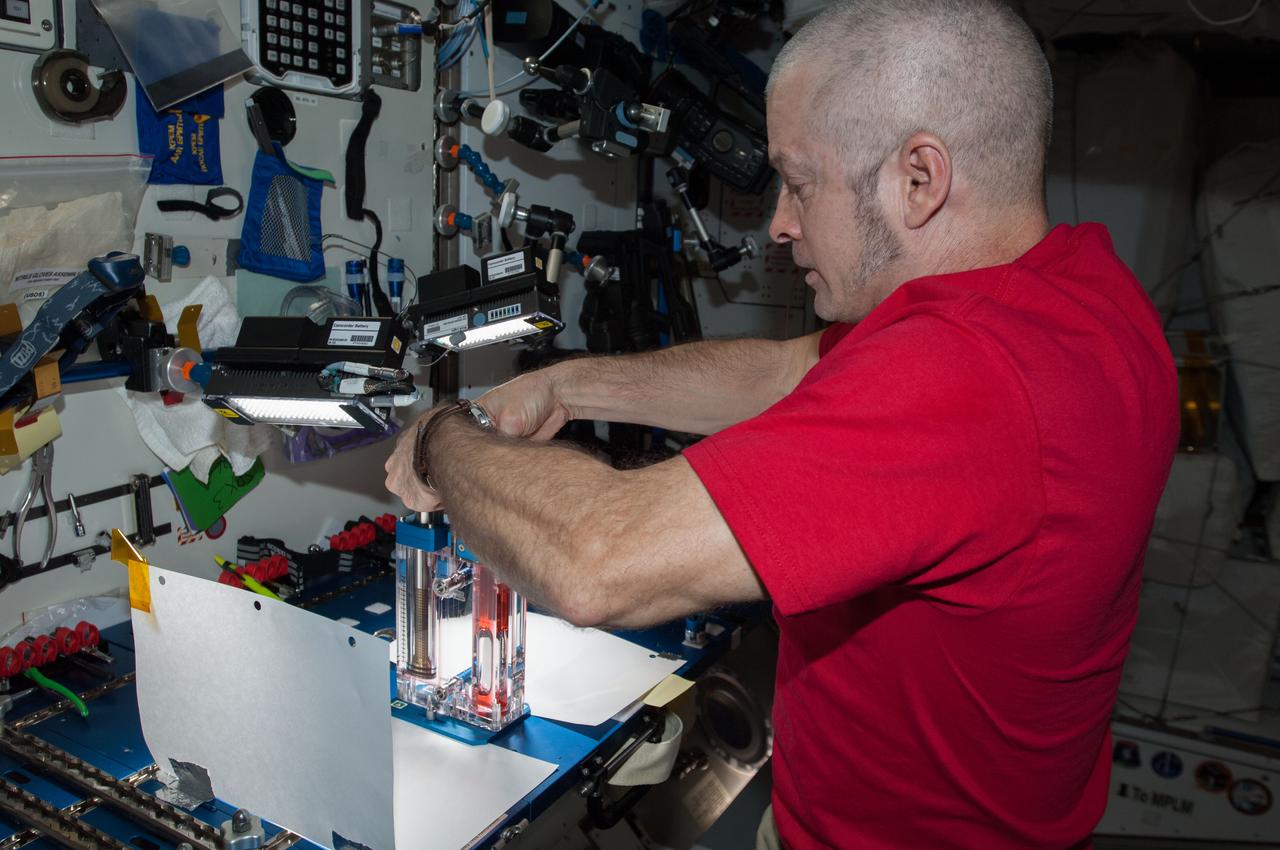
ISS040-E-032820 (3 July 2014) --- NASA astronaut Steve Swanson, Expedition 40 commander, conducts a session with the Capillary Flow Experiment (CFE) in the Harmony node of the International Space Station. CFE is a suite of fluid physics experiments that investigate how fluids move up surfaces in microgravity. The results aim to improve current computer models that are used by designers of low gravity fluid systems and may improve fluid transfer systems for water on future spacecraft.
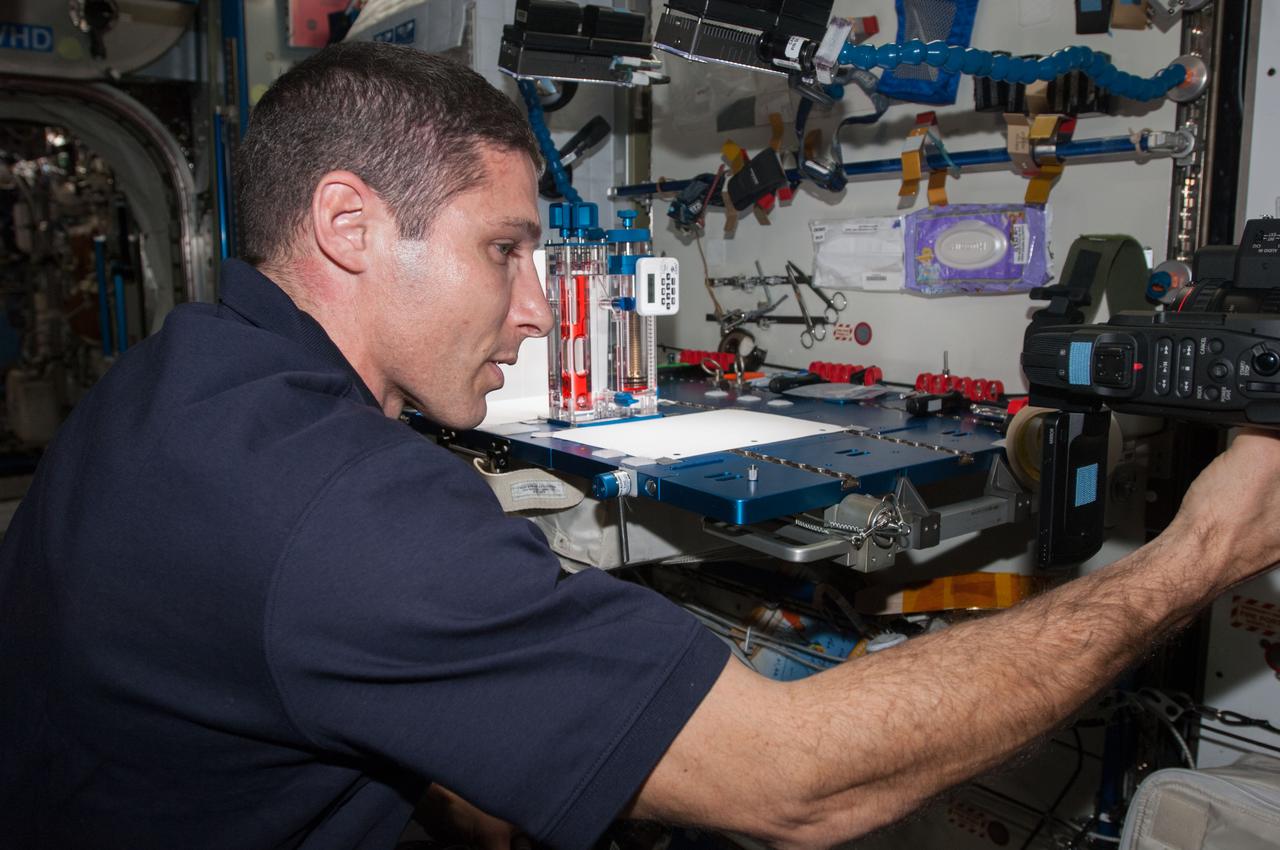
ISS038-E-000269 (11 Nov. 2013) --- NASA astronaut Michael Hopkins, Expedition 38 flight engineer, conducts a session with the Capillary Flow Experiment (CFE) in the Harmony node of the International Space Station. CFE is a suite of fluid physics experiments that investigate how fluids move up surfaces in microgravity. The results aim to improve current computer models that are used by designers of low gravity fluid systems and may improve fluid transfer systems for water on future spacecraft.
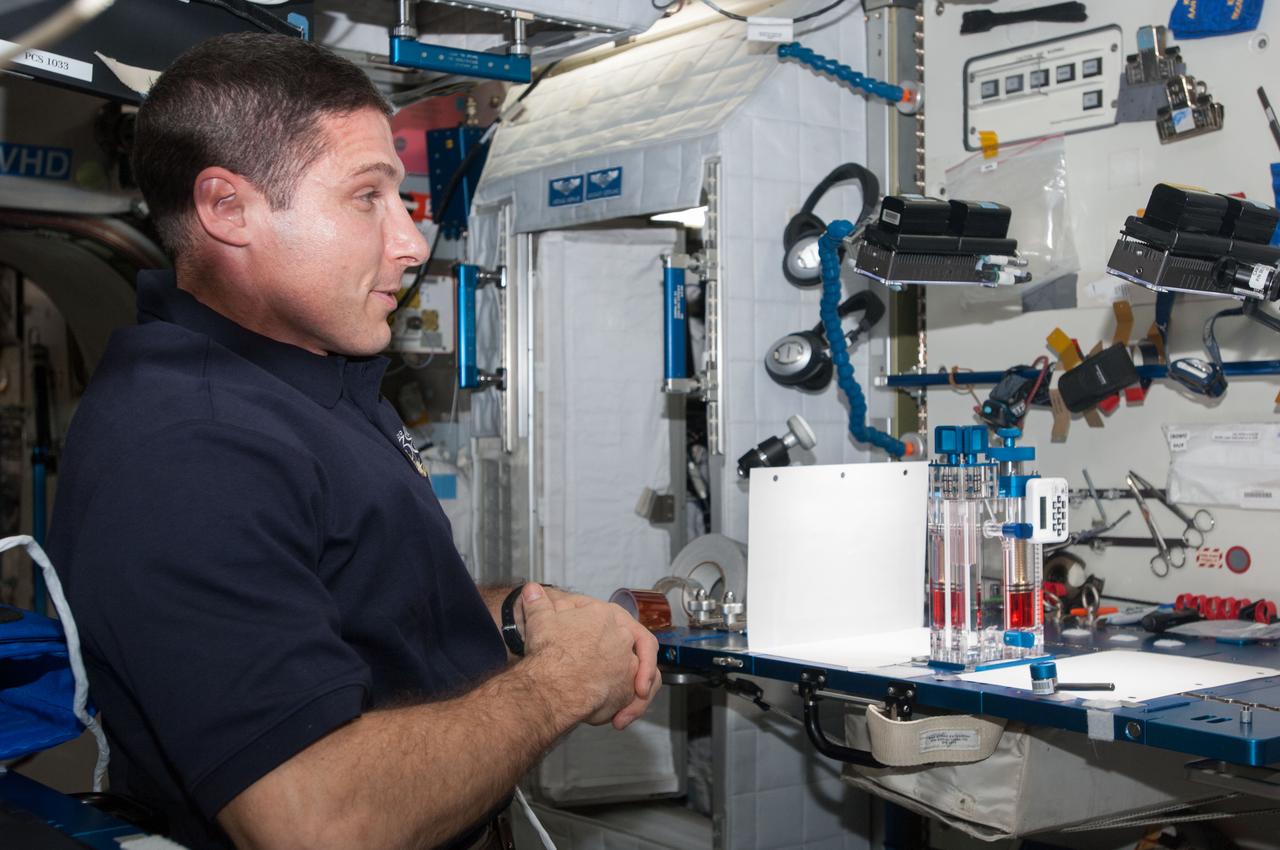
ISS038-E-000263 (11 Nov. 2013) --- NASA astronaut Michael Hopkins, Expedition 38 flight engineer, conducts a session with the Capillary Flow Experiment (CFE) in the Harmony node of the International Space Station. CFE is a suite of fluid physics experiments that investigate how fluids move up surfaces in microgravity. The results aim to improve current computer models that are used by designers of low gravity fluid systems and may improve fluid transfer systems for water on future spacecraft.
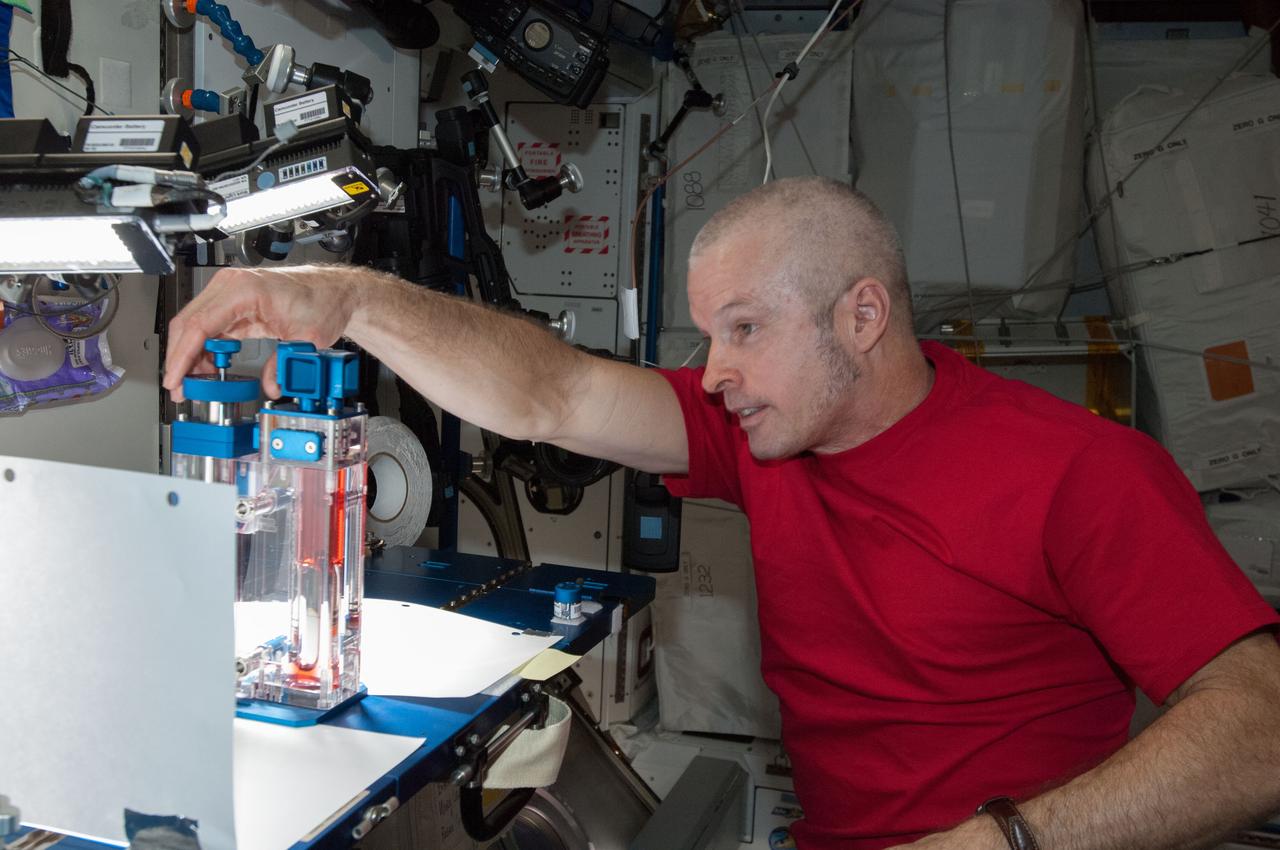
ISS040-E-032825 (3 July 2014) --- NASA astronaut Steve Swanson, Expedition 40 commander, conducts a session with the Capillary Flow Experiment (CFE) in the Harmony node of the International Space Station. CFE is a suite of fluid physics experiments that investigate how fluids move up surfaces in microgravity. The results aim to improve current computer models that are used by designers of low gravity fluid systems and may improve fluid transfer systems for water on future spacecraft.
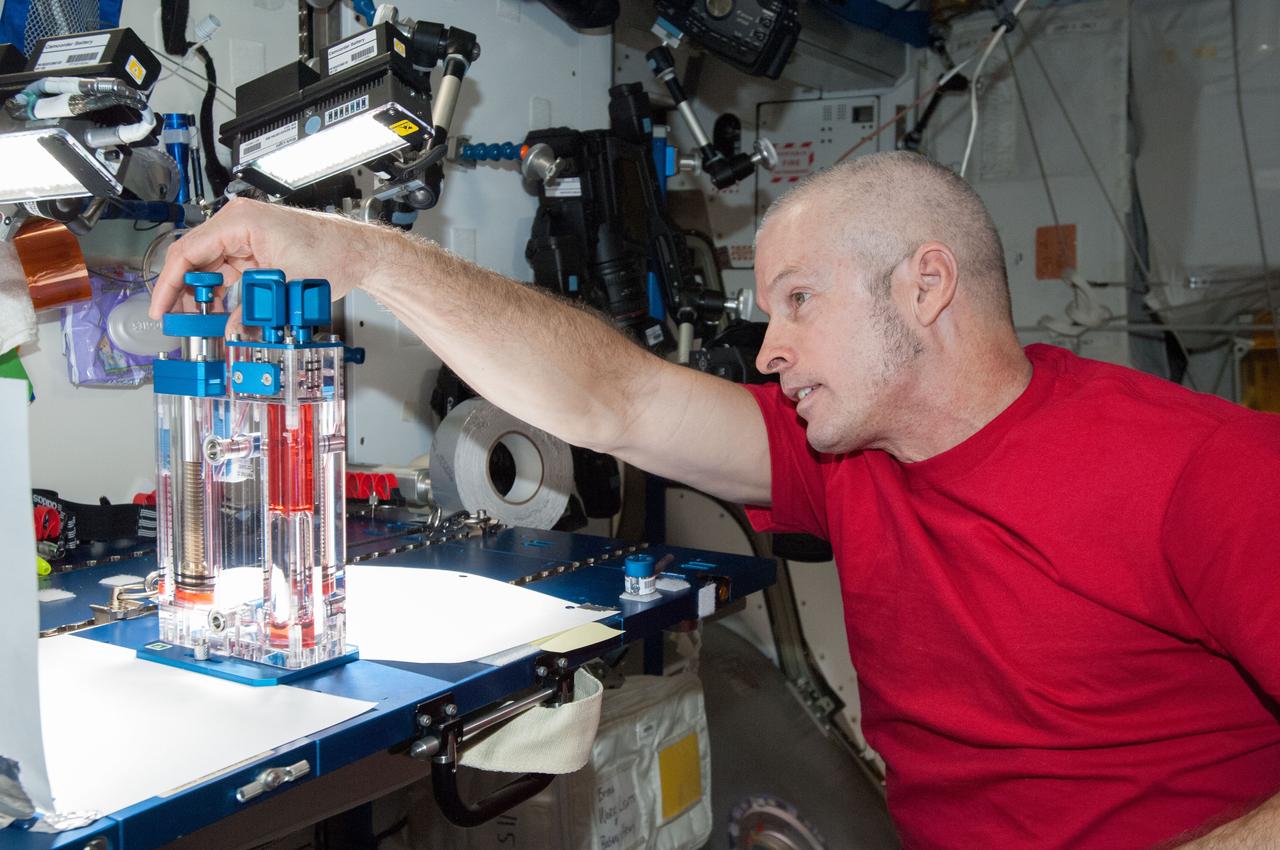
ISS040-E-032827 (3 July 2014) --- NASA astronaut Steve Swanson, Expedition 40 commander, conducts a session with the Capillary Flow Experiment (CFE) in the Harmony node of the International Space Station. CFE is a suite of fluid physics experiments that investigate how fluids move up surfaces in microgravity. The results aim to improve current computer models that are used by designers of low gravity fluid systems and may improve fluid transfer systems for water on future spacecraft.
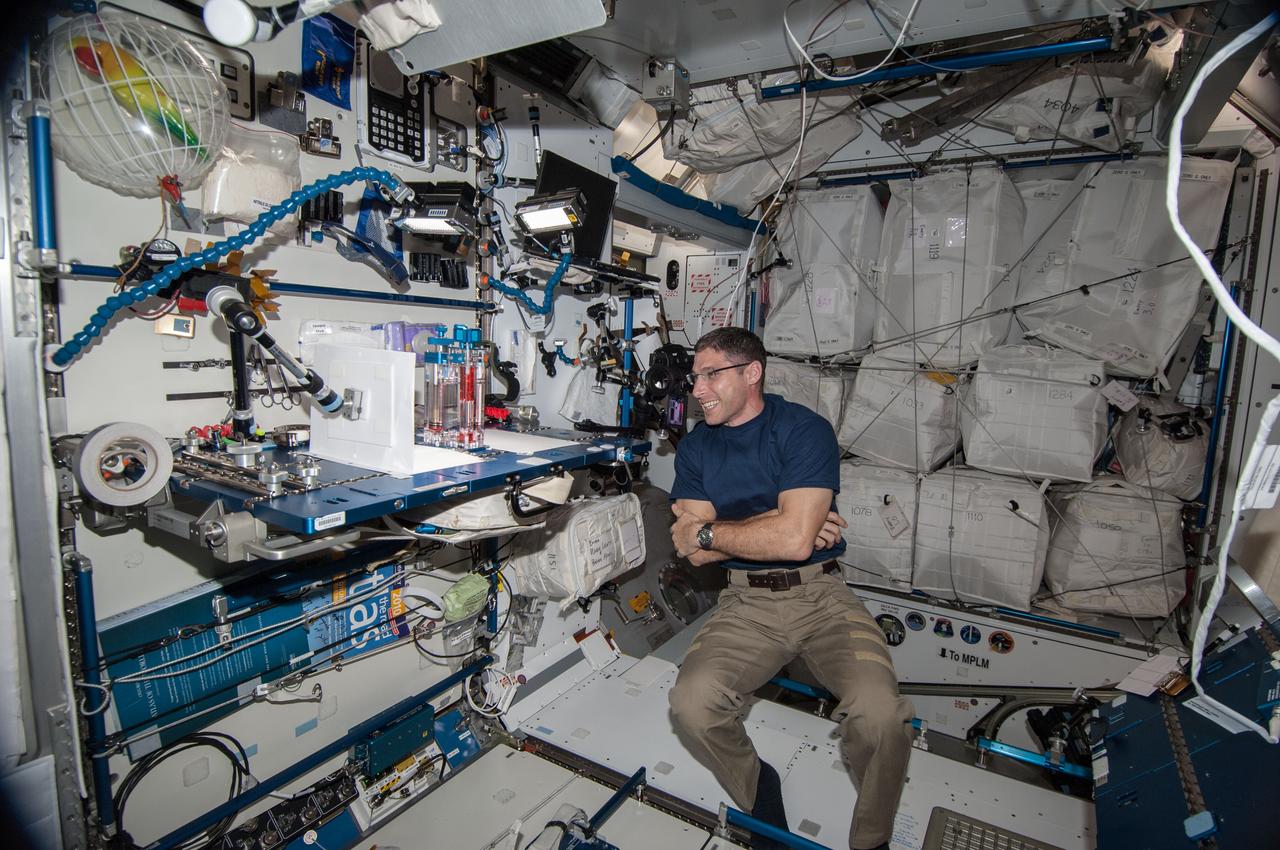
ISS038-E-005962 (19 Nov. 2013) --- NASA astronaut Michael Hopkins, Expedition 38 flight engineer, conducts a session with the Capillary Flow Experiment (CFE-2) in the Harmony node of the International Space Station. CFE is a suite of fluid physics experiments that investigate how fluids behave in microgravity which could benefit water and fuel delivery systems on future spacecraft. Scientists designed the Capillary Flow Experiment-2 to study properties of fluids and bubbles inside containers with a specific 3-D geometry.
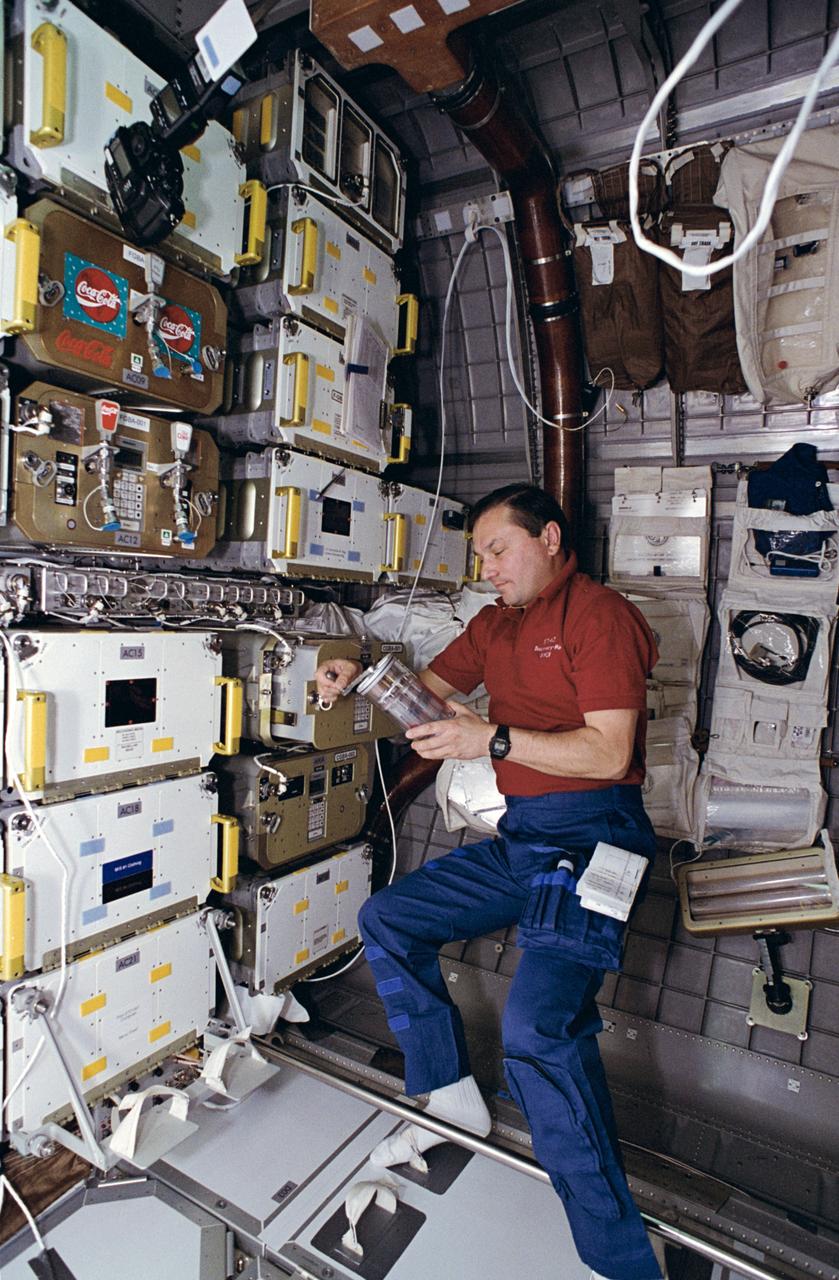
STS063-68-018 (3-11 Feb 1995) --- Russian cosmonaut Vladimir G. Titov, mission specialist, handles vials of samples for the Commercial Generic Bioprocessing Apparatus (CGBA) experiment in SpaceHab 3 Module onboard the Earth-orbiting Space Shuttle Discovery. Titov joined five NASA astronauts for eight days of research in Earth-orbit.
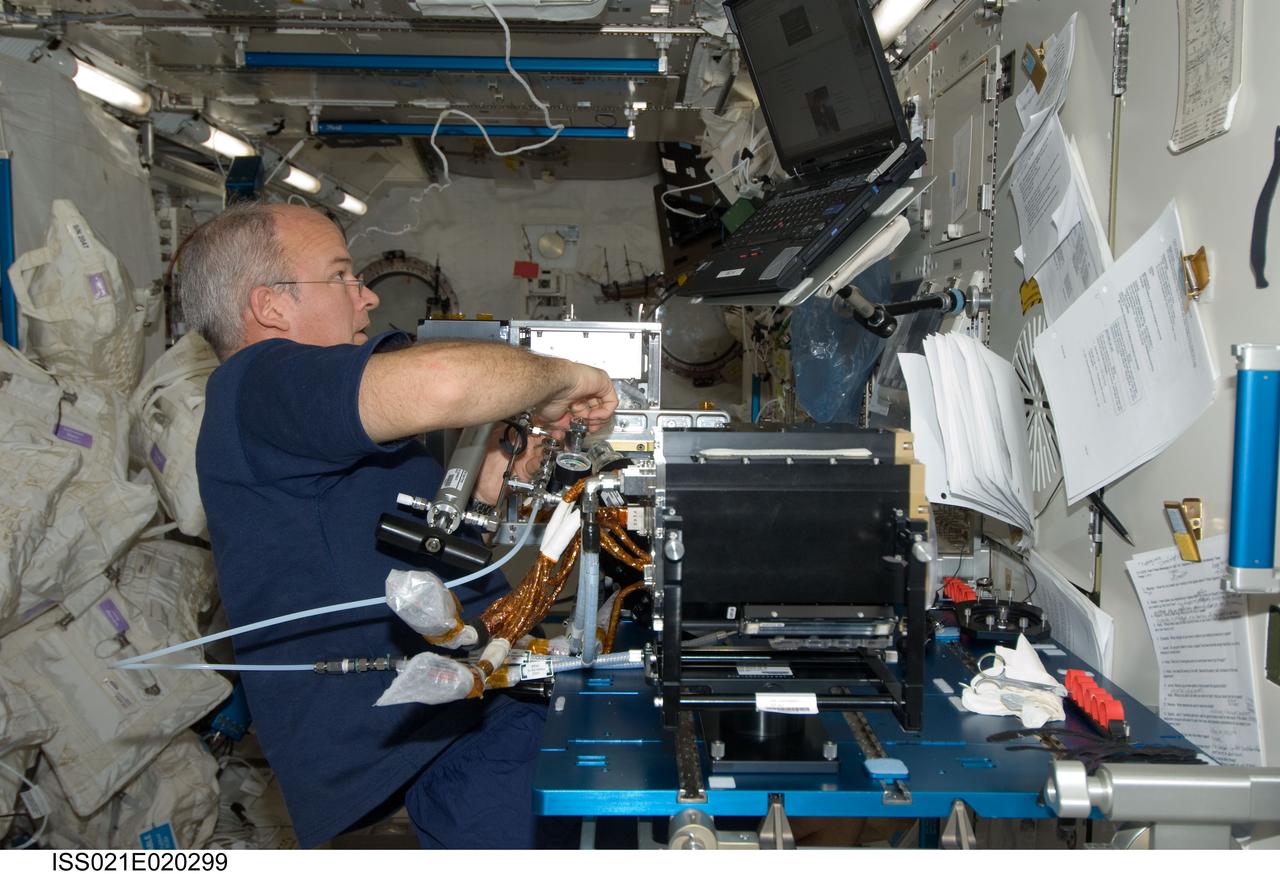
ISS021-E-020299 (5 Nov. 2009) --- NASA astronaut Jeffrey Williams, Expedition 21 flight engineer, works with Fluid Physics Experiment Facility/Marangoni Surface (FPEF MS) Core hardware in the Kibo laboratory of the International Space Station. The Marangoni convection experiment in the FPEF examines fluid tension flow in micro-G.
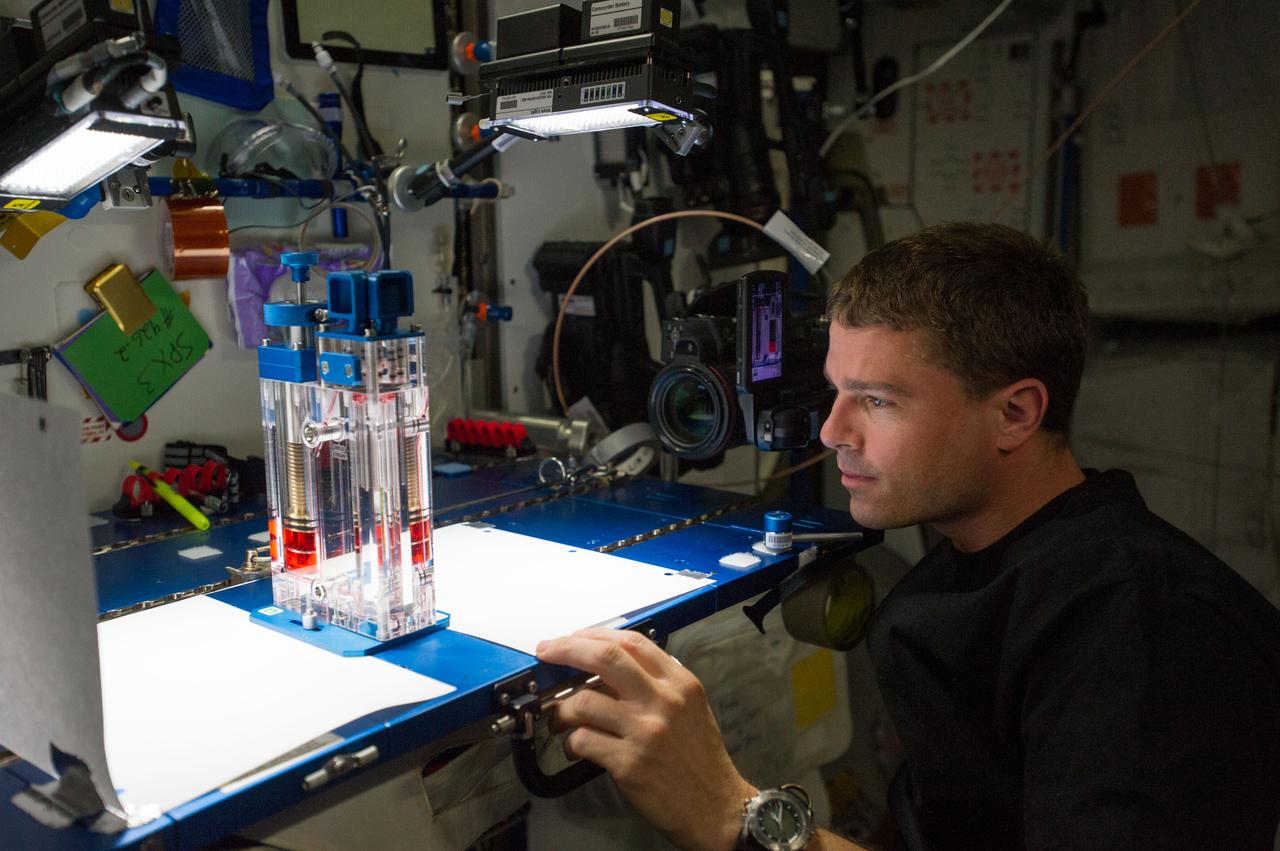
ISS040-E-015539 (19 June 2014) --- NASA astronaut Reid Wiseman, Expedition 40 flight engineer, conducts a session with the Capillary Flow Experiment (CFE-2) in the Harmony node of the International Space Station. CFE is a suite of fluid physics experiments that investigate how fluids behave in microgravity which could benefit water and fuel delivery systems on future spacecraft. Scientists designed the CFE-2 to study properties of fluids and bubbles inside containers with a specific 3-D geometry.
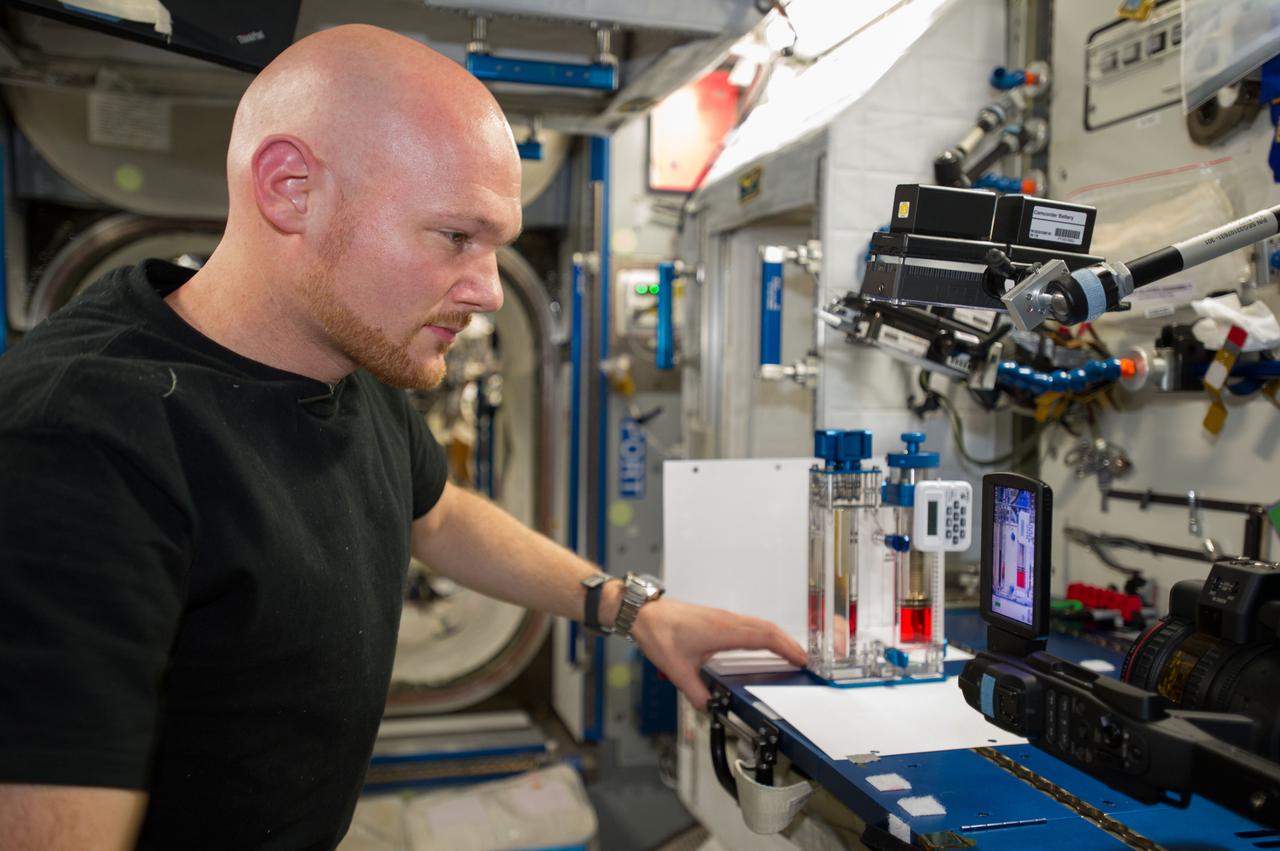
ISS040-E-015523 (19 June 2014) --- European Space Agency astronaut Alexander Gerst, Expedition 40 flight engineer, conducts a session with the Capillary Flow Experiment (CFE-2) in the Harmony node of the International Space Station. CFE is a suite of fluid physics experiments that investigate how fluids behave in microgravity which could benefit water and fuel delivery systems on future spacecraft. Scientists designed the CFE-2 to study properties of fluids and bubbles inside containers with a specific 3-D geometry.
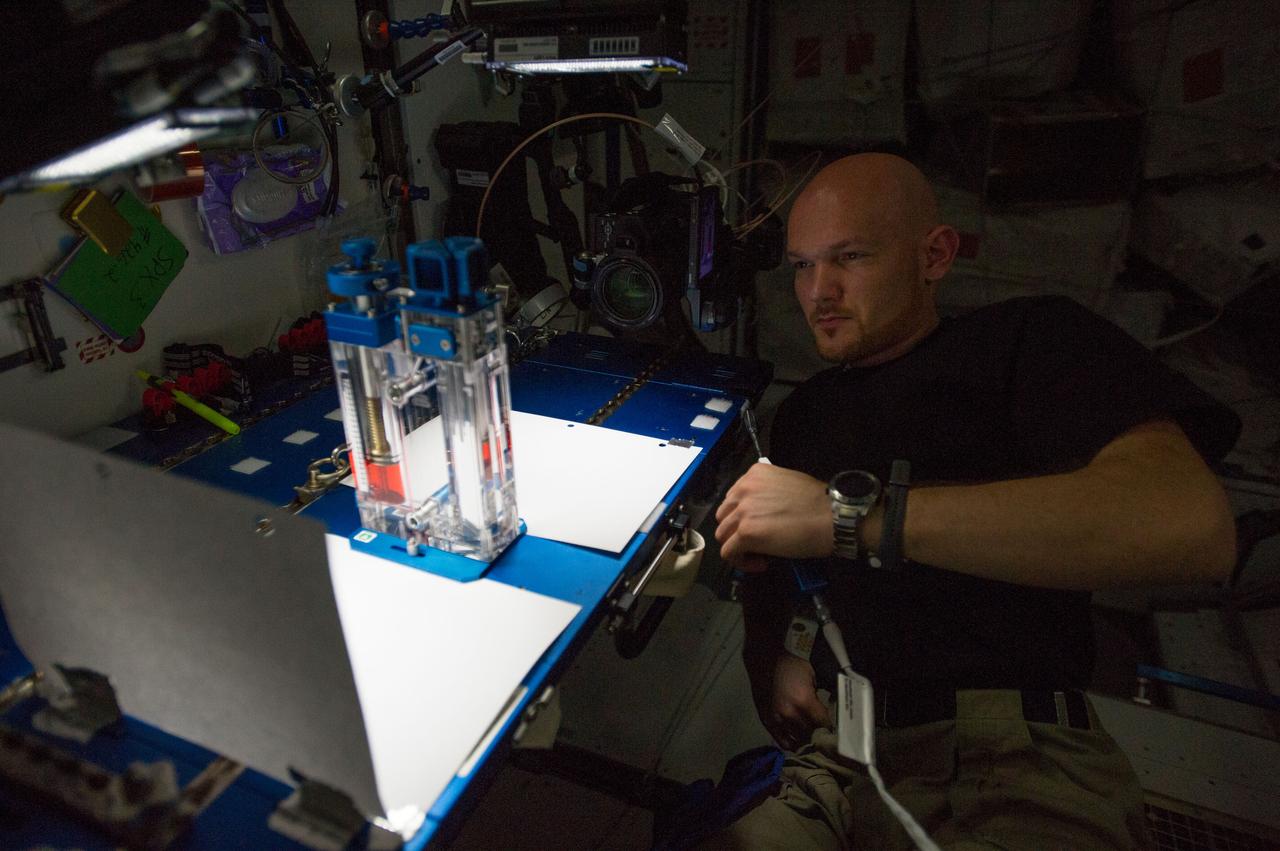
ISS040-E-015532 (19 June 2014) --- European Space Agency astronaut Alexander Gerst, Expedition 40 flight engineer, conducts a session with the Capillary Flow Experiment (CFE-2) in the Harmony node of the International Space Station. CFE is a suite of fluid physics experiments that investigate how fluids behave in microgravity which could benefit water and fuel delivery systems on future spacecraft. Scientists designed the CFE-2 to study properties of fluids and bubbles inside containers with a specific 3-D geometry.
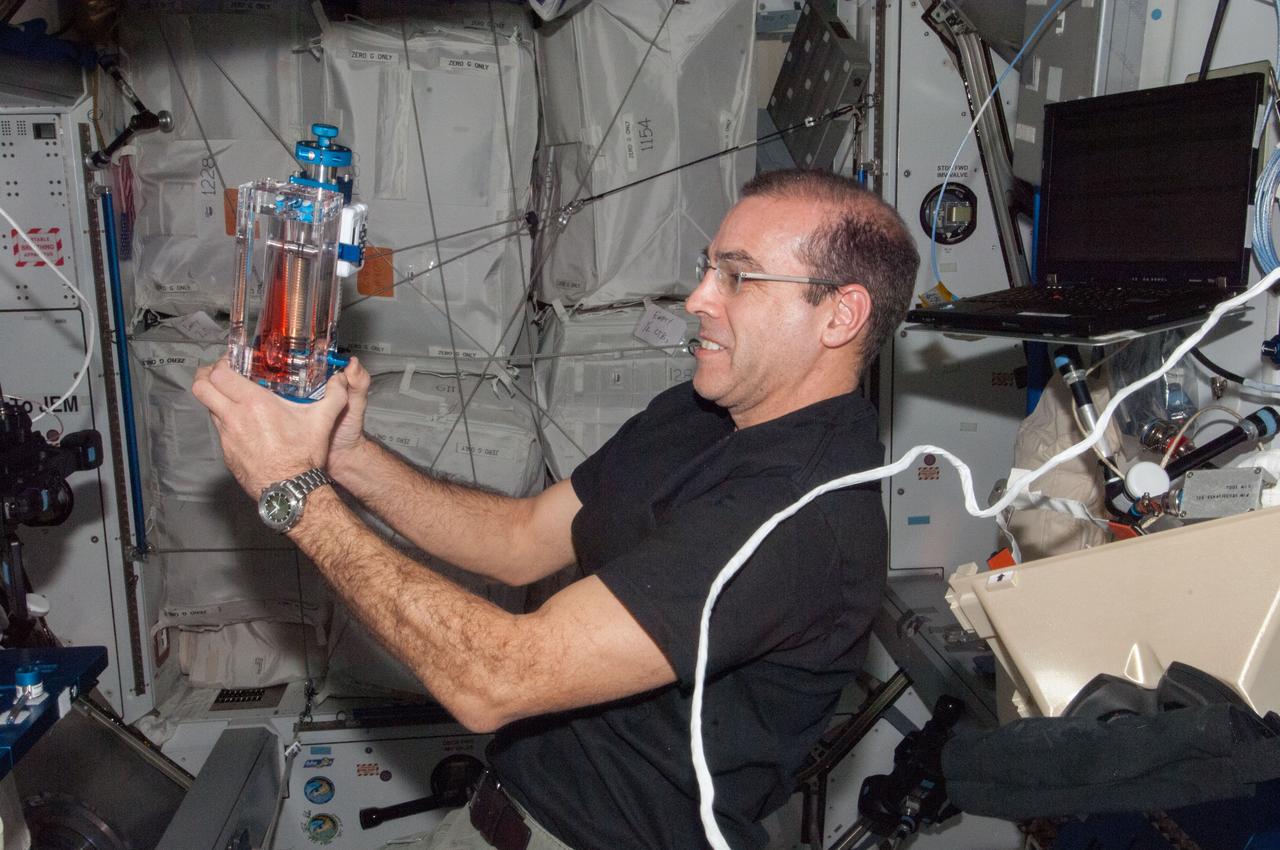
ISS038-E-025016 (3 Jan. 2014) --- NASA astronaut Rick Mastracchio, Expedition 38 flight engineer, conducts a session with the Capillary Flow Experiment (CFE-2) in the Harmony node of the International Space Station. CFE is a suite of fluid physics experiments that investigate how fluids behave in microgravity which could benefit water and fuel delivery systems on future spacecraft. Scientists designed the CFE-2 to study properties of fluids and bubbles inside containers with a specific 3-D geometry.
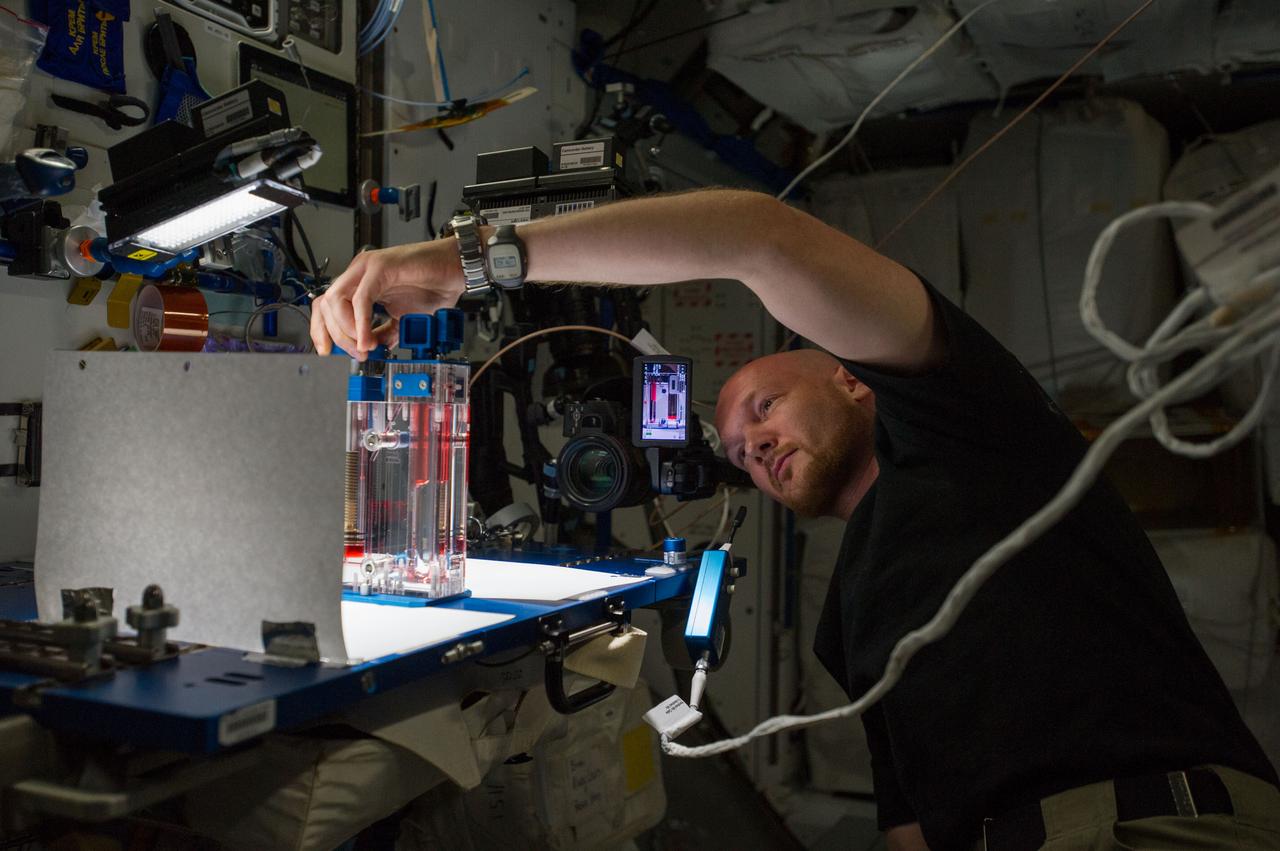
ISS040-E-015536 (19 June 2014) --- European Space Agency astronaut Alexander Gerst, Expedition 40 flight engineer, conducts a session with the Capillary Flow Experiment (CFE-2) in the Harmony node of the International Space Station. CFE is a suite of fluid physics experiments that investigate how fluids behave in microgravity which could benefit water and fuel delivery systems on future spacecraft. Scientists designed the CFE-2 to study properties of fluids and bubbles inside containers with a specific 3-D geometry.
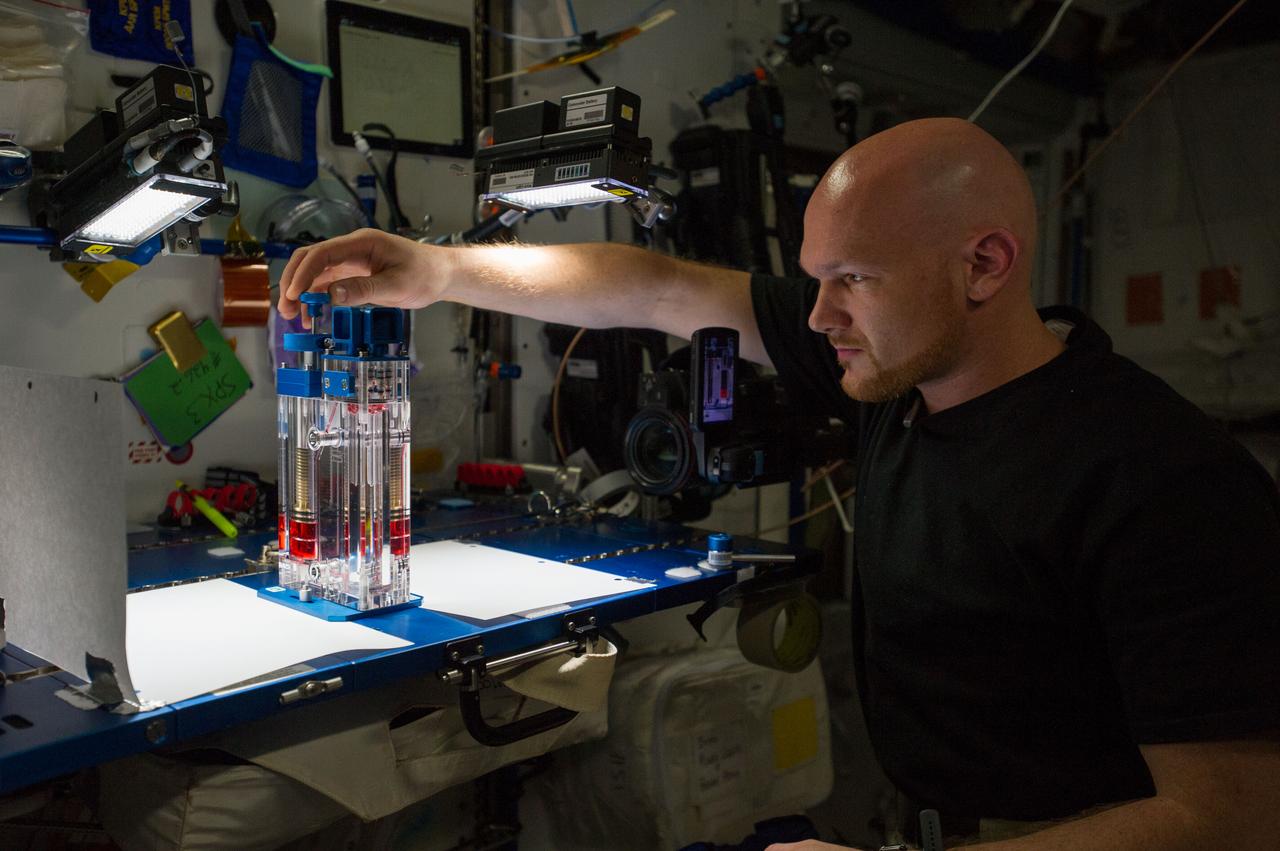
ISS040-E-015545 (19 June 2014) --- European Space Agency astronaut Alexander Gerst, Expedition 40 flight engineer, conducts a session with the Capillary Flow Experiment (CFE-2) in the Harmony node of the International Space Station. CFE is a suite of fluid physics experiments that investigate how fluids behave in microgravity which could benefit water and fuel delivery systems on future spacecraft. Scientists designed the CFE-2 to study properties of fluids and bubbles inside containers with a specific 3-D geometry.
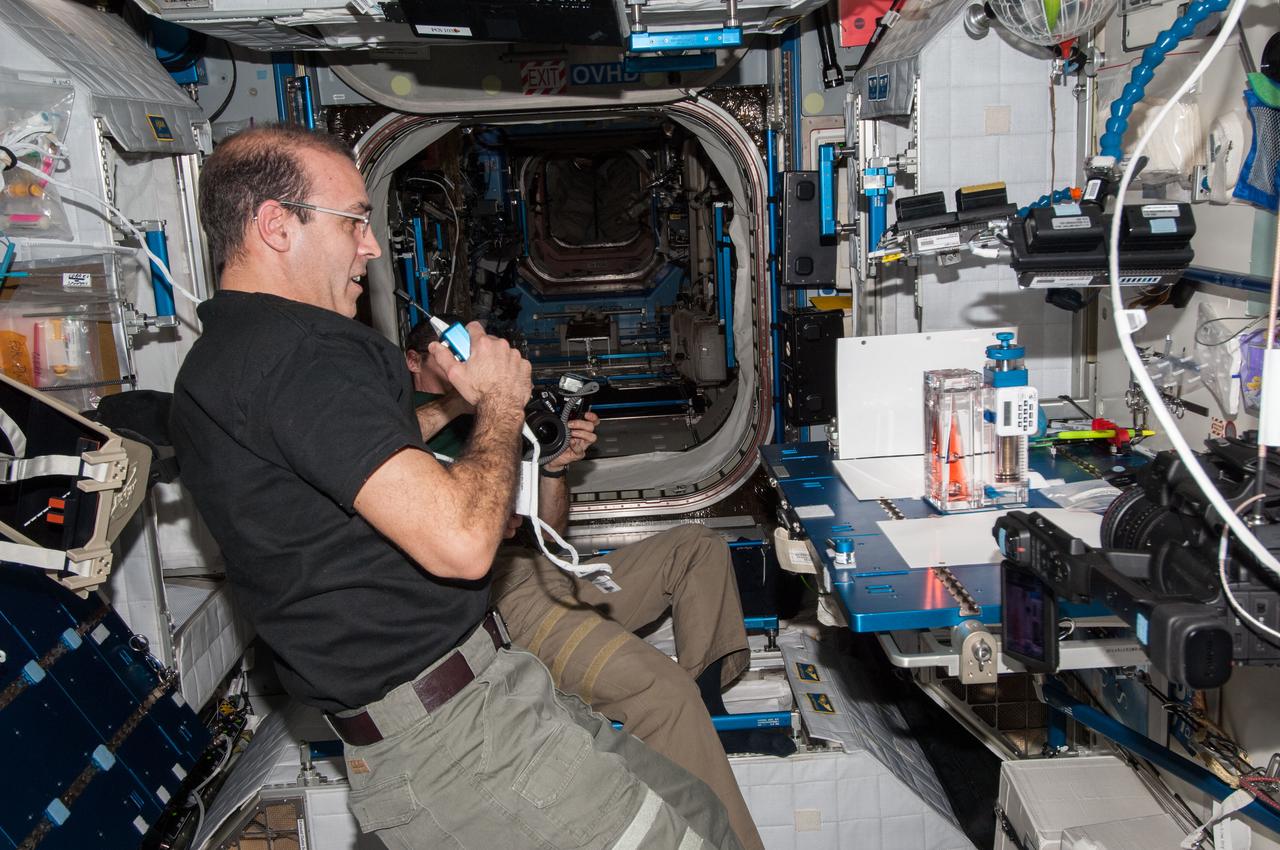
ISS038-E-025000 (3 Jan. 2014) --- NASA astronaut Rick Mastracchio, Expedition 38 flight engineer, speaks in a microphone while conducting a session with the Capillary Flow Experiment (CFE-2) in the Harmony node of the International Space Station. CFE is a suite of fluid physics experiments that investigate how fluids behave in microgravity which could benefit water and fuel delivery systems on future spacecraft. Scientists designed the CFE-2 to study properties of fluids and bubbles inside containers with a specific 3-D geometry.
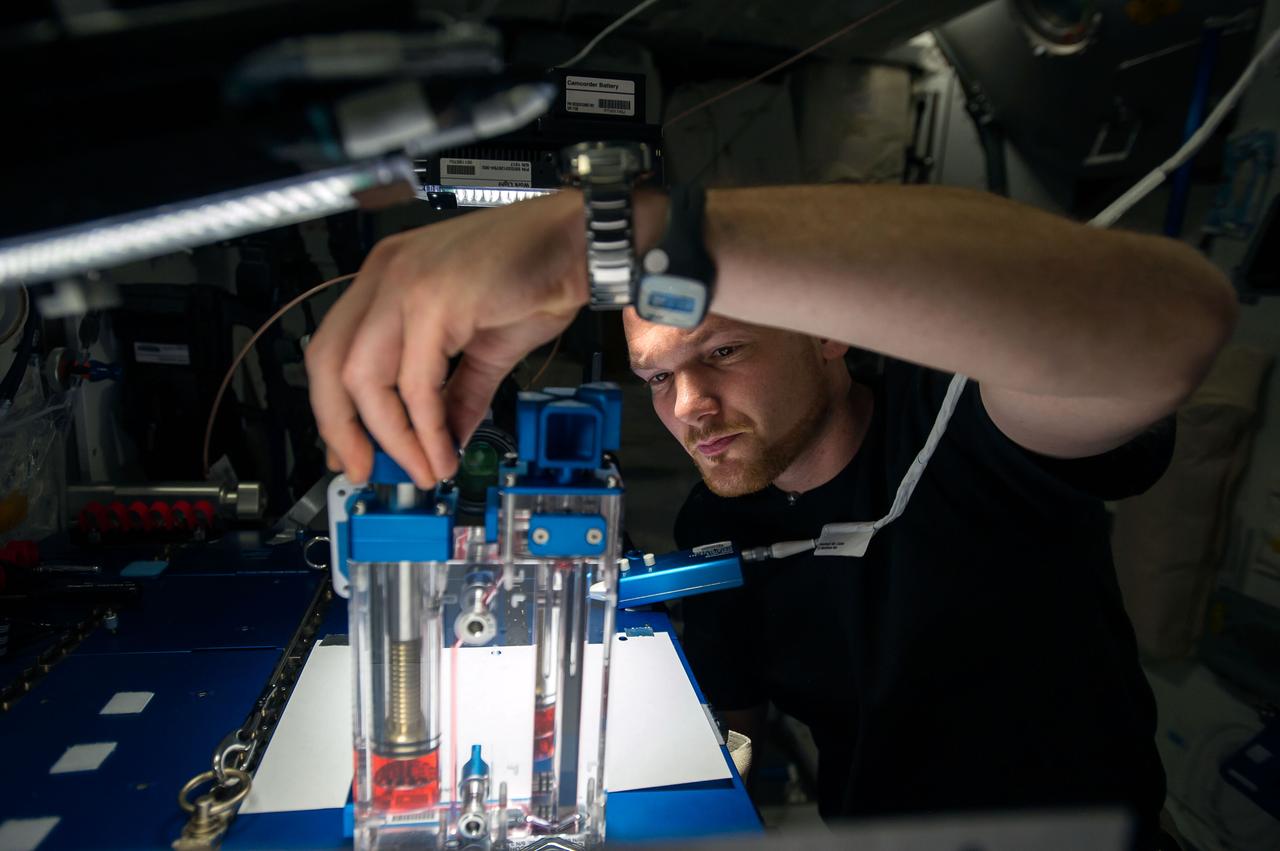
ISS040-E-015543 (19 June 2014) --- European Space Agency astronaut Alexander Gerst, Expedition 40 flight engineer, conducts a session with the Capillary Flow Experiment (CFE-2) in the Harmony node of the International Space Station. CFE is a suite of fluid physics experiments that investigate how fluids behave in microgravity which could benefit water and fuel delivery systems on future spacecraft. Scientists designed the CFE-2 to study properties of fluids and bubbles inside containers with a specific 3-D geometry.
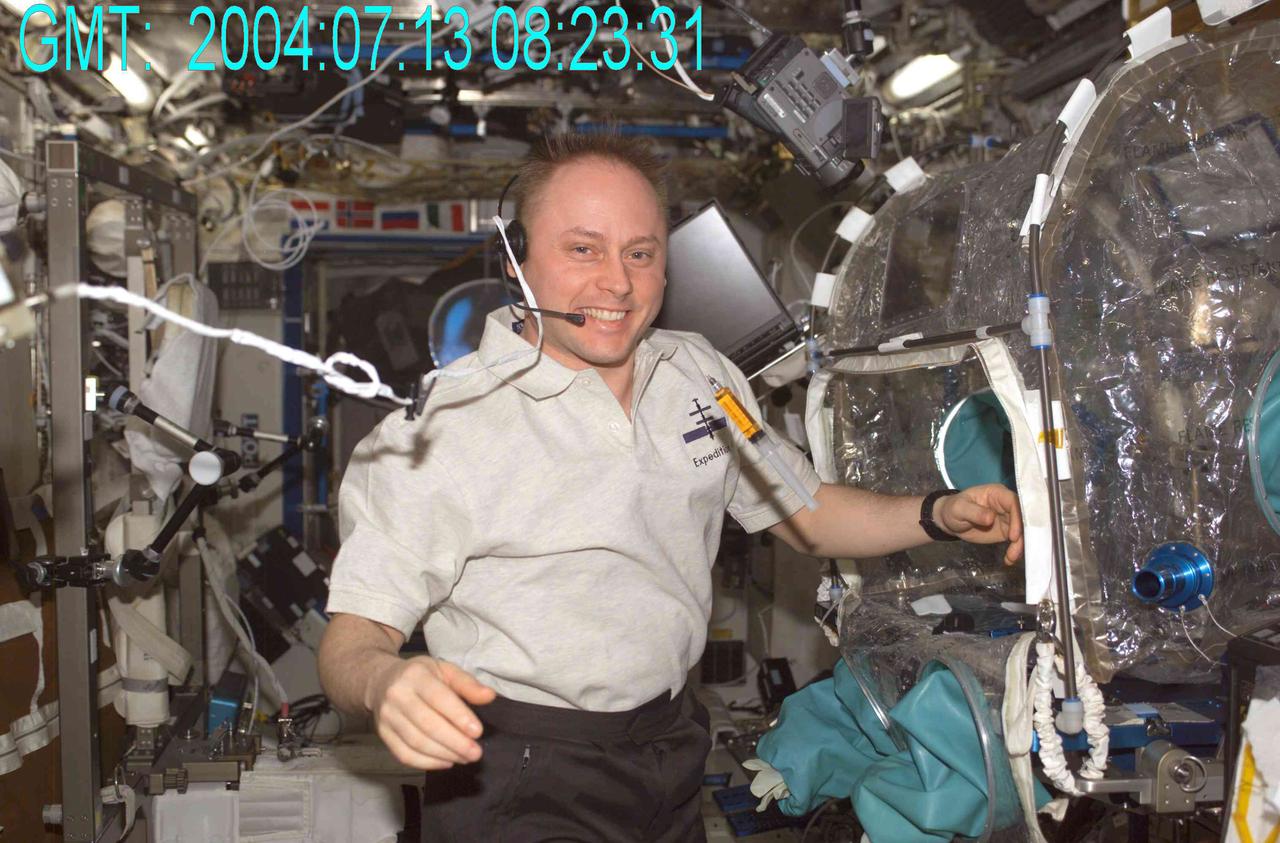
Astronaut Mike Fincke places droplets of honey onto the strings for the Fluid Merging Viscosity Measurement (FMVM) investigation onboard the International Space Station (ISS). The FMVM experiment measures the time it takes for two individual highly viscous fluid droplets to coalesce or merge into one droplet. Different fluids and droplet size combinations were tested in the series of experiments. By using the microgravity environment, researchers can measure the viscosity or "thickness" of fluids without the influence of containers and gravity using this new technique. Understanding viscosity could help scientists understand industrially important materials such as paints, emulsions, polymer melts and even foams used to produce pharmaceutical, food, and cosmetic products.
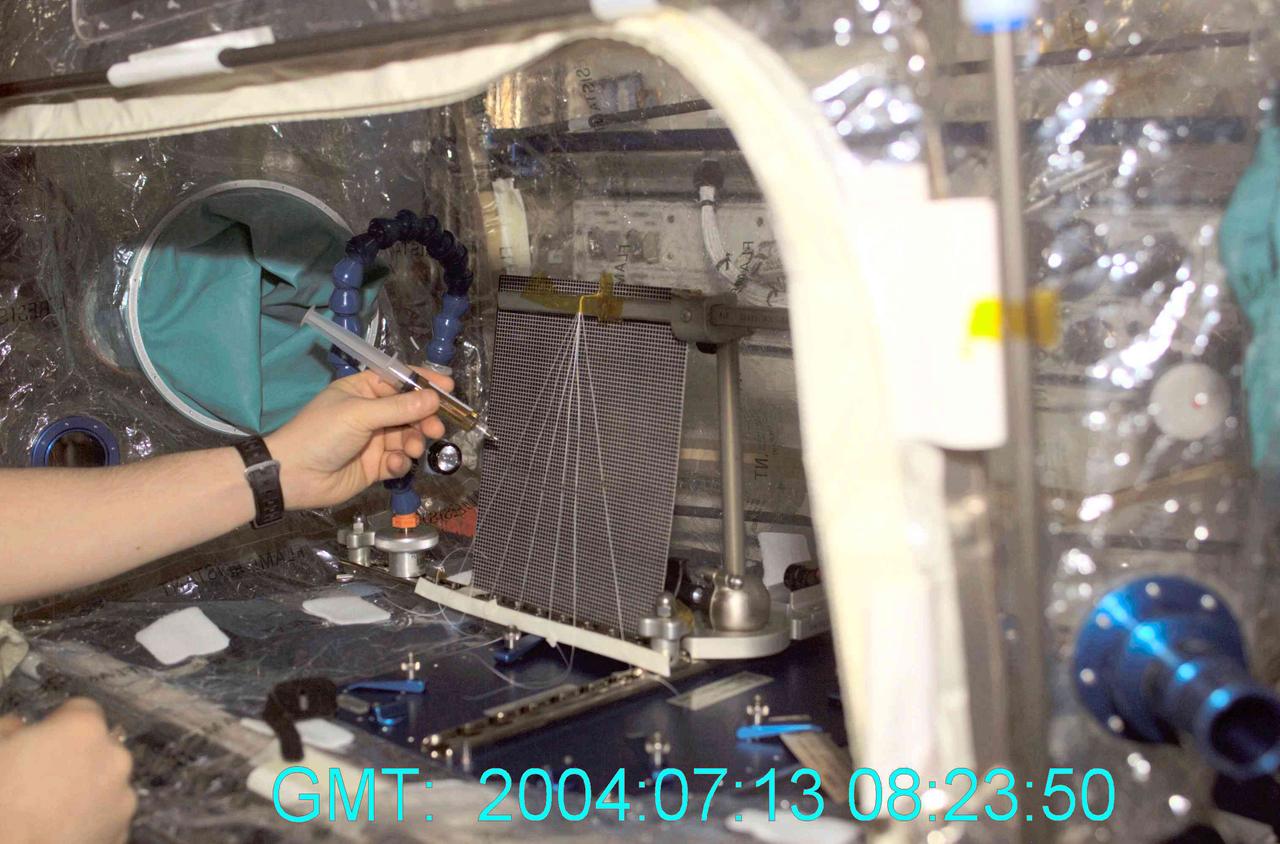
Astronaut Mike Fincke places droplets of honey onto the strings for the Fluid Merging Viscosity Measurement (FMVM) investigation onboard the International Space Station (ISS). The FMVM experiment measures the time it takes for two individual highly viscous fluid droplets to coalesce or merge into one droplet. Different fluids and droplet size combinations were tested in the series of experiments. By using the microgravity environment, researchers can measure the viscosity or "thickness" of fluids without the influence of containers and gravity using this new technique. Understanding viscosity could help scientists understand industrially important materials such as paints, emulsions, polymer melts and even foams used to produce pharmaceutical, food, and cosmetic products.
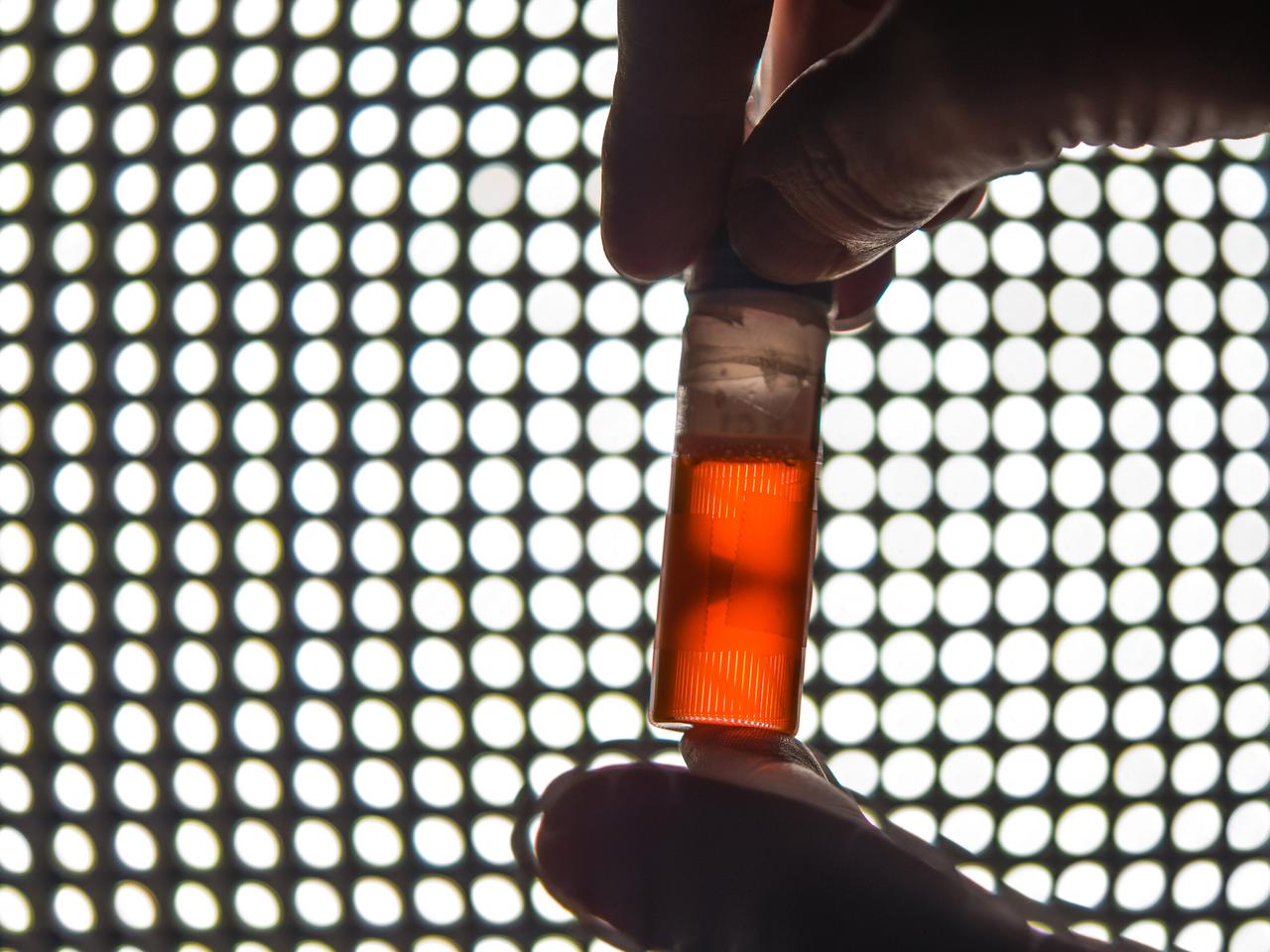
Ground testing for the first confocal Light Microscopy Microscope (LMM) Experiment. Procter and Gamble is working with NASA Glenn scientists to prepare for a study that examines product stabilizers in a microgravity environment. The particles in the tube glow orange because they have been fluorescently tagged with a dye that reacts to green laser lights to allow construction of a 3D image point by point. The experiment, which will be sent to the ISS later this year, will help P&G develop improved product stabilizers to extend shelf life and develop more environmentally friendly packaging.
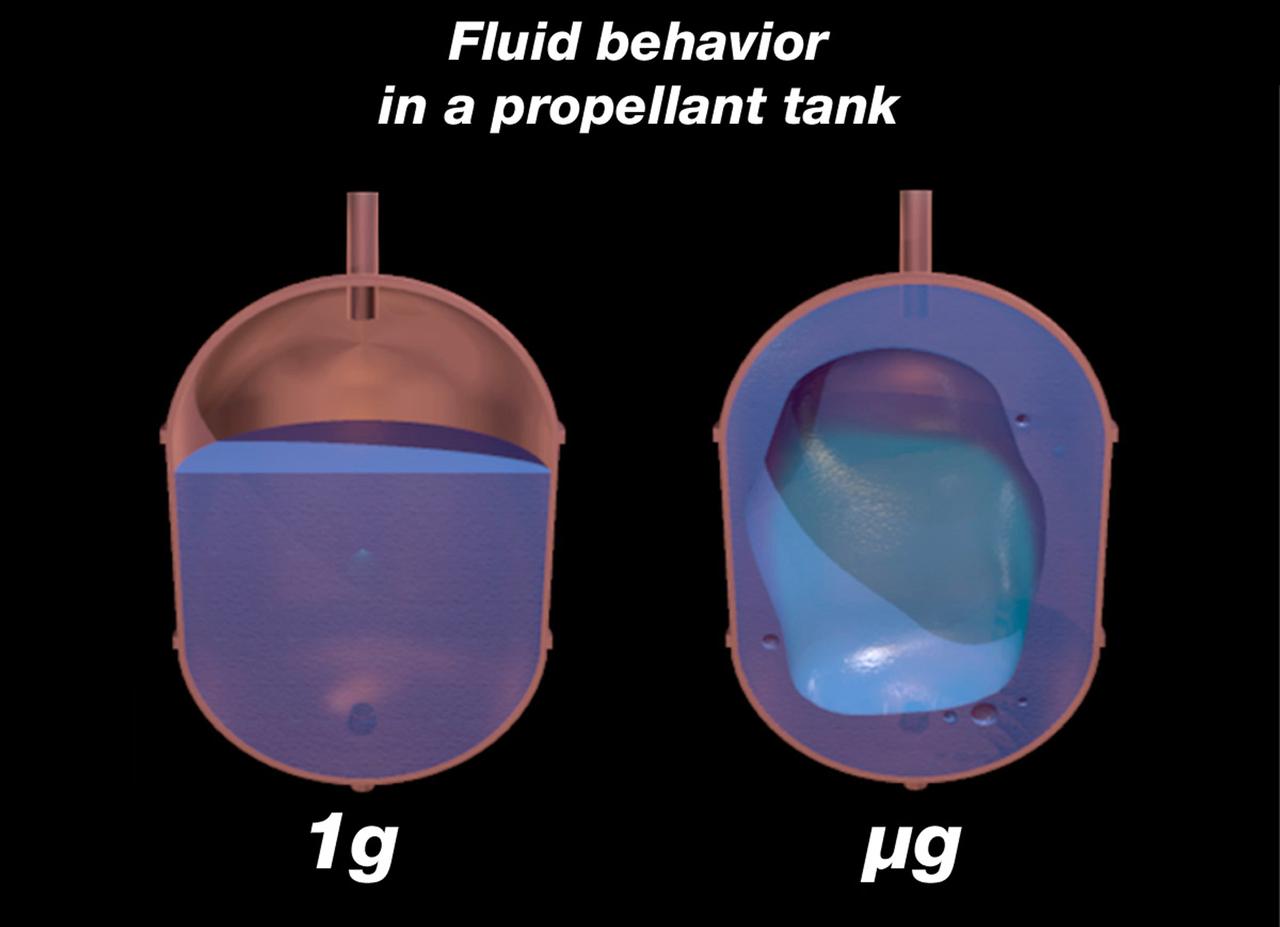
Some of the earliest concerns about fluid behavior in microgravity was the management of propellants in spacecraft tanks as they orbited the Earth. On the ground, gravity pulls a fluid to a bottom of a tank (ig, left). In orbit, fluid behavior depends on surface tension, viscosity, wetting effects with the container wall, and other factors. In some cases, a propellant can wet a tank and leave a large gas bubbles in the center (ug, right). Similar probelms can affect much smaller experiments using fluids in small spaces. Photo credit: NASA/Glenn Research Center.
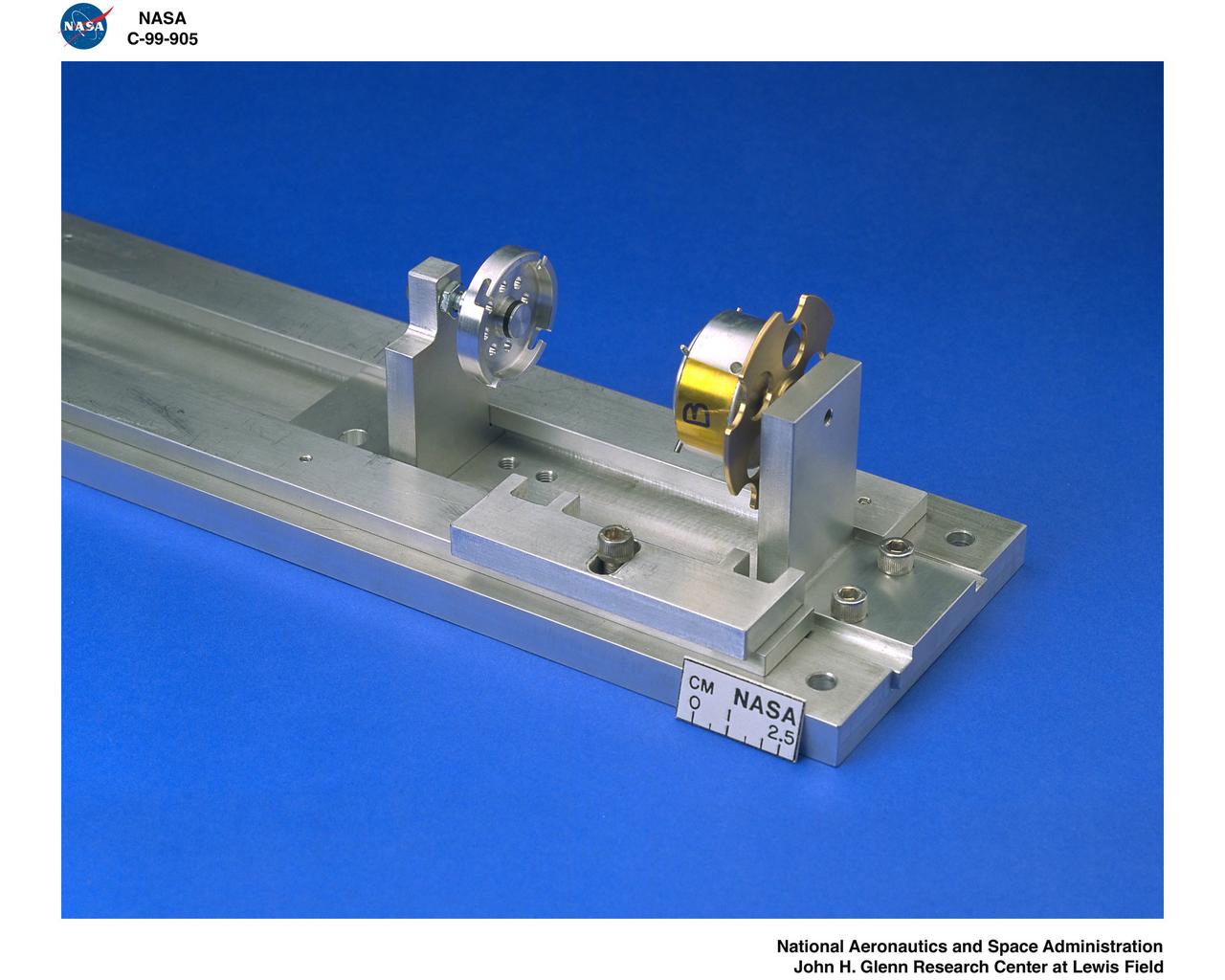
SHEAR EXTENSIONAL RHEOLOGY EXPERIMENT FLUID MODULE AND KC135 AIRCRAFT TEST FIXTURE FOR THE EXTENSIONAL RHEOLOGY GLOVEBOX INVESTIGATION
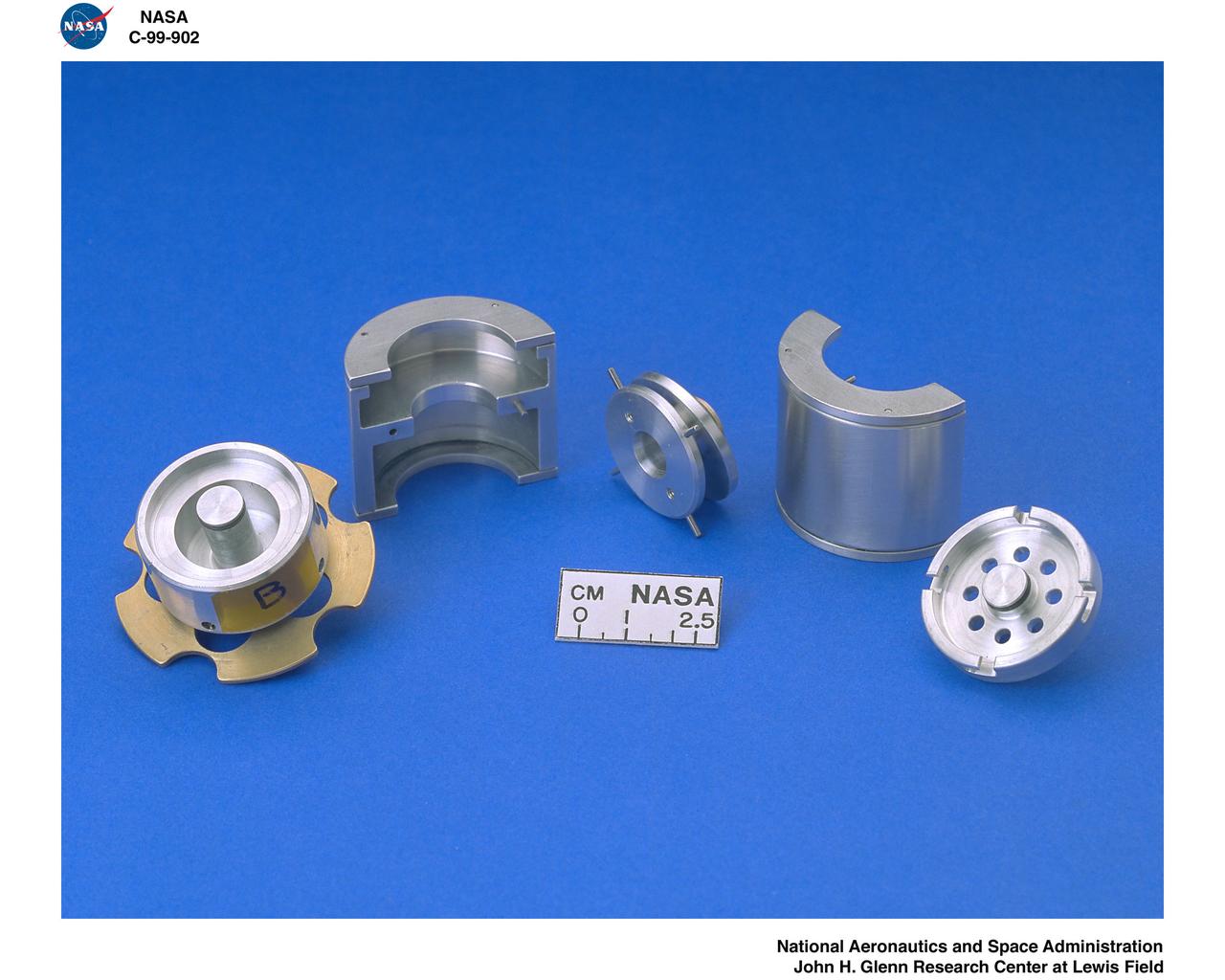
SHEAR EXTENSIONAL RHEOLOGY EXPERIMENT FLUID MODULE AND KC135 AIRCRAFT TEST FIXTURE FOR THE EXTENSIONAL RHEOLOGY GLOVEBOX INVESTIGATION
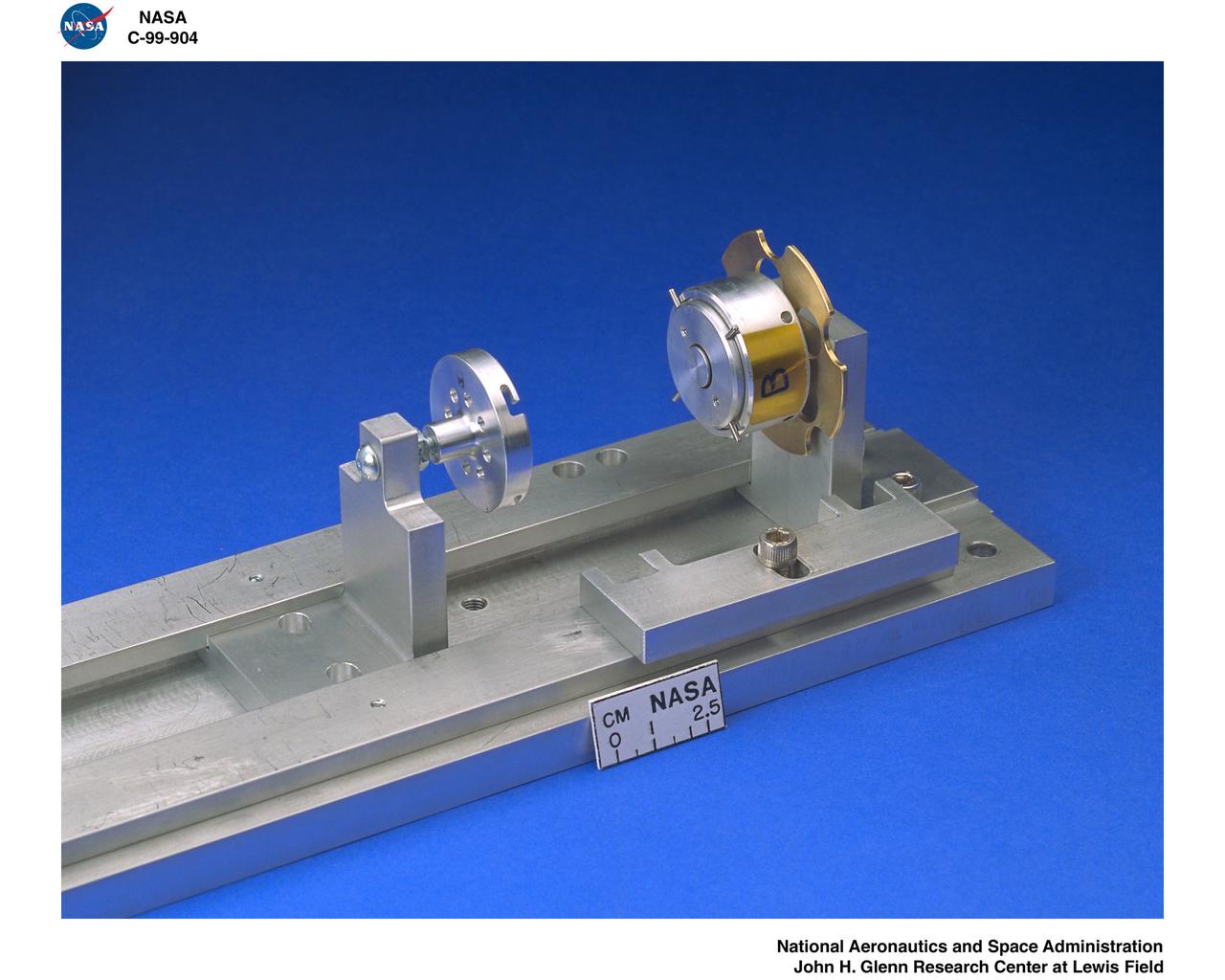
SHEAR EXTENSIONAL RHEOLOGY EXPERIMENT FLUID MODULE AND KC135 AIRCRAFT TEST FIXTURE FOR THE EXTENSIONAL RHEOLOGY GLOVEBOX INVESTIGATION

STS085-351-005 (7 - 19 August 1997) --- Payload specialist Bjarni Tryggvason of the Canadian Space Agency (CSA) shows off the Microgravity Vibration Isolation Mount (MIM) fluid disk. One of five fluid loop experiments (FLEX), this one deals with the growth of resonance patterns (GORP) in gaseous liquid systems.
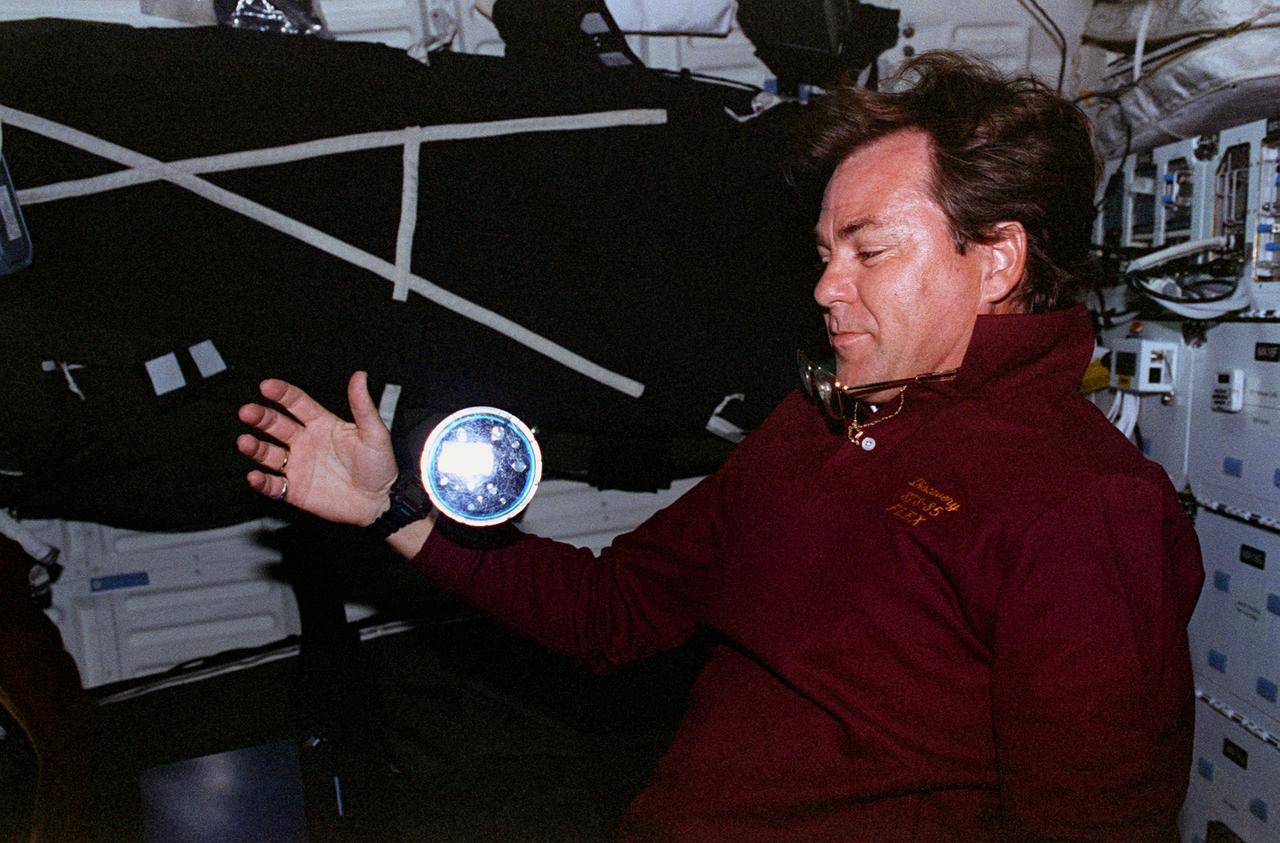
STS085-351-003 (7 - 19 August 1997) --- Payload specialist Bjarni Tryggvason of the Canadian Space Agency (CSA) shows off the Microgravity Vibration Isolation Mount (MIM) fluid disk. One of five Fluid Loop Experiments (FLEX), this one deals with the Growth of Resonance Patterns (GORP) in gaseous liquid systems.
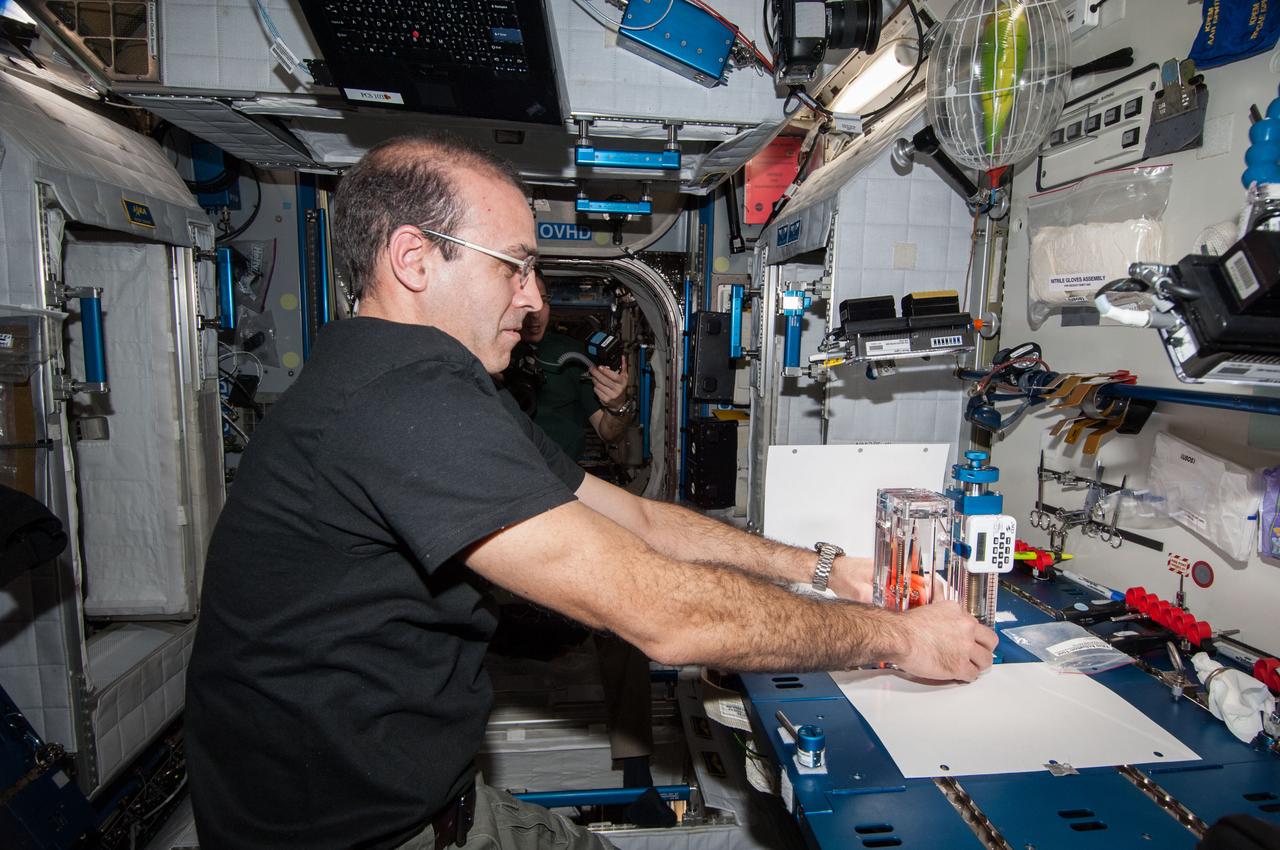
ISS038-E-025002 (3 Jan. 2014) --- NASA astronaut Rick Mastracchio, Expedition 38 flight engineer, conducts a session with the Capillary Flow Experiment (CFE-2) in the Harmony node of the International Space Station. CFE is a suite of fluid physics experiments that investigate how fluids behave in microgravity which could benefit water and fuel delivery systems on future spacecraft. Scientists designed the CFE-2 to study properties of fluids and bubbles inside containers with a specific 3-D geometry. NASA astronaut Mike Hopkins (mostly obscured in the background), flight engineer, uses a still camera to photograph the session.
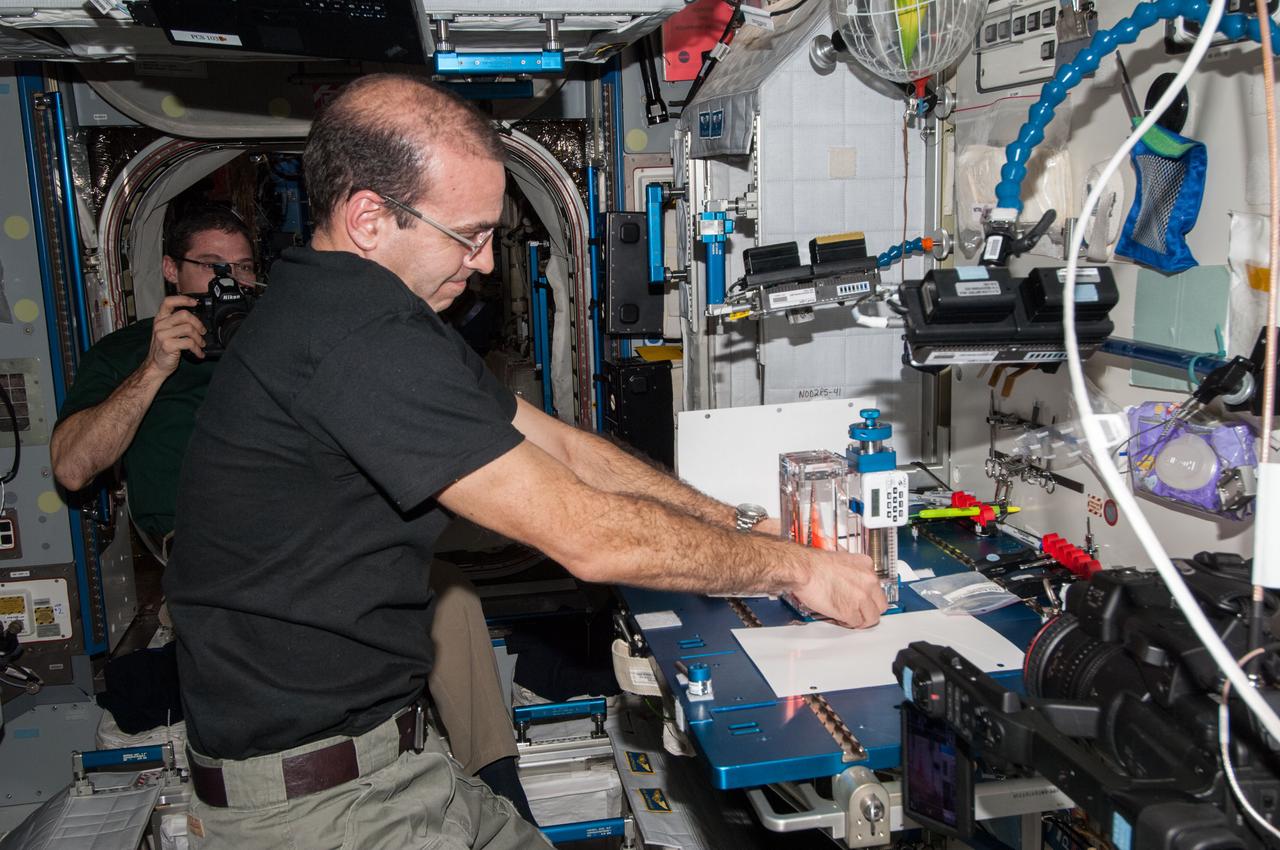
ISS038-E-025002 (3 Jan. 2014) --- NASA astronaut Rick Mastracchio, Expedition 38 flight engineer, conducts a session with the Capillary Flow Experiment (CFE-2) in the Harmony node of the International Space Station. CFE is a suite of fluid physics experiments that investigate how fluids behave in microgravity which could benefit water and fuel delivery systems on future spacecraft. Scientists designed the CFE-2 to study properties of fluids and bubbles inside containers with a specific 3-D geometry. NASA astronaut Mike Hopkins (mostly obscured in the background), flight engineer, uses a still camera to photograph the session.
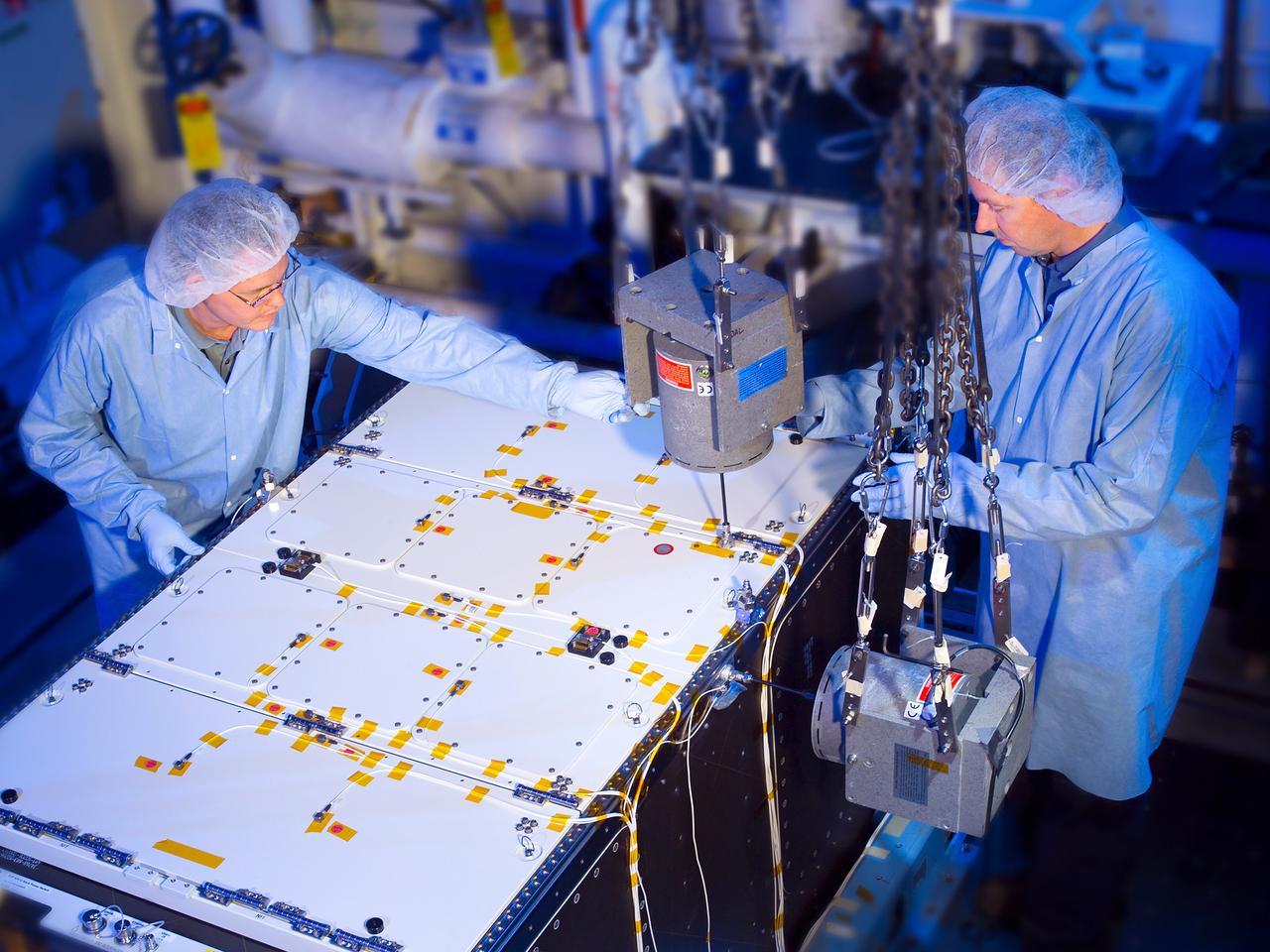
Fluids and Combustion Facility (FCF), Combustion Integration Rack (CIR) during testing in the Structural Dynamics Laboratory (SDL). The Fluids and Combustion Facility (FCF) is a set of two International Space Station (ISS) research facilities designed to support physical and biological experiments in support of technology development and validation in space. The FCF consists of two modular, reconfigurable racks called the Combustion Integration Rack (CIR) and the Fluids Integration Rack (FIR). The CIR and FIR were developed at NASAʼs Glenn Research Center.
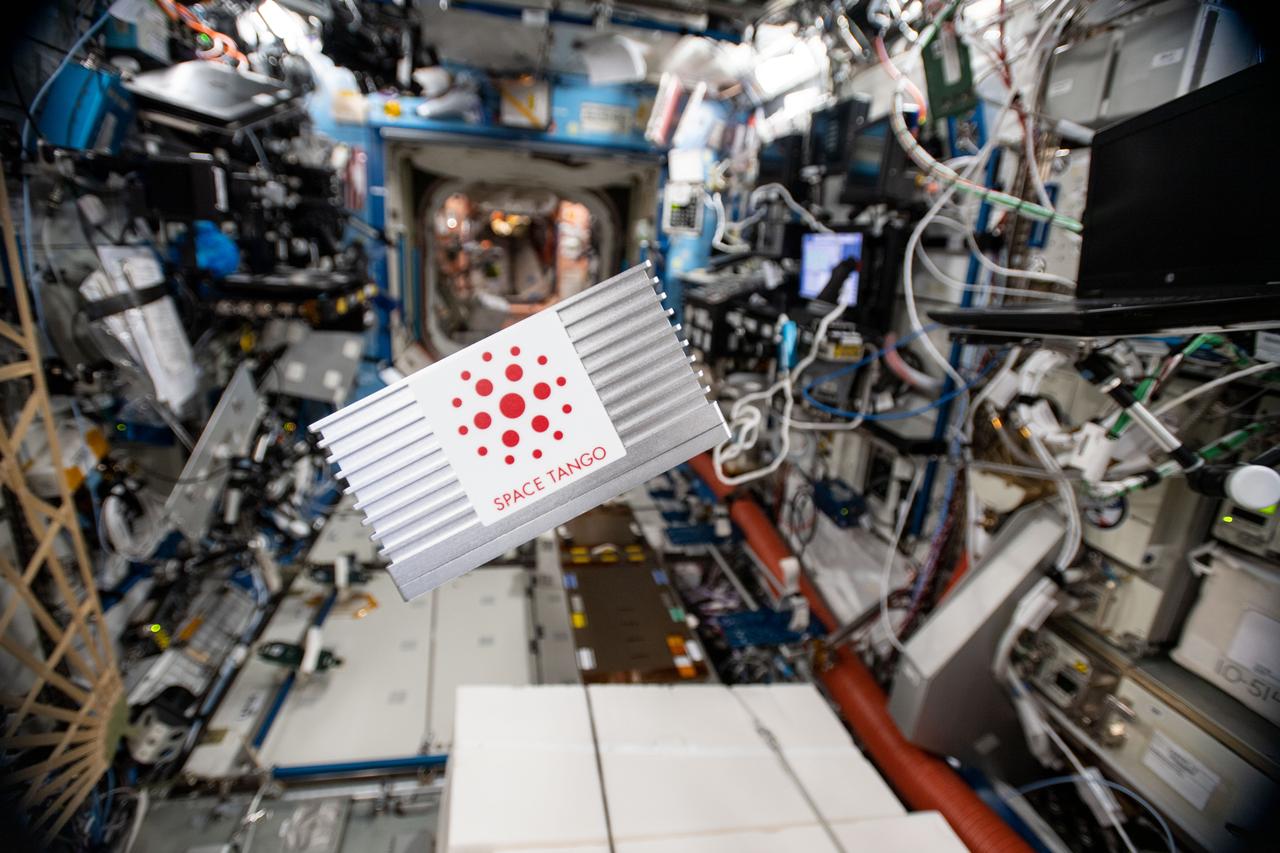
iss059e063757 (5/17/2019) --- Photo documentation of the Cell Culture Module Fluid Behavior investigation in the Destiny module onboard the International Space Station (ISS). The Cell Culture Module Fluid Behavior Demonstration investigation verifies the functionality of a common 96-well plate. A series of fluid experiments assesses how the capillary action of the plate performs in a microgravity environment in comparison to ground-based control.
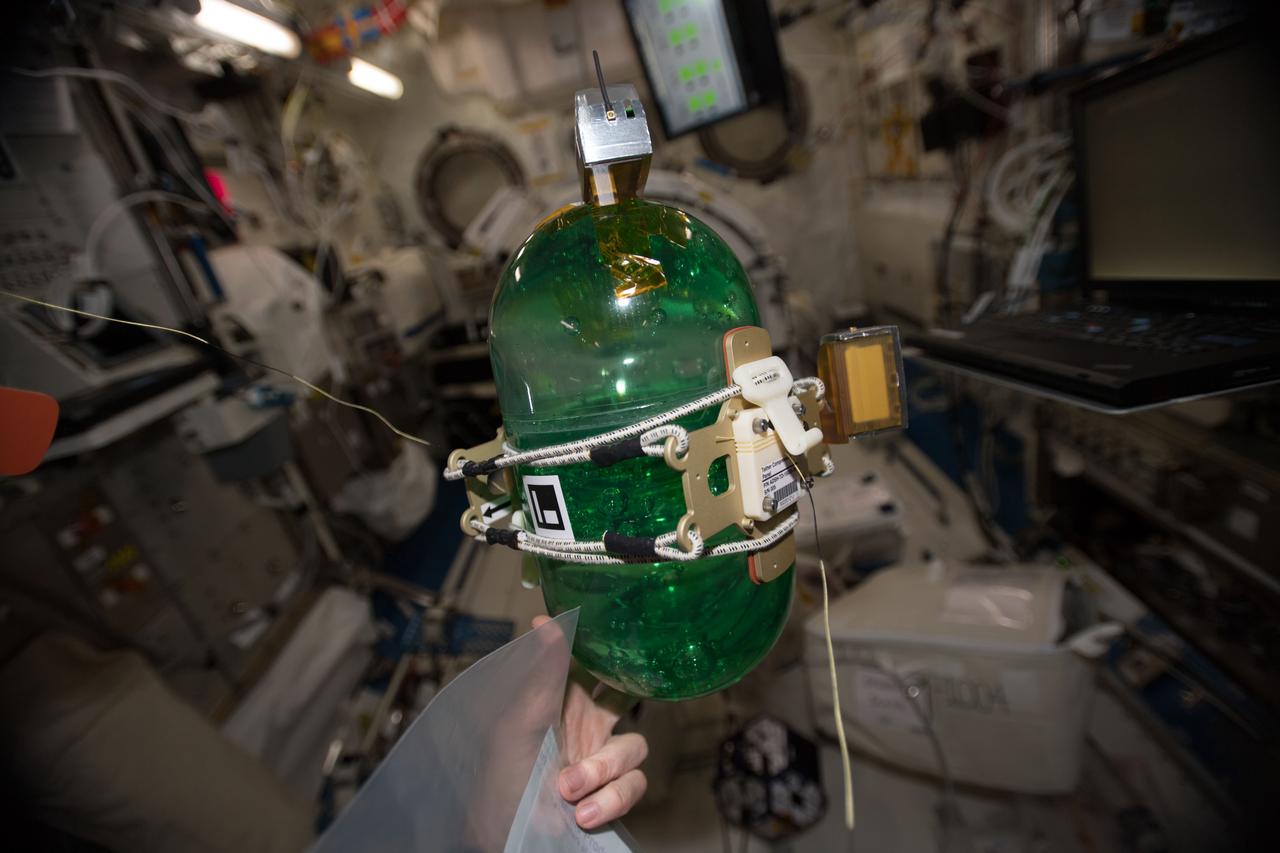
iss055e010694 (4/4/2018) --- A view taken aboard the International Space Station (ISS) during the set up of the SPHERES Tether Slosh experiment hardware. The image is of the green SPHERES robots tethered to a fluid-filled container covered in sensors to test strategies for safely steering spacecraft such as dead satellites that might still have fuel in the tank. SPHERES Tether Slosh combines fluid dynamics equipment with robotic capabilities aboard the International Space Station to investigate automated strategies for steering passive cargo that contain fluids.
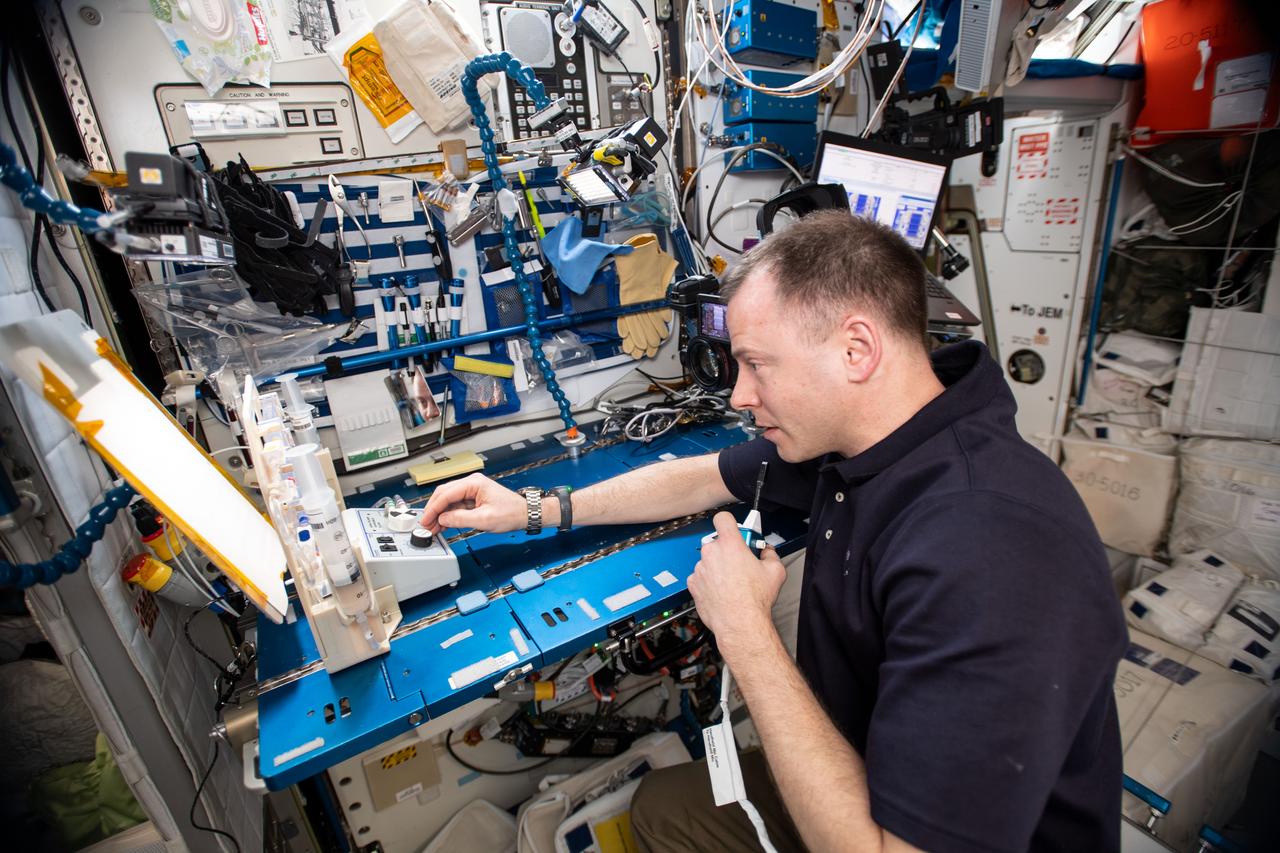
iss059e112425 (June 18, 2019) --- Flight Engineer Nick Hague is supporting research for the Capillary Structures experiment that uses specialized hardware to demonstrate the flow of fluid and gas mixtures using surface tension and fluid dynamics. The fluid physics study is helping NASA evaluate technologies for a lightweight, advanced life support system that can recover water and remove carbon dioxide in space.

ISS028-E-048923 (13 Sept. 2011) --- Japan Aerospace Exploration Agency astronaut Satoshi Furukawa, Expedition 28 flight engineer, works with the Fluid Physics Experiment Facility/Marangoni Surface (FPEF MS) Core hardware in the Kibo laboratory of the International Space Station. The Marangoni convection experiment in the FPEF examines fluid tension flow in micro-G.
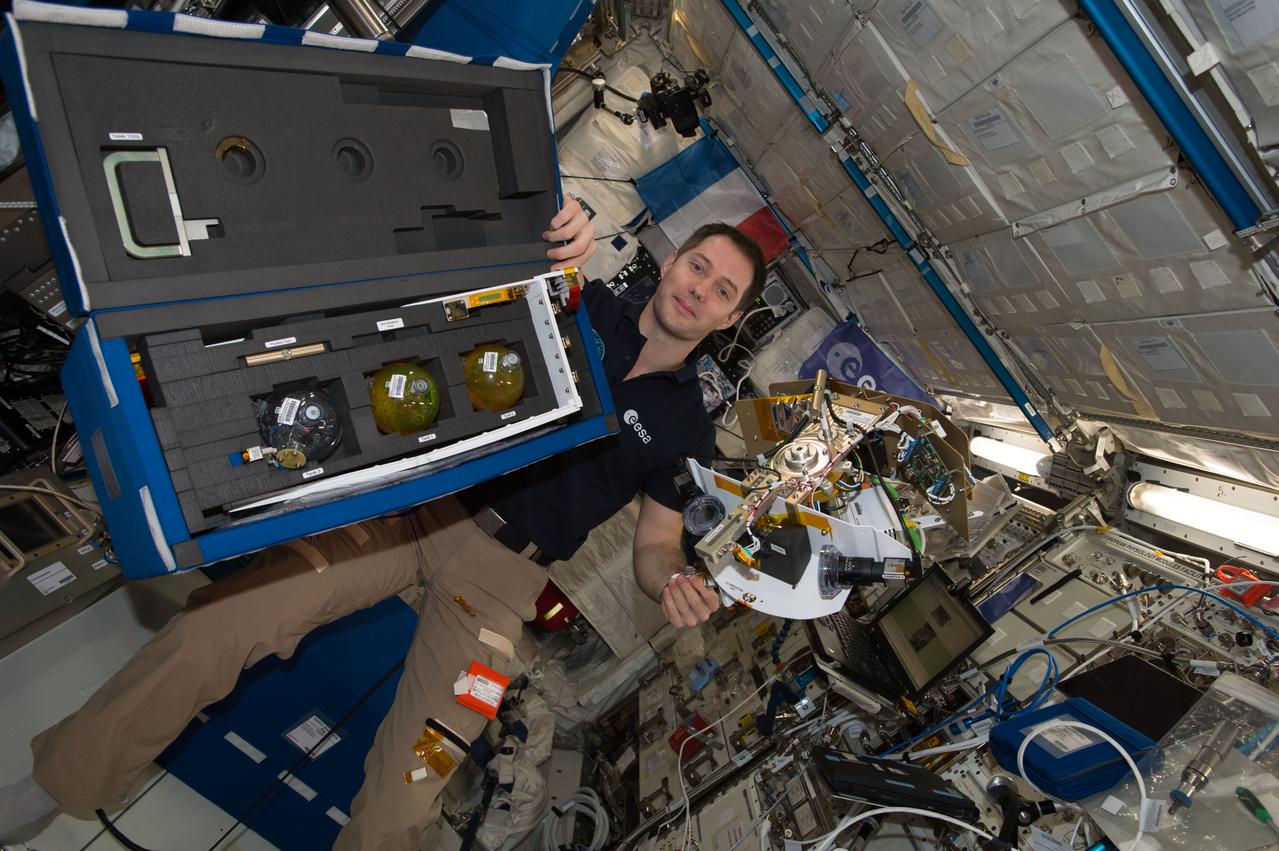
iss051e033988 (5/2/2017) --- European Space Agency (ESA) astronaut Thomas Pesquet is photographed with the Tanks Bag and Science Arm for the Fluid Dynamics in Space (FLUIDICS) experiment. Image was taken in the Columbus European Laboratory during preparations for the first run of the experiment. The FLUIDICS investigation evaluates the Center of Mass (CoM) position regarding a temperature gradient on a representation of a fuel tank. The observation of capillary wave turbulence on the surface of a fluid layer in a low-gravity environment can provide insights into measuring the existing volume in a sphere.
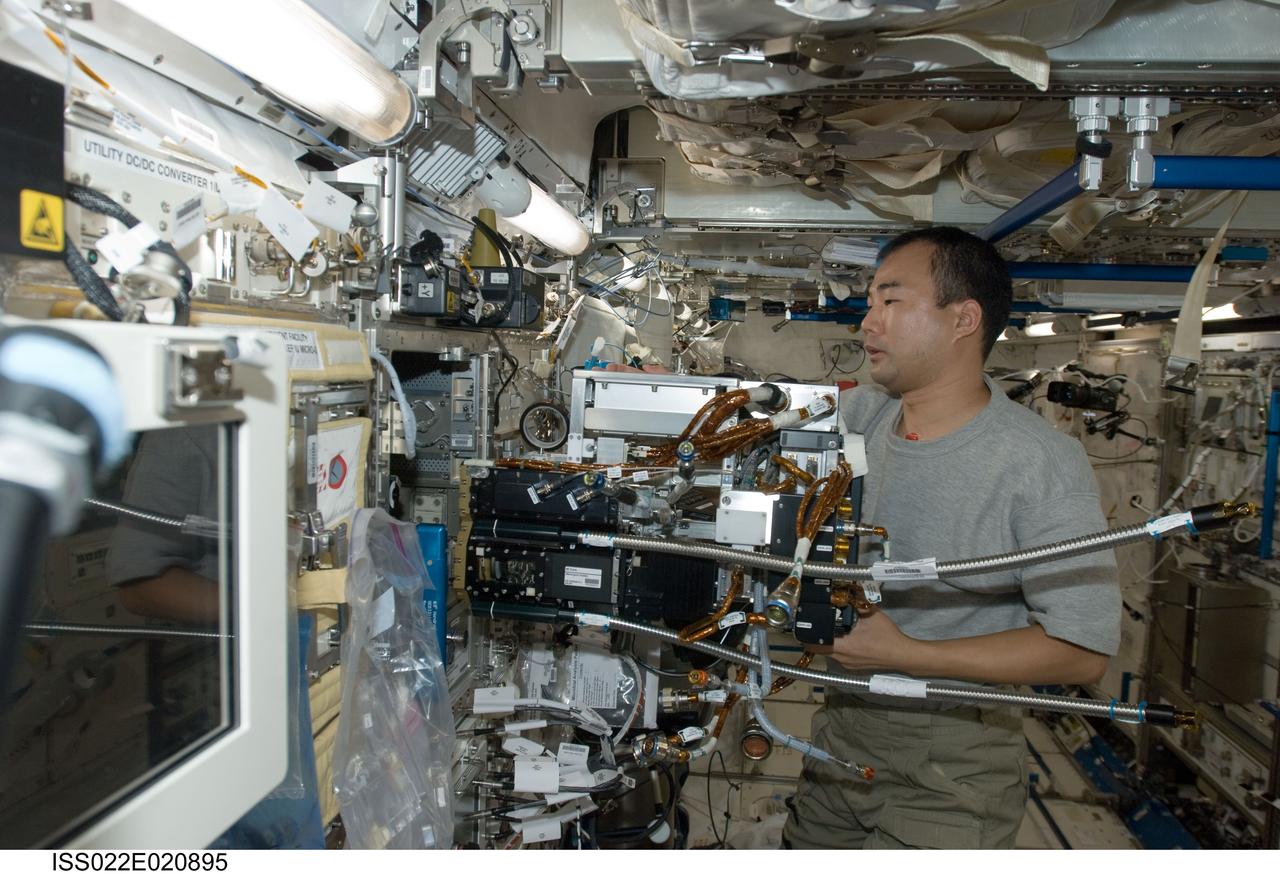
ISS022-E-020895 (11 Jan. 2010) --- Japan Aerospace Exploration Agency (JAXA) astronaut Soichi Noguchi, Expedition 22 flight engineer, works with Fluid Physics Experiment Facility/Marangoni Surface (FPEF MS) Core hardware in the Kibo laboratory of the International Space Station. The Marangoni convection experiment in the FPEF examines fluid tension flow in micro-G.
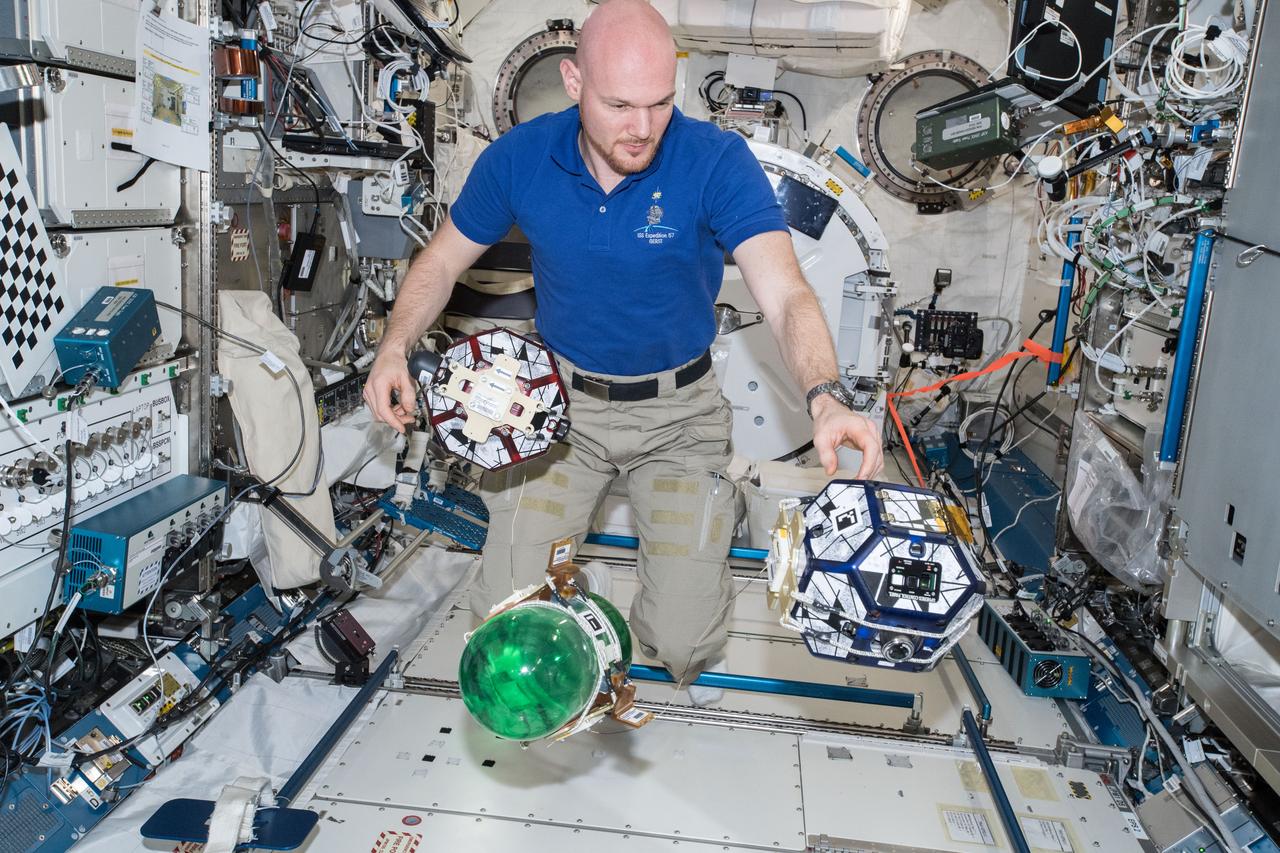
iss057e055052 (10/18/2018) --- European Space Agency astronaut Alexander Gerst is photographed during a Synchronized Position Hold, Engage, Reorient, Experimental Satellites (SPHERES) Tether Slosh experiment test session run. Photo was taken in the Kibo Japanese Experiment Pressurized Module (JPM) aboard the International Space Station (ISS). SPHERES Tether Slosh combines fluid dynamics equipment with robotic capabilities aboard the ISS to investigate automated strategies for steering passive cargo that contain fluids.
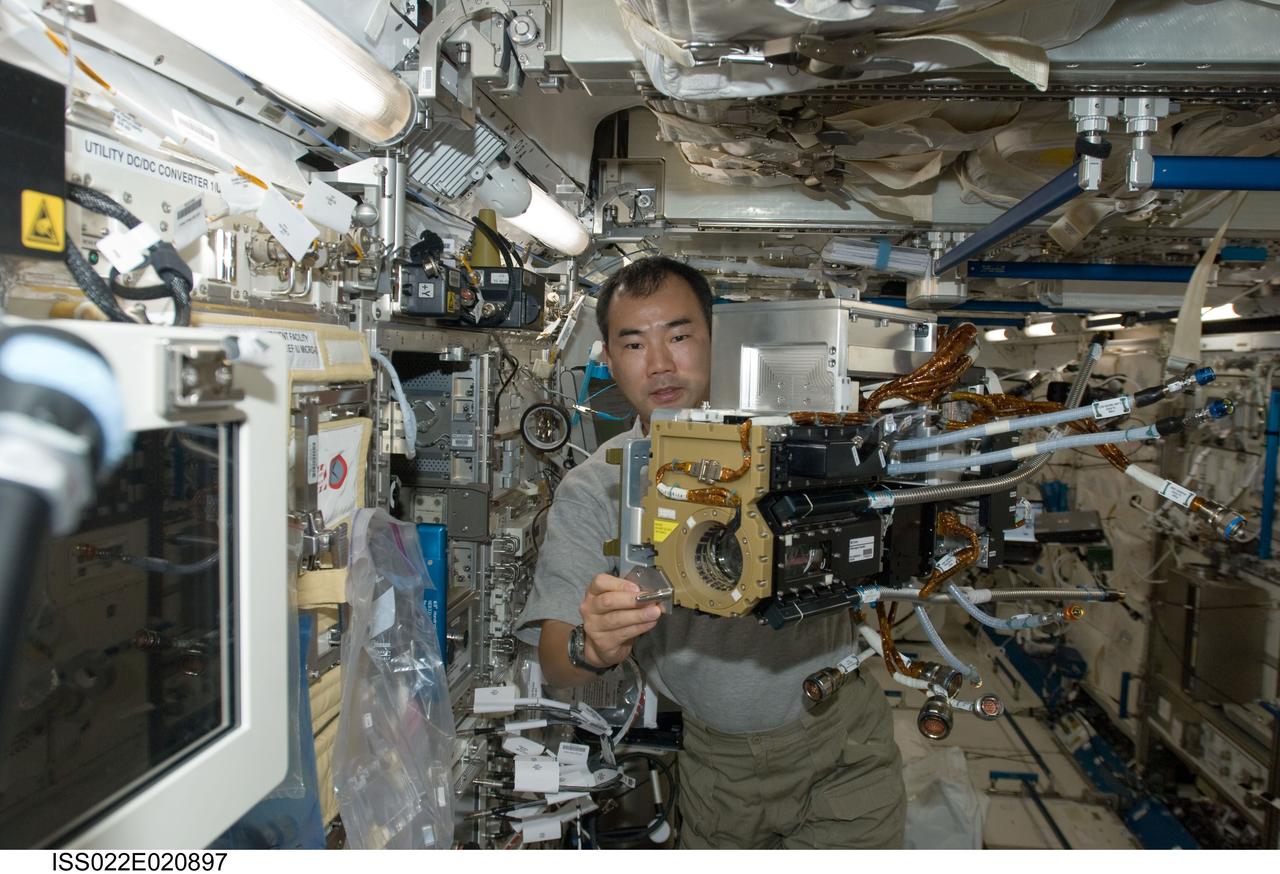
ISS022-E-020897 (11 Jan. 2010) --- Japan Aerospace Exploration Agency (JAXA) astronaut Soichi Noguchi, Expedition 22 flight engineer, works with Fluid Physics Experiment Facility/Marangoni Surface (FPEF MS) Core hardware in the Kibo laboratory of the International Space Station. The Marangoni convection experiment in the FPEF examines fluid tension flow in micro-G.
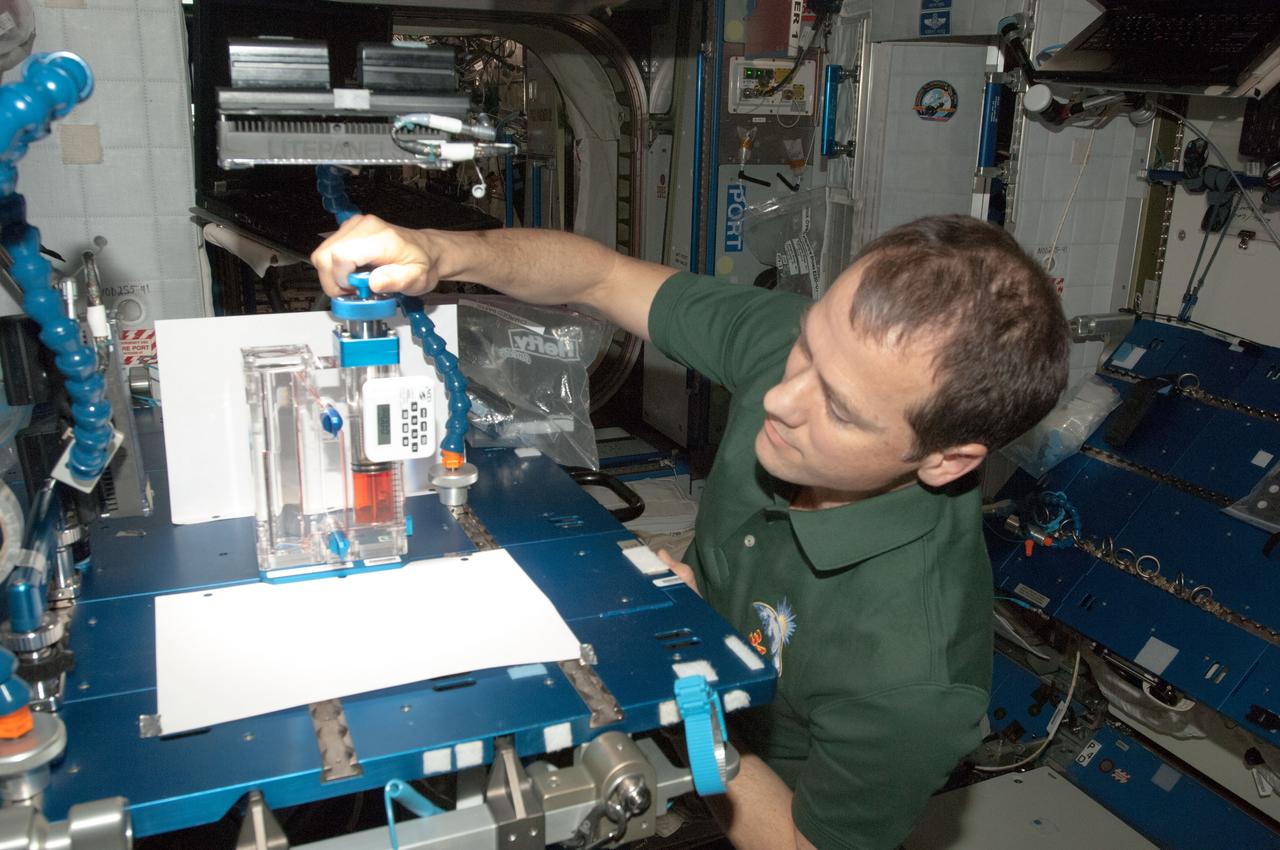
ISS034-E-036844 (29 Jan. 2013) --- In the International Space Station’s Harmony node, NASA astronaut Tom Marshburn, Expedition 34 flight engineer, works with the Capillary Flow Experiment-3, which investigates how fluids flow across surfaces in a weightless environment. Results from this experiment will improve computer models used to design fluid transfer systems and fuel tanks on future spacecraft.
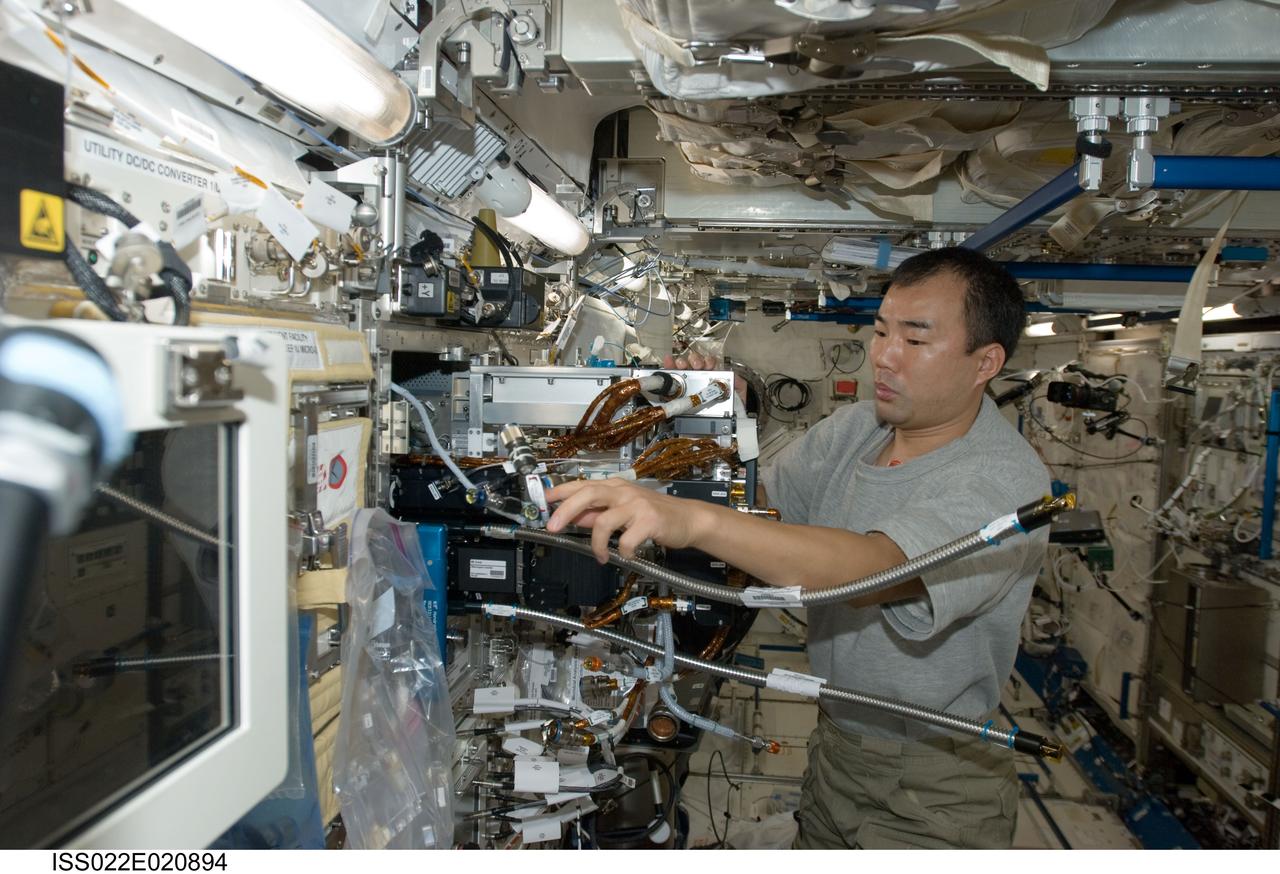
ISS022-E-020894 (11 Jan. 2010) --- Japan Aerospace Exploration Agency (JAXA) astronaut Soichi Noguchi, Expedition 22 flight engineer, works with Fluid Physics Experiment Facility/Marangoni Surface (FPEF MS) Core hardware in the Kibo laboratory of the International Space Station. The Marangoni convection experiment in the FPEF examines fluid tension flow in micro-G.
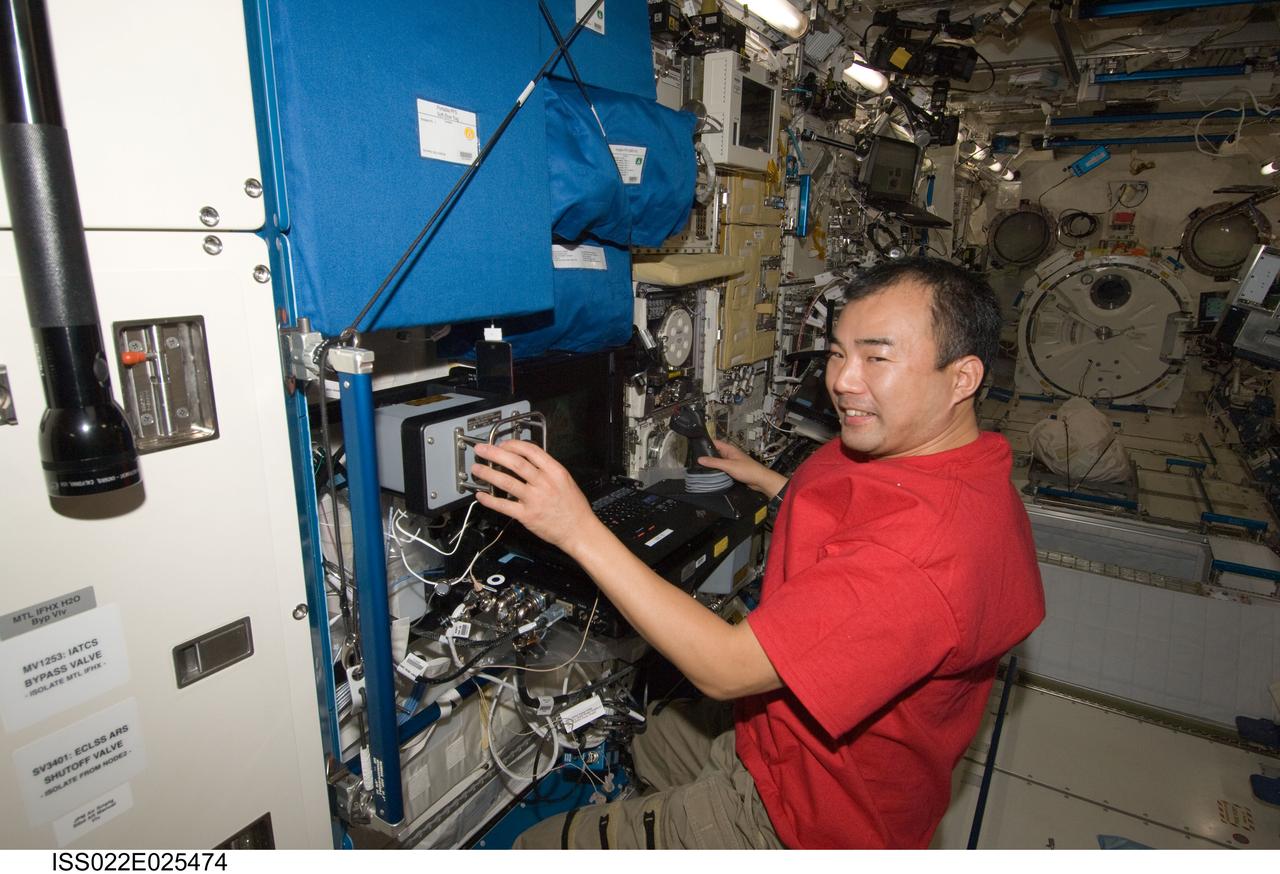
ISS022-E-025474 (14 Jan. 2010) --- Japan Aerospace Exploration Agency (JAXA) astronaut Soichi Noguchi, Expedition 22 flight engineer, services the Fluid Physics Experiment Facility/Marangoni Surface (FPEF MS) Core hardware in the Kibo laboratory of the International Space Station. The Marangoni convection experiment in the FPEF examines fluid tension flow in micro-G.
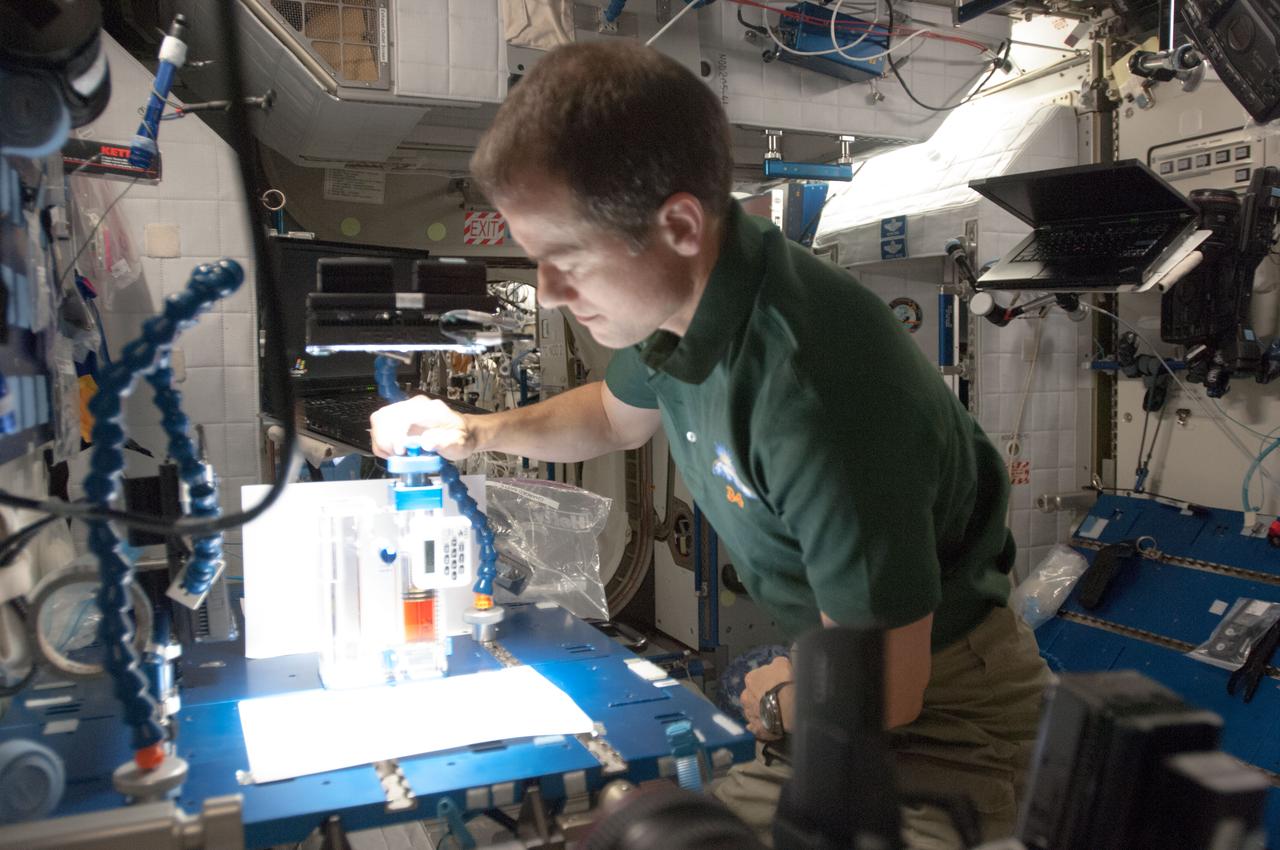
ISS034-E-036841 (29 Jan. 2013) --- In the International Space Station’s Harmony node, NASA astronaut Tom Marshburn, Expedition 34 flight engineer, works with the Capillary Flow Experiment-3, which investigates how fluids flow across surfaces in a weightless environment. Results from this experiment will improve computer models used to design fluid transfer systems and fuel tanks on future spacecraft.
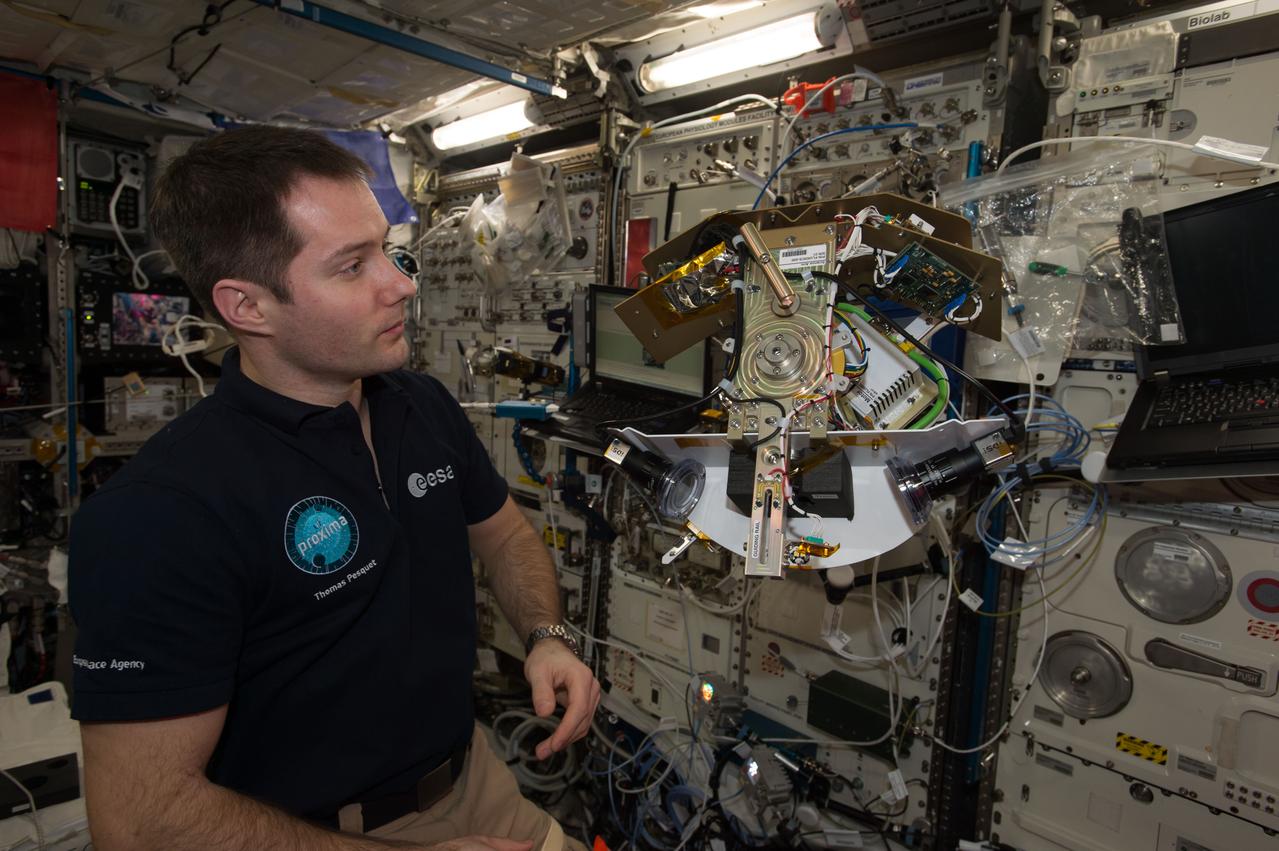
iss051e033986 (5/2/2016) --- European Space Agency (ESA) astronaut Thomas Pesquet is photographed with the assembled Science Arm and Motor for the Fluid Dynamics in Space (FLUIDICS) experiment. Image was taken in the Columbus European Laboratory during preparations for the first run of the experiment. The FLUIDICS investigation evaluates the Center of Mass (CoM) position regarding a temperature gradient on a representation of a fuel tank. The observation of capillary wave turbulence on the surface of a fluid layer in a low-gravity environment can provide insights into measuring the existing volume in a sphere.
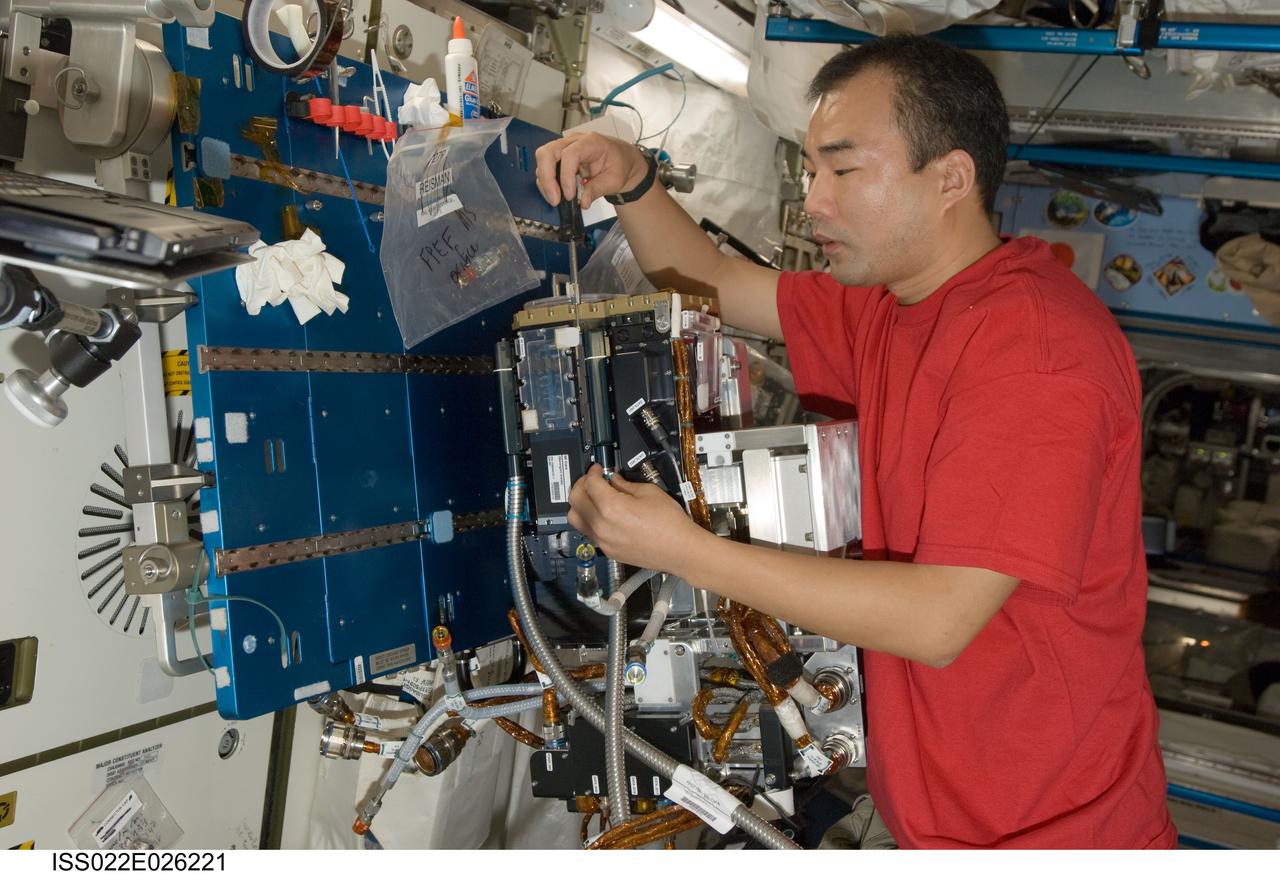
ISS022-E-026221 (15 Jan. 2010) --- Japan Aerospace Exploration Agency (JAXA) astronaut Soichi Noguchi, Expedition 22 flight engineer, services the Fluid Physics Experiment Facility/Marangoni Surface (FPEF MS) Core hardware in the Kibo laboratory of the International Space Station. The Marangoni convection experiment in the FPEF examines fluid tension flow in micro-G.
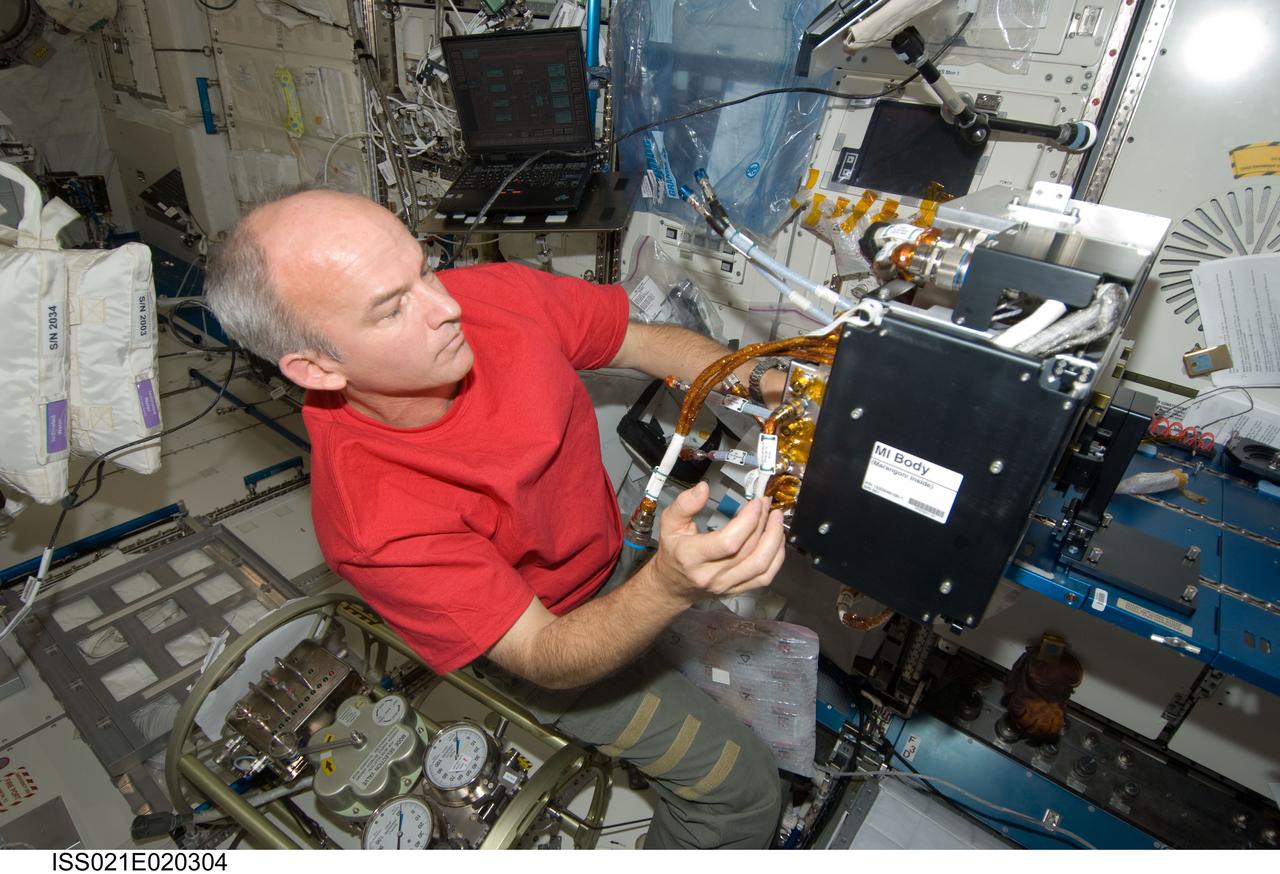
ISS021-E-020304 (5 Nov. 2009) --- NASA astronaut Jeffrey Williams, Expedition 21 flight engineer, works with Fluid Physics Experiment Facility/Marangoni Surface (FPEF MS) Core hardware in the Kibo laboratory of the International Space Station. Williams first inserted the Marangoni Inside (MI) cassette in the MI Core for a leak check, and then installed the MI Core into the FPEF MI Body. The Marangoni convection experiment in the FPEF examines fluid tension flow in micro-G.
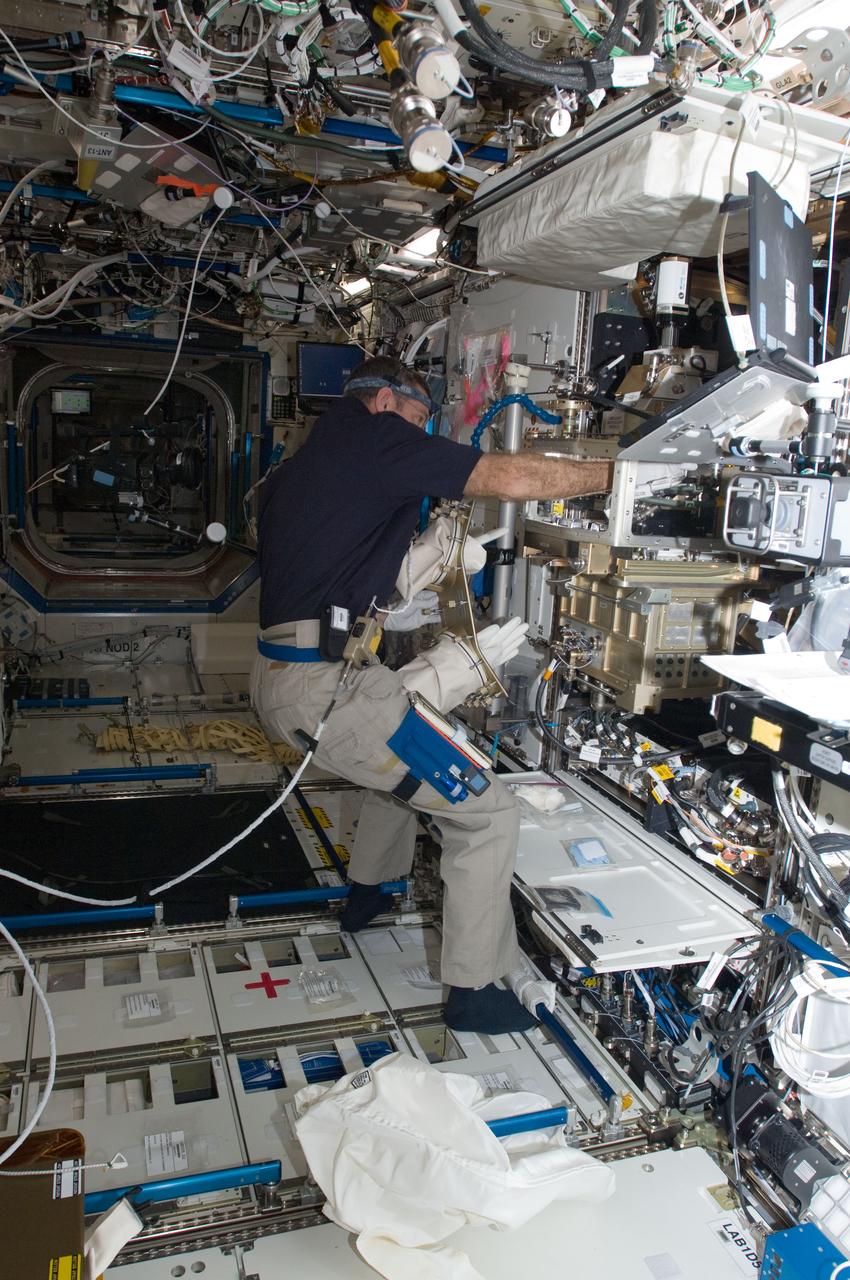
ISS030-E-007418 (1 Dec. 2011) --- In the International Space Station’s Destiny laboratory, NASA astronaut Dan Burbank, Expedition 30 commander, conducts a session with the Preliminary Advanced Colloids Experiment (PACE) at the Light Microscopy Module (LMM) in the Fluids Integrated Rack / Fluids Combustion Facility (FIR/FCF). PACE is designed to investigate the capability of conducting high magnification colloid experiments with the LMM for determining the minimum size particles which can be resolved with it.
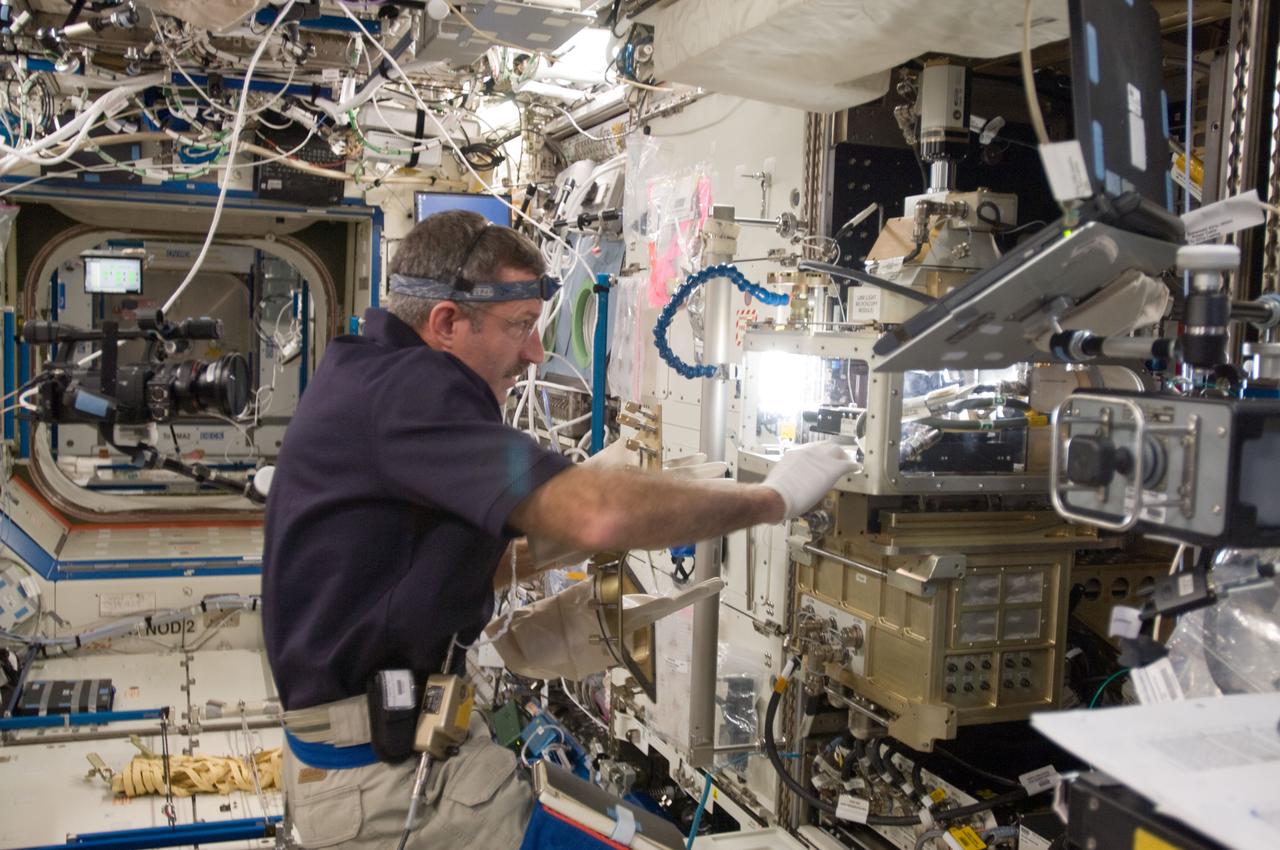
ISS030-E-007417 (1 Dec. 2011) --- In the International Space Station?s Destiny laboratory, NASA astronaut Dan Burbank, Expedition 30 commander, conducts a session with the Preliminary Advanced Colloids Experiment (PACE) at the Light Microscopy Module (LMM) in the Fluids Integrated Rack / Fluids Combustion Facility (FIR/FCF). PACE is designed to investigate the capability of conducting high magnification colloid experiments with the LMM for determining the minimum size particles which can be resolved with it.
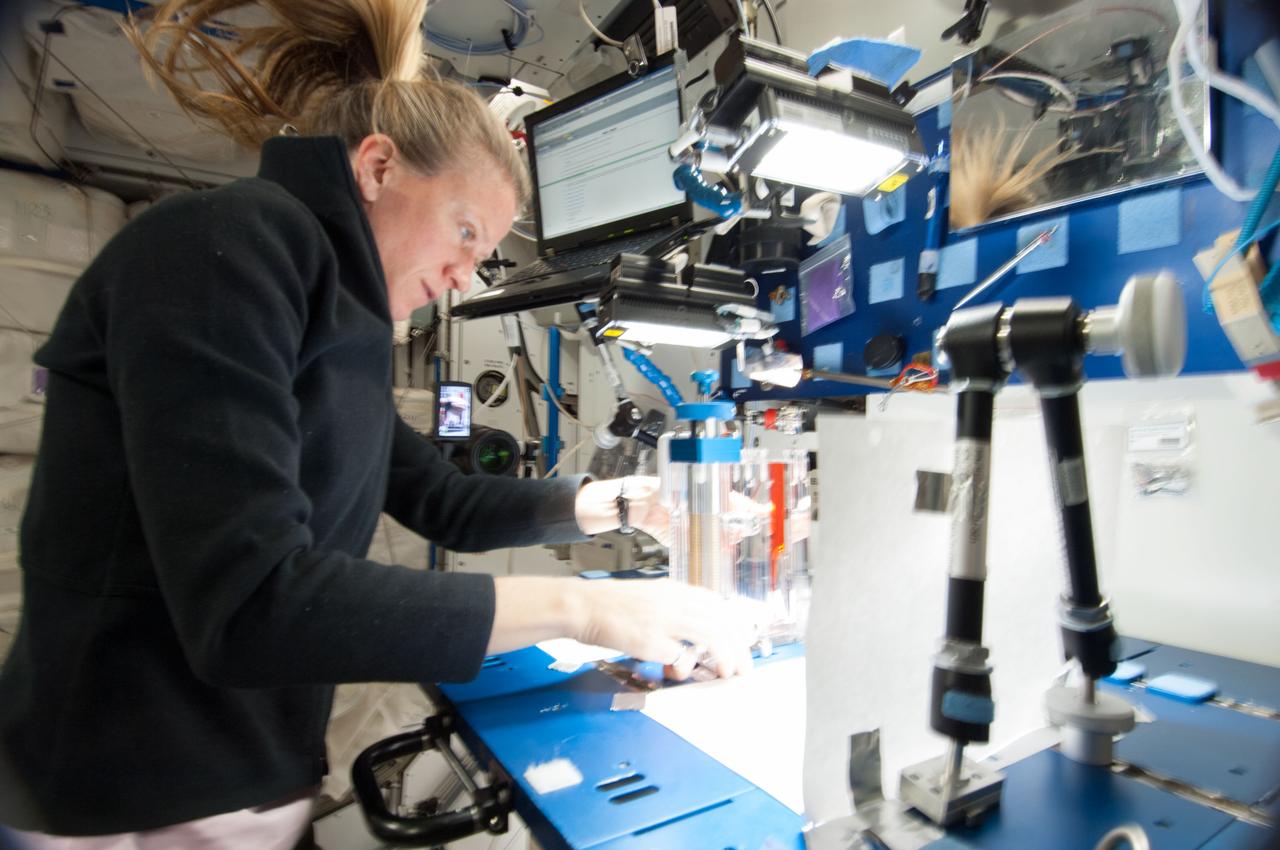
ISS036-E-029767 (8 Aug. 2013) --- NASA astronaut Karen Nyberg, Expedition 36 flight engineer, conducts a session with the Capillary Flow Experiment (CFE) in the Harmony node of the International Space Station. CFE observes the flow of fluid, in particular capillary phenomena, in microgravity. The data from this experiment will improve computer models used to design fluid transfer systems and fuel tanks on future spacecraft.
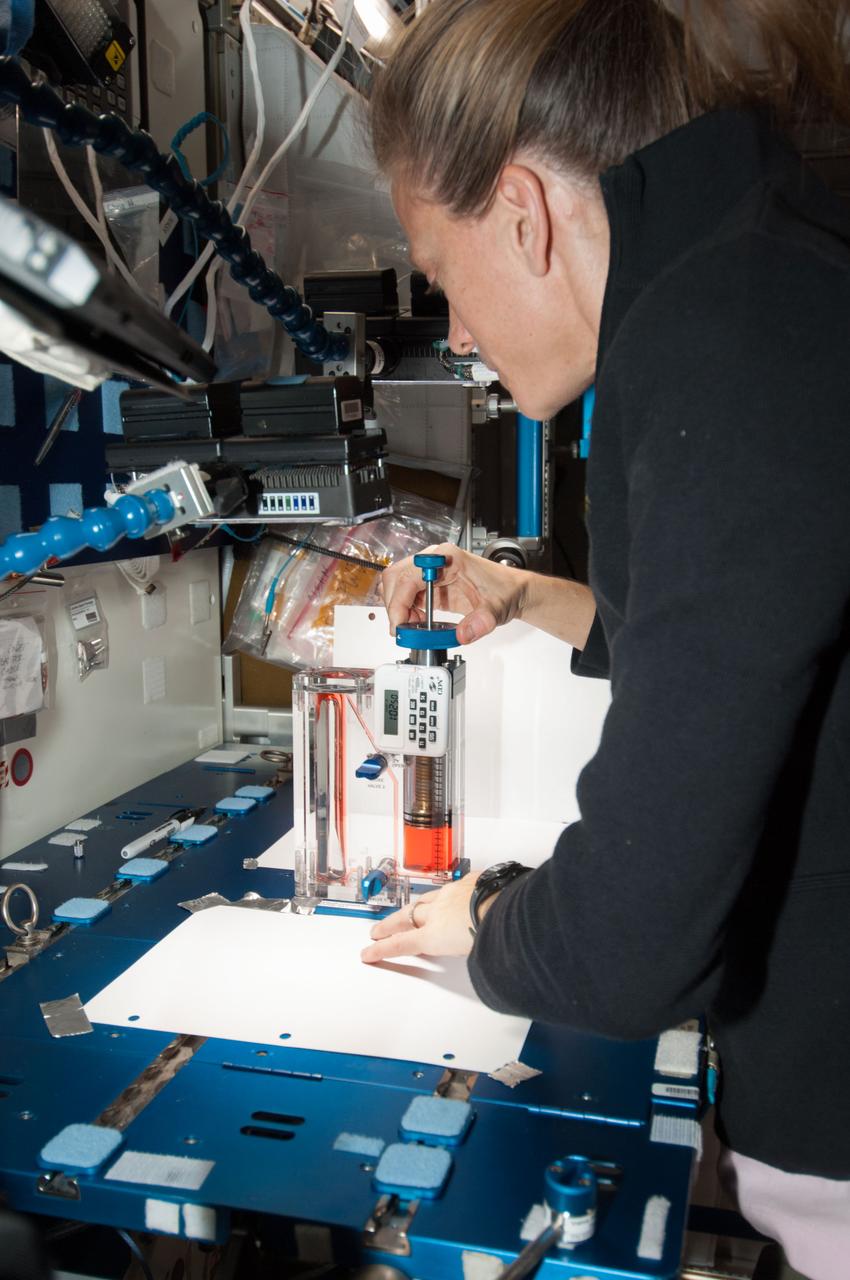
ISS036-E-029773 (8 Aug. 2013) --- NASA astronaut Karen Nyberg, Expedition 36 flight engineer, conducts a session with the Capillary Flow Experiment (CFE) in the Harmony node of the International Space Station. CFE observes the flow of fluid, in particular capillary phenomena, in microgravity. The data from this experiment will improve computer models used to design fluid transfer systems and fuel tanks on future spacecraft.
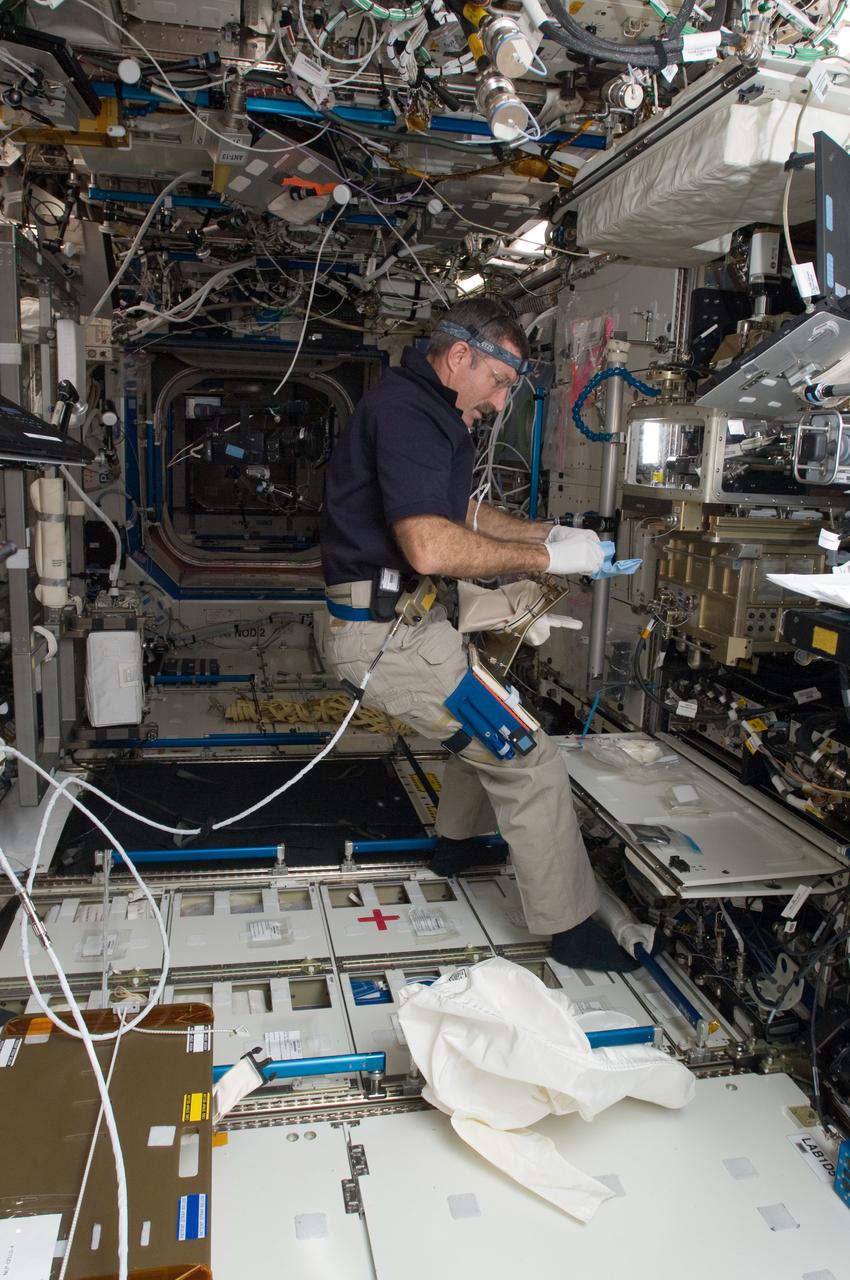
ISS030-E-007419 (1 Dec. 2011) --- In the International Space Station’s Destiny laboratory, NASA astronaut Dan Burbank, Expedition 30 commander, conducts a session with the Preliminary Advanced Colloids Experiment (PACE) at the Light Microscopy Module (LMM) in the Fluids Integrated Rack / Fluids Combustion Facility (FIR/FCF). PACE is designed to investigate the capability of conducting high magnification colloid experiments with the LMM for determining the minimum size particles which can be resolved with it.
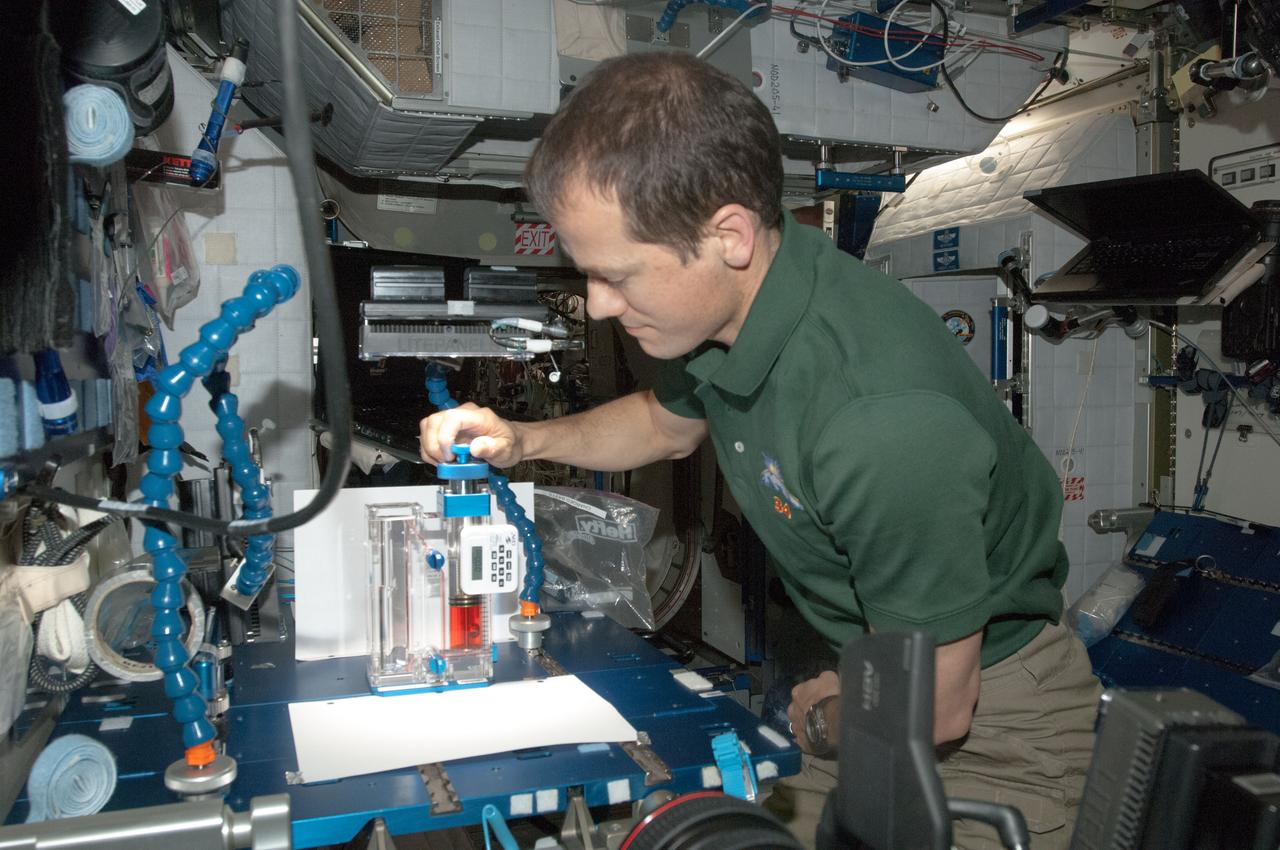
ISS034-E-036840 (29 Jan. 2013) --- In the International Space Station?s Harmony node, NASA astronaut Tom Marshburn, Expedition 34 flight engineer, works with the Capillary Flow Experiment-3, which investigates how fluids flow across surfaces in a weightless environment. Results from this experiment will improve computer models used to design fluid transfer systems and fuel tanks on future spacecraft.
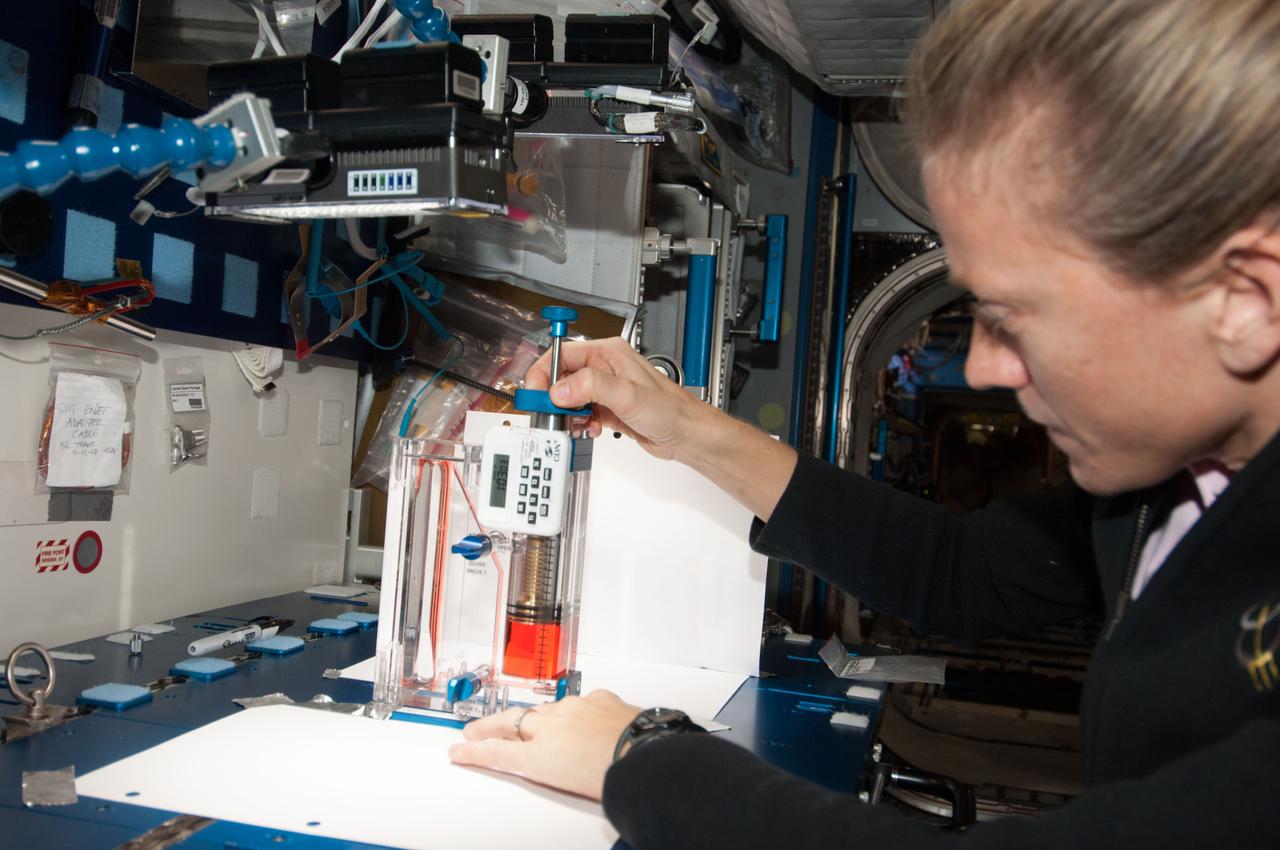
ISS036-E-029774 (8 Aug. 2013) --- NASA astronaut Karen Nyberg, Expedition 36 flight engineer, conducts a session with the Capillary Flow Experiment (CFE) in the Harmony node of the International Space Station. CFE observes the flow of fluid, in particular capillary phenomena, in microgravity. The data from this experiment will improve computer models used to design fluid transfer systems and fuel tanks on future spacecraft.
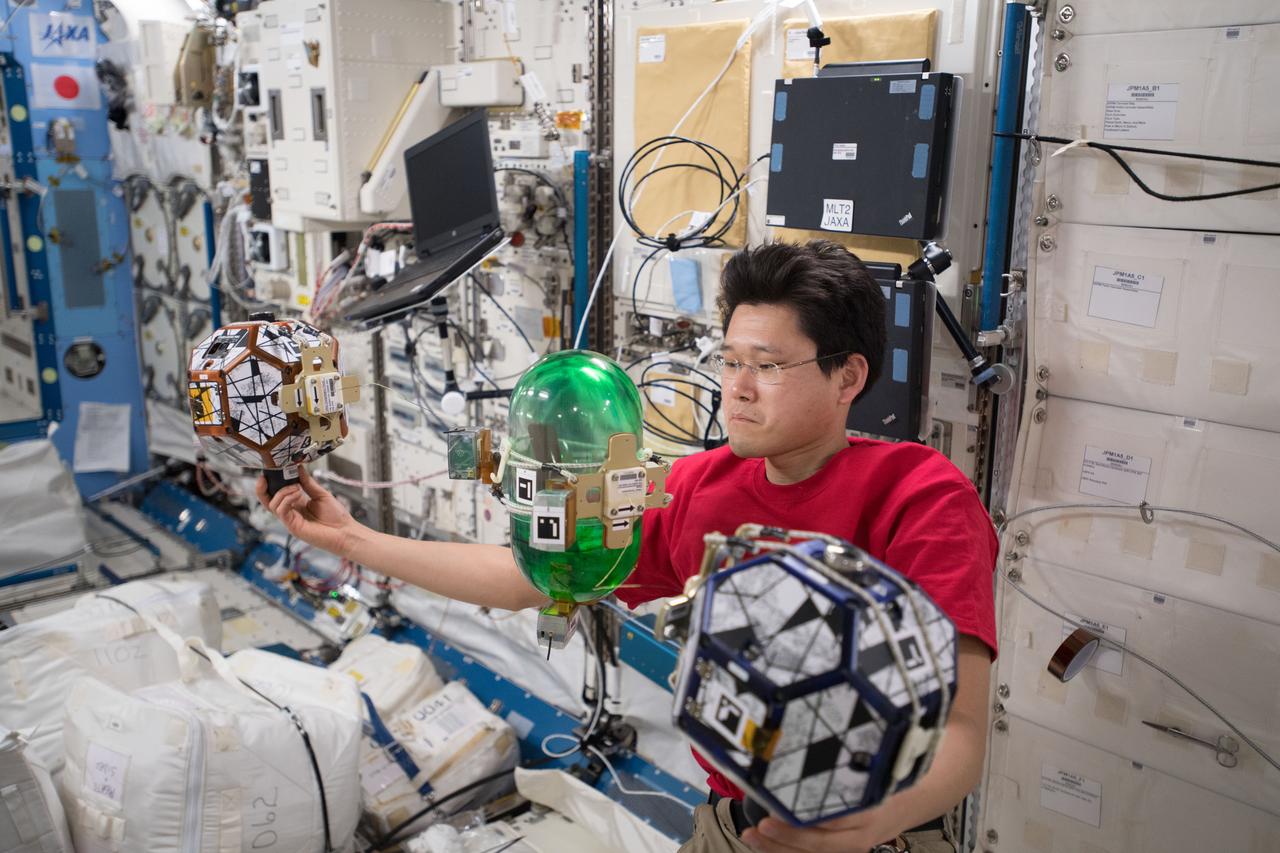
iss054e022175 (1/17/2018) --- Japan Aerospace Exploration Agency (JAXA) astronaut Norishige Kanai is photographed during a Synchronized Position Hold, Engage, Reorient, Experimental Satellites (SPHERES) Tether Slosh experiment test session run. Photo was taken in the Kibo Japanese Experiment Pressurized Module (JPM) aboard the International Space Station (ISS). SPHERES Tether Slosh combines fluid dynamics equipment with robotic capabilities aboard the ISS to investigate automated strategies for steering passive cargo that contain fluids. In space, the fluid fuels used by spacecraft can slosh around in unpredictable ways making space maneuvers difficult. SPHERES Tether Slosh uses two Synchronized Position Hold, Engage, Reorient, Experimental Satellites (SPHERES) robots tethered to a fluid-filled container covered in sensors to test strategies for safely steering spacecraft such as dead satellites that might still have fuel in the tank.
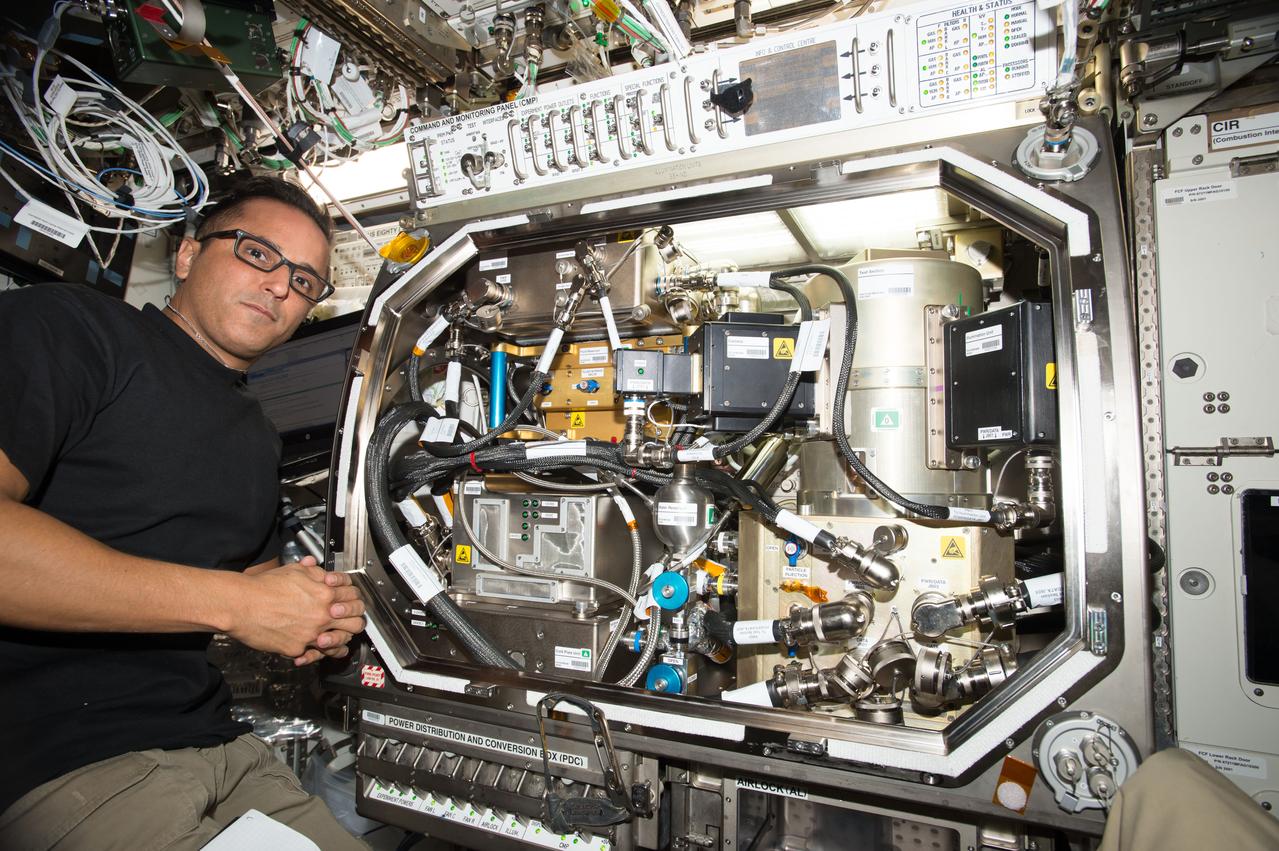
iss053e027051 (Sept. 19, 2017) --- Flight Engineer Joe Acaba works in the U.S. Destiny laboratory module setting up hardware for the Zero Boil-Off Tank (ZBOT) experiment. ZBOT uses an experimental fluid to test active heat removal and forced jet mixing as alternative means for controlling tank pressure for volatile fluids. Rocket fuel, spacecraft heating and cooling systems, and sensitive scientific instruments rely on very cold cryogenic fluids. Heat from the environment around cryogenic tanks can cause their pressures to rise, which requires dumping or "boiling off" fluid to release the excess pressure, or actively cooling the tanks in some way.
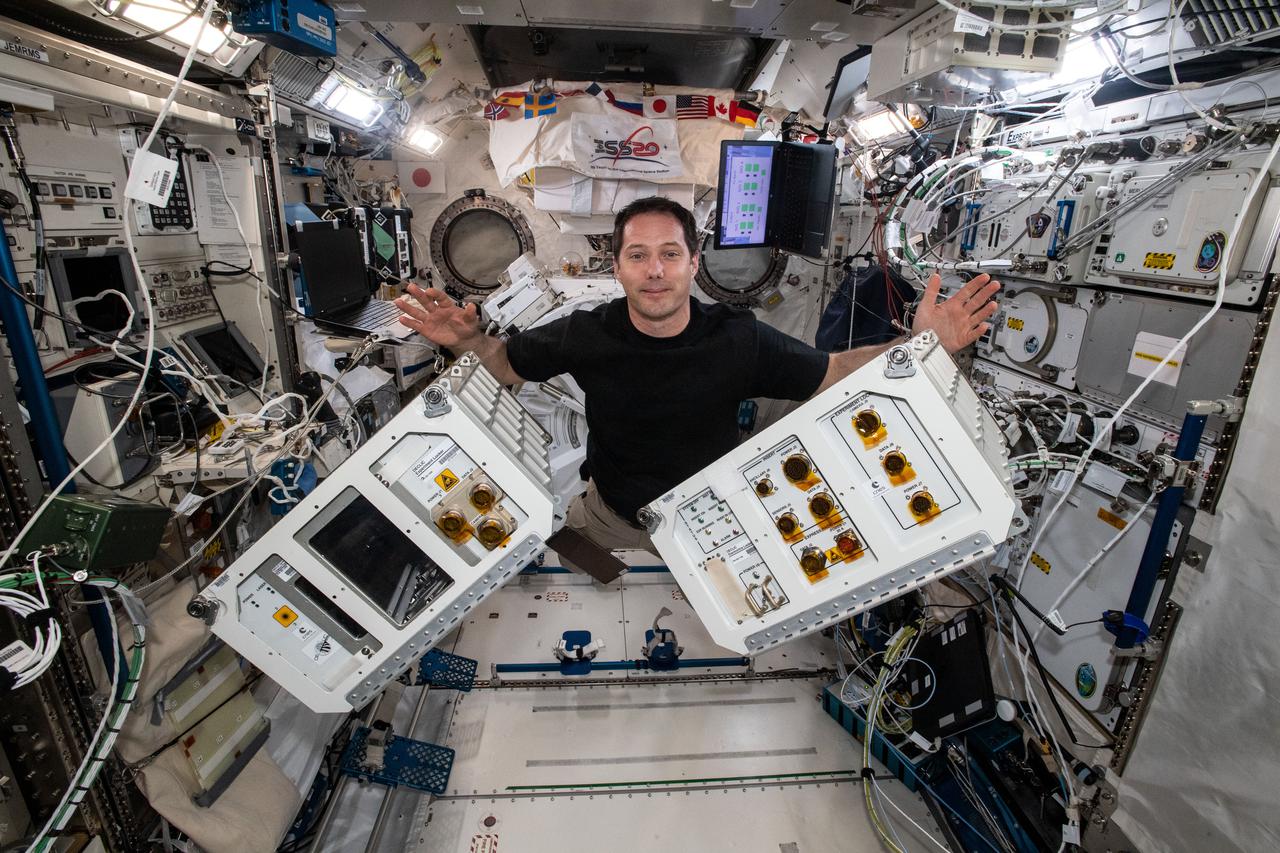
iss065e442803 (10/7/2021) --- European Space Agency (ESA) astronaut Thomas Pesquet gathers fluid physics and materials research hardware inside the International Space Station's Kibo laboratory module. Device for the Study of Critical Liquids and Crystallization (DECLIC) is a multi-user facility developed by the agency Centre National d’Etudes Spatiales (French Space Agency, CNES) and flown in collaboration with NASA. It is designed to support experiments in the fields of fluid physics and materials science. Special inserts allow researchers to study both ambient temperature critical point fluids and high temperature super-critical fluids. Another class of insert studies the dynamics and morphology of the fronts that form as a liquid material solidifies.
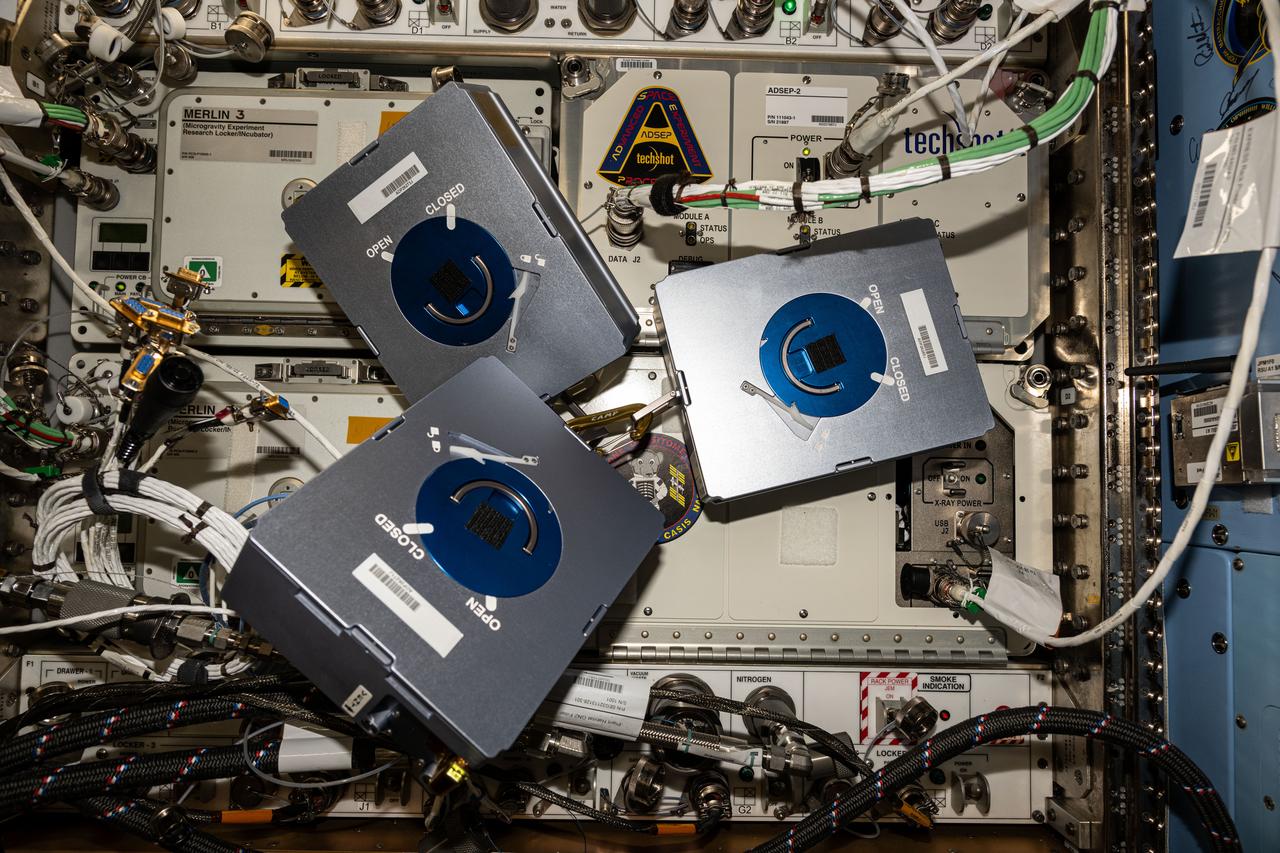
Documentation of three cassettes for the In-Space Production Application – Pharmaceutical In-space Laboratory – 02 (InSPA-PIL-02 or ADSEP-PIL-02) experiment removed from the ADSEP-2 (ADvanced Space Experiment Processor) for Fluid Loop replacement. Photo was taken in the Harmony Node 2.
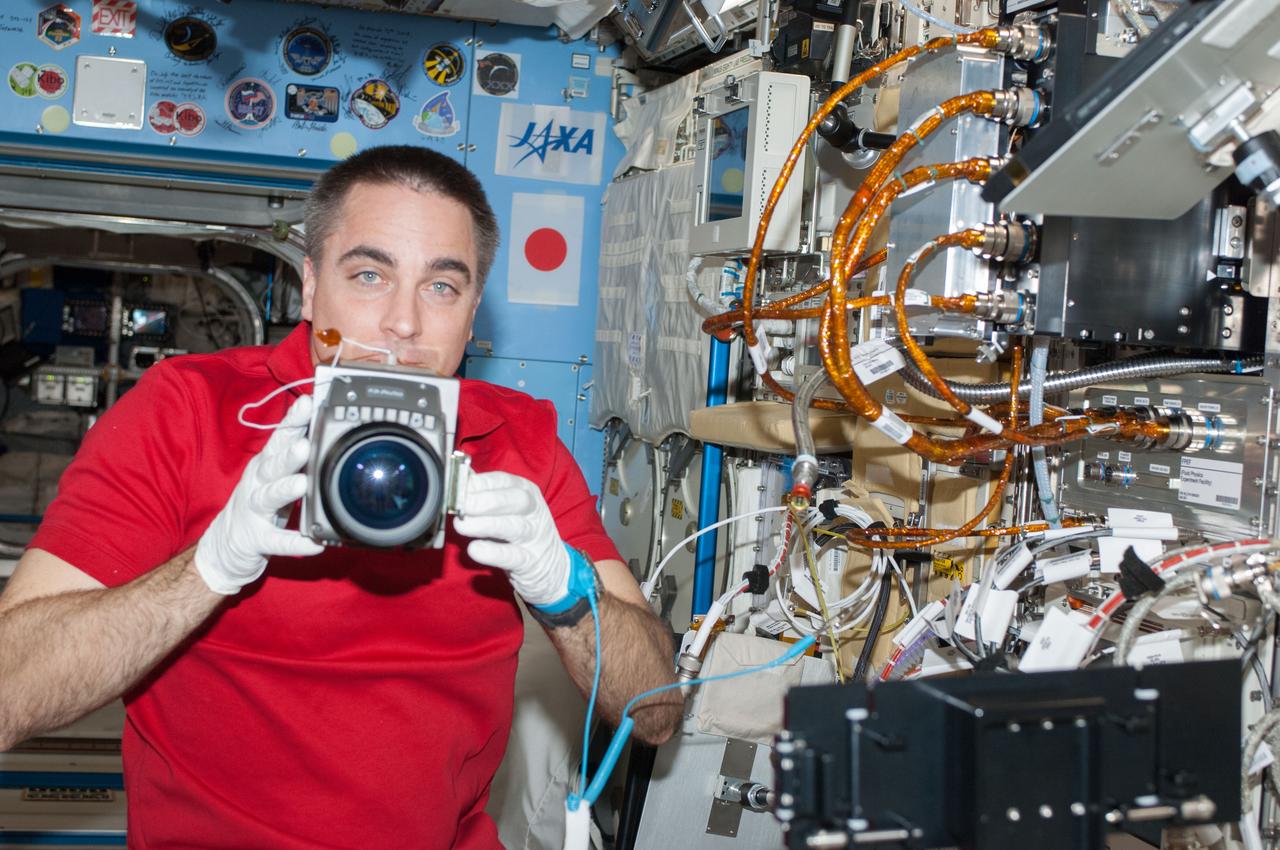
ISS036-E-025487 (24 July 2013) --- NASA astronaut Chris Cassidy, Expedition 36 flight engineer, performs in-flight maintenance on the Marangoni Inside experiment in the Fluid Physics Experiment Facility (FPEF) which is part of a Japanese science rack in the International Space Station?s Kibo laboratory.
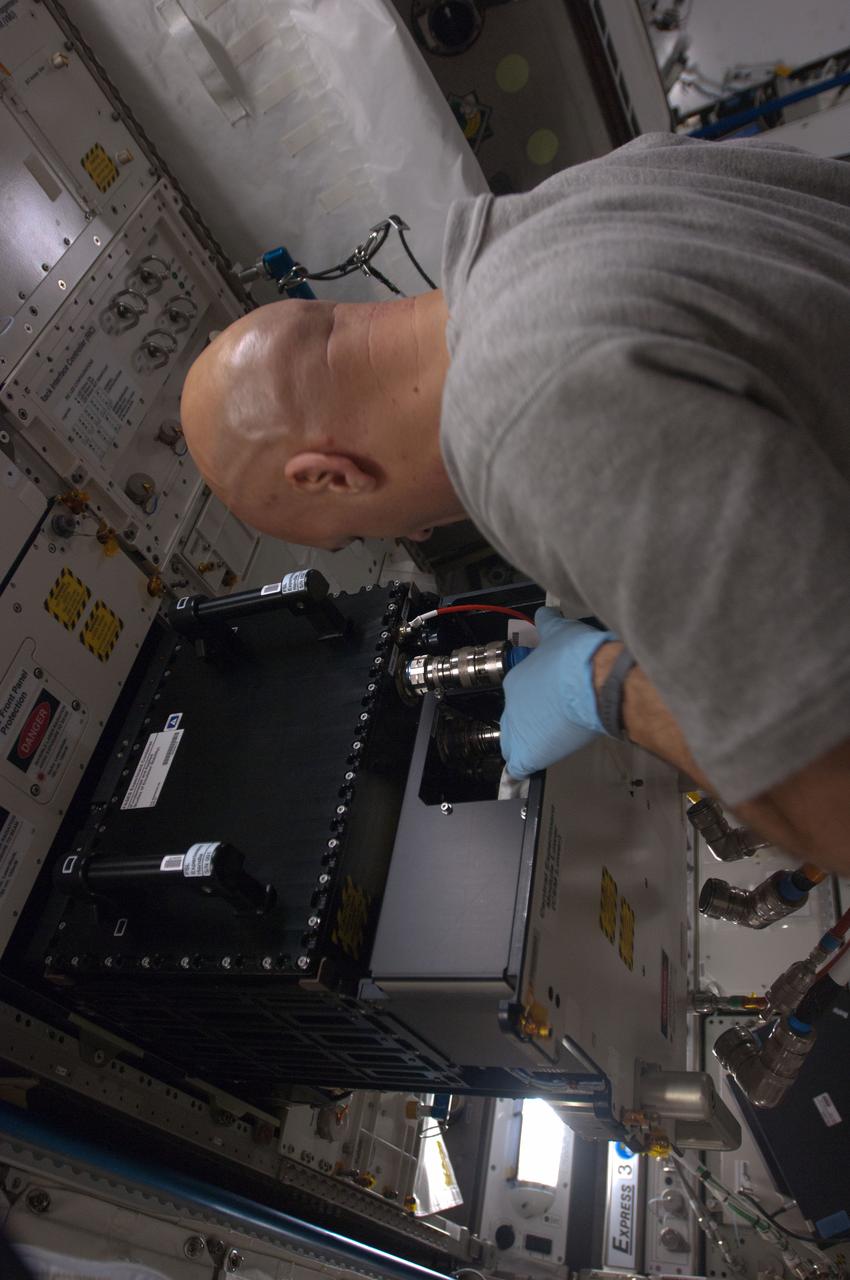
ISS036-E-009550 (19 June 2013) --- European Space Agency astronaut Luca Parmitano, Expedition 36 flight engineer, installs the Fundamental and Applied Studies of Emulsion Stability (FASES) experiment container into the Central Experiment Module (CEM) Lower of Fluid Science Laboratory (FSL) in the Columbus laboratory of the International Space Station.
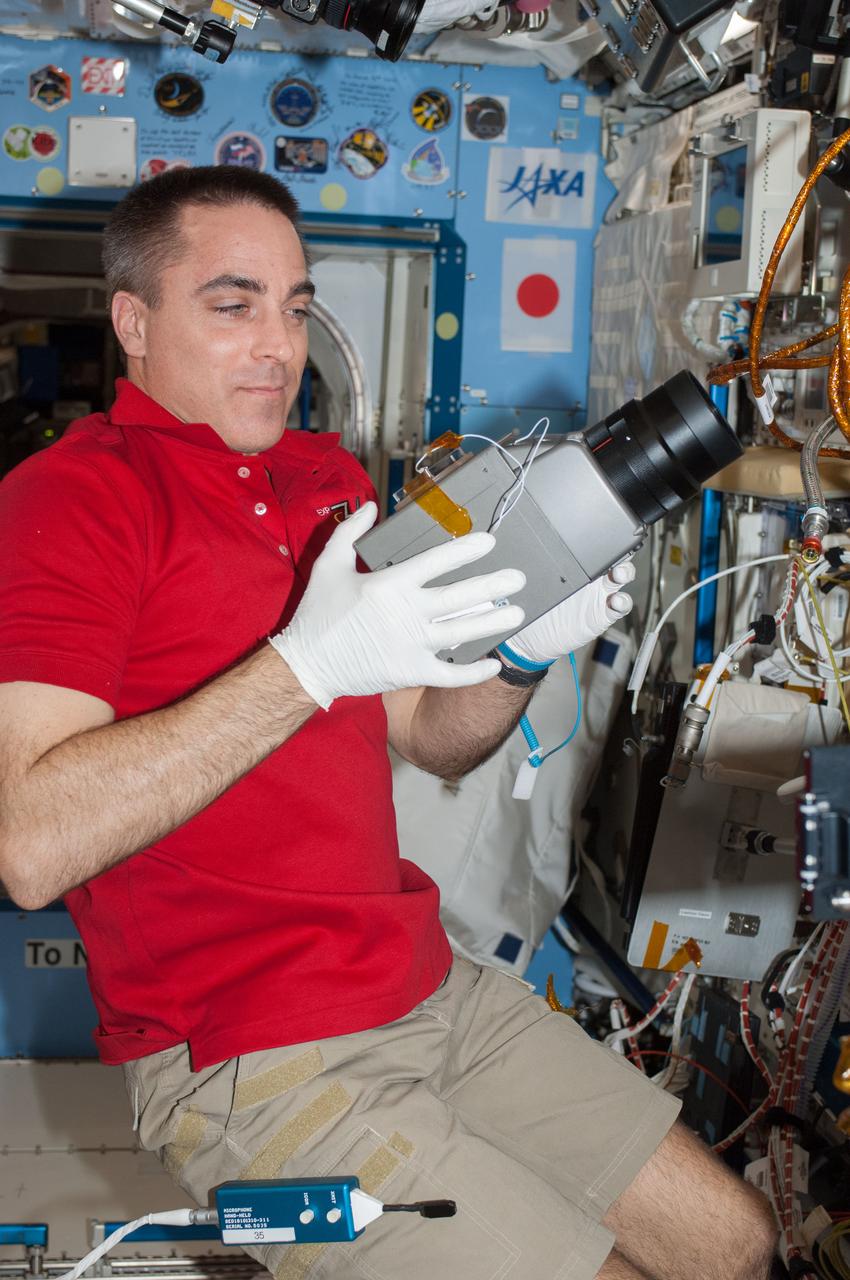
ISS036-E-025489 (24 July 2013) --- NASA astronaut Chris Cassidy, Expedition 36 flight engineer, performs in-flight maintenance on the Marangoni Inside experiment in the Fluid Physics Experiment Facility (FPEF) which is part of a Japanese science rack in the International Space Station?s Kibo laboratory.
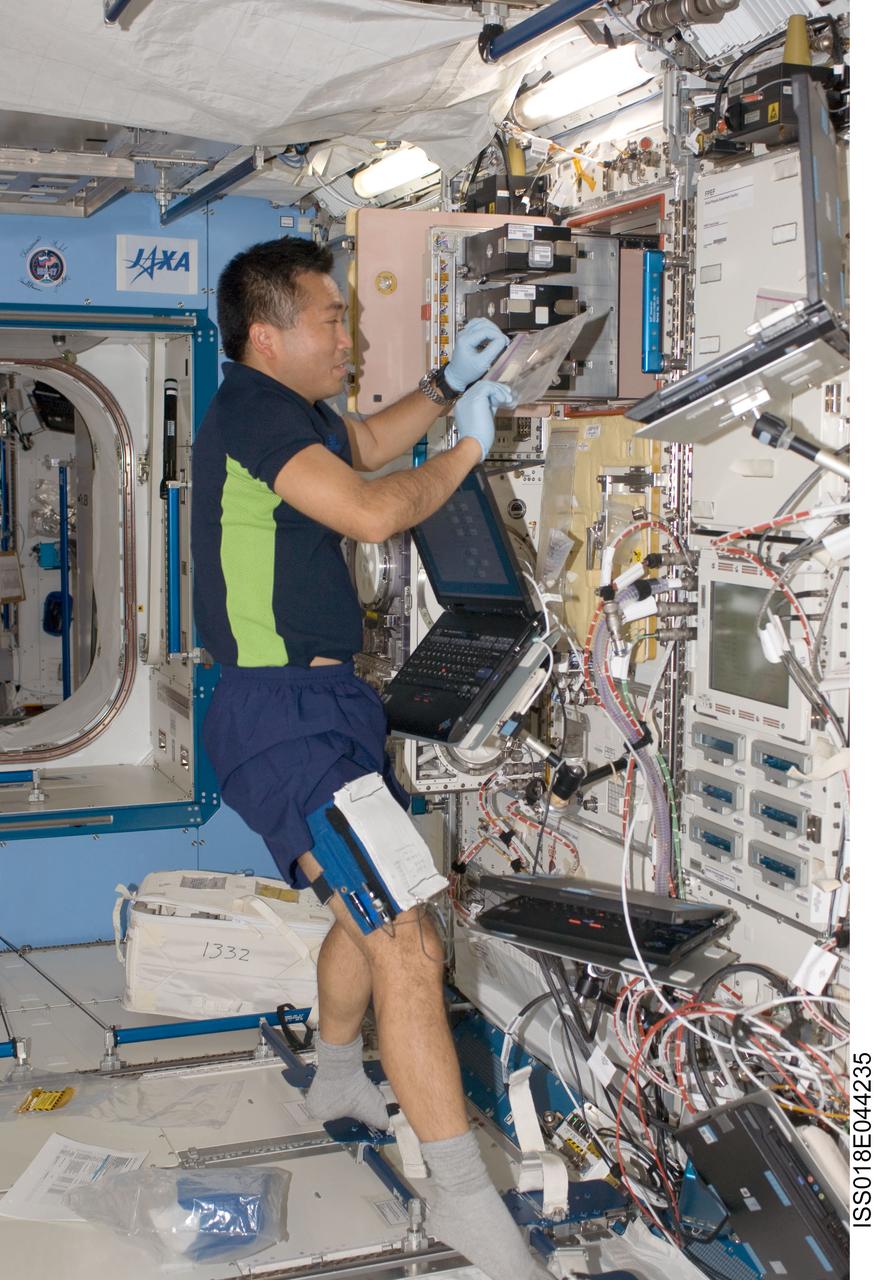
ISS018-E-044235 (28 March 2009) --- Japan Aerospace Exploration Agency (JAXA) astronaut Koichi Wakata, Expedition 18/19 flight engineer, works on an experiment at the Ryutai fluid science experiment rack in the Kibo laboratory of the International Space Station.
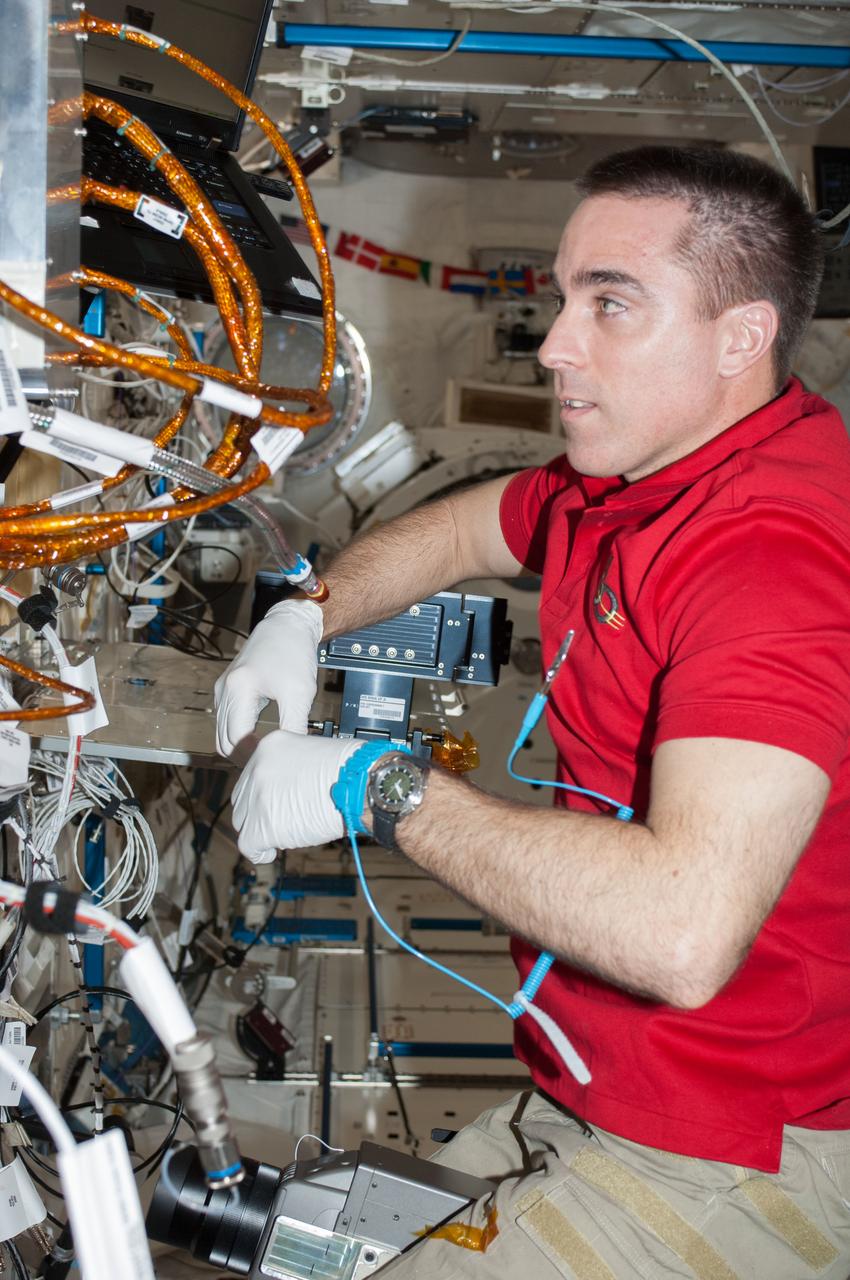
ISS036-E-025484 (24 July 2013) --- NASA astronaut Chris Cassidy, Expedition 36 flight engineer, performs in-flight maintenance on the Marangoni Inside experiment in the Fluid Physics Experiment Facility (FPEF) which is part of a Japanese science rack in the International Space Station?s Kibo laboratory.
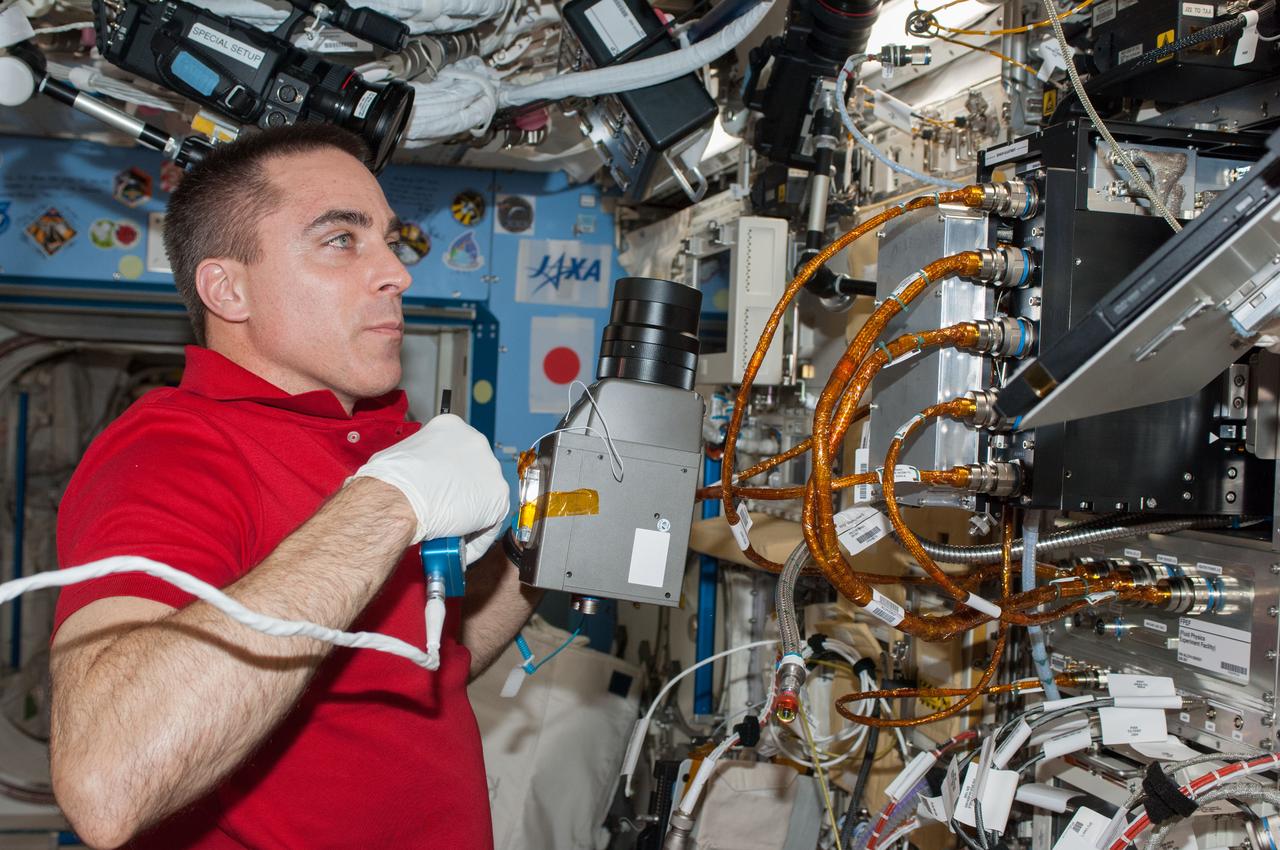
ISS036-E-025491 (24 July 2013) --- NASA astronaut Chris Cassidy, Expedition 36 flight engineer, performs in-flight maintenance on the Marangoni Inside experiment in the Fluid Physics Experiment Facility (FPEF) which is part of a Japanese science rack in the International Space Station?s Kibo laboratory.
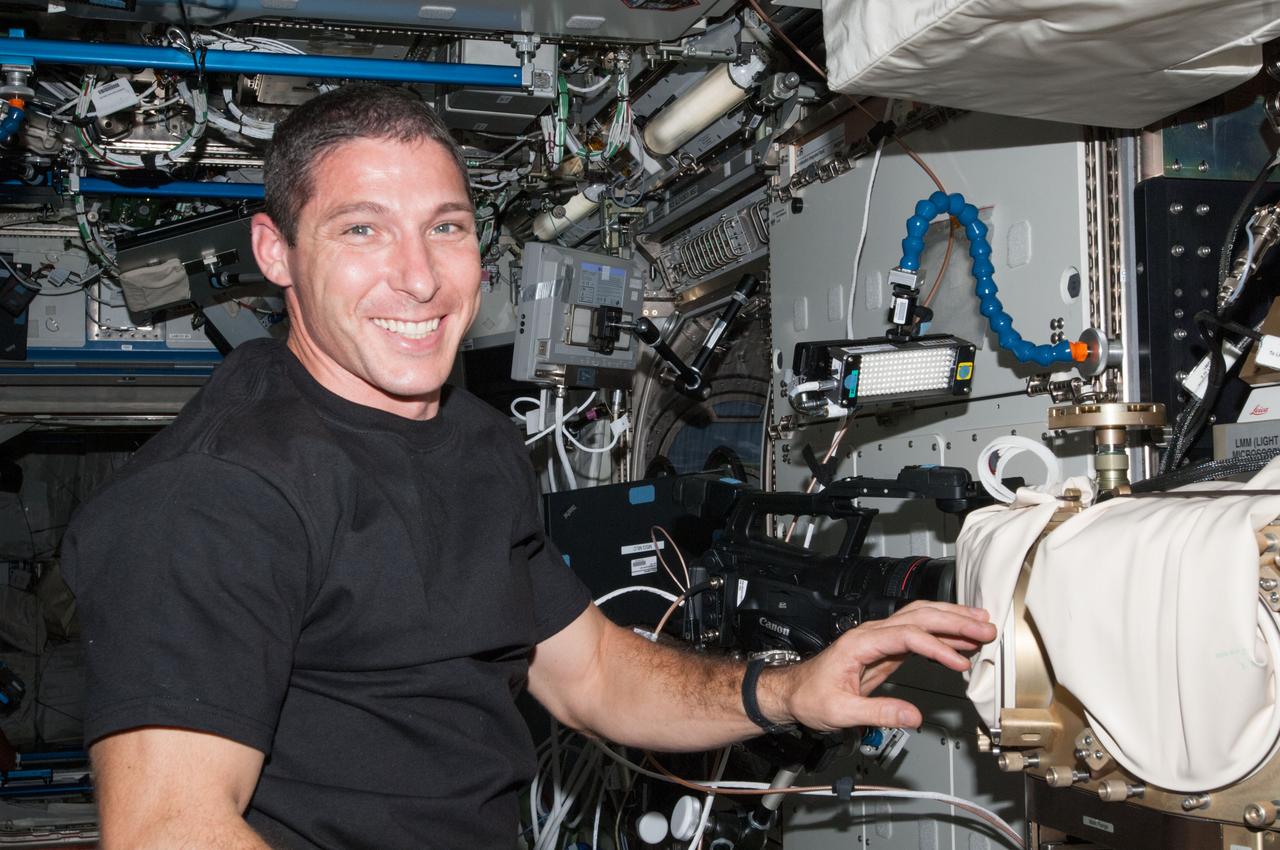
ISS037-E-012572 (14 Oct. 2013) --- In the U.S. lab Destiny aboard the Earth-orbiting International Space Station Expedition 37 Flight Engineer Michael Hopkins prepares the Fluids Integrated Rack for an experiment.
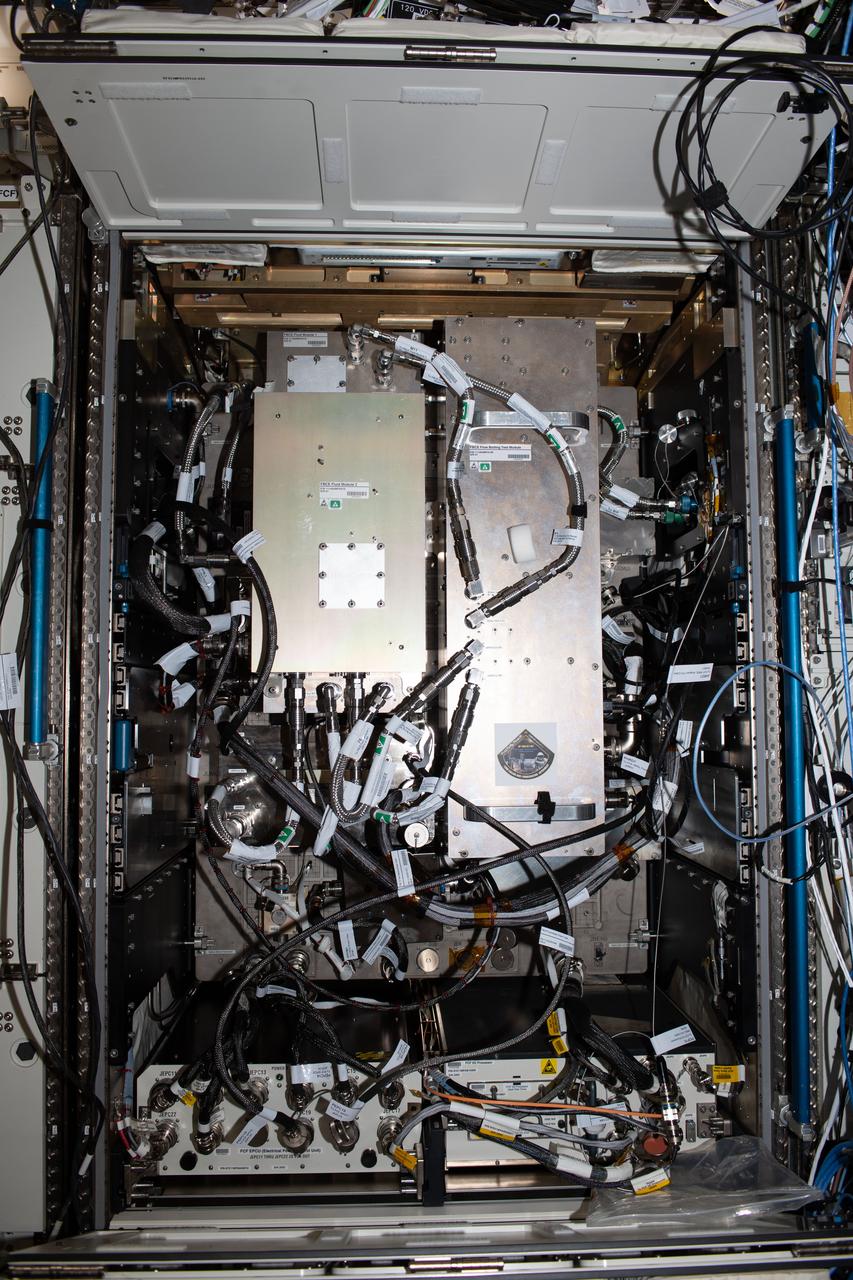
iss066e087939 (12/9/2021) --- A view of the Fluids and Combustion Facility (FCF), used for the Flow Boiling and Condensation Experiment (FBCE) during Expedition 66. The study may improve thermal systems for Earth and other planetary environments.
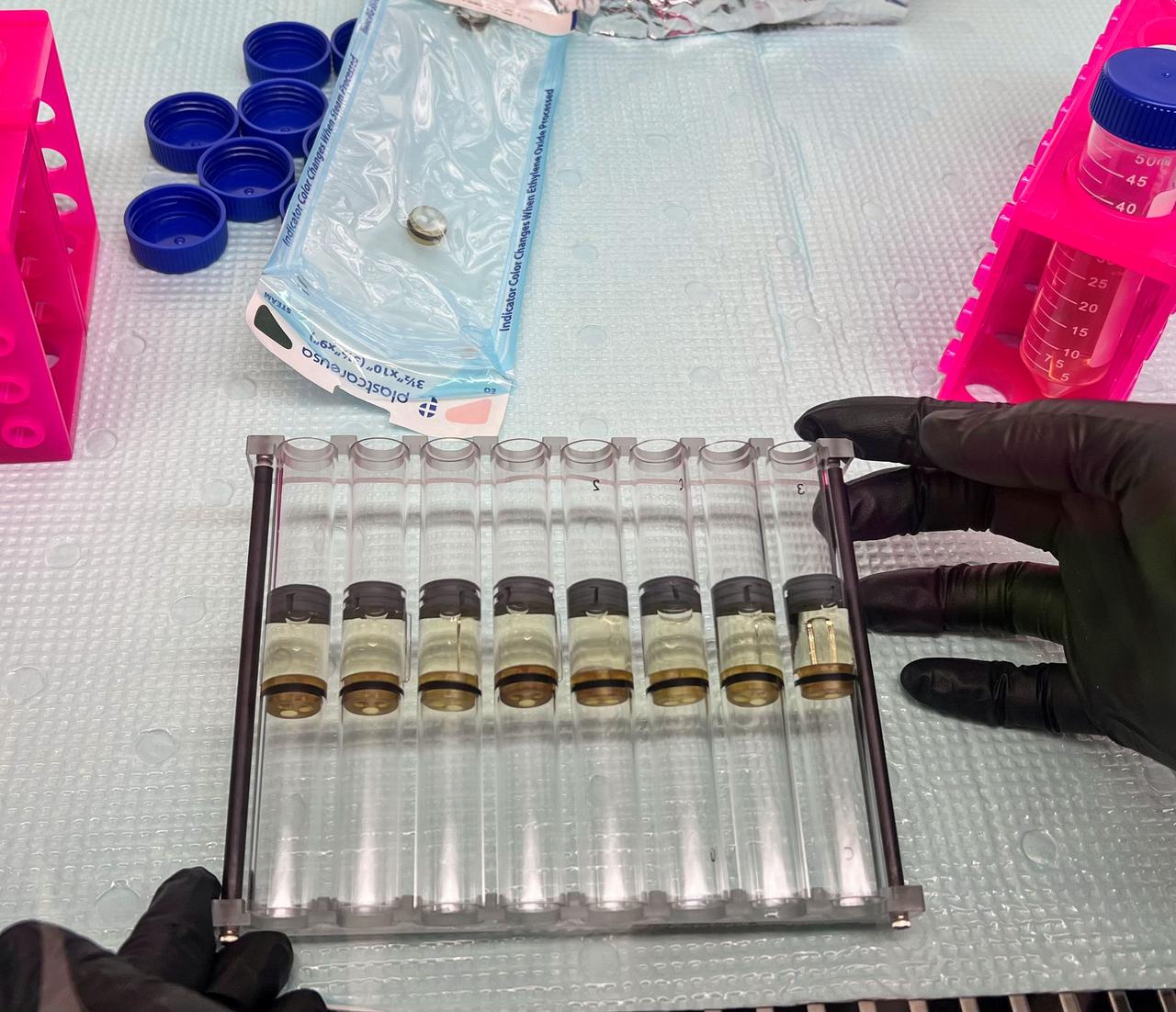
jsc2025e007256 (2/14/2025) --- Another view of the eight Fluid Processing Apparatus (FPAs) used in the Polaris Bioremediation Science Experiment - Genetic Exchange in Microgravity for Biofilm Bioremediation (GEM-B2) investigation. Image courtesy of BioServe.
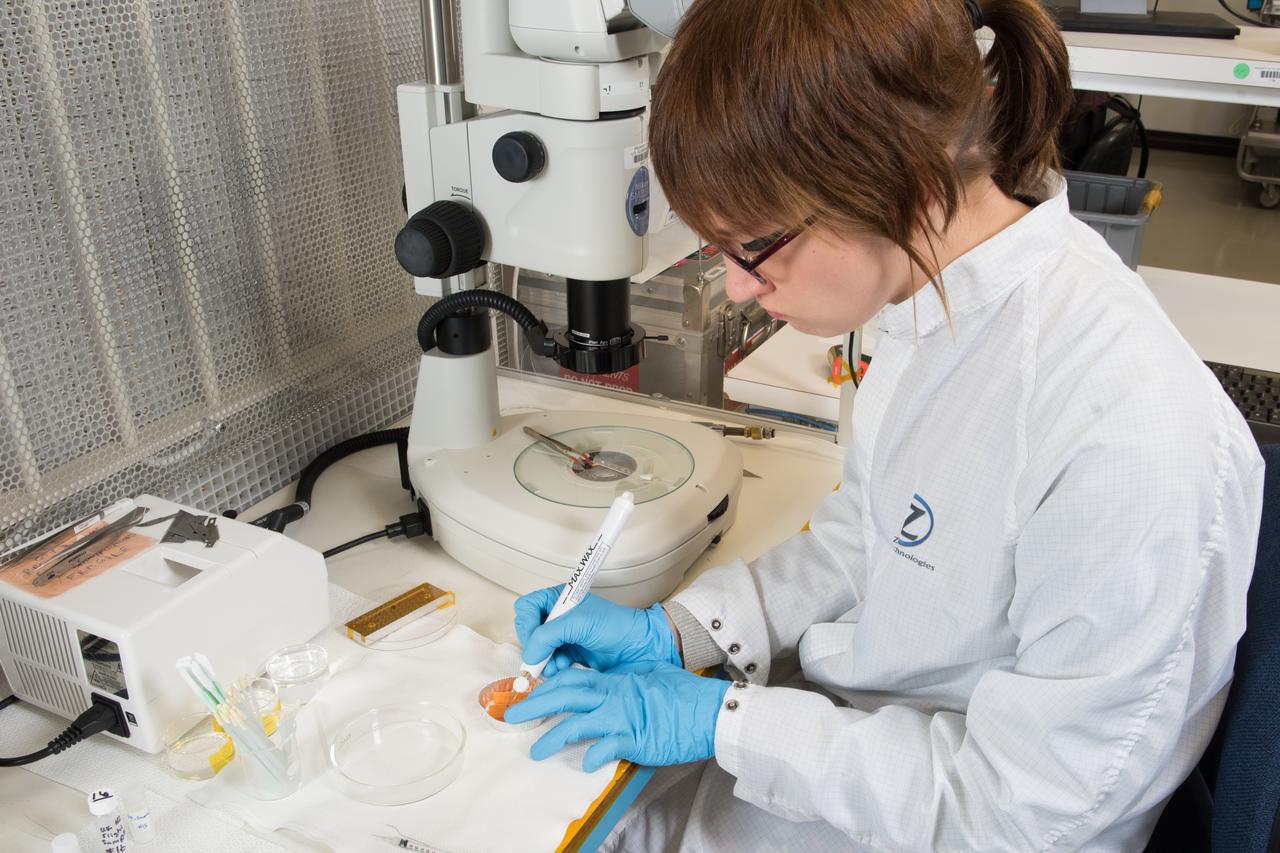
NASA (Zin Technologies) engineer prepares Advanced Colloid Experiment Heated-2 samples that will be analyzed aboard the International Space Station using the zero-gravity Light Microscopy Module, LMM in the Fluids Integrated Rack, FIR
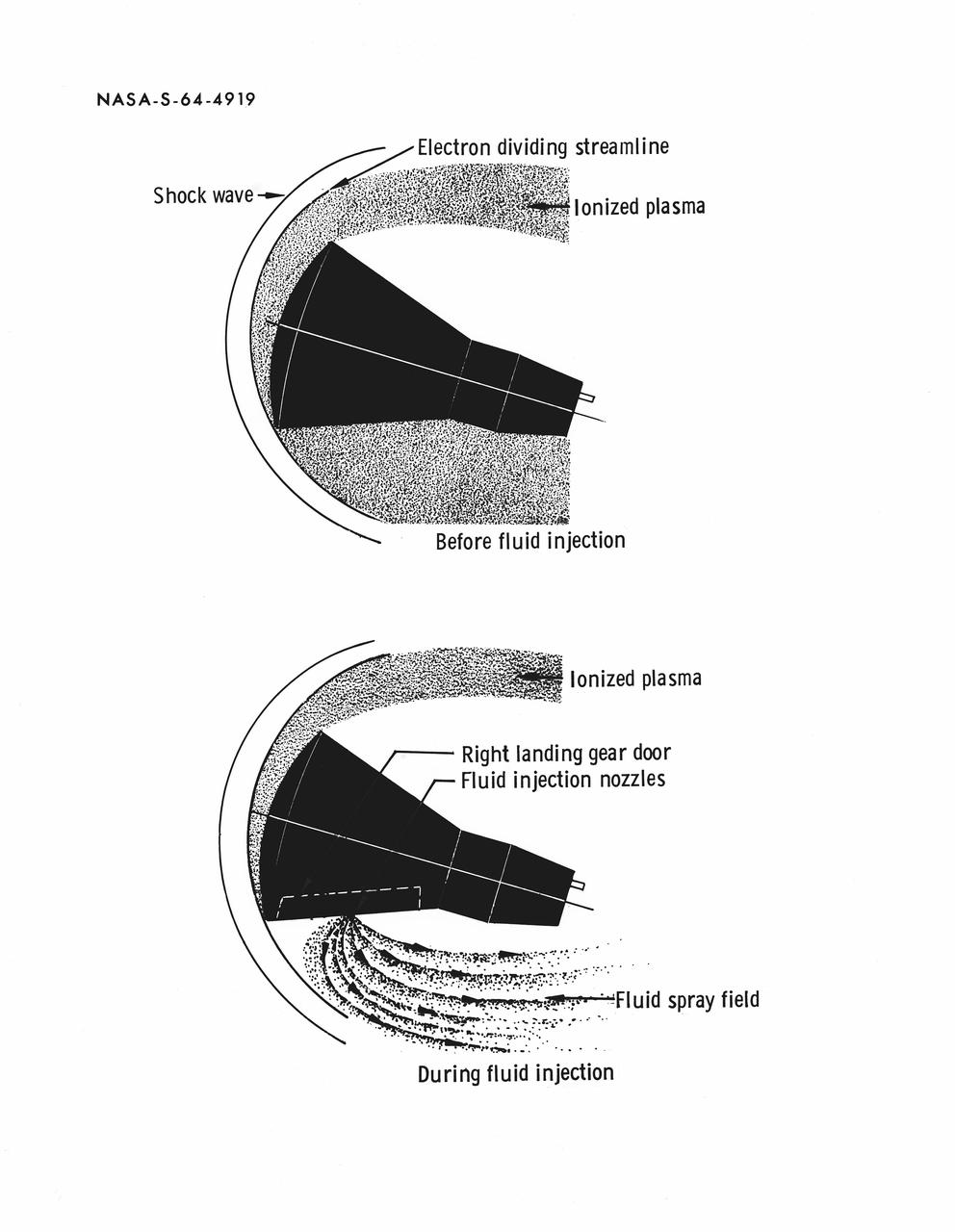
S64-04919 (September 1964) --- Diagram of reduction of the re-entry ionized plasma about a Gemini spacecraft by fluid injection, an experiment planned for the Gemini-Titan 3 orbital flight.
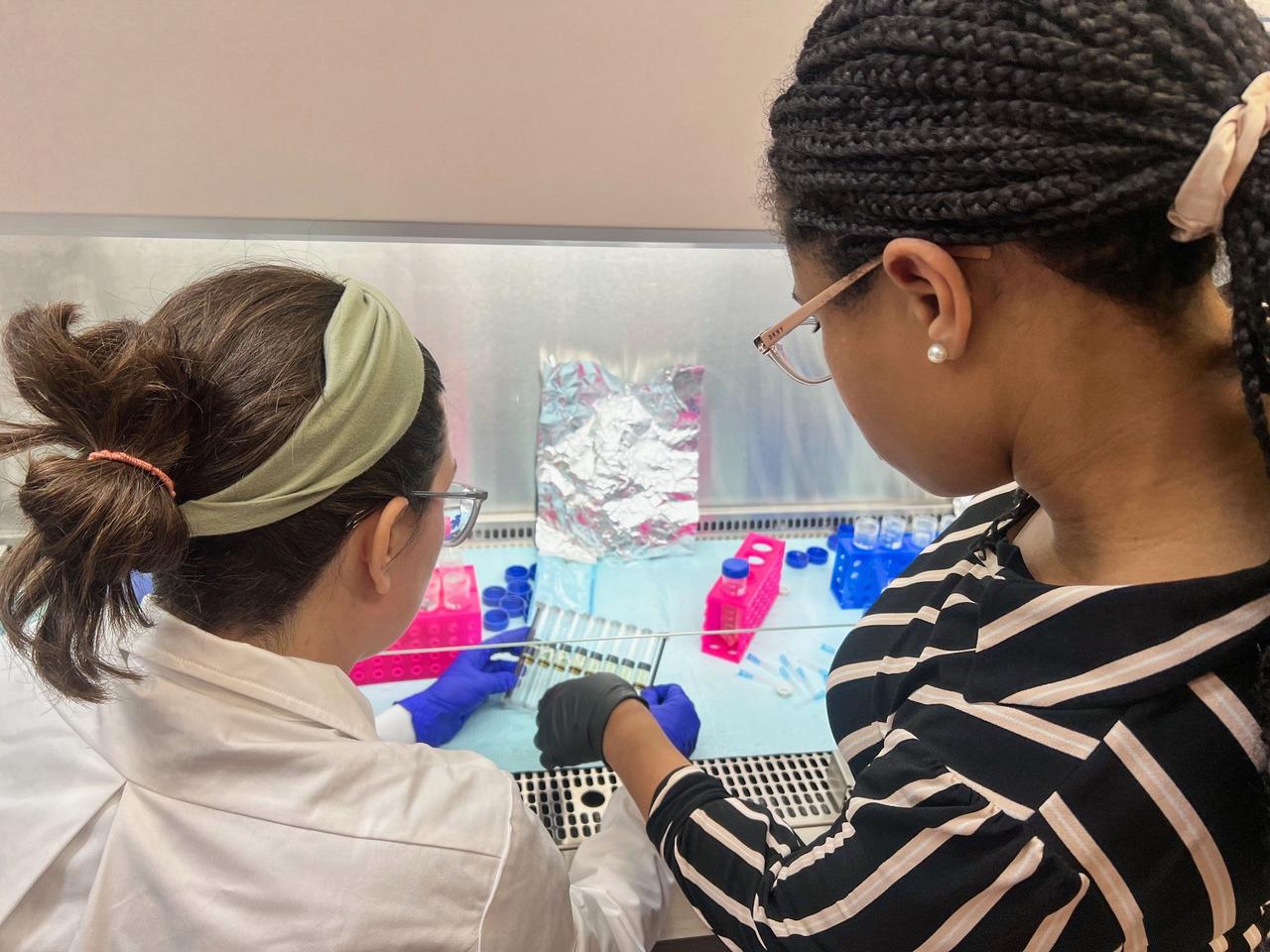
jsc2025e007257 (2/14/2025) --- A view of the Fluid Processing Apparatus (FPAs) used in the Polaris Bioremediation Science Experiment - Genetic Exchange in Microgravity for Biofilm Bioremediation (GEM-B2) investigation. Image courtesy of BioServe.
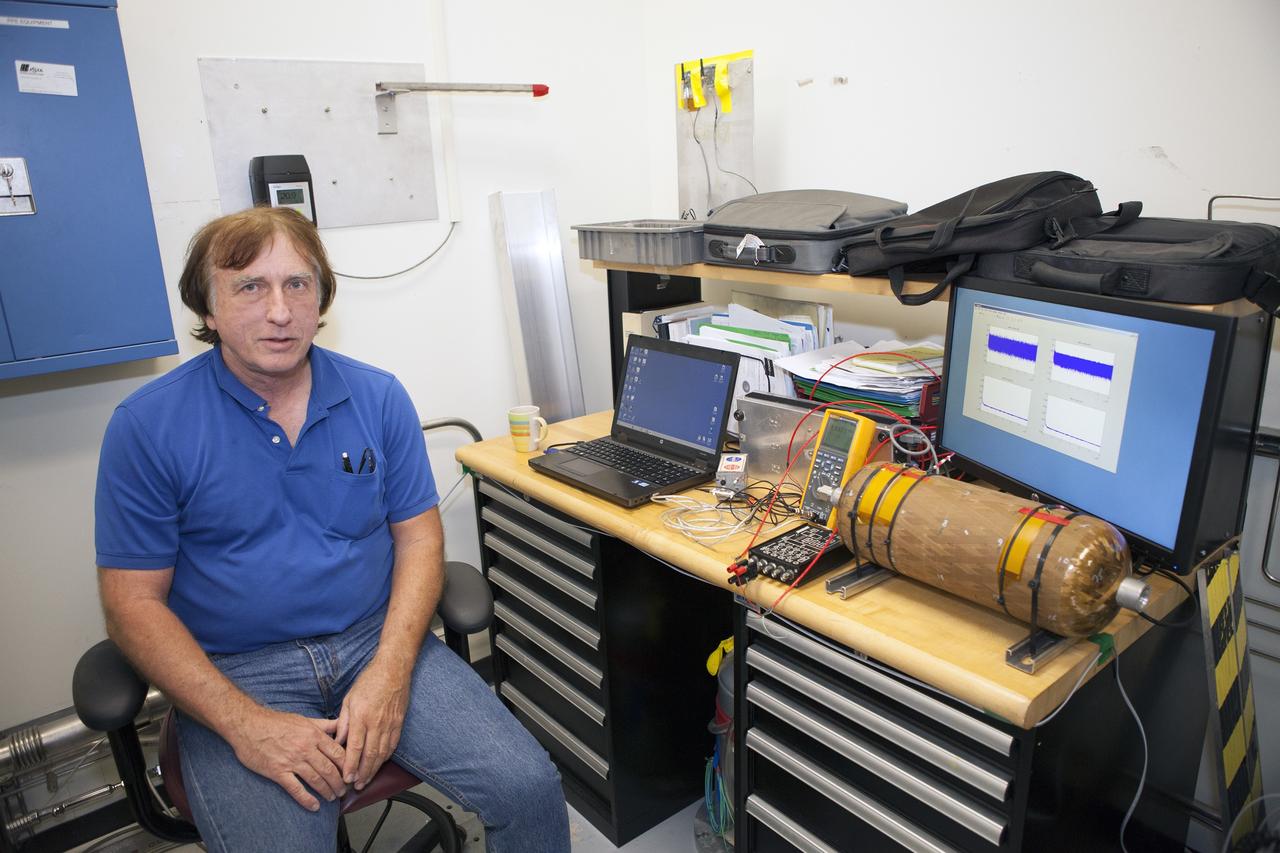
CAPE CANAVERAL, Fla. – Rudy Werlink, a fluid systems engineer in the Engineering Directorate at NASA's Kennedy Space Center in Florida, monitors a test in a lab at the Cryogenics Testbed Facility using the Lead Zirconate Titanate, or PZT-based system that he developed. Werlink developed the PZT-based system at Kennedy as a way to measure the mass of a fluid and the structural health of a tank using vibration signatures on Earth or in reduced/zero g gravity. The mass gaging technology has received approval to be on the first sub-orbital flight on the Virgin Galactic Space Plane in 2015. NASA experiments using the PZT technology will be used by Embry-Riddle Aeronautical University in conjunction with Carthage College on a fluid transfer experiment. Photo credit: NASA/Daniel Casper
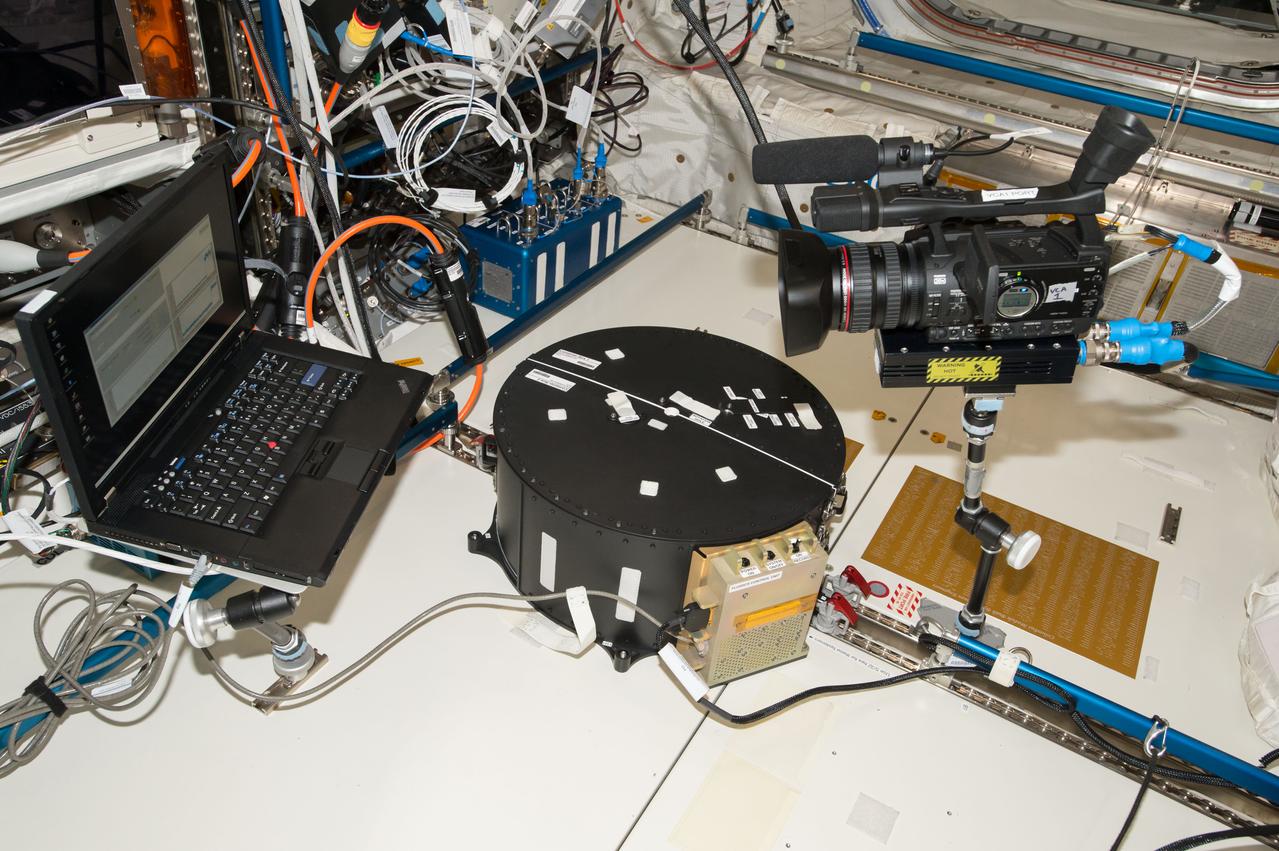
iss051e034000 (5/2/2017) --- A view taken to document hardware setup during the first run of the Fluid Dynamics in Space (FLUIDICS) experiment. The Container Box is attached to the Seat Track at COL1D1-D2, and a video camera records experiment data on the screen of a laptop computer. Image was taken in the Columbus European Laboratory. The FLUIDICS investigation evaluates the Center of Mass (CoM) position regarding a temperature gradient on a representation of a fuel tank. The observation of capillary wave turbulence on the surface of a fluid layer in a low-gravity environment can provide insights into measuring the existing volume in a sphere.
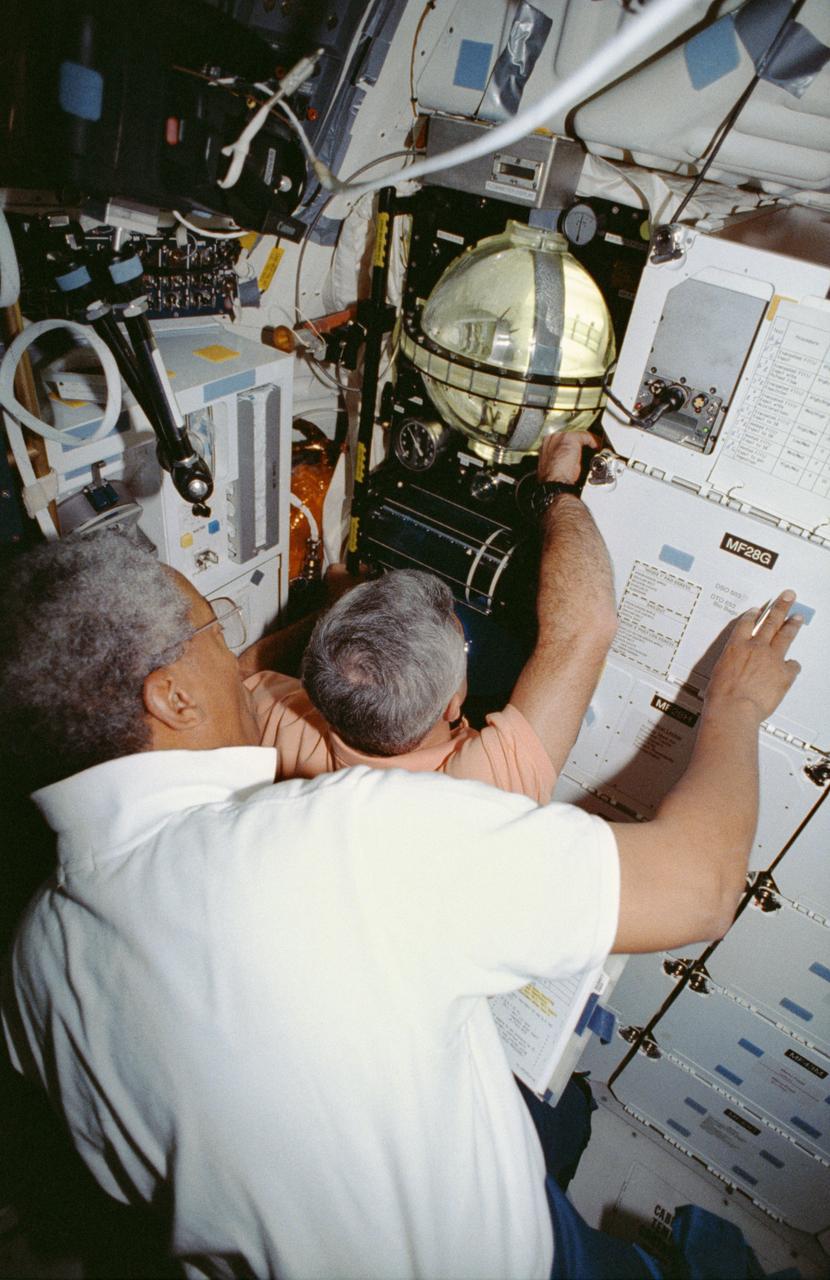
STS053-04-018 (2-9 Dec 1992) --- Astronauts Guion S. Bluford (left) and Michael R. U. (Rich) Clifford monitor the Fluid Acquisition and Resupply Equipment (FARE) onboard the Space Shuttle Discovery. Clearly visible in the mid-deck FARE setup is one of two 12.5-inch spherical tanks made of transparent acrylic, one to supply and one to receive fluids. The purpose of FARE is to investigate the dynamics of fluid transfer in microgravity and develop methods for transferring vapor-free propellants and other liquids that must be replenished in long-term space systems like satellites, Extended-Duration Orbiters (EDO), and Space Station Freedom. Eight times over an eight-hour test period, the mission specialists conducted the FARE experiment. A sequence of manual valve operations caused pressurized air from the bottles to force fluids from the supply tank to the receiver tank and back again to the supply tank. Baffles in the receiver tank controlled fluid motion during transfer, a fine-mesh screen filtered vapor from the fluid, and the overboard vent removed vapor from the receiver tank as the liquid rose. FARE is managed by NASA's Marshall Space Flight Center (MSFC) in Alabama. The basic equipment was developed by Martin Marietta for the Storable Fluid Management Demonstration. Susan L. Driscoll is the principal investigator.
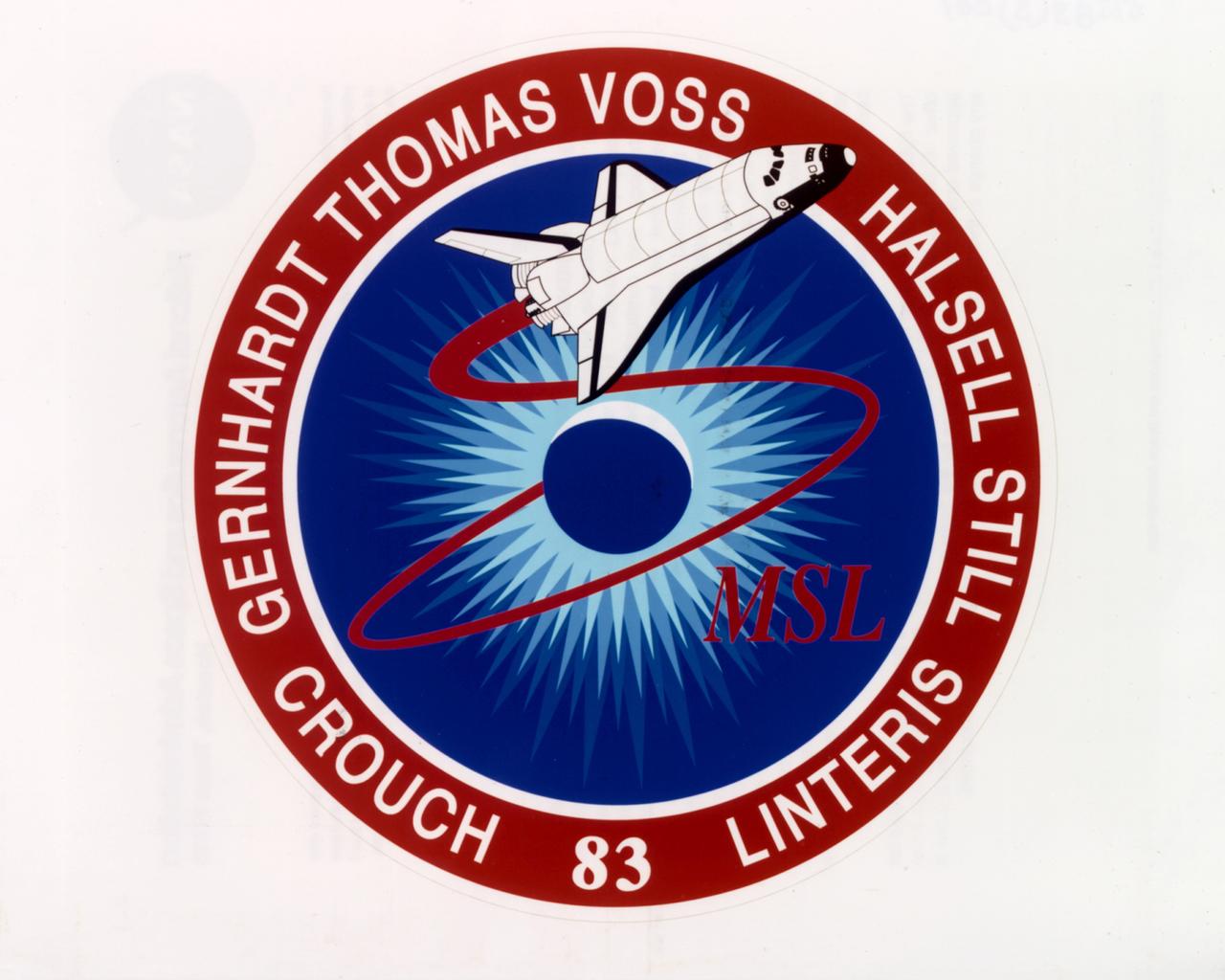
The crew patch for NASA's STS-83 mission depicts the Space Shuttle Columbia launching into space for the first Microgravity Sciences Laboratory 1 (MSL-1) mission. MSL-1 investigated materials science, fluid dynamics, biotechnology, and combustion science in the microgravity environment of space, experiments that were conducted in the Spacelab Module in the Space Shuttle Columbia's cargo bay. The center circle symbolizes a free liquid under microgravity conditions representing various fluid and materials science experiments. Symbolic of the combustion experiments is the surrounding starburst of a blue flame burning in space. The 3-lobed shape of the outermost starburst ring traces the dot pattern of a transmission Laue photograph typical of biotechnology experiments. The numerical designation for the mission is shown at bottom center. As a forerunner to missions involving International Space Station (ISS), STS-83 represented the hope that scientific results and knowledge gained during the flight will be applied to solving problems on Earth for the benefit and advancement of humankind.
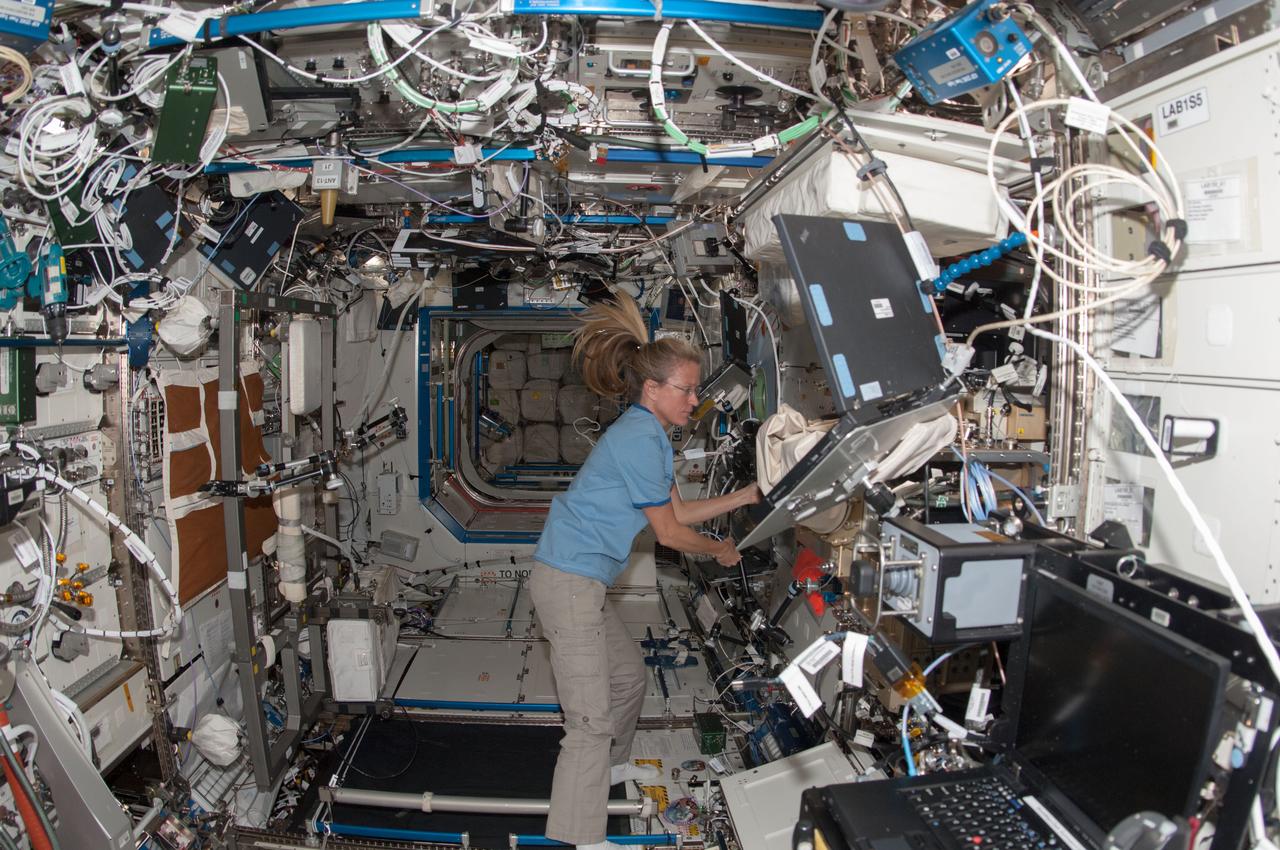
In the International Space Stations Destiny laboratory,NASA astronaut Karen Nyberg,Expedition 36 flight engineer,speaks into a microphone while conducting a session with the Advanced Colloids Experiment (ACE)-1 sample preparation at the Light Microscopy Module (LMM) in the Fluids Integrated Rack / Fluids Combustion Facility (FIR/FCF). ACE-1 is a series of microscopic imaging investigations that uses the microgravity environment to examine flow characteristics and the evolution and ordering effects within a group of colloidal materials.
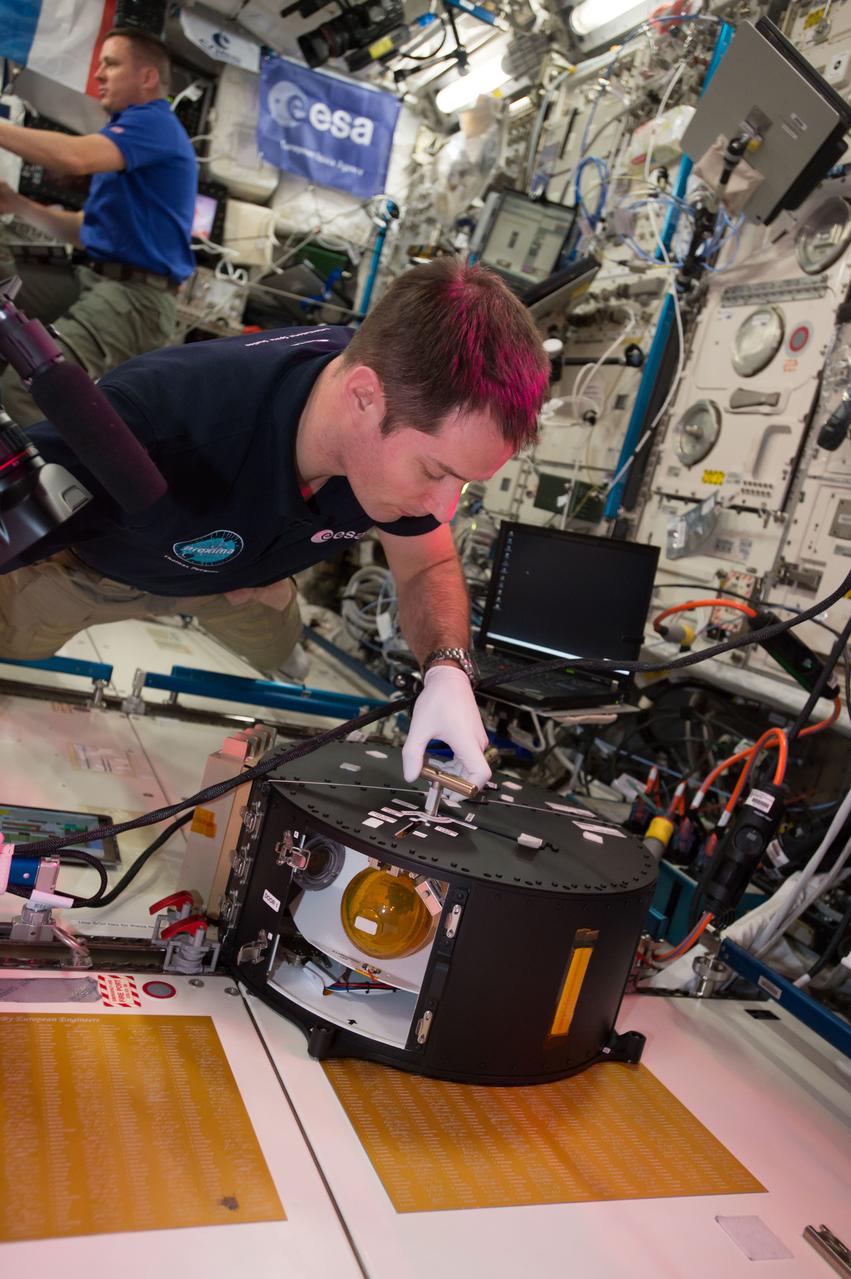
iss051e036148 (5/3/2016) --- European Space Agency (ESA) astronaut Thomas Pesquet works with Fluid Dynamics in Space (FLUIDICS) hardware during the completion of experiment runs. FE Jack Fischer is visible in the background. Image was taken in the Columbus European Laboratory. The FLUIDICS investigation evaluates the Center of Mass (CoM) position regarding a temperature gradient on a representation of a fuel tank. The observation of capillary wave turbulence on the surface of a fluid layer in a low-gravity environment can provide insights into measuring the existing volume in a sphere.
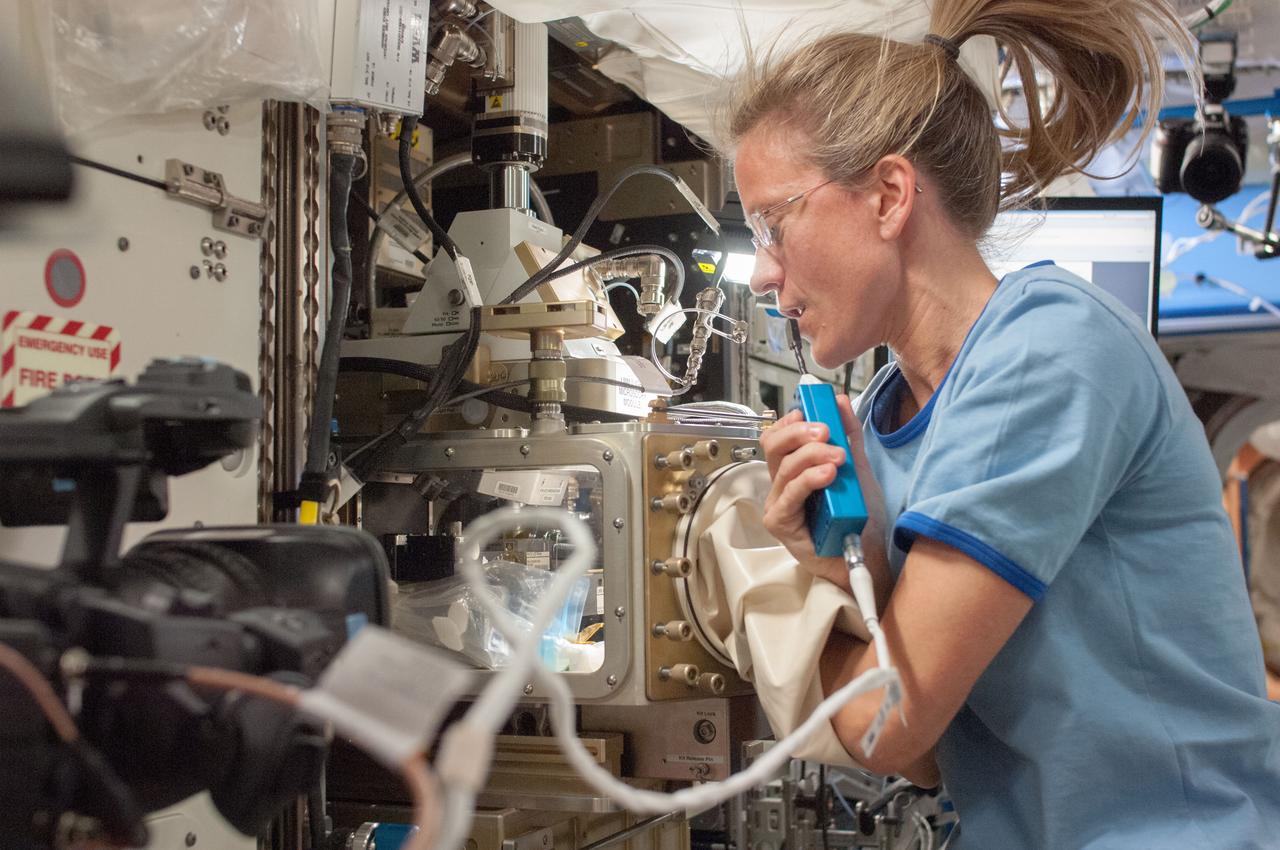
ISS036-E-019830 (24 June 2013) --- In the International Space Station’s Destiny laboratory, NASA astronaut Karen Nyberg, Expedition 36 flight engineer, speaks into a microphone while conducting a session with the Advanced Colloids Experiment (ACE)-1 sample preparation at the Light Microscopy Module (LMM) in the Fluids Integrated Rack / Fluids Combustion Facility (FIR/FCF). ACE-1 is a series of microscopic imaging investigations that uses the microgravity environment to examine flow characteristics and the evolution and ordering effects within a group of colloidal materials.
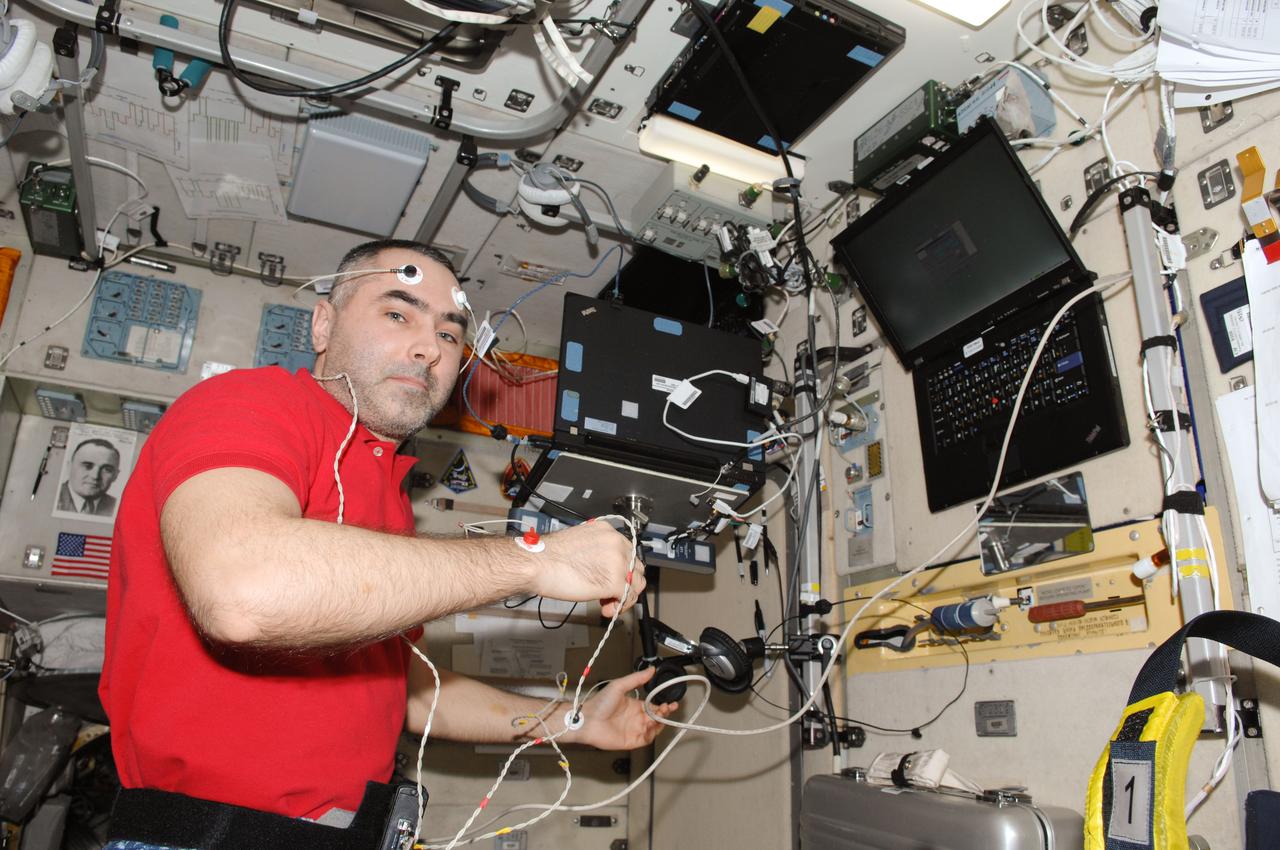
iss034e061633 (3/6/2013) --- Cosmonaut Evgeny Tarelkin, Flight Engineer (FE) conducting Sprut-2 Experiment run, in the Service Module (SM) aboard the International Space Station (ISS). The Study of Changes in Body Composition and Distribution of Fluids Within the Human Body During Long-term Spaceflight (Sprut-2) studies the change in body composition and fluid distribution in the human body during long-term spaceflight in order to evaluate adaptation mechanisms and improve countermeasures.
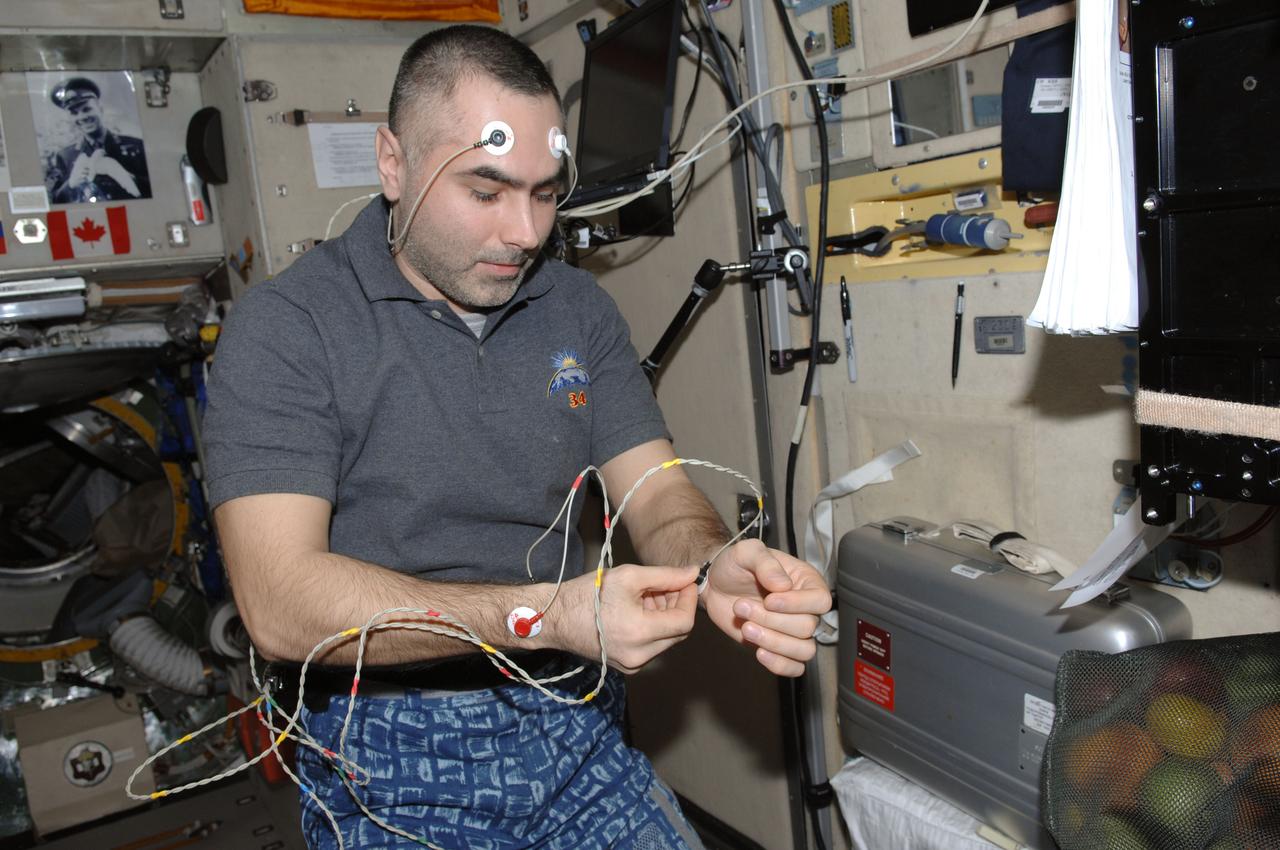
iss034e045766 (2/13/2013) --- Cosmonaut Evgeny Tarelkin, Expedition 34 Flight Engineer (FE), conducting SPRUT-2 Experiment, in the Service Module (SM) aboard the International Space Station (ISS). The Study of Changes in Body Composition and Distribution of Fluids Within the Human Body During Long-term Spaceflight (Sprut-2) studies the change in body composition and fluid distribution in the human body during long-term spaceflight in order to evaluate adaptation mechanisms and improve countermeasures.
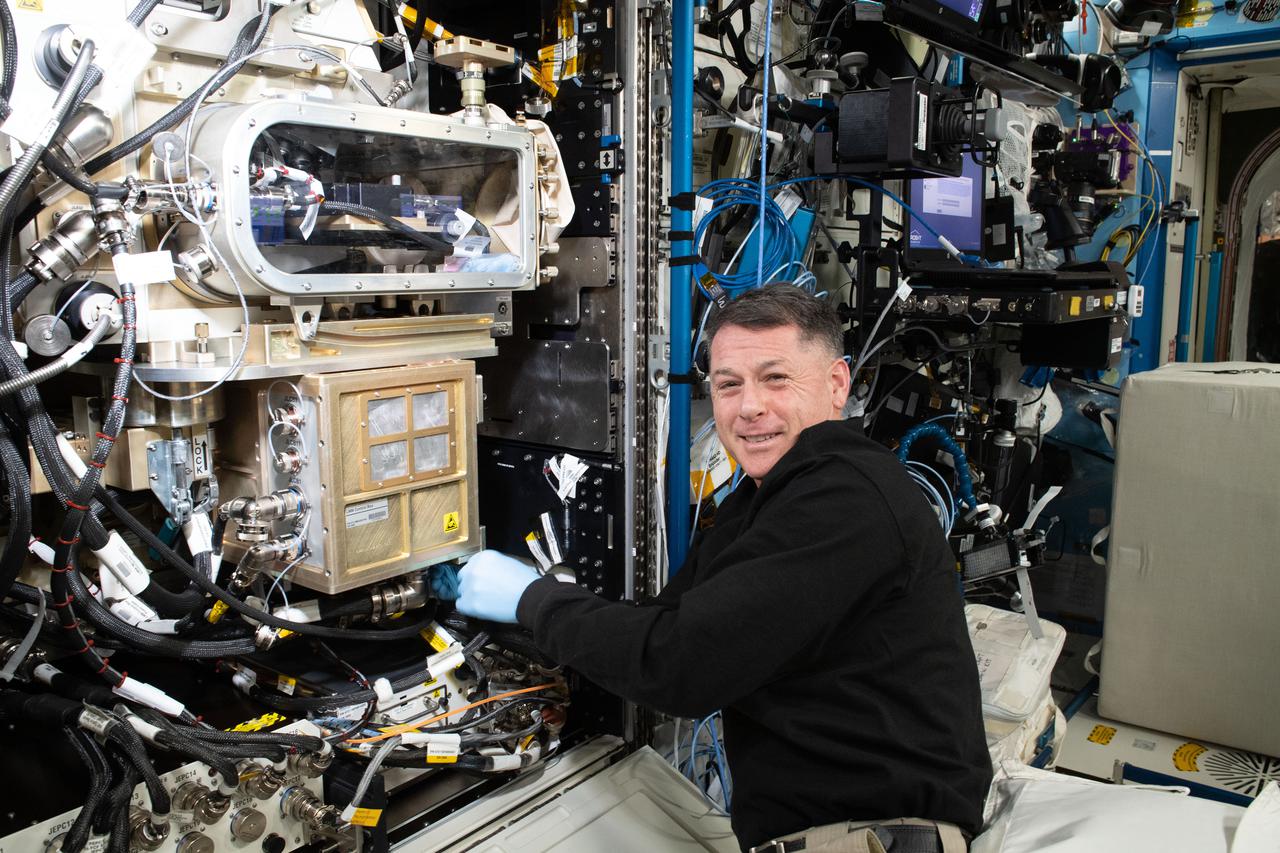
iss065e257486 (Aug. 17, 2021) --- NASA astronaut and Expedition 65 Flight Engineer Shane Kimbrough installs and configures a new Advanced Colloids Experiment module inside the U.S. Destiny laboratory module's Fluids Integrated Rack (FIR). The work supports the ACE-T9 fluid physics study that uses the FIR's Light Microscopy Module to image colloidal molecules for insights into the development of advanced materials not possible to produce in Earth's gravity.
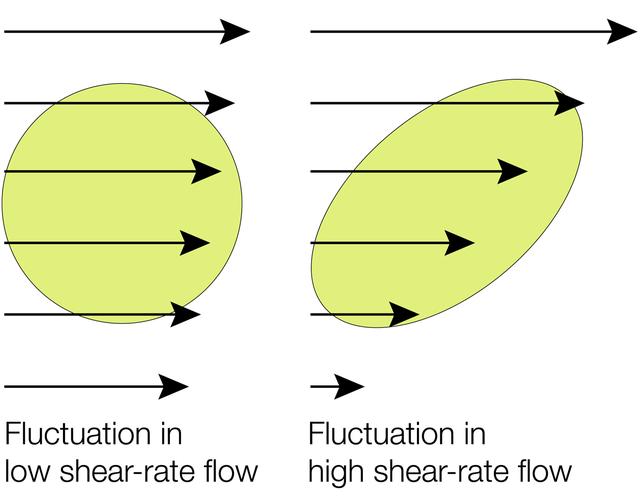
The Critical Viscosity of Xenon Experiment (CVX-2) on the STS-107 Research 1 mission in 2002 will measure the viscous behavior of xenon, a heavy inert gas used in flash lamps and ion rocket engines, at its critical point. Shear thirning will cause a normally viscous fluid -- such as pie filling or whipped cream -- to deform and flow more readily under high shear conditions. In shear thinning, a pocket of fluid will deform and move one edge forward, as depicted here.
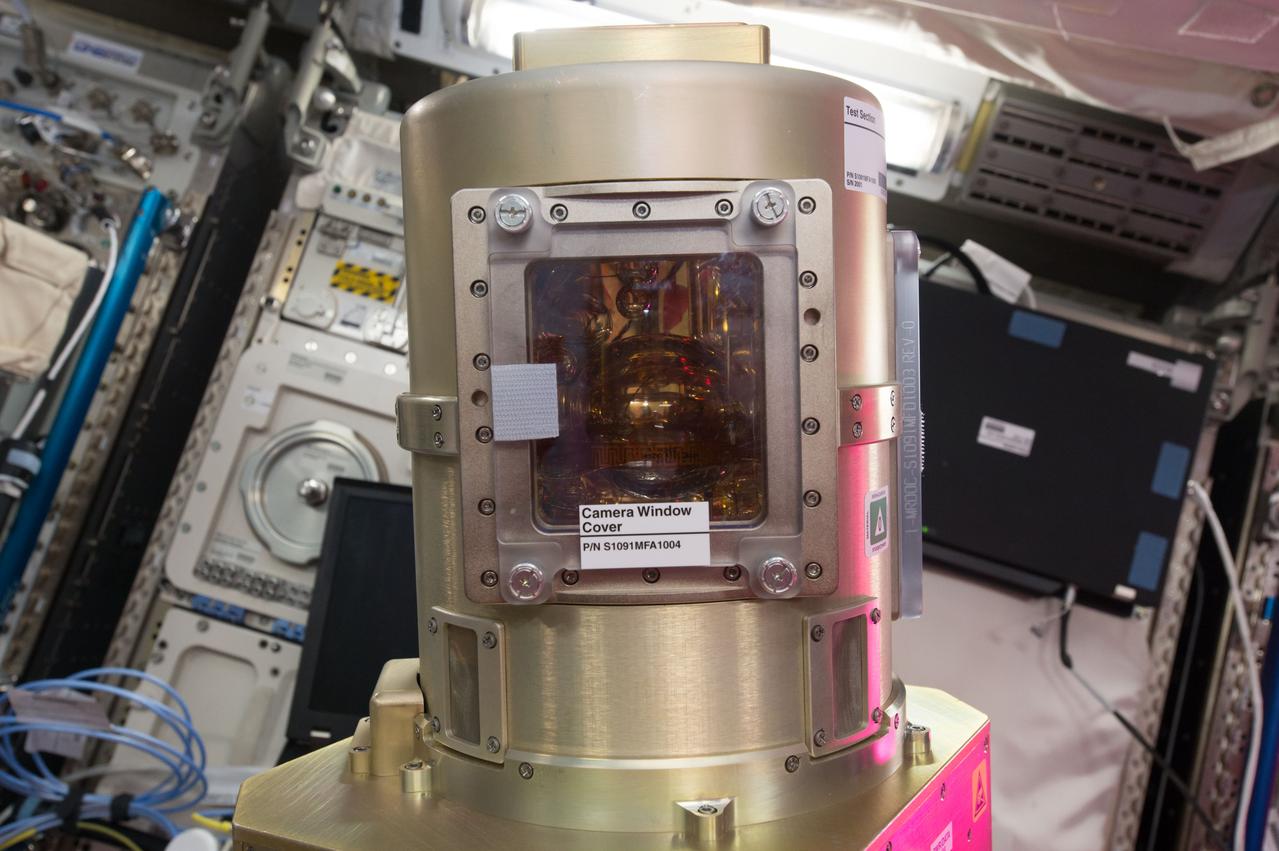
iss051e028301 (4/25/2017) --- A view of the Zero Boil-Off Tank (ZBOT) experiment Vacuum Jacket Camera Window Cover hardware. Zero Boil-Off Tank (ZBOT) uses an experimental fluid to test active heat removal and forced jet mixing as alternative means for controlling tank pressure for volatile fluids. Results from the investigation improve models used to design tanks for long-term cryogenic liquid storage, which are essential in biotechnology, medicine, industrial, and many other applications on Earth.
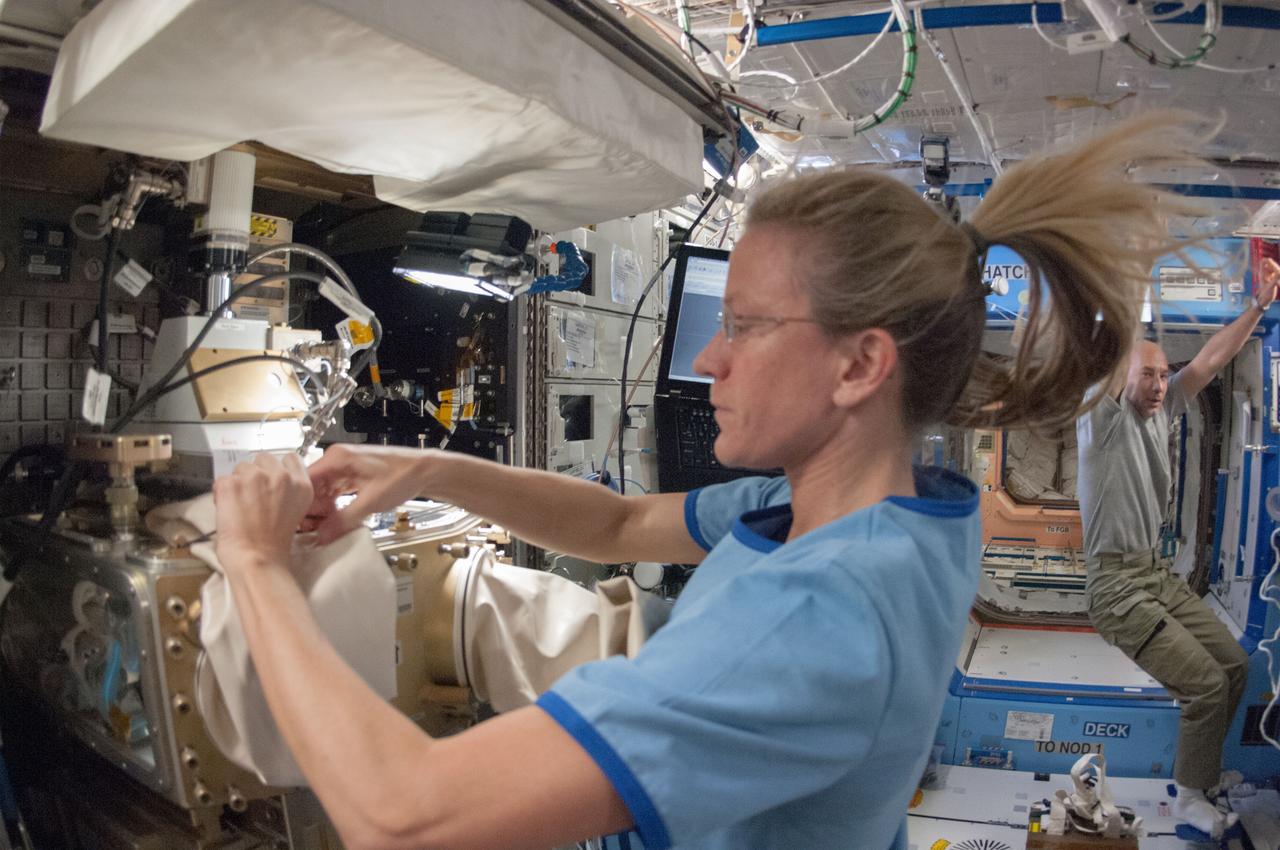
ISS036-E-019760 (24 June 2013) --- In the International Space Station’s Destiny laboratory, NASA astronaut Karen Nyberg, Expedition 36 flight engineer, conducts a session with the Advanced Colloids Experiment (ACE)-1 sample preparation at the Light Microscopy Module (LMM) in the Fluids Integrated Rack / Fluids Combustion Facility (FIR/FCF). ACE-1 is a series of microscopic imaging investigations that uses the microgravity environment to examine flow characteristics and the evolution and ordering effects within a group of colloidal materials.