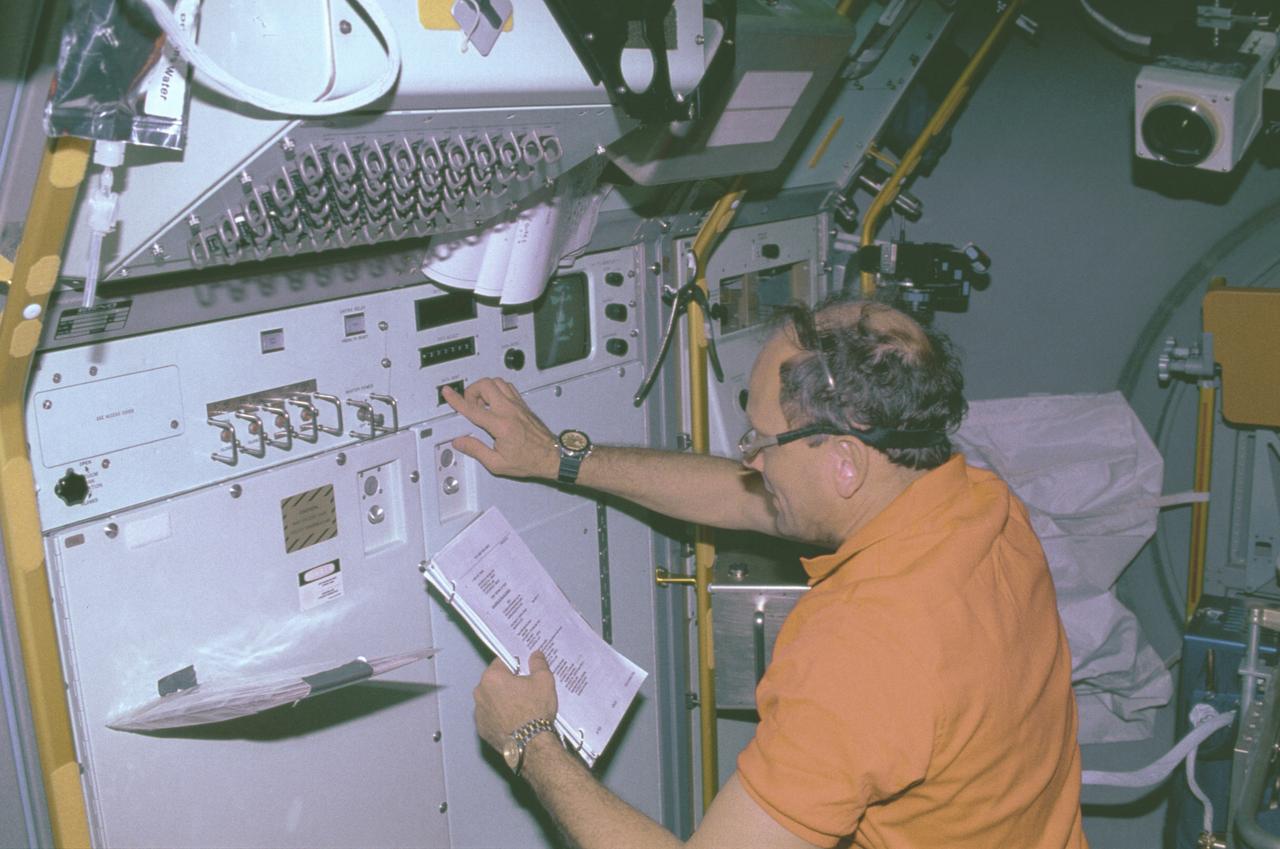
The IML-1 mission was the first in a series of Shuttle flights dedicated to fundamental materials and life sciences research with the international partners. The participating space agencies included: NASA, the 14-nation European Space Agency (ESA), the Canadian Space Agency (CSA), The French National Center of Space Studies (CNES), the German Space Agency and the German Aerospace Research Establishment (DAR/DLR), and the National Space Development Agency of Japan (NASDA). Dedicated to the study of life and materials sciences in microgravity, the IML missions explored how life forms adapt to weightlessness and investigated how materials behave when processed in space. Both life and materials sciences benefited from the extended periods of microgravity available inside the Spacelab science module in the cargo bay of the Space Shuttle Orbiter. This photograph shows Astronaut Norman Thagard performing the fluid experiment at the Fluid Experiment System (FES) facility inside the laboratory module. The FES facility had sophisticated optical systems for imaging fluid flows during materials processing, such as experiments to grow crystals from solution and solidify metal-modeling salts. A special laser diagnostic technique recorded the experiments, holograms were made for post-flight analysis, and video was used to view the samples in space and on the ground. Managed by the Marshall Space Flight Center (MSFC), the IML-1 mission was launched on January 22, 1992 aboard the Shuttle Orbiter Discovery (STS-42).
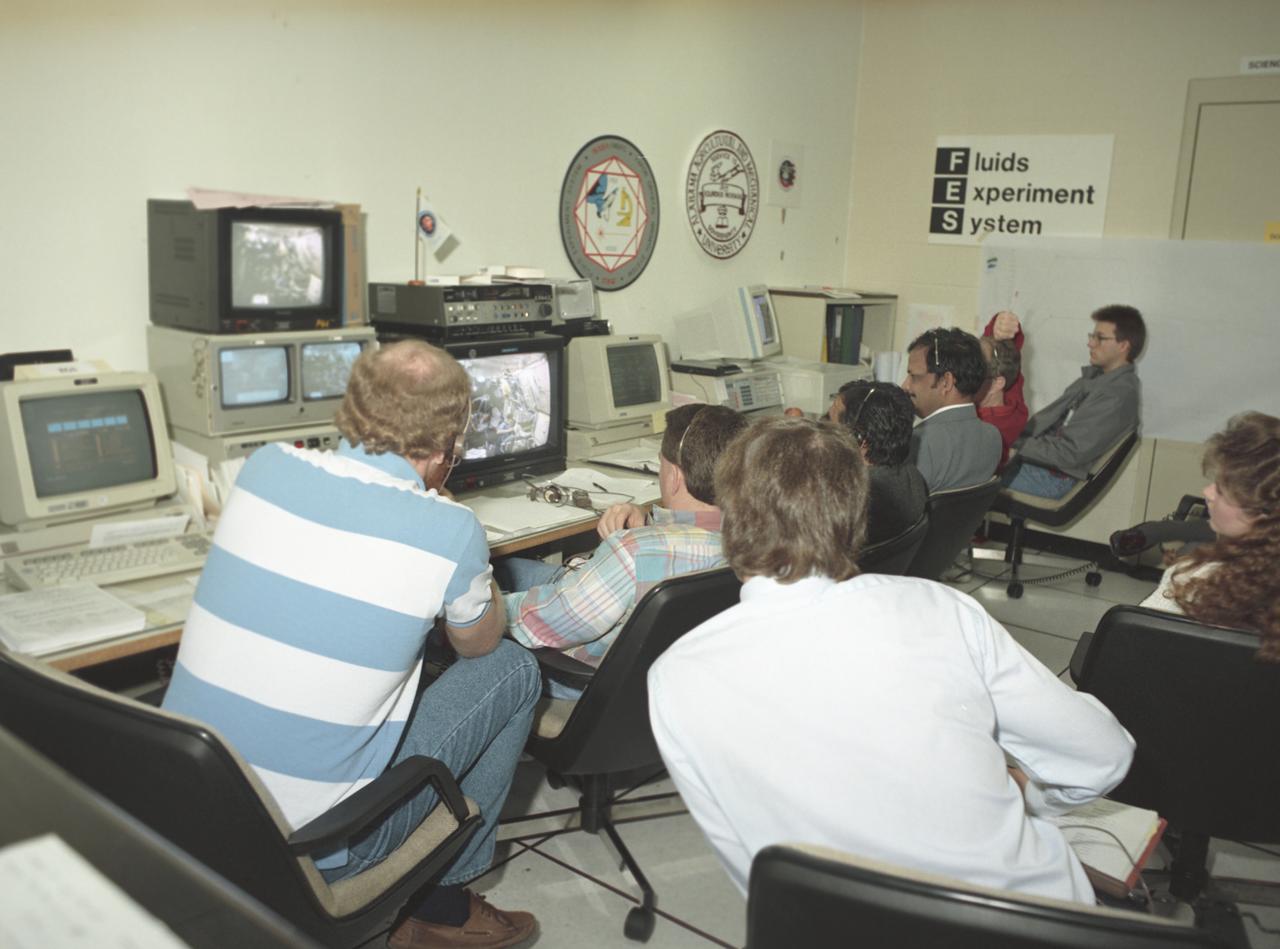
This photograph shows activities during the International Microgravity Laboratory-1 (IML-1) mission (STS-42) in the Payload Operations Control Center (POCC) at the Marshall Space Flight Center. Members of the Fluid Experiment System (FES) group monitor the progress of their experiment through video at the POCC. The IML-1 mission was the first in a series of Shuttle flights dedicated to fundamental materials and life sciences research. The mission was to explore, in depth, the complex effects of weightlessness on living organisms and materials processing. The crew conducted experiments on the human nervous system's adaptation to low gravity and the effects on other life forms such as shrimp eggs, lentil seedlings, fruit fly eggs, and bacteria. Low gravity materials processing experiments included crystal growth from a variety of substances such as enzymes, mercury, iodine, and virus. The International space science research organizations that participated in this mission were: The U.S. National Aeronautics and Space Administion, the European Space Agency, the Canadian Space Agency, the French National Center for Space Studies, the German Space Agency, and the National Space Development Agency of Japan. The POCC was the air/ground communication charnel used between astronauts aboard the Spacelab and scientists, researchers, and ground control teams during the Spacelab missions. The facility made instantaneous video and audio communications possible for scientists on the ground to follow the progress and to send direct commands of their research almost as if they were in space with the crew.
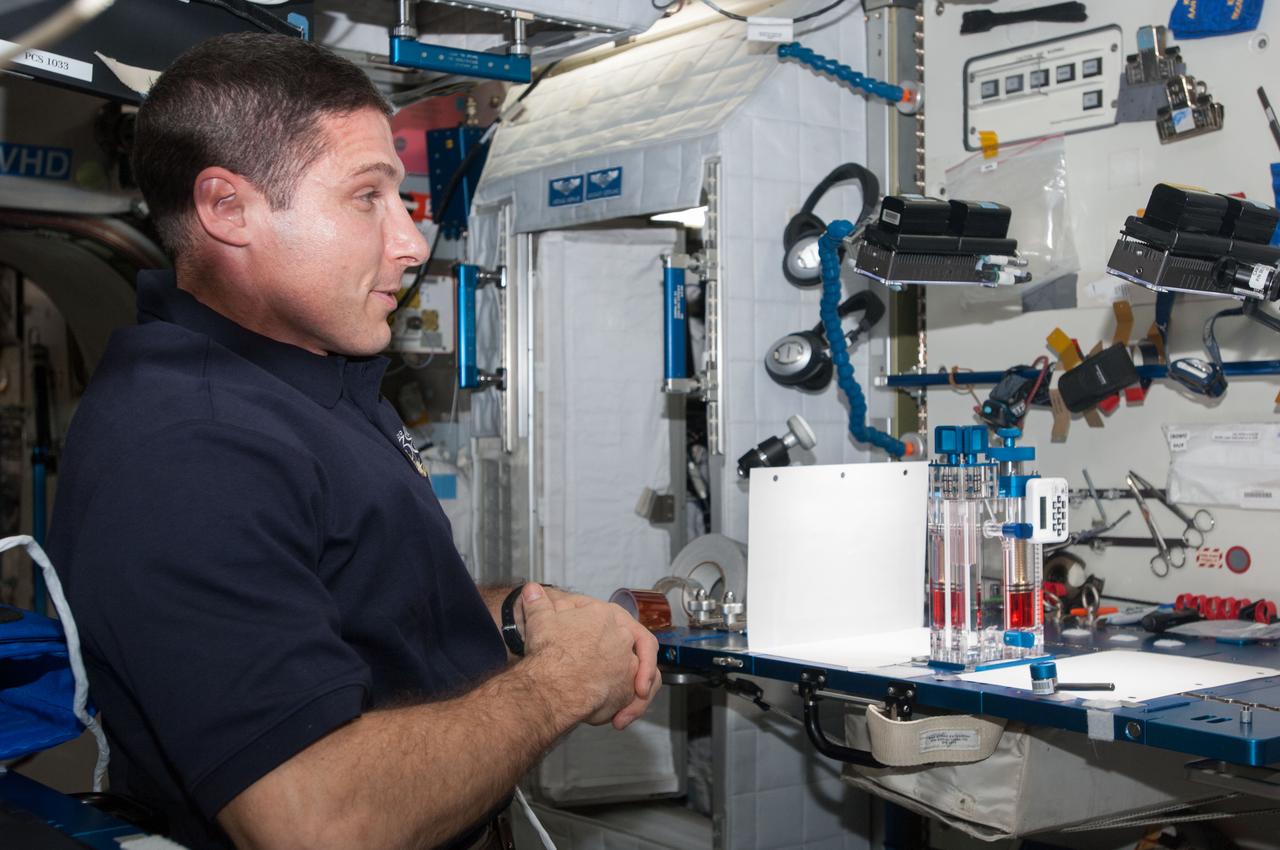
ISS038-E-000263 (11 Nov. 2013) --- NASA astronaut Michael Hopkins, Expedition 38 flight engineer, conducts a session with the Capillary Flow Experiment (CFE) in the Harmony node of the International Space Station. CFE is a suite of fluid physics experiments that investigate how fluids move up surfaces in microgravity. The results aim to improve current computer models that are used by designers of low gravity fluid systems and may improve fluid transfer systems for water on future spacecraft.
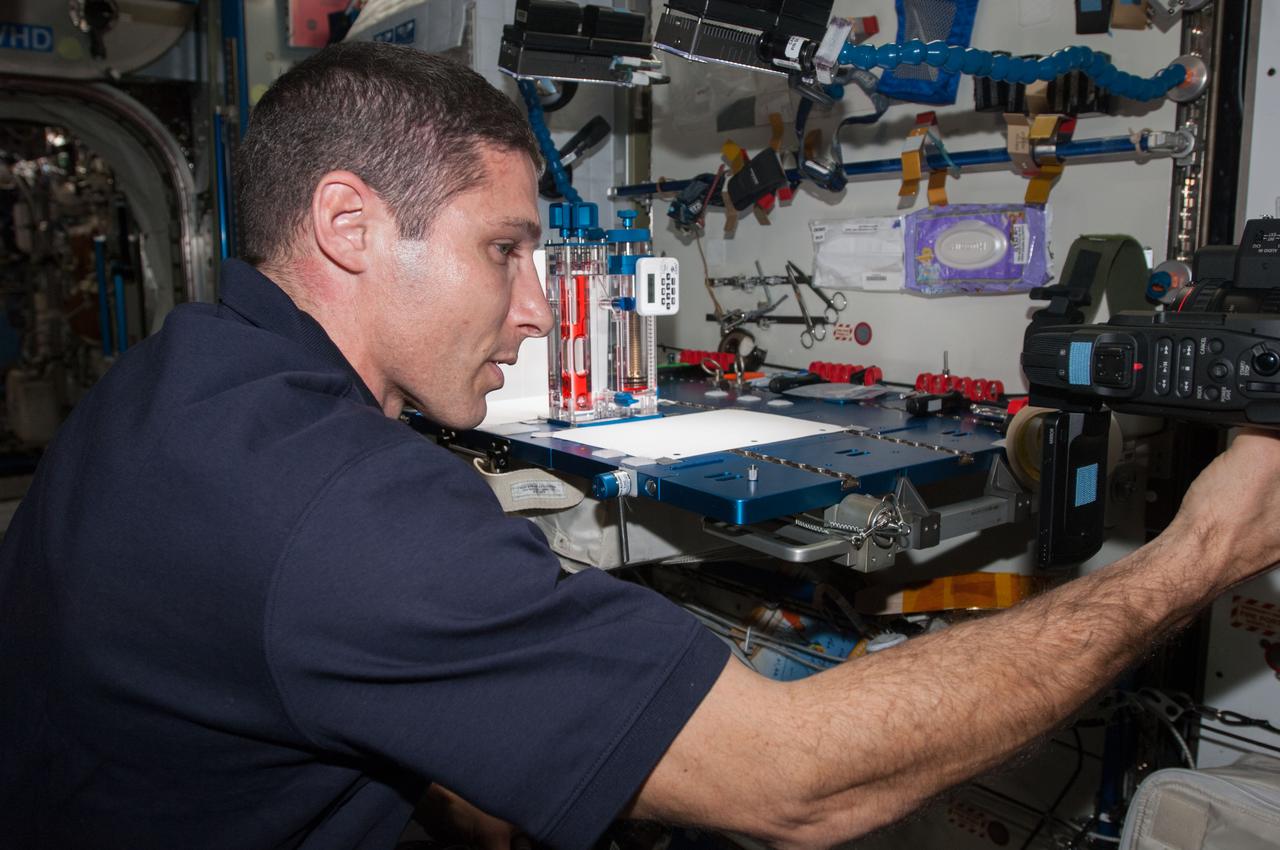
ISS038-E-000269 (11 Nov. 2013) --- NASA astronaut Michael Hopkins, Expedition 38 flight engineer, conducts a session with the Capillary Flow Experiment (CFE) in the Harmony node of the International Space Station. CFE is a suite of fluid physics experiments that investigate how fluids move up surfaces in microgravity. The results aim to improve current computer models that are used by designers of low gravity fluid systems and may improve fluid transfer systems for water on future spacecraft.
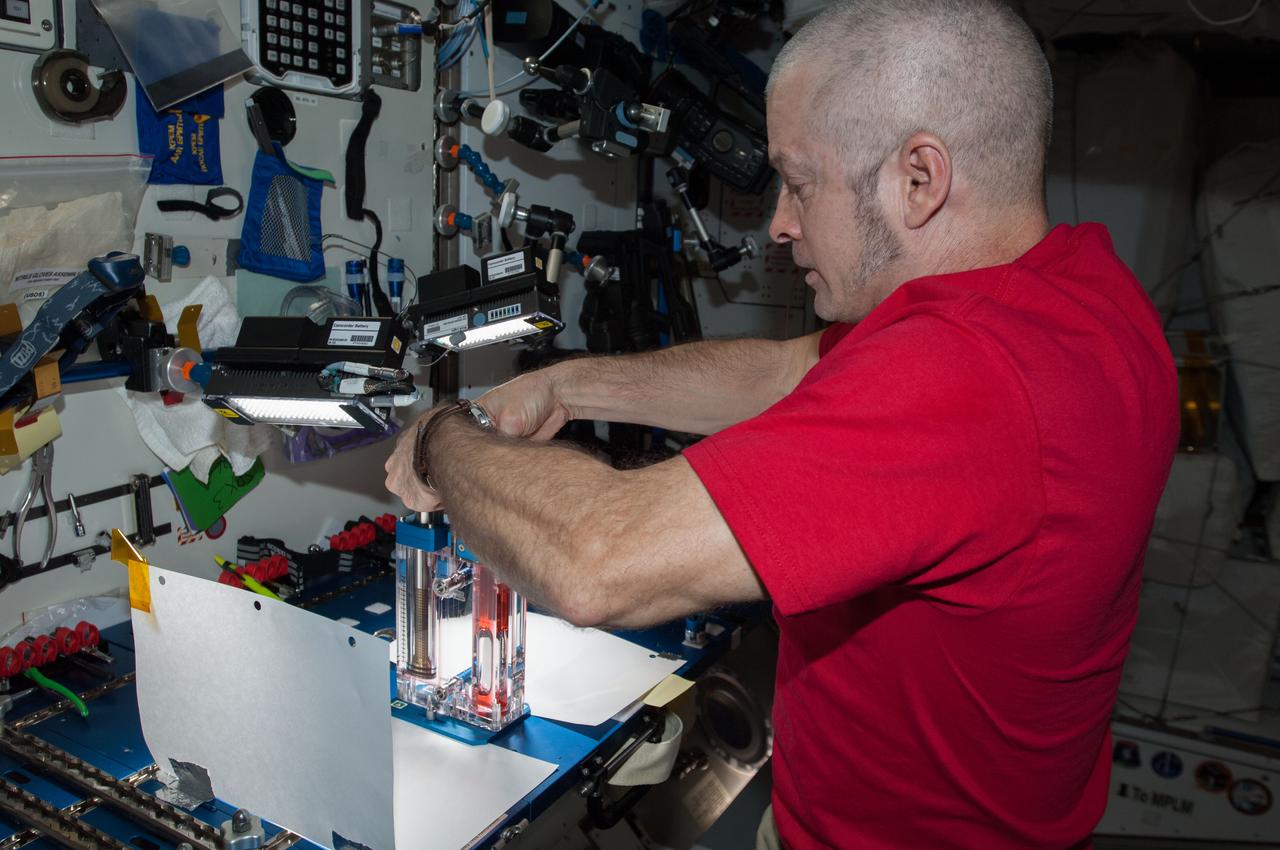
ISS040-E-032820 (3 July 2014) --- NASA astronaut Steve Swanson, Expedition 40 commander, conducts a session with the Capillary Flow Experiment (CFE) in the Harmony node of the International Space Station. CFE is a suite of fluid physics experiments that investigate how fluids move up surfaces in microgravity. The results aim to improve current computer models that are used by designers of low gravity fluid systems and may improve fluid transfer systems for water on future spacecraft.
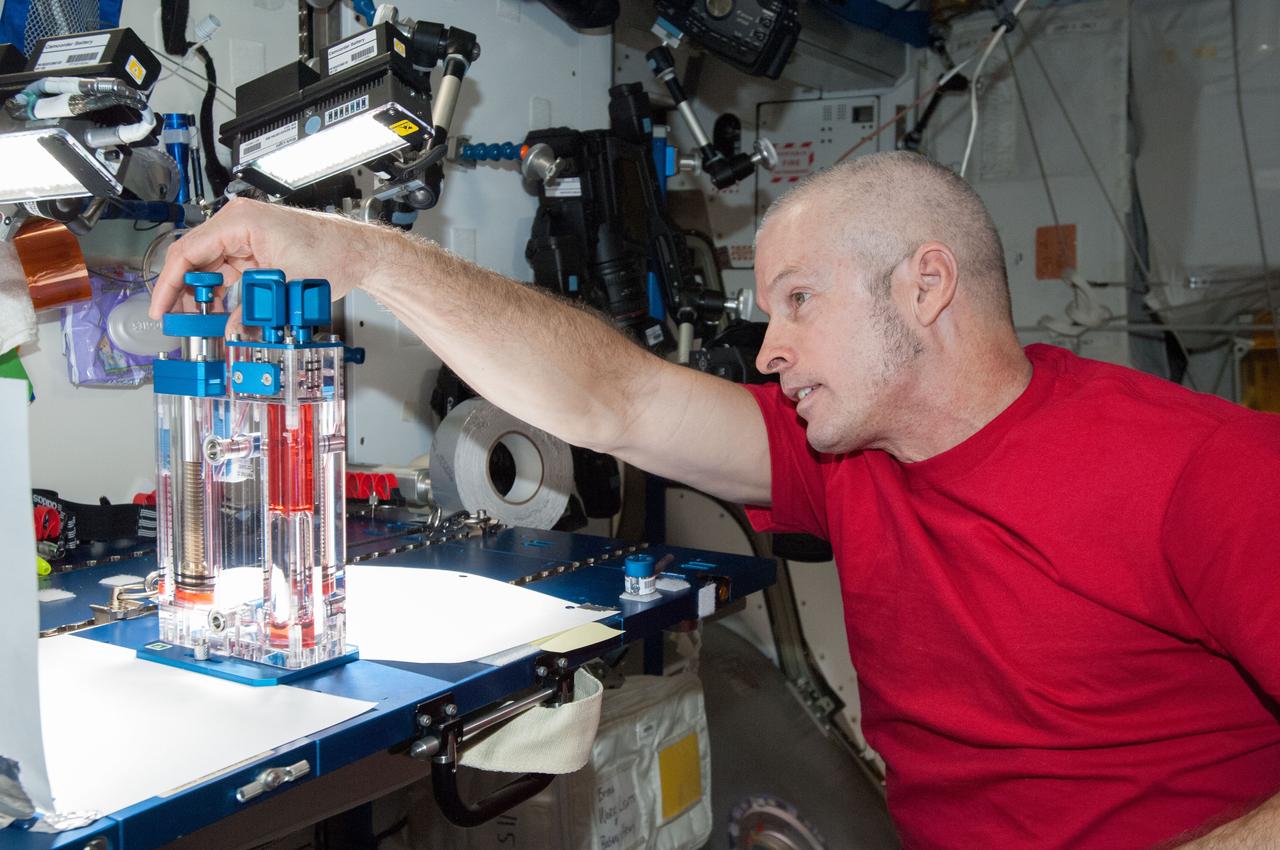
ISS040-E-032827 (3 July 2014) --- NASA astronaut Steve Swanson, Expedition 40 commander, conducts a session with the Capillary Flow Experiment (CFE) in the Harmony node of the International Space Station. CFE is a suite of fluid physics experiments that investigate how fluids move up surfaces in microgravity. The results aim to improve current computer models that are used by designers of low gravity fluid systems and may improve fluid transfer systems for water on future spacecraft.
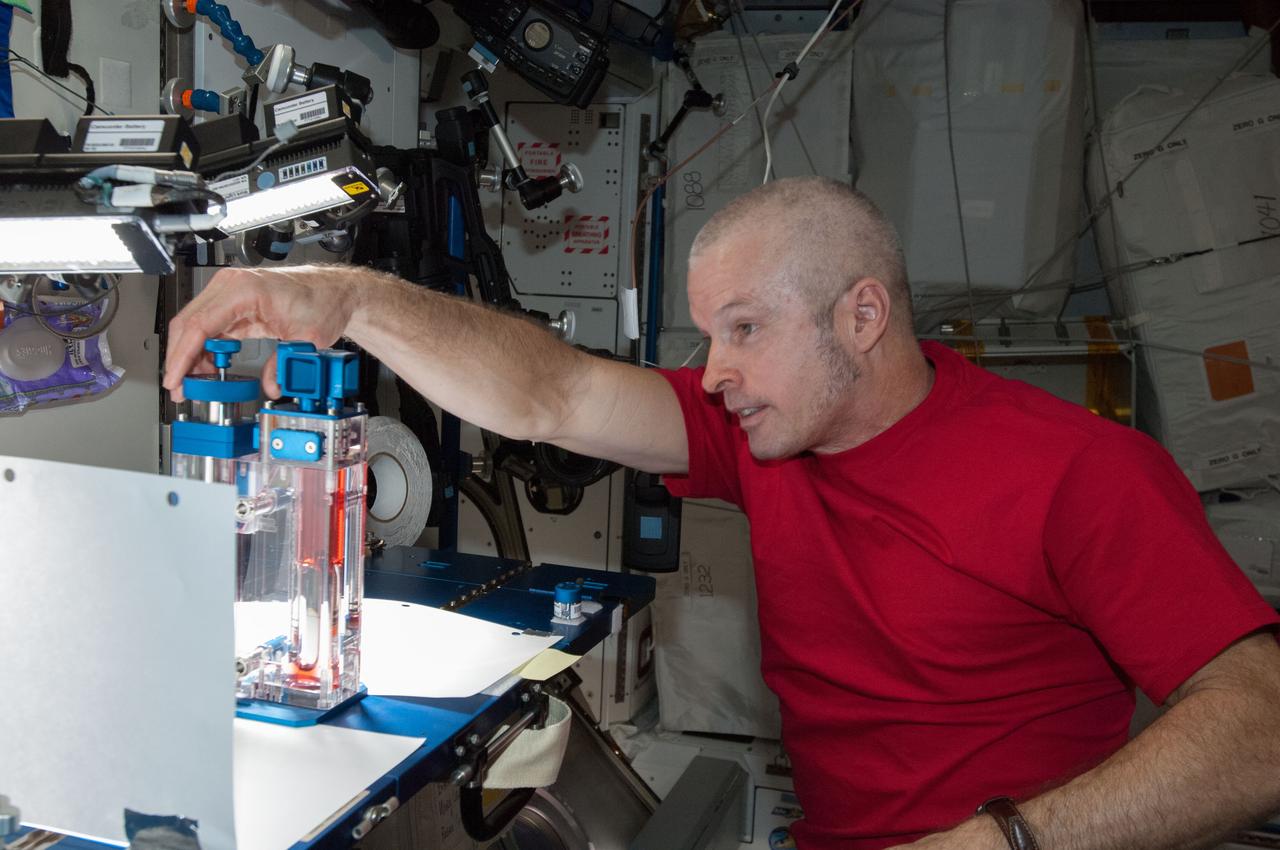
ISS040-E-032825 (3 July 2014) --- NASA astronaut Steve Swanson, Expedition 40 commander, conducts a session with the Capillary Flow Experiment (CFE) in the Harmony node of the International Space Station. CFE is a suite of fluid physics experiments that investigate how fluids move up surfaces in microgravity. The results aim to improve current computer models that are used by designers of low gravity fluid systems and may improve fluid transfer systems for water on future spacecraft.
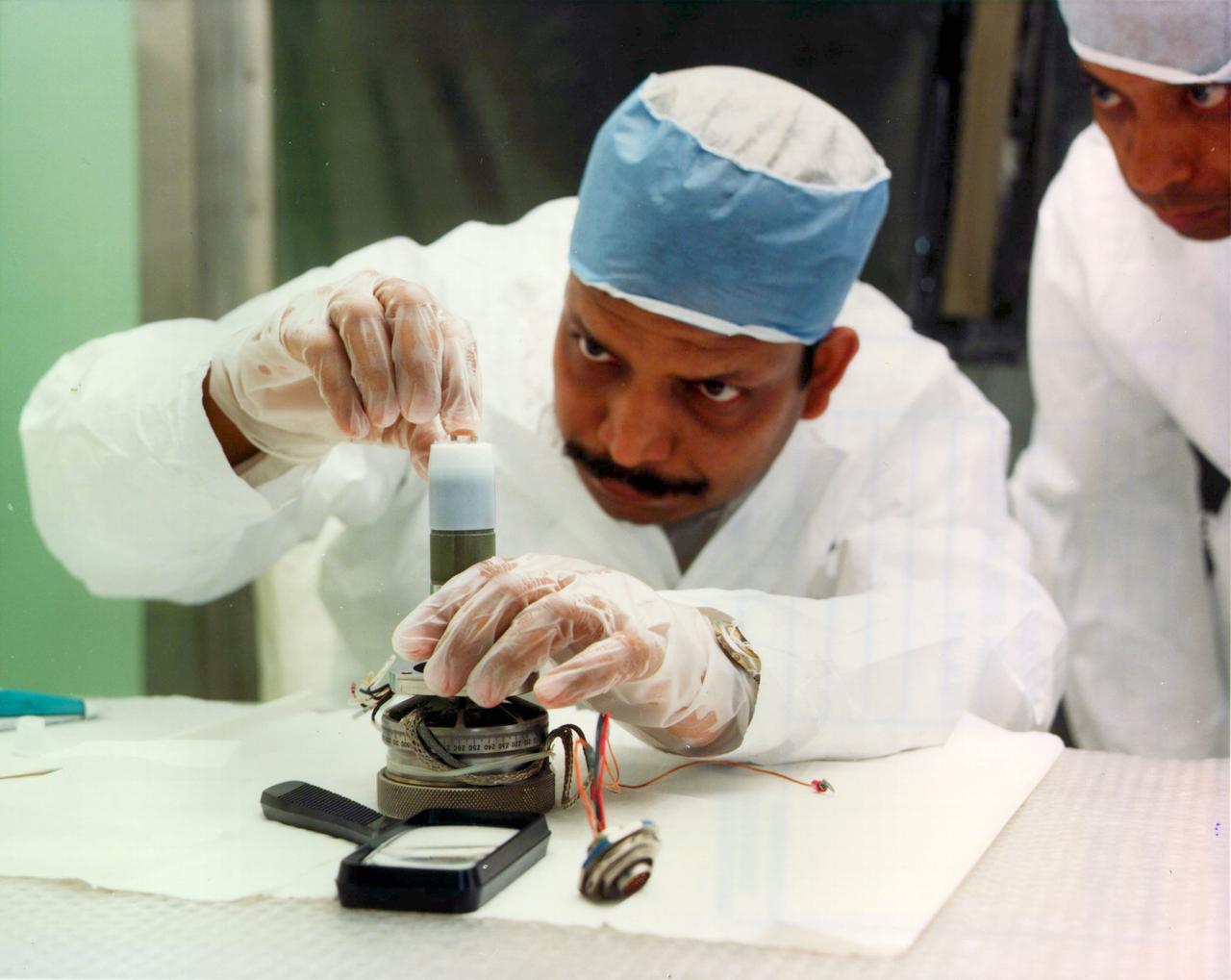
Dr. Aggarwal installing a flight seed in the Fluid Experiment System.
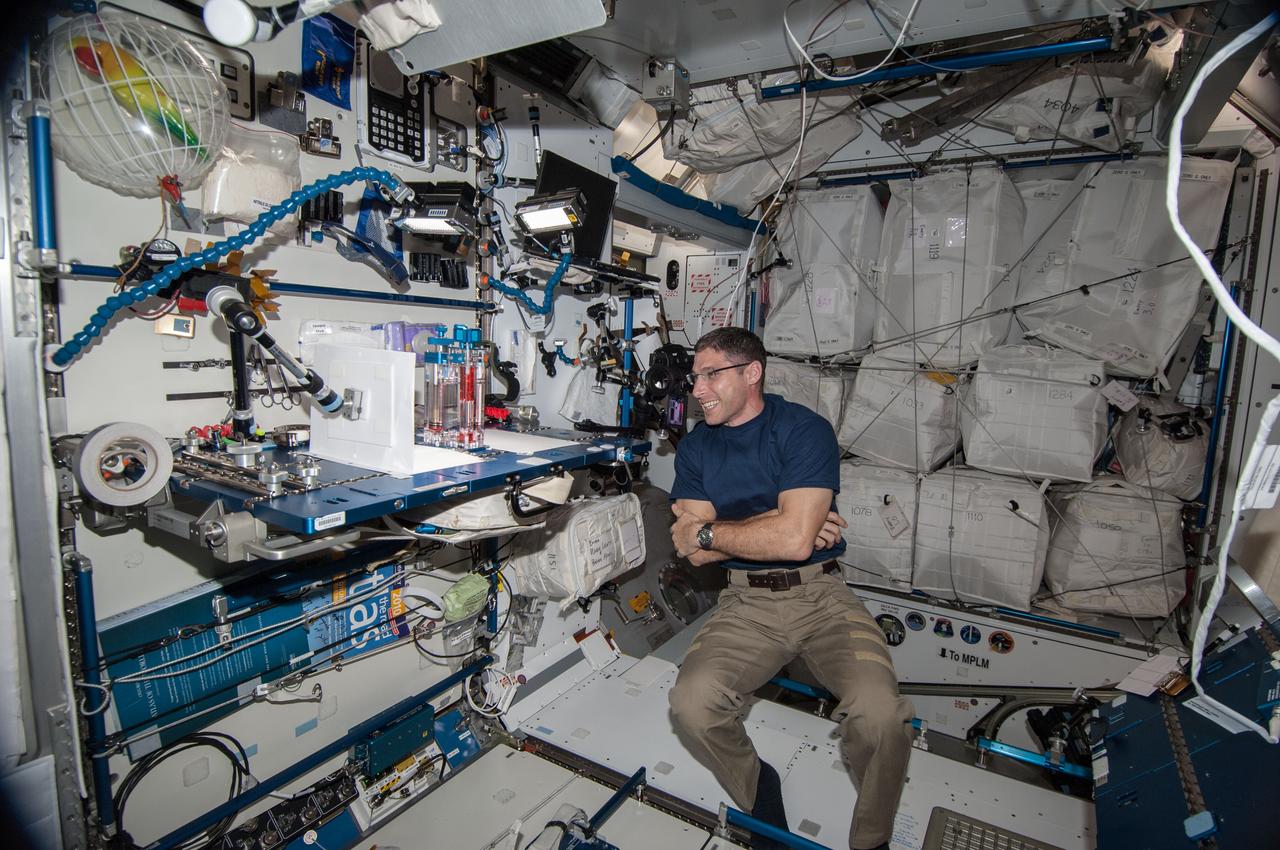
ISS038-E-005962 (19 Nov. 2013) --- NASA astronaut Michael Hopkins, Expedition 38 flight engineer, conducts a session with the Capillary Flow Experiment (CFE-2) in the Harmony node of the International Space Station. CFE is a suite of fluid physics experiments that investigate how fluids behave in microgravity which could benefit water and fuel delivery systems on future spacecraft. Scientists designed the Capillary Flow Experiment-2 to study properties of fluids and bubbles inside containers with a specific 3-D geometry.
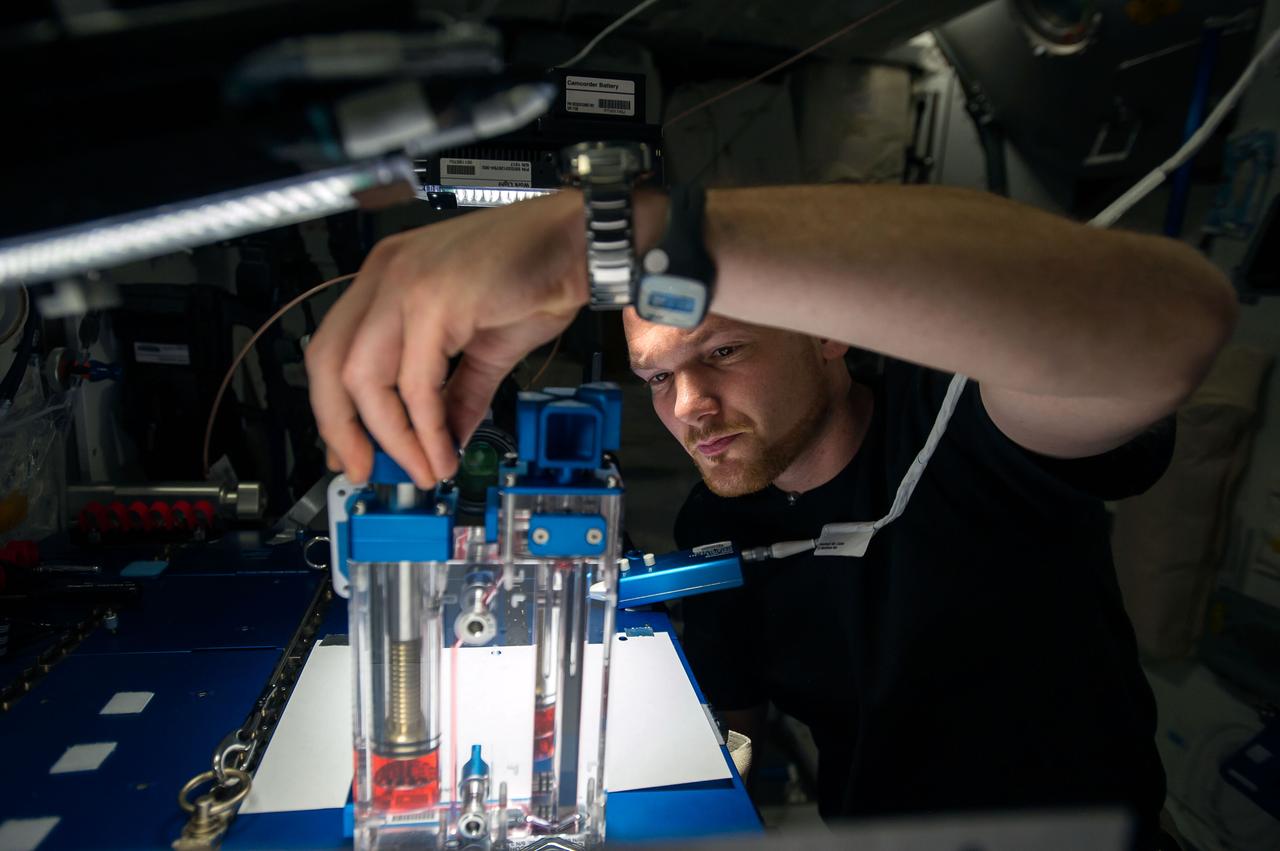
ISS040-E-015536 (19 June 2014) --- European Space Agency astronaut Alexander Gerst, Expedition 40 flight engineer, conducts a session with the Capillary Flow Experiment (CFE-2) in the Harmony node of the International Space Station. CFE is a suite of fluid physics experiments that investigate how fluids behave in microgravity which could benefit water and fuel delivery systems on future spacecraft. Scientists designed the CFE-2 to study properties of fluids and bubbles inside containers with a specific 3-D geometry.
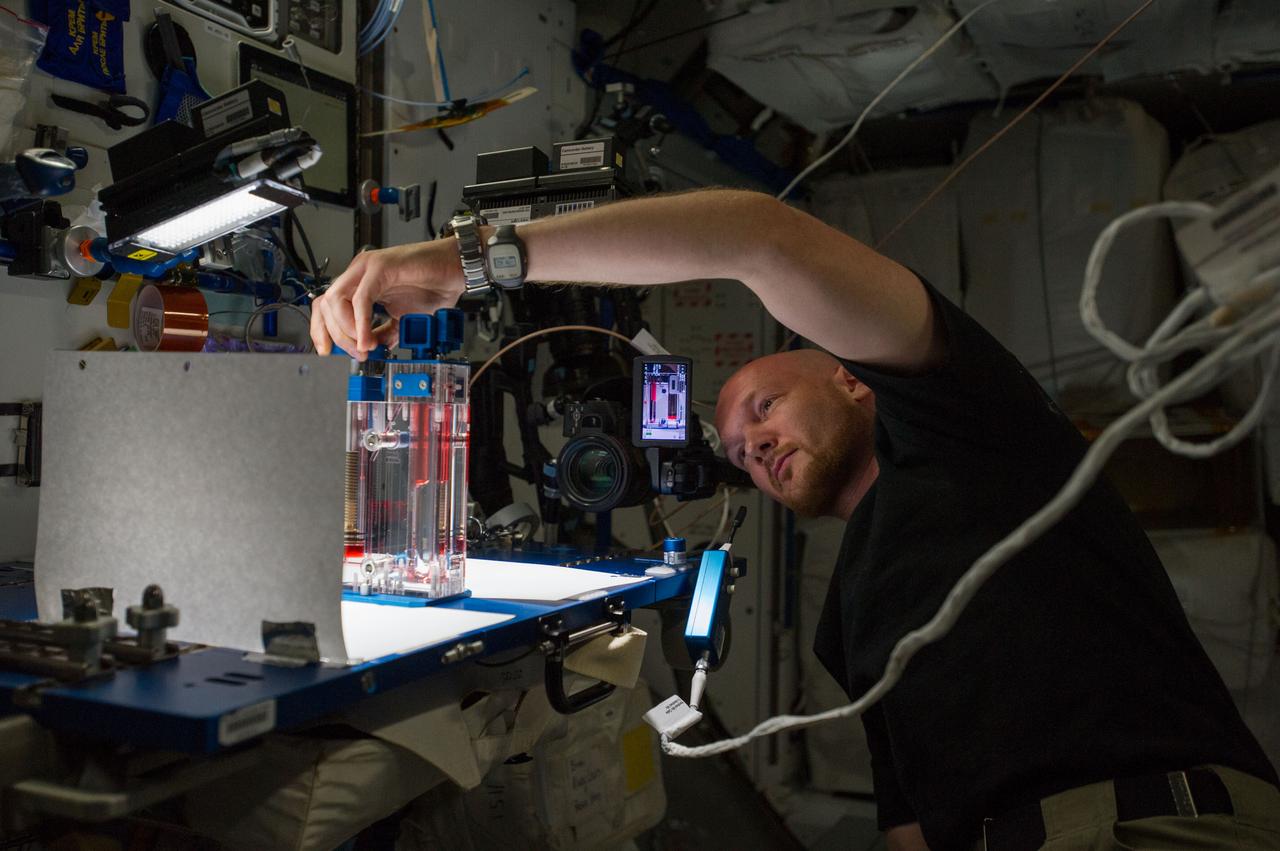
ISS040-E-015545 (19 June 2014) --- European Space Agency astronaut Alexander Gerst, Expedition 40 flight engineer, conducts a session with the Capillary Flow Experiment (CFE-2) in the Harmony node of the International Space Station. CFE is a suite of fluid physics experiments that investigate how fluids behave in microgravity which could benefit water and fuel delivery systems on future spacecraft. Scientists designed the CFE-2 to study properties of fluids and bubbles inside containers with a specific 3-D geometry.
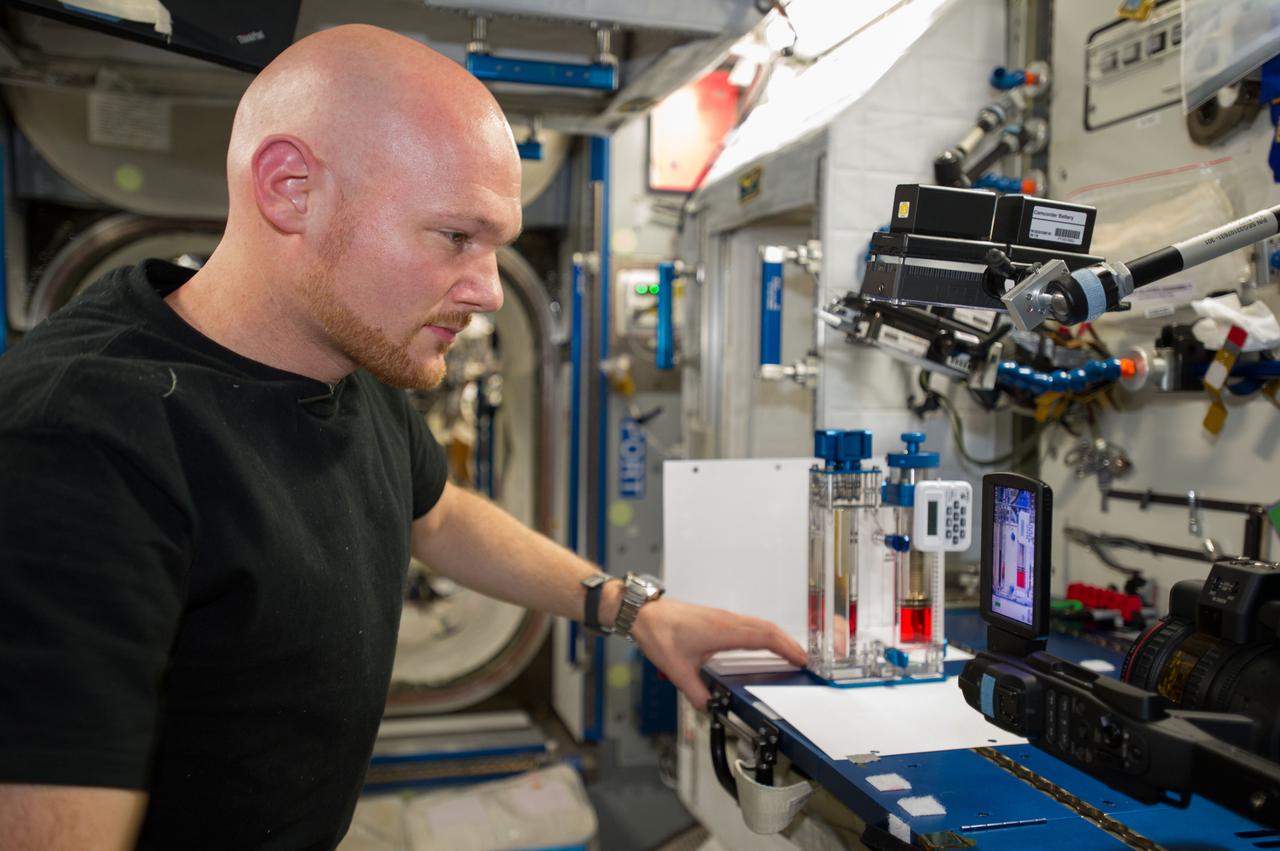
ISS040-E-015523 (19 June 2014) --- European Space Agency astronaut Alexander Gerst, Expedition 40 flight engineer, conducts a session with the Capillary Flow Experiment (CFE-2) in the Harmony node of the International Space Station. CFE is a suite of fluid physics experiments that investigate how fluids behave in microgravity which could benefit water and fuel delivery systems on future spacecraft. Scientists designed the CFE-2 to study properties of fluids and bubbles inside containers with a specific 3-D geometry.
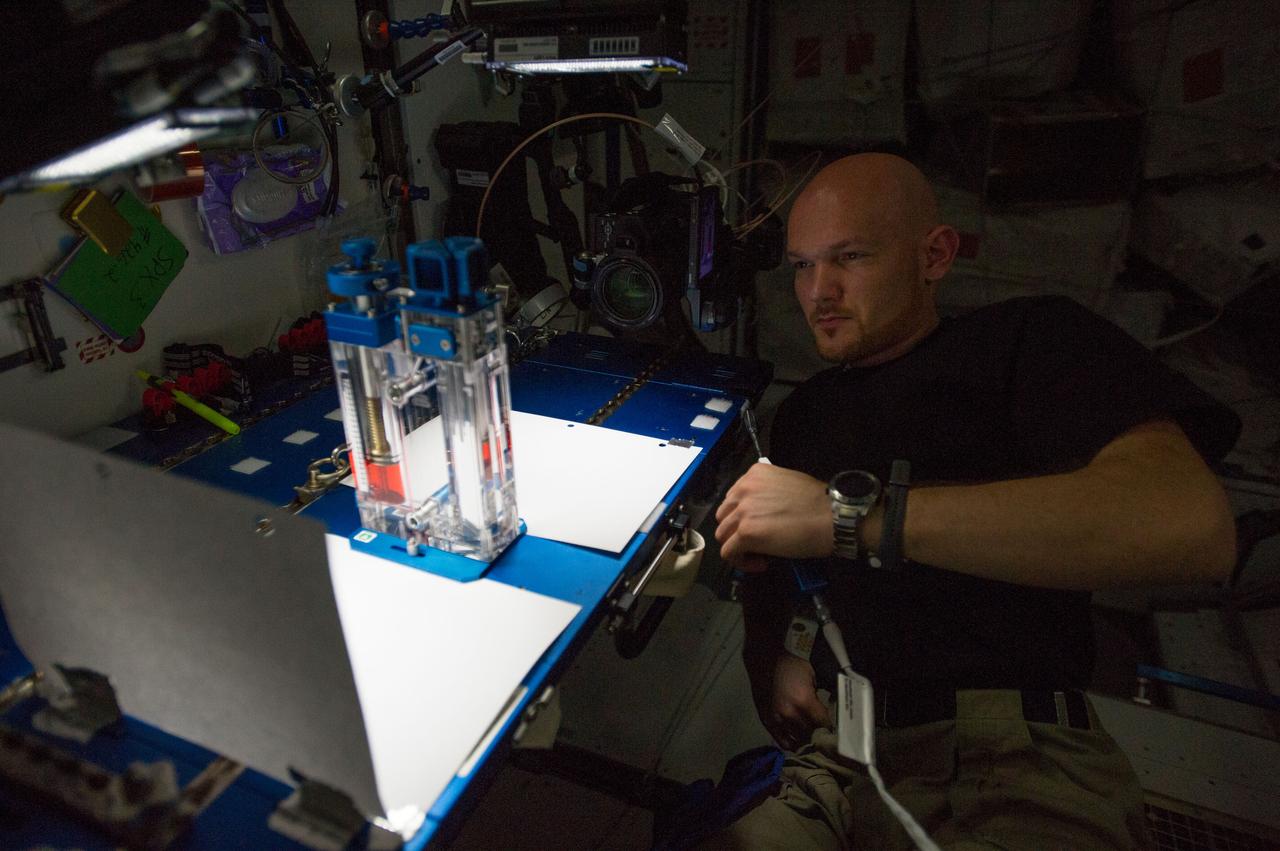
ISS040-E-015532 (19 June 2014) --- European Space Agency astronaut Alexander Gerst, Expedition 40 flight engineer, conducts a session with the Capillary Flow Experiment (CFE-2) in the Harmony node of the International Space Station. CFE is a suite of fluid physics experiments that investigate how fluids behave in microgravity which could benefit water and fuel delivery systems on future spacecraft. Scientists designed the CFE-2 to study properties of fluids and bubbles inside containers with a specific 3-D geometry.
ISS038-E-025016 (3 Jan. 2014) --- NASA astronaut Rick Mastracchio, Expedition 38 flight engineer, conducts a session with the Capillary Flow Experiment (CFE-2) in the Harmony node of the International Space Station. CFE is a suite of fluid physics experiments that investigate how fluids behave in microgravity which could benefit water and fuel delivery systems on future spacecraft. Scientists designed the CFE-2 to study properties of fluids and bubbles inside containers with a specific 3-D geometry.
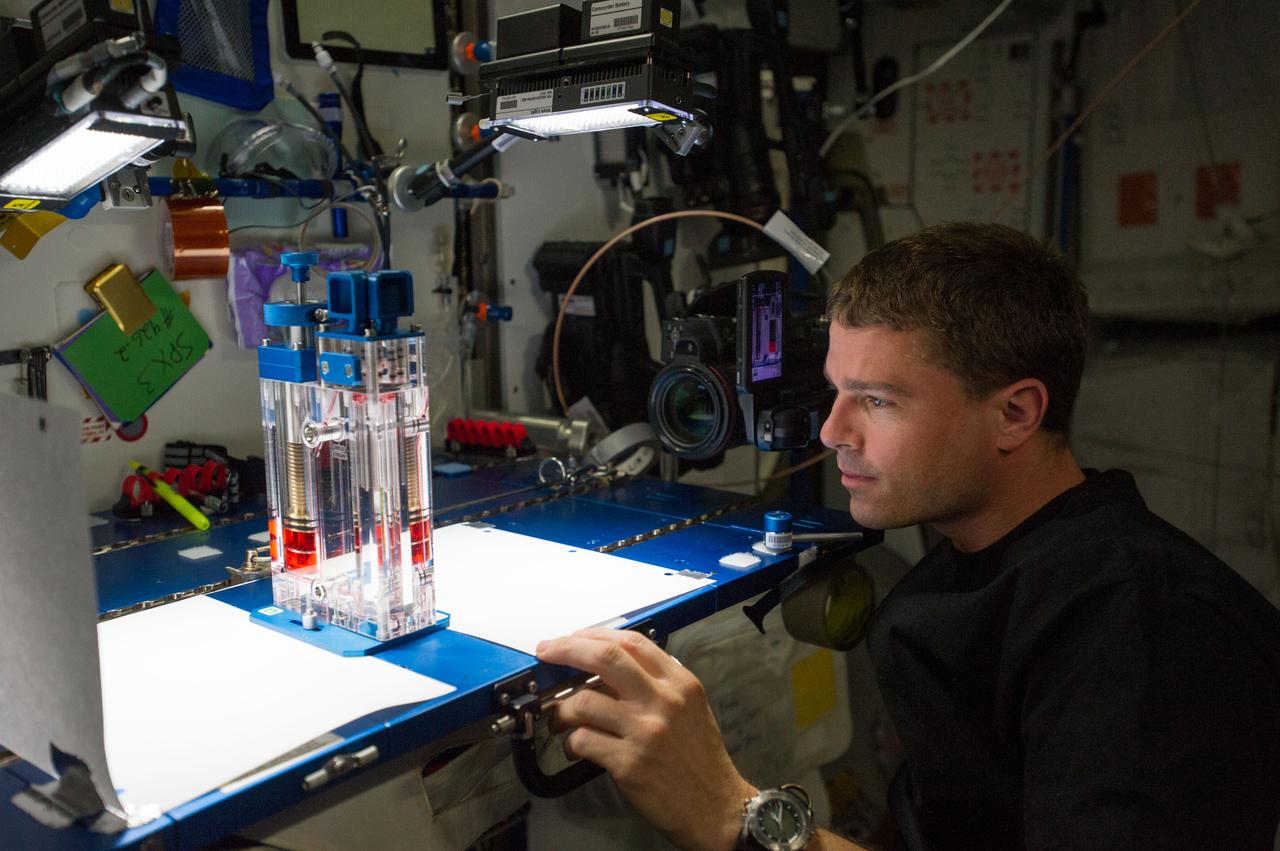
ISS040-E-015539 (19 June 2014) --- NASA astronaut Reid Wiseman, Expedition 40 flight engineer, conducts a session with the Capillary Flow Experiment (CFE-2) in the Harmony node of the International Space Station. CFE is a suite of fluid physics experiments that investigate how fluids behave in microgravity which could benefit water and fuel delivery systems on future spacecraft. Scientists designed the CFE-2 to study properties of fluids and bubbles inside containers with a specific 3-D geometry.
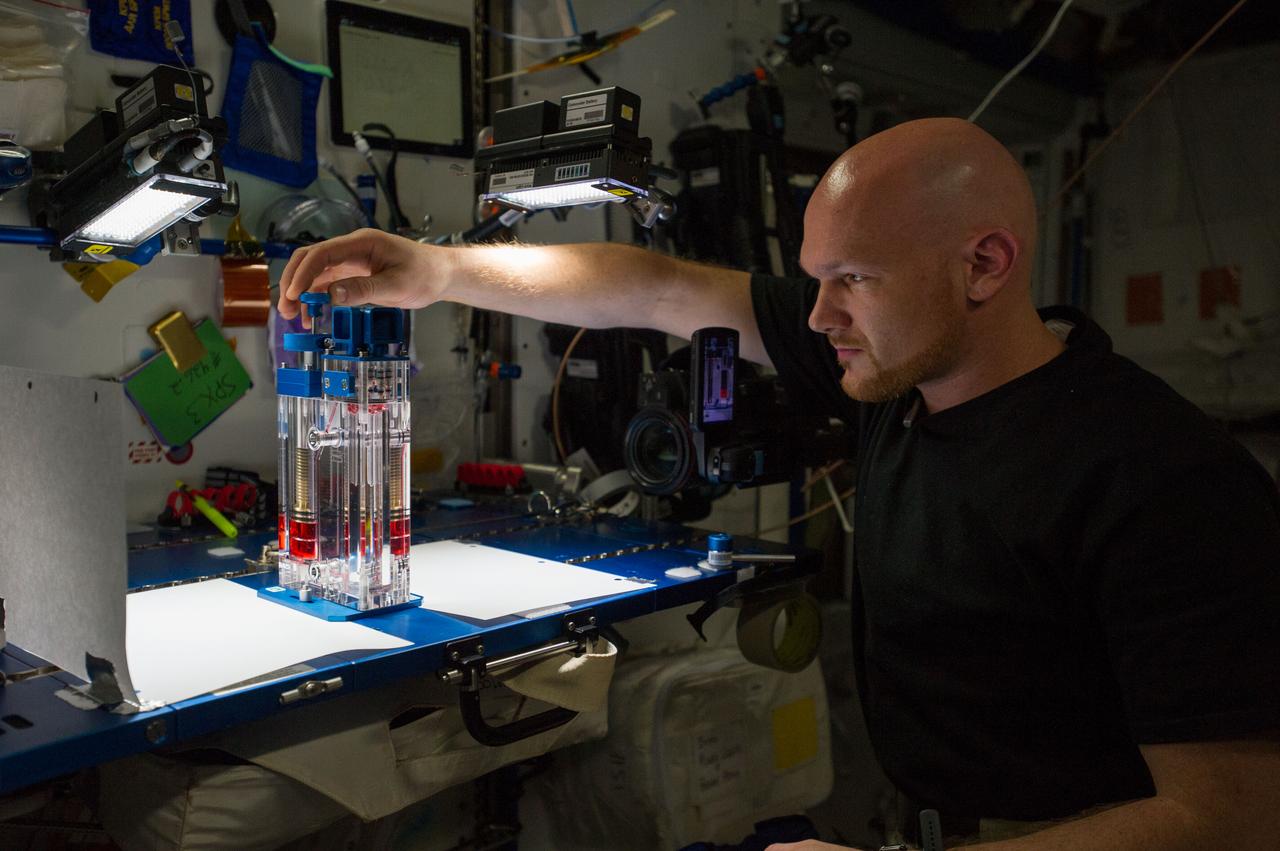
ISS040-E-015543 (19 June 2014) --- European Space Agency astronaut Alexander Gerst, Expedition 40 flight engineer, conducts a session with the Capillary Flow Experiment (CFE-2) in the Harmony node of the International Space Station. CFE is a suite of fluid physics experiments that investigate how fluids behave in microgravity which could benefit water and fuel delivery systems on future spacecraft. Scientists designed the CFE-2 to study properties of fluids and bubbles inside containers with a specific 3-D geometry.
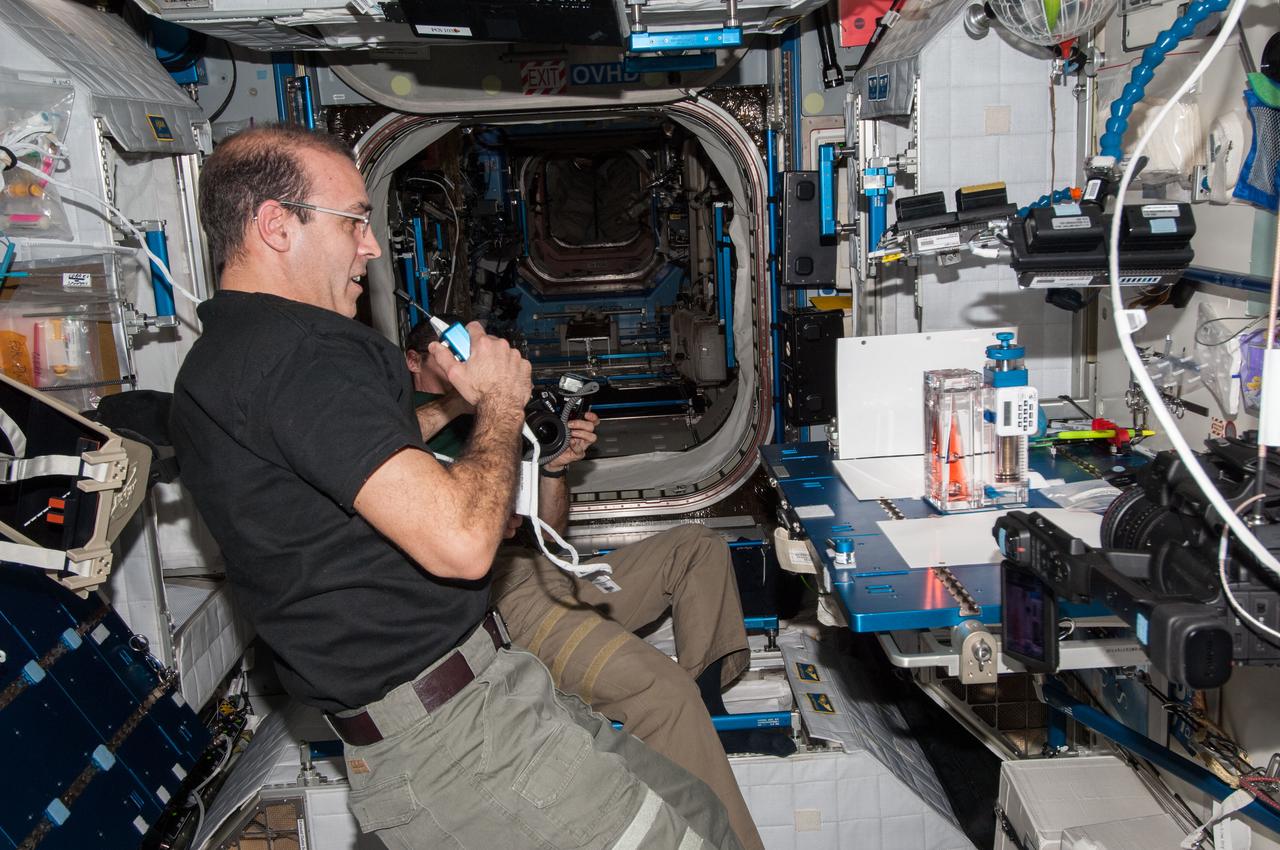
ISS038-E-025000 (3 Jan. 2014) --- NASA astronaut Rick Mastracchio, Expedition 38 flight engineer, speaks in a microphone while conducting a session with the Capillary Flow Experiment (CFE-2) in the Harmony node of the International Space Station. CFE is a suite of fluid physics experiments that investigate how fluids behave in microgravity which could benefit water and fuel delivery systems on future spacecraft. Scientists designed the CFE-2 to study properties of fluids and bubbles inside containers with a specific 3-D geometry.

STS085-351-005 (7 - 19 August 1997) --- Payload specialist Bjarni Tryggvason of the Canadian Space Agency (CSA) shows off the Microgravity Vibration Isolation Mount (MIM) fluid disk. One of five fluid loop experiments (FLEX), this one deals with the growth of resonance patterns (GORP) in gaseous liquid systems.
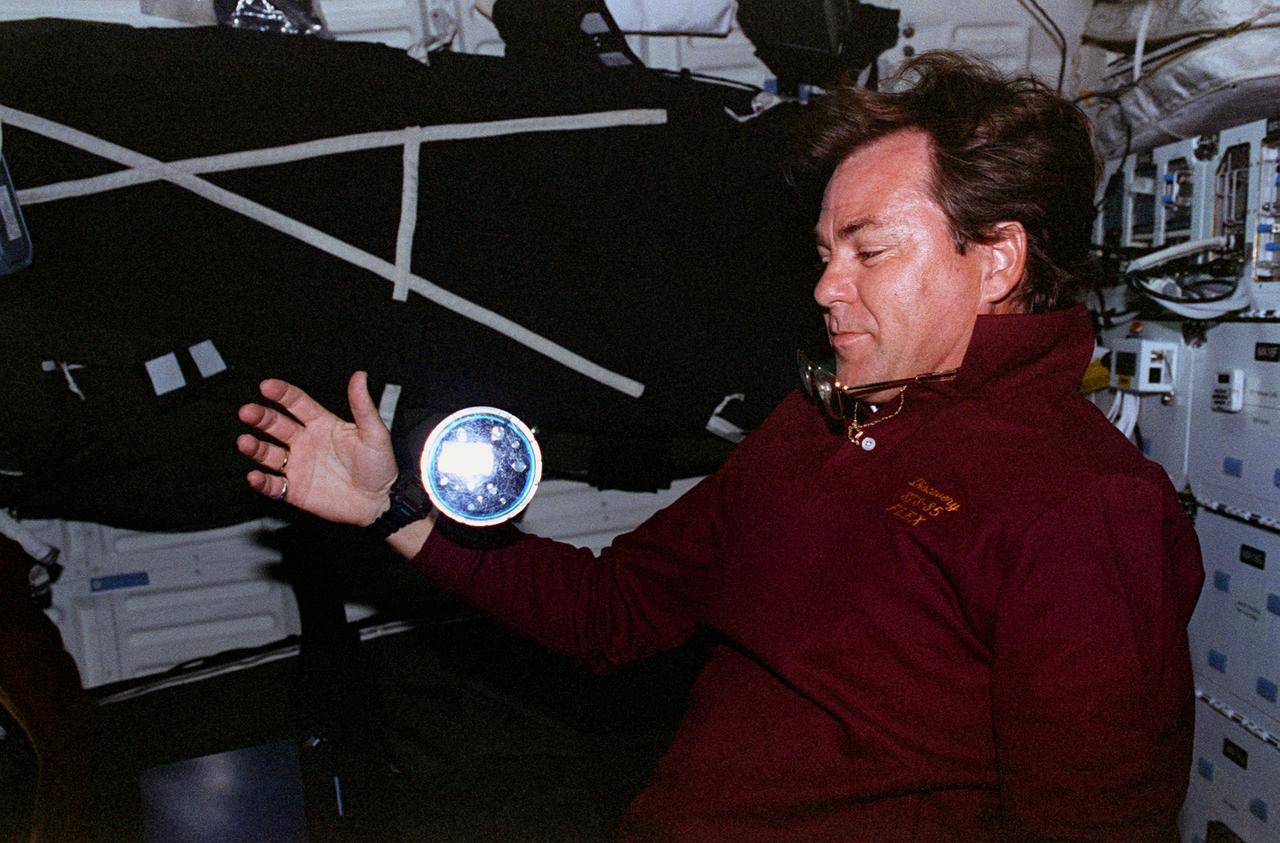
STS085-351-003 (7 - 19 August 1997) --- Payload specialist Bjarni Tryggvason of the Canadian Space Agency (CSA) shows off the Microgravity Vibration Isolation Mount (MIM) fluid disk. One of five Fluid Loop Experiments (FLEX), this one deals with the Growth of Resonance Patterns (GORP) in gaseous liquid systems.
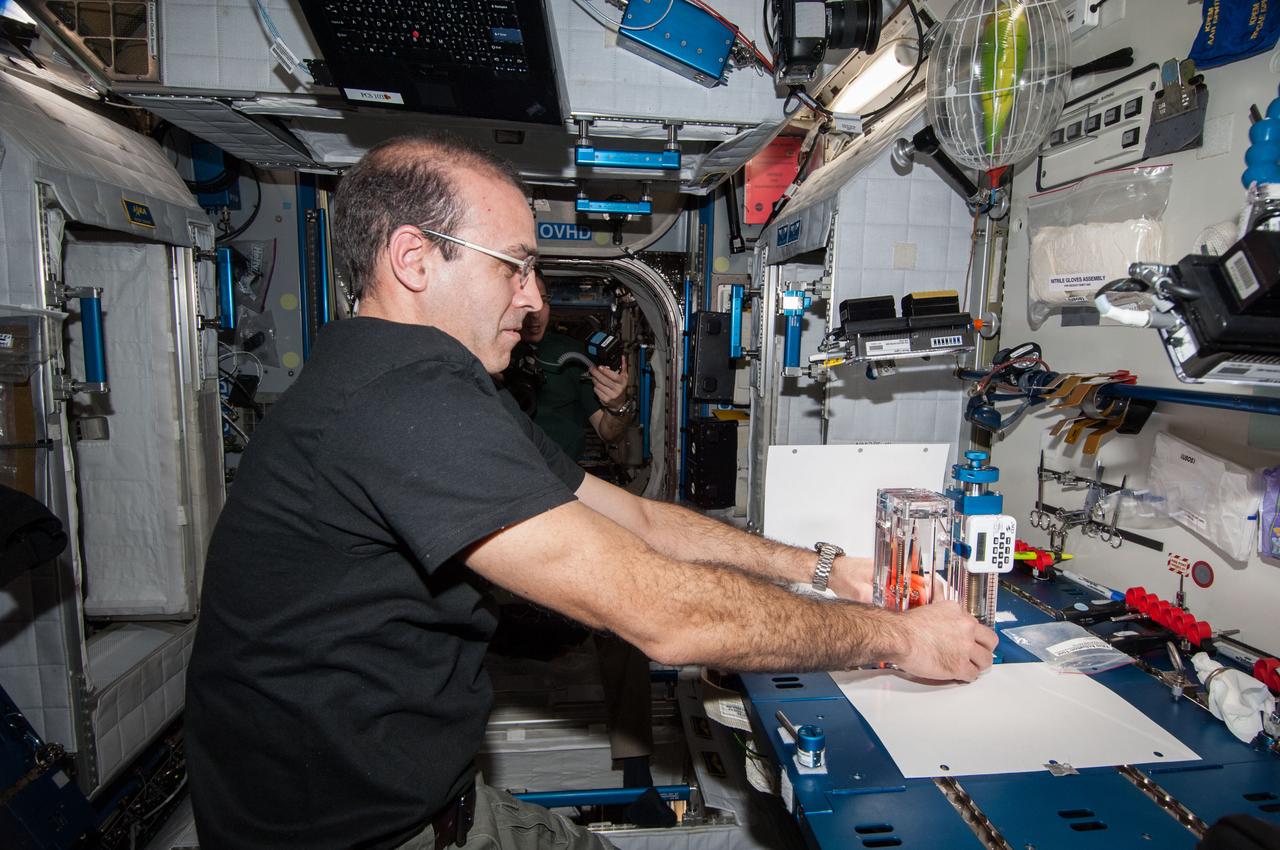
ISS038-E-025002 (3 Jan. 2014) --- NASA astronaut Rick Mastracchio, Expedition 38 flight engineer, conducts a session with the Capillary Flow Experiment (CFE-2) in the Harmony node of the International Space Station. CFE is a suite of fluid physics experiments that investigate how fluids behave in microgravity which could benefit water and fuel delivery systems on future spacecraft. Scientists designed the CFE-2 to study properties of fluids and bubbles inside containers with a specific 3-D geometry. NASA astronaut Mike Hopkins (mostly obscured in the background), flight engineer, uses a still camera to photograph the session.
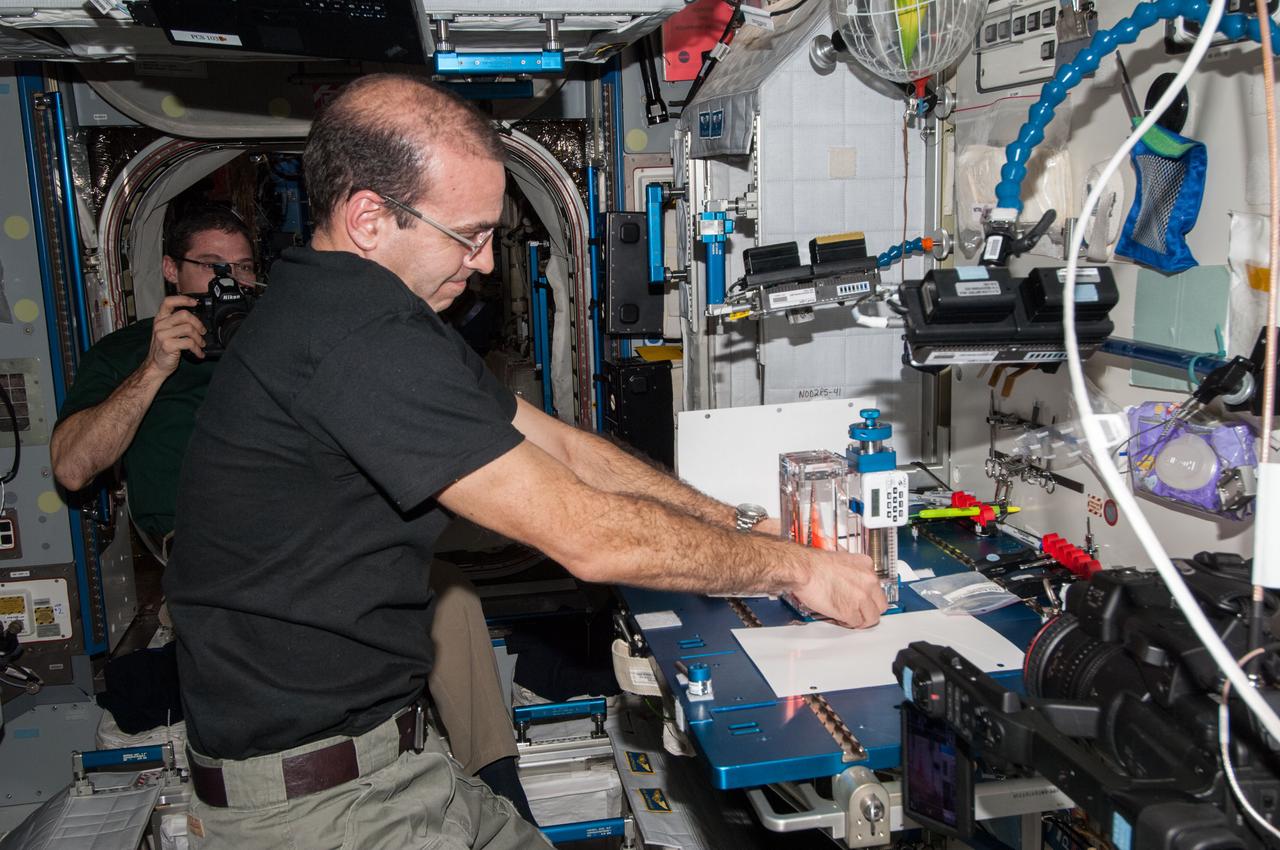
ISS038-E-025002 (3 Jan. 2014) --- NASA astronaut Rick Mastracchio, Expedition 38 flight engineer, conducts a session with the Capillary Flow Experiment (CFE-2) in the Harmony node of the International Space Station. CFE is a suite of fluid physics experiments that investigate how fluids behave in microgravity which could benefit water and fuel delivery systems on future spacecraft. Scientists designed the CFE-2 to study properties of fluids and bubbles inside containers with a specific 3-D geometry. NASA astronaut Mike Hopkins (mostly obscured in the background), flight engineer, uses a still camera to photograph the session.
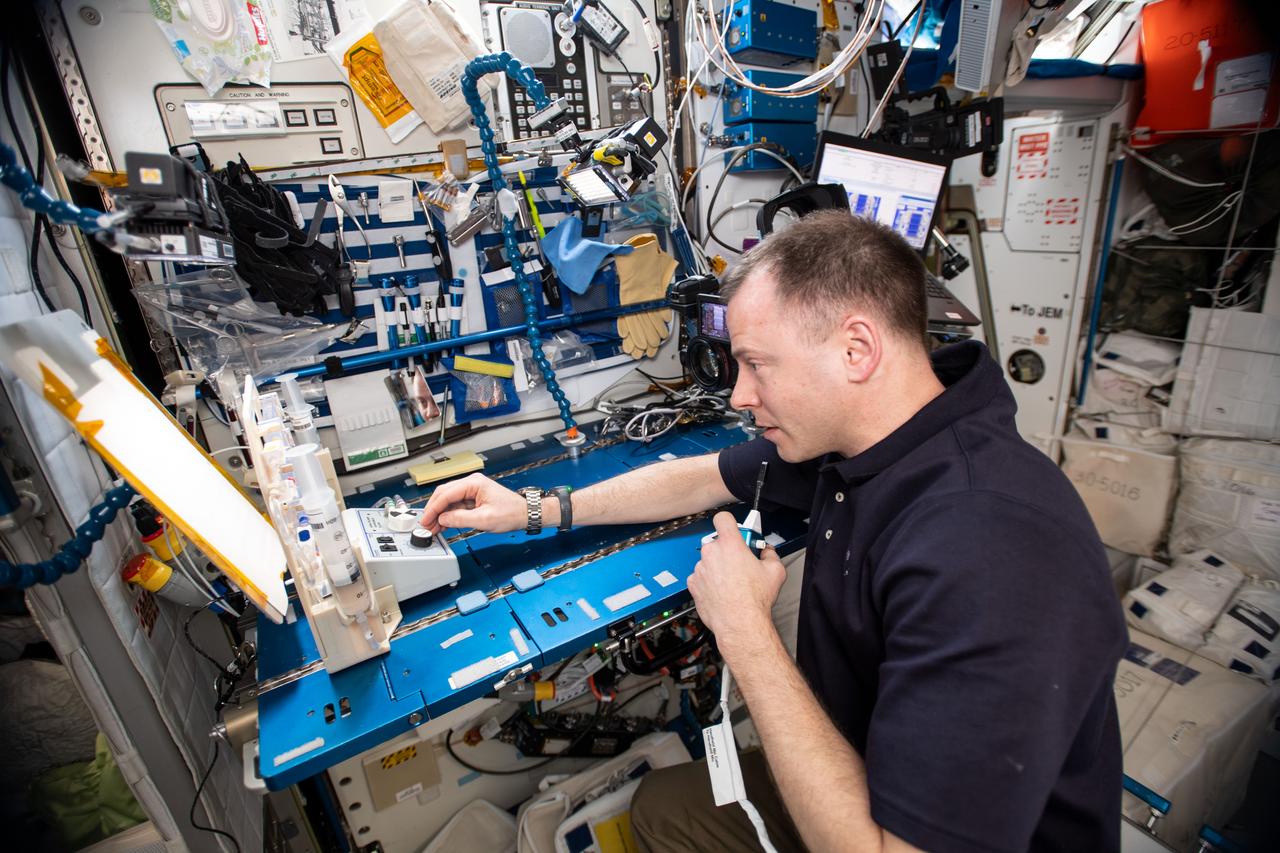
iss059e112425 (June 18, 2019) --- Flight Engineer Nick Hague is supporting research for the Capillary Structures experiment that uses specialized hardware to demonstrate the flow of fluid and gas mixtures using surface tension and fluid dynamics. The fluid physics study is helping NASA evaluate technologies for a lightweight, advanced life support system that can recover water and remove carbon dioxide in space.
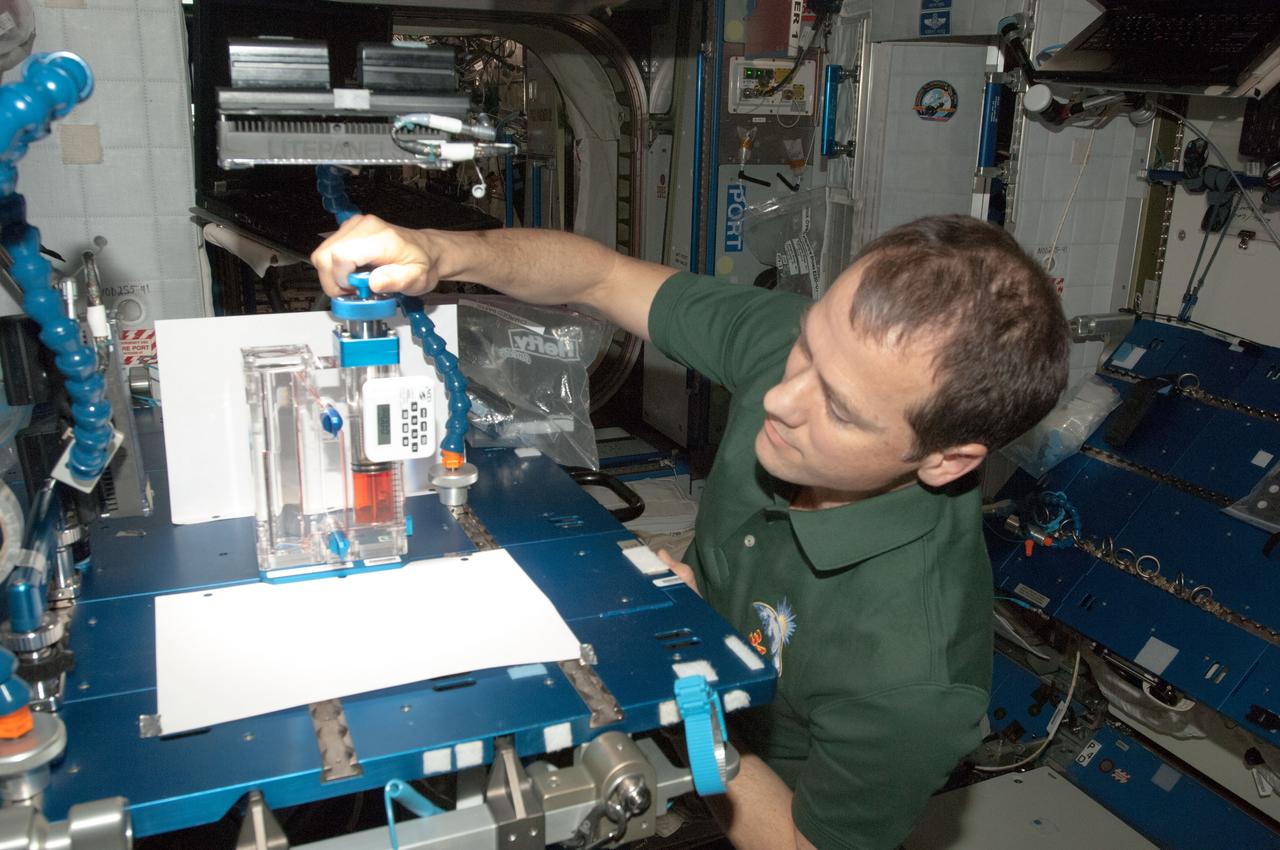
ISS034-E-036844 (29 Jan. 2013) --- In the International Space Station’s Harmony node, NASA astronaut Tom Marshburn, Expedition 34 flight engineer, works with the Capillary Flow Experiment-3, which investigates how fluids flow across surfaces in a weightless environment. Results from this experiment will improve computer models used to design fluid transfer systems and fuel tanks on future spacecraft.
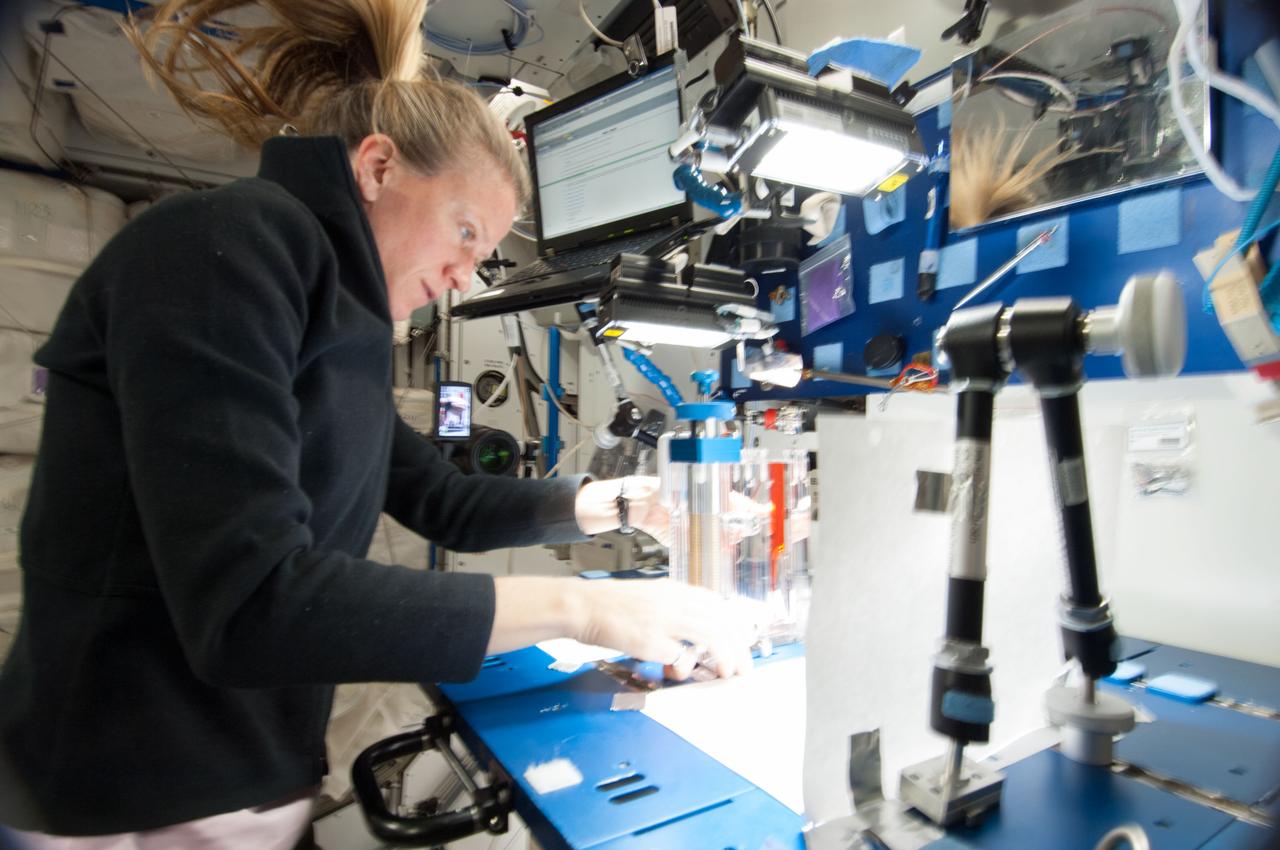
ISS036-E-029767 (8 Aug. 2013) --- NASA astronaut Karen Nyberg, Expedition 36 flight engineer, conducts a session with the Capillary Flow Experiment (CFE) in the Harmony node of the International Space Station. CFE observes the flow of fluid, in particular capillary phenomena, in microgravity. The data from this experiment will improve computer models used to design fluid transfer systems and fuel tanks on future spacecraft.
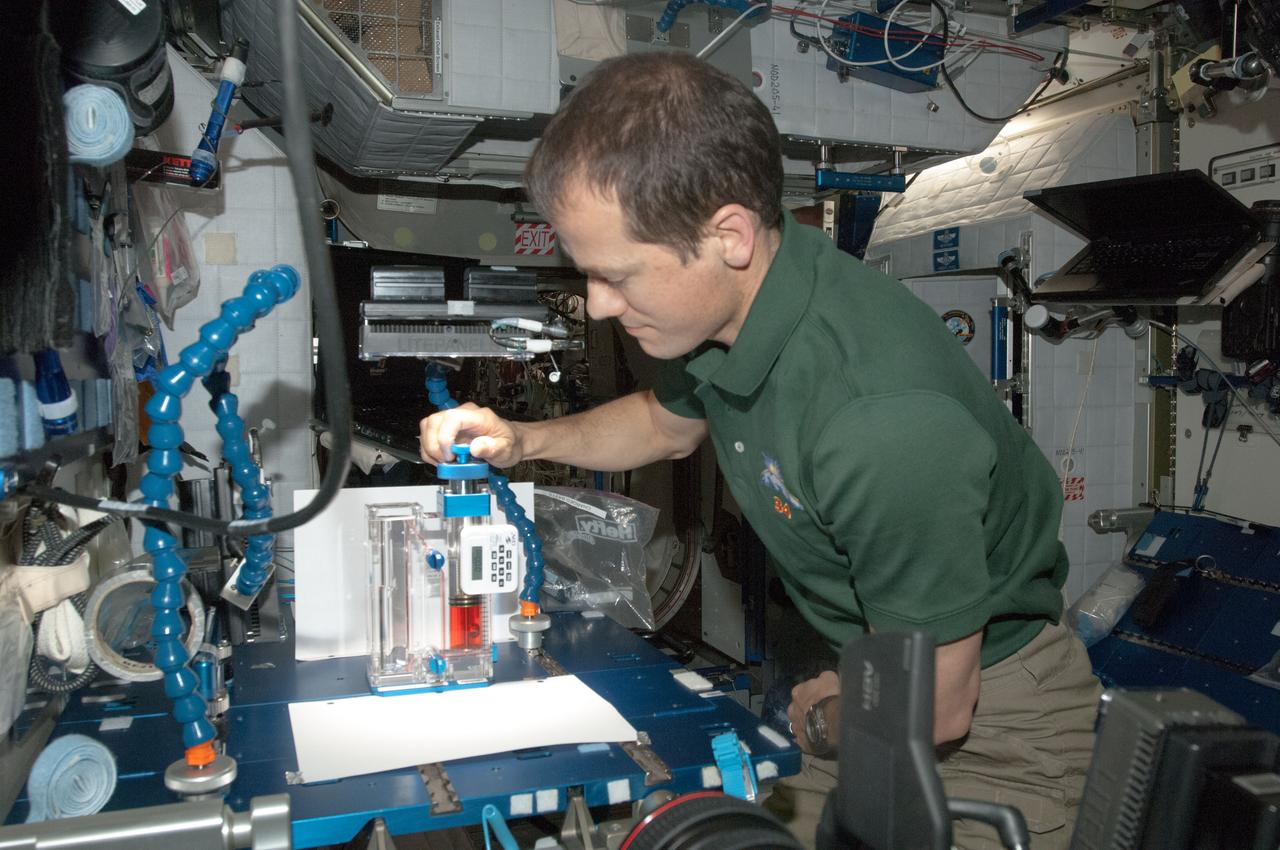
ISS034-E-036840 (29 Jan. 2013) --- In the International Space Station?s Harmony node, NASA astronaut Tom Marshburn, Expedition 34 flight engineer, works with the Capillary Flow Experiment-3, which investigates how fluids flow across surfaces in a weightless environment. Results from this experiment will improve computer models used to design fluid transfer systems and fuel tanks on future spacecraft.
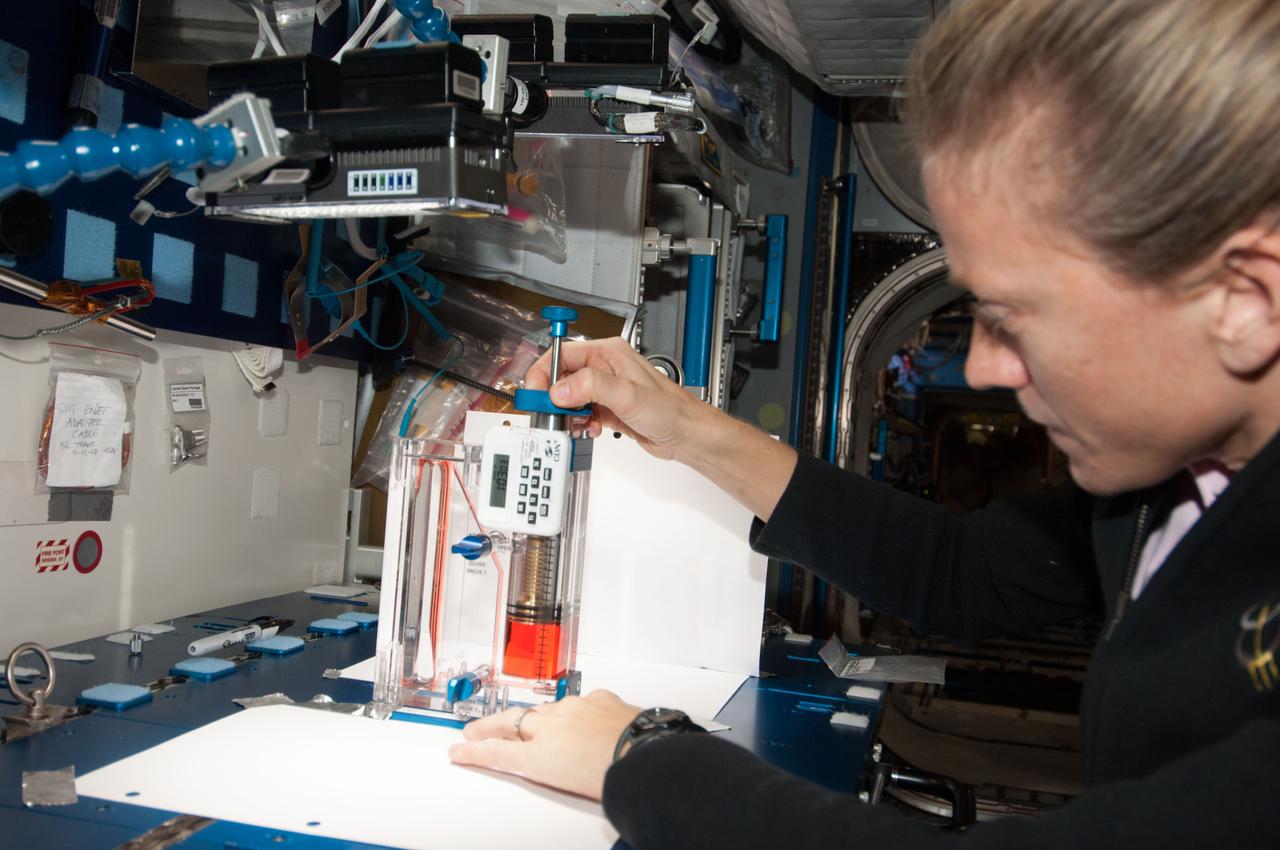
ISS036-E-029774 (8 Aug. 2013) --- NASA astronaut Karen Nyberg, Expedition 36 flight engineer, conducts a session with the Capillary Flow Experiment (CFE) in the Harmony node of the International Space Station. CFE observes the flow of fluid, in particular capillary phenomena, in microgravity. The data from this experiment will improve computer models used to design fluid transfer systems and fuel tanks on future spacecraft.
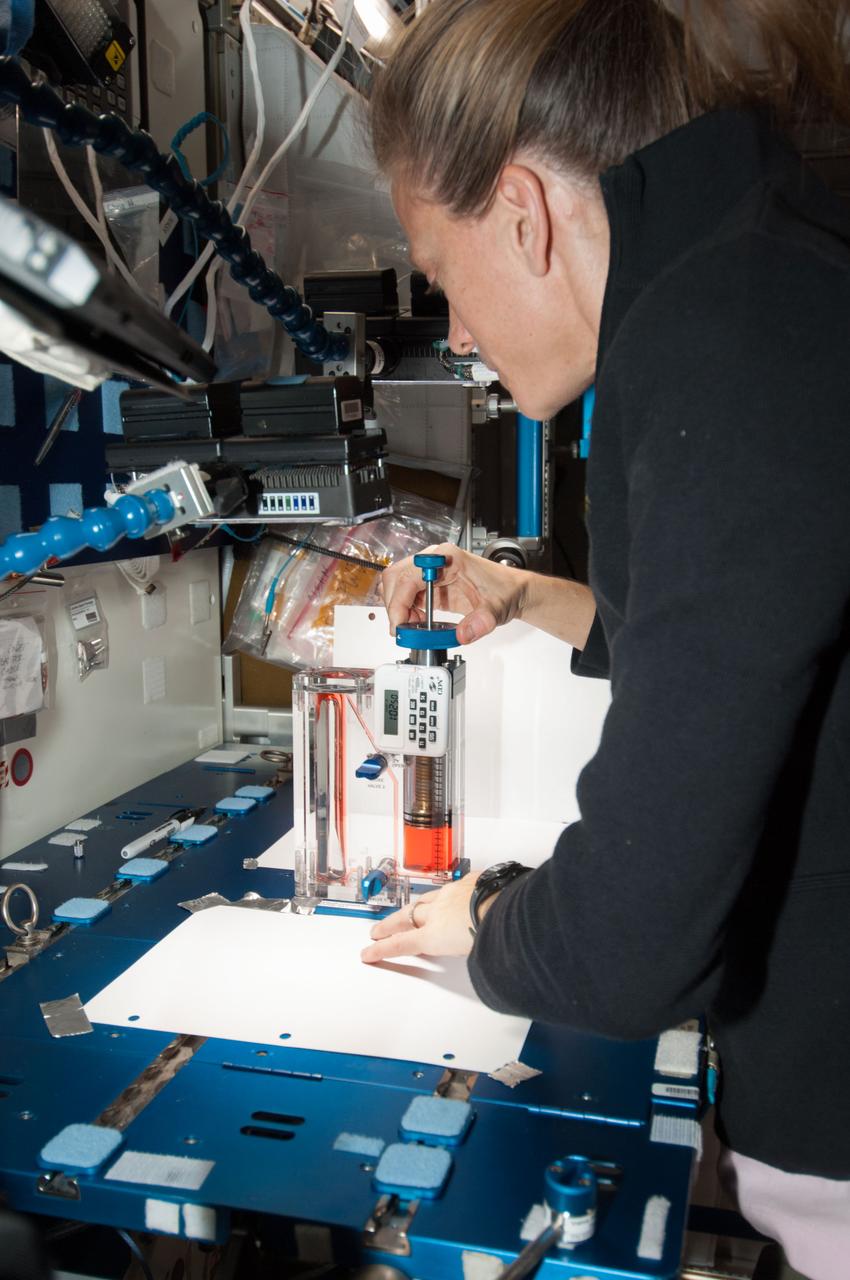
ISS036-E-029773 (8 Aug. 2013) --- NASA astronaut Karen Nyberg, Expedition 36 flight engineer, conducts a session with the Capillary Flow Experiment (CFE) in the Harmony node of the International Space Station. CFE observes the flow of fluid, in particular capillary phenomena, in microgravity. The data from this experiment will improve computer models used to design fluid transfer systems and fuel tanks on future spacecraft.
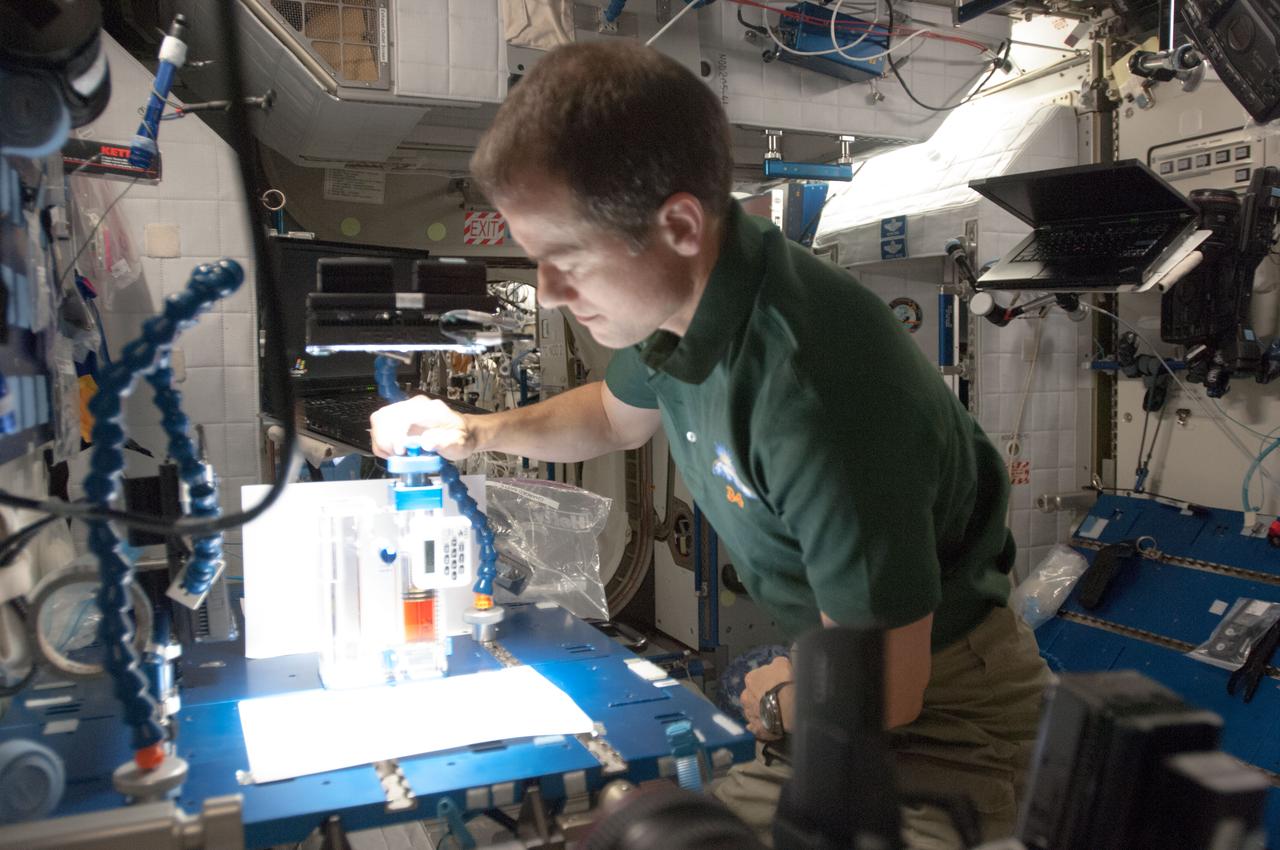
ISS034-E-036841 (29 Jan. 2013) --- In the International Space Station’s Harmony node, NASA astronaut Tom Marshburn, Expedition 34 flight engineer, works with the Capillary Flow Experiment-3, which investigates how fluids flow across surfaces in a weightless environment. Results from this experiment will improve computer models used to design fluid transfer systems and fuel tanks on future spacecraft.
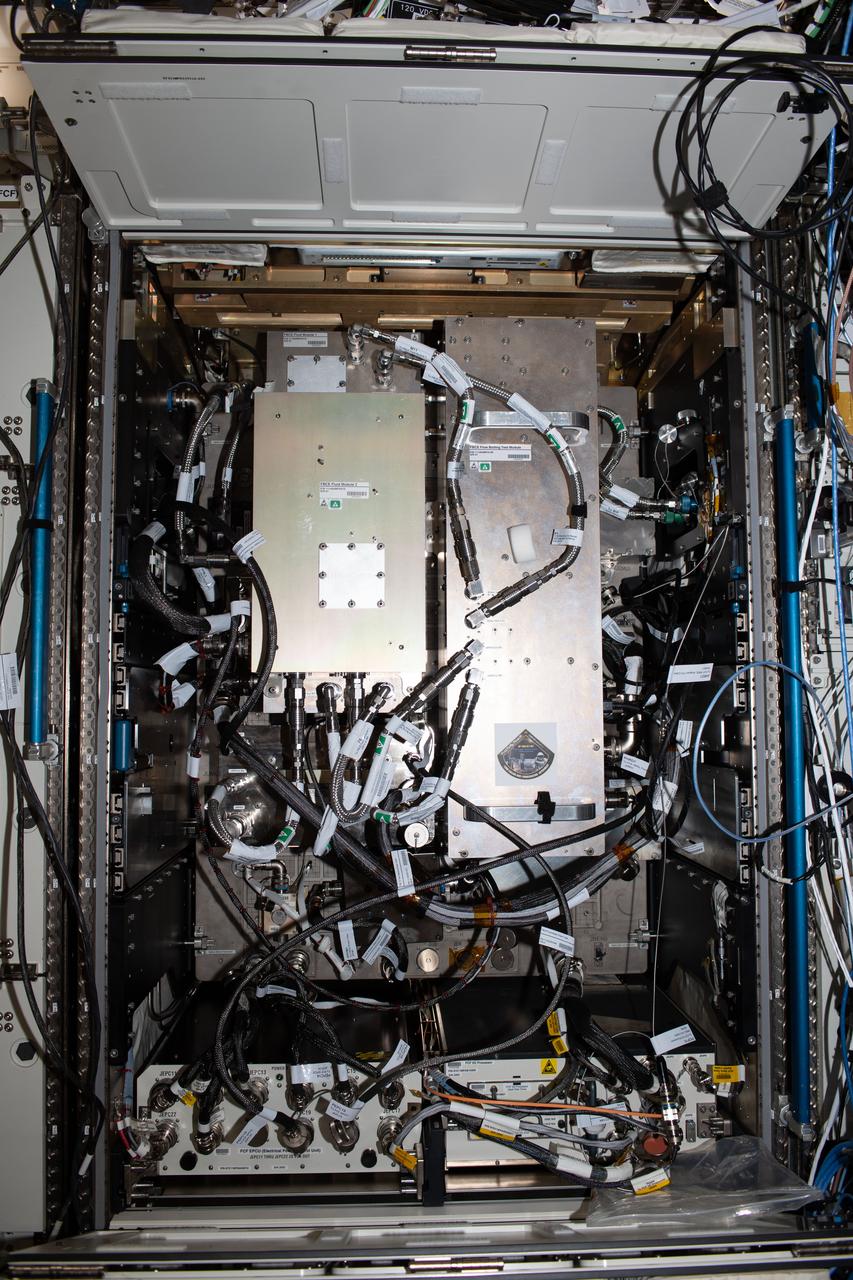
iss066e087939 (12/9/2021) --- A view of the Fluids and Combustion Facility (FCF), used for the Flow Boiling and Condensation Experiment (FBCE) during Expedition 66. The study may improve thermal systems for Earth and other planetary environments.
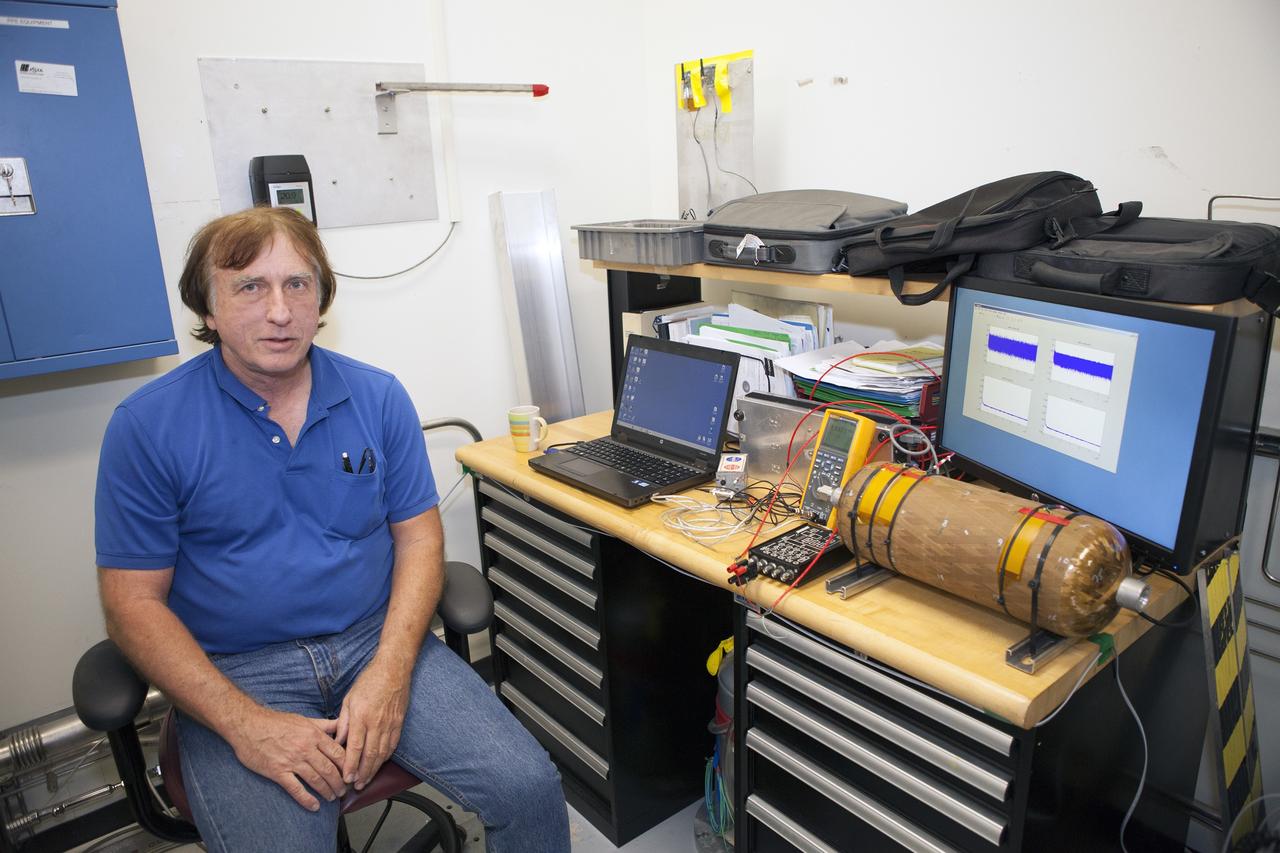
CAPE CANAVERAL, Fla. – Rudy Werlink, a fluid systems engineer in the Engineering Directorate at NASA's Kennedy Space Center in Florida, monitors a test in a lab at the Cryogenics Testbed Facility using the Lead Zirconate Titanate, or PZT-based system that he developed. Werlink developed the PZT-based system at Kennedy as a way to measure the mass of a fluid and the structural health of a tank using vibration signatures on Earth or in reduced/zero g gravity. The mass gaging technology has received approval to be on the first sub-orbital flight on the Virgin Galactic Space Plane in 2015. NASA experiments using the PZT technology will be used by Embry-Riddle Aeronautical University in conjunction with Carthage College on a fluid transfer experiment. Photo credit: NASA/Daniel Casper
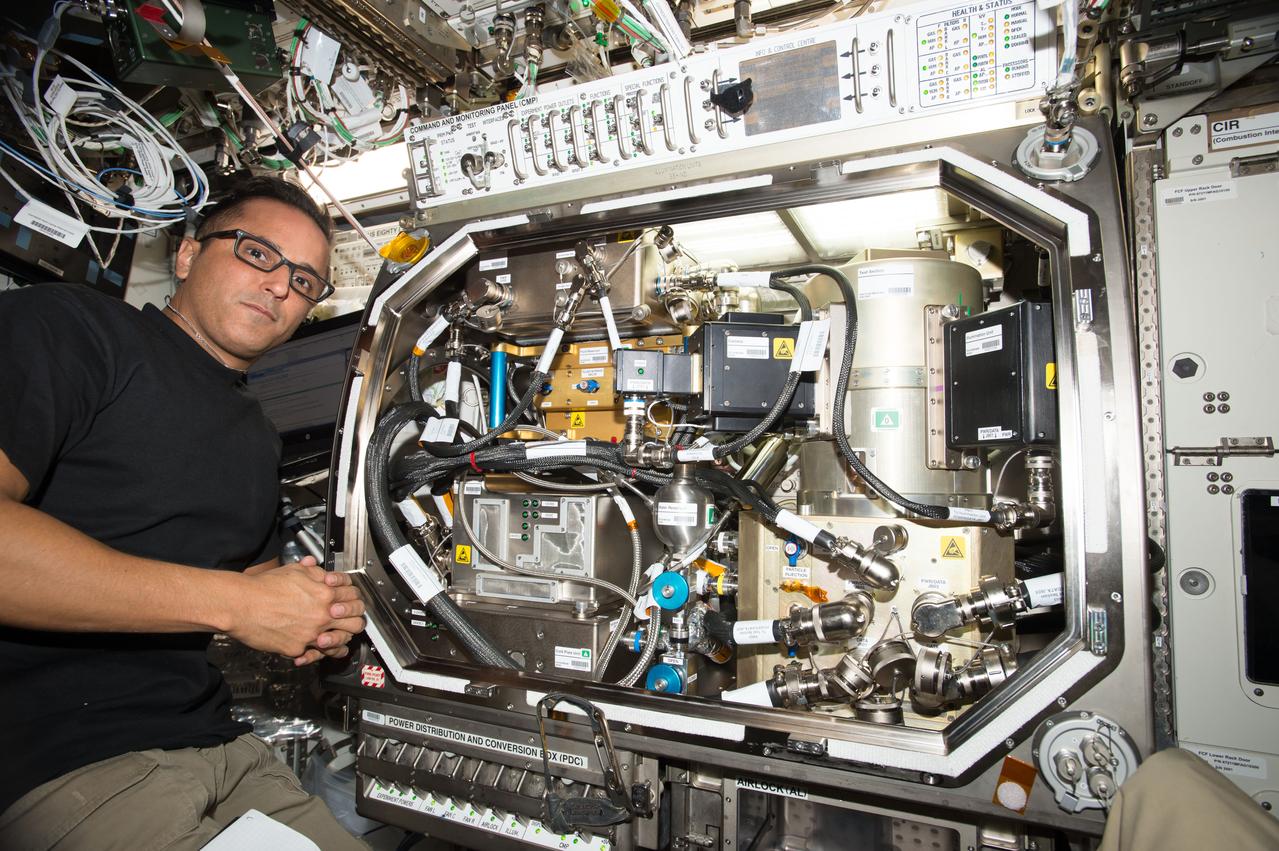
iss053e027051 (Sept. 19, 2017) --- Flight Engineer Joe Acaba works in the U.S. Destiny laboratory module setting up hardware for the Zero Boil-Off Tank (ZBOT) experiment. ZBOT uses an experimental fluid to test active heat removal and forced jet mixing as alternative means for controlling tank pressure for volatile fluids. Rocket fuel, spacecraft heating and cooling systems, and sensitive scientific instruments rely on very cold cryogenic fluids. Heat from the environment around cryogenic tanks can cause their pressures to rise, which requires dumping or "boiling off" fluid to release the excess pressure, or actively cooling the tanks in some way.
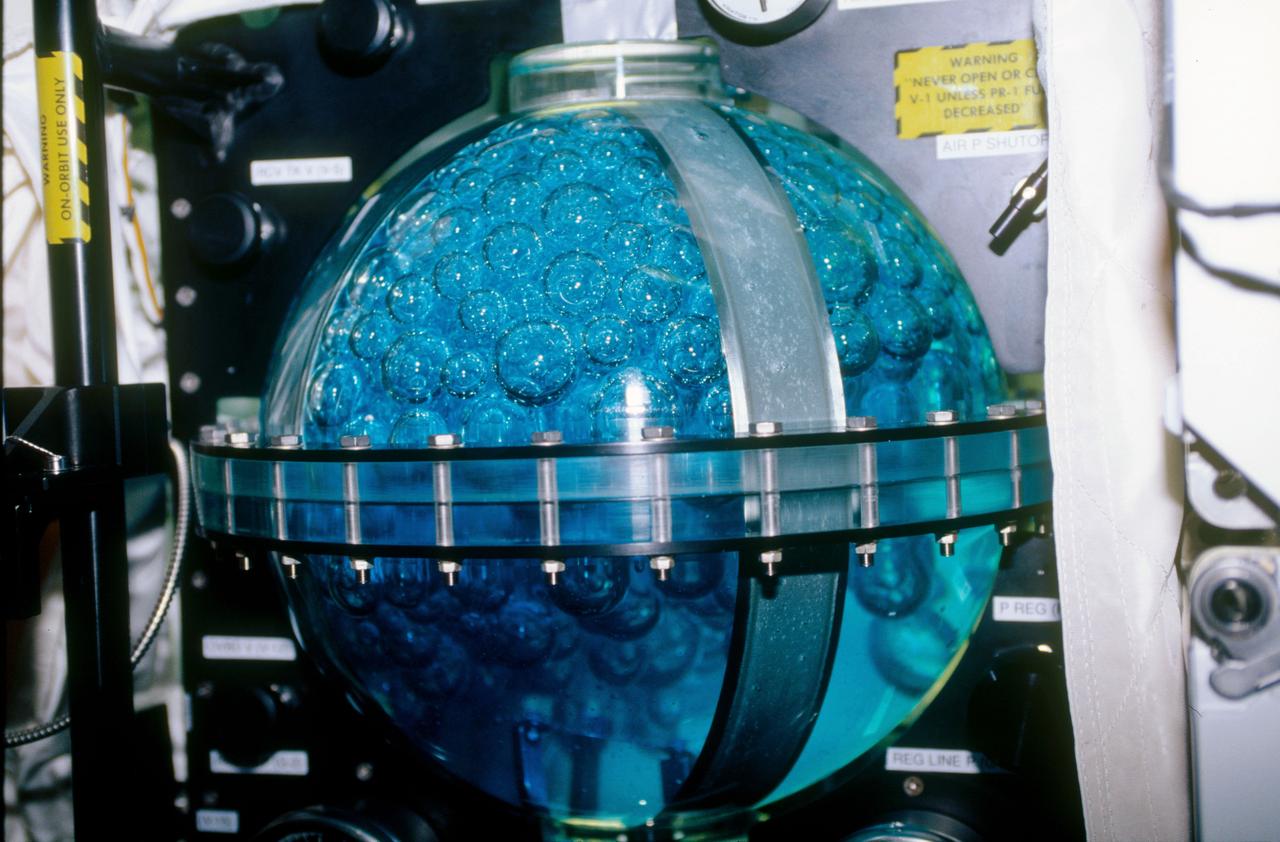
STS053-09-019 (2 - 9 Dec 1992) --- A medium close-up view of part of the Fluid Acquisition and Resupply Equipment (FARE) onboard the Space Shuttle Discovery. Featured in the mid-deck FARE setup is fluid activity in one of two 12.5-inch spherical tanks made of transparent acrylic. Pictured is the receiver tank. The other tank, out of frame below, is for supplying fluids. The purpose of FARE is to investigate the dynamics of fluid transfer in microgravity and develop methods for transferring vapor-free propellants and other liquids that must be replenished in long-term space systems like satellites, Extended-Duration Orbiters (EDO), and Space Station Freedom. Eight times over an eight-hour test period, the mission specialists conducted the FARE experiment. A sequence of manual valve operations caused pressurized air from the bottles to force fluids from the supply tank to the receiver tank and back again to the supply tank. Baffles in the receiver tank controlled fluid motion during transfer, a fine-mesh screen filtered vapor from the fluid, and the overboard vent removed vapor from the receiver tank as the liquid rose. FARE is managed by NASA's Marshall Space Flight Center (MSFC) in Alabama. The basic equipment was developed by Martin Marietta for the Storable Fluid Management Demonstration. Susan L. Driscoll is the principal investigator.
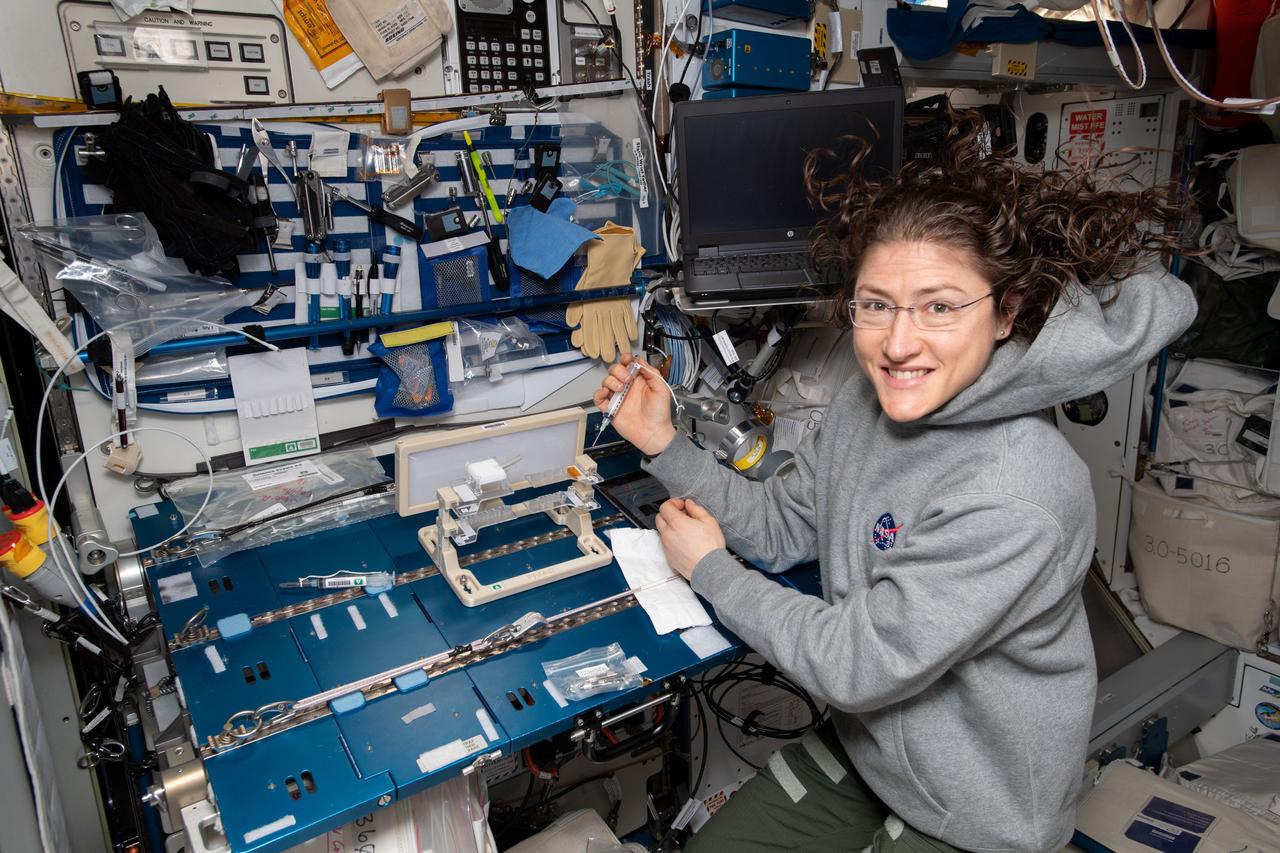
iss059e101367 (June 12, 2019) --- NASA astronaut Christina Koch checks out hardware for the Capillary Structures experiment. The investigation studies a new method of using structures of specific shapes to manage fluid and gas mixtures for more reliable life support systems on future space missions.
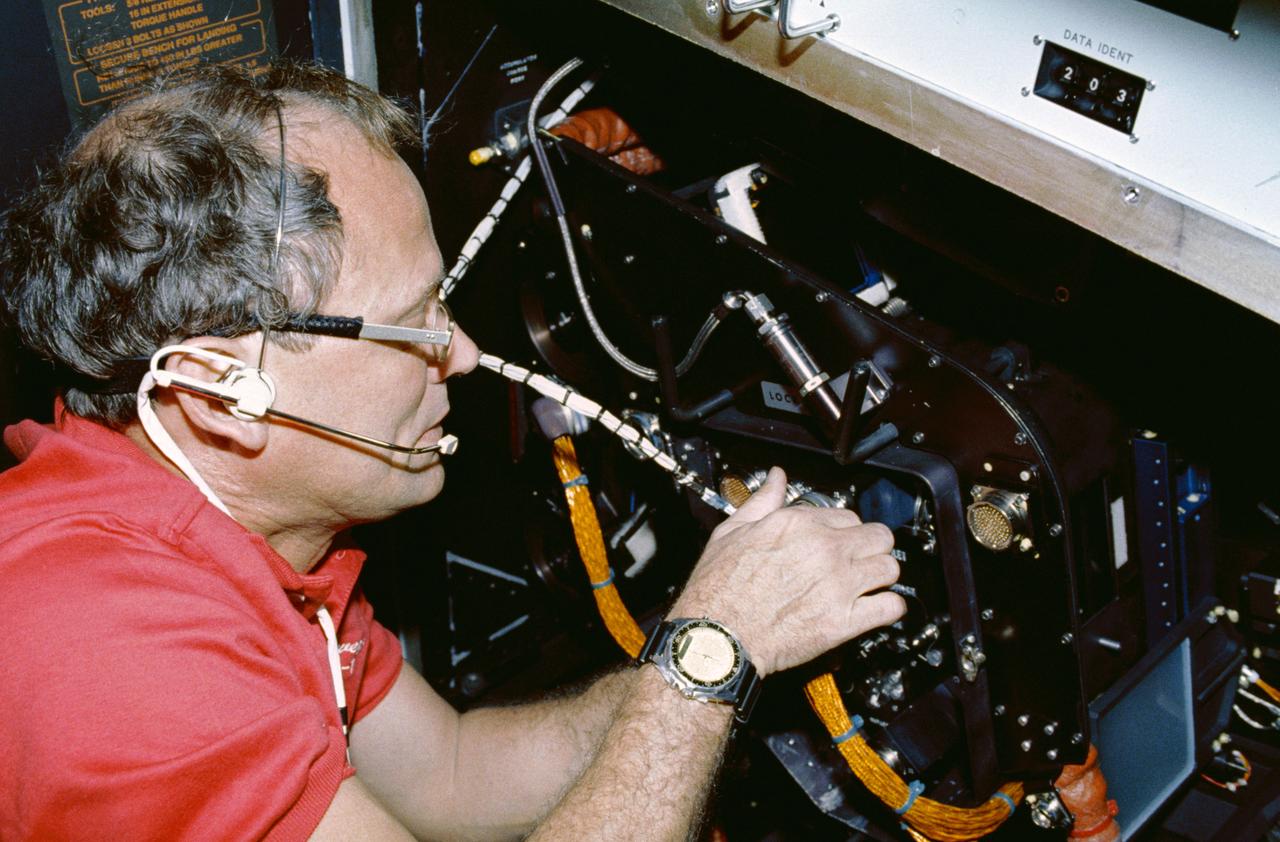
STS042-05-006 (22-30 Jan 1992) --- Astronaut Norman E. Thagard, payload commander, performs the Fluids Experiment System (FES) in the International Microgravity Laboratory (IML-1) science module. The FES is a NASA-developed facility that produces optical images of fluid flows during the processing of materials in space. The system's sophisticated optics consist of a laser to make holograms of samples and a video camera to record images of flows in and around samples. Thagard was joined by six fellow crewmembers for eight days of scientific research aboard Discovery in Earth-orbit. Most of their on-duty time was spent in this IML-1 science module, positioned in the cargo bay and attached via a tunnel to Discovery's airlock.
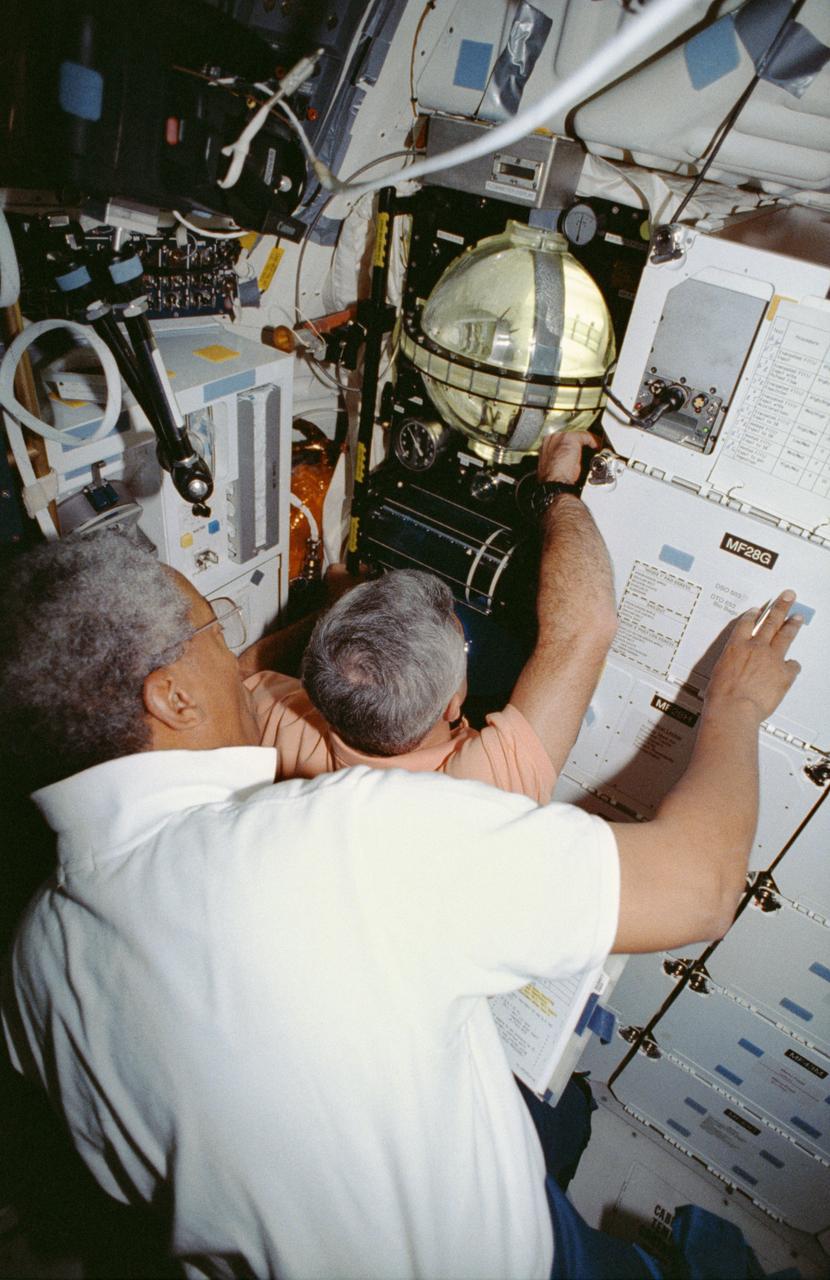
STS053-04-018 (2-9 Dec 1992) --- Astronauts Guion S. Bluford (left) and Michael R. U. (Rich) Clifford monitor the Fluid Acquisition and Resupply Equipment (FARE) onboard the Space Shuttle Discovery. Clearly visible in the mid-deck FARE setup is one of two 12.5-inch spherical tanks made of transparent acrylic, one to supply and one to receive fluids. The purpose of FARE is to investigate the dynamics of fluid transfer in microgravity and develop methods for transferring vapor-free propellants and other liquids that must be replenished in long-term space systems like satellites, Extended-Duration Orbiters (EDO), and Space Station Freedom. Eight times over an eight-hour test period, the mission specialists conducted the FARE experiment. A sequence of manual valve operations caused pressurized air from the bottles to force fluids from the supply tank to the receiver tank and back again to the supply tank. Baffles in the receiver tank controlled fluid motion during transfer, a fine-mesh screen filtered vapor from the fluid, and the overboard vent removed vapor from the receiver tank as the liquid rose. FARE is managed by NASA's Marshall Space Flight Center (MSFC) in Alabama. The basic equipment was developed by Martin Marietta for the Storable Fluid Management Demonstration. Susan L. Driscoll is the principal investigator.
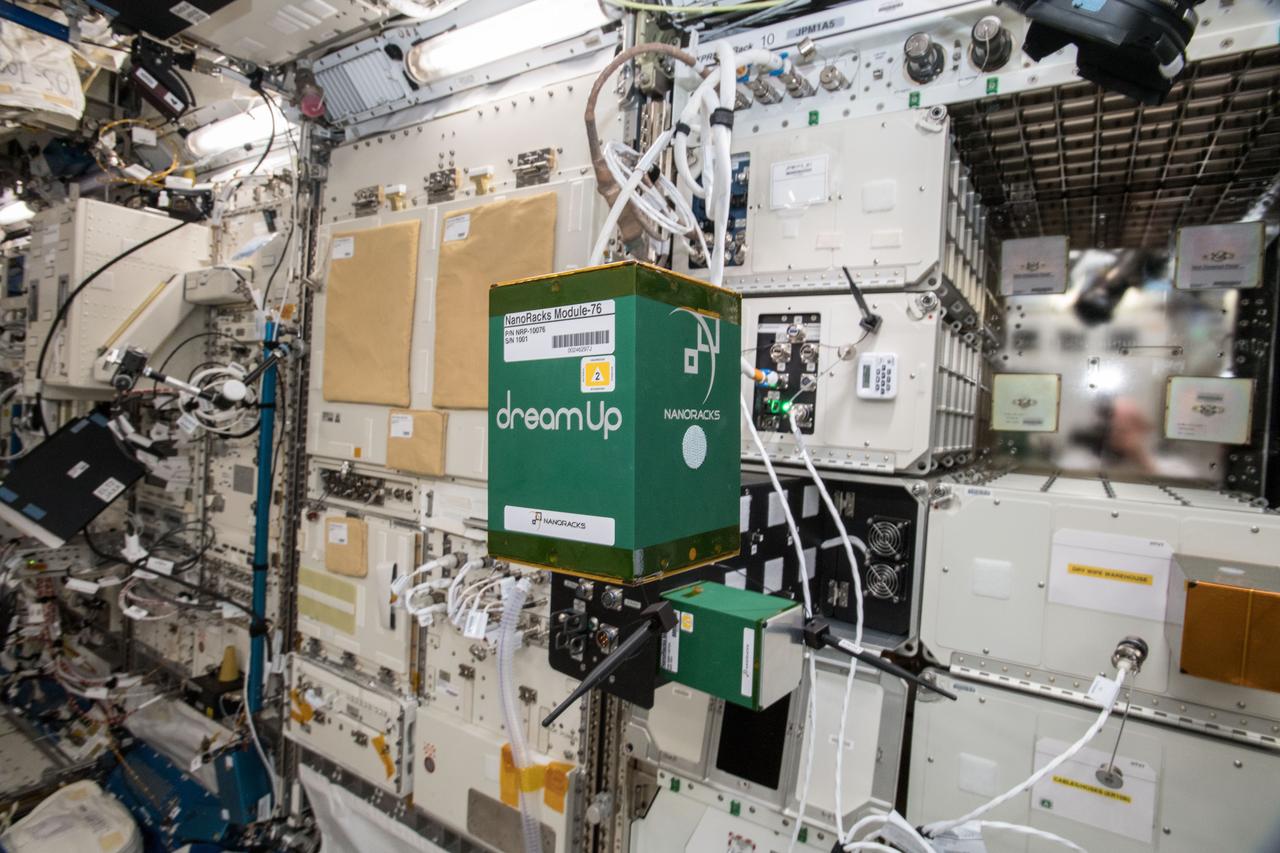
iss057e105655 (11/21/2018) --- A view of the Pump Application using Pulsed Electromagnets for Liquid reLocation (PAPELL) - NanoRacks Module-76 experiment which examines the behavior of special magnetic fluid transport systems to determine how these systems perform in space. PAPELL uses cameras and other automated equipment to monitor exactly how ferrofluids travel across grids of electromagnets and through pipes when manipulated with an electromagnetic field under a range of different conditions. The results will contribute to the development of a low wear, low maintenance pumping system.
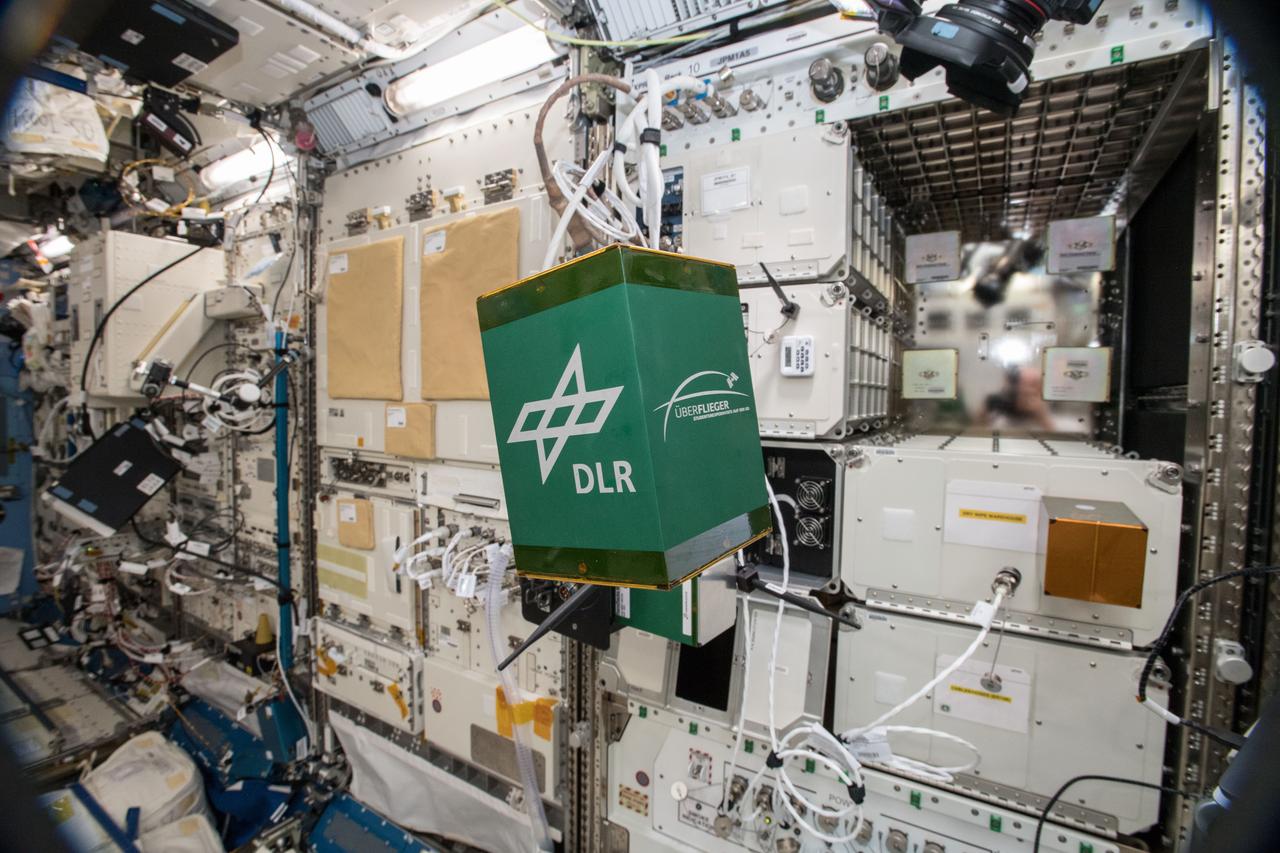
iss057e105652 (11/21/2018) --- A view of the Pump Application using Pulsed Electromagnets for Liquid reLocation (PAPELL) - NanoRacks Module-76 experiment which examines the behavior of special magnetic fluid transport systems to determine how these systems perform in space. PAPELL uses cameras and other automated equipment to monitor exactly how ferrofluids travel across grids of electromagnets and through pipes when manipulated with an electromagnetic field under a range of different conditions. The results will contribute to the development of a low wear, low maintenance pumping system.
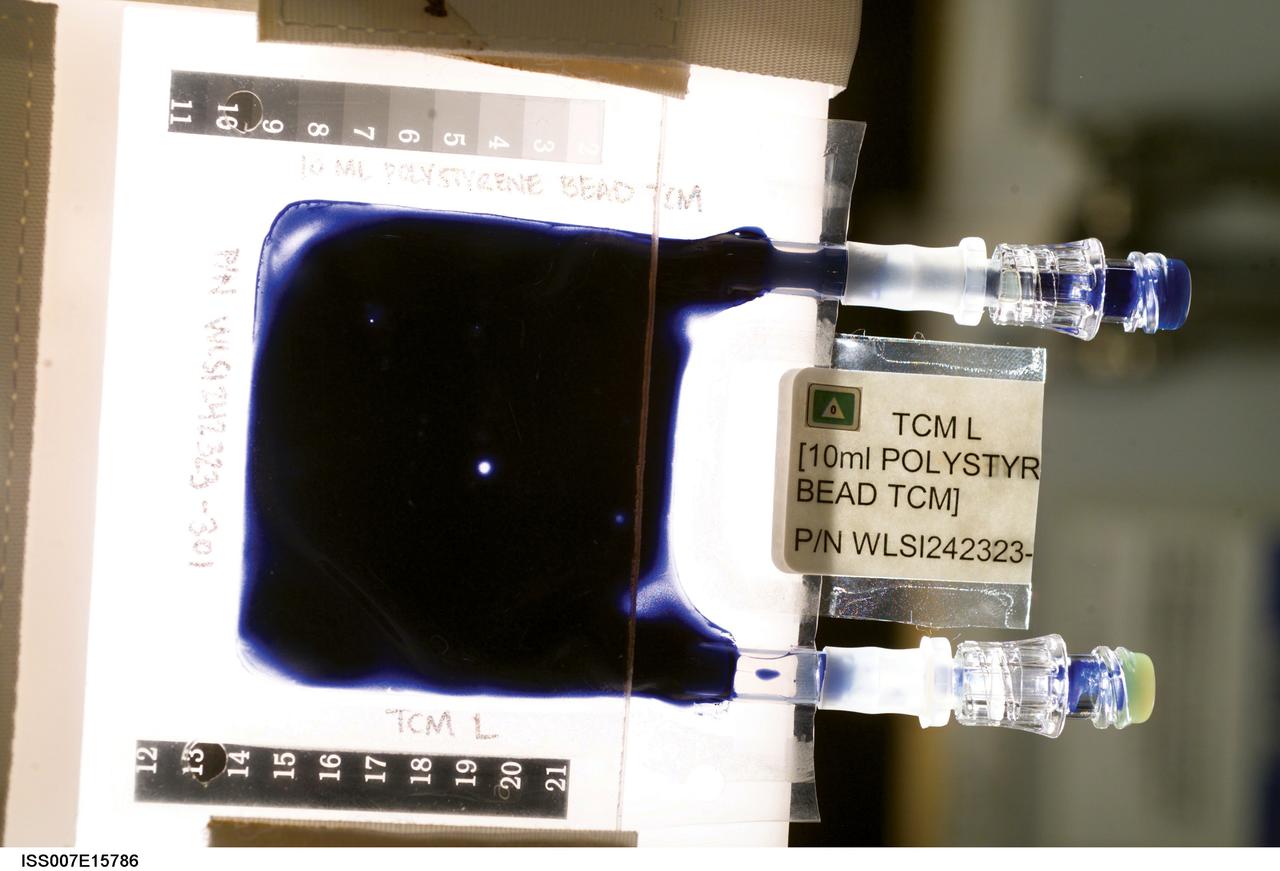
Aboard the International Space Station (ISS), the Tissue Culture Medium (TCM) is the bioreactor vessel in which cell cultures are grown. With its two syringe ports, it is much like a bag used to administer intravenous fluid, except it allows gas exchange needed for life. The TCM contains cell culture medium, and when frozen cells are flown to the ISS, they are thawed and introduced to the TCM through the syringe ports. In the Cellular Biotechnology Operations Support System-Fluid Dynamics Investigation (CBOSS-FDI) experiment, several mixing procedures are being assessed to determine which method achieves the most uniform mixing of growing cells and culture medium.
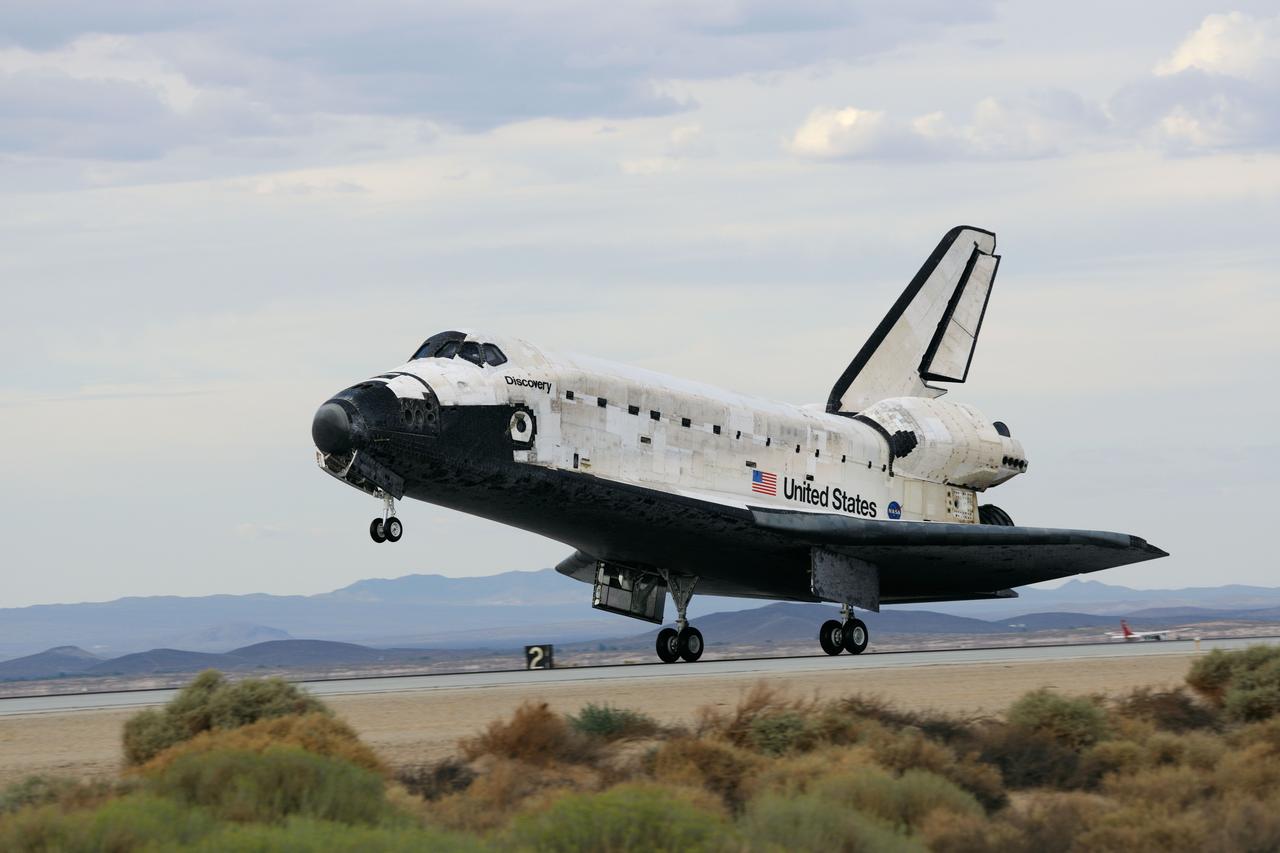
STS128-S-046 (11 Sept. 2009) --- Space Shuttle Discovery?s main landing gear touches down at NASA's Dryden Flight Research Center at Edwards Air Force Base in California, concluding a successful mission to the International Space Station. Onboard are NASA astronauts Rick Sturckow, commander; Kevin Ford, pilot; John ?Danny? Olivas, Patrick Forrester, Jose Hernandez and Tim Kopra, all mission specialists; along with European Space Agency astronaut Christer Fuglesang, mission specialist. Discovery landed at 5:53 p.m. (PDT) on Sept. 11, 2009 to end the STS-128 mission, completing its almost 14-day journey of more than 5.7 million miles in space. The landing was diverted to California due to marginal weather at the Kennedy Space Center. Discovery?s mission featured three spacewalks and the delivery of two refrigerator-sized science racks to the space station. One rack will be used to conduct experiments on materials such as metals, glasses and ceramics. The results from these experiments could lead to the development of better materials on Earth. The other rack will be used for fluid physics research. Understanding how fluids react in microgravity could lead to improved designs for fuel tanks, water systems and other fluid-based systems.
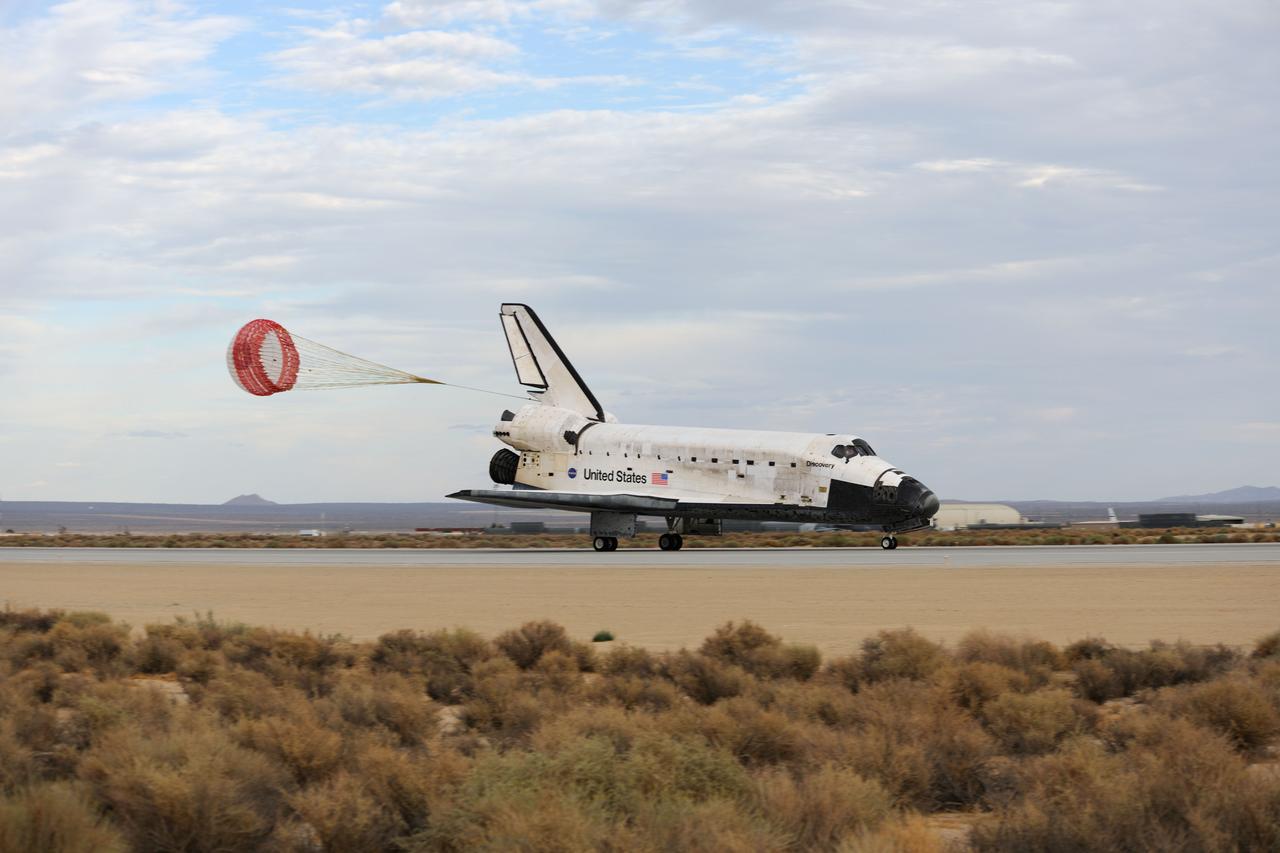
STS128-S-048 (11 Sept. 2009) --- With its drag chute deployed, Space Shuttle Discovery slows to a stop after landing at NASA's Dryden Flight Research Center at Edwards Air Force Base in California, concluding a successful mission to the International Space Station. Onboard are NASA astronauts Rick Sturckow, commander; Kevin Ford, pilot; John ?Danny? Olivas, Patrick Forrester, Jose Hernandez and Tim Kopra, all mission specialists; along with European Space Agency astronaut Christer Fuglesang, mission specialist. Discovery landed at 5:53 p.m. (PDT) on Sept. 11, 2009 to end the STS-128 mission, completing its almost 14-day journey of more than 5.7 million miles in space. The landing was diverted to California due to marginal weather at the Kennedy Space Center. Discovery?s mission featured three spacewalks and the delivery of two refrigerator-sized science racks to the space station. One rack will be used to conduct experiments on materials such as metals, glasses and ceramics. The results from these experiments could lead to the development of better materials on Earth. The other rack will be used for fluid physics research. Understanding how fluids react in microgravity could lead to improved designs for fuel tanks, water systems and other fluid-based systems.
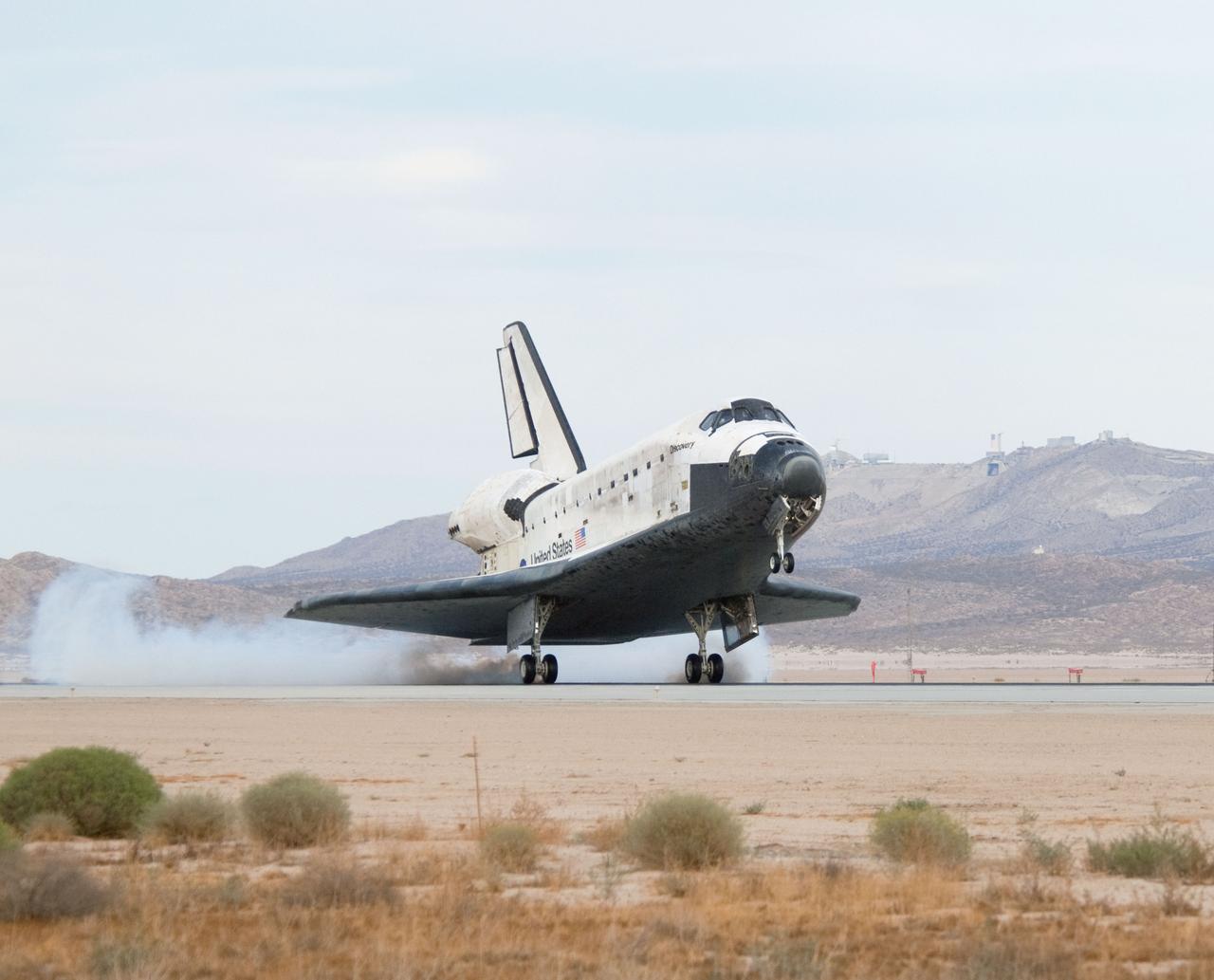
STS128-S-045 (11 Sept. 2009) --- Space Shuttle Discovery?s main landing gear touches down at NASA's Dryden Flight Research Center at Edwards Air Force Base in California, concluding a successful mission to the International Space Station. Onboard are NASA astronauts Rick Sturckow, commander; Kevin Ford, pilot; John ?Danny? Olivas, Patrick Forrester, Jose Hernandez and Tim Kopra, all mission specialists; along with European Space Agency astronaut Christer Fuglesang, mission specialist. Discovery landed at 5:53 p.m. (PDT) on Sept. 11, 2009 to end the STS-128 mission, completing its almost 14-day journey of more than 5.7 million miles in space. The landing was diverted to California due to marginal weather at the Kennedy Space Center. Discovery?s mission featured three spacewalks and the delivery of two refrigerator-sized science racks to the space station. One rack will be used to conduct experiments on materials such as metals, glasses and ceramics. The results from these experiments could lead to the development of better materials on Earth. The other rack will be used for fluid physics research. Understanding how fluids react in microgravity could lead to improved designs for fuel tanks, water systems and other fluid-based systems.
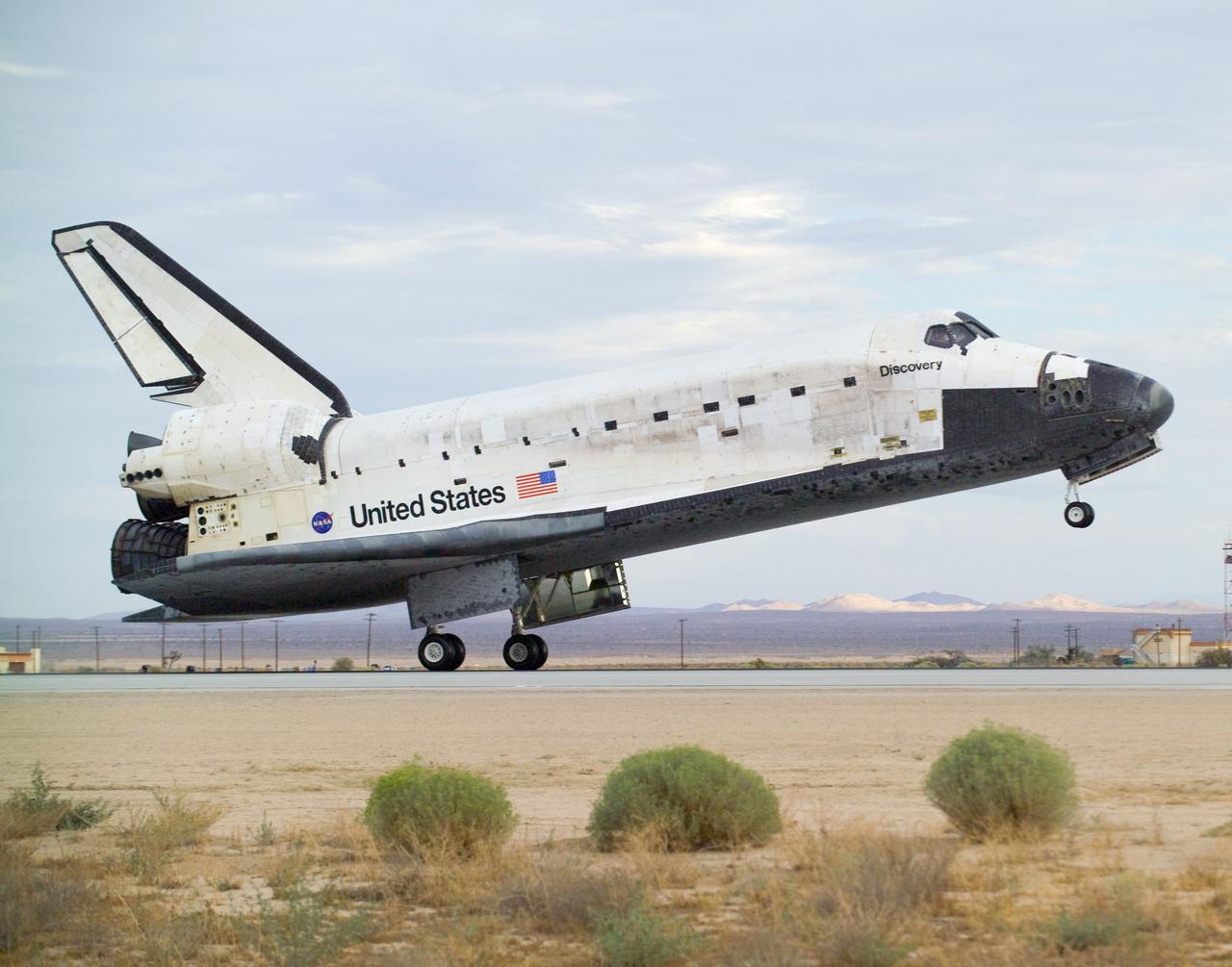
STS128-S-047 (11 Sept. 2009) --- Space Shuttle Discovery?s main landing gear touches down at NASA's Dryden Flight Research Center at Edwards Air Force Base in California, concluding a successful mission to the International Space Station. Onboard are NASA astronauts Rick Sturckow, commander; Kevin Ford, pilot; John ?Danny? Olivas, Patrick Forrester, Jose Hernandez and Tim Kopra, all mission specialists; along with European Space Agency astronaut Christer Fuglesang, mission specialist. Discovery landed at 5:53 p.m. (PDT) on Sept. 11, 2009 to end the STS-128 mission, completing its almost 14-day journey of more than 5.7 million miles in space. The landing was diverted to California due to marginal weather at the Kennedy Space Center. Discovery?s mission featured three spacewalks and the delivery of two refrigerator-sized science racks to the space station. One rack will be used to conduct experiments on materials such as metals, glasses and ceramics. The results from these experiments could lead to the development of better materials on Earth. The other rack will be used for fluid physics research. Understanding how fluids react in microgravity could lead to improved designs for fuel tanks, water systems and other fluid-based systems.
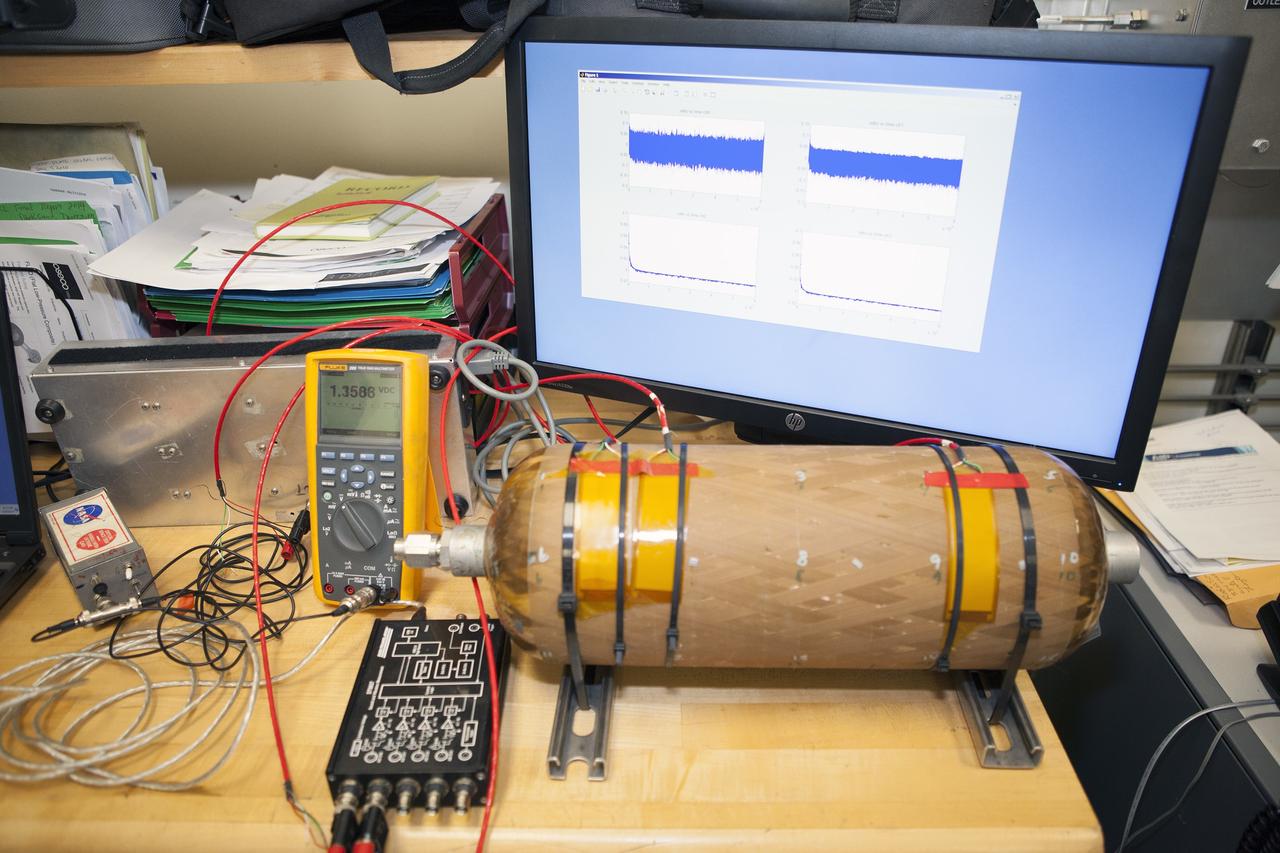
CAPE CANAVERAL, Fla. – Several Lead Zirconate Titanate, or PZT, mass gaging sensors have been attached to a composite tank during a test inside a laboratory at the Cryogenics Testbed Facility at NASA's Kennedy Space Center in Florida. The PZT-based system was developed at Kennedy as a way to measure the mass of a fluid and the structural health of a tank using vibration signatures on Earth or in reduced/zero g gravity. The mass gaging technology has received approval to be on the first sub-orbital flight on the Virgin Galactic Space Plane in 2015. NASA experiments using the PZT technology will be used by Embry-Riddle Aeronautical University in conjunction with Carthage College on a fluid transfer experiment. Photo credit: NASA/Daniel Casper
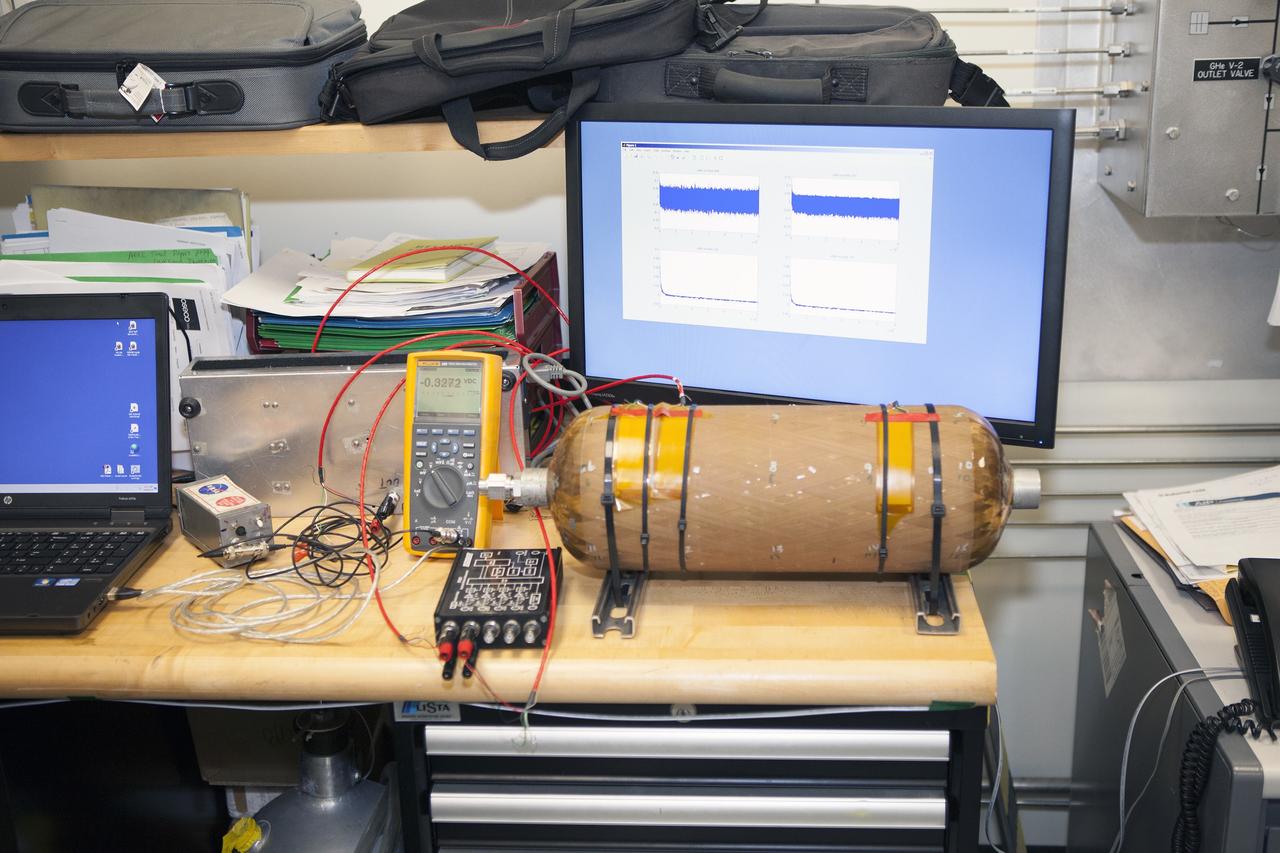
CAPE CANAVERAL, Fla. – Several Lead Zirconate Titanate, or PZT, mass gaging sensors have been attached to a composite tank during a test inside a laboratory at the Cryogenics Testbed Facility at NASA's Kennedy Space Center in Florida. The PZT-based system was developed at Kennedy as a way to measure the mass of a fluid and the structural health of a tank using vibration signatures on Earth or in reduced/zero g gravity. The mass gaging technology has received approval to be on the first sub-orbital flight on the Virgin Galactic Space Plane in 2015. NASA experiments using the PZT technology will be used by Embry-Riddle Aeronautical University in conjunction with Carthage College on a fluid transfer experiment. Photo credit: NASA/Daniel Casper
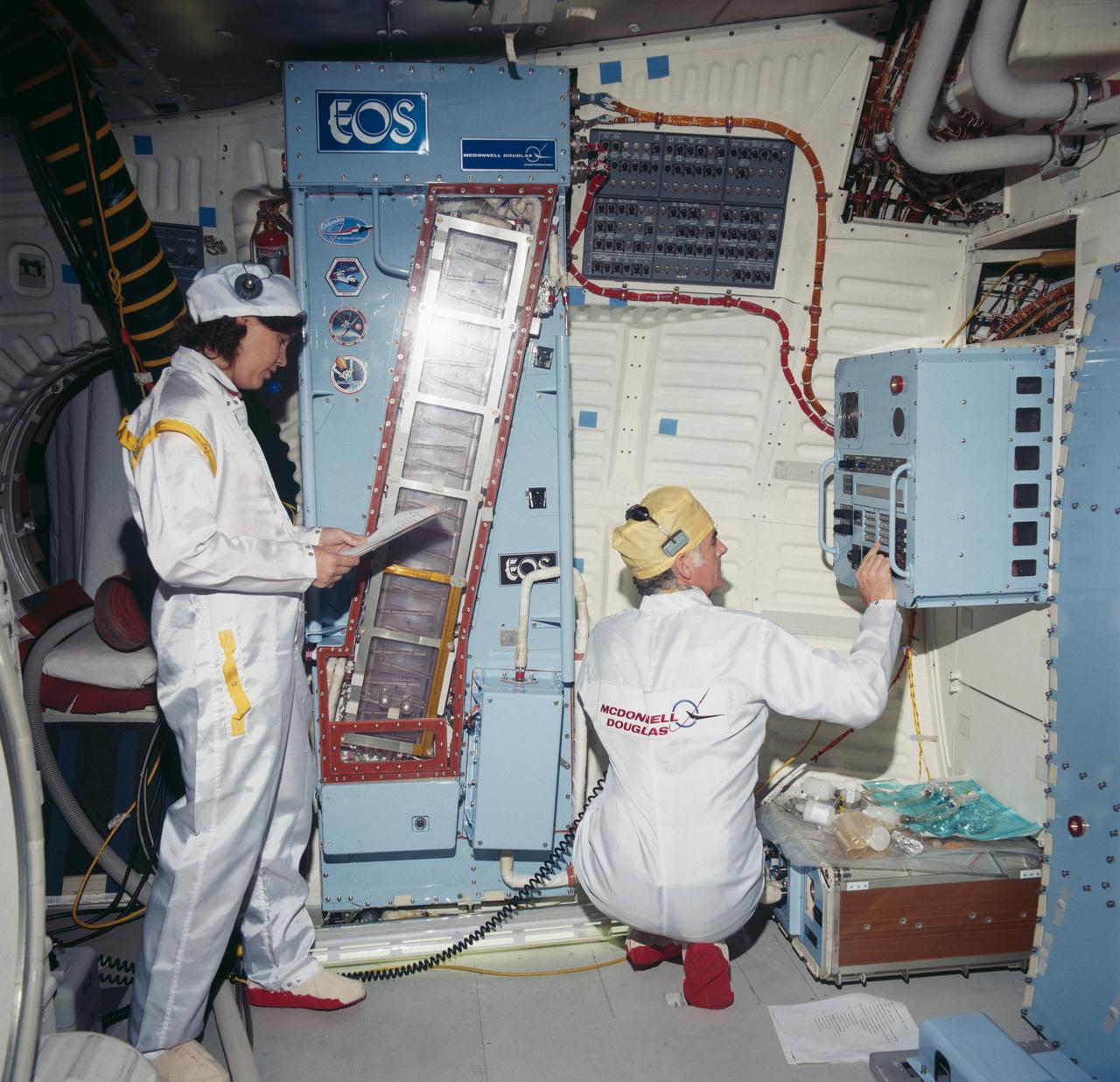
KSC-84PC-248 (For release Aug. 27, 1984) --- The Continuous Flow Electrophoresis System (CFES) is being installed in the middeck of the Orbiter Discovery in preparation for the flight of mission STS-41D in June. The CFES, originating from the McDonnell Douglas Astronautics Co. includes a fluid systems module, and experiment control and monitoring module, a sample storage module and a pump/accumulator package along with miscellaneous equipment stored in a middeck locker. Photo credit: NASA
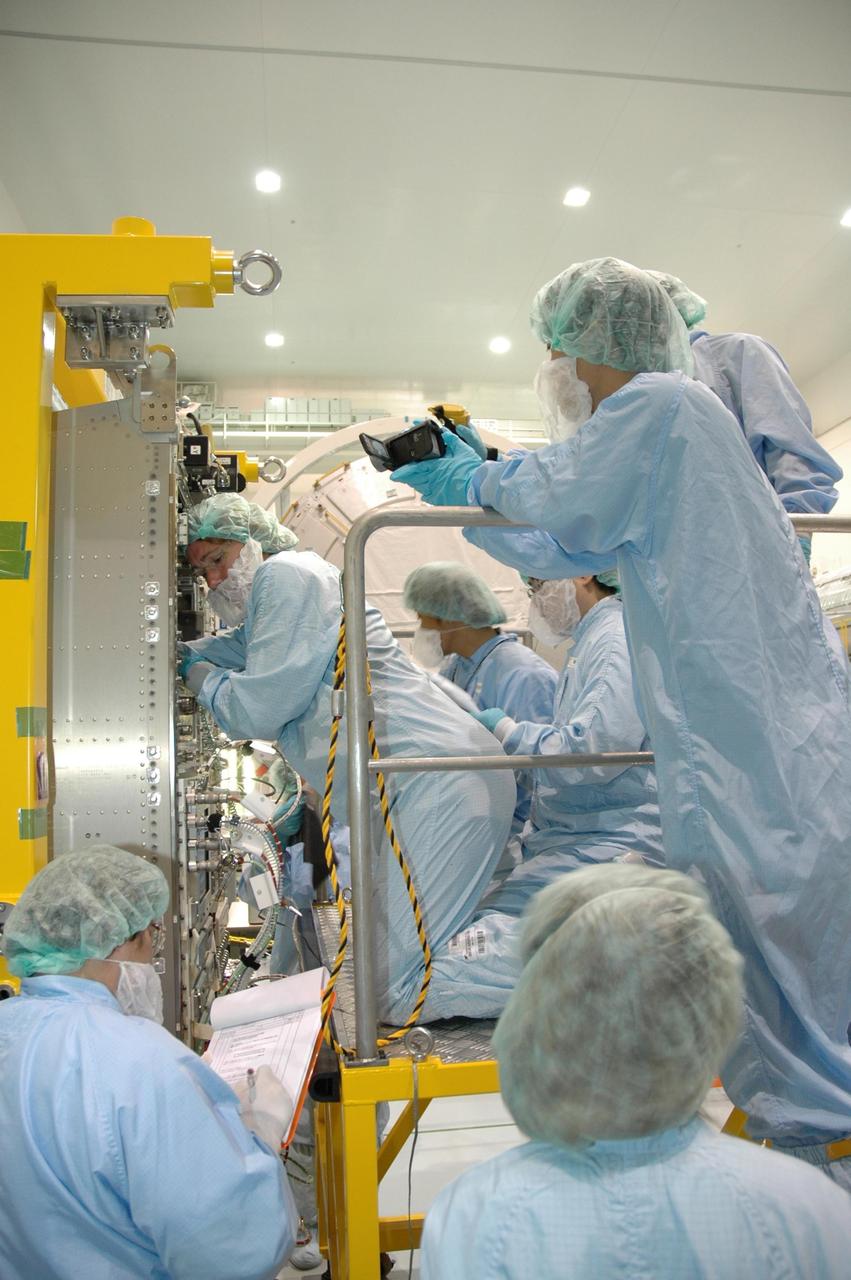
KENNEDY SPACE CENTER, FLA. -- In the Space Station Processing Facility, astronauts are getting first-hand experience with the fluid experiment rack of the Japanese Experiment Module, or JEM, part of the mission payload to the International Space Station. The JEM comprises six components: two research facilities -- the Pressurized Module and Exposed Facility; a Logistics Module attached to each of them; a Remote Manipulator System; and an Inter-Orbit Communication System unit. The various components of JEM will be assembled in space over the course of three Space Shuttle missions. The first of those three missions, STS-123, will carry the Experiment Logistics Module Pressurized Section aboard the Space Shuttle Endeavour, targeted for launch in February 2008. Photo credit: NASA/Jim Grossmann
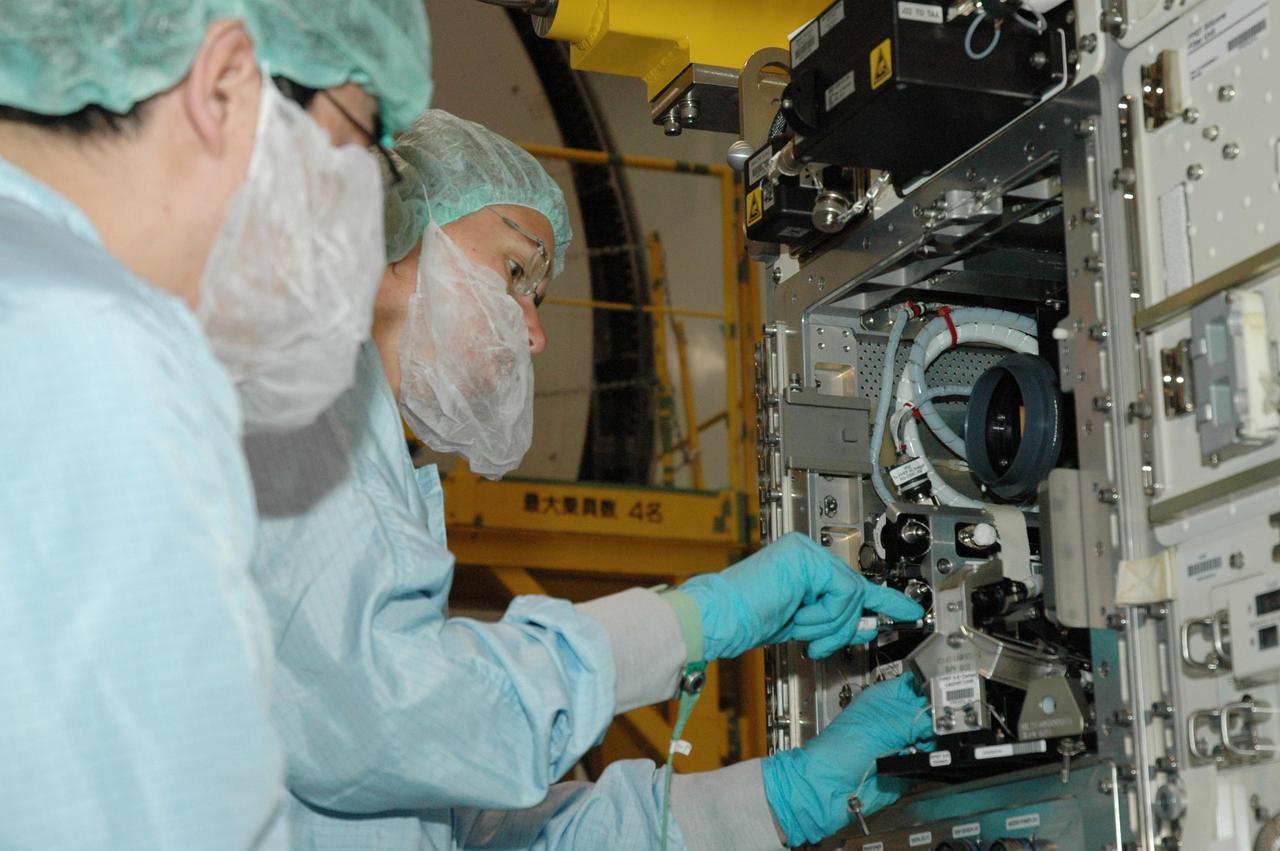
KENNEDY SPACE CENTER, FLA. -- In the Space Station Processing Facility, astronauts are getting first-hand experience with the fluid experiment rack of the Japanese Experiment Module, or JEM, part of the mission payload to the International Space Station. The JEM comprises six components: two research facilities -- the Pressurized Module and Exposed Facility; a Logistics Module attached to each of them; a Remote Manipulator System; and an Inter-Orbit Communication System unit. The various components of JEM will be assembled in space over the course of three Space Shuttle missions. The first of those three missions, STS-123, will carry the Experiment Logistics Module Pressurized Section aboard the Space Shuttle Endeavour, targeted for launch in February 2008. Photo credit: NASA/Jim Grossmann
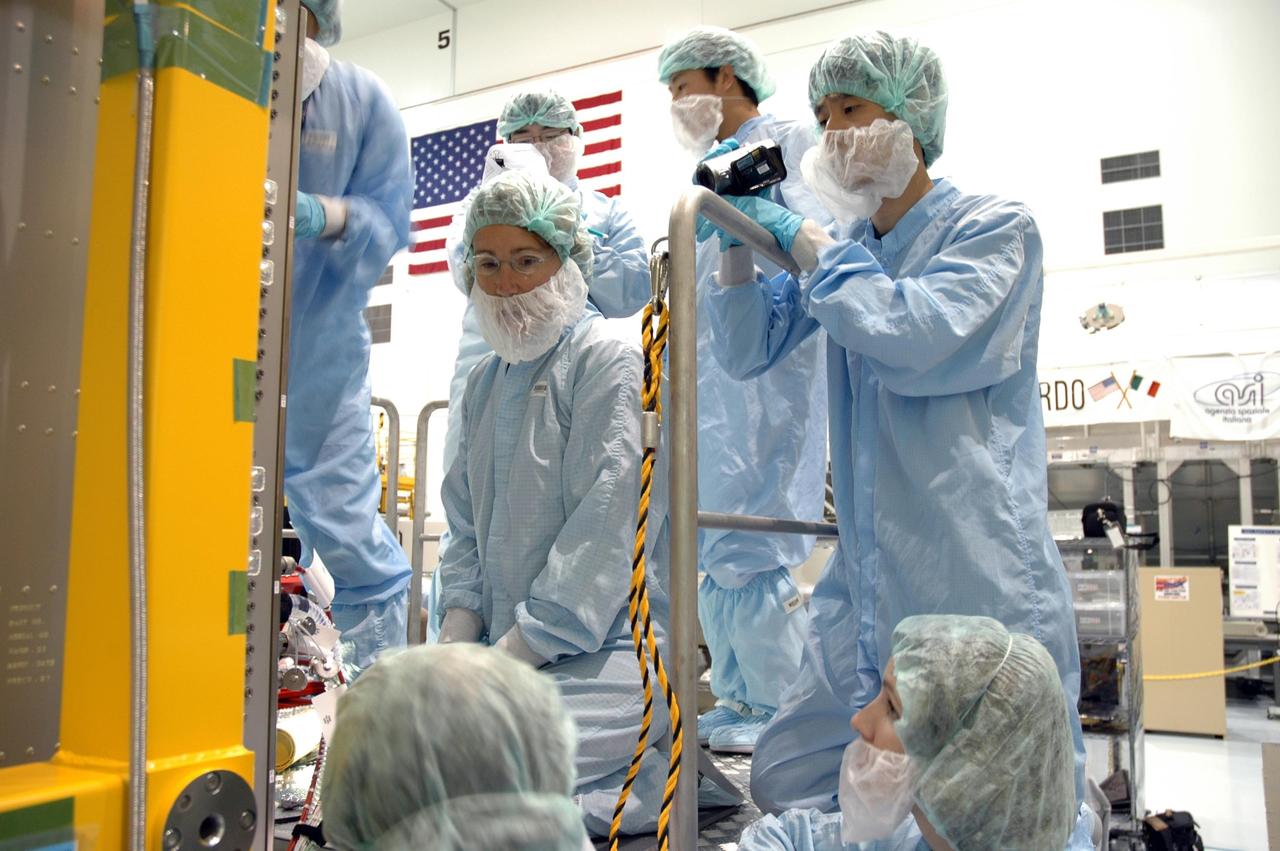
KENNEDY SPACE CENTER, FLA. -- In the Space Station Processing Facility, astronauts are getting first-hand experience with the fluid experiment rack of the Japanese Experiment Module, or JEM, part of the mission payload to the International Space Station. At center is Sandra Magnus who will join the Expedition 17 crew on the International Space Station in 2008 after the arrival of the JEM. The JEM comprises six components: two research facilities -- the Pressurized Module and Exposed Facility; a Logistics Module attached to each of them; a Remote Manipulator System; and an Inter-Orbit Communication System unit. The various components of JEM will be assembled in space over the course of three Space Shuttle missions. The first of those three missions, STS-123, will carry the Experiment Logistics Module Pressurized Section aboard the Space Shuttle Endeavour, targeted for launch in February 2008. Photo credit: NASA/Jim Grossmann
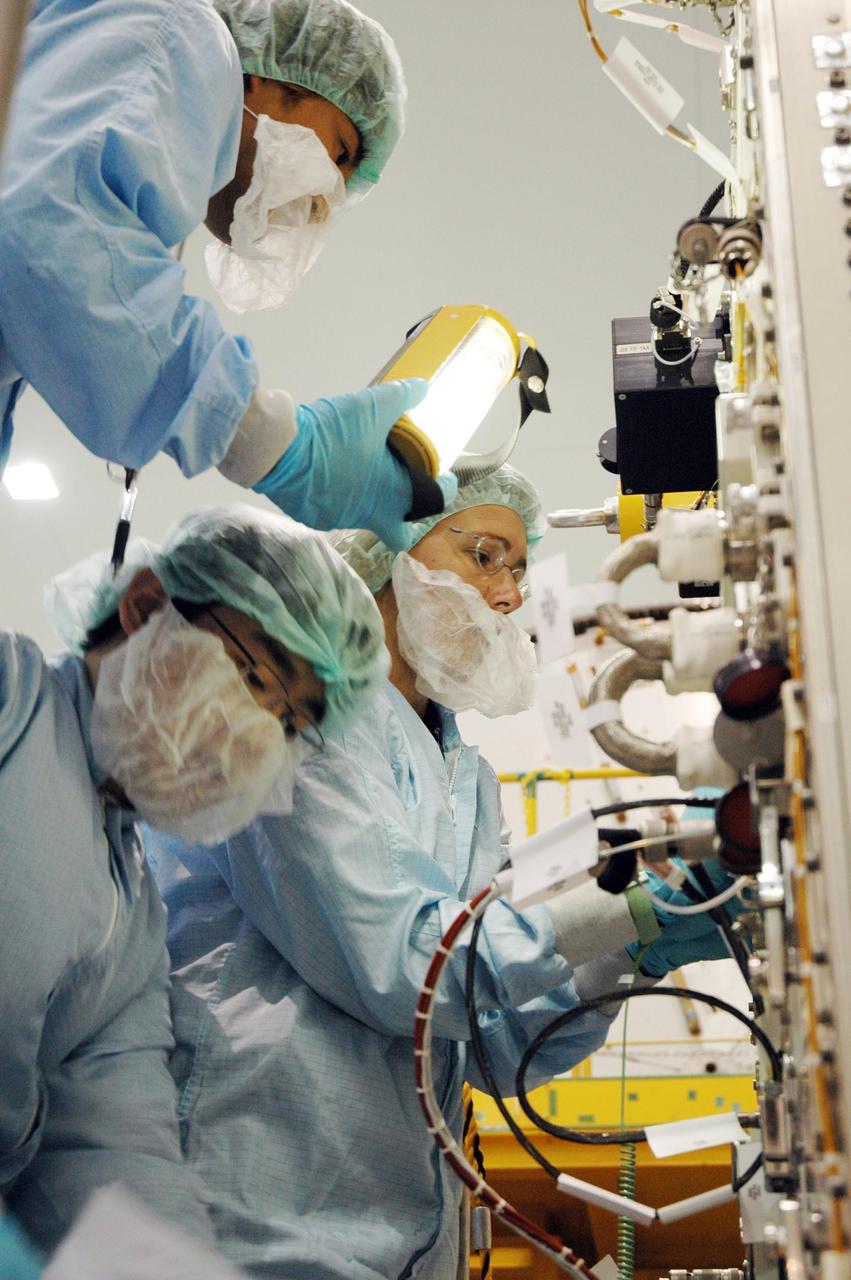
KENNEDY SPACE CENTER, FLA. -- In the Space Station Processing Facility, astronauts are getting first-hand experience with the fluid experiment rack of the Japanese Experiment Module, or JEM, part of the mission payload to the International Space Station. Seen here at right is Sandra Magnus who will join the Expedition 17 crew on the International Space Station in 2008 after the arrival of the JEM. The JEM comprises six components: two research facilities -- the Pressurized Module and Exposed Facility; a Logistics Module attached to each of them; a Remote Manipulator System; and an Inter-Orbit Communication System unit. The various components of JEM will be assembled in space over the course of three Space Shuttle missions. The first of those three missions, STS-123, will carry the Experiment Logistics Module Pressurized Section aboard the Space Shuttle Endeavour, targeted for launch in February 2008. Photo credit: NASA/Jim Grossmann
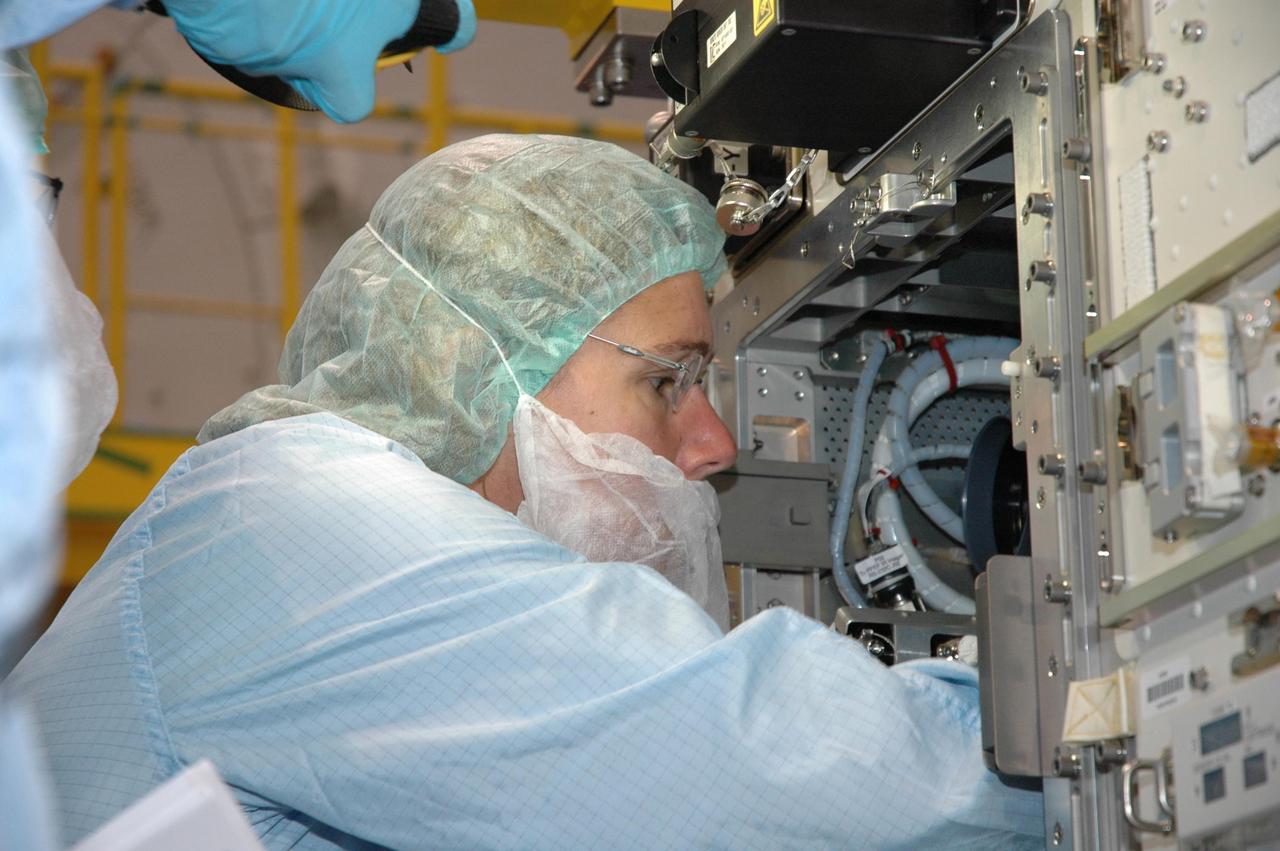
KENNEDY SPACE CENTER, FLA. -- In the Space Station Processing Facility, astronauts are getting first-hand experience with the fluid experiment rack of the Japanese Experiment Module, or JEM, part of the mission payload to the International Space Station. Seen here is Sandra Magnus who will join the Expedition 17 crew on the International Space Station in 2008. The JEM comprises six components: two research facilities -- the Pressurized Module and Exposed Facility; a Logistics Module attached to each of them; a Remote Manipulator System; and an Inter-Orbit Communication System unit. The various components of JEM will be assembled in space over the course of three Space Shuttle missions. The first of those three missions, STS-123, will carry the Experiment Logistics Module Pressurized Section aboard the Space Shuttle Endeavour, targeted for launch in February 2008. Photo credit: NASA/Jim Grossmann
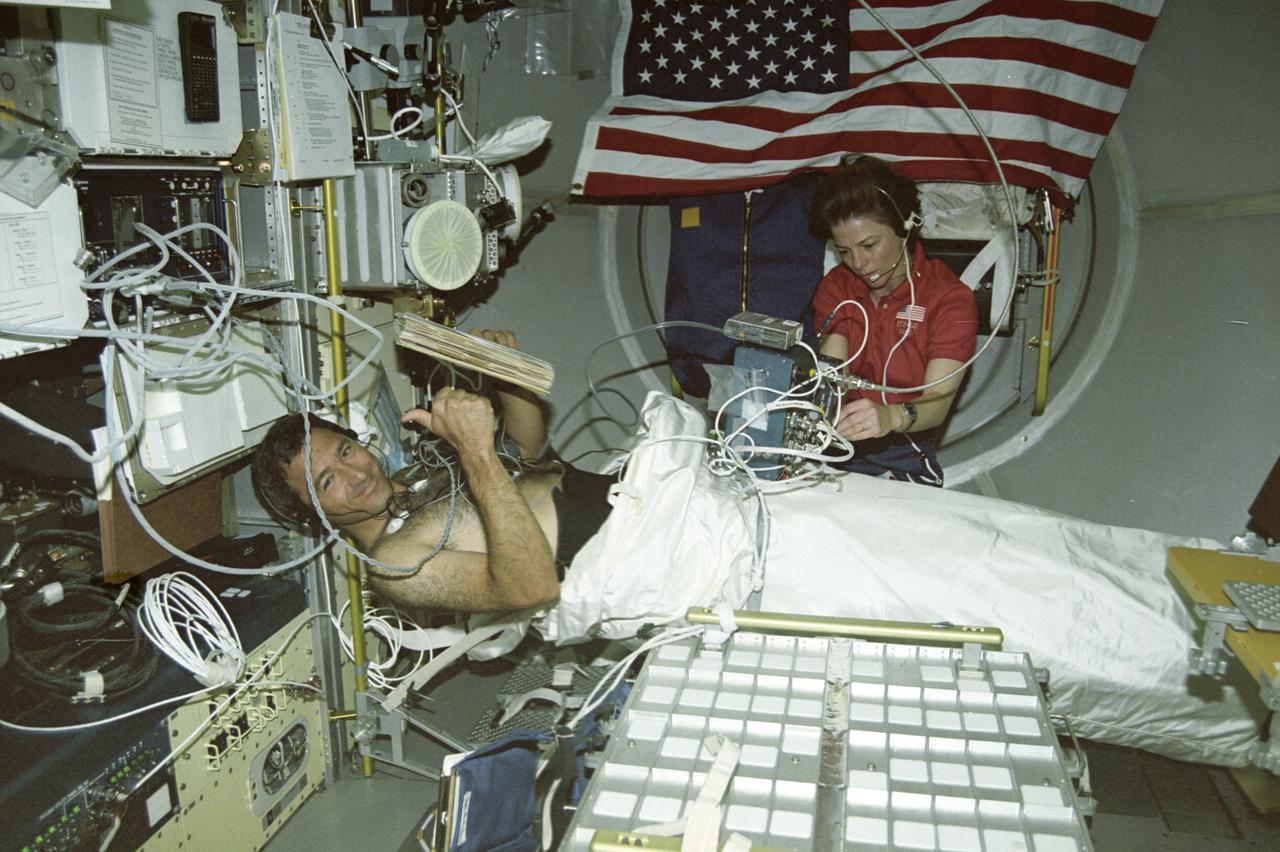
The first United States Microgravity Laboratory (USML-1) flew in orbit inside the Spacelab science module for extended periods, providing scientists and researchers greater opportunities for research in materials science, fluid dynamics, biotechnology (crystal growth), and combustion science. In this photograph, Astronaut Bornie Dunbar and Astronaut Larry DeLucas are conducting the Lower Body Negative Pressure (LBNP) experiment, which is to protect the health and safety of the crew and to shorten the time required to readapt to gravity when they return to Earth. When humans go into space, the lack of gravity causes many changes in the body. One change is that fluids normally kept in the lower body by gravity, shift upward to the head and chest. This is why astronauts' faces appear chubby or puffy. The change in fluid volume also affects the heart. The reduced fluid volume means that there is less blood to circulate through the body. Crewmembers may experience reduced blood flow to the brain when returning to Earth. This leads to fainting or near-fainting episodes. With the use of LBNP to simulate the pull of gravity in conjunction with fluids, salt tablets can recondition the cardiovascular system. This treatment, called "soak," is effective up to 24 hours. The LBNP uses a three-layer collapsible cylinder that seals around the crewmember's waist which simulates the effects of gravity and helps pull fluids into the lower body. The data collected will be analyzed to determine physiological changes in the crewmembers and effectiveness of the treatment. The USML-1 was launched aboard the Space Shuttle Orbiter Columbia (STS-50) on June 25, 1992.
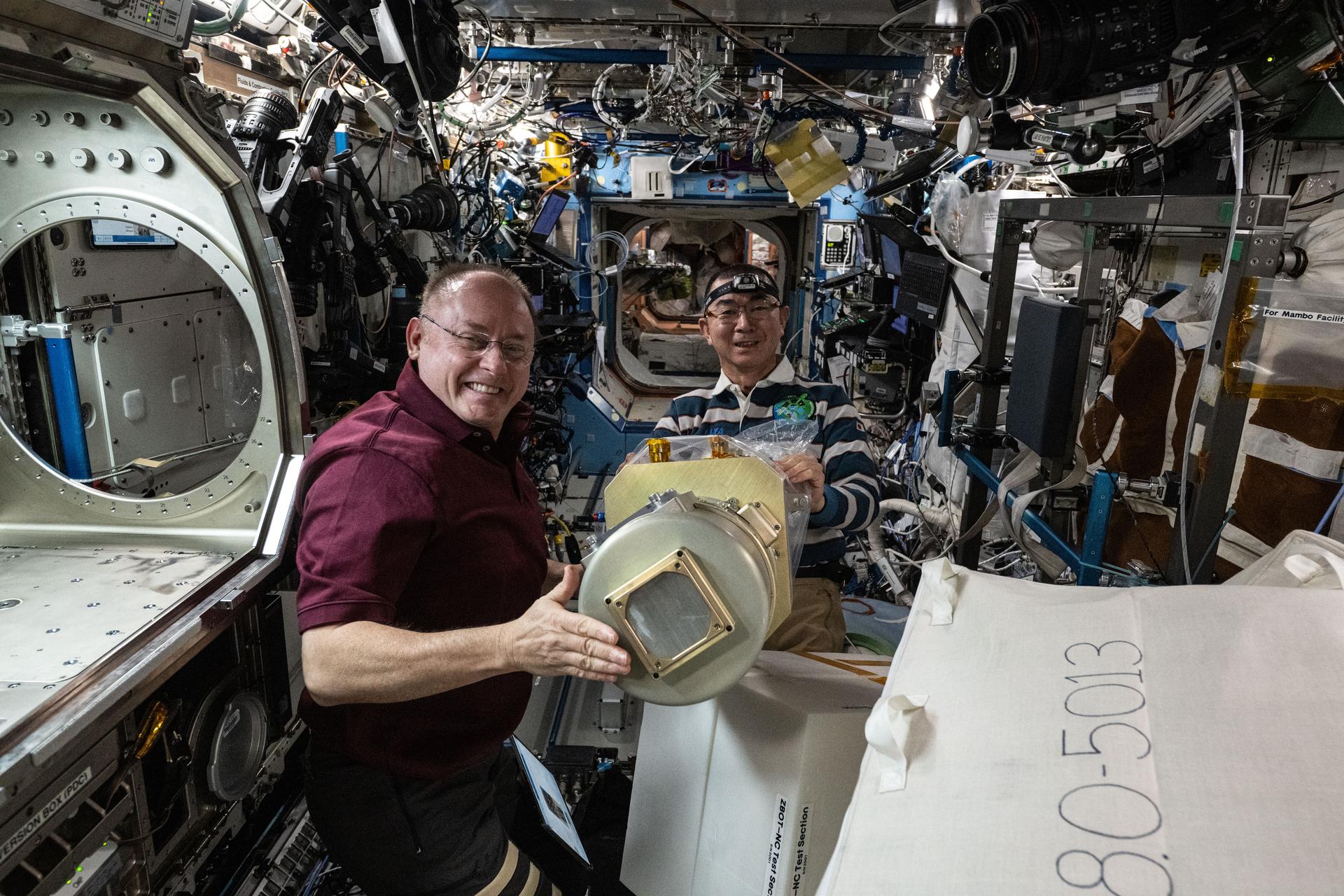
iss073e0982900 (Oct. 28, 2025) --- Expedition 73 Flight Engineers Mike Fincke of NASA and Kimiya Yui of JAXA (Japan Aerospace Exploration Agency) work together to configure research hardware for the Zero Boil-Off Tank physics investigation inside the Microgravity Science Glovebox aboard the International Space Station. The experiment explores methods for storing cryogenic fluids and supports advancements in spacecraft propulsion and life support systems, as well as biotechnological, medical, and industrial applications on Earth.
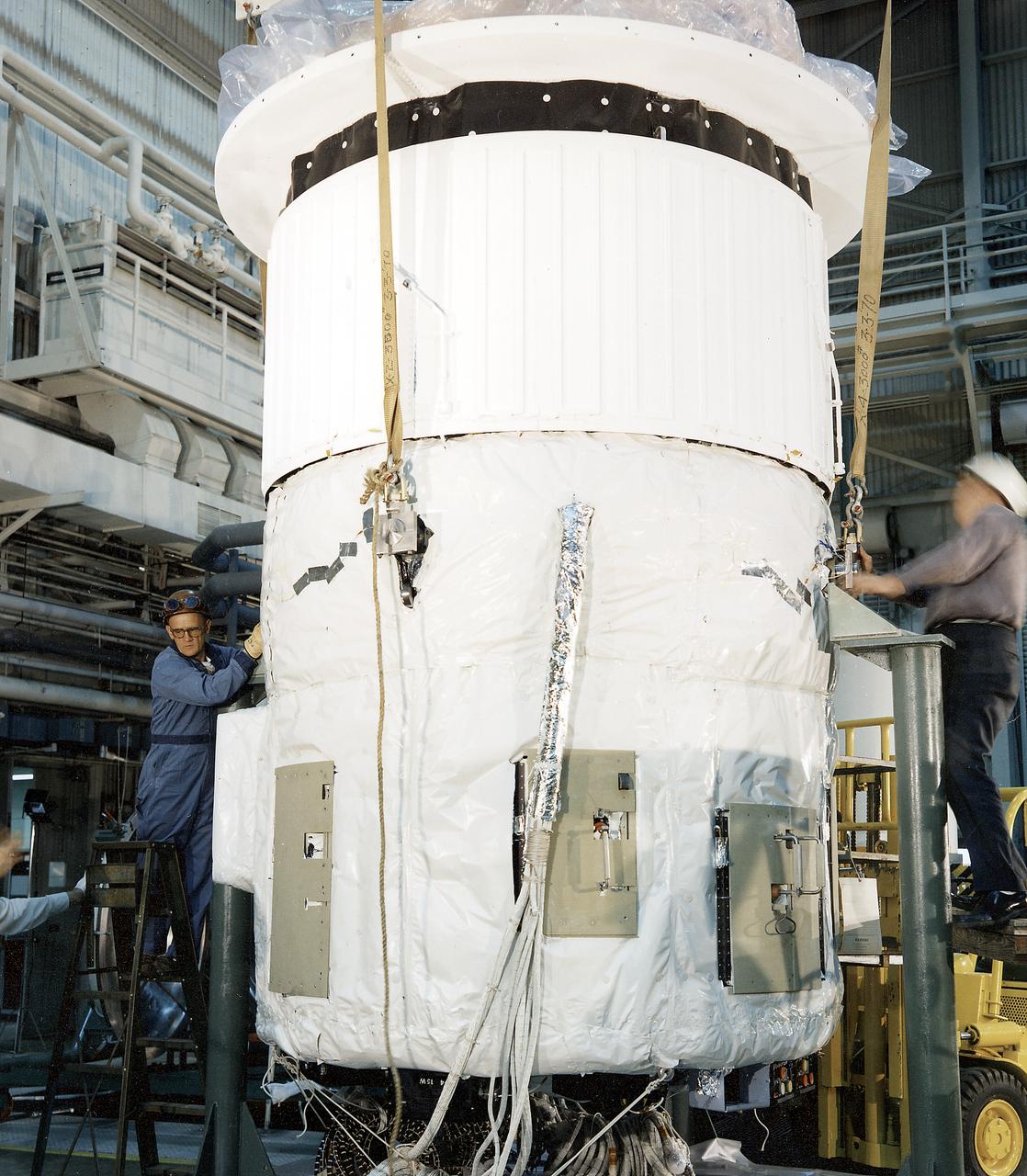
The Apollo Telescope Mount (ATM) was designed and developed by the Marshall Space Flight Center (MSFC) and served as the primary scientific instrument unit aboard Skylab (1973-1979). The ATM consisted of eight scientific instruments as well as a number of smaller experiments. This image is of the ATM thermal unit being tested in MSFC's building 4619. The thermal unit consisted of an active fluid-cooling system of water and methanol that was circulated to radiators on the outside of the canister. The thermal unit provided temperature stability to the ultrahigh resolution optical instruments that were part of the ATM.
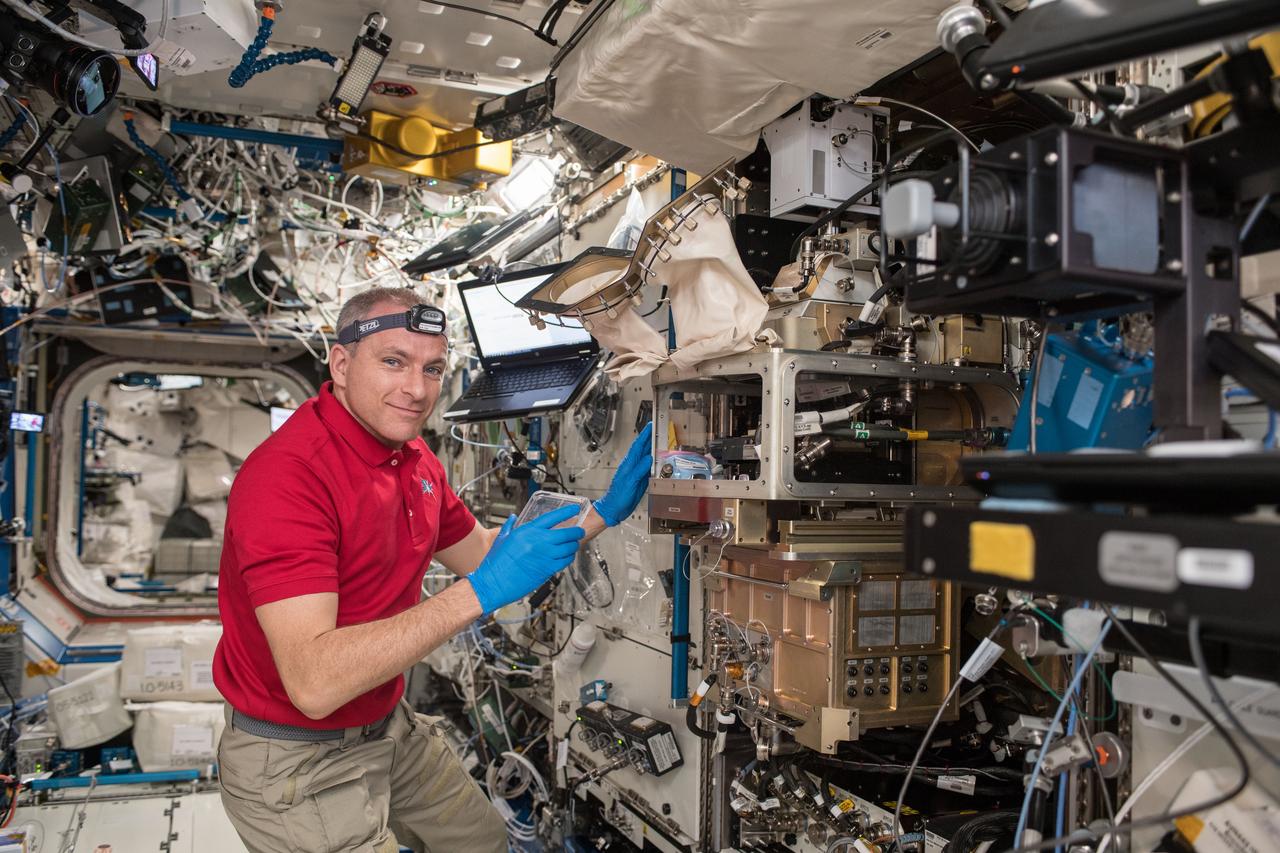
iss057e135002 (12/18/2018) --- Canadian Space Agency (CSA) astronaut David Saint-Jacques removes the APEX-05 Petri Plate from the FIR/LMM (Fluids Integrated Rack/Light Microscopy Module). The Spaceflight-induced Hypoxic/ROS Signaling (APEX-05) experiment grows different wild and mutant varieties of Arabidopsis thaliana, in order to understand how their genetic and molecular stress response systems work in space.

iss059e091418 (6/4/2019) --- View taken of the hardware for the Capillary Structures investigation in the Japanese Experiment Module (JEM) onboard the International Space Station (ISS). This investigation studies a new method using structures of specific shapes to manage fluid and gas mixtures. It also studies water recycling and carbon dioxide removal, benefitting future efforts to design lightweight, more reliable life support systems for future space missions.
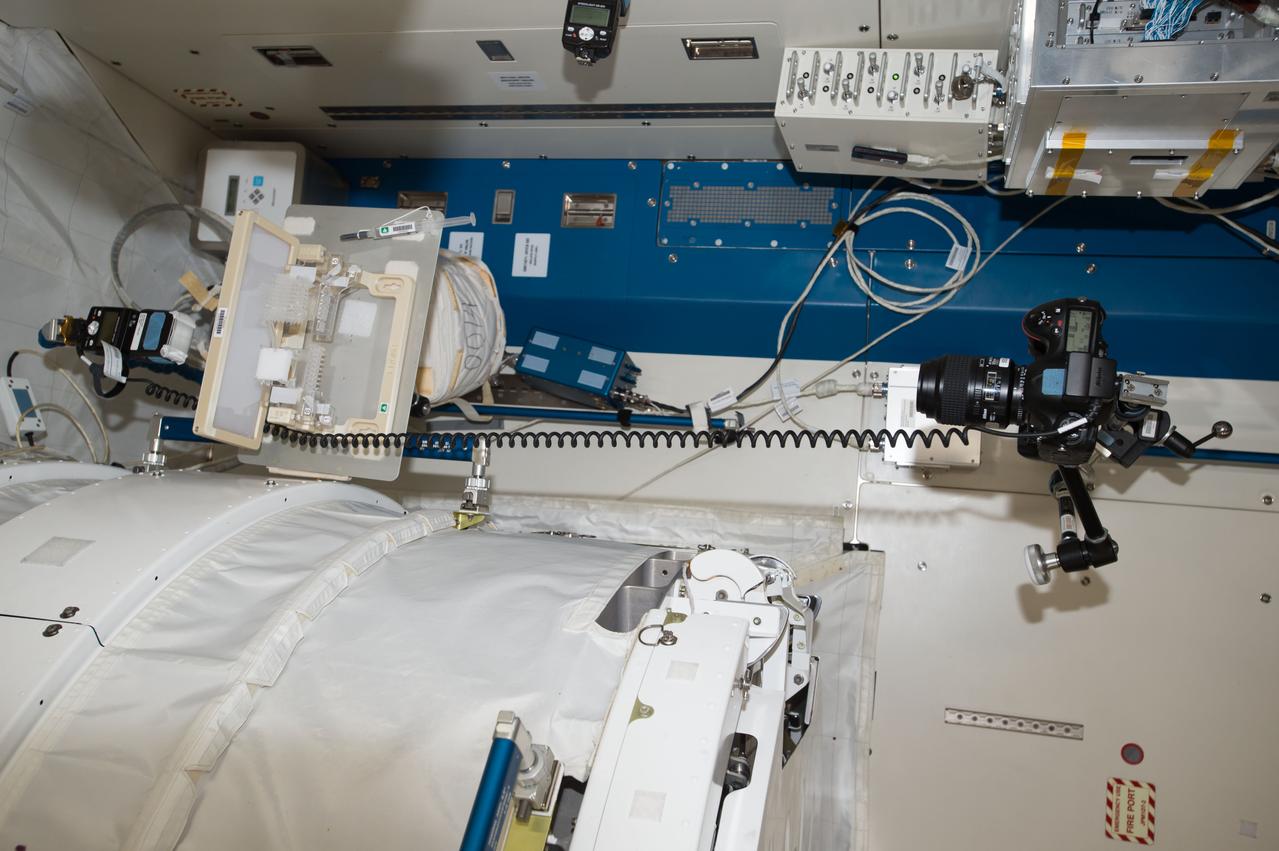
iss052e016460 (7/19/2017) --- A view taken of Capillary Structures setup in the Japanese Experiment Module (JEM) beside the internal airlock. This investigation studies a new method using structures of specific shapes to manage fluid and gas mixtures. It also studies water recycling and carbon dioxide removal, benefiting future efforts to design lightweight, more reliable life support systems for future space missions.
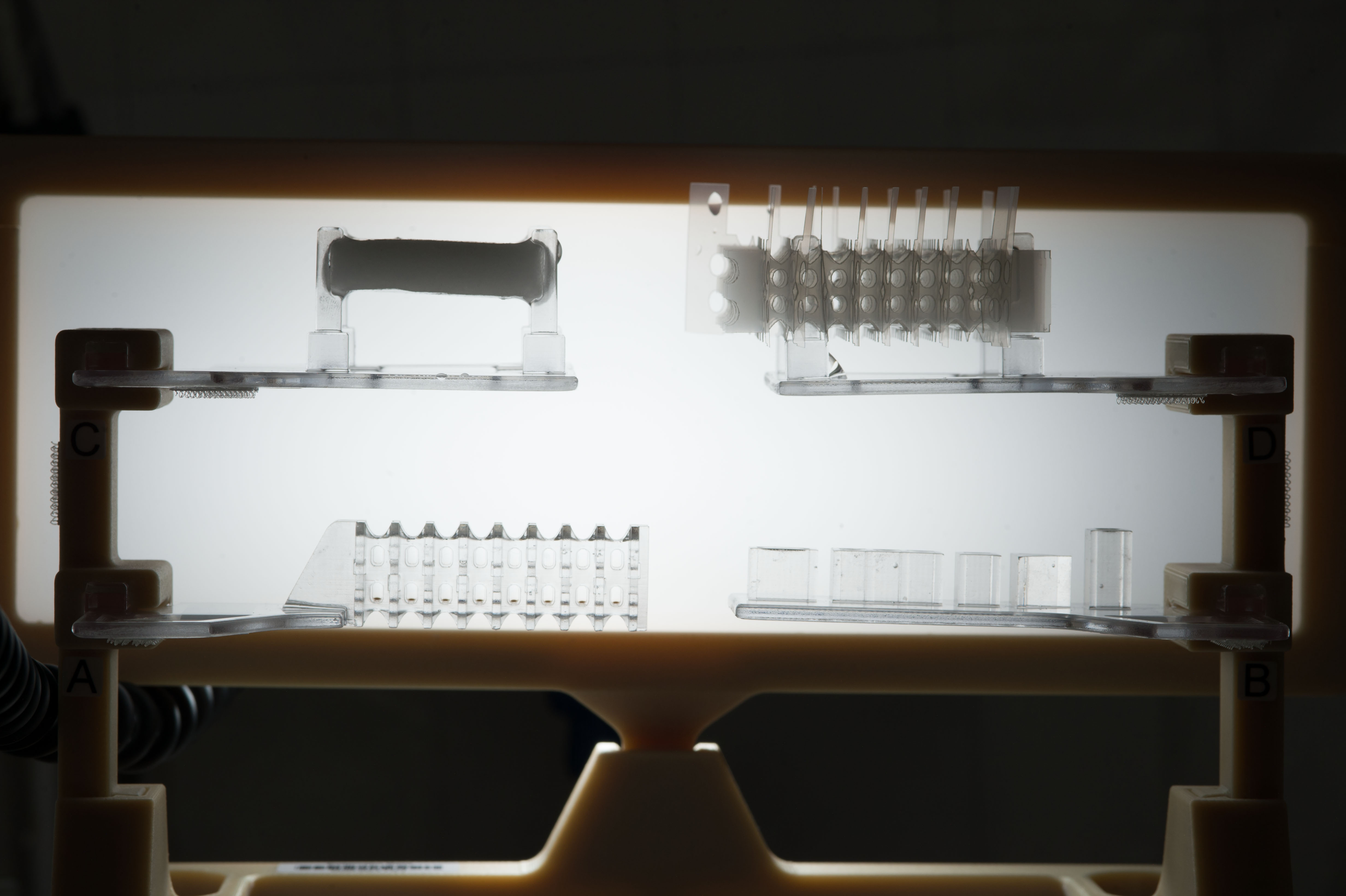
iss052e017187 (7/22/2017) --- A view taken of hardware for the Capillary Structures investigation in the Japanese Experiment Module (JEM). This investigation studies a new method using structures of specific shapes to manage fluid and gas mixtures. It also studies water recycling and carbon dioxide removal, benefiting future efforts to design lightweight, more reliable life support systems for future space missions.
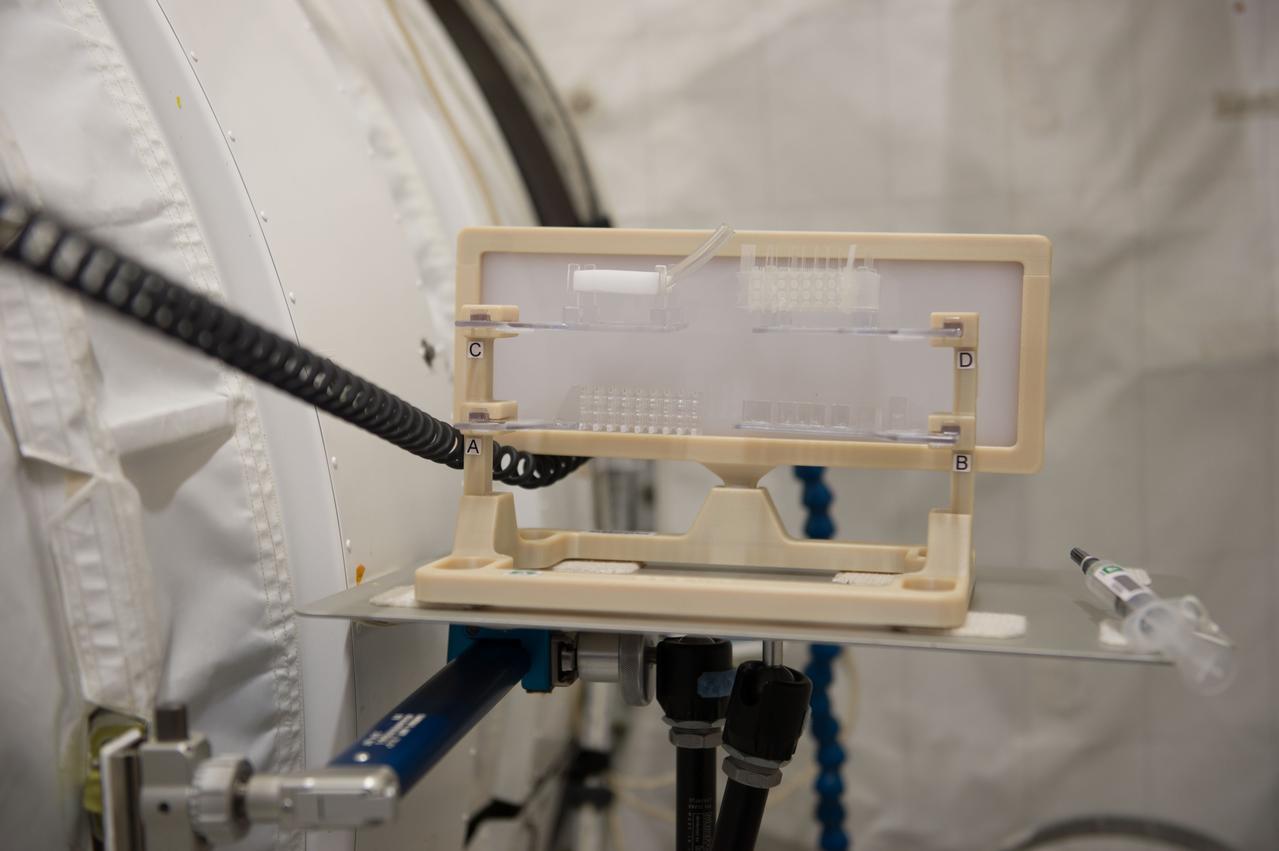
iss052e016481 (7/19/2017) --- A view taken of hardware for the Capillary Structures investigation in the Japanese Experiment Module (JEM). This investigation studies a new method using structures of specific shapes to manage fluid and gas mixtures. It also studies water recycling and carbon dioxide removal, benefiting future efforts to design lightweight, more reliable life support systems for future space missions.
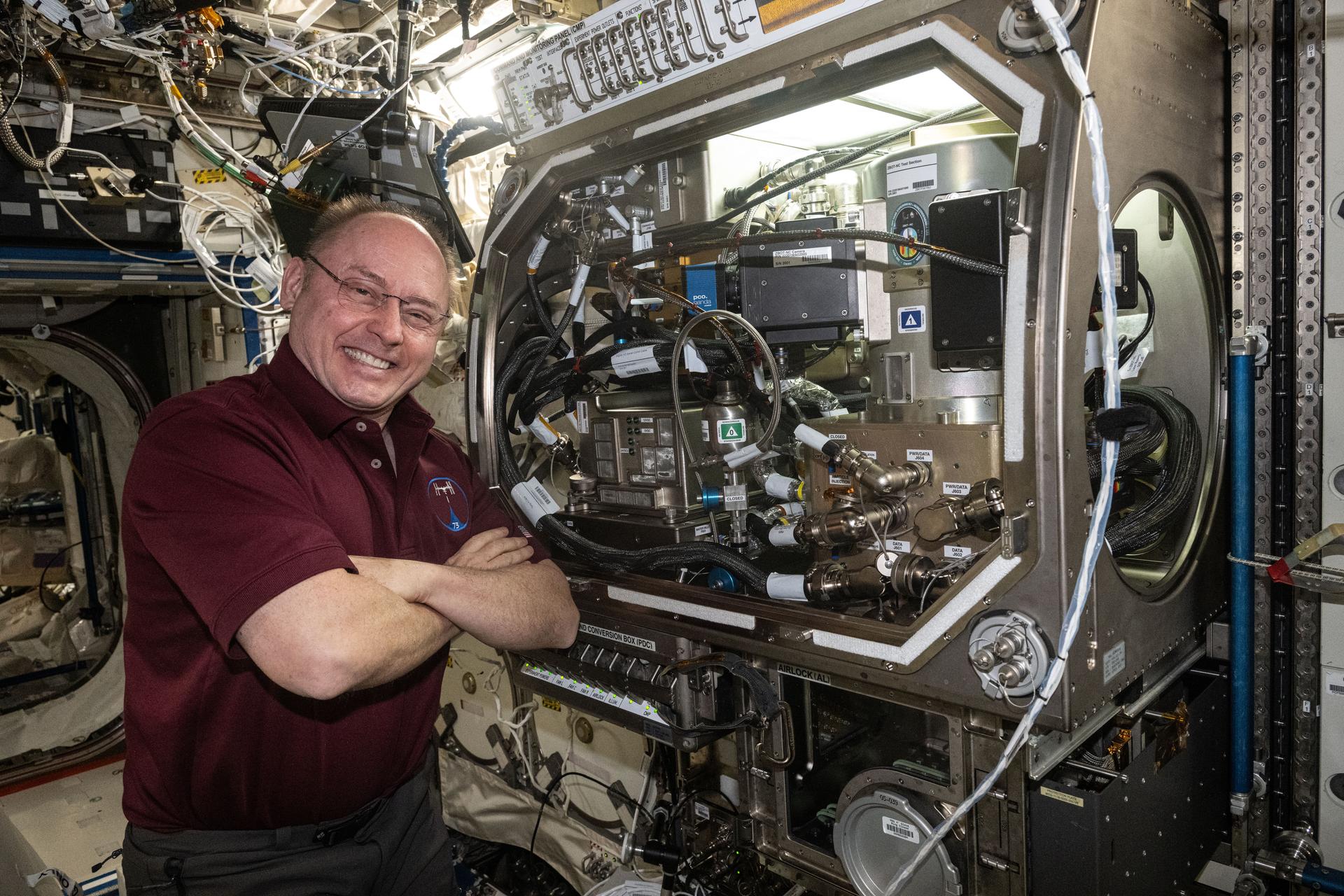
iss073e0982894 (Oct. 28, 2025) --- NASA astronaut and Expedition 73 Flight Engineer Mike Fincke poses for a portrait next to the Microgravity Science Glovebox aboard the International Space Station’s Destiny laboratory module. Fincke had just completed configuring research hardware for the Zero Boil-Off Tank physics investigation, which explores methods for storing cryogenic fluids. The experiment supports advancements in spacecraft propulsion and life support systems, as well as biotechnological, medical, and industrial applications on Earth.
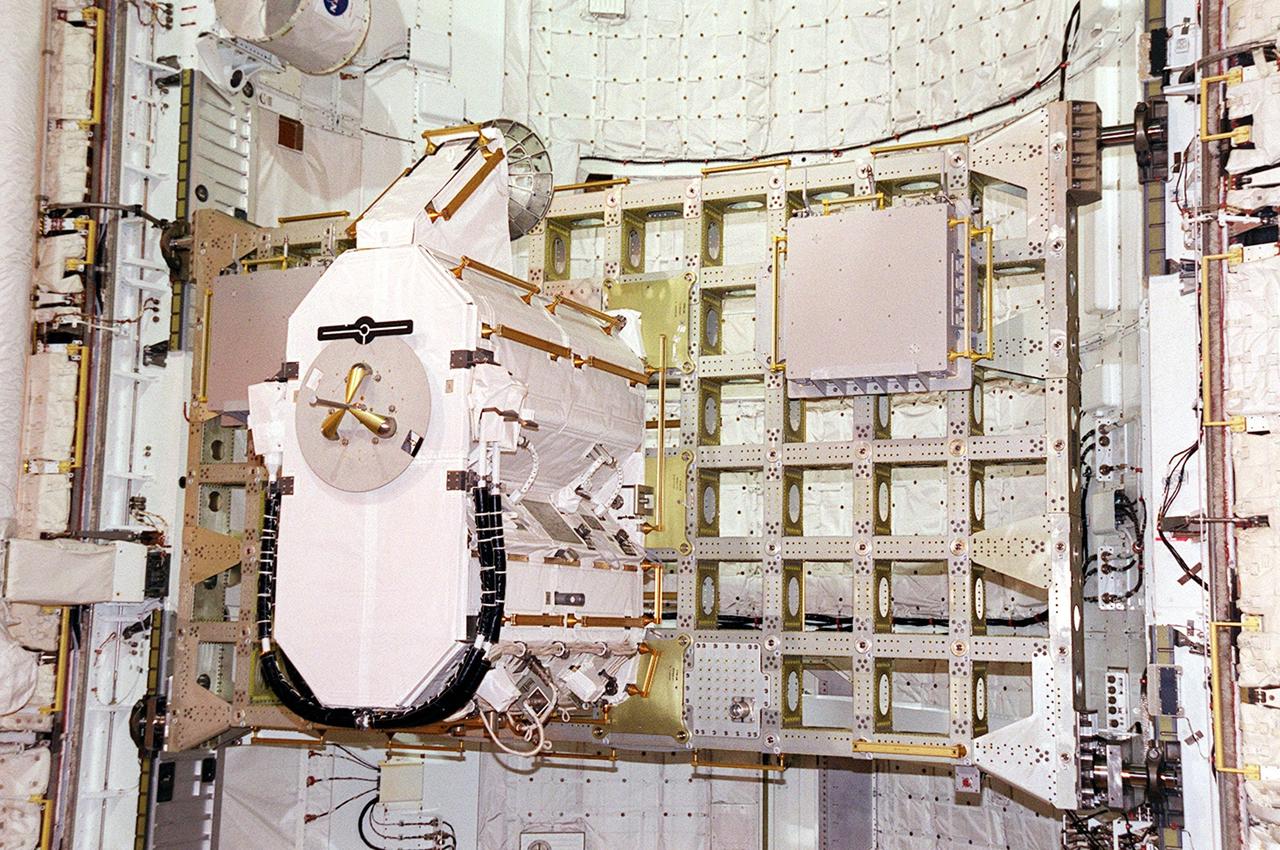
KENNEDY SPACE CENTER, Fla. -- On Launch Pad 39A, Discovery’s payload bay doors close on the payloads inside. On the Integrated Cargo Carrier seen here is the Early Ammonia Servicer (EAS) on the left. The EAS contains spare ammonia for the Station’s cooling system. Ammonia is the fluid used in the radiators that cool the Station’s electronics. The EAS will be installed on the P6 truss holding the giant U.S. solar arrays, batteries and cooling radiators. Other payloads in the bay are the Multi-Purpose Logistics Module Leonardo, filled with laboratory racks of science equipment and racks and platforms of experiments and supplies, and various experiments attached on the port and starboard adapter beams. Discovery is scheduled to be launched Aug. 9, 2001
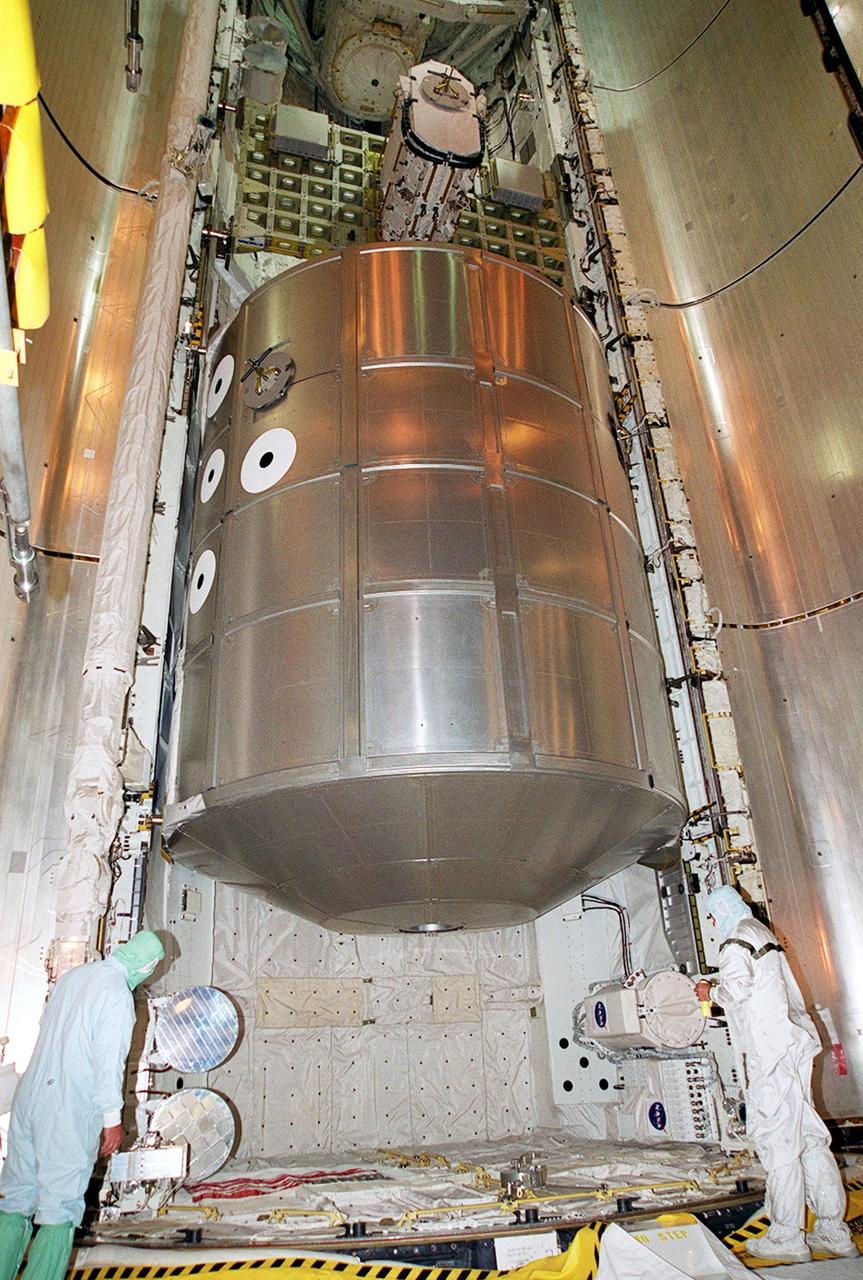
KENNEDY SPACE CENTER, Fla. -- On Launch Pad 39A, workers check out the loading of the payloads into Discovery’s payload bay. In the center is the Multi-Purpose Logistics Module Leonardo, filled with laboratory racks of science equipment and racks and platforms of experiments and supplies. Above Leonardo is the Integrated Cargo Carrier with the Early Ammonia Servicer (EAS) in the center. The EAS contains spare ammonia for the Station’s cooling system. Ammonia is the fluid used in the radiators that cool the Station’s electronics. The EAS will be installed on the P6 truss holding the giant U.S. solar arrays, batteries and cooling radiators. Seen below the MPLM and attached on the port and starboard adapter beams are experiments. Discovery is scheduled to be launched Aug. 9, 2001
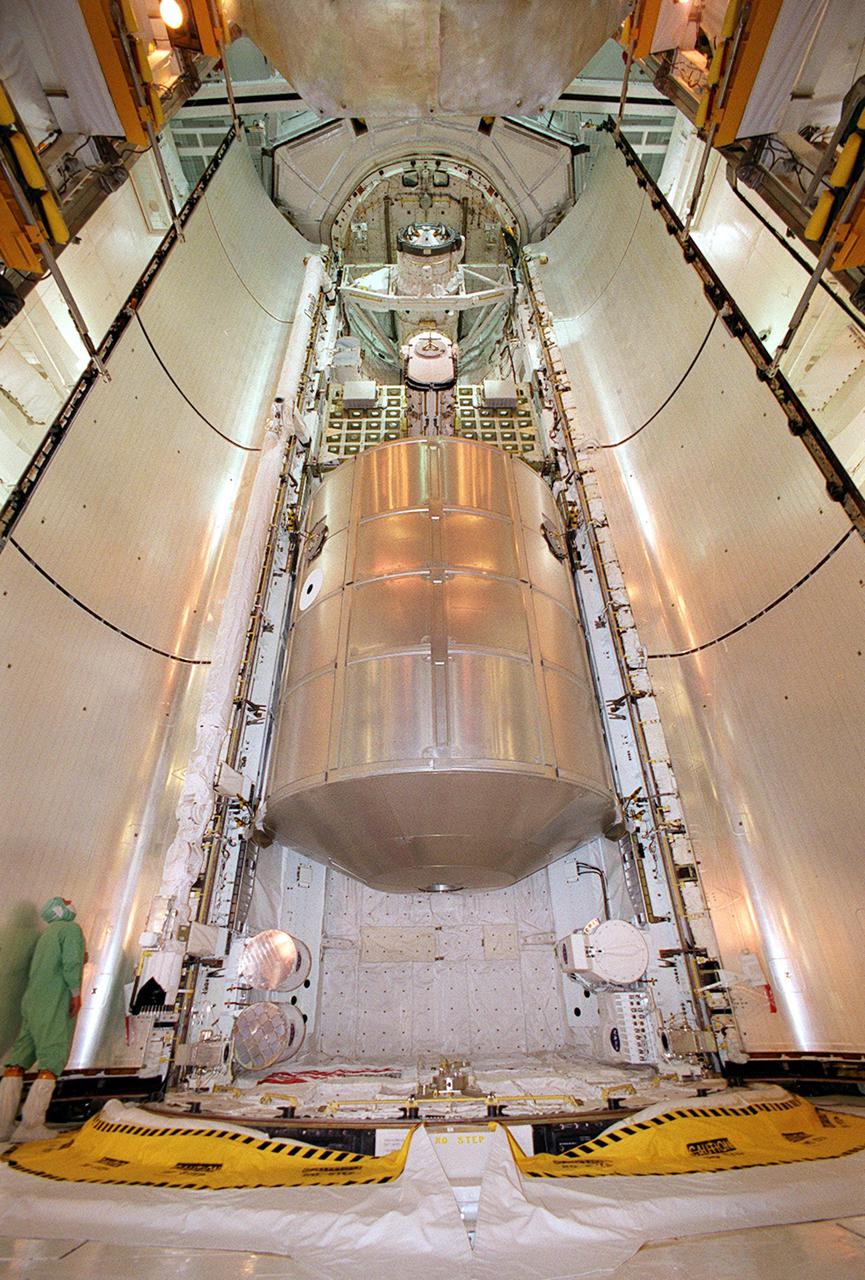
KENNEDY SPACE CENTER, Fla. -- On Launch Pad 39A, Discovery’s payload bay doors close on the payloads inside. In the center is the Multi-Purpose Logistics Module Leonardo, filled with laboratory racks of science equipment and racks and platforms of experiments and supplies. Above Leonardo is the Integrated Cargo Carrier with the Early Ammonia Servicer (EAS) in the center. The EAS contains spare ammonia for the Station’s cooling system. Ammonia is the fluid used in the radiators that cool the Station’s electronics. The EAS will be installed on the P6 truss holding the giant U.S. solar arrays, batteries and cooling radiators. Seen below the MPLM and attached on the port and starboard adapter beams are experiments. Discovery is scheduled to be launched Aug. 9, 2001
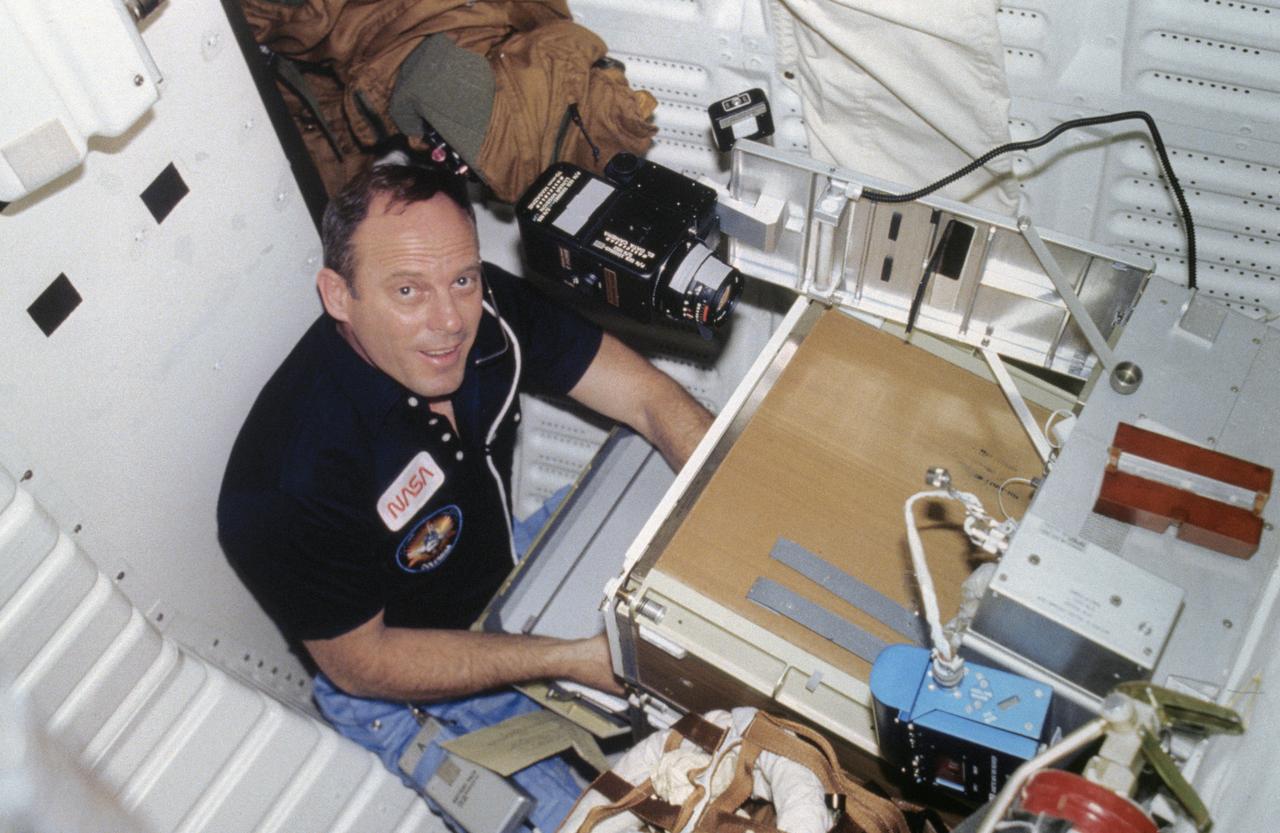
S82-28911 (March 1982) --- The L-shaped experiment in the right half of this photo was one of a number of scientific experiments which made the trip for NASA's third space transportation system (STS-3) mission, along with astronauts Jack R. Lousma, pictured, and C. Gordon Fullerton. The experiment, making encore in space (it also flew on the Apollo Soyuz Test Project in 1985), is designed to evaluate the feasibility of separating cells according to their surface electrical charge. It is a forerunner to planned experiments with other equipment that will purify biological materials in the low gravity environment of space. The process of electrophoresis utilizes an electric field to separate cells, and other biological material in fluids without damaging the cells which can then be used in the study of cell biology, immunology and medical research. This photograph was taken with a 35mm camera by Fullerton. Photo credit: NASA
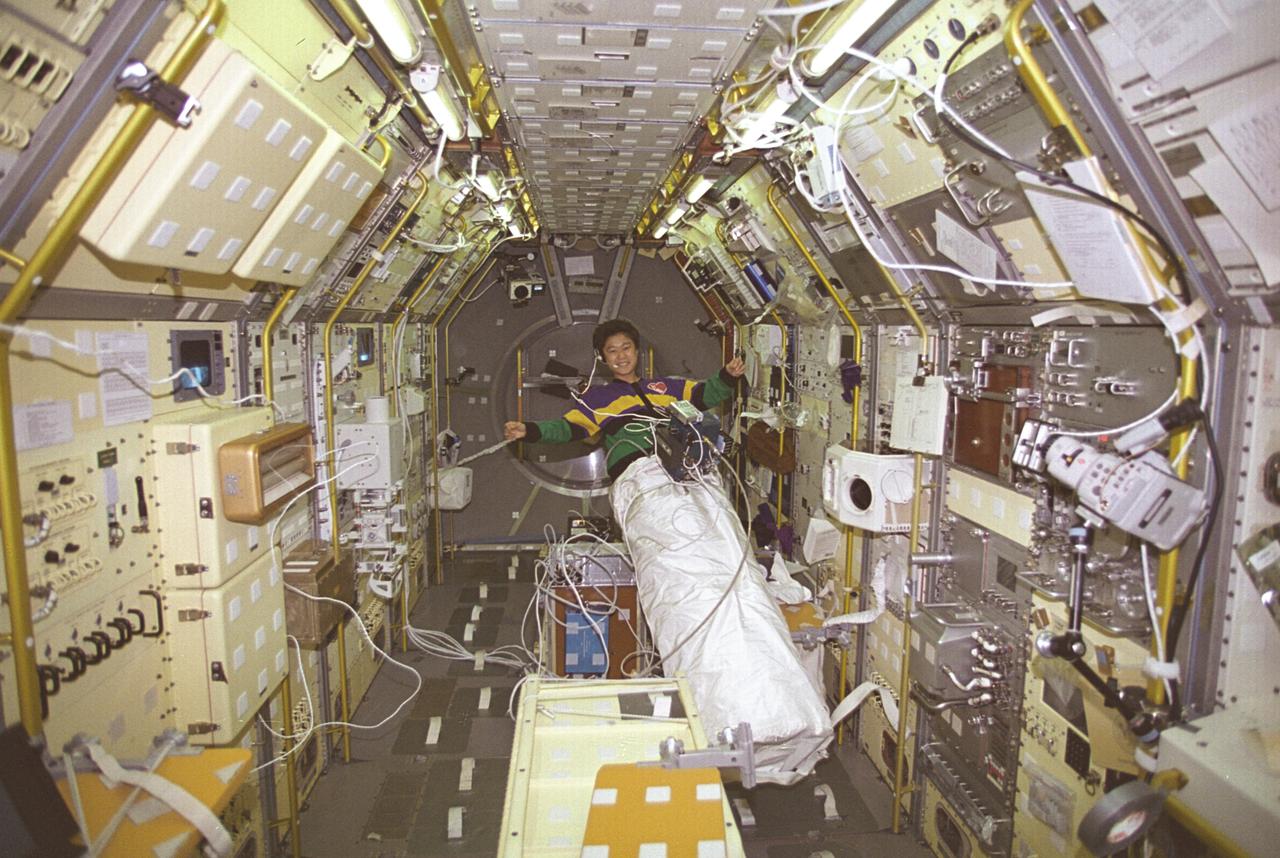
Astronaut Chiaki Mukai conducts the Lower Body Negative Pressure (LBNP) experiment inside the International Microgravity Laboratory-2 (IML-2) mission science module. Dr. Chiaki Mukai is one of the National Space Development Agency of Japan (NASDA) astronauts chosen by NASA as a payload specialist (PS). She was the second NASDA PS who flew aboard the Space Shuttle, and was the first female astronaut in Asia. When humans go into space, the lack of gravity causes many changes in the body. One change is that fluids normally kept in the lower body by gravity shift upward to the head and chest. This is why astronauts' faces appear chubby or puffy. The change in fluid volume also affects the heart. The reduced fluid volume means that there is less blood to circulate through the body. Crewmembers may experience reduced blood flow to the brain when returning to Earth. This leads to fainting or near-fainting episodes. With the use of the LBNP to simulate the pull of gravity in conjunction with fluids, salt tablets can recondition the cardiovascular system. This treatment, called "soak," is effective up to 24 hours. The LBNP uses a three-layer collapsible cylinder that seals around the crewmember's waist which simulates the effects of gravity and helps pull fluids into the lower body. The data collected will be analyzed to determine physiological changes in the crewmembers and effectiveness of the treatment. The IML-2 was the second in a series of Spacelab flights designed by the international science community to conduct research in a microgravity environment Managed by the Marshall Space Flight Center, the IML-2 was launched on July 8, 1994 aboard the STS-65 Space Shuttle Orbiter Columbia mission.
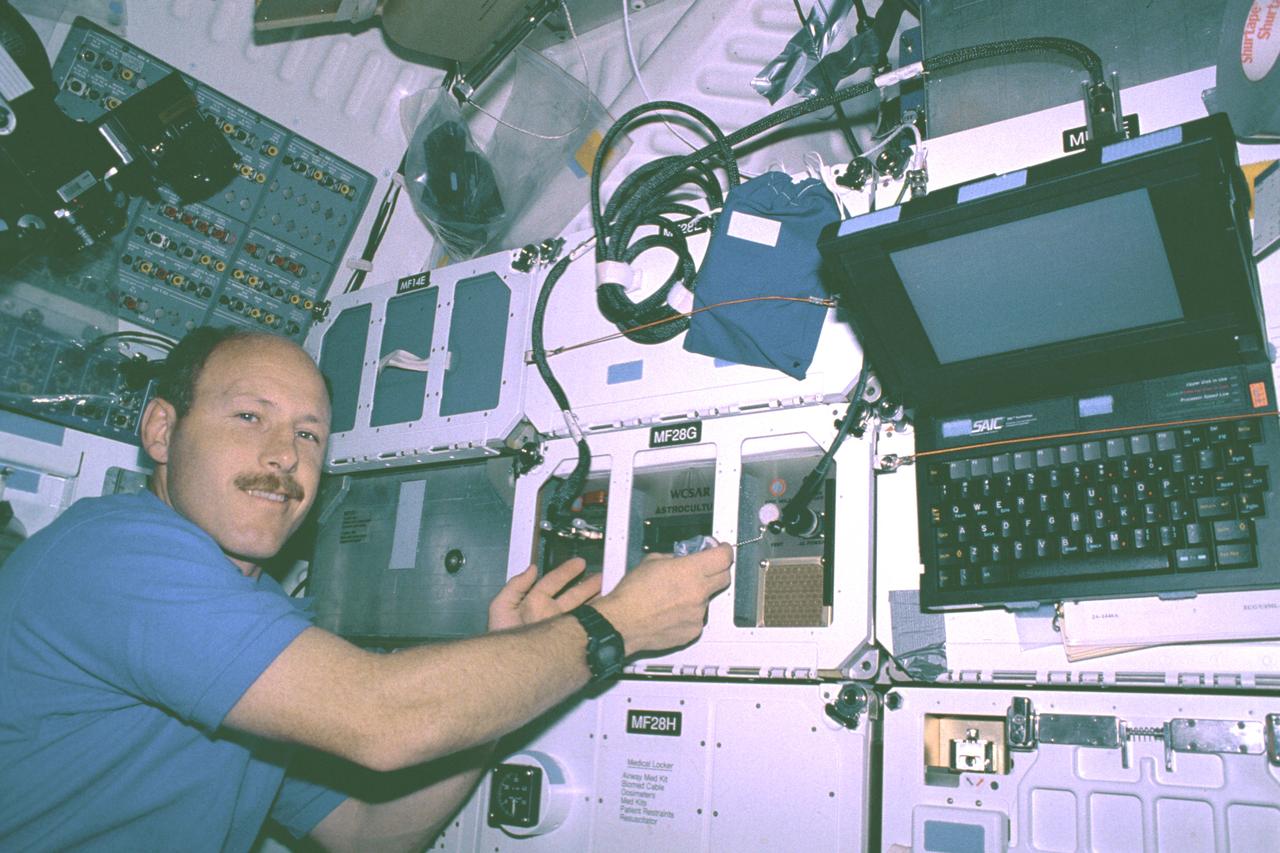
The first United States Microgravity Laboratory (USML-1) was one of NASA's science and technology programs that provided scientists an opportunity to research various scientific investigations in a weightless environment inside the Spacelab module. It also provided demonstrations of new equipment to help prepare for advanced microgravity research and processing aboard the Space Station. The USML-1 flew in orbit for extended periods, providing greater opportunities for research in materials science, fluid dynamics, biotechnology (crystal growth), and combustion science. This photograph shows astronaut Ken Bowersox conducting the Astroculture experiment in the middeck of the orbiter Columbia. This experiment was to evaluate and find effective ways to supply nutrient solutions for optimizing plant growth and avoid releasing solutions into the crew quarters in microgravity. Since fluids behave differently in microgravity, plant watering systems that operate well on Earth do not function effectively in space. Plants can reduce the costs of providing food, oxygen, and pure water as well as lower the costs of removing carbon dioxide in human space habitats. The Astroculture experiment flew aboard the STS-50 mission in June 1992 and was managed by the Marshall Space Flight Center.
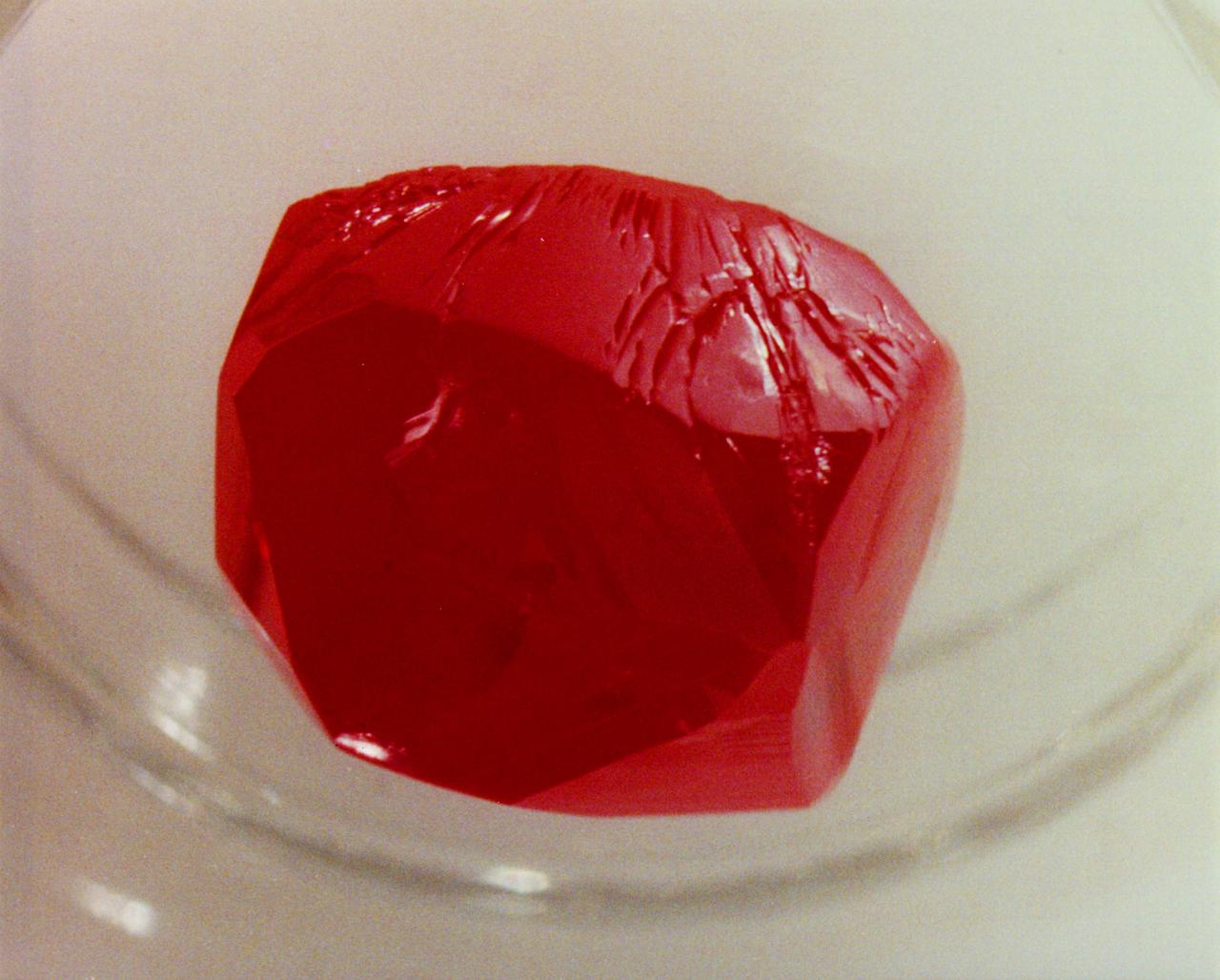
Vapor Crystal Growth System developed in IML-1, Mercuric Iodide Crystal grown in microgravity FES/VCGS (Fluids Experiment System/Vapor Crystal Growth Facility). During the mission, mercury iodide source material was heated, vaporized, and transported to a seed crystal where the vapor condensed. Mercury iodide crystals have practical uses as sensitive X-ray and gamma-ray detectors. In addition to their excellent optical properties, these crystals can operate at room temperature, which makes them useful for portable detector devices for nuclear power plant monitoring, natural resource prospecting, biomedical applications, and astronomical observing.
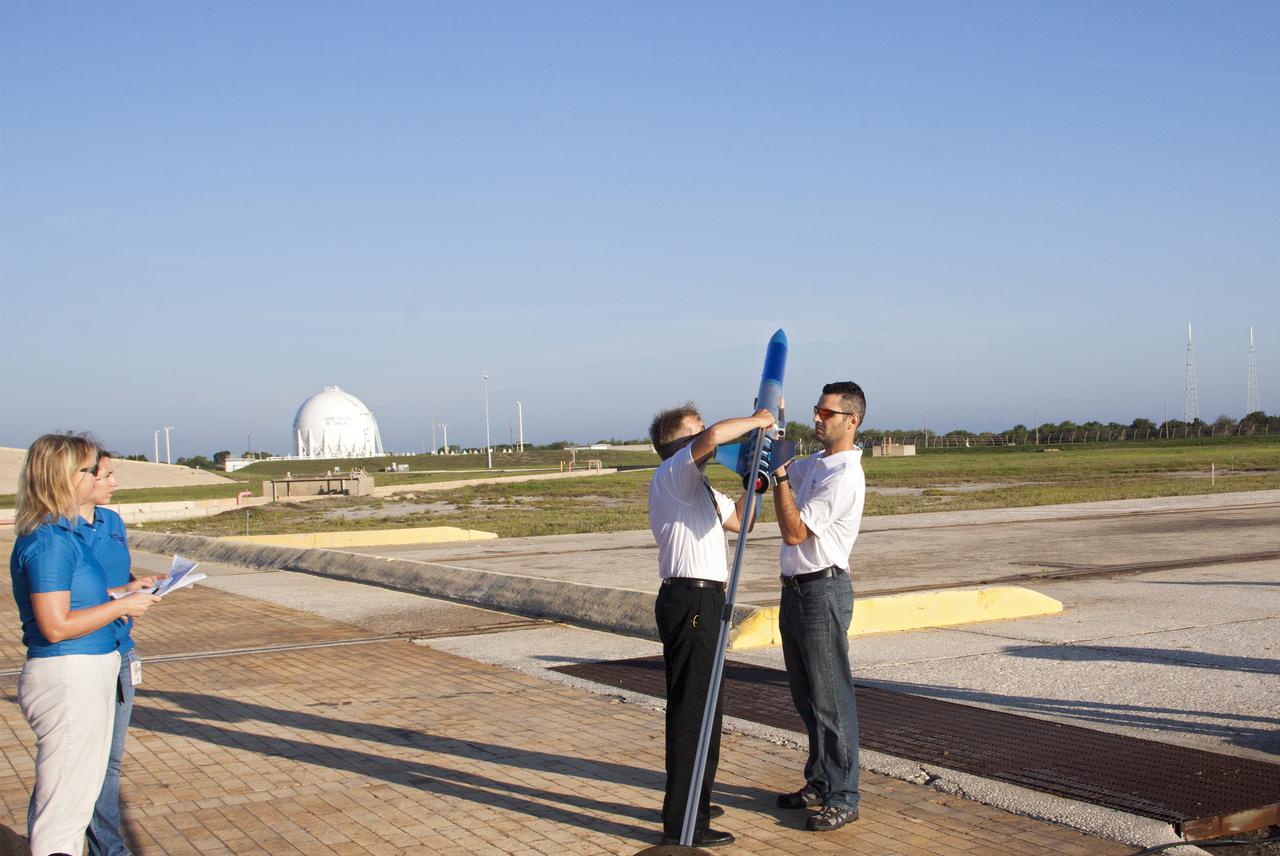
CAPE CANAVERAL, Fla. -- At NASA's Kennedy Space Center in Florida, as Susan Danley of Flight Structures and Kim Simpson of Fluids, Mechanical and Structural Systems look on, Gary Dahlke of Engineering and Technology, left, and Leandro James of Systems Hardware Engineering attach a small rocket prior to its launch stand as part of Rocket University. The goal was to test its systems and to verify that it performed as designed. As part of Rocket University, the engineers are given an opportunity to work a fast-track project to develop skills in developing spacecraft systems of the future. As NASA plans for future spaceflight programs to low-Earth orbit and beyond, teams of engineers at Kennedy are gaining experience in designing and flying launch vehicle systems on a small scale. Four teams of five to eight members from Kennedy are designing rockets complete with avionics and recovery systems. Launch operations require coordination with federal agencies, just as they would with rockets launched in support of a NASA mission. Photo credit: NASA_Jim Grossmann
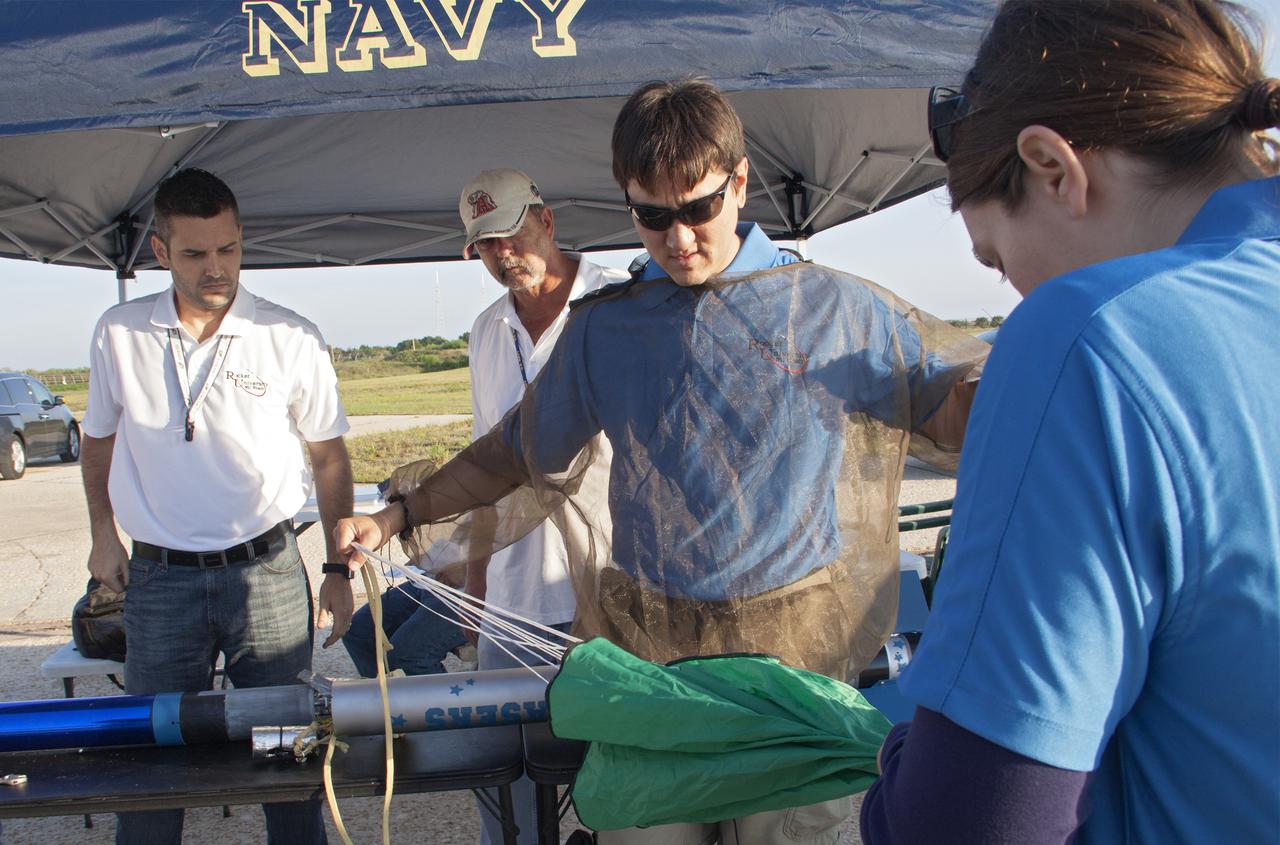
CAPE CANAVERAL, Fla. -- At NASA's Kennedy Space Center in Florida, from the left, Leandro James of Systems Hardware Engineering, George Mizell of Quality Assurance, Morgan Simpson of Flight Hardware Processing and Kim Simpson of Fluids, Mechanical and Structural Systems prepare a parachute for a small rocket prior to launch as part of Rocket University. The goal was to test its systems and to verify that it performed as designed. As part of Rocket University, the engineers are given an opportunity to work a fast-track project to develop skills in developing spacecraft systems of the future. As NASA plans for future spaceflight programs to low-Earth orbit and beyond, teams of engineers at Kennedy are gaining experience in designing and flying launch vehicle systems on a small scale. Four teams of five to eight members from Kennedy are designing rockets complete with avionics and recovery systems. Launch operations require coordination with federal agencies, just as they would with rockets launched in support of a NASA mission. Photo credit: NASA_Jim Grossmann
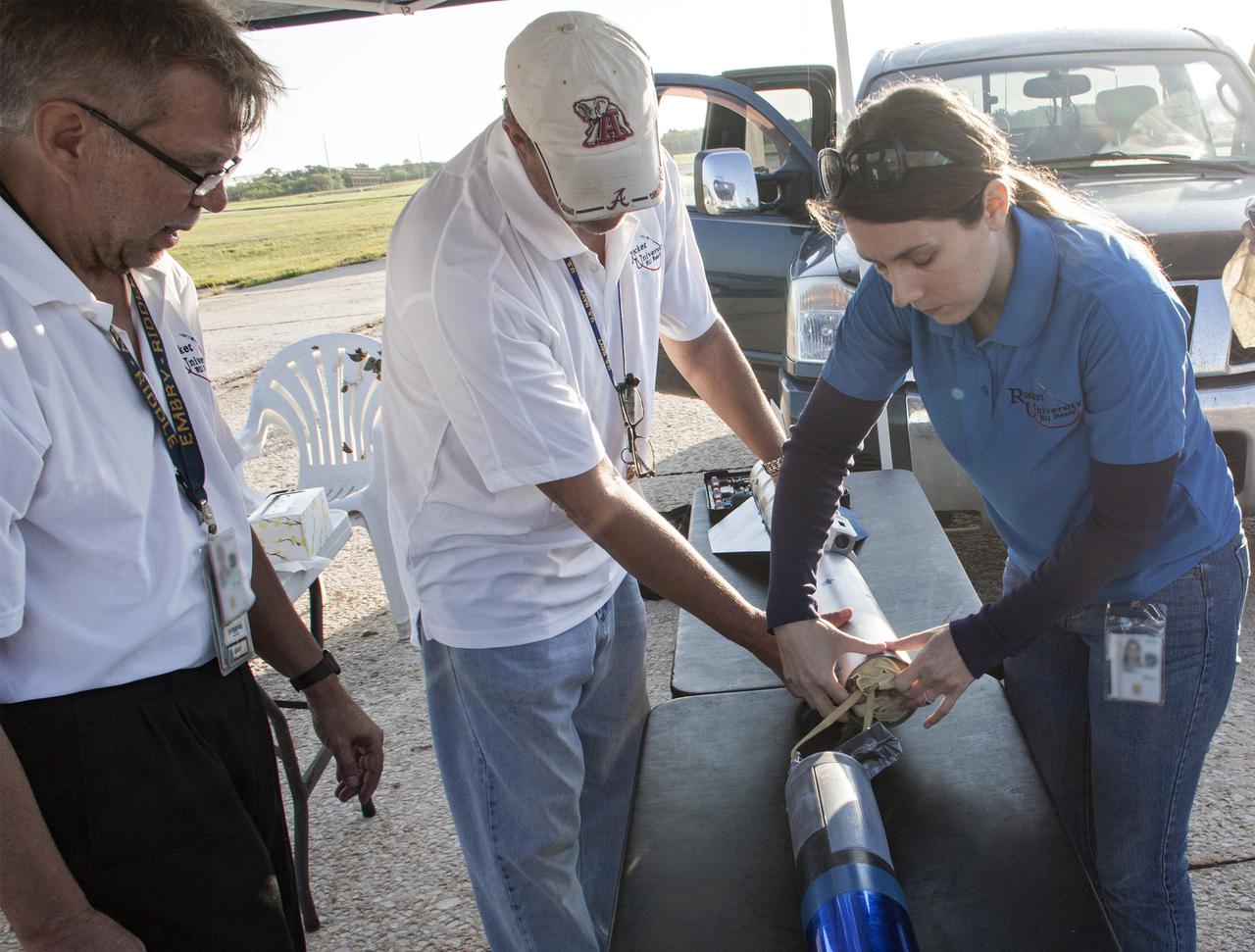
CAPE CANAVERAL, Fla. -- At NASA's Kennedy Space Center in Florida, from the left, Gary Dahlke of Engineering and Technology, George Mizell of Quality Assurance and Kim Simpson of Fluids, Mechanical and Structural Systems make final adjustments to a small rocket prior to launch as part of Rocket University. The goal was to test its systems and to verify that it performed as designed. As part of Rocket University, the engineers are given an opportunity to work a fast-track project to develop skills in developing spacecraft systems of the future. As NASA plans for future spaceflight programs to low-Earth orbit and beyond, teams of engineers at Kennedy are gaining experience in designing and flying launch vehicle systems on a small scale. Four teams of five to eight members from Kennedy are designing rockets complete with avionics and recovery systems. Launch operations require coordination with federal agencies, just as they would with rockets launched in support of a NASA mission. Photo credit: NASA_Jim Grossmann
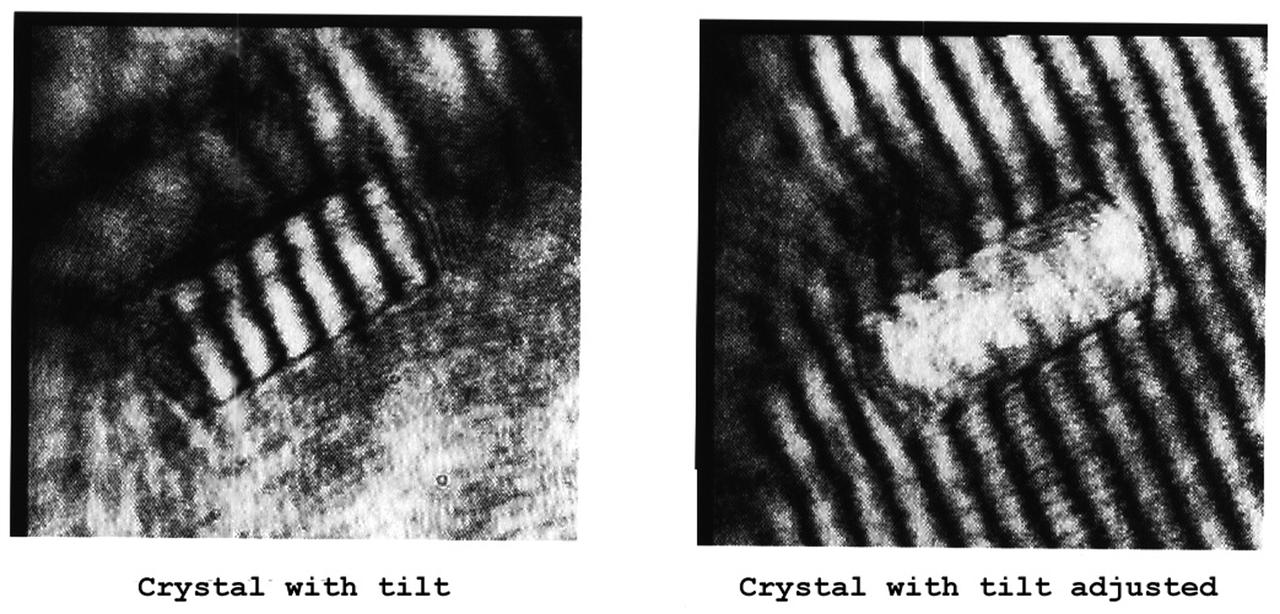
The Interferometer Protein Crystal Growth (IPCG) experiment was designed to measure details of how protein molecules move through a fluid. It was flown on the STS-86 mission for use aboard Russian Space Station Mir in 1998. It studied aspects of how crystals grow - and what conditions lead to the best crystals, details that remain a mystery. IPCG produces interference patterns by spilitting then recombining laser light. This let scientists see how fluid densities - and molecular diffusion - change around a crystal as it grows in microgravity. The heart of the IPCG apparatus is the interferometer cell comprising the optical bench, microscope, other optics, and video camera. IPCG experiment cells are made of optical glass and silvered on one side to serve as a mirror in the interferometer system that visuzlizes crystals and conditions around them as they grow inside the cell. This view shows interferograms produced in ground tests. The principal investigator was Dr. Alexander McPherson of University of California, Irvine. Co-investigators are William Witherow and Dr. Marc Pusey of NASA's Marshall Space Flight Center (MSFC).
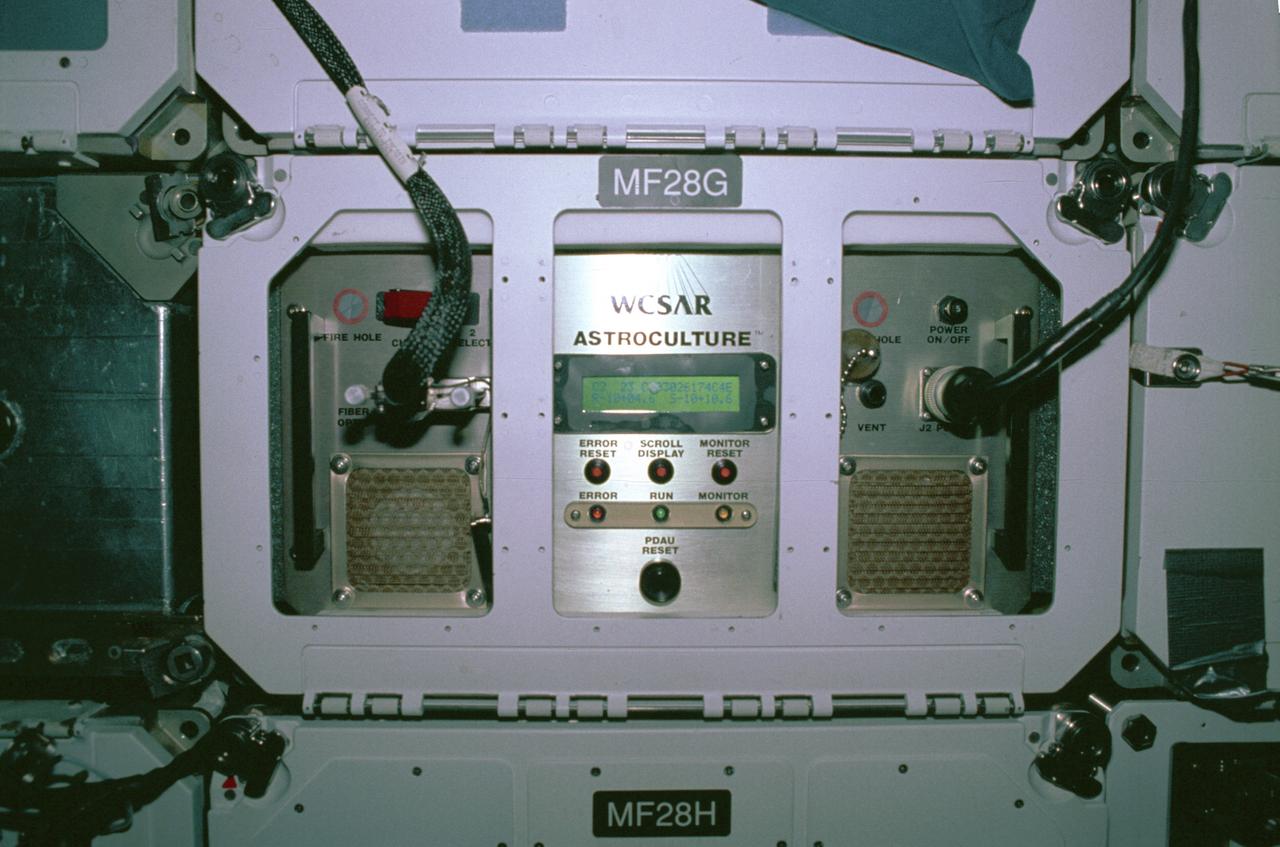
The first United States Microgravity Laboratory (USML-1) was one of NASA's science and technology programs that provided scientists an opportunity to research various scientific investigations in a weightless environment inside the Spacelab module. It also provided demonstrations of new equipment to help prepare for advanced microgravity research and processing aboard the Space Station. The USML-1 flew in orbit for extended periods, providing greater opportunities for research in materials science, fluid dynamics, biotechnology (crystal growth), and combustion science. This is a close-up view of the Astroculture experiment rack in the middeck of the orbiter. The Astroculture experiment was to evaluate and find effective ways to supply nutrient solutions for optimizing plant growth and avoid releasing solutions into the crew quarters in microgravity. Since fluids behave differently in microgravity, plant watering systems that operate well on Earth do not function effectively in space. Plants can reduce the costs of providing food, oxygen, and pure water, as well as lower the costs of removing carbon dioxide in human space habitats. The USML-1 flew aboard the STS-50 mission on June 1992 and was managed by the Marshall Space Flight Center.
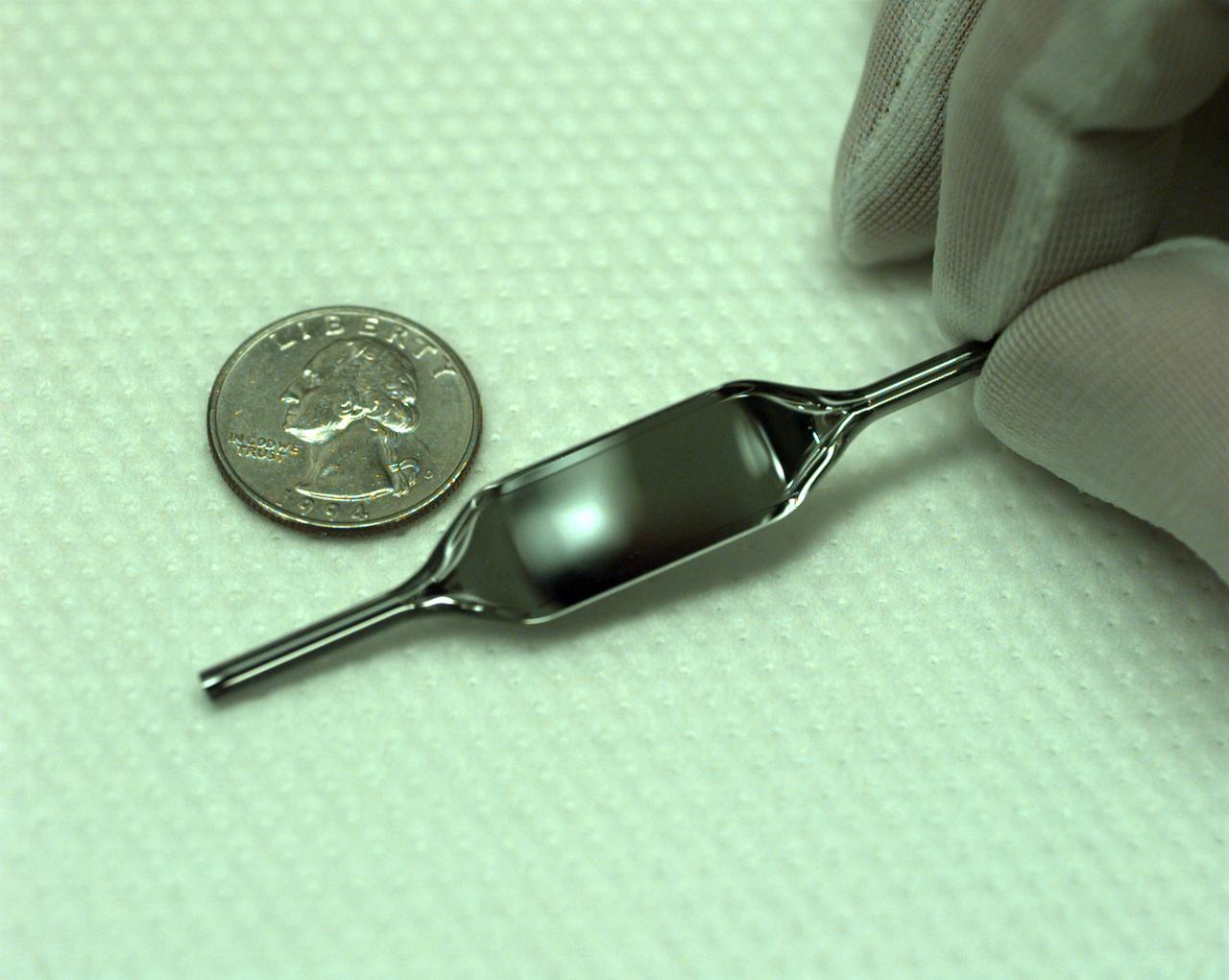
The Interferometer Protein Crystal Growth (IPCG) experiment was designed to measure details of how protein molecules move through a fluid. It was flown on the STS-86 mission for use aboard Russian Space Station Mir in 1998. It studied aspects of how crystals grow - and what conditions lead to the best crystals, details that remain a mystery. IPCG produces interference patterns by spilitting then recombining laser light. This let scientists see how fluid densities - and molecular diffusion - change around a crystal as it grows in microgravity. The heart of the IPCG apparatus is the interferometer cell comprising the optical bench, microscope, other optics, and video camera. IPCG experiment cells are made of optical glass and silvered on one side to serve as a mirror in the interferometer system that visuzlizes crystals and conditions around them as they grow inside the cell. This view shows a large growth cell. The principal investigator was Dr. Alexander McPherson of University of California, Irvine. Co-investigators are William Witherow and Dr. Marc Pusey of NASA's Marshall Space Flight Center (MSFC).
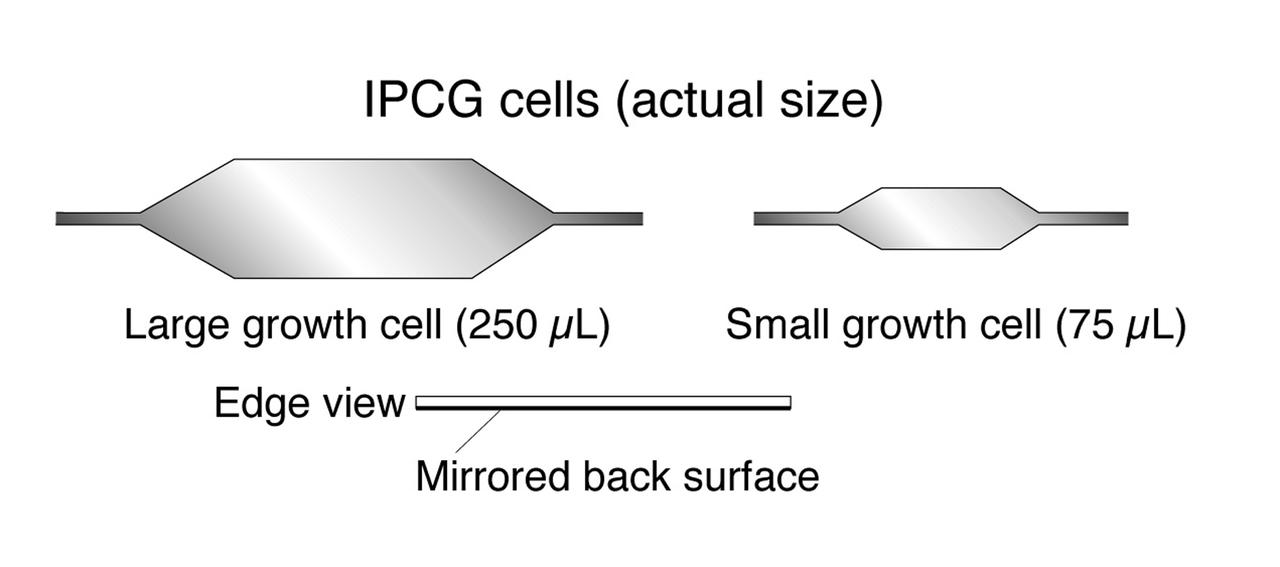
The Interferometer Protein Crystal Growth (IPCG) experiment was designed to measure details of how protein molecules move through a fluid. It was flown on the STS-86 mission for use aboard Russian Space Station Mir in 1998. It studied aspects of how crystals grow - and what conditions lead to the best crystals, details that remain a mystery. IPCG produces interference patterns by spilitting then recombining laser light. This let scientists see how fluid densities - and molecular diffusion - change around a crystal as it grows in microgravity. The heart of the IPCG apparatus is the interferometer cell comprising the optical bench, microscope, other optics, and video camera. IPCG experiment cells are made of optical glass and silvered on one side to serve as a mirror in the interferometer system that visuzlizes crystals and conditions around them as they grow inside the cell. This diagram shows the growth cells. The principal investigator was Dr. Alexander McPherson of University of California, Irvine. Co-investigators are William Witherow and Dr. Marc Pusey of NASA's Marshall Space Flight Center (MSFC).
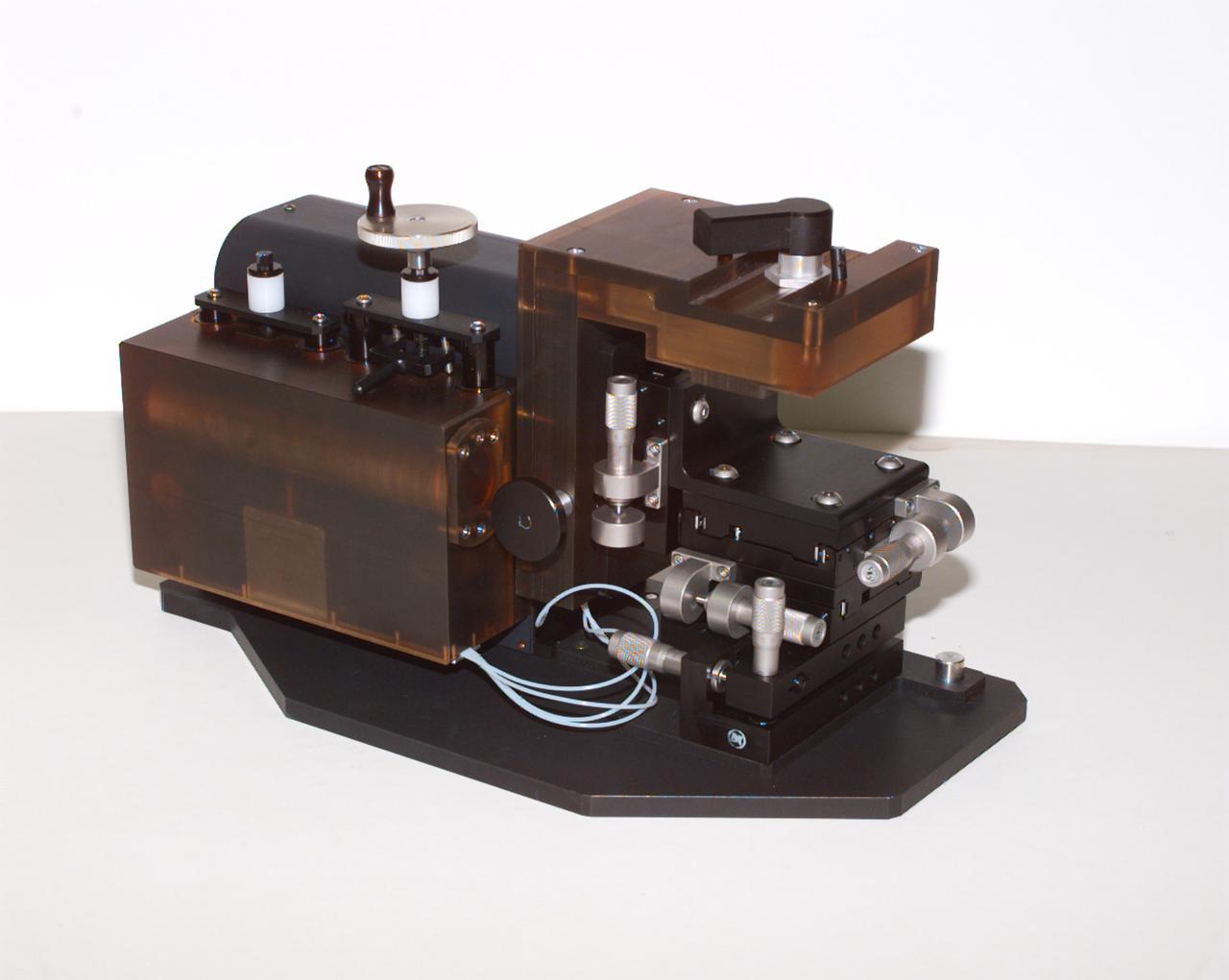
The Interferometer Protein Crstal Growth (IPCG) experiment was designed to measure details of how protein molecules move through a fluid. It was flown on the STS-86 mission for use aboard Russin Space Station Mir in 1998. It studied aspects of how crystals grow - and what conditions lead to the best crystals, details that remain a mystery. IPCG produces interference patterns by splitting then recombining laser light. This let scientists see how fluid densities - and molecular diffusion - change around a crystal as it grows in microgravity. The heart of the IPCG apparatus is the interferometer cell comprising the optical bench, microscope, other optics, and video camera. IPCG experiment cells are made of optical glass and silvered on one side to serve as a mirror in the interferometer system that visualizes crystals and conditions around them as they grow inside the cell. This view shows the complete apparatus. The principal investigator was Dr. Alexander McPherson of the University of California, Irvin. Co-investigators are William Witherow and Dr. Marc Pusey of NASA's Marshall Space Flight Center
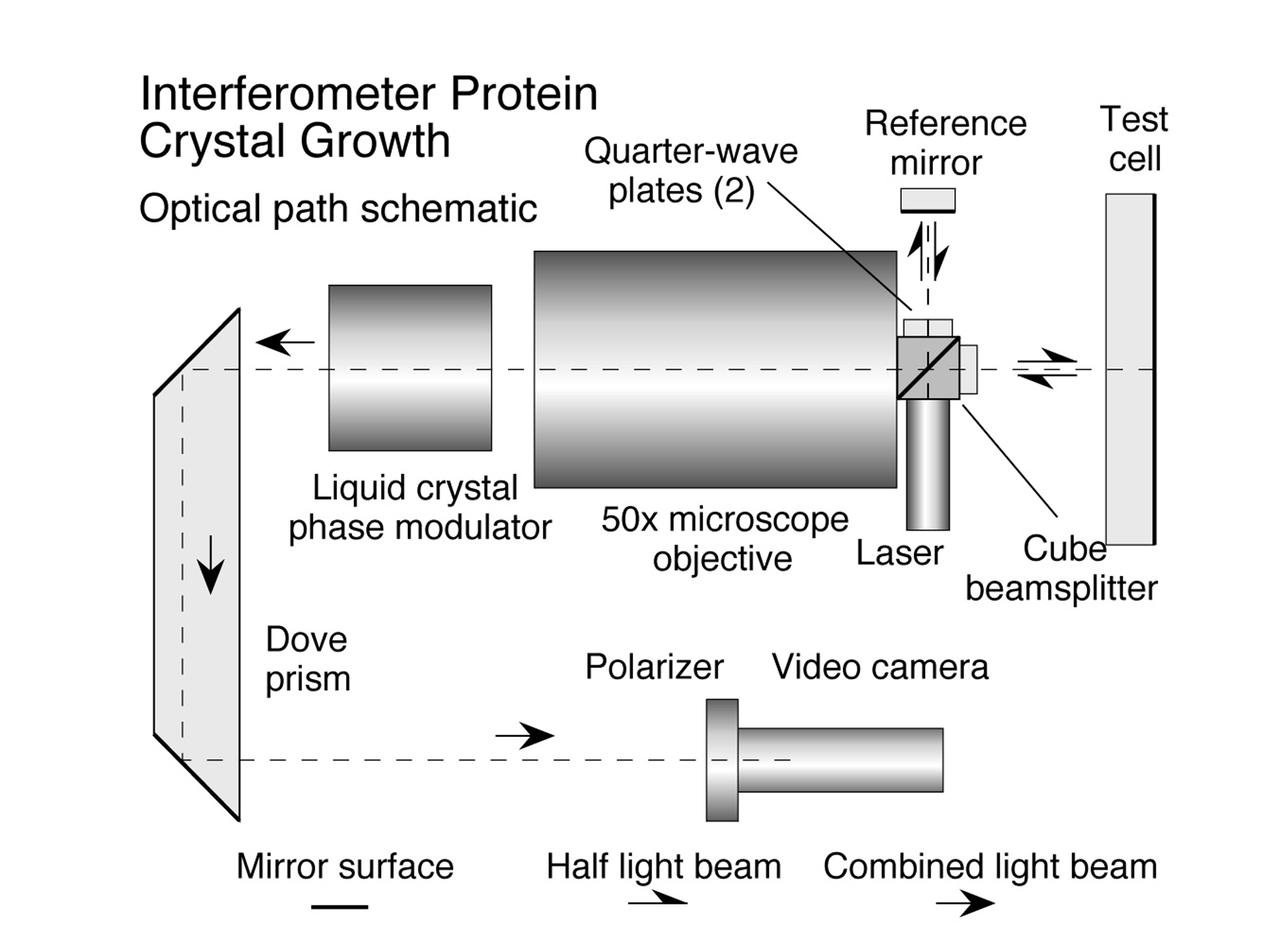
The Interferometer Protein Crystal Growth (IPCG) experiment was designed to measure details of how protein molecules move through a fluid. It was flown on the STS-86 mission for use aboard Russian Space Station Mir in 1998. It studied aspects of how crystals grow - and what conditions lead to the best crystals, details that remain a mystery. IPCG produces interference patterns by spilitting then recombining laser light. This let scientists see how fluid densities - and molecular diffusion - change around a crystal as it grows in microgravity. The heart of the IPCG apparatus is the interferometer cell comprising the optical bench, microscope, other optics, and video camera. IPCG experiment cells are made of optical glass and silvered on one side to serve as a mirror in the interferometer system that visuzlizes crystals and conditions around them as they grow inside the cell. This diagram shows the optical layout. The principal investigator was Dr. Alexander McPherson of University of California, Irvine. Co-investigators are William Witherow and Dr. Marc Pusey of NASA's Marshall Space Flight Center (MSFC).
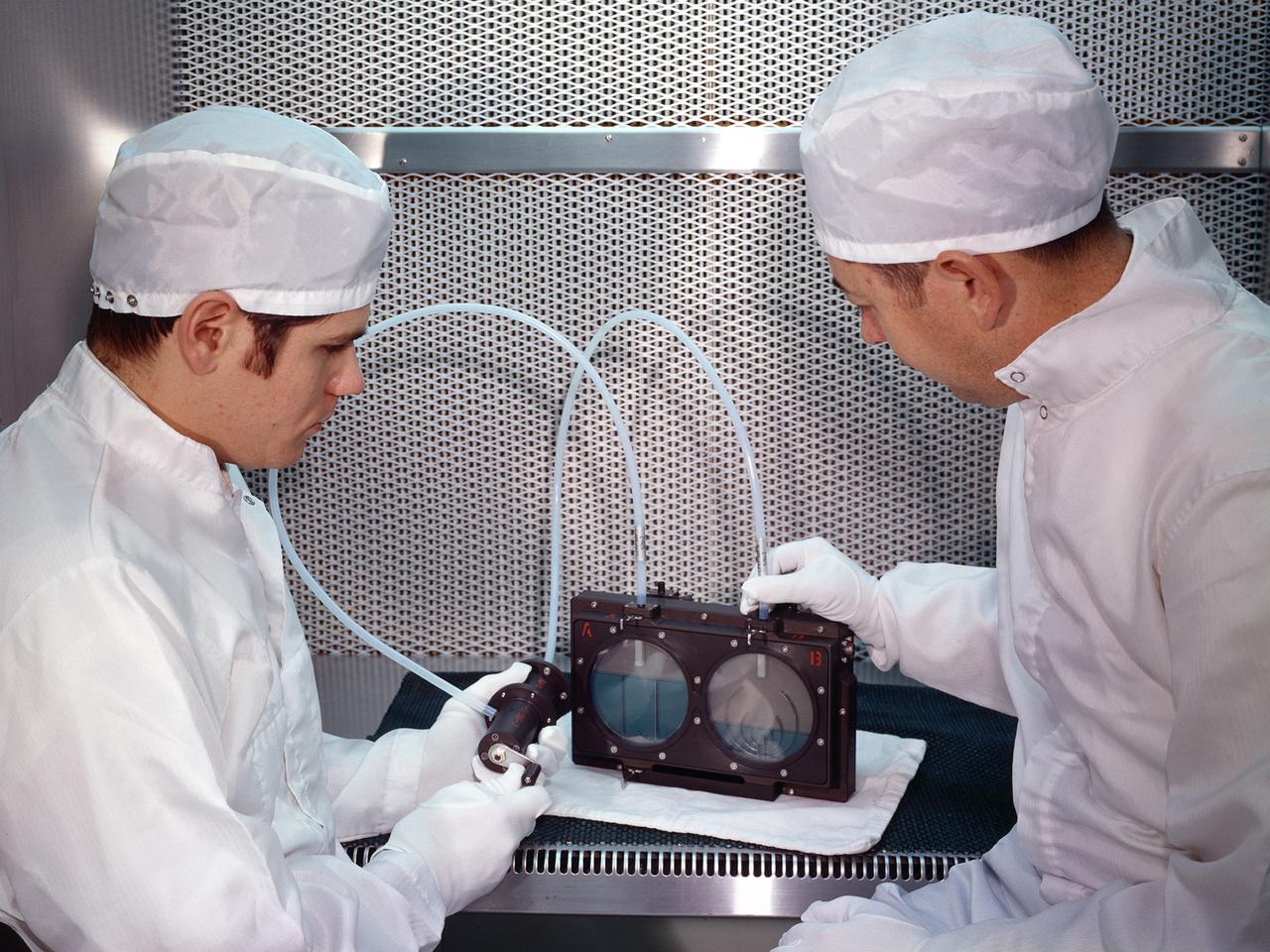
Two researchers at the National Aeronautics and Space Administration (NASA) Lewis Research Center demonstrate the test equipment they devised to study the transfer of liquid in microgravity onboard the Apollo 14 mission. The test was an early step in developing the ability to transfer liquids from a tanker vehicle to spacecraft in space. Researchers needed to know the tank’s outflow characteristics, the fluid’s behavior when entering new tank, and the effects of accelerations. Others had performed some calculations and analytical studies, but no one had examined the complete transfer from one tank to another in microgravity. The early calculations concluded that the transfer process was impossible without devices to control the liquid and gas. This investigation specifically sought to demonstrate the effectiveness of two different surface-tension baffle designs. The experiment was an entirely closed system with two baffled-tanks. The researchers also built a similar device without the baffles. The experiment was carried onboard the Apollo 14 spacecraft and conducted during the coast period on the way to the moon. The two surface tension baffle designs in the separate tanks were shown to be effective both as supply tanks and as receiver tanks. The liquid transferred within two percent of the design value with ingesting gas. The unbaffled tanks ingested gas after only 12-percent of the fluid had transferred.
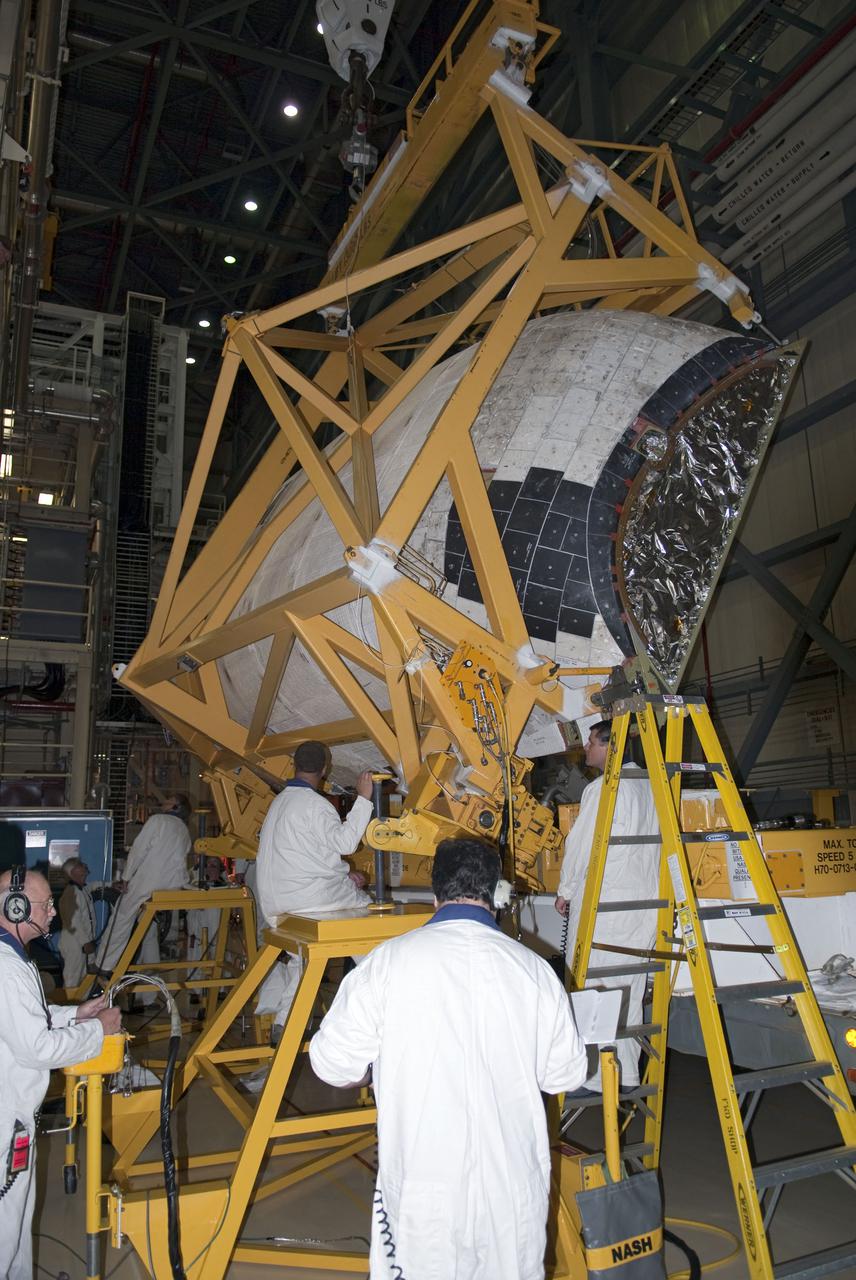
CAPE CANAVERAL, Fla. -- In Orbiter Processing Facility-3 at NASA's Kennedy Space Center in Florida, technicians assisted by an overhead crane prepare to install the right-hand orbital maneuvering system, or OMS, pod on space shuttle Discovery. Discovery and its crew will deliver the Permanent Multipurpose Module, or PMM, which will carry supplies and critical spare parts on the STS-133 mission to the International Space Station. The module will be left behind so it can be used for microgravity experiments in fluid physics, materials science, biology and biotechnology. For more information go to www.nasa.gov_shuttle. Photo credit: NASA_Ben Smegelsky

An experiment vehicle plunges into the deceleration pit at the end of a 5.18-second drop in the Zero-Gravity Research Facility at NASA's Glenn Research Center. The Zero-Gravity Research Facility was developed to support microgravity research and development programs that investigate various physical sciences, materials, fluid physics, and combustion and processing systems. Payloads up to 1 meter in diameter and 455 kg in weight can be accommodated. The facility has a 145-meter evacuated shaft to ensure a disturbance-free drop. This is No.1 of a sequence of 4 images. (Credit: NASA/Glenn Research Center)
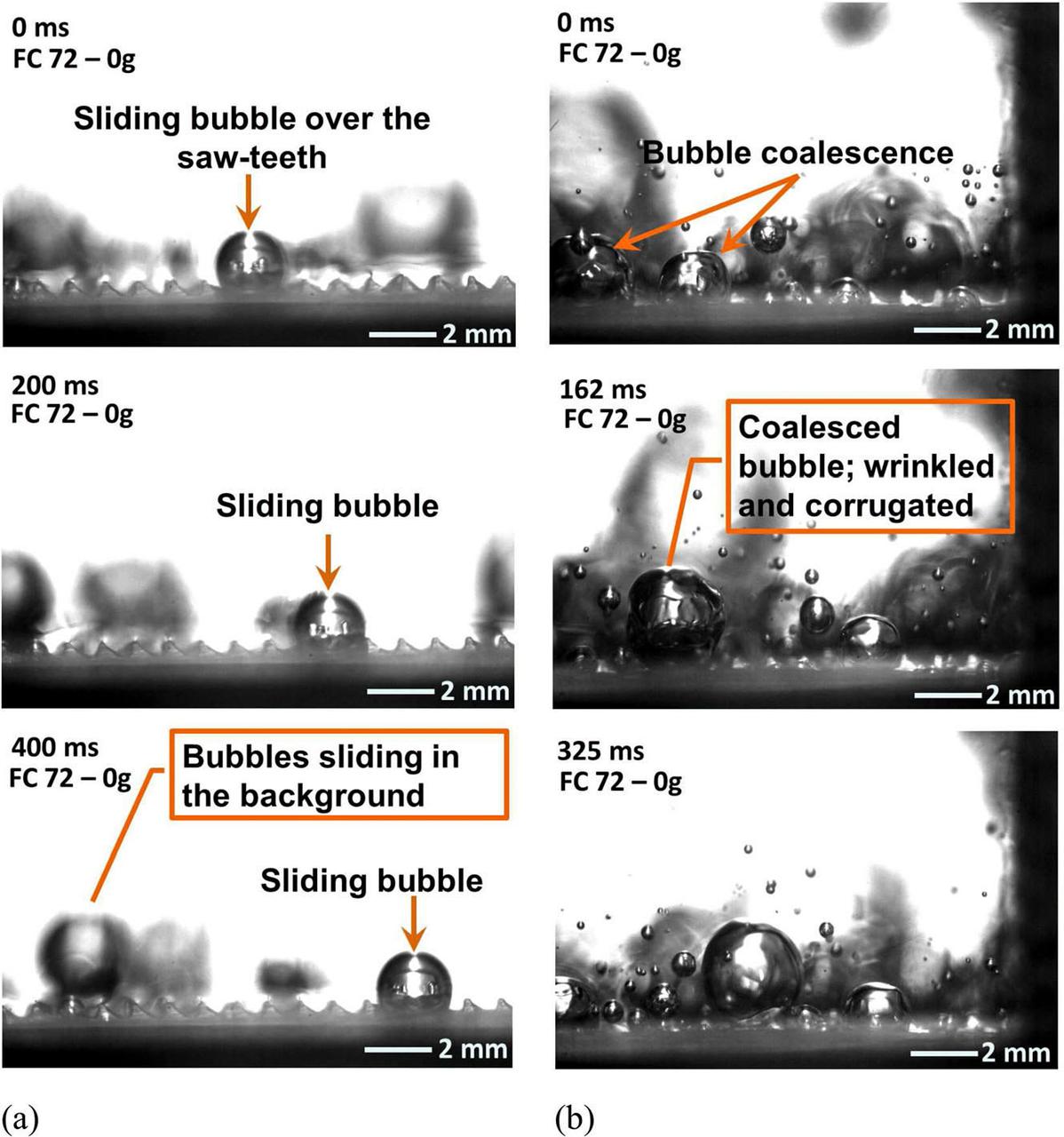
jsc2020e030483 (4/20/2020) --- A preflight image sequence from parabolic flight experiments indicating motion of vapor bubble on heated ratchet surface. Asymmetric Sawtooth and Cavity-Enhanced Nucleation-Driven Transport (PFMI-ASCENT) demonstrates a passive cooling system for electronic devices in microgravity using a microstructured surface. When fluids boil over flat heated surfaces in microgravity, vapor bubbles grow larger in size, causing poor heat transfer that can lead to damage of devices. Adding microscopic rachets on the surface may passively enable mobility of vapor bubbles and prevent this damage. (Image courtesy of: Techshot, Inc.)
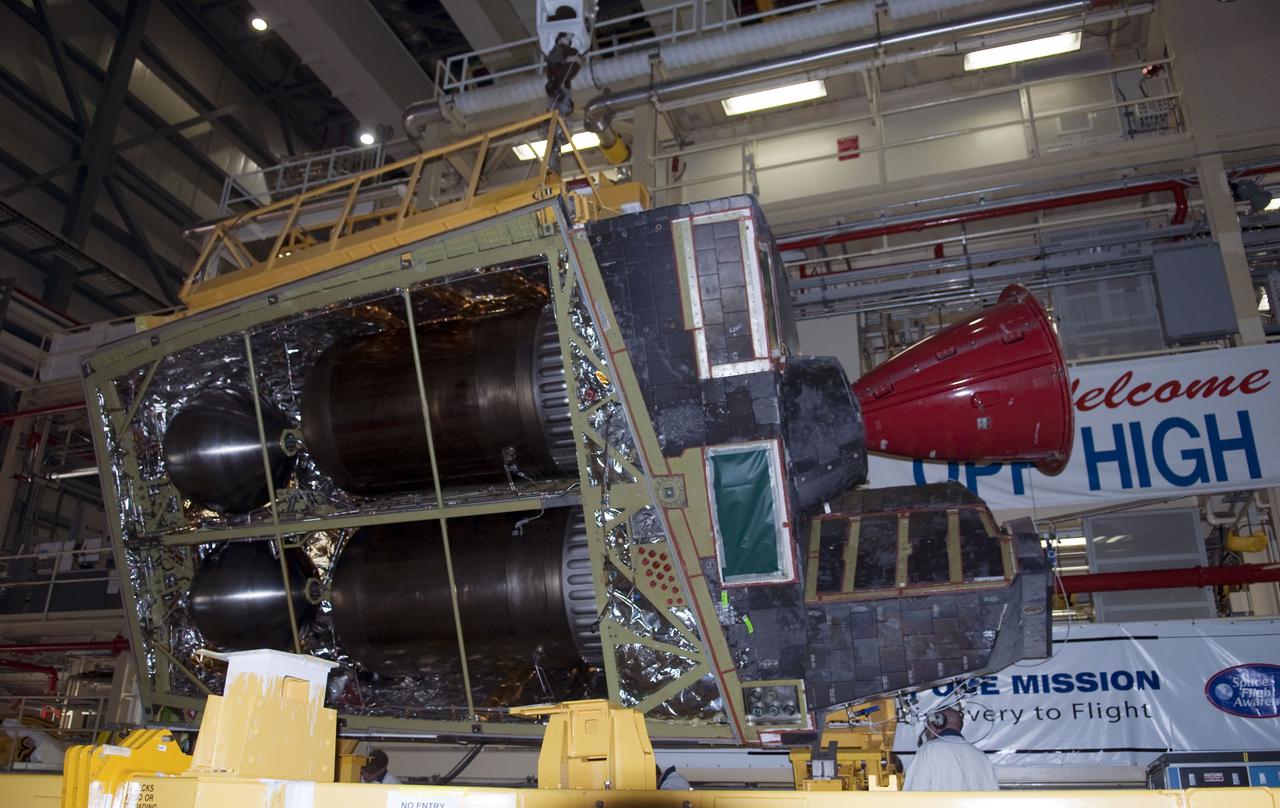
CAPE CANAVERAL, Fla. -- In Orbiter Processing Facility-3 at NASA's Kennedy Space Center in Florida, the right-hand orbital maneuvering system, or OMS, pod is being lifted by an overhead crane for installation on space shuttle Discovery. Discovery and its crew will deliver the Permanent Multipurpose Module, or PMM, which will carry supplies and critical spare parts on the STS-133 mission to the International Space Station. The module will be left behind so it can be used for microgravity experiments in fluid physics, materials science, biology and biotechnology. For more information go to www.nasa.gov_shuttle. Photo credit: NASA_Ben Smegelsky
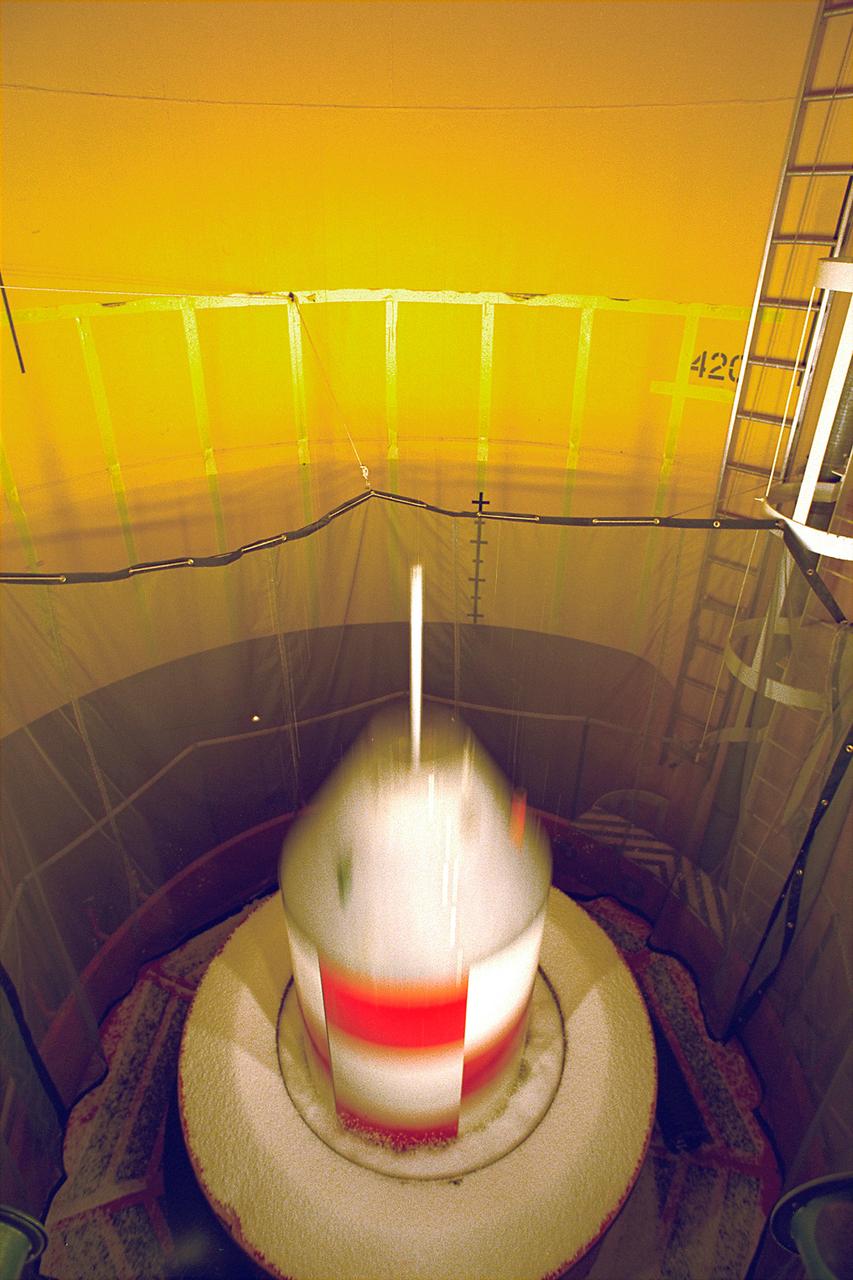
An experiment vehicle plunges into the deceleration pit at the end of a 5.18-second drop in the Zero-Gravity Research Facility at NASA's Glenn Research Center. The Zero-Gravity Research Facility was developed to support microgravity research and development programs that investigate various physical sciences, materials, fluid physcis, and combustion and processing systems. Payloads up to 1 meter in diameter and 455 kg in weight can be accommodated. The facility has a 145-meter evacuated shaft to ensure a disturbance-free drop. This is No. 2 of a sequence of 4 images. (Credit: NASA/Glenn Research Center)
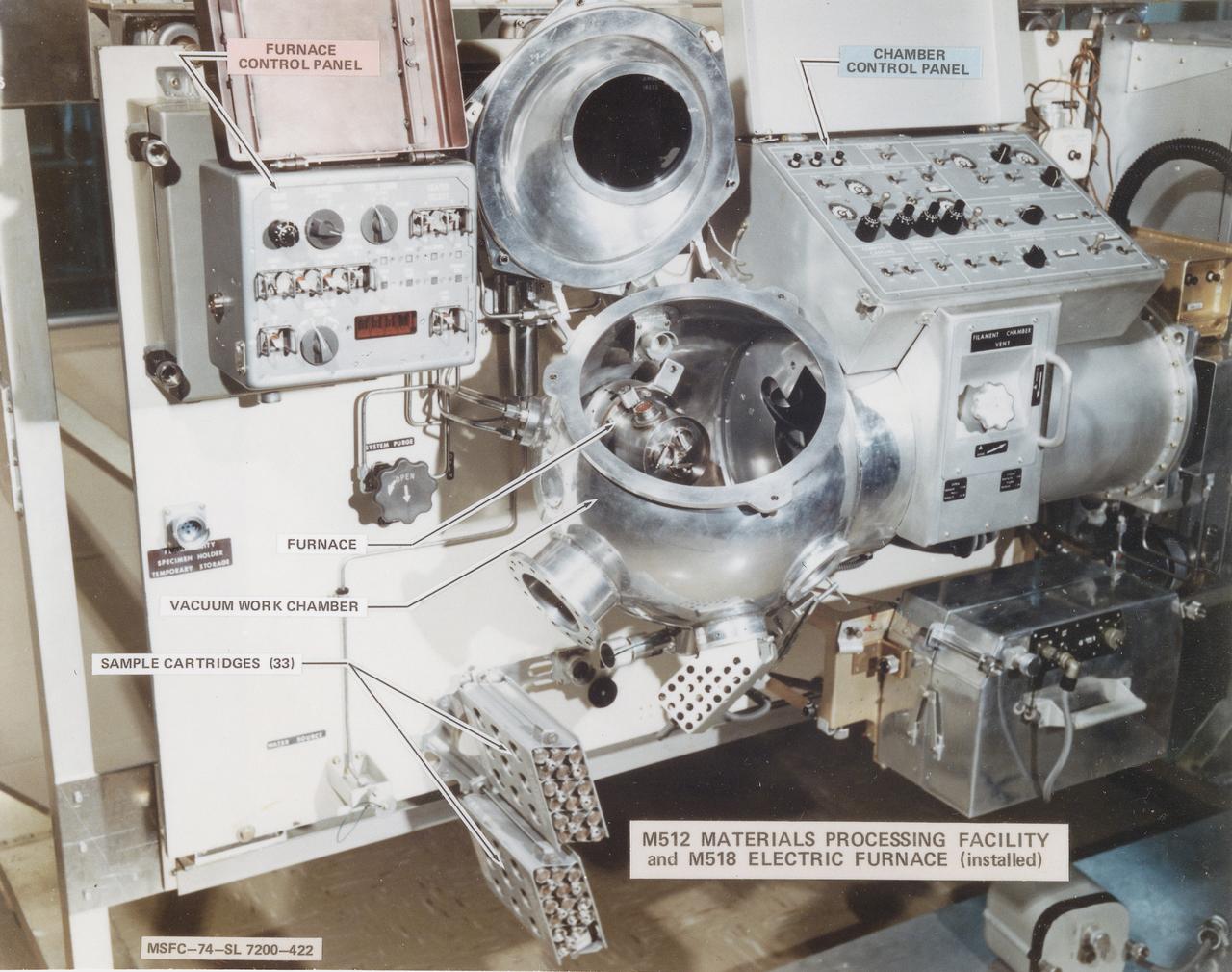
This photograph shows the Skylab Materials Processing Facility (M512) and the Multipurpose Furnace System (M518). This facility, located in the Multiple Docking Adapter, was developed for Skylab,and accommodated 14 different experiments that were carried out during the three marned missions. The abilities to melt and mix without the contaminating effects of containers, to suppress thermal convection and buoyancy in fluids, and to take advantage of electrostatic and magnetic forces and otherwise masked by gravitation opened the way to new knowledge of material properties and processes. This beginning would ultimately lead to the production of valuable new materials for use on Earth.

An experiment vehicle plunges into the deceleration at the end of a 5.18-second drop in the Zero-Gravity Research Facility at NASA's Glenn Research Center. The Zero-Gravity Research Facility was developed to support microgravity research and development programs that investigate various physical sciences, materials, fluid physics, and combustion and processing systems. Payloads up to one-meter in diameter and 455 kg in weight can be accommodated. The facility has a 145-meter evacuated shaft to ensure a disturbance-free drop. This is No. 3 of a sequence of 4 images. (Credit: NASA/Glenn Research Center)
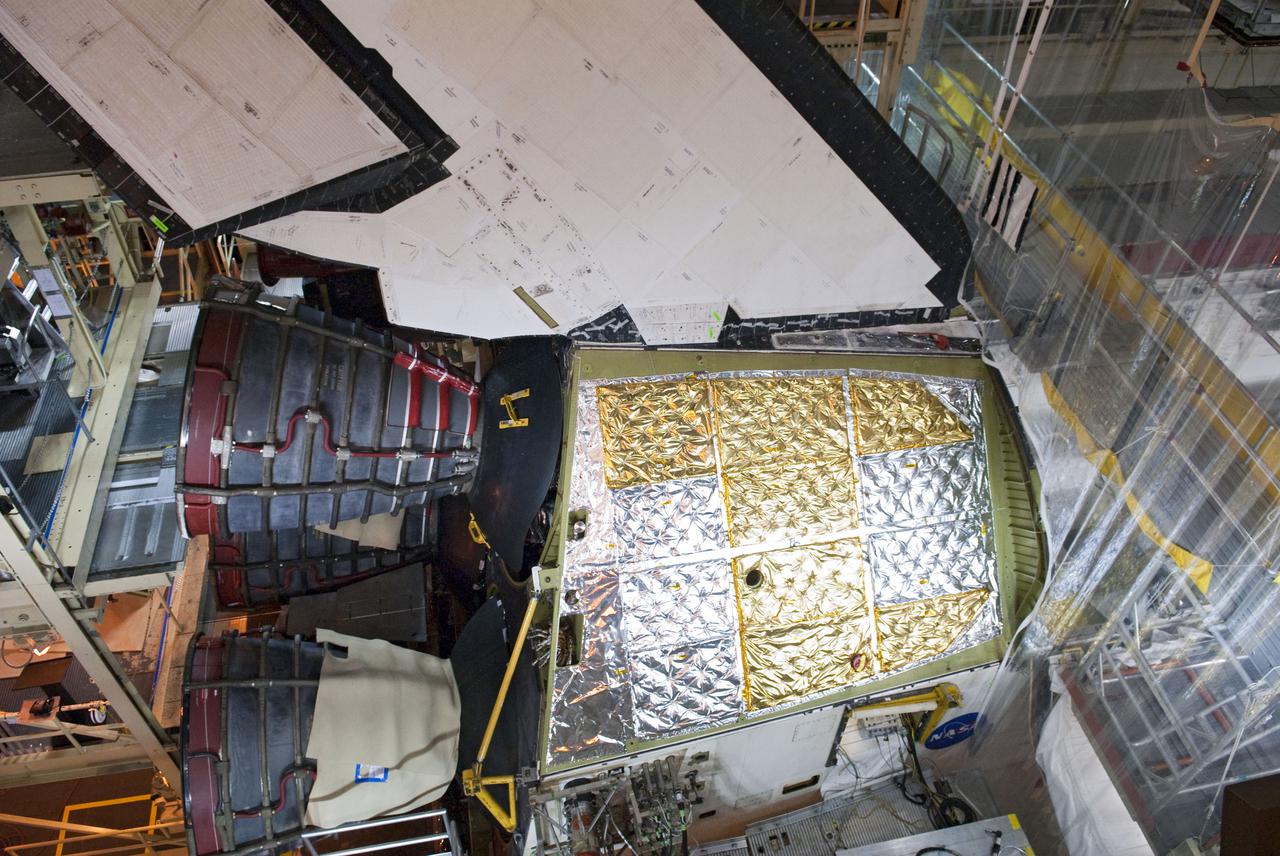
CAPE CANAVERAL, Fla. -- In Orbiter Processing Facility-3 at NASA's Kennedy Space Center in Florida, the aft section on space shuttle Discovery is set to accept the installation of the right-hand orbital maneuvering system, or OMS, pod. Discovery and its crew will deliver the Permanent Multipurpose Module, or PMM, which will carry supplies and critical spare parts on the STS-133 mission to the International Space Station. The module will be left behind so it can be used for microgravity experiments in fluid physics, materials science, biology and biotechnology. For more information go to www.nasa.gov_shuttle. Photo credit: NASA_Ben Smegelsky
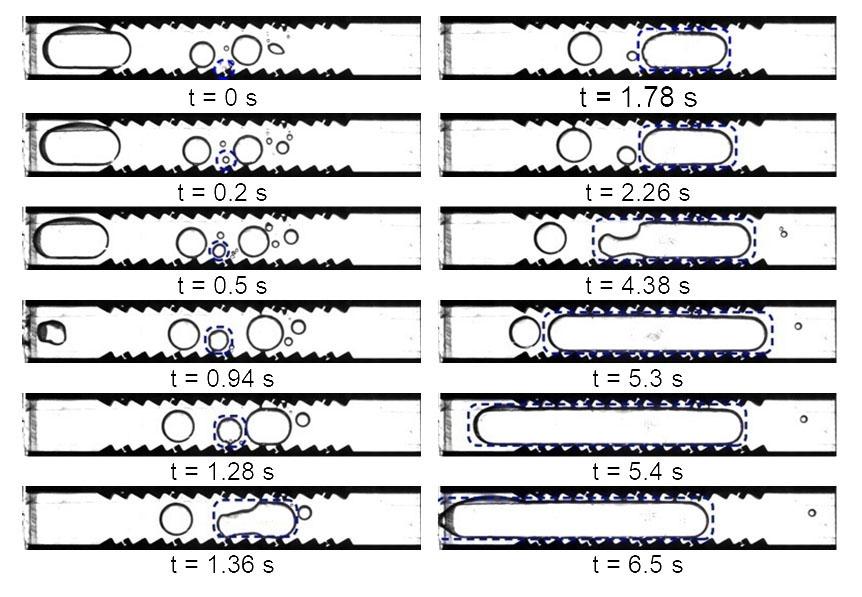
jsc2020e030484 (4/20/2020) --- A preflight image sequence from terrestrial experiments with two vertically oriented ratchet surfaces; subcooling: 9.5 ℃; heat flux: 1.31 W/cm2. Asymmetric Sawtooth and Cavity-Enhanced Nucleation-Driven Transport (PFMI-ASCENT) demonstrates a passive cooling system for electronic devices in microgravity using a microstructured surface. When fluids boil over flat heated surfaces in microgravity, vapor bubbles grow larger in size, causing poor heat transfer that can lead to damage of devices. Adding microscopic rachets on the surface may passively enable mobility of vapor bubbles and prevent this damage. (Image courtesy of: Techshot, Inc.)

An experiment vehicle plunges into the deceleration pit at the end of a 5.18-second drop in the Zero-Gravity Research Facility at NASA's Glenn Research Center. The Zero-Gravity Research Facility was developed to support microgravity research and development programs that investigate various physical sciences, materials, fluid physics, and combustion and processing systems. Payloads up to one meter in diameter and 455 kg in weight can be accommodated. The facility has a 145-meter evacuated shaft to ensure a disturbance-free drop. This is No. 4 of a sequence of 4 images. (Credit: NASA/Glenn Research Center)
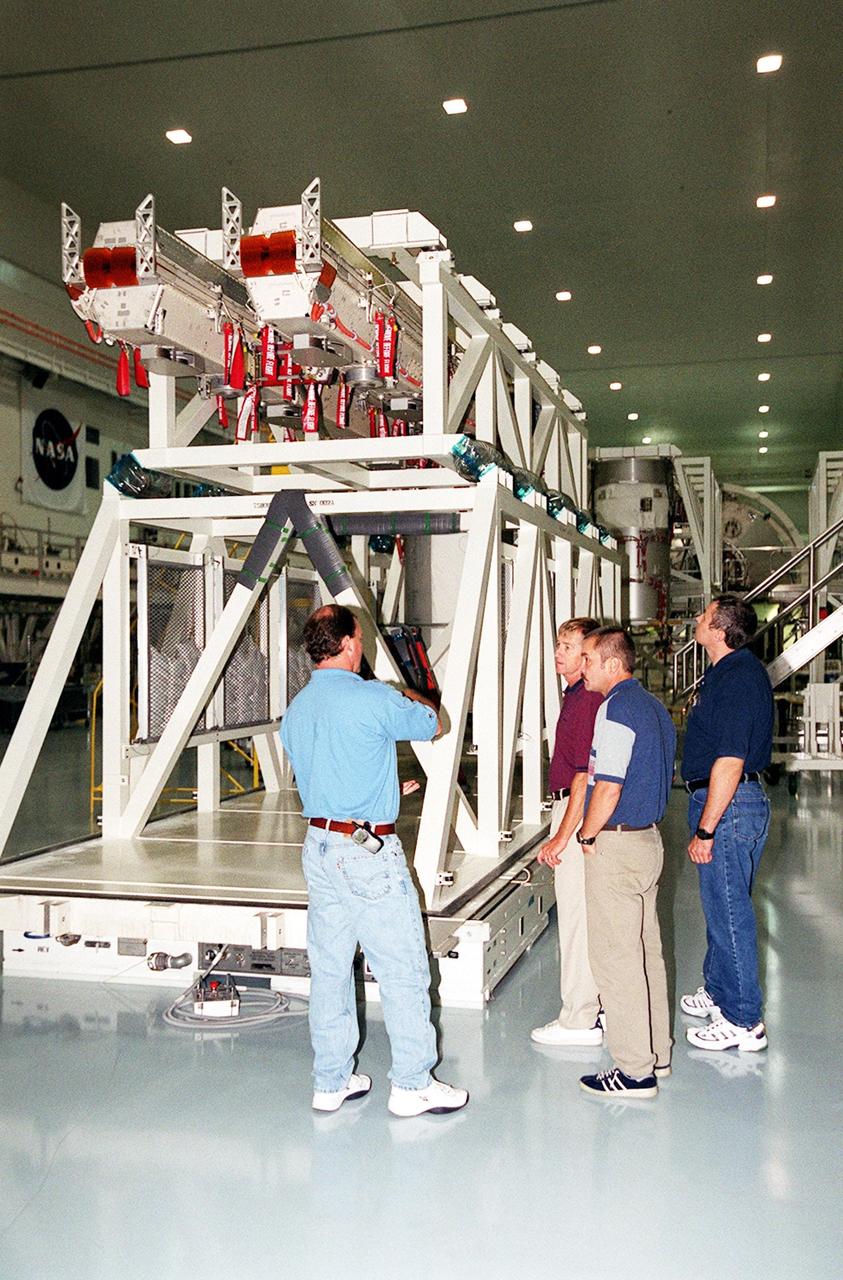
KENNEDY SPACE CENTER, Fla. -- In the Space Station Processing Facility, the Expedition Three crew (right) listen to a worker discuss solar panels seen here on a workstand. The crew members are (left to right) Commander Frank Culbertson and cosmonauts Mikhail Tyurin and Vladimir Dezhurov. The STS-105 payload includes the Early Ammonia Servicer (EAS), Multi-Purpose Logistics Module Leonardo and various experiments attached on the port and starboard adapter beams. The EAS contains spare ammonia for the Station’s cooling system. Ammonia is the fluid used in the radiators that cool the Station’s electronics. The EAS will be installed on the P6 truss holding the giant U.S. solar arrays, batteries and cooling radiators. Leonardo is filled with laboratory racks of science equipment and racks and platforms of experiments and supplies. Discovery is scheduled to be launched Aug. 9, 2001
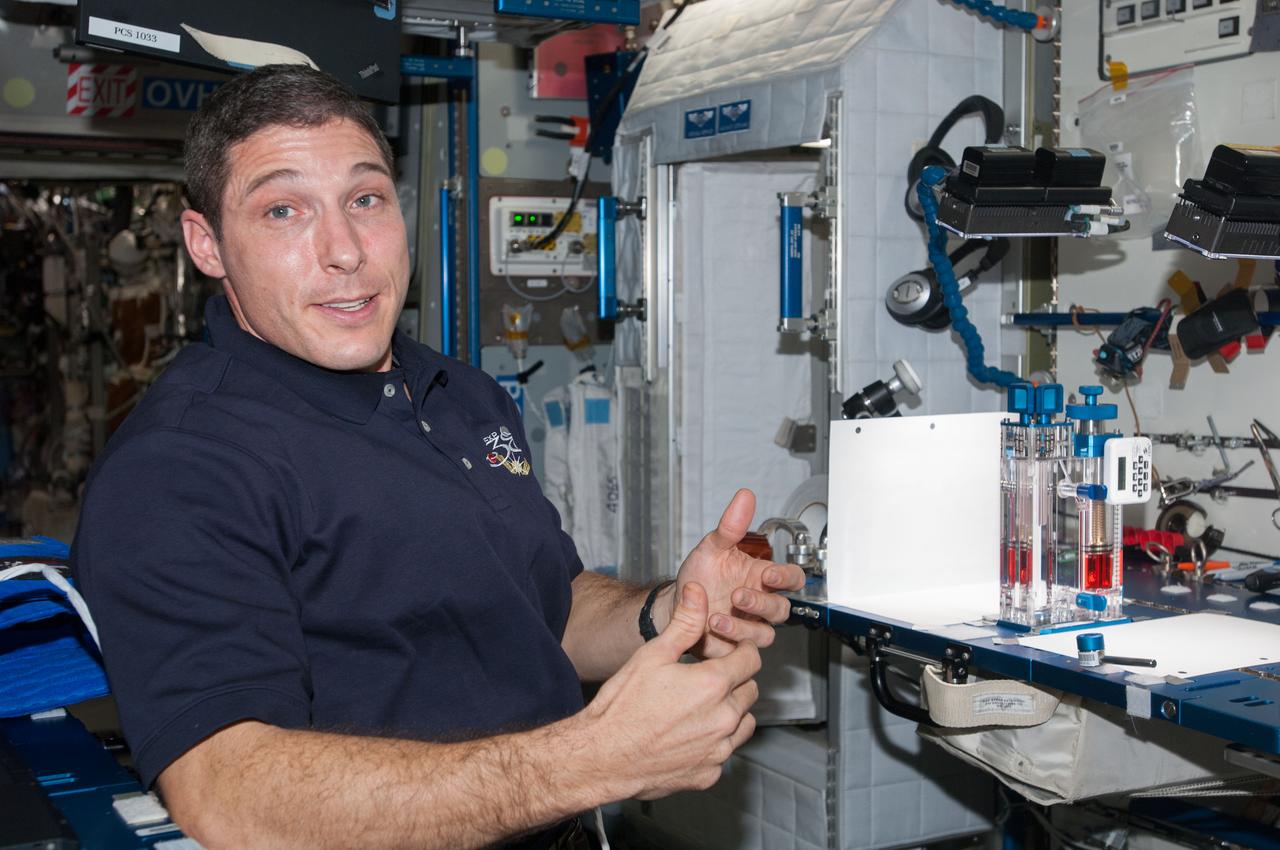
View of Flight Engineer (FE) Mike Hopkins initiating a CFE-2 (Capillary Flow Experiment - 2) Interior Corner Flow - 5 (ICF-5) test run. Liquids behave differently in space than they do on Earth, so containers that can process, hold or transport them must be designed carefully to work in microgravity. The Capillary Flow Experiment-2 furthers research on wetting, which is a liquid's ability to spread across a surface, and its impact over large length scales in strange container shapes in microgravity environments. This work will improve our capabilities to quickly and accurately predict how related processes occur, and allow us to design better systems to process liquids aboard spacecraft (i.e., liquid fuel tanks, thermals fluids, and water processing for life support). Image was released by astronaut on Twitter.
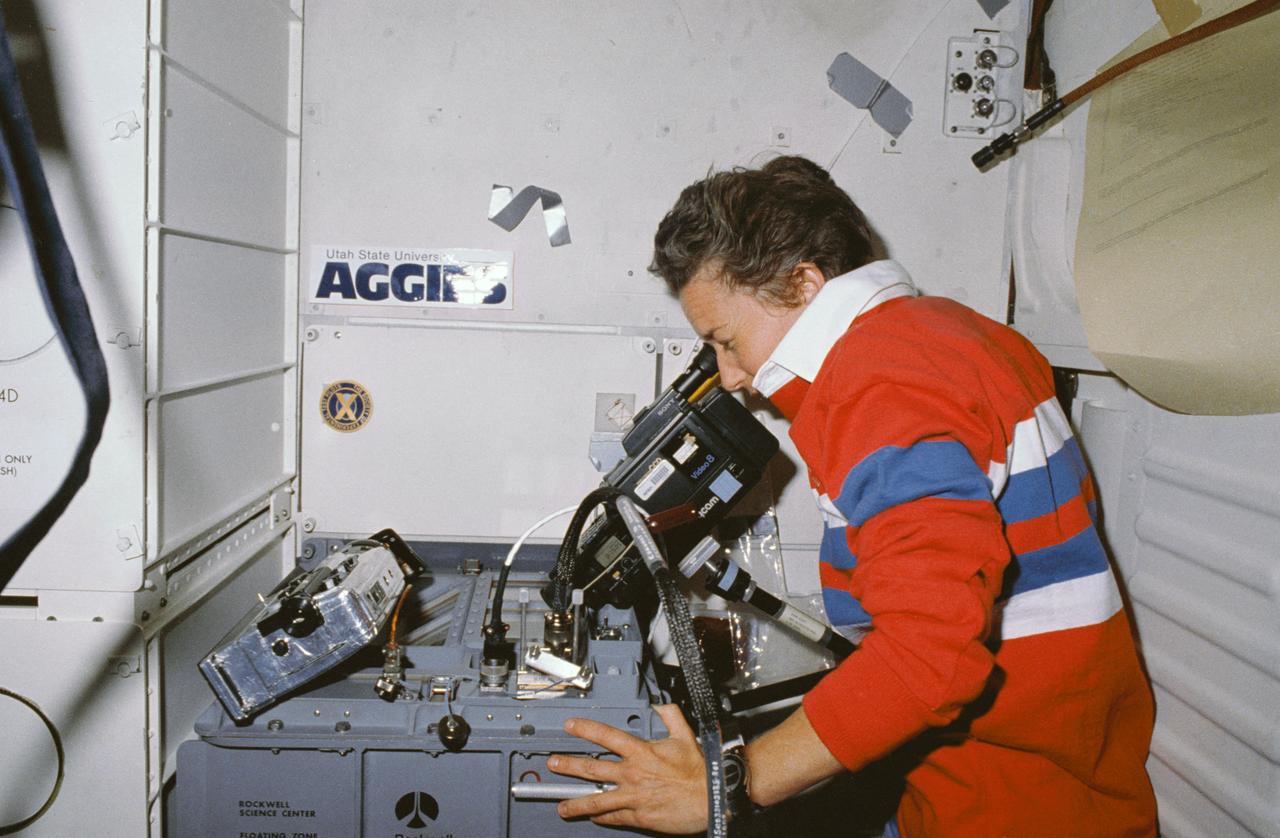
STS030-10-002 (8 May 1989) --- STS-30 Mission Specialist Mary L. Cleave operates 8mm video camcorder at Fluids Experiment Apparatus 2 (FEA-2) (SK73-000102) unit located in aft middeck locker onboard Atlantis, Orbiter Vehicle (OV) 103. Two 8mm video camcorders are positioned above FEA-2 unit to record experiment titled "Floating Zone Crystal Growth and Purification". Rockwell International (RI) through its Space Transportation Systems Division, Downey, California, is engaged in a joint endeavor agreement (JEA) with NASA's Office of Commercial Programs in the field for floating zone crystal growth research. Utah State University Aggies decal appears on aft bulkhead above FEA-2 unit.
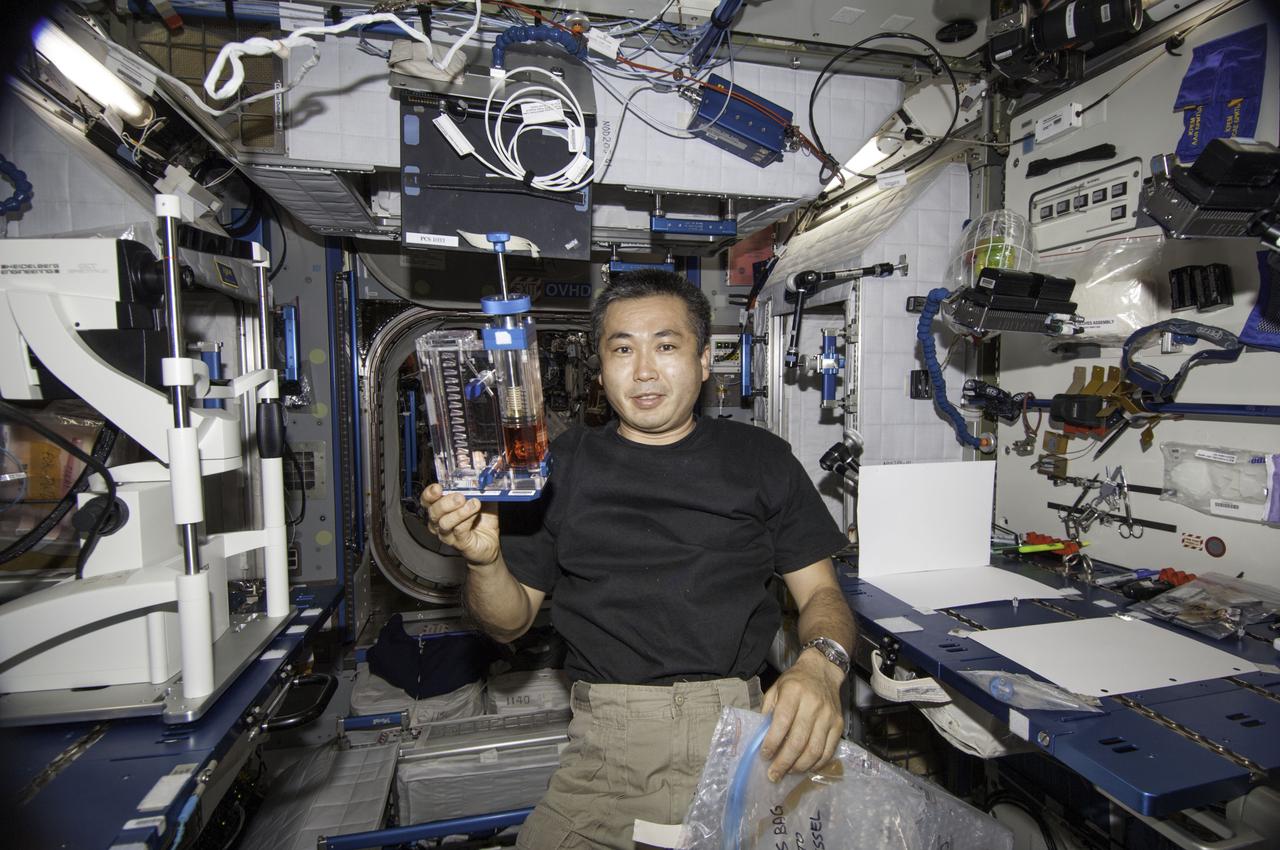
View of Flight Engineer (FE) Koichi Wakata posing for a photo during a CFE-2 (Capillary Flow Experiment - 2) Interior Corner Flow - 8 (ICF-8) test run. Liquids behave differently in space than they do on Earth, so containers that can process, hold or transport them must be designed carefully to work in microgravity. The Capillary Flow Experiment-2 furthers research on wetting, which is a liquid's ability to spread across a surface, and its impact over large length scales in strange container shapes in microgravity environments. This work will improve capabilities to quickly and accurately predict how related processes occur, and allow us to design better systems to process liquids aboard spacecraft (i.e., liquid fuel tanks, thermals fluids, and water processing for life support). Image was released by astronaut on Twitter.

KENNEDY SPACE CENTER, Fla. -- In the Space Station Processing Facility under the gaze of a worker (far right), the Expedition Three crew look over an Electronic Control Unit. From left are Commander Frank Culbertson and cosmonauts Mikhail Tyurin and Vladimir Dezhurov. The STS-105 mission payload includes the Early Ammonia Servicer (EAS), Multi-Purpose Logistics Module Leonardo and various experiments attached on the port and starboard adapter beams. The EAS contains spare ammonia for the Station’s cooling system. Ammonia is the fluid used in the radiators that cool the Station’s electronics. The EAS will be installed on the P6 truss holding the giant U.S. solar arrays, batteries and cooling radiators. Leonardo is filled with laboratory racks of science equipment and racks and platforms of experiments and supplies. Discovery is scheduled to be launched Aug. 9, 2001
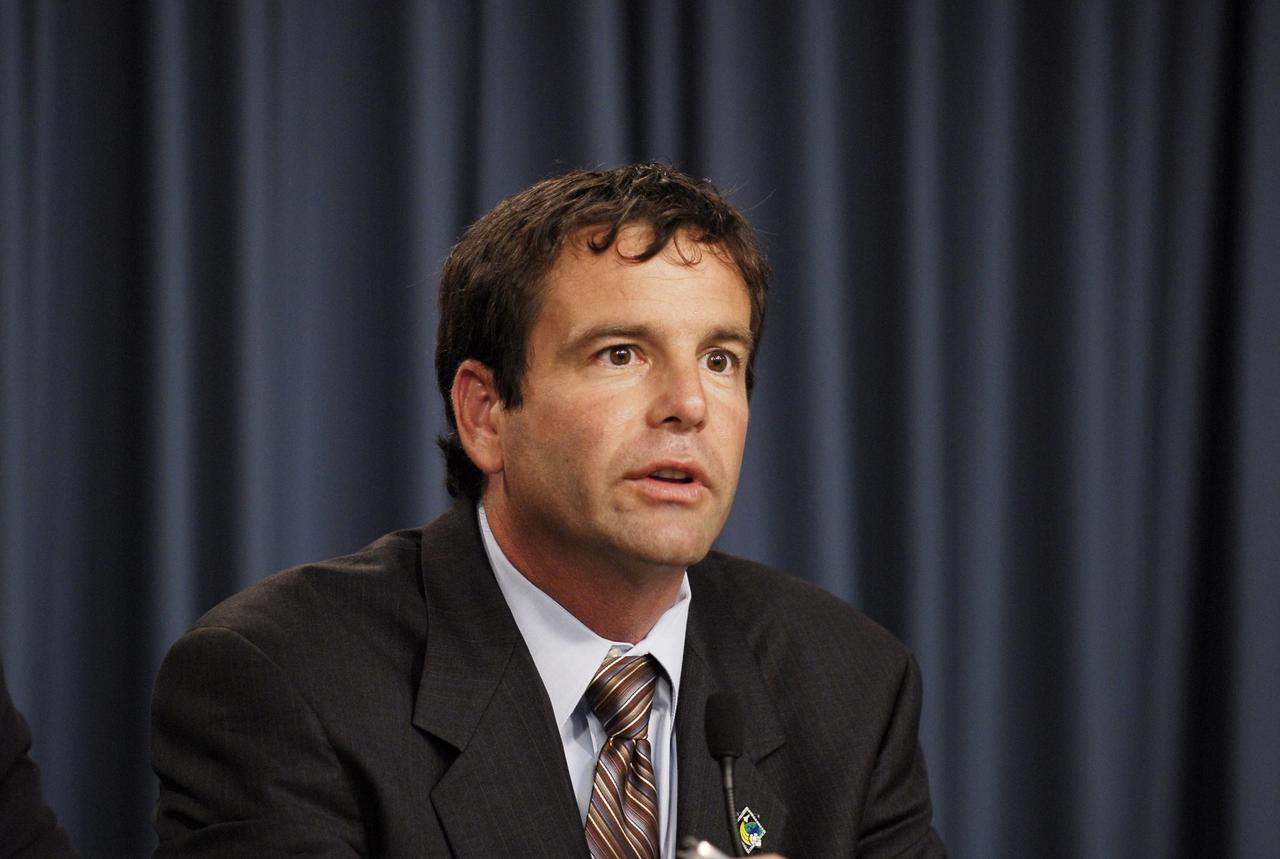
KENNEDY SPACE CENTER, FLA. -- Doug Lyons, STS-122 launch director, participates in a news briefing following the conclusion of a Mission Management Team, or MMT, meeting. The meeting followed the morning's launch scrub of the space shuttle Atlantis STS-122 mission caused by problems experienced with the external tank's engine cutoff sensor system during tanking for the second launch attempt. An announcement was made during the briefing that the STS-122 launch is postponed to no earlier than Jan. 2, 2008, to give the team time to resolve the system's problems. Atlantis will carry the Columbus Laboratory, the European Space Agency's largest contribution to the construction of the International Space Station. It will support scientific and technological research in a microgravity environment. Permanently attached to the Harmony node of the space station, the laboratory will carry out experiments in materials science, fluid physics and biosciences, as well as perform a number of technological applications. Photo credit: NASA/Kim Shiflett

KENNEDY SPACE CENTER, FLA. -- Bill Gerstenmaier, associate administrator for Space Operations, participates in a news briefing following the conclusion of a Mission Management Team, or MMT, meeting. The meeting followed the morning's launch scrub of the space shuttle Atlantis STS-122 mission caused by problems experienced with the external tank's engine cutoff sensor system during tanking for the second launch attempt. An announcement was made during the briefing that the STS-122 launch is postponed to no earlier than Jan. 2, 2008, to give the team time to resolve the system's problems. Atlantis will carry the Columbus Laboratory, the European Space Agency's largest contribution to the construction of the International Space Station. It will support scientific and technological research in a microgravity environment. Permanently attached to the Harmony node of the space station, the laboratory will carry out experiments in materials science, fluid physics and biosciences, as well as perform a number of technological applications. Photo credit: NASA/Kim Shiflett
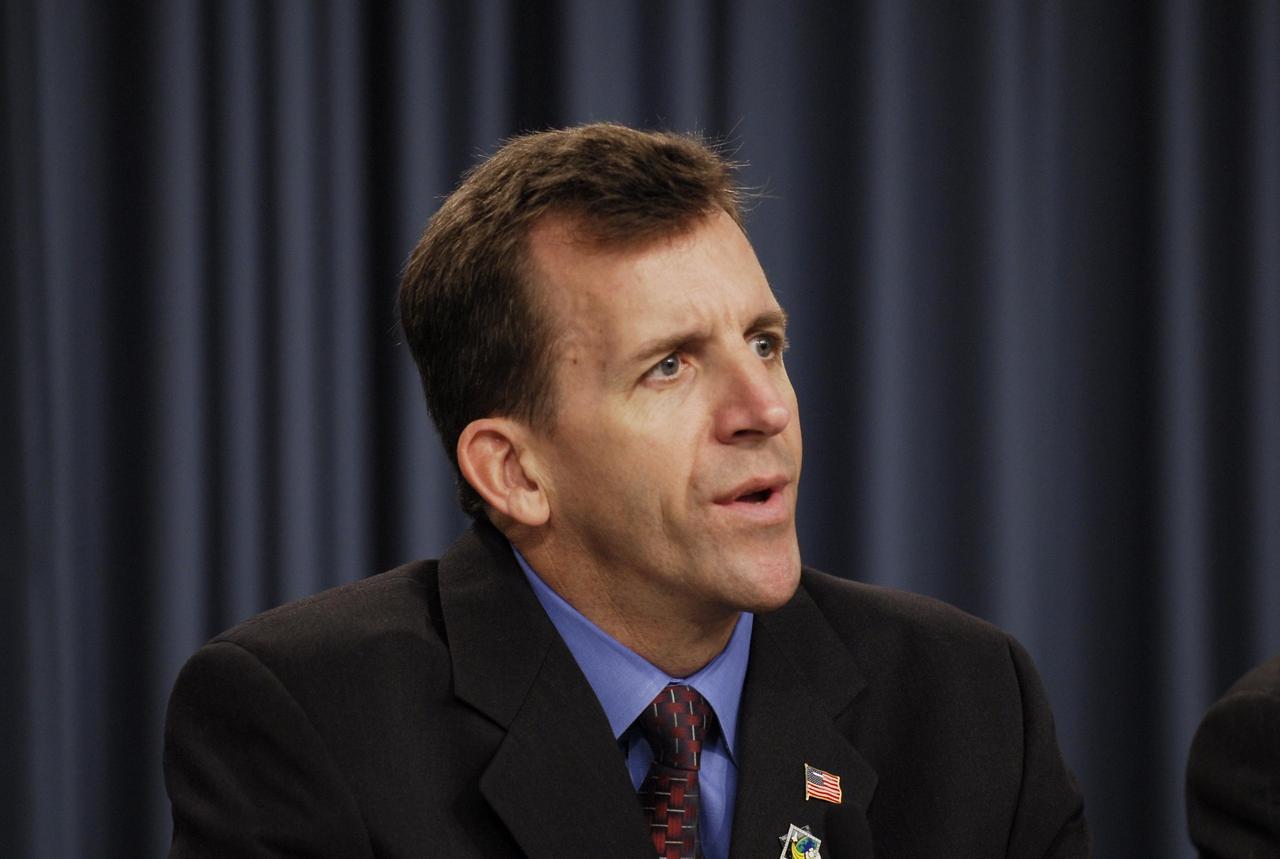
KENNEDY SPACE CENTER, FLA. -- LeRoy Cain, the Mission Management Team chairman, participates in a news briefing following the conclusion of a team meeting. The meeting followed the morning's launch scrub caused by problems experienced with the space shuttle Atlantis STS-122 external tank's engine cutoff sensor system during tanking for the second launch attempt. An announcement was made during the briefing that the STS-122 launch is postponed to no earlier than Jan. 2, 2008, to give the team time to resolve the system's problems. Atlantis will carry the Columbus Laboratory, the European Space Agency's largest contribution to the construction of the International Space Station. It will support scientific and technological research in a microgravity environment. Permanently attached to the Harmony node of the space station, the laboratory will carry out experiments in materials science, fluid physics and biosciences, as well as perform a number of technological applications. Photo credit: NASA/Kim Shiflett
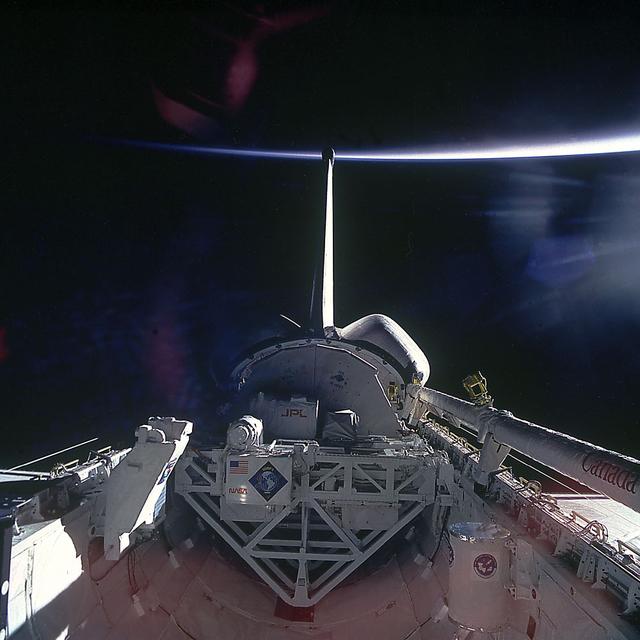
This is a Space Shuttle Columbia (STS-52) onboard photograph of the United States Microgravity Payload-1 (USMP-1) in the cargo bay. The USMP program is a series of missions developed by NASA to provide scientists with the opportunity to conduct research in the unique microgravity environment of the Space Shuttle's payload bay. The USMP-1 mission was designed for microgravity experiments that do not require the hands-on environment of the Spacelab. Science teams on the ground would remotely command and monitor instruments and analyze data from work stations at NASA's Spacelab Mission Operation Control facility at the Marshall Space Flight Center (MSFC). The USMP-1 payload carried three investigations: two studied basic fluid and metallurgical processes in microgravity, and the third would characterize the microgravity environment onboard the Space Shuttle. The three experiments that made up USMP-1 were the Lambda Point Experiment, the Space Acceleration Measurement System, and the Materials for the Study of Interesting Phenomena of Solidification Earth and in Orbit (MEPHISTO). The three experiments were mounted on two cornected Mission Peculiar Equipment Support Structures (MPESS) mounted in the orbiter's cargo bay. The USMP program was managed by the MSFC and the MPESS was developed by the MSFC.
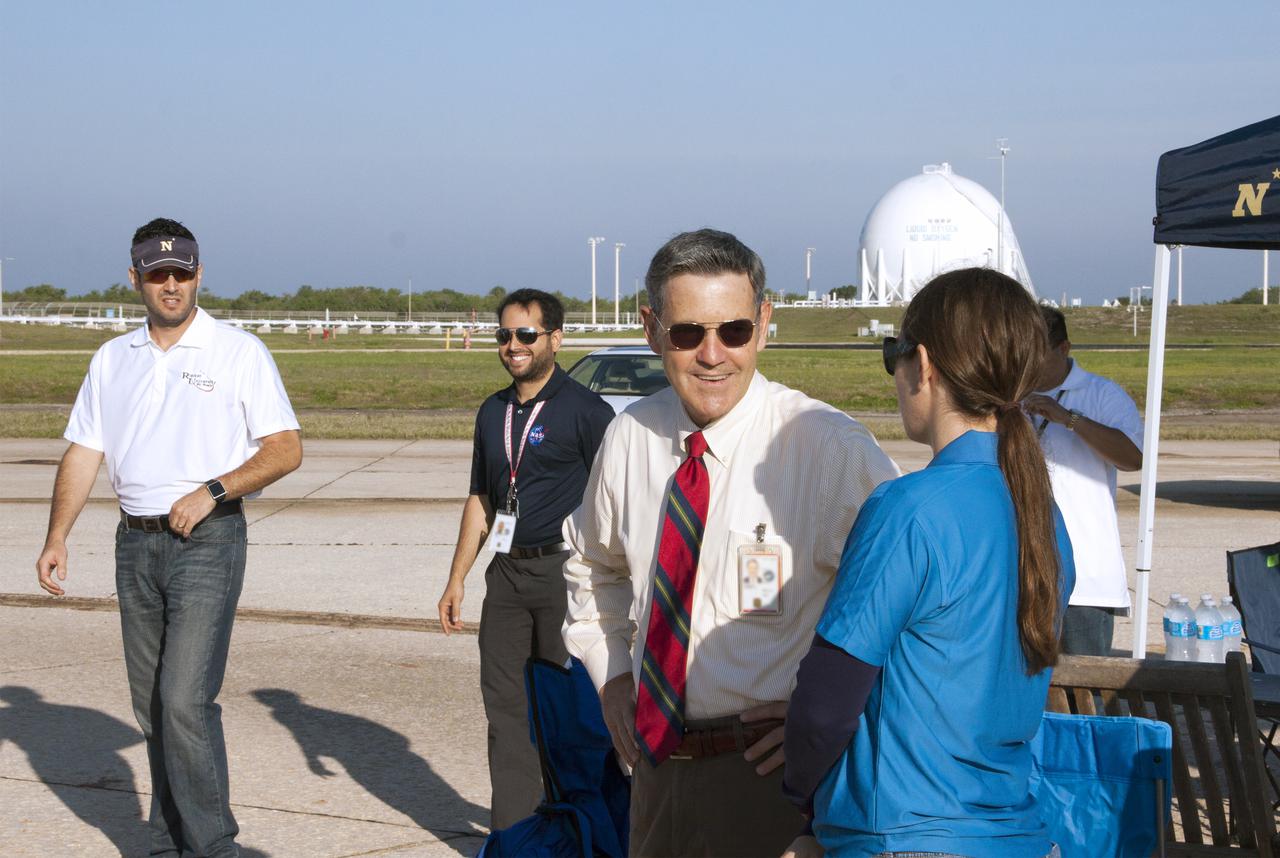
CAPE CANAVERAL, Fla. -- At NASA's Kennedy Space Center in Florida, center director Bob Cabana congratulates engineers on the successful launch of a small rocket at Launch Pad 39A as part of Rocket University. From the left are Leandro James of Systems Hardware Engineering, Kelvin Ruiz of Systems Hardware Engineering, Cabana and Kim Simpson of Fluids, Mechanical and Structural Systems. The goal was to test its systems and to verify that it performed as designed. As part of Rocket University, the engineers are given an opportunity to work a fast-track project to develop skills in developing spacecraft systems of the future. As NASA plans for future spaceflight programs to low-Earth orbit and beyond, teams of engineers at Kennedy are gaining experience in designing and flying launch vehicle systems on a small scale. Four teams of five to eight members from Kennedy are designing rockets complete with avionics and recovery systems. Launch operations require coordination with federal agencies, just as they would with rockets launched in support of a NASA mission. Photo credit: NASA_Jim Grossmann
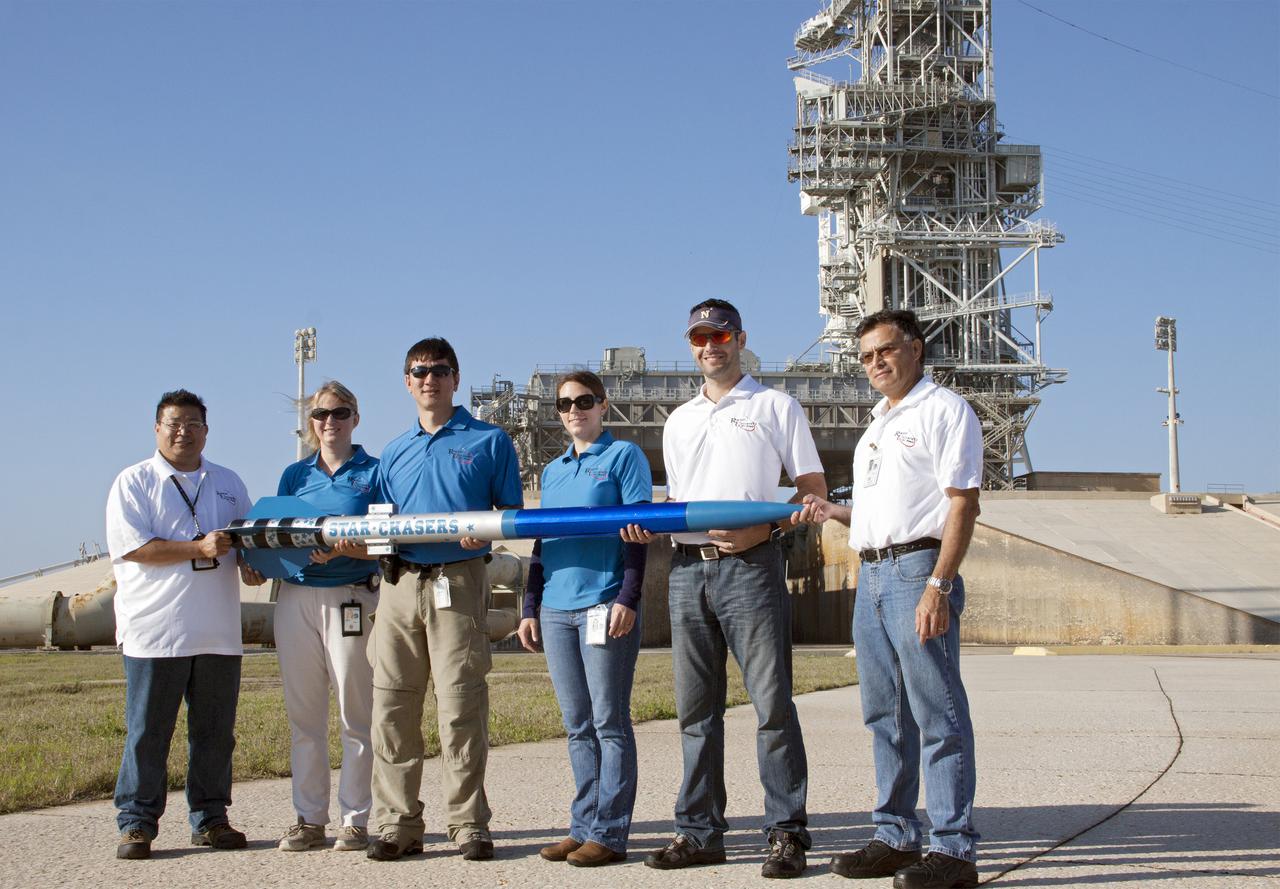
CAPE CANAVERAL, Fla. -- At NASA's Kennedy Space Center in Florida, engineers display a small rocket following its launch as part of Rocket University. From the left are Myphi Tran of Flight Instrumentation, Susan Danley of Flight Structures, Morgan Simpson of Flight Hardware Processing, Kim Simpson of Fluids, Mechanical and Structural Systems, Leandro James of Systems Hardware Engineering and Julio Najarro of Mechanical Assembly, Lifting and Handling. The goal was to test its systems and to verify that it performed as designed. As part of Rocket University, the engineers are given an opportunity to work a fast-track project to develop skills in developing spacecraft systems of the future. As NASA plans for future spaceflight programs to low-Earth orbit and beyond, teams of engineers at Kennedy are gaining experience in designing and flying launch vehicle systems on a small scale. Four teams of five to eight members from Kennedy are designing rockets complete with avionics and recovery systems. Launch operations require coordination with federal agencies, just as they would with rockets launched in support of a NASA mission. Photo credit: NASA_Jim Grossmann
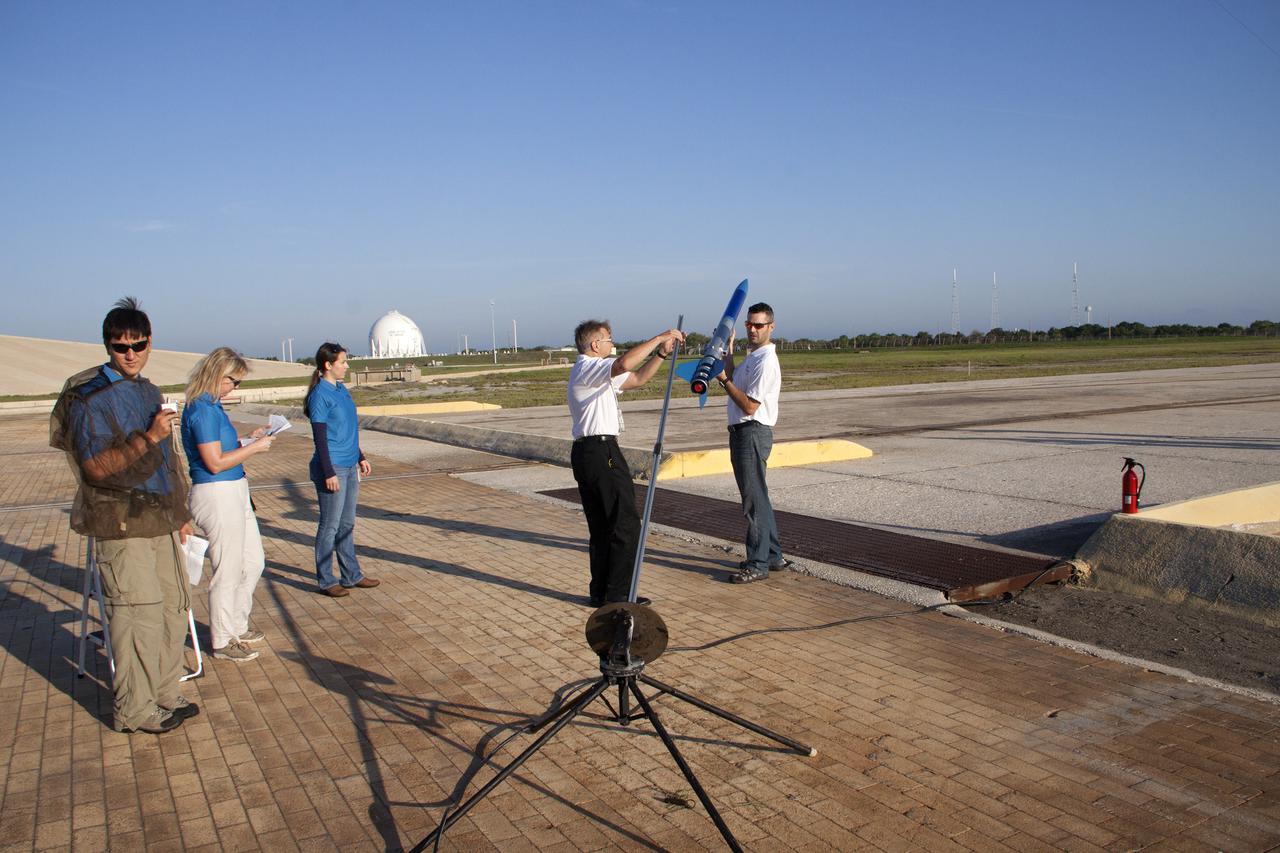
CAPE CANAVERAL, Fla. -- At NASA's Kennedy Space Center in Florida, as Morgan Simpson of Flight Hardware Processing, Susan Danley of Flight Structures and Kim Simpson of Fluids, Mechanical and Structural Systems look on, Gary Dahlke of Engineering and Technology, left, and Leandro James of Systems Hardware Engineering attach a small rocket prior to its launch stand as part of Rocket University. The goal was to test its systems and to verify that it performed as designed. As part of Rocket University, the engineers are given an opportunity to work a fast-track project to develop skills in developing spacecraft systems of the future. As NASA plans for future spaceflight programs to low-Earth orbit and beyond, teams of engineers at Kennedy are gaining experience in designing and flying launch vehicle systems on a small scale. Four teams of five to eight members from Kennedy are designing rockets complete with avionics and recovery systems. Launch operations require coordination with federal agencies, just as they would with rockets launched in support of a NASA mission. Photo credit: NASA_Jim Grossmann
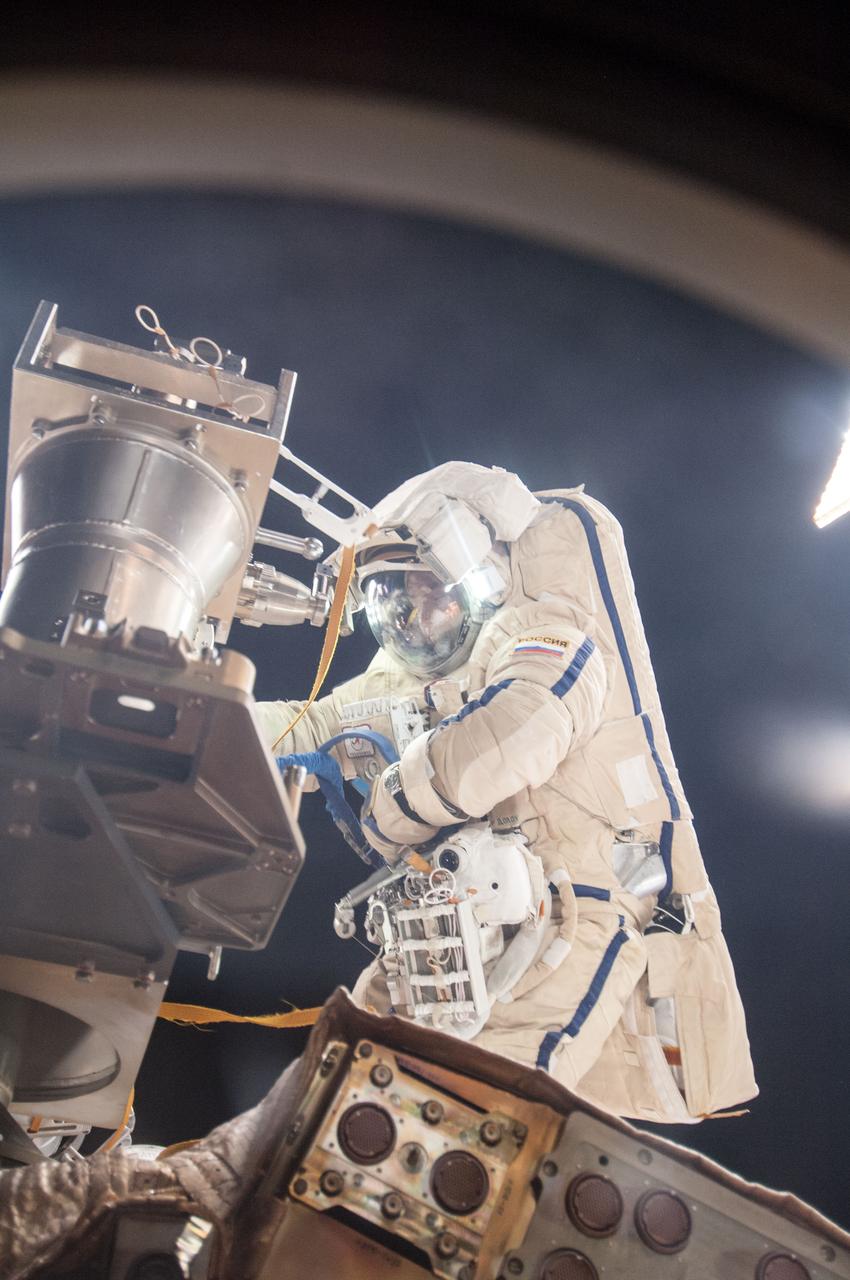
ISS036-E-011441 (24 June 2013) --- Russian cosmonaut Alexander Misurkin, Expedition 36 flight engineer, participates in a session of extravehicular activity (EVA) as work continues on the International Space Station. During the six-hour, 34-minute spacewalk, Misurkin and Russian cosmonaut Fyodor Yurchikhin (out of frame), Expedition 36 flight engineer, replaced an aging fluid flow control panel on the station's Zarya module as preventative maintenance on the cooling system for the Russian segment of the station. They also installed clamps for future power cables as an early step toward swapping the Pirs airlock with a new multipurpose laboratory module. The Russian Federal Space Agency plans to launch a combination research facility, airlock and docking port late this year on a Proton rocket. Yurchikhin and Misurkin also retrieved two science experiments and installed a new one.
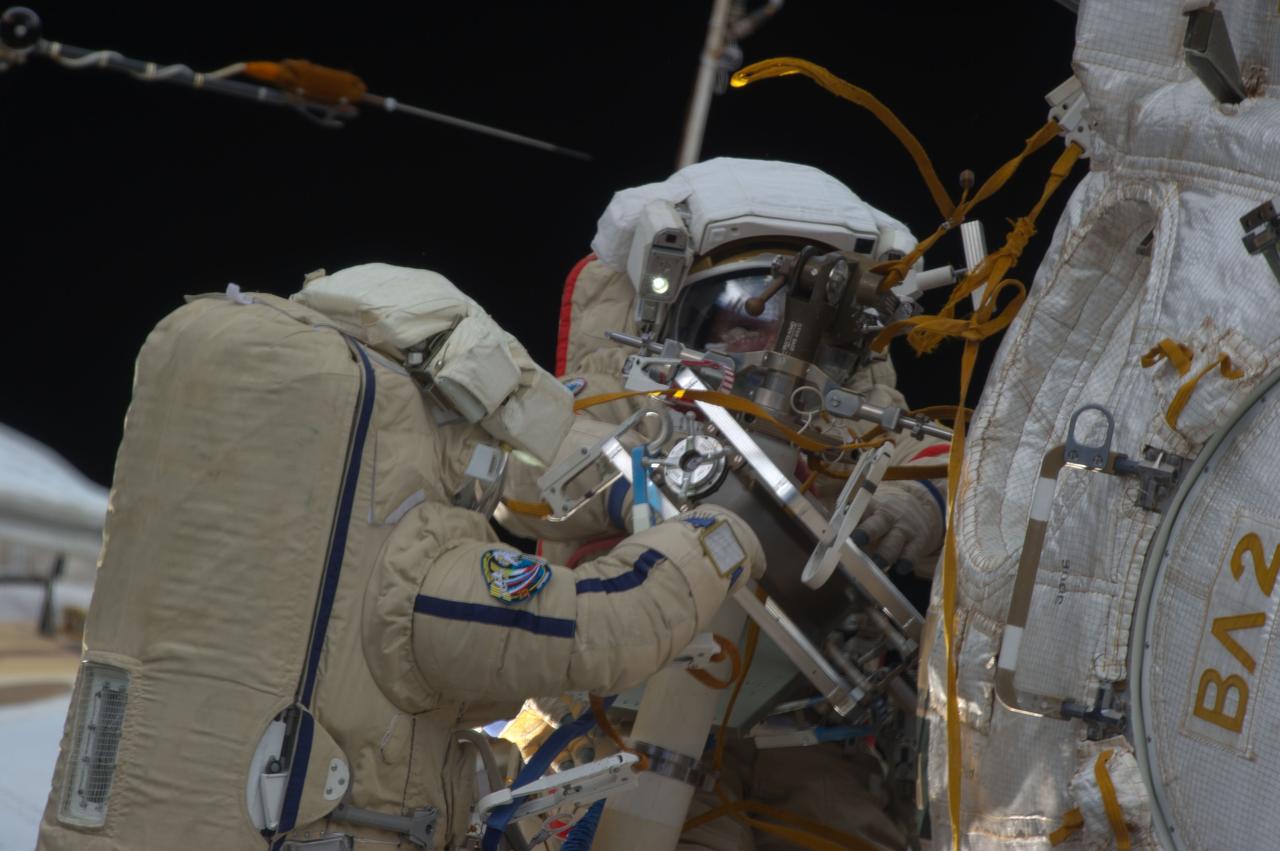
ISS036-E-011593 (24 June 2013) --- Russian cosmonauts Alexander Misurkin (left) and Fyodor Yurchikhin, both Expedition 36 flight engineers, participate in a session of extravehicular activity (EVA) as work continues on the International Space Station. During the six-hour, 34-minute spacewalk, Misurkin and Yurchikhin replaced an aging fluid flow control panel on the station's Zarya module as preventative maintenance on the cooling system for the Russian segment of the station. They also installed clamps for future power cables as an early step toward swapping the Pirs airlock with a new multipurpose laboratory module. The Russian Federal Space Agency plans to launch a combination research facility, airlock and docking port late this year on a Proton rocket. Yurchikhin and Misurkin also retrieved two science experiments and installed one new one.