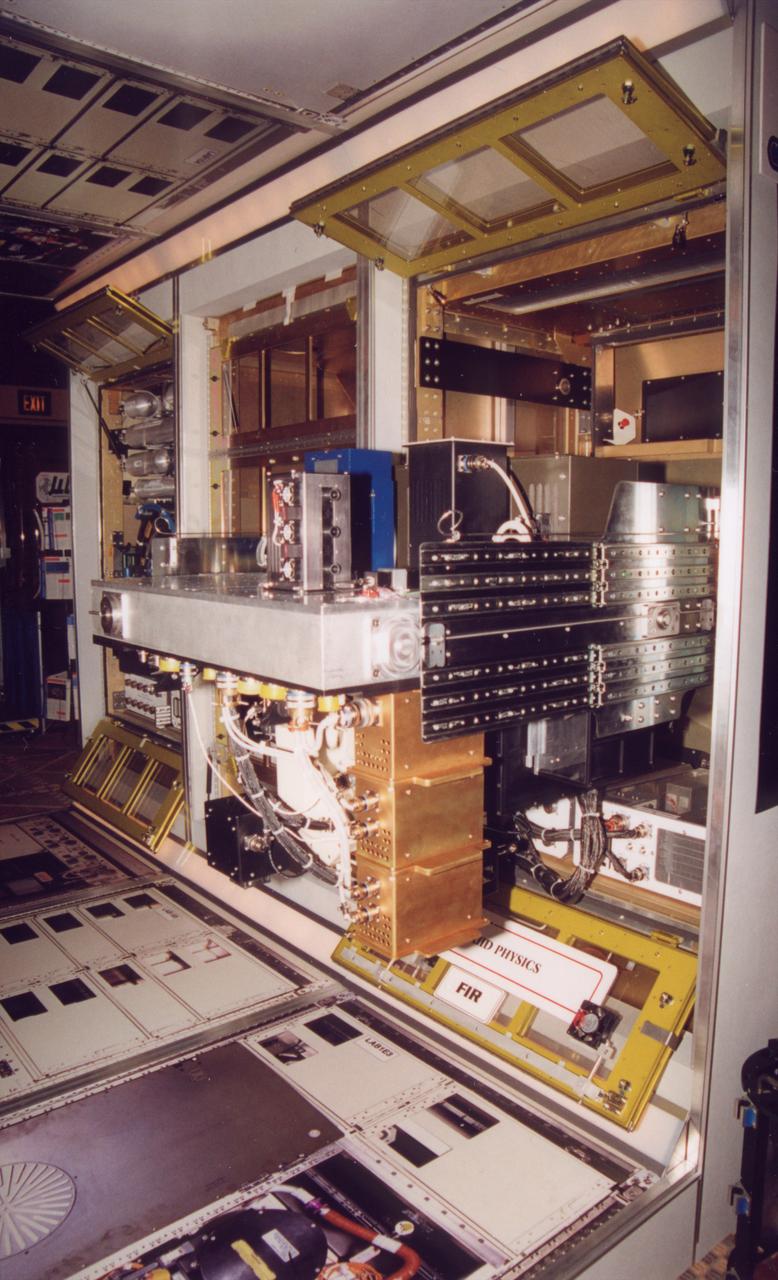
The optical bench for the Fluids Integrated Rack section of the Fluids and Combustion Facility (FCF) is shown extracted for servicing and with the optical bench rotated 90 degrees to access the rear elements. The FCF will be installed, in phases, in the Destiny, the U.S. Laboratory Module of the International Space Station (ISS), and will accommodate multiple users for a range of investigations. This is an engineering mockup; the flight hardware is subject to change as designs are refined. The FCF is being developed by the Microgravity Science Division (MSD) at the NASA Glenn Research Center. (Photo credit: NASA/Marshall Space Flight Center)
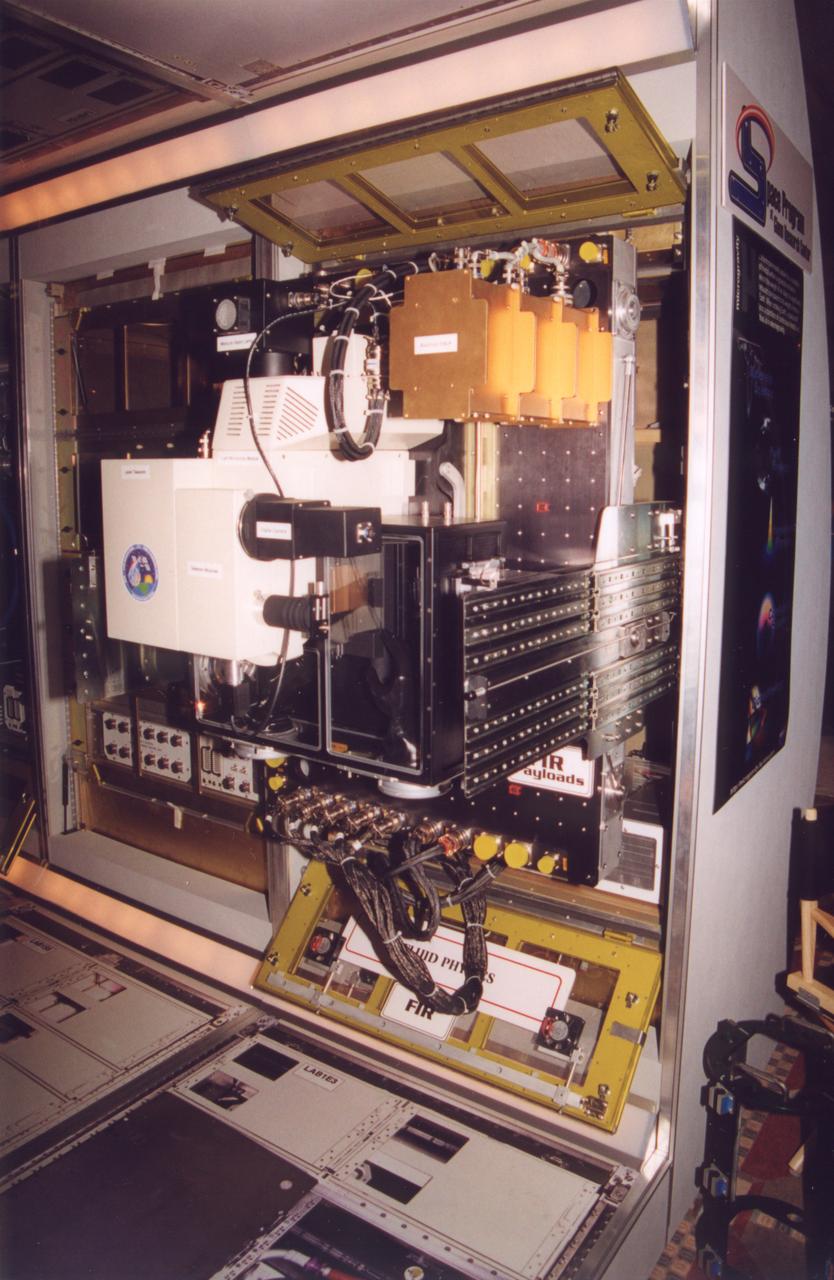
The optical bench for the Fluids Integrated Rack section of the Fluids and Combustion Facility (FCF) is shown extracted for servicing. The FCF will be installed, in phases, in the Destiny, the U.S. Laboratory Module of the International Space Station (ISS), and will accommodate multiple users for a range of investigations. This is an engineering mockup; the flight hardware is subject to change as designs are refined. The FCF is being developed by the Microgravity Science Division (MSD) at the NASA Glenn Research Center. (Photo credit: NASA/Marshall Space Flight Center)

Advanced Colloids Experiment, Thermal 5-2, ACE T5-2 International Space Station, ISS, Fluids Integrated Rack, FIR Operations in the Telescience Support Center, TSC
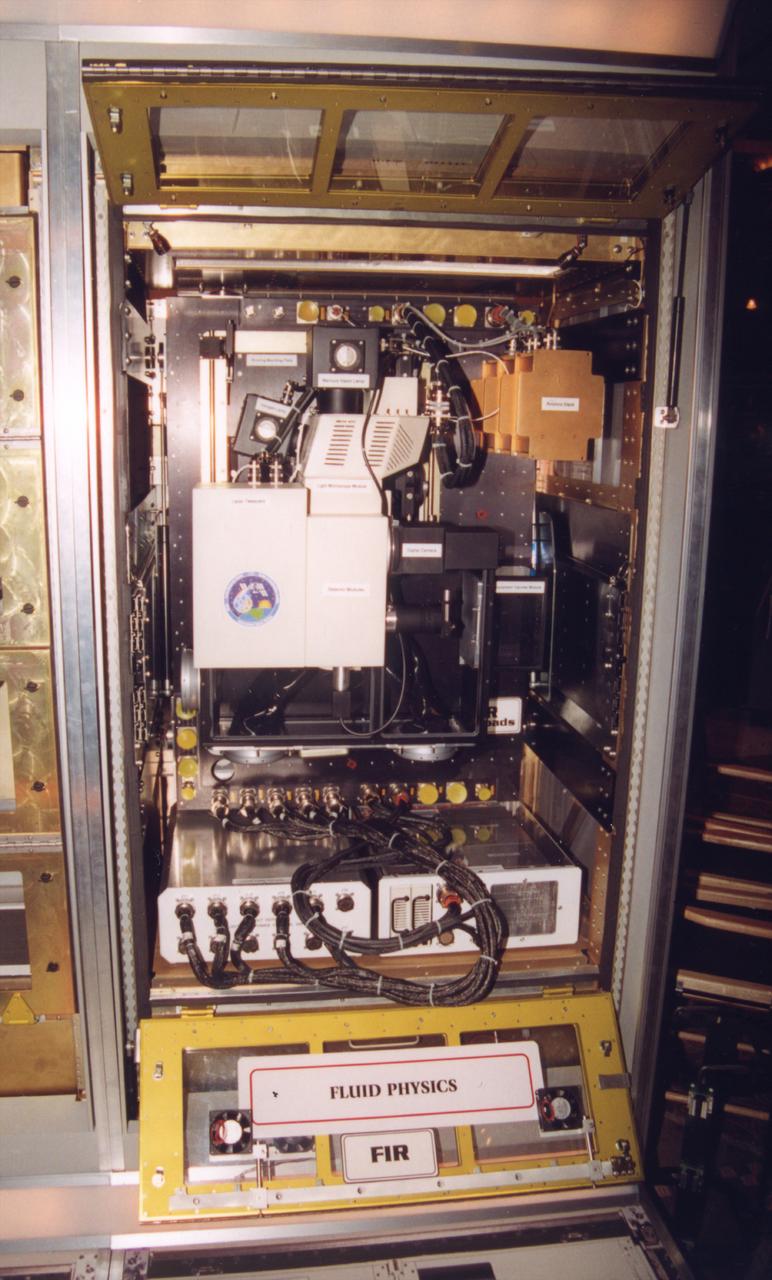
The optical bench for the Fluid Integrated Rack section of the Fluids and Combustion Facility (FCF) is shown in its operational configuration. The FCF will be installed, in phases, in the Destiny, the U.S. Laboratory Module of the International Space Station (ISS), and will accommodate multiple users for a range of investigations. This is an engineering mockup; the flight hardware is subject to change as designs are refined. The FCF is being developed by the Microgravity Science Division (MSD) at the NASA Glenn Research Center. (Photo credit: NASA/Marshall Space Flight Center)
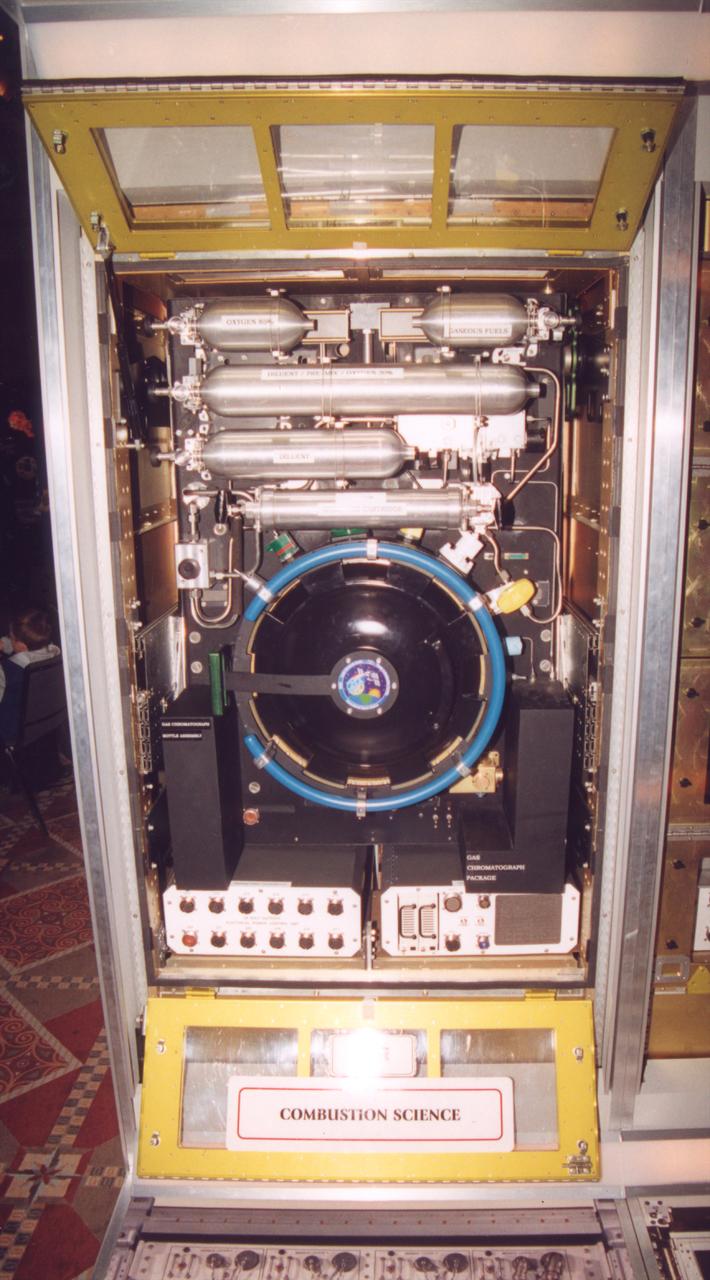
The combustion chamber for the Combustion Integrated Rack section of the Fluids and Combustion Facility (FCF) is shown in its operational configuration. The FCF will be installed, in phases, in the Destiny, the U.S. Laboratory Module of the International Space Station (ISS), and will accommodate multiple users for a range of investigations. This is an engineering mockup; the flight hardware is subject to change as designs are refined. The FCF is being developed by the Microgravity Science Division (MSD) at the NASA Glenn Research Center. (Photo credit: NASA/Marshall Space Flight Center)
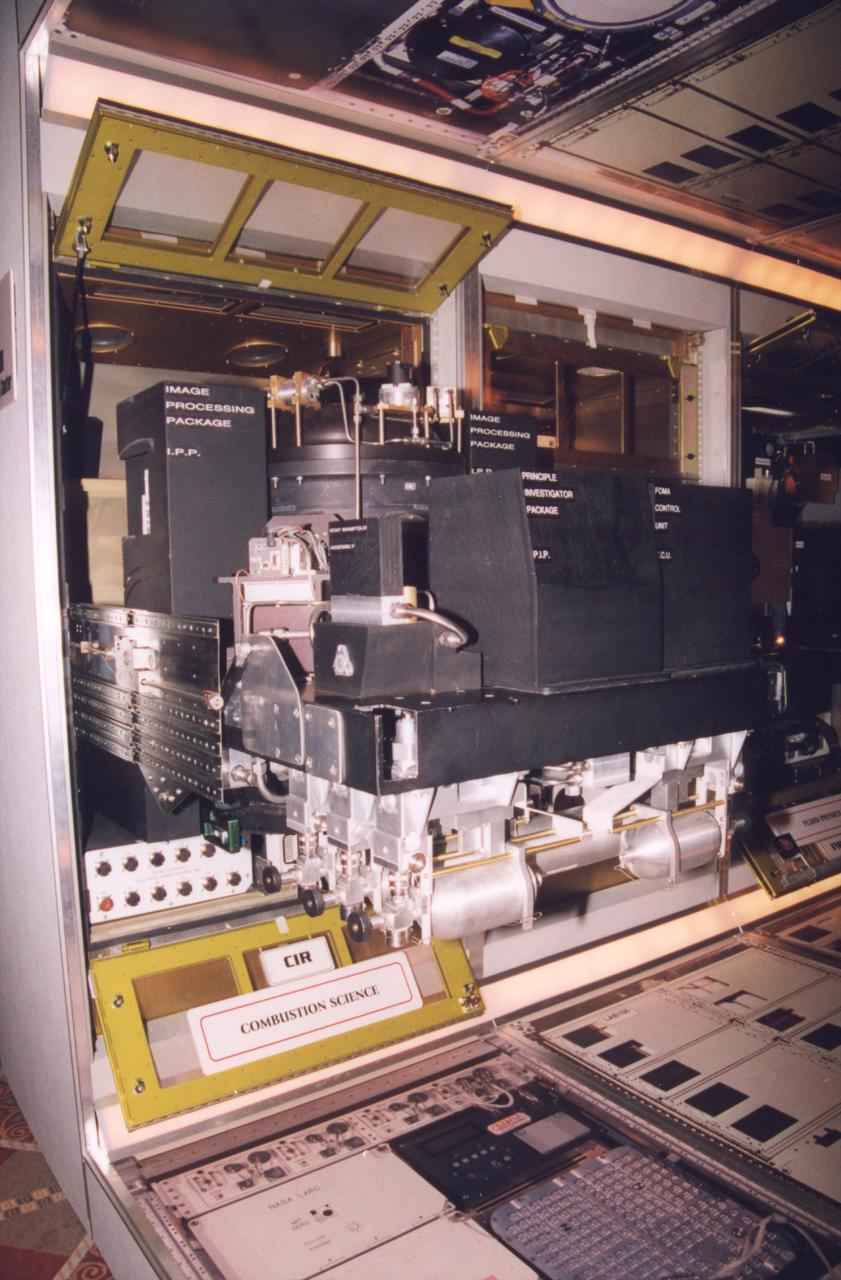
The combustion chamber for the Combustion Integrated Rack section of the Fluids and Combustion Facility (FCF) is shown extracted for servicing and with the optical bench rotated 90 degrees for access to the rear elements. The FCF will be installed, in phases, in the Destiny, the U.S. Laboratory Module of the International Space Station (ISS), and will accommodate multiple users for a range of investigations. This is an engineering mockup; the flight hardware is subject to change as designs are refined. The FCF is being developed by the Microgravity Science Division (MSD) at the NASA Glenn Research Center. (Photo credit: NASA/Marshall Space Flight Center)
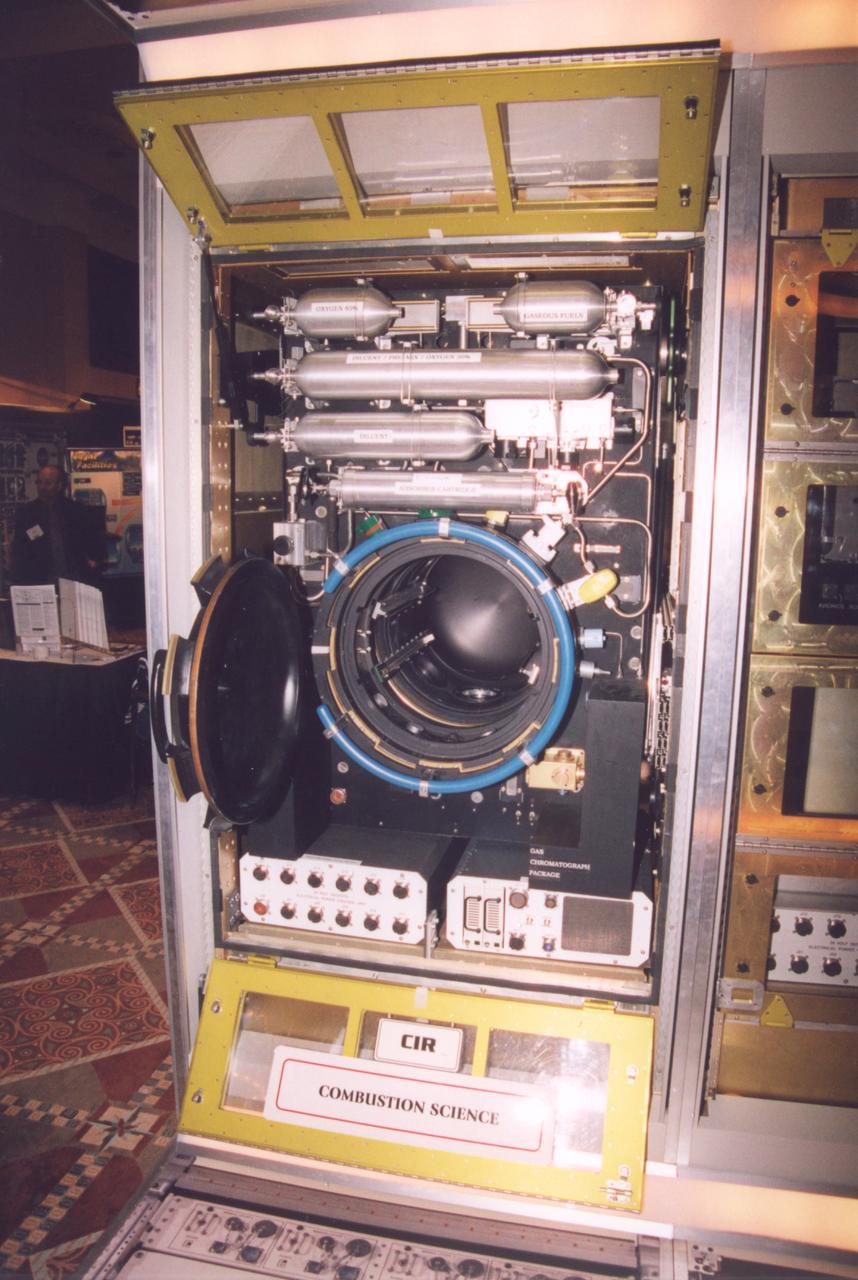
The combustion chamber for the Combustion Integrated Rack section of the Fluids and Combustion Facility (FCF) is shown opened for installation of burn specimens. The FCF will be installed, in phases, in the Destiny, the U.S. Laboratory Module of the International Space Station (ISS), and will accommodate multiple users for a range of investigations. This is an engineering mockup; the flight hardware is subject to change as designs are refined. The FCF is being developed by the Microgravity Science Division (MSD) at the NASA Glenn Research Center. (Photo credit: NASA/Marshall Space Flight Center)
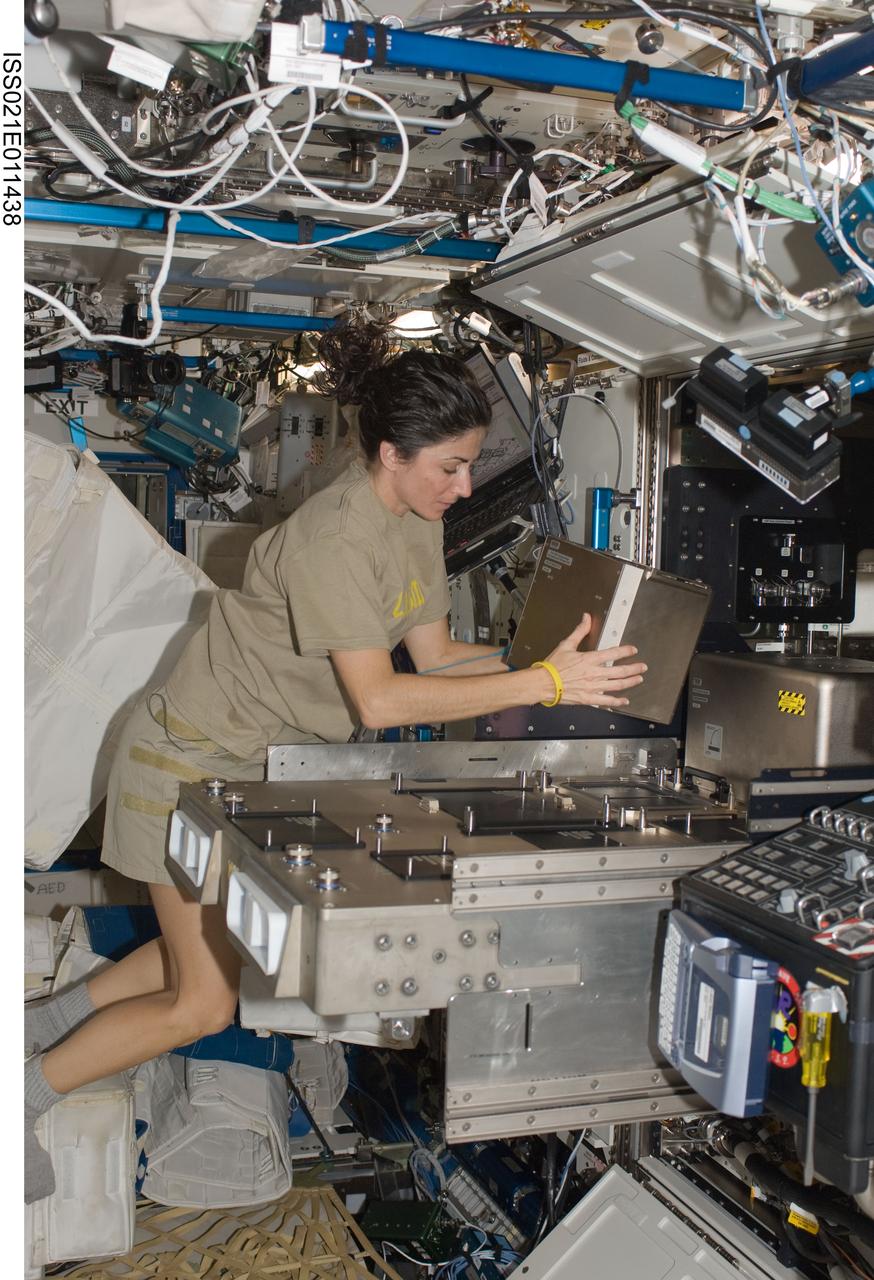
ISS021-E-011438 (22 Oct. 2009) --- NASA astronaut Nicole Stott, Expedition 21 flight engineer, installs hardware in the Fluids Integrated Rack (FIR) in the Destiny laboratory of the International Space Station.
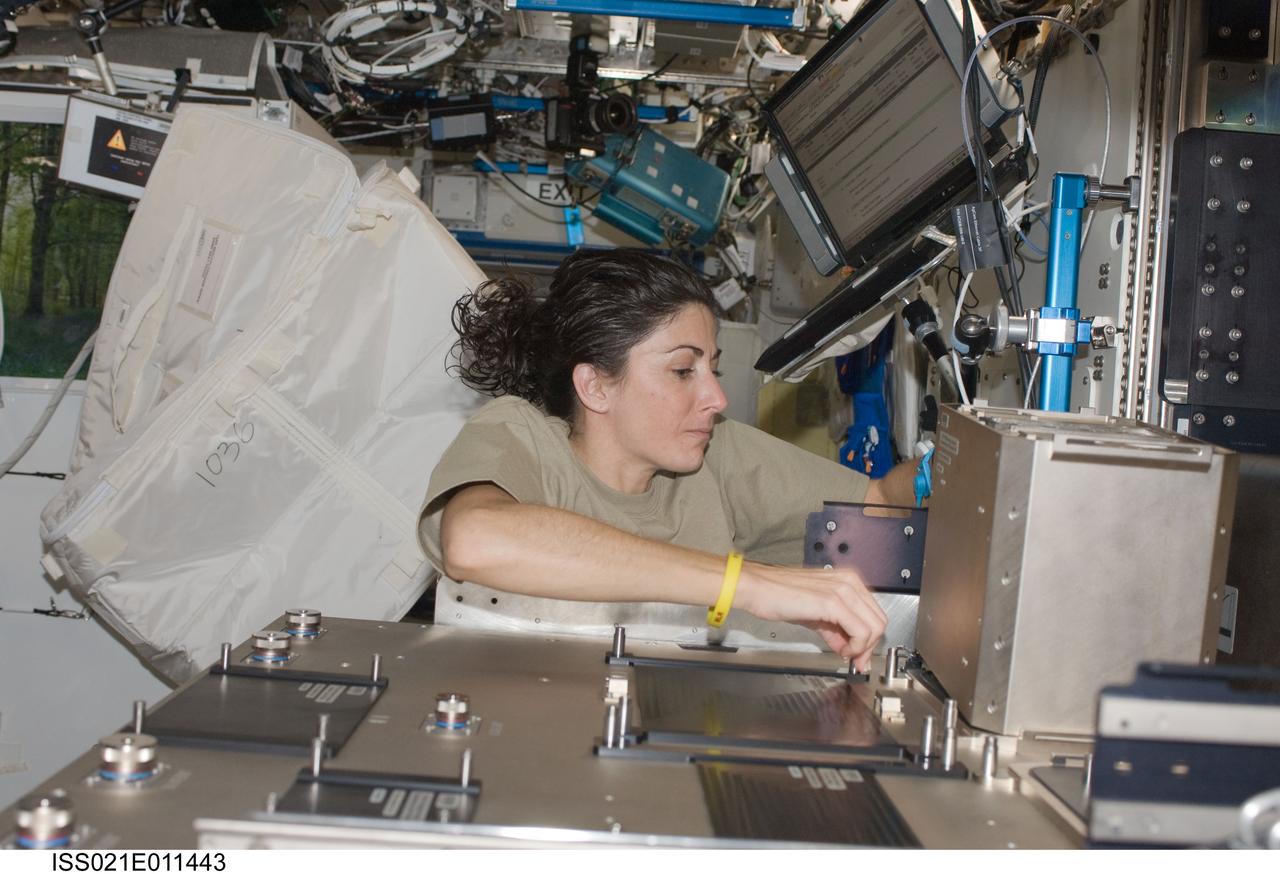
ISS021-E-011443 (22 Oct. 2009) --- NASA astronaut Nicole Stott, Expedition 21 flight engineer, installs hardware in the Fluids Integrated Rack (FIR) in the Destiny laboratory of the International Space Station.
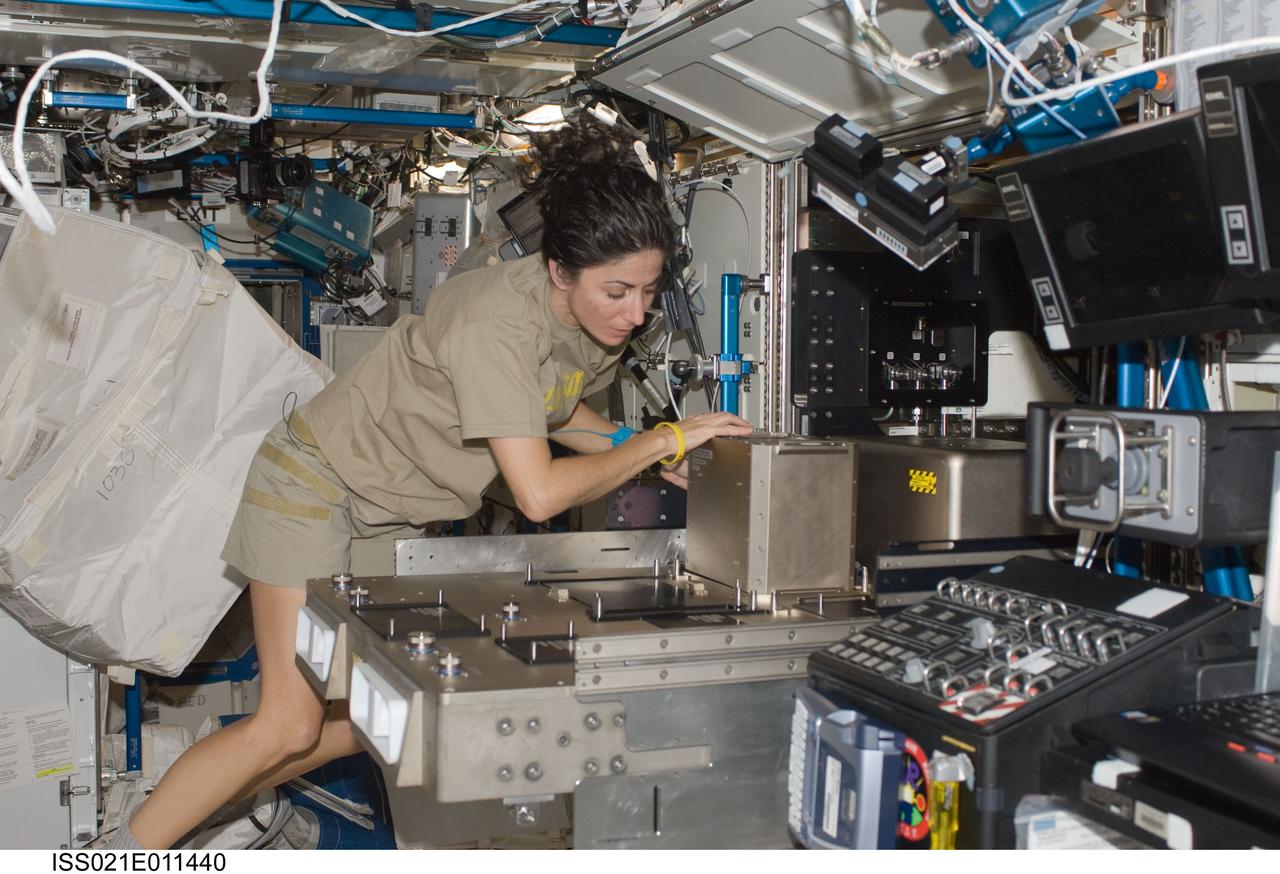
ISS021-E-011440 (22 Oct. 2009) --- NASA astronaut Nicole Stott, Expedition 21 flight engineer, installs hardware in the Fluids Integrated Rack (FIR) in the Destiny laboratory of the International Space Station.
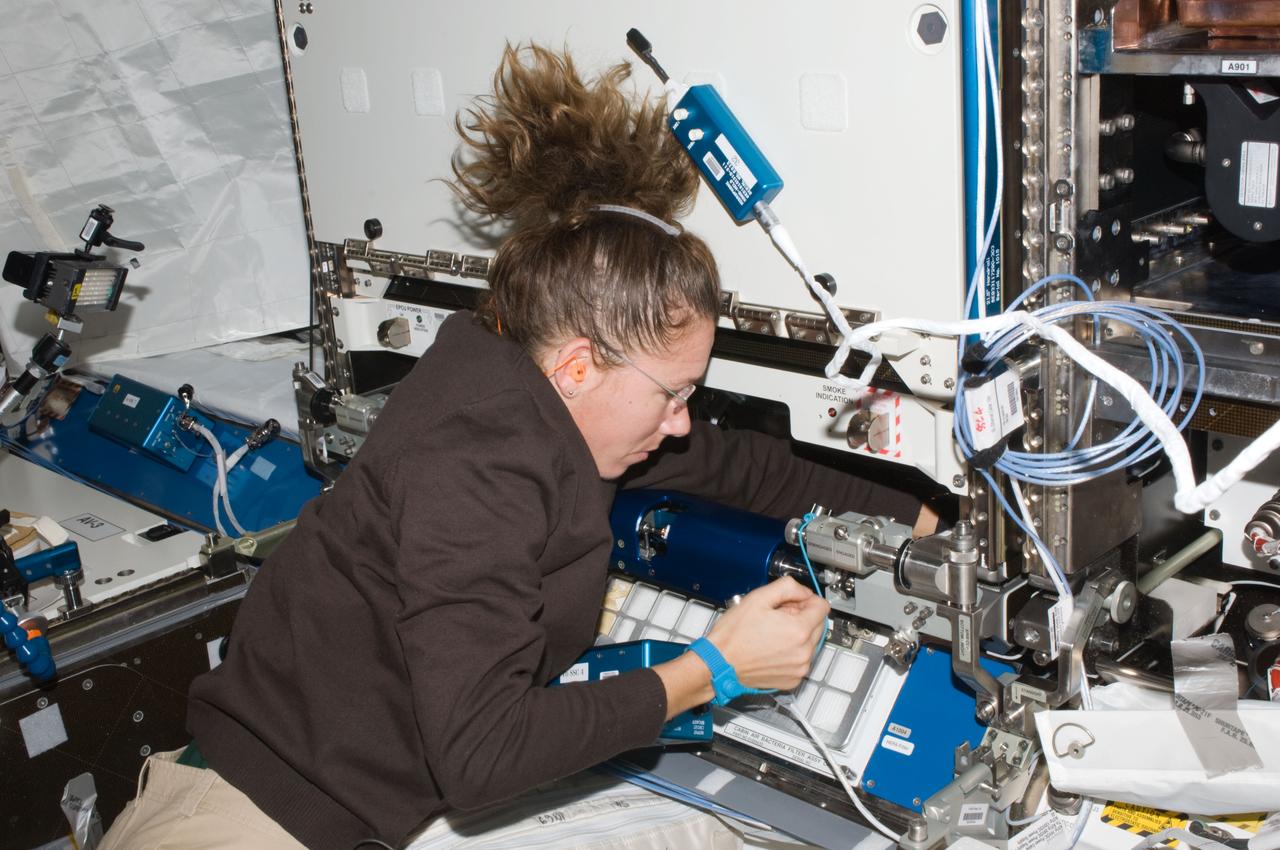
ISS018-E-017796 (5 Jan. 2009) --- Astronaut Sandra Magnus, Expedition 18 flight engineer, works on the Fluids and Combustion Facility (FCF) Combustion Integration Rack (CIR) Passive Rack Isolation System (PaRIS) in the Destiny laboratory of the International Space Station.
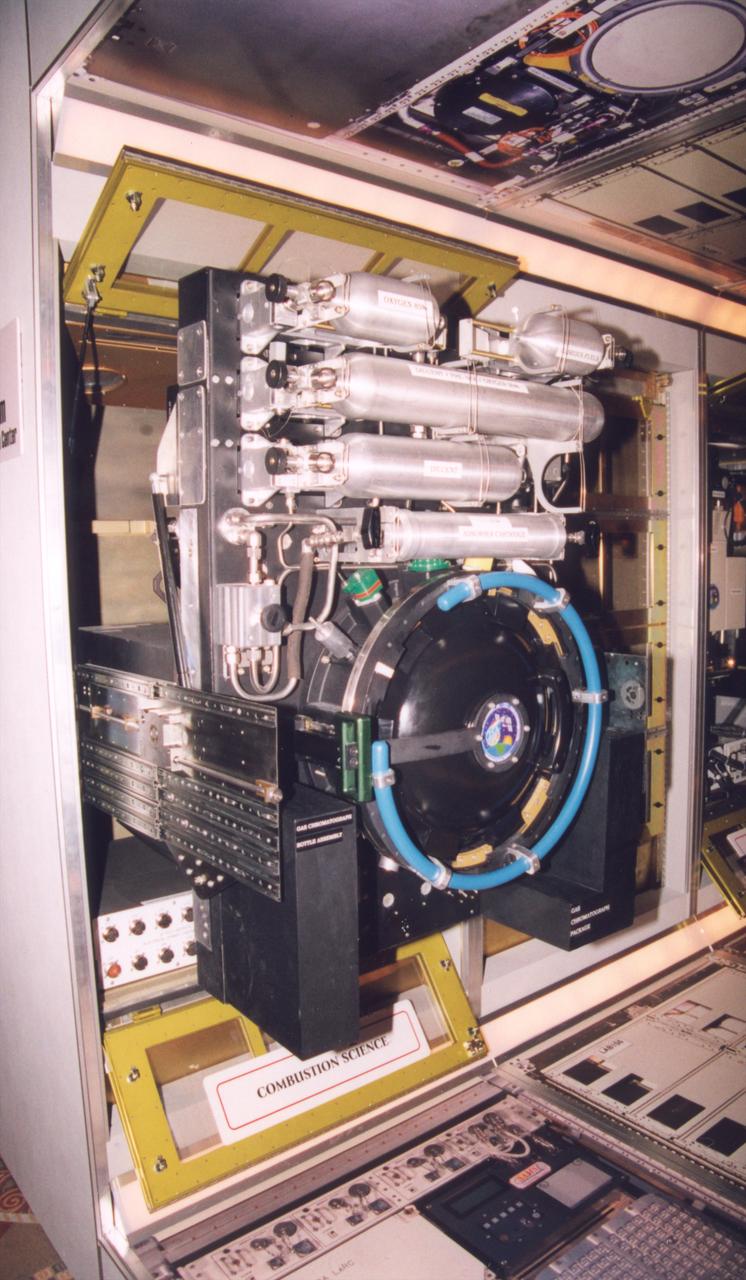
The combustion chamber for the Combustion Integrated Rack section of the Fluids and Combustion Facility (FCF) is shown extracted for servicing. The FCF will be installed, in phases, in the Destiny, the U.S. Laboratory Module of the International Space Station (ISS), and will accommodate multiple users for a range of investigations. This is an engineering mockup; the flight hardware is subject to change as designs are refined. The FCF is being developed by the Microgravity Science Division (MSD) at the NASA Glenn Research Center. (Photo credit: NASA/Marshall Space Flight Center)
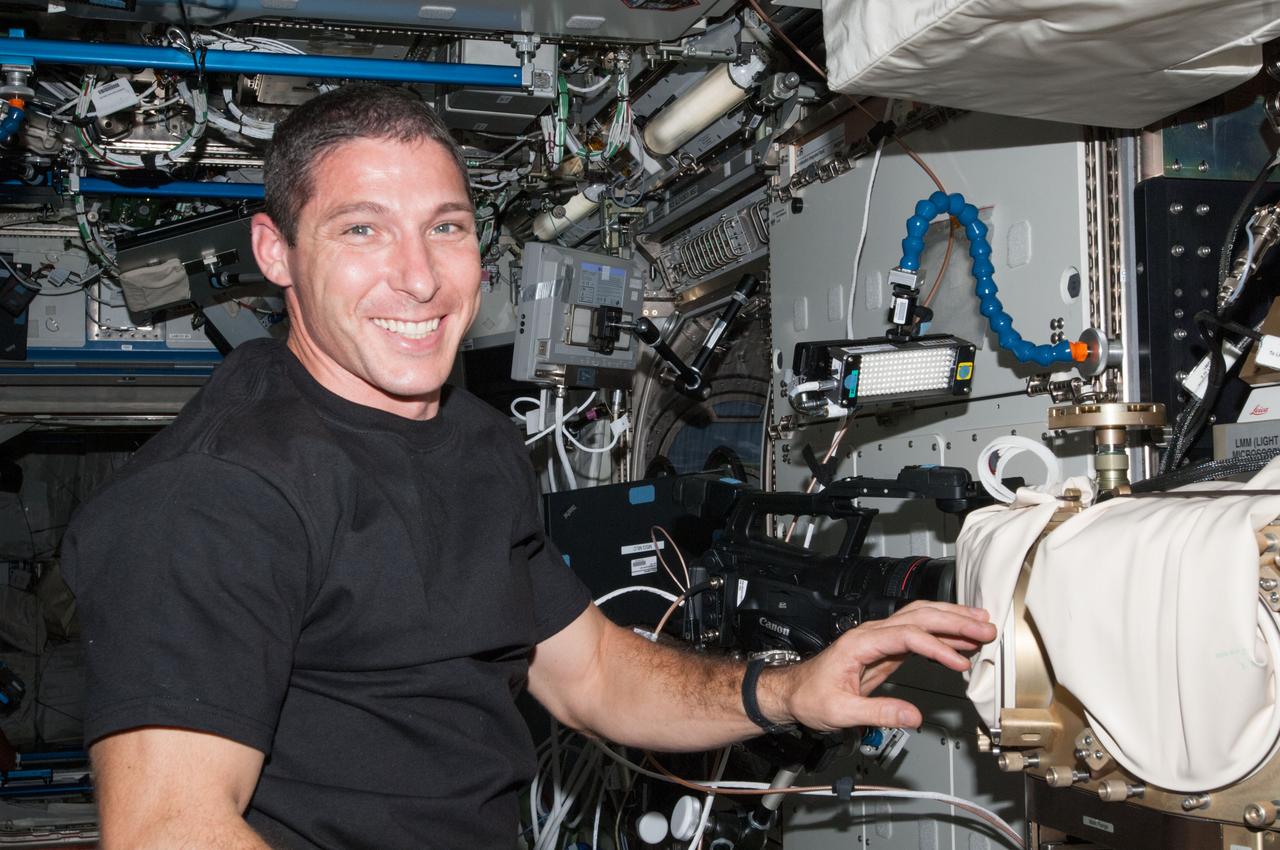
ISS037-E-012572 (14 Oct. 2013) --- In the U.S. lab Destiny aboard the Earth-orbiting International Space Station Expedition 37 Flight Engineer Michael Hopkins prepares the Fluids Integrated Rack for an experiment.
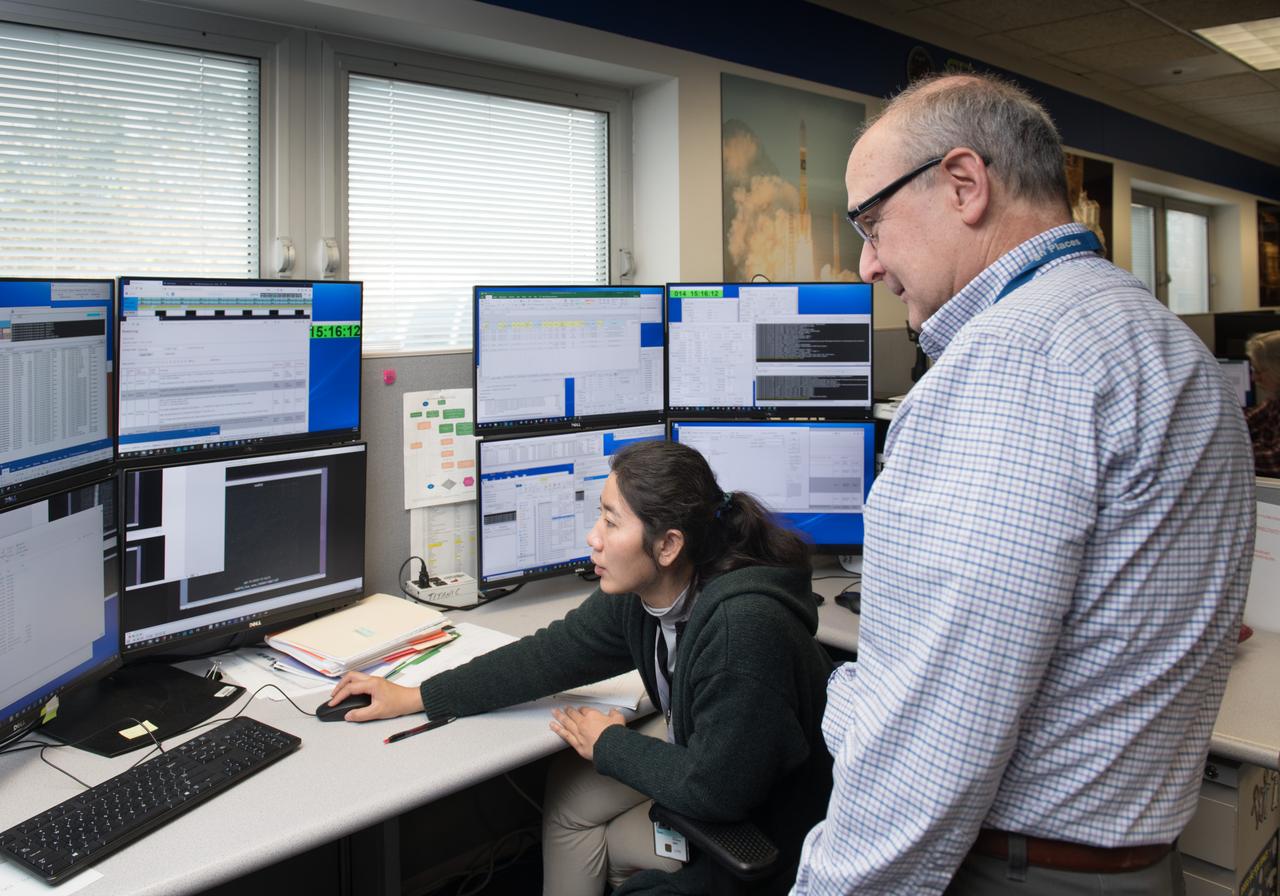
Advanced Colloids Experiment, Thermal 5-2, ACE T5-2 International Space Station, ISS, Fluids Integrated Rack, FIR Operations in the Telescience Support Center, TSC
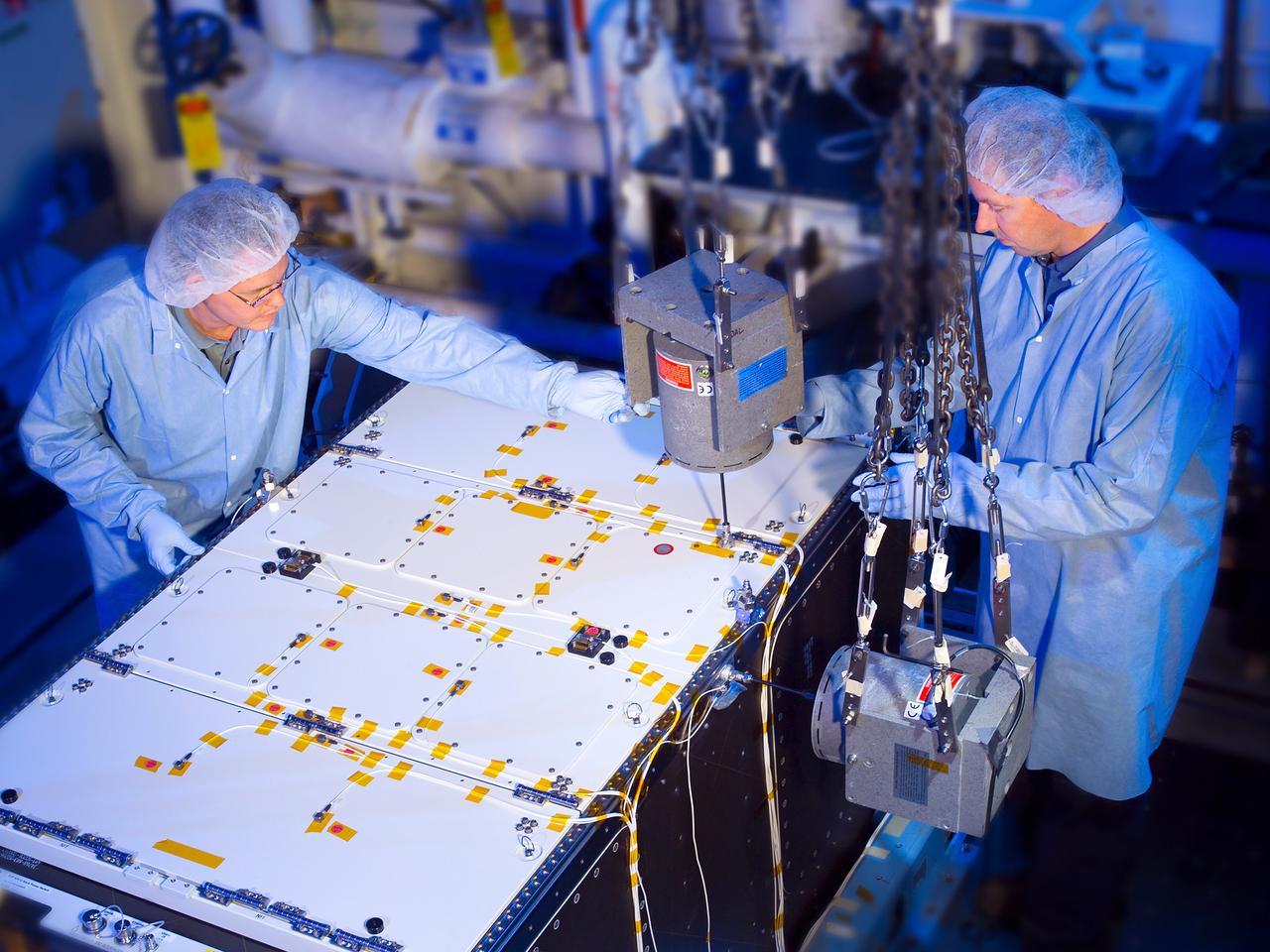
Fluids and Combustion Facility (FCF), Combustion Integration Rack (CIR) during testing in the Structural Dynamics Laboratory (SDL). The Fluids and Combustion Facility (FCF) is a set of two International Space Station (ISS) research facilities designed to support physical and biological experiments in support of technology development and validation in space. The FCF consists of two modular, reconfigurable racks called the Combustion Integration Rack (CIR) and the Fluids Integration Rack (FIR). The CIR and FIR were developed at NASAʼs Glenn Research Center.
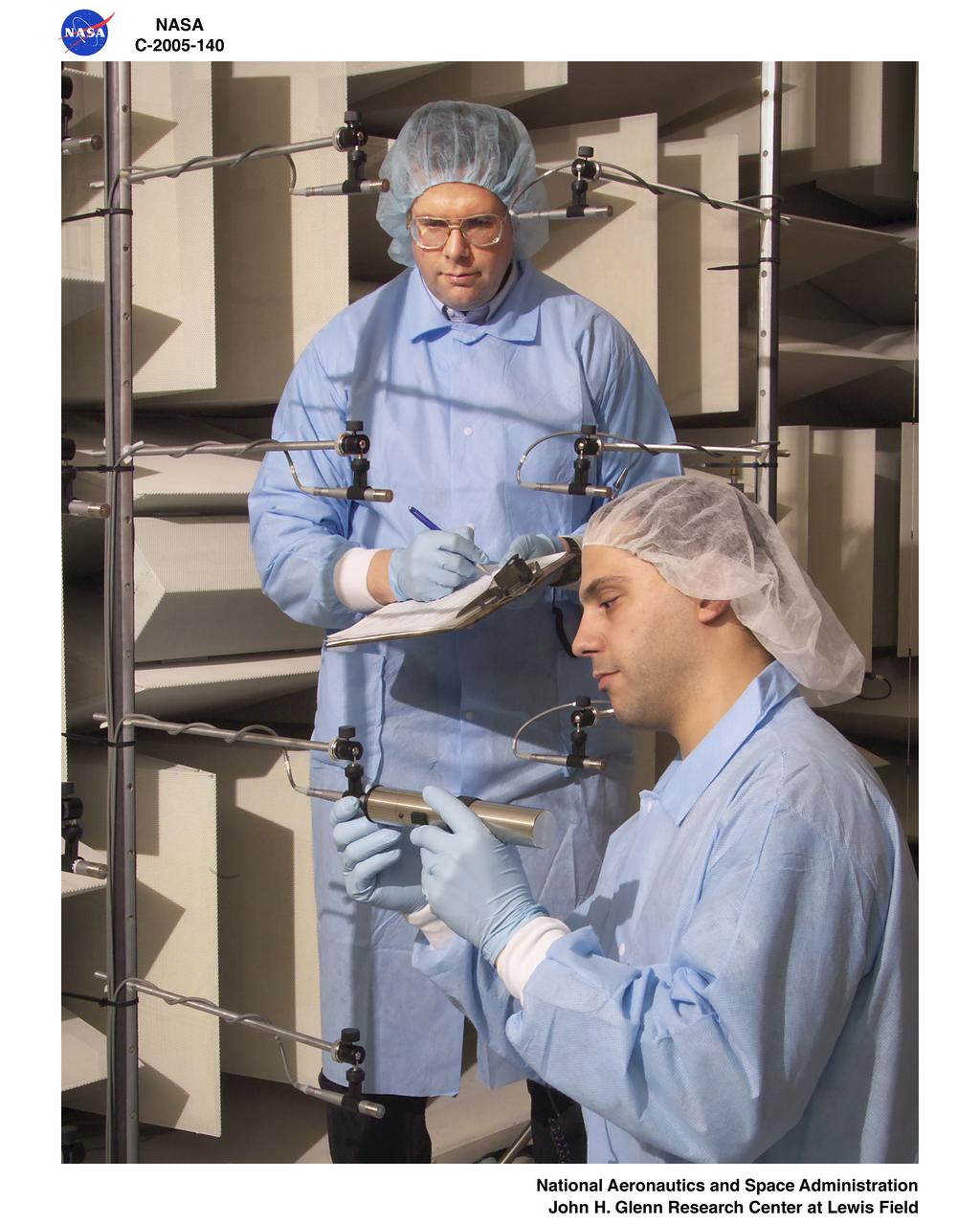
Acoustical Testing Laboratory during testing of the Fluids Integration Rack flight hardware
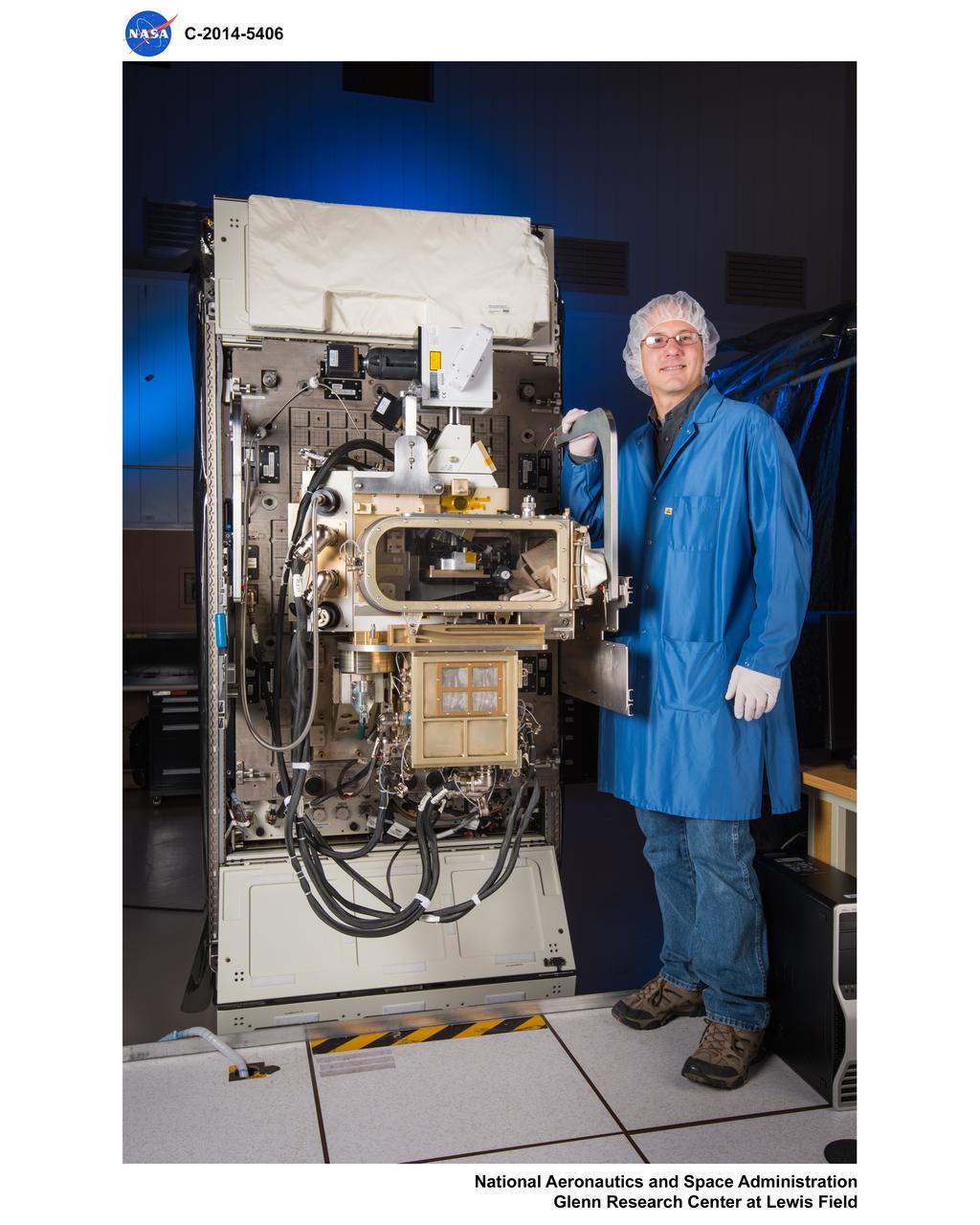
Fluids Integrated Rack, FIR, Light Microscopy Module, LMM
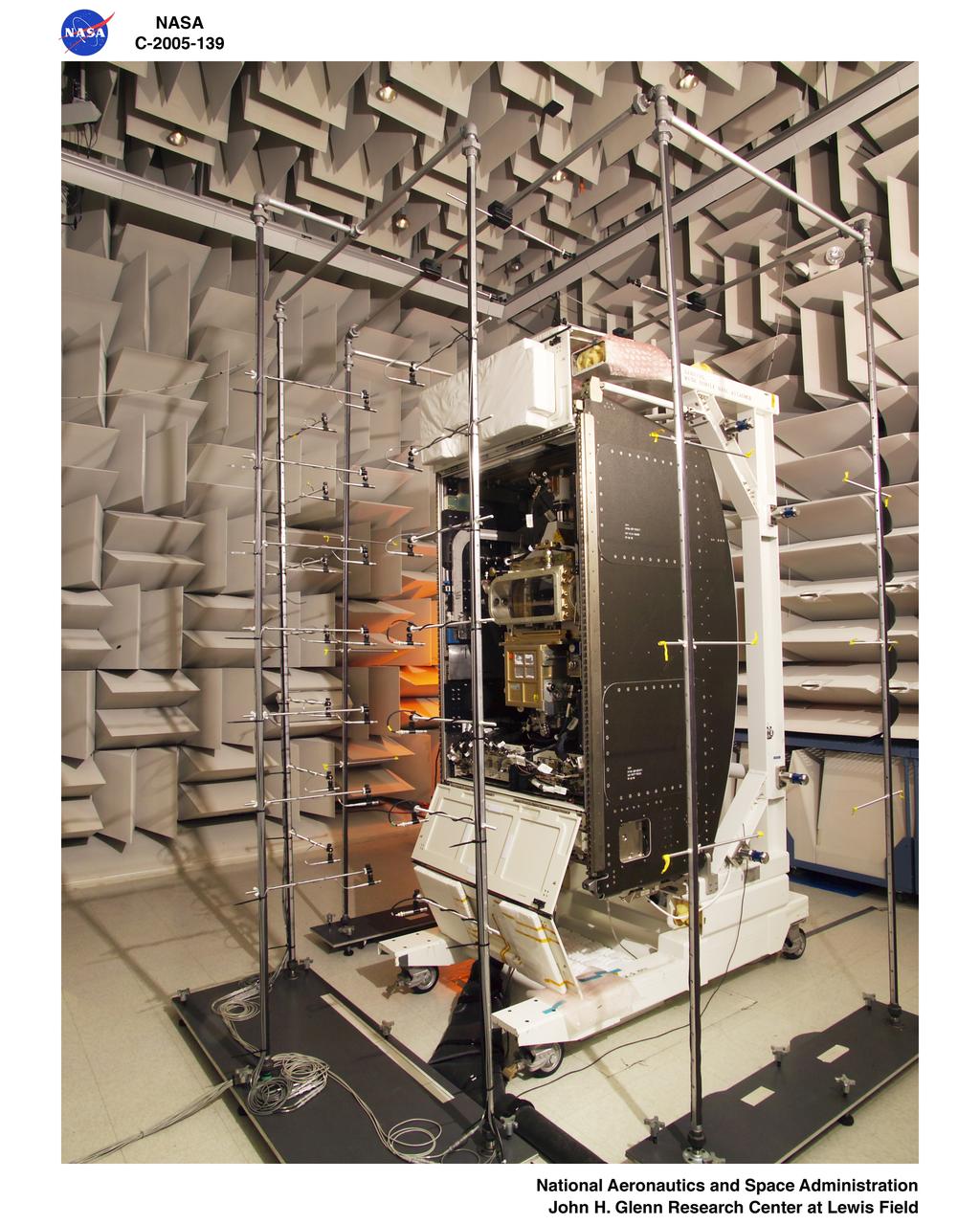
Acoustical Testing Laboratory during testing of the Fluids Integration Rack flight hardware
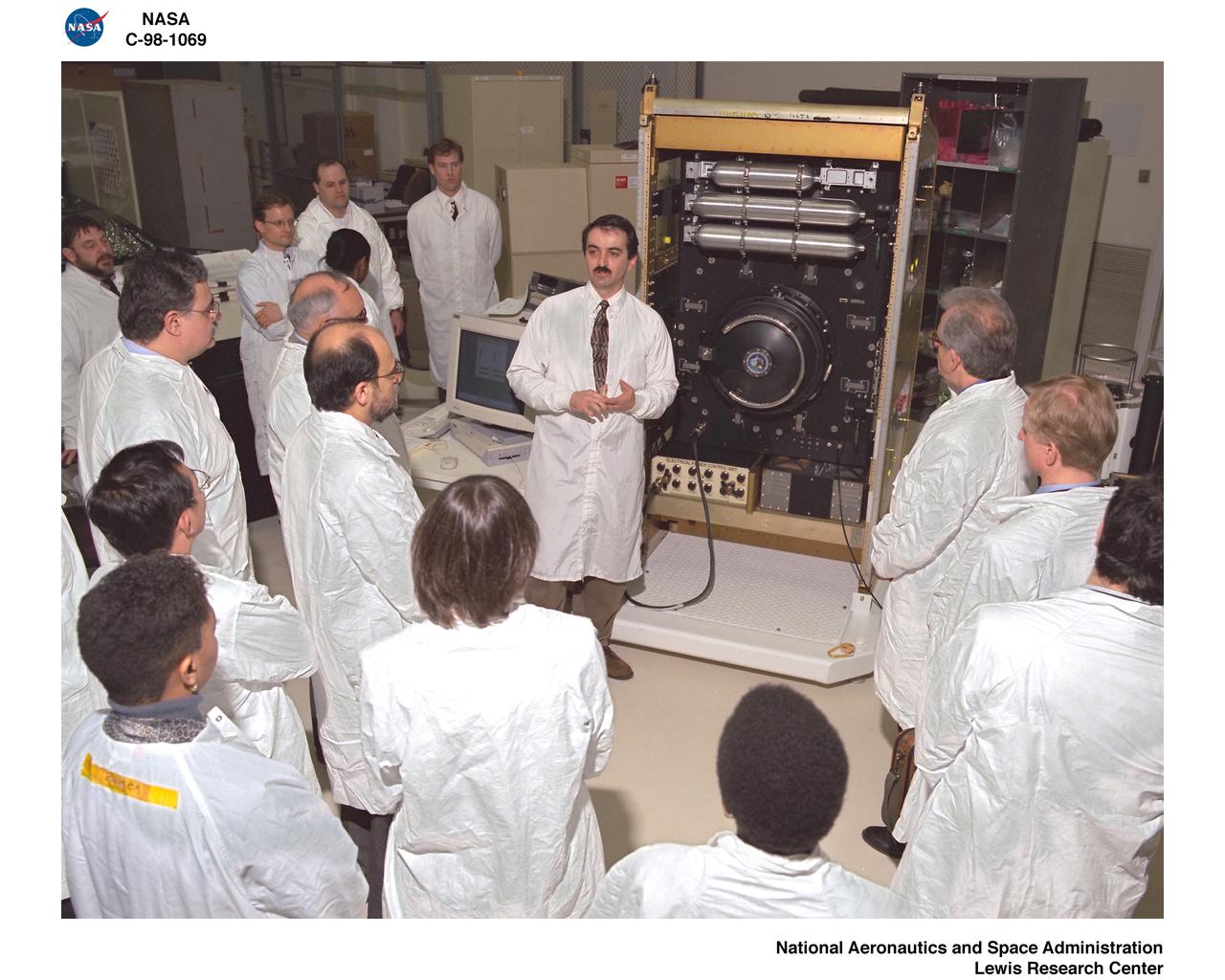
FLUIDS COMBUSTION FACILITY COMBUSTION INTEGRATED RACK INTERNATIONAL MICROGRAVITY WORKING GROUP
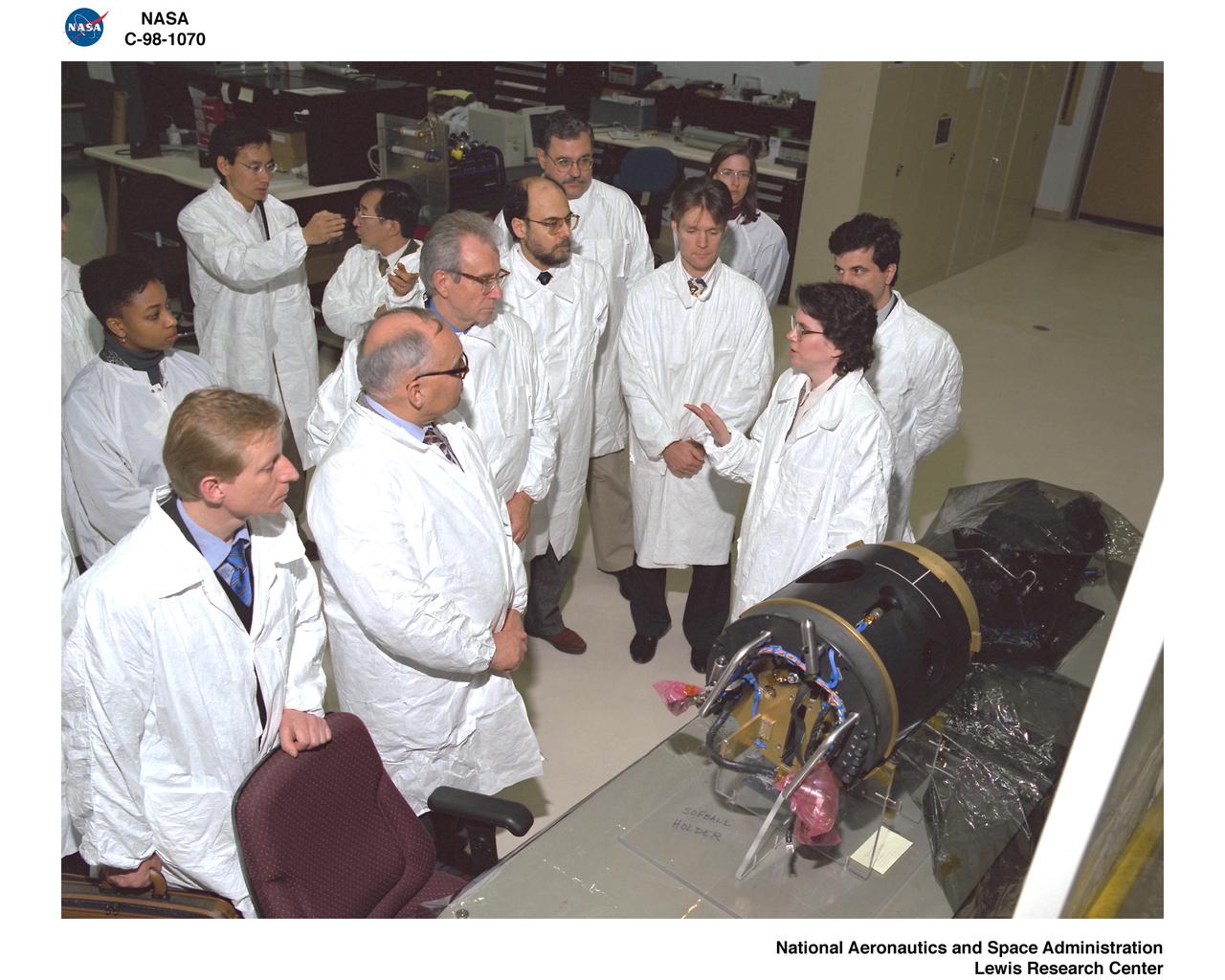
FLUIDS COMBUSTION FACILITY COMBUSTION INTEGRATED RACK INTERNATIONAL MICROGRAVITY WORKING GROUP
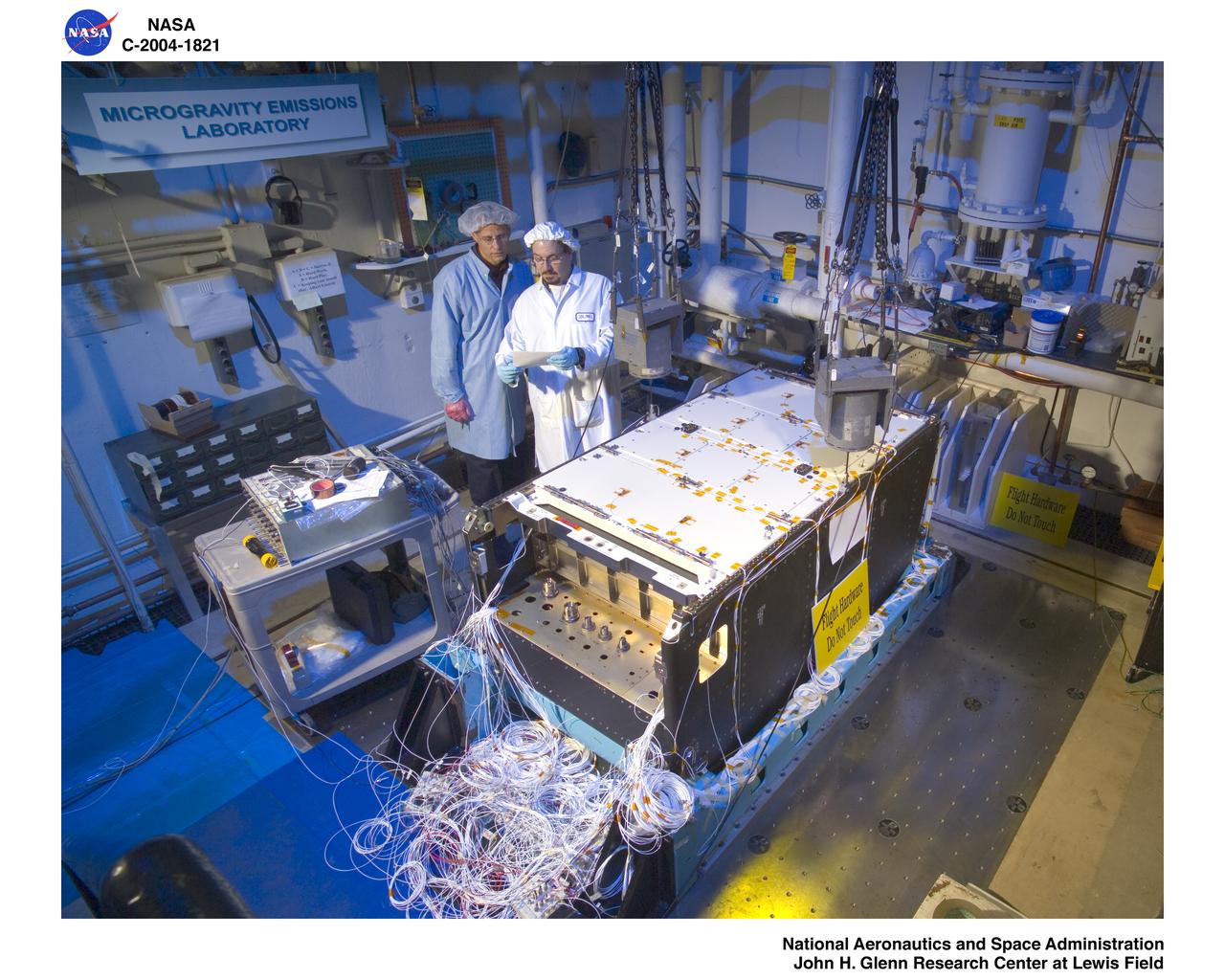
Fluids and Combustion Facility (FCF) Combustion Integrated Rack (CIR) Ground Integration Unit (GIU) Modal Test in the Structural Dynamics Laboratory at NASA Glenn
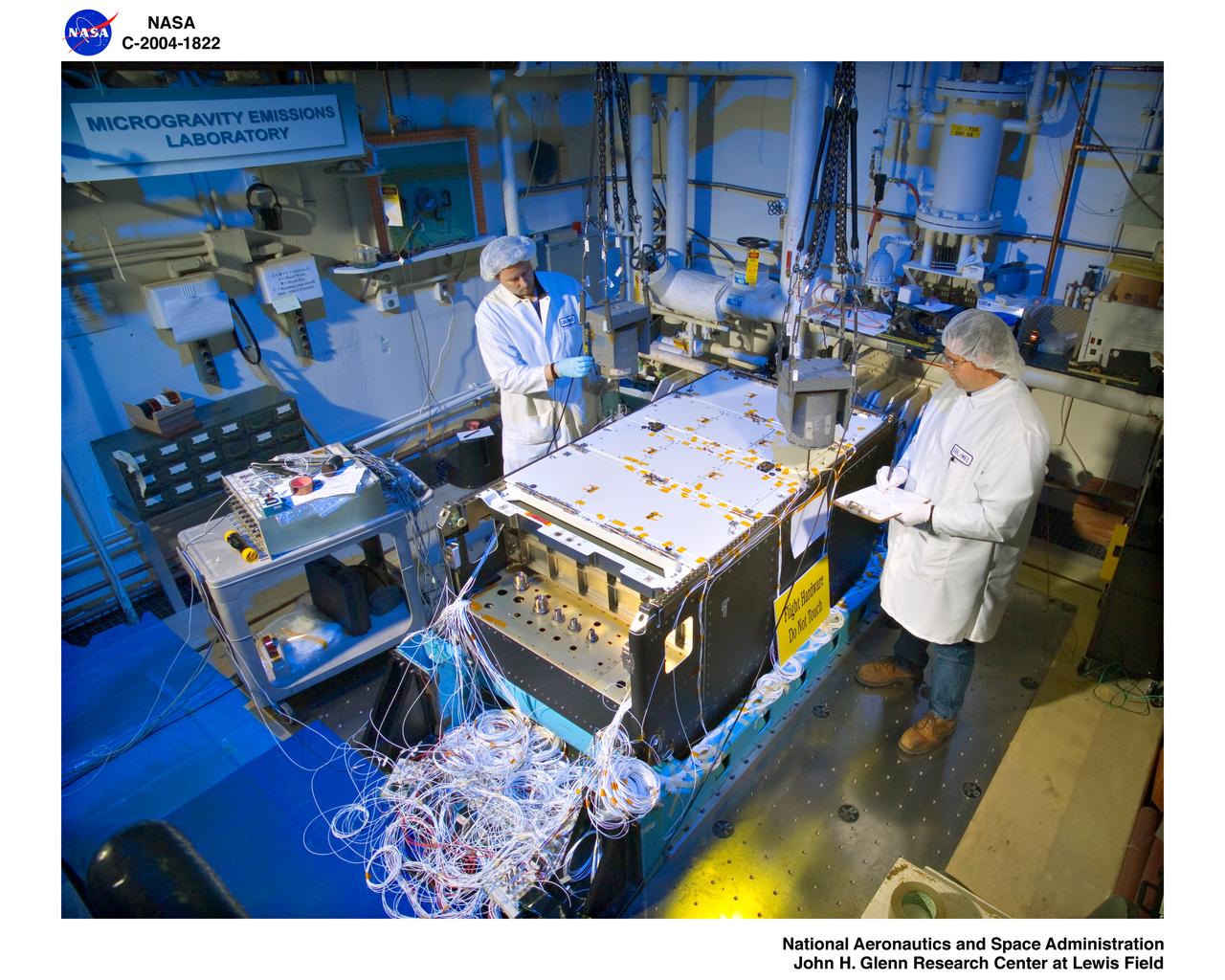
Fluids and Combustion Facility (FCF) Combustion Integrated Rack (CIR) Ground Integration Unit (GIU) Modal Test in the Structural Dynamics Laboratory at NASA Glenn
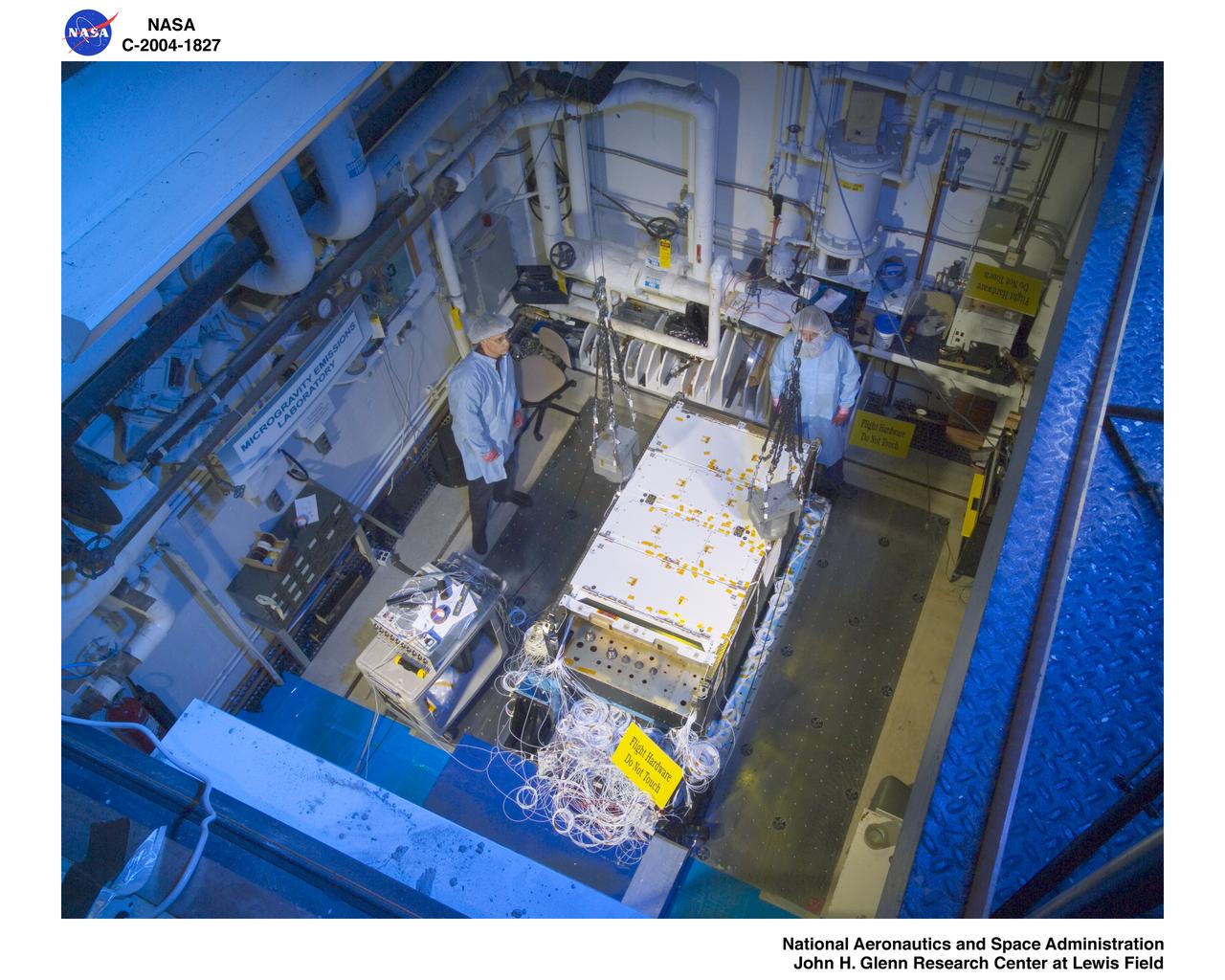
Fluids and Combustion Facility (FCF) Combustion Integrated Rack (CIR) Ground Integration Unit (GIU) Modal Test in the Structural Dynamics Laboratory at NASA Glenn
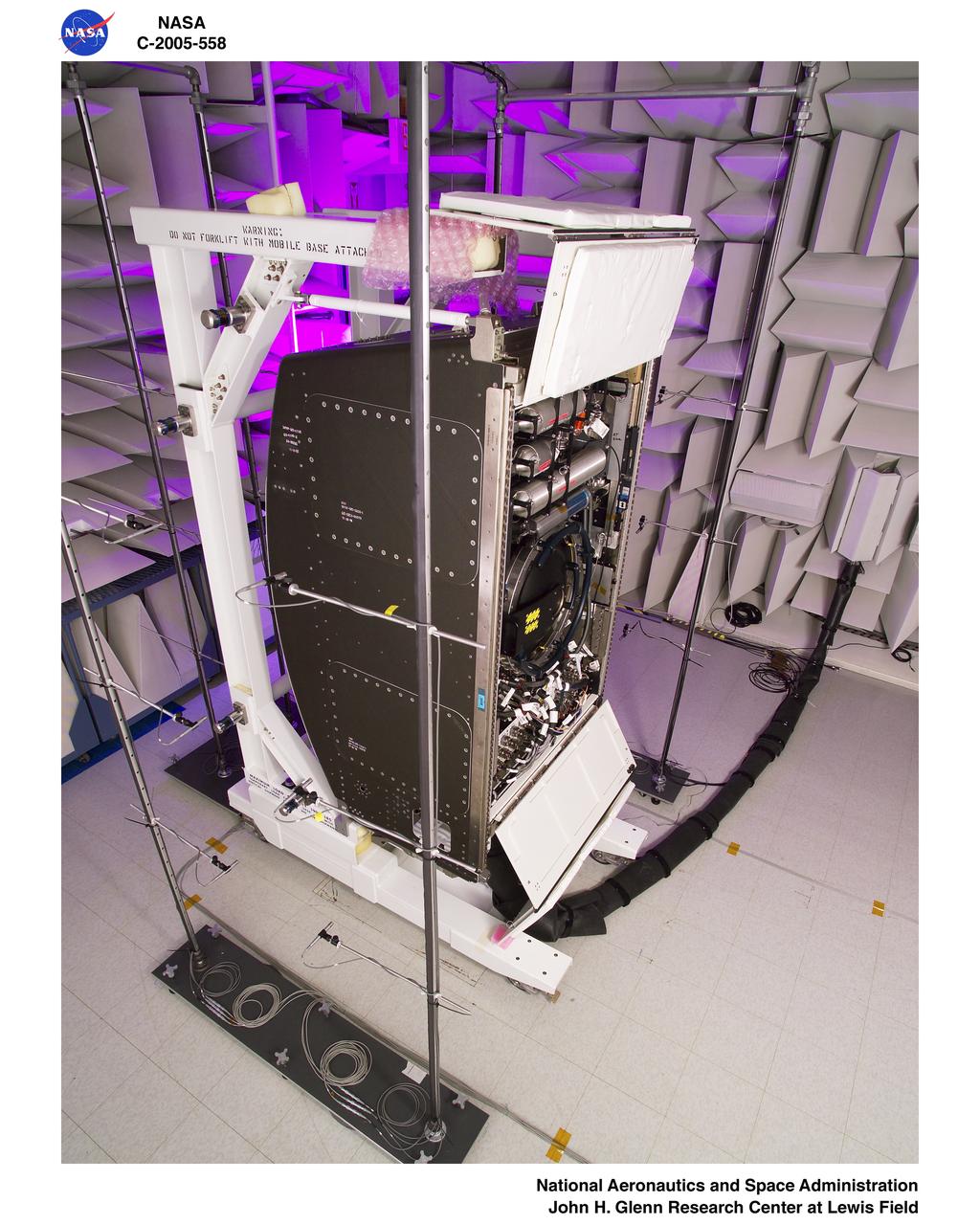
Fluids and Combustion Facility (FCF) Combustion Integrated Rack (CIR) in the Acoustic Testing Laboratory (ATL), Camera file: G6QH5821
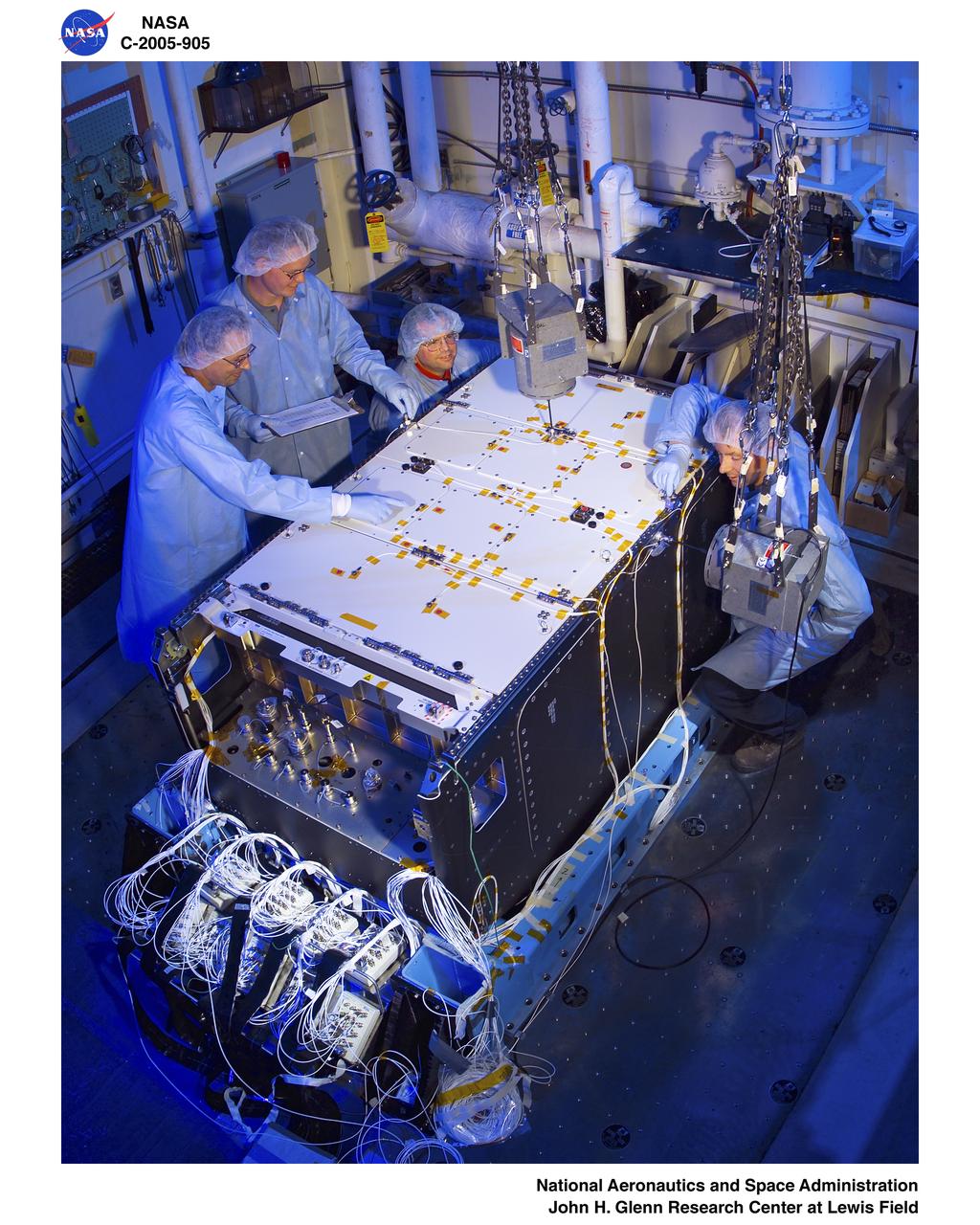
Fluids and Combustion Facility (FCF), Combustion Integration Rack (CIR) during testing in the Structural Dynamics Laboratory (SDL)

Fluids and Combustion Facility (FCF), Combustion Integrated Rack (CIR) during testing in the Structural Dynamics Laboratory (SDL)
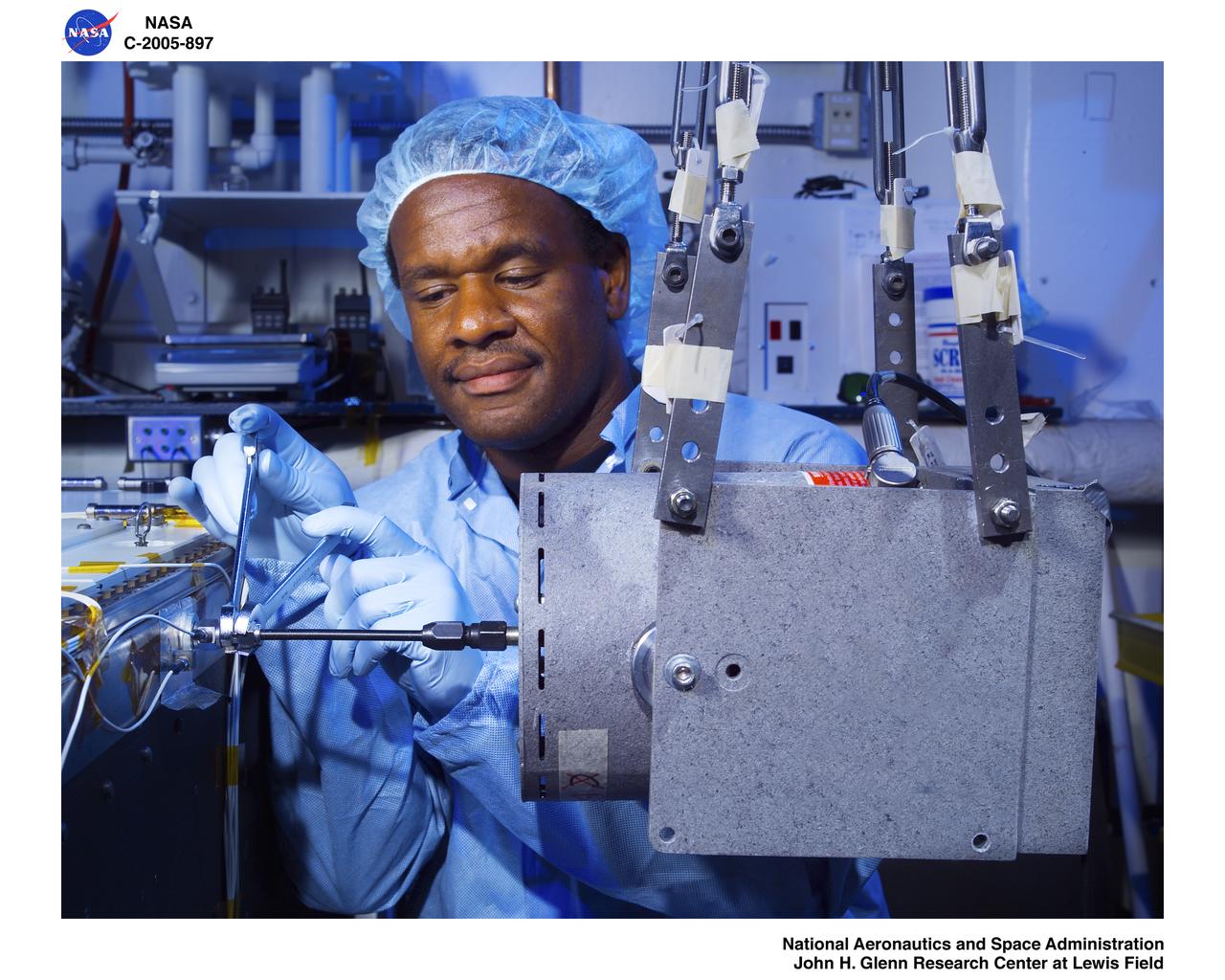
Fluids and Combustion Facility (FCF), Combustion Integration Rack (CIR) during testing in the Structural Dynamics Laboratory (SDL)
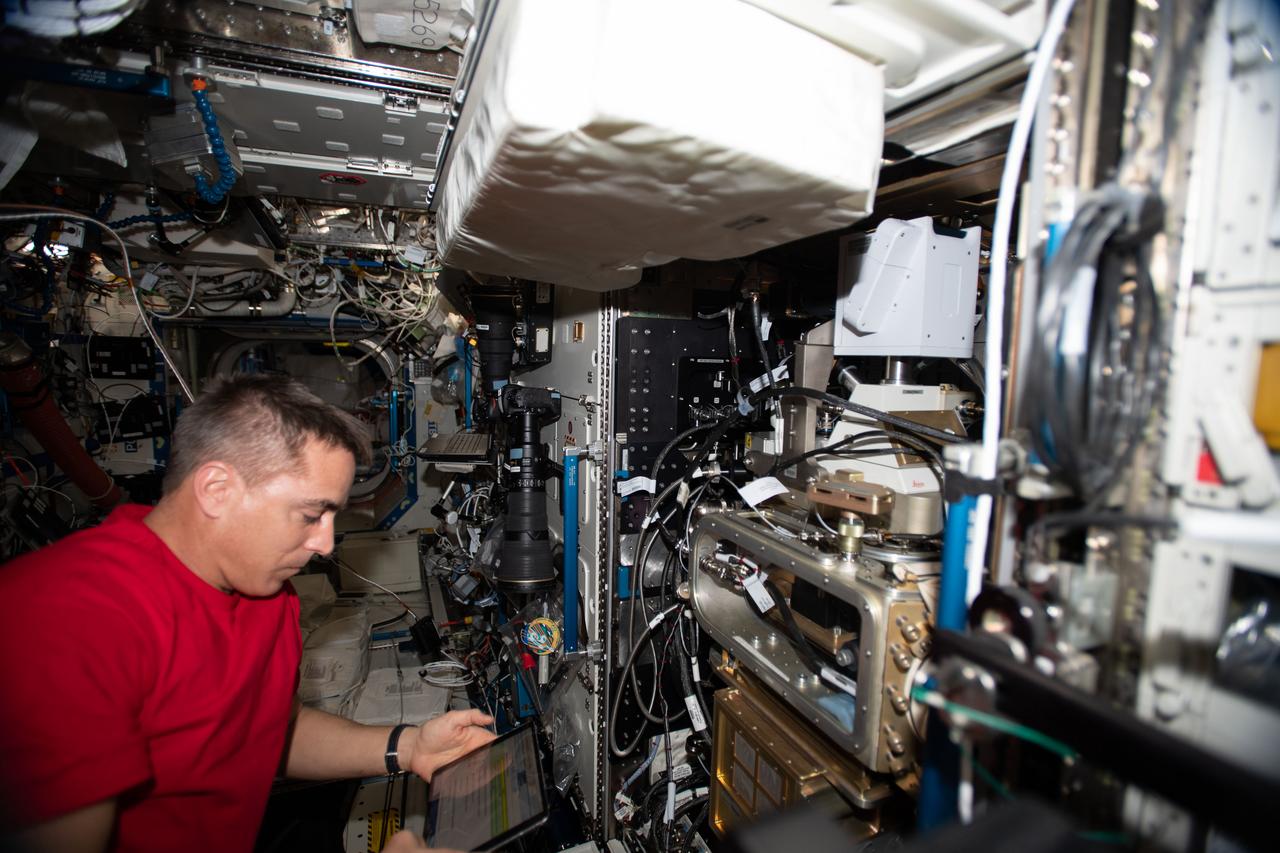
iss063e001782 (April 21, 2020) --- NASA astronaut and Expedition 63 Commander Chris Cassidy works on the Fluids Integrated Rack (FIR) replacing components in the research device that studies the behavior of fluids in microgravity. The FIR will help promote the design of advanced space-based fuel tanks and other complex fluid transfer systems.
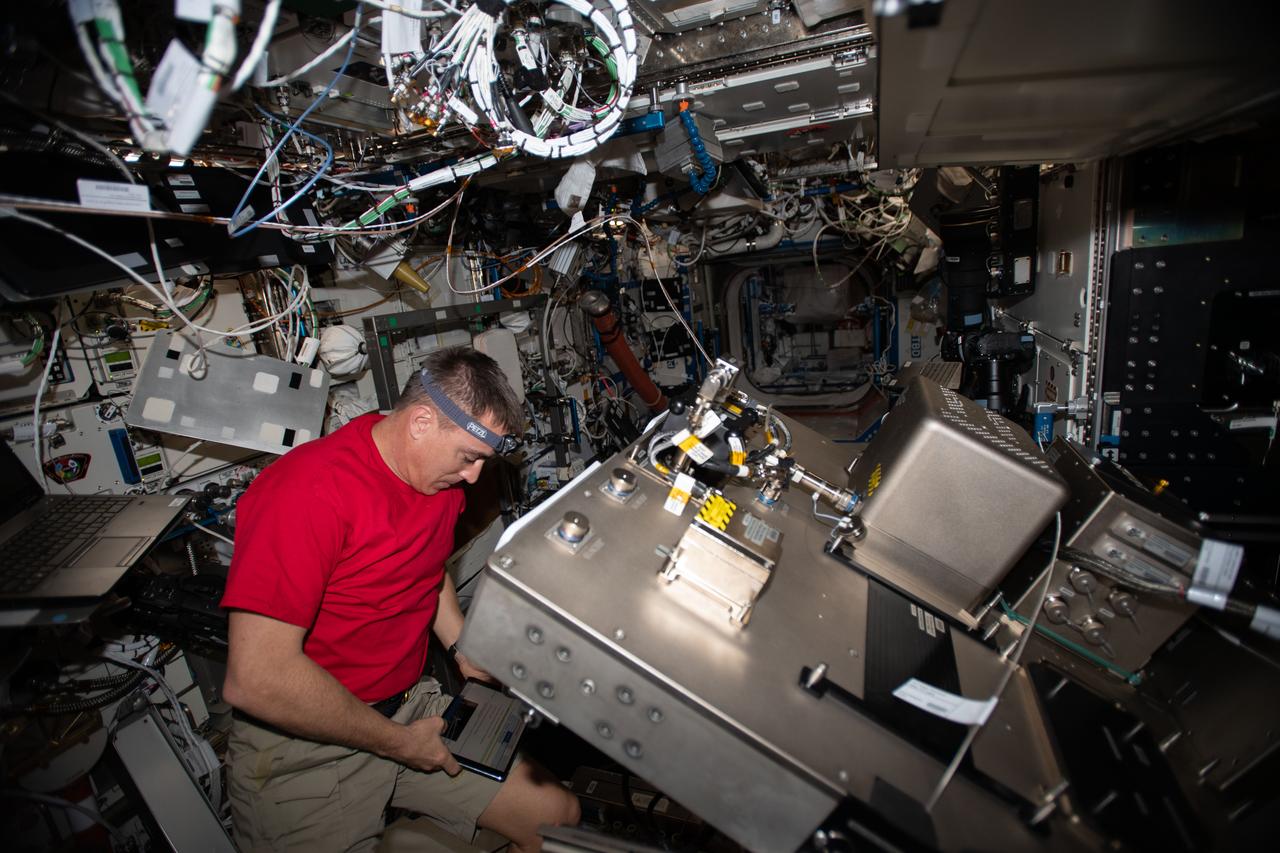
iss063e001804 (April 21, 2020) --- NASA astronaut and Expedition 63 Commander Chris Cassidy works on the Fluids Integrated Rack (FIR) replacing components in the research device that studies the behavior of fluids in microgravity. The FIR will help promote the design of advanced space-based fuel tanks and other complex fluid transfer systems.
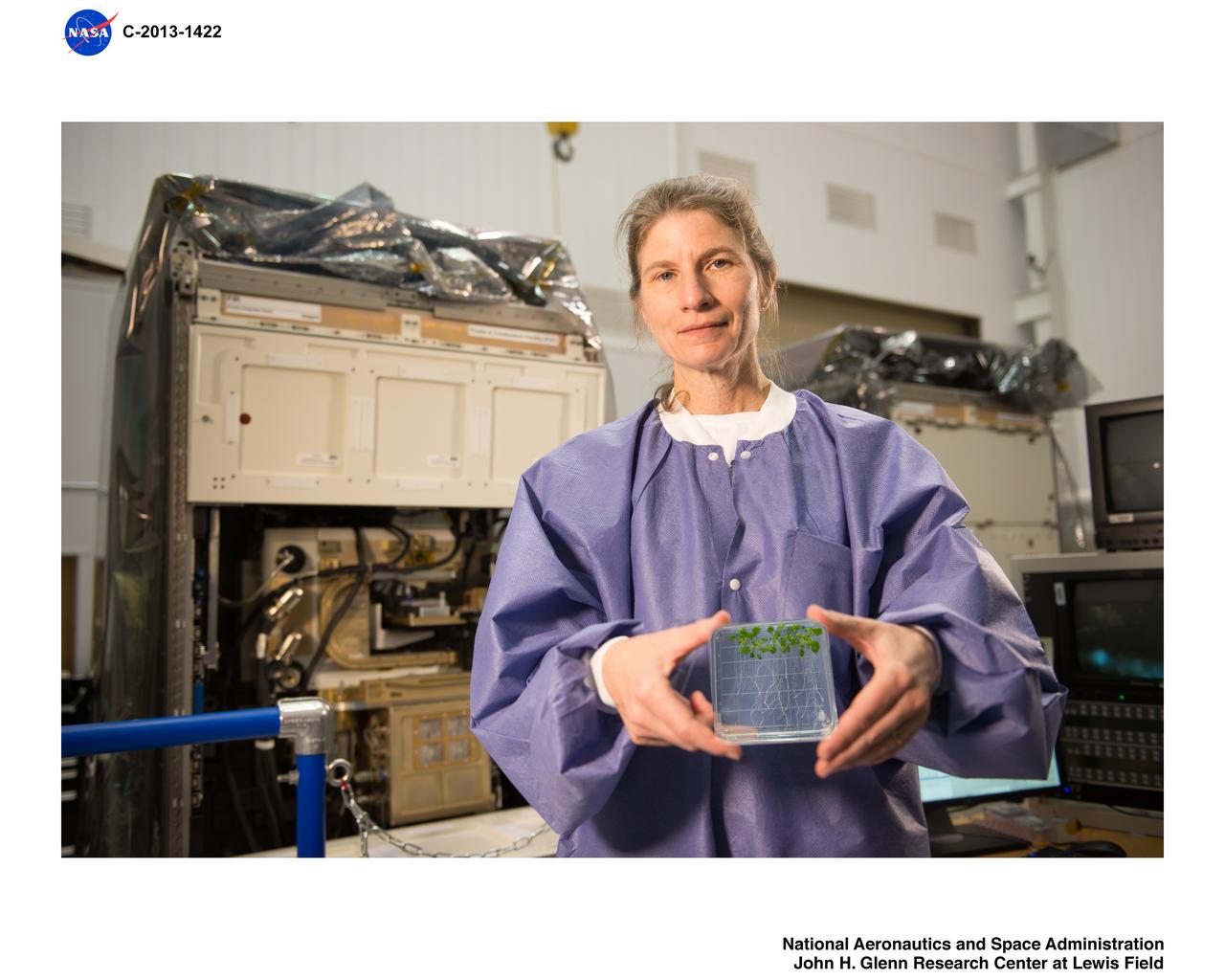
University of Florida, Professor and Director of Interdisciplinary Center for Biotechnology Research Interacting with the Fluids Integration Rack, FIR, Light Microscopy Module, LMM, Ground Integration Unit, GIU, Hardware
University of Florida, Professor and Director of Interdisciplinary Center for Biotechnology Research Interacting with the Fluids Integration Rack, FIR, Light Microscopy Module, LMM, Ground Integration Unit, GIU, Hardware
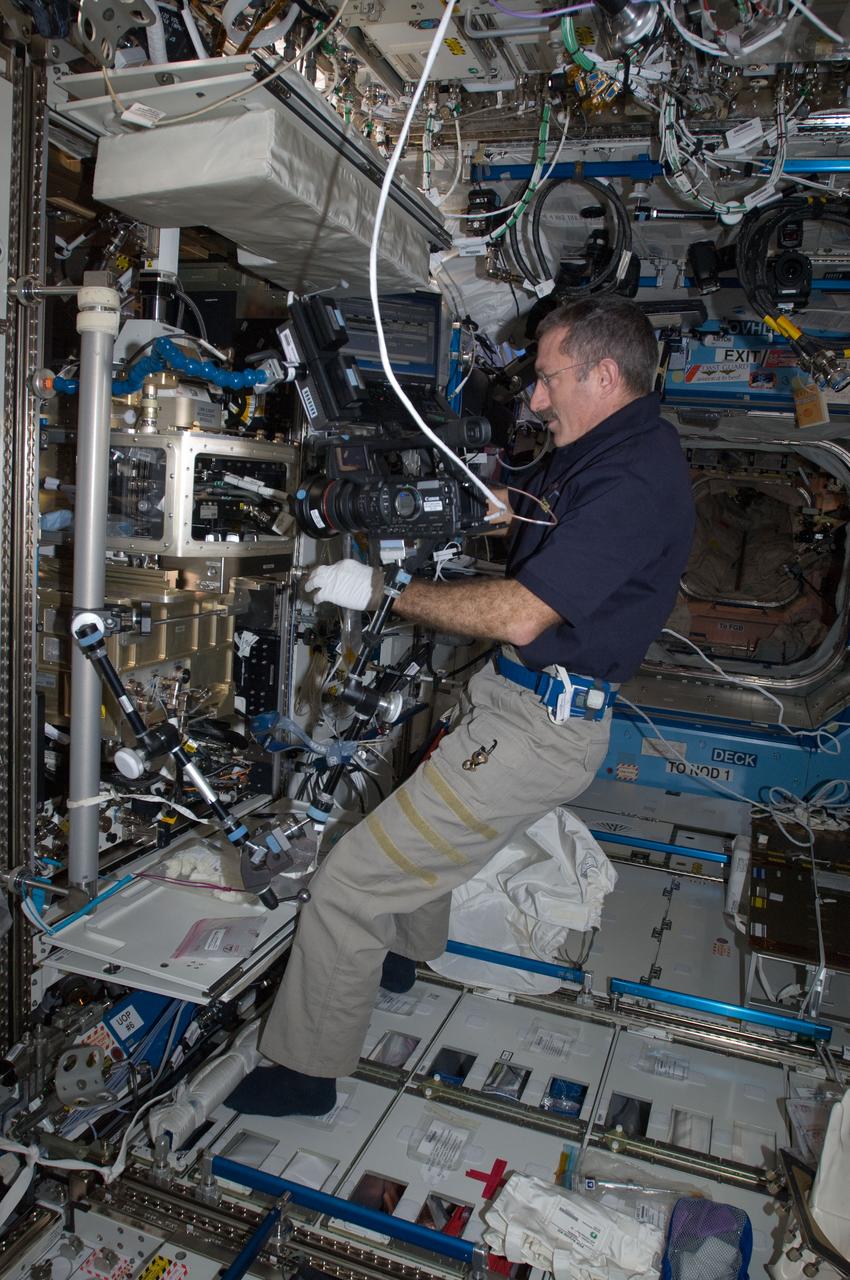
ISS030-E-007428 (1 Dec. 2011) --- NASA astronaut Dan Burbank, Expedition 30 commander, works at the Light Microscopy Module (LMM) in the Fluids Integrated Rack / Fluids Combustion Facility (FIR/FCF) located in the Destiny laboratory of the International Space Station.
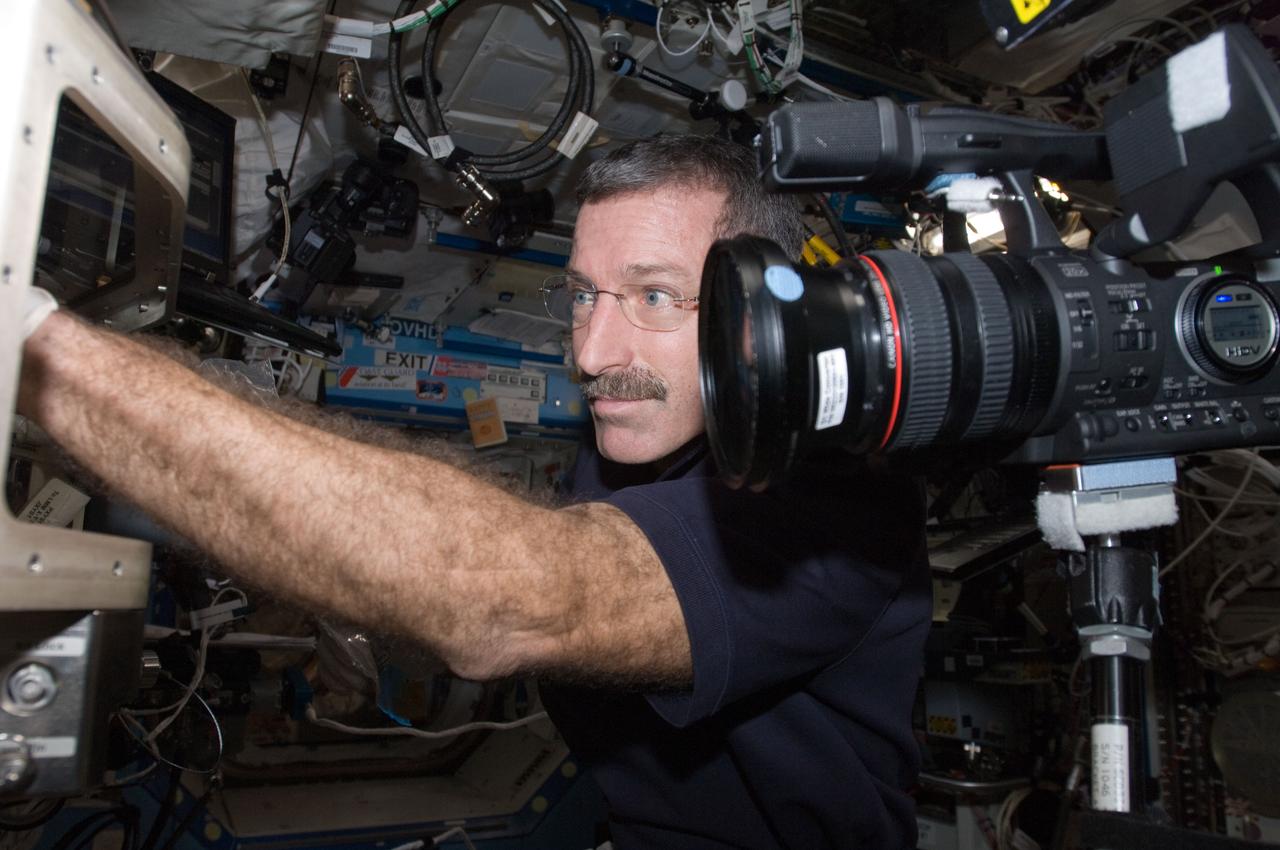
ISS030-E-007426 (1 Dec. 2011) --- NASA astronaut Dan Burbank, Expedition 30 commander, works at the Light Microscopy Module (LMM) in the Fluids Integrated Rack / Fluids Combustion Facility (FIR/FCF) located in the Destiny laboratory of the International Space Station.
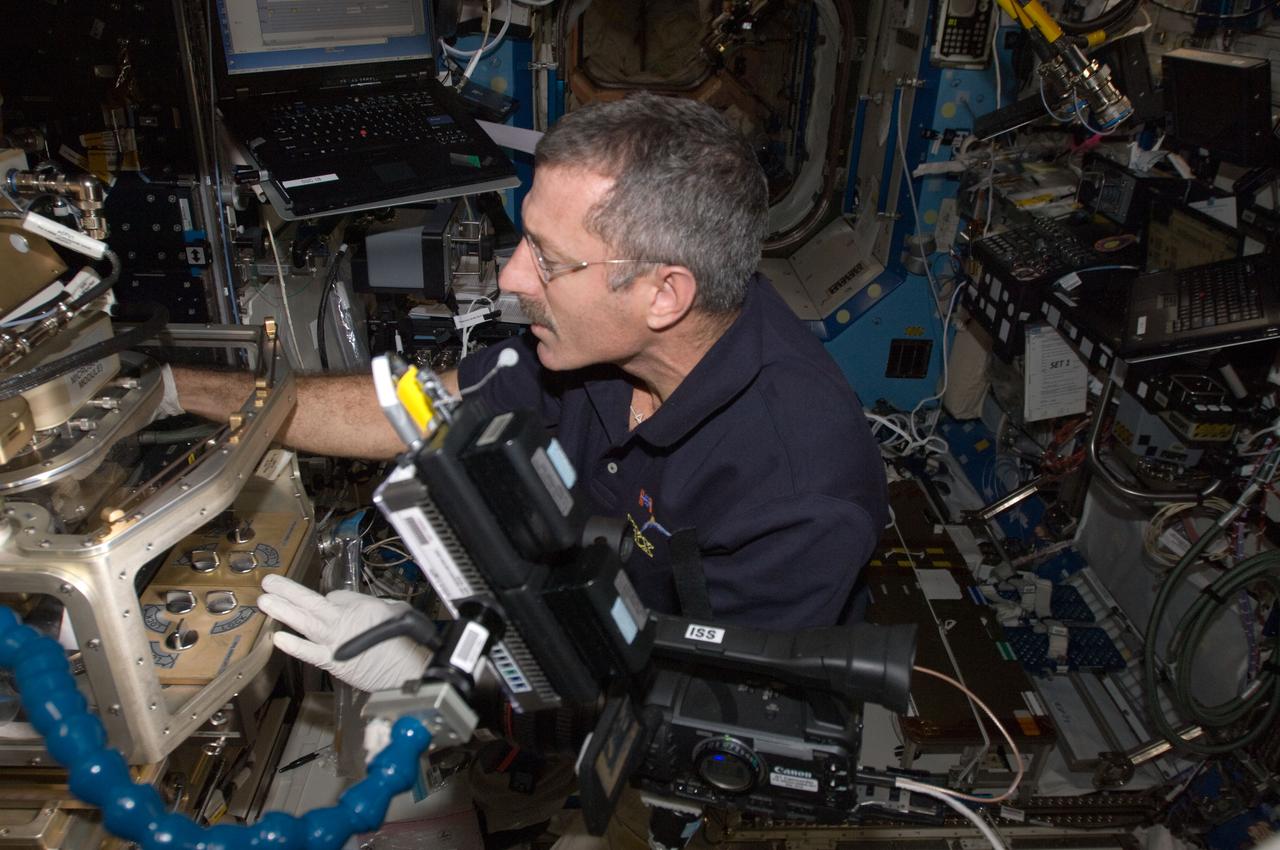
ISS030-E-007429 (1 Dec. 2011) --- NASA astronaut Dan Burbank, Expedition 30 commander, works at the Light Microscopy Module (LMM) in the Fluids Integrated Rack / Fluids Combustion Facility (FIR/FCF) located in the Destiny laboratory of the International Space Station.
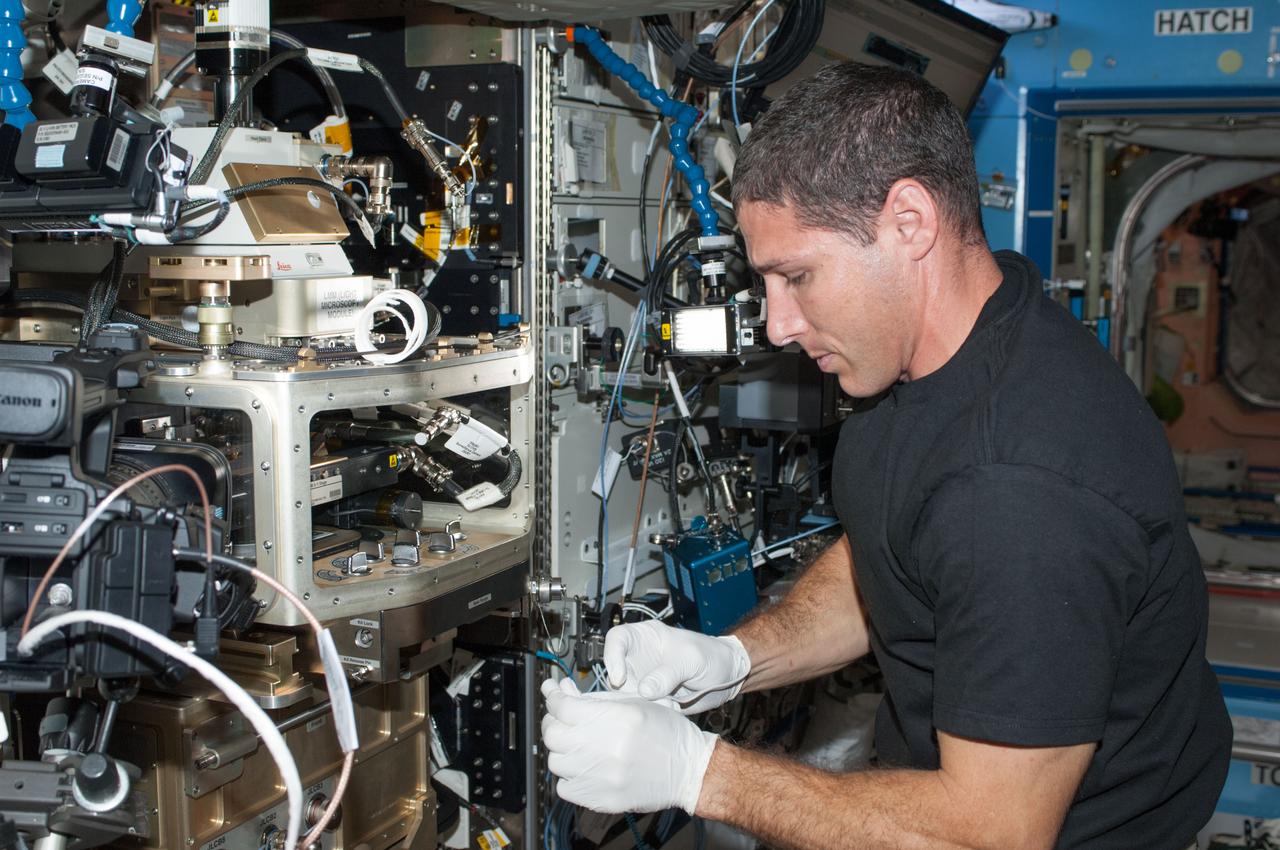
ISS037-E-013951 (14 Oct. 2013) --- NASA astronaut Michael Hopkins, Expedition 37 flight engineer, works at the Light Microscopy Module (LMM) in the Fluids Integrated Rack / Fluids Combustion Facility (FIR/FCF) located in the Destiny laboratory of the International Space Station.
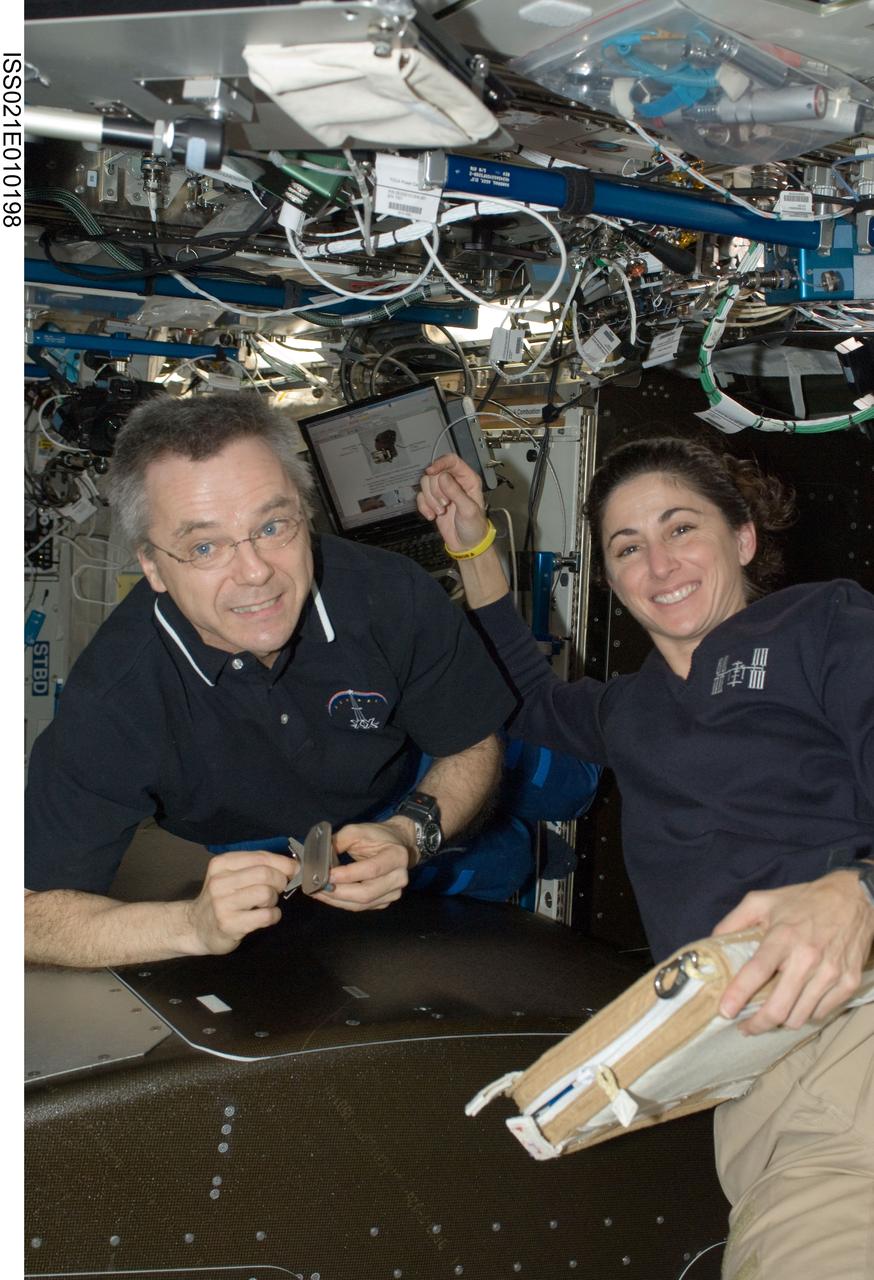
ISS021-E-010198 (19 Oct. 2009) --- Canadian Space Agency astronaut Robert Thirsk and NASA astronaut Nicole Stott, both Expedition 21 flight engineers, install the Active Rack Isolation System (ARIS) hardware on the Fluids Integrated Rack (FIR) in the Destiny laboratory of the International Space Station.
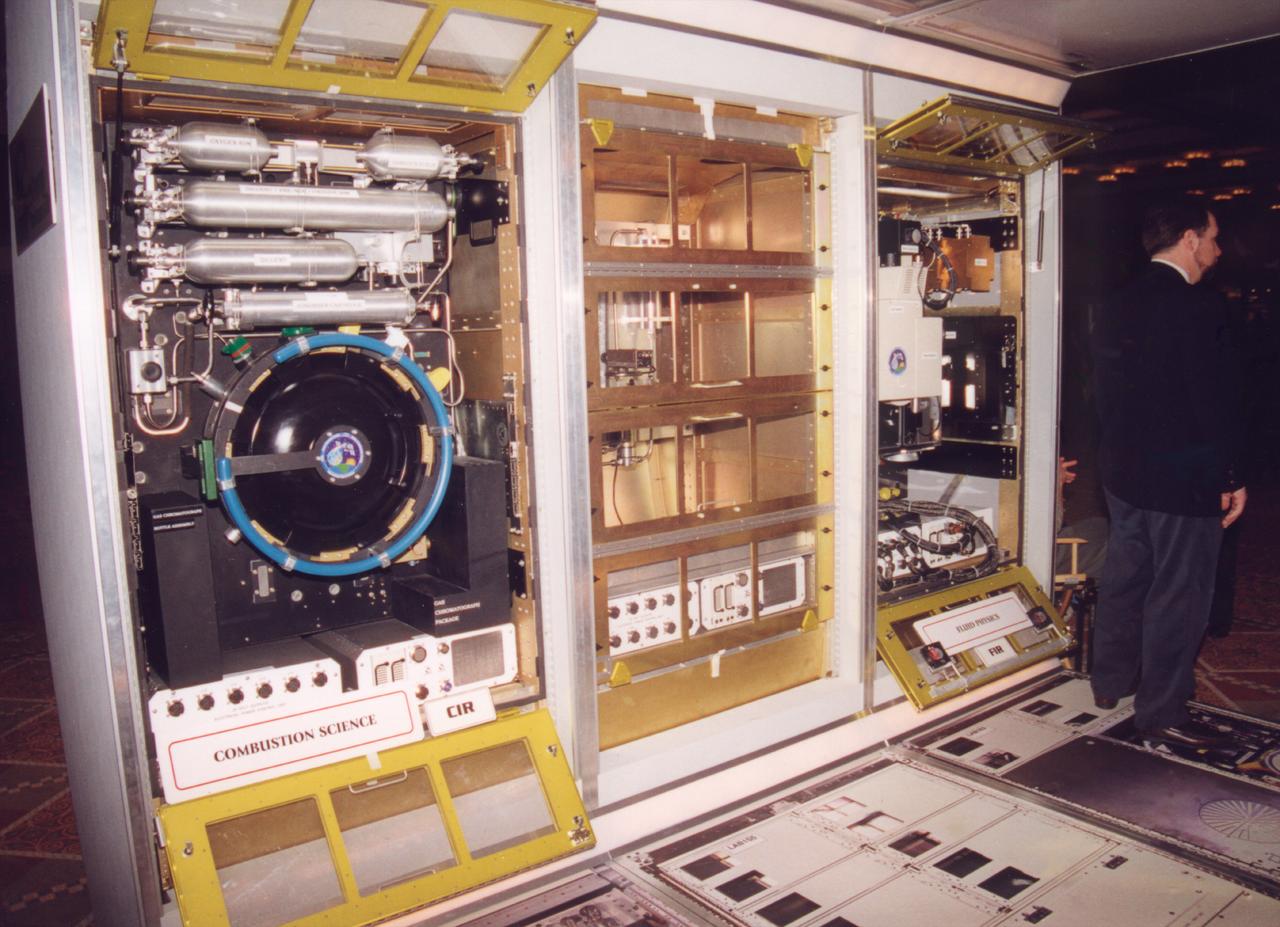
The Fluids and Combustion Facility (FCF) is a modular, multi-user facility to accommodate microgravity science experiments on board Destiny, the U.S. Laboratory Module for the International Space Station (ISS). The FCF will be a permanet facility aboard the ISS, and will be capable of accommodating up to ten science investigations per year. It will support the NASA Science and Technology Research Plans for the International Space Station (ISS) which require sustained systematic research of the effects of reduced gravity in the areas of fluid physics and combustion science. From left to right are the Combustion Integrated Rack, the Shared Rack, and the Fluids Integrated Rack. The FCF is being developed by the Microgravity Science Division (MSD) at the NASA Glenn Research Center. (Photo Credit: NASA/Marshall Space Flight Center)
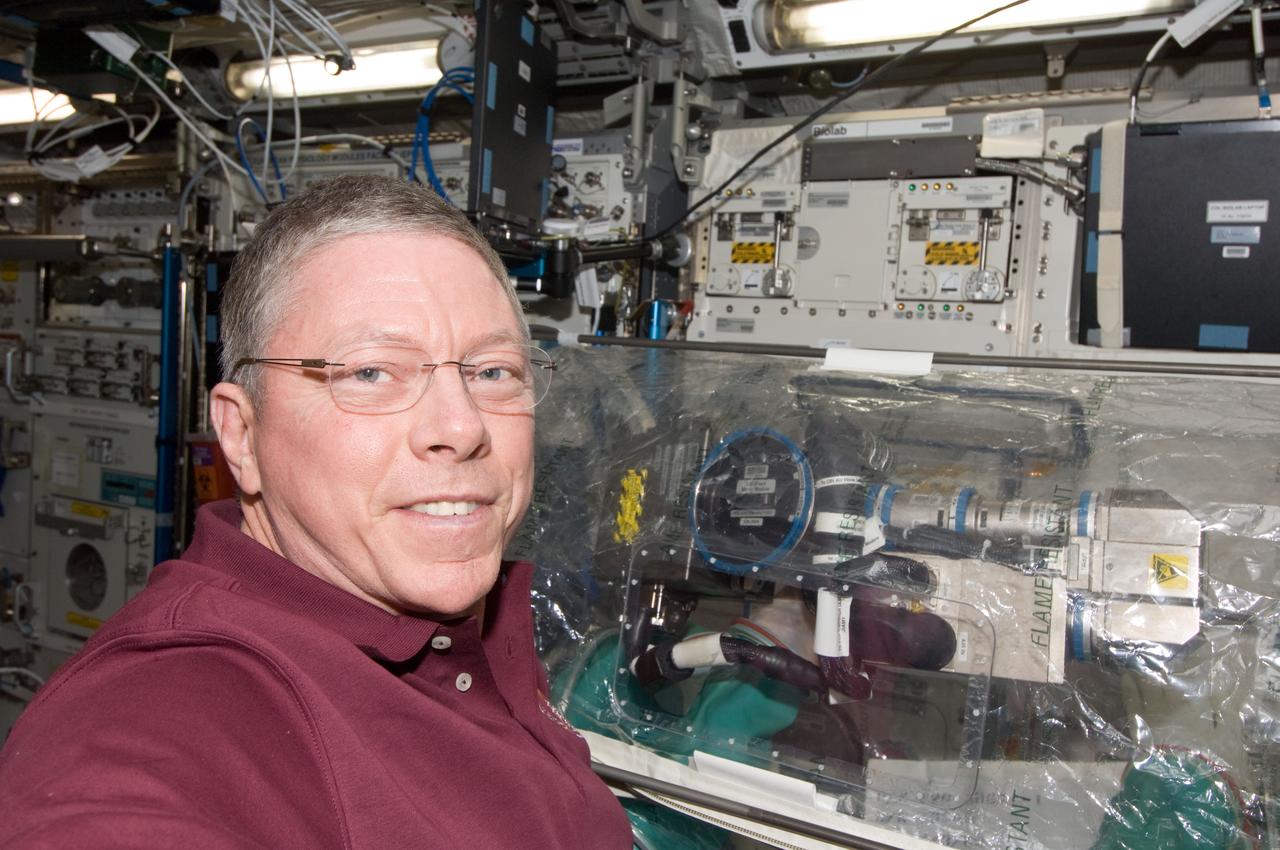
ISS029-E-029756 (17 Oct. 2011) --- NASA astronaut Mike Fossum, Expedition 29 commander, works on the Combustion Integrated Rack / Fluids & Combustion Facility (CIR FCF) in the Destiny laboratory of the International Space Station.
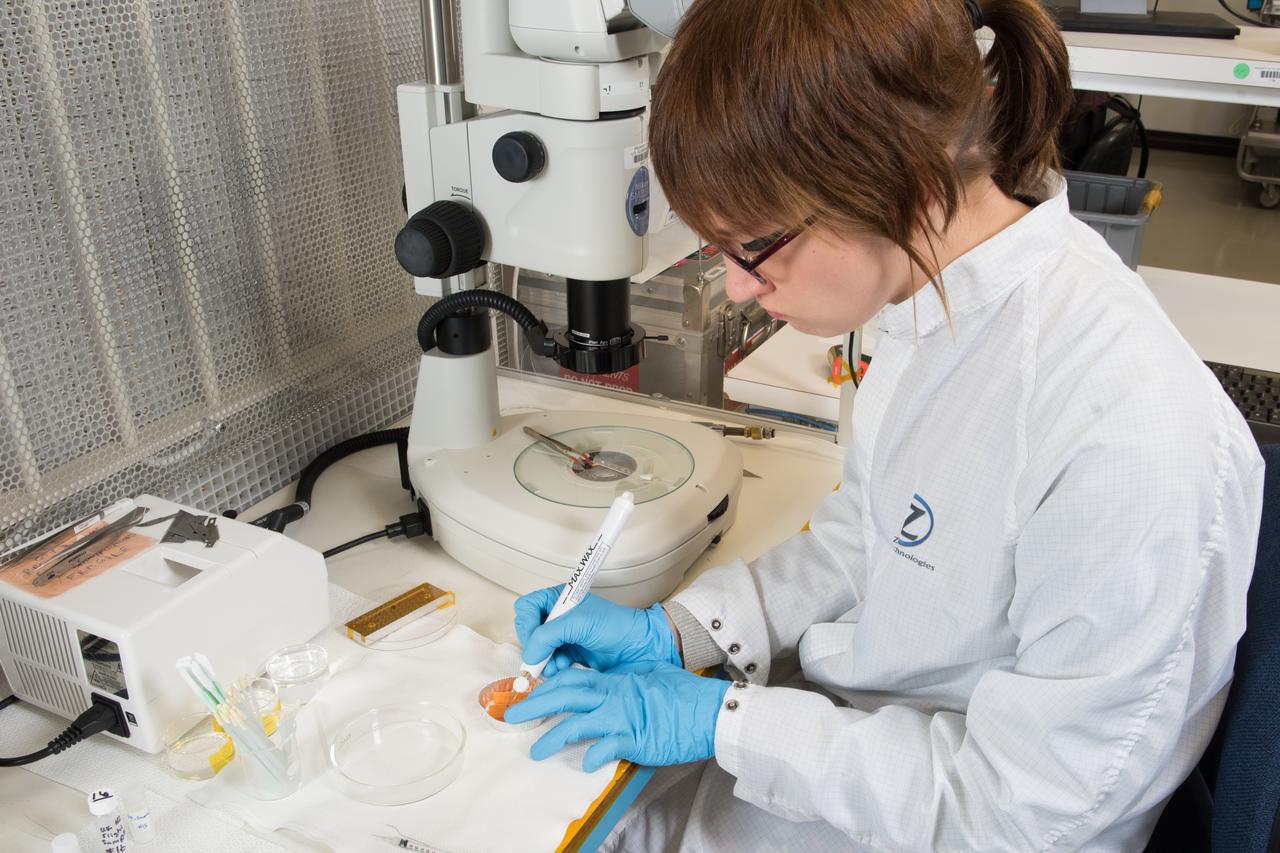
NASA (Zin Technologies) engineer prepares Advanced Colloid Experiment Heated-2 samples that will be analyzed aboard the International Space Station using the zero-gravity Light Microscopy Module, LMM in the Fluids Integrated Rack, FIR
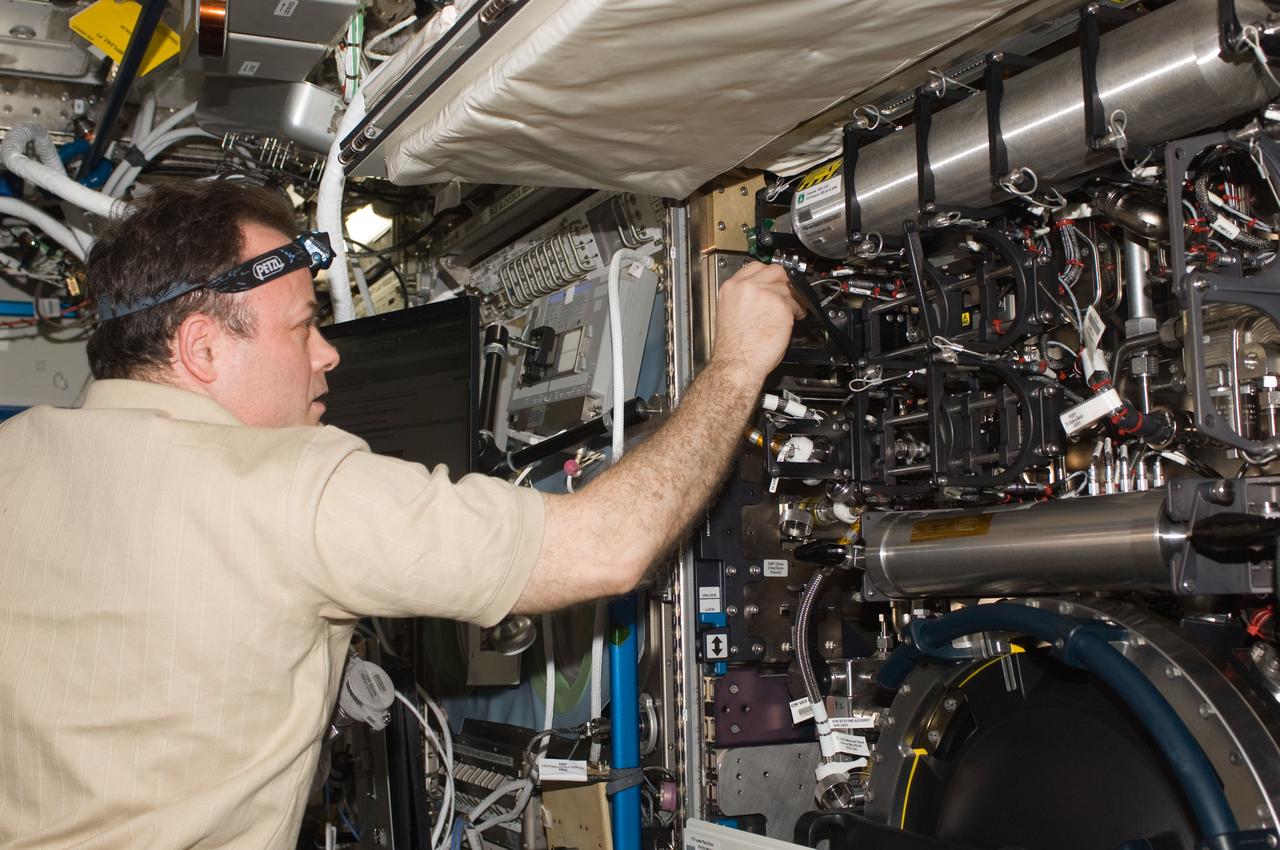
ISS028-E-026400 (17 Aug. 2011) --- NASA astronaut Ron Garan, Expedition 28 flight engineer, works with the Combustion Integrated Rack (CIR) Fluids and Combustion Facility (FCF) in the Destiny laboratory of the International Space Station.
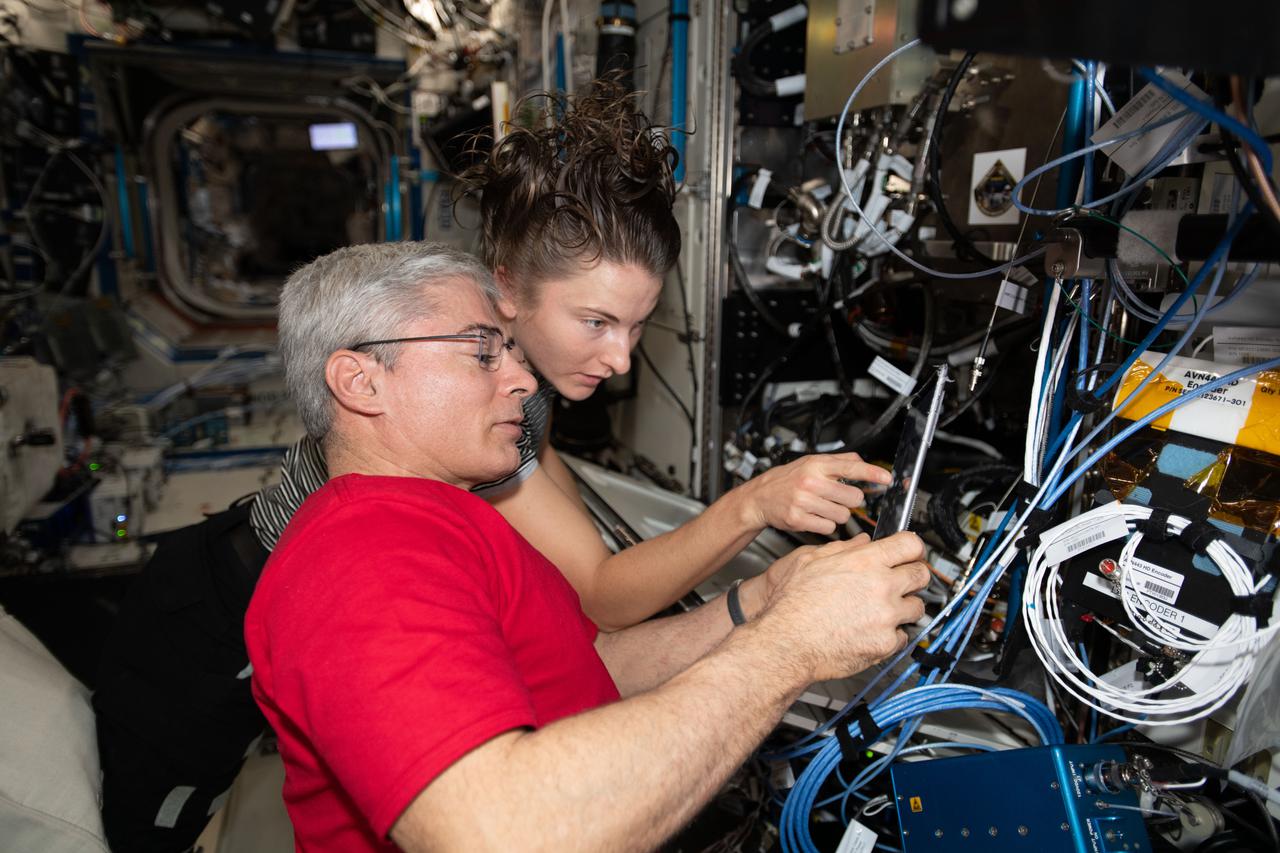
iss066e088377 (Dec. 9, 2021) --- NASA astronauts Mark Vande Hei and Kayla Barron set up the Fluids Integrated Rack for a space physics study that may improve thermal systems for Earth and other planetary environments.
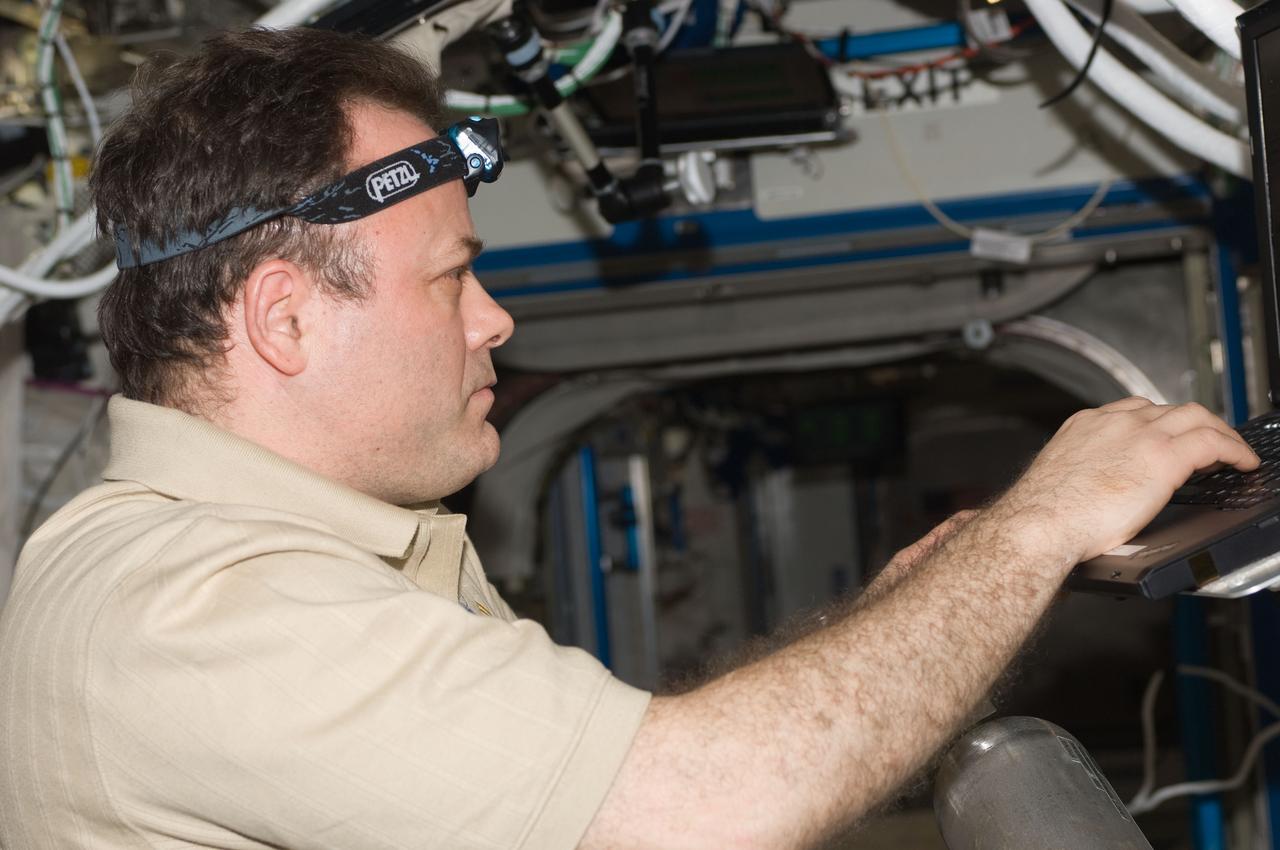
ISS028-E-026402 (17 Aug. 2011) --- NASA astronaut Ron Garan, Expedition 28 flight engineer, works with the Combustion Integrated Rack (CIR) Fluids and Combustion Facility (FCF) in the Destiny laboratory of the International Space Station.
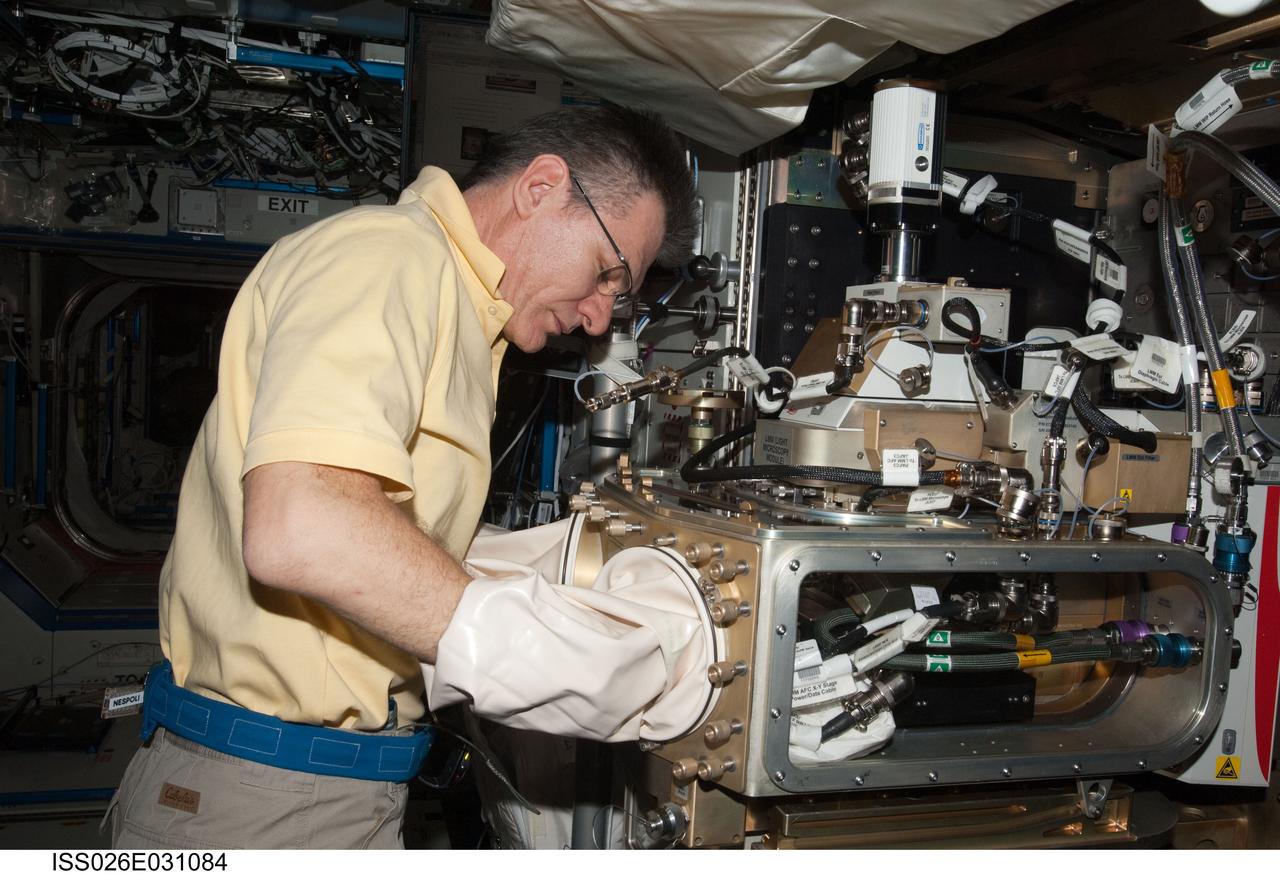
ISS026-E-031084 (1 March 2011) --- European Space Agency astronaut Paolo Nespoli, Expedition 26 flight engineer, works with the Light Microscopy Module (LMM) Spindle Bracket Assembly in the Fluids Integrated Rack (FIR) in the Destiny laboratory of the International Space Station.
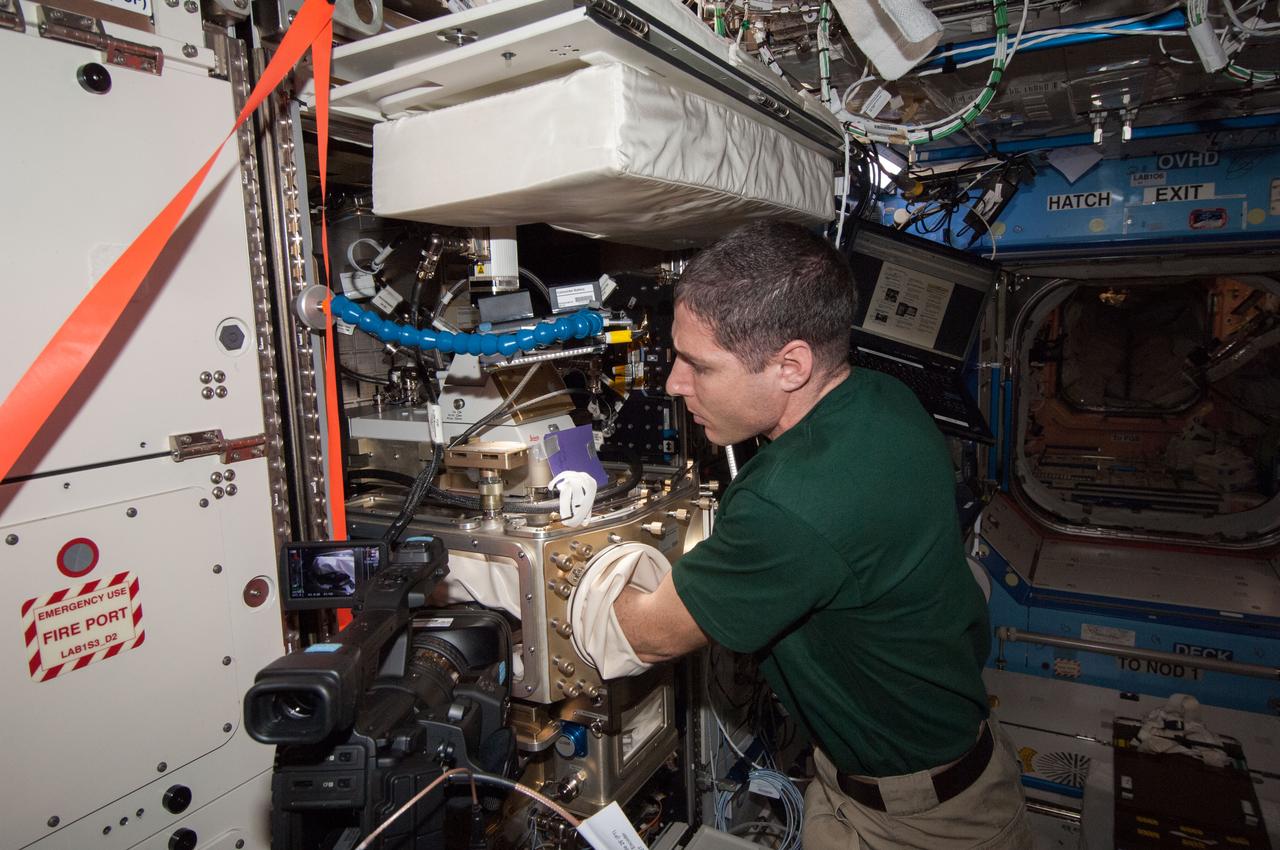
ISS038-E-055240 (24 Feb. 2014) --- In the International Space Station's Destiny laboratory, NASA astronaut Mike Hopkins, Expedition 38 flight engineer, sets up the Advanced Colloids Experiment (ACE) housed in the Light Microscopy Module (LMM) inside the Fluids Integrated Rack. ACE studies microscopic particles suspended in a liquid.
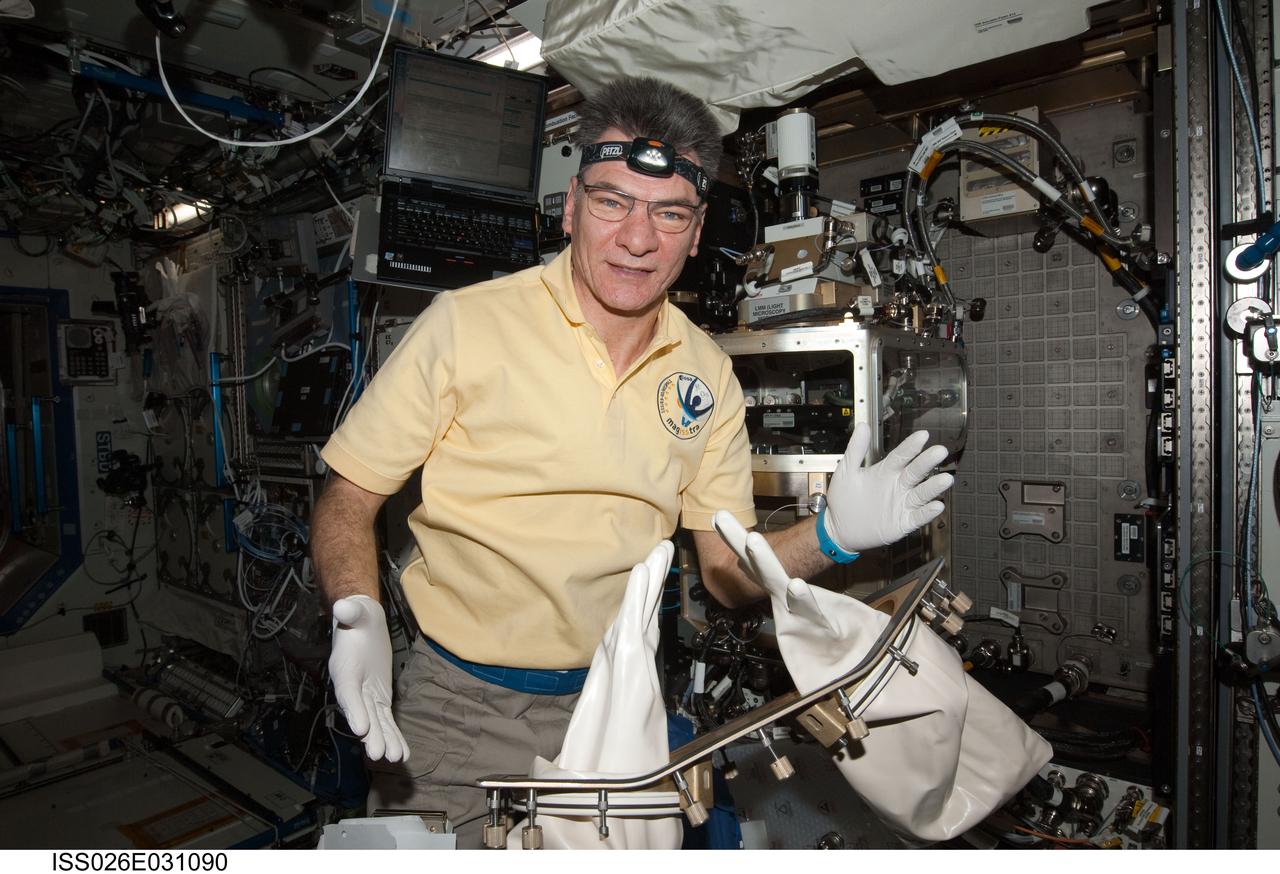
ISS026-E-031090 (1 March 2011) --- European Space Agency astronaut Paolo Nespoli, Expedition 26 flight engineer, works with the Light Microscopy Module (LMM) Spindle Bracket Assembly in the Fluids Integrated Rack (FIR) in the Destiny laboratory of the International Space Station.
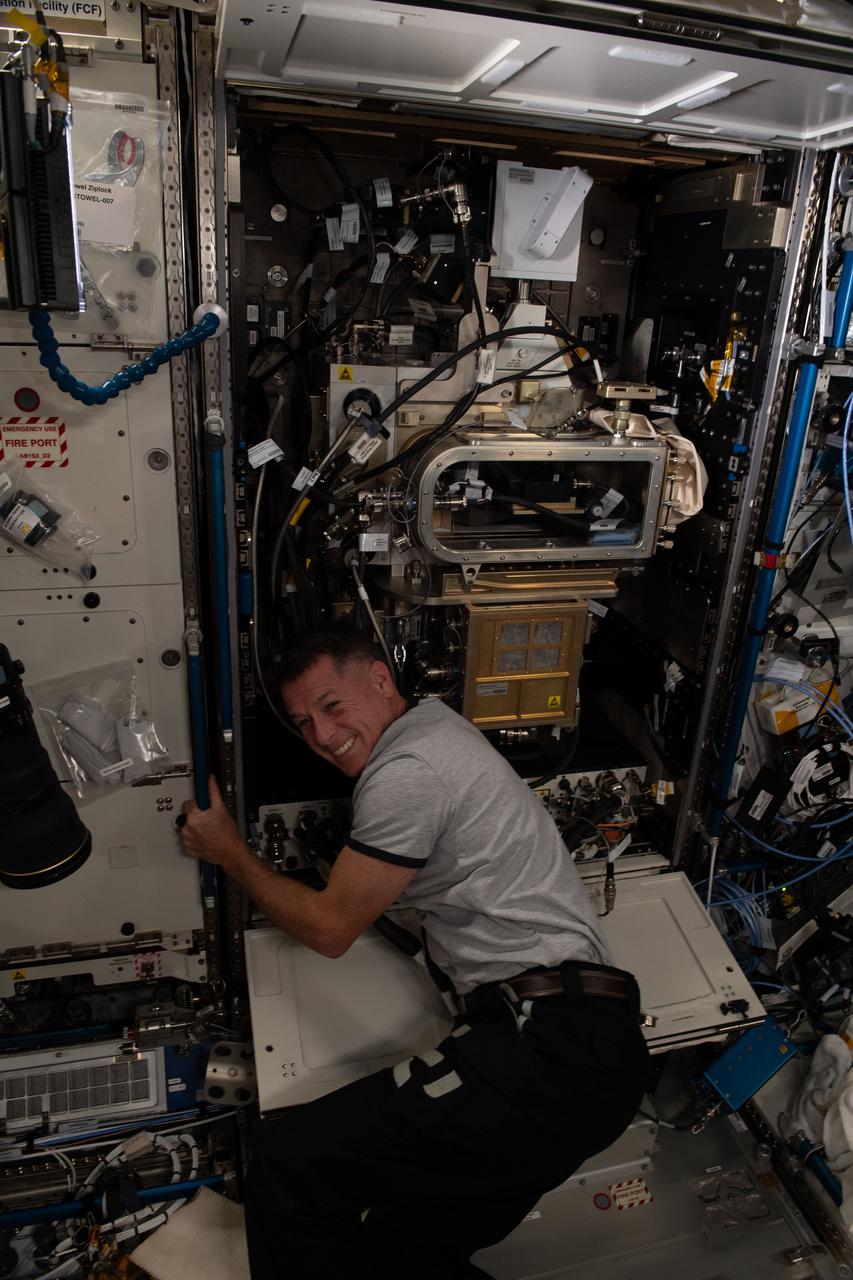
iss065e085487 (June 1, 2021) --- NASA astronaut and Expedition 65 Flight Engineer Shane Kimbrough replaces hardware inside the Fluids Integrated Rack. The research device supports investigations in areas such as colloids, gels, bubbles, wetting and capillary action, and phase changes, including boiling and condensation.
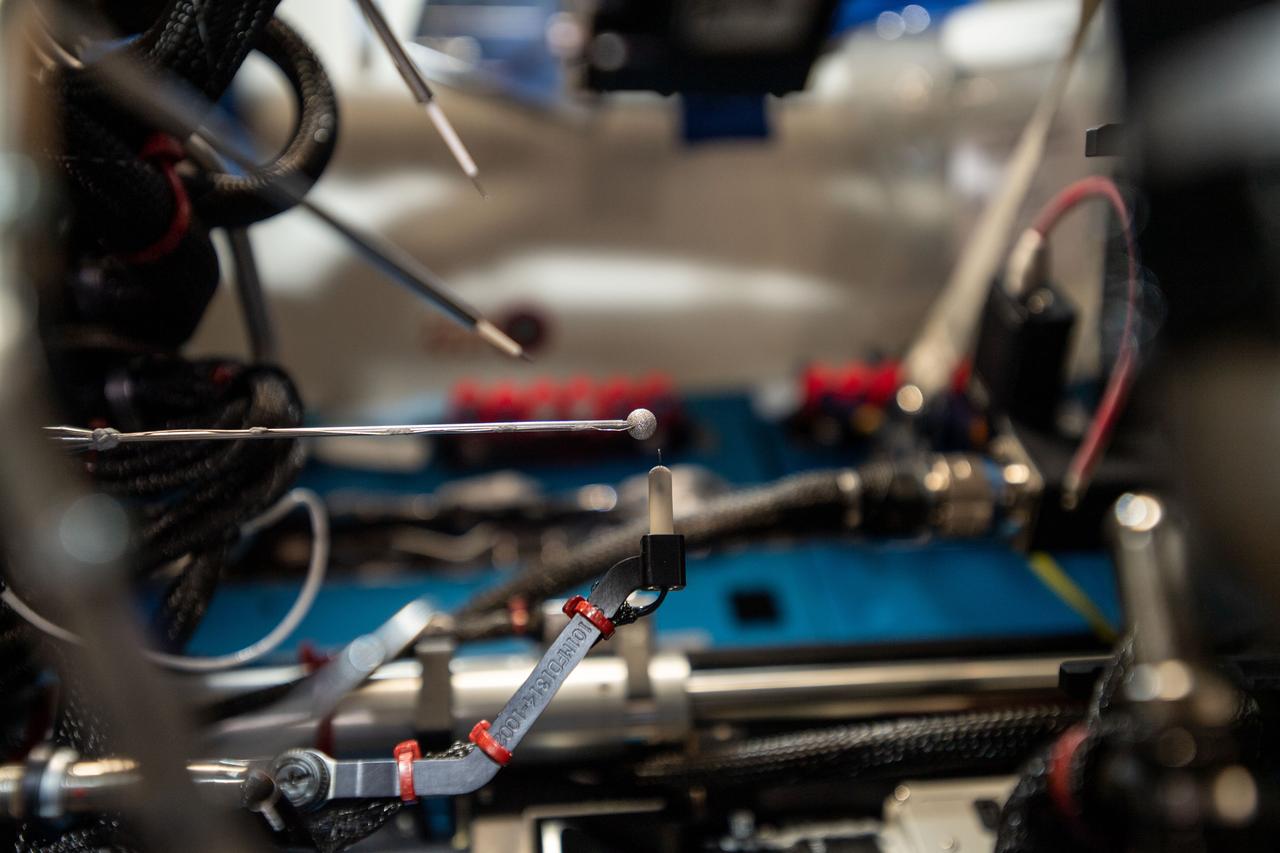
iss059e103188 (6/14/2019) --- Photo documentation taken aboard the International Space Station (ISS) during the Fluids and Combustion Facility (FCF) Combustion Integration Rack (CIR) / Advanced Combustion via Microgravity Experiments (ACME) / Flame Design hardware replacement.
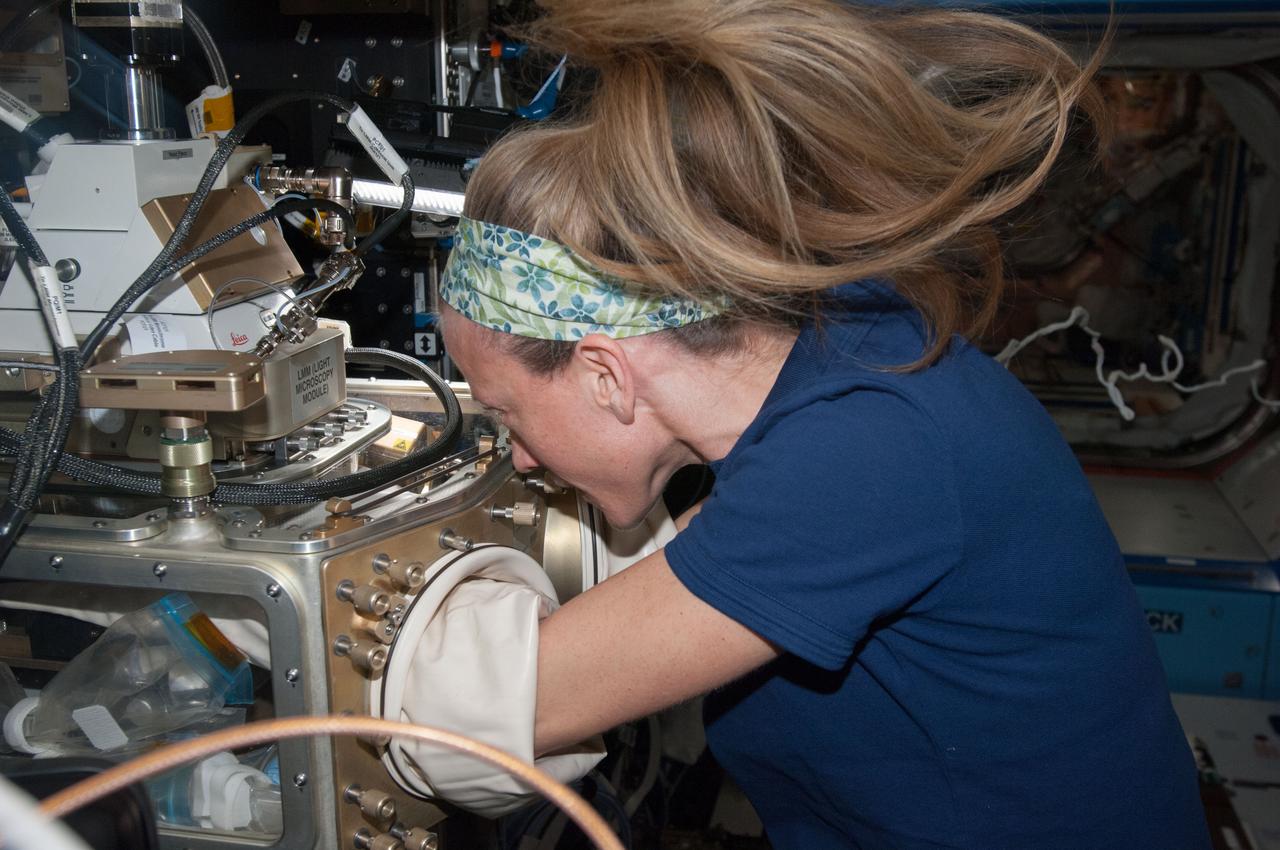
ISS037-E-001115 (16 Sept. 2013) ---NASA astronaut Karen Nyberg, Expedition 37 flight engineer, works with test samples housed in the Light Microscopy Module (LMM) inside the Fluids Integrated Rack of the International Space Station’s Destiny laboratory.
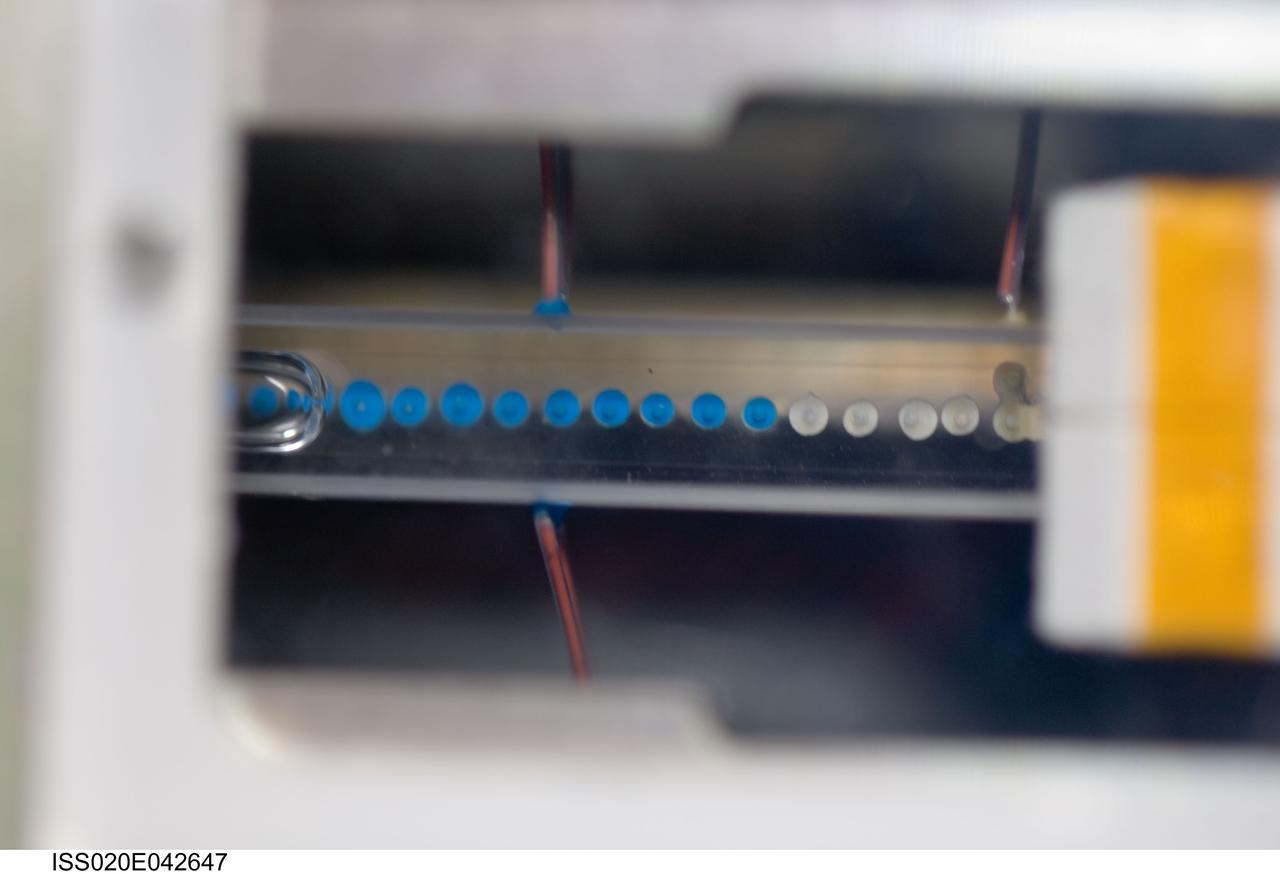
iss020e042647 (Sep. 26, 2009) --- Constrained Vapor Bubble (CVB) module with the science sample on the Fluids Integrated Rack (FIR). CVB aims to better understand the physics of evaporation and condensation to help create an efficient and highly reliable cooling equipment for space, where replacement parts are difficult or impossible.
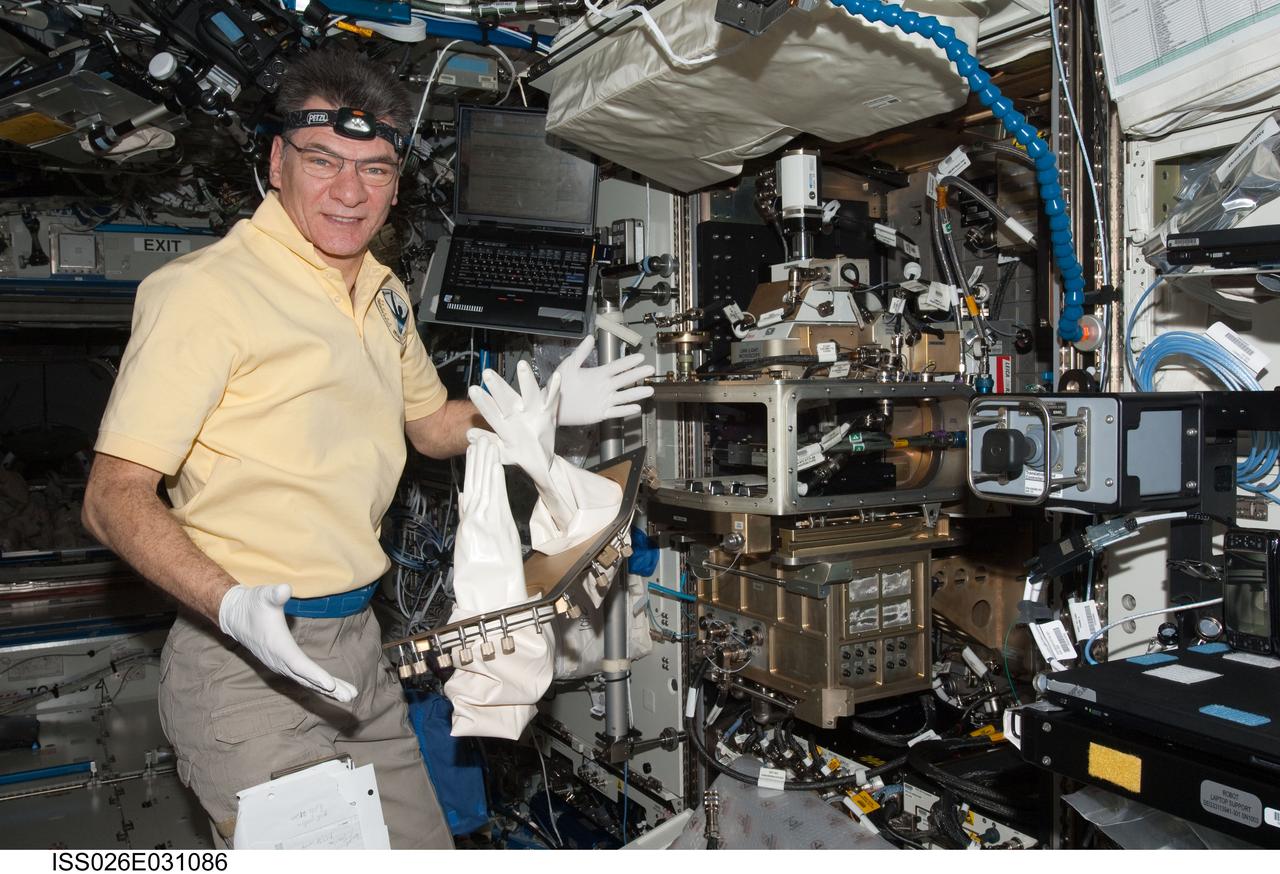
ISS026-E-031086 (1 March 2011) --- European Space Agency astronaut Paolo Nespoli, Expedition 26 flight engineer, works with the Light Microscopy Module (LMM) Spindle Bracket Assembly in the Fluids Integrated Rack (FIR) in the Destiny laboratory of the International Space Station.
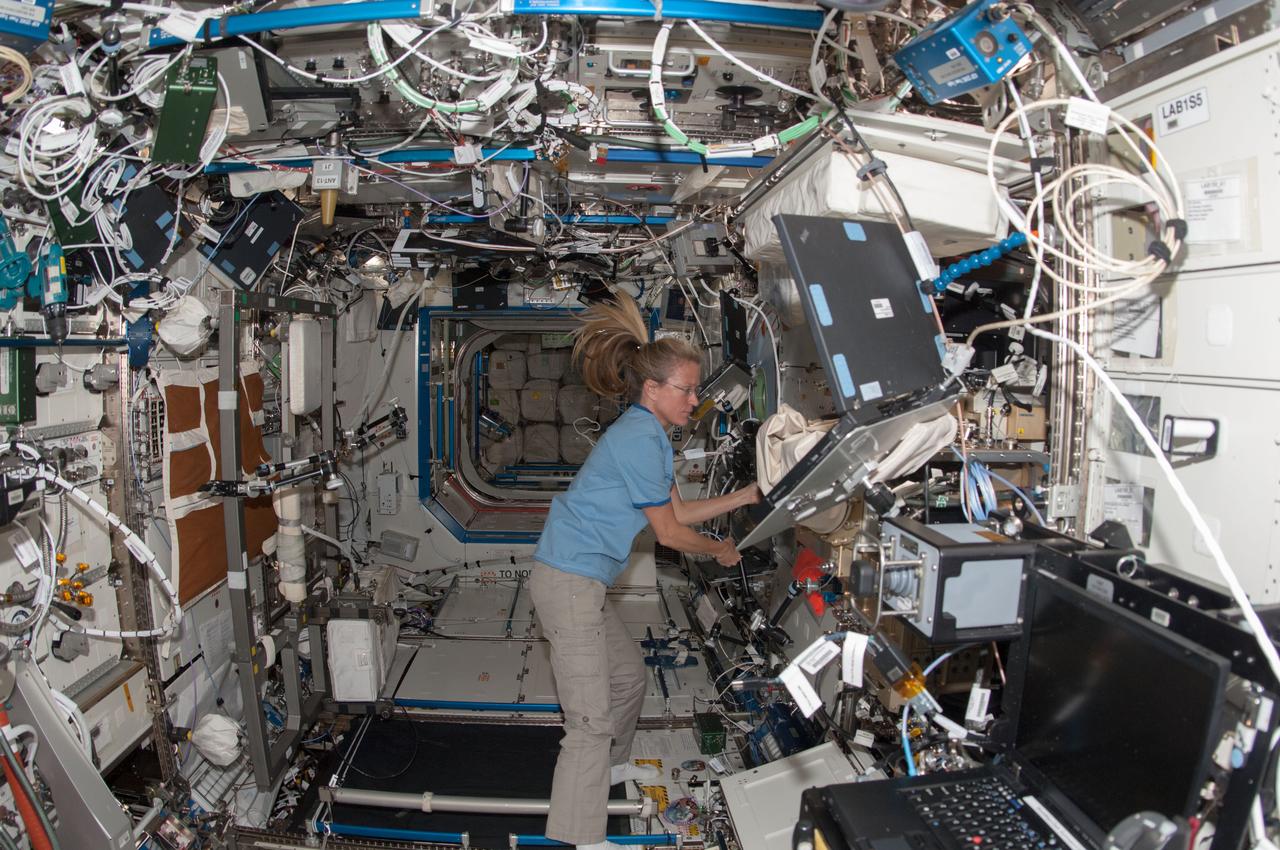
In the International Space Stations Destiny laboratory,NASA astronaut Karen Nyberg,Expedition 36 flight engineer,speaks into a microphone while conducting a session with the Advanced Colloids Experiment (ACE)-1 sample preparation at the Light Microscopy Module (LMM) in the Fluids Integrated Rack / Fluids Combustion Facility (FIR/FCF). ACE-1 is a series of microscopic imaging investigations that uses the microgravity environment to examine flow characteristics and the evolution and ordering effects within a group of colloidal materials.
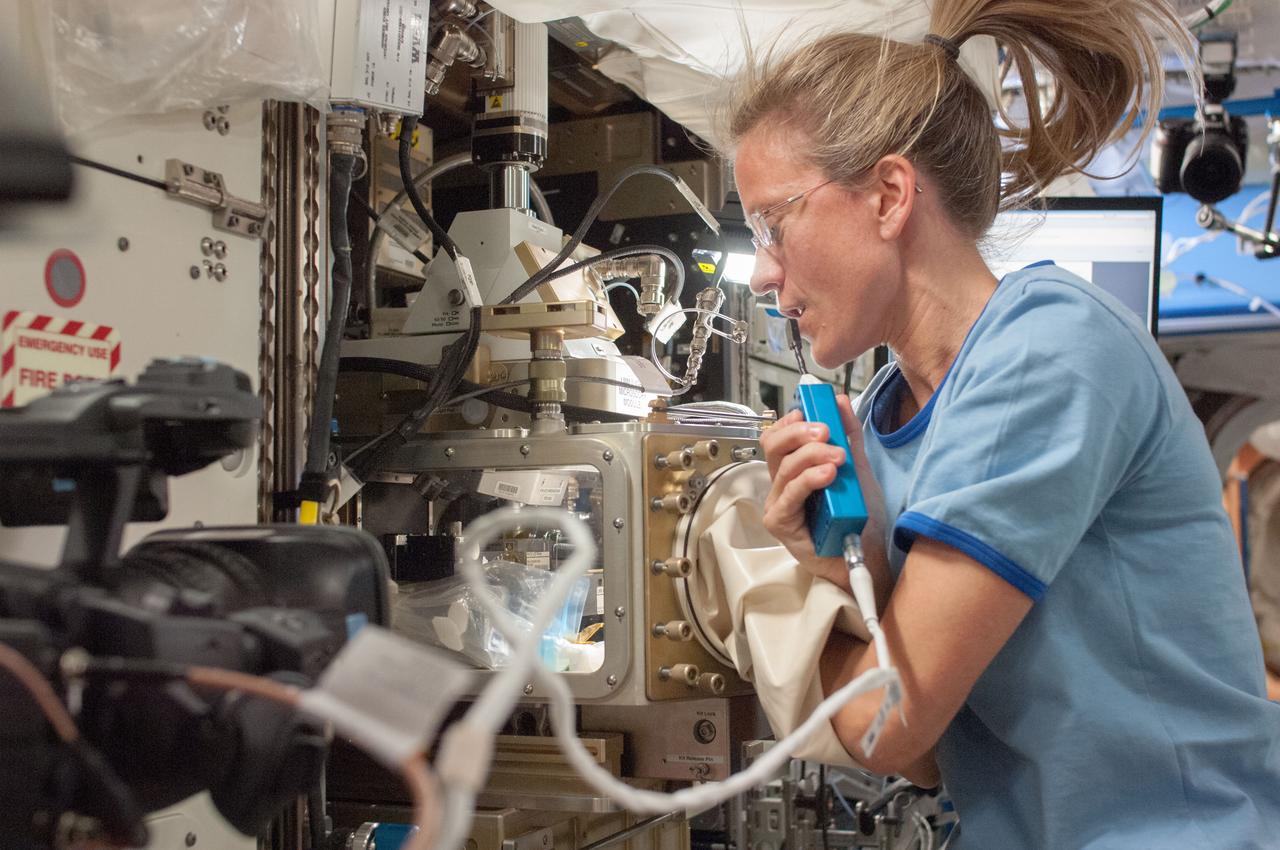
ISS036-E-019830 (24 June 2013) --- In the International Space Station’s Destiny laboratory, NASA astronaut Karen Nyberg, Expedition 36 flight engineer, speaks into a microphone while conducting a session with the Advanced Colloids Experiment (ACE)-1 sample preparation at the Light Microscopy Module (LMM) in the Fluids Integrated Rack / Fluids Combustion Facility (FIR/FCF). ACE-1 is a series of microscopic imaging investigations that uses the microgravity environment to examine flow characteristics and the evolution and ordering effects within a group of colloidal materials.
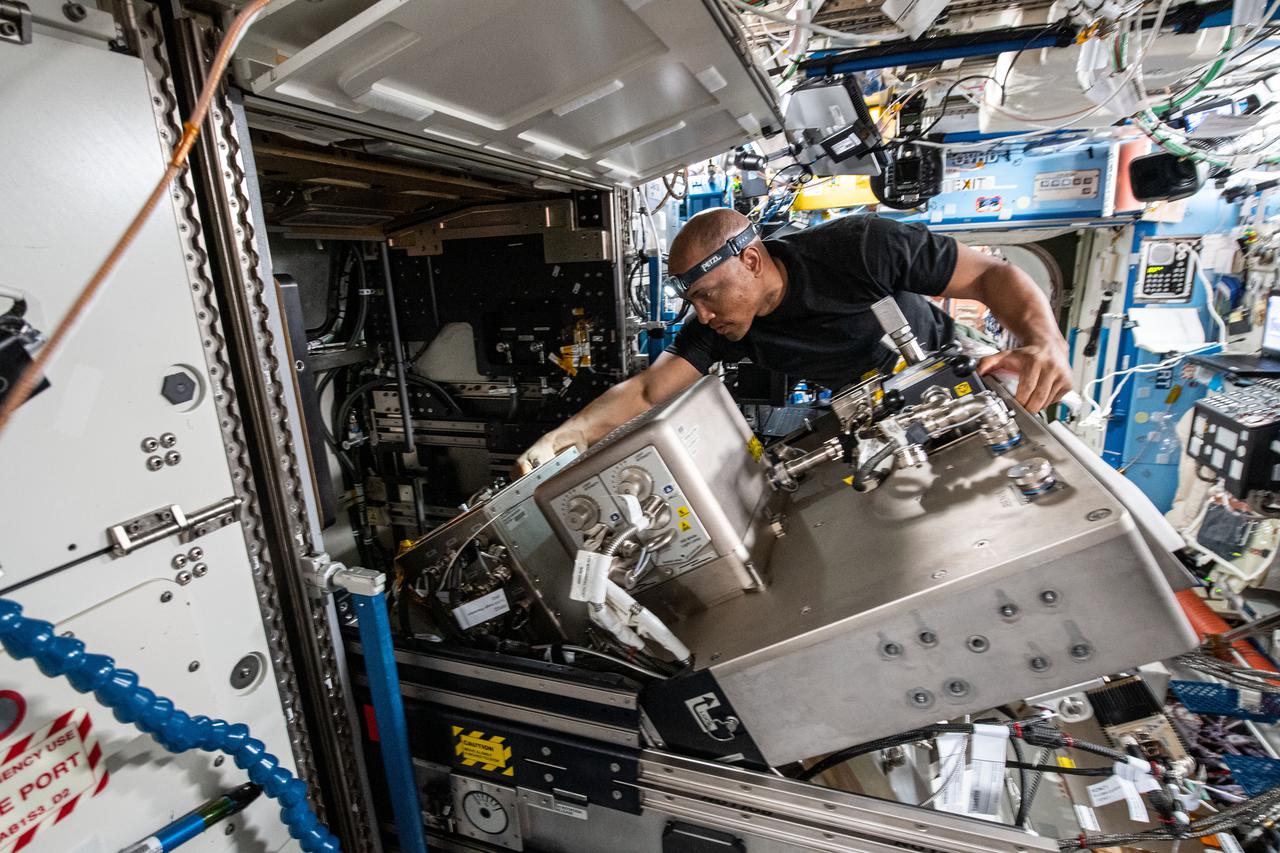
iss064e044807 (March 19, 2021) --- NASA astronaut and Expedition 64 Flight Engineer Victor Glover replaces hardware inside the U.S. Destiny laboratory module's Fluids Integrated Rack (FIR). The FIR supports fluid physics research in microgravity observing phenomena such as colloids, gels, bubbles, wetting and capillary action, and phase changes, including boiling and condensation.
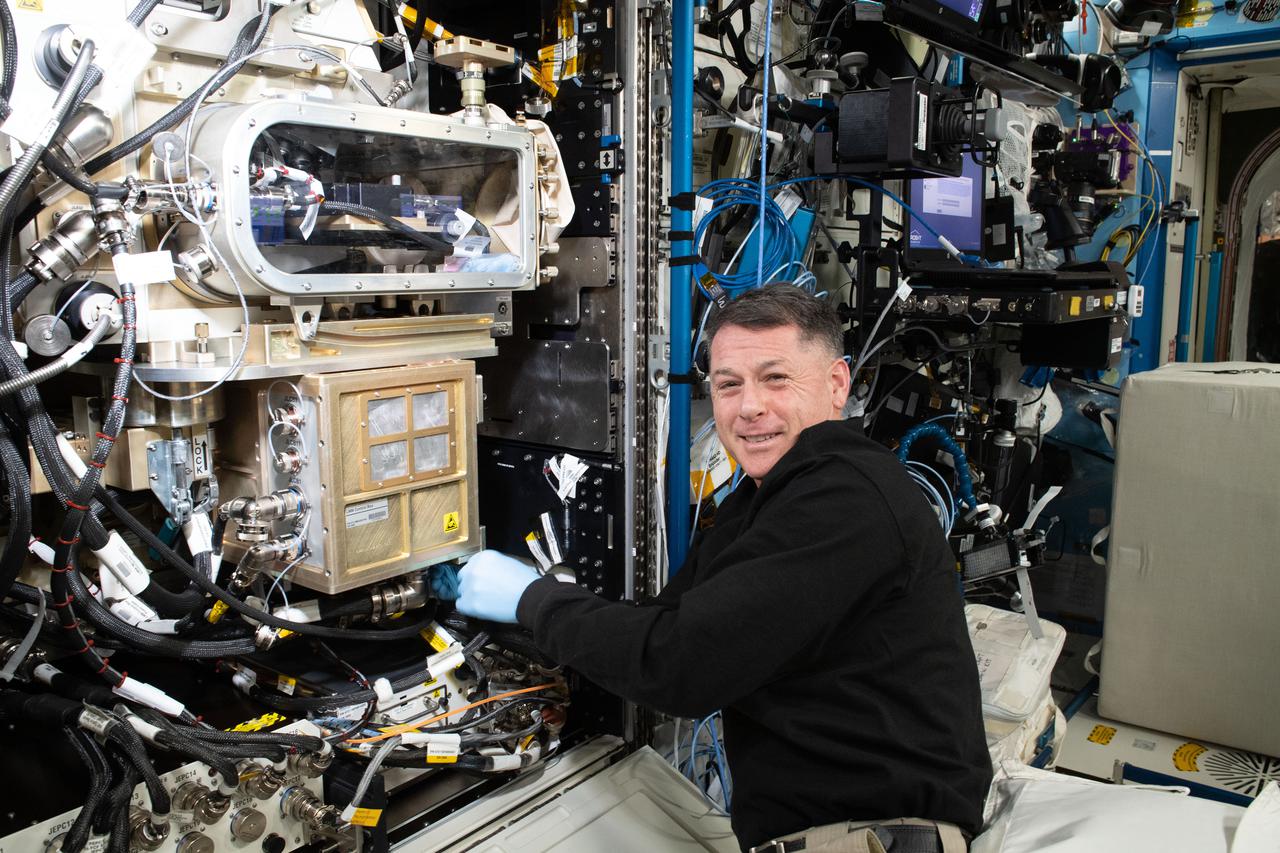
iss065e257486 (Aug. 17, 2021) --- NASA astronaut and Expedition 65 Flight Engineer Shane Kimbrough installs and configures a new Advanced Colloids Experiment module inside the U.S. Destiny laboratory module's Fluids Integrated Rack (FIR). The work supports the ACE-T9 fluid physics study that uses the FIR's Light Microscopy Module to image colloidal molecules for insights into the development of advanced materials not possible to produce in Earth's gravity.
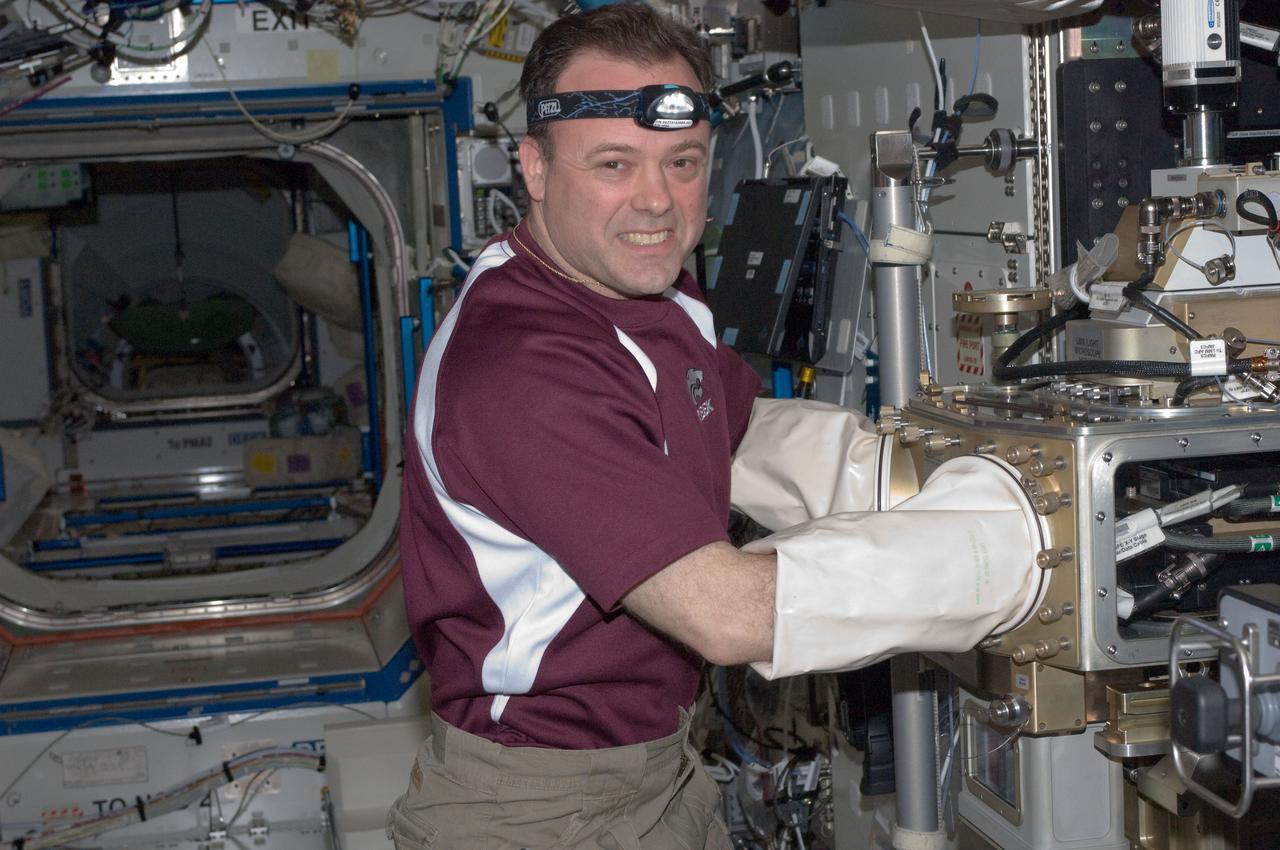
ISS028-E-005602 (26 May 2011) --- NASA astronaut Ron Garan, Expedition 28 flight engineer, services the Fluids Combustion Facility in the Fluids Integrated Rack on the Destiny lab aboard the International Space Station by changing out the Bio sample on the Bio Base. Garan and two Russian cosmonaut crewmates for Expedition 28 will be joined by three more crew members on the station in about one and a half weeks.
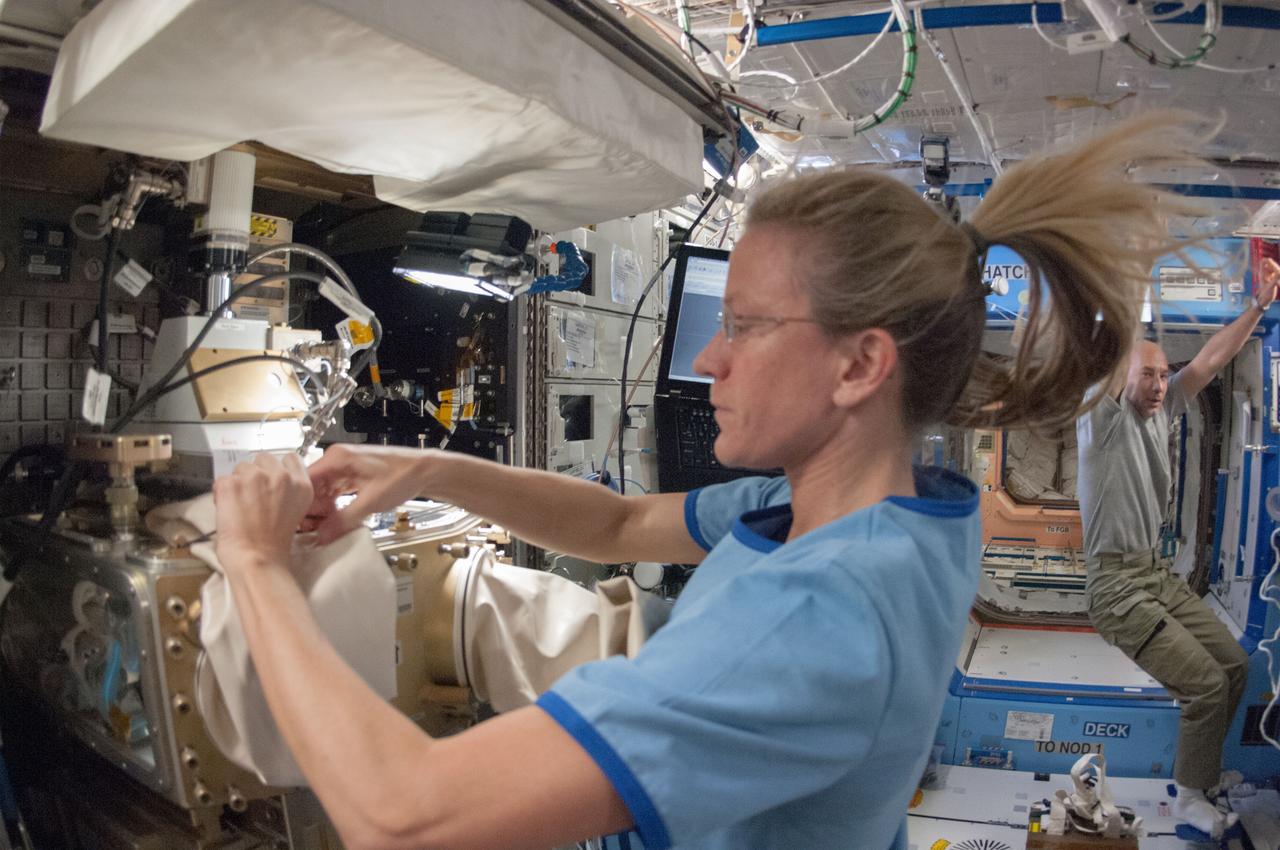
ISS036-E-019760 (24 June 2013) --- In the International Space Station’s Destiny laboratory, NASA astronaut Karen Nyberg, Expedition 36 flight engineer, conducts a session with the Advanced Colloids Experiment (ACE)-1 sample preparation at the Light Microscopy Module (LMM) in the Fluids Integrated Rack / Fluids Combustion Facility (FIR/FCF). ACE-1 is a series of microscopic imaging investigations that uses the microgravity environment to examine flow characteristics and the evolution and ordering effects within a group of colloidal materials.

The optical bench for the Fluids Integrated Rack section of the Fluids and Combustion Facility (FCF) is shown extracted for servicing and with the optical bench rotated 90 degrees for access to the rear elements. The FCF will be installed, in phases, in the Destiny, the U.S. Laboratory Module of the International Space Station (ISS), and will accommodate multiple users for a range of investigations. This is an engineering mockup; the flight hardware is subject to change as designs are refined. The FCF is being developed by the Microgravity Science Division (MSD) at the NASA Glenn Research Center. (Photo credit: NASA/Marshall Space Flight Center)
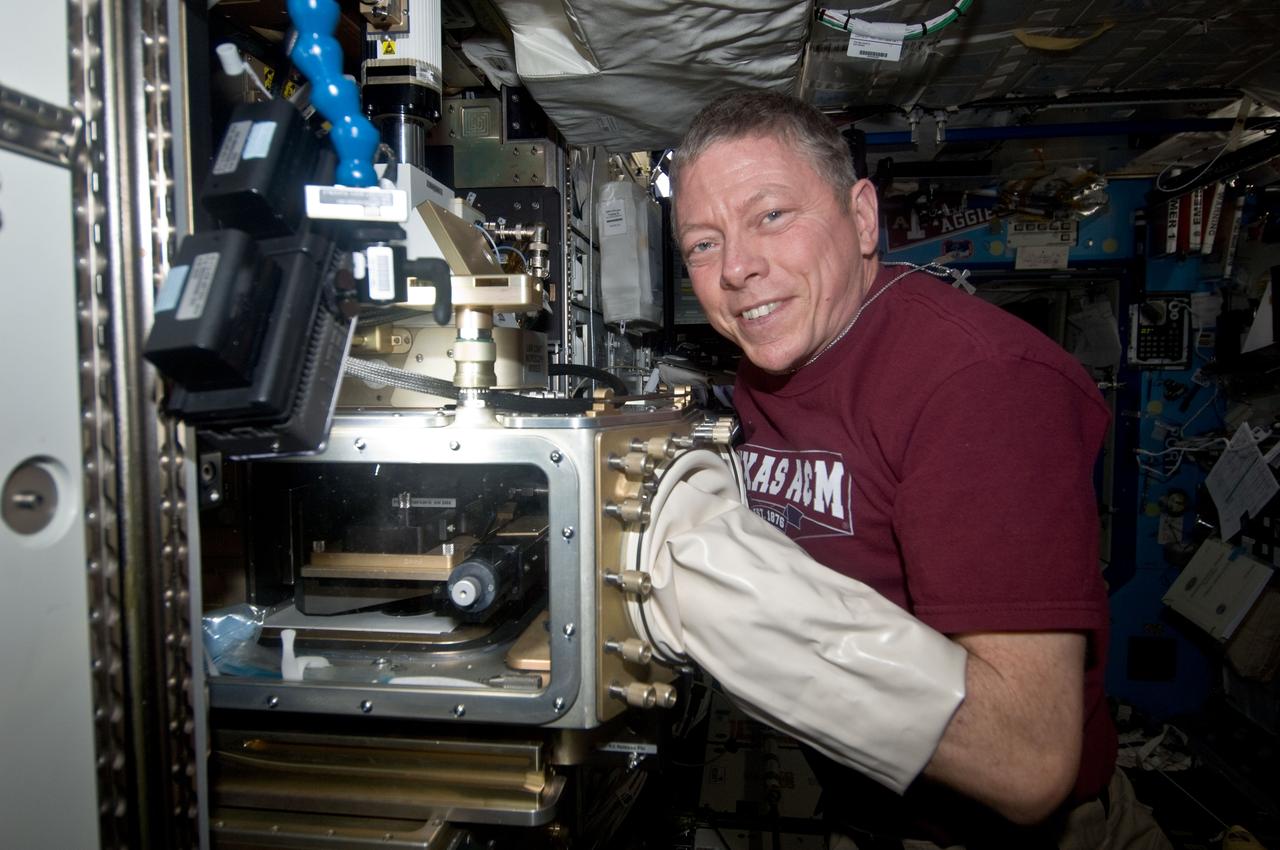
ISS029-E-025108 (11 Oct. 2011) --- NASA astronaut Mike Fossum, Expedition 29 commander, works on the Fluids Integrated Rack/Fluids and Combustion Facility (FIR/FCF), conducting another session with the Preliminary Advanced Colloids Experiment (PACE). Fossum is working at the Light Microscopy Module (LMM) in the Destiny laboratory of the International Space Station.
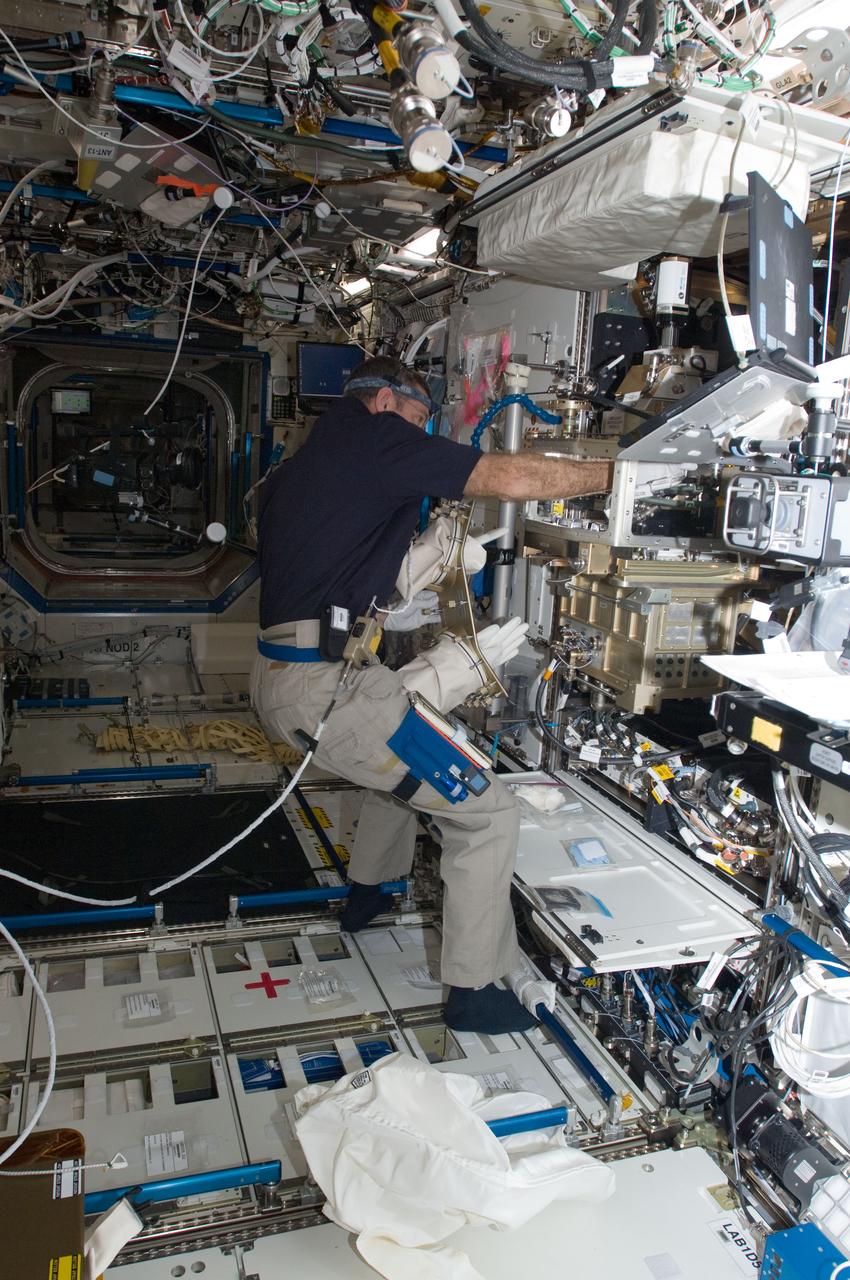
ISS030-E-007418 (1 Dec. 2011) --- In the International Space Station’s Destiny laboratory, NASA astronaut Dan Burbank, Expedition 30 commander, conducts a session with the Preliminary Advanced Colloids Experiment (PACE) at the Light Microscopy Module (LMM) in the Fluids Integrated Rack / Fluids Combustion Facility (FIR/FCF). PACE is designed to investigate the capability of conducting high magnification colloid experiments with the LMM for determining the minimum size particles which can be resolved with it.
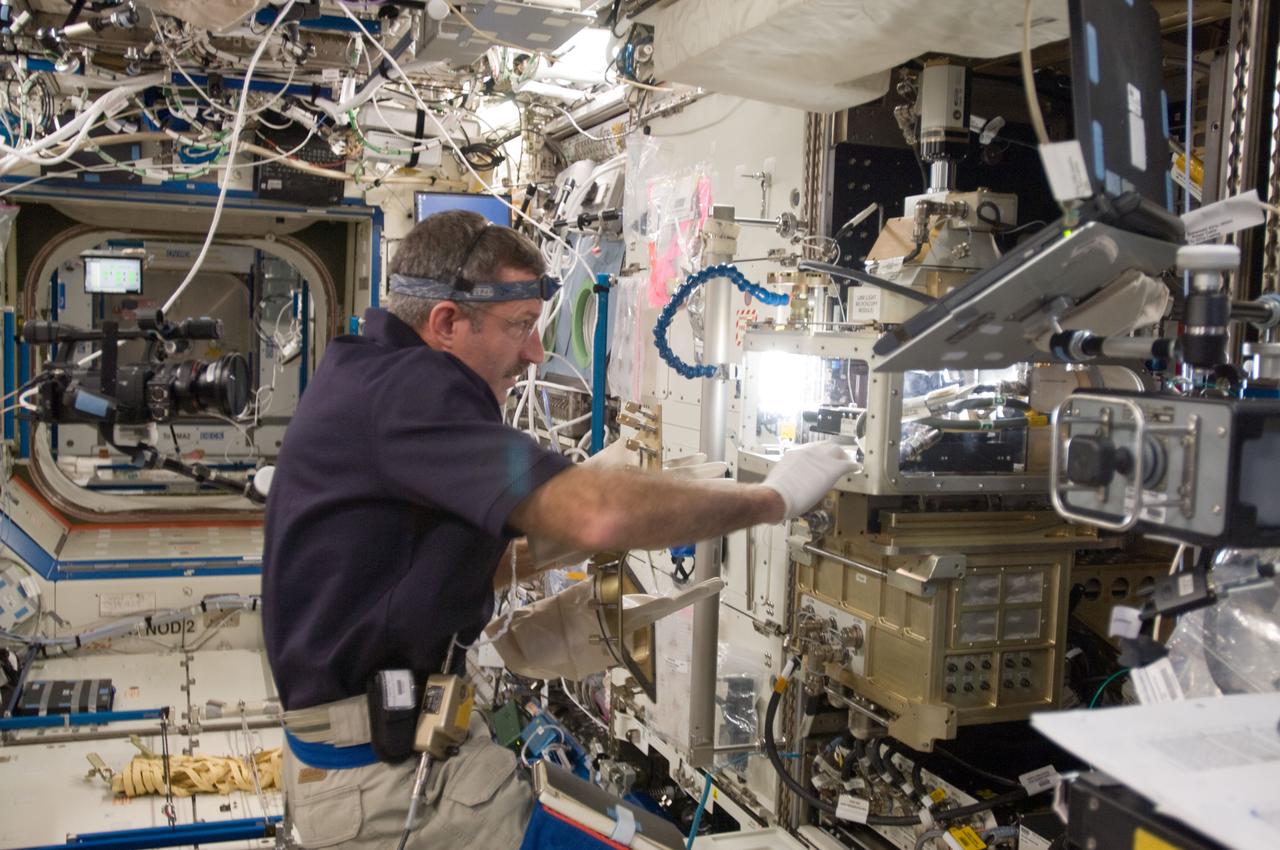
ISS030-E-007417 (1 Dec. 2011) --- In the International Space Station?s Destiny laboratory, NASA astronaut Dan Burbank, Expedition 30 commander, conducts a session with the Preliminary Advanced Colloids Experiment (PACE) at the Light Microscopy Module (LMM) in the Fluids Integrated Rack / Fluids Combustion Facility (FIR/FCF). PACE is designed to investigate the capability of conducting high magnification colloid experiments with the LMM for determining the minimum size particles which can be resolved with it.
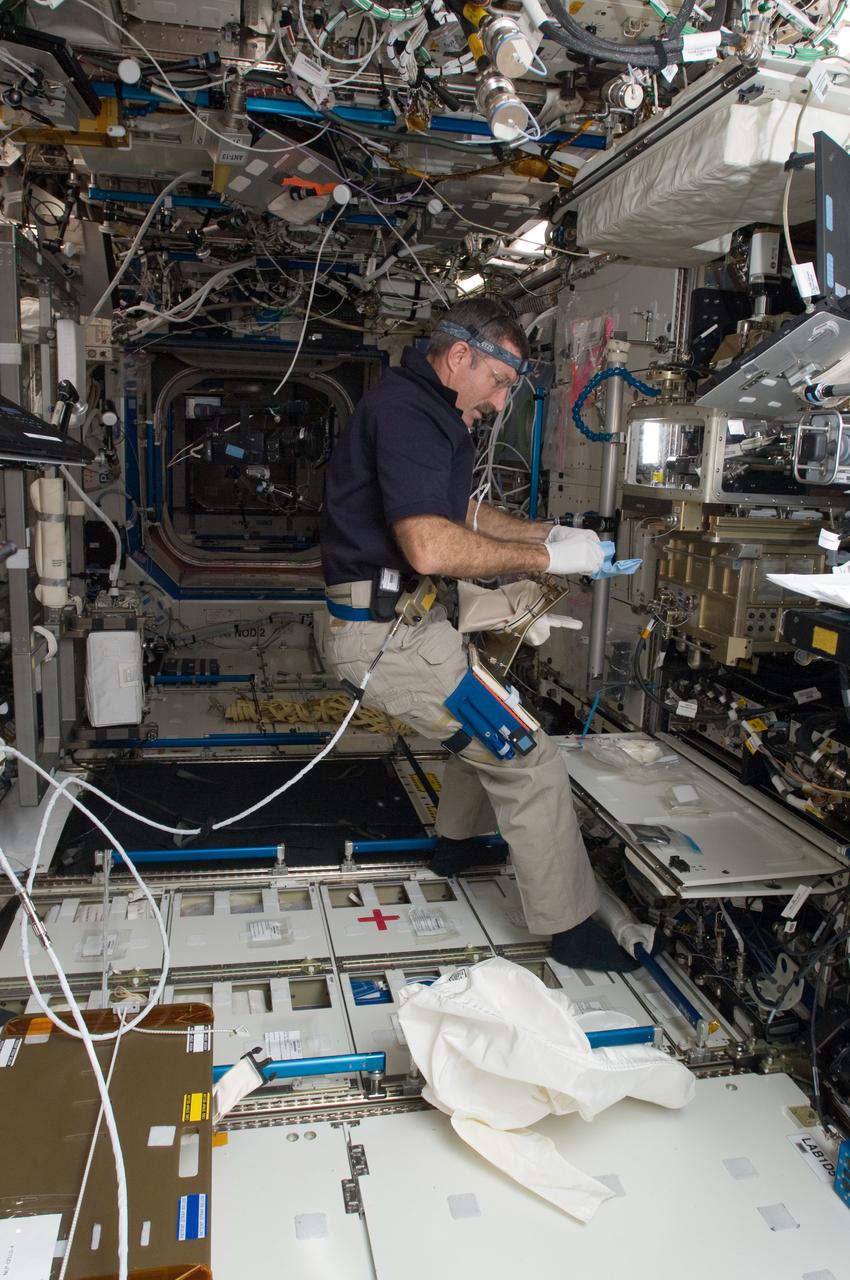
ISS030-E-007419 (1 Dec. 2011) --- In the International Space Station’s Destiny laboratory, NASA astronaut Dan Burbank, Expedition 30 commander, conducts a session with the Preliminary Advanced Colloids Experiment (PACE) at the Light Microscopy Module (LMM) in the Fluids Integrated Rack / Fluids Combustion Facility (FIR/FCF). PACE is designed to investigate the capability of conducting high magnification colloid experiments with the LMM for determining the minimum size particles which can be resolved with it.
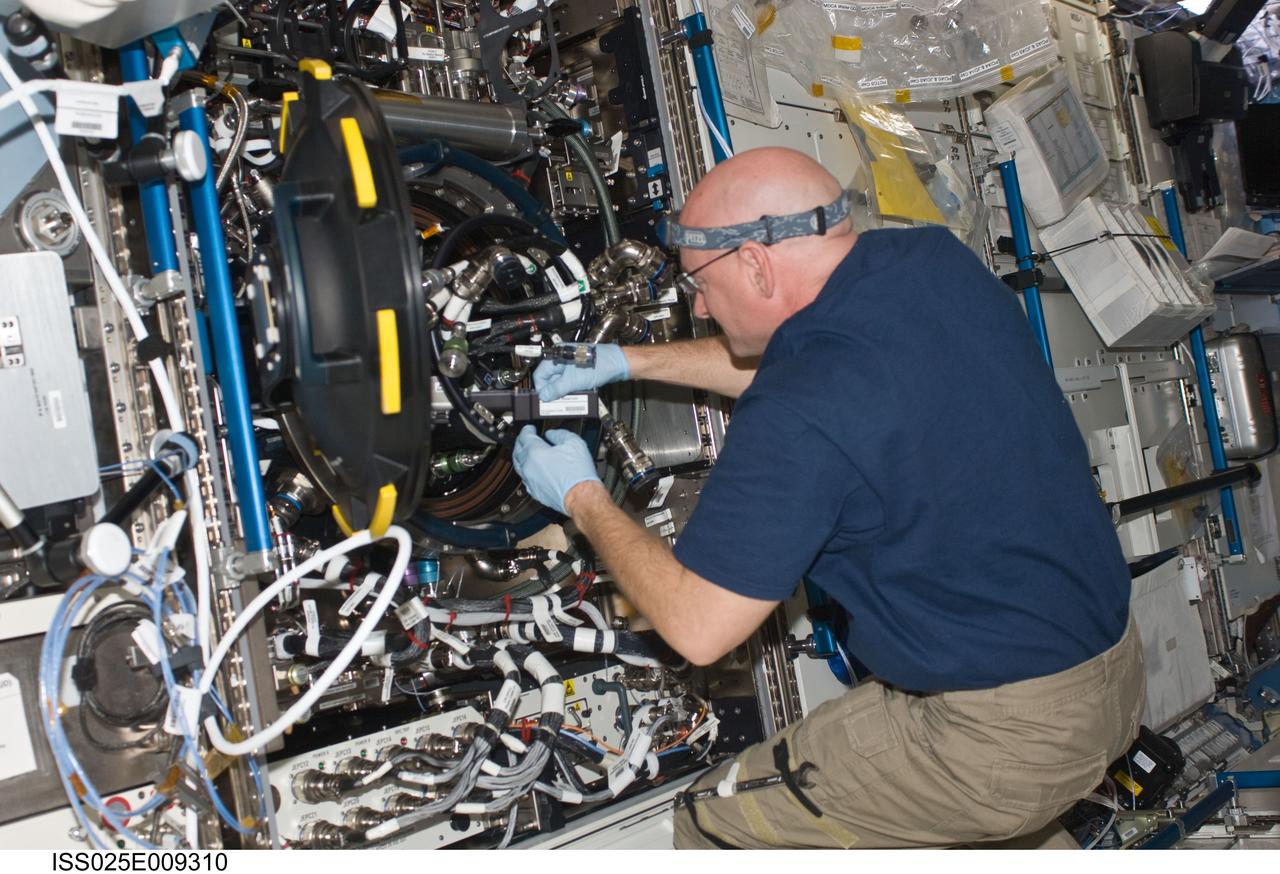
ISS025-E-009310 (26 Oct. 2010) --- NASA astronaut Scott Kelly, Expedition 25 flight engineer, works on the Combustion Integrated Rack (CIR) Multi-user Drop Combustion Apparatus (MDCA) in the Destiny laboratory of the International Space Station. Kelly set up an experiment run on the Fluids & Combustion Facility (FCF) with a new fuel reservoir, ground-assisted by Payload Operations Integration Center/Huntsville (POIC).
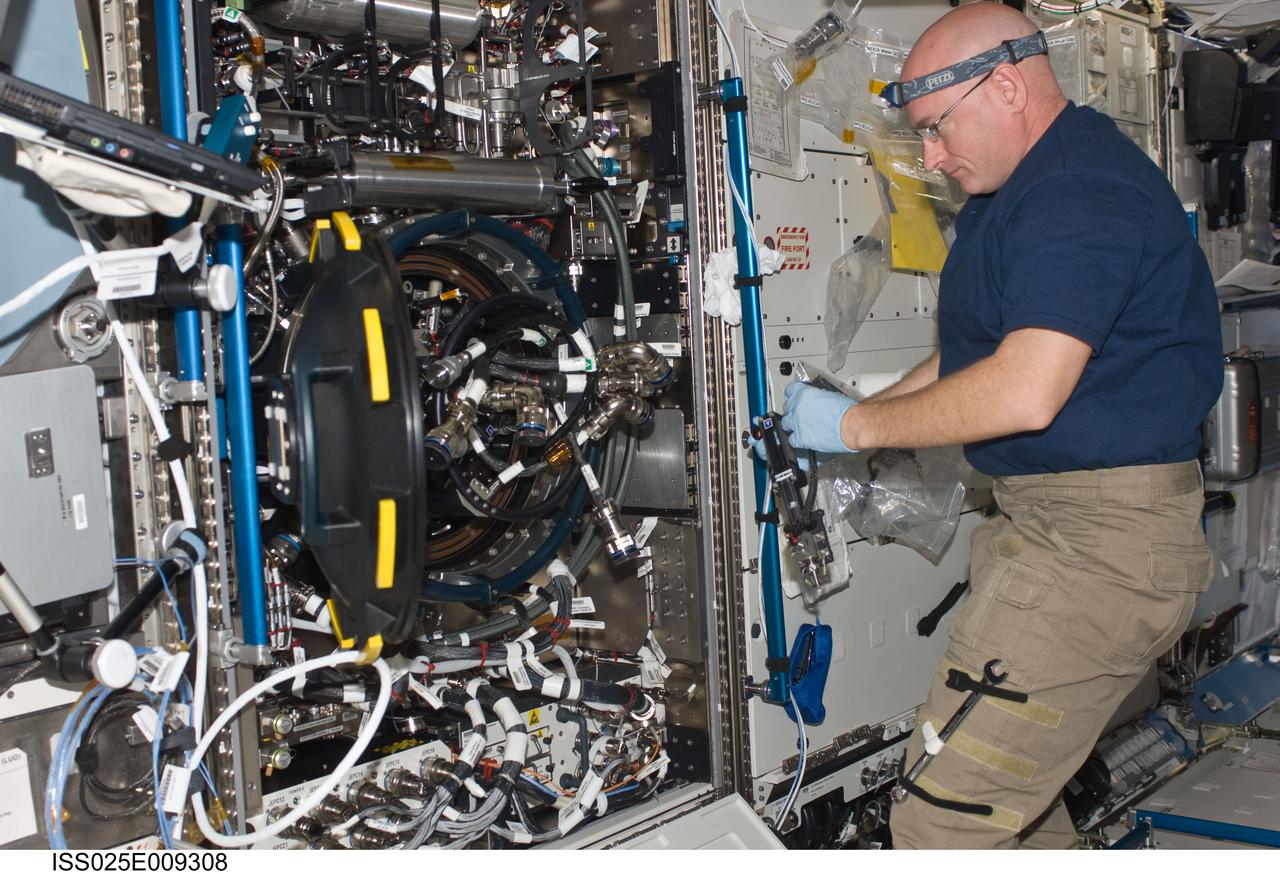
ISS025-E-009308 (26 Oct. 2010) --- NASA astronaut Scott Kelly, Expedition 25 flight engineer, works on the Combustion Integrated Rack (CIR) Multi-user Drop Combustion Apparatus (MDCA) in the Destiny laboratory of the International Space Station. Kelly set up an experiment run on the Fluids & Combustion Facility (FCF) with a new fuel reservoir, ground-assisted by Payload Operations Integration Center/Huntsville (POIC).
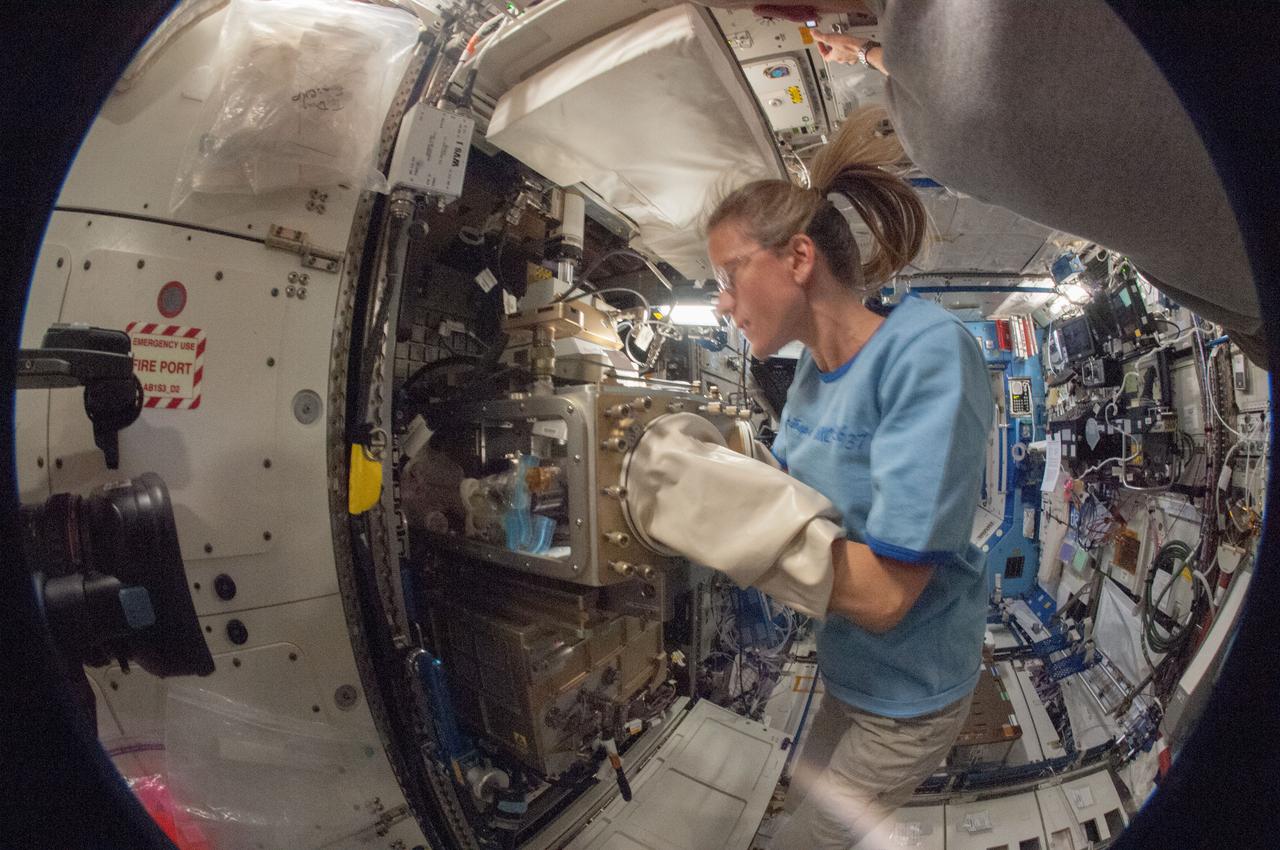
ISS036-E-019783 (24 June 2013) --- In the International Space Station’s Destiny laboratory, a fisheye lens attached to an electronic still camera was used to capture this image of NASA astronaut Karen Nyberg, Expedition 36 flight engineer, as she conducts a session with the Advanced Colloids Experiment (ACE)-1 sample preparation at the Light Microscopy Module (LMM) in the Fluids Integrated Rack / Fluids Combustion Facility (FIR/FCF). ACE-1 is a series of microscopic imaging investigations that uses the microgravity environment to examine flow characteristics and the evolution and ordering effects within a group of colloidal materials.
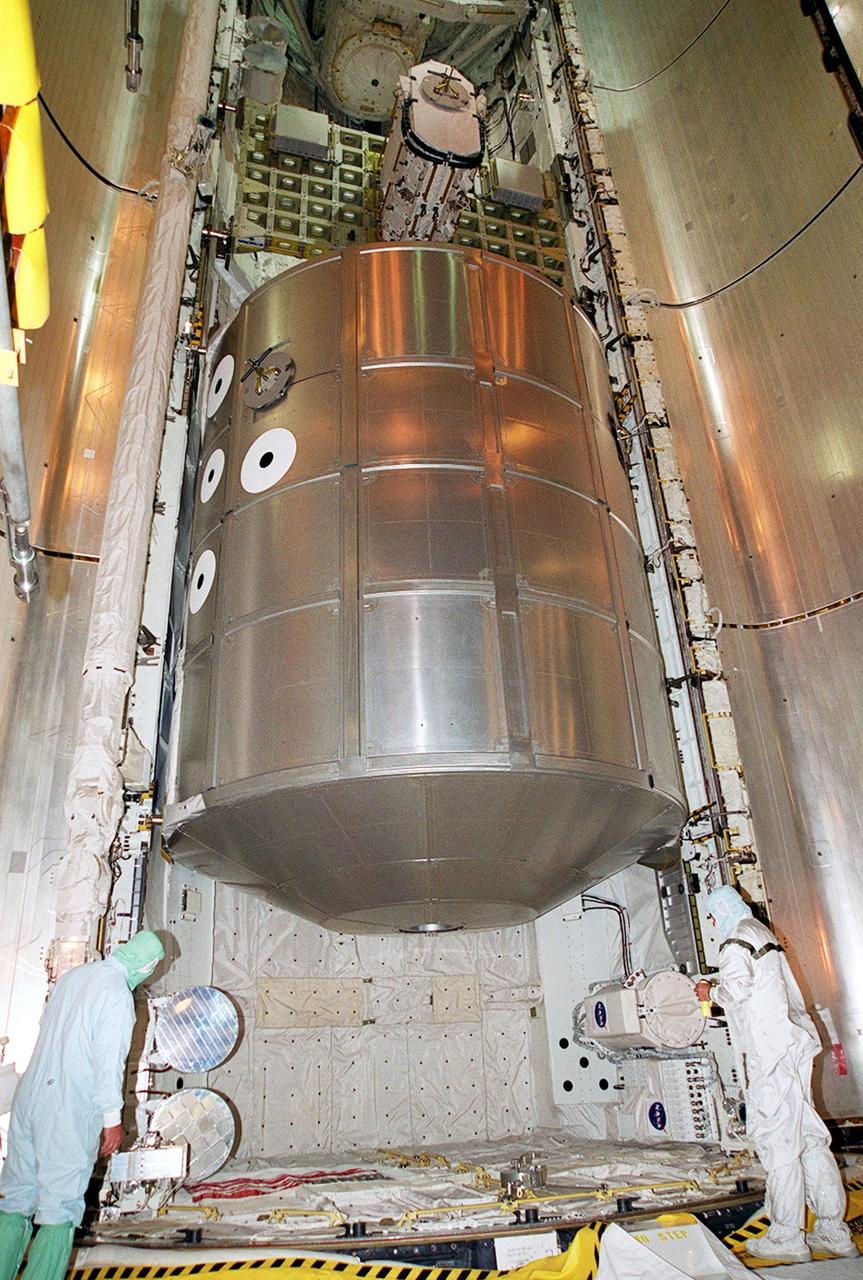
KENNEDY SPACE CENTER, Fla. -- On Launch Pad 39A, workers check out the loading of the payloads into Discovery’s payload bay. In the center is the Multi-Purpose Logistics Module Leonardo, filled with laboratory racks of science equipment and racks and platforms of experiments and supplies. Above Leonardo is the Integrated Cargo Carrier with the Early Ammonia Servicer (EAS) in the center. The EAS contains spare ammonia for the Station’s cooling system. Ammonia is the fluid used in the radiators that cool the Station’s electronics. The EAS will be installed on the P6 truss holding the giant U.S. solar arrays, batteries and cooling radiators. Seen below the MPLM and attached on the port and starboard adapter beams are experiments. Discovery is scheduled to be launched Aug. 9, 2001
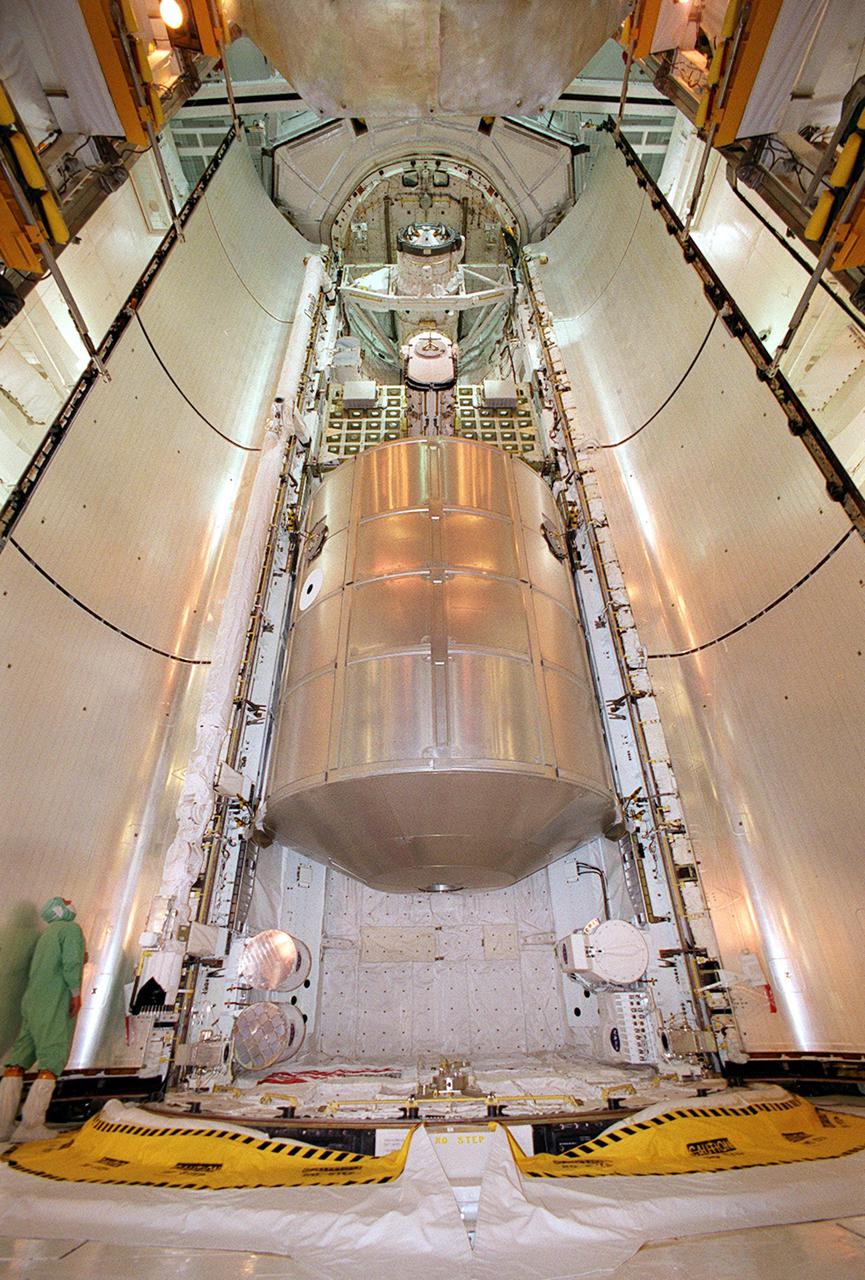
KENNEDY SPACE CENTER, Fla. -- On Launch Pad 39A, Discovery’s payload bay doors close on the payloads inside. In the center is the Multi-Purpose Logistics Module Leonardo, filled with laboratory racks of science equipment and racks and platforms of experiments and supplies. Above Leonardo is the Integrated Cargo Carrier with the Early Ammonia Servicer (EAS) in the center. The EAS contains spare ammonia for the Station’s cooling system. Ammonia is the fluid used in the radiators that cool the Station’s electronics. The EAS will be installed on the P6 truss holding the giant U.S. solar arrays, batteries and cooling radiators. Seen below the MPLM and attached on the port and starboard adapter beams are experiments. Discovery is scheduled to be launched Aug. 9, 2001
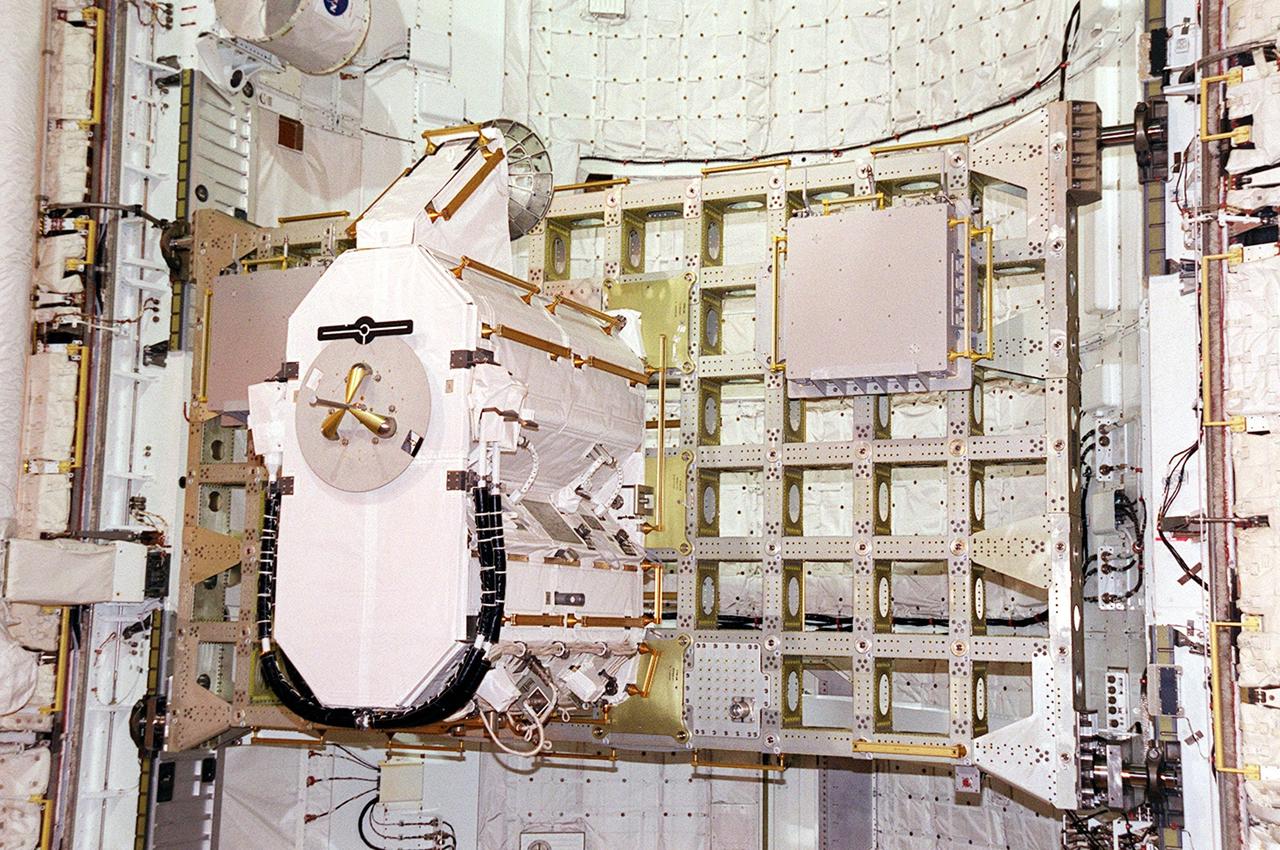
KENNEDY SPACE CENTER, Fla. -- On Launch Pad 39A, Discovery’s payload bay doors close on the payloads inside. On the Integrated Cargo Carrier seen here is the Early Ammonia Servicer (EAS) on the left. The EAS contains spare ammonia for the Station’s cooling system. Ammonia is the fluid used in the radiators that cool the Station’s electronics. The EAS will be installed on the P6 truss holding the giant U.S. solar arrays, batteries and cooling radiators. Other payloads in the bay are the Multi-Purpose Logistics Module Leonardo, filled with laboratory racks of science equipment and racks and platforms of experiments and supplies, and various experiments attached on the port and starboard adapter beams. Discovery is scheduled to be launched Aug. 9, 2001
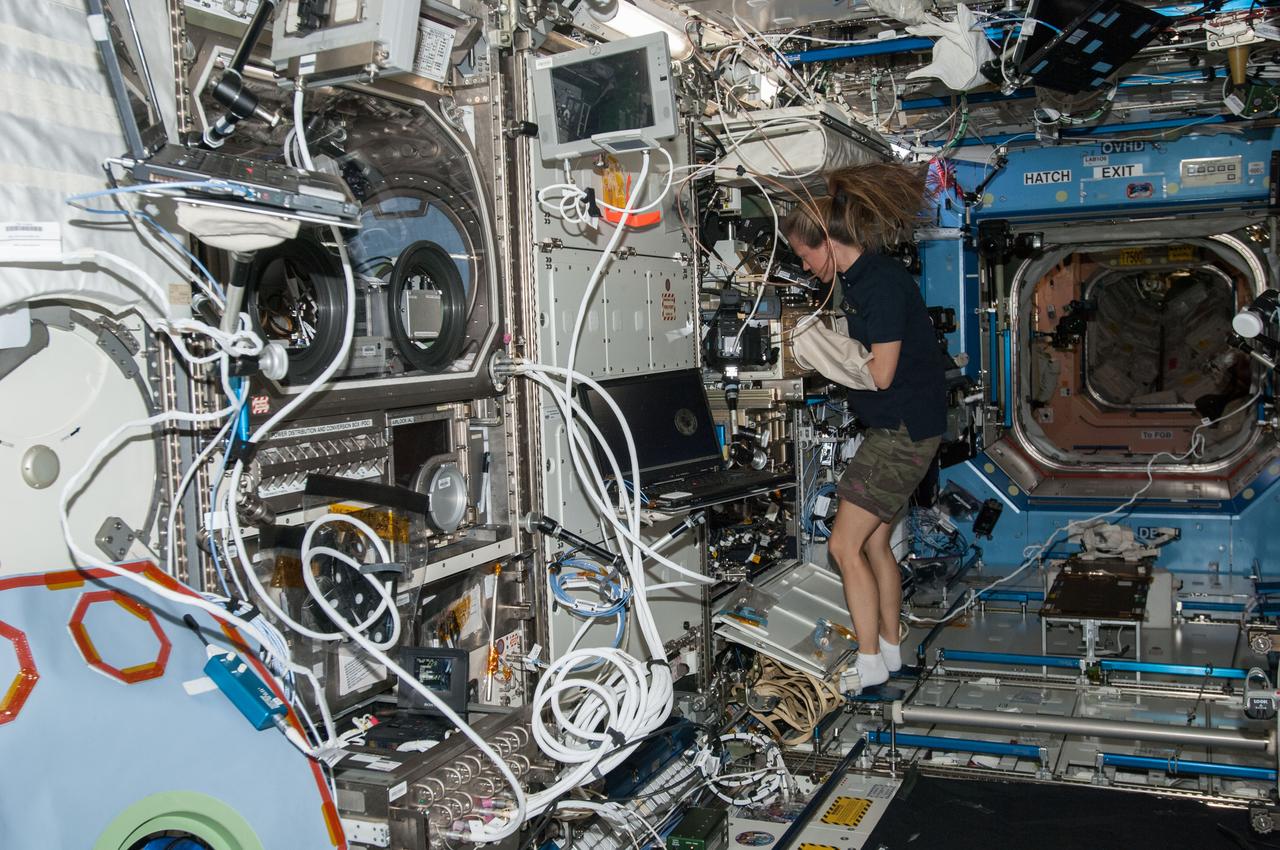
ISS036-E-033948 (18 Aug. 2013) --- NASA astronaut Karen Nyberg, Expedition 36 flight engineer, works with new test samples for the Advanced Colloids Experiment, or ACE, housed in the Light Microscopy Module (LMM) inside the Fluids Integrated Rack of the International Space Station?s Destiny laboratory. Results from ACE will help researchers understand how to optimize stabilizers to extend the shelf life of products like laundry detergent, paint, ketchup and even salad dressing.
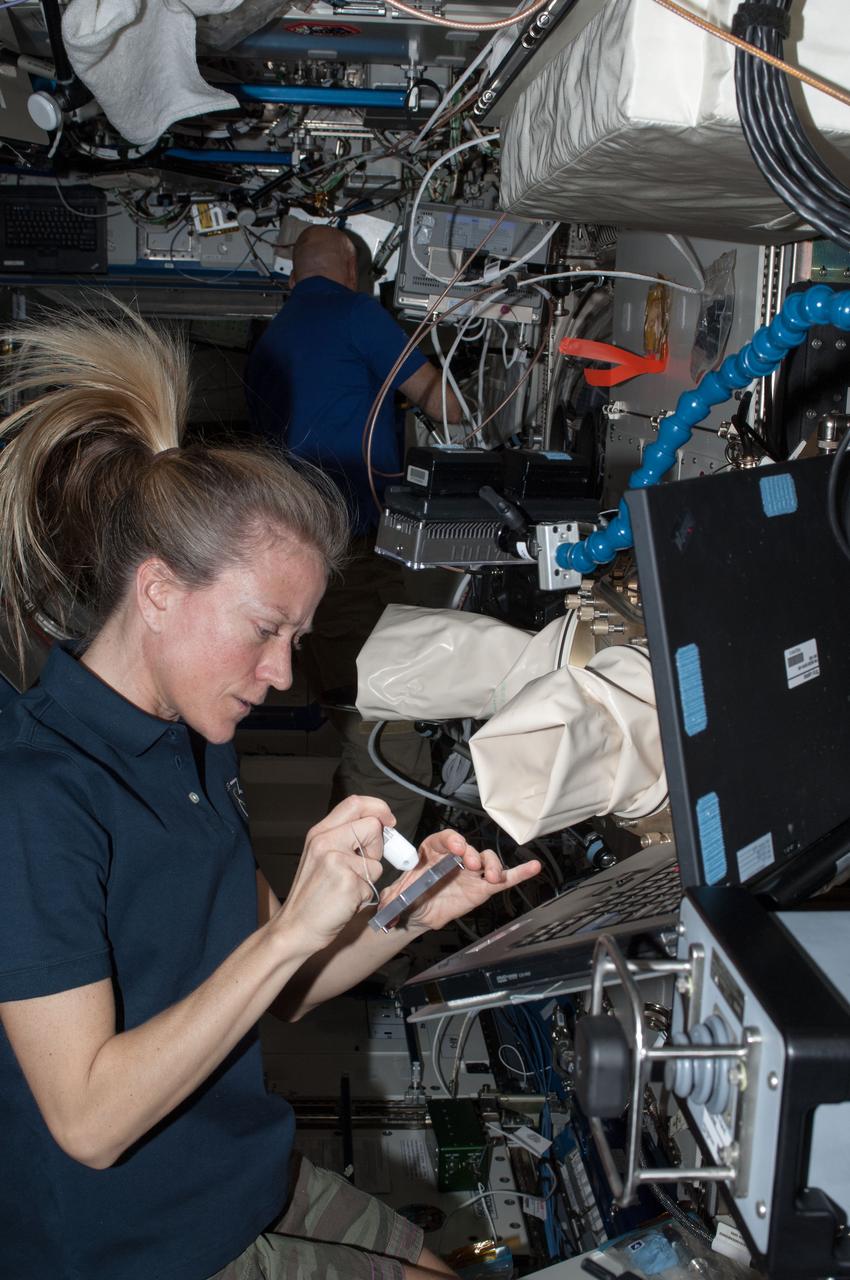
ISS036-E-035770 (18 Aug. 2013) --- NASA astronaut Karen Nyberg, Expedition 36 flight engineer, works with new test samples for the Advanced Colloids Experiment, or ACE, housed in the Light Microscopy Module (LMM) inside the Fluids Integrated Rack of the International Space Station?s Destiny laboratory. Results from ACE will help researchers understand how to optimize stabilizers to extend the shelf life of products like laundry detergent, paint, ketchup and even salad dressing.
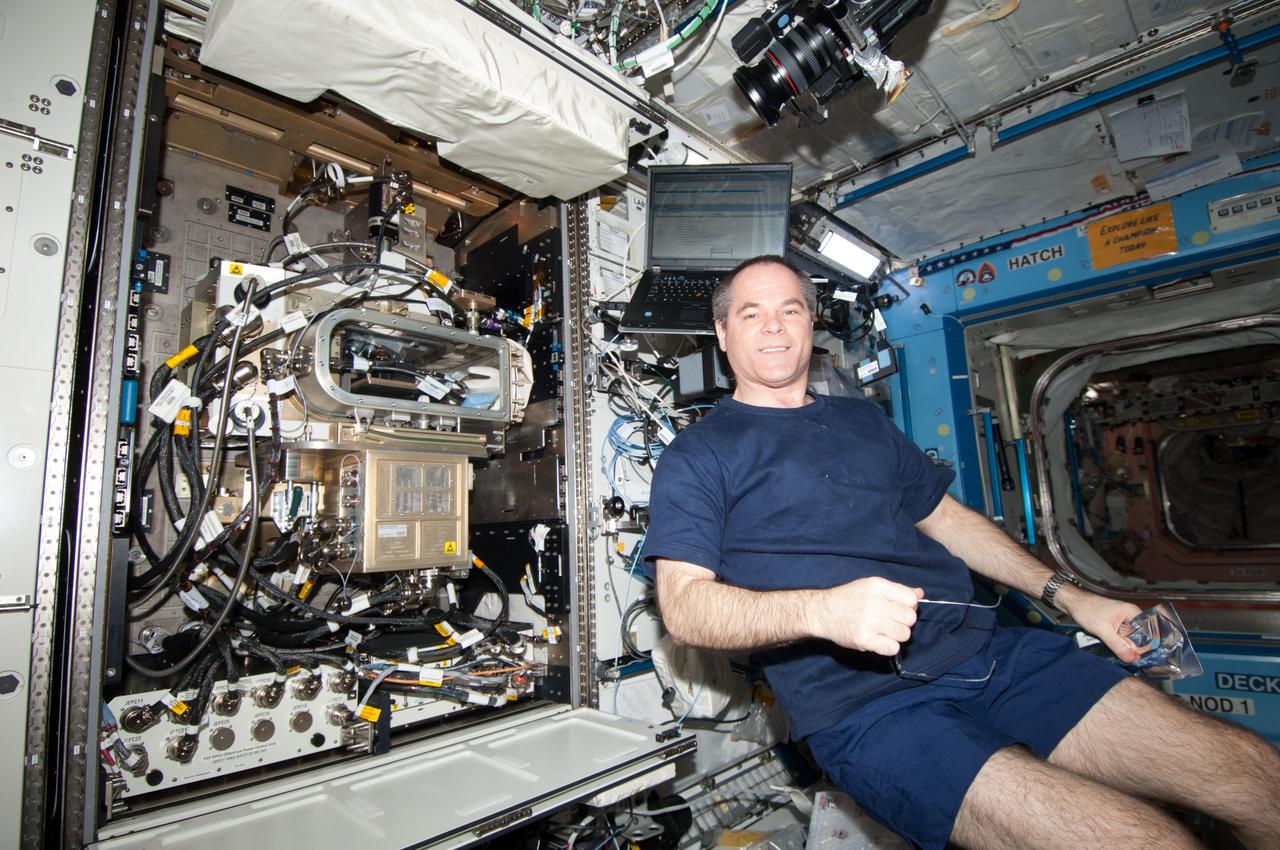
ISS034-E-056144 (21 Feb. 2013) --- Inside the U.S. Laboratory (Destiny) aboard the Earth-orbiting International Space Statio, NASA astronaut Kevin Ford, Expedition 34 commander, is seen with the Fluids Integration Rack (FIR)/Light Microscopy Module (LMM)/Advanced Colloids Experiment (ACE). ACE samples, which produce microscopic images of materials containing small colloidal particles, are scheduled for arrival on SpaceX-2 in the first week of March.
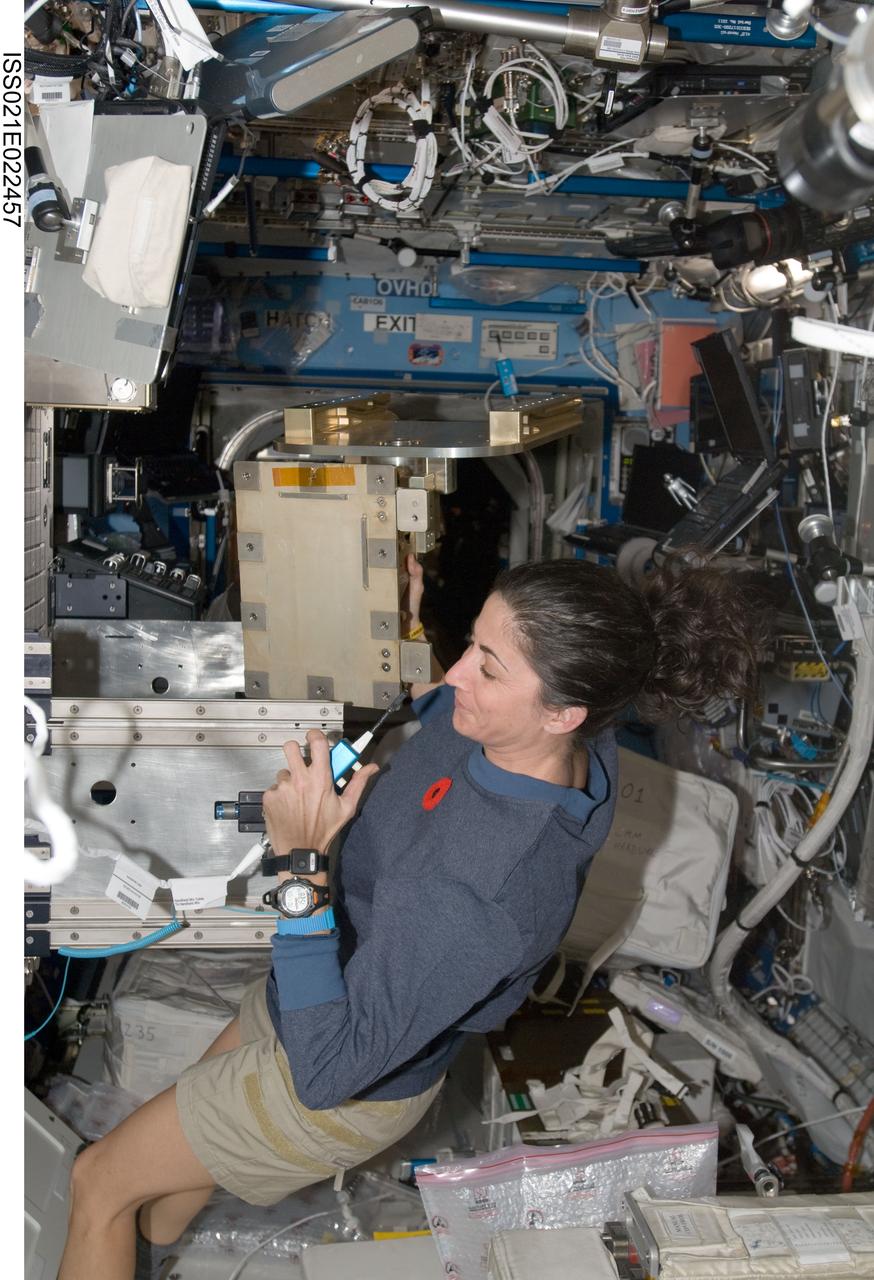
ISS021-E-022457 (9 Nov. 2009) --- NASA astronaut Nicole Stott, Expedition 21 flight engineer, uses a communication system while installing the Light Microscopy Module (LMM) Spindle Bracket Assembly in the Fluids Integrated Rack (FIR) in the Destiny laboratory of the International Space Station. Canadian Space Agency astronaut Robert Thirsk (out of frame) assisted Stott.

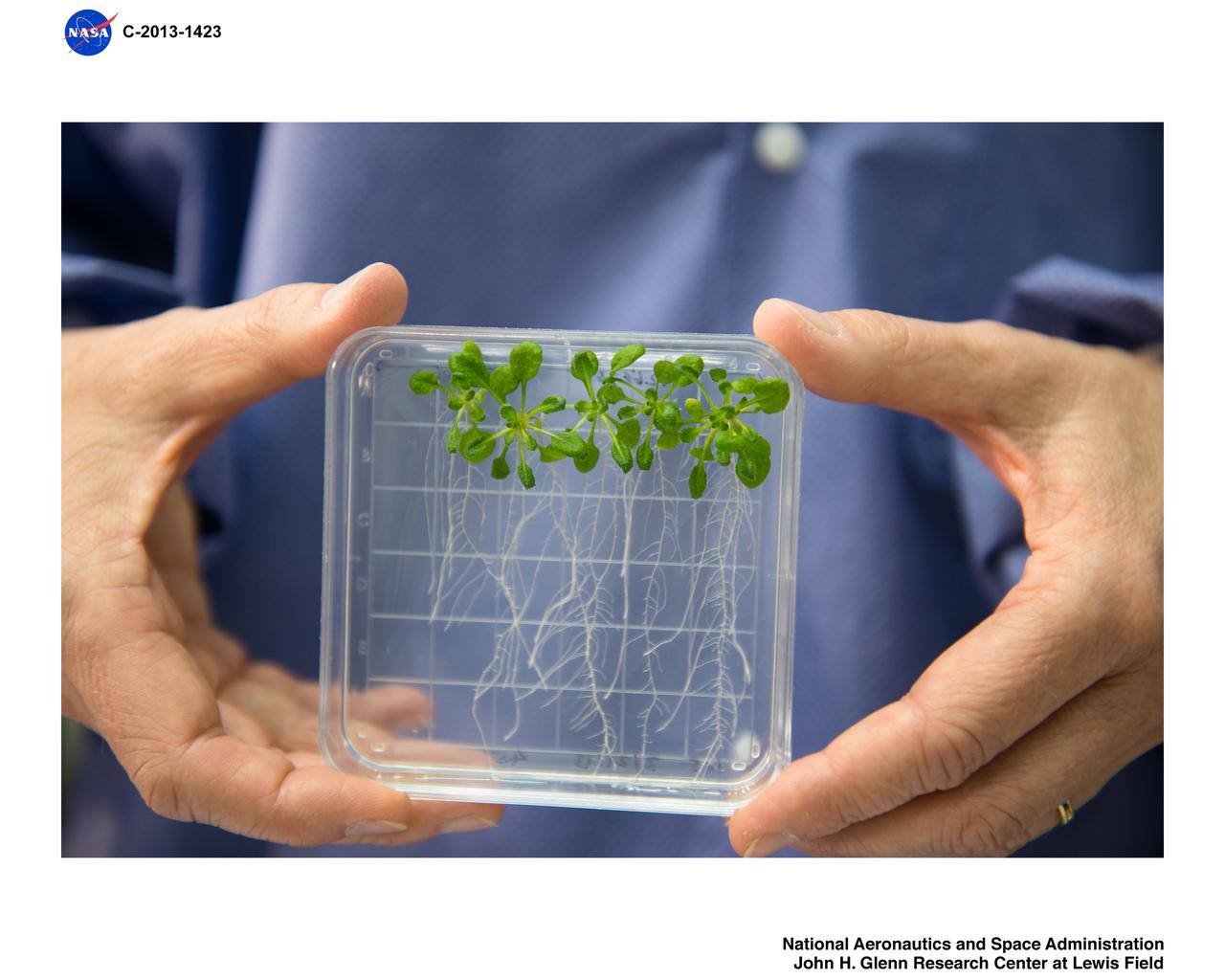
Advanced Plant Experiment, APEX-4, support in the Telescience Support Center at NASA Glenn. APEX-4 continues a highly successful investigation into the effects of microgravity on the development of roots and cells on plant seedlings. After four days of growth, the petri plate will be inserted into the Fluids Integrated Rack (FIR) Light Microscopy Module (LMM) facility for detailed imaging.
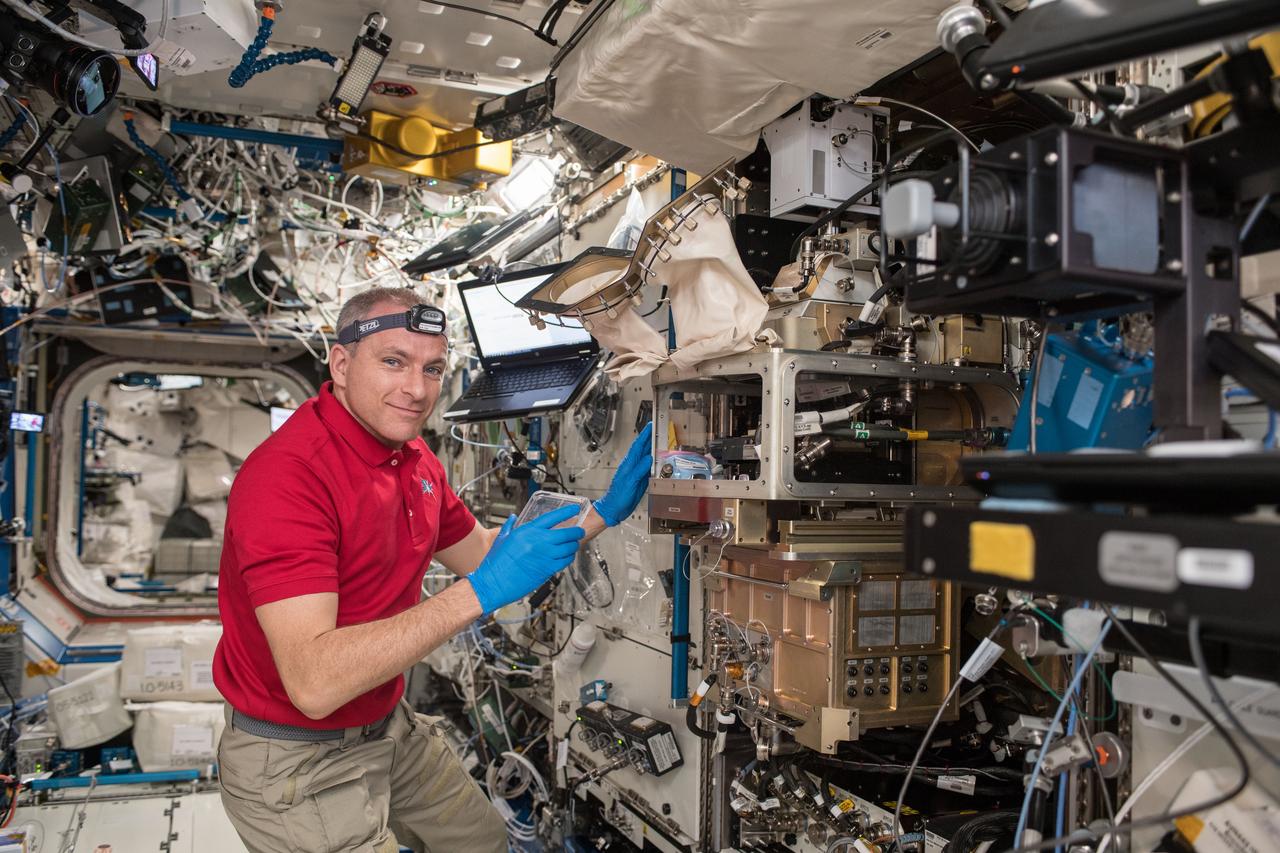
iss057e135002 (12/18/2018) --- Canadian Space Agency (CSA) astronaut David Saint-Jacques removes the APEX-05 Petri Plate from the FIR/LMM (Fluids Integrated Rack/Light Microscopy Module). The Spaceflight-induced Hypoxic/ROS Signaling (APEX-05) experiment grows different wild and mutant varieties of Arabidopsis thaliana, in order to understand how their genetic and molecular stress response systems work in space.
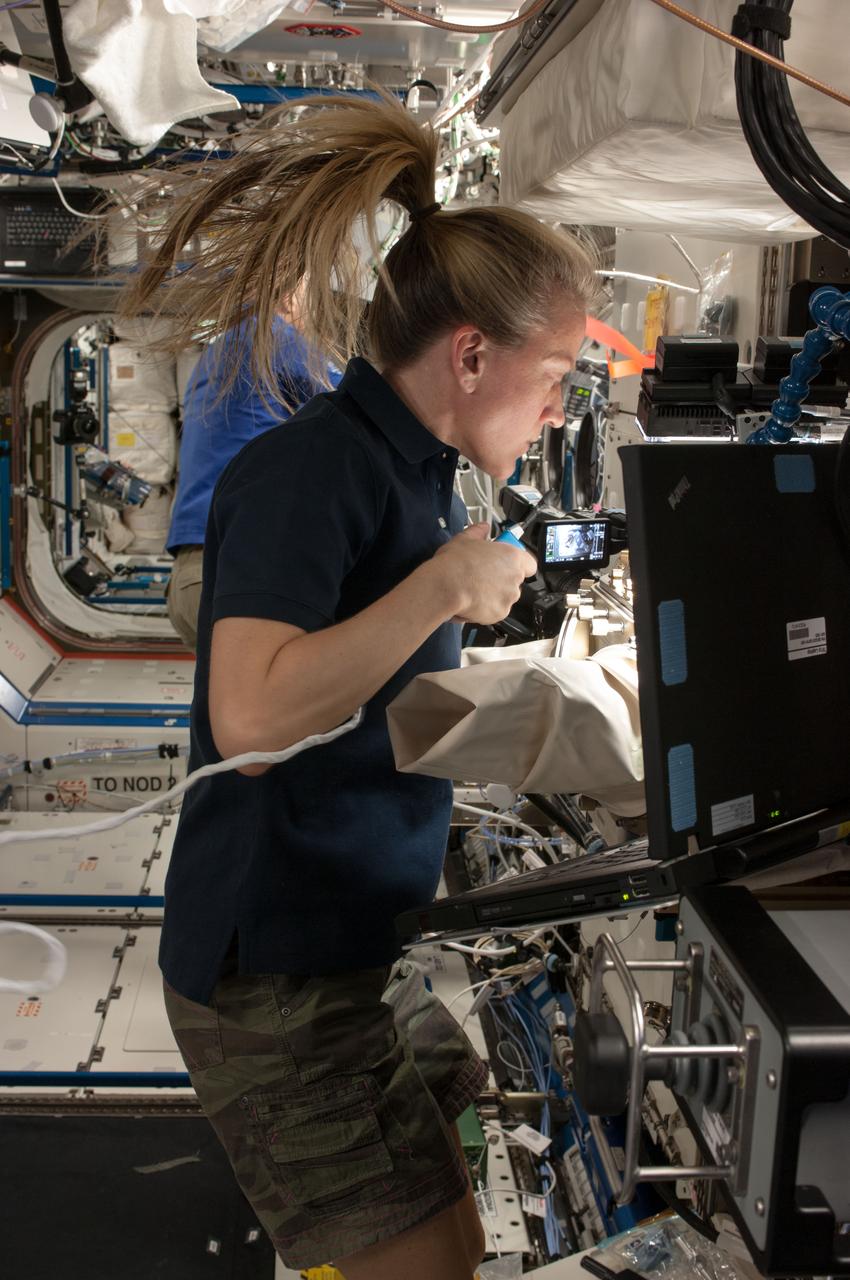
ISS036-E-035780 (18 Aug. 2013) --- NASA astronaut Karen Nyberg, Expedition 36 flight engineer, works with new test samples for the Advanced Colloids Experiment, or ACE, housed in the Light Microscopy Module (LMM) inside the Fluids Integrated Rack of the International Space Station?s Destiny laboratory. Results from ACE will help researchers understand how to optimize stabilizers to extend the shelf life of products like laundry detergent, paint, ketchup and even salad dressing.
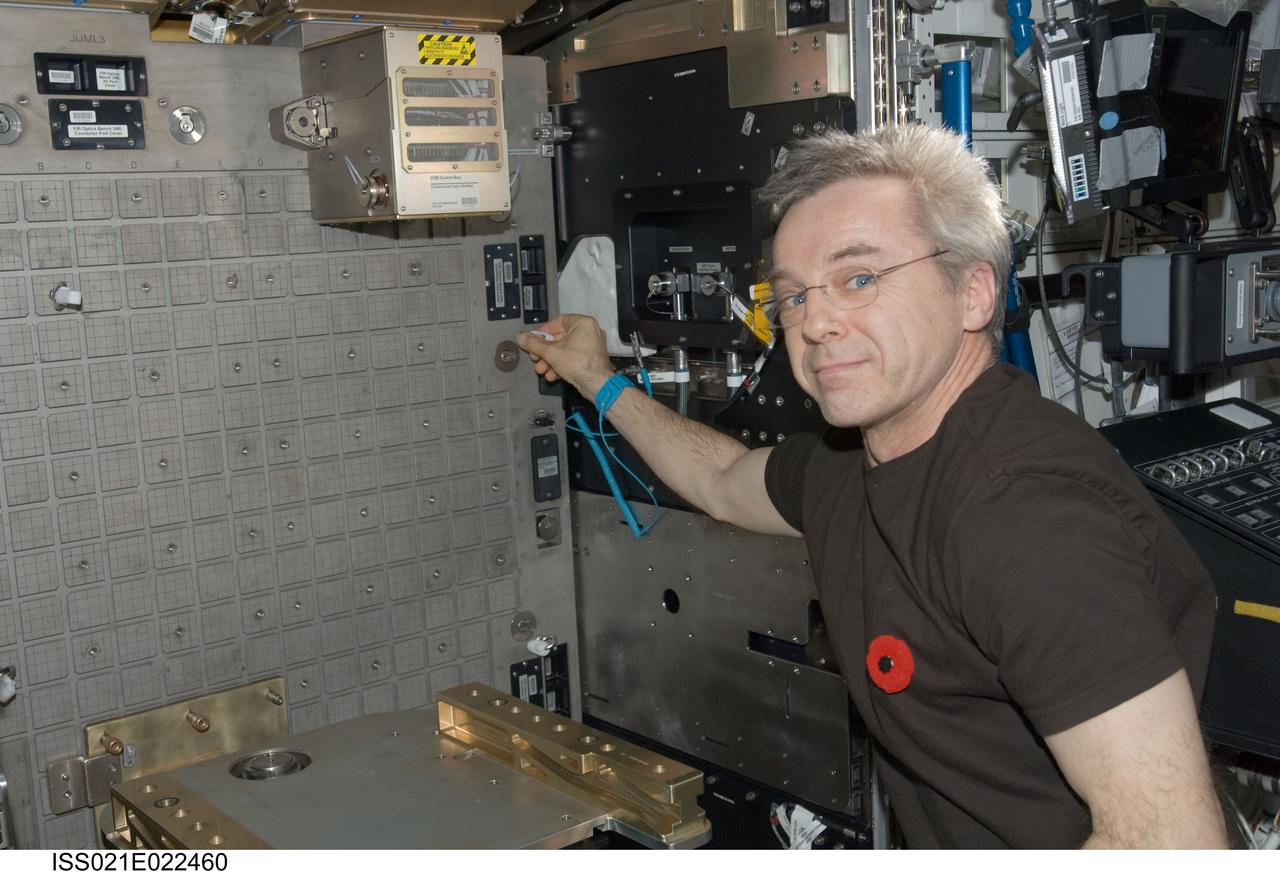
ISS021-E-022460 (9 Nov. 2009) --- Canadian Space Agency astronaut Robert Thirsk, Expedition 21 flight engineer, installs the Light Microscopy Module (LMM) Spindle Bracket Assembly in the Fluids Integrated Rack (FIR) in the Destiny laboratory of the International Space Station. NASA astronaut Nicole Stott (out of frame), flight engineer, assisted Thirsk.
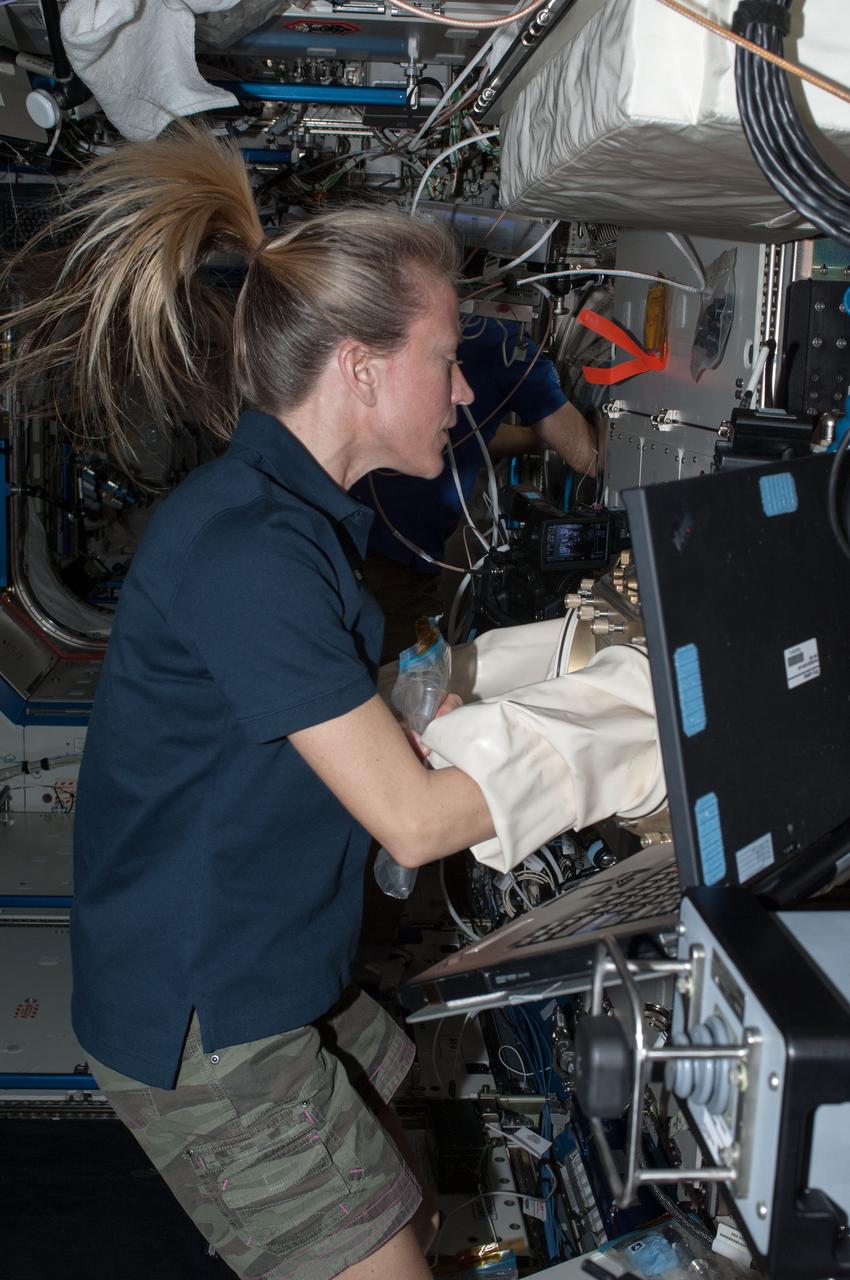
ISS036-E-035767 (18 Aug. 2013) --- NASA astronaut Karen Nyberg, Expedition 36 flight engineer, works with new test samples for the Advanced Colloids Experiment, or ACE, housed in the Light Microscopy Module (LMM) inside the Fluids Integrated Rack of the International Space Station?s Destiny laboratory. Results from ACE will help researchers understand how to optimize stabilizers to extend the shelf life of products like laundry detergent, paint, ketchup and even salad dressing.

ISS021-E-022459 (9 Nov. 2009) --- NASA astronaut Nicole Stott, Expedition 21 flight engineer, installs the Light Microscopy Module (LMM) Spindle Bracket Assembly in the Fluids Integrated Rack (FIR) in the Destiny laboratory of the International Space Station. Canadian Space Agency astronaut Robert Thirsk (out of frame) assisted Stott.
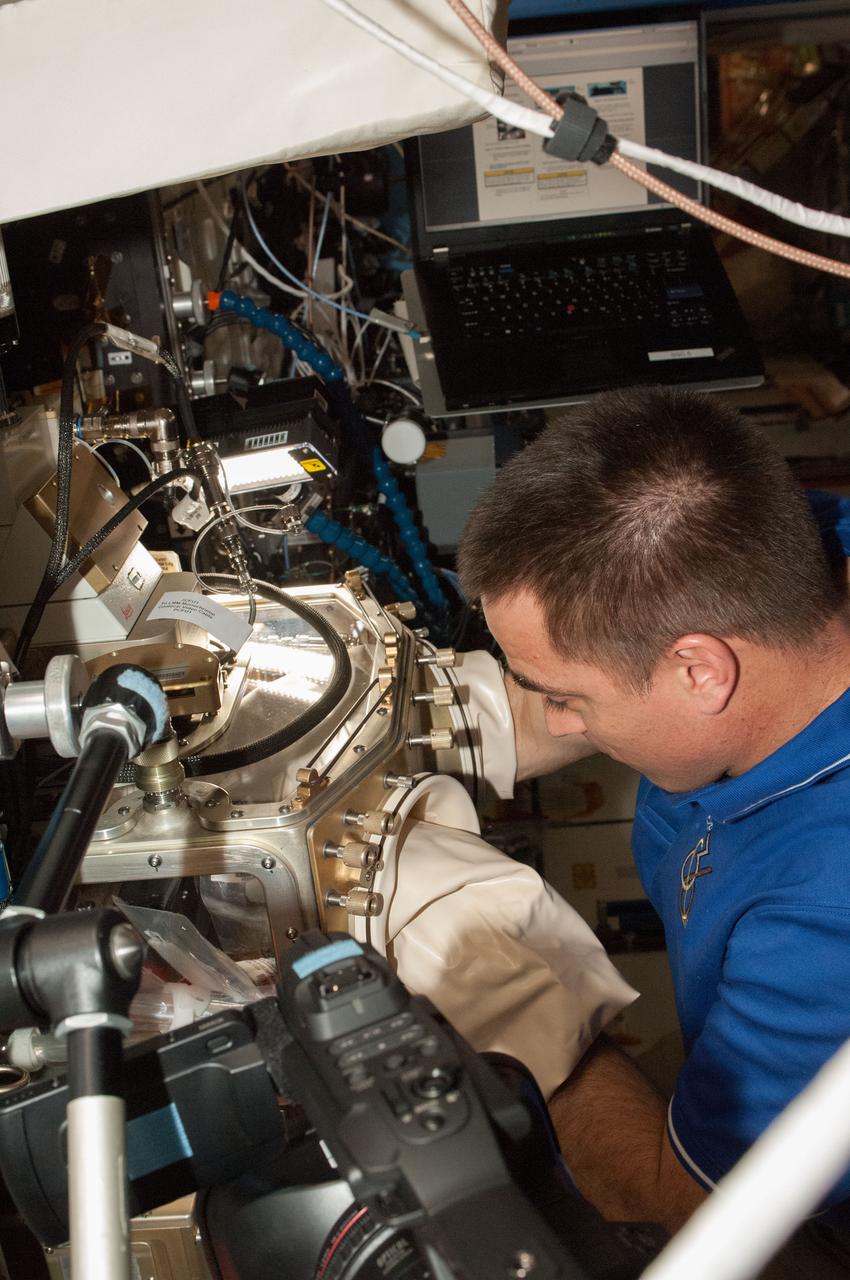
ISS036-E-023770 (22 July 2013) --- NASA astronaut Chris Cassidy, Expedition 36 flight engineer, conducts science work with the ongoing experiment Advanced Colloids Experiment-1 (ACE-1) inside the Fluids Integrated Rack. The experiment observes colloids, microscopic particles evenly dispersed throughout materials, with the potential for manufacturing improved materials and products on Earth. Cassidy is working at the Light Microscopy Module (LMM) in the Destiny laboratory of the International Space Station.
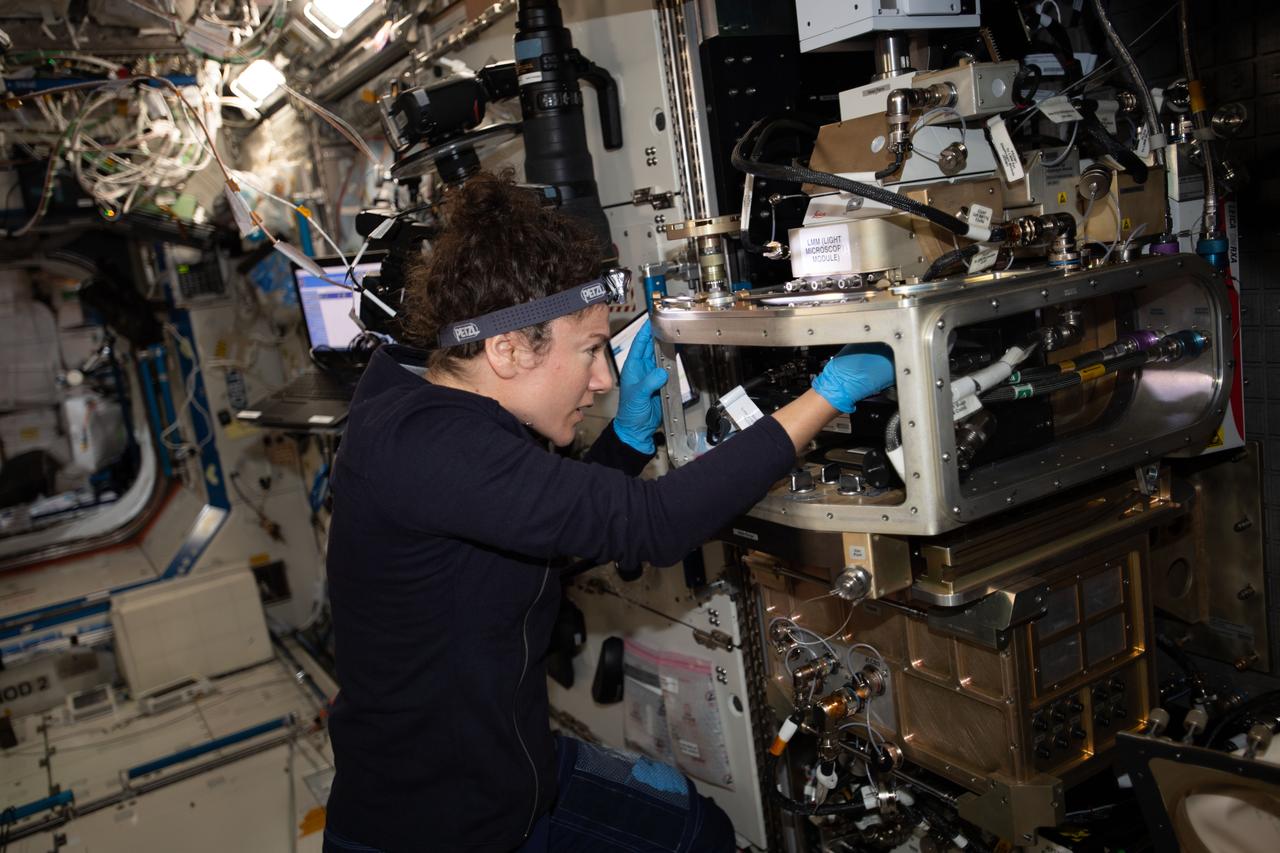
iss062e014339 (Feb. 16, 2020) --- NASA astronaut and Expedition 62 Flight Engineer Jessica Meir configures the Light Microscopy Module inside the Fluids Integrated Rack. The specialized microscope is being readied to examine the transition of an ordered crystal to a disordered glass to determine how increasing disorder affects structural and dynamic properties. The Advanced Colloids Experiment-Temperature-4 (ACE-T-4) investigation controls disorder by controlling temperature in a series of samples and observes the microscopic transition in three dimensions.
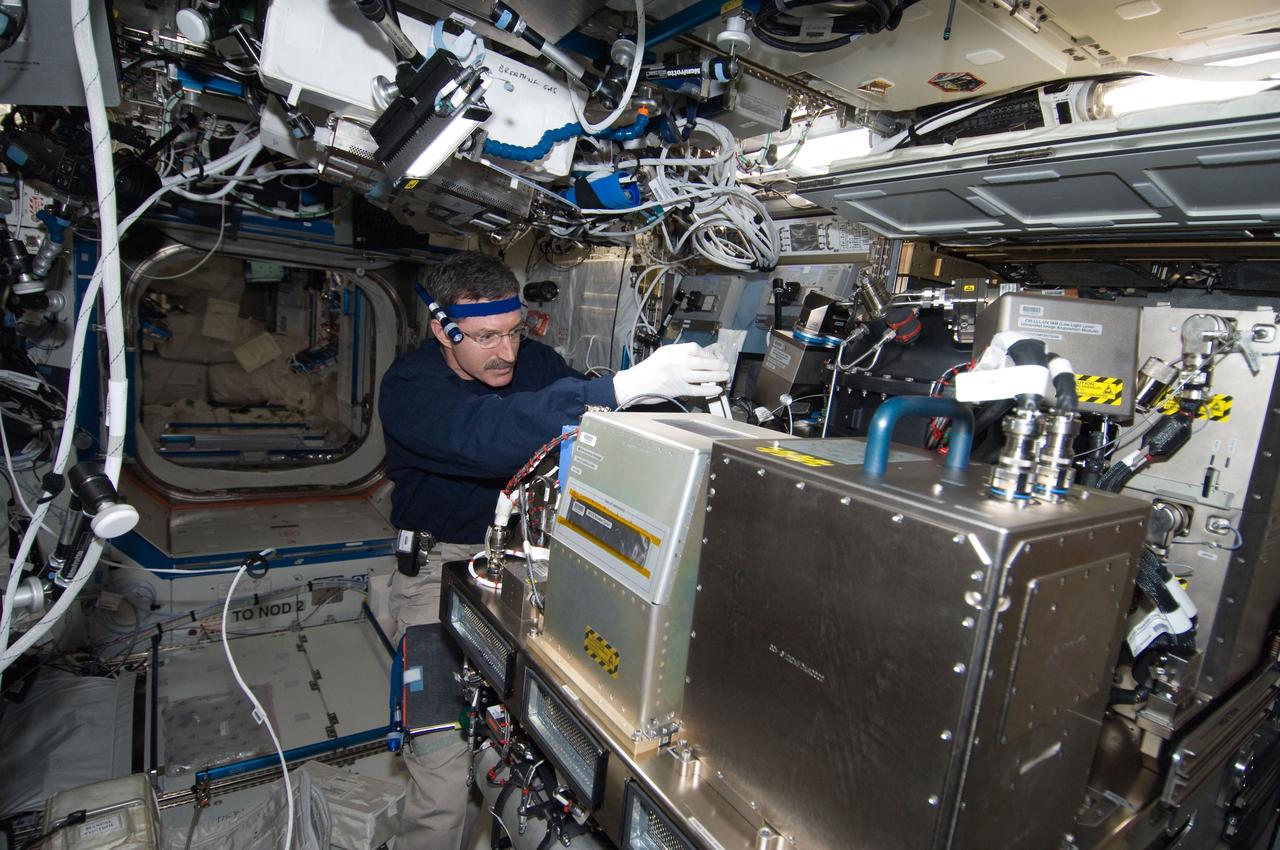
ISS030-E-234735 (10 April 2012) --- NASA astronaut Dan Burbank, Expedition 30 commander, works on the Combustion Integrated Rack (CIR) in the Destiny laboratory of the International Space Station. Burbank disconnected the Moderate Temperature Loop (MTL), Vacuum Exhaust System (VES) and station nitrogen lines of the Optics Bench, translated and rotated it out of the way and replaced a Fluids and Combustion Facility / Diagnostic Control Module (FCF DCM) on its back. Afterwards, Burbank returned the Optics Bench to its nominal position and reconnected the MTL, VES and station nitrogen lines.