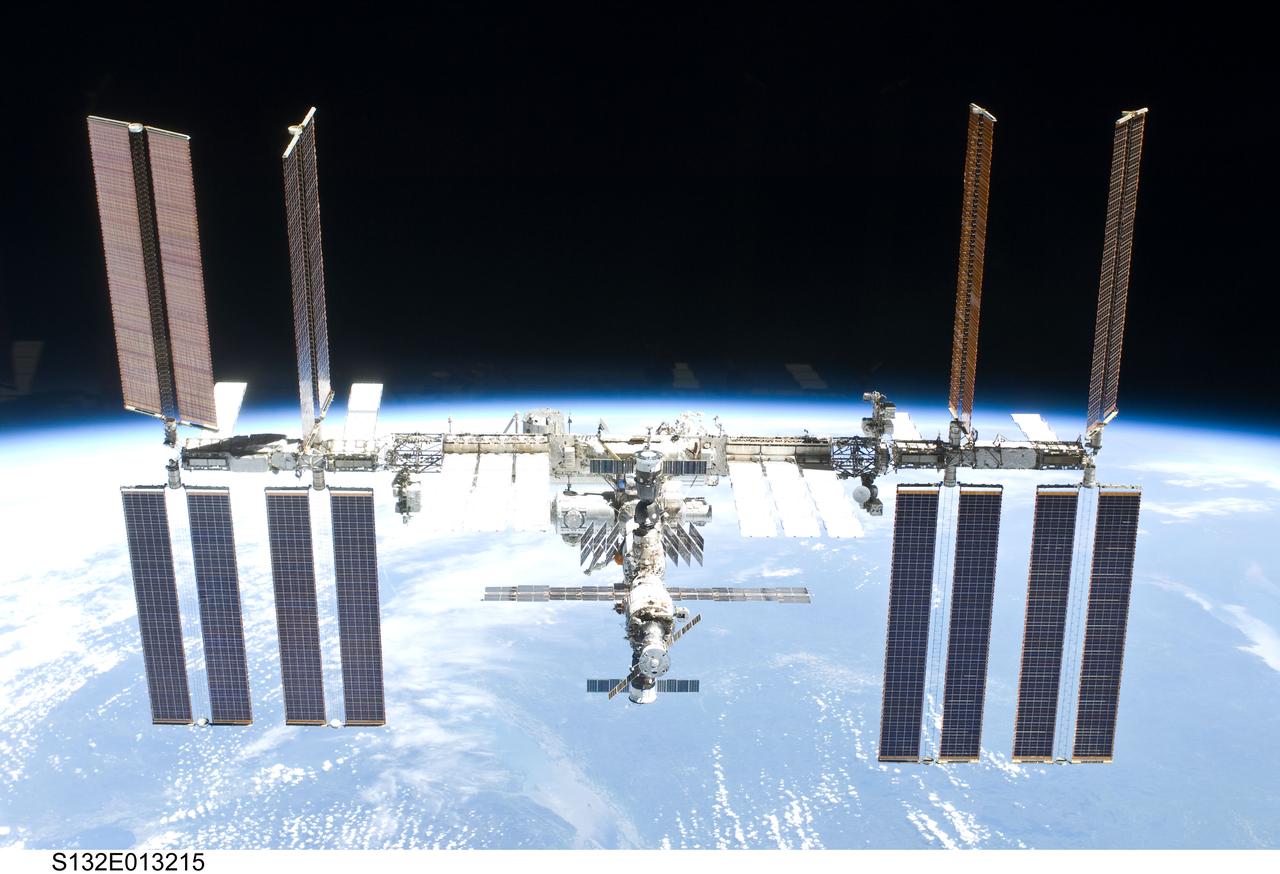
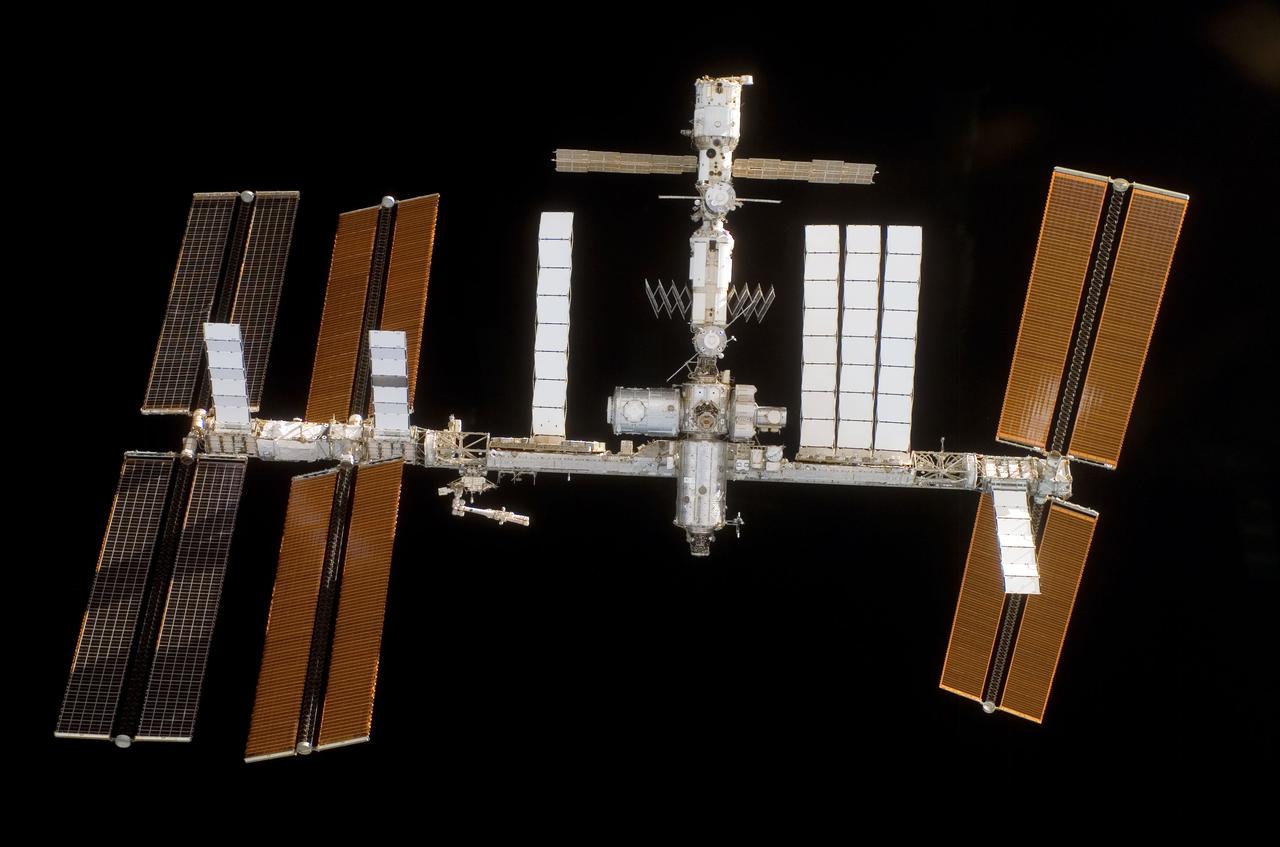
Flyaround view of the International Space Station (ISS) taken from STS-132 Space Shuttle Atlantis after separation.
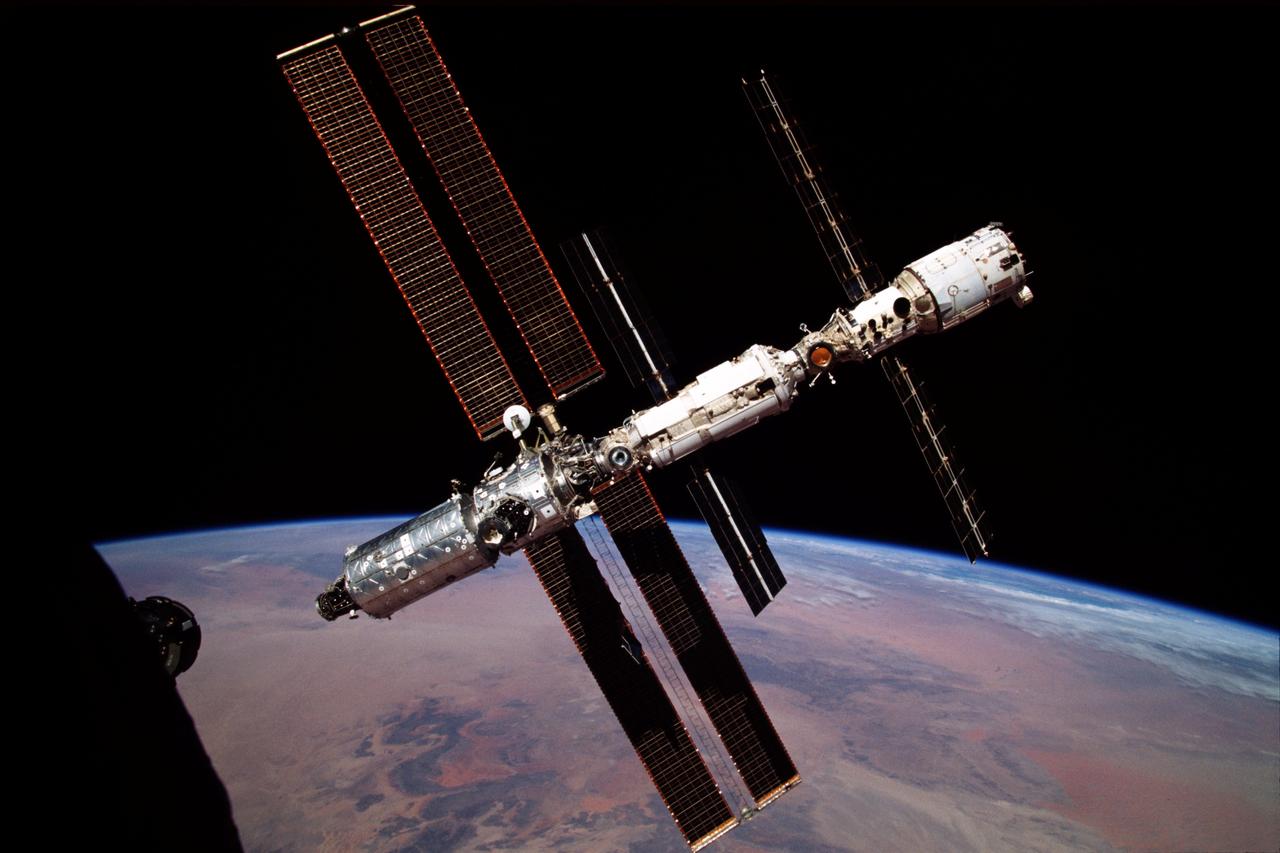
ISS001-389-023 (24 February 2001) --- The International Space Station (ISS), backdropped against the darkness of space and Earth at its horizon, was photographed by the Expedition One crew during a flyaround aboard a Soyuz capsule.
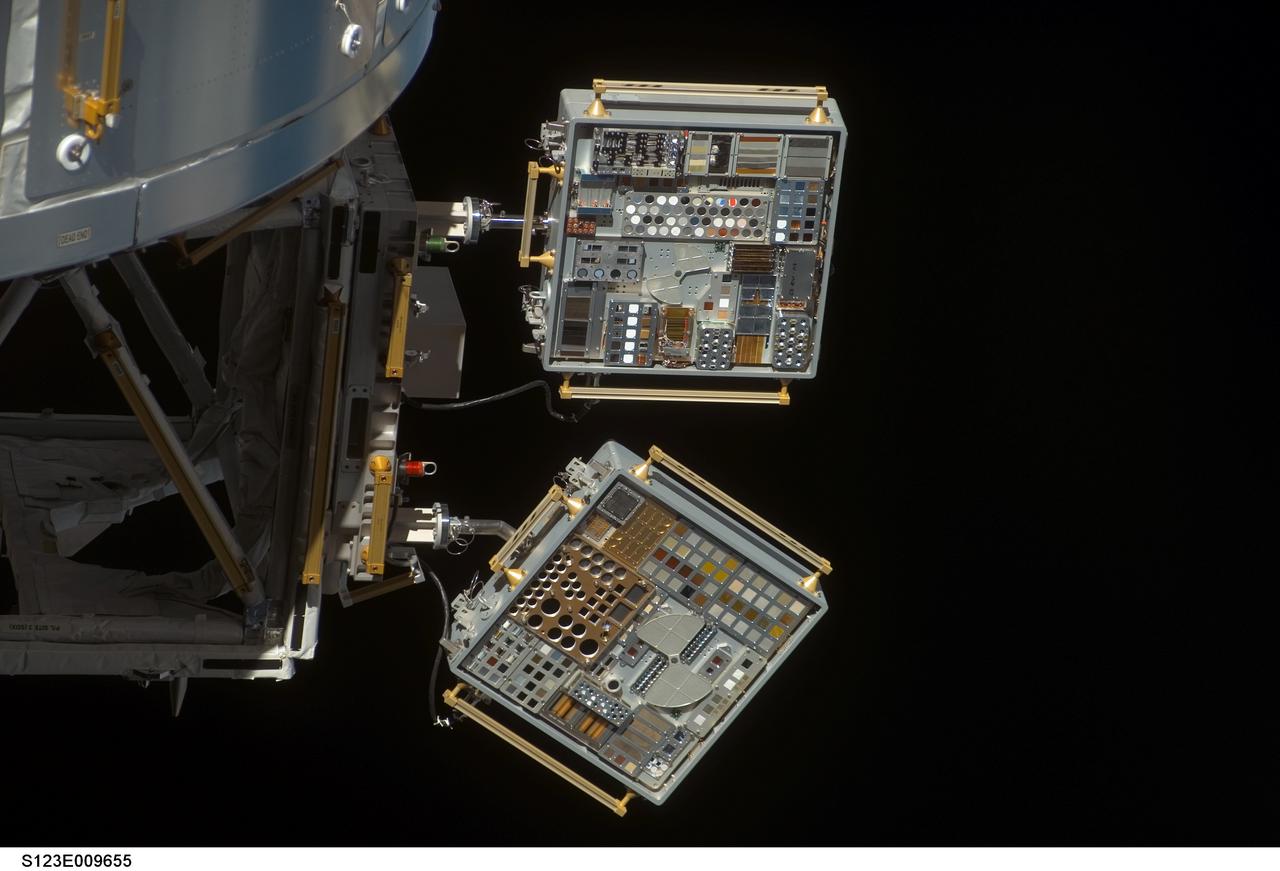
s123e009655 (3/25/2008) --- View of Materials International Space Station Experiment (MISSE) 6 Passive Experiment Container (PEC) on European Laboratory/Columbus. Photo was taken during flyaround of STS-123 Space Shuttle Endeavor.

s114e7235 (8/6/2005) --- Backdropped by a colorful Earth, this aft view of the International Space Station was photographed during the flyaround by the Space Shuttle Discovery following the undocking of the two spacecraft. Visible in the frame are the P6 Truss / Photovoltaic Solar Arrays and MISSE-5. The Materials International Space Station Experiment-5 (MISSE-5) was an external payload that flew on-board the ISS from August 2005 until September 2006. MISSE-5 provided an opportunity for researchers to test a wide range of samples in the Low Earth Orbit (LEO) environment.
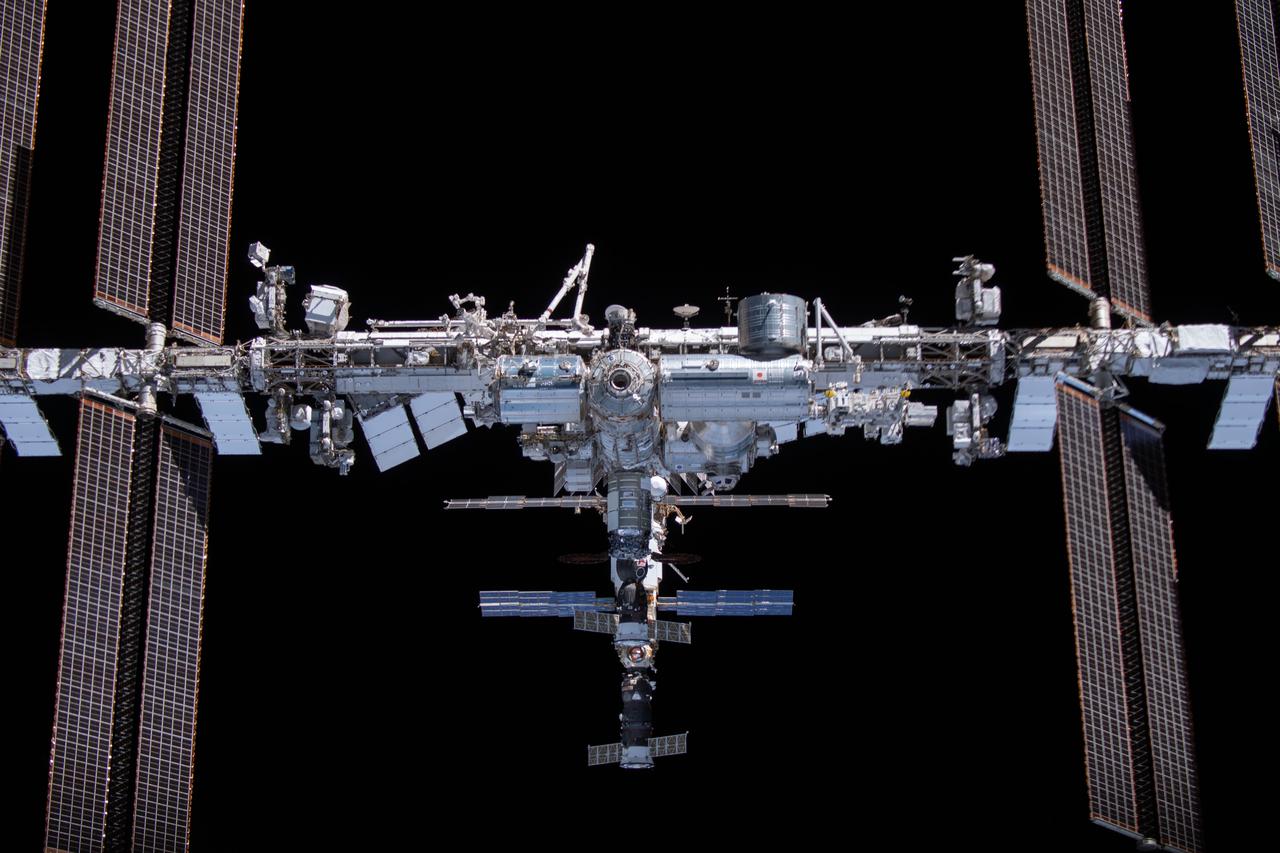
iss066e080762 (Nov. 8, 2021) --- The International Space Station is pictured from the SpaceX Crew Dragon Endeavour during a flyaround of the orbiting lab that took place following its undocking from the Harmony module’s space-facing port on Nov. 8, 2021.
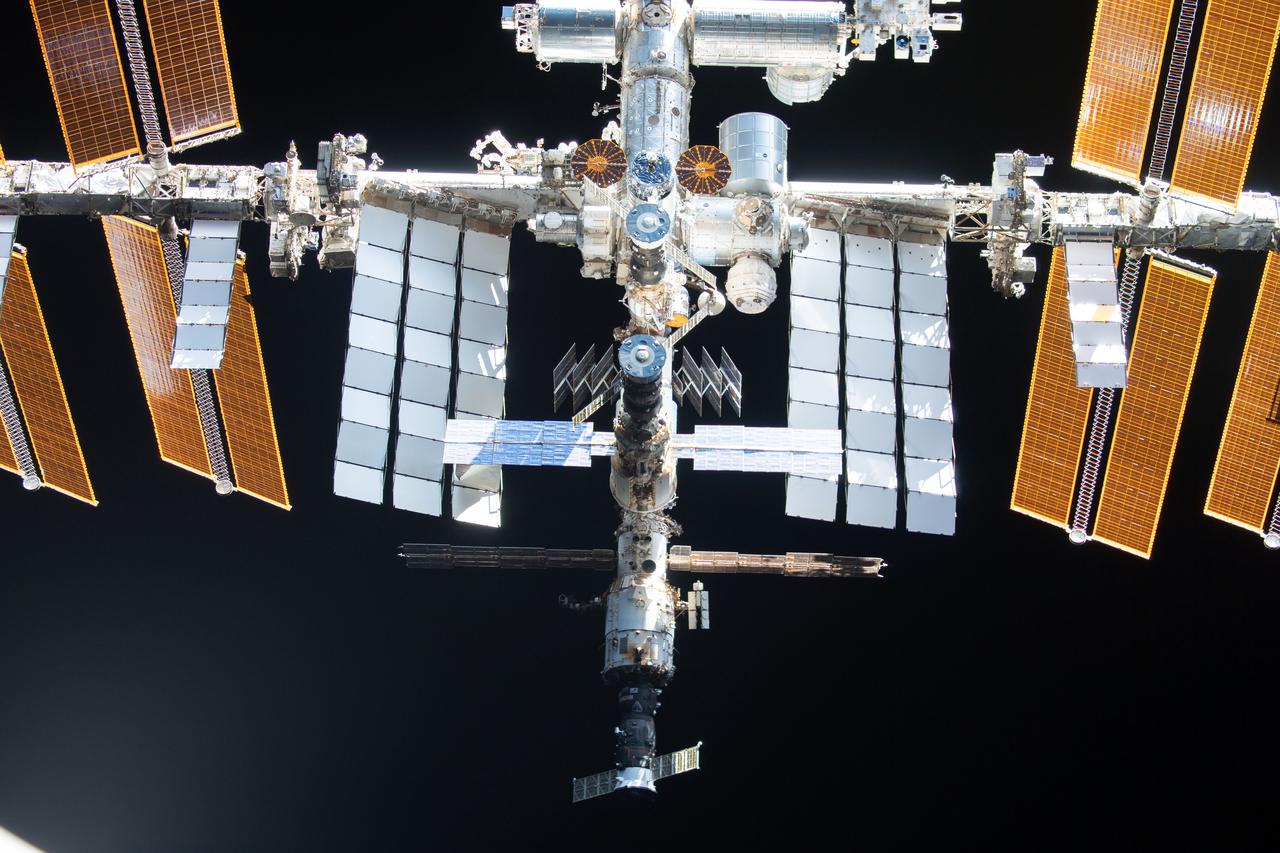
iss066e080300 (Nov. 8, 2021) --- The International Space Station is pictured from the SpaceX Crew Dragon Endeavour during a flyaround of the orbiting lab that took place following its undocking from the Harmony module’s space-facing port on Nov. 8, 2021.
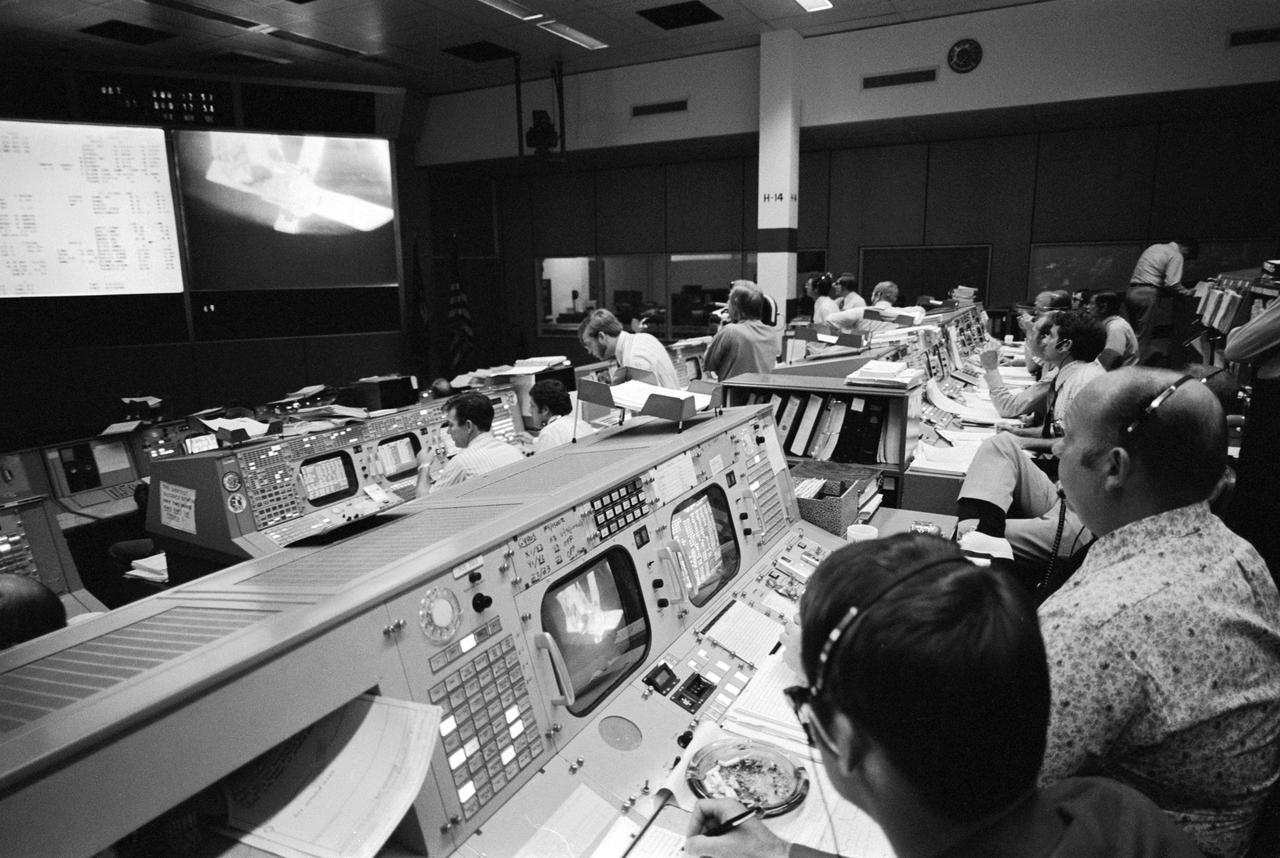
S73-31570 (July 1973) --- Overall view of the Mission Operations Control Room (MOCR) in the Mission Control Center (MCC), building 30, at Johnson Space Center during the Skylab 3 flyaround inspection of the Skylab Earth-orbiting cluster. Photo credit: NASA
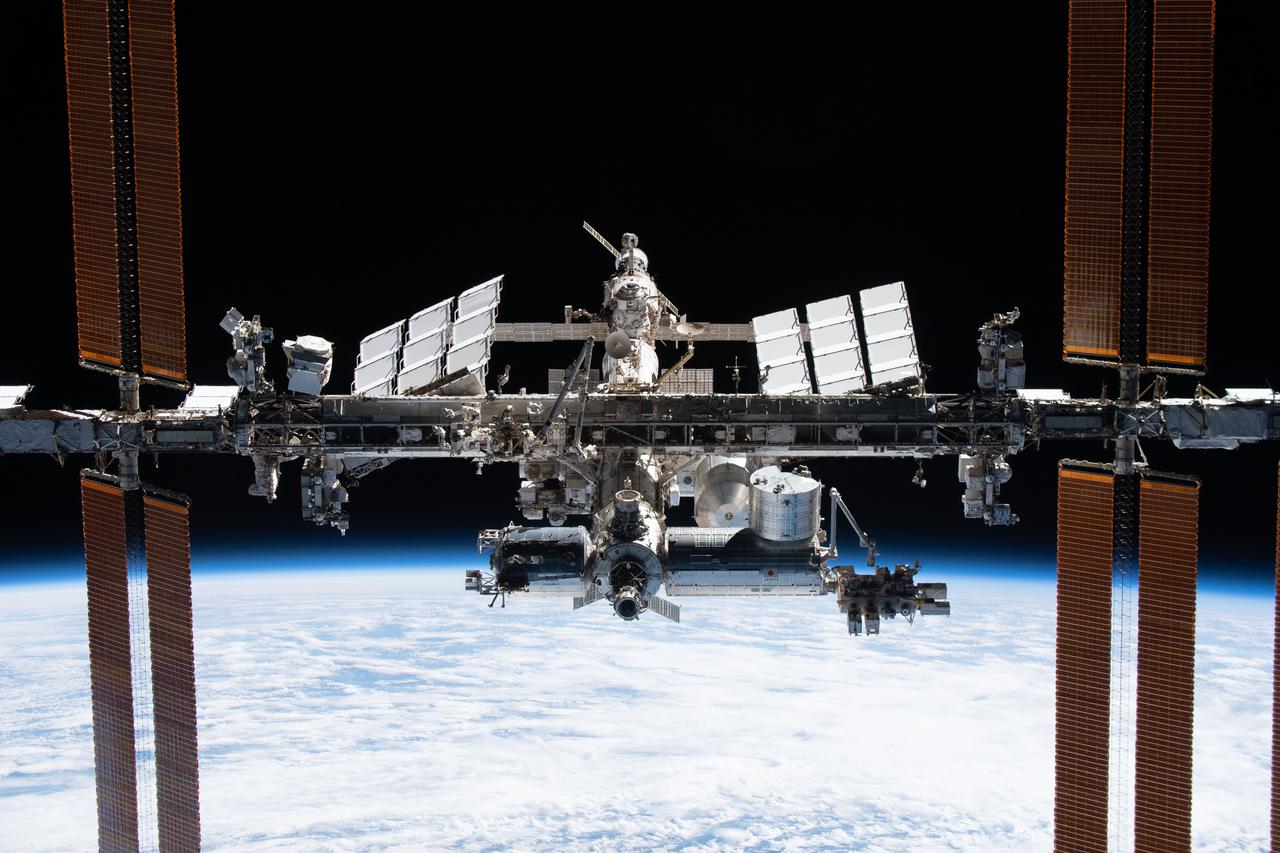
iss066e081189 (Nov. 8, 2021) --- The International Space Station is pictured from the SpaceX Crew Dragon Endeavour during a flyaround of the orbiting lab that took place following its undocking from the Harmony module’s space-facing port on Nov. 8, 2021.
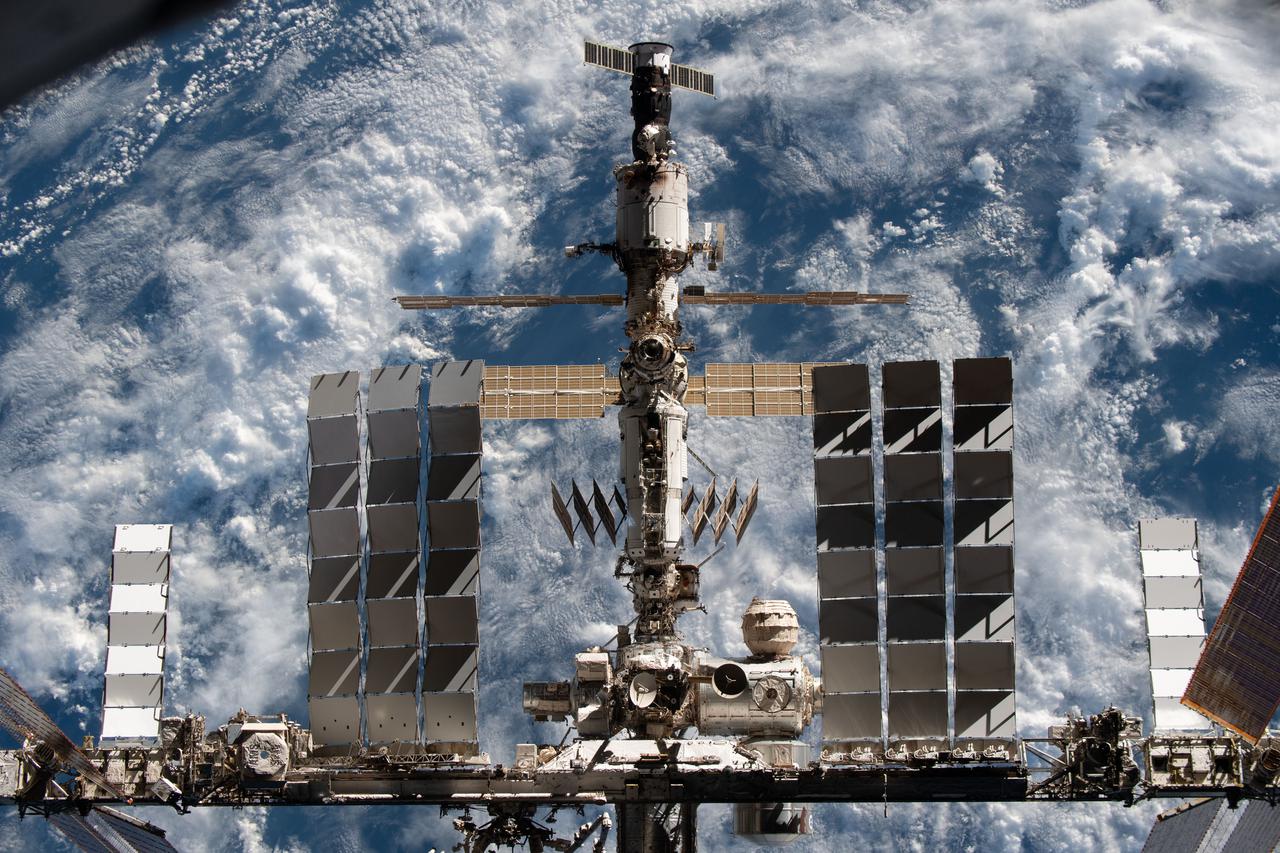
iss066e079547 (Nov. 8, 2021) --- The International Space Station is pictured from the SpaceX Crew Dragon Endeavour during a flyaround of the orbiting lab that took place following its undocking from the Harmony module’s space-facing port on Nov. 8, 2021.

S96-E-5234 (3 June 1999) --- A STS-96 crew member handling an electronic still camera (ESC) recorded this image of the International Space Station (ISS) during a flyaround following separation of the two spacecraft. The image was recorded at 23:12:29 GMT, June 3, 1999.
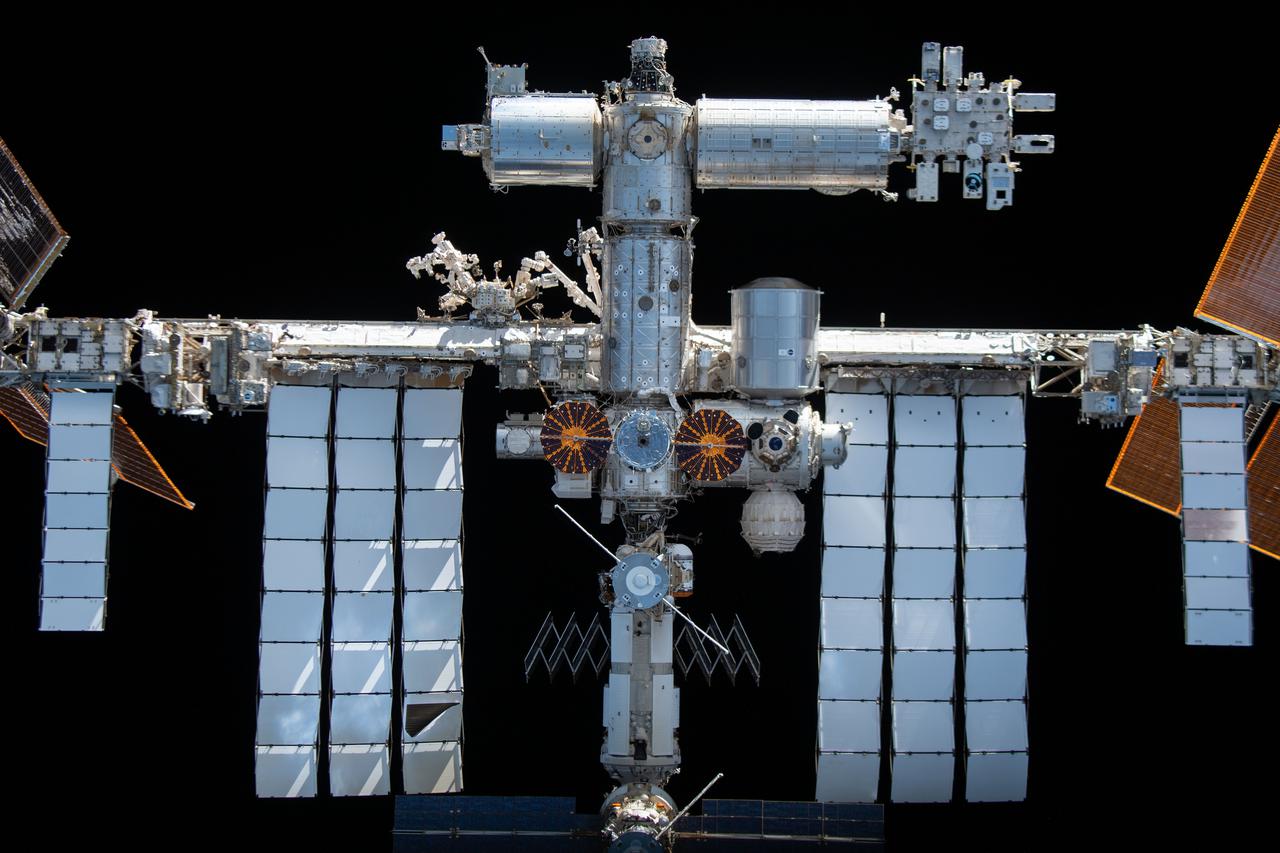
iss066e080360 (Nov. 8, 2021) --- The International Space Station is pictured from the SpaceX Crew Dragon Endeavour during a flyaround of the orbiting lab that took place following its undocking from the Harmony module’s space-facing port on Nov. 8, 2021.
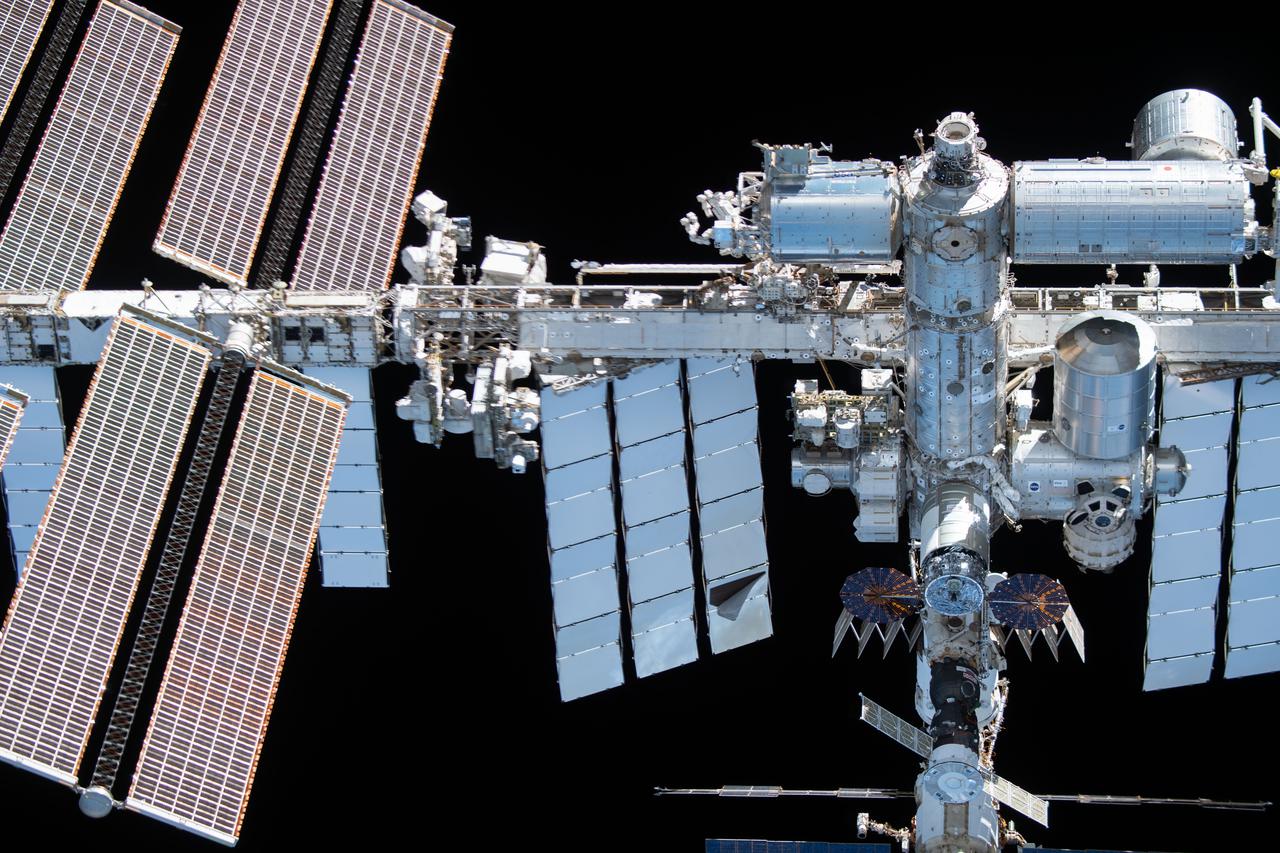
iss066e080509 (Nov. 8, 2021) --- The International Space Station is pictured from the SpaceX Crew Dragon Endeavour during a flyaround of the orbiting lab that took place following its undocking from the Harmony module’s space-facing port on Nov. 8, 2021.
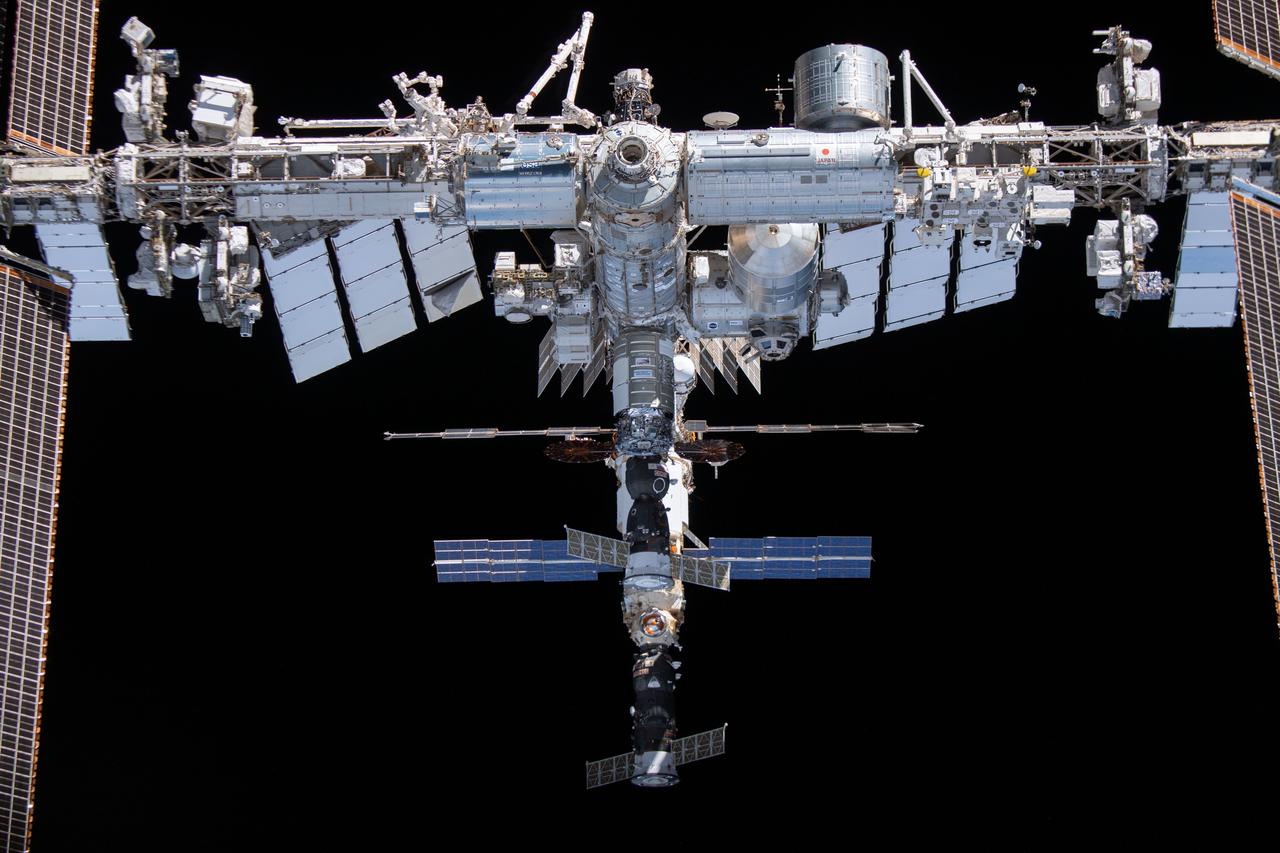
iss066e080712 (Nov. 8, 2021) --- The International Space Station is pictured from the SpaceX Crew Dragon Endeavour during a flyaround of the orbiting lab that took place following its undocking from the Harmony module’s space-facing port on Nov. 8, 2021.
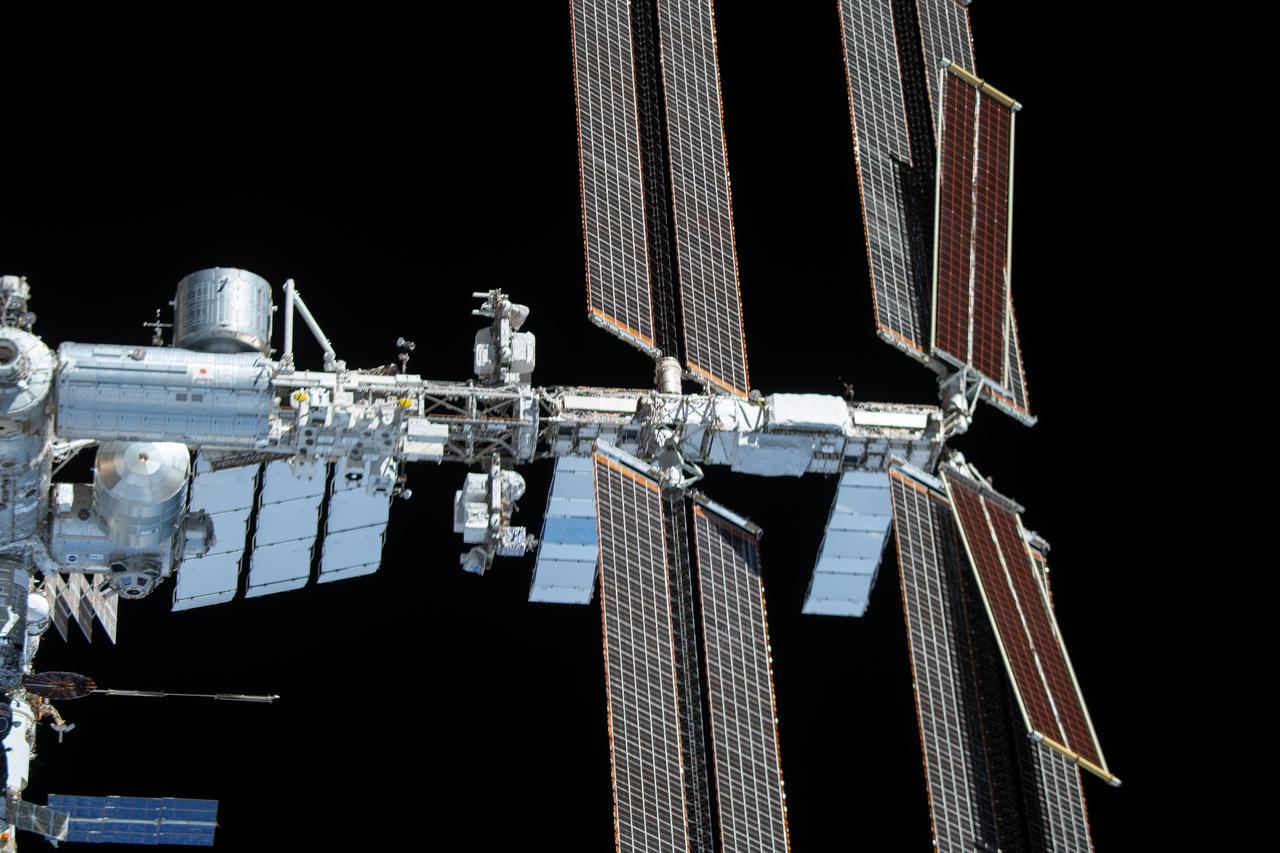
iss066e080651 (Nov. 8, 2021) --- The International Space Station is pictured from the SpaceX Crew Dragon Endeavour during a flyaround of the orbiting lab that took place following its undocking from the Harmony module’s space-facing port on Nov. 8, 2021.
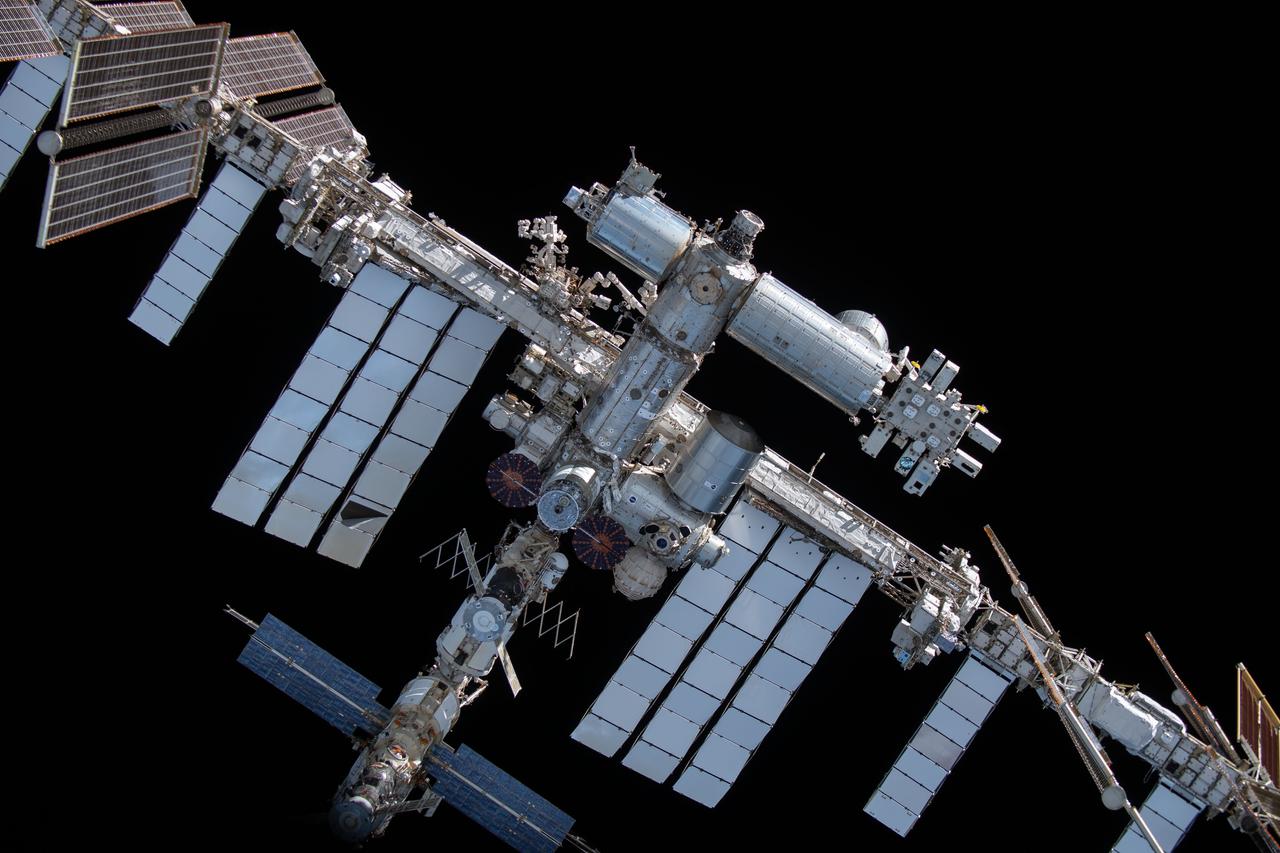
iss066e080440 (Nov. 8, 2021) --- The International Space Station is pictured from the SpaceX Crew Dragon Endeavour during a flyaround of the orbiting lab that took place following its undocking from the Harmony module’s space-facing port on Nov. 8, 2021.

iss066e081311 (Nov. 8, 2021) --- The International Space Station is pictured from the SpaceX Crew Dragon Endeavour during a flyaround of the orbiting lab that took place following its undocking from the Harmony module’s space-facing port on Nov. 8, 2021.
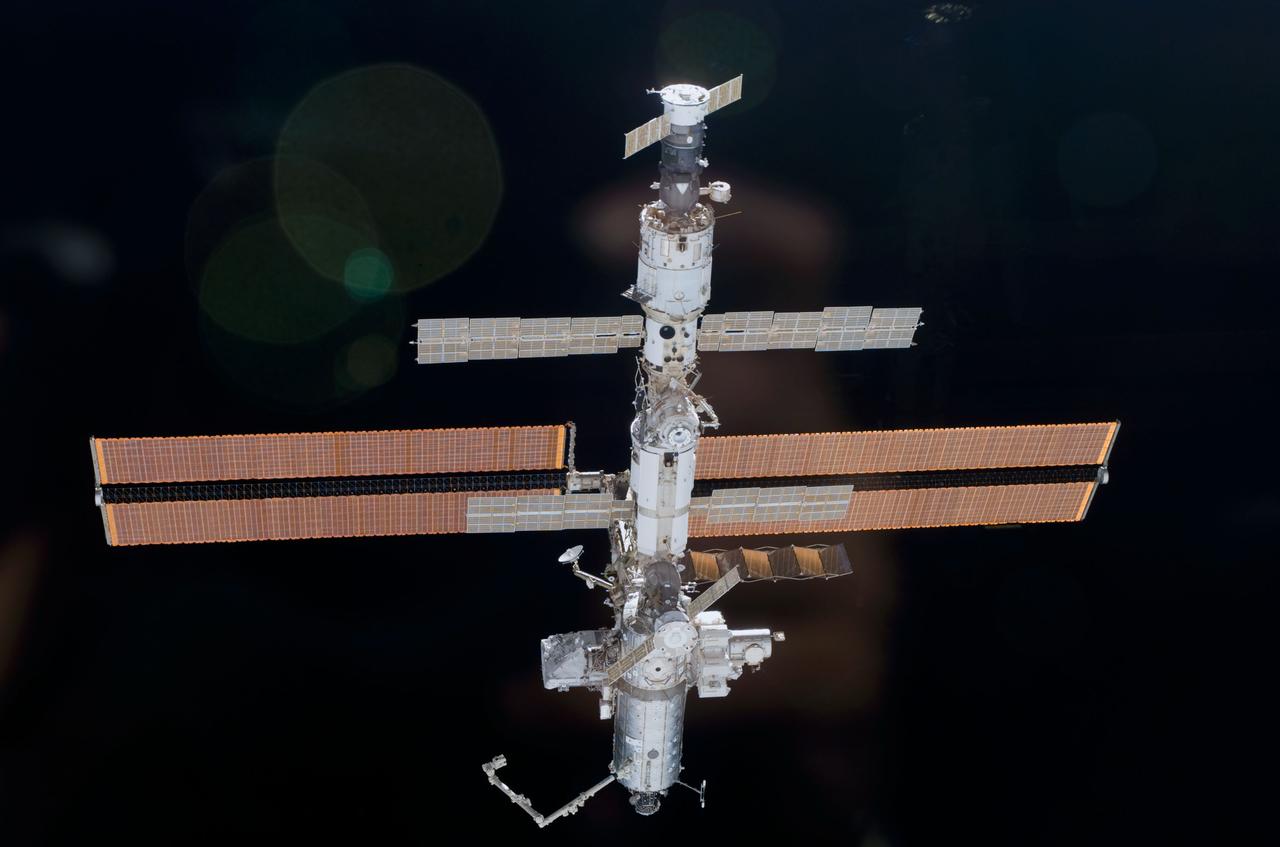
STS110-E-5918 (17 April 2002) --- This is one a series of digital still images of the International Space Station (ISS) recorded by the STS-110 crew members on board the Space Shuttle Atlantis following the undocking of the two spacecraft some 247 statute miles above the North Atlantic. Atlantis pulled away from the complex at 1:31 p.m. (CDT). After more than a week of joint operations between the shuttle and station crews, astronaut Stephen N. Frick, pilot, backed Atlantis away to a distance of about 400 feet in front of the station, where he began a 1 1/4 lap flyaround of the ISS, newly equipped with the 27,000 pound S0 (S-zero) truss, visible in this series of images. S0 is the first segment of a truss structure which will ultimately expand the station to the length of a football field.
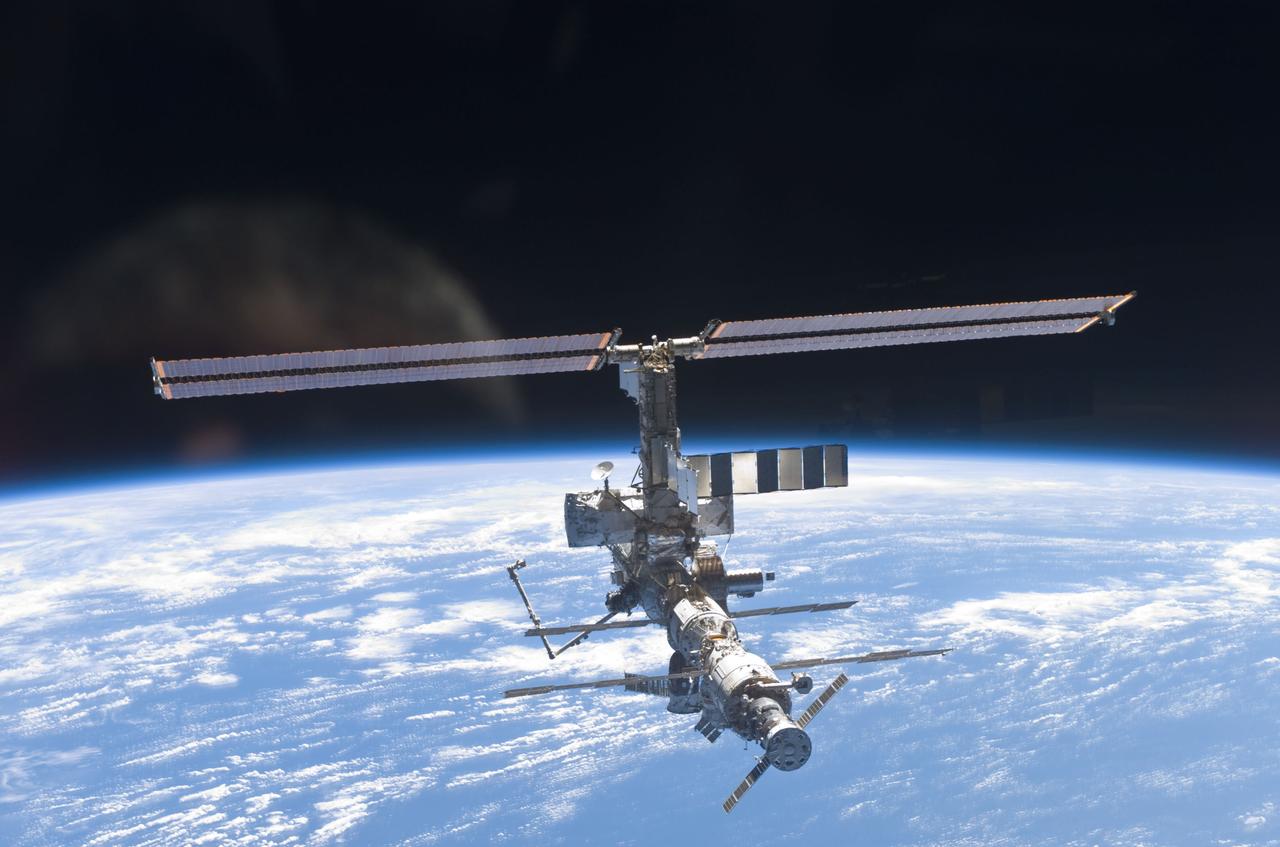
STS110-E-6058 (17 April 2002) --- This is one a series of digital still images of the International Space Station (ISS) recorded by the STS-110 crew members on board the Space Shuttle Atlantis following the undocking of the two spacecraft some 247 statute miles above the North Atlantic. Atlantis pulled away from the complex at 1:31 p.m. (CDT). After more than a week of joint operations between the shuttle and station crews, astronaut Stephen N. Frick, pilot, backed Atlantis away to a distance of about 400 feet in front of the station, where he began a 1 1/4 lap flyaround of the ISS, newly equipped with the 27,000 pound S0 (S-zero) truss, visible in this series of images. S0 is the first segment of a truss structure which will ultimately expand the station to the length of a football field.
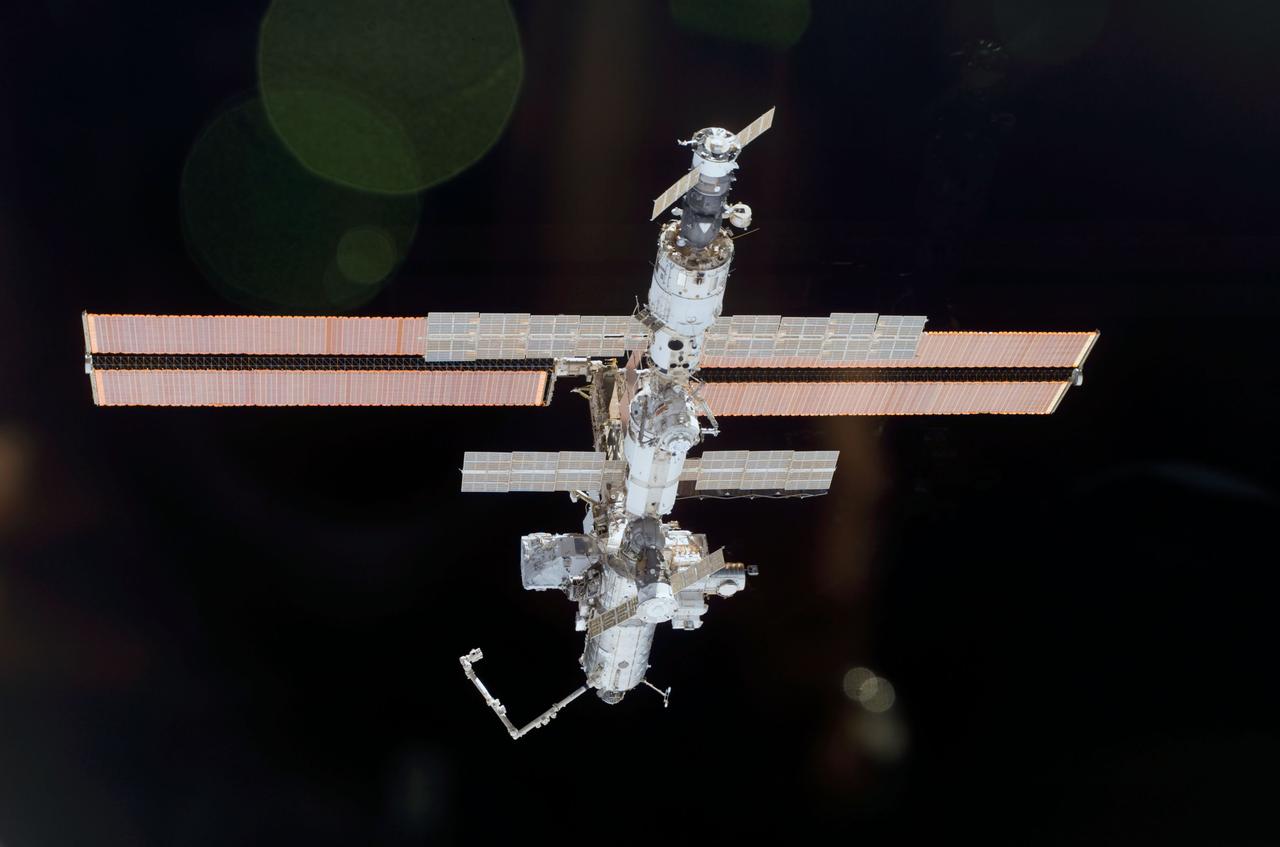
STS110-E-5912 (17 April 2002) --- This is one a series of digital still images of the International Space Station (ISS) recorded by the STS-110 crew members on board the Space Shuttle Atlantis following the undocking of the two spacecraft some 247 statute miles above the North Atlantic. Atlantis pulled away from the complex at 1:31 p.m. (CDT). After more than a week of joint operations between the shuttle and station crews, astronaut Stephen N. Frick, pilot, backed Atlantis away to a distance of about 400 feet in front of the station, where he began a 1 1/4 lap flyaround of the ISS, newly equipped with the 27,000 pound S0 (S-zero) truss, visible in this series of images. S0 is the first segment of a truss structure which will ultimately expand the station to the length of a football field.
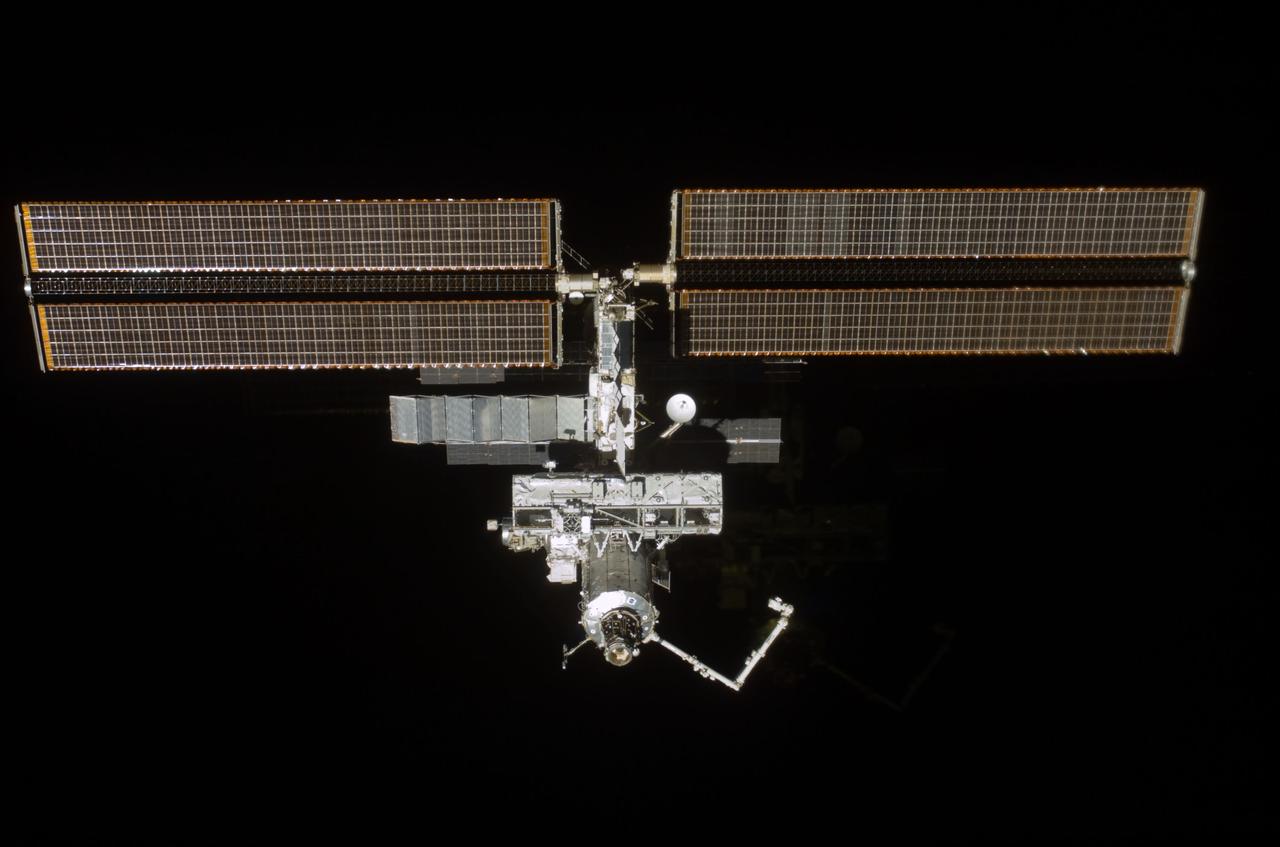
STS110-E-6006 (17 April 2002) --- The International Space Station (ISS), newly equipped with the 27,000 pound S0 (S-zero) truss, was photographed with a digital still camera by one of the astronauts on board the Space Shuttle Atlantis. Seen just above center frame, S0 is the first segment of a truss structure which will ultimately expand the station to the length of a football field. Atlantis pulled away from the complex at 1:31 p.m. (CDT) as two spacecraft flew some 247 statute miles above Earth. After more than a week of joint operations between the shuttle and station crews, astronaut Stephen N. Frick, pilot, backed Atlantis away to a distance of about 400 feet in front of the station, where he began a 1 1/4 lap flyaround of the ISS.
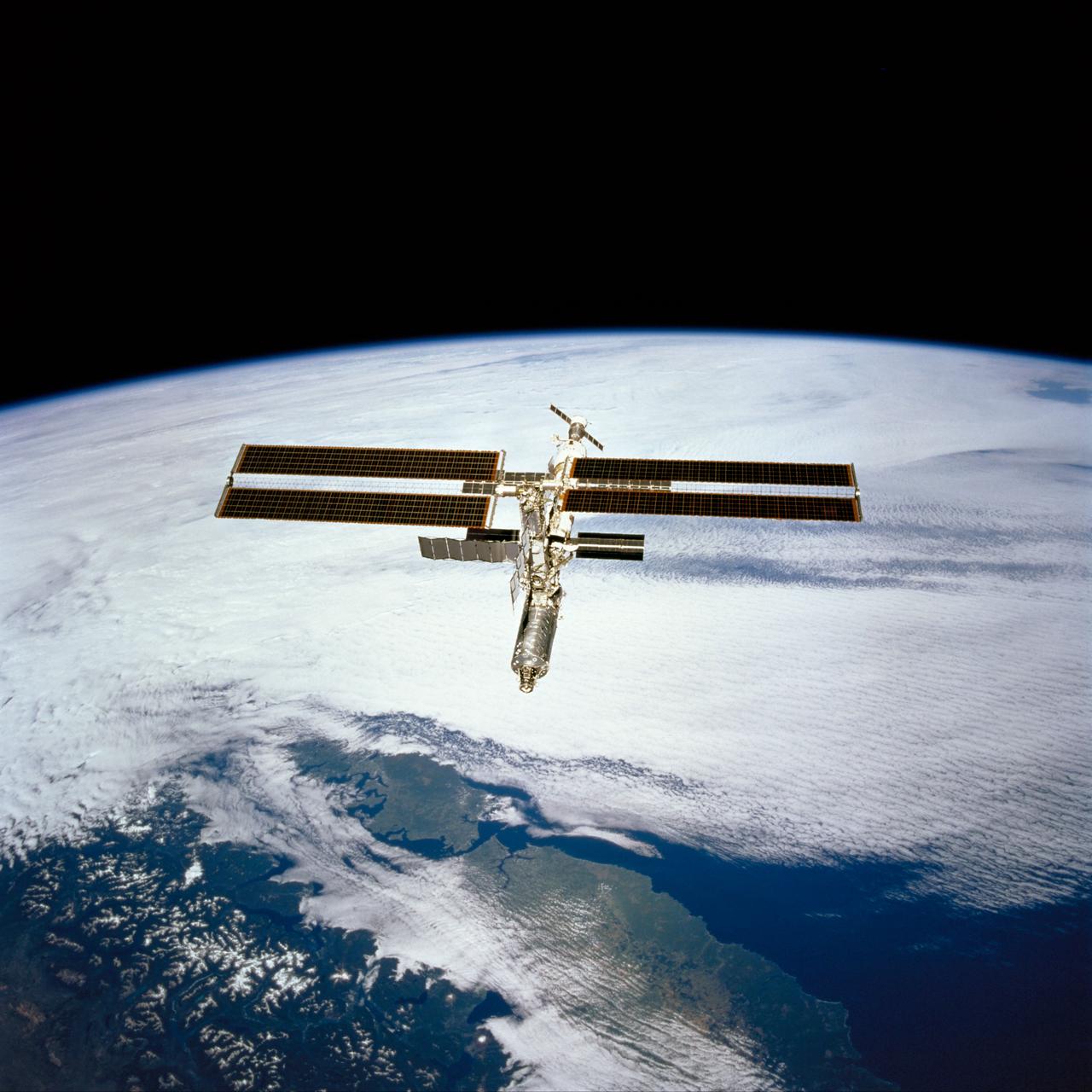
STS098-713a-016 (16 February 2001) --- The International Space Station is backdropped over clouds, water and land in South America. South central Chile shows up at bottom of the frame. Just below the Destiny laboratory, the Chacao Channel separates the large island of Chiloe from the mainland and connects the Gulf of Coronados on the Pacific side with the Gulf of Ancud southwest of the city of Puerto Montt. The crews of the Space Shuttle Atlantis and the International Space Station parted company at 8:06 a.m. (CST), February 16, as astronaut Mark L. Polansky, pilot, flew the shuttle halfway around the station and its new Destiny laboratory before moving off.
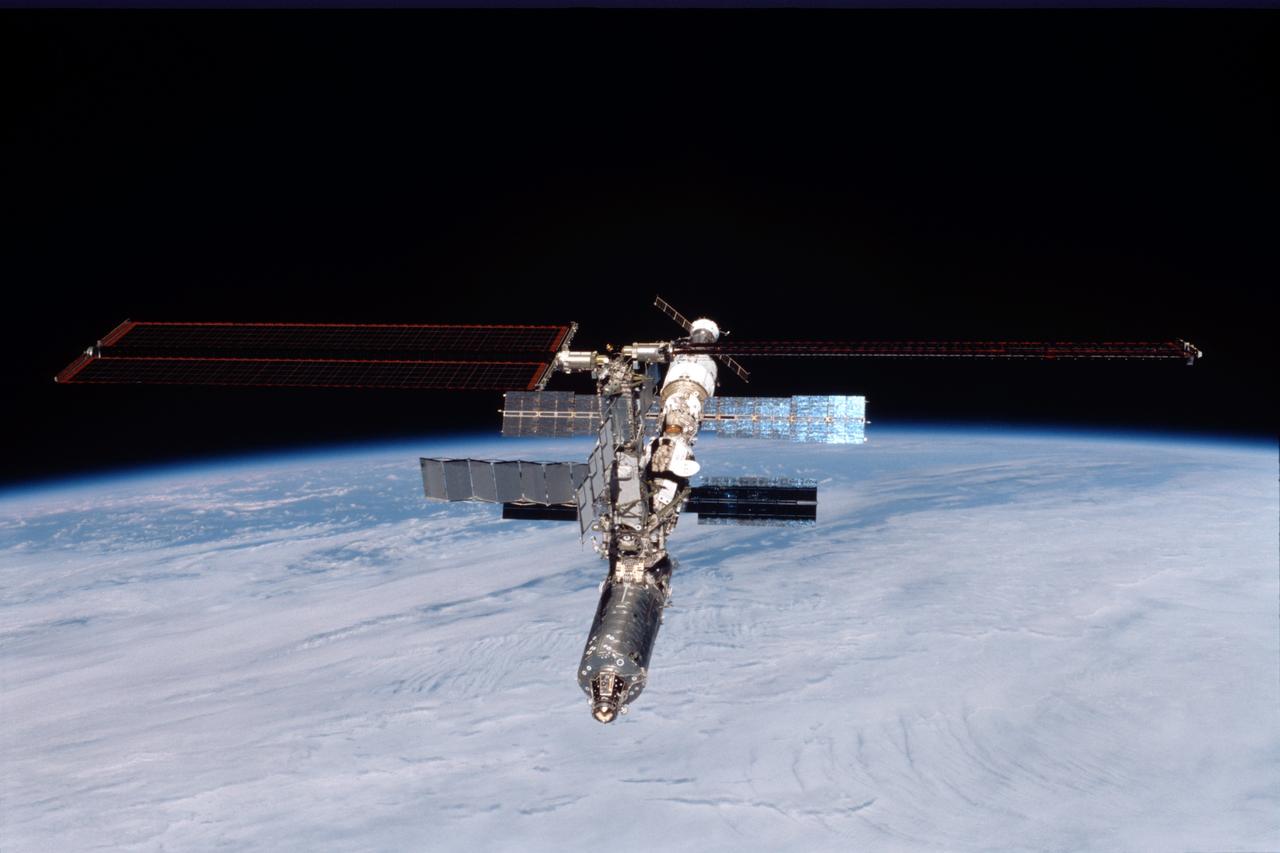
STS098-312-0025 (16 February 2001) --- Backdropped against heavy cloud cover, the International Space Station (ISS) was photographed with a 35mm camera by one of the astronauts onboard Atlantis. The crew of the station, onboard the outpost since early November 2000, is made up of astronaut William M. (Bill) Shepherd, mission commander; Yuri P. Gidzenko, Soyuz commander; and Sergei K. Krikalev, flight engineer. Krikalev and Gidzenko represent the Russian Aviation and Space Agency. On Atlantis were astronauts Kenneth D. Cockrell, mission commander; Mark L. Polansky, pilot; and Marsha S. Ivins, Robert L. Curbeam and Thomas D. Jones, all mission specialists. The shuttle and the station parted company at 8:06 a.m. (CST), Feb. 16, as Polansky flew the shuttle halfway around the outpost and its new Destiny laboratory before moving off.
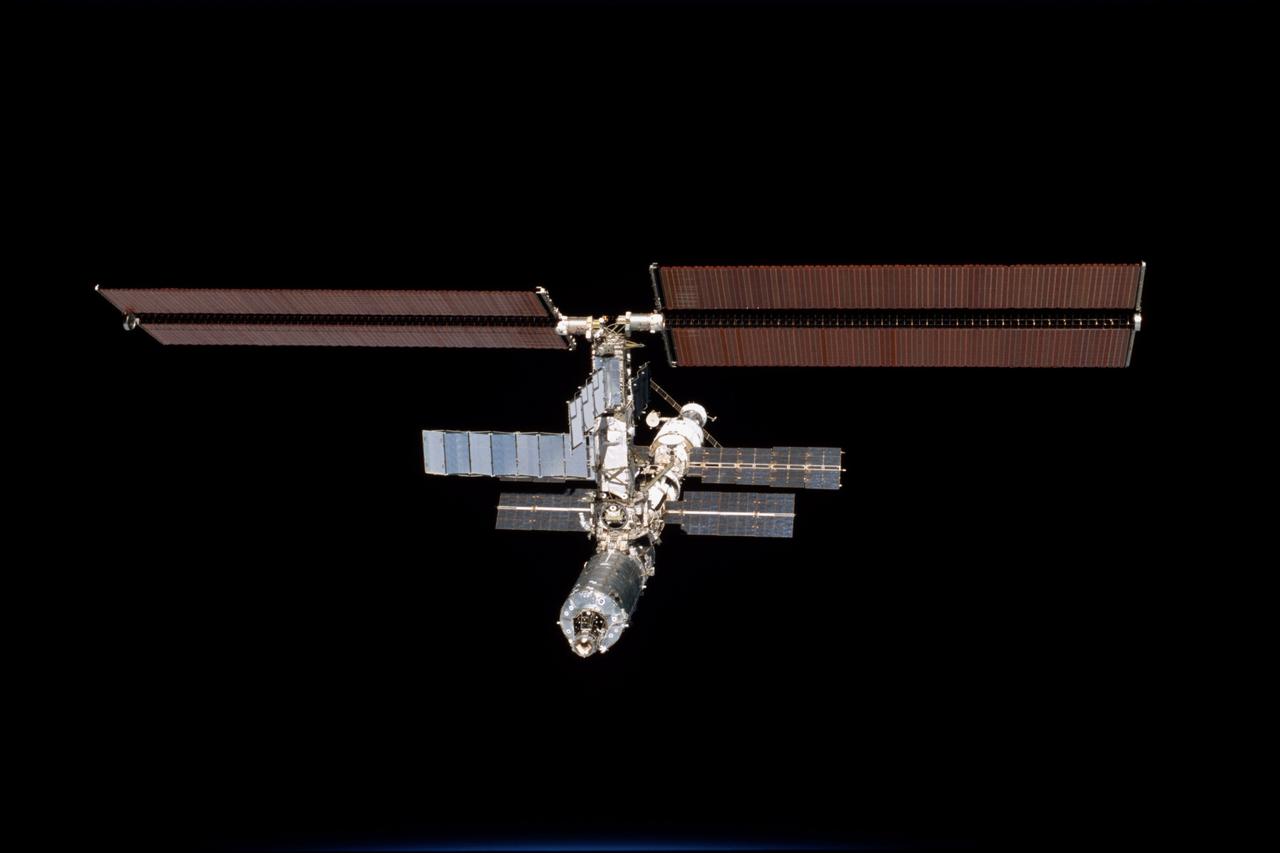
STS098-312-0020 (16 February 2001) --- Backdropped against the blackness of space, the International Space Station (ISS)was photographed with a 35mm camera by one of the astronauts onboard Atlantis. The crew of the station, onboard the outpost since early November 2000, is made up of astronaut William M. (Bill) Shepherd, mission commander; Yuri P. Gidzenko, Soyuz commander; and Sergei K. Krikalev, flight engineer. Krikalev and Gidzenko represent the Russian Aviation and Space Agency. On Atlantis were astronauts Kenneth D. Cockrell, mission commander; Mark L. Polansky, pilot; and Marsha S. Ivins, Robert L. Curbeam and Thomas D. Jones, all mission specialists. The shuttle and the station parted company at 8:06 a.m. (CST), Feb. 16, as Polansky flew the shuttle halfway around the outpost and its new Destiny laboratory before moving off.
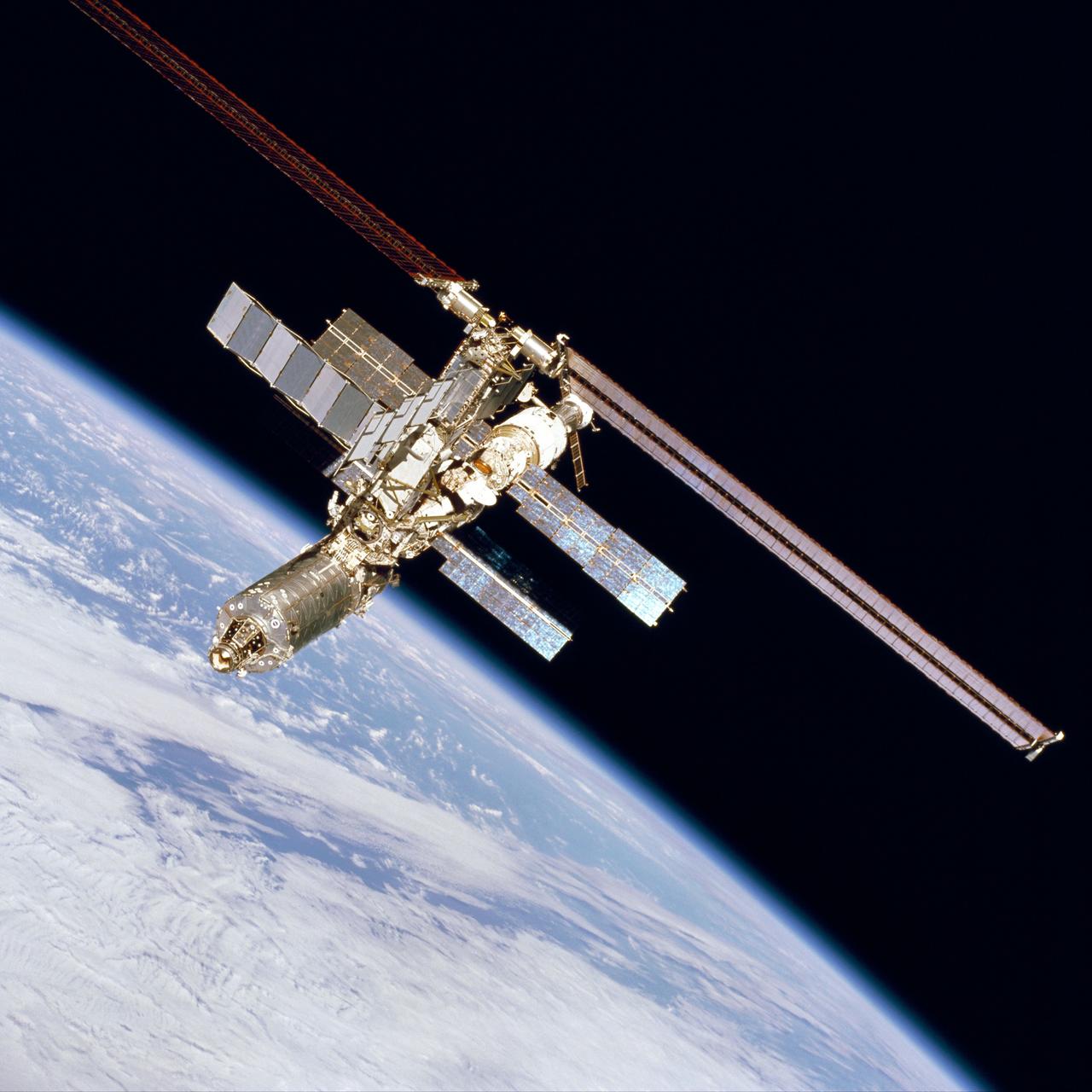
STS09-713a-004 (16 February 2001) --- With its new Destiny laboratory contrasted over a blue and white Earth, the International Space Station (ISS) was photographed by one of the STS-98 crew members aboard Atlantis following separation of the shuttle and the outpost at the end of several days of joint activities. The crews of Atlantis and the station parted company at 8:06 a.m. (CST), Feb. 16, as astronaut Mark L. Polansky, pilot, flew the shuttle halfway around the outpost and its new Destiny laboratory before moving off.
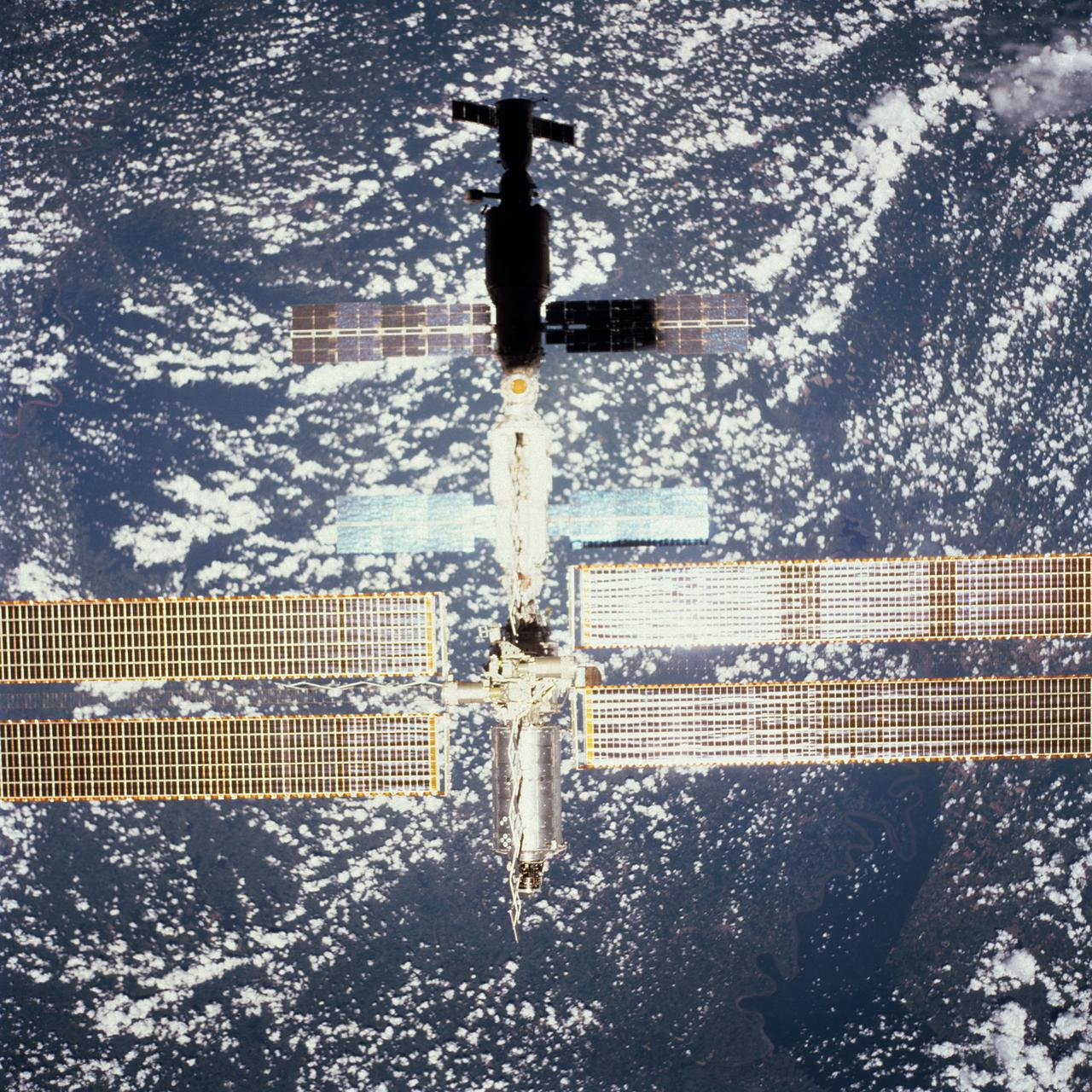
STS098-713A-075 (16 February 2001) --- Backdropped by Earth dotted with clouds, this close-up view of the International Space Station (ISS) with the newly-attached Destiny laboratory, was photographed by one of the astronauts onboard Atlantis. As the primary payload for the STS-98 mission, Destiny is the centerpiece of the ISS, where unprecedented science experiments will be performed in space. The shuttle and the station parted company at 8:06 a.m. (CST), Feb. 16, as Polansky flew the shuttle halfway around the outpost and its new Destiny laboratory before moving off.
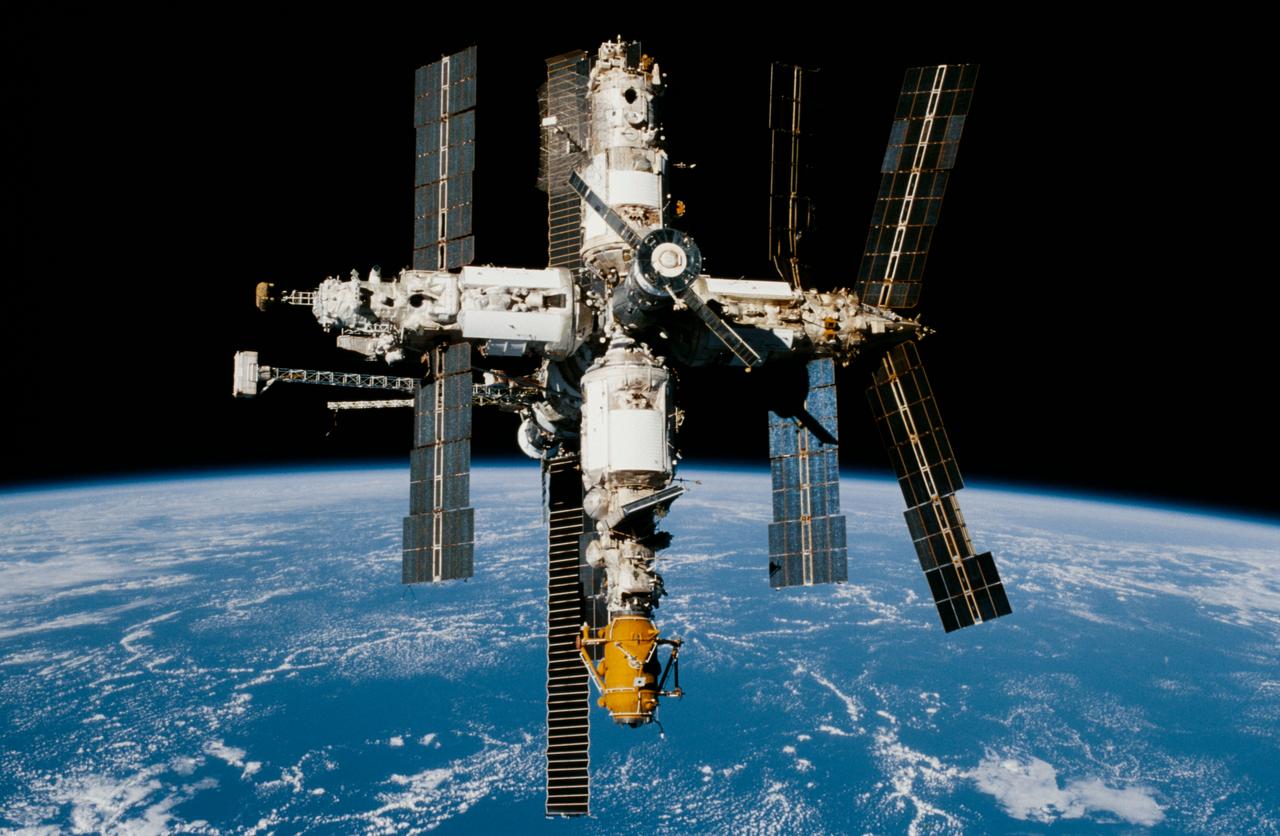
STS089-346-007 (22-31 Jan 1998) --- After several days of joint activities between NASA astronauts and Russian cosmonauts in Earth-orbit, the Space Shuttle Endeavour?s crew recorded a series of 35mm and 70mm ?flyaround? survey photos of Russia?s Mir Space Station. Earth?s horizon serves as the backdrop for this 35mm scene.

jsc2024e041790 (3/20/2024) --- Developed through NASA’s Office of STEM Engagement Next Gen STEM Project, STEMonstrations are short educational videos that demonstrate science, technology, engineering, and mathematics (STEM) topics in microgravity for grades K through 12. Crew members conduct and film the demonstrations. The International Space Station flyaround is seen as well as NASA astronauts Matthew Dominick and Jeanette Epps (Expedition 71).
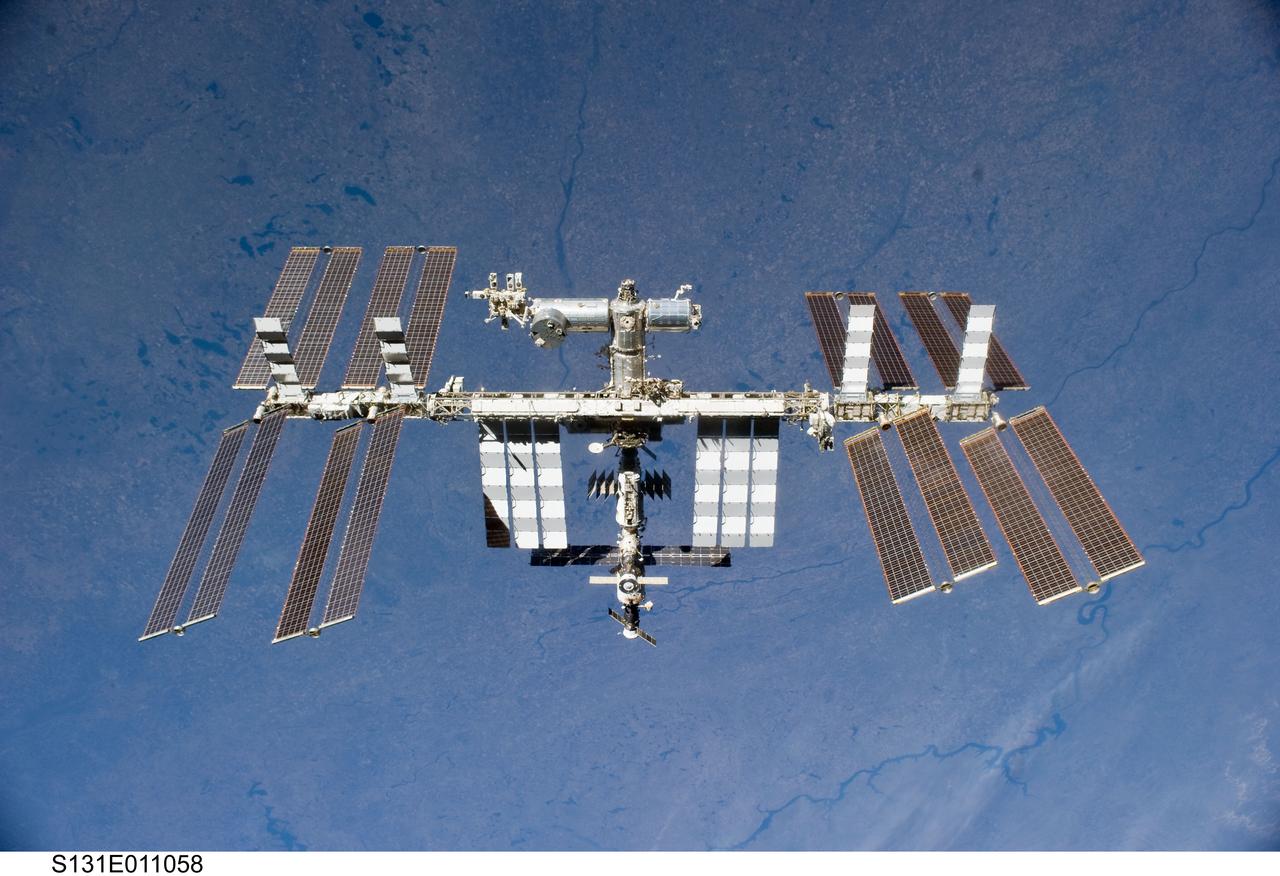
S131-E-011058 (17 April 2010) --- The International Space Station is featured in this image photographed by an STS-131 crew member on space shuttle Discovery after the station and shuttle began their post-undocking relative separation. Undocking of the two spacecraft occurred at 7:52 a.m. (CDT) on April 17, 2010.
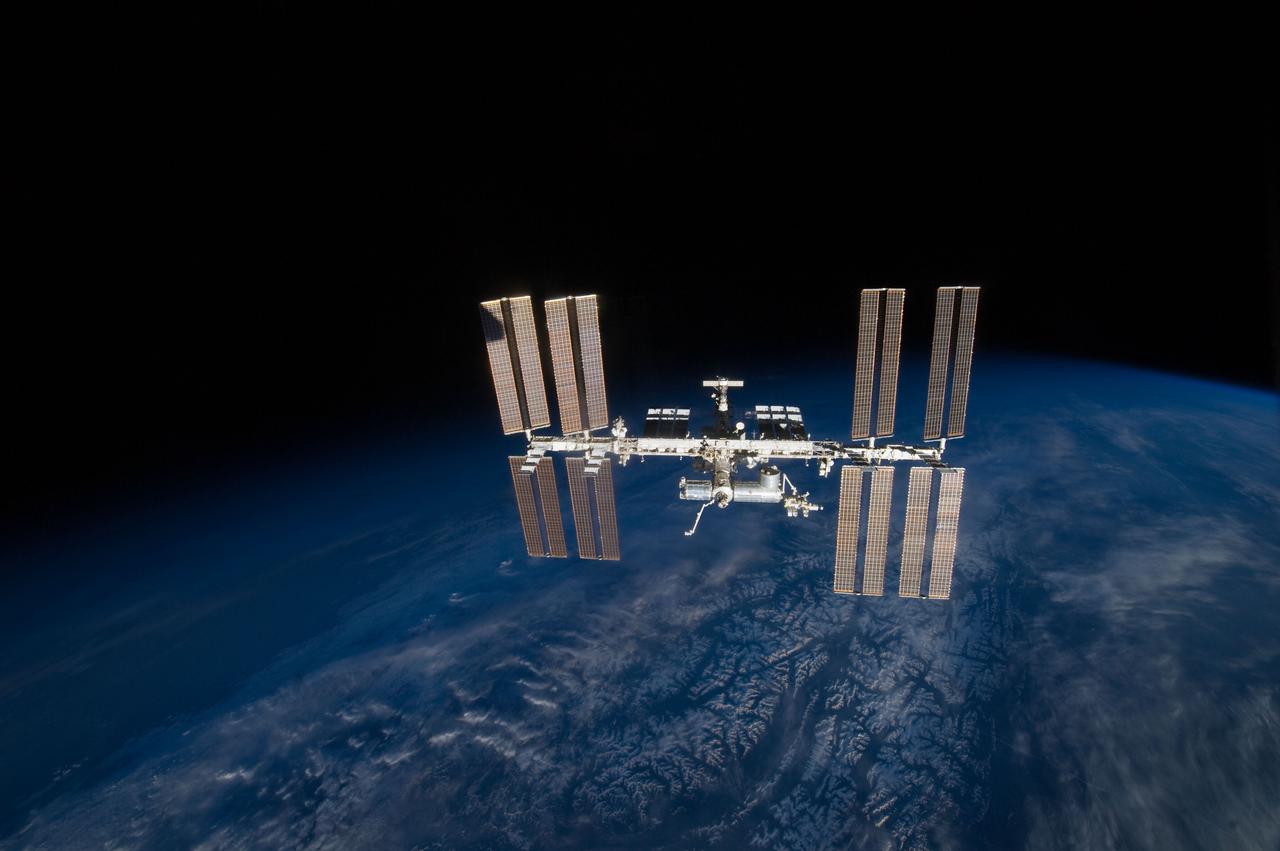
S131-E-011050 (17 April 2010) --- Backdropped by Earth’s horizon and the blackness of space, the International Space Station is featured in this image photographed by an STS-131 crew member on space shuttle Discovery after the station and shuttle began their post-undocking relative separation. Undocking of the two spacecraft occurred at 7:52 a.m. (CDT) on April 17, 2010.
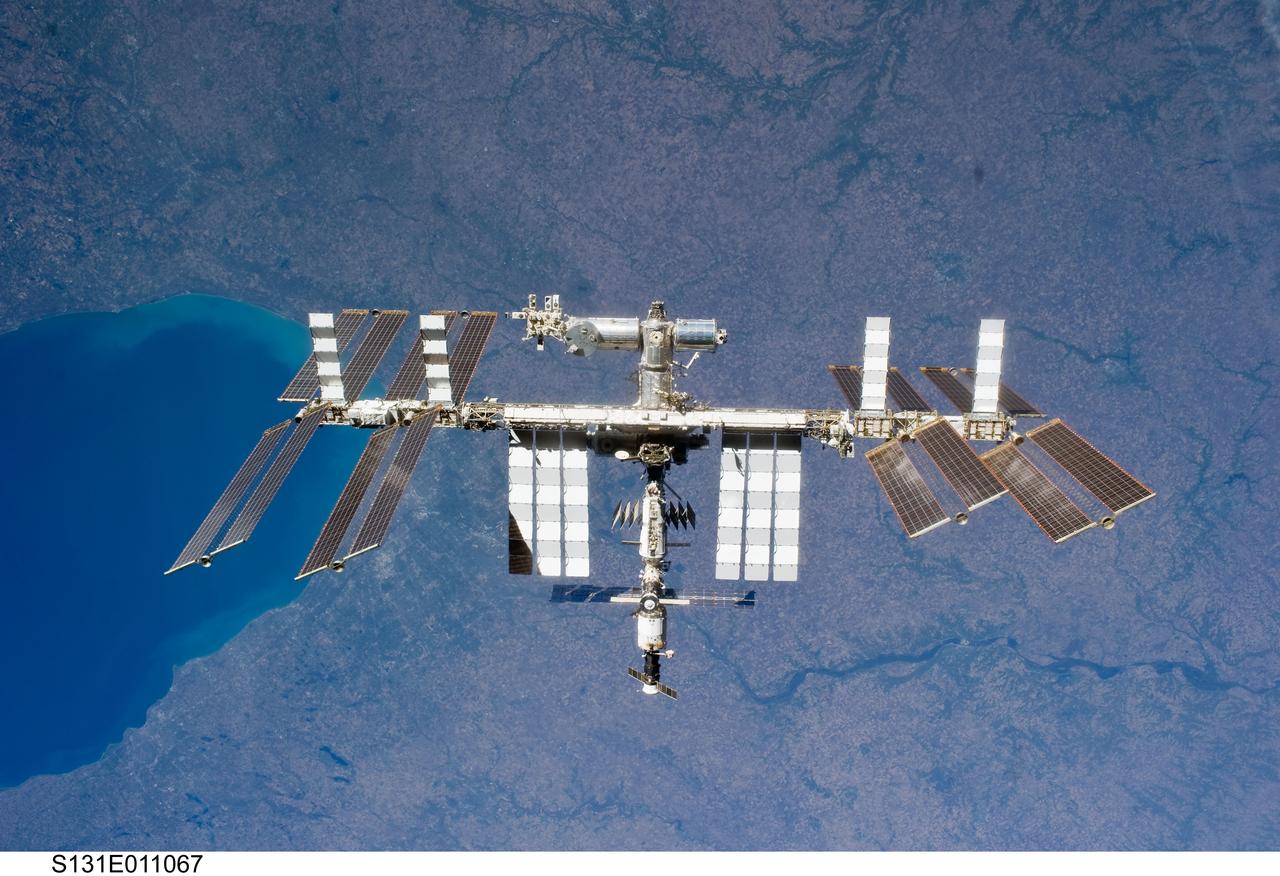
S131-E-011067 (17 April 2010) --- The International Space Station is featured in this image photographed by an STS-131 crew member on space shuttle Discovery after the station and shuttle began their post-undocking relative separation. Undocking of the two spacecraft occurred at 7:52 a.m. (CDT) on April 17, 2010.
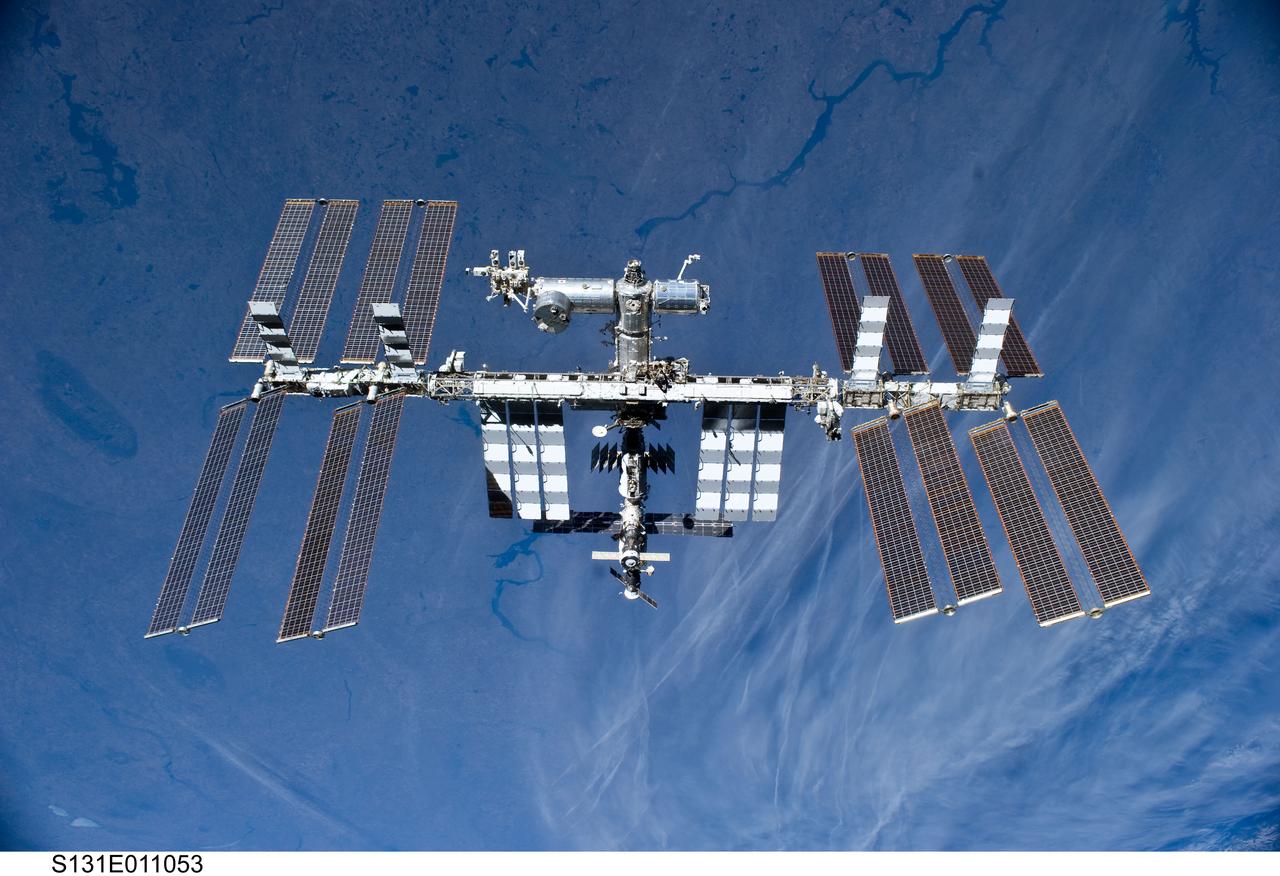
S131-E-011053 (17 April 2010) --- The International Space Station is featured in this image photographed by an STS-131 crew member on space shuttle Discovery after the station and shuttle began their post-undocking relative separation. Undocking of the two spacecraft occurred at 7:52 a.m. (CDT) on April 17, 2010.
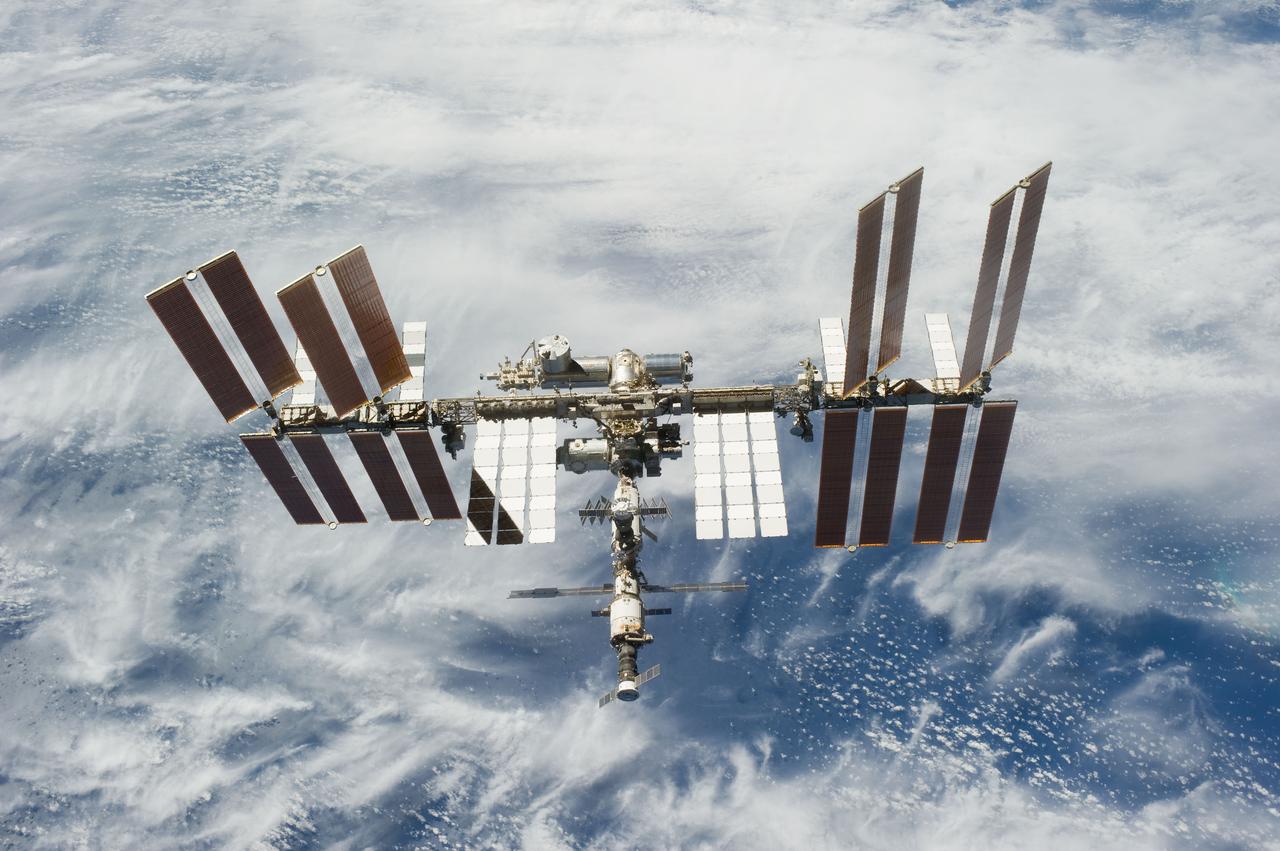
S131-E-011068 (17 April 2010) --- Backdropped by a blue and white part of Earth, the International Space Station is featured in this image photographed by an STS-131 crew member on space shuttle Discovery after the station and shuttle began their post-undocking relative separation. Undocking of the two spacecraft occurred at 7:52 a.m. (CDT) on April 17, 2010.
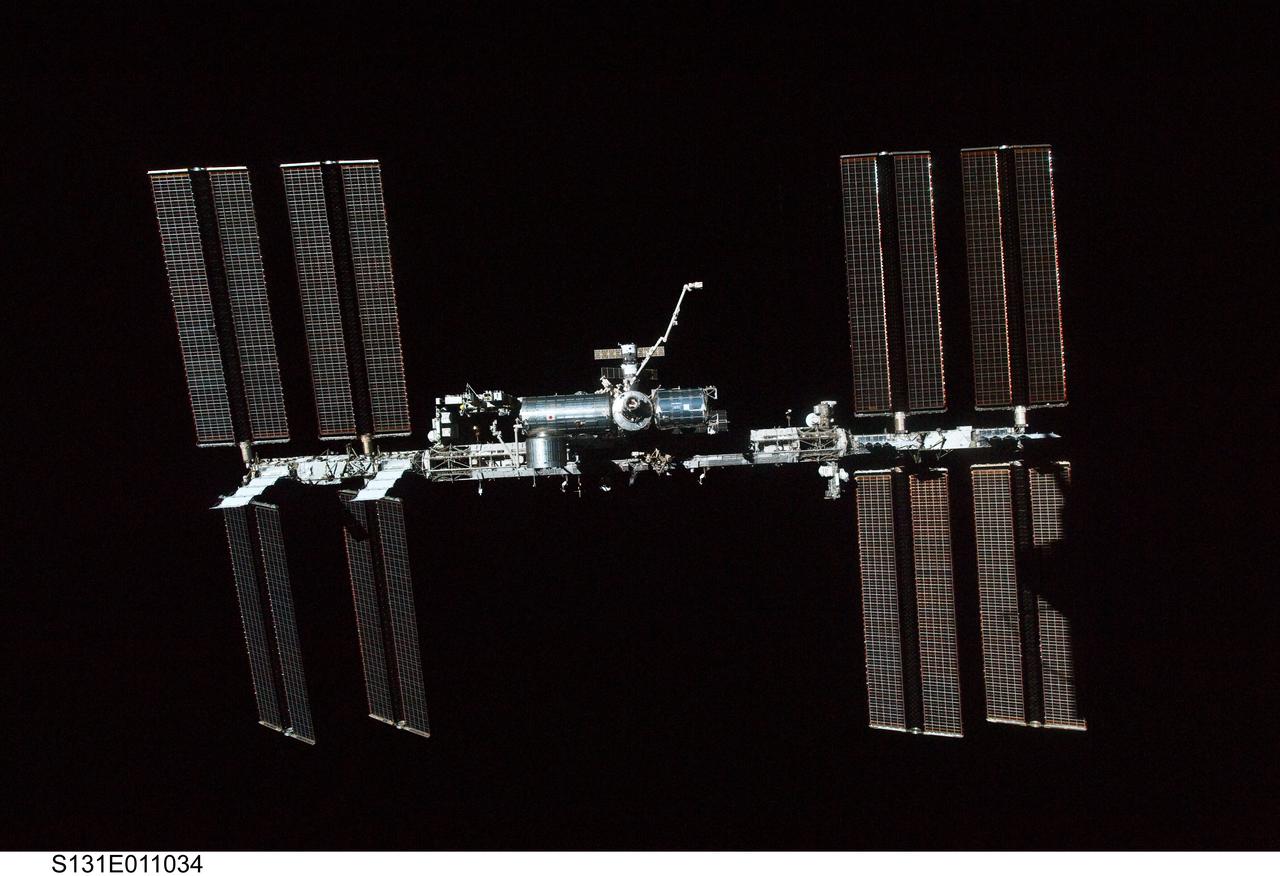
S131-E-011034 (17 April 2010) --- Backdropped by the blackness of space, the International Space Station is featured in this image photographed by an STS-131 crew member on space shuttle Discovery after the station and shuttle began their post-undocking relative separation. Undocking of the two spacecraft occurred at 7:52 a.m. (CDT) on April 17, 2010. A partial shadow of Discovery is visible on the solar array wing panels at lower right.

S135-E-011857 (19 July 2011) --- This picture of the International Space Station was photographed from the space shuttle Atlantis as the orbiting complex and the shuttle performed their relative separation in the early hours of July 19, 2011. Onboard the station were Russian cosmonauts Andrey Borisenko, Expedition 28 commander; Sergei Volkov and Alexander Samokutyaev, both flight engineers; Japan Aerospace Exploration astronaut Satoshi Furukawa, and NASA astronauts Mike Fossum and Ron Garan, all flight engineers. Onboard the shuttle were NASA astronauts Chris Ferguson, STS-135 commander; Doug Hurley, pilot; and Sandy Magnus and Rex Walheim, both mission specialists. Photo credit: NASA
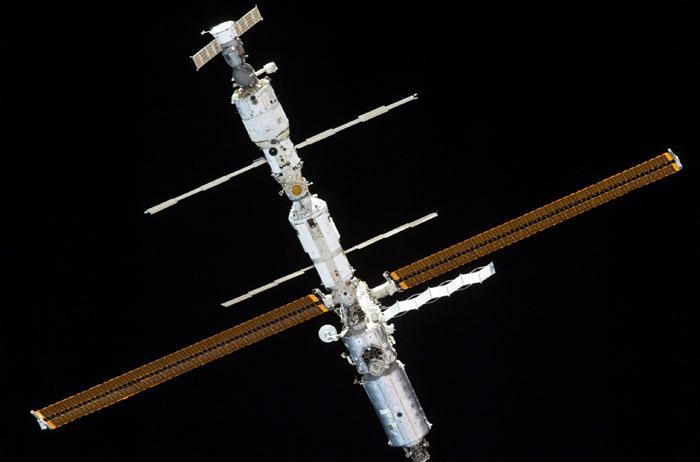
STS98-E-5318 (16 February 2001) --- The International Space Station (ISS) backdropped against the blackness of space following undocking. The photo was taken with a digital still camera.
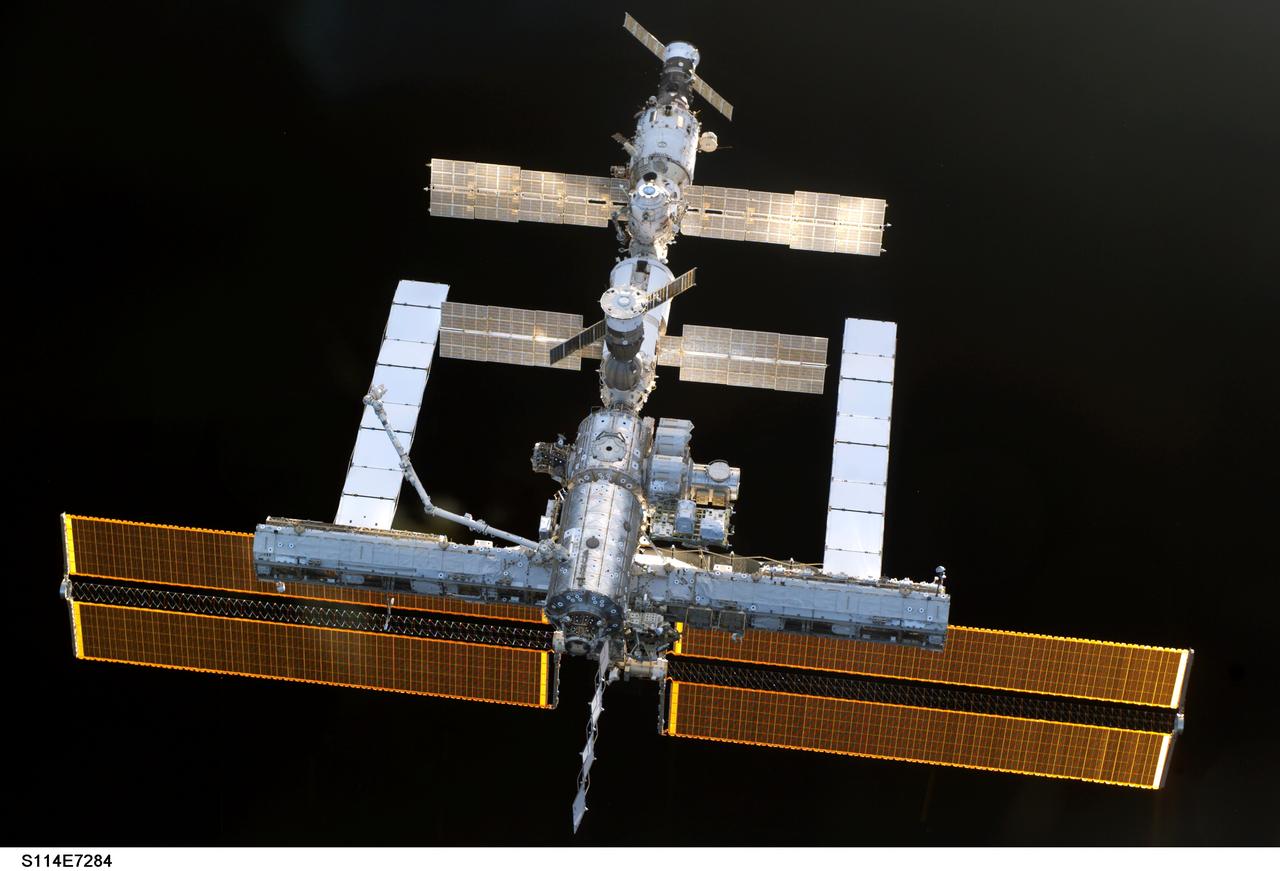
S114-E-7284 (6 August 2005) --- Backdropped by the blackness of space, this full view of the International Space Station was photographed by a crewmember onboard the Space Shuttle Discovery following the undocking of the two spacecraft. Discovery pulled away from the complex at 2:24 a.m. (CDT) on August 6, 2005.
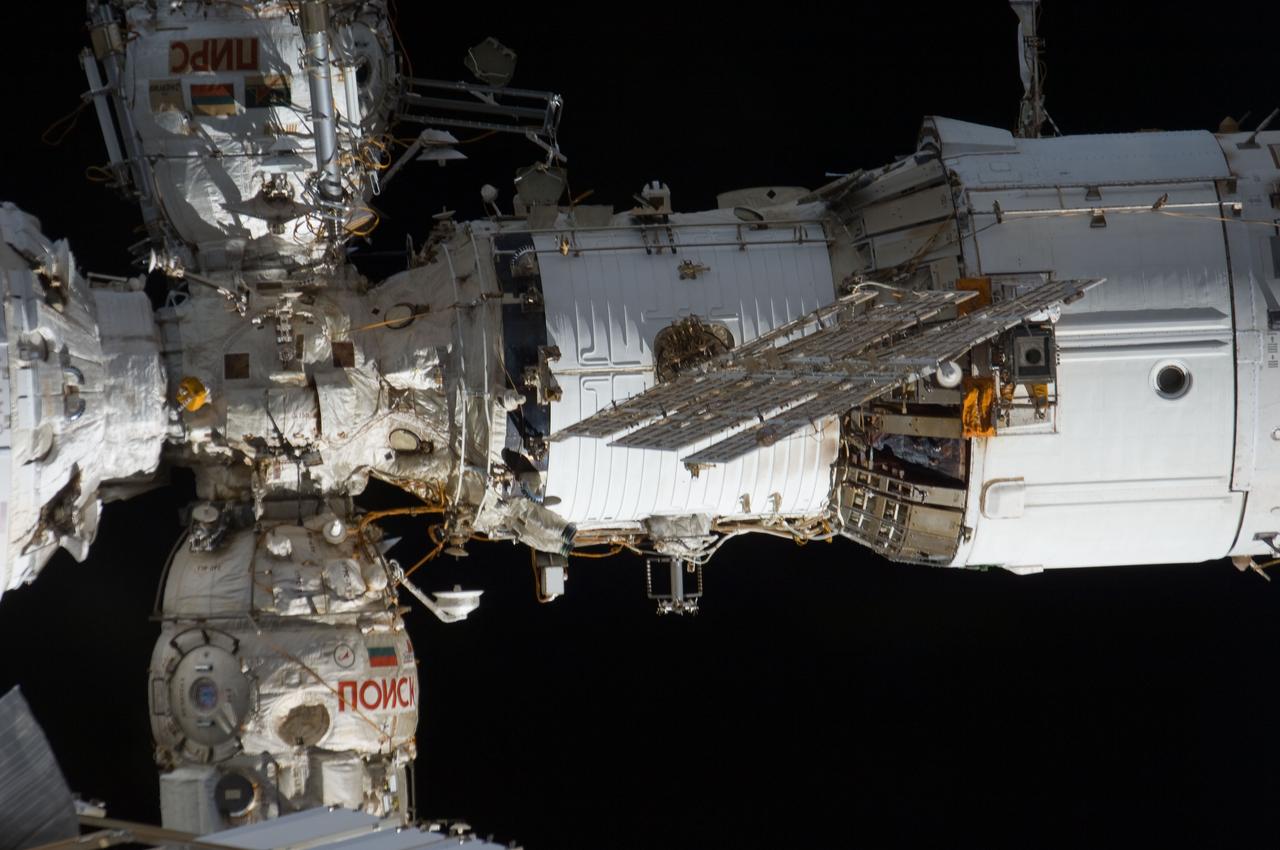
s135e011242 (July 19, 2011) --- The International Space Station's Zvezda service module is pictured with two Russian modules attached to its forward section. Both modules host docked Russian spacecraft including the Progress resupply ships and the Soyuz crew ships. At top left is the Pirs Docking Compartment where Russian spacewalks are staged. At bottom left is the Poisk Mini-Research Module-2 where Russian science experiments are conducted.

S135-E-011914 (19 July 2011) --- This picture of the International Space Station was photographed from the space shuttle Atlantis as the orbiting complex and the shuttle performed their relative separation in the early hours of July 19, 2011. Onboard the station were Russian cosmonauts Andrey Borisenko, Expedition 28 commander; Sergei Volkov and Alexander Samokutyaev, both flight engineers; Japan Aerospace Exploration astronaut Satoshi Furukawa, and NASA astronauts Mike Fossum and Ron Garan, all flight engineers. Onboard the shuttle were NASA astronauts Chris Ferguson, STS-135 commander; Doug Hurley, pilot; and Sandy Magnus and Rex Walheim, both mission specialists. Photo credit: NASA
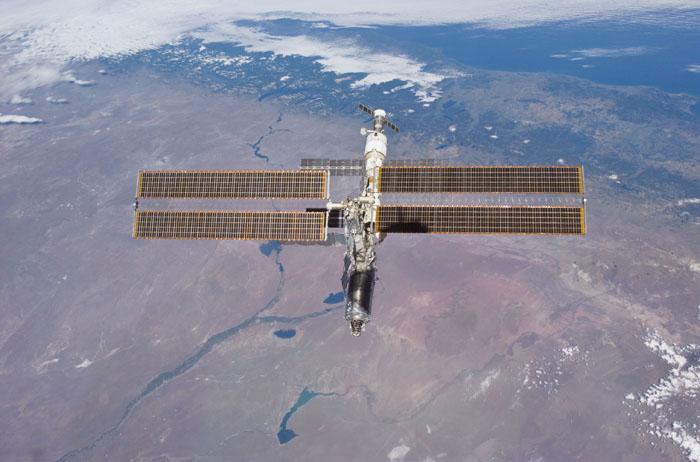
STS98-E-5314 (16 February 2001) --- The International Space Station (ISS) backdropped against the Rio Negro, Argentina, following undocking. The photo was taken with a digital still camera.
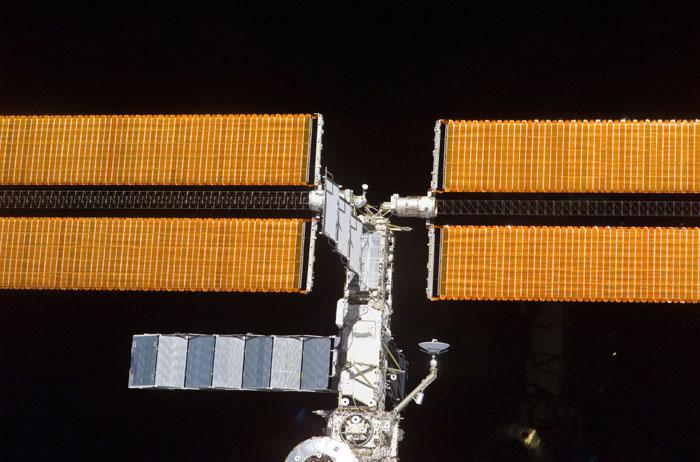
STS98-E-5311 (16 February 2001) --- Part of the International Space Station (ISS) is backdropped against the blackness of space following undocking. The photo was taken with a digital still camera.
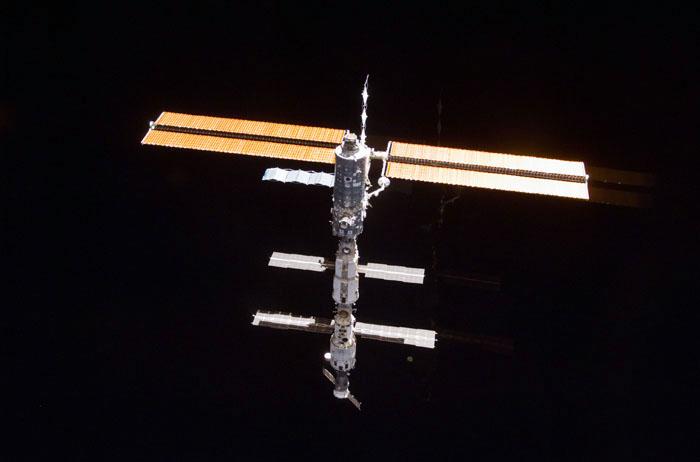
STS98-E-5307 (16 February 2001) --- The International Space Station (ISS) backdropped against the blackness of space following undocking. The photo was taken with a digital still camera.

STS98-E-5310 (16 February 2001) --- Sporting an important new component in the Destiny laboratory (near center of frame), the International Space Station (ISS) is backdropped against the blackness of space following undocking. The photo was taken with a digital still camera.
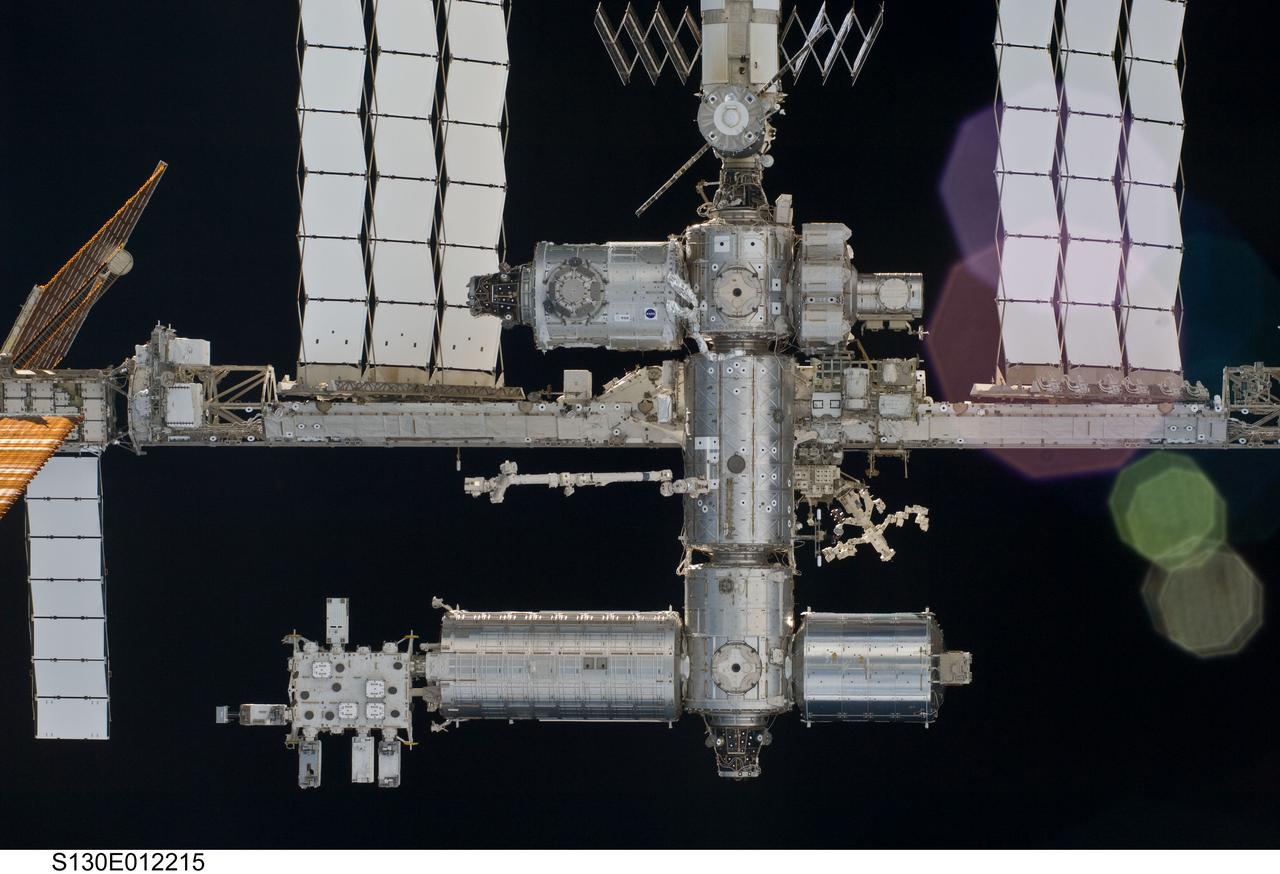
S130-E-012215 (19 Feb. 2010) --- A close-up view of a portion of the International Space Station is featured in this image photographed by an STS-130 crew member on space shuttle Endeavour after the station and shuttle began their post-undocking relative separation. Undocking of the two spacecraft occurred at 7:54 p.m. (EST) on Feb. 19, 2010. The newly-installed Tranquility node and Cupola are visible at top center.
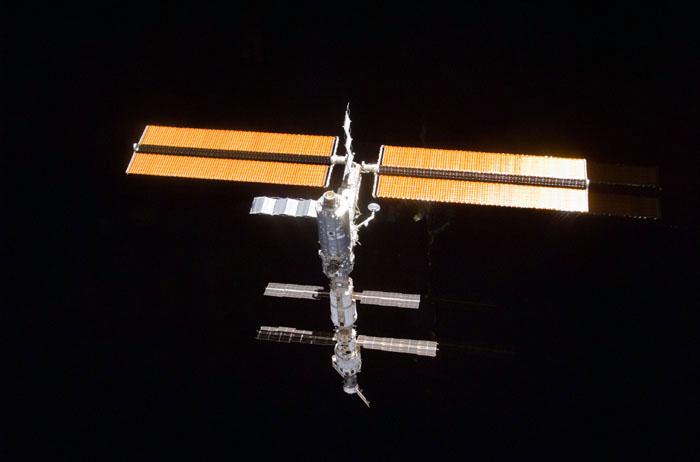
STS98-E-5308 (16 February 2001) --- The International Space Station (ISS) backdropped against the blackness of space following undocking. The photo was taken with a digital still camera.
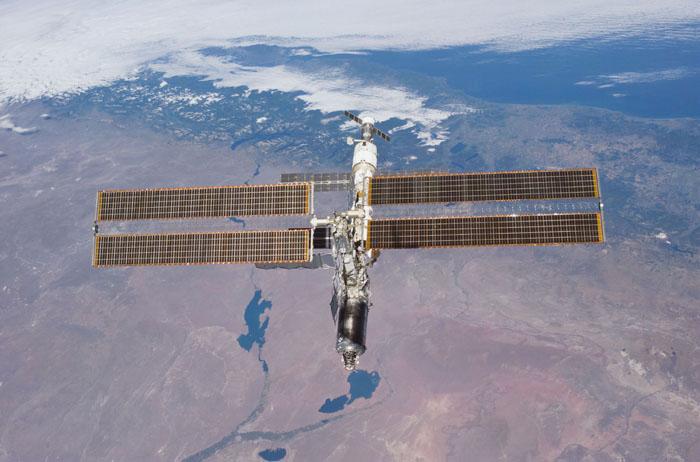
STS98-E-5312 (16 February 2001) --- The International Space Station (ISS) backdropped against Rio Negro, Argentina, following undocking. The photo was taken with a digital still camera.
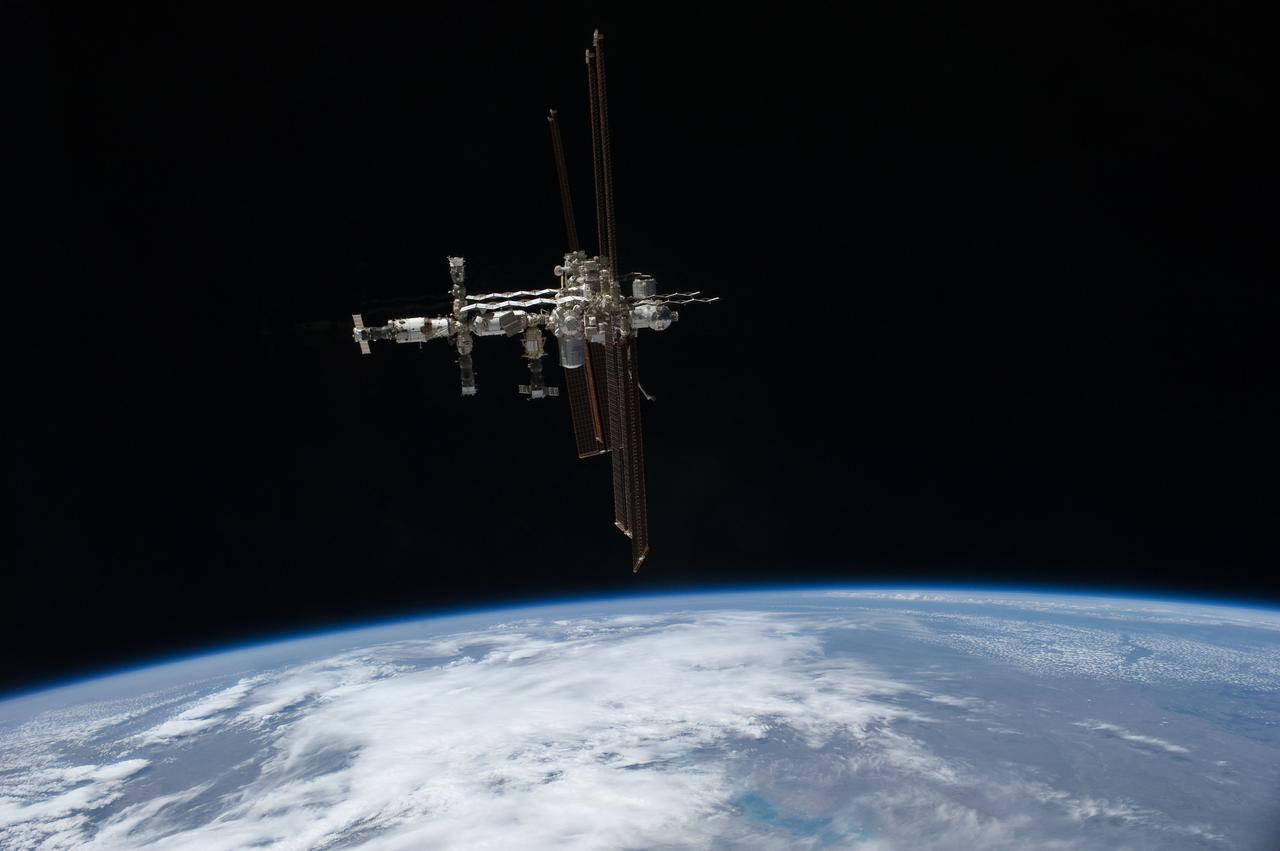
S135-E-011864 (19 July 2011) --- This picture of the International Space Station was photographed from the space shuttle Atlantis as the orbiting complex and the shuttle performed their relative separation in the early hours of July 19, 2011. Onboard the station were Russian cosmonauts Andrey Borisenko, Expedition 28 commander; Sergei Volkov and Alexander Samokutyaev, both flight engineers; Japan Aerospace Exploration astronaut Satoshi Furukawa, and NASA astronauts Mike Fossum and Ron Garan, all flight engineers. Onboard the shuttle were NASA astronauts Chris Ferguson, STS-135 commander; Doug Hurley, pilot; and Sandy Magnus and Rex Walheim, both mission specialists. Photo credit: NASA
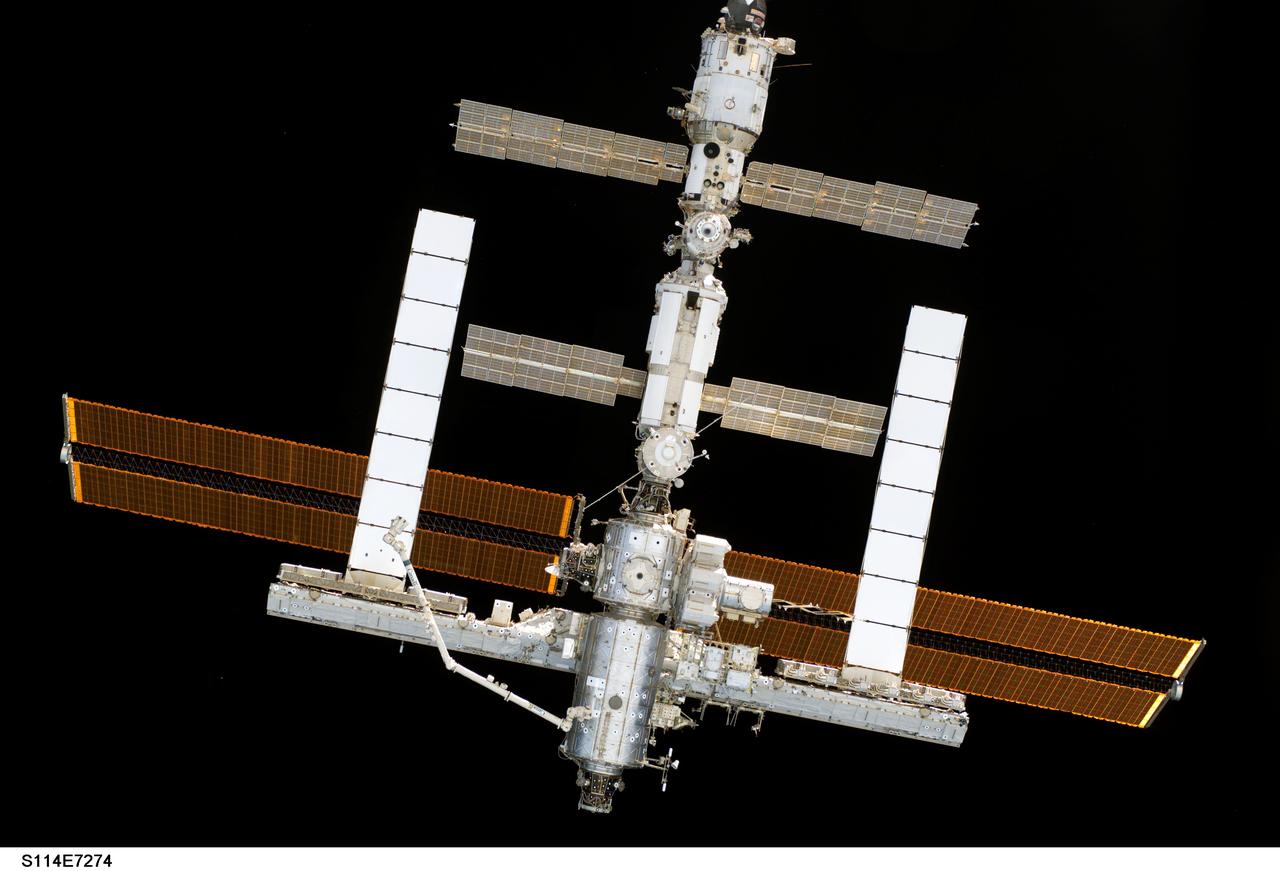
S114-E-7274 (6 August 2005) --- The International Space Station and the Space Shuttle Discovery begin their relative separation after their crewmembers concluded nine days of cooperative work. Undocking occurred at 2:24 a.m. (CDT), August 6, 2005.
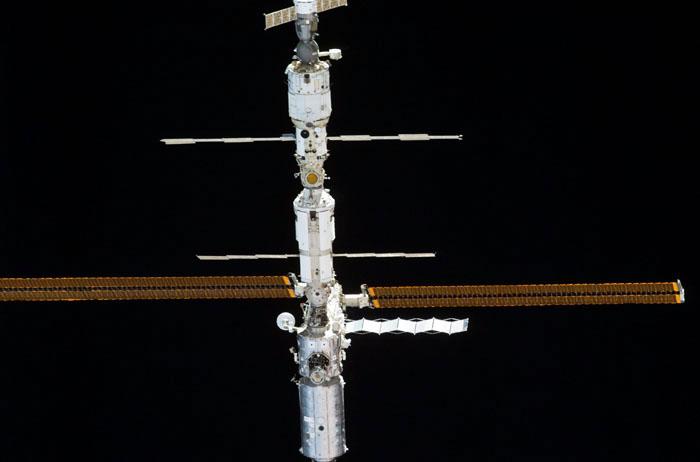
STS98-E-5317 (16 February 2001) --- The International Space Station (ISS) backdropped against the blackness of space following undocking. The photo was taken with a digital still camera.
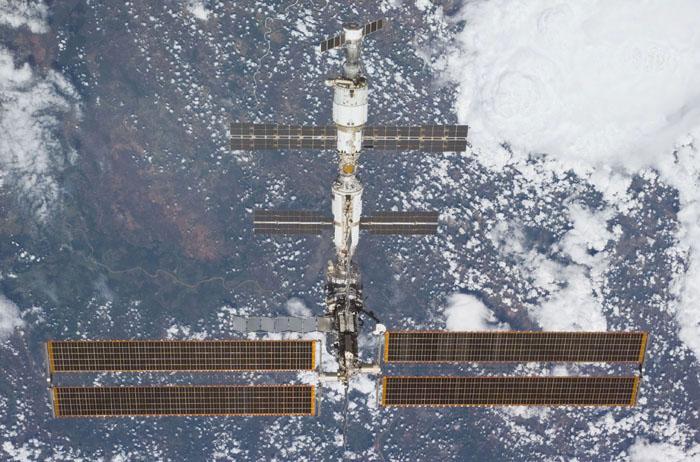
STS98-E-5315 (16 February 2001) --- The International Space Station (ISS) backdropped against Brazilian topography following undocking. The photo was taken with a digital still camera.
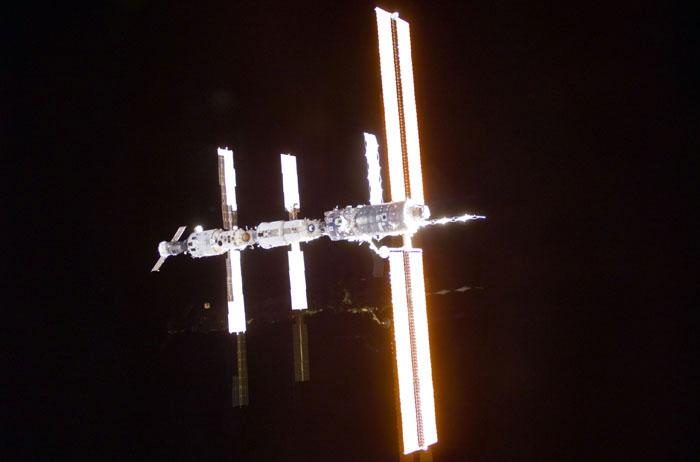
STS98-E-5305 (16 February 2001) --- The International Space Station (ISS) backdropped against the blackness of space following undocking. The photo was taken with a digital still camera.
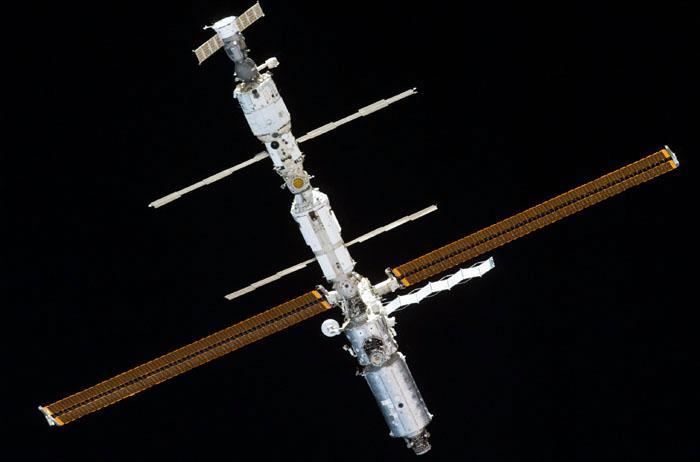
STS98-E-5320 (16 February 2001) --- The International Space Station (ISS) backdropped against the blackness of space following undocking. The photo was taken with a digital still camera.
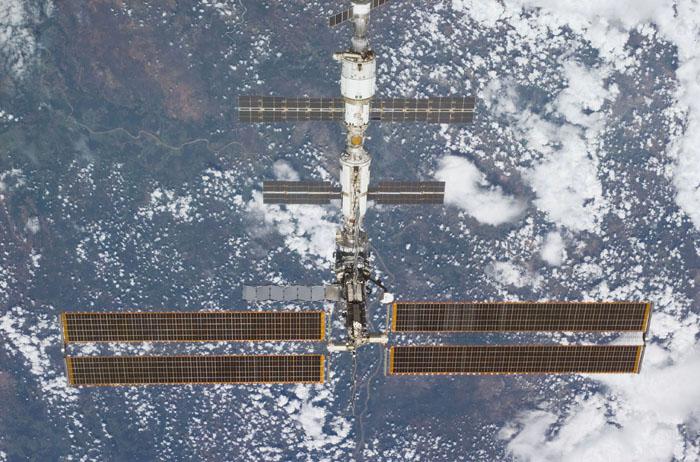
STS98-E-5316 (16 February 2001) --- The International Space Station (ISS) backdropped against Brazilian topography following undocking. The photo was taken with a digital still camera.
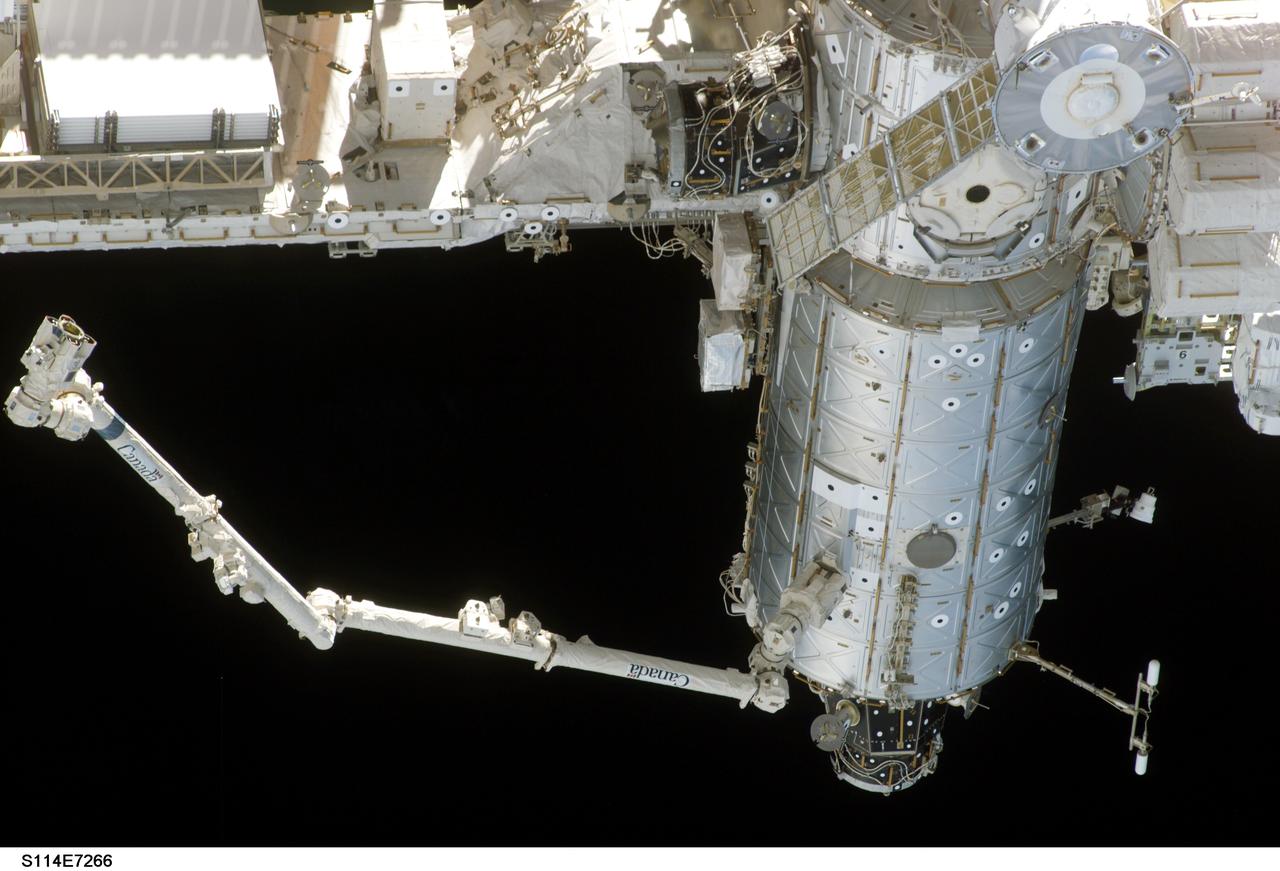
S114-E-7266 (6 August 2005) --- The Space Station Remote Manipulator System arm or Canadarm2 appears to be waving good bye to the Space Shuttle as the orbital outpost moves away from Discovery. Earlier, the crews of the two spacecraft concluded nine days of cooperative work. As the Shuttle moved away to a distance of about 400 feet, astronaut James M. Kelly, pilot, began a slow fly-around of the Station, while cameras on each spacecraft captured video and still images of the other. Undocking occurred at 2:24 a.m. (CDT), August 6, 2005.
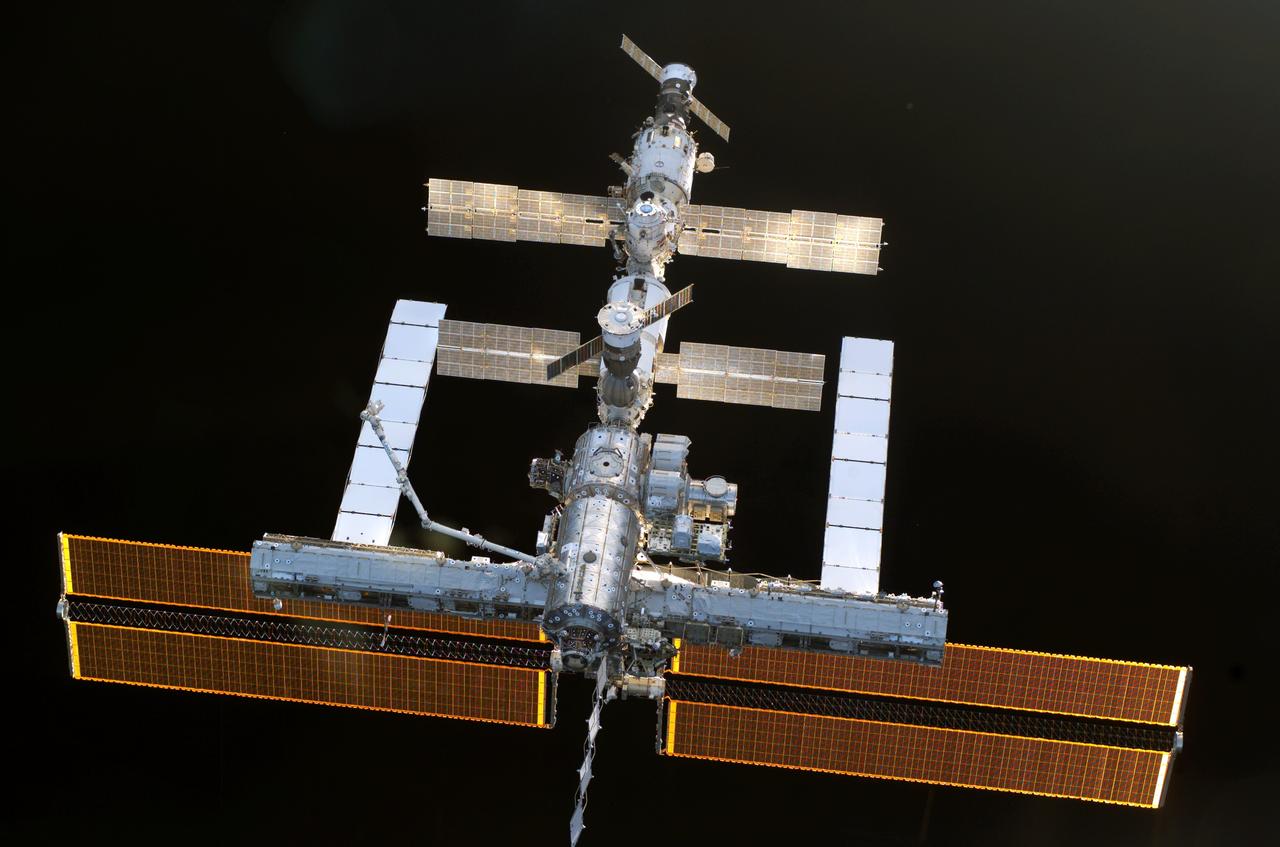
S114-E-7285 (6 August 2005) --- Backdropped by the blackness of space, this full view of the international space station was photographed by an STS-114 crewmember onboard the Space Shuttle Discovery following the undocking of the two spacecraft. Discovery pulled away from the complex at 2:24 a.m. (CDT) on Aug. 6, 2005.
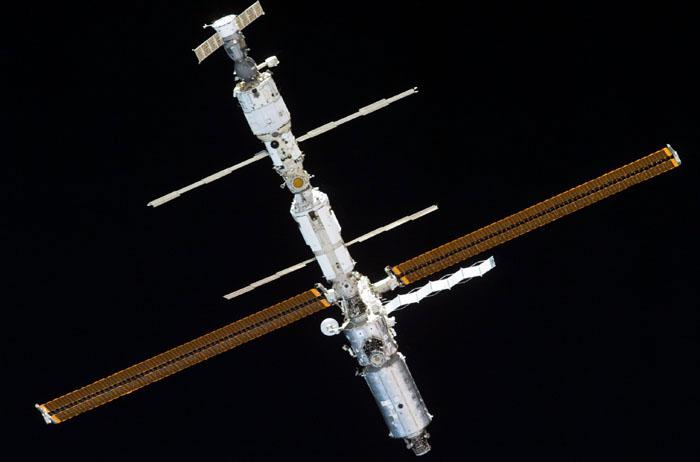
STS98-E-5319 (16 February 2001) --- The International Space Station (ISS) backdropped against the blackness of space following undocking. The photo was taken with a digital still camera.
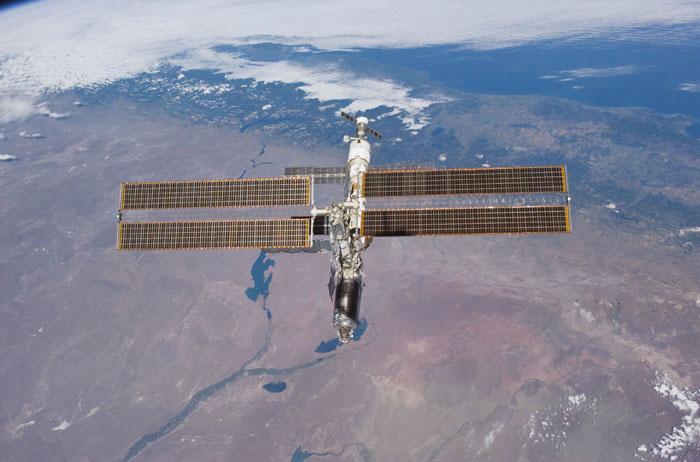
STS98-E-5313 (16 February 2001) --- The International Space Station (ISS) backdropped against the Rio Negro, Argentina following undocking. The photo was taken with a digital still camera.
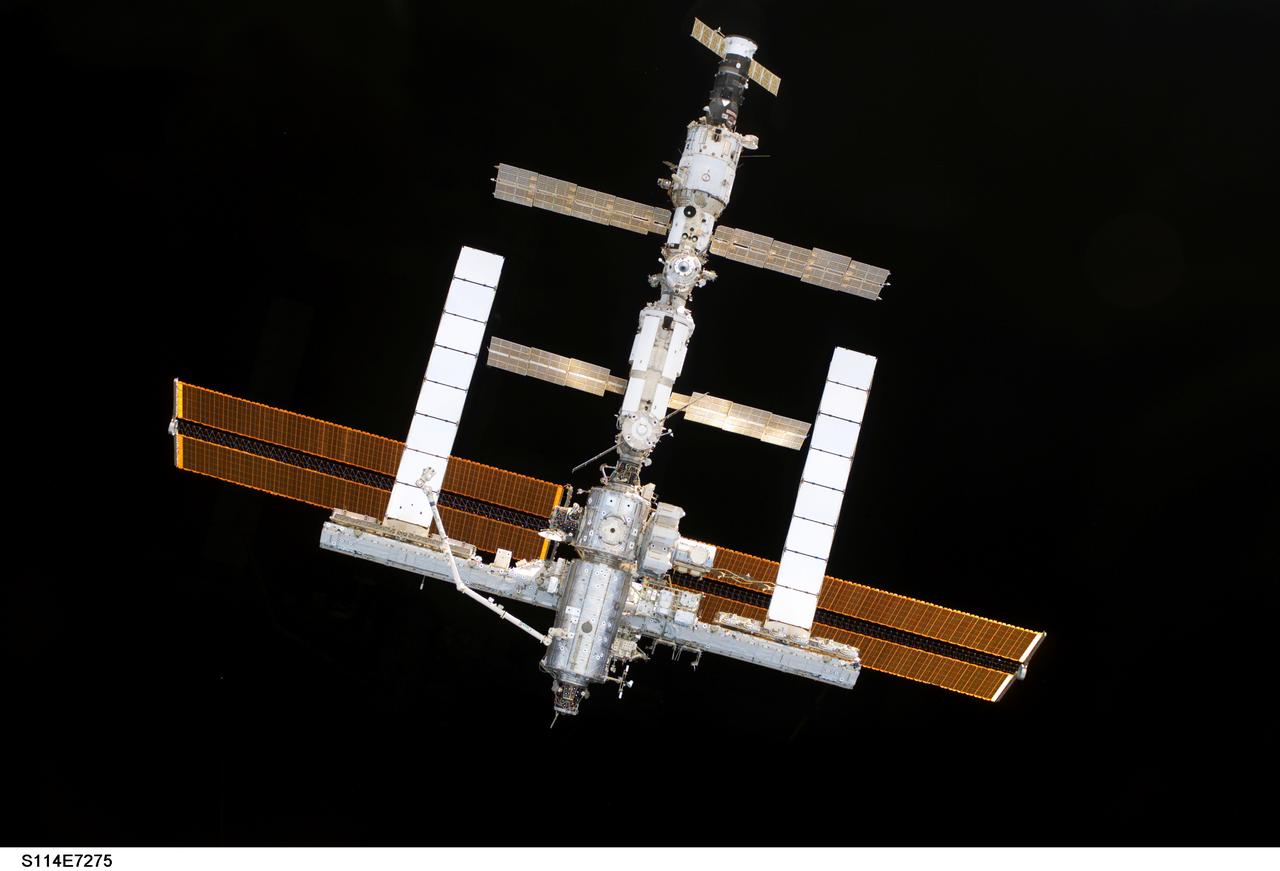
S114-E-7275 (6 August 2005) --- The International Space Station is backdropped against blackness of space as the orbital outpost moves away from the Space Shuttle Discovery. Earlier, the crews of the two spacecraft concluded nine days of cooperative work. As the Shuttle moved away to a distance of about 400 feet, astronaut James M. Kelly, pilot, began a slow fly-around of the Station, while cameras on each spacecraft captured video and still images of the other. Undocking occurred at 2:24 a.m. (CDT), August 6, 2005.
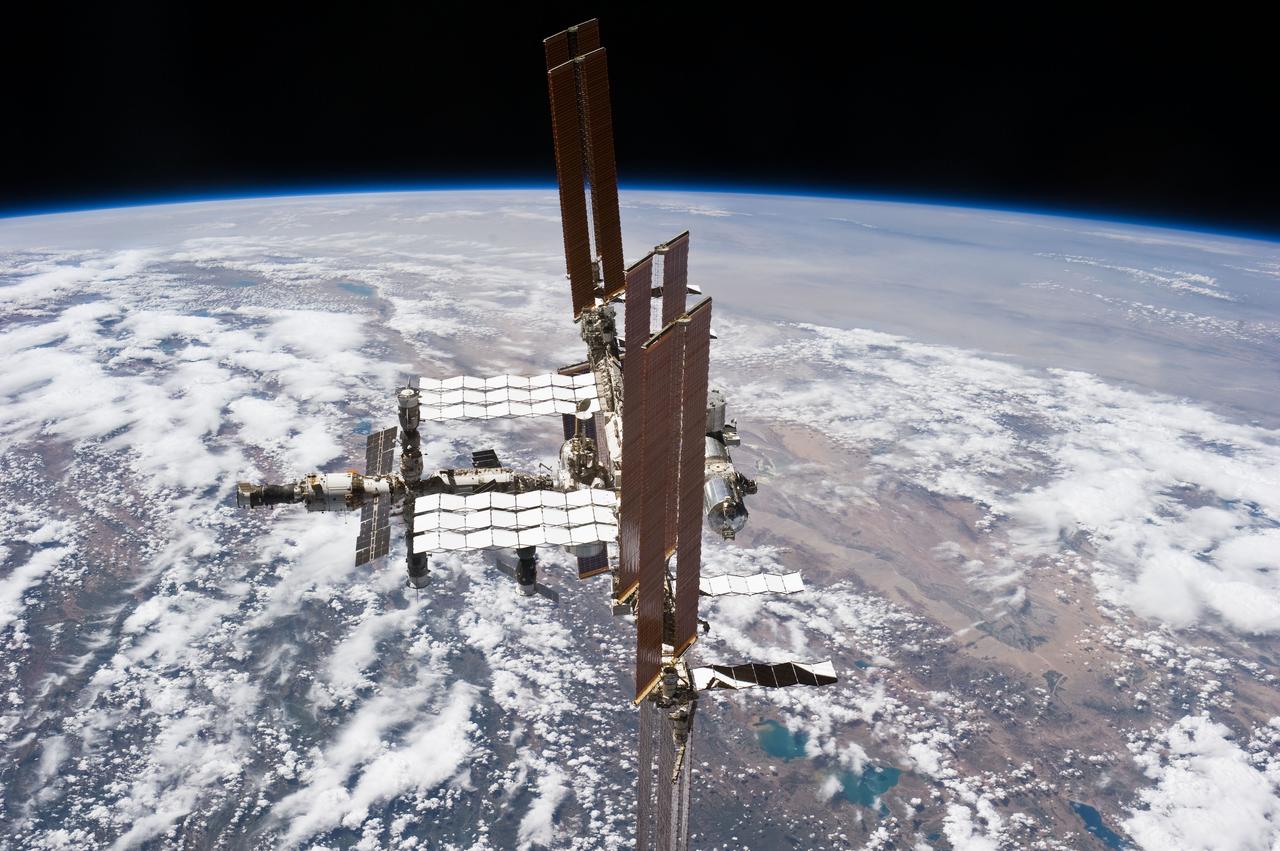
S135-E-011867 (19 July 2011) --- This picture of the International Space Station was photographed from the space shuttle Atlantis as the orbiting complex and the shuttle performed their relative separation in the early hours of July 19, 2011 The western Himalayas and the Tibetan Plateau are visible below. Onboard the station were Russian cosmonauts Andrey Borisenko, Expedition 28 commander; Sergei Volkov and Alexander Samokutyaev, both flight engineers; Japan Aerospace Exploration astronaut Satoshi Furukawa, and NASA astronauts Mike Fossum and Ron Garan, all flight engineers. Onboard the shuttle were NASA astronauts Chris Ferguson, STS-135 commander; Doug Hurley, pilot; and Sandy Magnus and Rex Walheim, both mission specialists. Photo credit: NASA
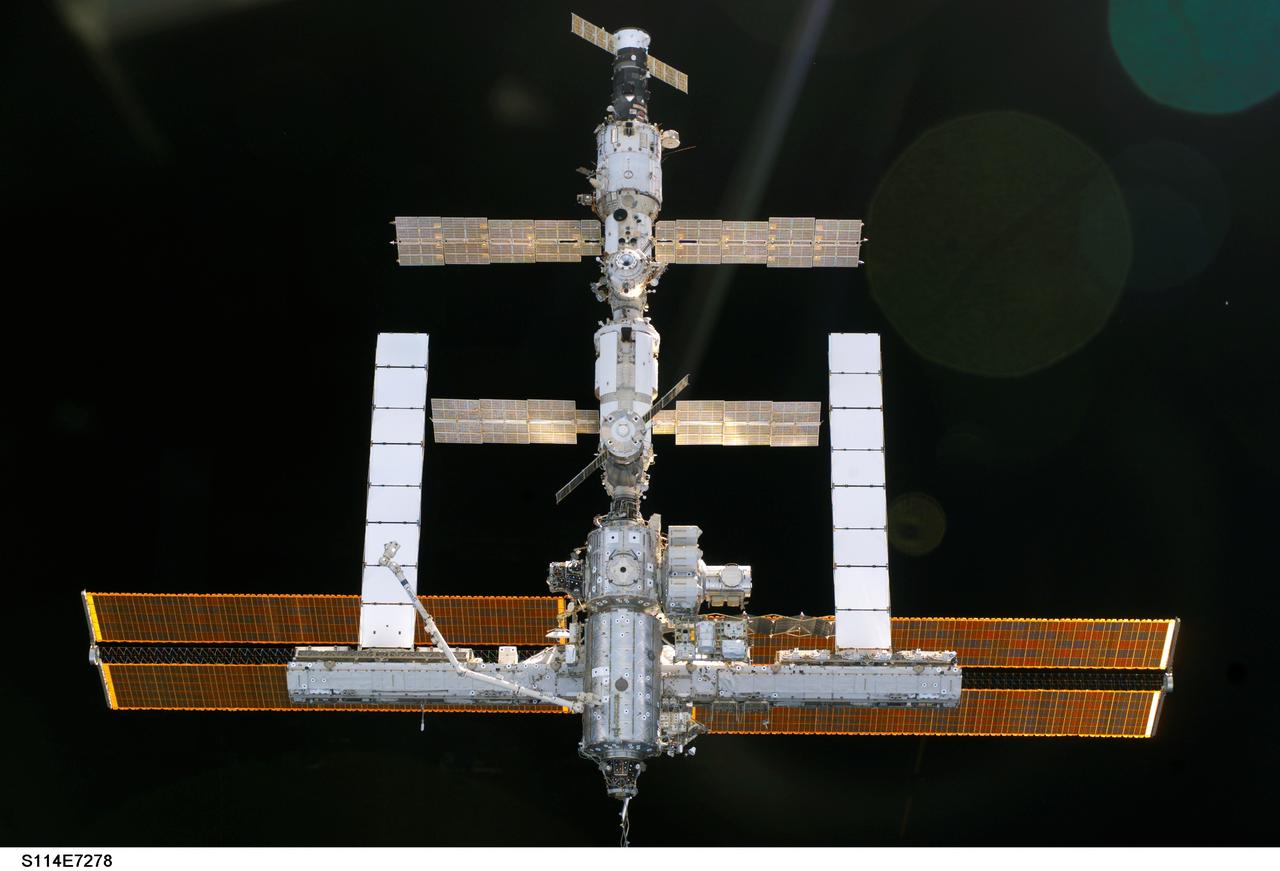
S114-E-7278 (6 August 2005) --- The International Space Station is backdropped against the blackness of space as the orbital outpost moves away from the Space Shuttle Discovery. Earlier, the crews of the two spacecraft concluded nine days of cooperative work. As the Shuttle moved away to a distance of about 400 feet, astronaut James M. Kelly, pilot, began a slow fly-around of the Station, as cameras on each spacecraft captured video and still images of the other. Undocking occurred at 2:24 a.m. (CDT), August 6, 2005.
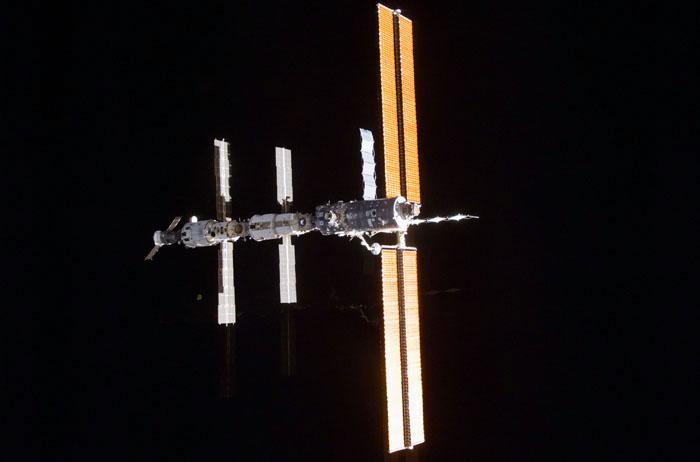
STS98-E-5306 (16 February 2001) --- The International Space Station (ISS) backdropped against the blackness of space following undocking. The photo was taken with a digital still camera.
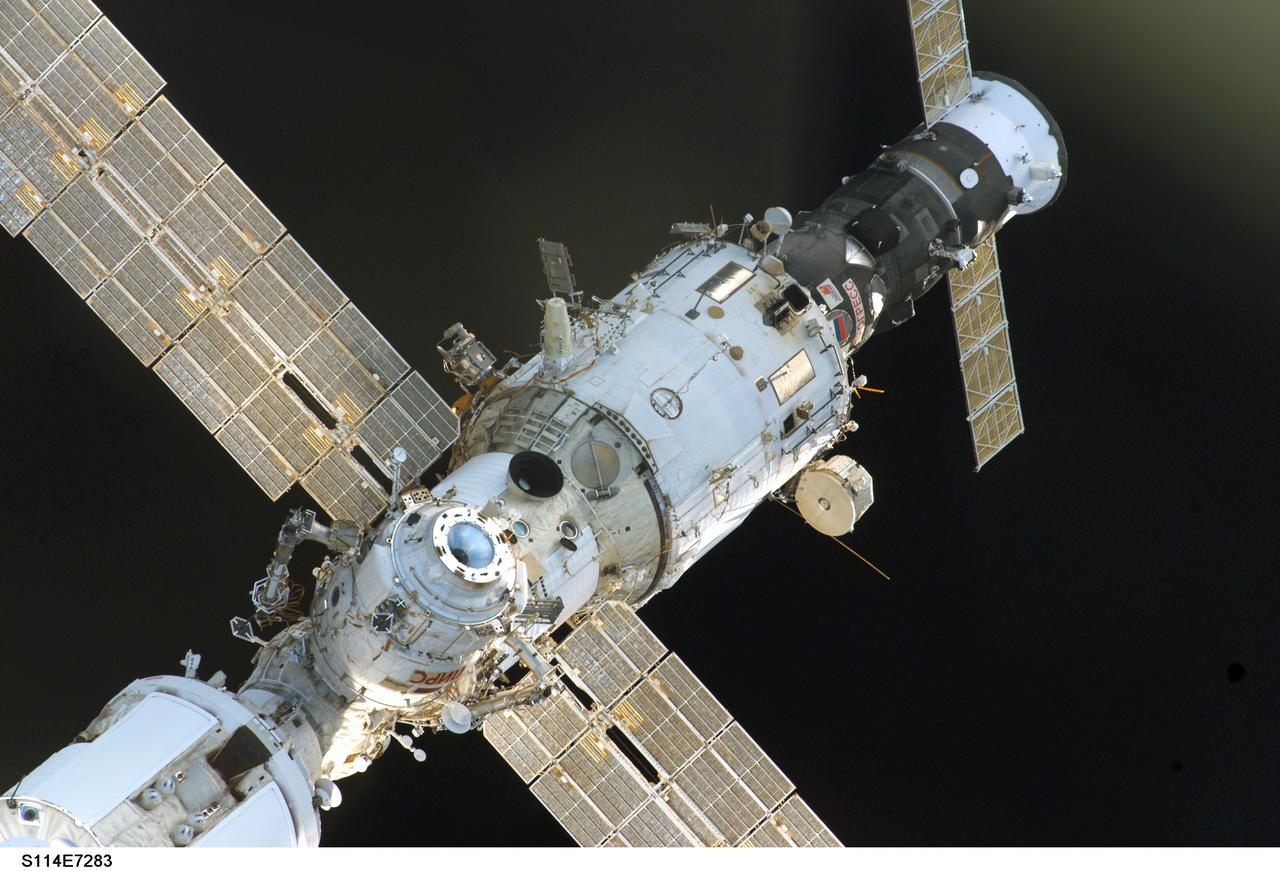
S114-E-7283 (6 August 2005) --- The International Space Station and the Space Shuttle Discovery begin their relative separation after their crewmembers concluded nine days of cooperative work. Undocking occurred at 2:24 a.m. (CDT), August 6, 2005.
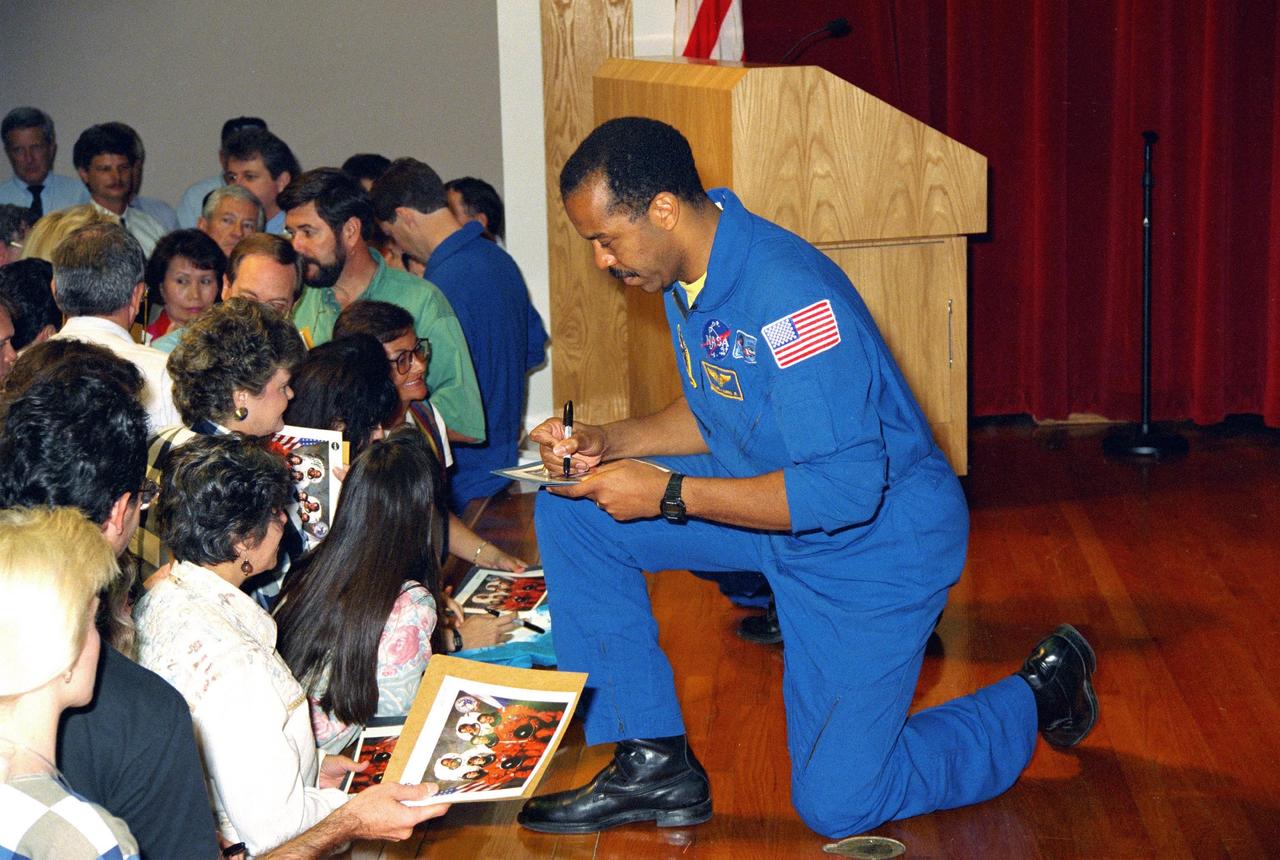
KENNEDY SPACE CENTER, FLA. -- STS-63 Mission Specialist Dr. Bernard Harris autographs copies of the crew photograph in the Training Auditorium during a March crew visit to thank employees for their help in ensuring a successful mission. The six-member crew on Discovery, who landed February 11 after an eight-day flight, included Mission Commander James Wetherbee, Pilot Eileen Collins (on the first flight of a female Shuttle pilot), and Mission Specialists Michael Foale, Janice Voss and Vladimir Titov. The mission featured another milestone, the first approach and flyaround of a Shuttle with Russian Space Station Mir. It was also the second flight of a russian cosmonaut on Shuttle and the third flight of the SPACEHAB module, which carried 20 experiments in biotechnology, advanced materials development, technology demonstrations and other measurements.
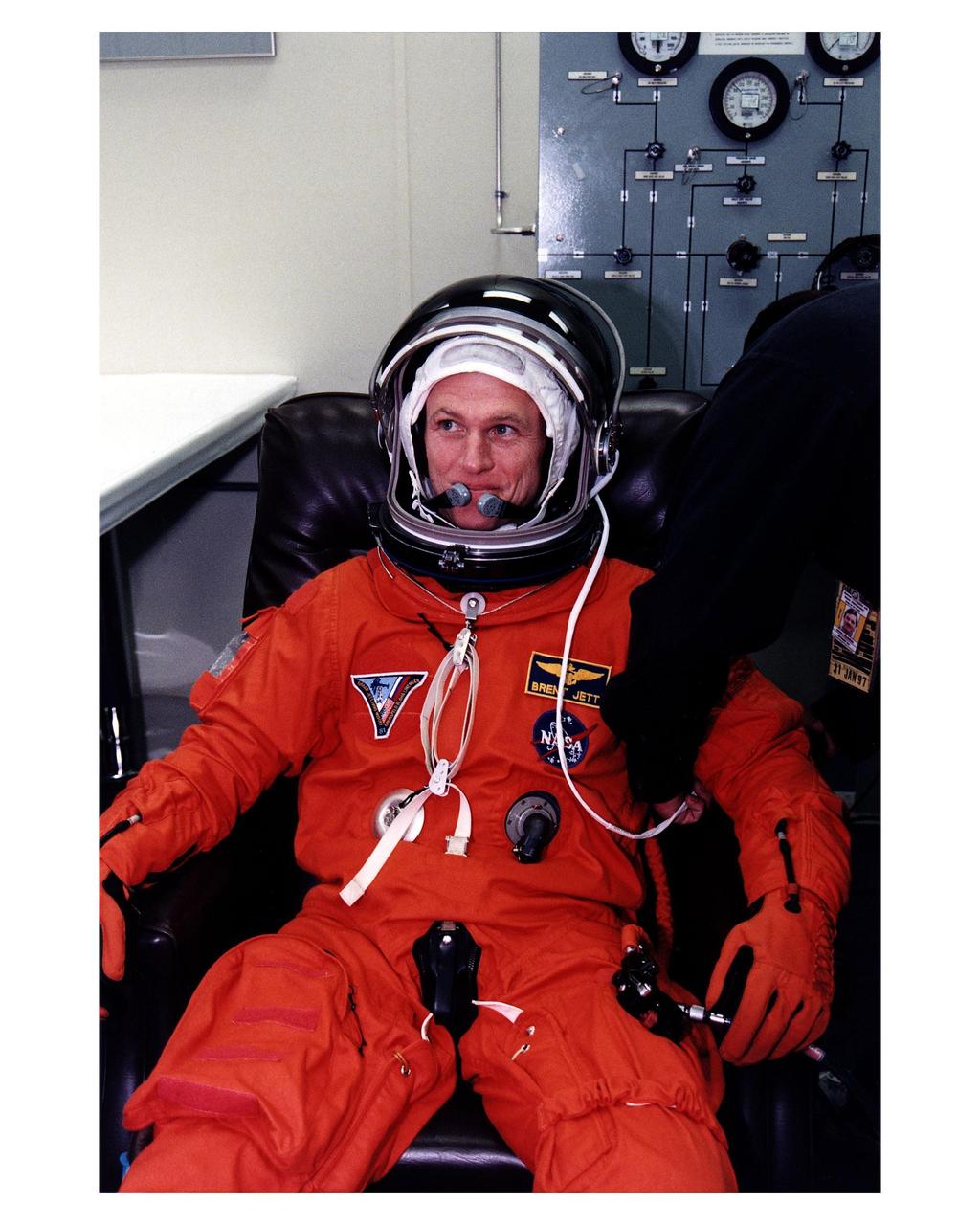
STS-81 Pilot Brent W. Jett, Jr. dons his launch/entry suit in the suitup room of the Operations and Checkout (O&C) Building. He is on his second Shuttle mission. Jett will assist with several of the 44 Risk Mitigation and Human Life Sciences experiments during the 10-day space flight and will perform the intricate flyaround maneuver of the Russian Mir space station after the Space Shuttle Atlantis undocks on flight day eight. He and five crew members will shortly depart the O&C and head for Launch Pad 39B, where the Space Shuttle Atlantis will lift off during a 7-minute window that opens at 4:27 a.m. EST, January 12
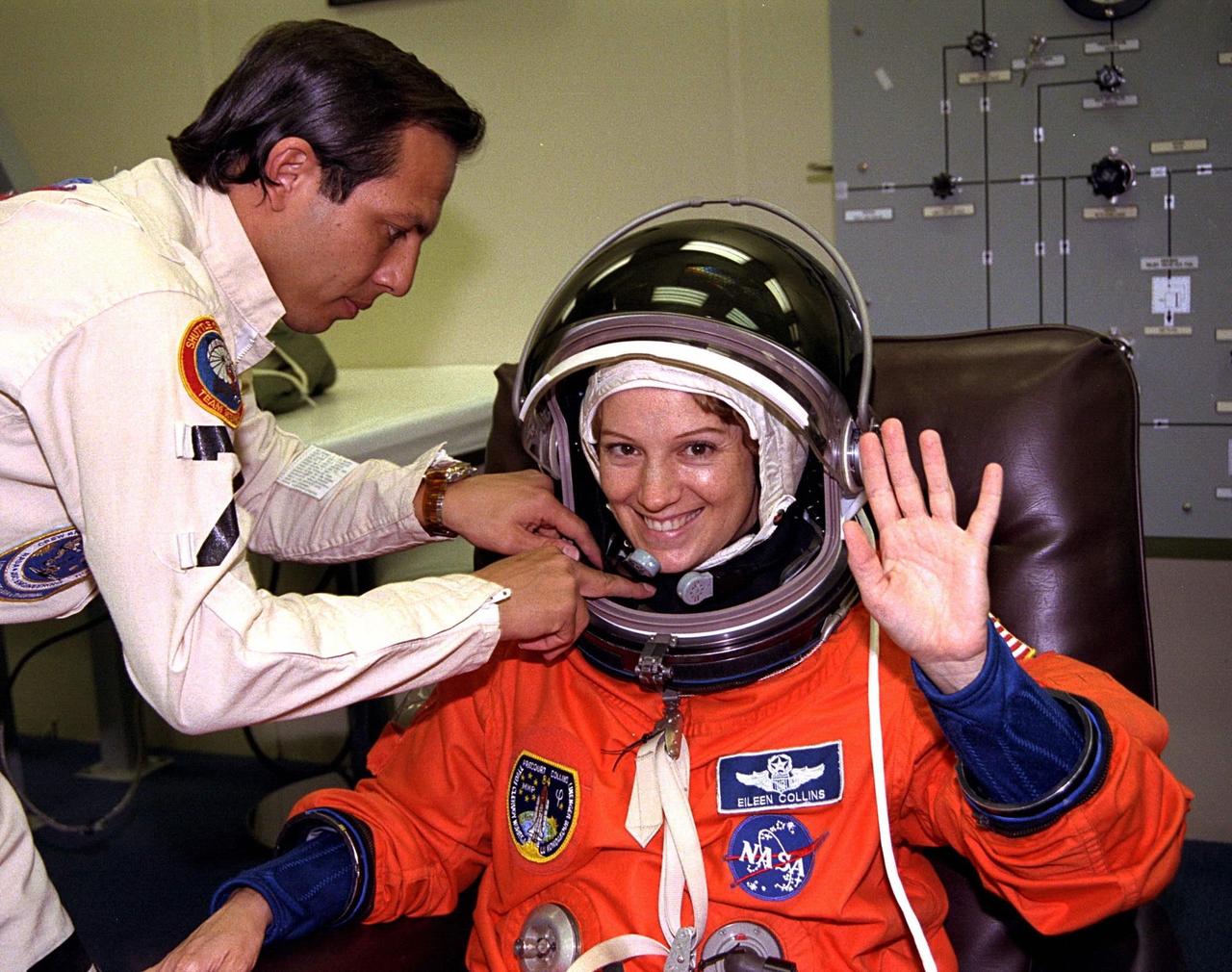
With the assistance of a suit technician, STS-84 Pilot Eileen Marie Collins finishes donning her launch and entry suit in the Operations and Checkout Building in preparation for her second Space Shuttle flight. She was the first woman Shuttle pilot on STS-63 in 1995, which was the first approach and flyaround of the Russian Space Station Mir by the Space Shuttle. Collins and six other crew members will depart shortly for Launch Pad 39A, where the Space Shuttle Atlantis awaits liftoff during an approximate 7-minute launch window which opens at about 4:08 a.m. This will be the sixth docking of the Space Shuttle with the Mir. The exact liftoff time will be determined about 90 minutes prior to launch, based on the most current location of Mir
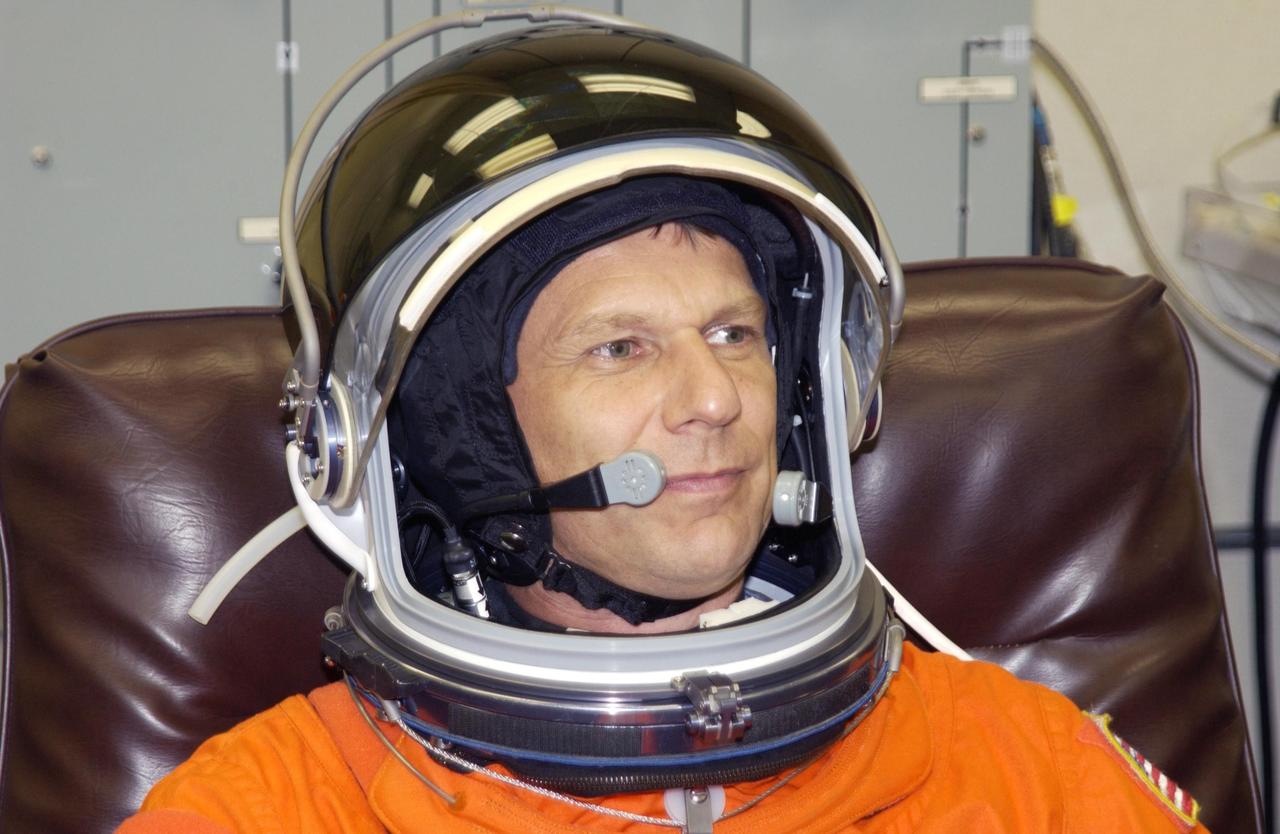
KENNEDY SPACE CENTER, Fla. - STS-112 Mission Specialist Piers Sellers tries out his helmet during suit check, part of Terminal Countdown Demonstration Test activities. The TCDT also includes emergency egress training and a simulated launch countdown. The mission aboard Space Shuttle Atlantis is scheduled to launch no earlier than Oct. 2, between 2 and 6 p.m. EDT. STS-112 is the 15th assembly mission to the International Space Station. Atlantis will be carrying the S1 Integrated Truss Structure, the first starboard truss segment. The S1 will be attached to the central truss segment, S0, during the 11-day mission. Sellers will be undertaking three spacewalks during the mission. In addition, he will be in charge of on-board computers and rendezvous tools during Atlantis' approach for docking and the undocking and flyaround. STS-112 is Sellers first Shuttle flight.
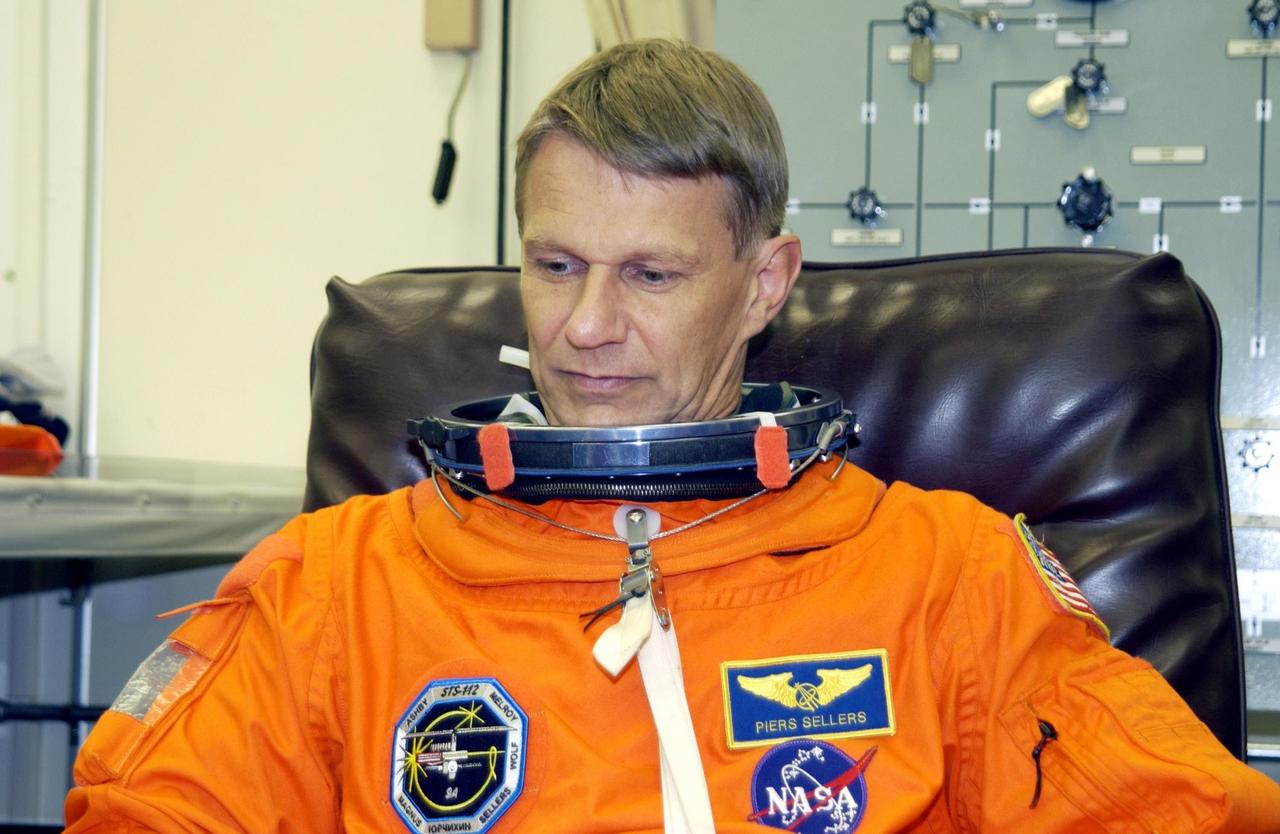
KENNEDY SPACE CENTER, Fla. - STS-112 Mission Specialist Piers Sellers undergoes suit check, part of Terminal Countdown Demonstration Test activities. The TCDT also includes emergency egress training and a simulated launch countdown. The mission aboard Space Shuttle Atlantis is scheduled to launch no earlier than Oct. 2, between 2 and 6 p.m. EDT. STS-112 is the 15th assembly mission to the International Space Station. Atlantis will be carrying the S1 Integrated Truss Structure, the first starboard truss segment. The S1 will be attached to the central truss segment, S0, during the 11-day mission. Sellers will be undertaking three spacewalks during the mission. In addition, he will be in charge of on-board computers and rendezvous tools during Atlantis' approach for docking and the undocking and flyaround. STS-112 is Sellers first Shuttle flight.
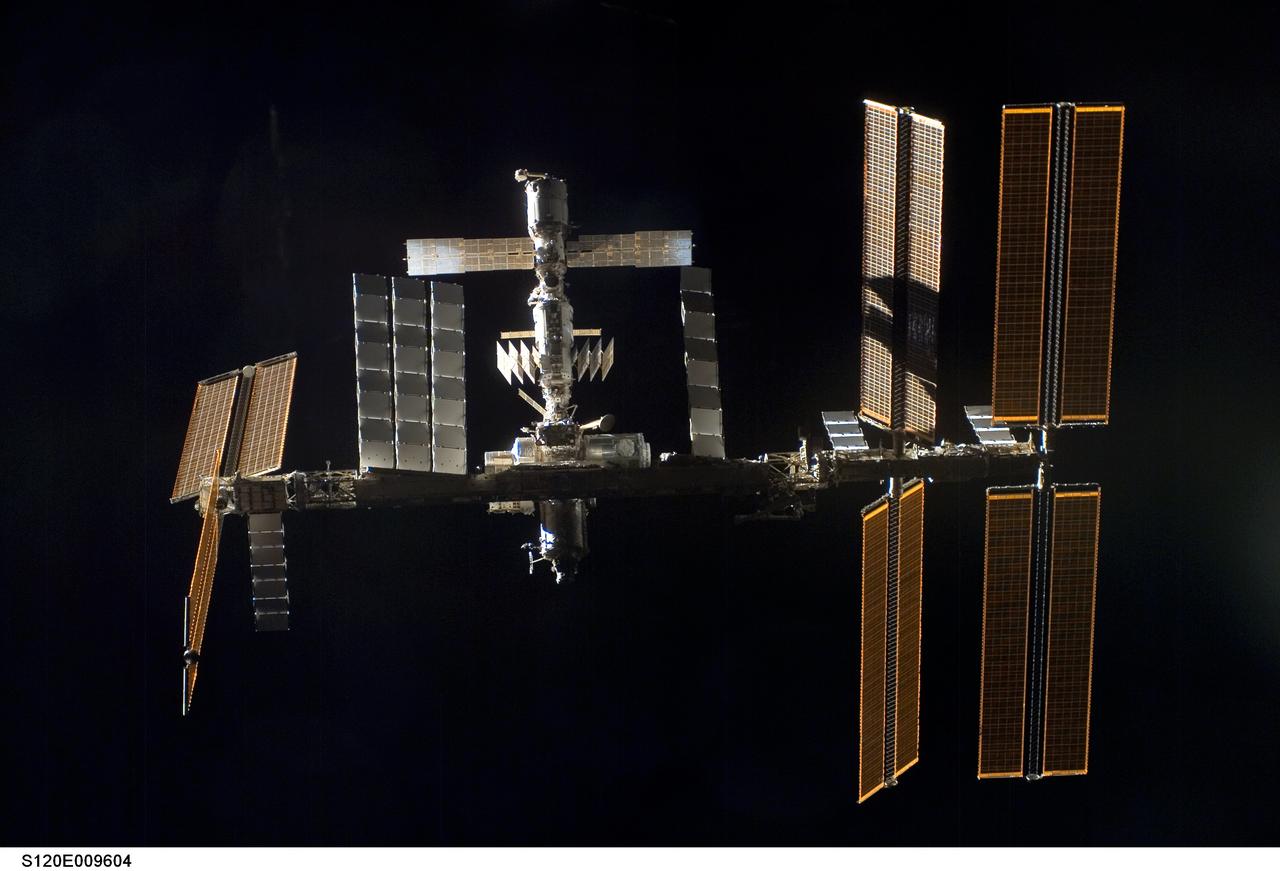
S120-E-009604 (5 Nov. 2007) --- Backdropped by the blackness of space, the International Space Station is seen from Space Shuttle Discovery as the two spacecraft begin their relative separation. Earlier the STS-120 and Expedition 16 crews concluded 11 days of cooperative work onboard the shuttle and station. Undocking of the two spacecraft occurred at 4:32 a.m. (CST) on Nov. 5, 2007.
S120-E-009804 (5 Nov. 2007) --- Backdropped by the blackness of space, the International Space Station is seen from Space Shuttle Discovery as the two spacecraft begin their relative separation. Earlier the STS-120 and Expedition 16 crews concluded 11 days of cooperative work onboard the shuttle and station. Undocking of the two spacecraft occurred at 4:32 a.m. (CST) on Nov. 5, 2007.
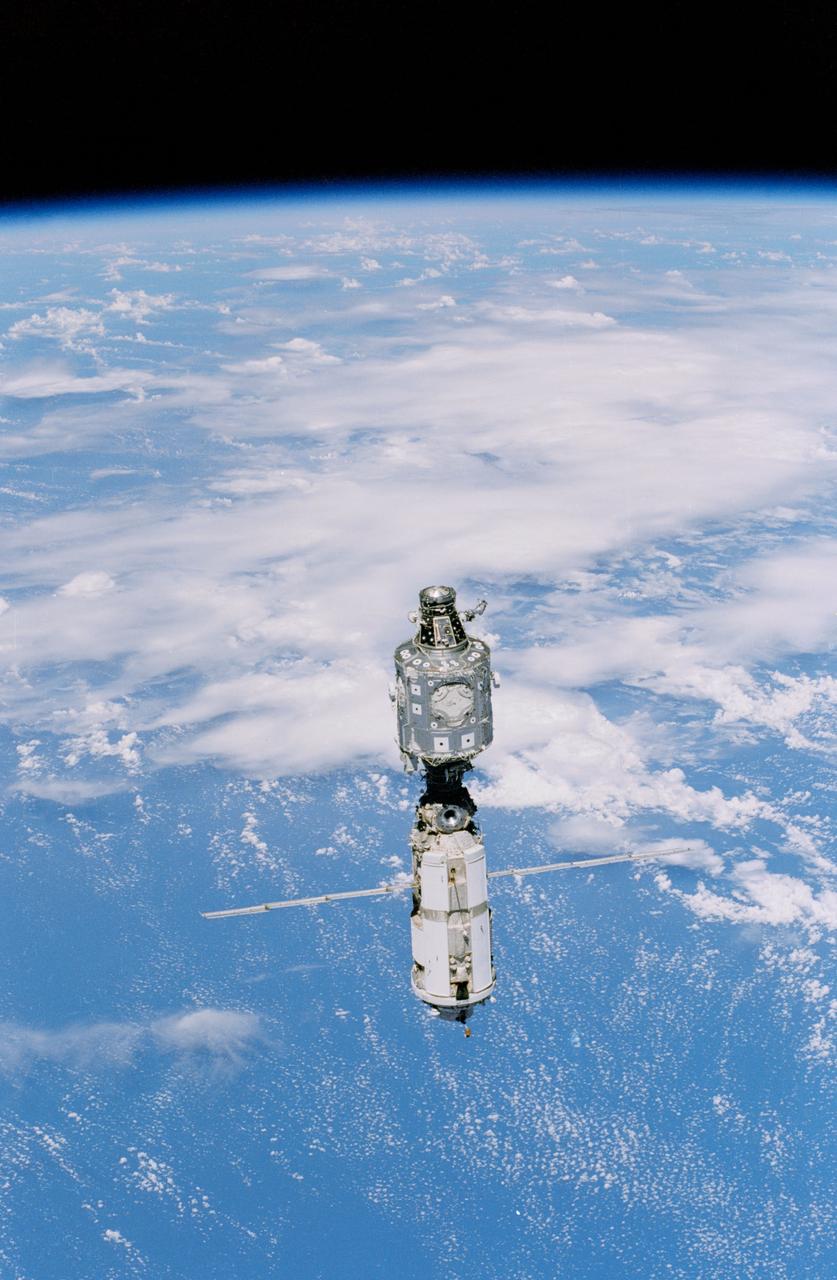
STS096-333-021 (3 June 1999) --- Backdropped against white clouds and blue ocean waters, the International Space Station (ISS) moves away from the Space Shuttle Discovery. The U.S.-built Unity node (left) and the Russian-built Zarya or FGB module (with the solar array panels deployed) were joined during a December 1998 mission. A portion of the work performed on the May 30 space walk by astronauts Tamara E. Jernigan and Daniel T. Barry is evident at various points on the ISS, including the installation of the Russian-built crane (called Strela). A STS-96 crew member aboard Discovery recorded this image with a 35mm camera on June 3, 1999.

S124-E-010211 (11 June 2008) --- The newly installed Kibo laboratory (center top) attached to the port side of the Harmony node (upper right) of the International Space Station is photographed from Space Shuttle Discovery as the two spacecraft begin their relative separation. The Kibo logistics module and the Japanese remote manipulator system are visible at center. The Canadarm2 robotic arm is at bottom center. Earlier the STS-124 and Expedition 17 crews concluded almost nine days of cooperative work onboard the shuttle and station. Undocking of the two spacecraft occurred at 6:42 a.m. (CDT) on June 11, 2008.
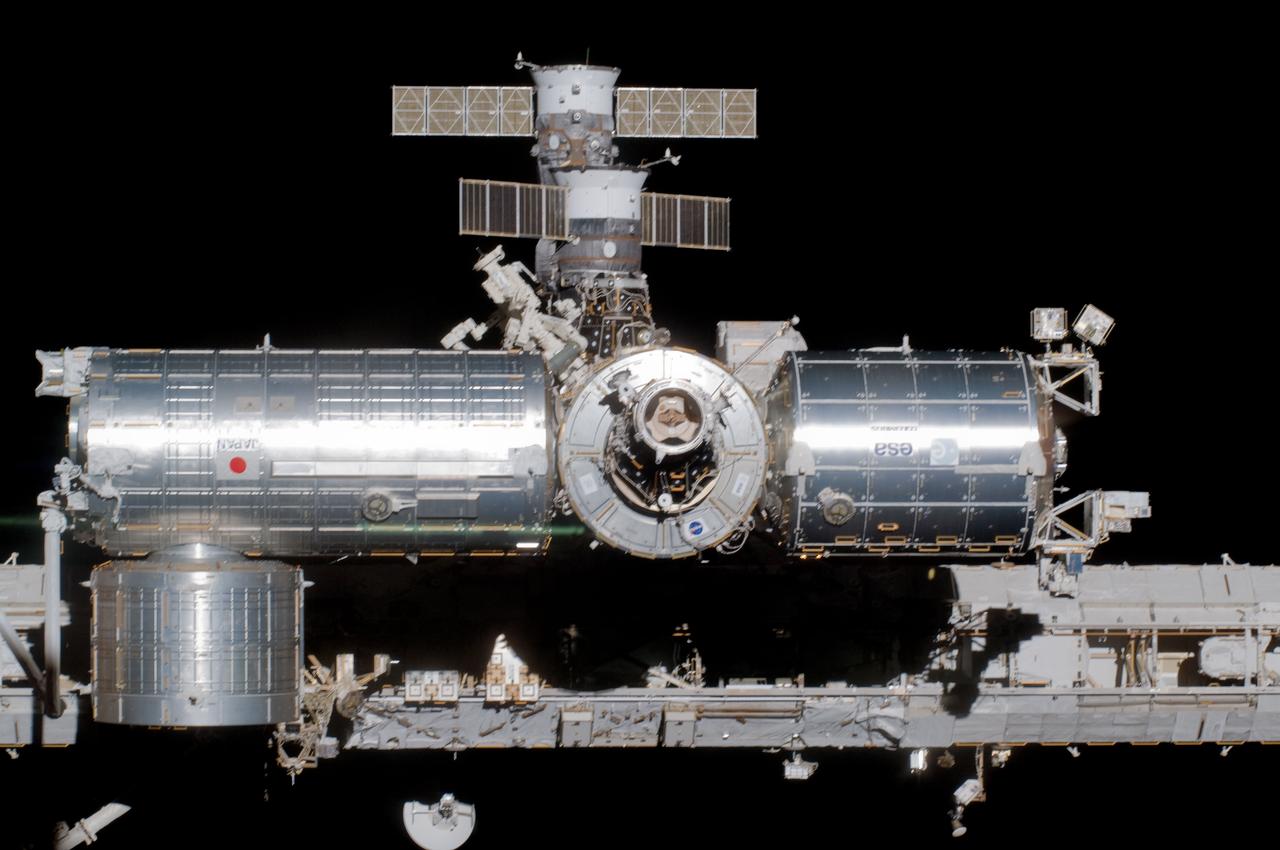
S124-E-010186 (11 June 2008) --- The newly installed Kibo laboratory (center left) attached to the port side of the Harmony node of the International Space Station is photographed from Space Shuttle Discovery as the two spacecraft begin their relative separation. The Kibo logistics module is visible at bottom left. The Columbus laboratory is at center right and the Canadian-built Dextre is at center top, along with two Russian spacecrafts docked with the station. Earlier the STS-124 and Expedition 17 crews concluded almost nine days of cooperative work onboard the shuttle and station. Undocking of the two spacecraft occurred at 6:42 a.m. (CDT) on June 11, 2008.
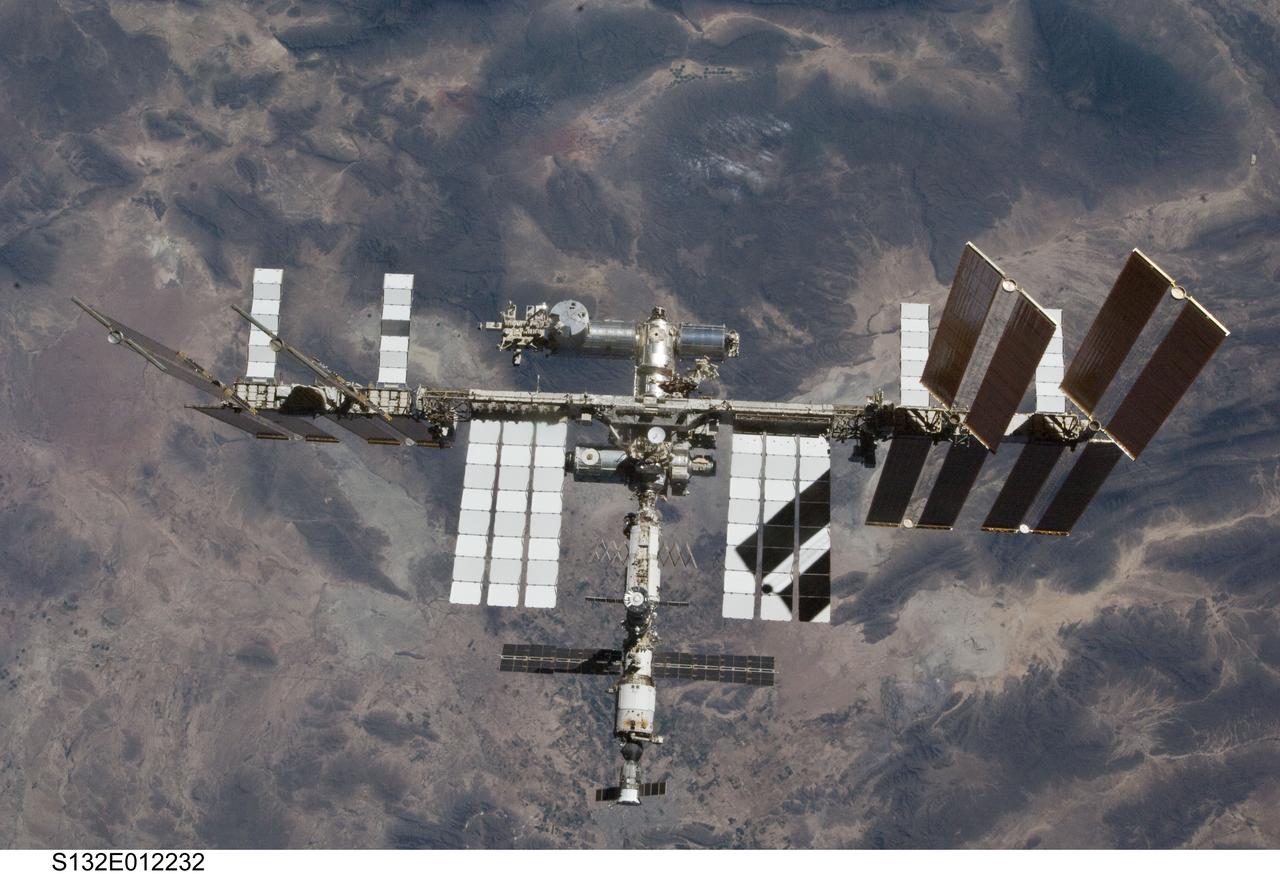
S132-E-012232 (23 May 2010) --- The International Space Station is featured in this image photographed by an STS-132 crew member on space shuttle Atlantis after the station and shuttle began their post-undocking relative separation. Undocking of the two spacecraft occurred at 10:22 a.m. (CDT) on May 23, 2010, ending a seven-day stay that saw the addition of a new station module, replacement of batteries and resupply of the orbiting outpost.
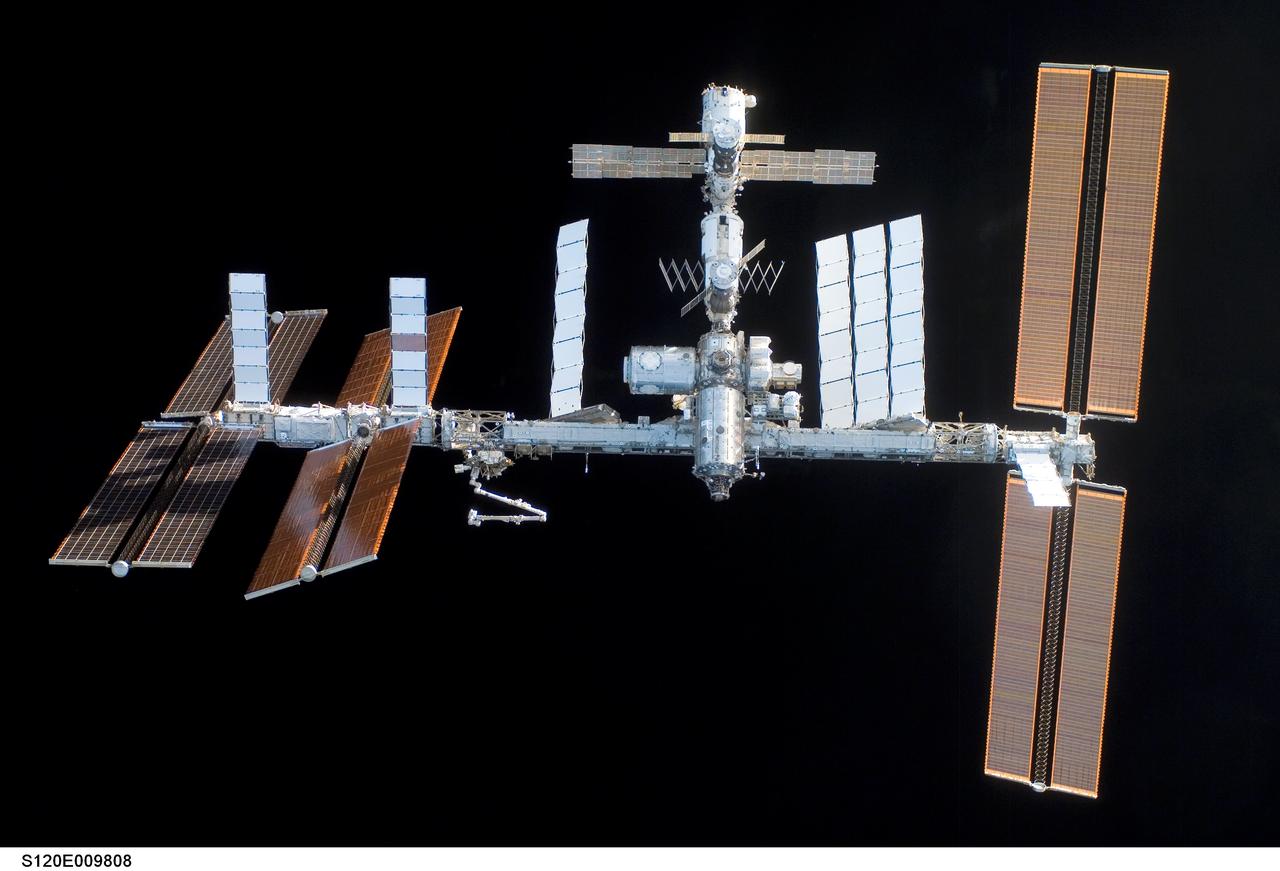
S120-E-009808 (5 Nov. 2007) --- Backdropped by the blackness of space, the International Space Station is seen from Space Shuttle Discovery as the two spacecraft begin their relative separation. Earlier the STS-120 and Expedition 16 crews concluded 11 days of cooperative work onboard the shuttle and station. Undocking of the two spacecraft occurred at 4:32 a.m. (CST) on Nov. 5, 2007.
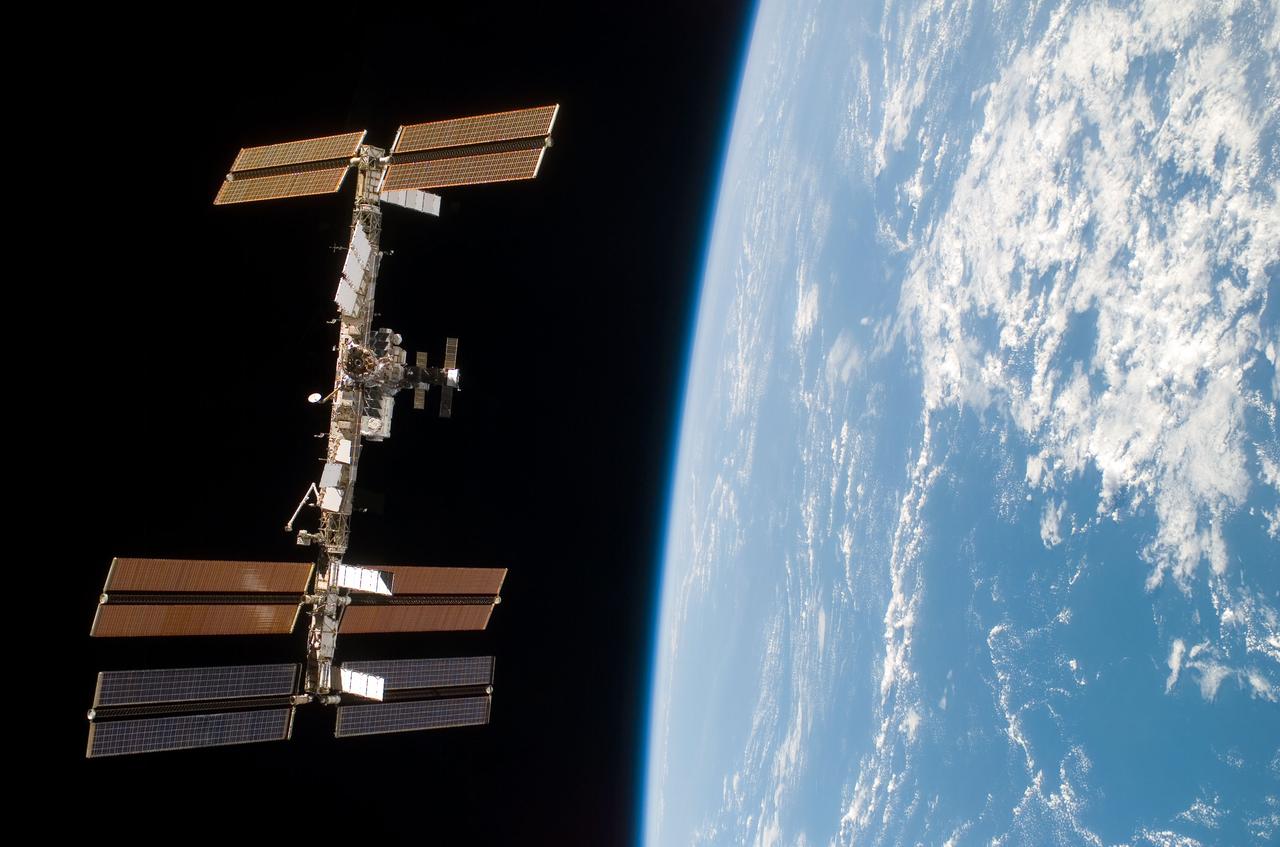
S120-E-009759 (5 Nov. 2007) --- Backdropped by the blackness of space and Earth's horizon, the International Space Station is seen from Space Shuttle Discovery as the two spacecraft begin their relative separation. Earlier the STS-120 and Expedition 16 crews concluded 11 days of cooperative work onboard the shuttle and station. Undocking of the two spacecraft occurred at 4:32 a.m. (CST) on Nov. 5, 2007.
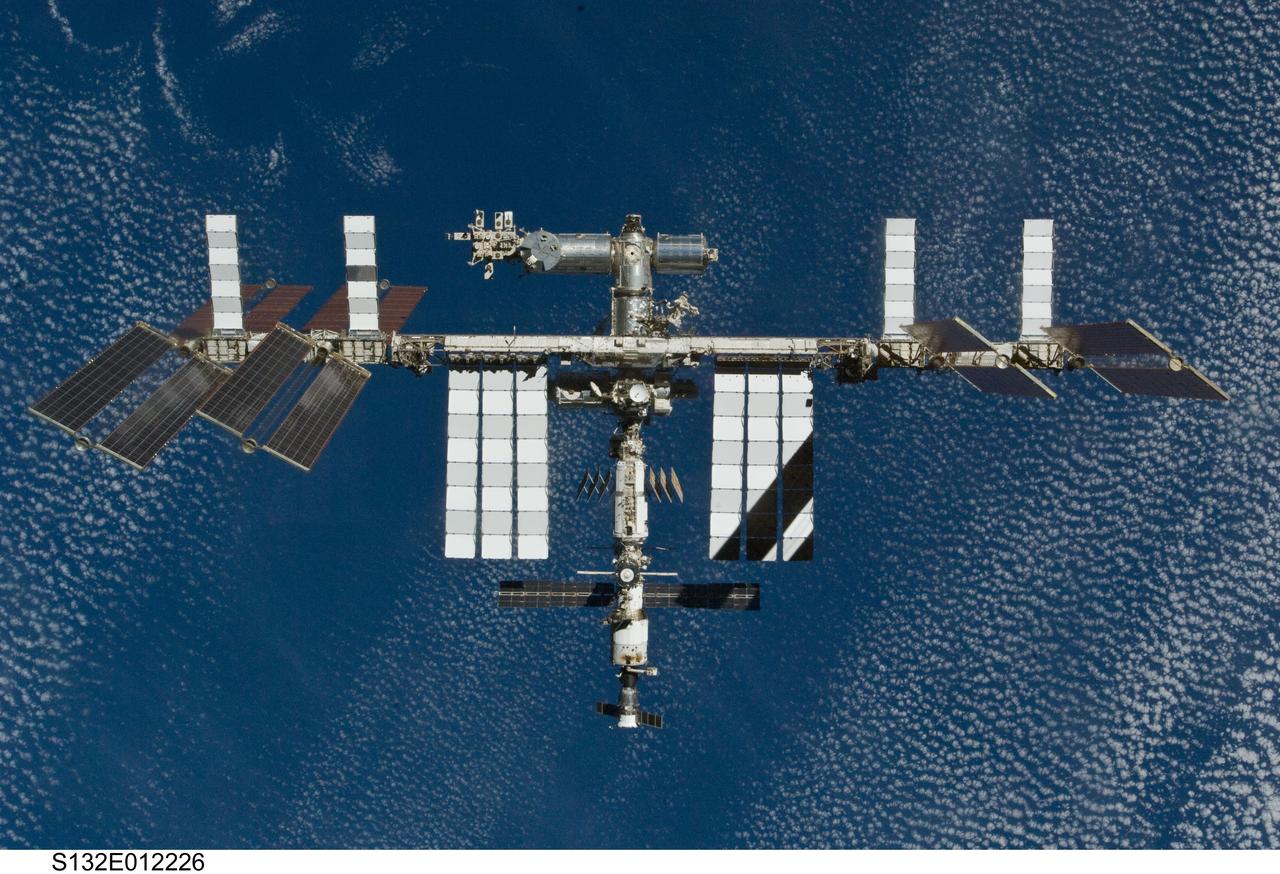
S132-E-012226 (23 May 2010) --- The International Space Station is featured in this image photographed by an STS-132 crew member on space shuttle Atlantis after the station and shuttle began their post-undocking relative separation. Undocking of the two spacecraft occurred at 10:22 a.m. (CDT) on May 23, 2010, ending a seven-day stay that saw the addition of a new station module, replacement of batteries and resupply of the orbiting outpost.
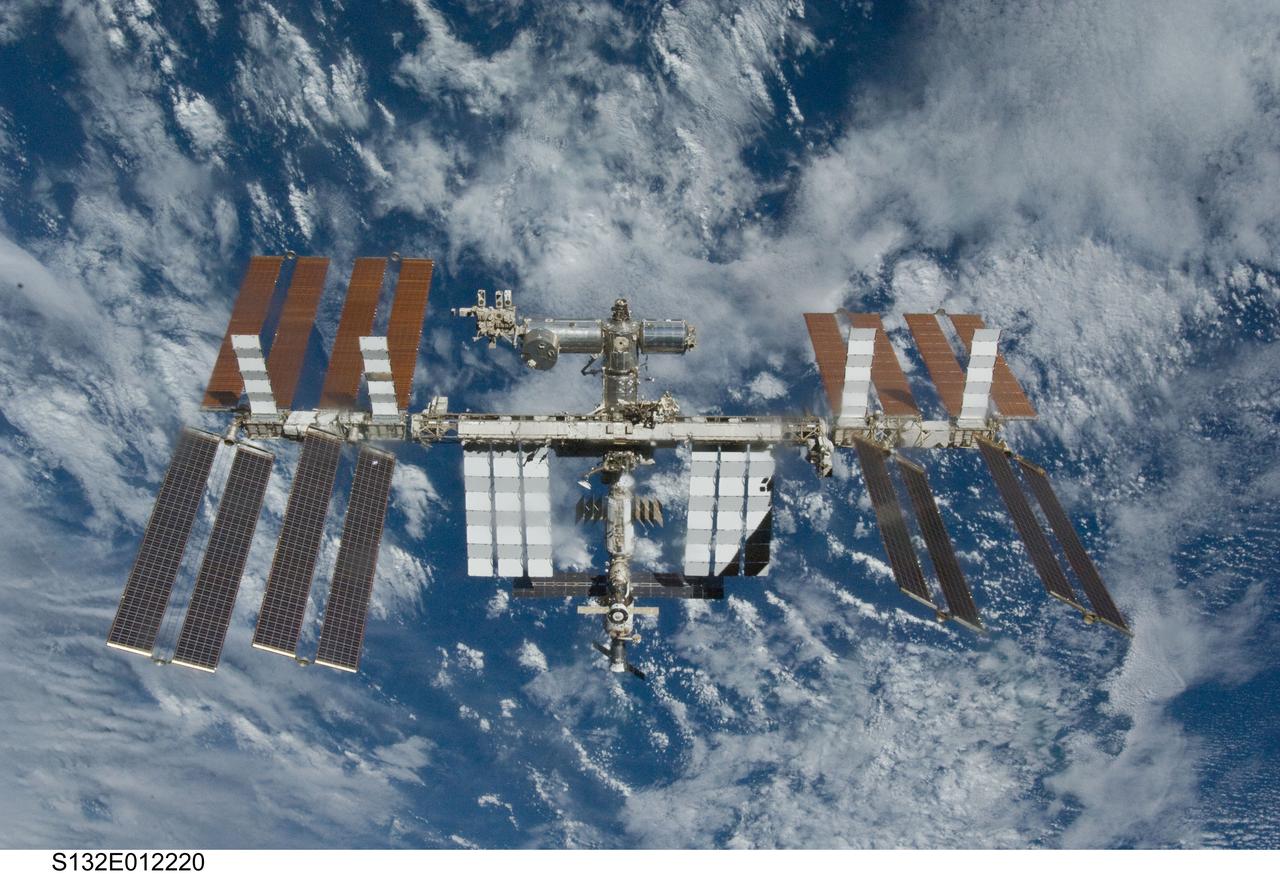
S132-E-012220 (23 May 2010) --- The International Space Station is featured in this image photographed by an STS-132 crew member on space shuttle Atlantis after the station and shuttle began their post-undocking relative separation. Undocking of the two spacecraft occurred at 10:22 a.m. (CDT) on May 23, 2010, ending a seven-day stay that saw the addition of a new station module, replacement of batteries and resupply of the orbiting outpost.

S123-E-009188 (24 March 2008) --- Backdropped by the blackness of space, the International Space Station is seen from Space Shuttle Endeavour as the two spacecraft begin their relative separation. Earlier the STS-123 and Expedition 16 crews concluded 12 days of cooperative work onboard the shuttle and station. Undocking of the two spacecraft occurred at 7:25 p.m. (CDT) on March 24, 2008.
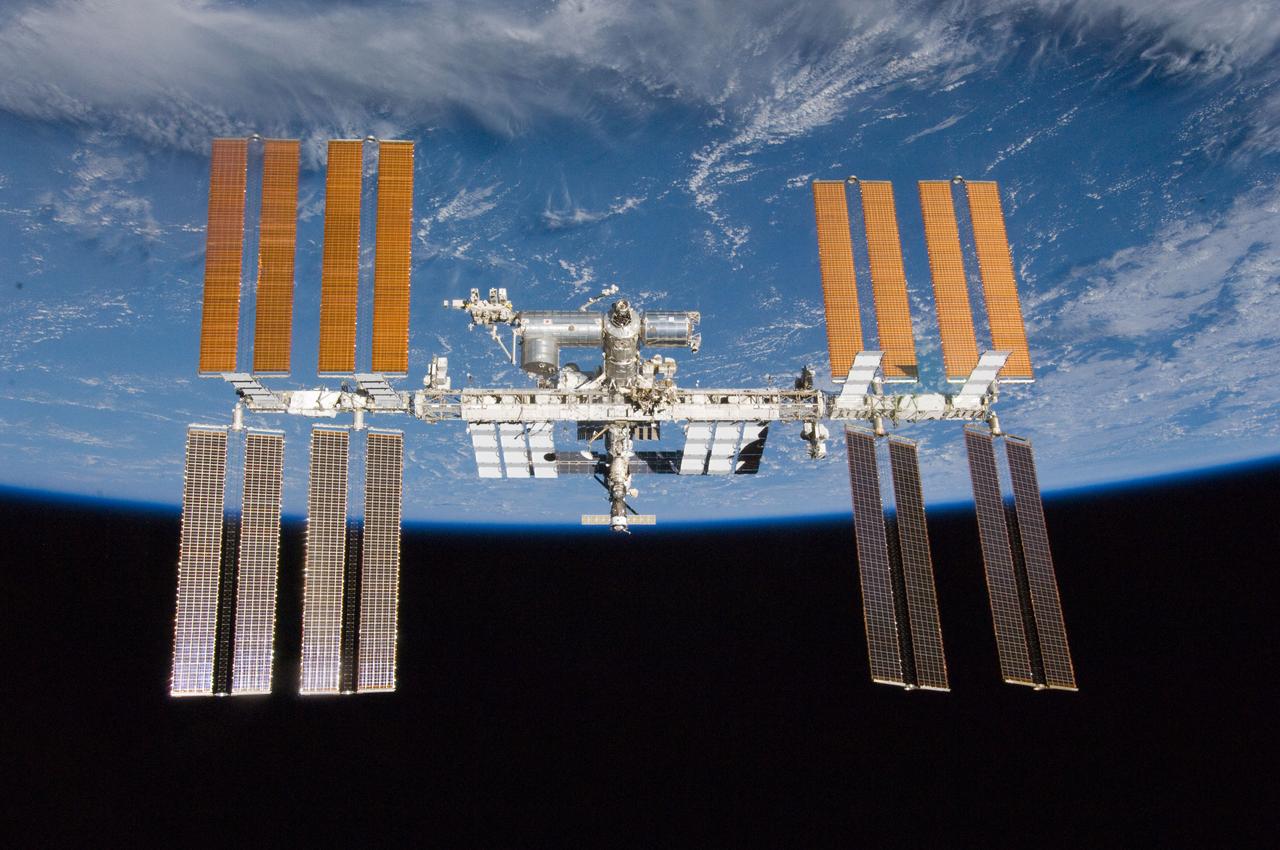
S132-E-012208 (23 May 2010) --- The International Space Station is featured in this image photographed by an STS-132 crew member on space shuttle Atlantis after the station and shuttle began their post-undocking relative separation. Undocking of the two spacecraft occurred at 10:22 a.m. (CDT) on May 23, 2010, ending a seven-day stay that saw the addition of a new station module, replacement of batteries and resupply of the orbiting outpost.
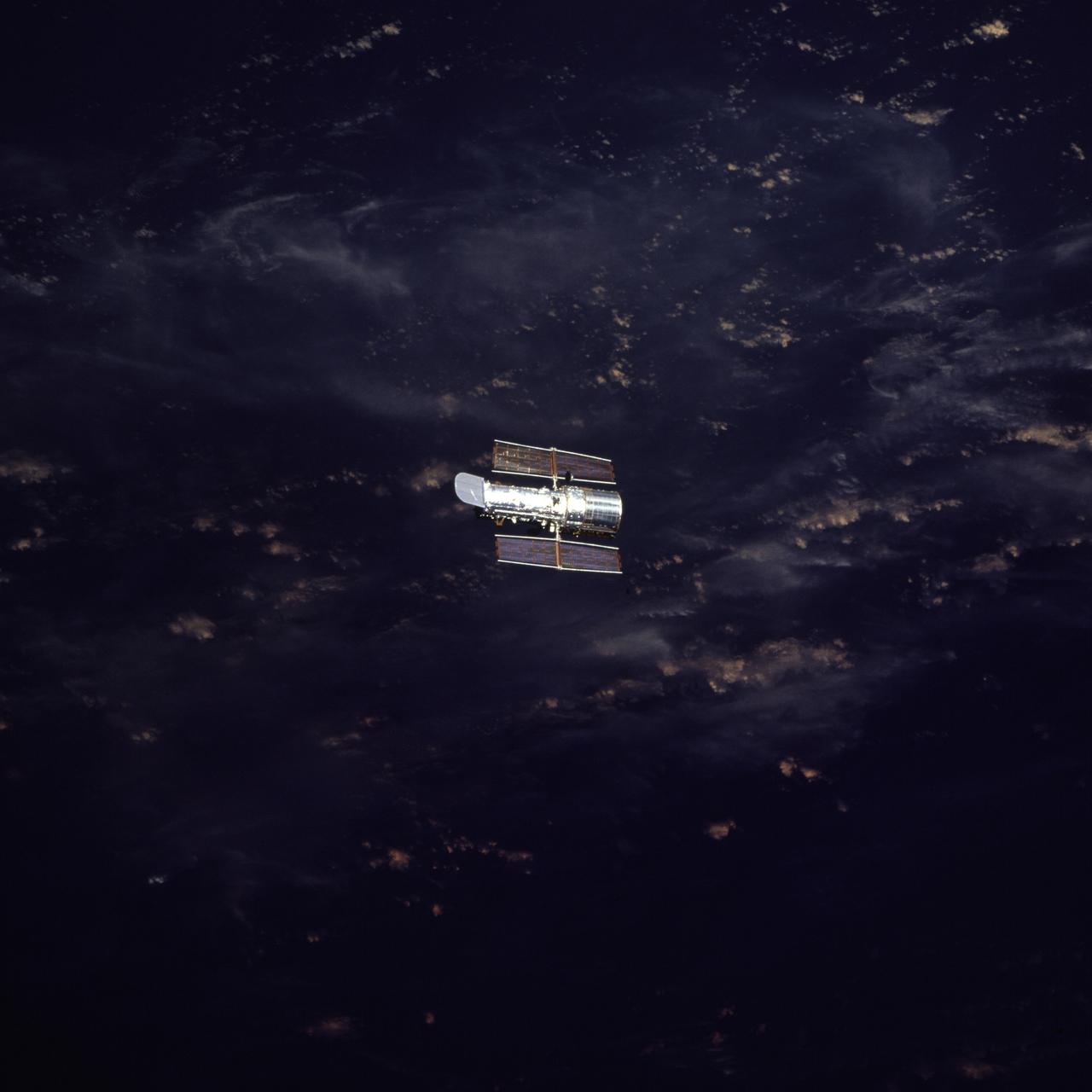
STS082-763-015 (11-21 Feb. 1997) --- Moving further and further away from the Space Shuttle Discovery, the Hubble Space Telescope (HST) is backdropped over clouds on Earth. This is the fifth in a series of post-release views recorded on 70mm film by the STS-82 crewmembers. Five space walks were performed by two pairs of astronauts who alternated days of Extravehicular Activity (EVA) to service the giant orbiting observatory.
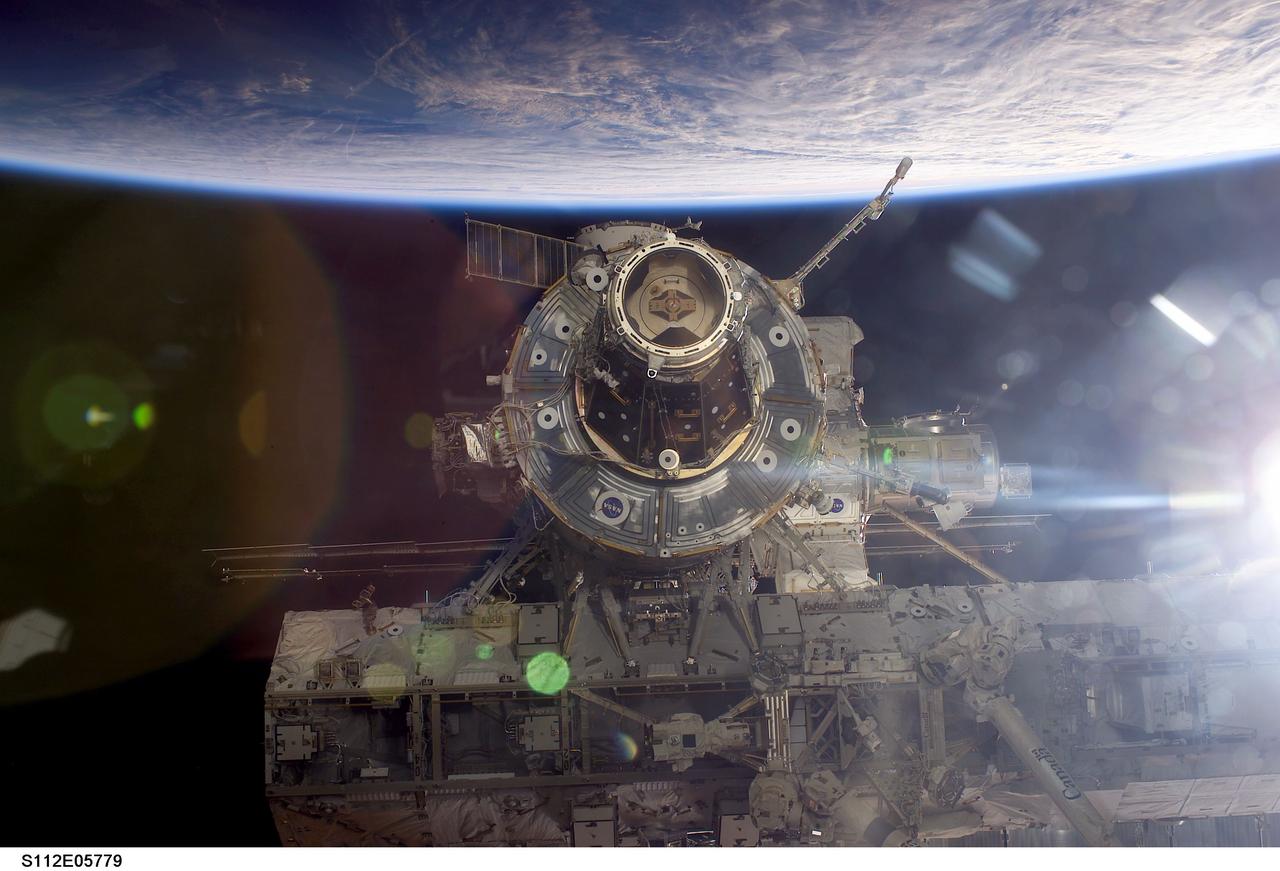
STS112-E-05779 (16 October 2002) --- Backdropped by the blackness of space and Earth’s horizon, this close-up view of the International Space Station (ISS) was photographed by a crewmember on board the Space Shuttle Atlantis following the undocking of the two spacecraft. Atlantis pulled away from the complex at 8:13 a.m. (CDT) on October 16, 2002. The S0 (S-Zero) Truss and a portion of the newly added Starboard One (S1) Truss are visible in lower frame.

This frame from a video depicts artist concepts of each of the seven planets orbiting TRAPPIST-1, an ultra-cool dwarf stars. Over 21 days, NASA's Spitzer Space Telescope measured the drop in light as each planet passed in front of the star. Spitzer was able to identify a total of seven rocky worlds, including three in the habitable zone where life is possible. The study established the planets' size, distance from their sun and, for some of them, their approximate mass and density. It also established that some, if not all, these planets are tidally locked, meaning one face of the planet permanently faces their sun. The planets appear in the order of innermost to outermost planets. These artist's concepts were designed as follows: TRAPPIST-1b, closest to the star, was modeled on Jupiter's moon Io, which has volcanic features due to strong gravitational tugs. TRAPPIST-1c is shown as a rocky, warm world with a small ice cap on the side that never faces the star. TRAPPSIT-1d is rocky and has water only in a thin band along the terminator, dividing the day side and night side. TRAPPIST-1e and TRAPPIST-1f are both shown covered in water, but with progressively larger ice caps on the night side. TRAPPIST-1g is portrayed with an atmosphere like Neptune's, although it is still a rocky world. The farthest planet, TRAPPIST-1h, is shown as covered in ice, similar to Jupiter's icy moon Europa. The background stars are what you would see if you were in the TRAPPIST-1 system. Orion passes behind the planets, recognizable but distorted from what we're familiar with, in addition to Taurus and Pleiades. A video is available at http://photojournal.jpl.nasa.gov/catalog/PIA21468
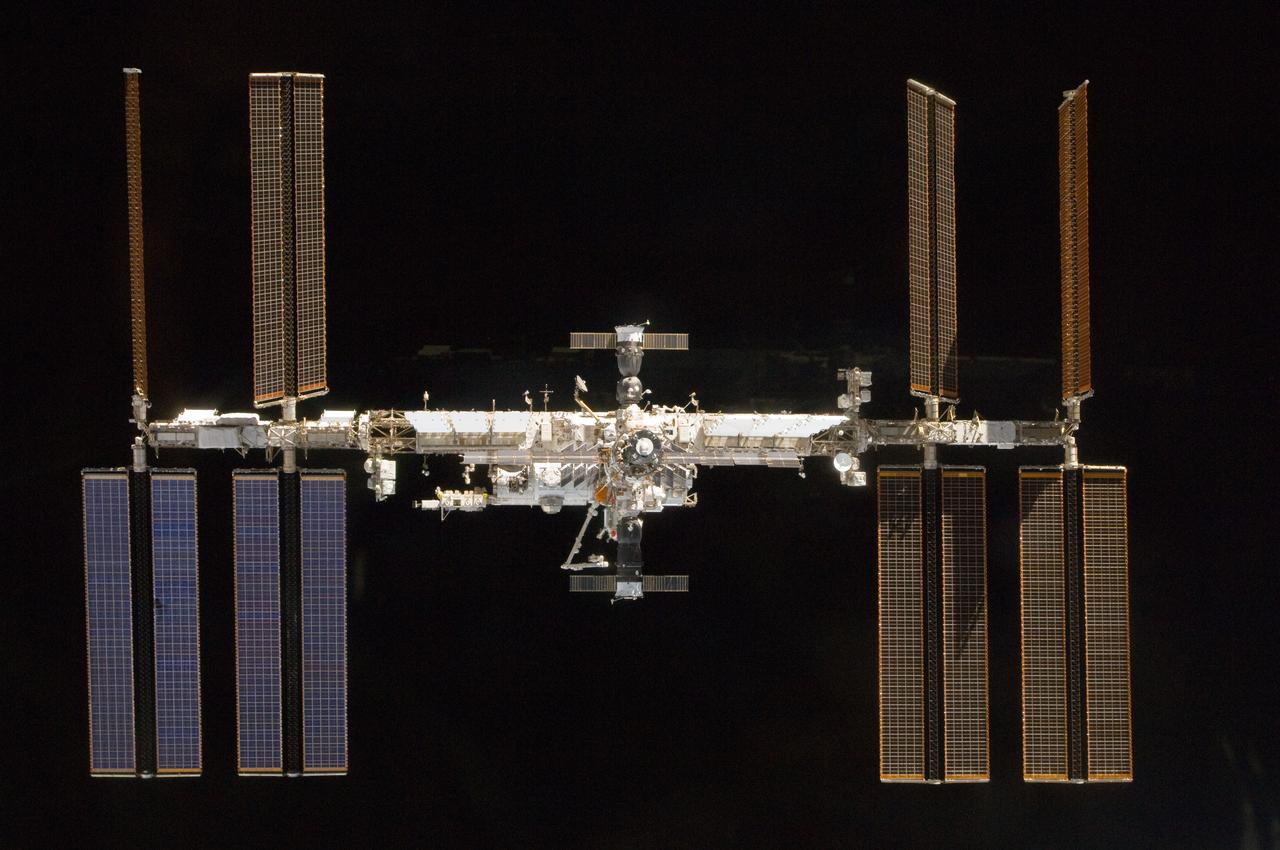
S132-E-012260 (23 May 2010) --- The International Space Station is featured in this image photographed by an STS-132 crew member on space shuttle Atlantis after the station and shuttle began their post-undocking relative separation. Undocking of the two spacecraft occurred at 10:22 a.m. (CDT) on May 23, 2010, ending a seven-day stay that saw the addition of a new station module, replacement of batteries and resupply of the orbiting outpost.
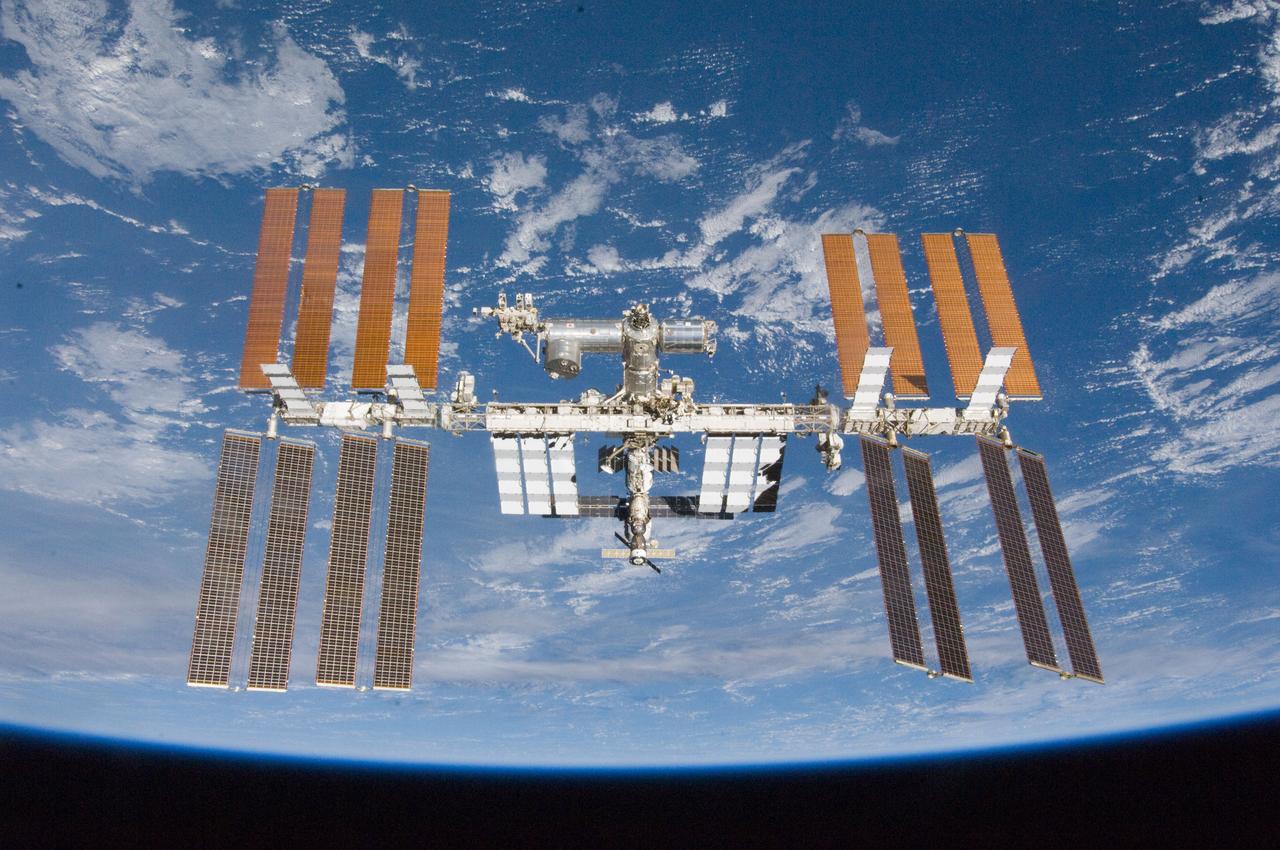
S132-E-012212 (23 May 2010) --- The International Space Station is featured in this image photographed by an STS-132 crew member on space shuttle Atlantis after the station and shuttle began their post-undocking relative separation. Undocking of the two spacecraft occurred at 10:22 a.m. (CDT) on May 23, 2010, ending a seven-day stay that saw the addition of a new station module, replacement of batteries and resupply of the orbiting outpost.
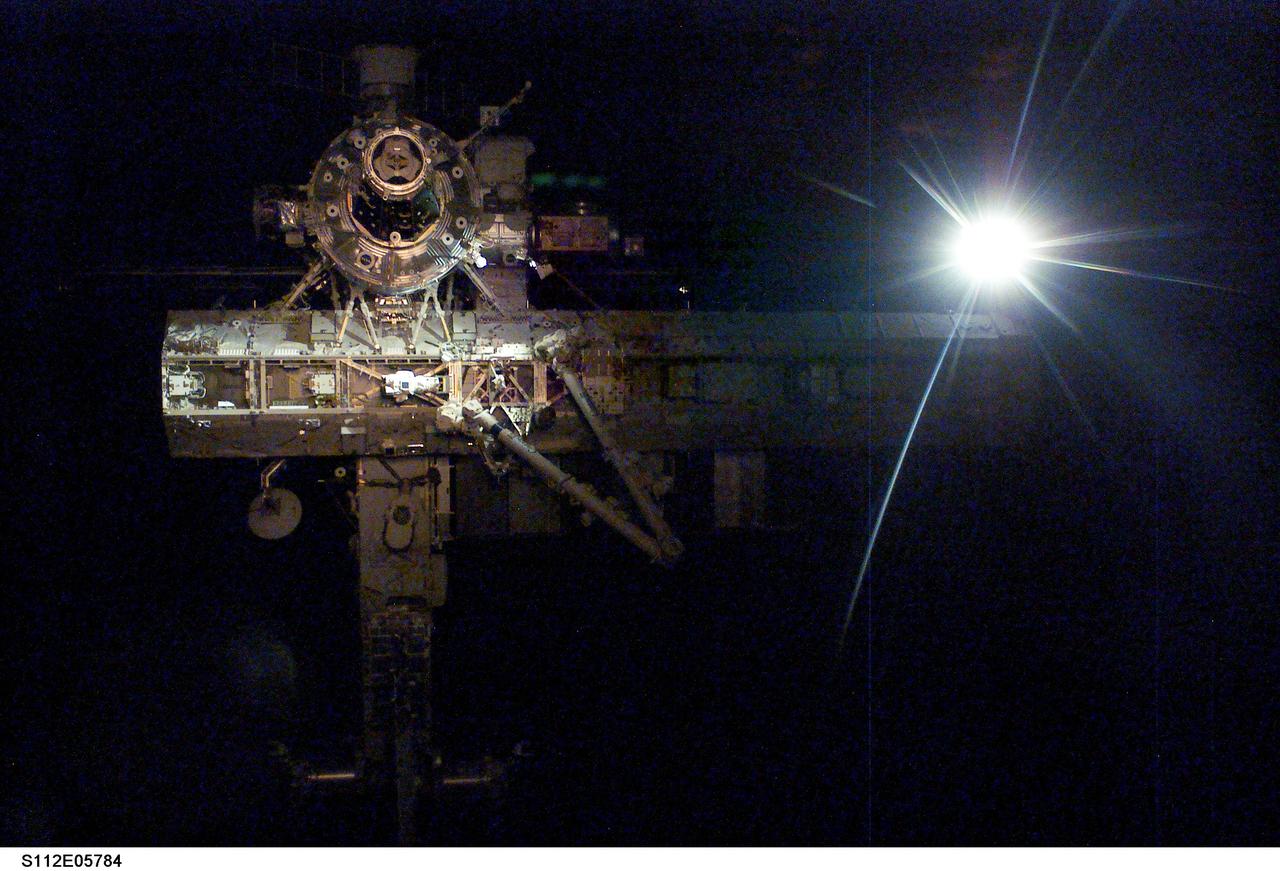
STS112-E-05784 (16 October 2002) --- Backdropped by the blackness of space and a sunburst, this close-up view of the International Space Station (ISS) was photographed by a crewmember on board the Space Shuttle Atlantis following the undocking of the two spacecraft. Atlantis pulled away from the complex at 8:13 a.m. (CDT) on October 16, 2002. The newly added Starboard One (S1) Truss is visible in center right frame.
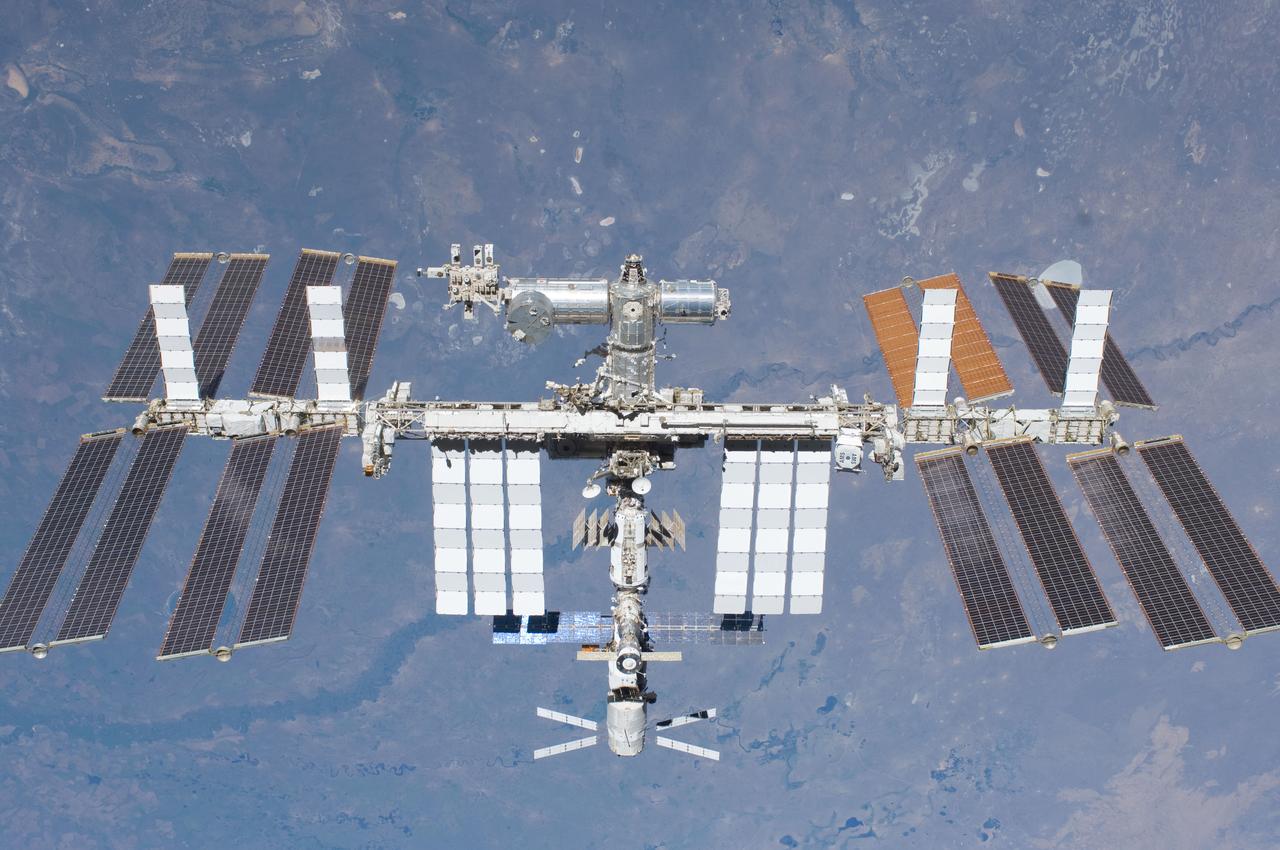
S134-E-010665 (29 May 2011) --- The International Space Station is featured in this image photographed by an STS-134 crew member on the space shuttle Endeavour after the station and shuttle began their post-undocking relative separation. Undocking of the two spacecraft occurred at 11:55 p.m. (EDT) on May 29, 2011. Endeavour spent 11 days, 17 hours and 41 minutes attached to the orbiting laboratory. Photo credit: NASA
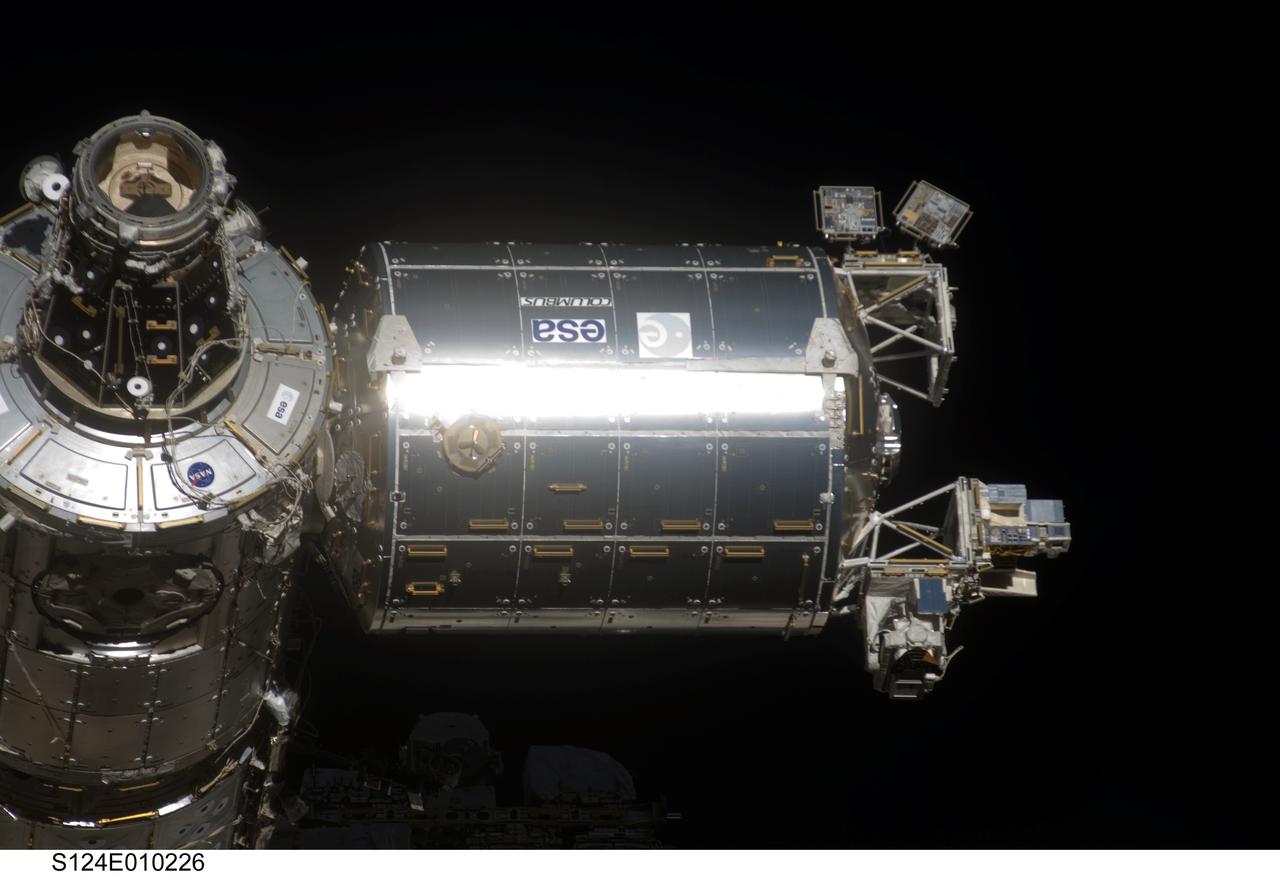
S124-E-010226 (11 June 2008) --- The forward and zenith sides of the Pressurized Mating Adapter 2 (PMA-2), Harmony node and Columbus laboratory with the Sun Monitoring on the External Payload Facility of Columbus (SOLAR), European Technology Exposure Facility (EuTEF) and Materials International Space Station Experiment (MISSE) payloads are photographed from Space Shuttle Discovery as the two spacecraft begin their relative separation. Earlier the STS-124 and Expedition 17 crews concluded almost nine days of cooperative work onboard the shuttle and station. Undocking of the two spacecraft occurred at 6:42 a.m. (CDT) on June 11, 2008.
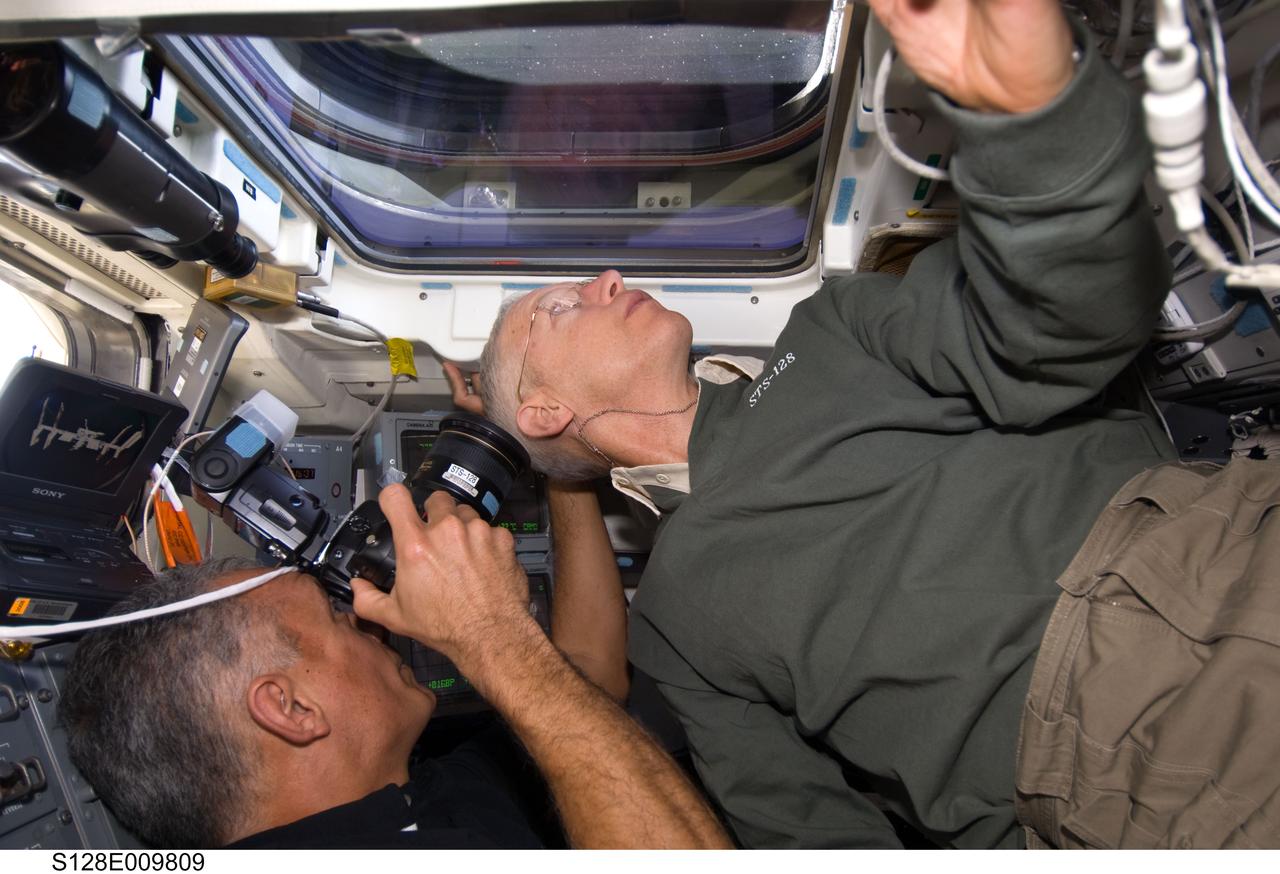
S128-E-009809 (8 Sept. 2009) --- NASA astronauts John “Danny” Olivas (left) and Patrick Forrester, both STS-128 mission specialists, are pictured on the aft flight deck of Space Shuttle Discovery during flight day 12 activities. Olivas is using a still camera at an overhead window to photograph the International Space Station after the undocking of the two spacecraft.
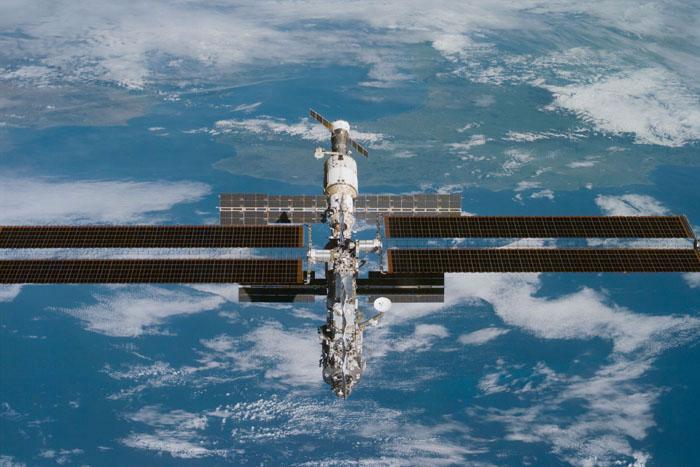
View of the International Space Station (ISS) over a cloudy Earth following undocking at 1:13 p.m. (CST),December 9,2000 during the STS-97 flight.

S116-E-07153 (19 Dec. 2006) --- Backdropped by the blackness of space and Earth's horizon, the International Space Station moves away from Space Shuttle Discovery. Earlier the STS-116 and Expedition 14 crews concluded eight days of cooperative work onboard the shuttle and station. Undocking of the two spacecraft occurred at 4:10 p.m. (CST) on Dec. 19, 2006. Astronaut William A. (Bill) Oefelein, STS-116 pilot, was at the controls for the fly-around, which gave Discovery's crew a look at its handiwork, a new P5 spacer truss segment and a fully retracted P6 solar array wing. During their stay on orbital outpost, the combined crew installed the newest piece of the station's backbone and completely rewired the power grid over the course of four spacewalks.
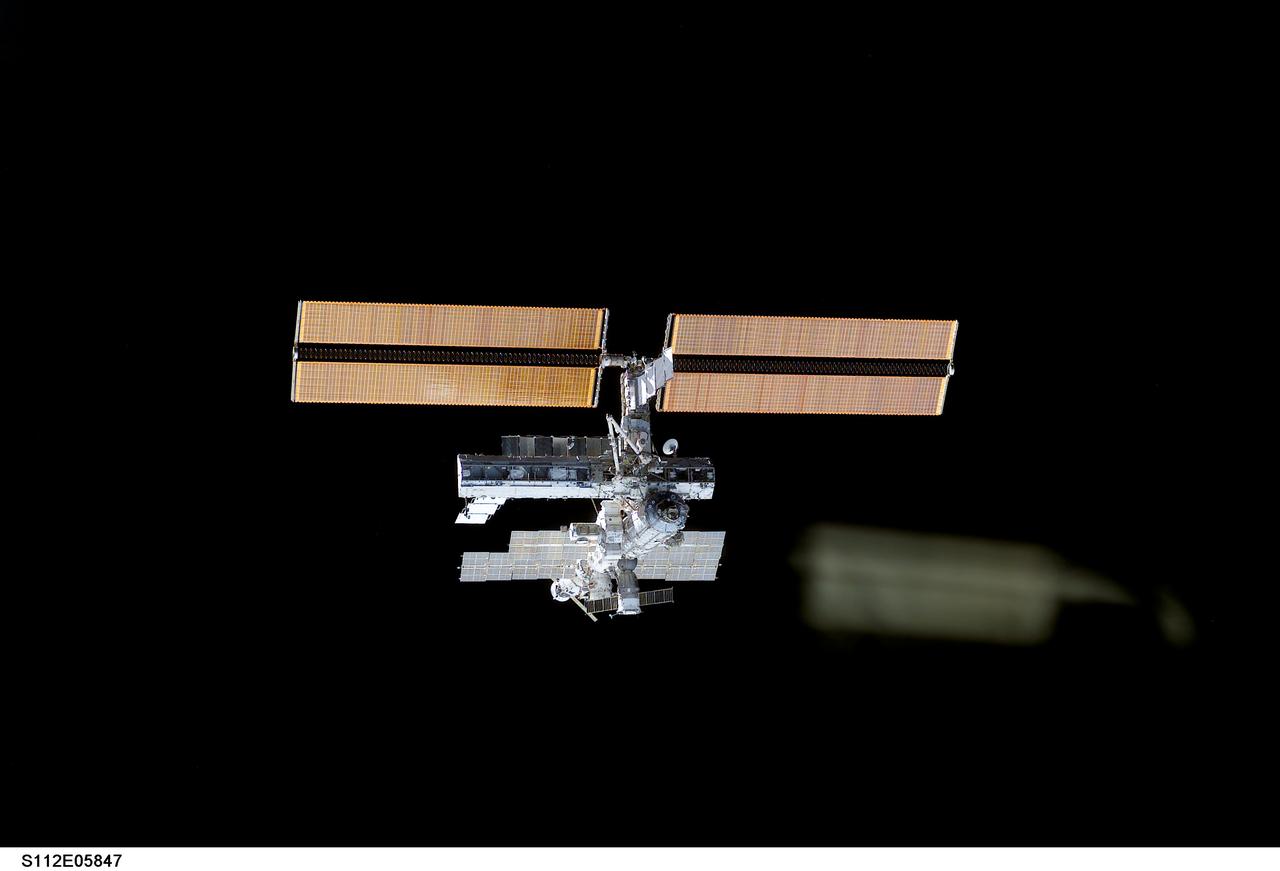
STS112-E-05847 (16 October 2002) --- Backdropped by the blackness of space, the International Space Station (ISS) was photographed by a crewmember on board the Space Shuttle Atlantis following the undocking of the two spacecraft. Atlantis pulled away from the complex at 8:13 a.m. (CDT) on October 16, 2002.
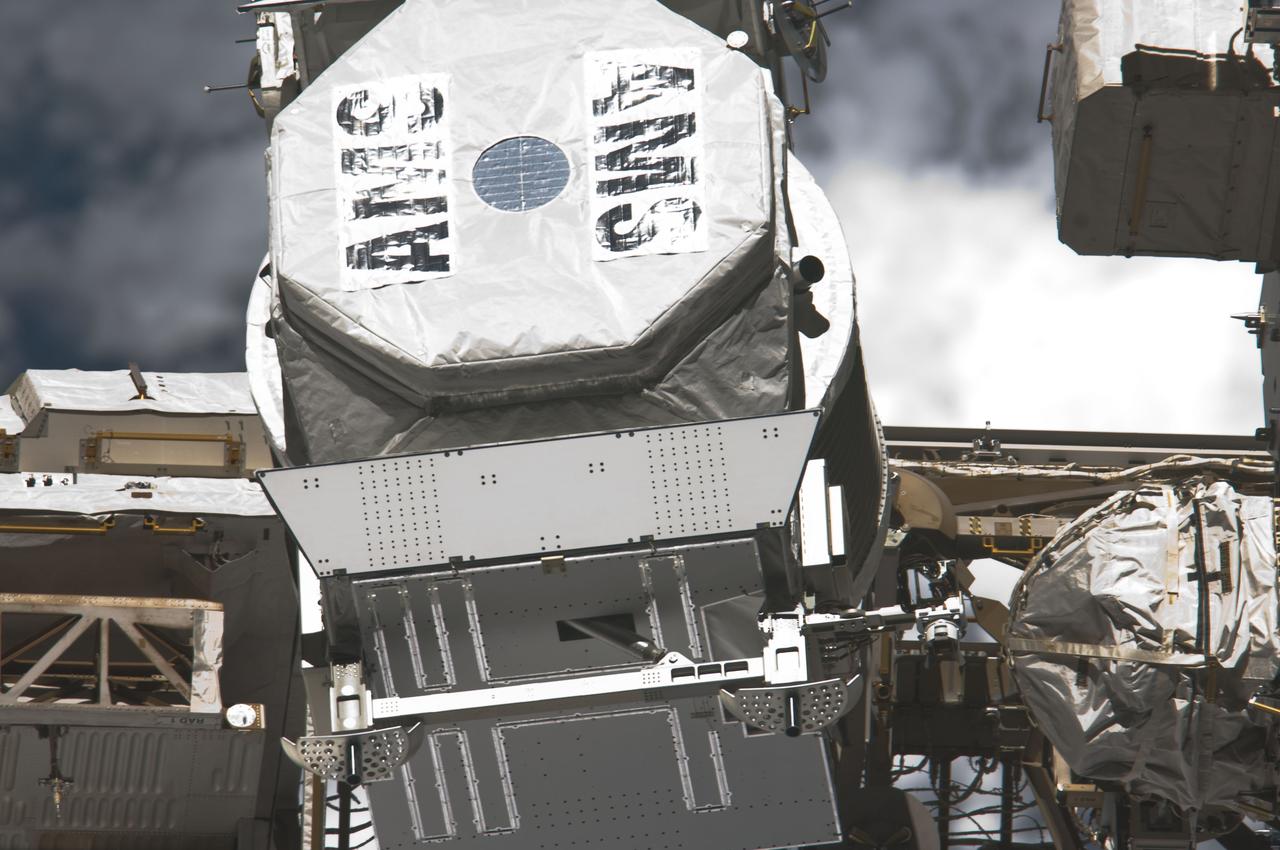
S134-E-010781 (30 May 2011) --- This image provides a close-up view of the Alpha Magnetic Spectrometer - 2 (AMS-2) photographed from inside the orbiter's cabin shortly after the space shuttle Endeavour undocked from the International Space Station (ISS) at the end of the STS-134 mission. Photo credit: NASA
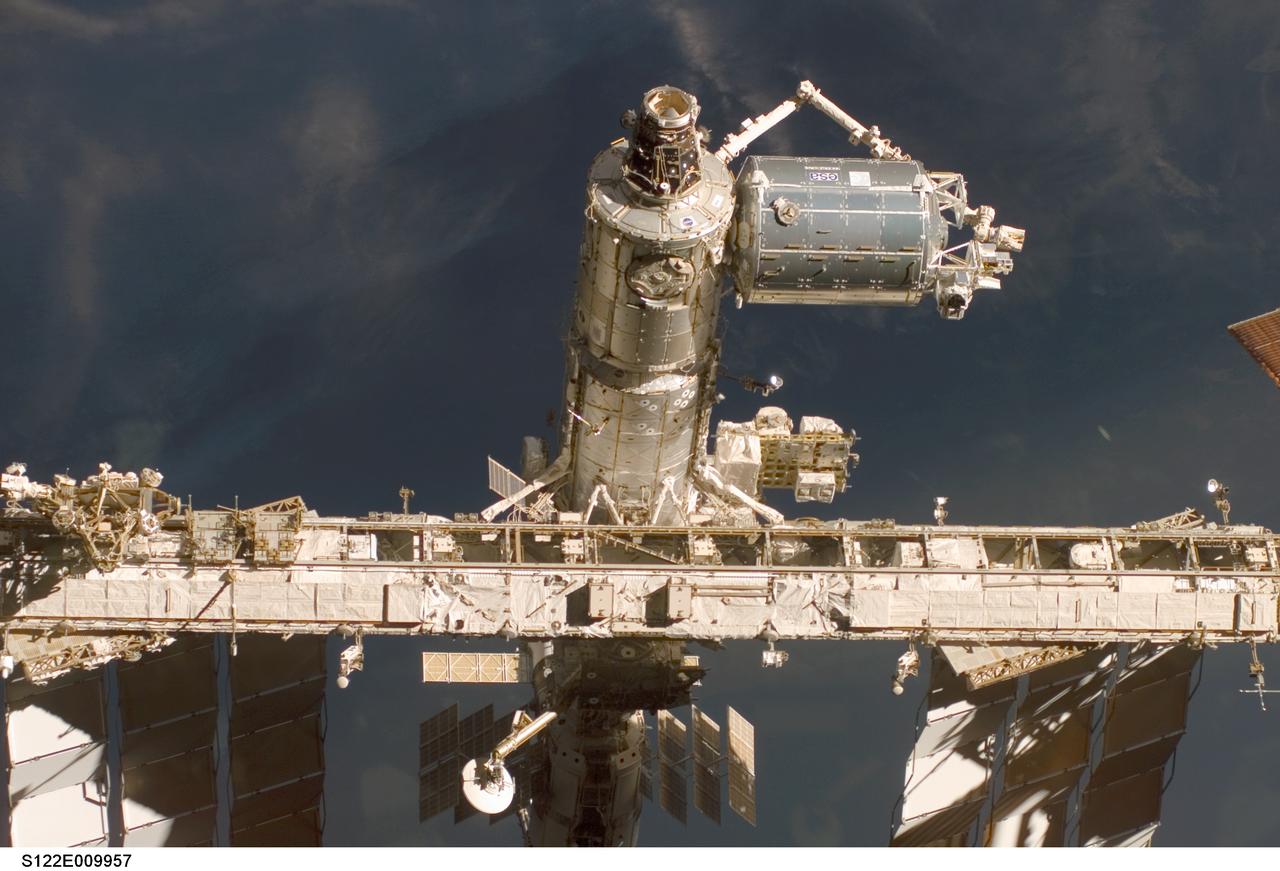
S122-E-009957 (18 Feb. 2008) --- A close-up view of the Columbus laboratory (top right) -- newest addition to the International Space Station -- is featured in this image photographed by a STS-122 crewmember on Space Shuttle Atlantis shortly after the undocking of the two spacecraft.
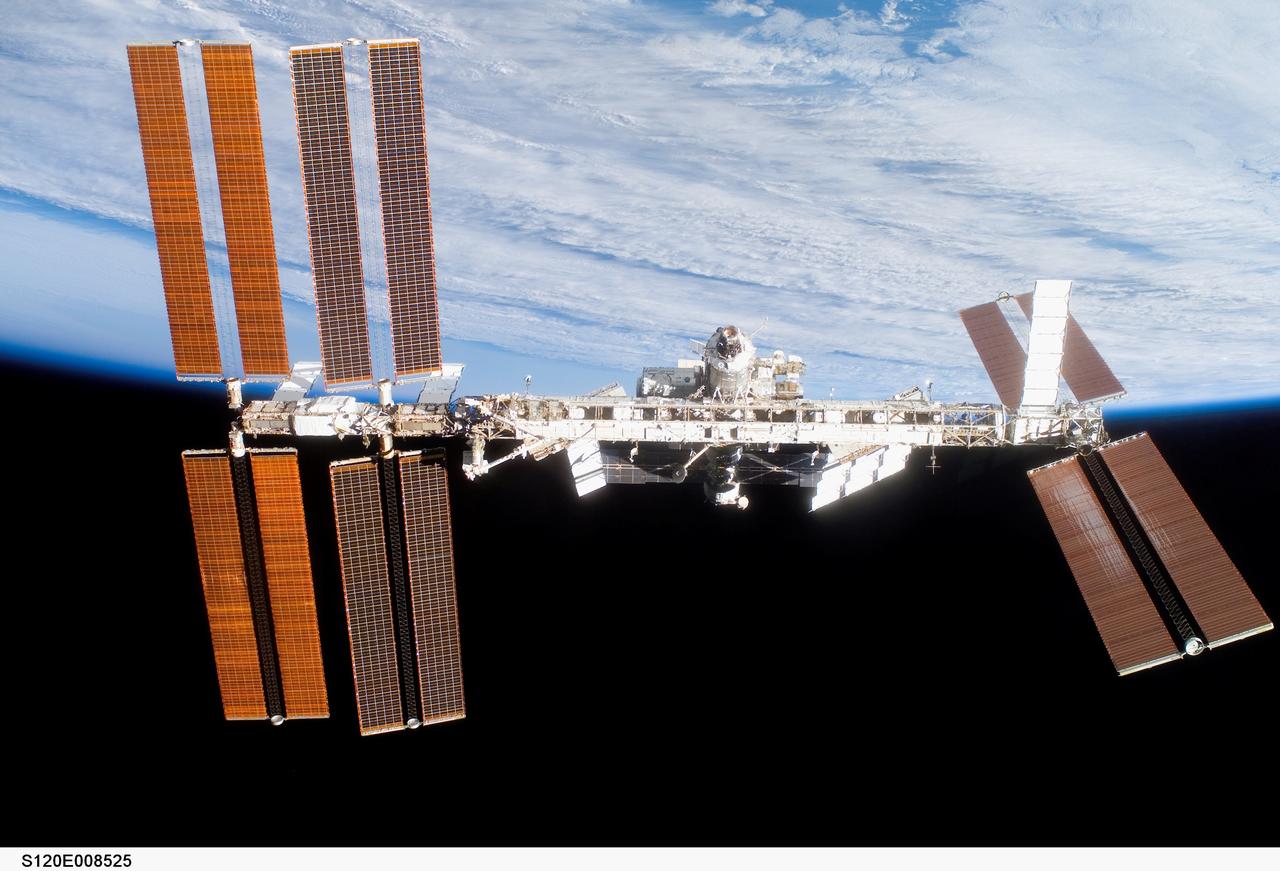
S120-E-008525 (5 Nov. 2007) --- Backdropped by the blackness of space and Earth's horizon, the International Space Station is seen from Space Shuttle Discovery as the two spacecraft begin their relative separation. Earlier the STS-120 and Expedition 16 crews concluded 11 days of cooperative work onboard the shuttle and station. Undocking of the two spacecraft occurred at 4:32 a.m. (CST) on Nov. 5, 2007.
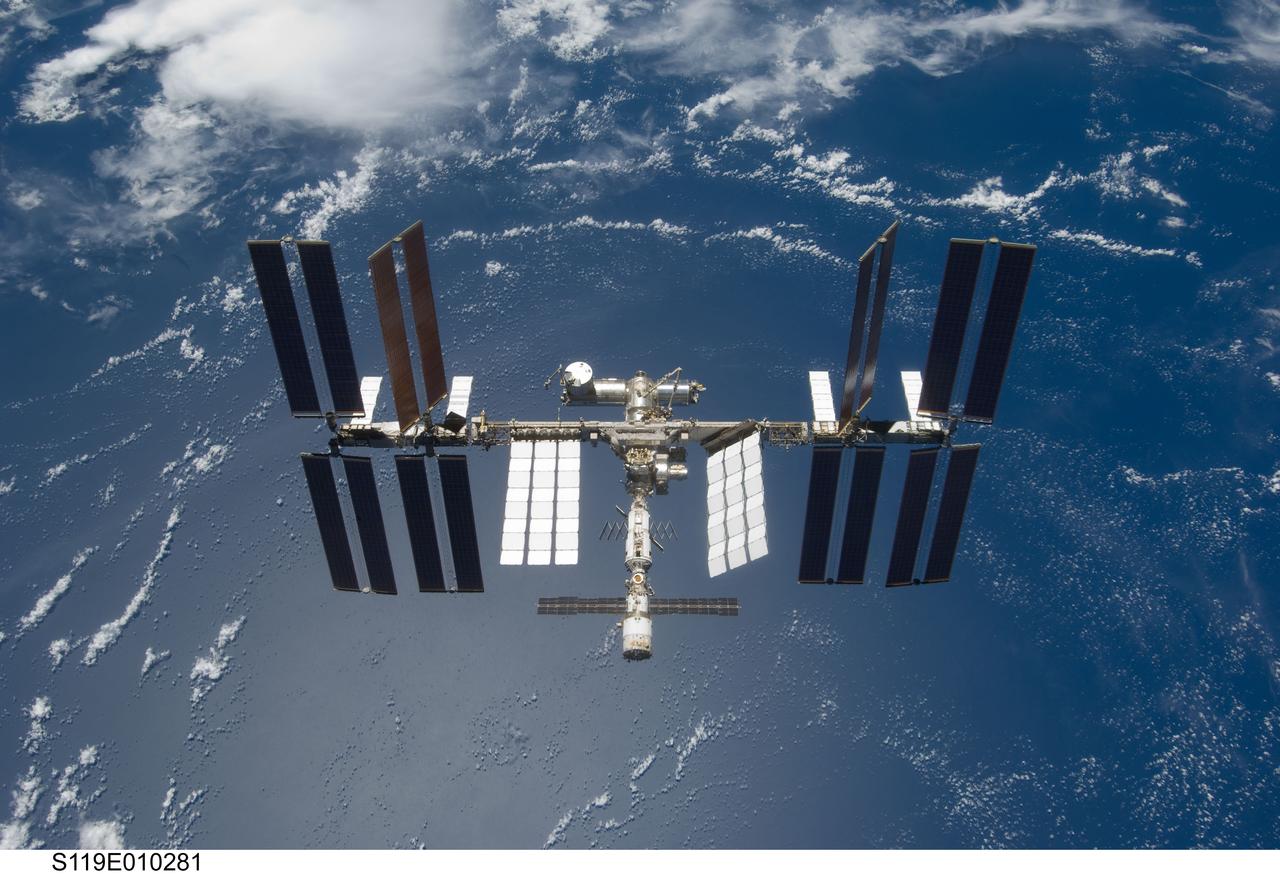
S119-E-010281 (25 March 2009) --- Backdropped by a blue and white Earth, the International Space Station is seen from Space Shuttle Discovery as the two spacecraft begin their relative separation. Earlier the STS-119 and Expedition 18 crews concluded 9 days, 20 hours and 10 minutes of cooperative work onboard the shuttle and station. Undocking of the two spacecraft occurred at 2:53 p.m. (CDT) on March 25, 2009.
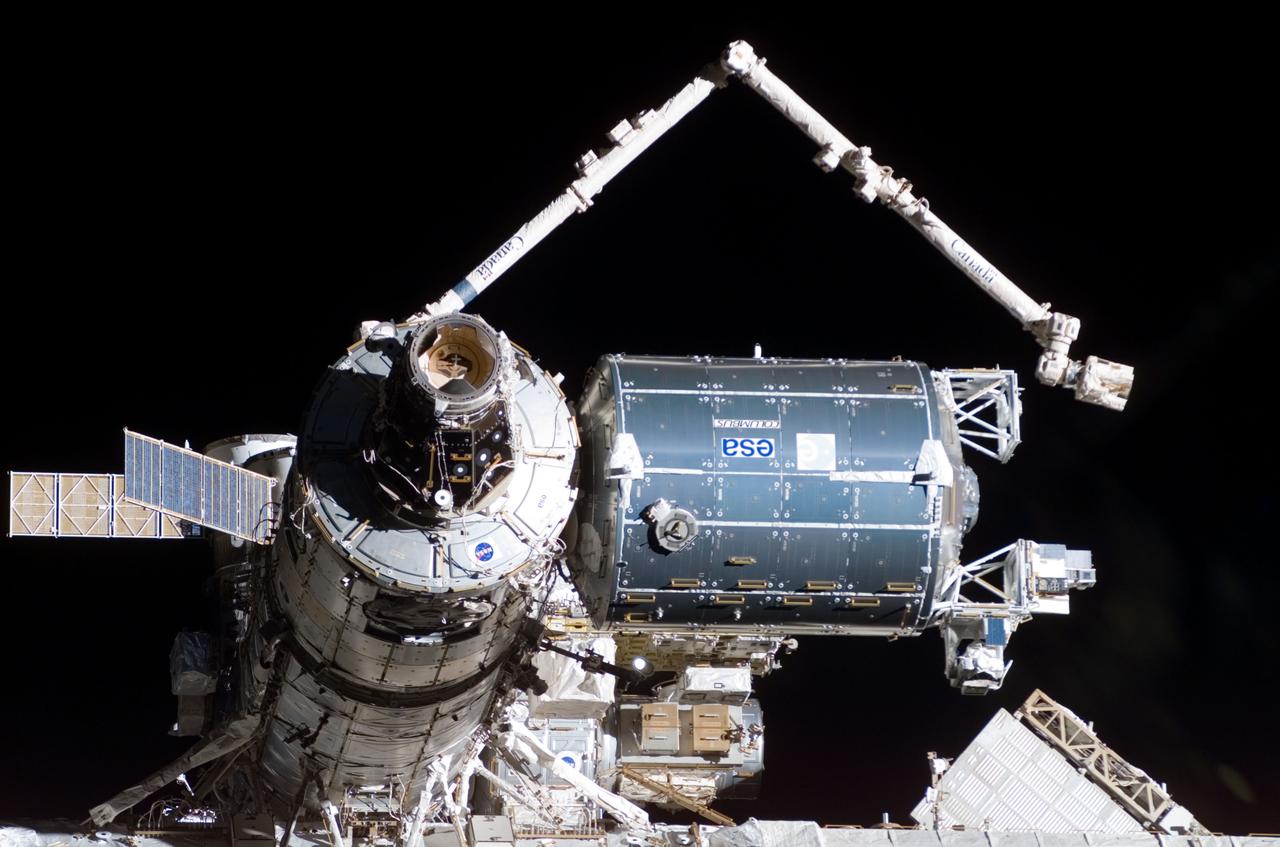
S122-E-009954 (18 Feb. 2008) --- A close-up view of the Columbus laboratory (center right) -- newest addition to the International Space Station -- is featured in this image photographed by a STS-122 crewmember on Space Shuttle Atlantis shortly after the undocking of the two spacecraft.
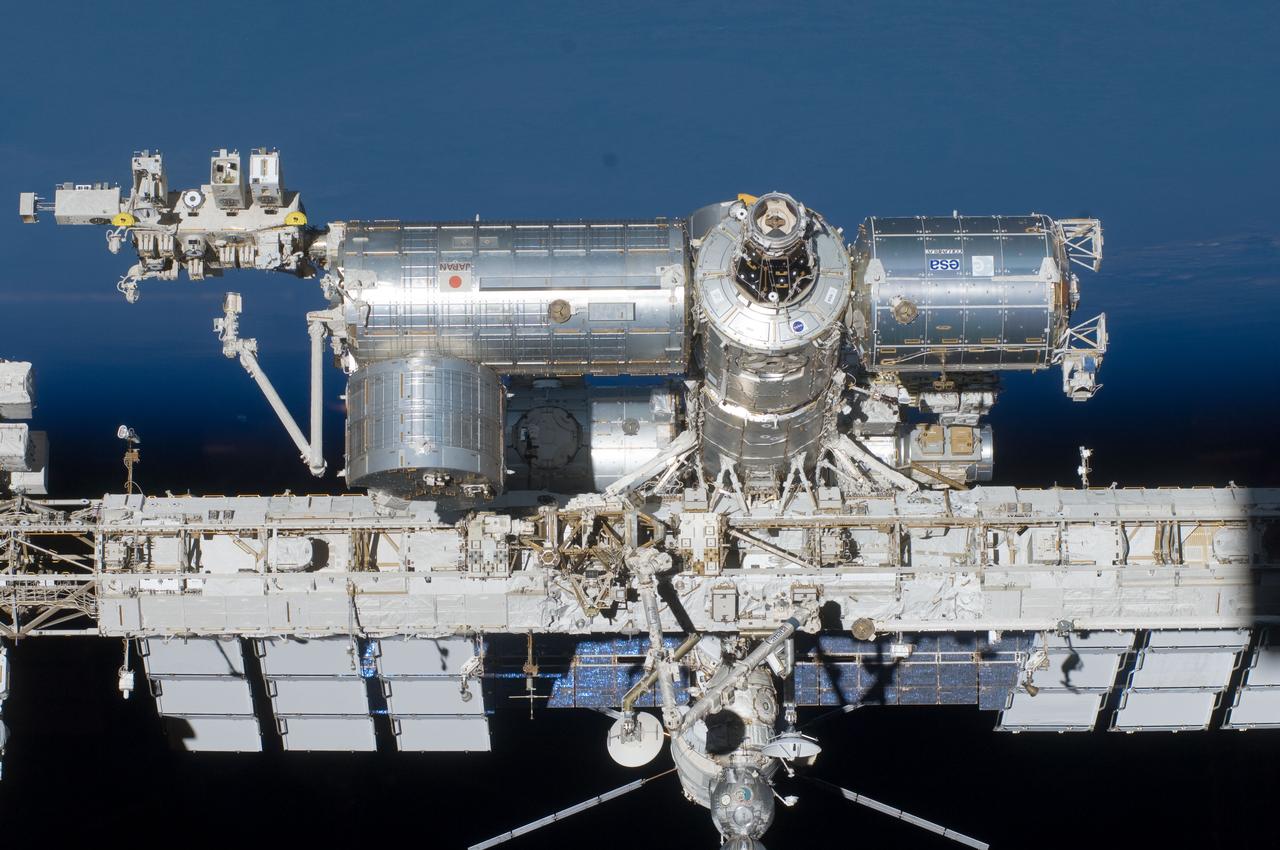
S134-E-010585 (29 May 2011) --- A close-up view of a section of the International Space Station is featured in this image photographed by an STS-134 crew member on the space shuttle Endeavour after the station and shuttle began their post-undocking relative separation. Undocking of the two spacecraft occurred at 11:55 p.m. (EDT) on May 29, 2011. Endeavour spent 11 days, 17 hours and 41 minutes attached to the orbiting laboratory. Photo credit: NASA
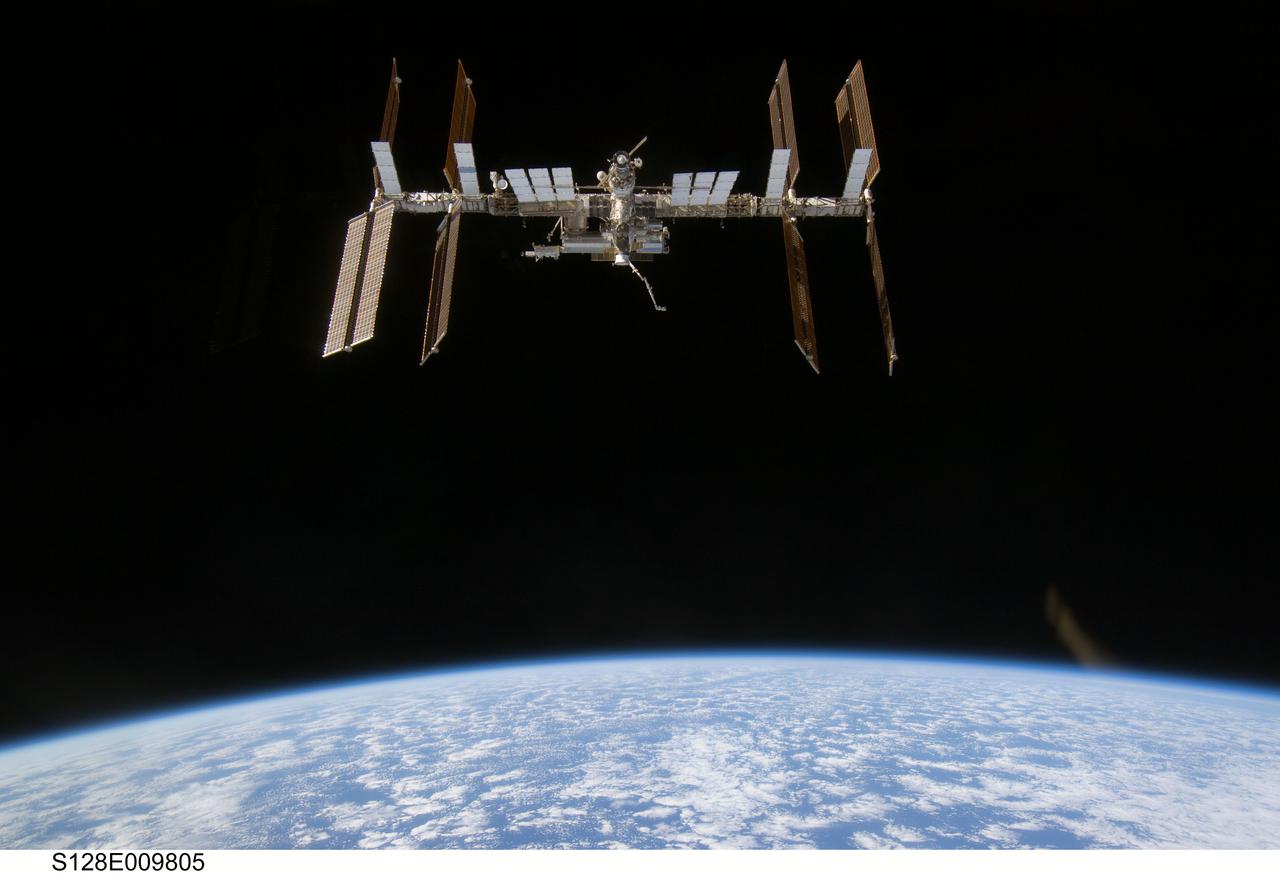
S128-E-009805 (8 Sept. 2009) --- Backdropped by Earth’s horizon and the blackness of space, the International Space Station is seen from Space Shuttle Discovery as the two spacecraft begin their relative separation. Earlier the STS-128 and Expedition 20 crew concluded nine days of cooperative work onboard the shuttle and station. Undocking of the two spacecraft occurred at 2:26 p.m. (CDT) on Sept. 8, 2009.
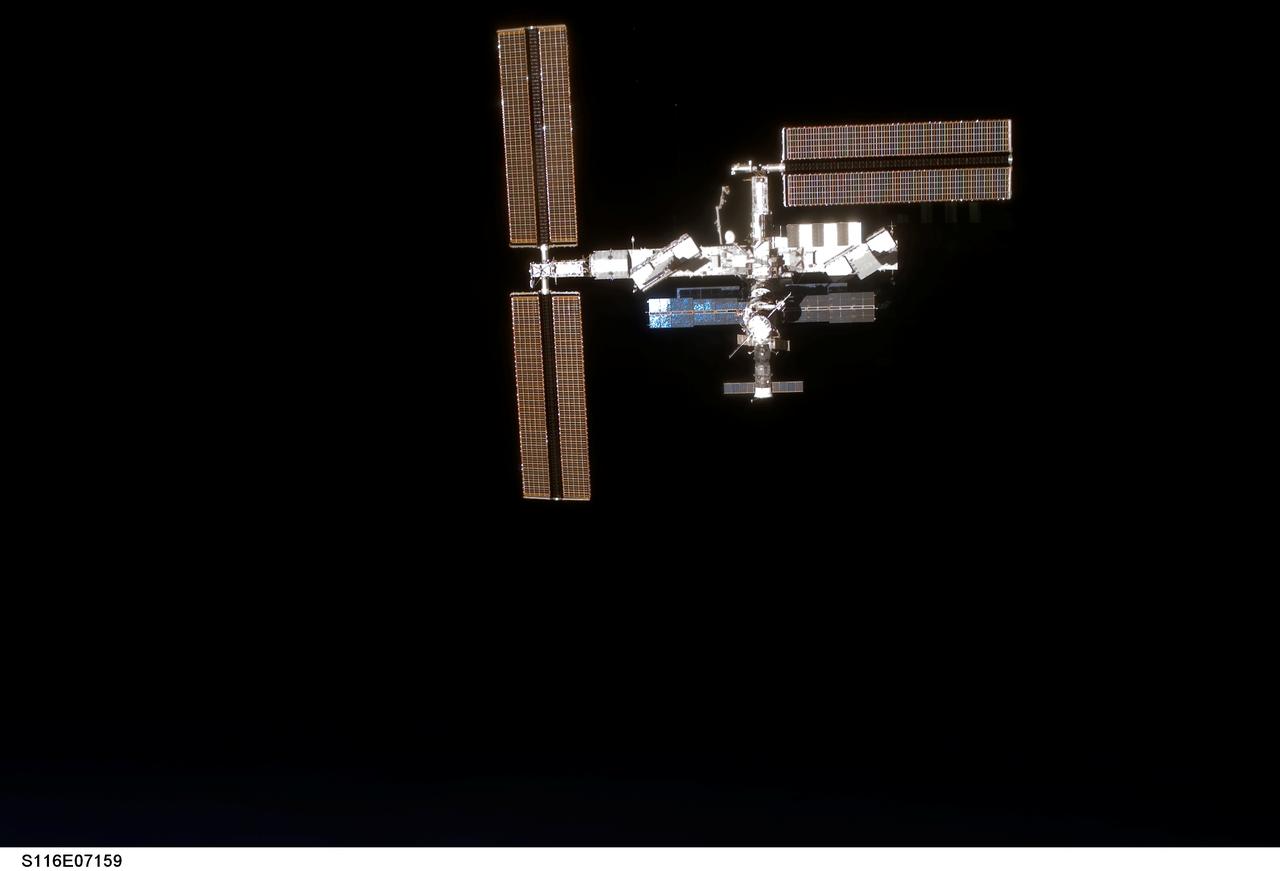
S116-E-07159 (19 Dec. 2006) --- Backdropped by the blackness of space, the International Space Station moves away from Space Shuttle Discovery. Earlier the STS-116 and Expedition 14 crews concluded eight days of cooperative work onboard the shuttle and station. Undocking of the two spacecraft occurred at 4:10 p.m. (CST) on Dec. 19, 2006. Astronaut William A. (Bill) Oefelein, STS-116 pilot, was at the controls for the fly-around, which gave Discovery's crew a look at its handiwork, a new P5 spacer truss segment and a fully retracted P6 solar array wing. During their stay on orbital outpost, the combined crew installed the newest piece of the station's backbone and completely rewired the power grid over the course of four spacewalks.
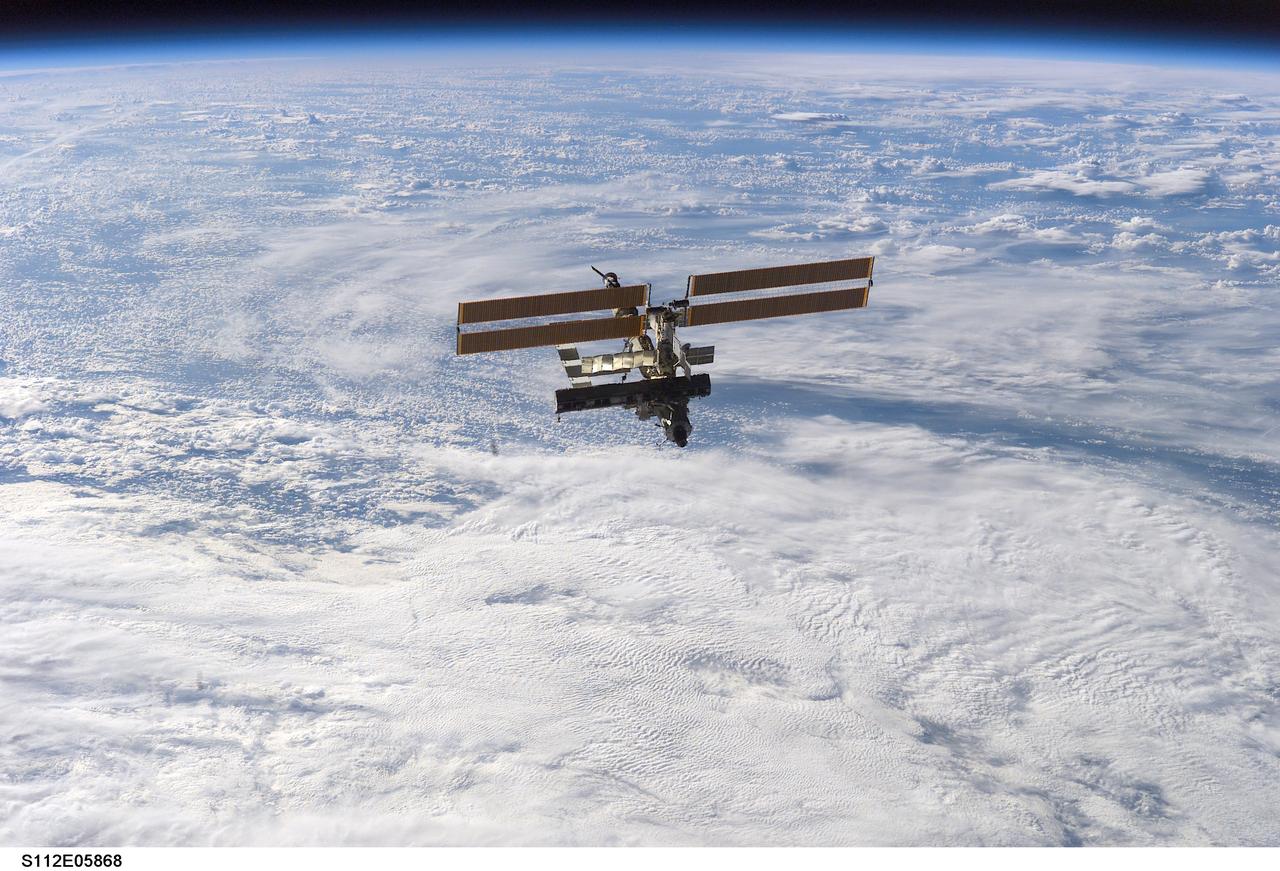
STS112-E-05868 (16 October 2002) --- Backdropped by a blanket of clouds, the International Space Station (ISS) was photographed by a crewmember on board the Space Shuttle Atlantis following the undocking of the two spacecraft. Atlantis pulled away from the complex at 8:13 a.m. (CDT) on October 16, 2002.
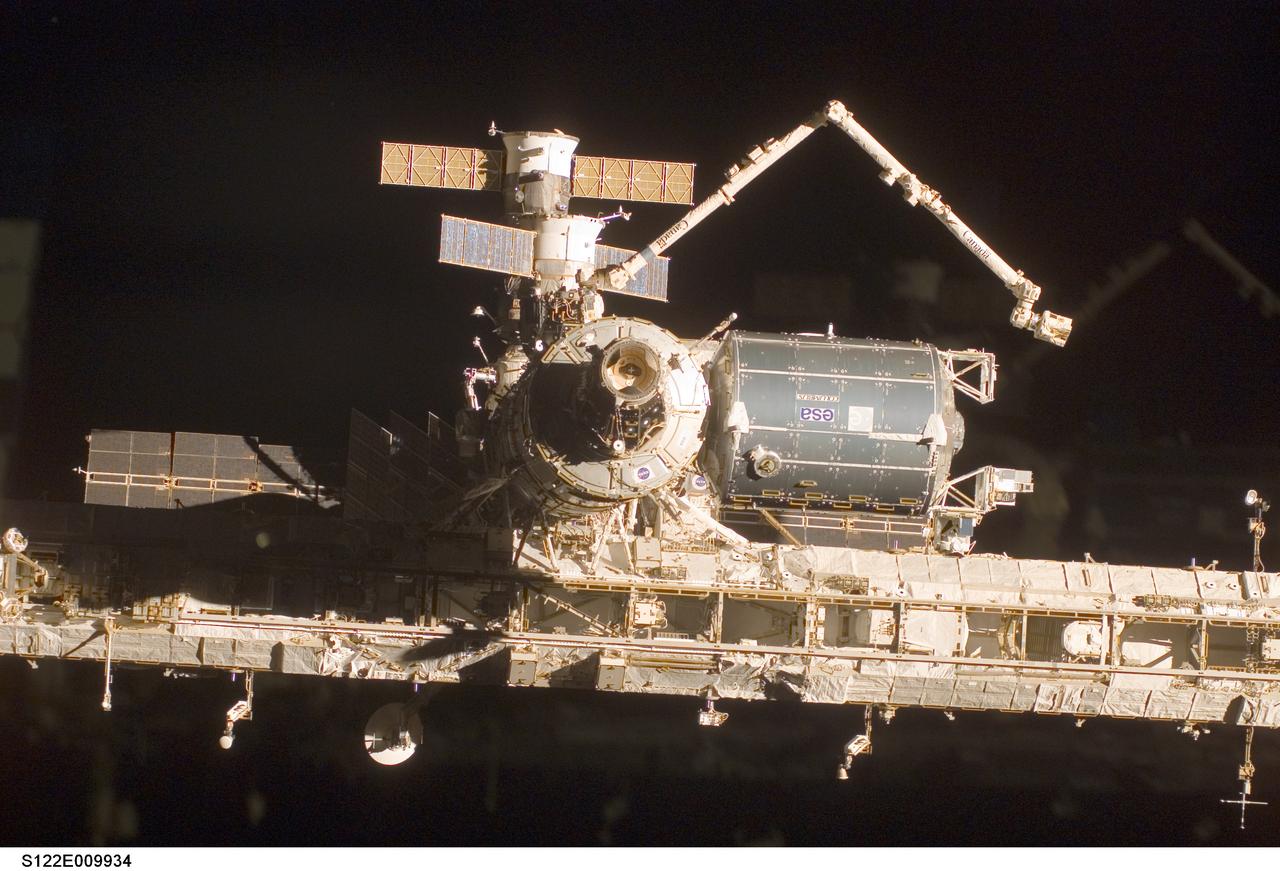
S122-E-009934 (18 Feb. 2008) --- A close-up view of the Columbus laboratory (center right) -- newest addition to the International Space Station -- is featured in this image photographed by a STS-122 crewmember on Space Shuttle Atlantis shortly after the undocking of the two spacecraft.