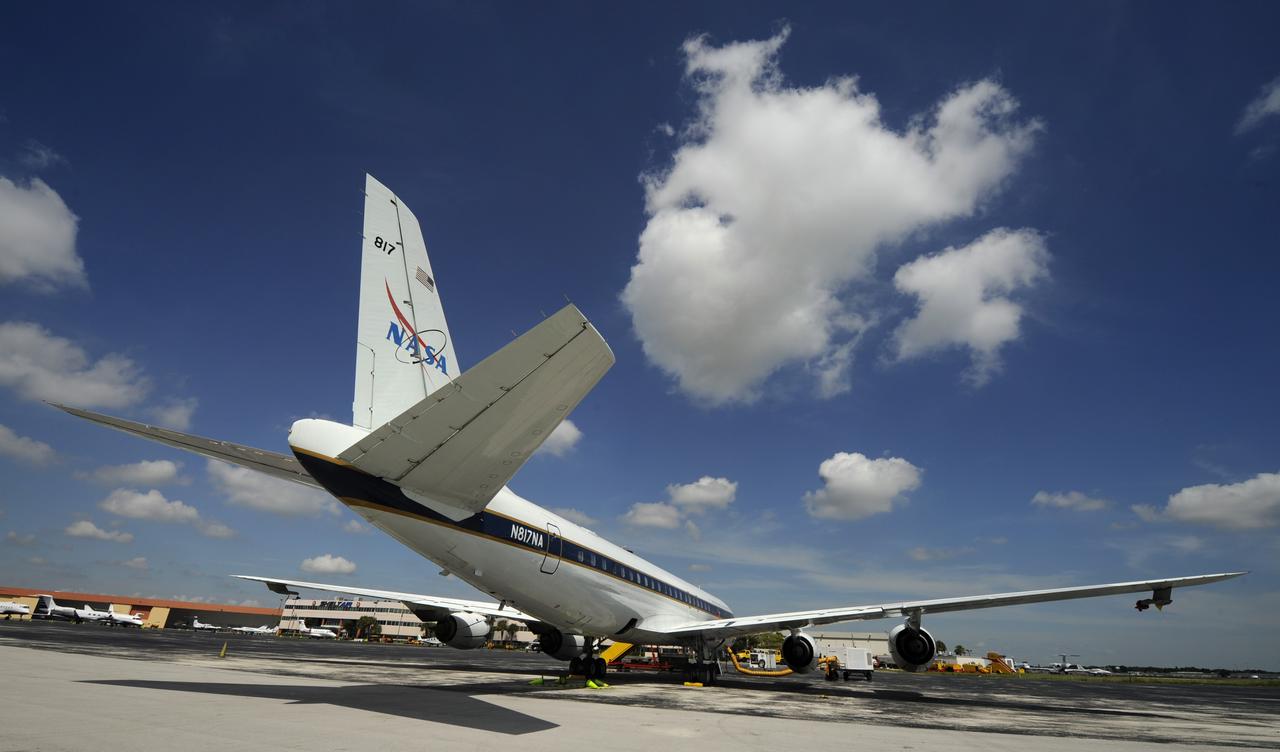
The NASA DC-8 airplane sits on the tarmac, Monday, Aug. 16, 2010, at Fort Lauderdale Hollywood International Airport in Fort Lauderdale, Fla. , as preparations continue for its part in the GRIP experiment. The Genesis and Rapid Intensification Processes (GRIP) experiment is a NASA Earth science field experiment in 2010 that is being conducted to better understand how tropical storms form and develop into major hurricanes. Photo Credit: (NASA/Paul E. Alers)
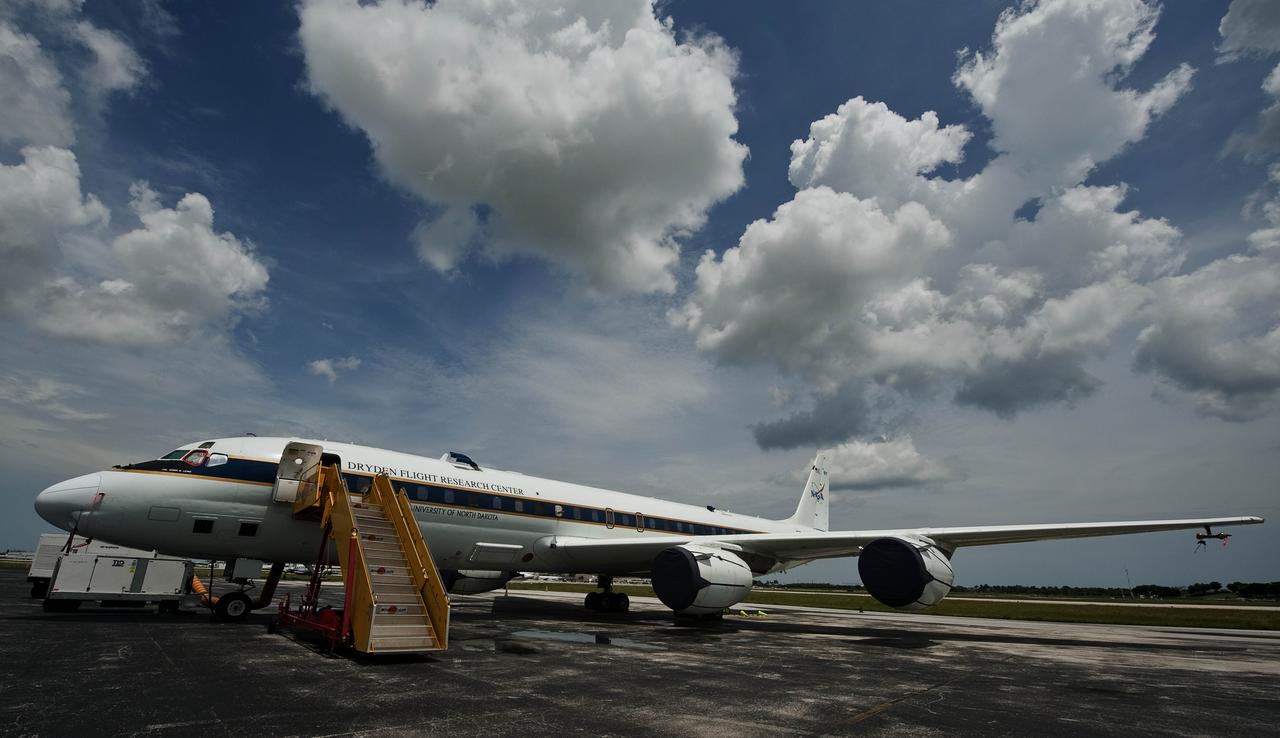
The NASA DC-8 airplane sits on the tarmac, Sunday, Aug. 15, 2010, at Fort Lauderdale International Airport in Fort Lauderdale, Fla. , as preparations continue for its part in the GRIP experiment. The Genesis and Rapid Intensification Processes (GRIP) experiment is a NASA Earth science field experiment in 2010 that is being conducted to better understand how tropical storms form and develop into major hurricanes. Photo Credit: (NASA/Paul E. Alers)
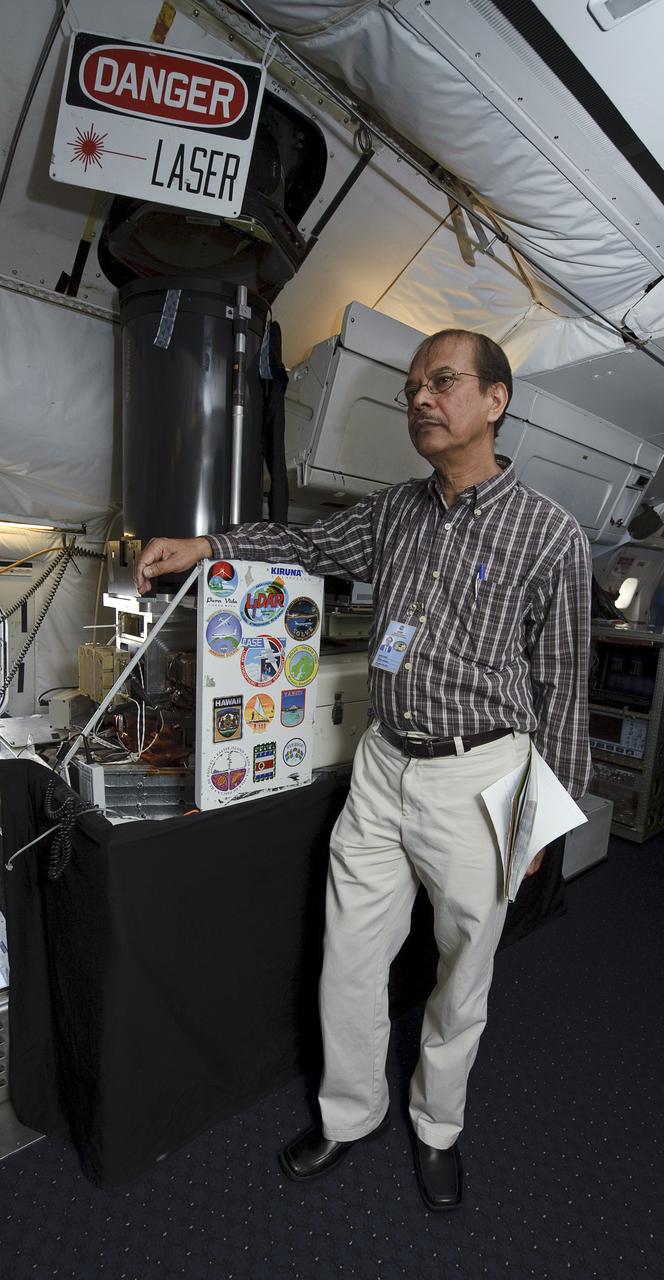
Syed Ismail, from the Langley Research Center, principal investigator for the Lidar Atmospheric Sensing Experiment (LASE) is seen aboard the NASA DC-8 aircraft, Monday, August 16, 2010, at Fort Lauderdale Hollywood International Airport in Fort Lauderdale, Fla. The Genesis and Rapid Intensification Processes (GRIP) experiment is a NASA Earth science field experiment in 2010 that is being conducted to better understand how tropical storms form and develop into major hurricanes. Photo Credit: (NASA/Paul E. Alers)
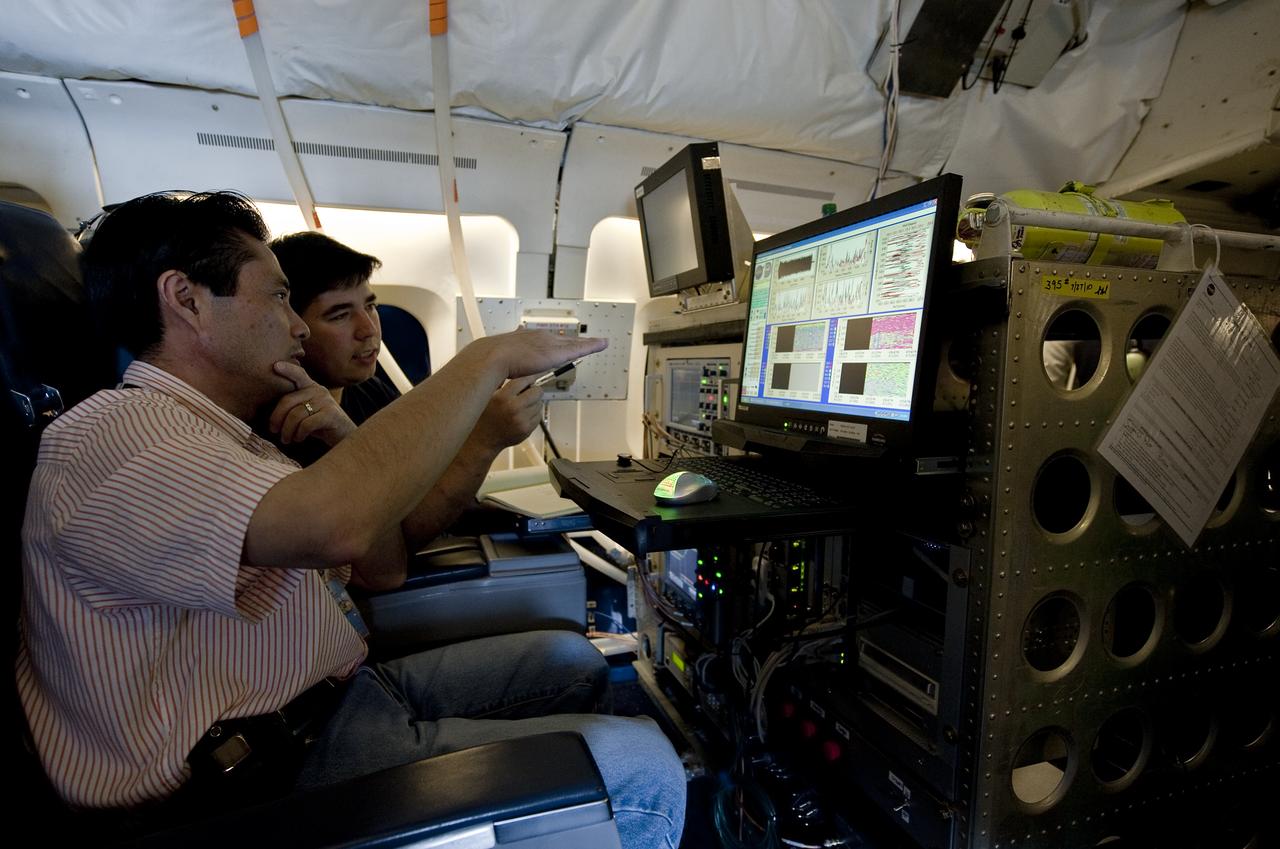
Jeffrey Beyon, left, and Paul Joseph Petzar, right, from NASA's Langley Research Center, work with DAWN Air Data Acquisition and Processing software aboard NASA's DC-8 research aircraft, Sunday, Aug. 15, 2010, in support of the GRIP experiment at Fort Lauderdale International Airport in Fort Lauderdale, Fla. The Genesis and Rapid Intensification Processes (GRIP) experiment is a NASA Earth science field experiment in 2010 that is being conducted to better understand how tropical storms form and develop into major hurricanes. Photo Credit: (NASA/Paul E. Alers)
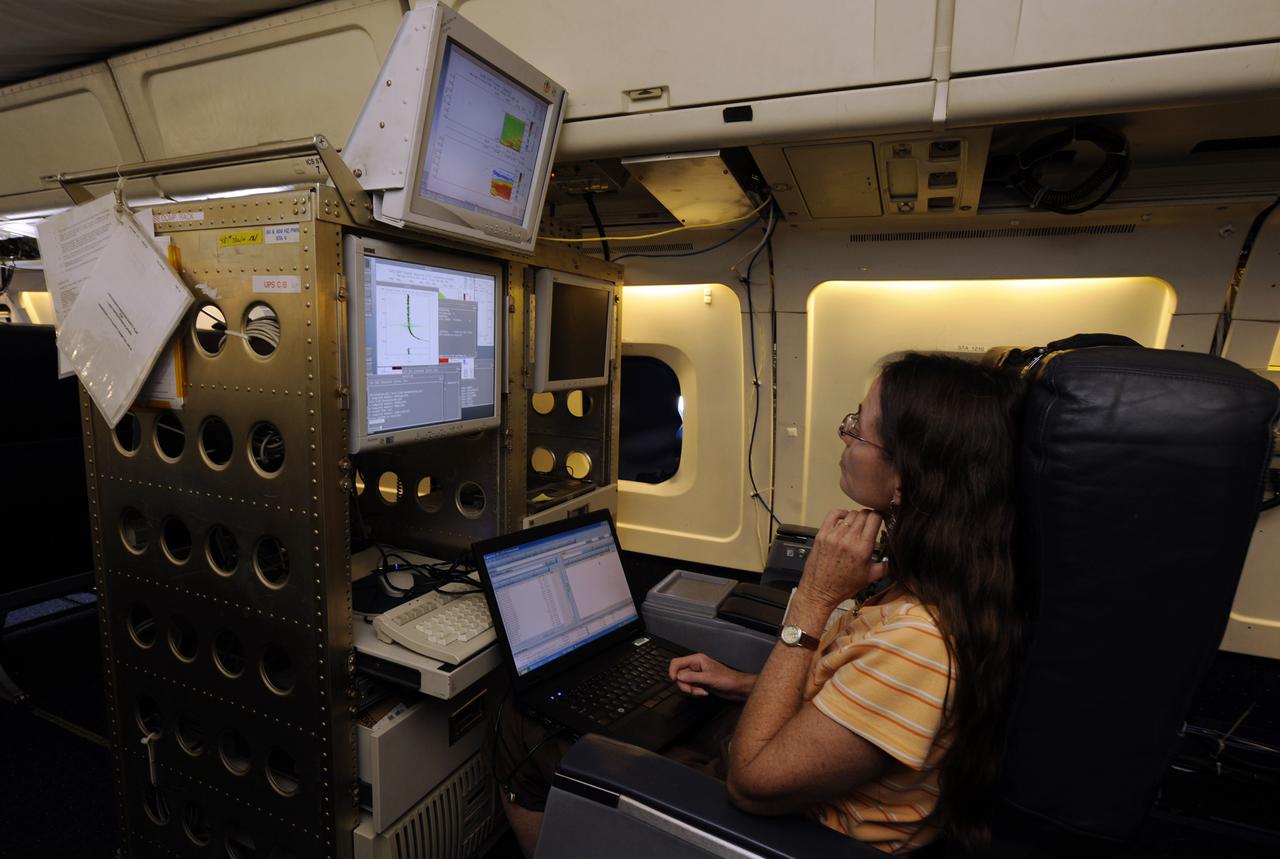
Susan Kool, a researcher from the Langley Research Center, works on monitoring the Lidar Atmospheric Sensing Experiment (LASE) aboard the NASA DC-8 aircraft, Monday, Aug. 16, 2010, at Fort Lauderdale Hollywood International Airport in Fort Lauderdale, Fla. LASE probes the atmosphere using lasers and is part of the Genesis and Rapid Intensification Processes (GRIP) experiment is a NASA Earth science field experiment in 2010 that is being conducted to better understand how tropical storms form and develop into major hurricanes. Photo Credit: (NASA/Paul E. Alers)
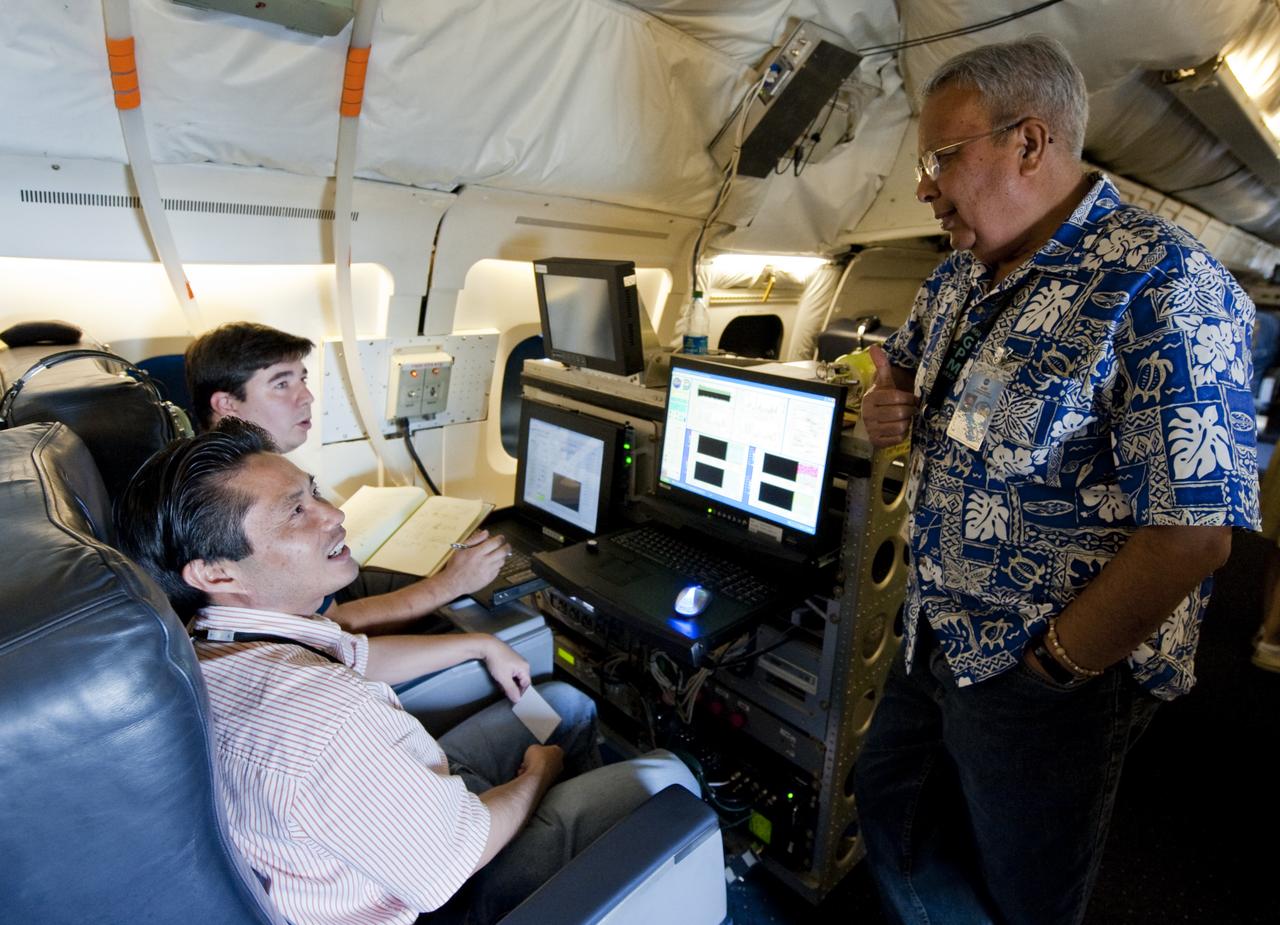
Jeffrey Beyon, lower right, and Paul Joseph Petzar, right, researchers from NASA's Langley Research Center, speak with Ramesh Kakar right, of the NASA Earth Science Division as they work with DAWN Air Data Acquisition and Processing software aboard NASA's DC-8 research aircraft, Sunday, Aug. 15, 2010, in support of the GRIP experiment at Fort Lauderdale International Airport in Fort Lauderdale, Fla. The Genesis and Rapid Intensification Processes (GRIP) experiment is a NASA Earth science field experiment in 2010 that is being conducted to better understand how tropical storms form and develop into major hurricanes. Photo Credit: (NASA/Paul E. Alers)

Simone Tanelli, a researcher from the Jet Propulsion Laboratory, talks about the Airbrorne Precipitation Radar (APR-2) aboard the NASA DC-8 aircraft, Monday, Aug.16, 2010, at Fort Lauderdale Hollywood International Airport in Fort Lauderdale, Fla. The APR-2, a dual frequency weather radar, is just one of the experiments supporting the Genesis and Rapid Intensification Processes (GRIP) mission, a NASA Earth science field experiment that is being conducted to better understand how tropical storms form and develop into major hurricanes. Photo Credit: (NASA/Paul E. Alers)
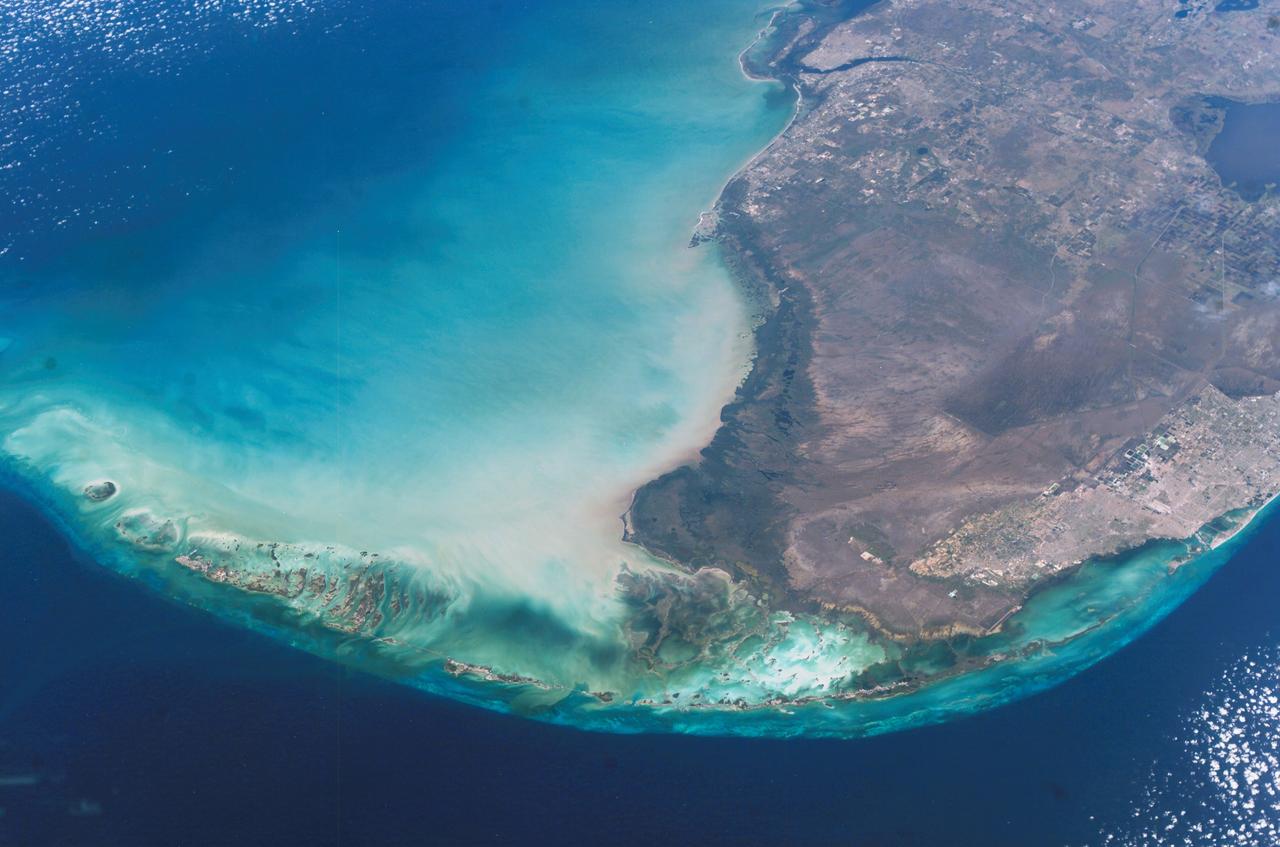
ISS010-E-17590 (11 February 2005) --- Southern Florida and the Florida Keys are featured in this image photographed by an Expedition 10 crewmember on the International Space Station. Miami and Fort Lauderdale are visible on the Atlantic side. Everglades National Park and Fort Myers (Gulf of Mexico side) can also be seen, as can most of Lake Okeechobee.
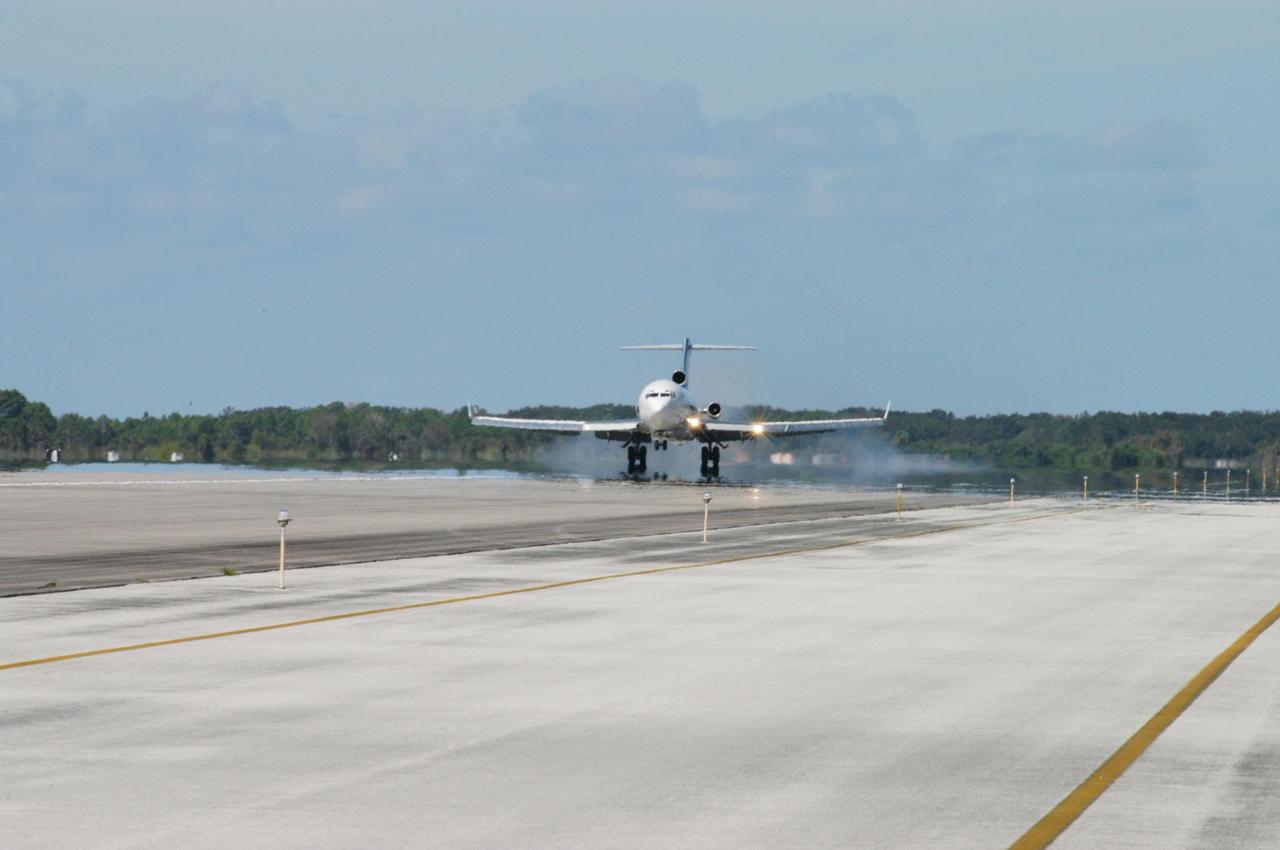
KENNEDY SPACE CENTER, FLA. - The Boeing 727-200 aircraft used for weightless flights by Zero Gravity Corporation, known as ZERO-G, of Fort Lauderdale, Fla., lands after taking a group of passengers for demonstration. NASA and ZERO-G demonstrated Nov. 5 the expanded access to and use of the space shuttle's runway and landing facility at Kennedy Space Center for non-NASA activities. This group of passengers, called "Flyers," were predominantly teachers who performed simple microgravity experiments they can share with their students back in the classroom.
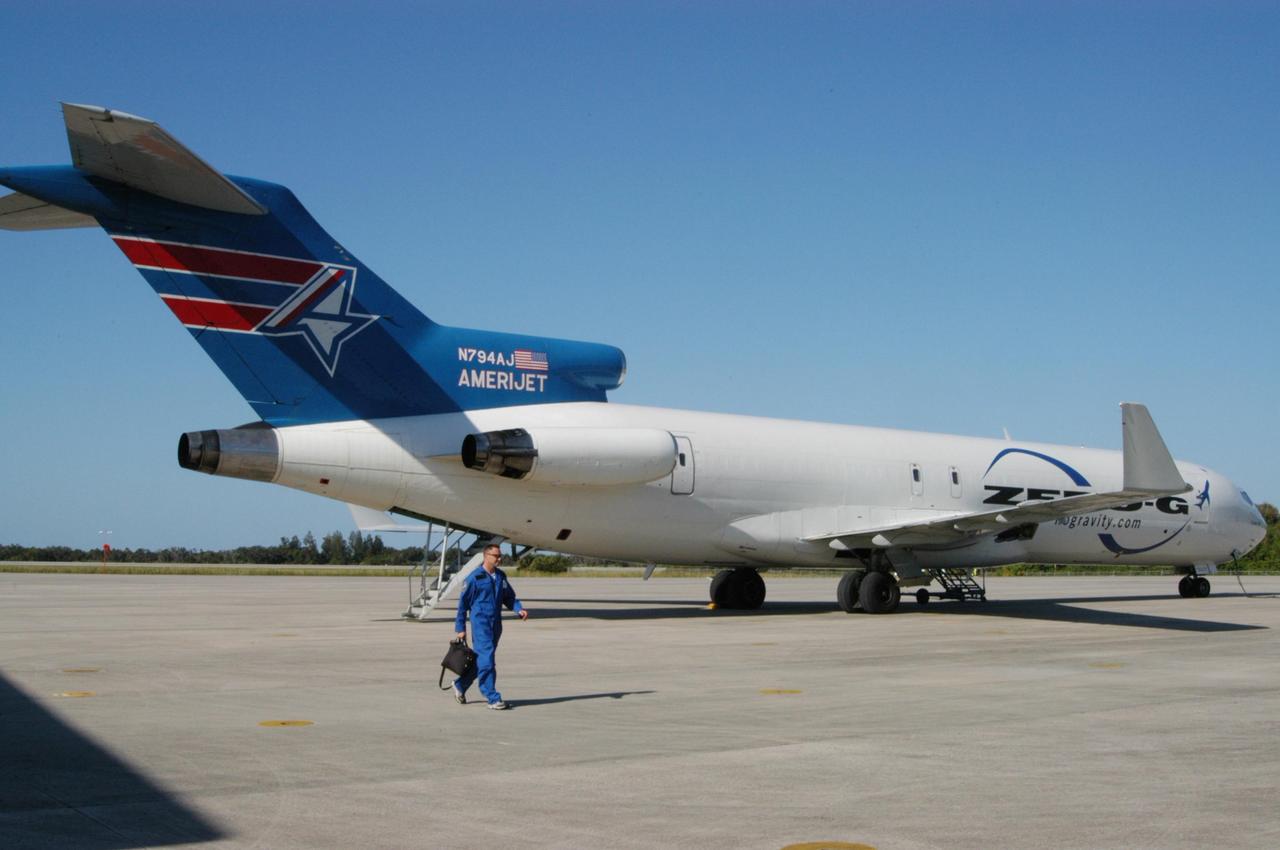
KENNEDY SPACE CENTER, FLA. - The Boeing 727-200 aircraft used for weightless flights by Zero Gravity Corporation, known as ZERO-G, of Fort Lauderdale, Fla., waits for its passengers. NASA and ZERO-G demonstrated Nov. 5 the expanded access to and use of the space shuttle's runway and landing facility at Kennedy Space Center for non-NASA activities. A group of passengers, called "Flyers," were predominantly teachers who performed simple microgravity experiments they can share with their students back in the classroom.
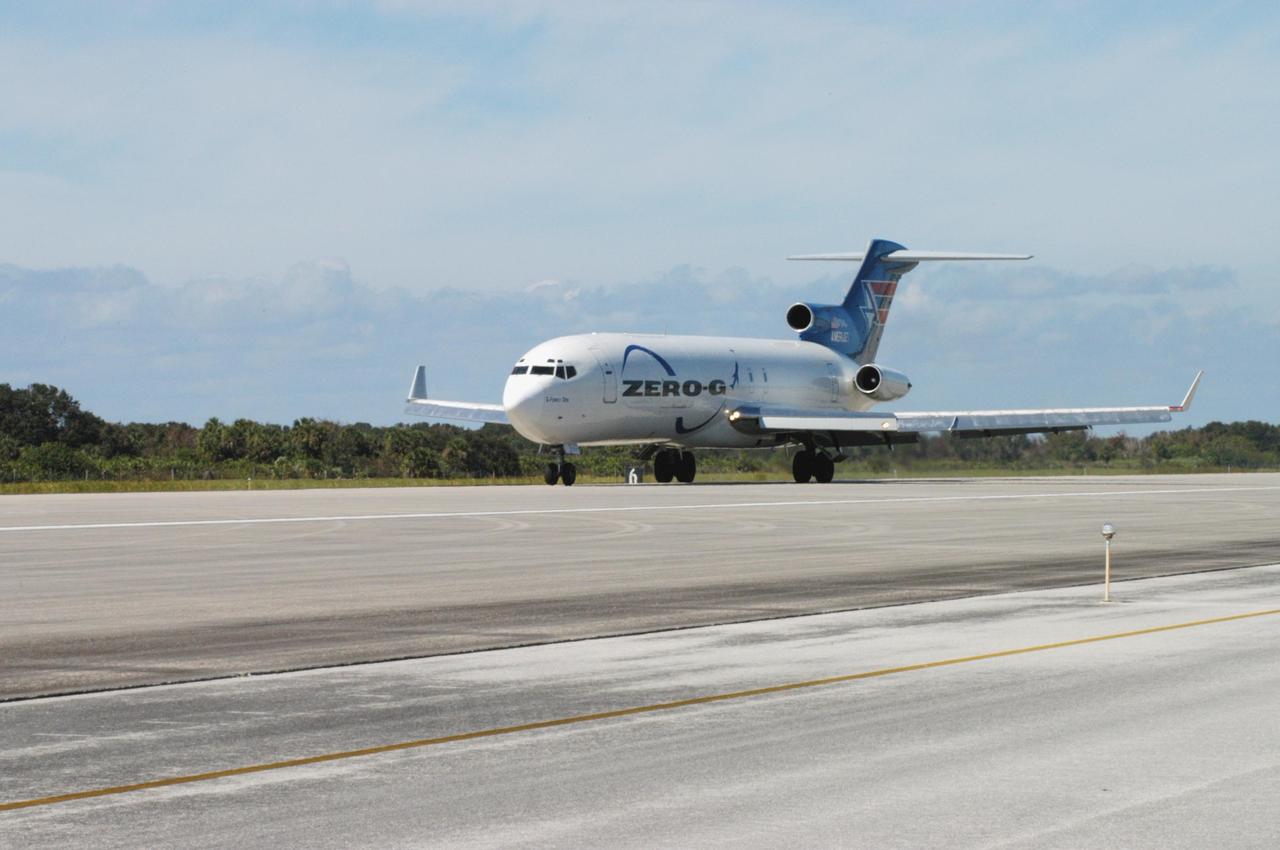
KENNEDY SPACE CENTER, FLA. - The Boeing 727-200 aircraft used for weightless flights by Zero Gravity Corporation, known as ZERO-G, of Fort Lauderdale, Fla., lands after taking a group of passengers for demonstration. NASA and ZERO-G demonstrated Nov. 5 the expanded access to and use of the space shuttle's runway and landing facility at Kennedy Space Center for non-NASA activities. This group of passengers, called "Flyers," were predominantly teachers who performed simple microgravity experiments they can share with their students back in the classroom.
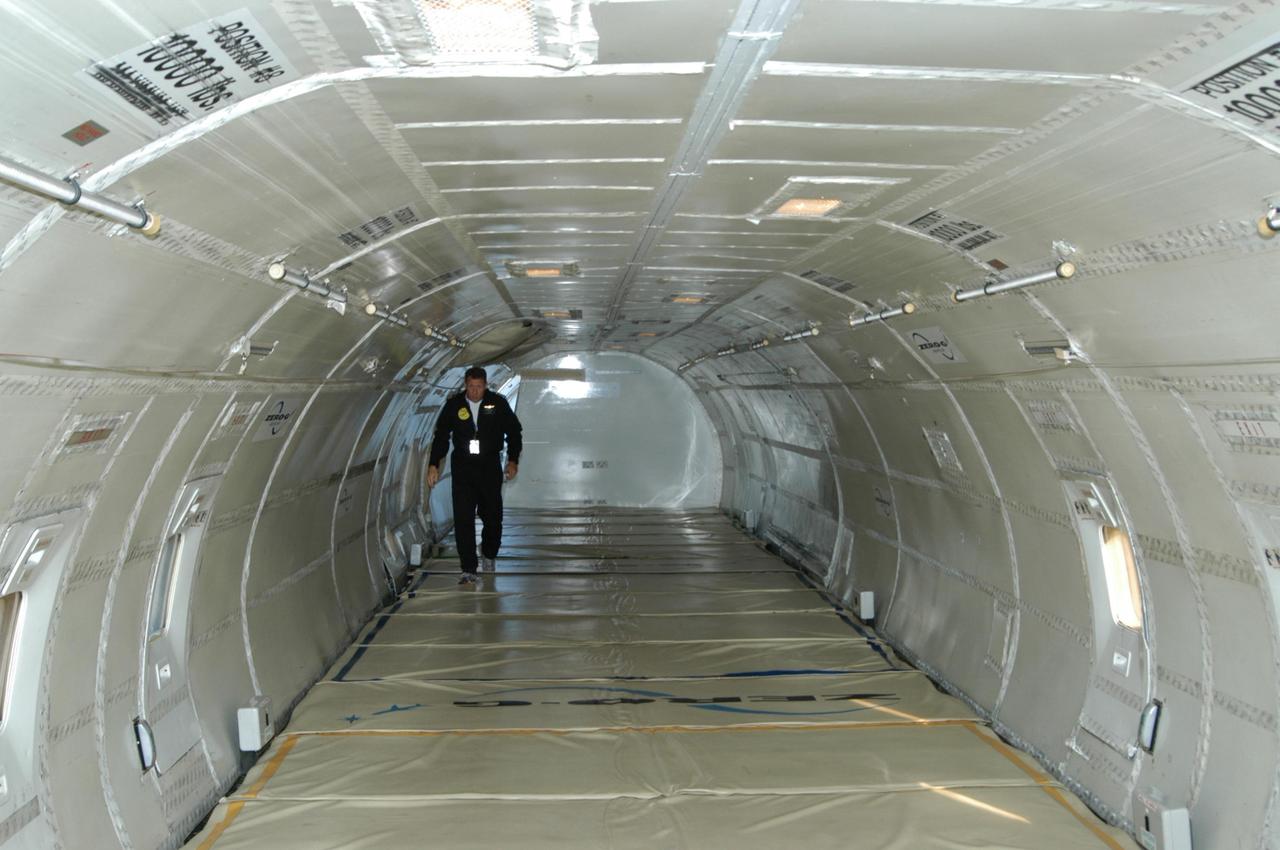
KENNEDY SPACE CENTER, FLA. - A view inside the Boeing 727-200 aircraft used for weightless flights by Zero Gravity Corporation, known as ZERO-G, of Fort Lauderdale, Fla. NASA and ZERO-G demonstrated Nov. 5 the expanded access to and use of the space shuttle's runway and landing facility at Kennedy Space Center for non-NASA activities. A group of passengers, called "Flyers," were predominantly teachers who performed simple microgravity experiments they can share with their students back in the classroom.
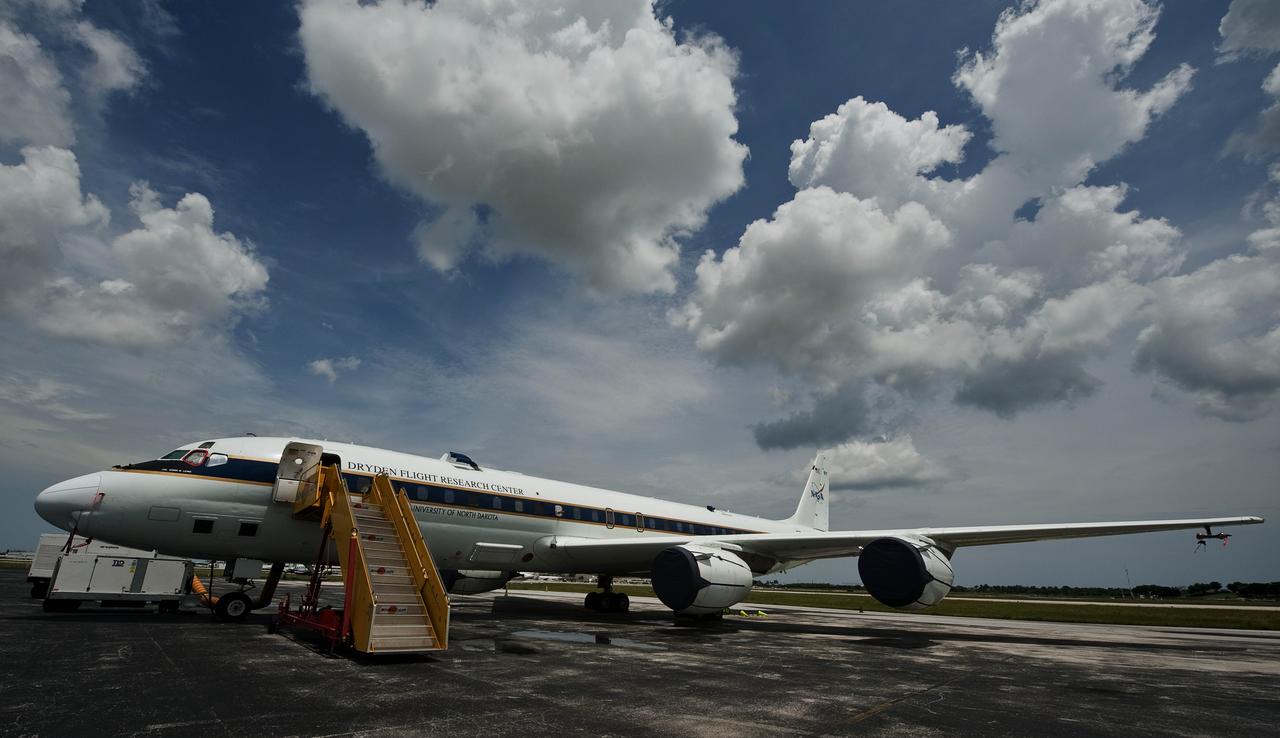
The NASA DC-8 airplane sits on the tarmac, Sunday, Aug. 15, 2010, at Fort Lauderdale International Airport in Fort Lauderdale, Fla. , as preparations continue for its part in the GRIP experiment. The Genesis and Rapid Intensification Processes (GRIP) experiment is a NASA Earth science field experiment in 2010 that is being conducted to better understand how tropical storms form and develop into major hurricanes. Credit: NASA/Paul E. Alers To read more about the GRIP Mission go <b><a href="http://www.nasa.gov/mission_pages/hurricanes/missions/grip/news/grip-quest.html" rel="nofollow"> here</a></b> or <b><a href="http://www.nasa.gov/externalflash/GRIP/" rel="nofollow"> here</a></b> for an interactive feature <b><a href="http://www.nasa.gov/centers/goddard/home/index.html" rel="nofollow">NASA Goddard Space Flight Center</a></b> is home to the nation's largest organization of combined scientists, engineers and technologists that build spacecraft, instruments and new technology to study the Earth, the sun, our solar system, and the universe. <b>Follow us on <a href="http://twitter.com/NASA_GoddardPix" rel="nofollow">Twitter</a></b> <b>Join us on <a href="http://www.facebook.com/pages/Greenbelt-MD/NASA-Goddard/395013845897?ref=tsd" rel="nofollow">Facebook</a><b></b></b>
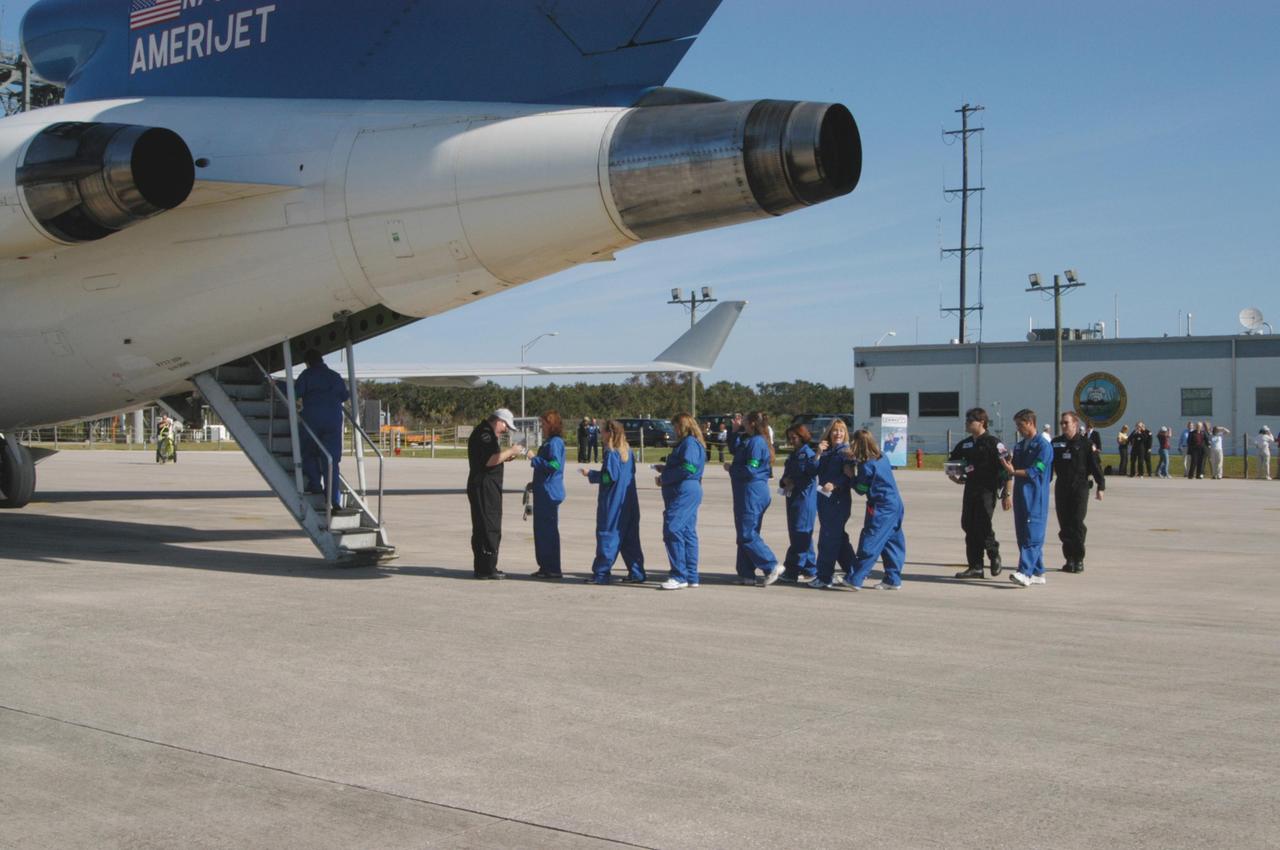
KENNEDY SPACE CENTER, FLA. - The first group of passengers to fly on the ZERO-G aircraft line up. The Boeing 727-200 aircraft is used for weightless flights by Zero Gravity Corporation, known as ZERO-G, of Fort Lauderdale, Fla. NASA and ZERO-G demonstrated Nov. 5 the expanded access to and use of the space shuttle's runway and landing facility at Kennedy Space Center for non-NASA activities. The passengers, called "Flyers," were predominantly teachers who performed simple microgravity experiments they can share with their students back in the classroom.
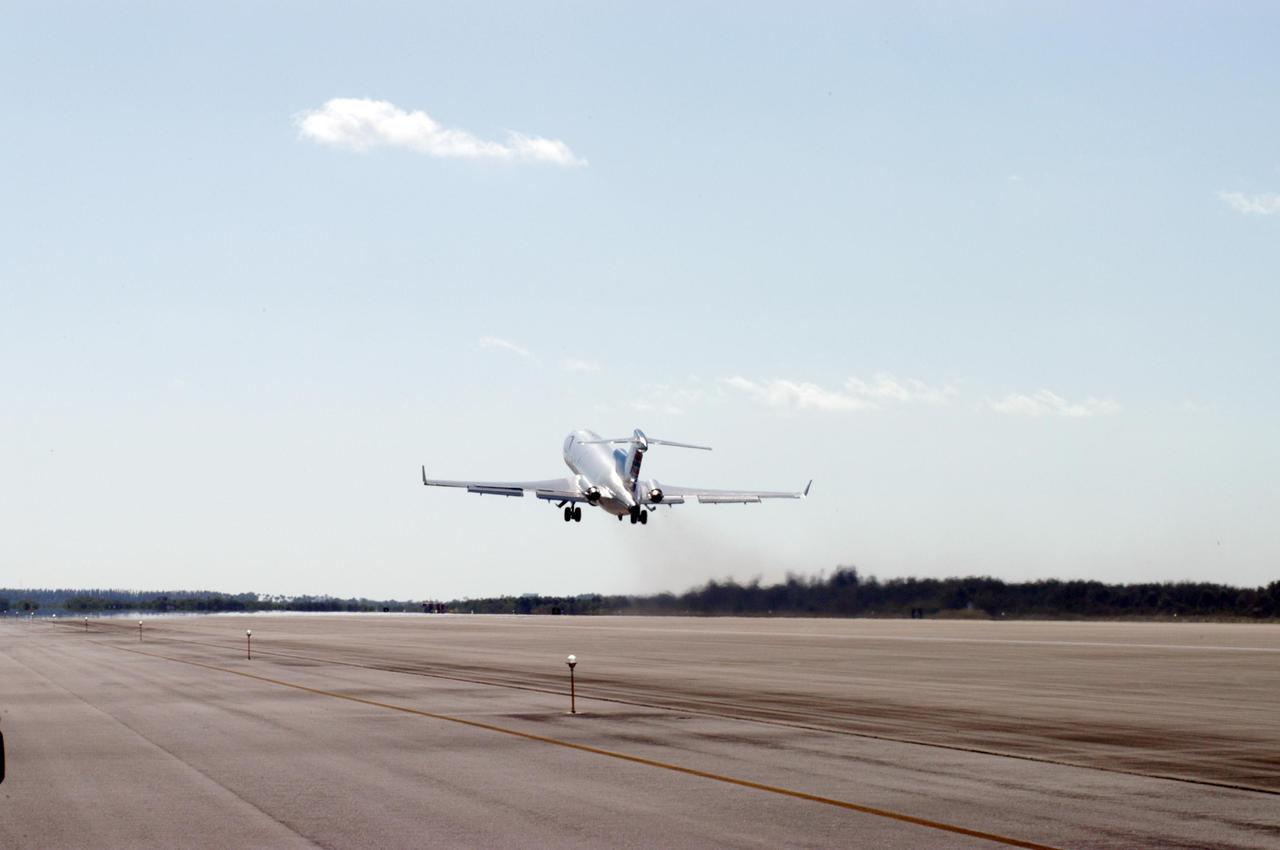
KENNEDY SPACE CENTER, FLA. - The Boeing 727-200 aircraft used for weightless flights by Zero Gravity Corporation, known as ZERO-G, of Fort Lauderdale, Fla., is airborne from Kennedy Space Center’s shuttle landing facility. NASA and ZERO-G demonstrated Nov. 5 the expanded access to and use of the space shuttle's runway and landing facility at Kennedy Space Center for non-NASA activities. The group of passengers, called "Flyers," were predominantly teachers who performed simple microgravity experiments they can share with their students back in the classroom.
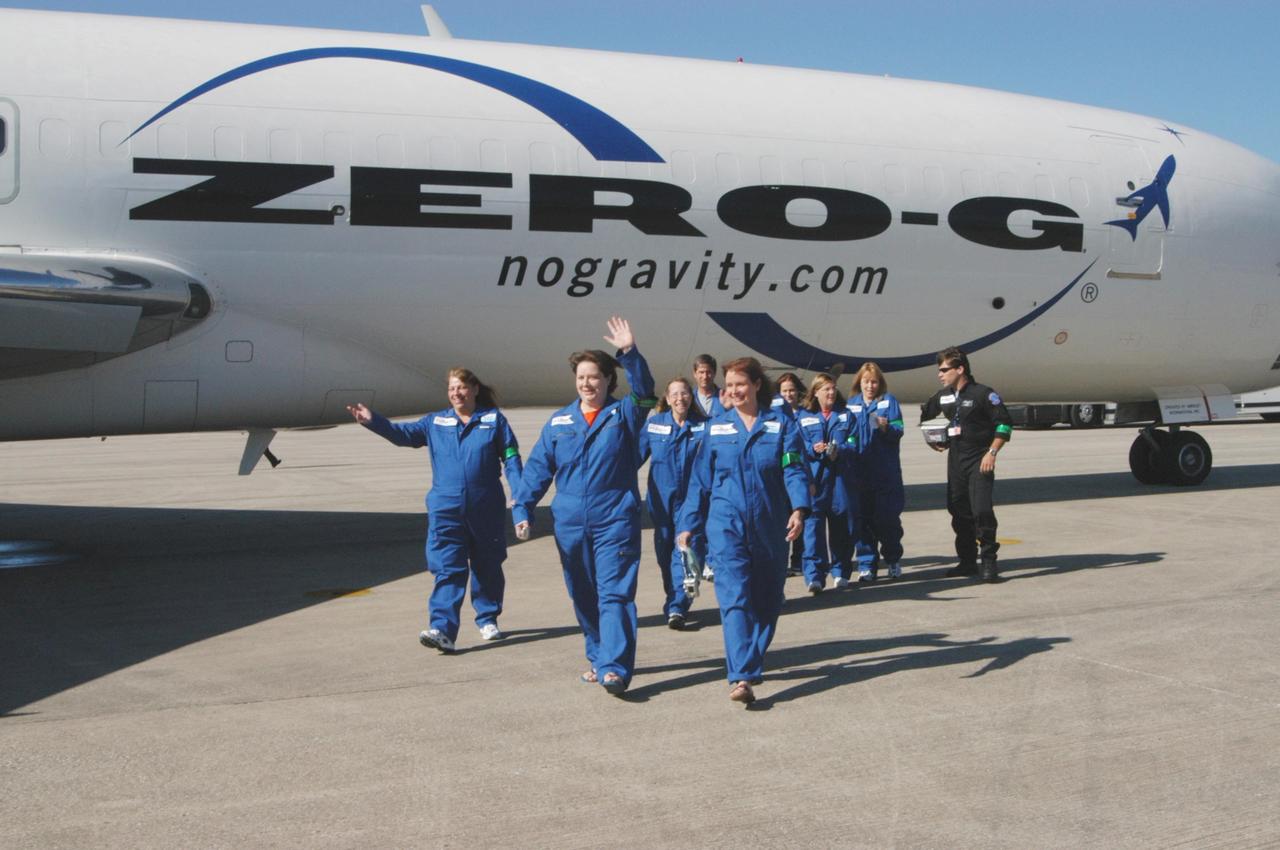
KENNEDY SPACE CENTER, FLA. - The first group of passengers to fly on the ZERO-G aircraft are eager to get started. The Boeing 727-200 aircraft is used for weightless flights by Zero Gravity Corporation, known as ZERO-G, of Fort Lauderdale, Fla. NASA and ZERO-G demonstrated Nov. 5 the expanded access to and use of the space shuttle's runway and landing facility at Kennedy Space Center for non-NASA activities. The passengers, called "Flyers," were predominantly teachers who performed simple microgravity experiments they can share with their students back in the classroom.
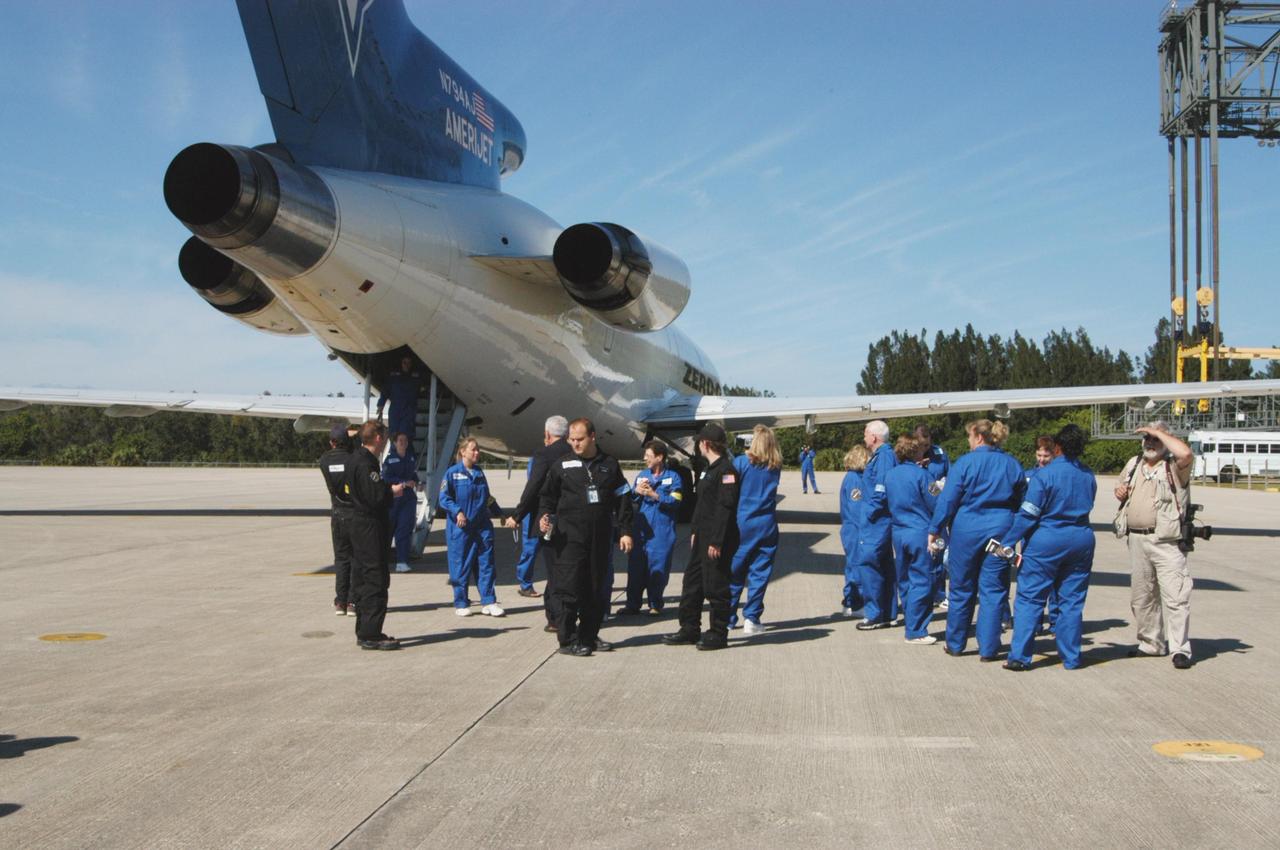
KENNEDY SPACE CENTER, FLA. - Passengers known as “Flyers” disembark at Kennedy Space Center’s shuttle landing facility from a Boeing 727-200 aircraft used for weightless flights by Zero Gravity Corporation, known as ZERO-G, of Fort Lauderdale, Fla. NASA and ZERO-G demonstrated Nov. 5 the expanded access to and use of the space shuttle's runway and landing facility at Kennedy Space Center for non-NASA activities. The “Flyers” were predominantly teachers who performed simple microgravity experiments they can share with their students back in the classroom.
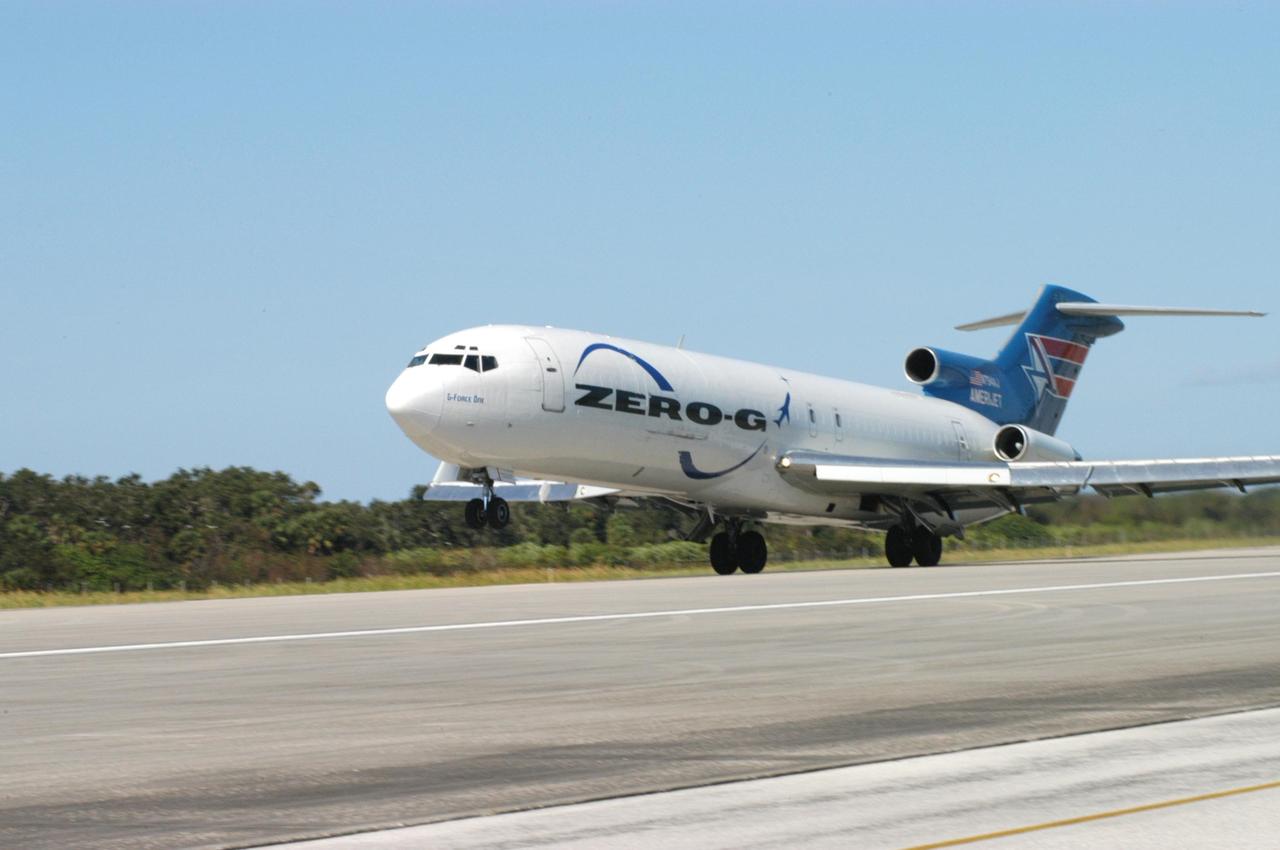
KENNEDY SPACE CENTER, FLA. - The Boeing 727-200 aircraft used for weightless flights by Zero Gravity Corporation, known as ZERO-G, of Fort Lauderdale, Fla., takes off from Kennedy Space Center’s shuttle landing facility. NASA and ZERO-G demonstrated Nov. 5 the expanded access to and use of the space shuttle's runway and landing facility at Kennedy Space Center for non-NASA activities. The group of passengers, called "Flyers," were predominantly teachers who performed simple microgravity experiments they can share with their students back in the classroom.
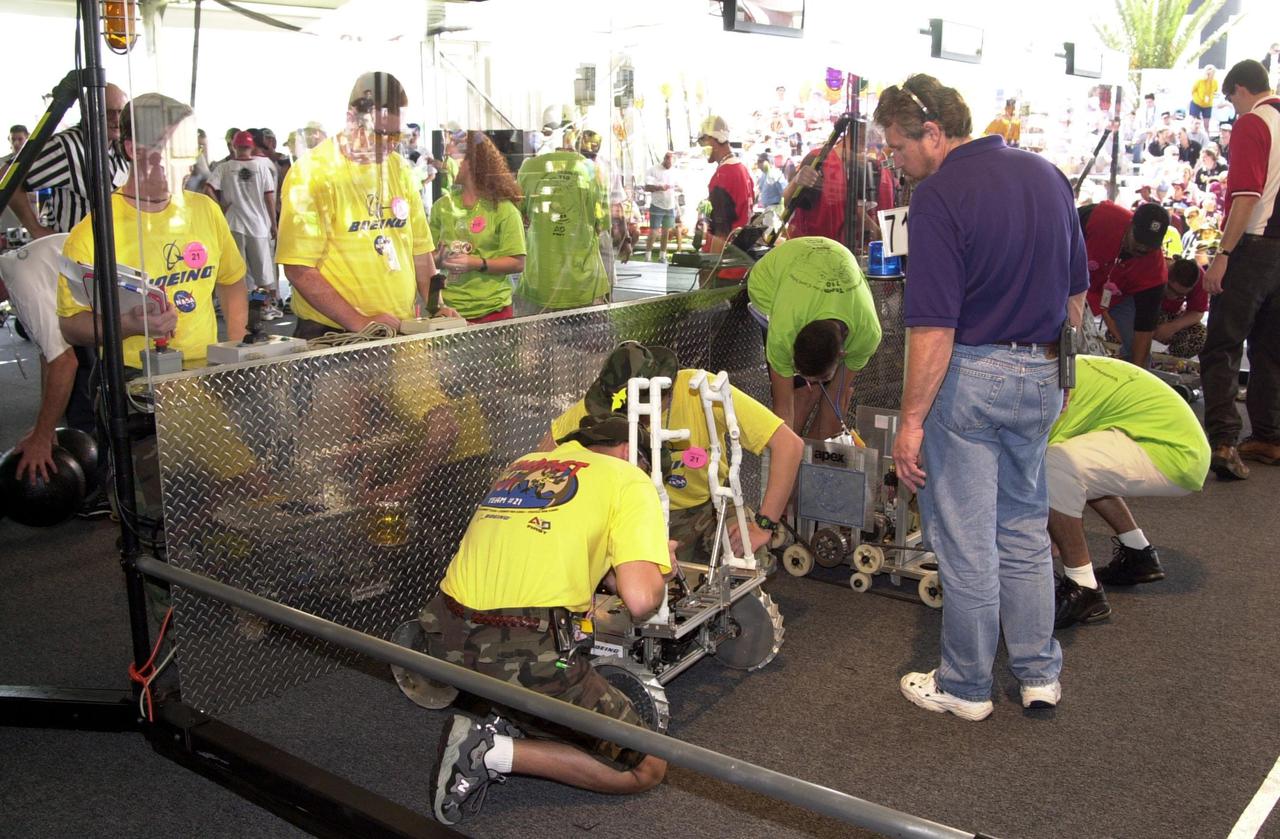
Student teams adjust their robots before competing on the playing field field during the NASA_KSC FIRST Southeastern Regional event held March 1-3, 2001. At left is the ComBBAT 2001 team from Astronaut and Titusville High Schools, Florida. It is a KSC joint-sponsored team. At right is the PC Panthers, no. 710, from Pine Crest School, Fort Lauderdale, Fla. FIRST (For Inspiration and Recognition of Science and Technology) events are held nationwide, pitting robots against each other and the clock on a playing field. Many teams are sponsored by corporations and academic institutions. There are 27 teams throughout the State of Florida who are competing. KSC, which sponsors nine teams, has held the regional event for two years
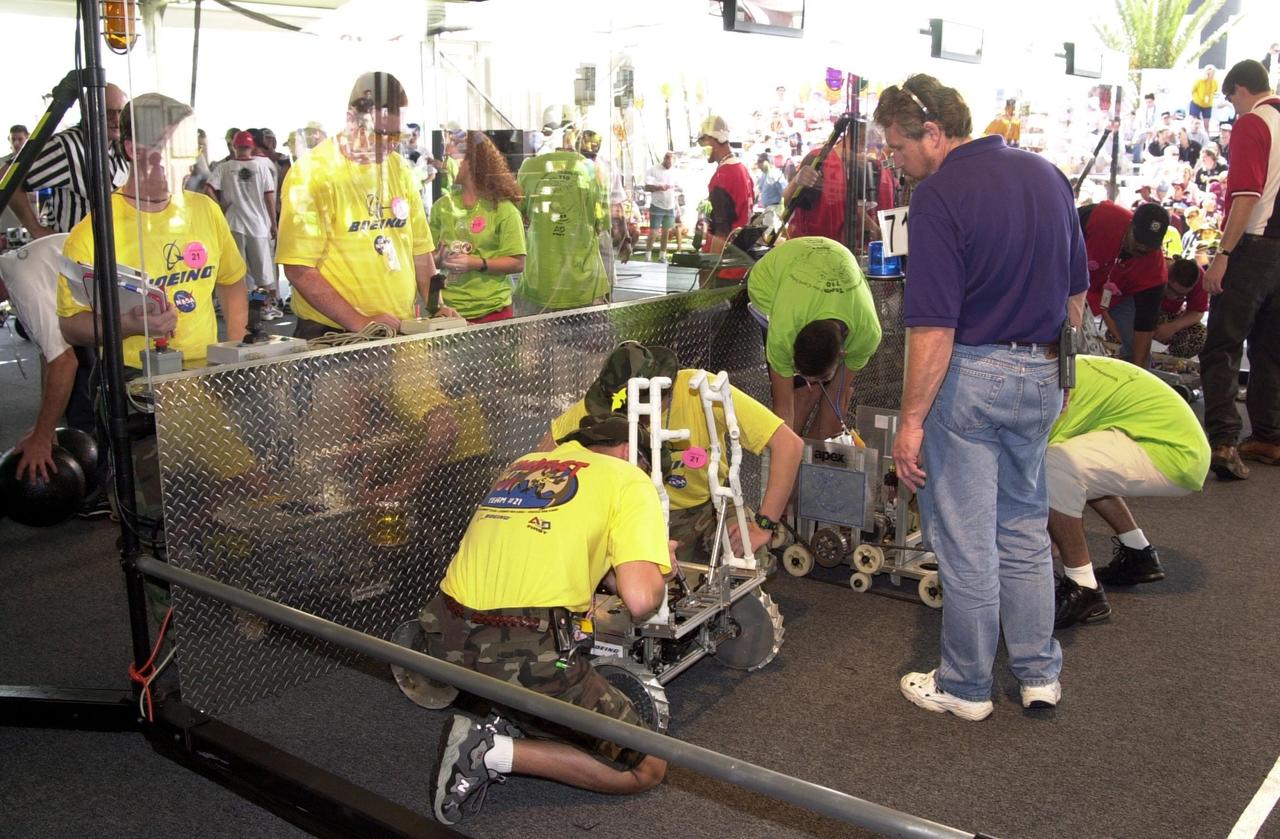
Student teams adjust their robots before competing on the playing field field during the NASA/KSC FIRST Southeastern Regional event held March 1-3, 2001. At left is the ComBBAT 2001 team from Astronaut and Titusville High Schools, Florida. It is a KSC joint-sponsored team. At right is the PC Panthers, no. 710, from Pine Crest School, Fort Lauderdale, Fla. FIRST (For Inspiration and Recognition of Science and Technology) events are held nationwide, pitting robots against each other and the clock on a playing field. Many teams are sponsored by corporations and academic institutions. There are 27 teams throughout the State of Florida who are competing. KSC, which sponsors nine teams, has held the regional event for two years
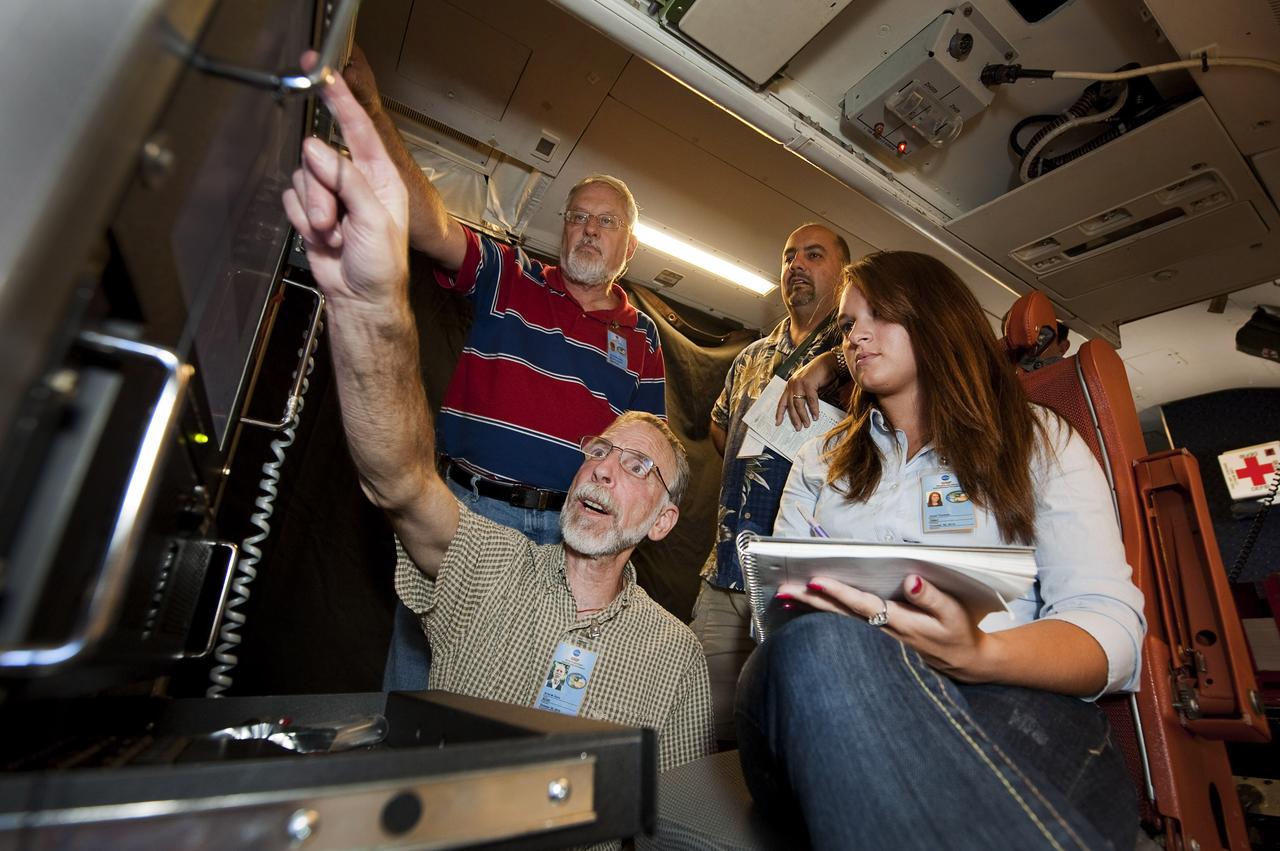
Errol Korn, lower left, explains the dropsonde experiment to Janel Thomas, a University of Maryland Baltimore County (UMBC) graduate student, seated, as Bob Pasken, standing left, and Jeff Halverson, a GRIP project scientist from UMBC, look on inside NASA's DC-8 airplane, at Fort Lauderdale International Airport in Fort Lauderdale, Fla., Sunday, Aug. 15, 2010. The Genesis and Rapid Intensification Processes (GRIP) experiment is a NASA Earth science field experiment in 2010 that is being conducted to better understand how tropical storms form and develop into major hurricanes. Credit: NASA/Paul E. Alers To read more about the GRIP Mission go <b><a href="http://www.nasa.gov/mission_pages/hurricanes/missions/grip/news/grip-quest.html" rel="nofollow"> here</a></b> or <b><a href="http://www.nasa.gov/externalflash/GRIP/" rel="nofollow"> here</a></b> for an interactive feature <b><a href="http://www.nasa.gov/centers/goddard/home/index.html" rel="nofollow">NASA Goddard Space Flight Center</a></b> is home to the nation's largest organization of combined scientists, engineers and technologists that build spacecraft, instruments and new technology to study the Earth, the sun, our solar system, and the universe. <b>Follow us on <a href="http://twitter.com/NASA_GoddardPix" rel="nofollow">Twitter</a></b> <b>Join us on <a href="http://www.facebook.com/pages/Greenbelt-MD/NASA-Goddard/395013845897?ref=tsd" rel="nofollow">Facebook</a><b></b></b>
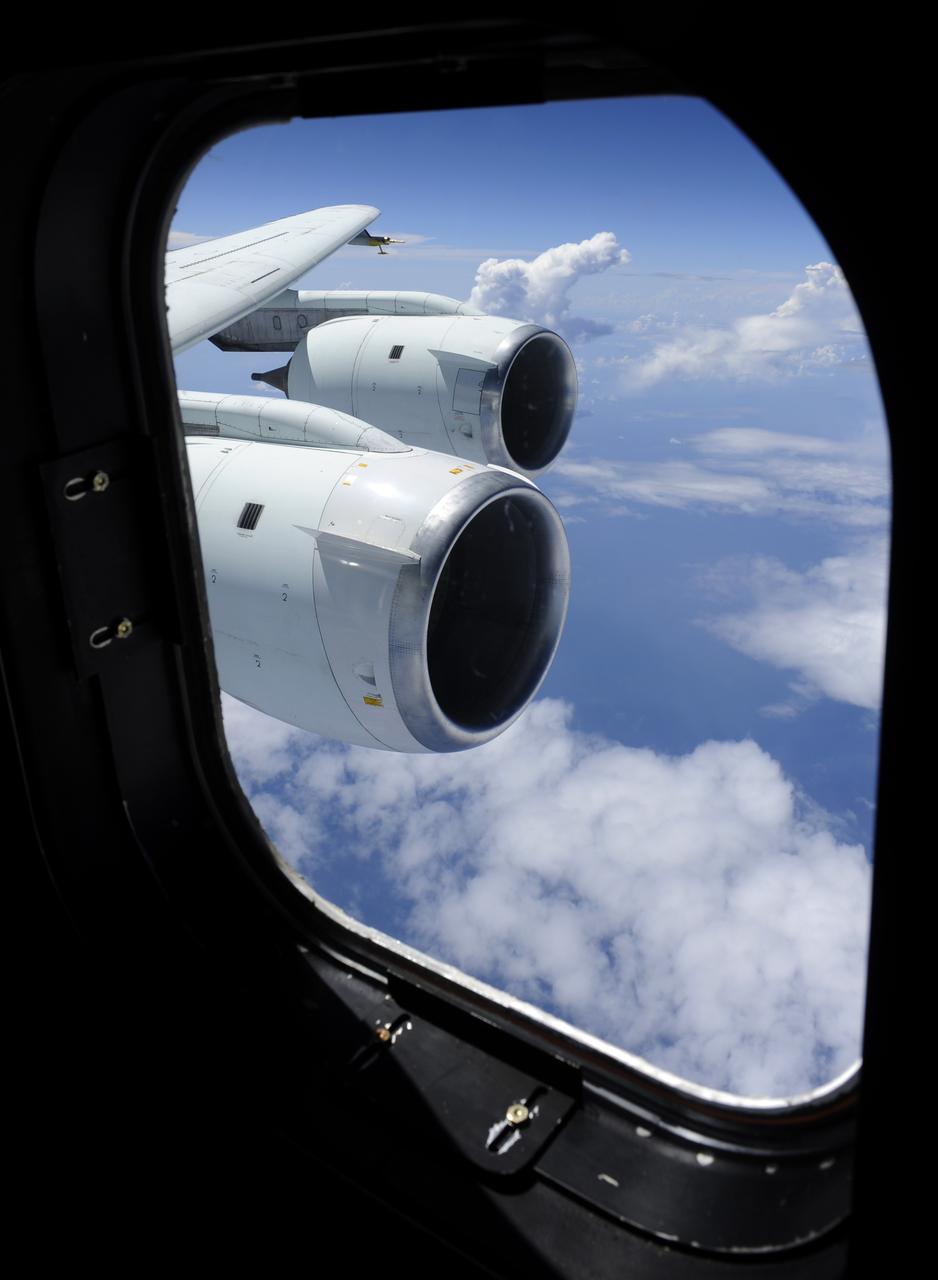
Cloud formations are seen through the window of NASA DC-8 aircraft during a flight, Tuesday, Aug. 17, 2010, over the Gulf of Mexico where researchers were studying weather patterns as part of trhe Genesis and Rapid Intensification Processes (GRIP) experiment, a NASA Earth science field experiment in 2010 that is being conducted to better understand how tropical storms form and develop into major hurricanes. Photo Credit: (NASA/Paul E. Alers)
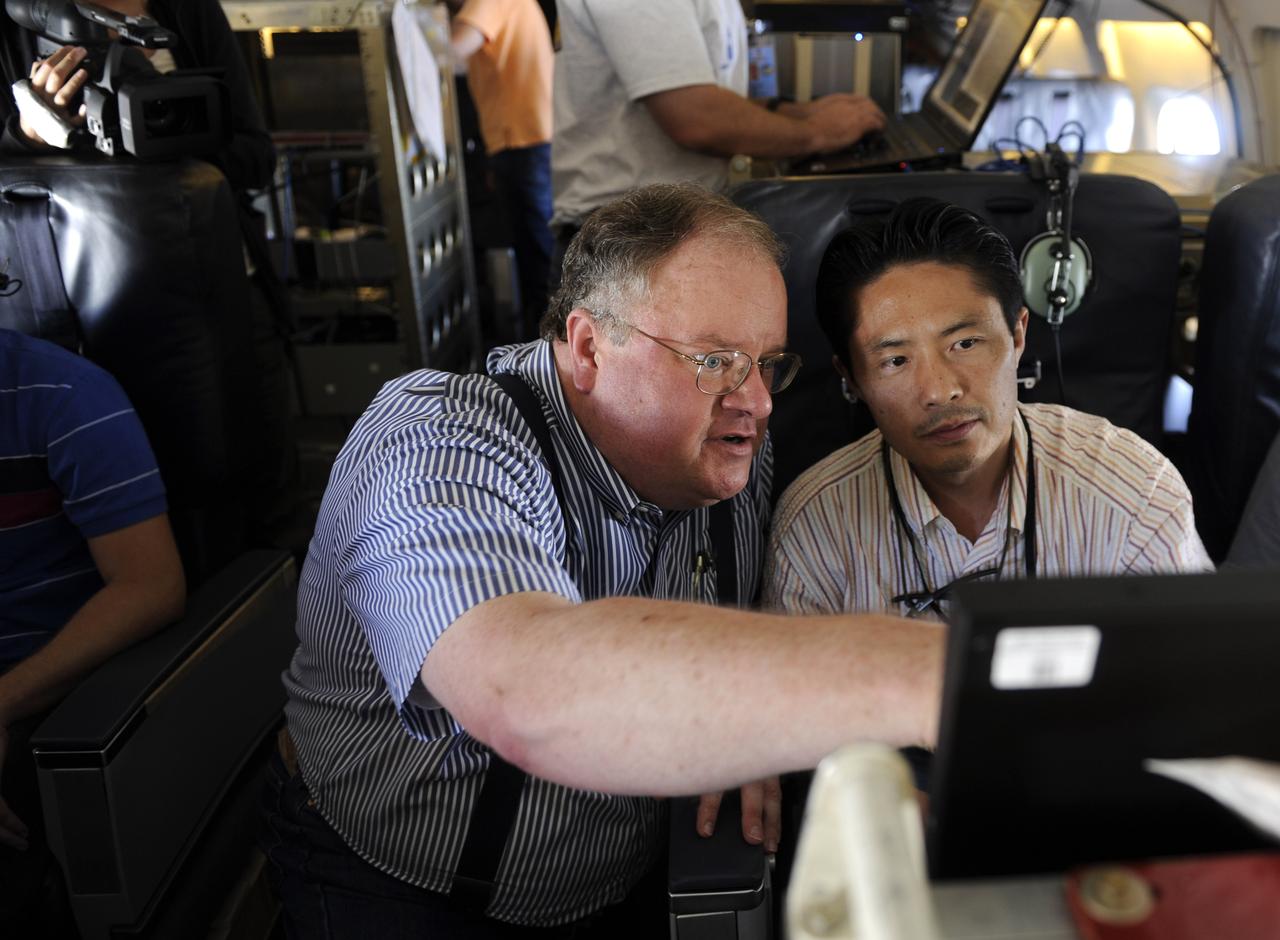
Michael Kavaya, of the NASA Langley Research Center, a Principal Investigator for the DAWN experiment, looks over data with Jeffrey Beyon during a flight of the NASA DC-8, Tuesday, Aug. 17, 2010, in the Gulf of Mexico. The DAWN experiment, also known as the Doppler Aerosol Wind Lidar, is one of many experiments supporting the Genesis and Rapid Intensification Processes (GRIP) experiment, a NASA Earth science field experiment in 2010 that is being conducted to better understand how tropical storms form and develop into major hurricanes. Photo Credit: (NASA/Paul E. Alers)
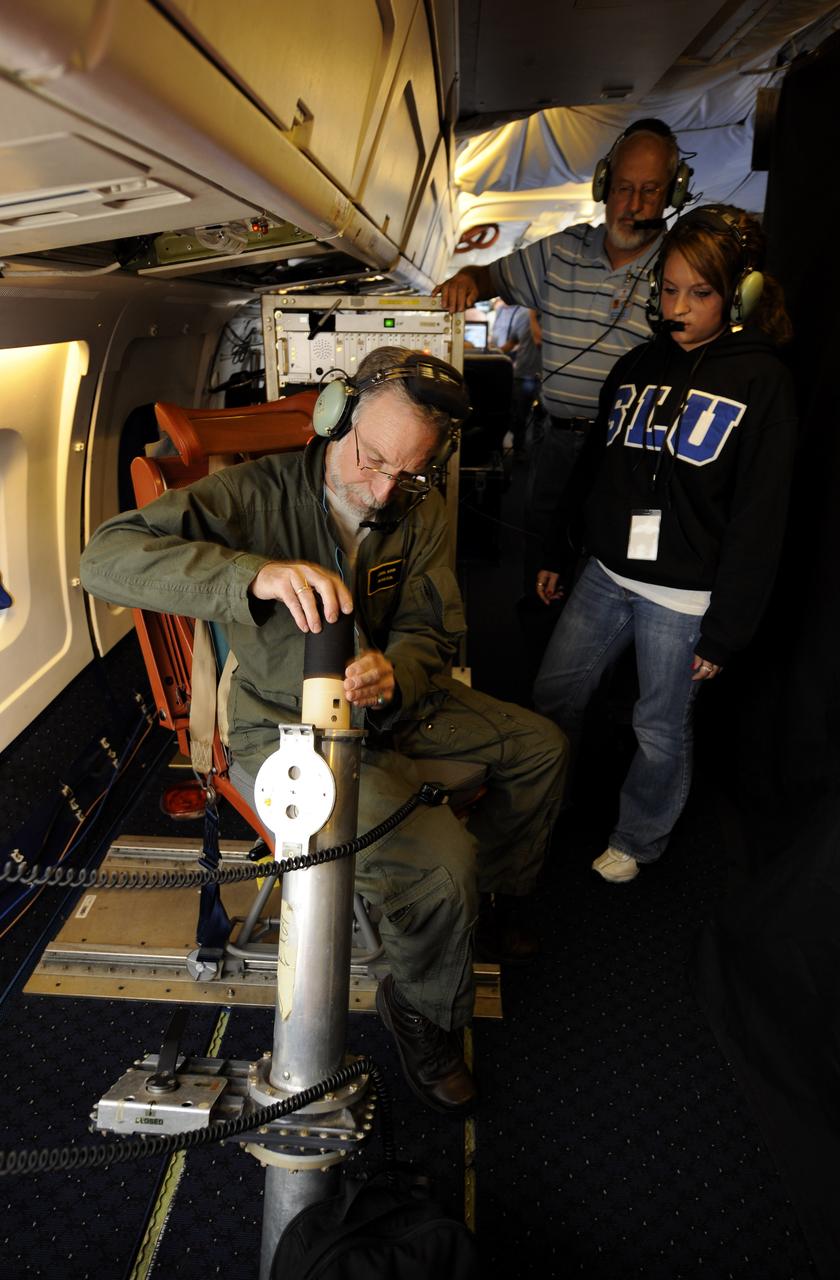
Errol Korn, seated left, deploys a dropsonde experiment over the Gulf of Mexico during a flight aboard the NASA DC-8 as Janel Thomas, a University of Maryland Baltimore County (UMBC) graduate student, and Bob Pasken, look on , Tuesday, Aug. 17, 2010. The Genesis and Rapid Intensification Processes (GRIP) experiment is a NASA Earth science field experiment in 2010 that is being conducted to better understand how tropical storms form and develop into major hurricanes. Photo Credit: (NASA/Paul E. Alers)
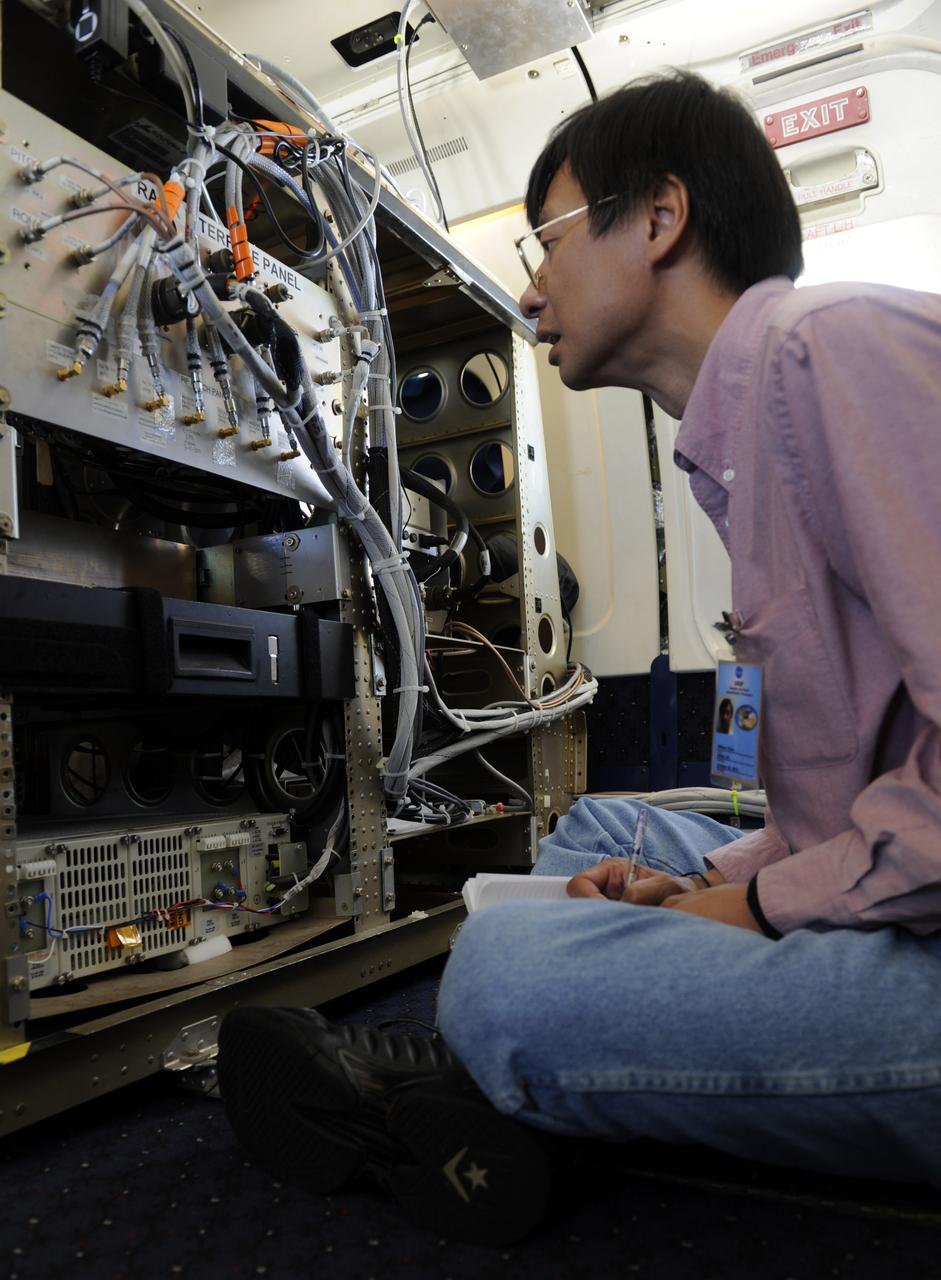
An unidentified researcher looks over the wiring connecting the Airbrorne Precipitation Radar (APR-2) during a flight aboard the NASA DC-8 aircraft, Tuesday, Aug. 17, 2010, over the Gulf of Mexico. Scientists taking part in the Genesis and Rapid Intensification Processes (GRIP) experiment, a NASA Earth science field experiment in 2010 that is being conducted to better understand how tropical storms form and develop into major hurricanes, flew out over a weather pattern Tuesday to begin their research. Photo Credit: (NASA/Paul E. Alers)
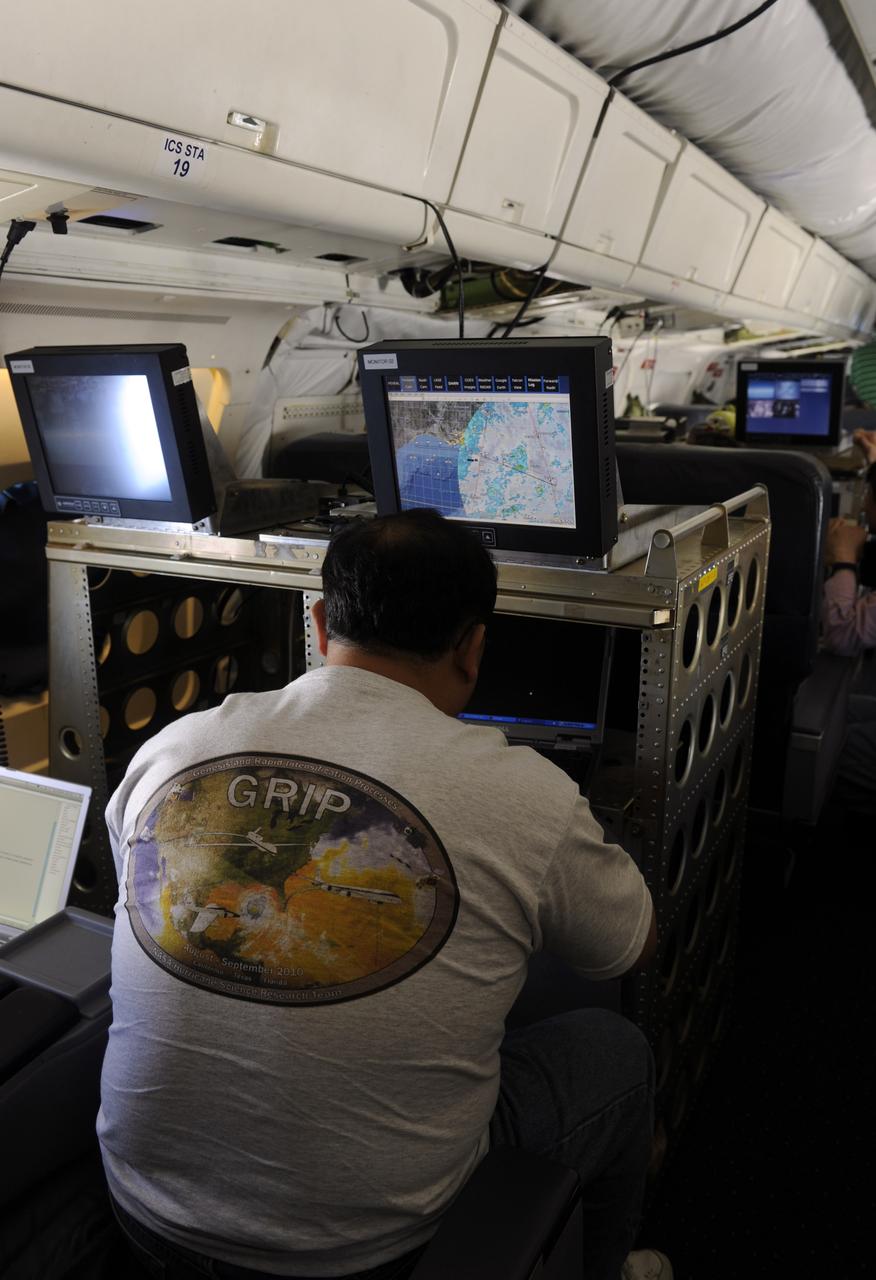
A researcher with the Genesis and Rapid Intensification Processes (GRIP) experiment works aboard the NASA DC-8 during a flight over the Gulf of Mexico, Tuesday, Aug. 17, 2010. GRIP is a NASA Earth science field experiment in 2010 that is being conducted to better understand how tropical storms form and develop into major hurricanes. Photo Credit: (NASA/Paul E. Alers)
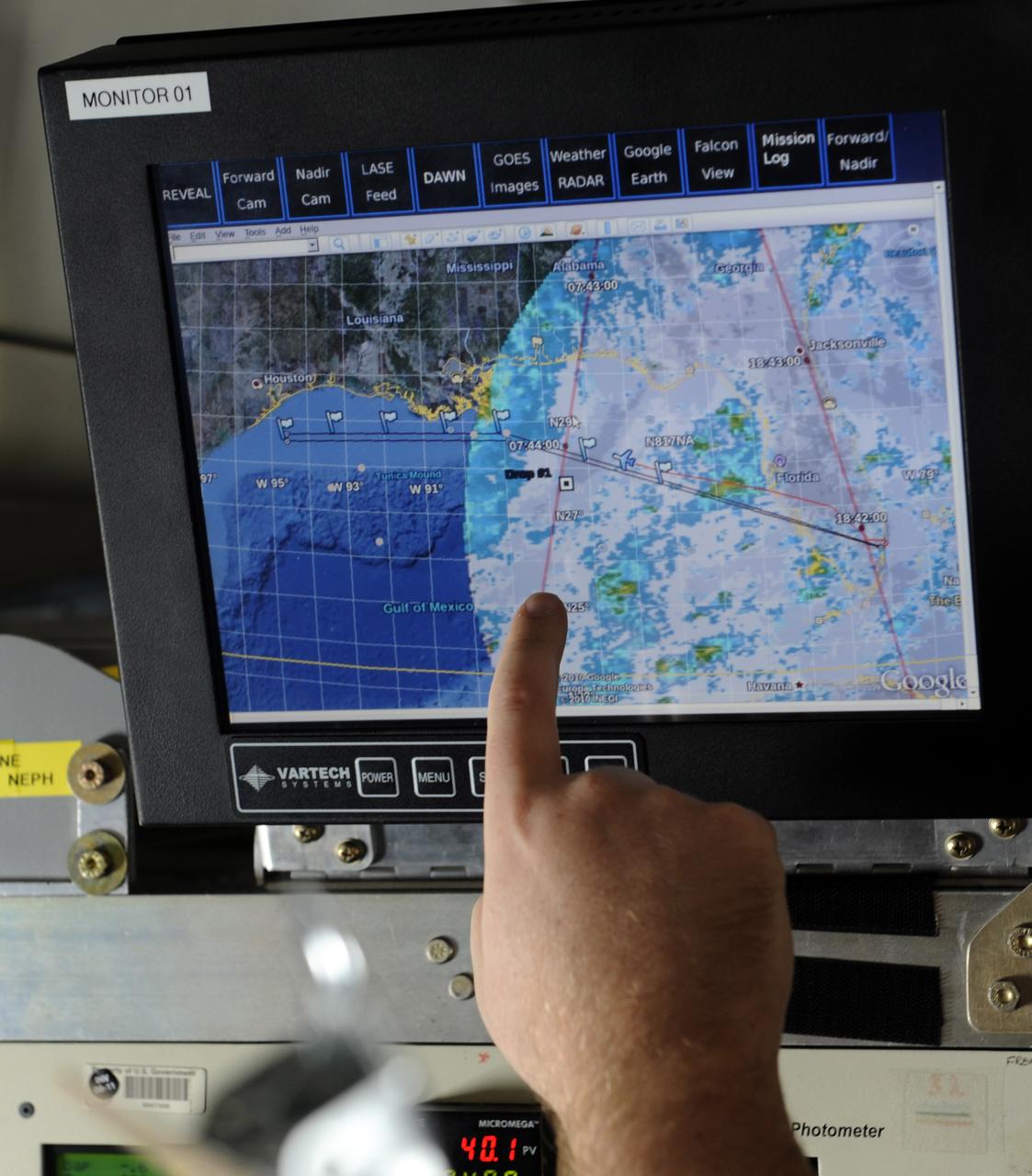
A researcher points out the trajectory of a weather pattern on a computer monitor during a flight aboard the NASA DC-8 aircraft, Tuesday, Aug. 17, 2010, over the Gulf of Mexico. Sceintists and researchers flew Tuesday to study weather as part of the Genesis and Rapid Intensification Processes (GRIP) experiment is a NASA Earth science field experiment in 2010 that is being conducted to better understand how tropical storms form and develop into major hurricanes. Photo Credit: (NASA/Paul E. Alers)
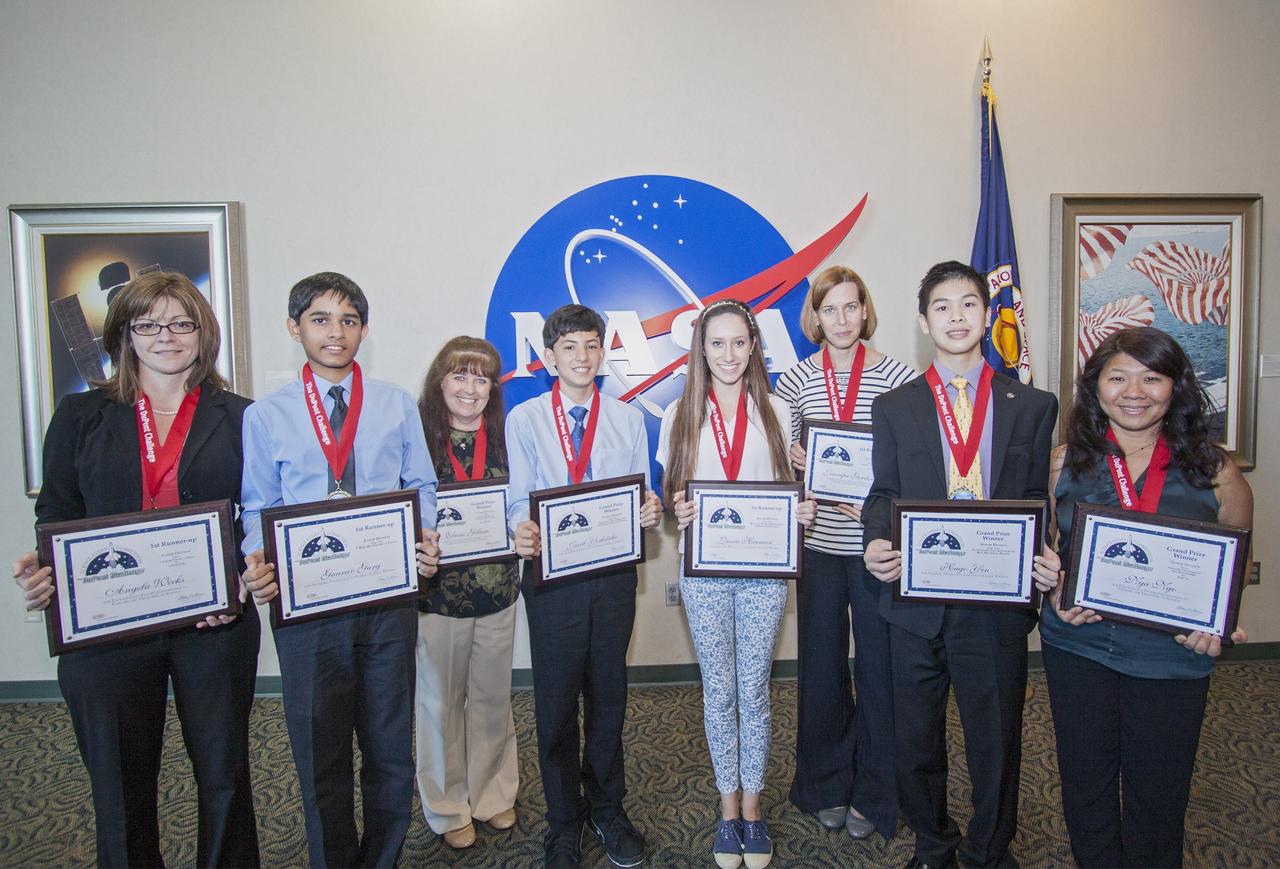
CAPE CANAVERAL, Fla. - The winning students and their teachers of the 2013 DuPont Challenge Science Essay Competition show off their awards after a ceremony at the Kennedy Space Center Visitor Complex in Florida. From left are sponsoring teacher Angela Weeks and Junior Division first runner-up Gaurav Garg of Beckendorff Junior High in Katy, Texas sponsoring teacher Elaine Gillum and Senior Division grand prize winner Jacob Yoshitake of Marshall Middle School in San Diego, Calif. Senior Division first runner-up Laura Herman and sponsoring teacher Jennifer Gordinier of Pine Crest School in Fort Lauderdale, Fla. and Senior Division grand prize awardee Hugo Yen and sponsoring teacher Nga Ngo of Troy High in Fullerton, Calif. The challenge, now in its 27th year, reaches out to students from grades seven through 12 from all 50 states and Canada. More than 200,000 students entered the competition. The DuPont Challenge aims to inspire students to excel and achieve in scientific writing and pursue careers in science, technology, engineering and mathematics STEM. The challenge honors space shuttle Challenger's STS-51L crew members who gave their lives while furthering the cause of exploration and discovery. For more information on the challenge, go to http://thechallenge.dupont.com/sponsors/nasa.php.
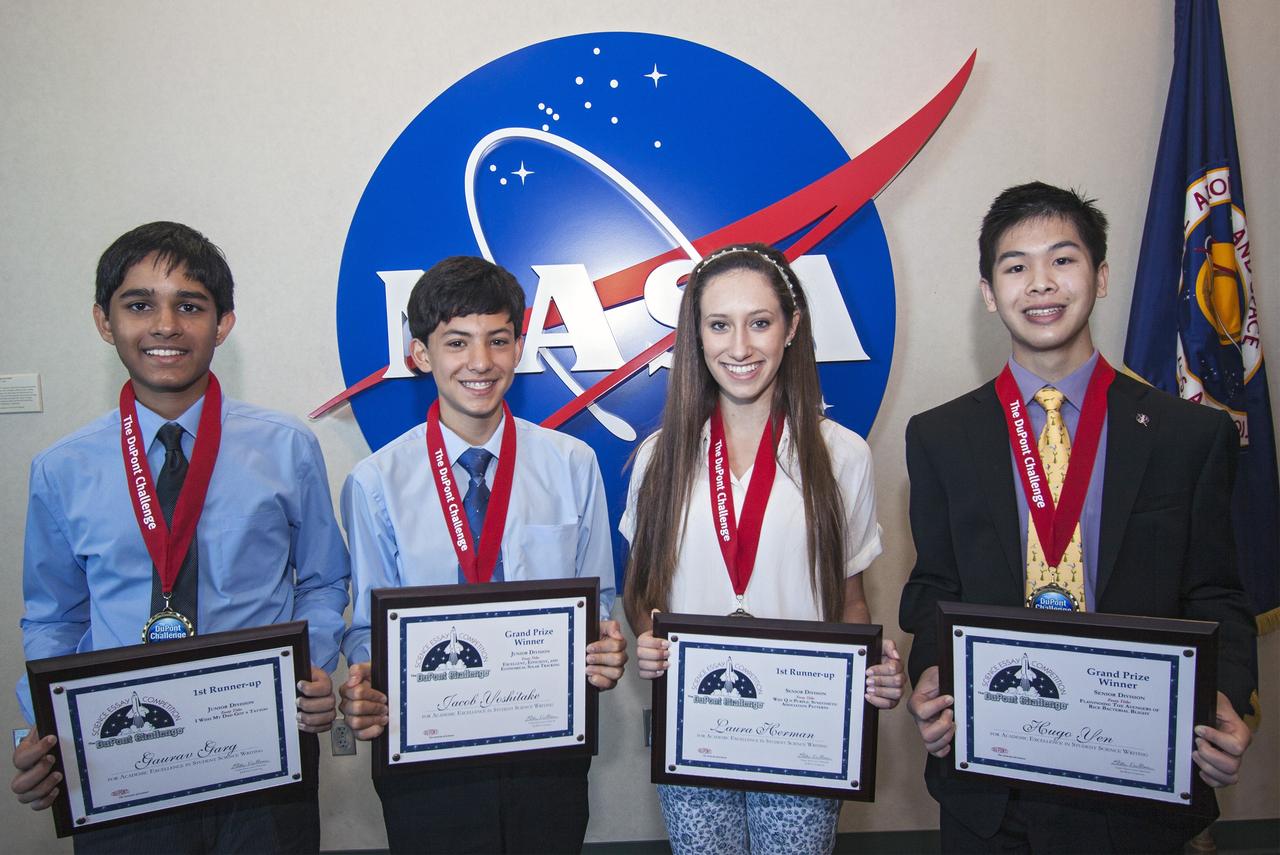
CAPE CANAVERAL, Fla. – The winning students of the 2013 DuPont Challenge Science Essay Competition show off their awards after a ceremony at the Kennedy Space Center Visitor Complex in Florida. From left are Junior Division first runner-up Gaurav Garg of Beckendorff Junior High in Katy, Texas Senior Division grand prize winner Jacob Yoshitake of Marshall Middle School in San Diego, Calif. Senior Division first runner-up Laura Herman of Pine Crest School in Fort Lauderdale, Fla. and Senior Division grand prize awardee Hugo Yen of Troy High in Fullerton, Calif. and Marc Doyle, Dupont's global marketing and product director. The challenge, now in its 27th year, reaches out to students from grades seven through 12 from all 50 states and Canada. More than 200,000 students entered the competition. The DuPont Challenge aims to inspire students to excel and achieve in scientific writing and pursue careers in science, technology, engineering and mathematics STEM. The challenge honors space shuttle Challenger's STS-51L crew members who gave their lives while furthering the cause of exploration and discovery. For more information on the challenge, go to http://thechallenge.dupont.com/sponsors/nasa.php.
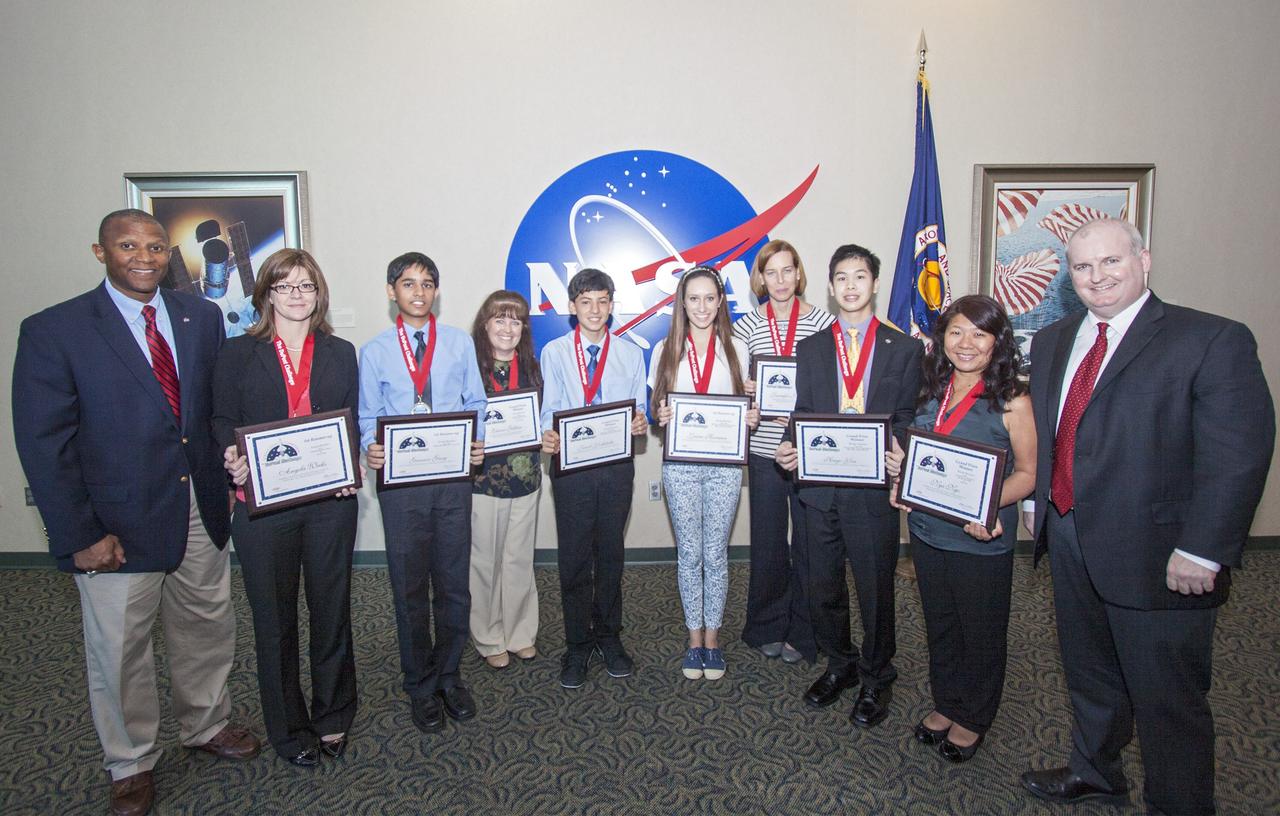
CAPE CANAVERAL, Fla. - The winning students and their teachers of the 2013 DuPont Challenge Science Essay Competition show off their awards after a ceremony at the Kennedy Space Center Visitor Complex in Florida. From left are, Kelvin Manning, the center's associate deputy director sponsoring teacher Angela Weeks and Junior Division first runner-up Gaurav Garg of Beckendorff Junior High in Katy, Texas sponsoring teacher Elaine Gillum and Senior Division grand prize winner Jacob Yoshitake of Marshall Middle School in San Diego, Calif. Senior Division first runner-up Laura Herman and sponsoring teacher Jennifer Gordinier of Pine Crest School in Fort Lauderdale, Fla. and Senior Division grand prize awardee Hugo Yen and sponsoring teacher Nga Ngo of Troy High in Fullerton, Calif. The challenge, now in its 27th year, reaches out to students from grades seven through 12 from all 50 states and Canada. More than 200,000 students entered the competition. The DuPont Challenge aims to inspire students to excel and achieve in scientific writing and pursue careers in science, technology, engineering and mathematics STEM. The challenge honors space shuttle Challenger's STS-51L crew members who gave their lives while furthering the cause of exploration and discovery. For more information on the challenge, go to http://thechallenge.dupont.com/sponsors/nasa.php.
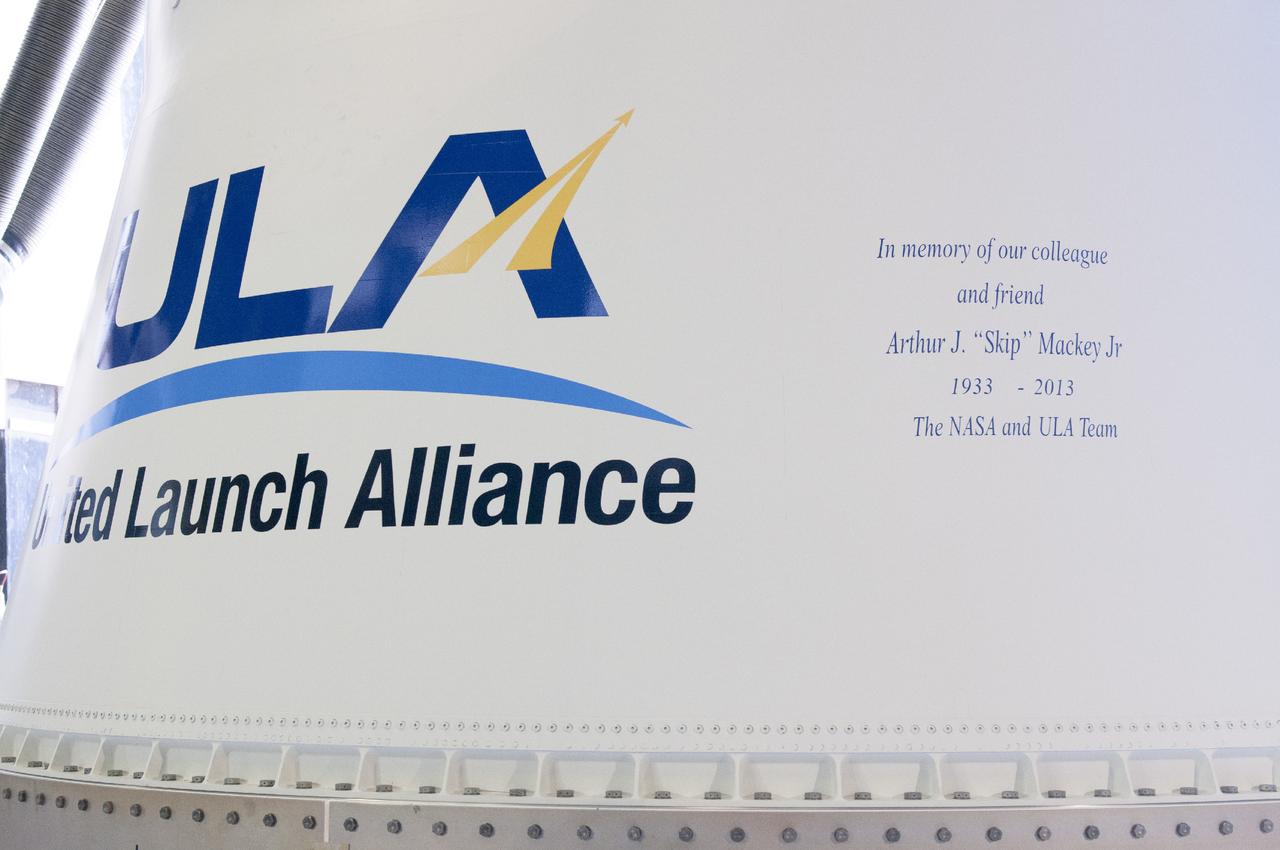
CAPE CANAVERAL, Fla. – This memorial message was added to the Atlas V rocket for NASA's Tracking and Data Relay Satellite, or TDRS-L, spacecraft being prepared for launch from Cape Canaveral Air Force Station's Launch Complex 41. Arthur J. "Skip" Mackey Jr. was the “Voice of NASA” during the 1960s, 1970s and early 1980s for flight commentary after liftoff for expendable vehicles launched from Cape Canaveral. Mackey served as branch chief for Telemetry and Communications at Hangar AE in the agency’s Expendable Launch Vehicle Program and then the Launch Services Program for 39 years. He died in Fort Lauderdale, Fla., on Nov. 19, 2013. The TDRS-L spacecraft is the second of three new satellites designed to ensure vital operational continuity for NASA by expanding the lifespan of the Tracking and Data Relay Satellite System TDRSS fleet, which consists of eight satellites in geosynchronous orbit. The spacecraft provide tracking, telemetry, command and high bandwidth data return services for numerous science and human exploration missions orbiting Earth. These include NASA's Hubble Space Telescope and the International Space Station. TDRS-L has a high-performance solar panel designed for more spacecraft power to meet the growing S-band communications requirements. TDRSS is one of NASA Space Communication and Navigation’s SCaN three networks providing space communications to NASA’s missions. For more information more about TDRS-L, visit: http://www.nasa.gov/tdrs To learn more about SCaN, visit: www.nasa.gov/scan For more on "Skip" Mackey go to: http://www.nasa.gov/content/skip-mackey-remembered-by-colleagues-as-voice-of-nasa/ Image credit: United Launch Alliance
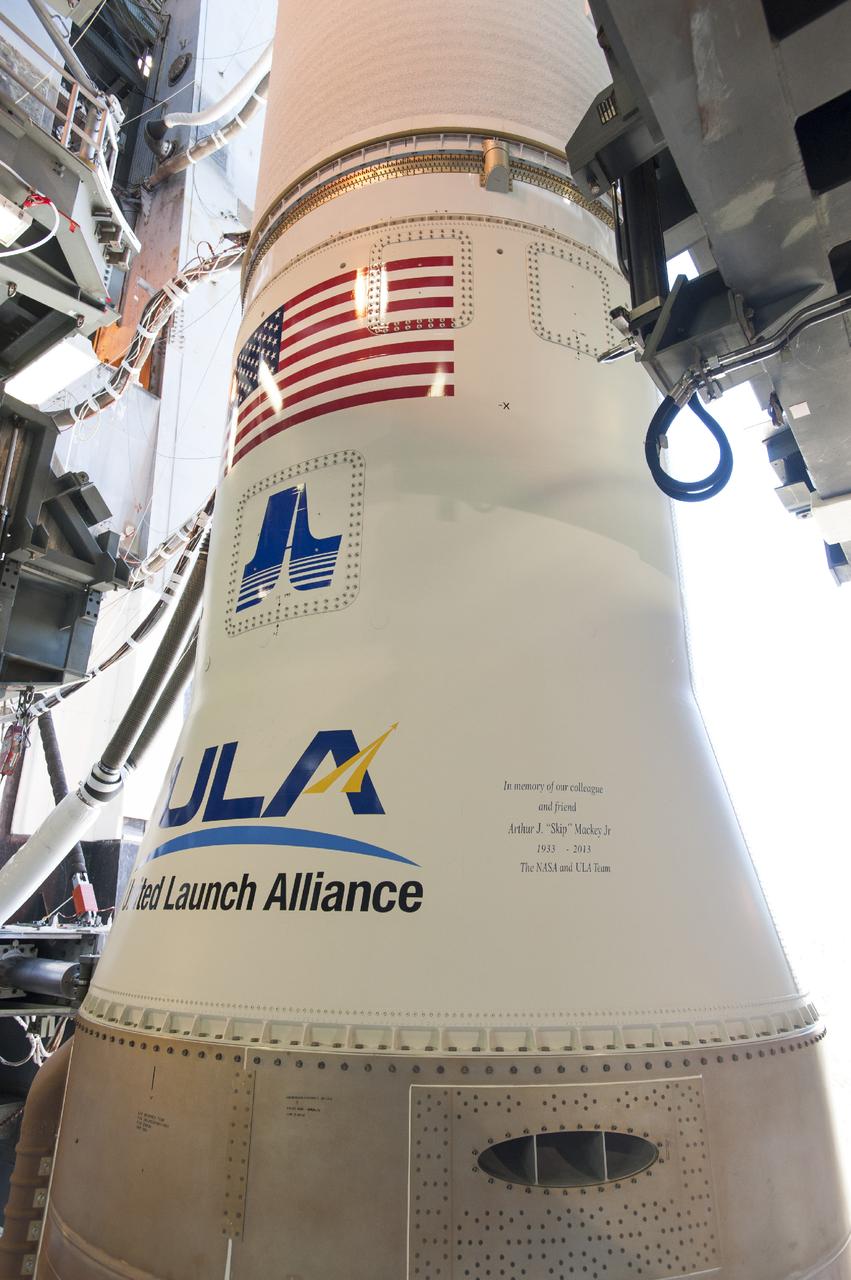
CAPE CANAVERAL, Fla. – This memorial message was added to the Atlas V rocket for NASA's Tracking and Data Relay Satellite, or TDRS-L, spacecraft being prepared for launch from Cape Canaveral Air Force Station's Launch Complex 41. Arthur J. "Skip" Mackey Jr. was the “Voice of NASA” during the 1960s, 1970s and early 1980s for flight commentary after liftoff for expendable vehicles launched from Cape Canaveral. Mackey served as branch chief for Telemetry and Communications at Hangar AE in the agency’s Expendable Launch Vehicle Program and then the Launch Services Program for 39 years. He died in Fort Lauderdale, Fla., on Nov. 19, 2013. The TDRS-L spacecraft is the second of three new satellites designed to ensure vital operational continuity for NASA by expanding the lifespan of the Tracking and Data Relay Satellite System TDRSS fleet, which consists of eight satellites in geosynchronous orbit. The spacecraft provide tracking, telemetry, command and high bandwidth data return services for numerous science and human exploration missions orbiting Earth. These include NASA's Hubble Space Telescope and the International Space Station. TDRS-L has a high-performance solar panel designed for more spacecraft power to meet the growing S-band communications requirements. TDRSS is one of NASA Space Communication and Navigation’s SCaN three networks providing space communications to NASA’s missions. For more information more about TDRS-L, visit: http://www.nasa.gov/tdrs To learn more about SCaN, visit: www.nasa.gov/scan For more on "Skip" Mackey go to: http://www.nasa.gov/content/skip-mackey-remembered-by-colleagues-as-voice-of-nasa/ Image credit: United Launch Alliance
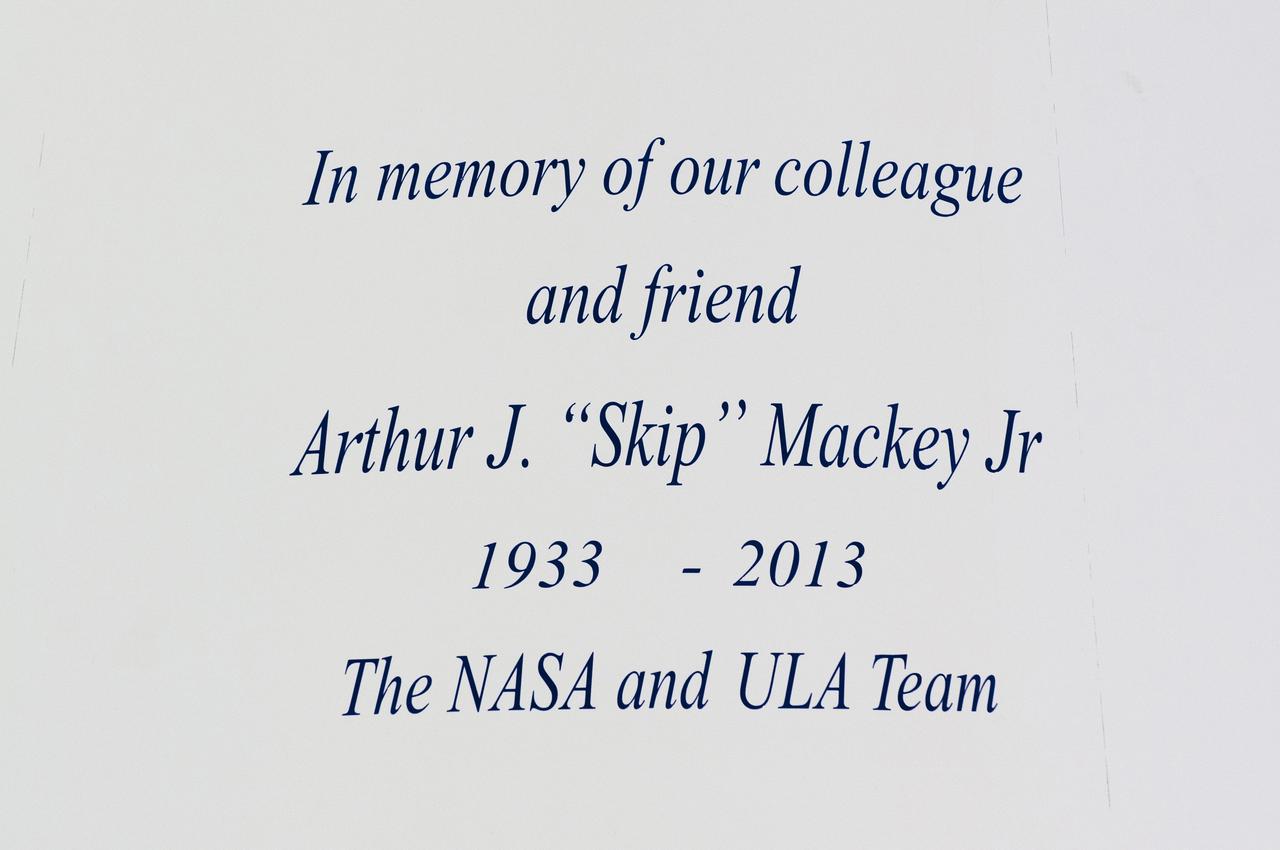
CAPE CANAVERAL, Fla. – This memorial message was added to the Atlas V rocket for NASA's Tracking and Data Relay Satellite, or TDRS-L, spacecraft being prepared for launch from Cape Canaveral Air Force Station's Launch Complex 41. Arthur J. "Skip" Mackey Jr. was the “Voice of NASA” during the 1960s, 1970s and early 1980s for flight commentary after liftoff for expendable vehicles launched from Cape Canaveral. Mackey served as branch chief for Telemetry and Communications at Hangar AE in the agency’s Expendable Launch Vehicle Program and then the Launch Services Program for 39 years. He died in Fort Lauderdale, Fla., on Nov. 19, 2013. The TDRS-L spacecraft is the second of three new satellites designed to ensure vital operational continuity for NASA by expanding the lifespan of the Tracking and Data Relay Satellite System TDRSS fleet, which consists of eight satellites in geosynchronous orbit. The spacecraft provide tracking, telemetry, command and high bandwidth data return services for numerous science and human exploration missions orbiting Earth. These include NASA's Hubble Space Telescope and the International Space Station. TDRS-L has a high-performance solar panel designed for more spacecraft power to meet the growing S-band communications requirements. TDRSS is one of NASA Space Communication and Navigation’s SCaN three networks providing space communications to NASA’s missions. For more information more about TDRS-L, visit: http://www.nasa.gov/tdrs To learn more about SCaN, visit: www.nasa.gov/scan For more on "Skip" Mackey go to: http://www.nasa.gov/content/skip-mackey-remembered-by-colleagues-as-voice-of-nasa/ Image credit: United Launch Alliance
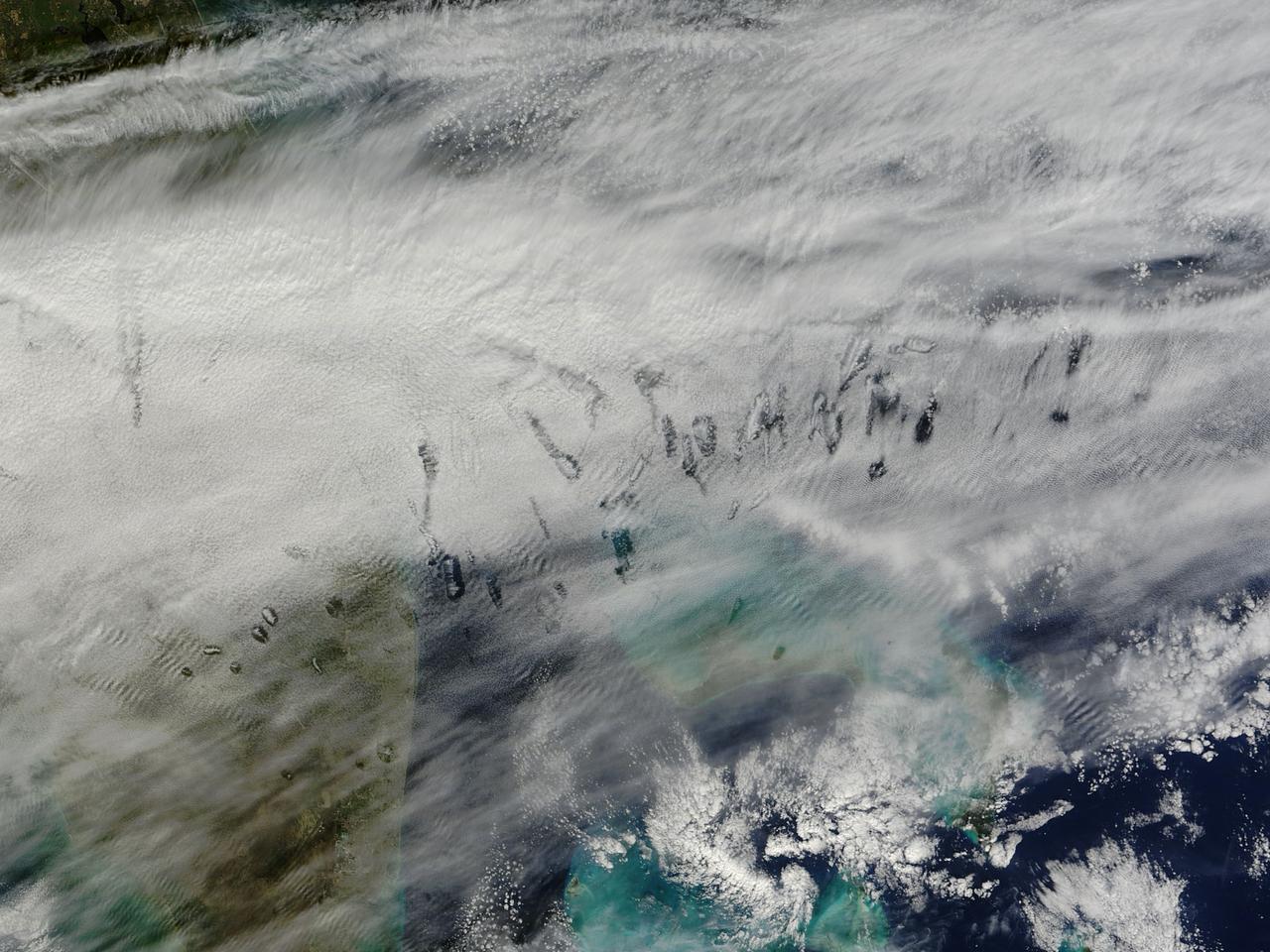
In elementary school, students learn that water freezes at 0 degrees Celsius (32 degrees Fahrenheit). That is true most of the time, but there are exceptions to the rule. For instance, water with very few impurities (such as dust or pollution particles, fungal spores, bacteria) can be chilled to much cooler temperatures and still remain liquid—a process known as supercooling. Supercooling may sound exotic, but it occurs pretty routinely in Earth’s atmosphere. Altocumulus clouds, a common type of mid-altitude cloud, are mostly composed of water droplets supercooled to a temperature of about -15 degrees C. Altocumulus clouds with supercooled tops cover about 8 percent of Earth’s surface at any given time. Supercooled water droplets play a key role in the formation of hole-punch and canal clouds, the distinctive clouds shown in these satellite images. Hole-punch clouds usually appear as circular gaps in decks of altocumulus clouds; canal clouds look similar but the gaps are longer and thinner. This true-color image shows hole-punch and canal clouds off the coast of Florida, as observed on December 12, 2014, by the Moderate Resolution Imaging Spectroradiometer (MODIS) on NASA’s Terra satellite. Both types of cloud form when aircraft fly through cloud decks rich with supercooled water droplets and produce aerodynamic contrails. Air expands and cools as it moves around the wings and past the propeller, a process known as adiabatic cooling. Air temperatures over jet wings often cool by as much as 20 degrees Celsius, pushing supercooled water droplets to the point of freezing. As ice crystals form, they absorb nearby water droplets. Since ice crystals are relatively heavy, they tend to sink. This triggers tiny bursts of snow or rain that leave gaps in the cloud cover. Whether a cloud formation becomes a hole-punch or canal depends on the thickness of the cloud layer, the air temperature, and the degree of horizontal wind shear. Both descending and ascending aircraft—including jets and propeller planes—can trigger hole-punch and canal clouds. The nearest major airports in the images above include Miami International, Fort Lauderdale International, Grand Bahama International, and Palm Beach International. Credit: NASA/GSFC/Jeff Schmaltz/MODIS Land Rapid Response Team <b><a href="http://www.nasa.gov/audience/formedia/features/MP_Photo_Guidelines.html" rel="nofollow">NASA image use policy.</a></b> <b><a href="http://www.nasa.gov/centers/goddard/home/index.html" rel="nofollow">NASA Goddard Space Flight Center</a></b> enables NASA’s mission through four scientific endeavors: Earth Science, Heliophysics, Solar System Exploration, and Astrophysics. Goddard plays a leading role in NASA’s accomplishments by contributing compelling scientific knowledge to advance the Agency’s mission. <b>Follow us on <a href="http://twitter.com/NASAGoddardPix" rel="nofollow">Twitter</a></b> <b>Like us on <a href="http://www.facebook.com/pages/Greenbelt-MD/NASA-Goddard/395013845897?ref=tsd" rel="nofollow">Facebook</a></b> <b>Find us on <a href="http://instagram.com/nasagoddard?vm=grid" rel="nofollow">Instagram</a></b>