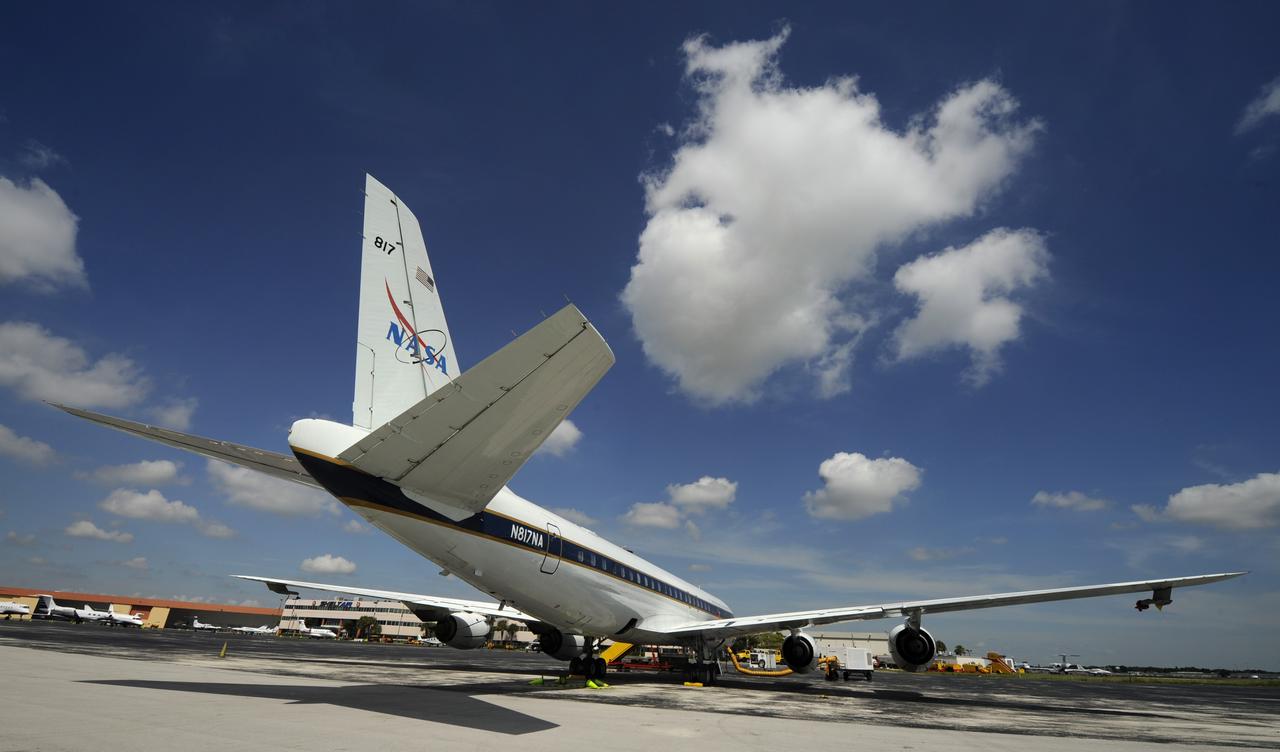
The NASA DC-8 airplane sits on the tarmac, Monday, Aug. 16, 2010, at Fort Lauderdale Hollywood International Airport in Fort Lauderdale, Fla. , as preparations continue for its part in the GRIP experiment. The Genesis and Rapid Intensification Processes (GRIP) experiment is a NASA Earth science field experiment in 2010 that is being conducted to better understand how tropical storms form and develop into major hurricanes. Photo Credit: (NASA/Paul E. Alers)
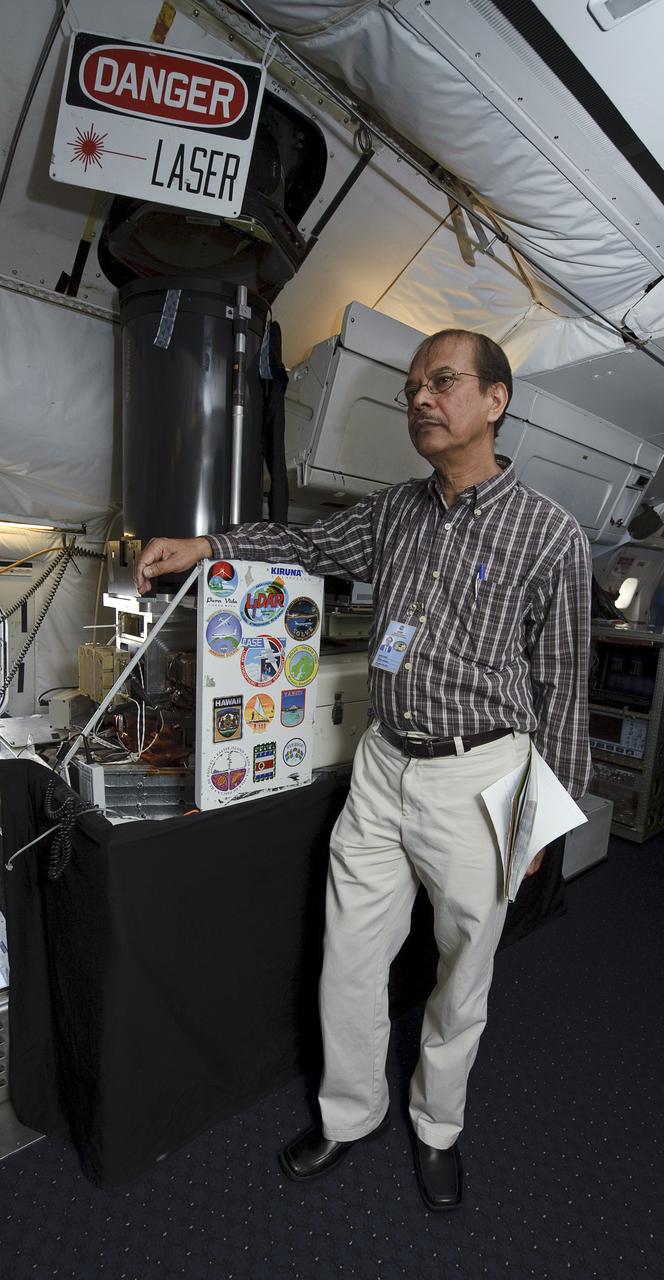
Syed Ismail, from the Langley Research Center, principal investigator for the Lidar Atmospheric Sensing Experiment (LASE) is seen aboard the NASA DC-8 aircraft, Monday, August 16, 2010, at Fort Lauderdale Hollywood International Airport in Fort Lauderdale, Fla. The Genesis and Rapid Intensification Processes (GRIP) experiment is a NASA Earth science field experiment in 2010 that is being conducted to better understand how tropical storms form and develop into major hurricanes. Photo Credit: (NASA/Paul E. Alers)
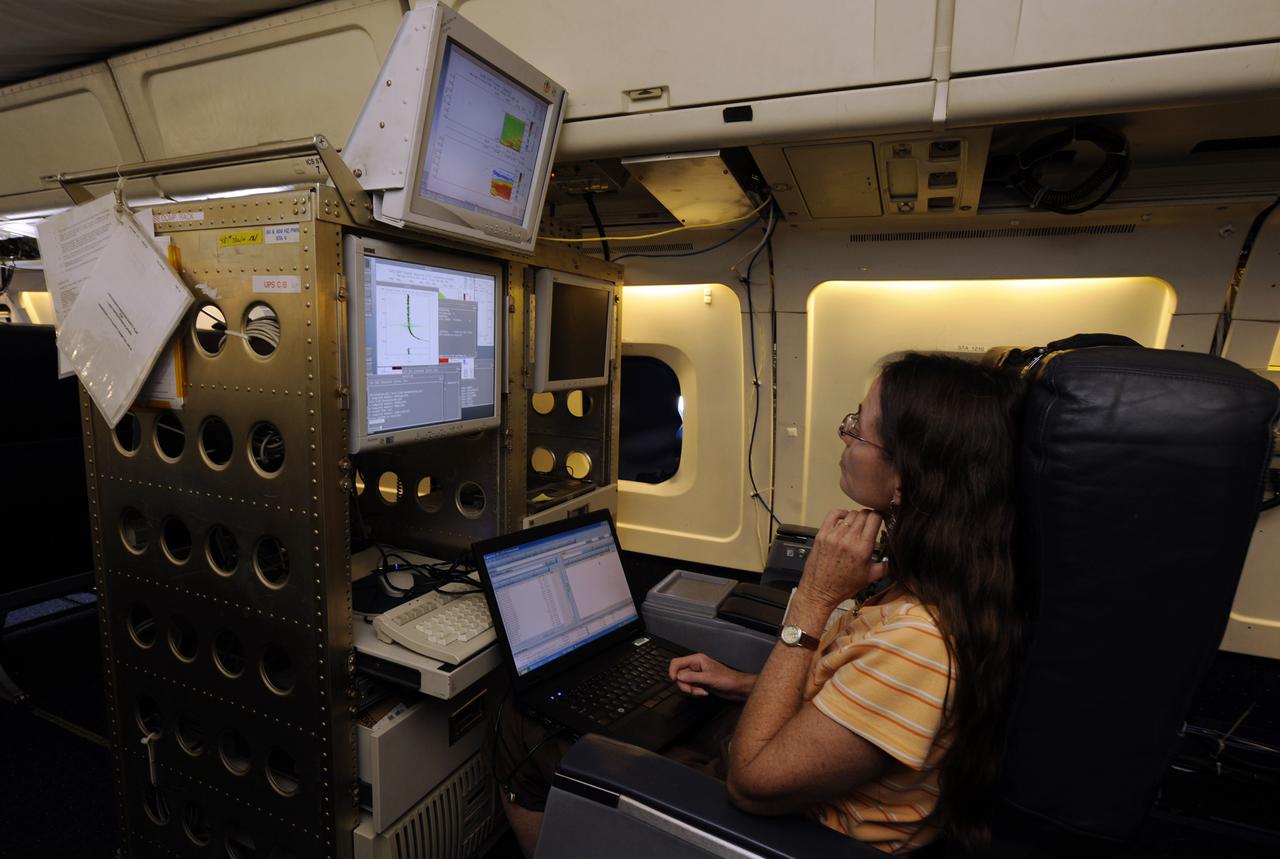
Susan Kool, a researcher from the Langley Research Center, works on monitoring the Lidar Atmospheric Sensing Experiment (LASE) aboard the NASA DC-8 aircraft, Monday, Aug. 16, 2010, at Fort Lauderdale Hollywood International Airport in Fort Lauderdale, Fla. LASE probes the atmosphere using lasers and is part of the Genesis and Rapid Intensification Processes (GRIP) experiment is a NASA Earth science field experiment in 2010 that is being conducted to better understand how tropical storms form and develop into major hurricanes. Photo Credit: (NASA/Paul E. Alers)

Simone Tanelli, a researcher from the Jet Propulsion Laboratory, talks about the Airbrorne Precipitation Radar (APR-2) aboard the NASA DC-8 aircraft, Monday, Aug.16, 2010, at Fort Lauderdale Hollywood International Airport in Fort Lauderdale, Fla. The APR-2, a dual frequency weather radar, is just one of the experiments supporting the Genesis and Rapid Intensification Processes (GRIP) mission, a NASA Earth science field experiment that is being conducted to better understand how tropical storms form and develop into major hurricanes. Photo Credit: (NASA/Paul E. Alers)
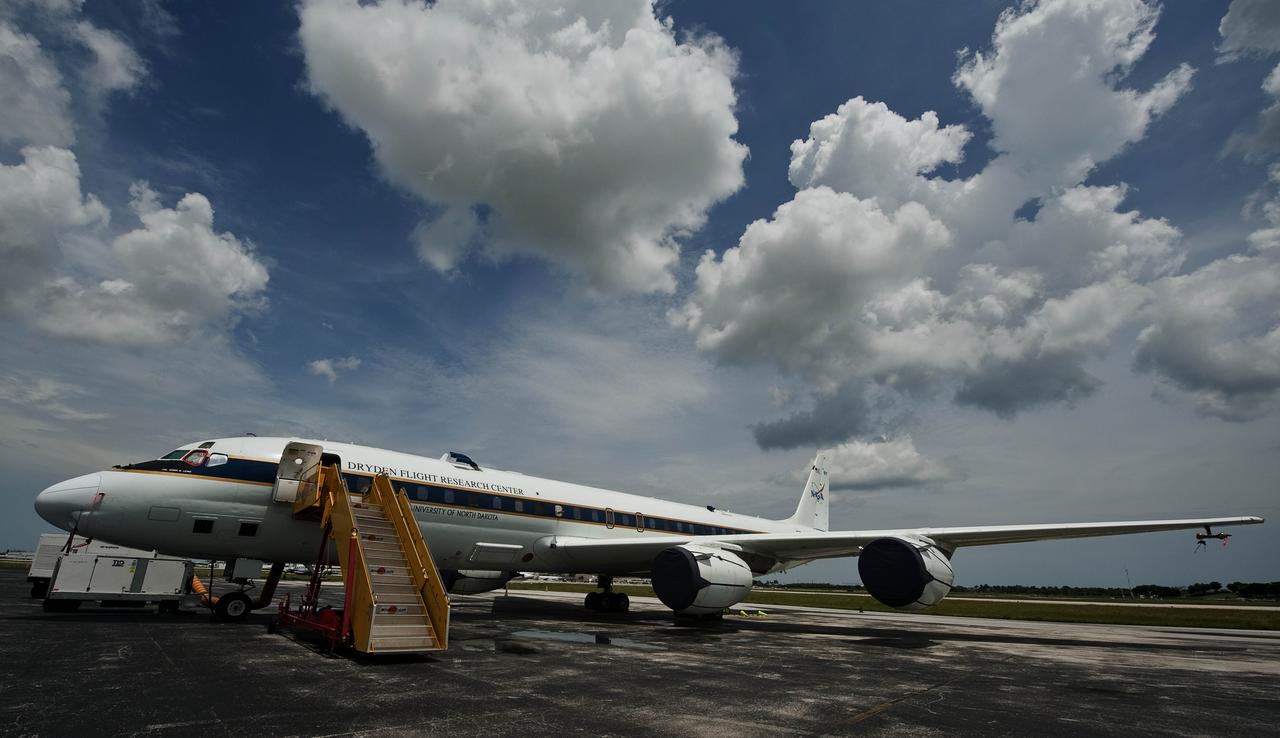
The NASA DC-8 airplane sits on the tarmac, Sunday, Aug. 15, 2010, at Fort Lauderdale International Airport in Fort Lauderdale, Fla. , as preparations continue for its part in the GRIP experiment. The Genesis and Rapid Intensification Processes (GRIP) experiment is a NASA Earth science field experiment in 2010 that is being conducted to better understand how tropical storms form and develop into major hurricanes. Photo Credit: (NASA/Paul E. Alers)
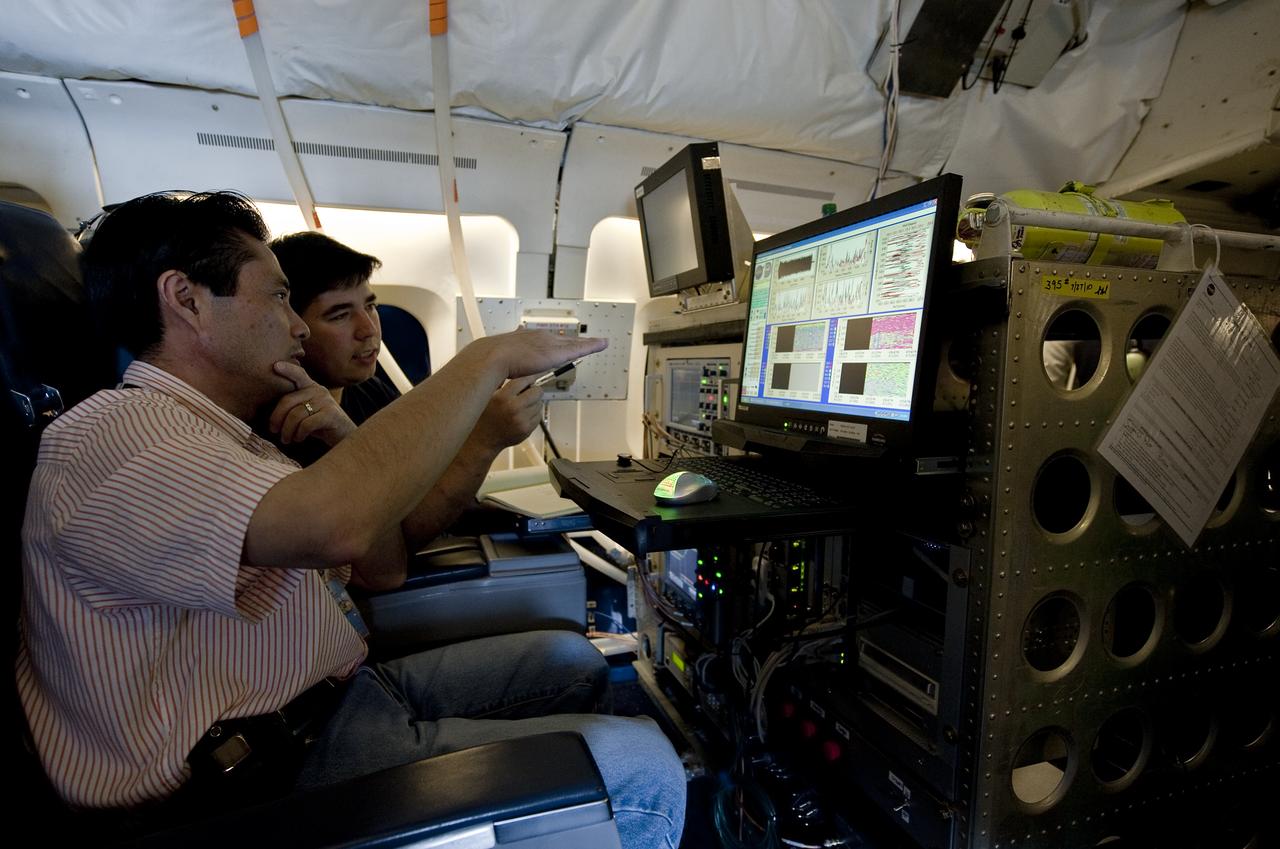
Jeffrey Beyon, left, and Paul Joseph Petzar, right, from NASA's Langley Research Center, work with DAWN Air Data Acquisition and Processing software aboard NASA's DC-8 research aircraft, Sunday, Aug. 15, 2010, in support of the GRIP experiment at Fort Lauderdale International Airport in Fort Lauderdale, Fla. The Genesis and Rapid Intensification Processes (GRIP) experiment is a NASA Earth science field experiment in 2010 that is being conducted to better understand how tropical storms form and develop into major hurricanes. Photo Credit: (NASA/Paul E. Alers)
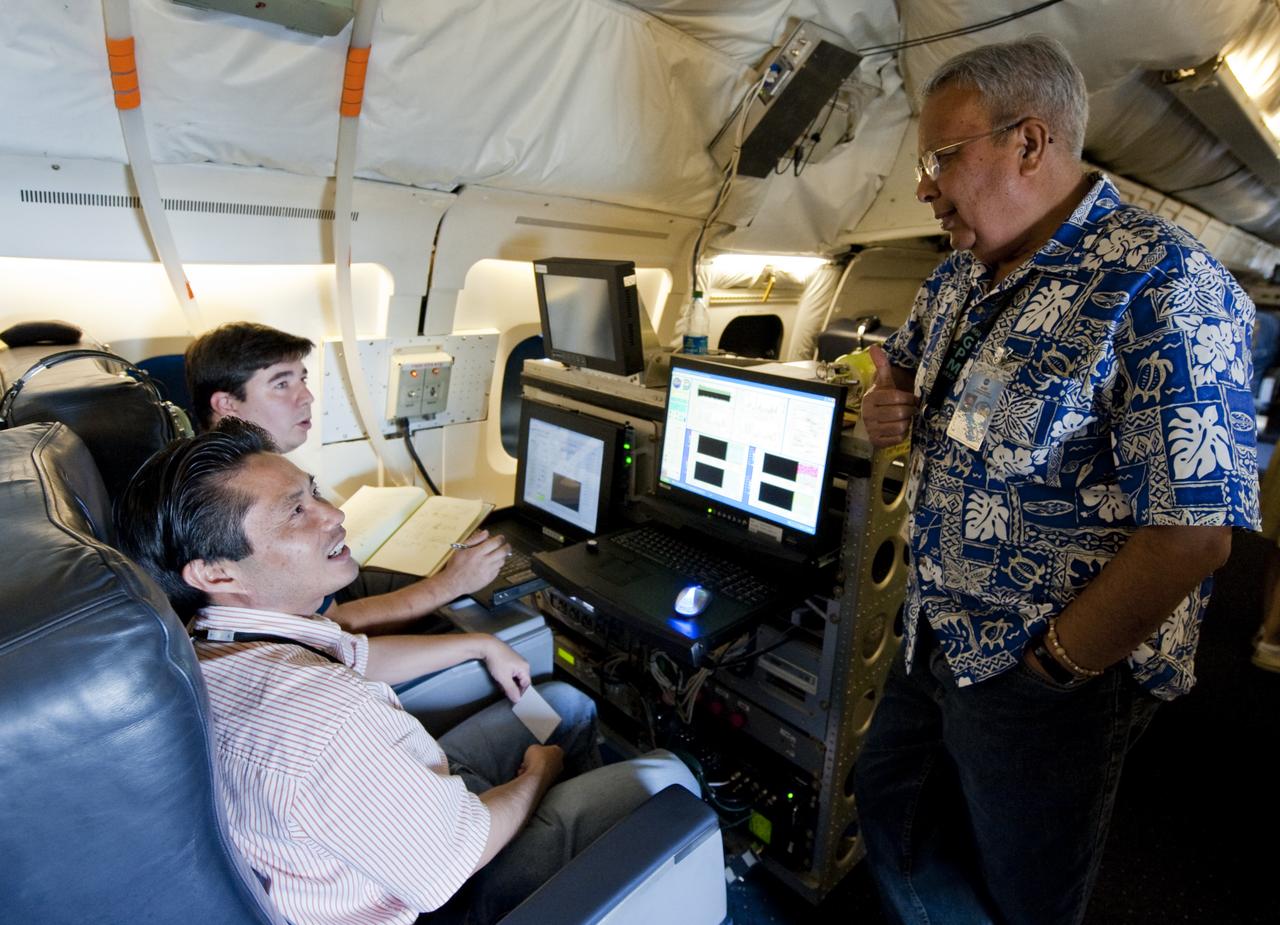
Jeffrey Beyon, lower right, and Paul Joseph Petzar, right, researchers from NASA's Langley Research Center, speak with Ramesh Kakar right, of the NASA Earth Science Division as they work with DAWN Air Data Acquisition and Processing software aboard NASA's DC-8 research aircraft, Sunday, Aug. 15, 2010, in support of the GRIP experiment at Fort Lauderdale International Airport in Fort Lauderdale, Fla. The Genesis and Rapid Intensification Processes (GRIP) experiment is a NASA Earth science field experiment in 2010 that is being conducted to better understand how tropical storms form and develop into major hurricanes. Photo Credit: (NASA/Paul E. Alers)