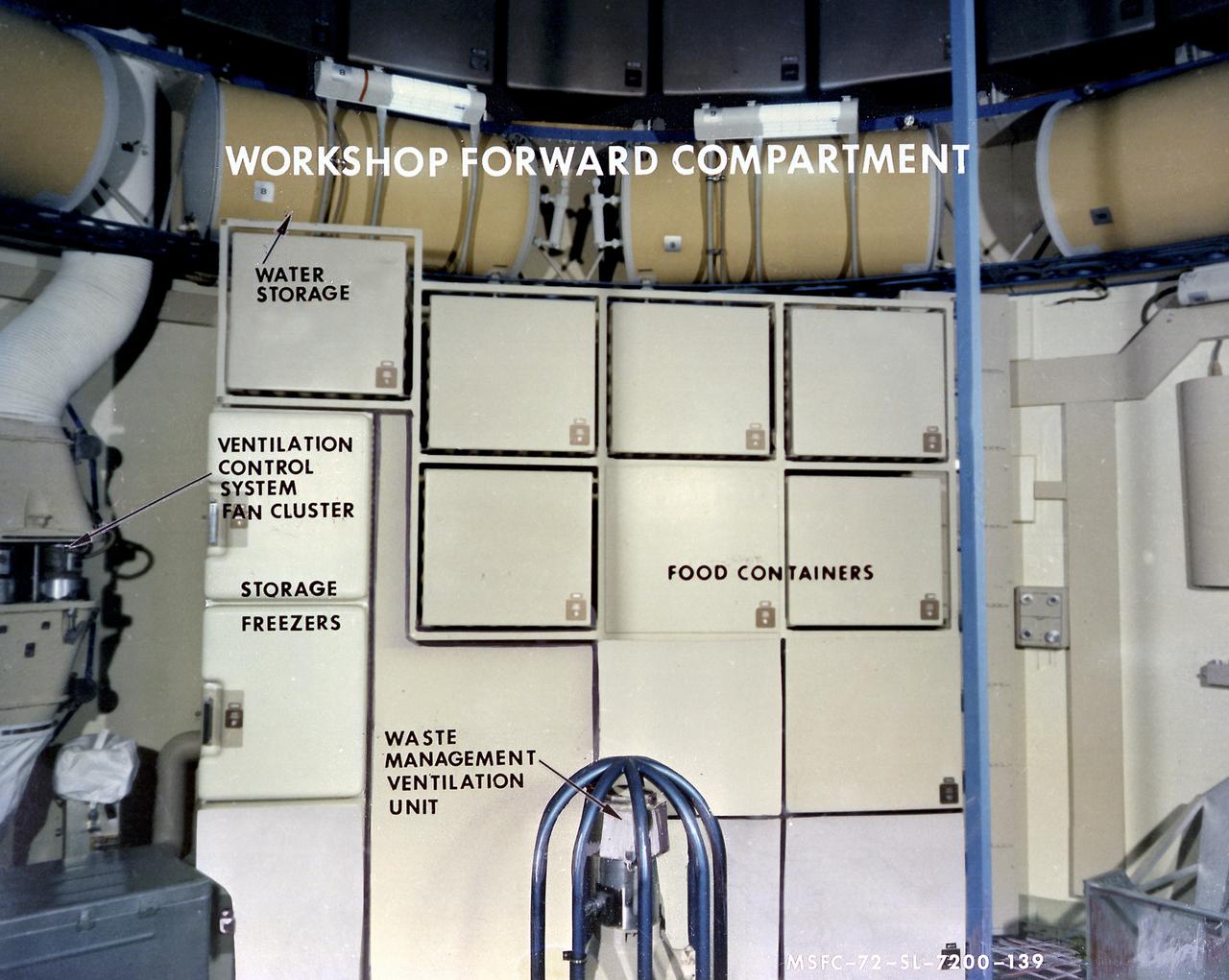
This image, with callouts, depicts the storage area of the forward compartment at the upper level of the Orbital Workshop (OWS). The upper level consisted of a large work area and housed water storage tanks, a food freezer, storage vaults for film, scientific airlocks, mobility and stability experiment equipment, and other experimental equipment.
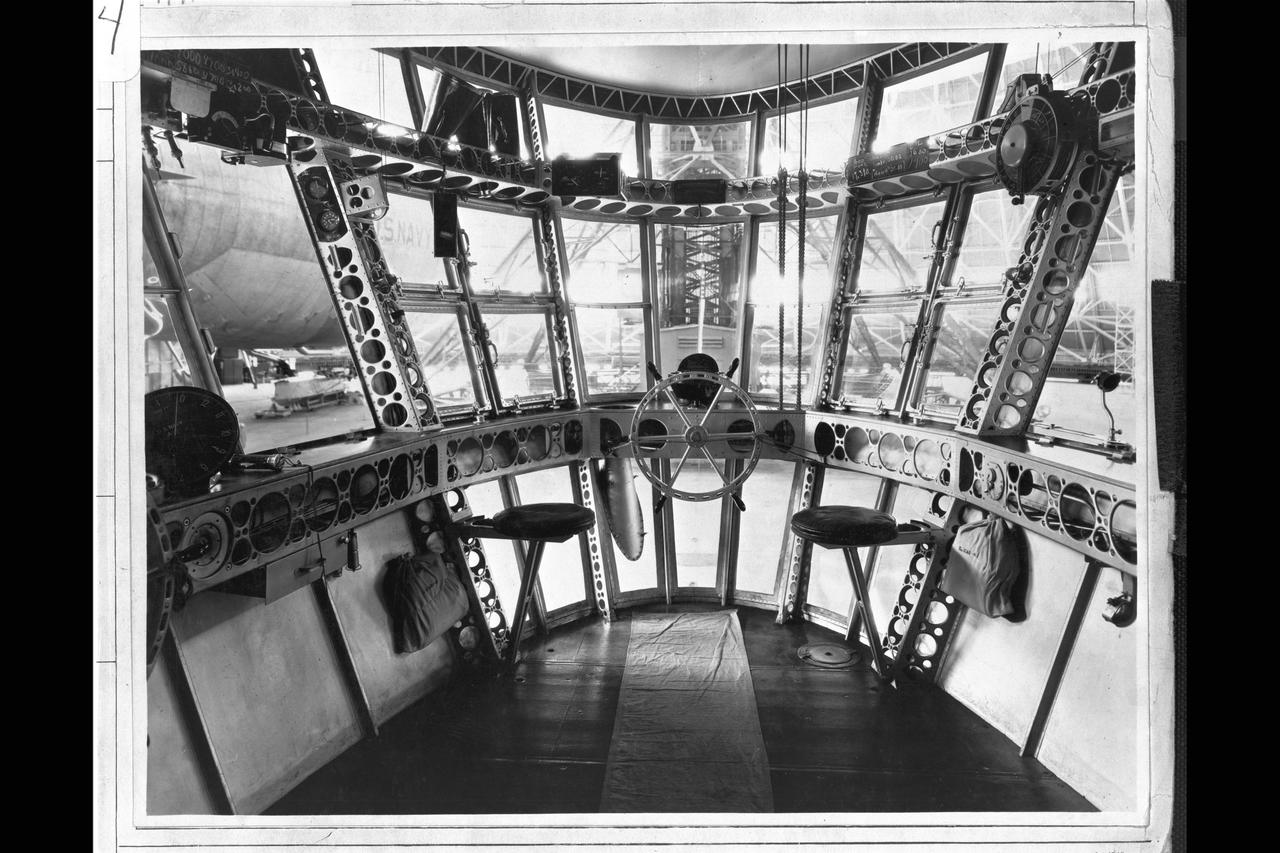
Navy Forward Compartment of control car, USS Macon at NAS Sunnyvale, Mt. View CA
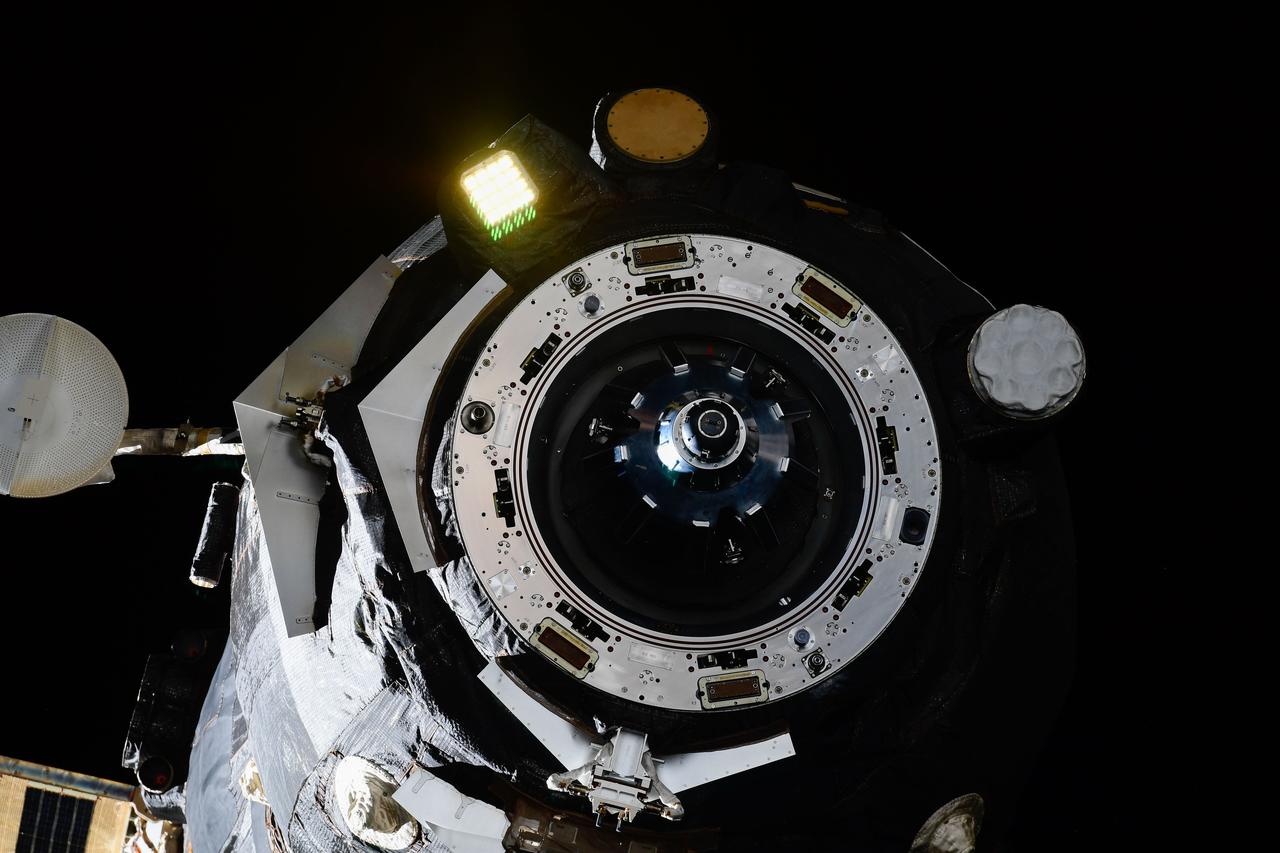
iss063e041198 (July 8, 2020) --- The forward end of the Progress 74 resupply ship from Roscosmos is pictured shortly after it undocked from the Pirs docking compartment completing a seven-month stay at the International Space Station.
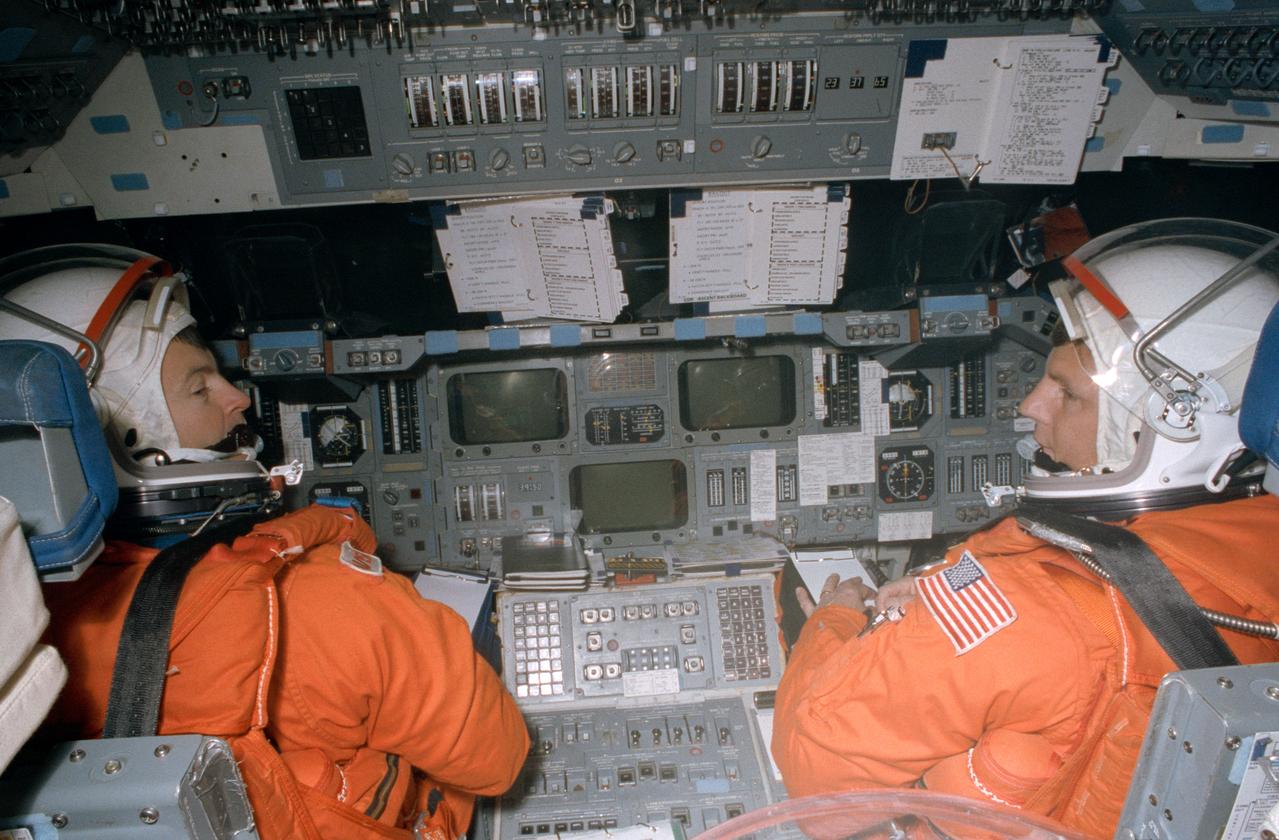
STS-56 Discovery, Orbiter Vehicle (OV) 103, Commander Kenneth Cameron, (left) and Pilot Stephen S. Oswald, wearing launch and entry suits (LESs) and launch and entry helmets (LEHs), are seated on the forward flight deck of the crew compartment trainer (CCT), a shuttle mockup. Cameron mans the commander station controls and Oswald the pilots station controls during an emergency egress (bailout) simulation. The view was taken from the aft flight deck looking forward and includes Cameron's and Oswald's profiles and the forward flight deck controls and checklists. The CCT is located in JSC's Mockup and Integration Laboratory (MAIL) Bldg 9NE.
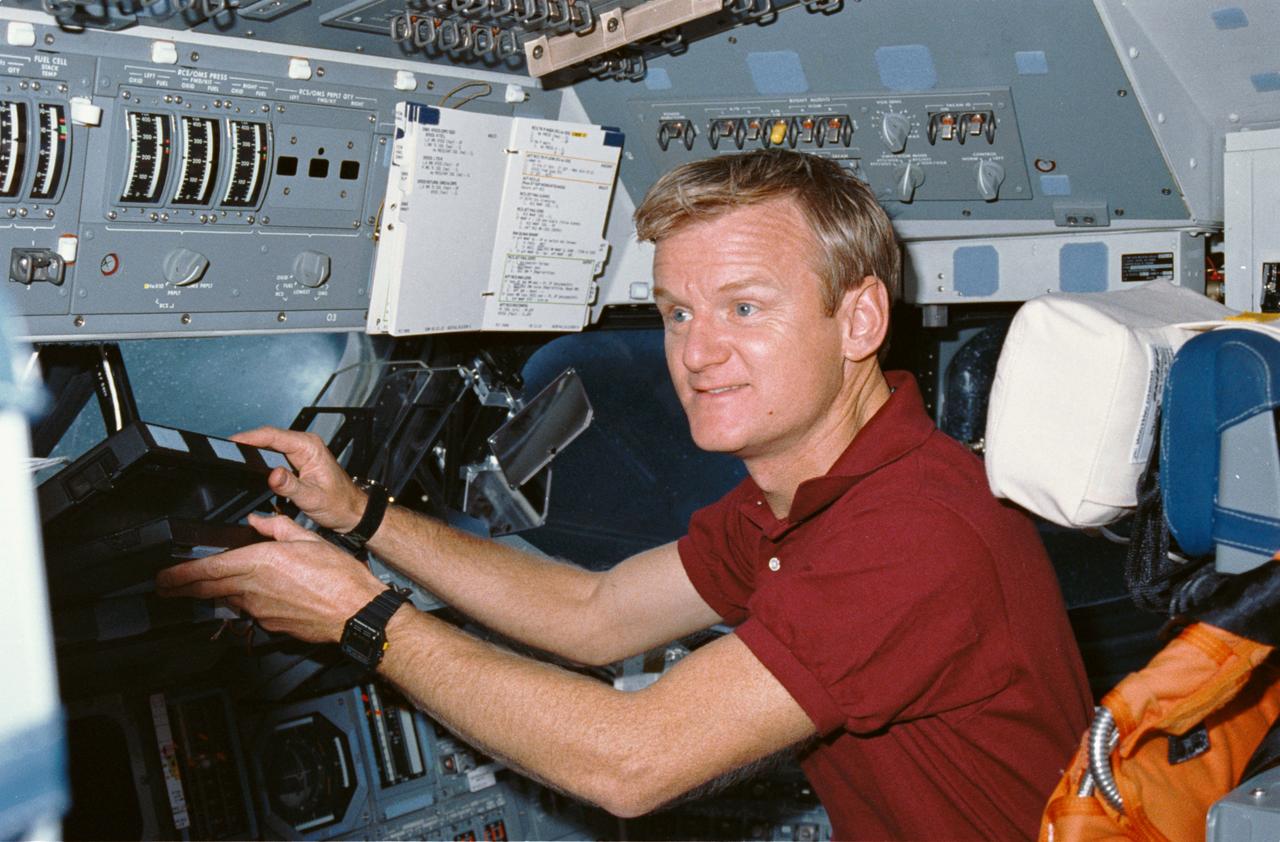
STS036-03-027 (3 March 1990) --- STS-36 Pilot John H. Casper reaches for the shuttle portable onboard computer (SPOC), a laptop computer, while at the pilots station on the forward flight deck of Atlantis, Orbiter Vehicle (OV) 104. Casper, seated in the pilot’s seat, lifts the SPOC from the forward window ledge. Appearing around him are forward crew compartment windows, the head up display (HUD), the flight mirror assembly, and a checklist attached to control panel O3. Casper and four other astronauts spent four days, 10 hours and 19 minutes aboard the spacecraft for a Department of Defense (DOD) devoted mission.
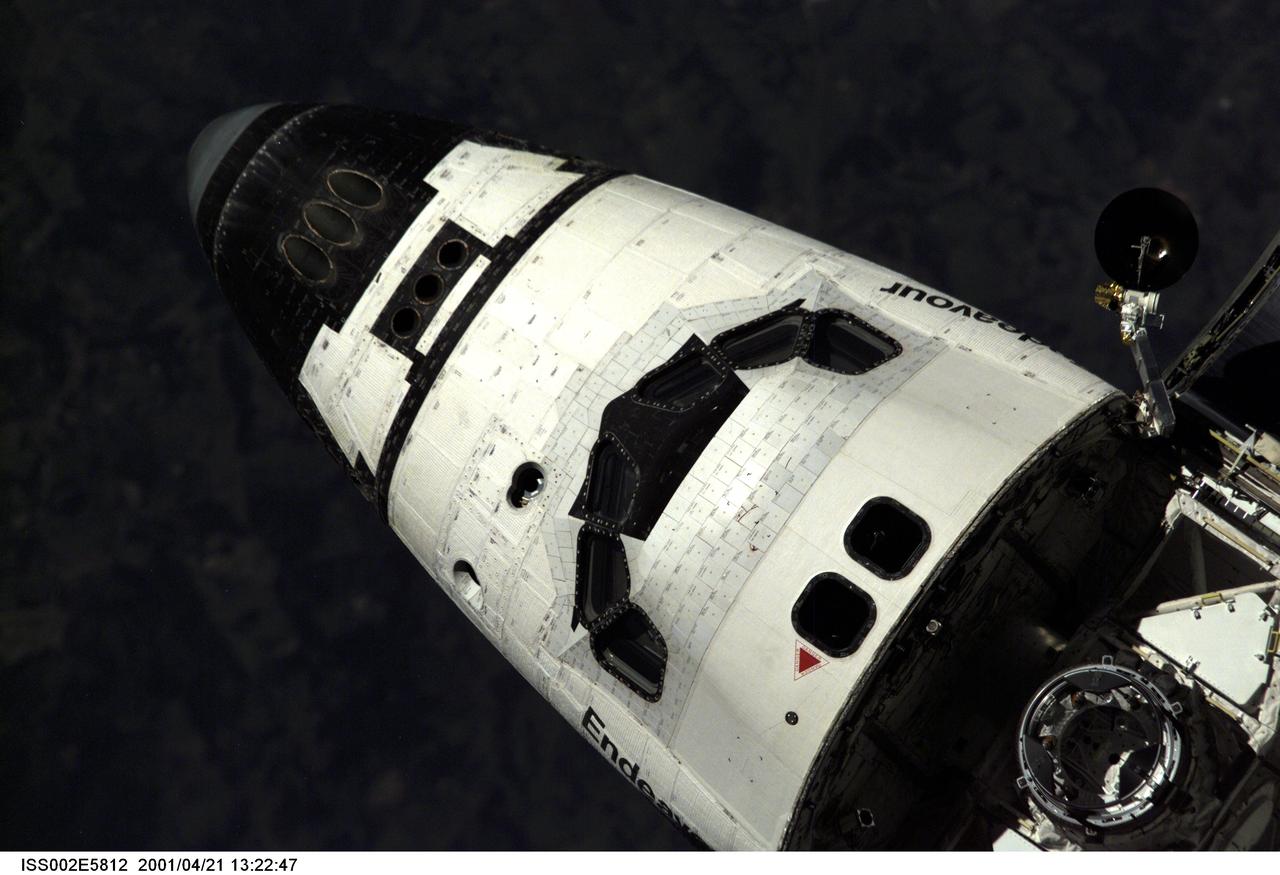
ISS02-E-5812 (21 April 2001) --- The cabin and part of the forward cargo bay, including the Ku-band antenna and common berthing mechanism (CBM), are visible as the Space Shuttle Endeavour, with six astronauts and a cosmonaut onboard, approaches the International Space Station (ISS) for an April 21 docking. The photo was taken with a digital still camera by one of the three Expedition Two crew members onboard the Station.
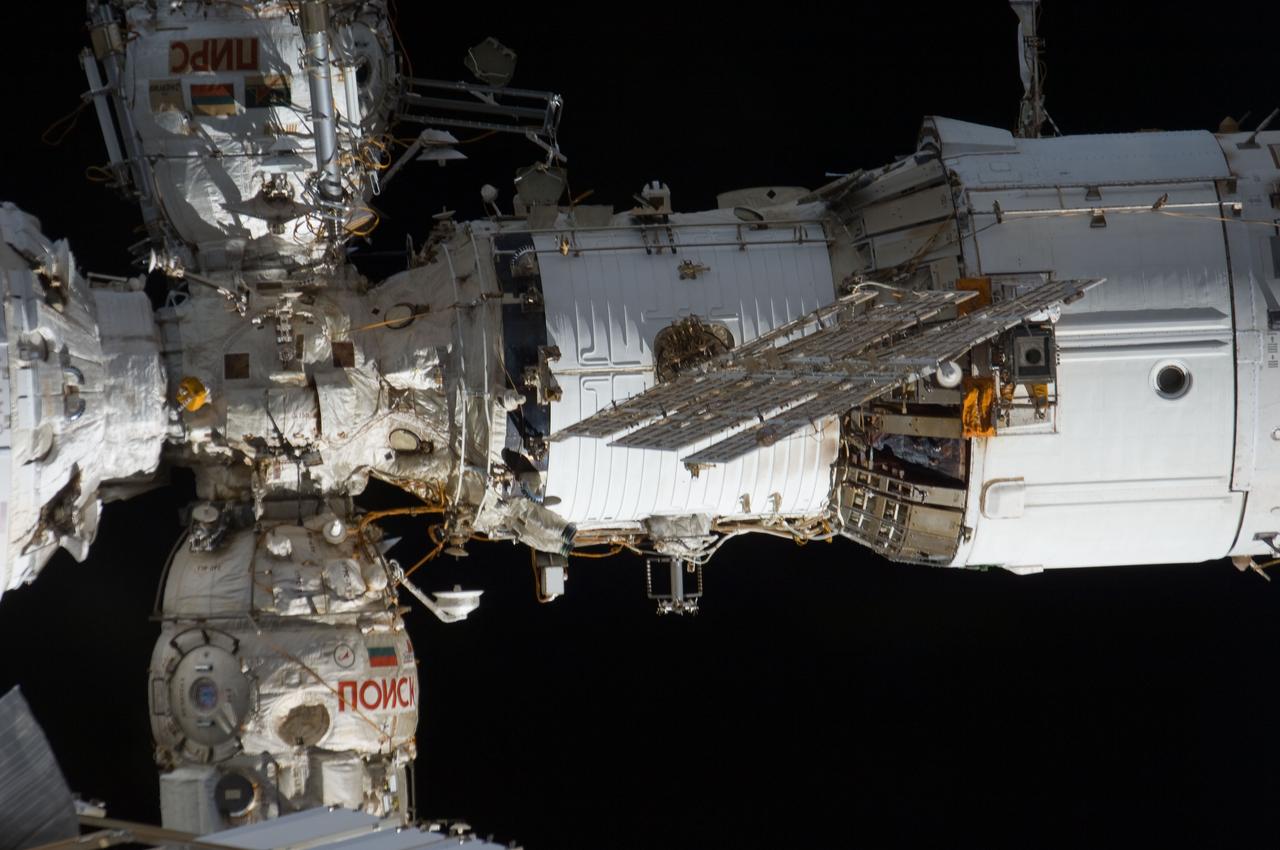
s135e011242 (July 19, 2011) --- The International Space Station's Zvezda service module is pictured with two Russian modules attached to its forward section. Both modules host docked Russian spacecraft including the Progress resupply ships and the Soyuz crew ships. At top left is the Pirs Docking Compartment where Russian spacewalks are staged. At bottom left is the Poisk Mini-Research Module-2 where Russian science experiments are conducted.
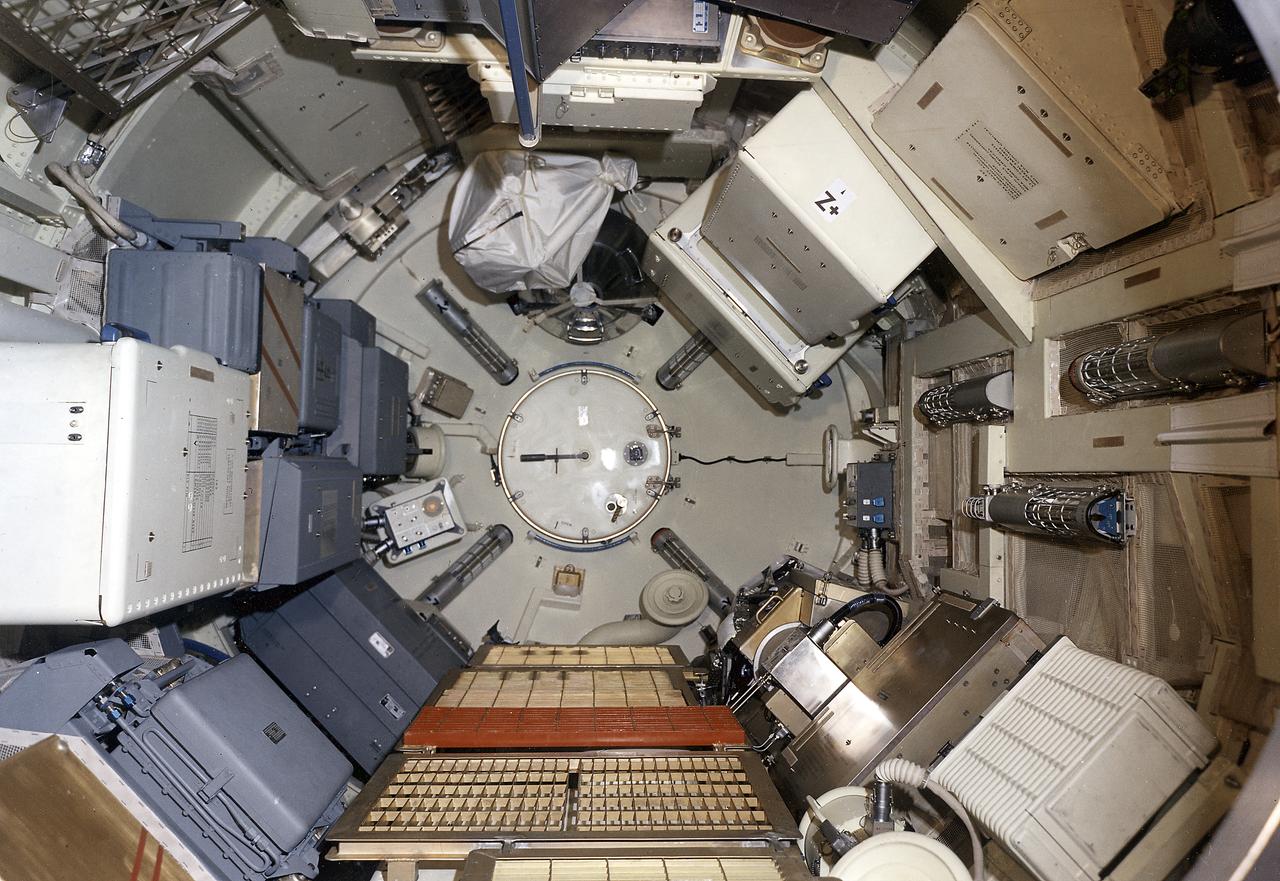
This December 1971 photograph shows the internal configuration of Skylab's Multiple Docking Adapter (MDA) flight article (forward view) as it appeared during the crew compartment and function review at the Martin-Marietta Corporation's Space Center Facility in Denver, Colorado. Designed and manufactured by the Marshall Space Flight Center, the MDA housed a number of experiment control and stowage units as well as providing a docking port for the Apollo Command module.
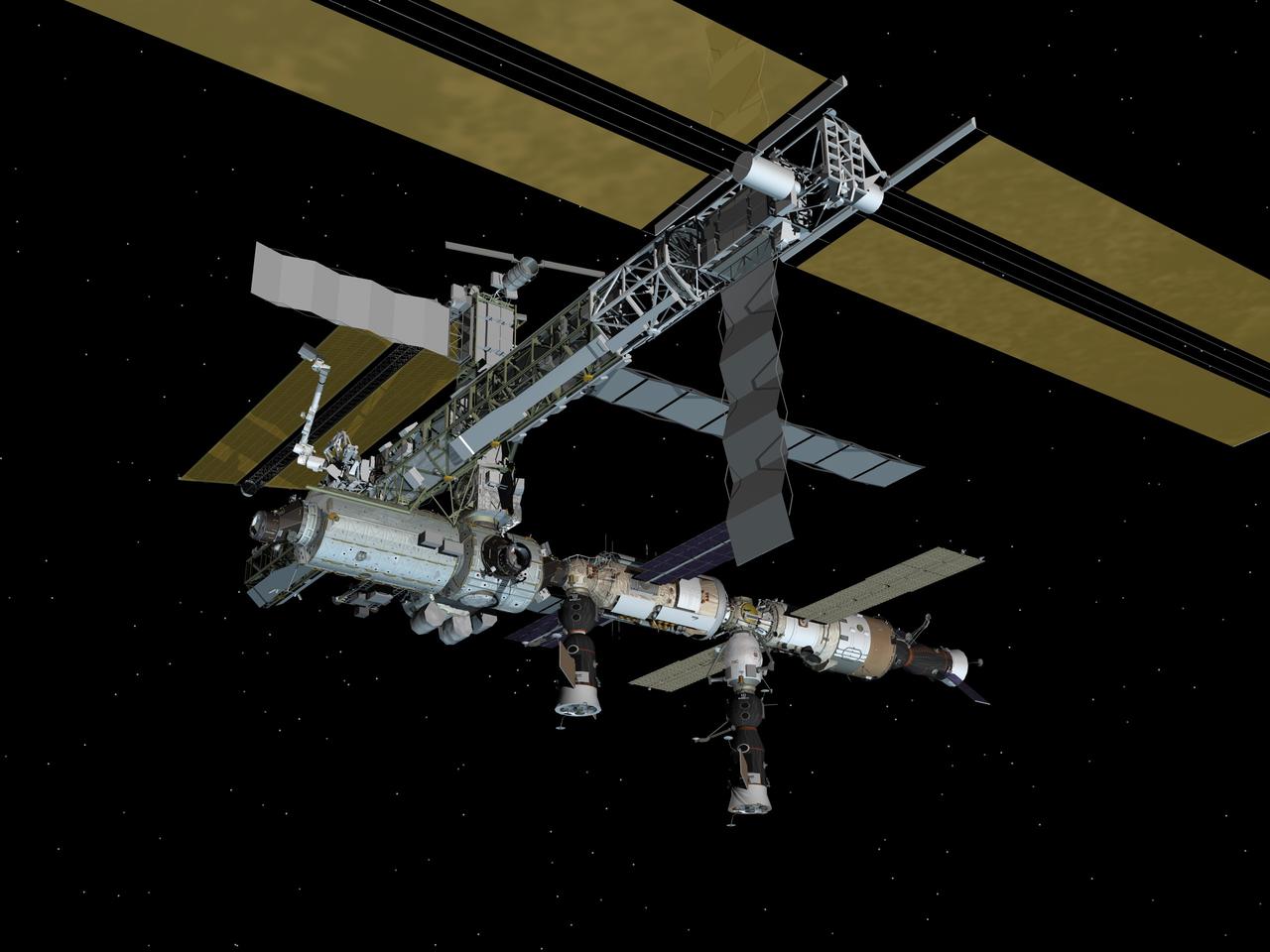
JSC2007-E-09333 (February 2007) --- Computer-generated artist's rendering of the International Space Station following scheduled activities of Feb 4, 2007. This angle shows the port side of the orbiting complex. P6 starboard and aft photovoltaic radiators (PVR) are retracted and the P6 forward PVR remains deployed. Progress 24 resupply vehicle remains docked to the Pirs Docking Compartment. Progress 23 stays connected to the Zvezda Service Module aft port and Soyuz 13 (TMA-9) remains linked to the Zarya Module nadir port.
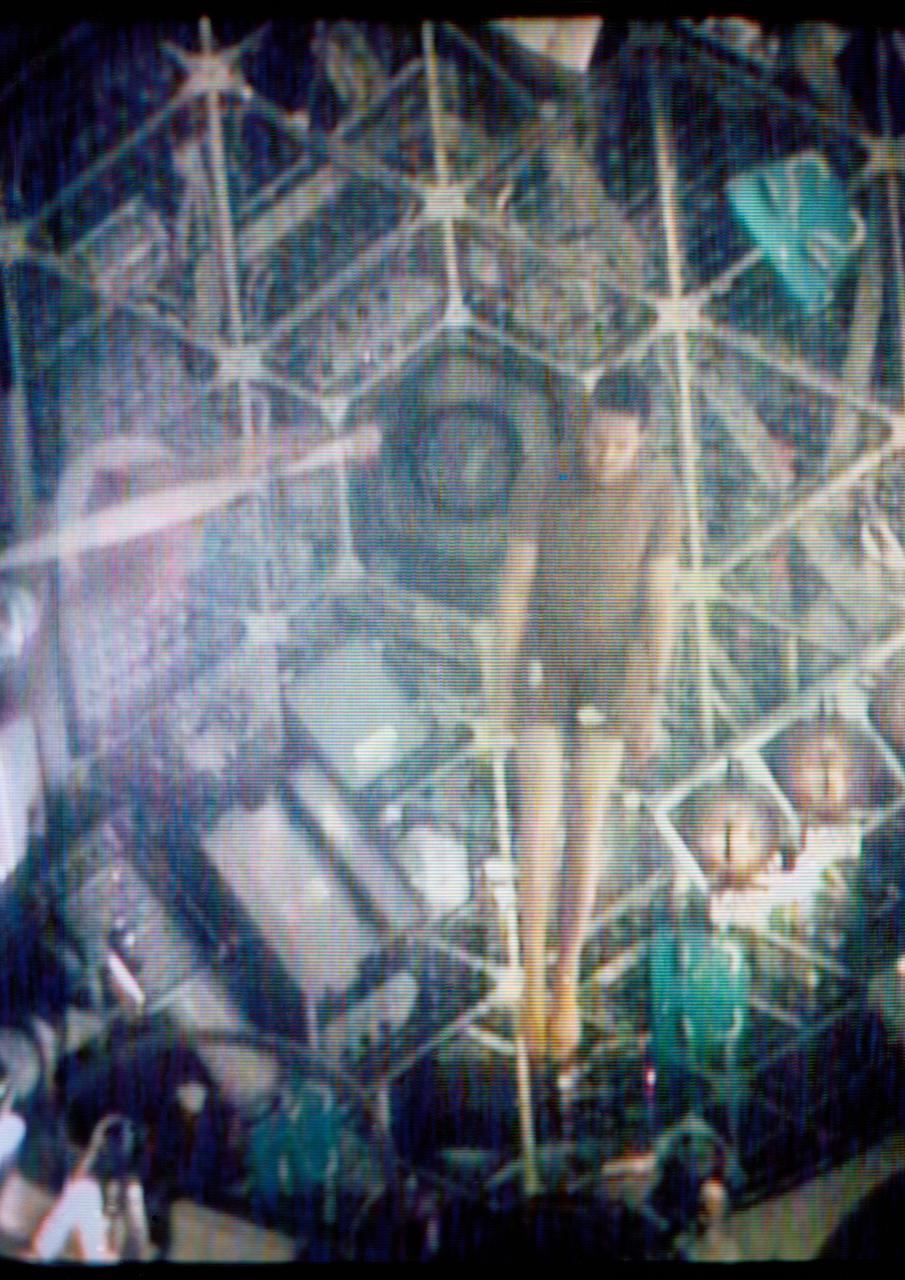
S73-27260 (1 June 1973) --- Two of the three Skylab 2 crewmen demonstrate weightlessness in the forward compartment of the Orbital Workshop of the Skylab 1 & 2 space station cluster in Earth orbit, as seen in this reproduction taken from a color television transmission made by a TV camera aboard the space station. Scientist-astronaut Joseph P. Kerwin, science pilot, floats with his body extended. Kerwin is steadied by astronaut Charles Conrad Jr., commander. The crewmen performed exercises while floating. Photo credit: NASA
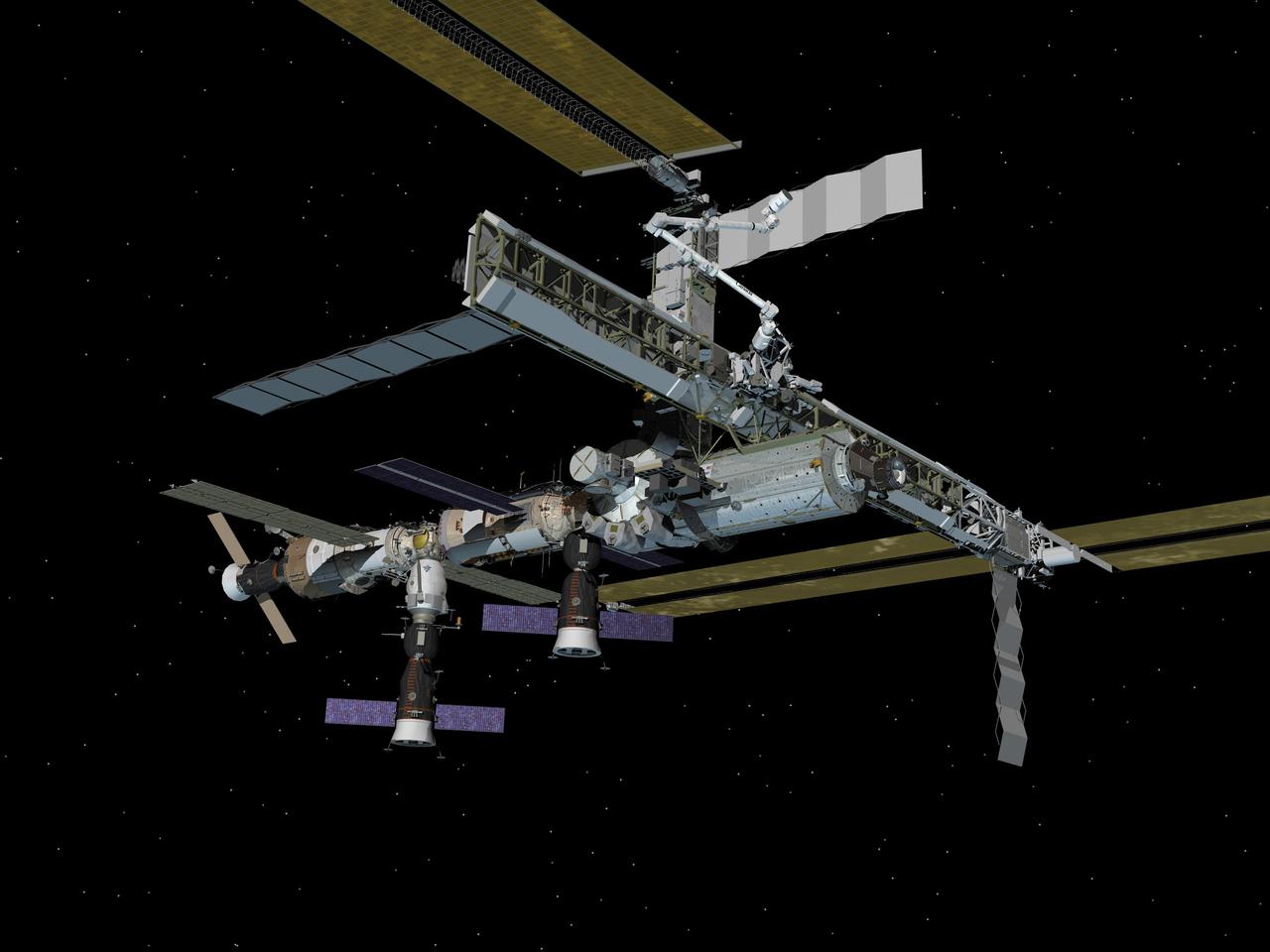
JSC2007-E-09334 (February 2007) --- Computer-generated artist's rendering of the International Space Station following scheduled activities of Feb 4, 2007. This angle shows the starboard side of the orbiting complex. P6 starboard and aft photovoltaic radiators (PVR) are retracted and the P6 forward PVR remains deployed. Progress 24 resupply vehicle remains docked to the Pirs Docking Compartment. Progress 23 stays connected to the Zvezda Service Module aft port and Soyuz 13 (TMA-9) remains linked to the Zarya Module nadir port.
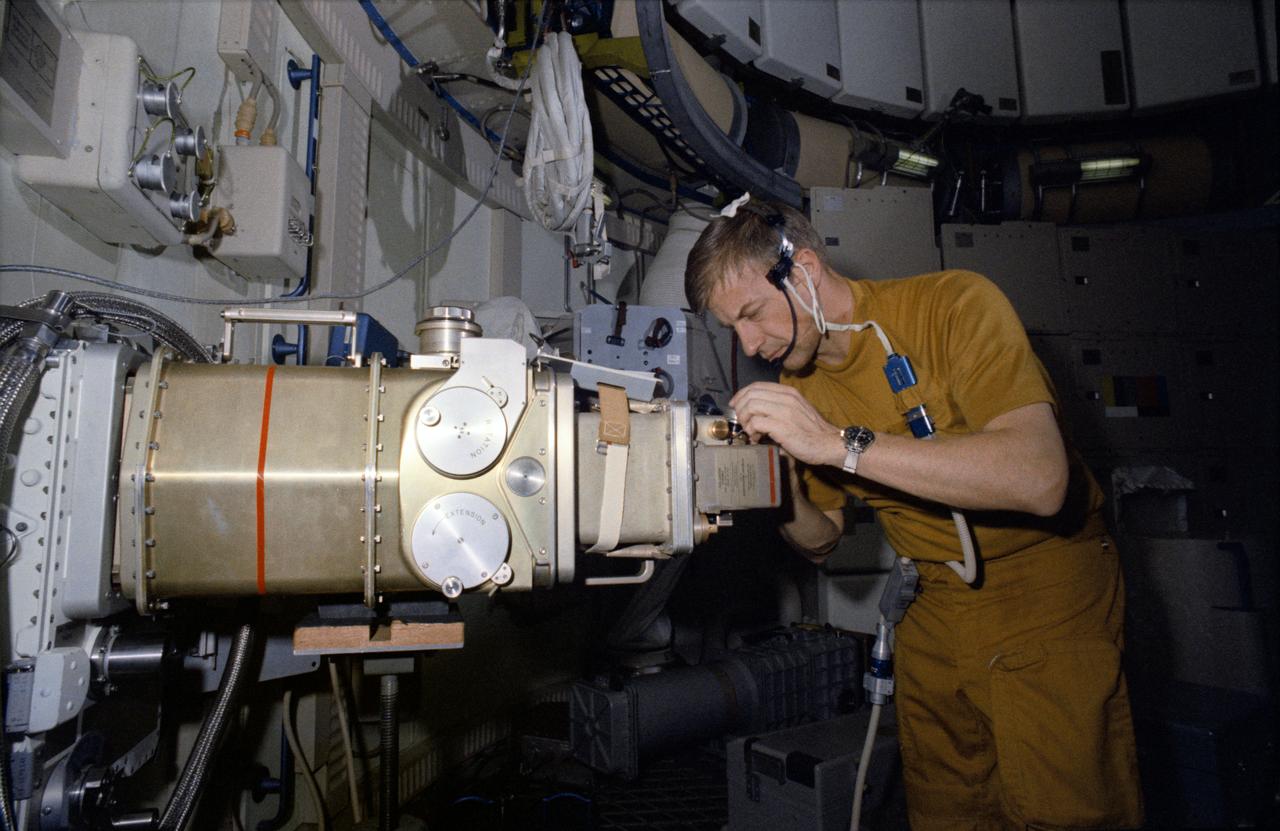
S73-20716 (1 March 1973) --- Astronaut Paul J. Weitz, pilot of the first manned Skylab mission, works with the UV Stellar Astronomy Experiment S019 in the forward compartment of the Skylab Orbital Workshop (OWS) trainer during Skylab training at Johnson Space Center. The equipment consists of a reflecting telescope, a 35mm camera and an additional mirror. It is mounted in an anti-solar scientific airlock in the side of the OWS. Photo credit: NASA
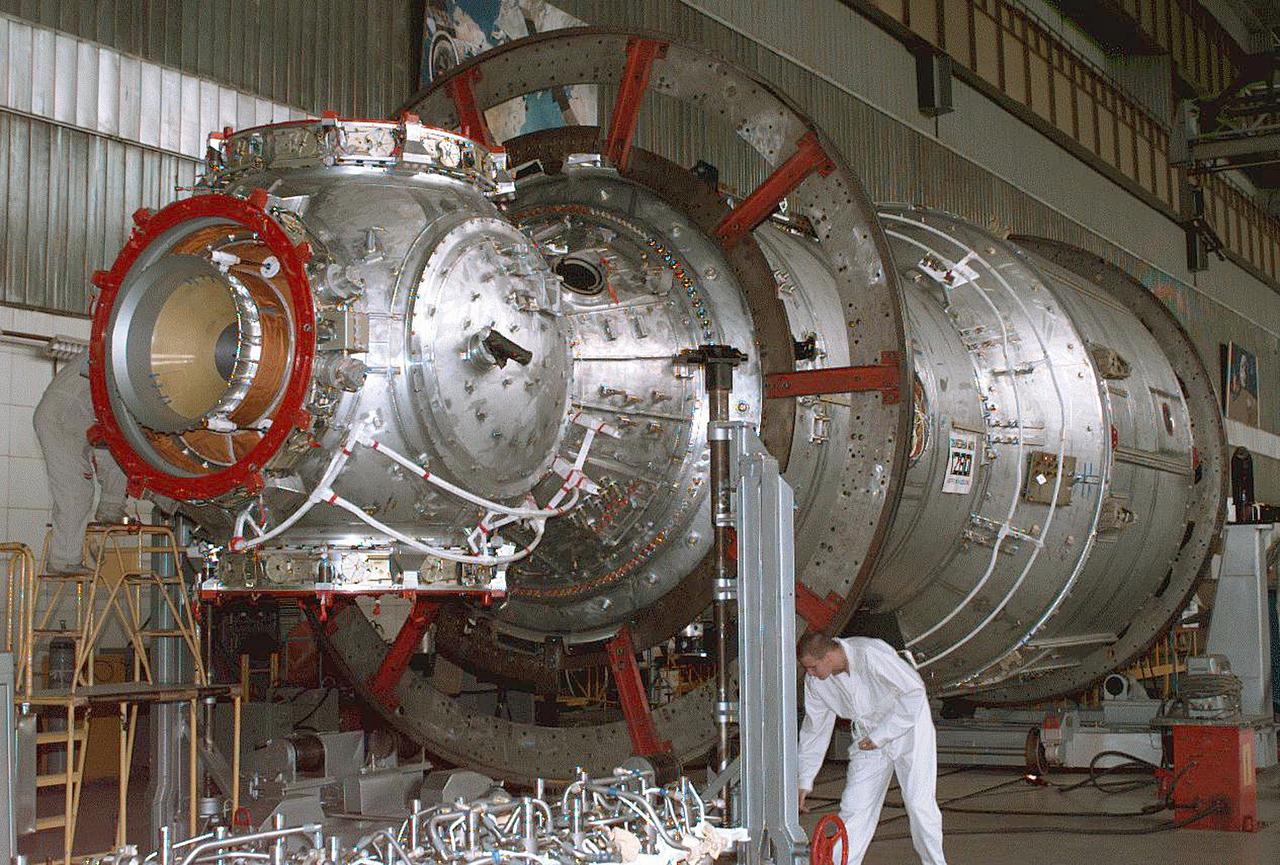
The Zvezda Service Module, the first Russian contribution and third element to the International Space Station (ISS), is shown under construction in the Krunichev State Research and Production Facility (KhSC) in Moscow. Russian technicians work on the module shortly after it completed a pressurization test. In the foreground is the forward portion of the module, including the spherical transfer compartment and its three docking ports. The forward port docked with the cornected Functional Cargo Block, followed by Node 1. Launched via a three-stage Proton rocket on July 12, 2000, the Zvezda Service Module serves as the cornerstone for early human habitation of the Station, providing living quarters, life support system, electrical power distribution, data processing system, flight control system, and propulsion system. It also provides a communications system that includes remote command capabilities from ground flight controllers. The 42,000-pound module measures 43 feet in length and has a wing span of 98 feet. Similar in layout to the core module of Russia's Mir space station, it contains 3 pressurized compartments and 13 windows that allow ultimate viewing of Earth and space.
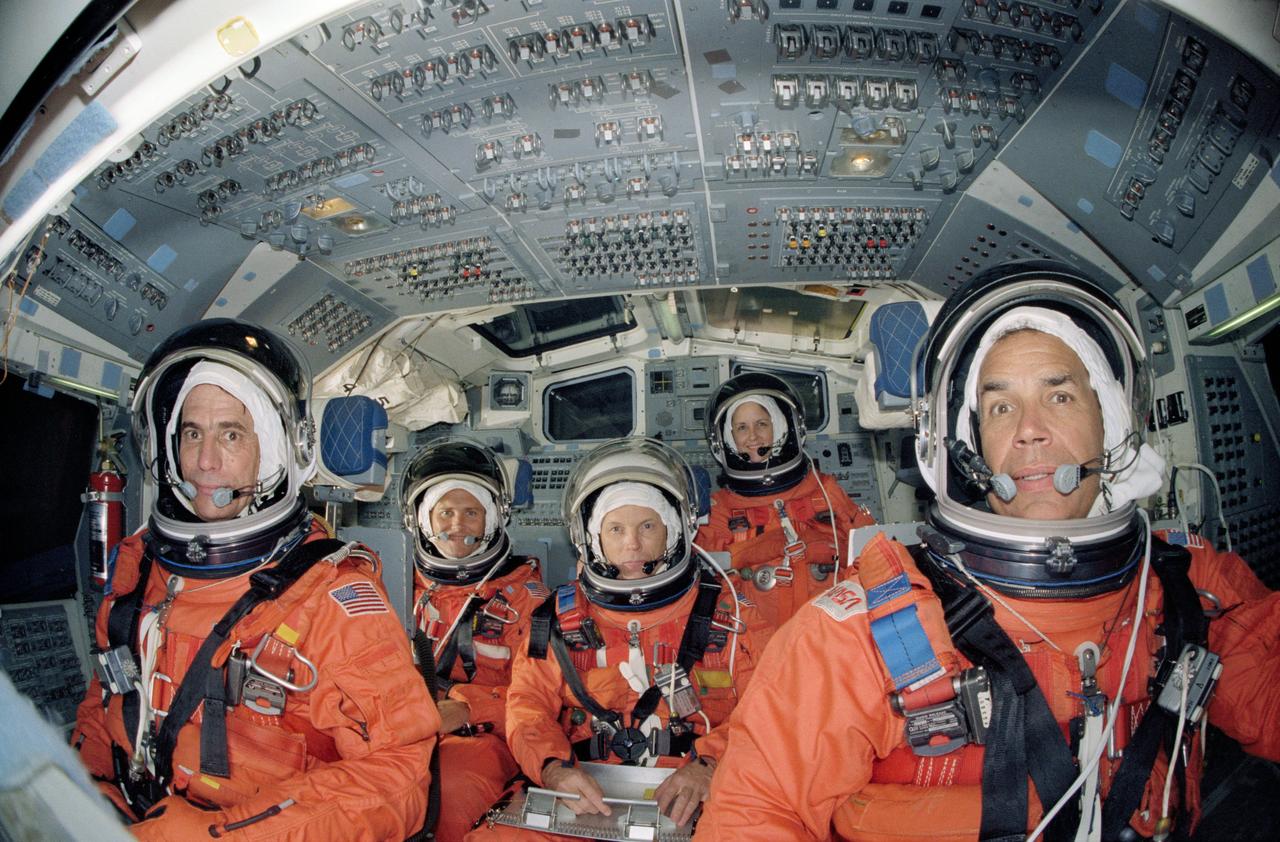
STS-33 Discovery, Orbiter Vehicle (OV) 103, crewmembers, wearing orange launch and entry suits (LESs) and launch and entry helmets (LEHs), are seated in their launch and entry positions on crew compartment trainer (CCT) flight deck during a training exercise in JSC Mockup and Integration Laboratory (MAIL) Bldg 9A. Commander Frederick D. Gregory (far right) is stationed at forward flight deck commanders controls, Pilot John E. Blaha (far left) at the pilots controls and on aft flight deck are mission specialists Manley L. Carter, Jr (left), MS F. Story Musgrave (center, holding clipboard), and MS Kathryn C. Thornton (standing). Overhead forward control panels are visible above the astronauts and aft flight deck onorbit station control panels and windows are visible in the background. Thornton is on the flight deck for this photo but during launch and entry will be seated on the middeck.
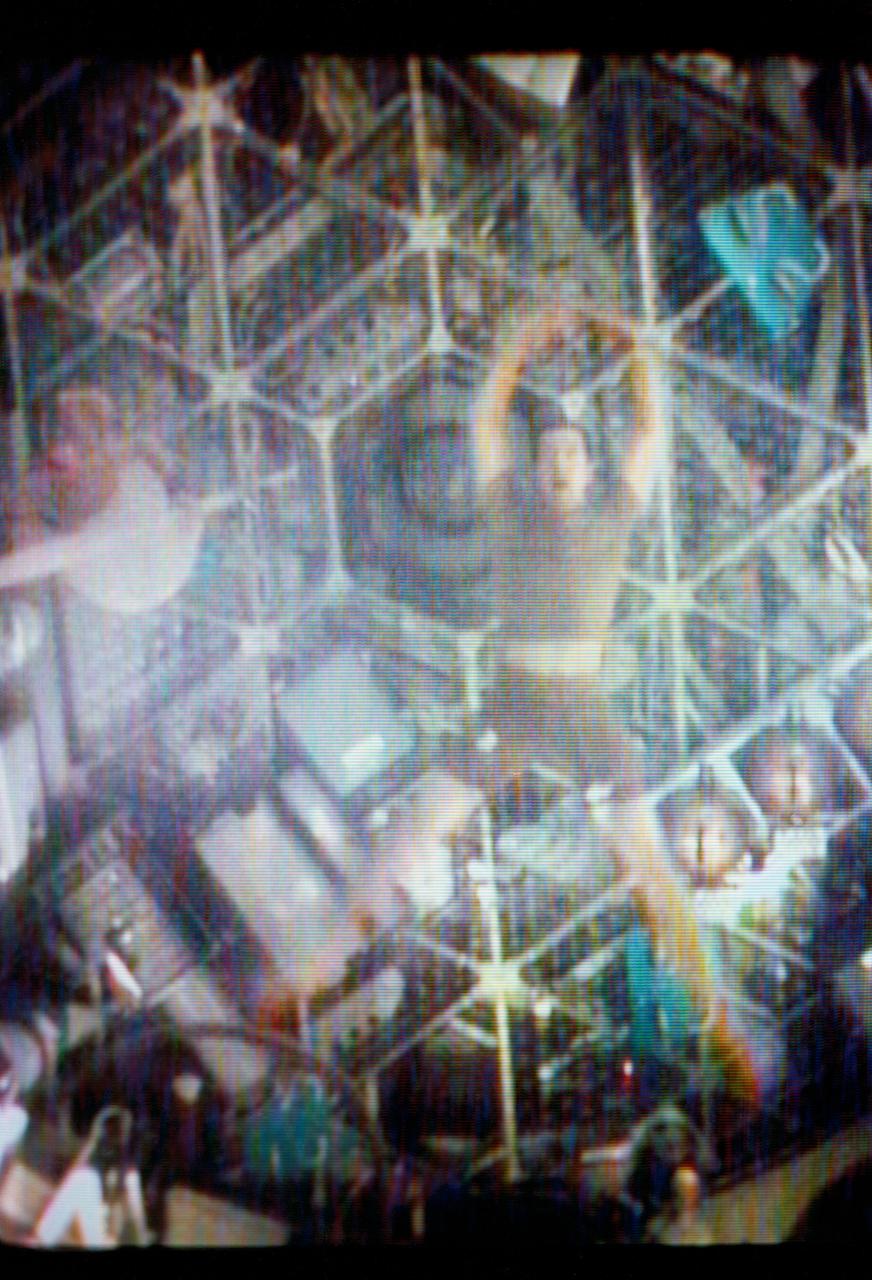
S73-27729 (1 June 1973) --- Scientist-astronaut Joseph P. Kerwin, Skylab 2 science pilot, floats with his body outstretched as he demonstrates weightlessness in the forward compartment of the Orbital Workshop of the Skylab 1 & 2 space station cluster in Earth orbit, as seen in this reproduction taken from a color television transmission made by a TV camera aboard the space station. Astronaut Charles Conrad Jr., Skylab 2 commander, is visible on Kerwin's right. The Skylab 2 crewmen performed exercises while floating. Photo credit: NASA
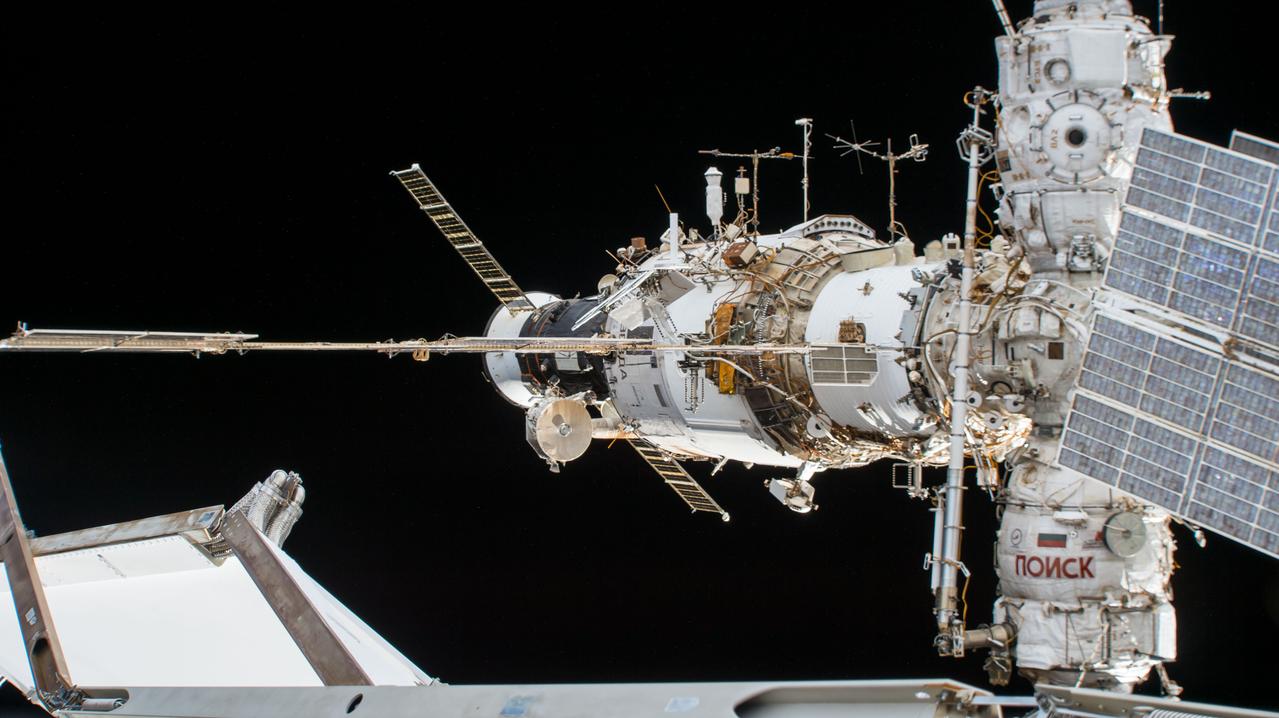
iss056e152933 (Aug. 23, 2018) --- A portion of the International Space Station's Russian segment is pictured before the Progress 69 cargo craft undocked from the aft end of the Zvezda service module. Also attached to the forward end of Zvezda are the Poisk and Pirs modules. The Poisk module hosts the docked Soyuz MS-08 crew ship that brought three Expedition 55/56 crew members to the station in March of 2018. The Pirs docking compartment hosts the Progress 70 resupply ship which delivered several tons of food, fuel and supplies to the Expedition 56 crew in July of 2018.
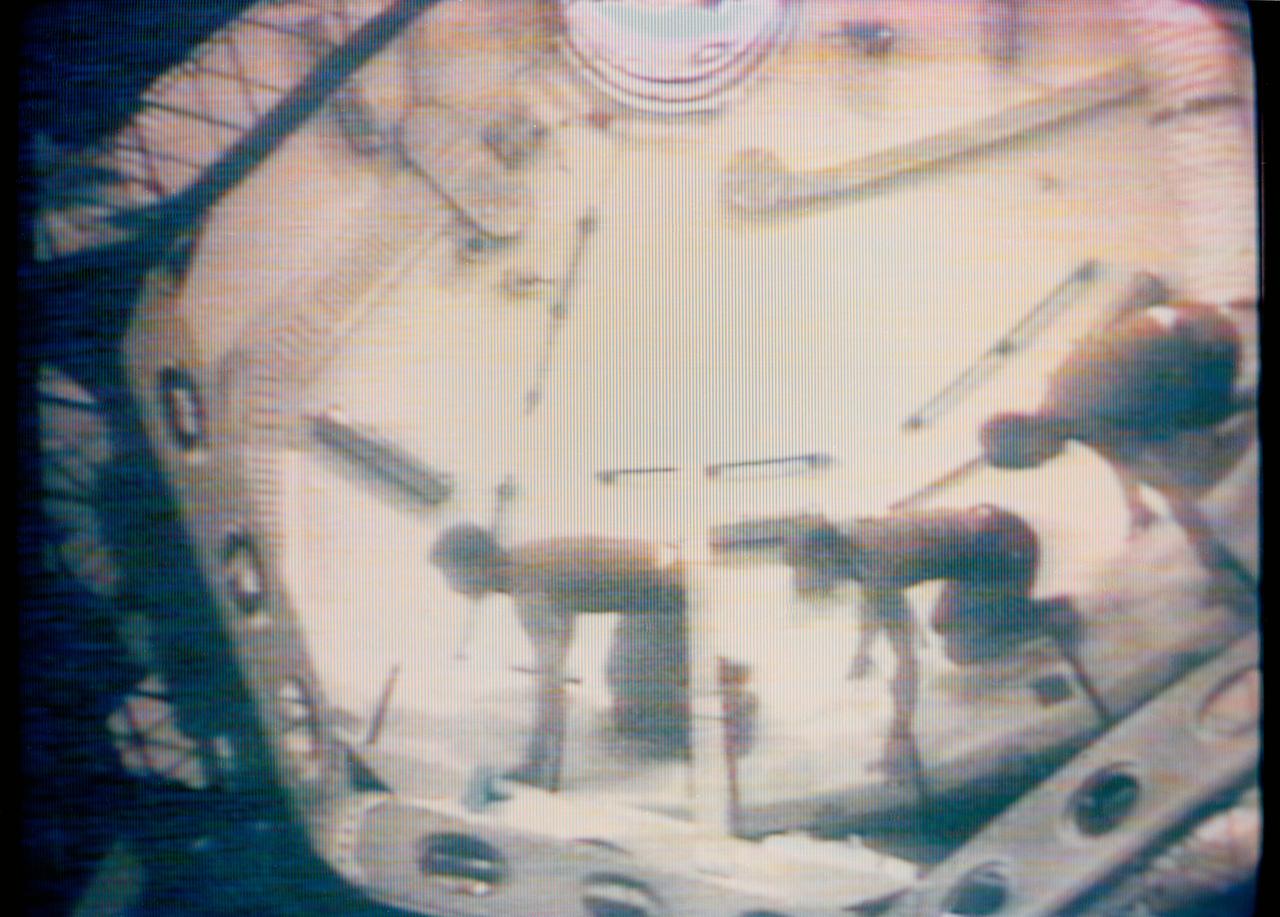
S73-27262 (1 June 1973) --- The three Skylab 2 crewmen give a demonstration on the effects of weightlessness in the Orbital Workshop of the Skylab 1 and 2 space station cluster in Earth orbit, as seen in this reproduction taken from a color television transmission made by a TV camera aboard the space station. Astronauts Charles Conrad Jr., Joseph P. Kerwin and Paul J. Weitz are crouched in a fast-start stance to race around the dome area of the OWS forward compartment. The astronauts had ease of motion and good maneuverability in the zero-gravity of space. Photo credit: NASA
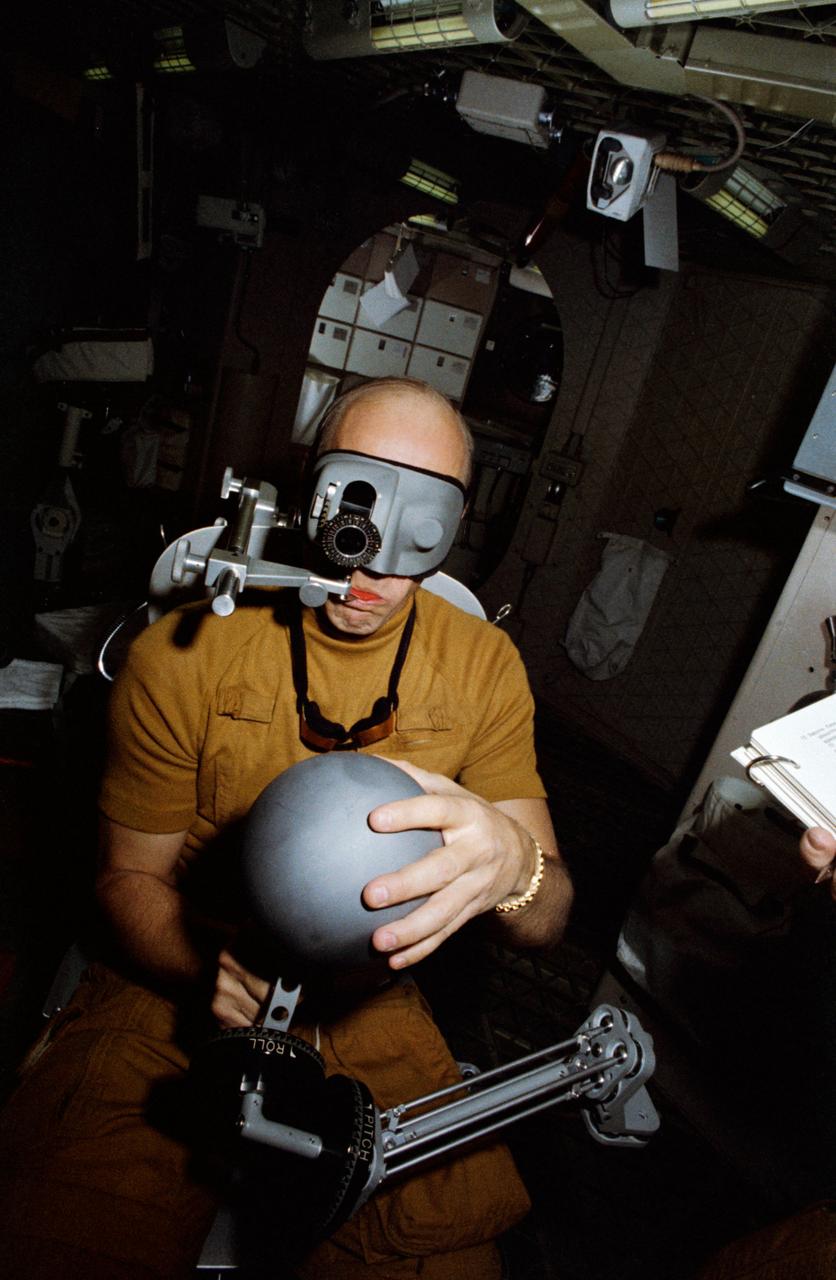
S73-20695 (1 March 1973) --- Astronaut Charles Conrad Jr., commander of the first manned Skylab mission, checks out the Human Vestibular Function, Experiment M131, during Skylab training at Johnson Space Center. Conrad is in the work and experiments compartment of the crew quarters of the Skylab Orbital Workshop (OWS) trainer at JSC. The reference sphere with a magnetic rod is used by the astronaut to indicate body orientation non-visually. The litter chair in which he is seated can be rotated by a motor at its base or, when not being rotated, can tilt forward, backward or to either side. Photo credit: NASA
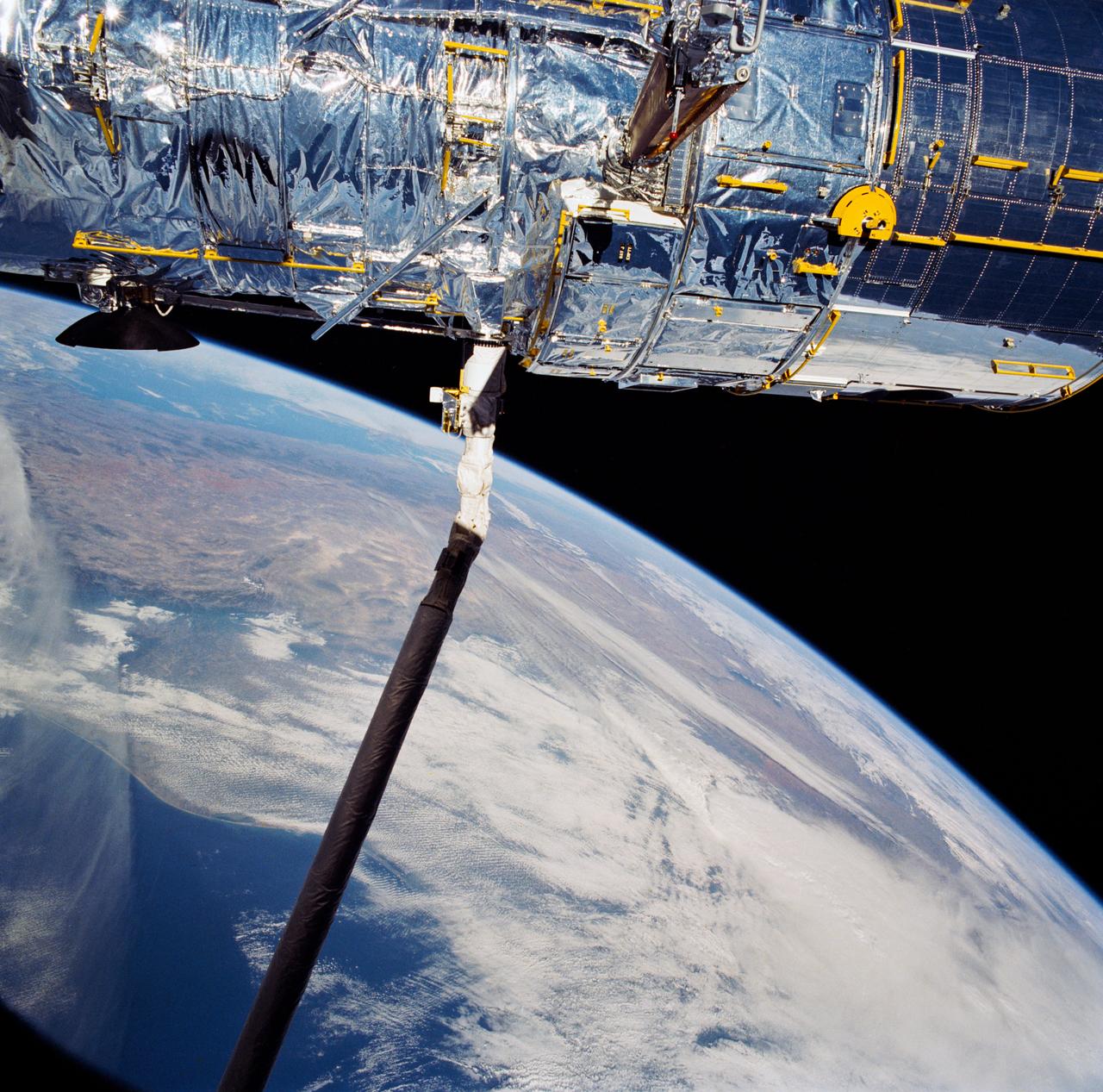
During STS-31, the Hubble Space Telescope (HST) is held in appendage deploy position by Discovery's, Orbiter Vehicle (OV) 103's, remote manipulator system (RMS) above the payload bay (PLB) and crew compartment cabin. While in this position the solar array (SA) wing bistem cassette (HST center) is deployed from its stowed location along side the Support System Module (SSM) forward shell. A high gain antenna (HGA) remains stowed along the SSM. The Earth's surface and the Earth limb creates a dramatic backdrop.
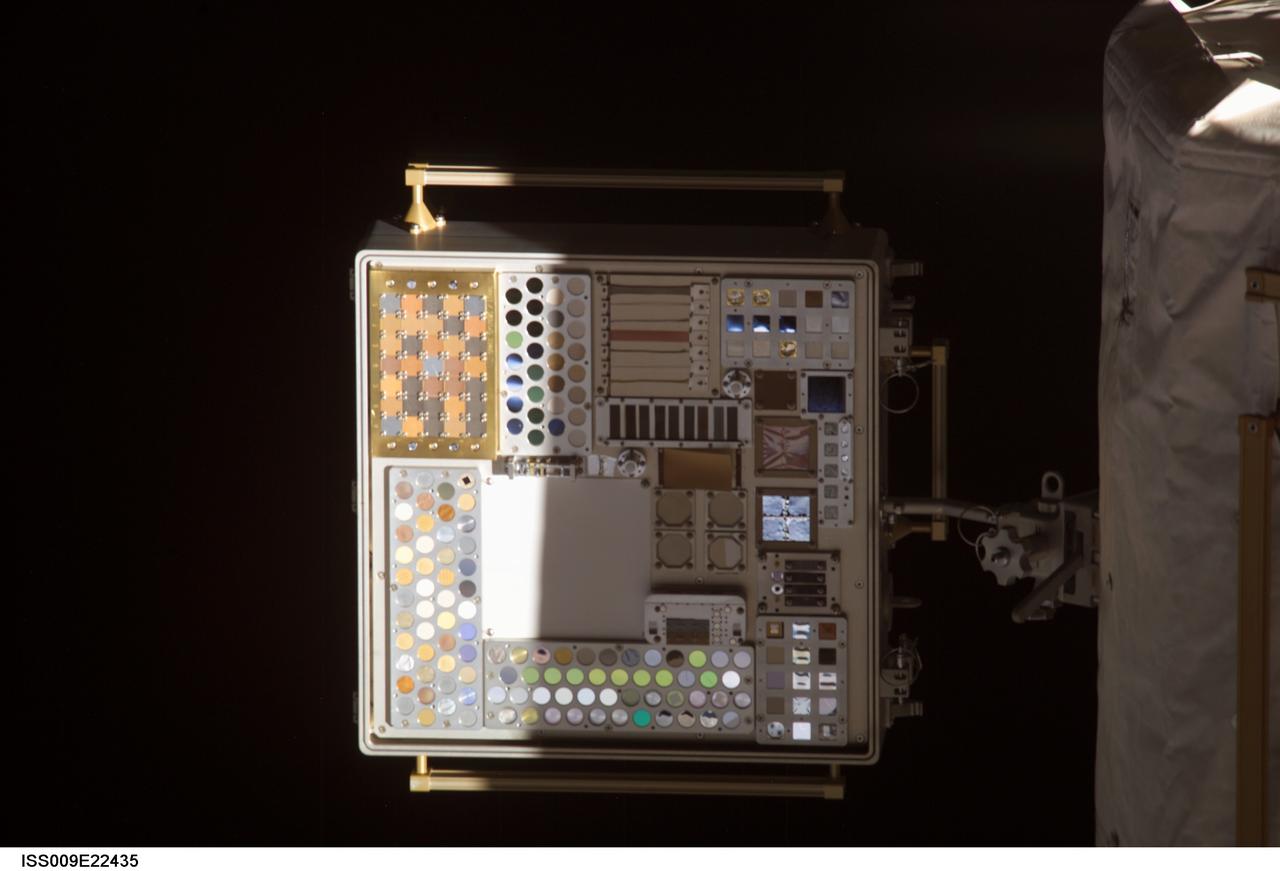
iss009e22435 (9/13/2004) --- A view of the Materials International Space Station Experiment (MISSE) #1,aft side. MISSE is attached to the outside of the Zvezda Service Module (SM). Image taken from the Pirs Docking Compartment forward port window during observation and photography of ISS External Structures on Expedition 9. MISSE-1 and 2 are a test bed for materials and coatings attached to the outside of the ISS is being evaluated for the effects of atomic oxygen, direct sunlight, and extremes of heat and cold. This experiment allows the development and testing of new materials to better withstand the rigors of space environments. Results will provide a better understanding of the durability of various materials when they are exposed to the space environment. Many of the materials may have applications in the design of future spacecraft.
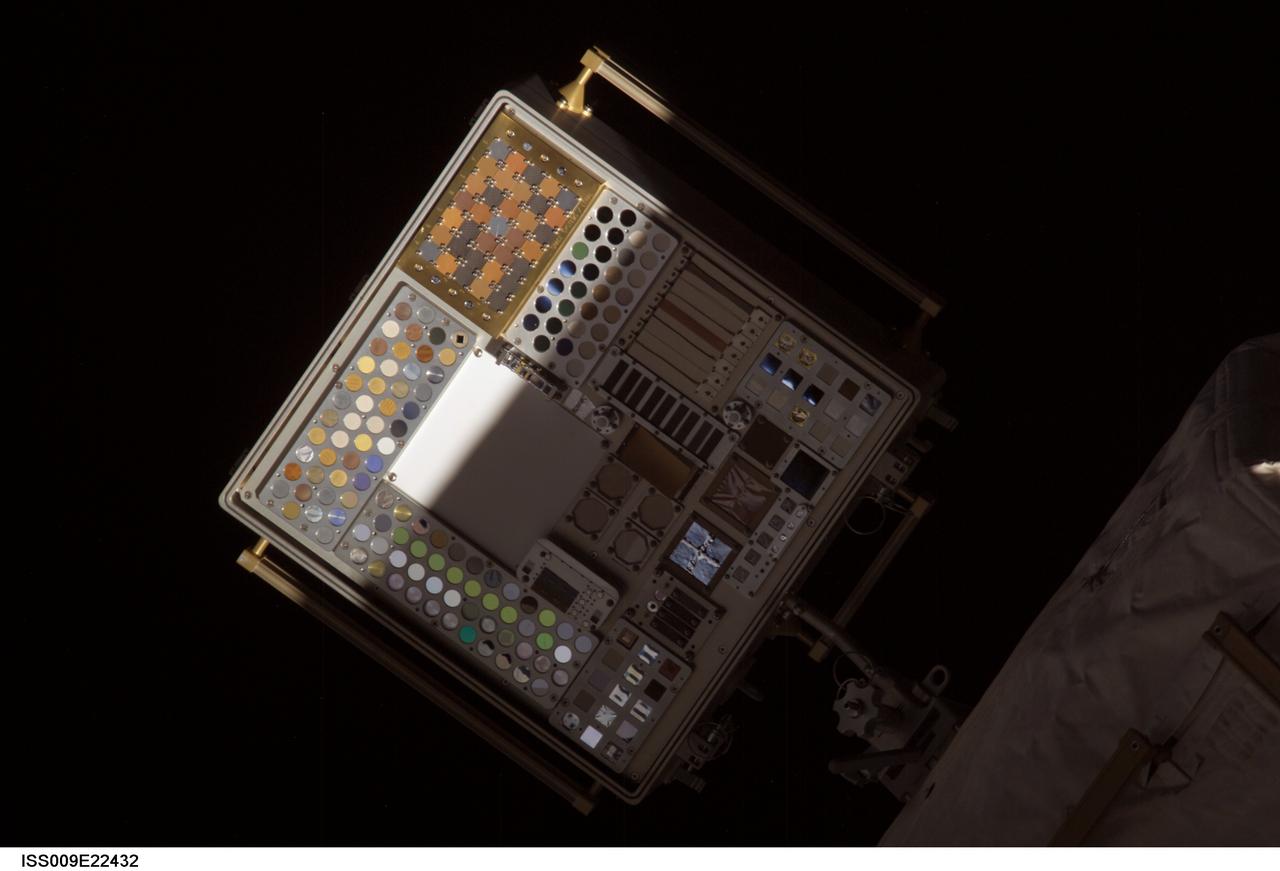
iss009e22432 (9/13/2004) --- A view of the Materials International Space Station Experiment (MISSE) #1, aft side. MISSE is attached to the outside of the Zvezda Service Module (SM). Image taken from the Pirs Docking Compartment forward port window during observation and photography of ISS External Structures on Expedition 9. MISSE-1 and 2 are a test bed for materials and coatings attached to the outside of the ISS is being evaluated for the effects of atomic oxygen, direct sunlight, and extremes of heat and cold. This experiment allows the development and testing of new materials to better withstand the rigors of space environments. Results will provide a better understanding of the durability of various materials when they are exposed to the space environment. Many of the materials may have applications in the design of future spacecraft.
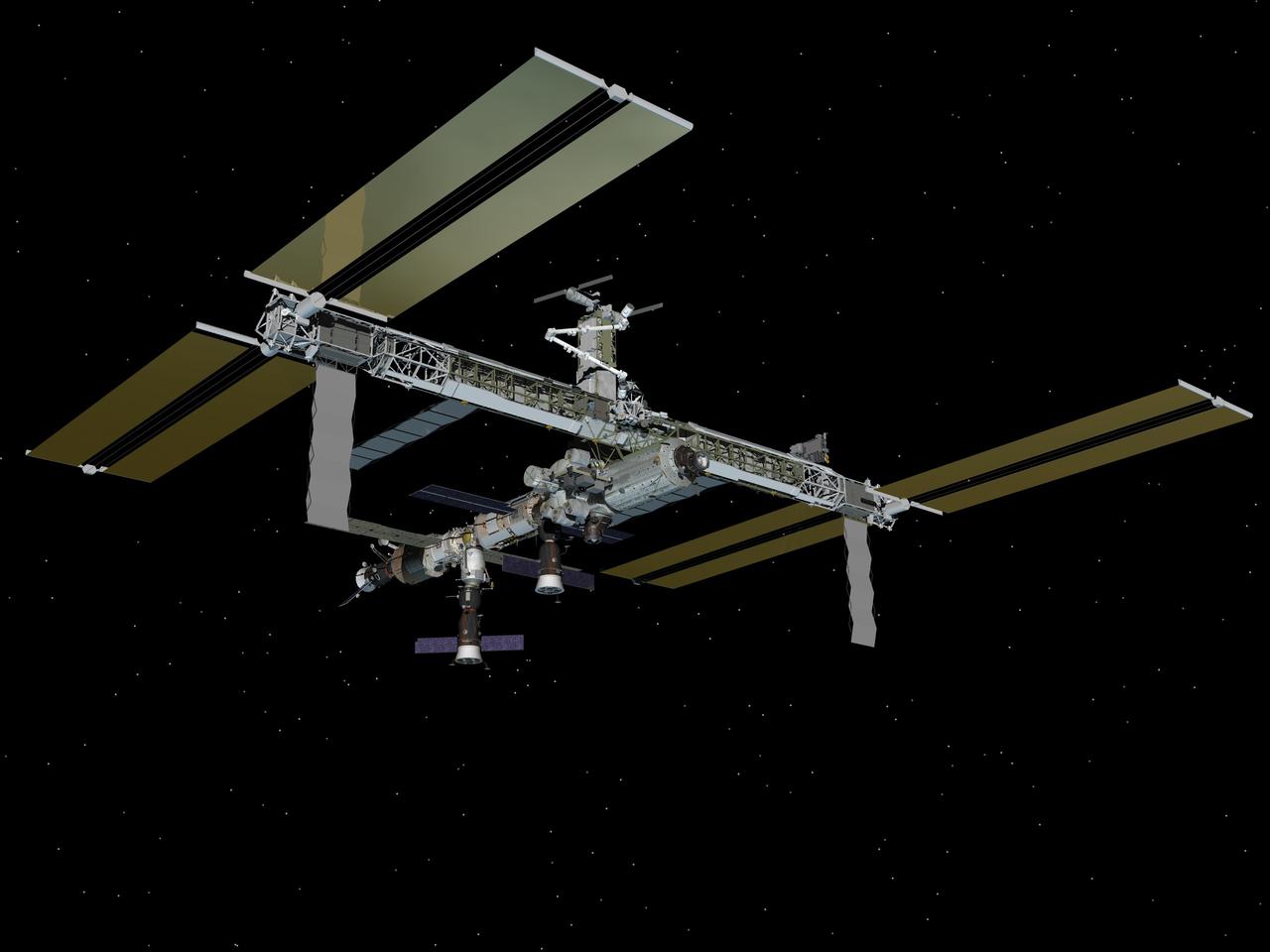
JSC2007-E-44665 (August 2007) --- Computer-generated artist's rendering of the International Space Station as of Aug. 30, 2007. This angle shows the starboard side of the orbiting complex. The Pressurized Mating Adapter-3 (PMA-3) relocates from the Unity node port docking mechanism to its nadir docking mechanism. During the STS-118 mission, the Starboard 5 (S5) truss segment and External Stowage Platform (ESP-3) were added; and the Port 6 (P6) forward radiator was retracted. Progress 26 resupply vehicle remains docked to the Pirs Docking Compartment and Progress 25 resupply vehicle is docked to the Zvezda Service Module aft port. Soyuz 14 (TMA-10) remains linked to the Zarya nadir port.
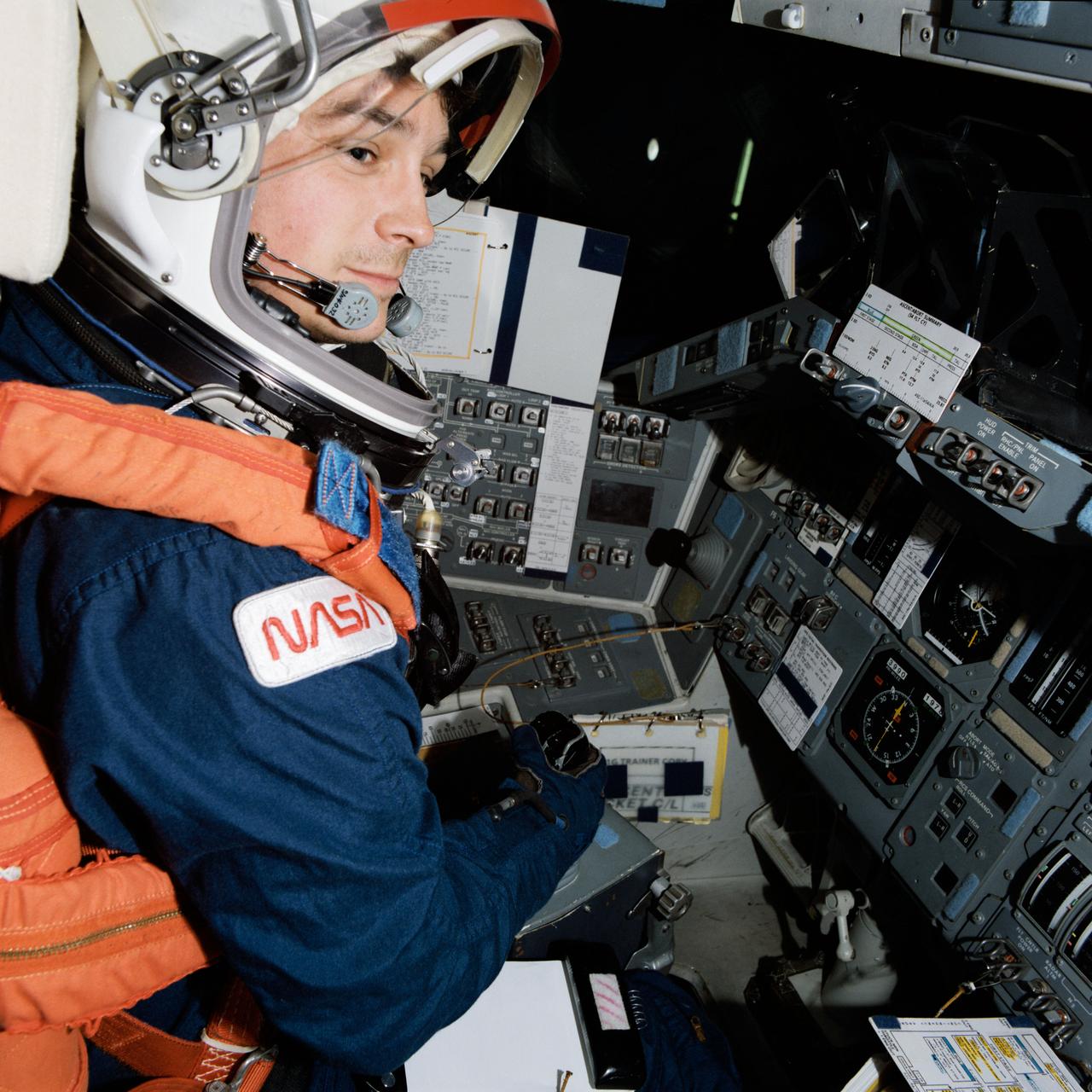
Photos of orbiter fire rescue and crew escape training for extravehicular activity (EVA) crew systems support conducted in Bldg 9A Crew Compartment Trainer (CCT) and Fuel Fuselage Trainer (FFT) include views of CCT interior of middeck starboard fuselage showing middeck forward (MF) locker and COAS assembly filter, artiflex film and camcorder bag (26834); launch/entry suit (LES) helmet assembly, neckring and helmet hold-down assembly (26835-26836); middeck aft (MA) lockers (26837); area of middeck airlock and crew escape pole (26838); connectors of crew escape pole in the middeck (268390); three test subjects in LES in the flight deck (26840); emergency side hatch slide before inflated stowage (26841); area of below adjacent to floor panel MD23R (26842); a test subject in LES in the flight deck (26843); control board and also showing sign of "orbital maneuvering system (OMS) secure and OMS TK" (26844); test subject in the flight deck also showing chart of "ascent/abort summary" (26845).
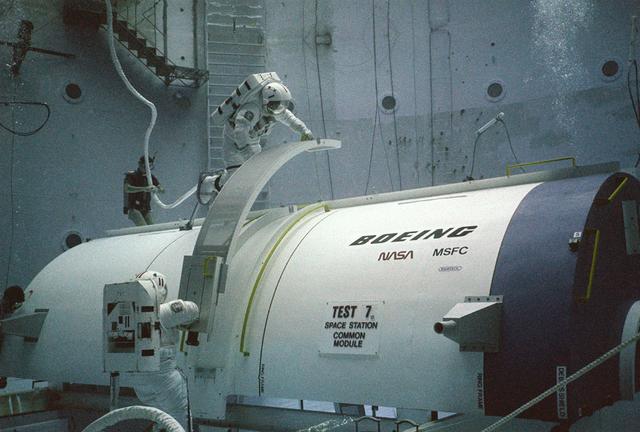
Skylab's success proved that scientific experimentation in a low gravity environment was essential to scientific progress. A more permanent structure was needed to provide this space laboratory. President Ronald Reagan, on January 25, 1984, during his State of the Union address, claimed that the United States should exploit the new frontier of space, and directed NASA to build a permanent marned space station within a decade. The idea was that the space station would not only be used as a laboratory for the advancement of science and medicine, but would also provide a staging area for building a lunar base and manned expeditions to Mars and elsewhere in the solar system. President Reagan invited the international community to join with the United States in this endeavour. NASA and several countries moved forward with this concept. By December 1985, the first phase of the space station was well underway with the design concept for the crew compartments and laboratories. Pictured are two NASA astronauts, at Marshall Space Flight Center's (MSFC) Neutral Buoyancy Simulator (NBS), practicing construction techniques they later used to construct the space station after it was deployed.
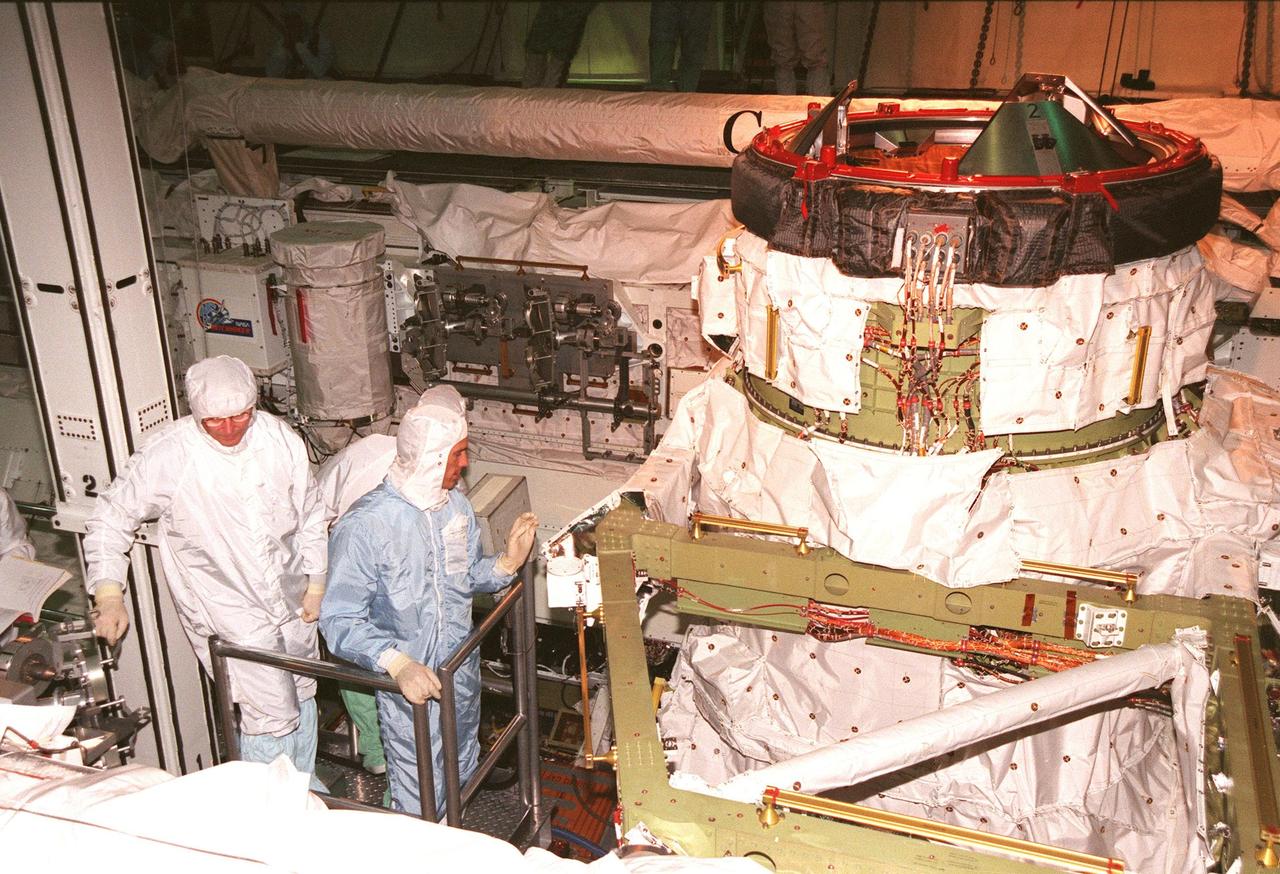
KENNEDY SPACE CENTER, FLA. -- Inside the payload bay of orbiter Endeavour in the Orbiter Processing Facility Bay 1, STS-88 Mission Specialists Jerry L. Ross (left) and James H. Newman (right foreground) get a close look at the Orbiter Docking System. The STS-88 crew members are participating in a Crew Equipment Interface Test (CEIT), familiarizing themselves with the orbiter's midbody and crew compartments. Targeted for liftoff on Dec. 3, 1998, STS-88 will be the first Space Shuttle launch for assembly of the International Space Station (ISS). The primary payload is the Unity connecting module which will be mated to the Russian-built Zarya control module, expected to be already on orbit after a November launch from Russia. While on orbit during STS-88, Unity will be latched atop the Orbiter Docking System in the forward section of Endeavour's payload bay for the mating of the two modules. After the mating, Ross and Newman are scheduled to perform three spacewalks to connect power, data and utility lines and install exterior equipment. The first major U.S.-built component of ISS, Unity will serve as a connecting passageway to living and working areas of the space station. Unity has two attached pressurized mating adapters (PMAs) and one stowage rack installed inside. PMA-1 provides the permanent connection point between Unity and Zarya; PMA-2 will serve as a Space Shuttle docking port. Zarya is a self-supporting active vehicle, providing propulsive control capability and power during the early assembly stages. It also has fuel storage capability
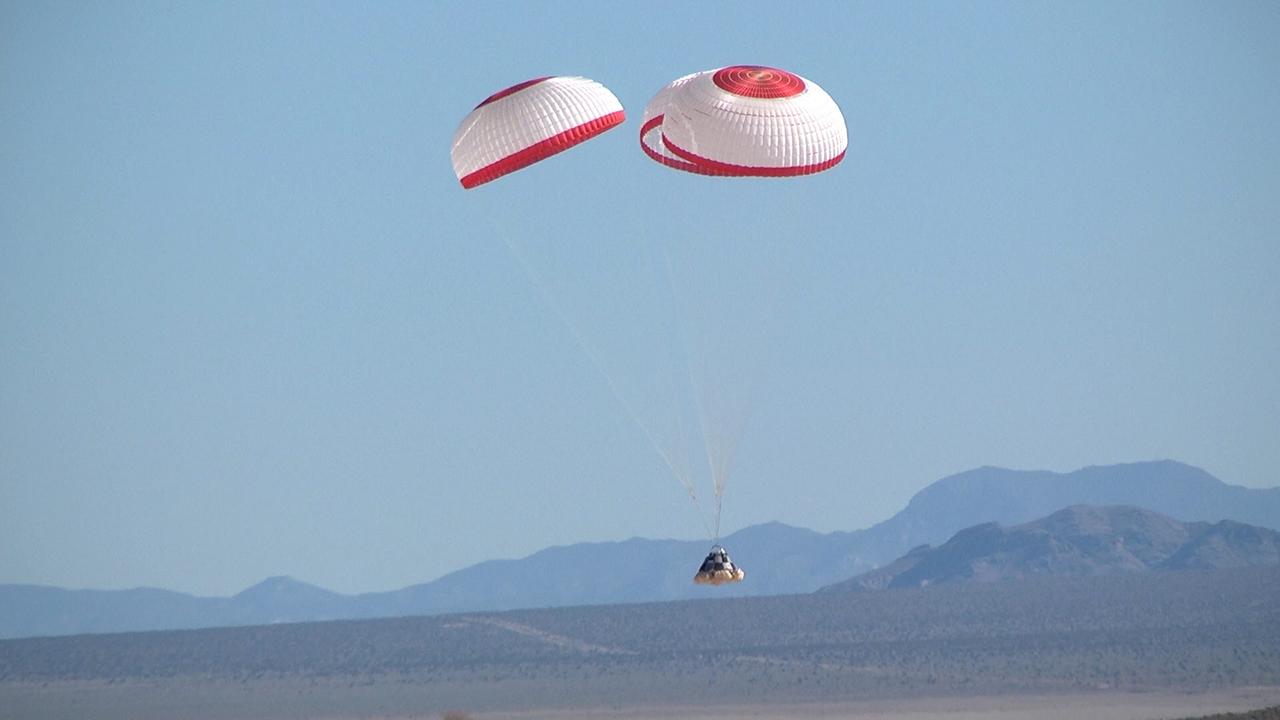
DELAMAR DRY LAKE BED, Nev. -- The Boeing Company's CST-100 boilerplate crew capsule floats toward a smooth landing beneath three main parachutes after being released from an Erickson Sky Crane helicopter at about 11,000 feet above Delamar Dry Lake Bed near Alamo, Nev. This is one of two tests that Boeing will perform for NASA's Commercial Crew Program CCP in order to validate the spacecraft's parachute system architecture and deployment scheme, characterize pyrotechnic shock loads, confirm parachute sizing and design, and identify potential forward compartment packaging and deployment issues. In 2011, NASA selected Boeing during Commercial Crew Development Round 2 CCDev2) activities to mature the design and development of a crew transportation system with the overall goal of accelerating a United States-led capability to the International Space Station. The goal of CCP is to drive down the cost of space travel as well as open up space to more people than ever before by balancing industry’s own innovative capabilities with NASA's 50 years of human spaceflight experience. Six other aerospace companies also are maturing launch vehicle and spacecraft designs under CCDev2, including Alliant Techsystems Inc. ATK, Excalibur Almaz Inc., Blue Origin, Sierra Nevada, Space Exploration Technologies SpaceX, and United Launch Alliance ULA. For more information, visit www.nasa.gov/commercialcrew. Image credit: Boeing
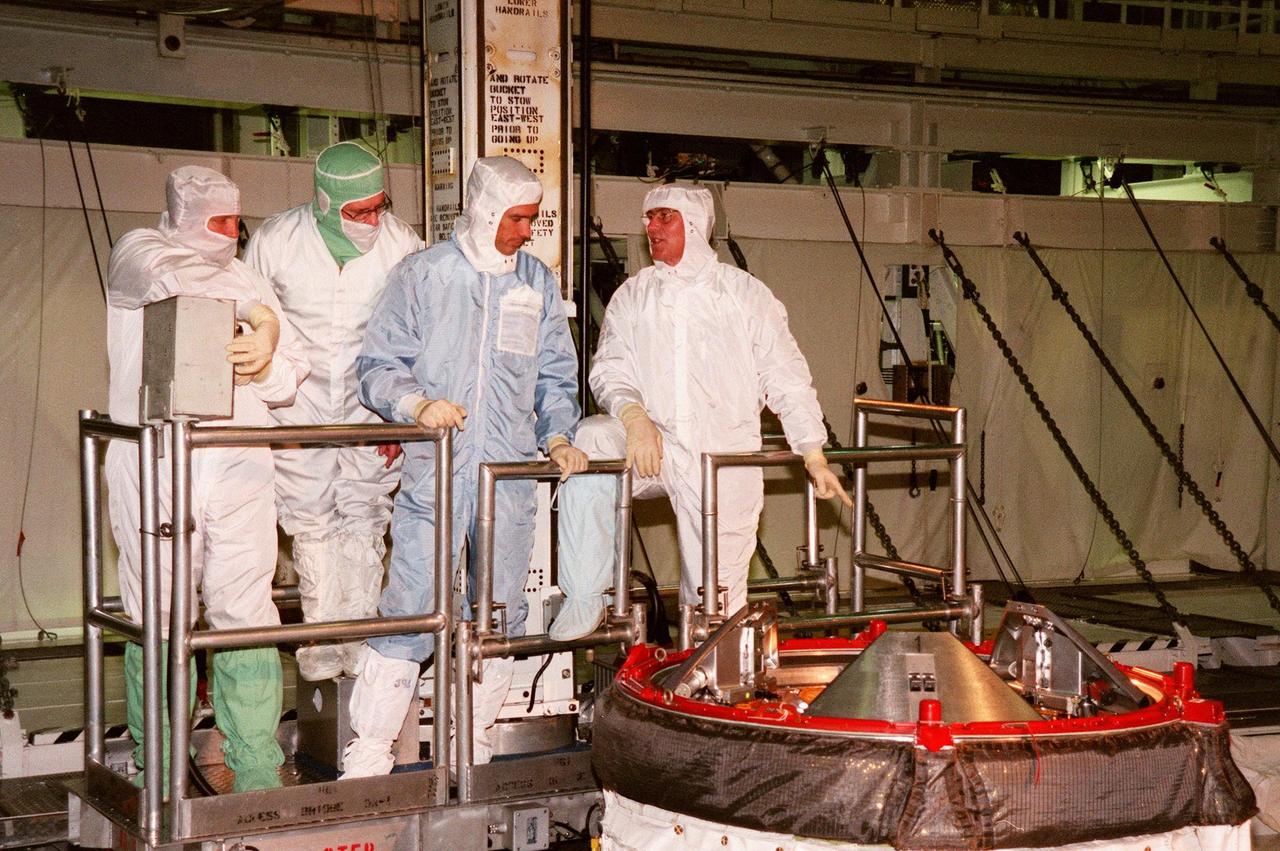
KENNEDY SPACE CENTER, FLA. -- Lowered on a movable work platform or bucket inside the payload bay of orbiter Endeavour, STS-88 Mission Specialists Jerry L. Ross (far right) and James H. Newman (second from right) get a close look at the Orbiter Docking System. At left is the bucket operator and Wayne Wedlake, with United Space Alliance at Johnson Space Center. The STS-88 crew members are in Orbiter Processing Facility Bay 1 to participate in a Crew Equipment Interface Test (CEIT) to familiarize themselves with the orbiter's midbody and crew compartments. Targeted for liftoff on Dec. 3, 1998, STS-88 will be the first Space Shuttle launch for assembly of the International Space Station (ISS). The primary payload is the Unity connecting module which will be mated to the Russian-built Zarya control module, expected to be already on orbit after a November launch from Russia. While on orbit during STS-88, Unity will be latched atop the Orbiter Docking System in the forward section of Endeavour's payload bay for the mating of the two modules. After the mating, Ross and Newman are scheduled to perform three spacewalks to connect power, data and utility lines and install exterior equipment. The first major U.S.-built component of ISS, Unity will serve as a connecting passageway to living and working areas of the space station. Unity has two attached pressurized mating adapters (PMAs) and one stowage rack installed inside. PMA-1 provides the permanent connection point between Unity and Zarya; PMA-2 will serve as a Space Shuttle docking port. Zarya is a self-supporting active vehicle, providing propulsive control capability and power during the early assembly stages. It also has fuel storage capability
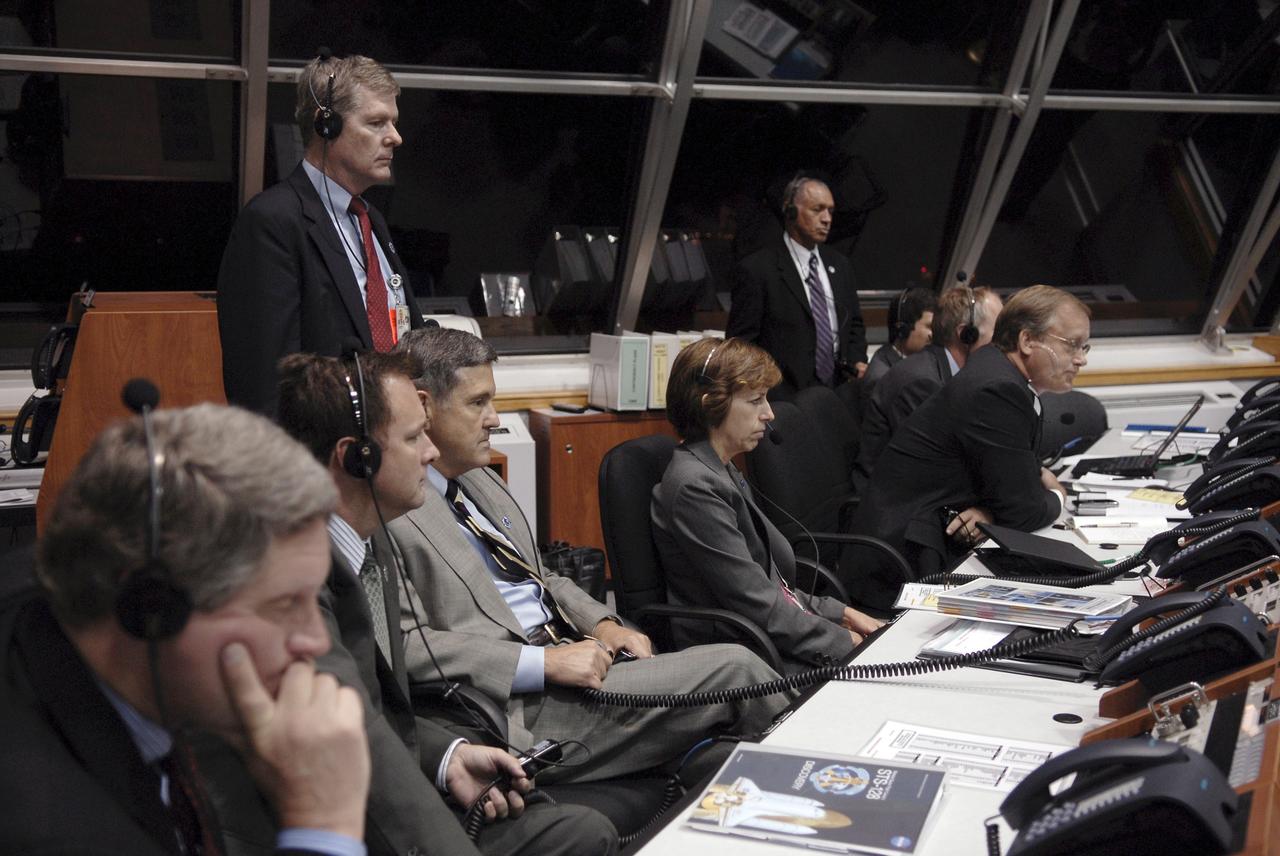
CAPE CANAVERAL, Fla. – In NASA Kennedy Space Center's Firing Room 4, NASA management watch the console during the countdown toward launch of space shuttle Discovery on the STS-128 mission. Seated (starting second from left) are Robert Lightfoot, director of NASA's Marshall Space Flight Center; Bob Cabana, director of Kennedy Space Center; Janet Kavandi, deputy director of Flight Crew Operations at Johnson Space Center; John Shannon, Shuttle Program manager (leaning forward); Bill Gerstenmaier, associate administrator for Space Operations; and Chris Scolese, NASA associate administrator. Standing in front of the windows at right is Charles Bolden, NASA Administrator. Liftoff from Launch Pad 39A was on time at 11:59 p.m. EDT. The first launch attempt on Aug. 24 was postponed due to unfavorable weather conditions. The second attempt on Aug. 25 also was postponed due to an issue with a valve in space shuttle Discovery's main propulsion system. The STS-128 mission is the 30th International Space Station assembly flight and the 128th space shuttle flight. The 13-day mission will deliver more than 7 tons of supplies, science racks and equipment, as well as additional environmental hardware to sustain six crew members on the International Space Station. The equipment includes a freezer to store research samples, a new sleeping compartment and the COLBERT treadmill. Photo credit: NASA/Kim Shiflett