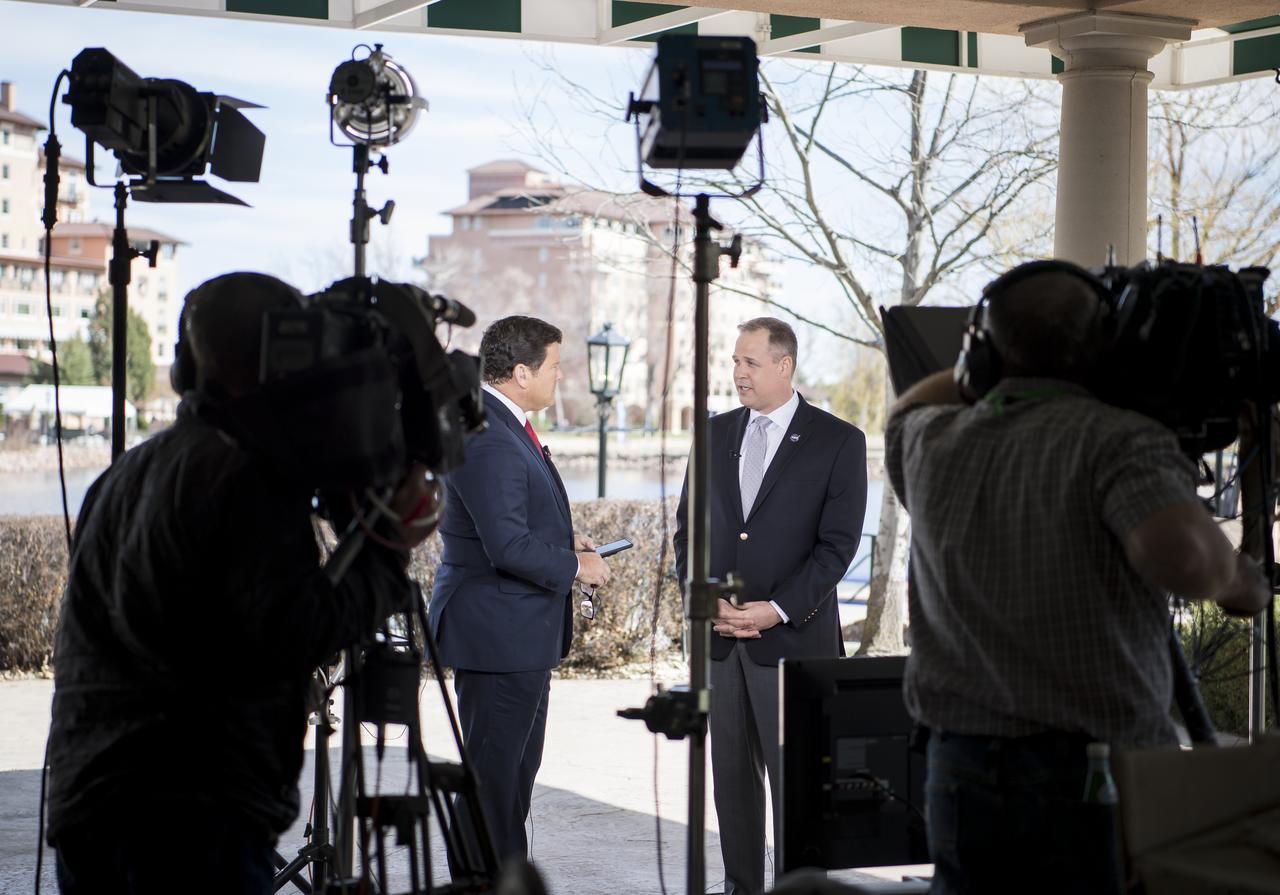
NASA Administrator Jim Bridenstine is interviewed by Bret Baier of Fox News at the Space Symposium, Monday, April 8, 2019 in Colorado Springs, Colorado. Photo Credit: (NASA/Aubrey Gemignani)
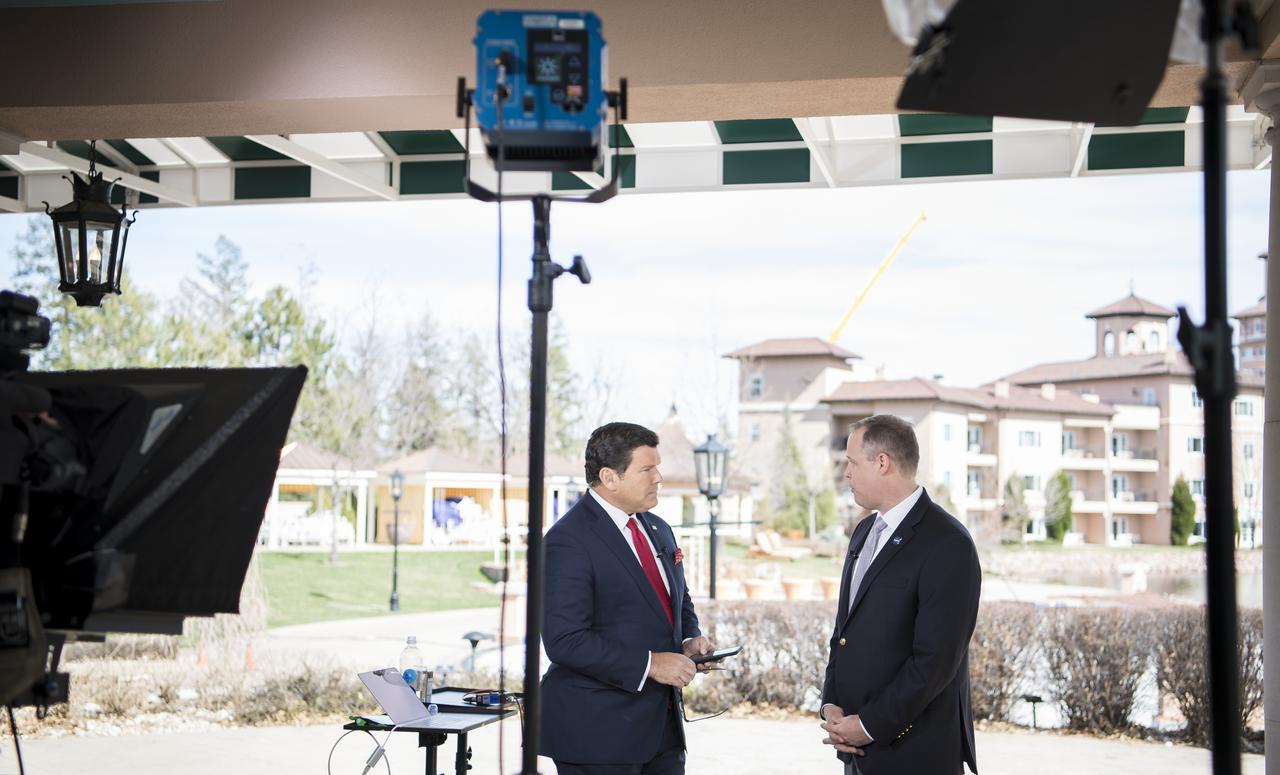
NASA Administrator Jim Bridenstine is interviewed by Bret Baier of Fox News at the Space Symposium, Monday, April 8, 2019 in Colorado Springs, Colorado. Photo Credit: (NASA/Aubrey Gemignani)
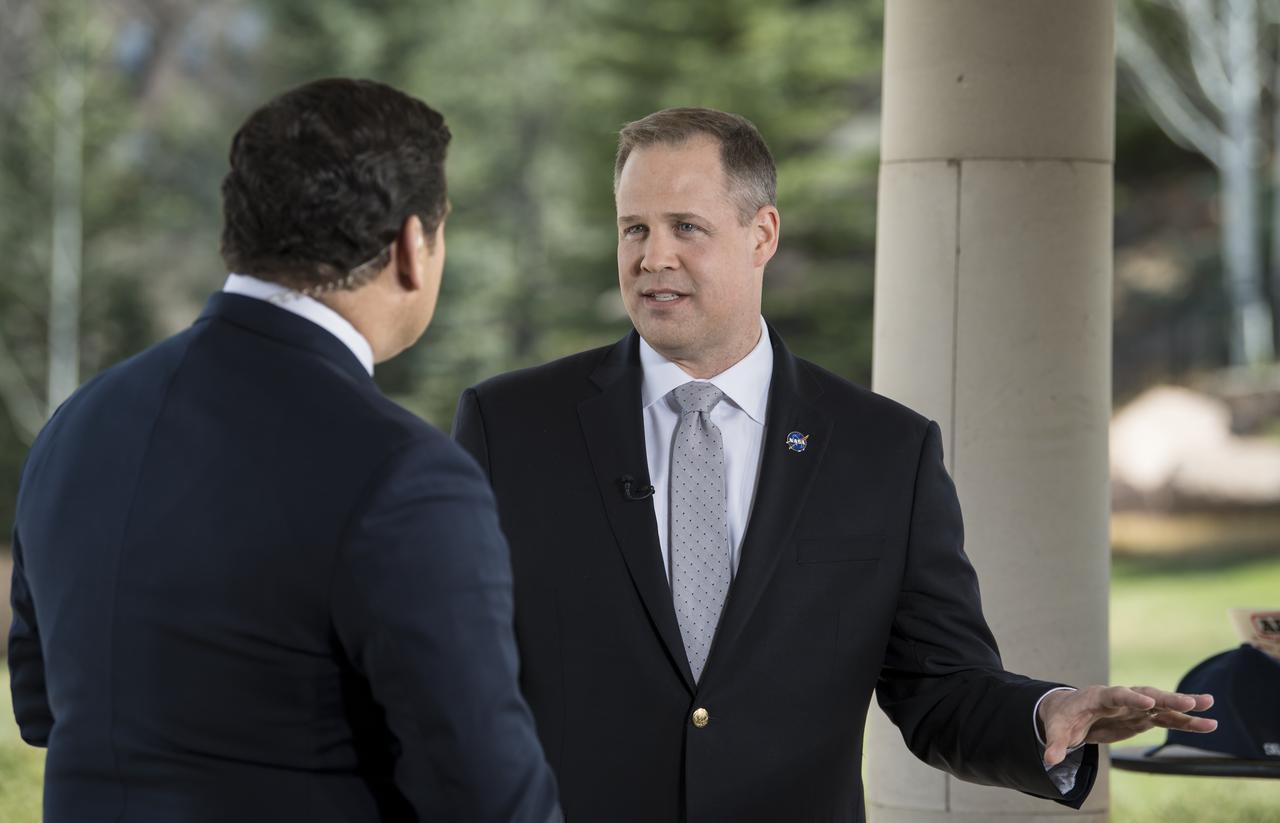
NASA Administrator Jim Bridenstine is interviewed by Bret Baier of Fox News at the Space Symposium, Monday, April 8, 2019 in Colorado Springs, Colorado. Photo Credit: (NASA/Aubrey Gemignani)
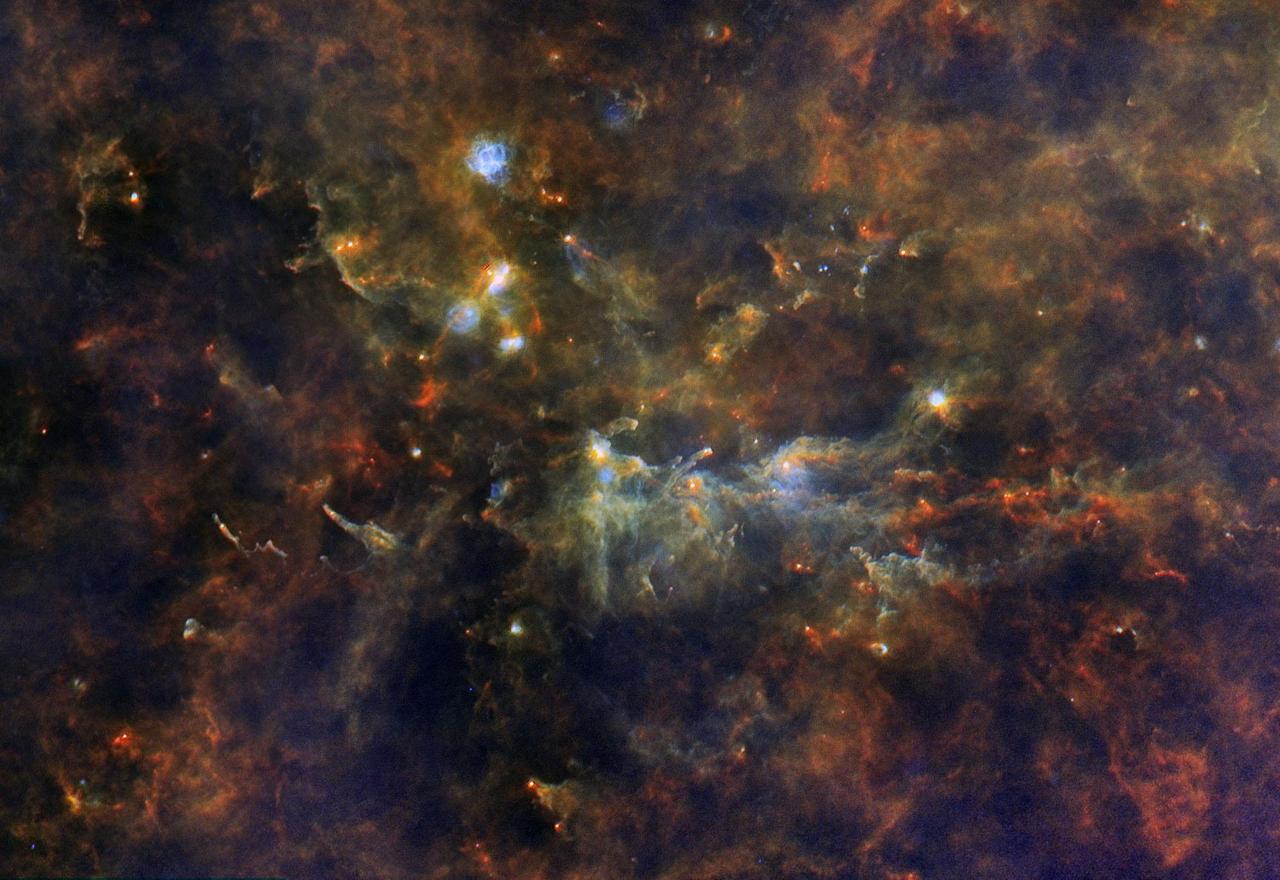
New stars are the lifeblood of our galaxy, and there is enough material revealed by ESA Herschel of the constellation Vulpecula little fox OB1. The giant stars at the heart of Vulpecula OB1 are some of the biggest in the galaxy.
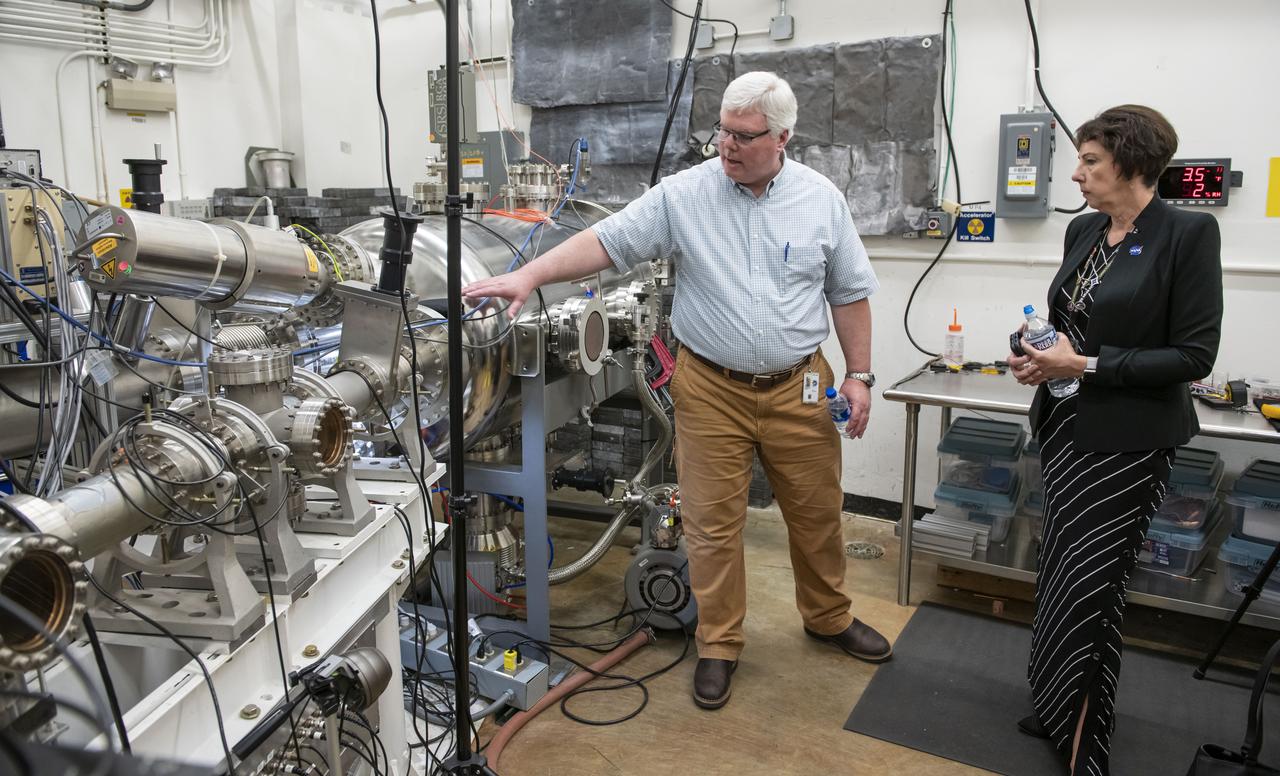
Nicola Fox, director of NASA’s Heliophysics Division, right, hears from NASA’s Marshall Space Flight Center physicist Todd Schneider during her visit to the center Sept. 26. Fox toured multiple facilities at Marshall -- including the Space Environmental Effects facility -- to see firsthand how Marshall scientists and engineers are advancing exploration and discovery.

Jared Isaacman tours Airbus Defence and Space Facilities in Stevenage, United Kingdom, pictured with Baroness Liz Lloyd, Rebecca Evernden, and Nicky Fox.
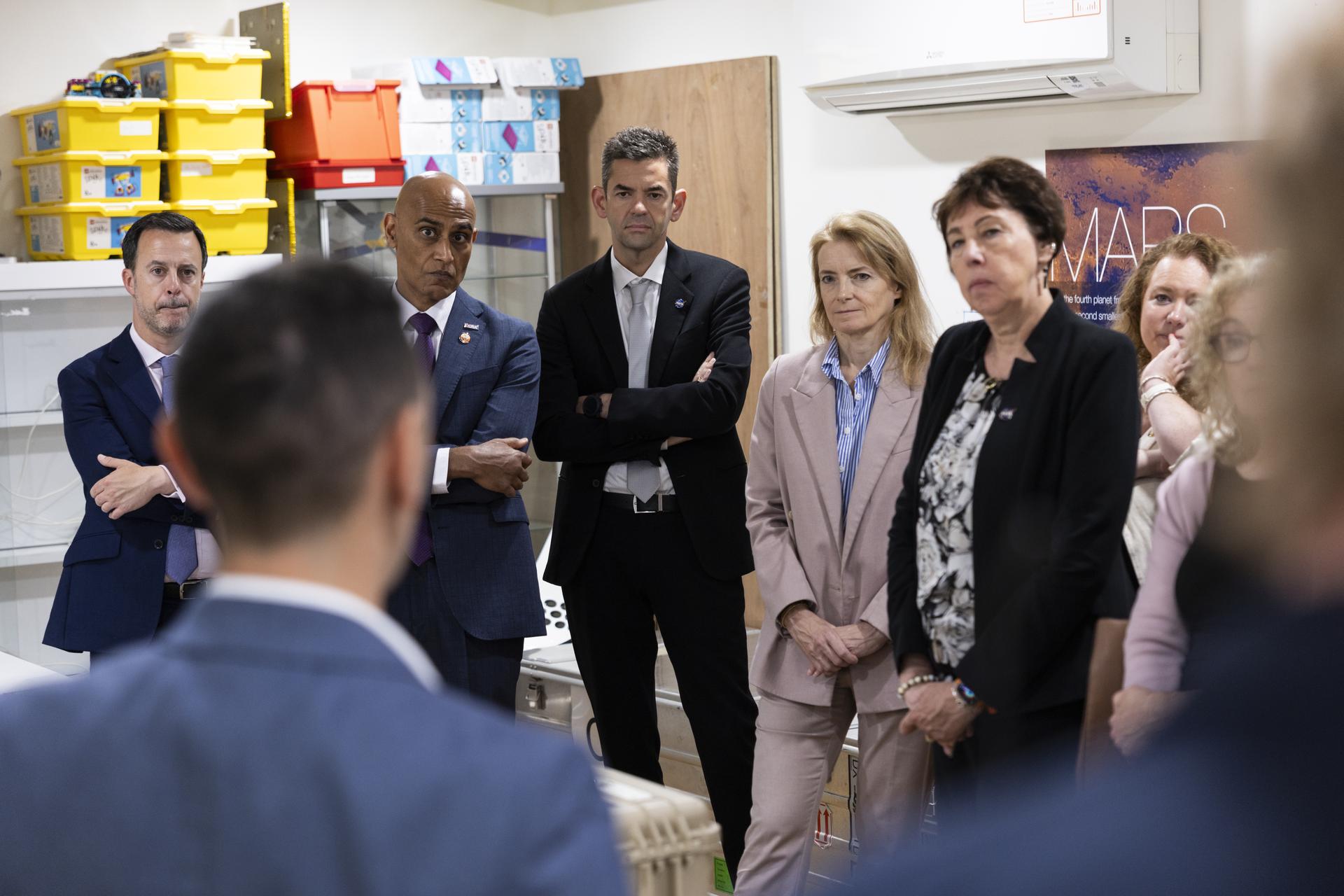
Jared Isaacman tours Airbus Defence and Space Facilities Mars Yard in Stevenage, United Kingdom. Pictured with Nicky Fox, Anu Ojha, Kevin Bonavia, and Baroness Liz Lloyd.
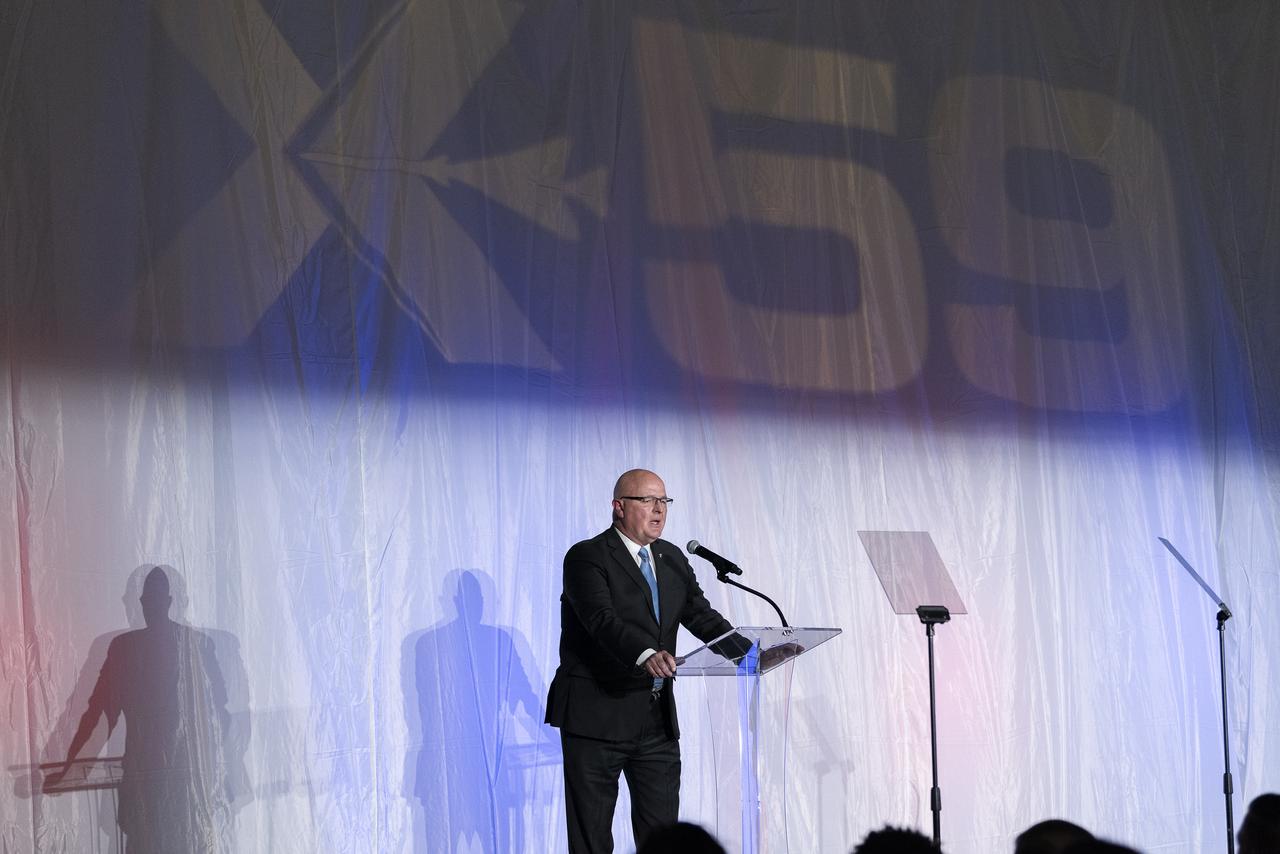
Lockheed Martin Skunk Works Director of Government Affairs Eric Fox speaks on stage prior to the unveiling of the agency’s X-59 quiet supersonic research aircraft at a January 12, 2024 event at Lockheed Martin Skunk Works in Palmdale, California. The X-59 is the centerpiece of NASA’s Quesst mission, which seeks to solve one of the major barriers to supersonic flight over land, currently banned in the United States, by making sonic booms quieter.
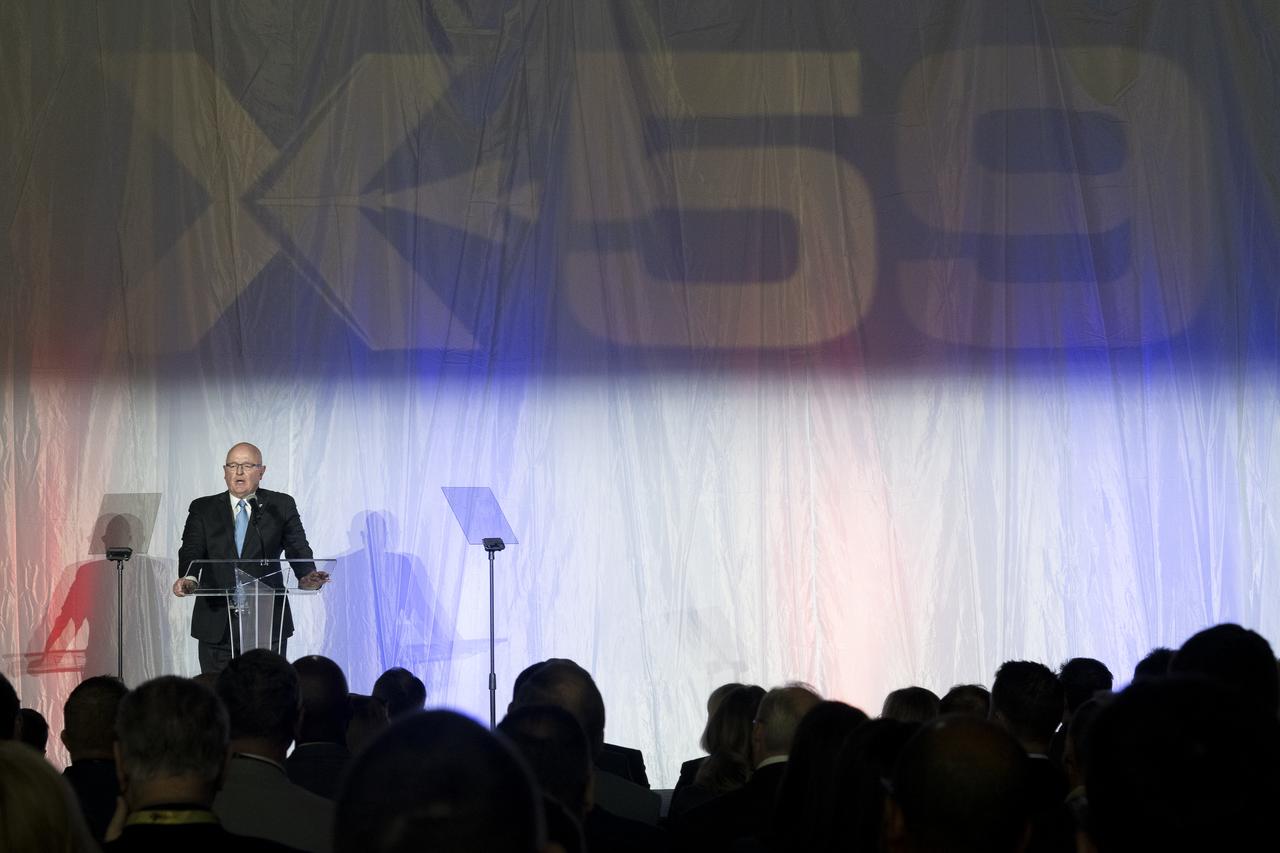
Lockheed Martin Skunk Works Director of Government Affairs Eric Fox speaks on stage prior to the unveiling of the agency’s X-59 quiet supersonic research aircraft at a January 12, 2024 event at Lockheed Martin Skunk Works in Palmdale, California. The X-59 is the centerpiece of NASA’s Quesst mission, which seeks to solve one of the major barriers to supersonic flight over land, currently banned in the United States, by making sonic booms quieter.
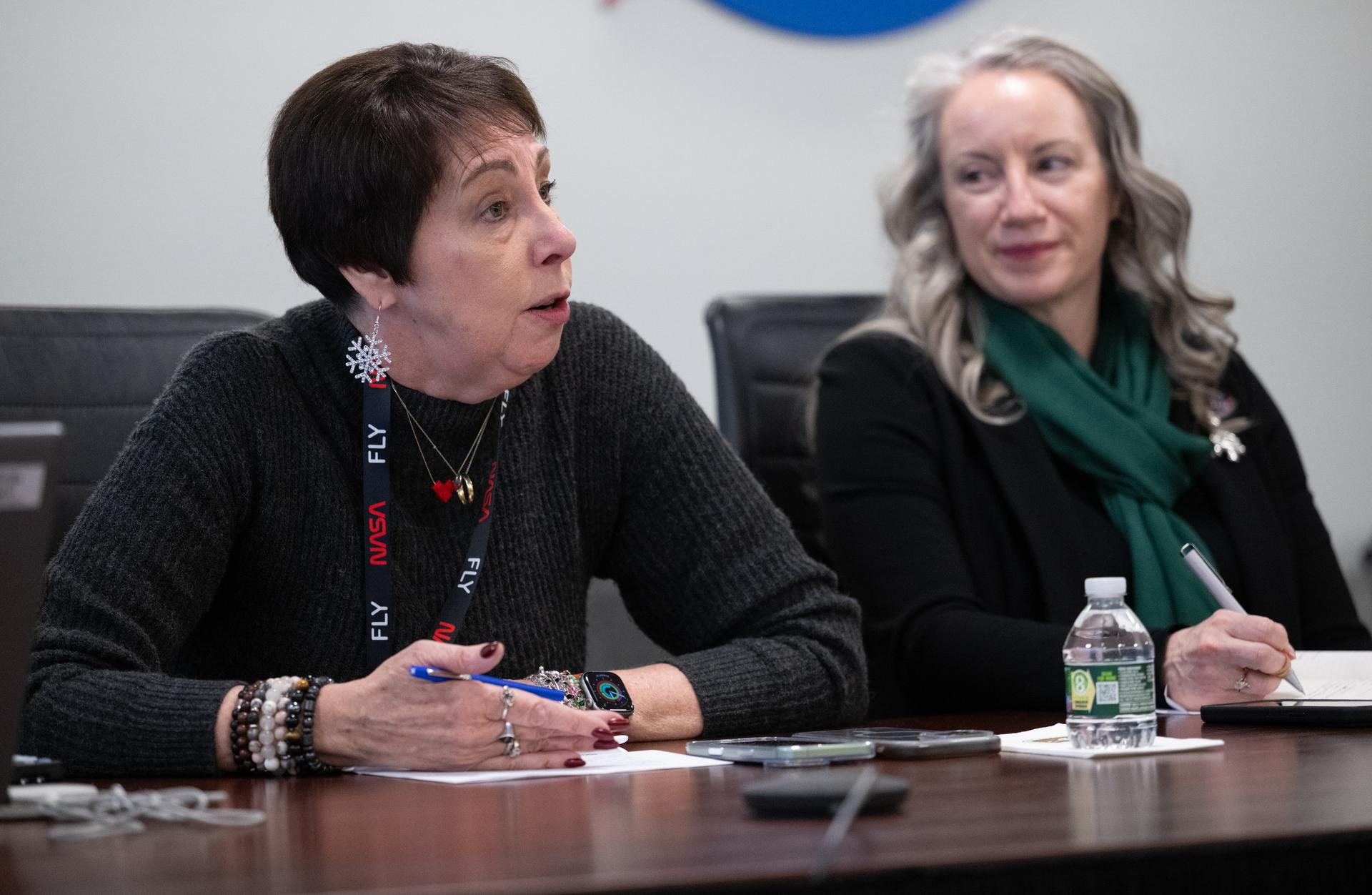
Nicola Fox, associate administrator for NASA’s Science Mission Directorate, is seen during a meeting with German Minister for Research, Technology, and Space Dorothee Bär, Tuesday, Dec. 9, 2025, at the Mary W. Jackson NASA Headquarters building in Washington. Photo Credit: (NASA/Joel Kowsky)

NASA Public Affairs Officer for Heliophysics, Karen Fox, speaks during “NASA’s Giant Leaps: Past and Future," a live television program on Friday, July 19, 2019 on the National Mall in Washington. NASA and the world are recognizing the 50th anniversary of Apollo 11, in which astronauts Neil Armstrong, Michael Collins, and Buzz Aldrin crewed the first mission to land astronauts on the Moon. Photo Credit: (NASA/Aubrey Gemignani)
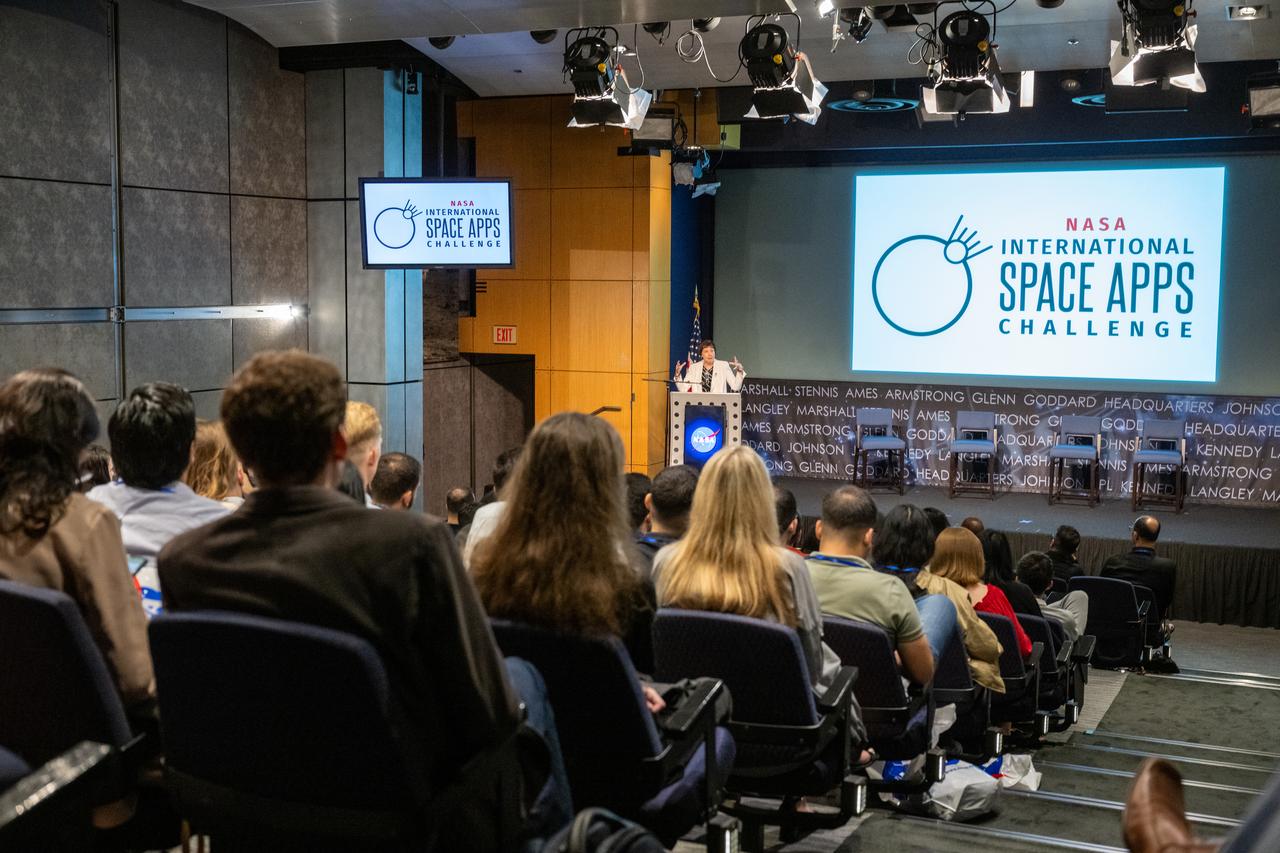
NASA Earth Science Division Associate Administrator Nicola Fox delivers remarks during a gathering of NASA Space Apps Challenge Global Winners and Local Leads from around the world Wednesday, June 5, 2024, at the Mary W. Jackson NASA Headquarters building in Washington. Photo Credit: (NASA/Keegan Barber)
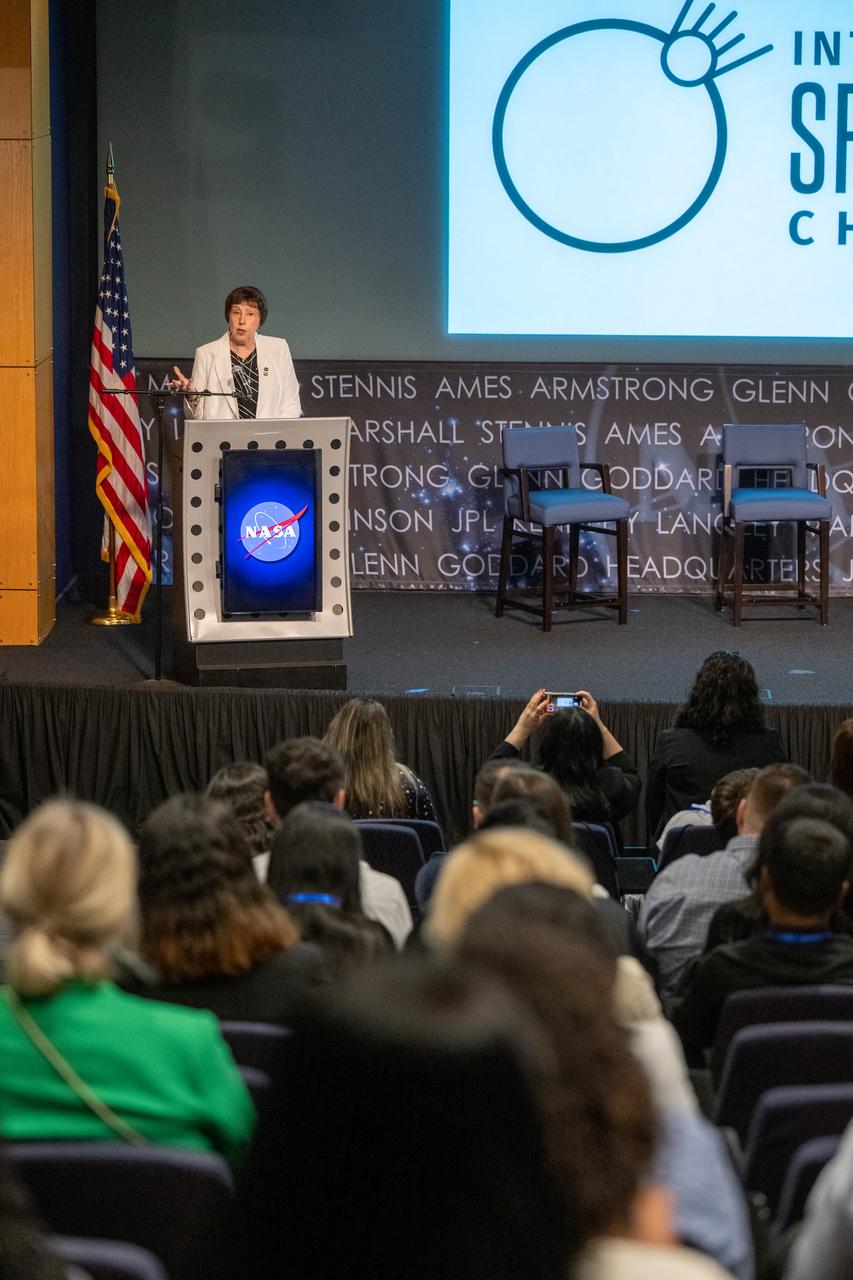
NASA Earth Science Division Associate Administrator Nicola Fox delivers remarks during a gathering of NASA Space Apps Challenge Global Winners and Local Leads from around the world Wednesday, June 5, 2024, at the Mary W. Jackson NASA Headquarters building in Washington. Photo Credit: (NASA/Keegan Barber)
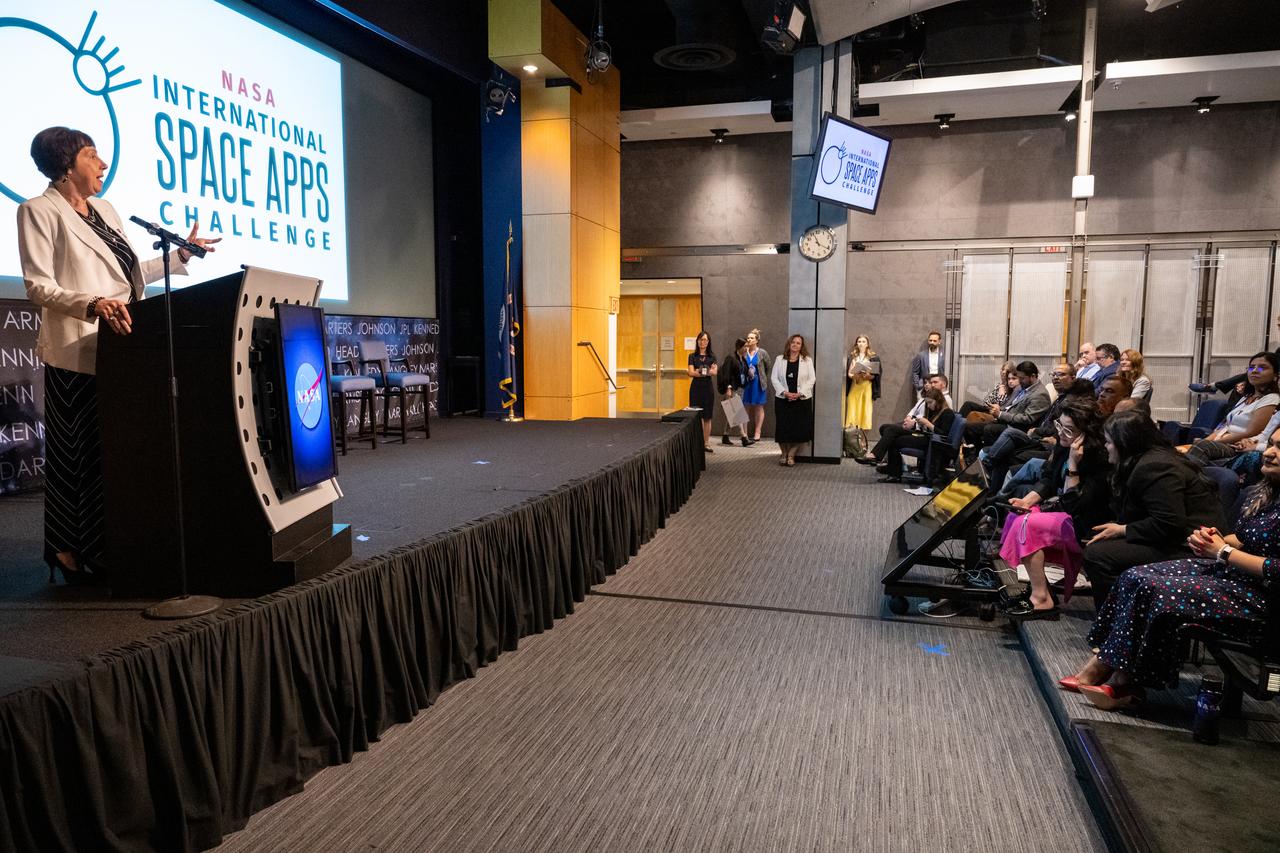
NASA Earth Science Division Associate Administrator Nicola Fox delivers remarks during a gathering of NASA Space Apps Challenge Global Winners and Local Leads from around the world Wednesday, June 5, 2024, at the Mary W. Jackson NASA Headquarters building in Washington. Photo Credit: (NASA/Keegan Barber)
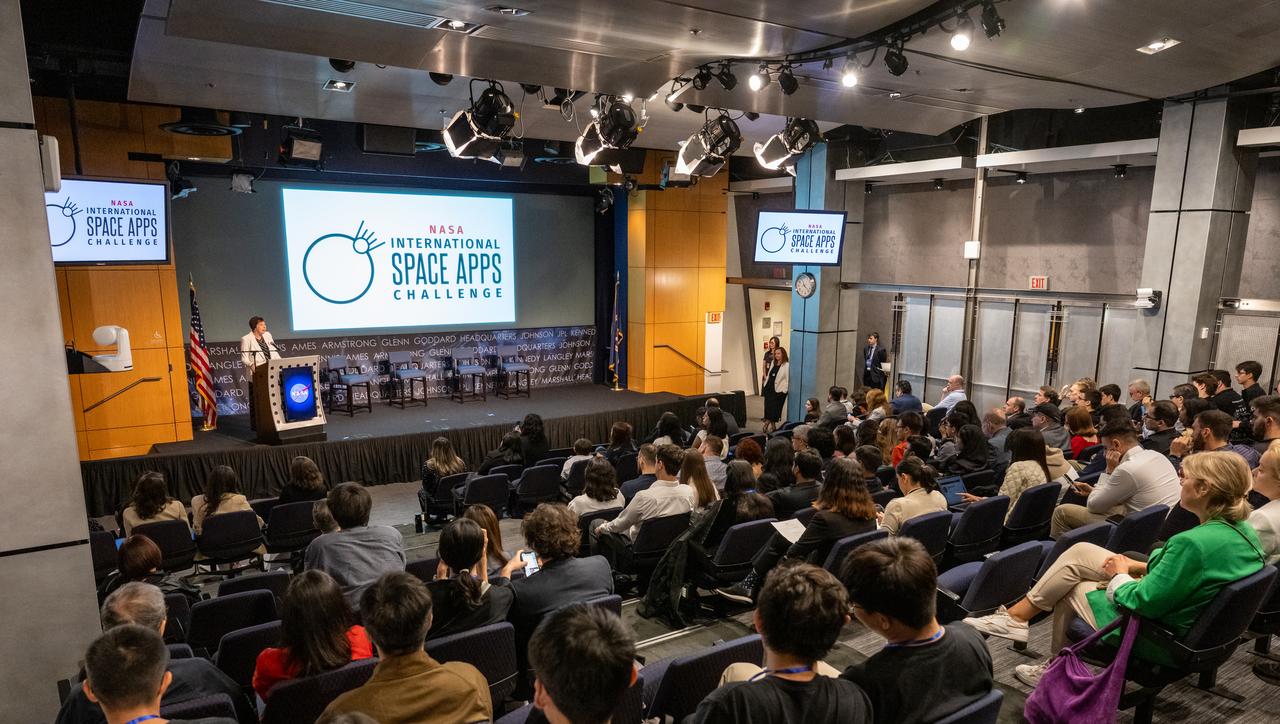
NASA Earth Science Division Associate Administrator Nicola Fox delivers remarks during a gathering of NASA Space Apps Challenge Global Winners and Local Leads from around the world Wednesday, June 5, 2024, at the Mary W. Jackson NASA Headquarters building in Washington. Photo Credit: (NASA/Keegan Barber)
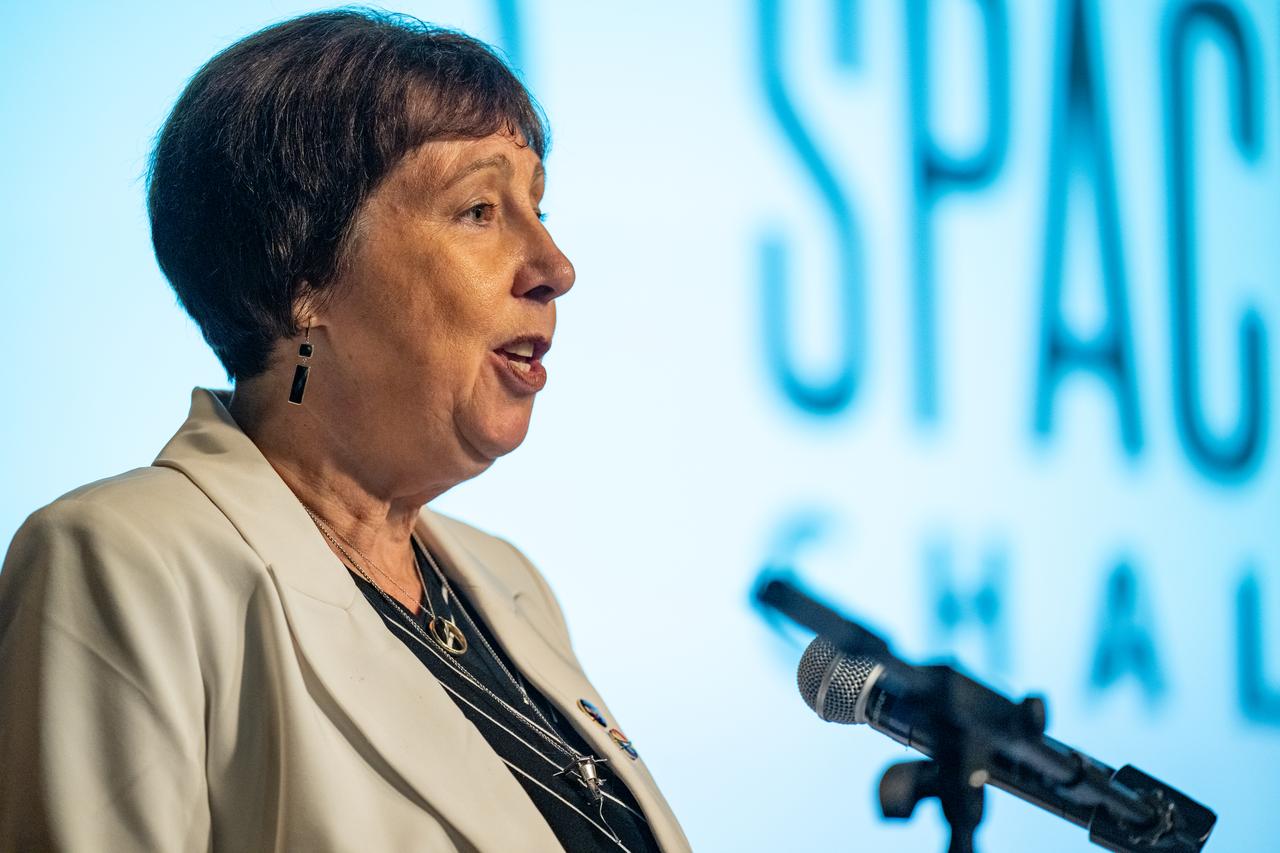
NASA Earth Science Division Associate Administrator Nicola Fox delivers remarks during a gathering of NASA Space Apps Challenge Global Winners and Local Leads from around the world Wednesday, June 5, 2024, at the Mary W. Jackson NASA Headquarters building in Washington. Photo Credit: (NASA/Keegan Barber)
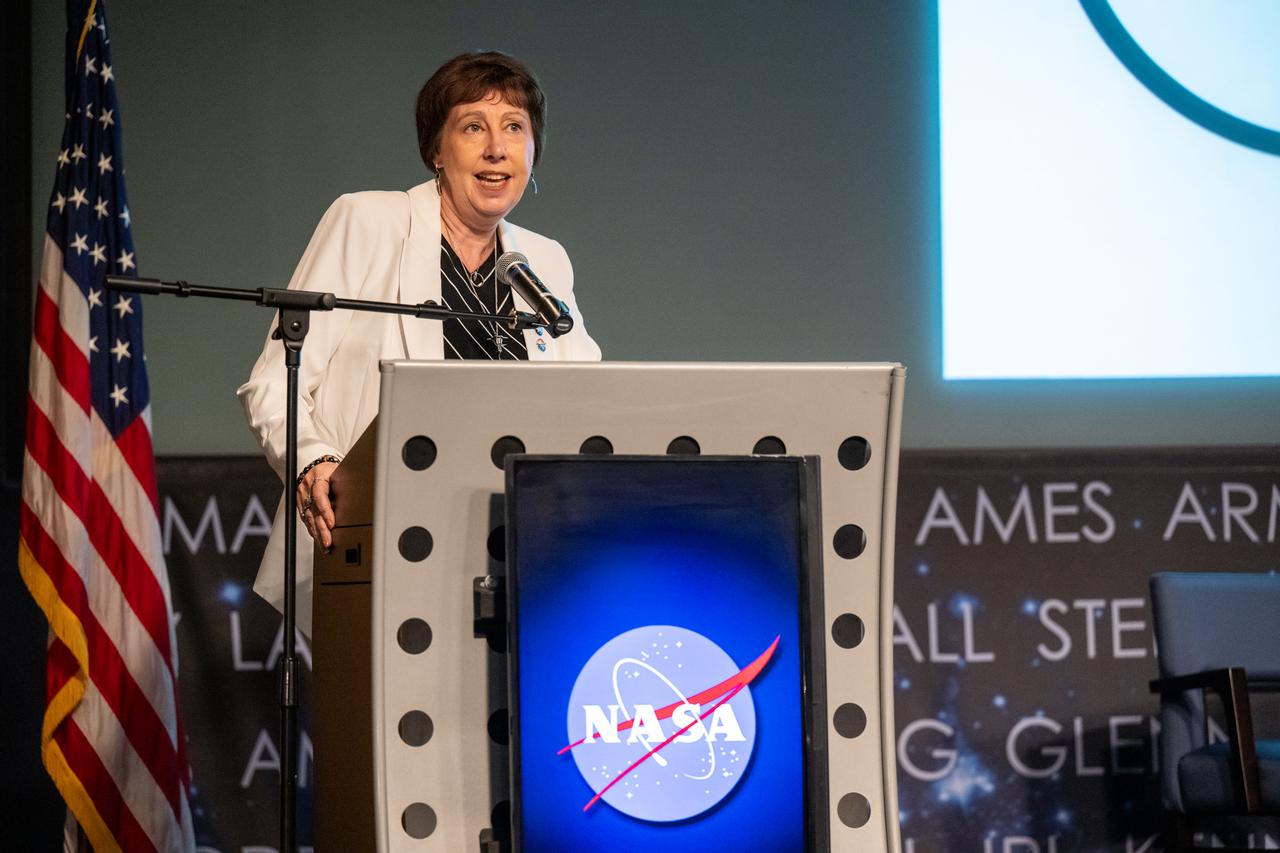
NASA Earth Science Division Associate Administrator Nicola Fox delivers remarks during a gathering of NASA Space Apps Challenge Global Winners and Local Leads from around the world Wednesday, June 5, 2024, at the Mary W. Jackson NASA Headquarters building in Washington. Photo Credit: (NASA/Keegan Barber)
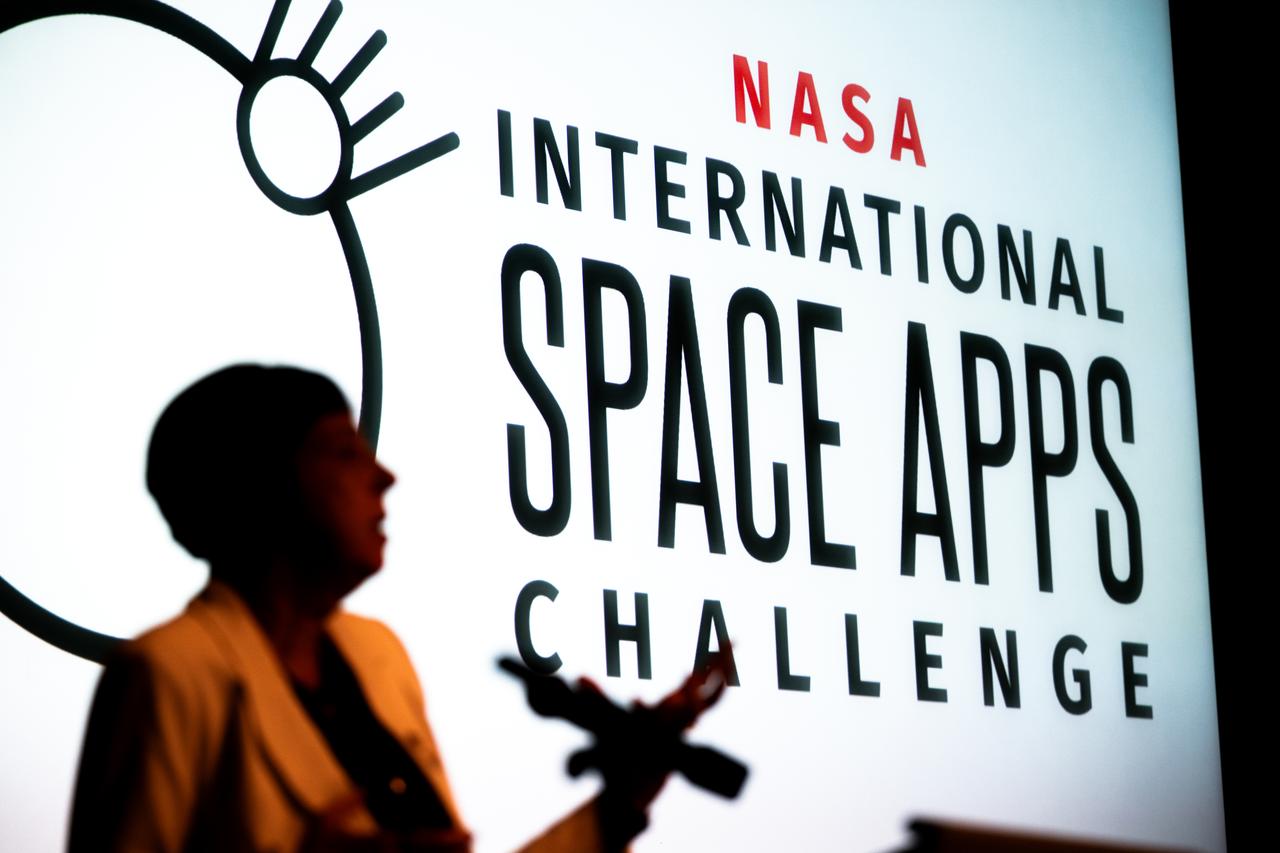
NASA Earth Science Division Associate Administrator Nicola Fox delivers remarks during a gathering of NASA Space Apps Challenge Global Winners and Local Leads from around the world Wednesday, June 5, 2024, at the Mary W. Jackson NASA Headquarters building in Washington. Photo Credit: (NASA/Keegan Barber)
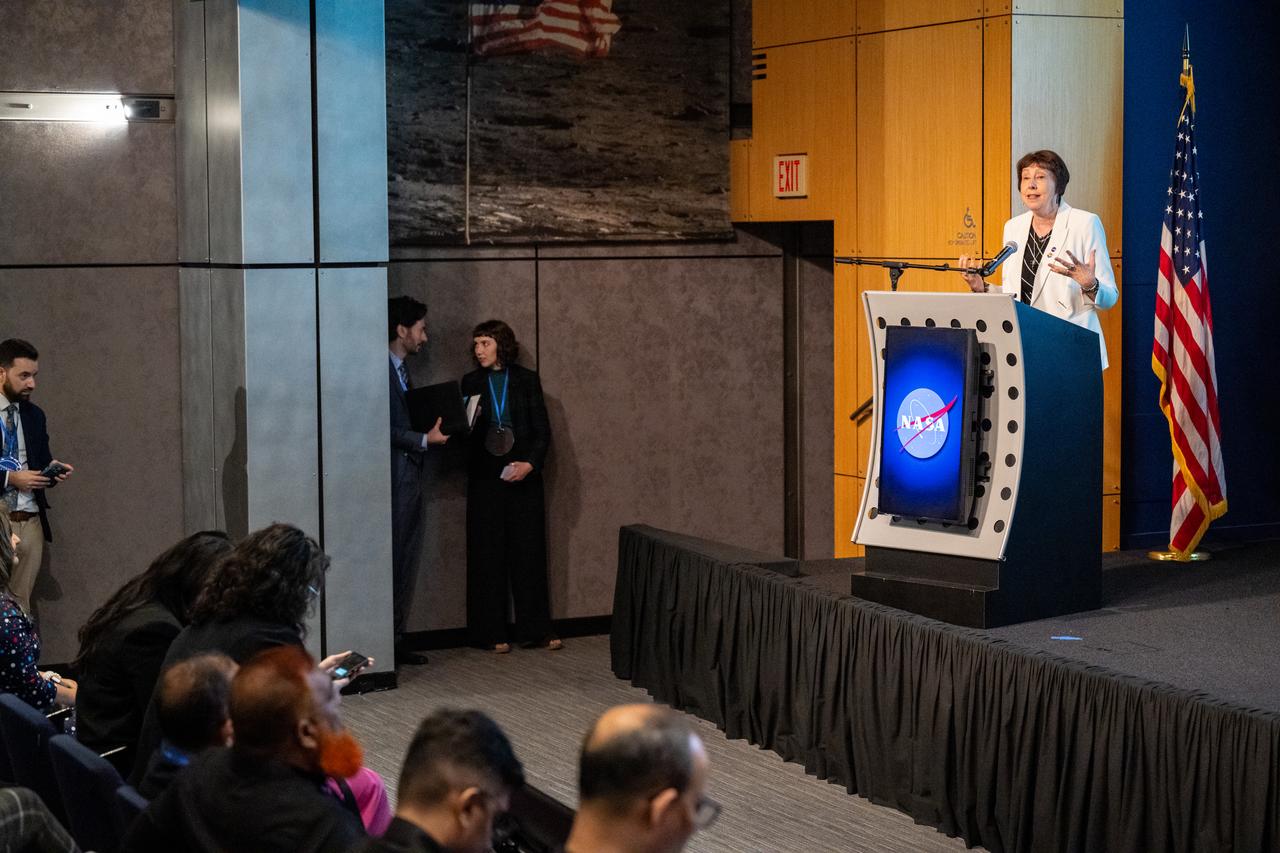
NASA Earth Science Division Associate Administrator Nicola Fox delivers remarks during a gathering of NASA Space Apps Challenge Global Winners and Local Leads from around the world Wednesday, June 5, 2024, at the Mary W. Jackson NASA Headquarters building in Washington. Photo Credit: (NASA/Keegan Barber)
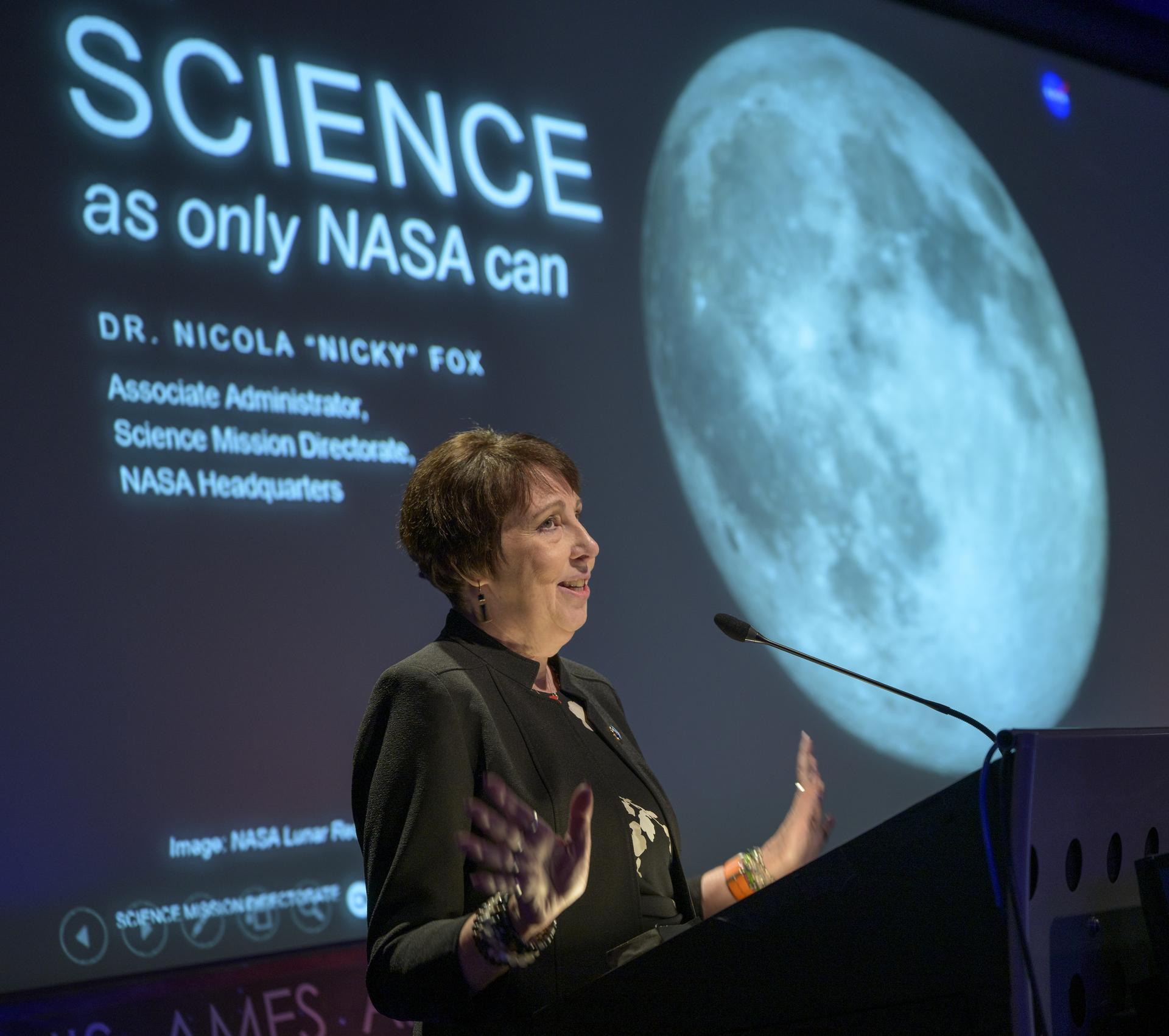
Associate Administrator for NASA's Science Mission Directorate Nicola Fox speaks during an event where NASA is outlining how the agency is executing President Donald J. Trump’s National Space Policy and accelerating preparations for America’s return to the surface of the Moon by 2028, Tuesday, March 24, 2026, at the Mary W. Jackson NASA Headquarters building in Washington. During the event NASA leadership provided updates on mission priorities, including sending the first astronauts to the lunar surface in more than 50 years, establishing the initial elements of a permanent lunar base, getting America underway in space on nuclear propulsion, and other objectives. Photo Credit: (NASA/Bill Ingalls)
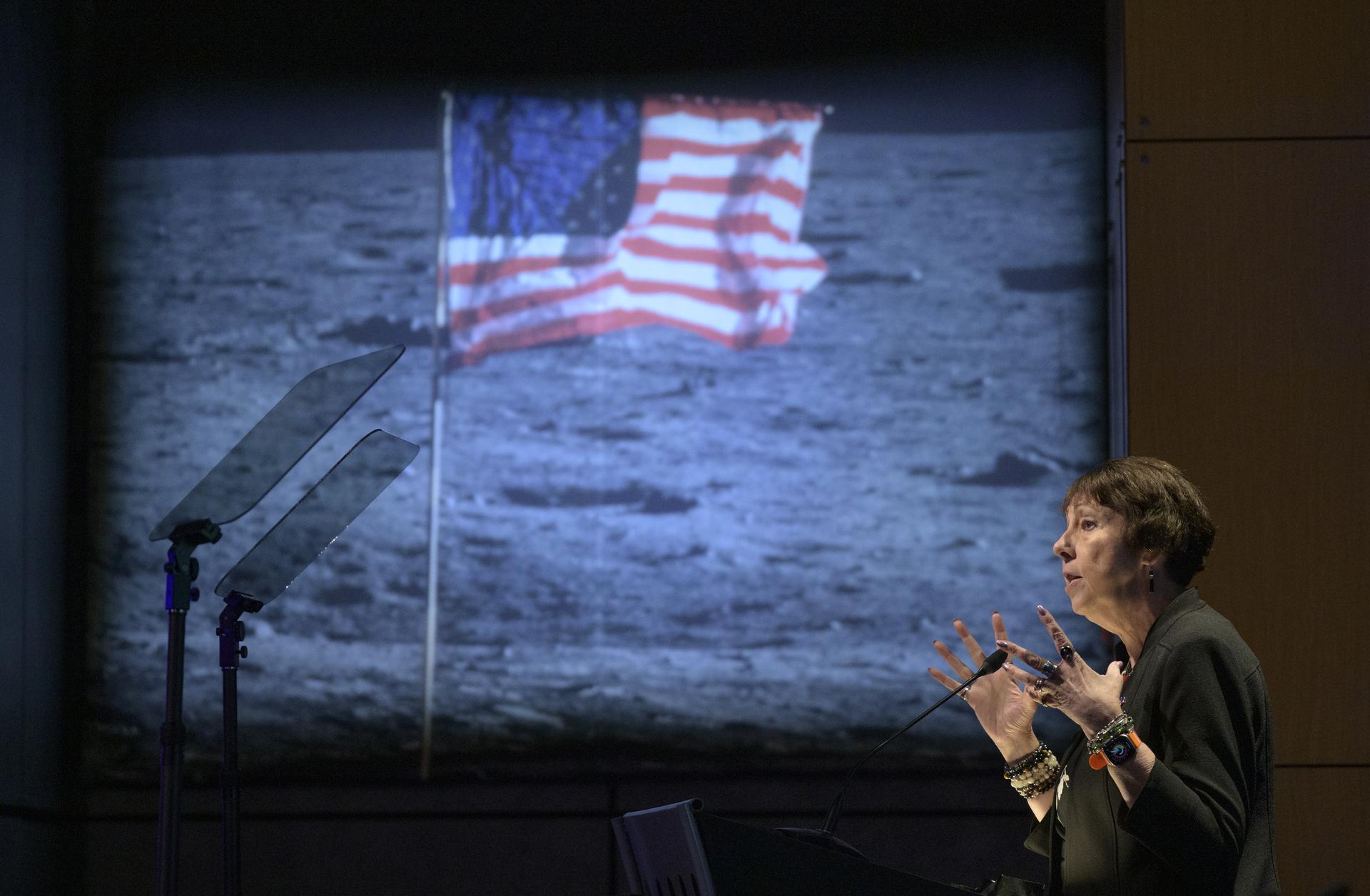
Associate Administrator for NASA's Science Mission Directorate Nicola Fox speaks during an event where NASA is outlining how the agency is executing President Donald J. Trump’s National Space Policy and accelerating preparations for America’s return to the surface of the Moon by 2028, Tuesday, March 24, 2026, at the Mary W. Jackson NASA Headquarters building in Washington. During the event NASA leadership provided updates on mission priorities, including sending the first astronauts to the lunar surface in more than 50 years, establishing the initial elements of a permanent lunar base, getting America underway in space on nuclear propulsion, and other objectives. Photo Credit: (NASA/Bill Ingalls)
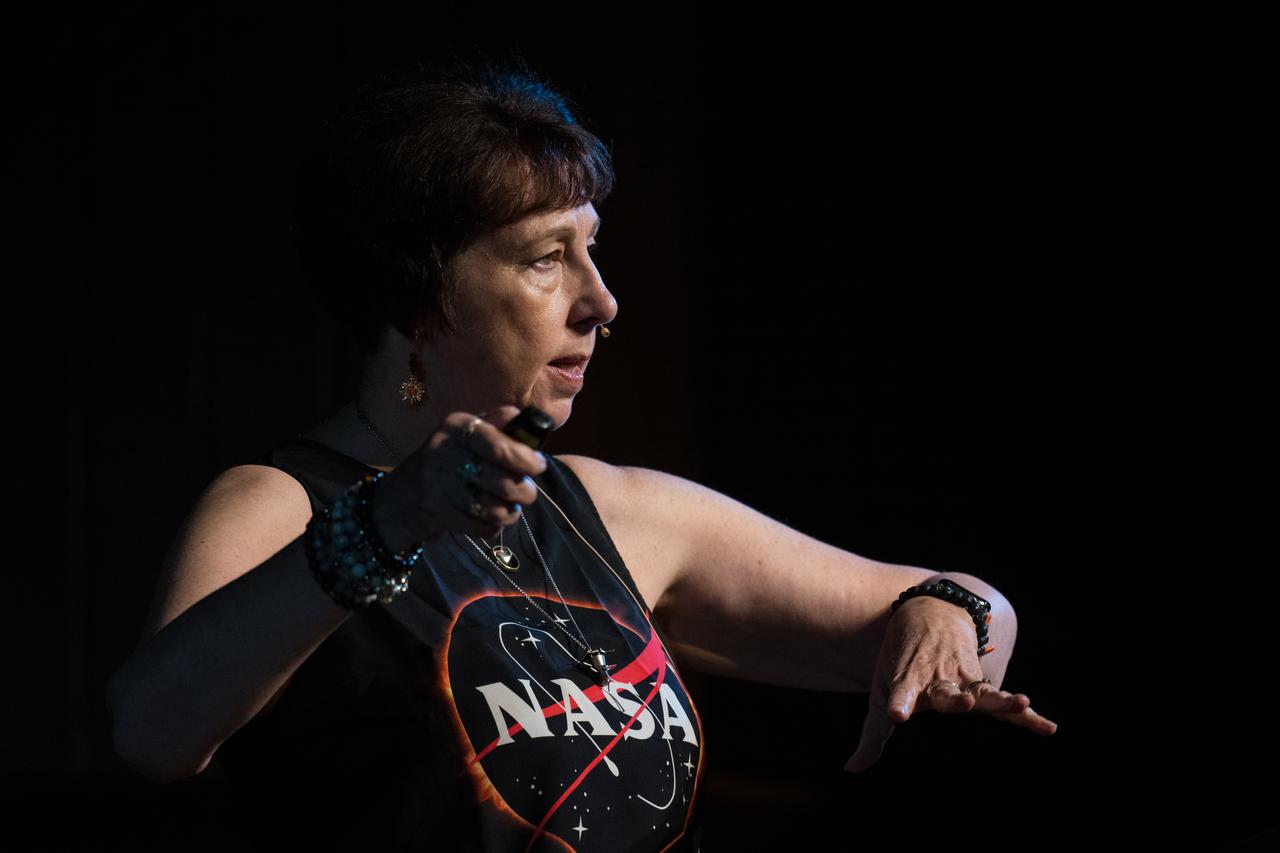
NASA Associate Administrator for the Science Mission Directorate, Dr. Nicky Fox, speaks during a presentation about the upcoming total solar eclipse, Saturday, April 6, 2024 at the Cailloux Theater in Kerrville, Texas. On Monday, April 8, a total solar eclipse will sweep across a narrow portion of the North American continent from Mexico’s Pacific coast to the Atlantic coast of Newfoundland, Canada, while a partial solar eclipse will be visible across the entire North American continent along with parts of Central America and Europe. Photo Credit: (NASA/Aubrey Gemignani)

Associate Administrator for NASA's Science Mission Directorate Nicola Fox speaks during an event where NASA is outlining how the agency is executing President Donald J. Trump’s National Space Policy and accelerating preparations for America’s return to the surface of the Moon by 2028, Tuesday, March 24, 2026, at the Mary W. Jackson NASA Headquarters building in Washington. During the event NASA leadership provided updates on mission priorities, including sending the first astronauts to the lunar surface in more than 50 years, establishing the initial elements of a permanent lunar base, getting America underway in space on nuclear propulsion, and other objectives. Photo Credit: (NASA/Bill Ingalls)
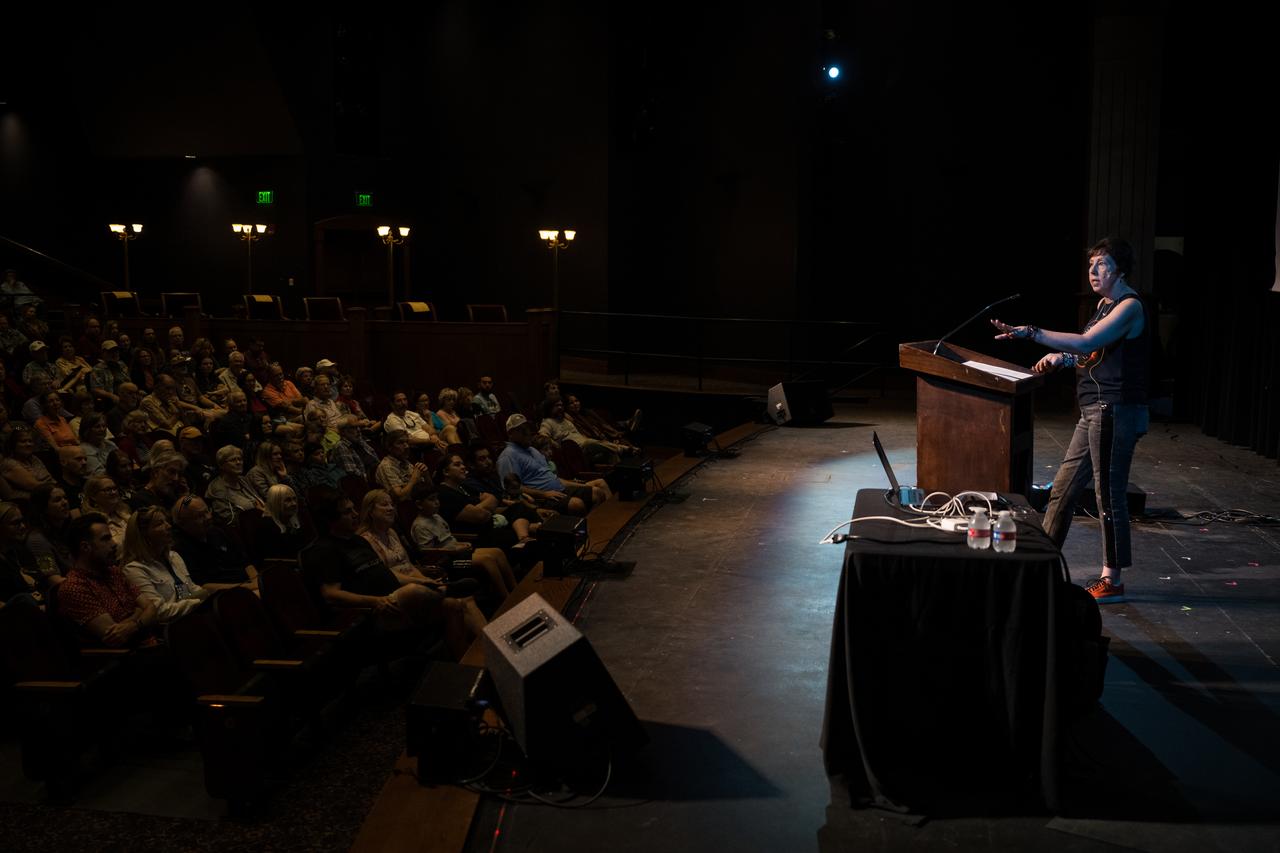
NASA Associate Administrator for the Science Mission Directorate, Dr. Nicky Fox, speaks during a presentation about the upcoming total solar eclipse, Saturday, April 6, 2024 at the Cailloux Theater in Kerrville, Texas. On Monday, April 8, a total solar eclipse will sweep across a narrow portion of the North American continent from Mexico’s Pacific coast to the Atlantic coast of Newfoundland, Canada, while a partial solar eclipse will be visible across the entire North American continent along with parts of Central America and Europe. Photo Credit: (NASA/Aubrey Gemignani)

NASA Associate Administrator for the Science Mission Directorate, Dr. Nicky Fox, speaks during a presentation about the upcoming total solar eclipse, Saturday, April 6, 2024 at the Cailloux Theater in Kerrville, Texas. On Monday, April 8, a total solar eclipse will sweep across a narrow portion of the North American continent from Mexico’s Pacific coast to the Atlantic coast of Newfoundland, Canada, while a partial solar eclipse will be visible across the entire North American continent along with parts of Central America and Europe. Photo Credit: (NASA/Aubrey Gemignani)
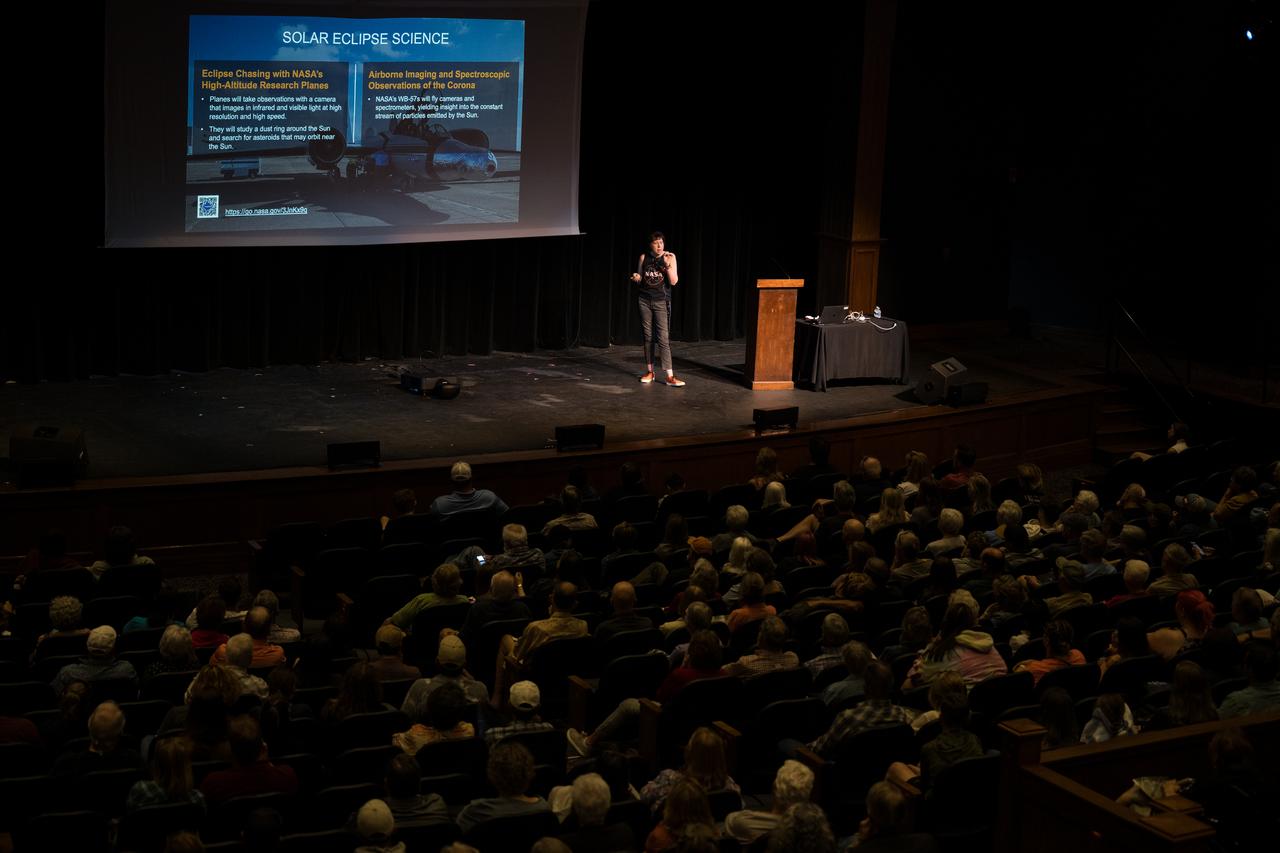
NASA Associate Administrator for the Science Mission Directorate, Dr. Nicky Fox, speaks during a presentation about the upcoming total solar eclipse, Saturday, April 6, 2024 at the Cailloux Theater in Kerrville, Texas. On Monday, April 8, a total solar eclipse will sweep across a narrow portion of the North American continent from Mexico’s Pacific coast to the Atlantic coast of Newfoundland, Canada, while a partial solar eclipse will be visible across the entire North American continent along with parts of Central America and Europe. Photo Credit: (NASA/Aubrey Gemignani)
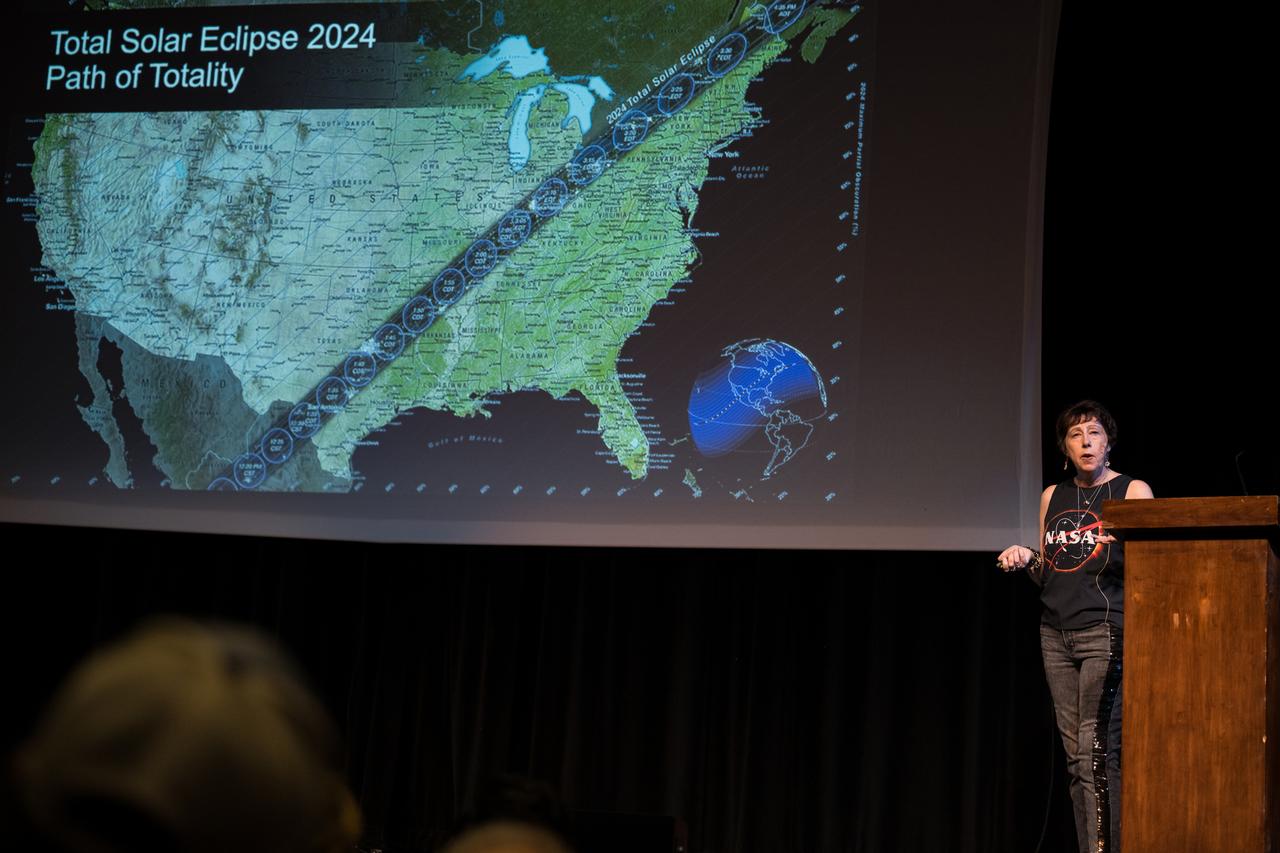
NASA Associate Administrator for the Science Mission Directorate, Dr. Nicky Fox, speaks during a presentation about the upcoming total solar eclipse, Saturday, April 6, 2024 at the Cailloux Theater in Kerrville, Texas. On Monday, April 8, a total solar eclipse will sweep across a narrow portion of the North American continent from Mexico’s Pacific coast to the Atlantic coast of Newfoundland, Canada, while a partial solar eclipse will be visible across the entire North American continent along with parts of Central America and Europe. Photo Credit: (NASA/Aubrey Gemignani)
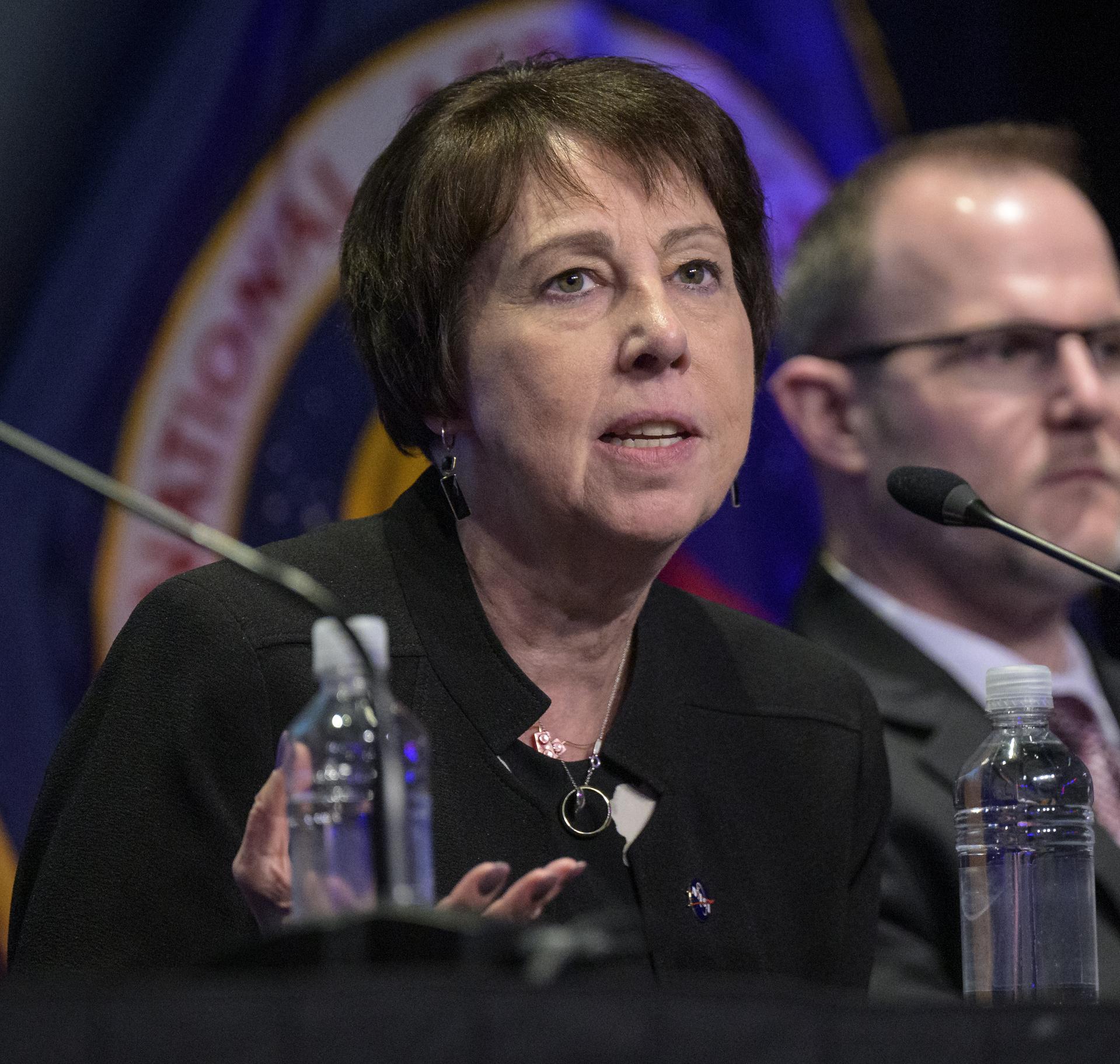
Associate Administrator for NASA's Science Mission Directorate Nicola Fox speaks during a press conference following an event where NASA outlined how the agency is executing President Donald J. Trump’s National Space Policy and accelerating preparations for America’s return to the surface of the Moon by 2028, Tuesday, March 24, 2026, at the Mary W. Jackson NASA Headquarters building in Washington. During the event NASA leadership provided updates on mission priorities, including sending the first astronauts to the lunar surface in more than 50 years, establishing the initial elements of a permanent lunar base, getting America underway in space on nuclear propulsion, and other objectives. Photo Credit: (NASA/Bill Ingalls)
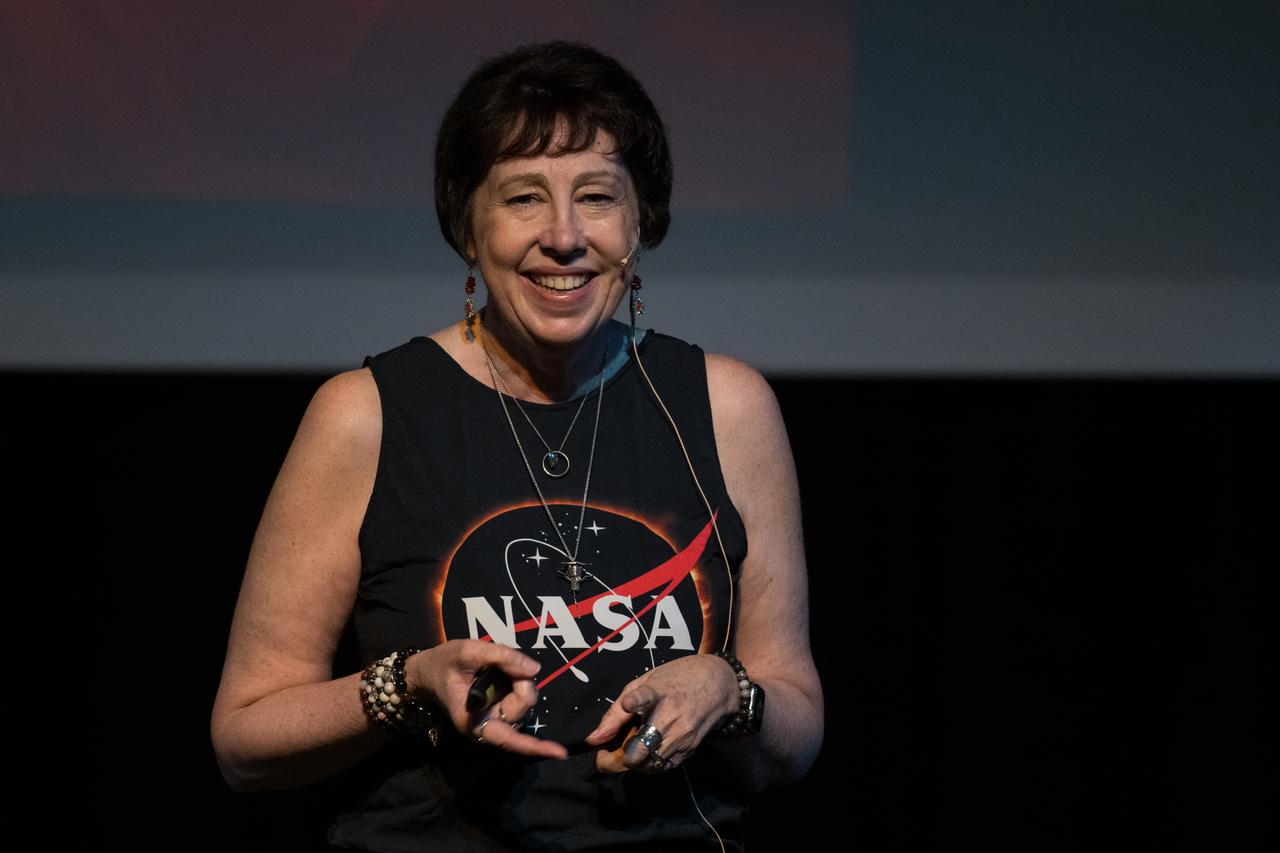
NASA Associate Administrator for the Science Mission Directorate, Dr. Nicky Fox, speaks during a presentation about the upcoming total solar eclipse, Saturday, April 6, 2024 at the Cailloux Theater in Kerrville, Texas. On Monday, April 8, a total solar eclipse will sweep across a narrow portion of the North American continent from Mexico’s Pacific coast to the Atlantic coast of Newfoundland, Canada, while a partial solar eclipse will be visible across the entire North American continent along with parts of Central America and Europe. Photo Credit: (NASA/Aubrey Gemignani)

Associate Administrator for NASA's Science Mission Directorate Nicola Fox speaks during an event where NASA is outlining how the agency is executing President Donald J. Trump’s National Space Policy and accelerating preparations for America’s return to the surface of the Moon by 2028, Tuesday, March 24, 2026, at the Mary W. Jackson NASA Headquarters building in Washington. During the event NASA leadership provided updates on mission priorities, including sending the first astronauts to the lunar surface in more than 50 years, establishing the initial elements of a permanent lunar base, getting America underway in space on nuclear propulsion, and other objectives. Photo Credit: (NASA/Bill Ingalls)
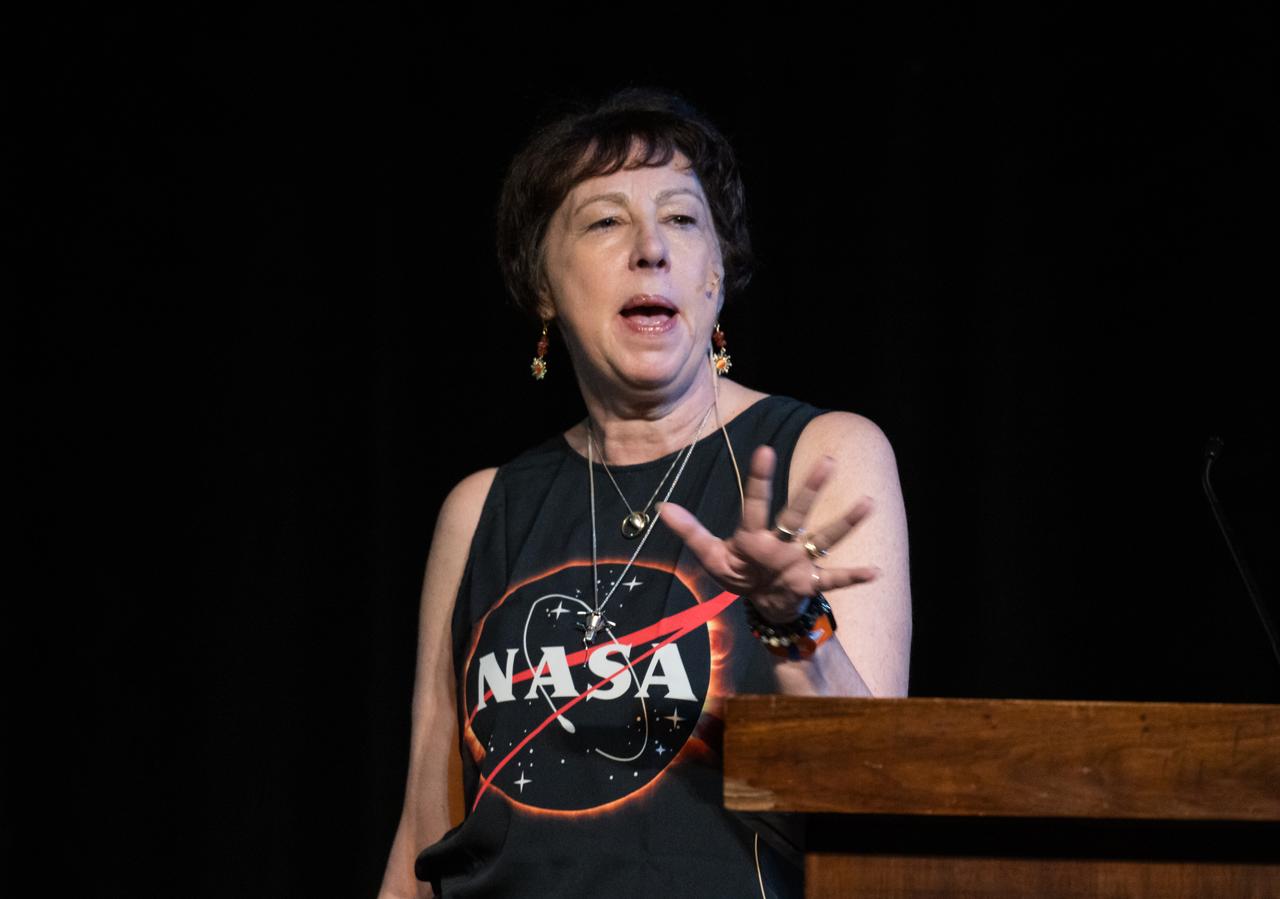
NASA Associate Administrator for the Science Mission Directorate, Dr. Nicky Fox, speaks during a presentation about the upcoming total solar eclipse, Saturday, April 6, 2024 at the Cailloux Theater in Kerrville, Texas. On Monday, April 8, a total solar eclipse will sweep across a narrow portion of the North American continent from Mexico’s Pacific coast to the Atlantic coast of Newfoundland, Canada, while a partial solar eclipse will be visible across the entire North American continent along with parts of Central America and Europe. Photo Credit: (NASA/Aubrey Gemignani)
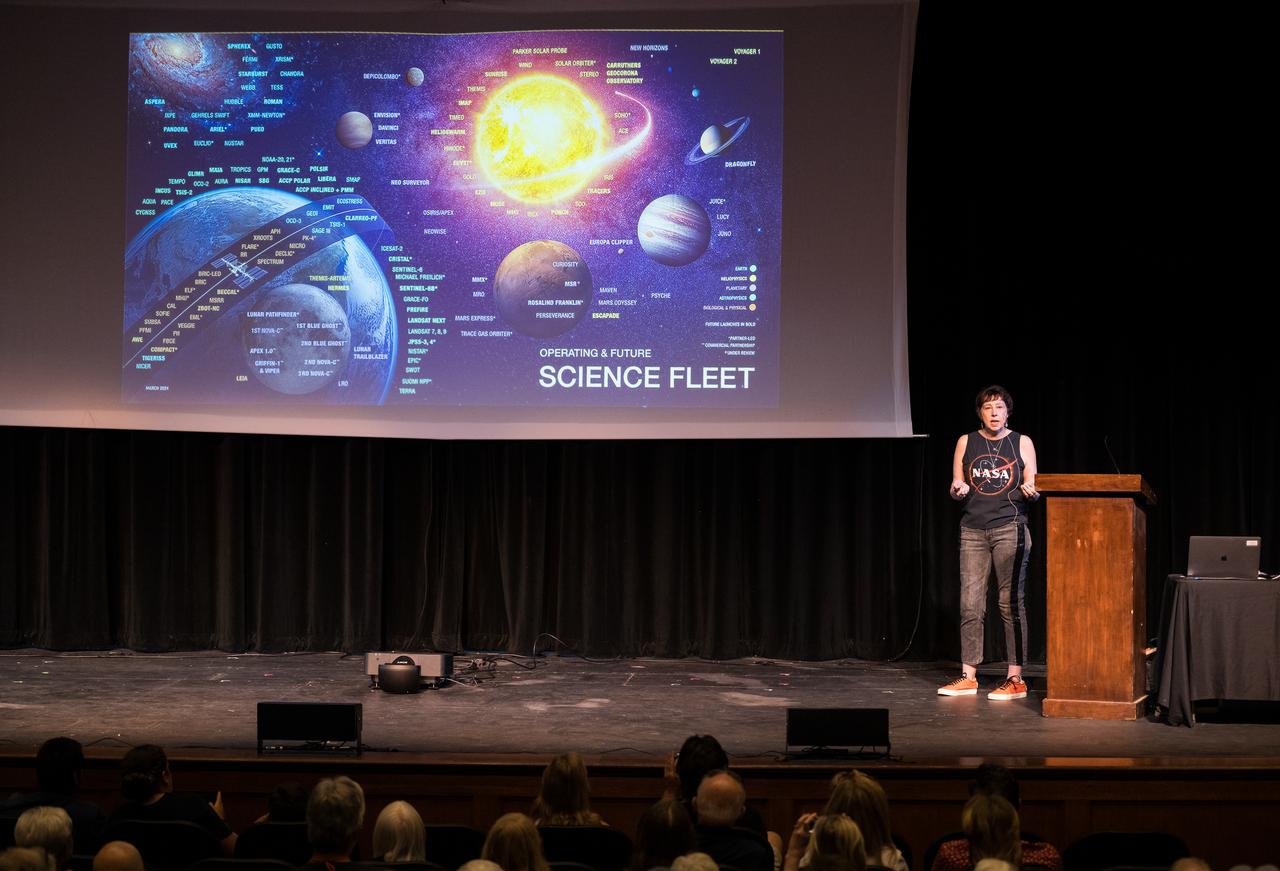
NASA Associate Administrator for the Science Mission Directorate, Dr. Nicky Fox, speaks during a presentation about the upcoming total solar eclipse, Saturday, April 6, 2024 at the Cailloux Theater in Kerrville, Texas. On Monday, April 8, a total solar eclipse will sweep across a narrow portion of the North American continent from Mexico’s Pacific coast to the Atlantic coast of Newfoundland, Canada, while a partial solar eclipse will be visible across the entire North American continent along with parts of Central America and Europe. Photo Credit: (NASA/Aubrey Gemignani)
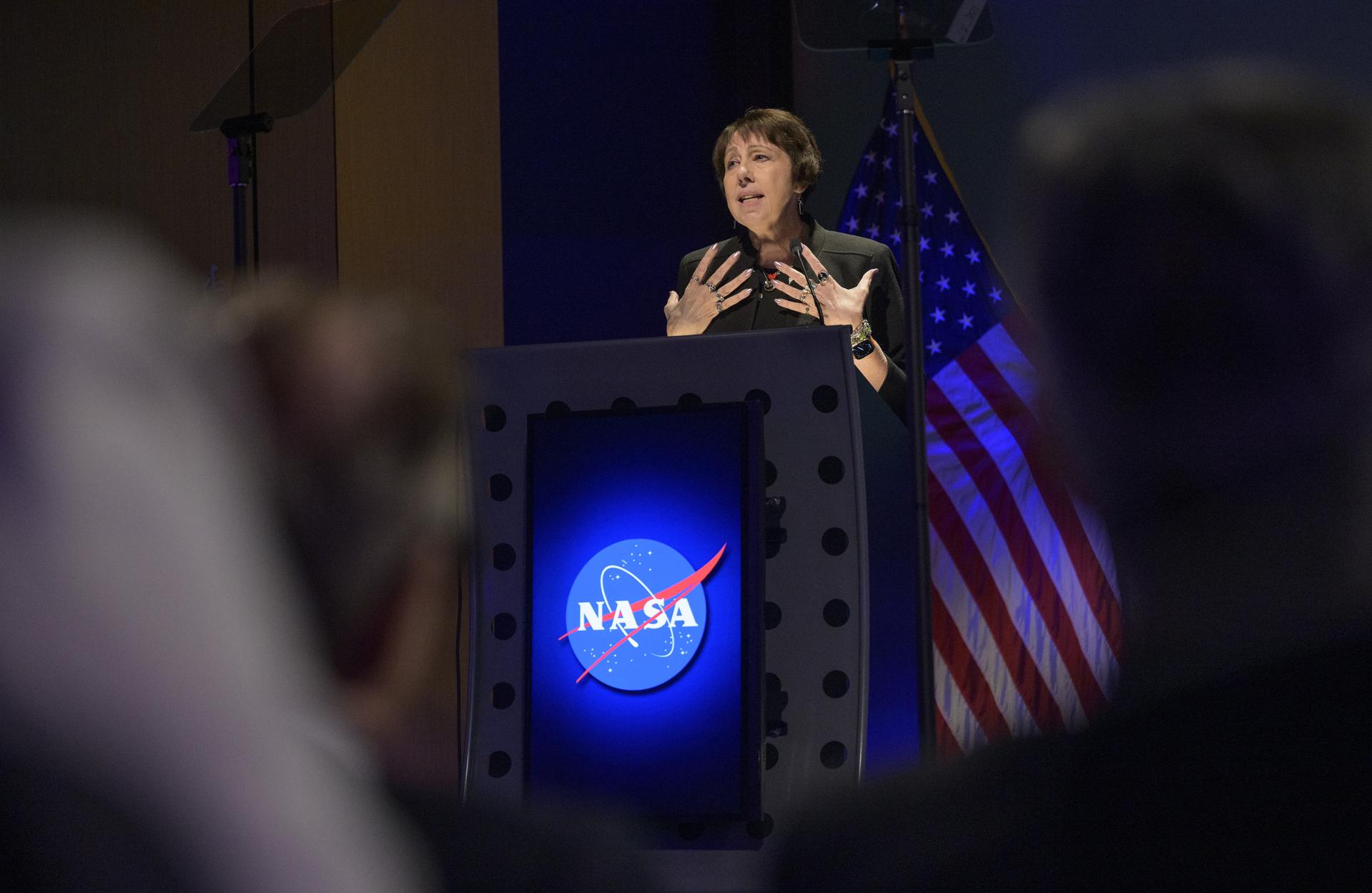
Associate Administrator for NASA's Science Mission Directorate Nicola Fox speaks during an event where NASA is outlining how the agency is executing President Donald J. Trump’s National Space Policy and accelerating preparations for America’s return to the surface of the Moon by 2028, Tuesday, March 24, 2026, at the Mary W. Jackson NASA Headquarters building in Washington. During the event NASA leadership provided updates on mission priorities, including sending the first astronauts to the lunar surface in more than 50 years, establishing the initial elements of a permanent lunar base, getting America underway in space on nuclear propulsion, and other objectives. Photo Credit: (NASA/Bill Ingalls)
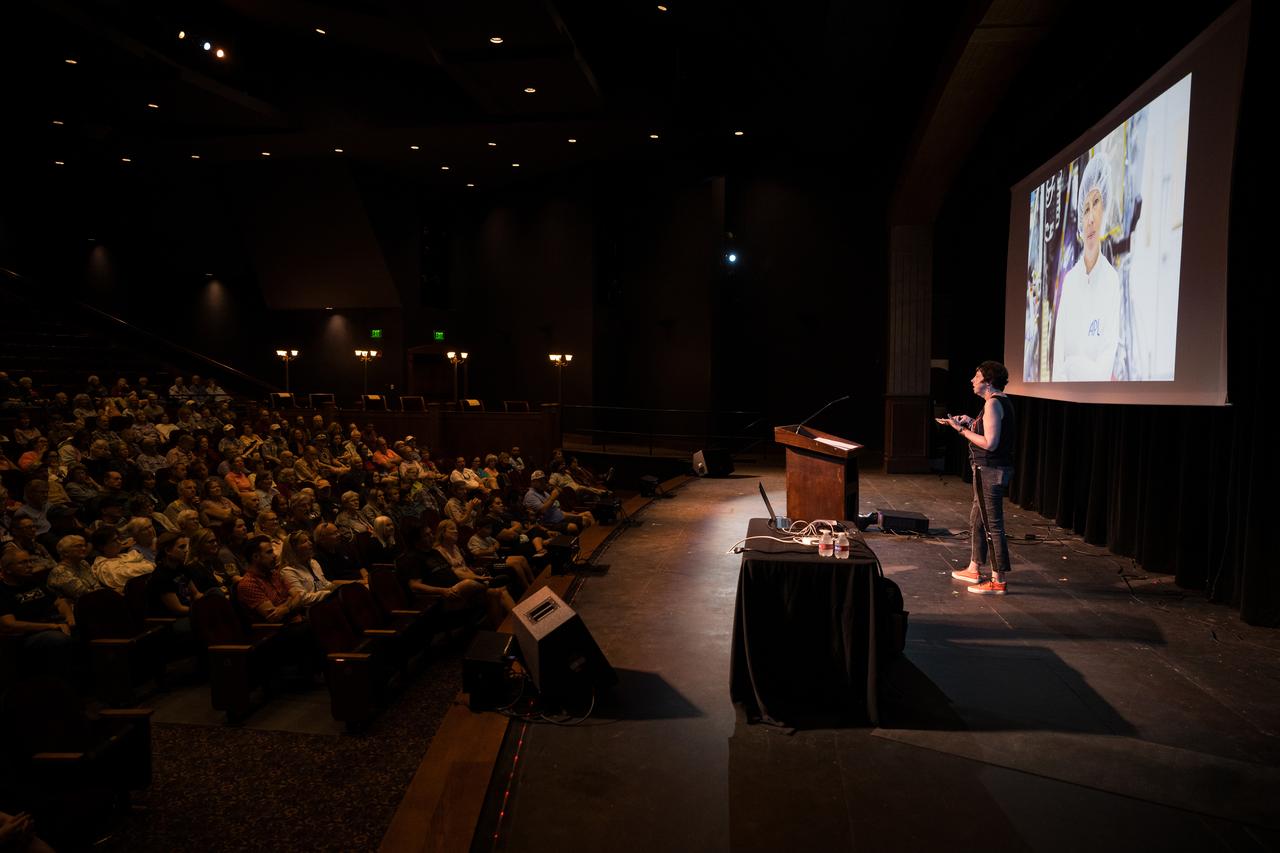
NASA Associate Administrator for the Science Mission Directorate, Dr. Nicky Fox, speaks during a presentation about the upcoming total solar eclipse, Saturday, April 6, 2024 at the Cailloux Theater in Kerrville, Texas. On Monday, April 8, a total solar eclipse will sweep across a narrow portion of the North American continent from Mexico’s Pacific coast to the Atlantic coast of Newfoundland, Canada, while a partial solar eclipse will be visible across the entire North American continent along with parts of Central America and Europe. Photo Credit: (NASA/Aubrey Gemignani)
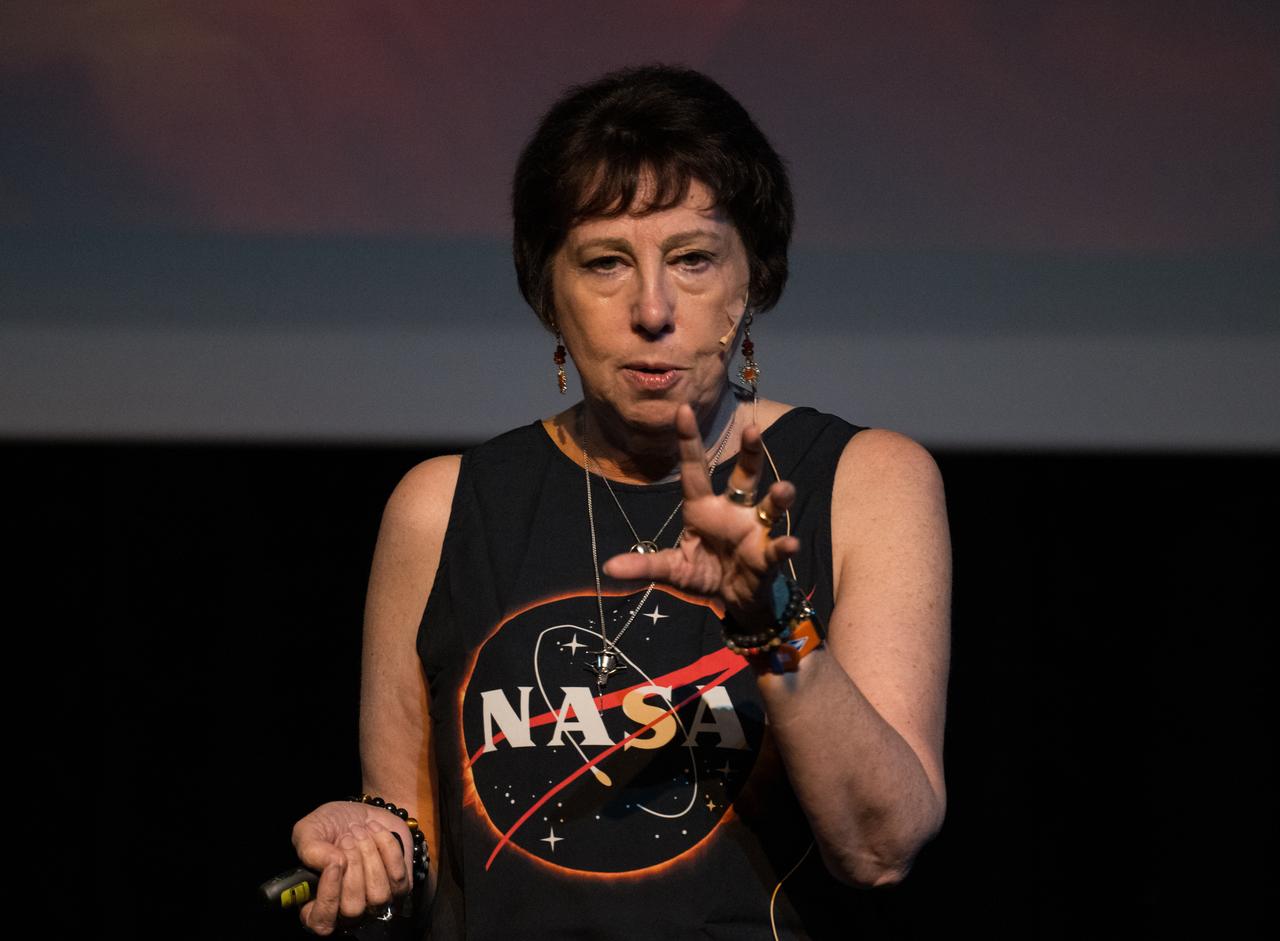
NASA Associate Administrator for the Science Mission Directorate, Dr. Nicky Fox, speaks during a presentation about the upcoming total solar eclipse, Saturday, April 6, 2024 at the Cailloux Theater in Kerrville, Texas. On Monday, April 8, a total solar eclipse will sweep across a narrow portion of the North American continent from Mexico’s Pacific coast to the Atlantic coast of Newfoundland, Canada, while a partial solar eclipse will be visible across the entire North American continent along with parts of Central America and Europe. Photo Credit: (NASA/Aubrey Gemignani)
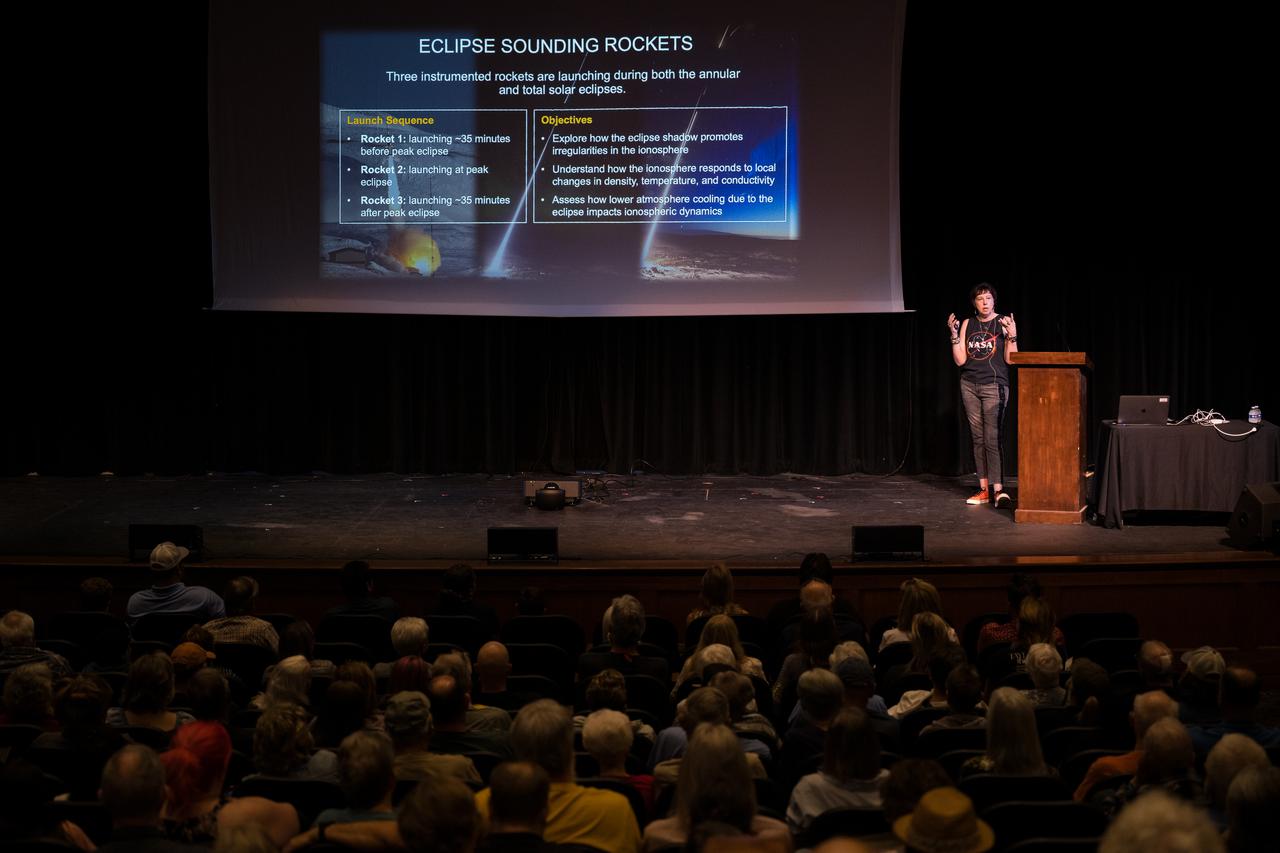
NASA Associate Administrator for the Science Mission Directorate, Dr. Nicky Fox, speaks during a presentation about the upcoming total solar eclipse, Saturday, April 6, 2024 at the Cailloux Theater in Kerrville, Texas. On Monday, April 8, a total solar eclipse will sweep across a narrow portion of the North American continent from Mexico’s Pacific coast to the Atlantic coast of Newfoundland, Canada, while a partial solar eclipse will be visible across the entire North American continent along with parts of Central America and Europe. Photo Credit: (NASA/Aubrey Gemignani)
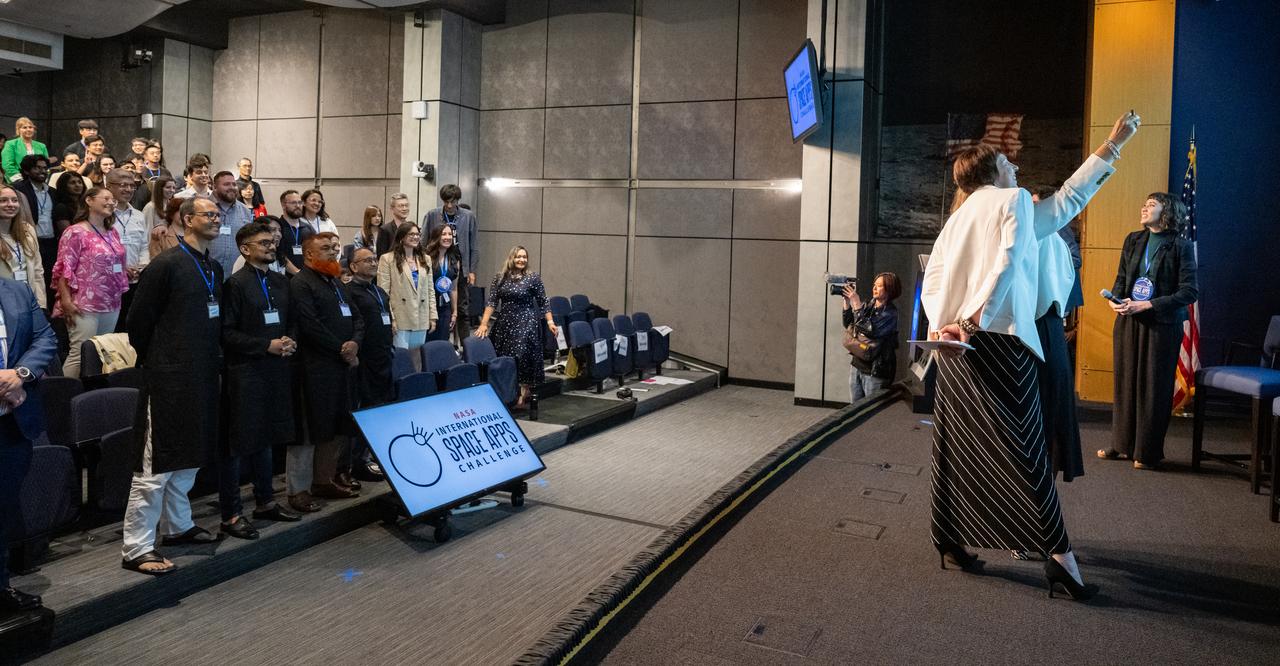
NASA Earth Science Division Director Karen St. Germain and NASA Earth Science Division Associate Administrator Nicola Fox pose for a selfie with guests during a gathering of NASA Space Apps Challenge Global Winners and Local Leads from around the world Wednesday, June 5, 2024, at the Mary W. Jackson NASA Headquarters building in Washington. Photo Credit: (NASA/Keegan Barber)

Adam Savage, maker and host of Savage Builds, left, speaks with NASA Public Affairs Officer for Heliophysics, Karen Fox, just before “NASA’s Giant Leaps: Past and Future," a live television program on Friday, July 19, 2019 on the National Mall in Washington. NASA and the world are recognizing the 50th anniversary of Apollo 11, in which astronauts Neil Armstrong, Michael Collins, and Buzz Aldrin crewed the first mission to land astronauts on the Moon. Photo Credit: (NASA/Aubrey Gemignani)
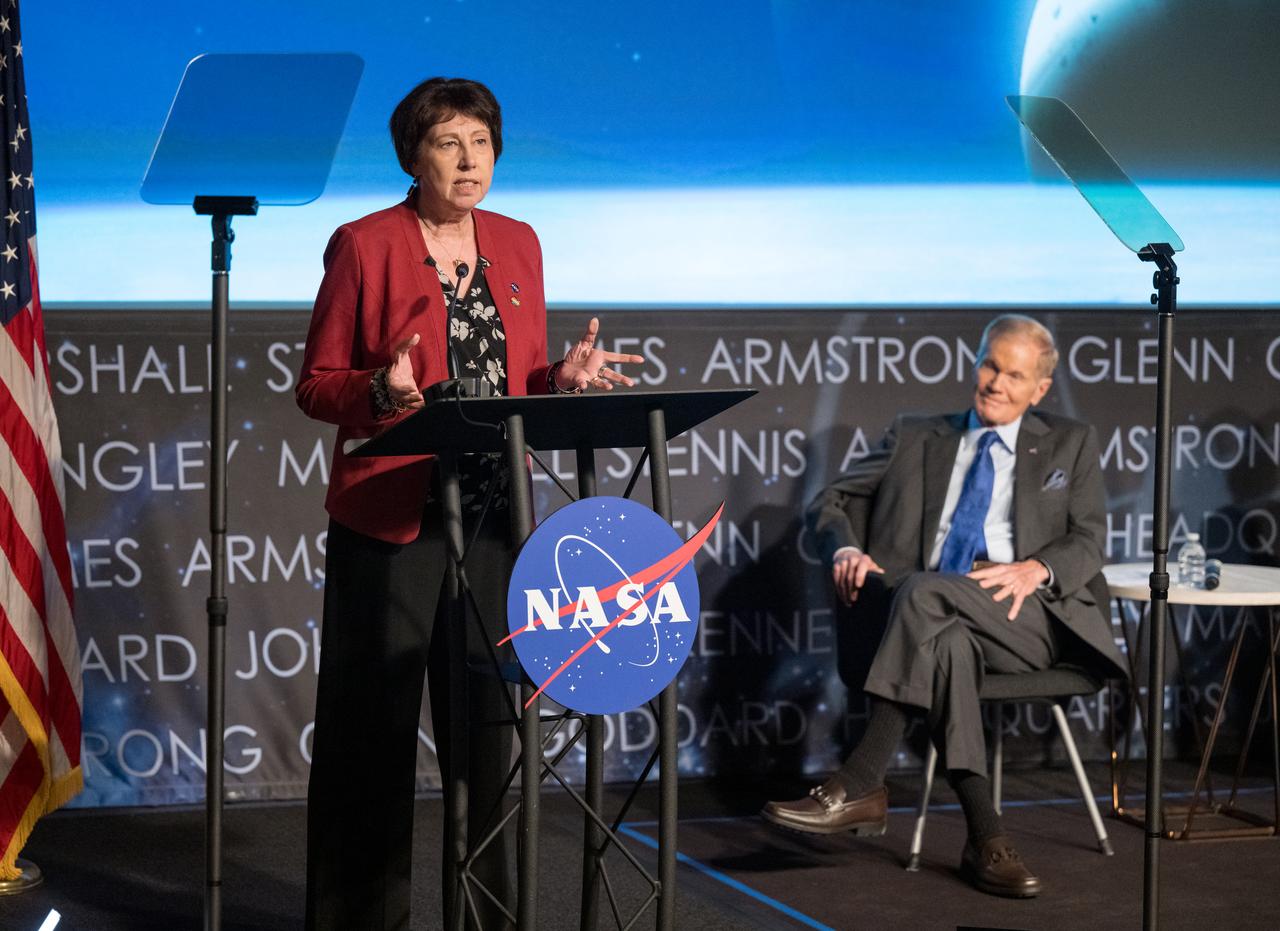
NASA Associate Administrator for Science, Nicky Fox, discusses the agency’s goals during the annual State of NASA address, Monday, March 11, 2024, at the Mary W. Jackson NASA Headquarters Building in Washington. NASA leaders discussed plans for promoting U.S. leadership in space exploration, improving life on Earth through science and innovation, humanity’s return to the Moon under the Artemis campaign, aeronautics, and more. Photo Credit: (NASA/Bill Ingalls)
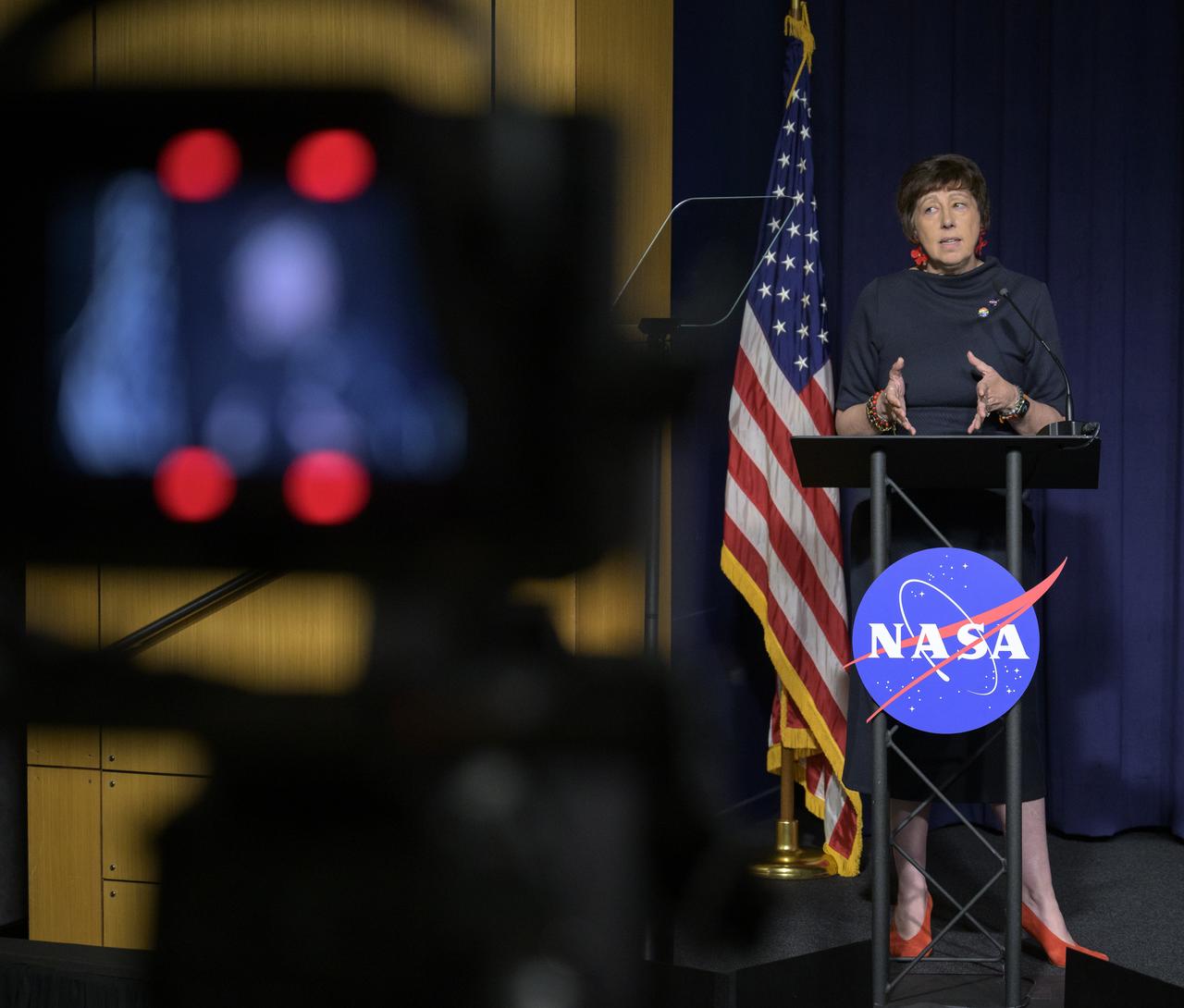
NASA Associate Administrator, Science Mission Directorate, Dr. Nicky Fox delivers remarks during an event launching a new Disaster Response Coordination System that will provide communities and organizations around the world with access to science and data to aid disaster response, Thursday, June 13, 2024, at the NASA Headquarters Mary W. Jackson Building in Washington. Photo Credit: (NASA/Bill Ingalls)
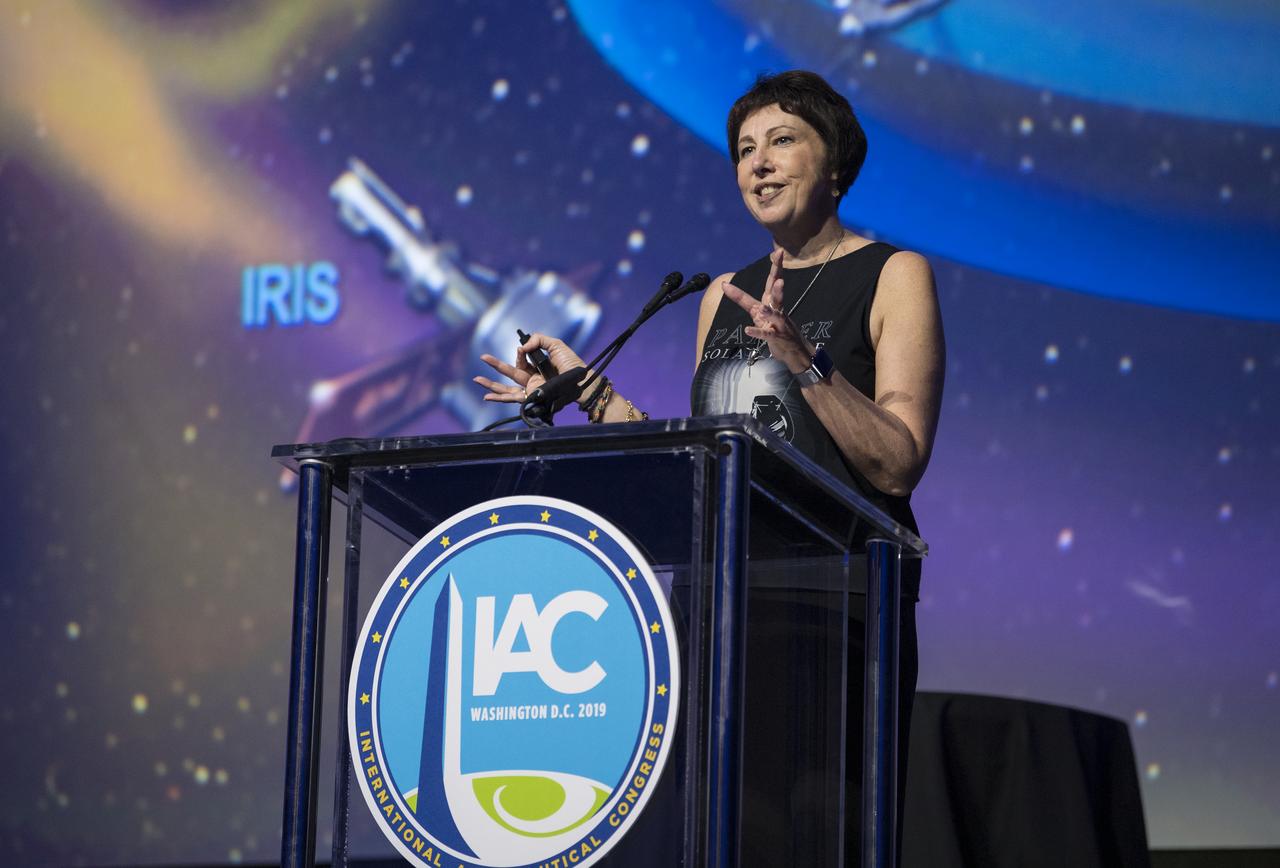
NASA director of Heliophysics division, Science Mission Directorate, Nicola Fox, speaks at a presentation titled, “The Challenge of Exploring Our Sun - the 60-Year Odyssey to Parker Solar Probe,” during the 70th International Astronautical Congress, Wednesday, Oct. 23, 2019, at the Walter E. Washington Convention Center in Washington. Photo credit: (NASA/Aubrey Gemignani)
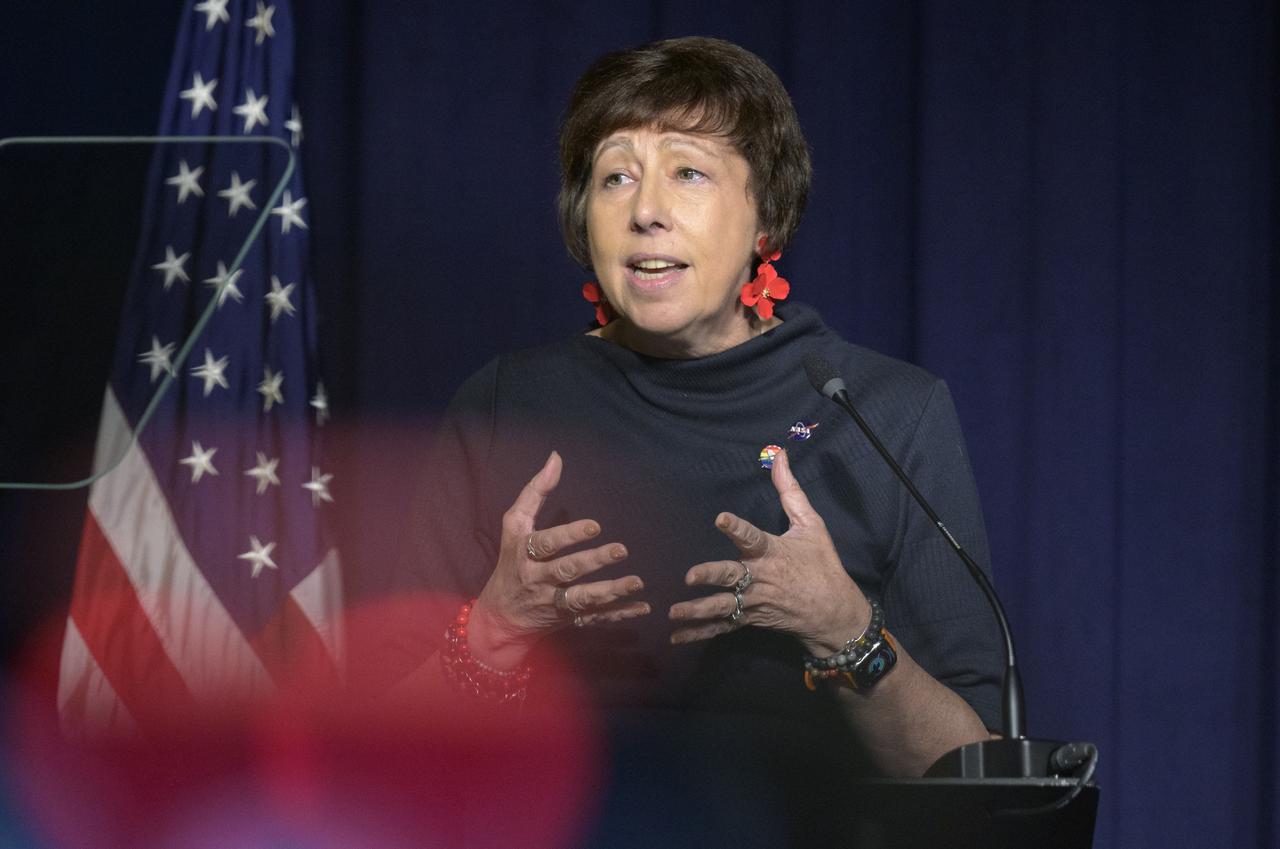
NASA Associate Administrator, Science Mission Directorate, Dr. Nicky Fox delivers remarks during an event launching a new Disaster Response Coordination System that will provide communities and organizations around the world with access to science and data to aid disaster response, Thursday, June 13, 2024, at the NASA Headquarters Mary W. Jackson Building in Washington. Photo Credit: (NASA/Bill Ingalls)
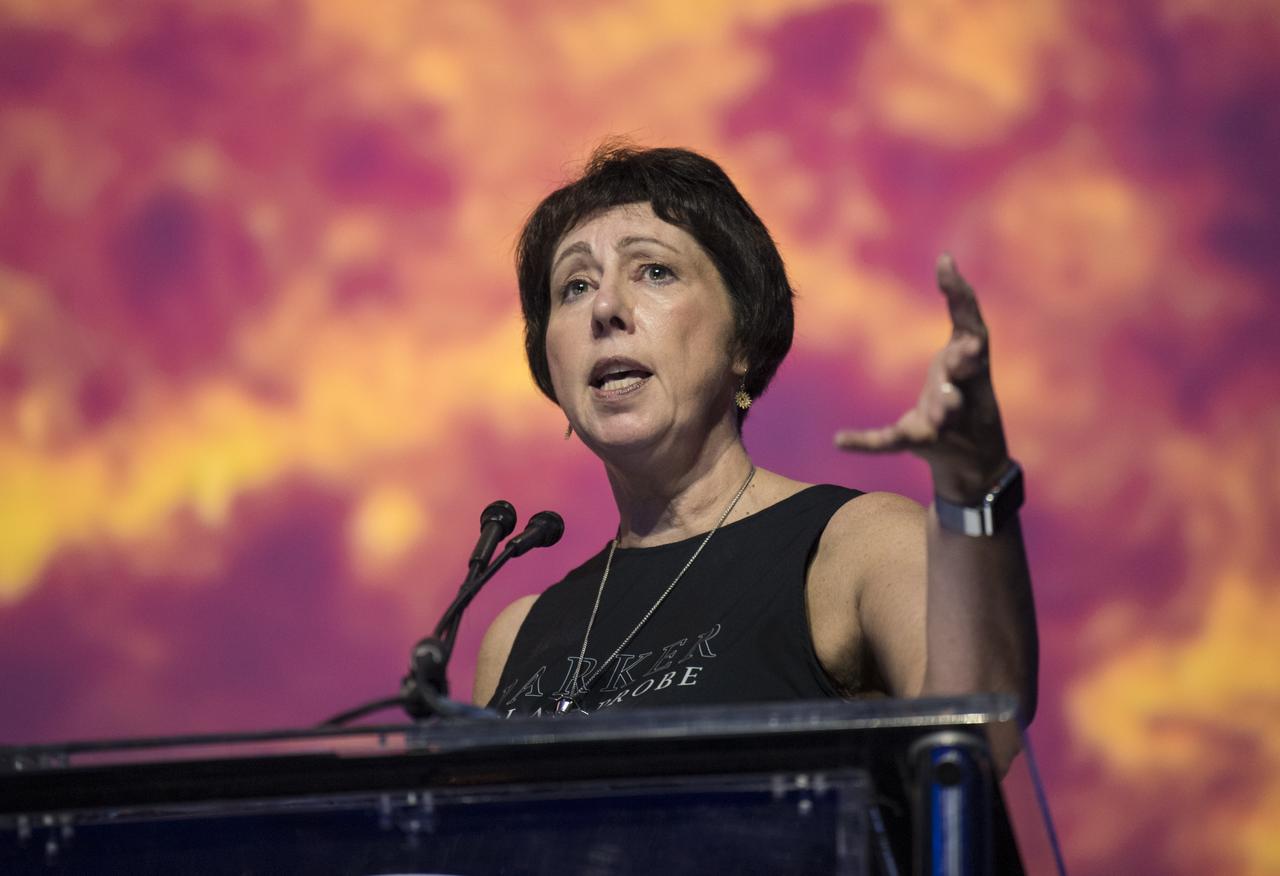
NASA director of Heliophysics division, Science Mission Directorate, Nicola Fox, speaks at a presentation titled, “The Challenge of Exploring Our Sun - the 60-Year Odyssey to Parker Solar Probe,” during the 70th International Astronautical Congress, Wednesday, Oct. 23, 2019, at the Walter E. Washington Convention Center in Washington. Photo credit: (NASA/Aubrey Gemignani)
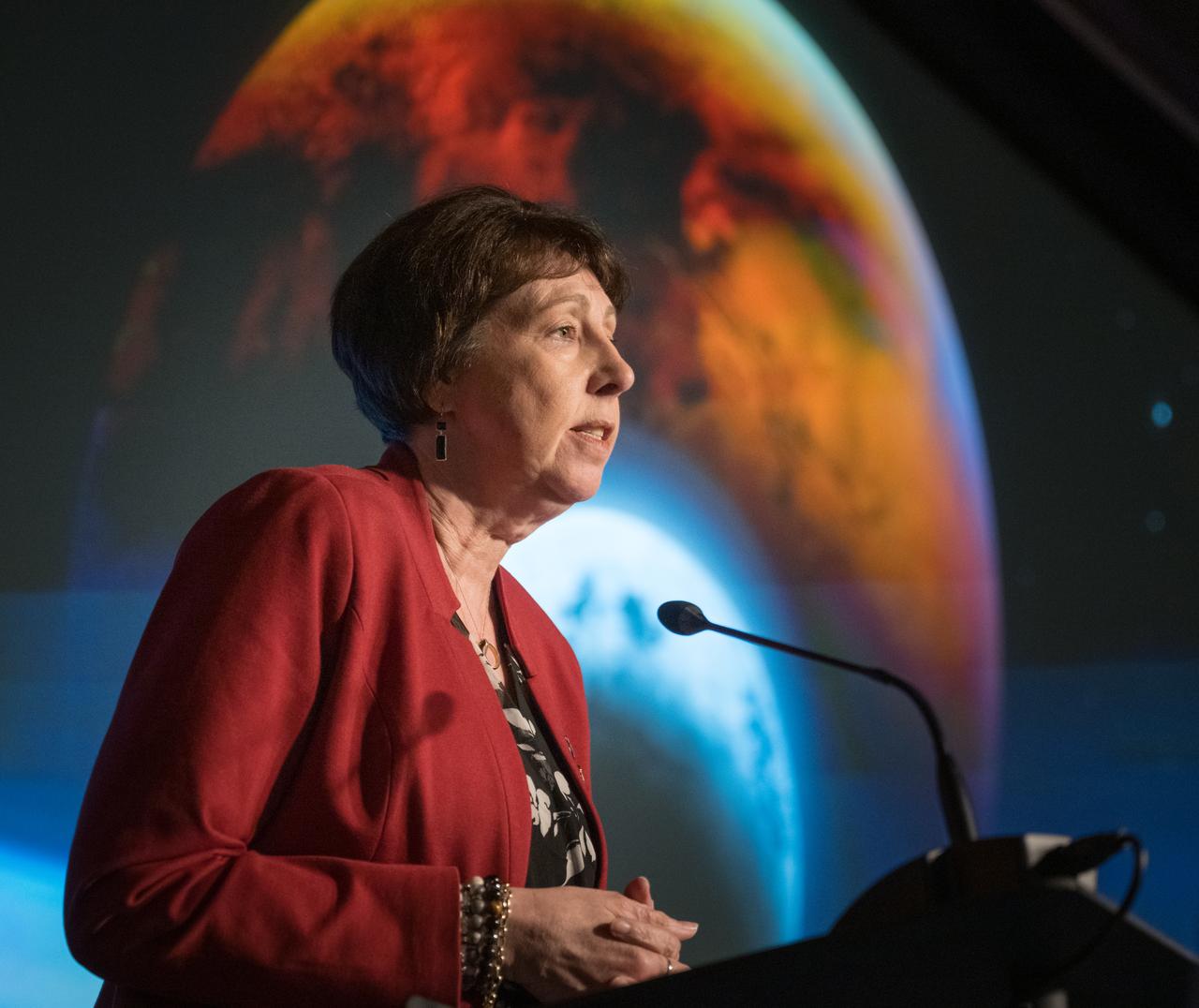
NASA Associate Administrator for Science, Nicky Fox, discusses the agency’s goals during the annual State of NASA address, Monday, March 11, 2024, at the Mary W. Jackson NASA Headquarters Building in Washington. NASA leaders discussed plans for promoting U.S. leadership in space exploration, improving life on Earth through science and innovation, humanity’s return to the Moon under the Artemis campaign, aeronautics, and more. Photo Credit: (NASA/Bill Ingalls)
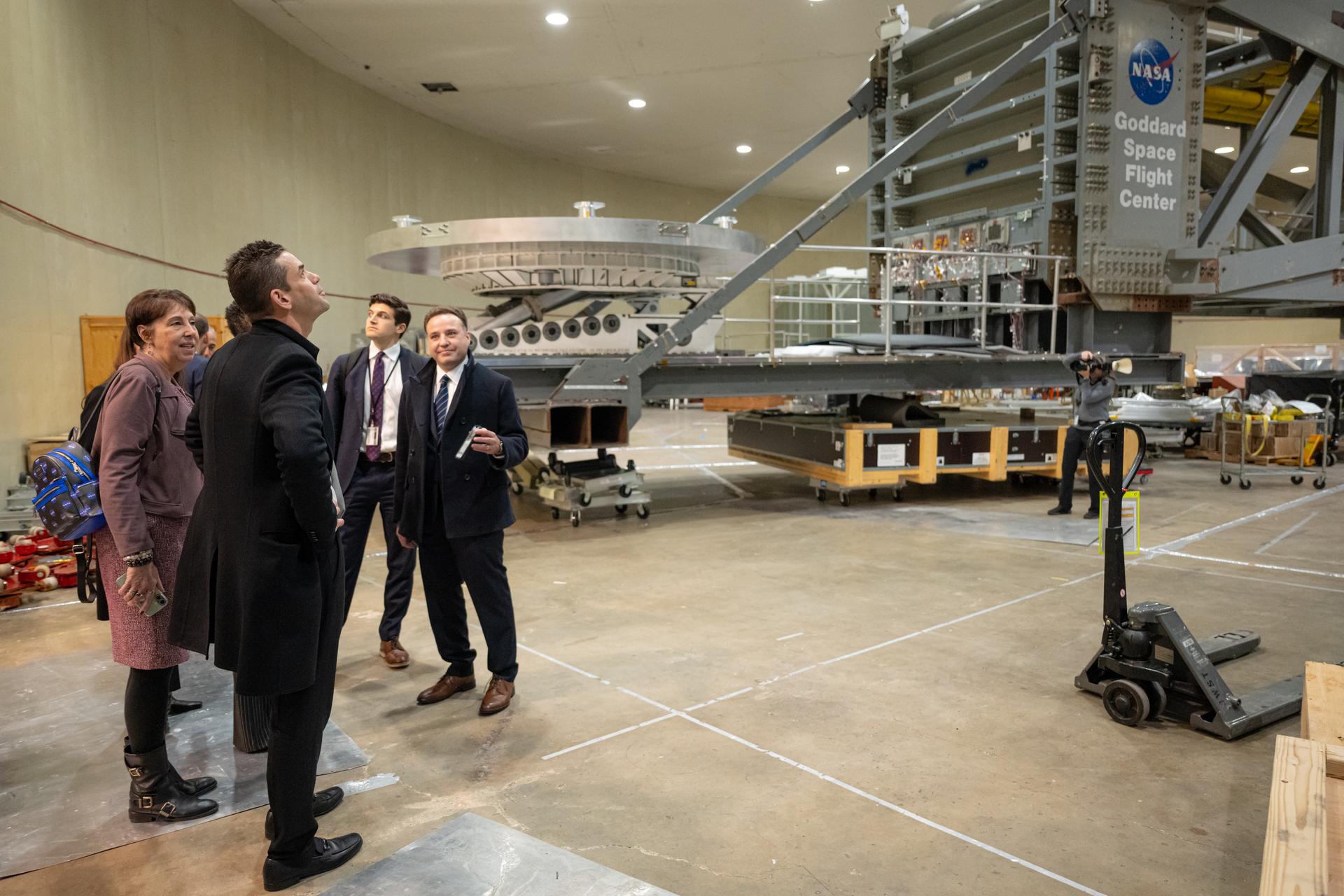
NASA Administrator Jared Isaacman, second from left, and Dr. Nicola Fox, associate administrator, NASA’s Science Mission Directorate, left, visit the High-Capacity Centrifuge, Friday, Jan. 9, 2026, at NASA’s Goddard Space Flight Center in Greenbelt, Md. Goddard marks the first stop in Isaacman’s roadshow to visit NASA facilities and engage directly with the agency’s workforce. Photo Credit: (NASA/John Kraus)
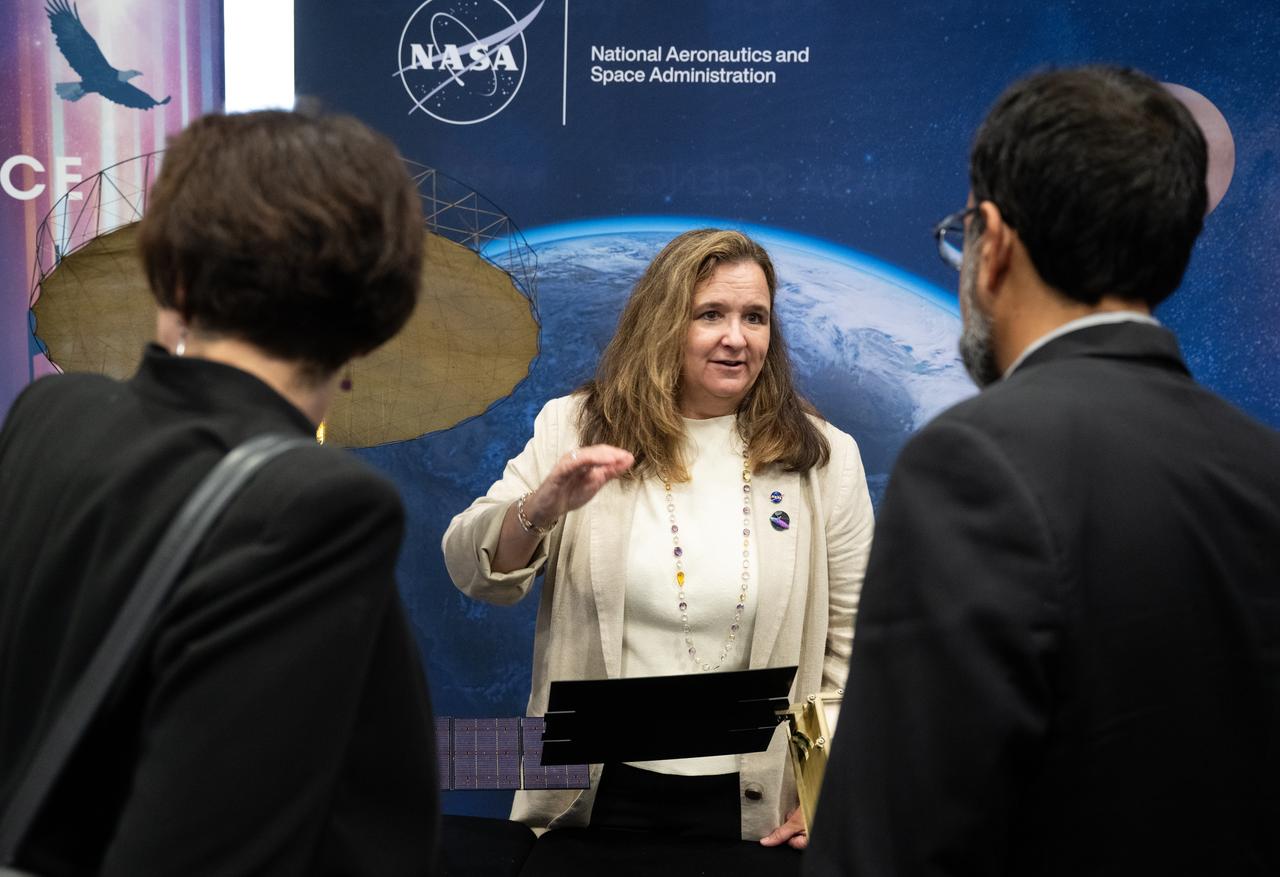
Karen St. Germain, director of the Earth Science Division of NASA’s Science Mission Directorate, center, speaks with Nicola Fox, associate administrator of NASA’s Science Mission Directorate, left, and NASA Associate Administrator Amit Kshatriya during NASA’s Day on the Hill, Tuesday, Sept. 16, 2025, at the Hart Senate Office Building in Washington. Photo Credit: (NASA/Joel Kowsky)
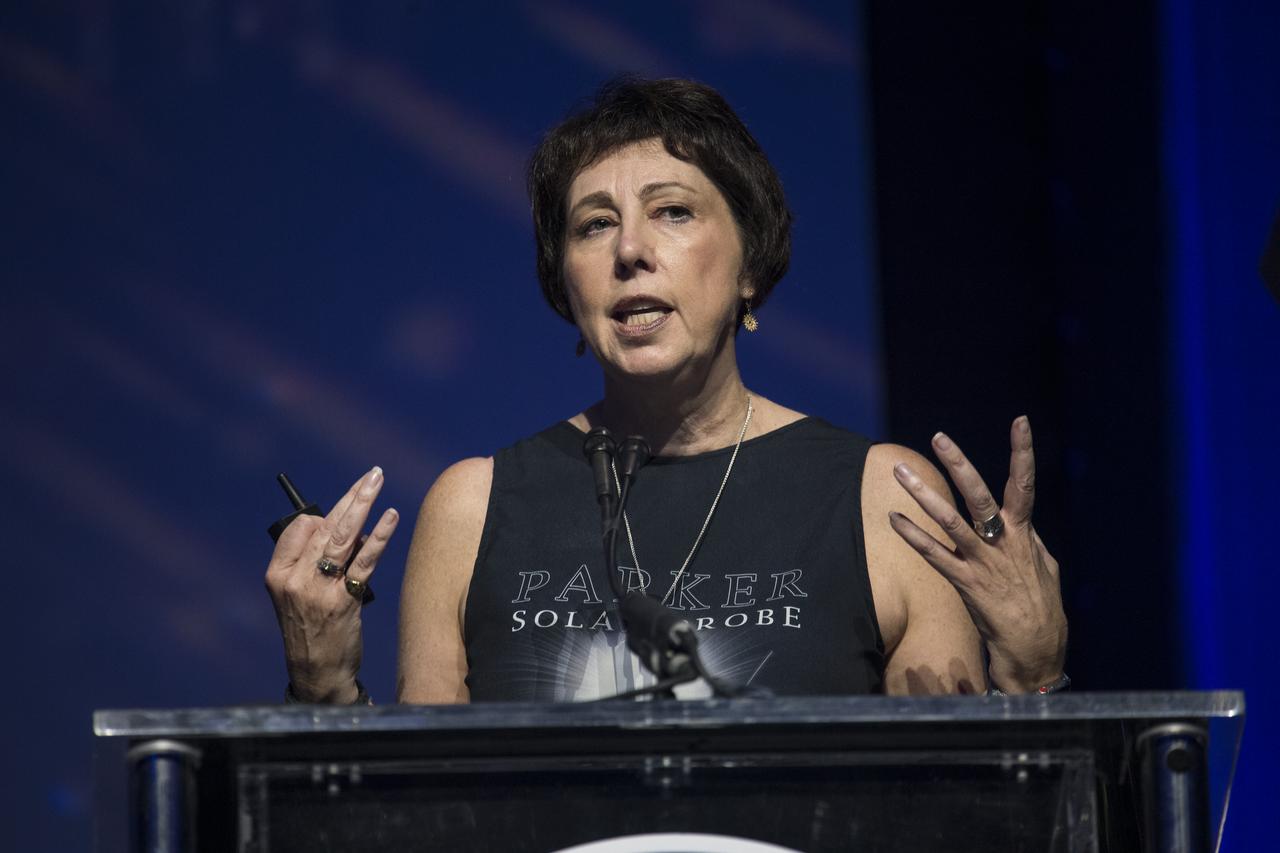
NASA director of Heliophysics division, Science Mission Directorate, Nicola Fox, speaks at a presentation titled, “The Challenge of Exploring Our Sun - the 60-Year Odyssey to Parker Solar Probe,” during the 70th International Astronautical Congress, Wednesday, Oct. 23, 2019, at the Walter E. Washington Convention Center in Washington. Photo credit: (NASA/Aubrey Gemignani)
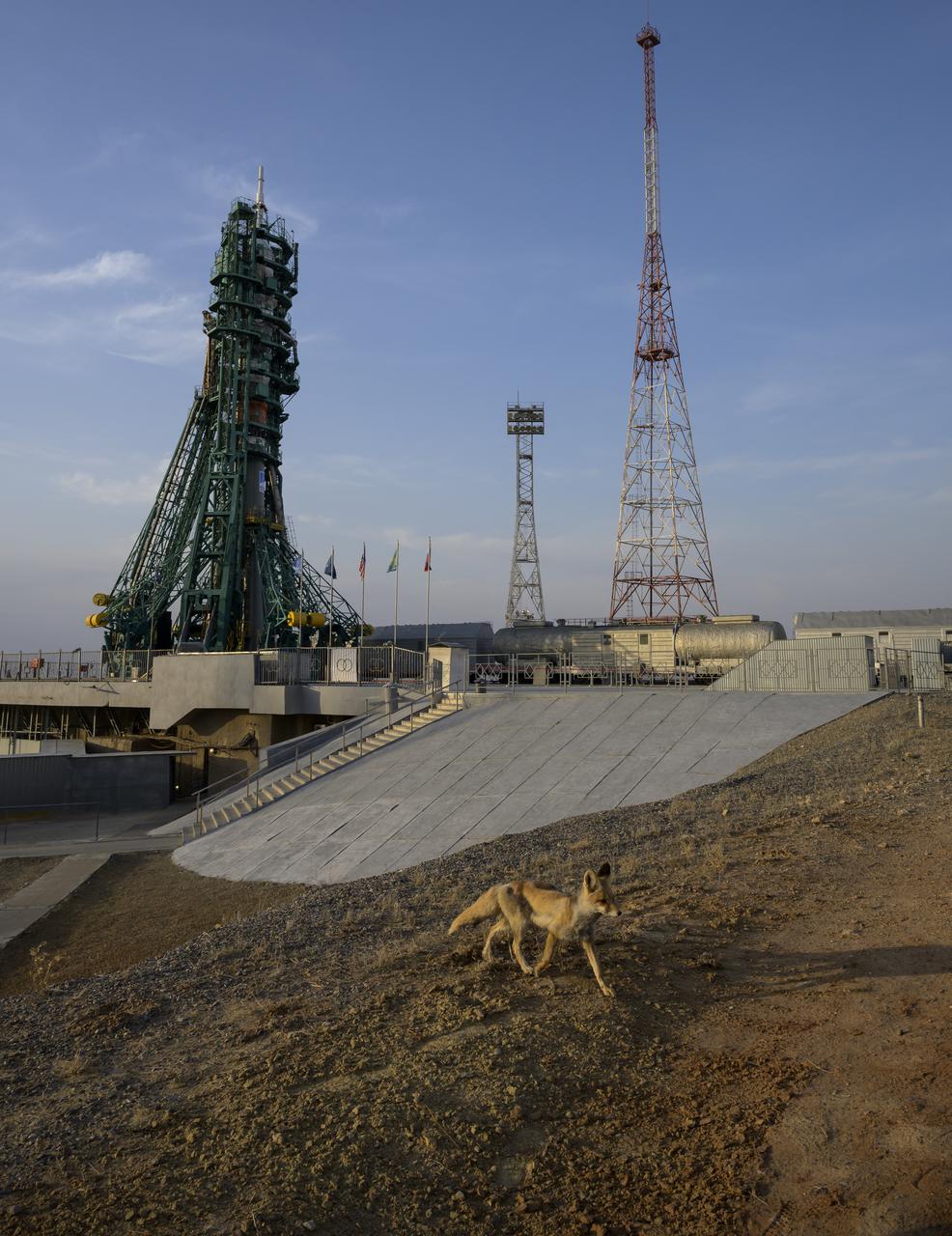
A fox walks around the Soyuz launch pad at site 31, Thursday, April 8, 2021, at the Baikonur Cosmodrome in Kazakhstan. Expedition 65 NASA astronaut Mark Vande Hei, Roscosmos cosmonauts Pyotr Dubrov and Oleg Novitskiy are scheduled to launch aboard their Soyuz MS-18 spacecraft on April 9. Photo Credit: (NASA/Bill Ingalls)

NASA director of Heliophysics division, Science Mission Directorate, Nicola Fox, speaks at a presentation titled, “The Challenge of Exploring Our Sun - the 60-Year Odyssey to Parker Solar Probe,” during the 70th International Astronautical Congress, Wednesday, Oct. 23, 2019, at the Walter E. Washington Convention Center in Washington. Photo credit: (NASA/Aubrey Gemignani)
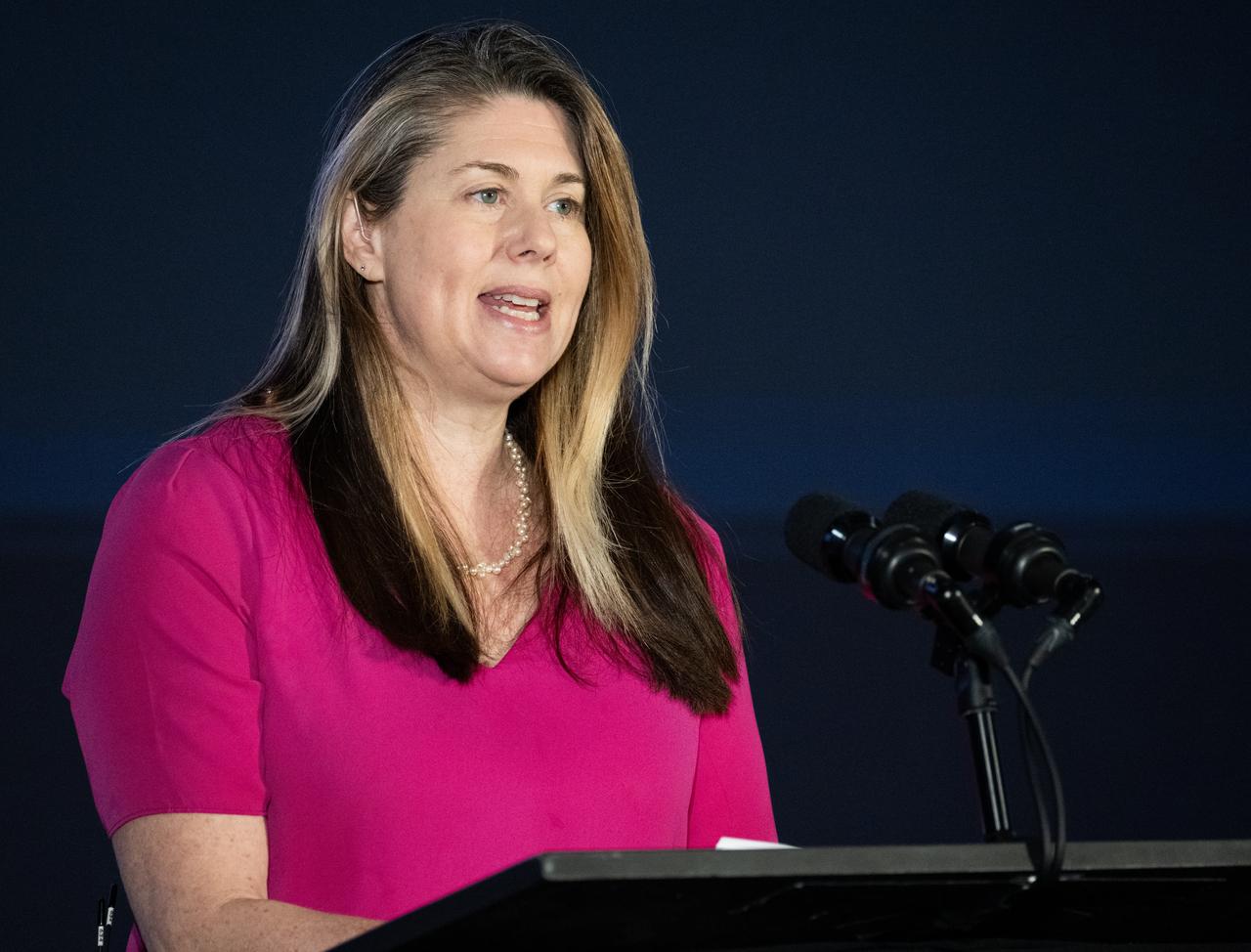
NASA Public Affairs Officer Karen Fox moderates a briefing on NASA’s TEMPO (Tropospheric Emissions: Monitoring of Pollution) instrument, Tuesday, March 14, 2023 at the Smithsonian’s National Air and Space Museum in Washington. NASA’s TEMPO instrument, the first Earth Venture Instrument mission, will measure air pollution across North America from Mexico City to the Canadian oil sands and from the Atlantic to the Pacific hourly and at a high spatial resolution. A partnership between NASA and the Center for Astrophysics | Harvard & Smithsonian, TEMPO will launch on a commercial satellite to geostationary orbit as early as April. Photo Credit: (NASA/Joel Kowsky)
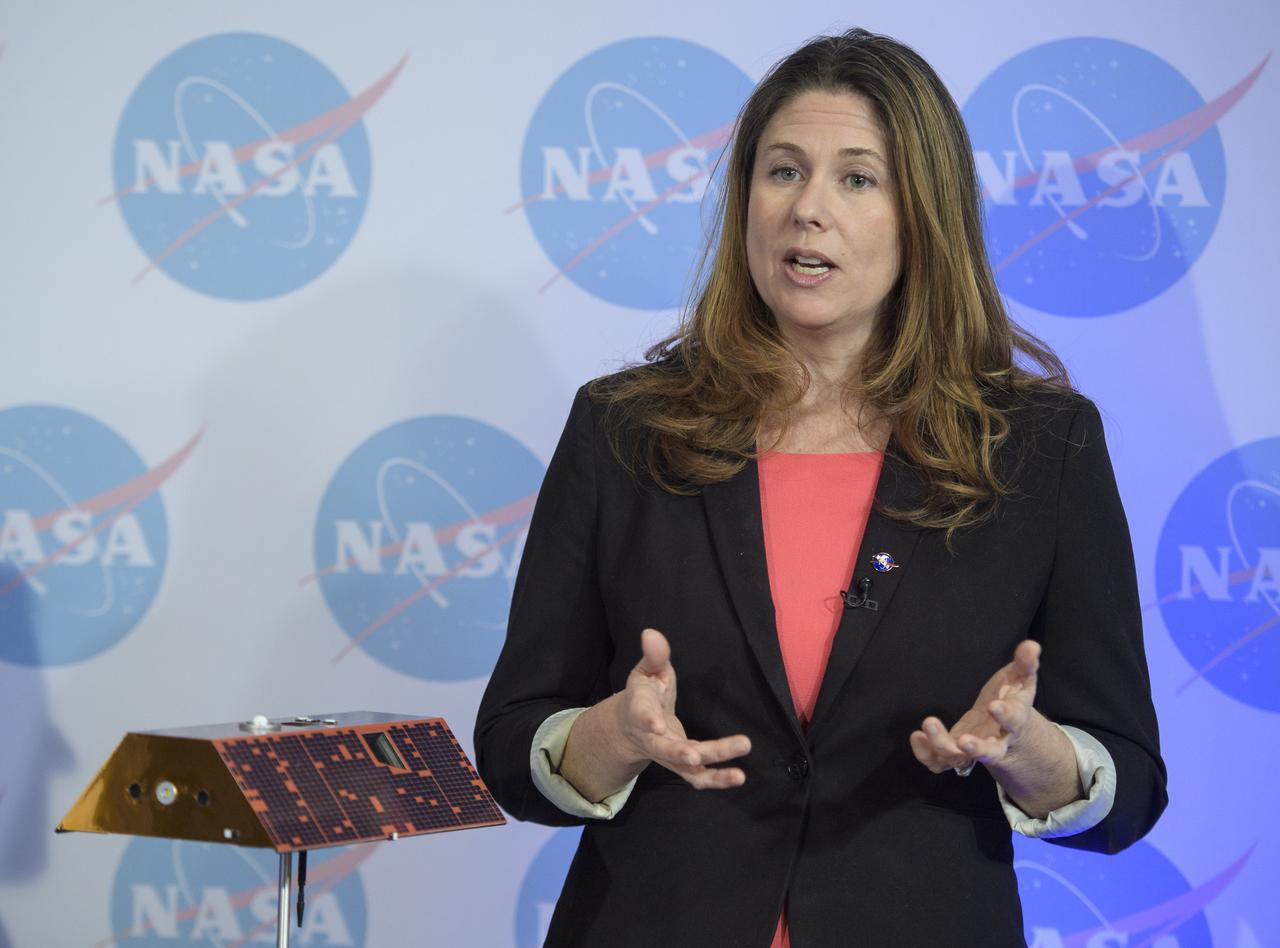
Karen Fox, of NASA's Office of Communications, introduces Michael Watkins, GRACE-FO science lead and director of NASA's Jet Propulsion Laboratory and Frank Webb, GRACE-FO project scientist at JPL, during a briefing on the upcoming launch of the Gravity Recovery and Climate Experiment Follow-On (GRACE-FO) mission, Monday, April 30, 2018 at NASA Headquarters in Washington. The twin GRACE-FO spacecraft will measure and monitor monthly changes in how mass is redistributed within and among Earth's atmosphere, oceans, land and ice sheets, as well as within Earth itself. Photo Credit: (NASA/Joel Kowsky)
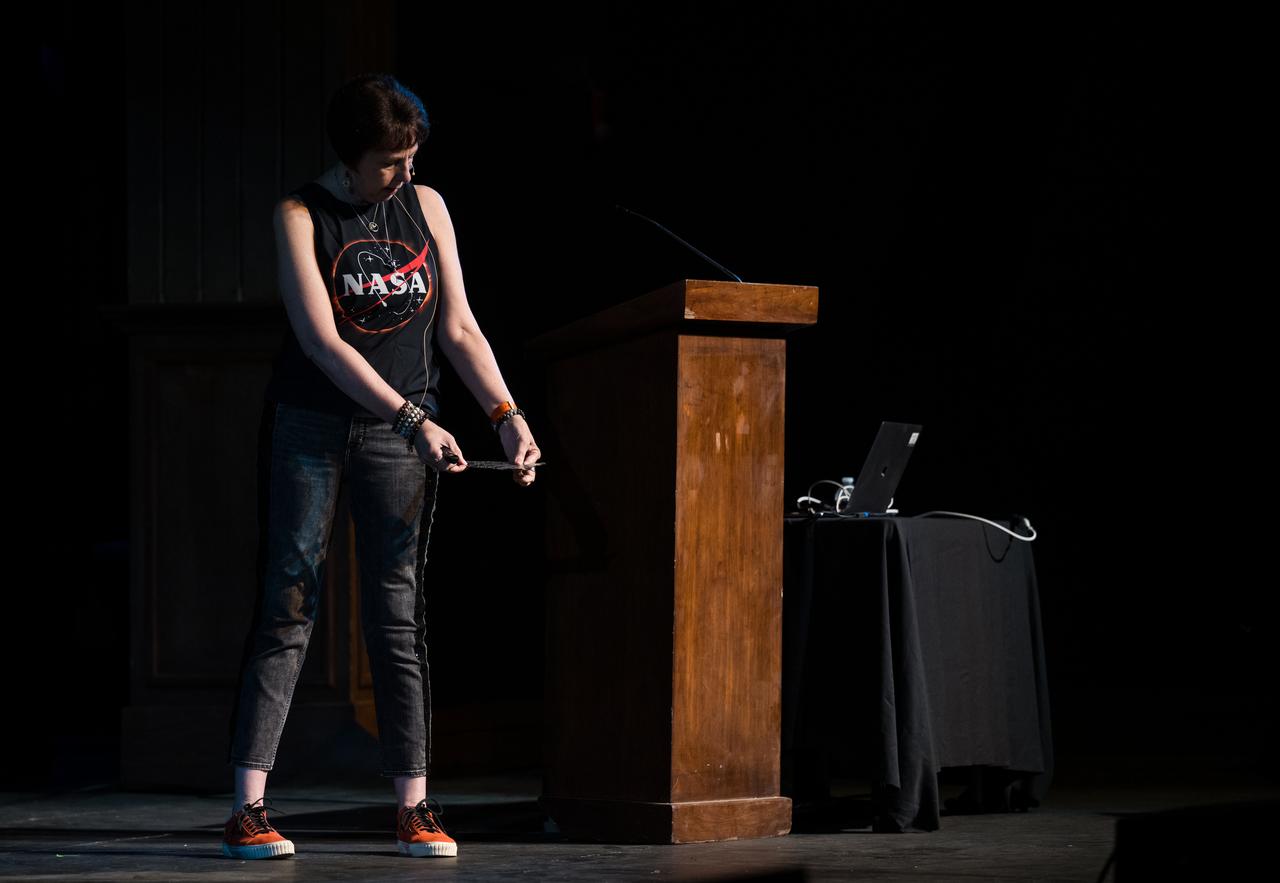
NASA Associate Administrator for the Science Mission Directorate, Dr. Nicky Fox, demonstrates how to use a pinhole projector during a presentation about the upcoming total solar eclipse, Saturday, April 6, 2024 at the Cailloux Theater in Kerrville, Texas. On Monday, April 8, a total solar eclipse will sweep across a narrow portion of the North American continent from Mexico’s Pacific coast to the Atlantic coast of Newfoundland, Canada, while a partial solar eclipse will be visible across the entire North American continent along with parts of Central America and Europe. Photo Credit: (NASA/Aubrey Gemignani)
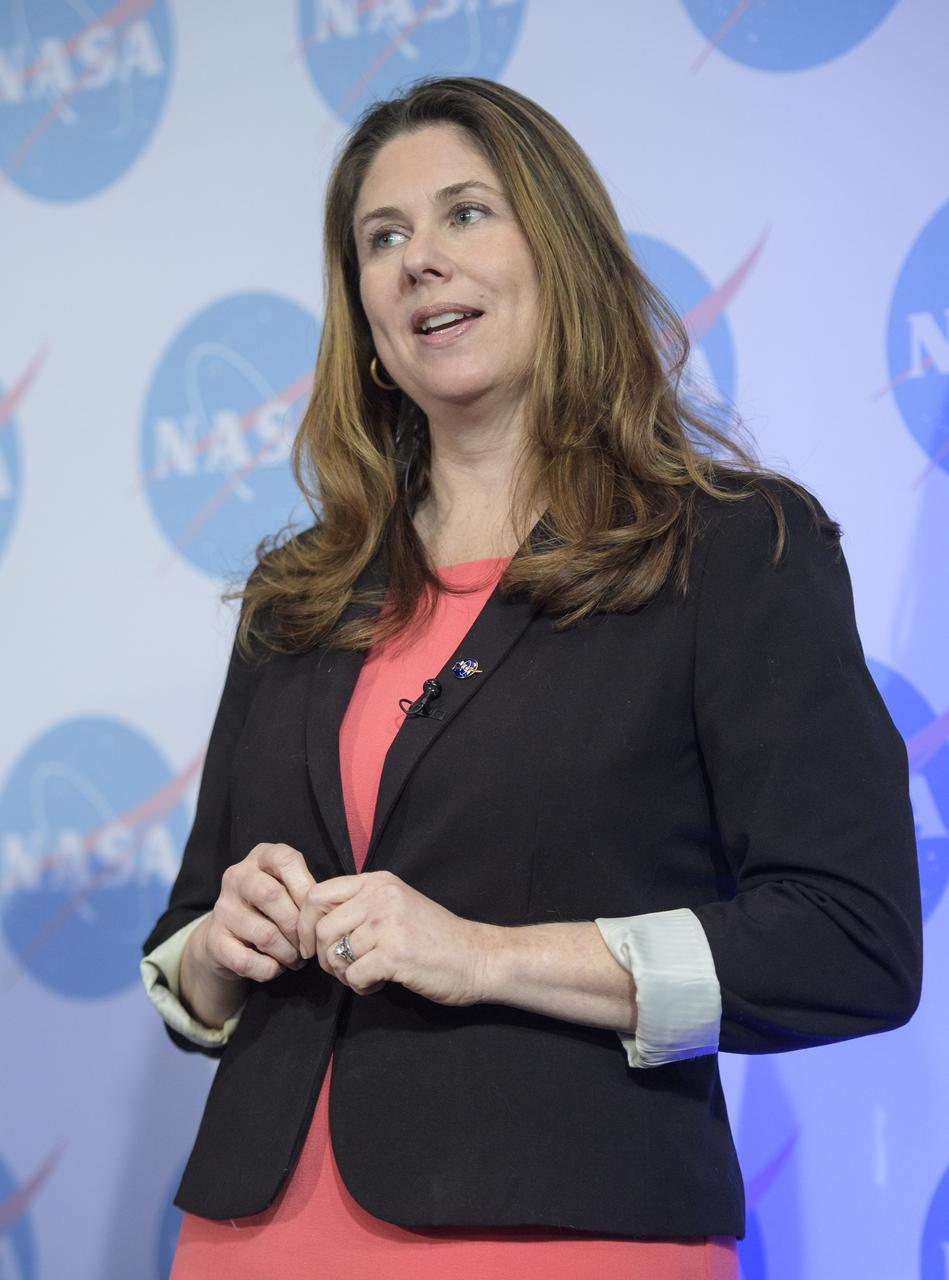
Karen Fox of NASA's Office of Communications, introduces David Jarrett, GRACE-FO program executive in the Earth Science Division at NASA Headquarters and Phil Morton, NASA GRACE-FO project manager at JPL, during a briefing on the upcoming launch of the Gravity Recovery and Climate Experiment Follow-On (GRACE-FO) mission, Monday, April 30, 2018 at NASA Headquarters in Washington. The twin GRACE-FO spacecraft will measure and monitor monthly changes in how mass is redistributed within and among Earth's atmosphere, oceans, land and ice sheets, as well as within Earth itself. Photo Credit: (NASA/Joel Kowsky)
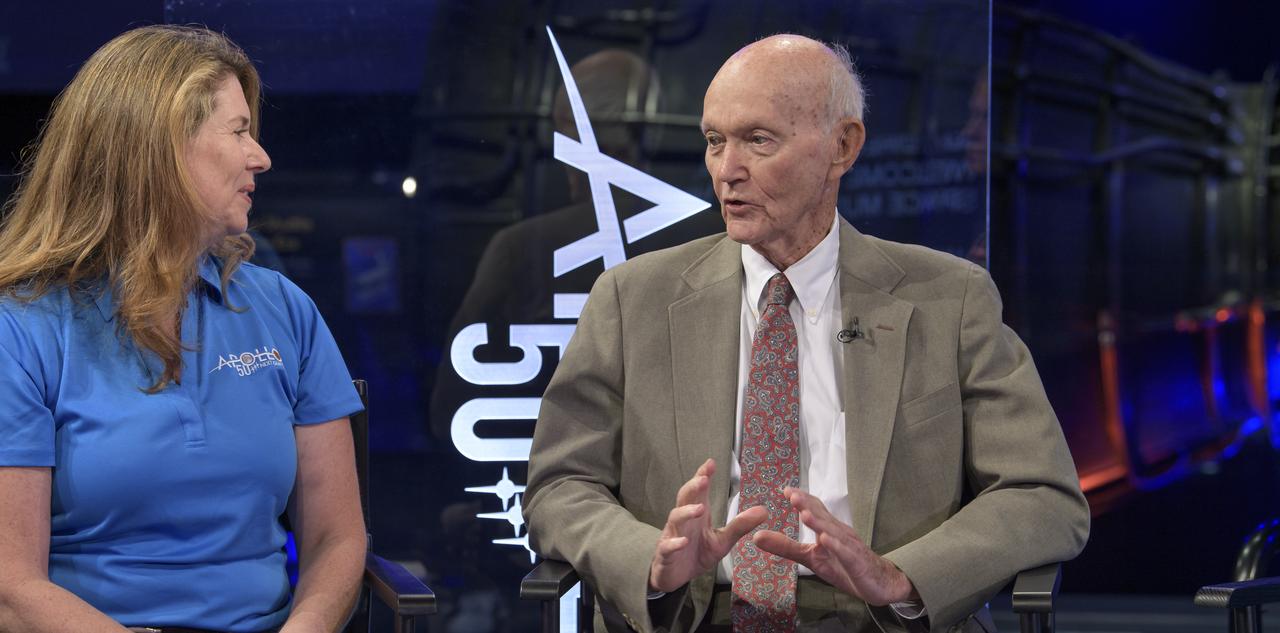
NASA Public Affairs Officer for Heliophysics Karen Fox, interviews, Apollo 11 astronaut Mike Collins during “NASA’s Giant Leaps: Past and Future," a live television program on Friday, July 19, 2019 from the Smithsonian National Air and Space Museum in Washington. NASA and the world are recognizing the 50th anniversary of Apollo 11, in which astronauts Neil Armstrong, Michael Collins, and Buzz Aldrin crewed the first mission to land astronauts on the Moon. Photo Credit: (NASA/Bill Ingalls)
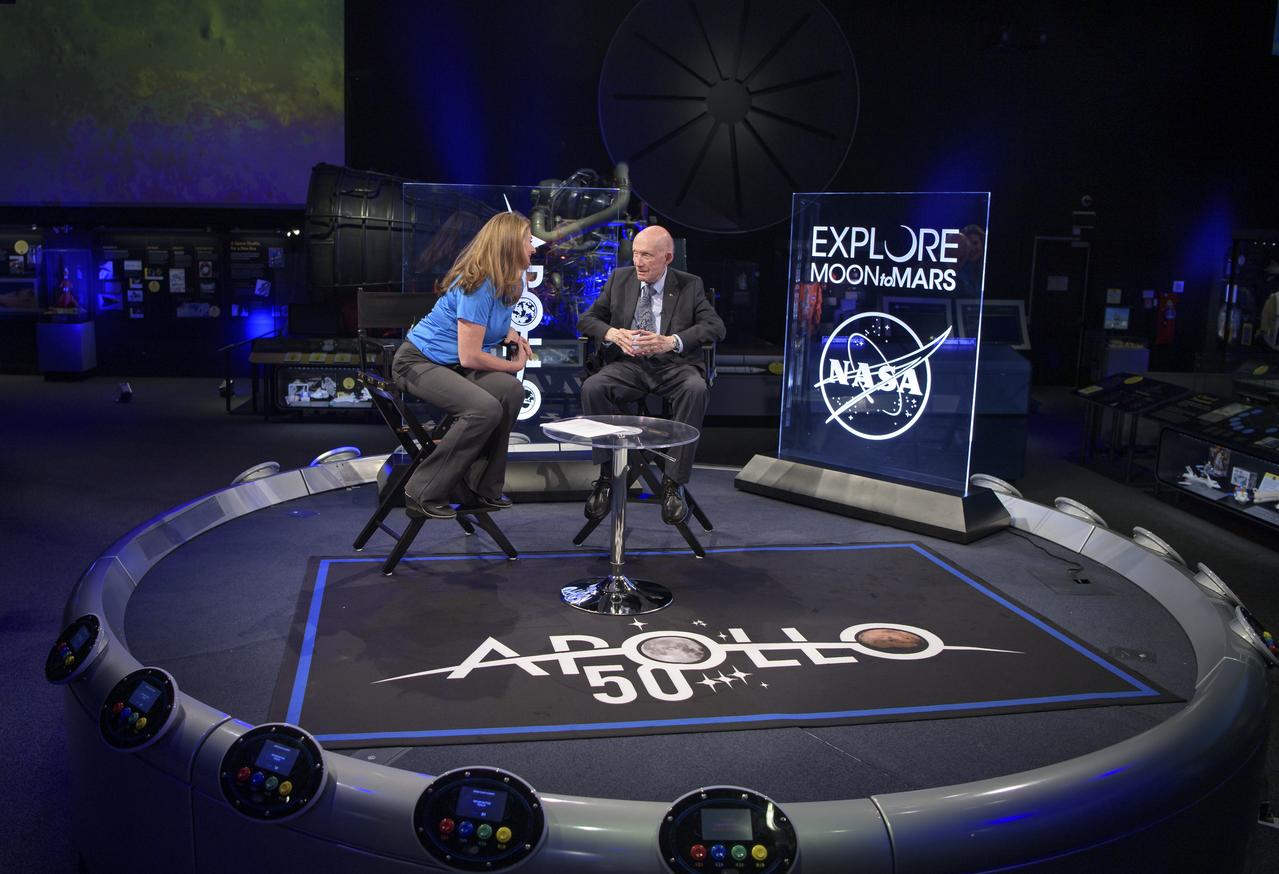
NASA Public Affairs Officer for Heliophysics Karen Fox interviews Apollo 10 astronaut General Thomas Stafford during “NASA’s Giant Leaps: Past and Future," a live television program on Friday, July 19, 2019 from the Smithsonian National Air and Space Museum in Washington. NASA and the world are recognizing the 50th anniversary of Apollo 11, in which astronauts Neil Armstrong, Michael Collins, and Buzz Aldrin crewed the first mission to land astronauts on the Moon. Photo Credit: (NASA/Bill Ingalls)

NASA Public Affairs Officer for Heliophysics Karen Fox, interviews, Apollo 11 astronaut Mike Collins during “NASA’s Giant Leaps: Past and Future," a live television program on Friday, July 19, 2019 from the Smithsonian National Air and Space Museum in Washington. NASA and the world are recognizing the 50th anniversary of Apollo 11, in which astronauts Neil Armstrong, Michael Collins, and Buzz Aldrin crewed the first mission to land astronauts on the Moon. Photo Credit: (NASA/Bill Ingalls)
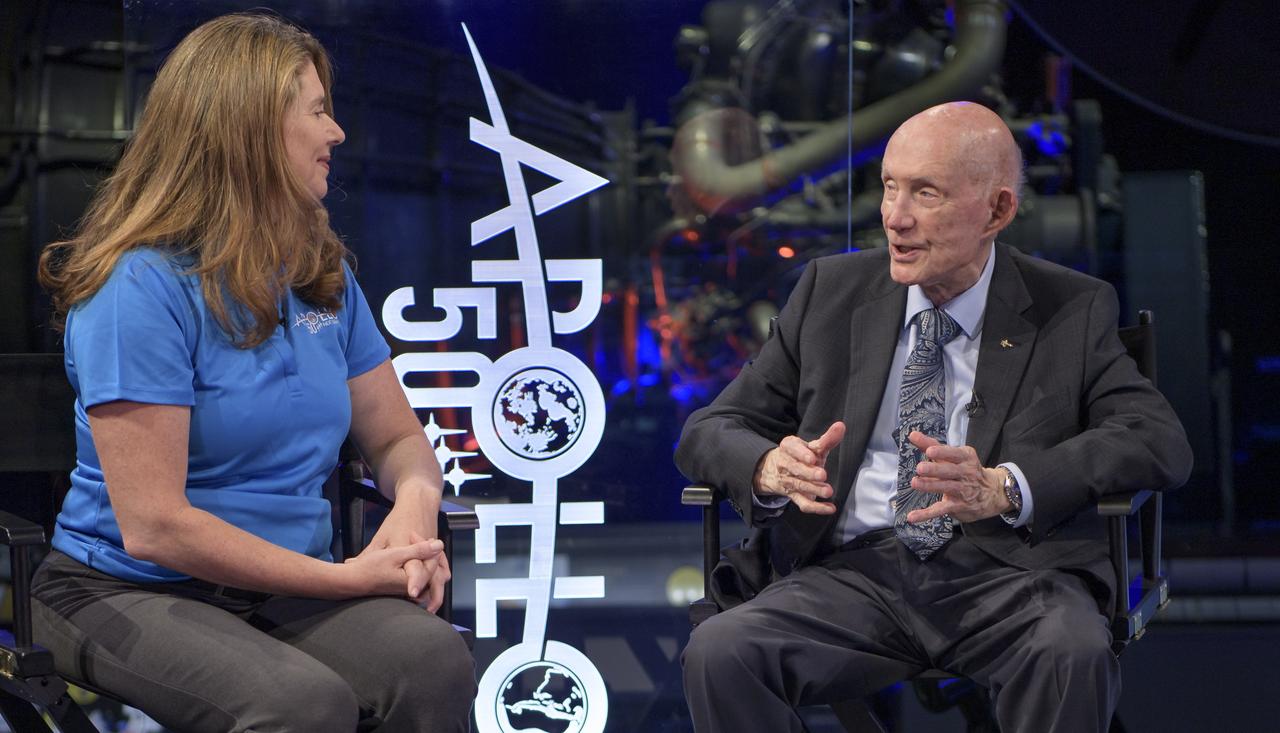
NASA Public Affairs Officer for Heliophysics Karen Fox interviews Apollo 10 astronaut General Thomas Stafford during “NASA’s Giant Leaps: Past and Future," a live television program on Friday, July 19, 2019 from the Smithsonian National Air and Space Museum in Washington. NASA and the world are recognizing the 50th anniversary of Apollo 11, in which astronauts Neil Armstrong, Michael Collins, and Buzz Aldrin crewed the first mission to land astronauts on the Moon. Photo Credit: (NASA/Bill Ingalls)
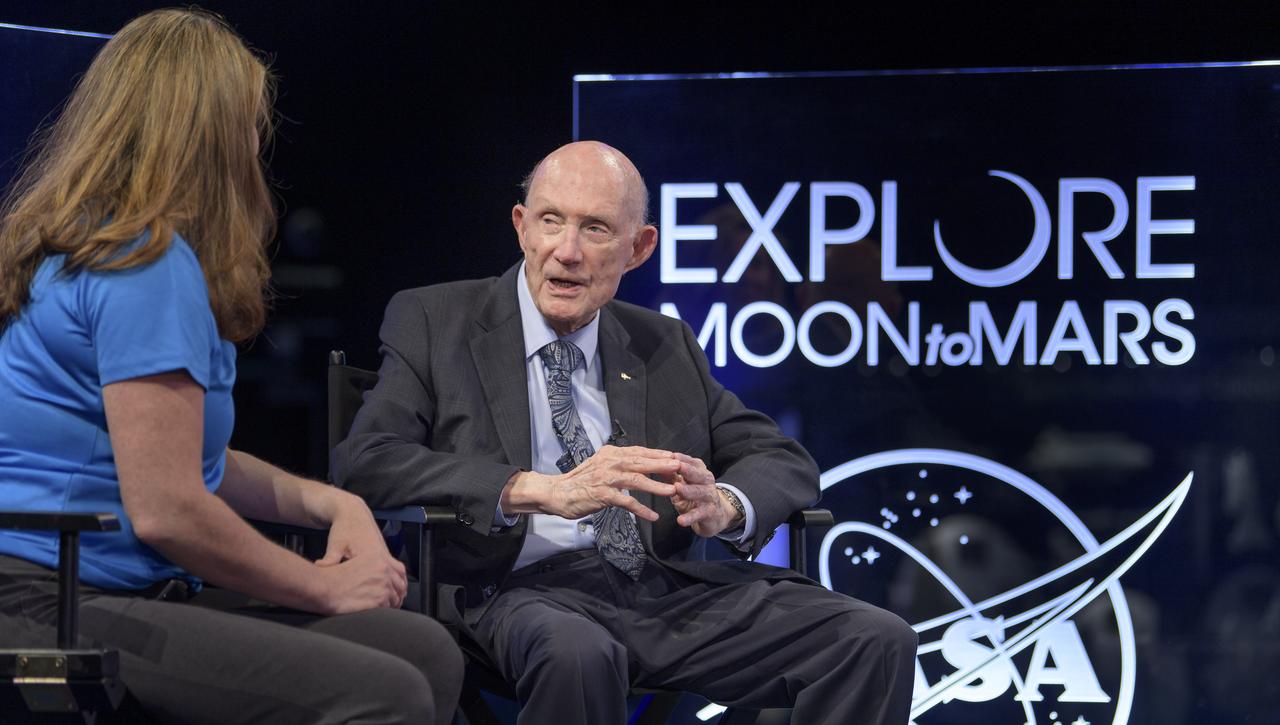
NASA Public Affairs Officer for Heliophysics Karen Fox interviews Apollo 10 astronaut General Thomas Stafford during “NASA’s Giant Leaps: Past and Future," a live television program on Friday, July 19, 2019 from the Smithsonian National Air and Space Museum in Washington. NASA and the world are recognizing the 50th anniversary of Apollo 11, in which astronauts Neil Armstrong, Michael Collins, and Buzz Aldrin crewed the first mission to land astronauts on the Moon. Photo Credit: (NASA/Bill Ingalls)
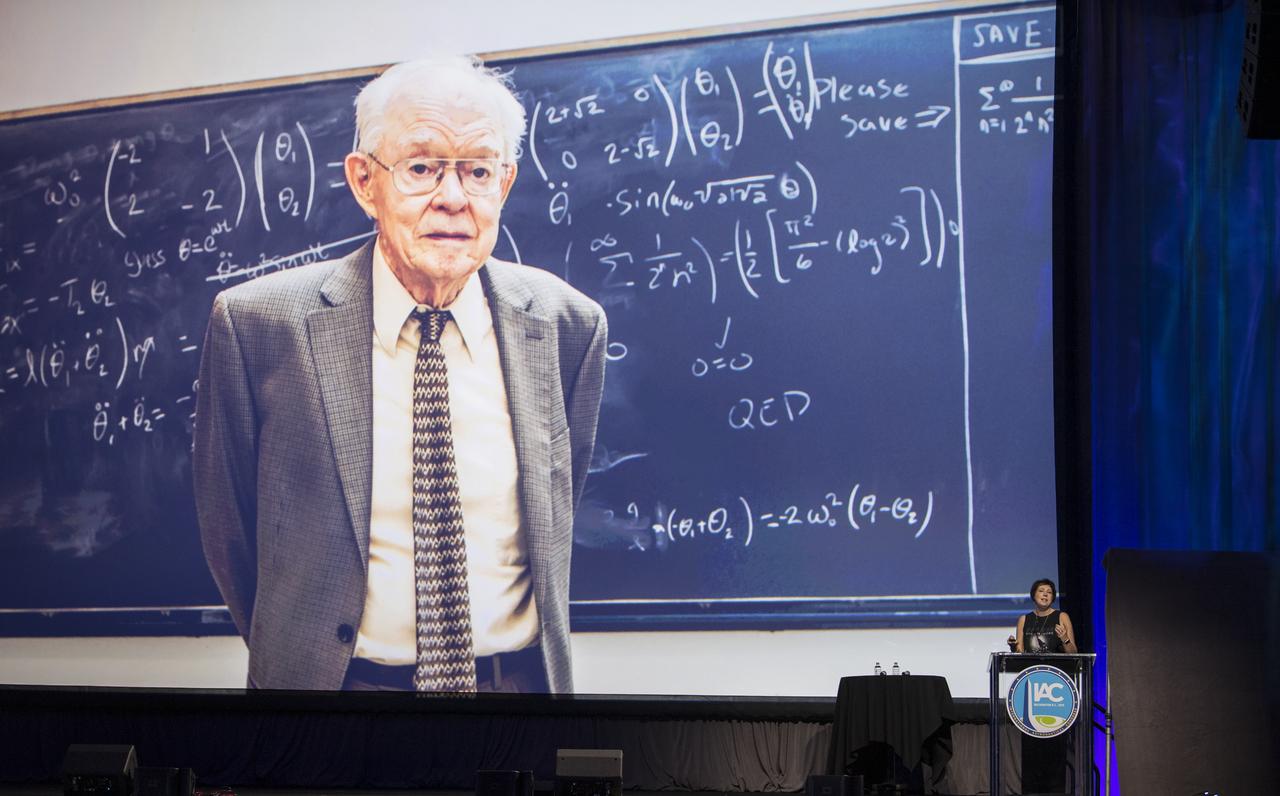
NASA director of Heliophysics division, Science Mission Directorate, Nicola Fox, shows a photo of Eugene Parker, the physicist who first predicted there was solar wind, during a presentation titled, “The Challenge of Exploring Our Sun - the 60-Year Odyssey to Parker Solar Probe,” during the 70th International Astronautical Congress, Wednesday, Oct. 23, 2019, at the Walter E. Washington Convention Center in Washington. Photo credit: (NASA/Aubrey Gemignani)

NASA Public Affairs Officer for Heliophysics Karen Fox interviews Apollo 10 astronaut General Thomas Stafford during “NASA’s Giant Leaps: Past and Future," a live television program on Friday, July 19, 2019 from the Smithsonian National Air and Space Museum in Washington. NASA and the world are recognizing the 50th anniversary of Apollo 11, in which astronauts Neil Armstrong, Michael Collins, and Buzz Aldrin crewed the first mission to land astronauts on the Moon. Photo Credit: (NASA/Bill Ingalls)
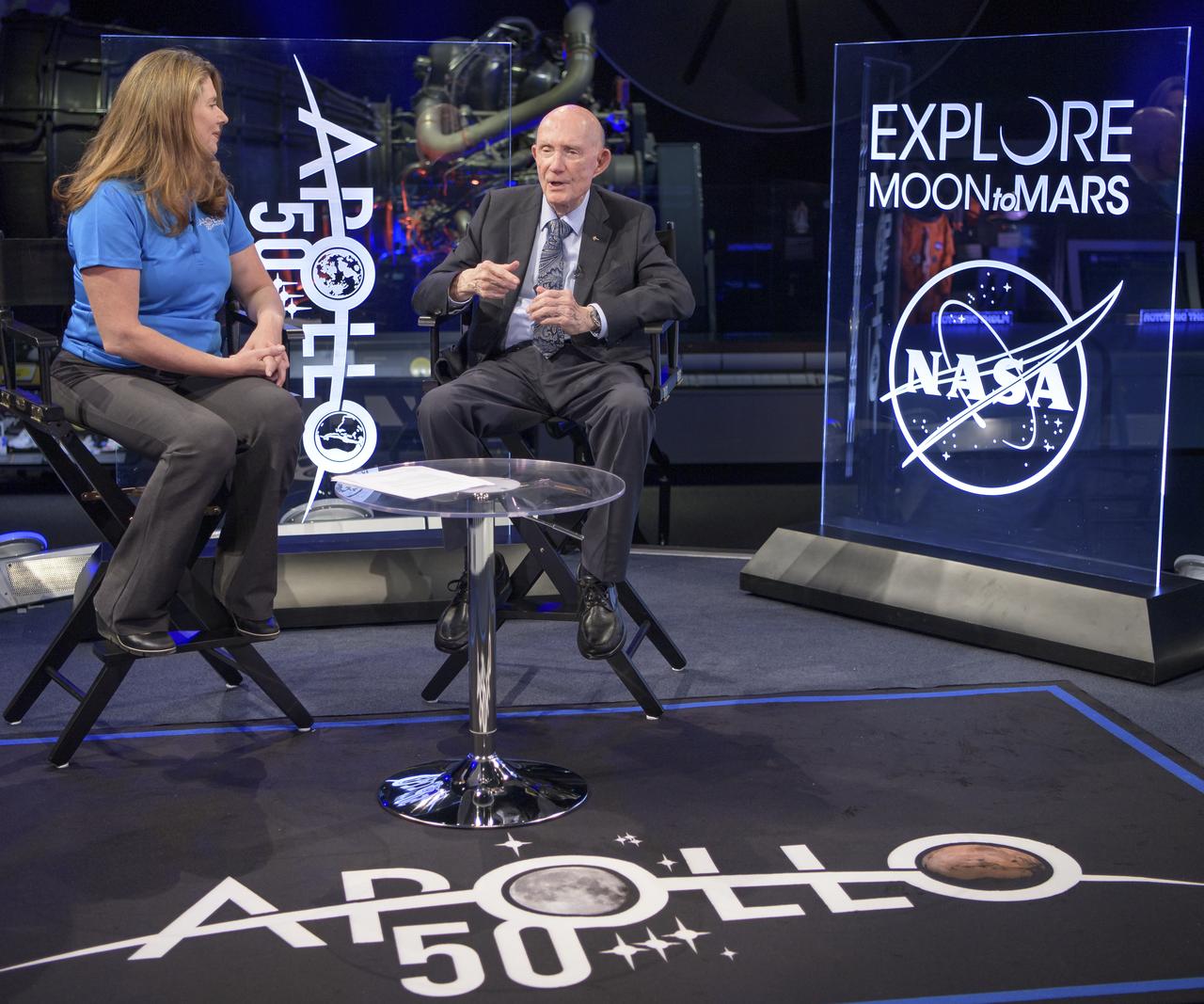
NASA Public Affairs Officer for Heliophysics Karen Fox interviews Apollo 10 astronaut General Thomas Stafford during “NASA’s Giant Leaps: Past and Future," a live television program on Friday, July 19, 2019 from the Smithsonian National Air and Space Museum in Washington. NASA and the world are recognizing the 50th anniversary of Apollo 11, in which astronauts Neil Armstrong, Michael Collins, and Buzz Aldrin crewed the first mission to land astronauts on the Moon. Photo Credit: (NASA/Bill Ingalls)
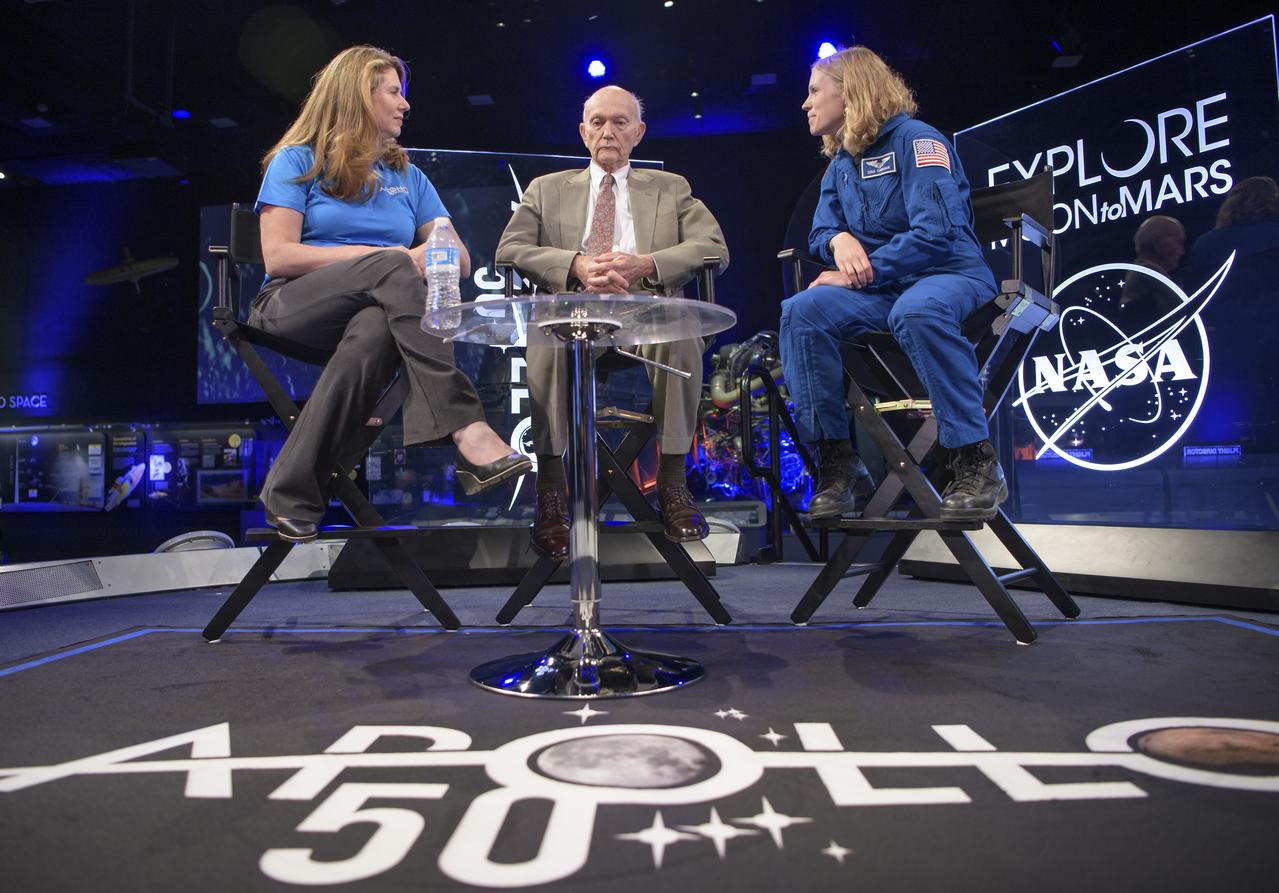
NASA Public Affairs Officer for Heliophysics Karen Fox, left, interviews, Apollo 11 astronaut Mike Collins, and NASA astronaut candidate Zena Cardman during “NASA’s Giant Leaps: Past and Future," a live television program on Friday, July 19, 2019 from the Smithsonian National Air and Space Museum in Washington. NASA and the world are recognizing the 50th anniversary of Apollo 11, in which astronauts Neil Armstrong, Michael Collins, and Buzz Aldrin crewed the first mission to land astronauts on the Moon. Photo Credit: (NASA/Bill Ingalls)
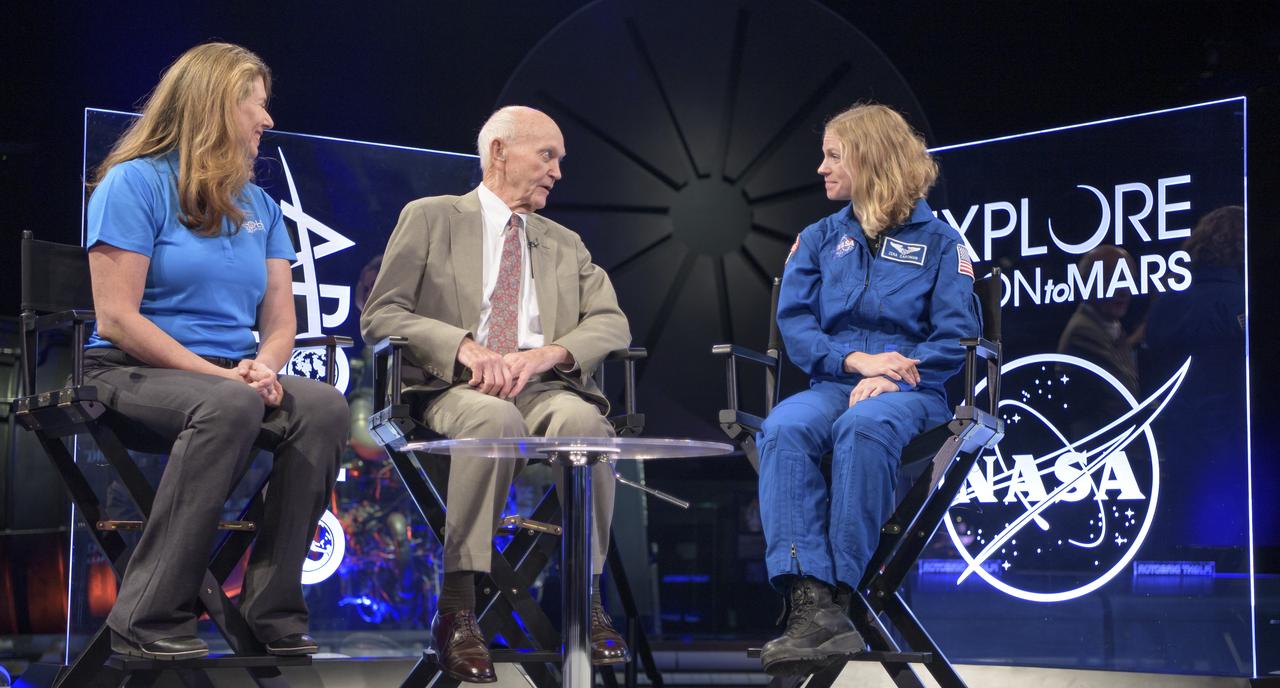
NASA Public Affairs Officer for Heliophysics Karen Fox, left, interviews, Apollo 11 astronaut Mike Collins, and NASA astronaut candidate Zena Cardman during “NASA’s Giant Leaps: Past and Future," a live television program on Friday, July 19, 2019 from the Smithsonian National Air and Space Museum in Washington. NASA and the world are recognizing the 50th anniversary of Apollo 11, in which astronauts Neil Armstrong, Michael Collins, and Buzz Aldrin crewed the first mission to land astronauts on the Moon. Photo Credit: (NASA/Bill Ingalls)
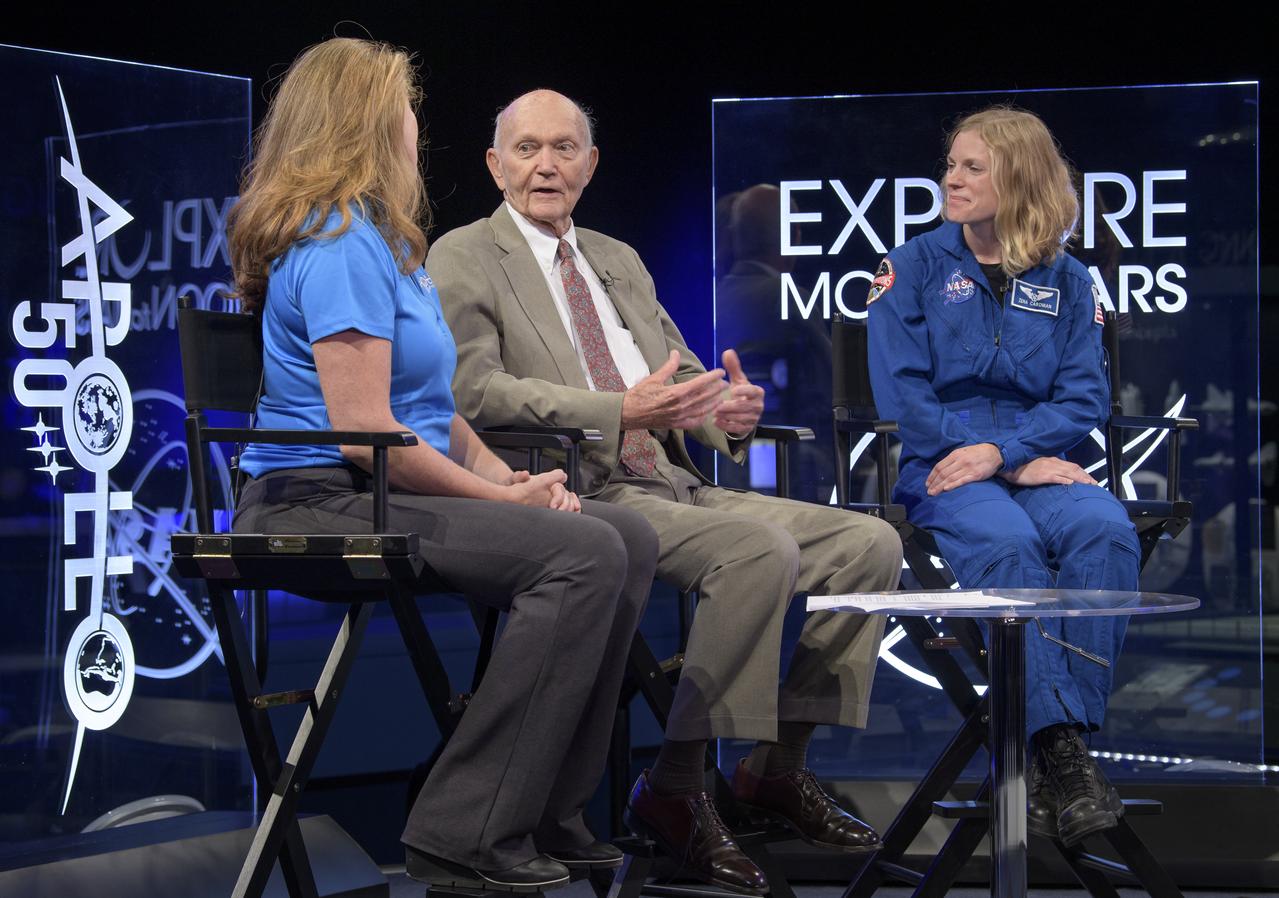
NASA Public Affairs Officer for Heliophysics Karen Fox, left, interviews, Apollo 11 astronaut Mike Collins, and NASA astronaut candidate Zena Cardman during “NASA’s Giant Leaps: Past and Future," a live television program on Friday, July 19, 2019 from the Smithsonian National Air and Space Museum in Washington. NASA and the world are recognizing the 50th anniversary of Apollo 11, in which astronauts Neil Armstrong, Michael Collins, and Buzz Aldrin crewed the first mission to land astronauts on the Moon. Photo Credit: (NASA/Bill Ingalls)
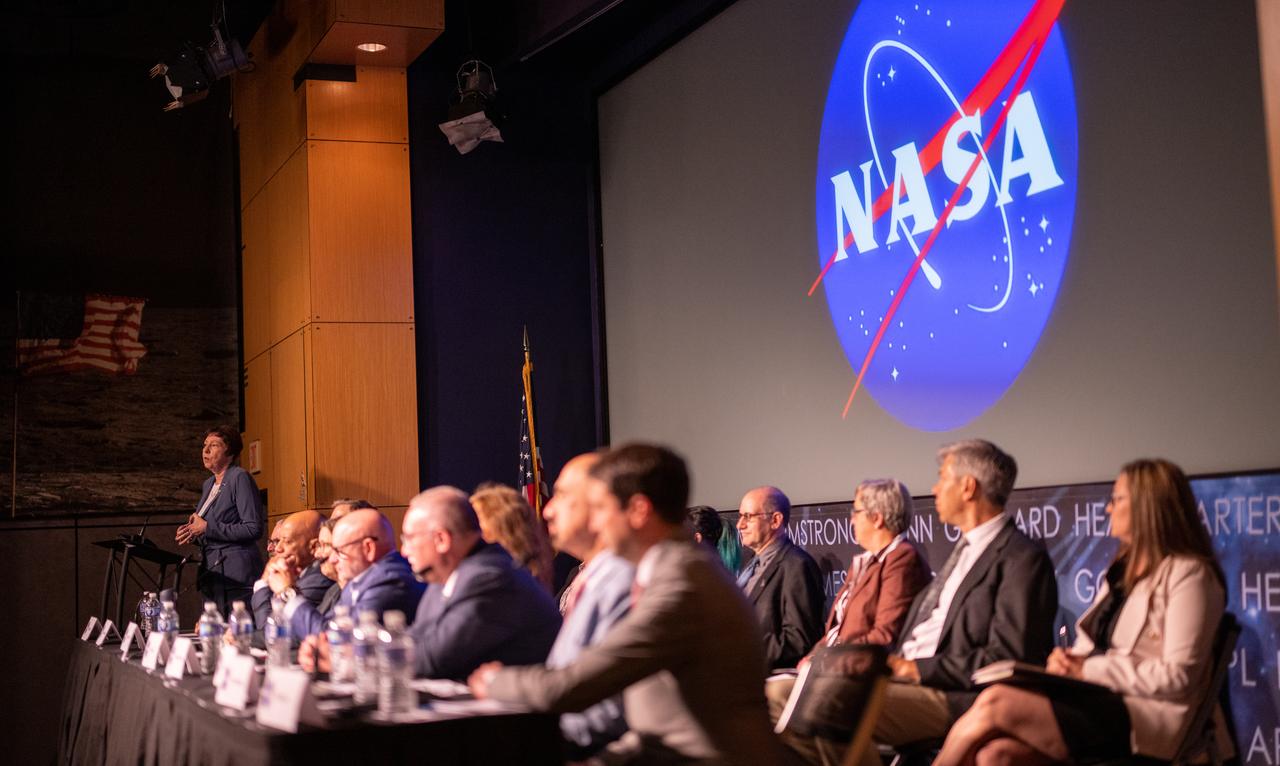
Nicola Fox, associate administrator for NASA's Science Mission Directorate, speaks during a public meeting of NASA’s unidentified anomalous phenomena (UAP) independent study team, Wednesday, May 31, 2023 at the Mary W. Jackson NASA Headquarters building in Washington. The UAP independent study team is a counsel of 16 community experts across diverse areas on matters relevant to potential methods of study for unidentified anomalous phenomena. NASA commissioned the nine-month study to examine UAP from a scientific perspective and create a roadmap for how to use data and the tools of science to move our understanding of UAP forward. Photo Credit: (NASA/Joel Kowsky)

Nicola Fox, associate administrator for NASA's Science Mission Directorate, answers a question during a media briefing to discuss the findings from an unidentified anomalous phenomena (UAP) independent study team, Thursday, Sept. 14, 2023, at the Mary W. Jackson NASA Headquarters building in Washington. The UAP independent study team, commissioned in 2022, is a counsel of 16 community experts across diverse areas on matters relevant to potential methods of study for unidentified anomalous phenomena. NASA published the team’s full report online, which aims to inform about what possible data could be collected in the future to shed light on the nature and origin of UAP. Photo Credit: (NASA/Aubrey Gemignani)
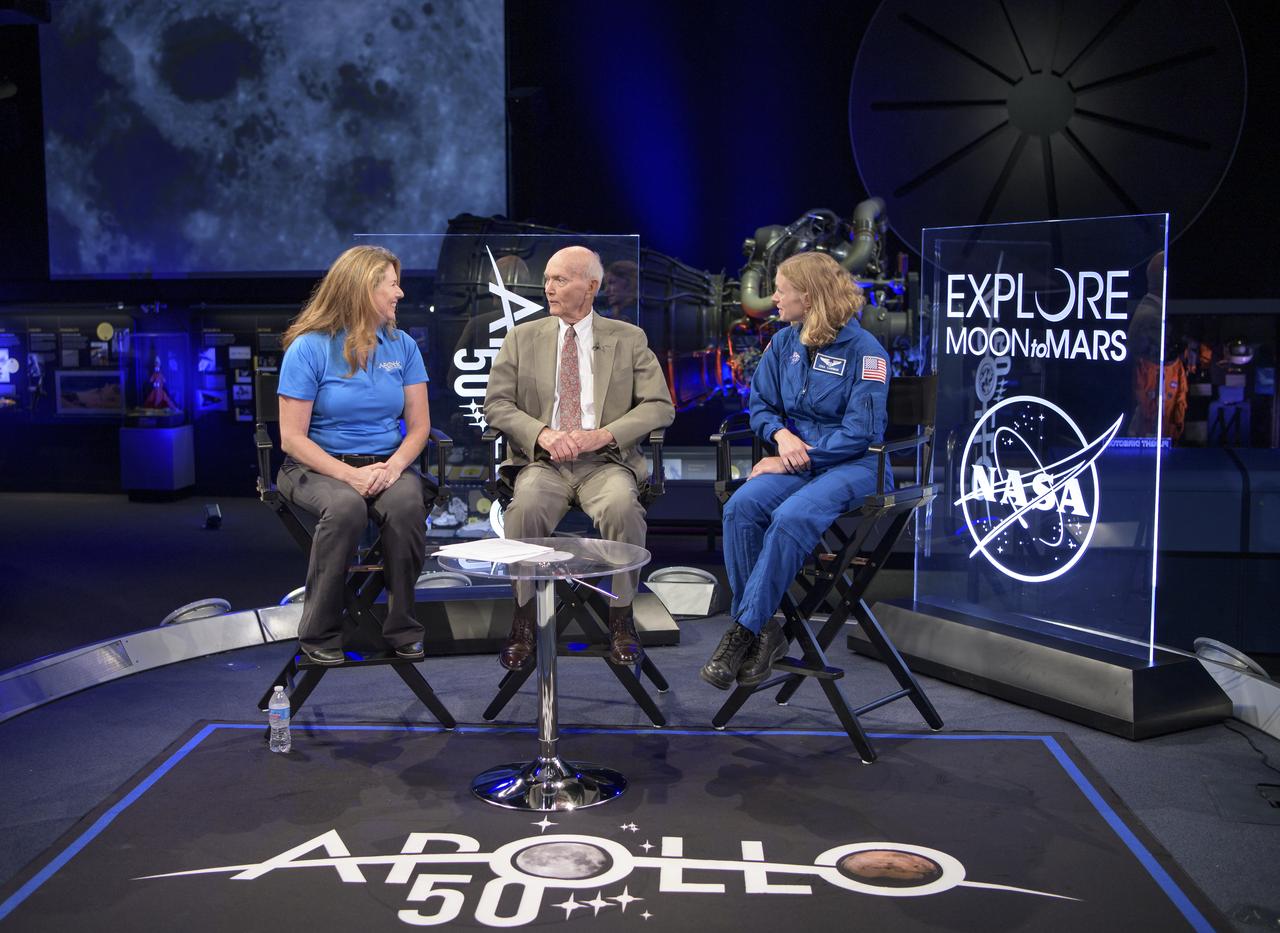
NASA Public Affairs Officer for Heliophysics Karen Fox, left, interviews, Apollo 11 astronaut Mike Collins, and NASA astronaut candidate Zena Cardman during “NASA’s Giant Leaps: Past and Future," a live television program on Friday, July 19, 2019 from the Smithsonian National Air and Space Museum in Washington. NASA and the world are recognizing the 50th anniversary of Apollo 11, in which astronauts Neil Armstrong, Michael Collins, and Buzz Aldrin crewed the first mission to land astronauts on the Moon. Photo Credit: (NASA/Bill Ingalls)
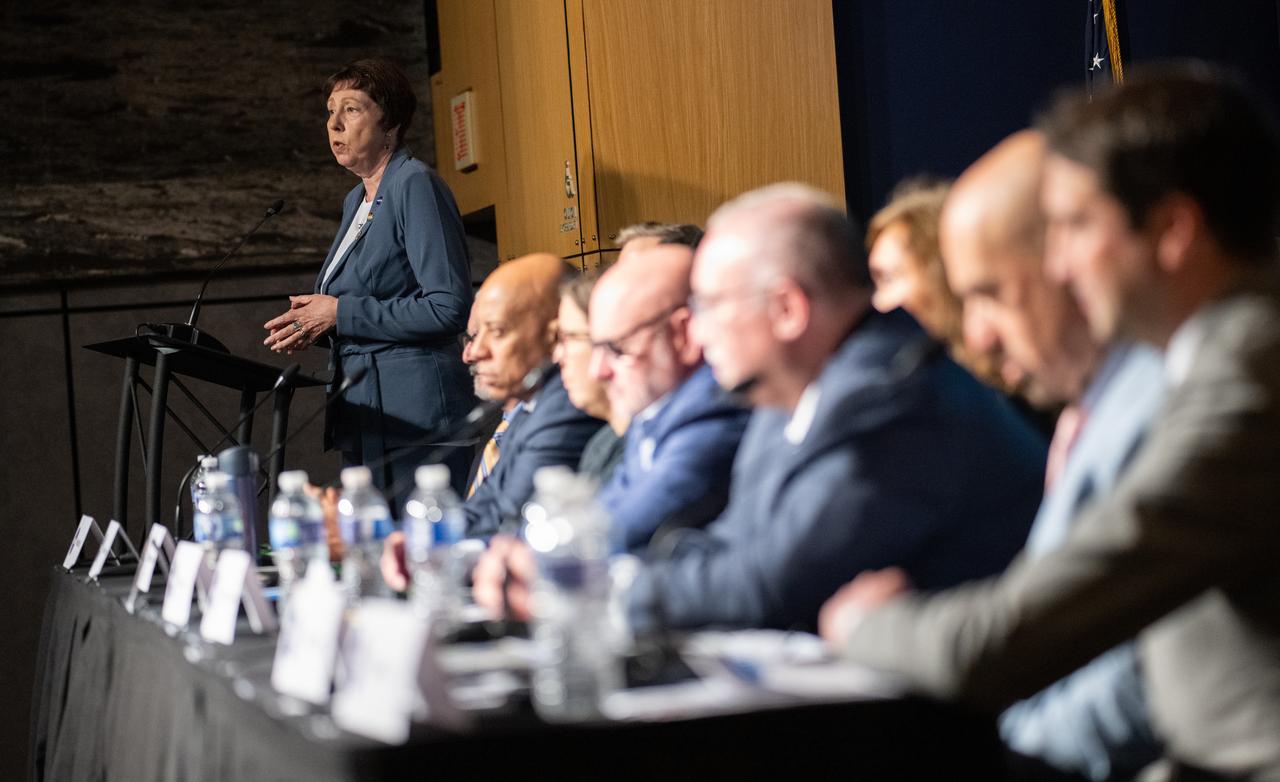
Nicola Fox, associate administrator for NASA's Science Mission Directorate, speaks during a public meeting of NASA’s unidentified anomalous phenomena (UAP) independent study team, Wednesday, May 31, 2023 at the Mary W. Jackson NASA Headquarters building in Washington. The UAP independent study team is a counsel of 16 community experts across diverse areas on matters relevant to potential methods of study for unidentified anomalous phenomena. NASA commissioned the nine-month study to examine UAP from a scientific perspective and create a roadmap for how to use data and the tools of science to move our understanding of UAP forward. Photo Credit: (NASA/Joel Kowsky)
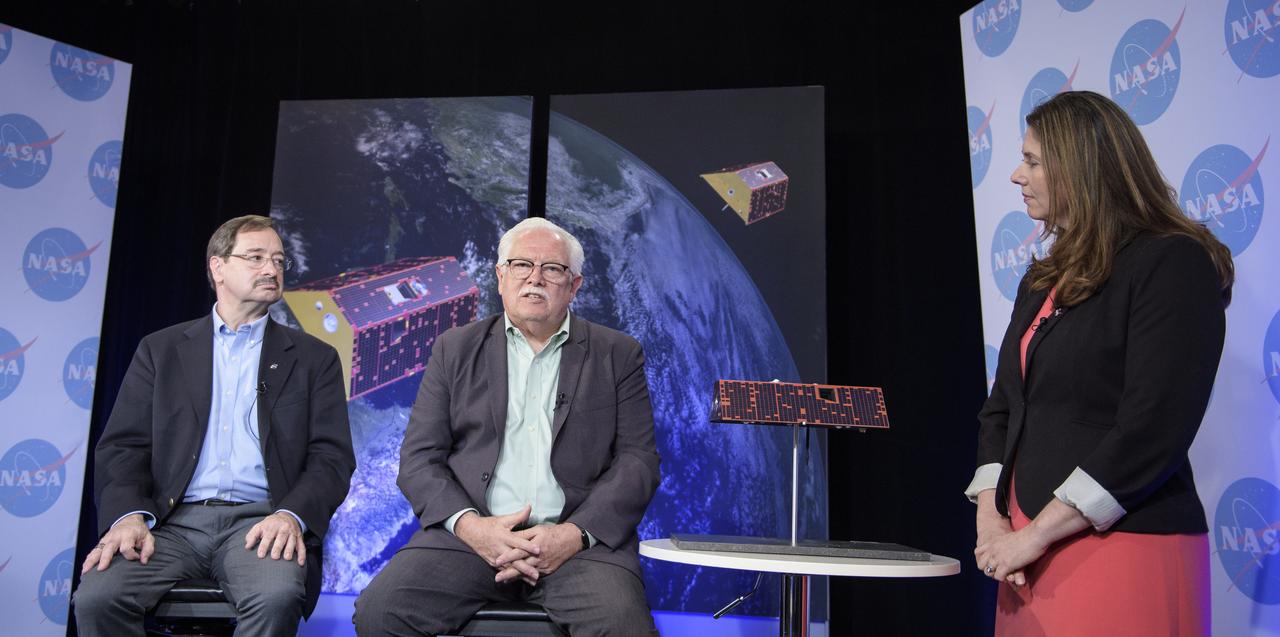
David Jarrett, GRACE-FO program executive in the Earth Science Division at NASA Headquarters, left, and Phil Morton, NASA GRACE-FO project manager at JPL, discuss the upcoming launch of the Gravity Recovery and Climate Experiment Follow-On (GRACE-FO) mission with Karen Fox of NASA's Office of Communications, Monday, April 30, 2018 at NASA Headquarters in Washington. The twin GRACE-FO spacecraft will measure and monitor monthly changes in how mass is redistributed within and among Earth's atmosphere, oceans, land and ice sheets, as well as within Earth itself. Photo Credit: (NASA/Joel Kowsky)
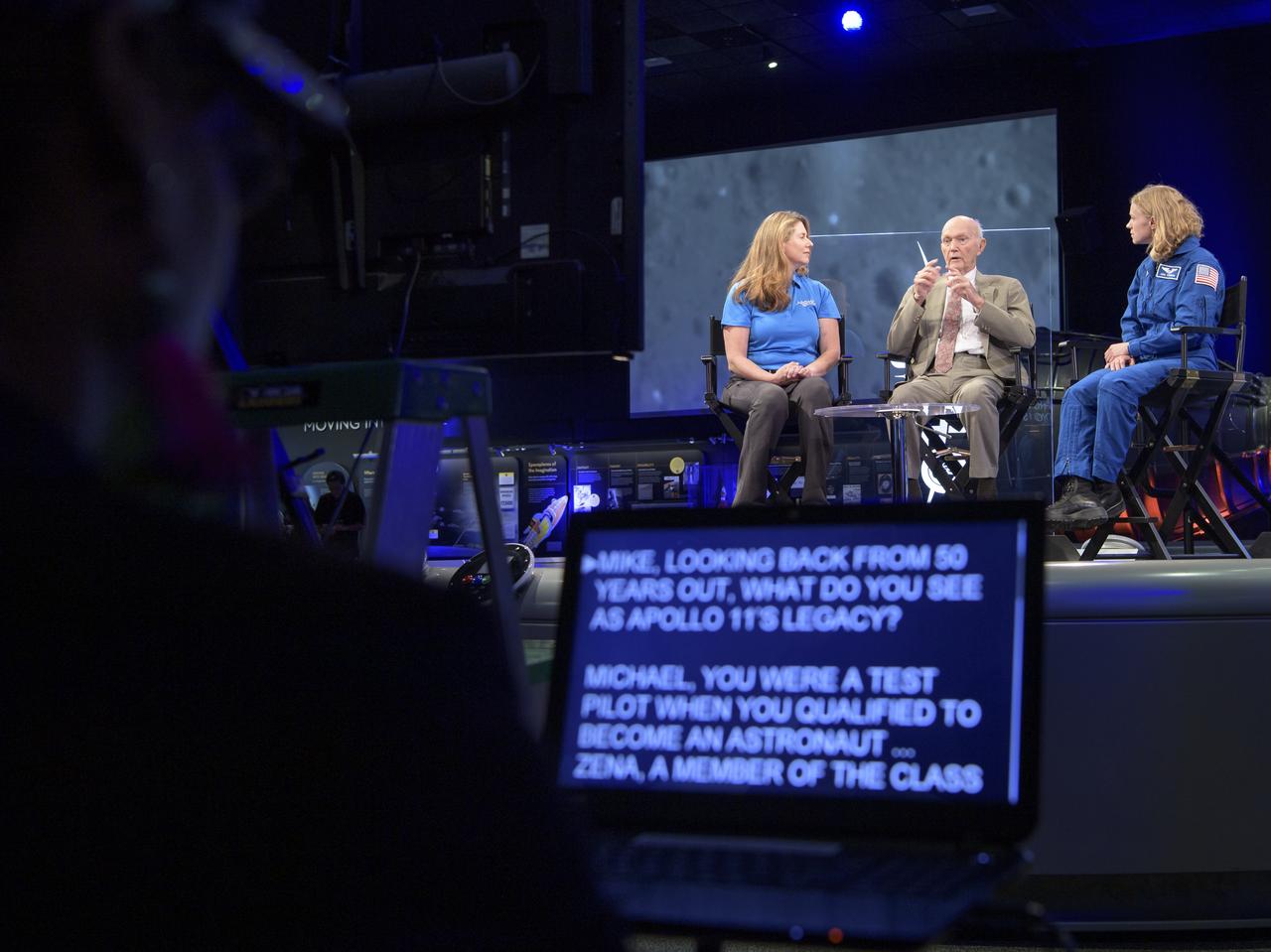
NASA Public Affairs Officer for Heliophysics Karen Fox, left, interviews, Apollo 11 astronaut Mike Collins, and NASA astronaut candidate Zena Cardman during “NASA’s Giant Leaps: Past and Future," a live television program on Friday, July 19, 2019 from the Smithsonian National Air and Space Museum in Washington. NASA and the world are recognizing the 50th anniversary of Apollo 11, in which astronauts Neil Armstrong, Michael Collins, and Buzz Aldrin crewed the first mission to land astronauts on the Moon. Photo Credit: (NASA/Bill Ingalls)
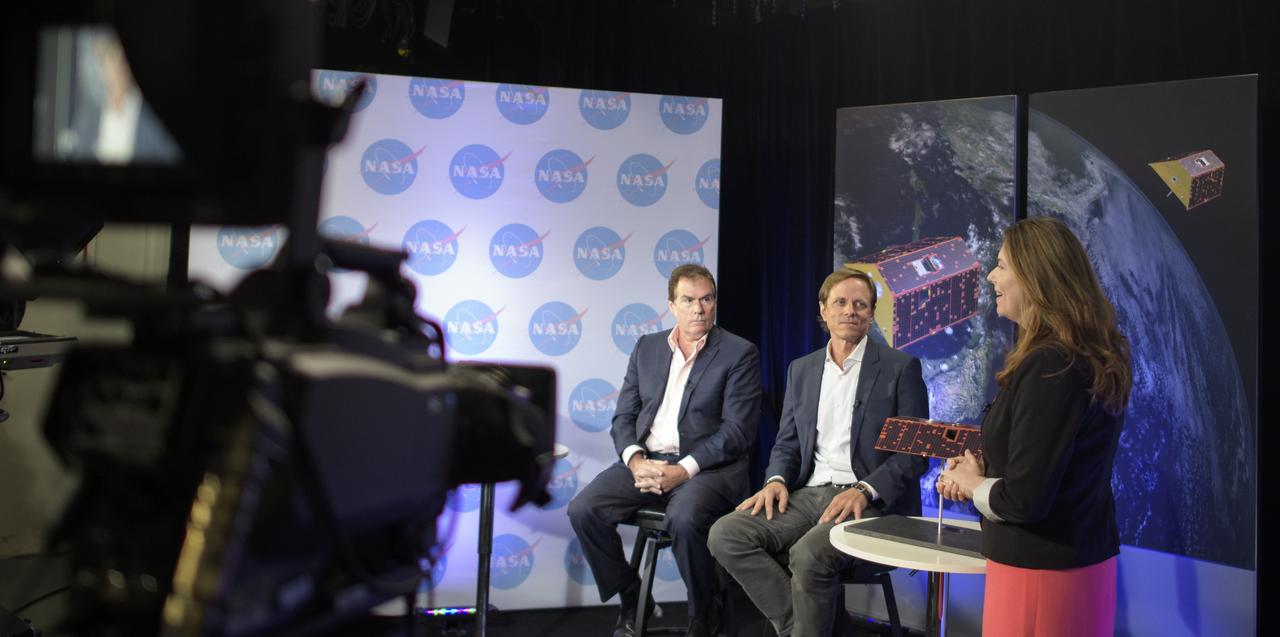
Karen Fox, of NASA's Office of Communications, right, discusses the upcoming launch of the Gravity Recovery and Climate Experiment Follow-On (GRACE-FO) mission with Michael Watkins, GRACE-FO science lead and director of NASA's Jet Propulsion Laboratory, left, and Frank Webb, GRACE-FO project scientist at JPL, Monday, April 30, 2018 at NASA Headquarters in Washington. The twin GRACE-FO spacecraft will measure and monitor monthly changes in how mass is redistributed within and among Earth's atmosphere, oceans, land and ice sheets, as well as within Earth itself. Photo Credit: (NASA/Joel Kowsky)
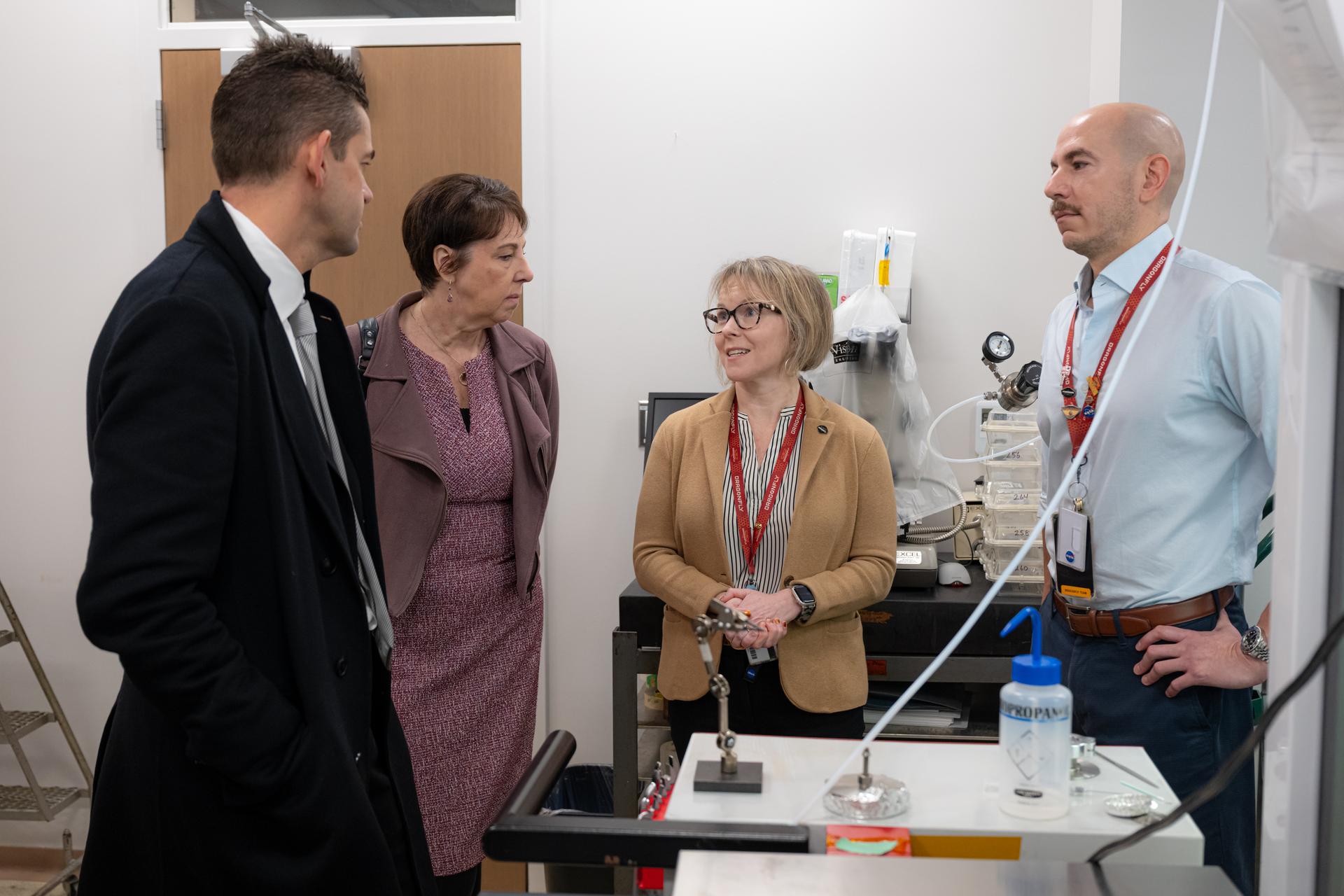
From left to right: NASA Administrator Jared Isaacman; Dr. Nicola Fox, associate administrator, NASA’s Science Mission Directorate; Melissa Grady Trainer, deputy principal investigator for the Dragonfly mission; Charles Malespin, chief of the Planetary Environments Lab, discuss the Dragonfly mission to Saturn’s moon Titan, Friday, Jan. 9, 2026, at NASA’s Goddard Space Flight Center in Greenbelt, Md. Goddard marks the first stop in Isaacman’s roadshow to visit NASA facilities and engage directly with the agency’s workforce. Photo Credit: (NASA/John Kraus)
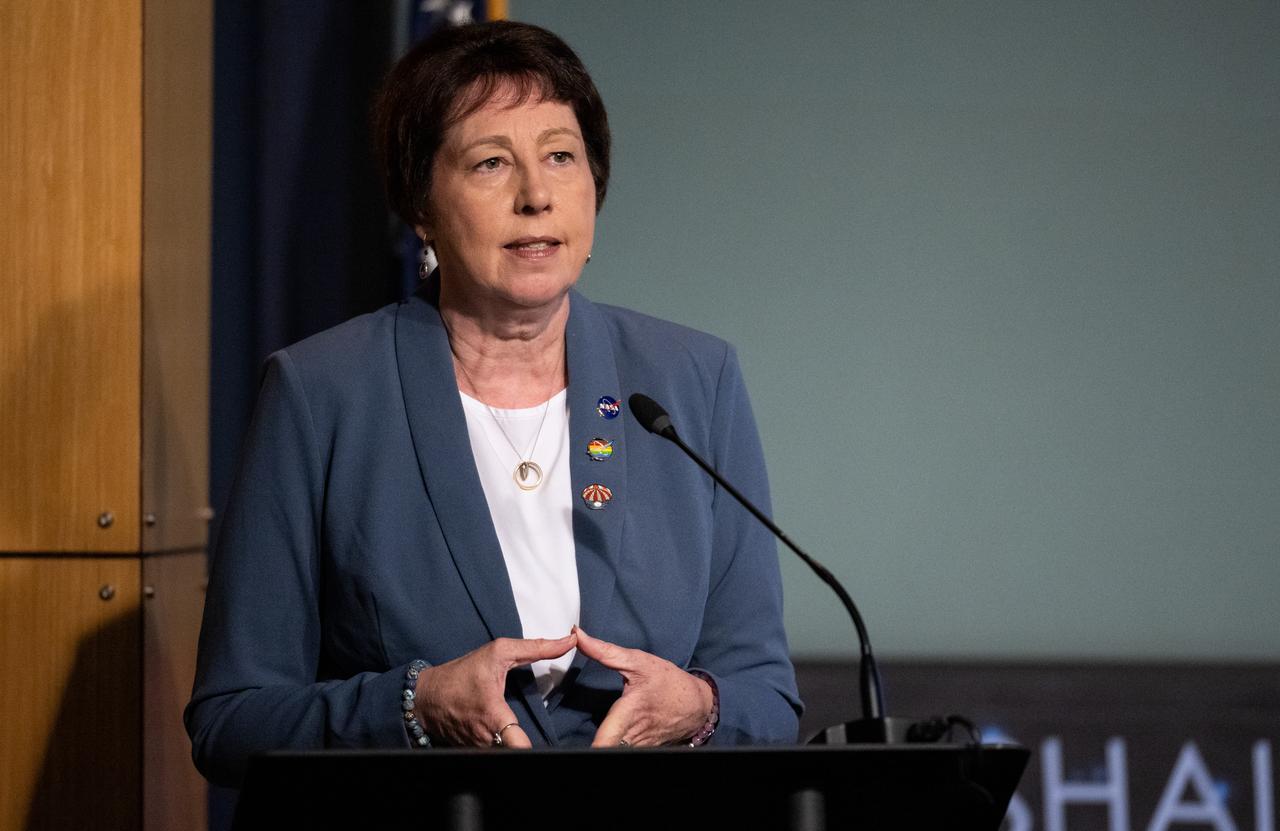
Nicola Fox, associate administrator for NASA's Science Mission Directorate, speaks during a public meeting of NASA’s unidentified anomalous phenomena (UAP) independent study team, Wednesday, May 31, 2023 at the Mary W. Jackson NASA Headquarters building in Washington. The UAP independent study team is a counsel of 16 community experts across diverse areas on matters relevant to potential methods of study for unidentified anomalous phenomena. NASA commissioned the nine-month study to examine UAP from a scientific perspective and create a roadmap for how to use data and the tools of science to move our understanding of UAP forward. Photo Credit: (NASA/Joel Kowsky)
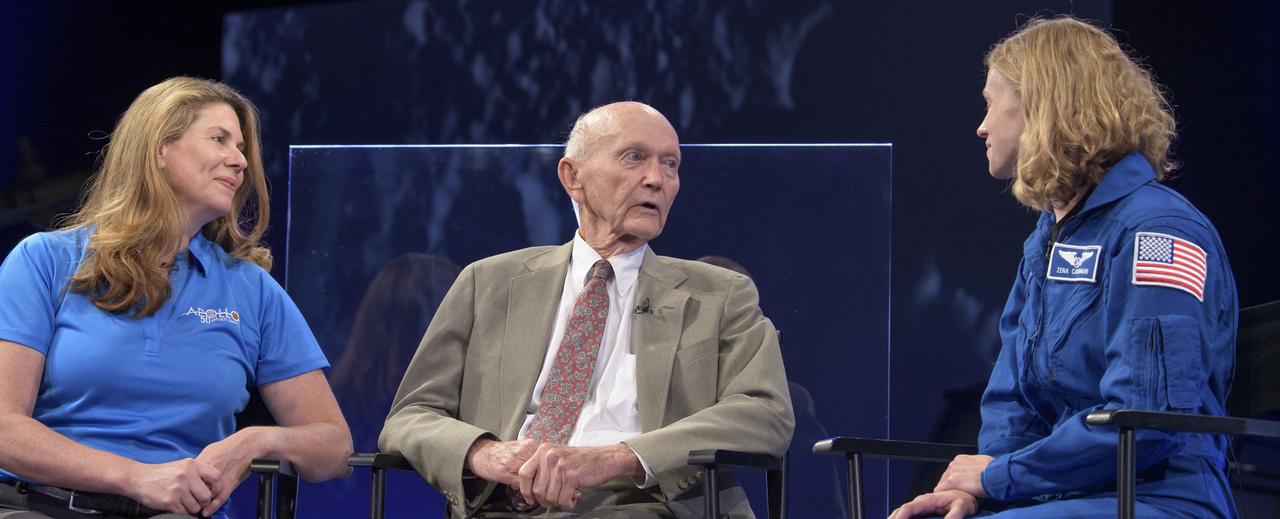
NASA Public Affairs Officer for Heliophysics Karen Fox, left, interviews, Apollo 11 astronaut Mike Collins, and NASA astronaut candidate Zena Cardman during “NASA’s Giant Leaps: Past and Future," a live television program on Friday, July 19, 2019 from the Smithsonian National Air and Space Museum in Washington. NASA and the world are recognizing the 50th anniversary of Apollo 11, in which astronauts Neil Armstrong, Michael Collins, and Buzz Aldrin crewed the first mission to land astronauts on the Moon. Photo Credit: (NASA/Bill Ingalls)
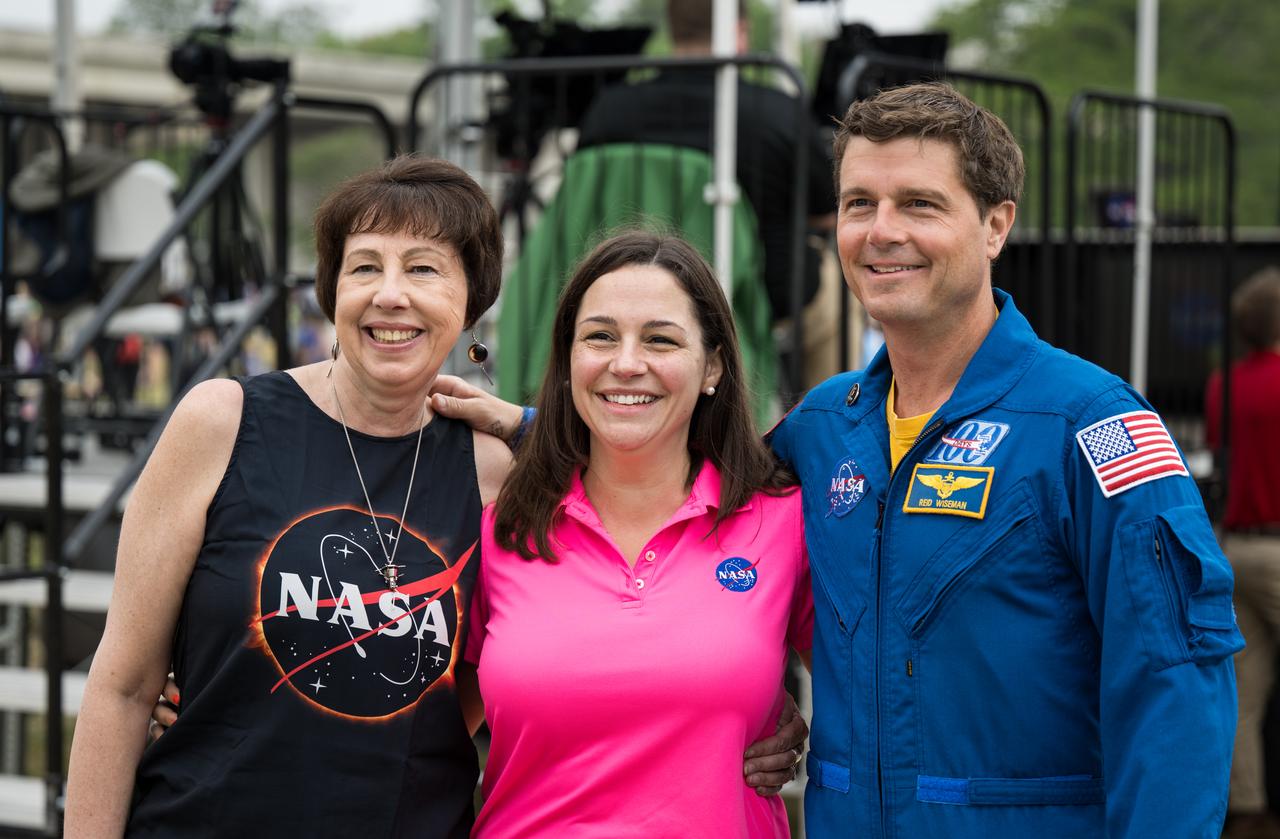
NASA Associate Administrator for the Science Mission directorate, Dr. Nicky Fox, Eclipse Engagement Lead Alex Lockwood, and NASA astronaut Reid Wiseman pose for a photos as they prepare to watch a total solar eclipse in Kerrville, TX on Monday, April 8, 2024. A total solar eclipse swept across a narrow portion of the North American continent from Mexico’s Pacific coast to the Atlantic coast of Newfoundland, Canada. A partial solar eclipse was visible across the entire North American continent along with parts of Central America and Europe. Photo Credit: (NASA/Aubrey Gemignani)

Associate Administrator for NASA's Science Mission Directorate Nicola Fox speaks, as NASA Administrator Jared Isaacman, and NASA Associate Administrator Amit Kshatriya, right, look on, during an event where NASA is outlining how the agency is executing President Donald J. Trump’s National Space Policy and accelerating preparations for America’s return to the surface of the Moon by 2028, Tuesday, March 24, 2026, at the Mary W. Jackson NASA Headquarters building in Washington. During the event NASA leadership provided updates on mission priorities, including sending the first astronauts to the lunar surface in more than 50 years, establishing the initial elements of a permanent lunar base, getting America underway in space on nuclear propulsion, and other objectives. Photo Credit: (NASA/Bill Ingalls)

Associate Administrator for NASA's Science Mission Directorate Nicola Fox speaks, as NASA Administrator Jared Isaacman, and NASA Associate Administrator Amit Kshatriya, right, look on, during an event where NASA is outlining how the agency is executing President Donald J. Trump’s National Space Policy and accelerating preparations for America’s return to the surface of the Moon by 2028, Tuesday, March 24, 2026, at the Mary W. Jackson NASA Headquarters building in Washington. During the event NASA leadership provided updates on mission priorities, including sending the first astronauts to the lunar surface in more than 50 years, establishing the initial elements of a permanent lunar base, getting America underway in space on nuclear propulsion, and other objectives. Photo Credit: (NASA/Bill Ingalls)

Associate Administrator for NASA's Science Mission Directorate Nicola Fox speaks, as NASA Administrator Jared Isaacman, and NASA Associate Administrator Amit Kshatriya, right, look on, during an event where NASA is outlining how the agency is executing President Donald J. Trump’s National Space Policy and accelerating preparations for America’s return to the surface of the Moon by 2028, Tuesday, March 24, 2026, at the Mary W. Jackson NASA Headquarters building in Washington. During the event NASA leadership provided updates on mission priorities, including sending the first astronauts to the lunar surface in more than 50 years, establishing the initial elements of a permanent lunar base, getting America underway in space on nuclear propulsion, and other objectives. Photo Credit: (NASA/Bill Ingalls)
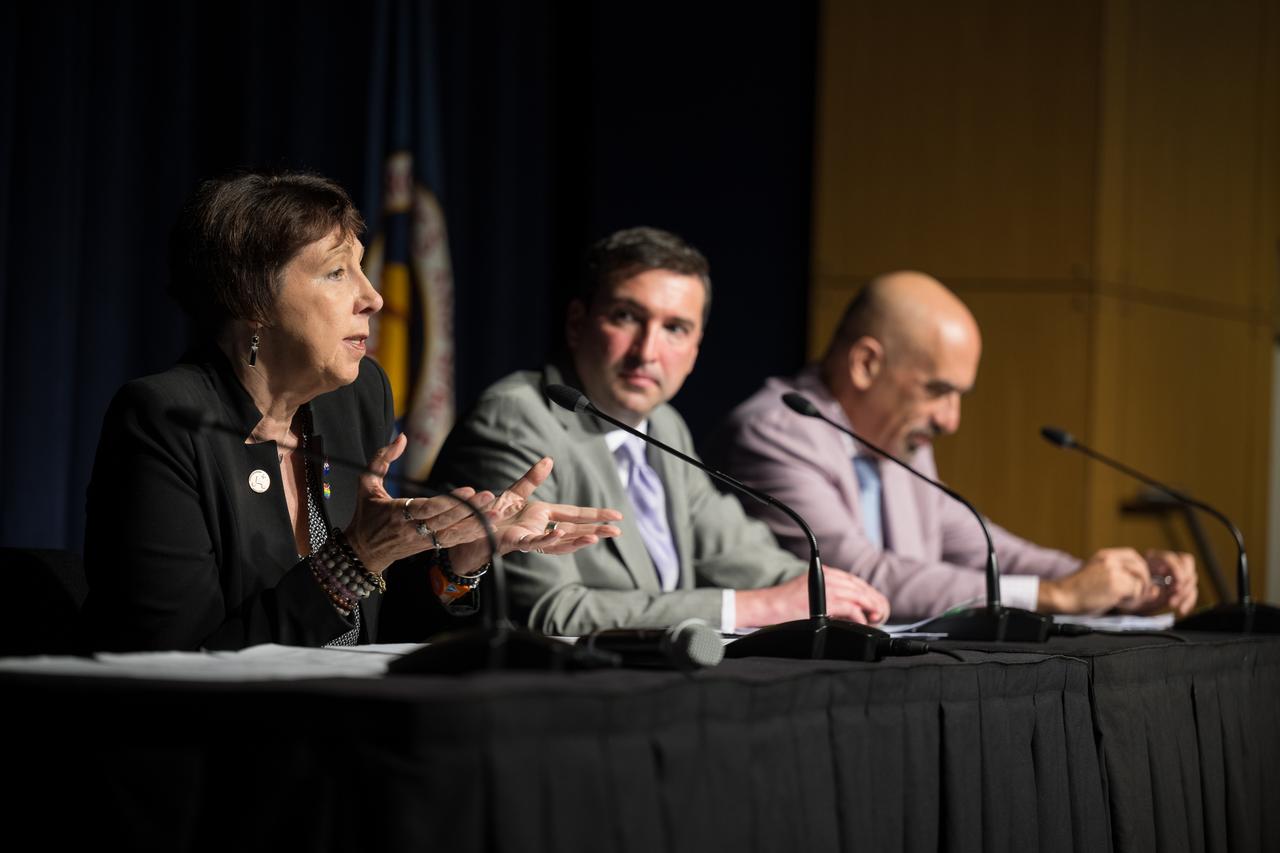
Nicola Fox, associate administrator for NASA's Science Mission Directorate, answers a question during a media briefing to discuss the findings from an unidentified anomalous phenomena (UAP) independent study team, Thursday, Sept. 14, 2023, at the Mary W. Jackson NASA Headquarters building in Washington. The UAP independent study team, commissioned in 2022, is a counsel of 16 community experts across diverse areas on matters relevant to potential methods of study for unidentified anomalous phenomena. NASA published the team’s full report online, which aims to inform about what possible data could be collected in the future to shed light on the nature and origin of UAP. Photo Credit: (NASA/Aubrey Gemignani)
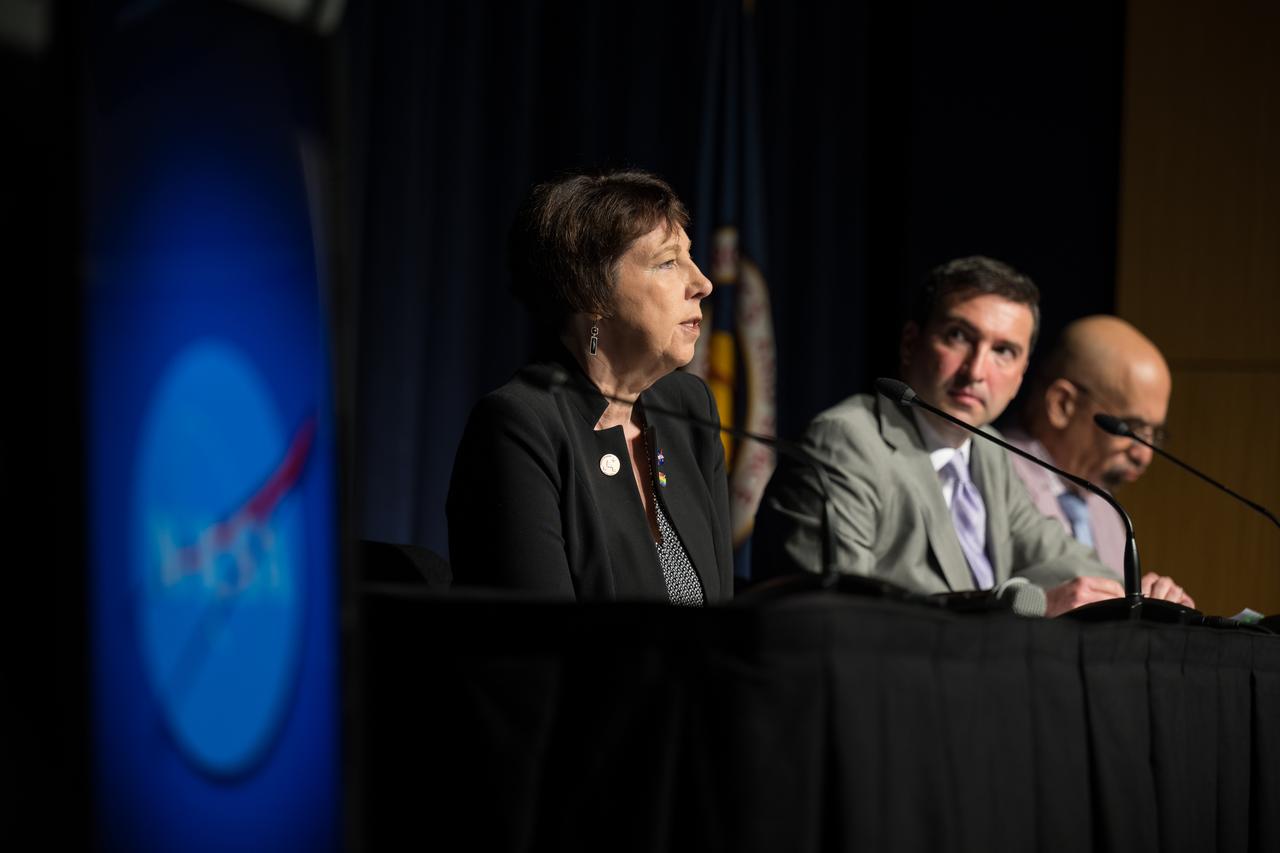
Nicola Fox, associate administrator for NASA's Science Mission Directorate, answers a question during a media briefing to discuss the findings from an unidentified anomalous phenomena (UAP) independent study team, Thursday, Sept. 14, 2023, at the Mary W. Jackson NASA Headquarters building in Washington. The UAP independent study team, commissioned in 2022, is a counsel of 16 community experts across diverse areas on matters relevant to potential methods of study for unidentified anomalous phenomena. NASA published the team’s full report online, which aims to inform about what possible data could be collected in the future to shed light on the nature and origin of UAP. Photo Credit: (NASA/Aubrey Gemignani)

CAPE CANAVERAL, Fla. – Ed Hoffman, from left, Jack Fox and Rob Mueller discuss techniques to enable and enhance innovation during the third session in a weeklong series called "Masters with Masters" at the agency's Kennedy Space Center in Florida. Hoffman, NASA's chief Knowledge officer, Fox, chief, Surface Systems Office, and Rob Mueller, senior technologist, Surface Systems Office, talked about the work of the Swamp Works facility at Kennedy. Photo credit: NASA/Jim Grossmann

CAPE CANAVERAL, Fla. – Ed Hoffman, from left, Jack Fox and Rob Mueller discuss techniques to enable and enhance innovation during the third session in a weeklong series called "Masters with Masters" at the agency's Kennedy Space Center in Florida. Hoffman, NASA's chief Knowledge officer, Fox, chief, Surface Systems Office, and Rob Mueller, senior technologist, Surface Systems Office, talked about the work of the Swamp Works facility at Kennedy. Photo credit: NASA/Jim Grossmann

A fox at Torres del Paine National Park in Chile during NASA's AirSAR 2004 campaign. AirSAR 2004 is a three-week expedition in Central and South America by an international team of scientists that is using an all-weather imaging tool, called the Airborne Synthetic Aperture Radar (AirSAR), located onboard NASA's DC-8 airborne laboratory. Scientists from many parts of the world are combining ground research with NASA's AirSAR technology to improve and expand on the quality of research they are able to conduct. Founded in 1959, Torres del Paine National Park encompasses 450,000 acres in the Patagonia region of Chile. This region is being studied by NASA using a DC-8 equipped with an Airborne Synthetic Aperture Radar (AirSAR) developed by scientists from NASA’s Jet Propulsion Laboratory. This is a very sensitive region that is important to scientists because the temperature has been consistently rising causing a subsequent melting of the region’s glaciers. AirSAR will provide a baseline model and unprecedented mapping of the region. This data will make it possible to determine whether the warming trend is slowing, continuing or accelerating. AirSAR will also provide reliable information on ice shelf thickness to measure the contribution of the glaciers to sea level.
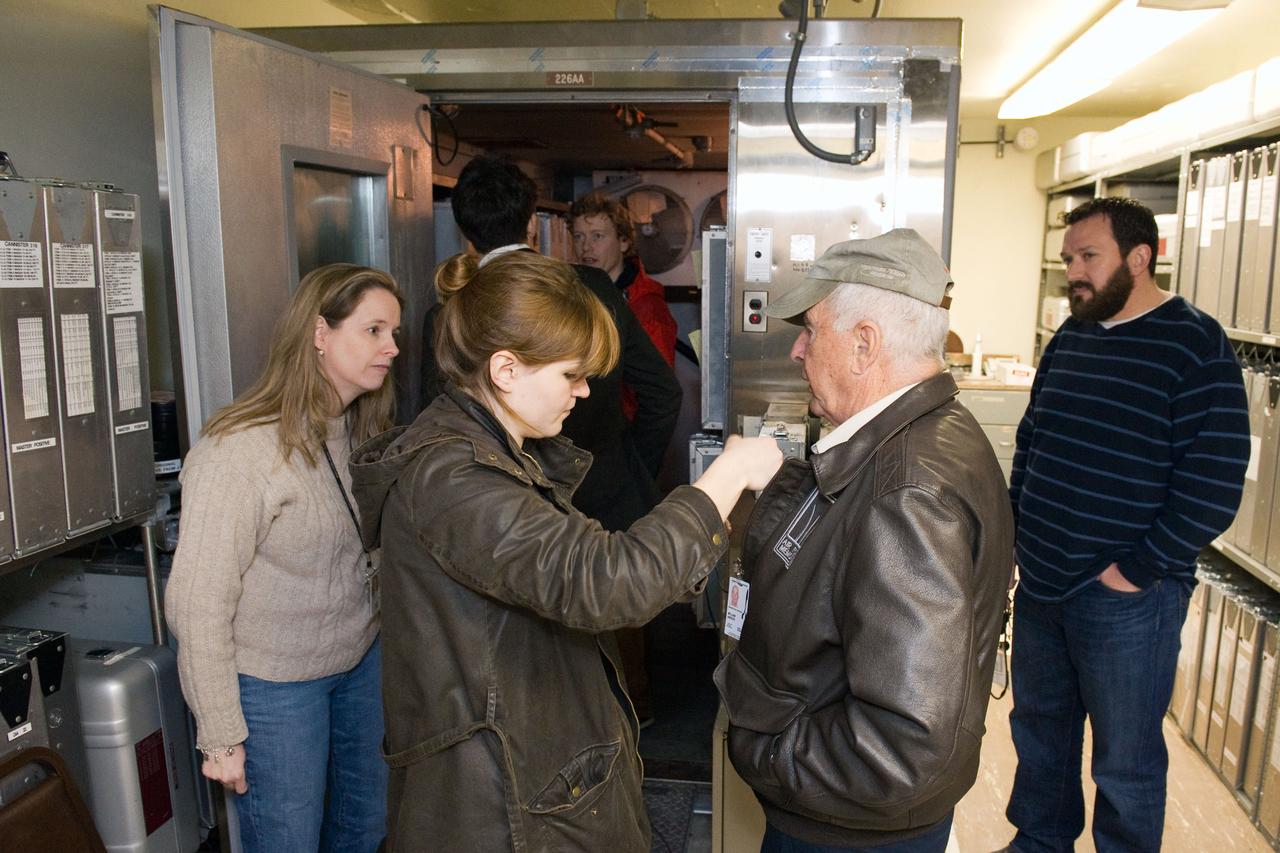
Date: 02-13-12.Location: Bldg 2, LBJ Room.Subject: Bill Anders interview with BBC's James Fox & Visit to Apollo Film Vault..Photographer: James Blair
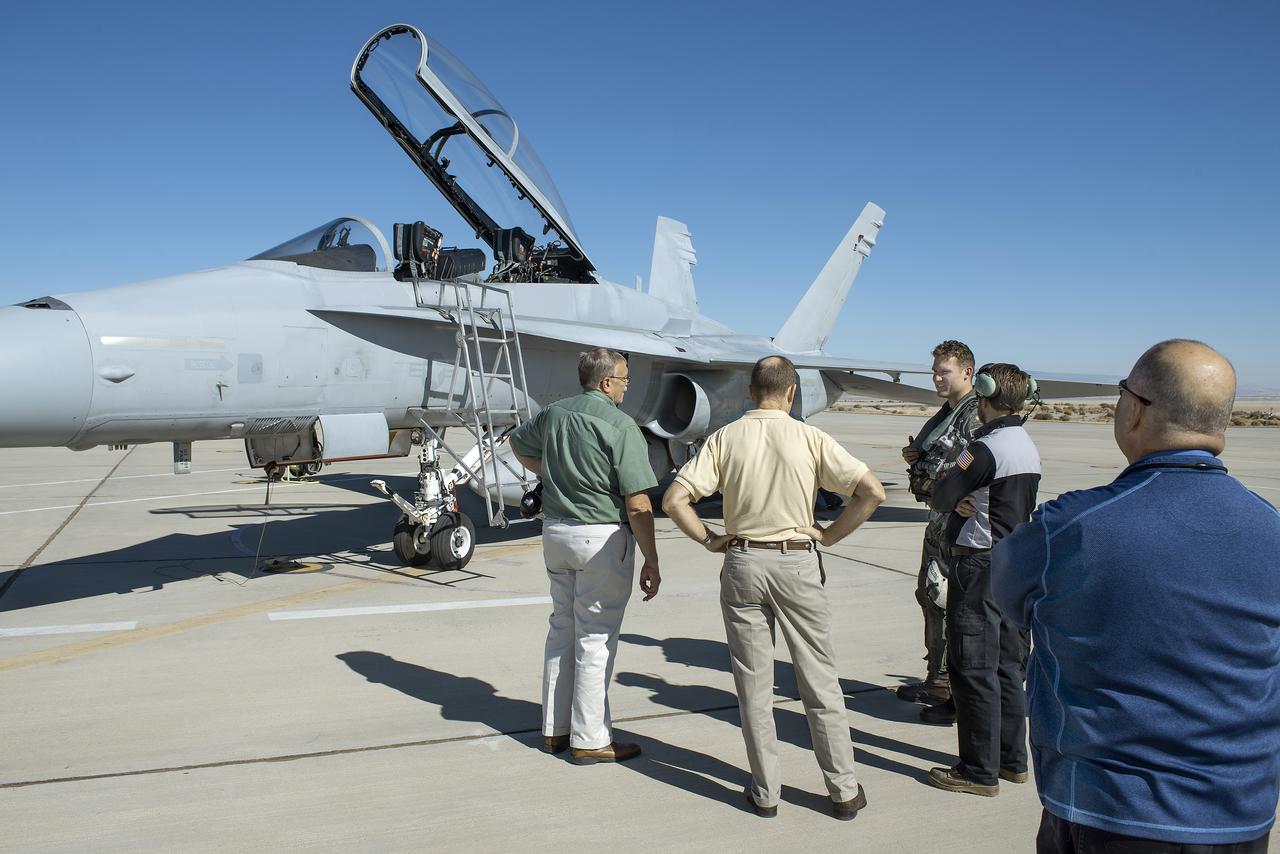
Lt. Cmdr. Mike Shelton delivers a F/A/-18B Hornet to NASA’s Armstrong Flight Research Center in California. Shelton, center, was met by Armstrong’s Tom Grindle, from left, Ted Williams, Gary Gano and Brian Fox.
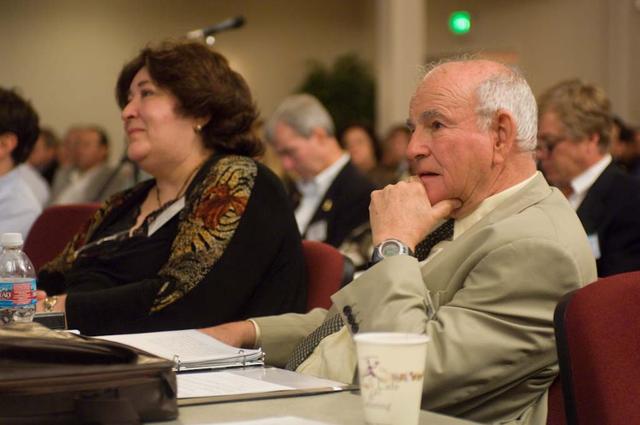
International Space Station (ISS) National Laboratory Workshop L-R Lynn Harper, Ames and Baruch Blumberg, Nobel Laureate, Fox Chase Cancer Center during talk on Science on the international Space Station, Past and Future.
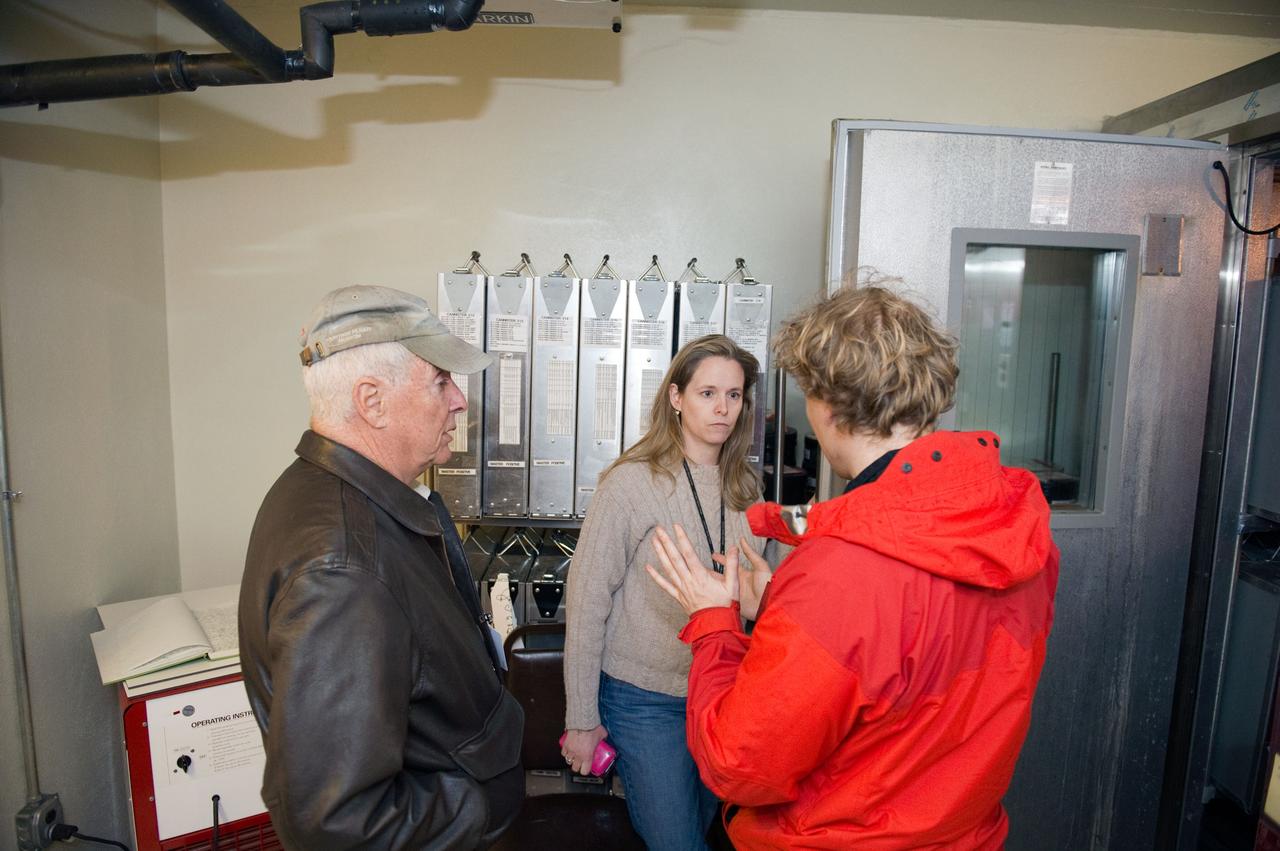
Date: 02-13-12.Location: Bldg 2, LBJ Room.Subject: Bill Anders interview with BBC's James Fox & Visit to Apollo Film Vault..Photographer: James Blair
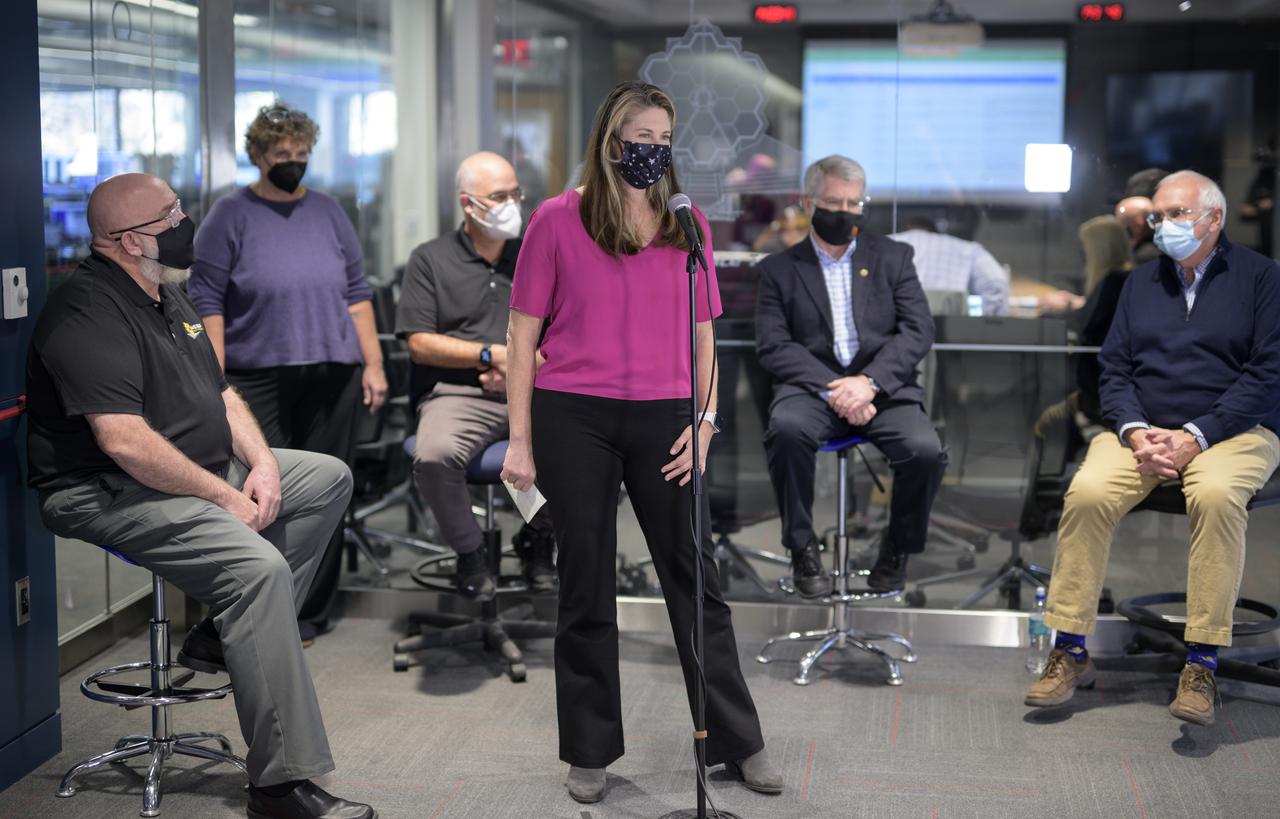
NASA Public Affairs Officer Karen Fox, center, moderates a briefing following the successful deployment of NASA’s James Webb Space Telescope primary mirror, Saturday, Jan. 8, 2022, from the Webb Space Telescope Mission Operations Center at the Space Telescope Science Institute in Baltimore. With Webb’s 21.3-foot (6.5-meter) primary mirror fully deployed, the infrared observatory has completed its unprecedented process of unfolding in space to prepare for science operations. The observatory will study every phase of cosmic history—from within our solar system to the most distant observable galaxies in the early universe. Photo Credit: (NASA/Bill Ingalls)
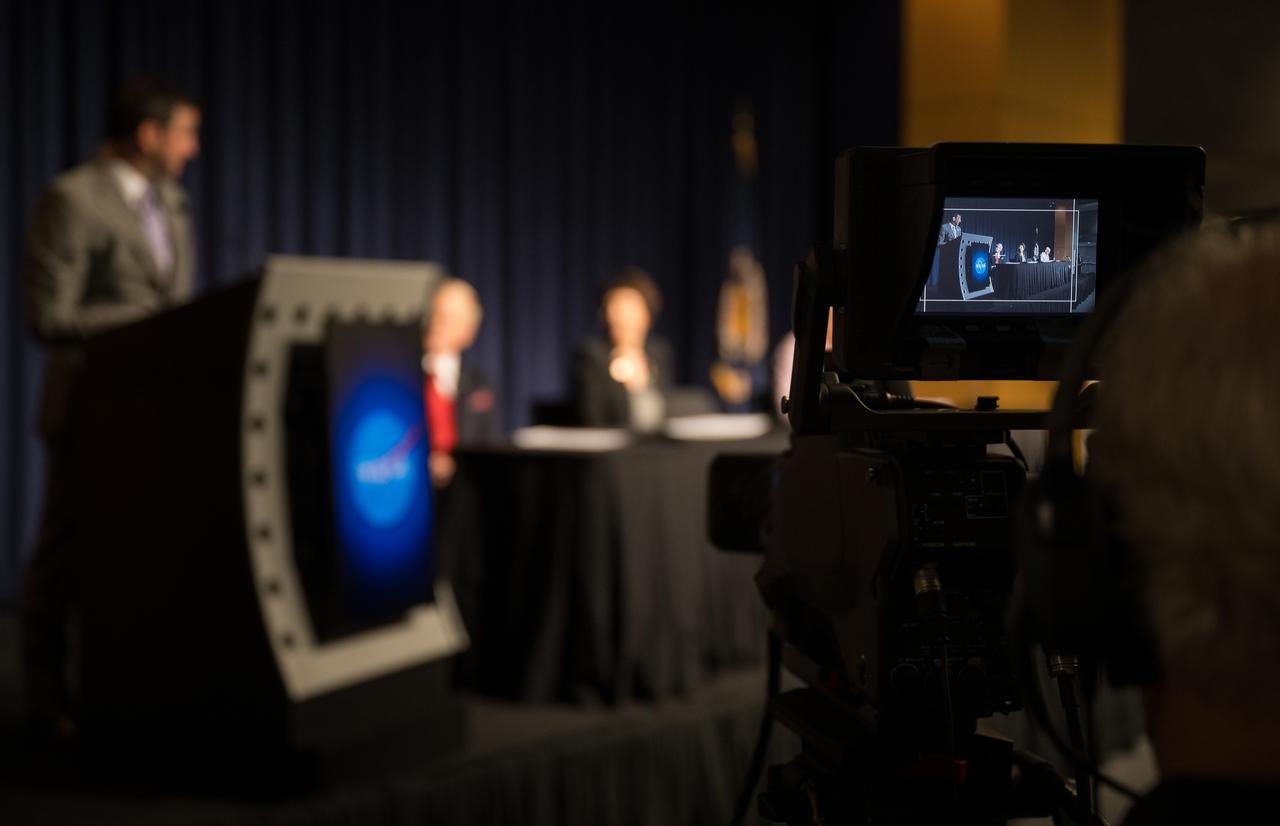
Panelists, from left to right, NASA Assistant Deputy Associate Administrator for Research, Science Mission Directorate, Daniel Evans; NASA Administrator Bill Nelson; NASA Associate Administrator for the Science Mission Directorate, Nicola Fox; and President of the Simons Foundation and Chair of NASA's UAP Independent Study Team, David Spergel, are seen in a video camera during a media briefing to discuss the findings from an unidentified anomalous phenomena (UAP) independent study team, Thursday, Sept. 14, 2023, at the Mary W. Jackson NASA Headquarters building in Washington. The UAP independent study team, commissioned in 2022, is a counsel of 16 community experts across diverse areas on matters relevant to potential methods of study for unidentified anomalous phenomena. NASA published the team’s full report online, which aims to inform about what possible data could be collected in the future to shed light on the nature and origin of UAP. Photo Credit: (NASA/Aubrey Gemignani)
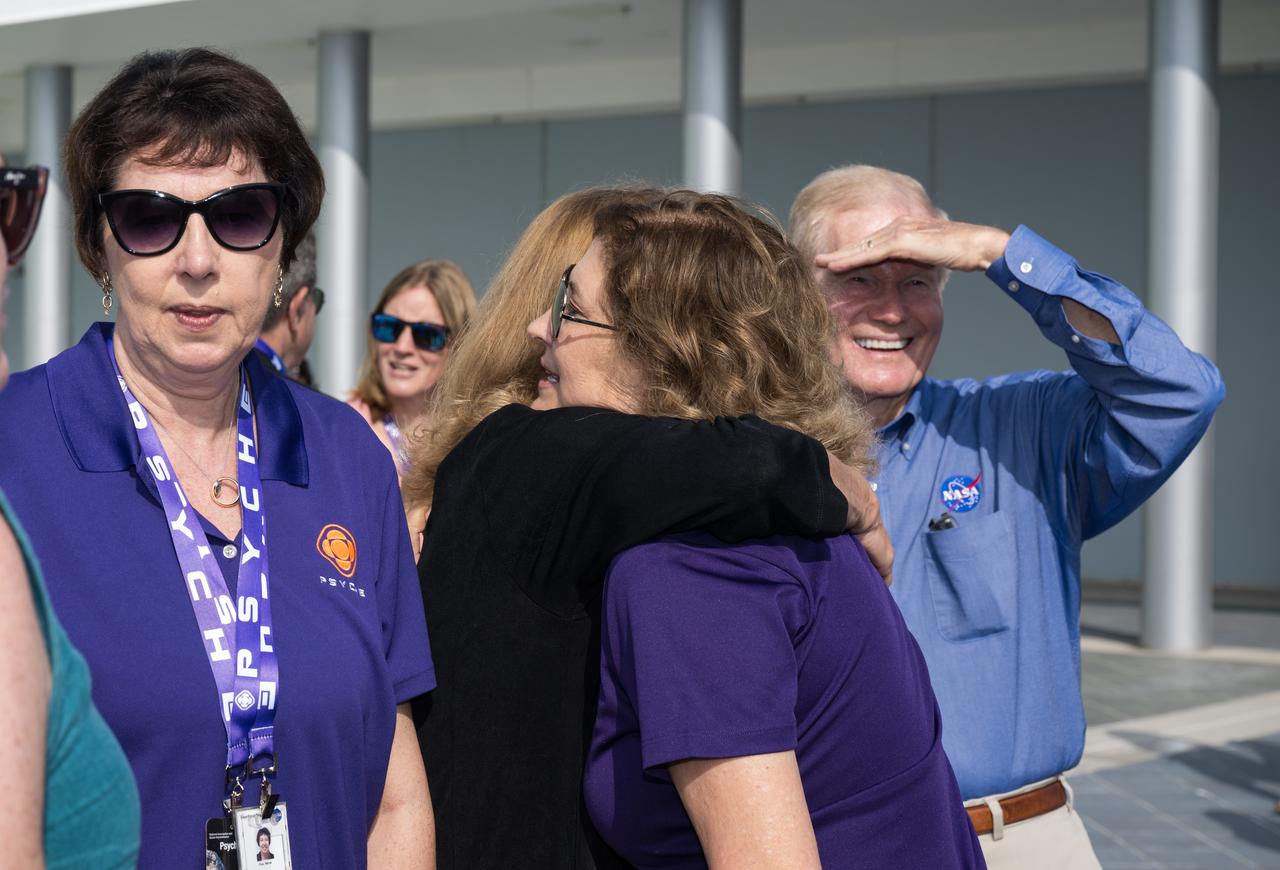
NASA Headquarters Planetary Science Division director Lori Glaze, left, hugs Jet Propulsion Laboratory director Laurie Leshin as NASA Administrator Bill Nelson, right, and Associate Administrator, NASA’s Science Mission Directorate, Nicola Fox watch for the return of the boosters after the launch of a SpaceX Falcon Heavy rocket with the Psyche spacecraft onboard from Launch Complex 39A, Friday, Oct. 13, 2023, at NASA’s Kennedy Space Center in Florida. NASA’s Psyche spacecraft will travel to a metal-rich asteroid by the same name orbiting the Sun between Mars and Jupiter to study it’s composition. The spacecraft also carries the agency's Deep Space Optical Communications technology demonstration, which will test laser communications beyond the Moon. Photo Credit: (NASA/Aubrey Gemignani)
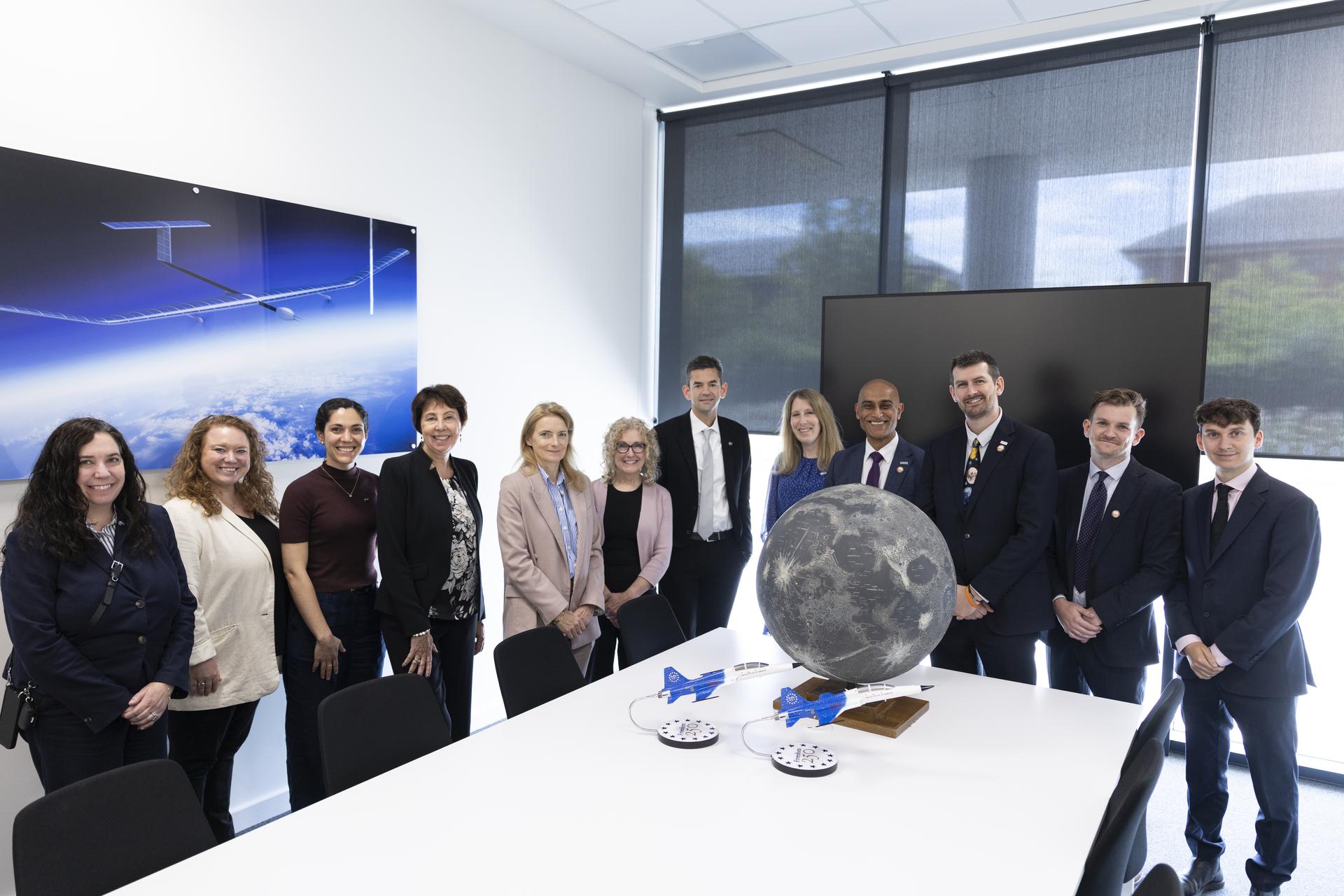
Jared Isaacman tours Airbus Defence and Space Facilities in Stevenage, United Kingdom.

iss075-s-001 (June 11, 2025) -- The official mission insignia of the Expedition 75 crew aboard the International Space Station. This patch embodies Expedition 75's mission on the orbital ouitpost, a beacon of human aspiration. Radiant golden and white lines surge from Earth, forging a bond between our planet and the cosmos, illustrating the profound impact of the International Space Station's work on humanity. Above, the cupola's windows, depicted as geometric blue forms, serve as a poignant reminder of our home, connecting astronauts to their loved ones and the breathtaking beauty of Earth. Below, majestic mountain ranges underscore the vital role of our planet's landscapes and ecosystems in our quest for knowledge and preservation. The gradient arc, cradling Earth's curvature, symbolizes our fragile atmosphere and the International Space Station's orbital path, a testament to our relentless pursuit of discovery and growth.
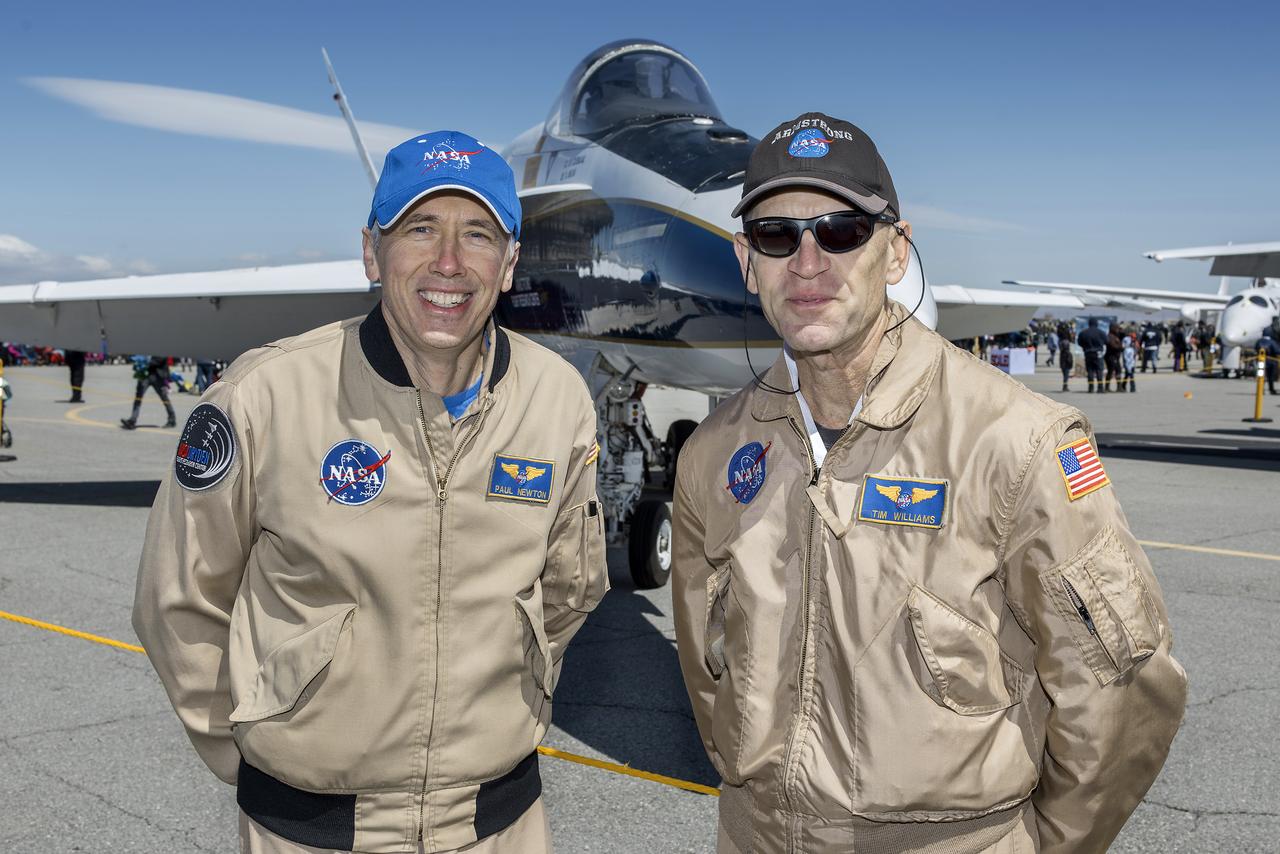
NASA Armstrong Research Center pilots Paul Newton and Tim Williams stand by the center’s F/A-18 research aircraft.
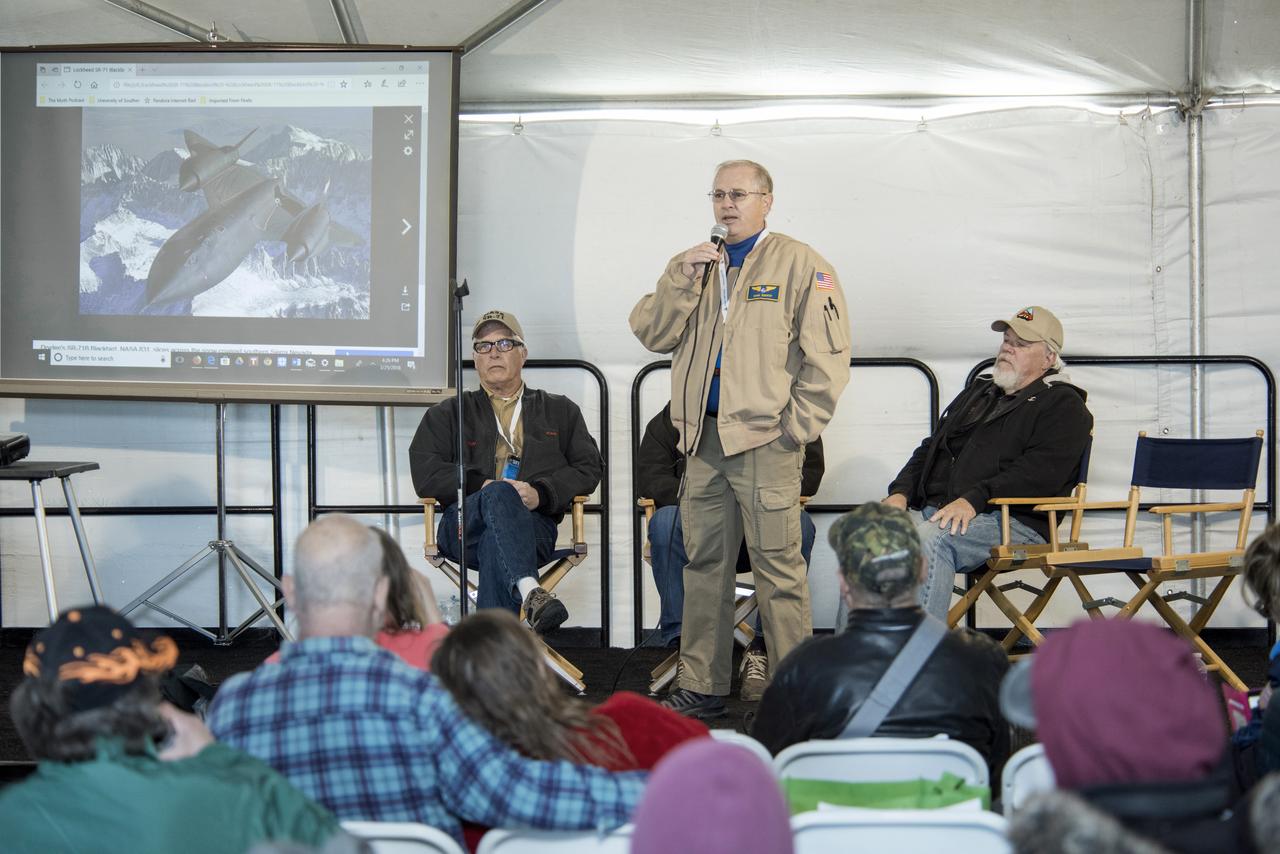
Dana Purifoy, NASA Armstrong director of Flight Operations, talking, and John McKay, former Armstrong SR-71 crew chief, participate on a panel discussion about the triple supersonic aircraft.

NASA Armstrong pilots Stu Broce, Greg Nelson and Tim Williams sign autographs for people at the Los Angeles County Air Show in Lancaster, California.
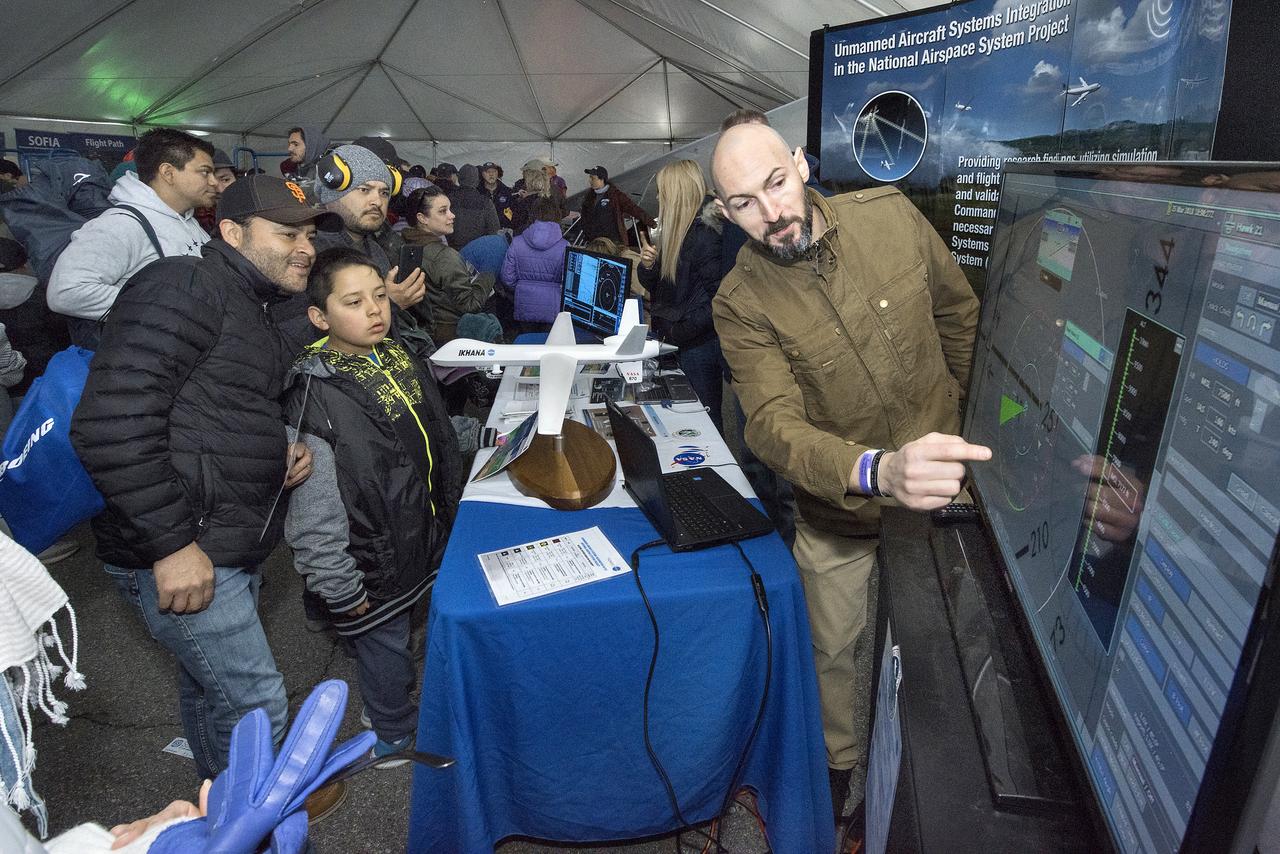
Zack Roberts from NASA’s Ames Research Center explains elements of the Unmanned Aircraft Systems Integration into the National Airspace System.

Amberly Guerra, left, tries on life support equipment while Ali Zendejas, Betty Mojica and Julian Guerra, her dad, watch.

A young woman tries her hand at “piloting” a high-performance jet. The representation of a jet cockpit is a popular display at NASA Armstrong-supported air shows and festivals across the nation.
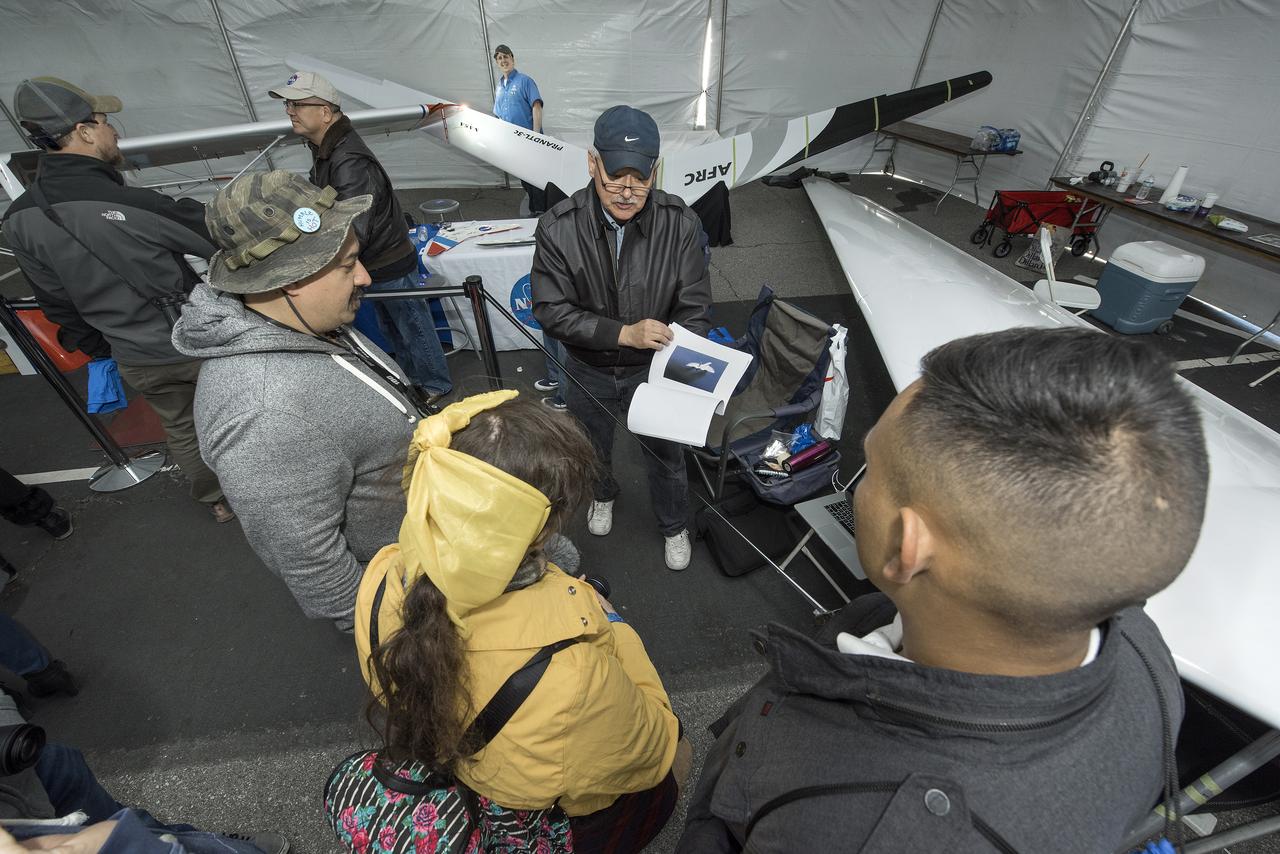
Al Bowers explains the Prandtl experimental aircraft and how its wing twist could redefine the efficiency of aircraft.

The F-22 and the classic P-38 shares the sky at the Los Angeles County Air Show in Lancaster, California.