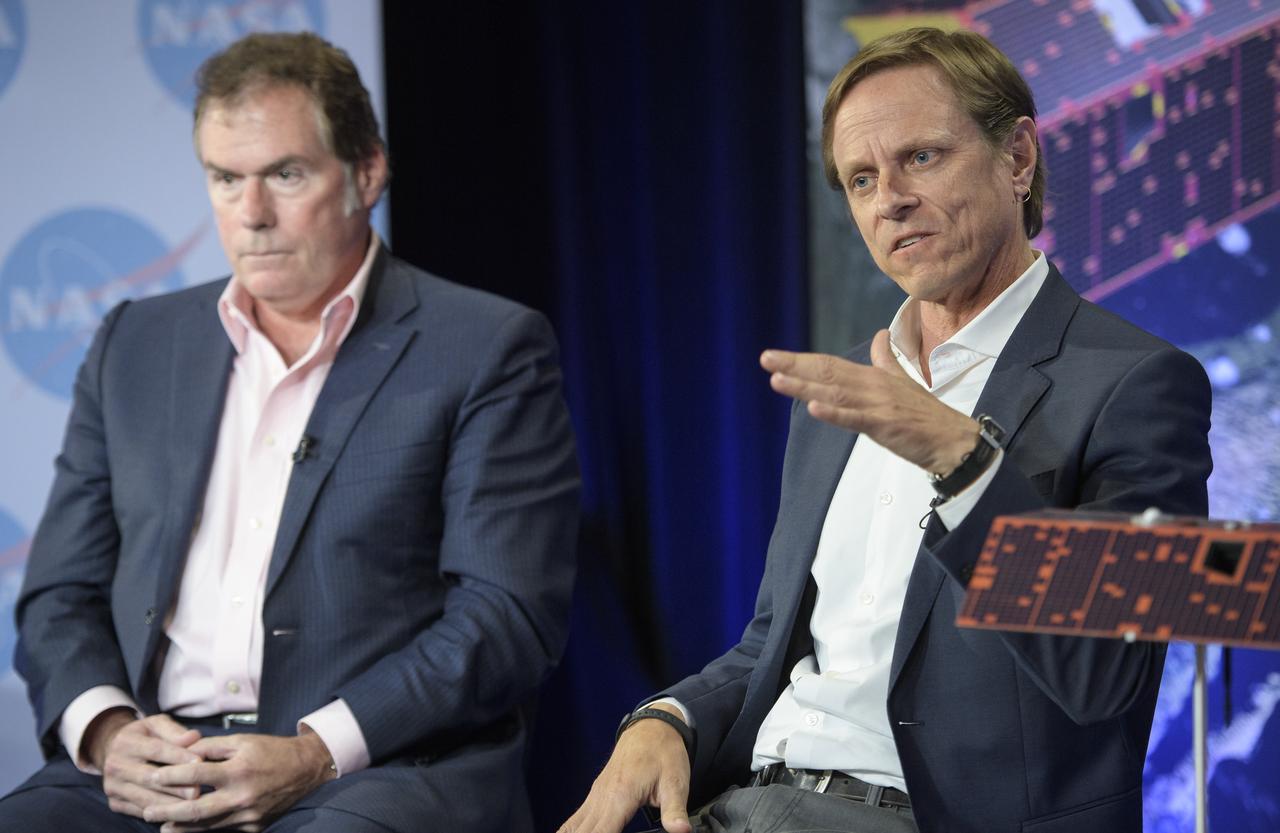
Frank Webb, GRACE-FO project scientist at JPL, discusses the upcoming launch of the Gravity Recovery and Climate Experiment Follow-On (GRACE-FO) mission, Monday, April 30, 2018 at NASA Headquarters in Washington. The twin GRACE-FO spacecraft will measure and monitor monthly changes in how mass is redistributed within and among Earth's atmosphere, oceans, land and ice sheets, as well as within Earth itself. Photo Credit: (NASA/Joel Kowsky)
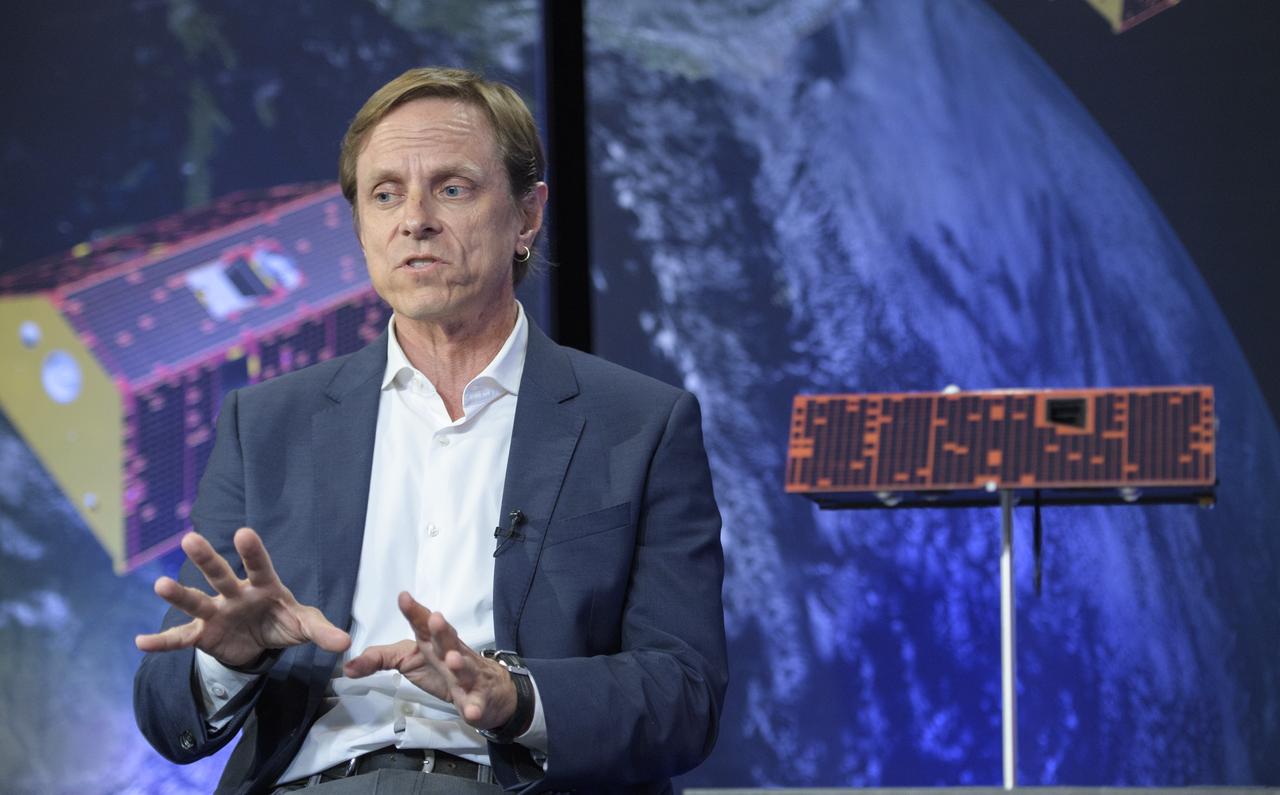
Frank Webb, GRACE-FO project scientist at JPL, discusses the upcoming launch of the Gravity Recovery and Climate Experiment Follow-On (GRACE-FO) mission, Monday, April 30, 2018 at NASA Headquarters in Washington. The twin GRACE-FO spacecraft will measure and monitor monthly changes in how mass is redistributed within and among Earth's atmosphere, oceans, land and ice sheets, as well as within Earth itself. Photo Credit: (NASA/Joel Kowsky)
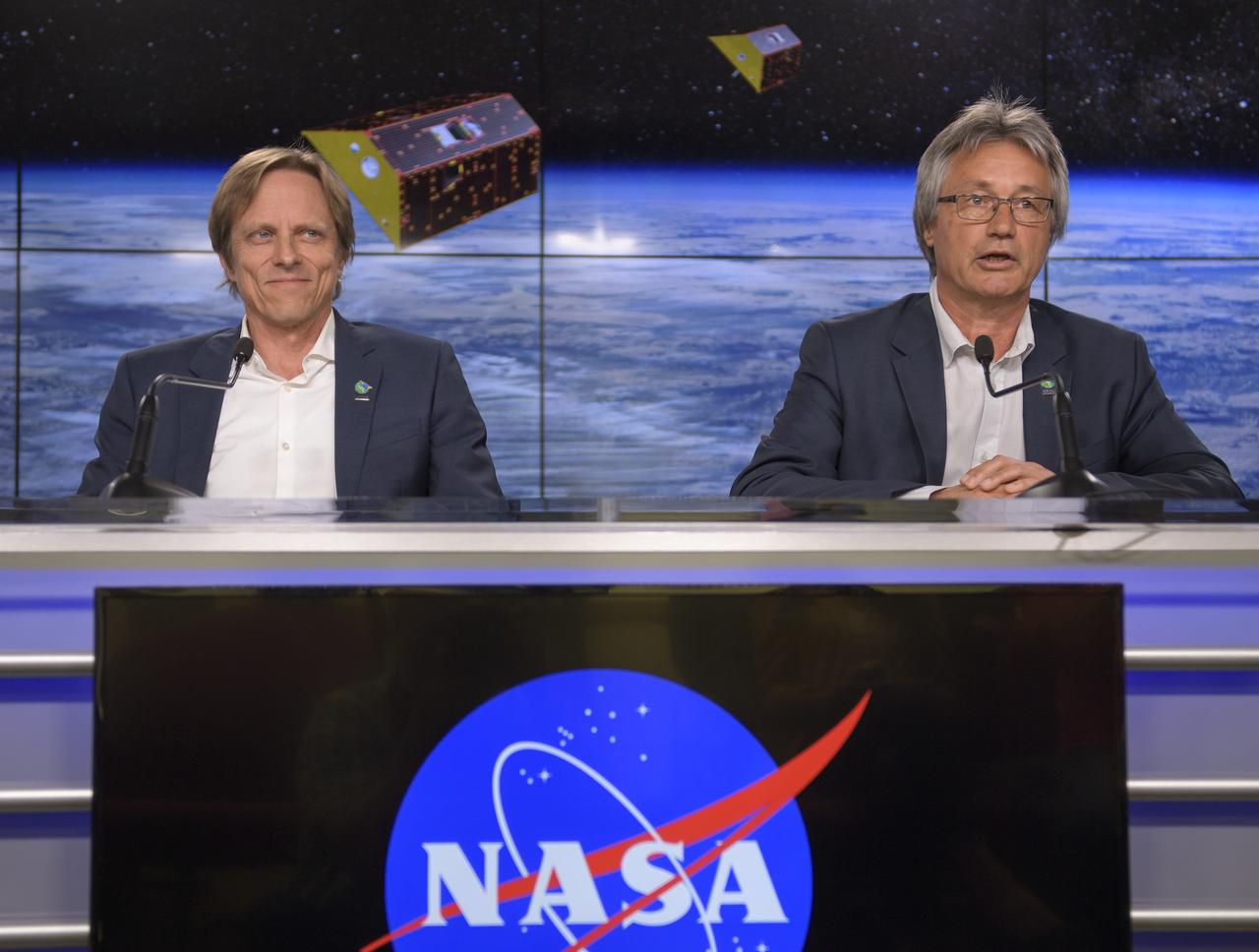
Frank Webb, GRACE-FO project scientist at JPL, left, and \Frank Flechtner, discuss the Gravity Recovery and Climate Experiment Follow-On (GRACE-FO) mission during a prelaunch media briefing, Monday, May 21, 2018, at Vandenberg Air Force Base in California. The twin GRACE-FO spacecraft will measure changes in how mass is redistributed within and among Earth's atmosphere, oceans, land and ice sheets, as well as within Earth itself. Photo Credit: (NASA/Bill Ingalls)
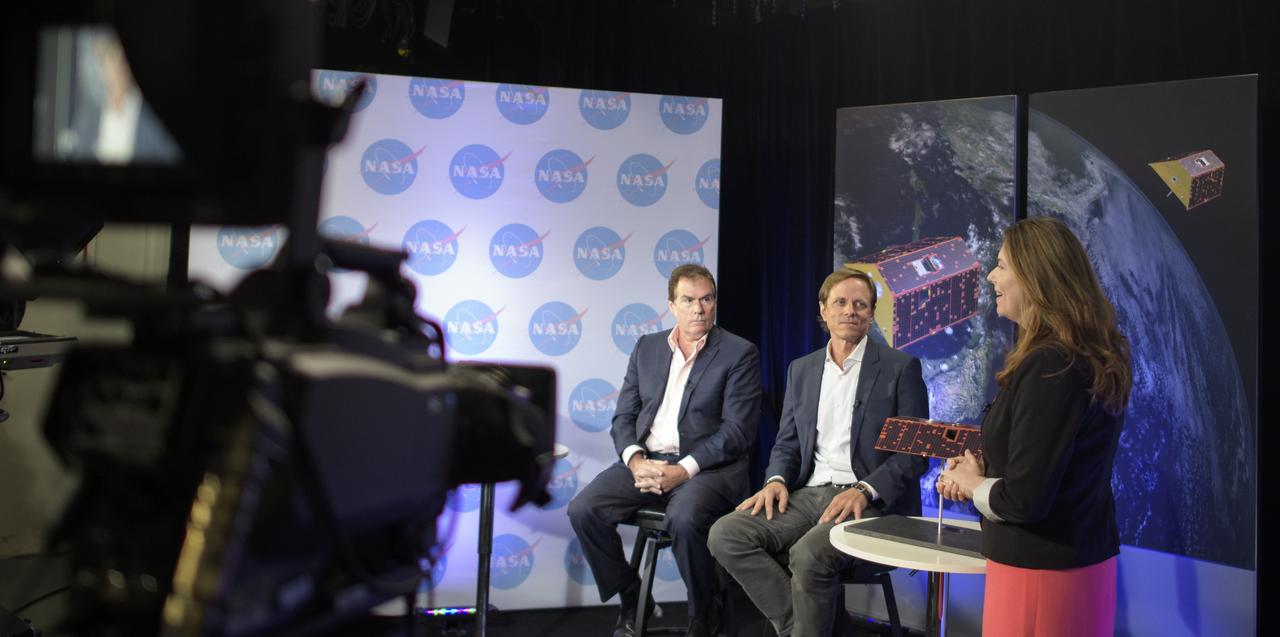
Karen Fox, of NASA's Office of Communications, right, discusses the upcoming launch of the Gravity Recovery and Climate Experiment Follow-On (GRACE-FO) mission with Michael Watkins, GRACE-FO science lead and director of NASA's Jet Propulsion Laboratory, left, and Frank Webb, GRACE-FO project scientist at JPL, Monday, April 30, 2018 at NASA Headquarters in Washington. The twin GRACE-FO spacecraft will measure and monitor monthly changes in how mass is redistributed within and among Earth's atmosphere, oceans, land and ice sheets, as well as within Earth itself. Photo Credit: (NASA/Joel Kowsky)
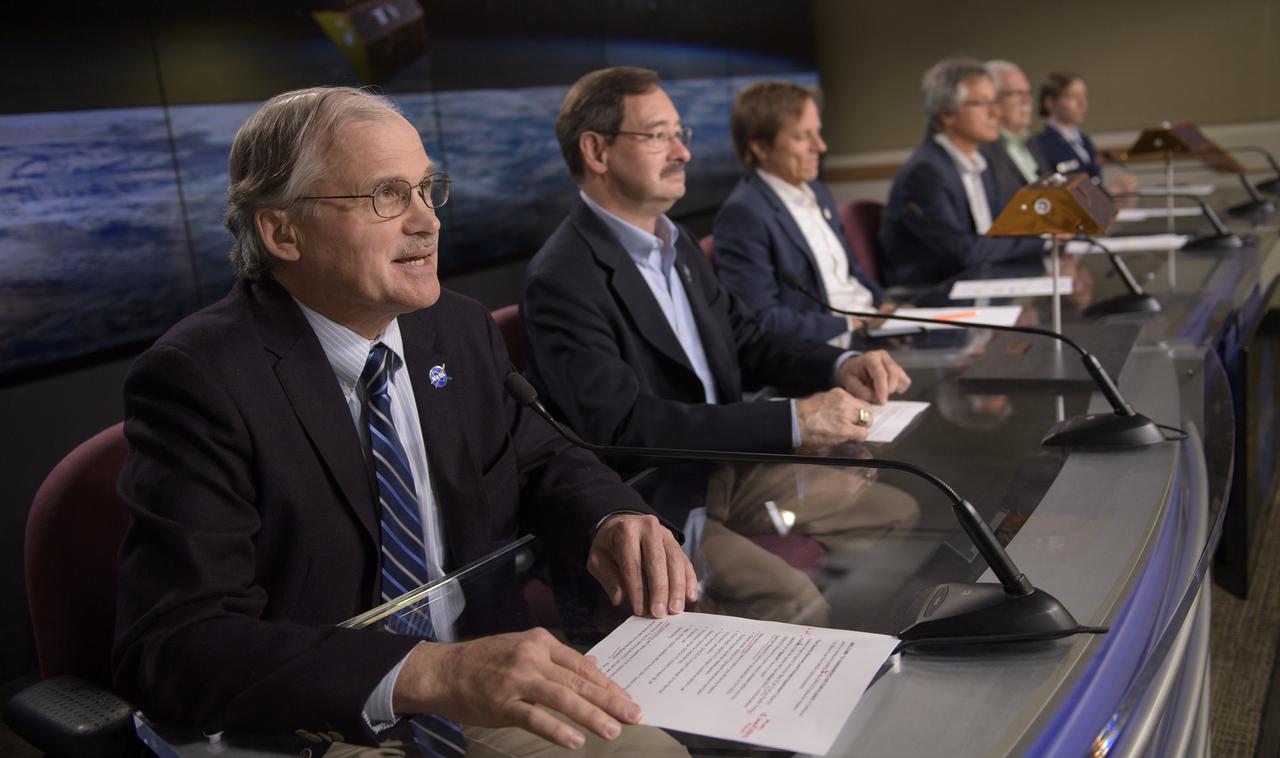
NASA Headquarters Public Affairs Officer Steve Cole, left, moderates the Gravity Recovery and Climate Experiment Follow-On (GRACE-FO) mission prelaunch media briefing with David Jarrett, GRACE-FO program executive in the Earth Science Division at NASA Headquarters; Frank Webb, GRACE-FO project scientist at JPL; Frank Flechtner, GRACE-FO project manager for the German Research Centre for Geosciences (GFZ) in Potsdam, Germany; Phil Morton, NASA GRACE-FO project manager at JPL; and Capt. Jennifer Haden, weather officer, 30th Space Wing, Vandenberg Air Force Base, right, Monday, May 21, 2018, at Vandenberg Air Force Base in California. The twin GRACE-FO spacecraft will measure changes in how mass is redistributed within and among Earth's atmosphere, oceans, land and ice sheets, as well as within Earth itself. Photo Credit: (NASA/Bill Ingalls)
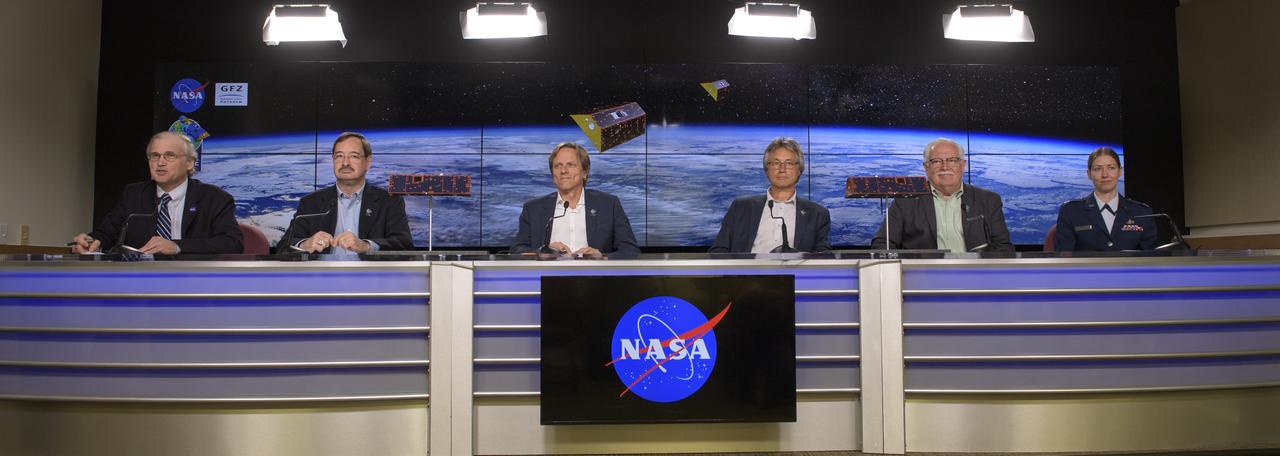
NASA Headquarters Public Affairs Officer Steve Cole, left, moderates the Gravity Recovery and Climate Experiment Follow-On (GRACE-FO) mission prelaunch media briefing with David Jarrett, GRACE-FO program executive in the Earth Science Division at NASA Headquarters; Frank Webb, GRACE-FO project scientist at JPL; Frank Flechtner, GRACE-FO project manager for the German Research Centre for Geosciences (GFZ) in Potsdam, Germany; Phil Morton, NASA GRACE-FO project manager at JPL; and Capt. Jennifer Haden, weather officer, 30th Space Wing, Vandenberg Air Force Base, right, Monday, May 21, 2018, at Vandenberg Air Force Base in California. The twin GRACE-FO spacecraft will measure changes in how mass is redistributed within and among Earth's atmosphere, oceans, land and ice sheets, as well as within Earth itself. Photo Credit: (NASA/Bill Ingalls)

The live broadcast announcing the astronauts assigned to the agency's Artemis III mission is seen in the James E. Webb Memorial Auditorium, Tuesday, June 9, 2026, at the Mary W. Jackson NASA Headquarters building in Washington. NASA's Artemis III test flight will take, from left to right, NASA astronaut Randy Bresnik, ESA (European Space Agency) astronaut Luca Parmitano, and NASA astronauts Frank Rubio, and Andre Douglas to low Earth orbit where they will test rendezvous and docking capabilities between Orion and commercial human landing systems, demonstrating the systems required for future surface missions. Photo Credit: (NASA/Aubrey Gemignani)
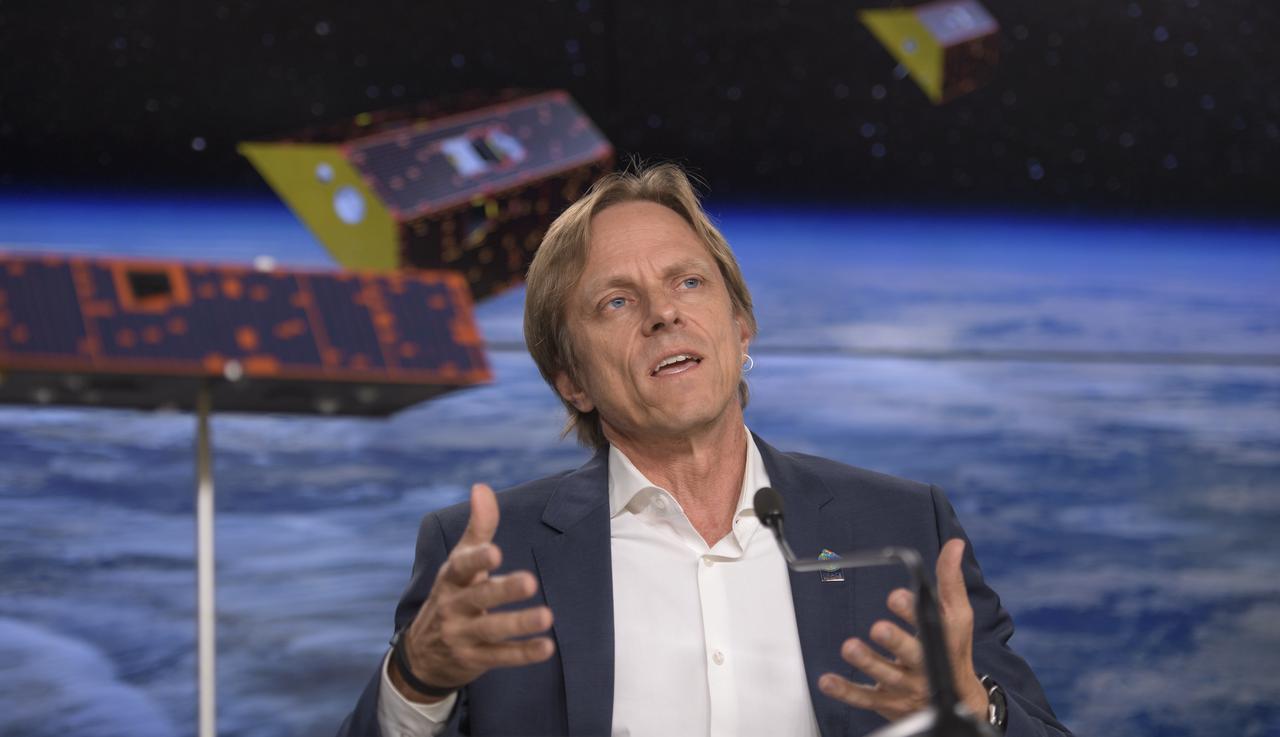
Frank Webb, GRACE-FO project scientist at JPL, discusses the Gravity Recovery and Climate Experiment Follow-On (GRACE-FO) mission during a prelaunch media briefing, Monday, May 21, 2018, at Vandenberg Air Force Base in California. The twin GRACE-FO spacecraft will measure changes in how mass is redistributed within and among Earth's atmosphere, oceans, land and ice sheets, as well as within Earth itself. Photo Credit: (NASA/Bill Ingalls)
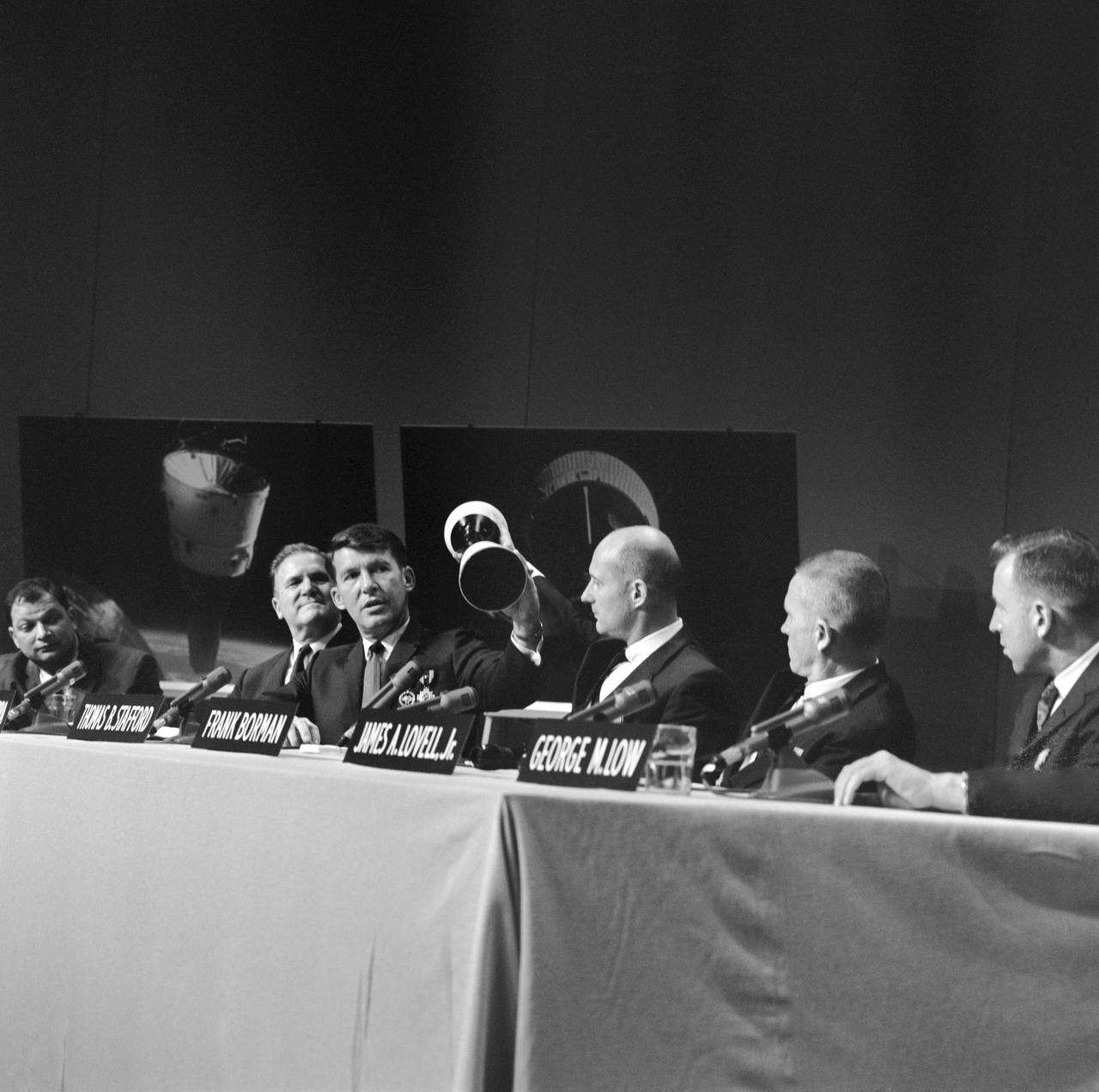
S66-15044 (3 Jan. 1966) --- View of the Gemini 6 and 7 press conference. From right to left are NASA Administrator James E. Webb; MSC Deputy Director George M. Low; and astronauts James A. Lovell Jr., Frank Borman, Thomas B. Stafford and Walter M. Schirra. Photo credit: NASA
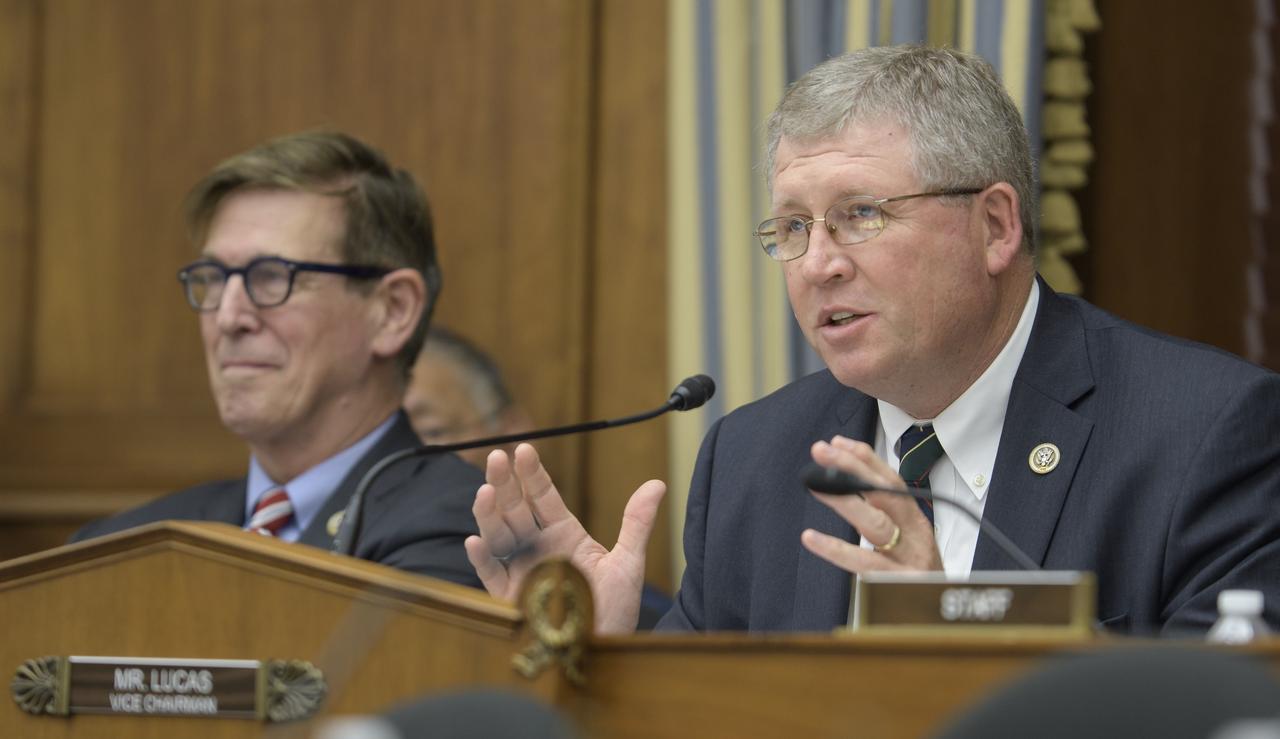
Rep. Frank Lucas, R-Oklahoma, Vice Chairman of the House Committee on Science, Space, and Technology is seen during a hearing on the James Webb Space Telescope, Wednesday, July 25, 2018 at the Rayburn House Office Building in Washington. Witnesses: NASA Administrator Jim Bridenstine and Mr. Tom Young, chairman, JWST Independent Review Board. Photo Credit: (NASA/Bill Ingalls)
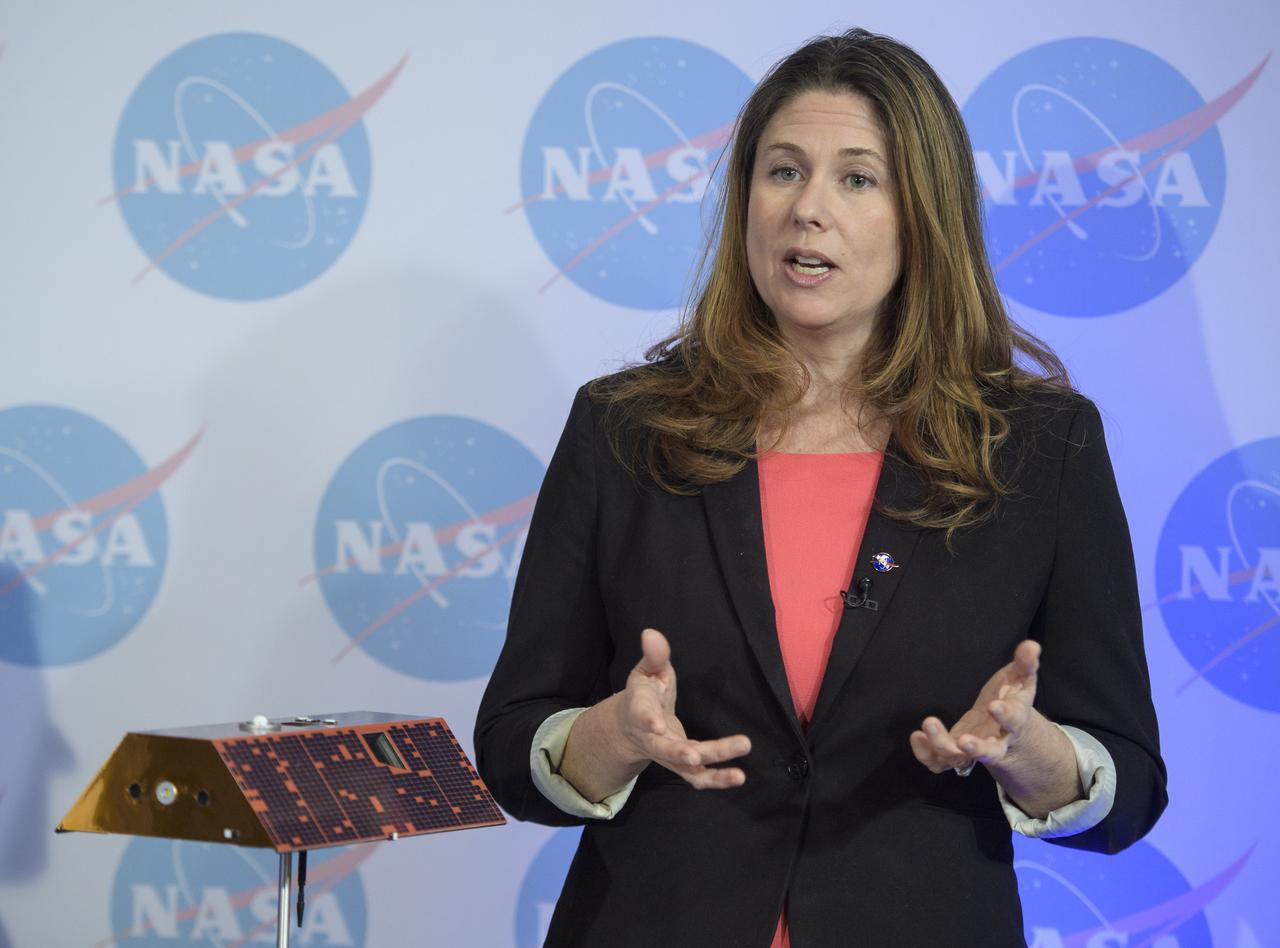
Karen Fox, of NASA's Office of Communications, introduces Michael Watkins, GRACE-FO science lead and director of NASA's Jet Propulsion Laboratory and Frank Webb, GRACE-FO project scientist at JPL, during a briefing on the upcoming launch of the Gravity Recovery and Climate Experiment Follow-On (GRACE-FO) mission, Monday, April 30, 2018 at NASA Headquarters in Washington. The twin GRACE-FO spacecraft will measure and monitor monthly changes in how mass is redistributed within and among Earth's atmosphere, oceans, land and ice sheets, as well as within Earth itself. Photo Credit: (NASA/Joel Kowsky)
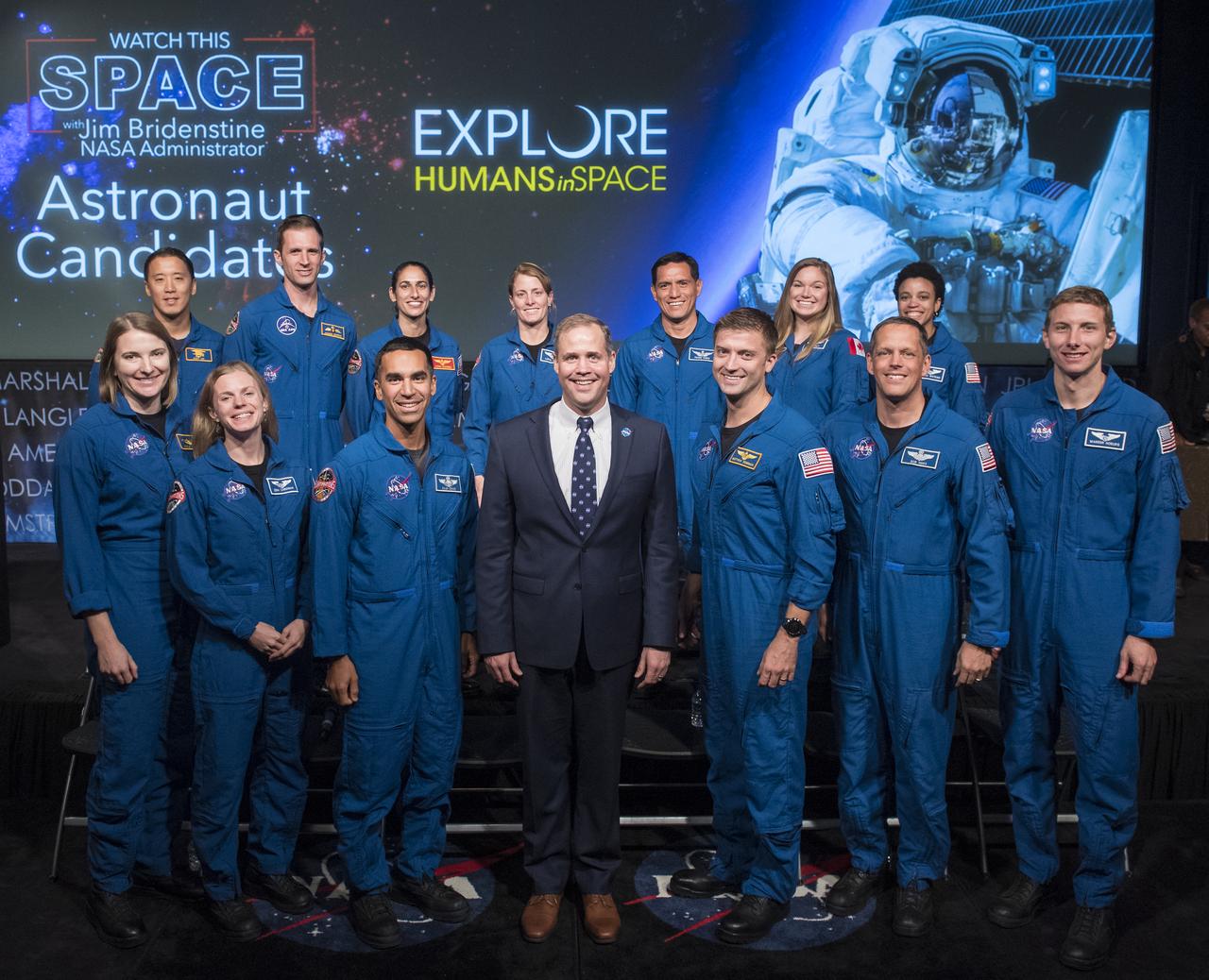
NASA Administrator Jim Bridenstine poses for a picture with the 2017 astronaut candidate class after taping a live episode of the Administrator's monthly chat show, Watch This Space, Thursday, Sept. 27, 2018 in the Webb Auditorium at NASA Headquarters in Washington. NASA astronaut candidates, back row from left, Jonny Kim, Joshua Kutryk of the Canadian Space Agency, Jasmin Moghbeli, Loral O’Hara, Frank Rubio, Jennifer Sidey-Gibbons of the Canadian Space Agency, Jessica Watkins, front row from left, Kayla Barron, Zena Cardman, Raja Chari, Matthew Dominick, Bob Hines, and Warren Hoburg. Photo Credit: (NASA/Joel Kowsky)
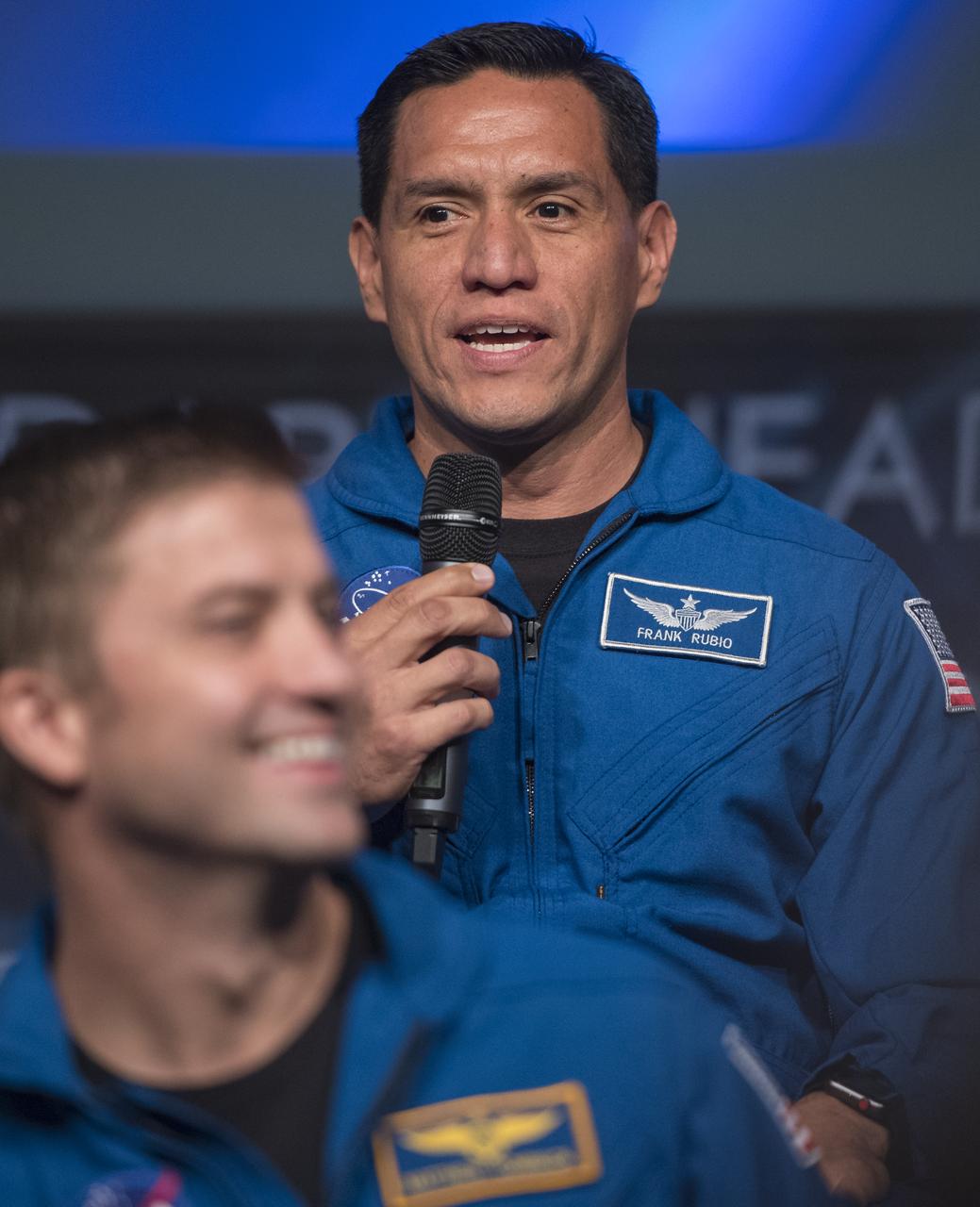
NASA Astronaut Candidate Frank Rubio answers a question during a live episode of the Administrator's monthly chat show, Watch This Space, Thursday, Sept. 27, 2018 in the Webb Auditorium at NASA Headquarters in Washington. NASA's newest astronaut candidate class has started their two years of training, after which the new astronaut candidates could be assigned to missions performing research on the International Space Station, launching from American soil on spacecraft built by commercial companies, and launching on deep space missions on NASA’s new Orion spacecraft and Space Launch System rocket. Photo Credit: (NASA/Joel Kowsky)
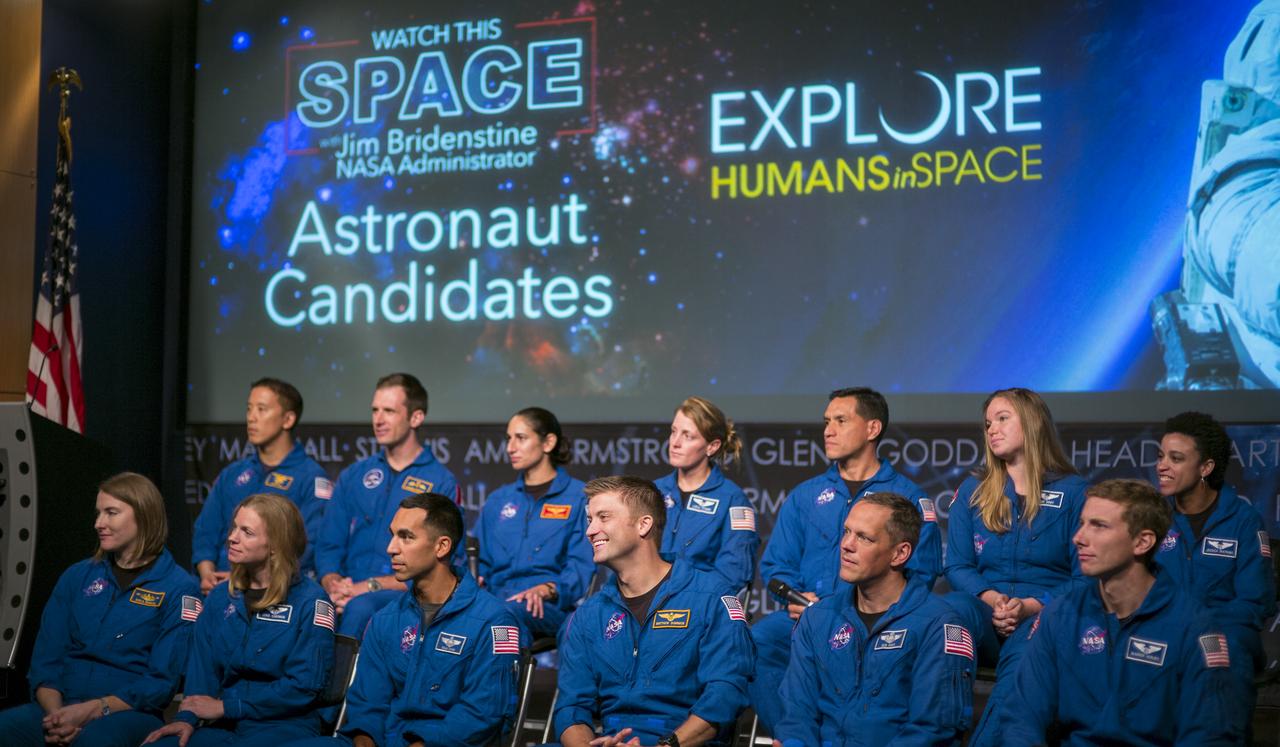
Astronaut candidates, back row from left, Jonny Kim, Joshua Kutryk of the Canadian Space Agency, Jasmin Moghbeli, Loral O’Hara, Frank Rubio, Jennifer Sidey-Gibbons of the Canadian Space Agency, Jessica Watkins, front row from left, Kayla Barron, Zena Cardman, Raja Chari, Matthew Dominick, Bob Hines, and Warren Hoburg are seen during a live episode of the Administrator's monthly chat show, Watch This Space, Thursday, Sept. 27, 2018 in the Webb Auditorium at NASA Headquarters in Washington. NASA's newest astronaut candidate class has started their two years of training, after which the new astronaut candidates could be assigned to missions performing research on the International Space Station, launching from American soil on spacecraft built by commercial companies, and launching on deep space missions on NASA’s new Orion spacecraft and Space Launch System rocket. Photo Credit: (NASA/Joel Kowsky)
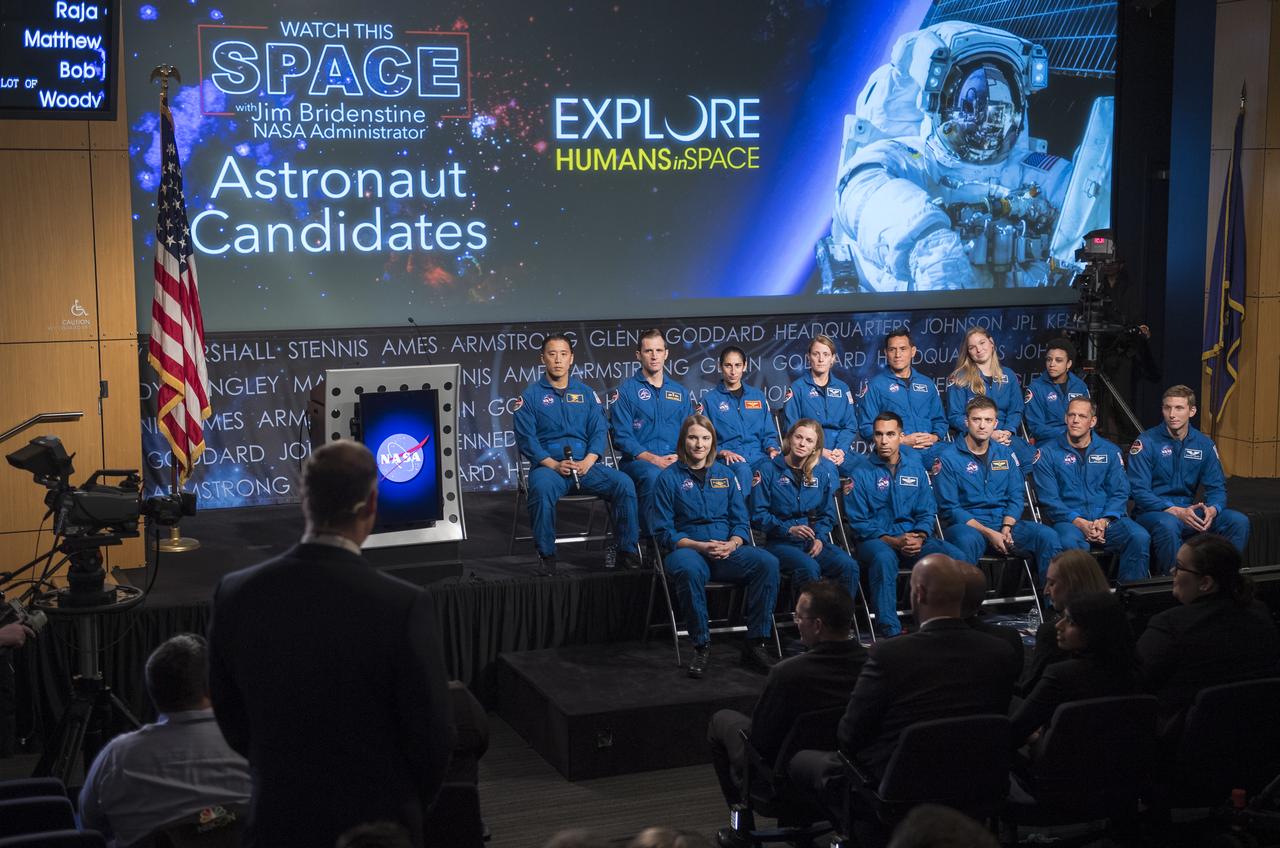
Astronaut candidates, back row from left, Jonny Kim, Joshua Kutryk of the Canadian Space Agency, Jasmin Moghbeli, Loral O’Hara, Frank Rubio, Jennifer Sidey-Gibbons of the Canadian Space Agency, Jessica Watkins, front row from left, Kayla Barron, Zena Cardman, Raja Chari, Matthew Dominick, Bob Hines, and Warren Hoburg listen to a question from NASA Administrator Jim Bridenstine during a live episode of the Administrator's monthly chat show, Watch This Space, Thursday, Sept. 27, 2018 in the Webb Auditorium at NASA Headquarters in Washington. NASA's newest astronaut candidate class has started their two years of training, after which the new astronaut candidates could be assigned to missions performing research on the International Space Station, launching from American soil on spacecraft built by commercial companies, and launching on deep space missions on NASA’s new Orion spacecraft and Space Launch System rocket. Photo Credit: (NASA/Joel Kowsky)
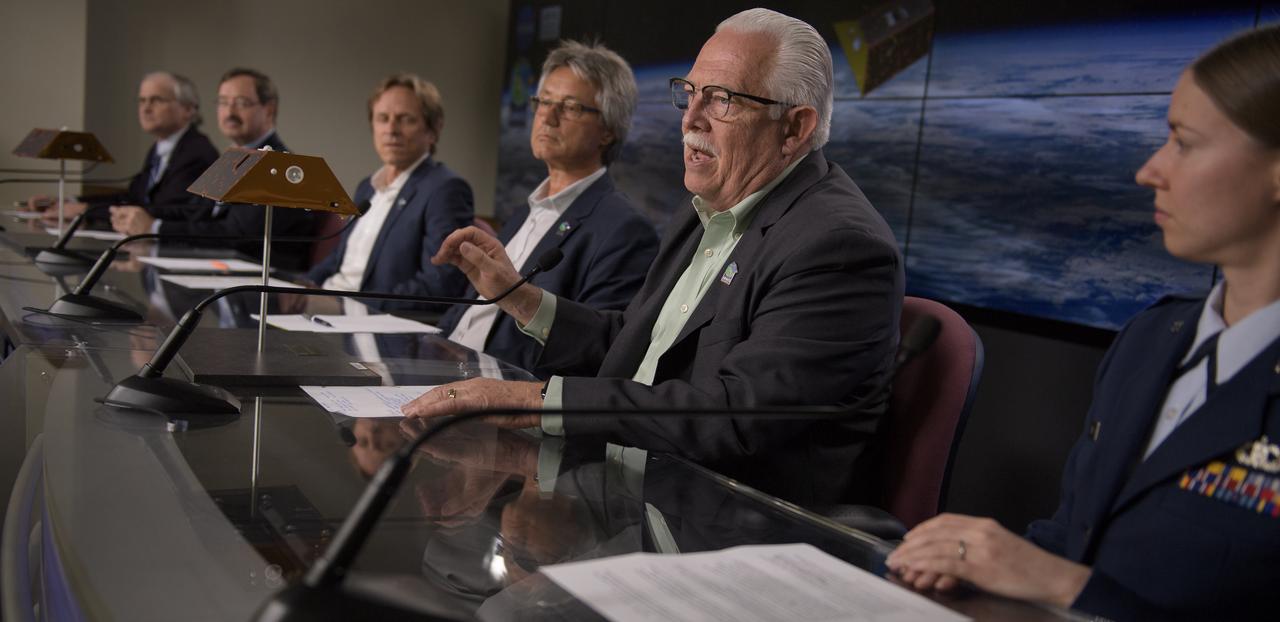
Phil Morton, NASA GRACE-FO project manager at JPL, second from right, discusses the Gravity Recovery and Climate Experiment Follow-On (GRACE-FO) mission during a prelaunch media briefing, Monday, May 21, 2018, at Vandenberg Air Force Base in California. The twin GRACE-FO spacecraft will measure changes in how mass is redistributed within and among Earth's atmosphere, oceans, land and ice sheets, as well as within Earth itself. Photo Credit: (NASA/Bill Ingalls)

NASA employees view the live broadcast announcing the astronauts assigned to the agency's Artemis III mission, Tuesday, June 9, 2026, at the Mary W. Jackson NASA Headquarters building in Washington. NASA's Artemis III test flight will take, from left to right, NASA astronaut Randy Bresnik, ESA (European Space Agency) astronaut Luca Parmitano, and NASA astronauts Frank Rubio, and Andre Douglas to low Earth orbit where they will test rendezvous and docking capabilities between Orion and commercial human landing systems, demonstrating the systems required for future surface missions. Photo Credit: (NASA/Aubrey Gemignani)

NASA employees view the live broadcast announcing the astronauts assigned to the agency's Artemis III mission, Tuesday, June 9, 2026, at the Mary W. Jackson NASA Headquarters building in Washington. NASA's Artemis III test flight will take NASA astronauts Randy Bresnik, Frank Rubio, Andre Douglas, and ESA (European Space Agency) astronaut Luca Parmitano to low Earth orbit where they will test rendezvous and docking capabilities between Orion and commercial human landing systems, demonstrating the systems required for future surface missions. Photo Credit: (NASA/Aubrey Gemignani)