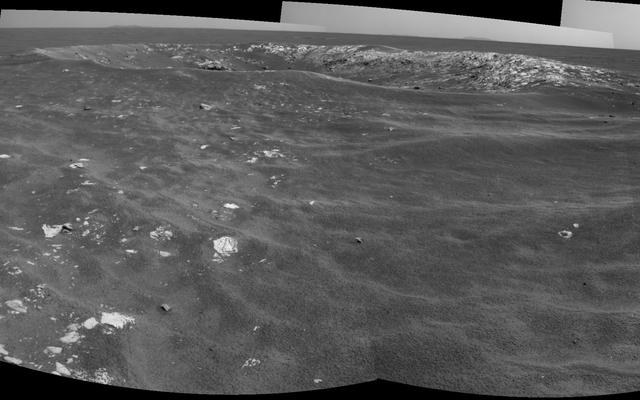
NASA Mars Exploration Rover Opportunity recorded this view of a crater informally named Freedom 7 shortly before the 50th anniversary of the first American in space: astronaut Alan Shepard flight in the Freedom 7 spacecraft.
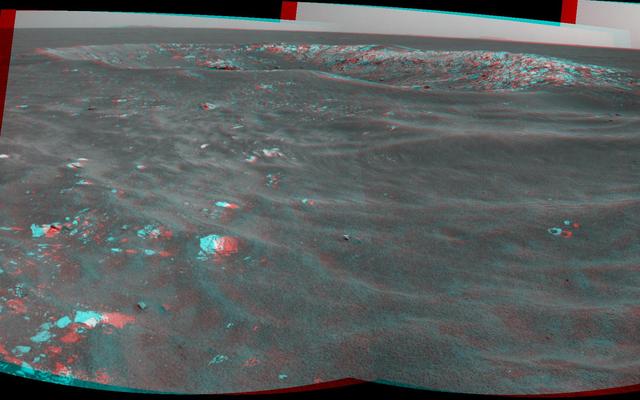
NASA Mars Exploration Rover Opportunity took this stereo view of a crater informally named Freedom 7 shortly before the 50th anniversary of the first American in space: astronaut Alan Shepard flight in the Freedom 7 spacecraft. You need 3D glasses.
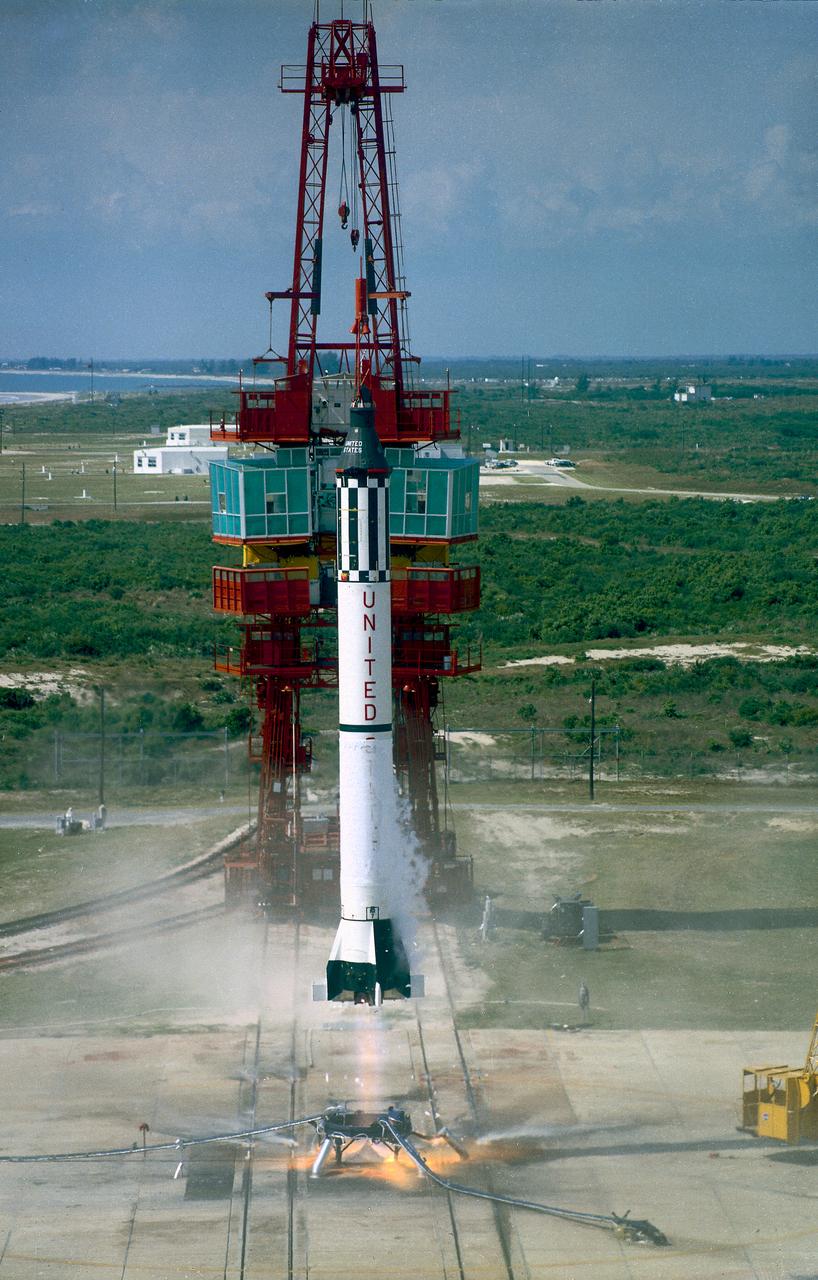
The launch of the Mercury-Redstone (MR-3), Freedom 7. MR-3 placed the first American astronaut, Alan Shepard, in suborbit on May 5, 1961.
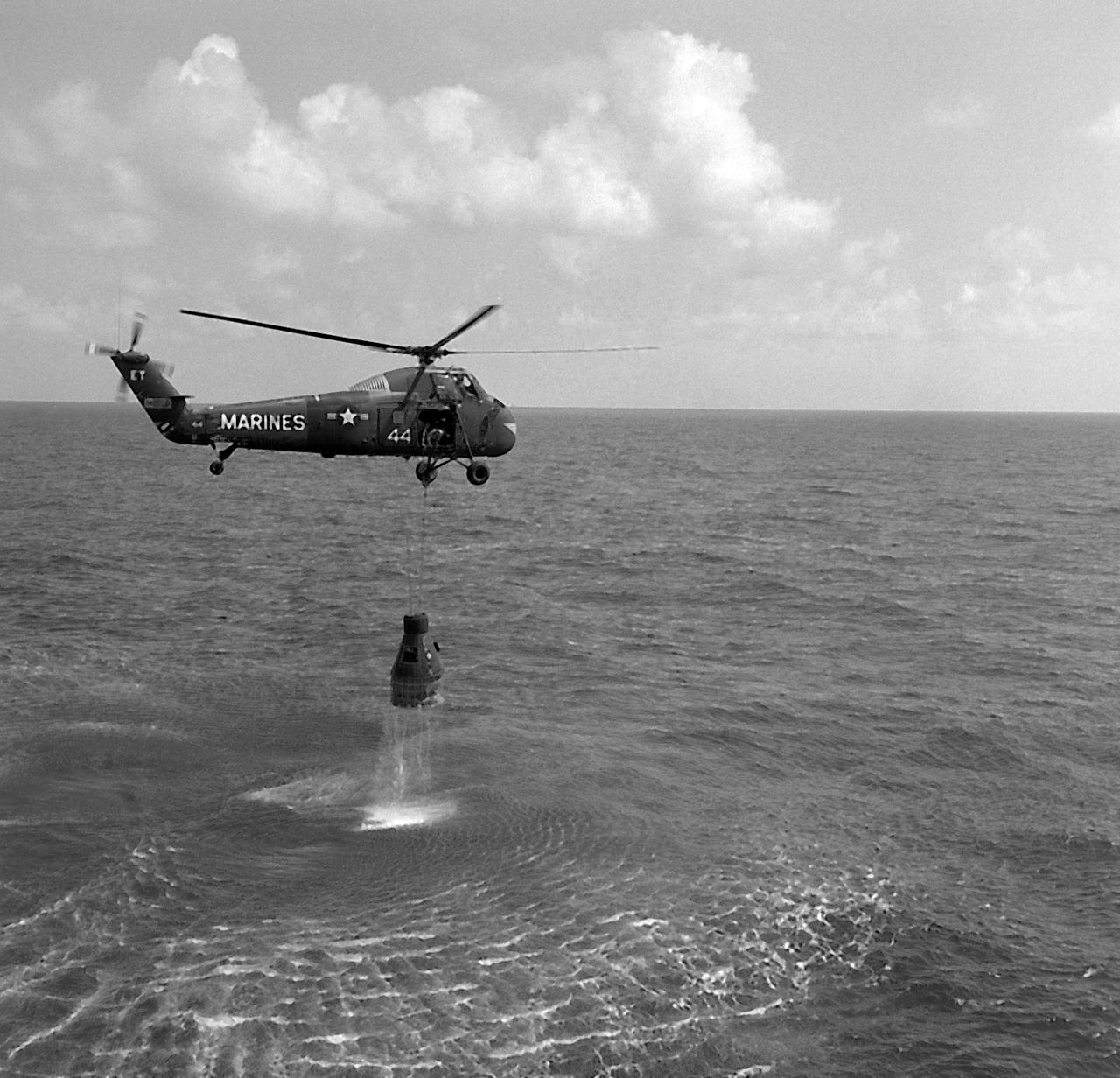
This photo depicts the recovery of the Freedom 7 (MR-3) capsule by a U.S. Marine helicopter. The MR-3 mission successfully placed the first American astronaut, Alan Shepard, in space for 15-1/2 minutes and returned safely to Earth on May 5, 1961.
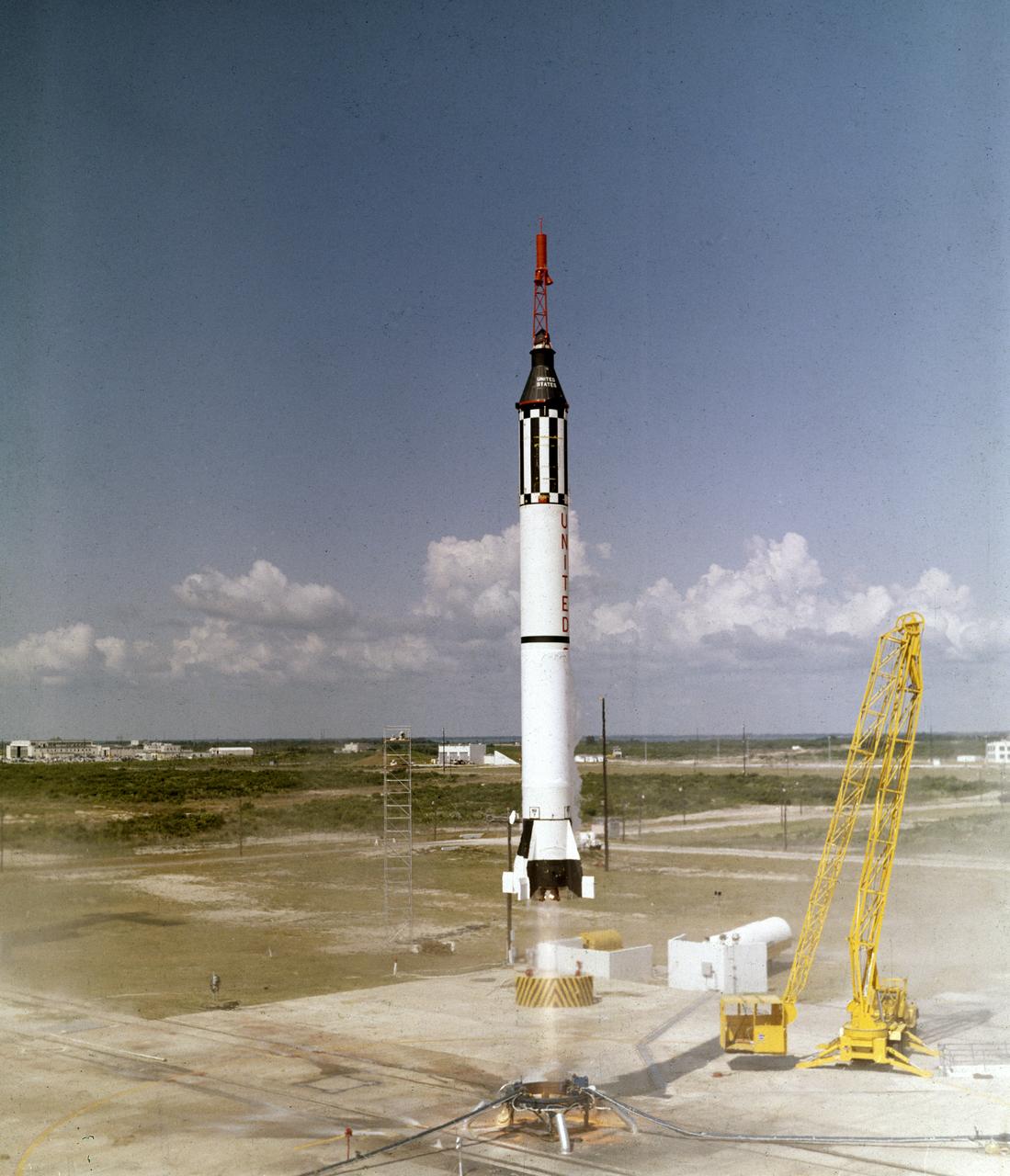
Astronaut Alan B. Shepard, Jr. lifts off in the Freedom 7 Mercury spacecraft on May 5, 1961. This third flight of the Mercury-Redstone (MR-3) vehicle, developed by Dr. Wernher von Braun and the rocket team in Huntsille, Alabama, was the first marned space mission for the United States. During the 15-minute suborbital flight, Shepard reached an altitude of 115 miles and traveled 302 miles downrange.
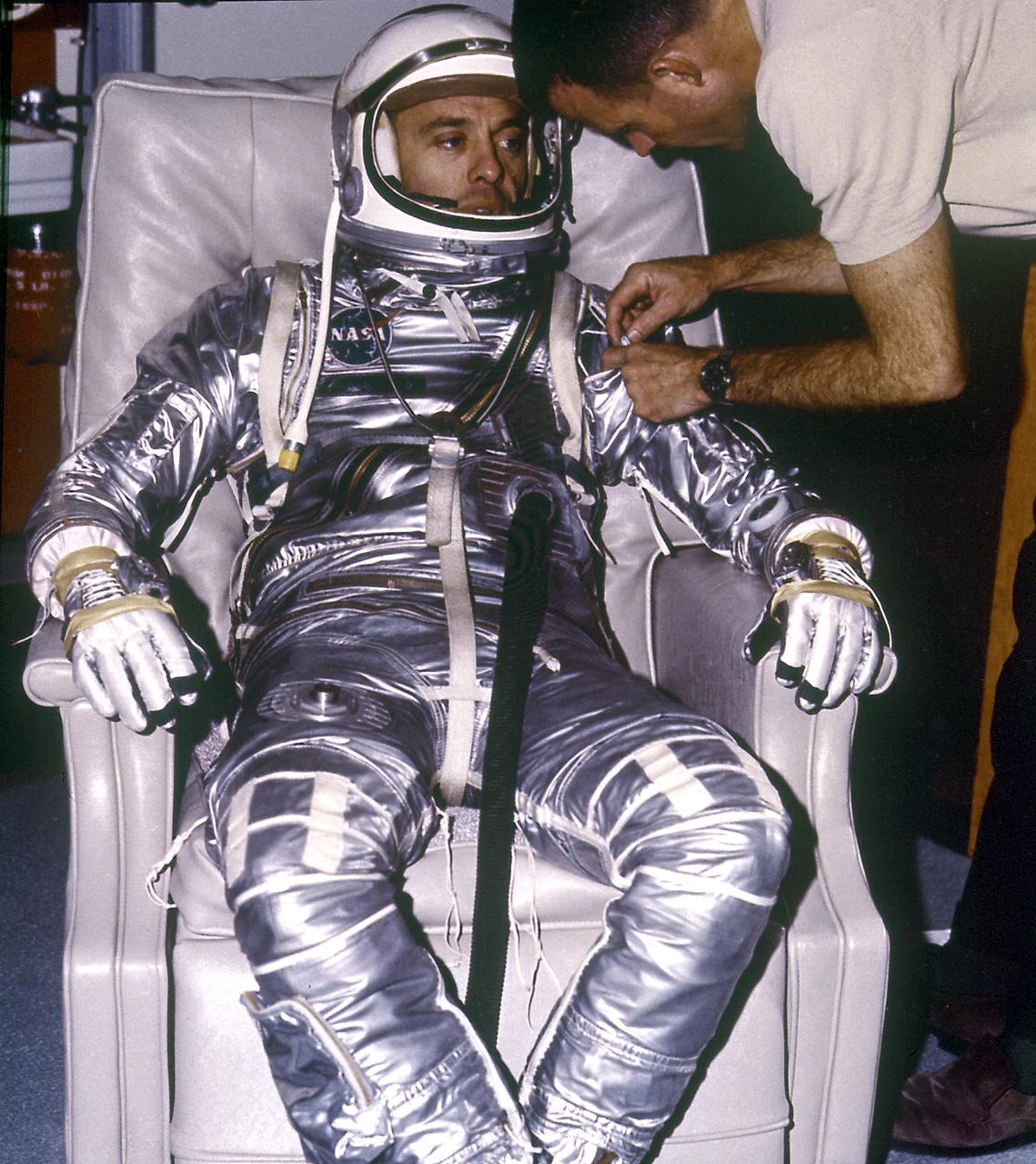
Astronaut Alan B. Shepard, Jr. during suiting for the first manned suborbital flight, MR-3 mission. The Freedom 7 spacecraft, carrying the first American, Astronaut Shepard and boosted by the Mercury-Redstone launch vehicle, lifted off on May 5, 1961.
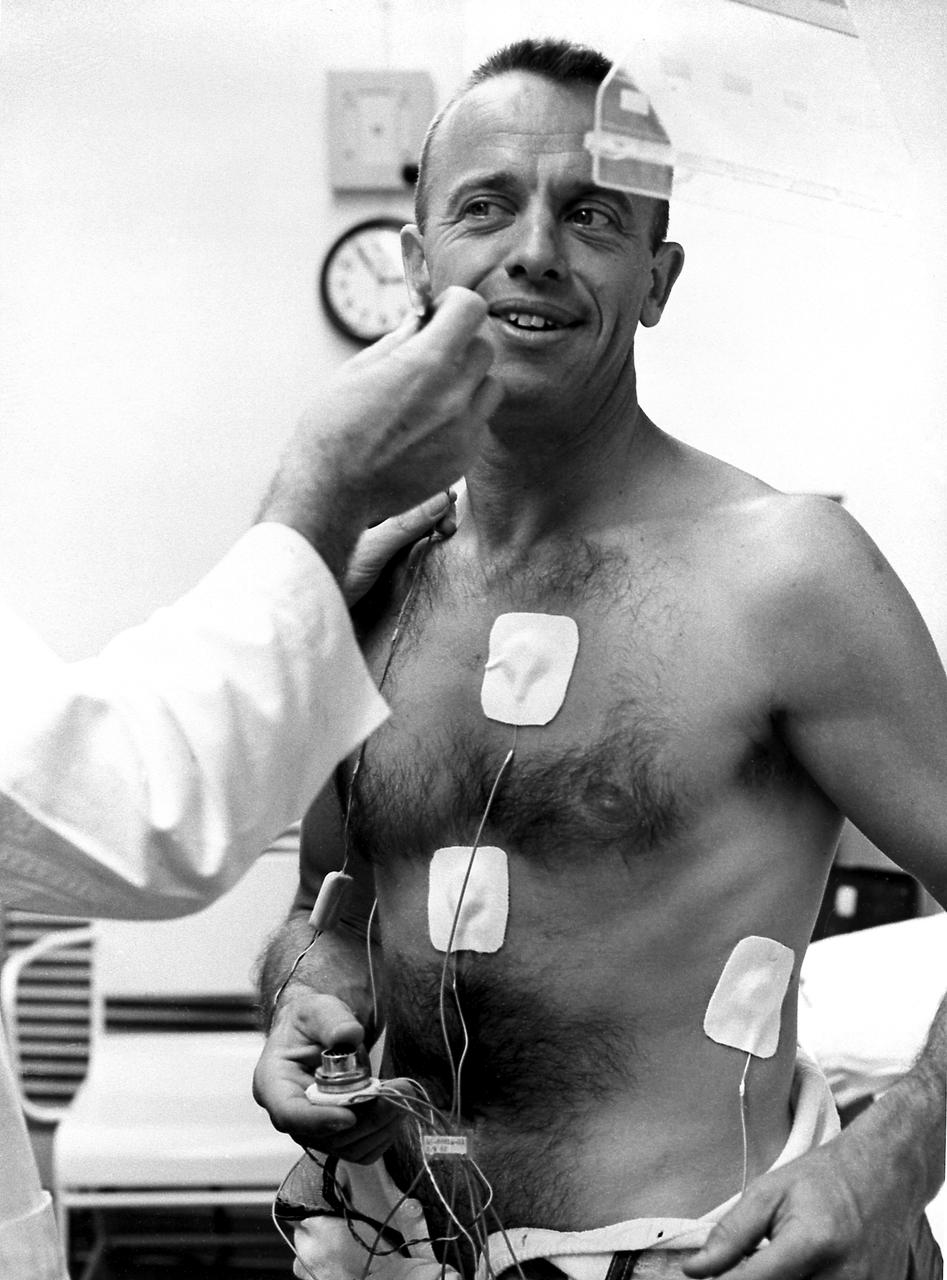
Astronaut Alan Shepard underwent a physical examination prior to the first marned suborbital flight. Freedom 7 carrying Astronaut Alan Shepard, boosted by the Mercury-Redstone launch vehicle, lifted off on May 5, 1961. Astronaut Shepard became the first American in space.
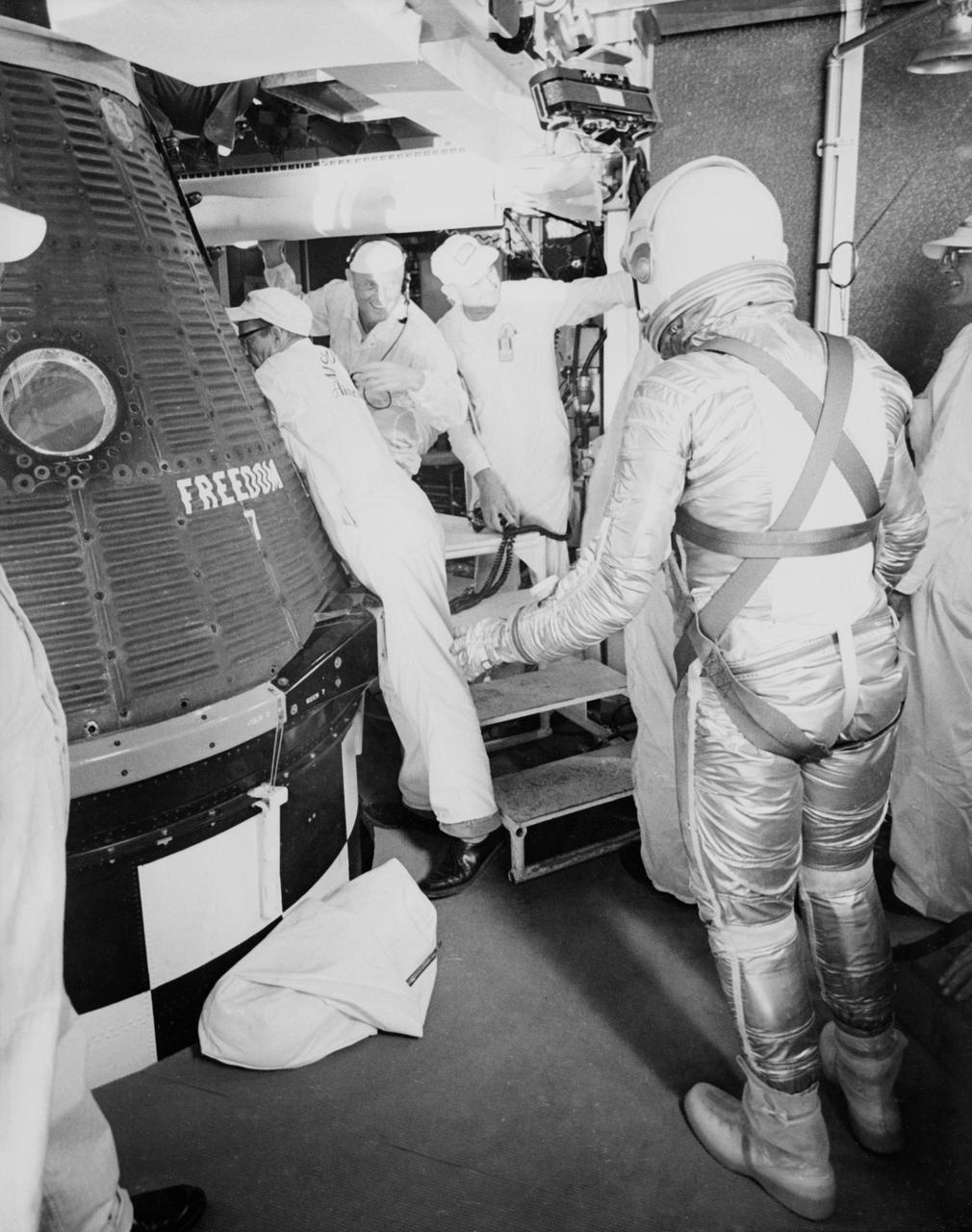
S61-02792 (5 May 1961) --- Astronaut Alan B. Shepard Jr., in his pressure suit and helmet, approaches the Freedom 7 capsule in preparation for insertion before the Mercury-Redstone 3 (MR-3) mission. Photo credit: NASA or National Aeronautics and Space Administration
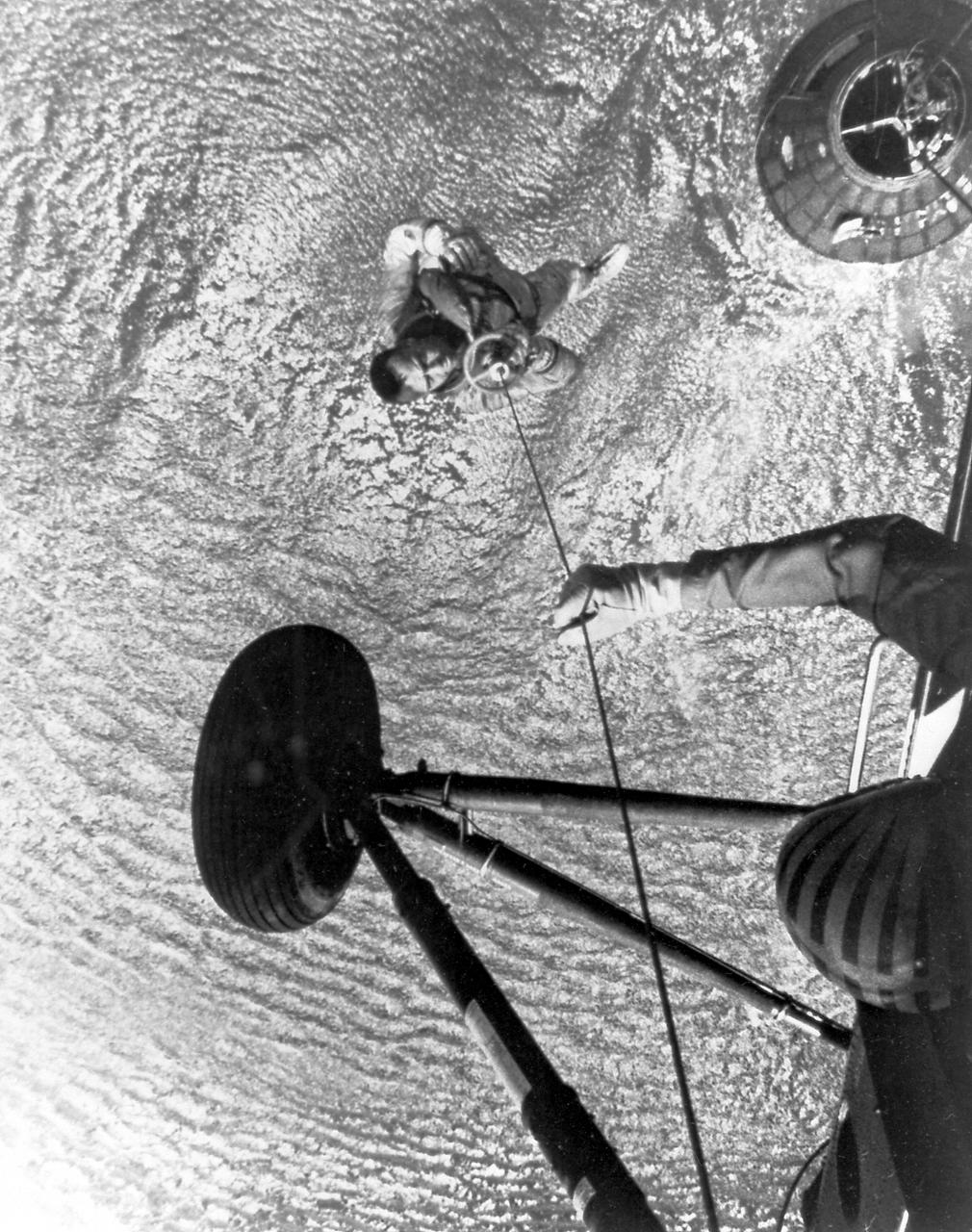
This photo depicts the recovery operations of the MR-3 mission. Astronaut Alan Shepard was picked up by a U.S. Marine helicopter after the completion of the first marned suborbital flight by MR-3 (Mercury-Redstone) with the Freedom 7 capsule.
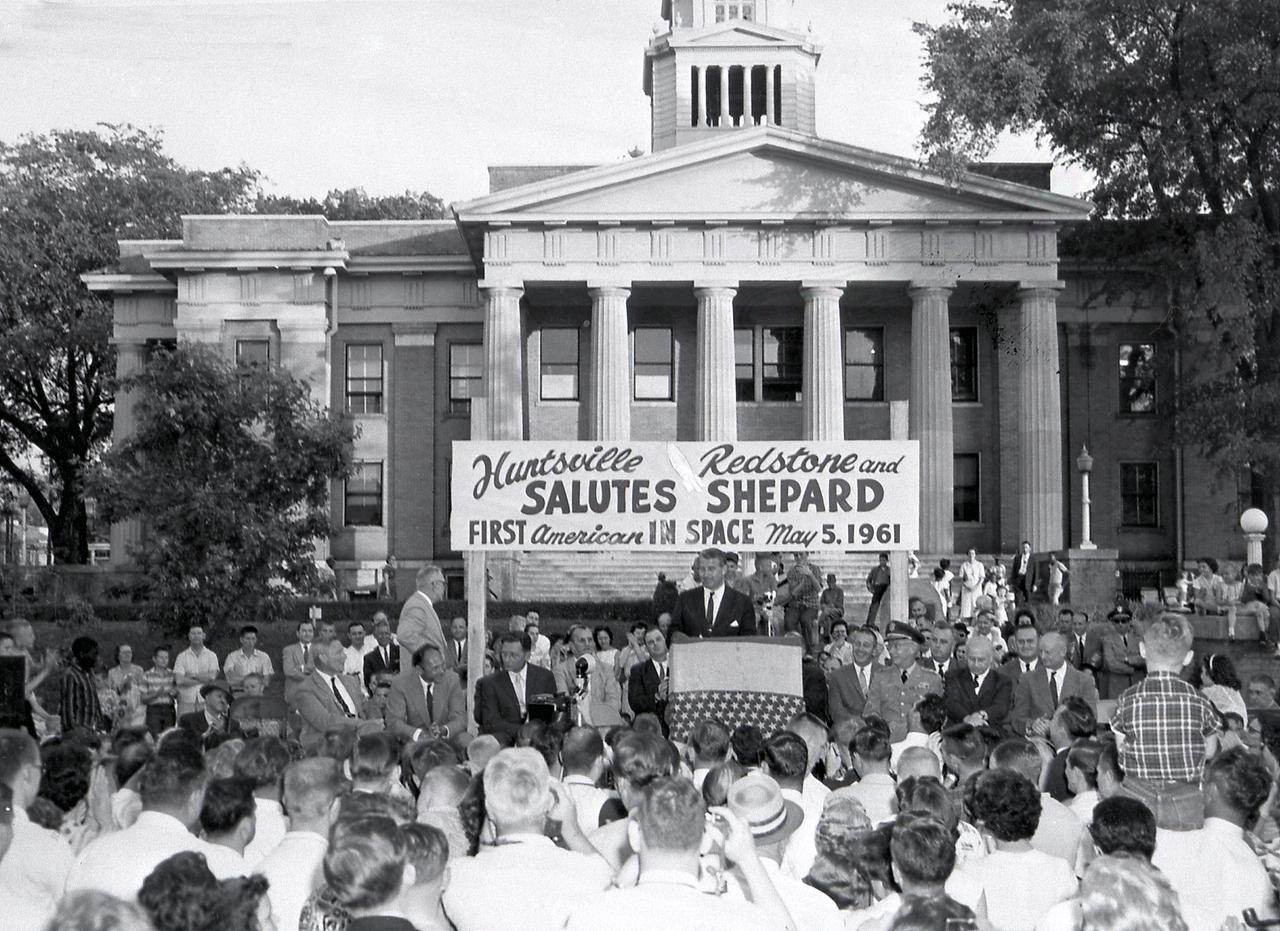
Dr. von Braun addresses a crowd celebrating in front of the Madison County Alabama Courthouse following the successful launch of Astronaut Alan Shepard (America's first astronaut in space) into space on a Mercury-Redstone Launch Vehicle, Freedom 7. Shepard's Mercury Spacecraft, was launched from Cape Canaveral. He reached a speed of 5200 mph. His flight lasted 15-1/2 minutes. May 5, 1961 (Photo: Courtesy of Huntsville/Madison County Public Library)
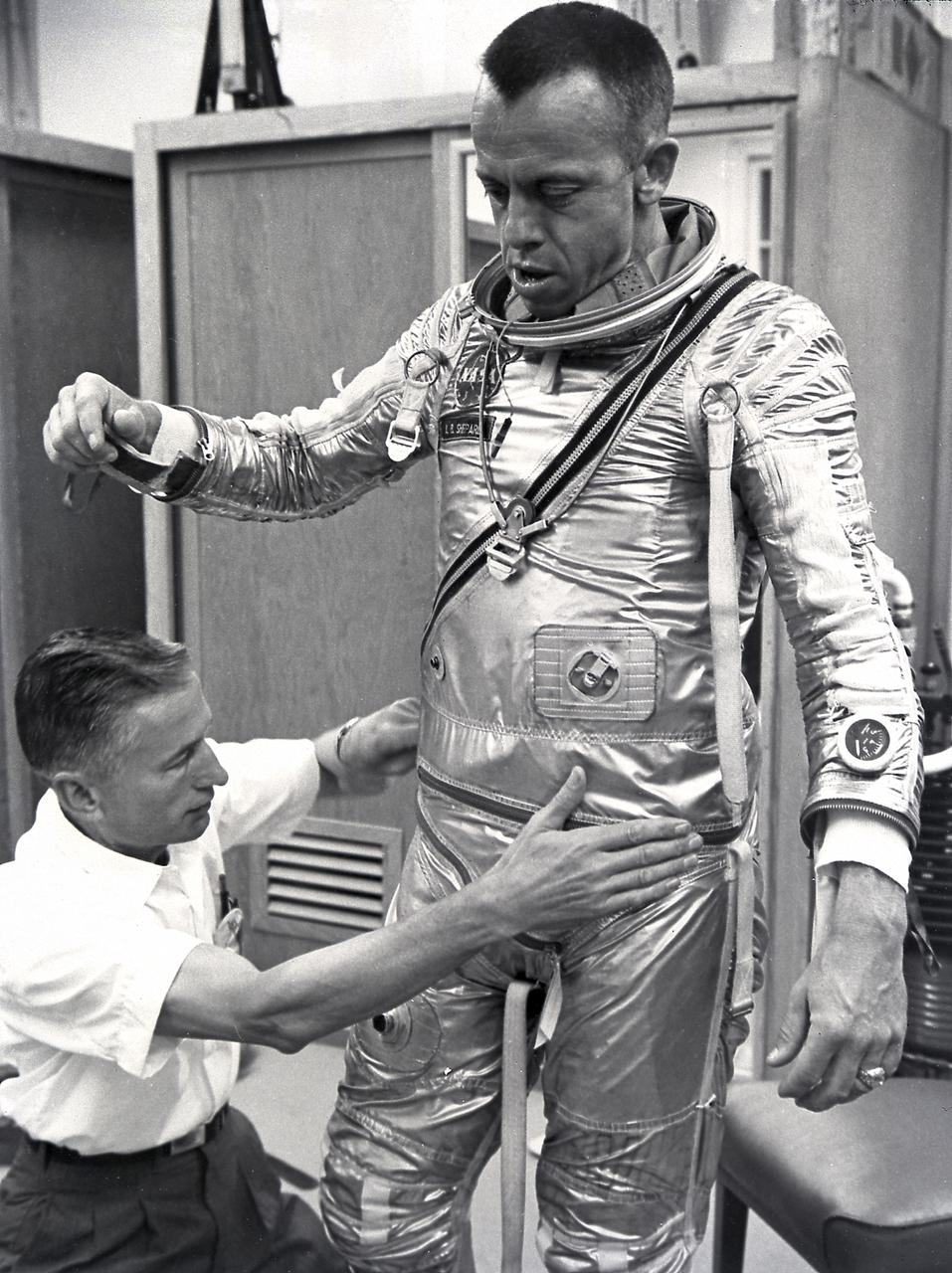
Astronaut Alan Shepard fitted with space suit prior to the first marned suborbital flight. Freedom 7, carrying Astronaut Alan Shepard, boosted by the Mercury-Redstone launch vehicle, lifted off on May 5, 1961. Astronaut Shepard became the first American in space.

Astronaut Alan B. Shepard, one of the original seven astronauts for Mercury Project selected by NASA on April 27, 1959. The Freedom 7 spacecraft boosted by Mercury-Redstone vehicle for the MR-3 mission made the first marned suborbital flight and Astronaut Shepard became the first American in space.
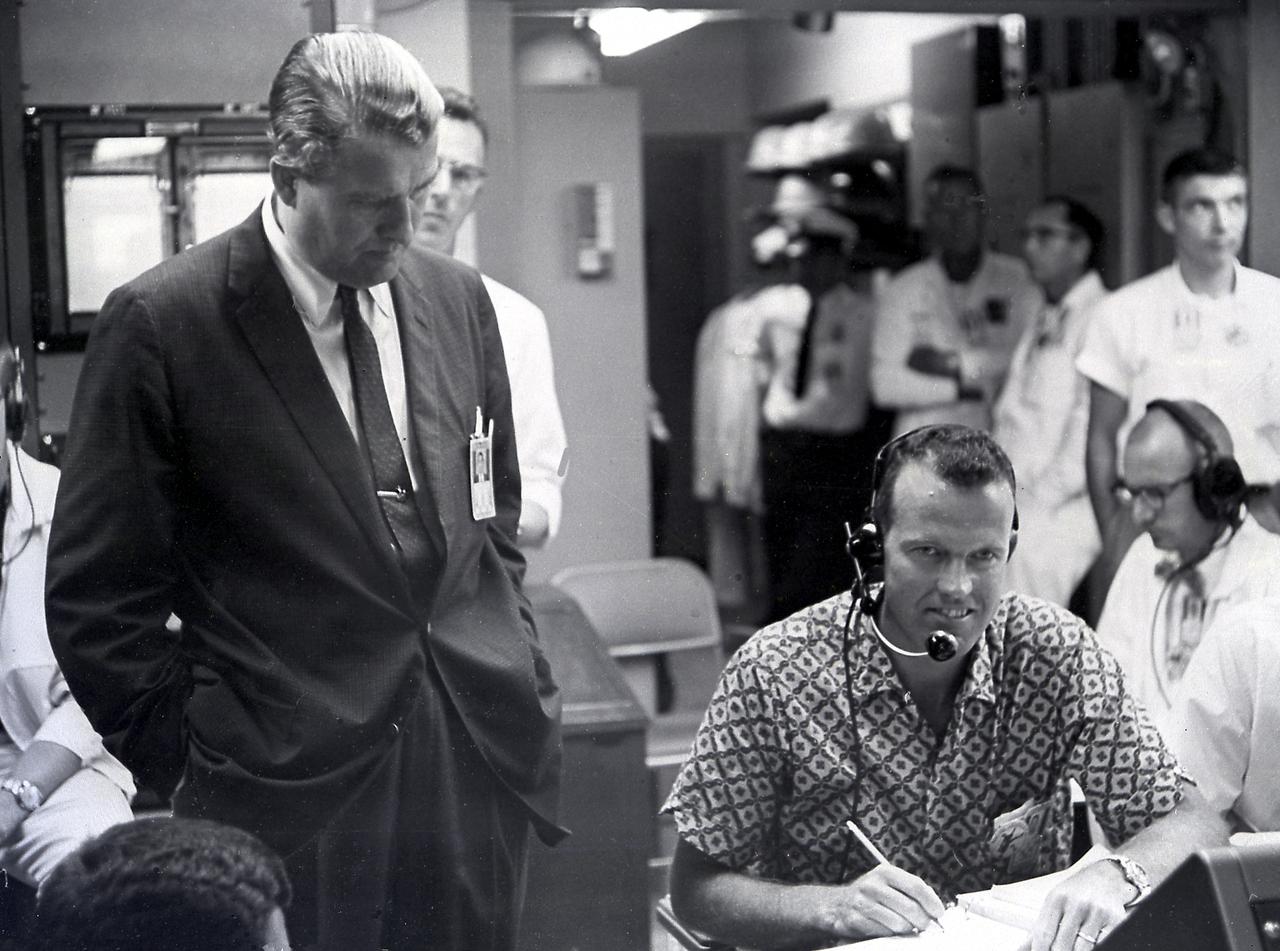
Photographed are Dr. von Braun and Astronaut L. Gordon Cooper in the blockhouse during the recovery operation of the MR-3 (Freedom 7) mission on May 5, 1961. The MR-3 mission, a 15-1/2-minute suborbital test flight, put the first American astronaut, Alan Shepard, in space.
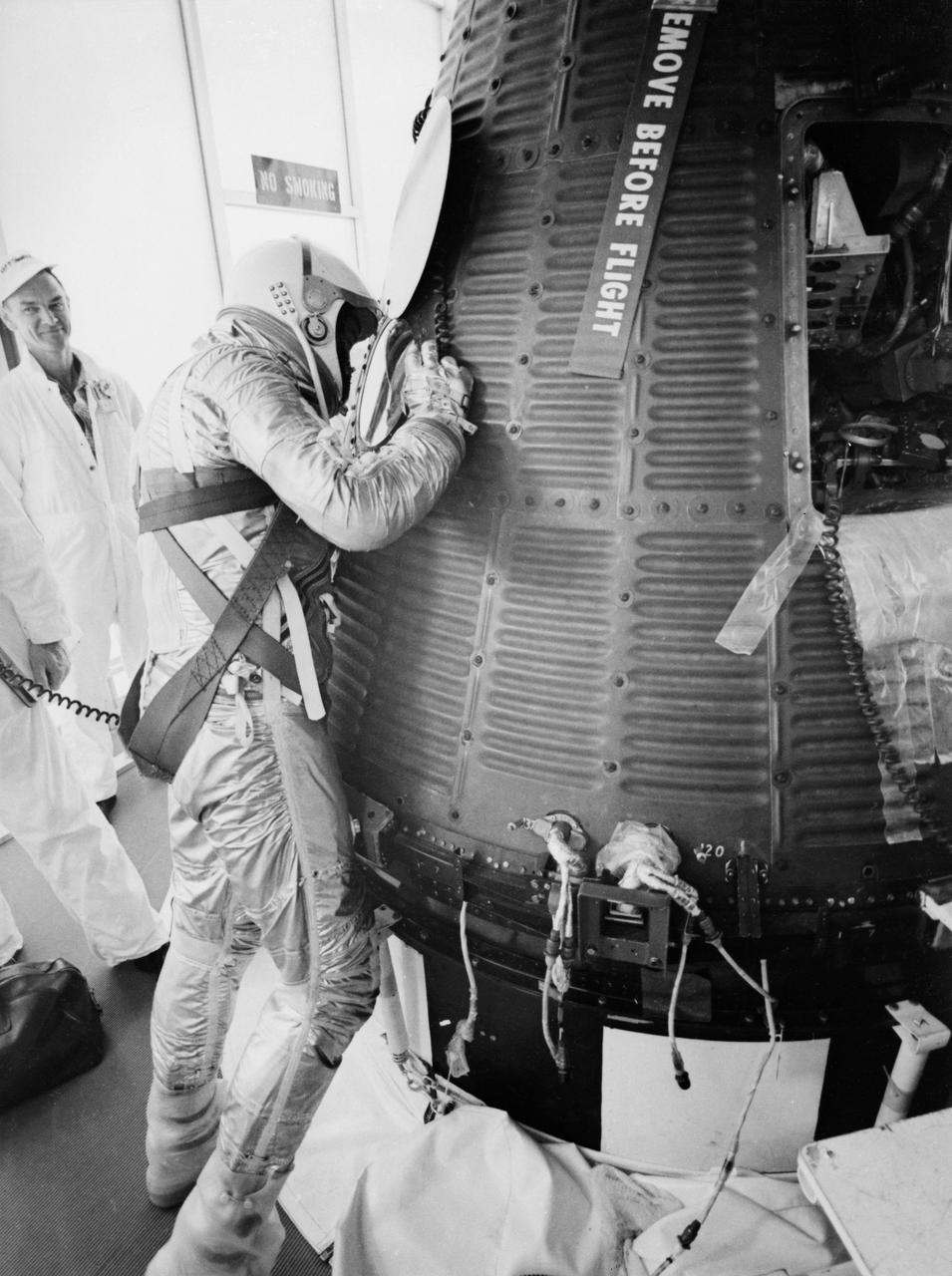
S61-02547 (5 May 1961) --- Astronaut Alan B. Shepard Jr., in his pressure suit and helmet, looks into the Freedom 7 capsule in preparation for ingress before the Mercury-Redstone 3 (MR-3) mission. Photo credit: NASA or National Aeronautics and Space Administration
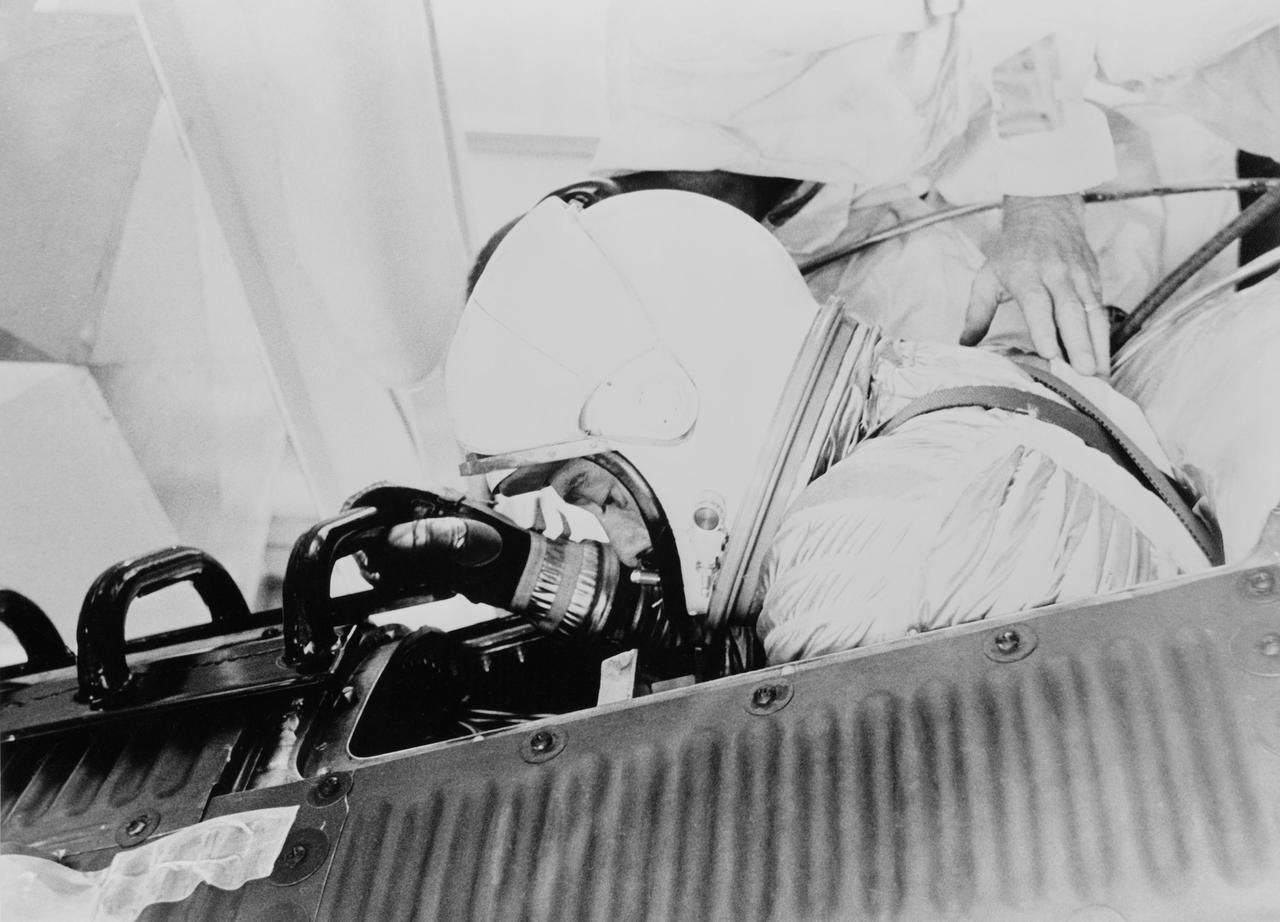
S61-03645 (5 May 1961) --- Close-up of astronaut Alan B. Shepard Jr., in his pressure suit and helmet, ingressing into the Freedom 7 capsule in preparation for the Mercury-Redstone 3 (MR-3) mission. Photo credit: NASA or National Aeronautics and Space Administration
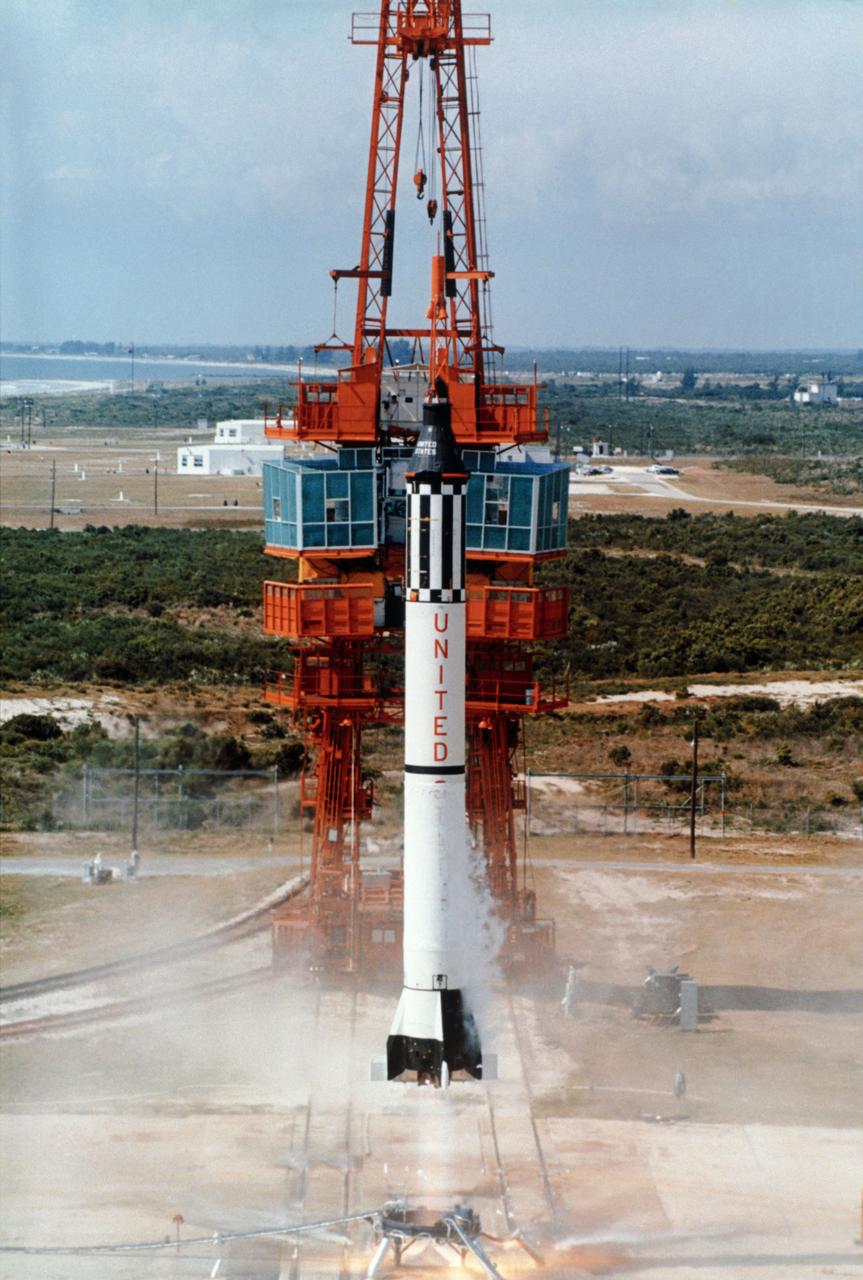
S61-01928 (5 May 1961) --- Mercury-Redstone 3 (MR-3), the United States' first manned spaceflight, is launched from Cape Canaveral on a suborbital mission. Astronaut Alan B. Shepard Jr. was the pilot of the Mercury spacecraft, designated "Freedom 7". The spacecraft attained a maximum speed of 5,180 miles per hour (mph), reached an altitude of 116 1/2 statute miles, and landed 302 statute miles downrange from Cape Canaveral, Florida. Photo credit: NASA or National Aeronautics and Space Administration
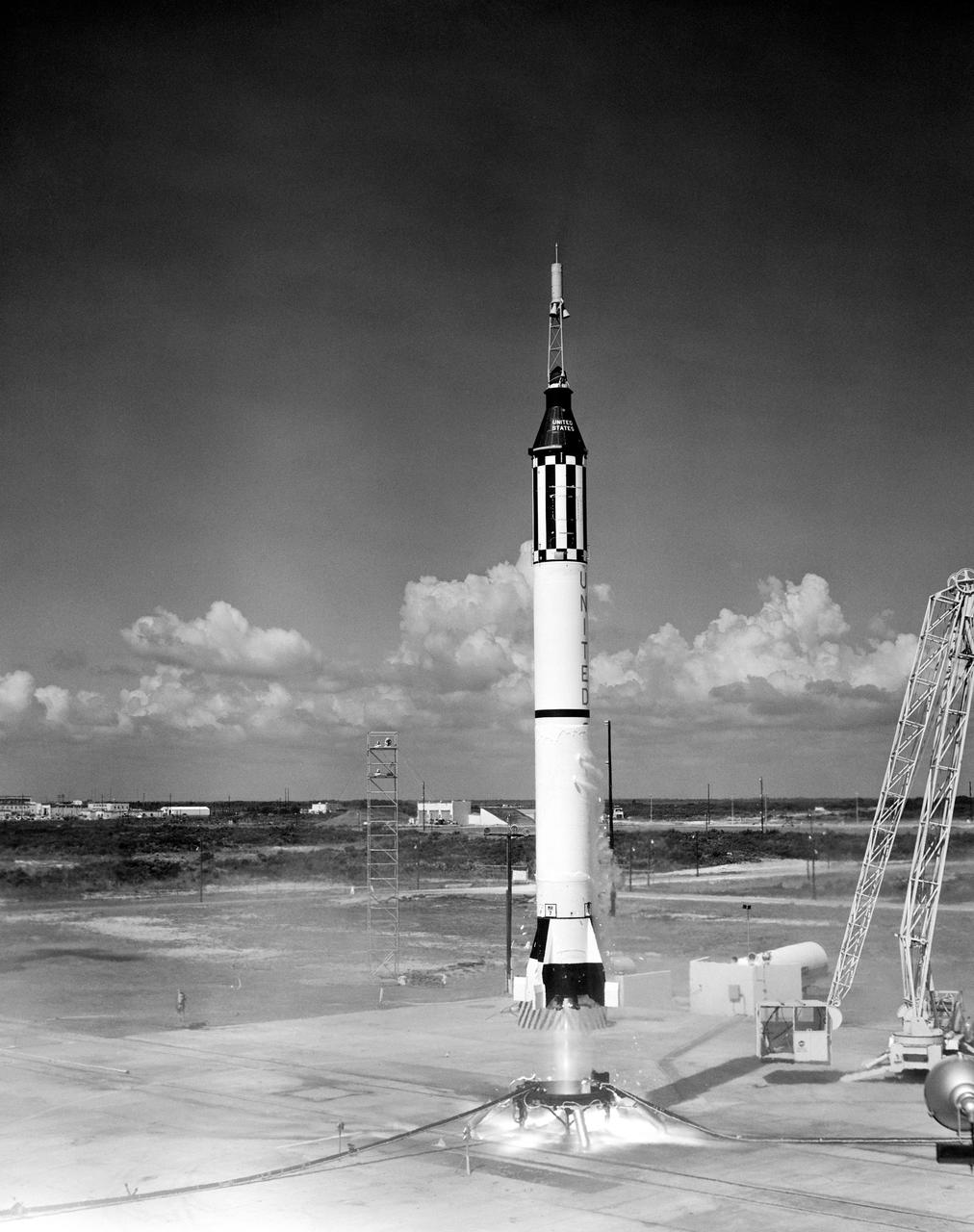
S61-02408 (5 May 1961) --- Launching of the Mercury-Redstone 3 (MR-3) rocket from Cape Canaveral on astronaut Alan B. Shepard?s suborbital mission. Photo credit: NASA or National Aeronautics and Space Administration
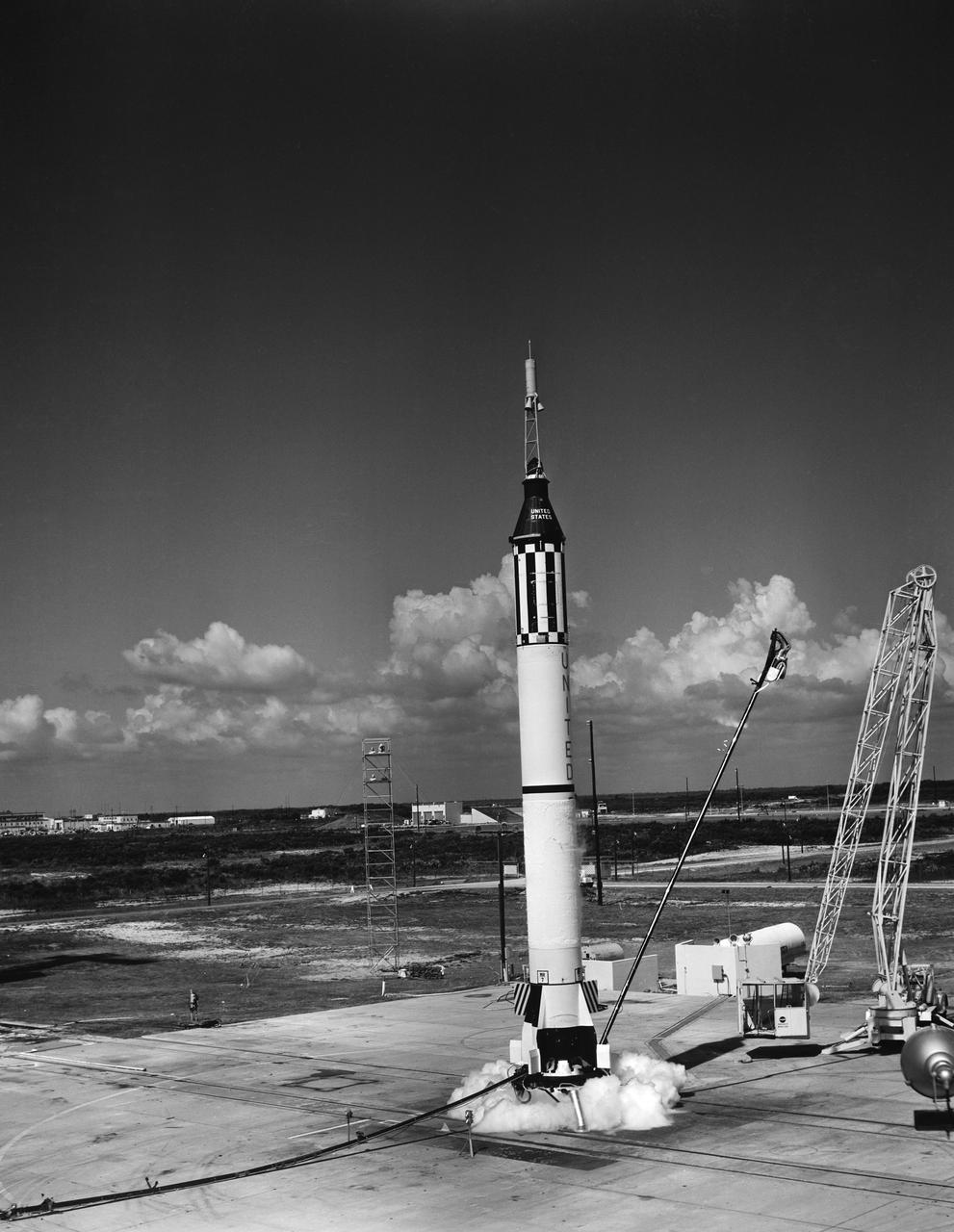
S61-02407 (5 May 1961) --- Launching of the Mercury-Redstone 3 (MR-3) rocket from Cape Canaveral on astronaut Alan B. Shepard?s suborbital mission. Photo credit: NASA or National Aeronautics and Space Administration
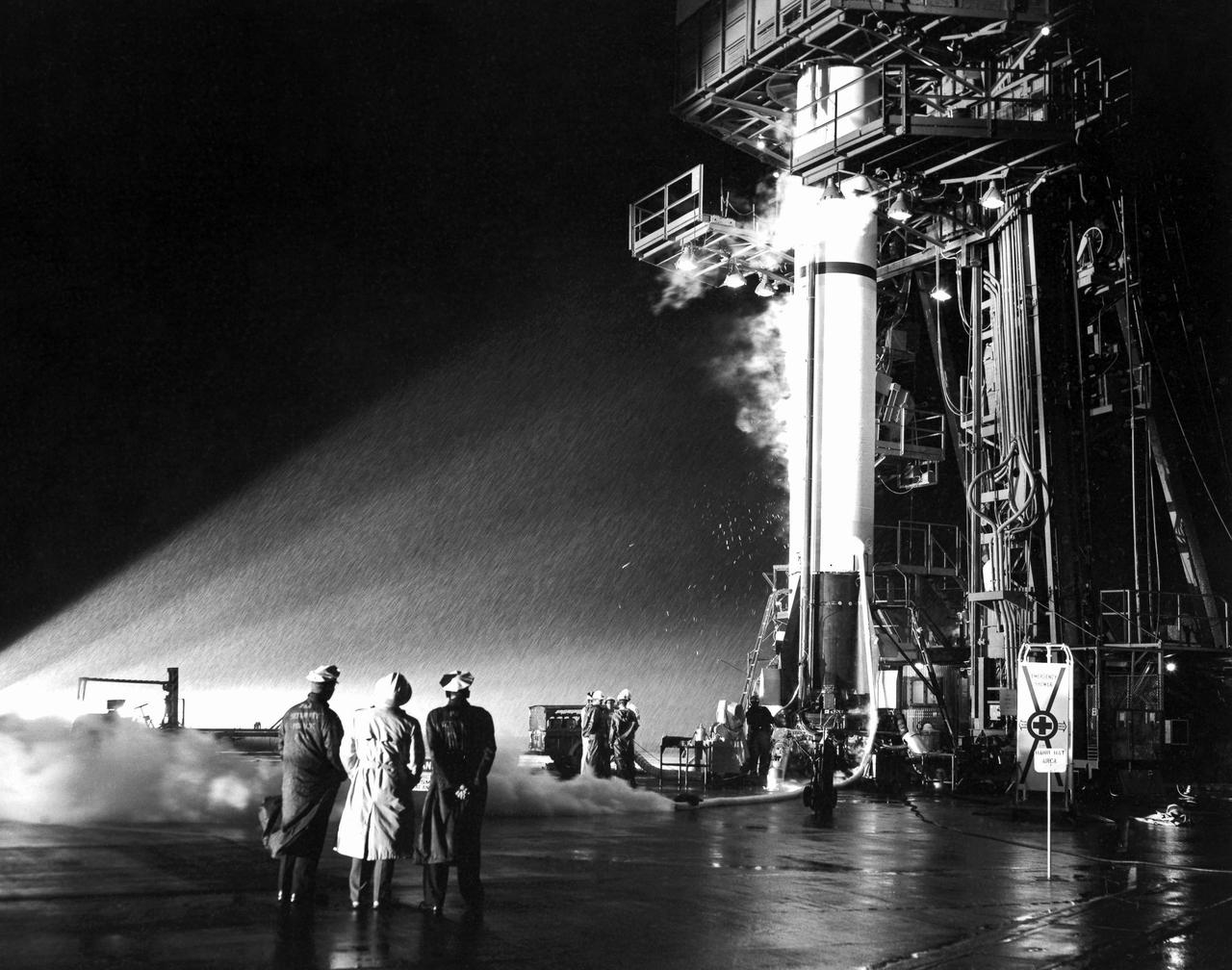
CAPE CANAVERAL, Fla. – MR-3 prelaunch alert. Photo credit: NASA/Santomassino
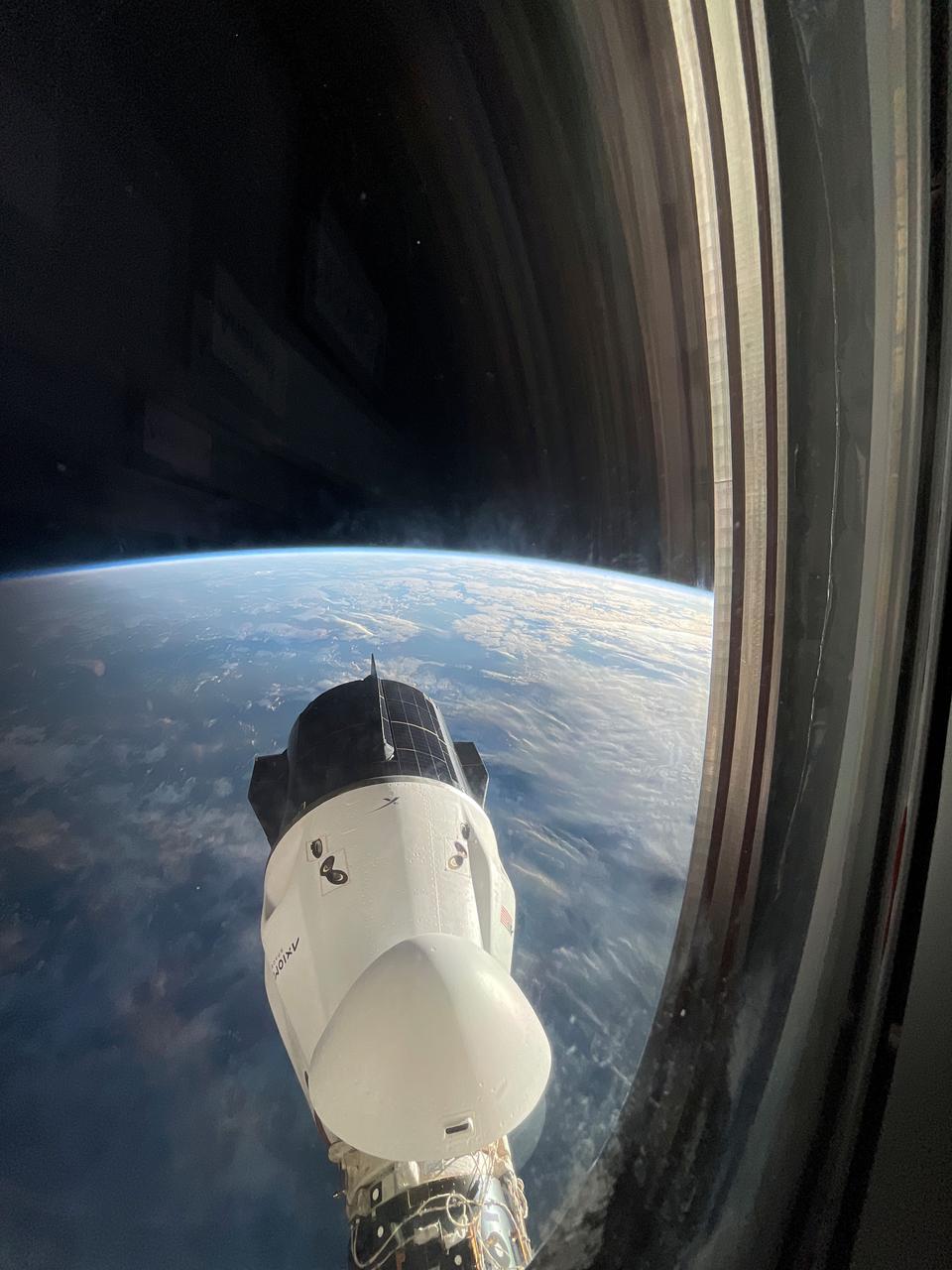
iss070e087496 (Feb. 7, 2024) --- The SpaceX Dragon Freedom spacecraft is pictured from a window aboard the SpaceX Dragon Endurance spacecraft. Both spacecraft are docked to ports on the International Space Station's Harmony module. Freedom is seen moments before undocking from Harmony's forward port with the Axiom Mission 3 crew aboard.
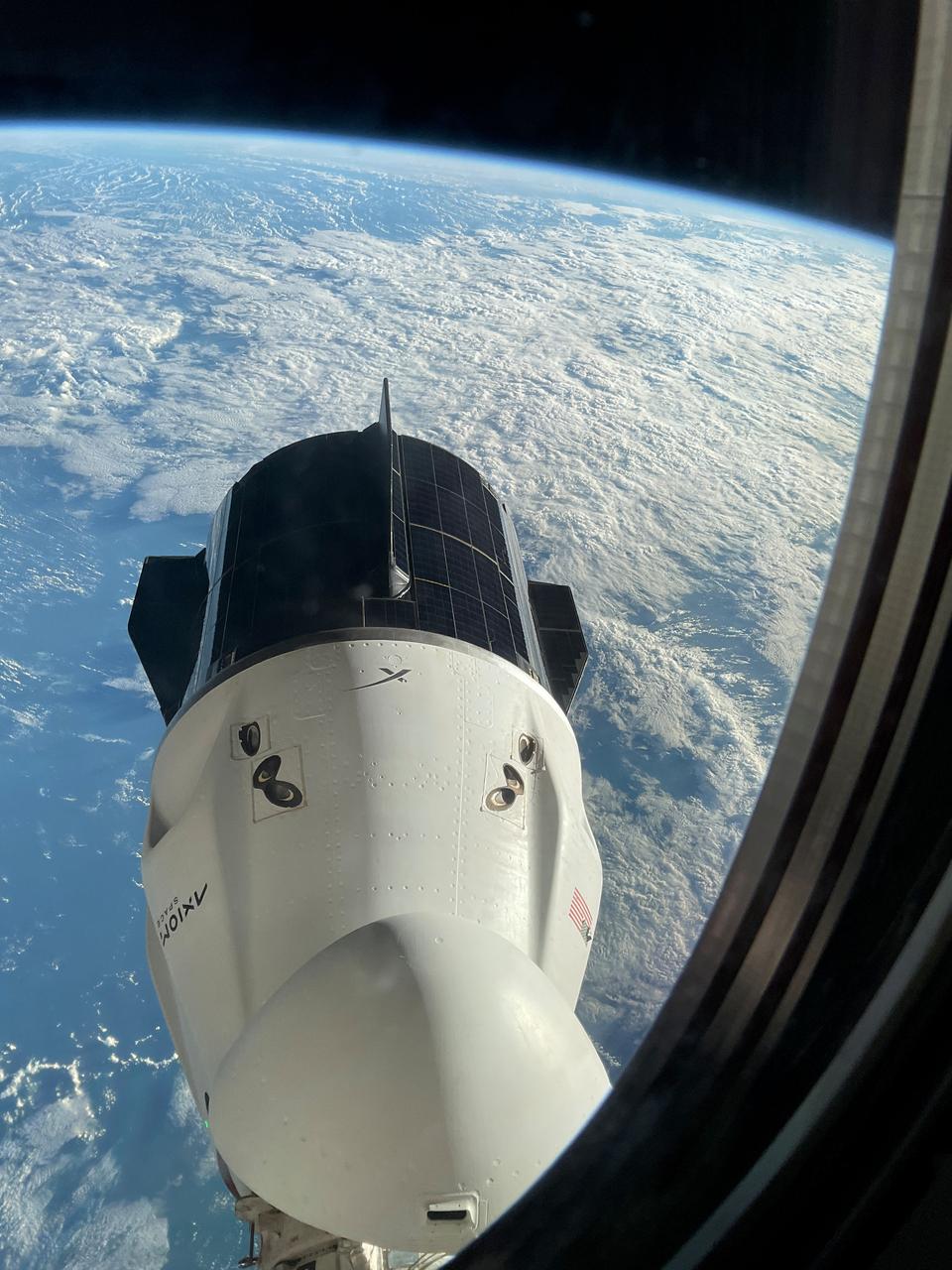
iss070e087501 (Feb. 7, 2024) --- The SpaceX Dragon Freedom spacecraft is pictured from a window aboard the SpaceX Dragon Endurance spacecraft. Both spacecraft are docked to ports on the International Space Station's Harmony module. Freedom is seen moments before undocking from Harmony's forward port with the Axiom Mission 3 crew aboard.
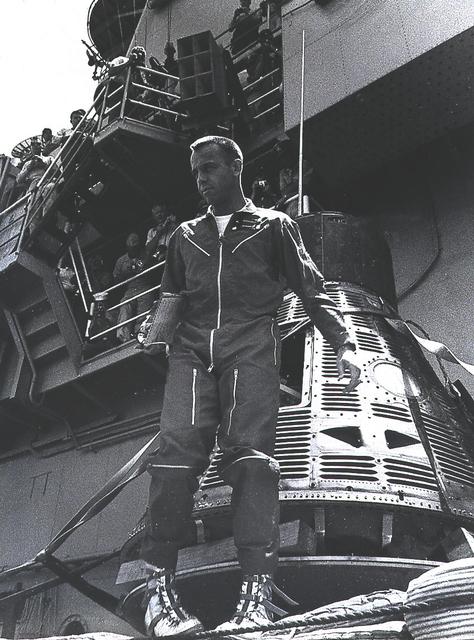
Alan B. Shepard, Jr., America's first astronaut, stands in front of the Freedom 7 spacecraft shortly after completion of the third flight of the Mercury-Redstone (MR-3) vehicle, May 5, 1961. During the 15-minute suborbital flight, the Freedom 7 Mercury spacecraft, launched atop a modified Redstone rocket developed by Dr. Wernher von Braun and the rocket team in Huntsville, Alabama, reached an altitude of 115 miles and traveled 302 miles downrange.
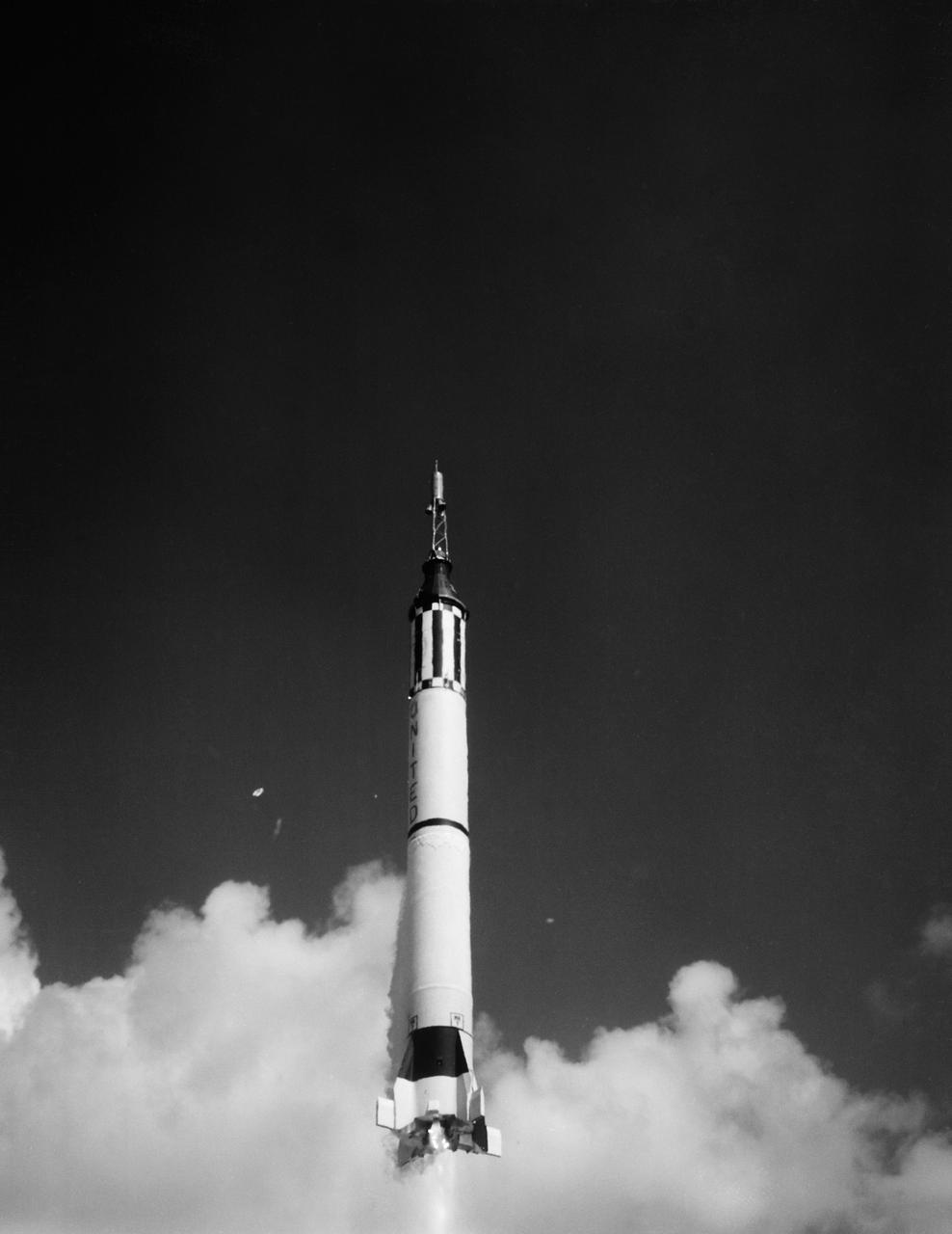
S61-02409 (5 May 1961) --- Launching of the Mercury-Redstone 3 (MR-3) rocket from Cape Canaveral on astronaut Alan B. Shepard?s suborbital mission. Photo credit: NASA or National Aeronautics and Space Administration
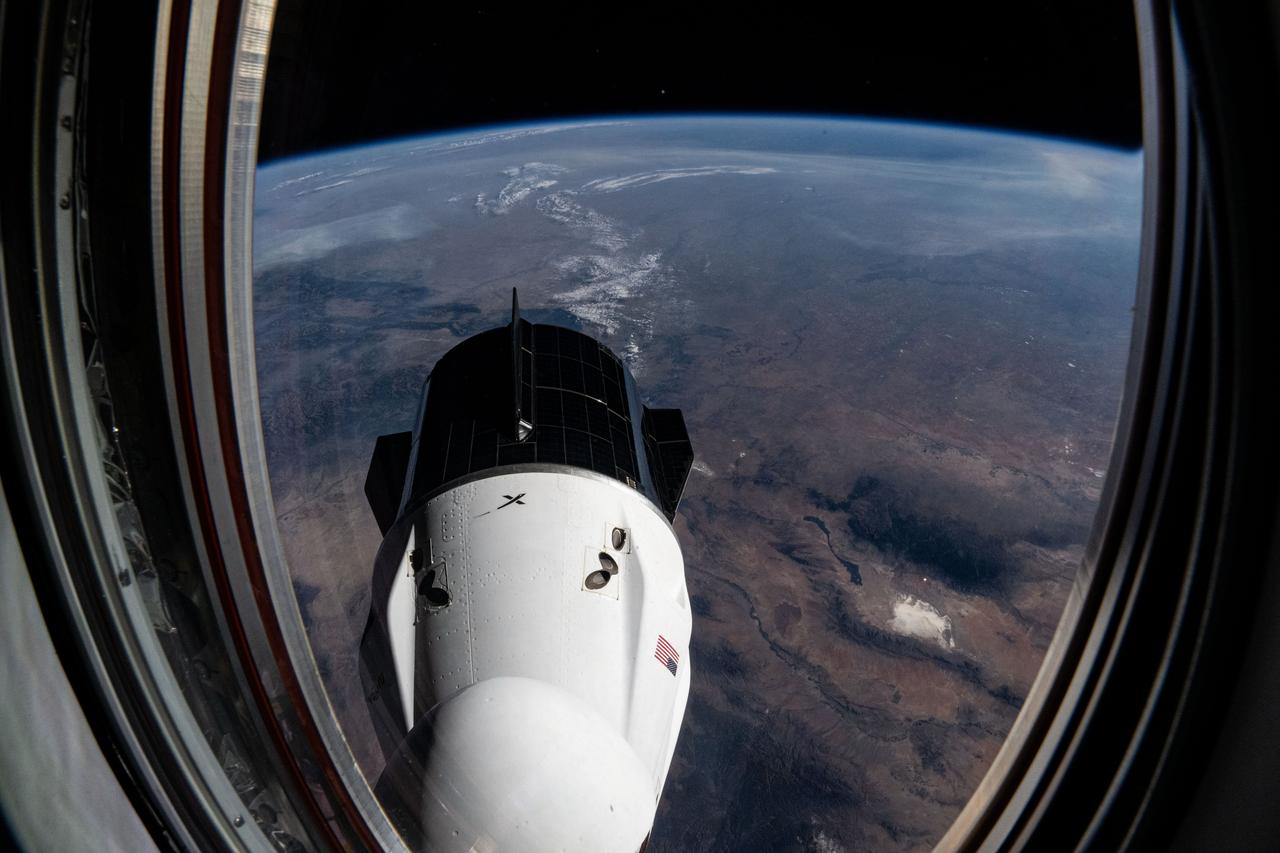
iss072e031300 (Oct. 7, 2024) -- The SpaceX Dragon Freedom spacecraft, docked to the forward-facing port of the International Space Station's Harmony module, was photographed as the orbiting lab soared 258 miles above the state of Colorado.
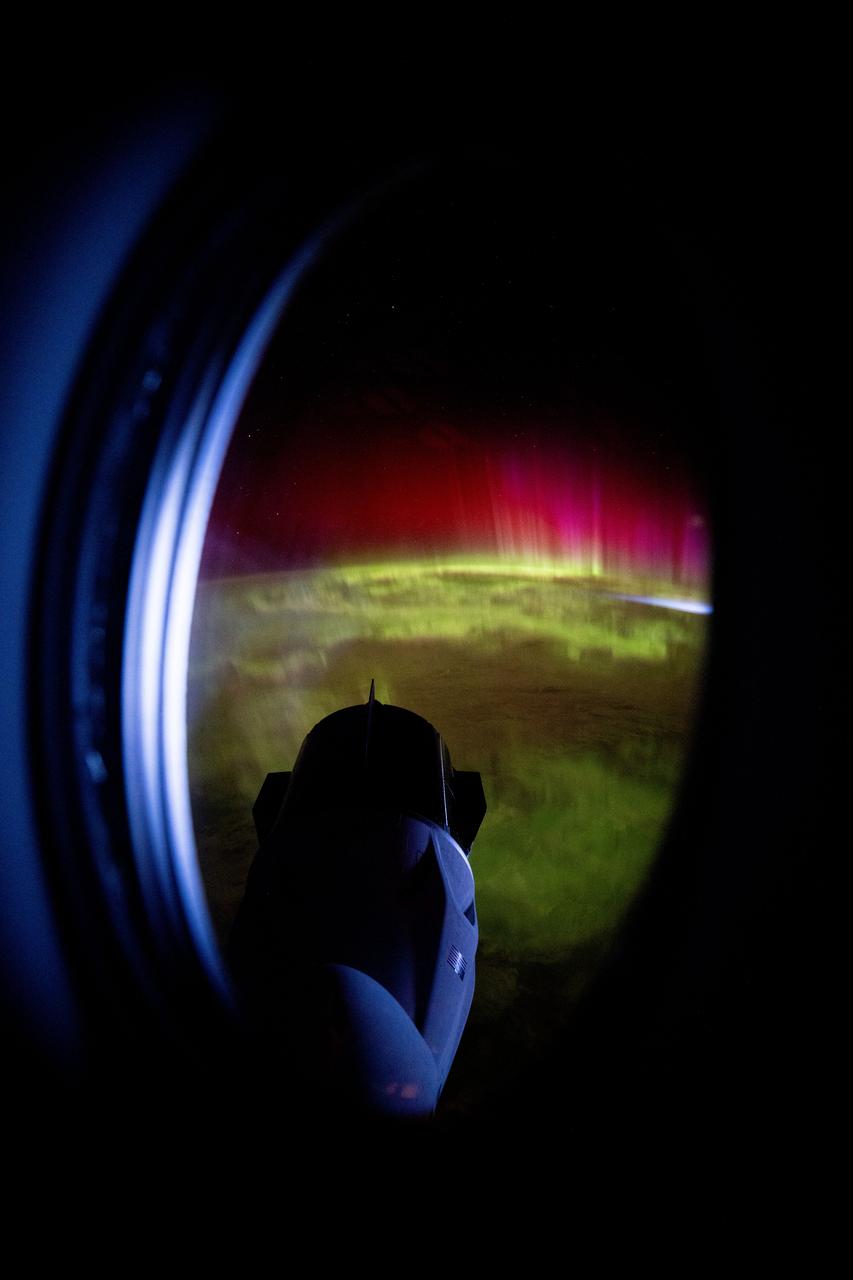
iss072e031823 (Oct. 7, 2024) -- Peering through the window of the SpaceX Dragon Endeavour spacecraft, NASA astronaut Matthew Dominick captured this image of the SpaceX Dragon Freedom spacecraft as vivid green and pink aurora swirled through Earth's atmosphere while the International Space Station soared 273 miles above the Indian Ocean.
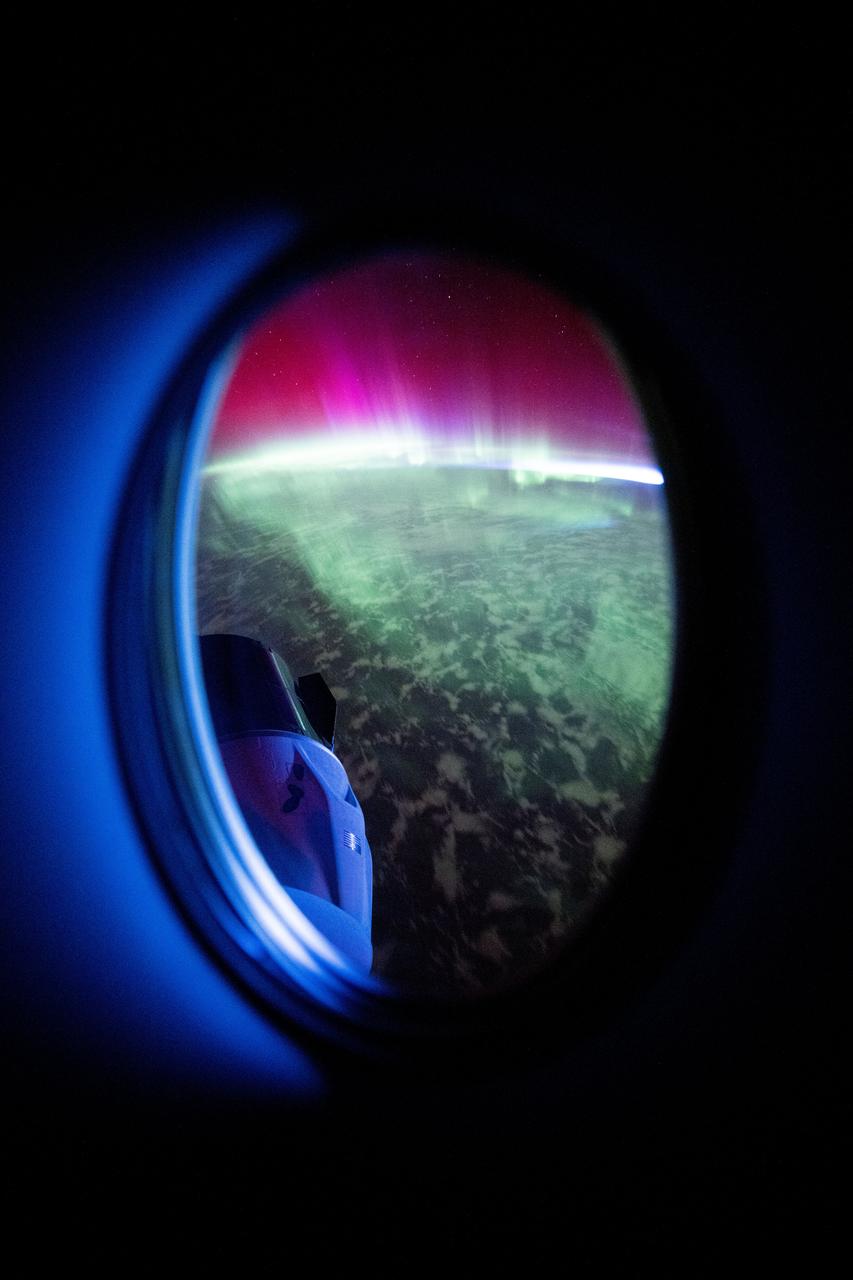
iss072e032577 (Oct. 7, 2024) -- The SpaceX Dragon Freedom spacecraft is pictured attached to the forward-facing port of the International Space Station's Harmony module as a vibrant aurora moves through Earth's atmosphere while the station orbited 273 miles above the Indian Ocean.
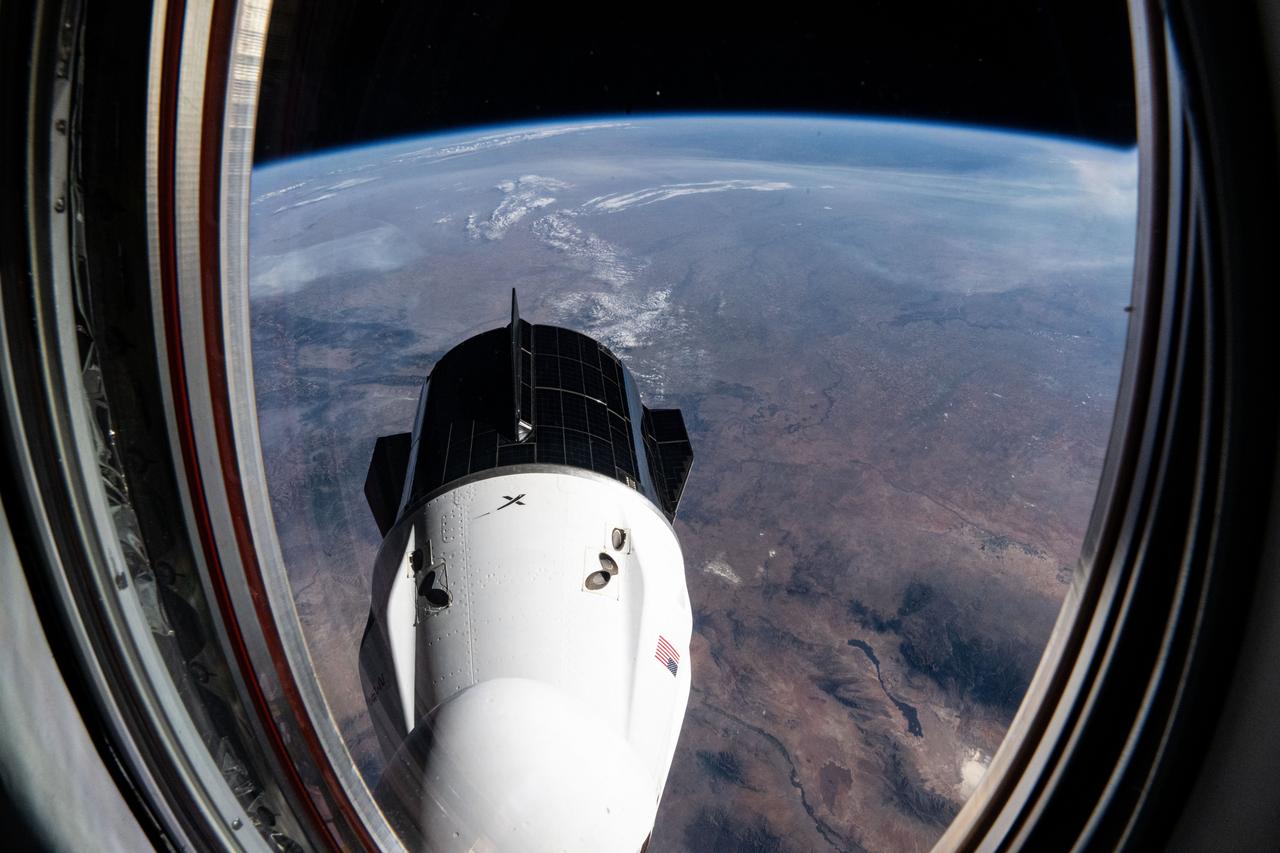
iss072e031305 (Oct. 7, 2024) --- The SpaceX Dragon Freedom spacecraft is pictured from a window on the Dragon Endeavour spacecraft in a photograph taken by NASA astronaut and Expedition 72 Flght Engineer Nick Hague. 258 miles below the International Space Station is the Sunflower State of Kansas.
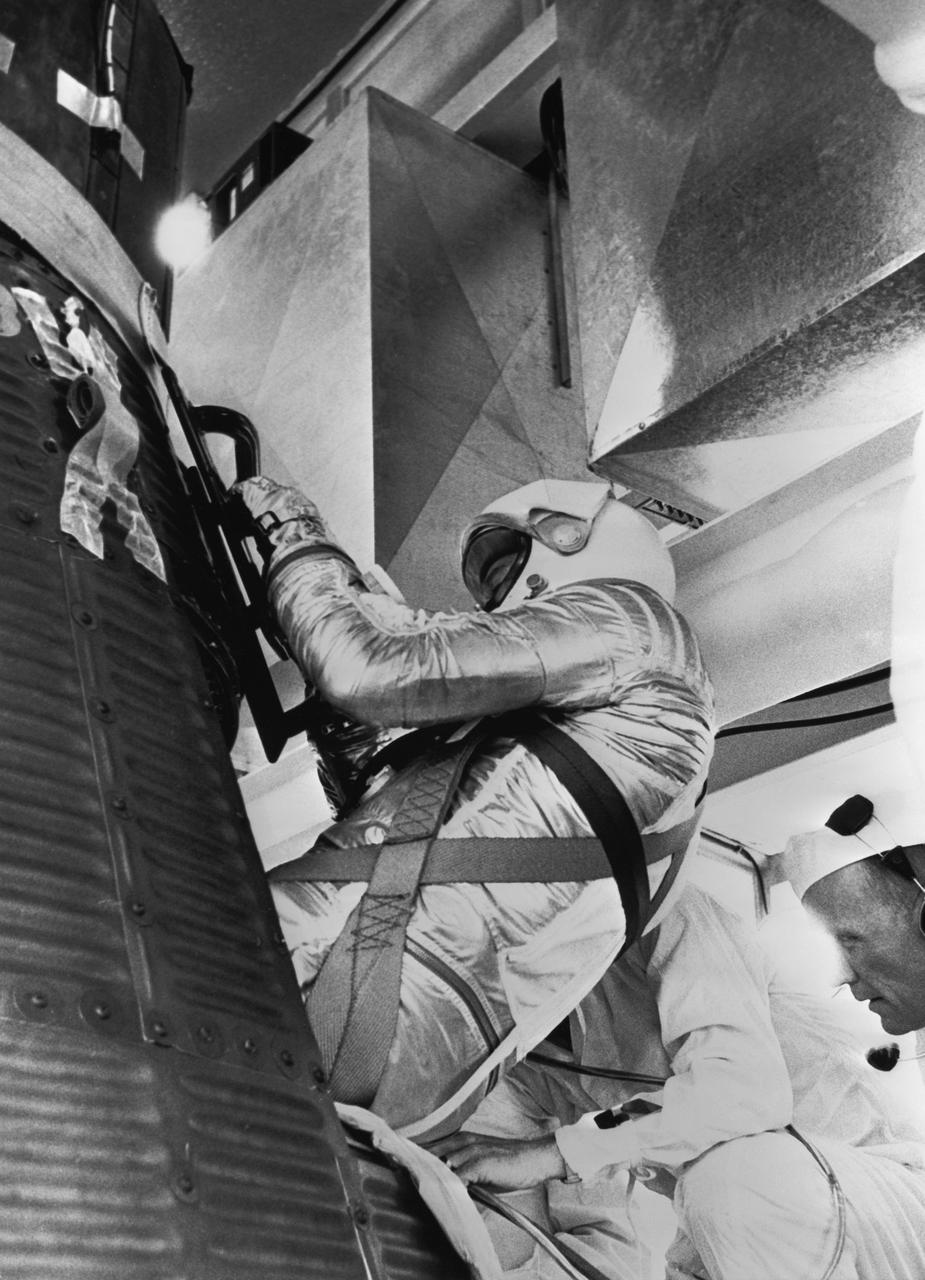
S61-03651 (5 May 1961) --- Astronaut Alan B. Shepard Jr., in his pressure suit and helmet, is being inserted into the Freedom 7 capsule in preparation for the Mercury-Redstone 3 (MR-3) mission. Photo credit: NASA or National Aeronautics and Space Administration
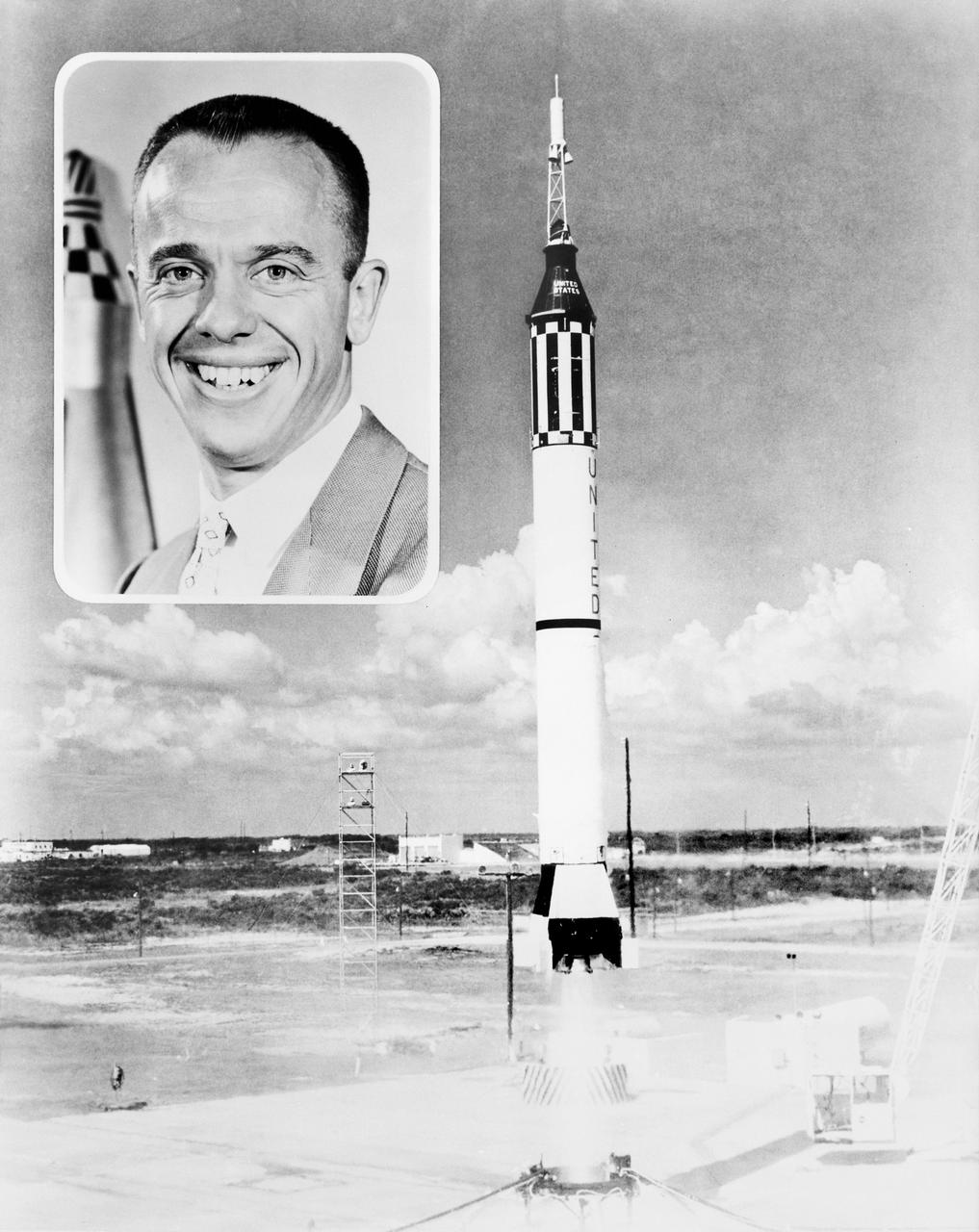
S62-01151 (5 May 1961) --- The liftoff of the Mercury-Redstone 3 (MR-3) on May 5, 1961, piloted by astronaut Alan B. Shepard, Jr., whose portrait is in inset. Shepard went on a 15-minute sub-orbital flight. The spacecraft was designated the ?Freedom? 7.
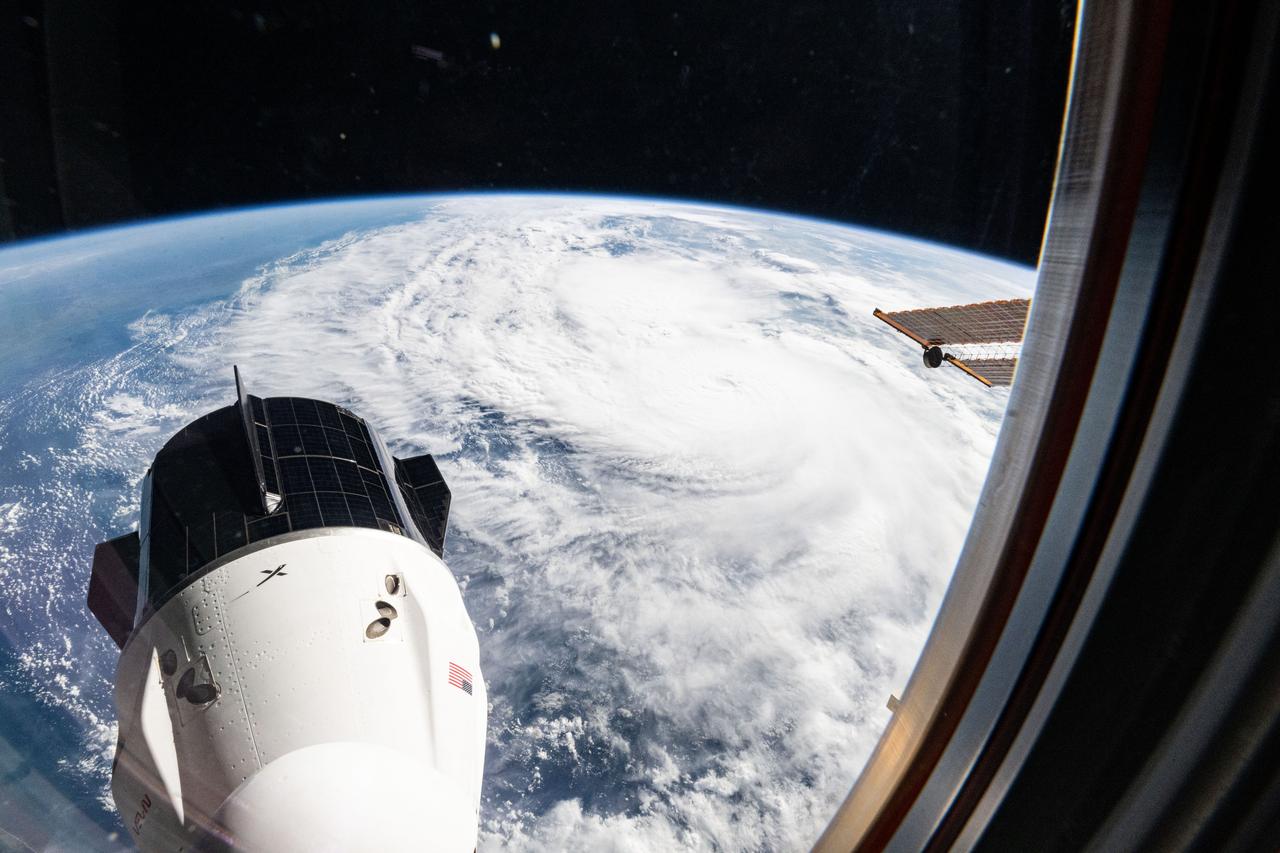
iss072e031284 (Oct. 7, 2024) --- Hurricane Milton is pictured as a category 4 storm in the Gulf of Mexico nearing the coast of Florida in this photograph from the International Space Station as it orbited 257 miles above. The SpaceX Dragon Freedom spacecraft is also pictured from a window on the Dragon Endeavour spacecraft.
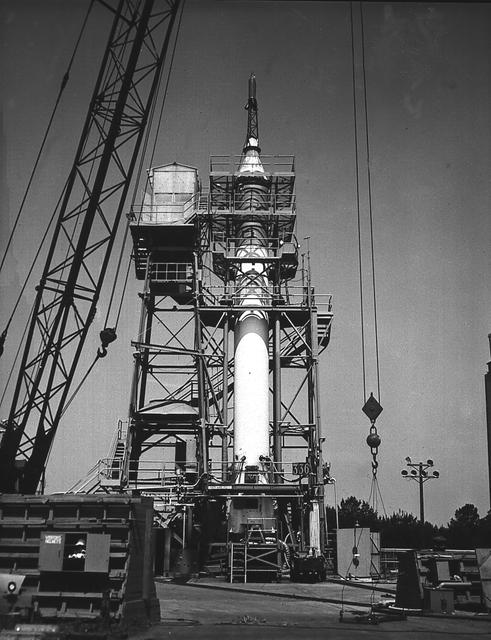
A Mercury-Redstone launch vehicle awaits test-firing in the Redstone Test Stand during the late 1950s. Between 1953 and 1960, the rocket team at Redstone Arsenal in Huntsville, Alabama performed hundreds of test firings on the Redstone rocket, over 200 on the Mercury-Redstone vehicle configuration alone. It was this configuration which launched America's first two marned space missions, Freedom 7 and Liberty Bell 7,in 1961.
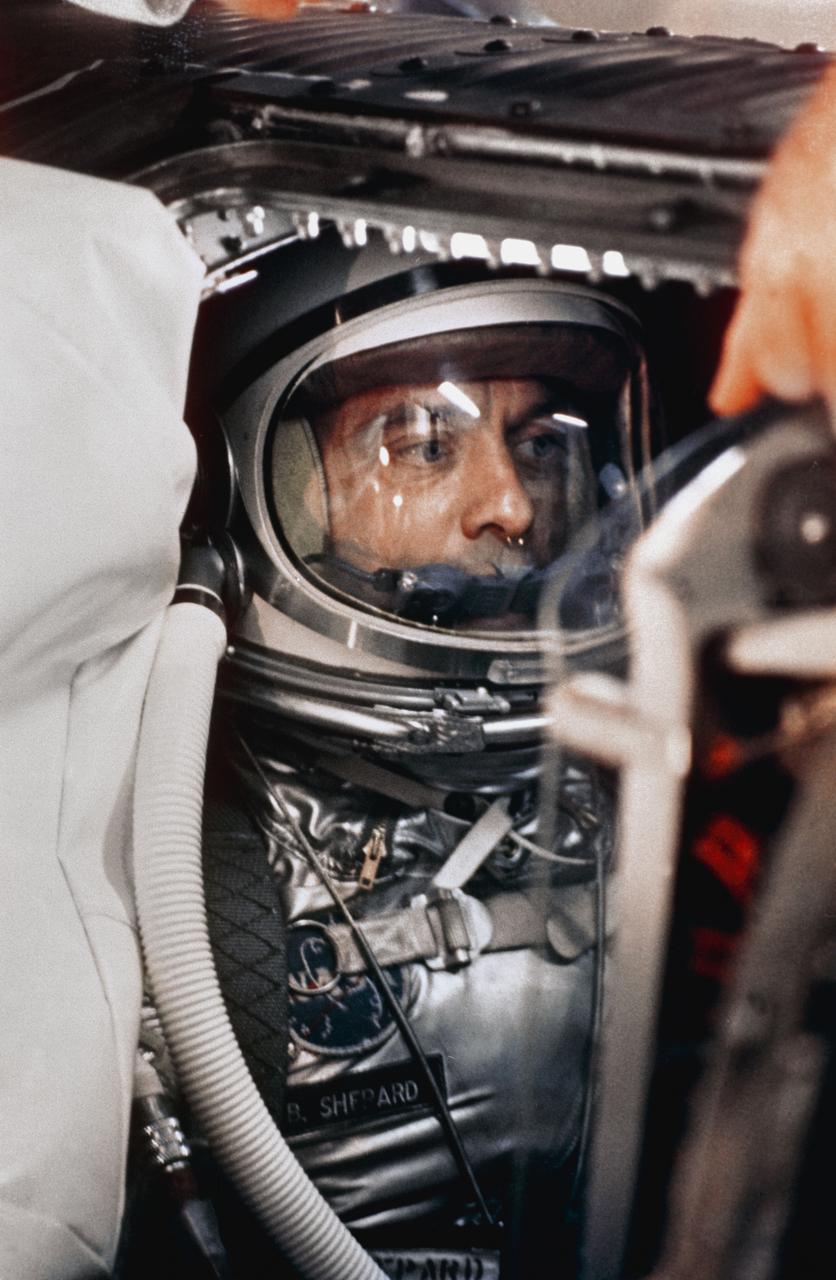
S88-31374 (29 April 1961) --- A close-up of astronaut Alan B. Shepard Jr. in his space suit with his helmet on inside the Mercury capsule. He is undergoing a flight simulation test with the capsule mated to the Redstone booster. This will be the first attempt to put a man into space by the U.S. aboard a Mercury spacecraft, launched atop a Redstone rocket. The suborbital trajectory will be down the Atlantic Missile Range. Photo credit: NASA or National Aeronautics and Space Administration

S88-31388 (8 May 1961) --- Astronaut Alan B. Shepard Jr. (center), along with wife Louise, waves to a crowd outside the U.S. Capitol building. Shepard, Mercury-Redstone 3 astronaut, had earlier briefed Congress on the first U.S. manned spaceflight -- a 15-minute suborbital mission on May 5, 1961, aboard the Freedom 7 capsule. (NASA Hq. Photo No., MR3-49) Photo credit: NASA or National Aeronautics and Space Administration
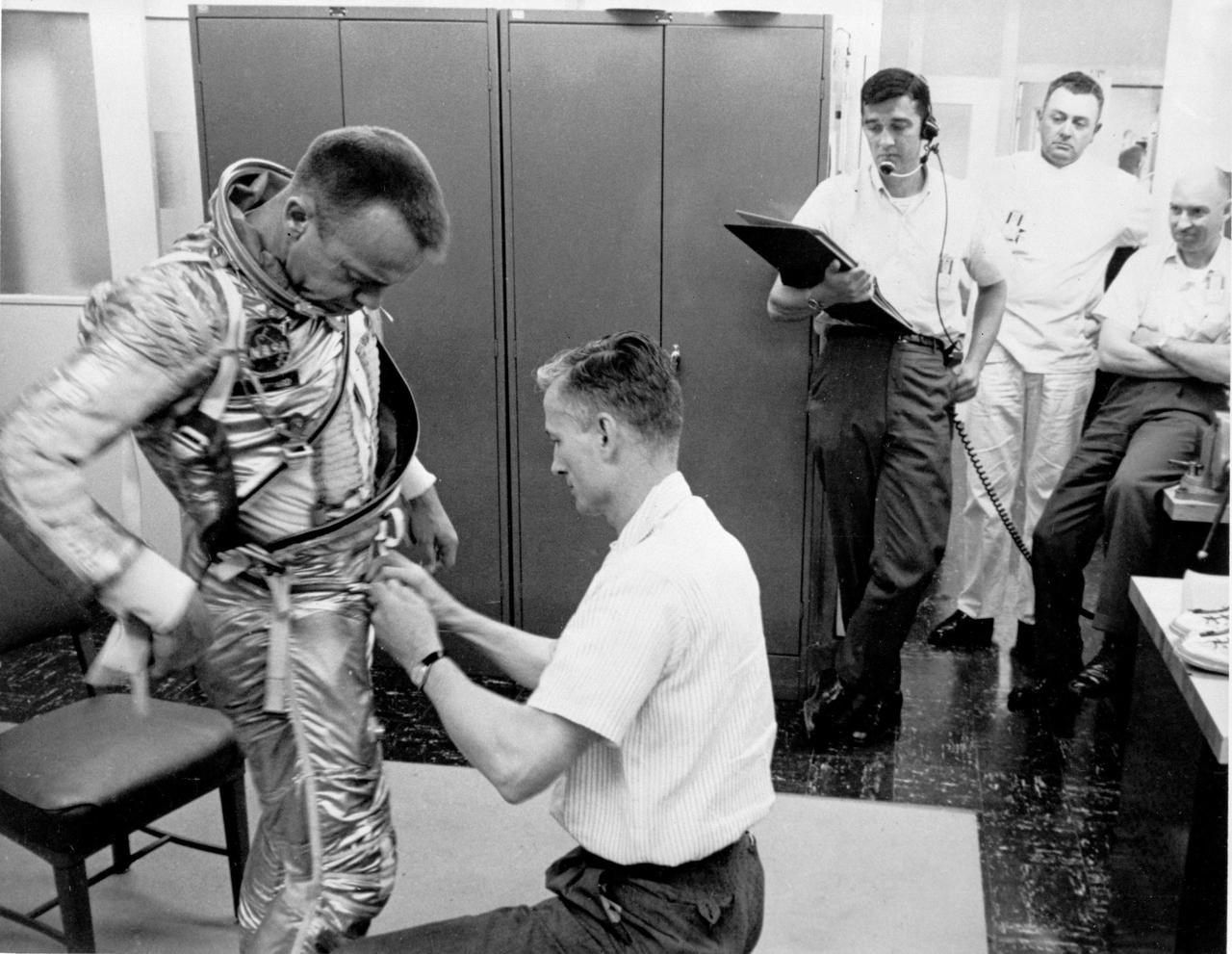
KENNEDY SPACE CENTER, FLA. - Astronaut Alan B. Shepard is being assisted by a technician in getting into his space suit at 2:45 a.m. this morning, beginning the long countdown of the scheduled launch of the Mercury Redstone. After Astronaut Shepard is suited up, he will travel by van to the Redstone Gantry on Pad 5 and be placed into the Mercury Capsule, called Freedom 7, on top of the Redstone booster rocket. Astronaut Shepard will pilot the first U.S. manned sub-orbital space flight of the Manned Mercury Program.
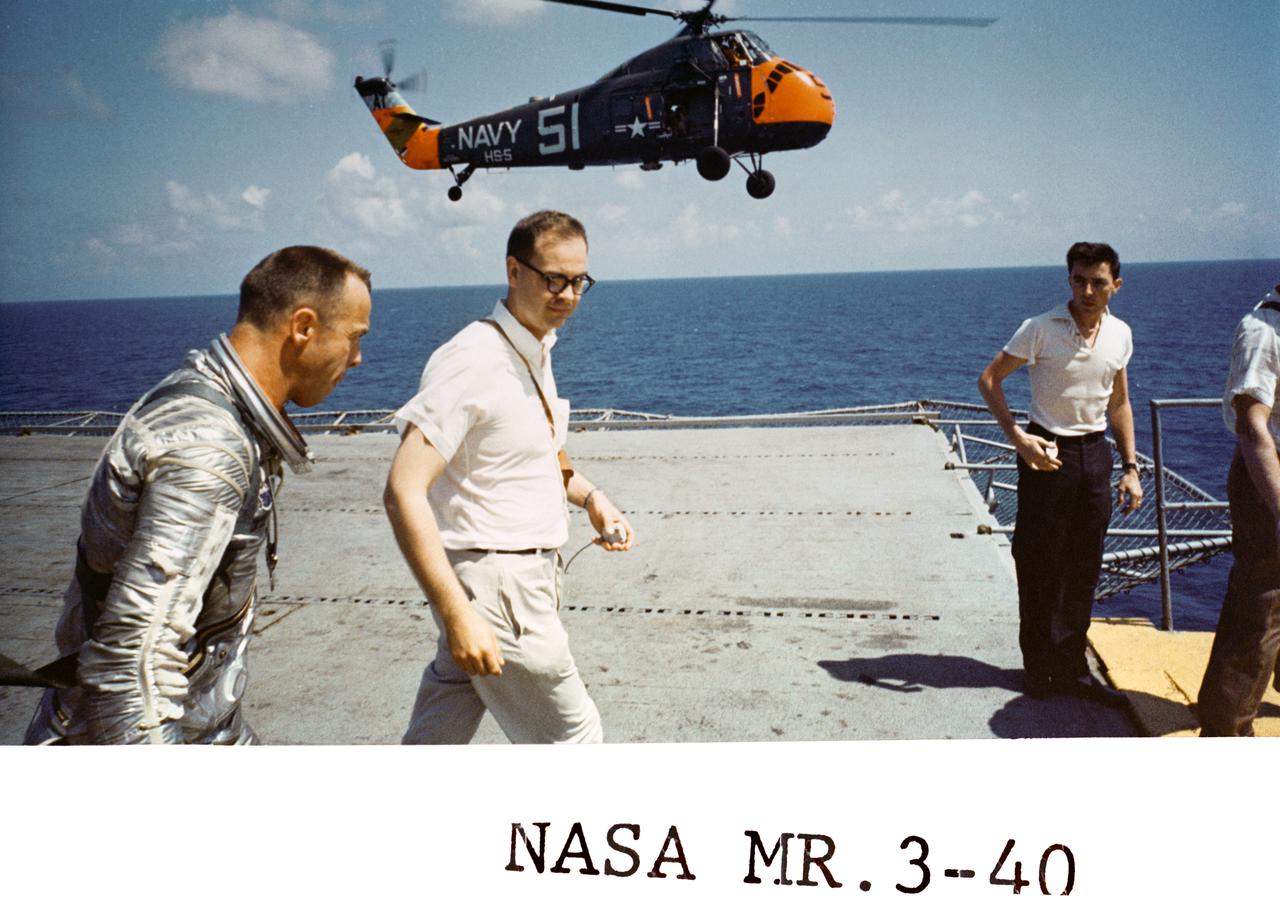
S88-31380 (5 May 1961) --- Astronaut Alan B. Shepard Jr., strides across the deck of the U.S. Navy Carrier Champlain following an inspection of his Freedom 7 capsule. Shepard had just completed the first manned U.S. space mission, a 15-minute suborbital flight. (NASA Hq. Photo No., MR3-40) Photo credit: NASA or National Aeronautics and Space Administration
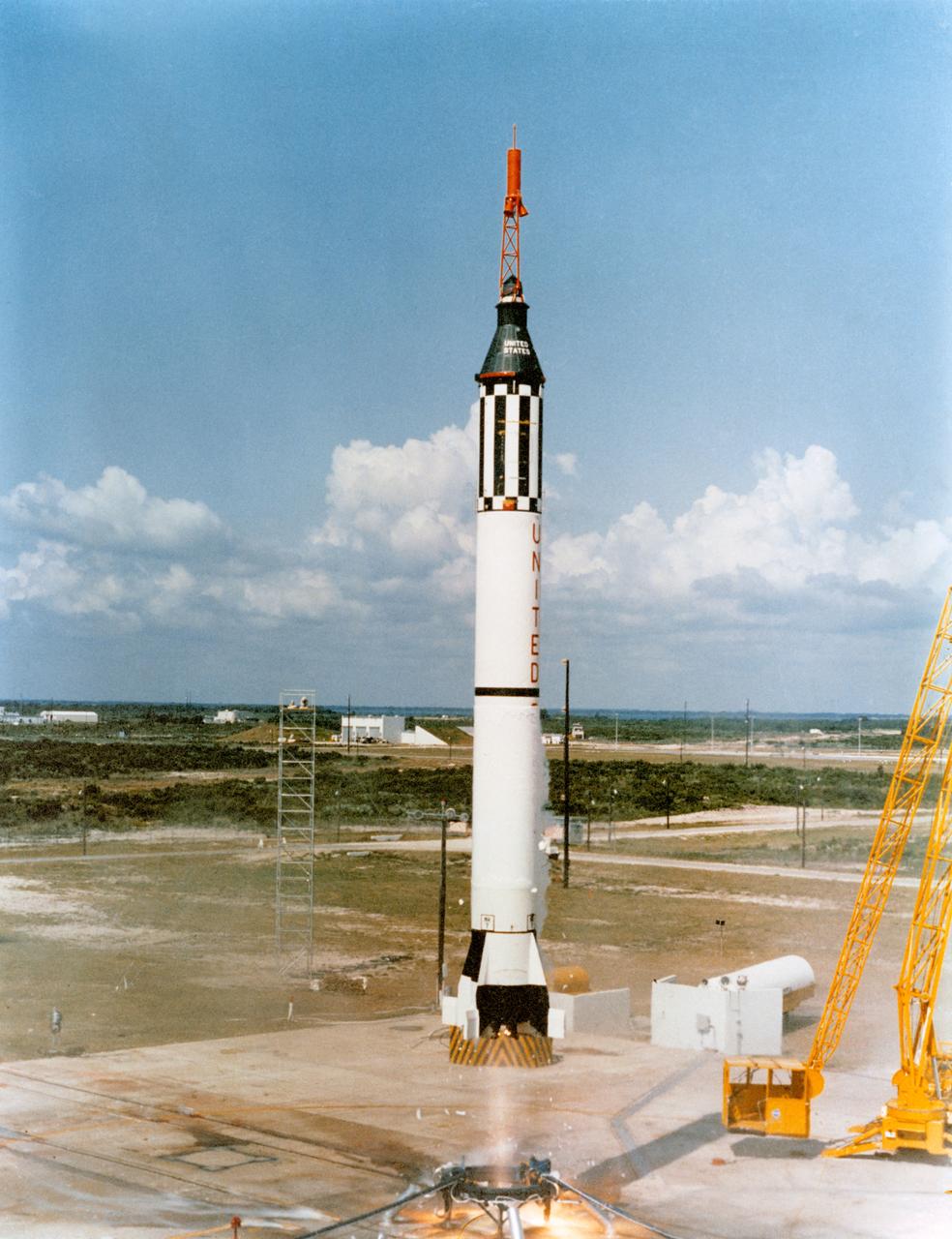
S61-01927 (5 May 1961) --- Mercury-Redstone 3 (MR-3), the United States' first manned spaceflight, is launched from Cape Canaveral on a suborbital mission. Astronaut Alan B. Shepard Jr. was the pilot of the Mercury spacecraft, designated "Freedom 7". The spacecraft attained a maximum speed of 5,180 miles per hour (mph), reached an altitude of 116 1/2 statute miles, and landed 302 statute miles downrange from Cape Canaveral, Florida. Photo credit: NASA or National Aeronautics and Space Administration
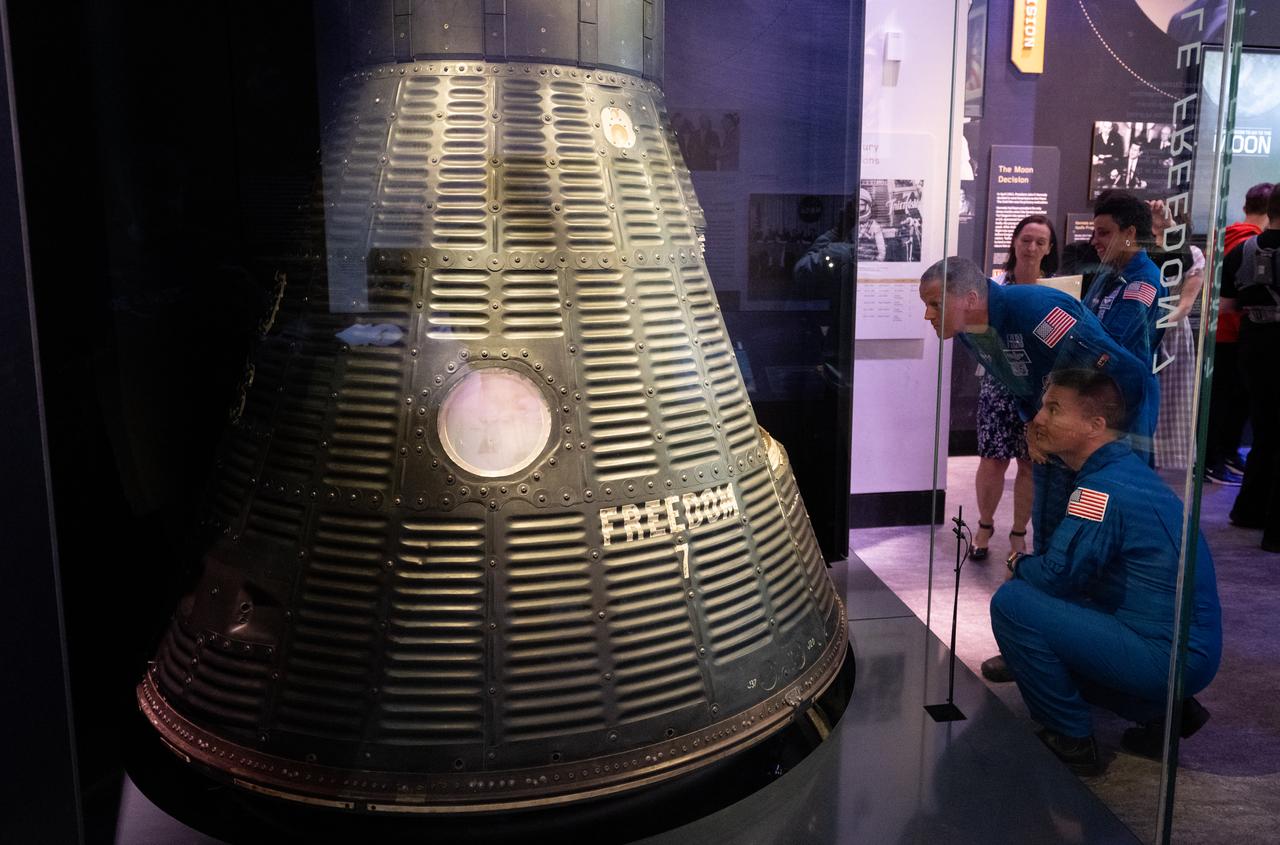
NASA astronauts Kjell Lindgren, Robert Hines, and Jessica Watkins and Smithsonian National Air and Space Museum curator Jennifer Levasseur are seen as they view the Freedom 7 Mercury capsule in the Destination Moon exhibit during a tour, Tuesday, March 28, 2023 at the Smithsonian’s National Air and Space Museum in Washington. Lindgren, Hines, and Watkins spent 170 days in space as part of Expeditions 67 and 68 aboard the International Space Station. Photo Credit: (NASA/Joel Kowsky)
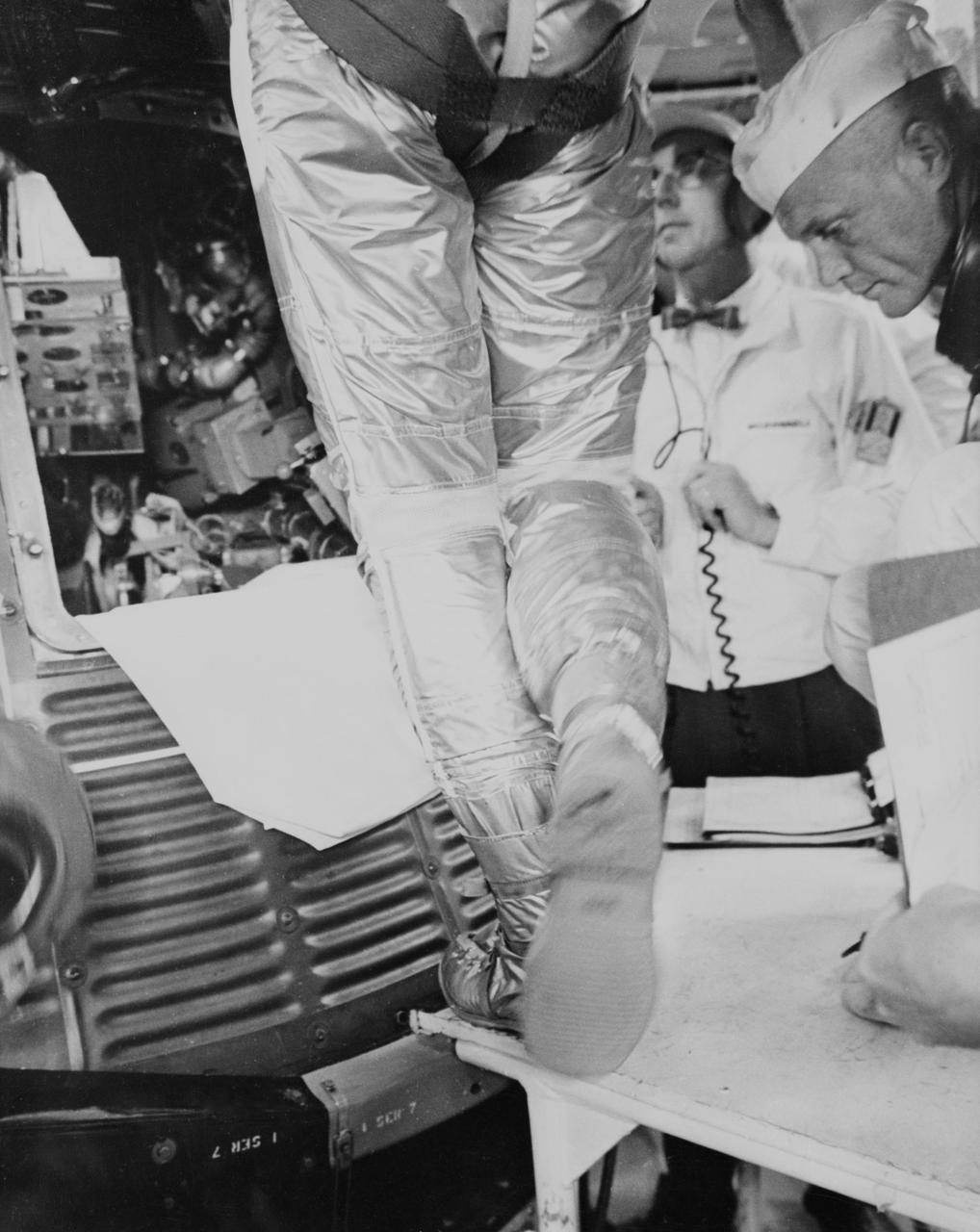
S61-02796 (5 May 1961) --- Rear view of astronaut Alan B. Shepard Jr., in his pressure suit and helmet, as he approaches the Freedom 7 capsule in preparation for ingress before the Mercury-Redstone 3 mission. All that can be seen of the astronaut is his legs. Photo credit: NASA or National Aeronautics and Space Administration
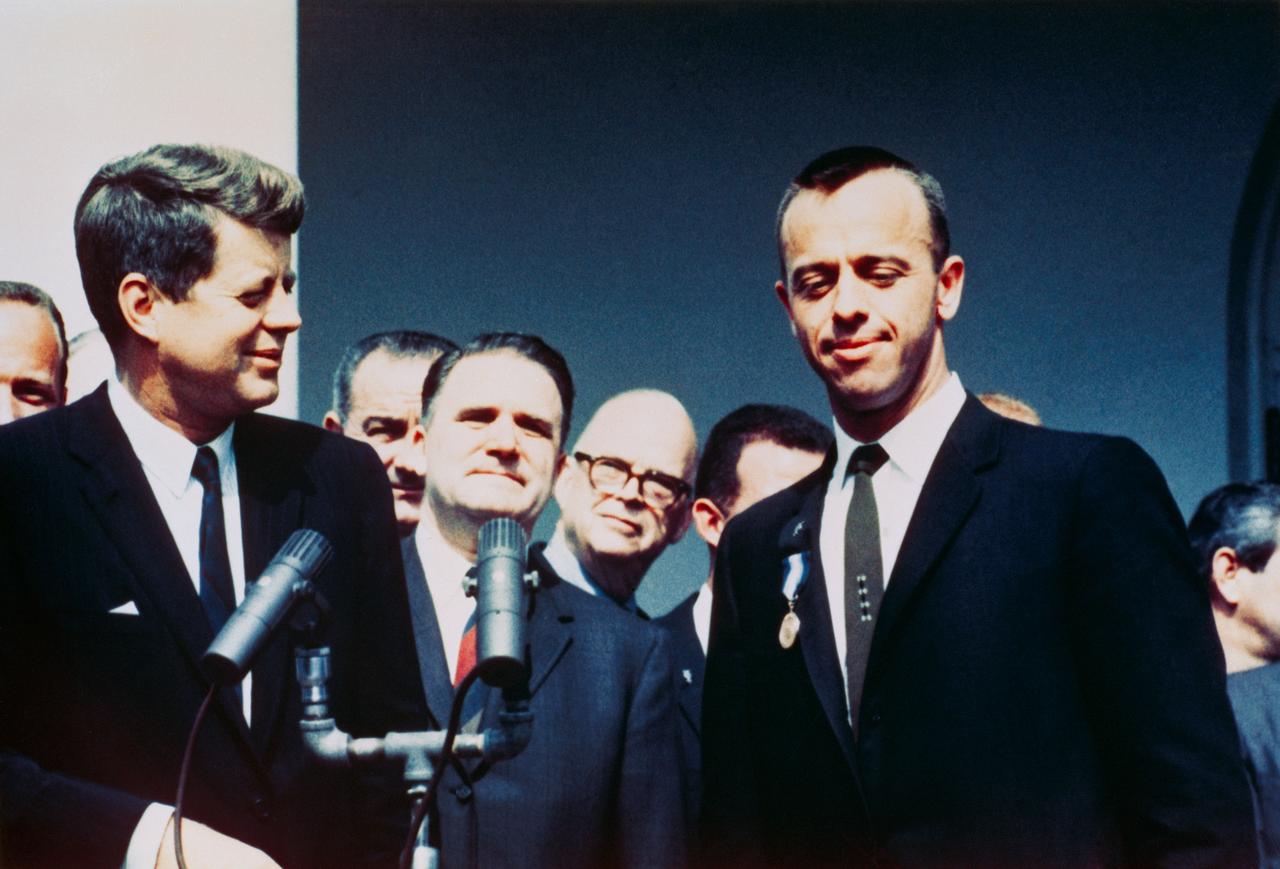
S88-31387 (8 May 1961) --- President John F. Kennedy (left) congratulates NASA's Distinguished Service Medal Award recipient astronaut Alan B. Shepard Jr. in a Rose Garden ceremony on May 8, 1961, at the White House. Vice-President Lyndon B. Johnson, NASA Administrator James E. Webb and several NASA astronauts are in the background. Three days earlier, Shepard made history with a 15-minute suborbital space mission in the Freedom 7, Mercury-Redstone 3 spacecraft. Photo credit: NASA
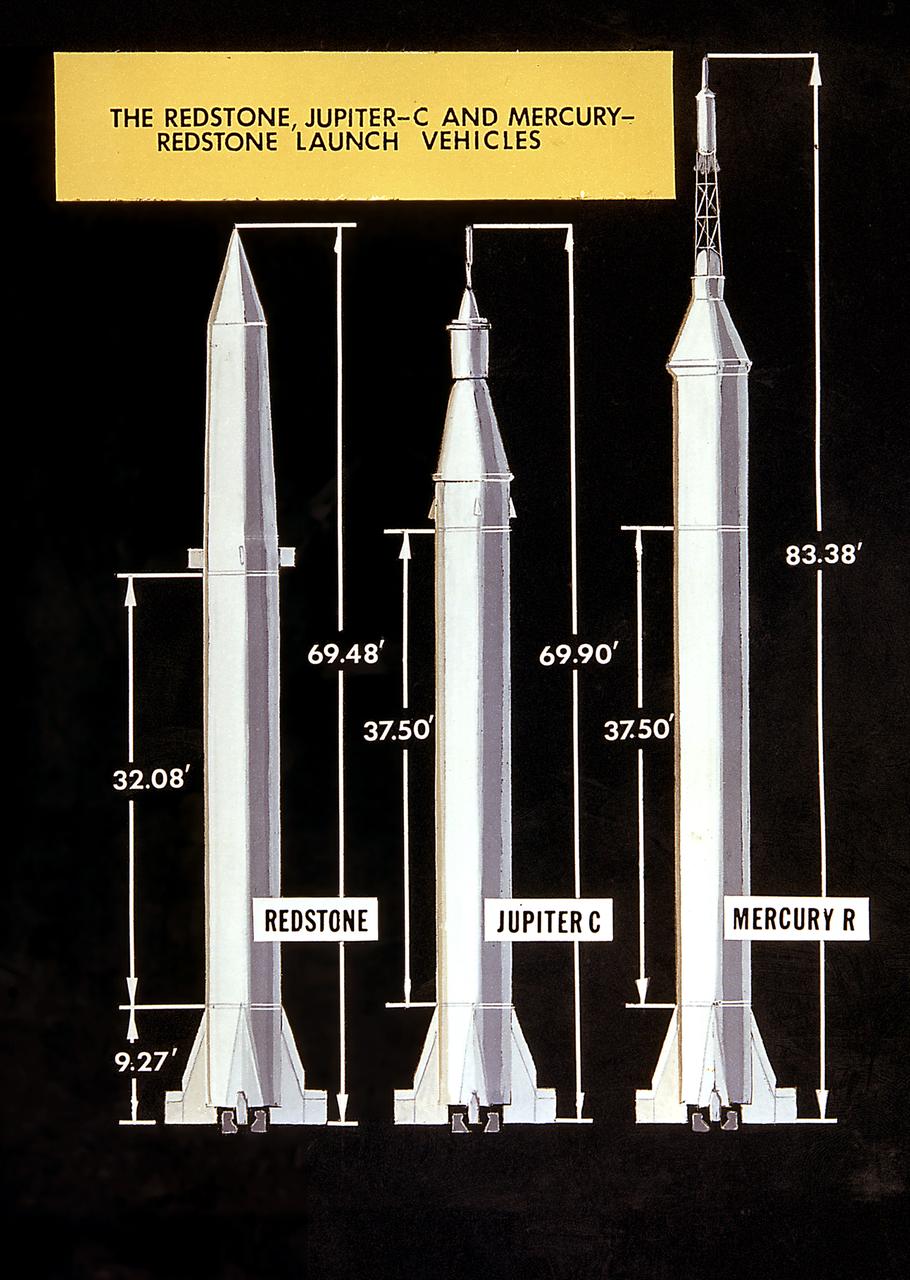
This is a comparison illustration of the Redstone, Jupiter-C, and Mercury Redstone launch vehicles. The Redstone ballistic missile was a high-accuracy, liquid-propelled, surface-to-surface missile. Originally developed as a nose cone re-entry test vehicle for the Jupiter intermediate range ballistic missile, the Jupiter-C was a modification of the Redstone missile and successfully launched the first American Satellite, Explorer-1, in orbit on January 31, 1958. The Mercury Redstone lifted off carrying the first American, astronaut Alan Shepard, in his Mercury spacecraft Freedom 7, on May 5, 1961.
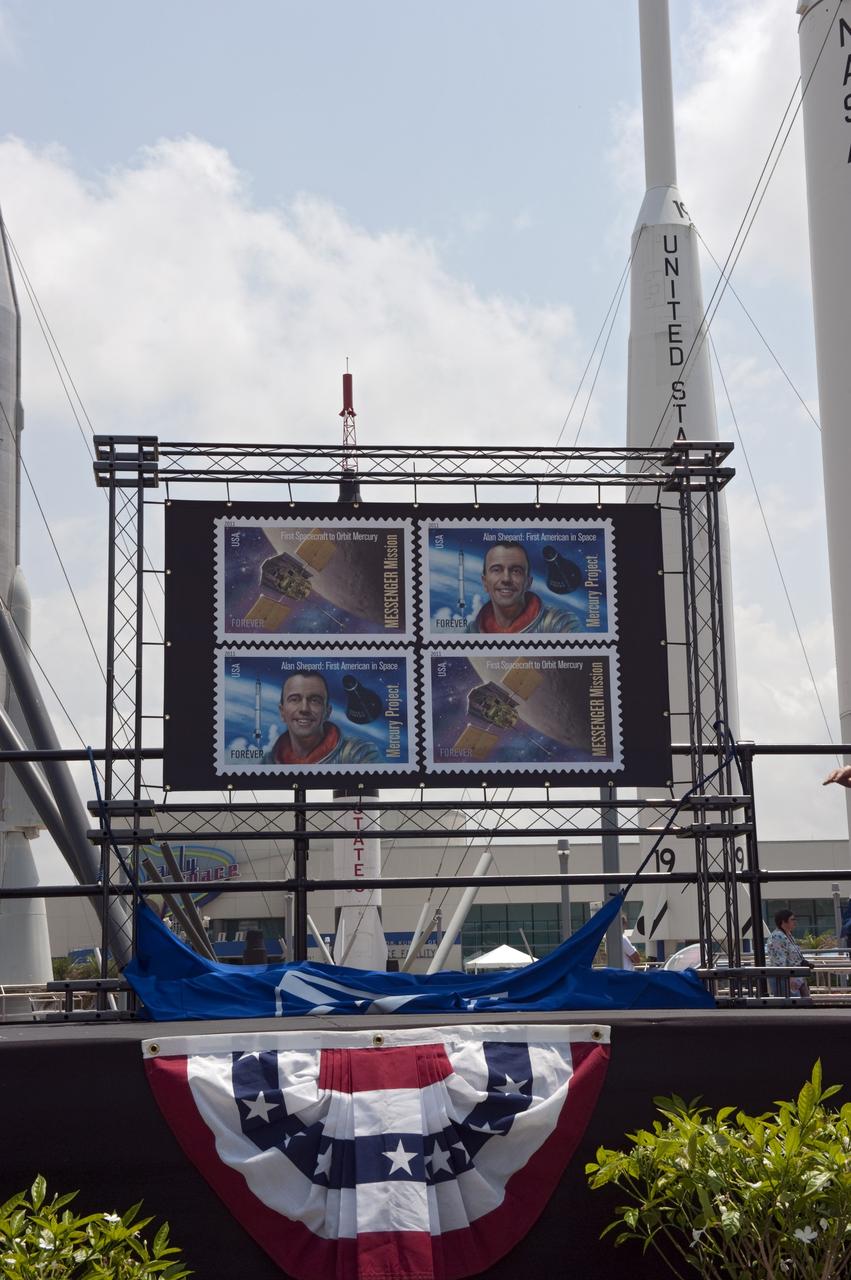
CAPE CANAVERAL, Fla. -- In the Rocket Garden at NASA's Kennedy Space Center Visitor Complex in Florida, a United States Postal Service poster reveals the two new stamps that commemorate the 50th anniversary of human spaceflight. One stamp commemorates NASA's Project Mercury and Alan Shepard's historic launch on May 5, 1961, aboard the spacecraft Freedom 7. The second stamp honors NASA's MESSENGER, which reached Mercury in March to become the first spacecraft to orbit the planet. The two missions frame a remarkable 50-year period in which America advanced space exploration through more than 1,500 crewed and uncrewed flights. Photo credit: NASA/Kim Shiflett
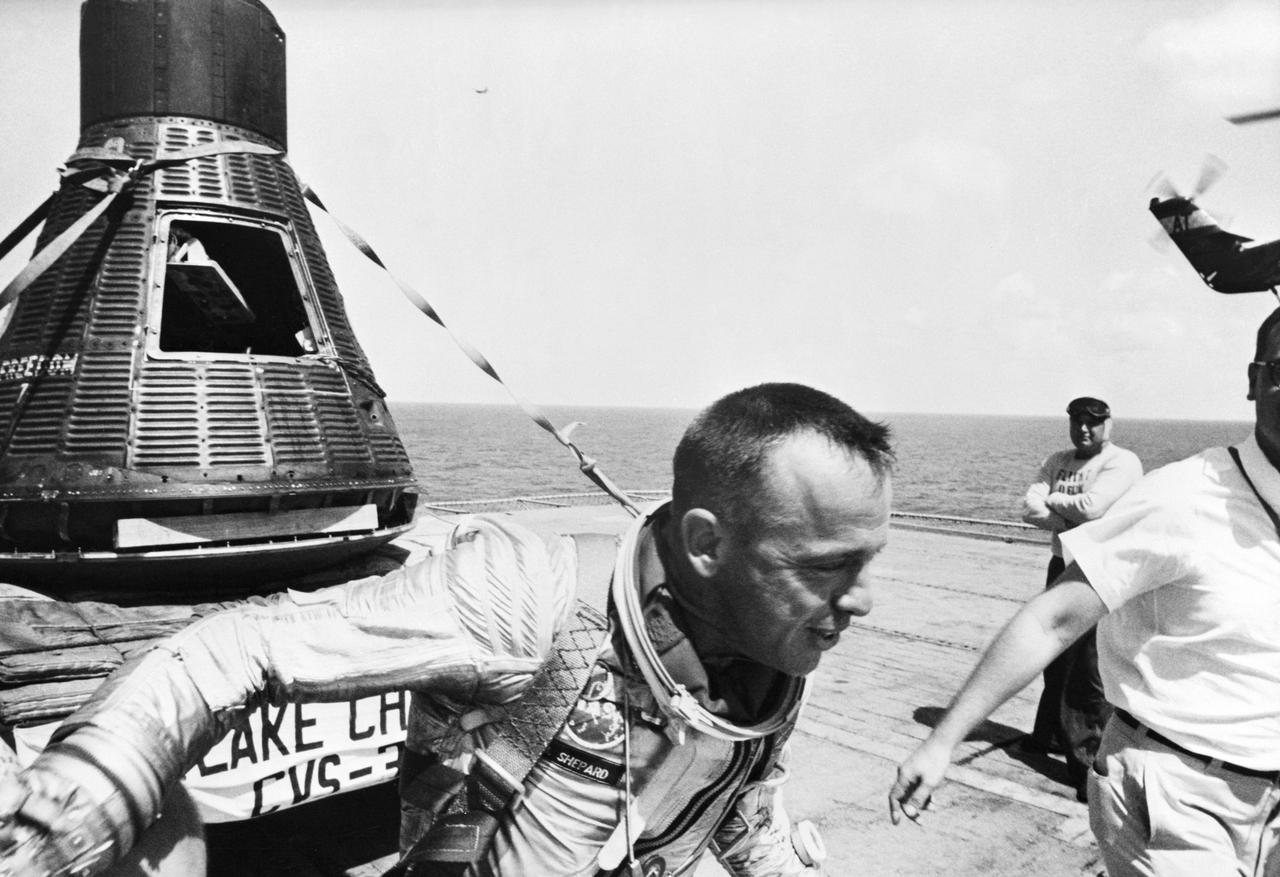
S61-02727 (5 May 1961) --- Astronaut Alan B. Shepard is seen on the deck of the USS Lake Champlain after the recovery of his Mercury capsule in the western Atlantic Ocean. Shepard and the Mercury spacecraft designated the ?Freedom 7? were flown to the deck of the recovery ship within 11 minutes of splashdown. MR-3 was the United States? first manned space mission. The spacecraft attained a maximum speed of 5,180 miles per hour, reached an altitude of 116 1/2 statute miles, and landed 302 statute miles downrange from Cape Canaveral, Florida. The suborbital mission lasted 15 minutes and 22 seconds. Photo credit: NASA or National Aeronautics and Space Administration
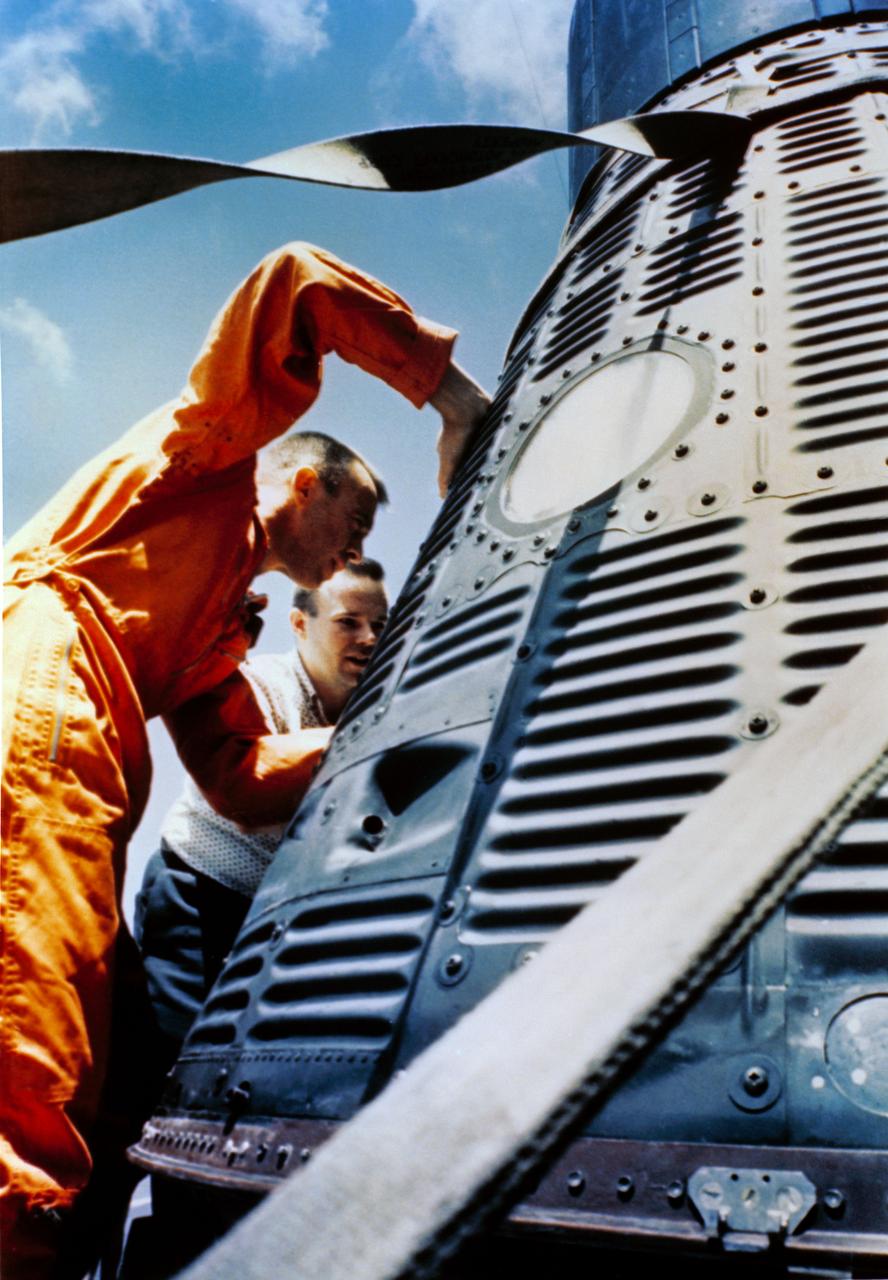
S88-31384 (5 May 1961) --- Astronaut Alan B. Shepard Jr., Mercury-Redstone 3 (MR-3) pilot, is pictured near his Freedom 7 capsule during a postflight inspection aboard the U.S. Navy Carrier Champlain after the recovery of his Mercury vehicle. Earlier Shepard had completed the historical 15-minute suborbital Mercury-Redstone 3 mission, marking the U.S. inaugural manned space mission. (NASA Hq. No. 61-MR3-107 or MR3-44) Photo credit: NASA or National Aeronautics and Space Administration
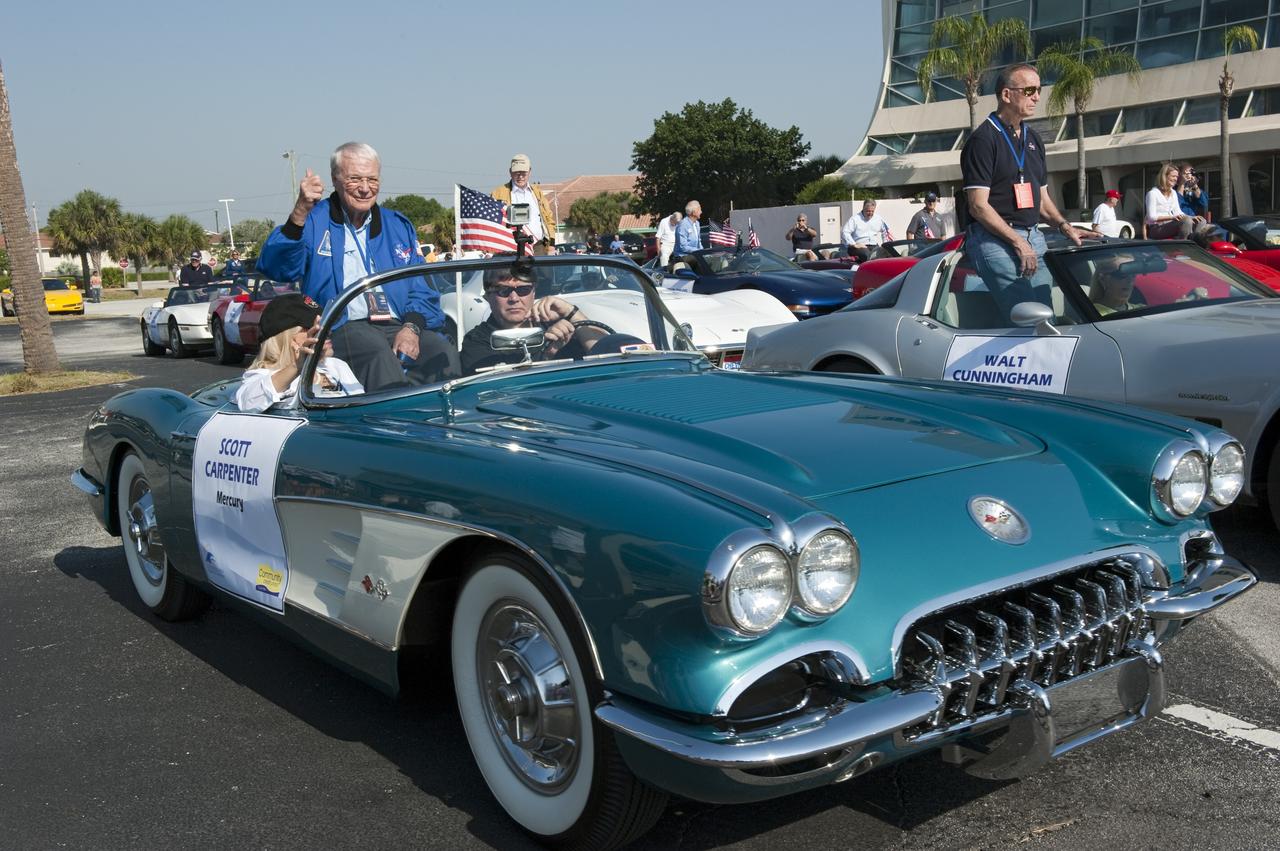
Cape Canaveral, Fla. -- Retired Mercury 7 astronaut Scott Carpenter gives a thumbs-up to spectators from a Chevrolet Corvette after a commemorative parade in Cocoa Beach, Florida. A group of current and retired NASA astronauts gathered in Cocoa Beach to commemorate NASA’s 50 years of accomplishments and to honor astronaut Alan Shepard’s Mercury/Freedom 7 suborbital flight May 5, 1961.The event was marked by a parade, with the astronauts riding in a fleet of Chevrolet Corvettes that corresponded with the time period of their space missions. Members of the Cape Kennedy Corvette Club, a group established in 1967, escorted almost two dozen astronauts or their family representatives in club members' cars. The Corvette parade started at the glass bank building, at 9:34 a.m. EDT, the same time Shepard launched into space. Photo credit: NASA/Kim Shiflett
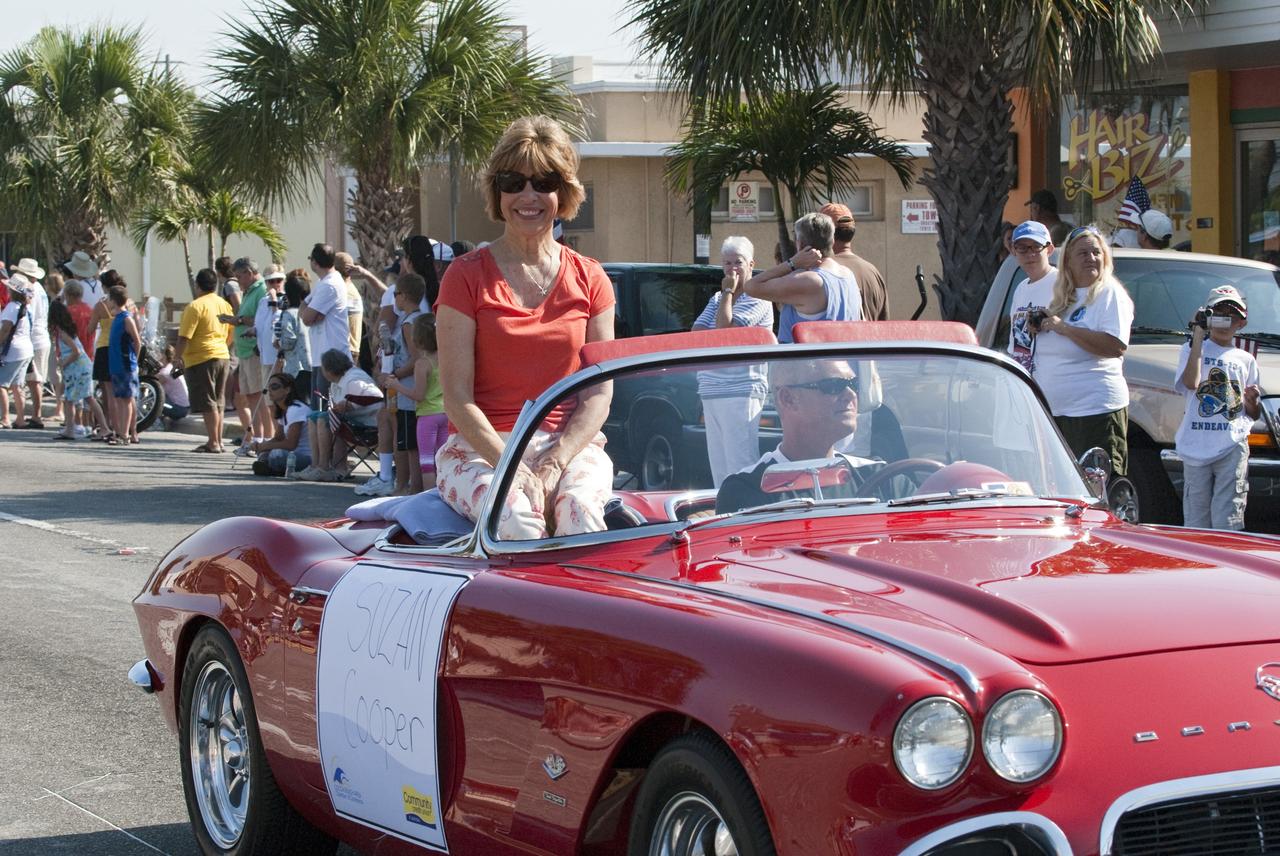
Cape Canaveral, Fla. – Suzan Cooper, representing her late husband Mercury 7 astronaut Gordon Cooper, waves to spectators from a vintage Chevrolet Corvette during a commemorative parade in Cocoa Beach, Fla. A group of current and retired NASA astronauts gathered in Cocoa Beach to commemorate NASA’s 50 years of accomplishments and to honor astronaut Alan Shepard’s Mercury/Freedom 7 suborbital flight May 5, 1961.The event was marked by a parade, with the astronauts riding in a fleet of Chevrolet Corvettes that corresponded with the time period of their space missions. Members of the Cape Kennedy Corvette Club, a group established in 1967, escorted almost two dozen astronauts or their family representatives in club members' cars. The Corvette parade started at the glass bank building, at 9:34 a.m. EDT, the same time Shepard launched into space. Photo credit: NASA/Kim Shiflett
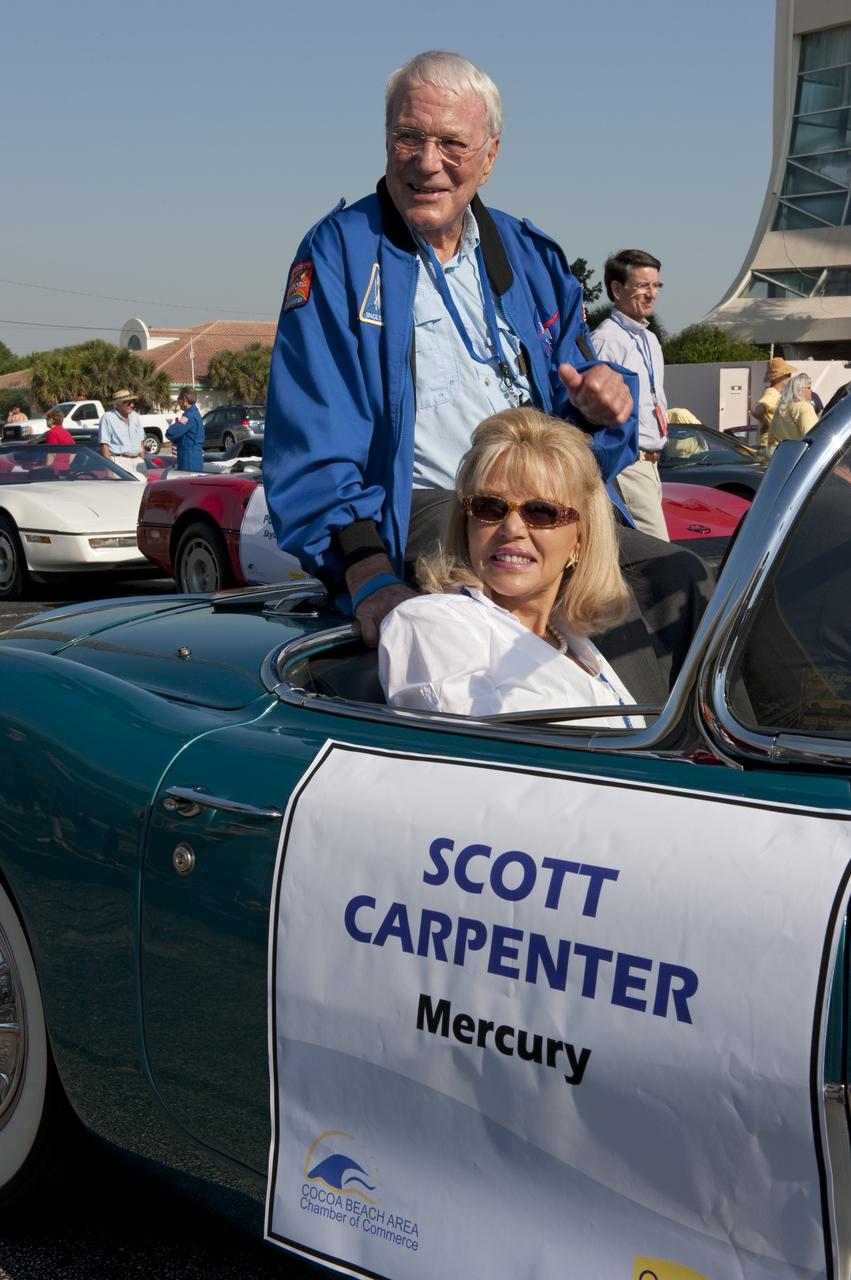
Cape Canaveral, Fla. -- Retired Mercury 7 astronaut Scott Carpenter is warmly greeted by spectators while sitting in a vintage Chevrolet Corvette after a commemorative parade in Cocoa Beach, Florida. A group of current and retired NASA astronauts gathered in Cocoa Beach to commemorate NASA’s 50 years of accomplishments and to honor astronaut Alan Shepard’s Mercury/Freedom 7 suborbital flight May 5, 1961.The event was marked by a parade, with the astronauts riding in a fleet of Chevrolet Corvettes that corresponded with the time period of their space missions. Members of the Cape Kennedy Corvette Club, a group established in 1967, escorted almost two dozen astronauts or their family representatives in club members' cars. The Corvette parade started at the glass bank building, at 9:34 a.m. EDT, the same time Shepard launched into space. Photo credit: NASA/Kim Shiflett
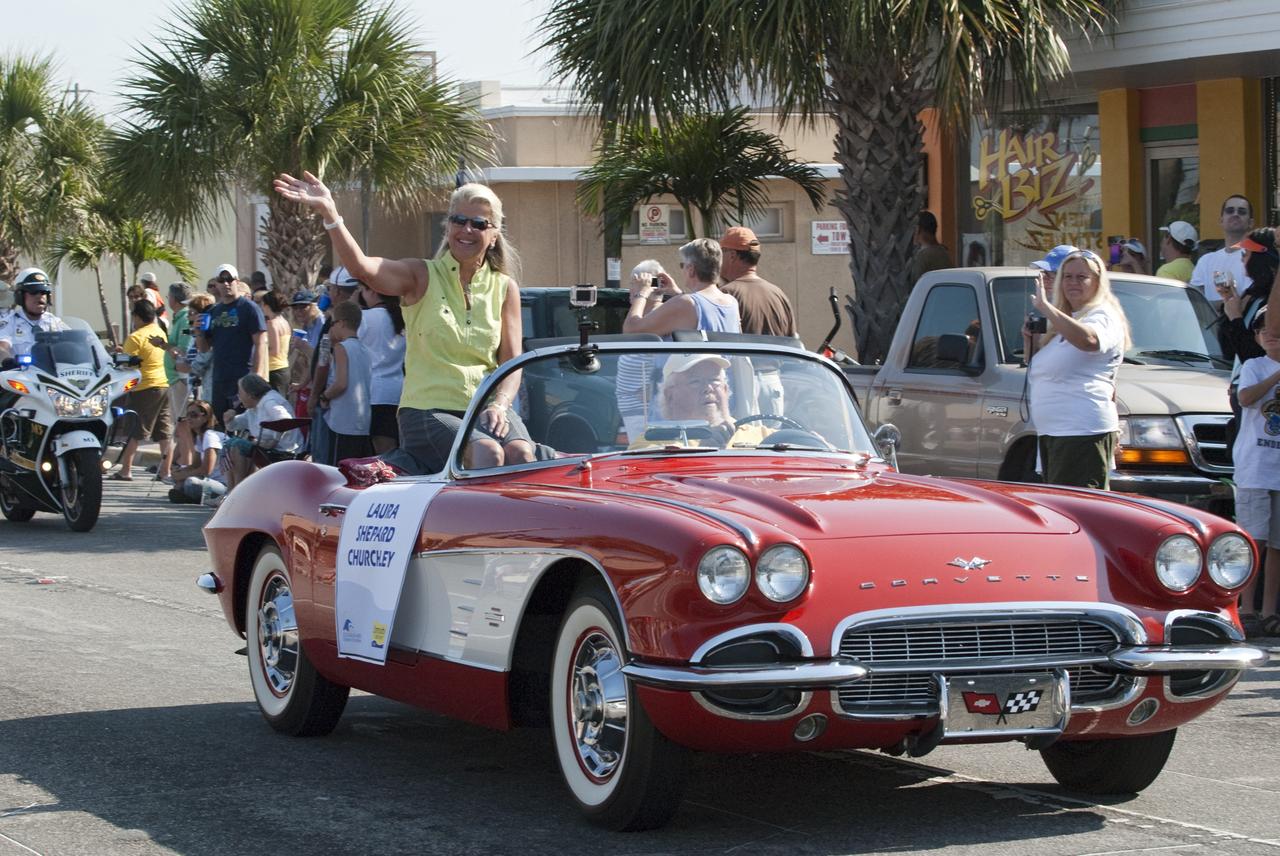
Cape Canaveral, Fla. – Laura Shepard Churchley, representing her late father Mercury 7 astronaut Alan Shepard, waves to spectators from a vintage Chevrolet Corvette during a commemorative parade in Cocoa Beach, Fla. A group of current and retired NASA astronauts gathered in Cocoa Beach to commemorate NASA’s 50 years of accomplishments and to honor astronaut Alan Shepard’s Mercury/Freedom 7 suborbital flight May 5, 1961.The event was marked by a parade, with the astronauts riding in a fleet of Chevrolet Corvettes that corresponded with the time period of their space missions. Members of the Cape Kennedy Corvette Club, a group established in 1967, escorted almost two dozen astronauts or their family representatives in club members' cars. The Corvette parade started at the glass bank building, at 9:34 a.m. EDT, the same time Shepard launched into space. Photo credit: NASA/Kim Shiflett
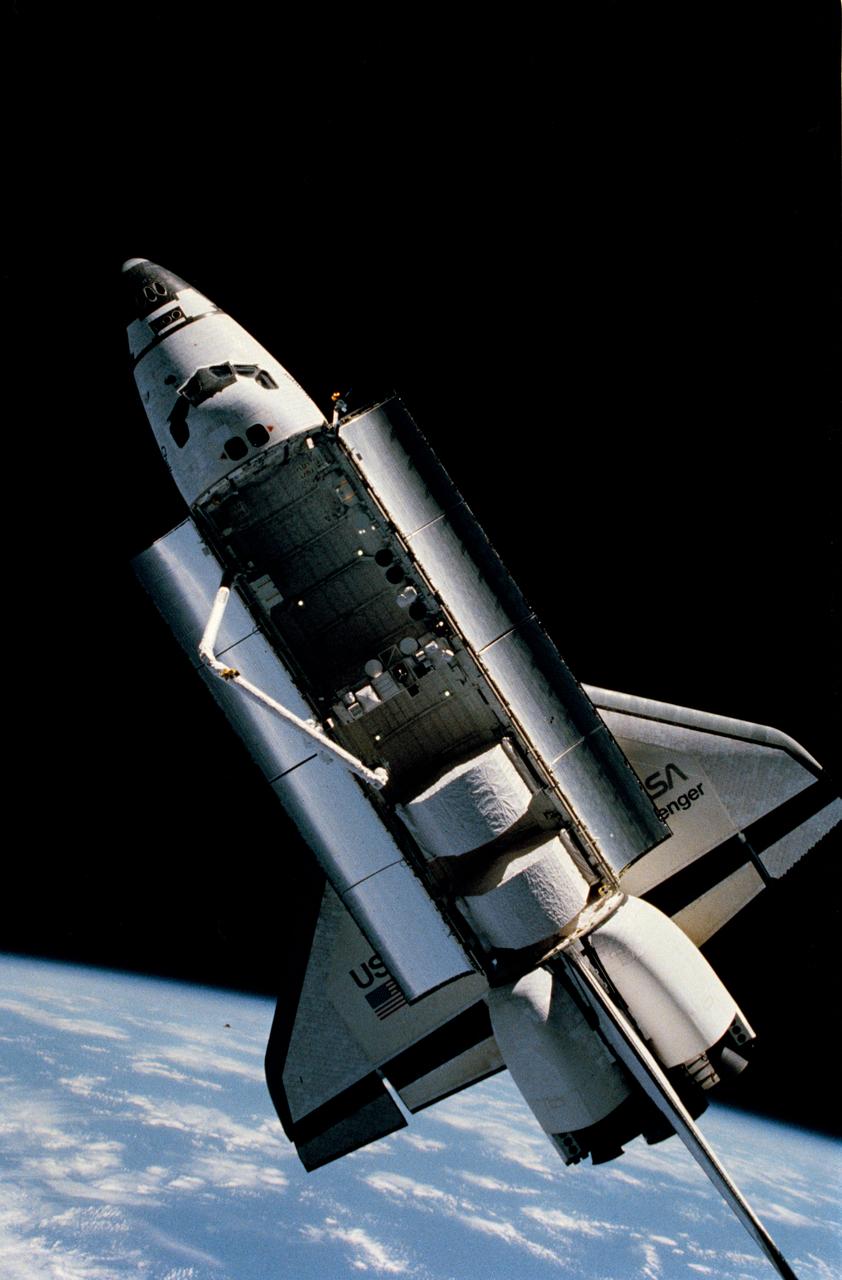
S84-27020 (7 Feb 1984) --- A fixed camera on astronaut Bruce McCandless II's helmet recorded this rare scene of the Space Shuttle Challenger some 50 to 60 meters away during a history-making extravehicular activity (EVA), February 7, 1984. The Shuttle Pallet Satellite (SPAS-01A) is configured mid-cargo bay. Astronaut Robert L. Stewart, standing beneath the Remote Manipulator System (RMS) arm, later donned the same Manned Maneuvering Unit (MMU) which afforded McCandless the freedom of movement to record this image. Also visible in the cargo bay are the support stations for the two MMU back-packs, the sunshields for the Palapa B and Westar VI Satellites, KU-Band antenna and a number of Getaway Special (GAS) canisters.
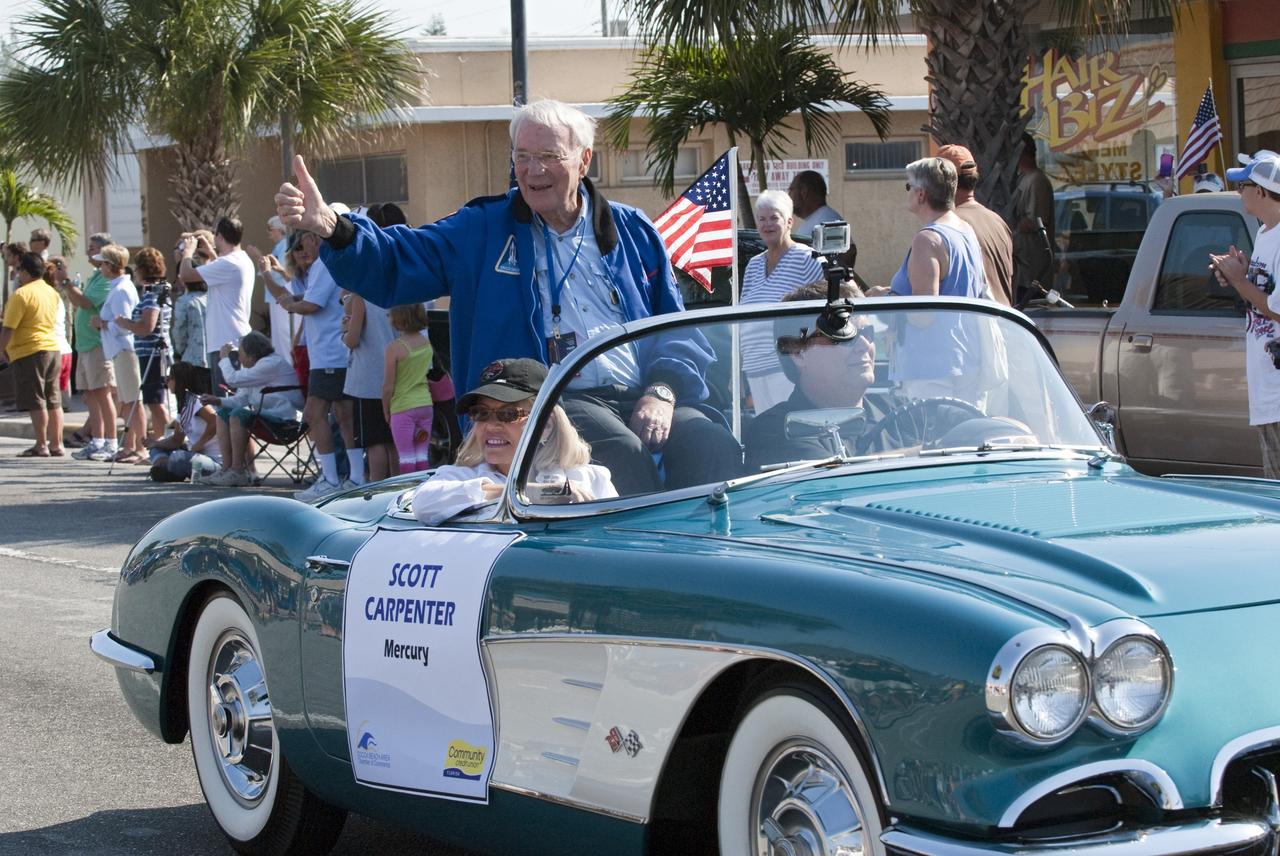
Cape Canaveral, Fla. – Retired Mercury 7 astronaut Scott Carpenter waves to spectators from a vintage Chevrolet Corvette during a commemorative parade in Cocoa Beach, Fla. A group of current and retired NASA astronauts gathered in Cocoa Beach to commemorate NASA’s 50 years of accomplishments and to honor astronaut Alan Shepard’s Mercury/Freedom 7 suborbital flight May 5, 1961.The event was marked by a parade, with the astronauts riding in a fleet of Chevrolet Corvettes that corresponded with the time period of their space missions. Members of the Cape Kennedy Corvette Club, a group established in 1967, escorted almost two dozen astronauts or their family representatives in club members' cars. The Corvette parade started at the glass bank building, at 9:34 a.m. EDT, the same time Shepard launched into space. Photo credit: NASA/Kim Shiflett
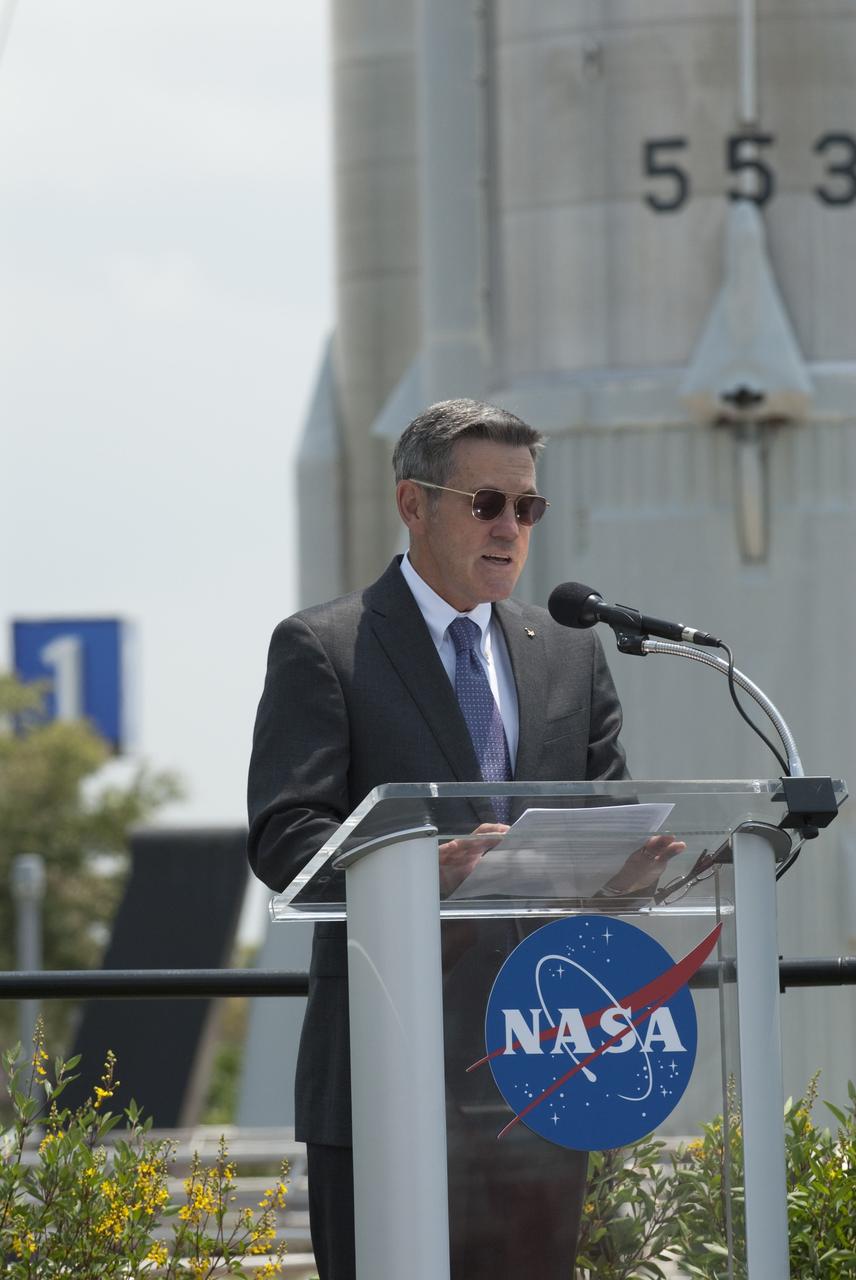
CAPE CANAVERAL, Fla. -- In the Rocket Garden at NASA's Kennedy Space Center Visitor Complex in Florida, Center Director Bob Cabana addresses the audience to announce the United States Postal Service unveiling of two new stamps to commemorate the 50th anniversary of human spaceflight. One stamp commemorates NASA's Project Mercury and Alan Shepard's historic launch on May 5, 1961, aboard the spacecraft Freedom 7. The second stamp honors NASA's MESSENGER, which reached Mercury in March to become the first spacecraft to orbit the planet. The two missions frame a remarkable 50-year period in which America advanced space exploration through more than 1,500 crewed and uncrewed flights. Photo credit: NASA/Kim Shiflett
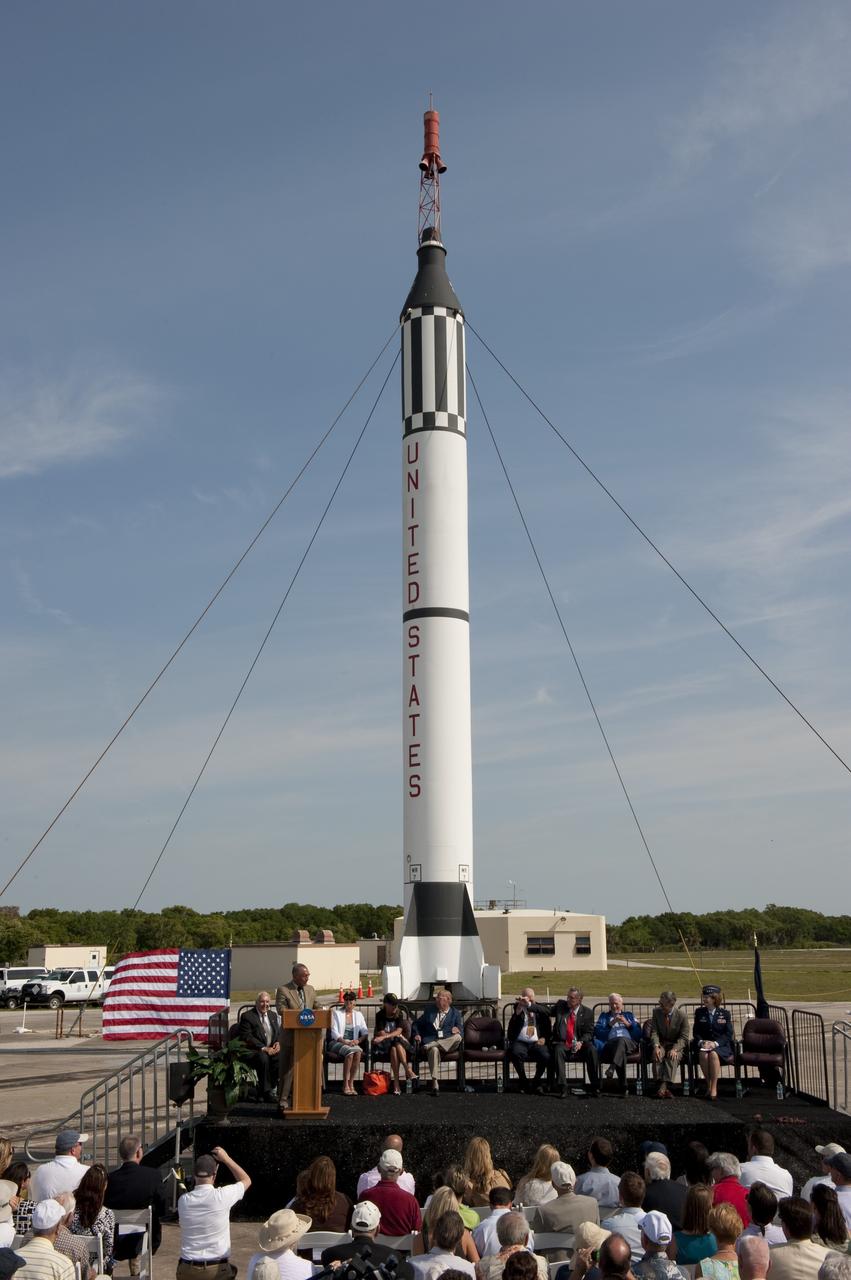
CAPE CANAVERAL, Fla. -- NASA Administrator Charlie Bolden addresses the audience during a celebration at Complex 5/6 on Cape Canaveral Air Force Station in Florida. The celebration was held at the launch site of the first U.S. manned spaceflight May 5, 1961, to mark the 50th anniversary of the flight. Fifty years ago, astronaut Alan Shepard lifted off inside the Mercury capsule, "Freedom 7," atop an 82-foot-tall Mercury-Redstone rocket at 9:34 a.m. EST, sending him on a remarkably successful, 15-minute suborbital flight. The event was attended by more than 200 workers from the original Mercury program and included a re-creation of Shepard's flight and recovery, as well as a tribute to his contributions as a moonwalker on the Apollo 14 lunar mission. For more information, visit www.nasa.gov/topics/history/milestones/index.html. Photo credit: NASA/Kim Shiflett
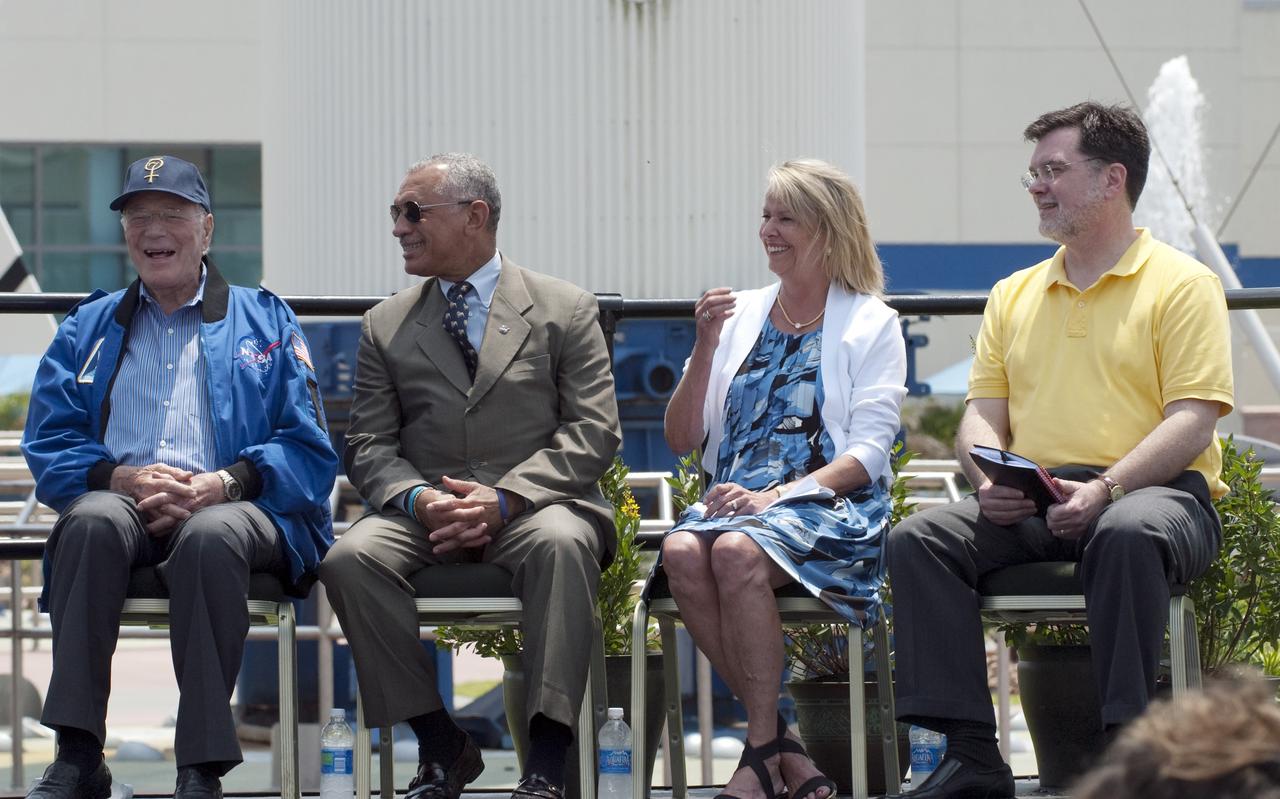
CAPE CANAVERAL, Fla. -- In the Rocket Garden at NASA's Kennedy Space Center Visitor Complex in Florida, Mercury Astronaut Scott Carpenter, NASA Administrator Charlie Bolden, Julie Jenkins, daughter of Mercury Astronaut Alan Shepard, and NASA's Deputy Director for Planetary Science, Jim Adams, enjoy a light moment during an event unveiling two new stamps to commemorate the 50th anniversary of human spaceflight from the United States Postal Service. One stamp commemorates NASA's Project Mercury and Alan Shepard's historic launch on May 5, 1961, aboard the spacecraft Freedom 7. The second stamp honors NASA's MESSENGER, which reached Mercury in March to become the first spacecraft to orbit the planet. The two missions frame a remarkable 50-year period in which America advanced space exploration through more than 1,500 crewed and uncrewed flights. Photo credit: NASA/Kim Shiflett
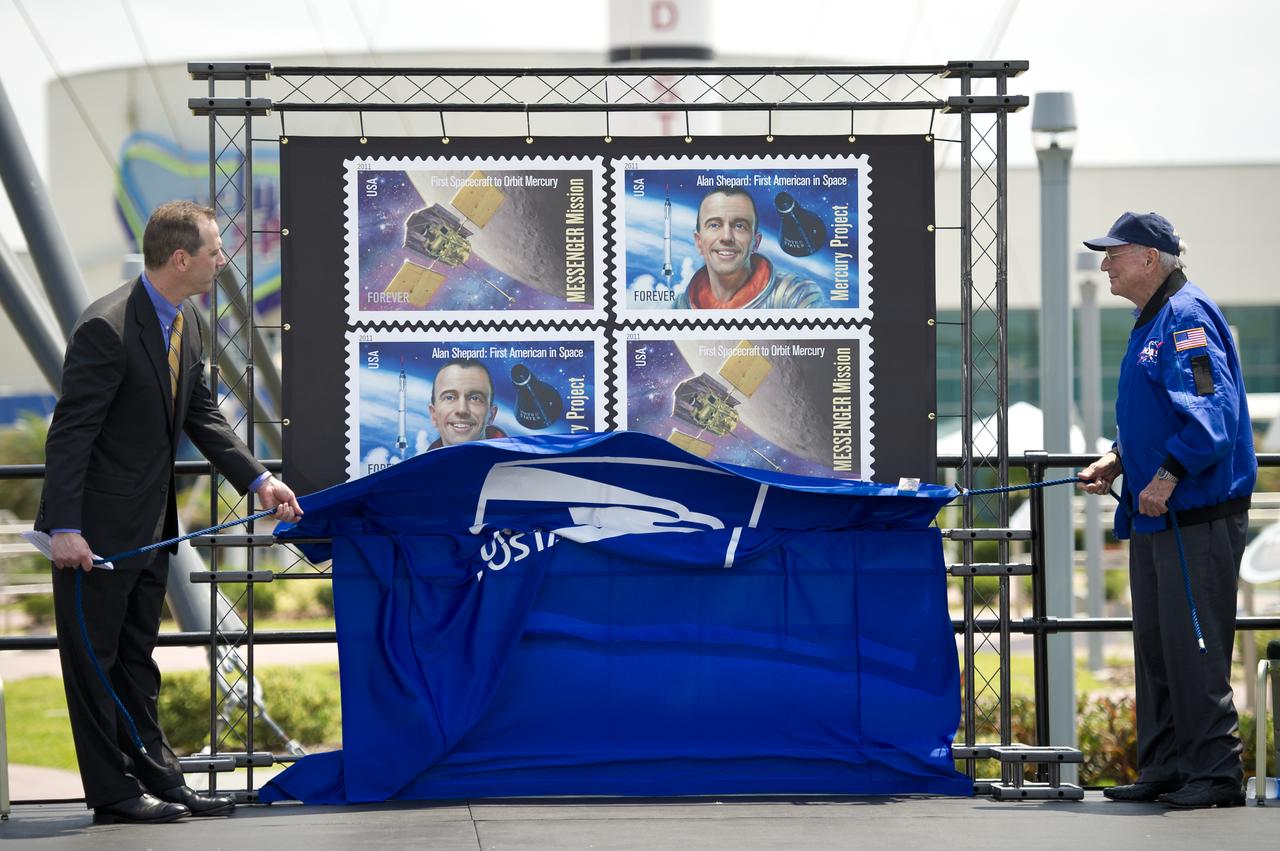
United States Postal Service Vice President of Finance Steve Masse, left, and NASA Mercury Astronaut Scott Carpenter, unveil two USPS stamps to commemorate and celebrate 50 years of US Spaceflight and the MESSENGER program during an event, Wednesday, May 4, 2011 at the NASA Kennedy Space Center in Cape Canaveral, Fla. One stamp commemorates NASA’s Project Mercury, America’s first manned spaceflight program, and NASA astronaut Alan Shepard’s historic flight on May 5, 1961, aboard spacecraft Freedom 7. The other stamp draws attention to NASA’s unmanned MESSENGER mission, a scientific investigation of the planet Mercury. On March 17, 2011, MESSENGER became the first spacecraft to enter into orbit around Mercury. Photo Credit: (NASA/Bill Ingalls)
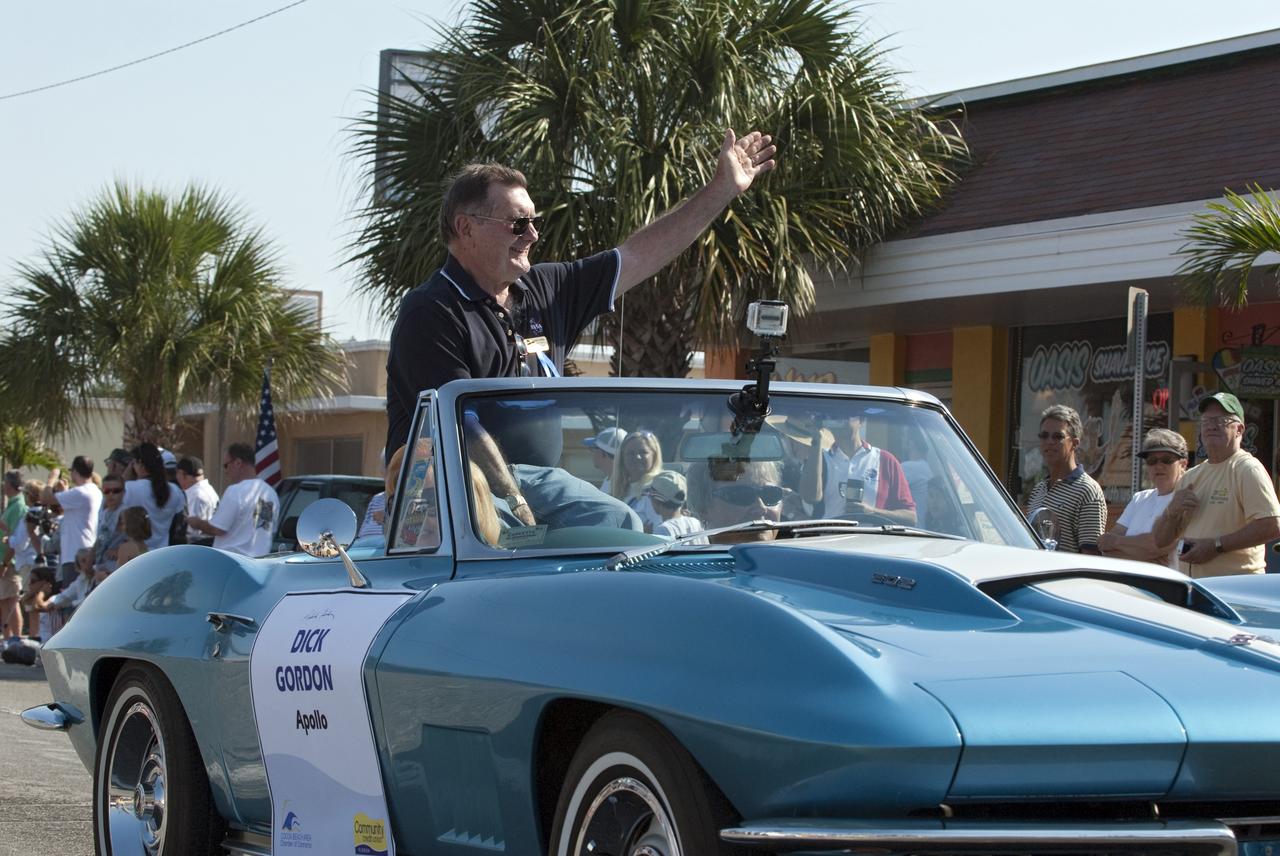
Cape Canaveral, Fla. -- Retired Gemini and Apollo astronaut Dick Gordon waves to spectators from a vintage Chevrolet Corvette during a commemorative parade in Cocoa Beach, Fla. A group of current and retired NASA astronauts gathered in Cocoa Beach to commemorate NASA’s 50 years of accomplishments and to honor astronaut Alan Shepard’s Mercury/Freedom 7 suborbital flight May 5, 1961.The event was marked by a parade, with the astronauts riding in a fleet of Chevrolet Corvettes that corresponded with the time period of their space missions. Members of the Cape Kennedy Corvette Club, a group established in 1967, escorted almost two dozen astronauts or their family representatives in club members' cars. The Corvette parade started at the glass bank building, at 9:34 a.m. EDT, the same time Shepard launched into space. Photo credit: NASA/Kim Shiflett
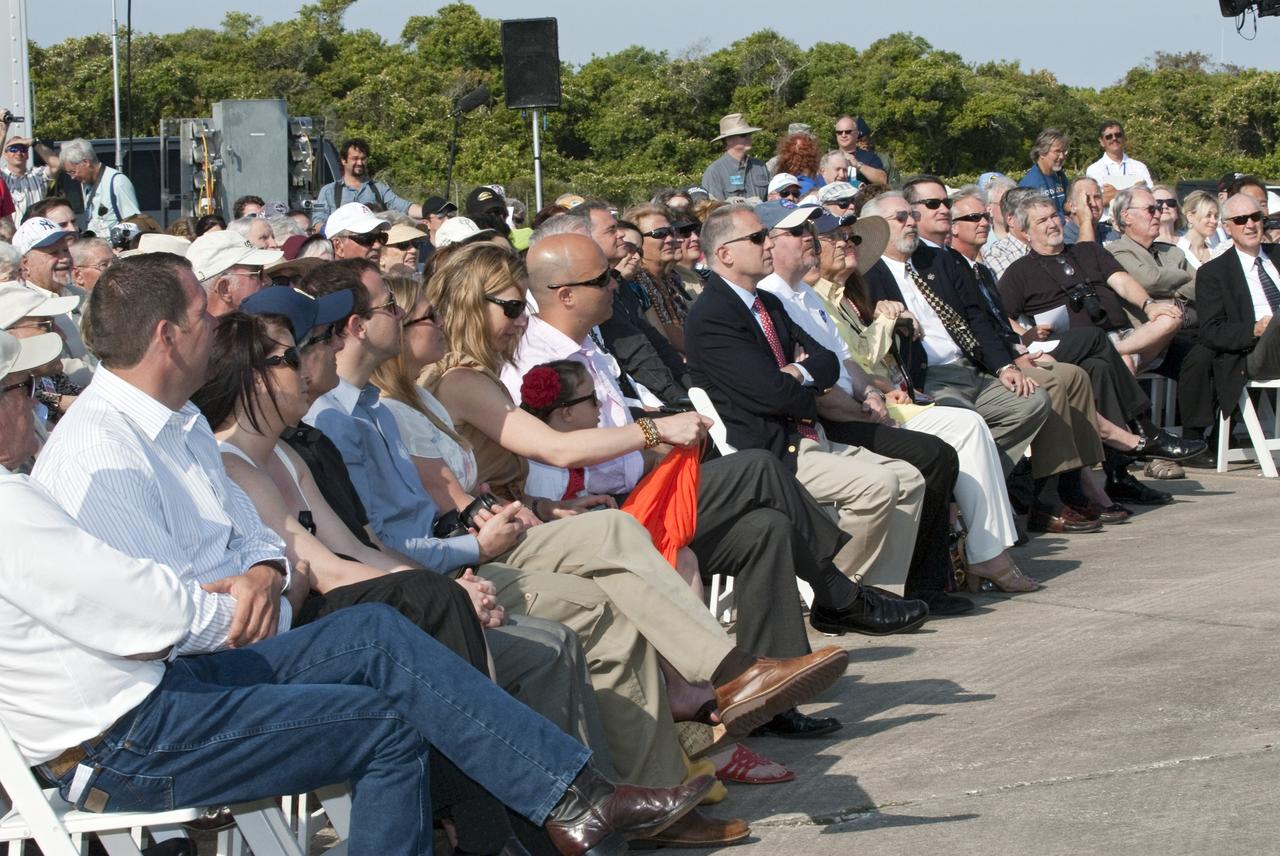
CAPE CANAVERAL, Fla. -- Invited guests attend a celebration at Complex 5/6 on Cape Canaveral Air Force Station in Florida. The celebration was held at the launch site of the first U.S. manned spaceflight May 5, 1961, to mark the 50th anniversary of the flight. Fifty years ago, astronaut Alan Shepard lifted off inside the Mercury capsule, "Freedom 7," atop an 82-foot-tall Mercury-Redstone rocket at 9:34 a.m. EST, sending him on a remarkably successful, 15-minute suborbital flight. The event was attended by more than 200 workers from the original Mercury program and included a re-creation of Shepard's flight and recovery, as well as a tribute to his contributions as a moonwalker on the Apollo 14 lunar mission. For more information, visit www.nasa.gov/topics/history/milestones/index.html. Photo credit: NASA/Kim Shiflett
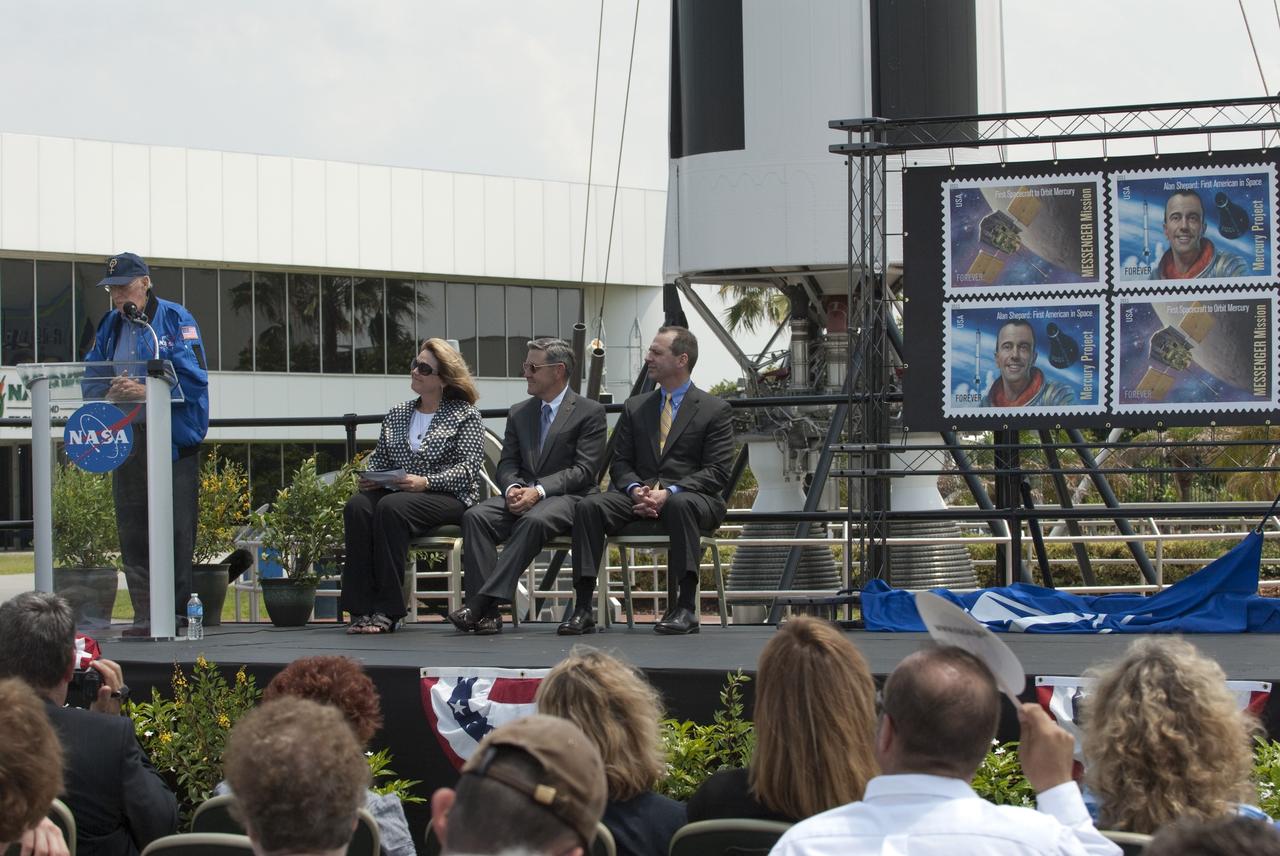
CAPE CANAVERAL, Fla. -- In the Rocket Garden at NASA's Kennedy Space Center Visitor Complex in Florida, Mercury Astronaut Scott Carpenter speaks to the audience gathered for the unveiling of two new stamps that commemorate the 50th anniversary of human spaceflight from the United States Postal Service. Listening to him speak is Director of Education and External Relations for Kennedy, Cheryl Hurst (left), Center Director, Bob Cabana and United States Postal Service Official Steve Massey. One stamp commemorates NASA's Project Mercury and Alan Shepard's historic launch on May 5, 1961, aboard the spacecraft Freedom 7. The second stamp honors NASA's MESSENGER, which reached Mercury in March to become the first spacecraft to orbit the planet. The two missions frame a remarkable 50-year period in which America advanced space exploration through more than 1,500 crewed and uncrewed flights. Photo credit: NASA/Kim Shiflett

CAPE CANAVERAL, Fla. -- In the Rocket Garden at NASA's Kennedy Space Center Visitor Complex in Florida, Mercury Astronaut Scott Carpenter addresses the audience during an event unveiling two new stamps to commemorate the 50th anniversary of human spaceflight from the United States Postal Service. One stamp commemorates NASA's Project Mercury and Alan Shepard's historic launch on May 5, 1961, aboard the spacecraft Freedom 7. The second stamp honors NASA's MESSENGER, which reached Mercury in March to become the first spacecraft to orbit the planet. The two missions frame a remarkable 50-year period in which America advanced space exploration through more than 1,500 crewed and uncrewed flights. Photo credit: NASA/Kim Shiflett
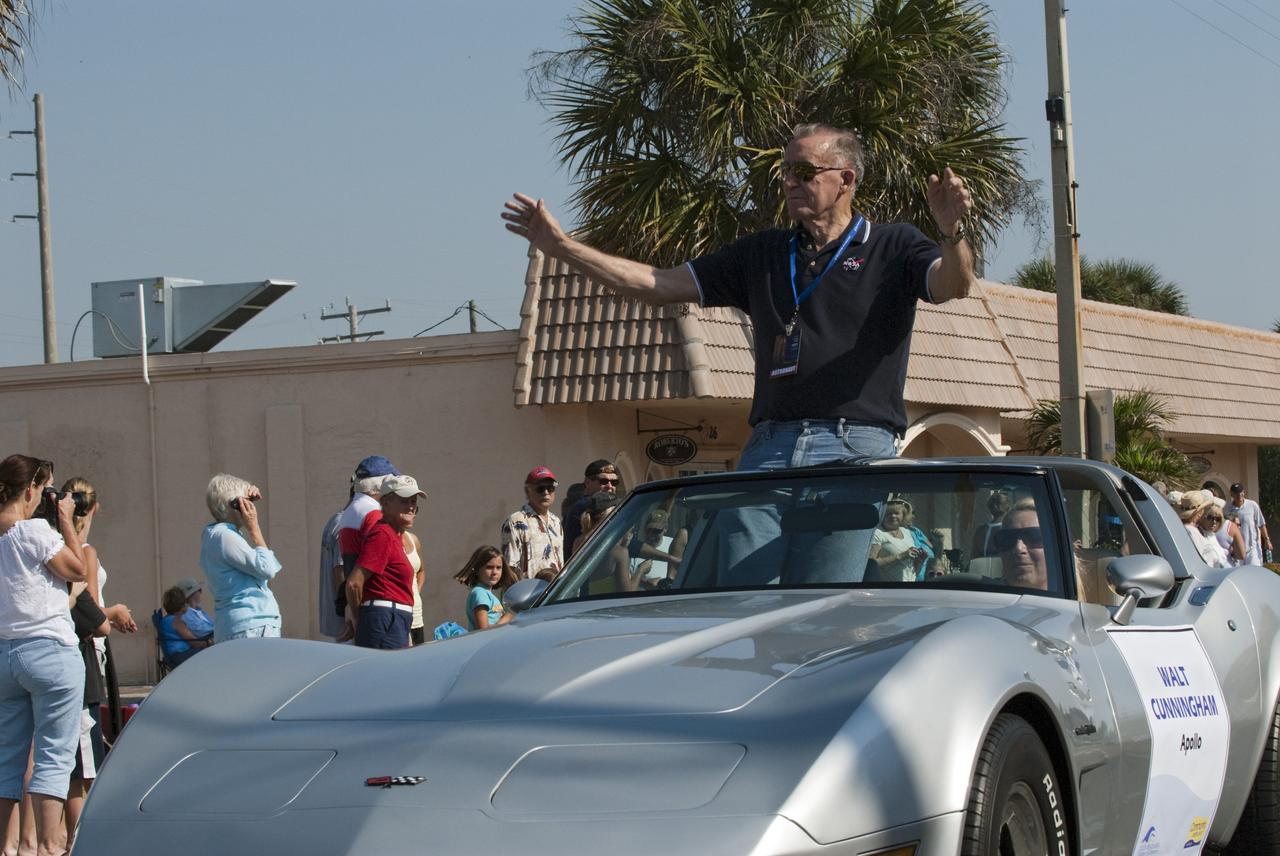
Cape Canaveral, Fla. -- Retired Apollo astronaut Walt Cunningham greets spectators from a vintage Chevrolet Corvette during a commemorative parade in Cocoa Beach, Fla. A group of current and retired NASA astronauts gathered in Cocoa Beach to commemorate NASA’s 50 years of accomplishments and to honor astronaut Alan Shepard’s Mercury/Freedom 7 suborbital flight May 5, 1961.The event was marked by a parade, with the astronauts riding in a fleet of Chevrolet Corvettes that corresponded with the time period of their space missions. Members of the Cape Kennedy Corvette Club, a group established in 1967, escorted almost two dozen astronauts or their family representatives in club members' cars. The Corvette parade started at the glass bank building, at 9:34 a.m. EDT, the same time Shepard launched into space. Photo credit: NASA/Kim Shiflett
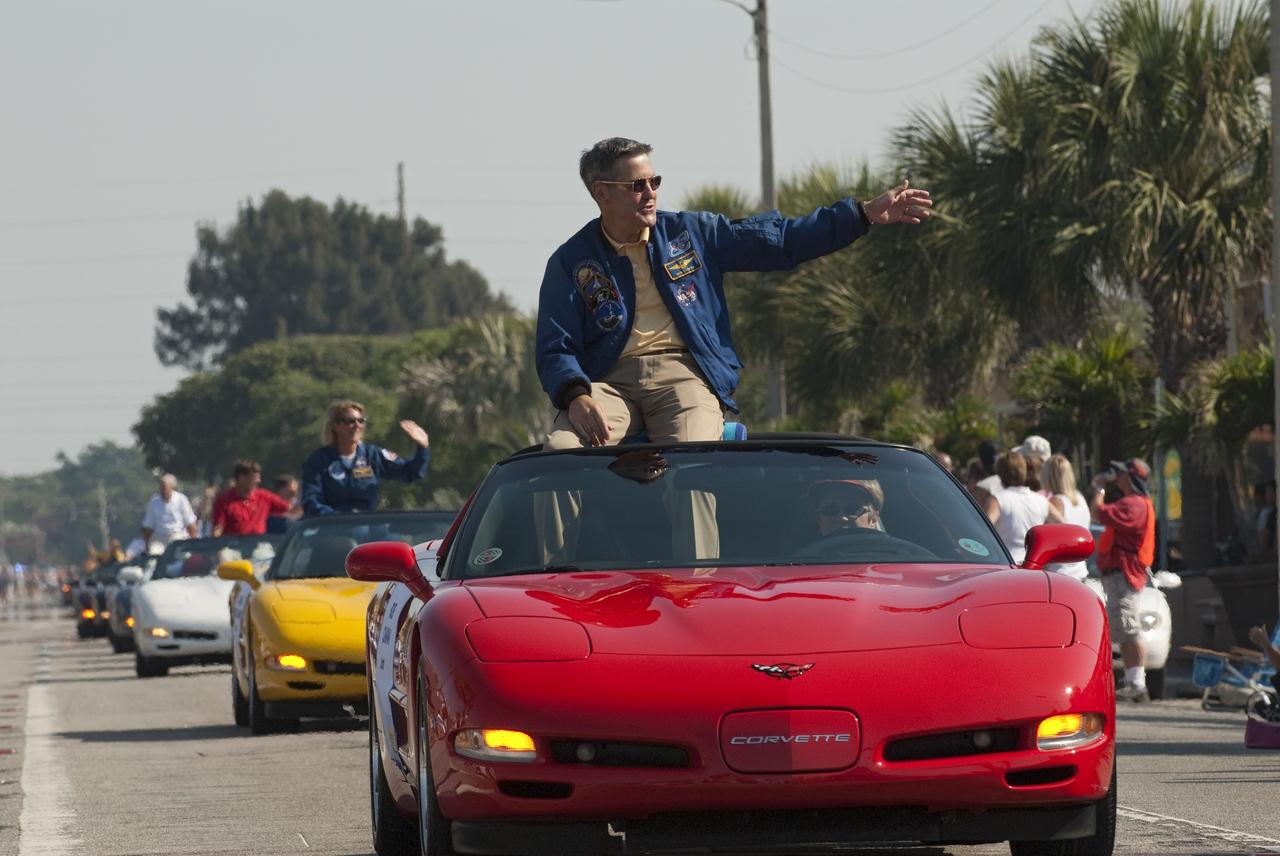
Cape Canaveral, Fla. -- Kennedy Space Center Director and former space shuttle astronaut Bob Cabana waves to spectators from a Chevrolet Corvette during a commemorative parade in Cocoa Beach, Fla. A group of current and retired NASA astronauts gathered in Cocoa Beach to commemorate NASA’s 50 years of accomplishments and to honor astronaut Alan Shepard’s Mercury/Freedom 7 suborbital flight May 5, 1961.The event was marked by a parade, with the astronauts riding in a fleet of Chevrolet Corvettes that corresponded with the time period of their space missions. Members of the Cape Kennedy Corvette Club, a group established in 1967, escorted almost two dozen astronauts or their family representatives in club members' cars. The Corvette parade started at the glass bank building, at 9:34 a.m. EDT, the same time Shepard launched into space. Photo credit: NASA/Kim Shiflett
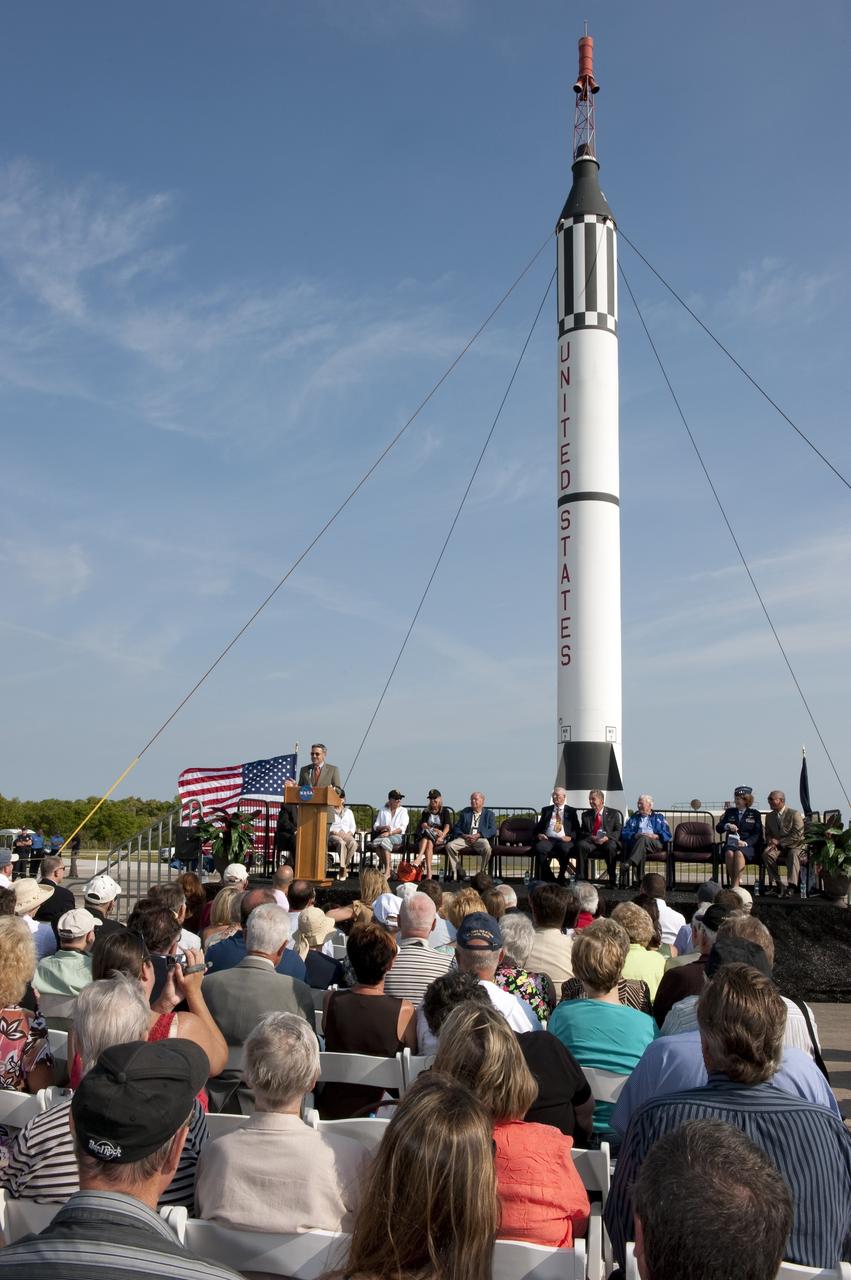
CAPE CANAVERAL, Fla. -- Kennedy Space Center Director and former astronaut Bob Cabana addresses the audience at a celebration at Complex 5/6 on Cape Canaveral Air Force Station in Florida. The celebration was held at the launch site of the first U.S. manned spaceflight May 5, 1961, to mark the 50th anniversary of the flight. Fifty years ago, astronaut Alan Shepard lifted off inside the Mercury capsule, "Freedom 7," atop an 82-foot-tall Mercury-Redstone rocket at 9:34 a.m. EST, sending him on a remarkably successful, 15-minute suborbital flight. The event was attended by more than 200 workers from the original Mercury program and included a re-creation of Shepard's flight and recovery, as well as a tribute to his contributions as a moonwalker on the Apollo 14 lunar mission. For more information, visit www.nasa.gov/topics/history/milestones/index.html. Photo credit: NASA/Kim Shiflett
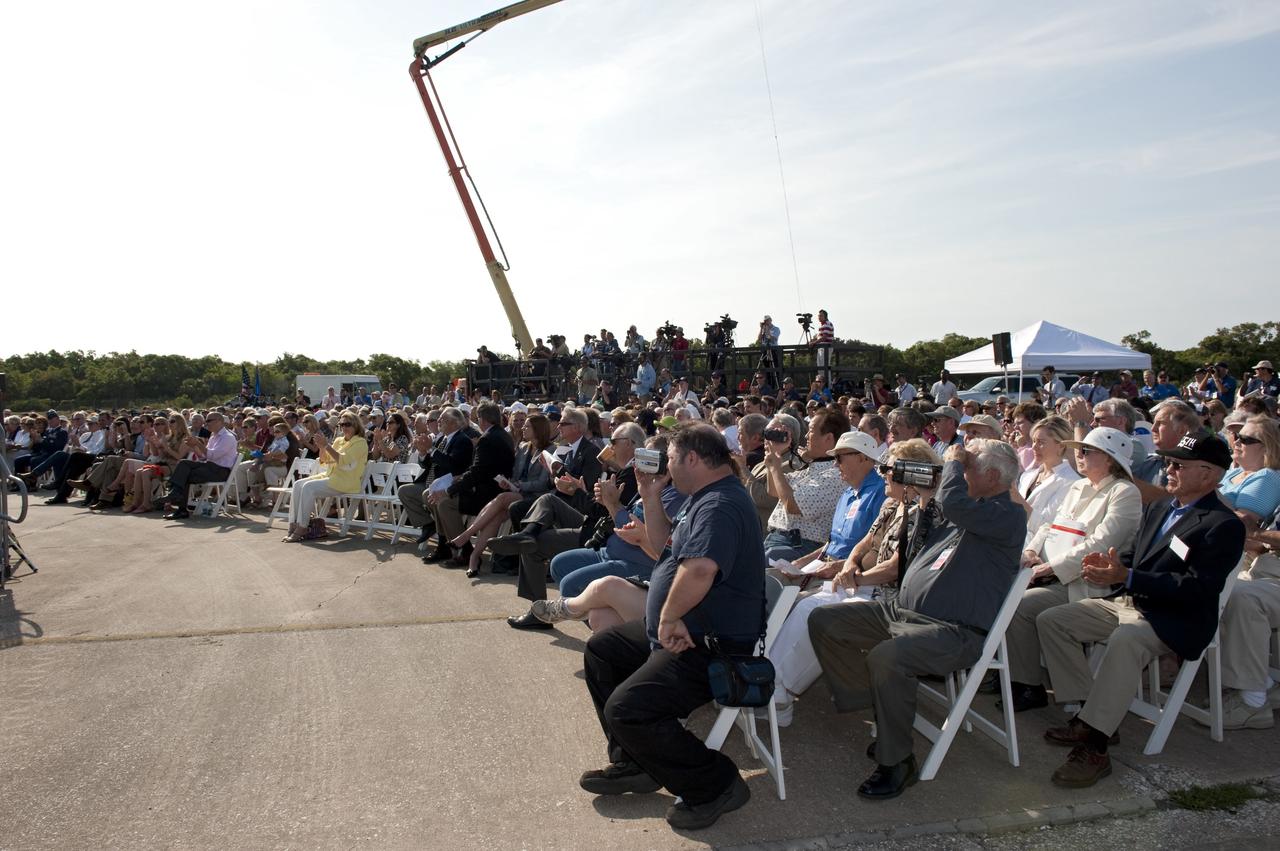
CAPE CANAVERAL, Fla. -- Invited guests and media representatives attend a celebration at Complex 5/6 on Cape Canaveral Air Force Station in Florida. The celebration was held at the launch site of the first U.S. manned spaceflight May 5, 1961, to mark the 50th anniversary of the flight. Fifty years ago, astronaut Alan Shepard lifted off inside the Mercury capsule, "Freedom 7," atop an 82-foot-tall Mercury-Redstone rocket at 9:34 a.m. EST, sending him on a remarkably successful, 15-minute suborbital flight. The event was attended by more than 200 workers from the original Mercury program and included a re-creation of Shepard's flight and recovery, as well as a tribute to his contributions as a moonwalker on the Apollo 14 lunar mission. For more information, visit www.nasa.gov/topics/history/milestones/index.html. Photo credit: NASA/Kim Shiflett

CAPE CANAVERAL, Fla. -- In the Rocket Garden at NASA's Kennedy Space Center Visitor Complex in Florida, United States Postal Service official Steve Massey and Mercury Astronaut Scott Carpenter shake hands after unveiling the two new stamps that commemorate the 50th anniversary of human spaceflight. One stamp commemorates NASA's Project Mercury and Alan Shepard's historic launch on May 5, 1961, aboard the spacecraft Freedom 7. The second stamp honors NASA's MESSENGER, which reached Mercury in March to become the first spacecraft to orbit the planet. The two missions frame a remarkable 50-year period in which America advanced space exploration through more than 1,500 crewed and uncrewed flights. Photo credit: NASA/Kim Shiflett
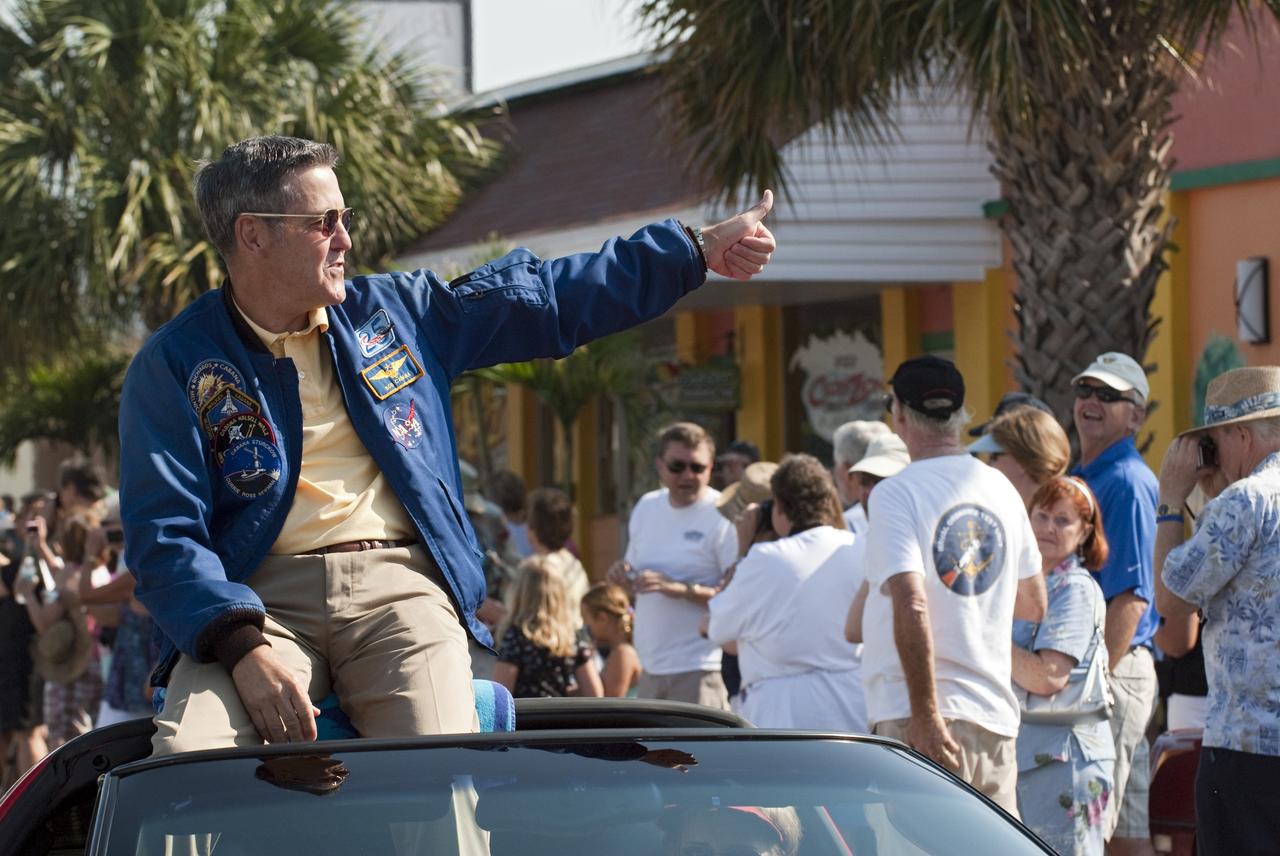
Cape Canaveral, Fla. -- Kennedy Space Center Director and former space shuttle astronaut Bob Cabana gives a thumbs-up to spectators from a Chevrolet Corvette during a commemorative parade in Cocoa Beach, Fla. A group of current and retired NASA astronauts gathered in Cocoa Beach to commemorate NASA’s 50 years of accomplishments and to honor astronaut Alan Shepard’s Mercury/Freedom 7 suborbital flight May 5, 1961.The event was marked by a parade, with the astronauts riding in a fleet of Chevrolet Corvettes that corresponded with the time period of their space missions. Members of the Cape Kennedy Corvette Club, a group established in 1967, escorted almost two dozen astronauts or their family representatives in club members' cars. The Corvette parade started at the glass bank building, at 9:34 a.m. EDT, the same time Shepard launched into space. Photo credit: NASA/Kim Shiflett

CAPE CANAVERAL, Fla. -- In the Rocket Garden at NASA's Kennedy Space Center Visitor Complex in Florida, United States Postal Service official Steve Massey addresses the audience during an event unveiling two new stamps that commemorate the 50th anniversary of human spaceflight from the United States Postal Service. One stamp commemorates NASA's Project Mercury and Alan Shepard's historic launch on May 5, 1961, aboard the spacecraft Freedom 7. The second stamp honors NASA's MESSENGER, which reached Mercury in March to become the first spacecraft to orbit the planet. The two missions frame a remarkable 50-year period in which America advanced space exploration through more than 1,500 crewed and uncrewed flights. Photo credit: NASA/Kim Shiflett
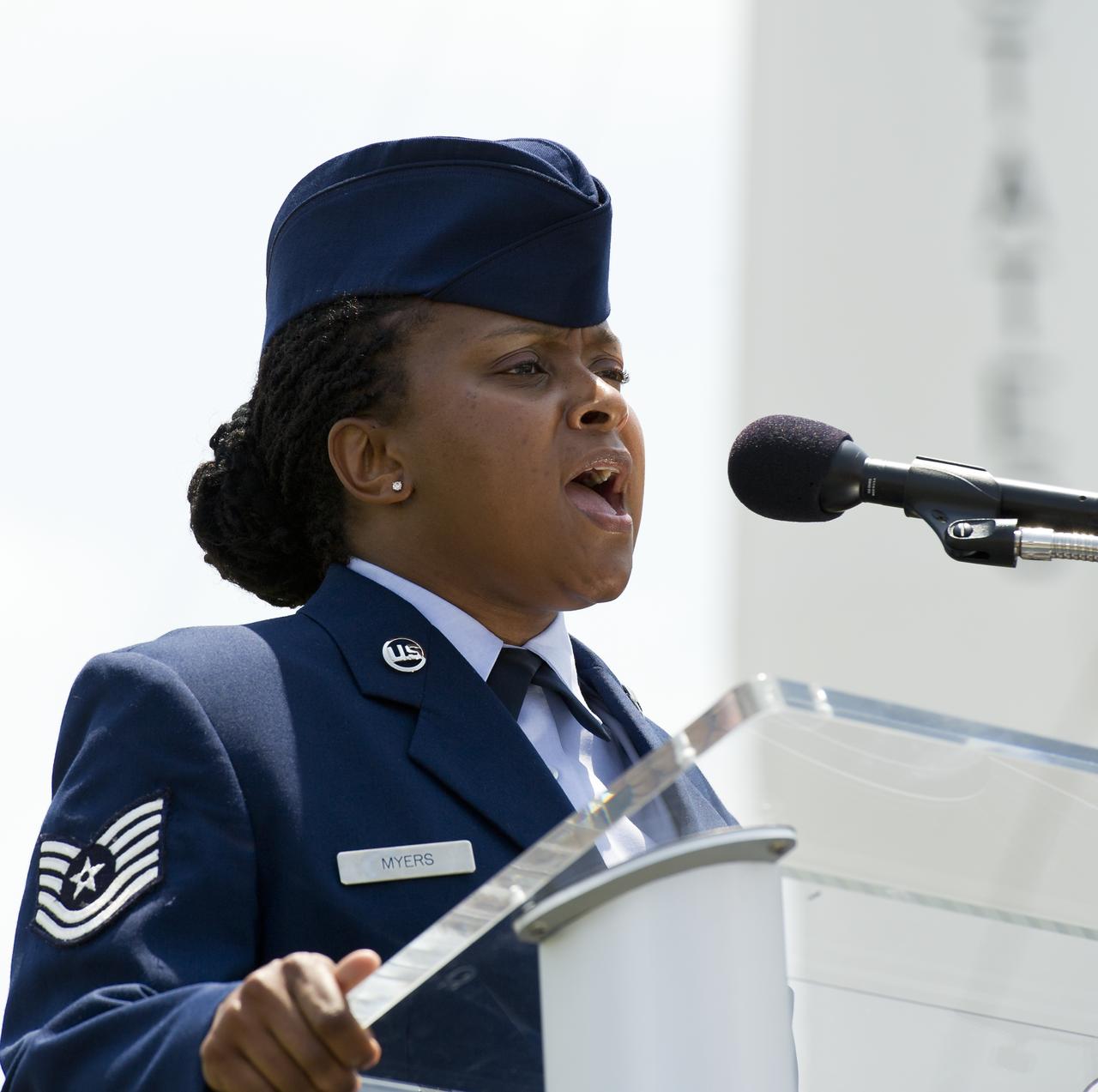
Altrameise Myers, Tech Sgt., 45th Space Wing sings the National Anthem during the start of a ceremony where two USPS stamps where unveiled to commemorate and celebrate 50 years of US Spaceflight and the MESSENGER program during an event, Wednesday, May 4, 2011 at the NASA Kennedy Space Center in Cape Canaveral, Fla. One stamp commemorates NASA’s Project Mercury, America’s first manned spaceflight program, and NASA astronaut Alan Shepard’s historic flight on May 5, 1961, aboard spacecraft Freedom 7. The other stamp draws attention to NASA’s unmanned MESSENGER mission, a scientific investigation of the planet Mercury. On March 17, 2011, MESSENGER became the first spacecraft to enter into orbit around Mercury. Photo Credit: (NASA/Bill Ingalls)
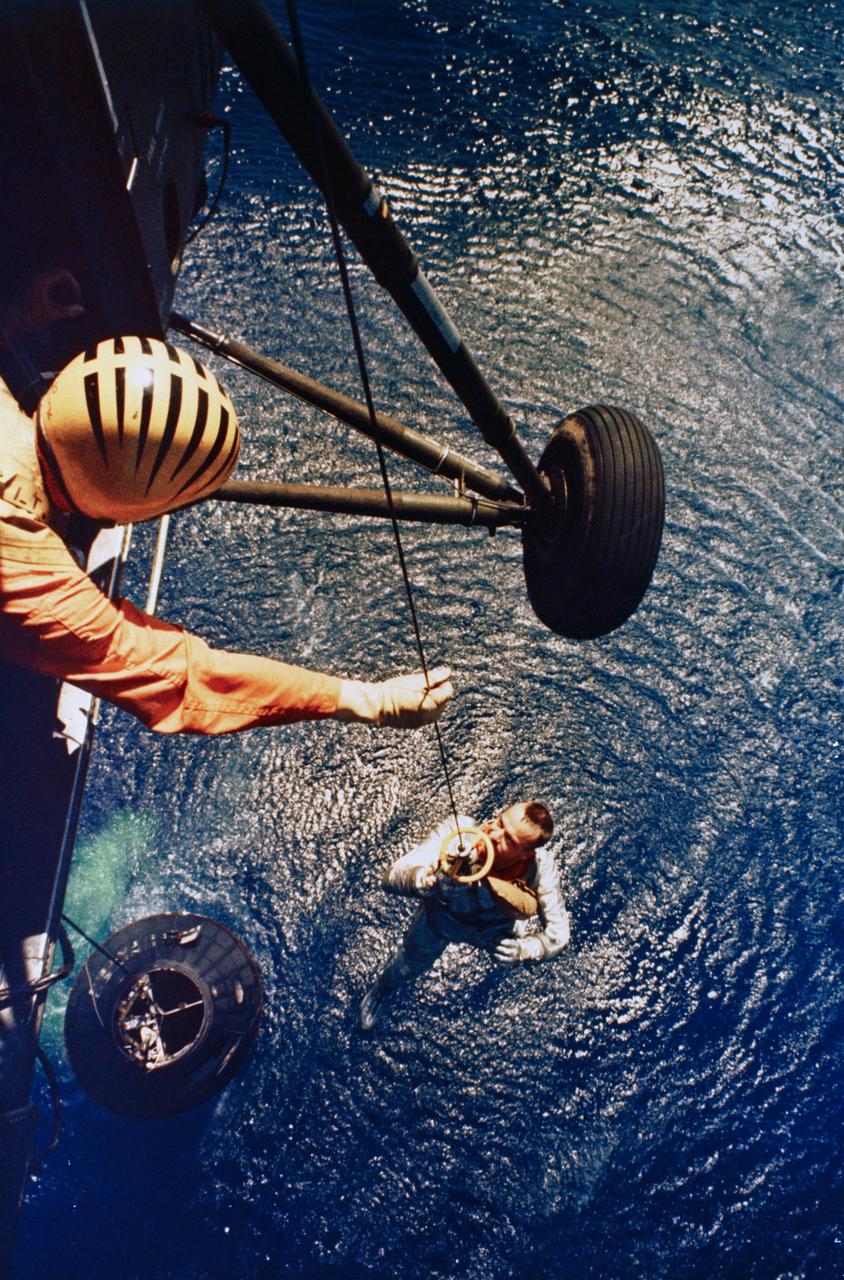
S88-31376 (5 May 1961) --- Astronaut Alan B. Shepard Jr., pilot of the Mercury-Redstone 3 (MR-3) suborbital spaceflight, is retrieved by a helicopter from the USS Lake Champlain during recovery operations in the western Atlantic Ocean. Shepard and the Mercury spacecraft designated the ?Freedom 7? (floating in water below) were flown to the deck of the recovery ship within 11 minutes of splashdown. MR-3 was the United States? first manned space mission. The spacecraft attained a maximum speed of 5,180 miles per hour, reached an altitude of 116 1/2 statute miles, and landed 302 statute miles downrange from Cape Canaveral, Florida. The suborbital mission lasted 15 minutes and 22 seconds. Photo credit: NASA or National Aeronautics and Space Administration
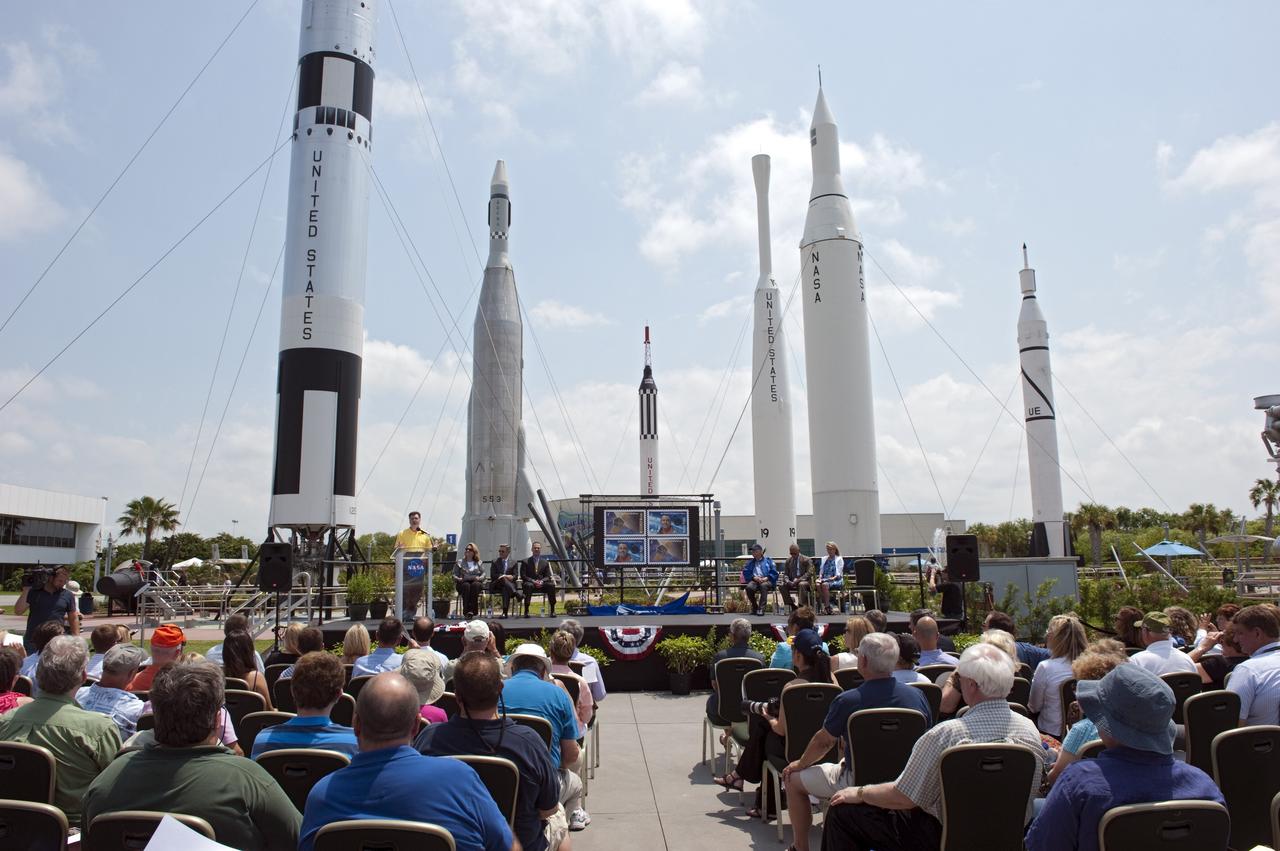
CAPE CANAVERAL, Fla. -- In the Rocket Garden at NASA's Kennedy Space Center Visitor Complex in Florida, NASA's Deputy Director for Planetary Science, Jim Adams speaks to the audience after the unveiling of the two new stamps that commemorate the 50th anniversary of human spaceflight designed by the United States Postal Service. One stamp commemorates NASA's Project Mercury and Alan Shepard's historic launch on May 5, 1961, aboard the spacecraft Freedom 7. The second stamp honors NASA's MESSENGER, which reached Mercury in March to become the first spacecraft to orbit the planet. The two missions frame a remarkable 50-year period in which America advanced space exploration through more than 1,500 crewed and uncrewed flights. Photo credit: NASA/Kim Shiflett
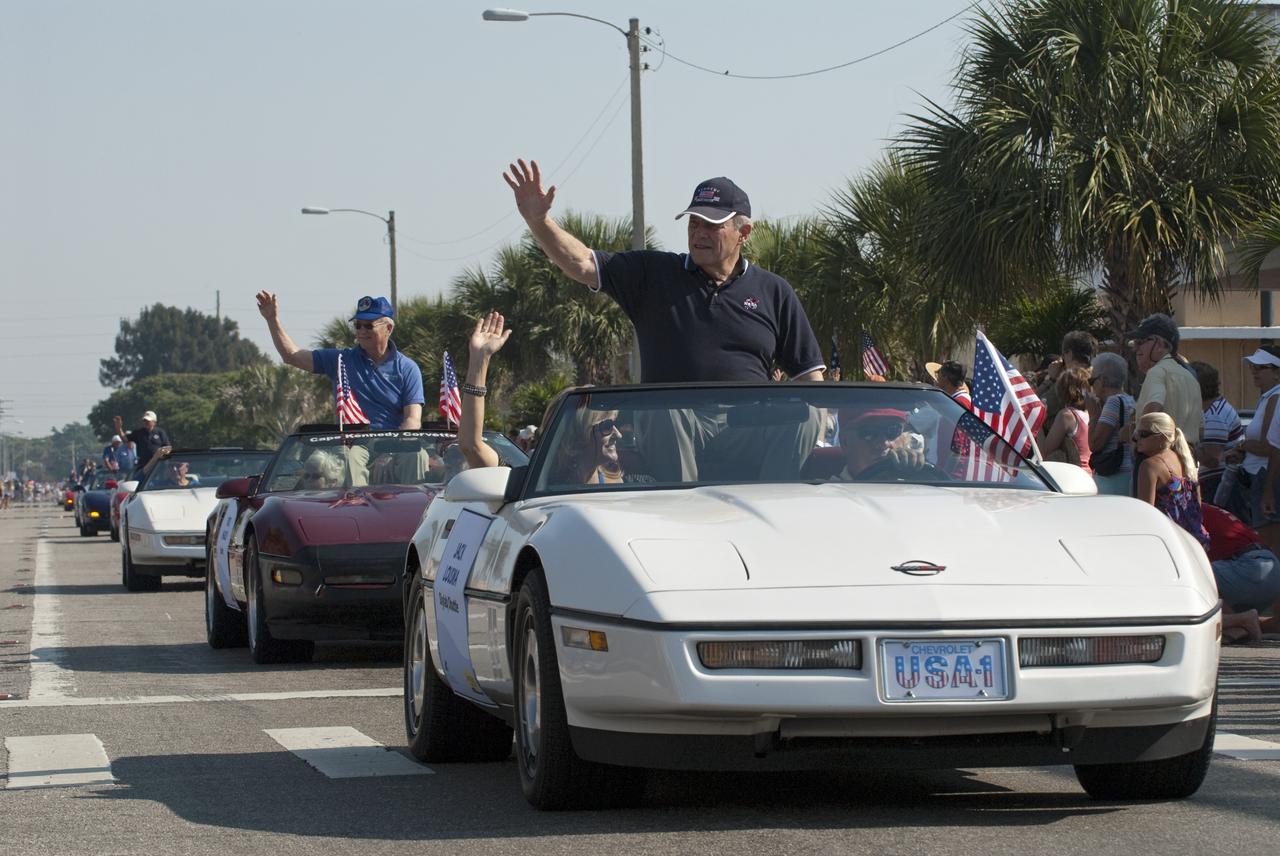
Cape Canaveral, Fla. -- Retired shuttle and Skylab astronaut Dick Lousma greets spectators from a Chevrolet Corvette during a commemorative parade in Cocoa Beach, Fla. A group of current and retired NASA astronauts gathered in Cocoa Beach to commemorate NASA’s 50 years of accomplishments and to honor astronaut Alan Shepard’s Mercury/Freedom 7 suborbital flight May 5, 1961.The event was marked by a parade, with the astronauts riding in a fleet of Chevrolet Corvettes that corresponded with the time period of their space missions. Members of the Cape Kennedy Corvette Club, a group established in 1967, escorted almost two dozen astronauts or their family representatives in club members' cars. The Corvette parade started at the glass bank building, at 9:34 a.m. EDT, the same time Shepard launched into space. Photo credit: NASA/Kim Shiflett
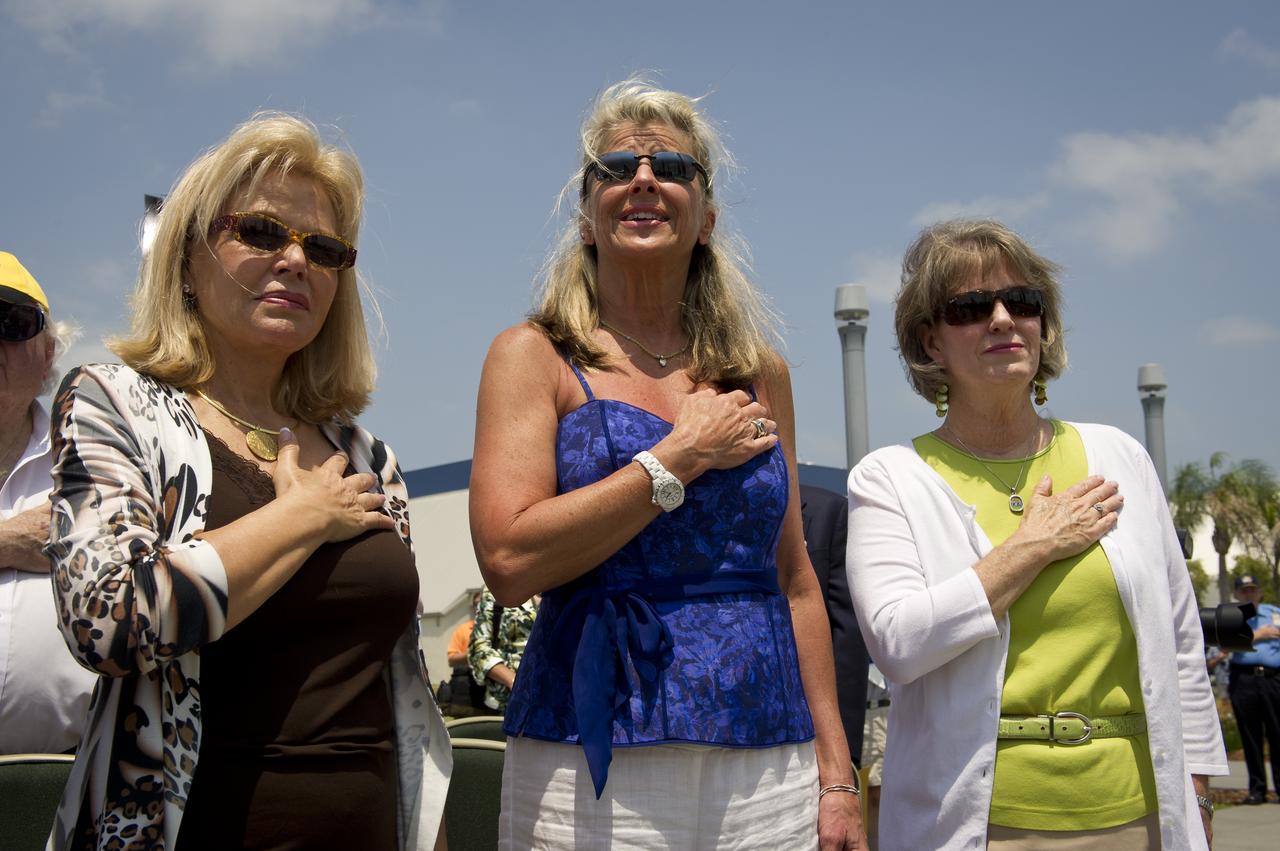
Patty Carpenter, wife of NASA Mercury Astronaut Scott Carpenter, left, Daughters of NASA astronaut Alan Shepard, Laura Shepard Churchley, and, Alice Wackermann, right, sing the National Anthem during an unveiling ceremony of two USPS stamps that commemorate and celebrate 50 years of US Spaceflight and the MESSENGER program during an event, Wednesday, May 4, 2011 at the NASA Kennedy Space Center in Cape Canaveral, Fla. One stamp commemorates NASA’s Project Mercury, America’s first manned spaceflight program, and NASA astronaut Alan Shepard’s historic flight on May 5, 1961, aboard spacecraft Freedom 7. The other stamp draws attention to NASA’s unmanned MESSENGER mission, a scientific investigation of the planet Mercury. On March 17, 2011, MESSENGER became the first spacecraft to enter into orbit around Mercury. Photo Credit: (NASA/Bill Ingalls)
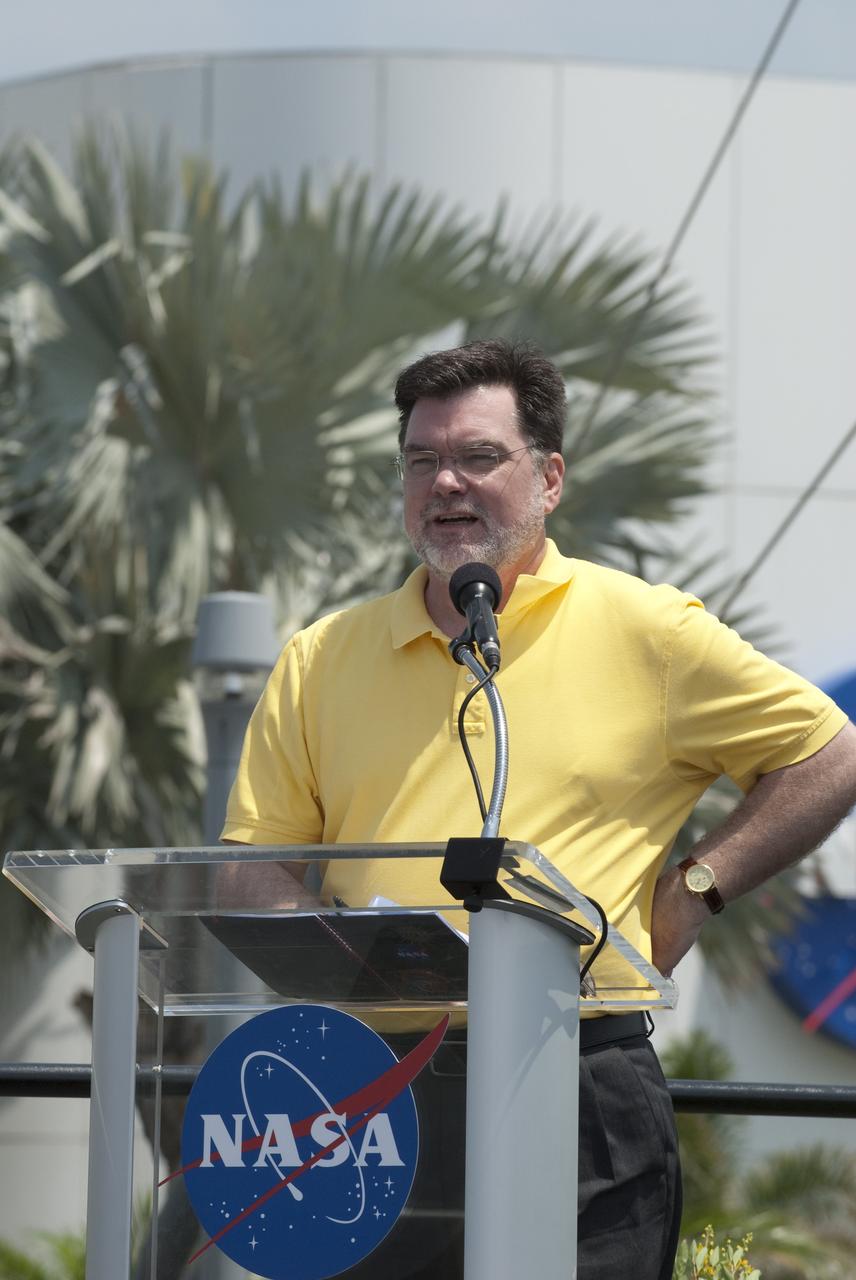
CAPE CANAVERAL, Fla. -- In the Rocket Garden at NASA's Kennedy Space Center Visitor Complex in Florida, NASA's Deputy Director for Planetary Science, Jim Adams speaks to the audience in attendance for the United States Postal Service unveiling of two new stamps that commemorates the 50th anniversary of human spaceflight. One stamp commemorates NASA's Project Mercury and Alan Shepard's historic launch on May 5, 1961, aboard the spacecraft Freedom 7. The second stamp honors NASA's MESSENGER, which reached Mercury in March to become the first spacecraft to orbit the planet. The two missions frame a remarkable 50-year period in which America advanced space exploration through more than 1,500 crewed and uncrewed flights. Photo credit: NASA/Kim Shiflett
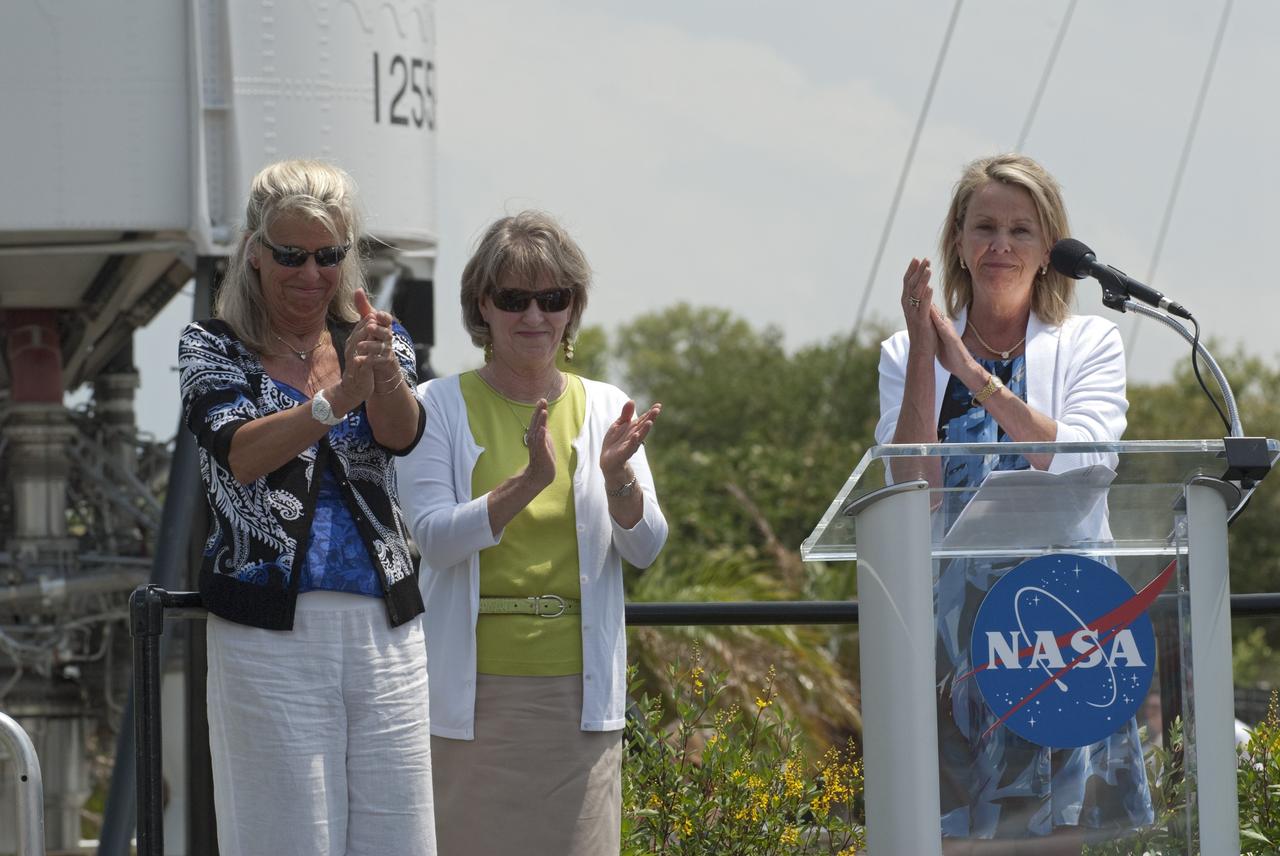
CAPE CANAVERAL, Fla. -- In the Rocket Garden at NASA's Kennedy Space Center Visitor Complex in Florida, Laura Churchley (left), Alice Wackerman and Julie Jenkins, daughters of Mercury Astronaut Alan Shepard, applaud during an event unveiling two new stamps to commemorate the 50th anniversary of human spaceflight from the United States Postal Service. One stamp commemorates NASA's Project Mercury and Alan Shepard's historic launch on May 5, 1961, aboard the spacecraft Freedom 7. The second stamp honors NASA's MESSENGER, which reached Mercury in March to become the first spacecraft to orbit the planet. The two missions frame a remarkable 50-year period in which America advanced space exploration through more than 1,500 crewed and uncrewed flights. Photo credit: NASA/Kim Shiflett
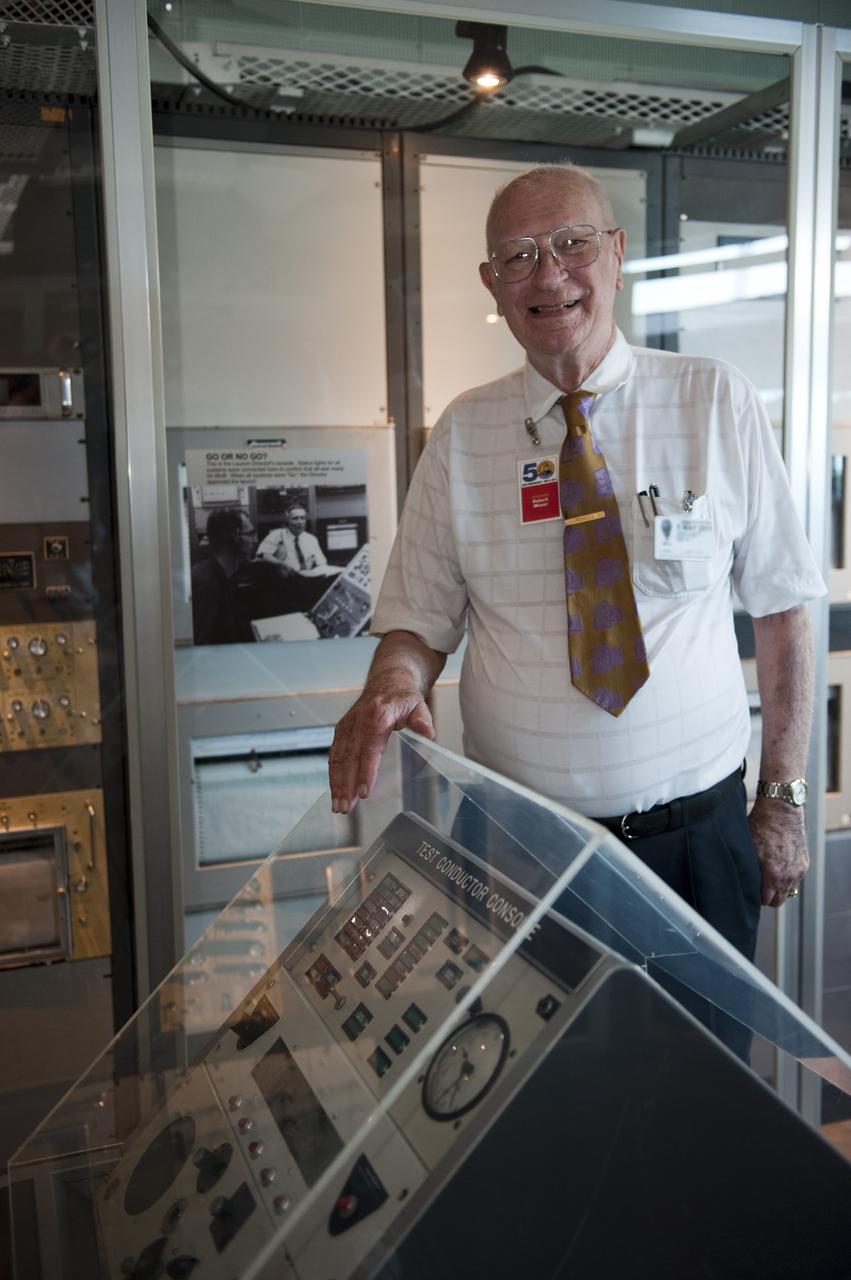
CAPE CANAVERAL, Fla. -- Bob Moser, former chief test conductor for the Mercury-Redstone launches, tours the blockhouse at Complex 5/6 on Cape Canaveral Air Force Station in Florida. The celebration was held at the launch site of the first U.S. manned spaceflight May 5, 1961, to mark the 50th anniversary of the flight. Fifty years ago, astronaut Alan Shepard lifted off inside the Mercury capsule, "Freedom 7," atop an 82-foot-tall Mercury-Redstone rocket at 9:34 a.m. EST, sending him on a remarkably successful, 15-minute suborbital flight. The event was attended by more than 200 workers from the original Mercury program and included a re-creation of Shepard's flight and recovery, as well as a tribute to his contributions as a moonwalker on the Apollo 14 lunar mission. For more information, visit www.nasa.gov/topics/history/milestones/index.html. Photo credit: NASA/Kim Shiflett
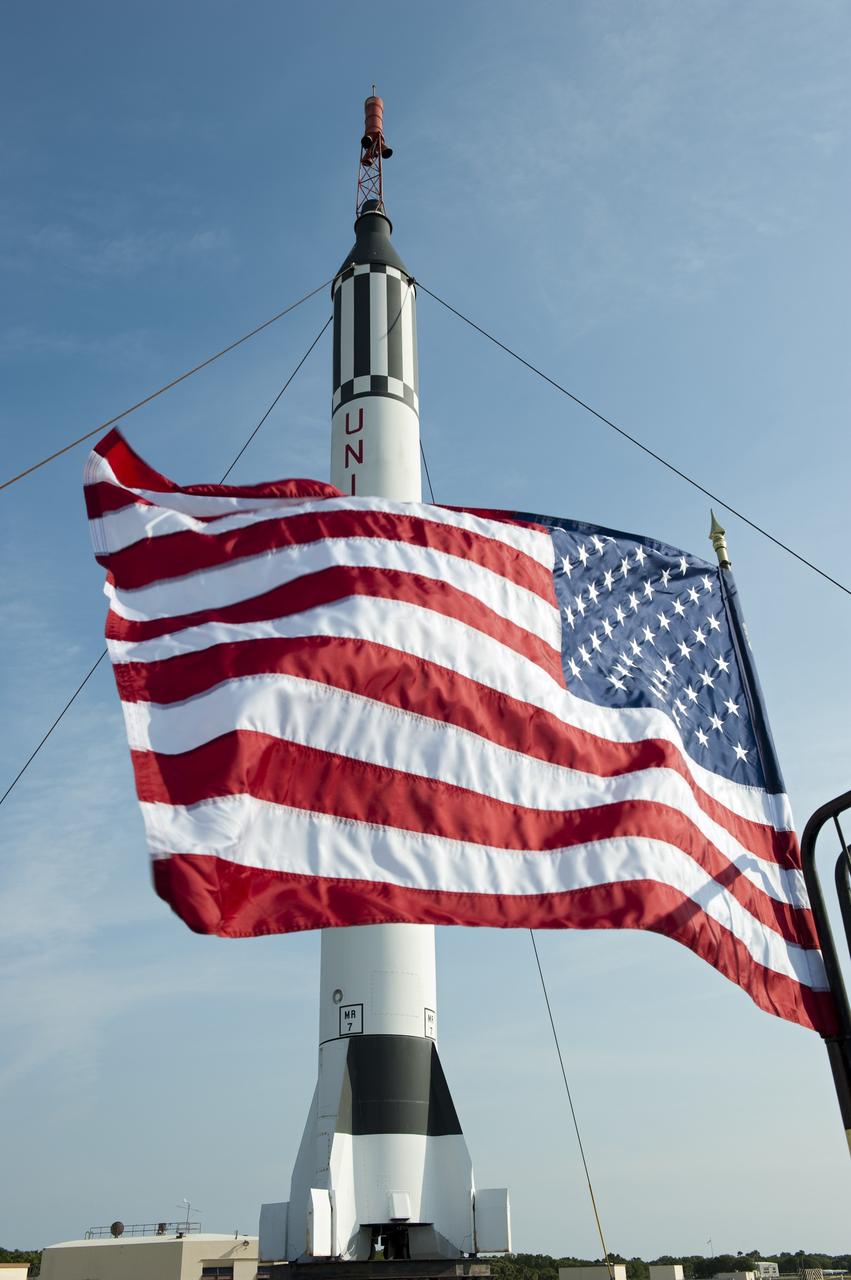
CAPE CANAVERAL, Fla. -- The U.S. flag waves proudly in front of a replica of a Mercury-Redstone rocket at Complex 5/6 on Cape Canaveral Air Force Station in Florida. A celebration was held at the launch site of the first U.S. manned spaceflight May 5, 1961, to mark the 50th anniversary of the flight. Fifty years ago, astronaut Alan Shepard lifted off inside the Mercury capsule, "Freedom 7," atop an 82-foot-tall Mercury-Redstone rocket at 9:34 a.m. EST, sending him on a remarkably successful, 15-minute suborbital flight. The event was attended by more than 200 workers from the original Mercury program and included a re-creation of Shepard's flight and recovery, as well as a tribute to his contributions as a moonwalker on the Apollo 14 lunar mission. For more information, visit www.nasa.gov/topics/history/milestones/index.html. Photo credit: NASA/Kim Shiflett
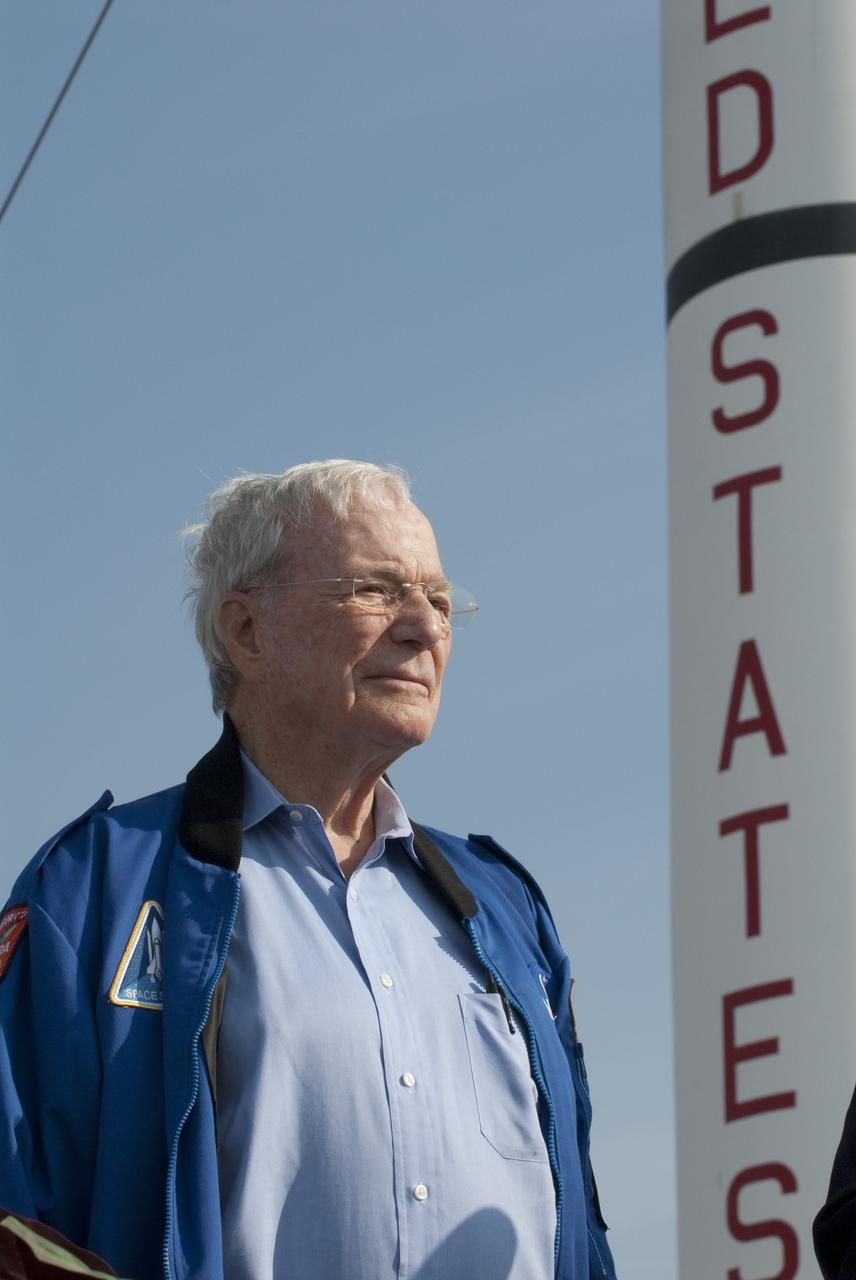
CAPE CANAVERAL, Fla. -- Mercury astronaut Scott Carpenter participates in a celebration at Complex 5/6 on Cape Canaveral Air Force Station in Florida. The celebration was held at the launch site of the first U.S. manned spaceflight May 5, 1961, to mark the 50th anniversary of the flight. Fifty years ago, astronaut Alan Shepard lifted off inside the Mercury capsule, "Freedom 7," atop an 82-foot-tall Mercury-Redstone rocket at 9:34 a.m. EST, sending him on a remarkably successful, 15-minute suborbital flight. The event was attended by more than 200 workers from the original Mercury program and included a re-creation of Shepard's flight and recovery, as well as a tribute to his contributions as a moonwalker on the Apollo 14 lunar mission. For more information, visit www.nasa.gov/topics/history/milestones/index.html. Photo credit: NASA/Kim Shiflett
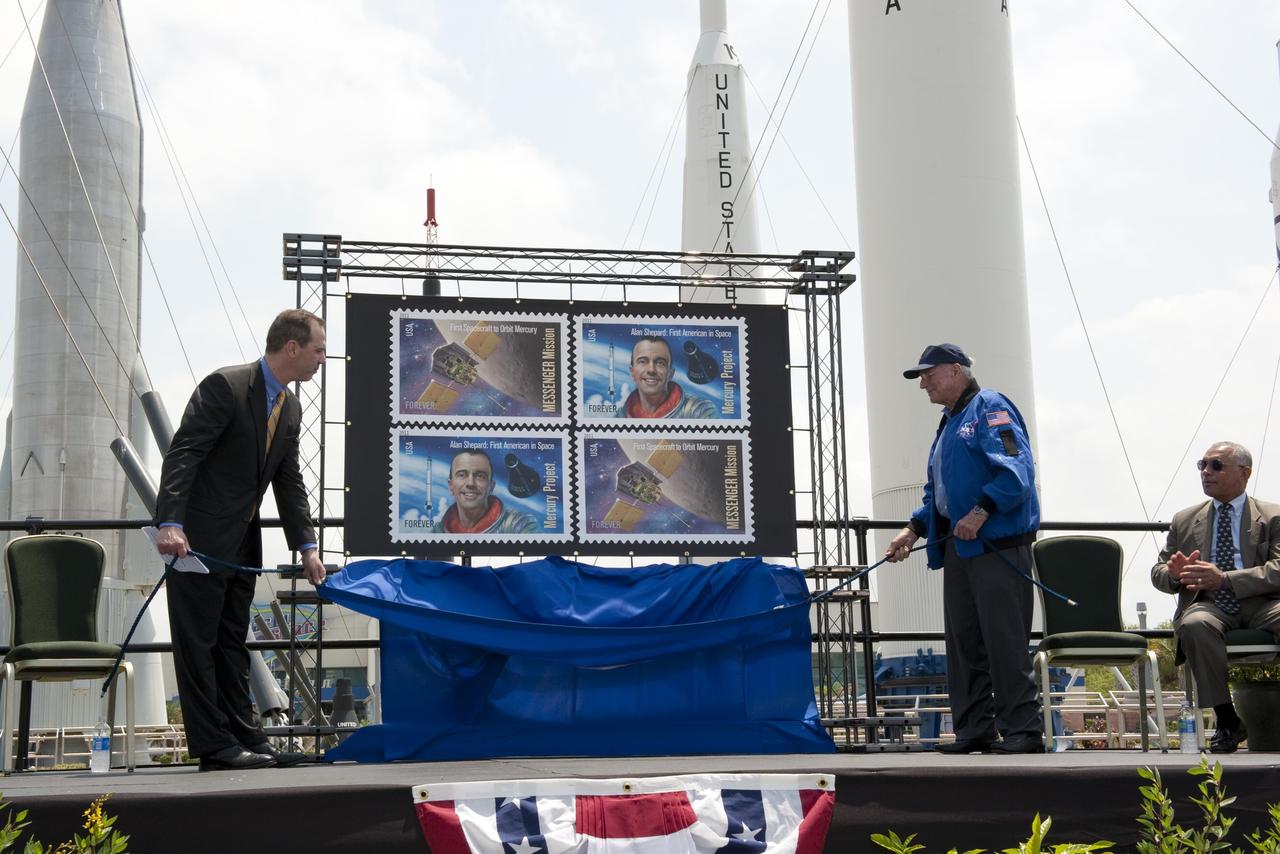
CAPE CANAVERAL, Fla. -- In the Rocket Garden at NASA's Kennedy Space Center Visitor Complex in Florida, United States Postal Service official Steve Massey and Mercury Astronaut Scott Carpenter have the honor of unveiling the two new stamps that commemorate the 50th anniversary of human spaceflight. Applauding the unveiling is NASA Administrator, Charlie Bolden. One stamp commemorates NASA's Project Mercury and Alan Shepard's historic launch on May 5, 1961, aboard the spacecraft Freedom 7. The second stamp honors NASA's MESSENGER, which reached Mercury in March to become the first spacecraft to orbit the planet. The two missions frame a remarkable 50-year period in which America advanced space exploration through more than 1,500 crewed and uncrewed flights. Photo credit: NASA/Kim Shiflett
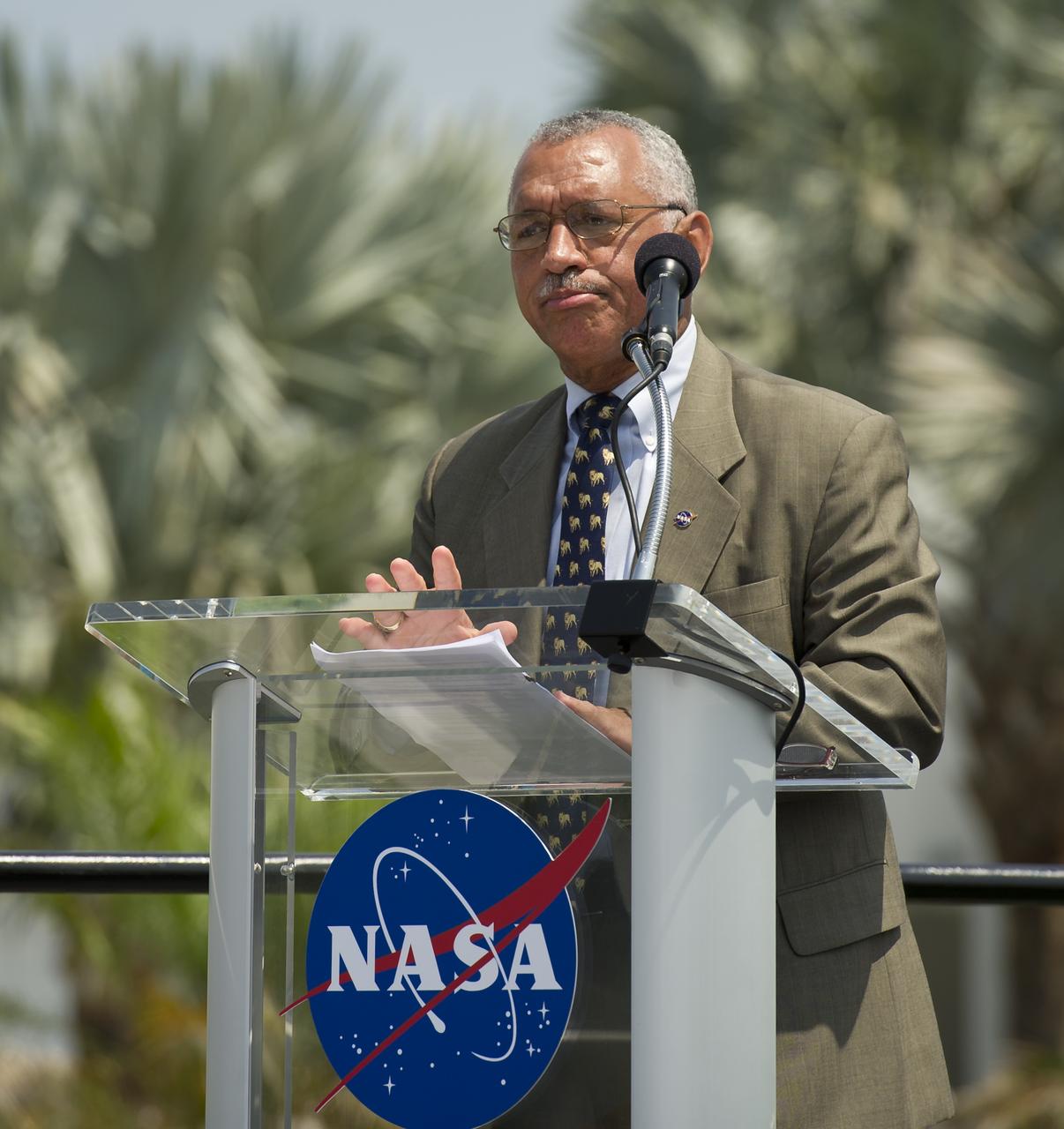
NASA Administrator Charles Boldin speaks during an unveiling ceremony of two USPS stamps that commemorate and celebrate 50 years of US Spaceflight and the MESSENGER program during an event, Wednesday, May 4, 2011 at the NASA Kennedy Space Center in Cape Canaveral, Fla. One stamp commemorates NASA’s Project Mercury, America’s first manned spaceflight program, and NASA astronaut Alan Shepard’s historic flight on May 5, 1961, aboard spacecraft Freedom 7. The other stamp draws attention to NASA’s unmanned MESSENGER mission, a scientific investigation of the planet Mercury. On March 17, 2011, MESSENGER became the first spacecraft to enter into orbit around Mercury. Photo Credit: (NASA/Bill Ingalls)
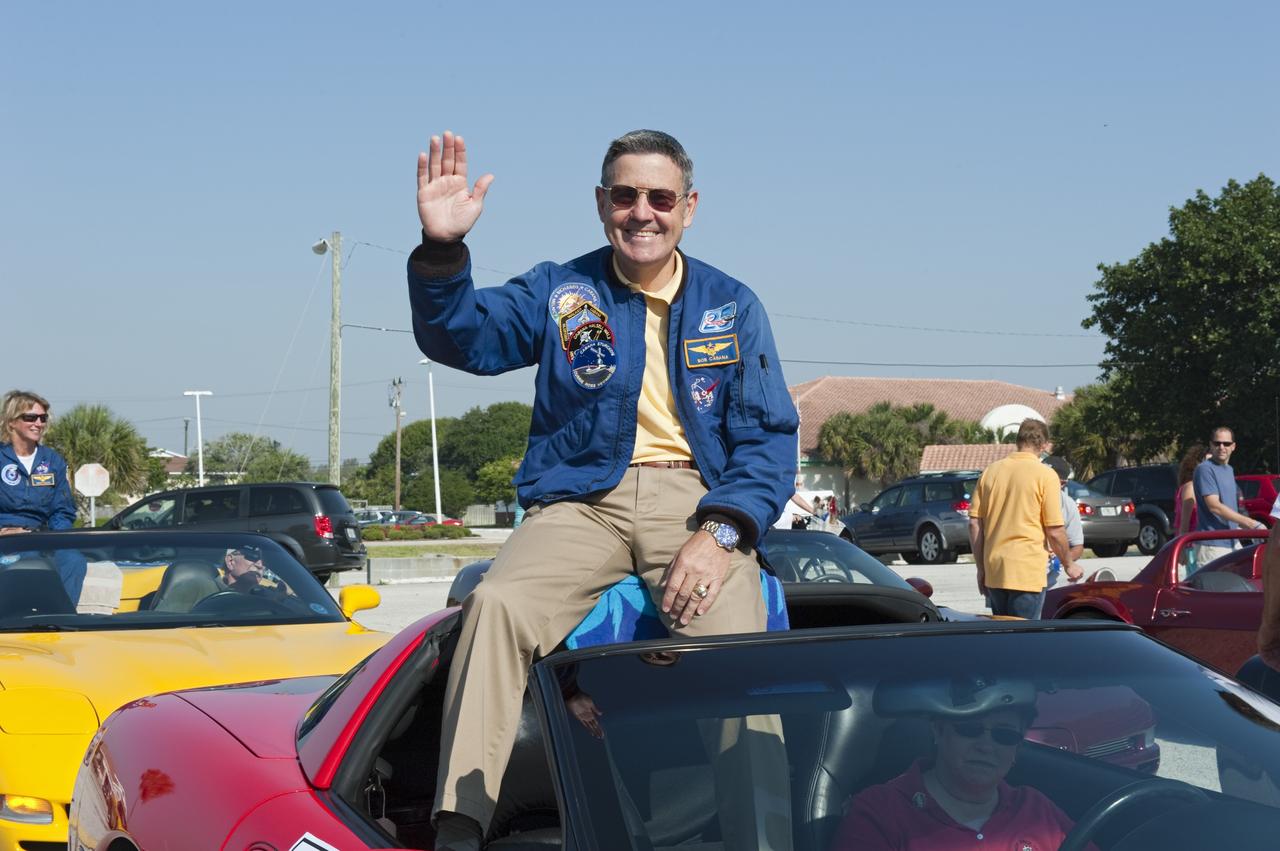
Cape Canaveral, Fla. -- Kennedy Space Center Director and former space shuttle astronaut Bob Cabana waves to spectators from a Chevrolet Corvette after a commemorative parade in Cocoa Beach, Florida. A group of current and retired NASA astronauts gathered in Cocoa Beach to commemorate NASA’s 50 years of accomplishments and to honor astronaut Alan Shepard’s Mercury/Freedom 7 suborbital flight May 5, 1961.The event was marked by a parade, with the astronauts riding in a fleet of Chevrolet Corvettes that corresponded with the time period of their space missions. Members of the Cape Kennedy Corvette Club, a group established in 1967, escorted almost two dozen astronauts or their family representatives in club members' cars. The Corvette parade started at the glass bank building, at 9:34 a.m. EDT, the same time Shepard launched into space. Photo credit: NASA/Kim Shiflett
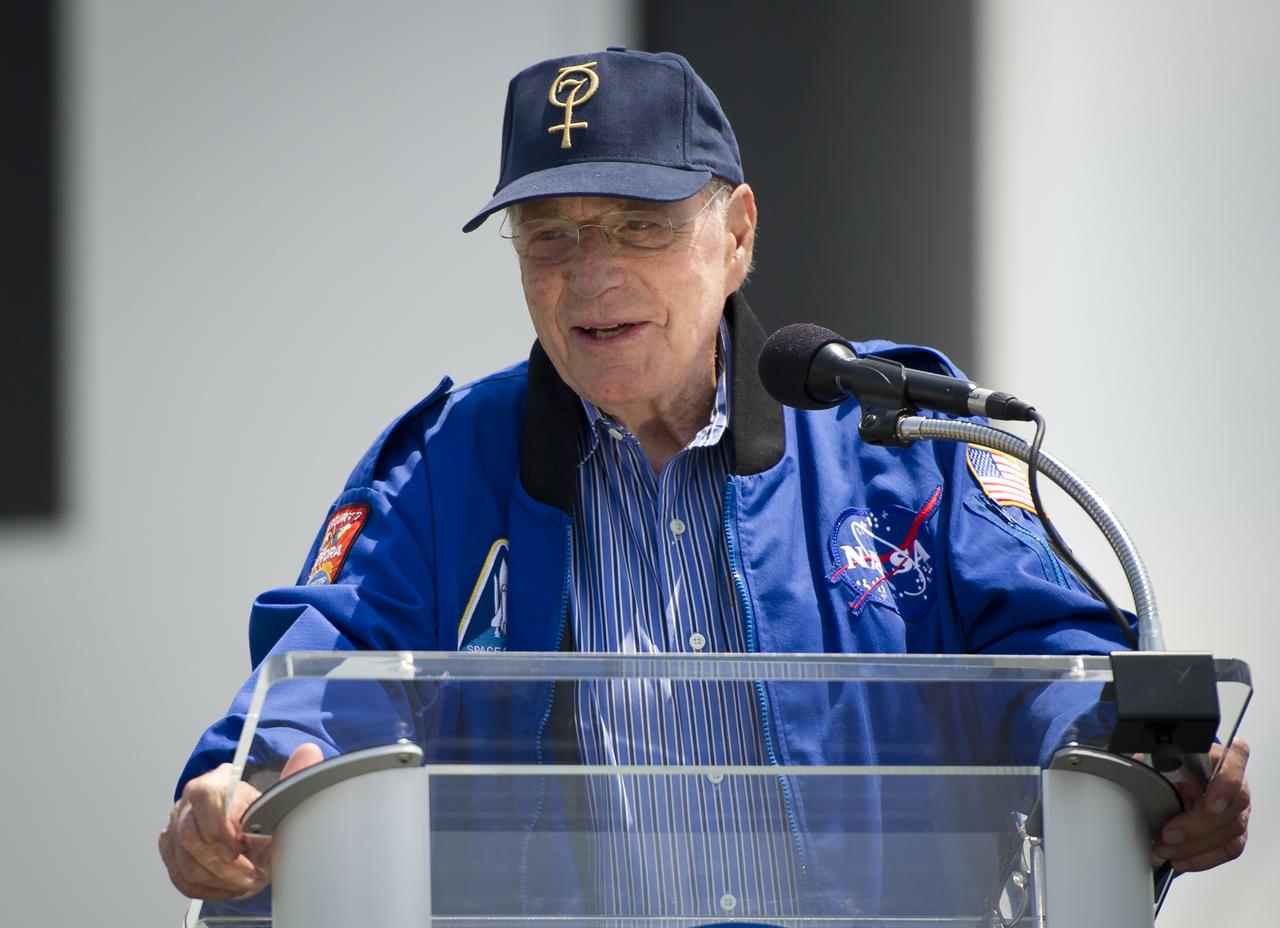
NASA Mercury Astronaut Scott Carpenter speaks during an unveiling ceremony of two USPS stamps that commemorate and celebrate 50 years of US Spaceflight and the MESSENGER program during an event, Wednesday, May 4, 2011 at the NASA Kennedy Space Center in Cape Canaveral, Fla. One stamp commemorates NASA’s Project Mercury, America’s first manned spaceflight program, and NASA astronaut Alan Shepard’s historic flight on May 5, 1961, aboard spacecraft Freedom 7. The other stamp draws attention to NASA’s unmanned MESSENGER mission, a scientific investigation of the planet Mercury. On March 17, 2011, MESSENGER became the first spacecraft to enter into orbit around Mercury. Photo Credit: (NASA/Bill Ingalls)
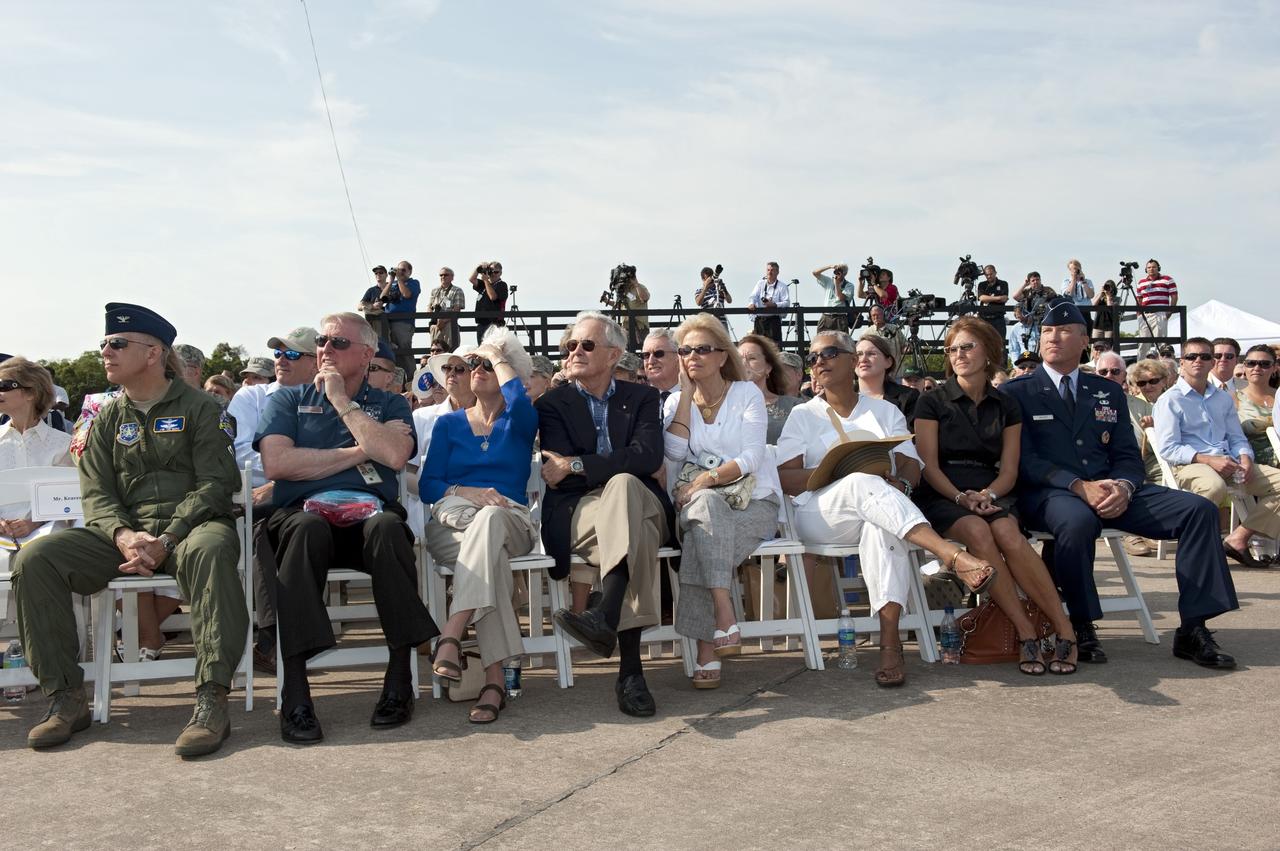
CAPE CANAVERAL, Fla. -- Invited guests enjoy the program presented at a celebration at Complex 5/6 on Cape Canaveral Air Force Station in Florida. The celebration was held at the launch site of the first U.S. manned spaceflight May 5, 1961, to mark the 50th anniversary of the flight. Fifty years ago, astronaut Alan Shepard lifted off inside the Mercury capsule, "Freedom 7," atop an 82-foot-tall Mercury-Redstone rocket at 9:34 a.m. EST, sending him on a remarkably successful, 15-minute suborbital flight. The event was attended by more than 200 workers from the original Mercury program and included a re-creation of Shepard's flight and recovery, as well as a tribute to his contributions as a moonwalker on the Apollo 14 lunar mission. For more information, visit www.nasa.gov/topics/history/milestones/index.html. Photo credit: NASA/Kim Shiflett

CAPE CANAVERAL, Fla. -- Lieutenant General Susan J. Helms, commander of the 14th Air Force and former astronaut, addresses the audience at a celebration at Complex 5/6 on Cape Canaveral Air Force Station in Florida. The celebration was held at the launch site of the first U.S. manned spaceflight May 5, 1961, to mark the 50th anniversary of the flight. Fifty years ago, astronaut Alan Shepard lifted off inside the Mercury capsule, "Freedom 7," atop an 82-foot-tall Mercury-Redstone rocket at 9:34 a.m. EST, sending him on a remarkably successful, 15-minute suborbital flight. The event was attended by more than 200 workers from the original Mercury program and included a re-creation of Shepard's flight and recovery, as well as a tribute to his contributions as a moonwalker on the Apollo 14 lunar mission. For more information, visit www.nasa.gov/topics/history/milestones/index.html. Photo credit: NASA/Kim Shiflett
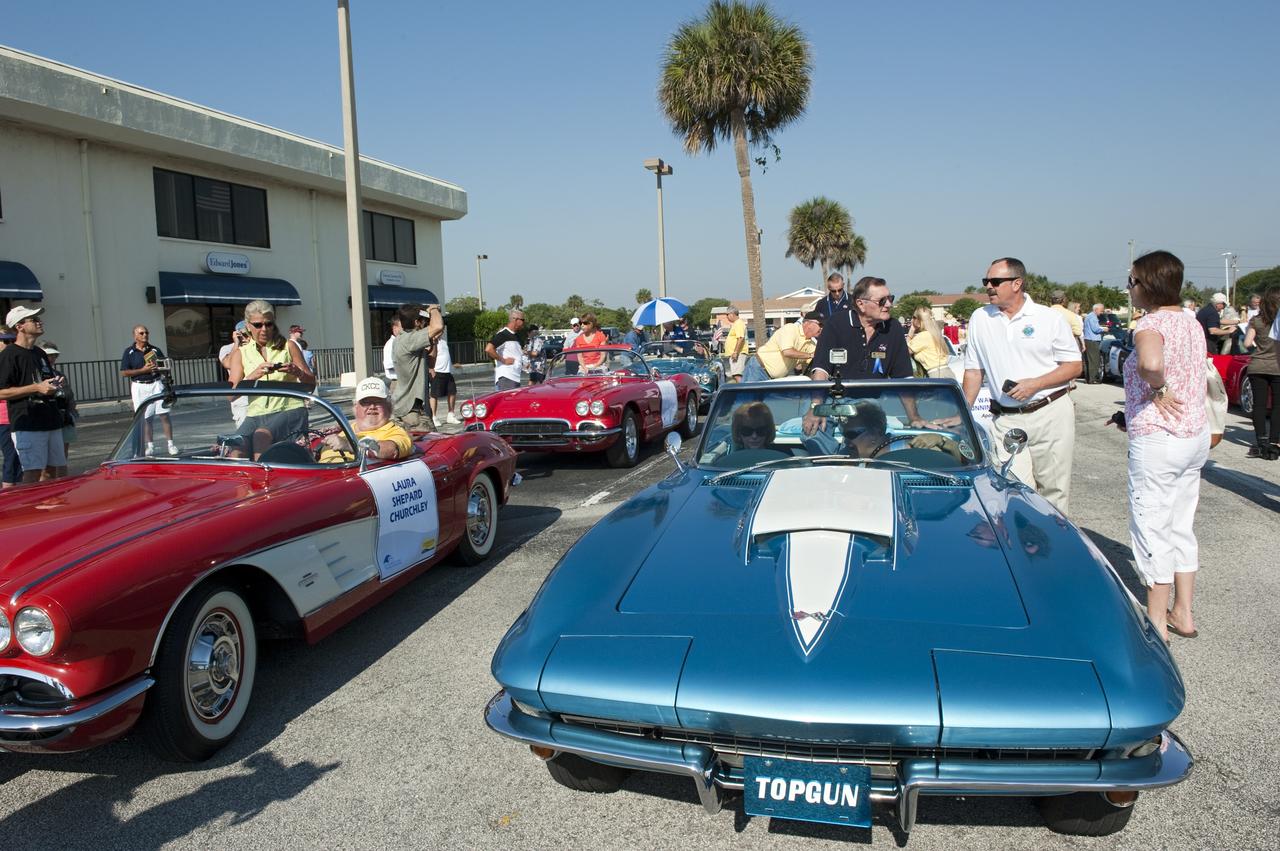
Cape Canaveral, Fla. -- Retired space shuttle astronaut Dick Gordon is warmly greeted by spectators while sitting in a vintage Chevrolet Corvette after a commemorative parade in Cocoa Beach, Florida. A group of current and retired NASA astronauts gathered in Cocoa Beach to commemorate NASA’s 50 years of accomplishments and to honor astronaut Alan Shepard’s Mercury/Freedom 7 suborbital flight May 5, 1961.The event was marked by a parade, with the astronauts riding in a fleet of Chevrolet Corvettes that corresponded with the time period of their space missions. Members of the Cape Kennedy Corvette Club, a group established in 1967, escorted almost two dozen astronauts or their family representatives in club members' cars. The Corvette parade started at the glass bank building, at 9:34 a.m. EDT, the same time Shepard launched into space. Photo credit: NASA/Kim Shiflett
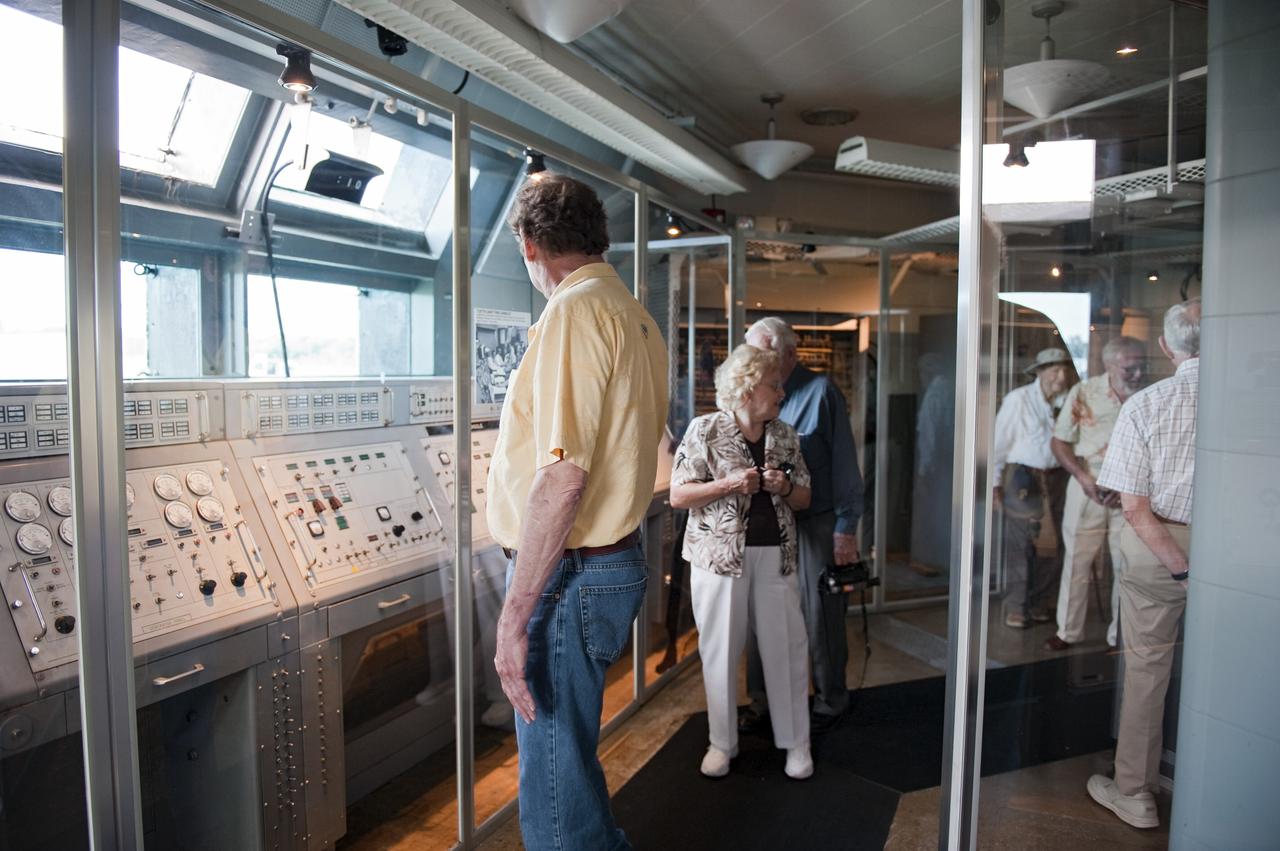
CAPE CANAVERAL, Fla. -- Invited guests attending a celebration at Complex 5/6 on Cape Canaveral Air Force Station in Florida tour the blockhouse. The celebration was held at the launch site of the first U.S. manned spaceflight May 5, 1961, to mark the 50th anniversary of the flight. Fifty years ago, astronaut Alan Shepard lifted off inside the Mercury capsule, "Freedom 7," atop an 82-foot-tall Mercury-Redstone rocket at 9:34 a.m. EST, sending him on a remarkably successful, 15-minute suborbital flight. The event was attended by more than 200 workers from the original Mercury program and included a re-creation of Shepard's flight and recovery, as well as a tribute to his contributions as a moonwalker on the Apollo 14 lunar mission. For more information, visit www.nasa.gov/topics/history/milestones/index.html. Photo credit: NASA/Kim Shiflett
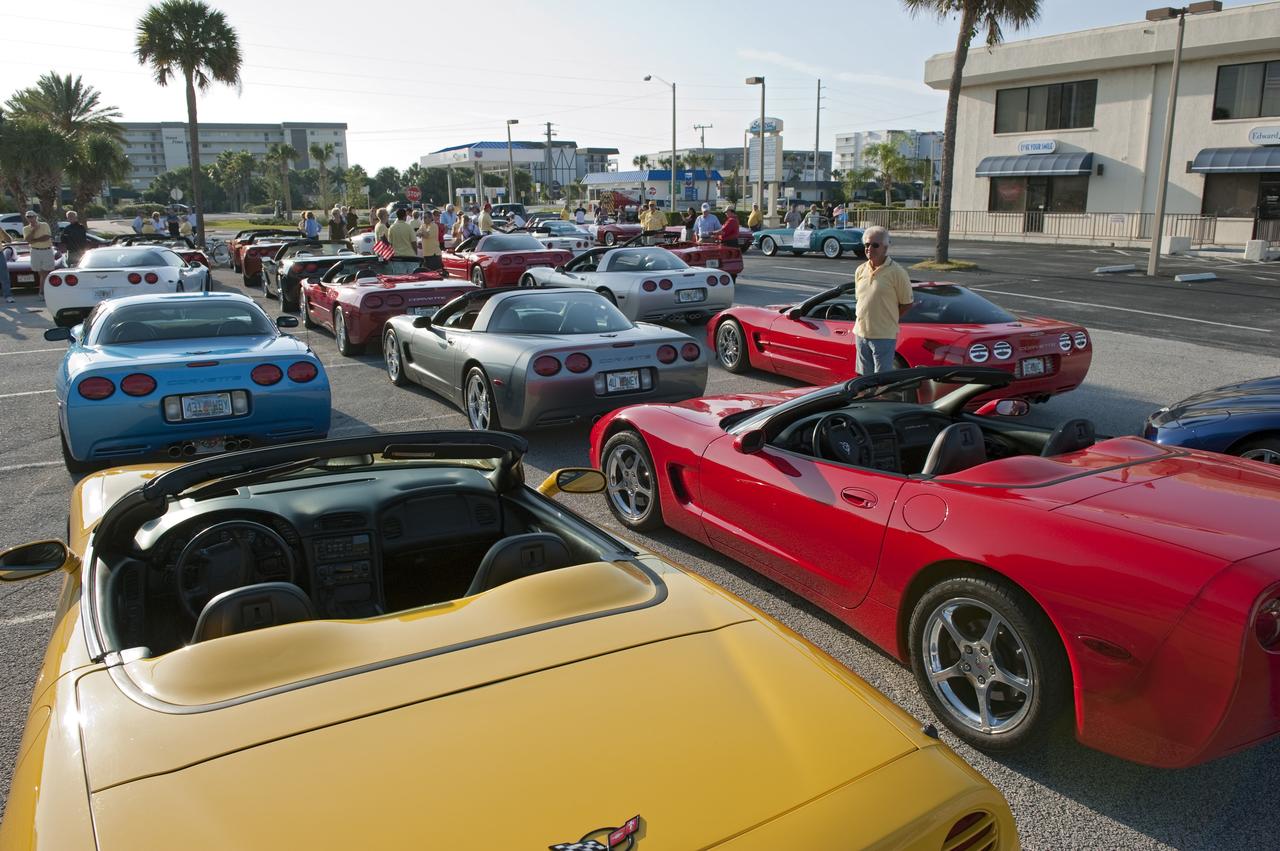
Cape Canaveral, Fla. -- A lineup of vintage and new Chevrolet Corvettes are parked after a commemorative parade in Cocoa Beach, Florida. A group of current and retired NASA astronauts gathered in Cocoa Beach to commemorate NASA’s 50 years of accomplishments and to honor astronaut Alan Shepard’s Mercury/Freedom 7 suborbital flight May 5, 1961.The event was marked by a parade, with the astronauts riding in a fleet of Chevrolet Corvettes that corresponded with the time period of their space missions. Members of the Cape Kennedy Corvette Club, a group established in 1967, escorted almost two dozen astronauts or their family representatives in club members' cars. The Corvette parade started at the glass bank building, at 9:34 a.m. EDT, the same time Shepard launched into space. Photo credit: NASA/Kim Shiflett
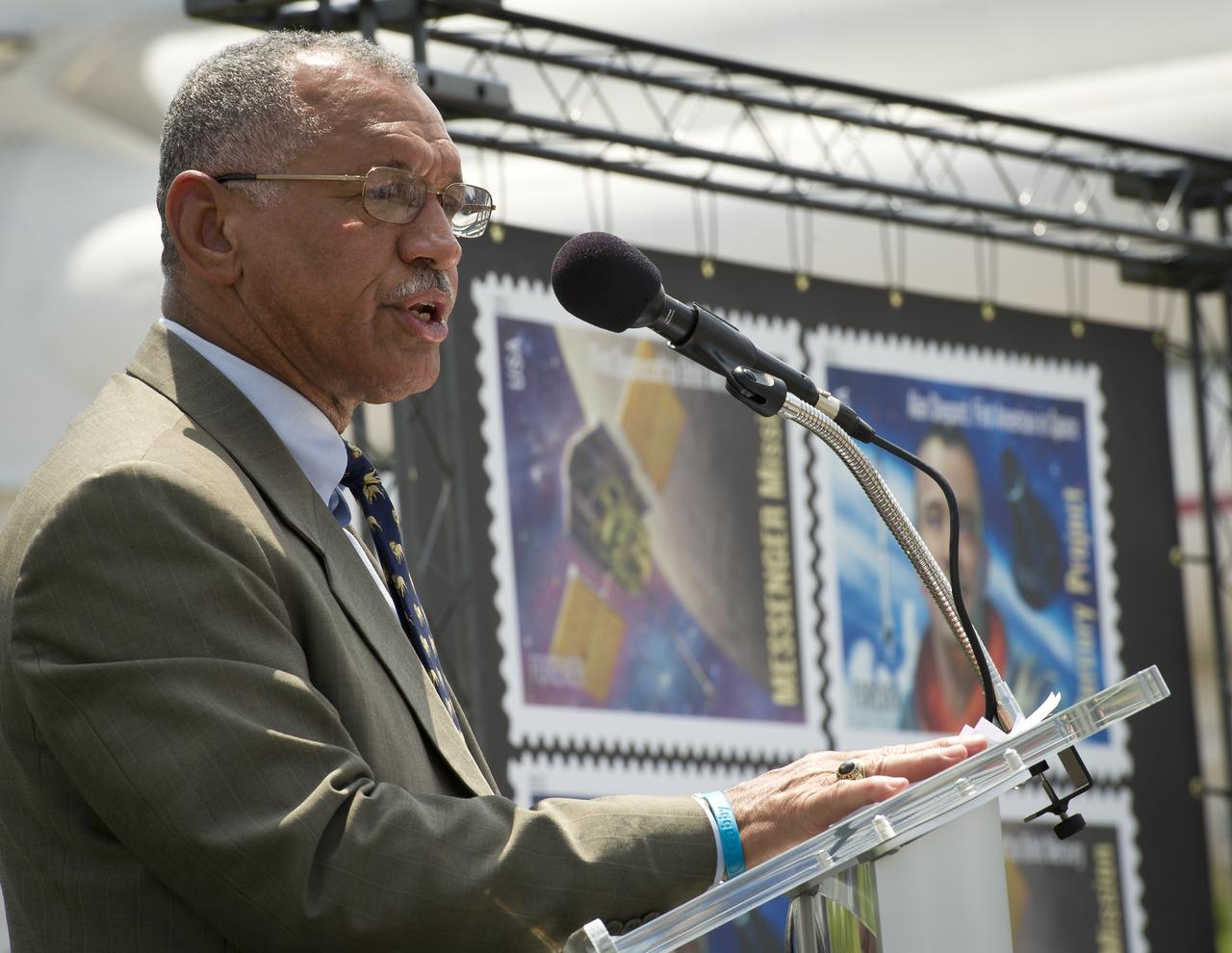
NASA Administrator Charles Boldin speaks during an unveiling ceremony of two USPS stamps that commemorate and celebrate 50 years of US Spaceflight and the MESSENGER program during an event, Wednesday, May 4, 2011 at the NASA Kennedy Space Center in Cape Canaveral, Fla. One stamp commemorates NASA’s Project Mercury, America’s first manned spaceflight program, and NASA astronaut Alan Shepard’s historic flight on May 5, 1961, aboard spacecraft Freedom 7. The other stamp draws attention to NASA’s unmanned MESSENGER mission, a scientific investigation of the planet Mercury. On March 17, 2011, MESSENGER became the first spacecraft to enter into orbit around Mercury. Photo Credit: (NASA/Bill Ingalls)
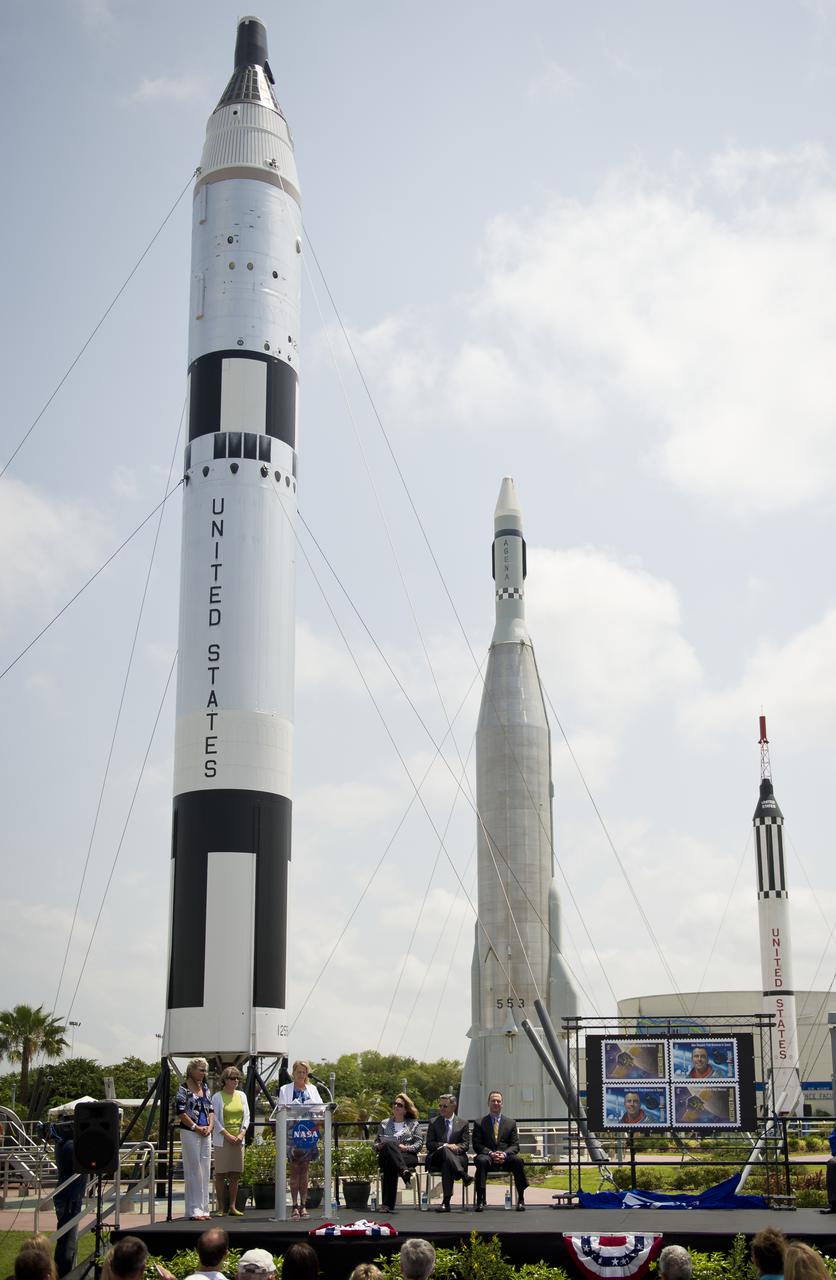
Daughters of NASA astronaut Alan Shepard, Laura Shepard Churchley, standing left, Alice Wackermann and Julie Jenkins, standing right, speak during an unveiling ceremony of two USPS stamps that commemorate and celebrate 50 years of US Spaceflight and the MESSENGER program during an event, Wednesday, May 4, 2011 at the NASA Kennedy Space Center in Cape Canaveral, Fla. One stamp commemorates NASA’s Project Mercury, America’s first manned spaceflight program, and NASA astronaut Alan Shepard’s historic flight on May 5, 1961, aboard spacecraft Freedom 7. The other stamp draws attention to NASA’s unmanned MESSENGER mission, a scientific investigation of the planet Mercury. On March 17, 2011, MESSENGER became the first spacecraft to enter into orbit around Mercury. Photo Credit: (NASA/Bill Ingalls)
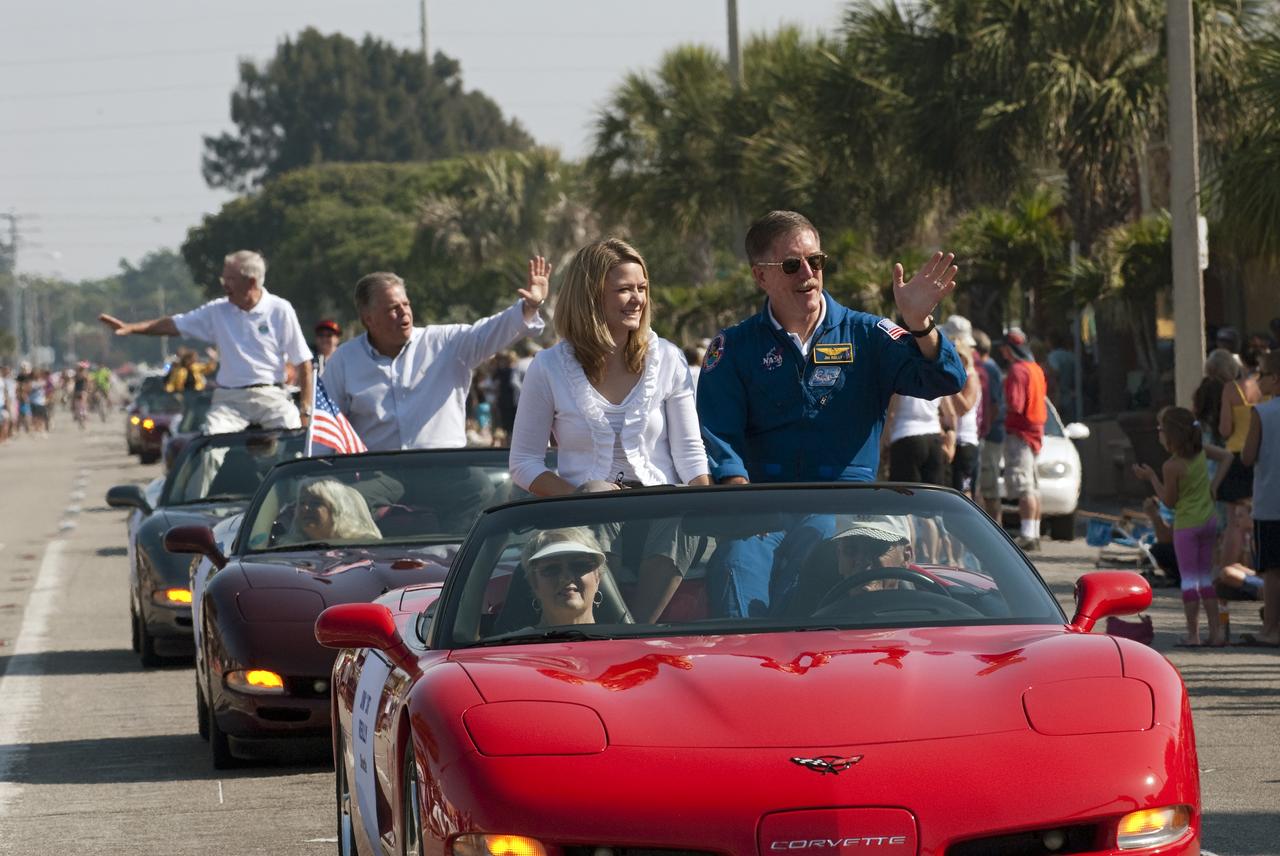
Cape Canaveral, Fla. -- Retired space shuttle astronaut James Reilly waves to spectators from a vintage Chevrolet Corvette during a commemorative parade in Cocoa Beach, Fla. A group of current and retired NASA astronauts gathered in Cocoa Beach to commemorate NASA’s 50 years of accomplishments and to honor astronaut Alan Shepard’s Mercury/Freedom 7 suborbital flight May 5, 1961.The event was marked by a parade, with the astronauts riding in a fleet of Chevrolet Corvettes that corresponded with the time period of their space missions. Members of the Cape Kennedy Corvette Club, a group established in 1967, escorted almost two dozen astronauts or their family representatives in club members' cars. The Corvette parade started at the glass bank building, at 9:34 a.m. EDT, the same time Shepard launched into space. Photo credit: NASA/Kim Shiflett
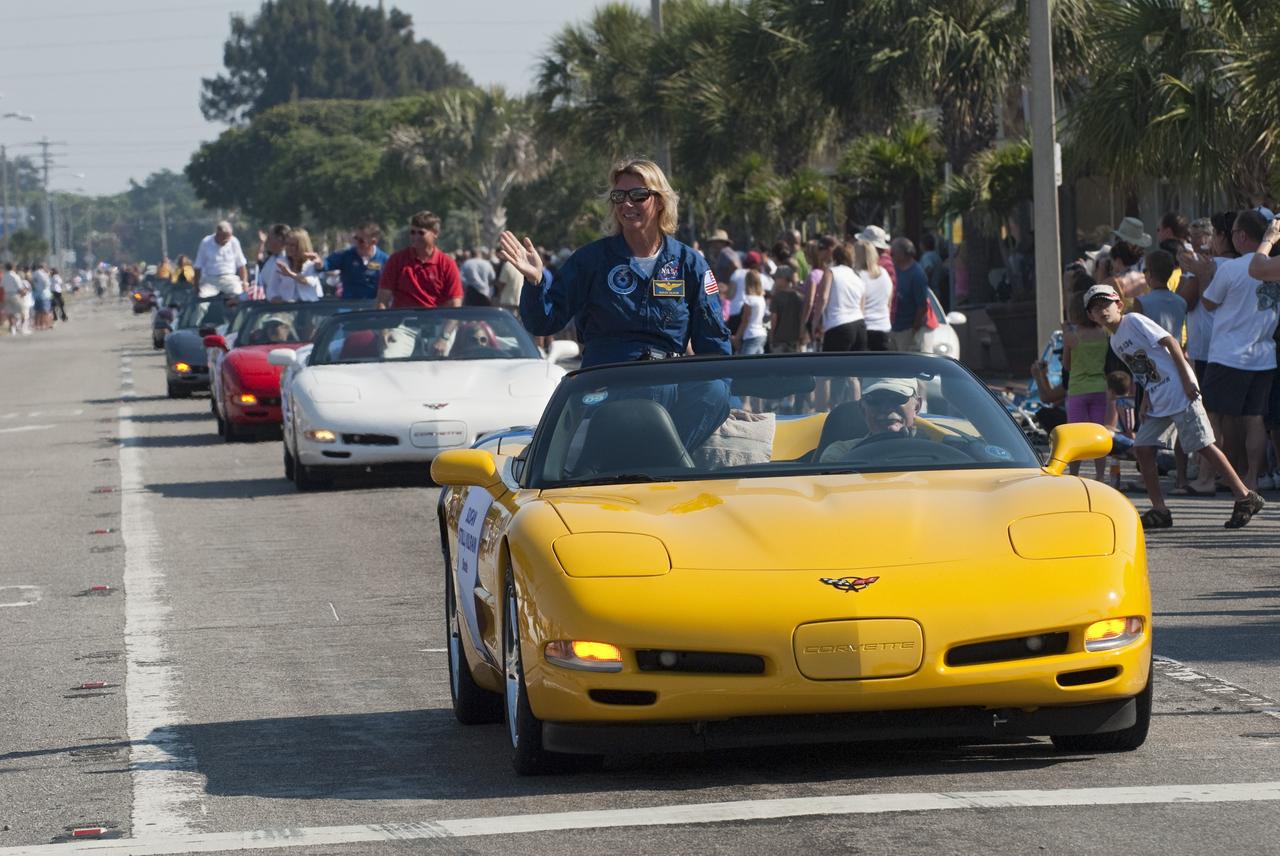
Cape Canaveral, Fla. -- Retired space shuttle astronaut Susan Kilrain waves to spectators from a Chevrolet Corvette during a commemorative parade in Cocoa Beach, Fla. A group of current and retired NASA astronauts gathered in Cocoa Beach to commemorate NASA’s 50 years of accomplishments and to honor astronaut Alan Shepard’s Mercury/Freedom 7 suborbital flight May 5, 1961.The event was marked by a parade, with the astronauts riding in a fleet of Chevrolet Corvettes that corresponded with the time period of their space missions. Members of the Cape Kennedy Corvette Club, a group established in 1967, escorted almost two dozen astronauts or their family representatives in club members' cars. The Corvette parade started at the glass bank building, at 9:34 a.m. EDT, the same time Shepard launched into space. Photo credit: NASA/Kim Shiflett
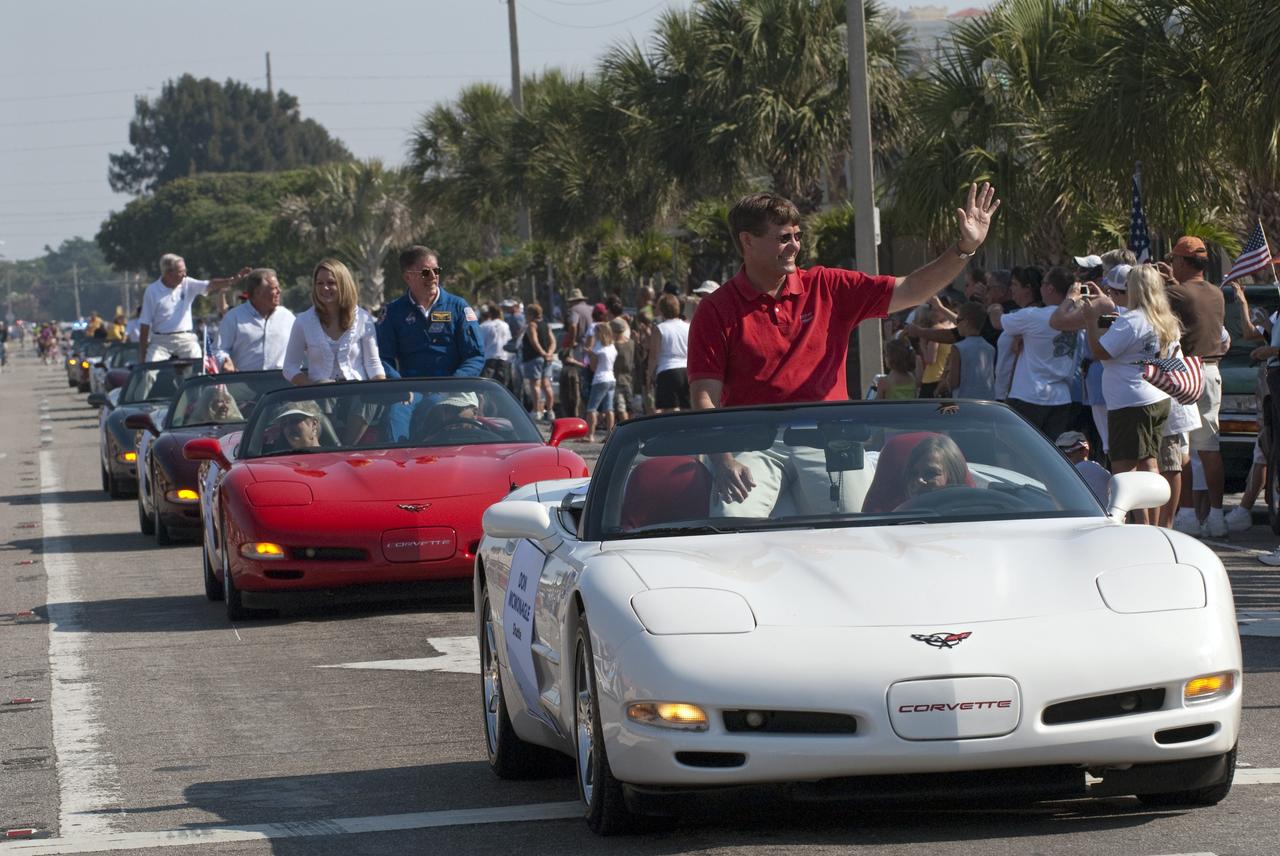
Cape Canaveral, Fla. -- Retired space shuttle astronaut Don McMonagle waves to spectators from a vintage Chevrolet Corvette during a commemorative parade in Cocoa Beach, Fla. A group of current and retired NASA astronauts gathered in Cocoa Beach to commemorate NASA’s 50 years of accomplishments and to honor astronaut Alan Shepard’s Mercury/Freedom 7 suborbital flight May 5, 1961.The event was marked by a parade, with the astronauts riding in a fleet of Chevrolet Corvettes that corresponded with the time period of their space missions. Members of the Cape Kennedy Corvette Club, a group established in 1967, escorted almost two dozen astronauts or their family representatives in club members' cars. The Corvette parade started at the glass bank building, at 9:34 a.m. EDT, the same time Shepard launched into space. Photo credit: NASA/Kim Shiflett
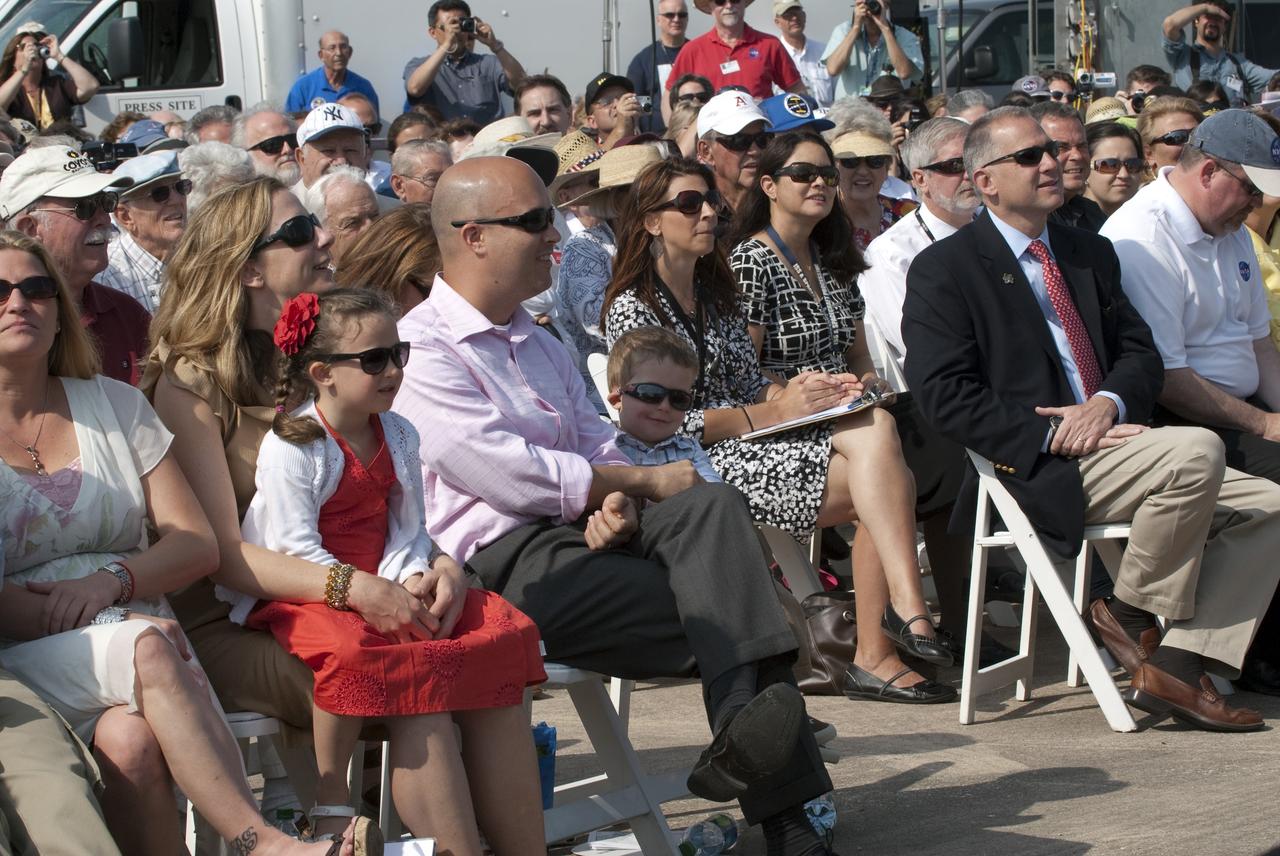
CAPE CANAVERAL, Fla. -- Invited guests of all ages attend a celebration at Complex 5/6 on Cape Canaveral Air Force Station in Florida. The celebration was held at the launch site of the first U.S. manned spaceflight May 5, 1961, to mark the 50th anniversary of the flight. Fifty years ago, astronaut Alan Shepard lifted off inside the Mercury capsule, "Freedom 7," atop an 82-foot-tall Mercury-Redstone rocket at 9:34 a.m. EST, sending him on a remarkably successful, 15-minute suborbital flight. The event was attended by more than 200 workers from the original Mercury program and included a re-creation of Shepard's flight and recovery, as well as a tribute to his contributions as a moonwalker on the Apollo 14 lunar mission. For more information, visit www.nasa.gov/topics/history/milestones/index.html. Photo credit: NASA/Kim Shiflett
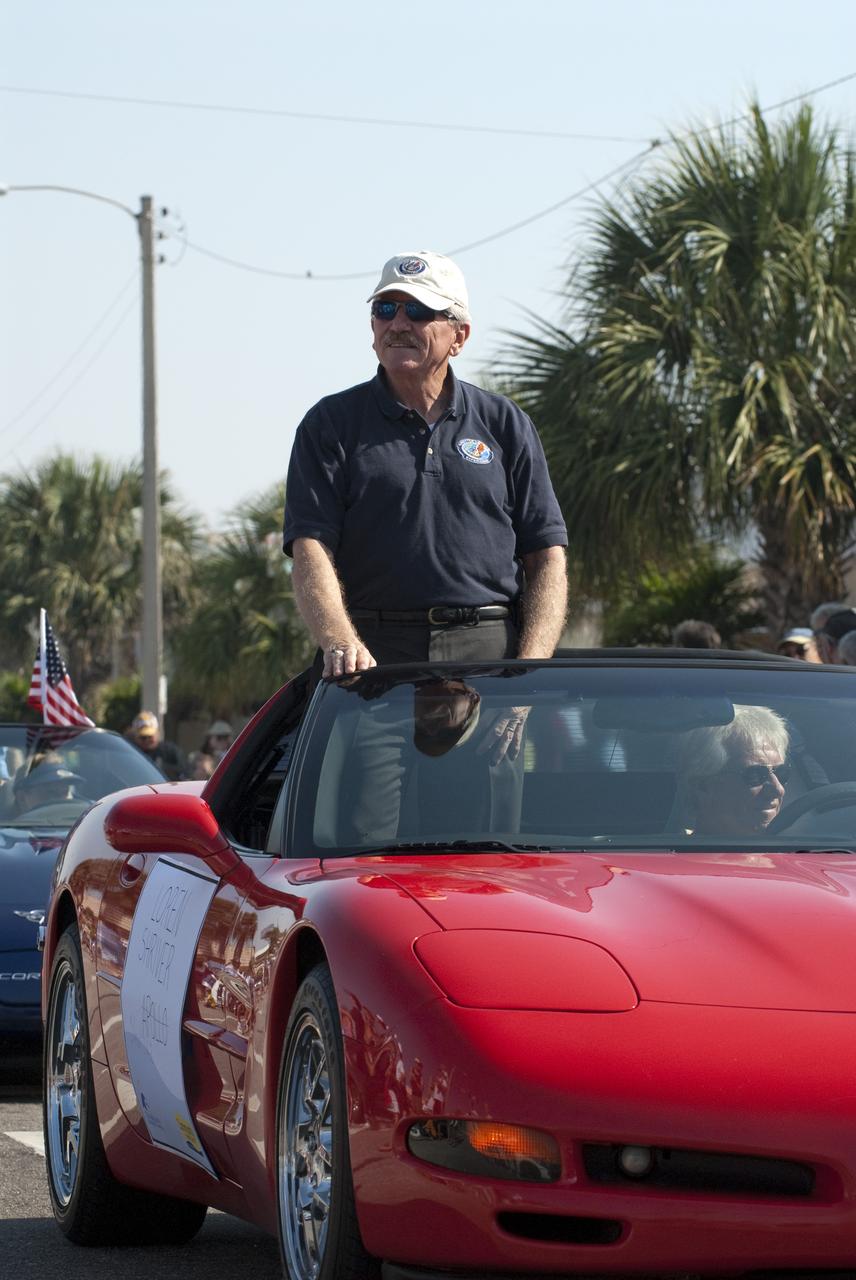
Cape Canaveral, Fla. -- Retired space shuttle astronaut Loren Shriver Hauck greets spectators from a Chevrolet Corvette during a commemorative parade in Cocoa Beach, Fla. A group of current and retired NASA astronauts gathered in Cocoa Beach to commemorate NASA’s 50 years of accomplishments and to honor astronaut Alan Shepard’s Mercury/Freedom 7 suborbital flight May 5, 1961.The event was marked by a parade, with the astronauts riding in a fleet of Chevrolet Corvettes that corresponded with the time period of their space missions. Members of the Cape Kennedy Corvette Club, a group established in 1967, escorted almost two dozen astronauts or their family representatives in club members' cars. The Corvette parade started at the glass bank building, at 9:34 a.m. EDT, the same time Shepard launched into space. Photo credit: NASA/Kim Shiflett
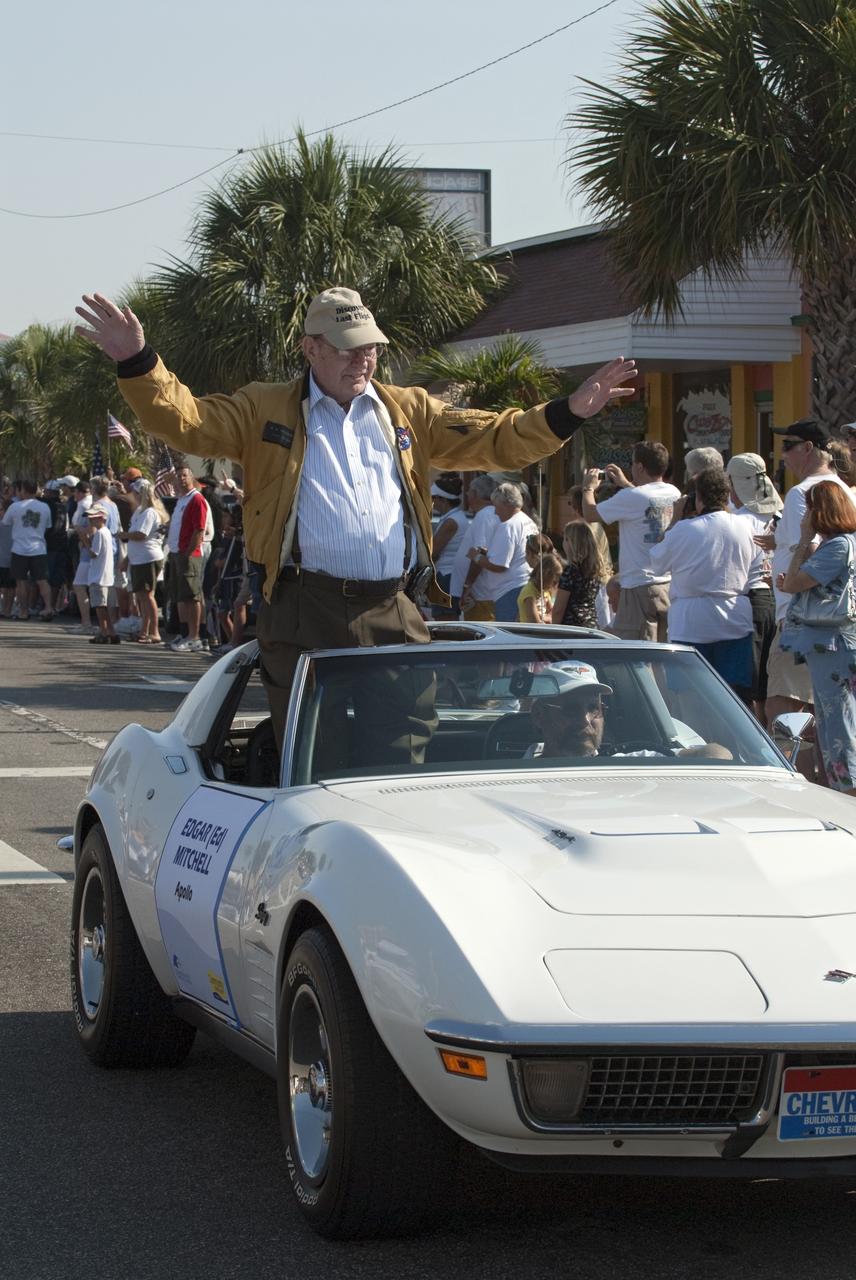
Cape Canaveral, Fla. -- Retired Apollo astronaut Edgar (Ed) Mitchell waves to spectators from a vintage Chevrolet Corvette during a commemorative parade in Cocoa Beach, Fla. A group of current and retired NASA astronauts gathered in Cocoa Beach to commemorate NASA’s 50 years of accomplishments and to honor astronaut Alan Shepard’s Mercury/Freedom 7 suborbital flight May 5, 1961.The event was marked by a parade, with the astronauts riding in a fleet of Chevrolet Corvettes that corresponded with the time period of their space missions. Members of the Cape Kennedy Corvette Club, a group established in 1967, escorted almost two dozen astronauts or their family representatives in club members' cars. The Corvette parade started at the glass bank building, at 9:34 a.m. EDT, the same time Shepard launched into space. Photo credit: NASA/Kim Shiflett
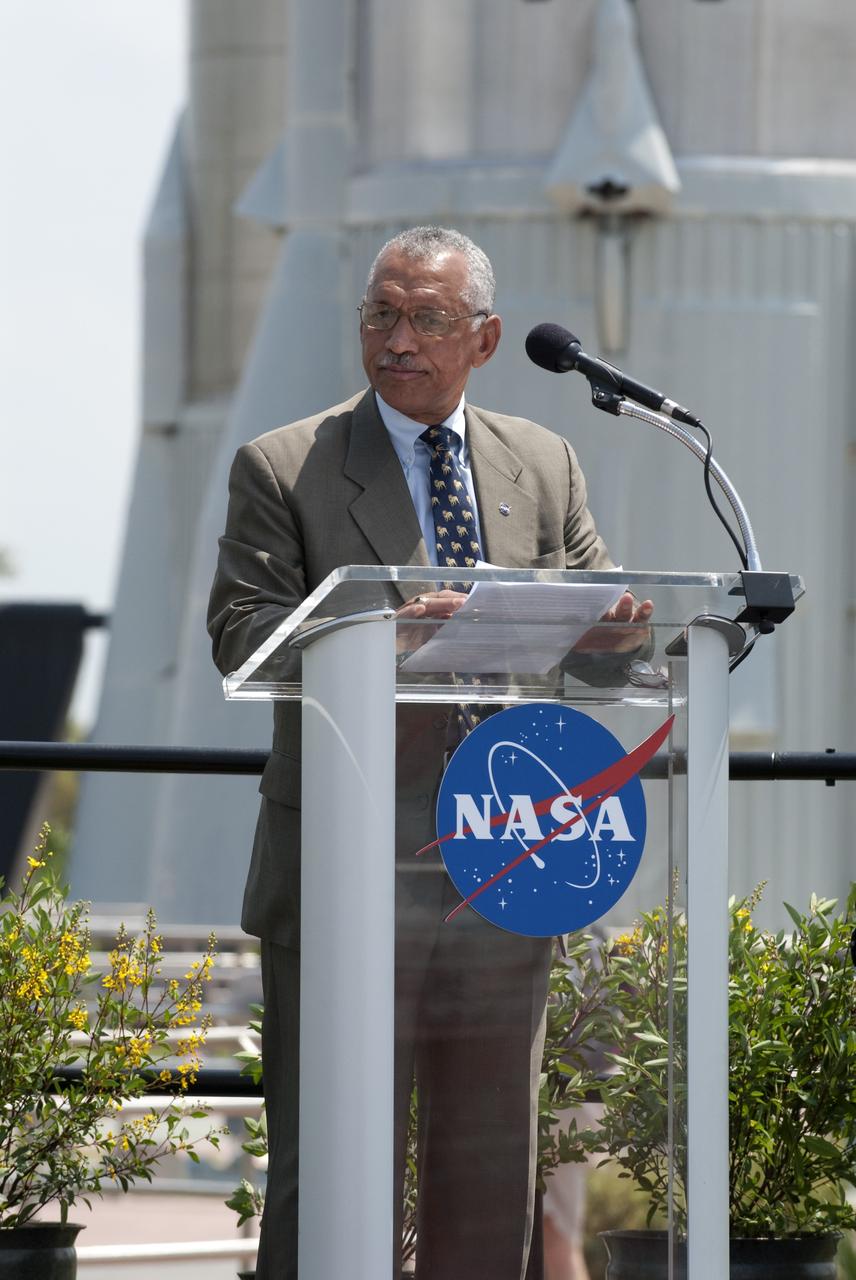
CAPE CANAVERAL, Fla. -- In the Rocket Garden at NASA's Kennedy Space Center Visitor Complex in Florida, NASA Administrator Charlie Bolden speaks to the audience in attendance for the United States Postal Service unveiling of two new stamps to commemorate the 50th anniversary of human spaceflight. One stamp commemorates NASA's Project Mercury and Alan Shepard's historic launch on May 5, 1961, aboard the spacecraft Freedom 7. The second stamp honors NASA's MESSENGER, which reached Mercury in March to become the first spacecraft to orbit the planet. The two missions frame a remarkable 50-year period in which America advanced space exploration through more than 1,500 crewed and uncrewed flights. Photo credit: NASA/Kim Shiflett
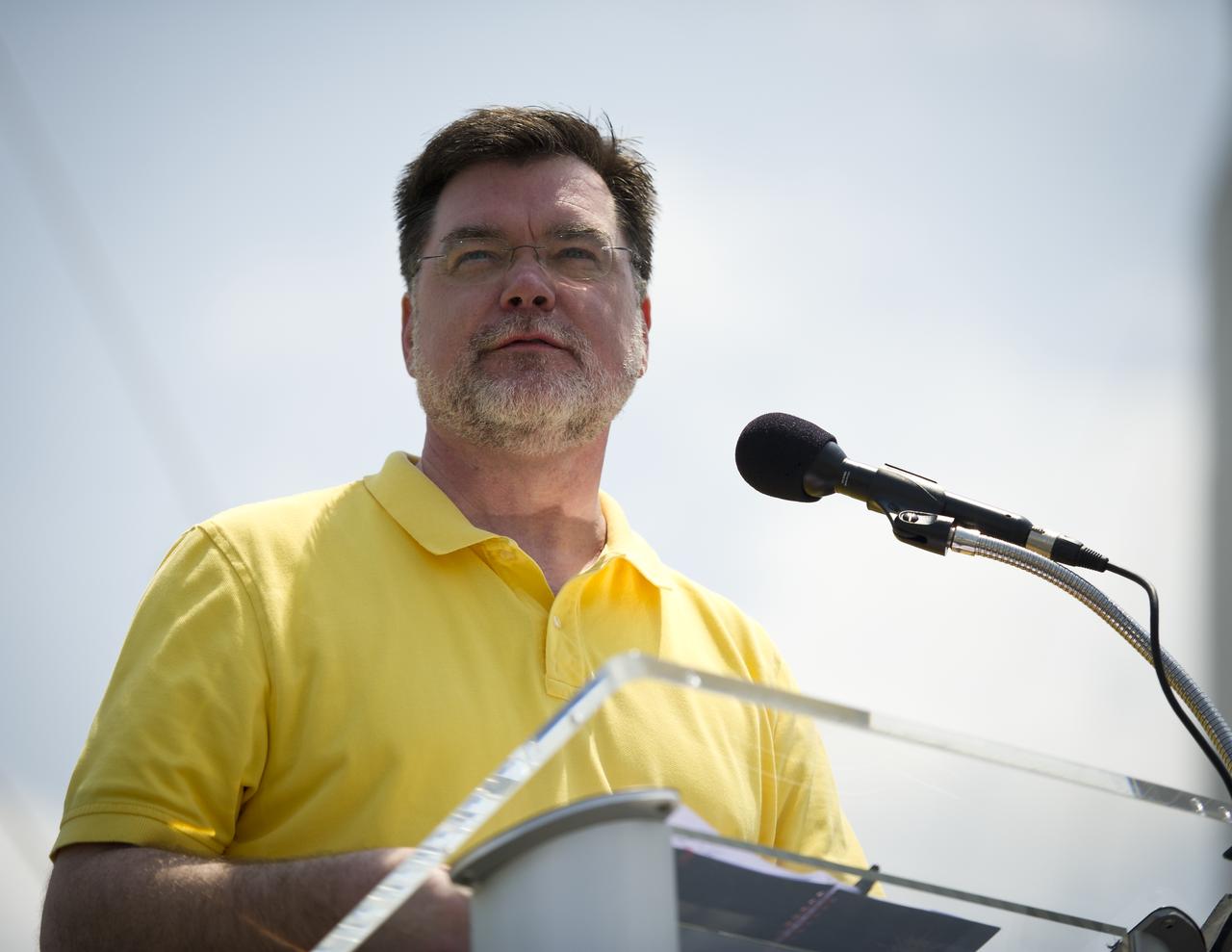
Jim Adams, NASA Deputy Director, Planetary Science Division, Science Mission Directorate, speaks during an unveiling ceremony of two USPS stamps that commemorate and celebrate 50 years of US Spaceflight and the MESSENGER program during an event, Wednesday, May 4, 2011 at the NASA Kennedy Space Center in Cape Canaveral, Fla. One stamp commemorates NASA’s Project Mercury, America’s first manned spaceflight program, and NASA astronaut Alan Shepard’s historic flight on May 5, 1961, aboard spacecraft Freedom 7. The other stamp draws attention to NASA’s unmanned MESSENGER mission, a scientific investigation of the planet Mercury. On March 17, 2011, MESSENGER became the first spacecraft to enter into orbit around Mercury. Photo Credit: (NASA/Bill Ingalls)
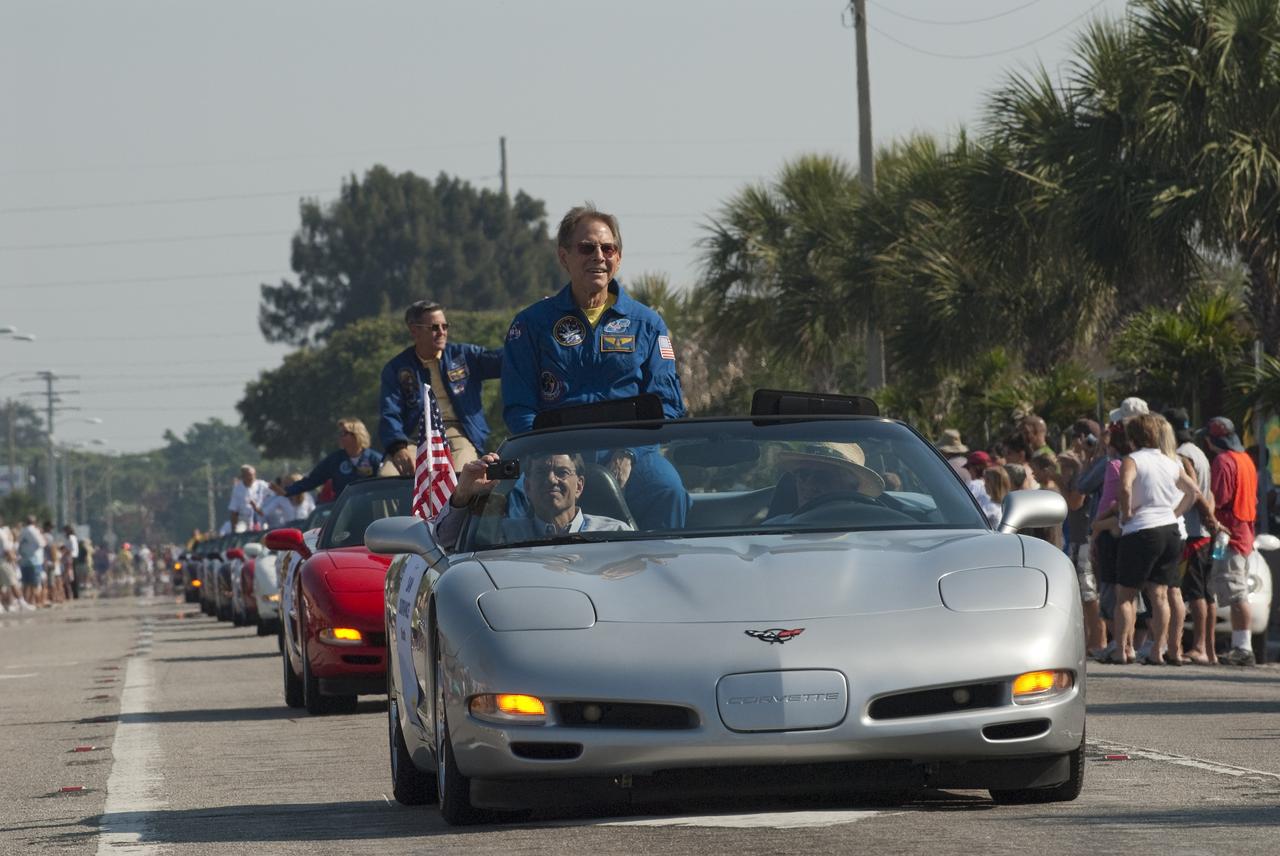
Cape Canaveral, Fla. -- Retired space shuttle astronaut Sam Durrance greets spectators from a Chevrolet Corvette during a commemorative parade in Cocoa Beach, Fla. A group of current and retired NASA astronauts gathered in Cocoa Beach to commemorate NASA’s 50 years of accomplishments and to honor astronaut Alan Shepard’s Mercury/Freedom 7 suborbital flight May 5, 1961.The event was marked by a parade, with the astronauts riding in a fleet of Chevrolet Corvettes that corresponded with the time period of their space missions. Members of the Cape Kennedy Corvette Club, a group established in 1967, escorted almost two dozen astronauts or their family representatives in club members' cars. The Corvette parade started at the glass bank building, at 9:34 a.m. EDT, the same time Shepard launched into space. Photo credit: NASA/Kim Shiflett
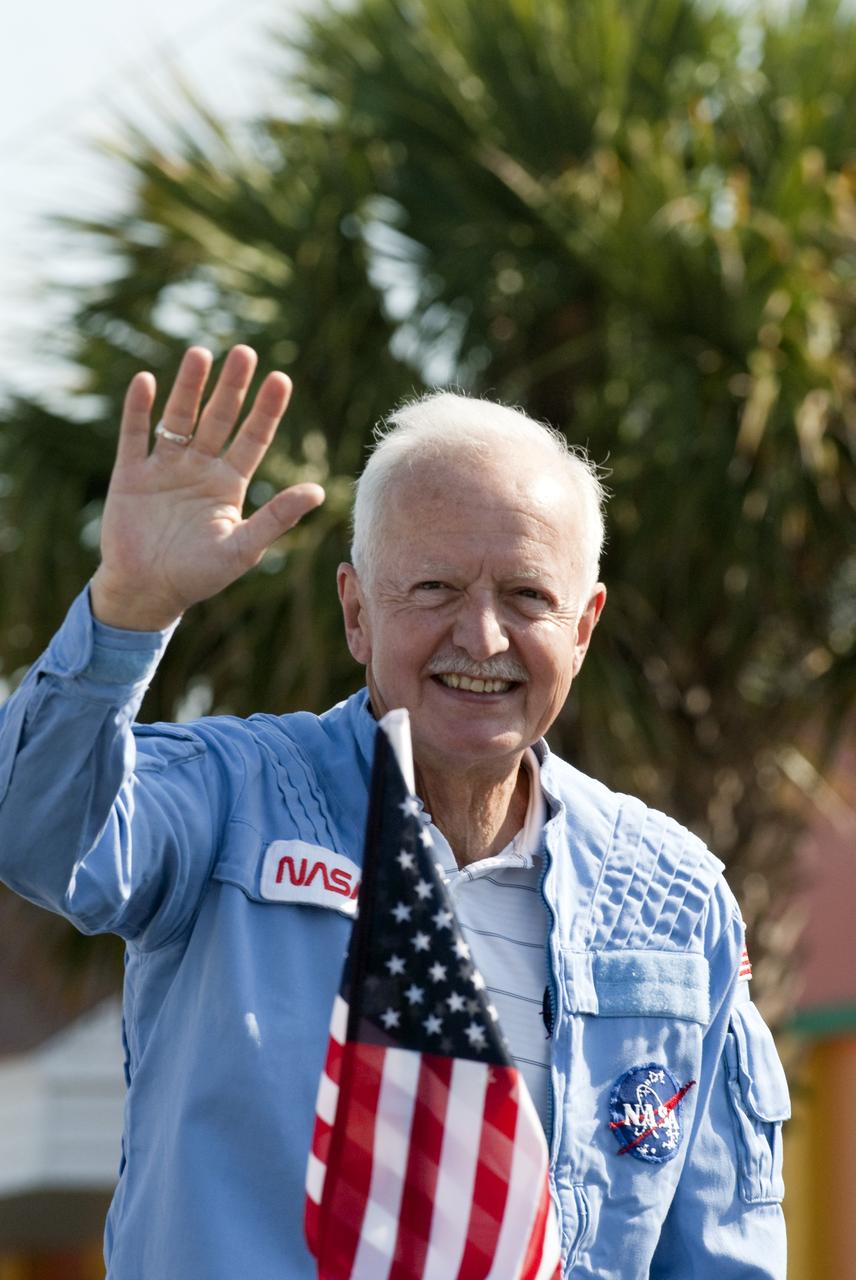
Cape Canaveral, Fla. -- Retired payload specialist John-David Bartoe greets spectators during a commemorative parade in Cocoa Beach, Fla. A group of current and retired NASA astronauts gathered in Cocoa Beach to commemorate NASA’s 50 years of accomplishments and to honor astronaut Alan Shepard’s Mercury/Freedom 7 suborbital flight May 5, 1961.The event was marked by a parade, with the astronauts riding in a fleet of Chevrolet Corvettes that corresponded with the time period of their space missions. Members of the Cape Kennedy Corvette Club, a group established in 1967, escorted almost two dozen astronauts or their family representatives in club members' cars. The Corvette parade started at the glass bank building, at 9:34 a.m. EDT, the same time Shepard launched into space. Photo credit: NASA/Kim Shiflett
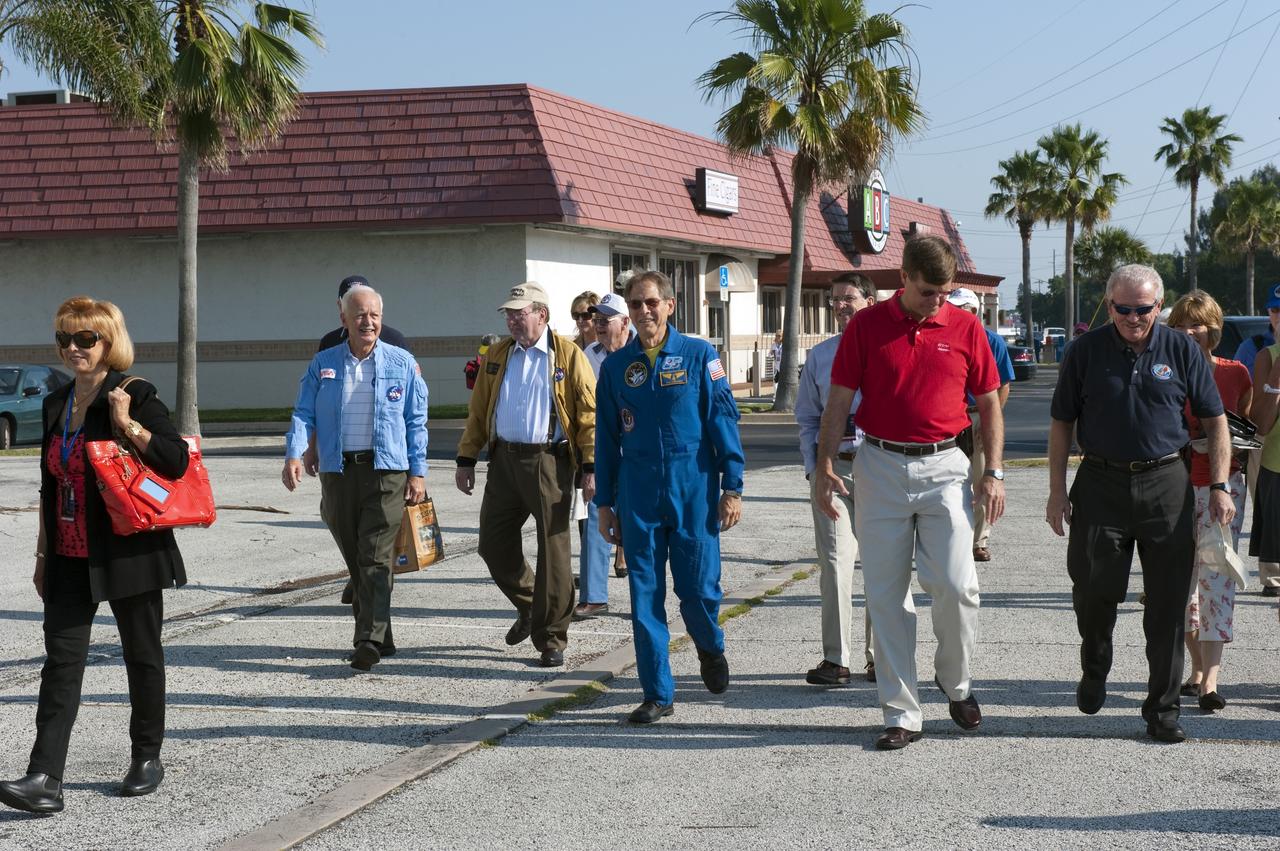
Cape Canaveral, Fla. -- Guests and retired astronauts walk away from the Chevrolet Corvettes they rode in during a commemorative parade in Cocoa Beach, Florida. A group of current and retired NASA astronauts gathered in Cocoa Beach to commemorate NASA’s 50 years of accomplishments and to honor astronaut Alan Shepard’s Mercury/Freedom 7 suborbital flight May 5, 1961.The event was marked by a parade, with the astronauts riding in a fleet of Chevrolet Corvettes that corresponded with the time period of their space missions. Members of the Cape Kennedy Corvette Club, a group established in 1967, escorted almost two dozen astronauts or their family representatives in club members' cars. The Corvette parade started at the glass bank building, at 9:34 a.m. EDT, the same time Shepard launched into space. Photo credit: NASA/Kim Shiflett
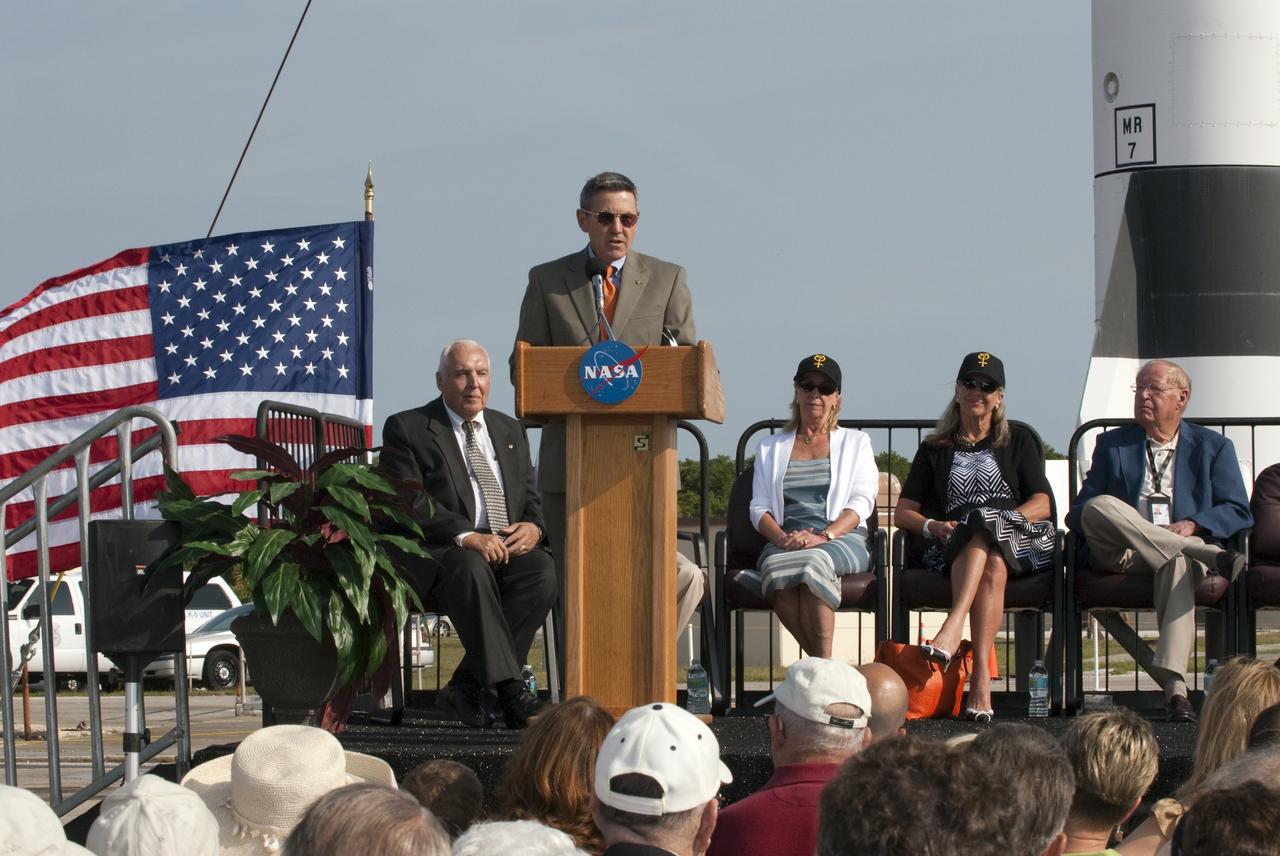
CAPE CANAVERAL, Fla. -- Kennedy Space Center Director and former astronaut Bob Cabana addresses the audience at a celebration at Complex 5/6 on Cape Canaveral Air Force Station in Florida. The celebration was held at the launch site of the first U.S. manned spaceflight May 5, 1961, to mark the 50th anniversary of the flight. Fifty years ago, astronaut Alan Shepard lifted off inside the Mercury capsule, "Freedom 7," atop an 82-foot-tall Mercury-Redstone rocket at 9:34 a.m. EST, sending him on a remarkably successful, 15-minute suborbital flight. The event was attended by more than 200 workers from the original Mercury program and included a re-creation of Shepard's flight and recovery, as well as a tribute to his contributions as a moonwalker on the Apollo 14 lunar mission. For more information, visit www.nasa.gov/topics/history/milestones/index.html. Photo credit: NASA/Kim Shiflett
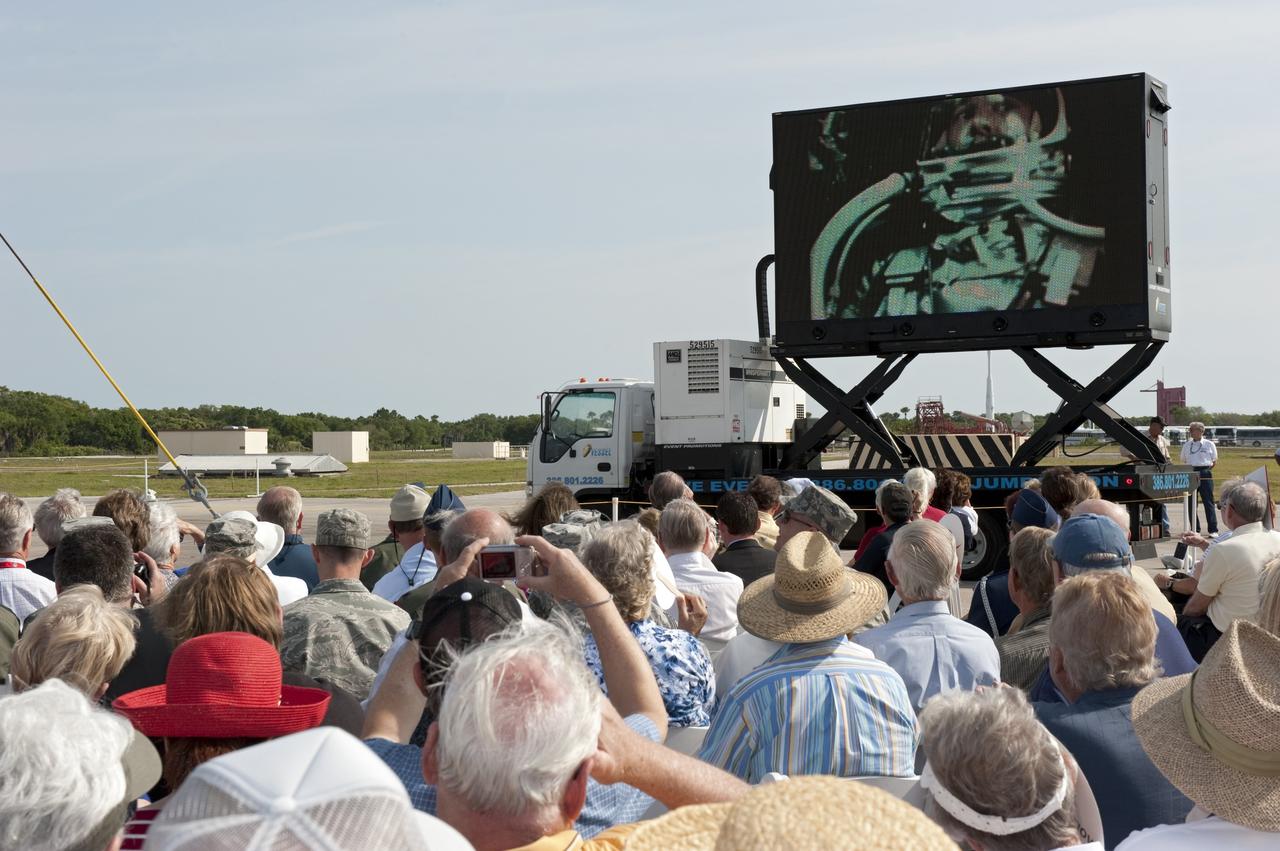
CAPE CANAVERAL, Fla. -- Invited guests enjoy a tribute to astronaut Alan Shepard during a celebration at Complex 5/6 on Cape Canaveral Air Force Station in Florida. The celebration was held at the launch site of the first U.S. manned spaceflight May 5, 1961, to mark the 50th anniversary of the flight. Fifty years ago, astronaut Alan Shepard lifted off inside the Mercury capsule, "Freedom 7," atop an 82-foot-tall Mercury-Redstone rocket at 9:34 a.m. EST, sending him on a remarkably successful, 15-minute suborbital flight. The event was attended by more than 200 workers from the original Mercury program and included a re-creation of Shepard's flight and recovery, as well as a tribute to his contributions as a moonwalker on the Apollo 14 lunar mission. For more information, visit www.nasa.gov/topics/history/milestones/index.html. Photo credit: NASA/Kim Shiflett
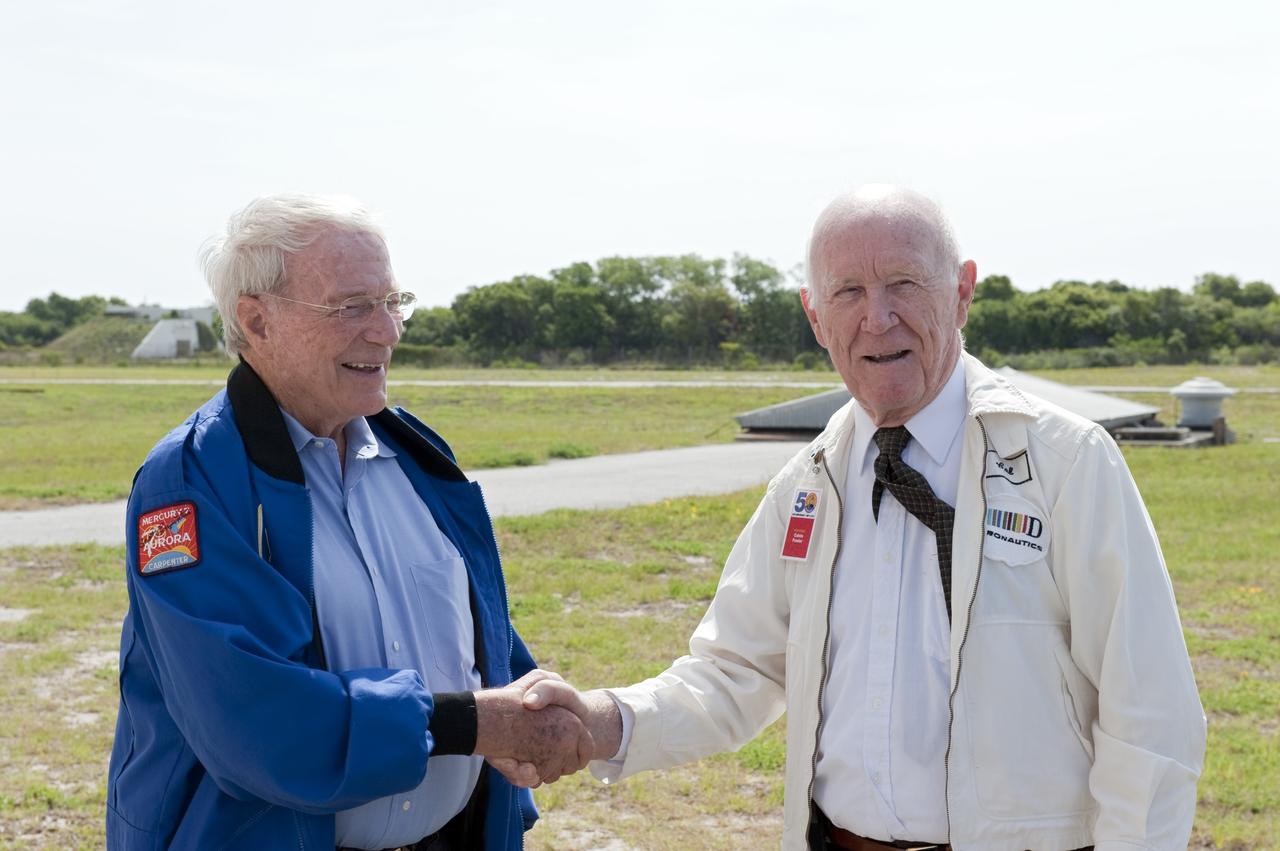
CAPE CANAVERAL, Fla. -- During a celebration at Complex 5/6 on Cape Canaveral Air Force Station in Florida, Mercury astronaut Scott Carpenter greets Calvin Fowler, the launch conductor for Carpenter's Mercury-Atlas 7 mission on May 24, 1962. The celebration was held at the launch site of the first U.S. manned spaceflight May 5, 1961, to mark the 50th anniversary of the flight. Fifty years ago, astronaut Alan Shepard lifted off inside the Mercury capsule, "Freedom 7," atop an 82-foot-tall Mercury-Redstone rocket at 9:34 a.m. EST, sending him on a remarkably successful, 15-minute suborbital flight. The event was attended by more than 200 workers from the original Mercury program and included a re-creation of Shepard's flight and recovery, as well as a tribute to his contributions as a moonwalker on the Apollo 14 lunar mission. For more information, visit www.nasa.gov/topics/history/milestones/index.html. Photo credit: NASA/Kim Shiflett
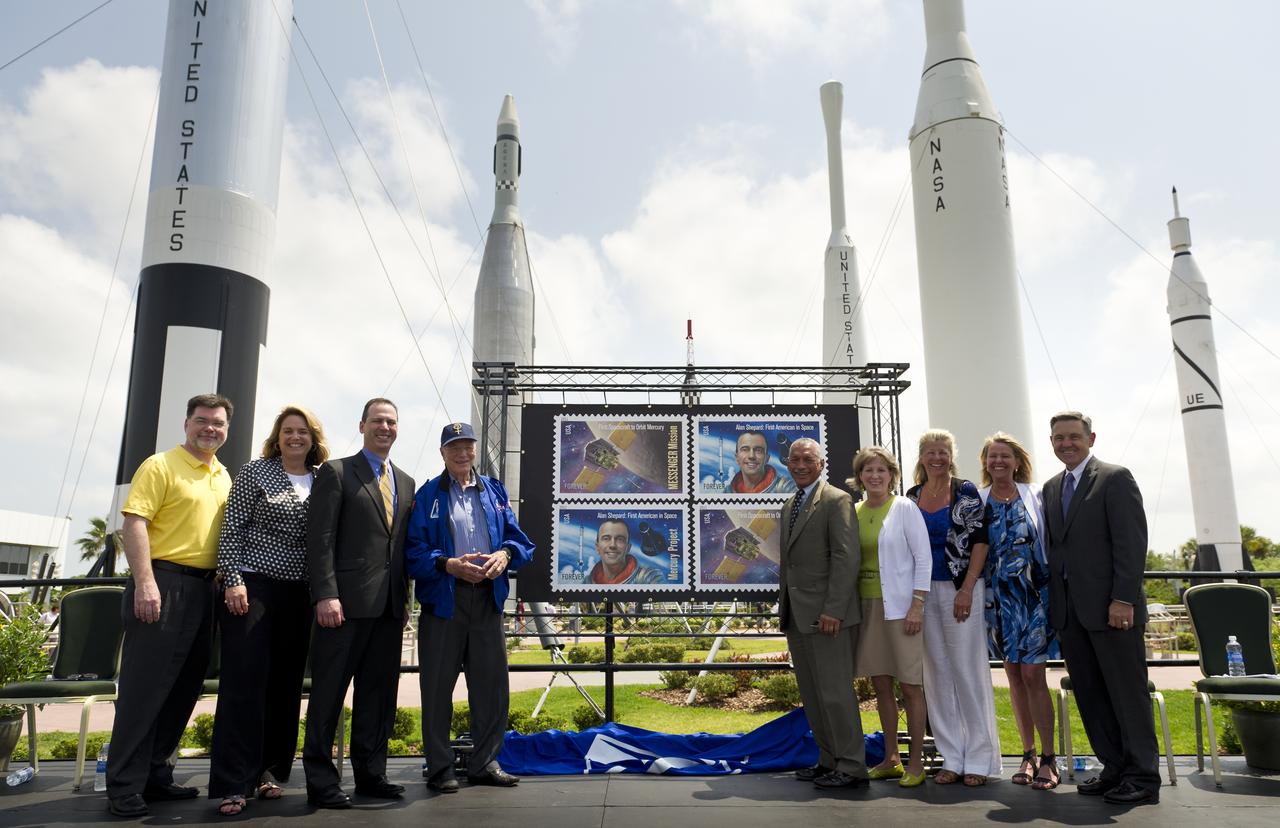
From left, NASA Deputy Director, Planetary Science Division, Science Mission Directorate, Jim Adams, NASA Kennedy Space Center Director of Education and External Relations Cheryl Hurst, United States Postal Service Vice President of Finance Steve Masse, NASA Mercury Astronaut Scott Carpenter, NASA Administrator Charles Boldin, Daughters of NASA astronaut Alan Shepard, Alice Wackermann, Laura Shepard Churchley, and Julie Jenkins, and NASA Kennedy Space Center Director Robert Cabana pose for a photograph during an unveiling ceremony of two USPS stamps that commemorate and celebrate 50 years of US Spaceflight and the MESSENGER program during an event, Wednesday, May 4, 2011 at the NASA Kennedy Space Center in Cape Canaveral, Fla. One stamp commemorates NASA’s Project Mercury, America’s first manned spaceflight program, and NASA astronaut Alan Shepard’s historic flight on May 5, 1961, aboard spacecraft Freedom 7. The other stamp draws attention to NASA’s unmanned MESSENGER mission, a scientific investigation of the planet Mercury. On March 17, 2011, MESSENGER became the first spacecraft to enter into orbit around Mercury. Photo Credit: (NASA/Bill Ingalls)