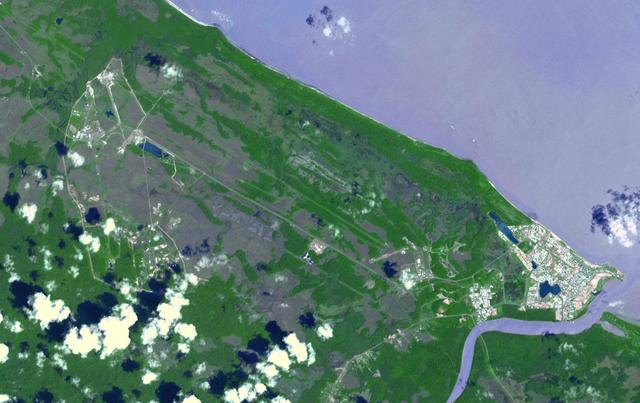
This image from NASA Terra spacecraft shows the town of Kourou, which sits at the mouth of the Kourou River, French Guiana.
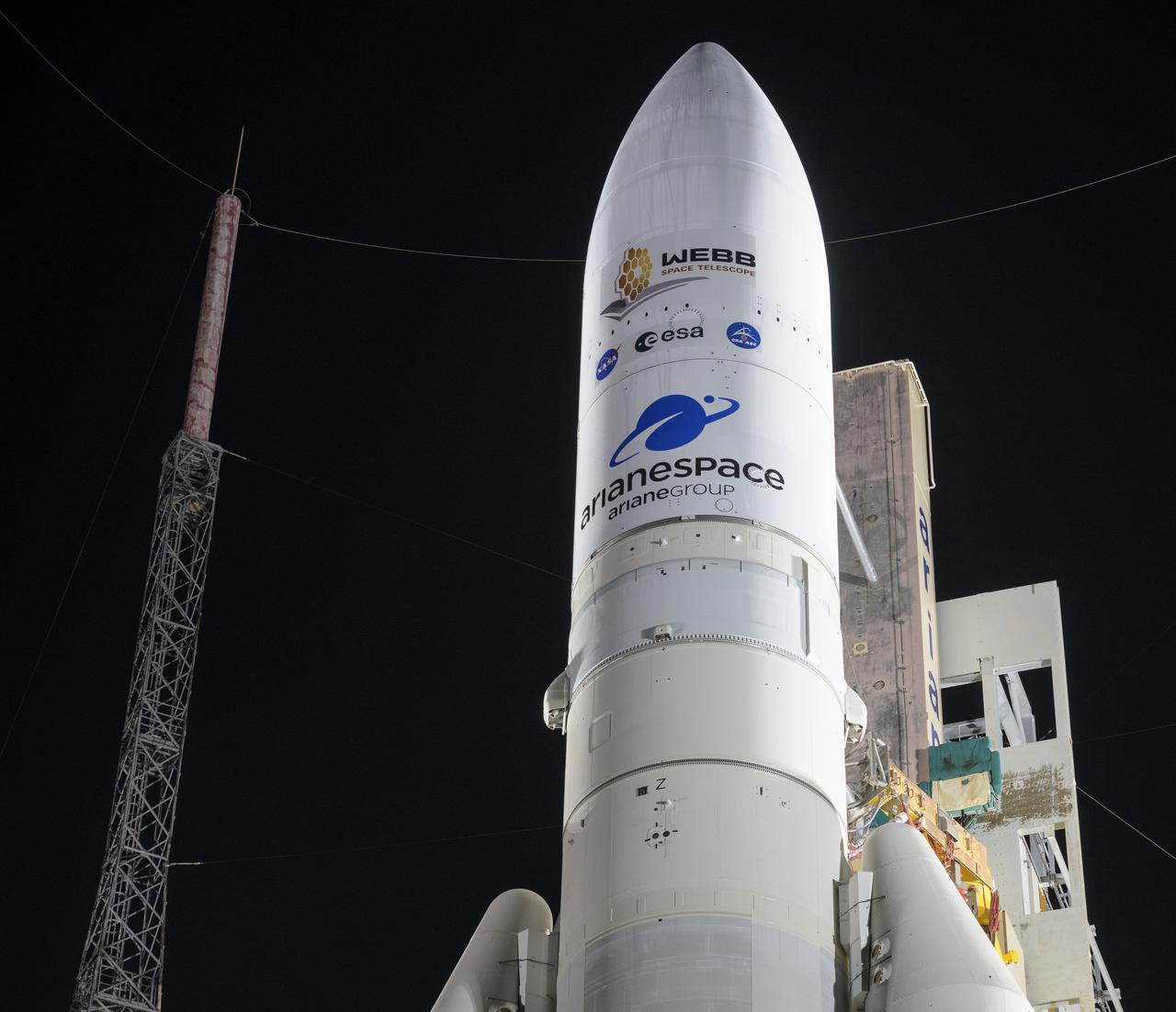
Arianespace's Ariane 5 rocket with NASA’s James Webb Space Telescope onboard, is seen at the launch pad, Thursday, Dec. 23, 2021, at Europe’s Spaceport, the Guiana Space Center in Kourou, French Guiana. The James Webb Space Telescope (sometimes called JWST or Webb) is a large infrared telescope with a 21.3 foot (6.5 meter) primary mirror. The observatory will study every phase of cosmic history—from within our solar system to the most distant observable galaxies in the early universe. Photo Credit: (NASA/Bill Ingalls)
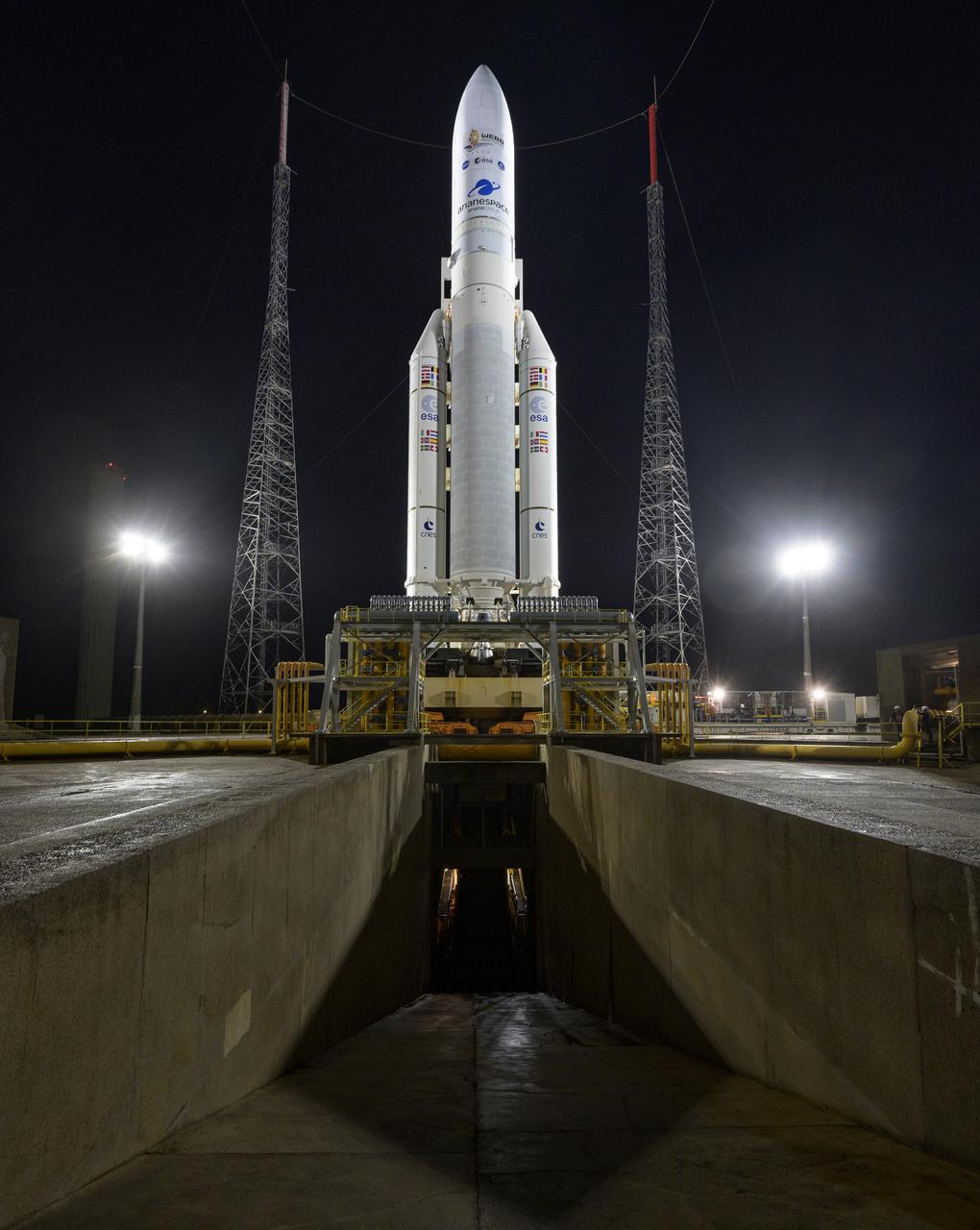
Arianespace's Ariane 5 rocket with NASA’s James Webb Space Telescope onboard, is seen at the launch pad, Thursday, Dec. 23, 2021, at Europe’s Spaceport, the Guiana Space Center in Kourou, French Guiana. The James Webb Space Telescope (sometimes called JWST or Webb) is a large infrared telescope with a 21.3 foot (6.5 meter) primary mirror. The observatory will study every phase of cosmic history—from within our solar system to the most distant observable galaxies in the early universe. Photo Credit: (NASA/Bill Ingalls)
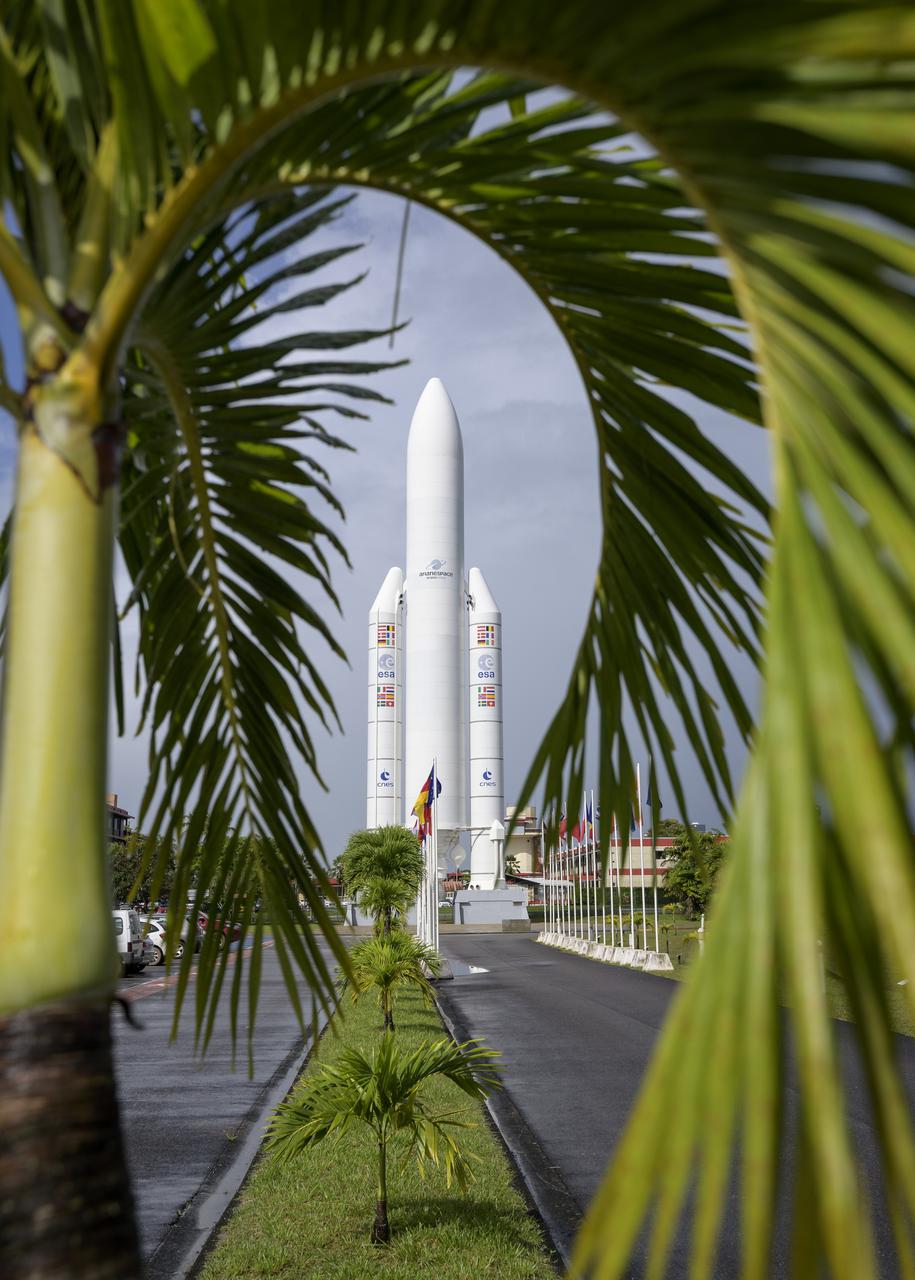
A mockup of Arianespace's Ariane 5 rocket is seen at the entrance to the Guiana Space Center in Kourou, French Guiana, Tuesday, Dec. 21, 2021. The James Webb Space Telescope (sometimes called JWST or Webb) is a large infrared telescope with a 21.3 foot (6.5 meter) primary mirror. The observatory is scheduled to launch later in the week and will study every phase of cosmic history—from within our solar system to the most distant observable galaxies in the early universe. Photo Credit: (NASA/Bill Ingalls)
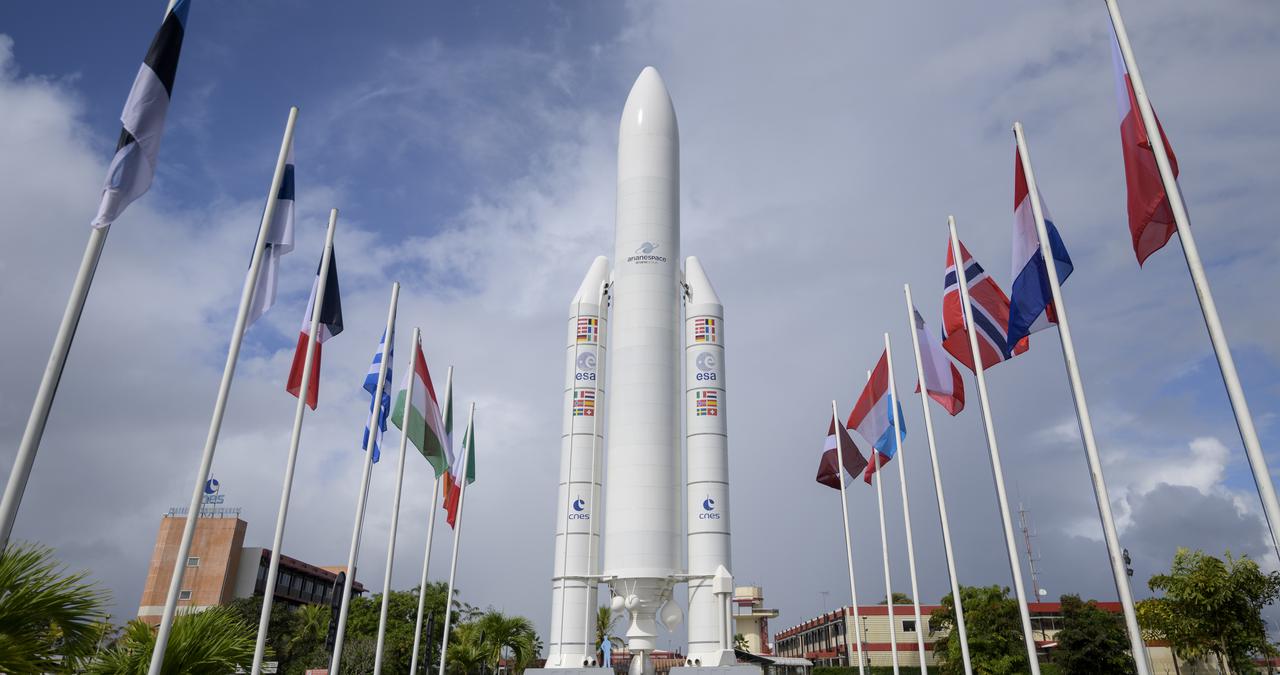
A mockup of Arianespace's Ariane 5 rocket is seen at the entrance to the Guiana Space Center in Kourou, French Guiana, Tuesday, Dec. 21, 2021. The James Webb Space Telescope (sometimes called JWST or Webb) is a large infrared telescope with a 21.3 foot (6.5 meter) primary mirror. The observatory is scheduled to launch later in the week and will study every phase of cosmic history—from within our solar system to the most distant observable galaxies in the early universe. Photo Credit: (NASA/Bill Ingalls)
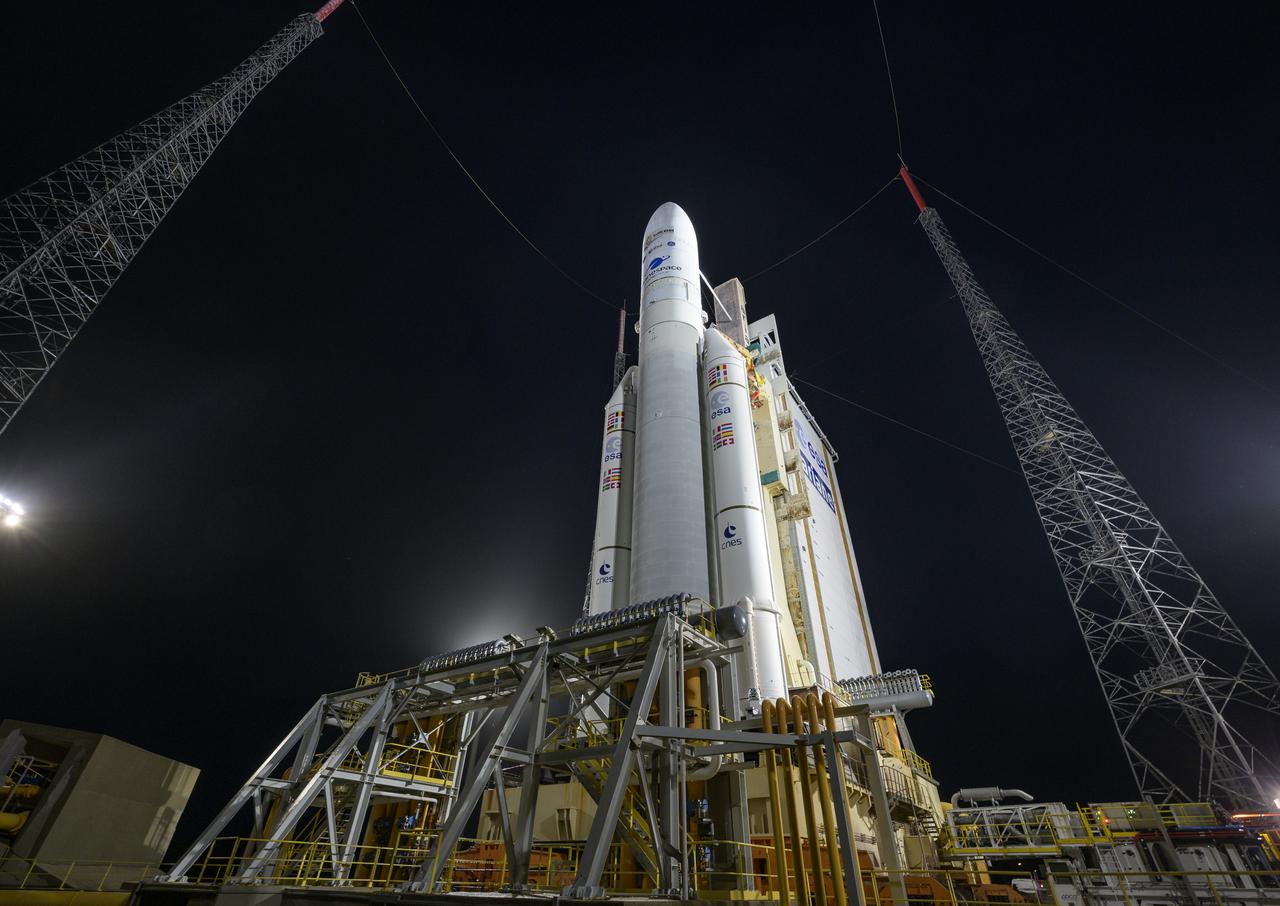
Arianespace's Ariane 5 rocket with NASA’s James Webb Space Telescope onboard, is seen at the launch pad, Thursday, Dec. 23, 2021, at Europe’s Spaceport, the Guiana Space Center in Kourou, French Guiana. The James Webb Space Telescope (sometimes called JWST or Webb) is a large infrared telescope with a 21.3 foot (6.5 meter) primary mirror. The observatory will study every phase of cosmic history—from within our solar system to the most distant observable galaxies in the early universe. Photo Credit: (NASA/Bill Ingalls)

Arianespace's Ariane 5 rocket with NASA’s James Webb Space Telescope onboard, is seen at the launch pad, Thursday, Dec. 23, 2021, at Europe’s Spaceport, the Guiana Space Center in Kourou, French Guiana. The James Webb Space Telescope (sometimes called JWST or Webb) is a large infrared telescope with a 21.3 foot (6.5 meter) primary mirror. The observatory will study every phase of cosmic history—from within our solar system to the most distant observable galaxies in the early universe. Photo Credit: (NASA/Bill Ingalls)
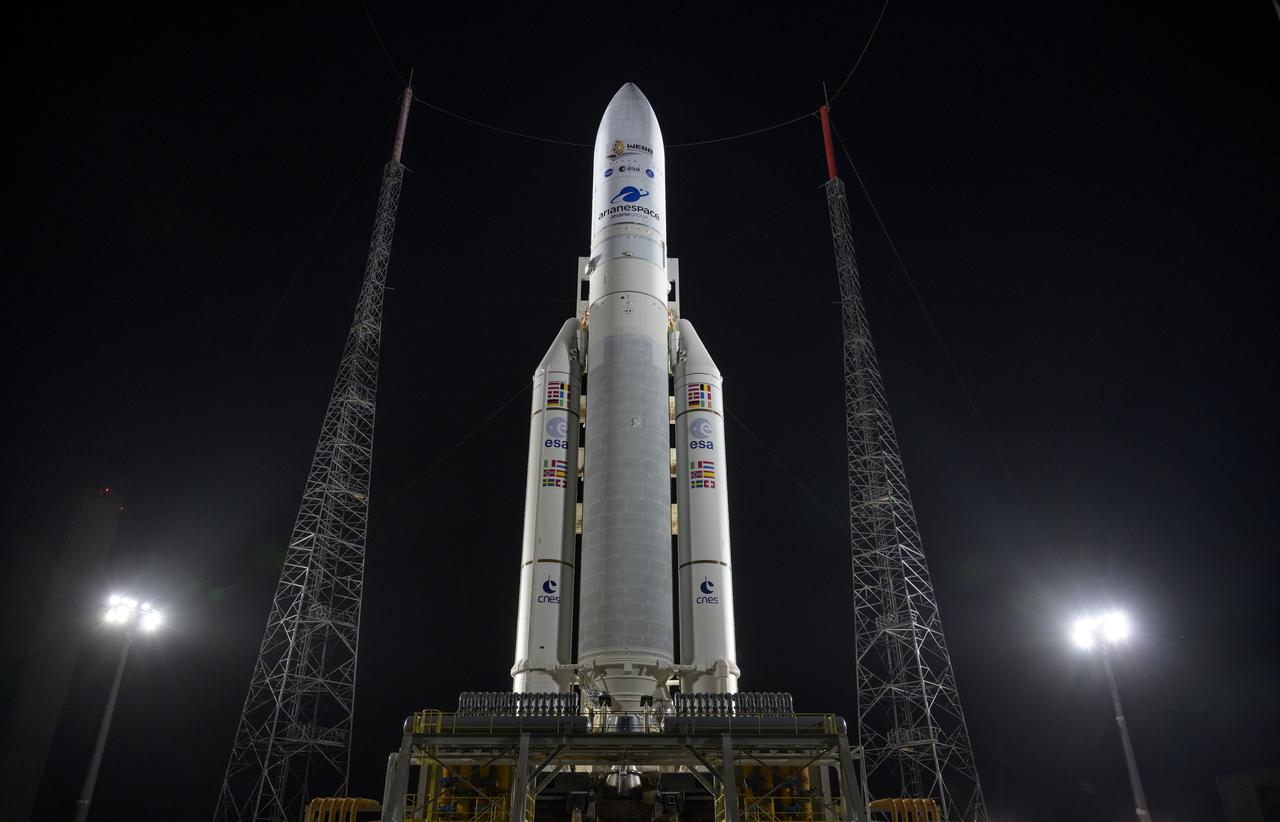
Arianespace's Ariane 5 rocket with NASA’s James Webb Space Telescope onboard, is seen at the launch pad, Thursday, Dec. 23, 2021, at Europe’s Spaceport, the Guiana Space Center in Kourou, French Guiana. The James Webb Space Telescope (sometimes called JWST or Webb) is a large infrared telescope with a 21.3 foot (6.5 meter) primary mirror. The observatory will study every phase of cosmic history—from within our solar system to the most distant observable galaxies in the early universe. Photo Credit: (NASA/Bill Ingalls)
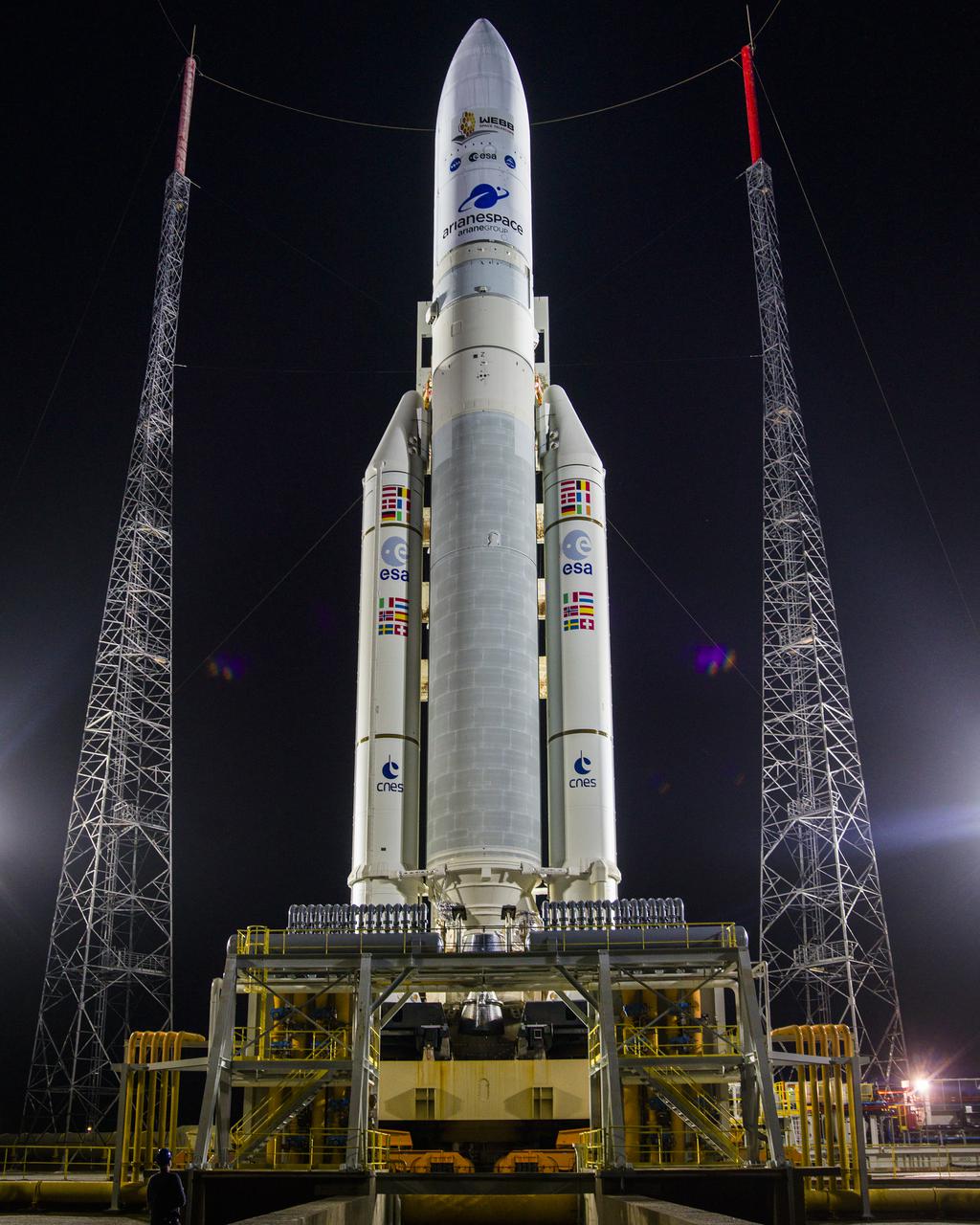
Arianespace's Ariane 5 rocket with NASA’s James Webb Space Telescope onboard, is seen at the launch pad, Thursday, Dec. 23, 2021, at Europe’s Spaceport, the Guiana Space Center in Kourou, French Guiana. The James Webb Space Telescope (sometimes called JWST or Webb) is a large infrared telescope with a 21.3 foot (6.5 meter) primary mirror. The observatory will study every phase of cosmic history—from within our solar system to the most distant observable galaxies in the early universe. Photo Credit: (NASA/Chris Gunn)
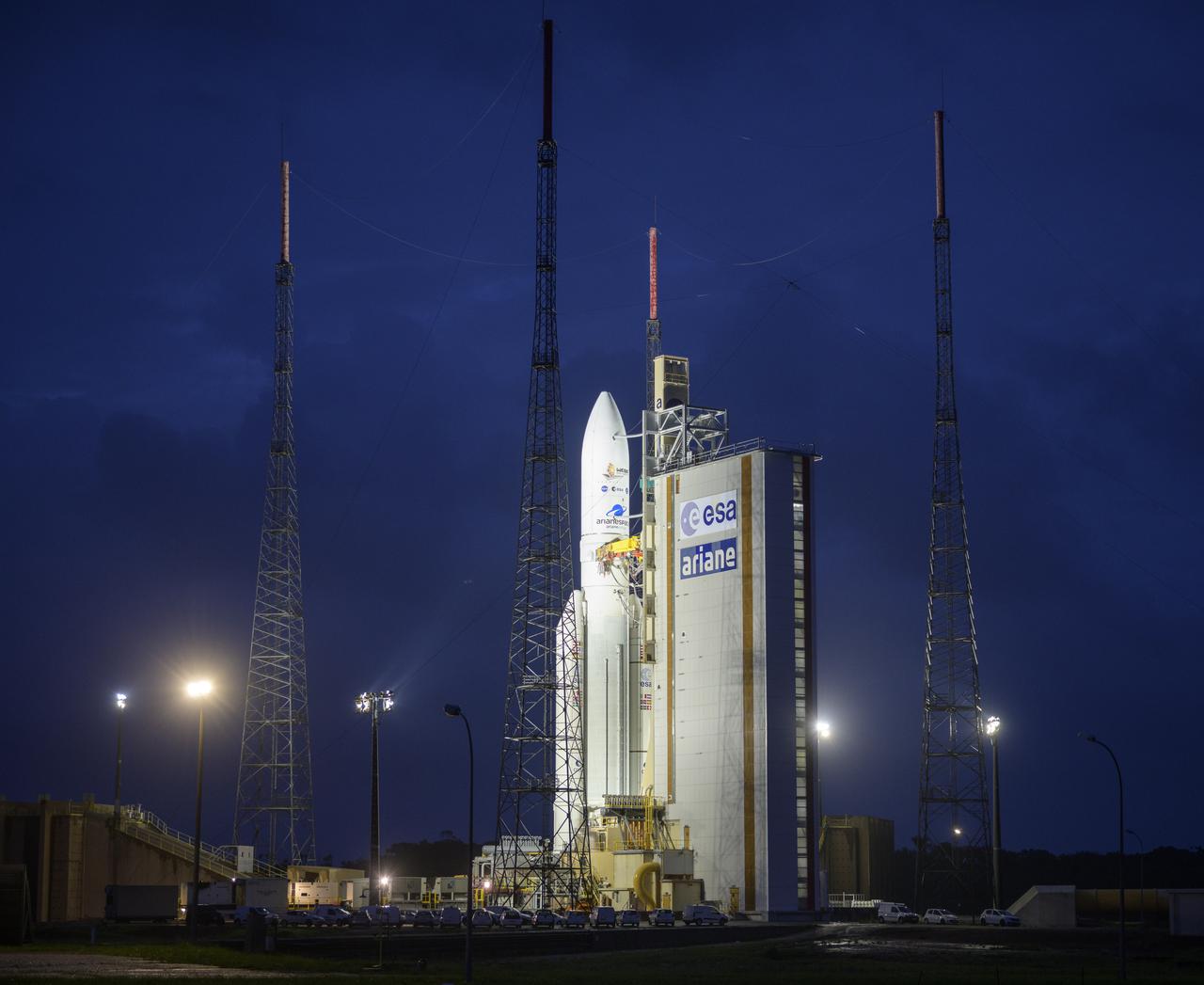
Arianespace's Ariane 5 rocket with NASA’s James Webb Space Telescope onboard, is seen at the launch pad, Thursday, Dec. 23, 2021, at Europe’s Spaceport, the Guiana Space Center in Kourou, French Guiana. The James Webb Space Telescope (sometimes called JWST or Webb) is a large infrared telescope with a 21.3 foot (6.5 meter) primary mirror. The observatory will study every phase of cosmic history—from within our solar system to the most distant observable galaxies in the early universe. Photo Credit: (NASA/Bill Ingalls)
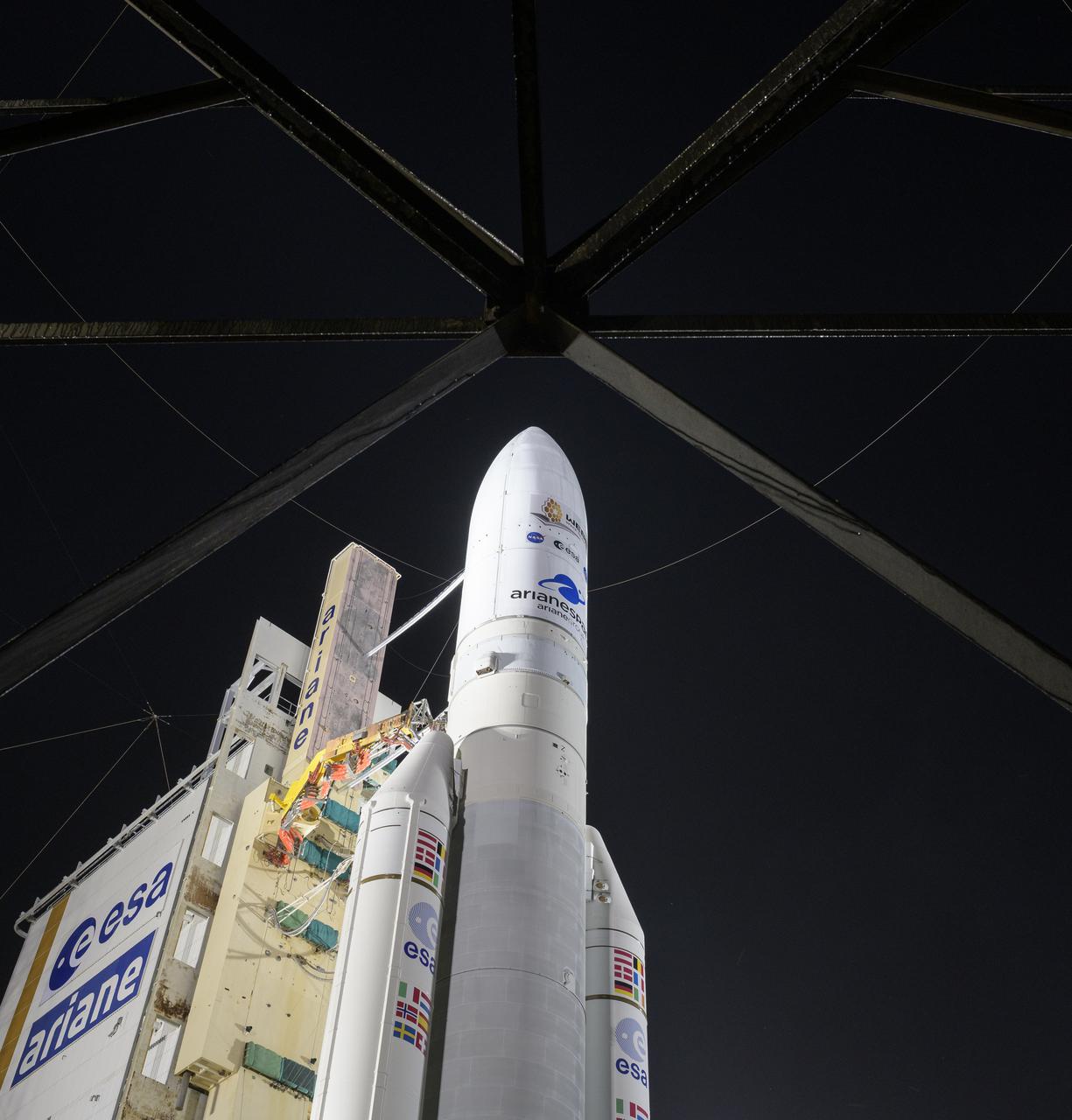
Arianespace's Ariane 5 rocket with NASA’s James Webb Space Telescope onboard, is seen at the launch pad, Thursday, Dec. 23, 2021, at Europe’s Spaceport, the Guiana Space Center in Kourou, French Guiana. The James Webb Space Telescope (sometimes called JWST or Webb) is a large infrared telescope with a 21.3 foot (6.5 meter) primary mirror. The observatory will study every phase of cosmic history—from within our solar system to the most distant observable galaxies in the early universe. Photo Credit: (NASA/Bill Ingalls)
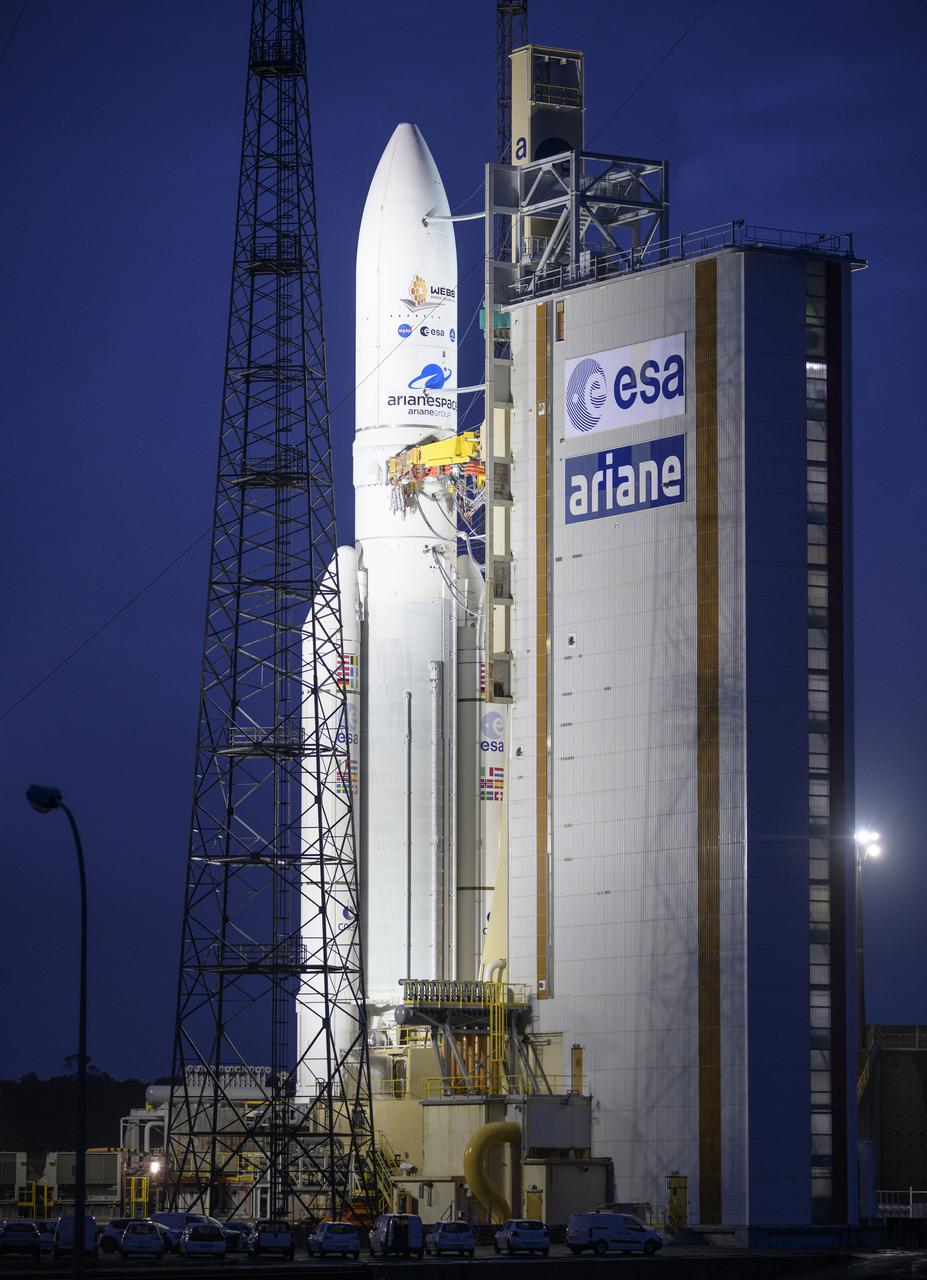
Arianespace's Ariane 5 rocket with NASA’s James Webb Space Telescope onboard, is seen at the launch pad, Thursday, Dec. 23, 2021, at Europe’s Spaceport, the Guiana Space Center in Kourou, French Guiana. The James Webb Space Telescope (sometimes called JWST or Webb) is a large infrared telescope with a 21.3 foot (6.5 meter) primary mirror. The observatory will study every phase of cosmic history—from within our solar system to the most distant observable galaxies in the early universe. Photo Credit: (NASA/Bill Ingalls)

A mockup of Arianespace's Ariane 5 rocket is seen at the entrance to the Guiana Space Center in Kourou, French Guiana, Tuesday, Dec. 21, 2021. The James Webb Space Telescope (sometimes called JWST or Webb) is a large infrared telescope with a 21.3 foot (6.5 meter) primary mirror. The observatory is scheduled to launch later in the week and will study every phase of cosmic history—from within our solar system to the most distant observable galaxies in the early universe. Photo Credit: (NASA/Bill Ingalls)
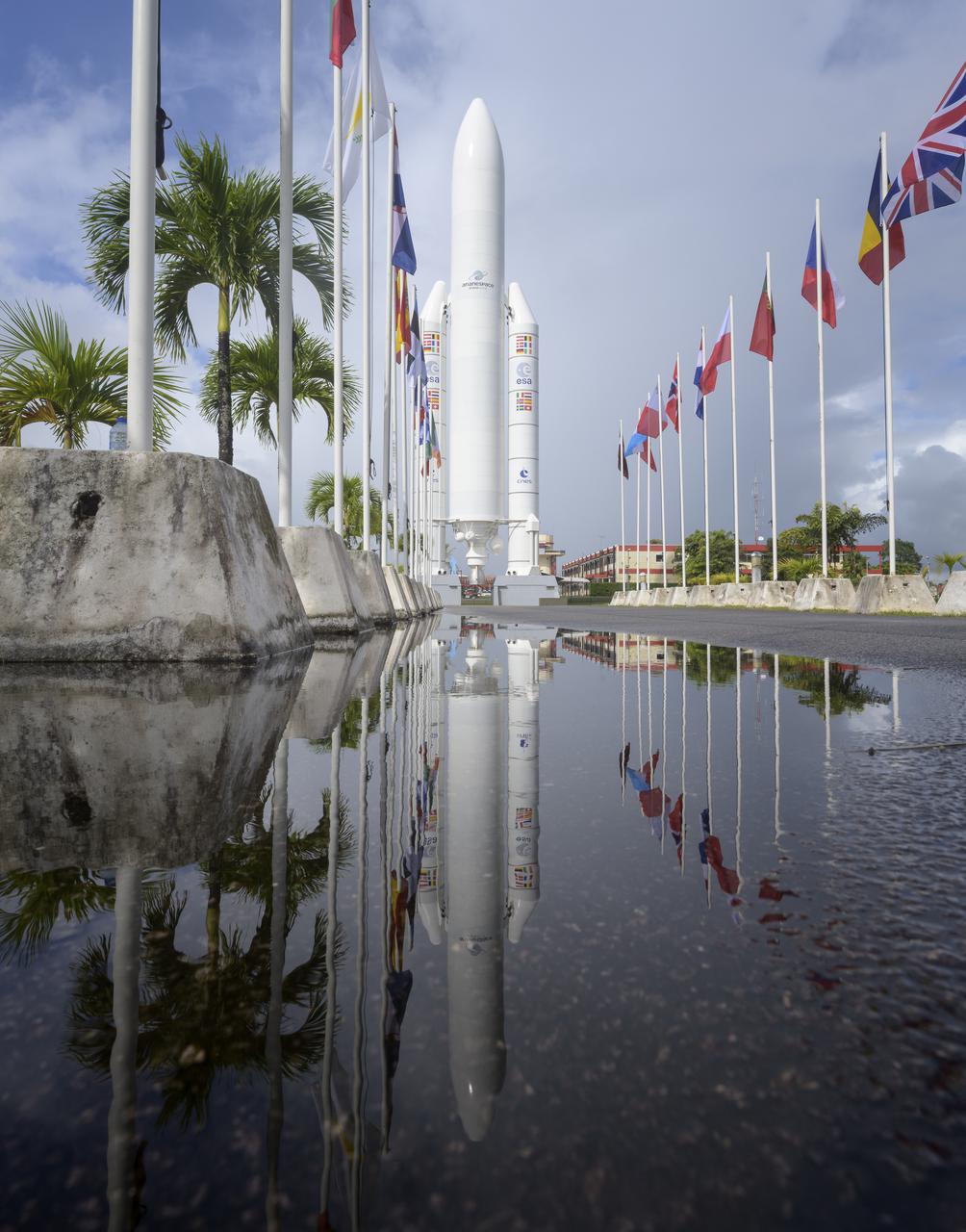
A mockup of Arianespace's Ariane 5 rocket is seen at the entrance to the Guiana Space Center in Kourou, French Guiana, Tuesday, Dec. 21, 2021. The James Webb Space Telescope (sometimes called JWST or Webb) is a large infrared telescope with a 21.3 foot (6.5 meter) primary mirror. The observatory is scheduled to launch later in the week and will study every phase of cosmic history—from within our solar system to the most distant observable galaxies in the early universe. Photo Credit: (NASA/Bill Ingalls)

Arianespace's Ariane 5 rocket with NASA’s James Webb Space Telescope onboard, is rolled out to the launch pad, Thursday, Dec. 23, 2021, at Europe’s Spaceport, the Guiana Space Center in Kourou, French Guiana. The James Webb Space Telescope (sometimes called JWST or Webb) is a large infrared telescope with a 21.3 foot (6.5 meter) primary mirror. The observatory will study every phase of cosmic history—from within our solar system to the most distant observable galaxies in the early universe. Photo Credit: (NASA/Bill Ingalls)
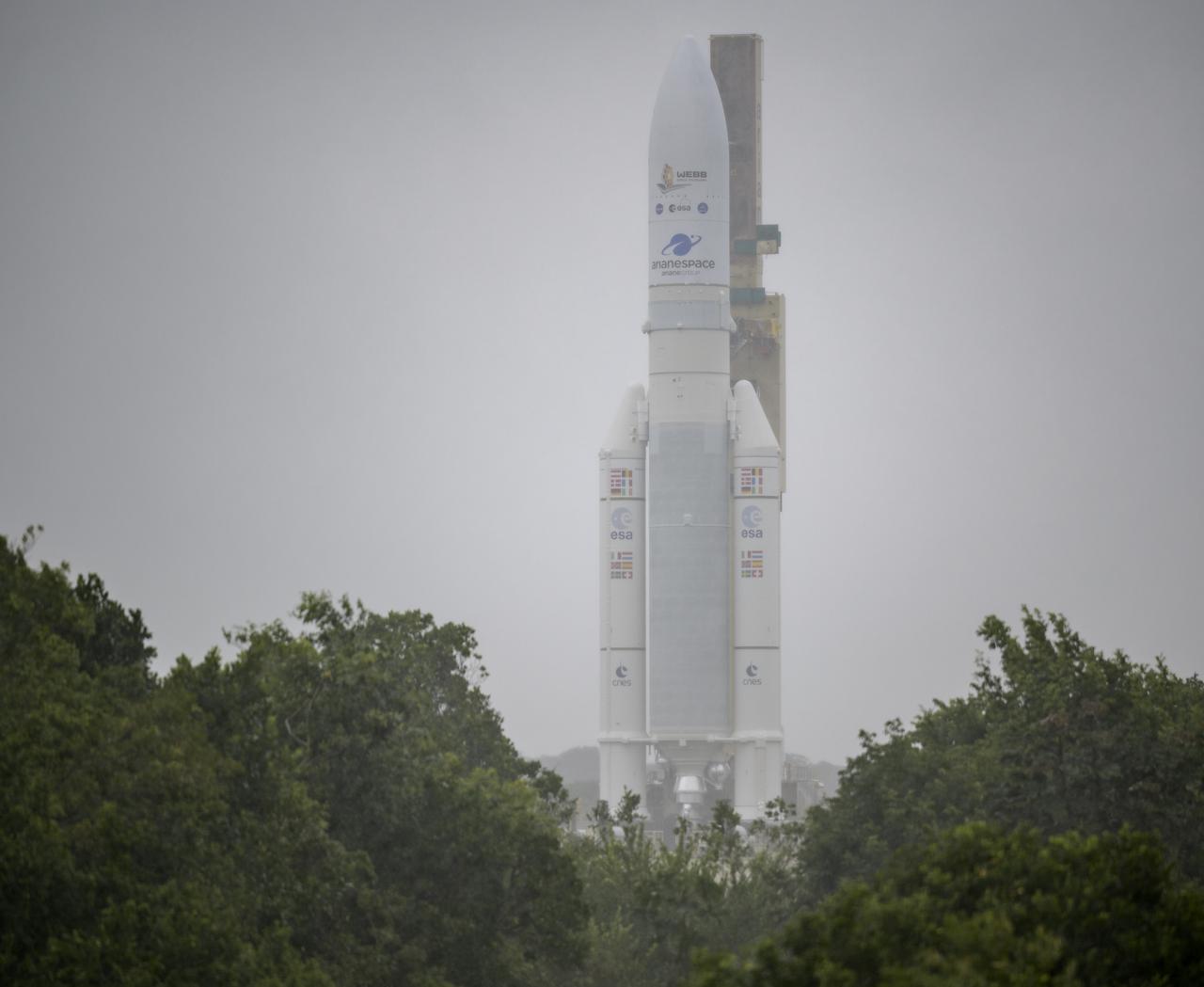
Arianespace's Ariane 5 rocket with NASA’s James Webb Space Telescope onboard, is rolled out in the rain to the launch pad, Thursday, Dec. 23, 2021, at Europe’s Spaceport, the Guiana Space Center in Kourou, French Guiana. The James Webb Space Telescope (sometimes called JWST or Webb) is a large infrared telescope with a 21.3 foot (6.5 meter) primary mirror. The observatory will study every phase of cosmic history—from within our solar system to the most distant observable galaxies in the early universe. Photo Credit: (NASA/Bill Ingalls)
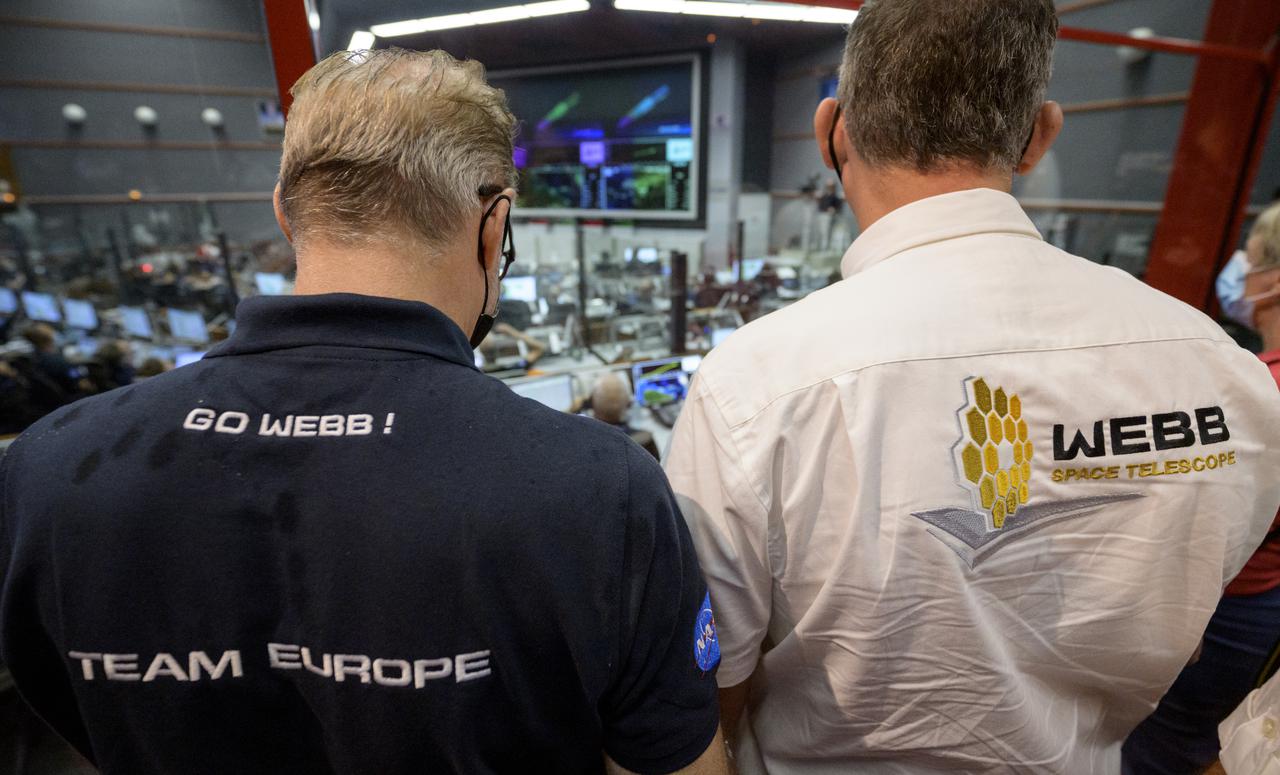
ESA (European Space Agency) Director-General Dr. Josef Aschbacher, left, and NASA Associate Administrator for the Science Mission Directorate Thomas Zurbuchen, monitor the progress of the Ariane 5 rocket delivering the James Webb Space Telescope into space, Saturday, Dec. 25, 2021, in the Jupiter Hall of the Guiana Space Centre in Kourou, French Guiana. The James Webb Space Telescope (sometimes called JWST or Webb) is a large infrared telescope with a 21.3 foot (6.5 meter) primary mirror. The observatory will study every phase of cosmic history—from within our solar system to the most distant observable galaxies in the early universe. Photo Credit: (NASA/Bill Ingalls)
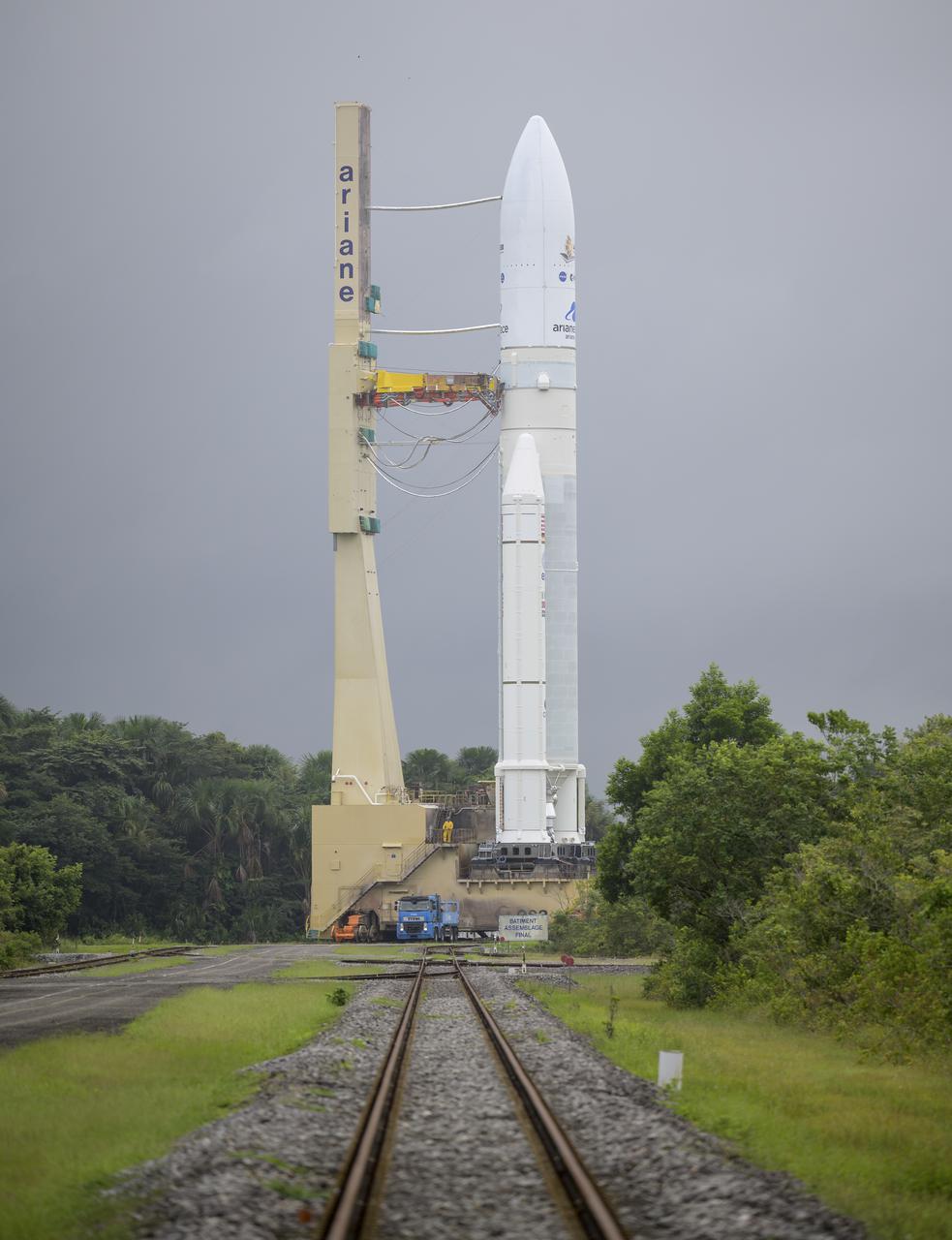
Arianespace's Ariane 5 rocket with NASA’s James Webb Space Telescope onboard, is rolled out to the launch pad, Thursday, Dec. 23, 2021, at Europe’s Spaceport, the Guiana Space Center in Kourou, French Guiana. The James Webb Space Telescope (sometimes called JWST or Webb) is a large infrared telescope with a 21.3 foot (6.5 meter) primary mirror. The observatory will study every phase of cosmic history—from within our solar system to the most distant observable galaxies in the early universe. Photo Credit: (NASA/Bill Ingalls)
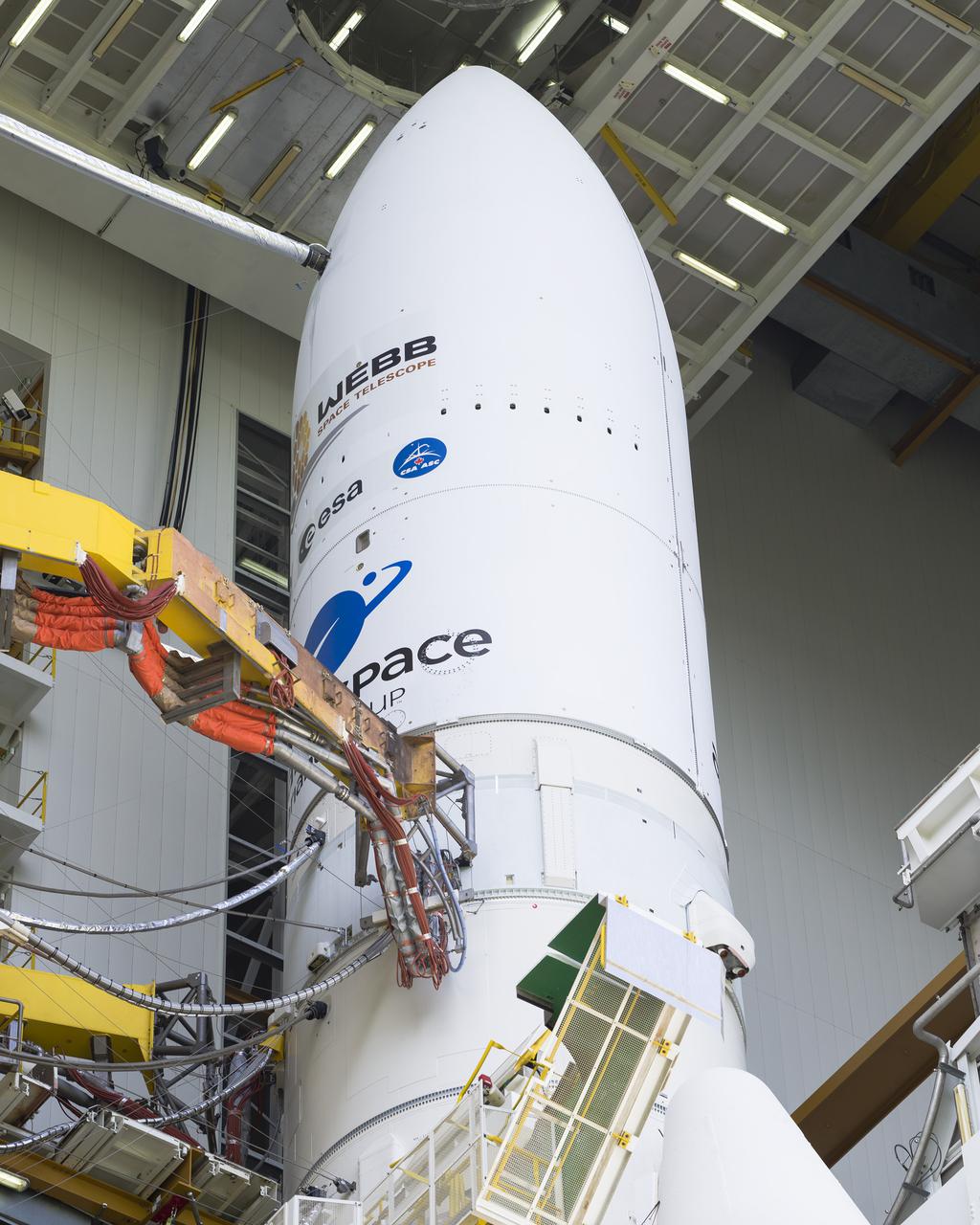
Arianespace's Ariane 5 rocket with NASA’s James Webb Space Telescope onboard, is seen in the final assembly building ahead of the planned roll to the launch pad, Thursday, Dec. 23, 2021, at Europe’s Spaceport, the Guiana Space Center in Kourou, French Guiana. The James Webb Space Telescope (sometimes called JWST or Webb) is a large infrared telescope with a 21.3 foot (6.5 meter) primary mirror. The observatory will study every phase of cosmic history—from within our solar system to the most distant observable galaxies in the early universe. Photo Credit: (NASA/Chris Gunn)
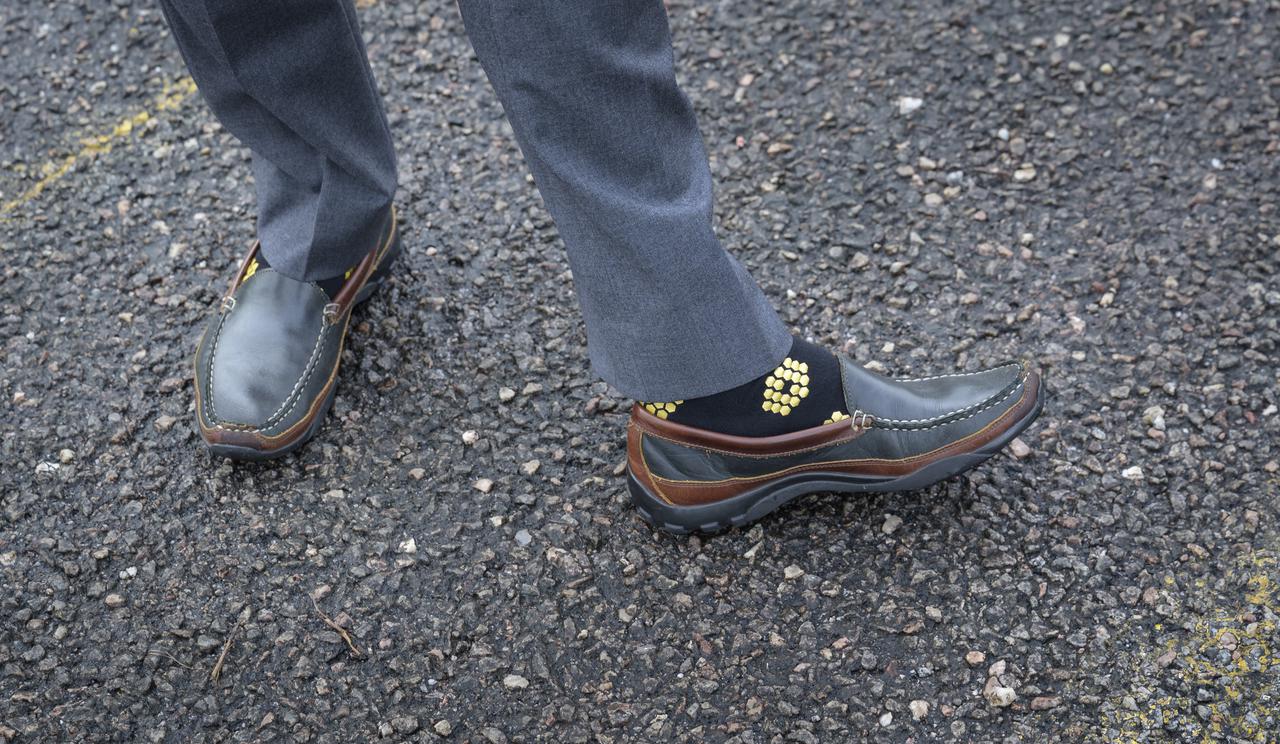
NASA James Webb Space Telescope Program Scientist Eric Smith, wearing Webb themed socks, waits for Arianespace's Ariane 5 rocket with NASA’s James Webb Space Telescope onboard, to rollout to the launch pad, Thursday, Dec. 23, 2021, at Europe’s Spaceport, the Guiana Space Center in Kourou, French Guiana. The James Webb Space Telescope (sometimes called JWST or Webb) is a large infrared telescope with a 21.3 foot (6.5 meter) primary mirror. The observatory will study every phase of cosmic history—from within our solar system to the most distant observable galaxies in the early universe. Photo Credit: (NASA/Bill Ingalls)
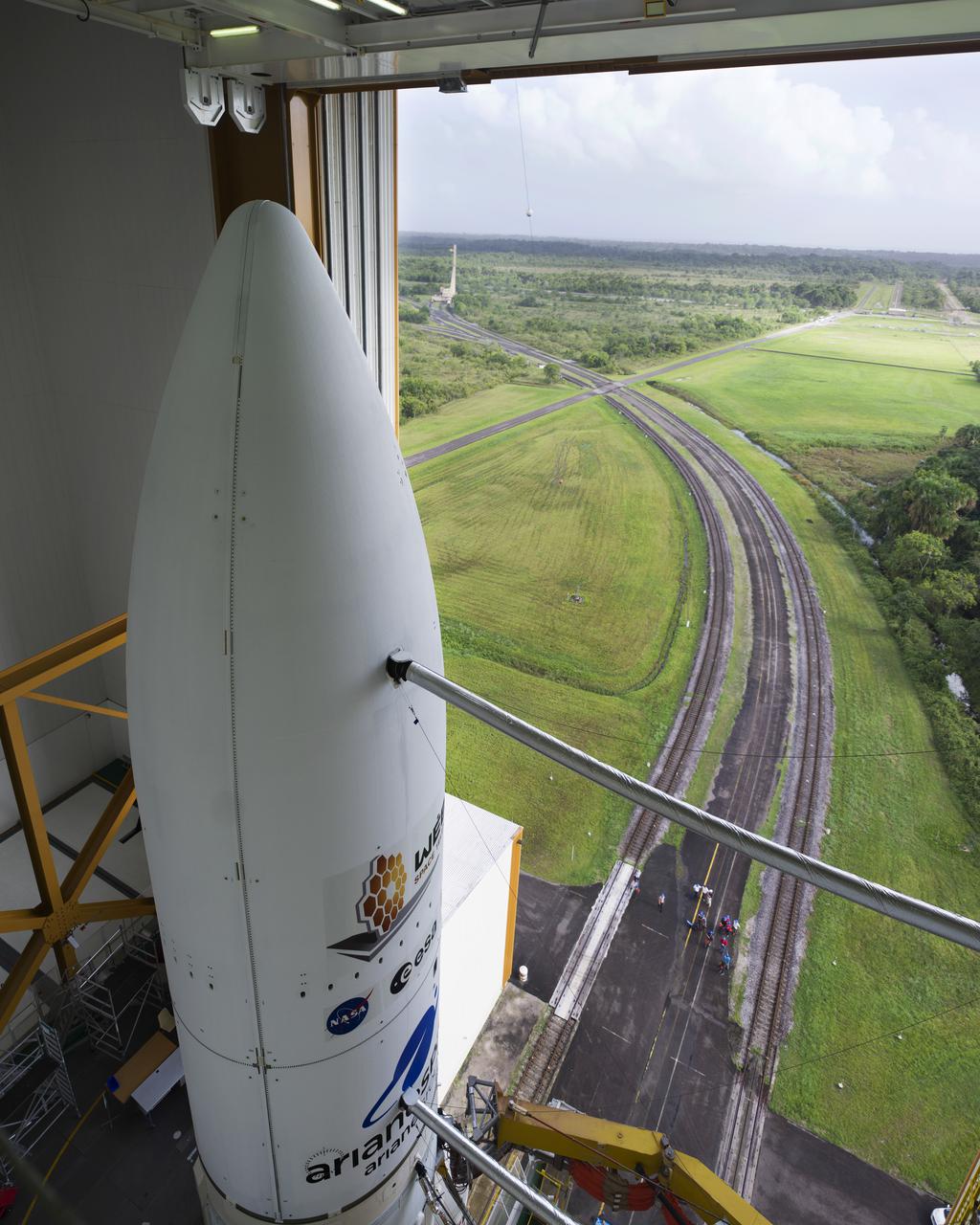
Arianespace's Ariane 5 rocket with NASA’s James Webb Space Telescope onboard, is seen in the final assembly building ahead of the planned roll to the launch pad, Thursday, Dec. 23, 2021, at Europe’s Spaceport, the Guiana Space Center in Kourou, French Guiana. The James Webb Space Telescope (sometimes called JWST or Webb) is a large infrared telescope with a 21.3 foot (6.5 meter) primary mirror. The observatory will study every phase of cosmic history—from within our solar system to the most distant observable galaxies in the early universe. Photo Credit: (NASA/Chris Gunn)
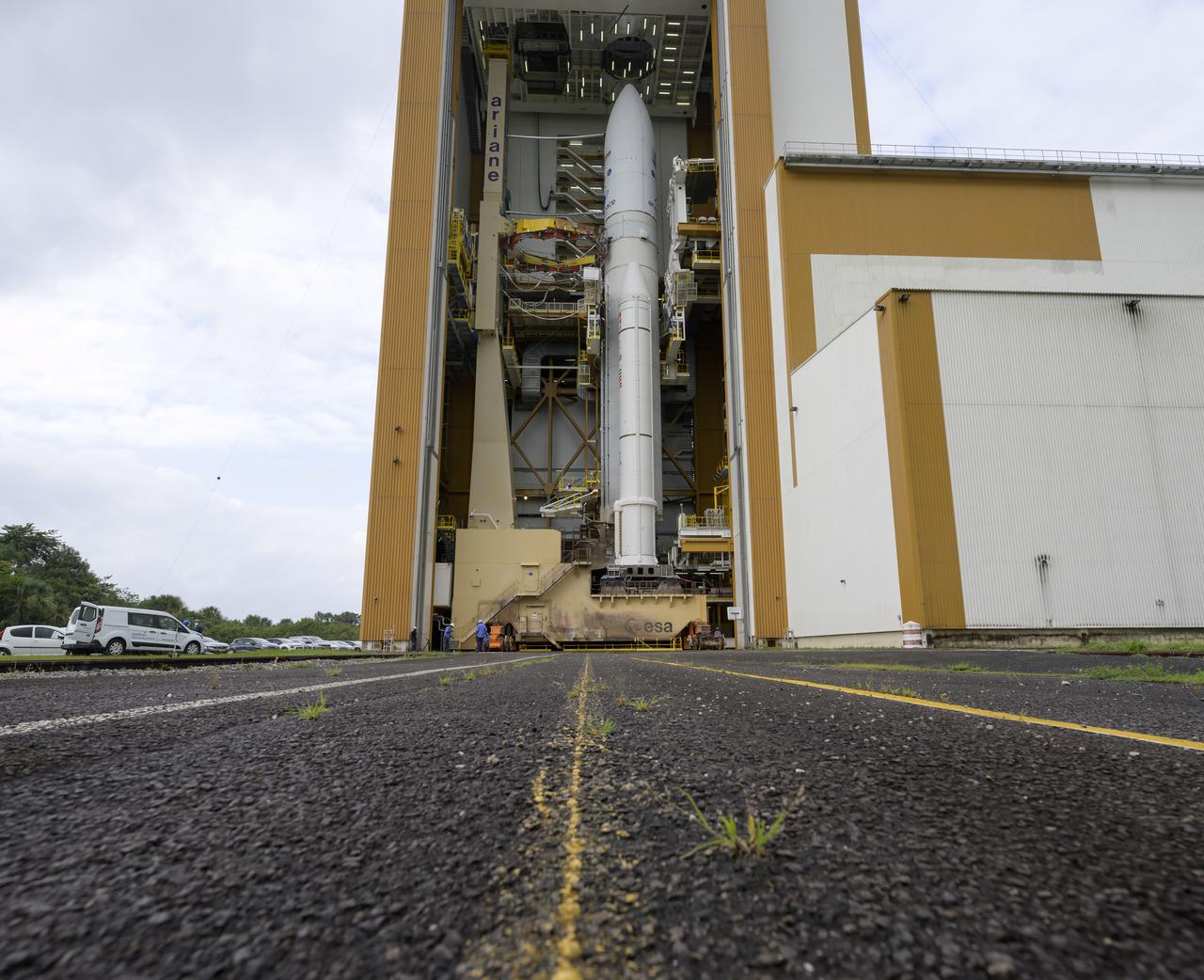
Arianespace's Ariane 5 rocket with NASA’s James Webb Space Telescope onboard, is seen in the final assembly building ahead of the planned roll to the launch pad, Thursday, Dec. 23, 2021, at Europe’s Spaceport, the Guiana Space Center in Kourou, French Guiana. The James Webb Space Telescope (sometimes called JWST or Webb) is a large infrared telescope with a 21.3 foot (6.5 meter) primary mirror. The observatory will study every phase of cosmic history—from within our solar system to the most distant observable galaxies in the early universe. Photo Credit: (NASA/Bill Ingalls)
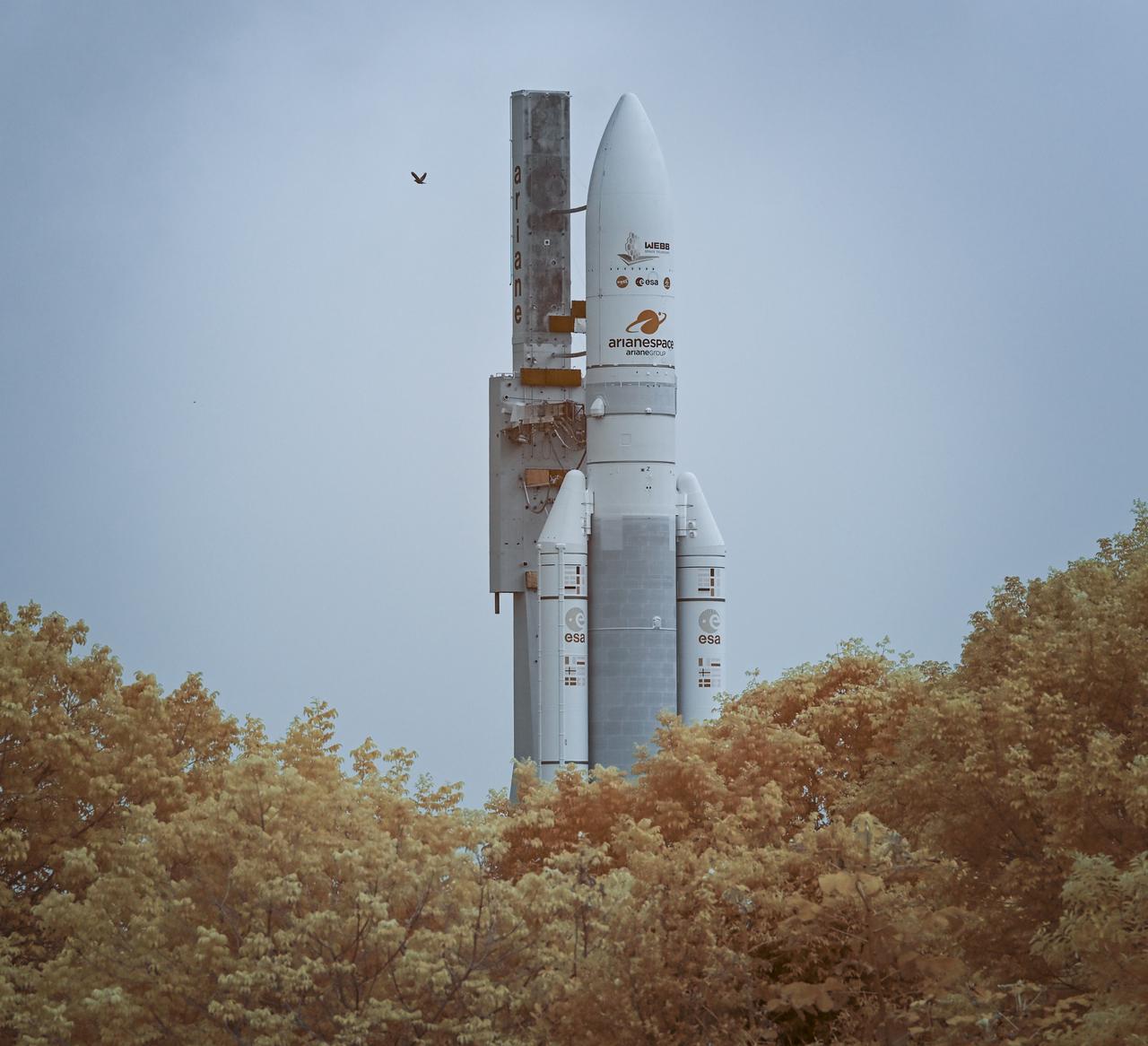
Arianespace's Ariane 5 rocket, with NASA’s James Webb Space Telescope onboard, is seen in this false color infrared exposure as it is rolled out to the launch pad, Thursday, Dec. 23, 2021, at Europe’s Spaceport, the Guiana Space Center in Kourou, French Guiana. The James Webb Space Telescope (sometimes called JWST or Webb) is a large infrared telescope with a 21.3 foot (6.5 meter) primary mirror. The observatory will study every phase of cosmic history—from within our solar system to the most distant observable galaxies in the early universe. Photo Credit: (NASA/Bill Ingalls)

Arianespace's Ariane 5 rocket with NASA’s James Webb Space Telescope onboard, is seen in the final assembly building ahead of the planned roll to the launch pad, Thursday, Dec. 23, 2021, at Europe’s Spaceport, the Guiana Space Center in Kourou, French Guiana. The James Webb Space Telescope (sometimes called JWST or Webb) is a large infrared telescope with a 21.3 foot (6.5 meter) primary mirror. The observatory will study every phase of cosmic history—from within our solar system to the most distant observable galaxies in the early universe. Photo Credit: (NASA/Bill Ingalls)
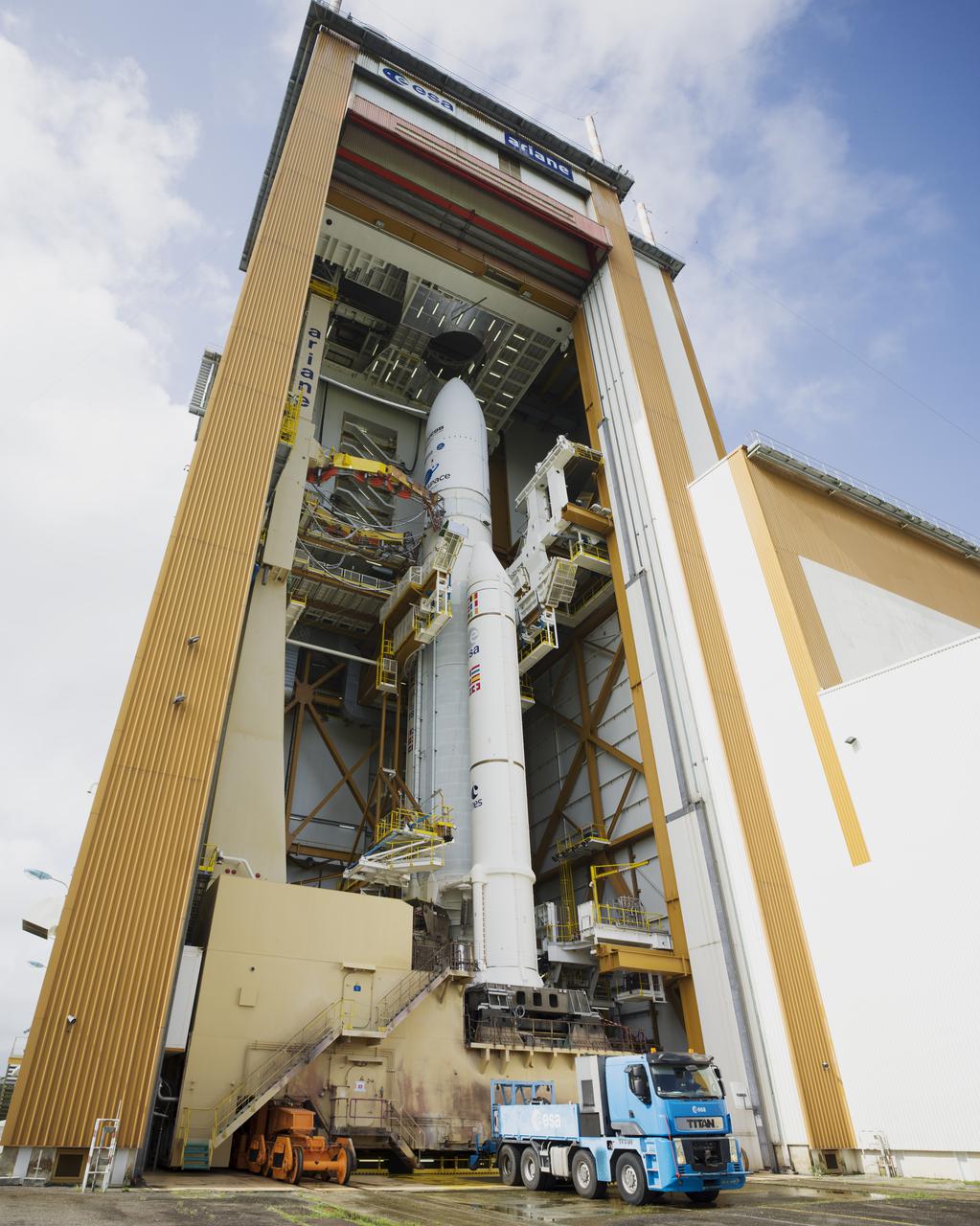
Arianespace's Ariane 5 rocket with NASA’s James Webb Space Telescope onboard, is seen in the final assembly building ahead of the planned roll to the launch pad, Thursday, Dec. 23, 2021, at Europe’s Spaceport, the Guiana Space Center in Kourou, French Guiana. The James Webb Space Telescope (sometimes called JWST or Webb) is a large infrared telescope with a 21.3 foot (6.5 meter) primary mirror. The observatory will study every phase of cosmic history—from within our solar system to the most distant observable galaxies in the early universe. Photo Credit: (NASA/Chris Gunn)
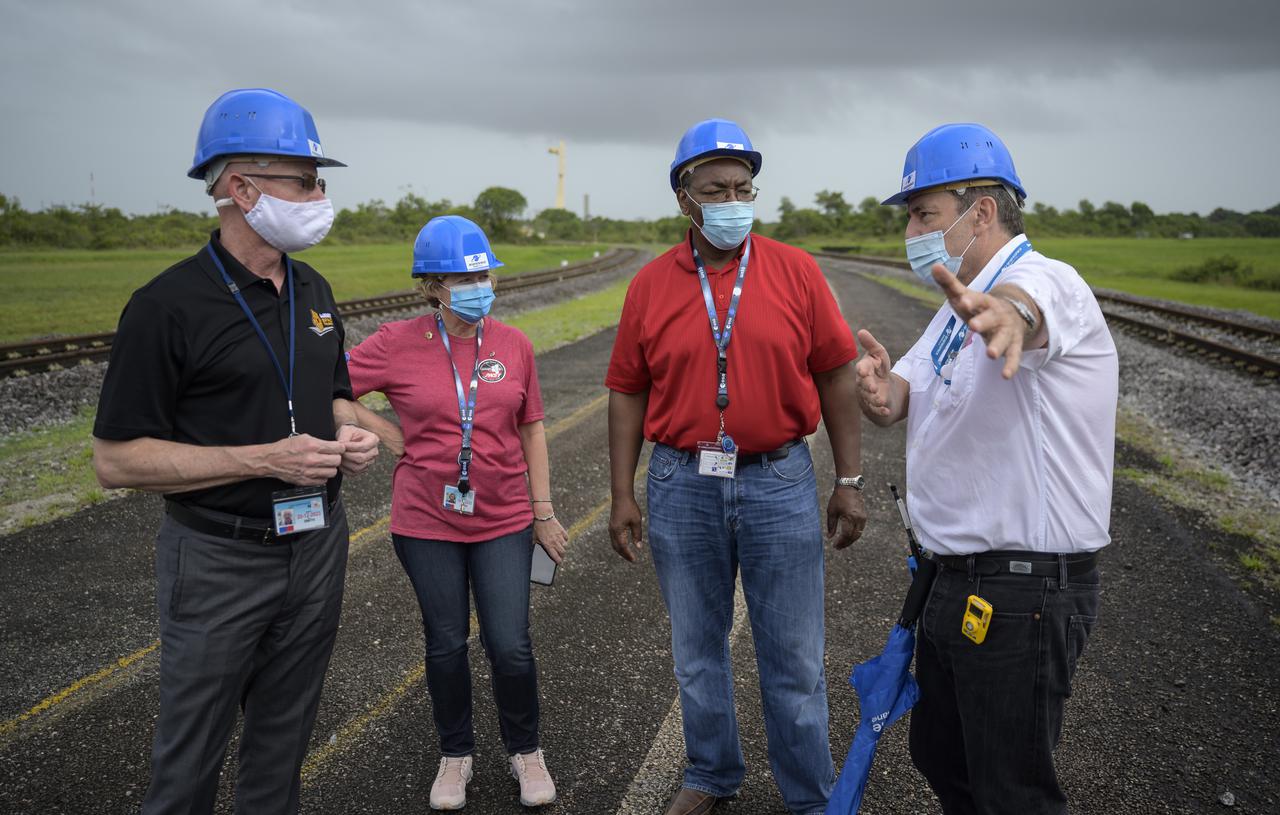
NASA James Webb Space Telescope Program Scientist Eric Smith left, NASA James Webb Space Telescope Program Manager Jeanne Davis, NASA Program Director for the James Webb Space Telescope Greg Robinson, and Arianespace’s Vice President for French Guiana Bruno Gérard, right, talk as they wait for Arianespace's Ariane 5 rocket with NASA’s James Webb Space Telescope onboard, to rollout to the launch pad, Thursday, Dec. 23, 2021, at Europe’s Spaceport, the Guiana Space Center in Kourou, French Guiana. The James Webb Space Telescope (sometimes called JWST or Webb) is a large infrared telescope with a 21.3 foot (6.5 meter) primary mirror. The observatory will study every phase of cosmic history—from within our solar system to the most distant observable galaxies in the early universe. Photo Credit: (NASA/Bill Ingalls)
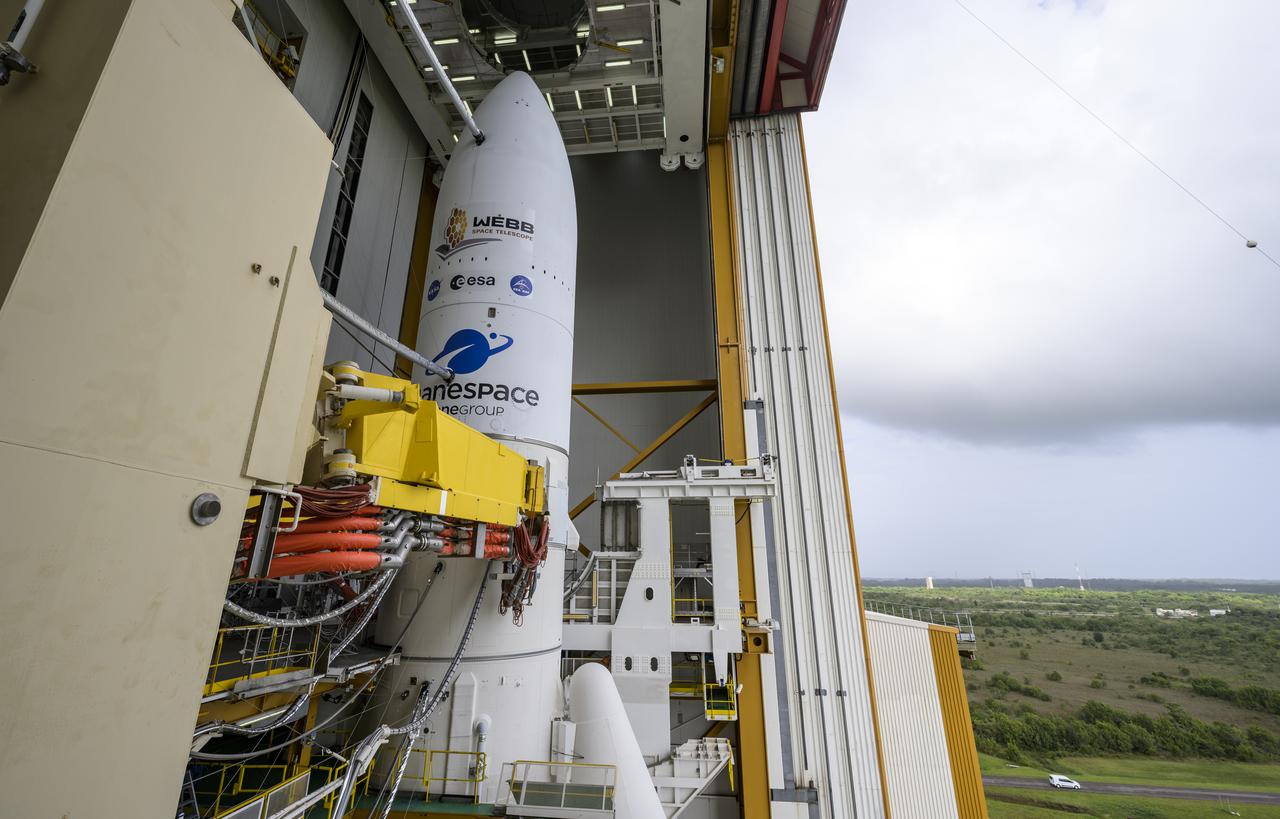
Arianespace's Ariane 5 rocket with NASA’s James Webb Space Telescope onboard, is seen ahead of rollout to the launch pad, Thursday, Dec. 23, 2021, at Europe’s Spaceport, the Guiana Space Center in Kourou, French Guiana. The James Webb Space Telescope (sometimes called JWST or Webb) is a large infrared telescope with a 21.3 foot (6.5 meter) primary mirror. The observatory will study every phase of cosmic history—from within our solar system to the most distant observable galaxies in the early universe. Photo Credit: (NASA/Bill Ingalls)
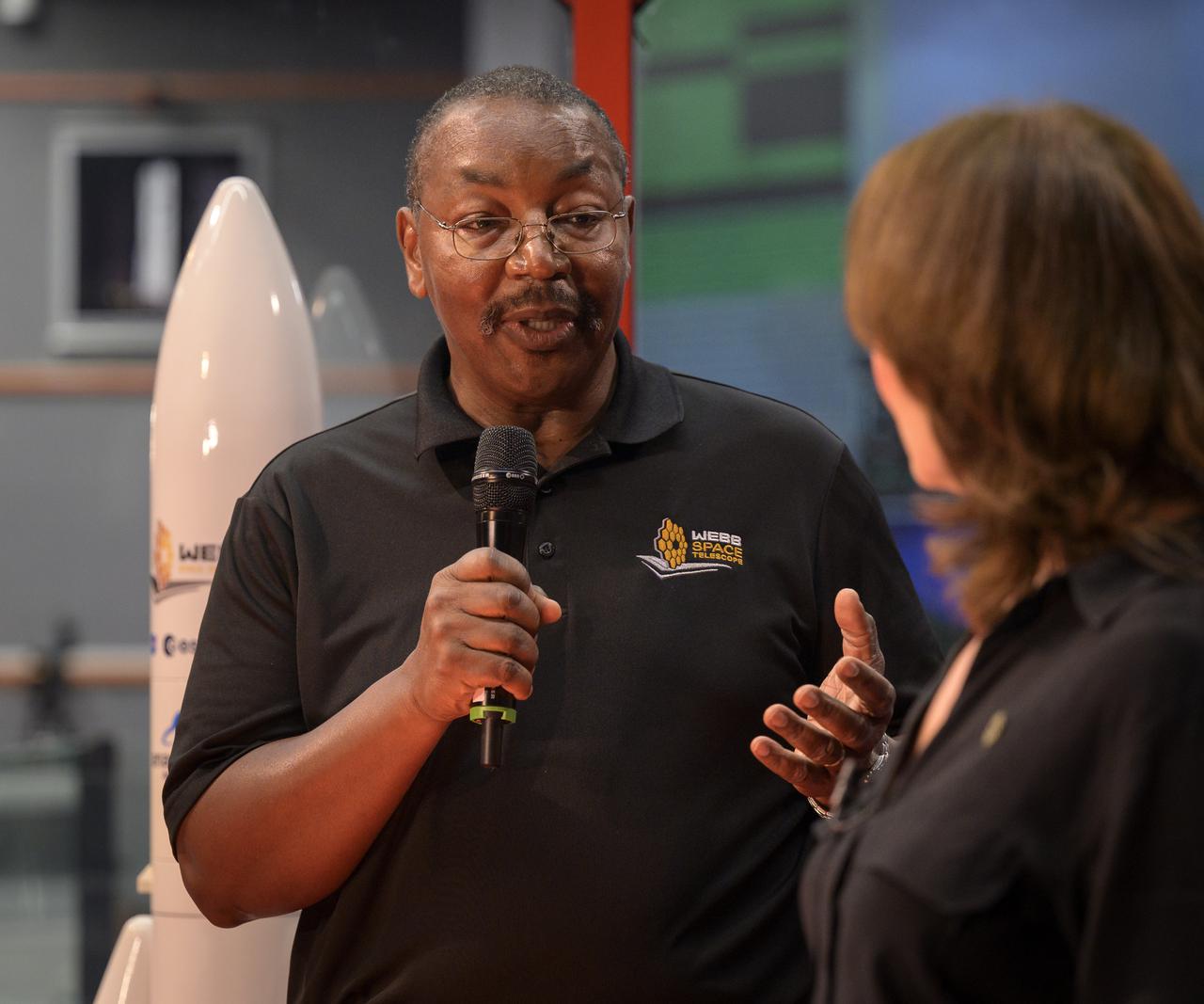
NASA Program Director for the James Webb Space Telescope Program Greg Robinson gives a brief interview on NASA television as he and the launch team monitor the countdown of the launch of Arianespace's Ariane 5 rocket carrying NASA’s James Webb Space Telescope, Saturday, Dec. 25, 2021, in the Jupiter Center at the Guiana Space Center in Kourou, French Guiana. The James Webb Space Telescope (sometimes called JWST or Webb) is a large infrared telescope with a 21.3 foot (6.5 meter) primary mirror. The observatory will study every phase of cosmic history—from within our solar system to the most distant observable galaxies in the early universe. Photo Credit: (NASA/Bill Ingalls)
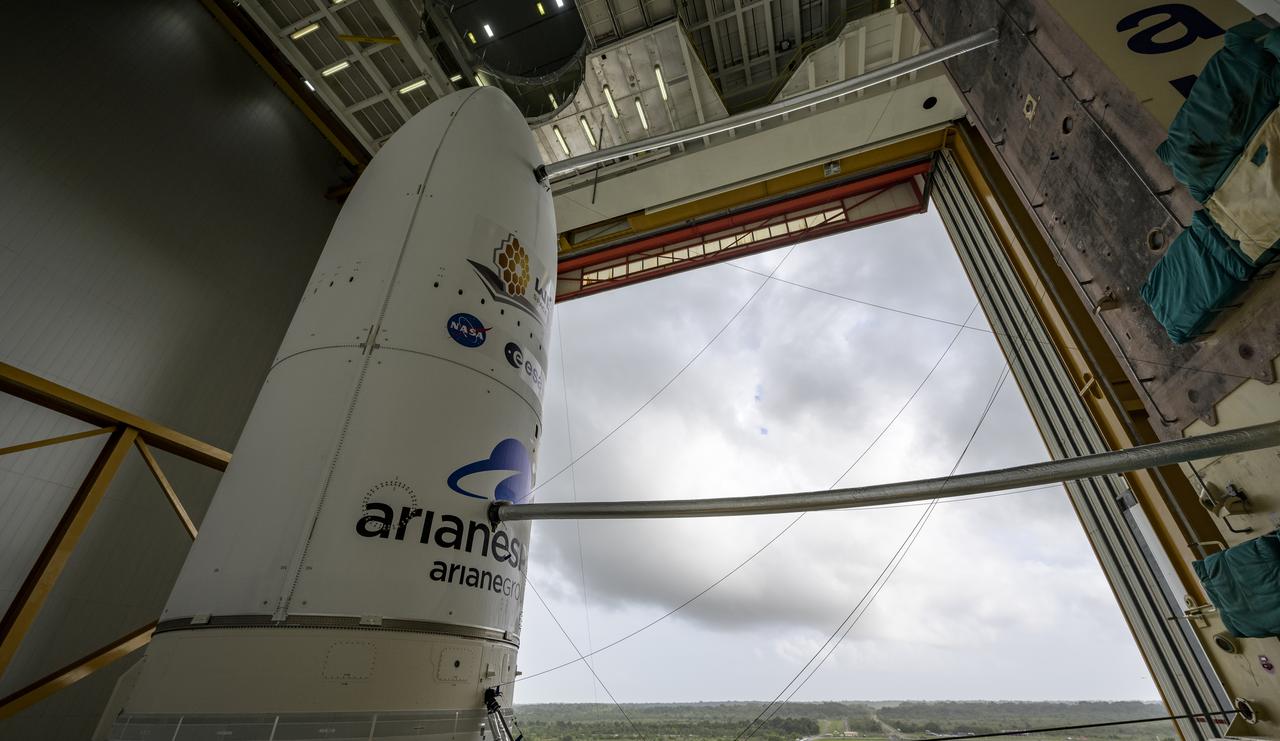
Arianespace's Ariane 5 rocket with NASA’s James Webb Space Telescope onboard, is seen ahead of rollout to the launch pad, Thursday, Dec. 23, 2021, at Europe’s Spaceport, the Guiana Space Center in Kourou, French Guiana. The James Webb Space Telescope (sometimes called JWST or Webb) is a large infrared telescope with a 21.3 foot (6.5 meter) primary mirror. The observatory will study every phase of cosmic history—from within our solar system to the most distant observable galaxies in the early universe. Photo Credit: (NASA/Bill Ingalls)
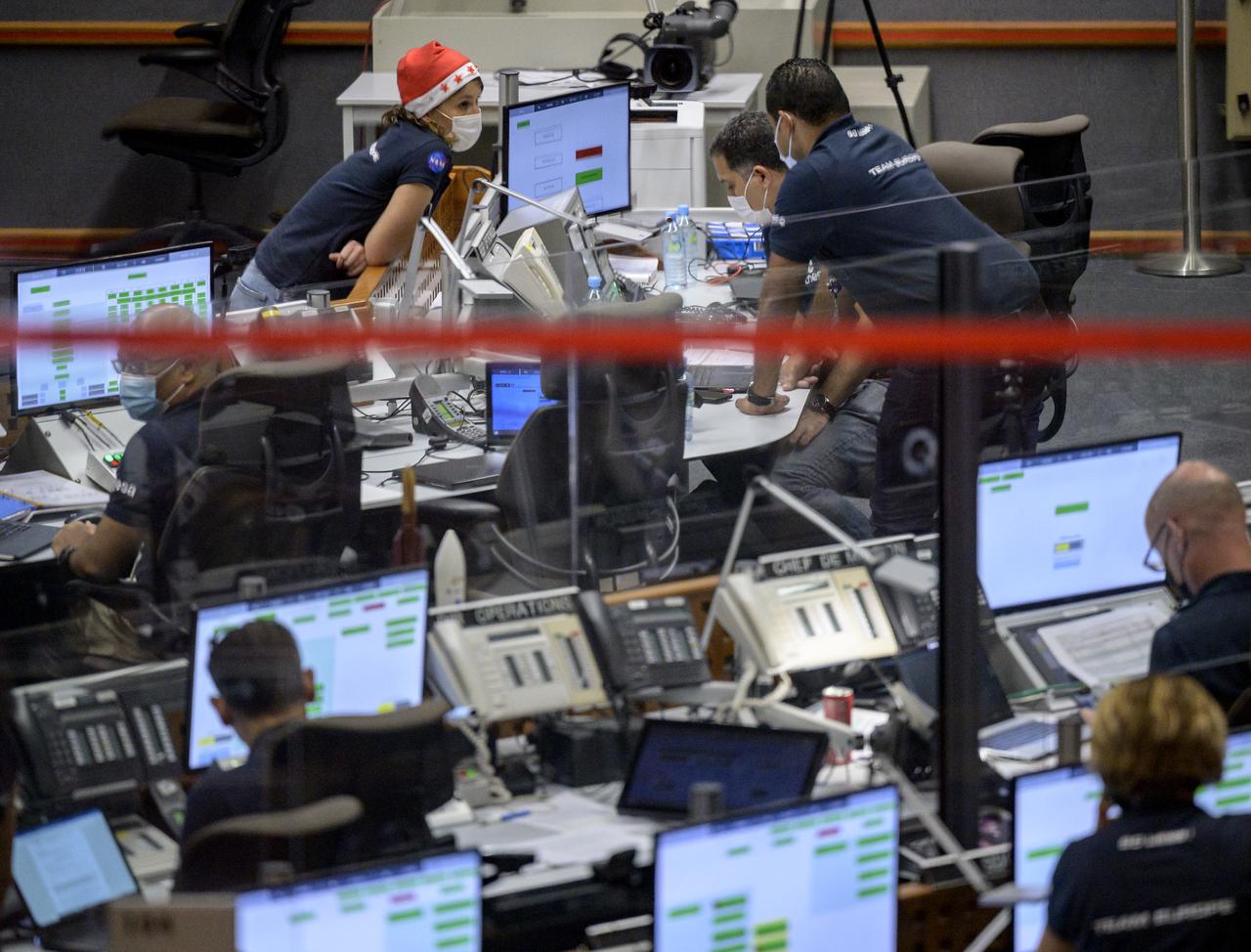
Launch teams monitor the countdown to the launch of Arianespace's Ariane 5 rocket carrying NASA’s James Webb Space Telescope, Saturday, Dec. 25, 2021, in the Jupiter Center at the Guiana Space Center in Kourou, French Guiana. The James Webb Space Telescope (sometimes called JWST or Webb) is a large infrared telescope with a 21.3 foot (6.5 meter) primary mirror. The observatory will study every phase of cosmic history—from within our solar system to the most distant observable galaxies in the early universe. Photo Credit: (NASA/Bill Ingalls)
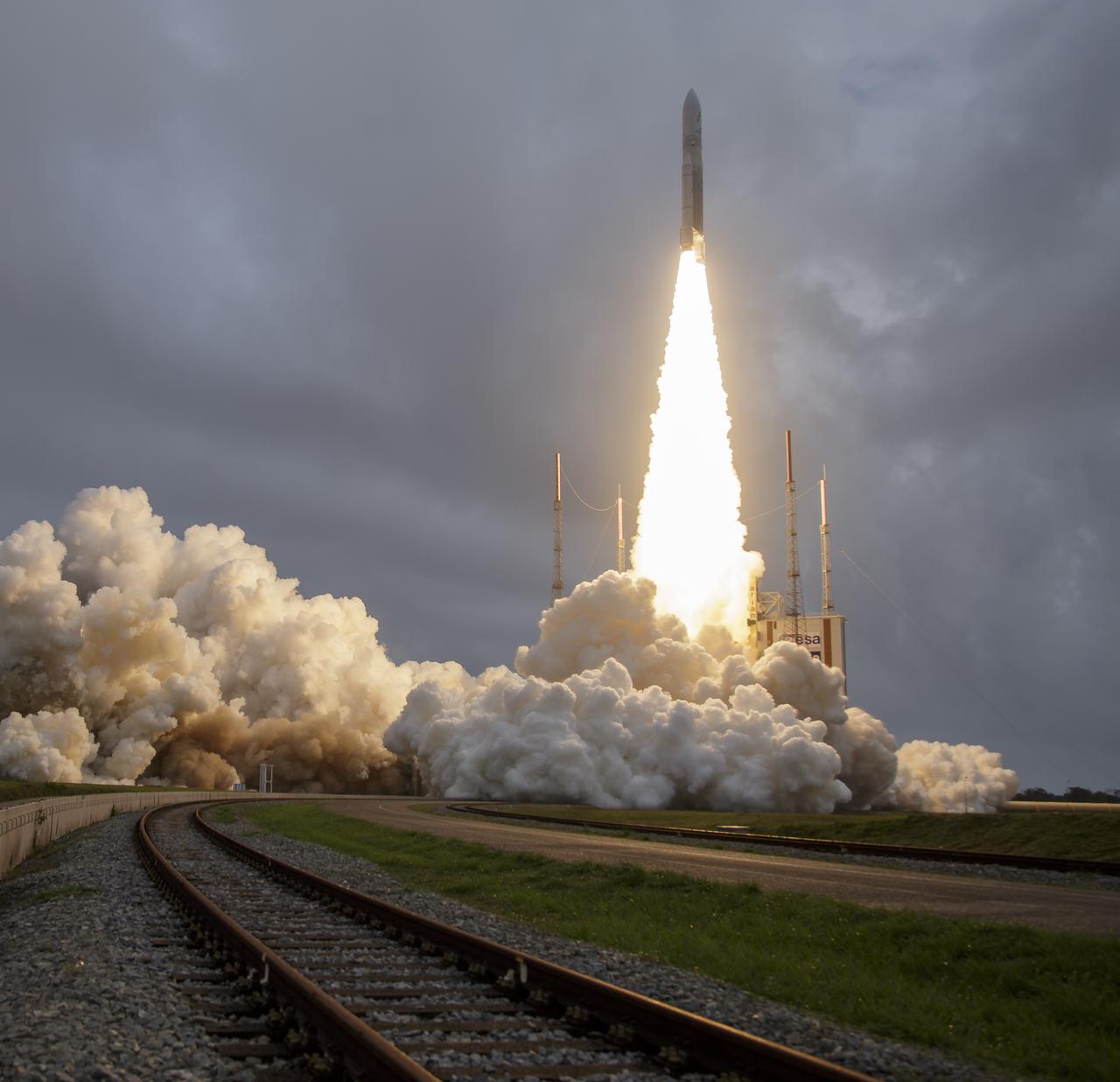
Arianespace's Ariane 5 rocket launches with NASA’s James Webb Space Telescope onboard, Saturday, Dec. 25, 2021, from the ELA-3 Launch Zone of Europe’s Spaceport at the Guiana Space Centre in Kourou, French Guiana. The James Webb Space Telescope (sometimes called JWST or Webb) is a large infrared telescope with a 21.3 foot (6.5 meter) primary mirror. The observatory will study every phase of cosmic history—from within our solar system to the most distant observable galaxies in the early universe. Photo Credit: (NASA/Bill Ingalls)
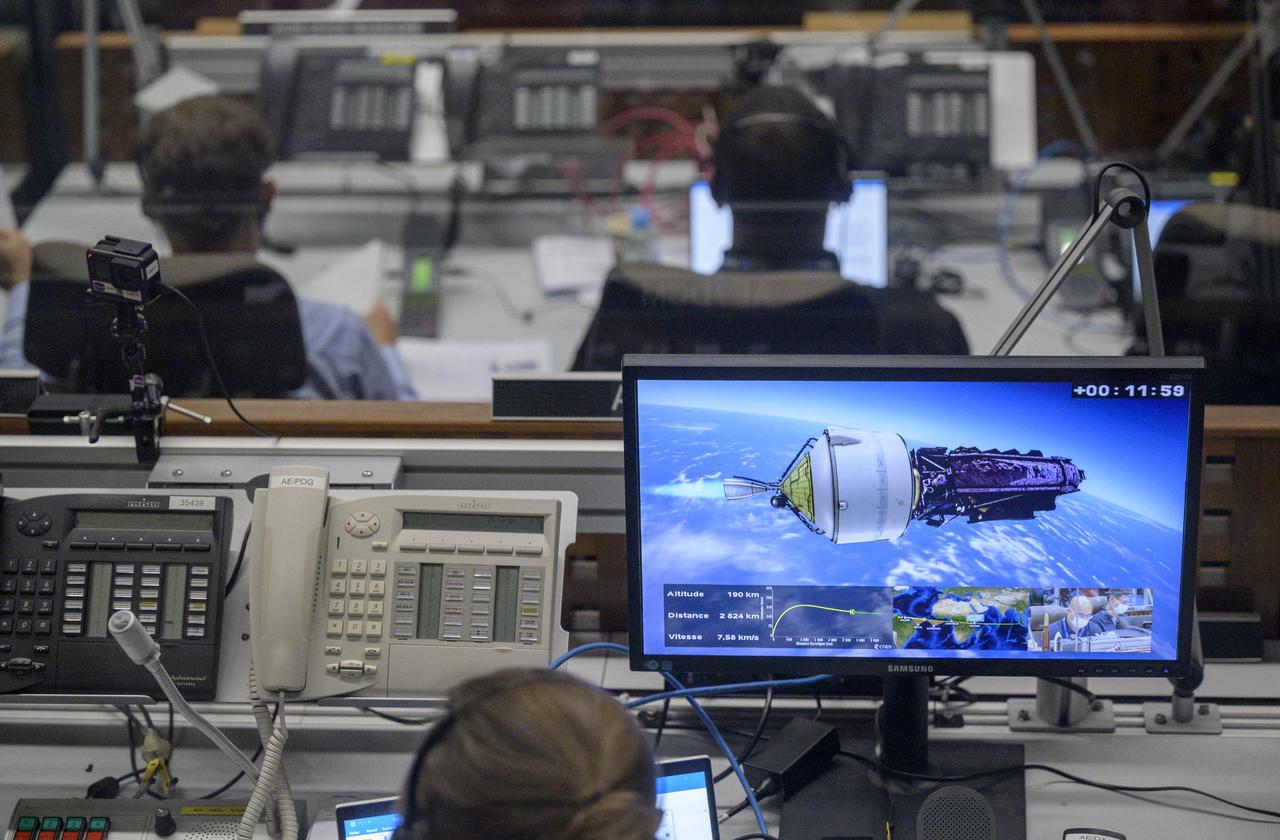
Launch teams monitor the flight progress of Arianespace's Ariane 5 rocket carrying NASA’s James Webb Space Telescope, Saturday, Dec. 25, 2021, in the Jupiter Center at the Guiana Space Center in Kourou, French Guiana. The James Webb Space Telescope (sometimes called JWST or Webb) is a large infrared telescope with a 21.3 foot (6.5 meter) primary mirror. The observatory will study every phase of cosmic history—from within our solar system to the most distant observable galaxies in the early universe. Photo Credit: (NASA/Bill Ingalls)
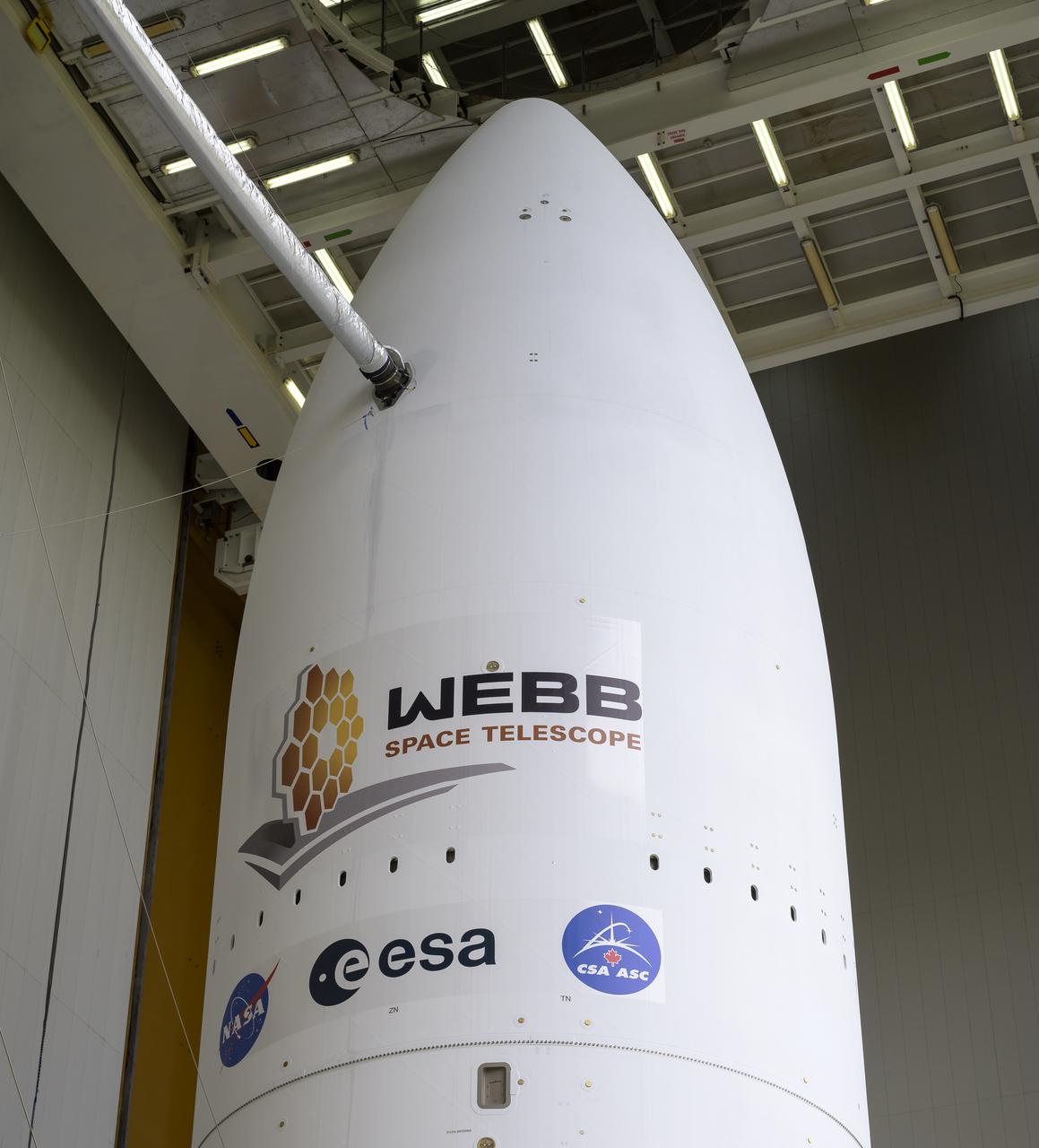
Arianespace's Ariane 5 rocket with NASA’s James Webb Space Telescope onboard, is seen ahead of rollout to the launch pad, Thursday, Dec. 23, 2021, at Europe’s Spaceport, the Guiana Space Center in Kourou, French Guiana. The James Webb Space Telescope (sometimes called JWST or Webb) is a large infrared telescope with a 21.3 foot (6.5 meter) primary mirror. The observatory will study every phase of cosmic history—from within our solar system to the most distant observable galaxies in the early universe. Photo Credit: (NASA/Bill Ingalls)
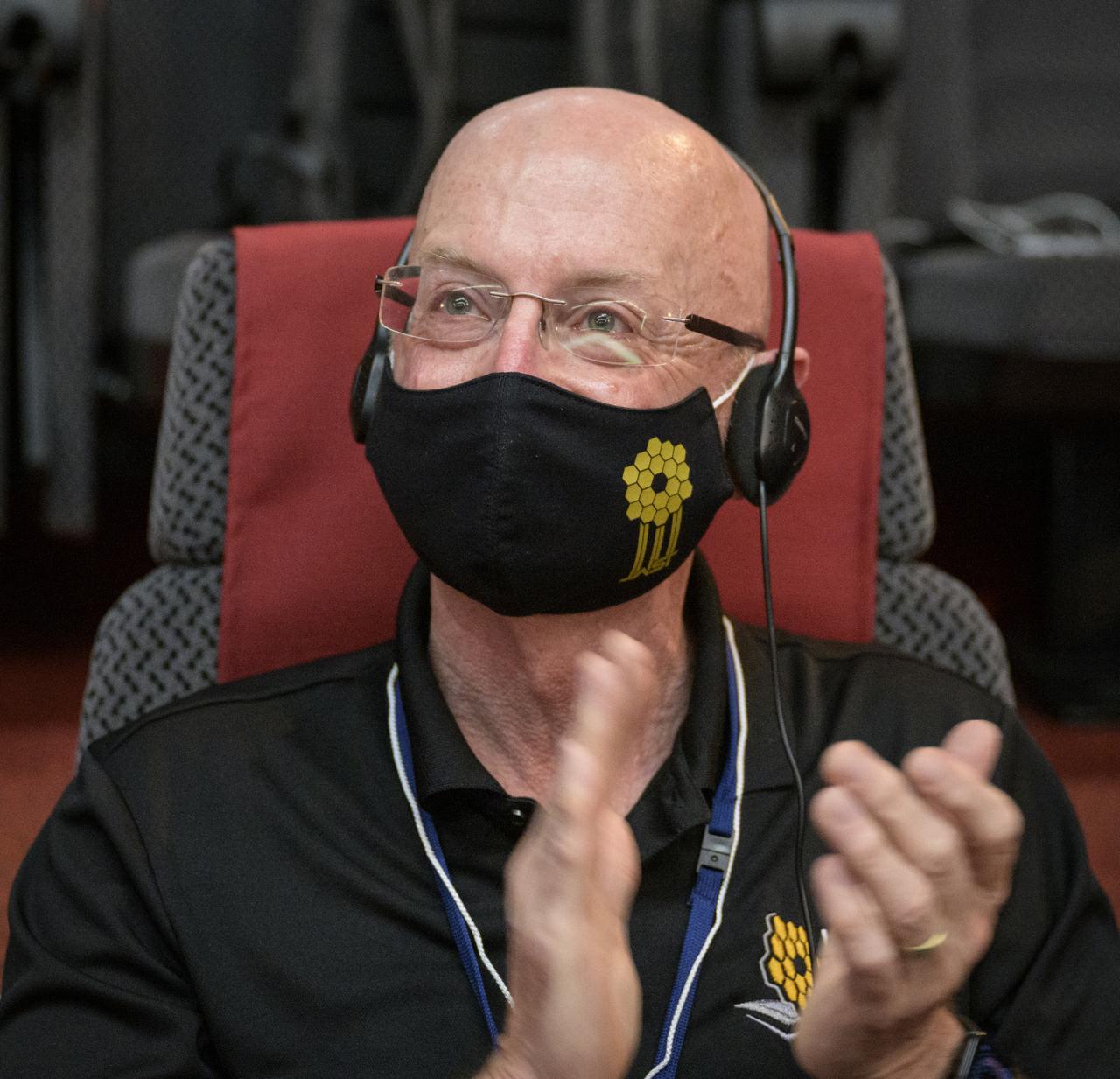
NASA James Webb Space Telescope Program Scientist Eric Smith reacts after hearing confirmation that the James Webb Space Telescope successfully separated from the Ariane 5 rocket, Saturday, Dec. 25, 2021, in the Jupiter Hall of the Guiana Space Centre in Kourou, French Guiana. The James Webb Space Telescope (sometimes called JWST or Webb) is a large infrared telescope with a 21.3 foot (6.5 meter) primary mirror. The observatory will study every phase of cosmic history—from within our solar system to the most distant observable galaxies in the early universe. Photo Credit: (NASA/Bill Ingalls)
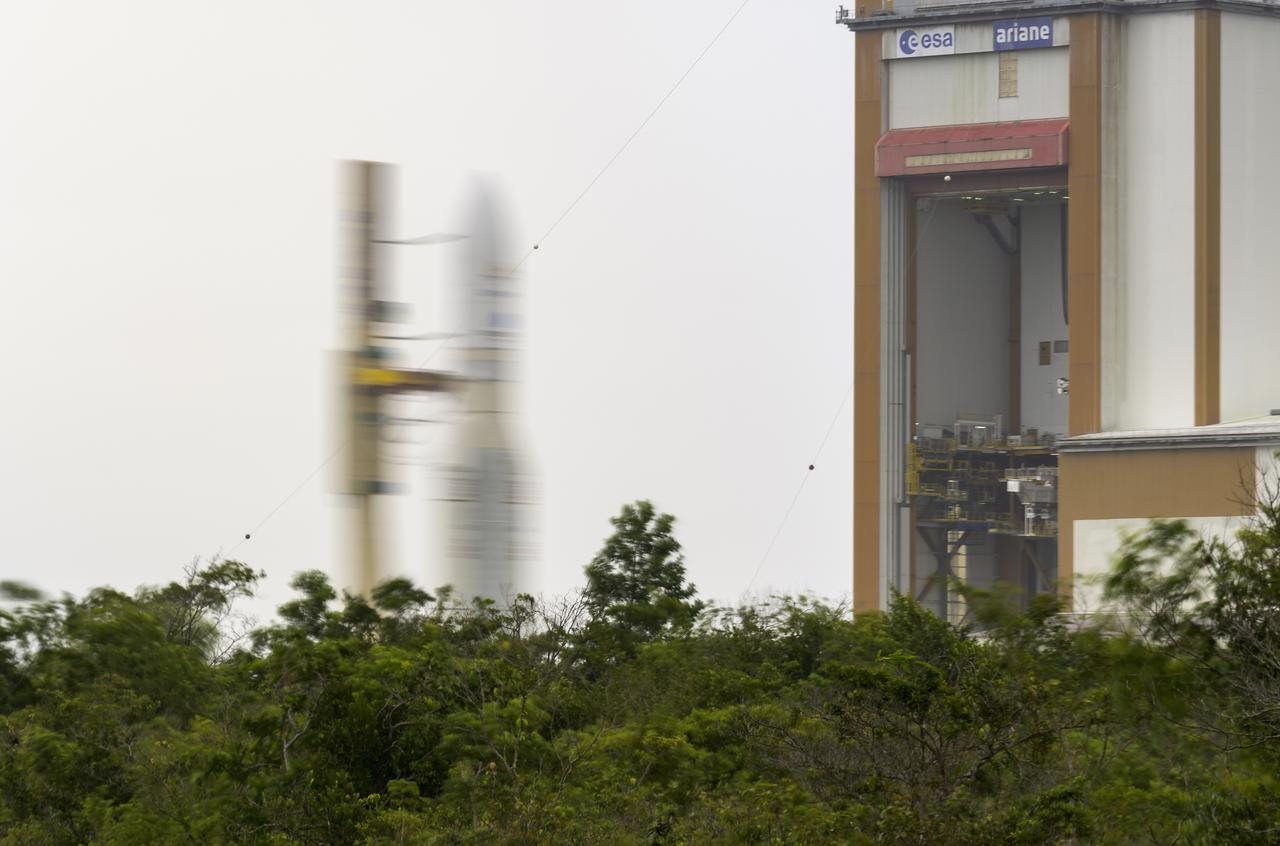
Arianespace's Ariane 5 rocket with NASA’s James Webb Space Telescope onboard, is seen in this 30 second exposure, as it is rolled out to the launch pad, Thursday, Dec. 23, 2021, at Europe’s Spaceport, the Guiana Space Center in Kourou, French Guiana. The James Webb Space Telescope (sometimes called JWST or Webb) is a large infrared telescope with a 21.3 foot (6.5 meter) primary mirror. The observatory will study every phase of cosmic history—from within our solar system to the most distant observable galaxies in the early universe. Photo Credit: (NASA/Bill Ingalls)
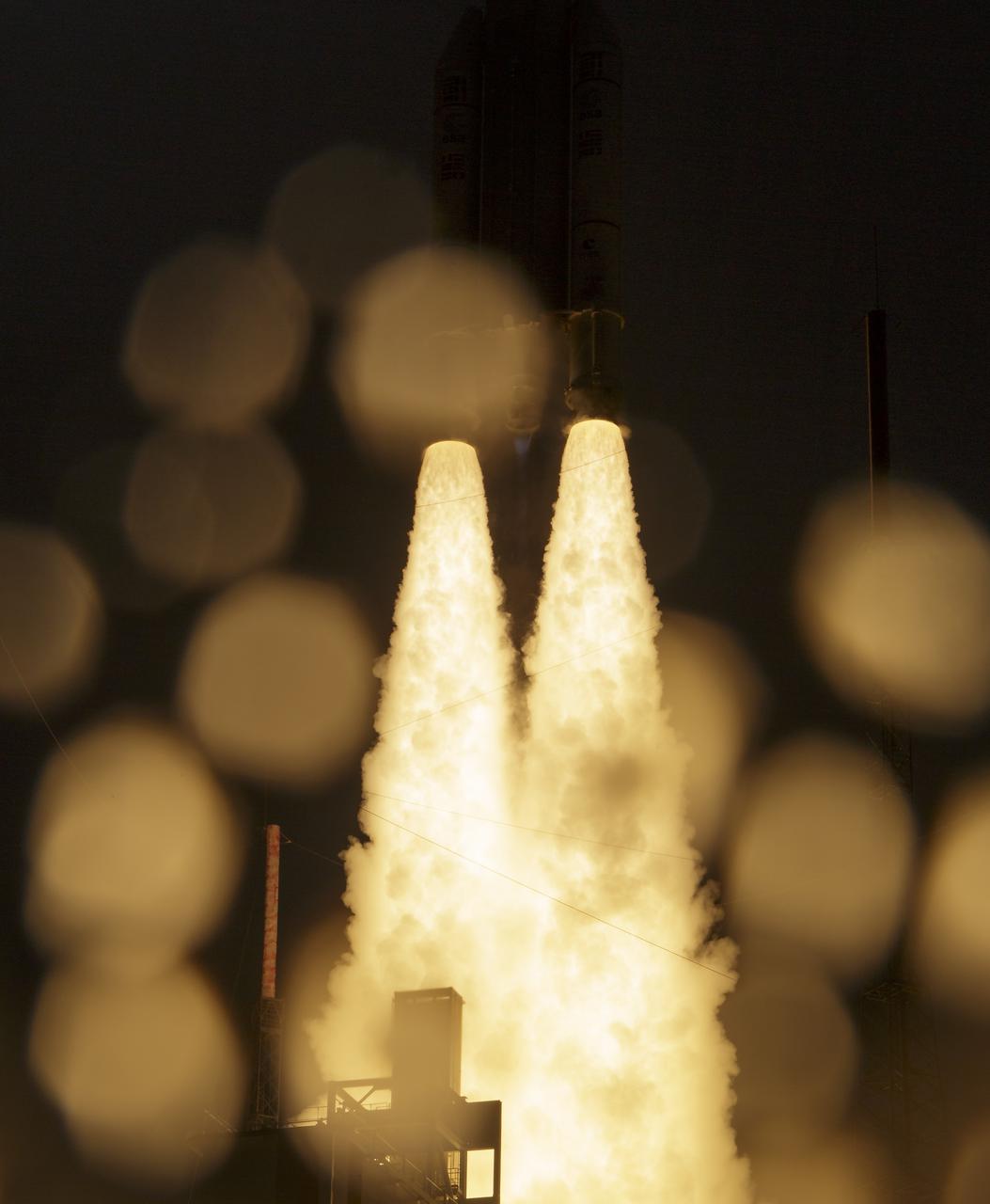
Arianespace's Ariane 5 rocket launches with NASA’s James Webb Space Telescope onboard, Saturday, Dec. 25, 2021, from the ELA-3 Launch Zone of Europe’s Spaceport at the Guiana Space Centre in Kourou, French Guiana. The James Webb Space Telescope (sometimes called JWST or Webb) is a large infrared telescope with a 21.3 foot (6.5 meter) primary mirror. The observatory will study every phase of cosmic history—from within our solar system to the most distant observable galaxies in the early universe. Photo Credit: (NASA/Bill Ingalls)
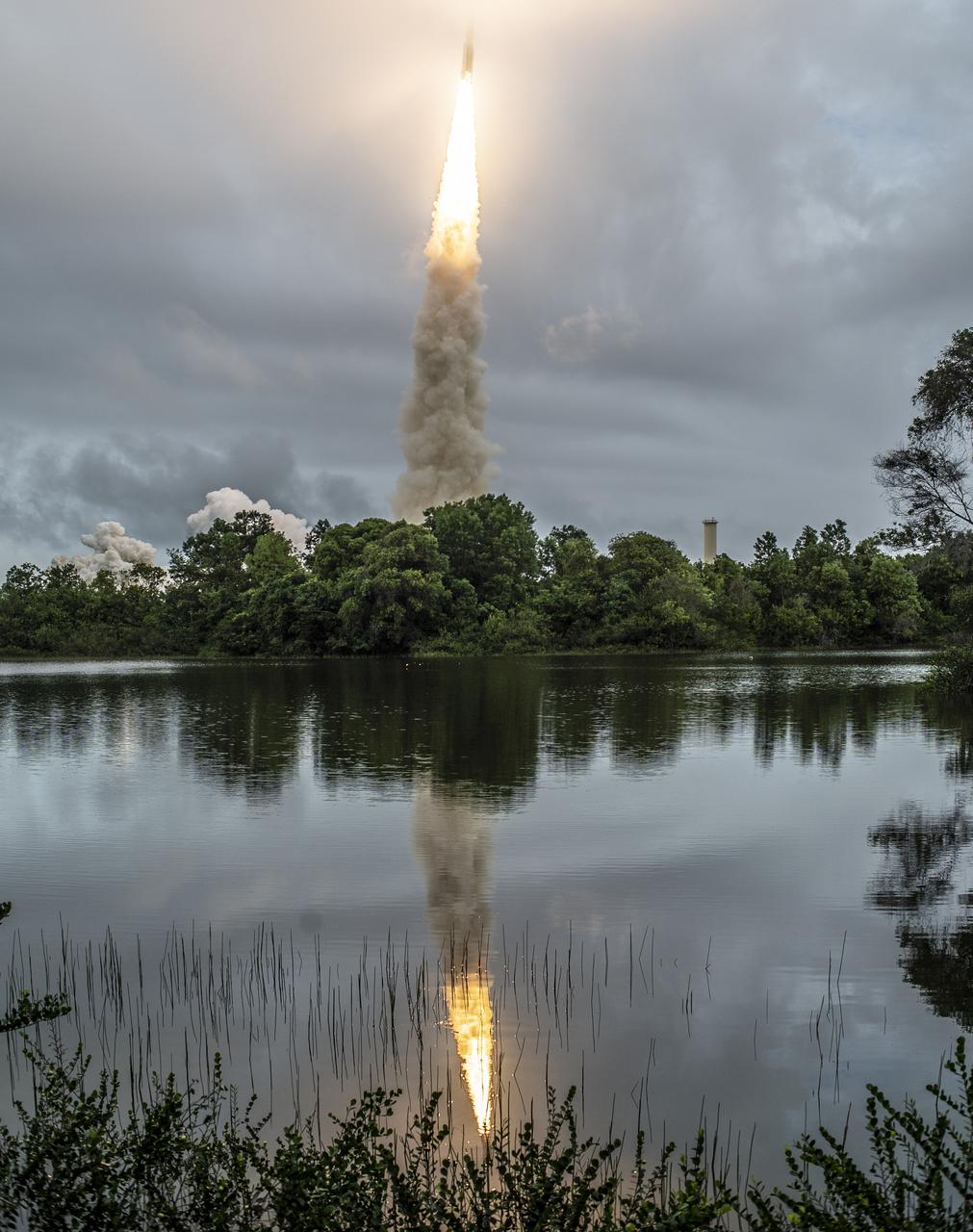
Arianespace's Ariane 5 rocket launches with NASA’s James Webb Space Telescope onboard, Saturday, Dec. 25, 2021, from the ELA-3 Launch Zone of Europe’s Spaceport at the Guiana Space Centre in Kourou, French Guiana. The James Webb Space Telescope (sometimes called JWST or Webb) is a large infrared telescope with a 21.3 foot (6.5 meter) primary mirror. The observatory will study every phase of cosmic history—from within our solar system to the most distant observable galaxies in the early universe. Photo Credit: (NASA/Chris Gunn)
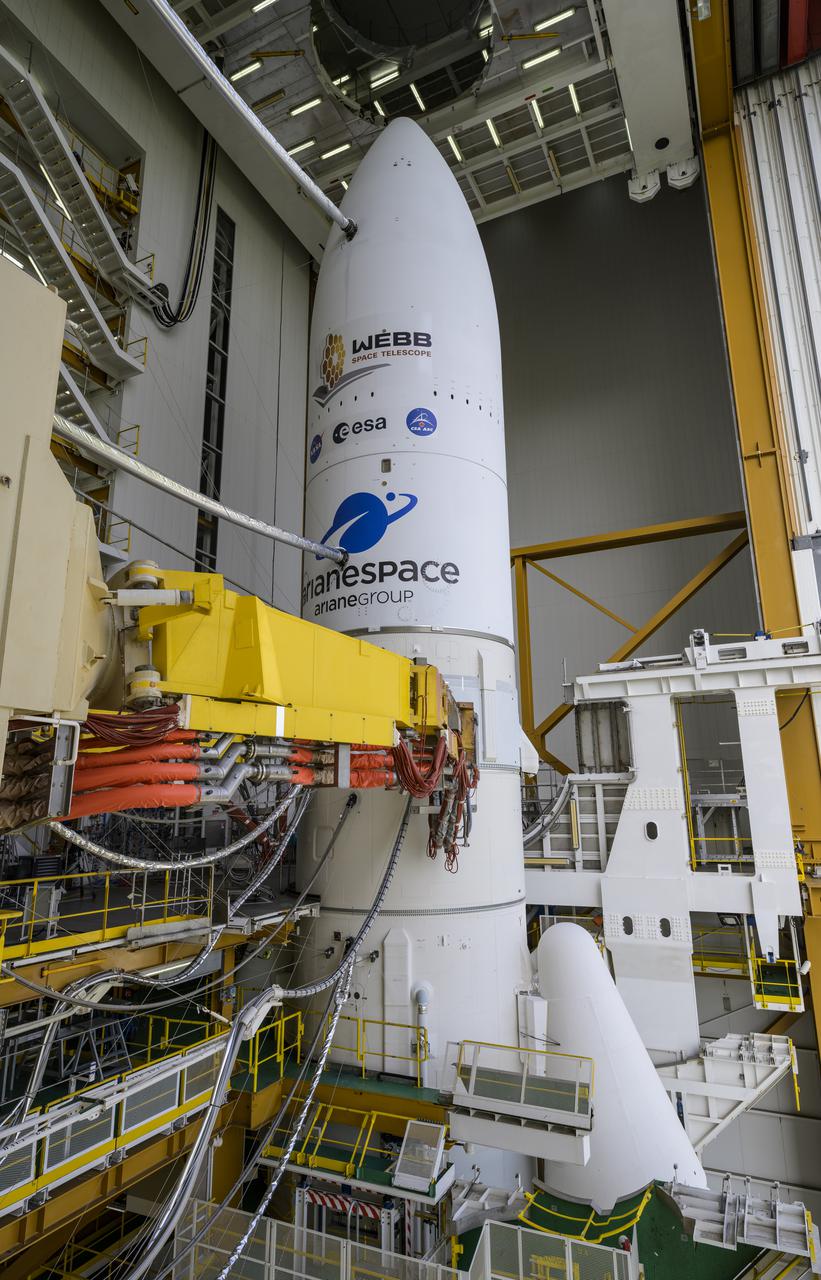
Arianespace's Ariane 5 rocket with NASA’s James Webb Space Telescope onboard, is seen ahead of rollout to the launch pad, Thursday, Dec. 23, 2021, at Europe’s Spaceport, the Guiana Space Center in Kourou, French Guiana. The James Webb Space Telescope (sometimes called JWST or Webb) is a large infrared telescope with a 21.3 foot (6.5 meter) primary mirror. The observatory will study every phase of cosmic history—from within our solar system to the most distant observable galaxies in the early universe. Photo Credit: (NASA/Bill Ingalls)
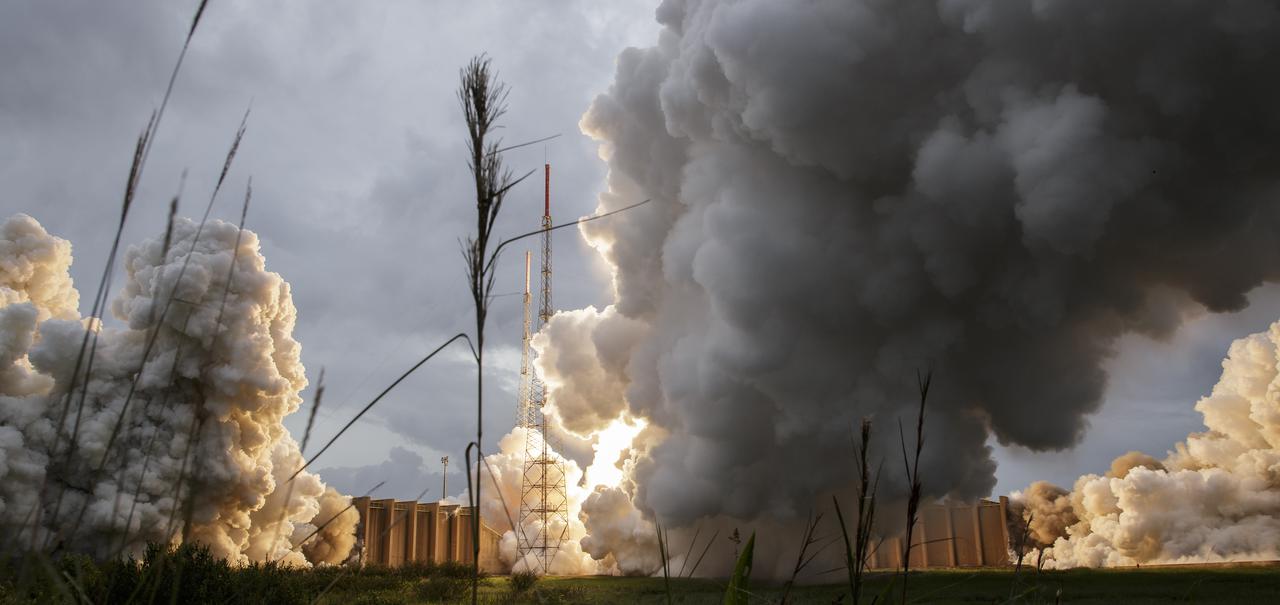
Steam and smoke from Arianespace's Ariane 5 Vulcain engine, center, and two solid rocket boosters, is seen as it launches with NASA’s James Webb Space Telescope onboard, Saturday, Dec. 25, 2021, from the ELA-3 Launch Zone of Europe’s Spaceport at the Guiana Space Centre in Kourou, French Guiana. The James Webb Space Telescope (sometimes called JWST or Webb) is a large infrared telescope with a 21.3 foot (6.5 meter) primary mirror. The observatory will study every phase of cosmic history—from within our solar system to the most distant observable galaxies in the early universe. Photo Credit: (NASA/Bill Ingalls)
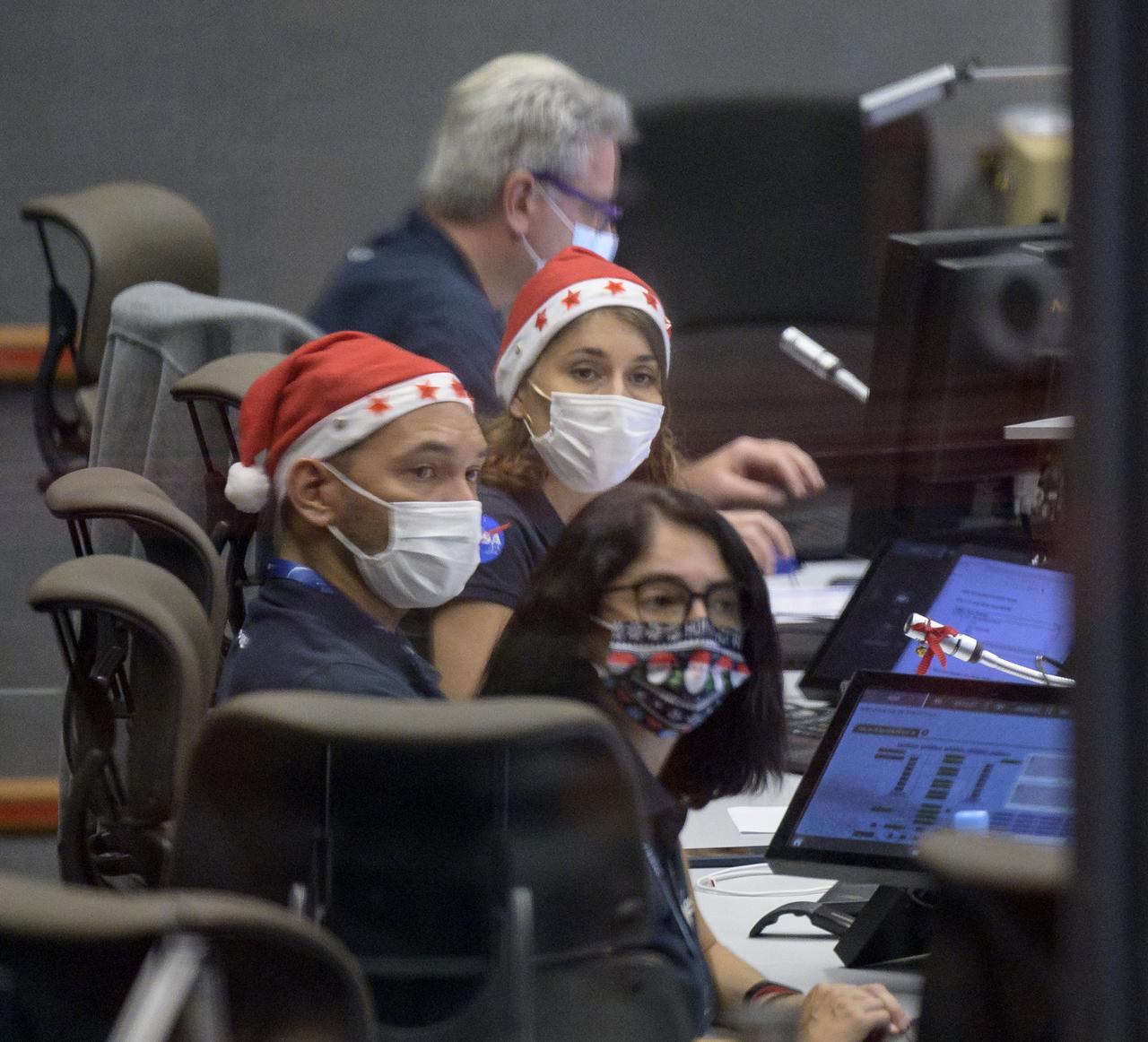
Launch teams monitor the countdown to the launch of Arianespace's Ariane 5 rocket carrying NASA’s James Webb Space Telescope, Saturday, Dec. 25, 2021, in the Jupiter Center at the Guiana Space Center in Kourou, French Guiana. The James Webb Space Telescope (sometimes called JWST or Webb) is a large infrared telescope with a 21.3 foot (6.5 meter) primary mirror. The observatory will study every phase of cosmic history—from within our solar system to the most distant observable galaxies in the early universe. Photo Credit: (NASA/Bill Ingalls)
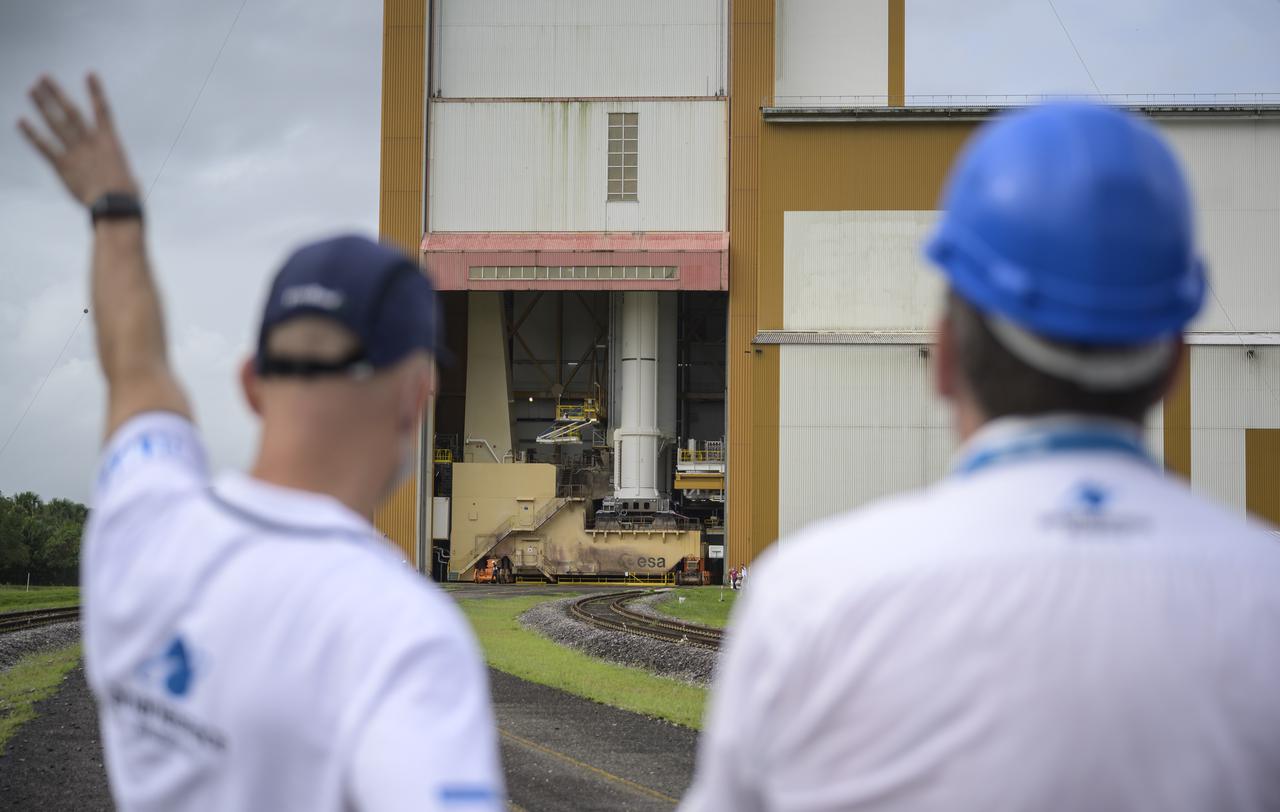
Arianespace's Ariane 5 rocket with NASA’s James Webb Space Telescope onboard, is ready to be rolled out to the launch pad, Thursday, Dec. 23, 2021, at Europe’s Spaceport, the Guiana Space Center in Kourou, French Guiana. The James Webb Space Telescope (sometimes called JWST or Webb) is a large infrared telescope with a 21.3 foot (6.5 meter) primary mirror. The observatory will study every phase of cosmic history—from within our solar system to the most distant observable galaxies in the early universe. Photo Credit: (NASA/Bill Ingalls)
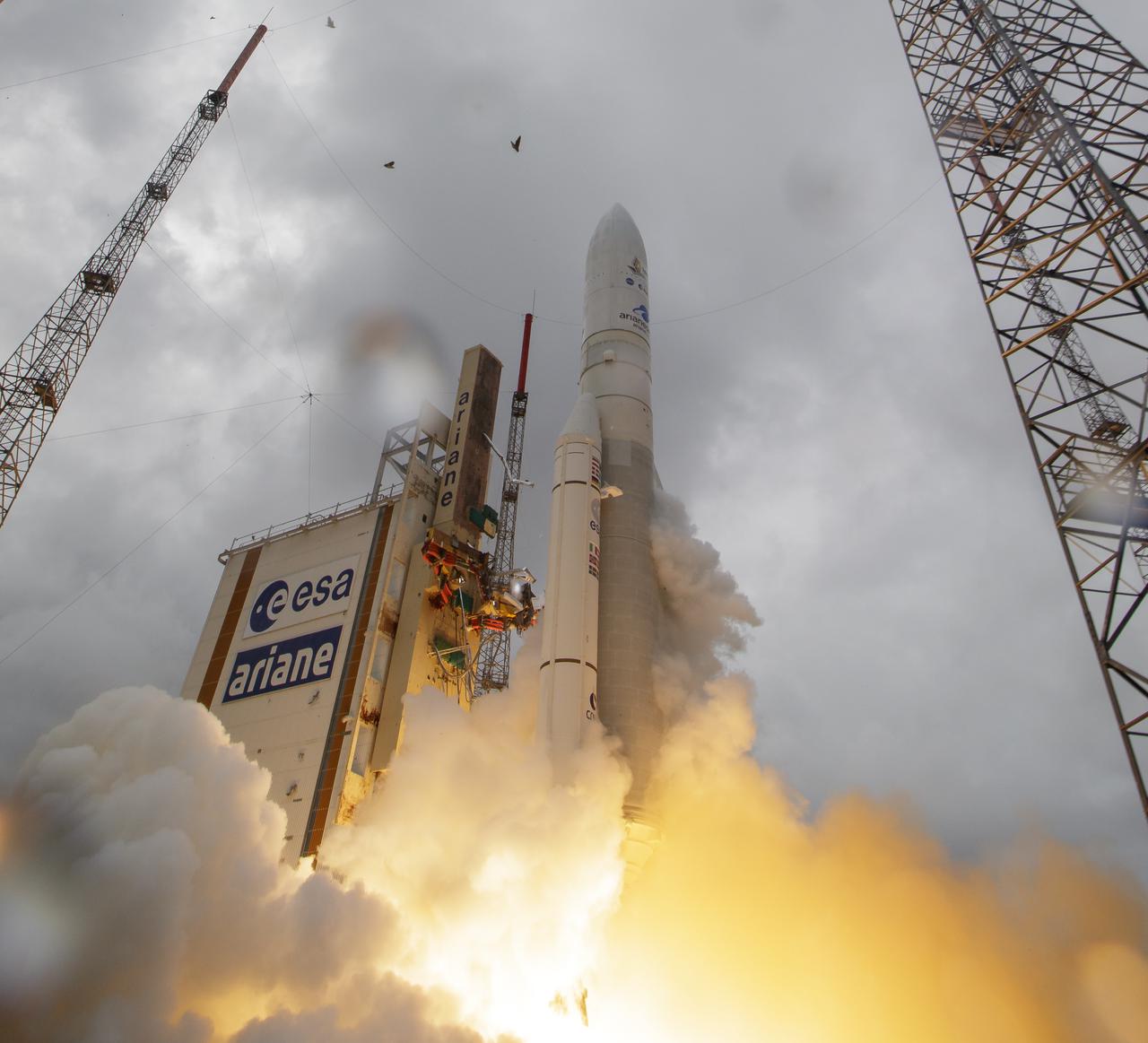
Arianespace's Ariane 5 rocket launches with NASA’s James Webb Space Telescope onboard, Saturday, Dec. 25, 2021, from the ELA-3 Launch Zone of Europe’s Spaceport at the Guiana Space Centre in Kourou, French Guiana. The James Webb Space Telescope (sometimes called JWST or Webb) is a large infrared telescope with a 21.3 foot (6.5 meter) primary mirror. The observatory will study every phase of cosmic history—from within our solar system to the most distant observable galaxies in the early universe. Photo Credit: (NASA/Bill Ingalls)
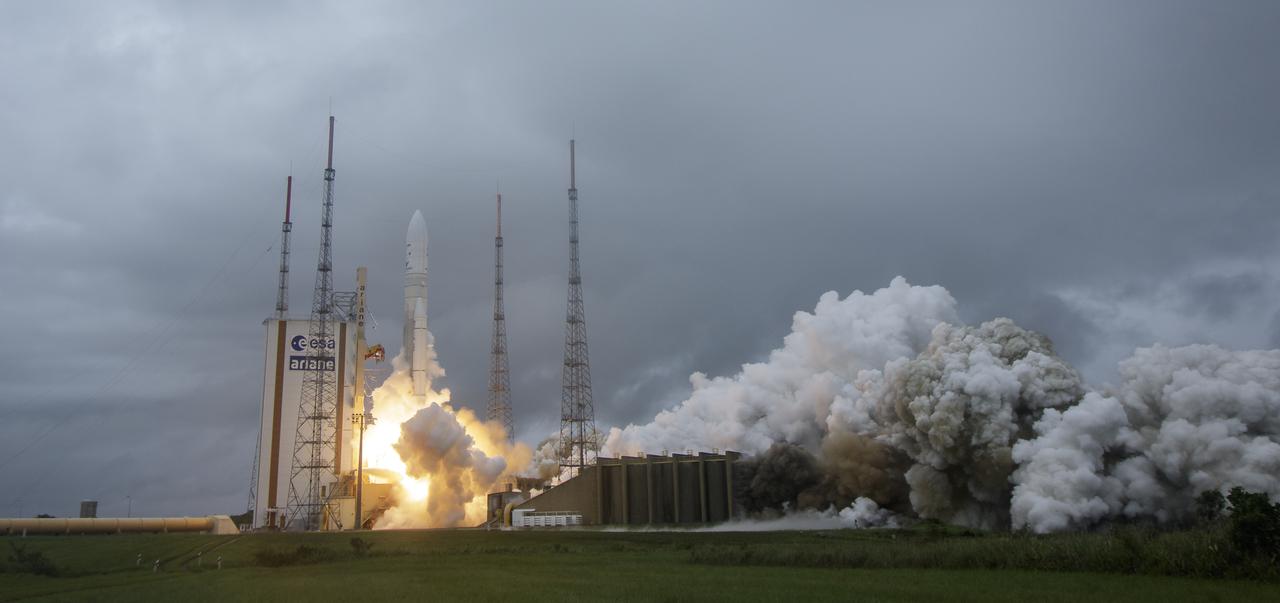
Arianespace's Ariane 5 rocket launches with NASA’s James Webb Space Telescope onboard, Saturday, Dec. 25, 2021, from the ELA-3 Launch Zone of Europe’s Spaceport at the Guiana Space Centre in Kourou, French Guiana. The James Webb Space Telescope (sometimes called JWST or Webb) is a large infrared telescope with a 21.3 foot (6.5 meter) primary mirror. The observatory will study every phase of cosmic history—from within our solar system to the most distant observable galaxies in the early universe. Photo Credit: (NASA/Bill Ingalls)
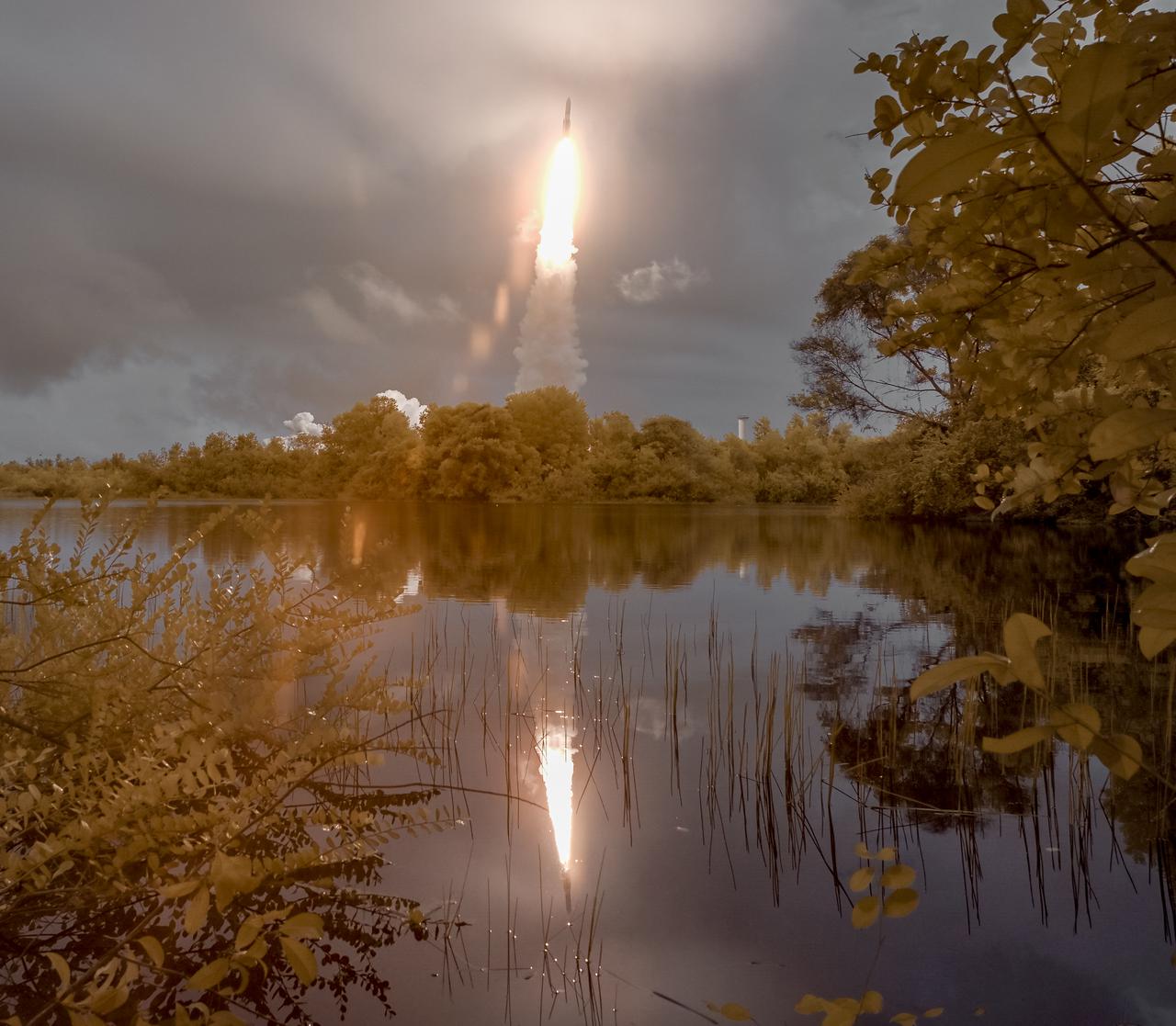
Arianespace's Ariane 5 rocket is seen in this false color infrared exposure as it launches with NASA’s James Webb Space Telescope onboard, Saturday, Dec. 25, 2021, from the ELA-3 Launch Zone of Europe’s Spaceport at the Guiana Space Centre in Kourou, French Guiana. The James Webb Space Telescope (sometimes called JWST or Webb) is a large infrared telescope with a 21.3 foot (6.5 meter) primary mirror. The observatory will study every phase of cosmic history—from within our solar system to the most distant observable galaxies in the early universe. Photo Credit: (NASA/Bill Ingalls)
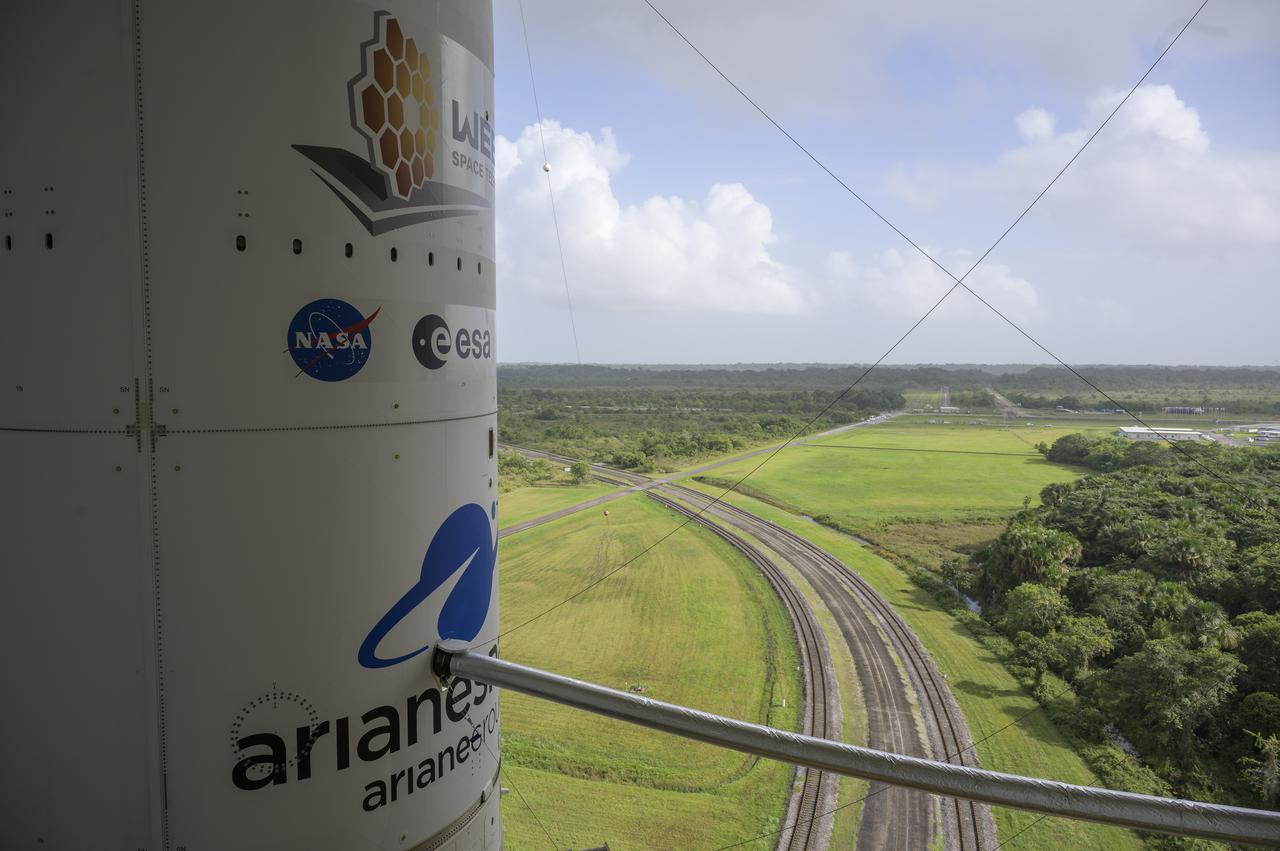
Arianespace's Ariane 5 rocket with NASA’s James Webb Space Telescope onboard, is seen ahead of rollout to the launch pad, Thursday, Dec. 23, 2021, at Europe’s Spaceport, the Guiana Space Center in Kourou, French Guiana. The James Webb Space Telescope (sometimes called JWST or Webb) is a large infrared telescope with a 21.3 foot (6.5 meter) primary mirror. The observatory will study every phase of cosmic history—from within our solar system to the most distant observable galaxies in the early universe. Photo Credit: (NASA/Bill Ingalls)
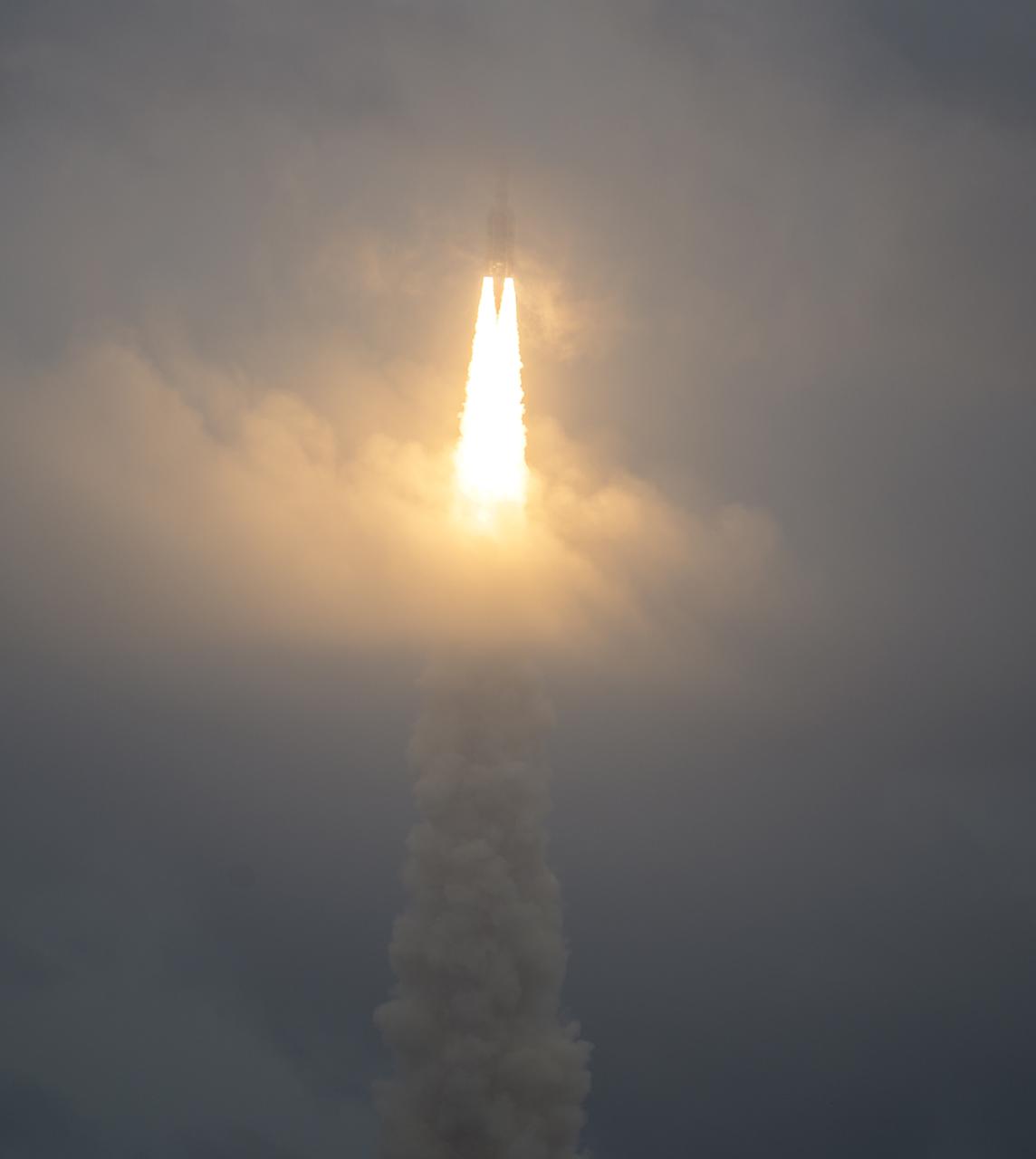
Arianespace's Ariane 5 rocket launches with NASA’s James Webb Space Telescope onboard, Saturday, Dec. 25, 2021, from the ELA-3 Launch Zone of Europe’s Spaceport at the Guiana Space Centre in Kourou, French Guiana. The James Webb Space Telescope (sometimes called JWST or Webb) is a large infrared telescope with a 21.3 foot (6.5 meter) primary mirror. The observatory will study every phase of cosmic history—from within our solar system to the most distant observable galaxies in the early universe. Photo Credit: (NASA/Bill Ingalls)
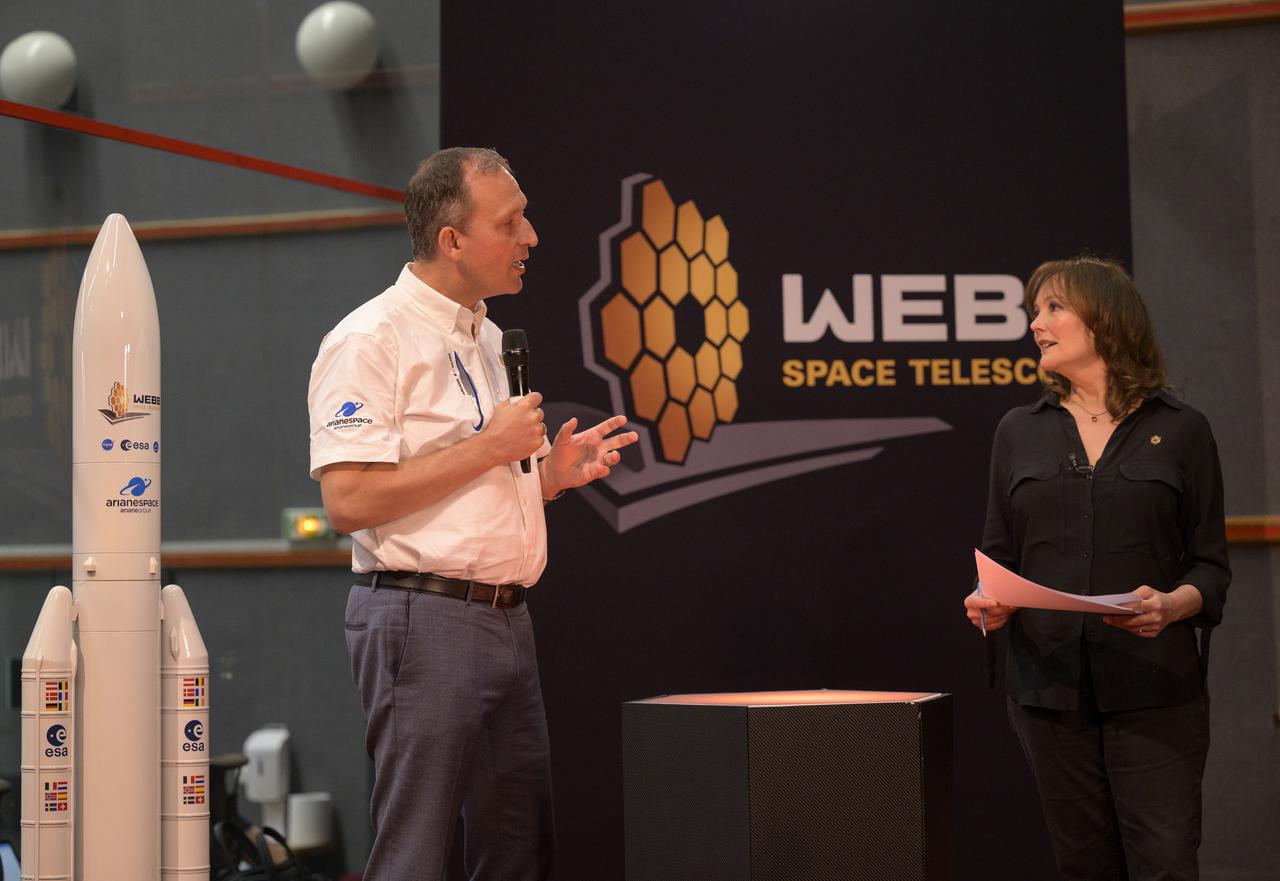
NASA Associate Administrator for the Science Mission Directorate Thomas Zurbuchen is interviewed by Katy Haswell on NASA television as he and the launch team monitor the countdown of the launch of Arianespace's Ariane 5 rocket carrying NASA’s James Webb Space Telescope, Saturday, Dec. 25, 2021, in the Jupiter Center at the Guiana Space Center in Kourou, French Guiana. The James Webb Space Telescope (sometimes called JWST or Webb) is a large infrared telescope with a 21.3 foot (6.5 meter) primary mirror. The observatory will study every phase of cosmic history—from within our solar system to the most distant observable galaxies in the early universe. Photo Credit: (NASA/Bill Ingalls)
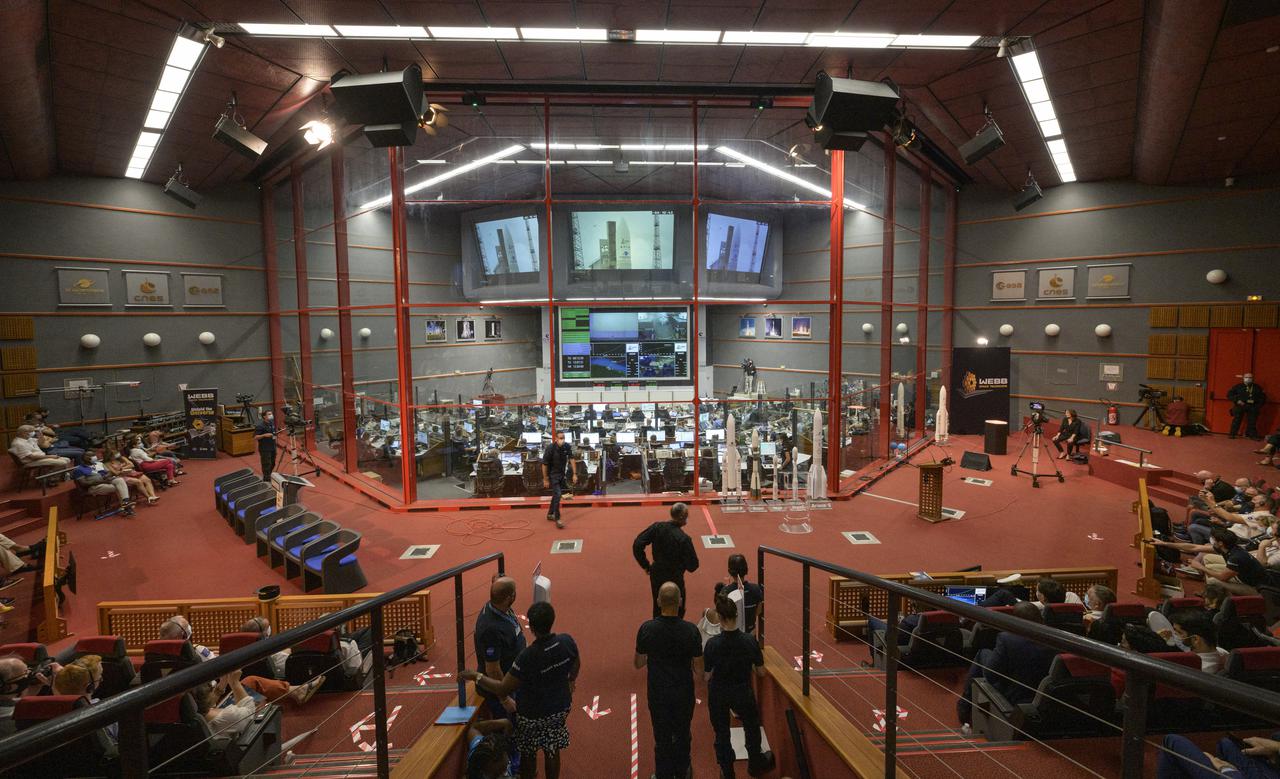
Launch teams monitor the countdown of the launch of Arianespace's Ariane 5 rocket carrying NASA’s James Webb Space Telescope, Saturday, Dec. 25, 2021, in the Jupiter Center at the Guiana Space Center in Kourou, French Guiana. The James Webb Space Telescope (sometimes called JWST or Webb) is a large infrared telescope with a 21.3 foot (6.5 meter) primary mirror. The observatory will study every phase of cosmic history—from within our solar system to the most distant observable galaxies in the early universe. Photo Credit: (NASA/Bill Ingalls)
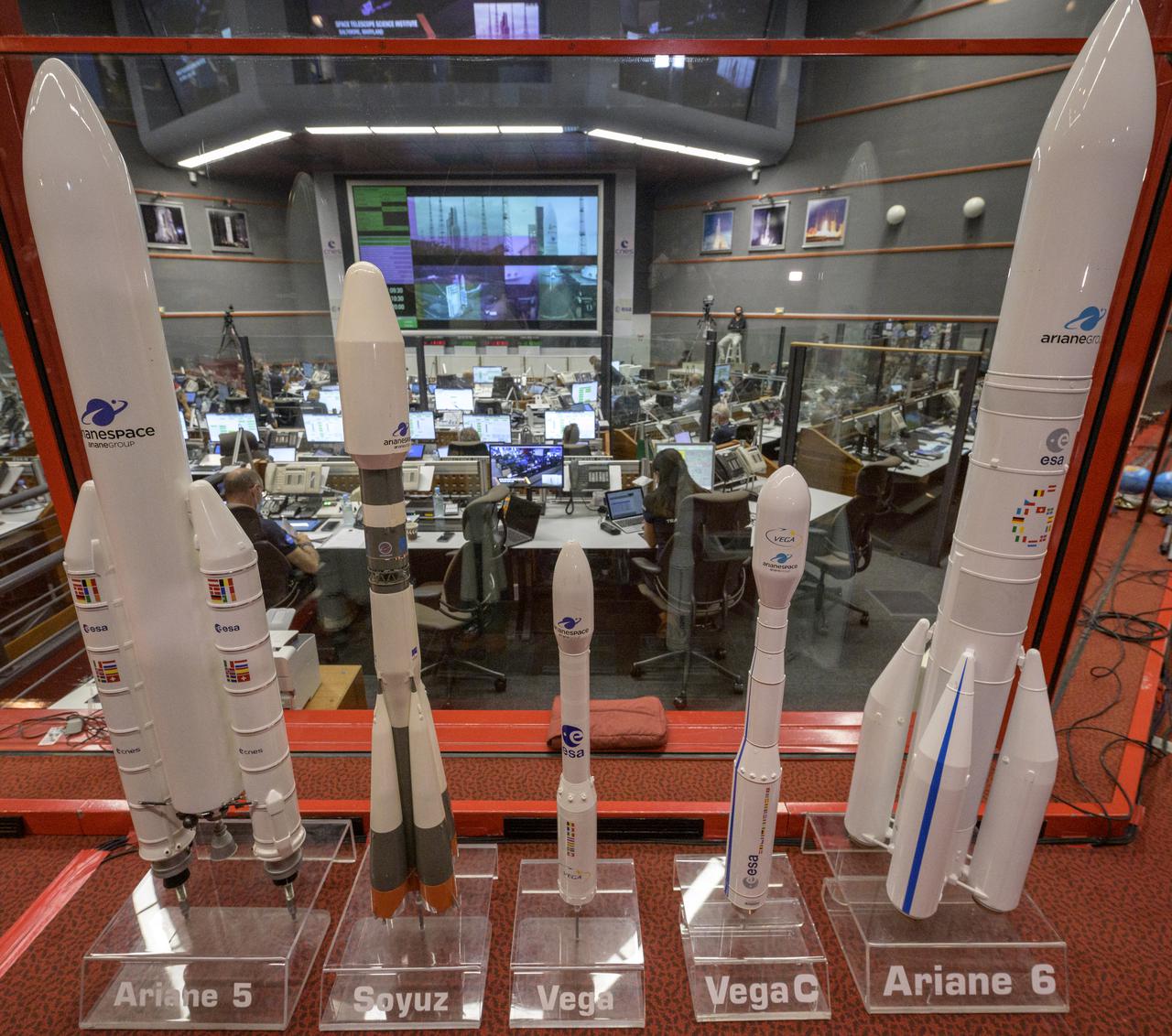
Launch teams monitor the countdown to the launch of Arianespace's Ariane 5 rocket carrying NASA’s James Webb Space Telescope, Saturday, Dec. 25, 2021, in the Jupiter Center at the Guiana Space Center in Kourou, French Guiana. The James Webb Space Telescope (sometimes called JWST or Webb) is a large infrared telescope with a 21.3 foot (6.5 meter) primary mirror. The observatory will study every phase of cosmic history—from within our solar system to the most distant observable galaxies in the early universe. Photo Credit: (NASA/Bill Ingalls)
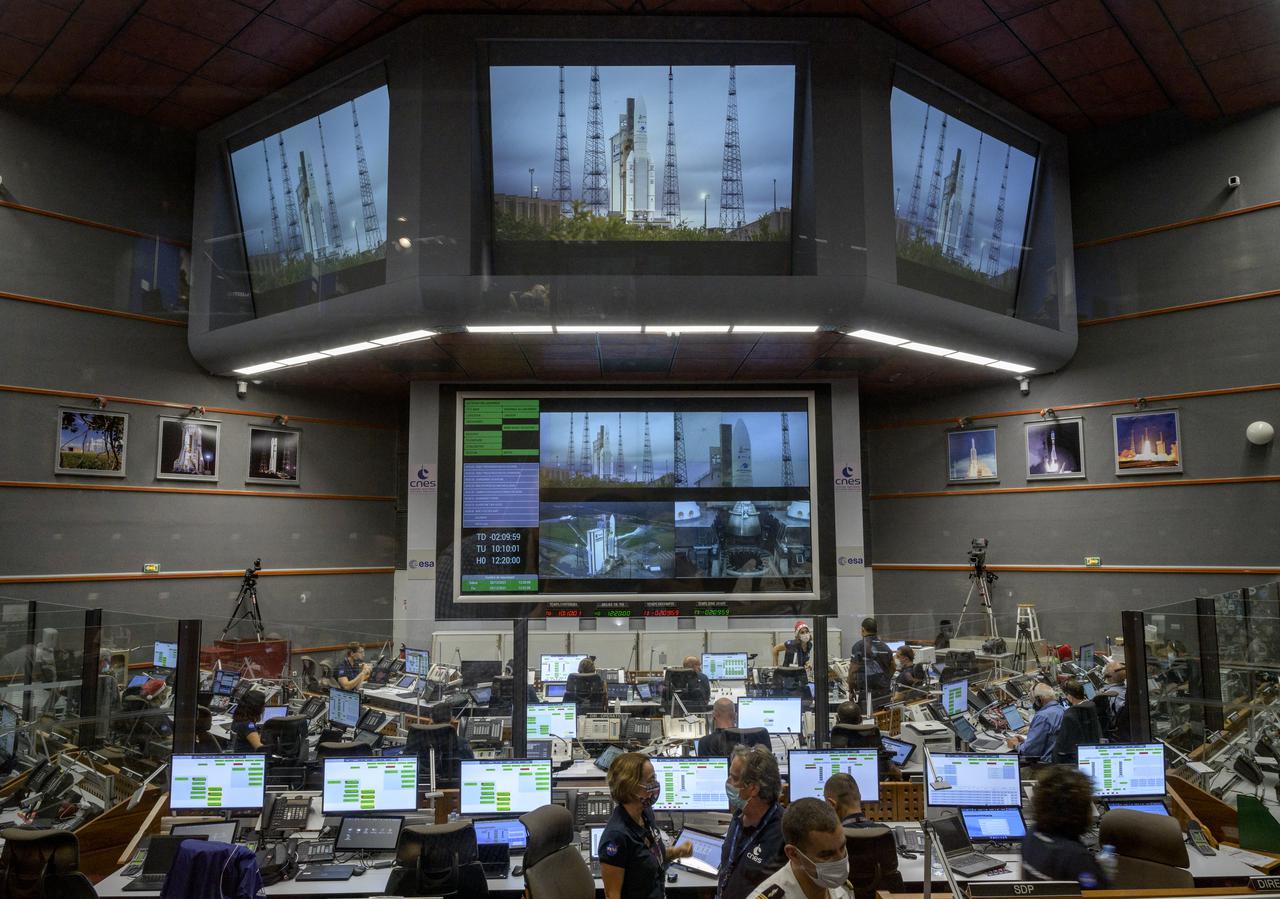
Launch teams monitor the countdown to the launch of Arianespace's Ariane 5 rocket carrying NASA’s James Webb Space Telescope, Saturday, Dec. 25, 2021, in the Jupiter Center at the Guiana Space Center in Kourou, French Guiana. The James Webb Space Telescope (sometimes called JWST or Webb) is a large infrared telescope with a 21.3 foot (6.5 meter) primary mirror. The observatory will study every phase of cosmic history—from within our solar system to the most distant observable galaxies in the early universe. Photo Credit: (NASA/Bill Ingalls)
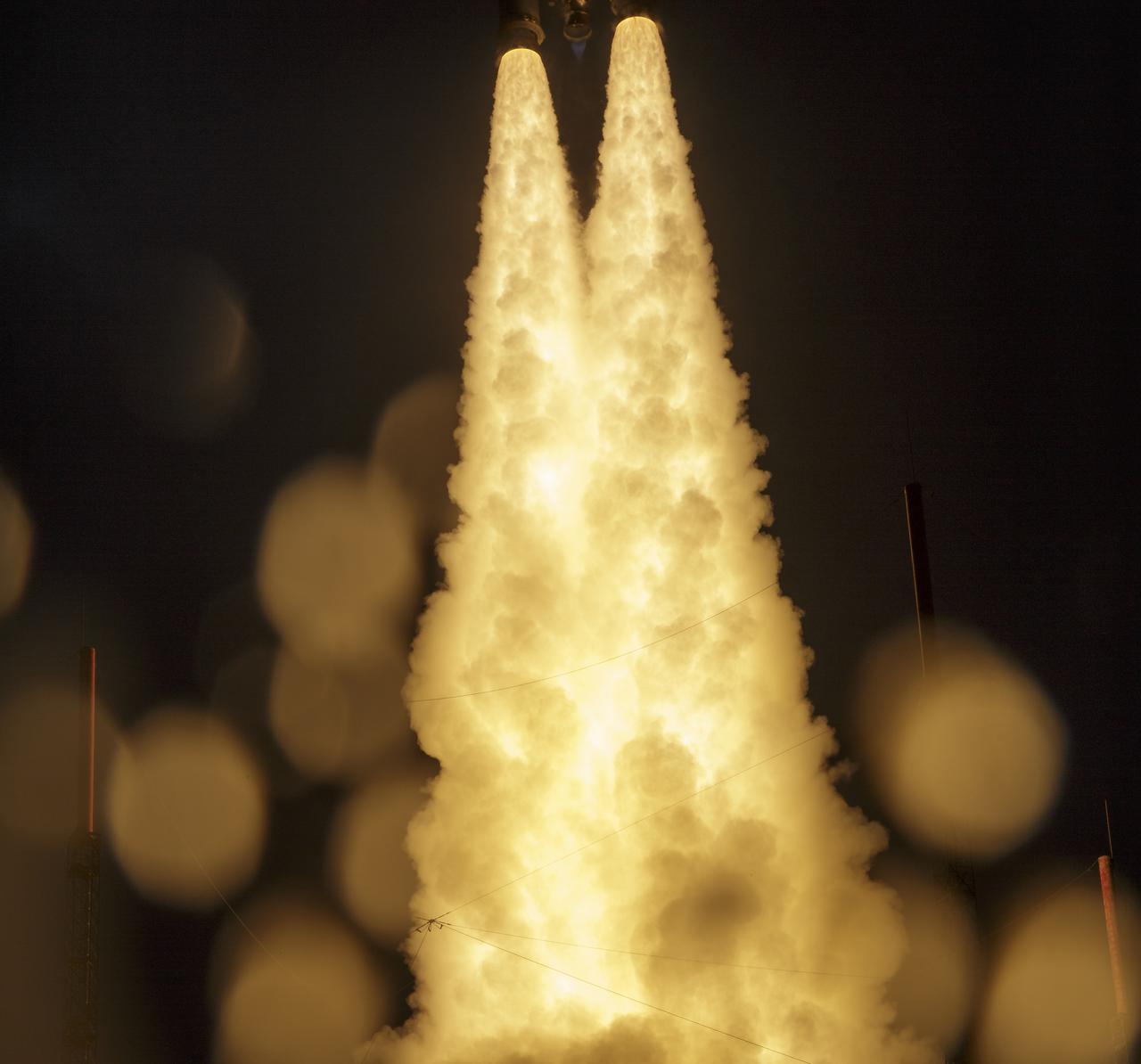
Arianespace's Ariane 5 rocket launches with NASA’s James Webb Space Telescope onboard, Saturday, Dec. 25, 2021, from the ELA-3 Launch Zone of Europe’s Spaceport at the Guiana Space Centre in Kourou, French Guiana. The James Webb Space Telescope (sometimes called JWST or Webb) is a large infrared telescope with a 21.3 foot (6.5 meter) primary mirror. The observatory will study every phase of cosmic history—from within our solar system to the most distant observable galaxies in the early universe. Photo Credit: (NASA/Bill Ingalls)
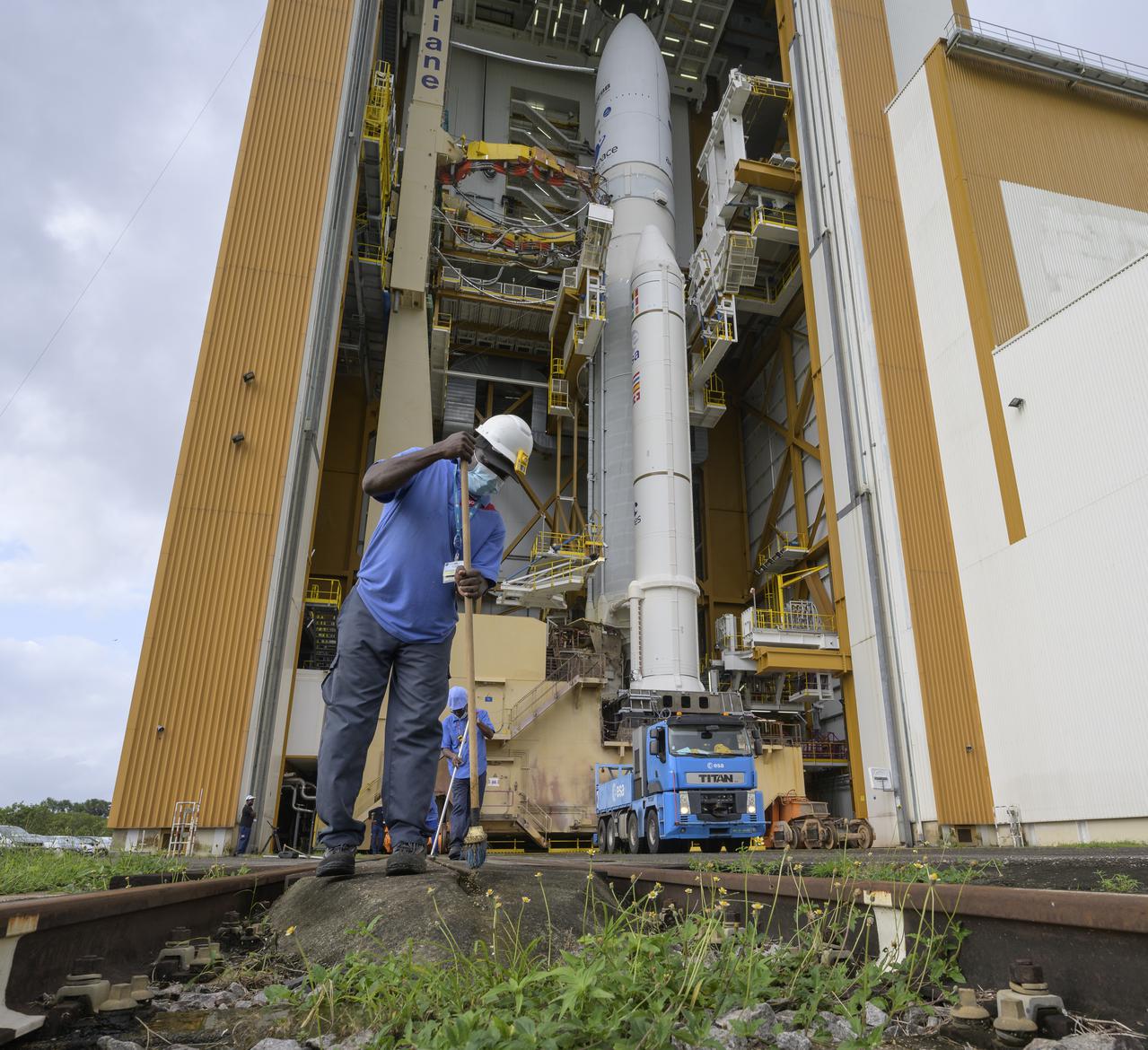
Workers sweep the tracks in advance of the rollout to the launch pad of Arianespace's Ariane 5 rocket with NASA’s James Webb Space Telescope onboard, Thursday, Dec. 23, 2021, at Europe’s Spaceport, the Guiana Space Center in Kourou, French Guiana. The James Webb Space Telescope (sometimes called JWST or Webb) is a large infrared telescope with a 21.3 foot (6.5 meter) primary mirror. The observatory will study every phase of cosmic history—from within our solar system to the most distant observable galaxies in the early universe. Photo Credit: (NASA/Bill Ingalls)
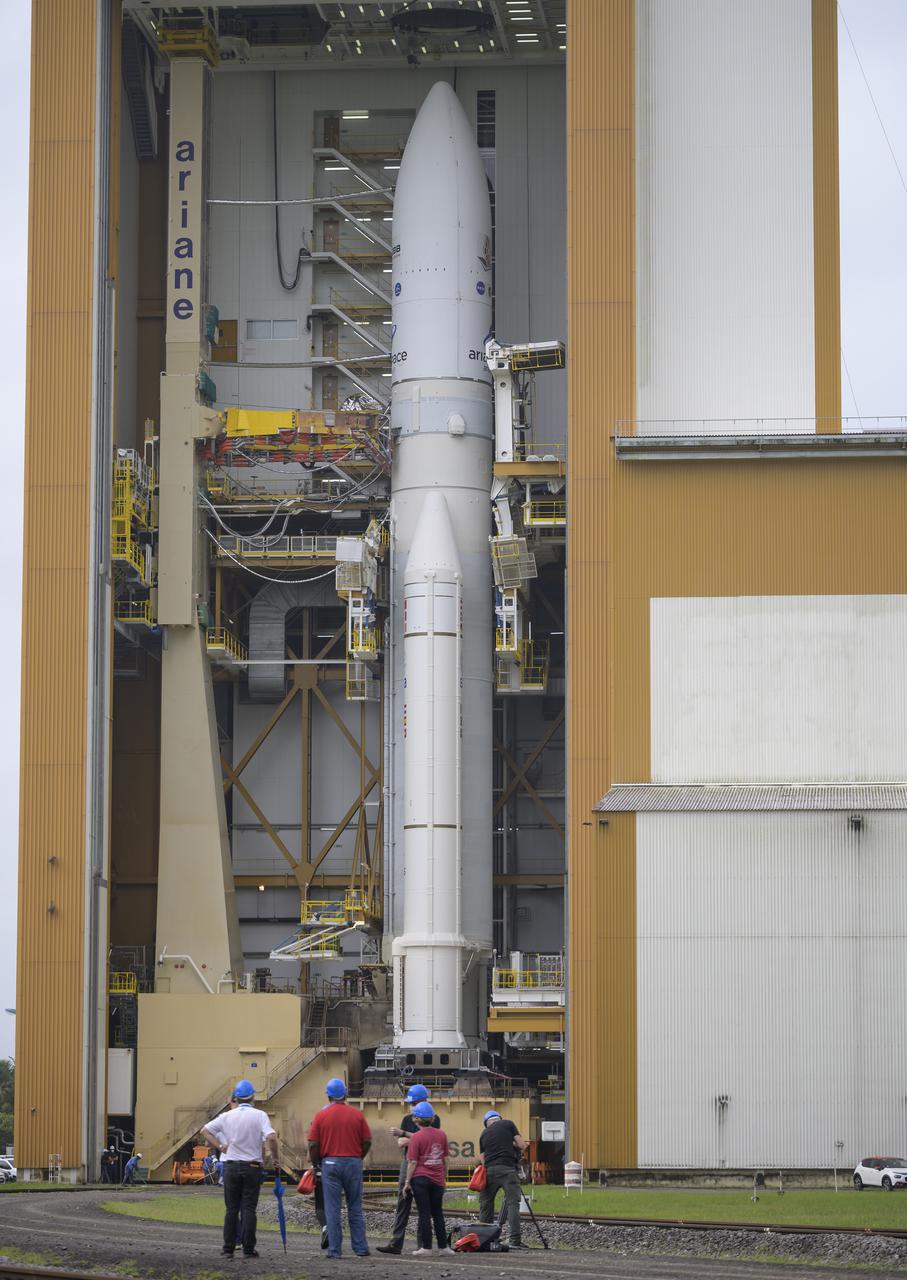
Arianespace's Ariane 5 rocket with NASA’s James Webb Space Telescope onboard, is rolled out to the launch pad, Thursday, Dec. 23, 2021, at Europe’s Spaceport, the Guiana Space Center in Kourou, French Guiana. The James Webb Space Telescope (sometimes called JWST or Webb) is a large infrared telescope with a 21.3 foot (6.5 meter) primary mirror. The observatory will study every phase of cosmic history—from within our solar system to the most distant observable galaxies in the early universe. Photo Credit: (NASA/Bill Ingalls)
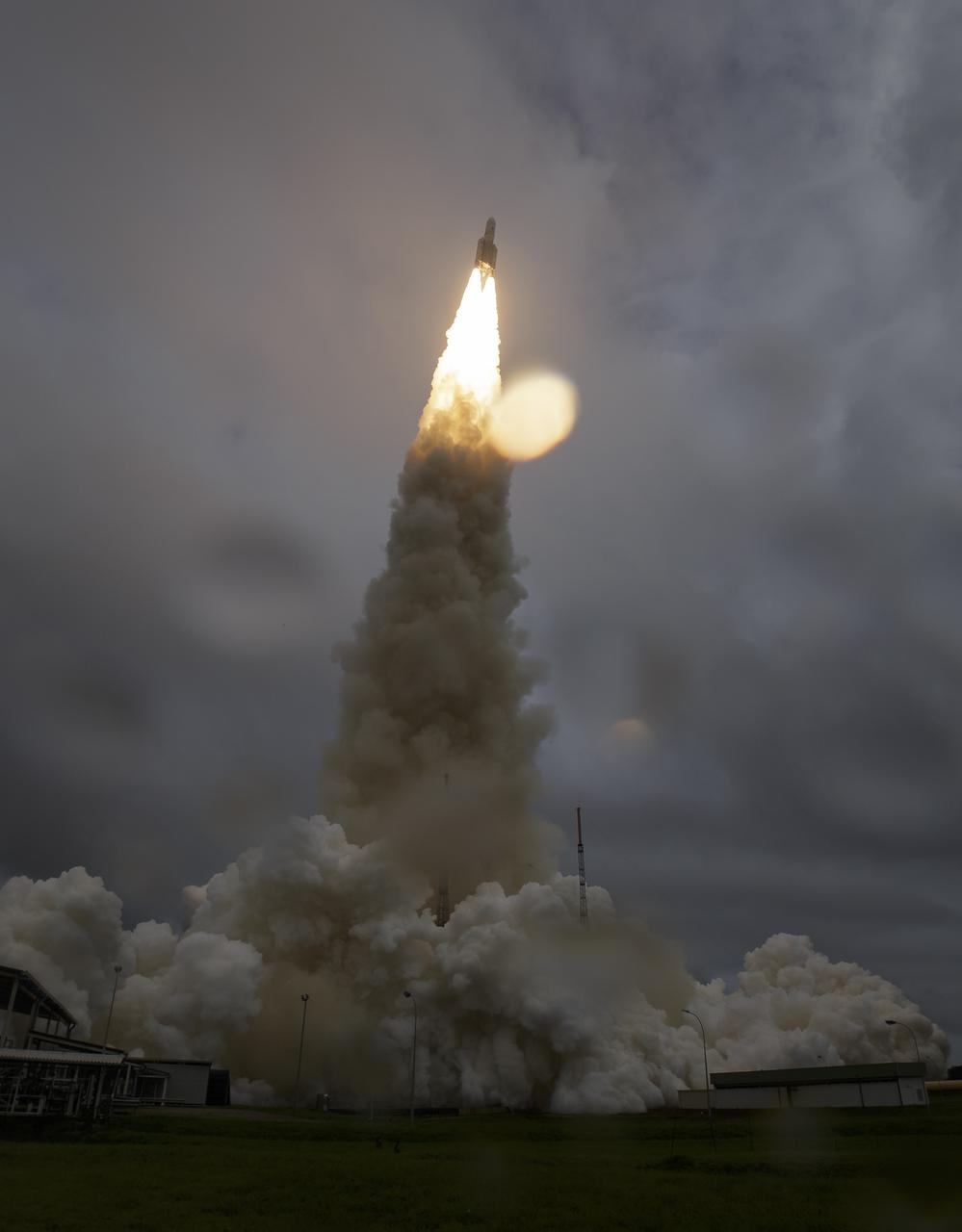
Arianespace's Ariane 5 rocket launches with NASA’s James Webb Space Telescope onboard, Saturday, Dec. 25, 2021, from the ELA-3 Launch Zone of Europe’s Spaceport at the Guiana Space Centre in Kourou, French Guiana. The James Webb Space Telescope (sometimes called JWST or Webb) is a large infrared telescope with a 21.3 foot (6.5 meter) primary mirror. The observatory will study every phase of cosmic history—from within our solar system to the most distant observable galaxies in the early universe. Photo Credit: (NASA/Bill Ingalls)
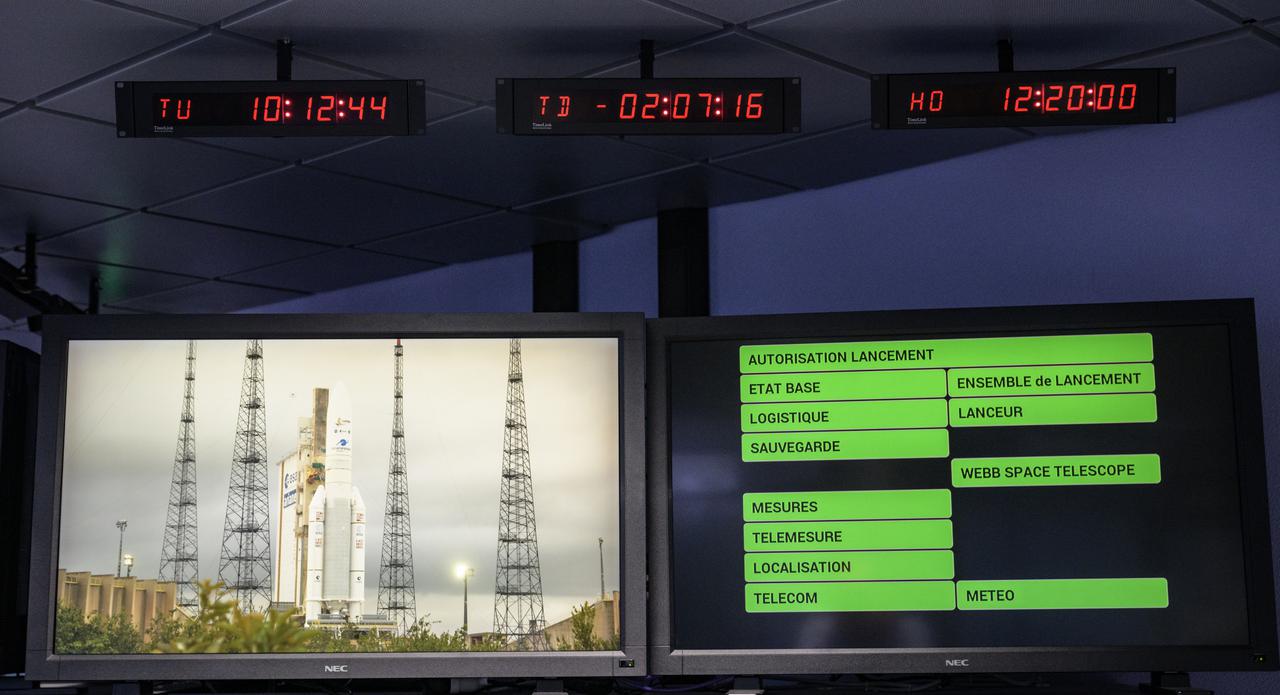
Monitors show the current status ahead of the launch of Arianespace's Ariane 5 rocket carrying NASA’s James Webb Space Telescope, Saturday, Dec. 25, 2021, in the Jupiter Center at the Guiana Space Center in Kourou, French Guiana. The James Webb Space Telescope (sometimes called JWST or Webb) is a large infrared telescope with a 21.3 foot (6.5 meter) primary mirror. The observatory will study every phase of cosmic history—from within our solar system to the most distant observable galaxies in the early universe. Photo Credit: (NASA/Bill Ingalls)
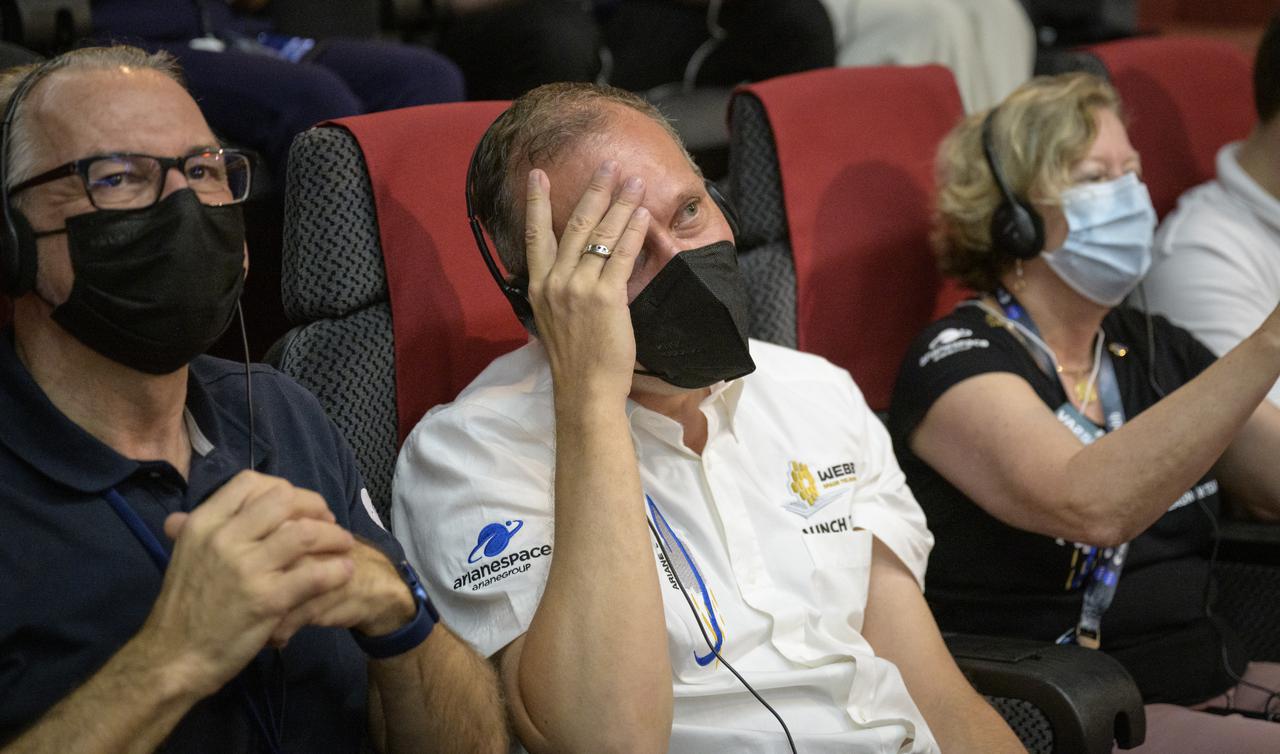
NASA Associate Administrator for the Science Mission Directorate Thomas Zurbuchen, center, reacts after hearing confirmation that the James Webb Space Telescope successfully separated from the Ariane 5 rocket, Saturday, Dec. 25, 2021, in the Jupiter Hall of the Guiana Space Centre in Kourou, French Guiana. The James Webb Space Telescope (sometimes called JWST or Webb) is a large infrared telescope with a 21.3 foot (6.5 meter) primary mirror. The observatory will study every phase of cosmic history—from within our solar system to the most distant observable galaxies in the early universe. Photo Credit: (NASA/Bill Ingalls)
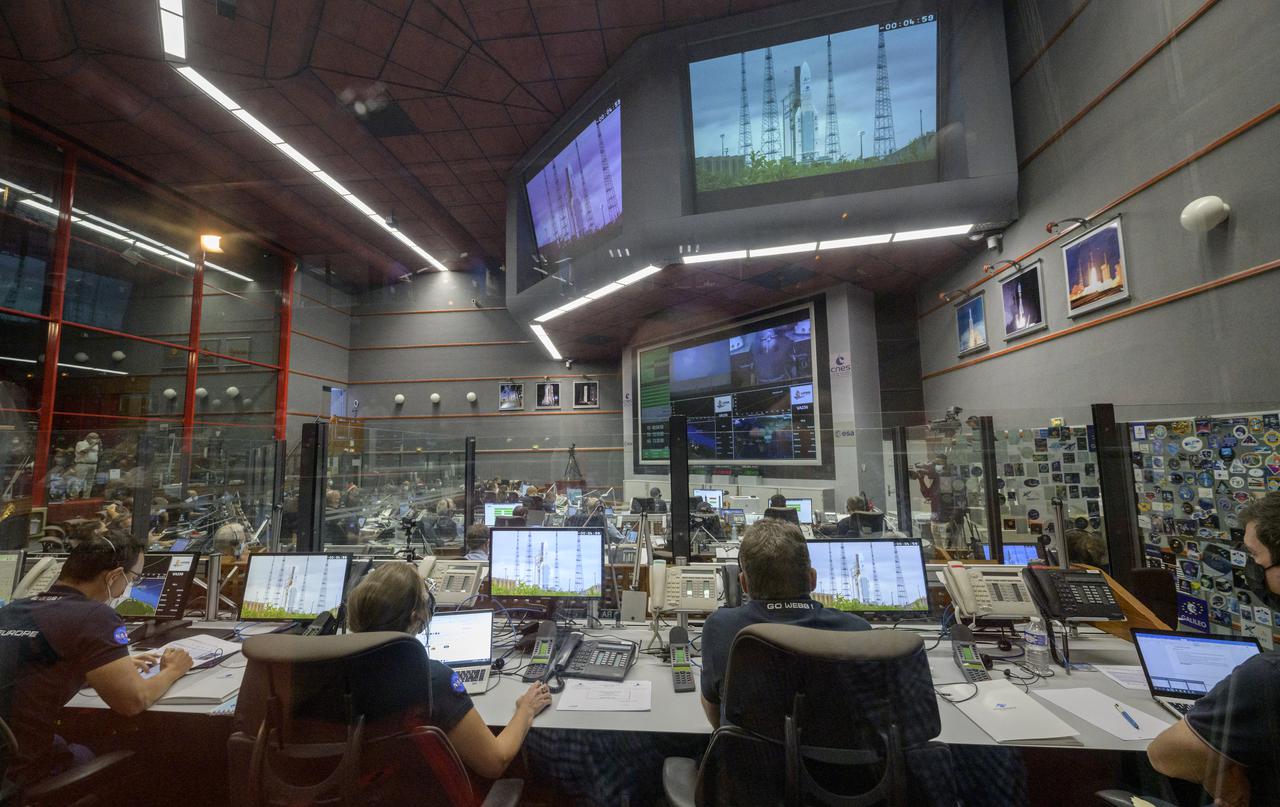
Launch teams monitor the countdown of the launch of Arianespace's Ariane 5 rocket carrying NASA’s James Webb Space Telescope, Saturday, Dec. 25, 2021, in the Jupiter Center at the Guiana Space Center in Kourou, French Guiana. The James Webb Space Telescope (sometimes called JWST or Webb) is a large infrared telescope with a 21.3 foot (6.5 meter) primary mirror. The observatory will study every phase of cosmic history—from within our solar system to the most distant observable galaxies in the early universe. Photo Credit: (NASA/Bill Ingalls)
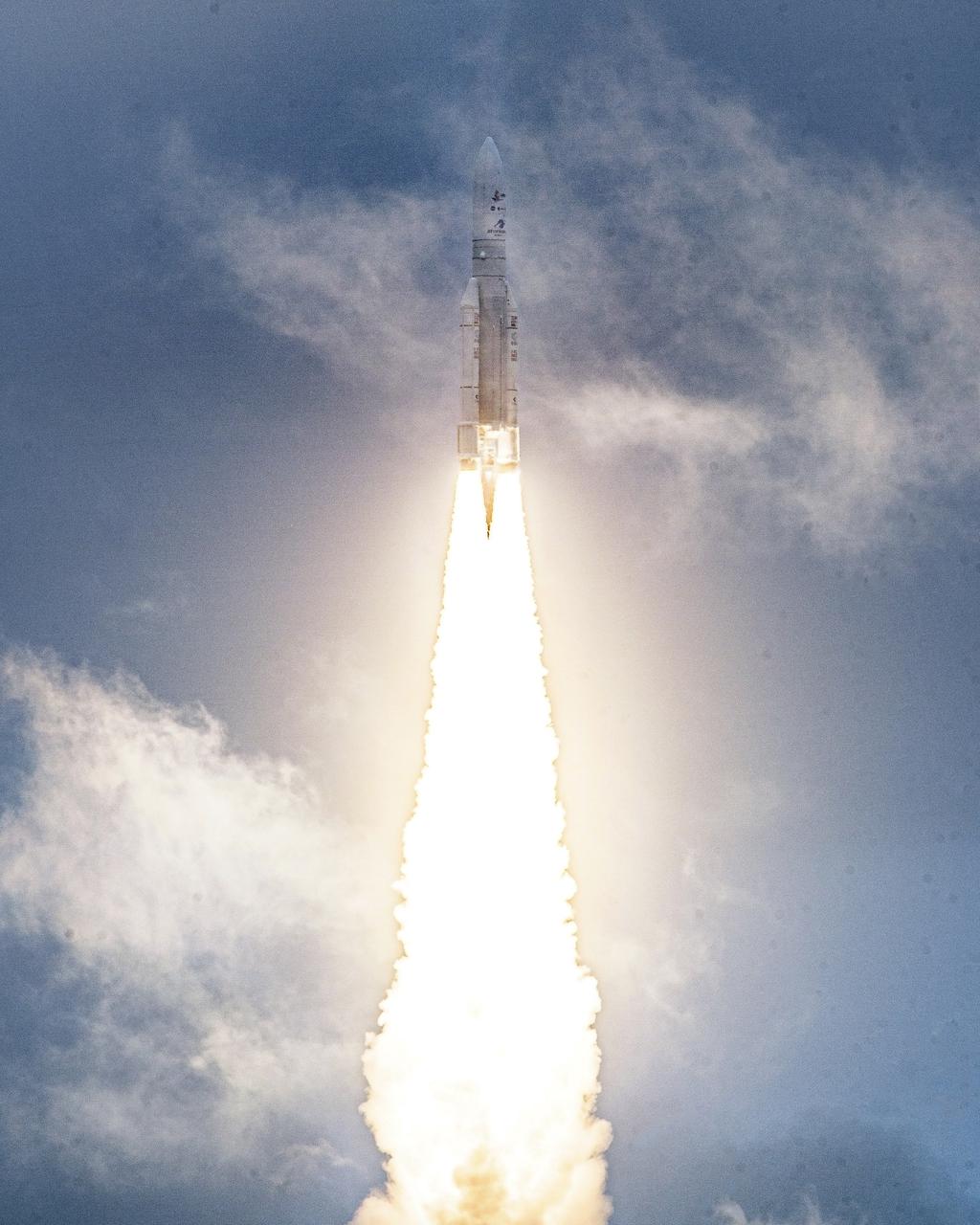
Arianespace's Ariane 5 rocket launches with NASA’s James Webb Space Telescope onboard, Saturday, Dec. 25, 2021, from the ELA-3 Launch Zone of Europe’s Spaceport at the Guiana Space Centre in Kourou, French Guiana. The James Webb Space Telescope (sometimes called JWST or Webb) is a large infrared telescope with a 21.3 foot (6.5 meter) primary mirror. The observatory will study every phase of cosmic history—from within our solar system to the most distant observable galaxies in the early universe. Photo Credit: (NASA/Chris Gunn)
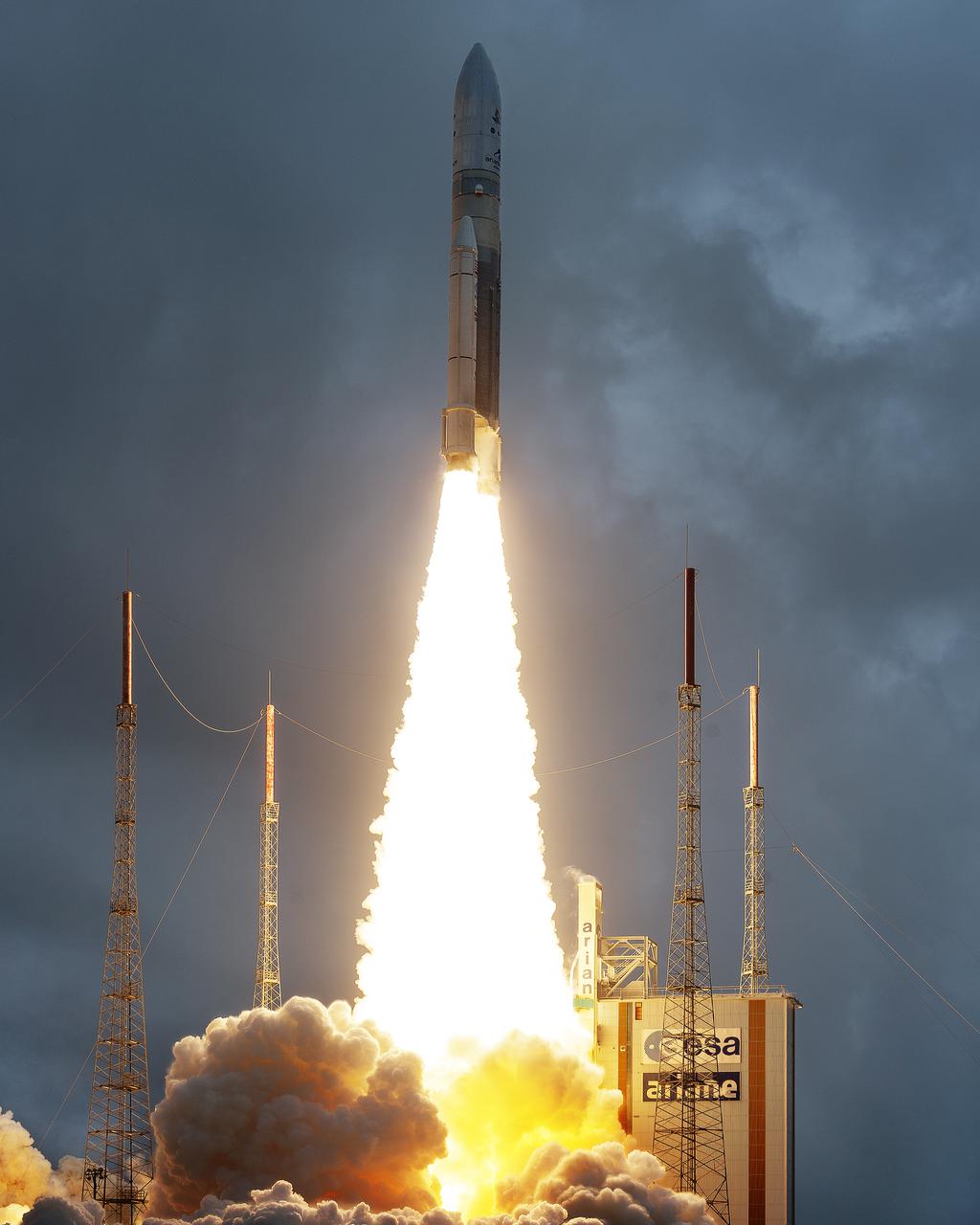
Arianespace's Ariane 5 rocket launches with NASA’s James Webb Space Telescope onboard, Saturday, Dec. 25, 2021, from the ELA-3 Launch Zone of Europe’s Spaceport at the Guiana Space Centre in Kourou, French Guiana. The James Webb Space Telescope (sometimes called JWST or Webb) is a large infrared telescope with a 21.3 foot (6.5 meter) primary mirror. The observatory will study every phase of cosmic history—from within our solar system to the most distant observable galaxies in the early universe. Photo Credit: (NASA/Chris Gunn)
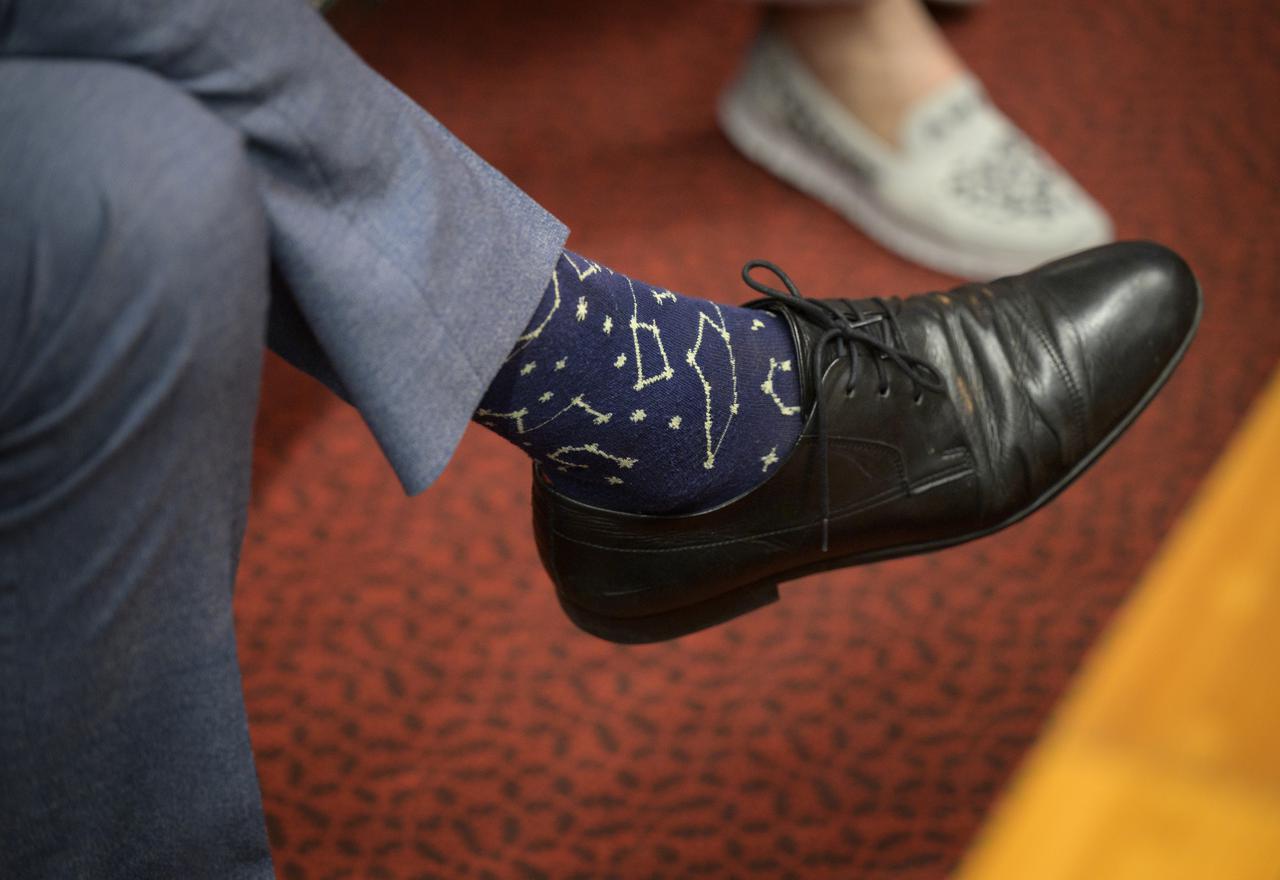
NASA Associate Administrator for the Science Mission Directorate Thomas Zurbuchen, wearing astrological themed socks, monitors the countdown to the launch of Arianespace's Ariane 5 rocket carrying NASA’s James Webb Space Telescope, Saturday, Dec. 25, 2021, in the Jupiter Center at the Guiana Space Center in Kourou, French Guiana. The James Webb Space Telescope (sometimes called JWST or Webb) is a large infrared telescope with a 21.3 foot (6.5 meter) primary mirror. The observatory will study every phase of cosmic history—from within our solar system to the most distant observable galaxies in the early universe. Photo Credit: (NASA/Bill Ingalls)
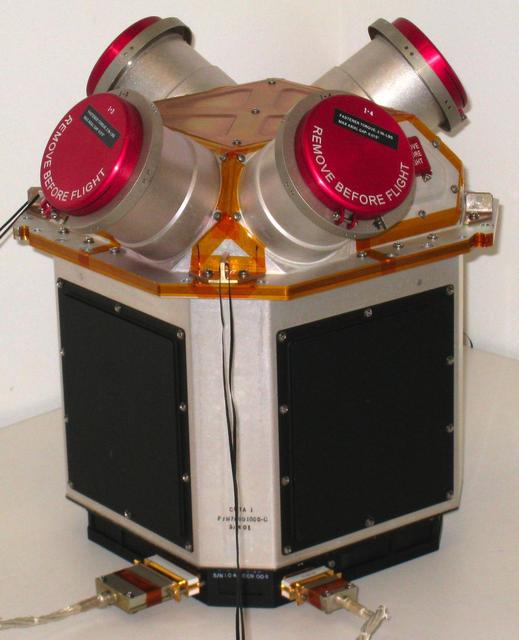
The LISA Pathfinder spacecraft is on its way to space, having successfully launched from Kourou, French Guiana Dec. 3, 2015. On board is the state-of-the-art Disturbance Reduction System DRS, a thruster technology developed at NASA JPL.
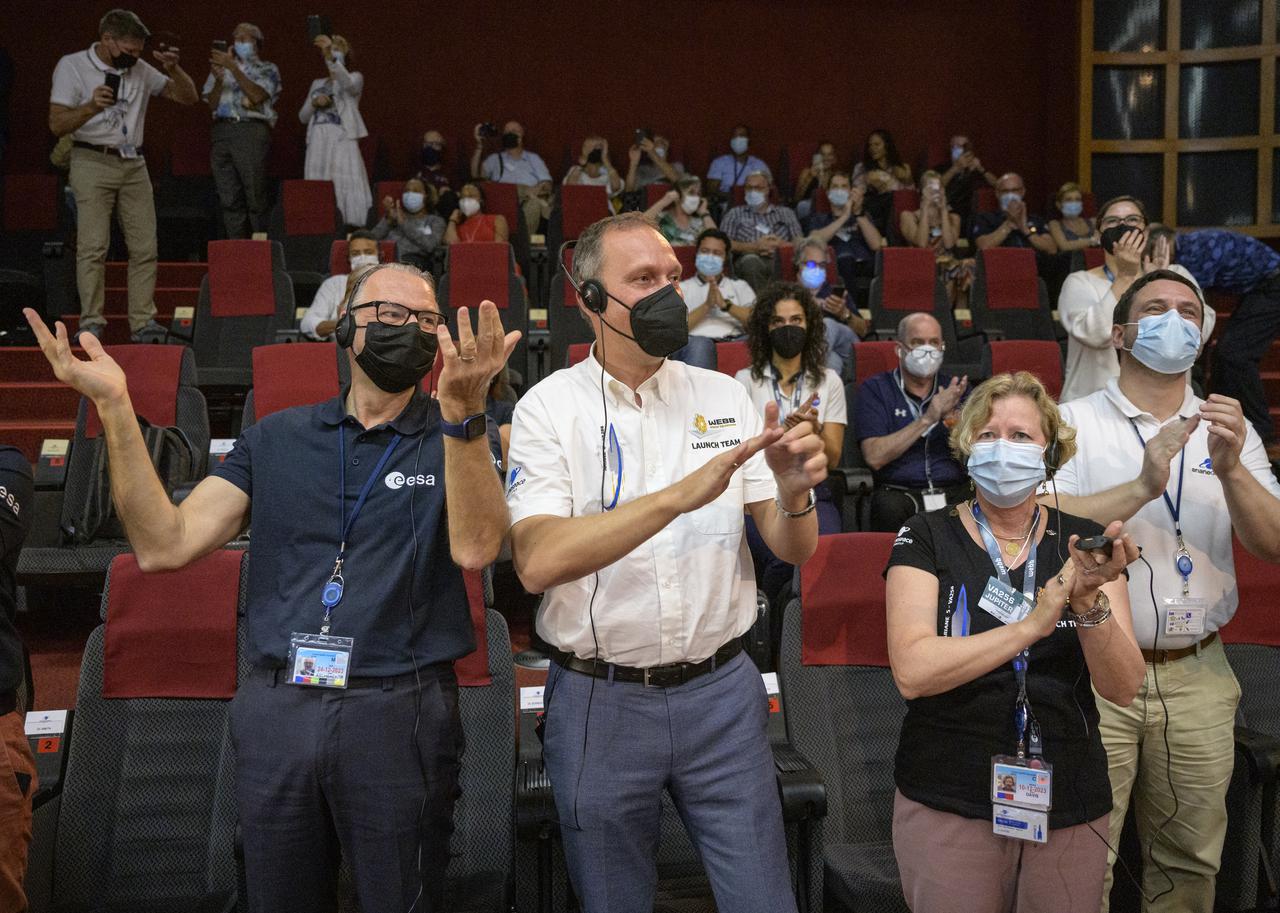
ESA (European Space Agency) Director-General Dr. Josef Aschbacher, left, NASA Associate Administrator for the Science Mission Directorate Thomas Zurbuchen, and NASA James Webb Space Telescope Program Manager Jeanne Davis, celebrate after hearing confirmation that the James Webb Space Telescope successfully deployed it’s solar arrays and the telescope had positive power, Saturday, Dec. 25, 2021, in the Jupiter Hall of the Guiana Space Centre in Kourou, French Guiana. The James Webb Space Telescope (sometimes called JWST or Webb) is a large infrared telescope with a 21.3 foot (6.5 meter) primary mirror. The observatory will study every phase of cosmic history—from within our solar system to the most distant observable galaxies in the early universe. Photo Credit: (NASA/Bill Ingalls)
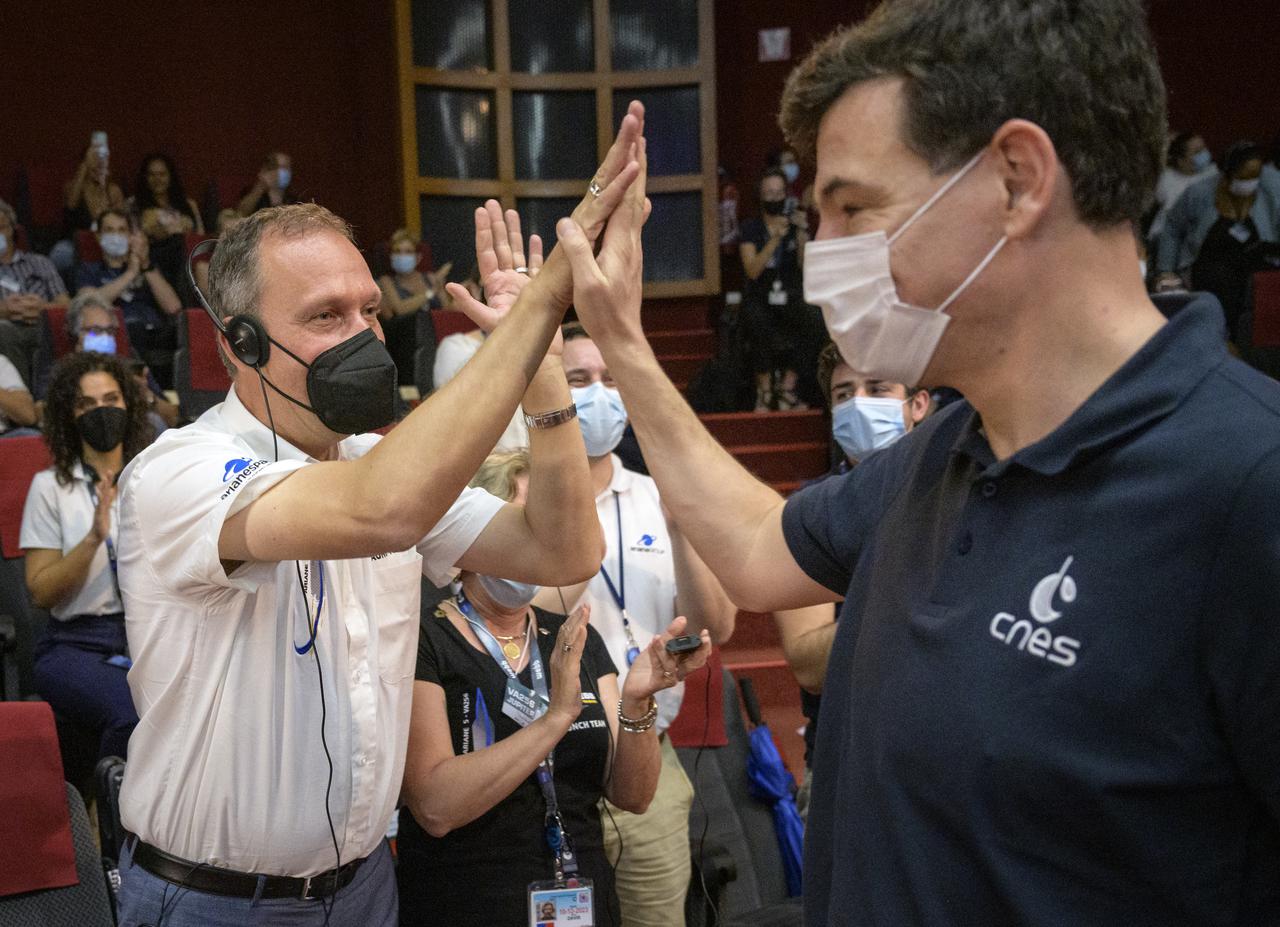
NASA Associate Administrator for the Science Mission Directorate Thomas Zurbuchen, left, and Centre National d’Etudes Spatiales (CNES) Chairman and CEO Philippe Baptiste, celebrate after hearing confirmation that the James Webb Space Telescope successfully deployed it’s solar arrays and the telescope had positive power, Saturday, Dec. 25, 2021, in the Jupiter Hall of the Guiana Space Centre in Kourou, French Guiana. The James Webb Space Telescope (sometimes called JWST or Webb) is a large infrared telescope with a 21.3 foot (6.5 meter) primary mirror. The observatory will study every phase of cosmic history—from within our solar system to the most distant observable galaxies in the early universe. Photo Credit: (NASA/Bill Ingalls)
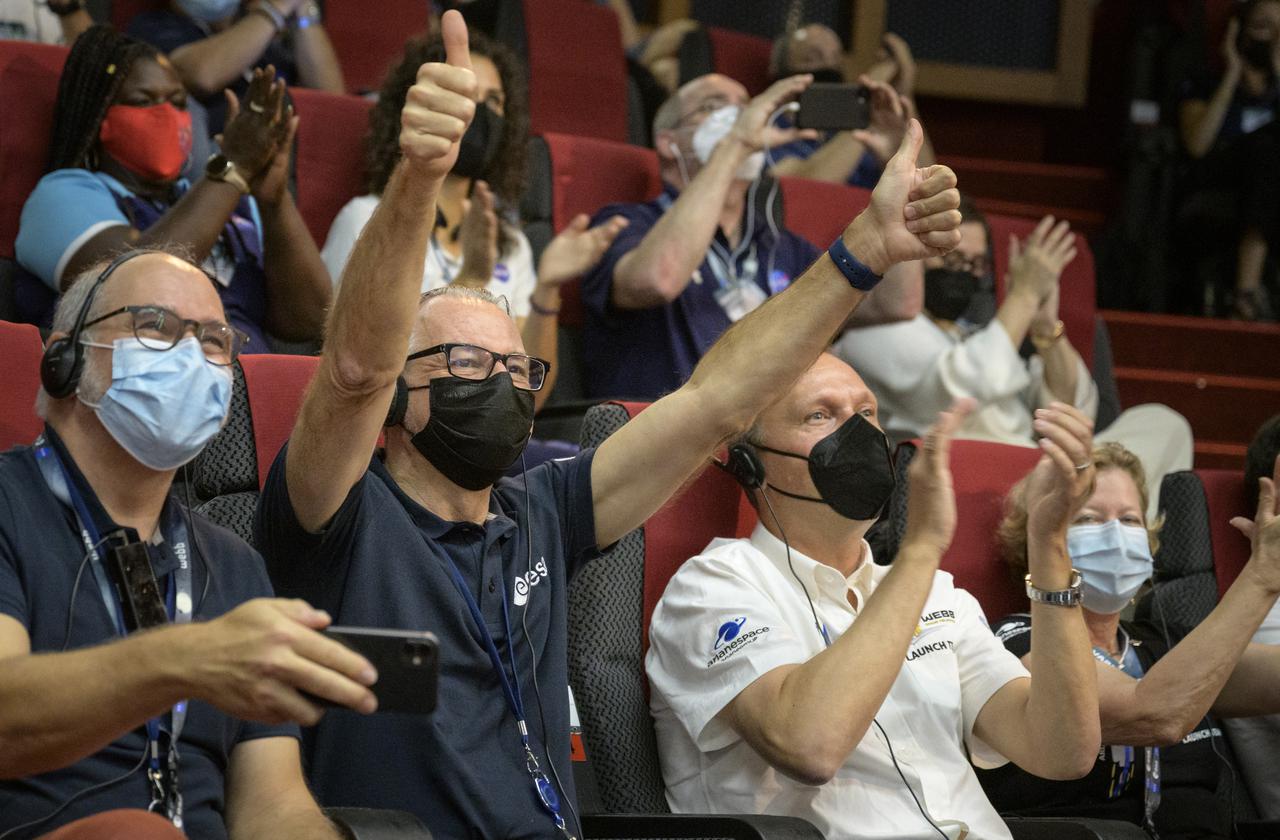
ESA (European Space Agency) Director-General Dr. Josef Aschbacher, 2nd from left, and NASA Associate Administrator for the Science Mission Directorate Thomas Zurbuchen, 3rd from left, celebrate after hearing confirmation that the James Webb Space Telescope successfully separated from the Ariane 5 rocket, Saturday, Dec. 25, 2021, in the Jupiter Hall of the Guiana Space Centre in Kourou, French Guiana. The James Webb Space Telescope (sometimes called JWST or Webb) is a large infrared telescope with a 21.3 foot (6.5 meter) primary mirror. The observatory will study every phase of cosmic history—from within our solar system to the most distant observable galaxies in the early universe. Photo Credit: (NASA/Bill Ingalls)
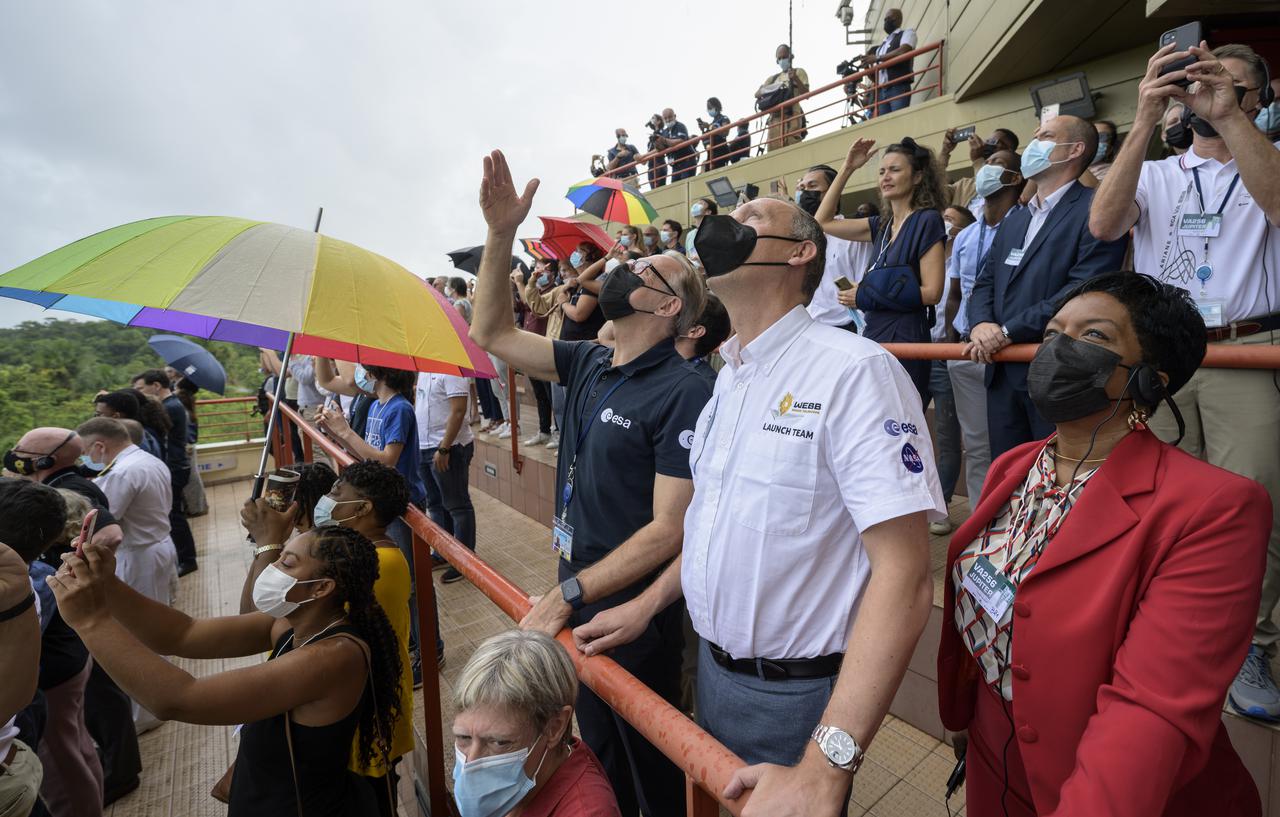
ESA (European Space Agency) Director-General Dr. Josef Aschbacher, left, and NASA Associate Administrator for the Science Mission Directorate Thomas Zurbuchen, right, watch as Arianespace's Ariane 5 rocket launches with NASA’s James Webb Space Telescope onboard, Saturday, Dec. 25, 2021, from the ELA-3 Launch Zone of Europe’s Spaceport at the Guiana Space Centre in Kourou, French Guiana. The James Webb Space Telescope (sometimes called JWST or Webb) is a large infrared telescope with a 21.3 foot (6.5 meter) primary mirror. The observatory will study every phase of cosmic history—from within our solar system to the most distant observable galaxies in the early universe. Photo Credit: (NASA/Bill Ingalls)
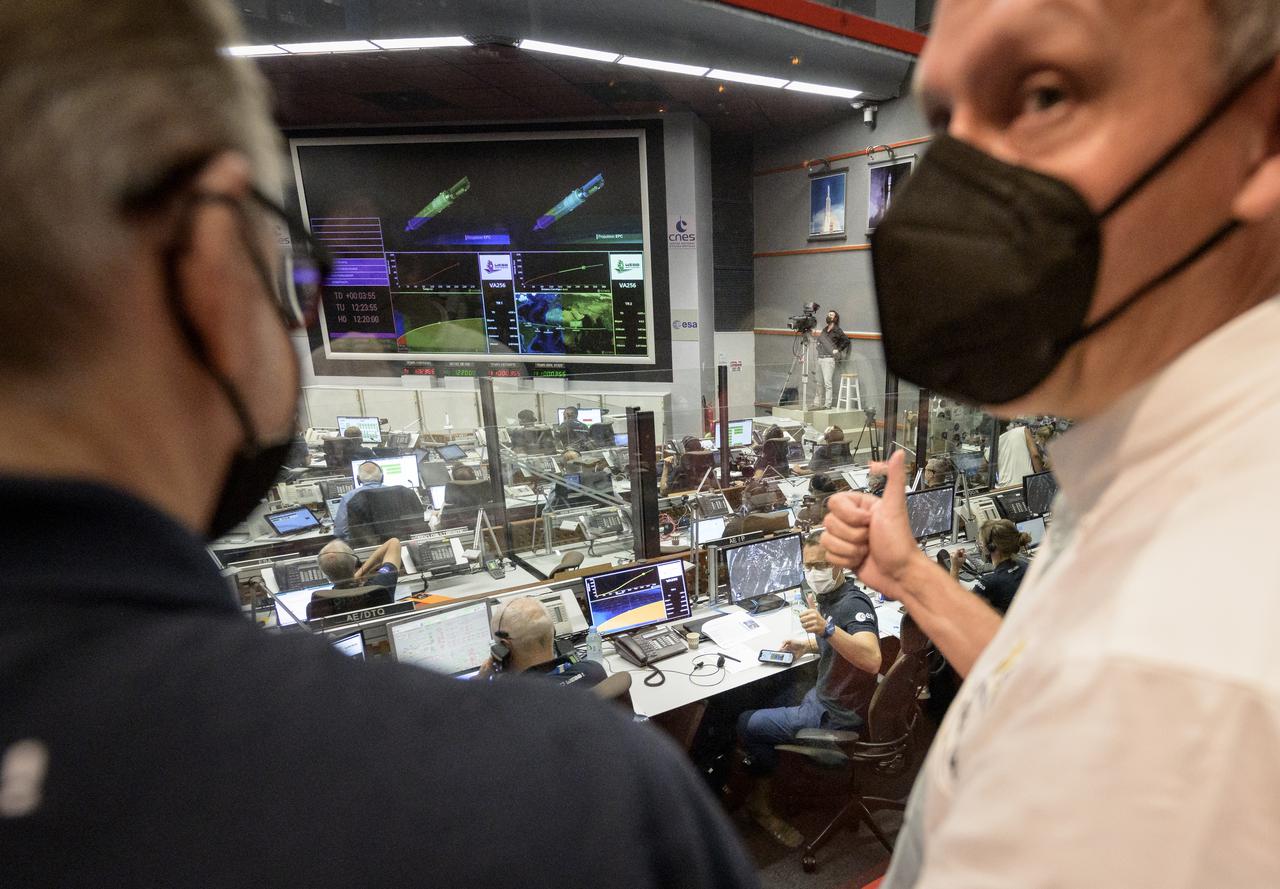
Arianespace CEO Stéphane Israël, at desk, and NASA Associate Administrator for the Science Mission Directorate Thomas Zurbuchen, right, both gives a thumbs up after receiving confirmation that the Ariane 5 rocket upper stage shut down as planed a few minutes before separation from the James Webb Space Telescope, Saturday, Dec. 25, 2021, in the Jupiter Hall of the Guiana Space Centre in Kourou, French Guiana. The James Webb Space Telescope (sometimes called JWST or Webb) is a large infrared telescope with a 21.3 foot (6.5 meter) primary mirror. The observatory will study every phase of cosmic history—from within our solar system to the most distant observable galaxies in the early universe. Photo Credit: (NASA/Bill Ingalls)
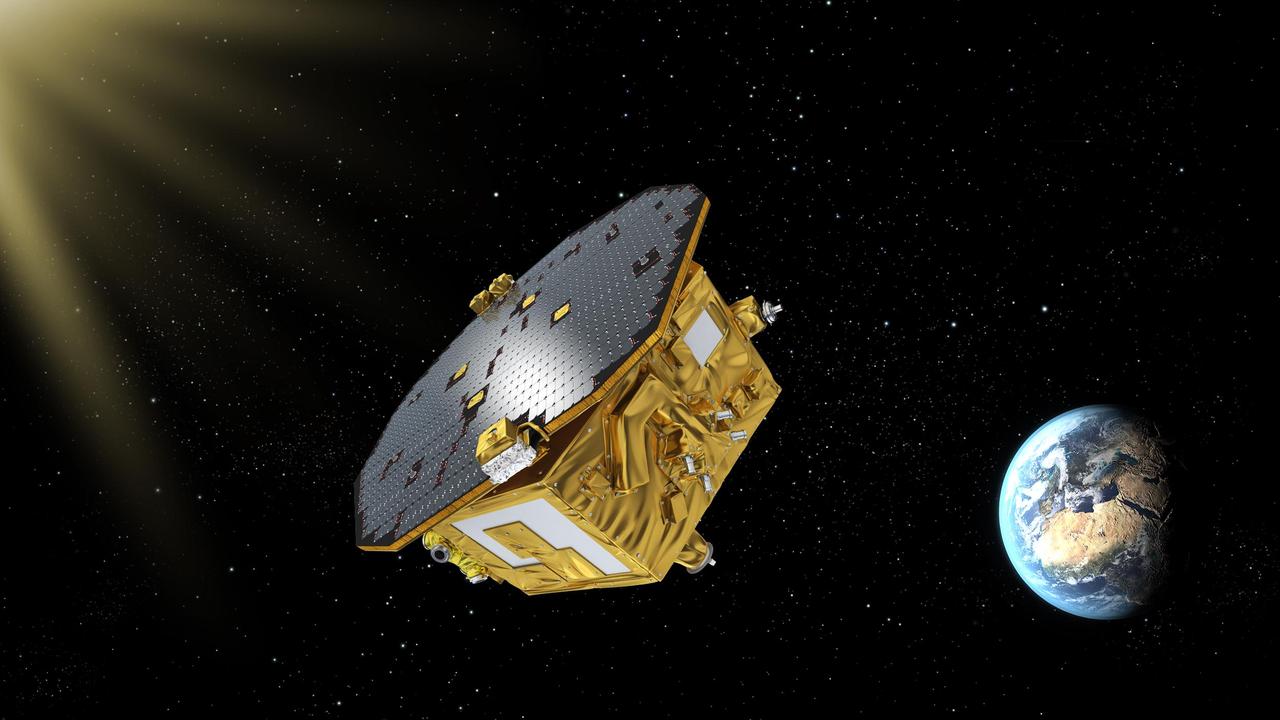
This artist's concept shows ESA's LISA Pathfinder spacecraft, which launched on Dec. 3, 2015, from Kourou, French Guiana, will help pave the way for a mission to detect gravitational waves. LISA Pathfinder, led by the European Space Agency (ESA), is designed to test technologies that could one day detect gravitational waves. Gravitational waves, predicted by Einstein's theory of general relativity, are ripples in spacetime produced by any accelerating body. But the waves are so weak that Earth- or space-based observatories would likely only be able to directly detect such signals coming from massive astronomical systems, such as binary black holes or exploding stars. Detecting gravitational waves would be an important piece in the puzzle of how our universe began. http://photojournal.jpl.nasa.gov/catalog/PIA20196
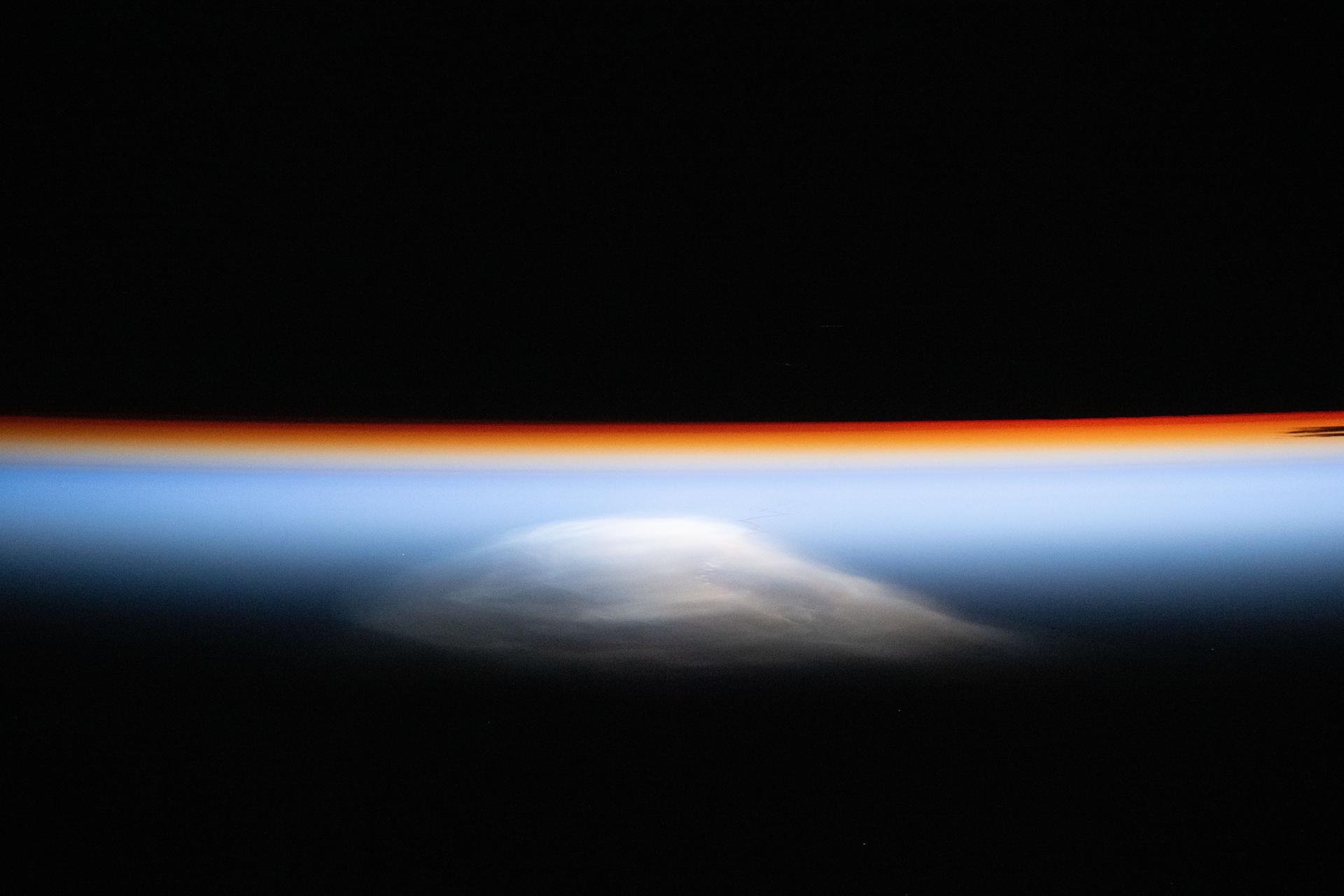
iss072e757530 (March 6, 2025) --- The last rays of an orbital sunset outline Earth’s horizon as a thin orange layer fades into blue, illuminating the atmosphere before nightfall. The wispy white feature above the atmosphere is the engine plume from the Ariane 6 rocket, launched earlier on its first operational mission from Kourou, French Guiana. This unique photograph was captured from the International Space Station at approximately 8:51 p.m. local time as it orbited 257 miles above the Atlantic Ocean, east of the British Virgin Islands.
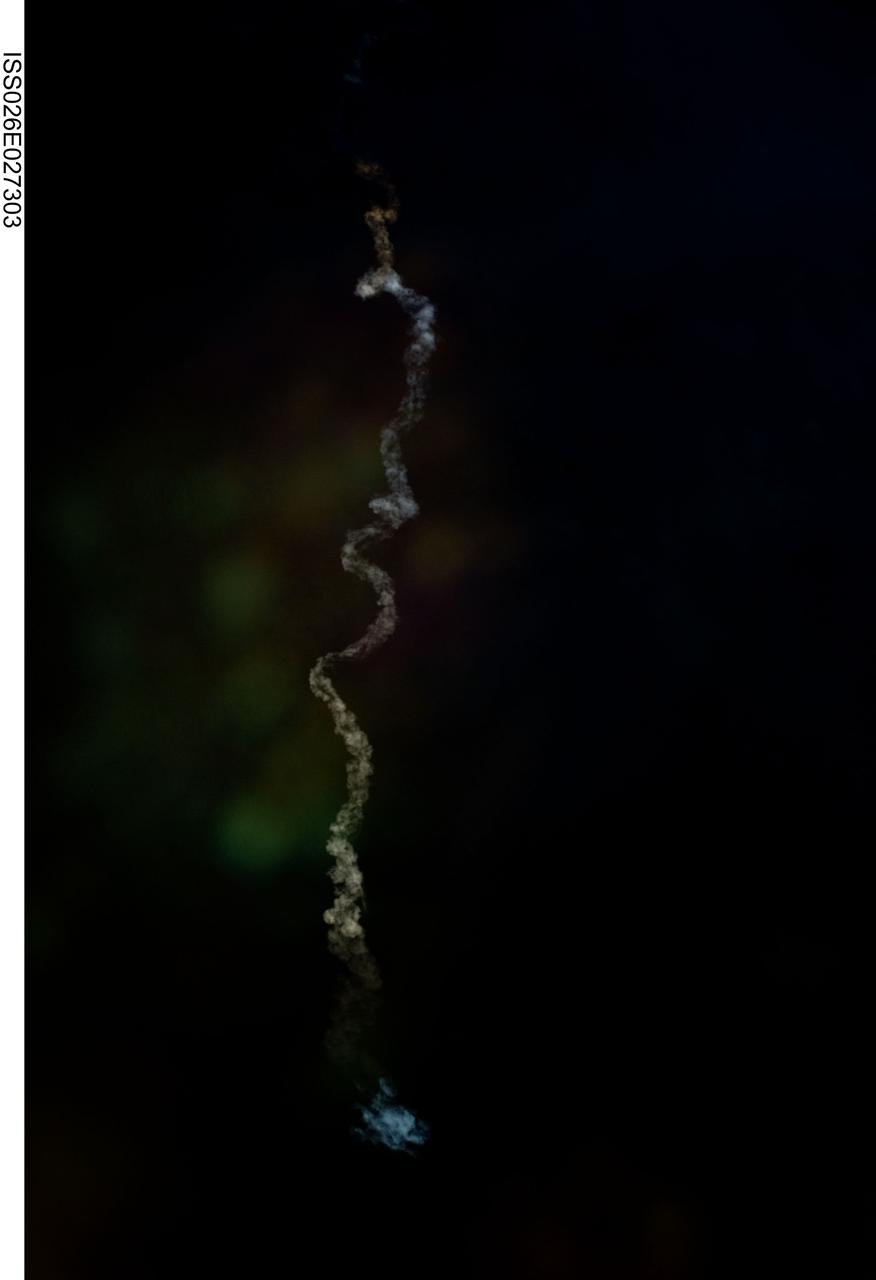
ISS026-E-027303 (16 Feb. 2011) --- The Expedition 26 crew member aboard the International Space Station who snapped this photograph of the Ariane 5 rocket, just after lift off from Europe’s Spaceport in Kourou, French Guiana, and the rest of the crew have a special interest in the occurrence. ESA’s second Automated Transfer Vehicle, Johannes Kepler, was just a short time earlier (21:50 GMT or 18:50 Kourou time on Feb. 16, 2011) launched toward its targeted low orbit and eventual link-up with the ISS. The unmanned supply ship is planned to deliver critical supplies and reboost the space station during its almost four-month mission.
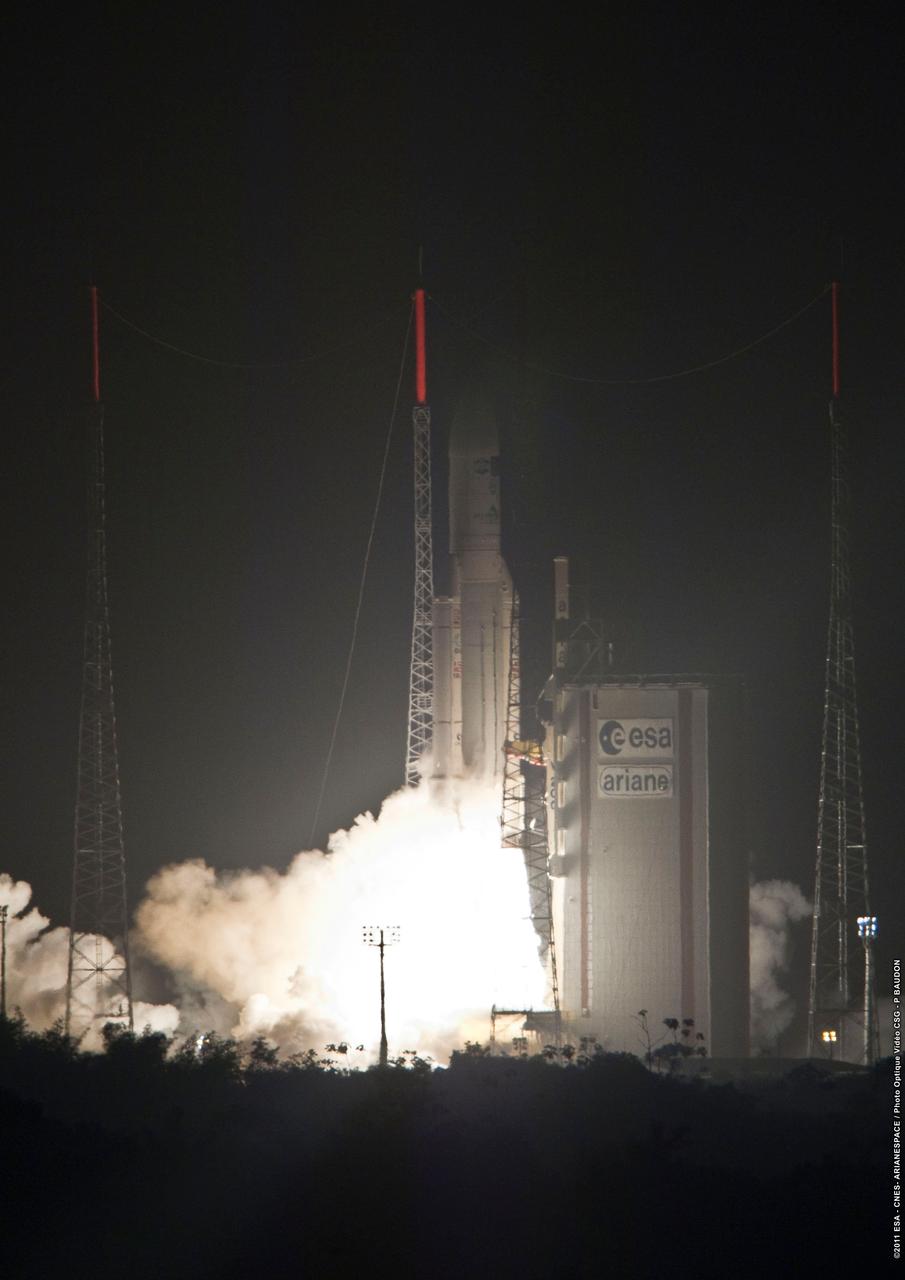
JSC2011-E-017489 (16 Feb. 2011) --- The Ariane 5 rocket is pictured just after lift off from Europe?s Spaceport in Kourou, French Guiana. ESA?s second Automated Transfer Vehicle, Johannes Kepler, was just a short time earlier (21:50 GMT or 18:50 Kourou time on Feb. 16, 2011) launched toward its targeted low orbit and eventual link-up with the ISS. The unmanned supply ship is planned to deliver critical supplies and reboost the space station during its almost four-month mission. Photo courtesy of ESA/Stephane Corvaja and P. Baudon
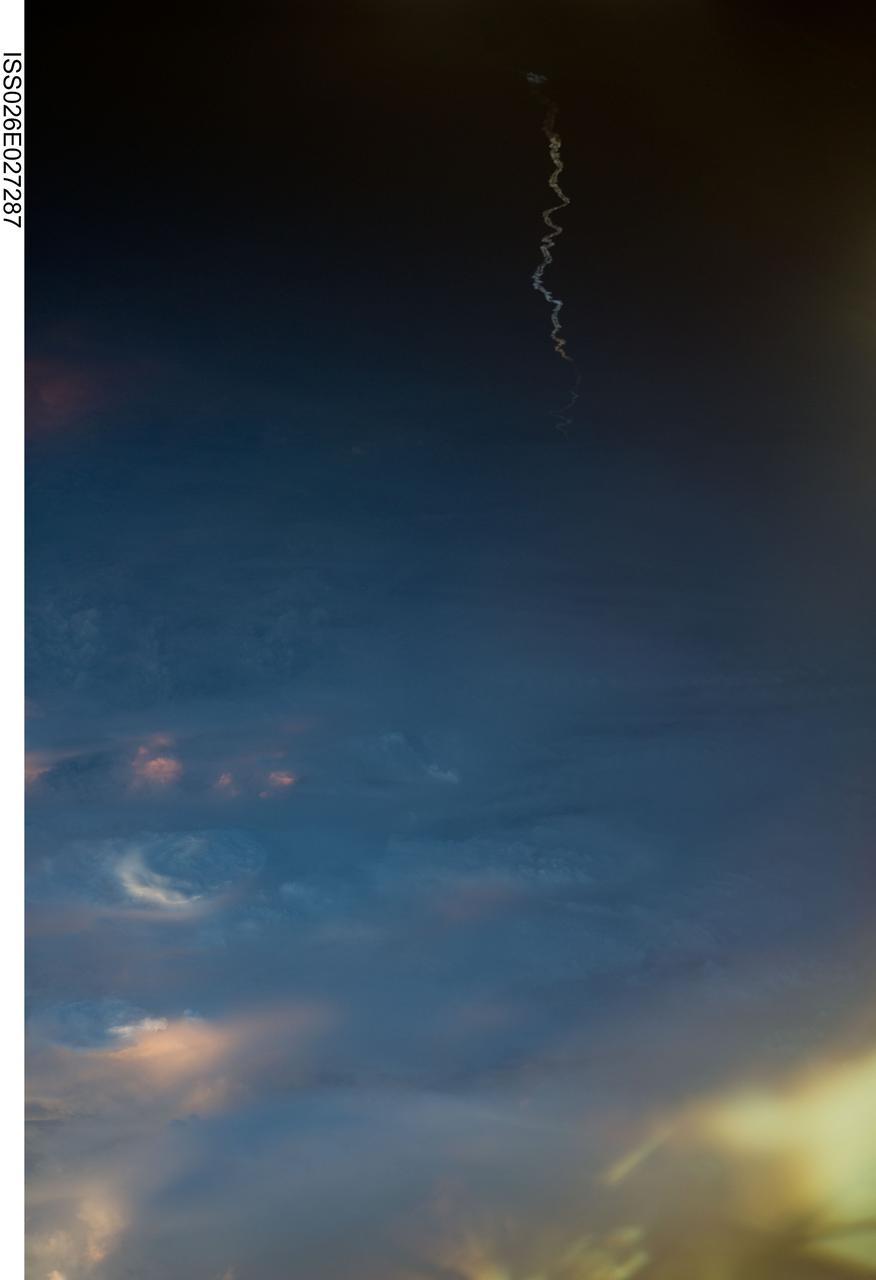
ISS026-E-027287 (16 Feb. 2011) --- The Expedition 26 crew member aboard the International Space Station who snapped this photograph of the Ariane 5 rocket (faint squiggly vertical form in the midst of darkness above the clouds), just after lift off from Europe’s Spaceport in Kourou, French Guiana, and the rest of the crew have a special interest in the occurrence. ESA’s second Automated Transfer Vehicle, Johannes Kepler, was just a short time earlier (21:50 GMT or 18:50 Kourou time on Feb. 16, 2011) launched toward its approaching low orbit destination and its eventual link-up with the ISS. The unmanned supply ship is planned to deliver critical supplies and reboost the space station during its almost four-month mission.
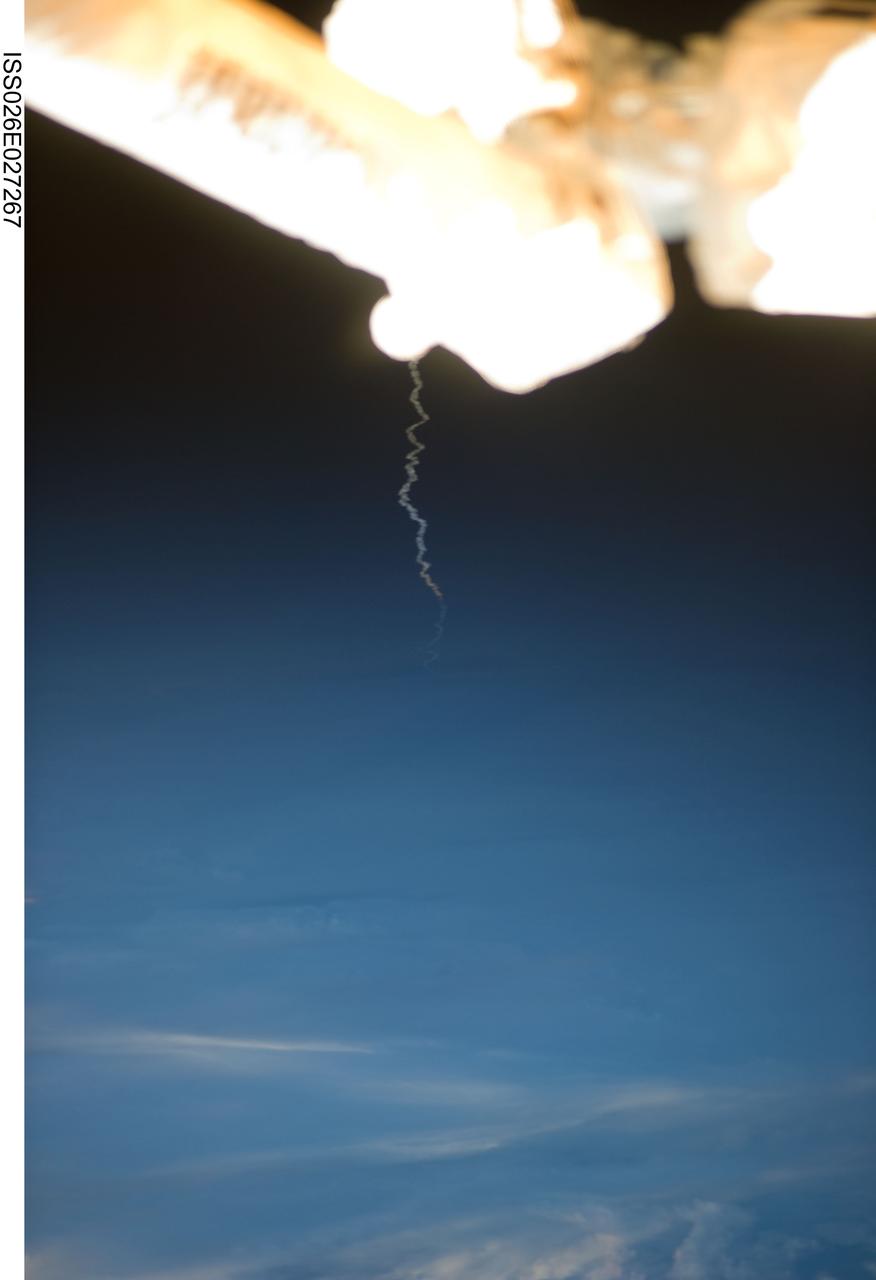
ISS026-E-027267 (16 Feb. 2011) --- The Expedition 26 crew member aboard the International Space Station who snapped this photograph of the Ariane 5 rocket, barely visible in the far background, just after lift off from Europe’s Spaceport in Kourou, French Guiana, and the rest of the crew have a special interest in the occurrence. ESA’s second Automated Transfer Vehicle, Johannes Kepler, was just a short time earlier (21:50 GMT or 18:50 Kourou time on Feb. 16, 2011) launched toward its low orbit destination and eventual link-up with the ISS. The unmanned supply ship is planned to deliver critical supplies and reboost the space station during its almost four-month mission. The elbow of Canadarm2 (Space Station Remote Manipulator System)is in the foreground.
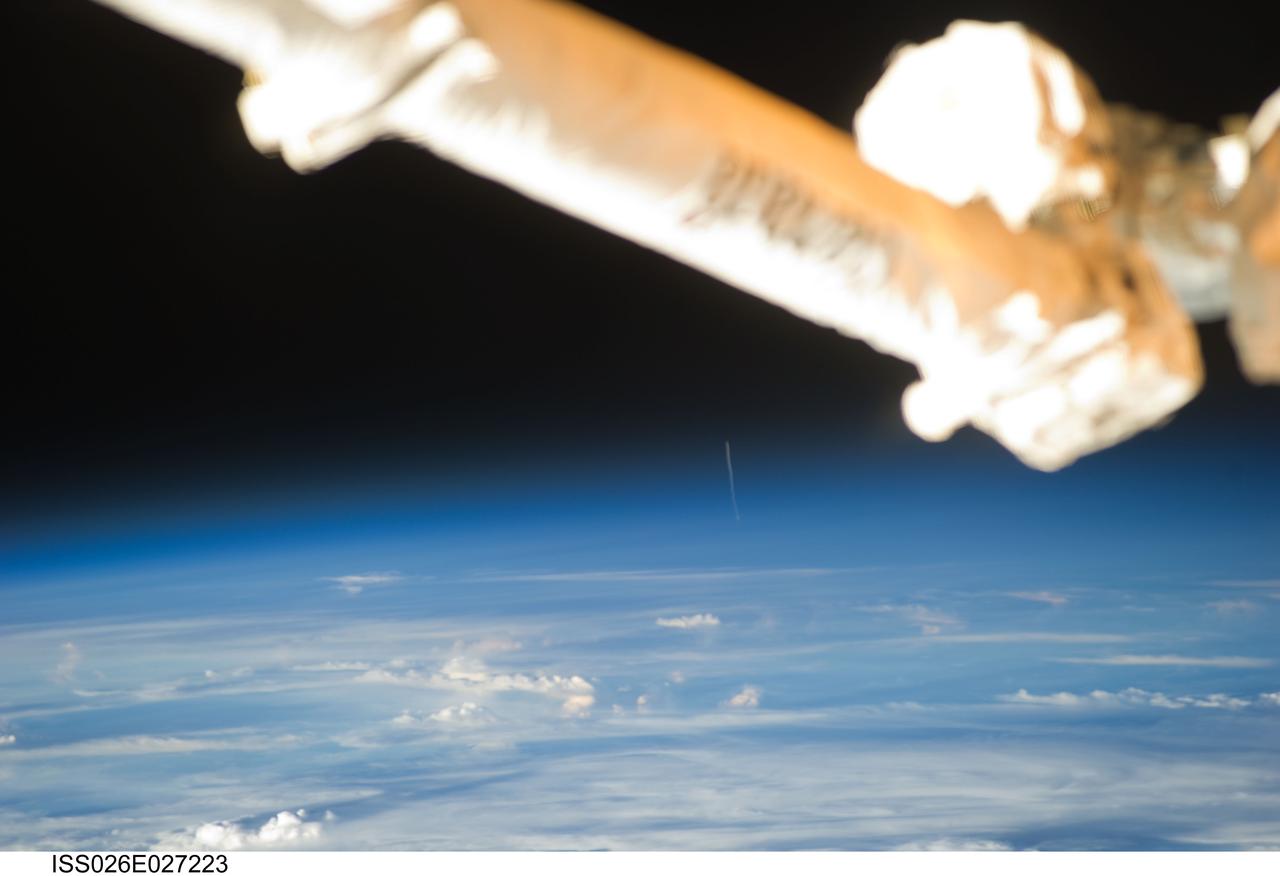
ISS026-E-027323 (16 Feb. 2011) --- The Expedition 26 crew member aboard the International Space Station who snapped this photograph of the Ariane 5 rocket, barely visible in the far background, just after lift off from Europe’s Spaceport in Kourou, French Guiana, and the rest of the crew have a special interest in the occurrence. ESA’s second Automated Transfer Vehicle, Johannes Kepler, was just a short time earlier (21:50 GMT or 18:50 Kourou time on Feb. 16, 2011) launched toward its low orbit destination and eventual link-up with the ISS. The unmanned supply ship is planned to deliver critical supplies and reboost the space station during its almost four-month mission. The elbow of Canadarm2 is in the foreground.
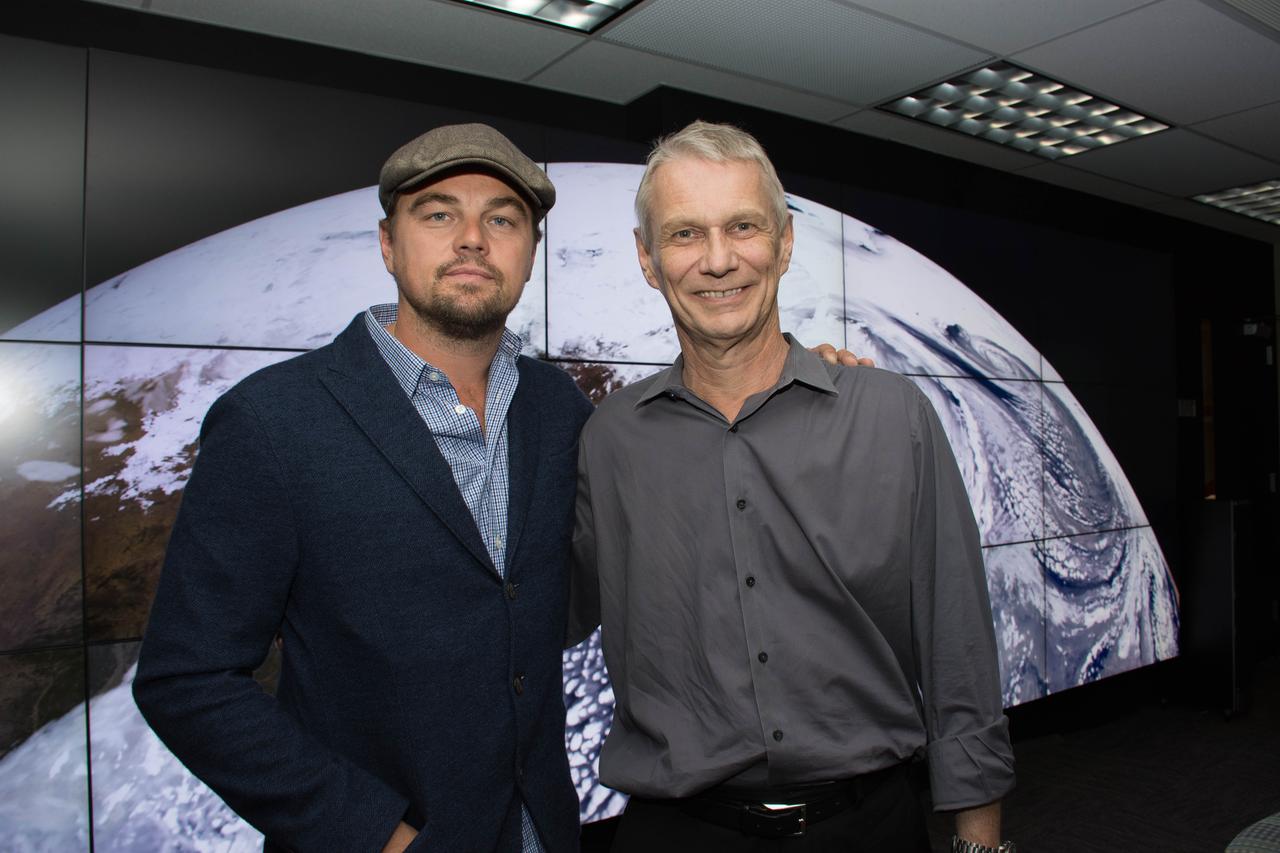
Academy Award®- winning actor and environmental activist Leonardo DiCaprio visited NASA’s Goddard Space Flight Center in Greenbelt, Maryland on Saturday, April 23, 2016. During his visit, Mr. DiCaprio interviewed Dr. Piers Sellers, an Earth scientist, former astronaut and current deputy director of Goddard’s Sciences and Exploration Directorate. The two discussed the different missions NASA has underway to study changes in the Earth’s atmosphere, water and land masses for a climate change documentary that Mr. DiCaprio has in production. Using a wall-size, high-definition display system that shows visual representations based on actual science data, Mr. DiCaprio and Dr. Sellers discussed data results from NASA’s fleet of satellites in Earth’s orbit. During his visit, Mr. DiCaprio also visited the facility holding NASA’s James Webb Space Telescope that is being developed as a large infrared telescope with a 6.5-meter primary mirror. The telescope will be launched on an Ariane 5 rocket from French Guiana in October of 2018, and will be a premier observatory of the next decade, serving thousands of astronomers worldwide. Credit: NASA/Goddard/Rebecca Roth <b><a href="http://www.nasa.gov/audience/formedia/features/MP_Photo_Guidelines.html" rel="nofollow">NASA image use policy.</a></b> <b><a href="http://www.nasa.gov/centers/goddard/home/index.html" rel="nofollow">NASA Goddard Space Flight Center</a></b> enables NASA’s mission through four scientific endeavors: Earth Science, Heliophysics, Solar System Exploration, and Astrophysics. Goddard plays a leading role in NASA’s accomplishments by contributing compelling scientific knowledge to advance the Agency’s mission. <b>Follow us on <a href="http://twitter.com/NASAGoddardPix" rel="nofollow">Twitter</a></b> <b>Like us on <a href="http://www.facebook.com/pages/Greenbelt-MD/NASA-Goddard/395013845897?ref=tsd" rel="nofollow">Facebook</a></b> <b>Find us on <a href="http://instagrid.me/nasagoddard/?vm=grid" rel="nofollow">Instagram</a></b>
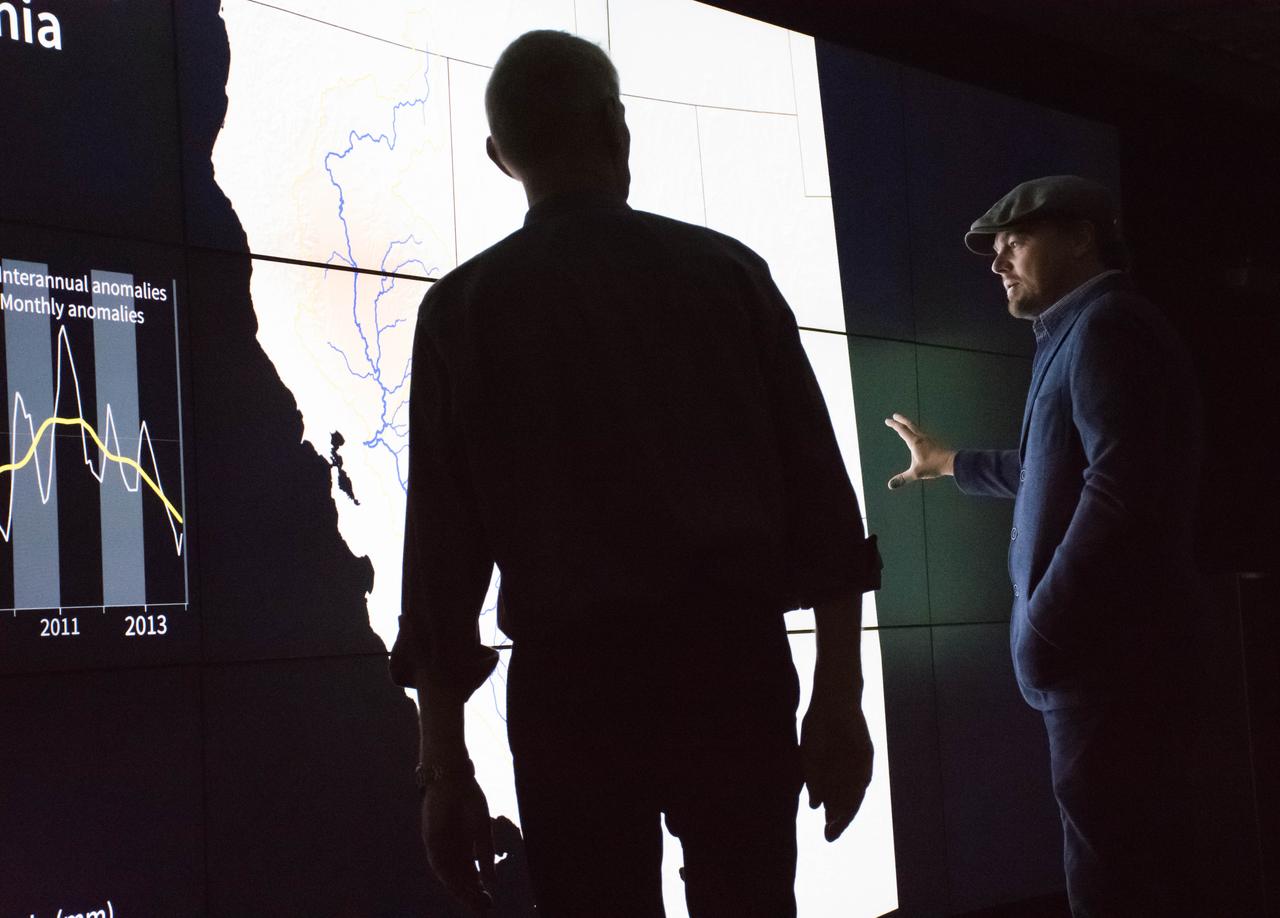
Academy Award®- winning actor and environmental activist Leonardo DiCaprio visited NASA’s Goddard Space Flight Center in Greenbelt, Maryland on Saturday, April 23, 2016. During his visit, Mr. DiCaprio interviewed Dr. Piers Sellers, an Earth scientist, former astronaut and current deputy director of Goddard’s Sciences and Exploration Directorate. The two discussed the different missions NASA has underway to study changes in the Earth’s atmosphere, water and land masses for a climate change documentary that Mr. DiCaprio has in production. Using a wall-size, high-definition display system that shows visual representations based on actual science data, Mr. DiCaprio and Dr. Sellers discussed data results from NASA’s fleet of satellites in Earth’s orbit. During his visit, Mr. DiCaprio also visited the facility holding NASA’s James Webb Space Telescope that is being developed as a large infrared telescope with a 6.5-meter primary mirror. The telescope will be launched on an Ariane 5 rocket from French Guiana in October of 2018, and will be a premier observatory of the next decade, serving thousands of astronomers worldwide. Credit: NASA/Goddard/Rebecca Roth <b><a href="http://www.nasa.gov/audience/formedia/features/MP_Photo_Guidelines.html" rel="nofollow">NASA image use policy.</a></b> <b><a href="http://www.nasa.gov/centers/goddard/home/index.html" rel="nofollow">NASA Goddard Space Flight Center</a></b> enables NASA’s mission through four scientific endeavors: Earth Science, Heliophysics, Solar System Exploration, and Astrophysics. Goddard plays a leading role in NASA’s accomplishments by contributing compelling scientific knowledge to advance the Agency’s mission. <b>Follow us on <a href="http://twitter.com/NASAGoddardPix" rel="nofollow">Twitter</a></b> <b>Like us on <a href="http://www.facebook.com/pages/Greenbelt-MD/NASA-Goddard/395013845897?ref=tsd" rel="nofollow">Facebook</a></b> <b>Find us on <a href="http://instagrid.me/nasagoddard/?vm=grid" rel="nofollow">Instagram</a></b>
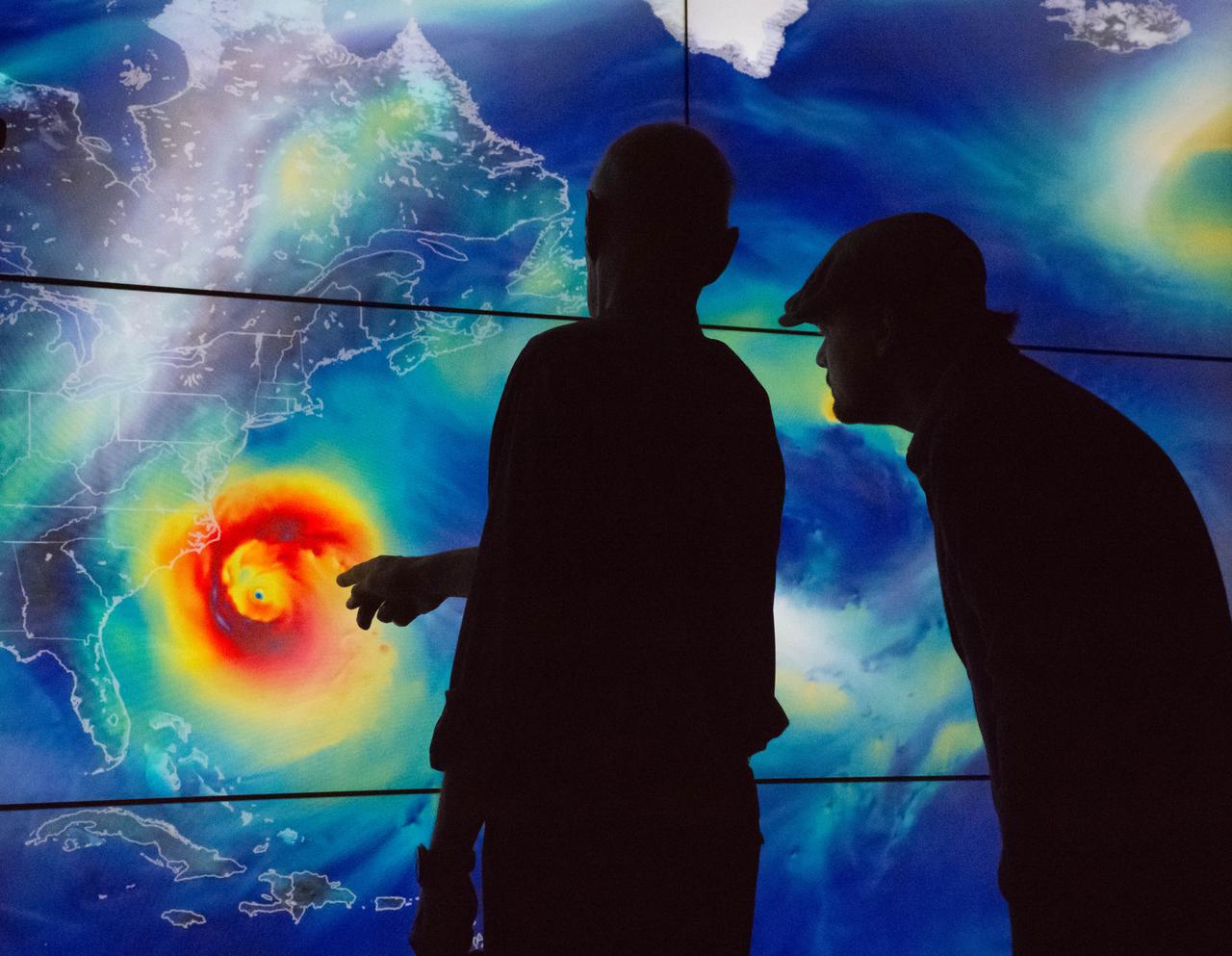
Academy Award®- winning actor and environmental activist Leonardo DiCaprio visited NASA’s Goddard Space Flight Center in Greenbelt, Maryland on Saturday, April 23, 2016. During his visit, Mr. DiCaprio interviewed Dr. Piers Sellers, an Earth scientist, former astronaut and current deputy director of Goddard’s Sciences and Exploration Directorate. The two discussed the different missions NASA has underway to study changes in the Earth’s atmosphere, water and land masses for a climate change documentary that Mr. DiCaprio has in production. Using a wall-size, high-definition display system that shows visual representations based on actual science data, Mr. DiCaprio and Dr. Sellers discussed data results from NASA’s fleet of satellites in Earth’s orbit. The visual shows Hurricane Sandy. The visual uses data from Goddard Earth Observing System Model, Version 5 (GEOS-5) to simulate surface wind speeds across the Atlantic during Sandy’s lifecycle. <a href="http://svs.gsfc.nasa.gov/cgi-bin/details.cgi?aid=30465" rel="nofollow">svs.gsfc.nasa.gov/cgi-bin/details.cgi?aid=30465</a> During his visit, Mr. DiCaprio also visited the facility holding NASA’s James Webb Space Telescope that is being developed as a large infrared telescope with a 6.5-meter primary mirror. The telescope will be launched on an Ariane 5 rocket from French Guiana in October of 2018, and will be a premier observatory of the next decade, serving thousands of astronomers worldwide. Credit: NASA/Goddard/Rebecca Roth <b><a href="http://www.nasa.gov/audience/formedia/features/MP_Photo_Guidelines.html" rel="nofollow">NASA image use policy.</a></b> <b><a href="http://www.nasa.gov/centers/goddard/home/index.html" rel="nofollow">NASA Goddard Space Flight Center</a></b> enables NASA’s mission through four scientific endeavors: Earth Science, Heliophysics, Solar System Exploration, and Astrophysics. Goddard plays a leading role in NASA’s accomplishments by contributing compelling scientific knowledge to advance the Agency’s mission. <b>Follow us on <a href="http://twitter.com/NASAGoddardPix" rel="nofollow">Twitter</a></b> <b>Like us on <a href="http://www.facebook.com/pages/Greenbelt-MD/NASA-Goddard/395013845897?ref=tsd" rel="nofollow">Facebook</a></b> <b>Find us on <a href="http://instagrid.me/nasagoddard/?vm=grid" rel="nofollow">Instagram</a></b>
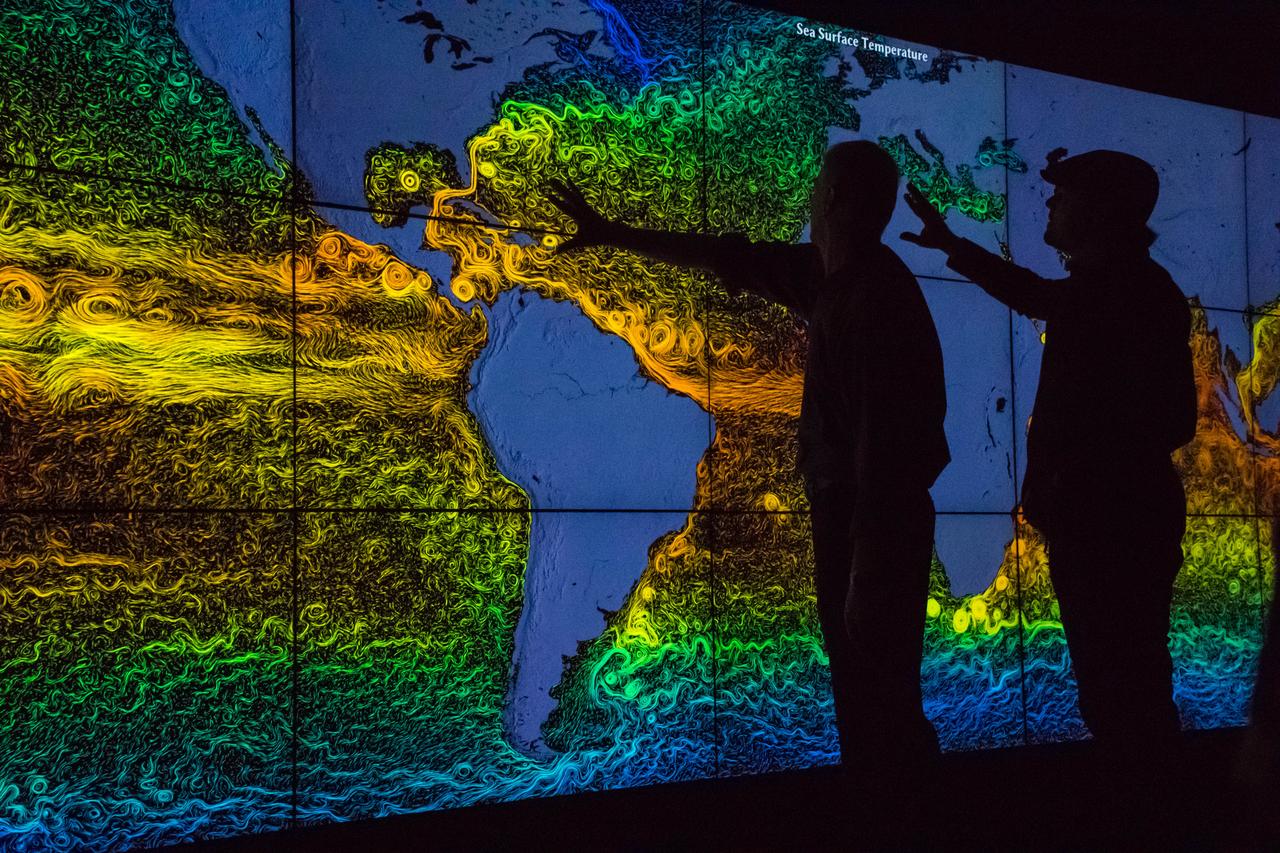
Academy Award®- winning actor and environmental activist Leonardo DiCaprio visited NASA’s Goddard Space Flight Center in Greenbelt, Maryland on Saturday, April 23, 2016. During his visit, Mr. DiCaprio interviewed Dr. Piers Sellers, an Earth scientist, former astronaut and current deputy director of Goddard’s Sciences and Exploration Directorate. The two discussed the different missions NASA has underway to study changes in the Earth’s atmosphere, water and land masses for a climate change documentary that Mr. DiCaprio has in production. Using a wall-size, high-definition display system that shows visual representations based on actual science data, Mr. DiCaprio and Dr. Sellers discussed data results from NASA’s fleet of satellites in Earth’s orbit. The background image showing global sea surface circulation colored by temperature where reds are warm areas (32 degrees Celsius) and blues are cold regions (0 degrees Celsius). The data used for this visual is a joint MIT/JPL project called Estimating the Circulation and Climate of the Ocean, Phase II (ECCO2). For more info on this visual, <a href="http://svs.gsfc.nasa.gov/cgi-bin/details.cgi?aid=3912" rel="nofollow">svs.gsfc.nasa.gov/cgi-bin/details.cgi?aid=3912</a> During his visit, Mr. DiCaprio also visited the facility holding NASA’s James Webb Space Telescope that is being developed as a large infrared telescope with a 6.5-meter primary mirror. The telescope will be launched on an Ariane 5 rocket from French Guiana in October of 2018, and will be a premier observatory of the next decade, serving thousands of astronomers worldwide. Credit: NASA/Goddard/Rebecca Roth <b><a href="http://www.nasa.gov/audience/formedia/features/MP_Photo_Guidelines.html" rel="nofollow">NASA image use policy.</a></b> <b><a href="http://www.nasa.gov/centers/goddard/home/index.html" rel="nofollow">NASA Goddard Space Flight Center</a></b> enables NASA’s mission through four scientific endeavors: Earth Science, Heliophysics, Solar System Exploration, and Astrophysics. Goddard plays a leading role in NASA’s accomplishments by contributing compelling scientific knowledge to advance the Agency’s mission. <b>Follow us on <a href="http://twitter.com/NASAGoddardPix" rel="nofollow">Twitter</a></b> <b>Like us on <a href="http://www.facebook.com/pages/Greenbelt-MD/NASA-Goddard/395013845897?ref=tsd" rel="nofollow">Facebook</a></b> <b>Find us on <a href="http://instagrid.me/nasagoddard/?vm=grid" rel="nofollow">Instagram</a></b>
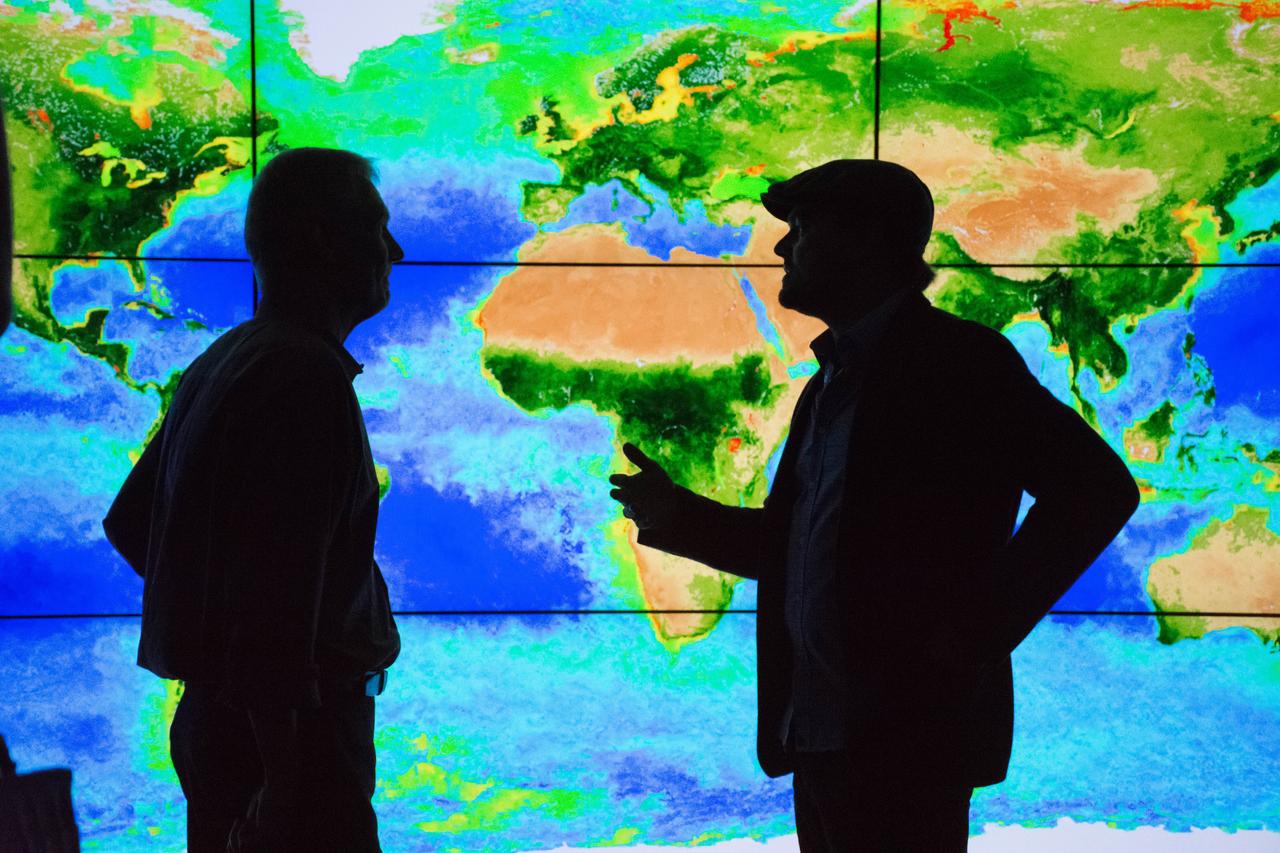
Academy Award®- winning actor and environmental activist Leonardo DiCaprio visited NASA’s Goddard Space Flight Center in Greenbelt, Maryland on Saturday, April 23, 2016. During his visit, Mr. DiCaprio interviewed Dr. Piers Sellers, an Earth scientist, former astronaut and current deputy director of Goddard’s Sciences and Exploration Directorate. The two discussed the different missions NASA has underway to study changes in the Earth’s atmosphere, water and land masses for a climate change documentary that Mr. DiCaprio has in production. Using a wall-size, high-definition display system that shows visual representations based on actual science data, Mr. DiCaprio and Dr. Sellers discussed data results from NASA’s fleet of satellites in Earth’s orbit. The background visual shows the biosphere with data from a NASA satellite instrument called the Sea-viewing Wide Field-of-View Sensor (SeaWiFS). <a href="http://svs.gsfc.nasa.gov/cgi-bin/details.cgi?aid=10704" rel="nofollow">svs.gsfc.nasa.gov/cgi-bin/details.cgi?aid=10704</a> During his visit, Mr. DiCaprio also visited the facility holding NASA’s James Webb Space Telescope that is being developed as a large infrared telescope with a 6.5-meter primary mirror. The telescope will be launched on an Ariane 5 rocket from French Guiana in October of 2018, and will be a premier observatory of the next decade, serving thousands of astronomers worldwide. Credit: NASA/Goddard/Rebecca Roth <b><a href="http://www.nasa.gov/audience/formedia/features/MP_Photo_Guidelines.html" rel="nofollow">NASA image use policy.</a></b> <b><a href="http://www.nasa.gov/centers/goddard/home/index.html" rel="nofollow">NASA Goddard Space Flight Center</a></b> enables NASA’s mission through four scientific endeavors: Earth Science, Heliophysics, Solar System Exploration, and Astrophysics. Goddard plays a leading role in NASA’s accomplishments by contributing compelling scientific knowledge to advance the Agency’s mission. <b>Follow us on <a href="http://twitter.com/NASAGoddardPix" rel="nofollow">Twitter</a></b> <b>Like us on <a href="http://www.facebook.com/pages/Greenbelt-MD/NASA-Goddard/395013845897?ref=tsd" rel="nofollow">Facebook</a></b> <b>Find us on <a href="http://instagrid.me/nasagoddard/?vm=grid" rel="nofollow">Instagram</a></b>