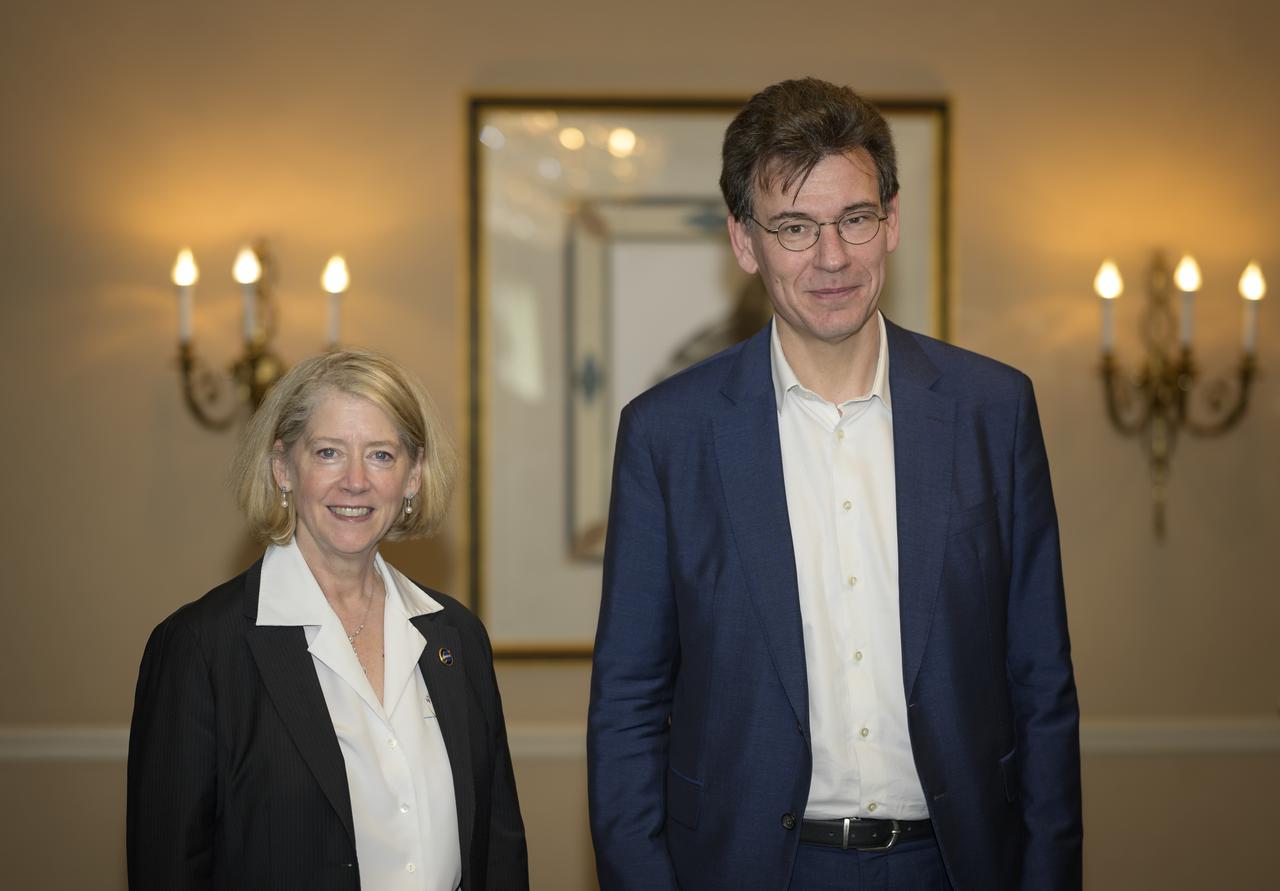
NASA Deputy Administrator Pam Melroy, left, and Dr. Philippe Baptiste, President, French Space Agency (CNES), pose for a photograph prior to starting at meeting during the 37th Space Symposium, Tuesday, April 5, 2022, in Colorado Springs, Colorado. Photo Credit: (NASA/Bill Ingalls)

Jasmine Hopkins, NASA Communications, moderates a science briefing held by NASA and the French space agency Centre National d’Études Spatiales (CNES) for the Surface Water and Ocean Topography (SWOT) mission on Dec. 13, 2022, at Vandenberg Space Force Base in California. SWOT is scheduled to launch on a SpaceX Falcon 9 from Space Launch Complex-4 East at Vandenberg on Dec. 15, 2022, at 3:46 a.m. PST. SWOT will be NASA’s first global survey of nearly all water on Earth’s surface. Scientists plan to use its observations to better understand the global water cycle, furnish insight into the ocean’s role in how climate change unfolds, and provide a global inventory of water resources. The SWOT mission is a collaborative effort between NASA and CNES with contributions from the Canadian Space Agency and the UK Space Agency. NASA’s Launch Services Program, based at the agency’s Kennedy Space Center in Florida, is managing the launch service.
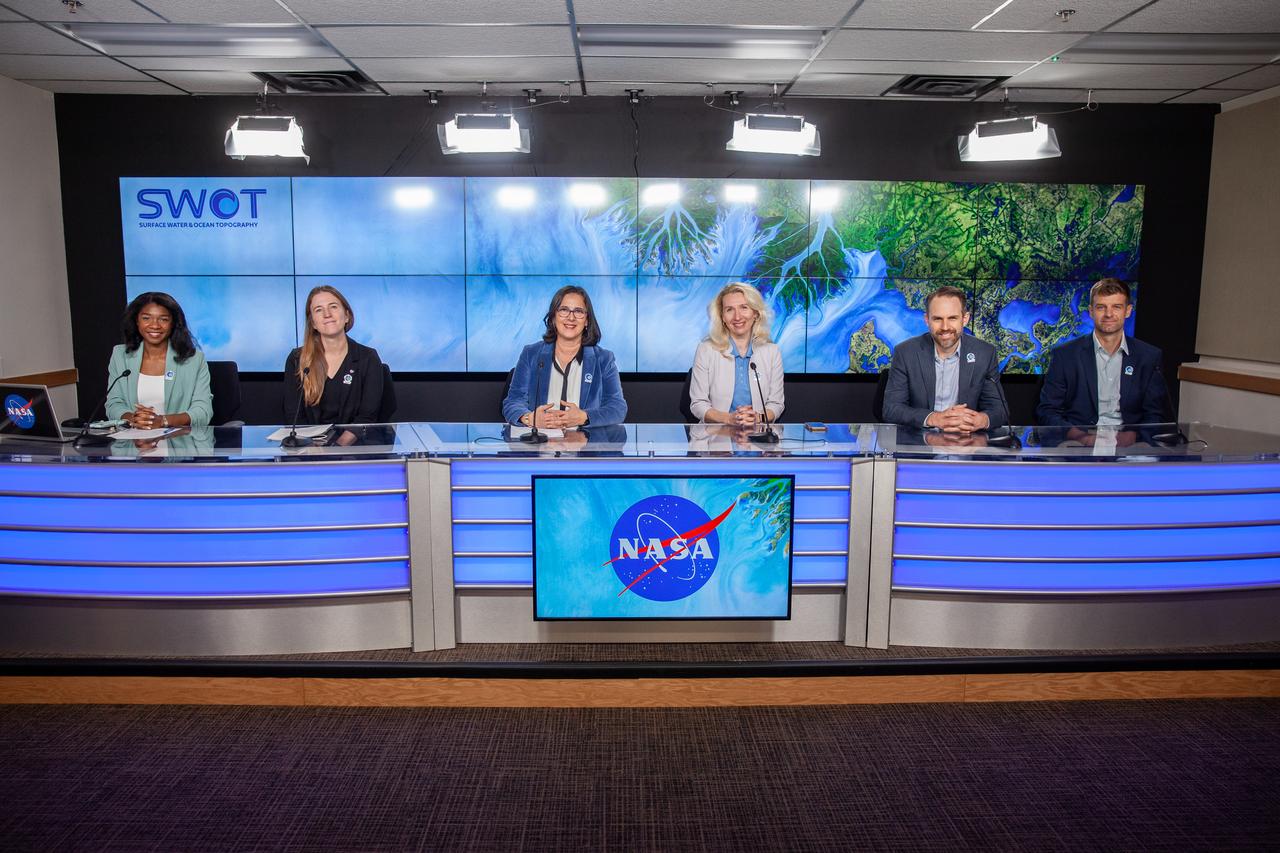
NASA and the French space agency Centre National d’Études Spatiales (CNES) hold a science briefing on the Surface Water and Ocean Topography (SWOT) mission on Dec. 13, 2022, at Vandenberg Space Force Base in California. Participating from left are Katherine Calvin, chief scientist and senior climate advisor, NASA; Selma Cherchali, Earth observation program head, CNES; Nadya Vinogradova Shiffer, SWOT program scientist, NASA; Tamlin Pavelsky, SWOT hydrology science lead, University of North Carolina; Benjamin Hamlington, research scientist, Sea Level and Ice Group, Jet Propulsion Laboratory. SWOT is scheduled to launch on a SpaceX Falcon 9 rocket from Space Launch Complex-4 East at Vandenberg on Dec. 15, 2022, at 3:46 a.m. PST. SWOT will be NASA’s first global survey of nearly all water on Earth’s surface. Scientists plan to use its observations to better understand the global water cycle, furnish insight into the ocean’s role in how climate change unfolds, and provide a global inventory of water resources. The SWOT mission is a collaborative effort between NASA and CNES with contributions from the Canadian Space Agency and the UK Space Agency. NASA’s Launch Services Program, based at the agency’s Kennedy Space Center in Florida, is managing the launch service.
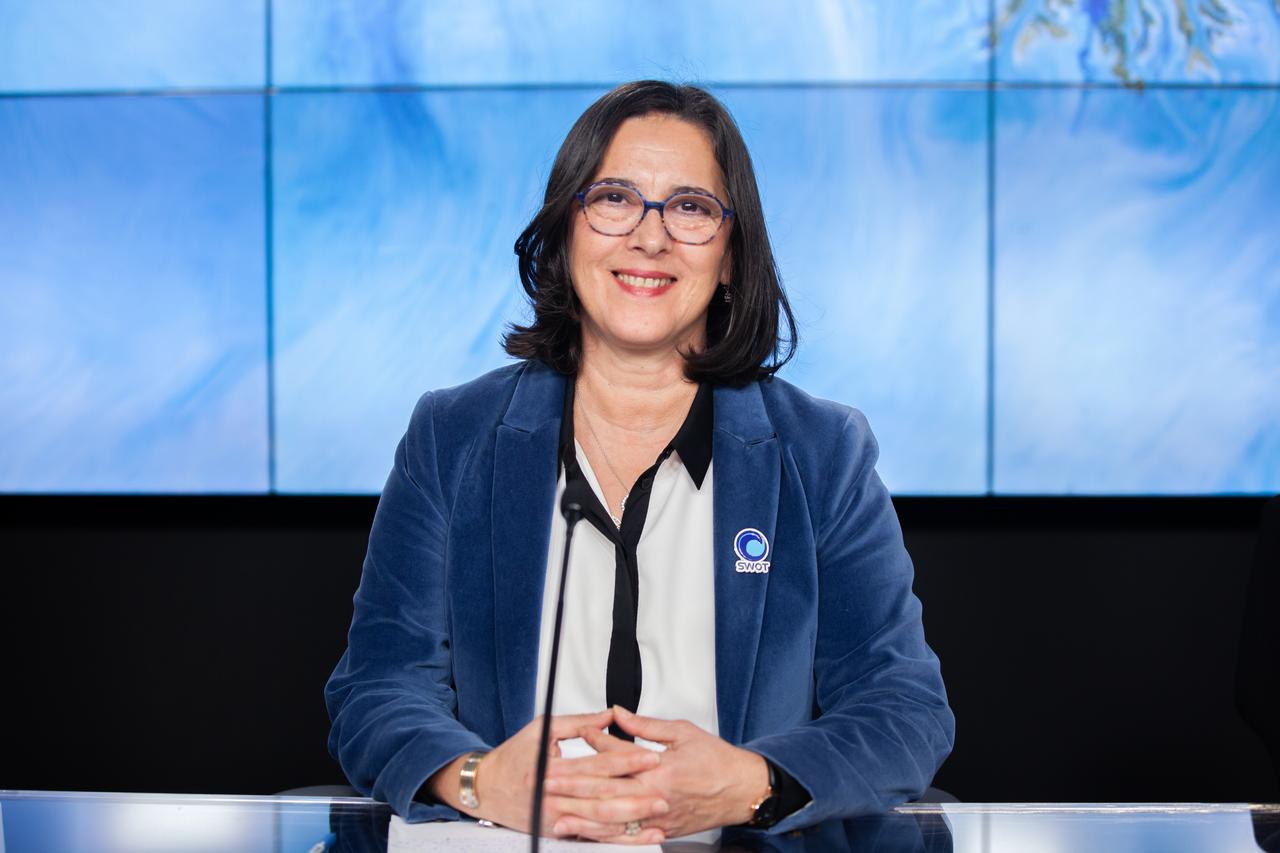
Selma Cherchali, Earth observation program head, CNES, participates in a science briefing held by NASA and the French space agency Centre National d’Études Spatiales (CNES) for the Surface Water and Ocean Topography (SWOT) mission on Dec. 13, 2022, at Vandenberg Space Force Base in California. SWOT is scheduled to launch on a SpaceX Falcon 9 rocket from Space Launch Complex-4 East at Vandenberg on Dec. 15, 2022, at 3:46 a.m. PST. SWOT will be NASA’s first global survey of nearly all water on Earth’s surface. Scientists plan to use its observations to better understand the global water cycle, furnish insight into the ocean’s role in how climate change unfolds, and provide a global inventory of water resources. The SWOT mission is a collaborative effort between NASA and CNES with contributions from the Canadian Space Agency and the UK Space Agency. NASA’s Launch Services Program, based at the agency’s Kennedy Space Center in Florida, is managing the launch service.
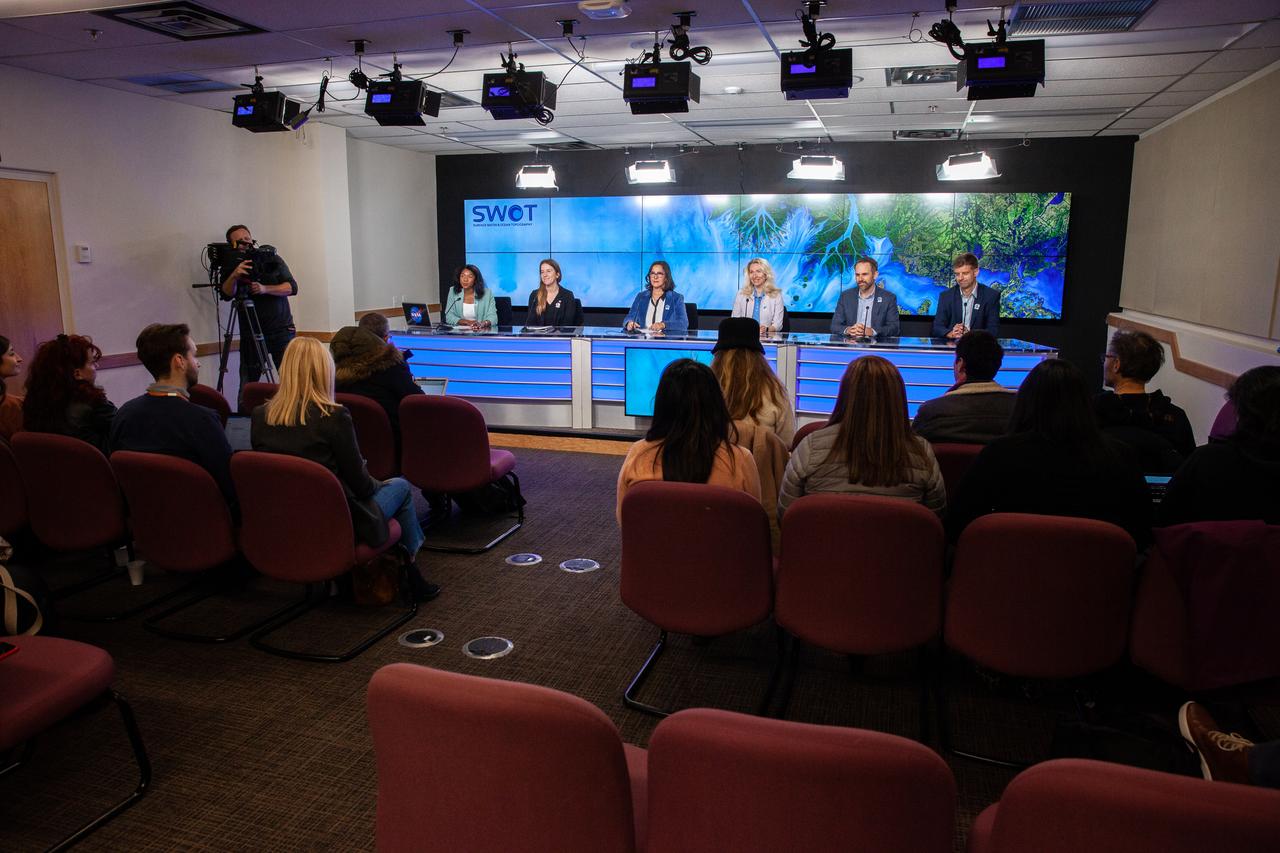
NASA and the French space agency Centre National d’Études Spatiales (CNES) hold a science briefing on the Surface Water and Ocean Topography (SWOT) mission on Dec. 13, 2022, at Vandenberg Space Force Base in California. Participating from left are Katherine Calvin, chief scientist and senior climate advisor, NASA; Selma Cherchali, Earth observation program head, CNES; Nadya Vinogradova Shiffer, SWOT program scientist, NASA; Tamlin Pavelsky, SWOT hydrology science lead, University of North Carolina; Benjamin Hamlington, research scientist, Sea Level and Ice Group, Jet Propulsion Laboratory. SWOT is scheduled to launch on a SpaceX Falcon 9 rocket from Space Launch Complex-4 East at Vandenberg on Dec. 15, 2022, at 3:46 a.m. PST. SWOT will be NASA’s first global survey of nearly all water on Earth’s surface. Scientists plan to use its observations to better understand the global water cycle, furnish insight into the ocean’s role in how climate change unfolds, and provide a global inventory of water resources. The SWOT mission is a collaborative effort between NASA and CNES with contributions from the Canadian Space Agency and the UK Space Agency. NASA’s Launch Services Program, based at the agency’s Kennedy Space Center in Florida, is managing the launch service.
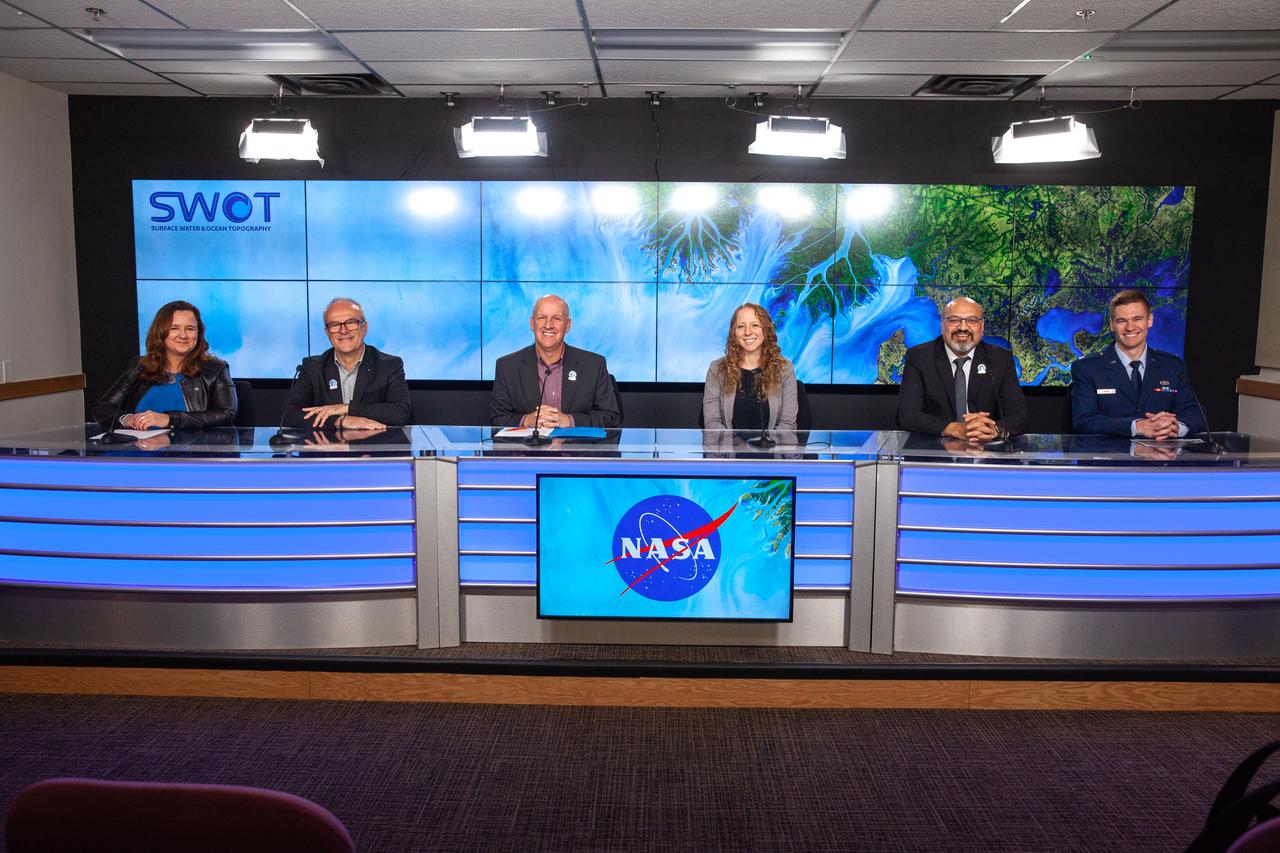
NASA, SpaceX, and the French space agency Centre National d’Études Spatiales (CNES) hold a prelaunch news conference for the Surface Water and Ocean Topography (SWOT) mission on Dec. 14, 2022, at Vandenberg Space Force Base in California. Participating from left are Karen St. Germain, Earth Science Division director, NASA; Thierry Lafon, SWOT project manager, CNES; Tim Dunn, launch director, NASA’s Launch Services Program; Julianna Scheiman, civil satellite missions director, SpaceX; Parag Vaze, SWOT project manager, Jet Propulsion Laboratory; Capt. Max Rush, launch weather officer, U.S. Air Force. SWOT is scheduled to launch on a SpaceX Falcon 9 rocket from Space Launch Complex-4 East at Vandenberg on Dec. 15, 2022, at 3:46 a.m. PST. SWOT will be NASA’s first global survey of nearly all water on Earth’s surface. Scientists plan to use its observations to better understand the global water cycle, furnish insight into the ocean’s role in how climate change unfolds, and provide a global inventory of water resources. The SWOT mission is a collaborative effort between NASA and CNES with contributions from the Canadian Space Agency and the UK Space Agency. NASA’s Launch Services Program, based at the agency’s Kennedy Space Center in Florida, is managing the launch service.
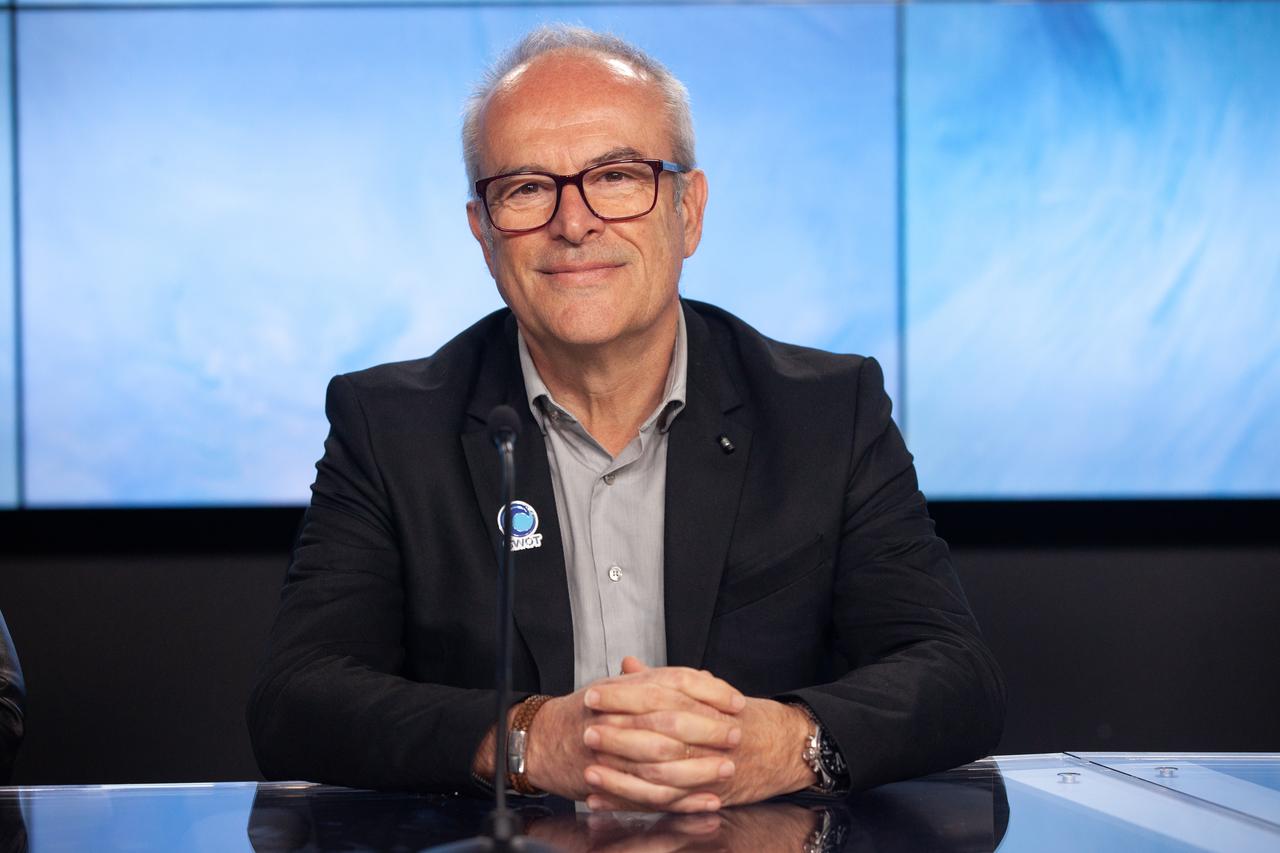
Thierry Lafon, SWOT project manager, CNES, participates in a prelaunch news conference held by NASA, SpaceX, and the French space agency Centre National d’Études Spatiales (CNES) for the Surface Water and Ocean Topography (SWOT) mission on Dec. 14, 2022, at Vandenberg Space Force Base in California. SWOT is scheduled to launch on a SpaceX Falcon 9 rocket from Space Launch Complex-4 East at Vandenberg on Dec. 15, 2022, at 3:46 a.m. PST. SWOT will be NASA’s first global survey of nearly all water on Earth’s surface. Scientists plan to use its observations to better understand the global water cycle, furnish insight into the ocean’s role in how climate change unfolds, and provide a global inventory of water resources. The SWOT mission is a collaborative effort between NASA and CNES with contributions from the Canadian Space Agency and the UK Space Agency. NASA’s Launch Services Program, based at the agency’s Kennedy Space Center in Florida, is managing the launch service.
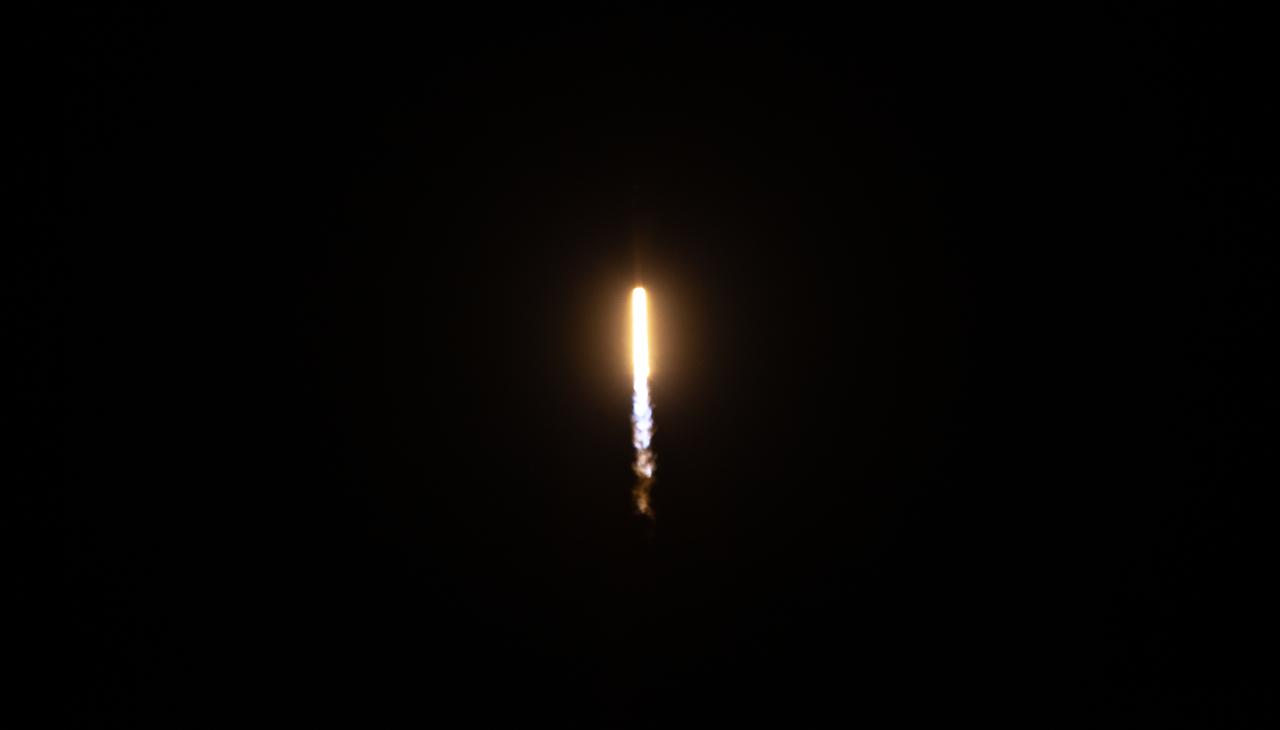
The SpaceX Falcon 9 rocket, carrying the Surface Water and Ocean Topography (SWOT) satellite, soars upward after lifting off from Space Launch Complex-4 East at Vandenberg Space Force Base in California on Dec. 16, 2022, at 3:46 a.m. PST. A collaboration between NASA and the French space agency Centre National d’Études Spatiales (CNES), with contributions from the Canadian Space Agency and the UK Space Agency, SWOT will be the first satellite to survey nearly all water on Earth’s surface. The satellite will help researchers understand how much water flows in and out of Earth’s freshwater bodies and will provide insight into the ocean’s role in climate change. The instruments onboard will measure the height of water in lakes, rivers, reservoirs, and the ocean, and will observe ocean features in higher definition than ever before. NASA’s Launch Services Program, based at the agency’s Kennedy Space Center in Florida, is managing the launch service.
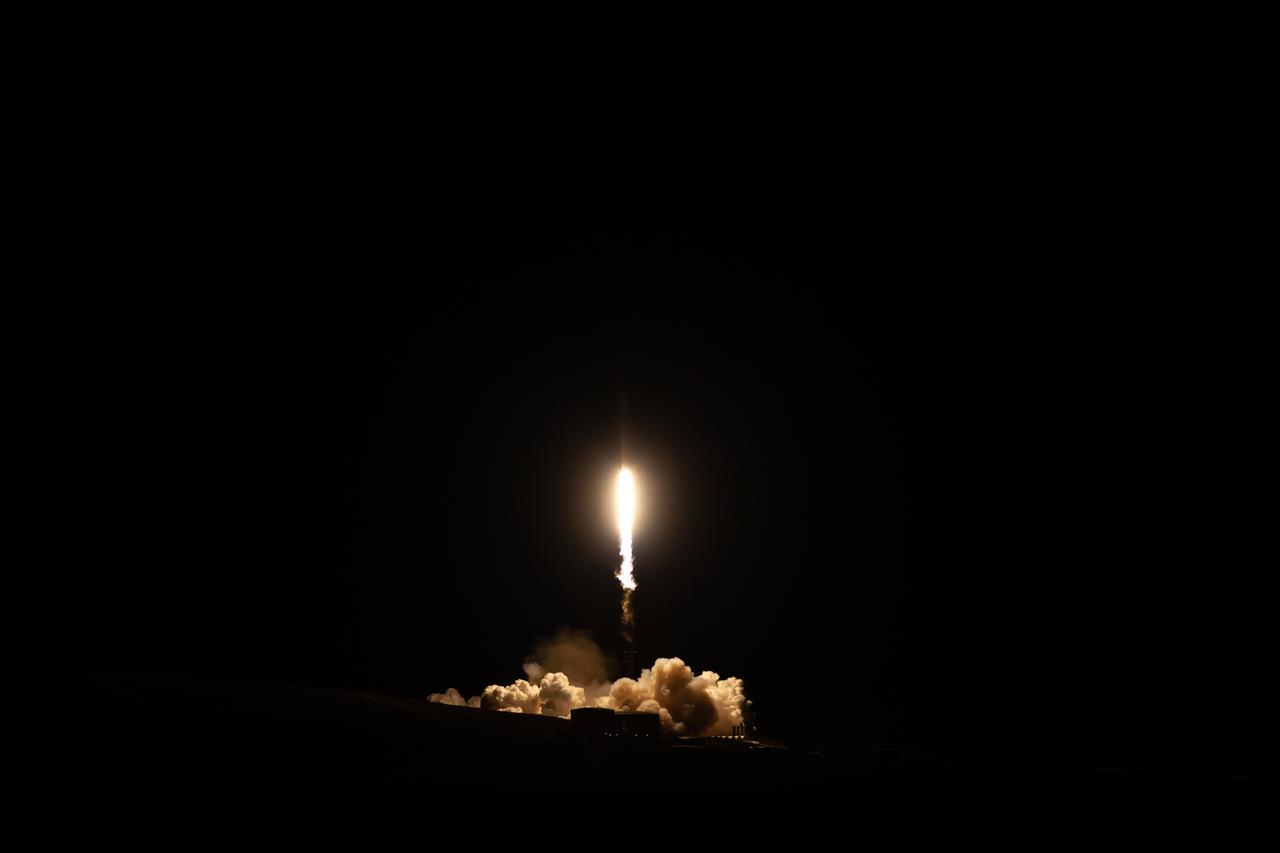
The SpaceX Falcon 9 rocket, carrying the Surface Water and Ocean Topography (SWOT) satellite, lifts off from Space Launch Complex-4 East at Vandenberg Space Force Base in California on Dec. 16, 2022, at 3:46 a.m. PST. A collaboration between NASA and the French space agency Centre National d’Études Spatiales (CNES), with contributions from the Canadian Space Agency and the UK Space Agency, SWOT will be the first satellite to survey nearly all water on Earth’s surface. The satellite will help researchers understand how much water flows in and out of Earth’s freshwater bodies and will provide insight into the ocean’s role in climate change. The instruments onboard will measure the height of water in lakes, rivers, reservoirs, and the ocean, and will observe ocean features in higher definition than ever before. NASA’s Launch Services Program, based at the agency’s Kennedy Space Center in Florida, is managing the launch service.
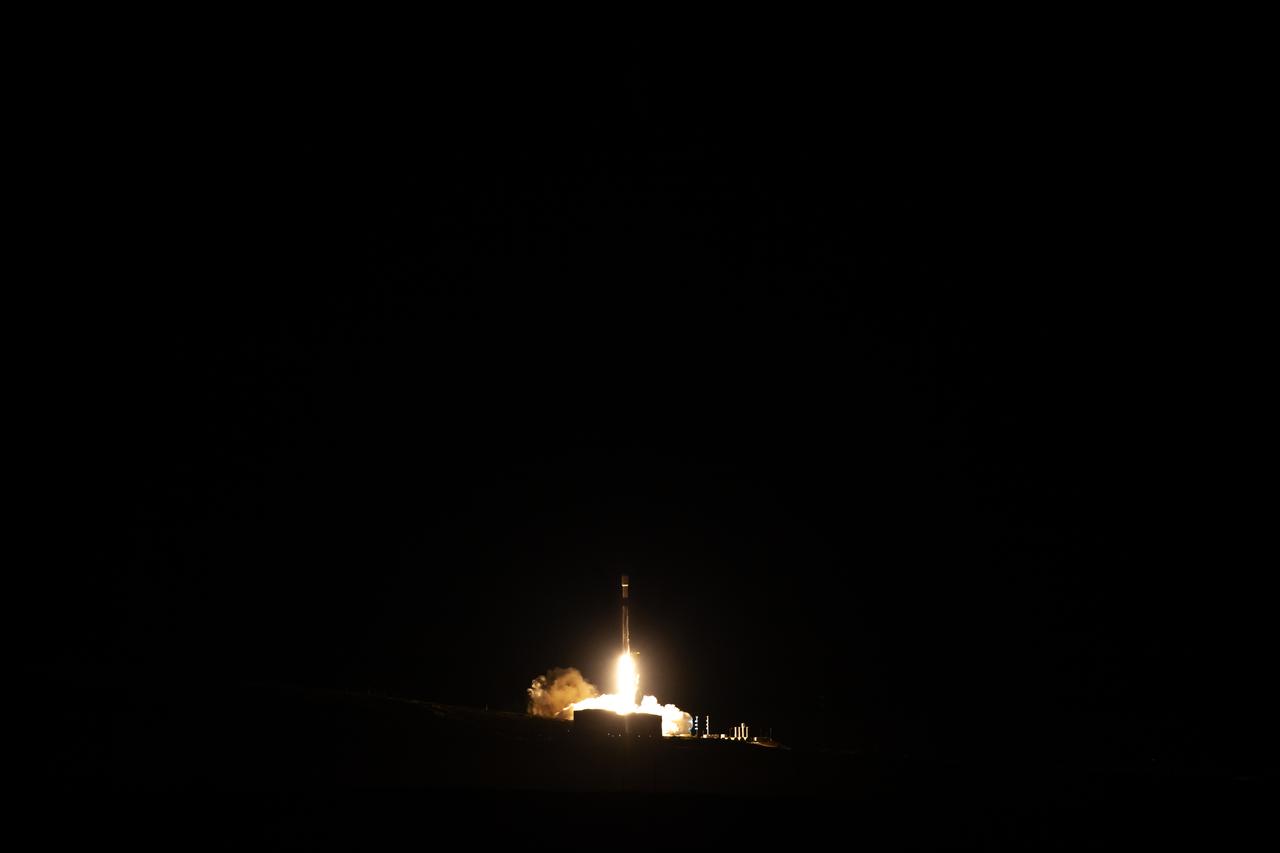
The SpaceX Falcon 9 rocket, carrying the Surface Water and Ocean Topography (SWOT) satellite, lifts off from Space Launch Complex-4 East at Vandenberg Space Force Base in California on Dec. 16, 2022, at 3:46 a.m. PST. A collaboration between NASA and the French space agency Centre National d’Études Spatiales (CNES), with contributions from the Canadian Space Agency and the UK Space Agency, SWOT will be the first satellite to survey nearly all water on Earth’s surface. The satellite will help researchers understand how much water flows in and out of Earth’s freshwater bodies and will provide insight into the ocean’s role in climate change. The instruments onboard will measure the height of water in lakes, rivers, reservoirs, and the ocean, and will observe ocean features in higher definition than ever before. NASA’s Launch Services Program, based at the agency’s Kennedy Space Center in Florida, is managing the launch service.
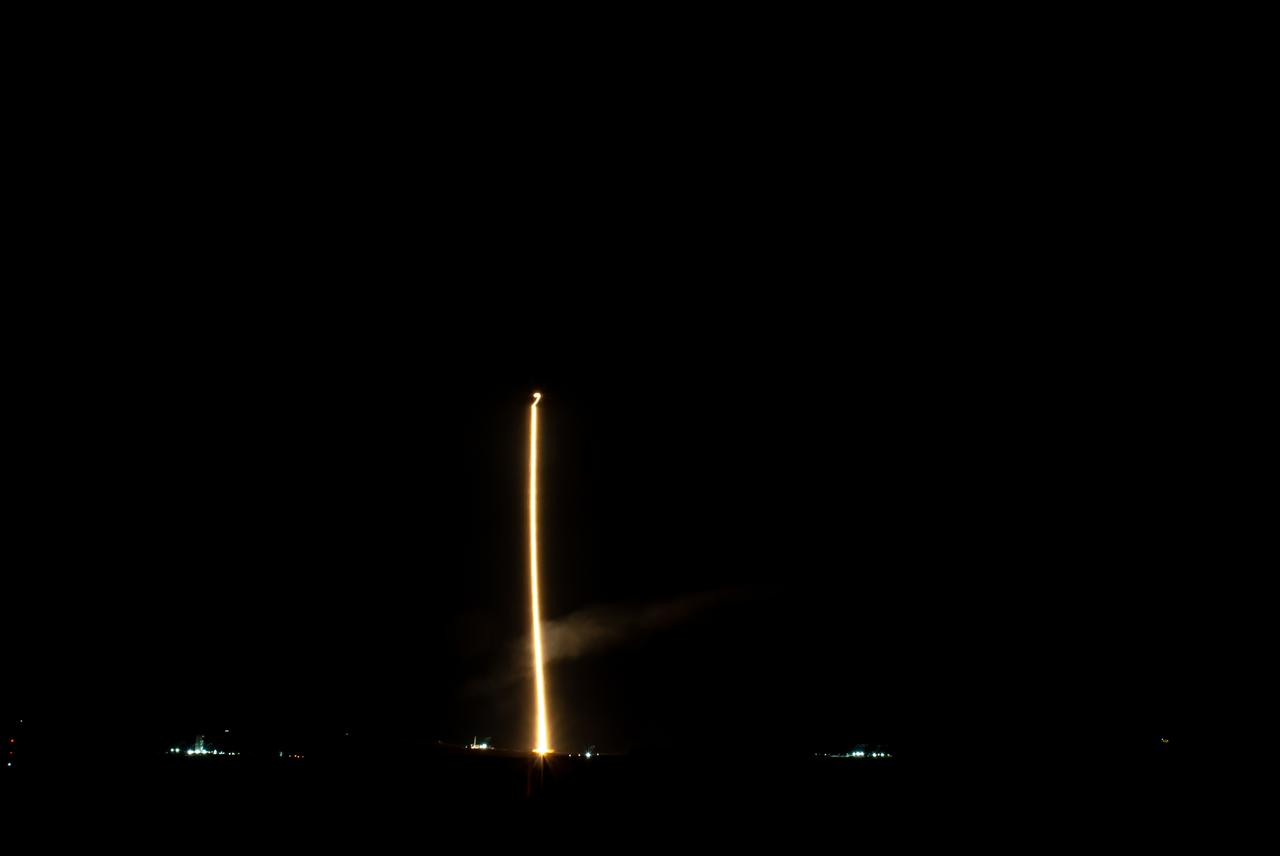
The SpaceX Falcon 9 rocket, carrying the Surface Water and Ocean Topography (SWOT) satellite, lifts off from Space Launch Complex-4 East at Vandenberg Space Force Base in California on Dec. 16, 2022, at 3:46 a.m. PST. A collaboration between NASA and the French space agency Centre National d’Études Spatiales (CNES), with contributions from the Canadian Space Agency and the UK Space Agency, SWOT will be the first satellite to survey nearly all water on Earth’s surface. The satellite will help researchers understand how much water flows in and out of Earth’s freshwater bodies and will provide insight into the ocean’s role in climate change. The instruments onboard will measure the height of water in lakes, rivers, reservoirs, and the ocean, and will observe ocean features in higher definition than ever before. NASA’s Launch Services Program, based at the agency’s Kennedy Space Center in Florida, is managing the launch service.
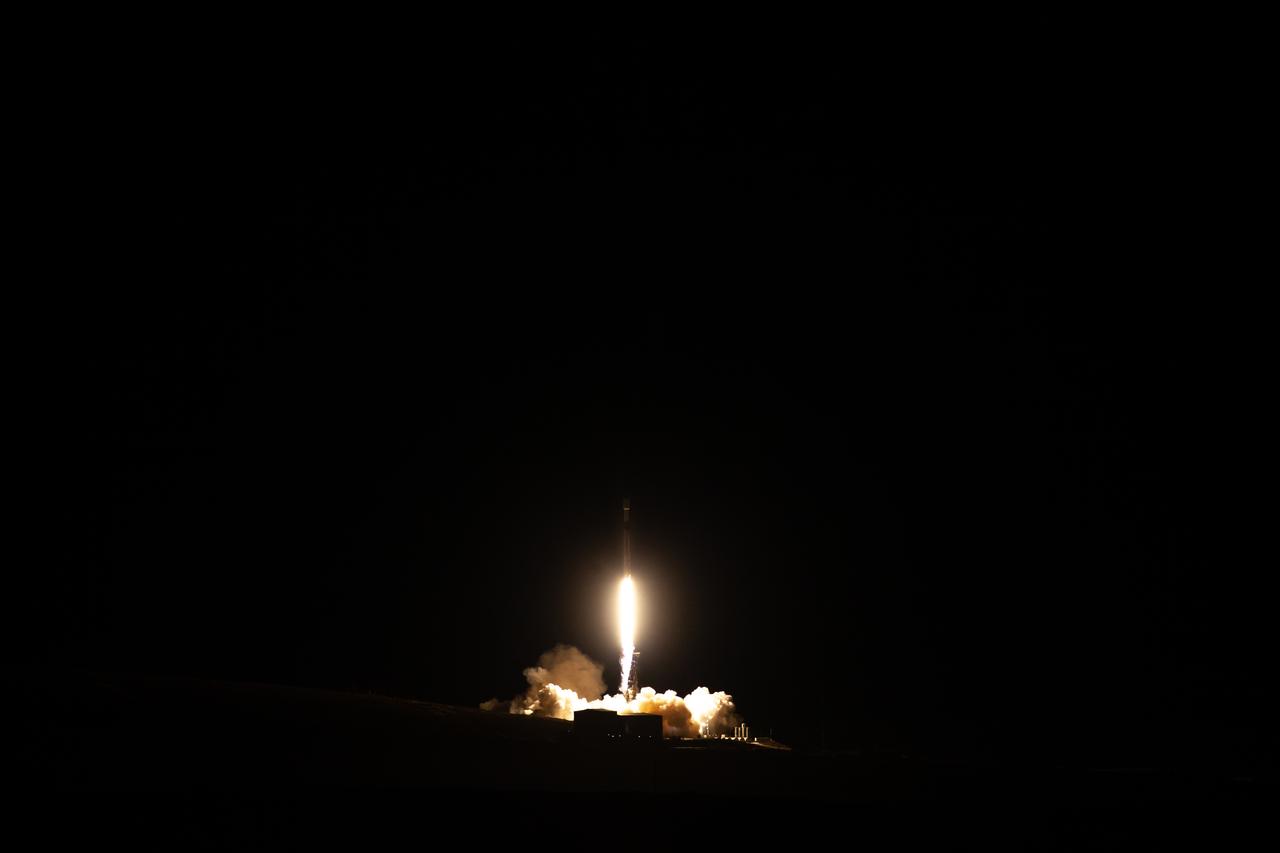
The SpaceX Falcon 9 rocket, carrying the Surface Water and Ocean Topography (SWOT) satellite, lifts off from Space Launch Complex-4 East at Vandenberg Space Force Base in California on Dec. 16, 2022, at 3:46 a.m. PST. A collaboration between NASA and the French space agency Centre National d’Études Spatiales (CNES), with contributions from the Canadian Space Agency and the UK Space Agency, SWOT will be the first satellite to survey nearly all water on Earth’s surface. The satellite will help researchers understand how much water flows in and out of Earth’s freshwater bodies and will provide insight into the ocean’s role in climate change. The instruments onboard will measure the height of water in lakes, rivers, reservoirs, and the ocean, and will observe ocean features in higher definition than ever before. NASA’s Launch Services Program, based at the agency’s Kennedy Space Center in Florida, is managing the launch service.
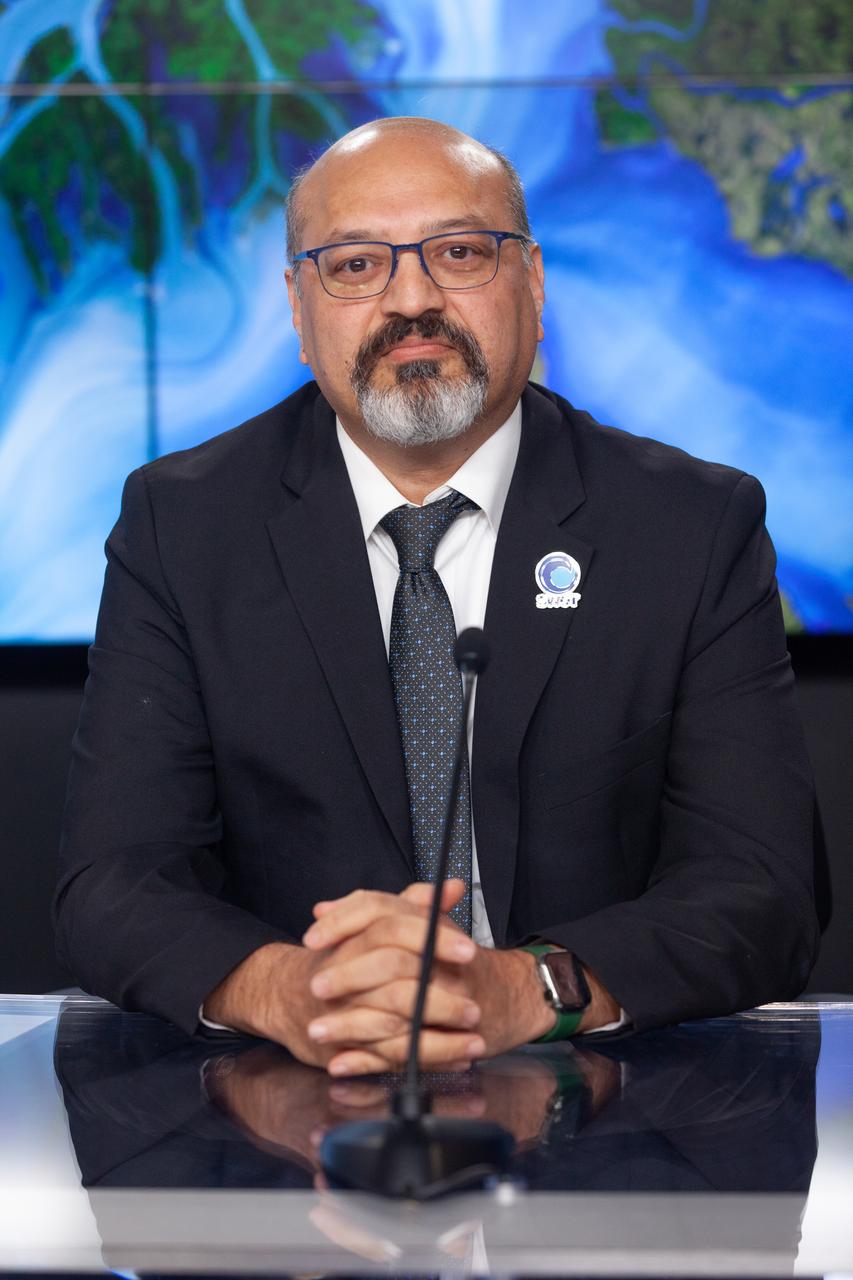
Parag Vaze, SWOT project manager, Jet Propulsion Laboratory, participates in a prelaunch news conference held by NASA, SpaceX, and the French space agency Centre National d’Études Spatiales (CNES) for the Surface Water and Ocean Topography (SWOT) mission on Dec. 14, 2022, at Vandenberg Space Force Base in California. SWOT is scheduled to launch on a SpaceX Falcon 9 rocket from Space Launch Complex-4 East at Vandenberg on Dec. 15, 2022, at 3:46 a.m. PST. SWOT will be NASA’s first global survey of nearly all water on Earth’s surface. Scientists plan to use its observations to better understand the global water cycle, furnish insight into the ocean’s role in how climate change unfolds, and provide a global inventory of water resources. The SWOT mission is a collaborative effort between NASA and CNES with contributions from the Canadian Space Agency and the UK Space Agency. NASA’s Launch Services Program, based at the agency’s Kennedy Space Center in Florida, is managing the launch service.
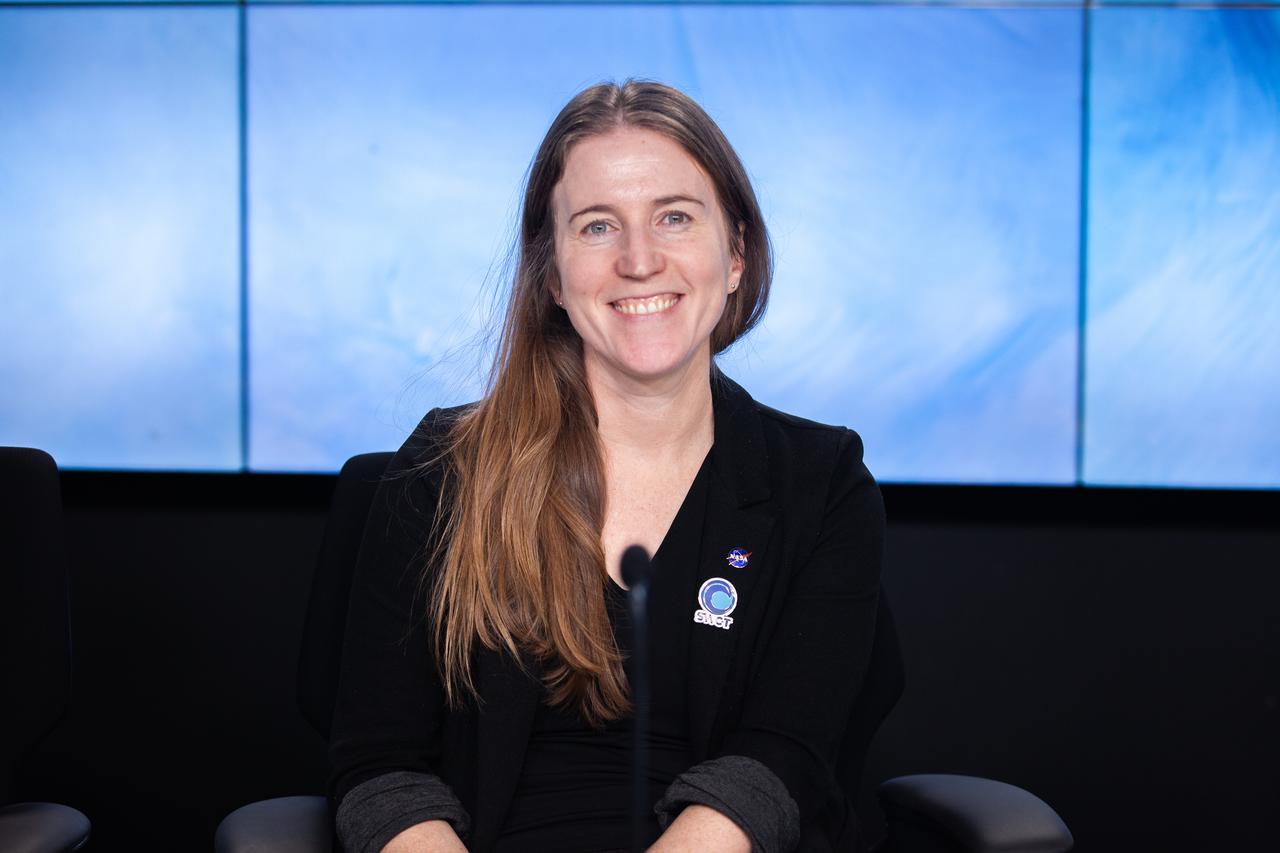
Katherine Calvin, chief scientist and senior climate advisor, NASA, participates in a science briefing held by NASA and the French space agency Centre National d’Études Spatiales (CNES) for the Surface Water and Ocean Topography (SWOT) mission on Dec. 13, 2022, at Vandenberg Space Force Base in California. SWOT is scheduled to launch on a SpaceX Falcon 9 rocket from Space Launch Complex-4 East at Vandenberg on Dec. 15, 2022, at 3:46 a.m. PST. SWOT will be NASA’s first global survey of nearly all water on Earth’s surface. Scientists plan to use its observations to better understand the global water cycle, furnish insight into the ocean’s role in how climate change unfolds, and provide a global inventory of water resources. The SWOT mission is a collaborative effort between NASA and CNES with contributions from the Canadian Space Agency and the UK Space Agency. NASA’s Launch Services Program, based at the agency’s Kennedy Space Center in Florida, is managing the launch service.
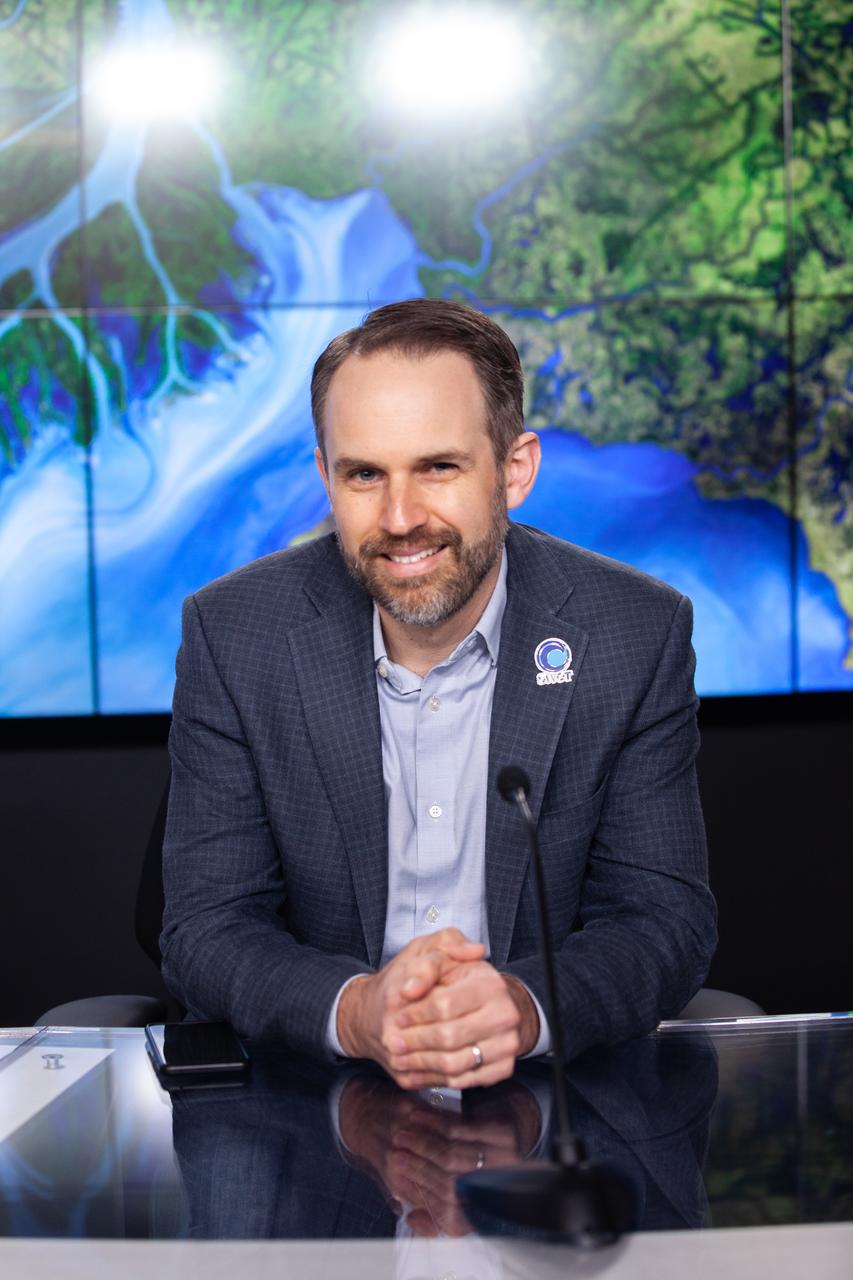
Tamlin Pavelsky, SWOT hydrology science lead, University of North Carolina, participates in a science briefing held by NASA and the French space agency Centre National d’Études Spatiales (CNES) for the Surface Water and Ocean Topography (SWOT) mission on Dec. 13, 2022, at Vandenberg Space Force Base in California. SWOT is scheduled to launch on a SpaceX Falcon 9 rocket from Space Launch Complex-4 East at Vandenberg on Dec. 15, 2022, at 3:46 a.m. PST. SWOT will be NASA’s first global survey of nearly all water on Earth’s surface. Scientists plan to use its observations to better understand the global water cycle, furnish insight into the ocean’s role in how climate change unfolds, and provide a global inventory of water resources. The SWOT mission is a collaborative effort between NASA and CNES with contributions from the Canadian Space Agency and the UK Space Agency. NASA’s Launch Services Program, based at the agency’s Kennedy Space Center in Florida, is managing the launch service.
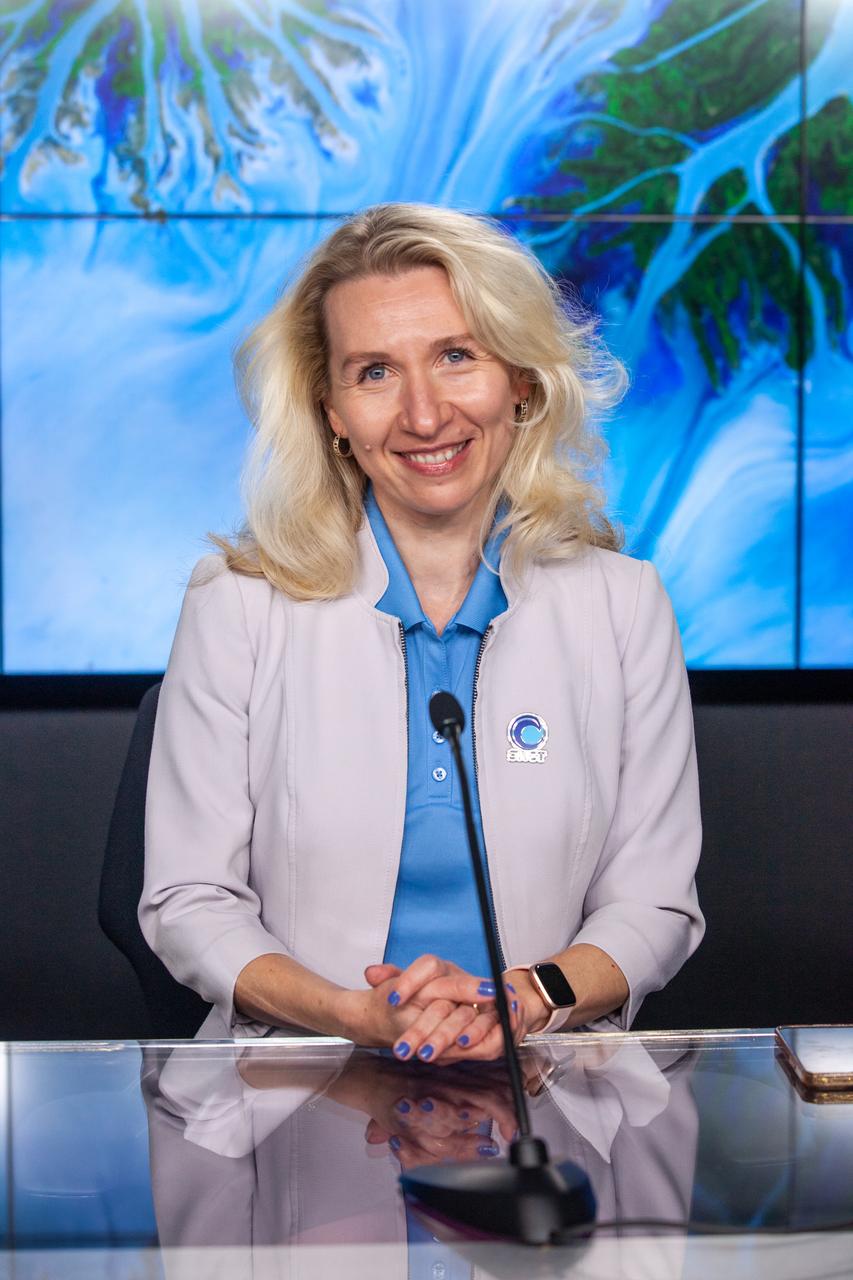
Nadya Vinogradova Shiffer, SWOT program scientist, NASA, participates in a science briefing held by NASA and the French space agency Centre National d’Études Spatiales (CNES) for the Surface Water and Ocean Topography (SWOT) mission on Dec. 13, 2022, at Vandenberg Space Force Base in California. SWOT is scheduled to launch on a SpaceX Falcon 9 rocket from Space Launch Complex-4 East at Vandenberg on Dec. 15, 2022, at 3:46 a.m. PST. SWOT will be NASA’s first global survey of nearly all water on Earth’s surface. Scientists plan to use its observations to better understand the global water cycle, furnish insight into the ocean’s role in how climate change unfolds, and provide a global inventory of water resources. The SWOT mission is a collaborative effort between NASA and CNES with contributions from the Canadian Space Agency and the UK Space Agency. NASA’s Launch Services Program, based at the agency’s Kennedy Space Center in Florida, is managing the launch service.
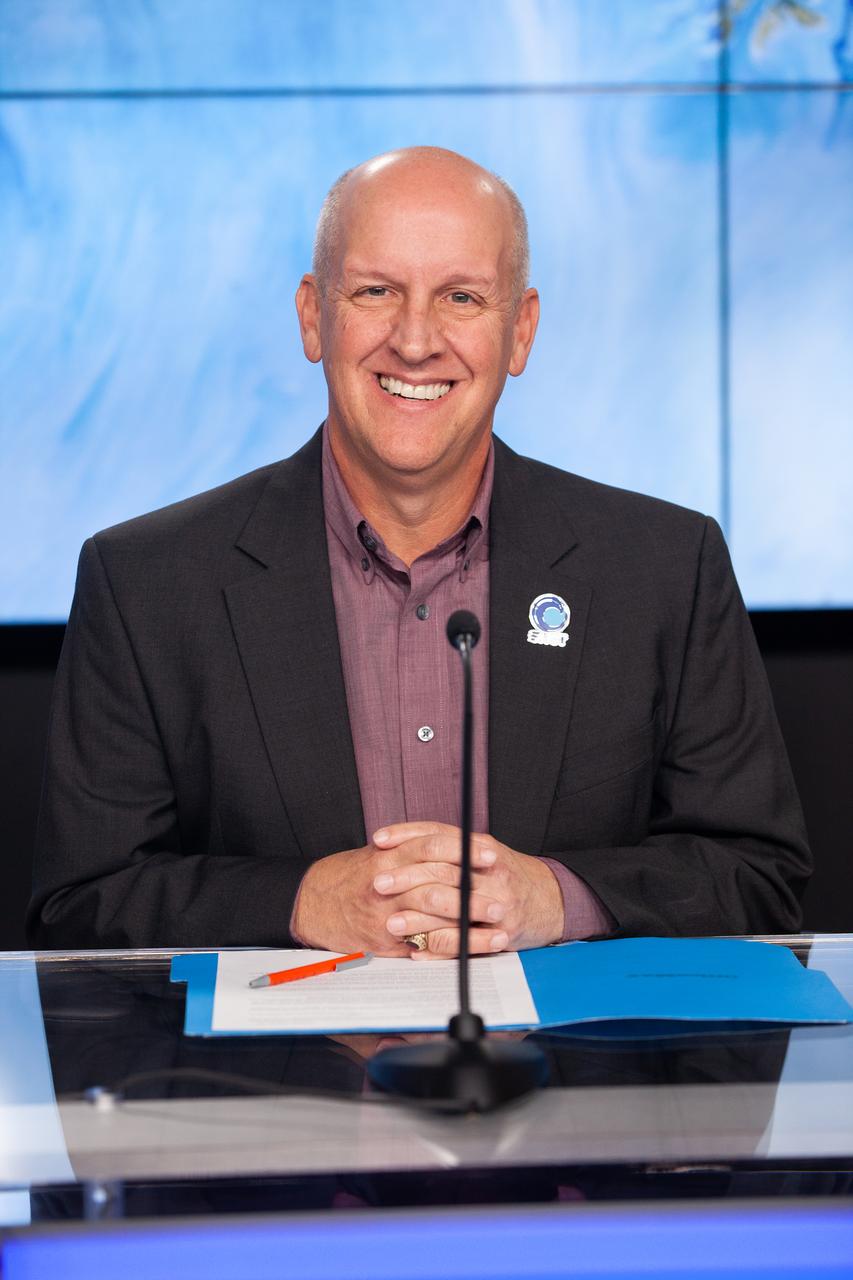
Tim Dunn, launch director, NASA’s Launch Services Program, participates in a prelaunch news conference held by NASA, SpaceX, and the French space agency Centre National d’Études Spatiales (CNES) for the Surface Water and Ocean Topography (SWOT) mission on Dec. 14, 2022, at Vandenberg Space Force Base in California. SWOT is scheduled to launch on a SpaceX Falcon 9 rocket from Space Launch Complex-4 East at Vandenberg on Dec. 15, 2022, at 3:46 a.m. PST. SWOT will be NASA’s first global survey of nearly all water on Earth’s surface. Scientists plan to use its observations to better understand the global water cycle, furnish insight into the ocean’s role in how climate change unfolds, and provide a global inventory of water resources. The SWOT mission is a collaborative effort between NASA and CNES with contributions from the Canadian Space Agency and the UK Space Agency. NASA’s Launch Services Program, based at the agency’s Kennedy Space Center in Florida, is managing the launch service.
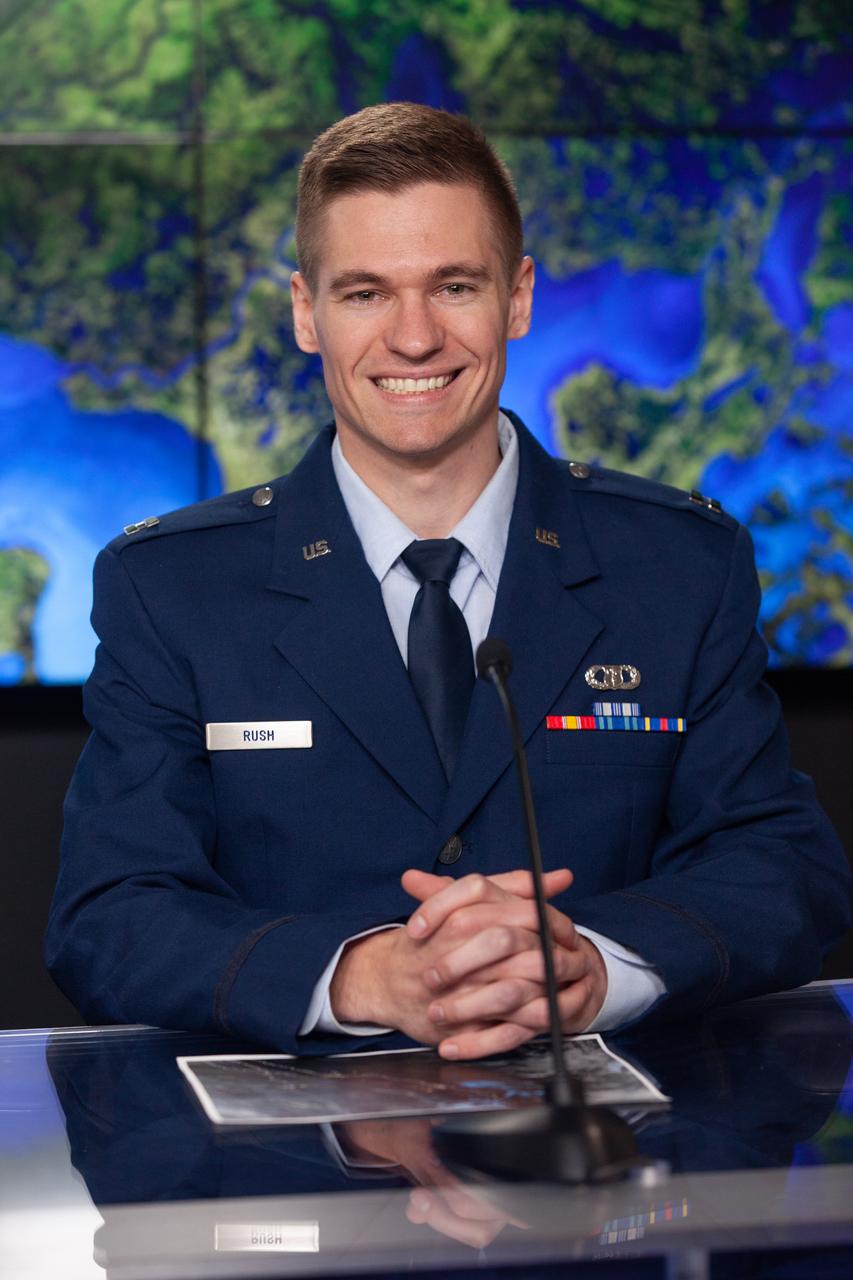
Capt. Max Rush, launch weather officer, U.S. Air Force, participates in a prelaunch news conference held by NASA, SpaceX, and the French space agency Centre National d’Études Spatiales (CNES) for the Surface Water and Ocean Topography (SWOT) mission on Dec. 14, 2022, at Vandenberg Space Force Base in California. SWOT is scheduled to launch on a SpaceX Falcon 9 rocket from Space Launch Complex-4 East at Vandenberg on Dec. 15, 2022, at 3:46 a.m. PST. SWOT will be NASA’s first global survey of nearly all water on Earth’s surface. Scientists plan to use its observations to better understand the global water cycle, furnish insight into the ocean’s role in how climate change unfolds, and provide a global inventory of water resources. The SWOT mission is a collaborative effort between NASA and CNES with contributions from the Canadian Space Agency and the UK Space Agency. NASA’s Launch Services Program, based at the agency’s Kennedy Space Center in Florida, is managing the launch service.
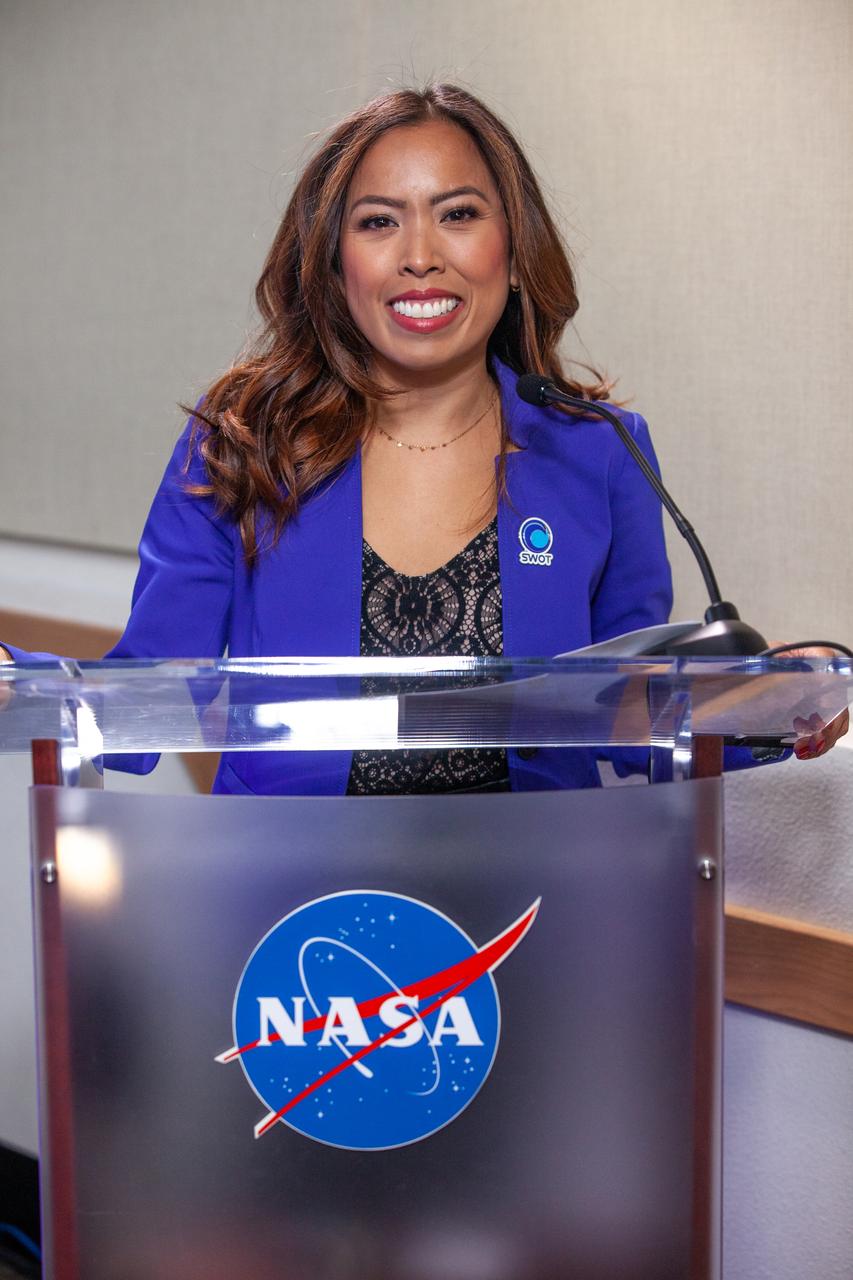
Megan Cruz, NASA Communications, moderates a prelaunch news conference held by NASA, SpaceX, and the French space agency Centre National d’Études Spatiales (CNES) for the Surface Water and Ocean Topography (SWOT) mission on Dec. 14, 2022, at Vandenberg Space Force Base in California. SWOT is scheduled to launch on a SpaceX Falcon 9 rocket from Space Launch Complex-4 East at Vandenberg on Dec. 15, 2022, at 3:46 a.m. PST. SWOT will be NASA’s first global survey of nearly all water on Earth’s surface. Scientists plan to use its observations to better understand the global water cycle, furnish insight into the ocean’s role in how climate change unfolds, and provide a global inventory of water resources. The SWOT mission is a collaborative effort between NASA and CNES with contributions from the Canadian Space Agency and the UK Space Agency. NASA’s Launch Services Program, based at the agency’s Kennedy Space Center in Florida, is managing the launch service.
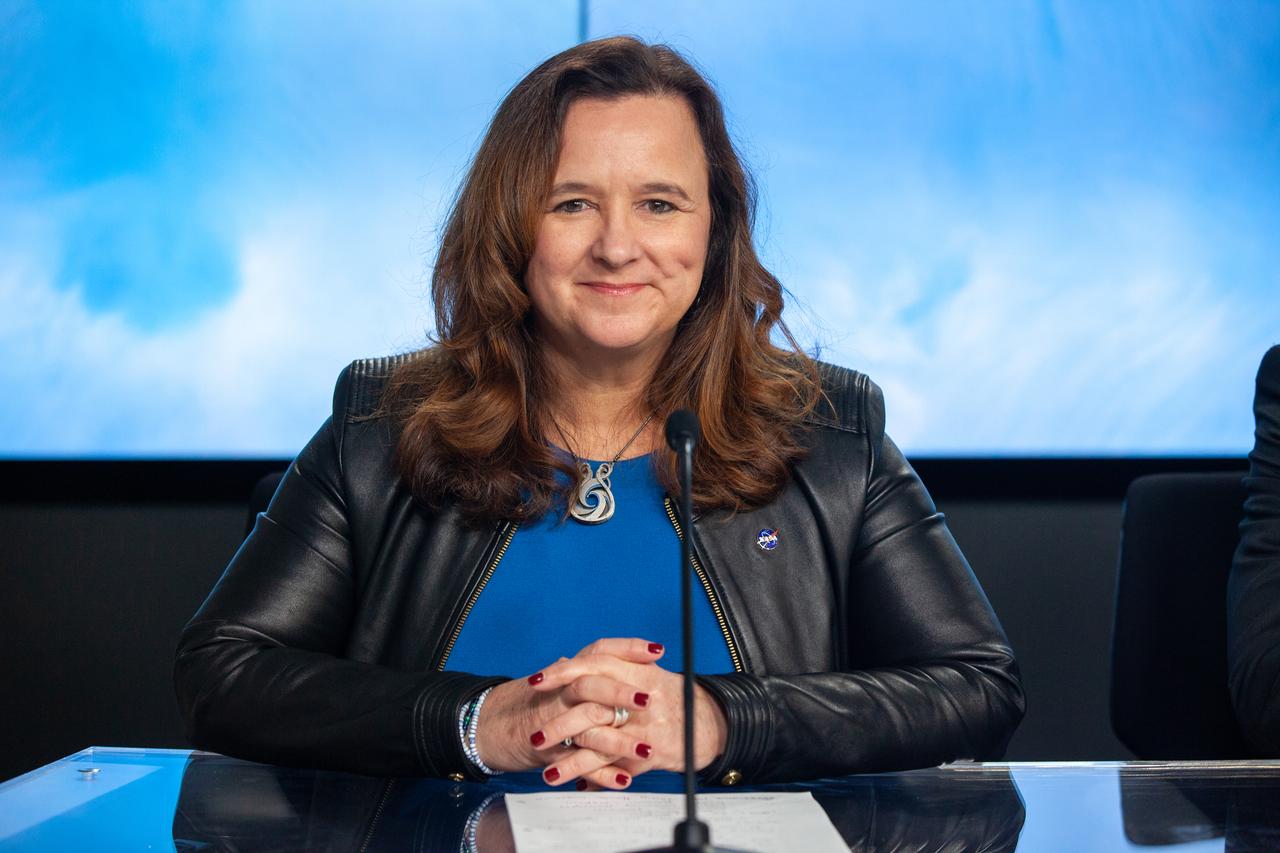
Karen St. Germain, Earth Science Division director, NASA, participates in a prelaunch news conference held by NASA, SpaceX, and the French space agency Centre National d’Études Spatiales (CNES) for the Surface Water and Ocean Topography (SWOT) mission on Dec. 14, 2022, at Vandenberg Space Force Base in California. SWOT is scheduled to launch on a SpaceX Falcon 9 rocket from Space Launch Complex-4 East at Vandenberg on Dec. 15, 2022, at 3:46 a.m. PST. SWOT will be NASA’s first global survey of nearly all water on Earth’s surface. Scientists plan to use its observations to better understand the global water cycle, furnish insight into the ocean’s role in how climate change unfolds, and provide a global inventory of water resources. The SWOT mission is a collaborative effort between NASA and CNES with contributions from the Canadian Space Agency and the UK Space Agency. NASA’s Launch Services Program, based at the agency’s Kennedy Space Center in Florida, is managing the launch service.
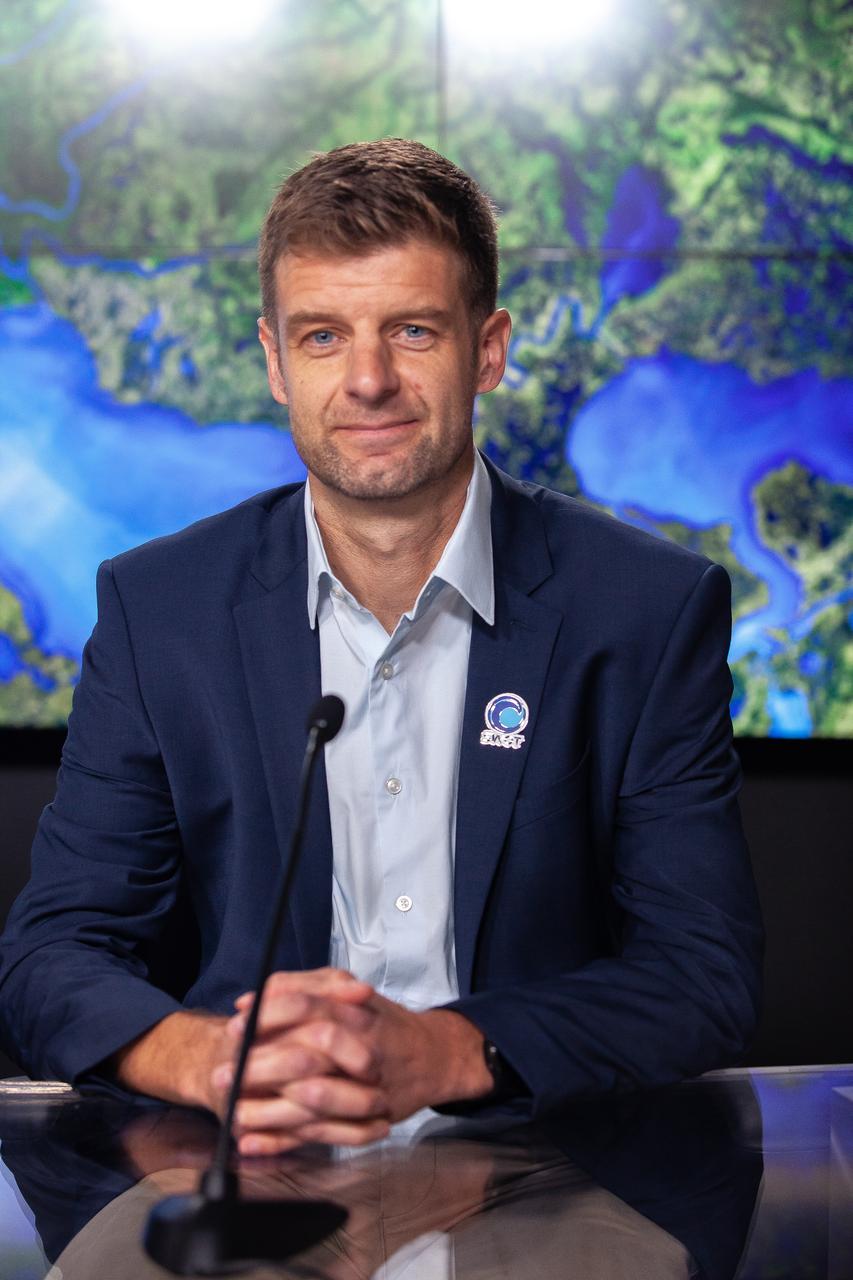
Benjamin Hamlington, research scientist, Sea Level and Ice Group, Jet Propulsion Laboratory, participates in a science briefing held by NASA and the French space agency Centre National d’Études Spatiales (CNES) for the Surface Water and Ocean Topography (SWOT) mission on Dec. 13, 2022, at Vandenberg Space Force Base in California. SWOT is scheduled to launch on a SpaceX Falcon 9 rocket from Space Launch Complex-4 East at Vandenberg on Dec. 15, 2022, at 3:46 a.m. PST. SWOT will be NASA’s first global survey of nearly all water on Earth’s surface. Scientists plan to use its observations to better understand the global water cycle, furnish insight into the ocean’s role in how climate change unfolds, and provide a global inventory of water resources. The SWOT mission is a collaborative effort between NASA and CNES with contributions from the Canadian Space Agency and the UK Space Agency. NASA’s Launch Services Program, based at the agency’s Kennedy Space Center in Florida, is managing the launch service.

Julianna Scheiman, civil satellite missions director, SpaceX, participates in a prelaunch news conference held by NASA, SpaceX, and the French space agency Centre National d’Études Spatiales (CNES) for the Surface Water and Ocean Topography (SWOT) mission on Dec. 14, 2022, at Vandenberg Space Force Base in California. SWOT is scheduled to launch on a SpaceX Falcon 9 rocket from Space Launch Complex-4 East at Vandenberg on Dec. 15, 2022, at 3:46 a.m. PST. SWOT will be NASA’s first global survey of nearly all water on Earth’s surface. Scientists plan to use its observations to better understand the global water cycle, furnish insight into the ocean’s role in how climate change unfolds, and provide a global inventory of water resources. The SWOT mission is a collaborative effort between NASA and CNES with contributions from the Canadian Space Agency and the UK Space Agency. NASA’s Launch Services Program, based at the agency’s Kennedy Space Center in Florida, is managing the launch service.
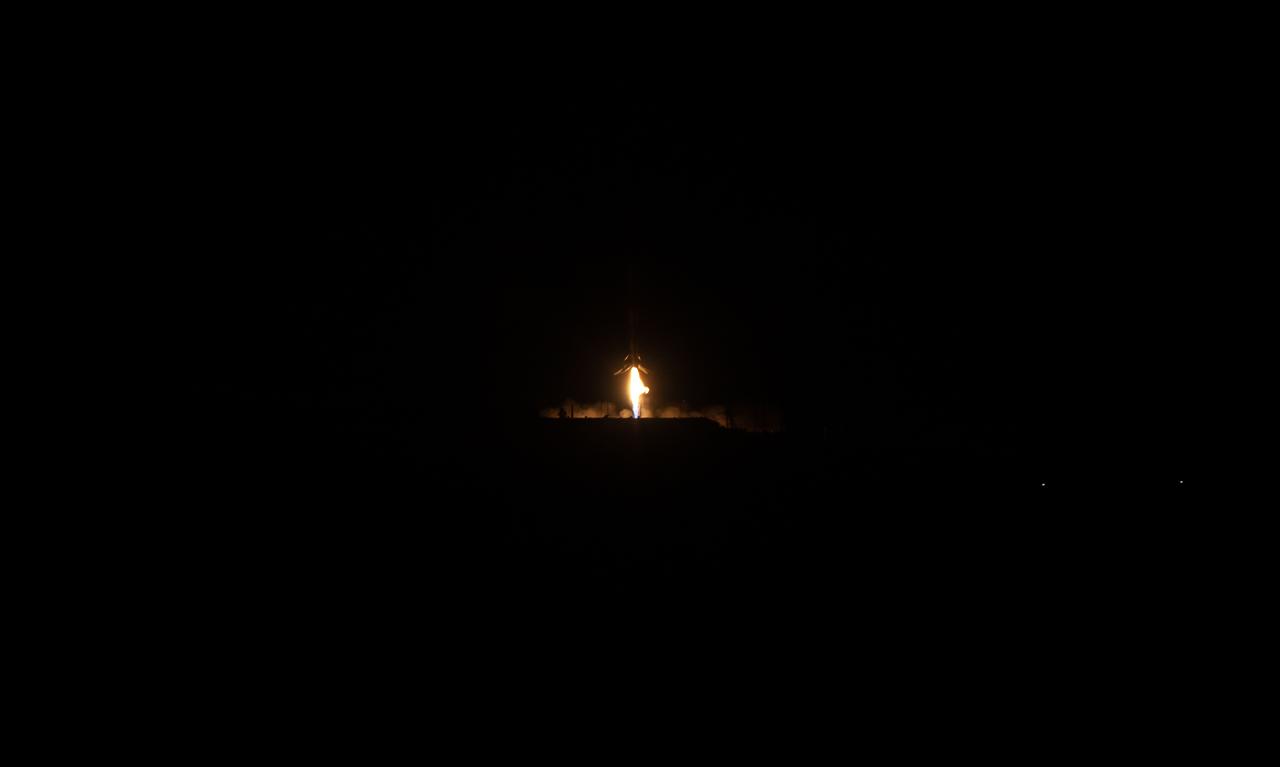
The first stage of the SpaceX Falcon 9 rocket lands at Vandenberg Space Force Base's landing zone 4 following the successful launch of the Surface Water and Ocean Topography (SWOT) satellite on Dec. 16, 2022. A collaboration between NASA and the French space agency Centre National d’Études Spatiales (CNES), with contributions from the Canadian Space Agency and the UK Space Agency, SWOT will be the first satellite to survey nearly all water on Earth’s surface. The satellite will help researchers understand how much water flows in and out of Earth’s freshwater bodies and will provide insight into the ocean’s role in climate change. The instruments onboard will measure the height of water in lakes, rivers, reservoirs, and the ocean, and will observe ocean features in higher definition than ever before. NASA’s Launch Services Program, based at the agency’s Kennedy Space Center in Florida, is managing the launch service.
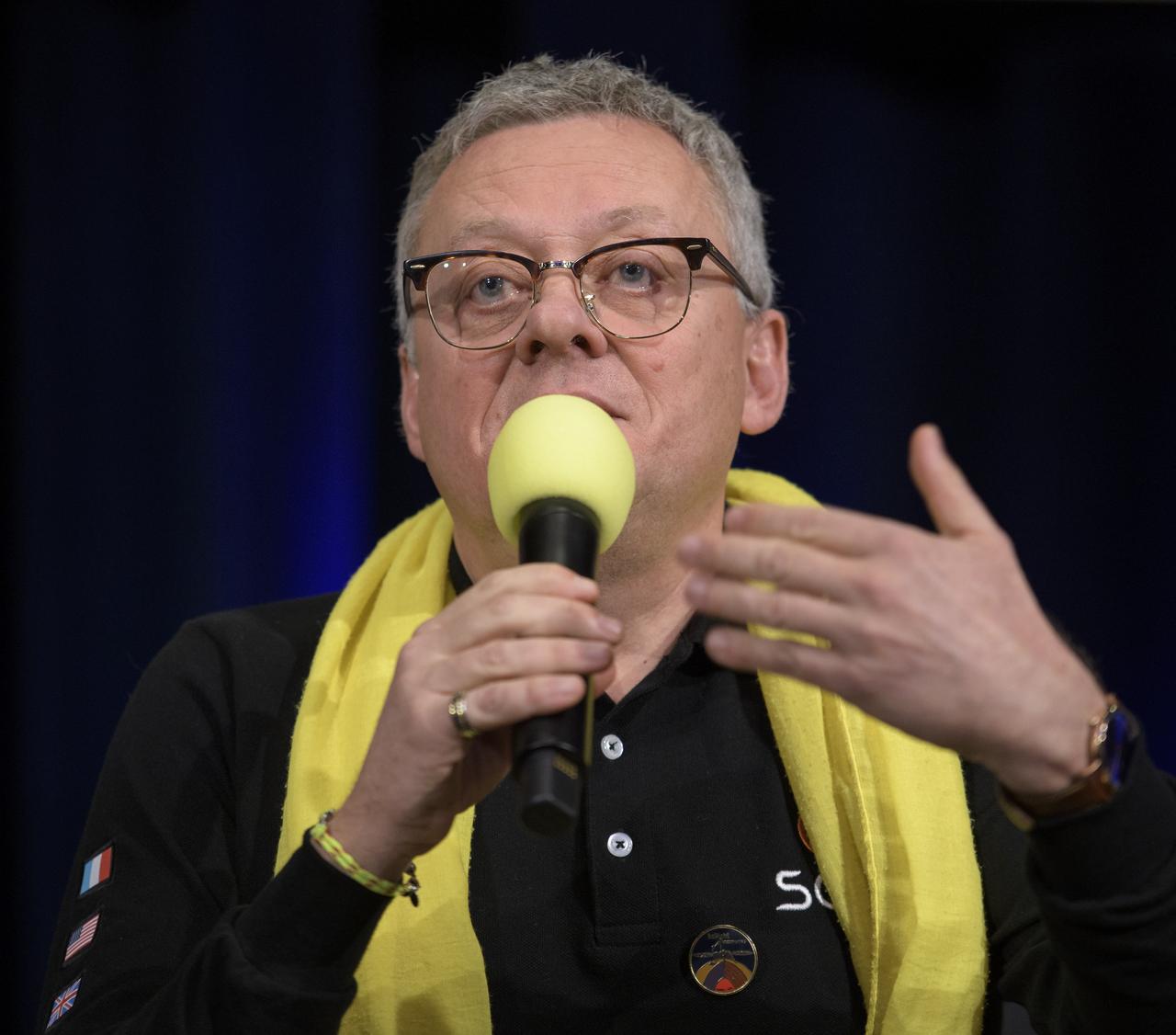
Philippe Laudet, SEIS Project Manager, French National Space Agency (CNES) talks about Mars InSight during a social media briefing, Sunday, Nov. 25, 2018 at NASA's Jet Propulsion Laboratory in Pasadena, California. InSight, short for Interior Exploration using Seismic Investigations, Geodesy and Heat Transport, is a Mars lander designed to study the "inner space" of Mars: its crust, mantle, and core. InSight is scheduled to touch down on the Red Planet at approximately noon PST (3 p.m. EST) on Nov. 26. Photo Credit: (NASA/Bill Ingalls)
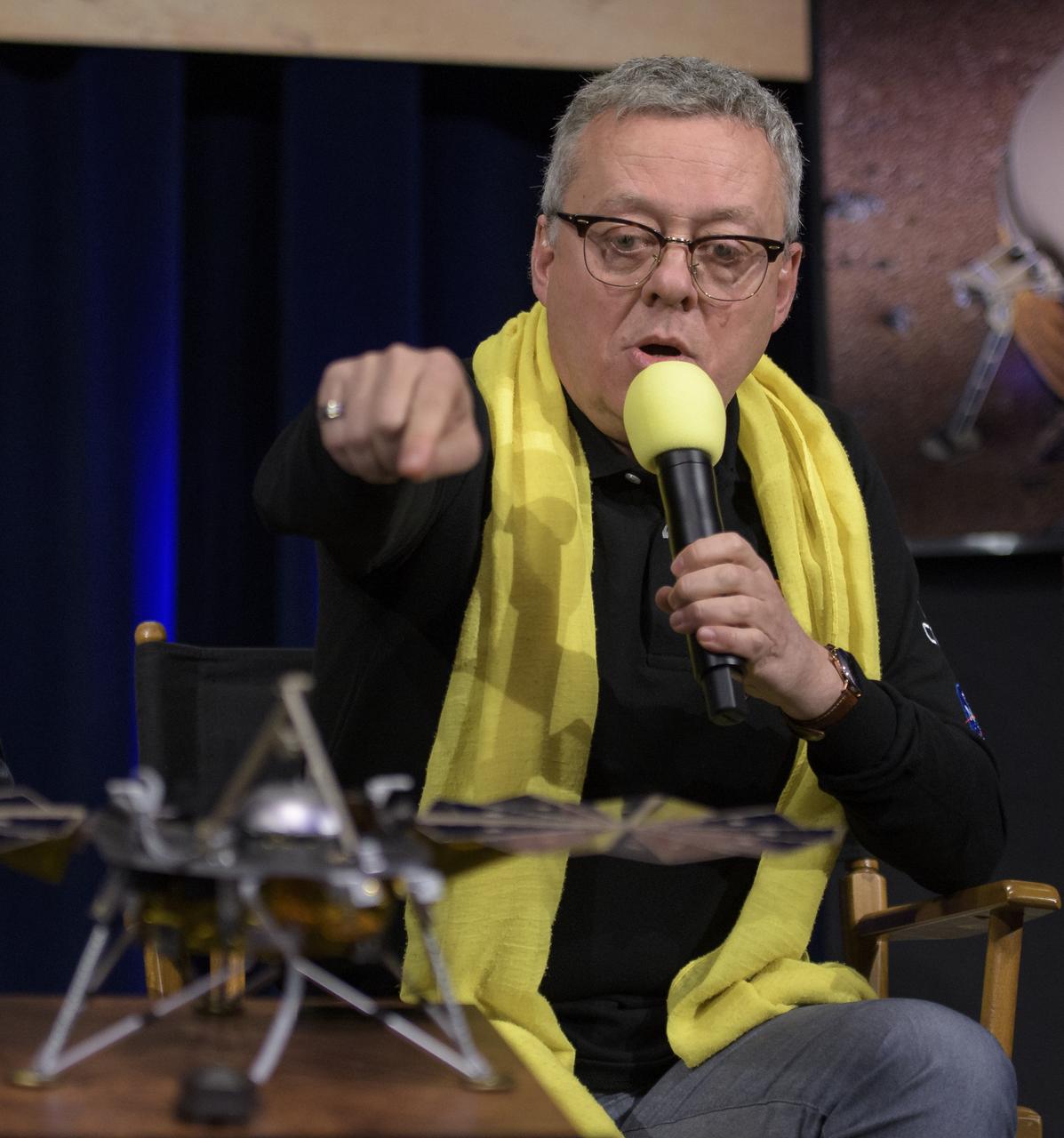
Philippe Laudet, SEIS Project Manager, French National Space Agency (CNES) talks about Mars InSight during a social media briefing, Sunday, Nov. 25, 2018 at NASA's Jet Propulsion Laboratory in Pasadena, California. InSight, short for Interior Exploration using Seismic Investigations, Geodesy and Heat Transport, is a Mars lander designed to study the "inner space" of Mars: its crust, mantle, and core. InSight is scheduled to touch down on the Red Planet at approximately noon PST (3 p.m. EST) on Nov. 26. Photo Credit: (NASA/Bill Ingalls)
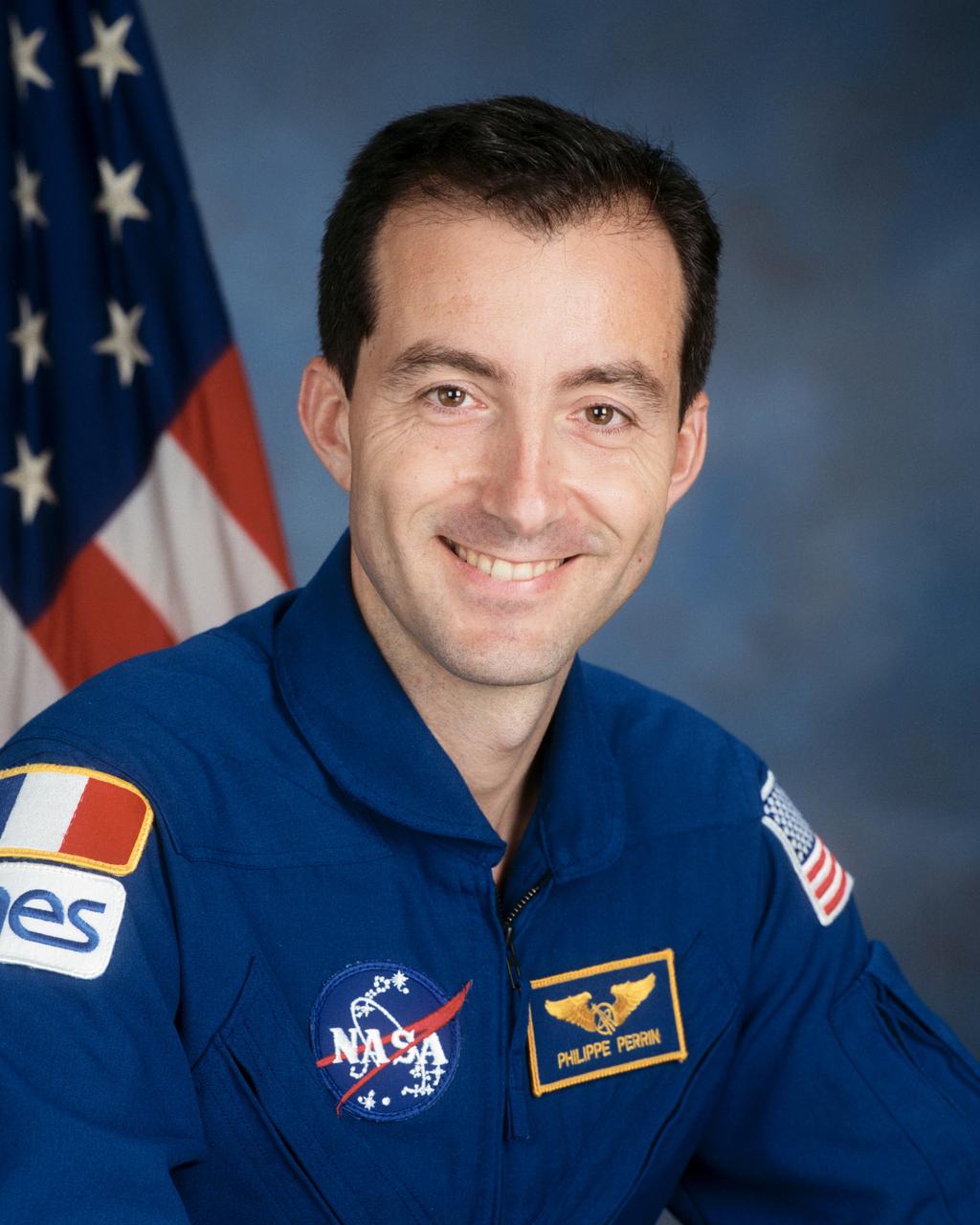
S97-09921 (10 June 1997) --- Astronaut Philippe Perrin, 1996 ASCAN/mission specialist, representing the French Space Agency (CNES)

Dr. Philippe Baptiste, President, French Space Agency (CNES) speaks in a Heads of Agency panel during the 37th Space Symposium, Wednesday, April 6, 2022, in Colorado Springs, Colorado. Photo Credit: (NASA/Bill Ingalls)
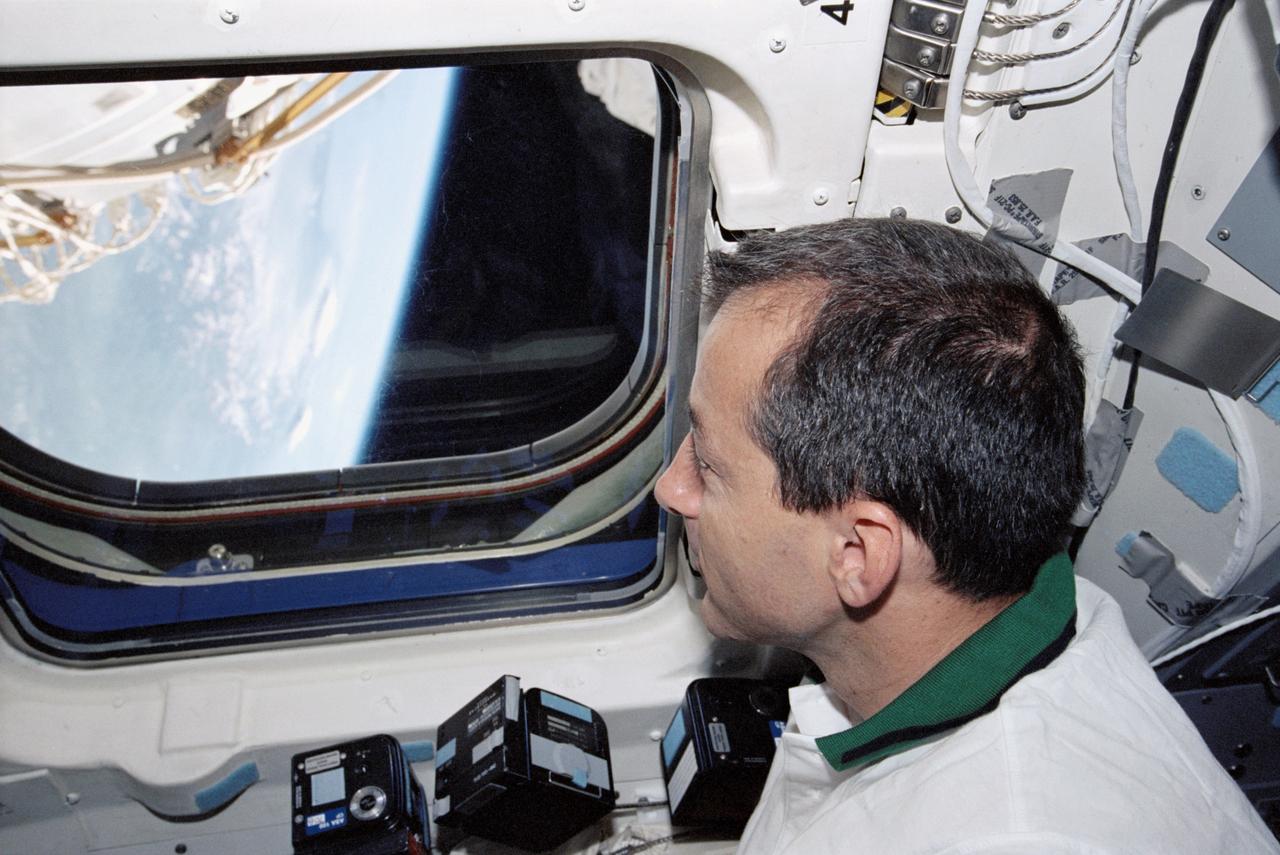
STS111-318-030 (5-19 June 2002) --- Astronaut Philippe Perrin, STS-111 mission specialist representing CNES, the French Space Agency, looks out an aft flight deck window of the Space Shuttle Endeavour.
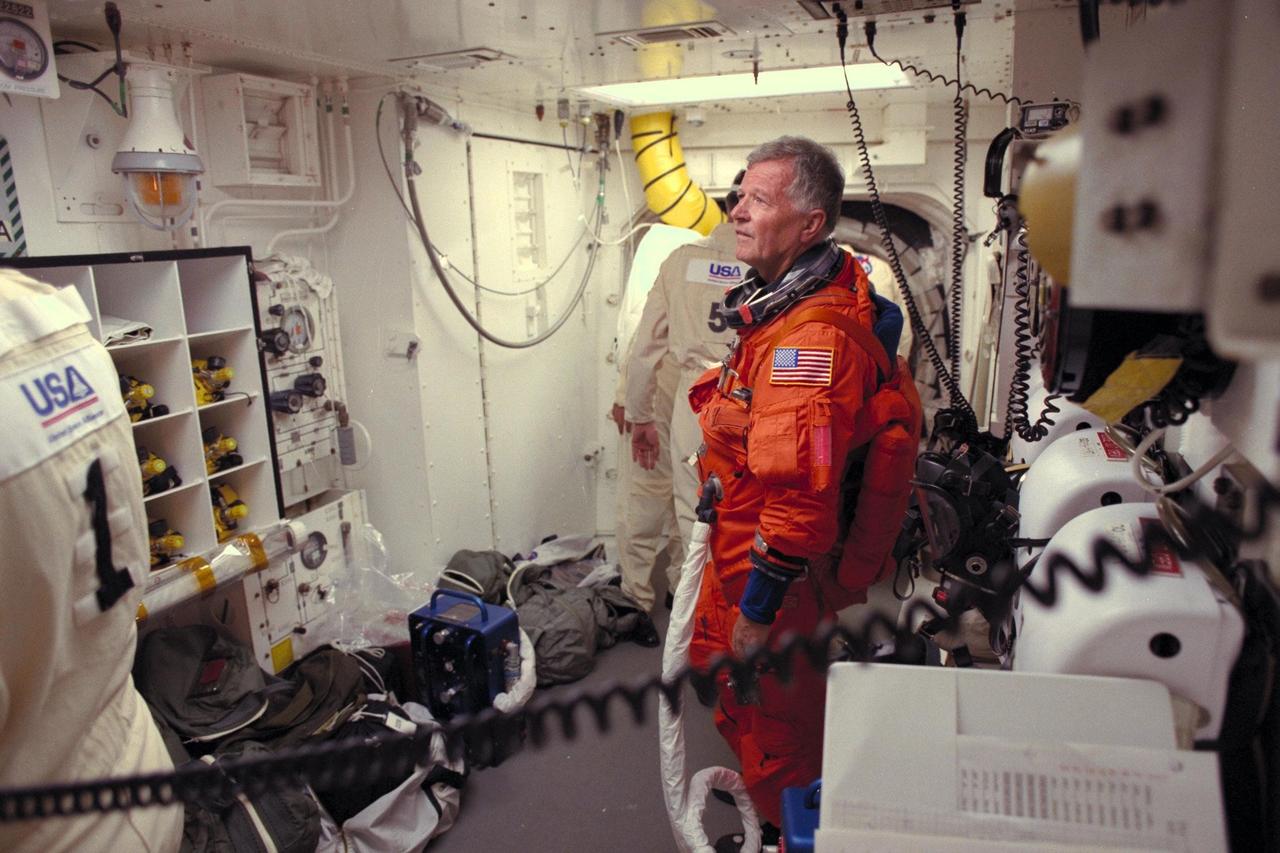
STS-86 Mission Specialist Jean-Loup J.M. Chretien of the French Space Agency, CNES, prepares to enter the Space Shuttle Atlantis at Launch Pad 39A, while white room closeout members work around him
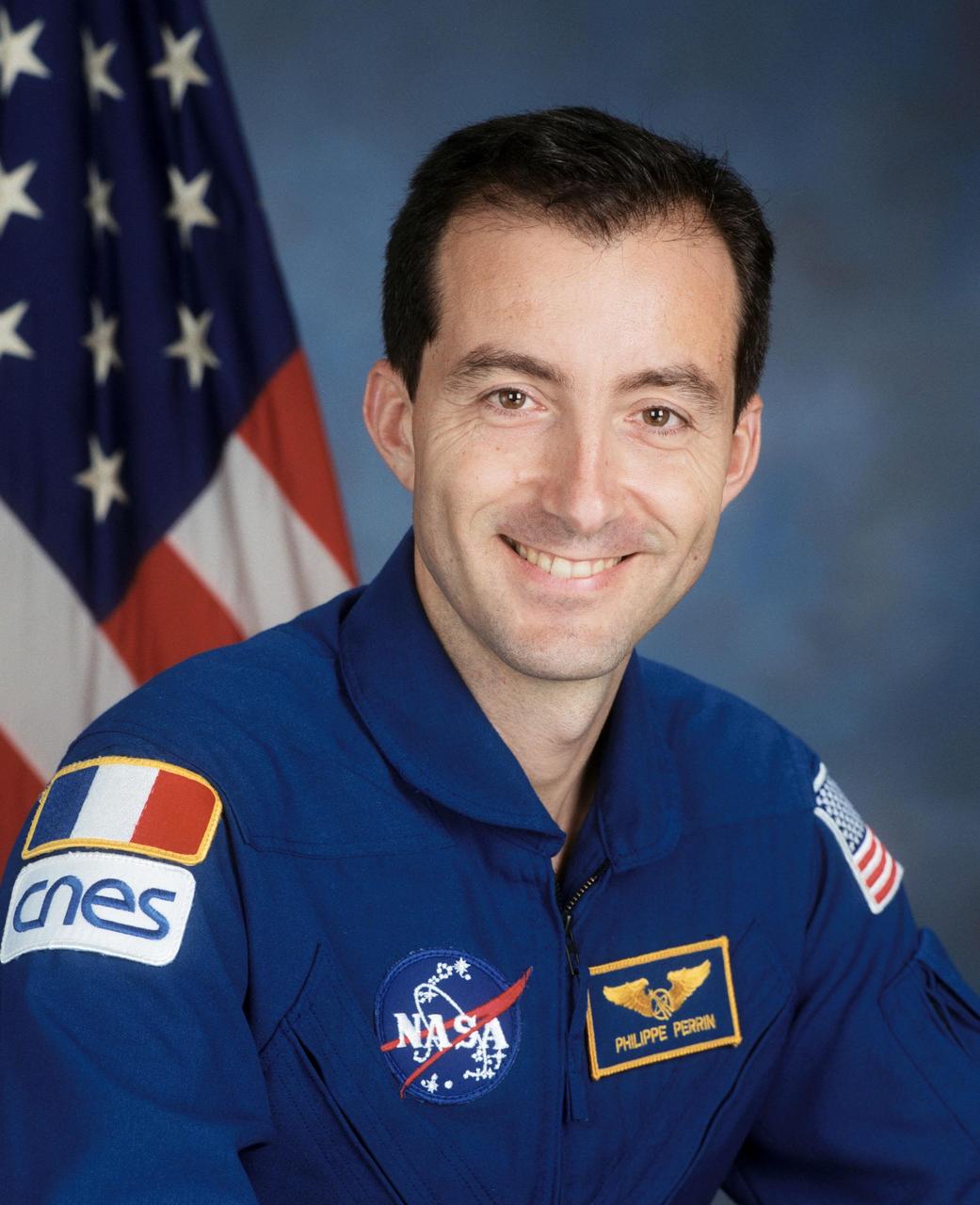
JOHNSON SPACE CENTER, HOUSTON, TX -- (JSC 597-09921) --Official Portrait of Astronaut Philippe Perrin, STS-111 mission specialist representing CNES, the French Space Agency
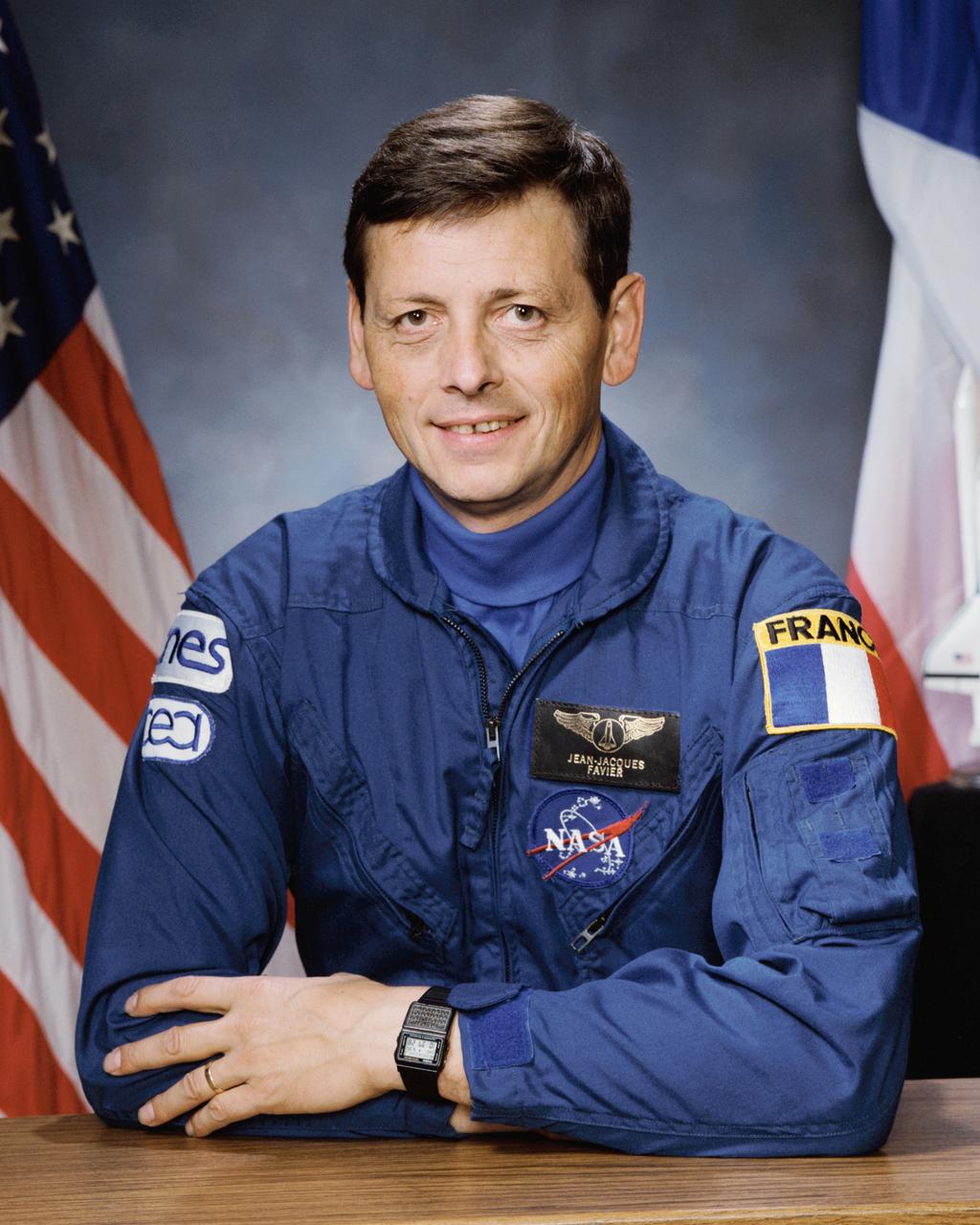
Official portrait of STS-65 International Microgravity Laboratory 2 (IML-2) backup Payload Specialist Jean-Jacques Favier. Favier is a member of the Centre National D'Etudes Spatiales (CNES), the French space agency.

ISS003-E-7129 (31 October 2001) --- A Soyuz spacecraft departs from the International Space Station (ISS) carrying the Soyuz taxi crew, Commander Victor Afanasyev, Flight Engineer Konstantin Kozeev and French Flight Engineer Claudie Haignere, ending their eight-day stay on the station. Afanasyev and Kozeev represent Rosaviakosmos, and Haignere represents ESA, carrying out a flight program for CNES, the French Space Agency, under a commercial contract with the Russian Aviation and Space Agency. This image was taken with a digital still camera.

ISS003-E-6855 (23-31 October 2001) --- French Flight Engineer Claudie Haignere, works in the Zvezda Service Module on the International Space Station (ISS). Haignere represents ESA, carrying out a flight program for CNES, the French Space Agency, under a commercial contract with the Russian Aviation and Space Agency. This image was taken with a digital still camera.
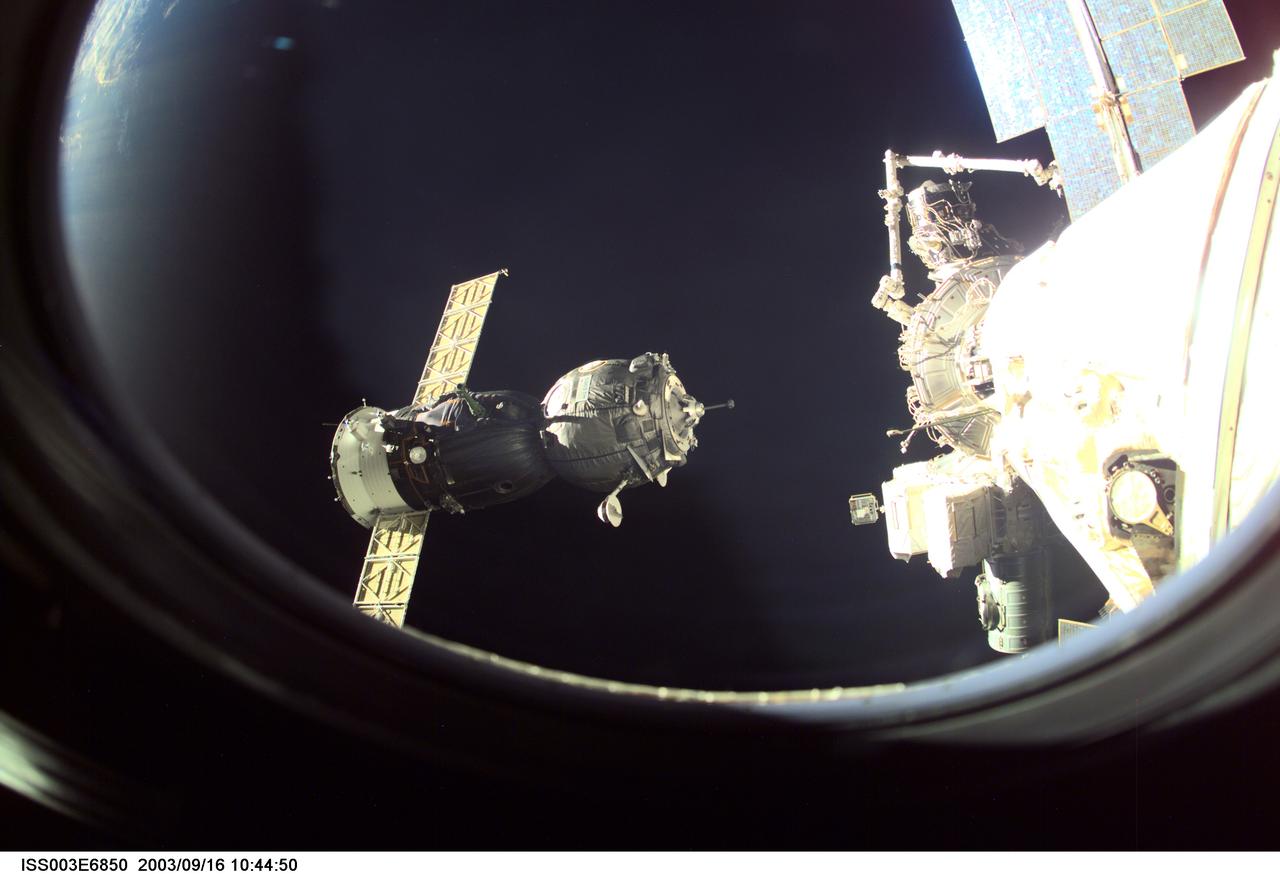
ISS003-E-6850 (23 October 2001) --- A Soyuz spacecraft approaches the International Space Station (ISS) carrying the Soyuz taxi crew, Commander Victor Afanasyev, Flight Engineer Konstantin Kozeev and French Flight Engineer Claudie Haignere for an eight-day stay on the station. Afanasyev and Kozeev represent Rosaviakosmos, and Haignere represents ESA, carrying out a flight program for CNES, the French Space Agency, under a commercial contract with the Russian Aviation and Space Agency. This image was taken with a digital still camera.
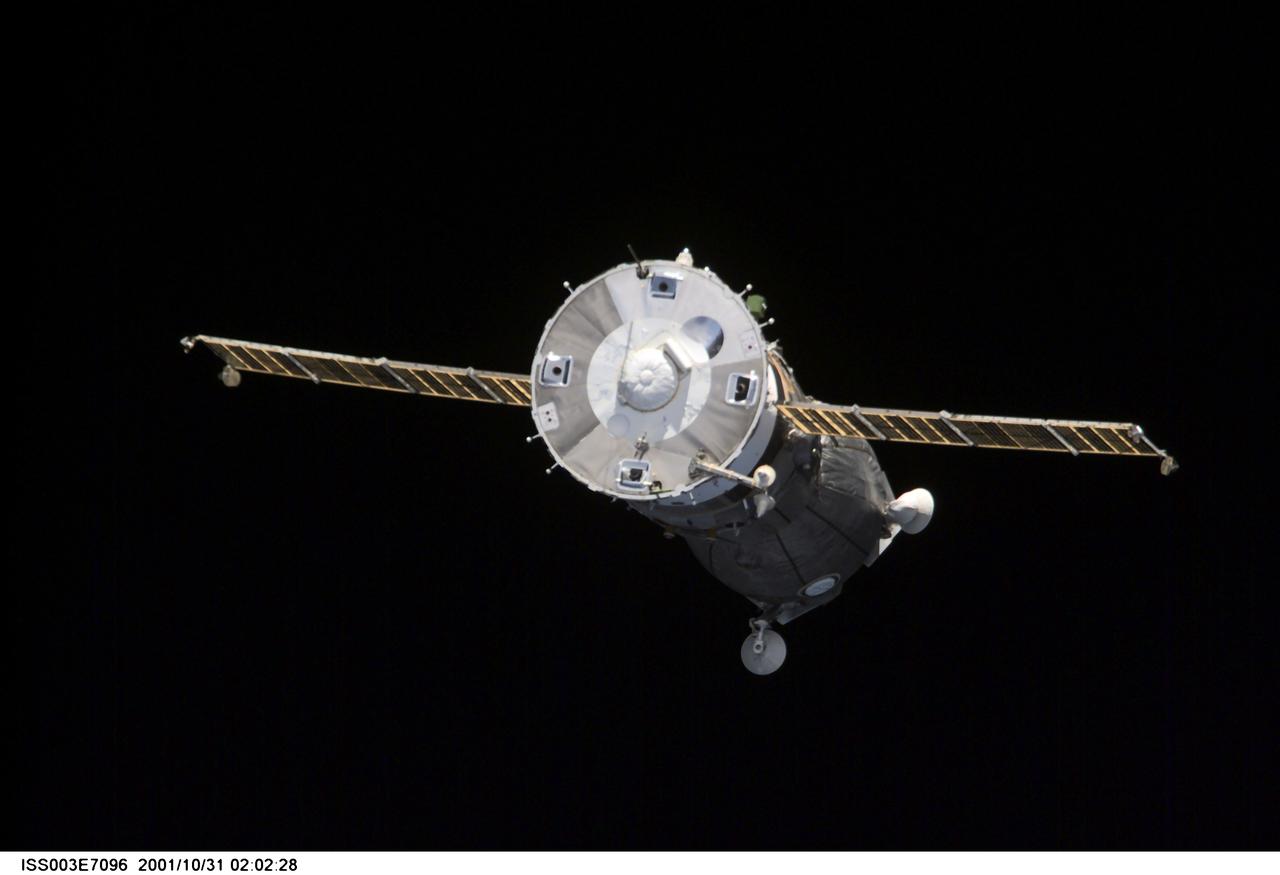
ISS003-E-7096 (31 October 2001) --- A Soyuz spacecraft departs from the International Space Station (ISS) carrying the Soyuz taxi crew, Commander Victor Afanasyev, Flight Engineer Konstantin Kozeev and French Flight Engineer Claudie Haignere, ending their eight-day stay on the station. Afanasyev and Kozeev represent Rosaviakosmos, and Haignere represents ESA, carrying out a flight program for CNES, the French Space Agency, under a commercial contract with the Russian Aviation and Space Agency. This image was taken with a digital still camera.
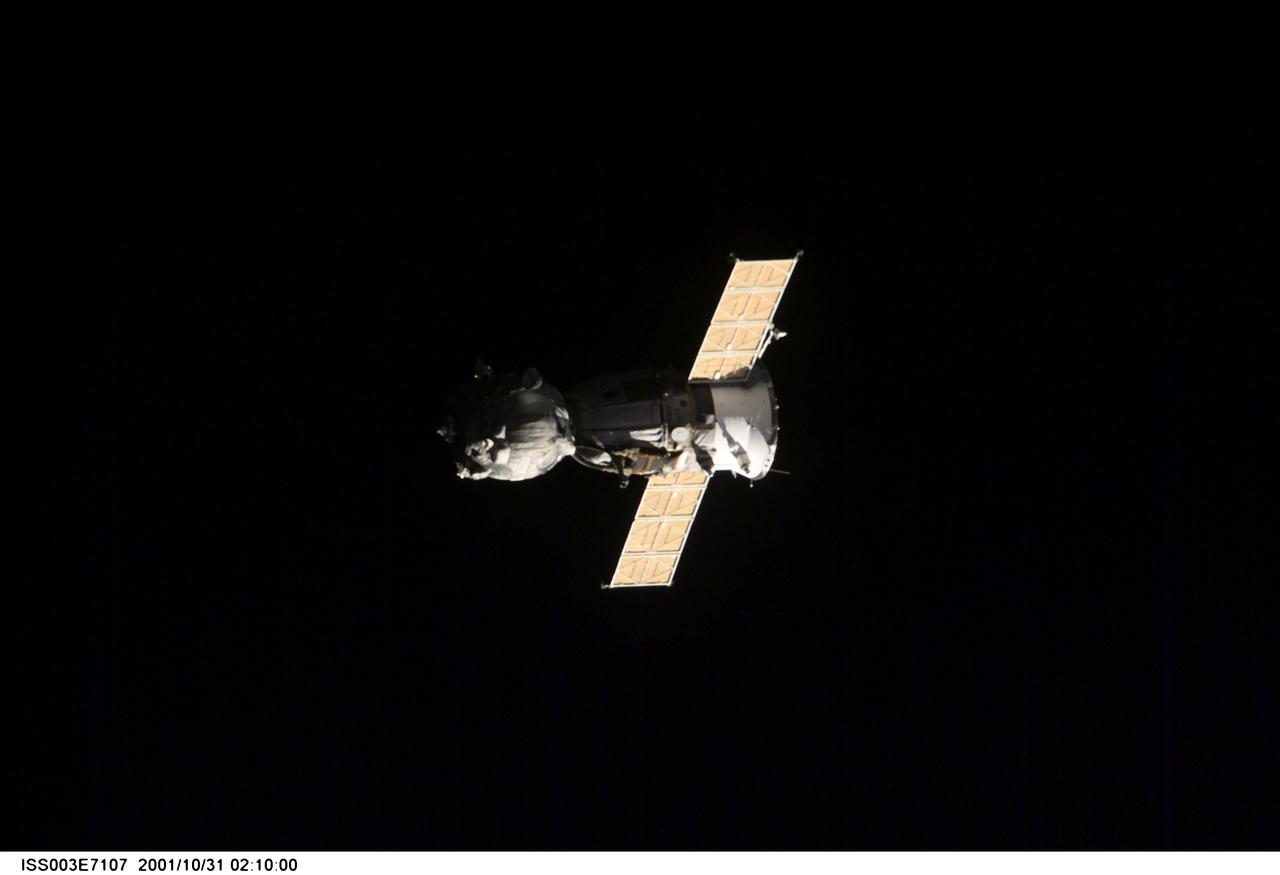
ISS003-E-7107 (31 October 2001) --- A Soyuz spacecraft departs from the International Space Station (ISS) carrying the Soyuz taxi crew, Commander Victor Afanasyev, Flight Engineer Konstantin Kozeev and French Flight Engineer Claudie Haignere, ending their eight-day stay on the station. Afanasyev and Kozeev represent Rosaviakosmos, and Haignere represents ESA, carrying out a flight program for CNES, the French Space Agency, under a commercial contract with the Russian Aviation and Space Agency. This image was taken with a digital still camera.
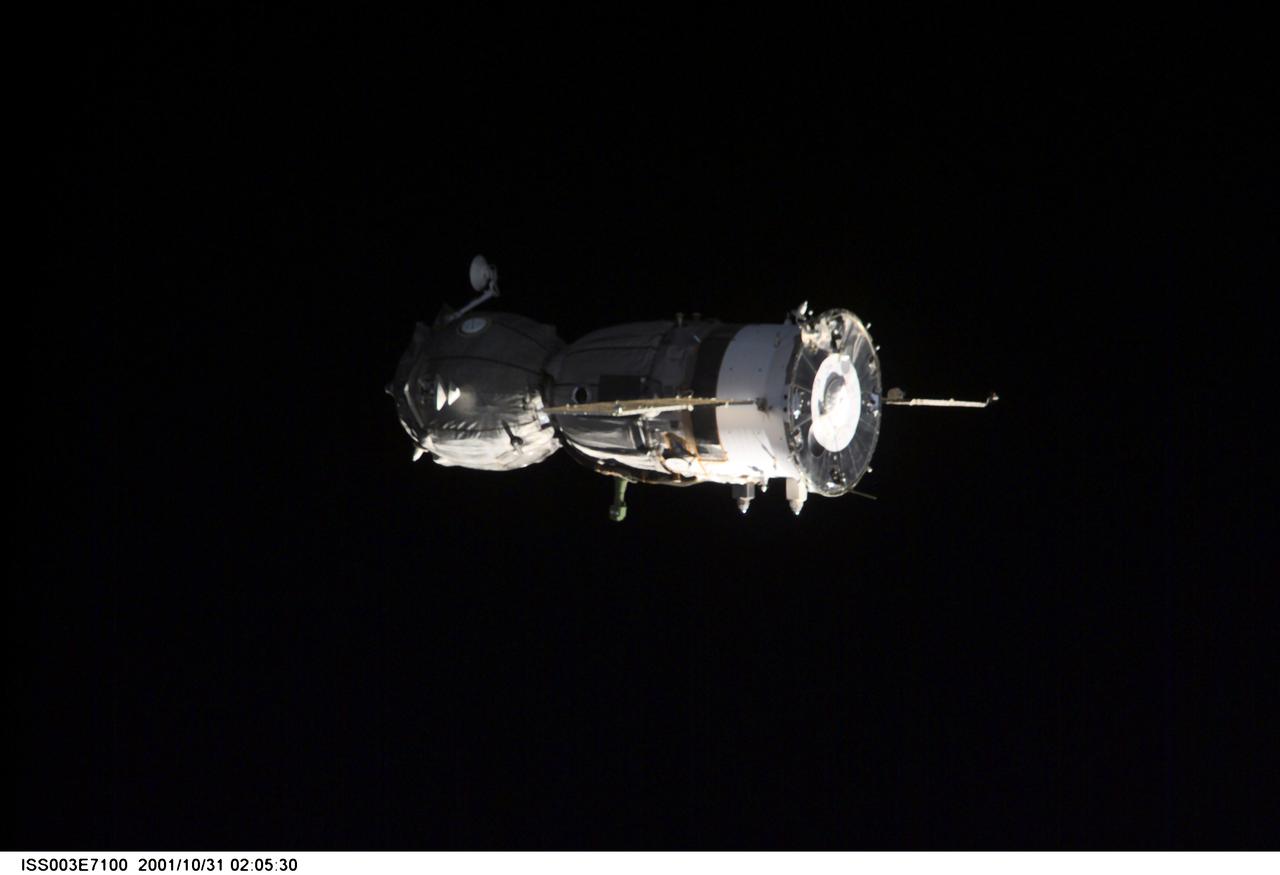
ISS003-E-7100 (31 October 2001) --- A Soyuz spacecraft departs from the International Space Station (ISS) carrying the Soyuz taxi crew, Commander Victor Afanasyev, Flight Engineer Konstantin Kozeev and French Flight Engineer Claudie Haignere, ending their eight-day stay on the station. Afanasyev and Kozeev represent Rosaviakosmos, and Haignere represents ESA, carrying out a flight program for CNES, the French Space Agency, under a commercial contract with the Russian Aviation and Space Agency. This image was taken with a digital still camera.
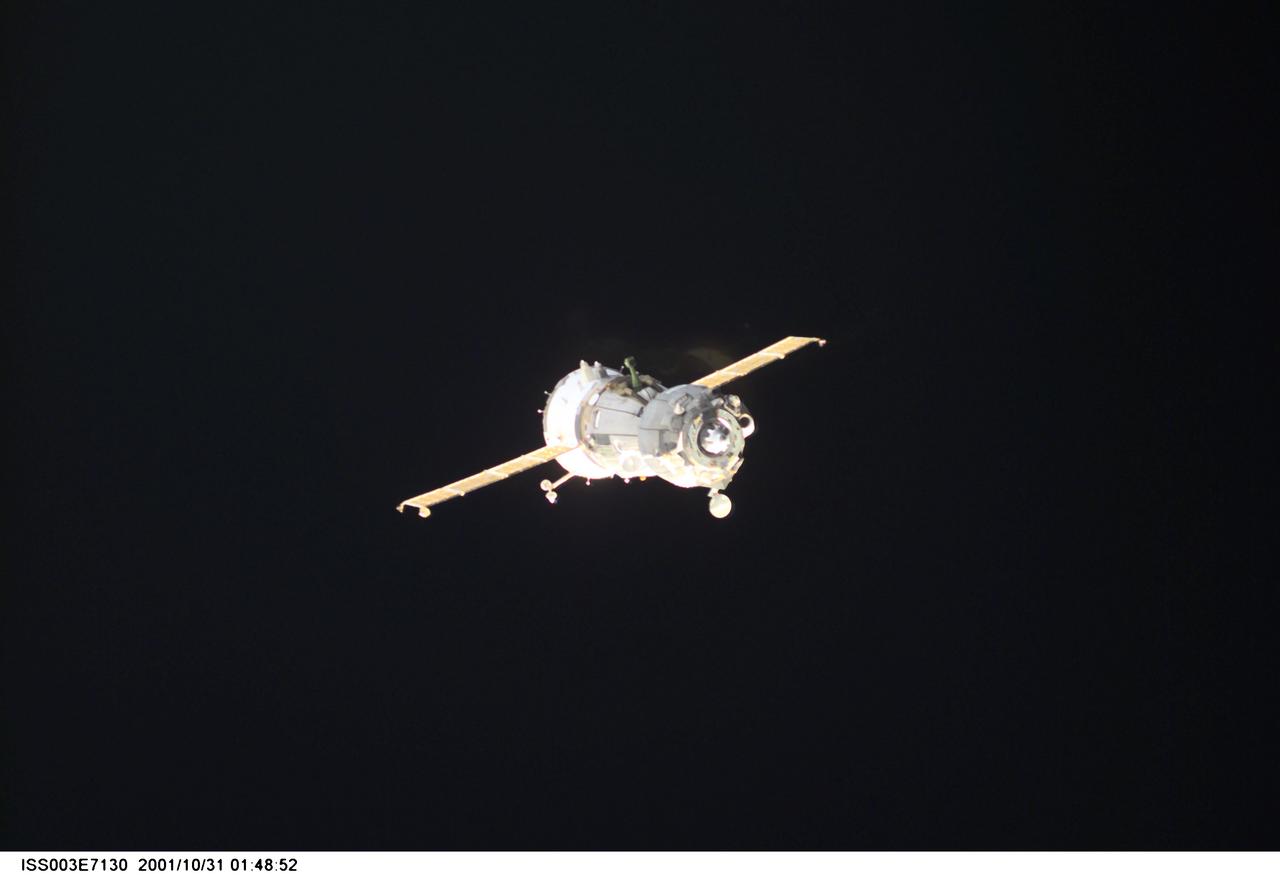
ISS003-E-7130 (31 October 2001) --- A Soyuz spacecraft departs from the International Space Station (ISS) carrying the Soyuz taxi crew, Commander Victor Afanasyev, Flight Engineer Konstantin Kozeev and French Flight Engineer Claudie Haignere, ending their eight-day stay on the station. Afanasyev and Kozeev represent Rosaviakosmos, and Haignere represents ESA, carrying out a flight program for CNES, the French Space Agency, under a commercial contract with the Russian Aviation and Space Agency. This image was taken with a digital still camera.
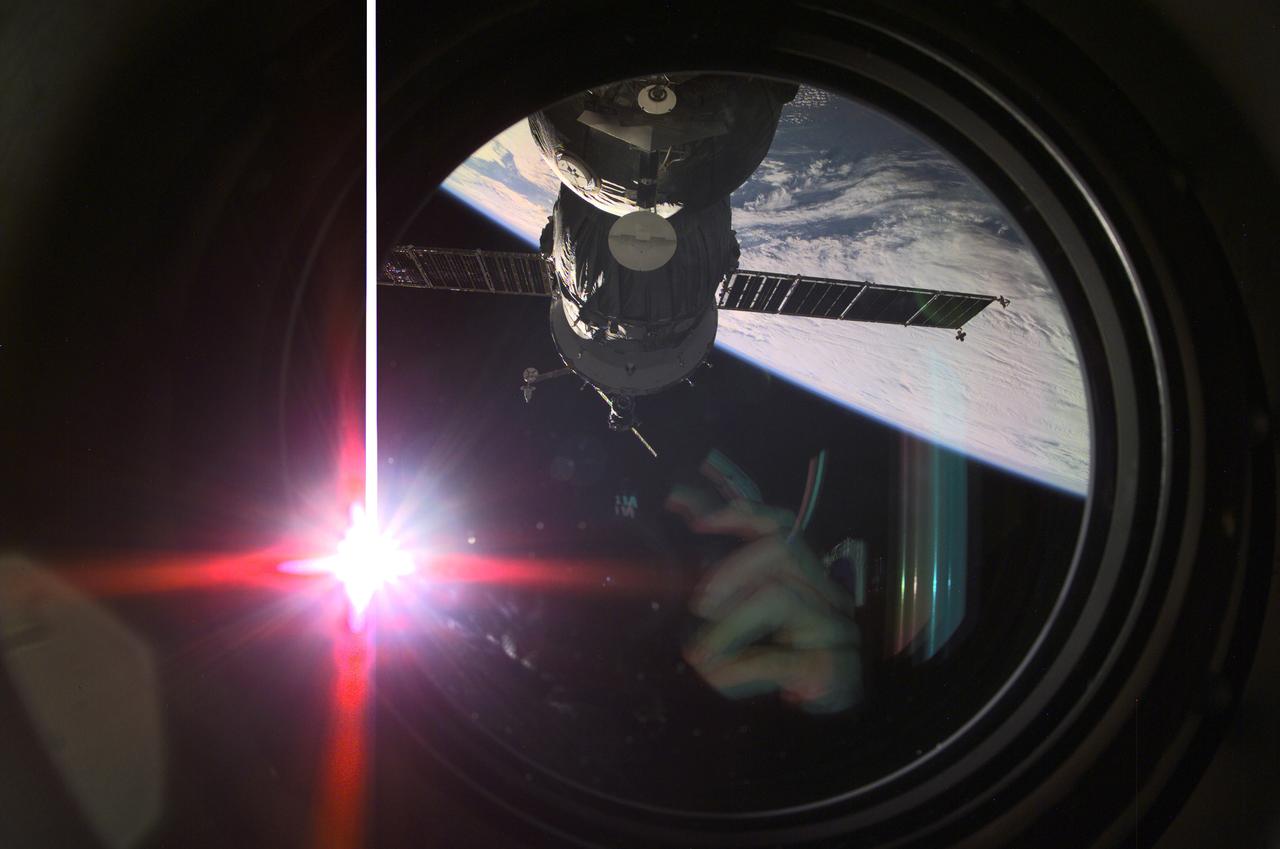
Carrying out a flight program for the French Space Agency (CNES) under a commercial contract with the Russian Aviation and Space Agency, a Russian Soyuz spacecraft approaches the International Space Station (ISS), delivering a crew of three for an eight-day stay. Aboard the craft are Commander Victor Afanasyev, Flight Engineer Konstantin Kozeev, both representing Rosaviakosmos, and French Flight Engineer Claudie Haignere.
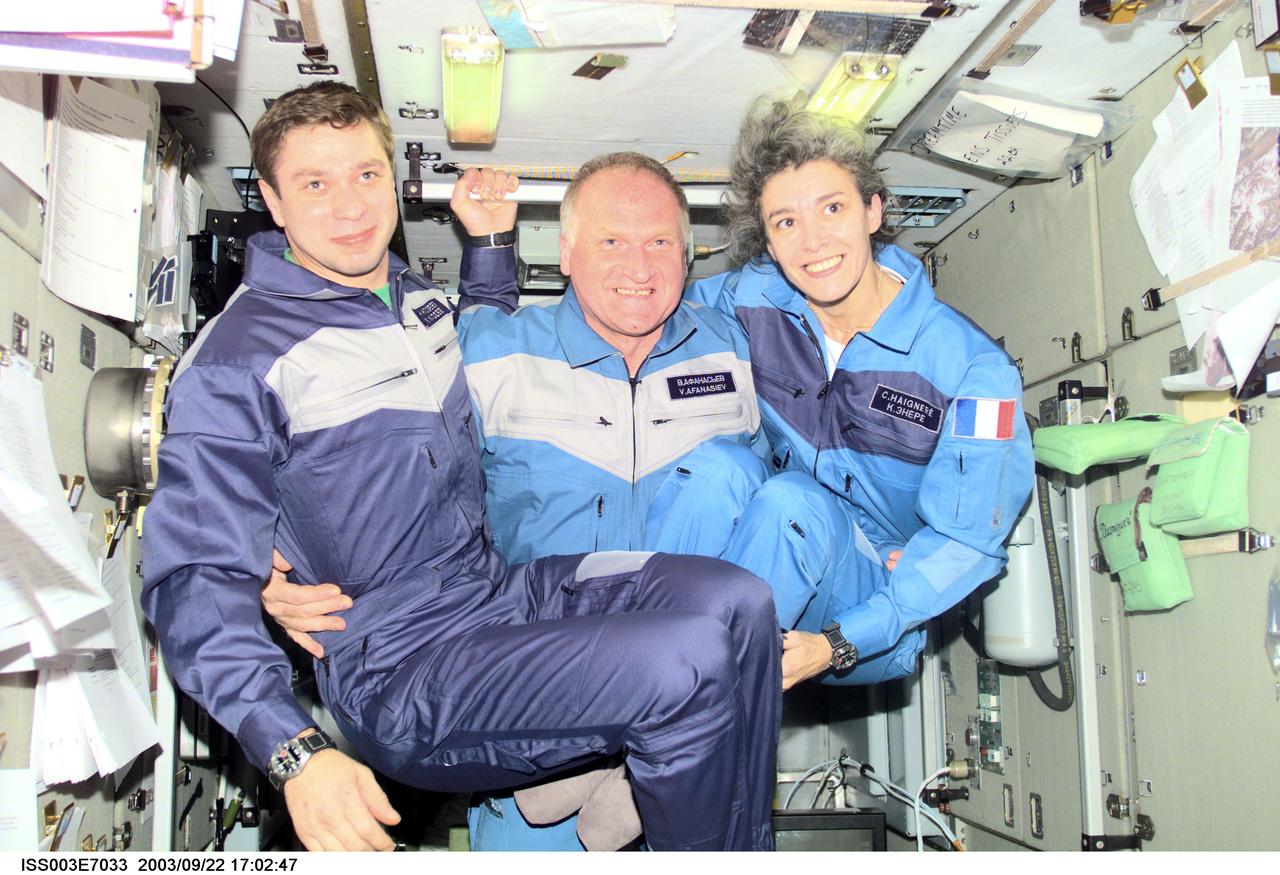
ISS003-E-7033 (23-31 October 2001) --- The Soyuz Taxi crewmembers assemble for a group photo in the Zvezda Service Module on the International Space Station (ISS). From the left are Flight Engineer Konstantin Kozeev, Commander Victor Afanasyev, and French Flight Engineer Claudie Haignere. Afanasyev and Kozeev represent Rosaviakosmos, and Haignere represents ESA, carrying out a flight program for CNES, the French Space Agency, under a commercial contract with the Russian Aviation and Space Agency. This image was taken with a digital still camera.
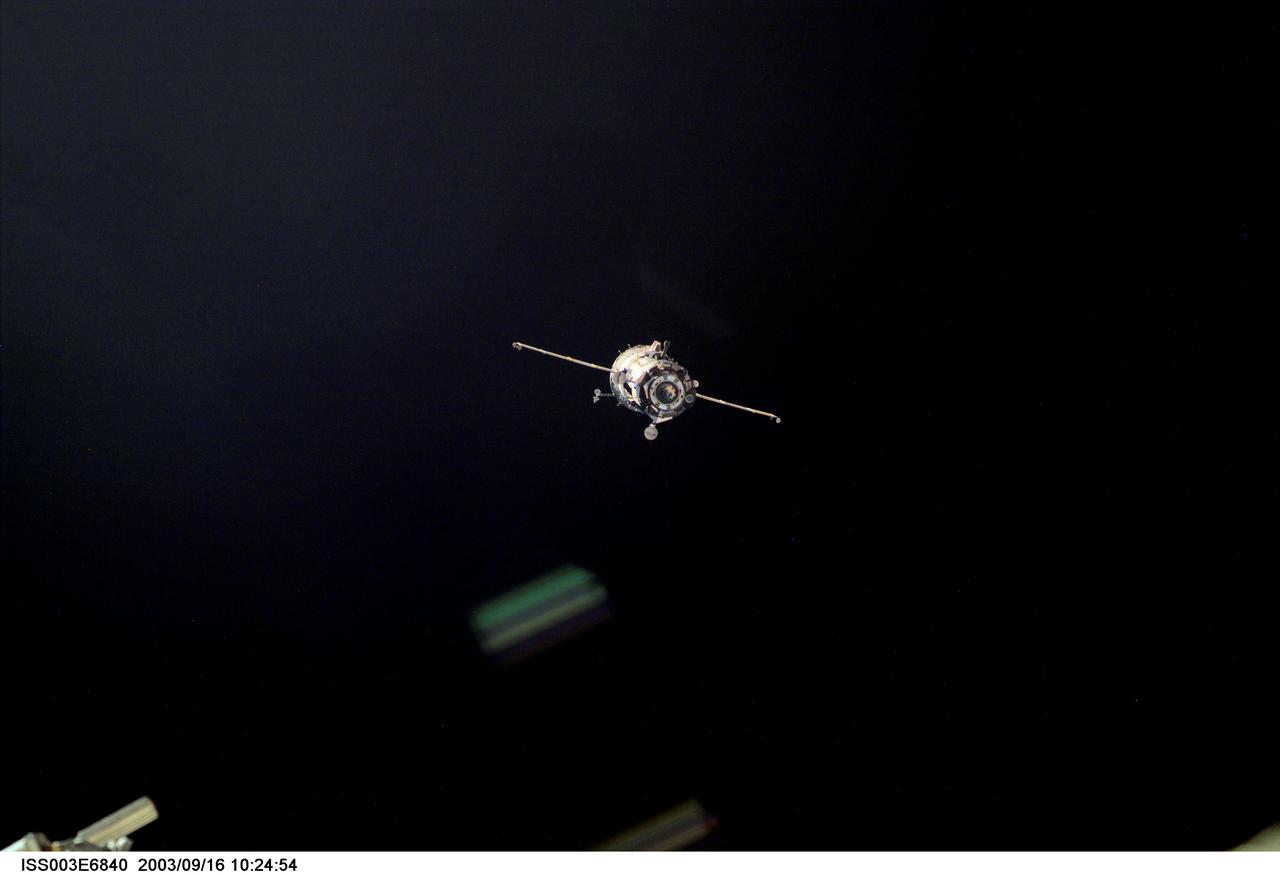
ISS003-E-6840 (23 October 2001) --- A Soyuz spacecraft approaches the International Space Station (ISS) carrying the Soyuz taxi crew, Commander Victor Afanasyev, Flight Engineer Konstantin Kozeev and French Flight Engineer Claudie Haignere for an eight-day stay on the station. Afanasyev and Kozeev represent Rosaviakosmos, and Haignere represents ESA, carrying out a flight program for CNES, the French Space Agency, under a commercial contract with the Russian Aviation and Space Agency. This image was taken with a digital still camera.
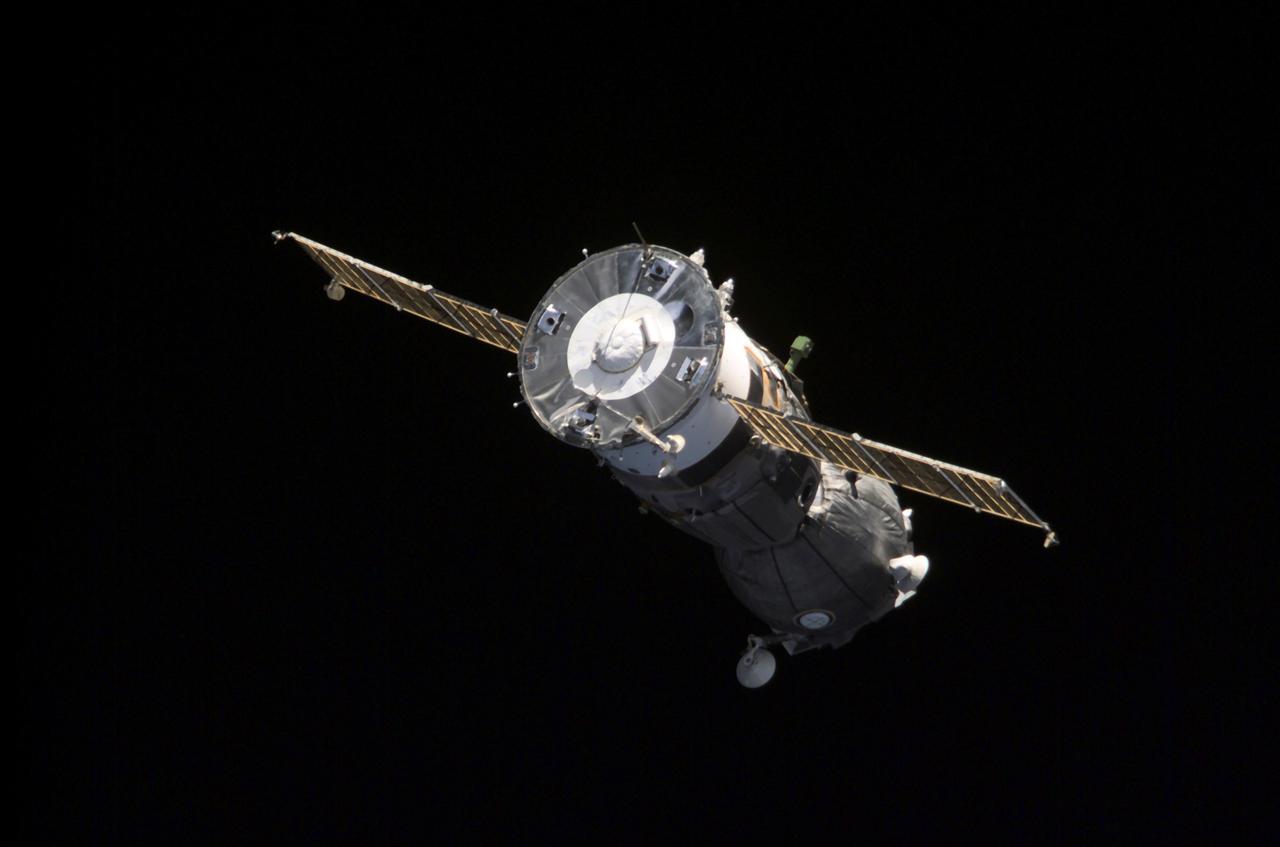
A Russian Soyuz spacecraft departs from the International Space Station (ISS) with its crew of three ending an eight-day stay. Aboard the craft are Commander Victor Afanasyev, Flight Engineer Konstantin Kozeev, both representing Rosaviakosmos, and French Flight Engineer Claudie Haignere. Their mission was to carry out a flight program for the French Space Agency (CNES) under a commercial contract with the Russian Aviation and Space Agency.
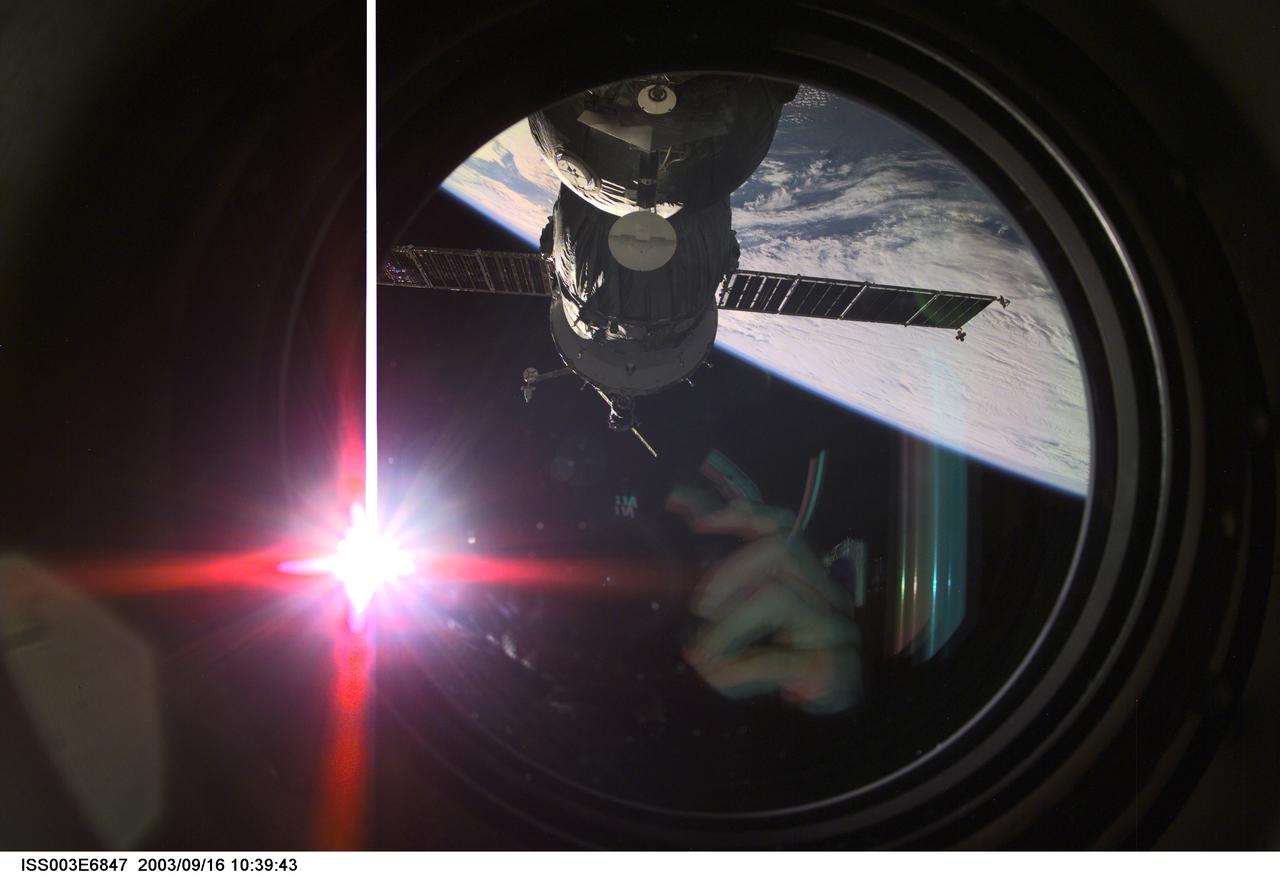
ISS003-E-6847 (23 October 2001) --- A Soyuz spacecraft approaches the International Space Station (ISS) carrying the Soyuz taxi crew, Commander Victor Afanasyev, Flight Engineer Konstantin Kozeev and French Flight Engineer Claudie Haignere for an eight-day stay on the station. Afanasyev and Kozeev represent Rosaviakosmos, and Haignere represents ESA, carrying out a flight program for CNES, the French Space Agency, under a commercial contract with the Russian Aviation and Space Agency. This image was taken with a digital still camera.
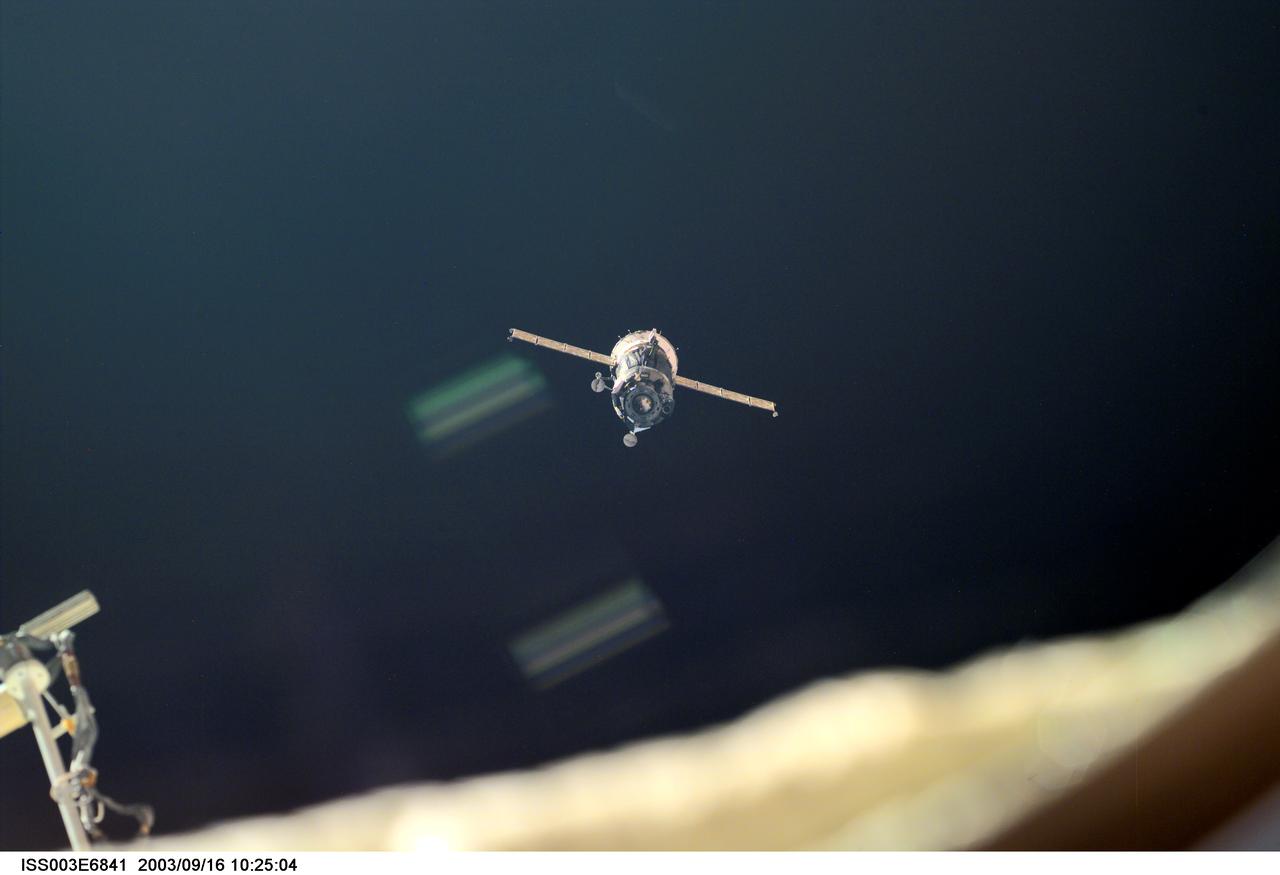
ISS003-E-6841 (23 October 2001) --- A Soyuz spacecraft approaches the International Space Station (ISS) carrying the Soyuz taxi crew, Commander Victor Afanasyev, Flight Engineer Konstantin Kozeev and French Flight Engineer Claudie Haignere for an eight-day stay on the station. Afanasyev and Kozeev represent Rosaviakosmos, and Haignere represents ESA, carrying out a flight program for CNES, the French Space Agency, under a commercial contract with the Russian Aviation and Space Agency. This image was taken with a digital still camera.
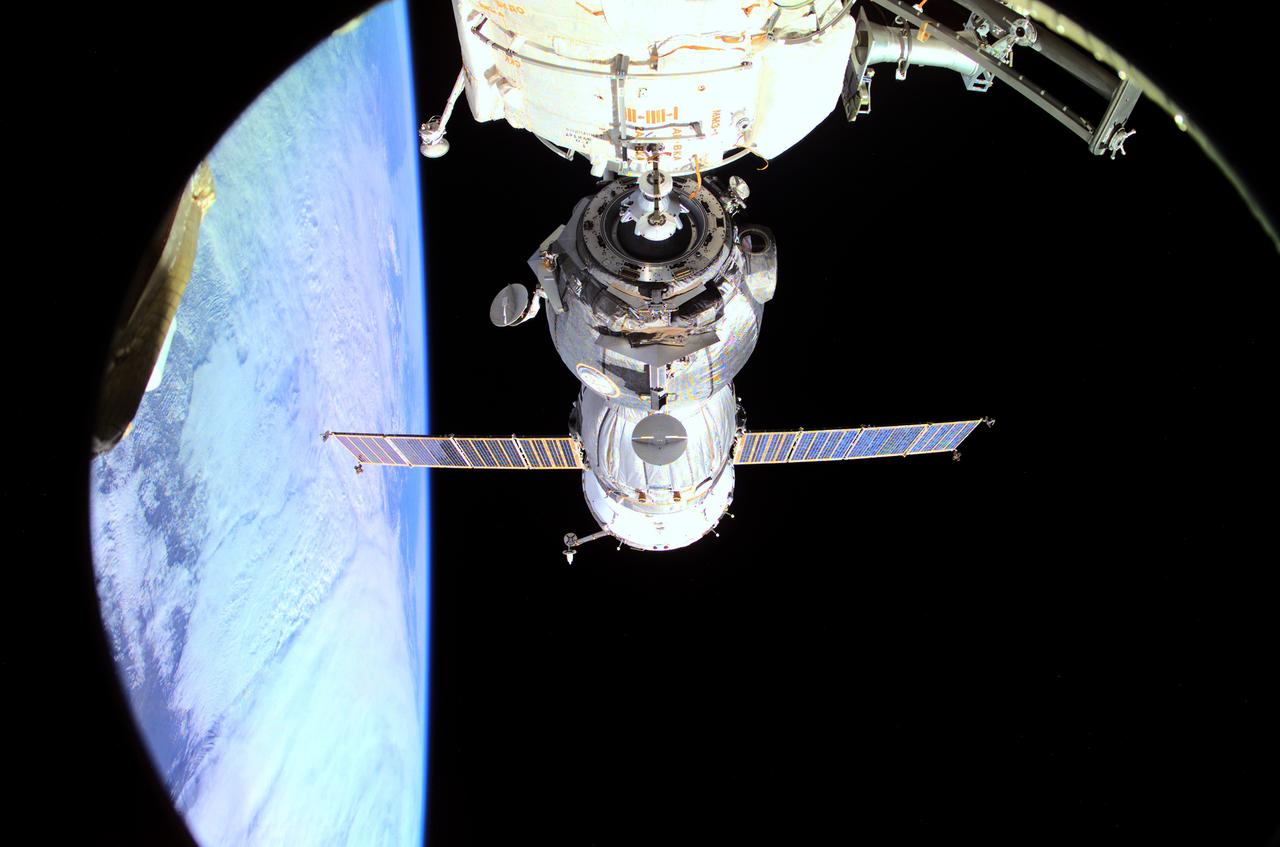
A Russian Soyuz spacecraft undocks from the International Space Station (ISS) with its crew of three ending an eight-day stay. Aboard the craft are Commander Victor Afanasyev, Flight Engineer Konstantin Kozeev, both representing Rosaviakosmos, and French Flight Engineer Claudie Haignere. Their mission was to carry out a flight program for the French Space Agency (CNES) under a commercial contract with the Russian Aviation and Space Agency.
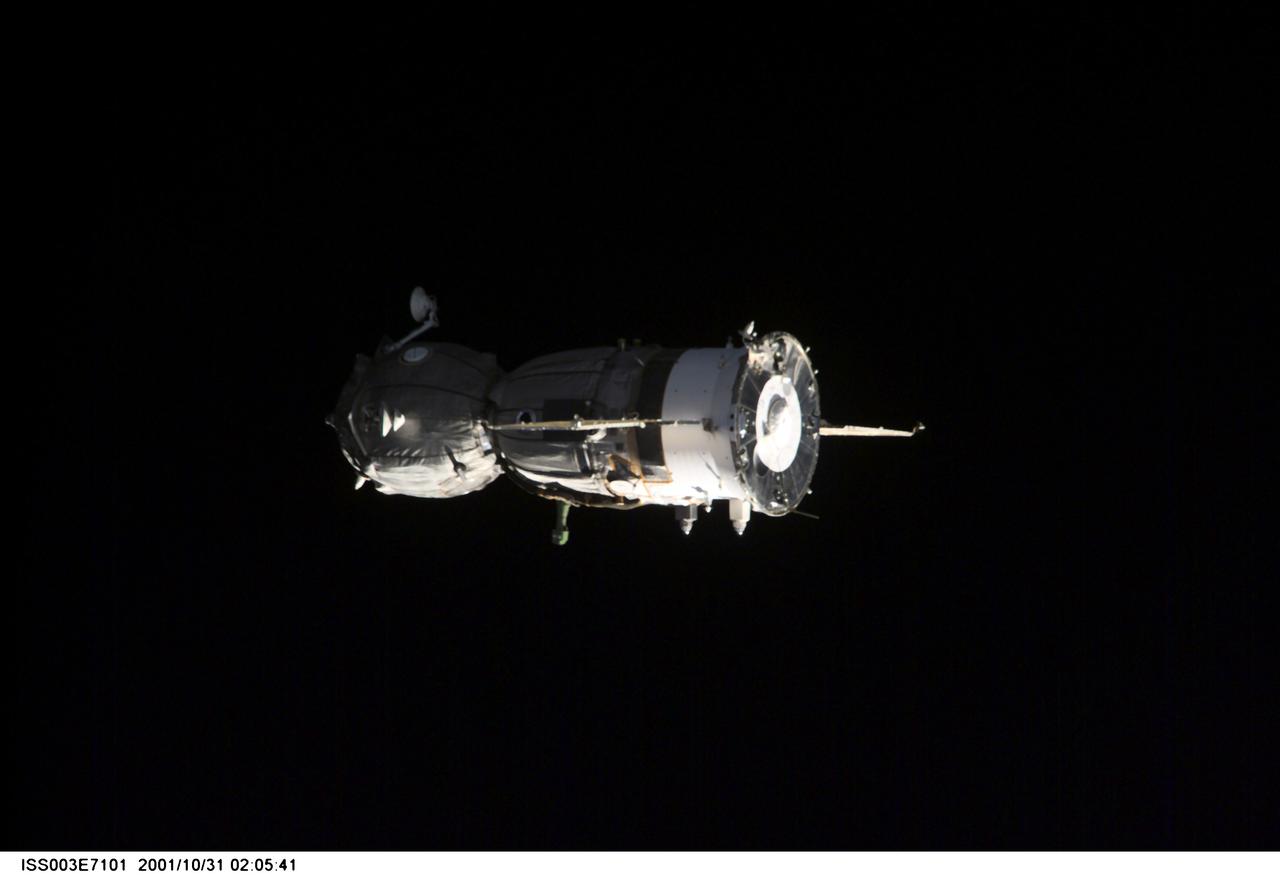
ISS003-E-7101 (31 October 2001) --- A Soyuz spacecraft departs from the International Space Station (ISS) carrying the Soyuz taxi crew, Commander Victor Afanasyev, Flight Engineer Konstantin Kozeev and French Flight Engineer Claudie Haignere, ending their eight-day stay on the station. Afanasyev and Kozeev represent Rosaviakosmos, and Haignere represents ESA, carrying out a flight program for CNES, the French Space Agency, under a commercial contract with the Russian Aviation and Space Agency. This image was taken with a digital still camera.
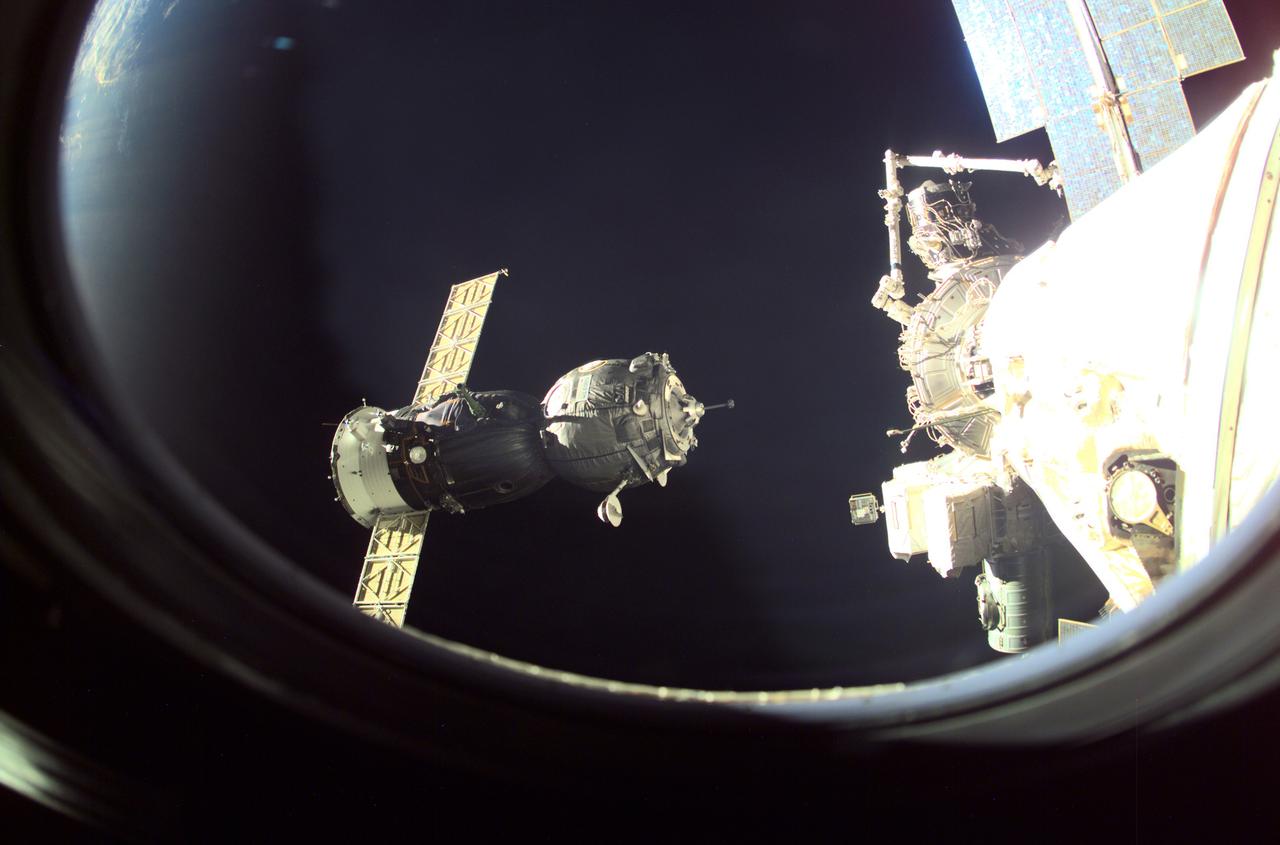
Carrying out a flight program for the French Space Agency (CNES) under a commerial contract with the Russian Aviation and Space Agency, a Russian Soyuz spacecraft approaches the International Space Station (ISS) delivering a crew of three for an eight-day stay. Aboard the craft are Commander Victor Afanasyev, Flight Engineer Konstantin Kozeev, both representing Rosaviakosmos, and French Flight Engineer Claudie Haignere.
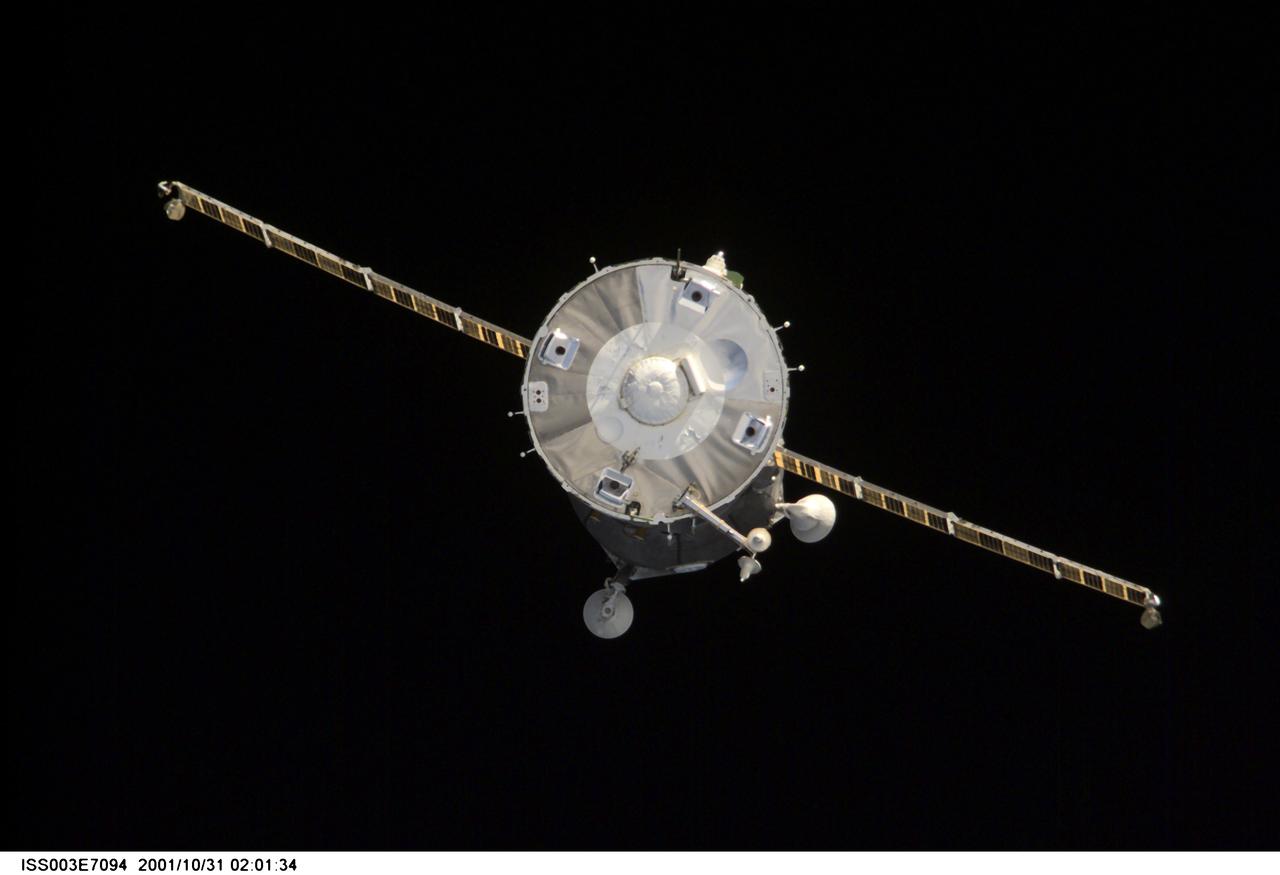
ISS003-E-7094 (31 October 2001) --- A Soyuz spacecraft departs from the International Space Station (ISS) carrying the Soyuz taxi crew, Commander Victor Afanasyev, Flight Engineer Konstantin Kozeev and French Flight Engineer Claudie Haignere, ending their eight-day stay on the station. Afanasyev and Kozeev represent Rosaviakosmos, and Haignere represents ESA, carrying out a flight program for CNES, the French Space Agency, under a commercial contract with the Russian Aviation and Space Agency. This image was taken with a digital still camera.
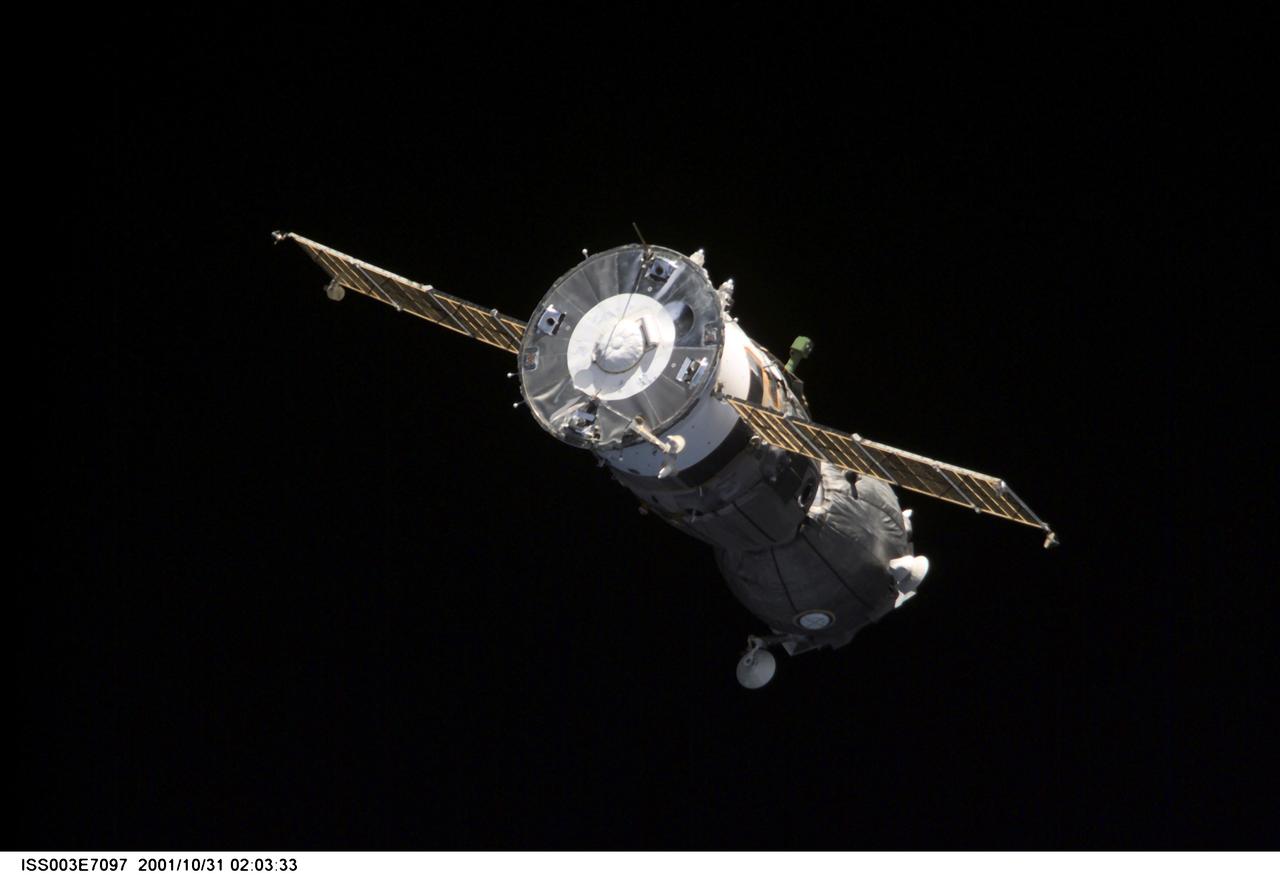
ISS003-E-7097 (31 October 2001) --- A Soyuz spacecraft departs from the International Space Station (ISS) carrying the Soyuz taxi crew, Commander Victor Afanasyev, Flight Engineer Konstantin Kozeev and French Flight Engineer Claudie Haignere, ending their eight-day stay on the station. Afanasyev and Kozeev represent Rosaviakosmos, and Haignere represents ESA, carrying out a flight program for CNES, the French Space Agency, under a commercial contract with the Russian Aviation and Space Agency. This image was taken with a digital still camera.
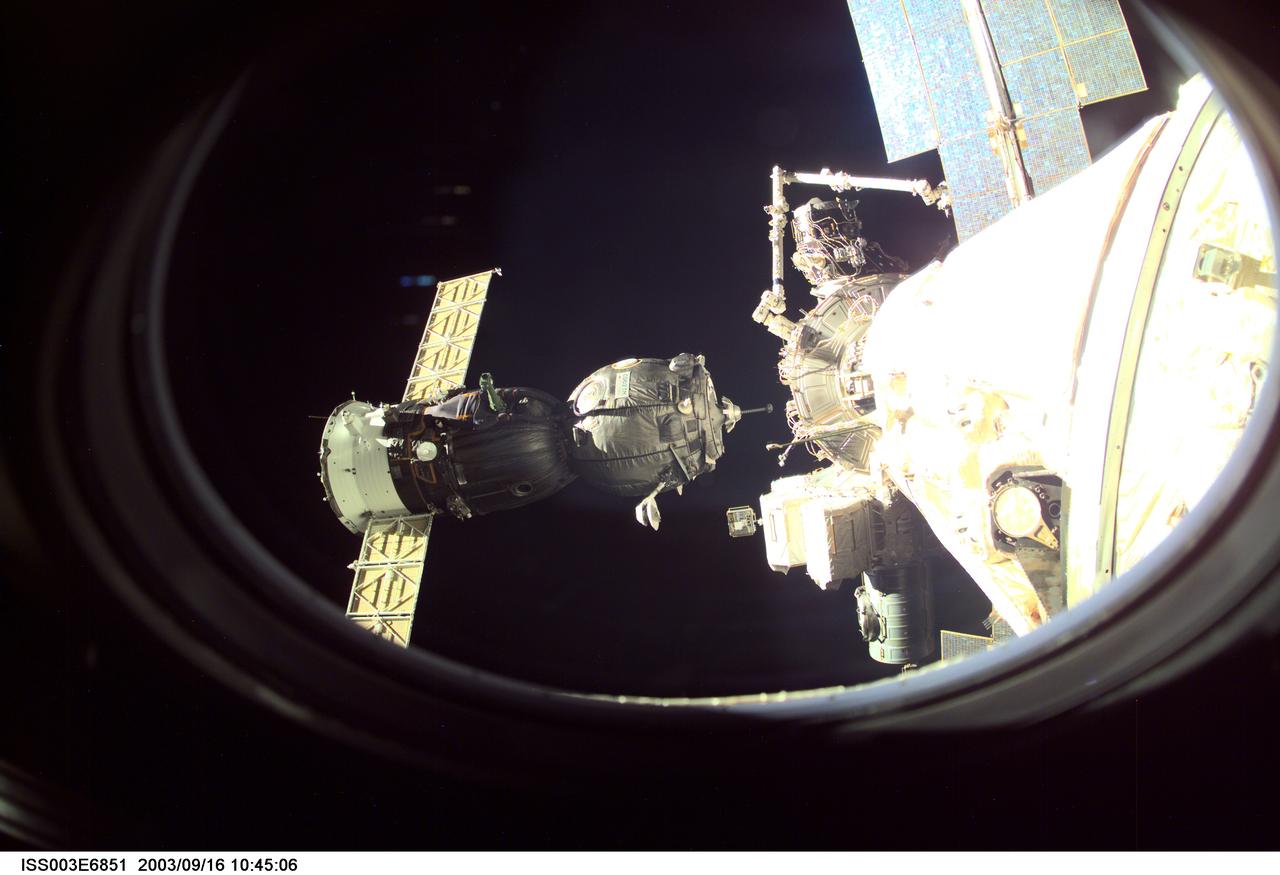
ISS003-E-6851 (23 October 2001) --- A Soyuz spacecraft approaches the International Space Station (ISS) carrying the Soyuz taxi crew, Commander Victor Afanasyev, Flight Engineer Konstantin Kozeev and French Flight Engineer Claudie Haignere for an eight-day stay on the station. Afanasyev and Kozeev represent Rosaviakosmos, and Haignere represents ESA, carrying out a flight program for CNES, the French Space Agency, under a commercial contract with the Russian Aviation and Space Agency. This image was taken with a digital still camera.
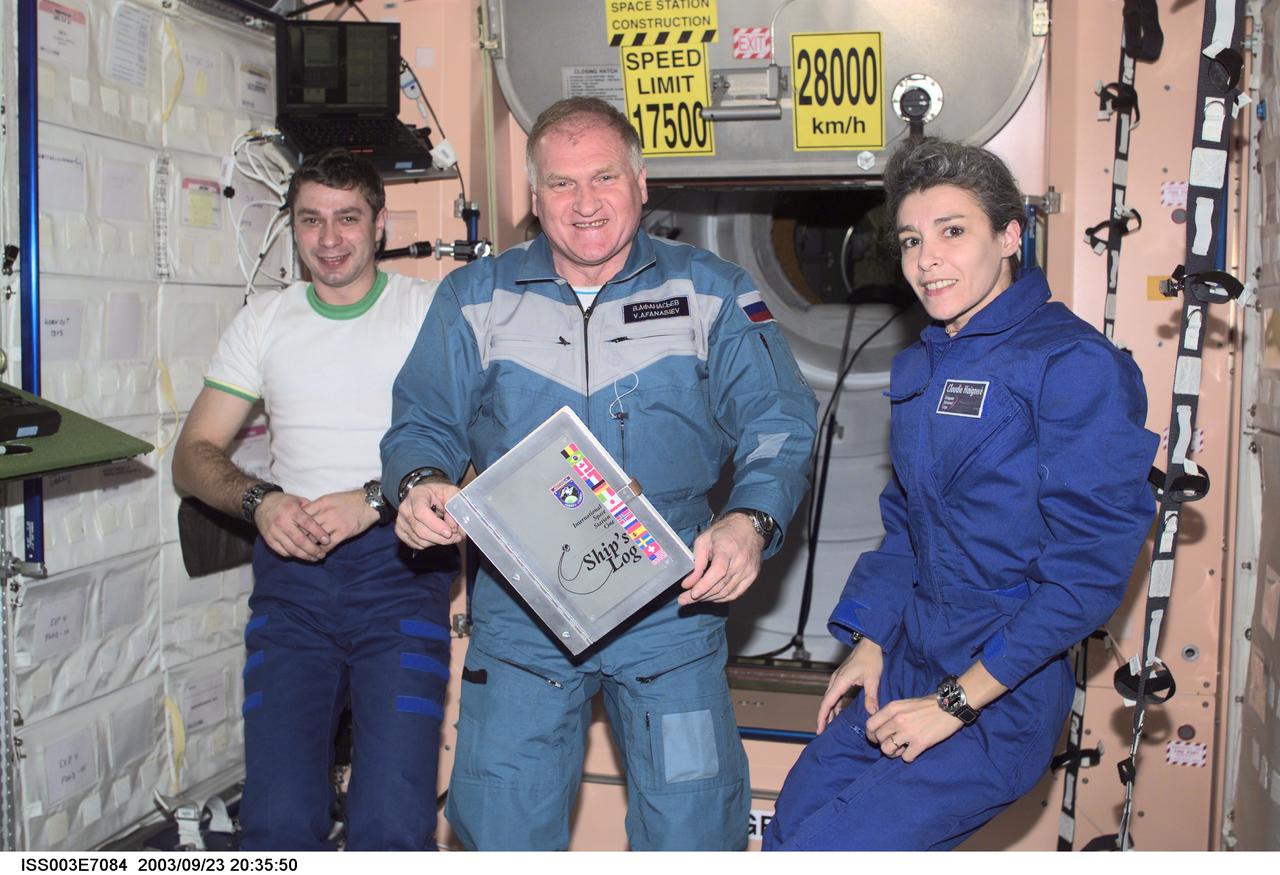
ISS003-E-7084 (23-31 October 2001) --- The Soyuz Taxi crewmembers, Flight Engineer Konstantin Kozeev (left), Commander Victor Afanasyev and French Flight Engineer Claudie Haignere add their names to the list of the International Space Station (ISS) visitors in the ship’s log in the Unity node. Afanasyev and Kozeev represent Rosaviakosmos, and Haignere represents ESA, carrying out a flight program for CNES, the French Space Agency, under a commercial contract with the Russian Aviation and Space Agency. This image was taken with a digital still camera.
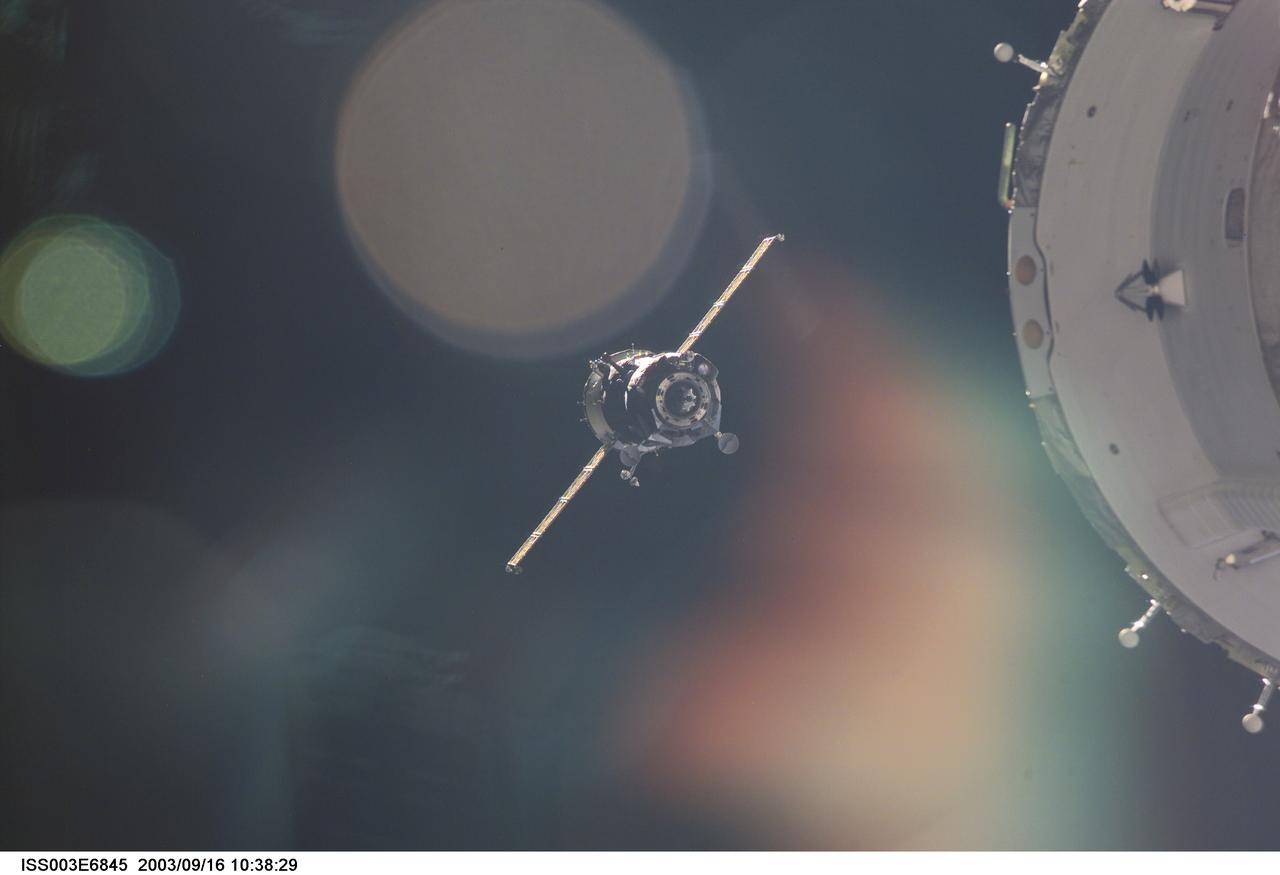
ISS003-E-6845 (23 October 2001) --- A Soyuz spacecraft approaches the International Space Station (ISS) carrying the Soyuz taxi crew, Commander Victor Afanasyev, Flight Engineer Konstantin Kozeev and French Flight Engineer Claudie Haignere for an eight-day stay on the station. Afanasyev and Kozeev represent Rosaviakosmos, and Haignere represents ESA, carrying out a flight program for CNES, the French Space Agency, under a commercial contract with the Russian Aviation and Space Agency. This image was taken with a digital still camera.
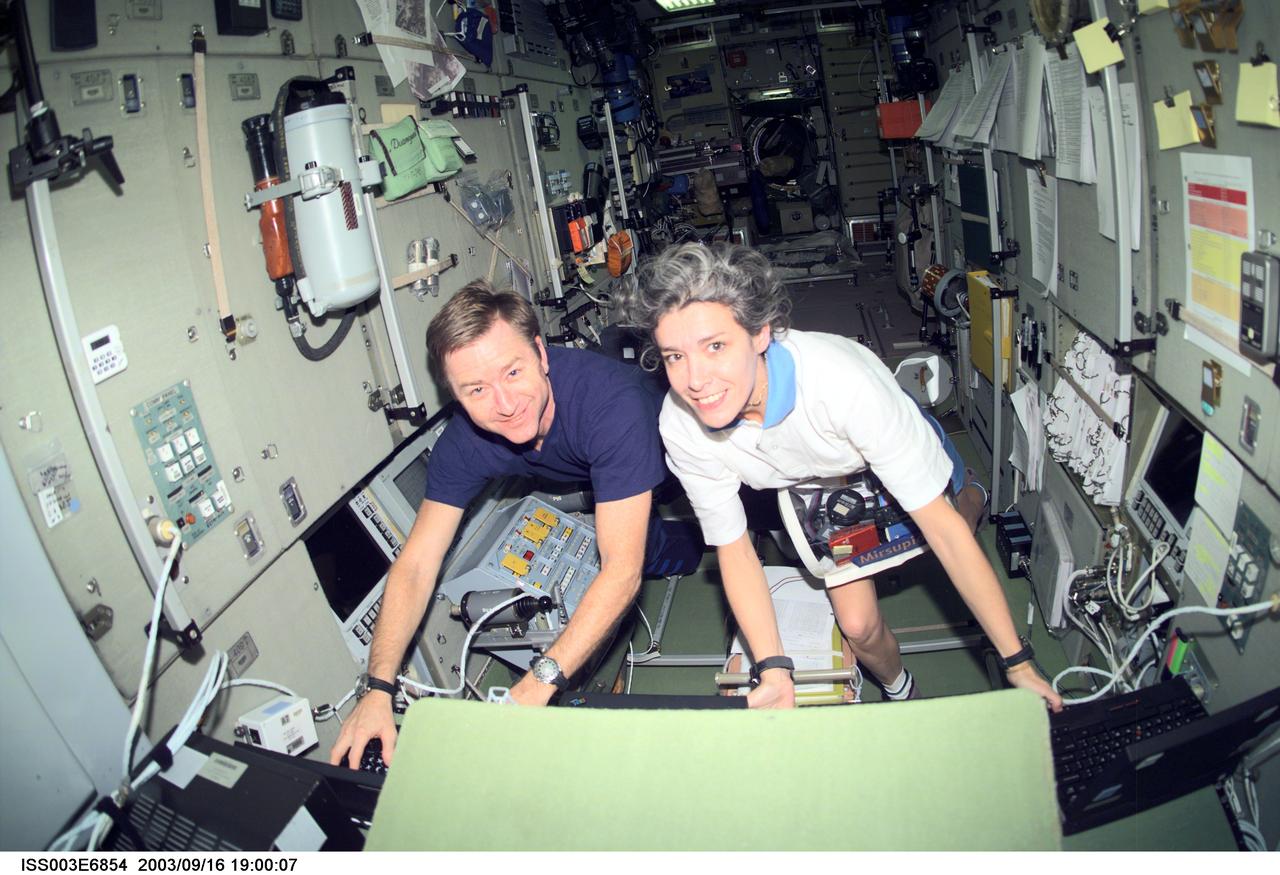
ISS003-E-6854 (23-31 October 2001) --- Astronaut Frank L. Culbertson, Jr. (left), Expedition Three mission commander, and French Flight Engineer Claudie Haignere, work in the Zvezda Service Module on the International Space Station (ISS). Haignere represents ESA, carrying out a flight program for CNES, the French Space Agency, under a commercial contract with the Russian Aviation and Space Agency. This image was taken with a digital still camera.
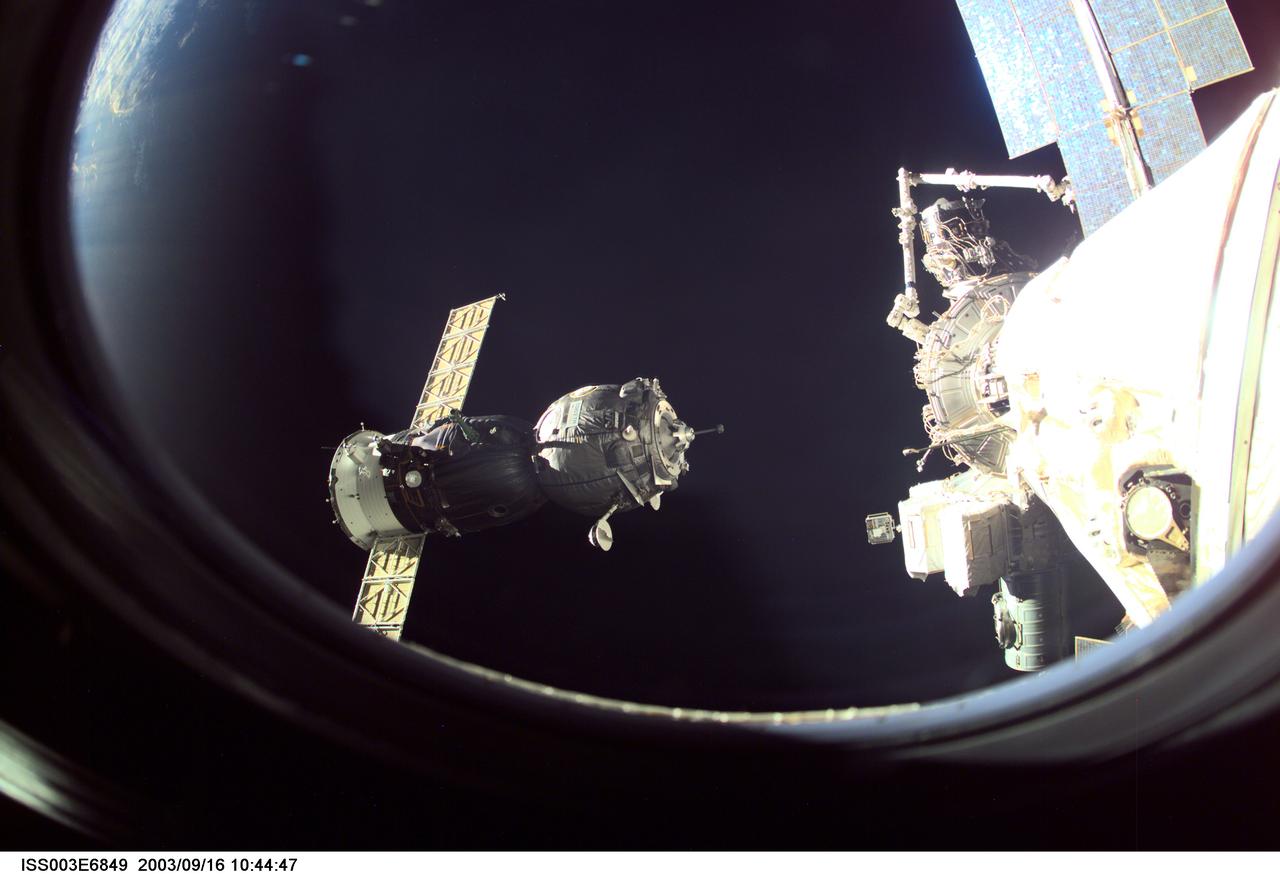
ISS003-E-6849 (23 October 2001) --- A Soyuz spacecraft approaches the International Space Station (ISS) carrying the Soyuz taxi crew, Commander Victor Afanasyev, Flight Engineer Konstantin Kozeev and French Flight Engineer Claudie Haignere for an eight-day stay on the station. Afanasyev and Kozeev represent Rosaviakosmos, and Haignere represents ESA, carrying out a flight program for CNES, the French Space Agency, under a commercial contract with the Russian Aviation and Space Agency. This image was taken with a digital still camera.
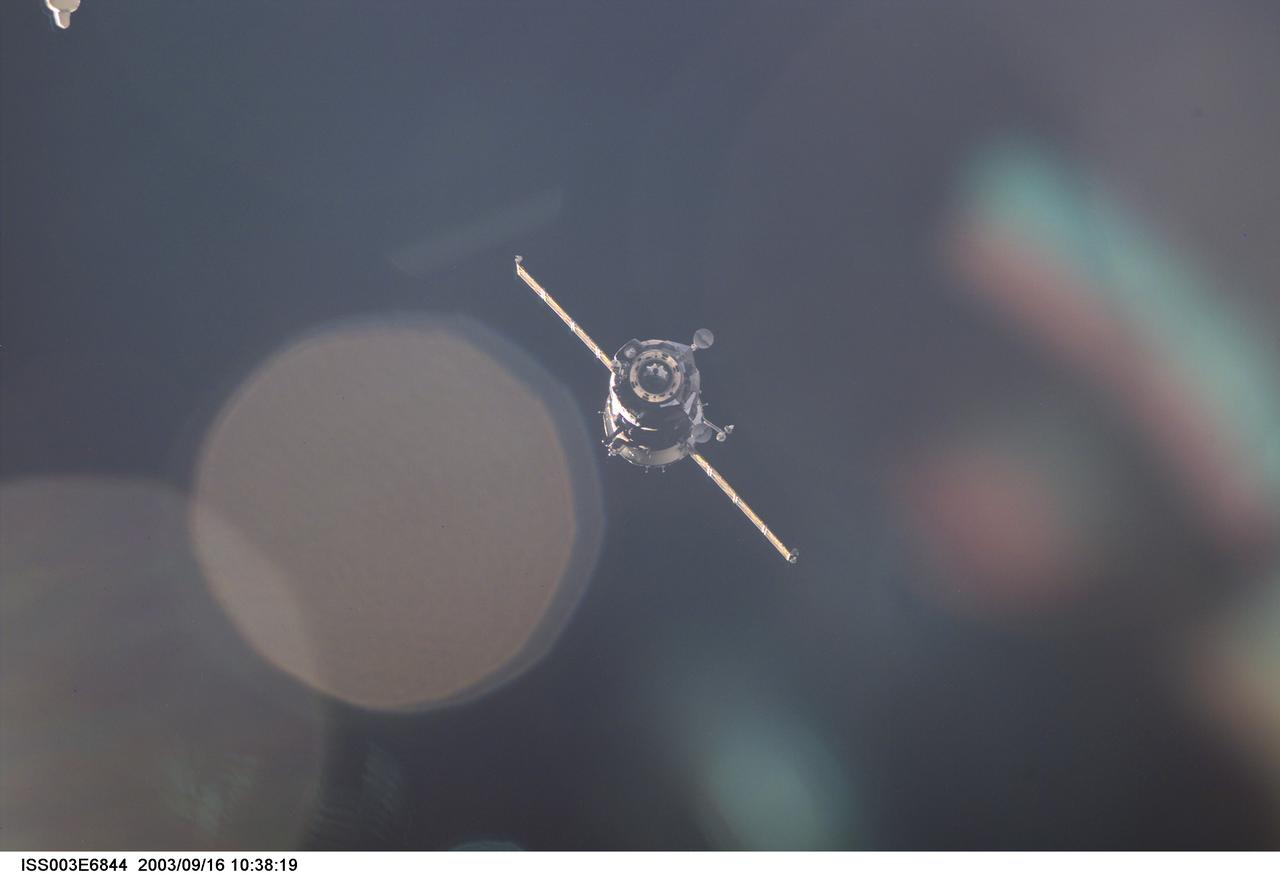
ISS003-E-6844 (23 October 2001) --- A Soyuz spacecraft approaches the International Space Station (ISS) carrying the Soyuz taxi crew, Commander Victor Afanasyev, Flight Engineer Konstantin Kozeev and French Flight Engineer Claudie Haignere for an eight-day stay on the station. Afanasyev and Kozeev represent Rosaviakosmos, and Haignere represents ESA, carrying out a flight program for CNES, the French Space Agency, under a commercial contract with the Russian Aviation and Space Agency. This image was taken with a digital still camera.
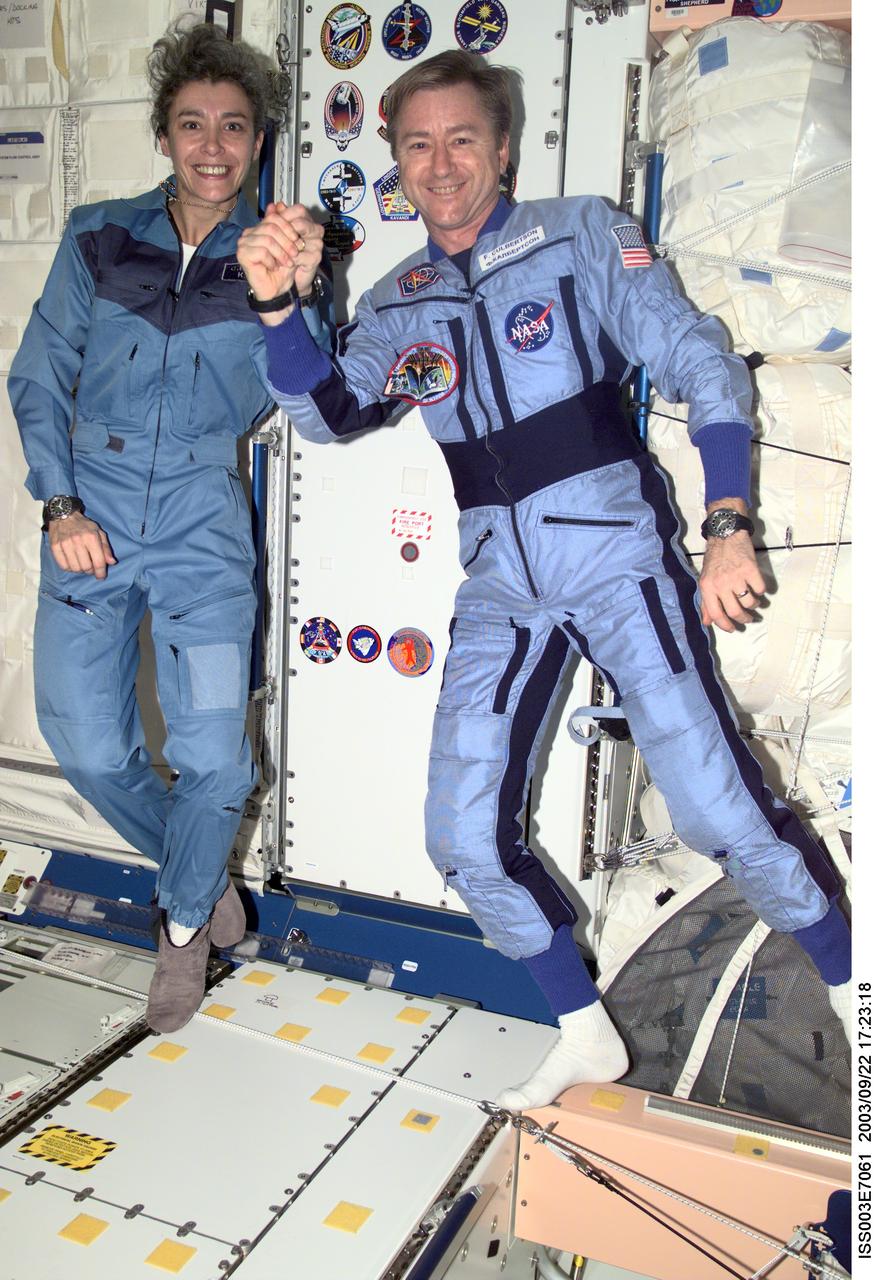
ISS003-E-7061 (23-31 October 2001) --- Astronaut Frank L. Culbertson, Jr. (right), Expedition Three mission commander, shakes hands with French Flight Engineer Claudie Haignere of the Soyuz Taxi crew, in the Unity node on the International Space Station (ISS). Haignere represents ESA, carrying out a flight program for CNES, the French Space Agency, under a commercial contract with the Russian Aviation and Space Agency. This image was taken with a digital still camera.
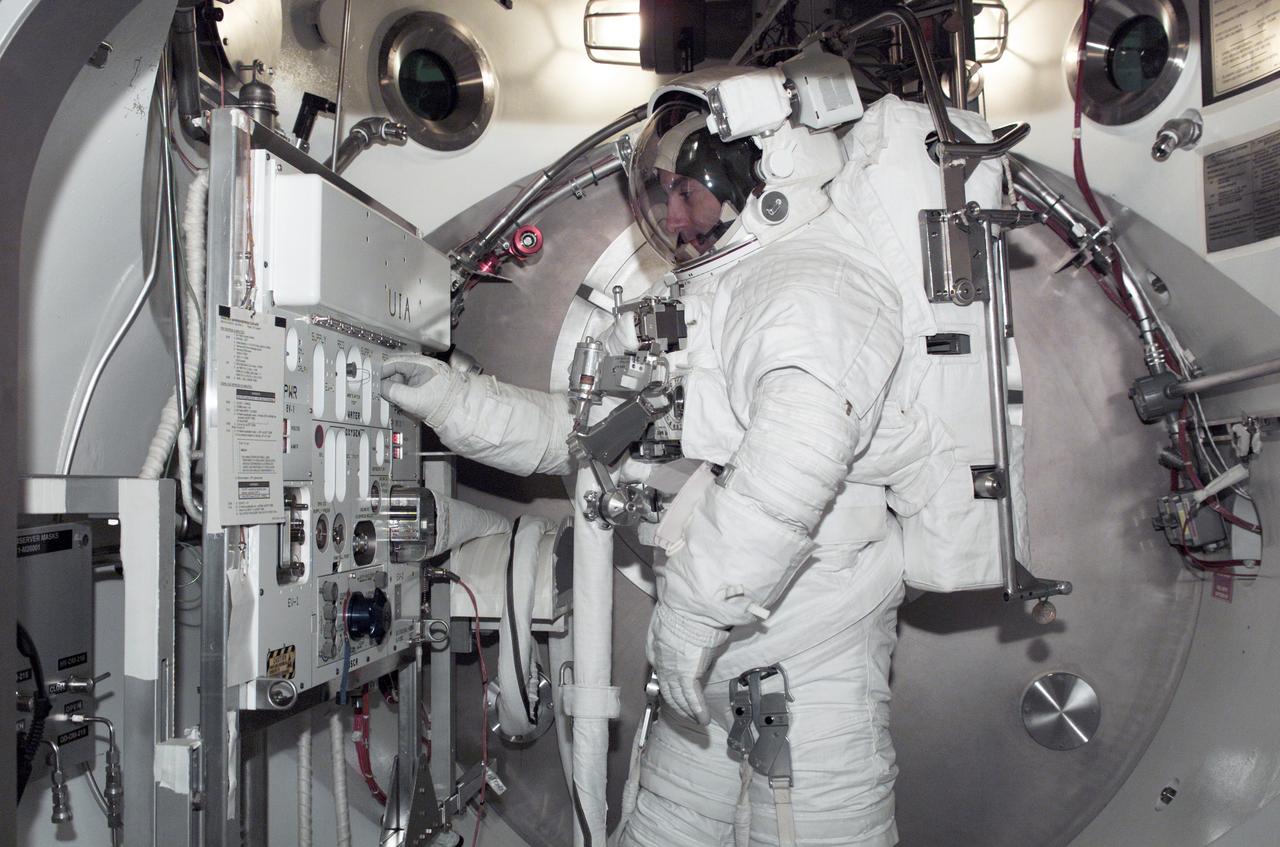
JSC2002-E-08243 (20 February 2002) --- Astronaut Philippe Perrin, STS-111 mission specialist representing CNES, the French Space Agency, is photographed during an Extravehicular Mobility Unit (EMU) fit check in a Space Station Airlock Test Article (SSATA) in the Crew Systems Laboratory at the Johnson Space Center (JSC).
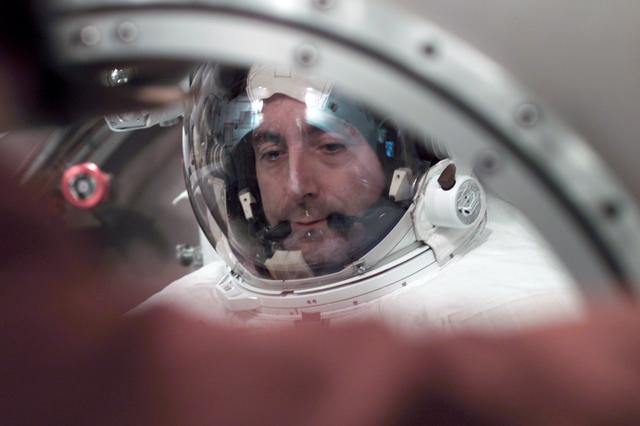
JSC2002-E-08241 (20 February 2002) --- Astronaut Philippe Perrin, STS-111 mission specialist representing CNES, the French Space Agency, is photographed during an Extravehicular Mobility Unit (EMU) fit check in a Space Station Airlock Test Article (SSATA) in the Crew Systems Laboratory at the Johnson Space Center (JSC).
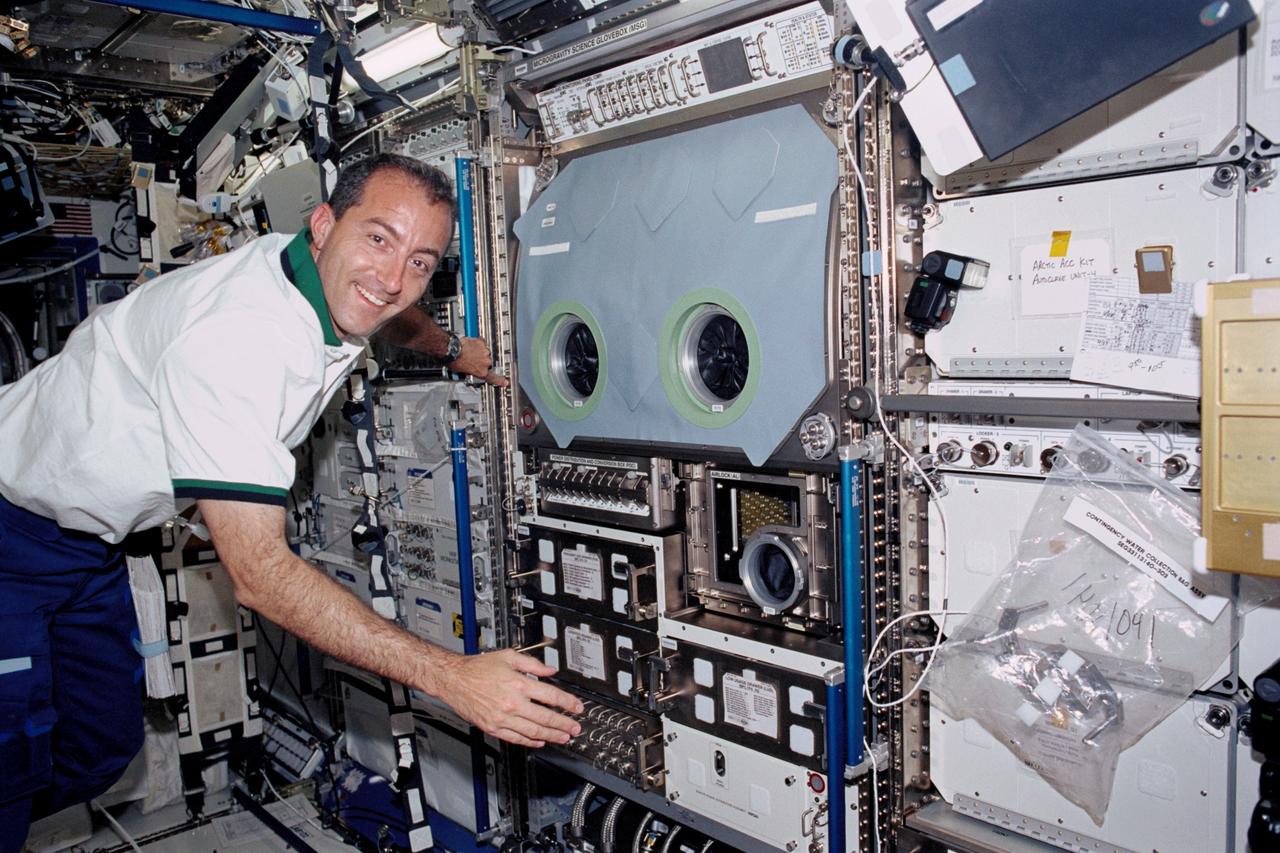
STS111-318-017 (5-19 June 2002) --- Astronaut Philippe Perrin, STS-111 mission specialist, floats near the Microgravity Science Glovebox (MSG) in the Destiny laboratory on the International Space Station (ISS). Perrin represents CNES, the French Space Agency.
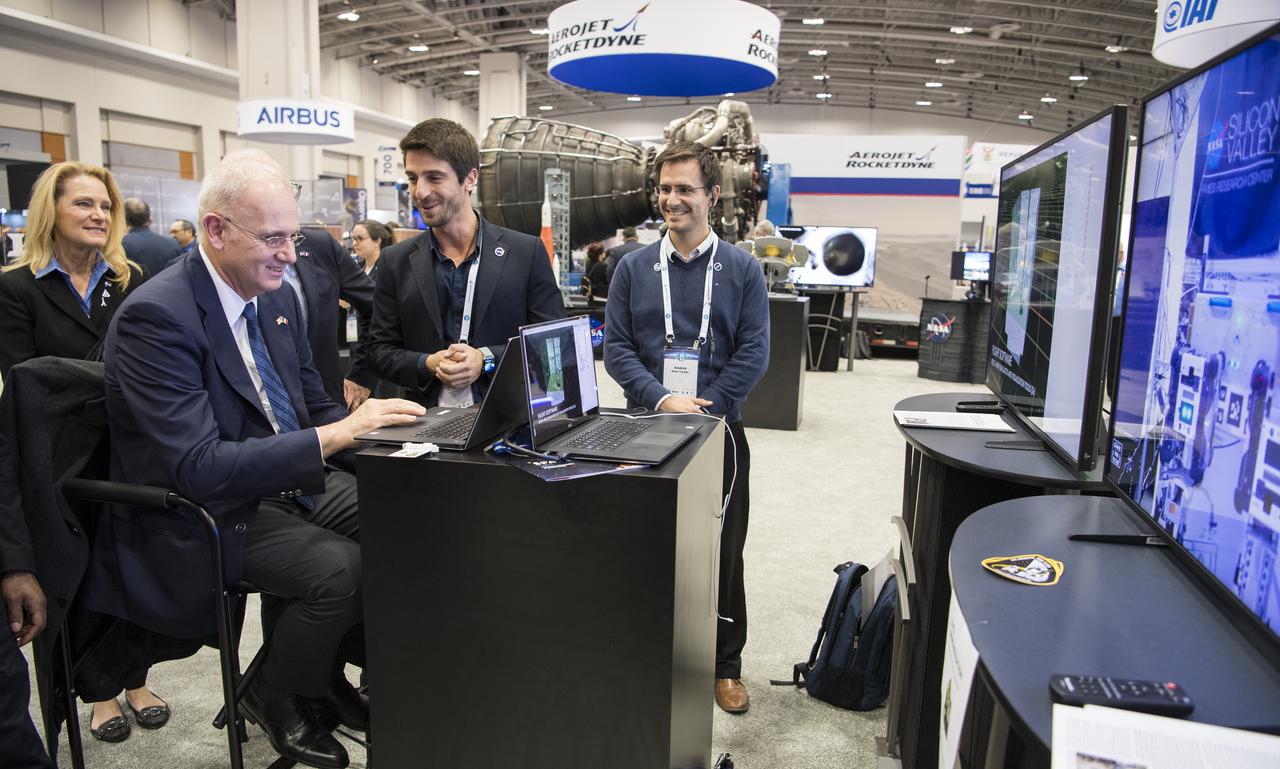
Jean-Yves Le Gall, president of the French space agency, National Centre for Space Studies (CNES), tests a robotic arm at the NASA exhibit during the 70th International Astronautical Congress, Wednesday, Oct. 23, 2019, at the Walter E. Washington Convention Center in Washington. Photo credit: (NASA/Aubrey Gemignani)
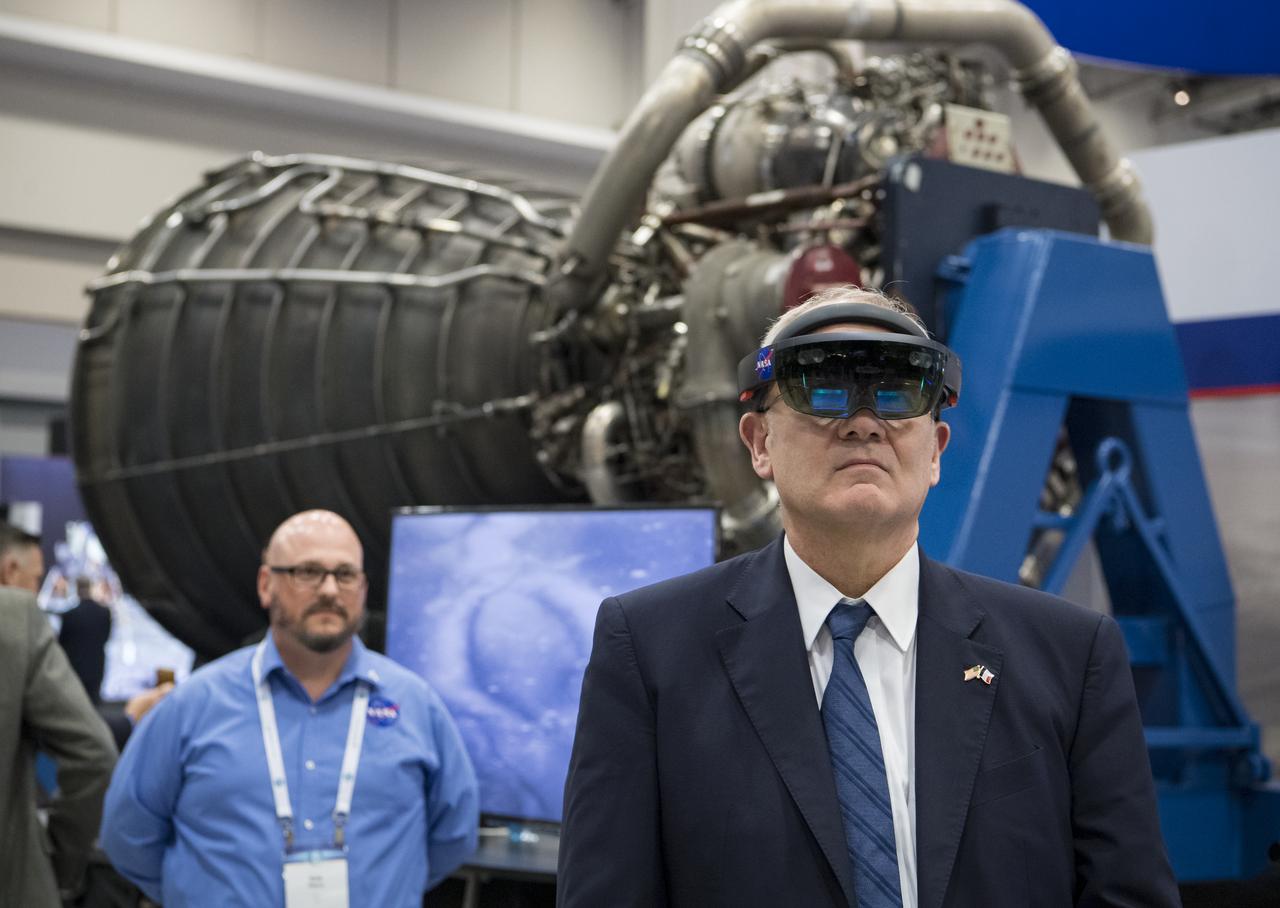
Jean-Yves Le Gall, president of the French space agency, National Centre for Space Studies (CNES), tries virtual reality viewers at the NASA exhibit during the 70th International Astronautical Congress, Wednesday, Oct. 23, 2019, at the Walter E. Washington Convention Center in Washington. Photo credit: (NASA/Aubrey Gemignani)
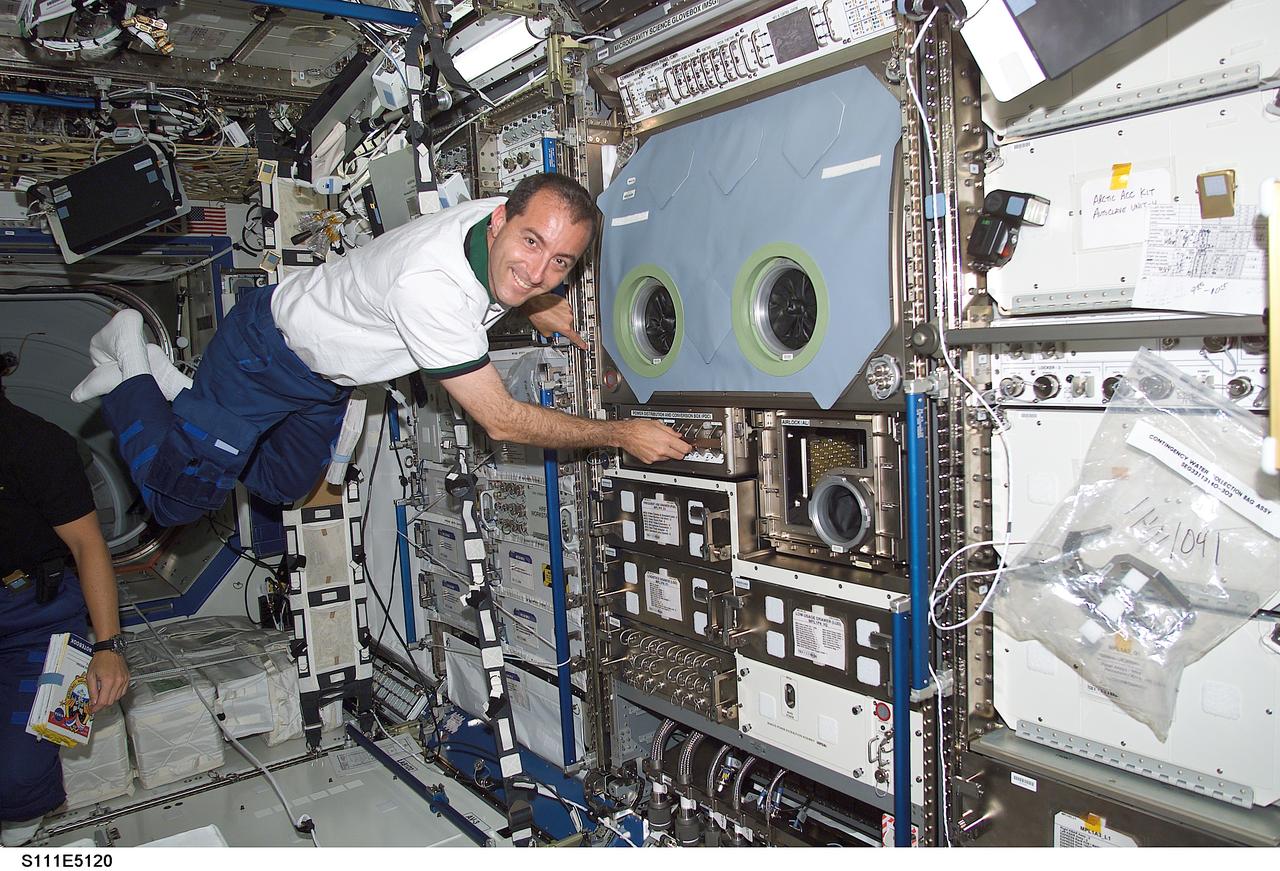
STS111-E-5120 (9 June 2002) --- Astronaut Philippe Perrin, STS-111 mission specialist, floats near the Microgravity Science Glovebox (MSG) in the Destiny laboratory on the International Space Station (ISS). Perrin represent CNES, the French Space Agency.
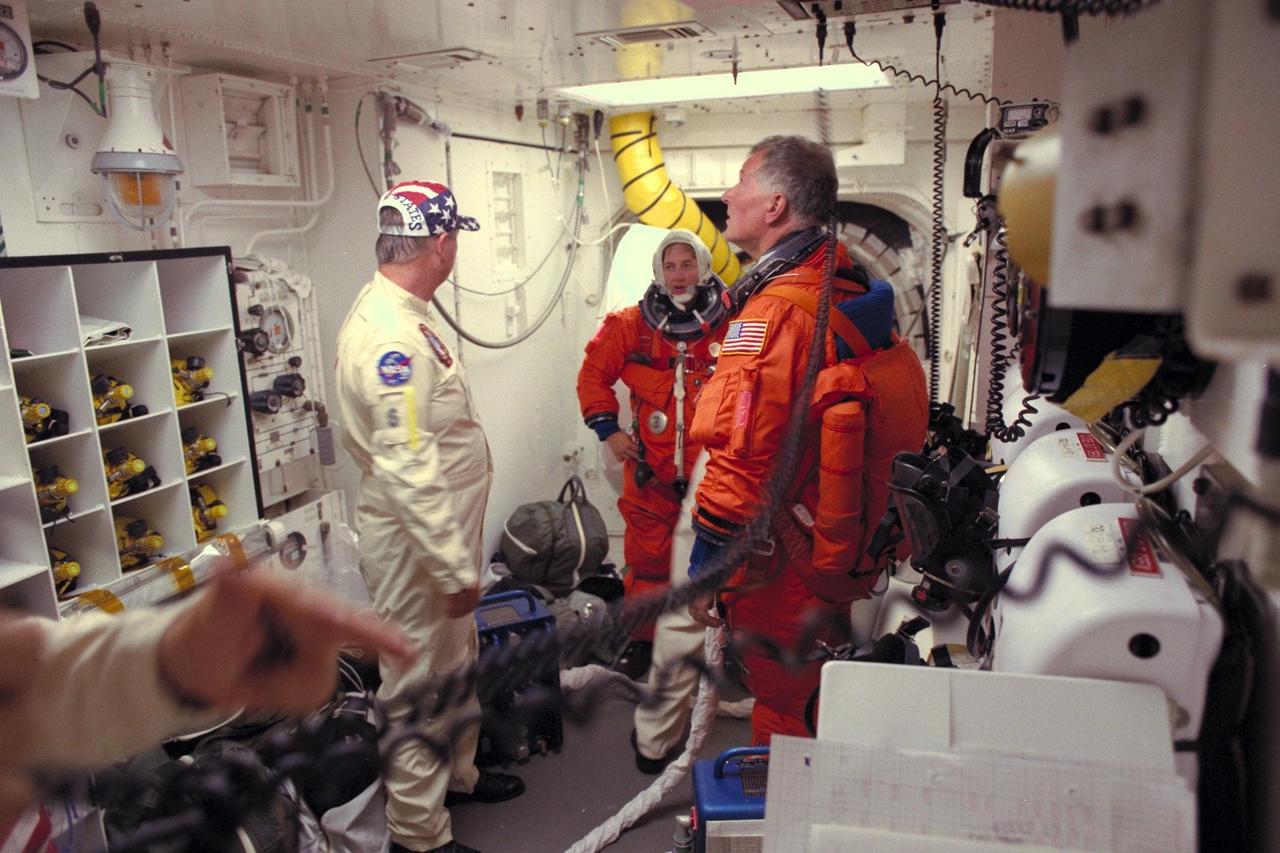
STS-86 Mission Specialists Wendy B. Lawrence, at center facing camera, and Jean-Loup J.M. Chretien of the French Space Agency, CNES, prepare to enter the Space Shuttle Atlantis at Launch Pad 39A, with the assistance of white room closeout crew member Jim Davis, a NASA quality assurance specialist
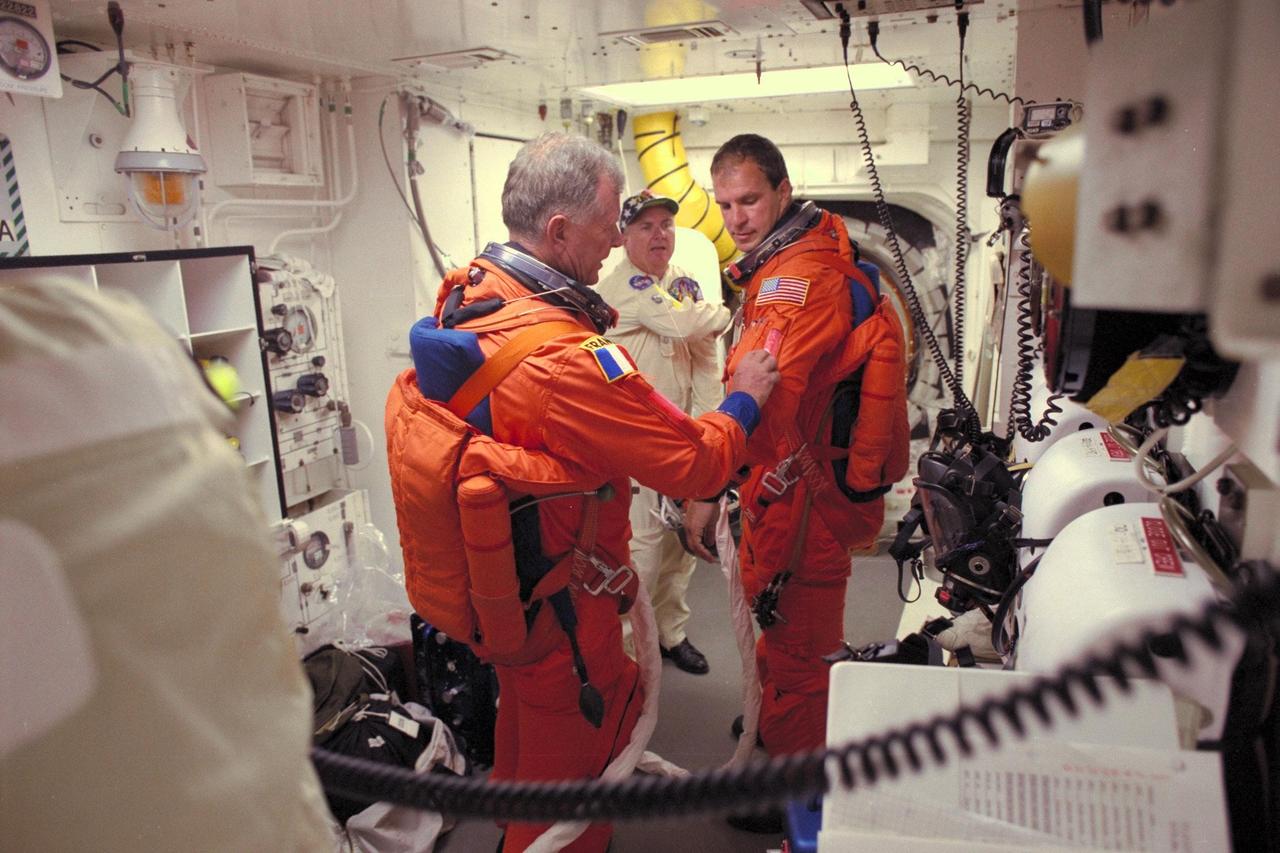
While a white room closeout crew member looks on, STS-86 Pilot Michael J. Bloomfield, at right, gets some assistance from fellow crew member, Mission Specialist Jean-Loup J.M. Chretien of the French Space Agency, CNES, before entering the Space Shuttle Atlantis at Launch Pad 39A
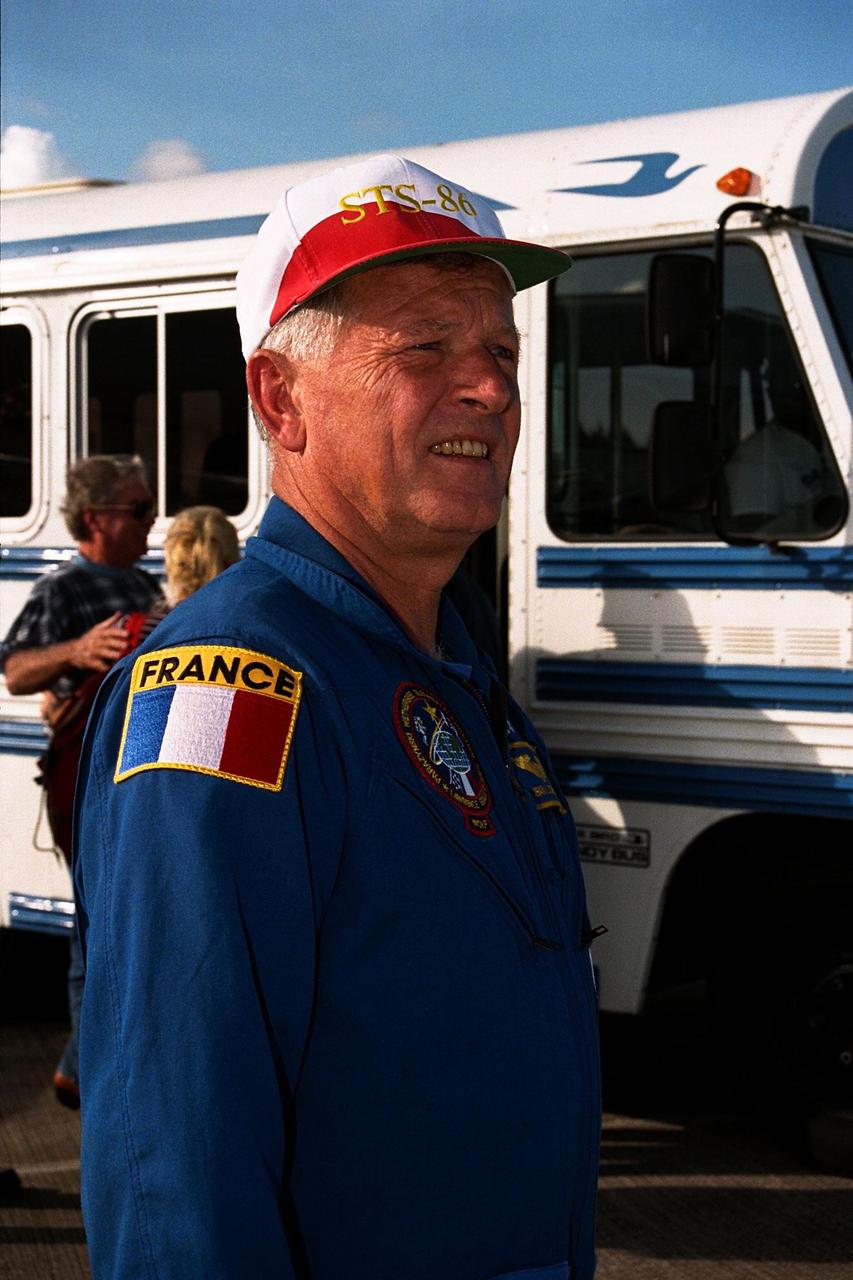
STS-86 Mission Specialist Jean-Loup J.M. Chretien of the French Space Agency, CNES, arrives at KSC’s Shuttle Landing Facility for the final prelaunch activities leading up to the scheduled Sept. 25 liftoff. This will be Chretien’s third spaceflight, but first on the Space Shuttle. He is chief of the Astronaut Office of CNES. STS-86 is slated to be the seventh of nine planned dockings of the Space Shuttle with the Russian Space Station Mir
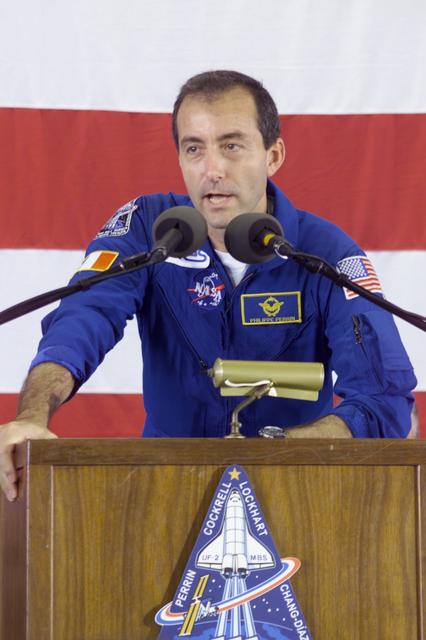
JSC2002-E-26033 (21 June 2002) --- Astronaut Philippe Perrin, STS-111 mission specialist representing CNES, the French Space Agency, speaks from the lectern in Hangar 990 at Ellington Field during the STS-111 and Expedition Four crew return ceremonies.
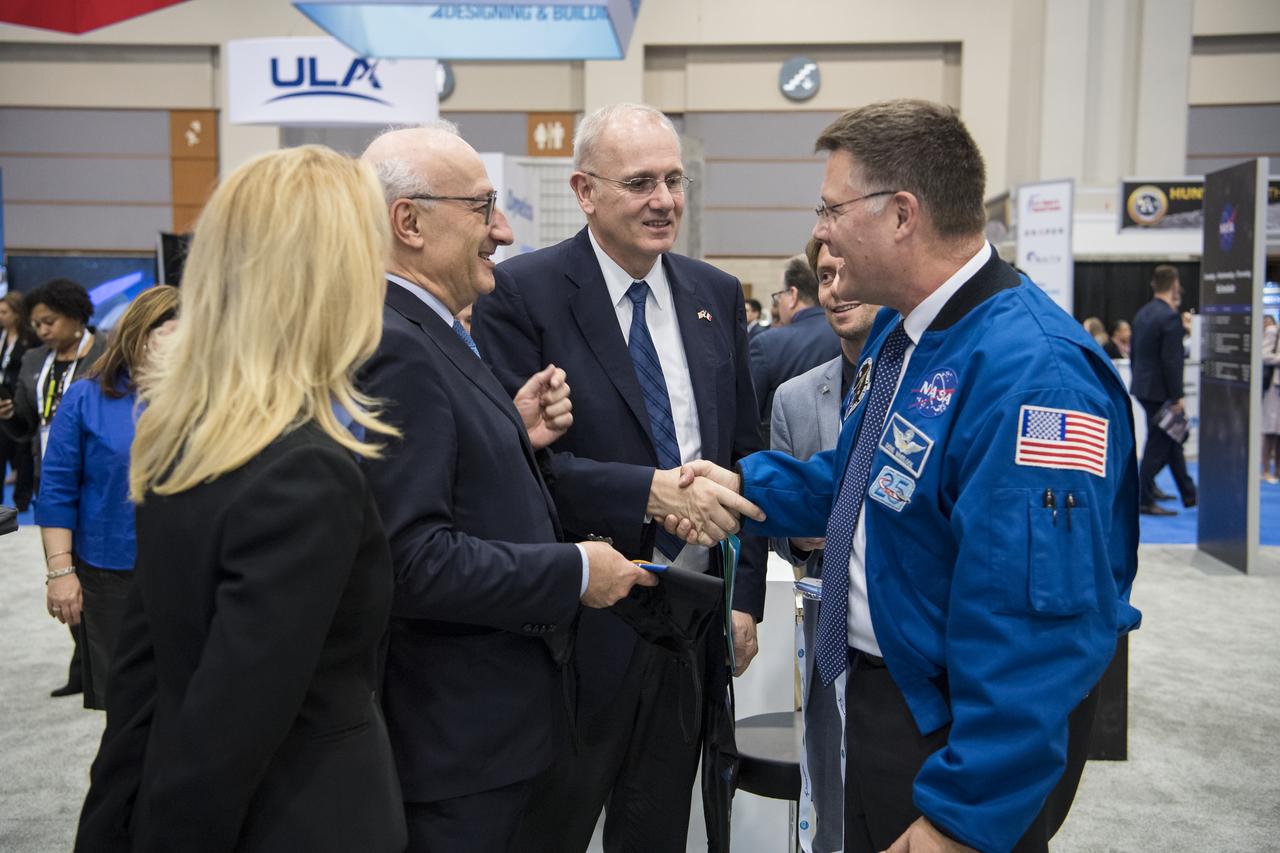
Jean-Yves Le Gall, president of the French space agency, National Centre for Space Studies (CNES), center, shakes hands with NASA astronaut Doug Wheelock after he and Philippe Étienne, French Ambassador to the U.S., second from left, visited the NASA exhibit during the 70th International Astronautical Congress, Wednesday, Oct. 23, 2019, at the Walter E. Washington Convention Center in Washington. Photo credit: (NASA/Aubrey Gemignani)
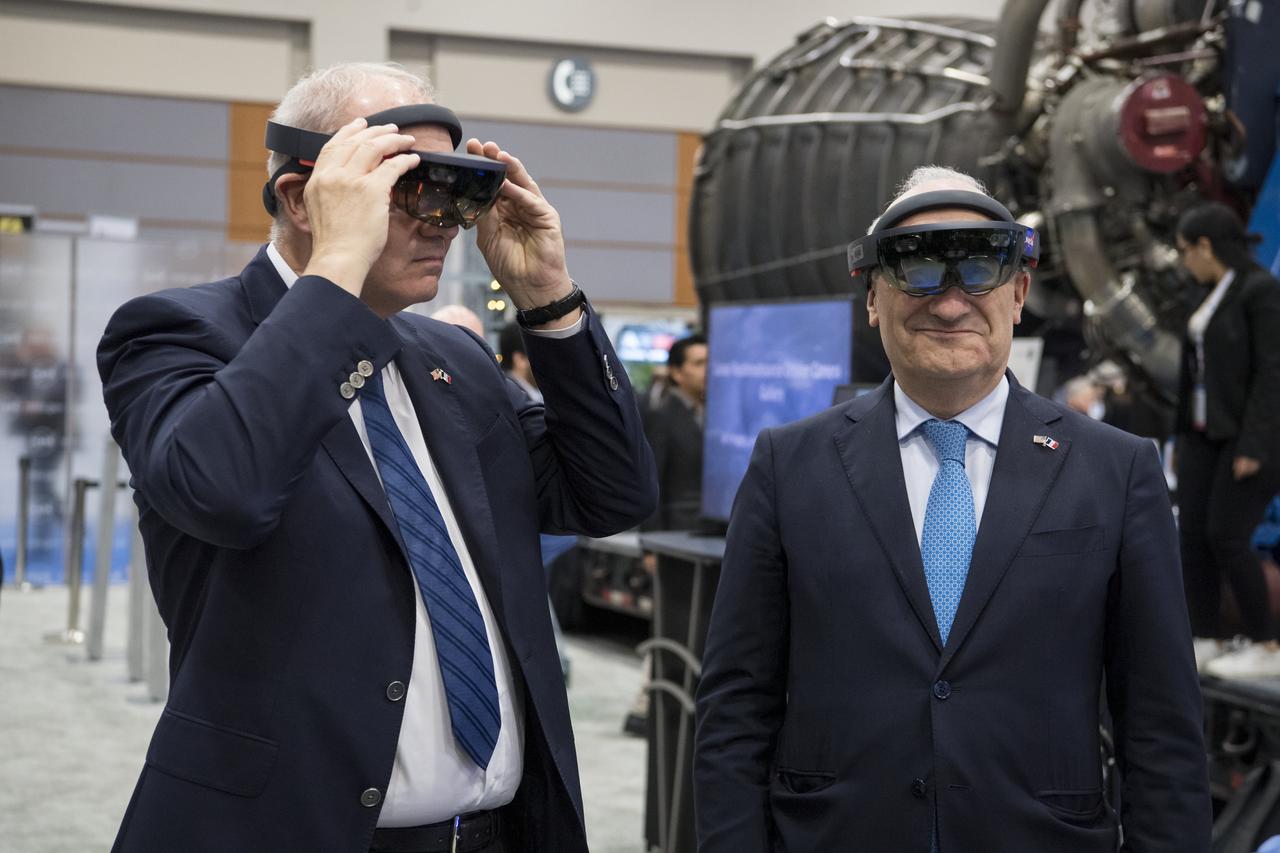
Philippe Étienne, French Ambassador to the U.S., right, and Jean-Yves Le Gall, president of the French space agency, National Centre for Space Studies (CNES), left, try virtual reality viewers at the NASA exhibit during the 70th International Astronautical Congress, Wednesday, Oct. 23, 2019, at the Walter E. Washington Convention Center in Washington. Photo credit: (NASA/Aubrey Gemignani)
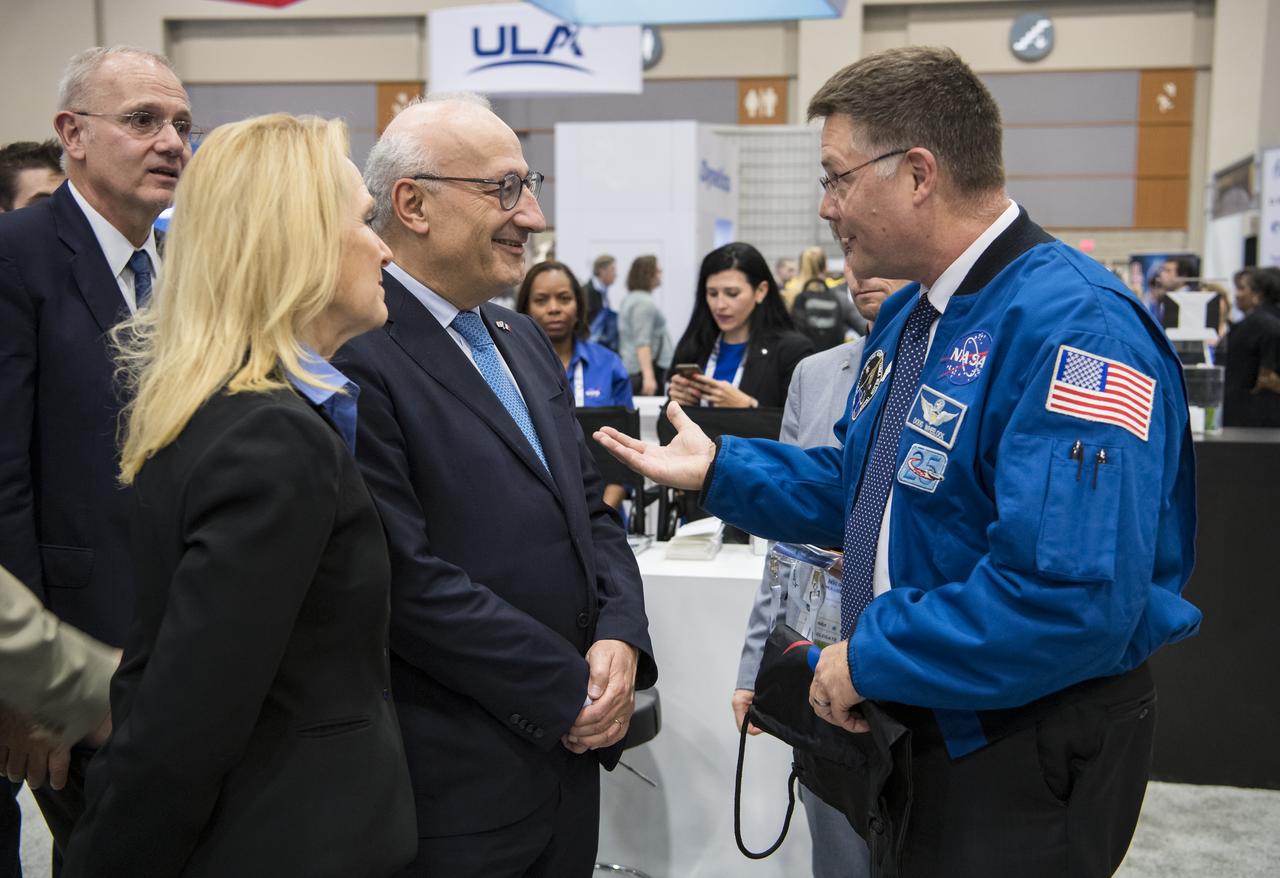
Philippe Étienne, French Ambassador to the U.S., center, and Jean-Yves Le Gall, president of the French space agency, National Centre for Space Studies (CNES), left, speak to NASA astronaut Doug Wheelock at the NASA exhibit during the 70th International Astronautical Congress, Wednesday, Oct. 23, 2019, at the Walter E. Washington Convention Center in Washington. Photo credit: (NASA/Aubrey Gemignani)
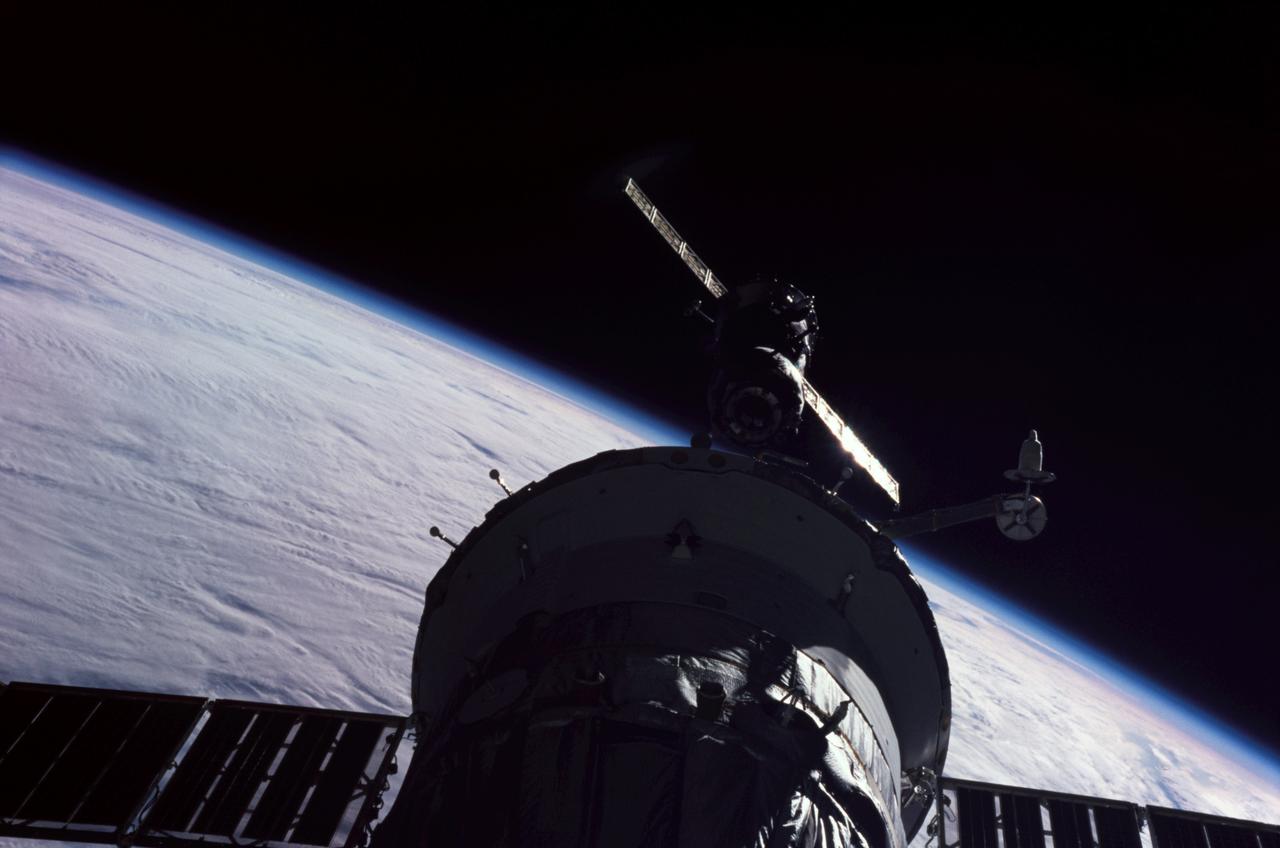
ISS003-324-034 (23 October 2001) --- A Soyuz spacecraft approaches the International Space Station (ISS) carrying the Soyuz Taxi crew, Commander Victor Afanasyev, Flight Engineer Konstantin Kozeev and French Flight Engineer Claudie Haignere for an eight-day stay on the station. Afanasyev and Kozeev represent Rosaviakosmos, and Haignere represents ESA, carrying out a flight program for CNES, the French Space Agency, under a commercial contract with the Rosaviakosmos.
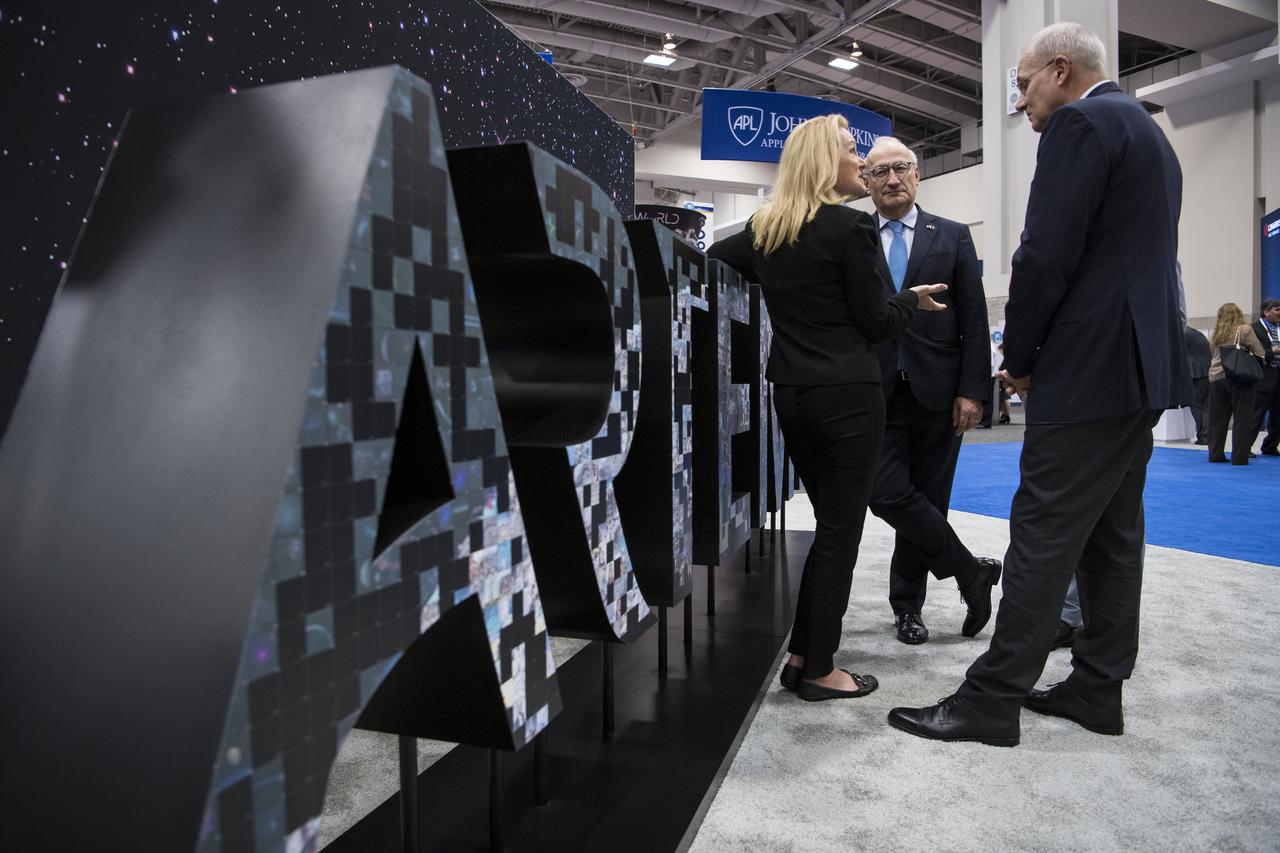
Philippe Étienne, French Ambassador to the U.S., center, and Jean-Yves Le Gall, president of the French space agency, National Centre for Space Studies (CNES), right, are seen talking to NASA Chief of Staff Janet Karika at the NASA exhibit during the 70th International Astronautical Congress, Wednesday, Oct. 23, 2019, at the Walter E. Washington Convention Center in Washington. Photo credit: (NASA/Aubrey Gemignani)
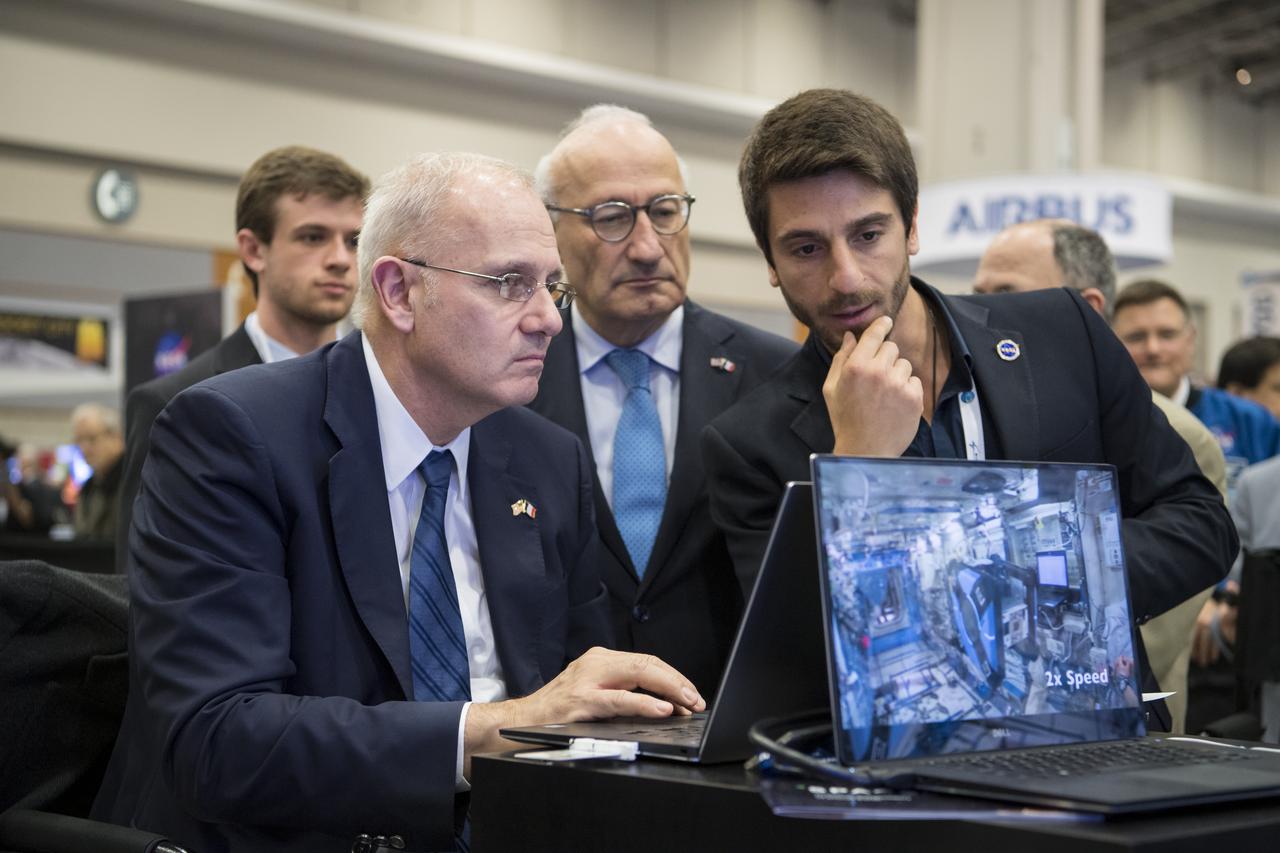
Jean-Yves Le Gall, president of the French space agency, National Centre for Space Studies (CNES), tests a robotic arm at the NASA exhibit, while Philippe Étienne, French Ambassador to the U.S., center, watches, during the 70th International Astronautical Congress, Wednesday, Oct. 23, 2019, at the Walter E. Washington Convention Center in Washington. Photo credit: (NASA/Aubrey Gemignani).
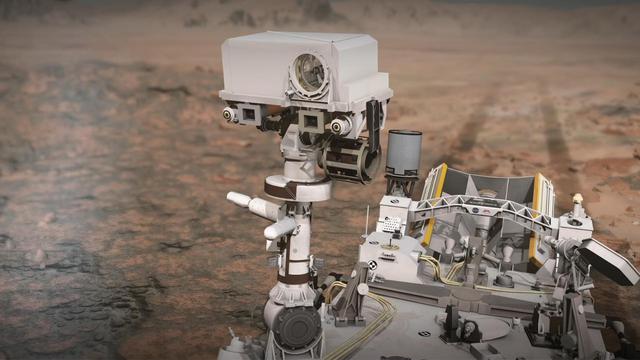
This narrated animation shows NASA's Perseverance rover on Mars and how the rover's SuperCam laser instrument works. SuperCam is led by Los Alamos National Laboratory in New Mexico, where the instrument's Body Unit was developed. That part of the instrument includes several spectrometers, control electronics and software. The Mast Unit was developed and built by several laboratories of the CNRS (French research center) and French universities under the contracting authority of CNES (French space agency). Calibration targets on the rover deck are provided by Spain's University of Valladolid. Animation available at https://photojournal.jpl.nasa.gov/catalog/PIA24426
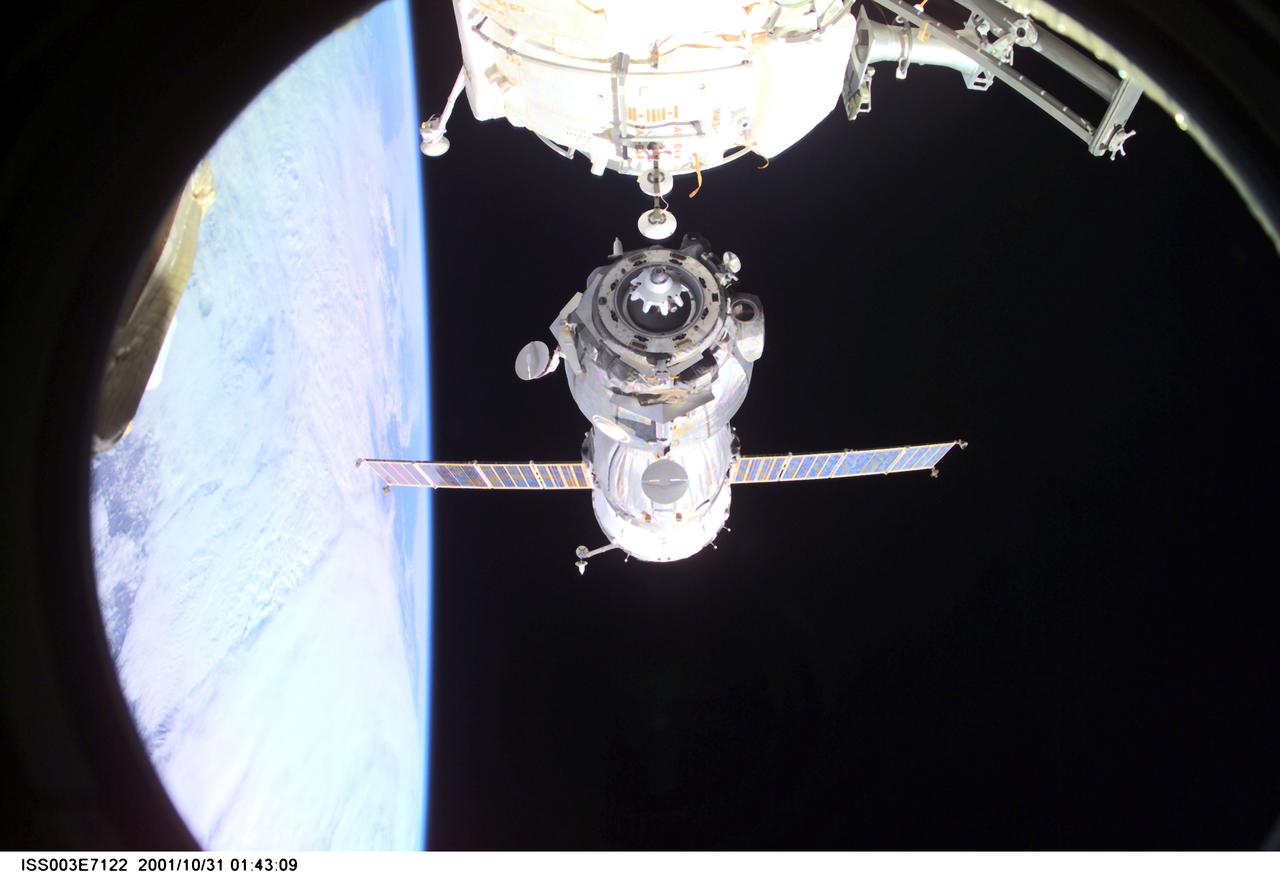
ISS003-E-7122 (31 October 2001) --- Backdropped by Earth’s horizon and the blackness of space, a Soyuz spacecraft undocks from the International Space Station (ISS) carrying the Soyuz taxi crew, Commander Victor Afanasyev, Flight Engineer Konstantin Kozeev and French Flight Engineer Claudie Haignere, ending their eight-day stay on the station. Afanasyev and Kozeev represent Rosaviakosmos, and Haignere represents ESA, carrying out a flight program for CNES, the French Space Agency, under a commercial contract with the Russian Aviation and Space Agency. This image was taken with a digital still camera.
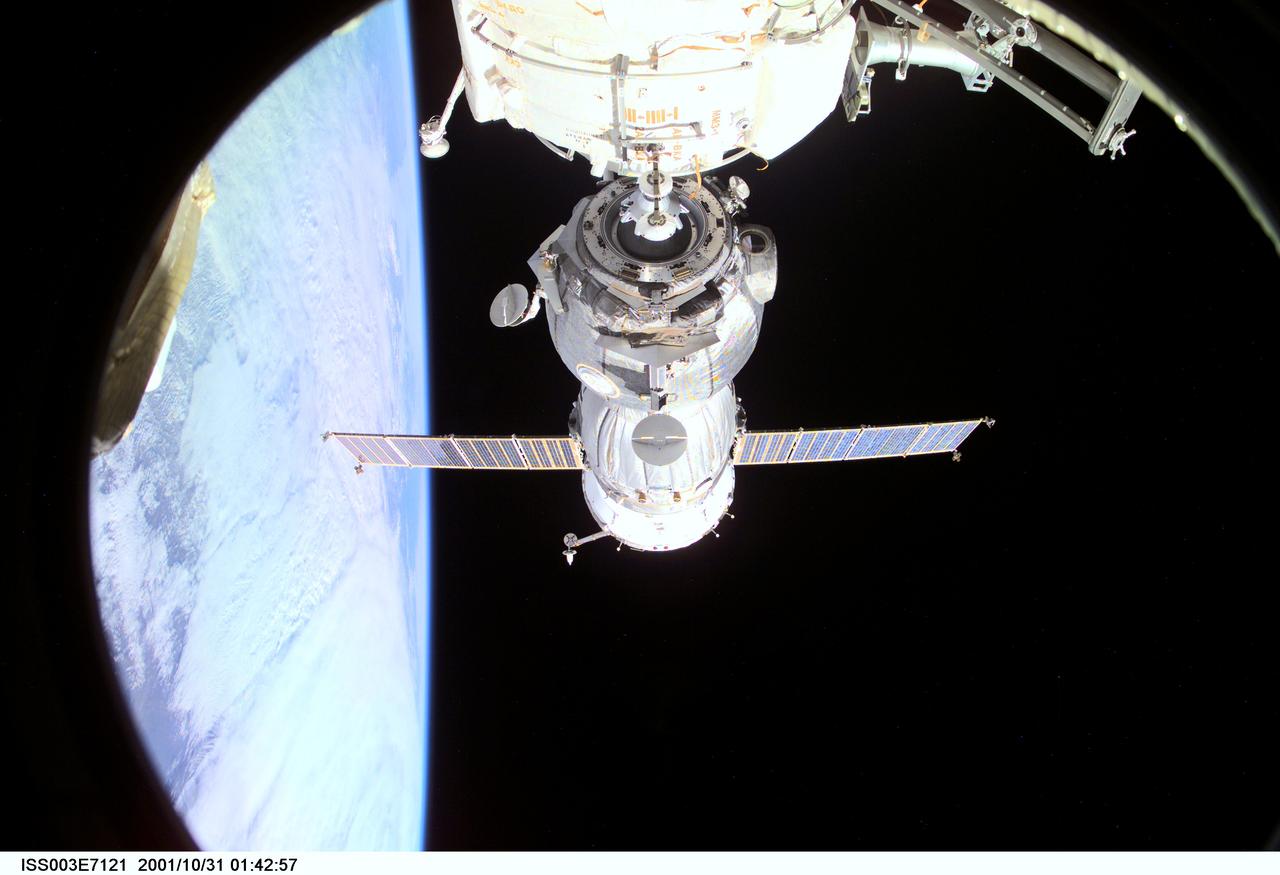
ISS003-E-7121 (31 October 2001) --- Backdropped by Earth’s horizon and the blackness of space, a Soyuz spacecraft undocks from the International Space Station (ISS) carrying the Soyuz taxi crew, Commander Victor Afanasyev, Flight Engineer Konstantin Kozeev and French Flight Engineer Claudie Haignere, ending their eight-day stay on the station. Afanasyev and Kozeev represent Rosaviakosmos, and Haignere represents ESA, carrying out a flight program for CNES, the French Space Agency, under a commercial contract with the Russian Aviation and Space Agency. This image was taken with a digital still camera.
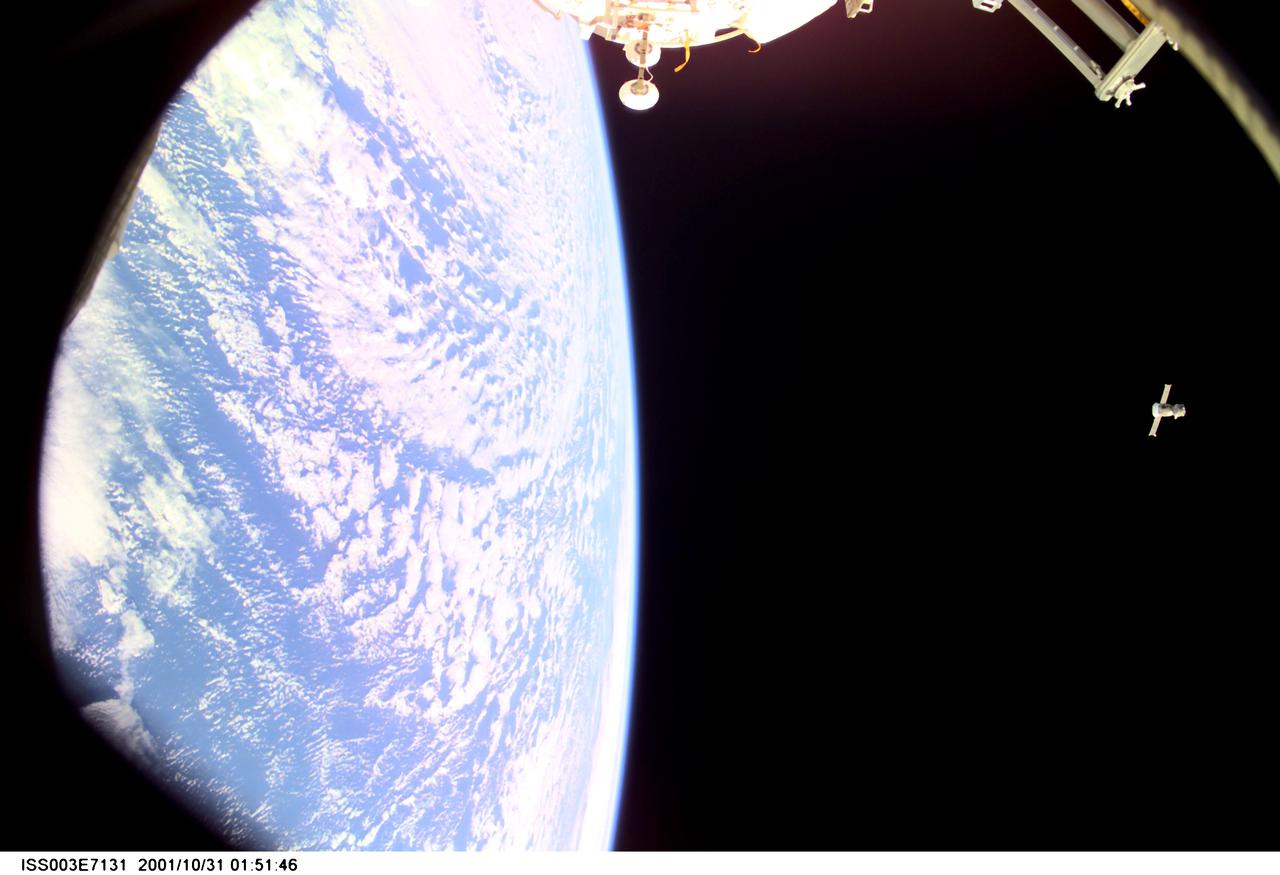
ISS003-E-7131 (31 October 2001) --- Backdropped by Earth’s horizon and the blackness of space, this distant view shows a Soyuz spacecraft after undocking from the International Space Station (ISS) carrying the Soyuz taxi crew, Commander Victor Afanasyev, Flight Engineer Konstantin Kozeev and French Flight Engineer Claudie Haignere, ending their eight-day stay on the station. Afanasyev and Kozeev represent Rosaviakosmos, and Haignere represents ESA, carrying out a flight program for CNES, the French Space Agency, under a commercial contract with the Russian Aviation and Space Agency. This image was taken with a digital still camera.
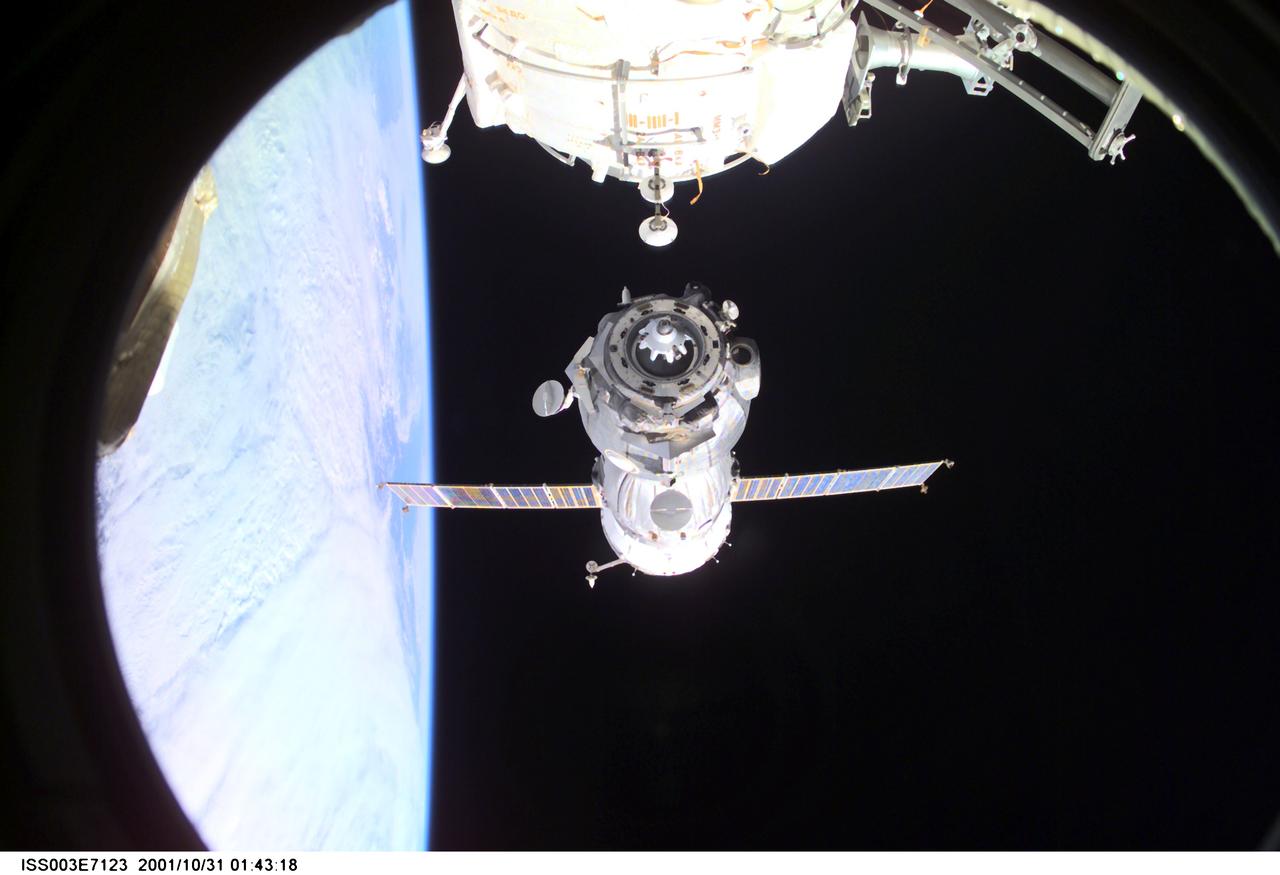
ISS003-E-7123 (31 October 2001) --- Backdropped by Earth’s horizon and the blackness of space, a Soyuz spacecraft undocks from the International Space Station (ISS) carrying the Soyuz taxi crew, Commander Victor Afanasyev, Flight Engineer Konstantin Kozeev and French Flight Engineer Claudie Haignere, ending their eight-day stay on the station. Afanasyev and Kozeev represent Rosaviakosmos, and Haignere represents ESA, carrying out a flight program for CNES, the French Space Agency, under a commercial contract with the Russian Aviation and Space Agency. This image was taken with a digital still camera.
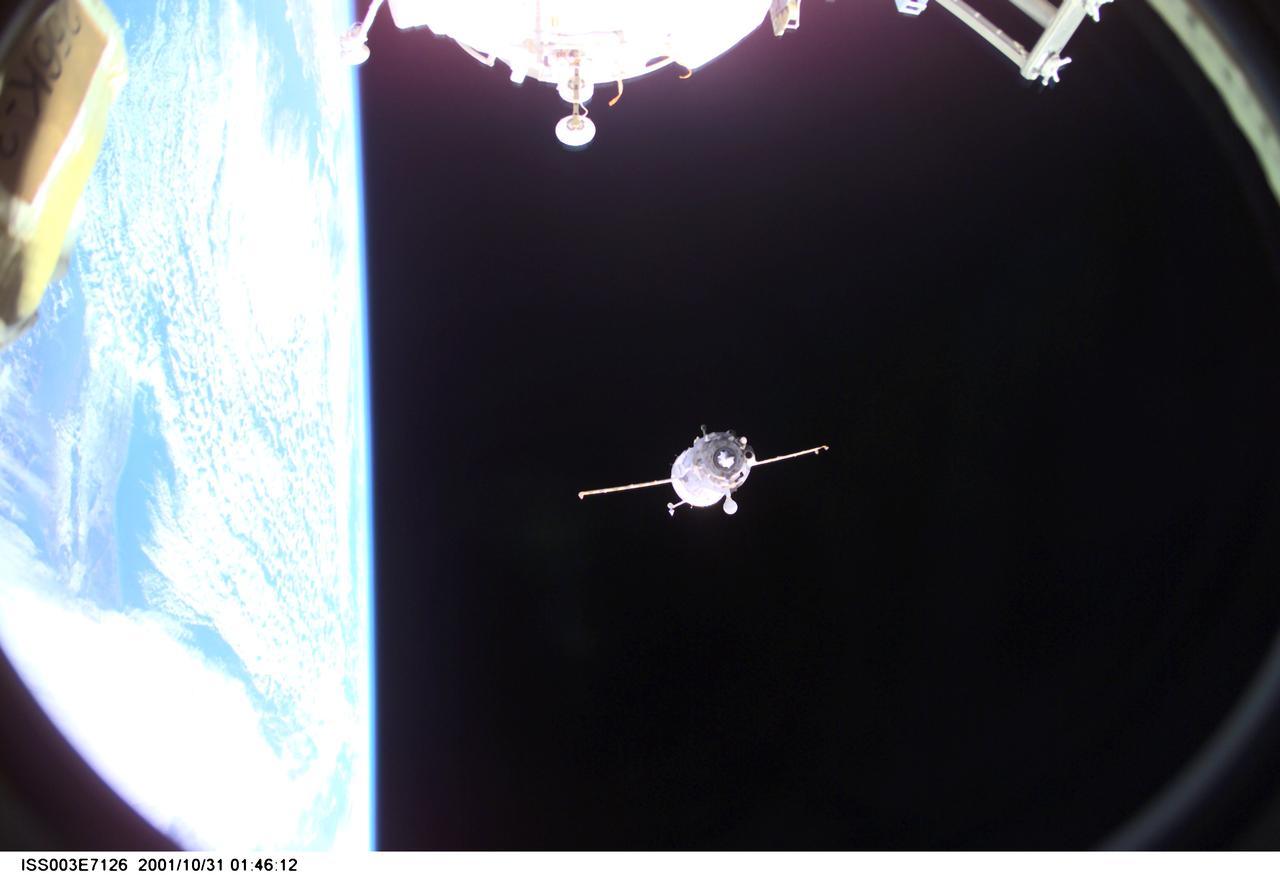
ISS003-E-7126 (31 October 2001) --- Backdropped by Earth’s horizon and the blackness of space, a Soyuz spacecraft undocks from the International Space Station (ISS) carrying the Soyuz taxi crew, Commander Victor Afanasyev, Flight Engineer Konstantin Kozeev and French Flight Engineer Claudie Haignere, ending their eight-day stay on the station. Afanasyev and Kozeev represent Rosaviakosmos, and Haignere represents ESA, carrying out a flight program for CNES, the French Space Agency, under a commercial contract with the Russian Aviation and Space Agency. This image was taken with a digital still camera.
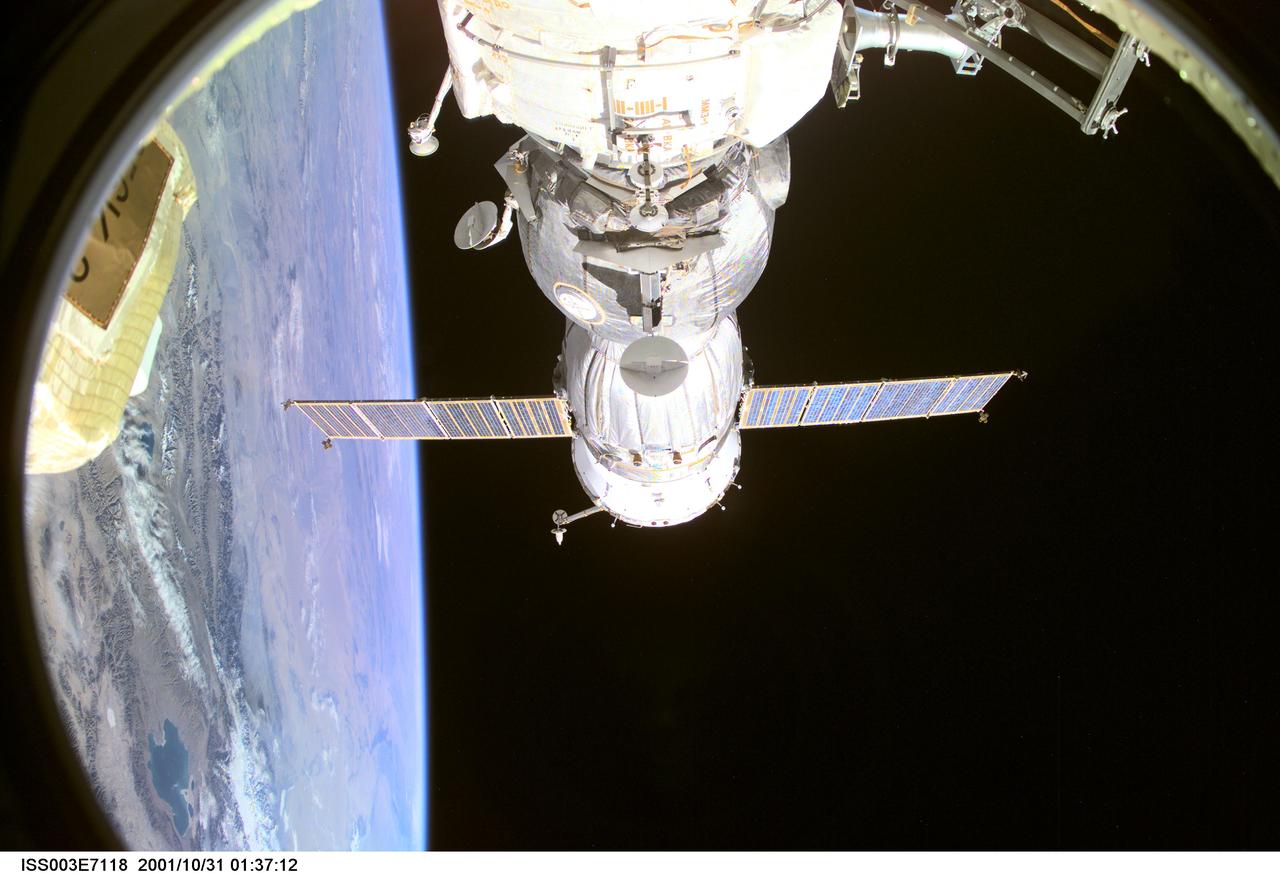
ISS003-E-7118 (31 October 2001) --- A Soyuz spacecraft, backdropped by Earth’s horizon and the blackness of space, is photographed prior to departure from the International Space Station (ISS), carrying the Soyuz taxi crew back to Earth, ending their eight-day stay on the station. The crewmembers are Commander Victor Afanasyev, Flight Engineer Konstantin Kozeev and French Flight Engineer Claudie Haignere. Afanasyev and Kozeev represent Rosaviakosmos, and Haignere represents ESA, carrying out a flight program for CNES, the French Space Agency, under a commercial contract with the Russian Aviation and Space Agency. This image was taken with a digital still camera.
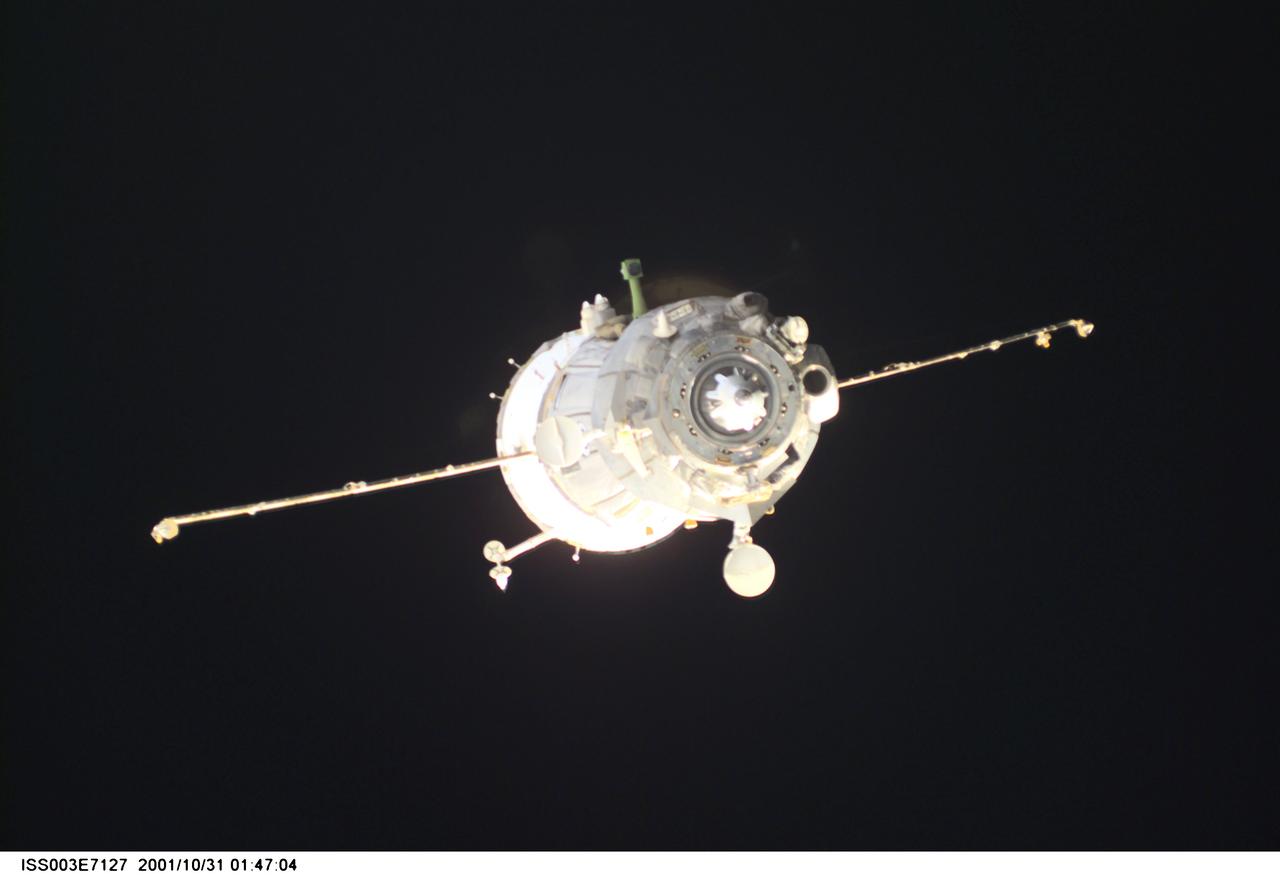
ISS003-E-7127 (31 October 2001) --- Backdropped by the blackness of space, a Soyuz spacecraft departs from the International Space Station (ISS) carrying the Soyuz taxi crew, Commander Victor Afanasyev, Flight Engineer Konstantin Kozeev and French Flight Engineer Claudie Haignere, ending their eight-day stay on the station. Afanasyev and Kozeev represent Rosaviakosmos, and Haignere represents ESA, carrying out a flight program for CNES, the French Space Agency, under a commercial contract with the Russian Aviation and Space Agency. This image was taken with a digital still camera.
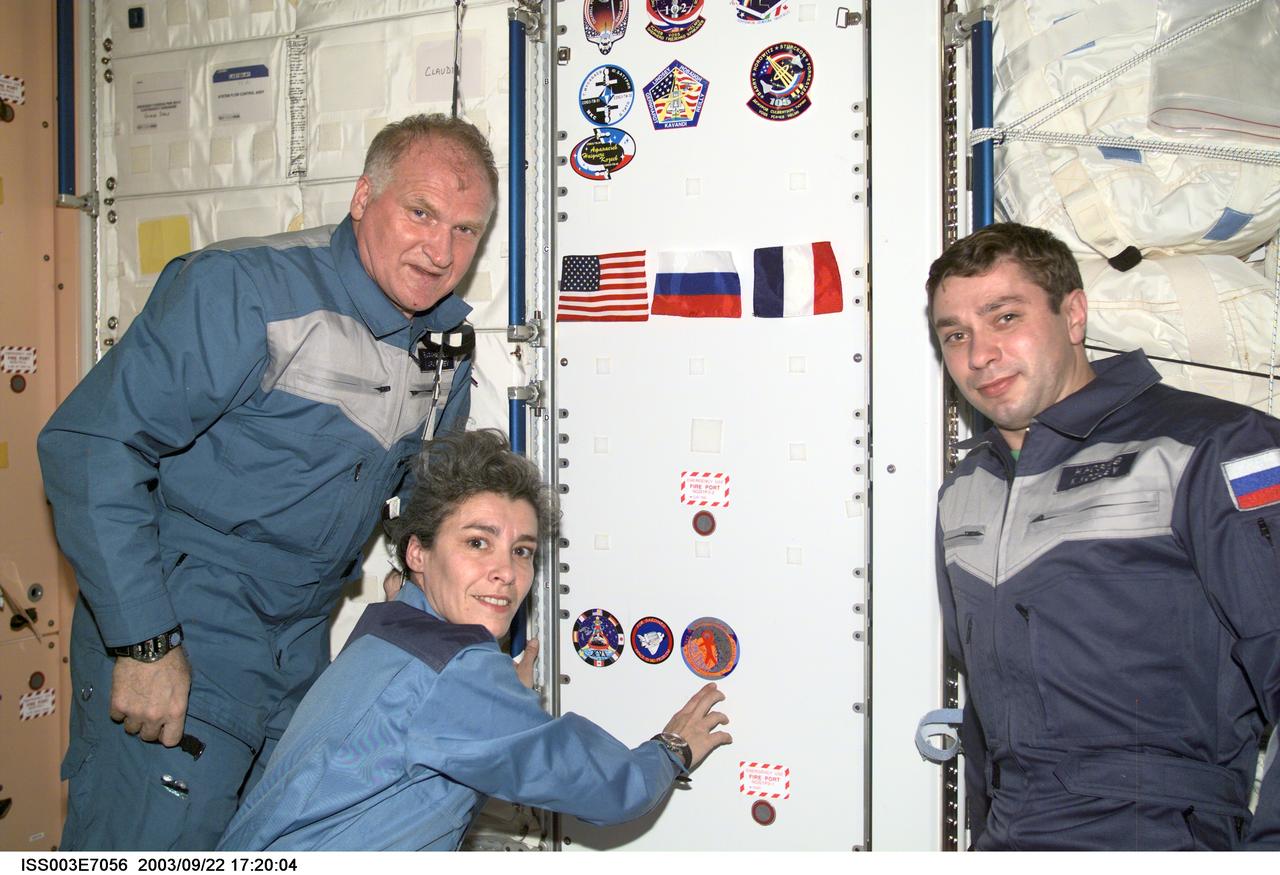
ISS003-E-7056 (23-31 October 2001) --- The Soyuz Taxi crewmembers, Commander Victor Afanasyev (left), French Flight Engineer Claudie Haignere and Flight Engineer Konstantin Kozeev, add their crew patch to the growing collection, in the Unity node, of insignias representing crews who have worked on the International Space Station (ISS). Afanasyev and Kozeev represent Rosaviakosmos, and Haignere represents ESA, carrying out a flight program for CNES, the French Space Agency, under a commercial contract with the Russian Aviation and Space Agency. This image was taken with a digital still camera.
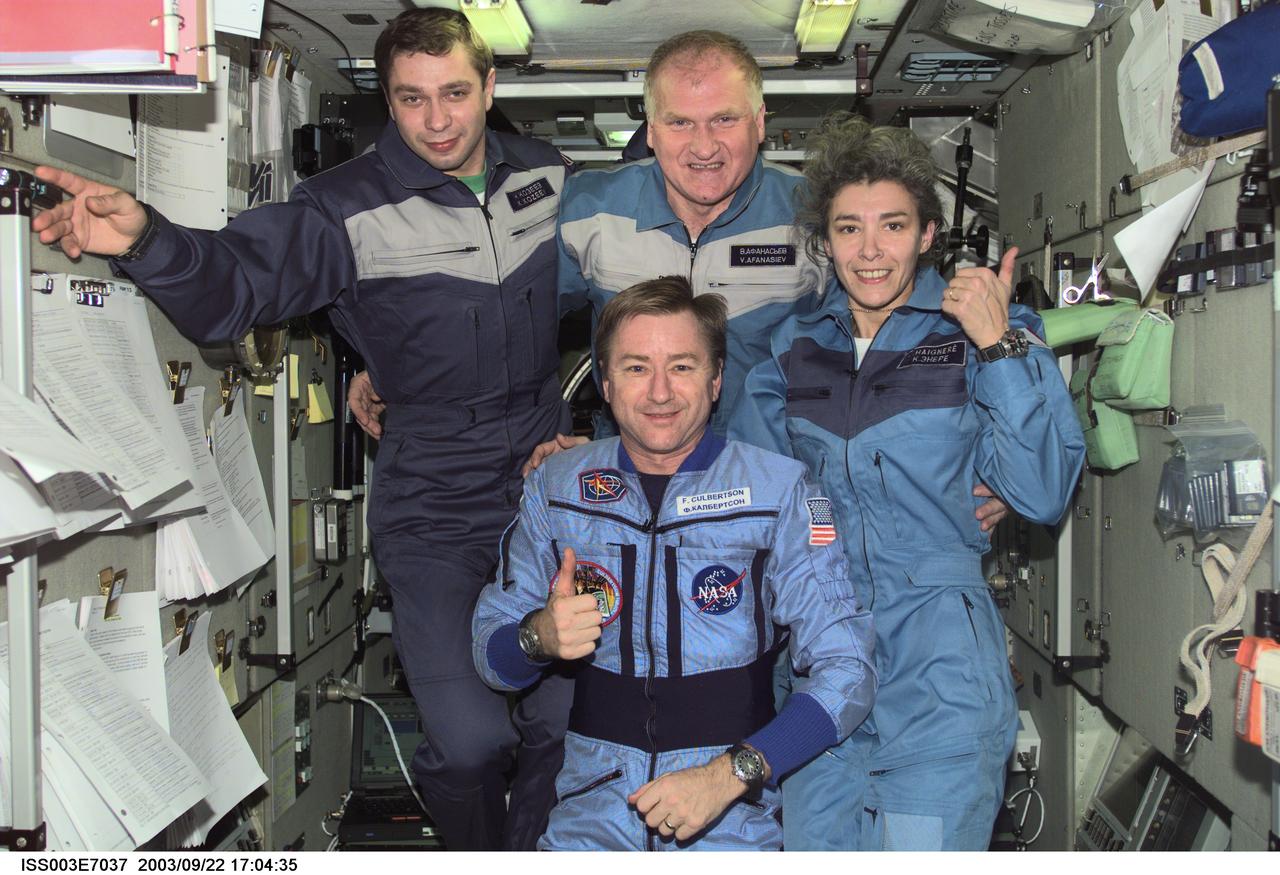
ISS003-E-7037 (23-31 October 2001) --- Astronaut Frank L. Culbertson, Jr. (foreground), Expedition Three mission commander, and the Soyuz Taxi crewmembers assemble for a group photo in the Zvezda Service Module on the International Space Station (ISS). From the left are Flight Engineer Konstantin Kozeev, Commander Victor Afanasyev, and French Flight Engineer Claudie Haignere. Afanasyev and Kozeev represent Rosaviakosmos, and Haignere represents ESA, carrying out a flight program for CNES, the French Space Agency, under a commercial contract with the Russian Aviation and Space Agency. This image was taken with a digital still camera.
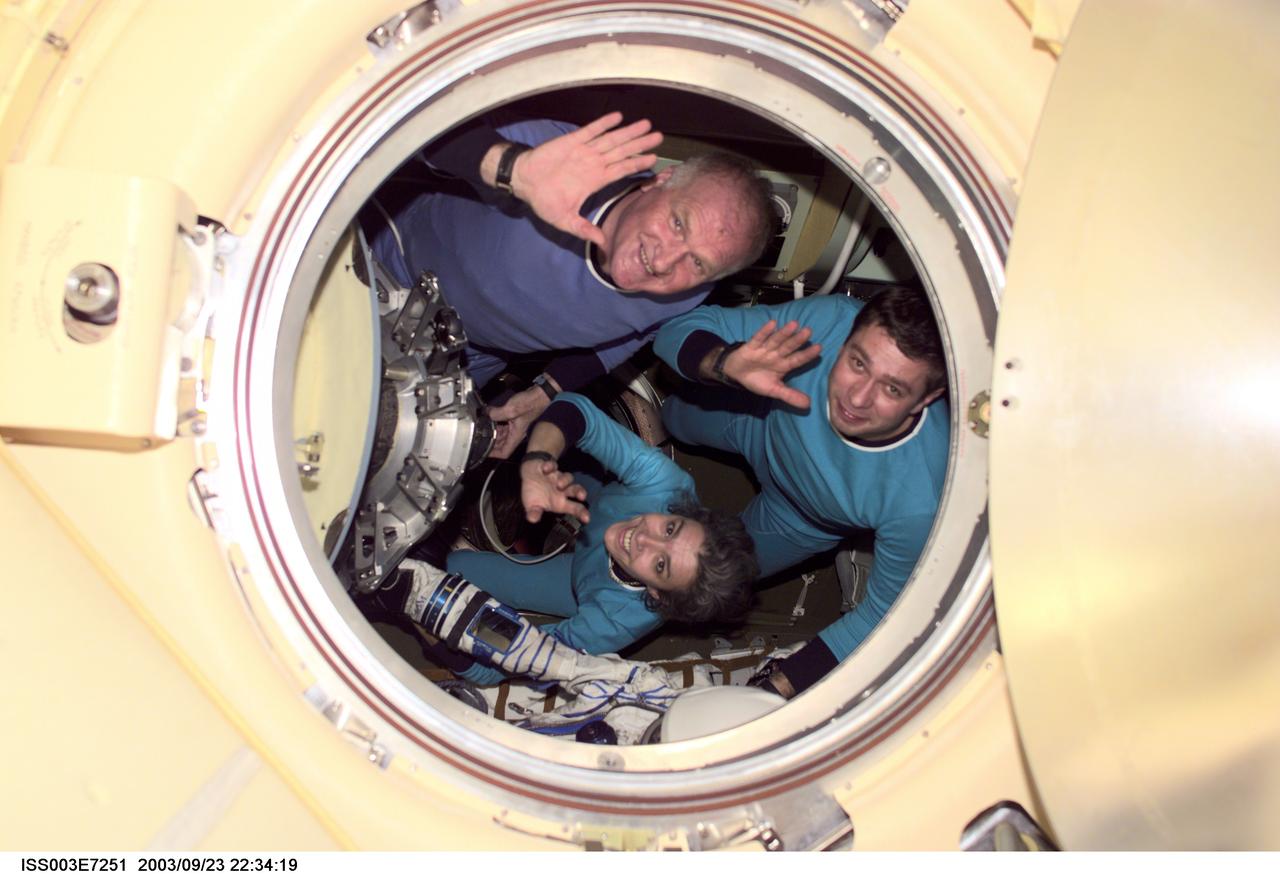
ISS003-E-7251 (23-31 October 2001) --- The Soyuz Taxi crewmembers wave from a Soyuz spacecraft docked to the International Space Station (ISS). Clockwise from the top are Commander Victor Afanasyev, Flight Engineer Konstantin Kozeev and French Flight Engineer Claudie Haignere. Afanasyev and Kozeev represent Rosaviakosmos, and Haignere represents ESA, carrying out a flight program for CNES, the French Space Agency, under a commercial contract with the Russian Aviation and Space Agency. This image was taken with a digital still camera by one of the Expedition Three crew from the nadir docking port on the station.
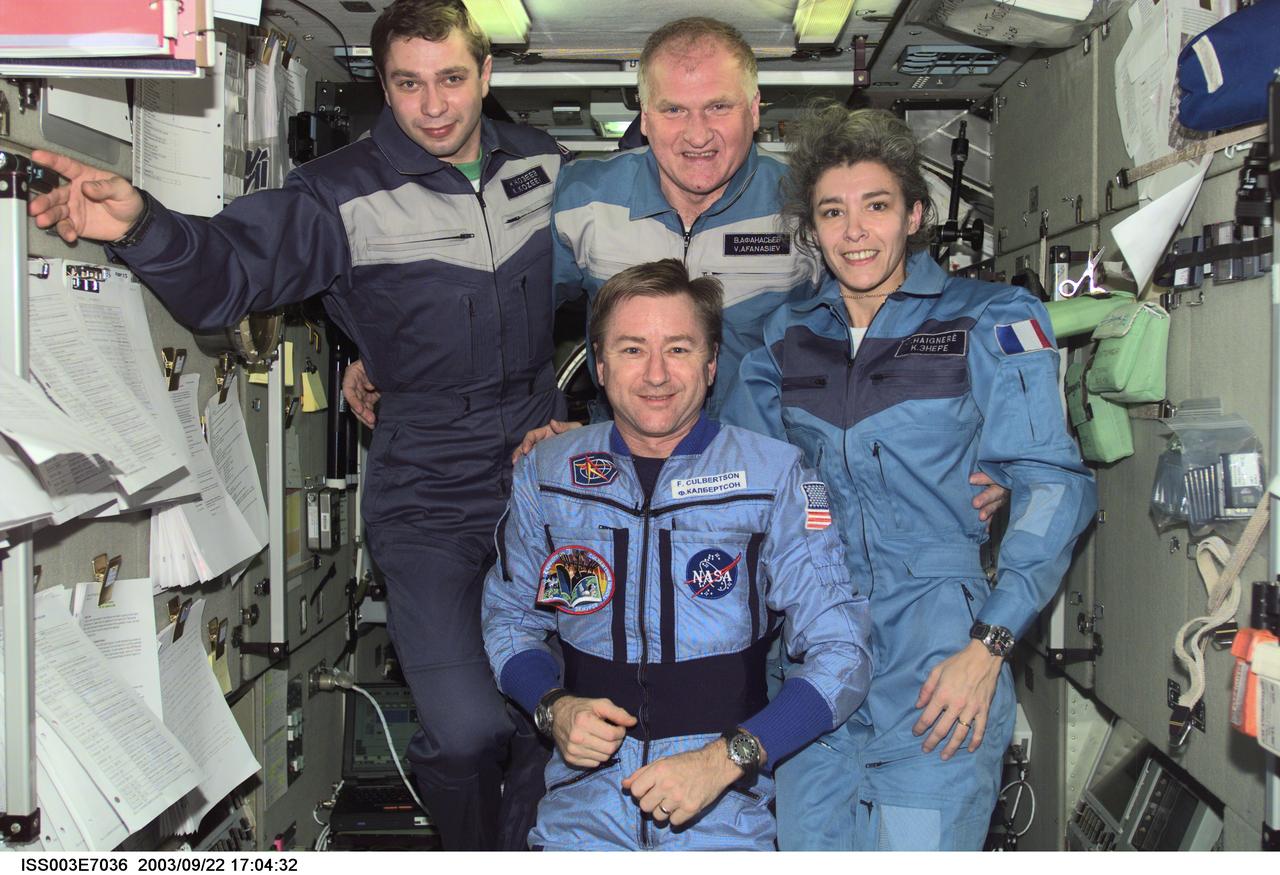
ISS003-E-7036 (23-31 October 2001) --- Astronaut Frank L. Culbertson, Jr. (foreground), Expedition Three mission commander, and the Soyuz Taxi crewmembers assemble for a group photo in the Zvezda Service Module on the International Space Station (ISS). From the left are Flight Engineer Konstantin Kozeev, Commander Victor Afanasyev, and French Flight Engineer Claudie Haignere. Afanasyev and Kozeev represent Rosaviakosmos, and Haignere represents ESA, carrying out a flight program for CNES, the French Space Agency, under a commercial contract with the Russian Aviation and Space Agency. This image was taken with a digital still camera.

STS078-397-010 (20 June - 7 July 1996) --- Payload specialist Jean-Jacques Favier, representing the French Space Agency (CNES), and astronaut Kevin R. Kregel, pilot, perform a successful Inflight Maintenance (IFM) on the Bubble Drop Particle Unit (BDPU). The IFM technique was performed initially on the ground at the Marshall Space Flight Center (MSFC) by alternate payload specialist Pedro Duque of the European Space Agency (ESA), with the procedure being recorded on video and uplinked to the crew of the Space Shuttle Columbia to aid in the repair.
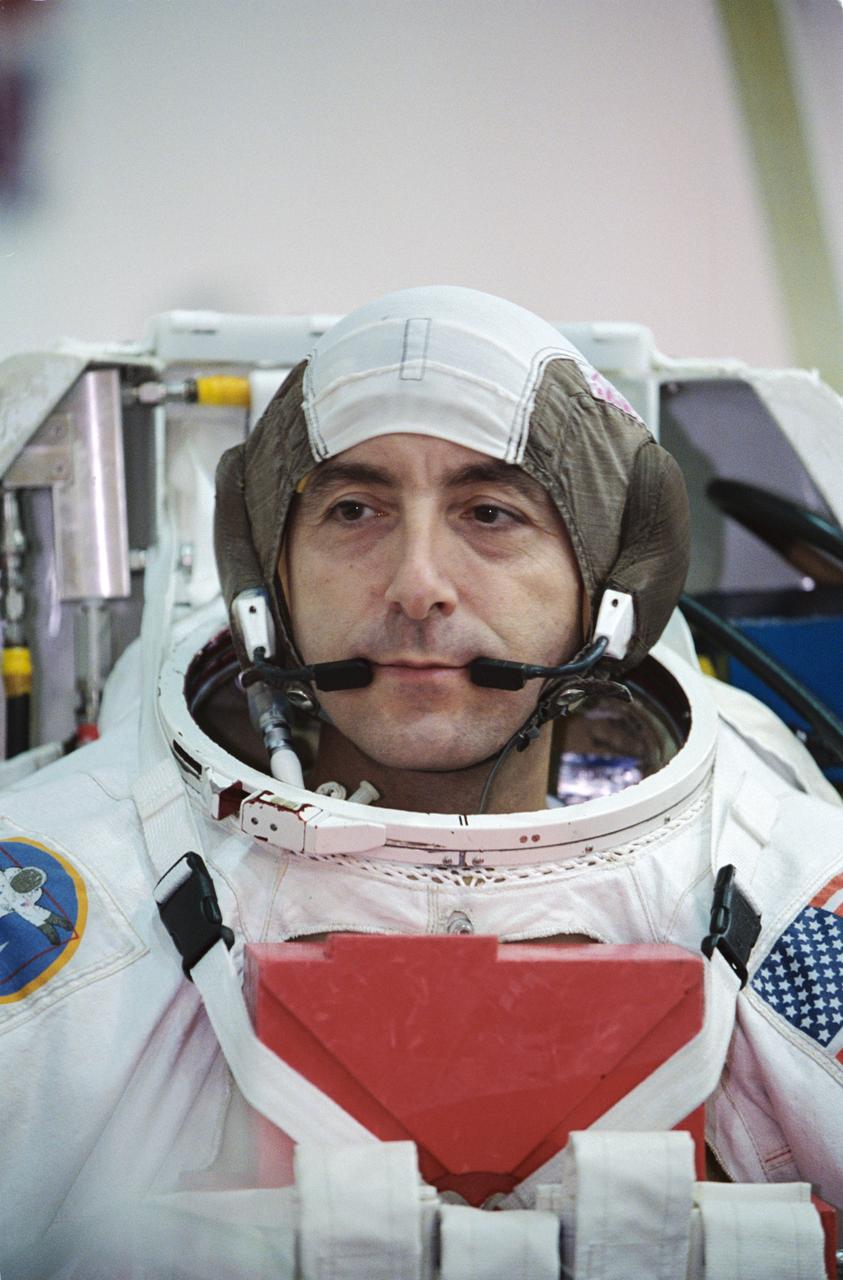
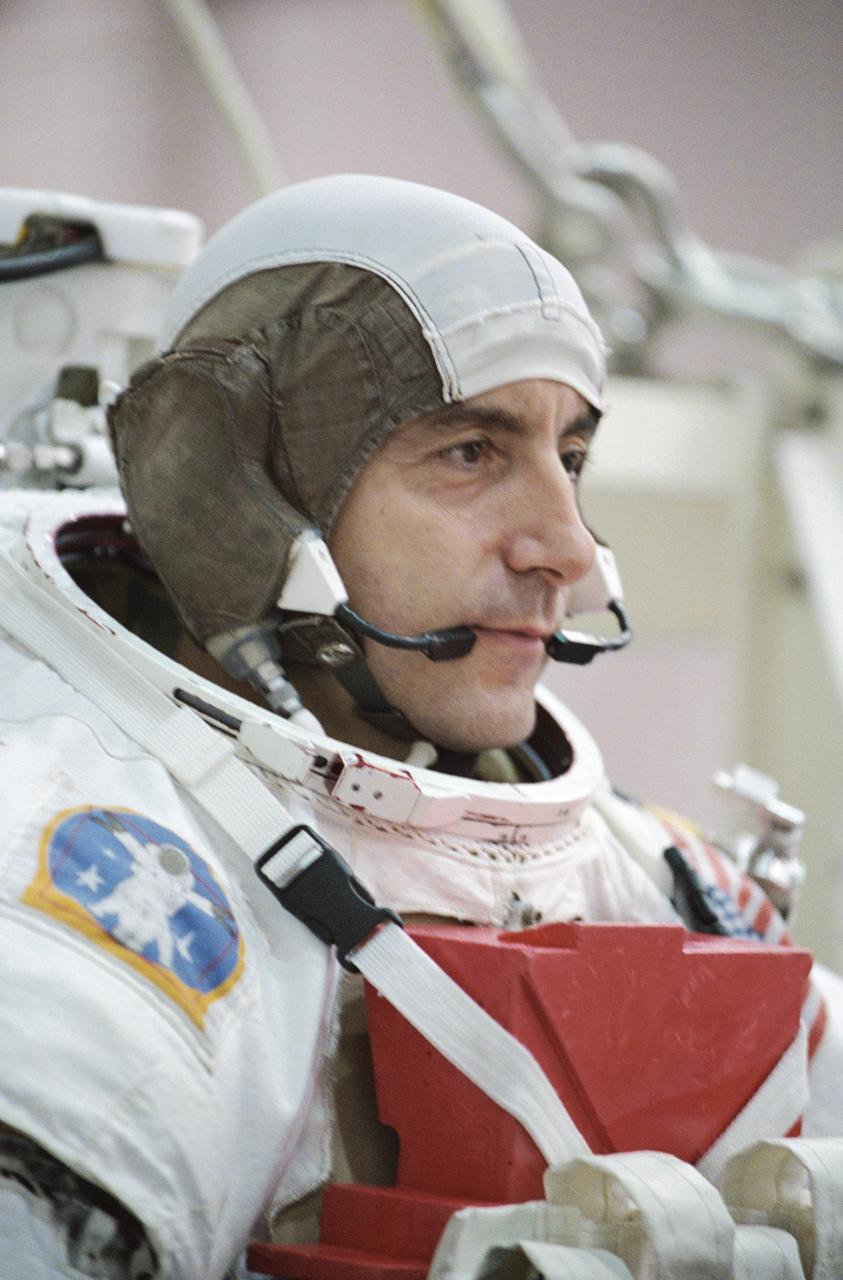
JSC2001-02931 (26 November 2001) --- Astronaut Philippe Perrin, STS-111 mission specialist, attired in a training version of the Extravehicular Mobility Unit (EMU) space suit, is about to begin a training session in the Neutral Buoyancy Laboratory (NBL) near the Johnson Space Center (JSC). Perrin represents CNES, the French Space Agency. STS-111 will be the 14th shuttle mission to visit the International Space Station (ISS).
JSC2001-02933 (26 November 2001) --- Astronaut Philippe Perrin, STS-111 mission specialist, attired in a training version of the Extravehicular Mobility Unit (EMU) space suit, is about to begin a training session in the Neutral Buoyancy Laboratory (NBL) near the Johnson Space Center (JSC). Perrin represents CNES, the French Space Agency. STS-111 will be the 14th shuttle mission to visit the International Space Station (ISS).
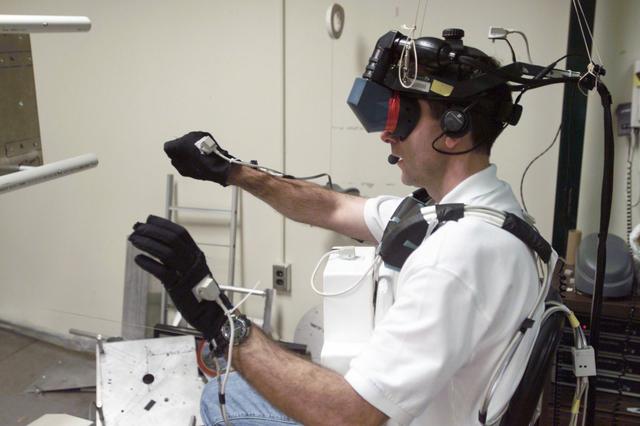
JSC2001-E-39084 (18 October 2001) --- Astronaut Philippe Perrin, STS-111 mission specialist, uses specialized gear in the virtual reality lab at the Johnson Space Center (JSC) to train for his duties aboard the Space Shuttle Endeavour. This type of virtual reality training allows the astronauts to wear a helmet and special gloves while looking at computer displays simulating actual movements around the various locations on the International Space Station (ISS) hardware with which they will be working. Perrin represents CNES, the French Space Agency.
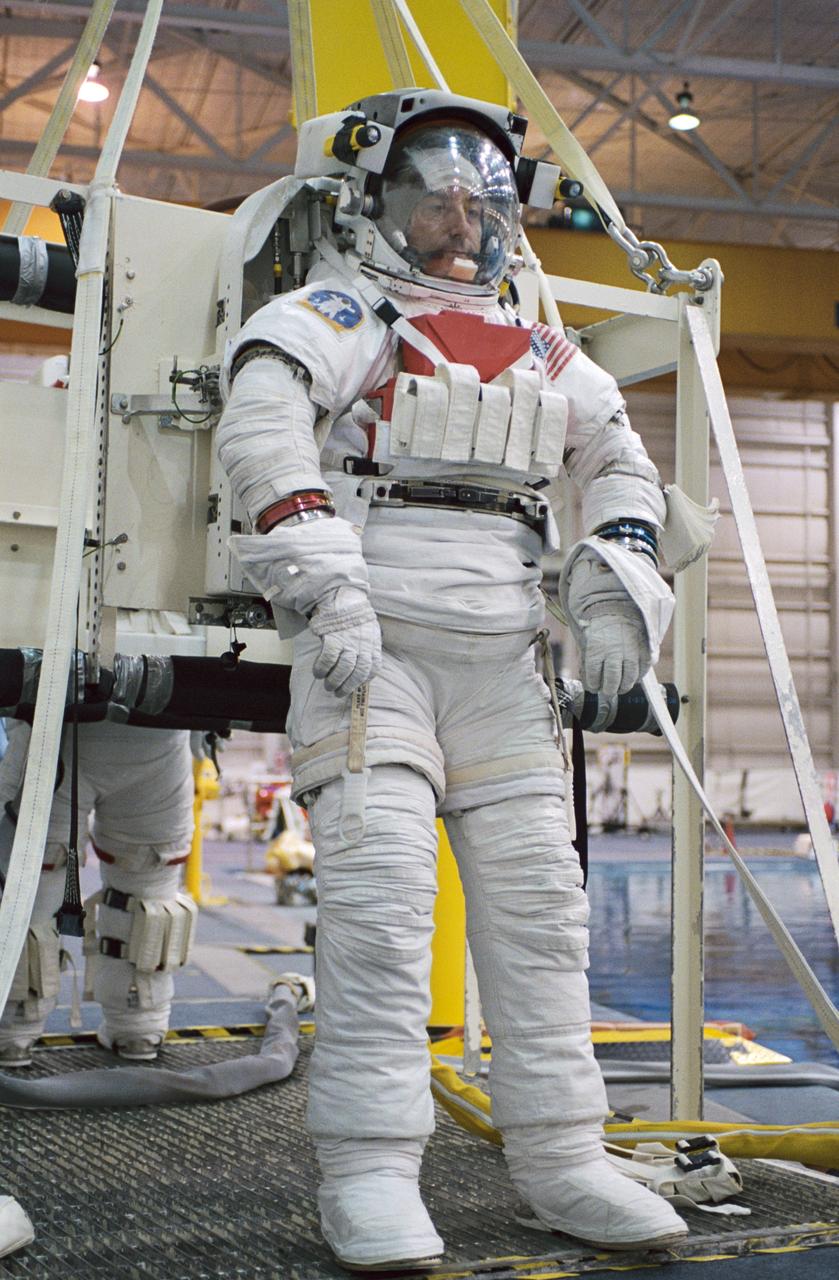
JSC2001-02935 (26 November 2001) --- Astronaut Philippe Perrin, STS-111 mission specialist, attired in a training version of the Extravehicular Mobility Unit (EMU) space suit, is about to be submerged in the waters of the Neutral Buoyancy Laboratory (NBL) near the Johnson Space Center (JSC). Perrin represents CNES, the French Space Agency. STS-111 will be the 14th shuttle mission to visit the International Space Station (ISS).
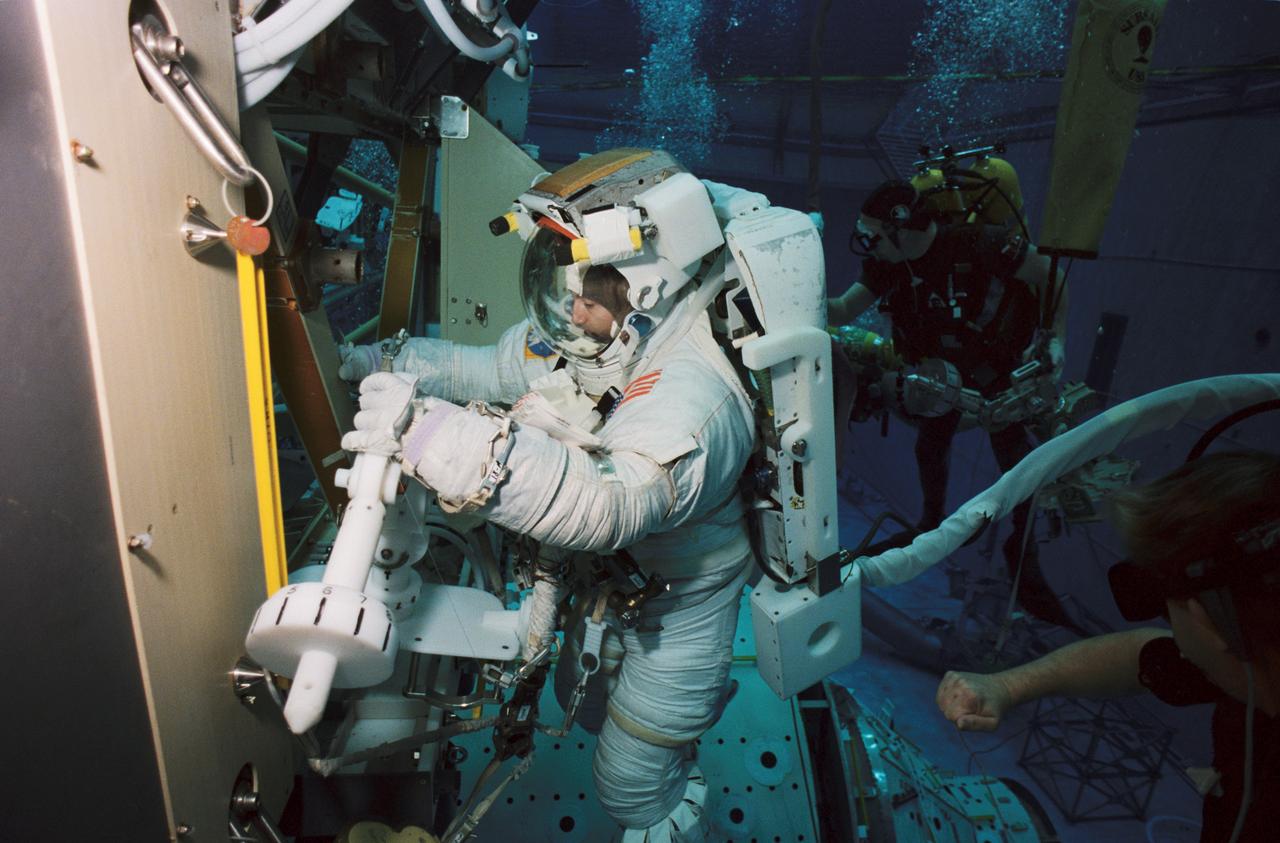
JSC2002-00507 (15 January 2002) --- Astronaut Philippe Perrin, STS-111 mission specialist, wears a training version of the Extravehicular Mobility Unit (EMU) space suit during an underwater simulation of extravehicular activity (EVA) scheduled for the 14th shuttle mission to the International Space Station (ISS). Perrin, representing CNES, the French Space Agency, was joined by astronaut Franklin R. Chang-Diaz (out of frame) for the simulation, conducted in the Neutral Buoyancy Laboratory (NBL) near the Johnson Space Center.
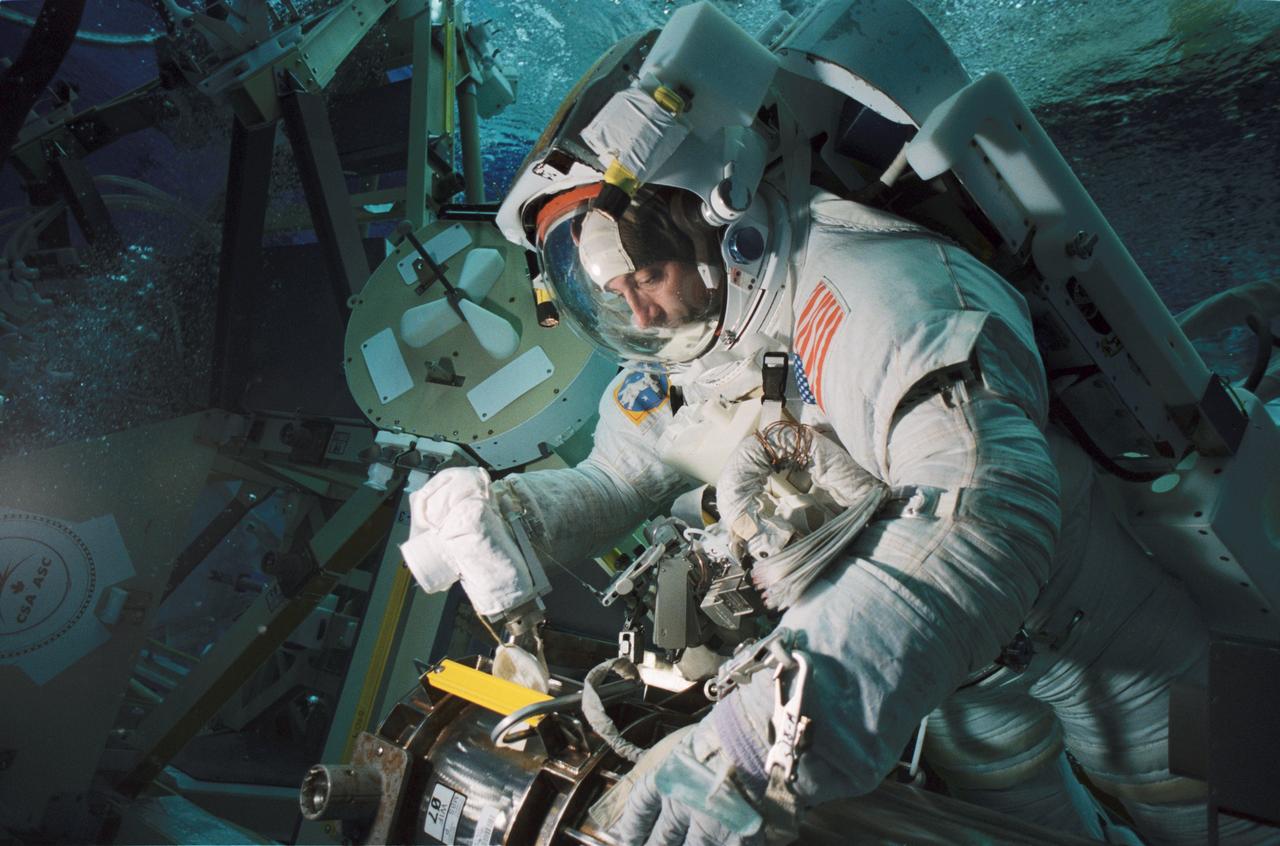
JSC2002-00510 (15 January 2002) --- Astronaut Philippe Perrin, STS-111 mission specialist, wears a training version of the Extravehicular Mobility Unit (EMU) space suit during an underwater simulation of extravehicular activity (EVA) scheduled for the 14th shuttle mission to the International Space Station (ISS). Perrin, representing CNES, the French Space Agency, was joined by astronaut Franklin R. Chang-Diaz (out of frame) for the simulation, conducted in the Neutral Buoyancy Laboratory (NBL) near the Johnson Space Center.
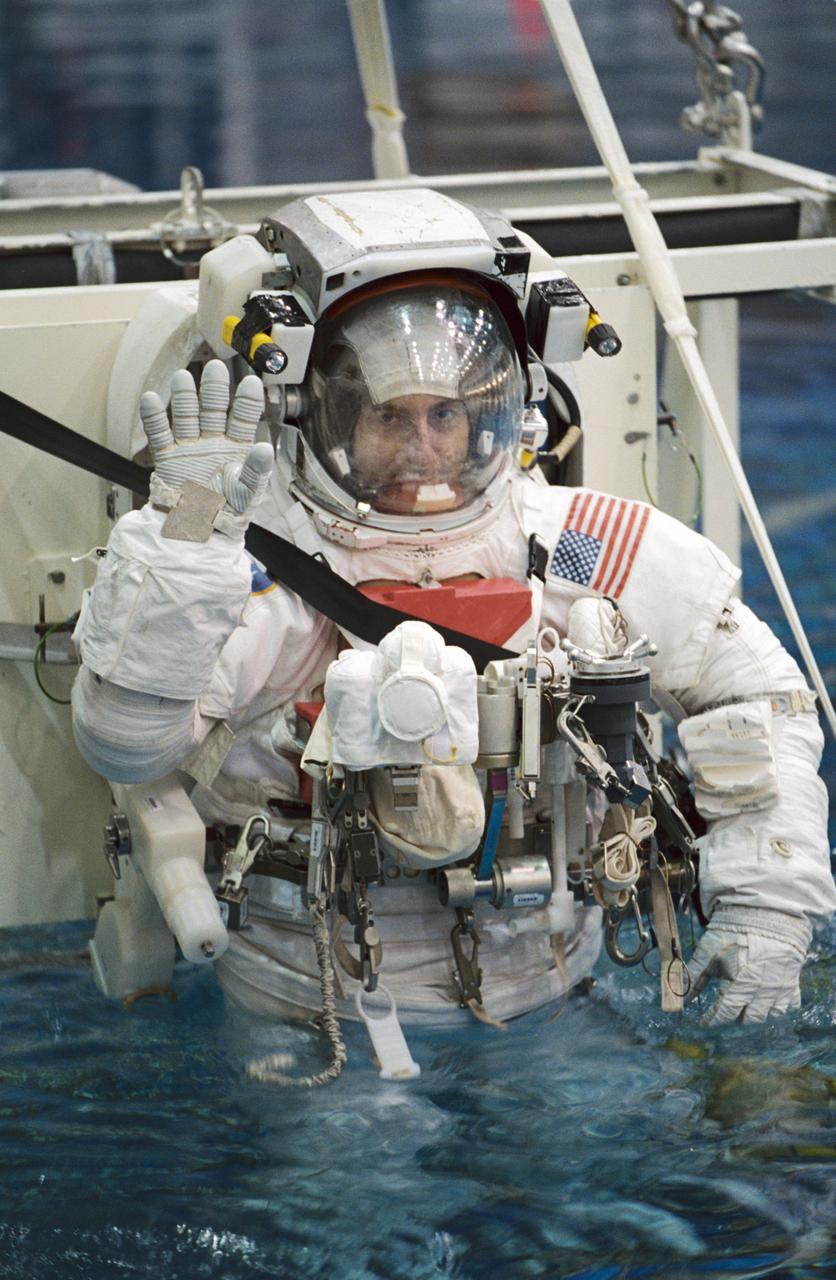
JSC2001-02939 (26 November 2001) --- Astronaut Philippe Perrin, STS-111 mission specialist, attired in a training version of the Extravehicular Mobility Unit (EMU) space suit, waves as he is submerged in the waters of the Neutral Buoyancy Laboratory (NBL) near the Johnson Space Center (JSC). Perrin represents CNES, the French Space Agency. STS-111 will be the 14th shuttle mission to visit the International Space Station (ISS).
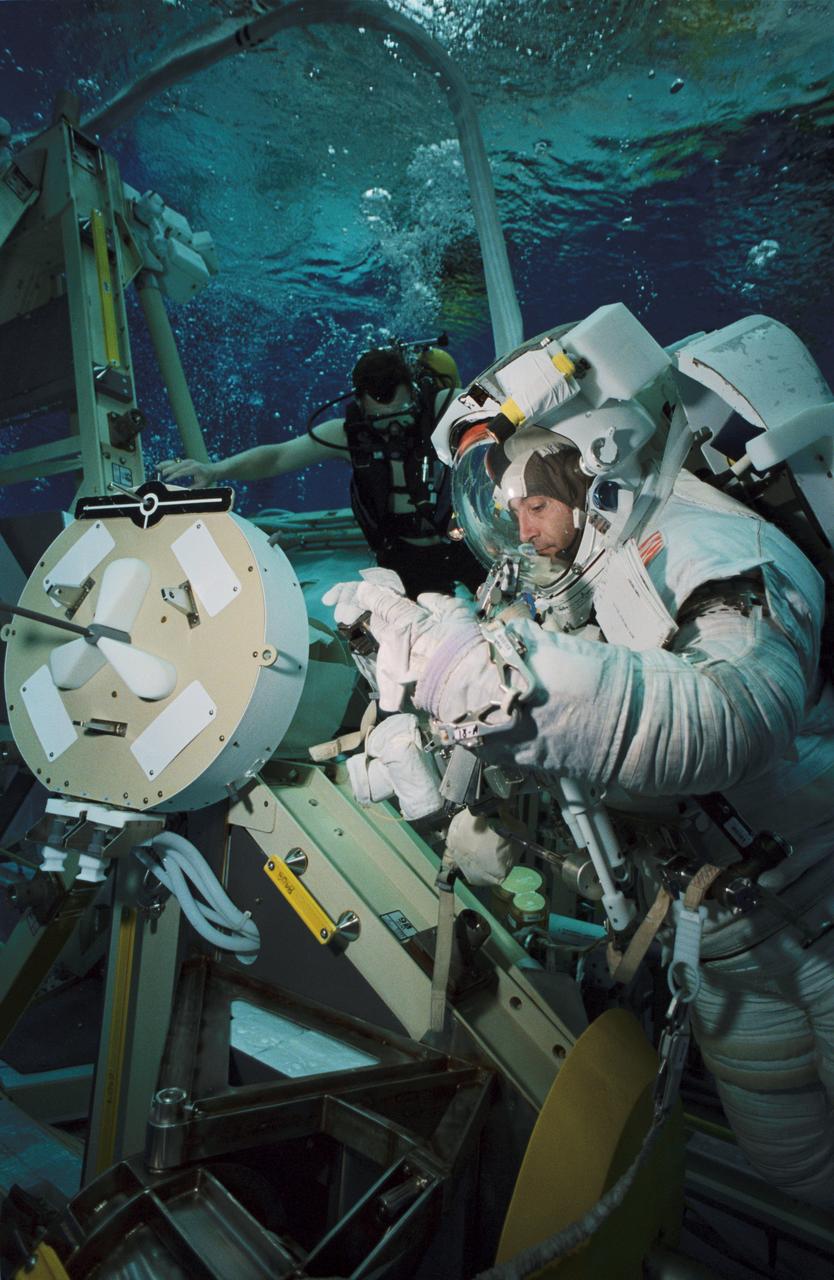
JSC2002-00508 (15 January 2002) --- Astronaut Philippe Perrin, STS-111 mission specialist, wears a training version of the Extravehicular Mobility Unit (EMU) space suit during an underwater simulation of extravehicular activity (EVA) scheduled for the 14th shuttle mission to the International Space Station (ISS). Perrin, representing CNES, the French Space Agency, was joined by astronaut Franklin R. Chang-Diaz (out of frame) for the simulation, conducted in the Neutral Buoyancy Laboratory (NBL) near the Johnson Space Center.
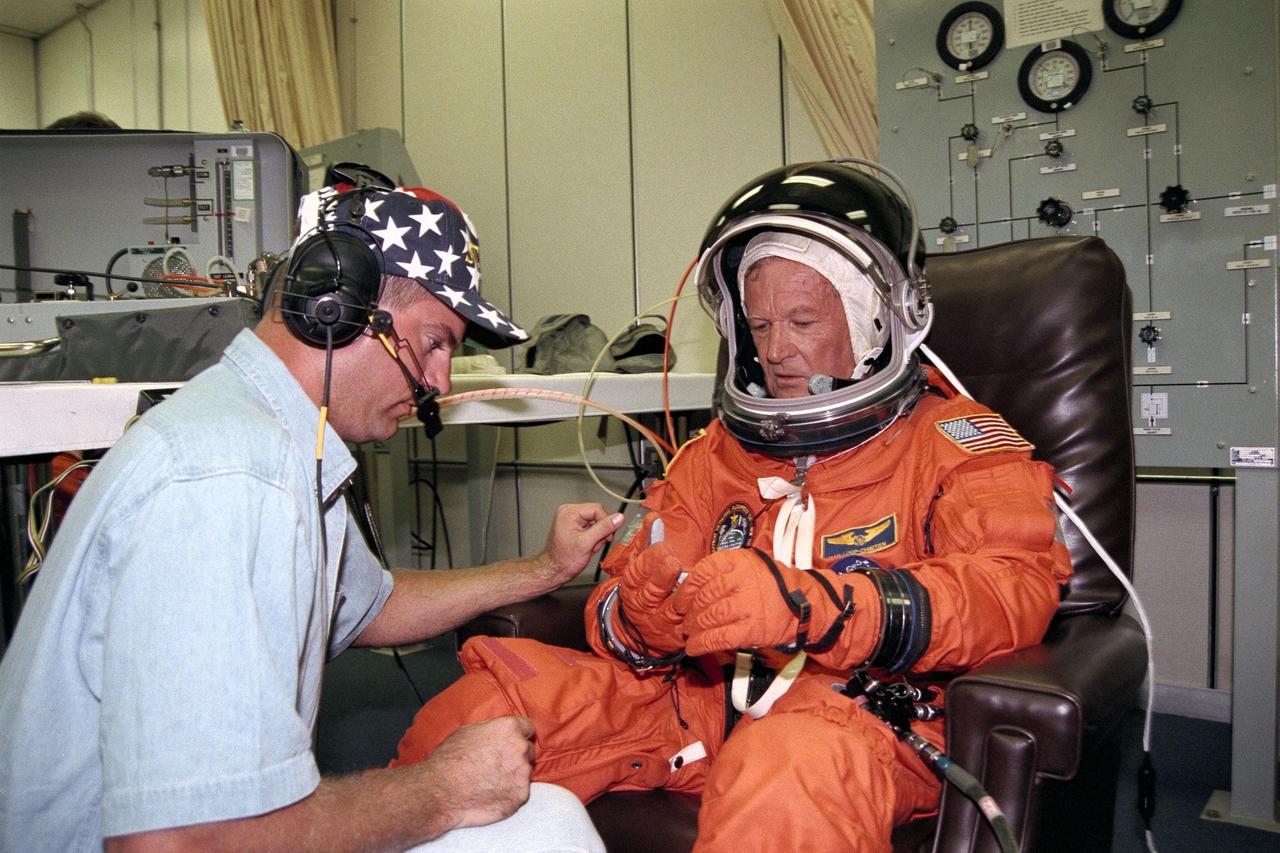
STS-86 Mission Specialist Jean-Loup J.M. Chretien of the French Space Agency, CNES, gets assistance from a suit technician in adjusting his launch and entry suit in the Operations and Checkout Building. This will be Chretien’s third spaceflight, but his first on the Space Shuttle. He and the six other crew members will depart shortly for Launch Pad 39A, where the Space Shuttle Atlantis awaits liftoff on a 10-day mission slated to be the seventh docking of the Shuttle with the Russian Space Station Mir
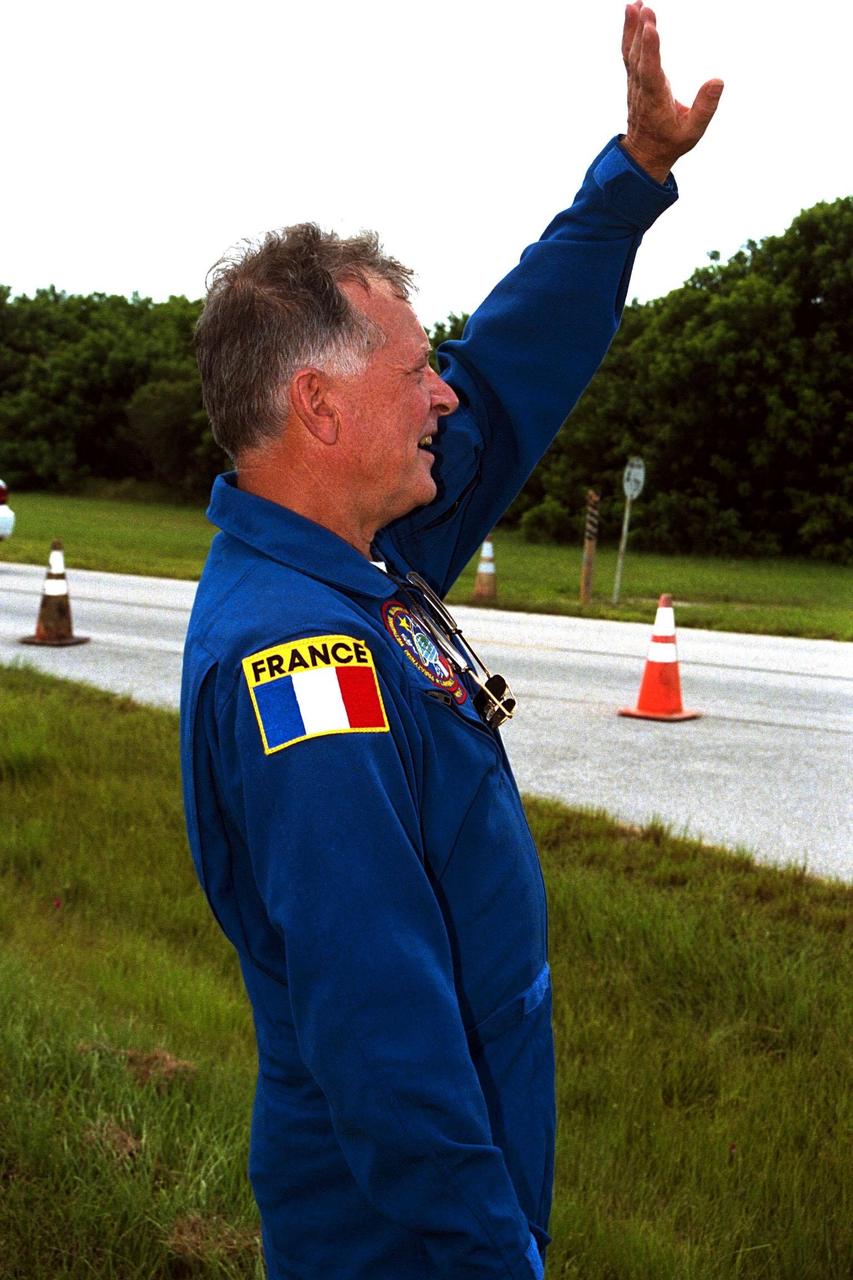
STS-86 Mission Specialist Jean-Loup J.M. Chretien of the French Space Agency, CNES, waves to family members, friends and other well-wishers during a brief visit to Launch Pad 39A the day before the scheduled Sept. 25 liftoff of the Space Shuttle Atlantis. This will be Chretien’s third spaceflight, but his first on the Shuttle. STS-86 is slated to be the seventh docking of the Space Shuttle with the Russian Space Station Mir
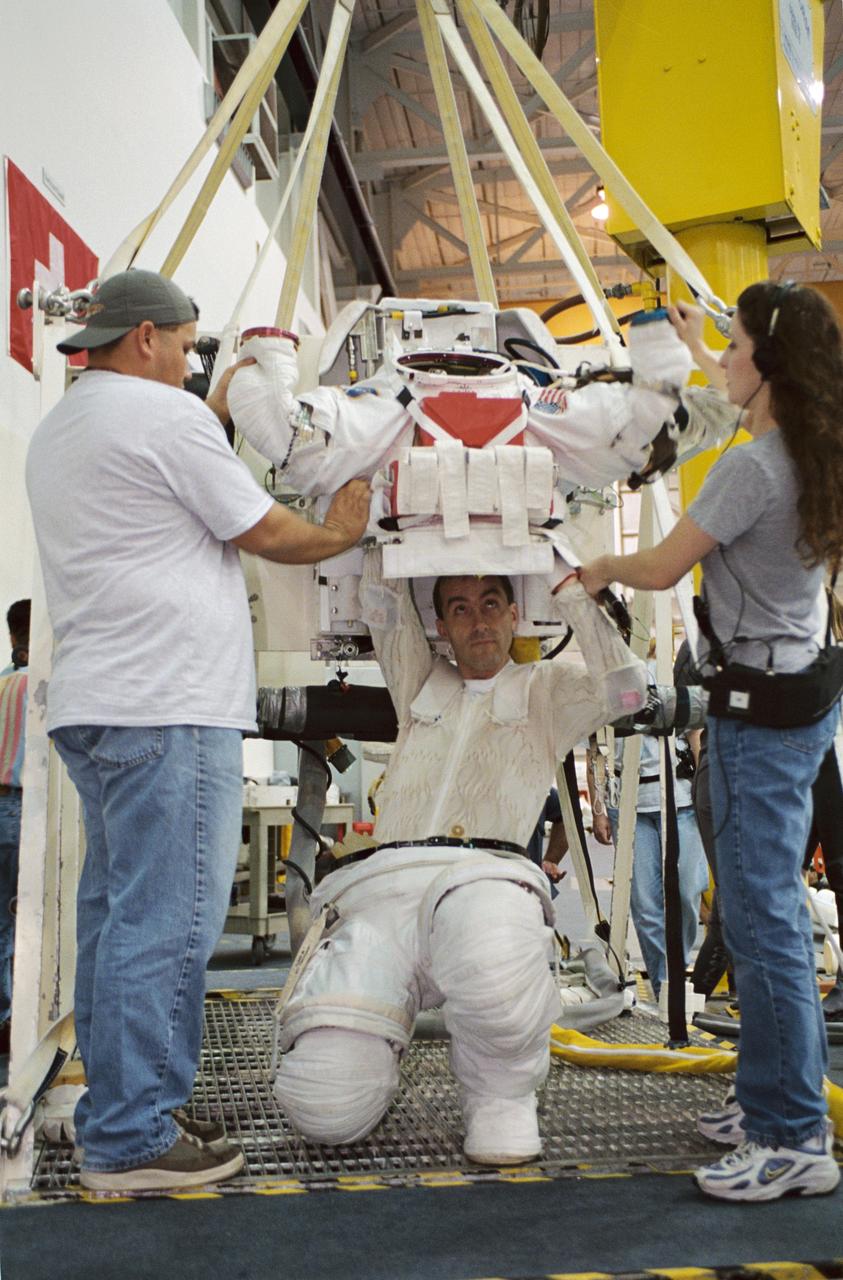
JSC2001-02941 (26 November 2001) --- Astronaut Philippe Perrin, STS-111 mission specialist, dons a training version of the Extravehicular Mobility Unit (EMU) space suit prior to being submerged in the waters of the Neutral Buoyancy Laboratory (NBL) near the Johnson Space Center (JSC). Perrin, representing CNES, the French Space Agency, is assisted by crew trainers Don Post, Jr., and Nichole Starke. STS-111 will be the 14th shuttle mission to visit the International Space Station (ISS).
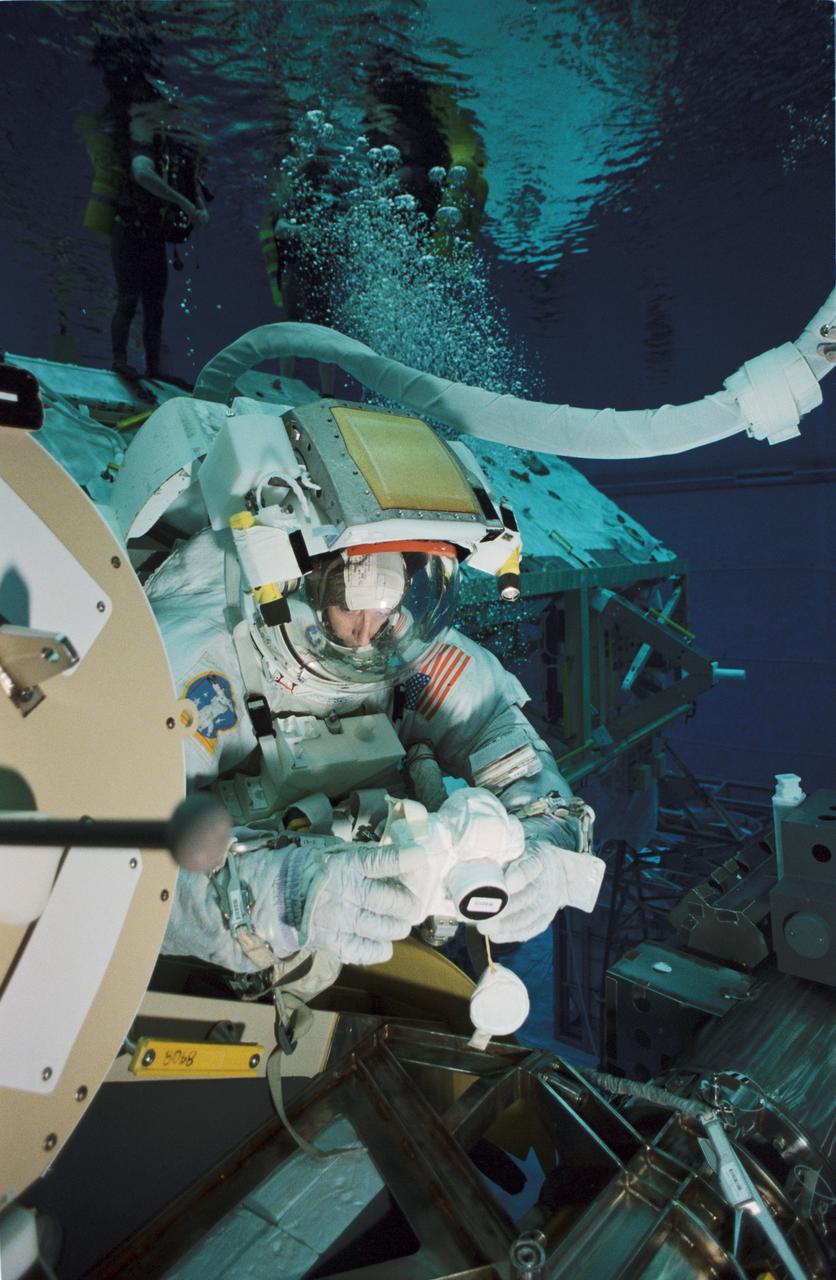
JSC2002-00511 (15 January 2002) --- Astronaut Philippe Perrin, STS-111 mission specialist, wears a training version of the Extravehicular Mobility Unit (EMU) space suit during an underwater simulation of extravehicular activity (EVA) scheduled for the 14th shuttle mission to the International Space Station (ISS). Perrin, representing CNES, the French Space Agency, was joined by astronaut Franklin R. Chang-Diaz (out of frame) for the simulation, conducted in the Neutral Buoyancy Laboratory (NBL) near the Johnson Space Center.
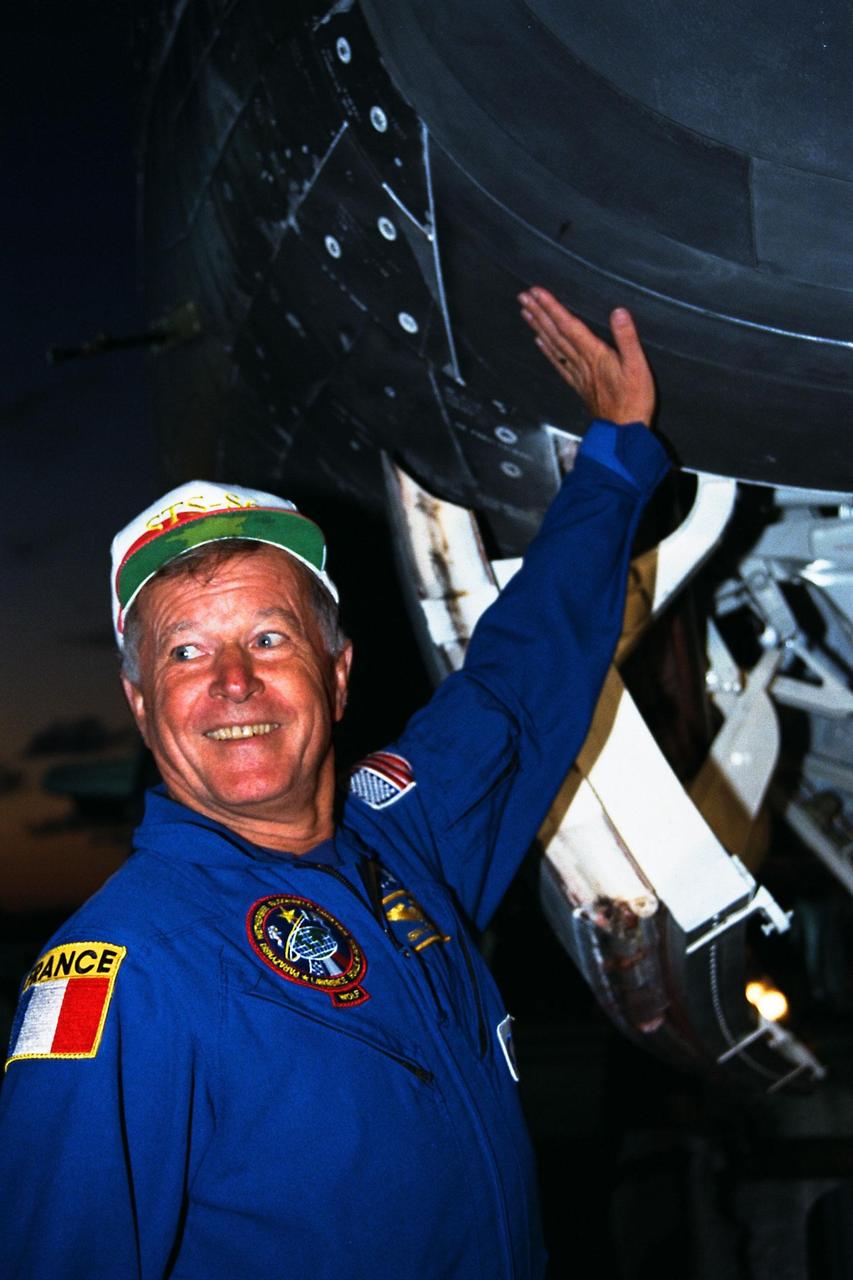
STS-86 Mission Specialist Jean-Loup J.M. Chretien of the French Space Agency, CNES, can still feel heat from the nose of the orbiter Atlantis more than an hour after landing on KSC’s Runway 15 of the Shuttle Landing Facility. The nearly 11-day mission ended with main gear touchdown at 5:55:09 p.m. EDT, Oct. 6, 1997. STS-86 was the seventh docking of the Space Shuttle with the Russian Space Station Mir
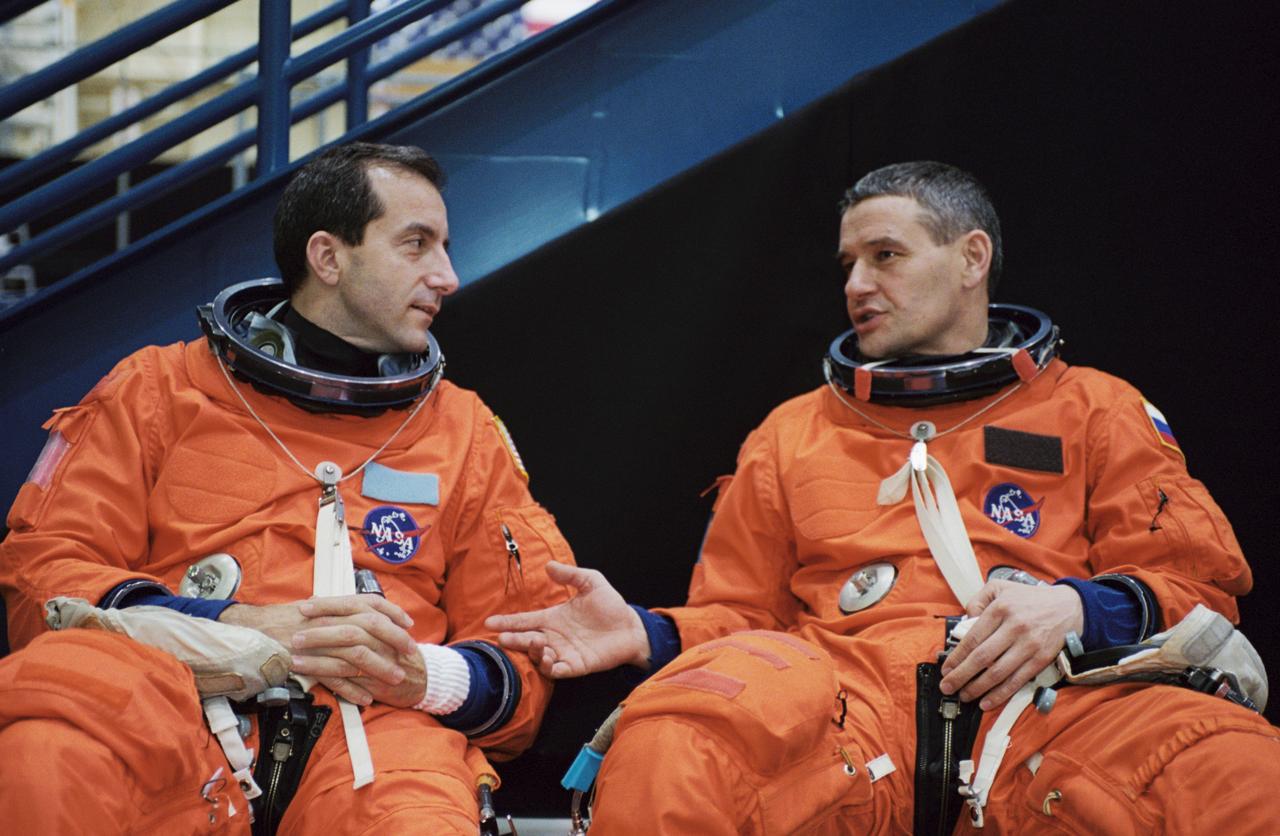
JSC2002-00721 (29 March 2002) --- Astronaut Philippe Perrin (left) and cosmonaut Valeri G. Korzun, STS-111 mission specialist and Expedition Five mission commander, respectively, attired in training versions of the shuttle launch and entry suit, await a mission training session in the Space Vehicle Mockup Facility at the Johnson Space Center (JSC). Perrin represents CNES, the French Space Agency, and Korzun represents Rosaviakosmos.
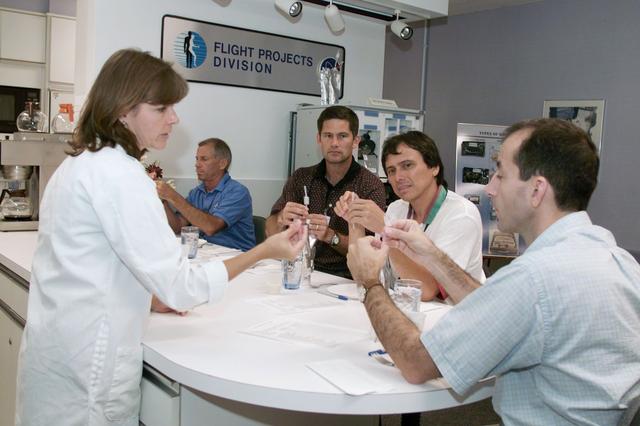
JSC2001-E-25712 (27 August 2001) --- The STS-111 crewmembers are briefed by dietitian Gloria Mongan with Lockheed Martin Space Operations during food testing in the Flight Projects Division Laboratory at the Johnson Space Center (JSC). From back to front are astronauts Kenneth D. Cockrell and Paul S. Lockhart, mission commander and pilot, respectively, and Franklin R. Chang-Diaz and Philippe Perrin, both mission specialists. Perrin represents CNES, the French Space Agency.