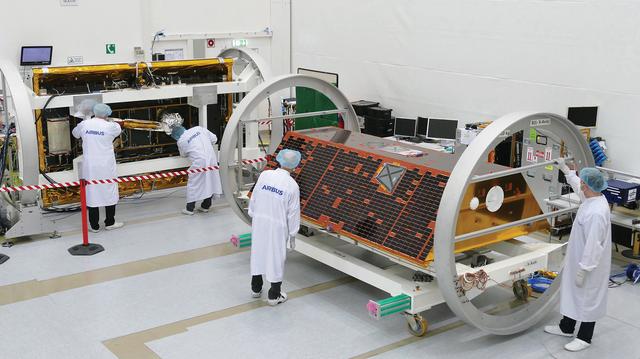
The Gravity Recovery and Climate Experiment Follow-on (GRACE-FO) mission is a partnership between NASA and the German Research Centre for Geosciences (GFZ). GRACE-FO is a successor to the original GRACE mission, which began orbiting Earth on March 17, 2002. GRACE-FO will carry on the extremely successful work of its predecessor while testing a new technology designed to dramatically improve the already remarkable precision of its measurement system. The GRACE missions measure variations in gravity over Earth's surface, producing a new map of the gravity field every 30 days. Thus, GRACE shows how the planet's gravity differs not only from one location to another, but also from one period of time to another. Airbus Defence and Space (Friedrichshafen/Germany) is the industrial prime contractor to build the satellites.
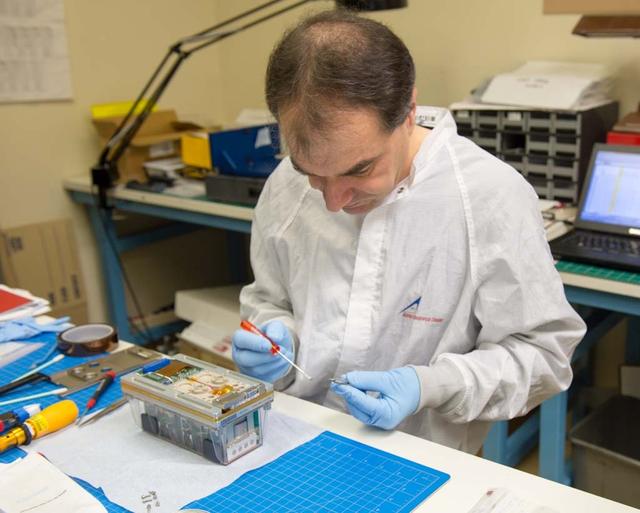
TROPI Seed Growth-1 payload (will fly to ISS on Space X 2) with Thomas Neidermaier, Europeon Modular Culitivation System Payload Intergration Manager both from Astrium Space Transportaton, Friedrichshafen, Germany.
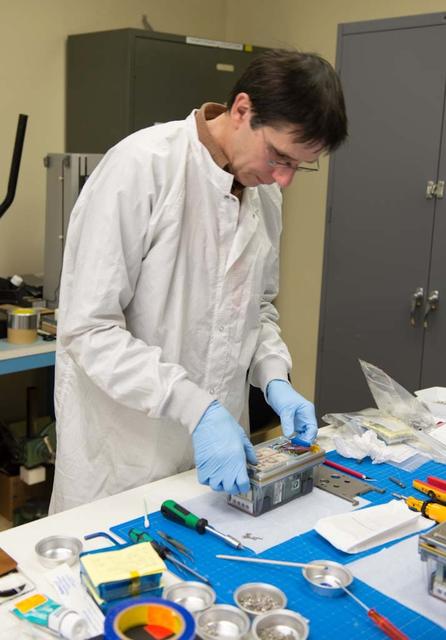
TROPI Seed Growth-1 payload (will fly to ISS on Space X 2) with Reinhard Born, Astrium Space Transportaton, Friedrichshafen, Germany - Europeon Modular Culitivation System Payload Engineering Manager
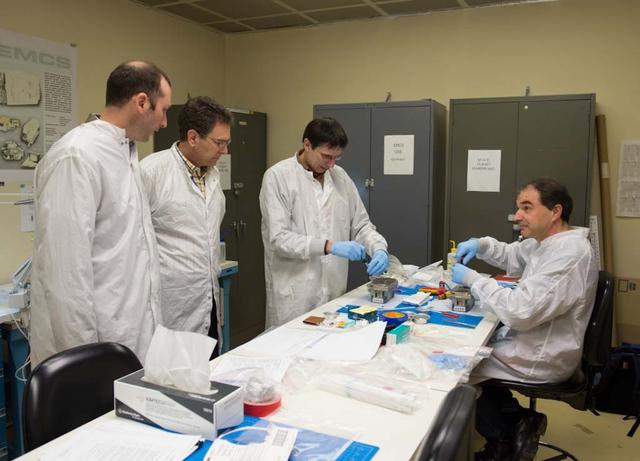
TROPI Seed Growth-1 payload (will fly to ISS on Space X 2) from left to right are Krisofer Vogelsong, Project Science Lead, Tropi SG-1, Lockheed Martin, NASA Ames, John Freeman Plant Scientist, Tropi SG-1, intrinsyx, NASA Ames, Reinhard Born, Europeon Modular Culitivation System Payload Engineering Manager standing and Thomas Neidermaier, Europeon Modular Culitivation System Payload Intergration Manager both from Astrium Space Transportaton ESA, Friedrichshafen, Germany.
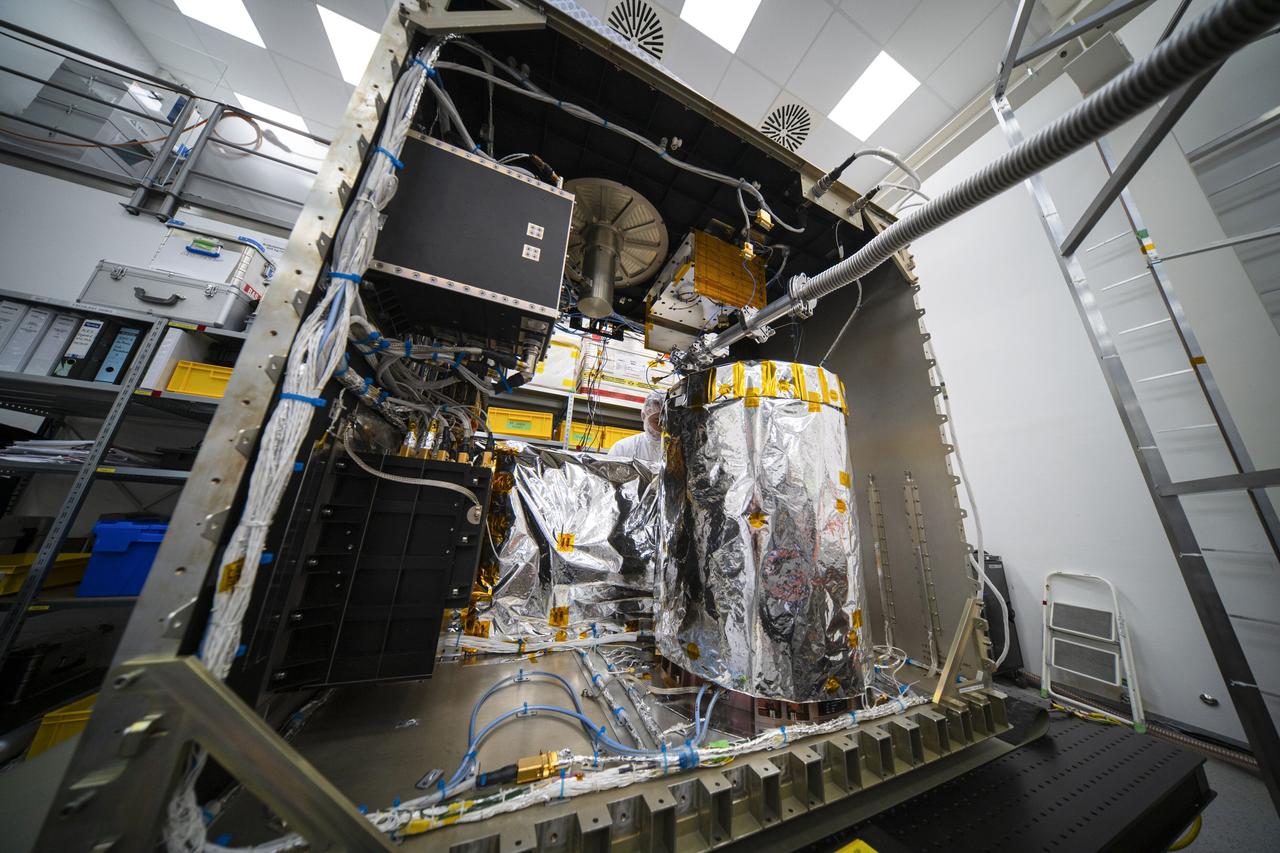
jsc2025e015680 (3/6/2025) --- The closure of the instrument panel of the Atomic Clock Ensemble in Space (ACES) has taken place at Airbus Friedrichshafen, Germany. ACES is an ESA instrument that tests fundamental physics, such as Einstein’s theory of general relativity, from the International Space Station. According to this theory, gravity affects the passing of time—time flies faster at the top of Mount Everest than at sea level. This effect has been proven in experiments on Earth, and ACES will make more precise measurements of this phenomenon and other fundamental physics such as the standard model of particle physics, as it flies 400 km high on the space station. ACES contains two clocks: PHARAO, a caesium atomic clock developed by the French Space Agency CNES, and the Space Hydrogen Maser developed by Spectratime, which uses hydrogen atoms as a frequency reference. The payload will be externally mounted to ESA’s Columbus laboratory on the space station. Image courtesy of S. Corvaja (ESA).
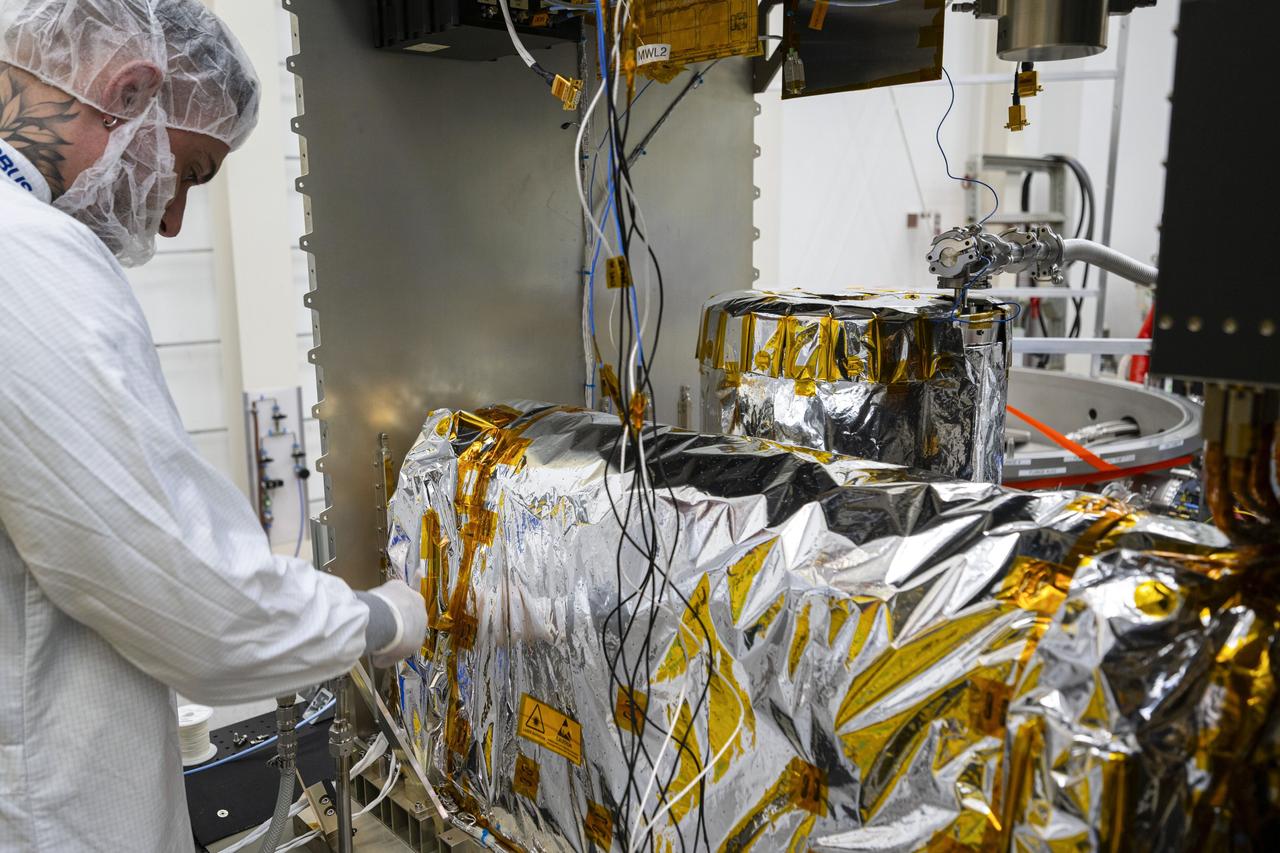
jsc2025e015677 (3/6/2025) --- The closure of the instrument panel of the Atomic Clock Ensemble in Space (ACES) has taken place at Airbus Friedrichshafen, Germany. ACES is an ESA instrument that tests fundamental physics, such as Einstein’s theory of general relativity, from the International Space Station. According to this theory, gravity affects the passing of time—time flies faster at the top of Mount Everest than at sea level. This effect has been proven in experiments on Earth, and ACES will make more precise measurements of this phenomenon and other fundamental physics such as the standard model of particle physics, as it flies 400 km high on the space station. ACES contains two clocks: PHARAO, a caesium atomic clock developed by the French Space Agency CNES, and the Space Hydrogen Maser developed by Spectratime, which uses hydrogen atoms as a frequency reference. The payload will be externally mounted to ESA’s Columbus laboratory on the space station. Image courtesy of S. Corvaja (ESA).
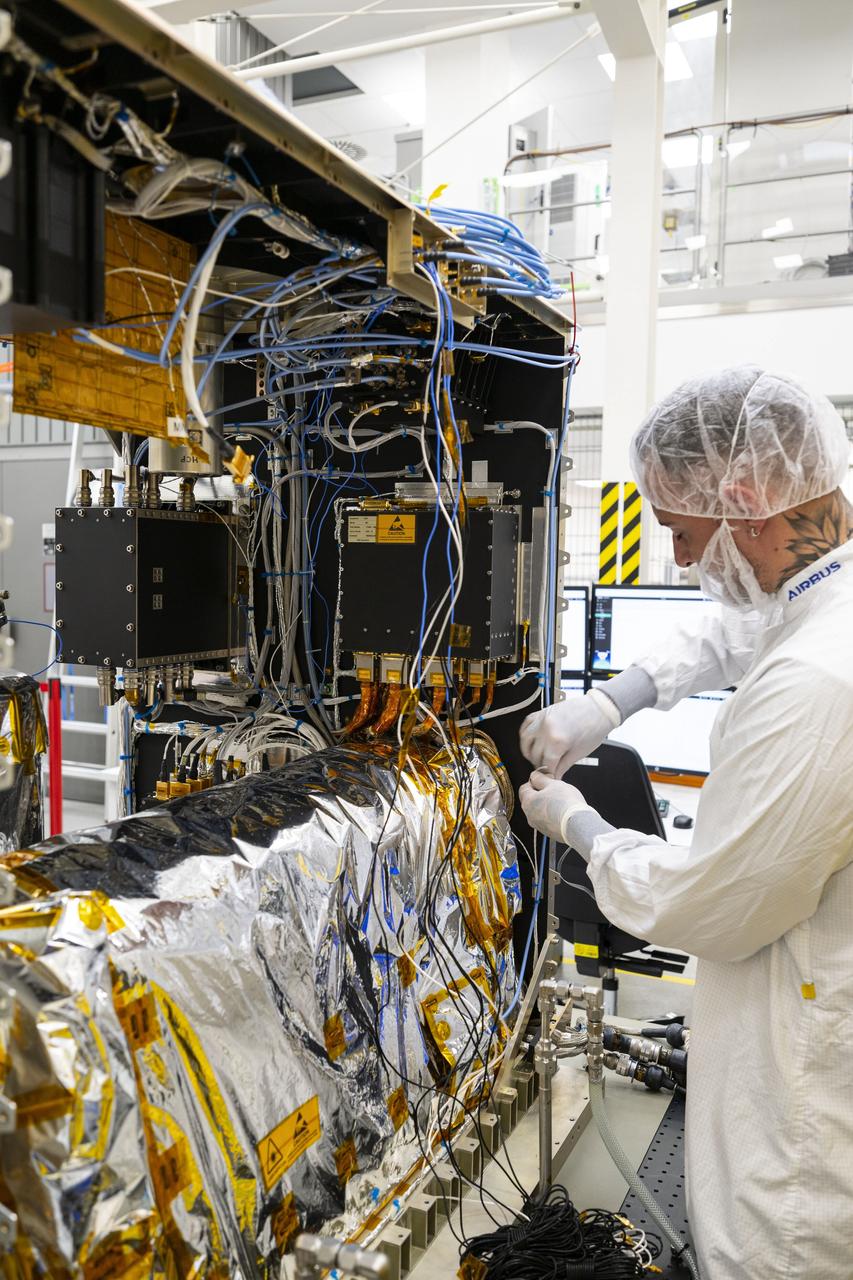
jsc2025e015678 (3/6/2025) --- The closure of the instrument panel of the Atomic Clock Ensemble in Space (ACES) has taken place at Airbus Friedrichshafen, Germany. ACES is an ESA instrument that tests fundamental physics, such as Einstein’s theory of general relativity, from the International Space Station. According to this theory, gravity affects the passing of time—time flies faster at the top of Mount Everest than at sea level. This effect has been proven in experiments on Earth, and ACES will make more precise measurements of this phenomenon and other fundamental physics such as the standard model of particle physics, as it flies 400 km high on the space station. ACES contains two clocks: PHARAO, a caesium atomic clock developed by the French Space Agency CNES, and the Space Hydrogen Maser developed by Spectratime, which uses hydrogen atoms as a frequency reference. The payload will be externally mounted to ESA’s Columbus laboratory on the space station. Image courtesy of S. Corvaja (ESA).
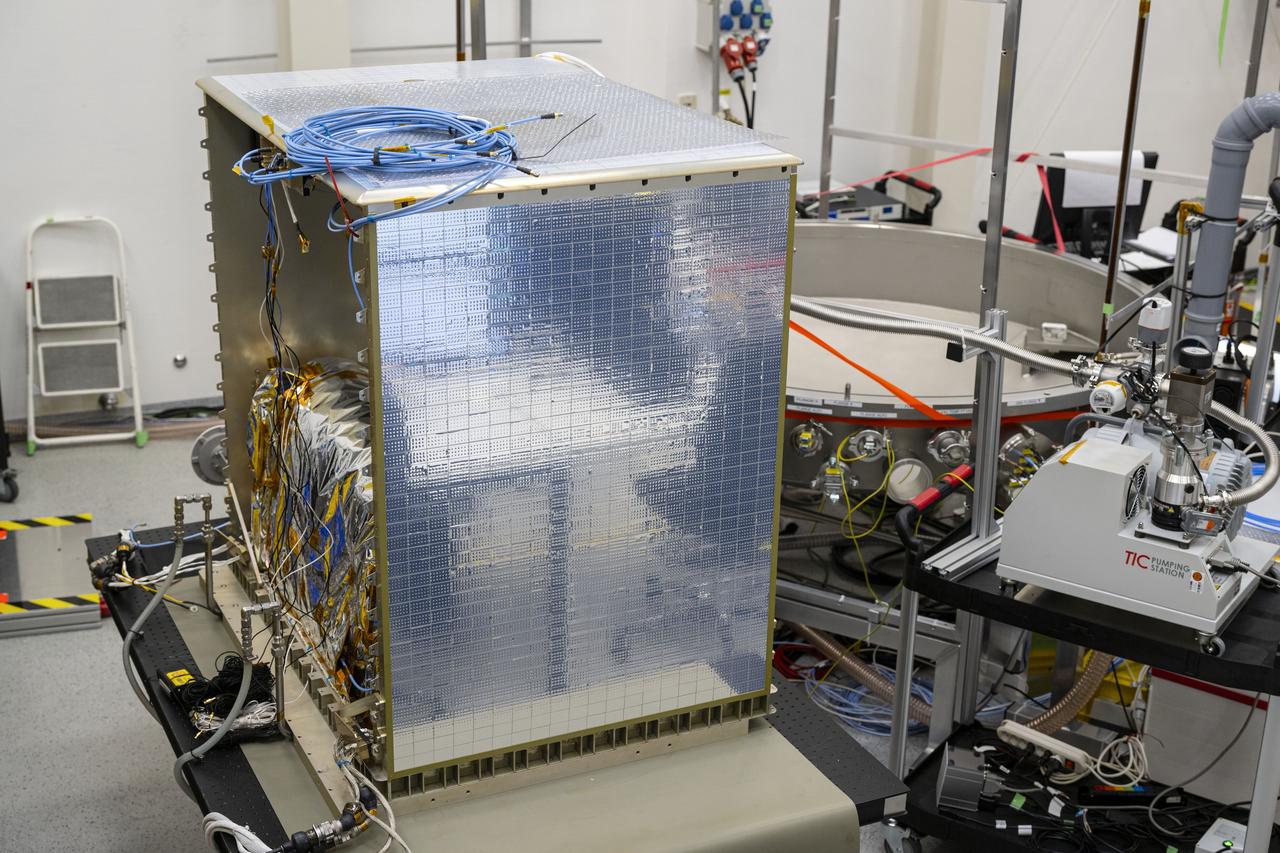
jsc2025e015679 (3/6/2025) --- The closure of the instrument panel of the Atomic Clock Ensemble in Space (ACES) has taken place at Airbus Friedrichshafen, Germany. ACES is an ESA instrument that tests fundamental physics, such as Einstein’s theory of general relativity, from the International Space Station. According to this theory, gravity affects the passing of time—time flies faster at the top of Mount Everest than at sea level. This effect has been proven in experiments on Earth, and ACES will make more precise measurements of this phenomenon and other fundamental physics such as the standard model of particle physics, as it flies 400 km high on the space station. ACES contains two clocks: PHARAO, a caesium atomic clock developed by the French Space Agency CNES, and the Space Hydrogen Maser developed by Spectratime, which uses hydrogen atoms as a frequency reference. The payload will be externally mounted to ESA’s Columbus laboratory on the space station. Image courtesy of S. Corvaja (ESA).
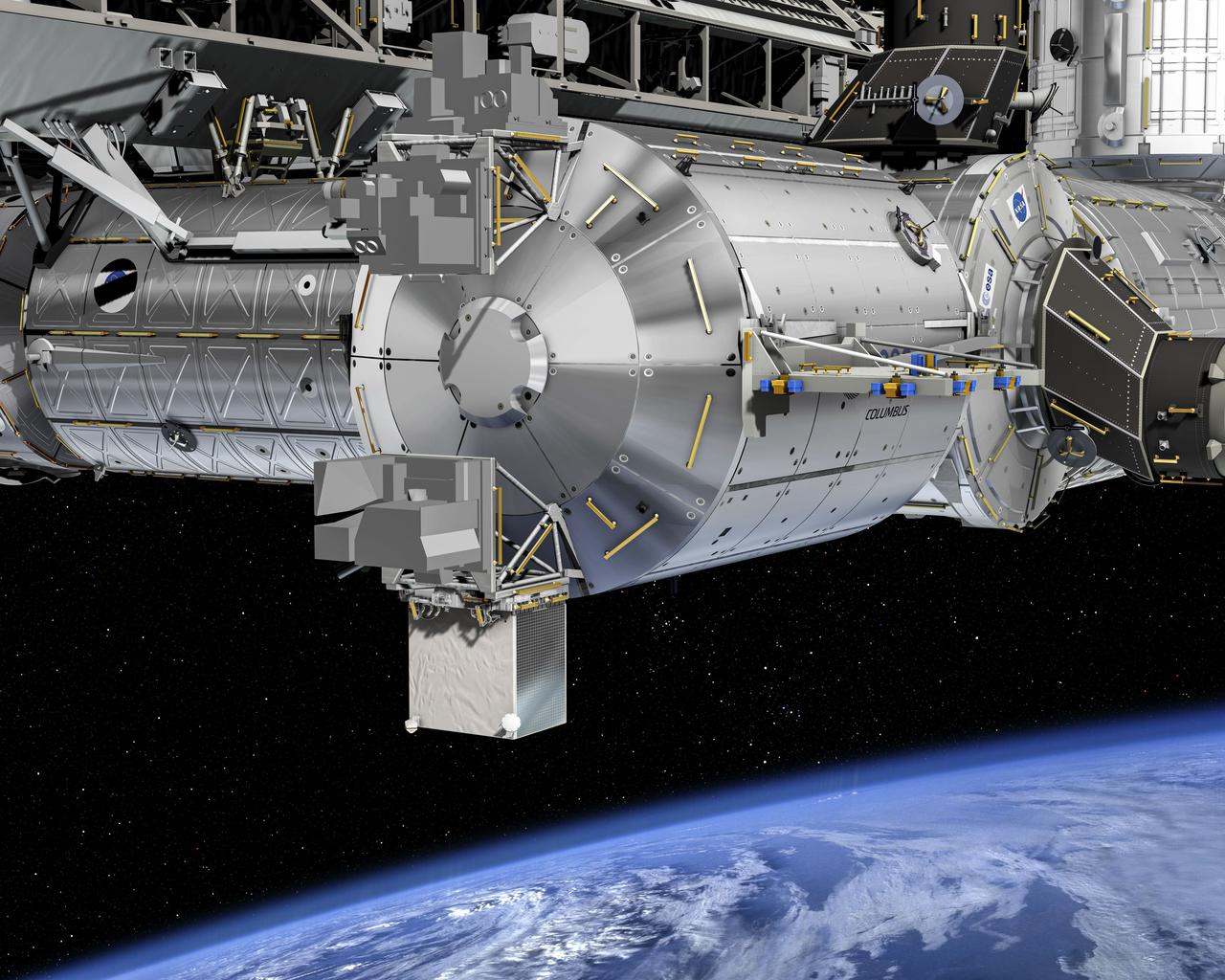
jsc2025e015676 (3/6/2025) --- The Atomic Clock Ensemble in Space (ACES) facility attached to the exterior of ESA's Columbus facility on the International Space Station. By creating a "network of clocks", this European facility can link its own highly precise timepieces with the most accurate clocks on Earth and compare them to measure the flow of time. ACES includes two cutting-edge clocks: Project d'Horloge Atomique par Refroidissement d'Atomes en Orbit (PHARAO) and Space Hydrogen Maser (SHM). The excellent stability of SHM over a one hour period, combined with the long-term stability and accuracy of PHARAO, provide timekeeping for ACES with a precision of one second over 300 million years. Once in space, a robotic arm positions ACES onto the Columbus module, where it will remain for 30 months to collect data. ACES aims to record continuous data over at least ten sessions of 25 days each. By comparing clocks in space and on Earth, ACES can provide scientists with precise measurements to test Einstein’s gravitational time dilation effect, search for time variations of fundamental constants of physics, and hunt for dark matter. ACES is fully assembled at Airbus in Friedrichshafen, Germany. Image courtesy of D. Ducros (ESA).
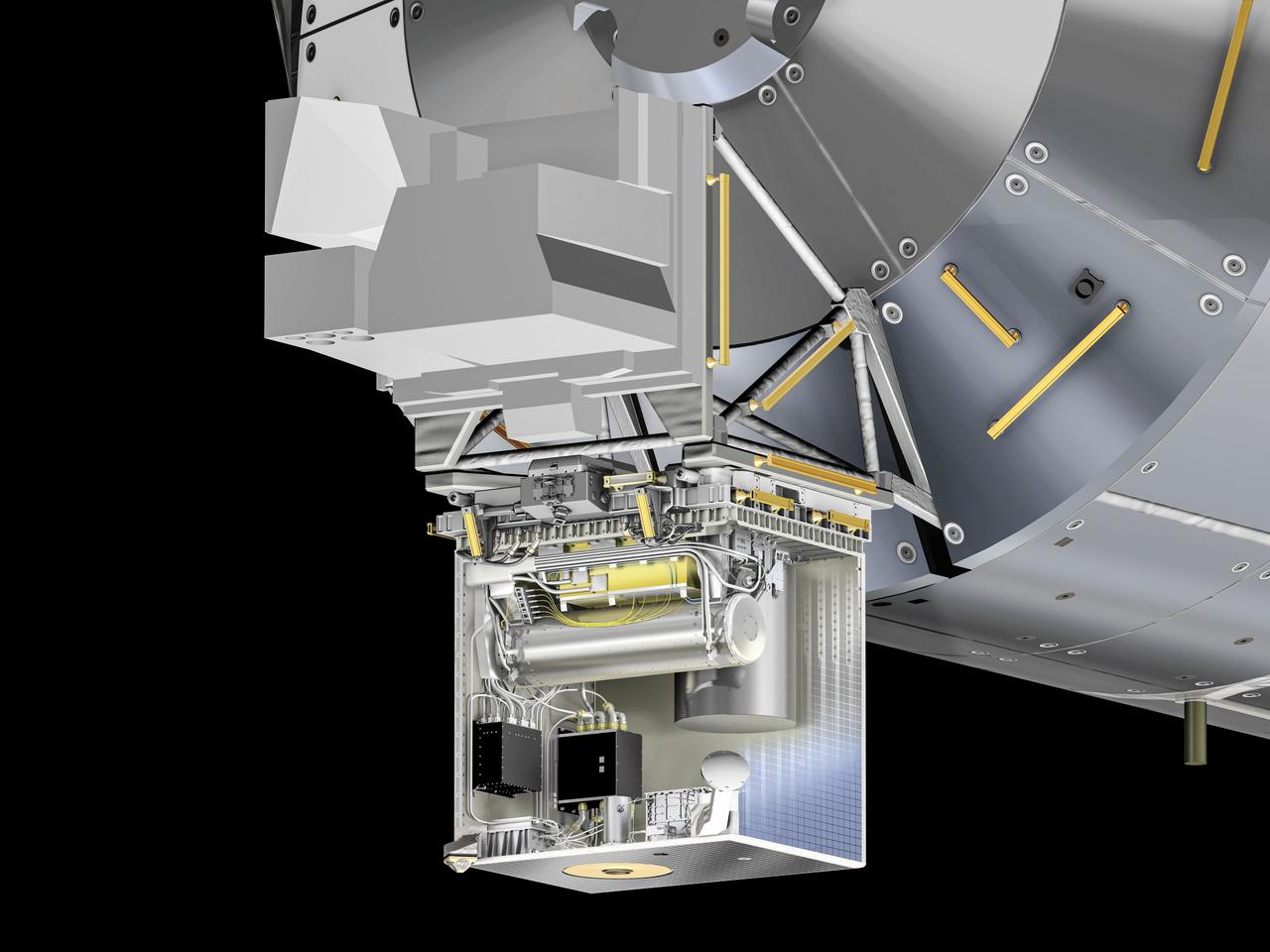
jsc2025e015681 (3/6/2025) --- The Atomic Clock Ensemble in Space (ACES) facility attached to the exterior of ESA's Columbus facility on the International Space Station. By creating a "network of clocks", this European facility can link its own highly precise timepieces with the most accurate clocks on Earth and compare them to measure the flow of time. ACES includes two cutting-edge clocks: Project d'Horloge Atomique par Refroidissement d'Atomes en Orbit (PHARAO) and Space Hydrogen Maser (SHM). The excellent stability of SHM over a one hour period, combined with the long-term stability and accuracy of PHARAO, provide timekeeping for ACES with a precision of one second over 300 million years. Once in space, a robotic arm positions ACES onto the Columbus module, where it will remain for 30 months to collect data. ACES aims to record continuous data over at least ten sessions of 25 days each. By comparing clocks in space and on Earth, ACES can provide scientists with precise measurements to test Einstein’s gravitational time dilation effect, search for time variations of fundamental constants of physics, and hunt for dark matter. ACES is fully assembled at Airbus in Friedrichshafen, Germany. Image courtesy of D. Ducros (ESA).