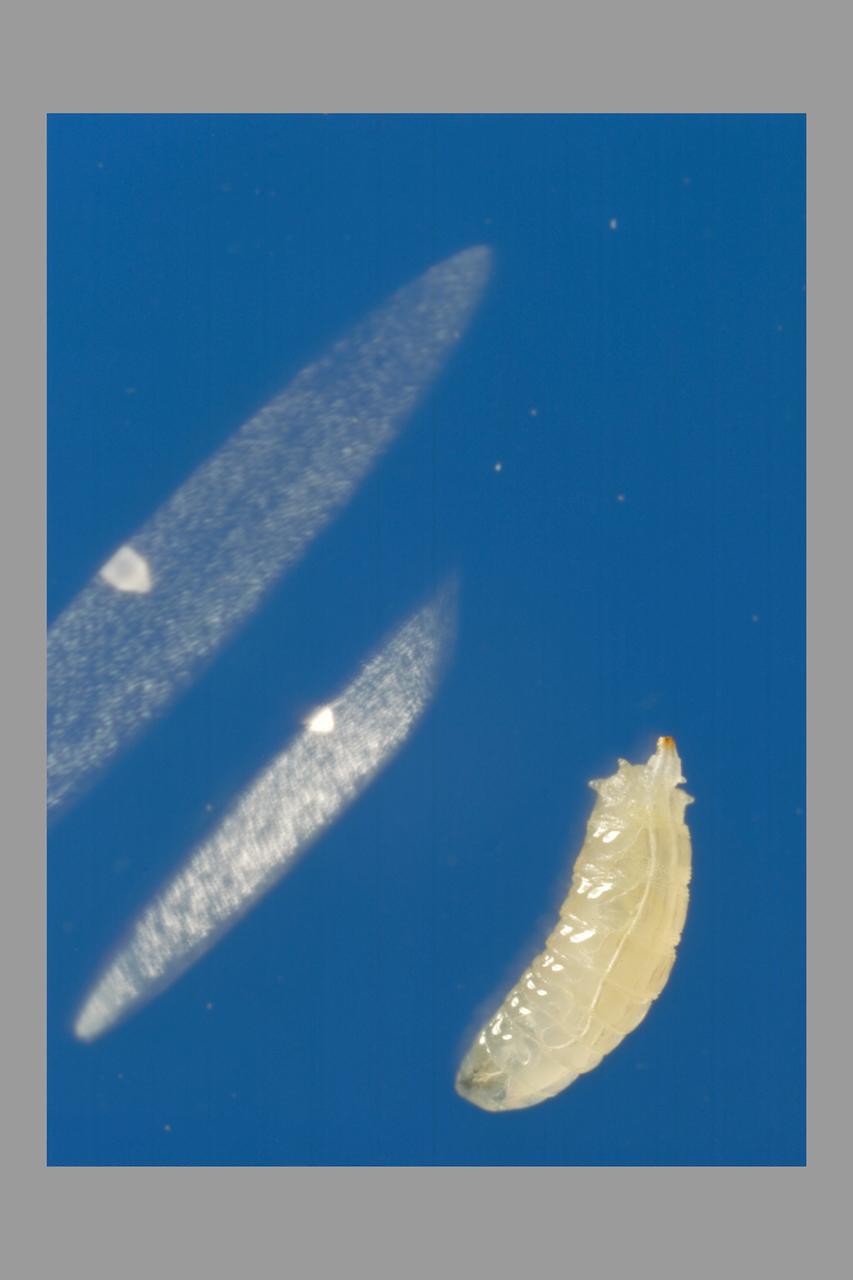
Life cycle of a Fruit Fly: larvae
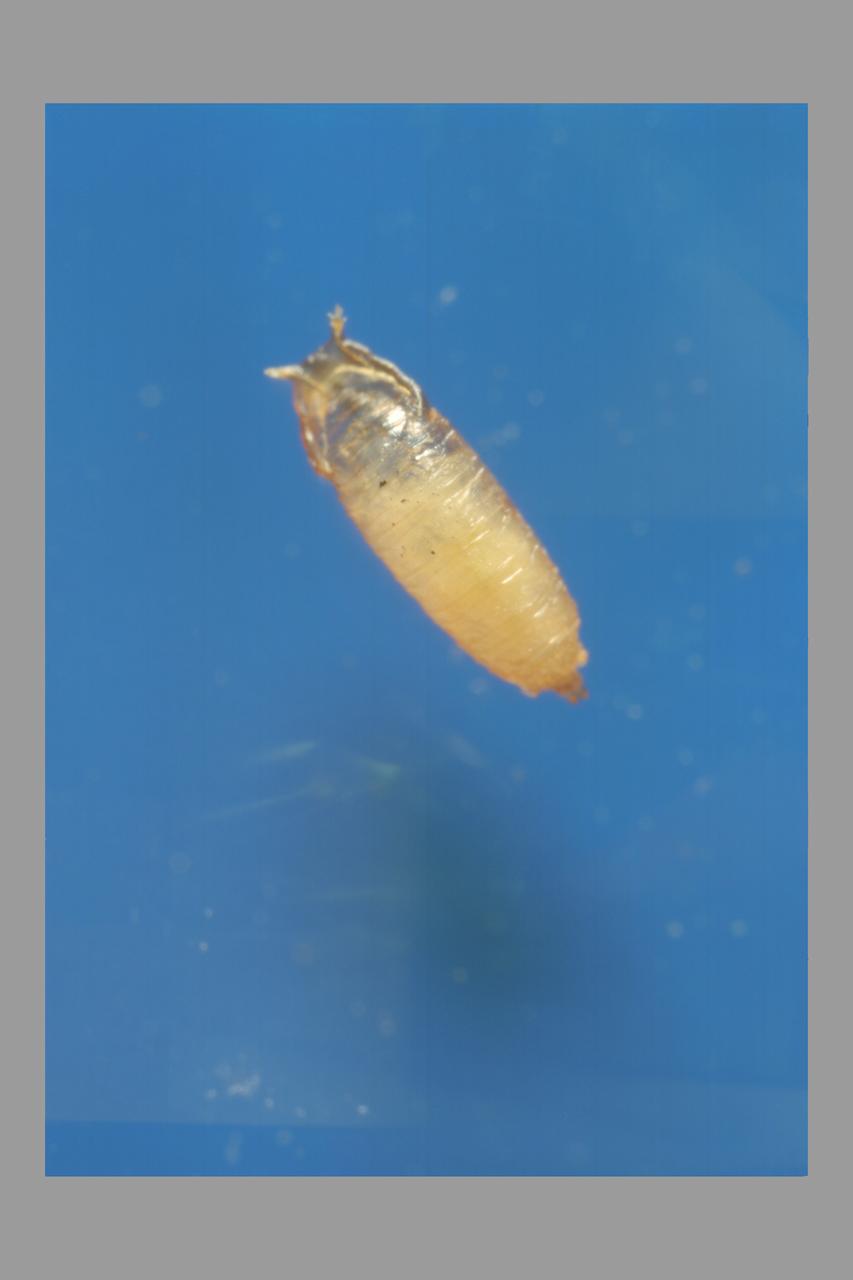
Life Cycle of a Fruit Fly: pupae
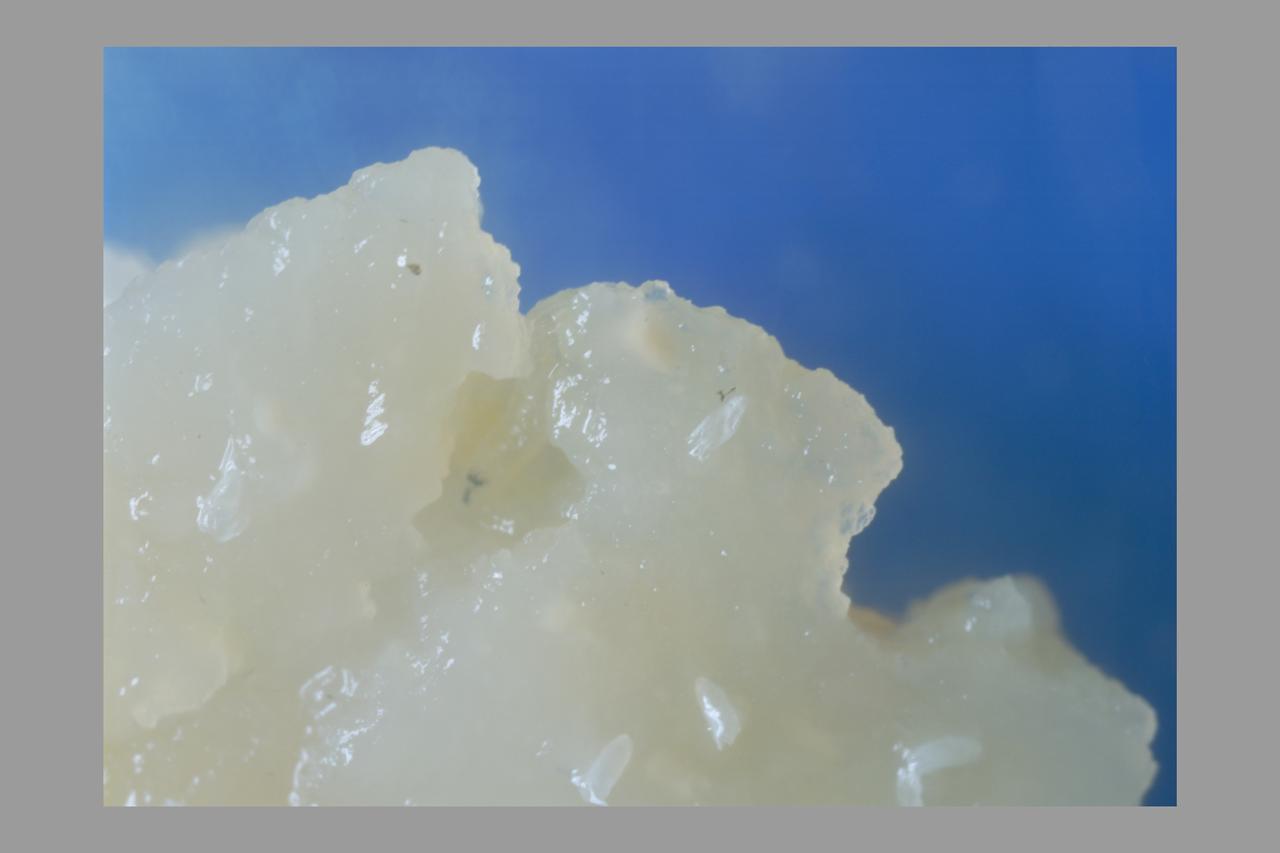
Life Cycle of a Fruit Fly: egges in agar
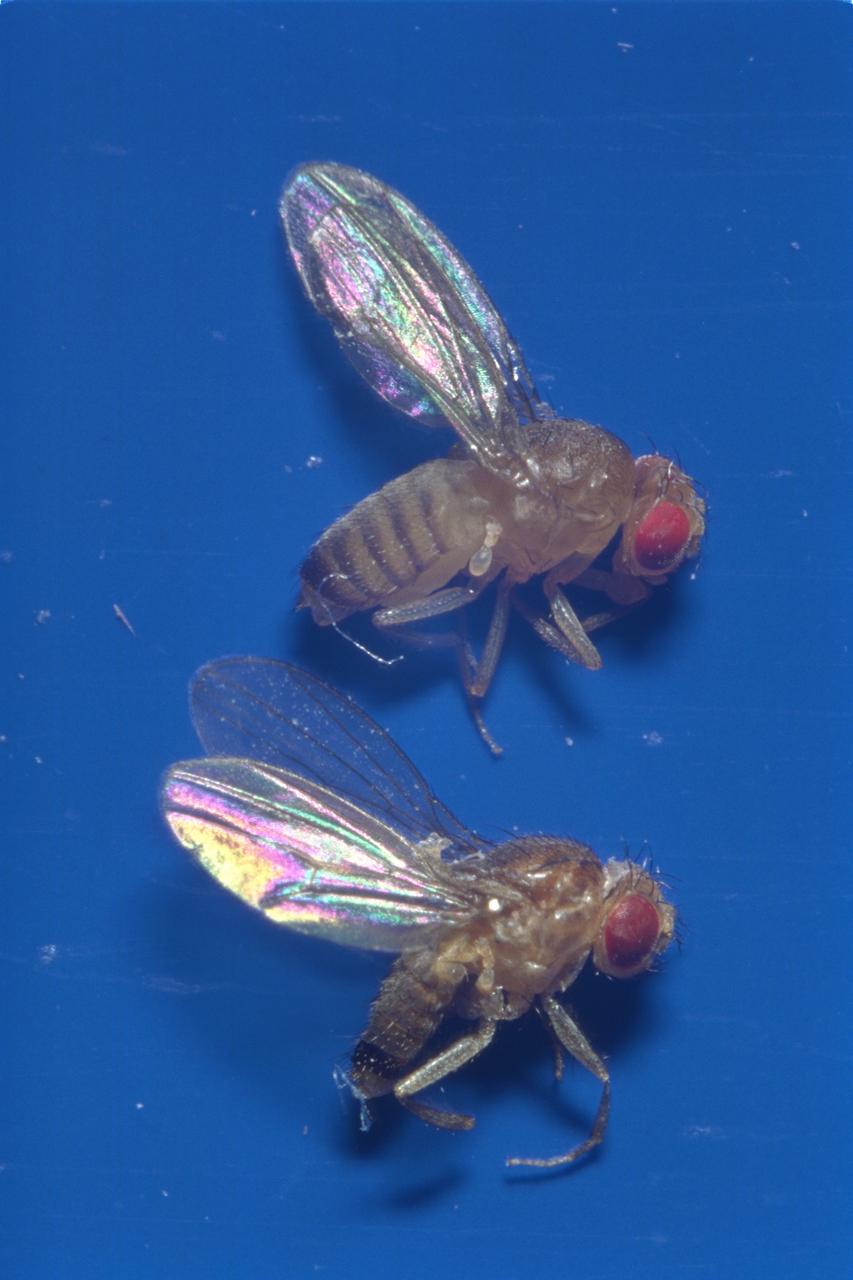
Life Cycle of a Fruit Fly: adult - male and female
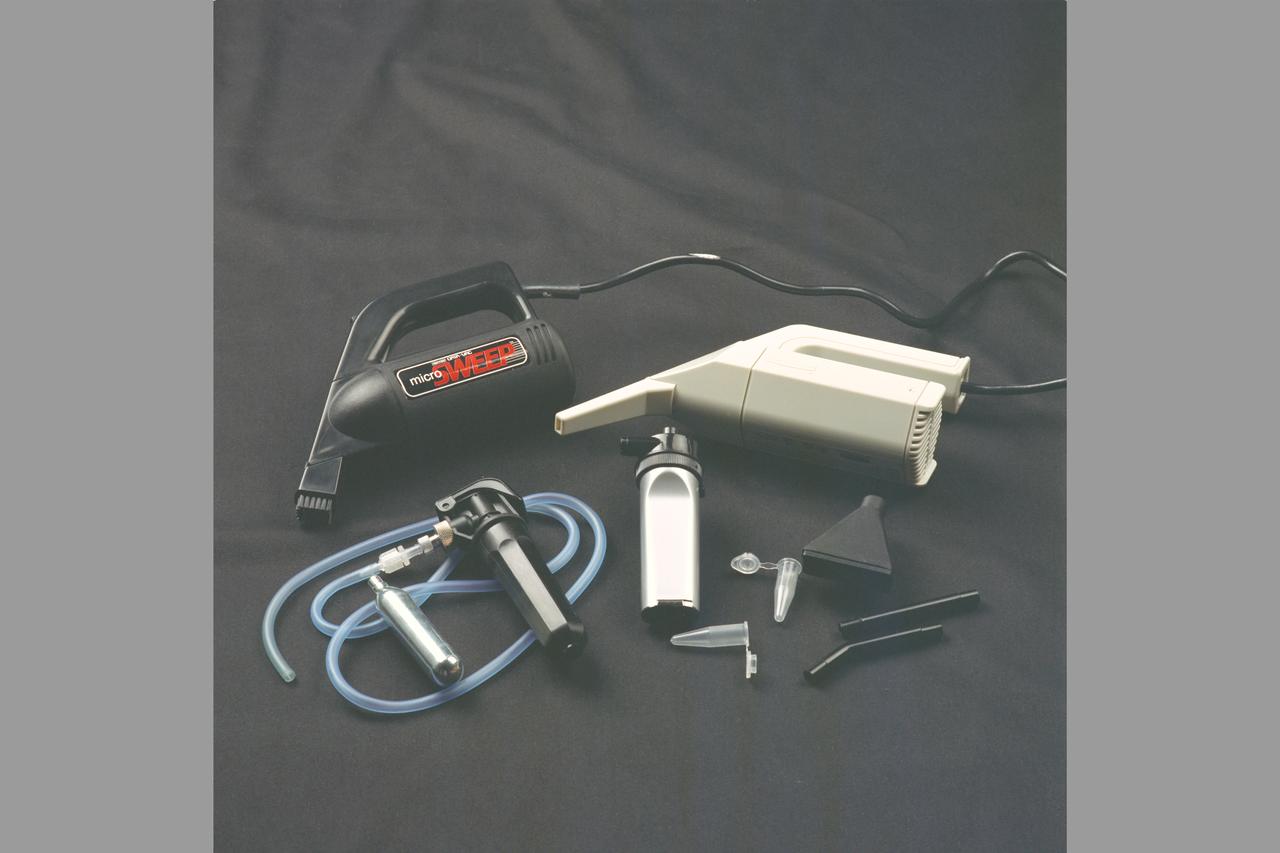
LIFE CYCLE OF A FRUIT FLY: VACUUM EQUIPMENT
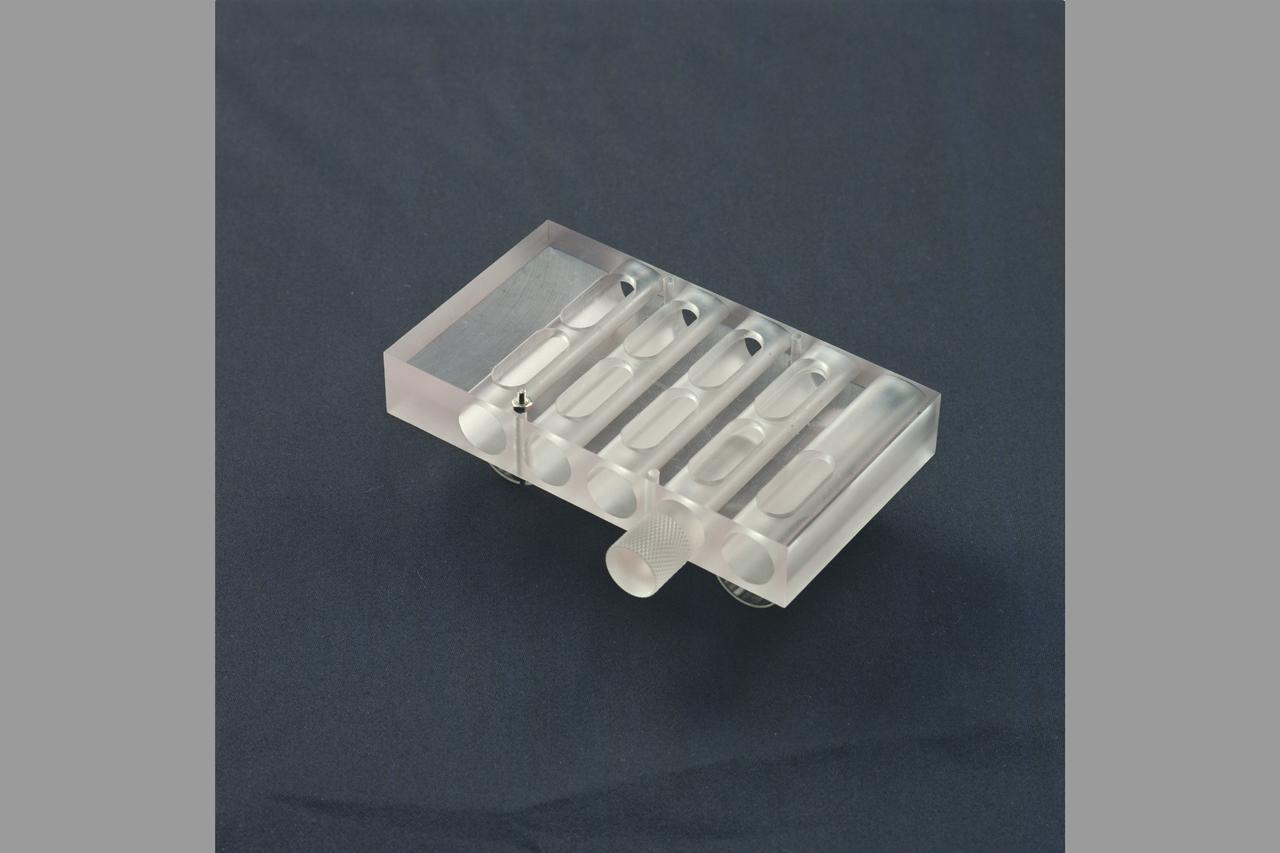
Life Cycle of a Fruit Fly study: insect larvae separation contrainers
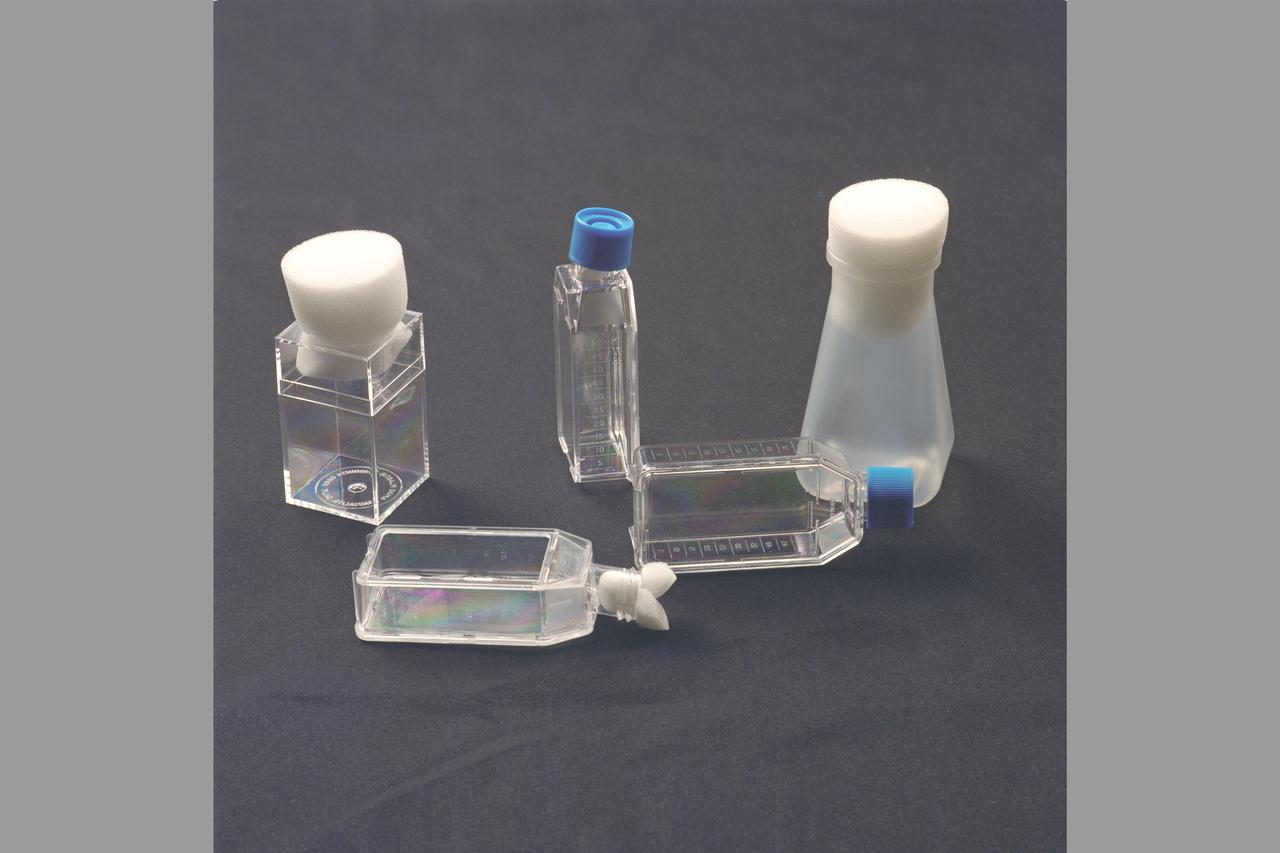
Life Cycle of a Fruit Fly study: insect larvae separation contrainers
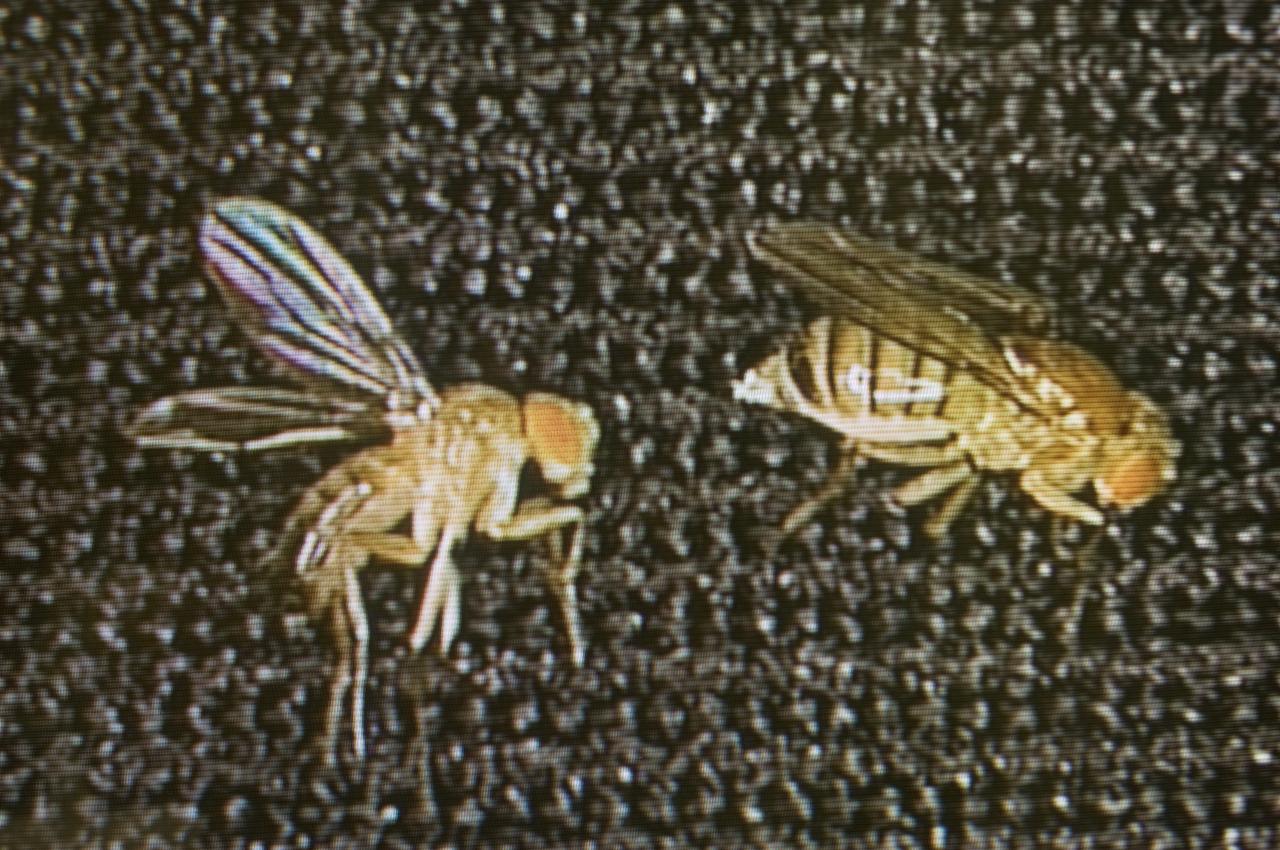
Space shuttle STS-121 FIT (Fly Immunity and Tumors) payload. Using Drosophila (fruit fly) to complete the experiments. Male and female Drosophila (fruit fly).
Space shuttle STS-121 FIT (Fly Immunity and Tumors) payload. Using Drosophila (fruit fly) to complete the experiments. Computer screen showing green fluorescent protein used to visualize blood cells in Drosophila (fruit fly).
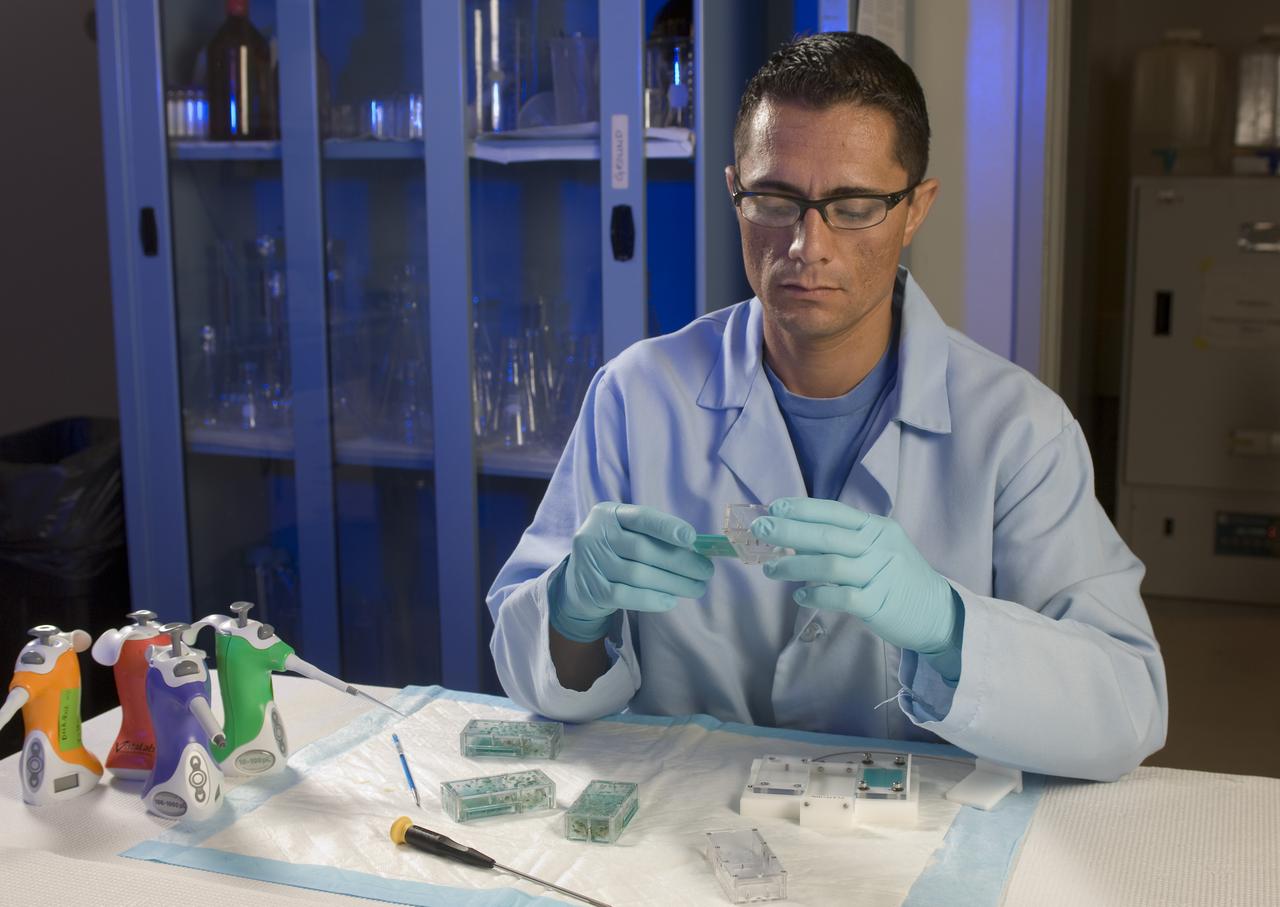
Space shuttle STS-121 FIT (Fly Immunity and Tumors) payload. Using Drosophila (fruit fly) to complete the experiments. Max Sanchezviewing Drosophila (fruit fly) inside insect containers used during flight.

Space shuttle STS-121 FIT (Fly Immunity and Tumors) payload. Using Drosophila (fruit fly) to complete the experiments. Matt Lera prepares food for culturing Drosphila (fruit fly) colony during fight
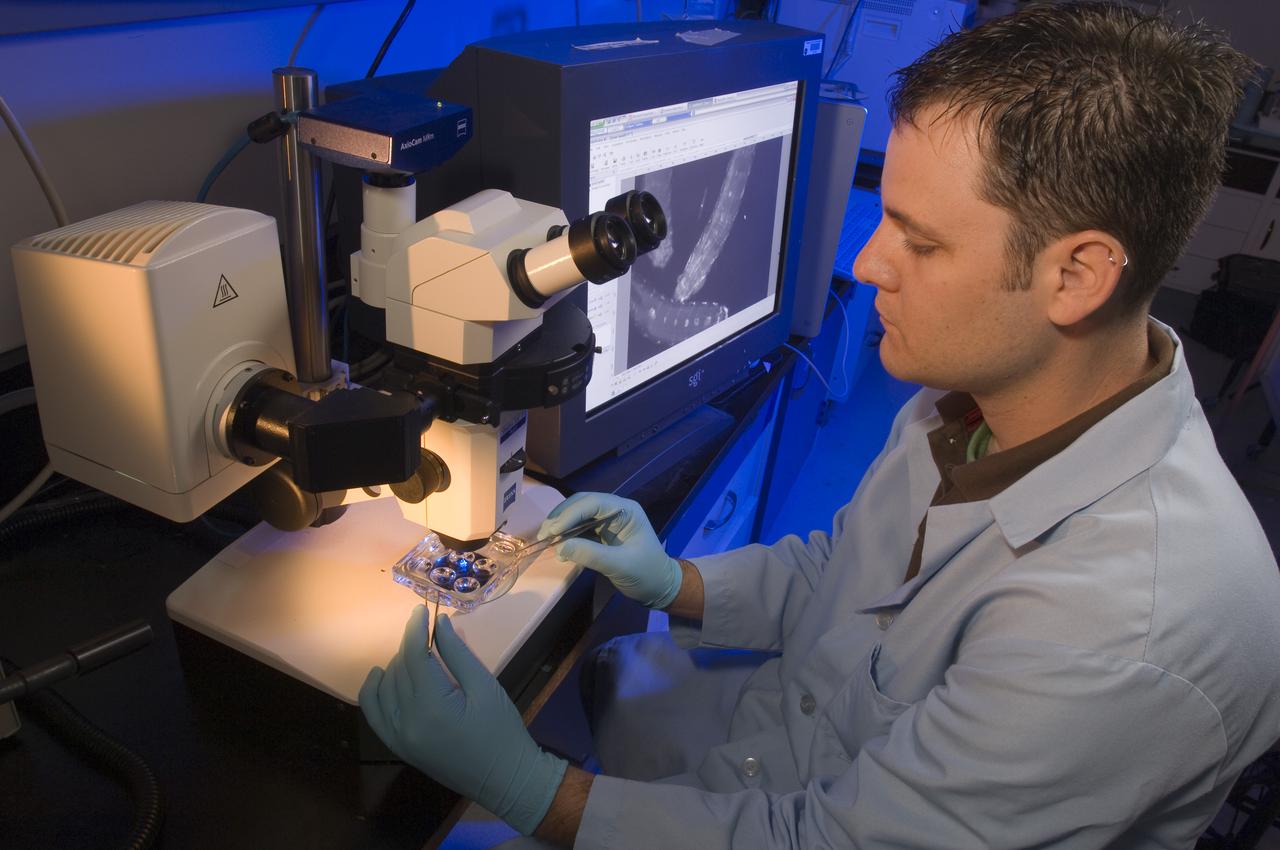
Space shuttle STS-121 FIT (Fly Immunity and Tumors) payload. Using Drosophila (fruit fly) to complete the experiments. Matt Lera doing sample preparation for post light analysis of Drosophila melanogaster (fruit fly) larva
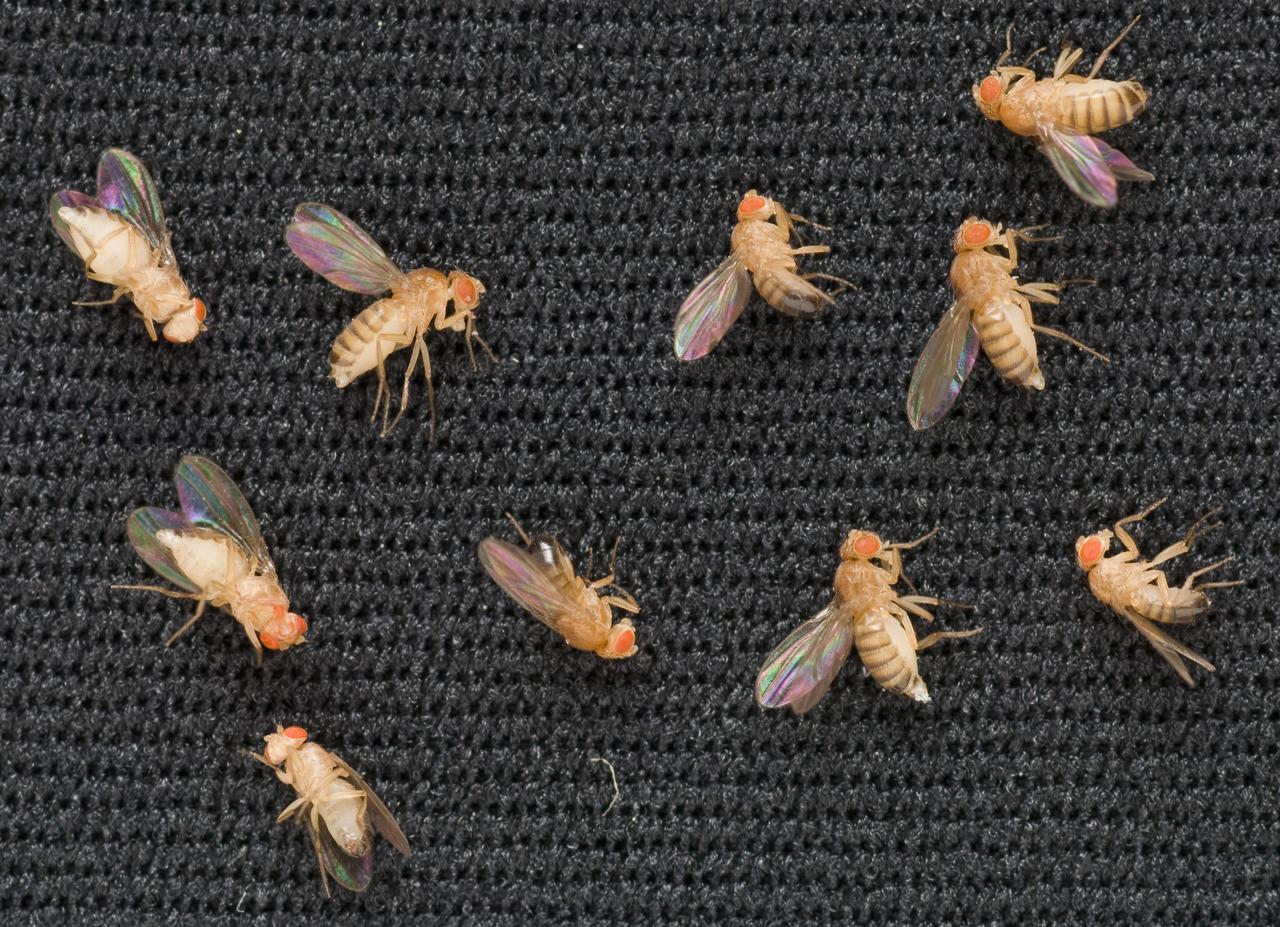
Space shuttle STS-121 FIT (Fly Immunity and Tumors) payload. Using Drosophila (fruit fly) to complete the experiments. wide view of Drosophila melanogaster (fruit fly).

Space shuttle STS-121 FIT (Fly Immunity and Tumors) payload. Using Drosophila (fruit fly) to complete the experiments. Here we have sample preparation for post flight analysis of Drosophila (fruit fly) larva with Oana Marcu and Laura Higgins
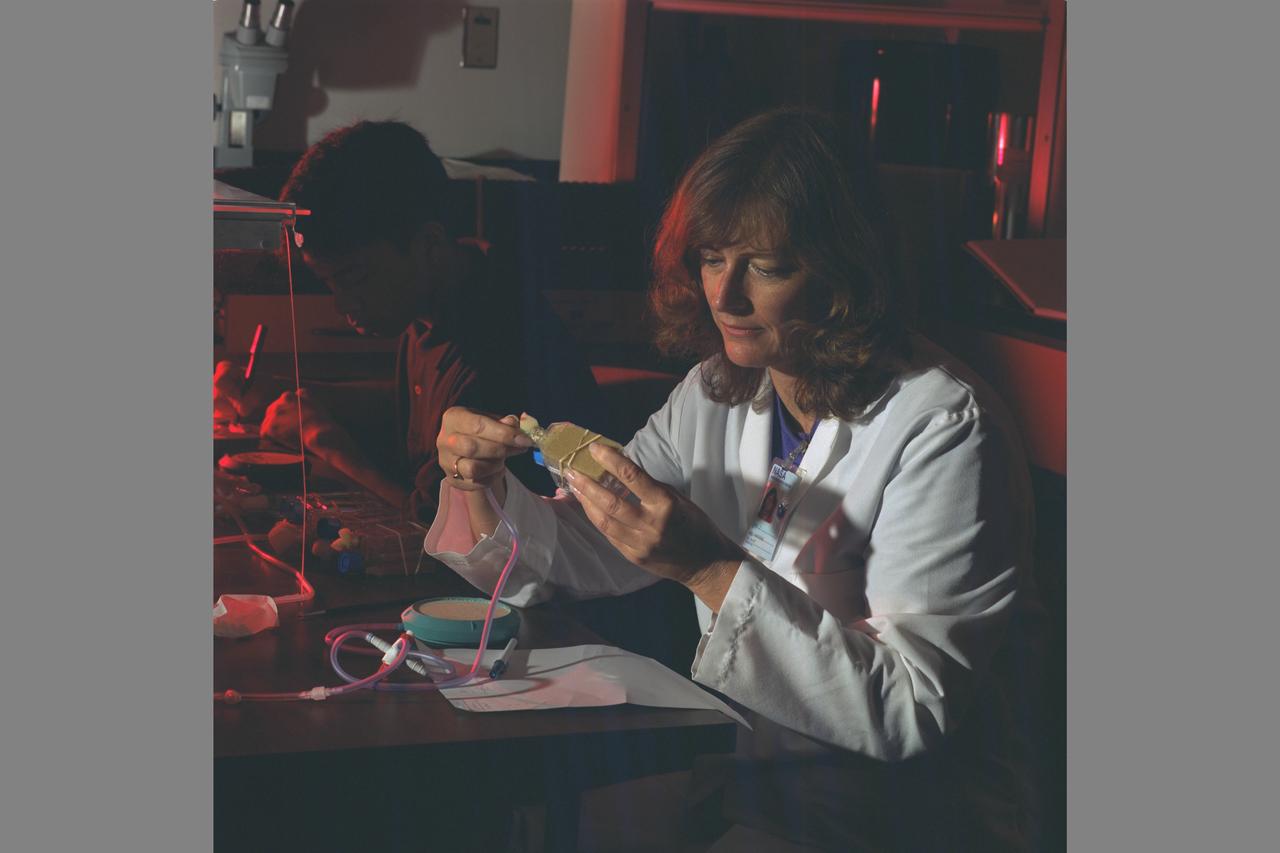
Insect larvae separation containers (fruit fly; egg, pupae and adults male/female) with Judy Jones using vacuum
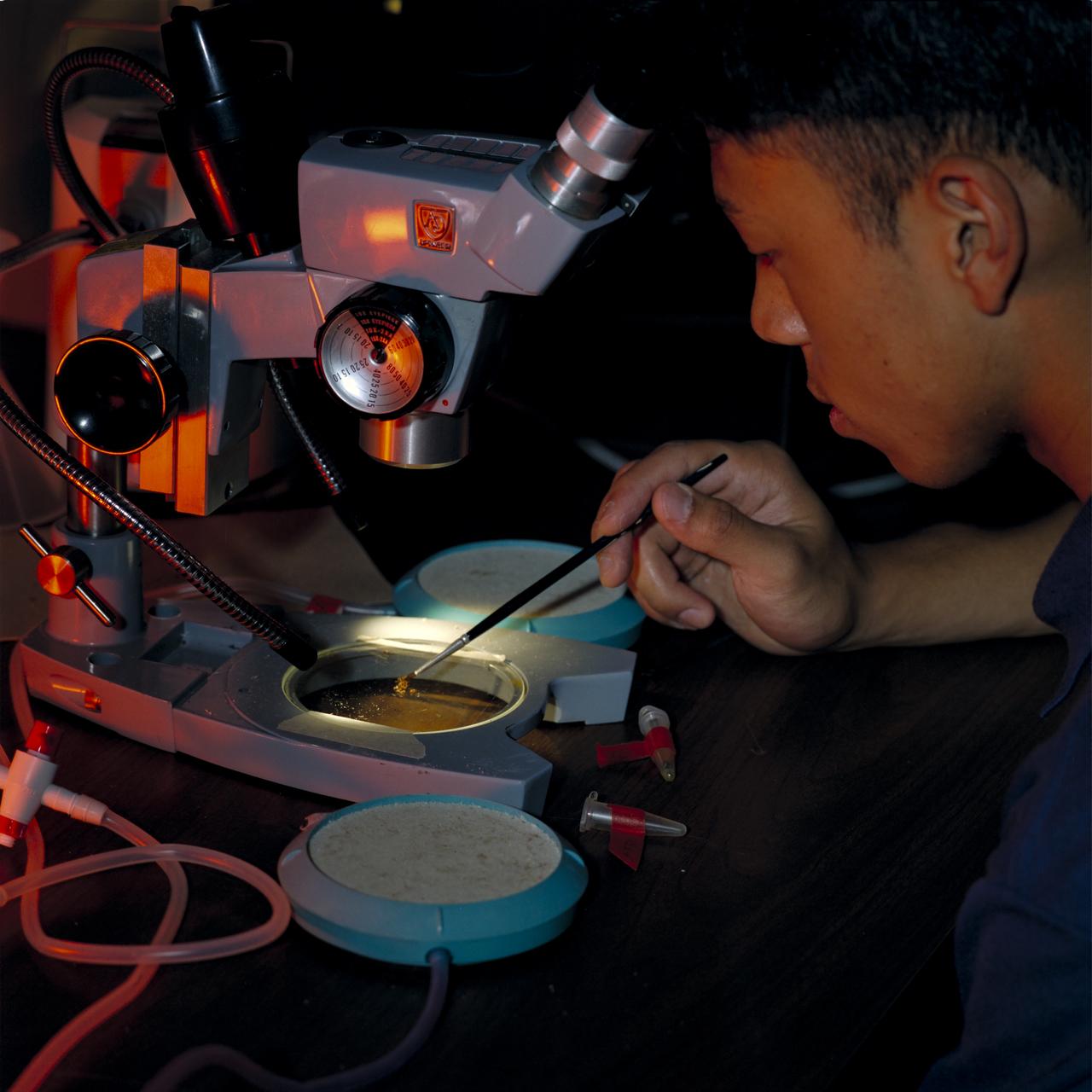
Insect larvae separation containers (fruit fly; egg, pupae and adults male/female) with Jason Cardema
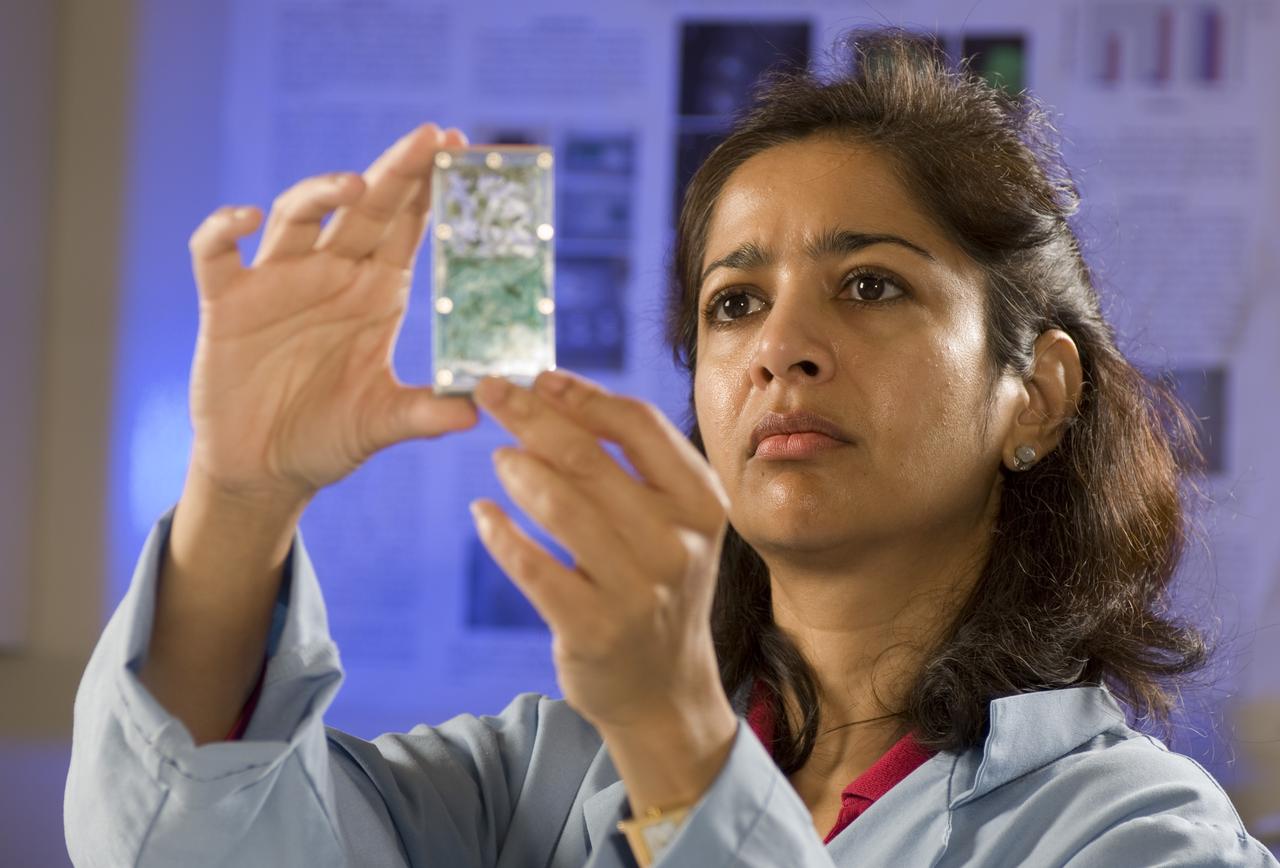
Sharmila Bhattacharya is the principal investigator for the STS-121 space shuttle flight experiment, Fly Immunity and Tumors (FIT). She is shown here viewing Drosophila (fruit fly) inside inscet containers used during flight. Living quarters for insects.
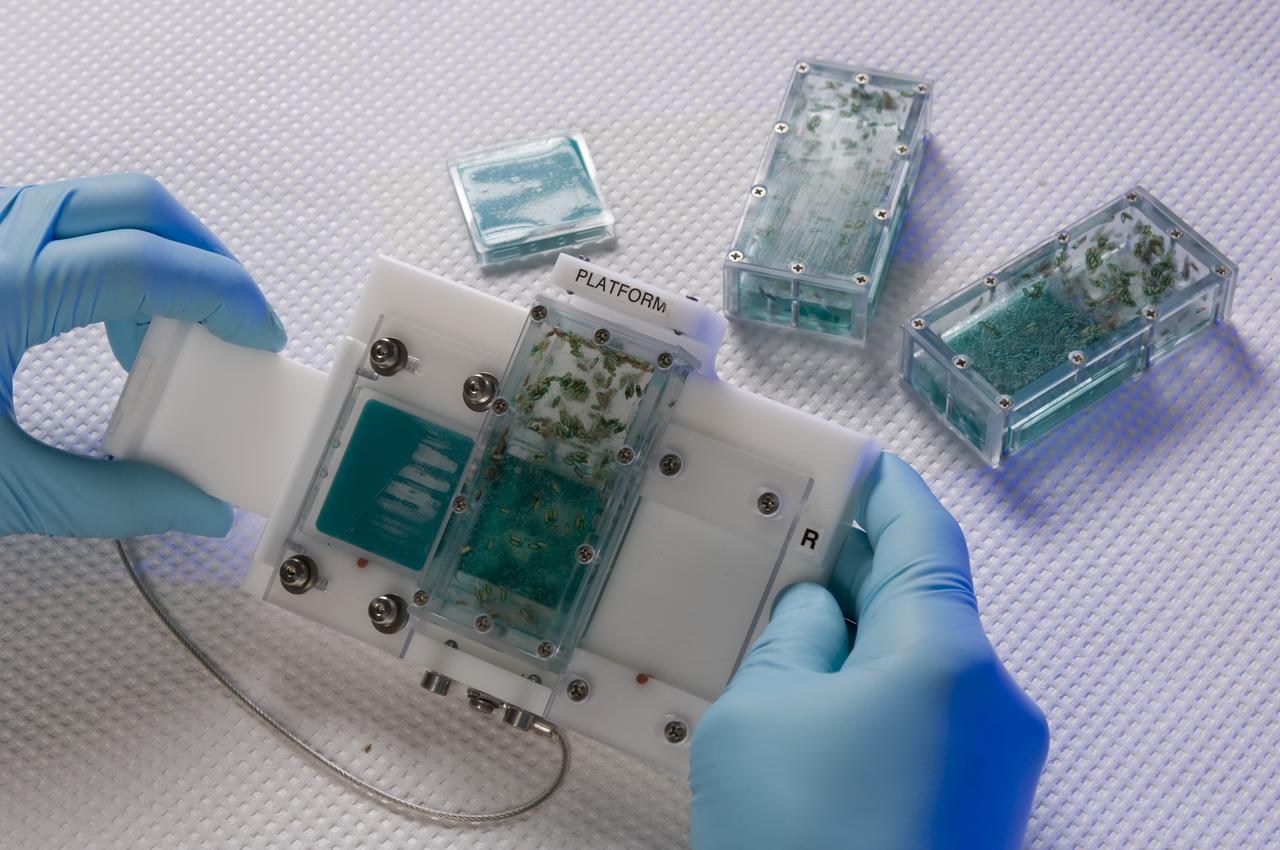
Space shuttle STS-121 FIT (Fly Immunity and Tumors) payload. Using Drosophila (fruit fly) to complete the experiments. Platform used by astronauts to change out old food trays with new food trays in space to facilitate culturing new flies.
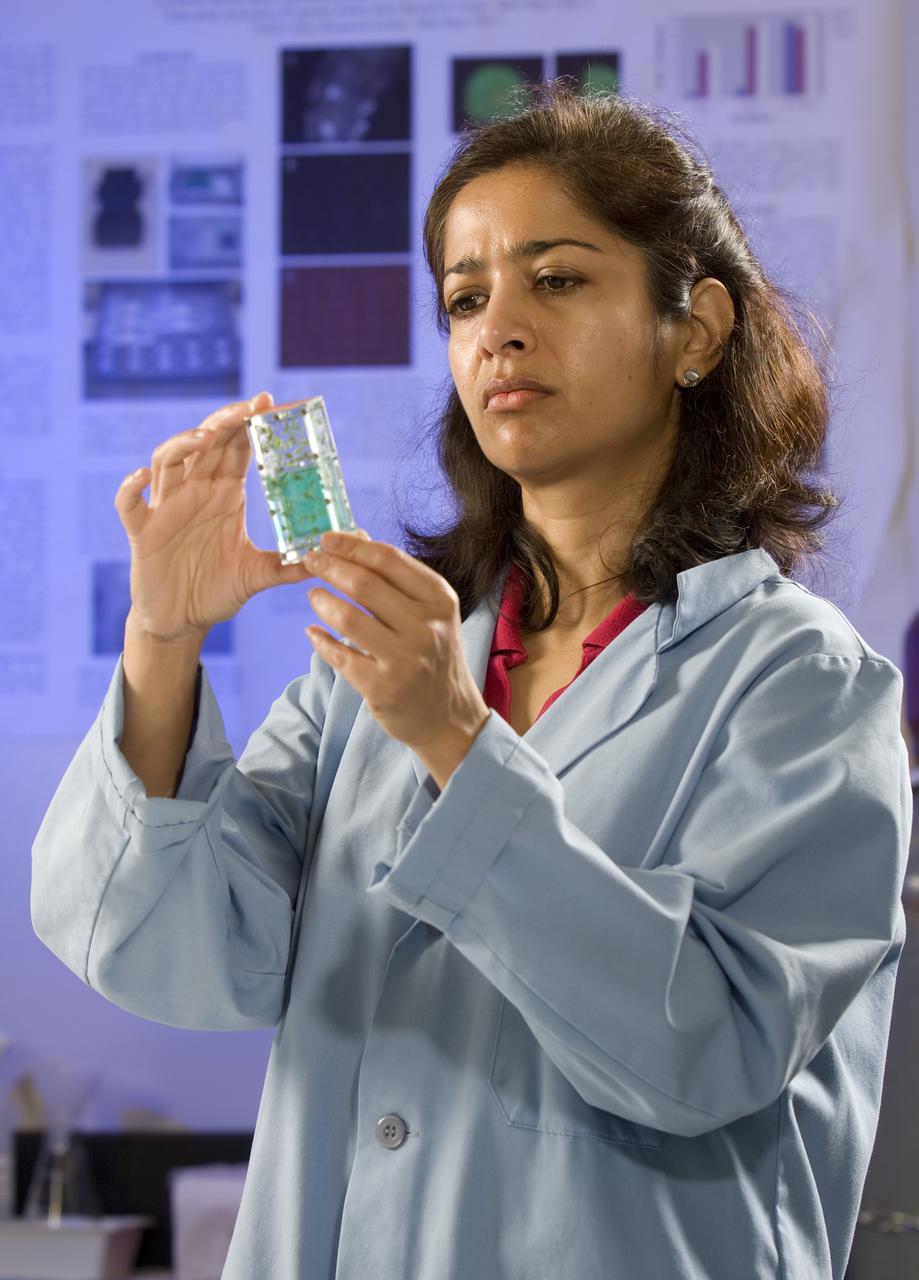
Sharmila Bhattacharya is the principal investigator for the STS-121 space shuttle flight experiment, Fly Immunity and Tumors (FIT). She is shown here viewing Drosophila (fruit fly) inside inscet containers used during flight. Living quarters for insects.
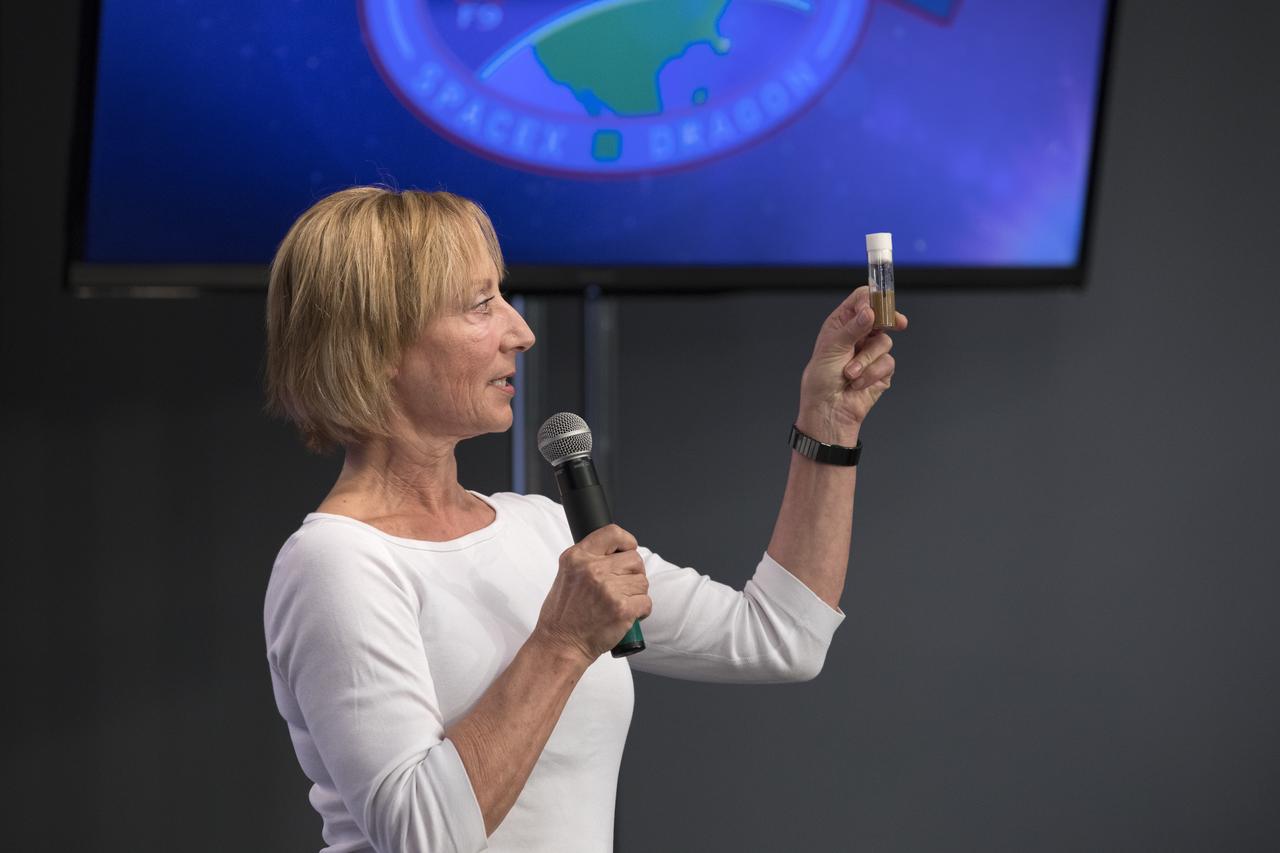
Dr. Karen Ocorr, co-investigator for the Fruit Fly Lab-02, speaks to members of social media in the Kennedy Space Center’s Press Site auditorium. The briefing focused on experiments and instruments to be delivered to the International Space Station on SpaceX CRS-11. A Dragon spacecraft is scheduled to be launched from Kennedy’s Launch Complex 39A on June 1 atop a SpaceX Falcon 9 rocket on the company's 11th Commercial Resupply Services mission to the space station.
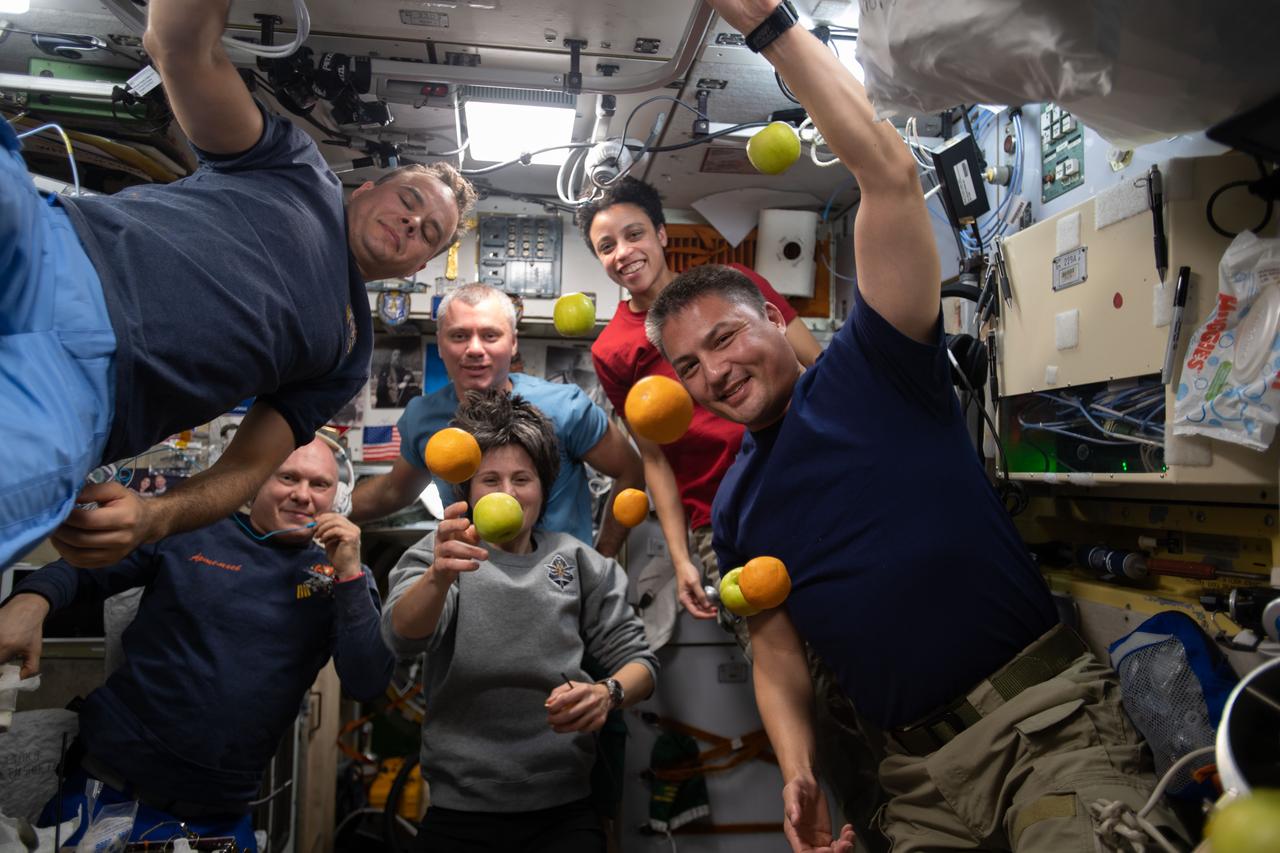
iss067e117737 (June 3, 2022) --- Expedition 67 crew members pose with fresh fruit flying weightlessly in microgravity delivered recently aboard the Progress 81 (81P) cargo craft. The 81P docked to the Zvezda service module's rear port aboard the International Space Station after a three-and-half-hour trip that began with a launch from the Baikonur Cosmodrome in Kazakhstan. Pictured clockwise from left are, Roscosmos Flight Engineers Sergey Korsakov and Denis Matveev; NASA Flight Engineers Jessica Watkins and Kjell Lindgren; ESA (European Space Agency) Flight Engineer Samantha Cristofretti; and Roscosmos Commander Oleg Artemyev.
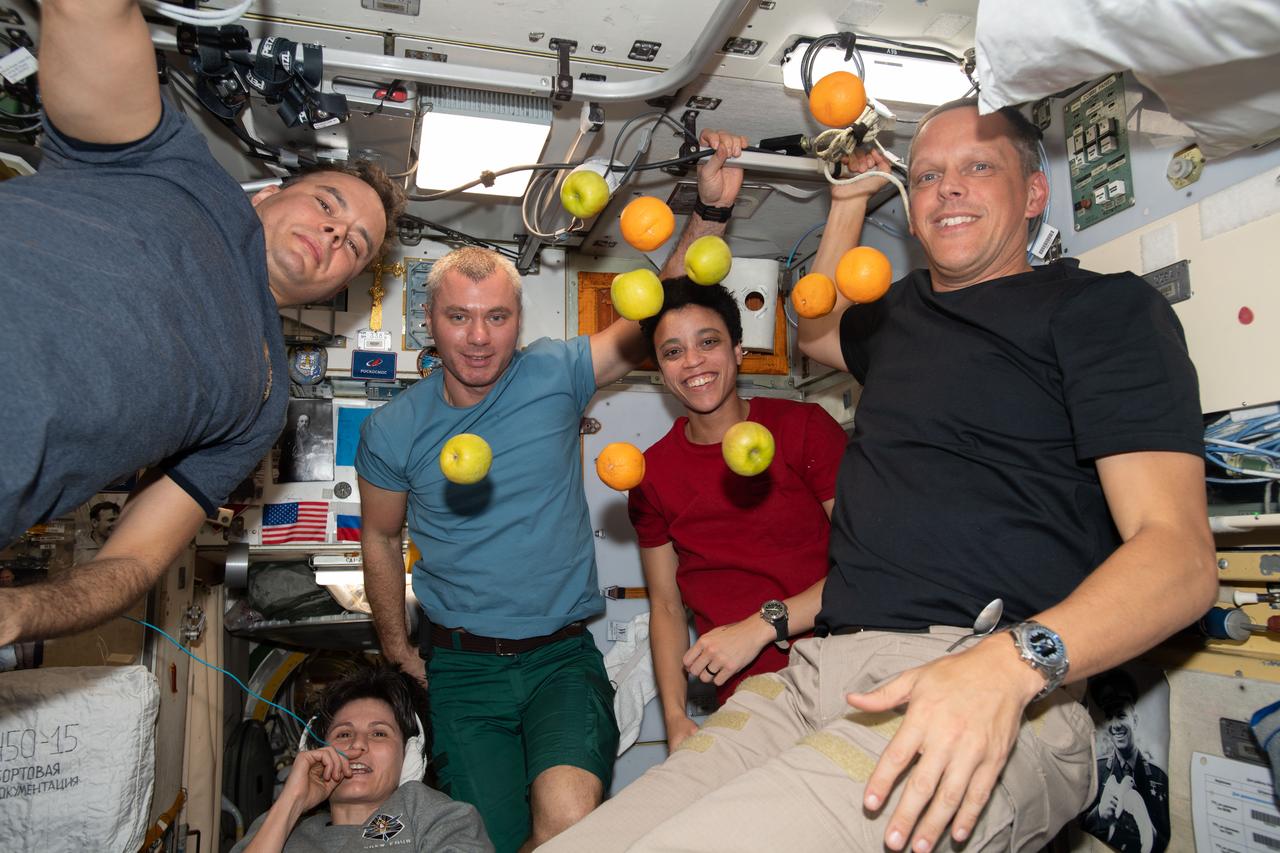
iss067e117728 (June 3, 2022) --- Expedition 67 crew members pose with fresh fruit flying weightlessly in microgravity delivered recently aboard the Progress 81 (81P) cargo craft. The 81P docked to the Zvezda service module's rear port aboard the International Space Station after a three-and-half-hour trip that began with a launch from the Baikonur Cosmodrome in Kazakhstan. Pictured from left are, Roscosmos Flight Engineer Sergey Korsakov; ESA (European Space Agency) Flight Engineer Samantha Cristofretti; Roscosmos Flight Engineer Denis Matveev; and NASA Flight Engineers Jessica Watkins and Bob Hines.
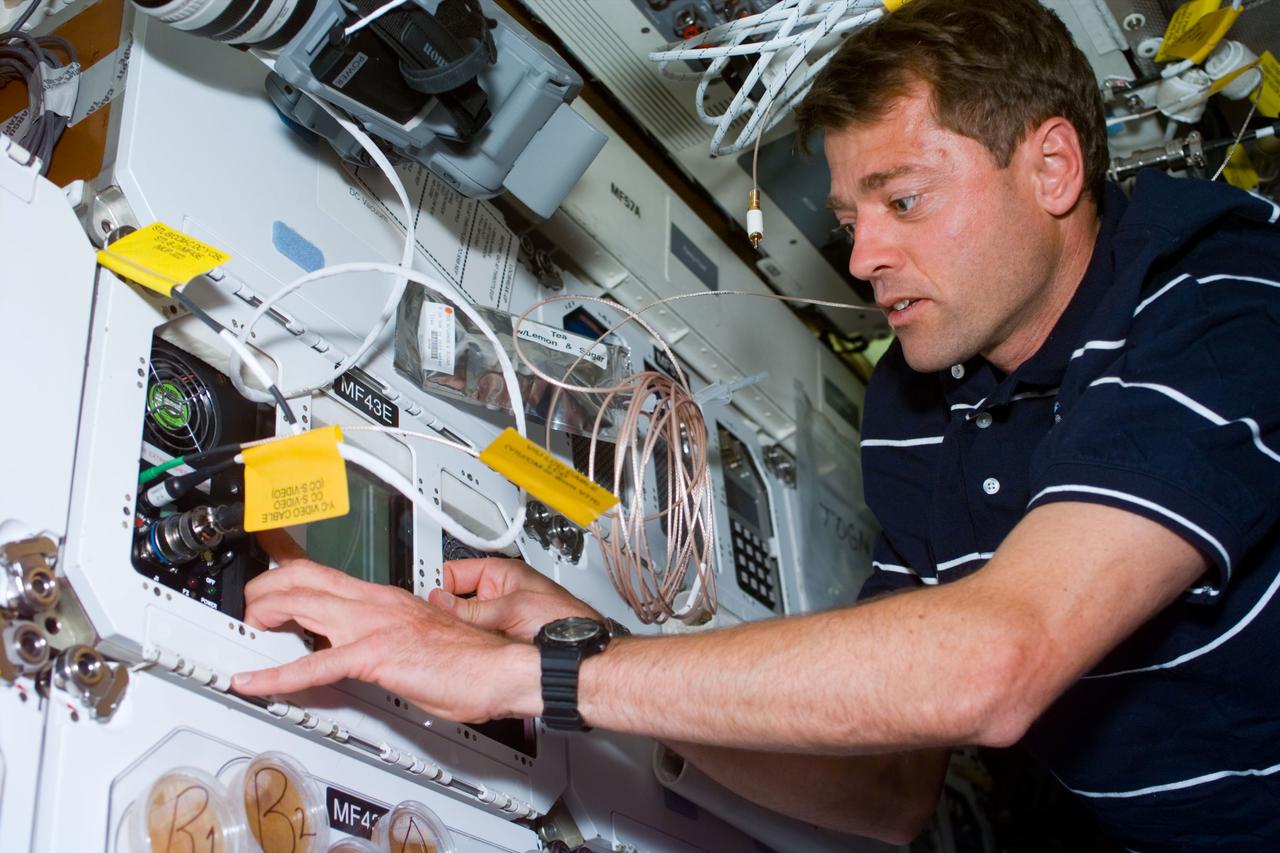
S93-E-5003 (23 July 1999) --- Astronaut Jeffrey S. Ashby, pilot, works at the Space Tissue Loss-B experiment on Space Shuttle Columbia's middeck. The experiment is set up to observe cells in culture with a video microscope imaging system to record near-real-time interactions of detecting and inducing cellular responses (macromorphological changes). Just above and to the right of STL-B is the part of the Commercial Generic Bioprocessing Apparatus (CGBA) for the National Institute of Health (NIH-B experiment). It is an experiment designed to investigate the effects of space flight on neural development in Drosophila melanogaster (fruit fly) larvae. This information may help scientists understand how gravity affects nerve growth and development and how neural connections to muscle fibers work. The photo was recorded with an electronic still camera (ESC) on Flight Day 1. Ashby and his four crew mates are scheduled to spend five days aboard Columbia in Earth orbit.
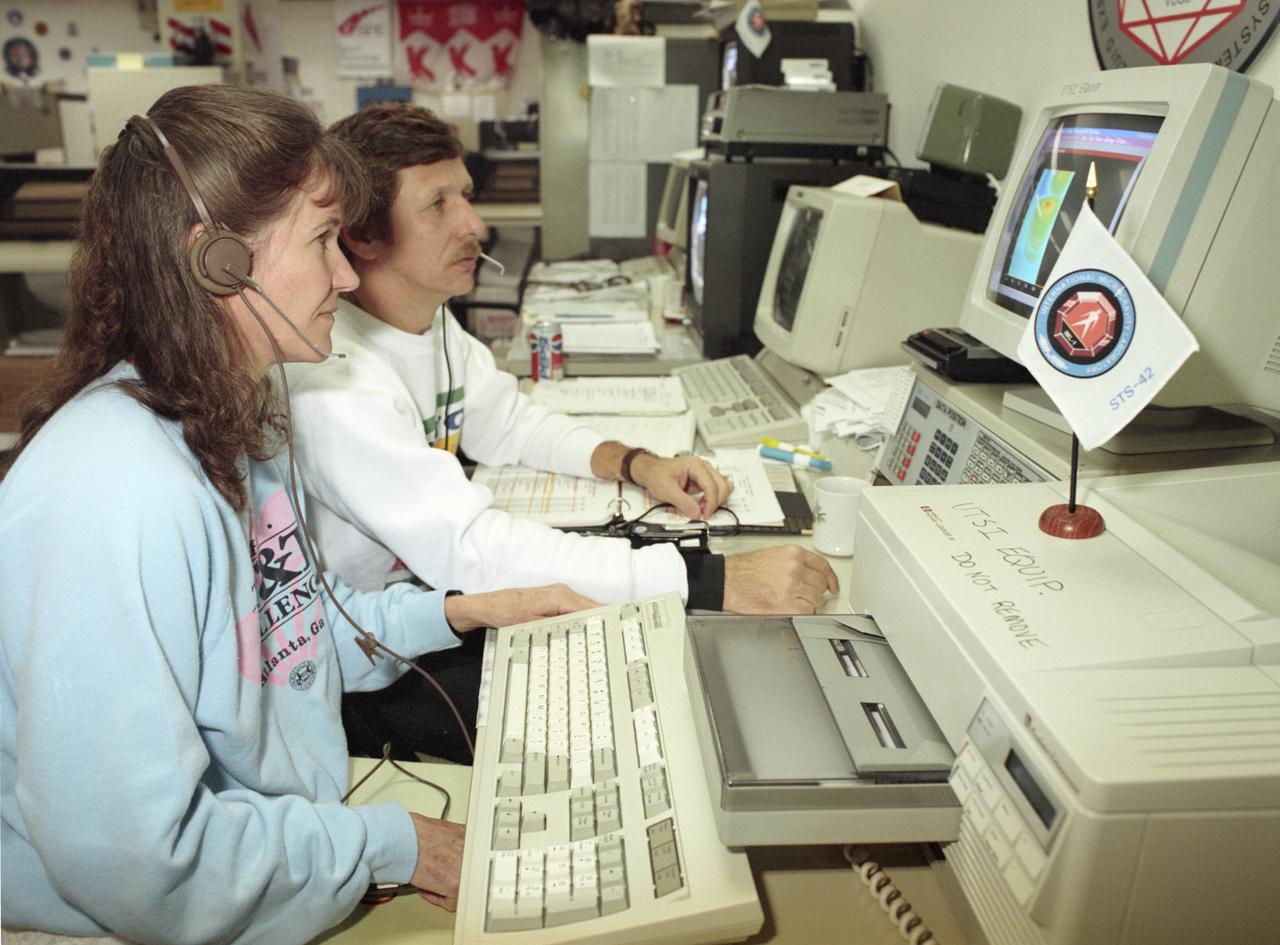
The primary payload for Space Shuttle Mission STS-42, launched January 22, 1992, was the International Microgravity Laboratory-1 (IML-1), a pressurized manned Spacelab module. The goal of IML-1 was to explore in depth the complex effects of weightlessness of living organisms and materials processing. Around-the-clock research was performed on the human nervous system's adaptation to low gravity and effects of microgravity on other life forms such as shrimp eggs, lentil seedlings, fruit fly eggs, and bacteria. Materials processing experiments were also conducted, including crystal growth from a variety of substances such as enzymes, mercury iodide, and a virus. The Huntsville Operations Support Center (HOSC) Spacelab Payload Operations Control Center (SL POCC) at the Marshall Space Flight Center (MSFC) was the air/ground communication channel used between the astronauts and ground control teams during the Spacelab missions. Featured are activities in the SL POCC during STS-42, IML-1 mission.

The primary payload for Space Shuttle Mission STS-42, launched January 22, 1992, was the International Microgravity Laboratory-1 (IML-1), a pressurized manned Spacelab module. The goal of IML-1 was to explore in depth the complex effects of weightlessness of living organisms and materials processing. Around-the-clock research was performed on the human nervous system's adaptation to low gravity and effects of microgravity on other life forms such as shrimp eggs, lentil seedlings, fruit fly eggs, and bacteria. Materials processing experiments were also conducted, including crystal growth from a variety of substances such as enzymes, mercury iodide and a virus. More than 200 scientists from 16 countries participated in the investigations. This is the logo or emblem that was designed to represent the IML-1 payload.
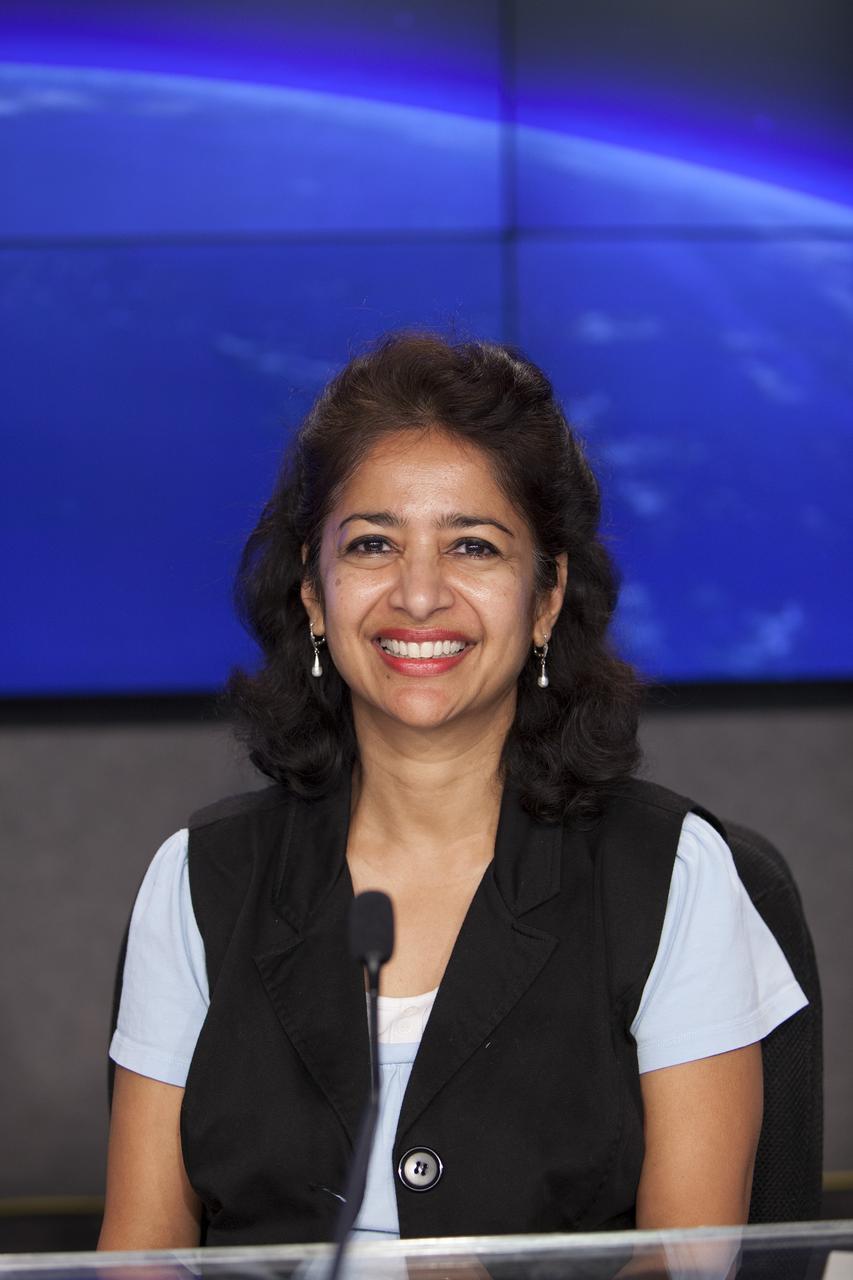
CAPE CANAVERAL, Fla. – Sharmila Bhattacharya, principal investigator, Ames Student Fruit-Fly Experiment, NASA Ames Research Center, briefs media representatives in Kennedy Space Center’s Press Site auditorium in preparation for the launch of the SpaceX CRS-4 mission to resupply the International Space Station. Bhattacharya is a member of the ISS Science Panel on Model Organisms. The mission is the fourth of 12 SpaceX flights NASA contracted with the company to resupply the space station. It will be the fifth trip by a Dragon spacecraft to the orbiting laboratory. The spacecraft’s 2.5 tons of supplies, science experiments, and technology demonstrations include critical materials to support 255 science and research investigations that will occur during the station's Expeditions 41 and 42. Liftoff is targeted for an instantaneous window at 2:14 a.m. EDT. To learn more about the mission, visit http://www.nasa.gov/mission_pages/station/structure/launch/index.html. Photo credit: NASA/Jim Grossmann
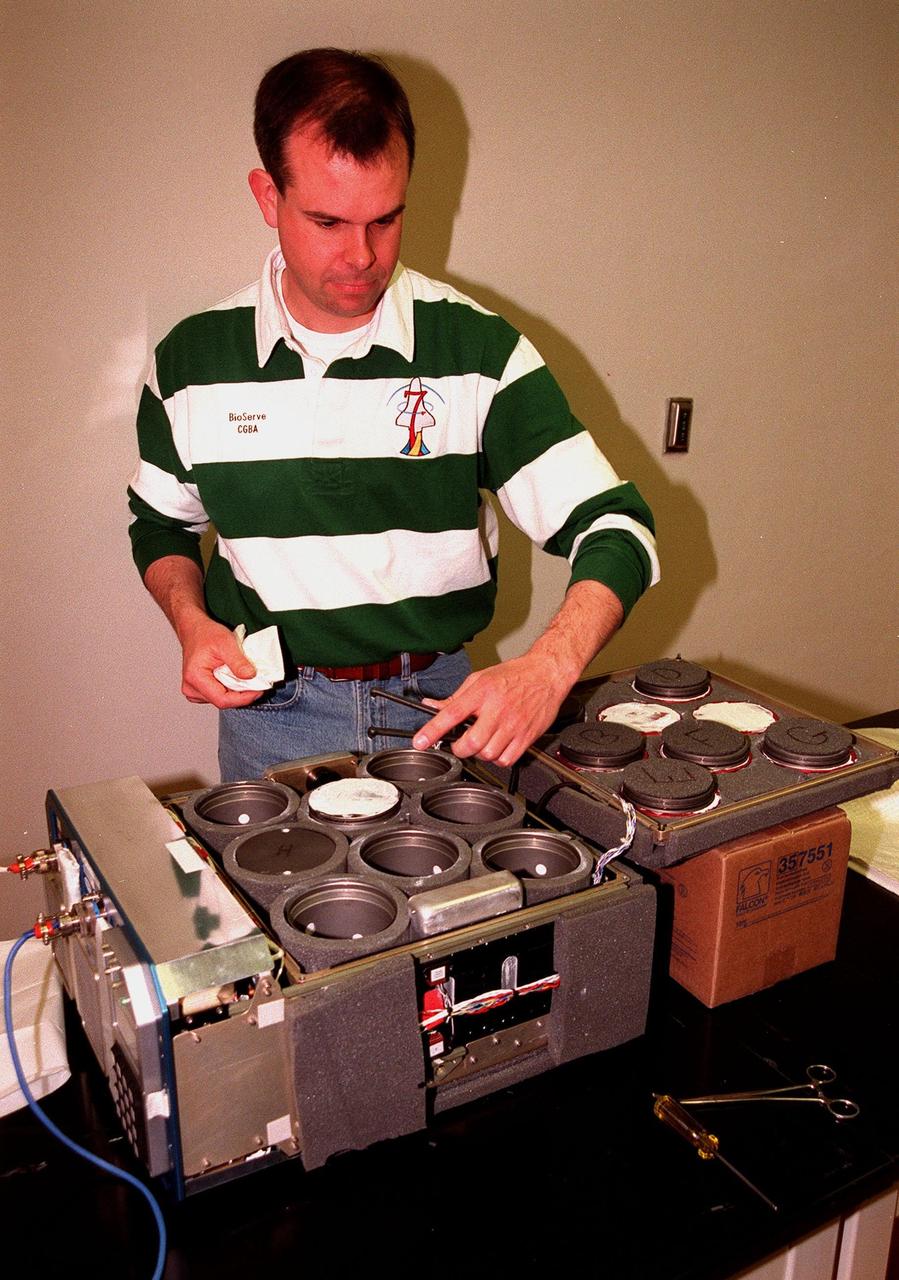
In the KSC Life Sciences Building, Hangar L, Cape Canaveral Air Station, Mark Rupert, with BioServe Space Technologies, checks the canisters, or incubators, that will hold an experiment to fly on mission STS-93. The incubators will hold a mix of fruit fly embryos and larvae to examine the effects of microgravity and space flight on the development of neural connections between specific motor neurons and their targets in muscle fibers. The incubators are part of a Commercial Generic Bioprocessing Apparatus (CGBA), which can start bioprocessing reactions by mixing or heating a sample and can also initiate multiple-step, sequential reactions in a technique called phased processing. The primary payload of mission STS-93 is the Chandra X-ray Observatory, which will allow scientists from around the world to see previously invisible black holes and high-temperature gas clouds, giving the observatory the potential to rewrite the books on the structure and evolution of our universe. The target launch date for STS-93 is July 9, aboard Space Shuttle Columbia, from Launch Pad 39B
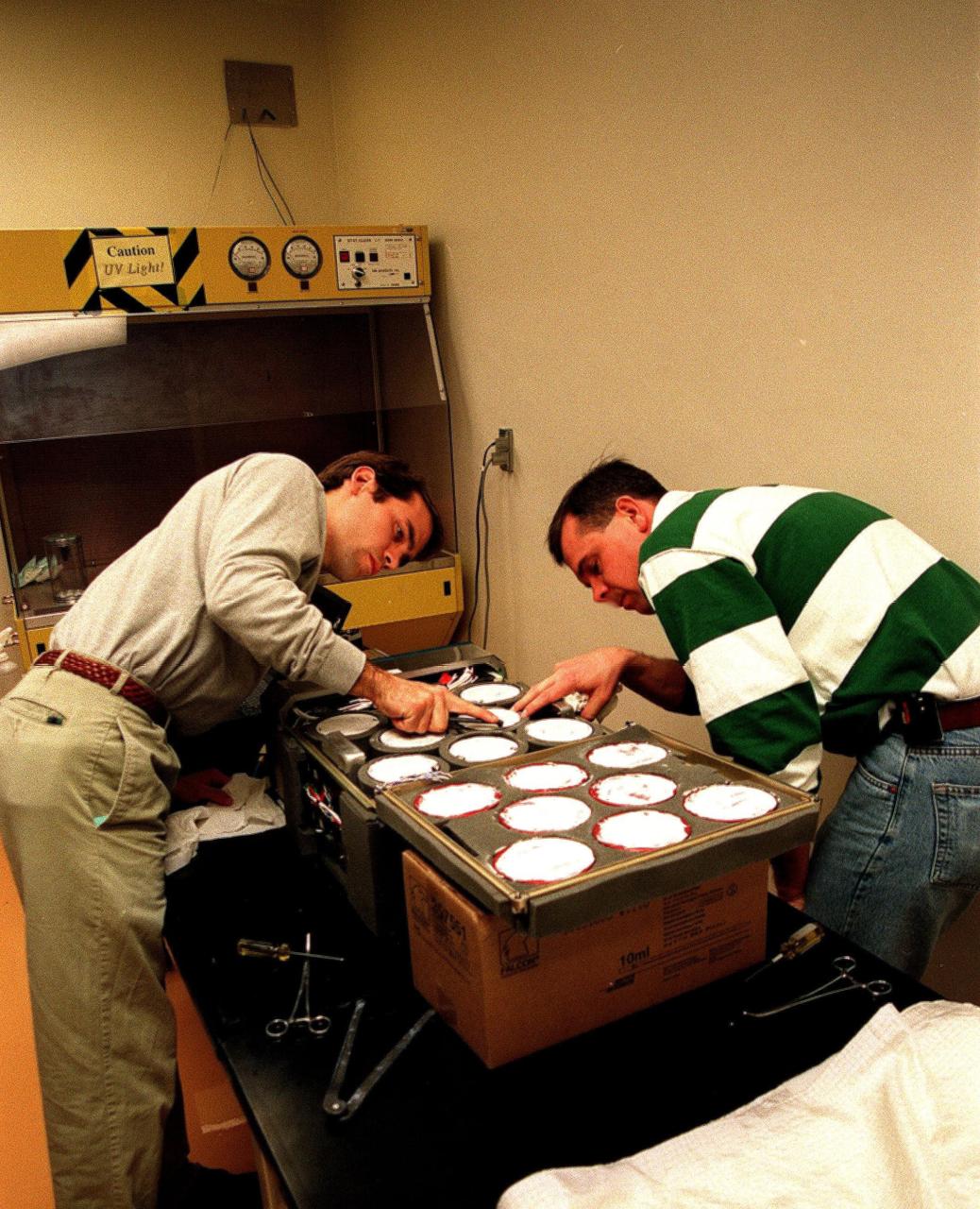
In the KSC Life Sciences Building, Hangar L, Cape Canaveral Air Station, Jake Freeman and Mark Rupert, with BioServe Space Technologies, check canisters, or incubators, that will hold fruit fly embryos and larvae for an experiment to fly on mission STS-93. The experiment will examine the effects of microgravity and space flight on the development of neural connections between specific motor neurons and their targets in muscle fibers. The incubators are part of the Commercial Generic Bioprocessing Apparatus (CGBA), which can start bioprocessing reactions by mixing or heating a sample and can also initiate multiple-step, sequential reactions in a technique called phased processing. The primary payload of mission STS-93 is the Chandra X-ray Observatory, which will allow scientists from around the world to see previously invisible black holes and high-temperature gas clouds, giving the observatory the potential to rewrite the books on the structure and evolution of our universe. The target launch date for STS-93 is July 9, aboard Space Shuttle Columbia, from Launch Pad 39B
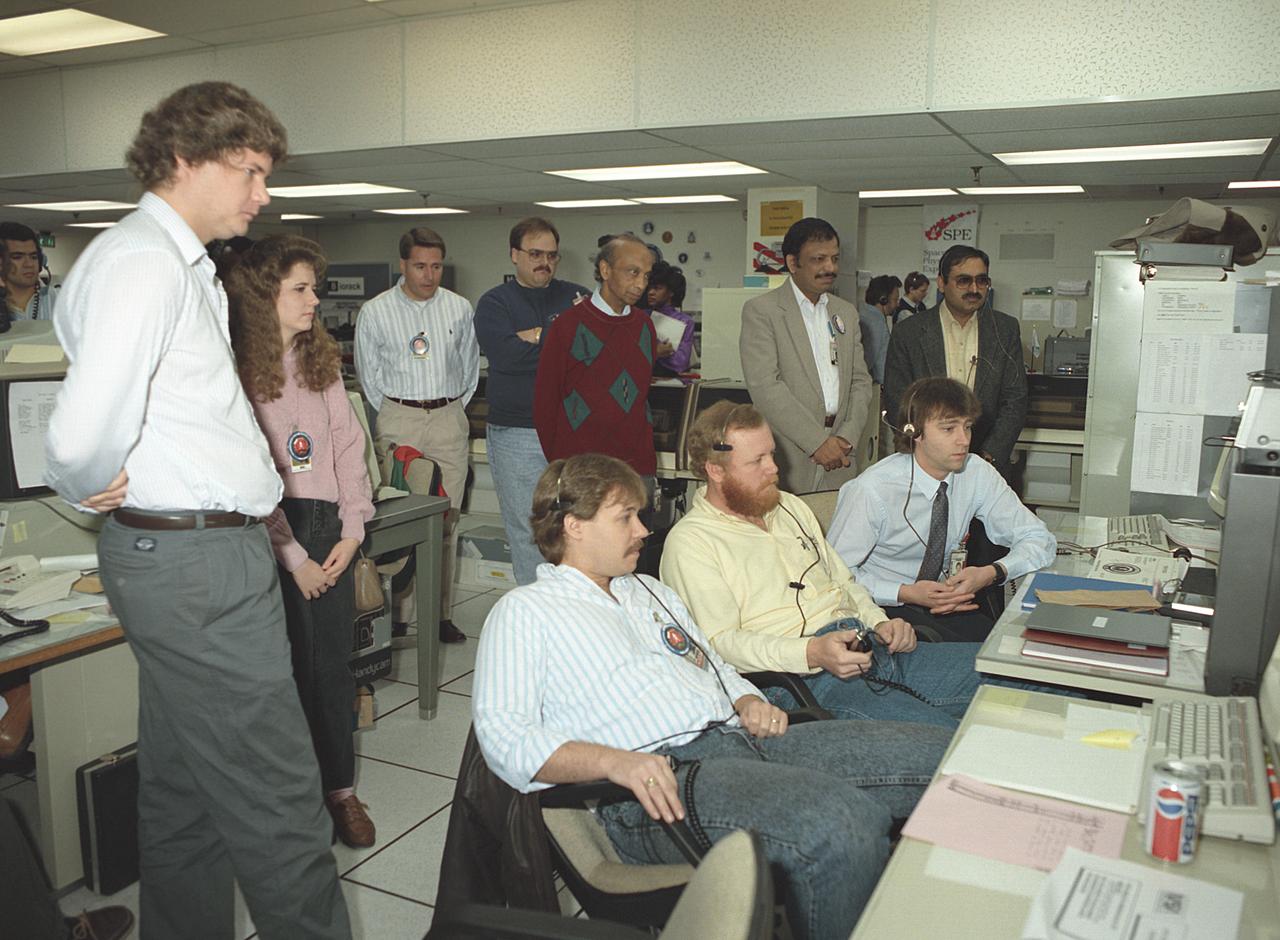
The primary payload for Space Shuttle Mission STS-42, launched January 22, 1992, was the International Microgravity Laboratory-1 (IML-1), a pressurized manned Spacelab module. The goal of IML-1 was to explore in depth the complex effects of weightlessness of living organisms and materials processing. Around-the-clock research was performed on the human nervous system's adaptation to low gravity and effects of microgravity on other life forms such as shrimp eggs, lentil seedlings, fruit fly eggs, and bacteria. Materials processing experiments were also conducted, including crystal growth from a variety of substances such as enzymes, mercury iodide, and a virus. The Huntsville Operations Support Center (HOSC) Spacelab Payload Operations Control Center (SL POCC) at the Marshall Space Flight Center (MSFC) was the air/ground communication channel used between the astronauts and ground control teams during the Spacelab missions. Featured is the Crystal Growth team in the SL POCC during STS-42, IML-1 mission.
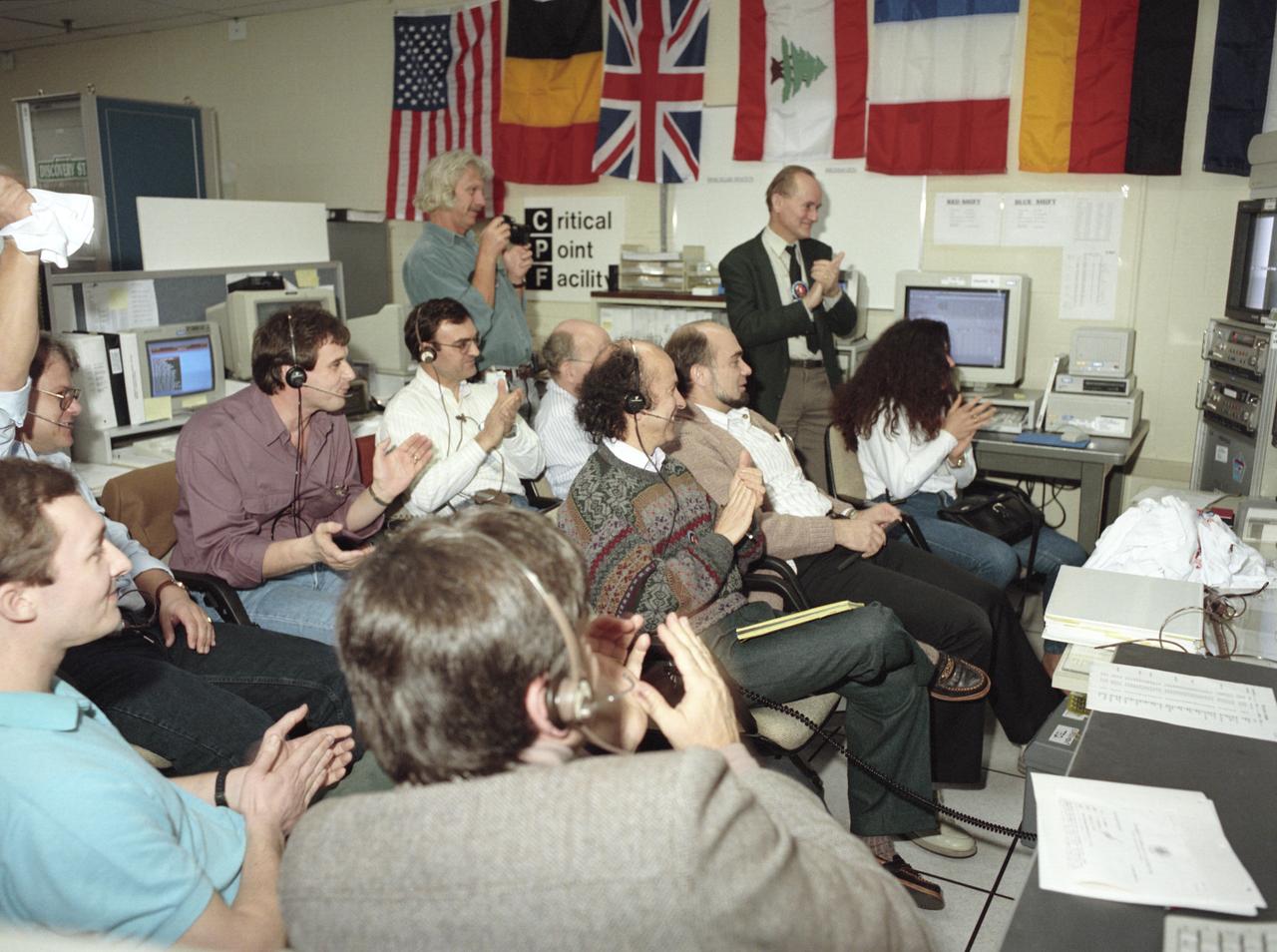
The primary payload for Space Shuttle Mission STS-42, launched January 22, 1992, was the International Microgravity Laboratory-1 (IML-1), a pressurized manned Spacelab module. The goal of IML-1 was to explore in depth the complex effects of weightlessness of living organisms and materials processing. Around-the-clock research was performed on the human nervous system's adaptation to low gravity and effects of microgravity on other life forms such as shrimp eggs, lentil seedlings, fruit fly eggs, and bacteria. Materials processing experiments were also conducted, including crystal growth from a variety of substances such as enzymes, mercury iodide, and a virus. The Huntsville Operations Support Center (HOSC) Spacelab Payload Operations Control Center (SL POCC) at the Marshall Space Flight Center (MSFC) was the air/ground communication channel used between the astronauts and ground control teams during the Spacelab missions. Featured is the Critical Point Facility (CPE) group in the SL POCC during STS-42, IML-1 mission.
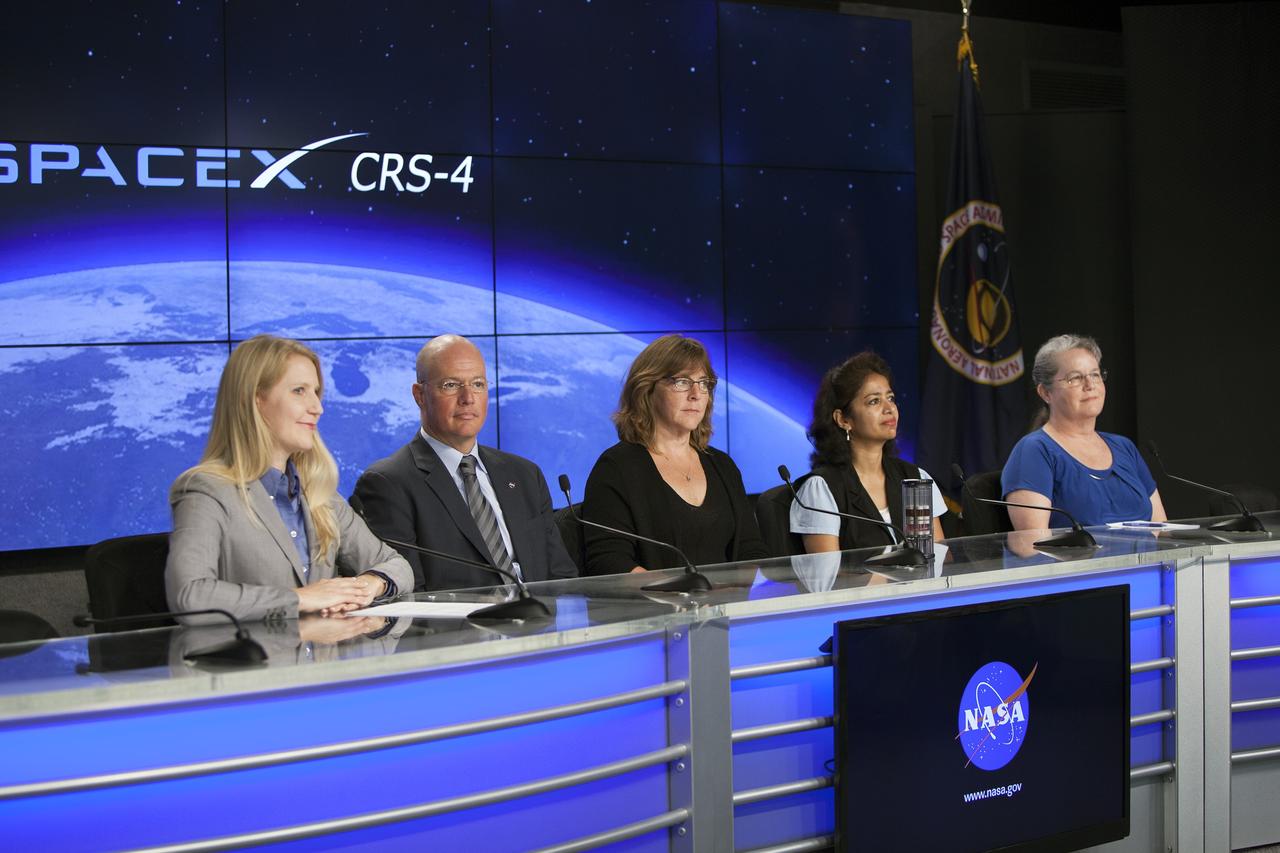
CAPE CANAVERAL, Fla. – Members of an ISS Science Panel on Model Organisms brief media representatives in Kennedy Space Center’s Press Site auditorium in preparation for the launch of the SpaceX CRS-4 mission to resupply the International Space Station. From left are Stephanie Schierholz, NASA Public Affairs, Marshall Porterfield, division director, Space Life and Physical Sciences, HEOMD, Shiela Neilsen, principal investigator, Micro-8, University of Montana, Sharmila Bhattacharya, principal investigator, Ames Student Fruit-Fly Experiment, NASA Ames Research Center, and Ruth Globus, project scientist, Rodent Habitat/Rodent Research-1, NASA Ames. The mission is the fourth of 12 SpaceX flights NASA contracted with the company to resupply the space station. It will be the fifth trip by a Dragon spacecraft to the orbiting laboratory. The spacecraft’s 2.5 tons of supplies, science experiments, and technology demonstrations include critical materials to support 255 science and research investigations that will occur during the station's Expeditions 41 and 42. Liftoff is targeted for an instantaneous window at 2:14 a.m. EDT. To learn more about the mission, visit http://www.nasa.gov/mission_pages/station/structure/launch/index.html. Photo credit: NASA/Jim Grossmann
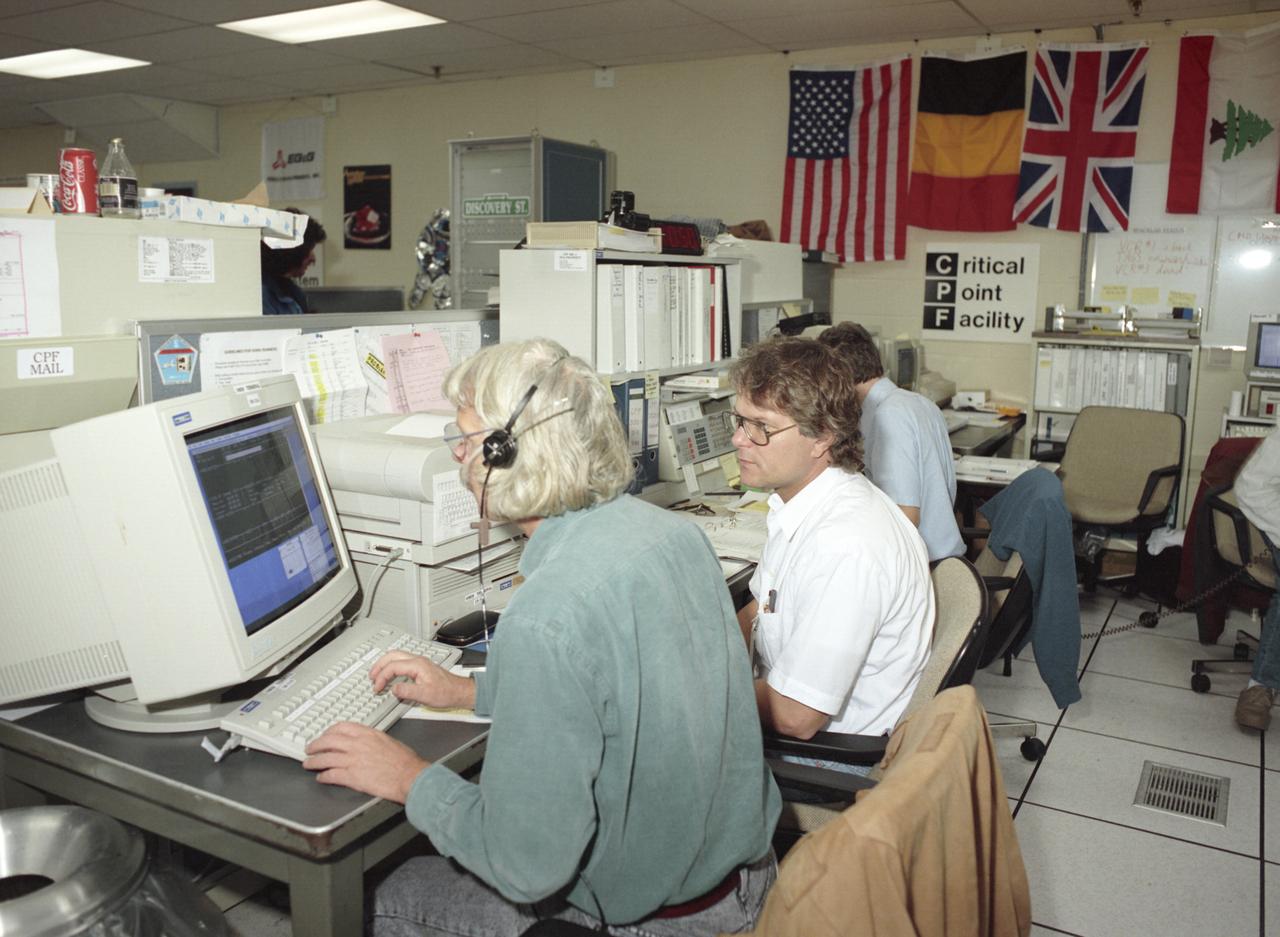
The primary payload for Space Shuttle Mission STS-42, launched January 22, 1992, was the International Microgravity Laboratory-1 (IML-1), a pressurized manned Spacelab module. The goal of IML-1 was to explore in depth the complex effects of weightlessness of living organisms and materials processing. Around-the-clock research was performed on the human nervous system's adaptation to low gravity and effects of microgravity on other life forms such as shrimp eggs, lentil seedlings, fruit fly eggs, and bacteria. Materials processing experiments were also conducted, including crystal growth from a variety of substances such as enzymes, mercury iodide, and a virus. The Huntsville Operations Support Center (HOSC) Spacelab Payload Operations Control Center (SL POCC) at the Marshall Space Flight Center (MSFC) was the air/ground communication channel used between the astronauts and ground control teams during the Spacelab missions. Featured is the Critical Point Facility (CPF) team in the SL POCC during the IML-1 mission.
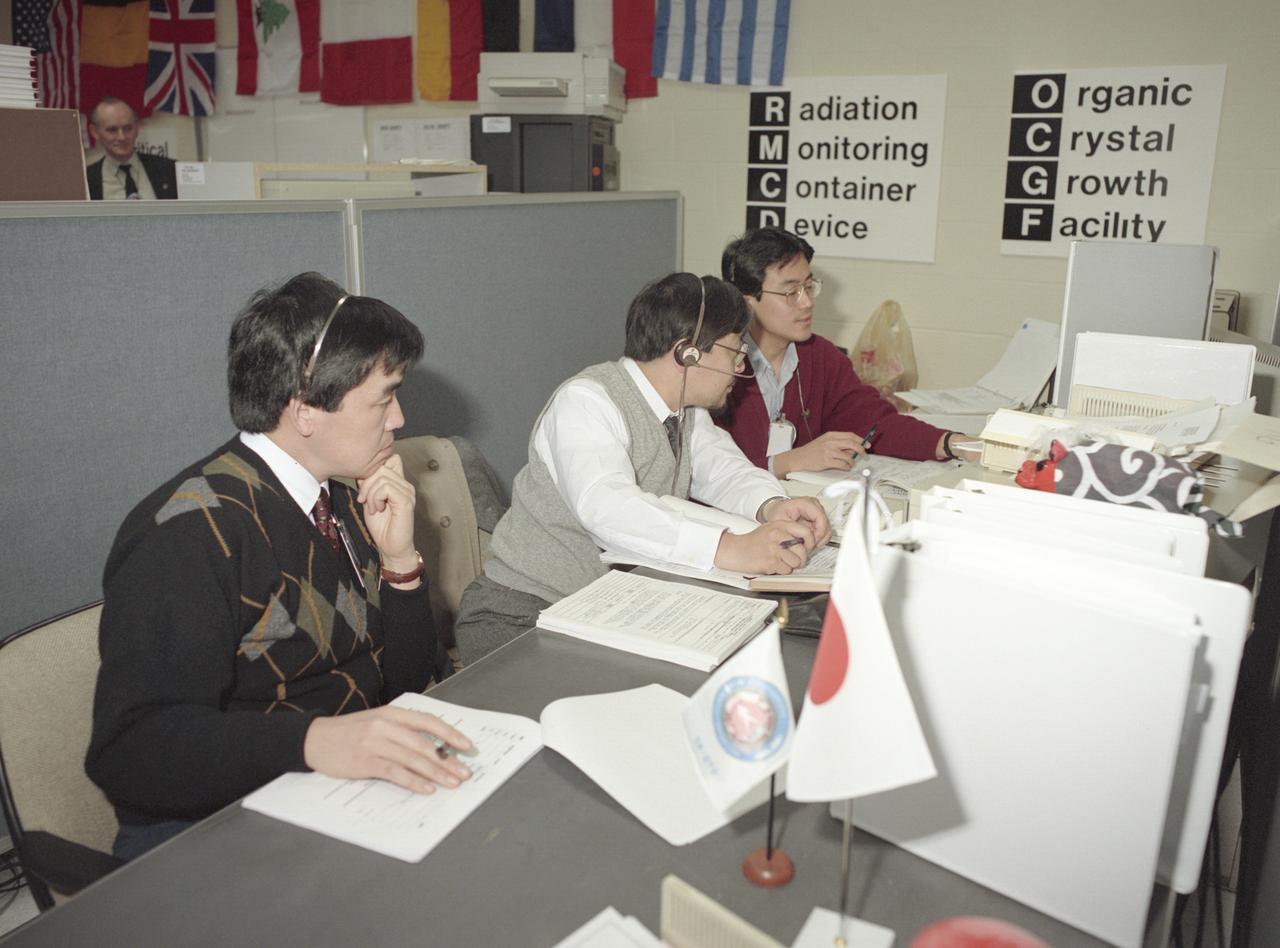
The primary payload for Space Shuttle Mission STS-42, launched January 22, 1992, was the International Microgravity Laboratory-1 (IML-1), a pressurized manned Spacelab module. The goal of IML-1 was to explore in depth the complex effects of weightlessness of living organisms and materials processing. Around-the-clock research was performed on the human nervous system's adaptation to low gravity and effects of microgravity on other life forms such as shrimp eggs, lentil seedlings, fruit fly eggs, and bacteria. Materials processing experiments were also conducted, including crystal growth from a variety of substances such as enzymes, mercury iodide, and a virus. The Huntsville Operations Support Center (HOSC) Spacelab Payload Operations Control Center (SL POCC) at the Marshall Space Flight Center (MSFC) was the air/ground communication channel used between the astronauts and ground control teams during the Spacelab missions. Featured are activities of the Organic Crystal Growth Facility (OCGF) and Radiation Monitoring Container Device (RMCD) groups in the SL POCC during the IML-1 mission.
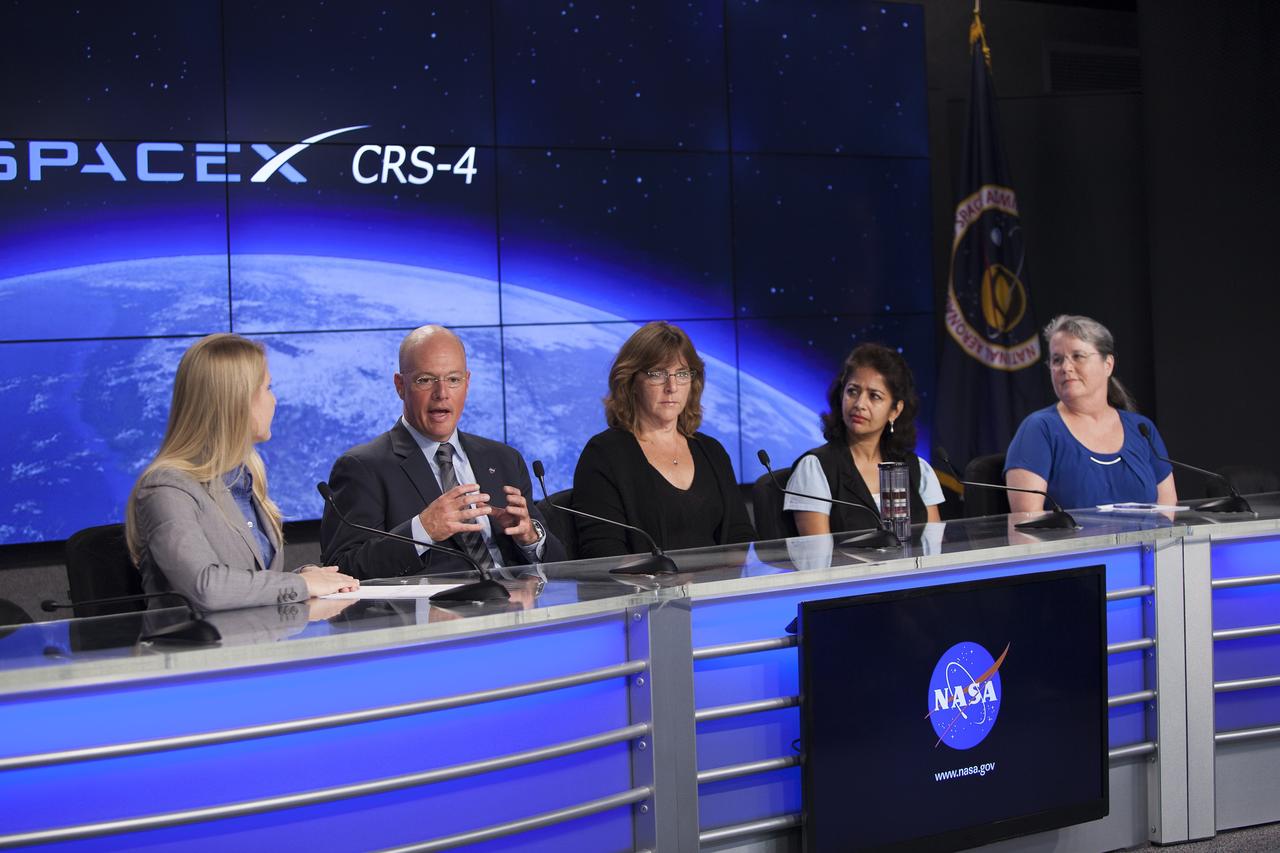
CAPE CANAVERAL, Fla. – Members of an ISS Science Panel on Model Organisms brief media representatives in Kennedy Space Center’s Press Site auditorium in preparation for the launch of the SpaceX CRS-4 mission to resupply the International Space Station. From left are Stephanie Schierholz, NASA Public Affairs, Marshall Porterfield, division director, Space Life and Physical Sciences, HEOMD, Shiela Neilsen, principal investigator, Micro-8, University of Montana, Sharmila Bhattacharya, principal investigator, Ames Student Fruit-Fly Experiment, NASA Ames Research Center, and Ruth Globus, project scientist, Rodent Habitat/Rodent Research-1, NASA Ames. The mission is the fourth of 12 SpaceX flights NASA contracted with the company to resupply the space station. It will be the fifth trip by a Dragon spacecraft to the orbiting laboratory. The spacecraft’s 2.5 tons of supplies, science experiments, and technology demonstrations include critical materials to support 255 science and research investigations that will occur during the station's Expeditions 41 and 42. Liftoff is targeted for an instantaneous window at 2:14 a.m. EDT. To learn more about the mission, visit http://www.nasa.gov/mission_pages/station/structure/launch/index.html. Photo credit: NASA/Jim Grossmann
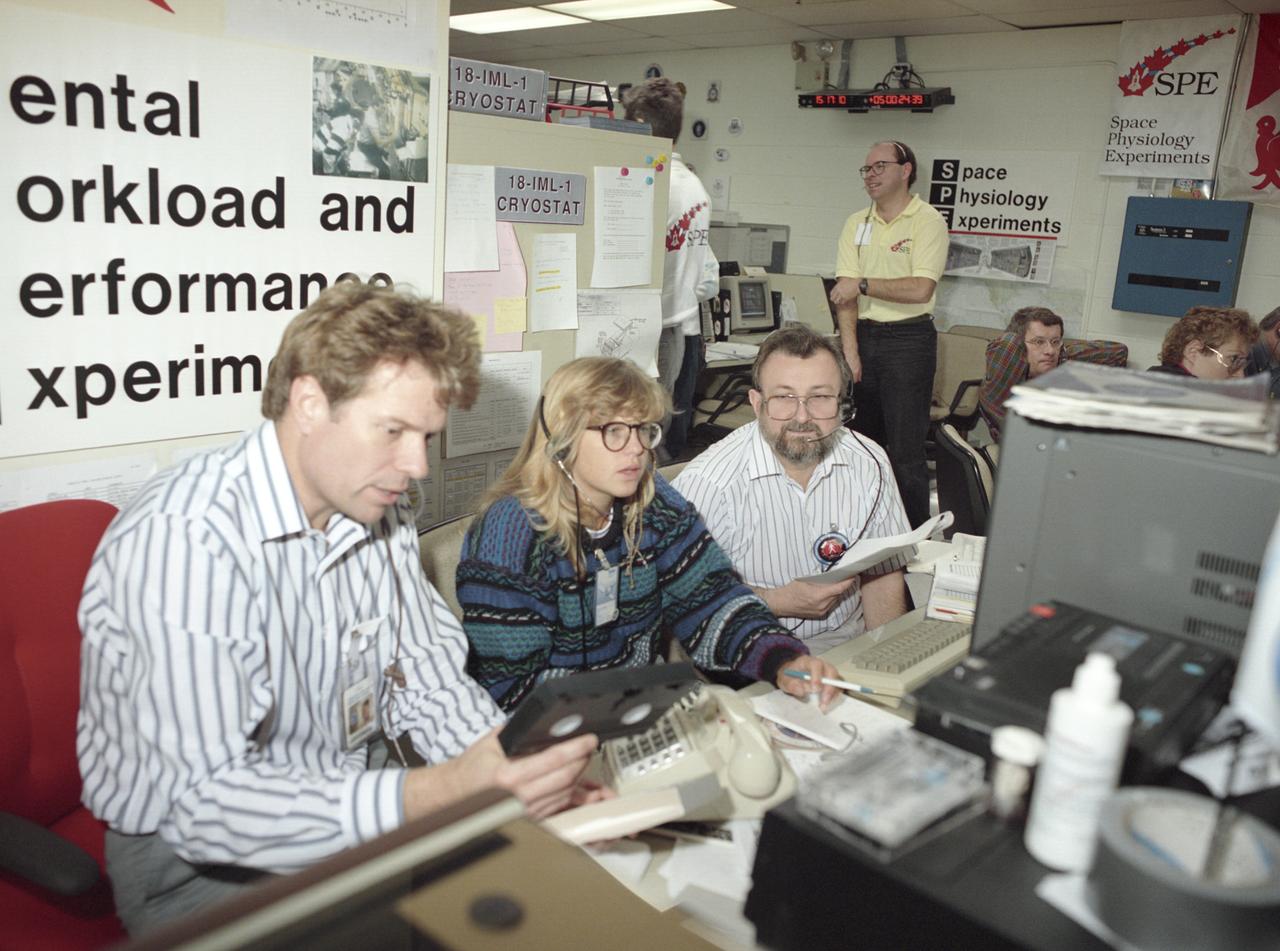
The primary payload for Space Shuttle Mission STS-42, launched January 22, 1992, was the International Microgravity Laboratory-1 (IML-1), a pressurized manned Spacelab module. The goal of IML-1 was to explore in depth the complex effects of weightlessness of living organisms and materials processing. Around-the-clock research was performed on the human nervous system's adaptation to low gravity and effects of microgravity on other life forms such as shrimp eggs, lentil seedlings, fruit fly eggs, and bacteria. Materials processing experiments were also conducted, including crystal growth from a variety of substances such as enzymes, mercury iodide, and a virus. The Huntsville Operations Support Center (HOSC) Spacelab Payload Operations Control Center (SL POCC) at the Marshall Space Flight Center (MSFC) was the air/ground communication channel used between the astronauts and ground control teams during the Spacelab missions. Featured activities are of the Mental Workload and Performance Experiment (MWPE) team in the SL POCC during the IML-1 mission.
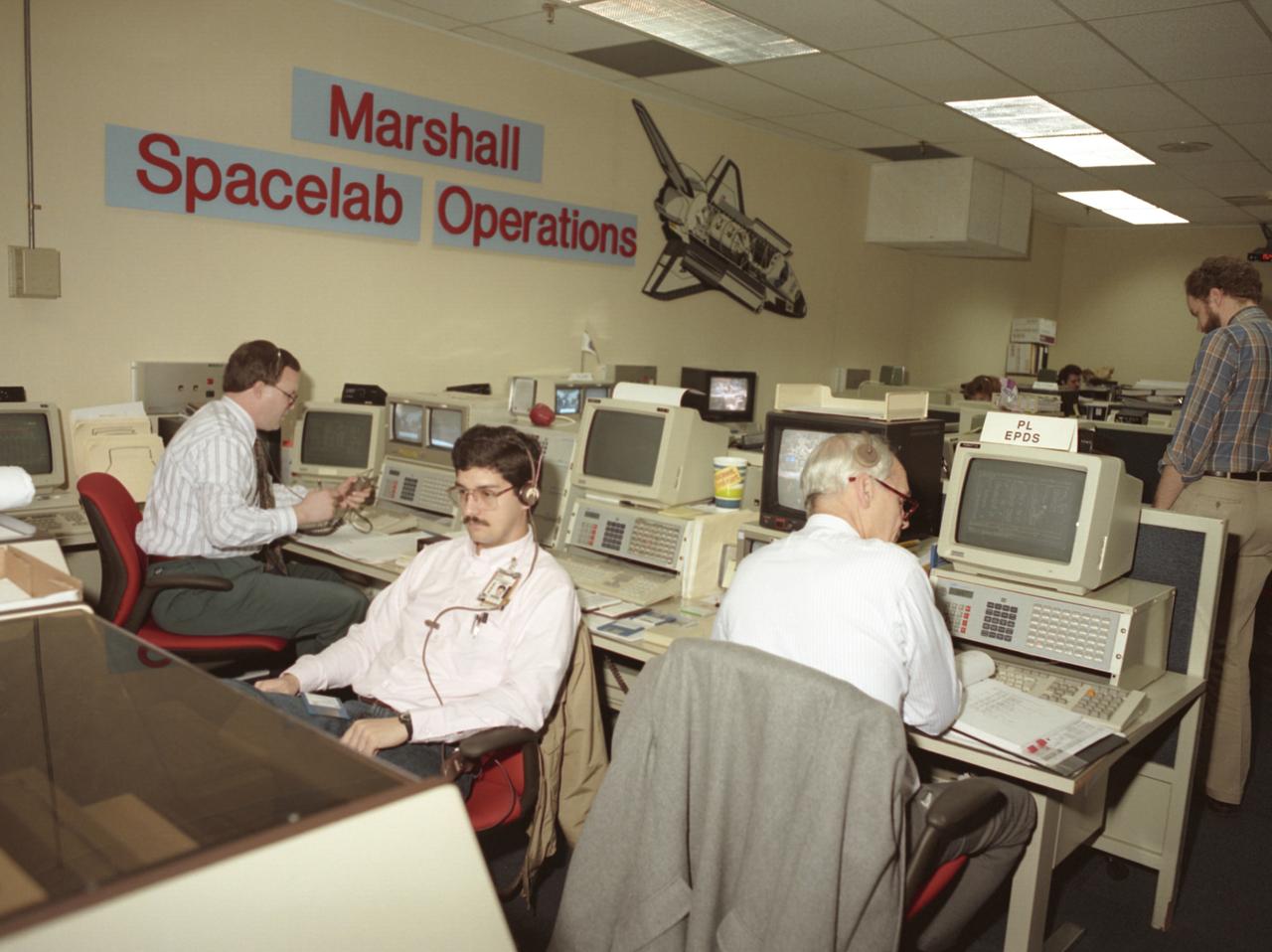
The primary payload for Space Shuttle Mission STS-42, launched January 22, 1992, was the International Microgravity Laboratory-1 (IML-1), a pressurized manned Spacelab module. The goal of IML-1 was to explore in depth the complex effects of weightlessness of living organisms and materials processing. Around-the-clock research was performed on the human nervous system's adaptation to low gravity and effects of microgravity on other life forms such as shrimp eggs, lentil seedlings, fruit fly eggs, and bacteria. Materials processing experiments were also conducted, including crystal growth from a variety of substances such as enzymes, mercury iodide, and a virus. The Huntsville Operations Support Center (HOSC) Spacelab Payload Operations Control Center (SL POCC) at the Marshall Space Flight Center (MSFC) was the air/ground communication channel used between the astronauts and ground control teams during the Spacelab missions. Featured is the Spacelab Operations Support Room Space Engineering Support team in the SL POCC during STS-42, IML-1 mission.
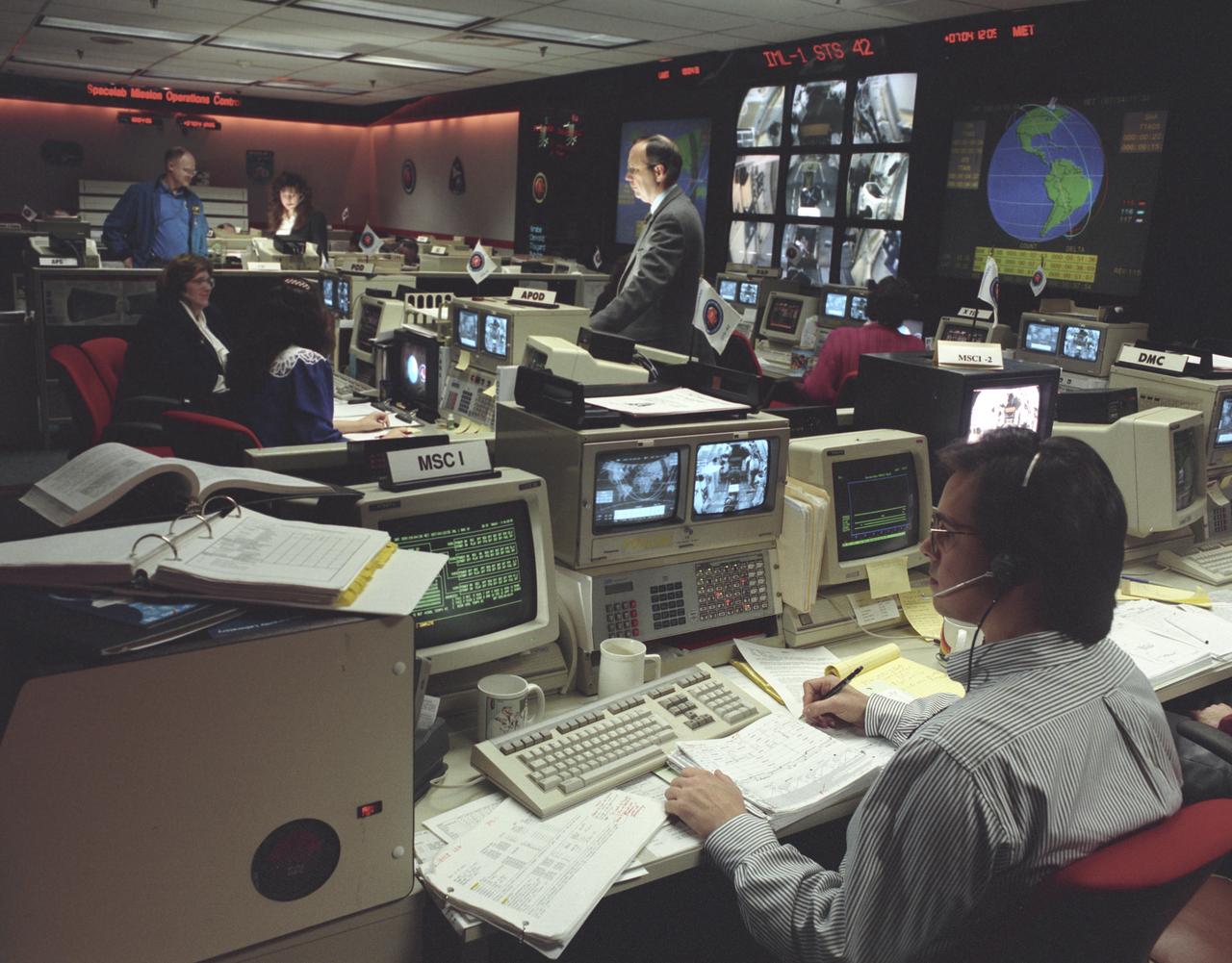
This photograph shows activities during the International Microgravity Laboratory-1 (IML-1) mission (STS-42) in the Payload Operations Control Center (POCC) at the Marshall Space Flight Center. The IML-1 mission was the first in a series of Shuttle flights dedicated to fundamental materials and life sciences research. The mission was to explore, in depth, the complex effects of weightlessness on living organisms and materials processing. The crew conducted experiments on the human nervous system's adaptation to low gravity and the effects on other life forms such as shrimp eggs, lentil seedlings, fruit fly eggs, and bacteria. Low gravity materials processing experiments included crystal growth from a variety of substances such as enzymes, mercury, iodine, and virus. The International space science research organizations that participated in this mission were: The U.S. National Aeronautics and Space Administration, the European Space Agency, the Canadian Space Agency, the French National Center for Space Studies, the German Space Agency, and the National Space Development Agency of Japan. The POCC was the air/ground communication charnel used between the astronauts aboard the Spacelab and scientists, researchers, and ground control teams during the Spacelab missions. The facility made instantaneous video and audio communications possible for scientists on the ground to follow the progress and to send direct commands of their research almost as if they were in space with the crew.
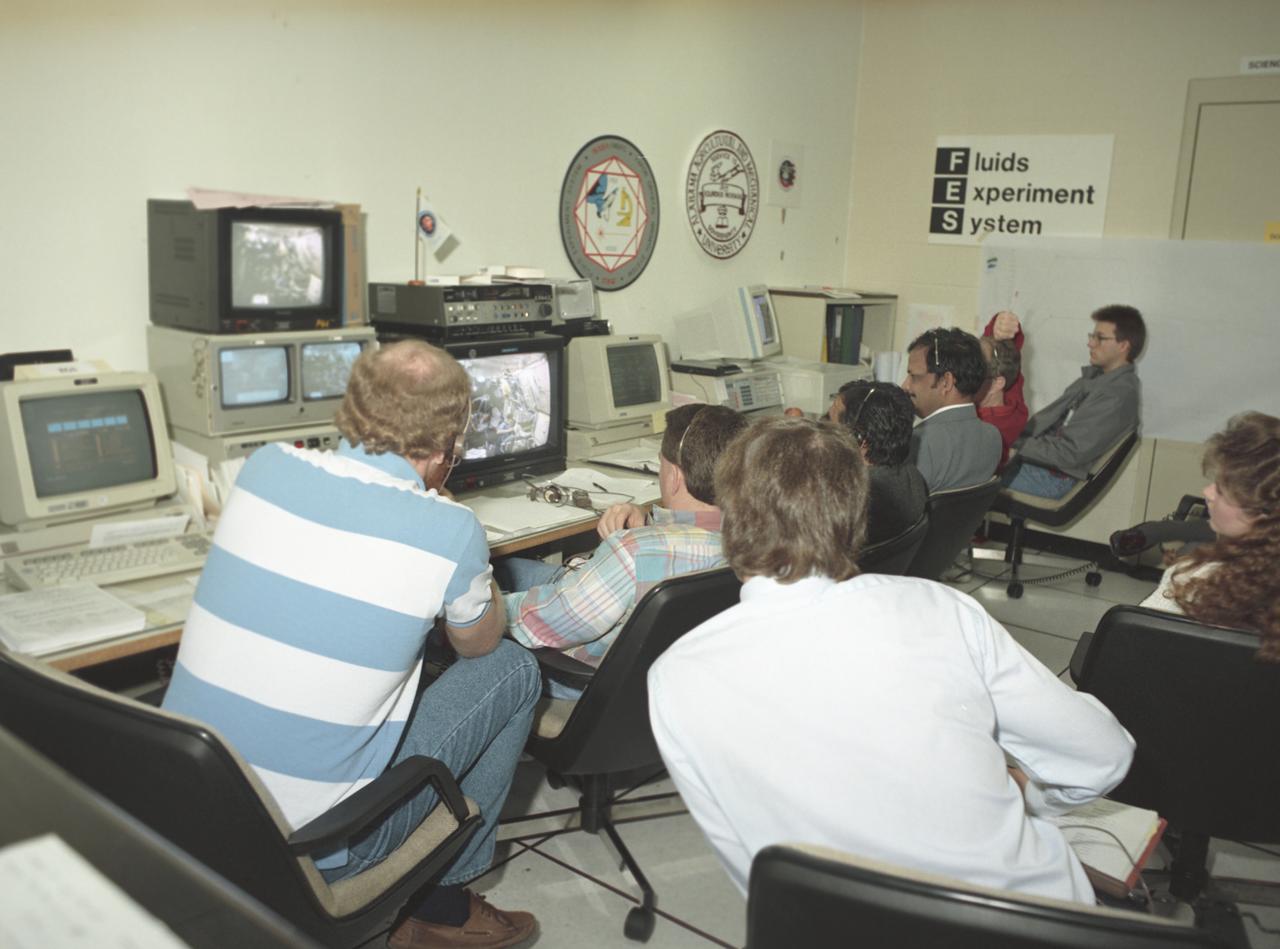
This photograph shows activities during the International Microgravity Laboratory-1 (IML-1) mission (STS-42) in the Payload Operations Control Center (POCC) at the Marshall Space Flight Center. Members of the Fluid Experiment System (FES) group monitor the progress of their experiment through video at the POCC. The IML-1 mission was the first in a series of Shuttle flights dedicated to fundamental materials and life sciences research. The mission was to explore, in depth, the complex effects of weightlessness on living organisms and materials processing. The crew conducted experiments on the human nervous system's adaptation to low gravity and the effects on other life forms such as shrimp eggs, lentil seedlings, fruit fly eggs, and bacteria. Low gravity materials processing experiments included crystal growth from a variety of substances such as enzymes, mercury, iodine, and virus. The International space science research organizations that participated in this mission were: The U.S. National Aeronautics and Space Administion, the European Space Agency, the Canadian Space Agency, the French National Center for Space Studies, the German Space Agency, and the National Space Development Agency of Japan. The POCC was the air/ground communication charnel used between astronauts aboard the Spacelab and scientists, researchers, and ground control teams during the Spacelab missions. The facility made instantaneous video and audio communications possible for scientists on the ground to follow the progress and to send direct commands of their research almost as if they were in space with the crew.
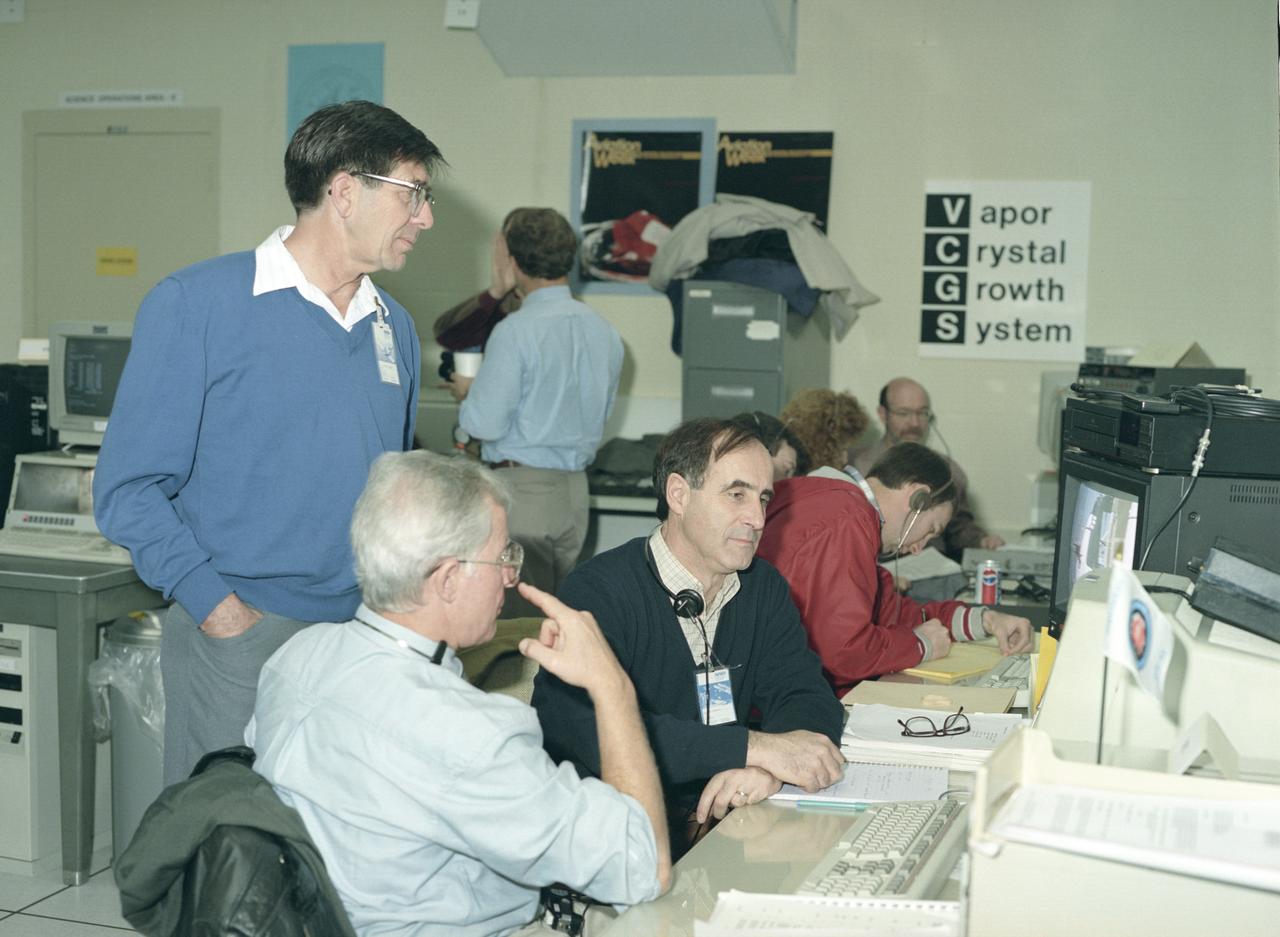
The primary payload for Space Shuttle Mission STS-42, launched January 22, 1992, was the International Microgravity Laboratory-1 (IML-1), a pressurized manned Spacelab module. The goal of IML-1 was to explore in depth the complex effects of weightlessness of living organisms and materials processing. Around-the-clock research was performed on the human nervous system's adaptation to low gravity and effects of microgravity on other life forms such as shrimp eggs, lentil seedlings, fruit fly eggs, and bacteria. Materials processing experiments were also conducted, including crystal growth from a variety of substances such as enzymes, mercury iodide, and a virus. The Huntsville Operations Support Center (HOSC) Spacelab Payload Operations Control Center (SL POCC) at the Marshall Space Flight Center (MSFC) was the air/ground communication channel used between the astronauts and ground control teams during the Spacelab missions. Featured is the Vapor Crystal Growth System (VCGS) team in SL POCC), during STS-42, IML-1 mission.
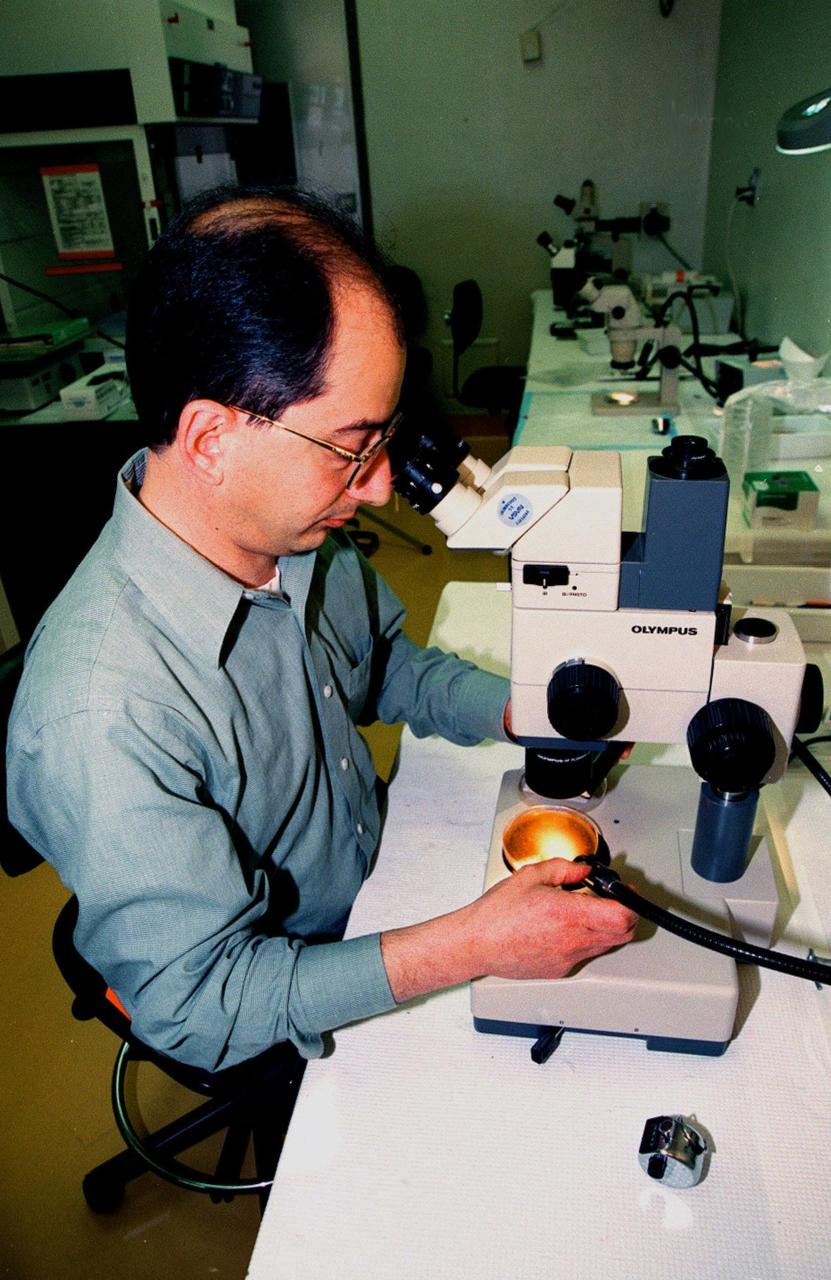
In the KSC Life Sciences Building, Hangar L, Cape Canaveral Air Station, Dr. Haig Keshishian checks fruit fly larvae in a petri dish. The larvae are part of an experiment that is a secondary payload on mission STS-93. The experiment will examine the effects of microgravity and space flight on the development of neural connections between specific motor neurons and their targets in muscle fibers. Dr. Keshishian, from Yale University, is the principle investigator for the experiment. The larvae will be contained in incubators that are part of a Commercial Generic Bioprocessing Apparatus (CGBA), which can start bioprocessing reactions by mixing or heating a sample and can also initiate multiple-step, sequential reactions in a technique called phased processing. The primary payload of mission STS-93 is the Chandra X-ray Observatory, which will allow scientists from around the world to see previously invisible black holes and high-temperature gas clouds, giving the observatory the potential to rewrite the books on the structure and evolution of our universe. The target launch date for STS-93 is July 9, aboard Space Shuttle Columbia, from Launch Pad 39B
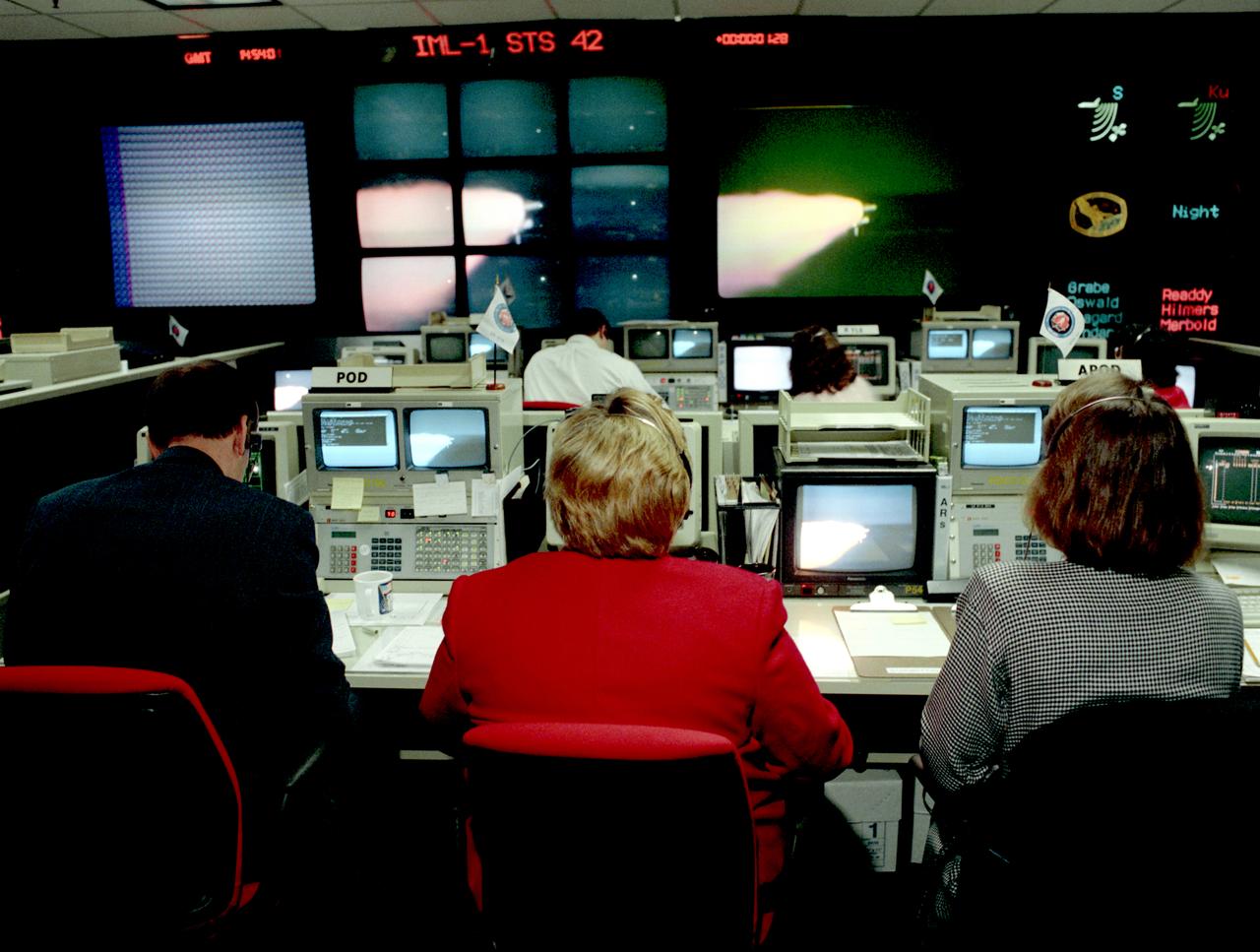
The primary payload for Space Shuttle Mission STS-42, launched January 22, 1992, was the International Microgravity Laboratory-1 (IML-1), a pressurized manned Spacelab module. The goal of IML-1 was to explore in depth the complex effects of weightlessness of living organisms and materials processing. Around-the-clock research was performed on the human nervous system's adaptation to low gravity and effects of microgravity on other life forms such as shrimp eggs, lentil seedlings, fruit fly eggs, and bacteria. Materials processing experiments were also conducted, including crystal growth from a variety of substances such as enzymes, mercury iodide and a virus. The Huntsville Operations Support Center (HOSC) Spacelab Payload Operations Control Center (SL POCC) at the Marshall Space Flight Center (MSFC) was the air/ground communication channel used between the astronauts aboard the Spacelab and scientists, researchers, and ground control teams during the Spacelab missions. The facility made instantaneous video and audio communications possible for scientists on the ground to follow the progress and to send direct commands of their research almost as if they were in space with the crew. Teams of controllers and researchers directed on-orbit science operations, sent commands to the spacecraft, received data from experiments aboard the Space Shuttle, adjusted mission schedules to take advantage of unexpected science opportunities or unexpected results, and worked with crew members to resolve problems with their experiments. In this photograph the Payload Operations Director (POD) views the launch.