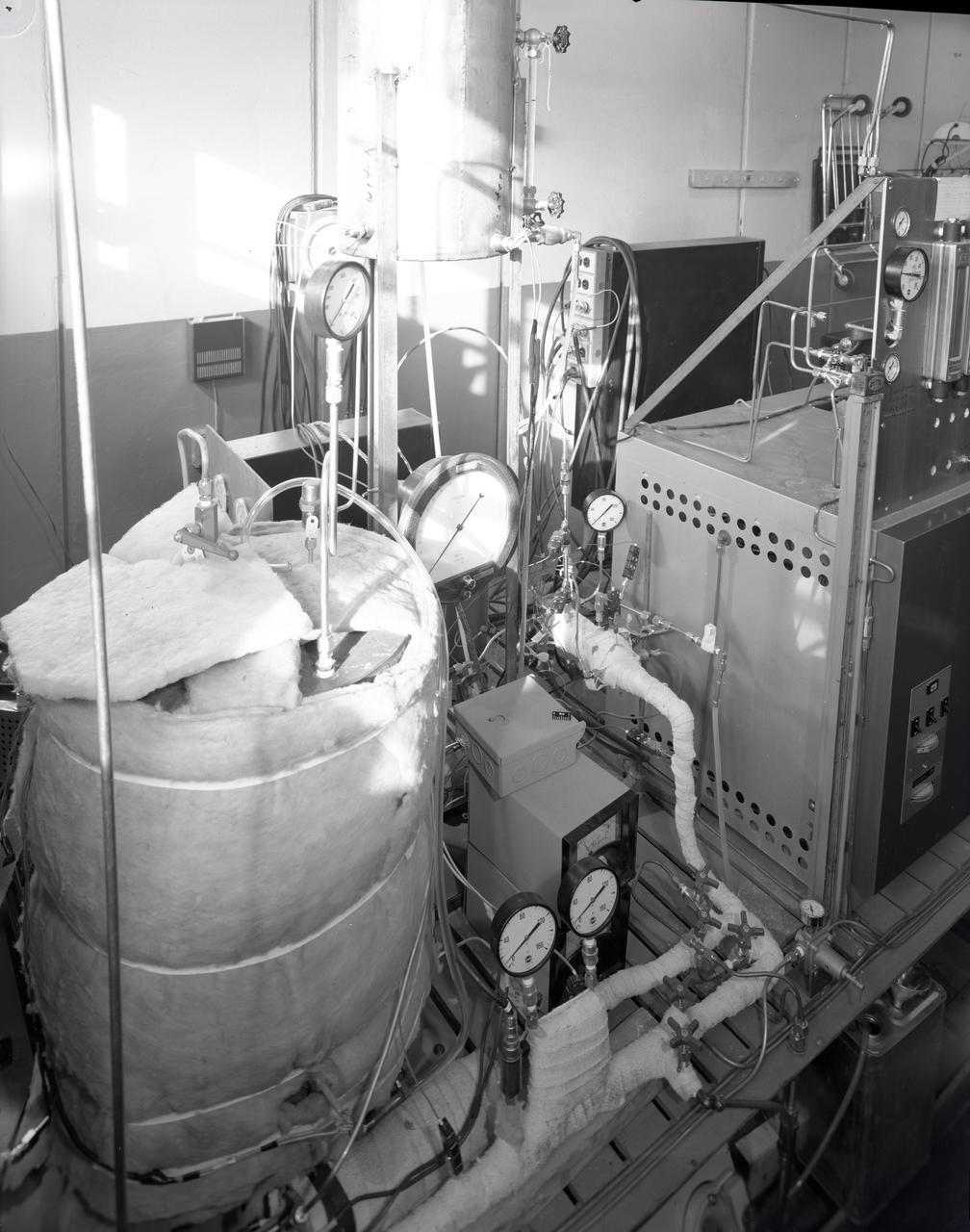
FUEL CELL CONDENSER FOR THE APOLLO SYSTEM TEST RIG
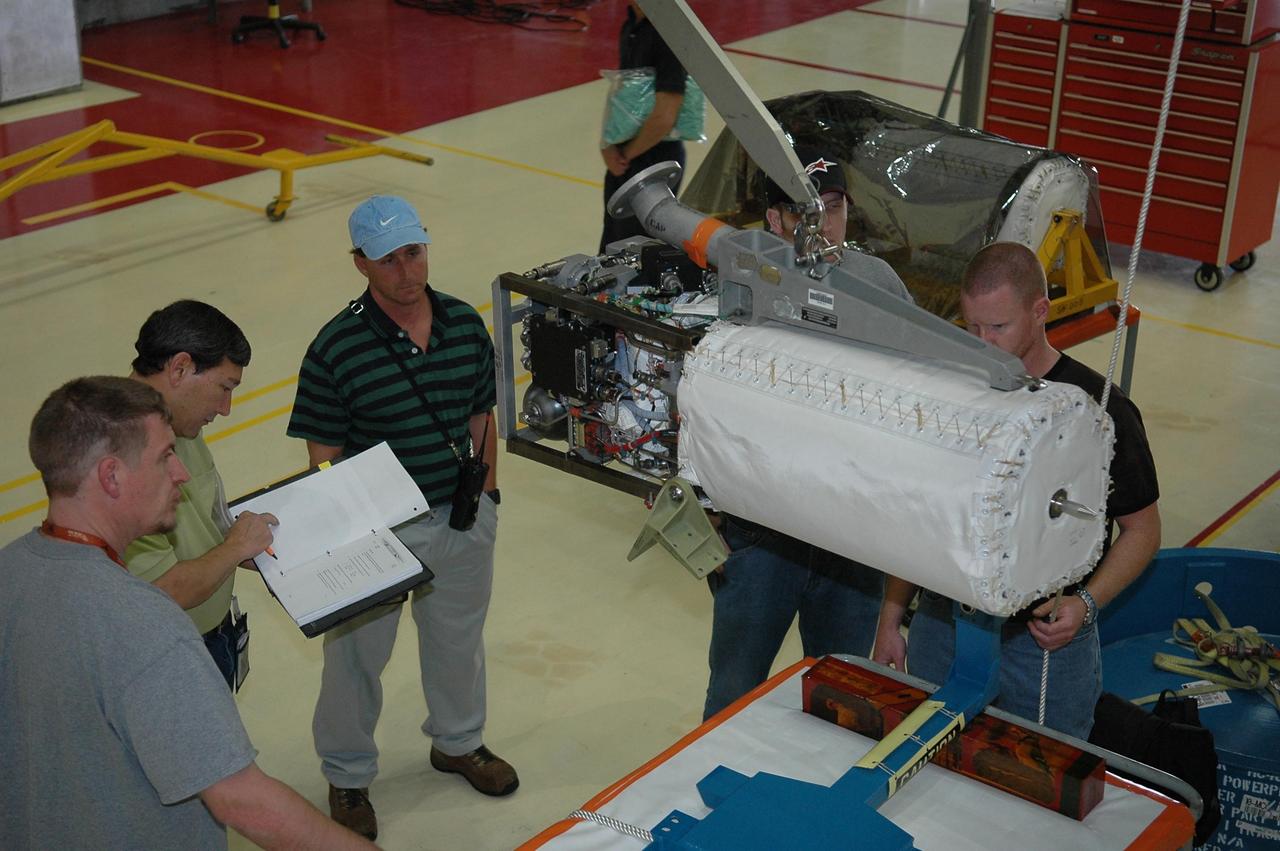
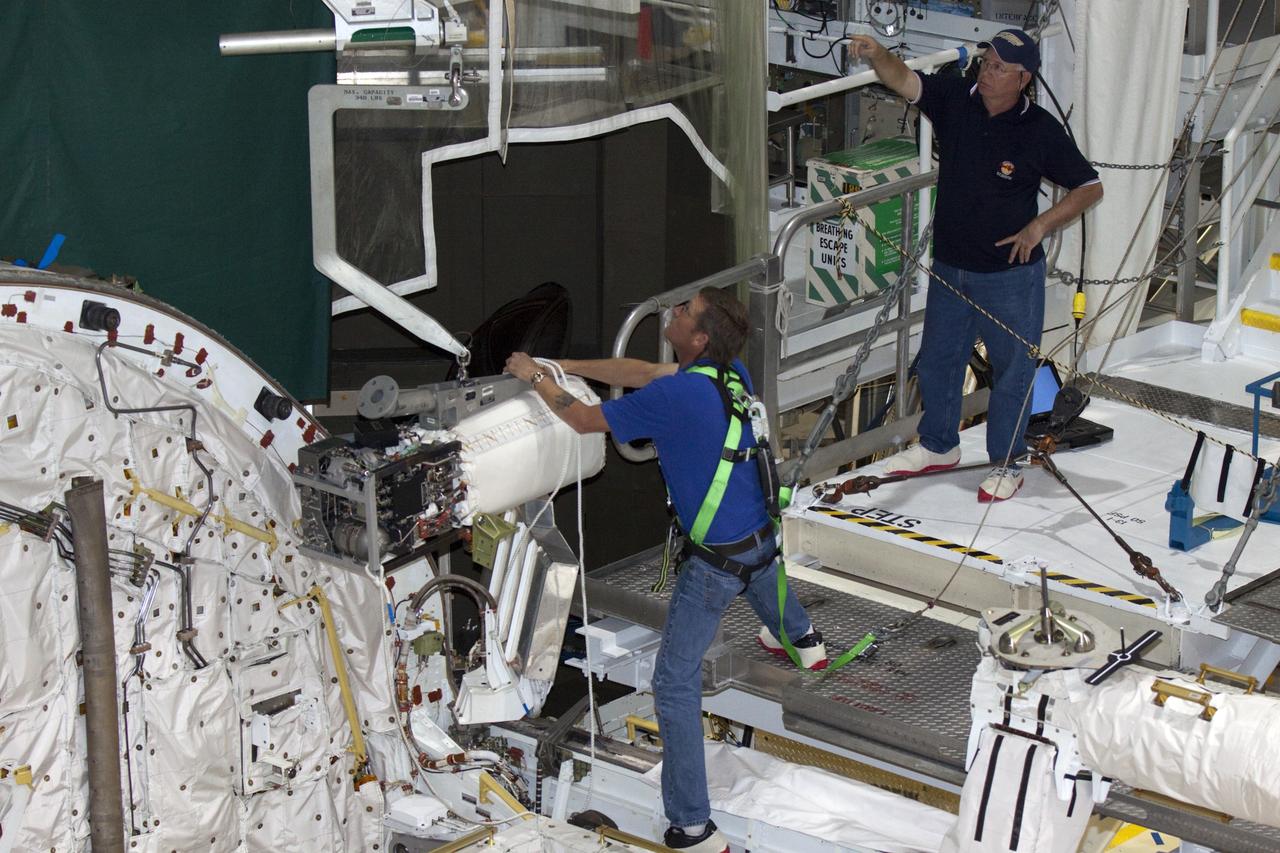
KENNEDY SPACE CENTER, FLA. - In NASA Kennedy Space Center’s Orbiter Processing Facility bay 3, a fuel cell removed from the orbiter Discovery is lowered toward a work stand. Fuel cells are located under the forward portion of the payload bay. They make power for the orbiter by mixing hydrogen and oxygen to produce electricity. Fuel cells also create potable water that is pumped into storage tanks for the crew to use in orbit. Discovery is the designated orbiter for the second return-to-flight mission, STS-121, scheduled for launch in May. Photo credit: NASA/Kim Shiflett

KENNEDY SPACE CENTER, FLA. - In NASA Kennedy Space Center’s Orbiter Processing Facility bay 3, a fuel cell removed from the orbiter Discovery is lowered toward the floor. Fuel cells are located under the forward portion of the payload bay. They make power for the orbiter by mixing hydrogen and oxygen to produce electricity. Fuel cells also create potable water that is pumped into storage tanks for the crew to use in orbit. Discovery is the designated orbiter for the second return-to-flight mission, STS-121, scheduled for launch in May. Photo credit: NASA/Kim Shiflett
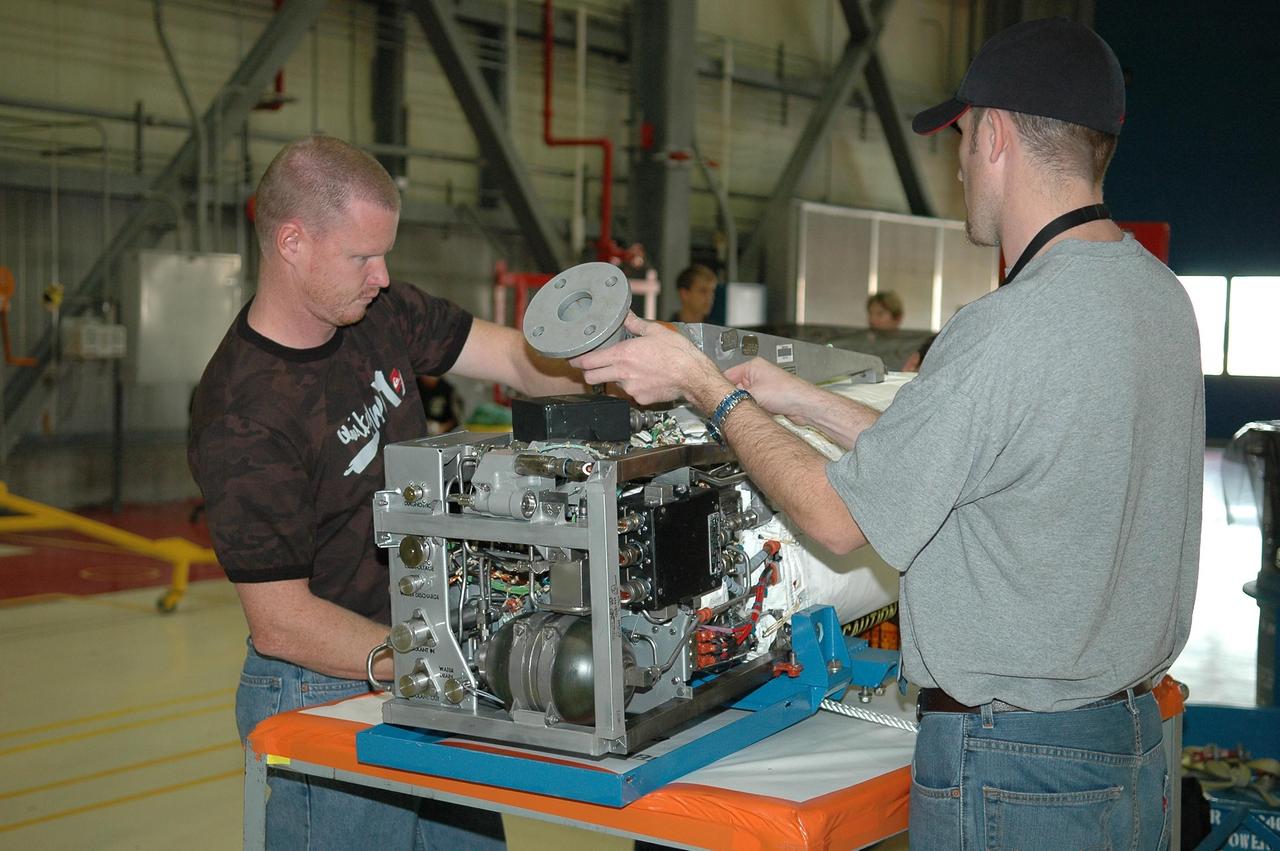
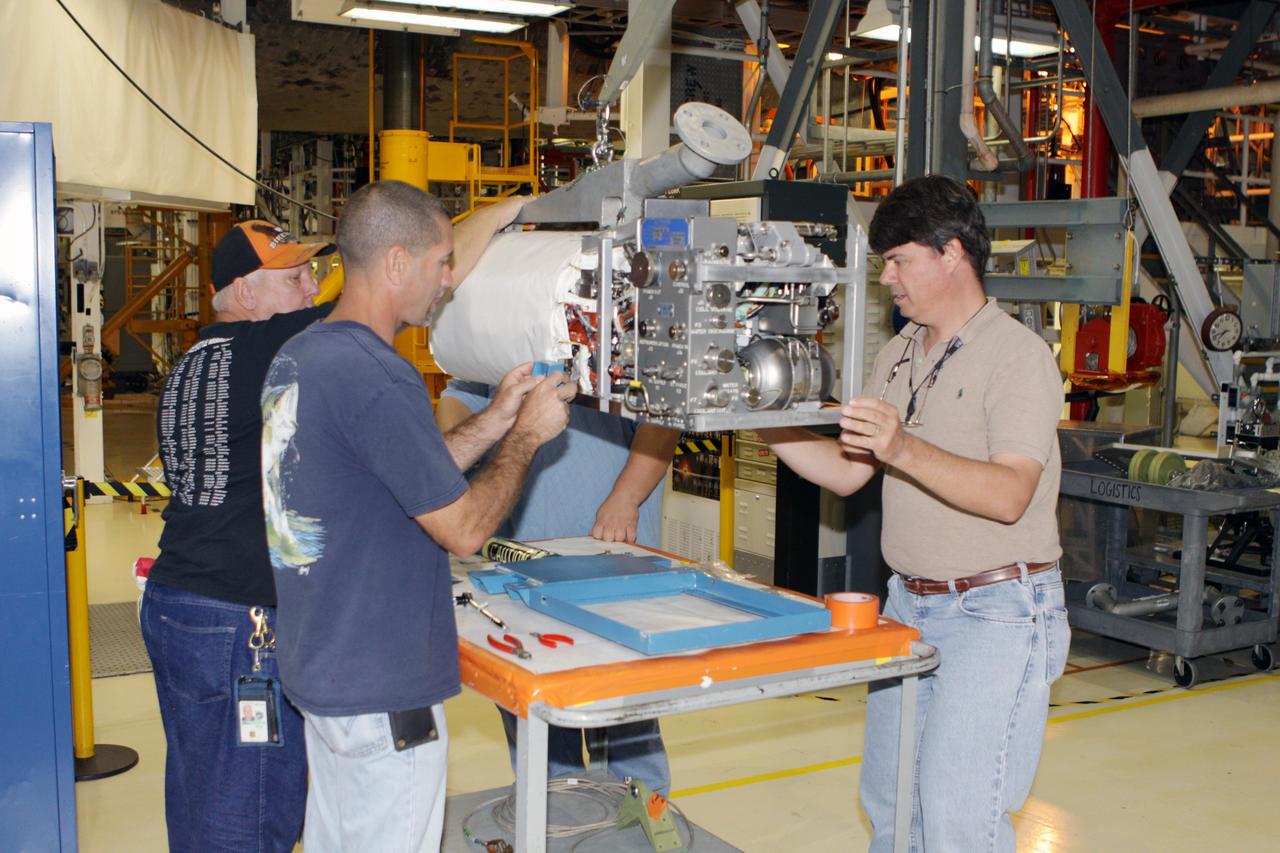
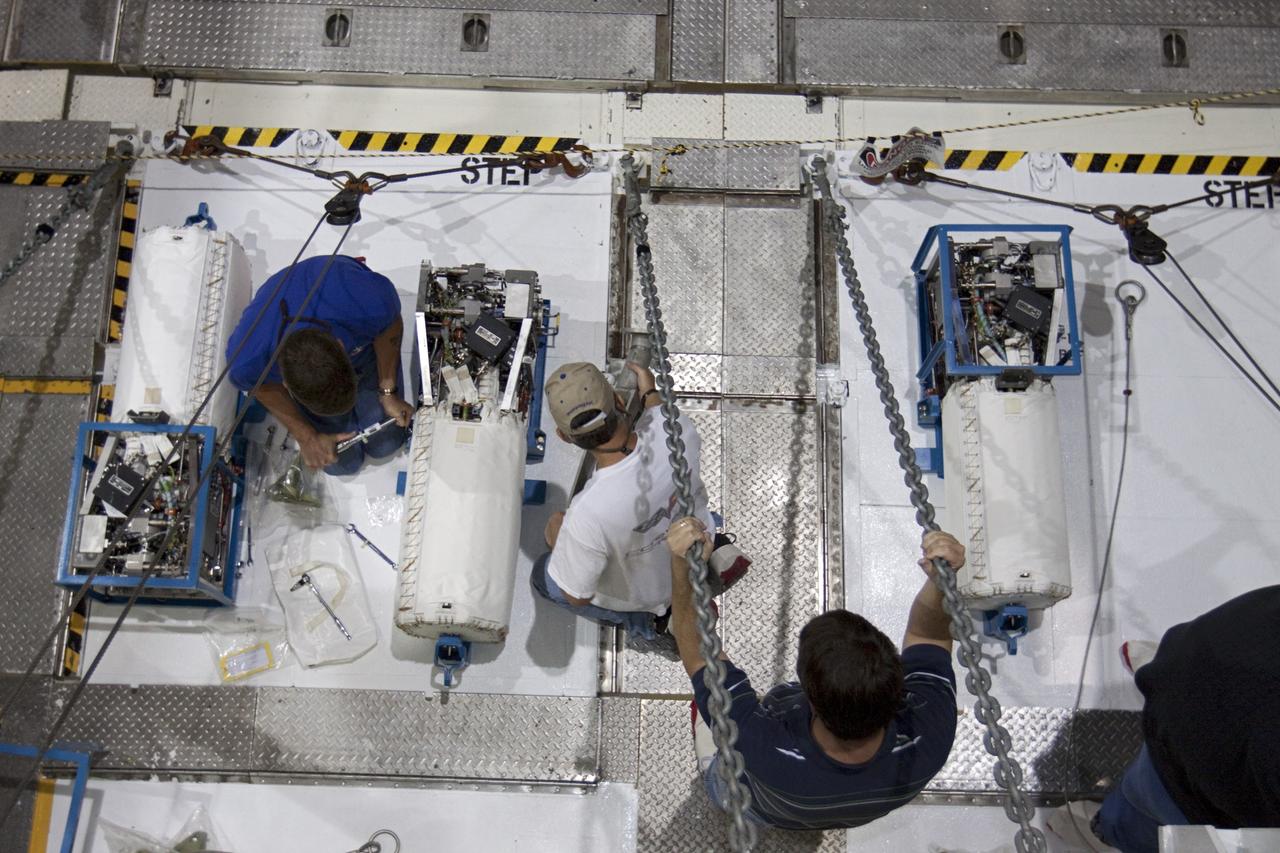
KENNEDY SPACE CENTER, FLA. - In NASA Kennedy Space Center’s Orbiter Processing Facility bay 3, technicians begin dismantling the fuel cell removed from the orbiter Discovery. Fuel cells are located under the forward portion of the payload bay. They make power for the orbiter by mixing hydrogen and oxygen to produce electricity. Fuel cells also create potable water that is pumped into storage tanks for the crew to use in orbit. Discovery is the designated orbiter for the second return-to-flight mission, STS-121, scheduled for launch in May. Photo credit: NASA/Kim Shiflett
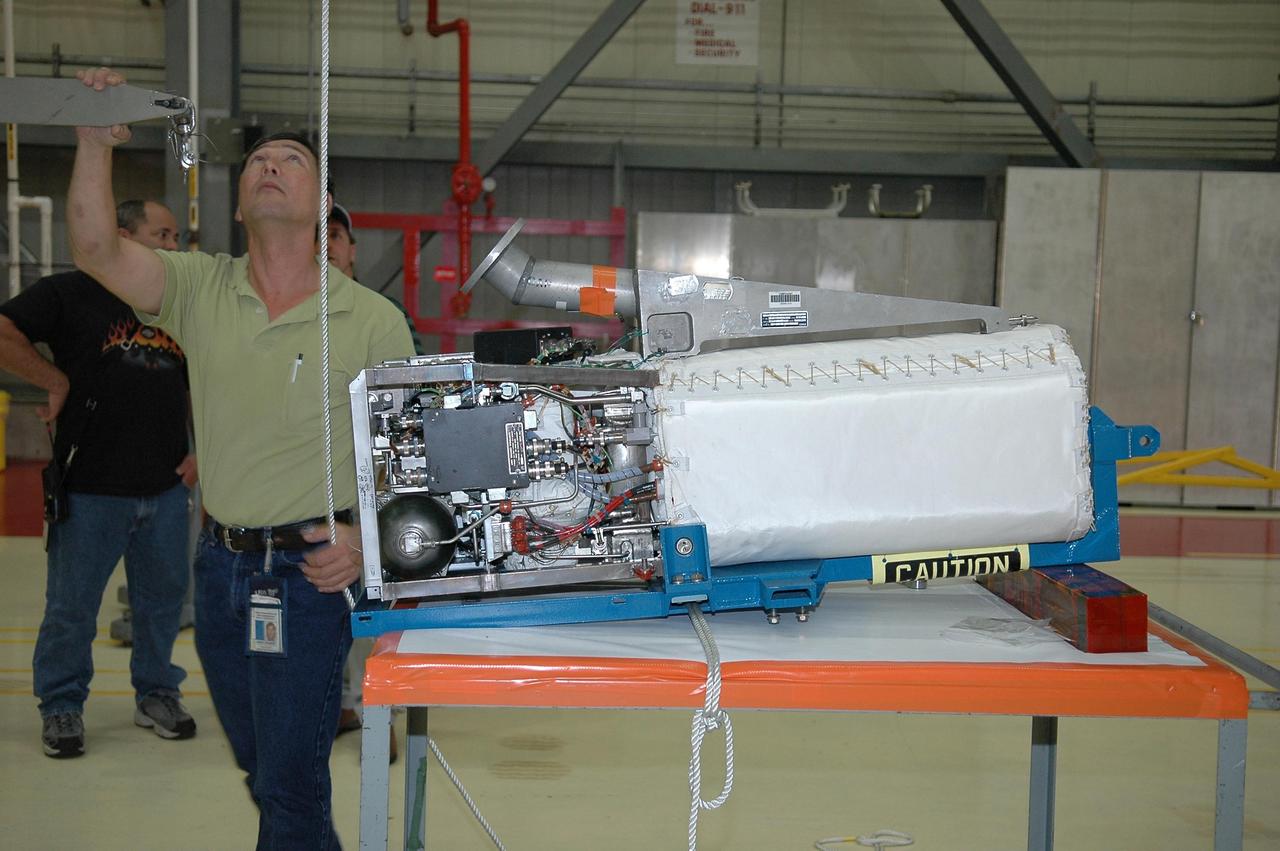
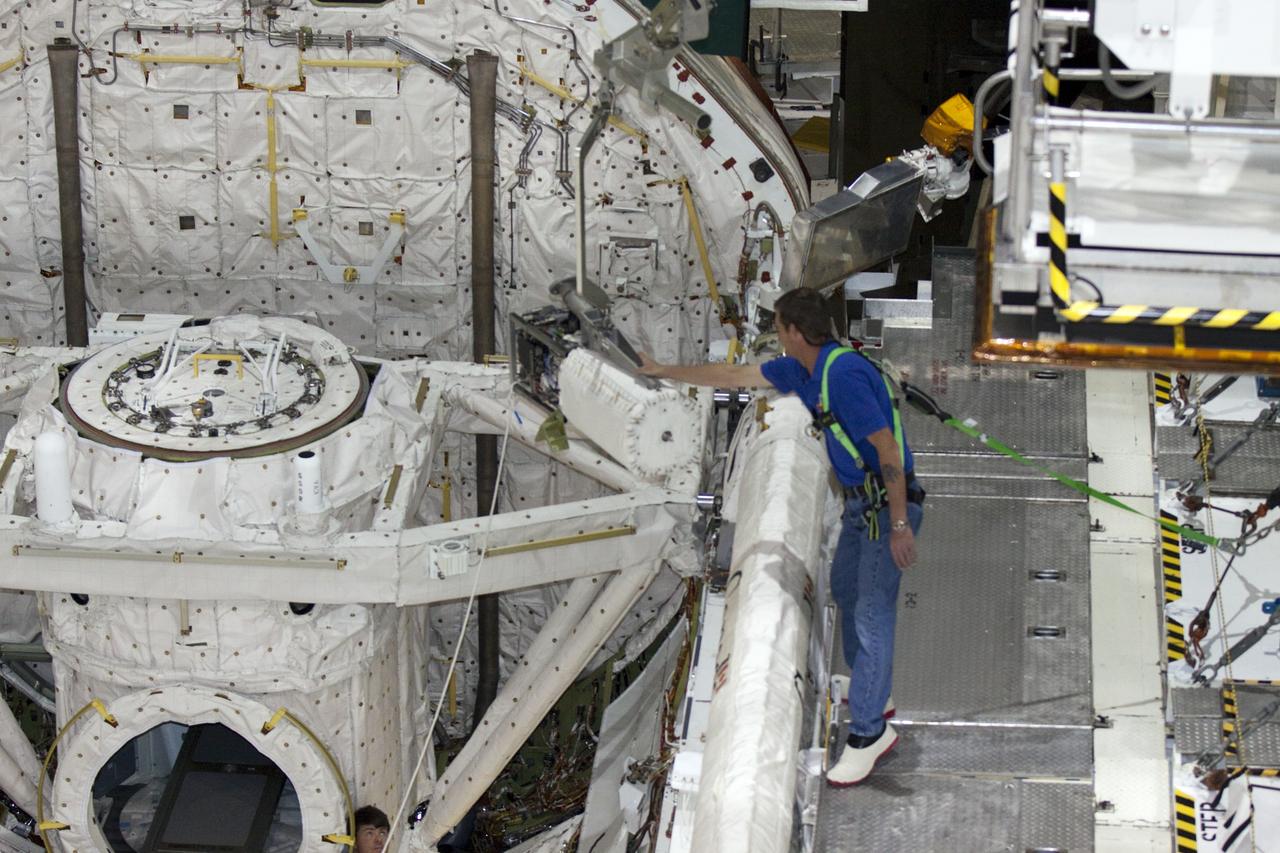
KENNEDY SPACE CENTER, FLA. - In NASA Kennedy Space Center’s Orbiter Processing Facility bay 3, the fuel cell removed from the orbiter Discovery is lowered onto a bracket on the work stand. Fuel cells are located under the forward portion of the payload bay. They make power for the orbiter by mixing hydrogen and oxygen to produce electricity. Fuel cells also create potable water that is pumped into storage tanks for the crew to use in orbit. Discovery is the designated orbiter for the second return-to-flight mission, STS-121, scheduled for launch in May. Photo credit: NASA/Kim Shiflett
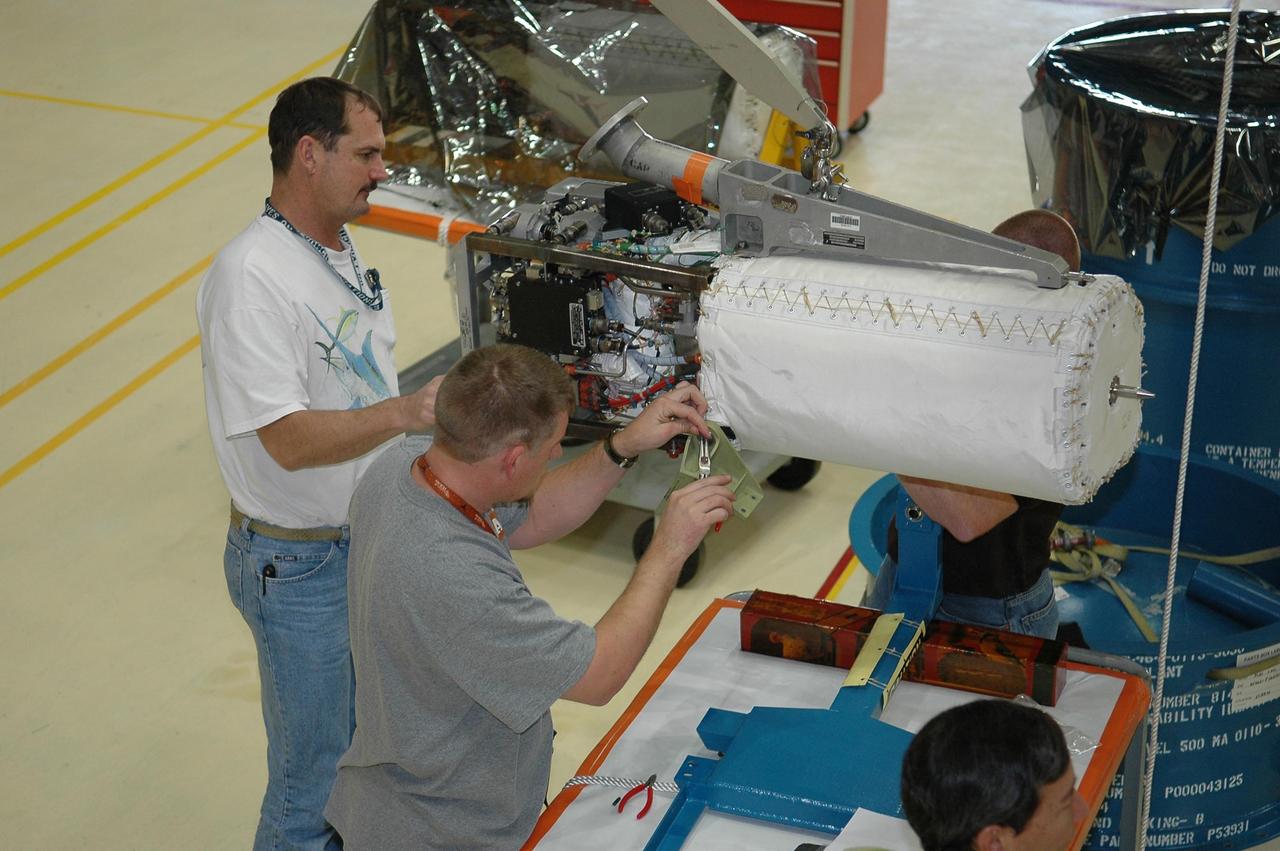
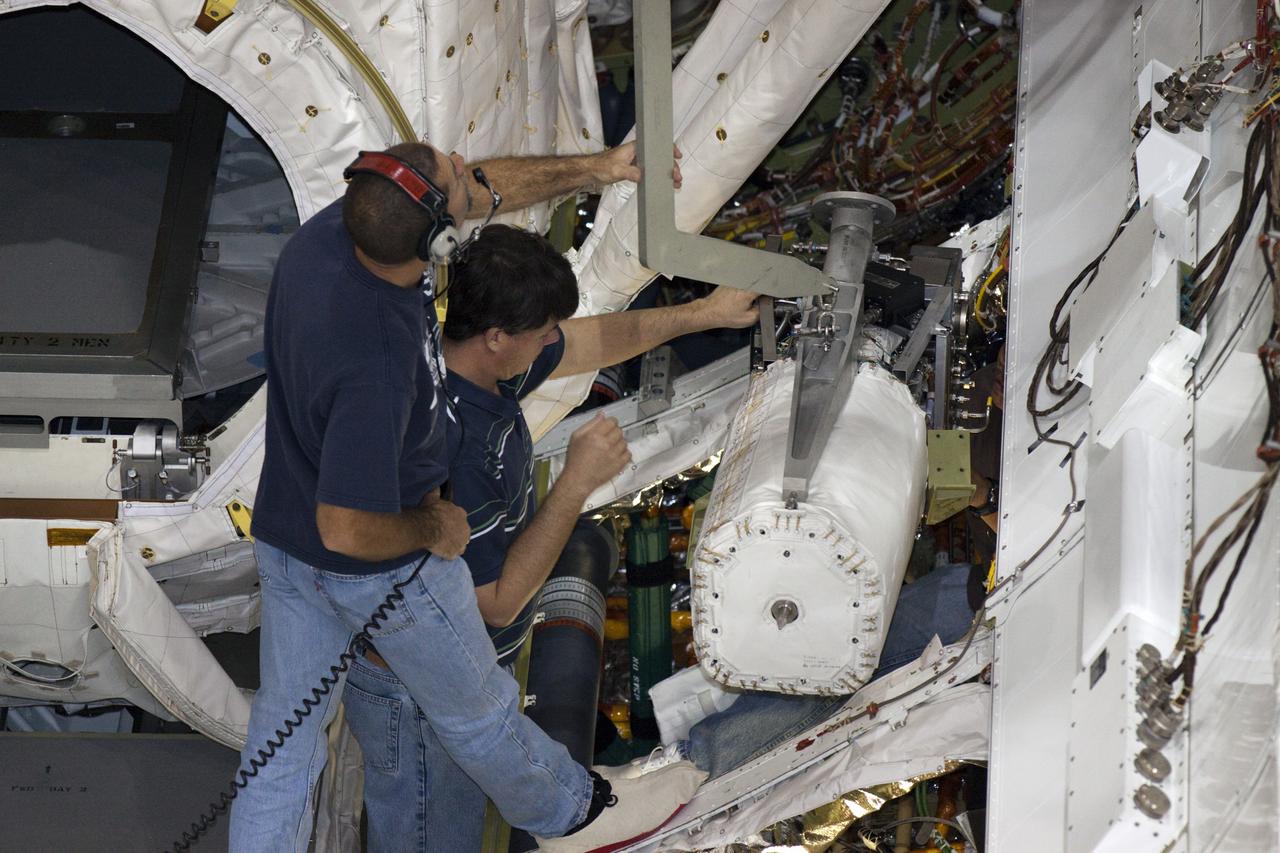
KENNEDY SPACE CENTER, FLA. - In NASA Kennedy Space Center’s Orbiter Processing Facility bay 3, technicians begin removing a piece of hardware from the side of a fuel cell removed from the orbiter Discovery. Fuel cells are located under the forward portion of the payload bay. They make power for the orbiter by mixing hydrogen and oxygen to produce electricity. Fuel cells also create potable water that is pumped into storage tanks for the crew to use in orbit. Discovery is the designated orbiter for the second return-to-flight mission, STS-121, scheduled for launch in May. Photo credit: NASA/Kim Shiflett

KENNEDY SPACE CENTER, FLA. - In NASA Kennedy Space Center’s Orbiter Processing Facility bay 3, technicians remove a piece of hardware from the side of a fuel cell removed from the orbiter Discovery. Fuel cells are located under the forward portion of the payload bay. They make power for the orbiter by mixing hydrogen and oxygen to produce electricity. Fuel cells also create potable water that is pumped into storage tanks for the crew to use in orbit. Discovery is the designated orbiter for the second return-to-flight mission, STS-121, scheduled for launch in May. Photo credit: NASA/Kim Shiflett
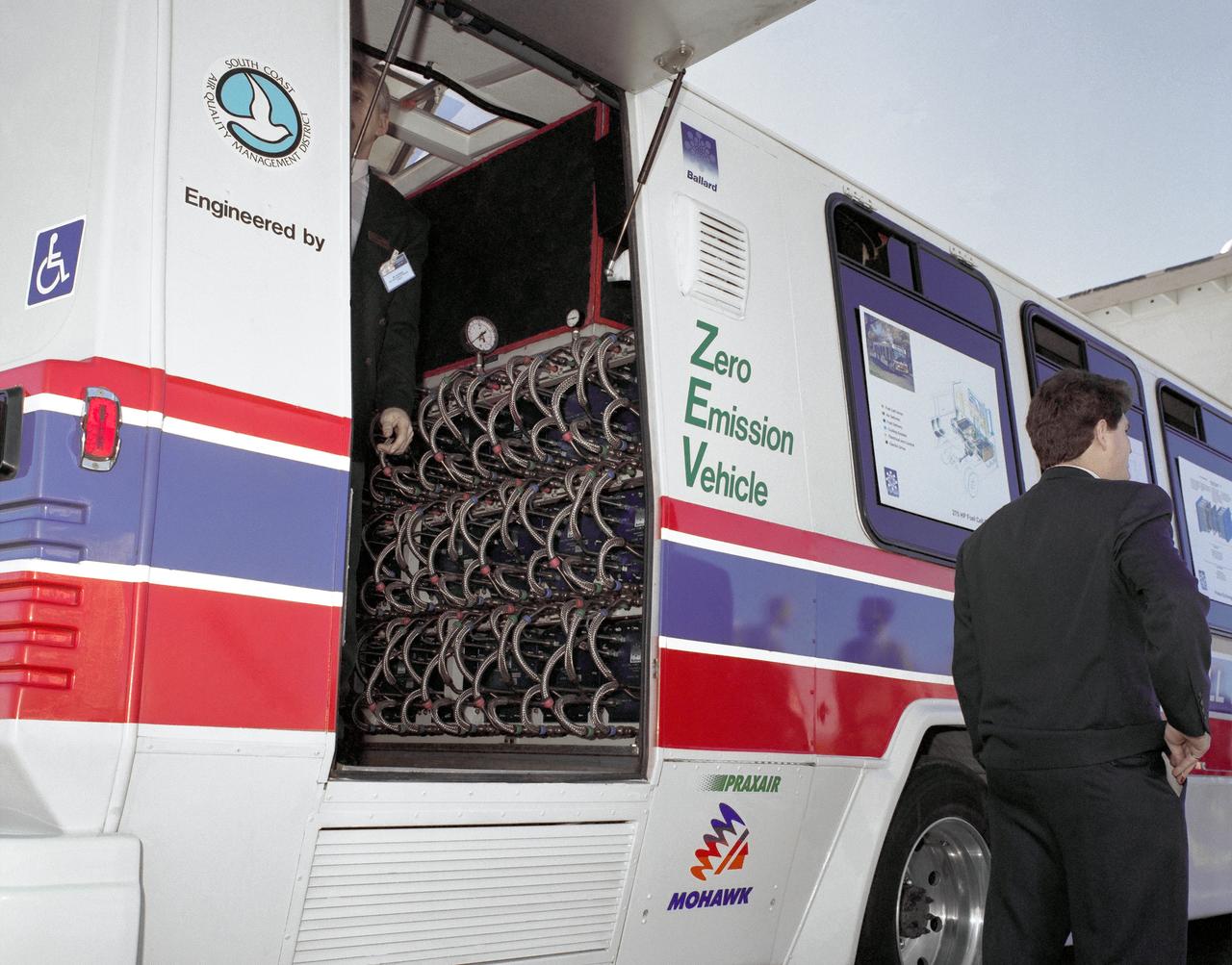
Fuel Cell Powered Bus - closup of installed cells
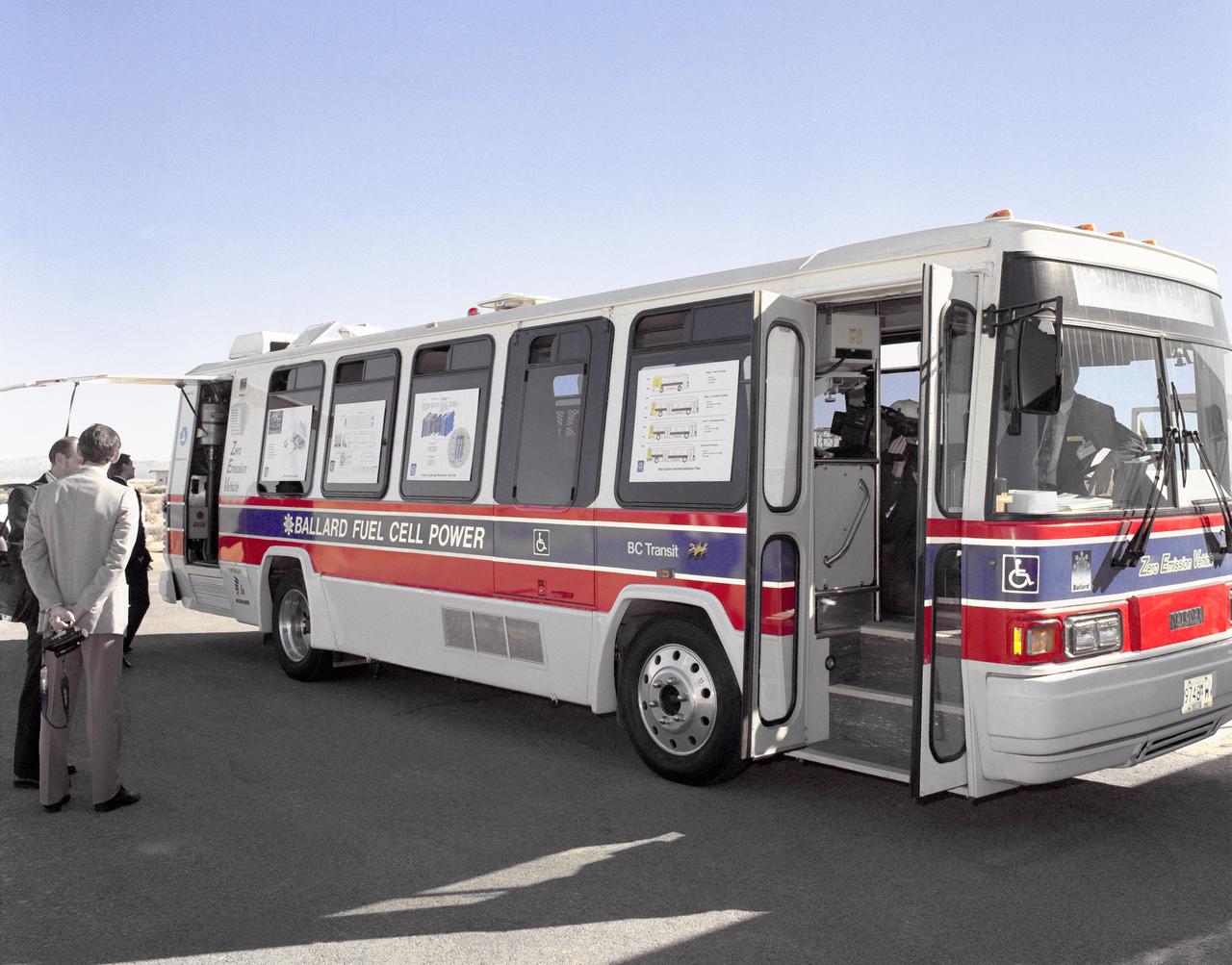
Fuel Cell Powered Bus
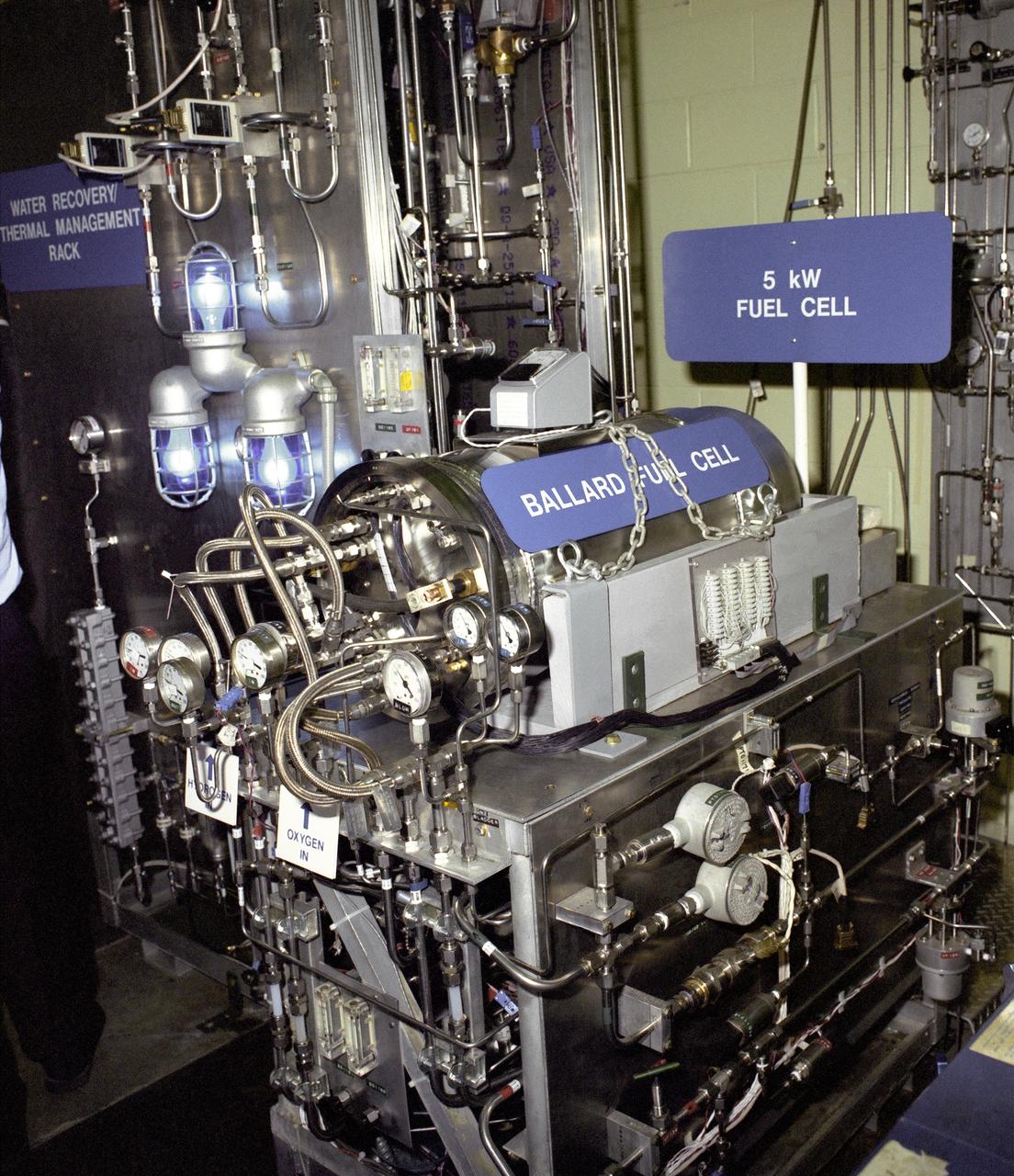
Fuel Cell for Bus
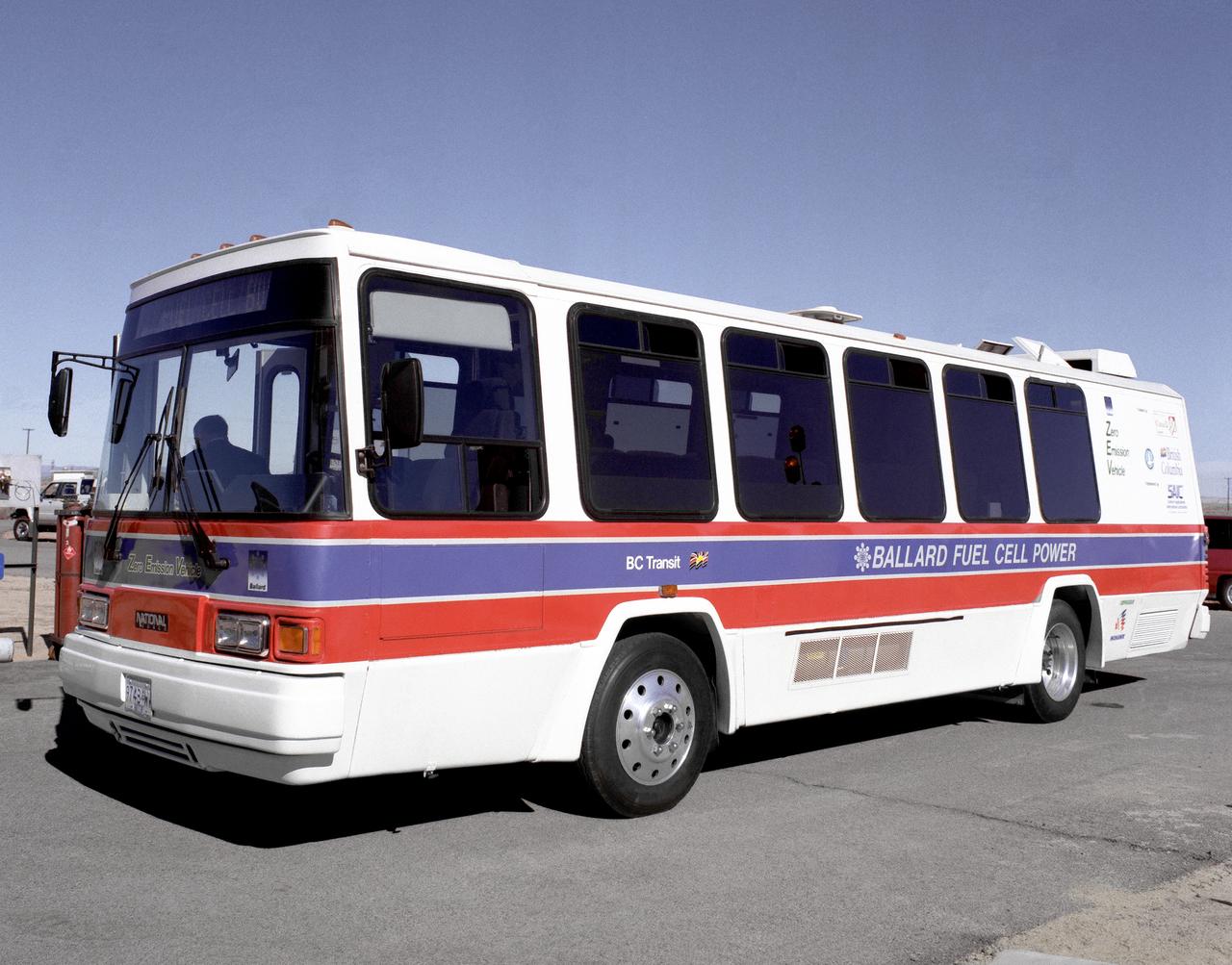
Fuel Cell Powered Bus
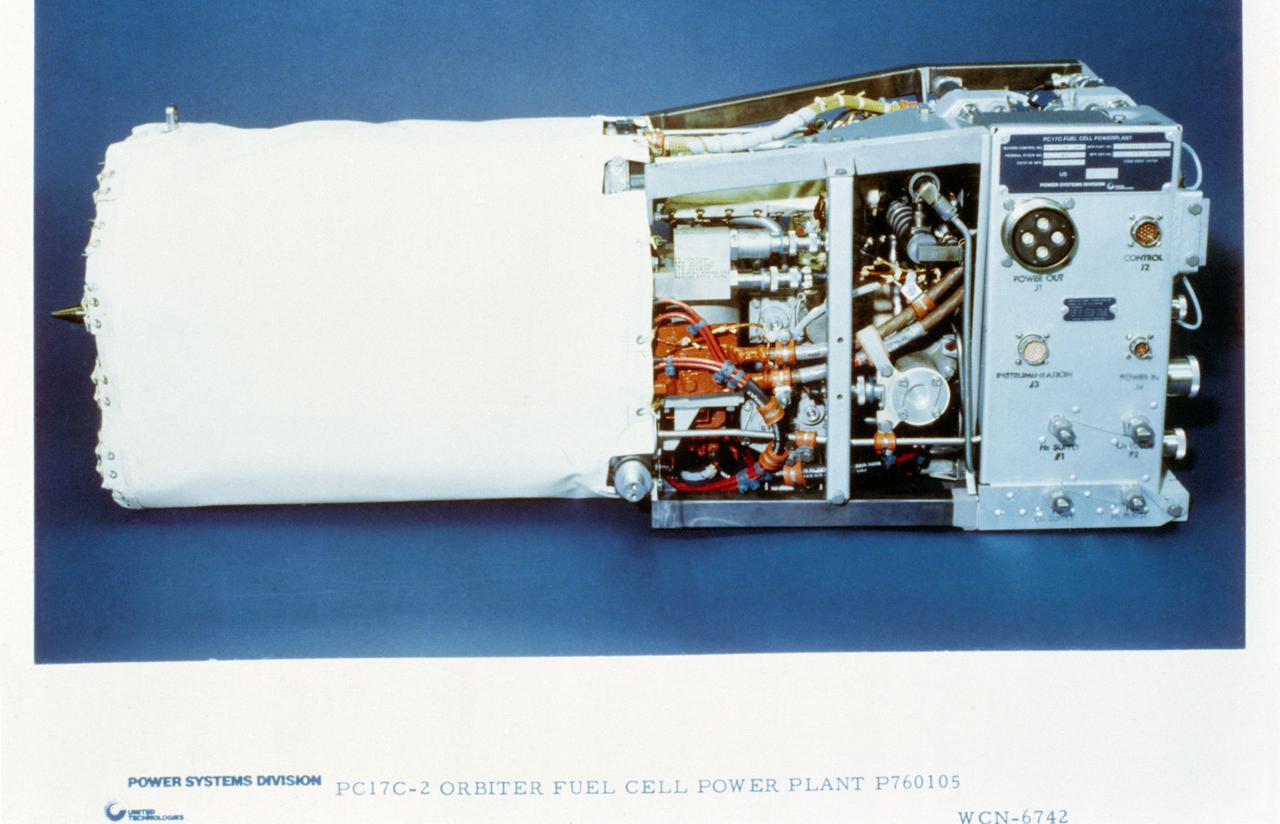
View of the PC17C-2 Orbiter Fuel Cell Power Plant P760105 From United Technologies Hamilton-Standard.
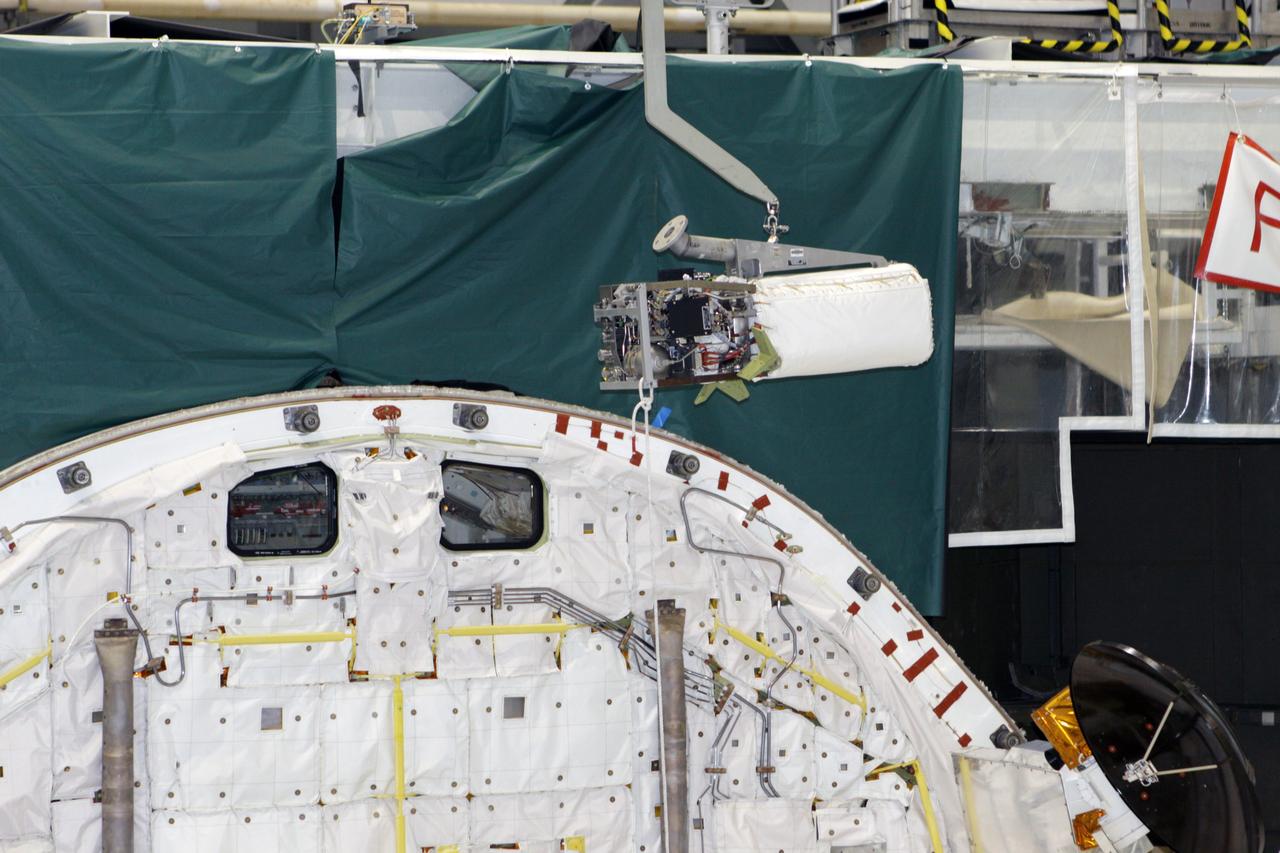
CAPE CANAVERAL, Fla. – Inside Orbiter Processing Facility-2 at NASA's Kennedy Space Center in Florida, a crane hoists one of space shuttle Endeavour's three fuel cells out of the vehicle's payload bay. All three of Endeavour's fuel cells were removed and will be drained of fluids. The hydrogen and oxygen dewars which feed reactants to the fuel cells remain in Endeavour's midbody and will be purged with inert gases and vented down. The work is part of the Space Shuttle Program's transition and retirement processing of shuttle Endeavour, which is being prepared for public display at the California Science Center in Los Angeles. Its ferry flight to California is targeted for mid-September. Endeavour was the last space shuttle added to NASA's orbiter fleet. Over the course of its 19-year career, Endeavour spent 299 days in space during 25 missions. For more information, visit http://www.nasa.gov/shuttle. Photo credit: NASA/Glenn Benson
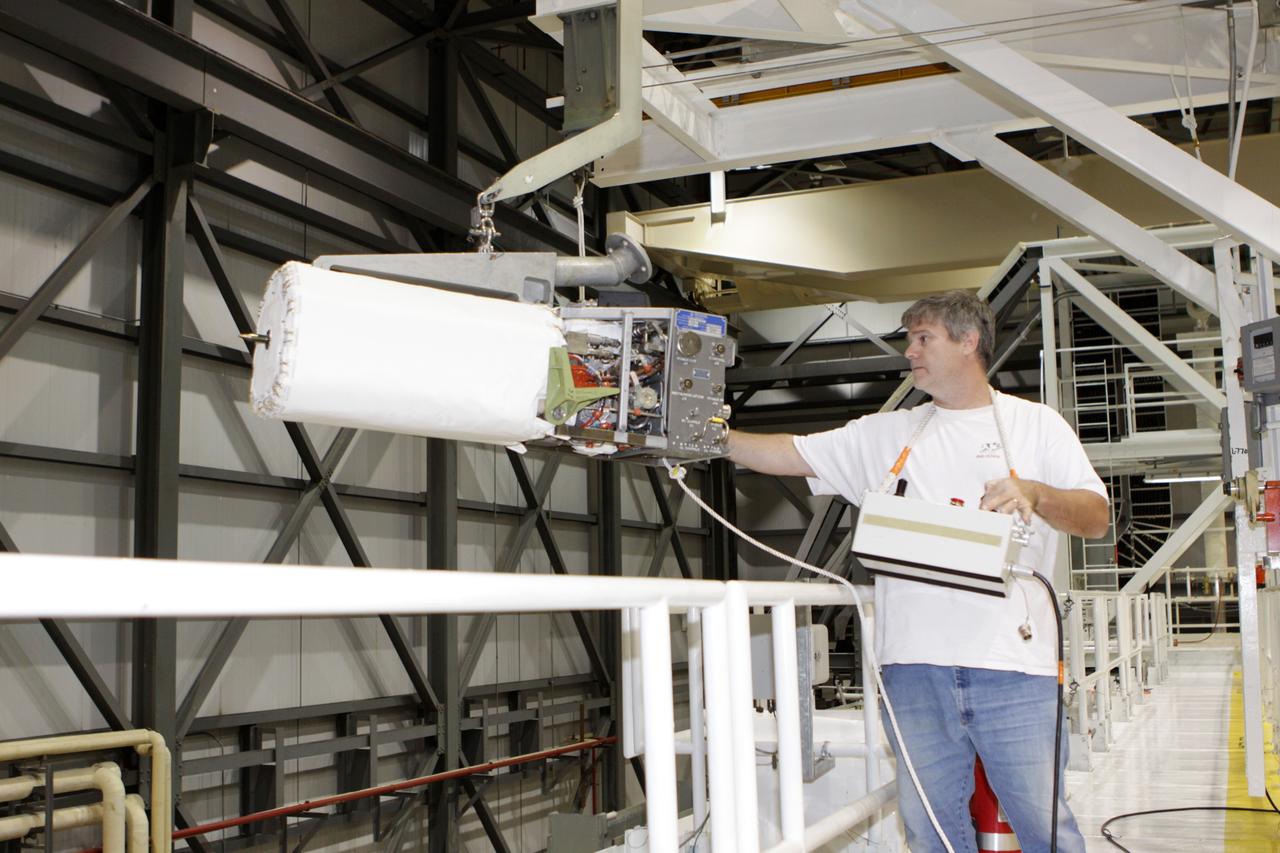
CAPE CANAVERAL, Fla. – Inside Orbiter Processing Facility-2 at NASA's Kennedy Space Center in Florida, a technician guides a newly removed fuel cell up and out of space shuttle Endeavour's payload bay. All three of Endeavour's fuel cells were removed and will be drained of fluids. The hydrogen and oxygen dewars which feed reactants to the fuel cells remain in Endeavour's midbody and will be purged with inert gases and vented down. The work is part of the Space Shuttle Program's transition and retirement processing of shuttle Endeavour, which is being prepared for public display at the California Science Center in Los Angeles. Its ferry flight to California is targeted for mid-September. Endeavour was the last space shuttle added to NASA's orbiter fleet. Over the course of its 19-year career, Endeavour spent 299 days in space during 25 missions. For more information, visit http://www.nasa.gov/shuttle. Photo credit: NASA/Glenn Benson

CAPE CANAVERAL, Fla. – Technicians inside Kennedy Space Center's Orbiter Processing Facility-2 lower one of space shuttle Endeavour's recently removed fuel cells onto a waiting platform. All three of Endeavour's fuel cells were removed and will be drained of fluids. The hydrogen and oxygen dewars which feed reactants to the fuel cells remain in Endeavour's midbody and will be purged with inert gases and vented down. The work is part of the Space Shuttle Program's transition and retirement processing of shuttle Endeavour, which is being prepared for public display at the California Science Center in Los Angeles. Its ferry flight to California is targeted for mid-September. Endeavour was the last space shuttle added to NASA's orbiter fleet. Over the course of its 19-year career, Endeavour spent 299 days in space during 25 missions. For more information, visit http://www.nasa.gov/shuttle. Photo credit: NASA/Glenn Benson
CAPE CANAVERAL, Fla. – Technicians inside Kennedy Space Center's Orbiter Processing Facility-2 lower one of space shuttle Endeavour's recently removed fuel cells onto a waiting platform. All three of Endeavour's fuel cells were removed and will be drained of fluids. The hydrogen and oxygen dewars which feed reactants to the fuel cells remain in Endeavour's midbody and will be purged with inert gases and vented down. The work is part of the Space Shuttle Program's transition and retirement processing of shuttle Endeavour, which is being prepared for public display at the California Science Center in Los Angeles. Its ferry flight to California is targeted for mid-September. Endeavour was the last space shuttle added to NASA's orbiter fleet. Over the course of its 19-year career, Endeavour spent 299 days in space during 25 missions. For more information, visit http://www.nasa.gov/shuttle. Photo credit: NASA/Glenn Benson
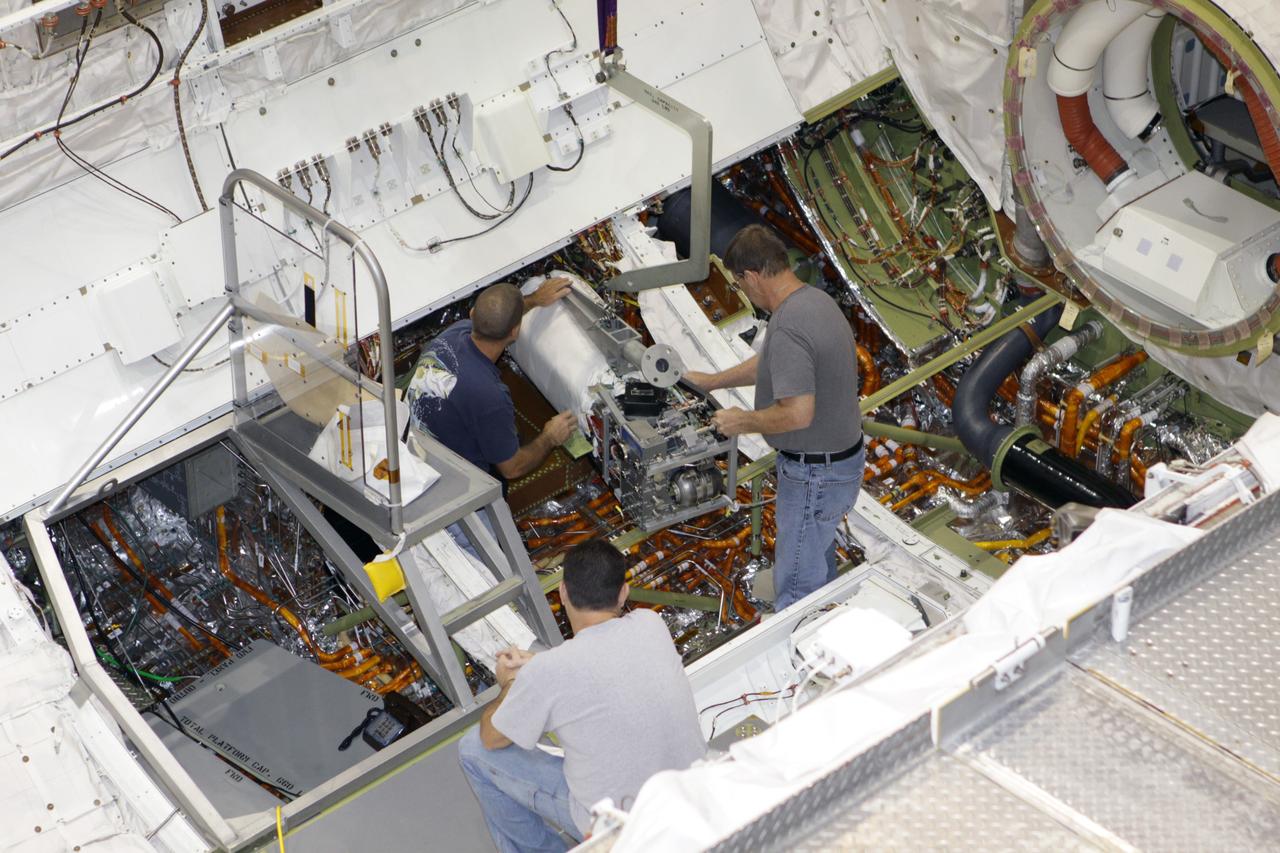
CAPE CANAVERAL, Fla. – Inside Orbiter Processing Facility-2 at NASA's Kennedy Space Center in Florida, technicians use a special crane to lift a fuel cell out of space shuttle Endeavour's payload bay. All three of Endeavour's fuel cells were removed and will be drained of fluids. The hydrogen and oxygen dewars which feed reactants to the fuel cells remain in Endeavour's midbody and will be purged with inert gases and vented down. The work is part of the Space Shuttle Program's transition and retirement processing of shuttle Endeavour, which is being prepared for public display at the California Science Center in Los Angeles. Its ferry flight to California is targeted for mid-September. Endeavour was the last space shuttle added to NASA's orbiter fleet. Over the course of its 19-year career, Endeavour spent 299 days in space during 25 missions. For more information, visit http://www.nasa.gov/shuttle. Photo credit: NASA/Glenn Benson
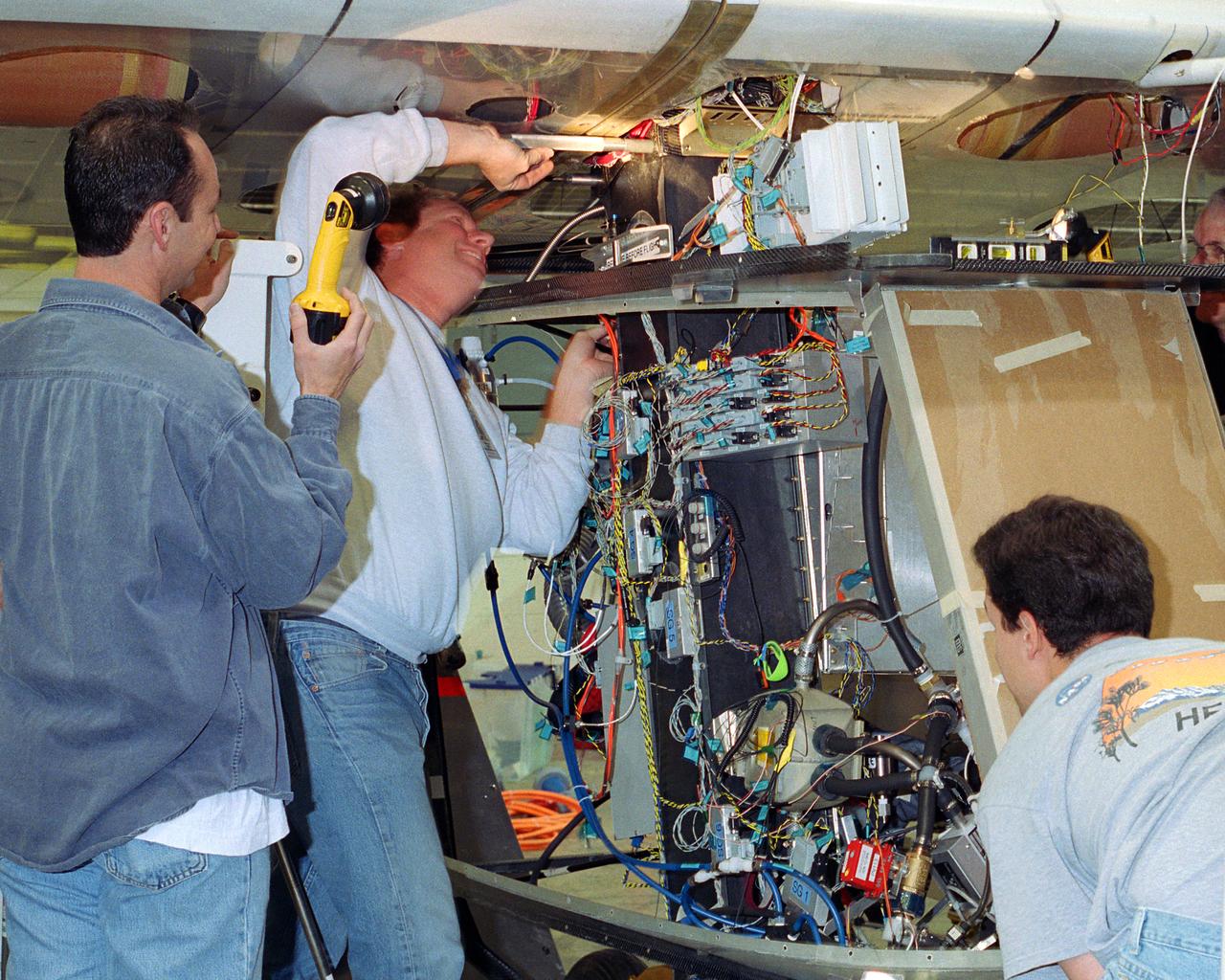
Aerovironment technicians carefully line up attachments as a fuel cell electrical system is installed on the Helios Prototype solar powered flying wing. The fuel cell system will power the aircraft at night during NASA-sponsored long-endurance demonstration flight in the summer of 2003.
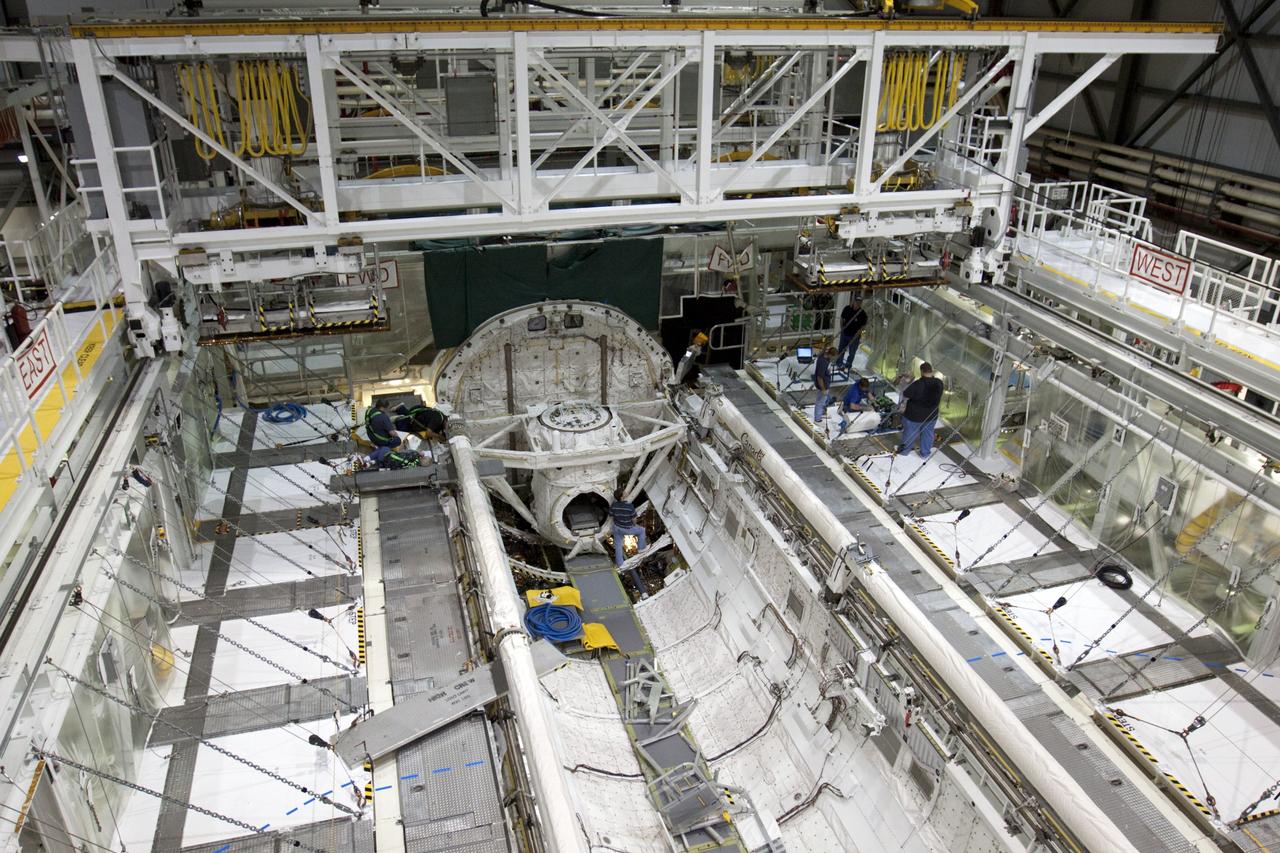
CAPE CANAVERAL, Fla. – Inside Orbiter Processing Facility-2 at NASA’s Kennedy Space Center in Florida, space shuttle Atlantis’ three fuel cells are being removed from the payload bay. The fuel cells will be drained of all fluids. The hydrogen and oxygen dewars which feed reactants to the fuel cells remain in Atlantis’ mid-body and will be purged with inert gases and vented down. The work is part of the Space Shuttle Program’s transition and retirement processing of shuttle Atlantis. The orbiter is being prepared for display at the Kennedy Space Center Visitor Complex. Photo credit: NASA/Kim Shiflett
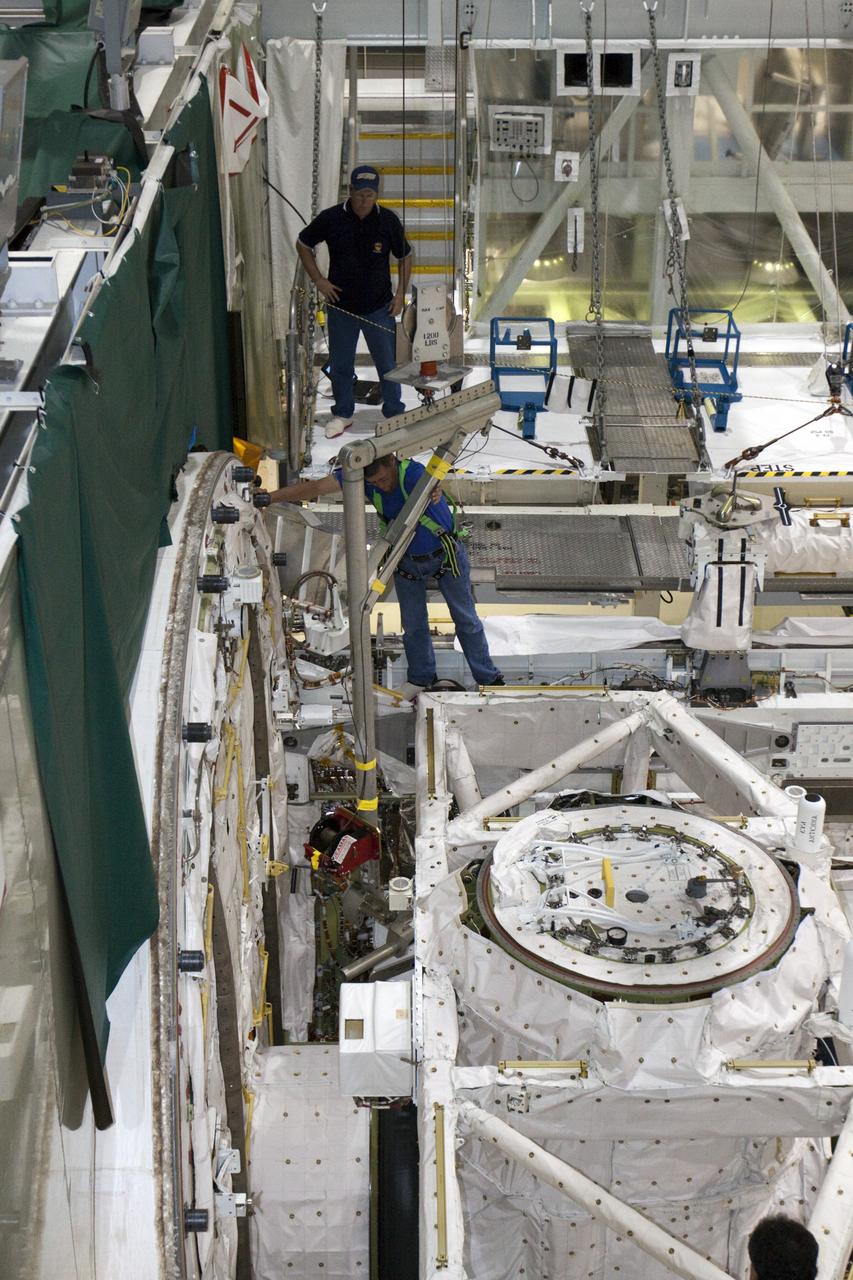
CAPE CANAVERAL, Fla. – Inside Orbiter Processing Facility-2 at NASA’s Kennedy Space Center in Florida, technicians help position a special crane in place to lift one of the three fuel cells away from space shuttle Atlantis’ payload bay. The fuel cells will be drained of all fluids. The hydrogen and oxygen dewars which feed reactants to the fuel cells remain in Atlantis’ mid-body and will be purged with inert gases and vented down. The work is part of the Space Shuttle Program’s transition and retirement processing of shuttle Atlantis. The orbiter is being prepared for display at the Kennedy Space Center Visitor Complex. Photo credit: NASA/Kim Shiflett
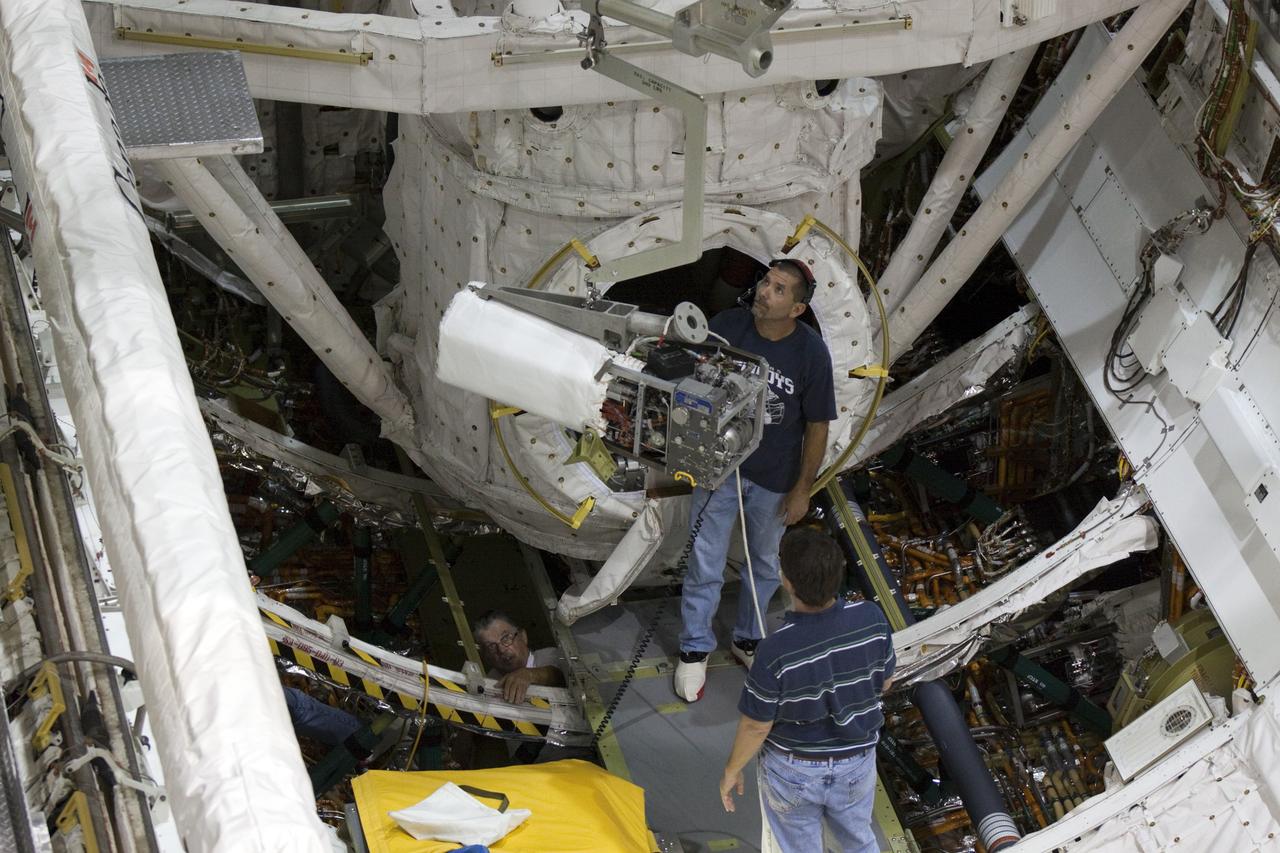
CAPE CANAVERAL, Fla. – Inside Orbiter Processing Facility-2 at NASA’s Kennedy Space Center in Florida, technicians monitor the progress as a special crane lifts one of the three fuel cells away from space shuttle Atlantis’ payload bay. The fuel cells will be drained of all fluids. The hydrogen and oxygen dewars which feed reactants to the fuel cells remain in Atlantis’ mid-body and will be purged with inert gases and vented down. The work is part of the Space Shuttle Program’s transition and retirement processing of shuttle Atlantis. The orbiter is being prepared for display at the Kennedy Space Center Visitor Complex. Photo credit: NASA/Kim Shiflett
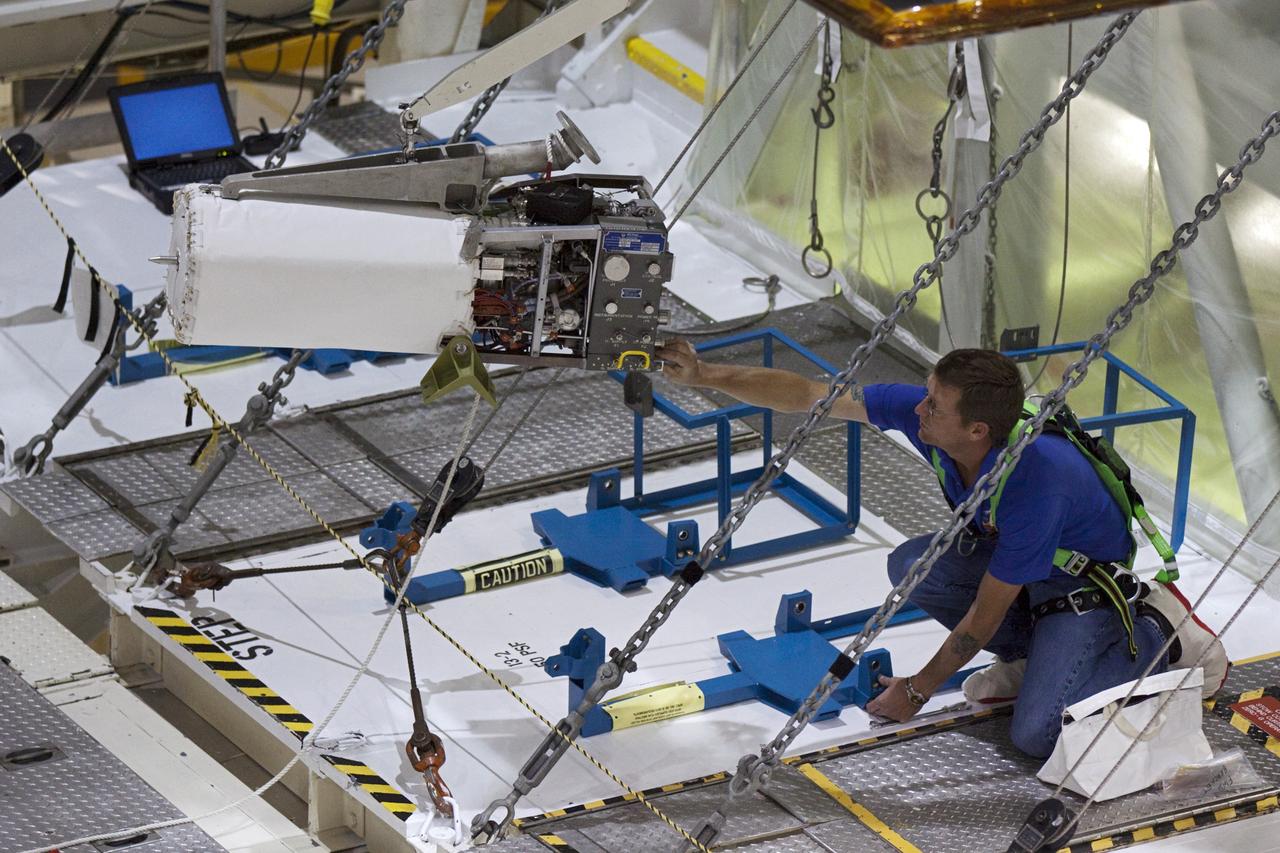
CAPE CANAVERAL, Fla. – Inside Orbiter Processing Facility-2 at NASA’s Kennedy Space Center in Florida, a technician assists as a special crane lifts one of the three fuel cells away from space shuttle Atlantis’ payload bay. The fuel cells will be drained of all fluids. The hydrogen and oxygen dewars which feed reactants to the fuel cells remain in Atlantis’ mid-body and will be purged with inert gases and vented down. The work is part of the Space Shuttle Program’s transition and retirement processing of shuttle Atlantis. The orbiter is being prepared for display at the Kennedy Space Center Visitor Complex. Photo credit: NASA/Kim Shiflett
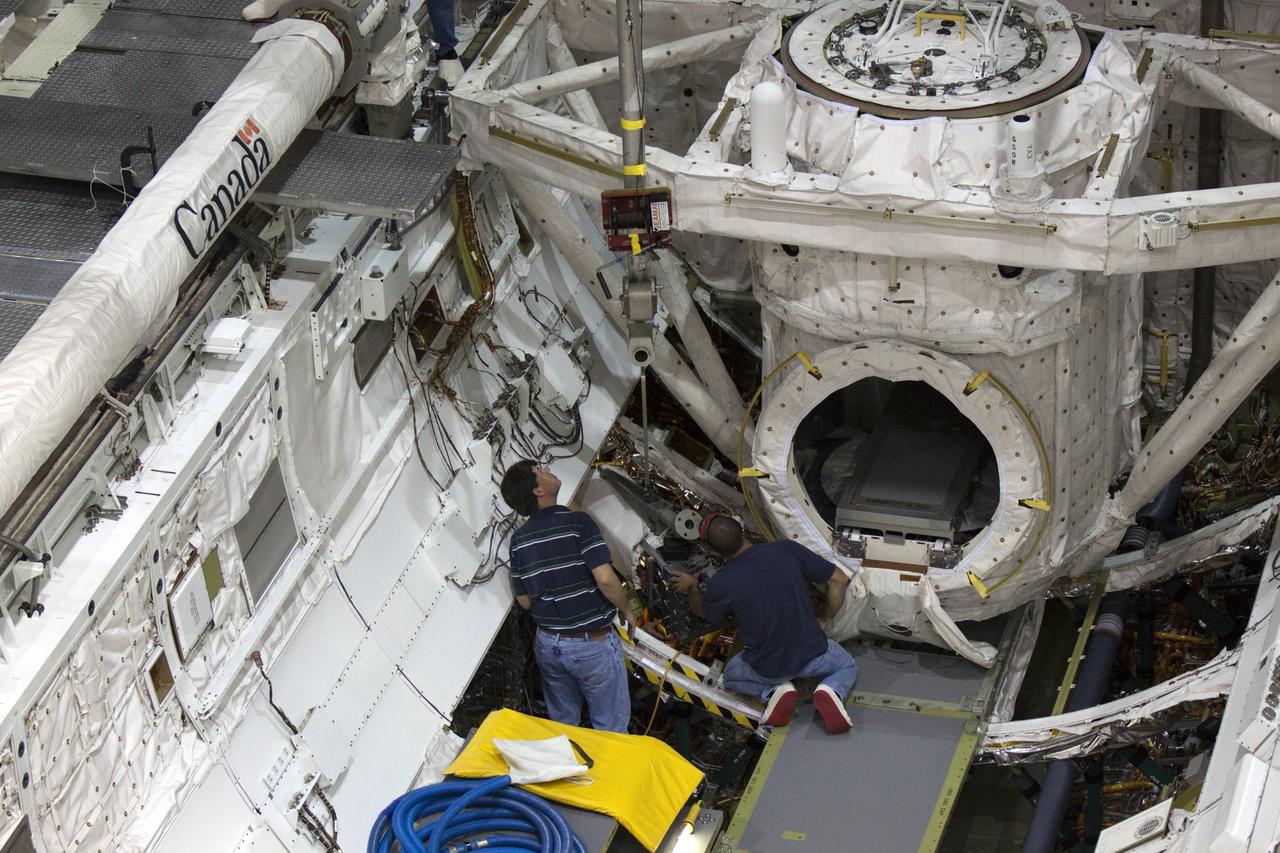
CAPE CANAVERAL, Fla. – Inside Orbiter Processing Facility-2 at NASA’s Kennedy Space Center in Florida, technicians prepare to remove one of three fuel cells from space shuttle Atlantis’ payload bay. The fuel cells will be drained of all fluids. The hydrogen and oxygen dewars which feed reactants to the fuel cells remain in Atlantis’ mid-body and will be purged with inert gases and vented down. The work is part of the Space Shuttle Program’s transition and retirement processing of shuttle Atlantis. The orbiter is being prepared for display at the Kennedy Space Center Visitor Complex. Photo credit: NASA/Kim Shiflett
CAPE CANAVERAL, Fla. – Inside Orbiter Processing Facility-2 at NASA’s Kennedy Space Center in Florida, technicians monitor the progress as a special crane lifts one of the three fuel cells away from space shuttle Atlantis’ payload bay. The fuel cells will be drained of all fluids. The hydrogen and oxygen dewars which feed reactants to the fuel cells remain in Atlantis’ mid-body and will be purged with inert gases and vented down. The work is part of the Space Shuttle Program’s transition and retirement processing of shuttle Atlantis. The orbiter is being prepared for display at the Kennedy Space Center Visitor Complex. Photo credit: NASA/Kim Shiflett
CAPE CANAVERAL, Fla. – Inside Orbiter Processing Facility-2 at NASA’s Kennedy Space Center in Florida, technicians assist as a special crane is used to lift one of the three fuel cells away from space shuttle Atlantis’ payload bay. The fuel cells will be drained of all fluids. The hydrogen and oxygen dewars which feed reactants to the fuel cells remain in Atlantis’ mid-body and will be purged with inert gases and vented down. The work is part of the Space Shuttle Program’s transition and retirement processing of shuttle Atlantis. The orbiter is being prepared for display at the Kennedy Space Center Visitor Complex. Photo credit: NASA/Kim Shiflett
CAPE CANAVERAL, Fla. – Inside Orbiter Processing Facility-2 at NASA’s Kennedy Space Center in Florida, a technician assists as a special crane is used to lift one of the three fuel cells away from space shuttle Atlantis’ payload bay. The fuel cells will be drained of all fluids. The hydrogen and oxygen dewars which feed reactants to the fuel cells remain in Atlantis’ mid-body and will be purged with inert gases and vented down. The work is part of the Space Shuttle Program’s transition and retirement processing of shuttle Atlantis. The orbiter is being prepared for display at the Kennedy Space Center Visitor Complex. Photo credit: NASA/Kim Shiflett
CAPE CANAVERAL, Fla. – Inside Orbiter Processing Facility-2 at NASA’s Kennedy Space Center in Florida, technicians secure space shuttle Atlantis’ three fuel cells to special platforms. The fuel cells will be drained of all fluids. The hydrogen and oxygen dewars which feed reactants to the fuel cells remain in Atlantis’ mid-body and will be purged with inert gases and vented down. The work is part of the Space Shuttle Program’s transition and retirement processing of shuttle Atlantis. The orbiter is being prepared for display at the Kennedy Space Center Visitor Complex. Photo credit: NASA/Kim Shiflett
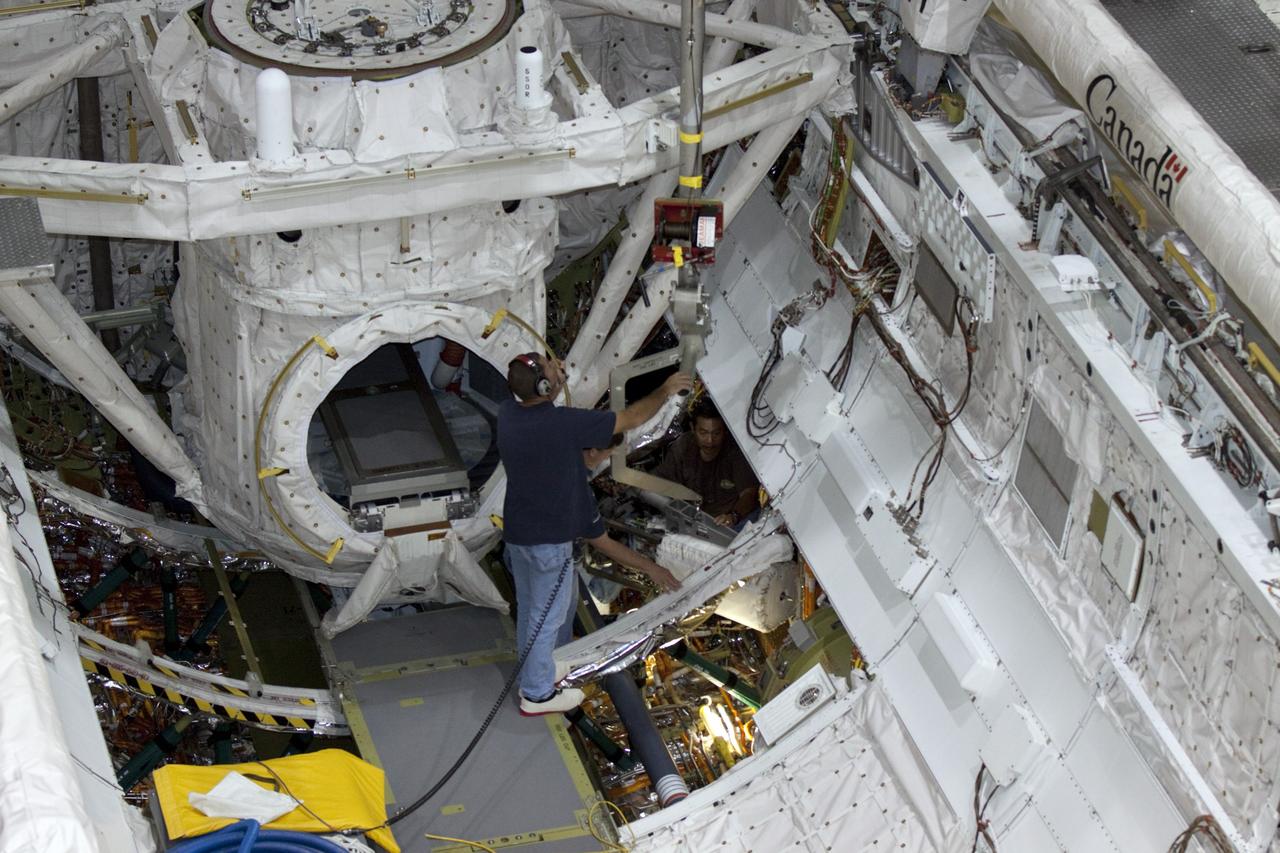
CAPE CANAVERAL, Fla. – Inside Orbiter Processing Facility-2 at NASA’s Kennedy Space Center in Florida, technicians assist as a special crane is used to lift one of the three fuel cells away from space shuttle Atlantis’ payload bay. The fuel cells will be drained of all fluids. The hydrogen and oxygen dewars which feed reactants to the fuel cells remain in Atlantis’ mid-body and will be purged with inert gases and vented down. The work is part of the Space Shuttle Program’s transition and retirement processing of shuttle Atlantis. The orbiter is being prepared for display at the Kennedy Space Center Visitor Complex. Photo credit: NASA/Kim Shiflett
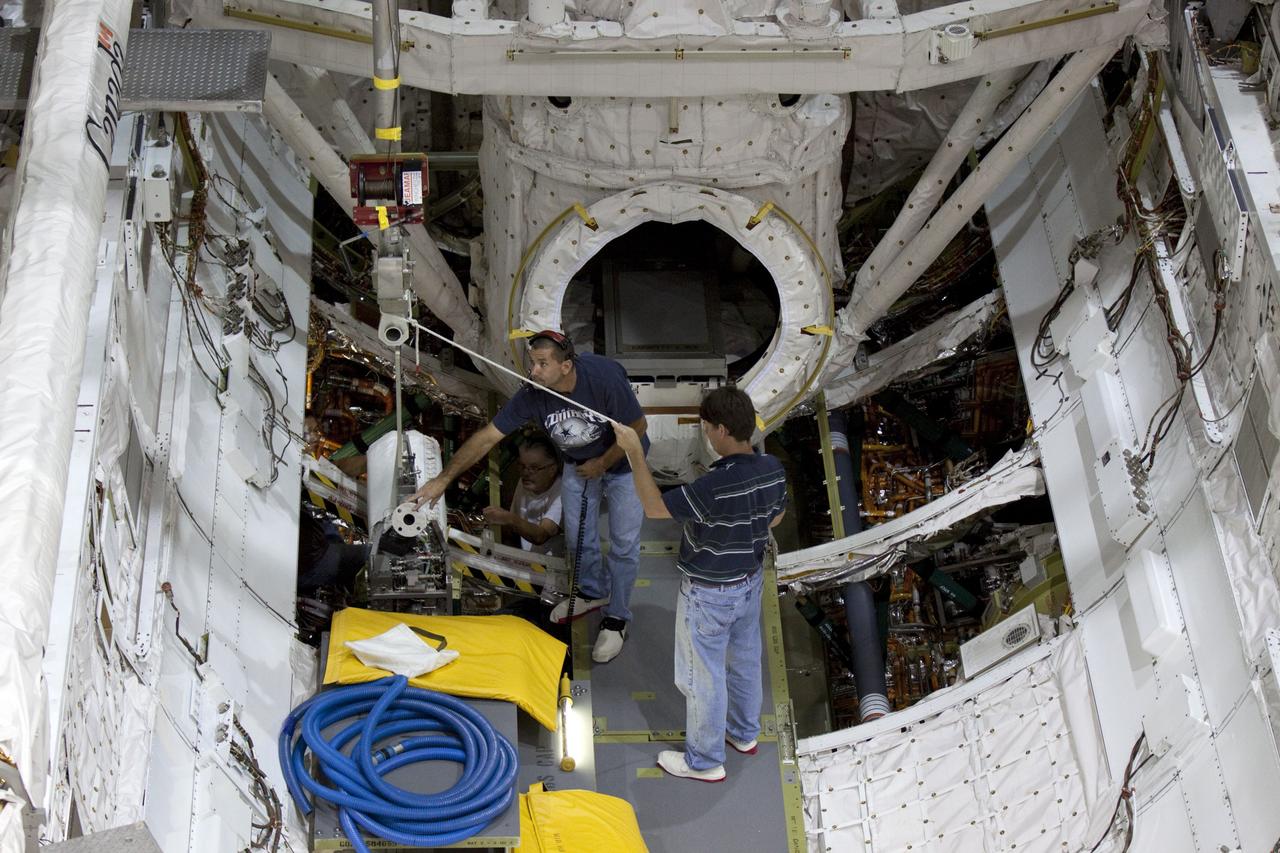
CAPE CANAVERAL, Fla. – Inside Orbiter Processing Facility-2 at NASA’s Kennedy Space Center in Florida, technicians prepare to remove one of three fuel cells from space shuttle Atlantis’ payload bay. The fuel cells will be drained of all fluids. The hydrogen and oxygen dewars which feed reactants to the fuel cells remain in Atlantis’ mid-body and will be purged with inert gases and vented down. The work is part of the Space Shuttle Program’s transition and retirement processing of shuttle Atlantis. The orbiter is being prepared for display at the Kennedy Space Center Visitor Complex. Photo credit: NASA/Kim Shiflett
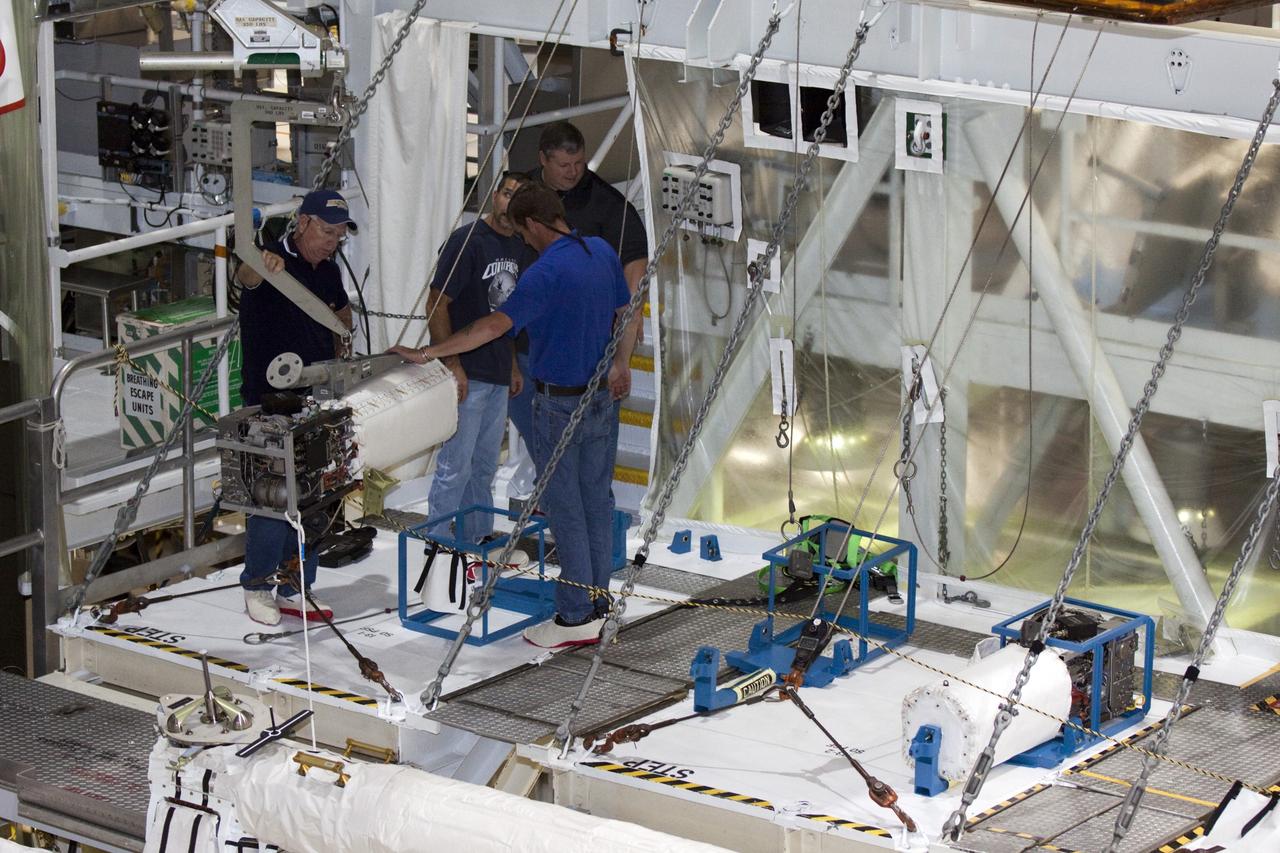
CAPE CANAVERAL, Fla. – Inside Orbiter Processing Facility-2 at NASA’s Kennedy Space Center in Florida, technicians monitor the progress as a special crane lifts one of the three fuel cells away from space shuttle Atlantis’ for securing on a special platform. The fuel cells will be drained of all fluids. The hydrogen and oxygen dewars which feed reactants to the fuel cells remain in Atlantis’ mid-body and will be purged with inert gases and vented down. The work is part of the Space Shuttle Program’s transition and retirement processing of shuttle Atlantis. The orbiter is being prepared for display at the Kennedy Space Center Visitor Complex. Photo credit: NASA/Kim Shiflett
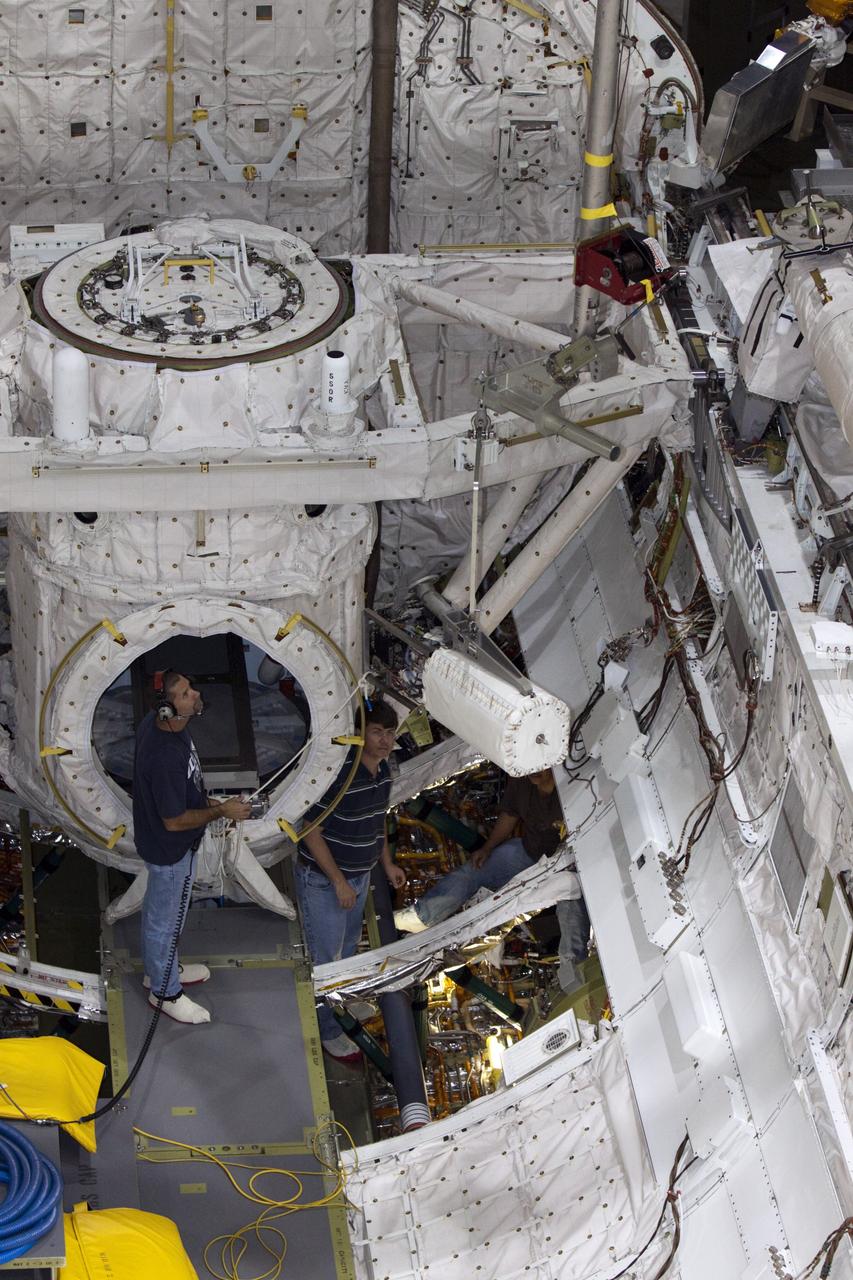
CAPE CANAVERAL, Fla. – Inside Orbiter Processing Facility-2 at NASA’s Kennedy Space Center in Florida, technicians monitor the progress as a special crane lifts one of the three fuel cells away from space shuttle Atlantis’ payload bay. The fuel cells will be drained of all fluids. The hydrogen and oxygen dewars which feed reactants to the fuel cells remain in Atlantis’ mid-body and will be purged with inert gases and vented down. The work is part of the Space Shuttle Program’s transition and retirement processing of shuttle Atlantis. The orbiter is being prepared for display at the Kennedy Space Center Visitor Complex. Photo credit: NASA/Kim Shiflett
CAPE CANAVERAL, Fla. – Inside Orbiter Processing Facility-2 at NASA’s Kennedy Space Center in Florida, technicians assist as a special crane is used to lift one of the three fuel cells away from space shuttle Atlantis’ payload bay. The fuel cells will be drained of all fluids. The hydrogen and oxygen dewars which feed reactants to the fuel cells remain in Atlantis’ mid-body and will be purged with inert gases and vented down. The work is part of the Space Shuttle Program’s transition and retirement processing of shuttle Atlantis. The orbiter is being prepared for display at the Kennedy Space Center Visitor Complex. Photo credit: NASA/Kim Shiflett
CAPE CANAVERAL, Fla. – Technicians monitor the progress as one of space shuttle Endeavour's three fuel cells is removed from the vehicle's payload bay. The operation took place inside Orbiter Processing Facility-2 at NASA's Kennedy Space Center in Florida. All three of Endeavour's fuel cells were removed and will be drained of fluids. The hydrogen and oxygen dewars which feed reactants to the fuel cells remain in Endeavour's midbody and will be purged with inert gases and vented down. The work is part of the Space Shuttle Program's transition and retirement processing of shuttle Endeavour, which is being prepared for public display at the California Science Center in Los Angeles. Its ferry flight to California is targeted for mid-September. Endeavour was the last space shuttle added to NASA's orbiter fleet. Over the course of its 19-year career, Endeavour spent 299 days in space during 25 missions. For more information, visit http://www.nasa.gov/shuttle. Photo credit: NASA/Glenn Benson
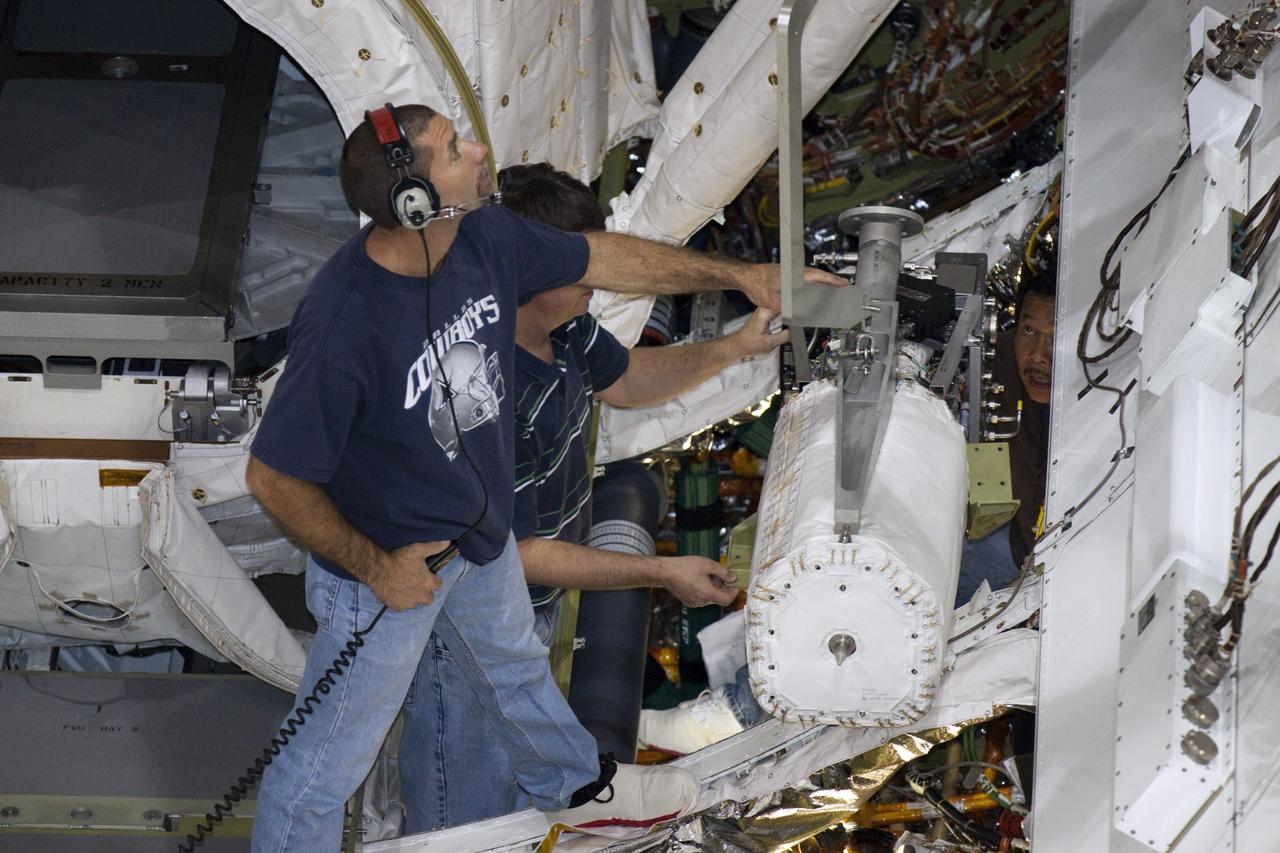
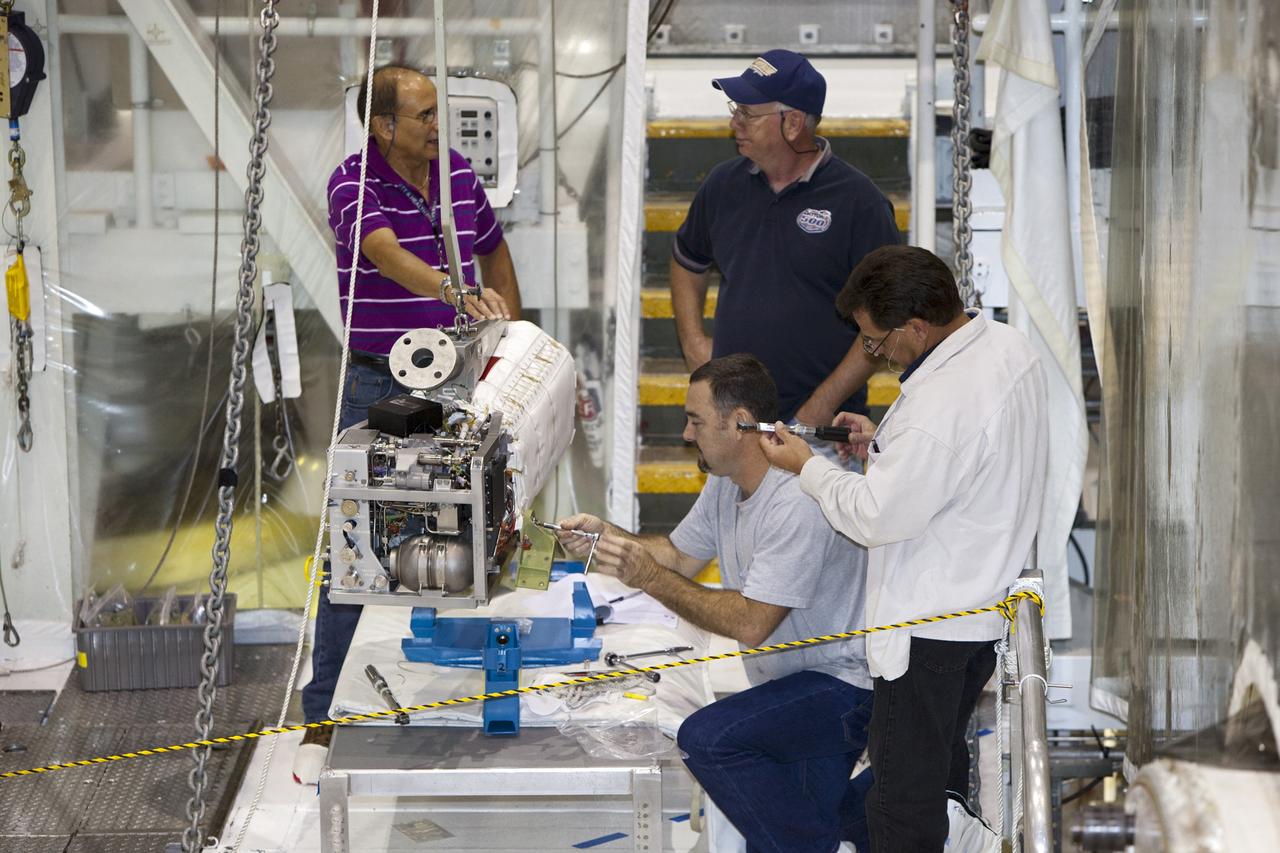
CAPE CANAVERAL, Fla. -- Inside Orbiter Processing Facility-1 at NASA’s Kennedy Space Center in Florida, technicians monitor the progress as space shuttle Discovery’s fuel cells are drained of all fluids. After all of the coolant is removed, the fuel cells will be returned to their previous location within Discovery’s mid-body. The hydrogen and oxygen dewars which feed reactants to the fuel cells remain in Discovery’s mid-body and have been purged with inert gases and vented down. The work is part of the Space Shuttle Program’s transition and retirement processing of shuttle Discovery. Discovery is being prepared for display at the Smithsonian’s National Air and Space Museum, Steven F. Udvar-Hazy Center in Chantilly, Va. For more information, visit http://www.nasa.gov/shuttle. Photo credit: NASA/Frankie Martin
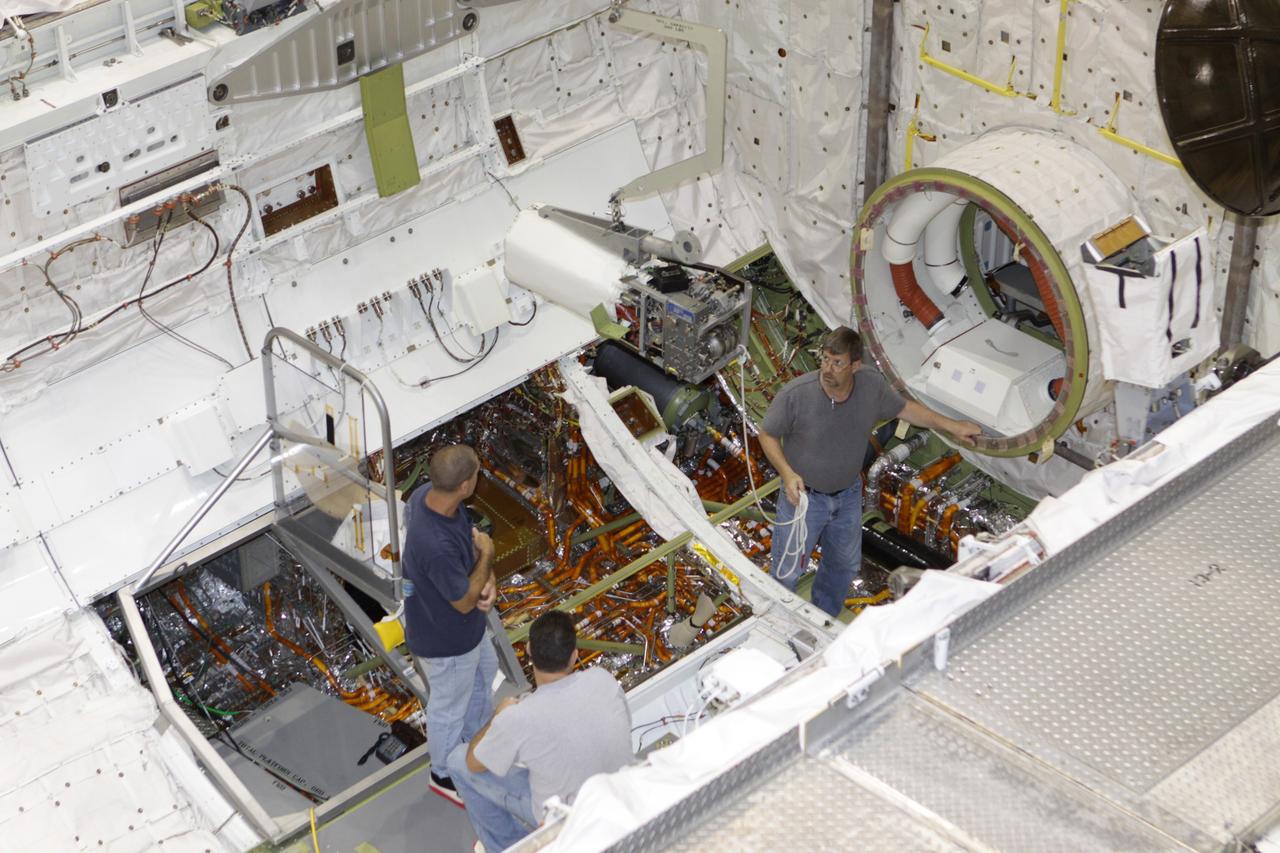
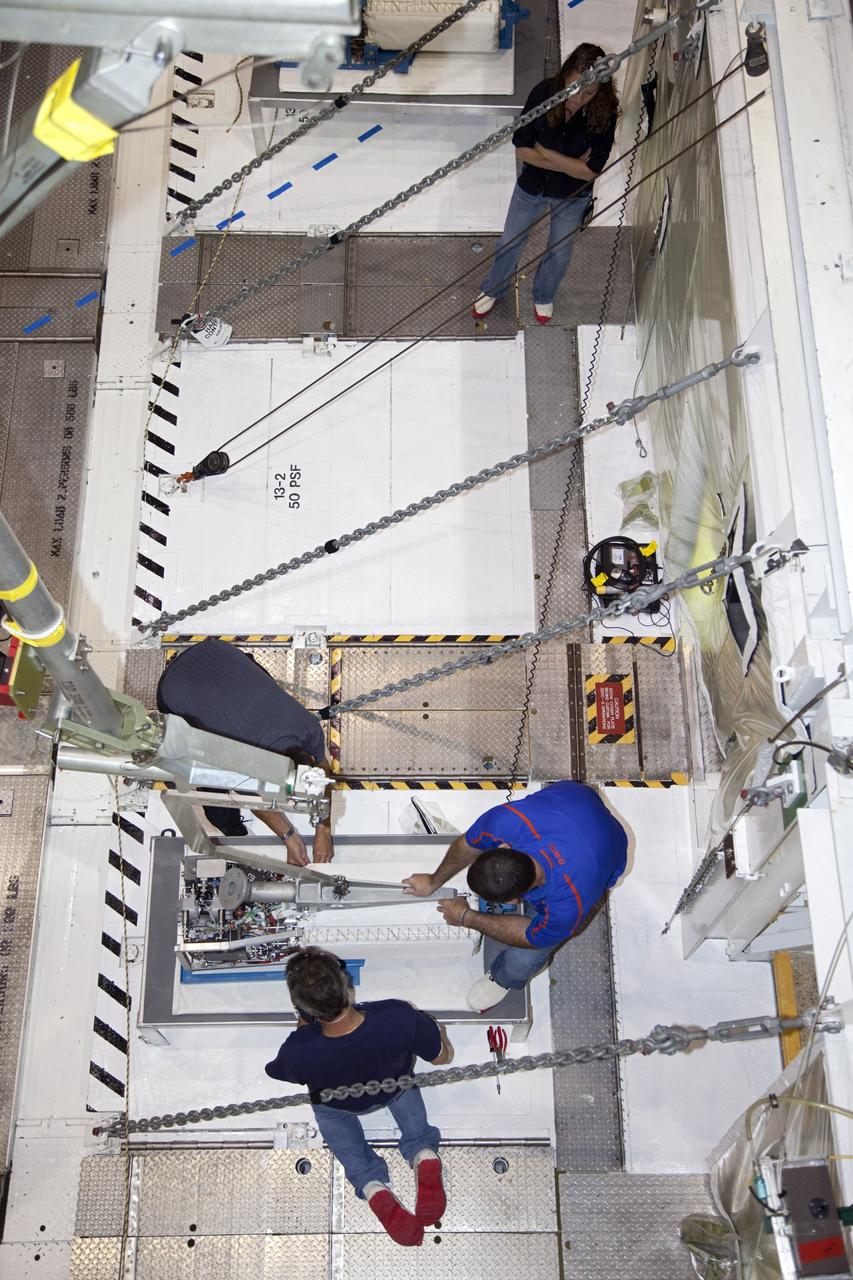
CAPE CANAVERAL, Fla. – Inside Orbiter Processing Facility-1 at NASA’s Kennedy Space Center in Florida, technicians prepare to re-install the three fuel cells in space shuttle Discovery’s mid-body. The fuel cells were removed and drained of all fluids. The hydrogen and oxygen dewars which feed reactants to the fuel cells remain in Discovery’s mid-body and have been purged with inert gases and vented down. The work is part of the Space Shuttle Program’s transition and retirement processing of shuttle Discovery. Discovery is being prepared for display at the Smithsonian’s National Air and Space Museum, Steven F. Udvar-Hazy Center in Chantilly, Va. For more information, visit http://www.nasa.gov/shuttle. Photo credit: NASA/Dimitri Gerondidakis
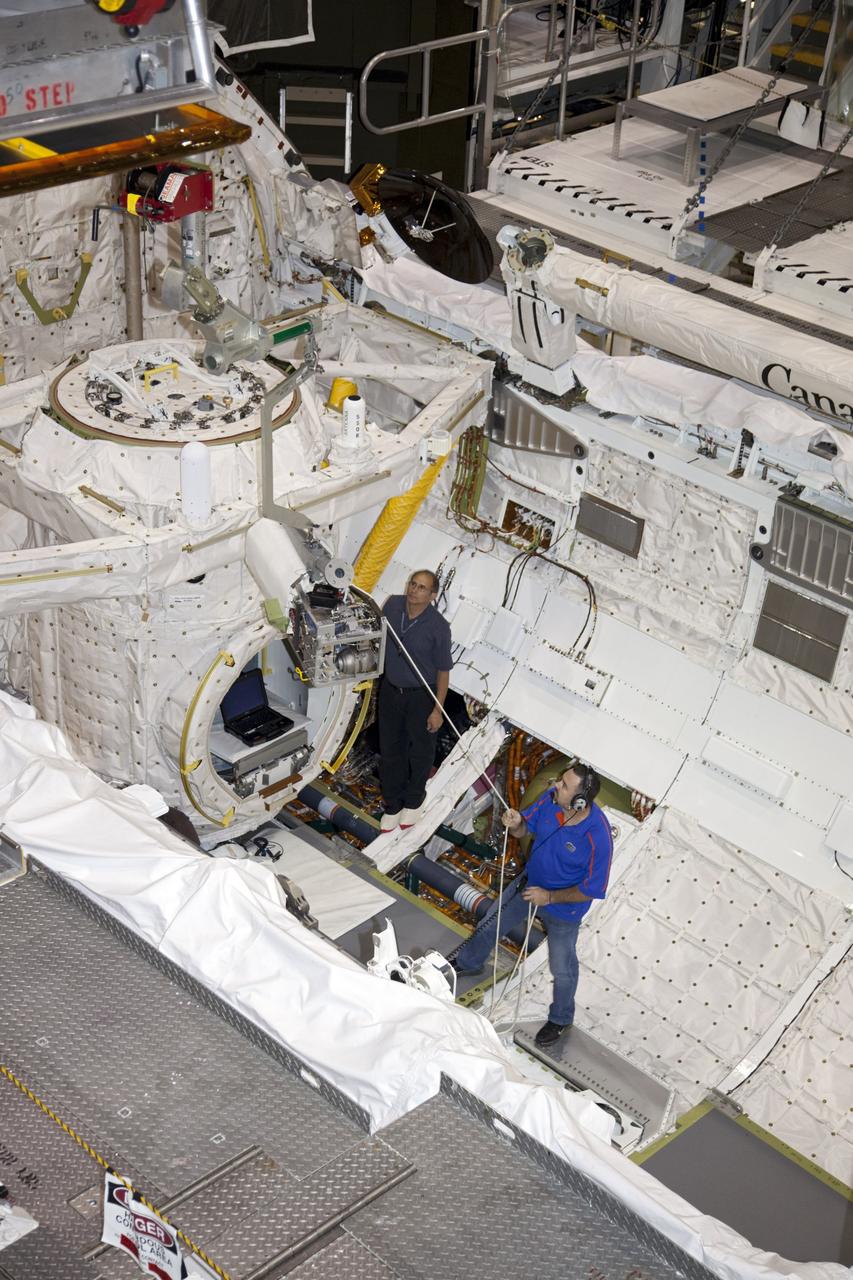
CAPE CANAVERAL, Fla. -- Inside Orbiter Processing Facility-1 at NASA’s Kennedy Space Center in Florida, technicians prepare space shuttle Discovery’s three fuel cells to be drained of all fluids. After all of the coolant is removed, the fuel cells will be returned to their previous location within Discovery’s mid-body. The hydrogen and oxygen dewars which feed reactants to the fuel cells remain in Discovery’s mid-body and have been purged with inert gases and vented down. The work is part of the Space Shuttle Program’s transition and retirement processing of shuttle Discovery. Discovery is being prepared for display at the Smithsonian’s National Air and Space Museum, Steven F. Udvar-Hazy Center in Chantilly, Va. For more information, visit http://www.nasa.gov/shuttle. Photo credit: NASA/Frankie Martin
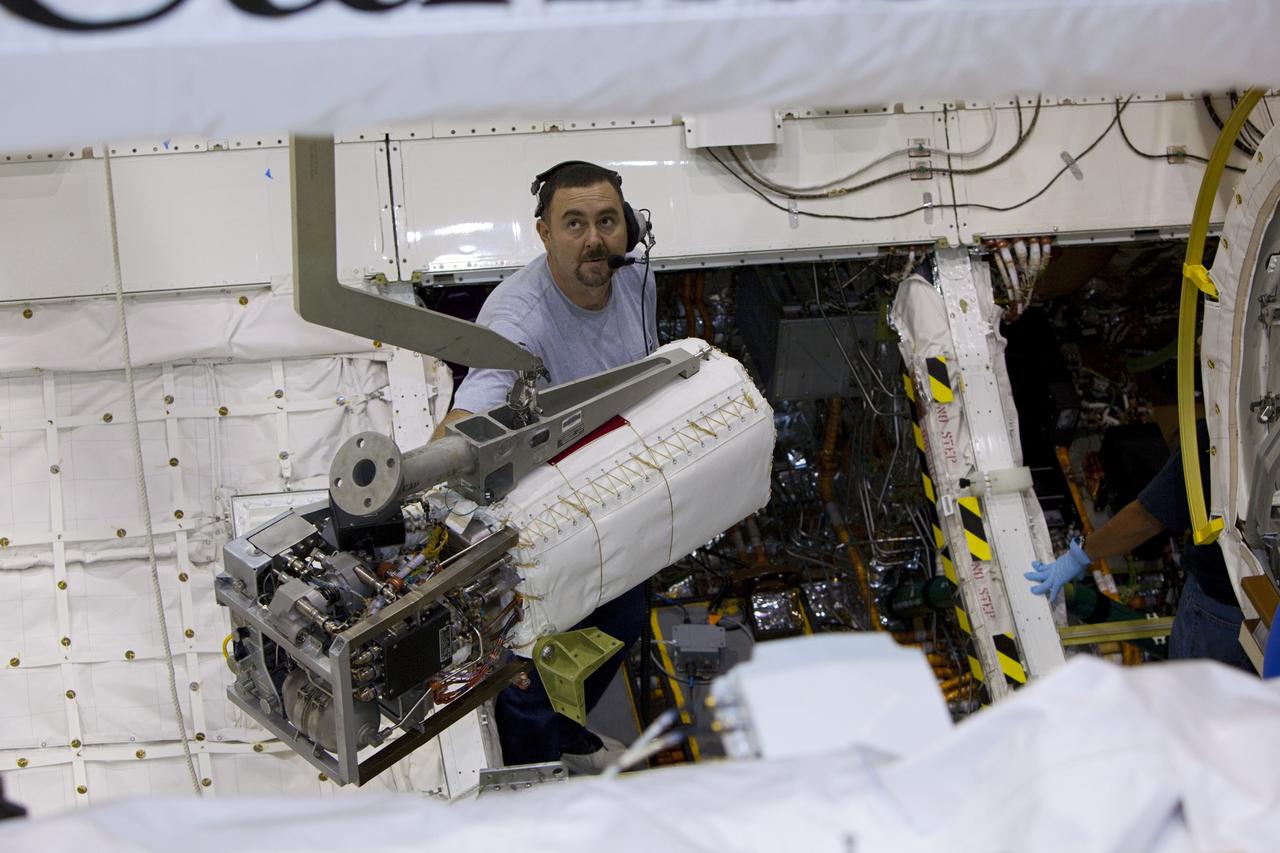
CAPE CANAVERAL, Fla. – Inside Orbiter Processing Facility-1 at NASA’s Kennedy Space Center in Florida, technicians prepare to re-install the three fuel cells in space shuttle Discovery’s mid-body. The fuel cells were removed and drained of all fluids. The hydrogen and oxygen dewars which feed reactants to the fuel cells remain in Discovery’s mid-body and have been purged with inert gases and vented down. The work is part of the Space Shuttle Program’s transition and retirement processing of shuttle Discovery. Discovery is being prepared for display at the Smithsonian’s National Air and Space Museum, Steven F. Udvar-Hazy Center in Chantilly, Va. For more information, visit http://www.nasa.gov/shuttle. Photo credit: NASA/Dimitri Gerondidakis
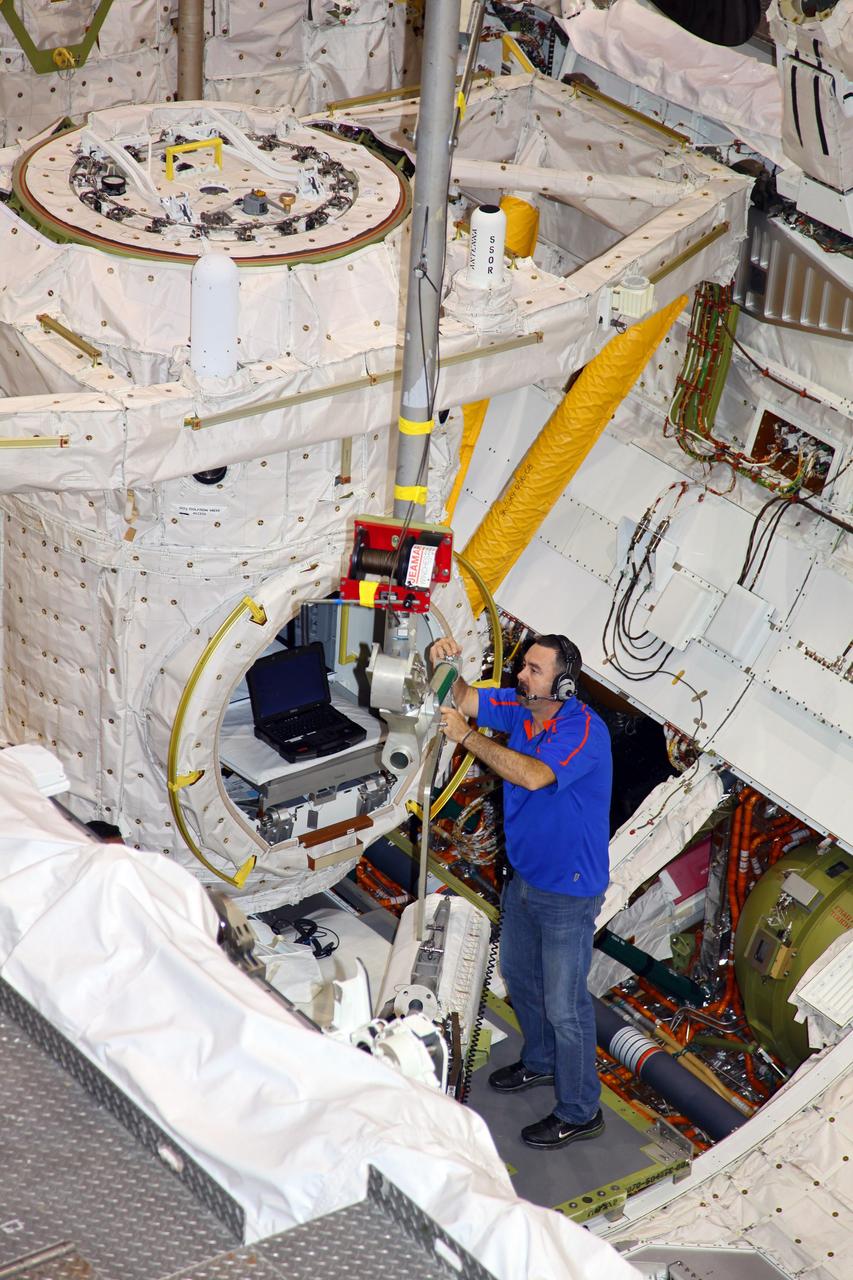
CAPE CANAVERAL, Fla. -- Inside Orbiter Processing Facility-1 at NASA’s Kennedy Space Center in Florida, technicians prepare space shuttle Discovery’s three fuel cells to be drained of all fluids. After all of the coolant is removed, the fuel cells will be returned to their previous location within Discovery’s mid-body. The hydrogen and oxygen dewars which feed reactants to the fuel cells remain in Discovery’s mid-body and have been purged with inert gases and vented down. The work is part of the Space Shuttle Program’s transition and retirement processing of shuttle Discovery. Discovery is being prepared for display at the Smithsonian’s National Air and Space Museum, Steven F. Udvar-Hazy Center in Chantilly, Va. For more information, visit http://www.nasa.gov/shuttle. Photo credit: NASA/Frankie Martin
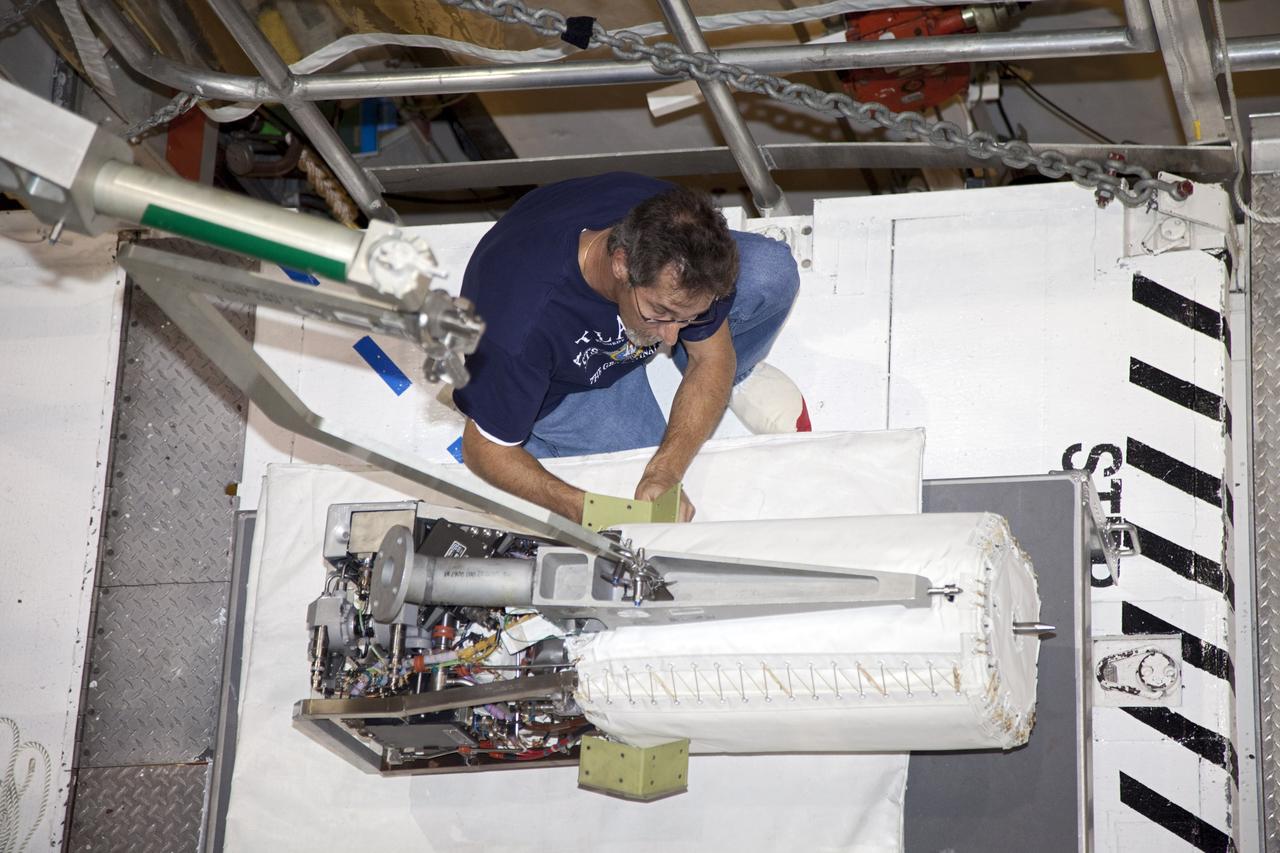
CAPE CANAVERAL, Fla. -- Inside Orbiter Processing Facility-1 at NASA’s Kennedy Space Center in Florida, a technician prepares one of space shuttle Discovery’s three fuel cells to be drained of all fluids. After all of the coolant is removed, the fuel cells will be returned to their previous location within Discovery’s mid-body. The hydrogen and oxygen dewars which feed reactants to the fuel cells remain in Discovery’s mid-body and have been purged with inert gases and vented down. The work is part of the Space Shuttle Program’s transition and retirement processing of shuttle Discovery. Discovery is being prepared for display at the Smithsonian’s National Air and Space Museum, Steven F. Udvar-Hazy Center in Chantilly, Va. For more information, visit http://www.nasa.gov/shuttle. Photo credit: NASA/Frankie Martin

CAPE CANAVERAL, Fla. – Inside Orbiter Processing Facility-1 at NASA’s Kennedy Space Center in Florida, technicians prepare to re-install the three fuel cells in space shuttle Discovery’s mid-body. The fuel cells were removed and drained of all fluids. The hydrogen and oxygen dewars which feed reactants to the fuel cells remain in Discovery’s mid-body and have been purged with inert gases and vented down. The work is part of the Space Shuttle Program’s transition and retirement processing of shuttle Discovery. Discovery is being prepared for display at the Smithsonian’s National Air and Space Museum, Steven F. Udvar-Hazy Center in Chantilly, Va. For more information, visit http://www.nasa.gov/shuttle. Photo credit: NASA/Dimitri Gerondidakis
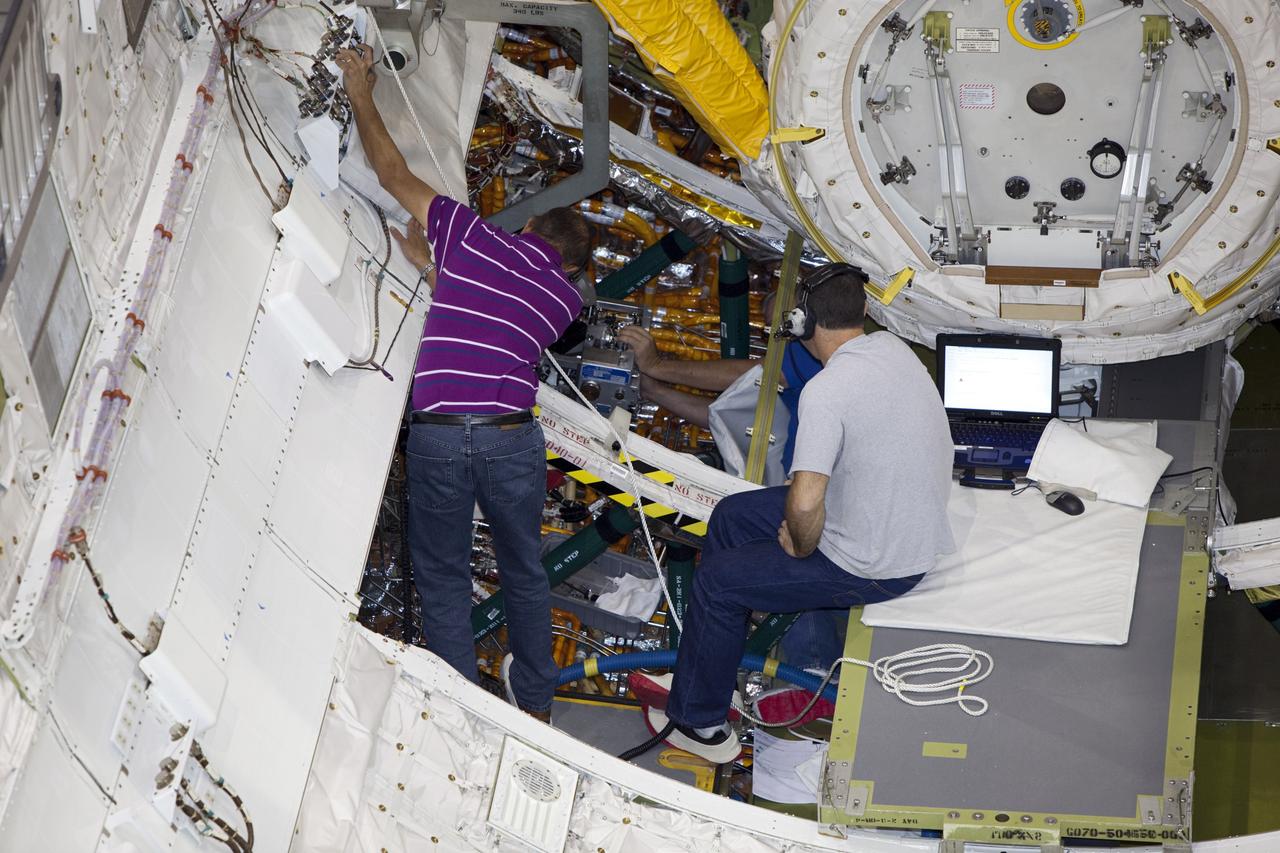
CAPE CANAVERAL, Fla. – Inside Orbiter Processing Facility-1 at NASA’s Kennedy Space Center in Florida, technicians re-install the three fuel cells in space shuttle Discovery’s mid-body. The fuel cells were removed and drained of all fluids. The hydrogen and oxygen dewars which feed reactants to the fuel cells remain in Discovery’s mid-body and have been purged with inert gases and vented down. The work is part of the Space Shuttle Program’s transition and retirement processing of shuttle Discovery. Discovery is being prepared for display at the Smithsonian’s National Air and Space Museum, Steven F. Udvar-Hazy Center in Chantilly, Va. For more information, visit http://www.nasa.gov/shuttle. Photo credit: NASA/Dimitri Gerondidakis
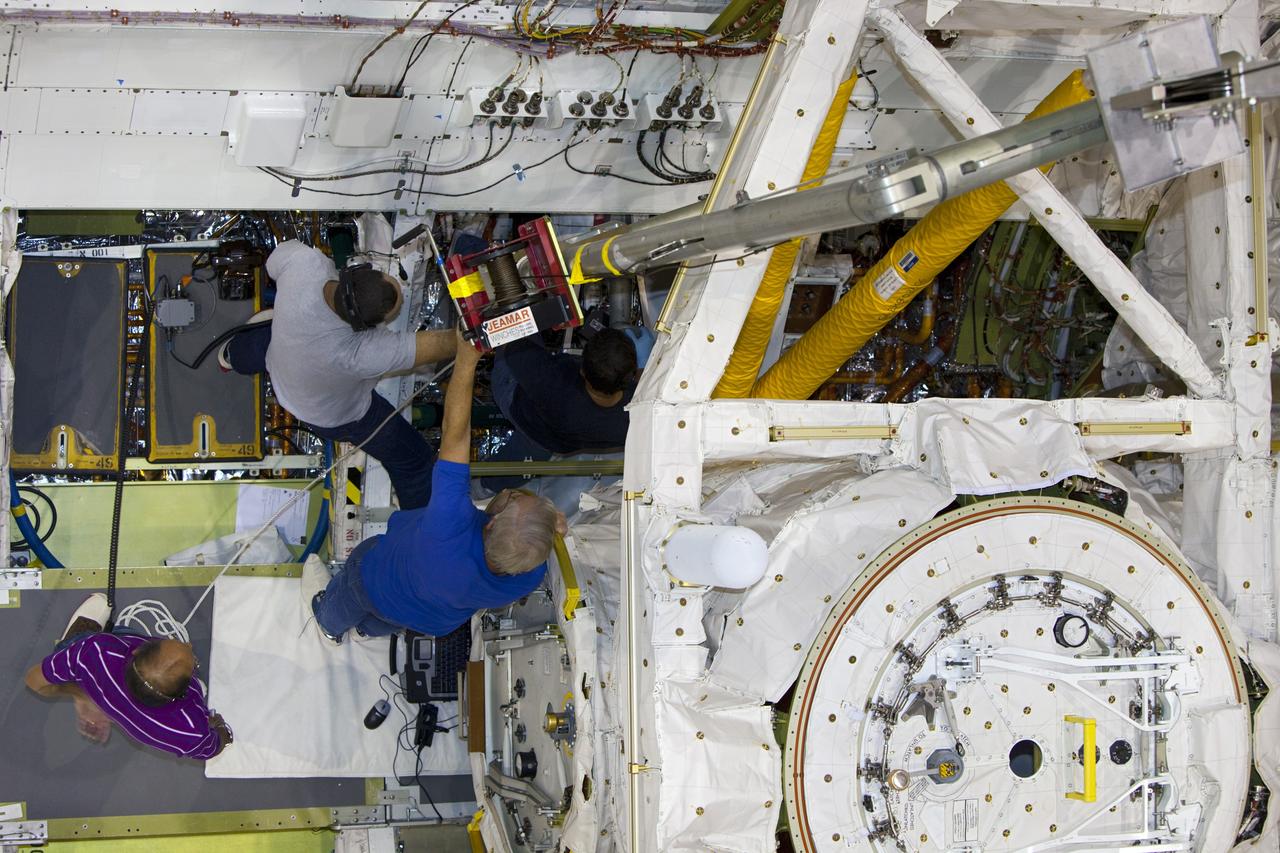
CAPE CANAVERAL, Fla. – Inside Orbiter Processing Facility-1 at NASA’s Kennedy Space Center in Florida, technicians re-install the three fuel cells in space shuttle Discovery’s mid-body. The fuel cells were removed and drained of all fluids. The hydrogen and oxygen dewars which feed reactants to the fuel cells remain in Discovery’s mid-body and have been purged with inert gases and vented down. The work is part of the Space Shuttle Program’s transition and retirement processing of shuttle Discovery. Discovery is being prepared for display at the Smithsonian’s National Air and Space Museum, Steven F. Udvar-Hazy Center in Chantilly, Va. For more information, visit http://www.nasa.gov/shuttle. Photo credit: NASA/Dimitri Gerondidakis
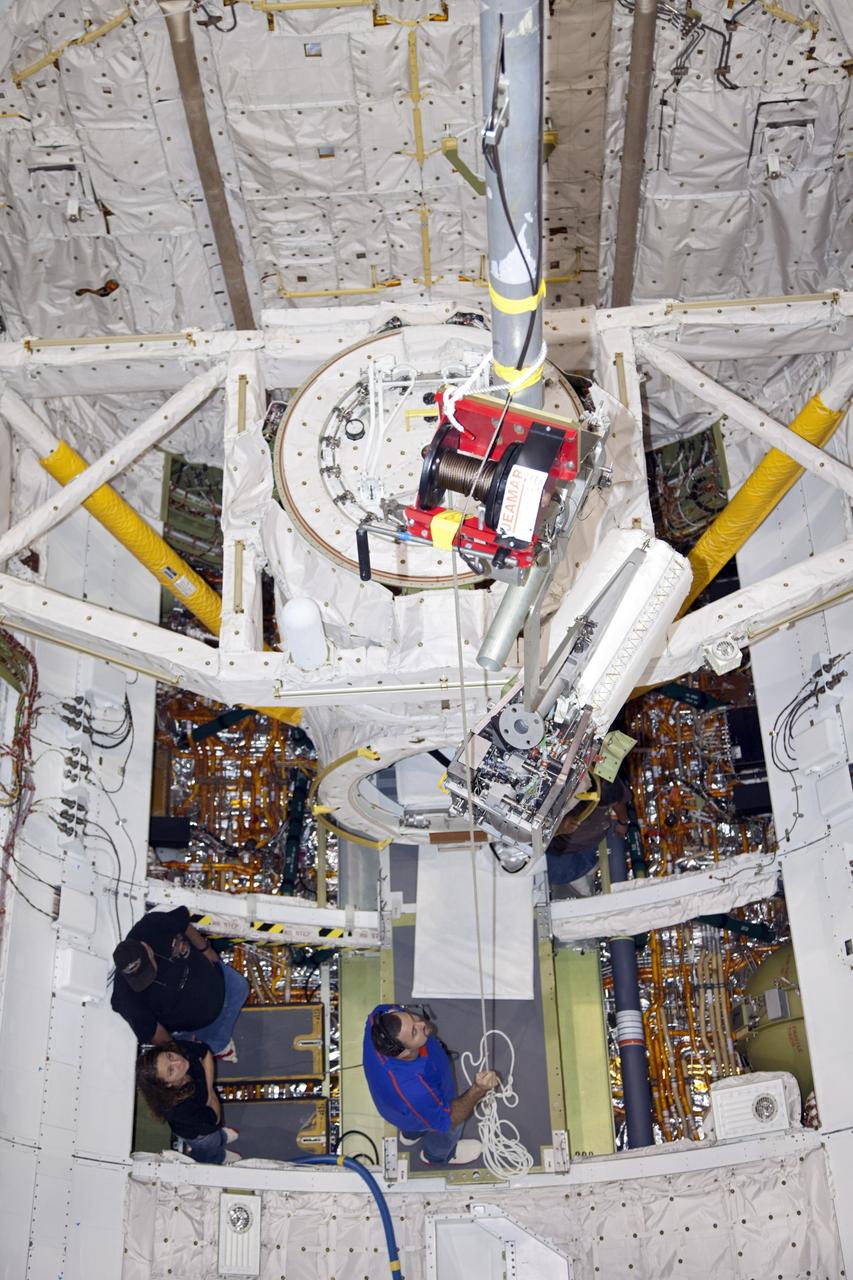
CAPE CANAVERAL, Fla. -- Inside Orbiter Processing Facility-1 at NASA’s Kennedy Space Center in Florida, technicians monitor the progress as space shuttle Discovery’s fuel cells are drained of all fluids. After all of the coolant is removed, the fuel cells will be returned to their previous location within Discovery’s mid-body. The hydrogen and oxygen dewars which feed reactants to the fuel cells remain in Discovery’s mid-body and have been purged with inert gases and vented down. The work is part of the Space Shuttle Program’s transition and retirement processing of shuttle Discovery. Discovery is being prepared for display at the Smithsonian’s National Air and Space Museum, Steven F. Udvar-Hazy Center in Chantilly, Va. For more information, visit http://www.nasa.gov/shuttle. Photo credit: NASA/Frankie Martin
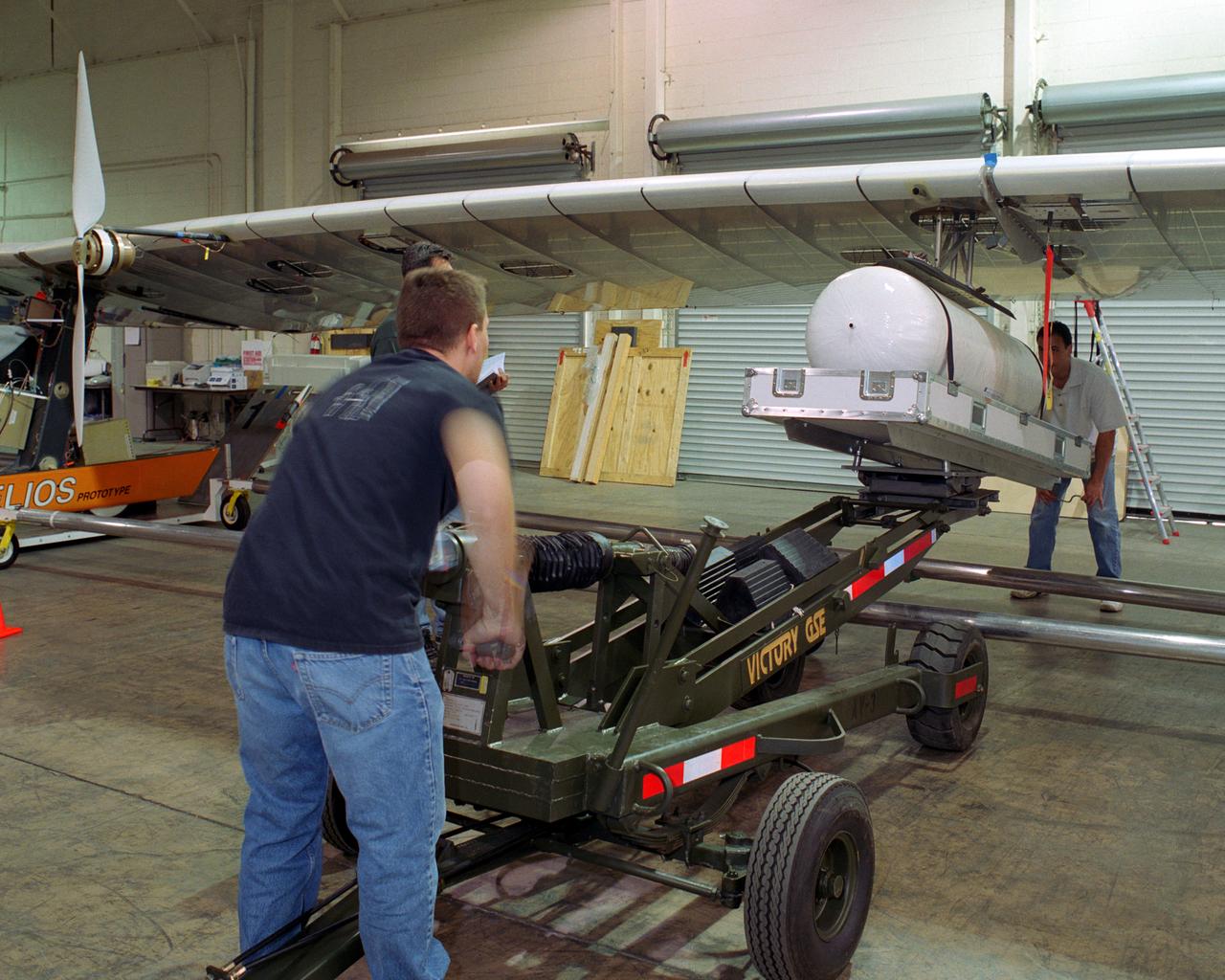
Technicians for AeroVironment, Inc., jack up a pressure tank to the wing of the Helios Prototype solar-electric flying wing. The tank carries pressurized hydrogen to fuel an experimental fuel cell system that powered the aircraft at night during an almost two-day long-endurance flight demonstration in the summer of 2003.
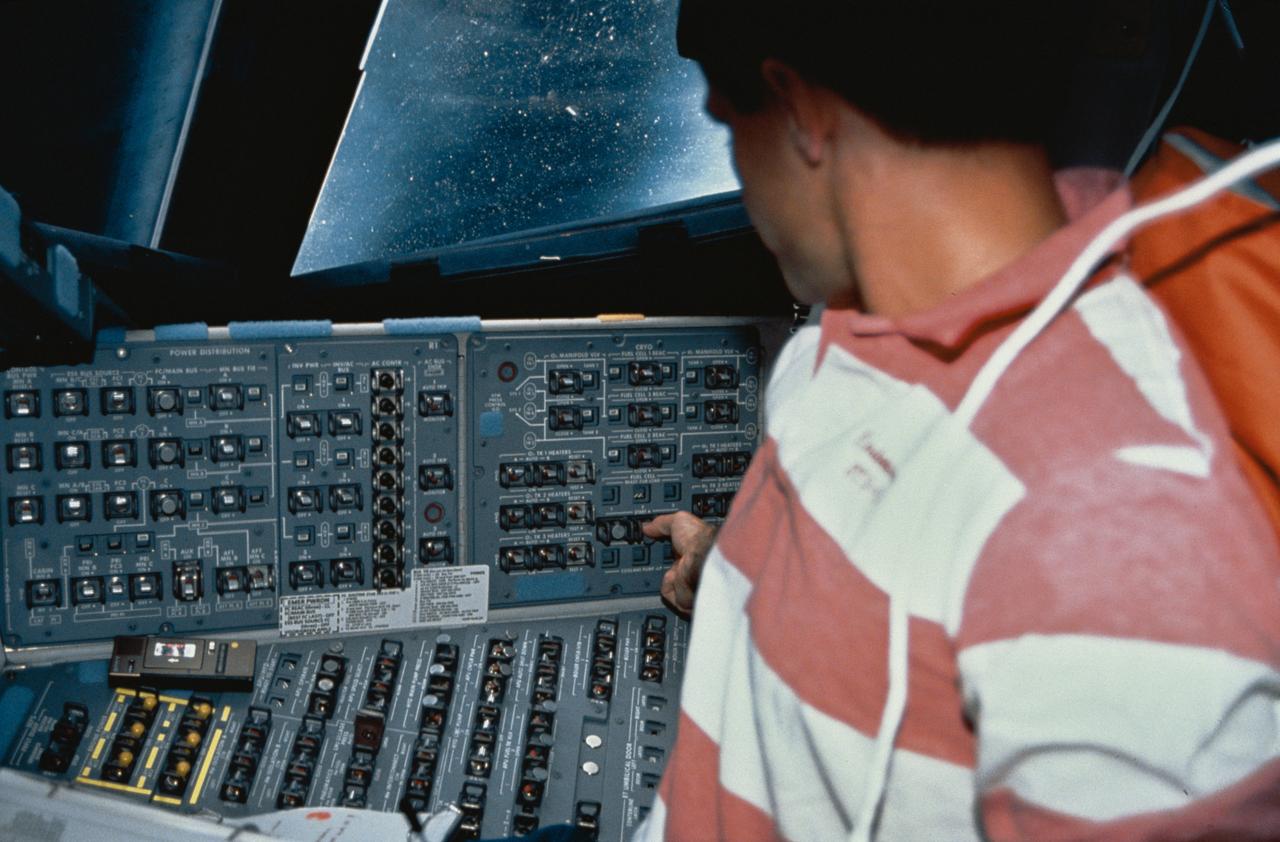
STS054-40-022 (13-19 Jan 1993) --- Astronaut Donald R. McMonagle, pilot, pushes a control switch for one of Endeavour's fuel cells from his station on the forward flight deck.
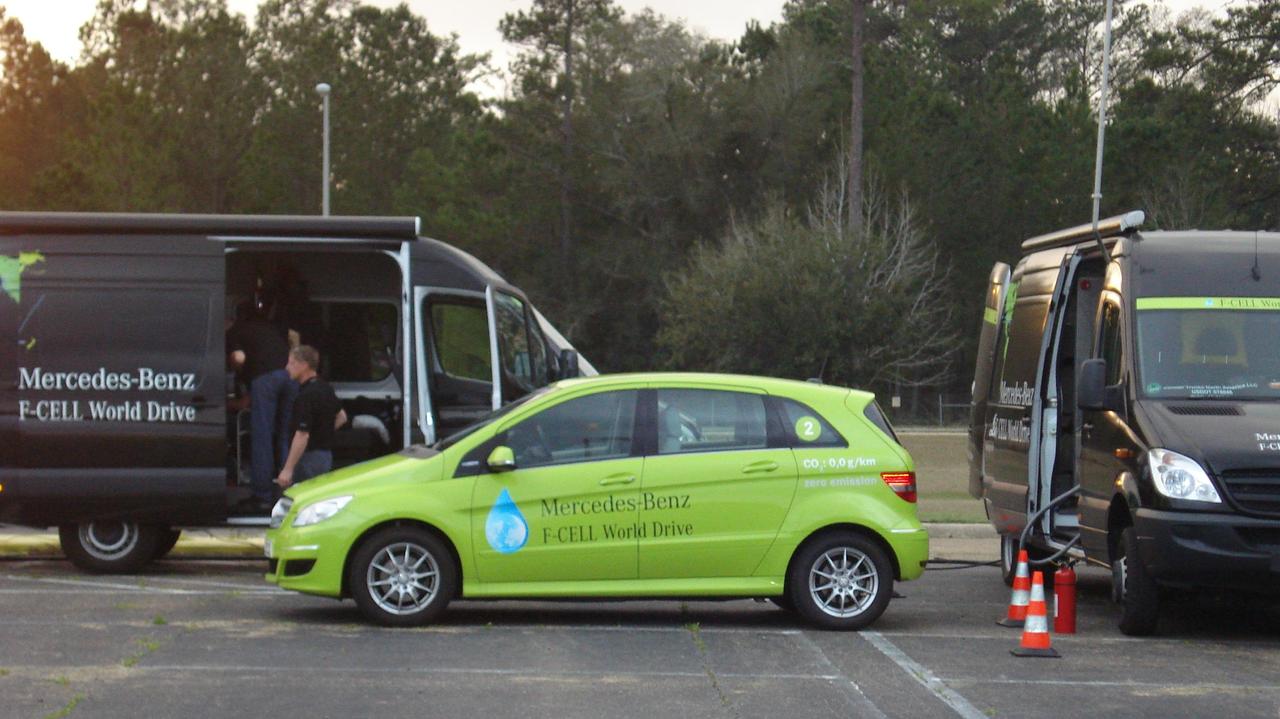
John C. Stennis Space Center, America's largest rocket engine test complex, and one of the country's leading consumers of liquid hydrogen, was the location Feb. 27 for a fuel stop of three Mercedes B-Class F-CELL vehicles. The B-Class F-CELL is an electric vehicle, which is powered by electricity produced on board the vehicle from hydrogen gas. The only emission by this unique vehicle is pure water vapor. Due to the limited number of existing hydrogen locations, Stennis Space Center provided a logical choice for a refueling location as the vehicle made its way across the United States as part of a worldwide tour.
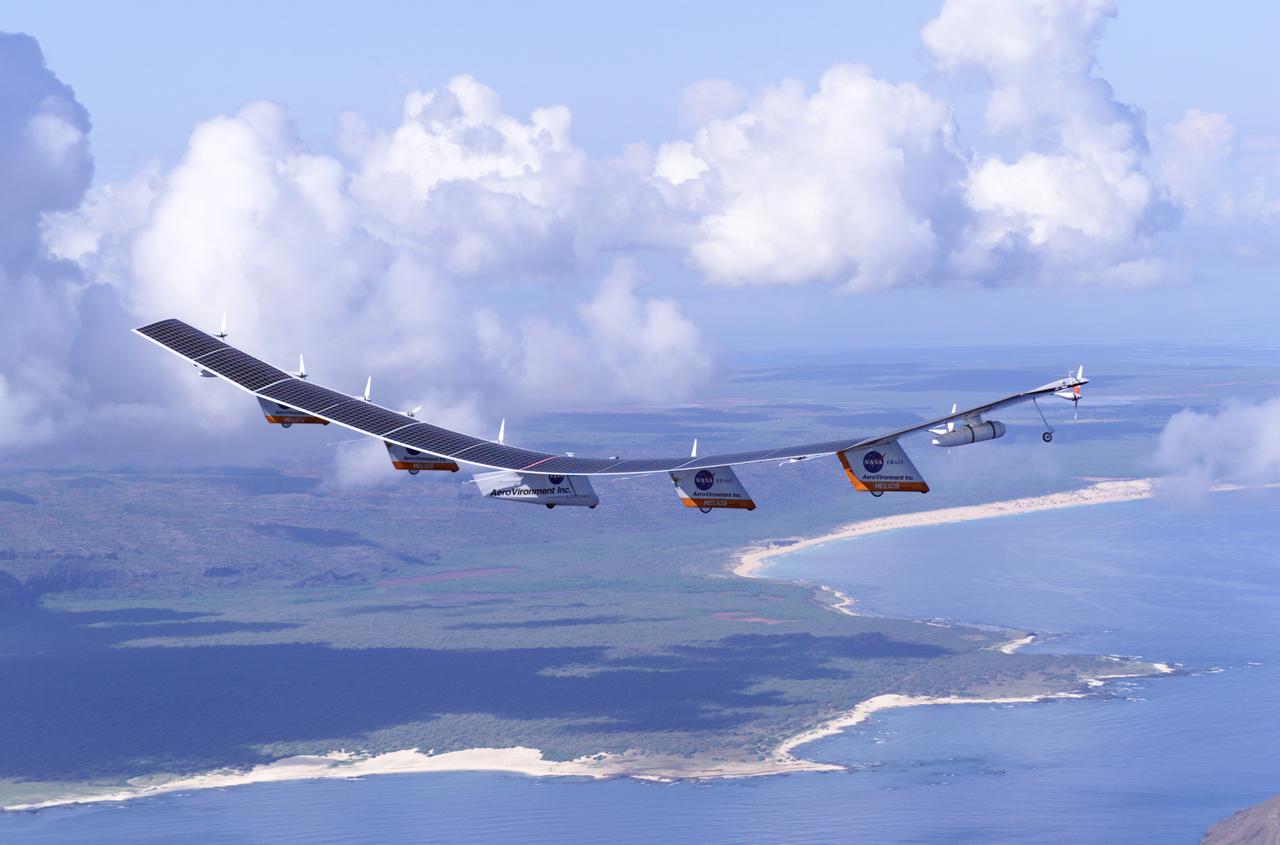
The first flight of a large aircraft to be powered by electric fuel cells began with a takeoff at 8:43 a.m. HST today from the Hawaiian island of Kauai. The Helios Prototype flying wing, built by AeroVironment, Inc., of Monrovia, Calif., as part of NASA's Environmental Research Aircraft and Sensor Technology (ERAST) program, used solar panels to power its 10 electric motors for takeoff and during daylight portions of its planned 20-hour shakedown flight. As sunlight diminishes, Helios will switch to a fuel cell system to continue flight into the night. The takeoff set the stage for a two-day Helios endurance flight in the stratosphere planned for mid-July. The Helios wing, spanning 247 feet and weighing about 2,400 pounds, is giving NASA and industry engineers confidence that remotely piloted aircraft will be able to stay aloft for weeks at a time, providing environmental monitoring capabilities and telecommunications relay services. Helios is an all-electric airplane. In addition to being non-polluting, Helios can fly above storms, and use the power of the sun to stay aloft during daylight. Key to the success of this type of aircraft is the ability to fly in darkness, using fuel cells when sunlight cannot furnish energy. Helios flew over the Navy's Pacific Missile Range Facility where favorable sun exposure and test ranges closed to other air traffic benefited the NASA research effort. In 2003 the aircraft was lost to a crash.
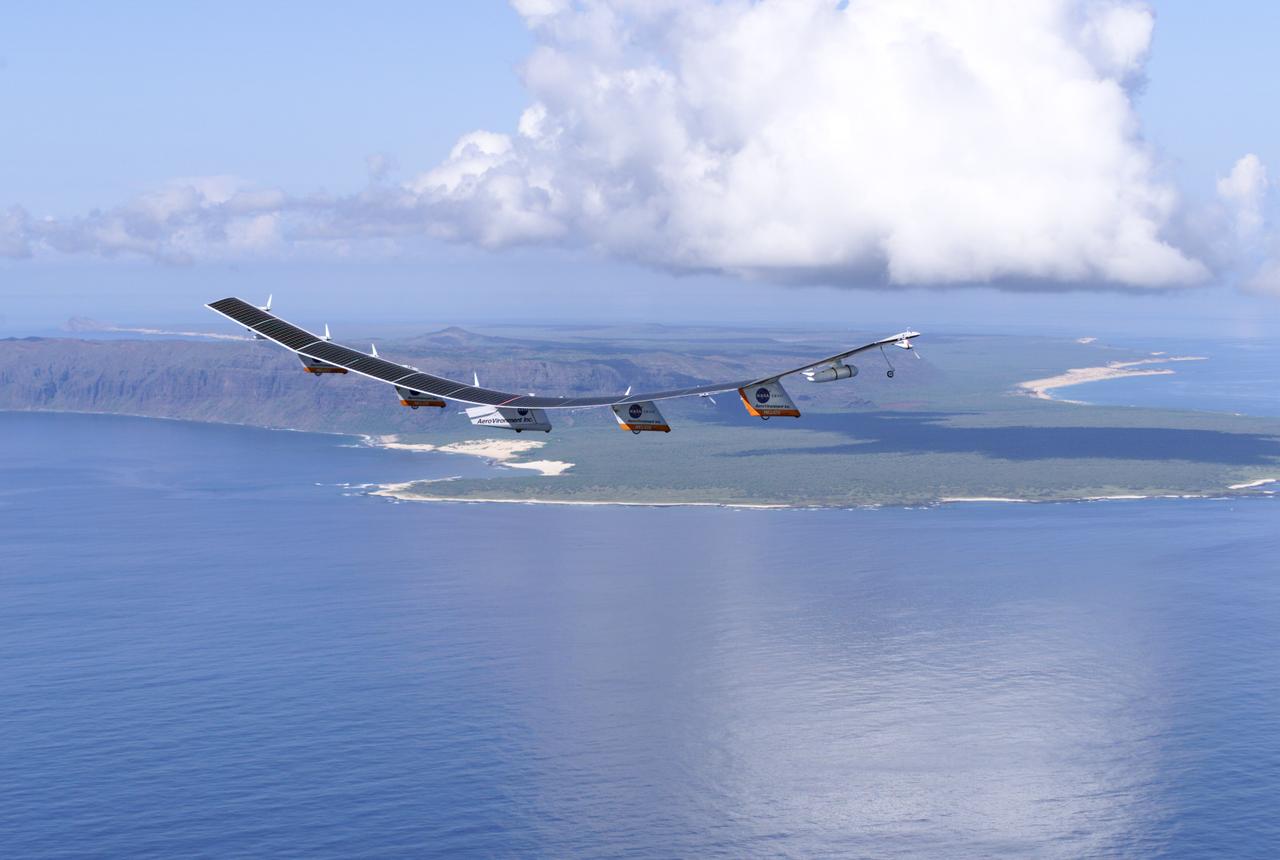
The first flight of a large aircraft to be powered by electric fuel cells began with a takeoff at 8:43 a.m. HST today from the Hawaiian island of Kauai. The Helios Prototype flying wing, built by AeroVironment, Inc., of Monrovia, Calif., as part of NASA's Environmental Research Aircraft and Sensor Technology (ERAST) program, used solar panels to power its 10 electric motors for takeoff and during daylight portions of its planned 20-hour shakedown flight. As sunlight diminishes, Helios will switch to a fuel cell system to continue flight into the night. The takeoff set the stage for a two-day Helios endurance flight in the stratosphere planned for mid-July. The Helios wing, spanning 247 feet and weighing about 2,400 pounds, is giving NASA and industry engineers confidence that remotely piloted aircraft will be able to stay aloft for weeks at a time, providing environmental monitoring capabilities and telecommunications relay services. Helios is an all-electric airplane. In addition to being non-polluting, Helios can fly above storms, and use the power of the sun to stay aloft during daylight. Key to the success of this type of aircraft is the ability to fly in darkness, using fuel cells when sunlight cannot furnish energy. Helios flew over the Navy's Pacific Missile Range Facility where favorable sun exposure and test ranges closed to other air traffic benefited the NASA research effort. In 2003 the aircraft was lost to a crash.
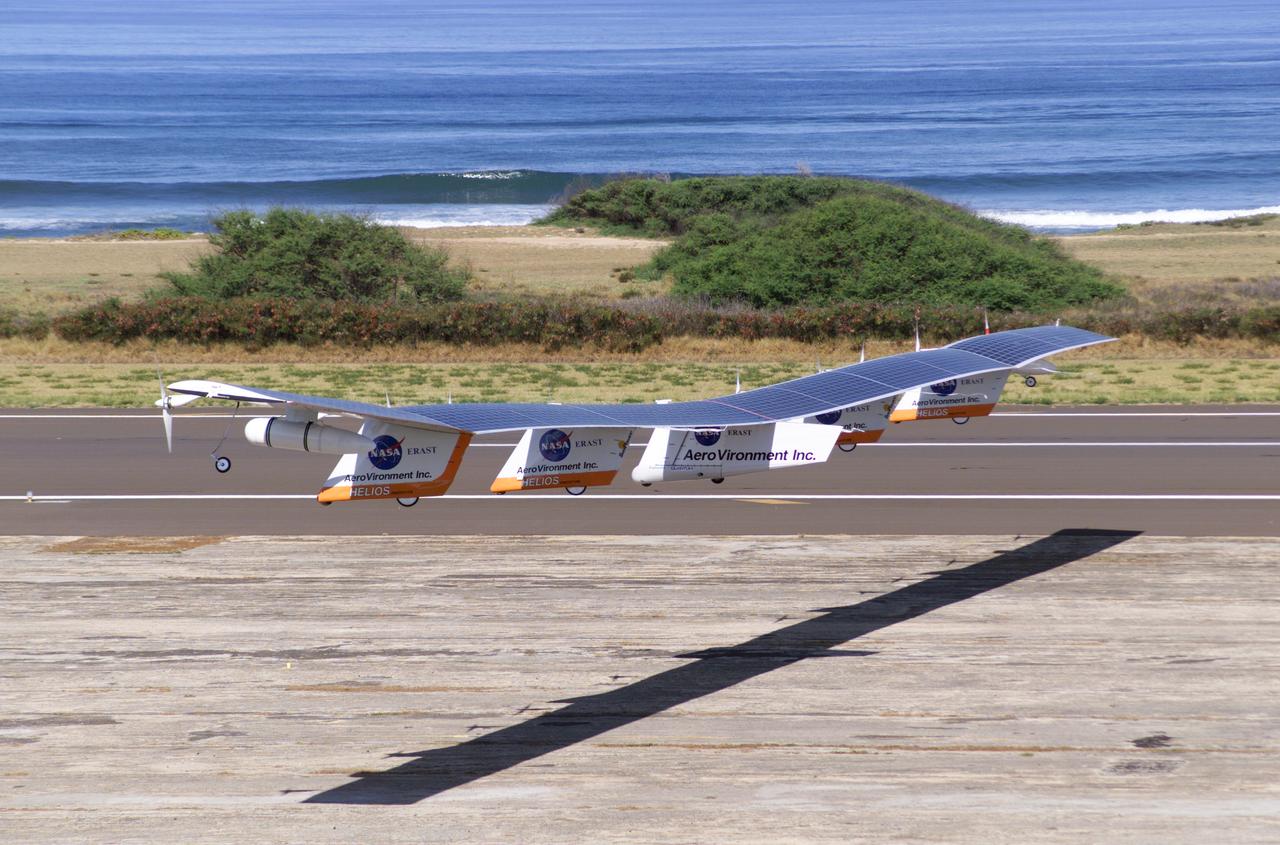
The first flight of a large aircraft to be powered by electric fuel cells began with a takeoff at 8:43 a.m. HST today from the Hawaiian island of Kauai. The Helios Prototype flying wing, built by AeroVironment, Inc., of Monrovia, Calif., as part of NASA's Environmental Research Aircraft and Sensor Technology (ERAST) program, used solar panels to power its 10 electric motors for takeoff and during daylight portions of its planned 20-hour shakedown flight. As sunlight diminishes, Helios will switch to a fuel cell system to continue flight into the night. The takeoff set the stage for a two-day Helios endurance flight in the stratosphere planned for mid-July. The Helios wing, spanning 247 feet and weighing about 2,400 pounds, gave NASA and industry engineers confidence that remotely piloted aircraft would be able to stay aloft for weeks at a time, providing environmental monitoring capabilities and telecommunications relay services. Helios was an all-electric airplane. In addition to being non-polluting, Helios flew above storms, and used the power of the sun to stay aloft during daylight. Key to the success of this type of aircraft was the ability to fly in darkness, using fuel cells when sunlight cannot furnish energy. Helios flew over the Navy's Pacific Missile Range Facility where favorable sun exposure and test ranges closed to other air traffic benefited the NASA research effort. In 2003 the aircraft was lost to a crash.
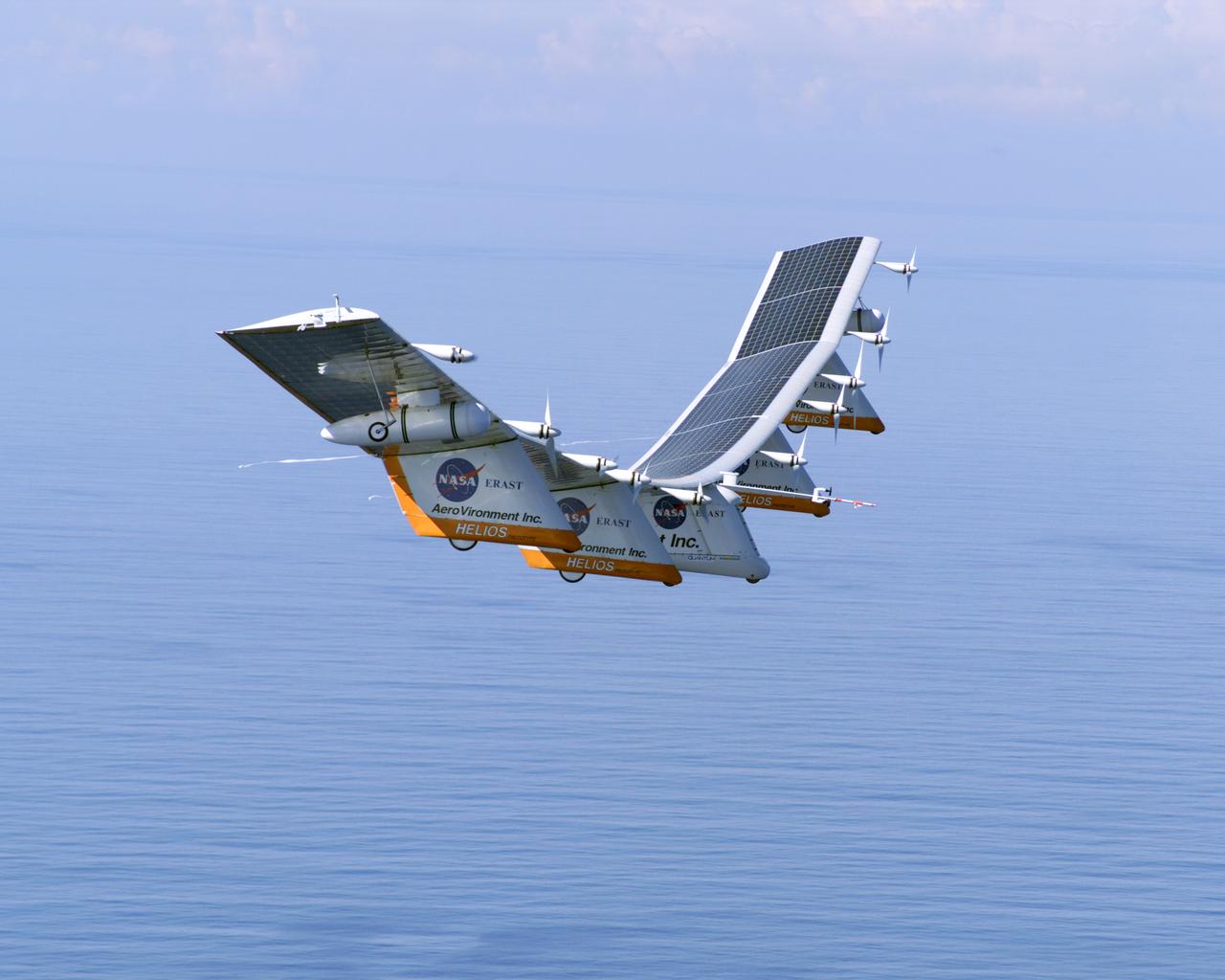
The first flight of a large aircraft to be powered by electric fuel cells began with a takeoff at 8:43 a.m. HST today from the Hawaiian island of Kauai. The Helios Prototype flying wing, built by AeroVironment, Inc., of Monrovia, Calif., as part of NASA's Environmental Research Aircraft and Sensor Technology (ERAST) program, used solar panels to power its 10 electric motors for takeoff and during daylight portions of its planned 20-hour shakedown flight. As sunlight diminishes, Helios will switch to a fuel cell system to continue flight into the night. The takeoff set the stage for a two-day Helios endurance flight in the stratosphere planned for mid-July. The Helios wing, spanning 247 feet and weighing about 2,400 pounds, is giving NASA and industry engineers confidence that remotely piloted aircraft will be able to stay aloft for weeks at a time, providing environmental monitoring capabilities and telecommunications relay services. Helios is an all-electric airplane. In addition to being non-polluting, Helios can fly above storms, and use the power of the sun to stay aloft during daylight. Key to the success of this type of aircraft is the ability to fly in darkness, using fuel cells when sunlight cannot furnish energy. Helios flew over the Navy's Pacific Missile Range Facility where favorable sun exposure and test ranges closed to other air traffic benefited the NASA research effort. In 2003 the aircraft was lost to a crash.

The takeoff set the stage for a two-day Helios endurance flight in the stratosphere planned for mid-July. The Helios wing, spanning 247 feet and weighing about 2,400 pounds, is giving NASA and industry engineers confidence that remotely piloted aircraft will be able to stay aloft for weeks at a time, providing environmental monitoring capabilities and telecommunications relay services Helios is an all-electric airplane. In addition to being non-polluting, Helios can fly above storms, and use the power of the sun to stay aloft during daylight. Key to the success of this type of aircraft is the ability to fly in darkness, using fuel cells when sunlight cannot furnish energy. Helios flew over the Navy's Pacific Missile Range Facility where favorable sun exposure and test ranges closed to other air traffic benefited the NASA research effort. In 2003 the aircraft was lost to a crash.
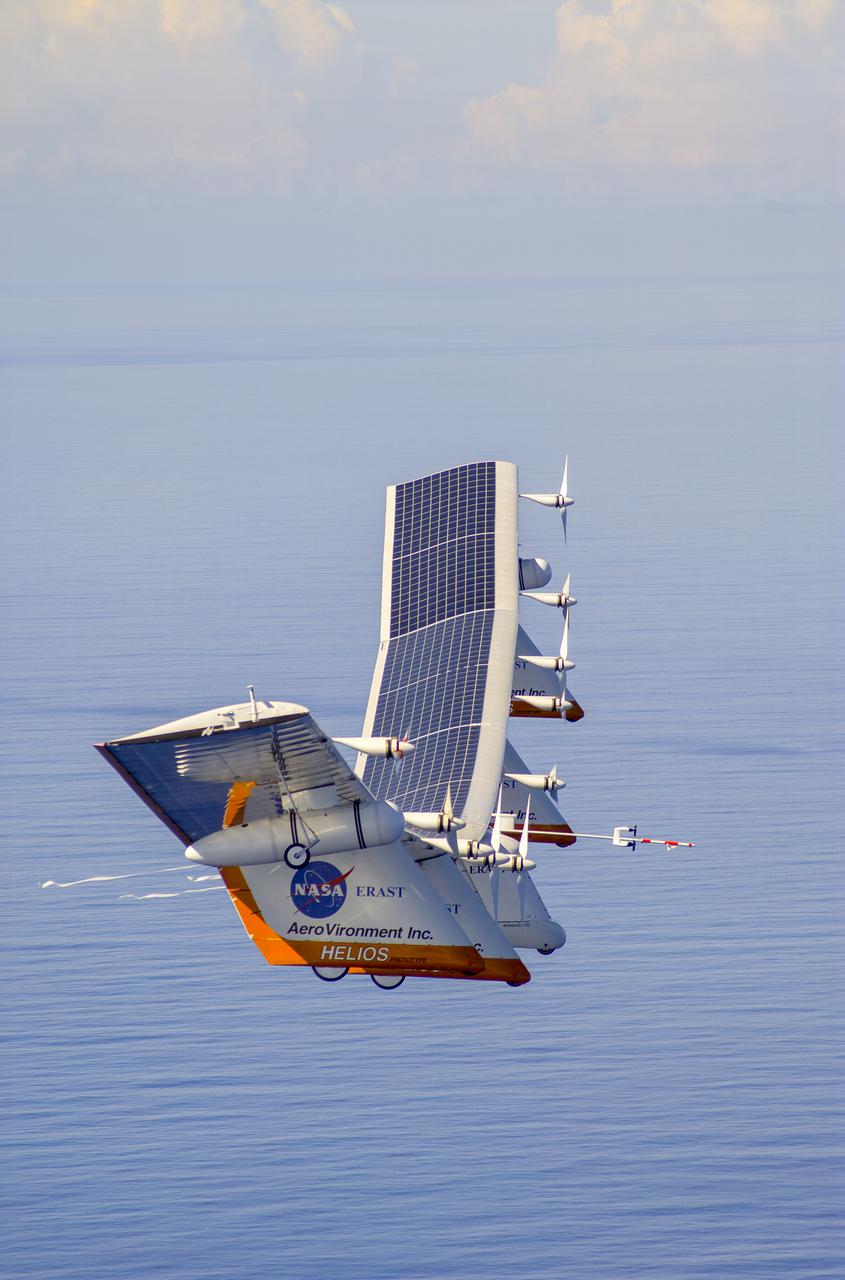
The first flight of a large aircraft to be powered by electric fuel cells began with a takeoff at 8:43 a.m. HST today from the Hawaiian island of Kauai. The Helios Prototype flying wing, built by AeroVironment, Inc., of Monrovia, Calif., as part of NASA's Environmental Research Aircraft and Sensor Technology (ERAST) program, used solar panels to power its 10 electric motors for takeoff and during daylight portions of its planned 20-hour shakedown flight. As sunlight diminishes, Helios will switch to a fuel cell system to continue flight into the night. The takeoff set the stage for a two-day Helios endurance flight in the stratosphere planned for mid-July. The Helios wing, spanning 247 feet and weighing about 2,400 pounds, is giving NASA and industry engineers confidence that remotely piloted aircraft will be able to stay aloft for weeks at a time, providing environmental monitoring capabilities and telecommunications relay services. Helios is an all-electric airplane. In addition to being non-polluting, Helios can fly above storms, and use the power of the sun to stay aloft during daylight. Key to the success of this type of aircraft is the ability to fly in darkness, using fuel cells when sunlight cannot furnish energy. Helios flew over the Navy's Pacific Missile Range Facility where favorable sun exposure and test ranges closed to other air traffic benefited the NASA research effort. In 2003 the aircraft was lost to a crash.
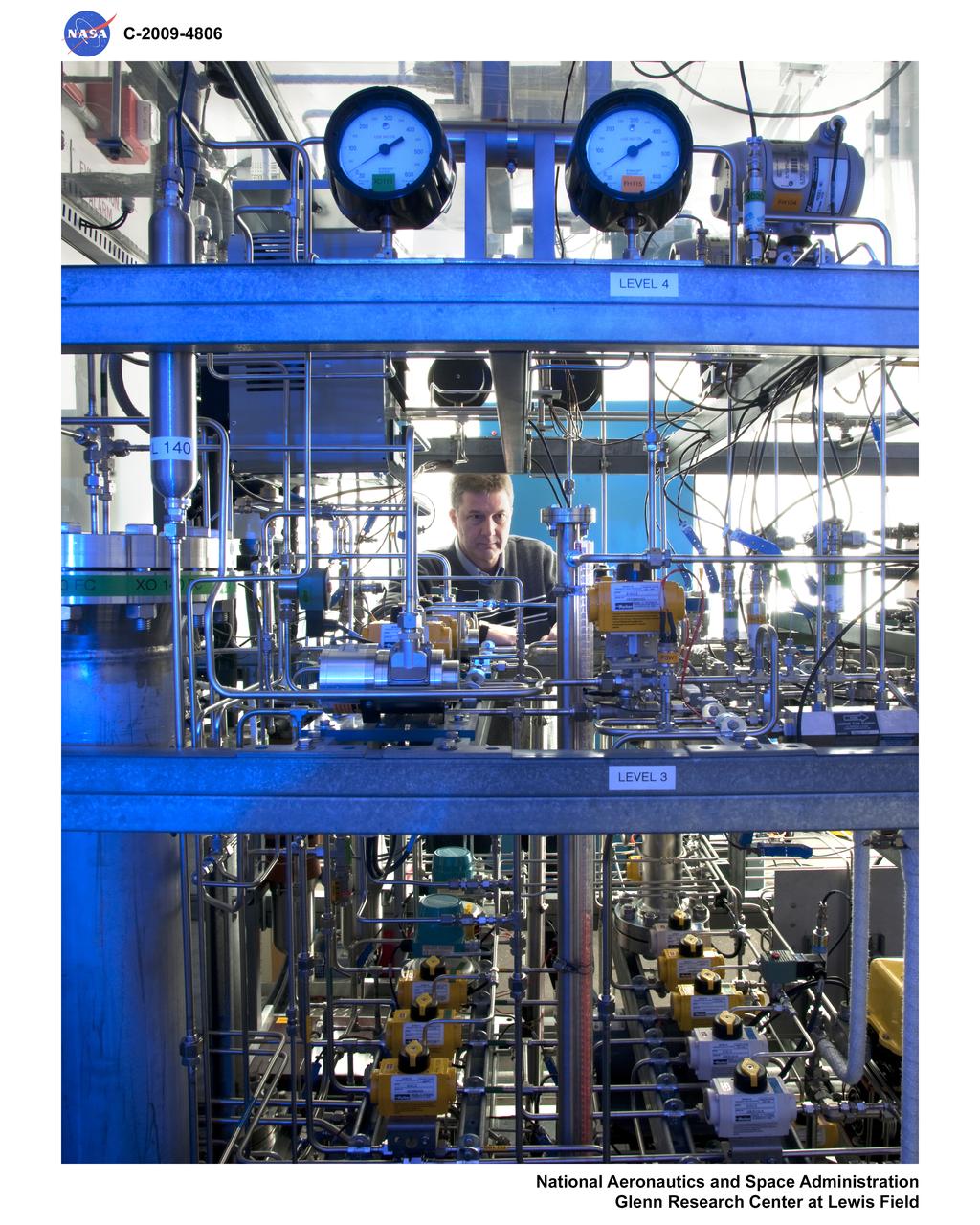
Closed-Loop Regenerative Fuel Cell Rig
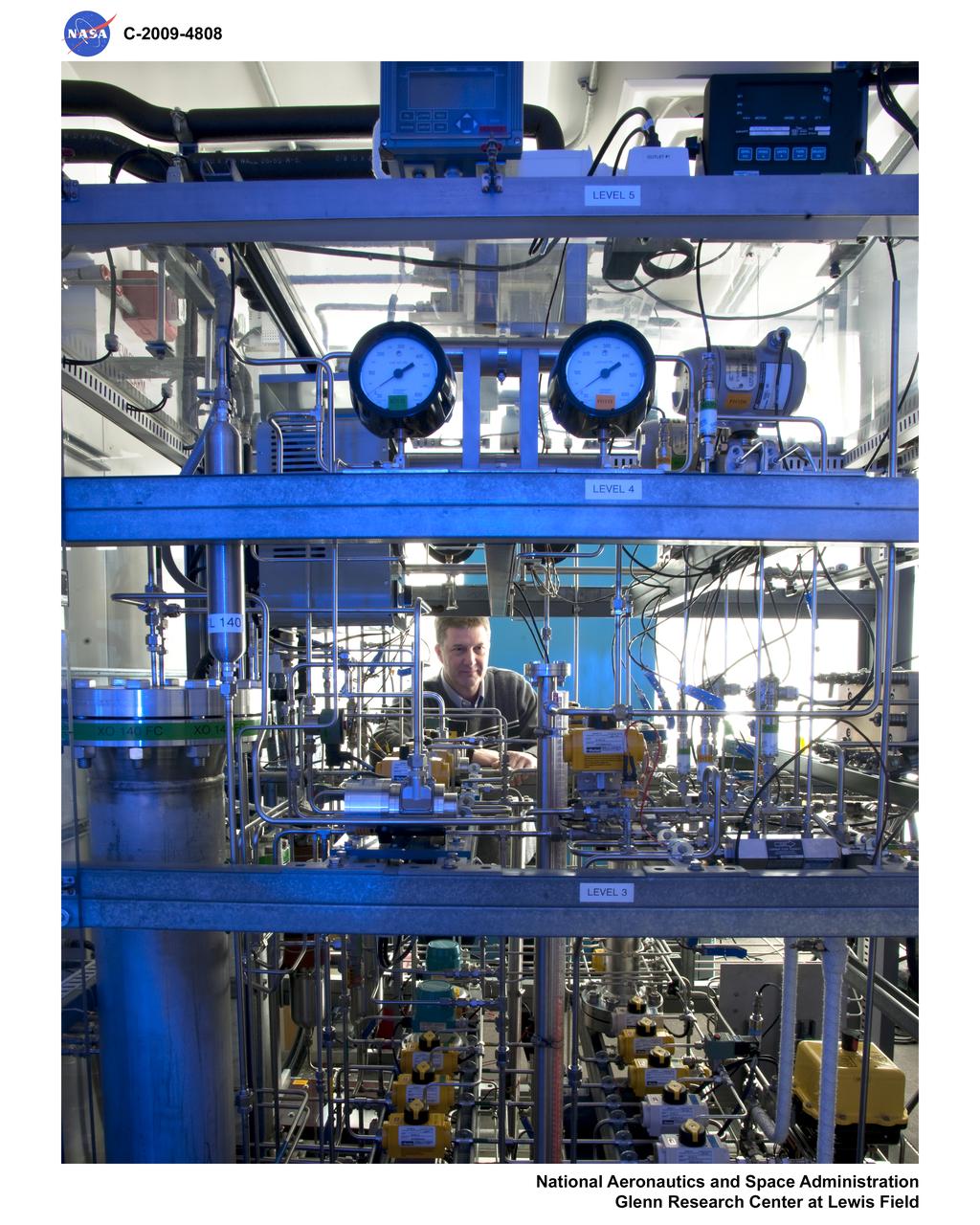
Closed-Loop Regenerative Fuel Cell Rig
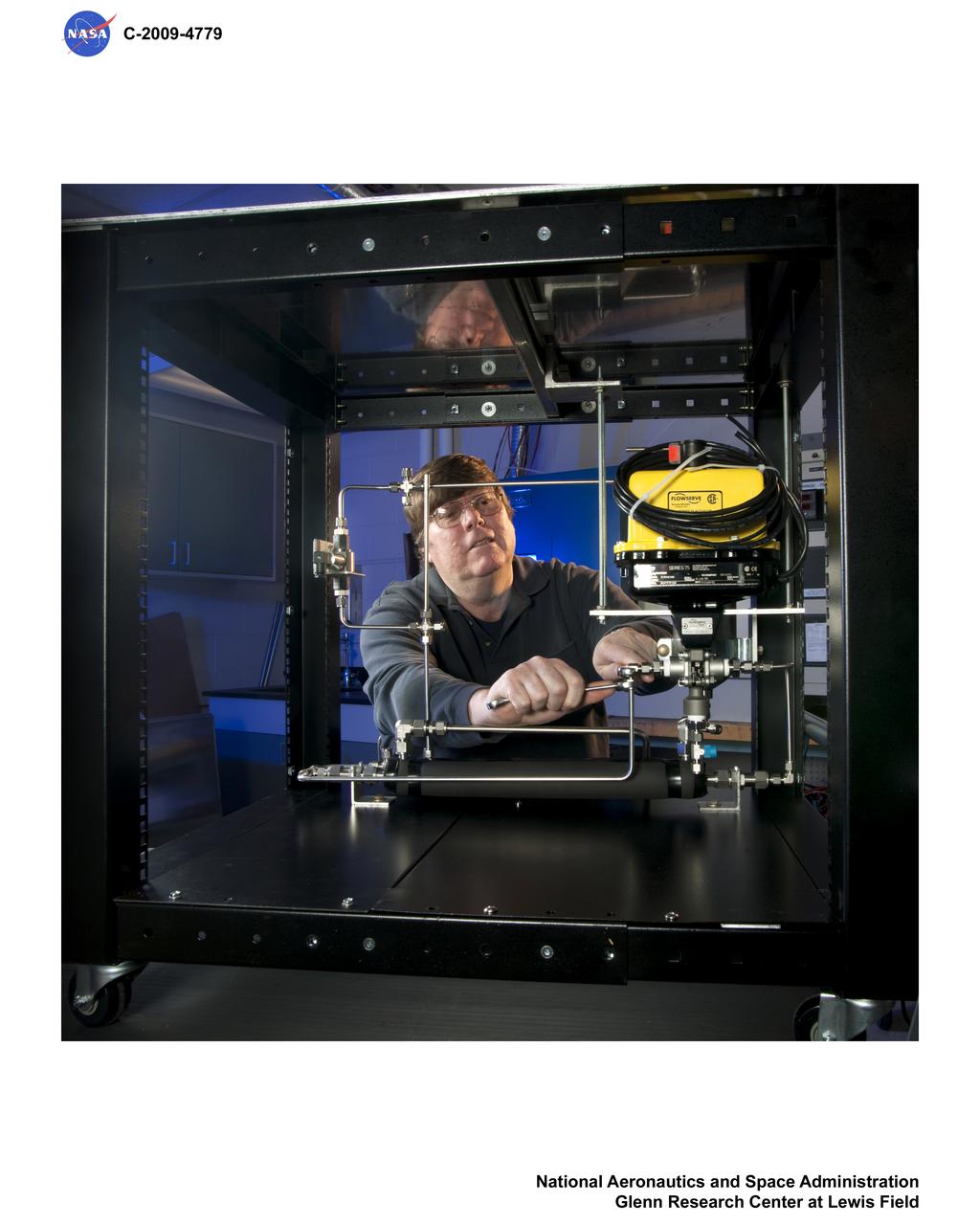
Common Test Bed, Fuel Cell Laboratory
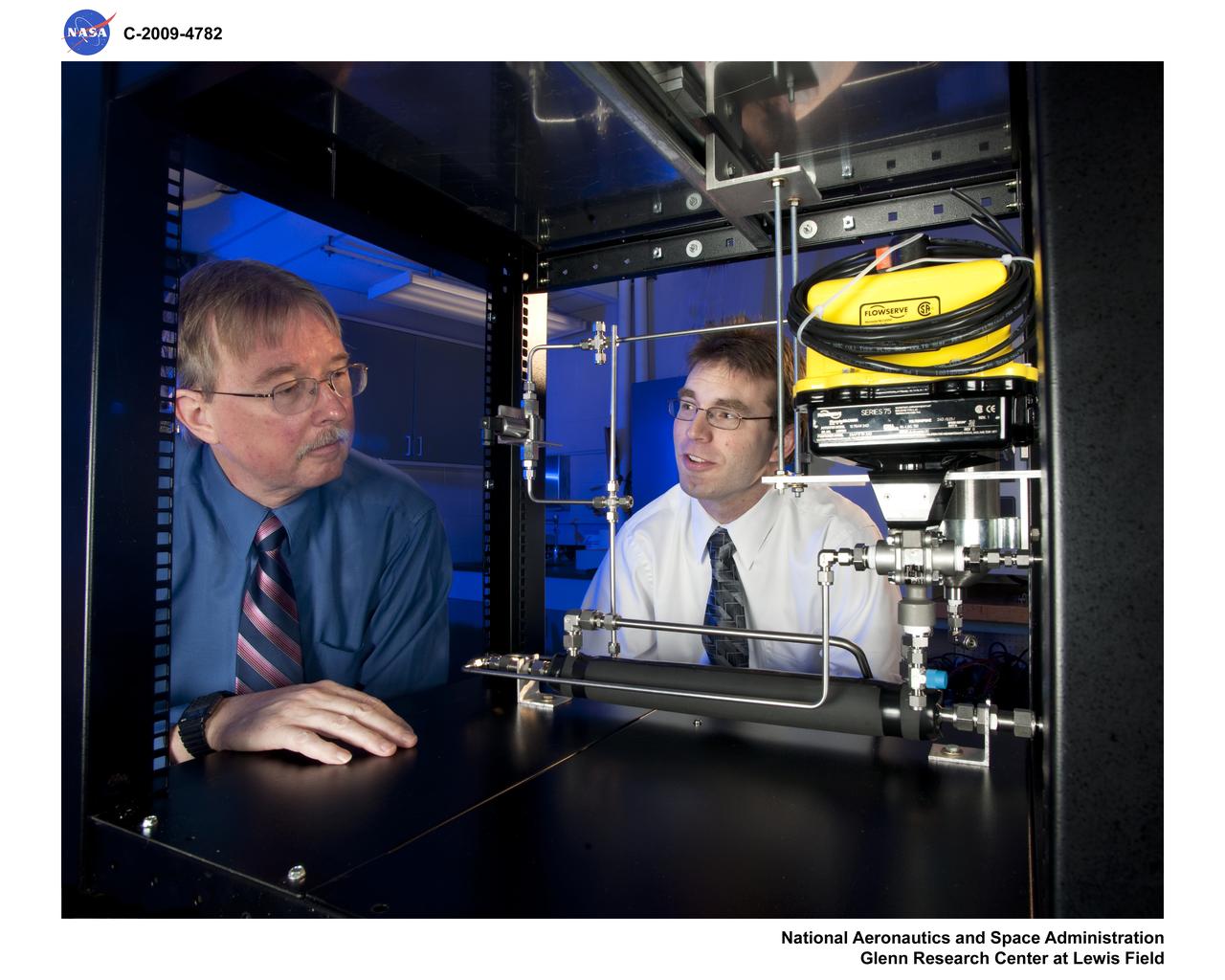
Common Test Bed, Fuel Cell Laboratory
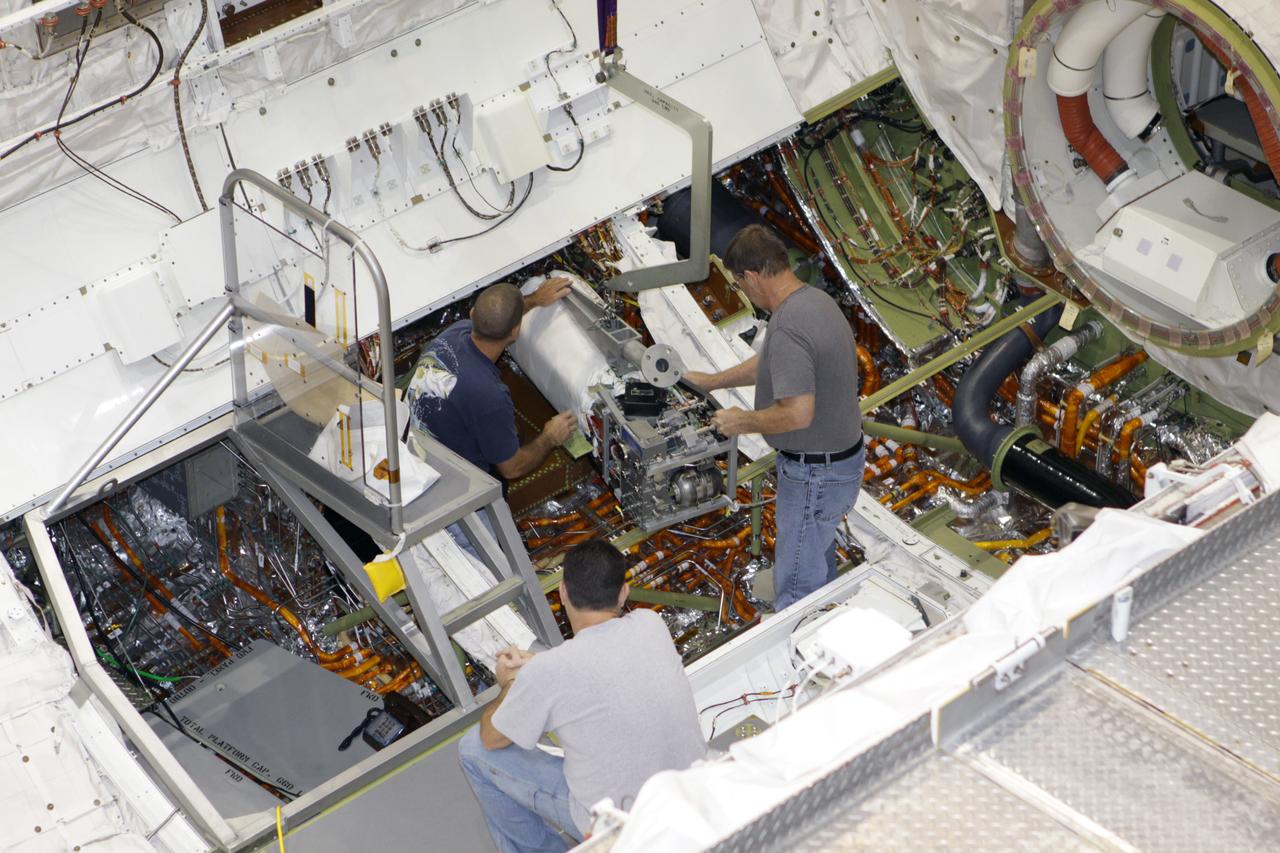
T&R/Endeavour Fuel Cells Removed
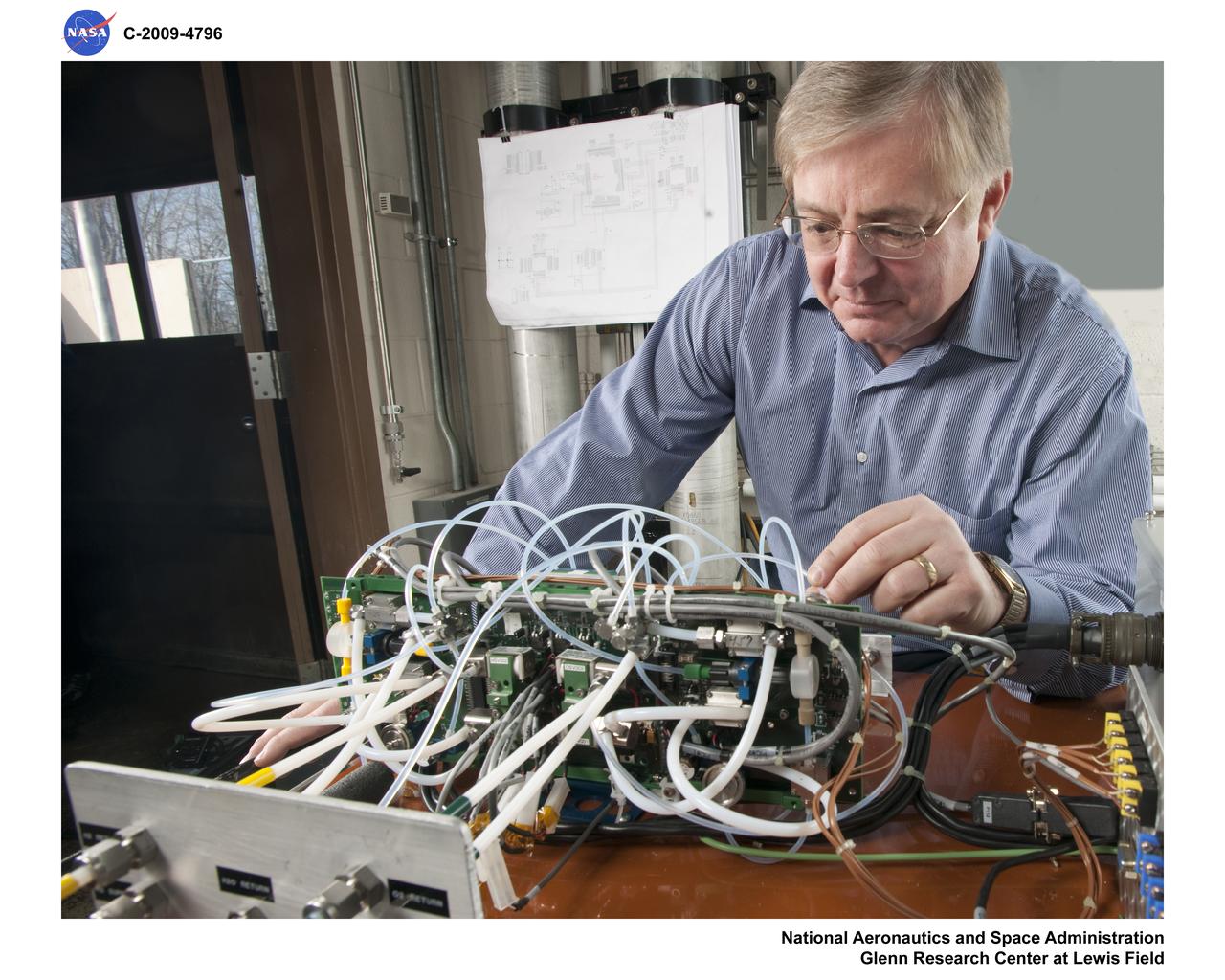
the heat pipe stack, Fuel Cell Laboratory
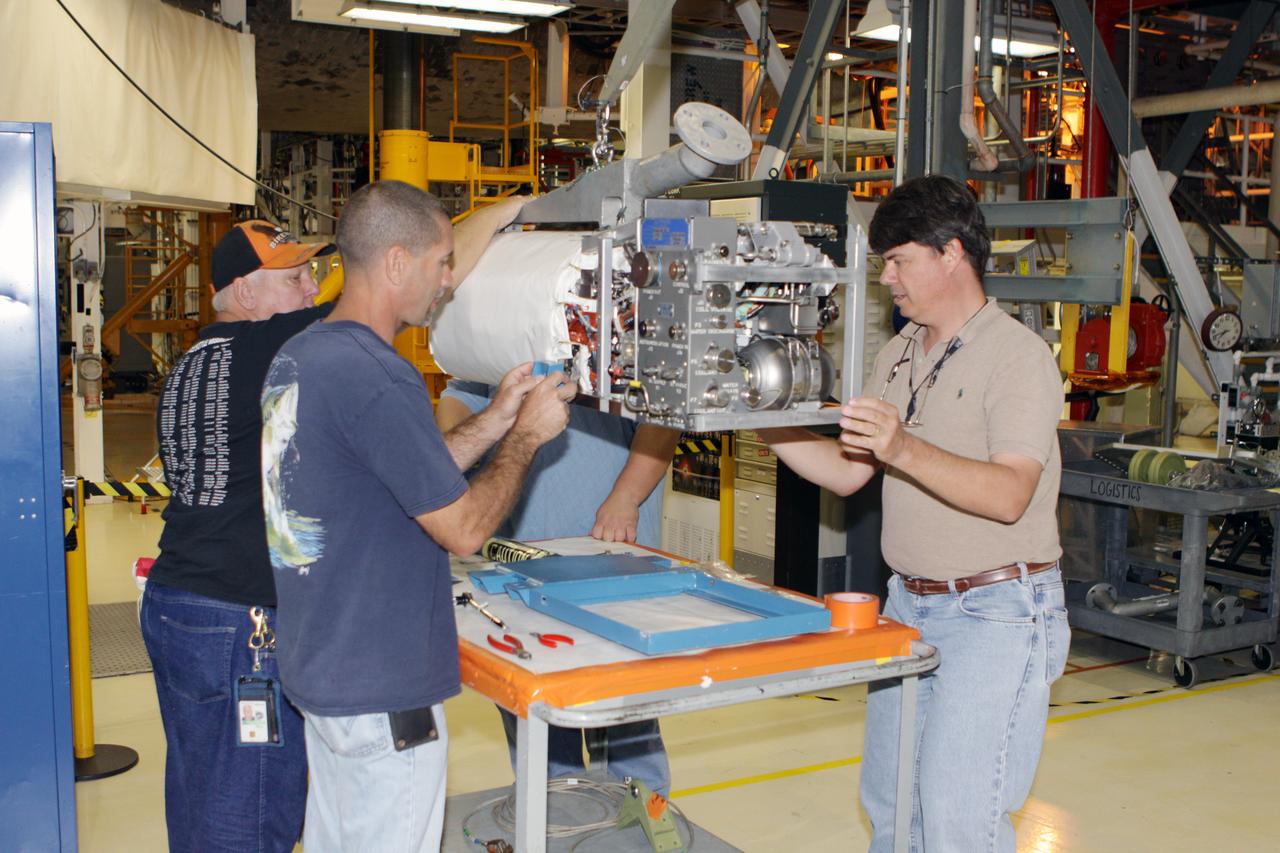
T&R/Endeavour Fuel Cells Removed

T&R/Endeavour Fuel Cells Removed
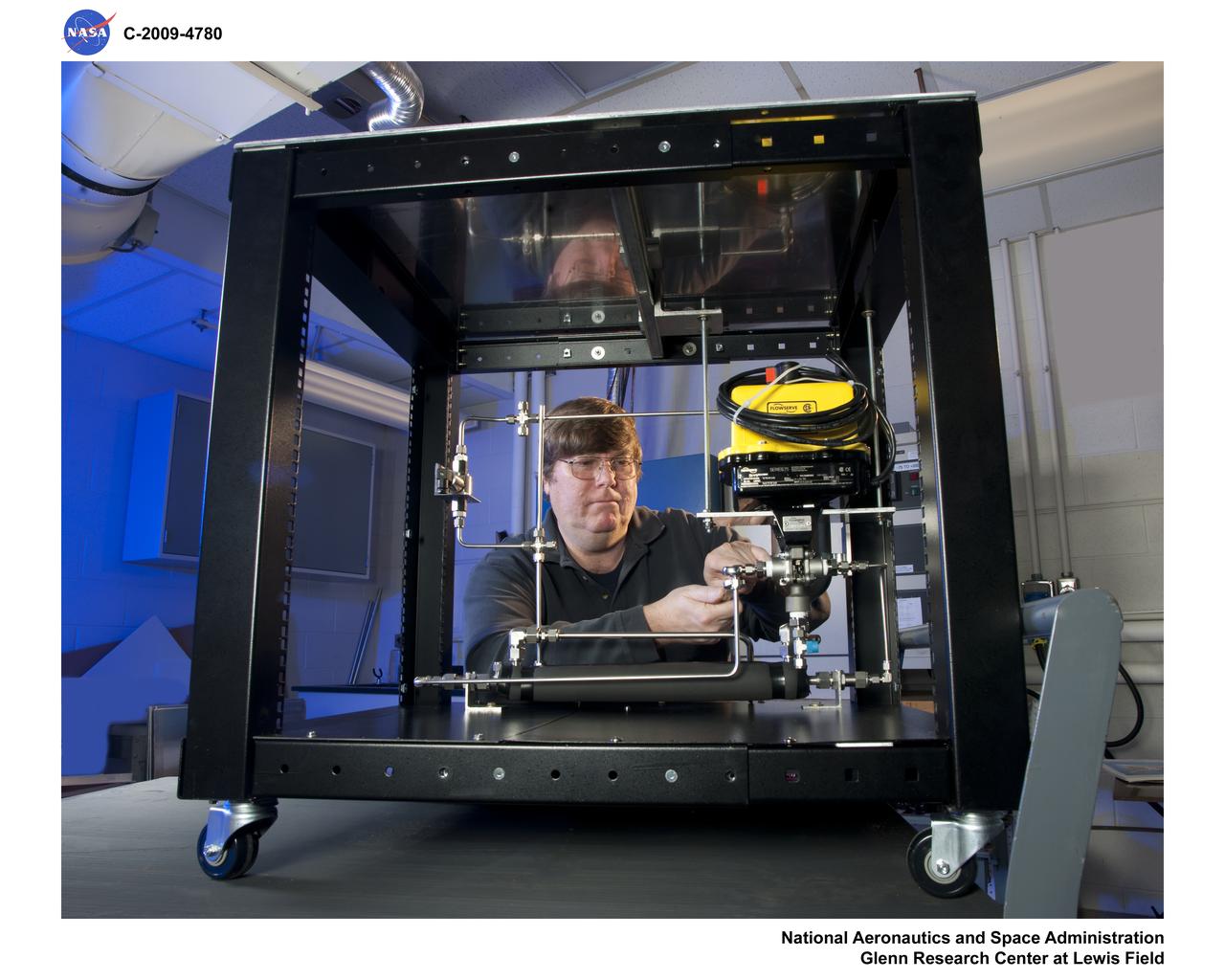
Common Test Bed, Fuel Cell Laboratory
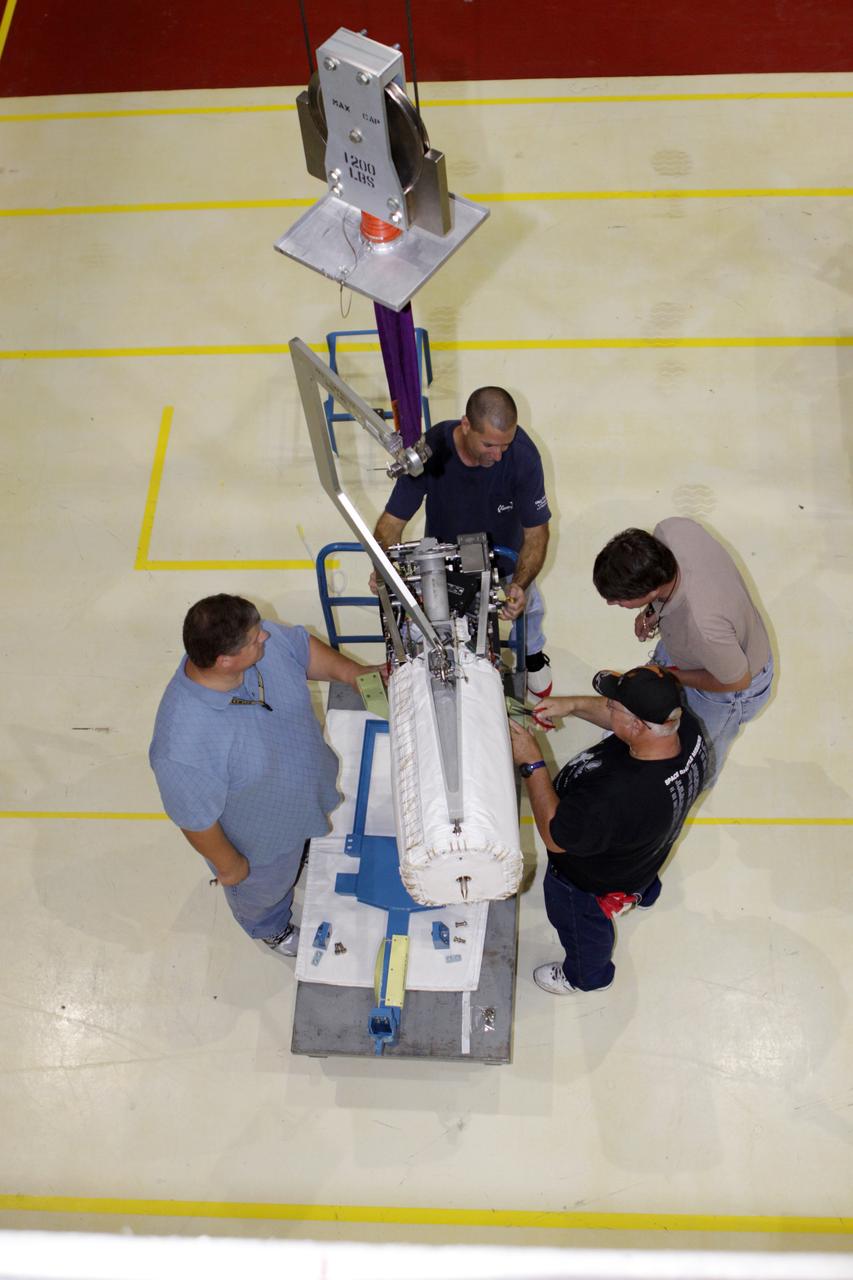
T&R/Endeavour Fuel Cells Removed
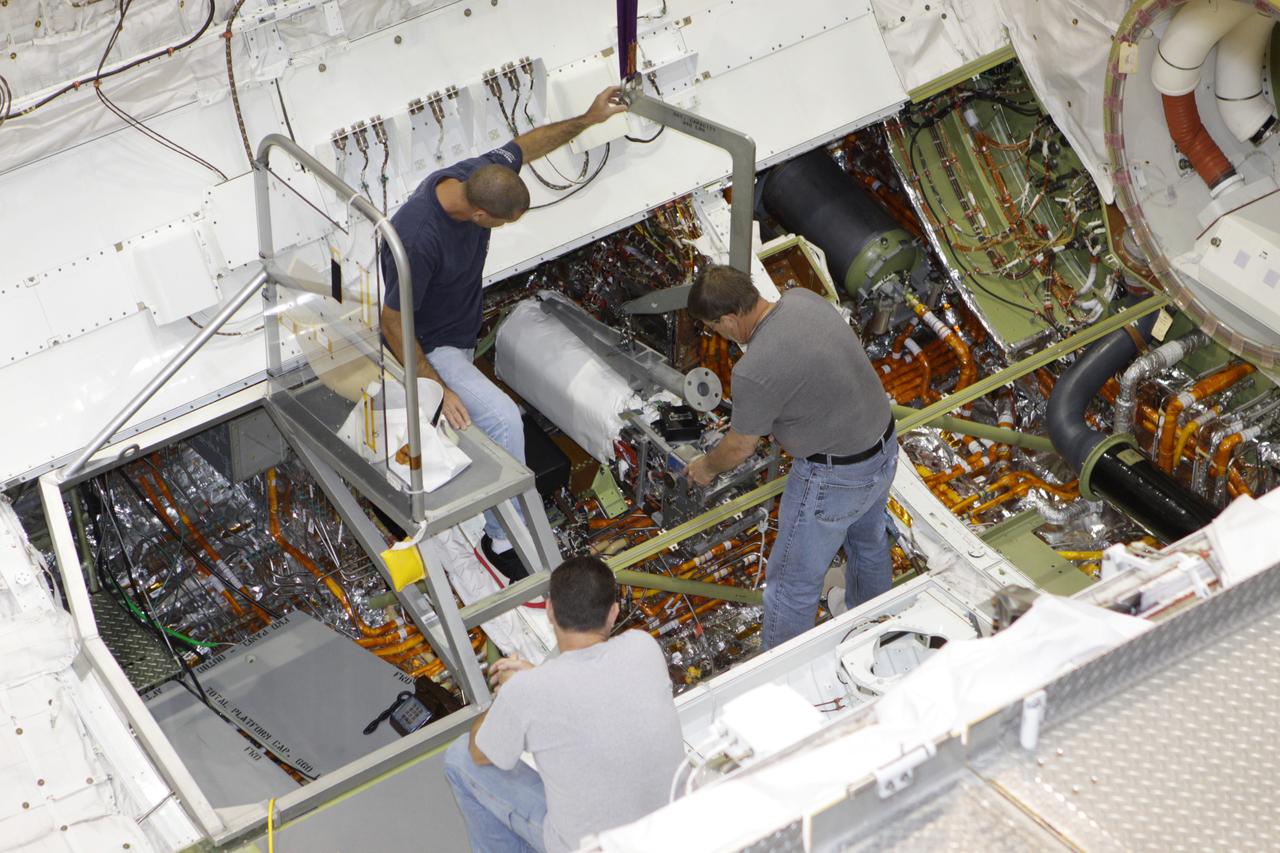
T&R/Endeavour Fuel Cells Removed

T&R/Endeavour Fuel Cells Removed

T&R/Endeavour Fuel Cells Removed
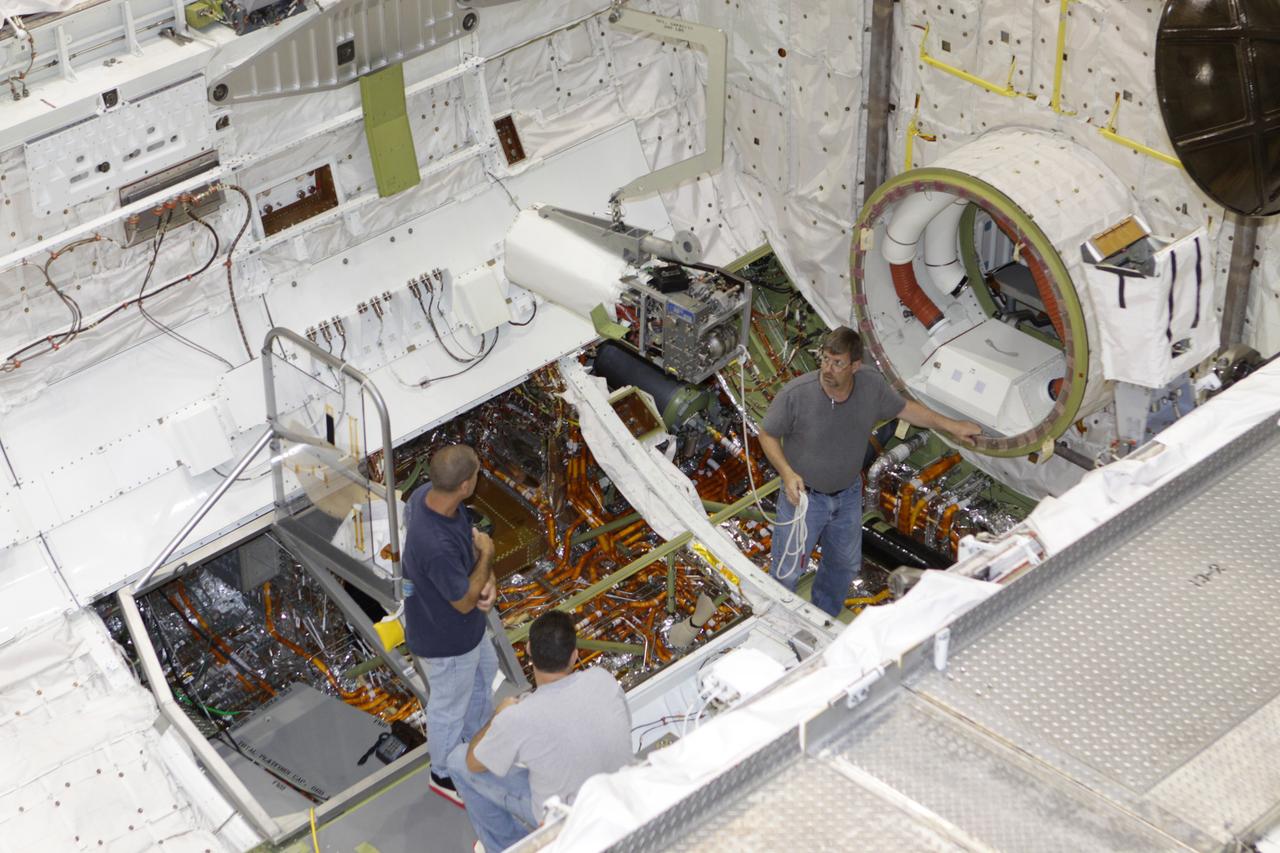
T&R/Endeavour Fuel Cells Removed
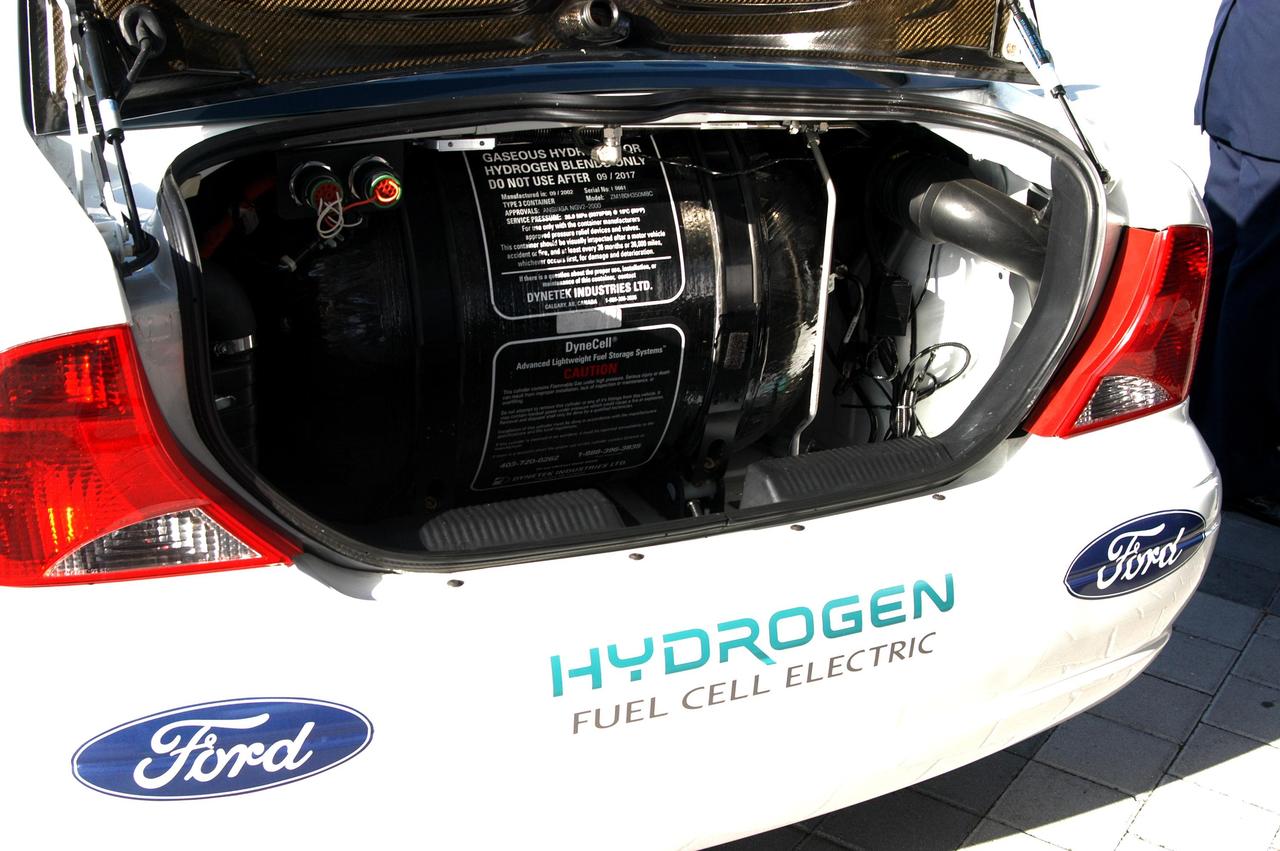
KENNEDY SPACE CENTER, FLA. - On display at KSC’s Visitor Complex is the Ford Motor Company’s hydrogen fuel cell vehicle, a modified Ford Focus. The exhibit was a response to inquiries about fuel cell vehicles during KSC’s Environmental and Energy Awareness week in April 2004.
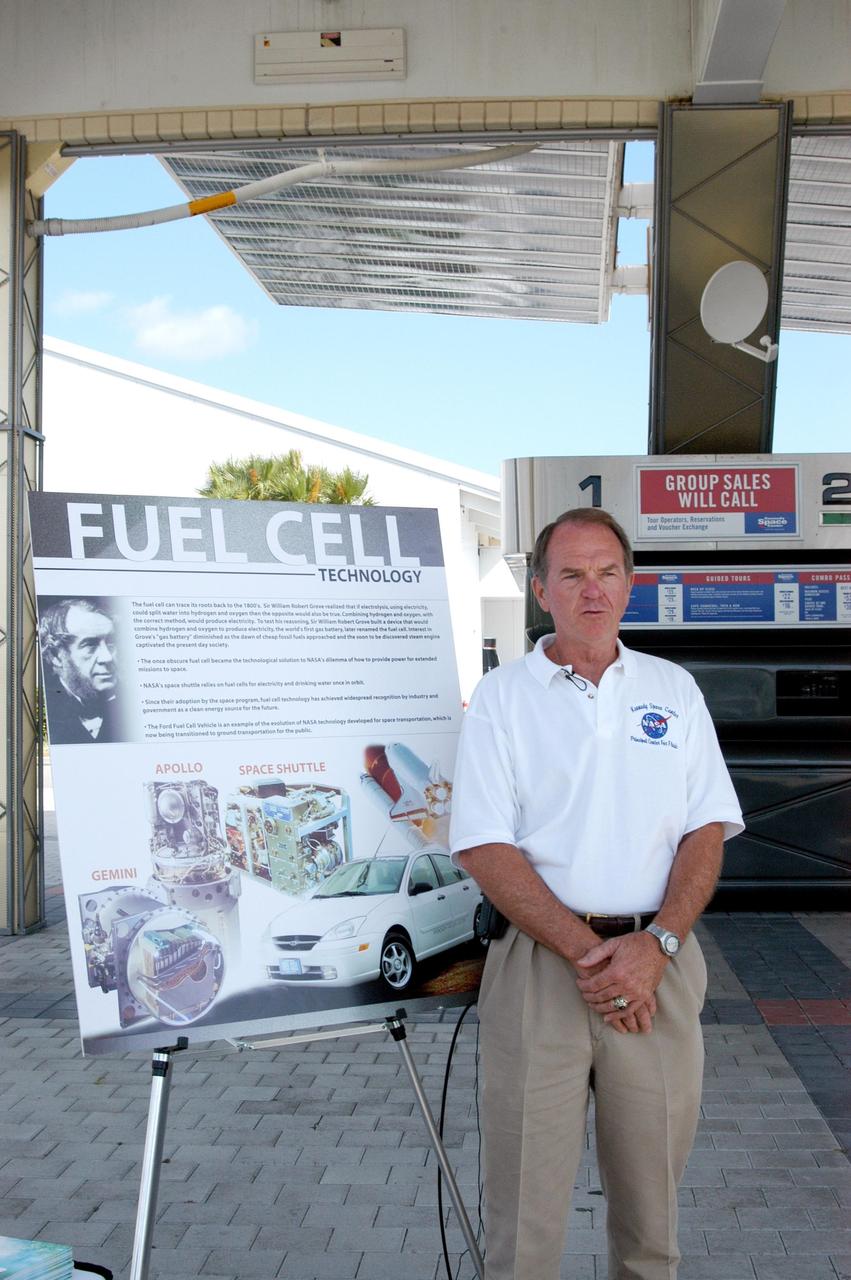
KENNEDY SPACE CENTER, FLA. - Herman Everett explains the use of hydrogen in a fuel cell vehicle during an exhibit by the Ford Motor Company of their modified Ford Focus. The exhibit was a response to inquiries about fuel cell vehicles during KSC’s Environmental and Energy Awareness week in April 2004.
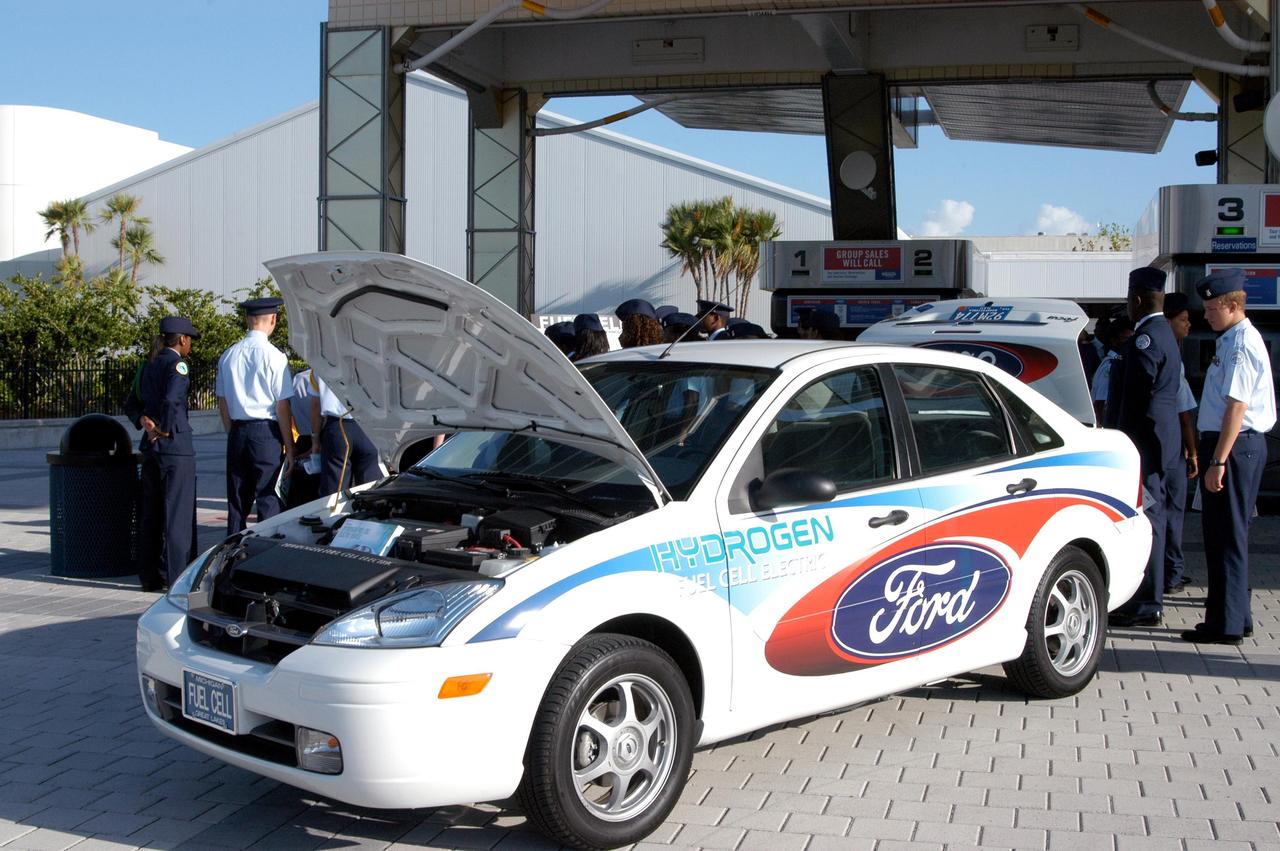
KENNEDY SPACE CENTER, FLA. - On display at KSC’s Visitor Complex is the Ford Motor Company’s hydrogen fuel cell vehicle, a modified Ford Focus. The exhibit was a response to inquiries about fuel cell vehicles during KSC’s Environmental and Energy Awareness week in April 2004.
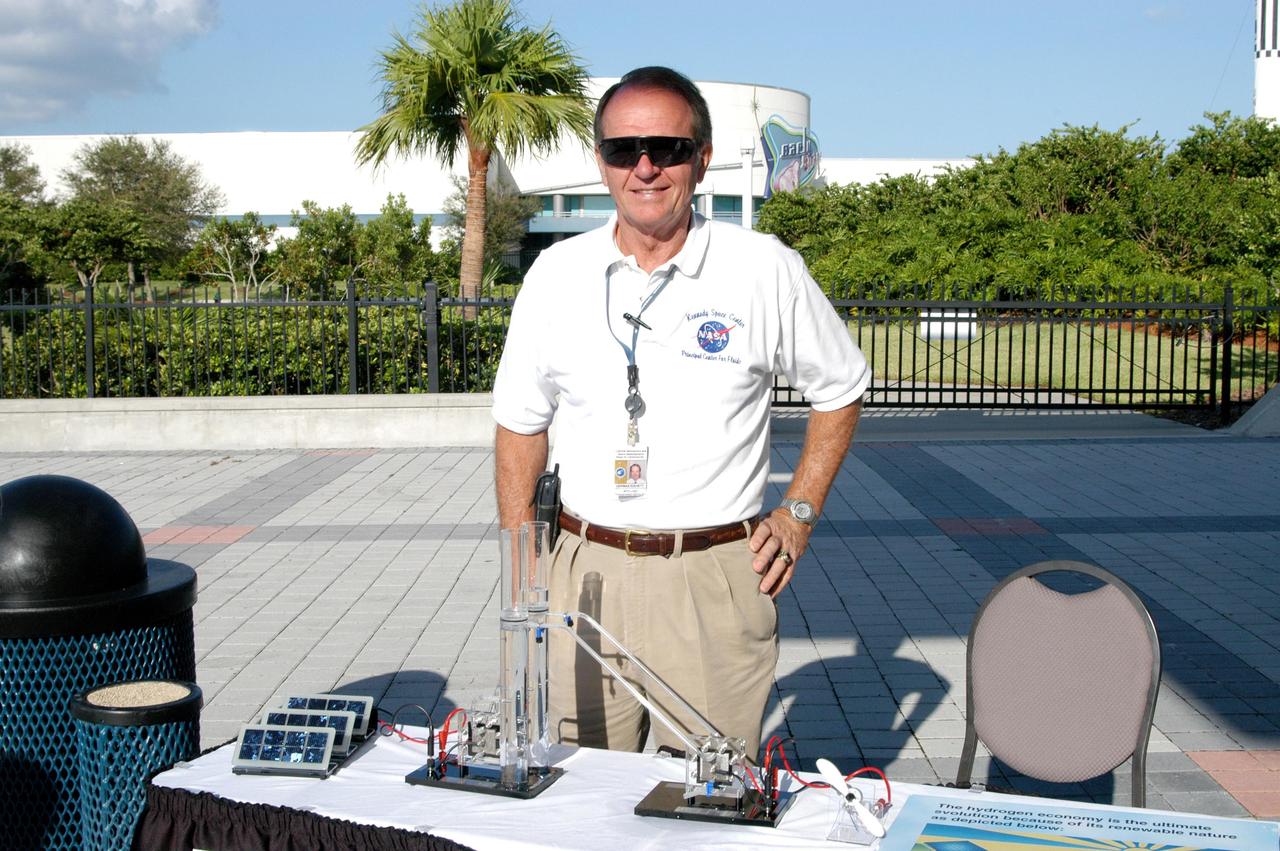
KENNEDY SPACE CENTER, FLA. - Herman Everett is ready to explain the use of hydrogen in a fuel cell vehicle during an exhibit by the Ford Motor Company of their modified Ford Focus. The exhibit was a response to inquiries about fuel cell vehicles during KSC’s Environmental and Energy Awareness week in April 2004.
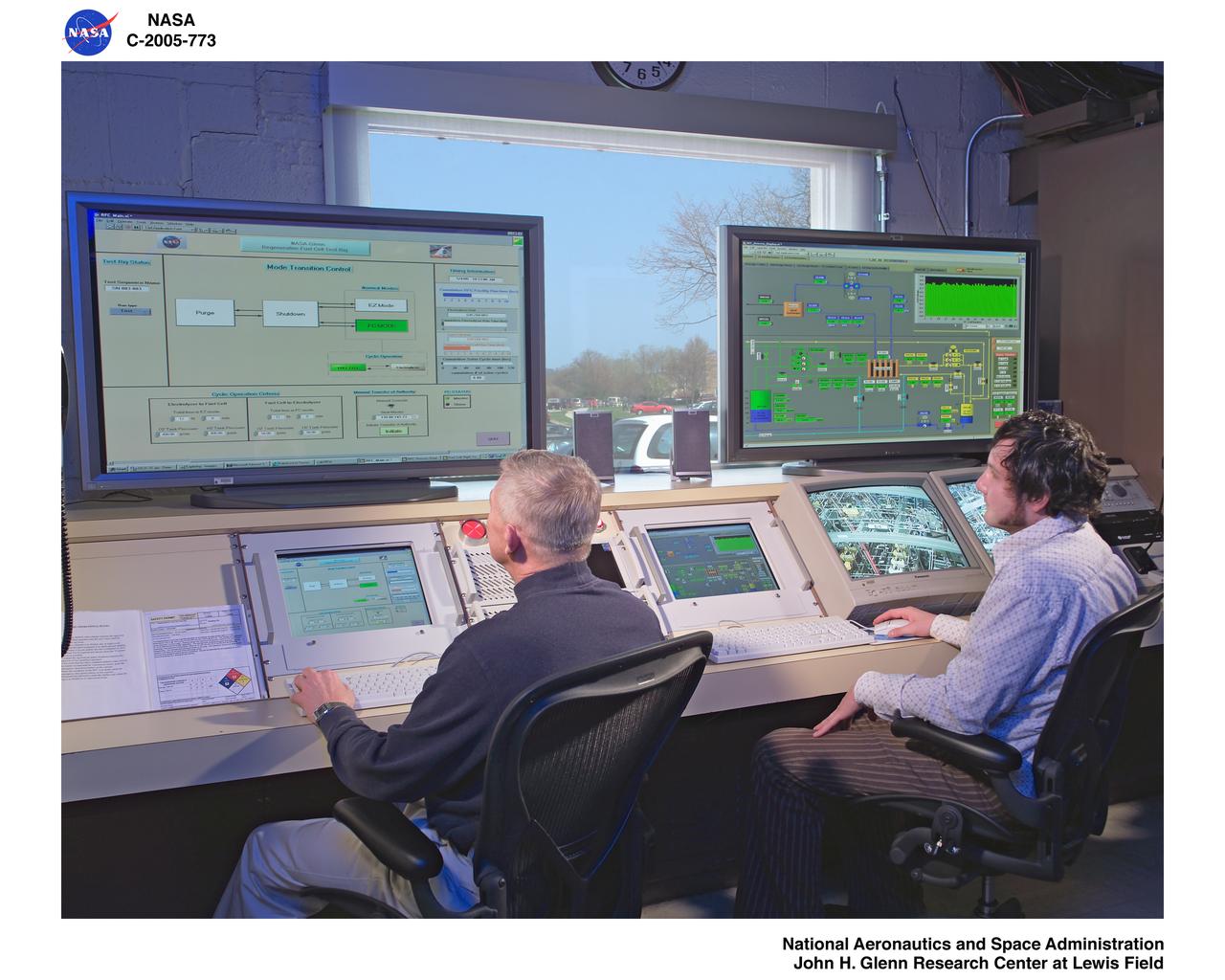
The closed loop regenerative fuel cell test. View inside the control room.
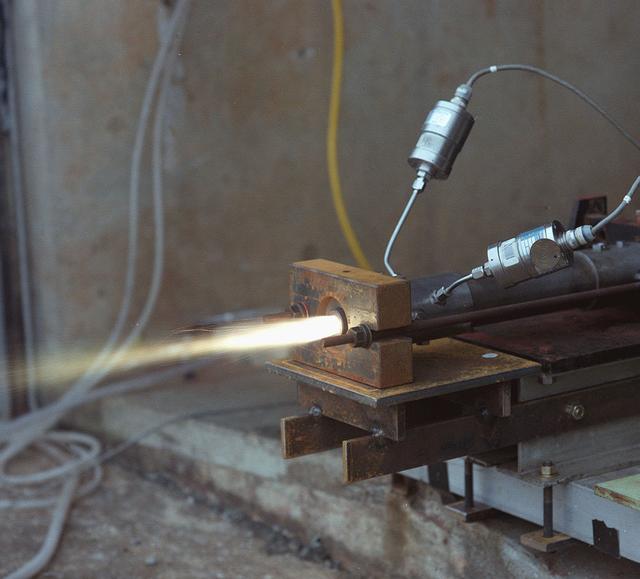
Fuels used in the 11 inch and 24 inch lab-scale hybrid motors are ignited at Marshall's test cell 104.
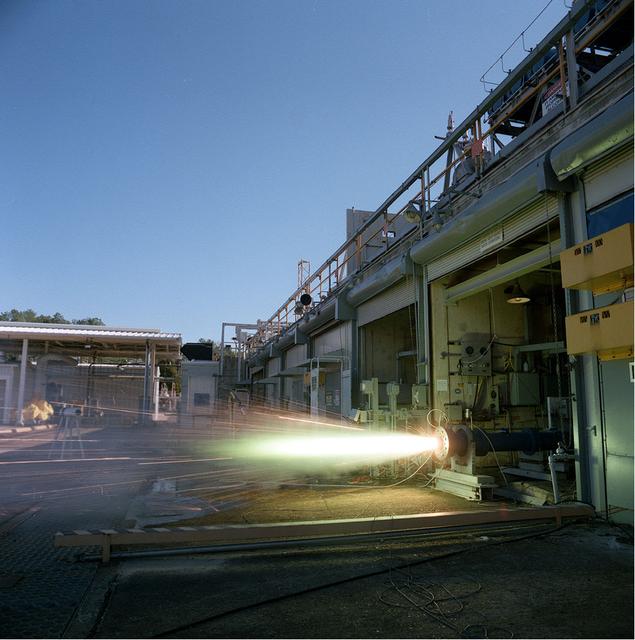
An eleven inch (11) hybrid motor gaseous oxygen (GOX) fuel firing at Marshall's test cell 103.
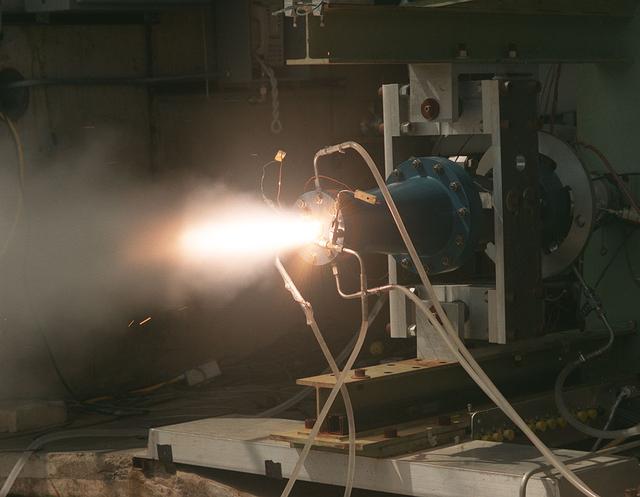
Solid fuel test performed on the Fastrac II engine cell at Marshall's Test Stand 116.
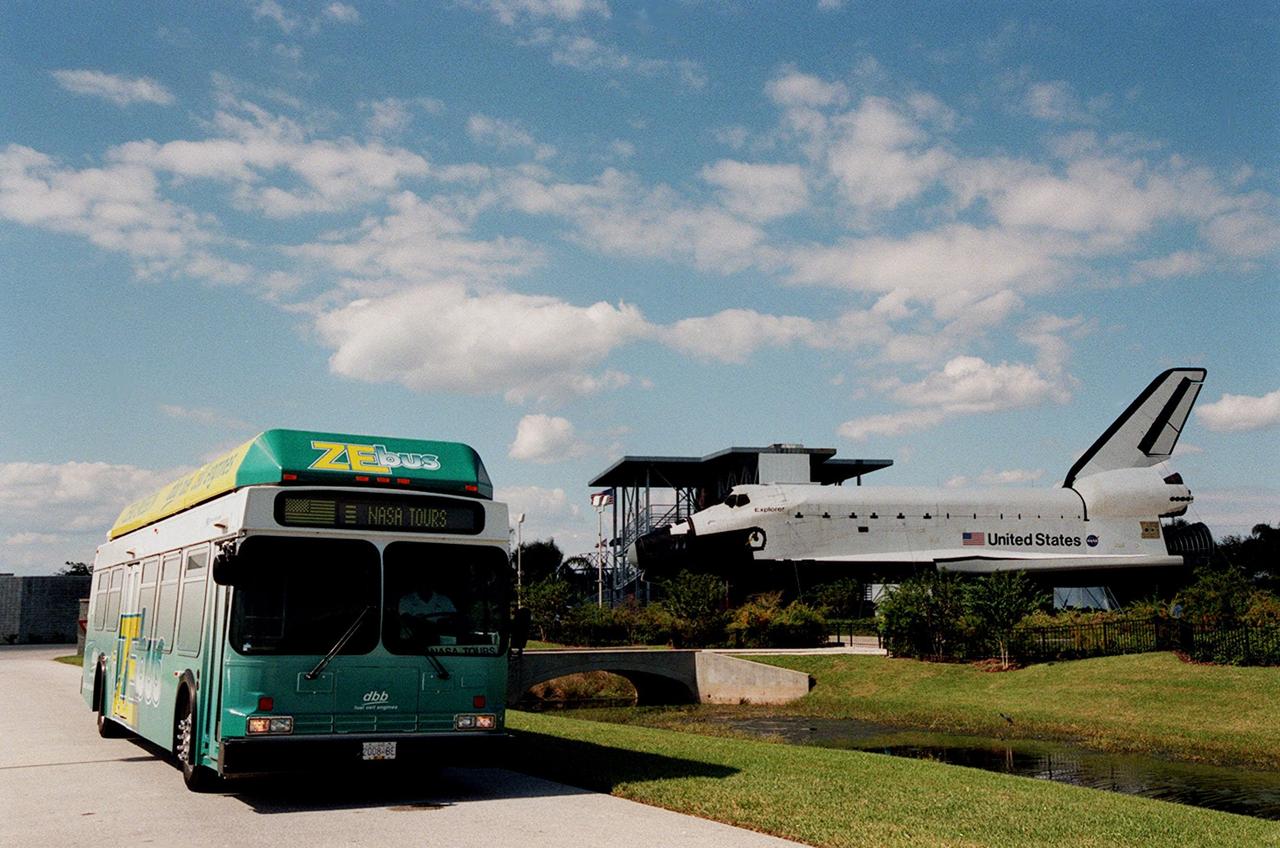
The Zero Emissions (ZE) transit bus passes a mock-up orbiter named Explorer on a trek through the KSC Visitor Complex. Provided by dbb fuel cell engines inc. of Vancouver, Canada, the ZE bus was brought to KSC as part of the Center's Alternative Fuel Initiatives Program. The bus uses a Proton Exchange Membrane fuel cell in which hydrogen and oxygen, from atmospheric air, react to produce electricity that powers an electric motor drive system. The by-product "exhaust" from the fuel cell is water vapor, thus zero harmful emissions. A typical diesel-powered bus emits more than a ton of harmful pollutants from its exhaust every year. The ZE bus is being used on tour routes at the KSC Visitor Complex for two days to introduce the public to the concept
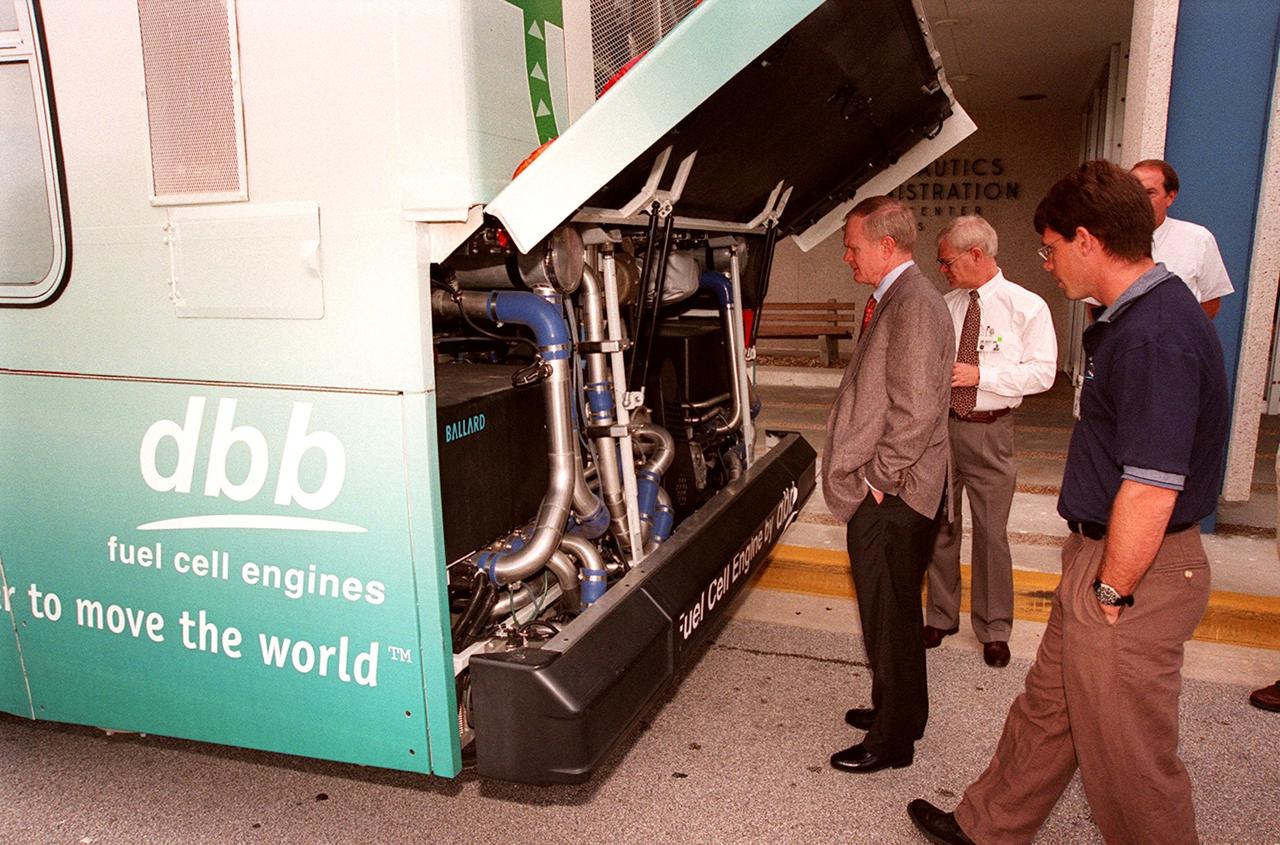
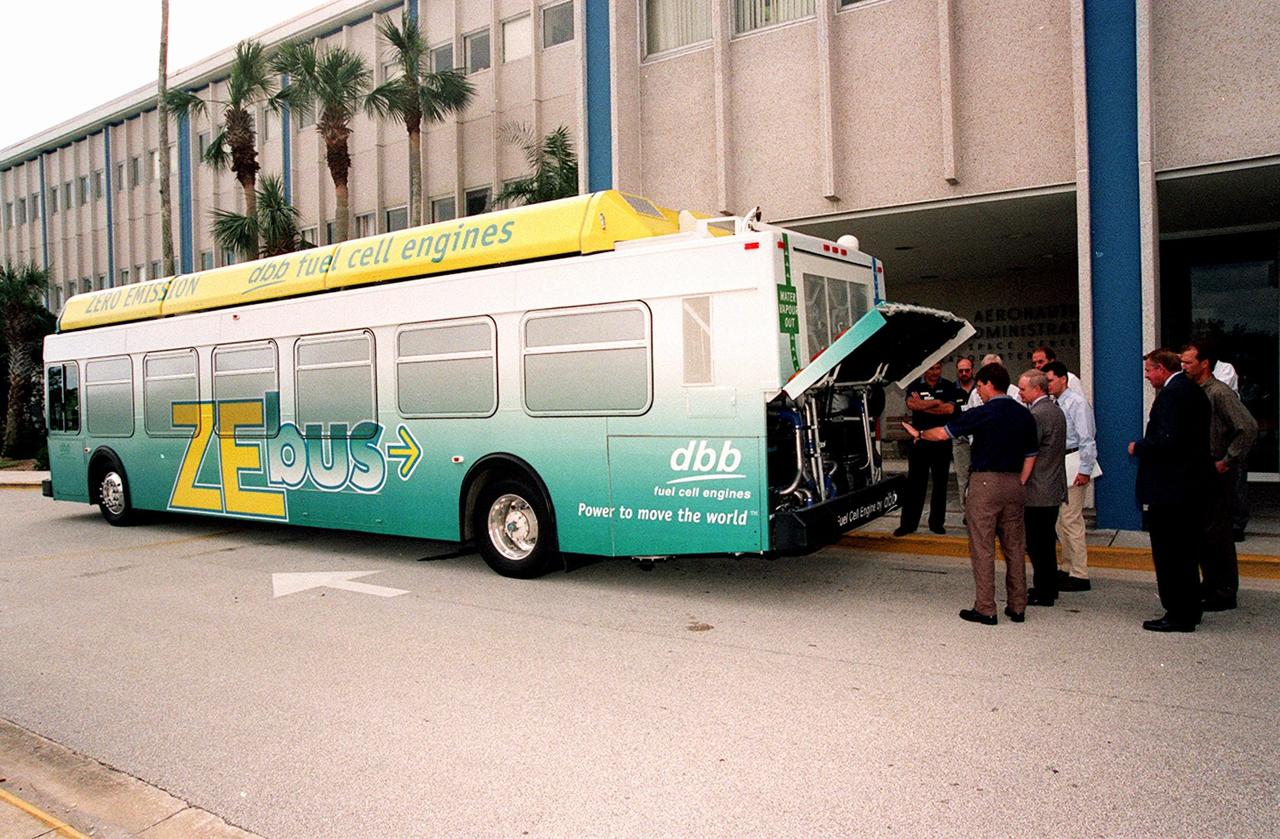
In front of the Headquarters Building at KSC, Center Director Roy Bridges (left) looks at the hydrogen-oxygen driven engine powering a Zero Emissions (ZE) transit bus. Provided by dbb fuel cell engines inc. of Vancouver, Canada, the ZE bus was brought to KSC as part of the Center's Alternative Fuel Initiatives Program. The bus uses a Proton Exchange Membrane fuel cell in which hydrogen and oxygen, from atmospheric air, react to produce electricity that powers an electric motor drive system. The by-product "exhaust" from the fuel cell is water vapor, thus zero harmful emissions. A typical diesel-powered bus emits more than a ton of harmful pollutants from its exhaust every year. Available for viewing by employees, the ZE bus is also being used on tour routes at the KSC Visitor Complex Oct. 26-27
On view in front of the Headquarters Building, the Zero Emissions (ZE) transit bus attracts an interested group of employees, including Center Director Roy Bridges (second from left in foreground). Provided by dbb fuel cell engines inc. of Vancouver, Canada, the ZE bus was brought to KSC as part of the Center's Alternative Fuel Initiatives Program. The bus uses a Proton Exchange Membrane fuel cell in which hydrogen and oxygen, from atmospheric air, react to produce electricity that powers an electric motor drive system. The by-product "exhaust" from the fuel cell is water vapor, thus zero harmful emissions. A typical diesel-powered bus emits more than a ton of harmful pollutants from its exhaust every year. Available for viewing by employees, the ZE bus is also being used on tour routes at the KSC Visitor Complex Oct. 26-27
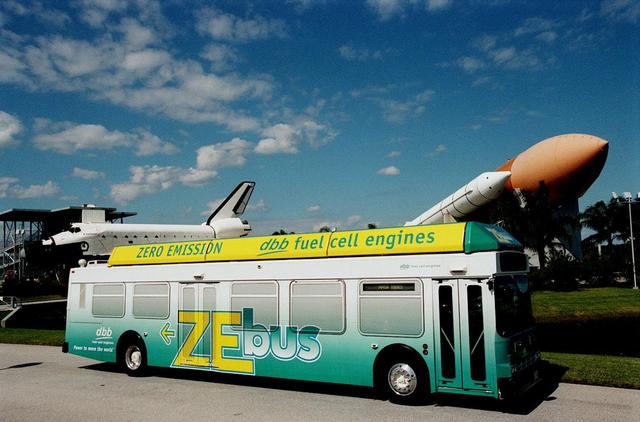
The Zero Emissions (ZE) transit bus tours the KSC Visitor Complex for a test ride. In the background are a mock-up orbiter named Explorer (left) and a stack of solid rocket boosters and external tank (right), typically used on Shuttle launches. Provided by dbb fuel cell engines inc. of Vancouver, Canada, the ZE bus was brought to KSC as part of the Center's Alternative Fuel Initiatives Program. The bus uses a Proton Exchange Membrane fuel cell in which hydrogen and oxygen, from atmospheric air, react to produce electricity that powers an electric motor drive system. The by-product "exhaust" from the fuel cell is water vapor, thus zero harmful emissions. A typical diesel-powered bus emits more than a ton of harmful pollutants from its exhaust every year. The ZE bus is being used on tour routes at the KSC Visitor Complex for two days to introduce the public to the concept
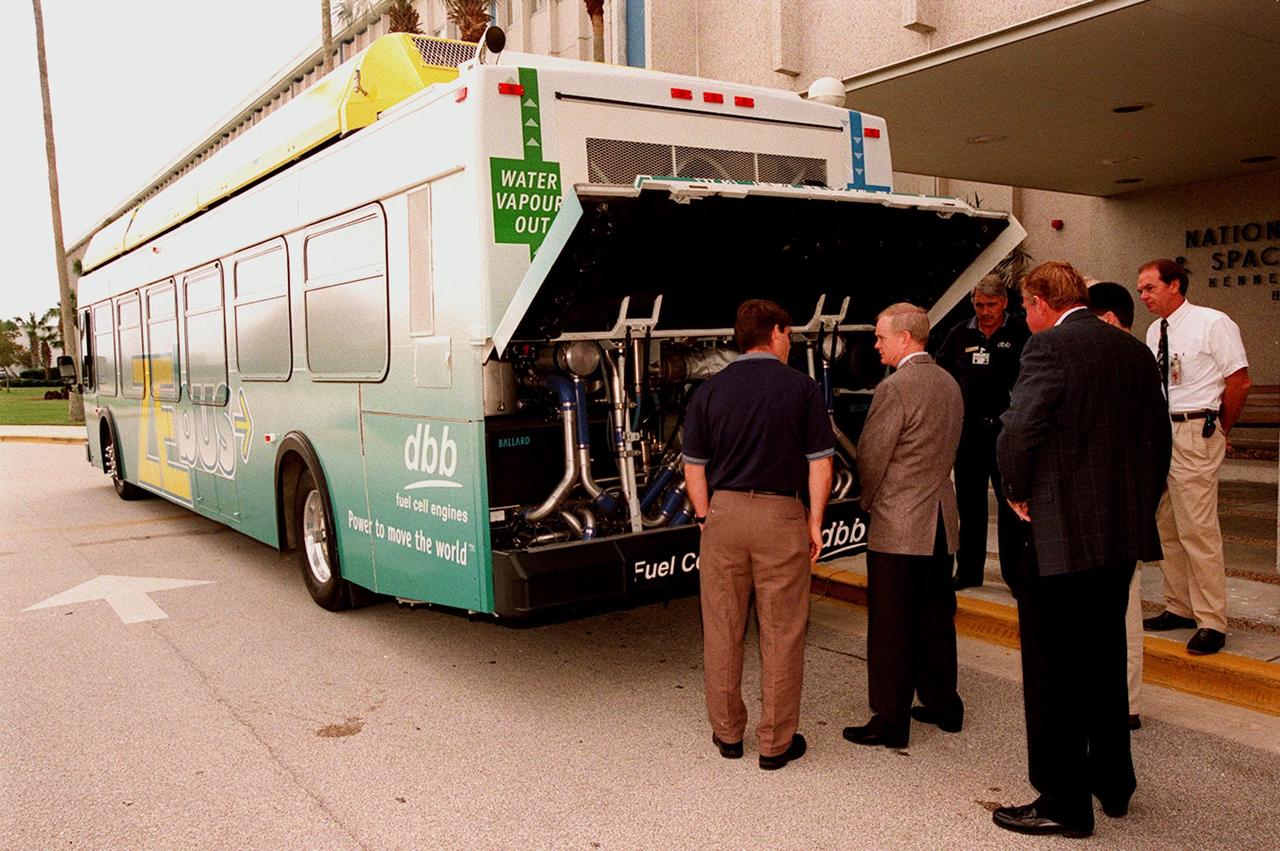
KSC employees, along with Center Director Roy Bridges (second from left), view the hydrogen-oxygen driven engine powering a Zero Emissions (ZE) transit bus. Provided by dbb fuel cell engines inc. of Vancouver, Canada, the ZE bus was brought to KSC as part of the Center's Alternative Fuel Initiatives Program. The bus uses a Proton Exchange Membrane fuel cell in which hydrogen and oxygen, from atmospheric air, react to produce electricity that powers an electric motor drive system. The by-product "exhaust" from the fuel cell is water vapor, thus zero harmful emissions. A typical diesel-powered bus emits more than a ton of harmful pollutants from its exhaust every year. Available for viewing by employees, the ZE bus is also being used on tour routes at the KSC Visitor Complex Oct. 26-27
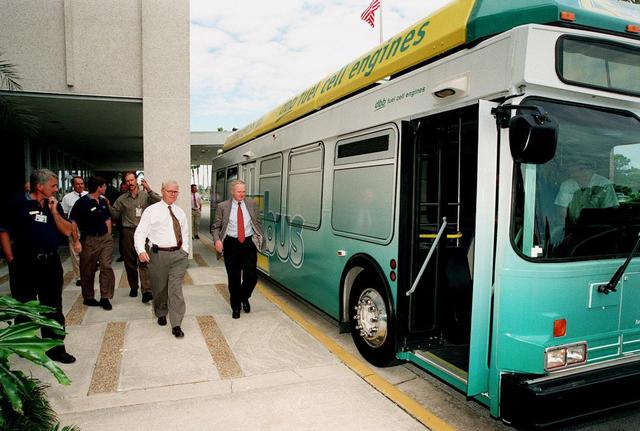
KSC workers, with Center Director Roy Bridges (at right next to bus), head for the open door of the Zero Emissions (ZE) transit bus and a ride around the center. Provided by dbb fuel cell engines inc. of Vancouver, Canada, the ZE bus was brought to KSC as part of the Center's Alternative Fuel Initiatives Program. The bus uses a Proton Exchange Membrane fuel cell in which hydrogen and oxygen, from atmospheric air, react to produce electricity that powers an electric motor drive system. The by-product "exhaust" from the fuel cell is water vapor, thus zero harmful emissions. A typical diesel-powered bus emits more than a ton of harmful pollutants from its exhaust every year. Available to employees for viewing and a ride, the ZE bus is also being used on tour routes at the KSC Visitor Complex Oct. 26-27
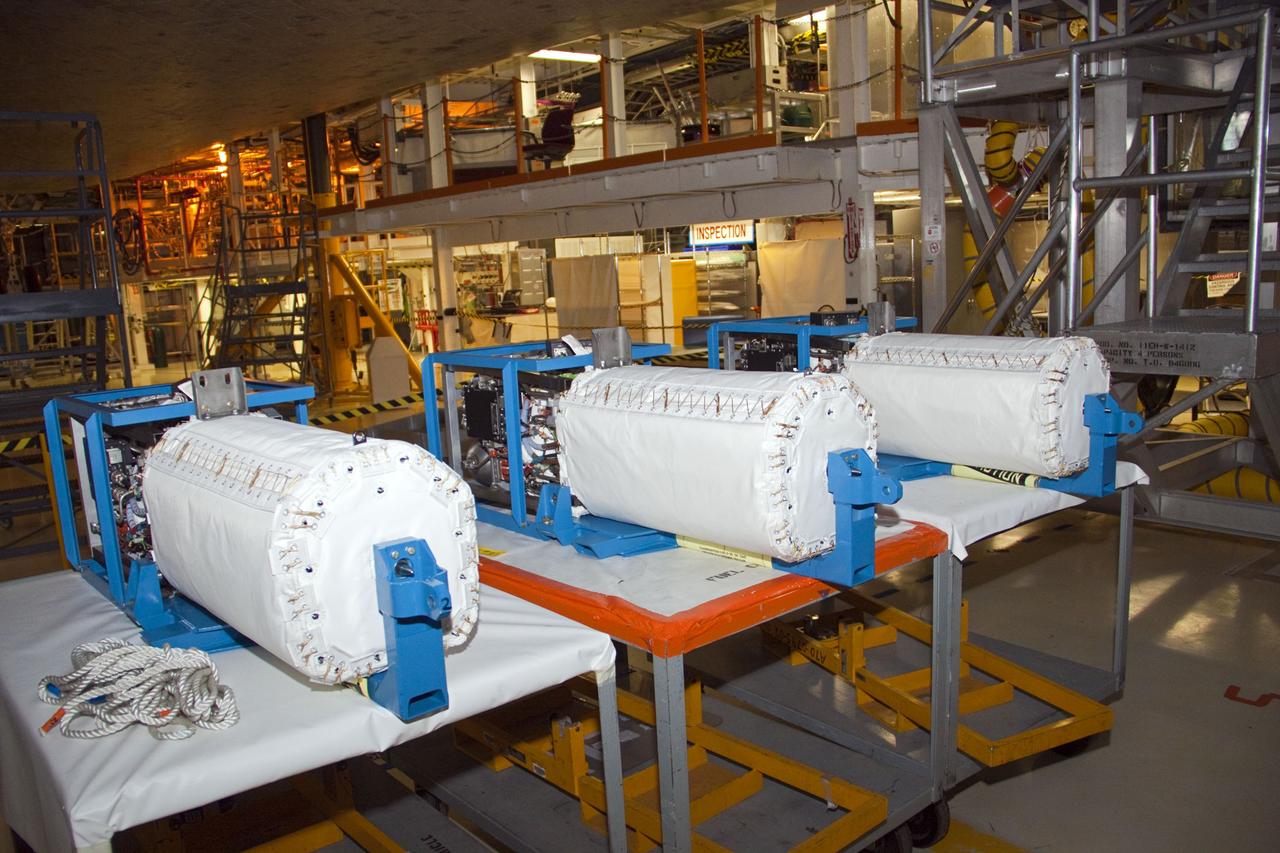
CAPE CANAVERAL, Fla. -- Three fuel cells recently removed from space shuttle Atlantis stand on tables in Orbiter Processing Facility-2 at NASA's Kennedy Space Center in Florida. The fuel cells produced electricity for shuttles in space by combining liquid oxygen and liquid hydrogen. They were removed as part of the ongoing work to prepare the shuttles for public display. The shuttle is being prepared for display at the Kennedy Space Center Visitor Complex. Photo credit: NASA/Jim Grossmann
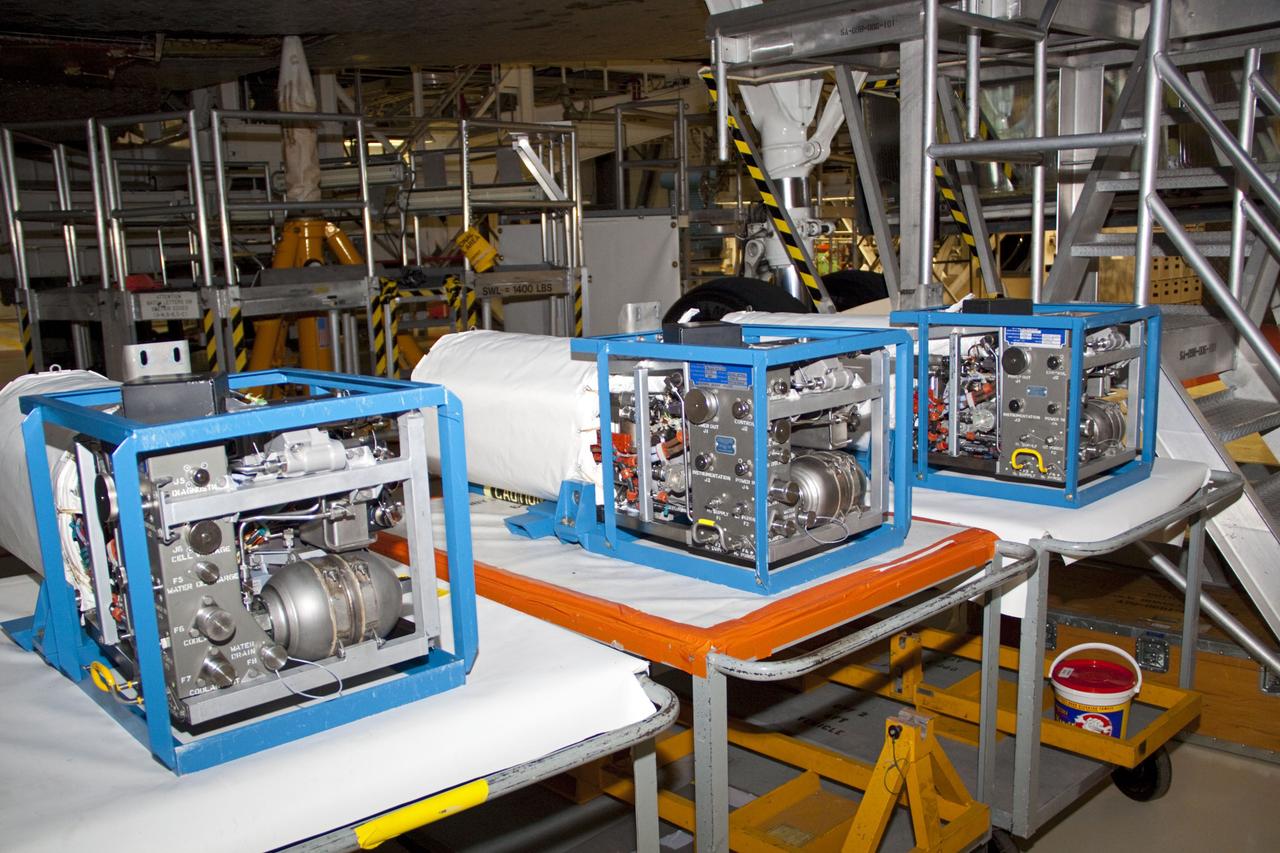
CAPE CANAVERAL, Fla. --Three fuel cells recently removed from space shuttle Atlantis stand on tables in Orbiter Processing Facility-2 at NASA's Kennedy Space Center in Florida. The fuel cells produced electricity for shuttles in space by combining liquid oxygen and liquid hydrogen. They were removed as part of the ongoing work to prepare the shuttles for public display. The shuttle is being prepared for display at the Kennedy Space Center Visitor Complex. Photo credit: NASA/Jim Grossmann
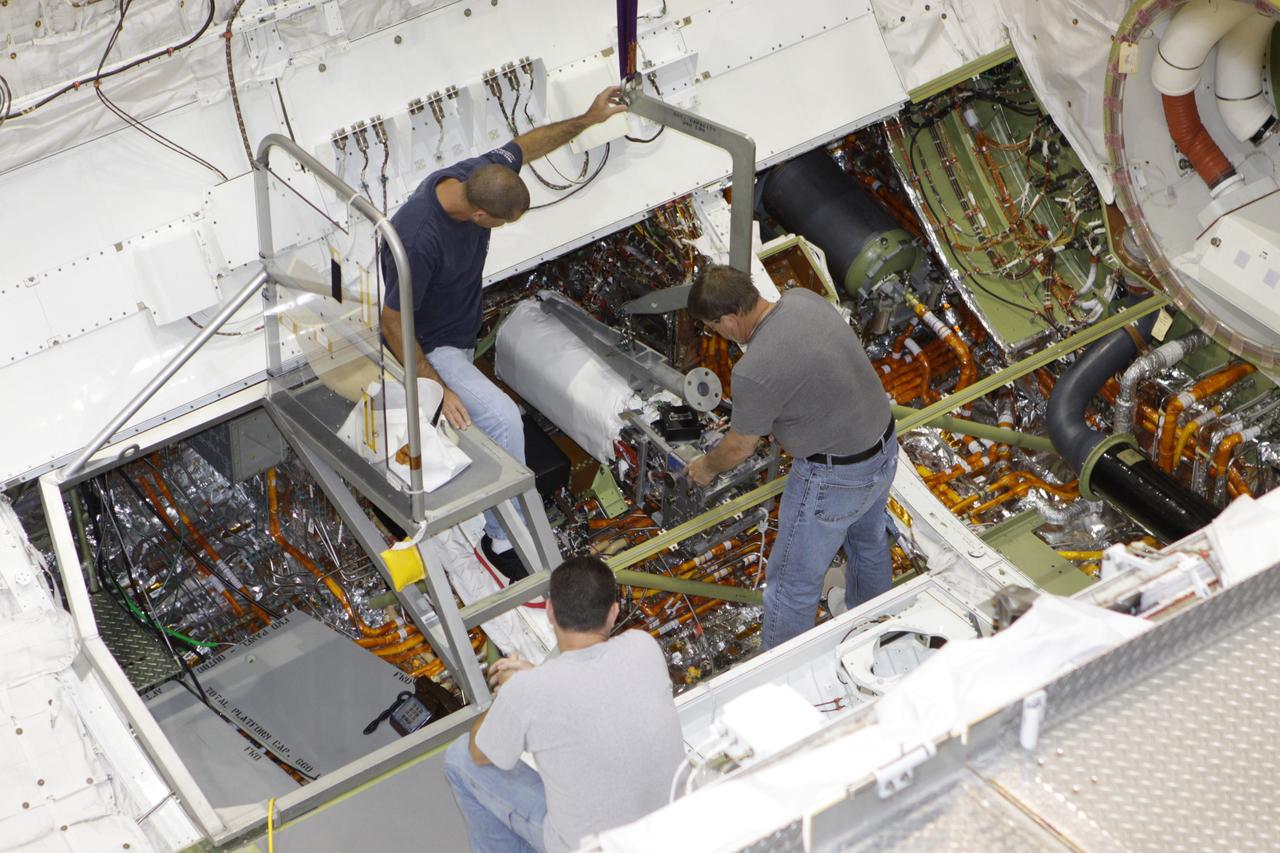
CAPE CANAVERAL, Fla. – Inside Orbiter Processing Facility-2 at NASA's Kennedy Space Center in Florida, technicians use a special crane to lift a fuel cell out of space shuttle Endeavour's payload bay. All three of Endeavour's fuel cells were removed and will be drained of fluids. The hydrogen and oxygen dewars which feed reactants to the fuel cells remain in Endeavour's midbody and will be purged with inert gases and vented down. The work is part of the Space Shuttle Program's transition and retirement processing of shuttle Endeavour, which is being prepared for public display at the California Science Center in Los Angeles. Its ferry flight to California is targeted for mid-September. Endeavour was the last space shuttle added to NASA's orbiter fleet. Over the course of its 19-year career, Endeavour spent 299 days in space during 25 missions. For more information, visit http://www.nasa.gov/shuttle. Photo credit: NASA/Glenn Benson
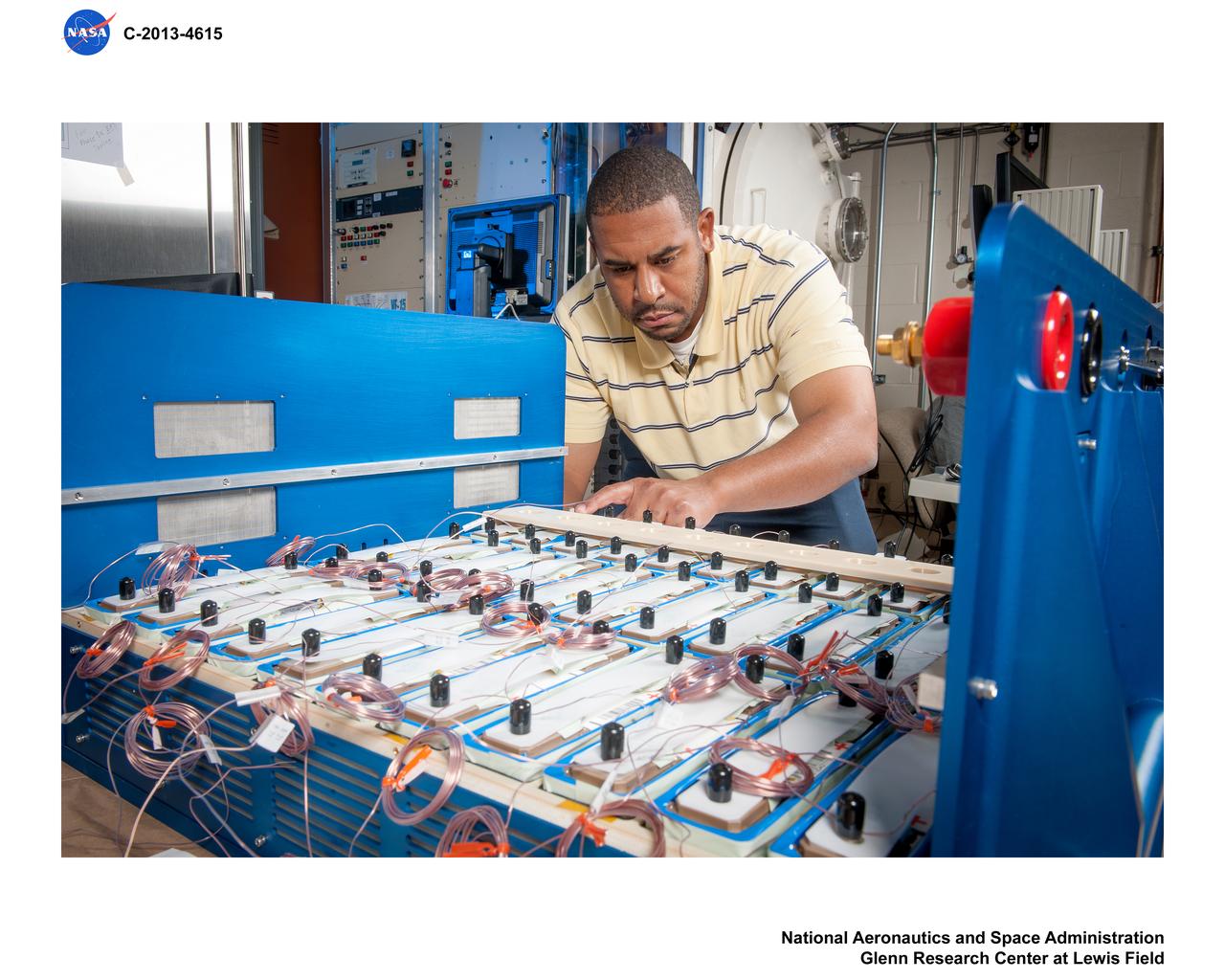
Advanced Exploration Systems (AES) Modular Power Systems for Space Exploration (AMPS); electrochemistry, AMPS, will infuse and demonstrate batteries, fuel cells, and other power modules for exploration ground system demonstrations
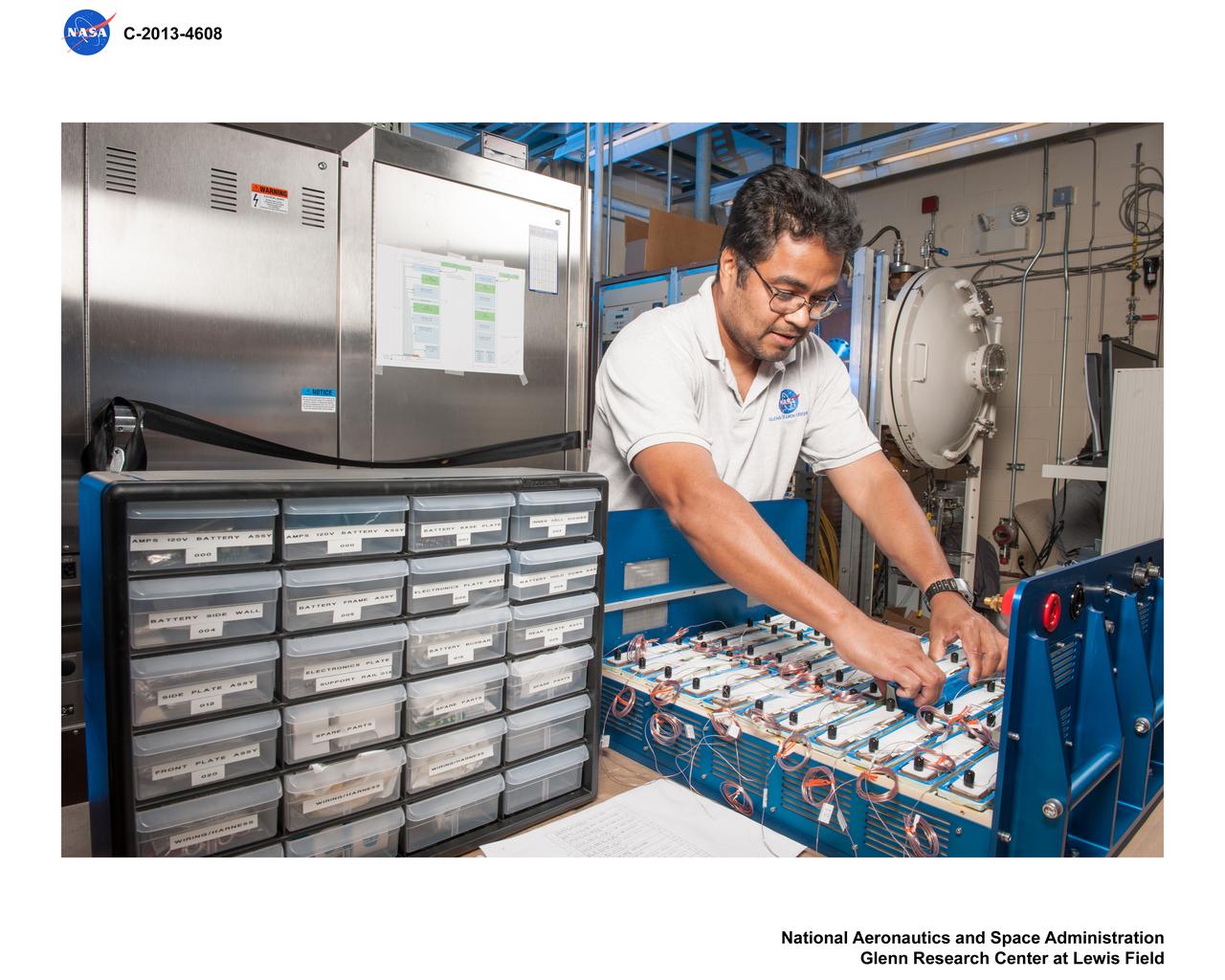
Advanced Exploration Systems (AES) Modular Power Systems for Space Exploration (AMPS); electrochemistry, AMPS, will infuse and demonstrate batteries, fuel cells, and other power modules for exploration ground system demonstrations
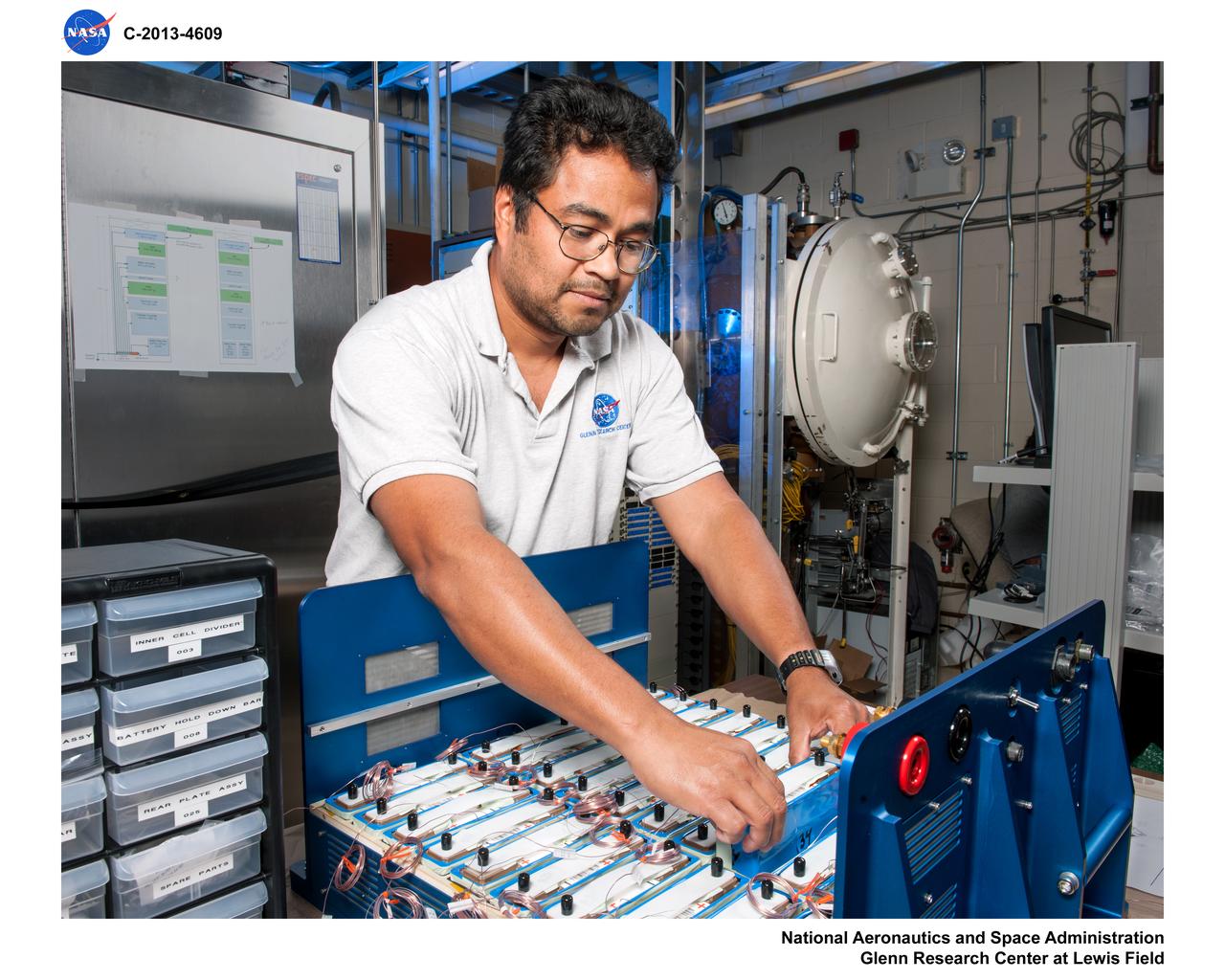
Advanced Exploration Systems (AES) Modular Power Systems for Space Exploration (AMPS); electrochemistry, AMPS, will infuse and demonstrate batteries, fuel cells, and other power modules for exploration ground system demonstrations
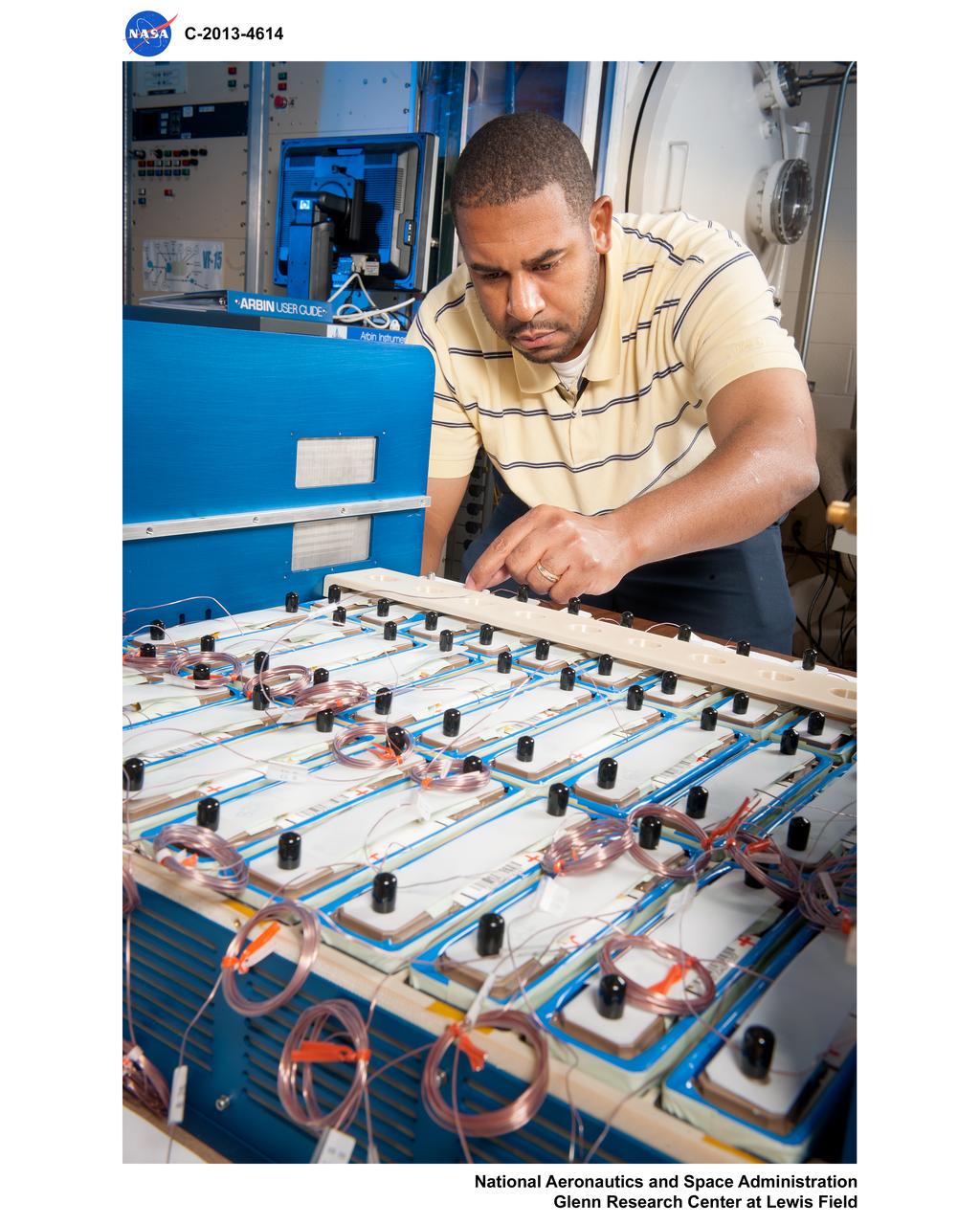
Advanced Exploration Systems (AES) Modular Power Systems for Space Exploration (AMPS); electrochemistry, AMPS, will infuse and demonstrate batteries, fuel cells, and other power modules for exploration ground system demonstrations
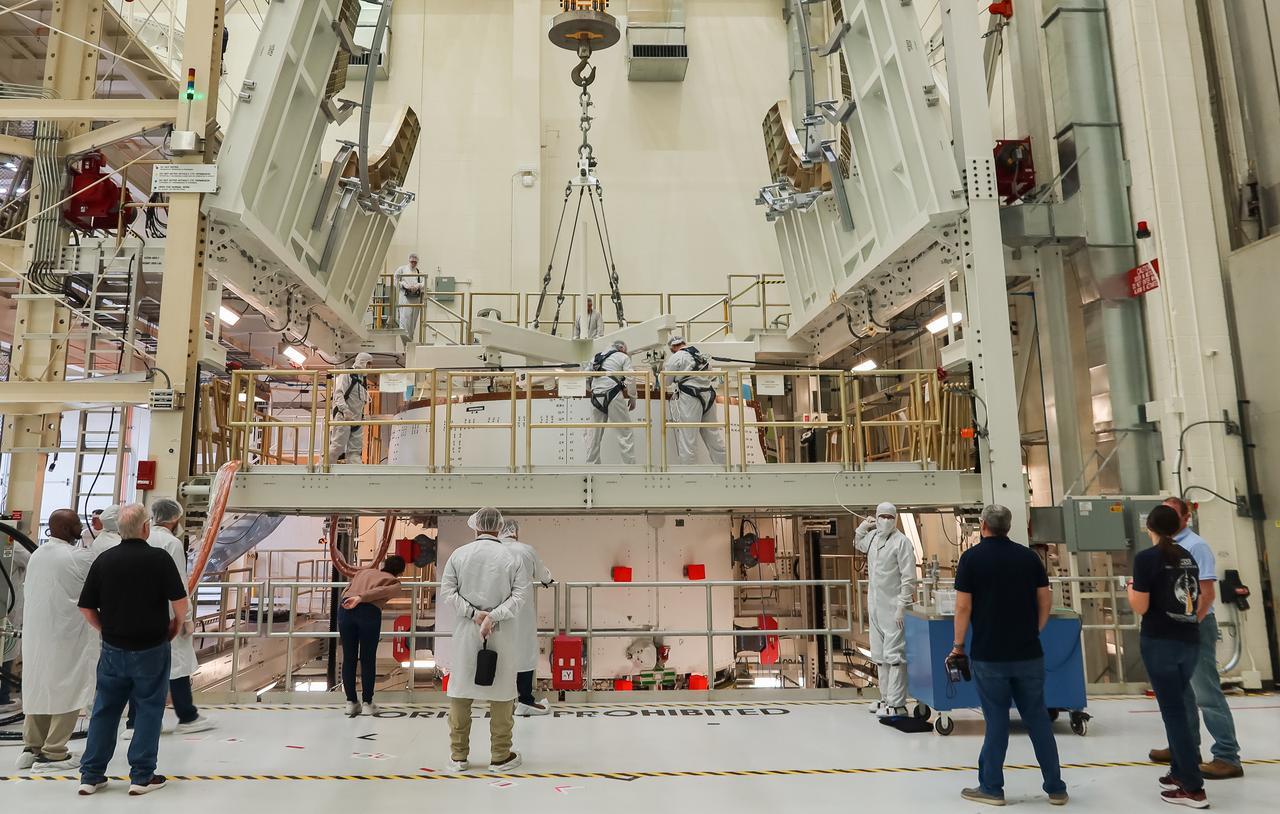
The European Service Module (ESM) for NASA’s Artemis II mission is secured inside the FAST (final assembly and system testing) cell in the high bay of the Neil A. Armstrong Operations and Checkout Building at NASA’s Kennedy Space Center in Florida on May 22, 2023. The ESM is in the FAST cell for final checkouts before it is stacked with the Orion crew module. Technicians are removing the crane that was used to move the ESM. The powerhouse that will fuel and propel Orion in space, the ESM will be used for Artemis II, the first Artemis mission flying crew aboard Orion.
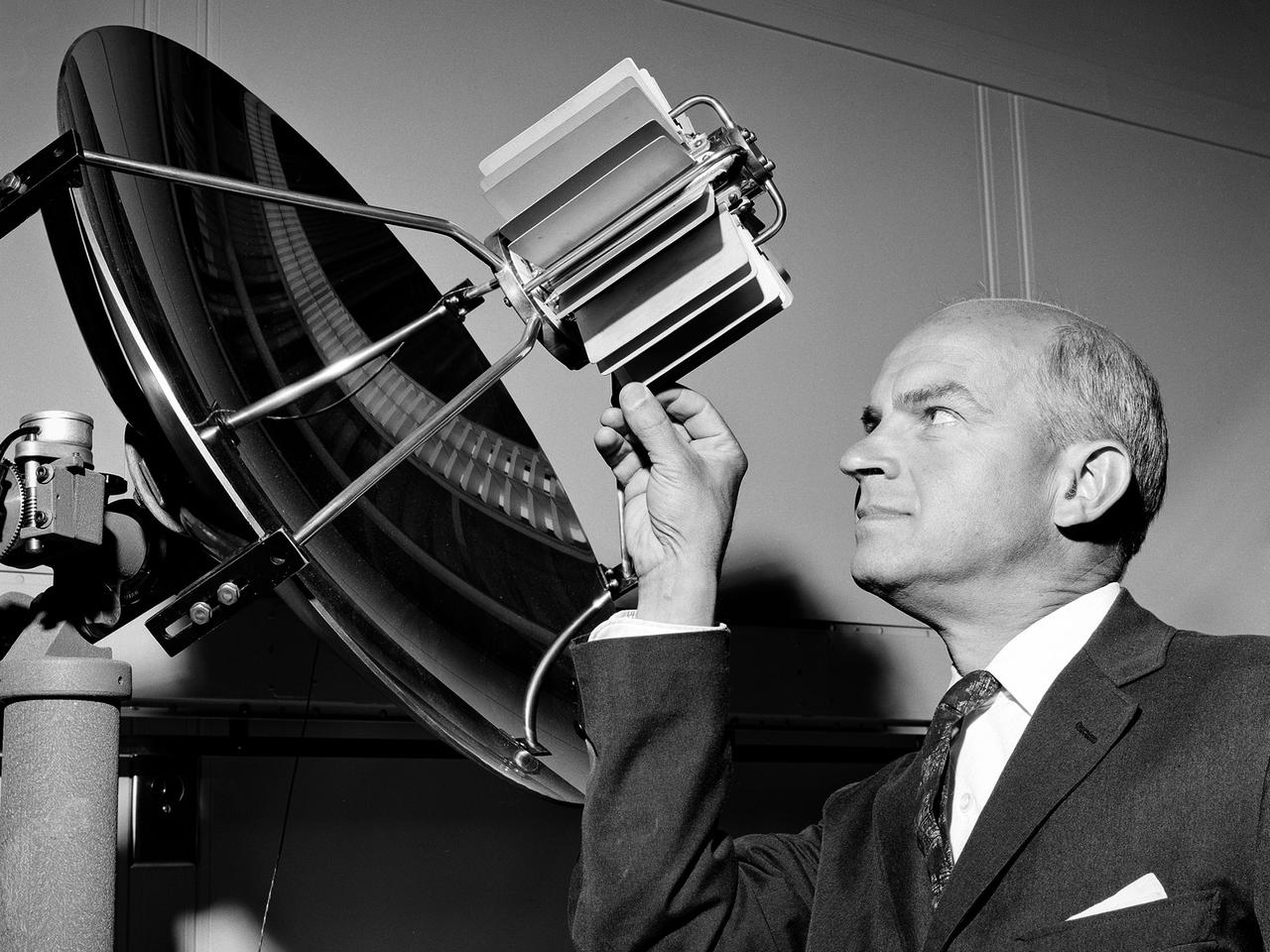
Walter Olson, Chief of the Chemistry and Energy Conversion Division, examines equipment in the new Energy Conversion Laboratory at the National Aeronautics and Space Administration (NASA) Lewis Research Center. The Energy Conversion Laboratory, built in 1961 and 1962, was a modest one-story brick structure with 30,000 square feet of working space. It was used to study fundamental elements pertaining to the conversion of energy into electrical power. The main application for this was space power, but in the 1970s it would also be applied for terrestrial applications. Olson joined the Lewis staff as a fuels and combustion researcher in 1942 and was among a handful or researchers who authored the new laboratory’s first technical report. The laboratory reorganized after the war and Olson was placed in charge of three sections of researchers in the Combustion Branch. They studied combustion and fuels for turbojets, ramjets, and small rockets. In 1950, Olson was named Chief of the entire Fuels and Combustion Research Division. In 1960 Olson was named Chief of the new Chemistry and Energy Conversion Division. It was in this role that Olson advocated for the construction of the Energy Conversion Laboratory. The new division expanded its focus from just fuels and combustion to new sources of energy and power such as solar cells, fuels cells, heat transfer, and thermionics.
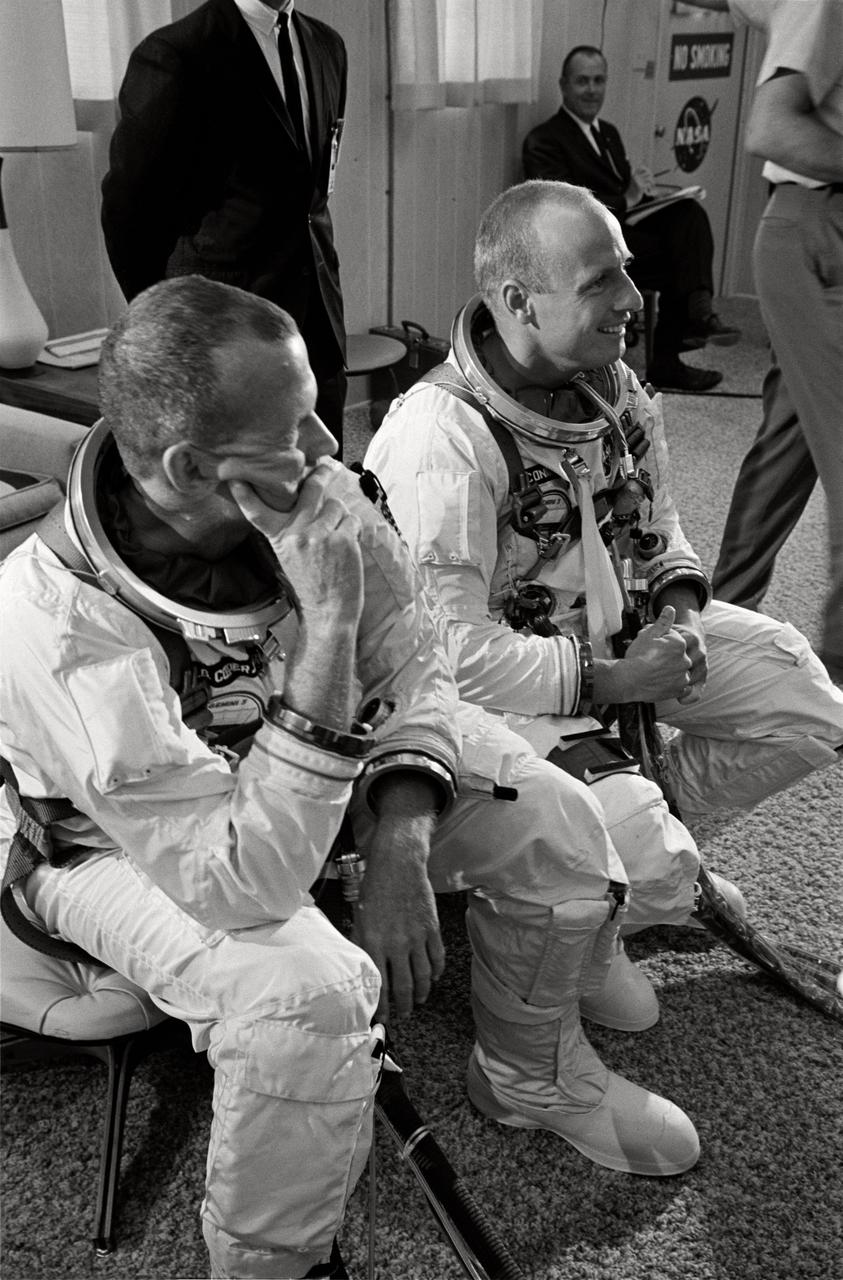
S65-46367 (19 Aug. 1965) --- Astronauts Charles Conrad Jr. (right) and L. Gordon Cooper Jr. are pictured during suiting up operations before Gemini-5 spaceflight. Editor's note: The scheduled Aug. 19 launch was postponed due to weather conditions and problems with loading cryogenic fuel for the fuel cell. The launch occurred on Aug. 21, 1965.
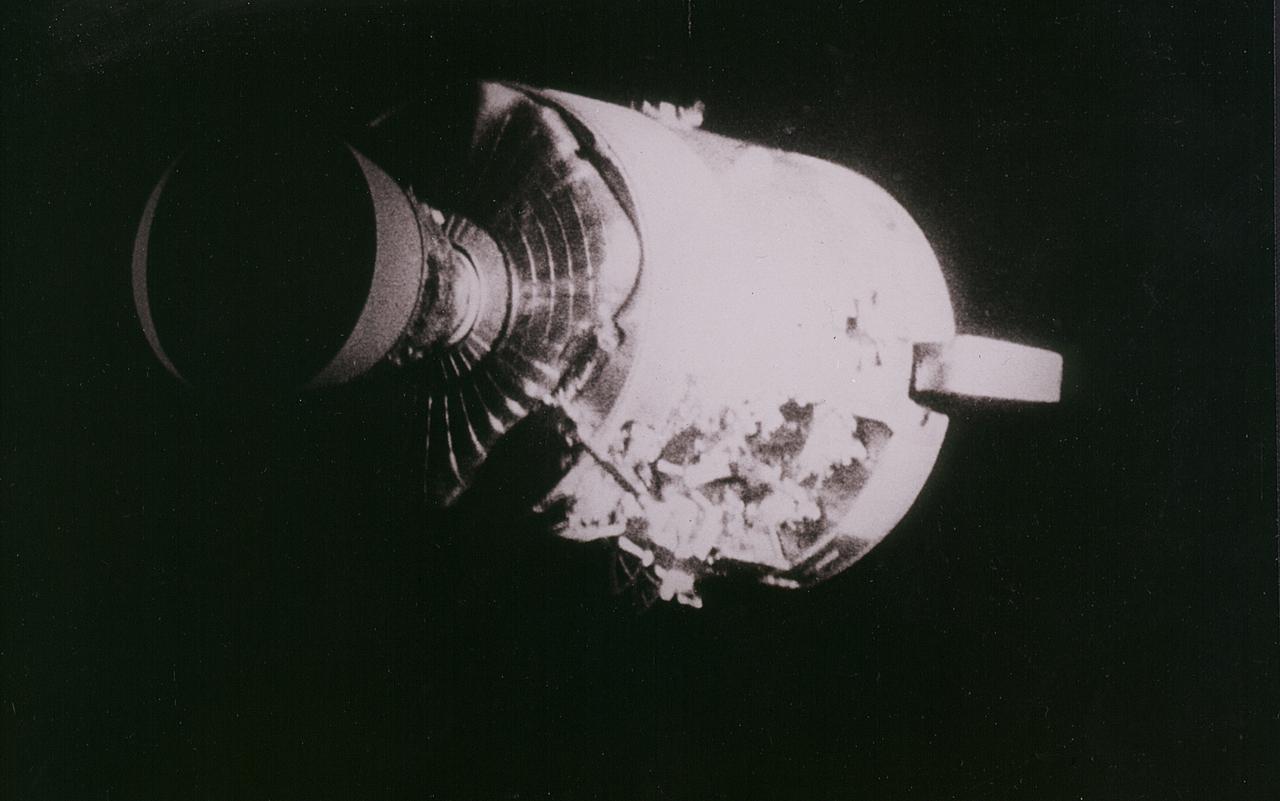
Apollo 13 onboard photo: This view of the severely damaged Apollo 13 Service Module was photographed from the Lunar Module/Command Module following the jettison of the Service Module. As seen here, an entire panel of the Service Module was blown away by the apparent explosion of oxygen tank number two located in Sector 4 of the Service Module. Two of the three fuel cells are visible just forward (above) the heavily damaged area. Three fuel cells, two oxygen tanks, and two hydrogen tanks, are located in Sector 4. The damaged area is located above the S-band high gain anterna. Nearest the camera is the Service Propulsion System (SPS) engine and nozzle. The damage to the Service Module caused the Apollo 13 crewmen to use the Lunar Module as a lifeboat. The Lunar Module was jettisoned by the Command Module just prior to Earth re-entry.
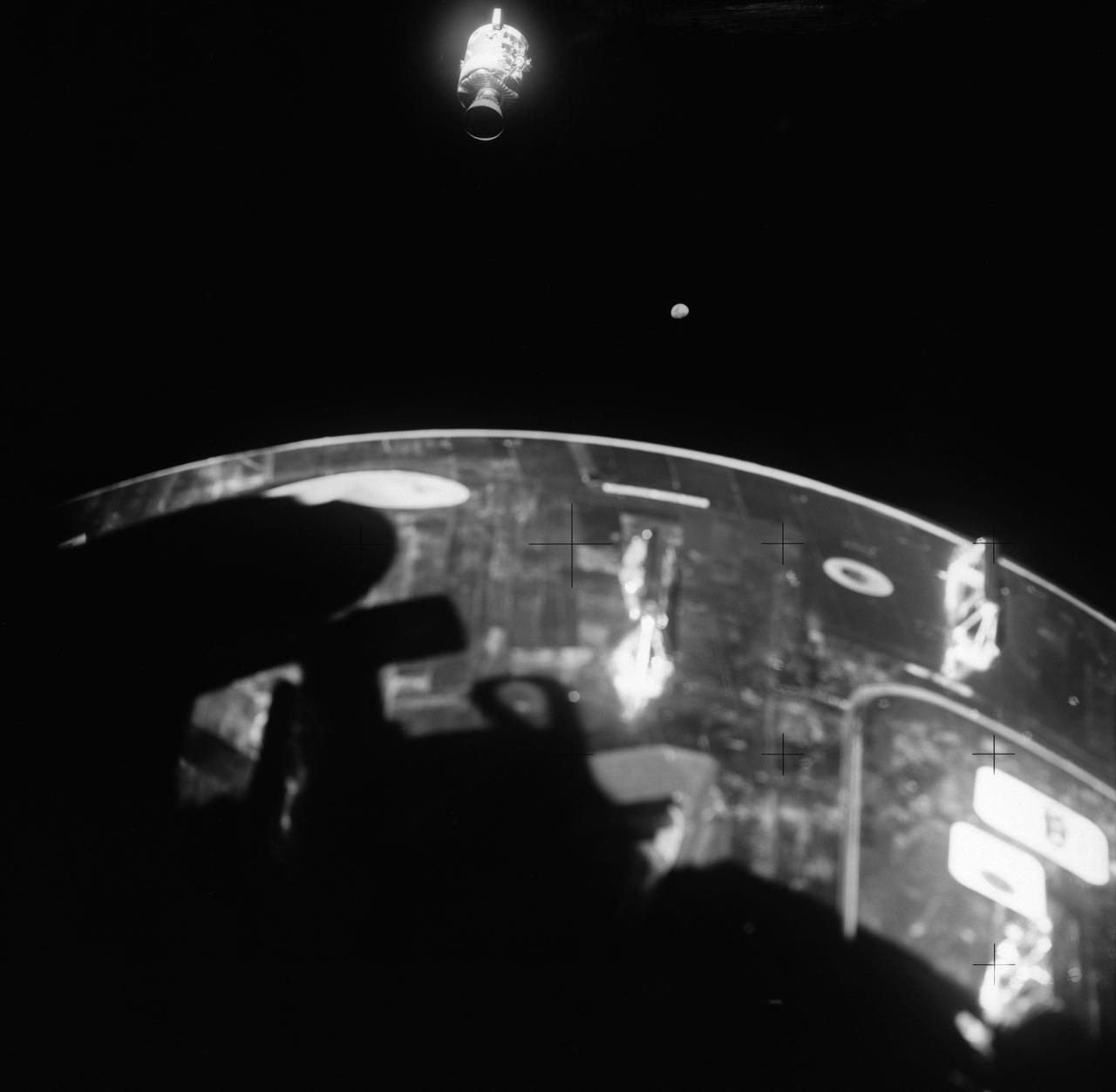
This view of the damaged Apollo 13 Service Module (SM) was photographed from the Lunar Module/Command Module following SM jettisoning. As seen here, an entire panel on the SM was blown away by the apparent explosion of oxygen tank number two located in Sector 4 of the SM. Two of the three fuel cells are visible just forward (above) the heavily damaged area. Three fuel cells, two oxygen tanks, and two hydrogen tanks are locate in Sector 4. The damaged area is located above the S-band high gain antenna. Nearest the camera is the Service Propulsion System (SPS) engine and nozzle. The damage to the SM caused the Apollo 13 crewmen to use the Lunar Module (LM) as a "lifeboat". The LM was jettisoned just prior to Earth reentry by the Command Module.
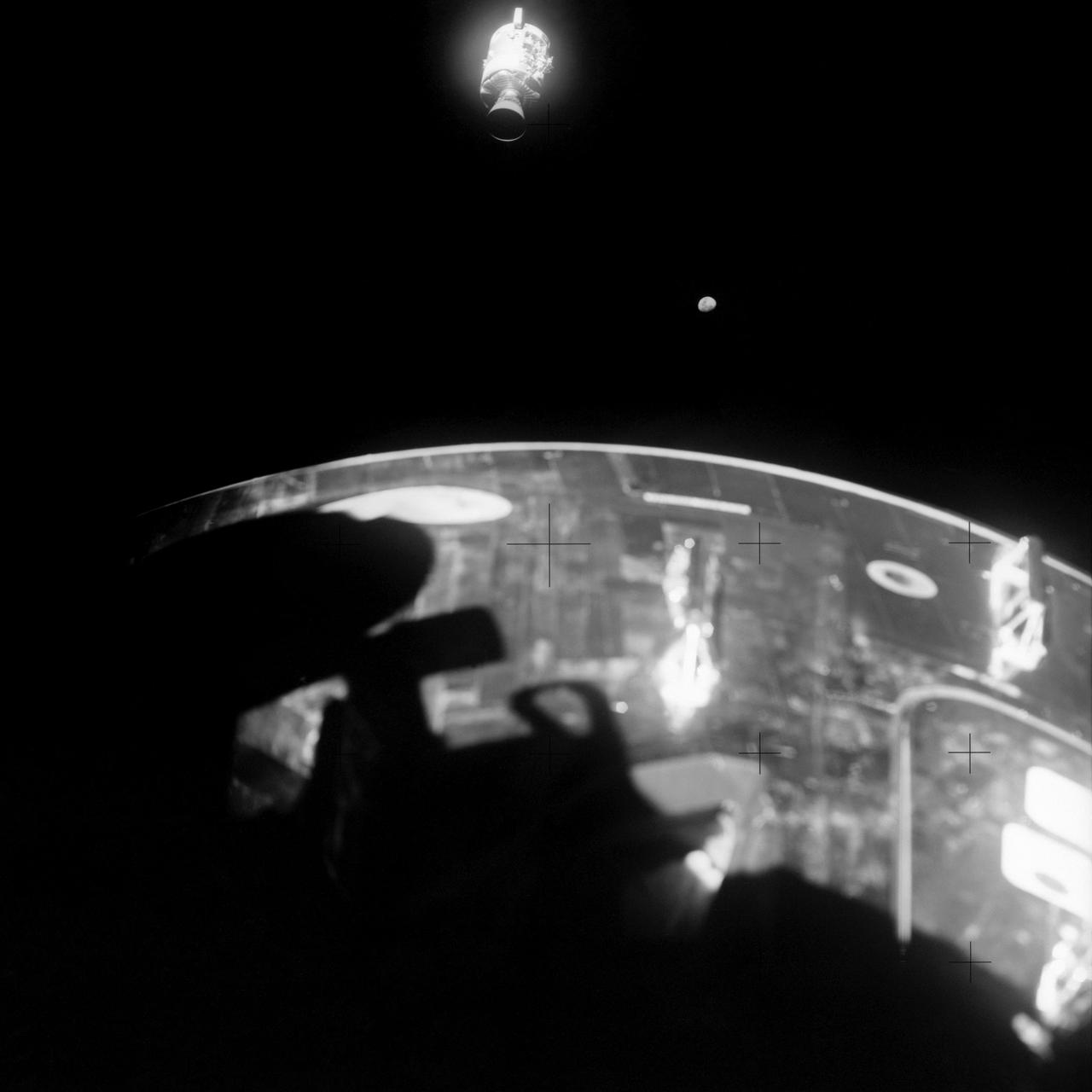
AS13-59-8501 (17 April 1970) --- This view of the severely damaged Apollo 13 Service Module (SM) was photographed from the Lunar Module/Command Module (LM/CM) following SM jettisoning. As seen here, an entire panel on the SM was blown away by the apparent explosion of oxygen tank number two located in Sector 4 of the SM. Two of the three fuel cells are visible just forward (above) the heavily damaged area. Three fuel cells, two oxygen tanks, and two hydrogen tanks are located in Sector 4. The damaged area is located above the S-Band high gain antenna. Nearest the camera is the Service Propulsion System (SPS) engine and nozzle. The damage to the SM caused the Apollo 13 crew men to use the LM as a "lifeboat." The LM was jettisoned just prior to Earth re-entry by the CM.
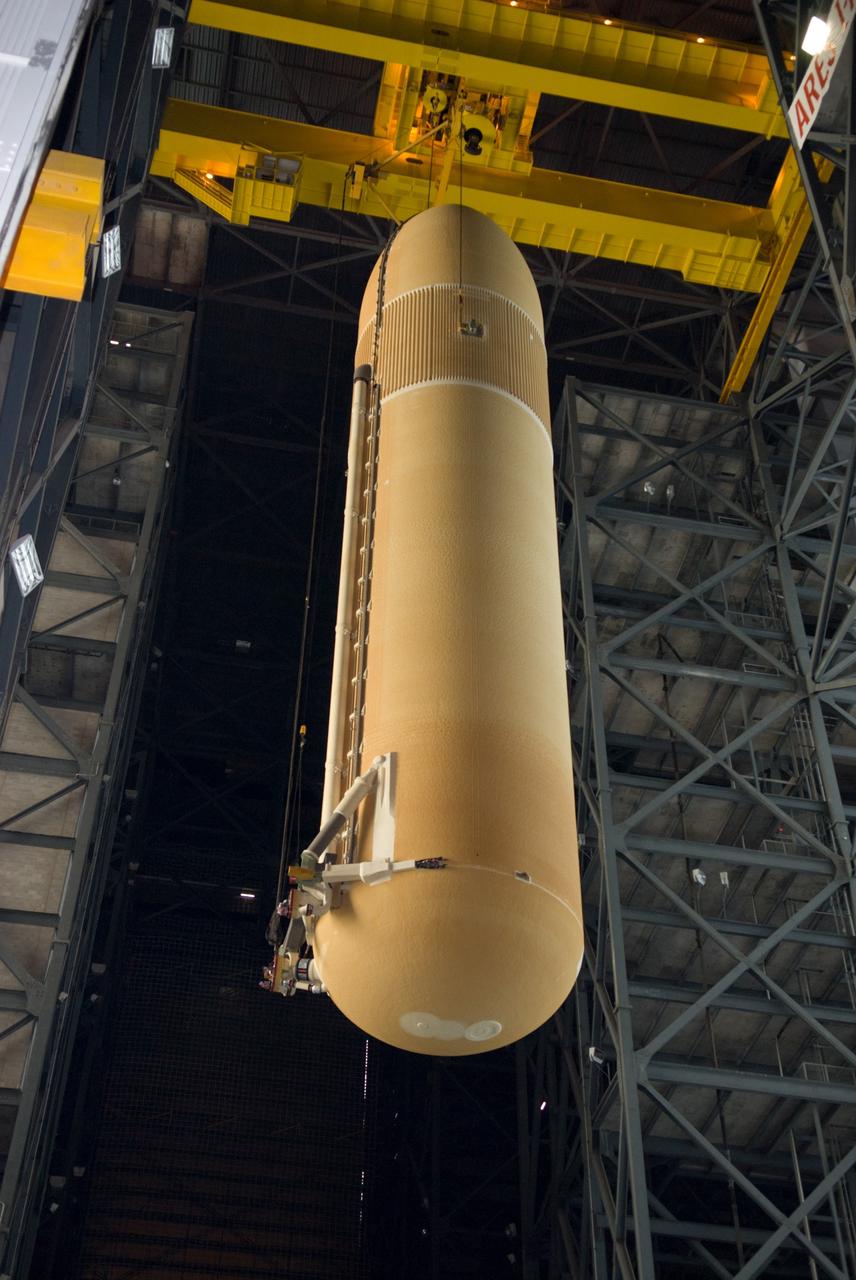
CAPE CANAVERAL, Fla. – In the Vehicle Assembly Building at NASA's Kennedy Space Center in Florida, a crane is enlisted to lift the external fuel tank for space shuttle Discovery's STS-131 mission, ET-135, into a test cell. The tank was delivered to Kennedy aboard the Pegasus barge from NASA's Michoud Assembly Facility on Dec. 26. The tank will remain in the test cell until it is transferred into a high bay for mating with the twin solid rocket boosters that will be used on the mission. Launch of the STS-131 mission to the International Space Station is targeted for March 18. For information on the STS-131 mission and crew, visit http://www.nasa.gov/mission_pages/shuttle/shuttlemissions/sts131/index.html. Photo credit: NASA/Glenn Benson
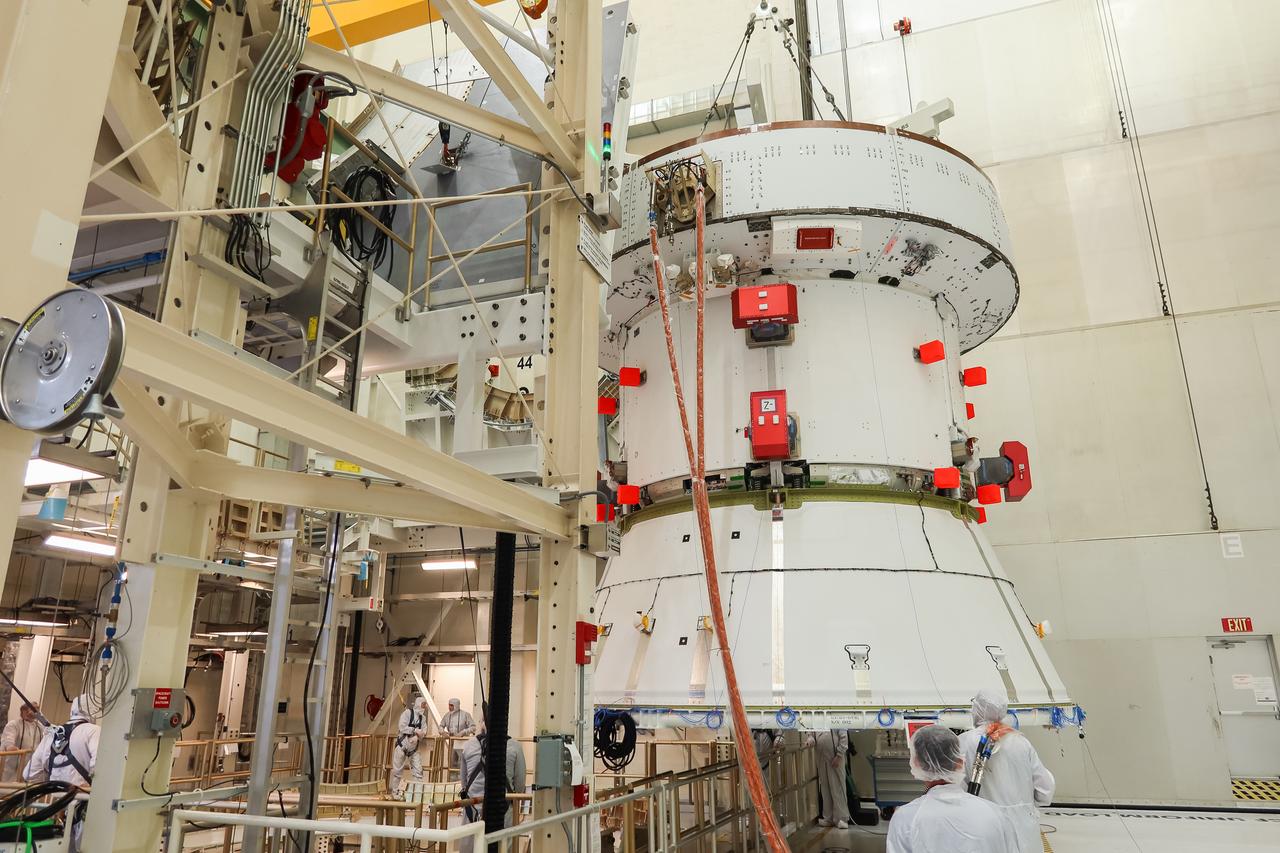
A crane slowly moves the European Service Module (ESM) for NASA’s Artemis II mission into the FAST (final assembly and system testing) cell inside the high bay of the Neil A. Armstrong Operations and Checkout Building at NASA’s Kennedy Space Center in Florida on May 22, 2023. Teams from NASA and Lockheed Martin are transferring the service module to the FAST cell for final checkouts before it is stacked with the Orion crew module.. The powerhouse that will fuel and propel Orion in space, the ESM will be used for Artemis II, the first Artemis mission flying crew aboard Orion.
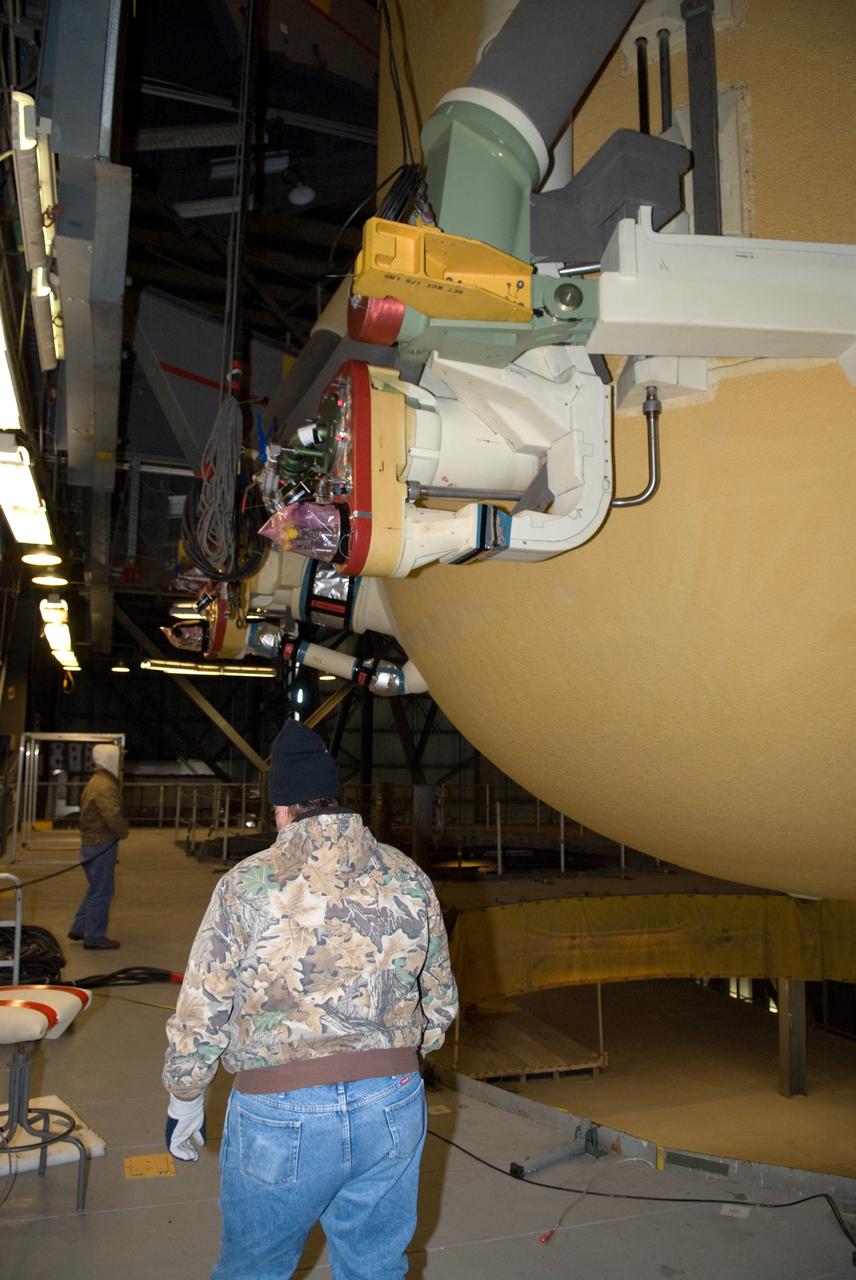
CAPE CANAVERAL, Fla. – In the Vehicle Assembly Building at NASA's Kennedy Space Center in Florida, the external fuel tank for space shuttle Discovery's STS-131 mission, ET-135, has arrived in its test cell. The tank was delivered to Kennedy aboard the Pegasus barge from NASA's Michoud Assembly Facility on Dec. 26. The tank will remain in the test cell until it is transferred into a high bay for mating with the twin solid rocket boosters that will be used on the mission. Launch of the STS-131 mission to the International Space Station is targeted for March 18. For information on the STS-131 mission and crew, visit http://www.nasa.gov/mission_pages/shuttle/shuttlemissions/sts131/index.html. Photo credit: NASA/Glenn Benson
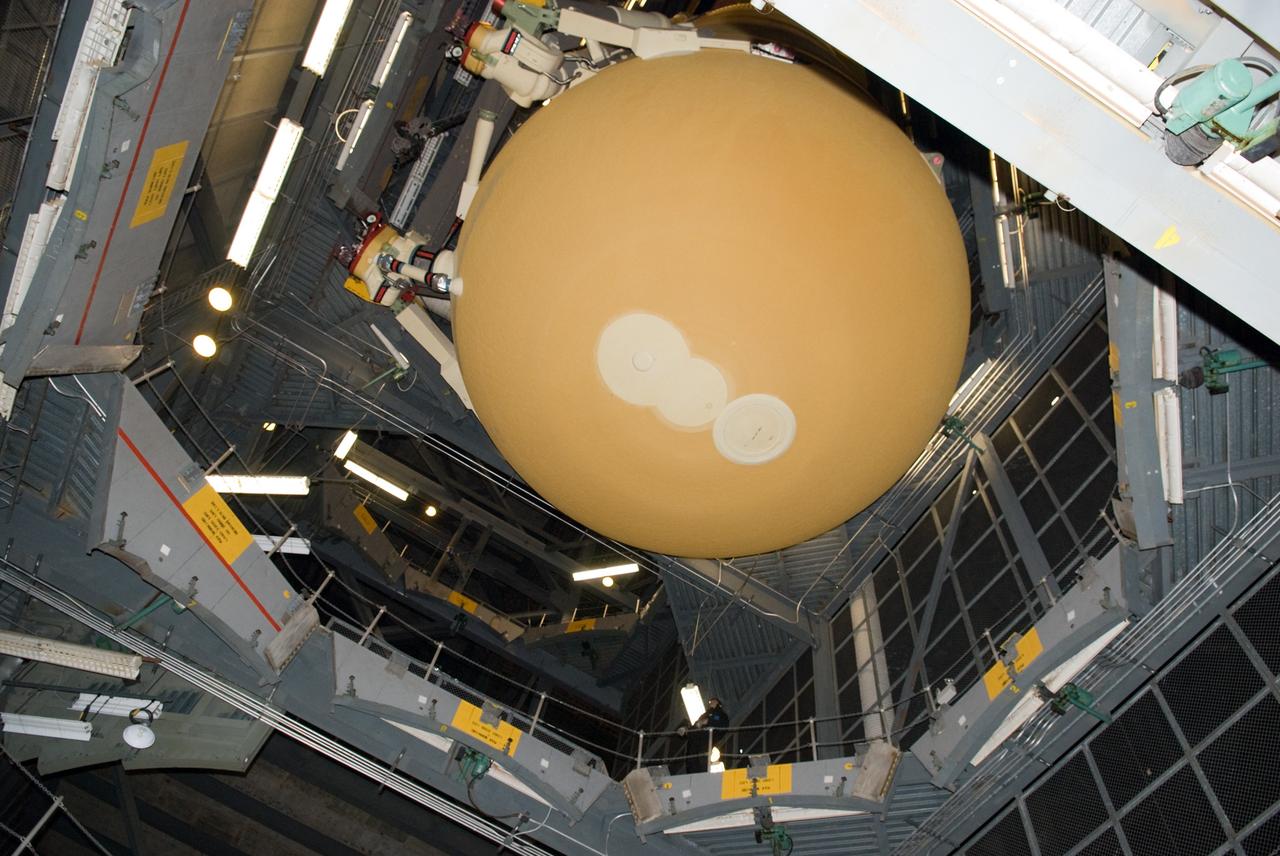
CAPE CANAVERAL, Fla. – In the Vehicle Assembly Building at NASA's Kennedy Space Center in Florida, the external fuel tank for space shuttle Discovery's STS-131 mission, ET-135, is lowered into a test cell. The tank was delivered to Kennedy aboard the Pegasus barge from NASA's Michoud Assembly Facility on Dec. 26. The tank will remain in the test cell until it is transferred into a high bay for mating with the twin solid rocket boosters that will be used on the mission. Launch of the STS-131 mission to the International Space Station is targeted for March 18. For information on the STS-131 mission and crew, visit http://www.nasa.gov/mission_pages/shuttle/shuttlemissions/sts131/index.html. Photo credit: NASA/Glenn Benson
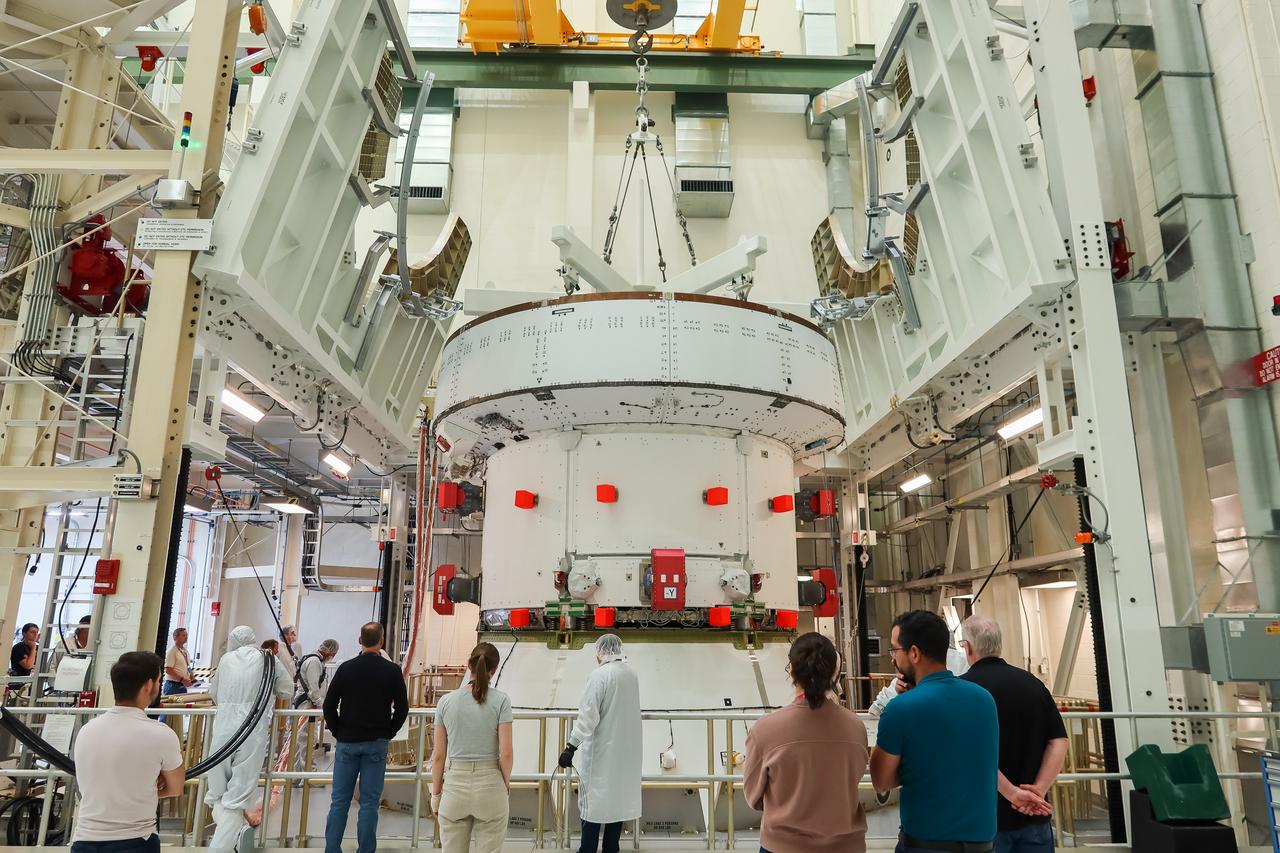
A crane lowers the European Service Module (ESM) for NASA’s Artemis II mission into the FAST (final assembly and system testing) cell inside the high bay of the Neil A. Armstrong Operations and Checkout Building at NASA’s Kennedy Space Center in Florida on May 22, 2023. Teams from NASA and Lockheed Martin are transferring the service module to the FAST cell for final checkouts before it is stacked with the Orion crew module. The powerhouse that will fuel and propel Orion in space, the ESM will be used for Artemis II, the first Artemis mission flying crew aboard Orion.
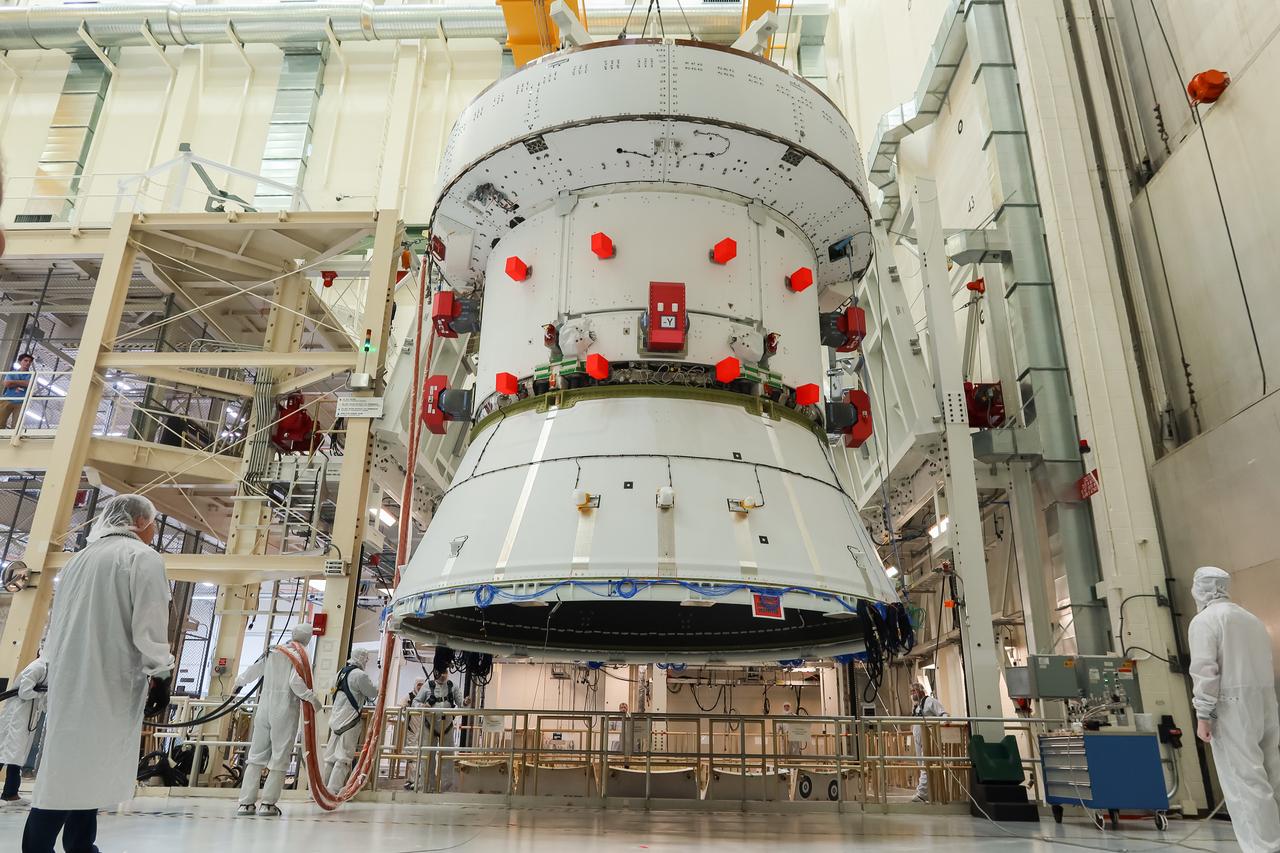
The European Service Module (ESM) for NASA’s Artemis II mission arrives at the Final Assembly and System Testing (FAST) cell inside the high bay of the Neil A. Armstrong Operations and Checkout Building at NASA’s Kennedy Space Center in Florida on May 22, 2023. Teams from NASA and Lockheed Martin are transferring the service module to the FAST (final assembly and system testing) cell for final checkouts before it is stacked with the Orion crew module.. The powerhouse that will fuel and propel Orion in space, the ESM will be used for Artemis II, the first Artemis mission flying crew aboard Orion.

CAPE CANAVERAL, Fla. -- In the Vehicle Assembly Building at NASA's Kennedy Space Center in Florida, External Fuel Tank-122 sits on its transporter in the transfer aisle waiting to be lifted into a test cell. ET-122, the Space Shuttle Program's last external fuel tank was delivered to Kennedy's Turn Basin from NASA’s Michoud Assembly Facility in New Orleans aboard the Pegasus Barge. After testing, ET-122 eventually will be attached to space shuttle Endeavour for the STS-134 mission to the International Space Station targeted to launch February, 2011. For more information visit: http://www.nasa.gov/mission_pages/shuttle/shuttlemissions/sts134/index.html. Photo credit: NASA/Dimitri Gerondidakis