
Future Flight Central (FFC) tower: Kennedy Space Center (KSC) shuttle landing simulation
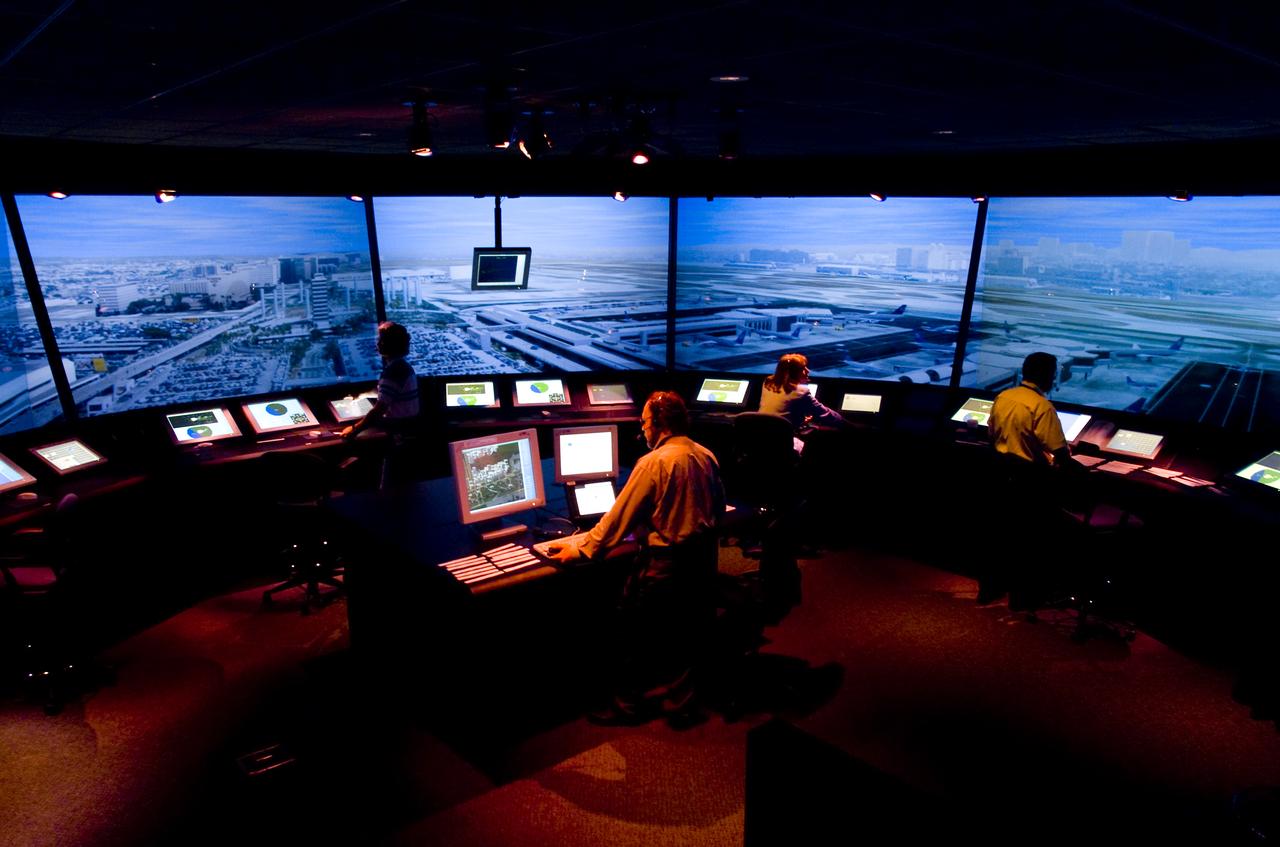
FFC (Future Flight Central) Simulator interior 'LAX' Configuration with Ken Christensen in tower
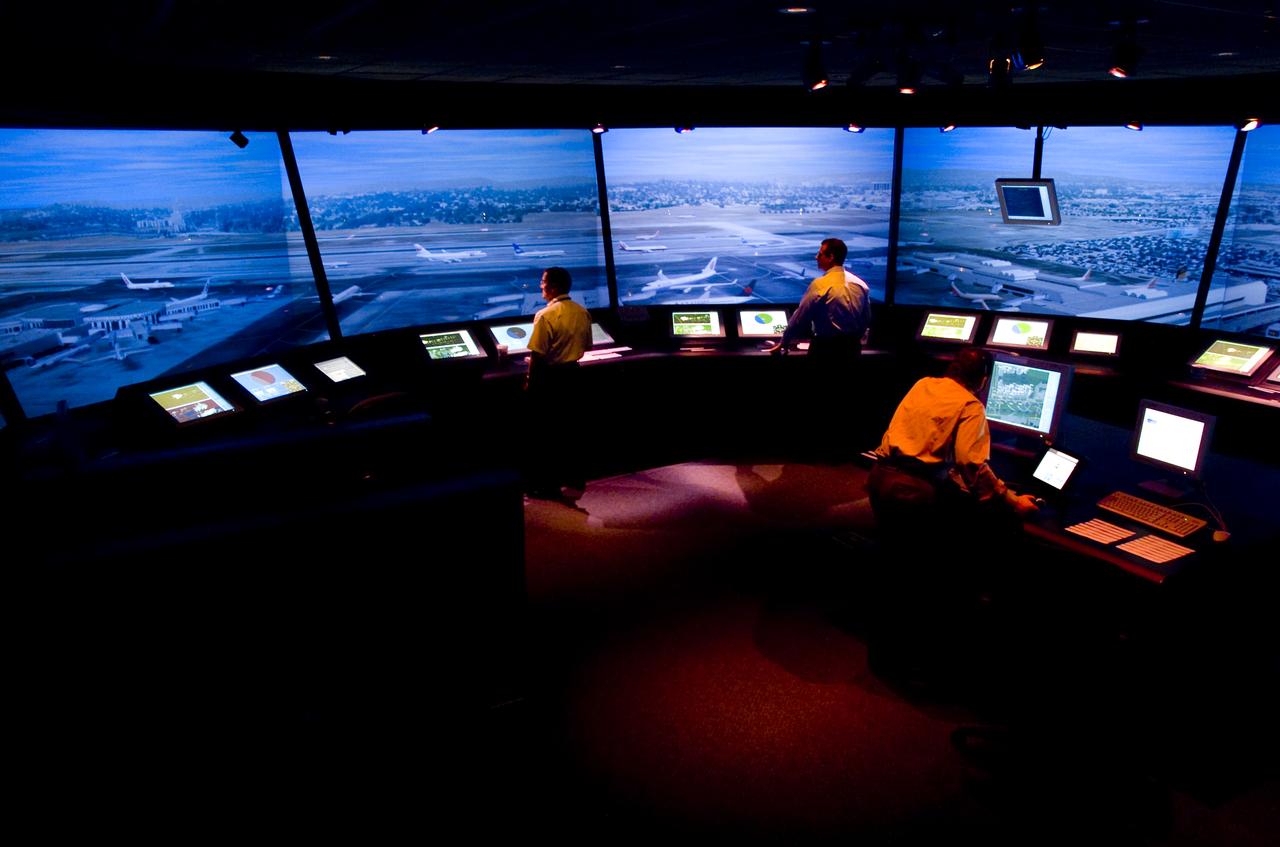
FFC (Future Flight Central) Simulator interior 'LAX' Configuration with Ken Christensen in tower

FFC (Future Flight Central) Simulator interior 'LAX' Configuration with Ken Christensen in pilots room

FFC (Future Flight Central) Simulator interior 'LAX' Configuration with Ken Christensen in pilots room

FFC (Future Flight Central) Simulator interior 'LAX' Configuration with Ken Christensen in tower

FFC (Future Flight Central) Simulator interior 'LAX' Configuration with Ken Christensen in tower
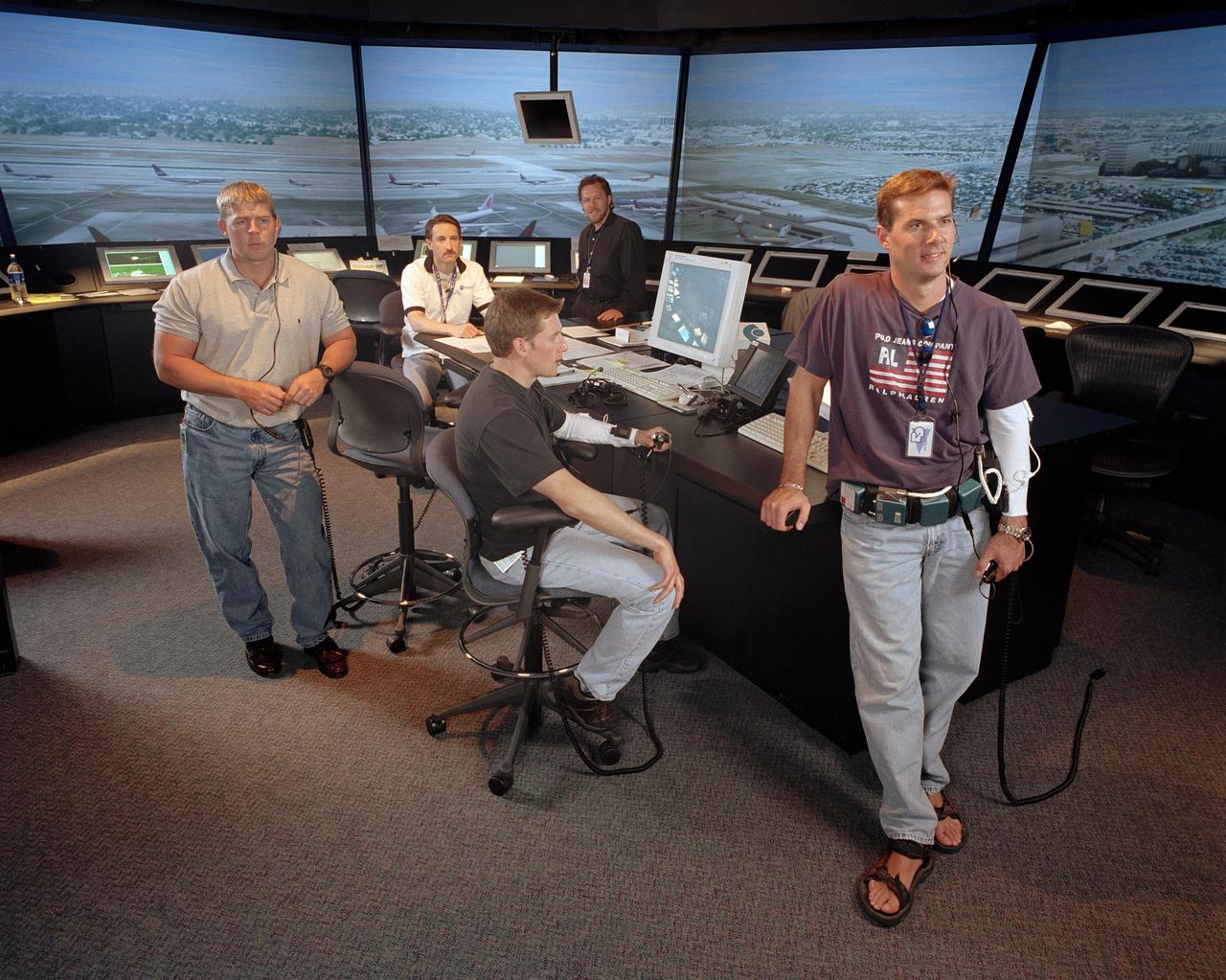
Future Flight Central: Los Angeles International Airport (LAX) Phase 2 simulations in FFC Tower with Jim McMahon Barry Gloth, Chris Hall, Elliot Brann and Boris Rabin
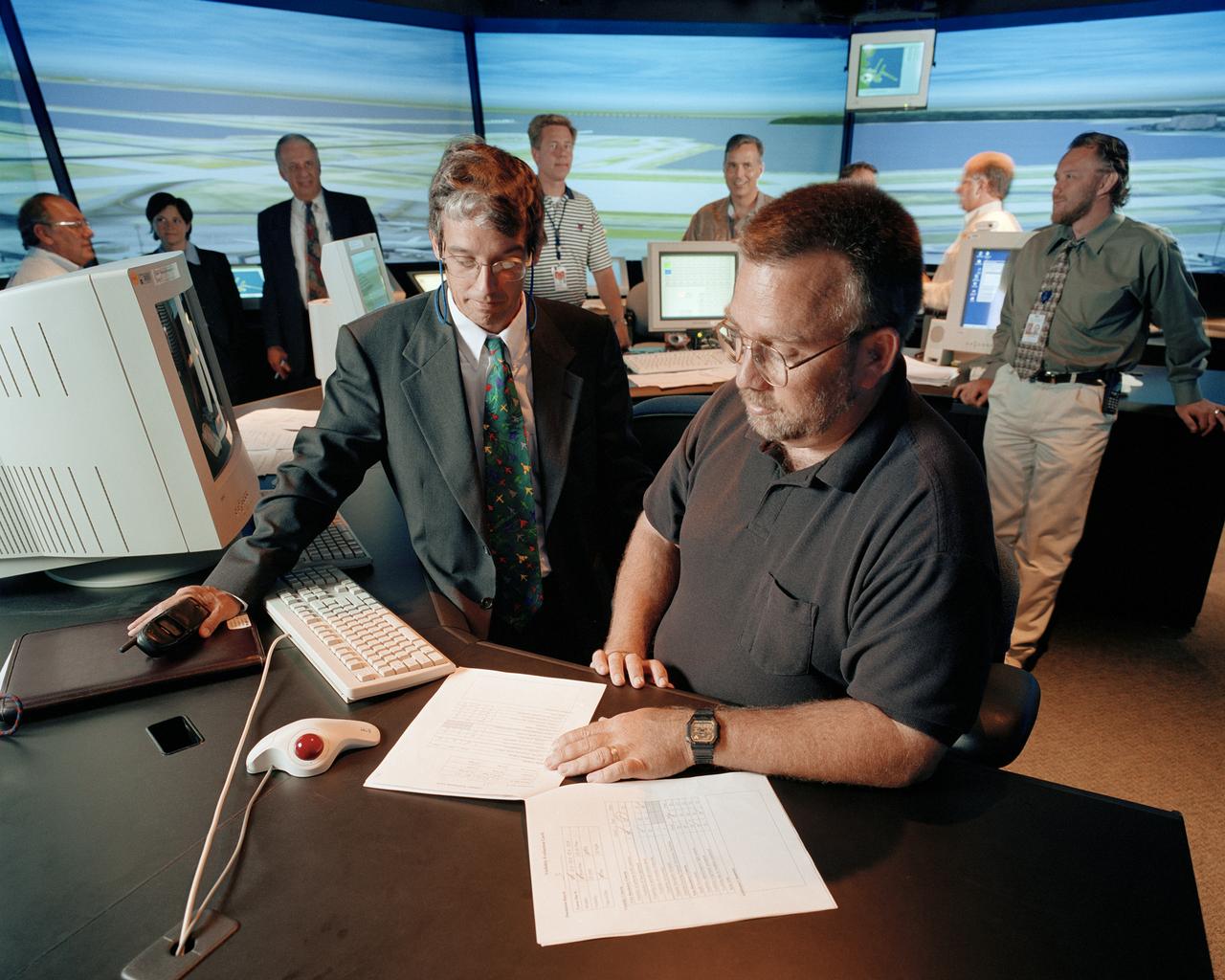
Future Flight Central (FFC) San Francisco Airport (SFO) simulation evaluation with Mathew Mead (SFO Airfield Development Bureau) and Mark Sherry (ATCT/FAA) Ames FFC staff in background
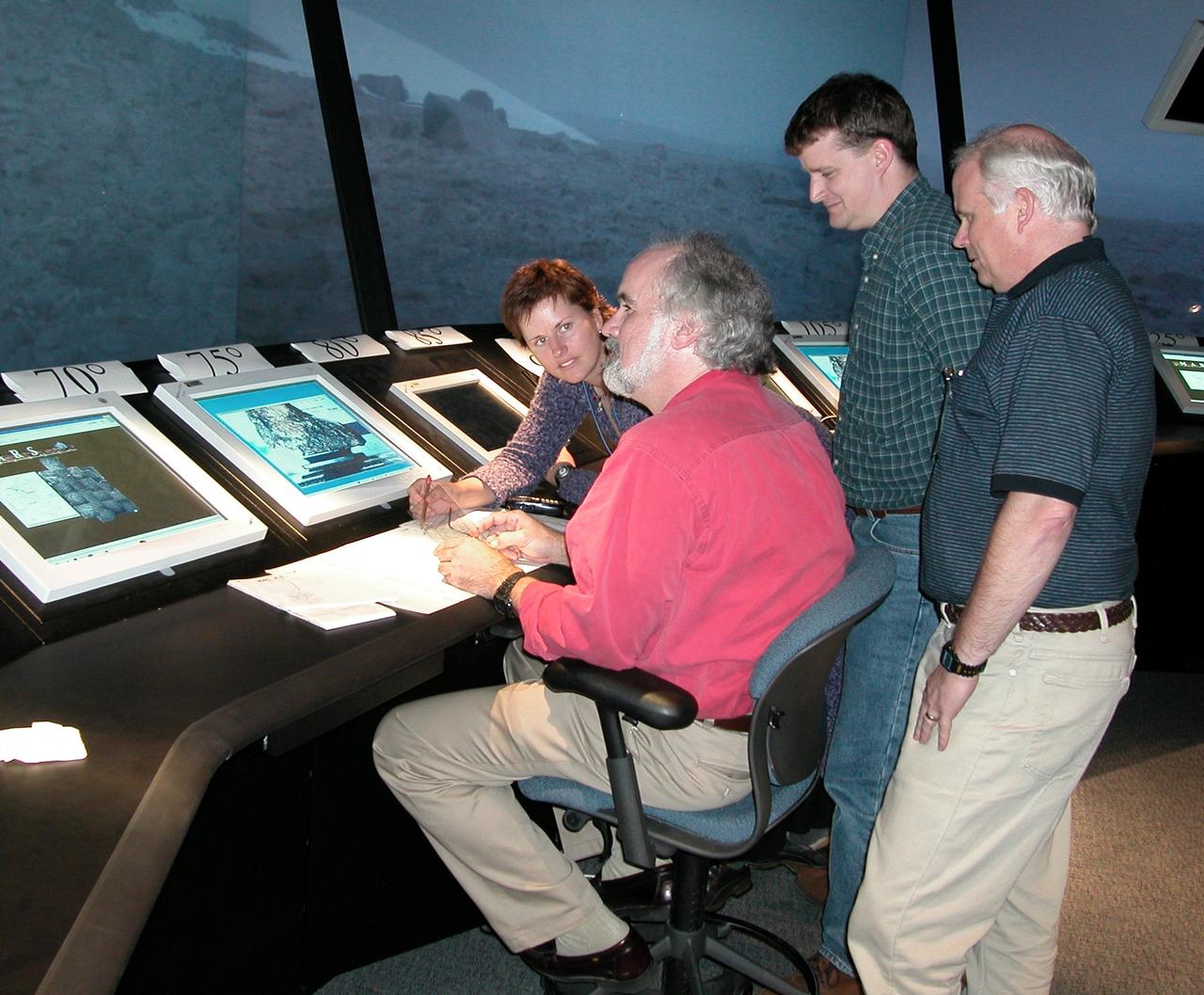
Human Robotic (Virtual) study of Houghton crater from NASA AMES Future Flight Central (FFC) Simulator tower L-R: Dr Stephen Hoffman, JSC (seated); Dr. Kelly Snook, Ames/JSC: Dr Jeffry Moersch, Univ of Tenn; and Dr Jim Saunders, Auburn
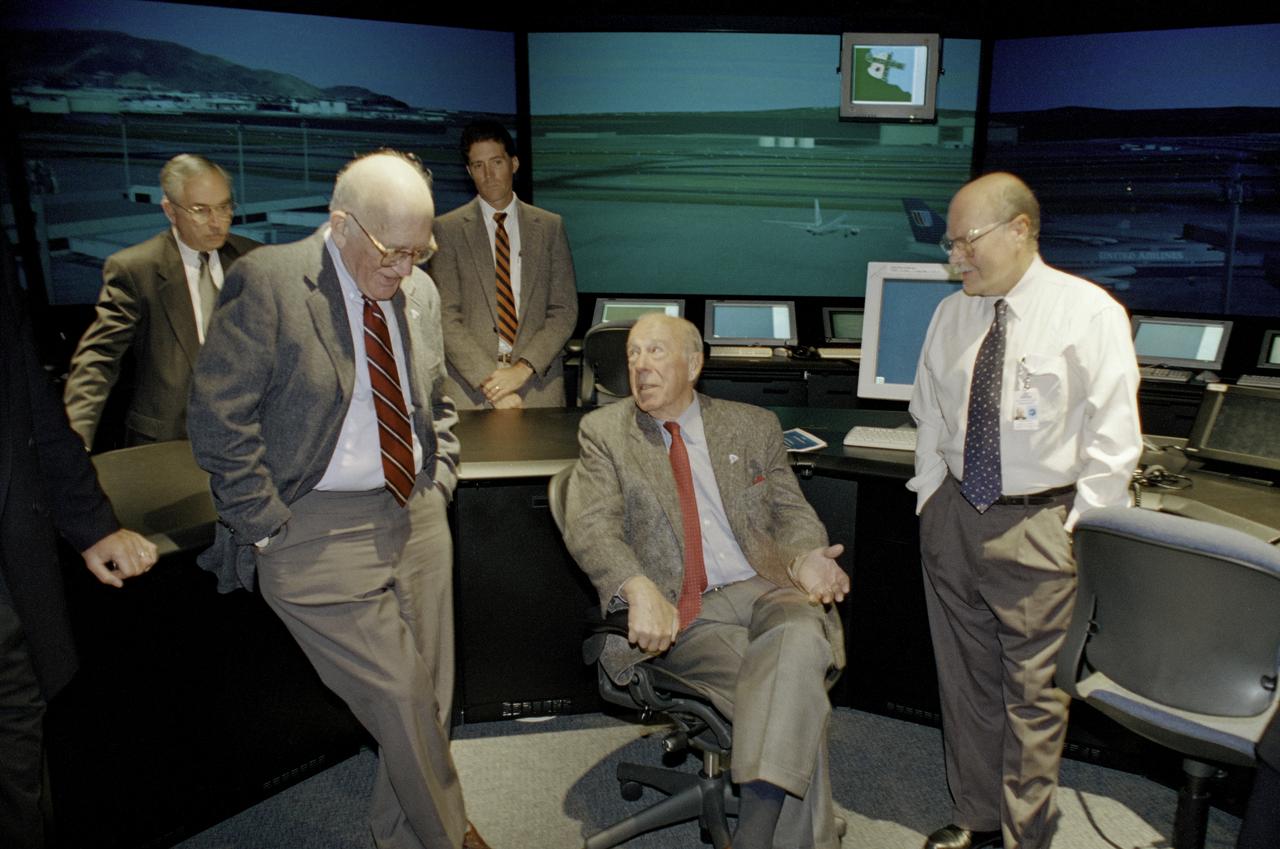
The Honorable George P. Schultz during a Visit and tour of Ames Research Center. Shown here from left to right are in the background Bill Berry, Ames Deputy Director, Dr. Tom Edwards, Chief, Aviation Systems Division, Front row, Dr. Sidney Drell, Staford University, former U S Secretary of State George Schultz, Dr Richard Haines, Senior Research Csientist, FFC at the Future Flight Central Simulator facility.
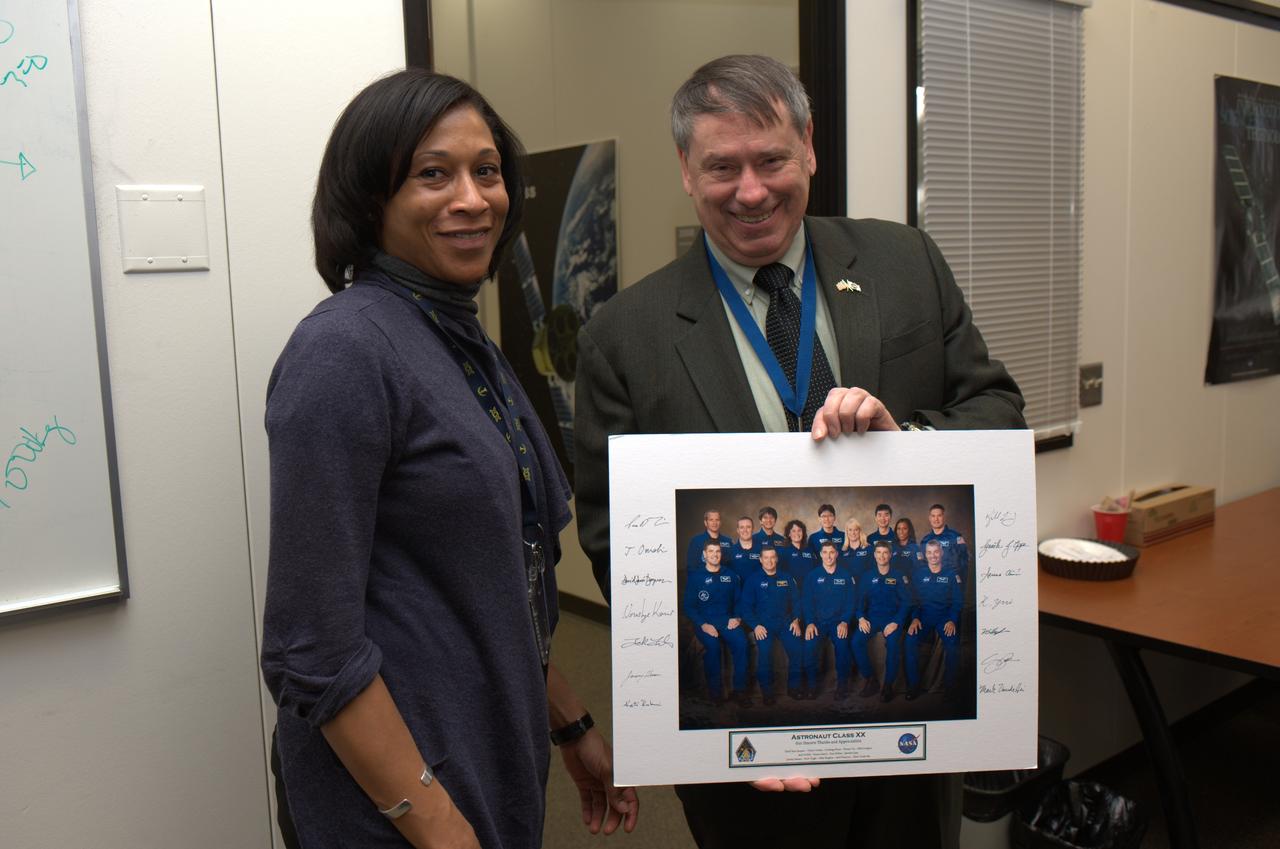
The 14 member 2009 class of NASA astronauts, Japan Aerospace Explortion Agency (JAXA) astronauts and Canadian Space Agency astronauts visit Ames Research Center. Astronaut candidate Jeanette Epps presents photo to Pete Worden, Ames Center Director.
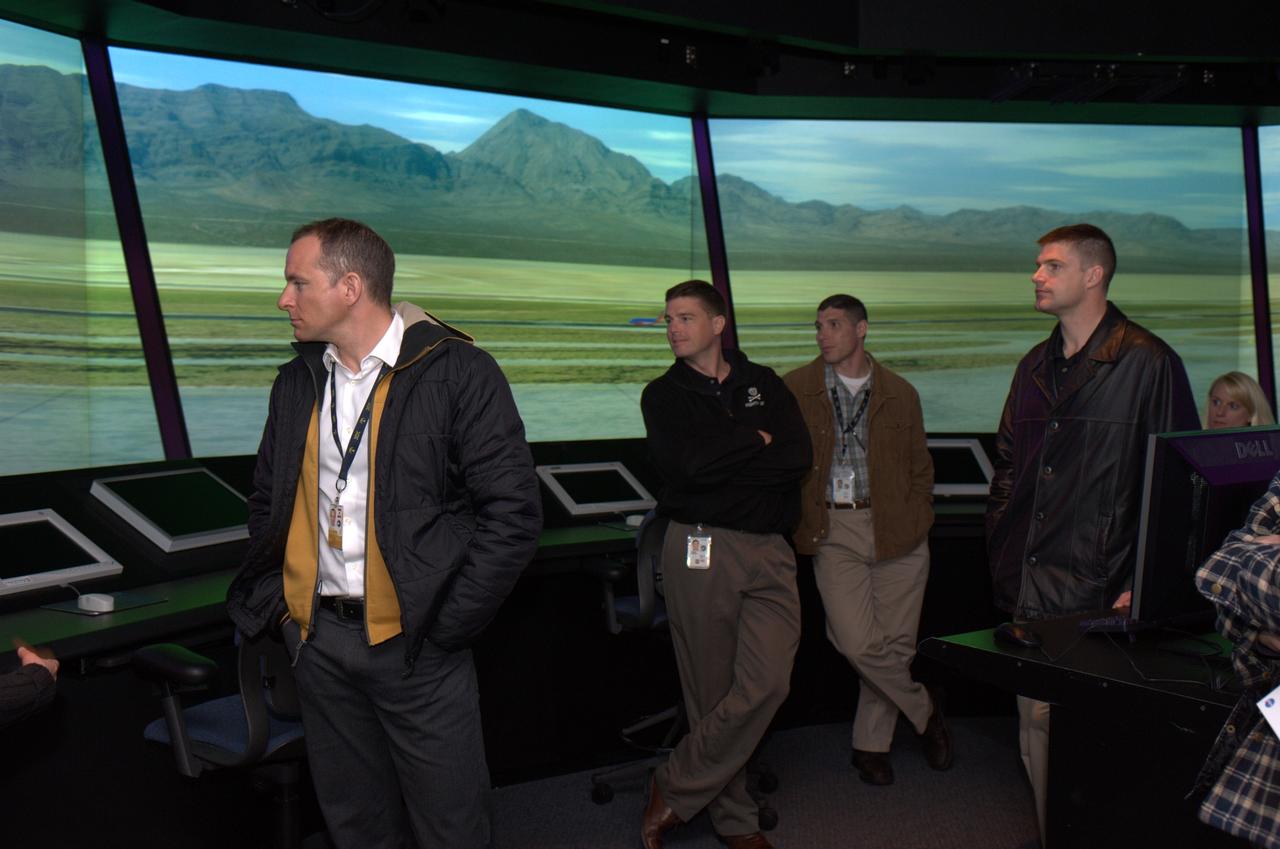
The 14 member 2009 class of NASA astronauts, Japan Aerospace Explortion Agency (JAXA) astronauts and Canadian Space Agency astronauts visit Ames Research Center. From left to right David Saint-Jacques (CSA) Gregory (Reid) Wiseman, Michael Hopkins, Jeremy Hanson during a tour of the Future Flgiht Central (FFC) Simulator.
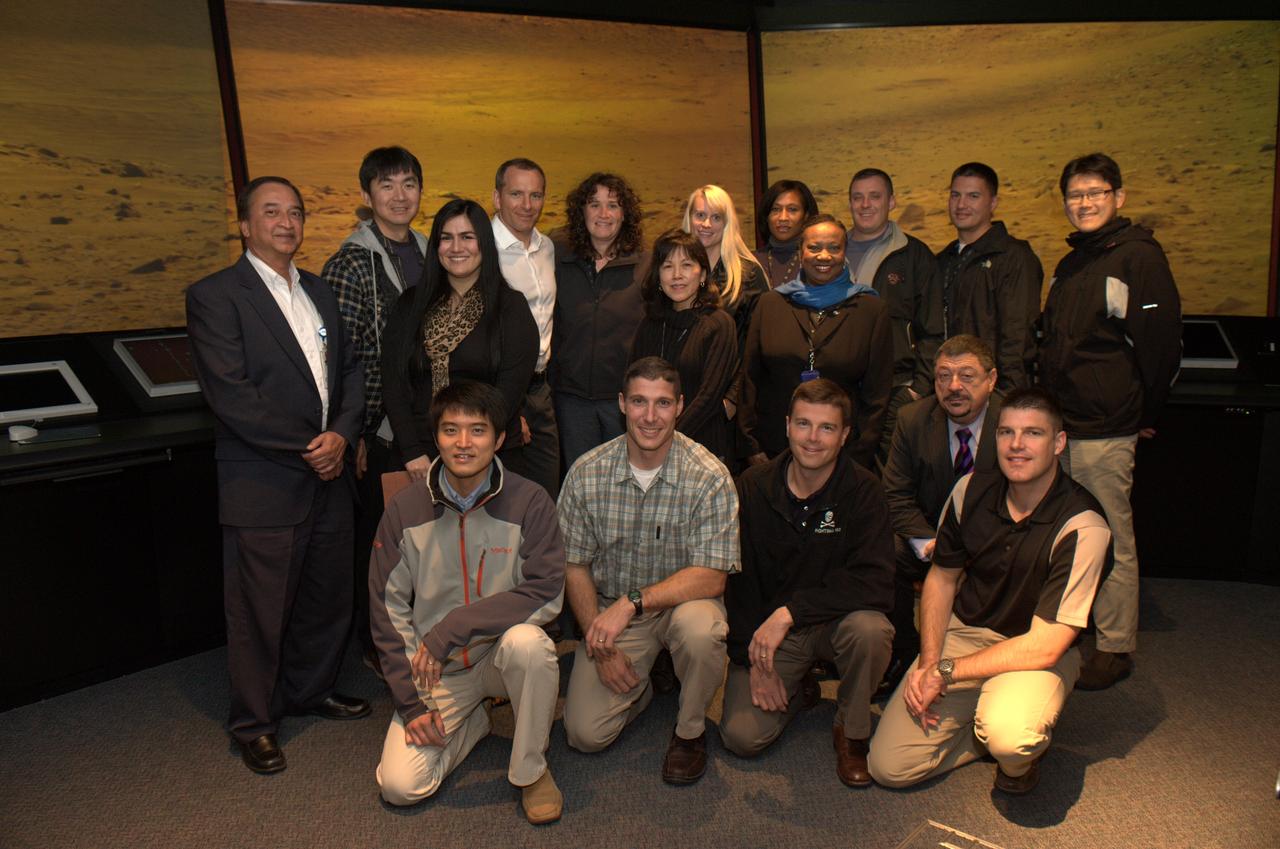
The 14 member 2009 class of NASA astronauts, Japan Aerospace Explortion Agency (JAXA) astronauts and Canadian Space Agency astronauts visit the Future Flgiht Central (FFC) at Ames Research Center. From left to right top row; unknown, Kimiya Yui (JAXA) David Saint-Jacques (CSA) Serena Aunon, Kathleen (Kate) Rubins, Jeanette Epps, Scott Tingle, Kjell, Landgren, Norishige Kanai (JAXA): Middle row left to right; Sahar Leaupepe, unknown, Sheila Johnson: Front Row, left to right Takuya Onishi (JAXA), Michael Hopkins, Gregory (Reid) Wiseman, Jeremy Hansen.
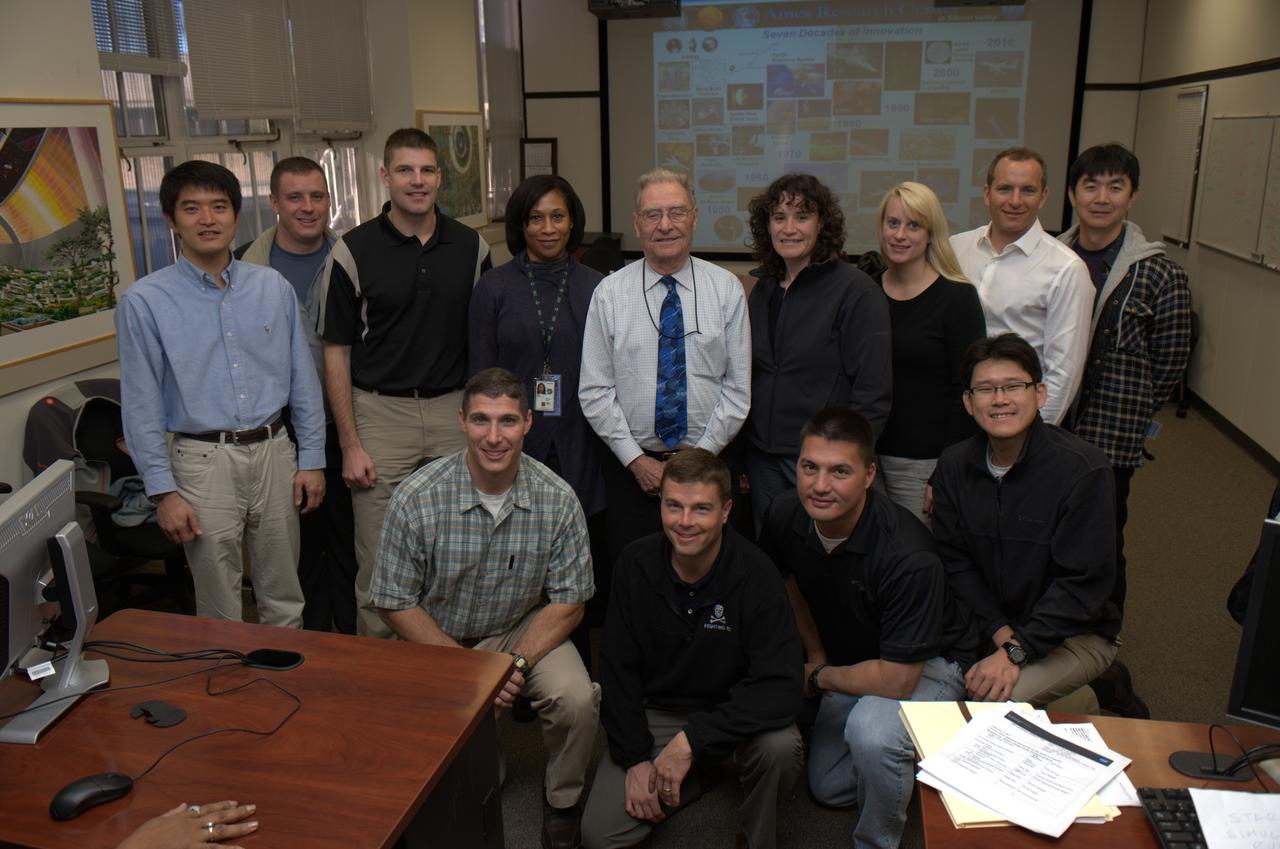
The 14 member 2009 class of NASA astronauts, Japan Aerospace Explortion Agency (JAXA) astronauts and Canadian Space Agency astronauts visit Ames Research Center. From left to right back row are Takuya Onishi (JAXA), Scott Tingle, Jeremy Hansen, Jeanette Epps, Jack Boyd (Ames), Serena Aunon, Kathleen (Kate) Rubins, David Saint-Jacques (CSA) Kimiya Yui (JAXA), Michael Hopkins, Gregory (Reid) Wiseman, Kjell Lundgren, Norishige Kanai (JAXA).
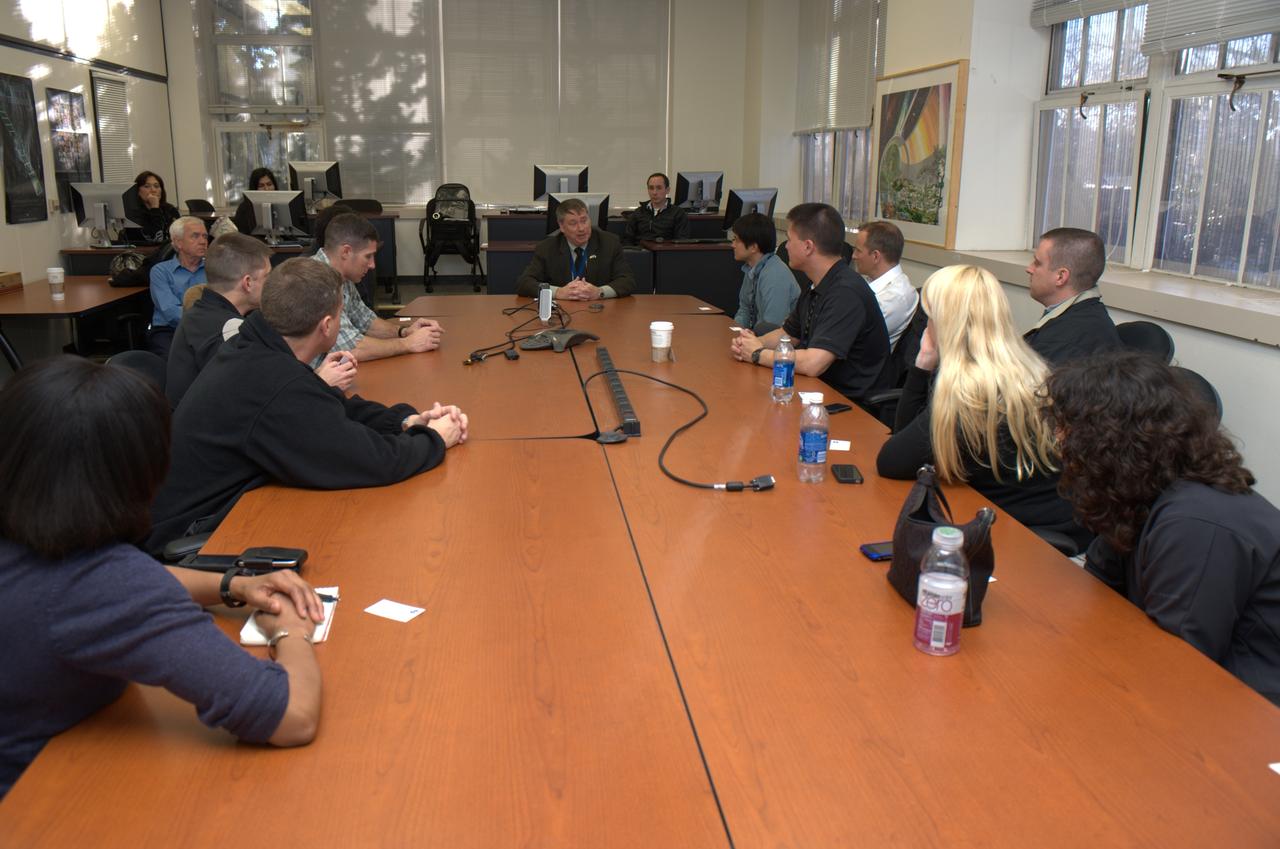
The 14 member 2009 class of NASA astronauts, Japan Aerospace Explortion Agency (JAXA) astronauts and Canadian Space Agency astronauts visit Ames Research Center. Pete Worden, Ames Center Director joins the candidates during the round table.
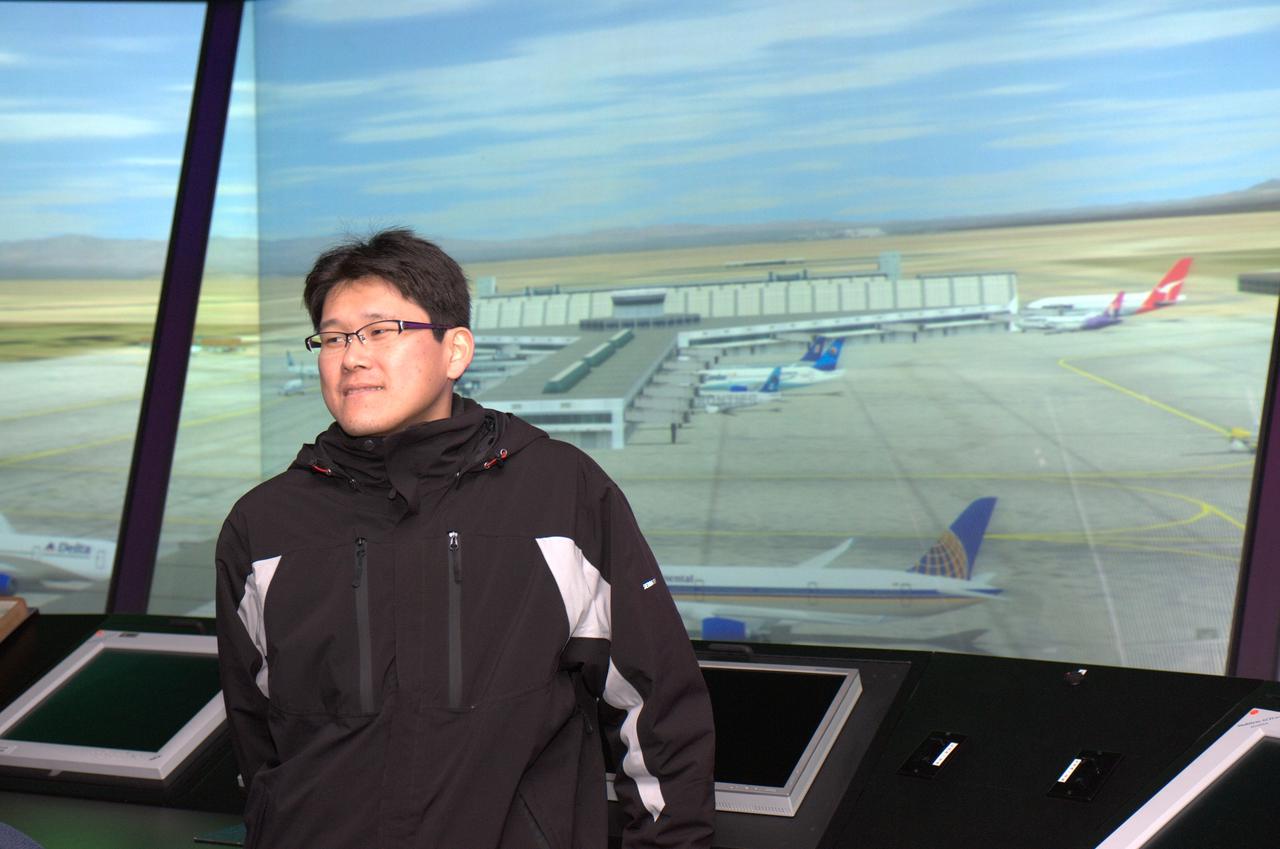
The 14 member 2009 class of NASA astronauts, Japan Aerospace Explortion Agency (JAXA) astronauts and Canadian Space Agency astronauts visit Ames Research Center. Norishige Kanai (JAXA) during a tour of the Future Flgiht Central (FFC) Simulator.

The 14 member 2009 class of NASA astronauts, Japan Aerospace Explortion Agency (JAXA) astronauts and Canadian Space Agency astronauts visit Ames Research Center. From left to right Serena Aunon, Jeanette Epps, Kimiya Yui (JAXA) in foreground and Scott Tingle during a tour of Future Flgiht Central (FFC) Simulator.
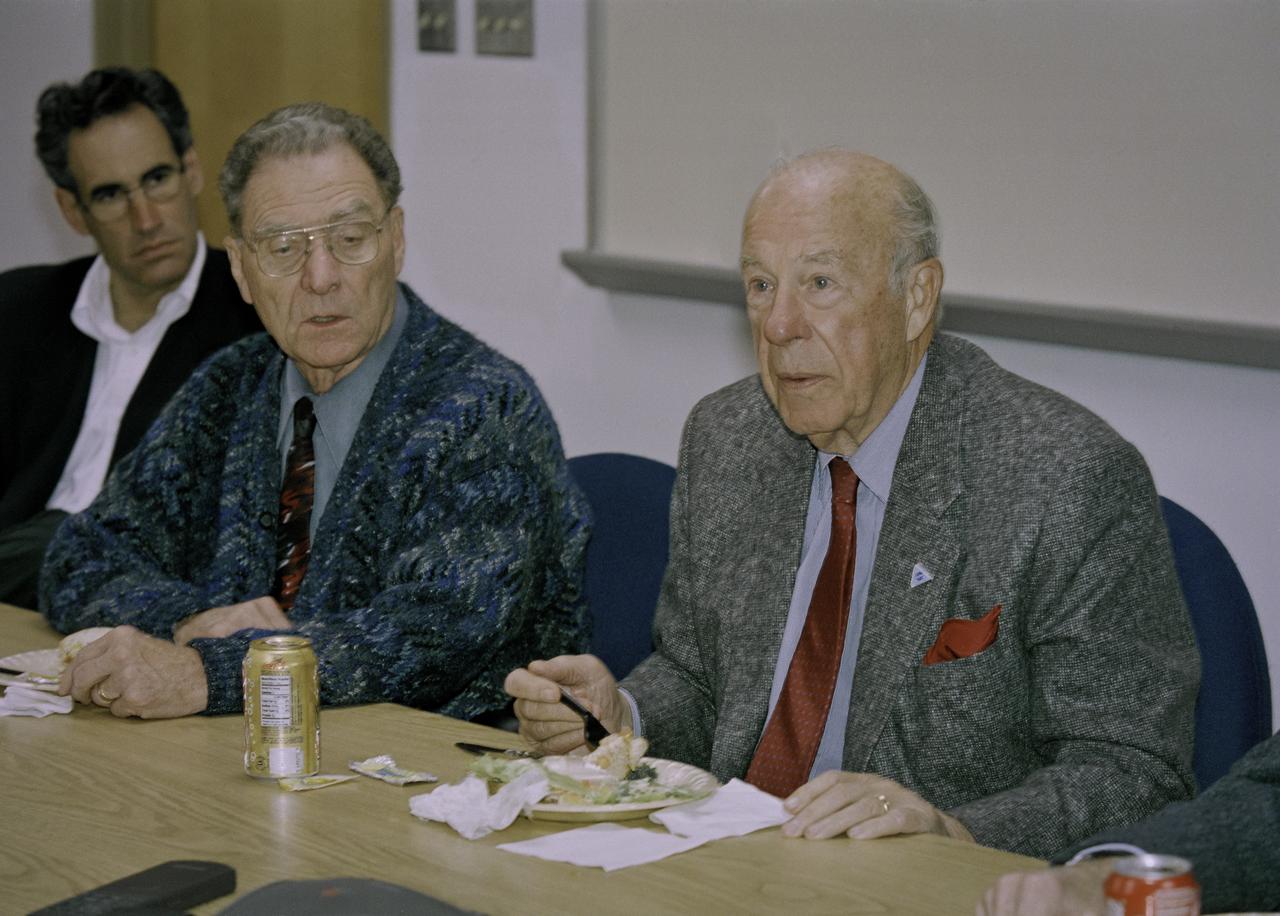
Jack Boyd, Special Assistant to the Center Director (center) and The Honorable George P. Schultz during a Visit and tour of Ames Research Center.
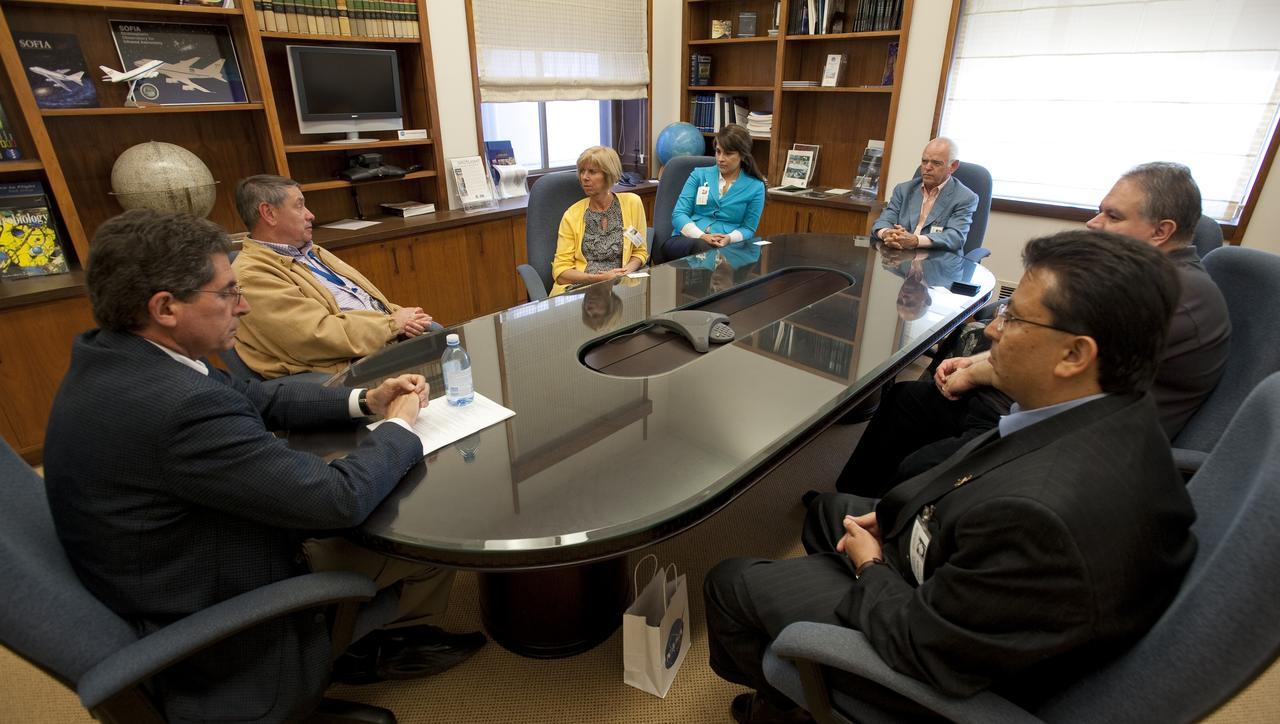
Janice Hahn, Councilwoman, District 15, City of Los Angeles visits NASA Ames Research Center. Associate Director Steve Zornetzer and Center Director S. Pete Worden meet with .Janice Hahn, Councilwoman, District 15, City of Los Angeles, Jenny Chavez, Staffer for Councilwoman Hahn, Walter Zifkin, Commissioner, Los Angles International Airport, Michael Molina, Chief of External Affairs, LAWA, Jaideep Vaswani. Chief of Airport Planning, LAWA
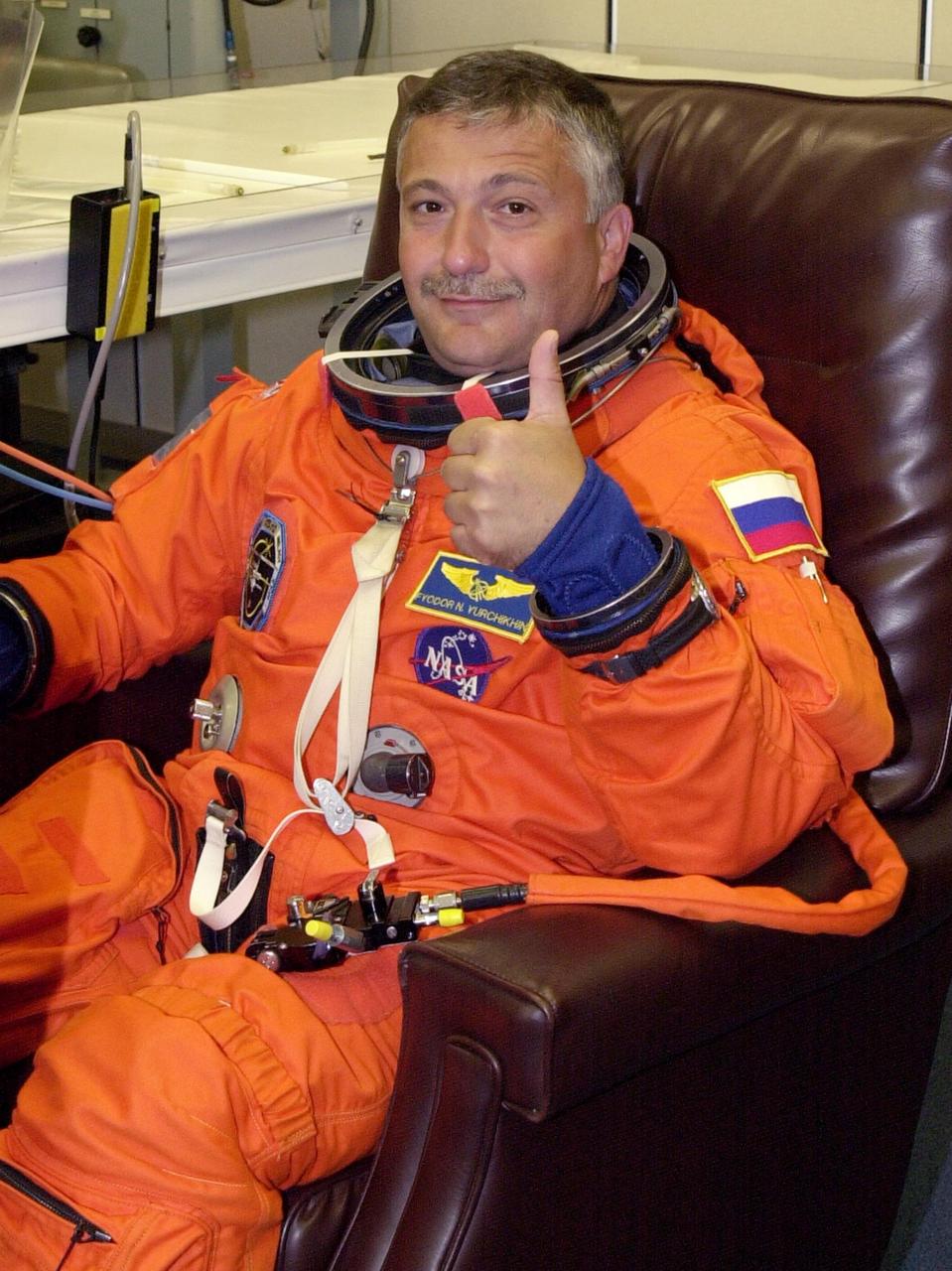
KENNEDY SPACE CENTER, FLA. -- During suitup for launch, STS-112 Mission Specialist Fyodor Yurchikhin shows he is ready for his first Shuttle flight. STS-112 is the 15th assembly flight to the International Space Station, carrying the S1 Integrated Truss Structure, the first starboard truss segment, to be attached to the central truss segment, S0, and the Crew and Equipment Translation Aid (CETA) Cart A. The CETA is the first of two human-powered carts that will ride along the ISS railway, providing mobile work platforms for future spacewalking astronauts. On the 11-day mission, three spacewalks are planned to attach the S1 truss. Launch is scheduled for 3:46 p.m. EDT from Launch Pad 39B.
![KENNEDY SPACE CENTER, FLA. -- The STS-112 crew eagerly exit the Operations and Checkout Building for their ride to Launch Pad 39B and the launch scheduled 3:46 p.m. EDT. Leading the way are Pilot Pamela Melroy and Commander Jeffrey Ashby. In the second row are Mission Specialists David Wolf (left) and Sandra Magnus. Behind them are Mission Specialists Fyodor Yurchikhin and Piers Sellers. Sellers, Magnus and Yurchikhin are making their first Shuttle flights. STS-112 is the 15th assembly flight to the International Space Station, carrying the S1 Integrated Truss Structure, the first starboard truss segment, to be attached to the central truss segment, S0, and the Crew and Equipment Translation Aid (CETA) Cart A. The CETA is the first of two human-powered carts that will ride along the ISS railway, providing mobile work platforms for future spacewalking astronauts. On the 11-day mission, three spacewalks are planned to attach the S1 truss to the Station. [Photo courtesy of Scott Andrews]](https://images-assets.nasa.gov/image/KSC-02pd1453/KSC-02pd1453~medium.jpg)
KENNEDY SPACE CENTER, FLA. -- The STS-112 crew eagerly exit the Operations and Checkout Building for their ride to Launch Pad 39B and the launch scheduled 3:46 p.m. EDT. Leading the way are Pilot Pamela Melroy and Commander Jeffrey Ashby. In the second row are Mission Specialists David Wolf (left) and Sandra Magnus. Behind them are Mission Specialists Fyodor Yurchikhin and Piers Sellers. Sellers, Magnus and Yurchikhin are making their first Shuttle flights. STS-112 is the 15th assembly flight to the International Space Station, carrying the S1 Integrated Truss Structure, the first starboard truss segment, to be attached to the central truss segment, S0, and the Crew and Equipment Translation Aid (CETA) Cart A. The CETA is the first of two human-powered carts that will ride along the ISS railway, providing mobile work platforms for future spacewalking astronauts. On the 11-day mission, three spacewalks are planned to attach the S1 truss to the Station. [Photo courtesy of Scott Andrews]
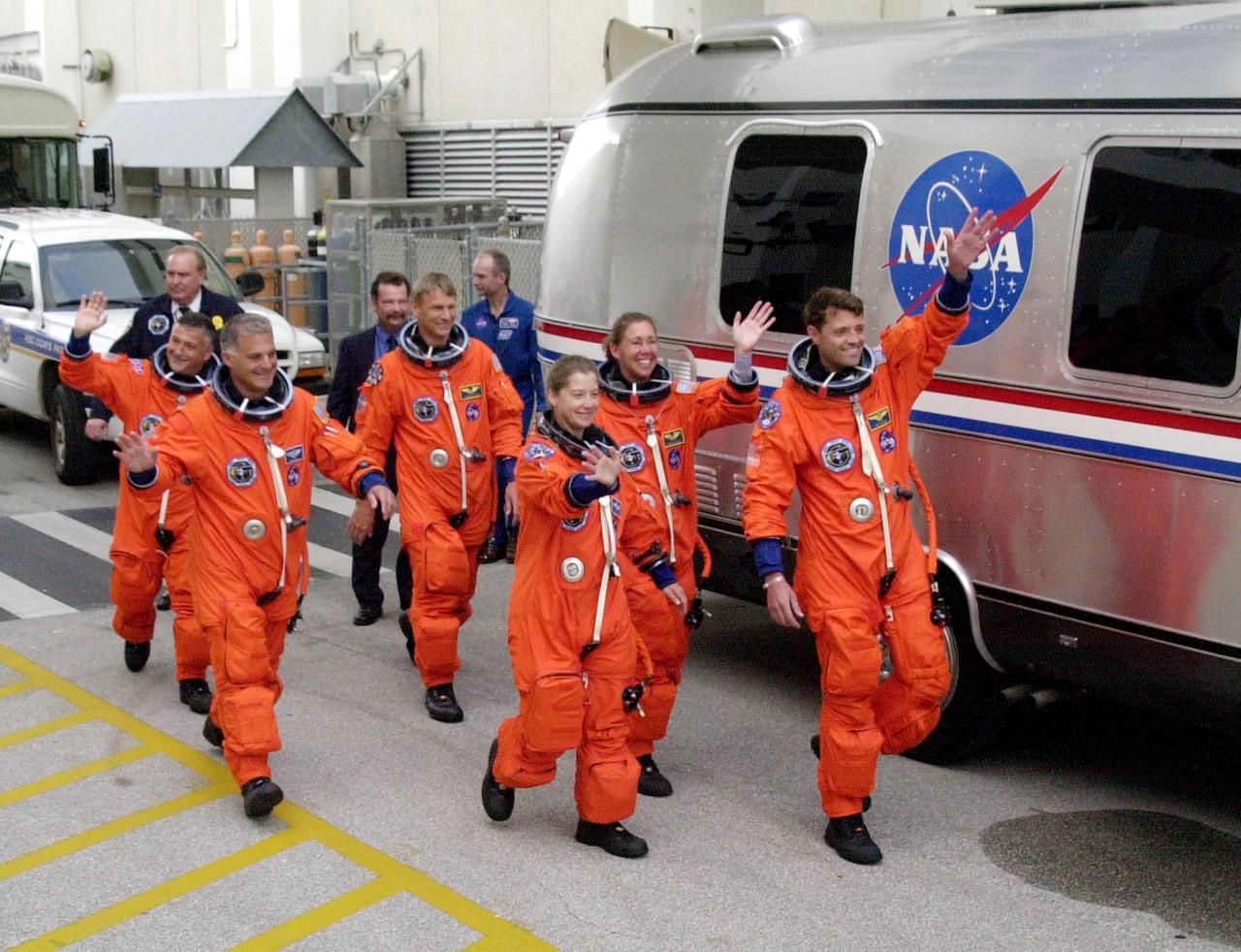
KENNEDY SPACE CENTER, FLA. -- Still waving at spectators, the STS-112 crew heads for the Astrovan that will take them to Launch Pad 39B and Space Shuttle Atlantis. Liftoff is scheduled for 3:46 p.m. EDT. From left are Mission Specialists Fyodor Yurchikhin David Wolf, and Piers Sellers; Pilot Pamela Melroy; Mission Specialist Sandra Magnus; and Commander Jeffrey Ashby. Sellers, Magnus and Yurchikhin are making their first Shuttle flights. STS-112 is the 15th assembly flight to the International Space Station, carrying the S1 Integrated Truss Structure, the first starboard truss segment, to be attached to the central truss segment, S0, and the Crew and Equipment Translation Aid (CETA) Cart A. The CETA is the first of two human-powered carts that will ride along the ISS railway, providing mobile work platforms for future spacewalking astronauts. On the 11-day mission, three spacewalks are planned to attach the S1 truss to the Station.
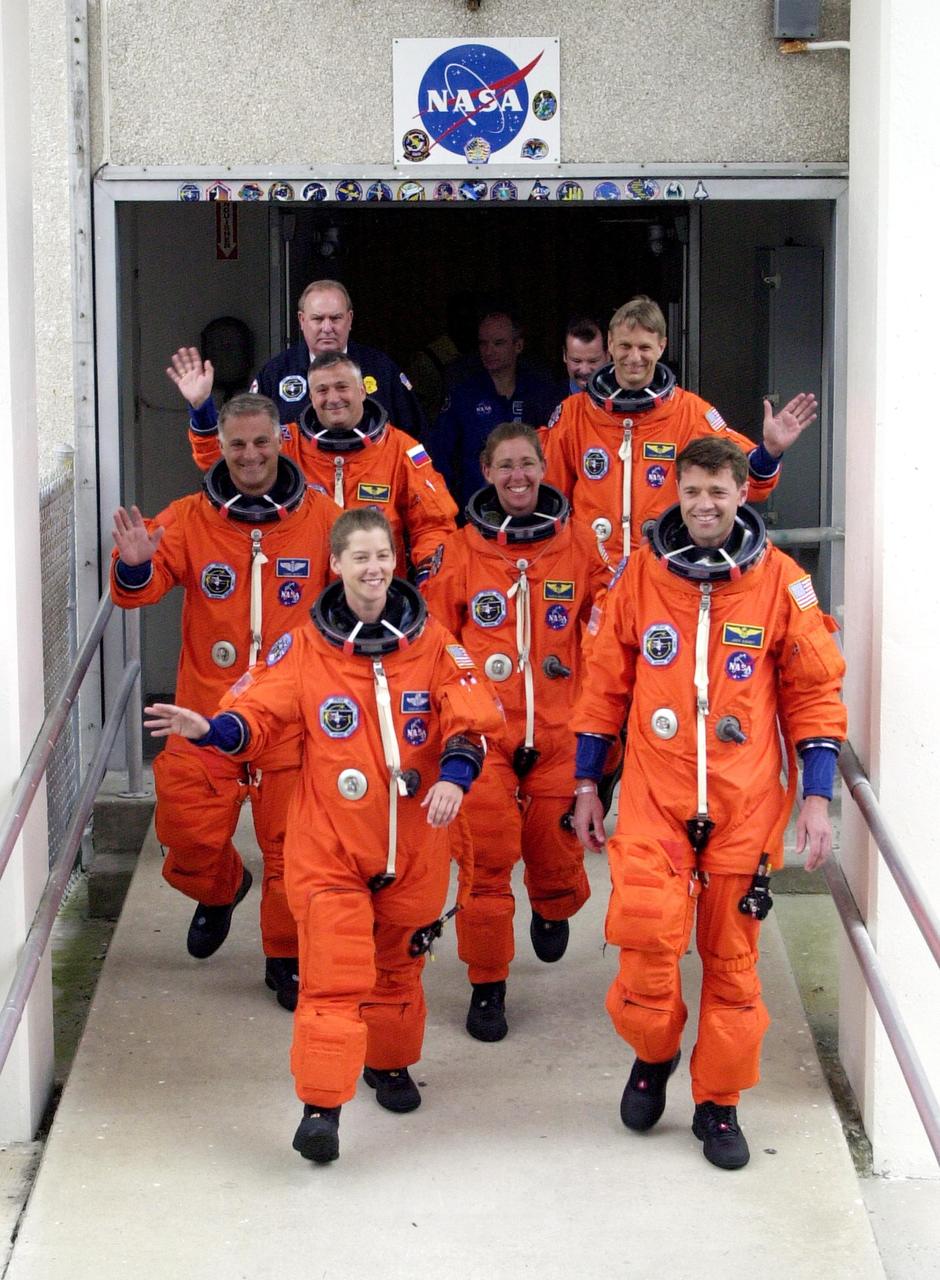
KENNEDY SPACE CENTER, FLA. -- The STS-112 crew wave to spectators as they exit the Operations and Checkout Building for their ride to Launch Pad 39B and the launch scheduled 3:46 p.m. EDT. Leading the way are Pilot Pamela Melroy and Commander Jeffrey Ashby. In the second row are Mission Specialists David Wolf (left) and Sandra Magnus. Behind them are Mission Specialists Fyodor Yurchikhin and Piers Sellers. Sellers, Magnus and Yurchikhin are making their first Shuttle flights. STS-112 is the 15th assembly flight to the International Space Station, carrying the S1 Integrated Truss Structure, the first starboard truss segment, to be attached to the central truss segment, S0, and the Crew and Equipment Translation Aid (CETA) Cart A. The CETA is the first of two human-powered carts that will ride along the ISS railway, providing mobile work platforms for future spacewalking astronauts. On the 11-day mission, three spacewalks are planned to attach the S1 truss to the Station.

KENNEDY SPACE CENTER, FLA. -- The STS-112 crew relaxes at the traditional crew meal before getting ready for launch later in the day. Seated, from left, are Mission Specialist Piers Sellers and Fyodor Yurchikhin, Pilot Pamela Melroy, Commander Jeffrey Ashby, and Mission Specialists Sandra Magnus and David Wolf. STS-112 is the 15th assembly flight to the International Space Station, carrying the S1 Integrated Truss Structure, the first starboard truss segment, to be attached to the central truss segment, S0, and the Crew and Equipment Translation Aid (CETA) Cart A. The CETA is the first of two human-powered carts that will ride along the ISS railway, providing mobile work platforms for future spacewalking astronauts. On the 11-day mission, three spacewalks are planned to attach the S1 truss to the Station. Launch is scheduled for 3:46 p.m. EDT from Launch Pad 39B.

KENNEDY SPACE CENTER, FLA. -- The STS-112 crew pauses for a photo after their arrival at the KSC Shuttle Landing Facility. Standing, left to right, are Mission Specialist Piers Sellers, Pilot Pamela Melroy, Commander Jeffrey Ashby, and Mission Specialists David Wolf, Sandra Magnus and cosmonaut Fyodor Yurchikhin. Sellers, Magnus and Yurchikhin are making their first Shuttle flights. STS-112, aboard Space Shuttle Atlantis, is the 15th assembly mission to the International Space Station. Atlantis will be carrying the S1 Integrated Truss Structure, the first starboard truss segment, to be attached to the central truss segment, S0, and the Crew and Equipment Translation Aid (CETA) Cart A. The CETA is the first of two human-powered carts that will ride along the ISS railway, providing mobile work platforms for future spacewalking astronauts. The 11-day mission includes three spacewalks. Launch is scheduled for Oct. 2 between 2 and 6 p.m.
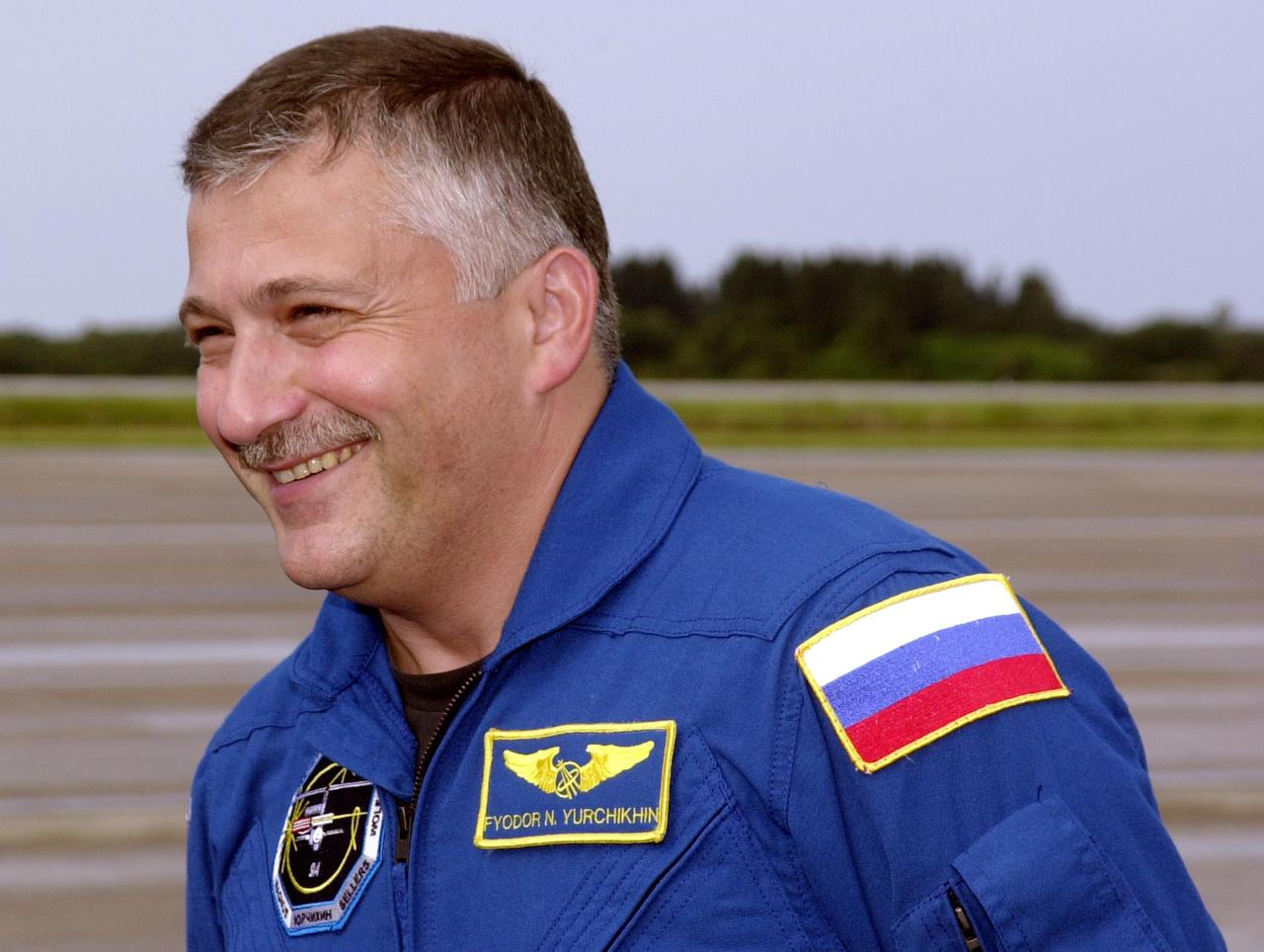
KENNEDY SPACE CENTER, FLA. -- STS-112 Mission Specialist Fyodor Yurchikhin, who is with the Russian Space Agency, shows his happiness at returning to KSC to prepare for launch. He will be making his first Shuttle flight. STS-112, aboard Space Shuttle Atlantis, is the 15th assembly mission to the International Space Station. Atlantis will be carrying the S1 Integrated Truss Structure, the first starboard truss segment, to be attached to the central truss segment, S0, and the Crew and Equipment Translation Aid (CETA) Cart A. The CETA is the first of two human-powered carts that will ride along the ISS railway, providing mobile work platforms for future spacewalking astronauts. The 11-day mission includes three spacewalks. Launch is scheduled for Oct. 2 between 2 and 6 p.m.

KENNEDY SPACE CENTER, FLA. -- STS-112 Mission Specialist Sandra Magnus is happy to return to KSC to prepare for launch. She will be making her first Shuttle flight. STS-112, aboard Space Shuttle Atlantis, is the 15th assembly mission to the International Space Station. Atlantis will be carrying the S1 Integrated Truss Structure, the first starboard truss segment, to be attached to the central truss segment, S0, and the Crew and Equipment Translation Aid (CETA) Cart A. The CETA is the first of two human-powered carts that will ride along the ISS railway, providing mobile work platforms for future spacewalking astronauts. The 11-day mission includes three spacewalks. Launch is scheduled for Oct. 2 between 2 and 6 p.m.
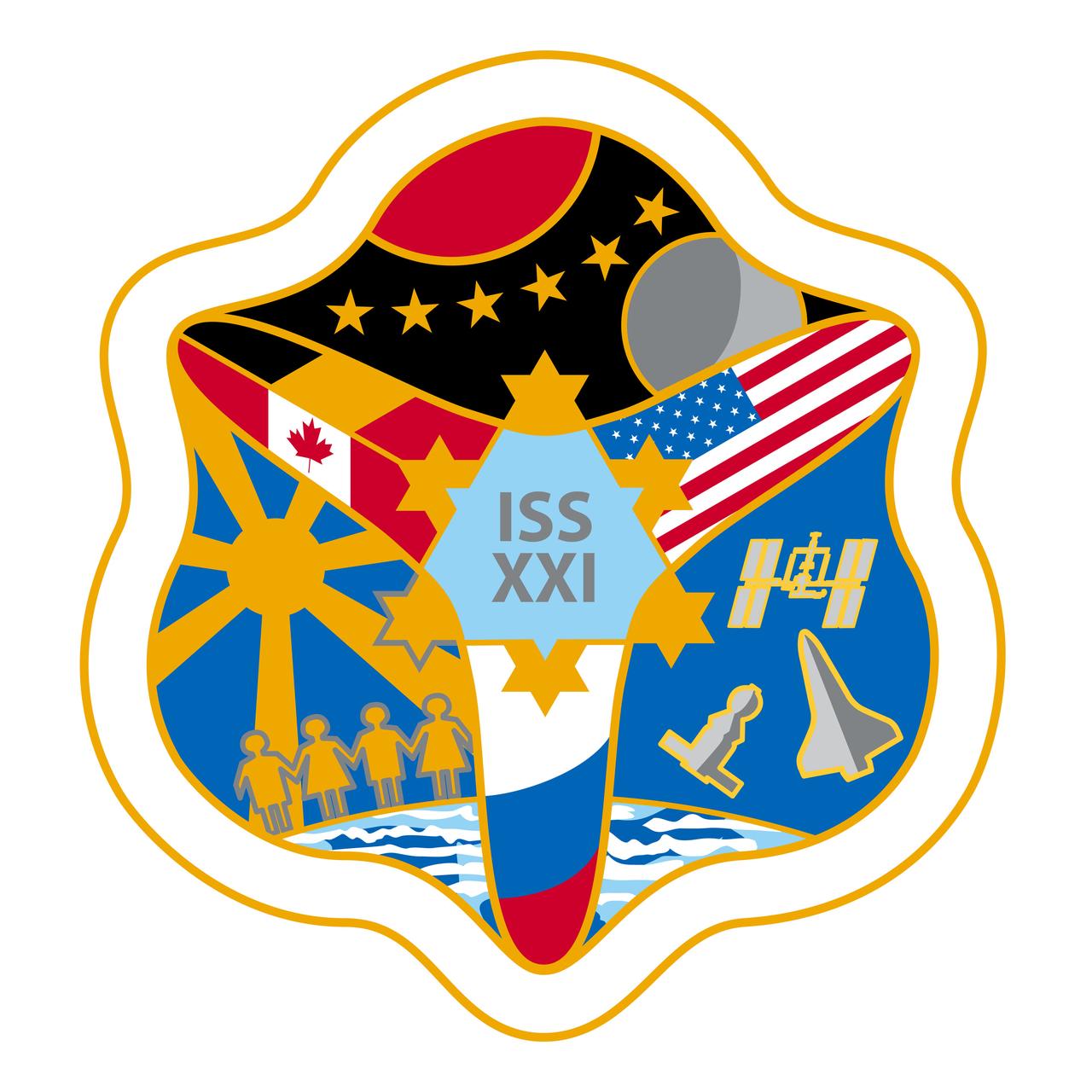
ISS021-S-001 (February 2009) --- The central element of the patch is inspired by a fractal of six, symbolizing the teamwork of the six-person crew. From the basic element of one person, together six people form a much more complex and multifaceted entity, toward the infinity of the universe. The patch shows children, on Earth in the bright Sun, as our future and the reason we explore. The Soyuz and Shuttle are the vehicles that enable human space exploration today, while the International Space Station is leading to our next goals, the moon and Mars. The patch shape has six tips, geometrically sound yet reminiscent of a leaf, representing symmetry and ecological harmony, while the six stars in deep space represent the current crew and future exploration crews. The insignia design for ISS flights is reserved for use by the astronauts and cosmonauts and for other official use as the NASA Administrator and NASA's international partners may authorize. Public availability has been approved only in the form of illustrations by the various news media. When and if there is any change in this policy, which we do not anticipate, it will be publicly announced
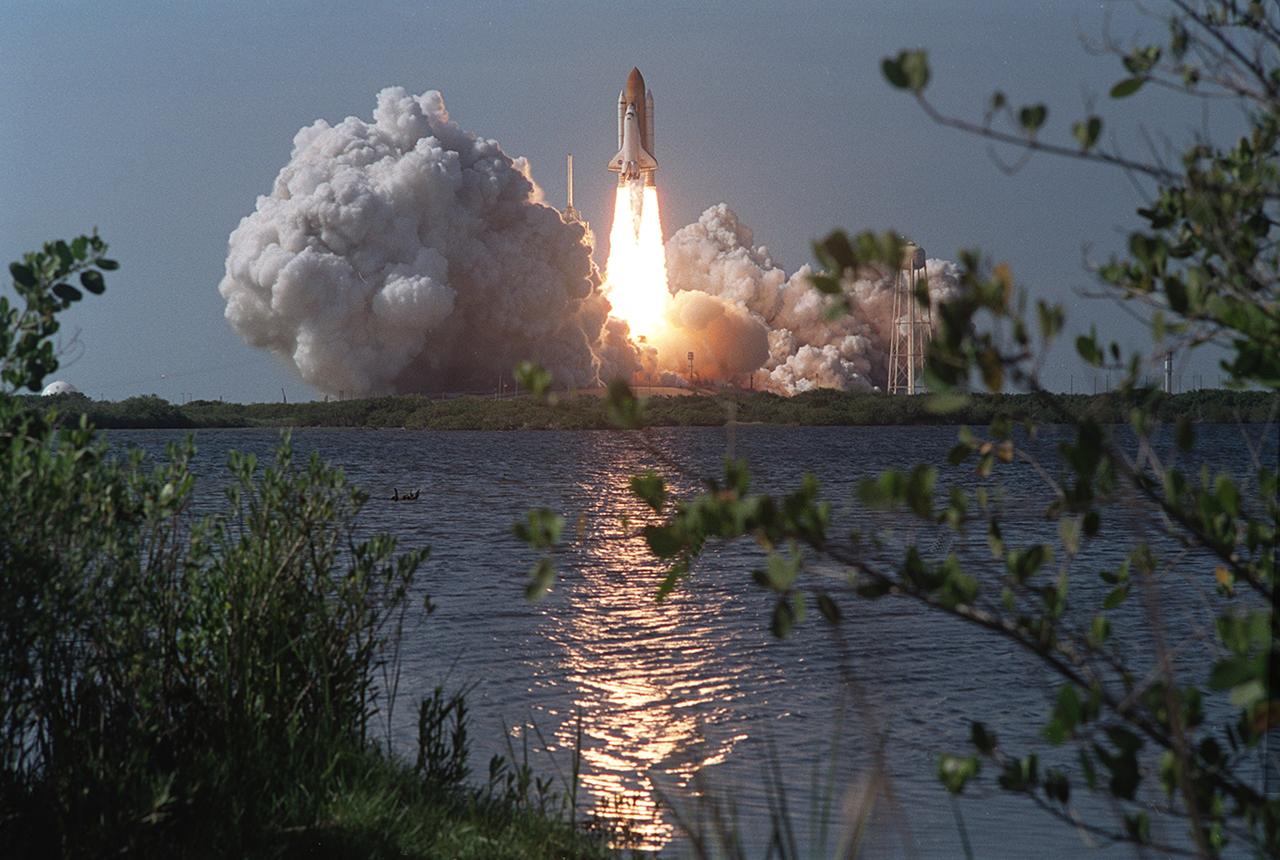
The Space Shuttle Orbiter Atlantis STS-110, embarking on its 25th flight, lifts off from launch pad 39B at Kennedy Space Center at 3:44 p.m. CDT April 8, 2002. The STS-110 mission prepared the International Space Station (ISS) for future space walks by installing and outfitting a 43-foot-long Starboard side S0 truss and preparing the Mobile Transporter. The 27,000 pound S0 Truss was the first of 9 segments that will make up the Station's external framework that will eventually stretch 356 feet (109 meters), or approximately the length of a football field. This central truss segment also includes a flatcar called the Mobile Transporter and rails that will become the first "space railroad," which will allow the Station's robotic arm to travel up and down the finished truss for future assembly and maintenance. The completed truss structure will hold solar arrays and radiators to provide power and cooling for additional international research laboratories from Japan and Europe that will be attached to the Station. Milestones of the S-110 mission included the first time the ISS robotic arm was used to maneuver space walkers around the Station and marked the first time all space walks were based out of the Station's Quest Airlock. It was also the first Shuttle to use three Block II Main Engines.
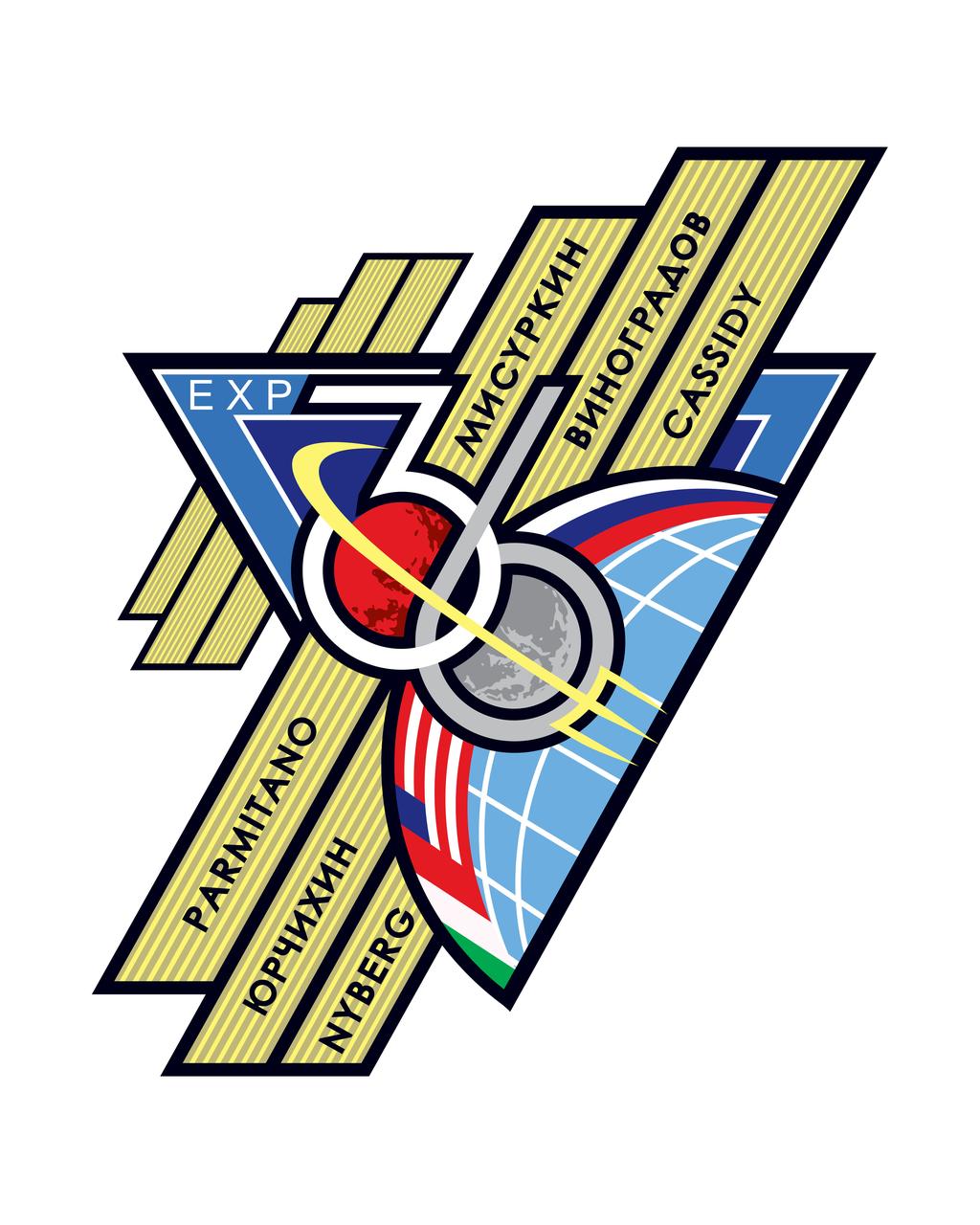
ISS036-S-001 (January 2012) --- The dynamic design of the Expedition 36 patch portrays the International Space Station?s (ISS) iconic solar arrays. The slanted angles denote a kinetic energy leading from the Earth in the lower right to the upper left tip of the triangular shape of the patch, representing the infinite scientific research, education, and long-duration spaceflight capabilities the ISS provides with each mission, as well as our goal for future exploration beyond the Space Station. The numbers 3 and 6 harmoniously intertwine to form expedition number 36 and its gray coloration signifies the unity and neutrality among all of the international partners of the ISS. The blue and gold color scheme of the patch represents the subtle way the central gold orbit wraps around the number 36 to form a trident at its lower right tip. The trident also symbolizes the sea, air, and land, all of which make up the Earth from where the trident originates in the design. The NASA insignia design for shuttle and space station flights is reserved for use by the astronauts and for other official use as the NASA Administrator may authorize. Public availability has been approved only in the form of illustrations by the various news media. When and if there is any change in this policy, which is not anticipated, it will be publicly announced. Photo credit: NASA
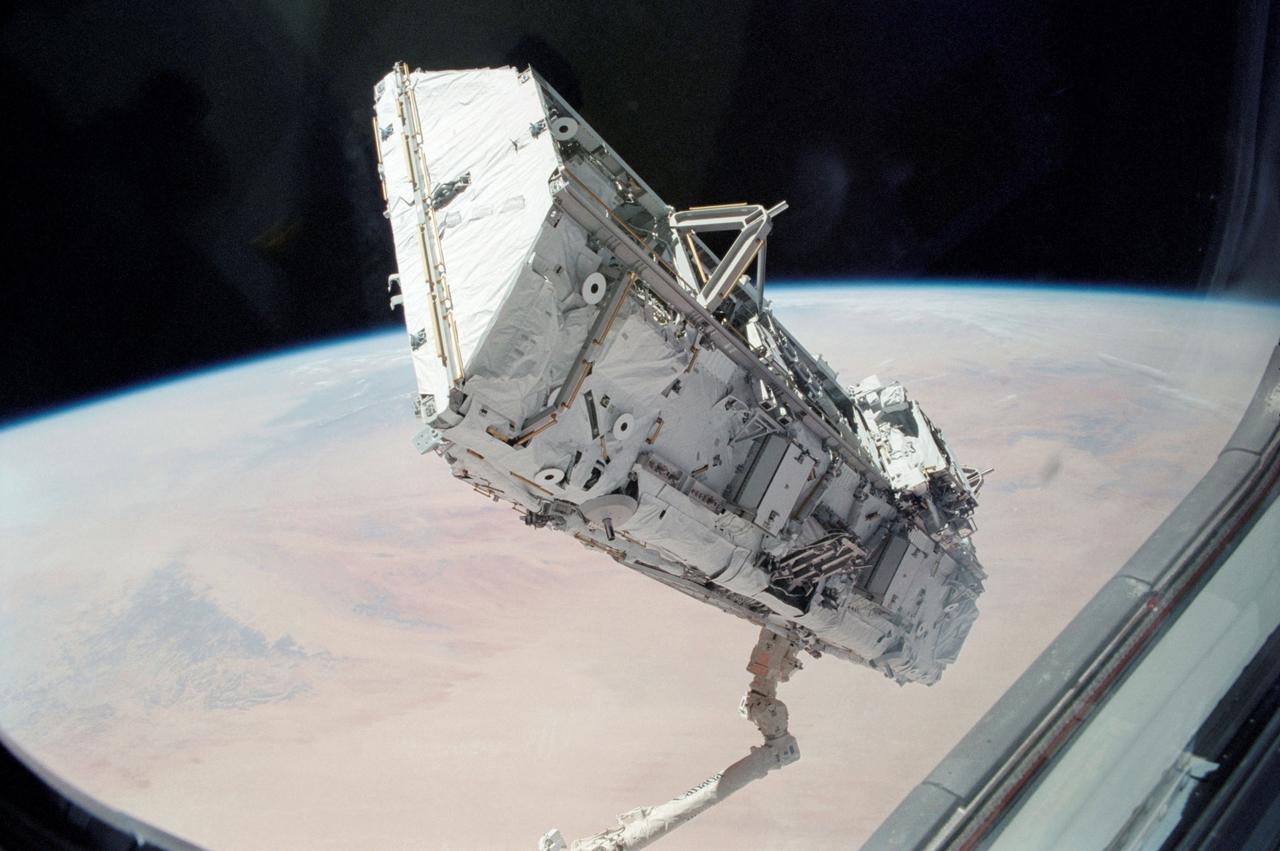
Backdropped against the blackness of space and the Earth's horizon, the S0 (S-zero) truss is removed from Atlantis' cargo bay and onto the Destiny laboratory of the International Space Station (ISS) by Astronauts Ellen Ochoa, STS-110 mission specialist, and Daniel W. Bursch, Expedition Four flight engineer, using the ISS' Canadarm2. Space Shuttle Orbiter Atlantis, STS-110 mission, prepared the International Space Station (ISS) for future spacewalks by installing and outfitting the 43-foot-long S0 truss and preparing the first railroad in space, the Mobile Transporter. The 27,000-pound S0 truss was the first of 9 segments that will make up the Station's external framework that will eventually stretch 356 feet (109 meters), or approximately the length of a football field. This central truss segment also includes a flatcar called the Mobile Transporter and rails that will become the first "space railroad," which will allow the Station's robotic arm to travel up and down the finished truss for future assembly and maintenance. The completed truss structure will hold solar arrays and radiators to provide power and cooling for additional international research laboratories from Japan and Europe that will be attached to the Station. Milestones of the STS-110 mission included the first use of the Station's robotic arm to maneuver spacewalkers around the Station and it was the first time all of a Shuttle crew's spacewalks were based out of the Station's Quest Airlock. It was also the first Shuttle to use three Block II Main Engines. The Space Shuttle Orbiter Atlantis, STS-110 mission, was launched April 8, 2002 and returned to Earth April 19, 2002.