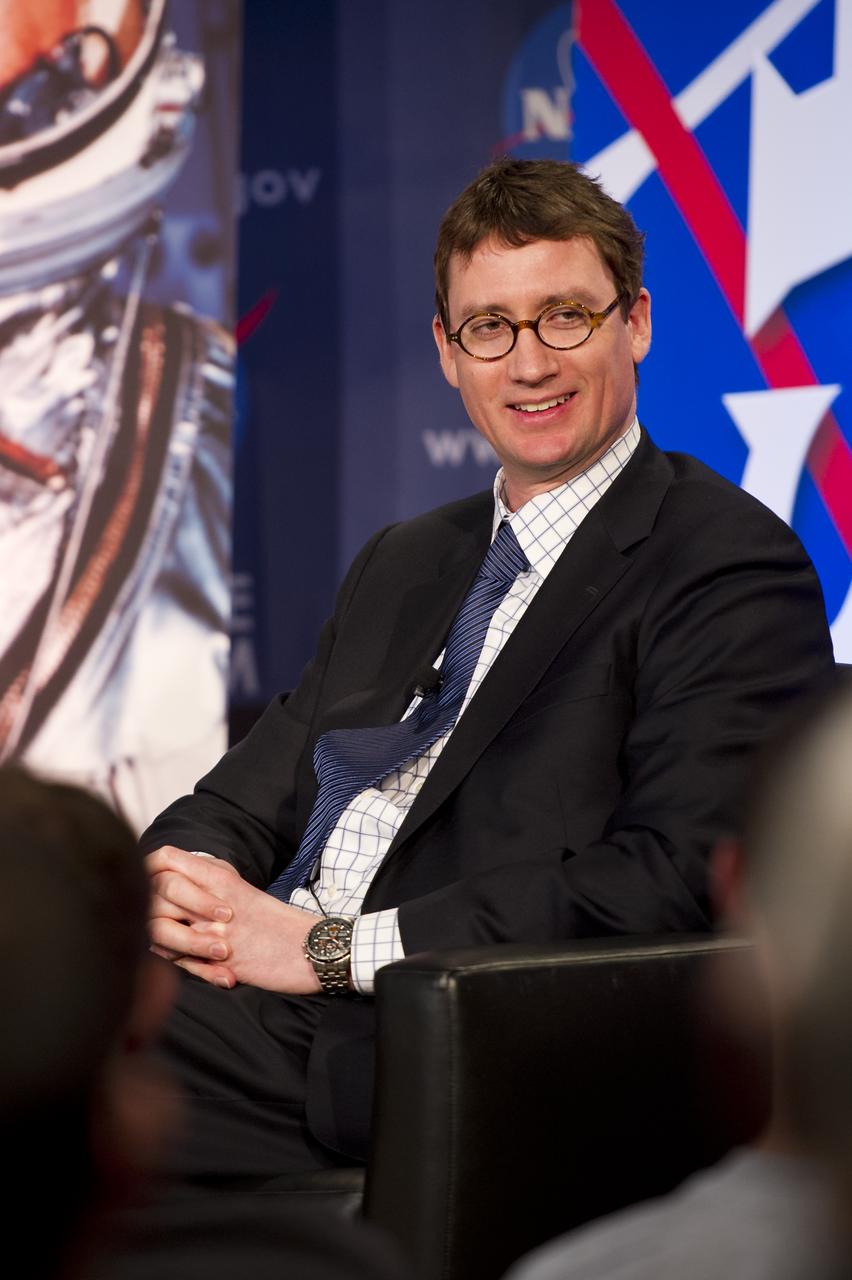
Jordan Hansell, chairman and CEO, NetJets Inc. talks during the NASA Future Forum panel titled "Importance of Technology, Science and Innovation for our Economic Future" at The Ohio State University on Tuesday, Feb. 21, 2012 in Columbus, Ohio. The NASA Future Forum features panel discussions on the importance of education to our nation's future in space, the benefit of commercialized space technology to our economy and lives here on Earth, and the shifting roles for the public, commercial and international communities in space. Photo Credit: (NASA/Bill Ingalls)

Laurie Leshin, dean of the School of Science, Rensselaer Polytechnic Institute, moderates the NASA Future Forum panel titled "Importance of Technology, Science and Innovation for our Economic Future" at The Ohio State University on Tuesday, Feb. 21, 2012 in Columbus, Ohio. The NASA Future Forum features panel discussions on the importance of education to our nation's future in space, the benefit of commercialized space technology to our economy and lives here on Earth, and the shifting roles for the public, commercial and international communities in space. Photo Credit: (NASA/Bill Ingalls)

Leland Melvin, NASA Associate Administrator for Education and NASA Astronaut, moderates the NASA Future Forum Inspiration and Education Panel at The Ohio State University on Monday, Feb. 20, 2012, in Columbus, Ohio. The NASA Future Forum features panel discussions on the importance of education to our nation's future in space, the benefit of commercialized space technology to our economy and lives here on Earth, and the shifting roles for the public, commercial and international communities in space. Photo Credit: (NASA/Bill Ingalls)
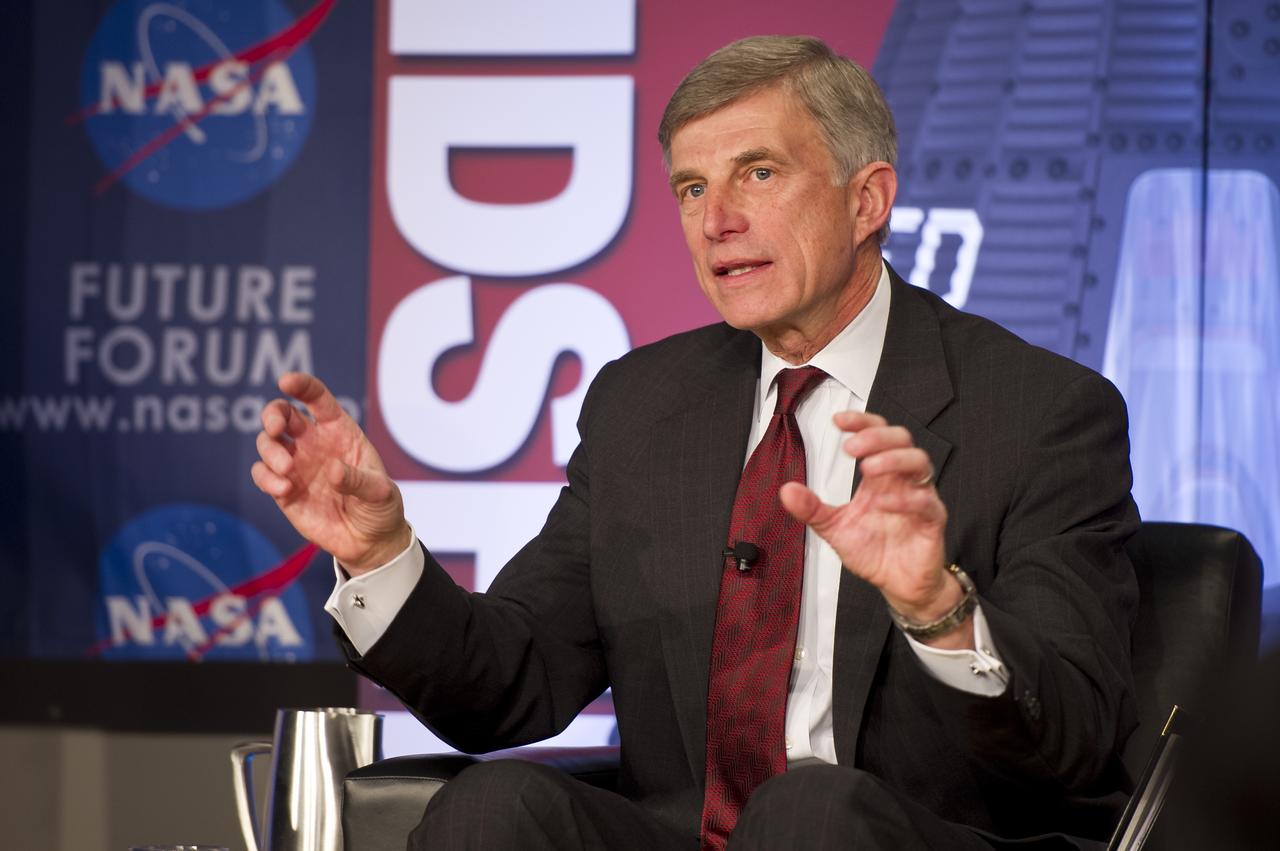
Ron Sega, Vice president and enterprise executive for Energy and the Environment, The Ohio State University and Colorado State University talks during the NASA Future Forum panel titled "Importance of Technology, Science and Innovation for our Economic Future" at The Ohio State University on Tuesday, Feb. 21, 2012 in Columbus, Ohio. The NASA Future Forum features panel discussions on the importance of education to our nation's future in space, the benefit of commercialized space technology to our economy and lives here on Earth, and the shifting roles for the public, commercial and international communities in space. Photo Credit: (NASA/Bill Ingalls)
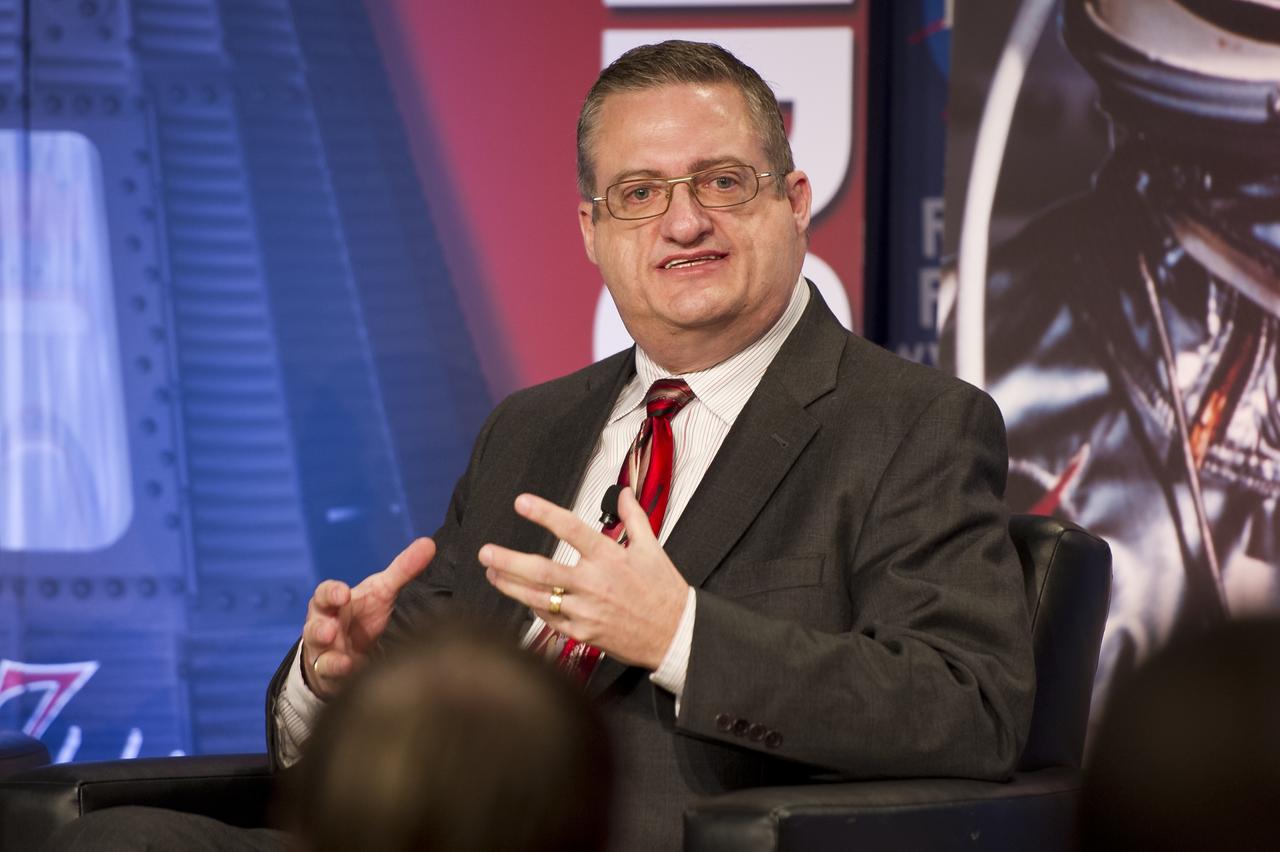
Michael Donovan, technology consultant, New Services Development, Hewlett-Packard Company talks during the NASA Future Forum panel titled "Importance of Technology, Science and Innovation for our Economic Future" at The Ohio State University on Tuesday, Feb. 21, 2012 in Columbus, Ohio. The NASA Future Forum features panel discussions on the importance of education to our nation's future in space, the benefit of commercialized space technology to our economy and lives here on Earth, and the shifting roles for the public, commercial and international communities in space. Photo Credit: (NASA/Bill Ingalls)

NASA Public Affairs Officer Lauren Worley kicks off the second day of the NASA Future Forum at The Ohio State University on Tuesday, Feb. 21, 2012 in Columbus, Ohio. The NASA Future Forum features panel discussions on the importance of education to our nation's future in space, the benefit of commercialized space technology to our economy and lives here on Earth, and the shifting roles for the public, commercial and international communities in space. Photo Credit: (NASA/Bill Ingalls)
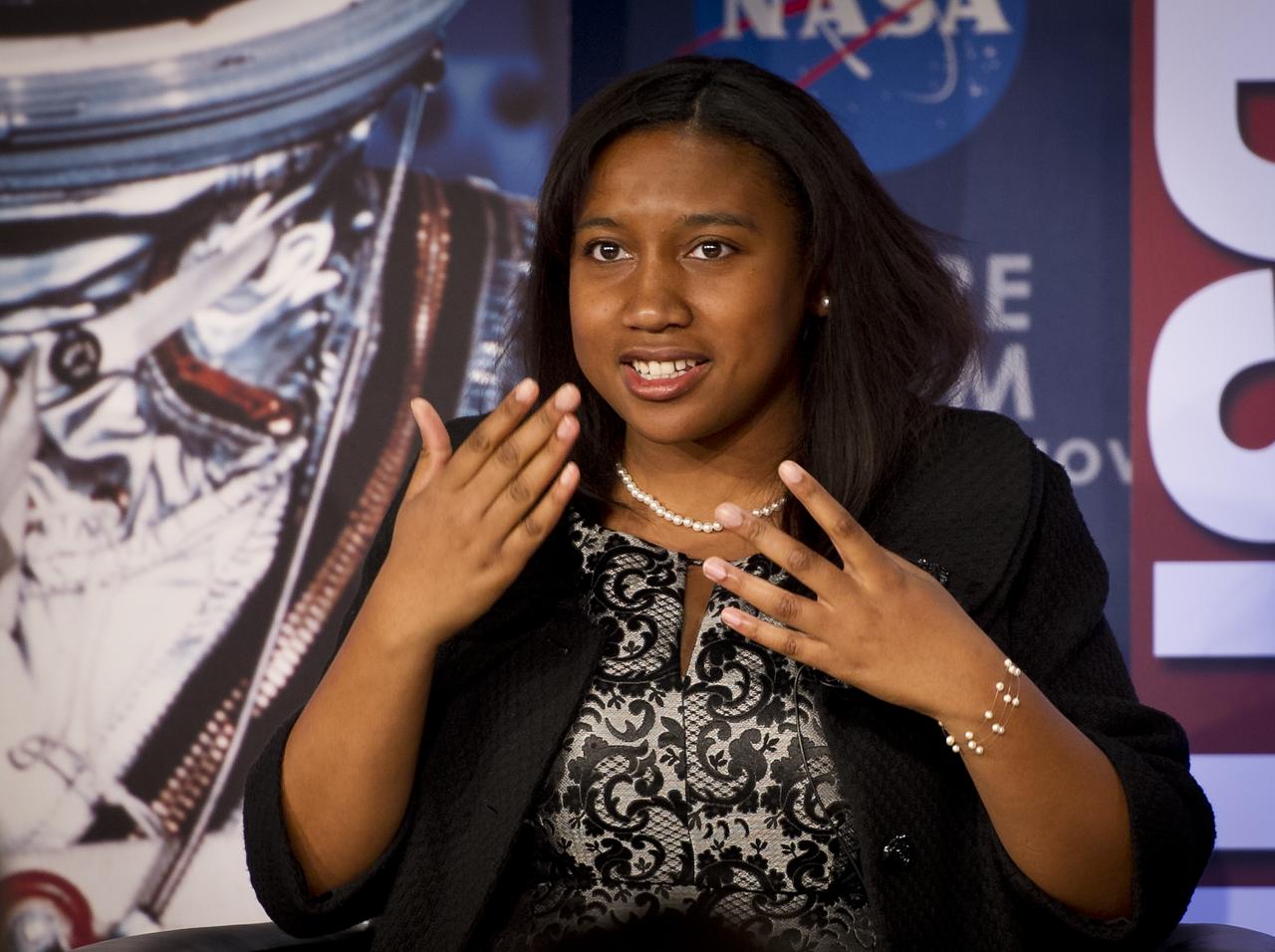
Ohio State University graduate student, biological sciences and NASA Student Ambassador, Monica Okon talks during the NASA Future Forum Inspiration and Education Panel at The Ohio State University on Monday, Feb. 20, 2012, in Columbus, Ohio. The NASA Future Forum features panel discussions on the importance of education to our nation's future in space, the benefit of commercialized space technology to our economy and lives here on Earth, and the shifting roles for the public, commercial and international communities in space. Photo Credit: (NASA/Bill Ingalls)
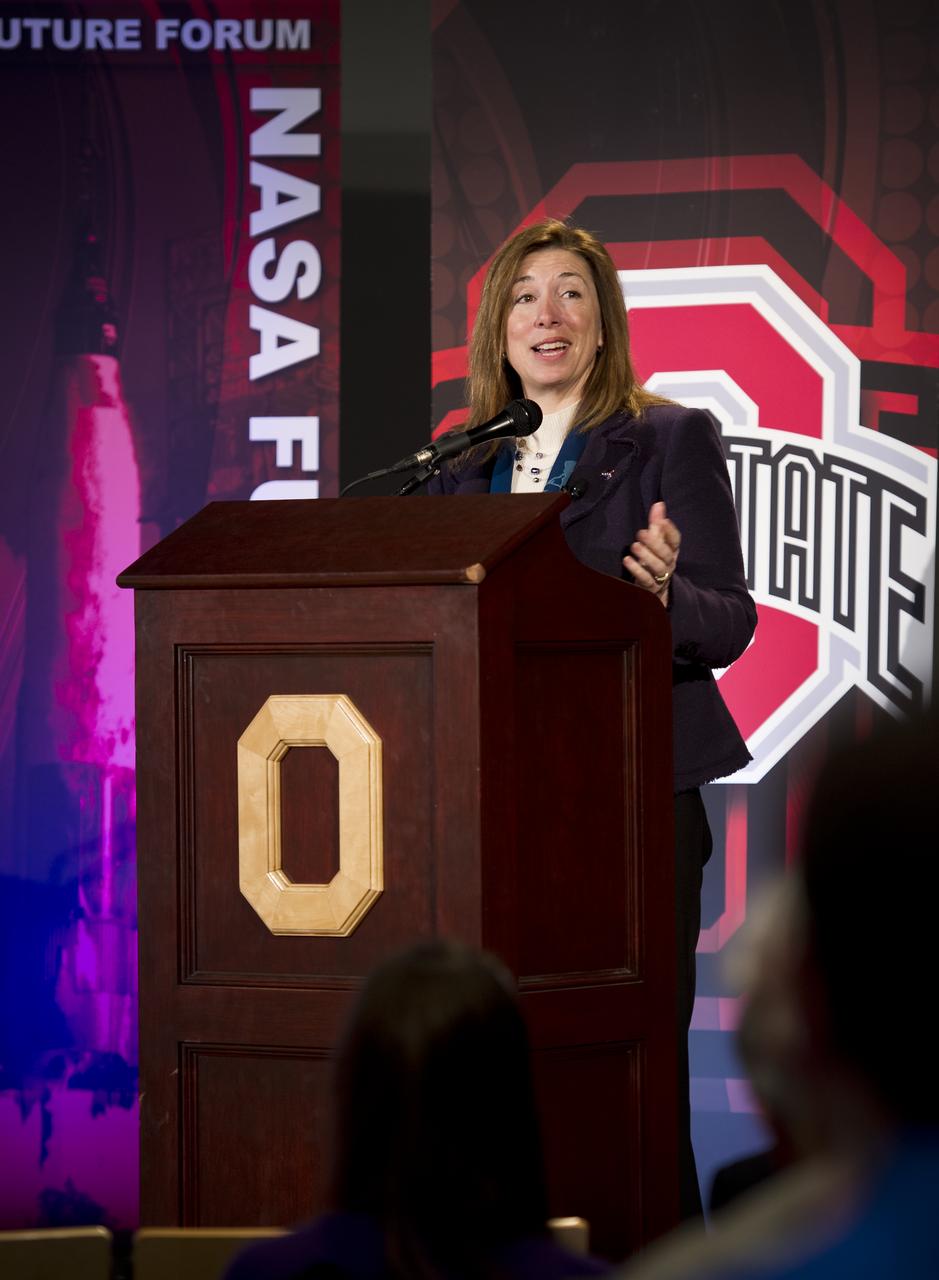
NASA Deputy Administrator Lori Garver speaks during the NASA Future Forum at The Ohio State University on Tuesday, Feb. 21, 2012 in Columbus, Ohio. The NASA Future Forum features panel discussions on the importance of education to our nation's future in space, the benefit of commercialized space technology to our economy and lives here on Earth, and the shifting roles for the public, commercial and international communities in space. Photo Credit: (NASA/Bill Ingalls)
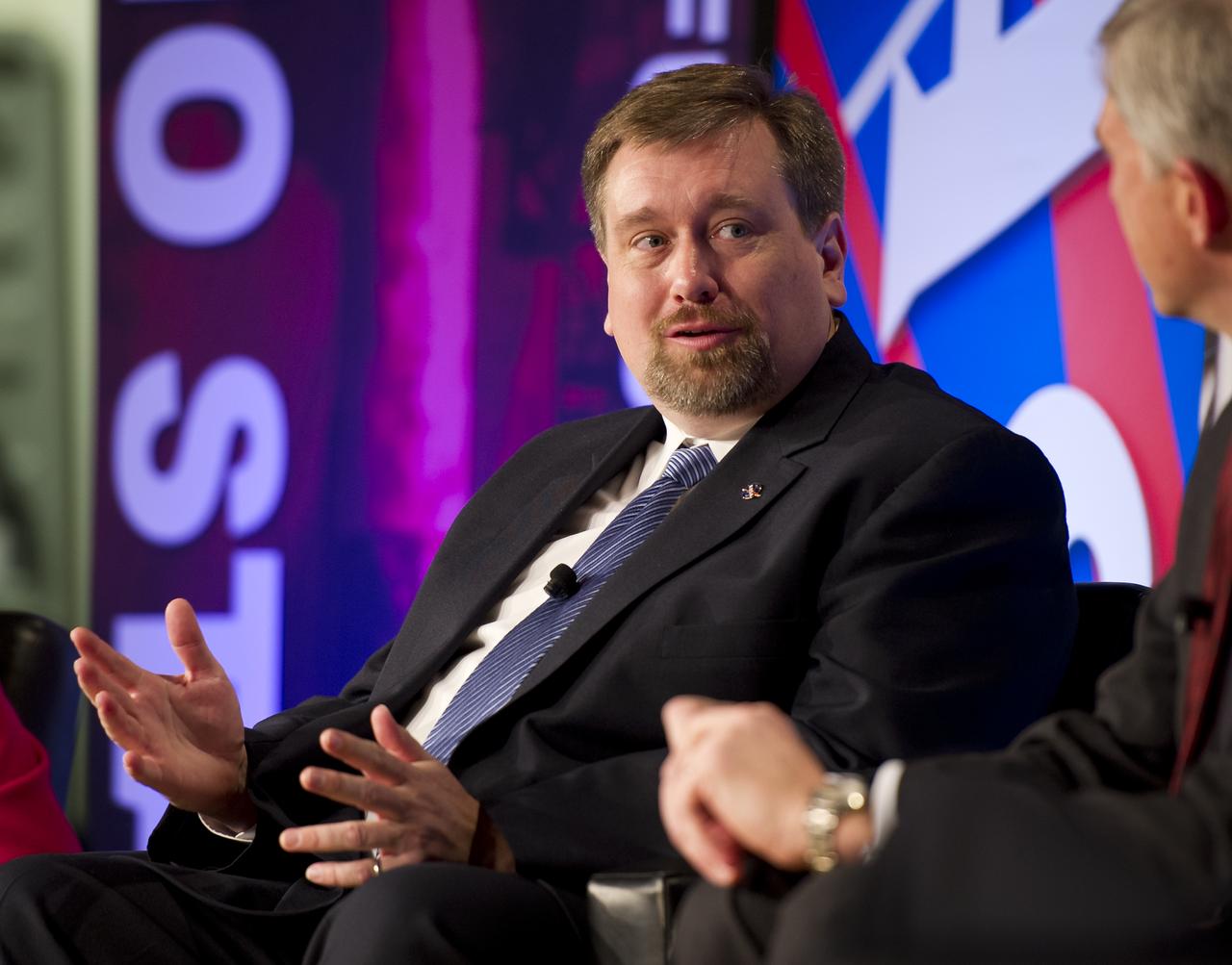
NASA Chief Technologist Mason Peck talks during the NASA Future Forum at The Ohio State University on Tuesday, Feb. 21, 2012 in Columbus, Ohio. The NASA Future Forum features panel discussions on the importance of education to our nation's future in space, the benefit of commercialized space technology to our economy and lives here on Earth, and the shifting roles for the public, commercial and international communities in space. Photo Credit: (NASA/Bill Ingalls)

NASA Technology Transfer Program Executive Daniel Lockney moderates the NASA Future Forum panel titled "Transferring and Commercializing Technology to Benefit Our Lives and Our Economy" at The Ohio State University on Tuesday, Feb. 21, 2012 in Columbus, Ohio. The NASA Future Forum features panel discussions on the importance of education to our nation's future in space, the benefit of commercialized space technology to our economy and lives here on Earth, and the shifting roles for the public, commercial and international communities in space. Photo Credit: (NASA/Bill Ingalls)

Sen. John Glenn delivers the closing remarks for NASA's Future Forum at The Ohio State University on Tuesday, Feb. 21, 2012 in Columbus, Ohio. The NASA Future Forum features panel discussions on the importance of education to our nation's future in space, the benefit of commercialized space technology to our economy and lives here on Earth, and the shifting roles for the public, commercial and international communities in space. Photo Credit: (NASA/Bill Ingalls)

Founding head of MC2 STEM High School Jeffrey McClellan talks during the NASA Future Forum Inspiration and Education Panel at The Ohio State University on Monday, Feb. 20, 2012, in Columbus, Ohio. The NASA Future Forum features panel discussions on the importance of education to our nation's future in space, the benefit of commercialized space technology to our economy and lives here on Earth, and the shifting roles for the public, commercial and international communities in space. Photo Credit: (NASA/Bill Ingalls)

Carlos Grodsinsky, Vice Presiden of Technology, Zin Technologies, talks during the NASA Future Forum panel titled "Transferring and Commercializing Technology to Benefit Our Lives and Our Economy" at The Ohio State University on Tuesday, Feb. 21, 2012 in Columbus, Ohio. The NASA Future Forum features panel discussions on the importance of education to our nation's future in space, the benefit of commercialized space technology to our economy and lives here on Earth, and the shifting roles for the public, commercial and international communities in space. Photo Credit: (NASA/Bill Ingalls)
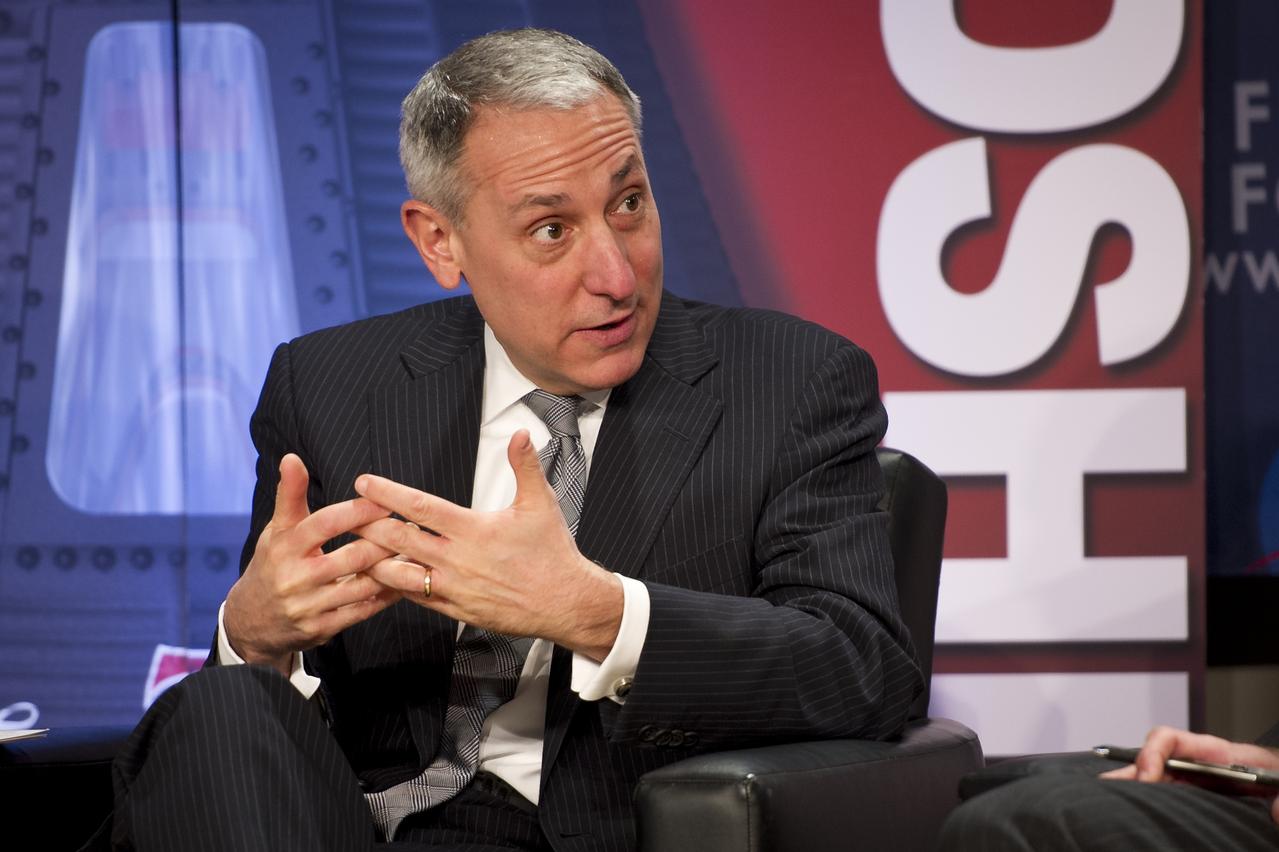
Eric Fingerhut, head of Education at Battelle, former chancellor of Ohio's Higher Education System, talks during the during the NASA Future Forum Inspiration and Education Panel at The Ohio State University on Monday, Feb. 20, 2012, in Columbus, Ohio. The NASA Future Forum features panel discussions on the importance of education to our nation's future in space, the benefit of commercialized space technology to our economy and lives here on Earth, and the shifting roles for the public, commercial and international communities in space. Photo Credit: (NASA/Bill Ingalls)
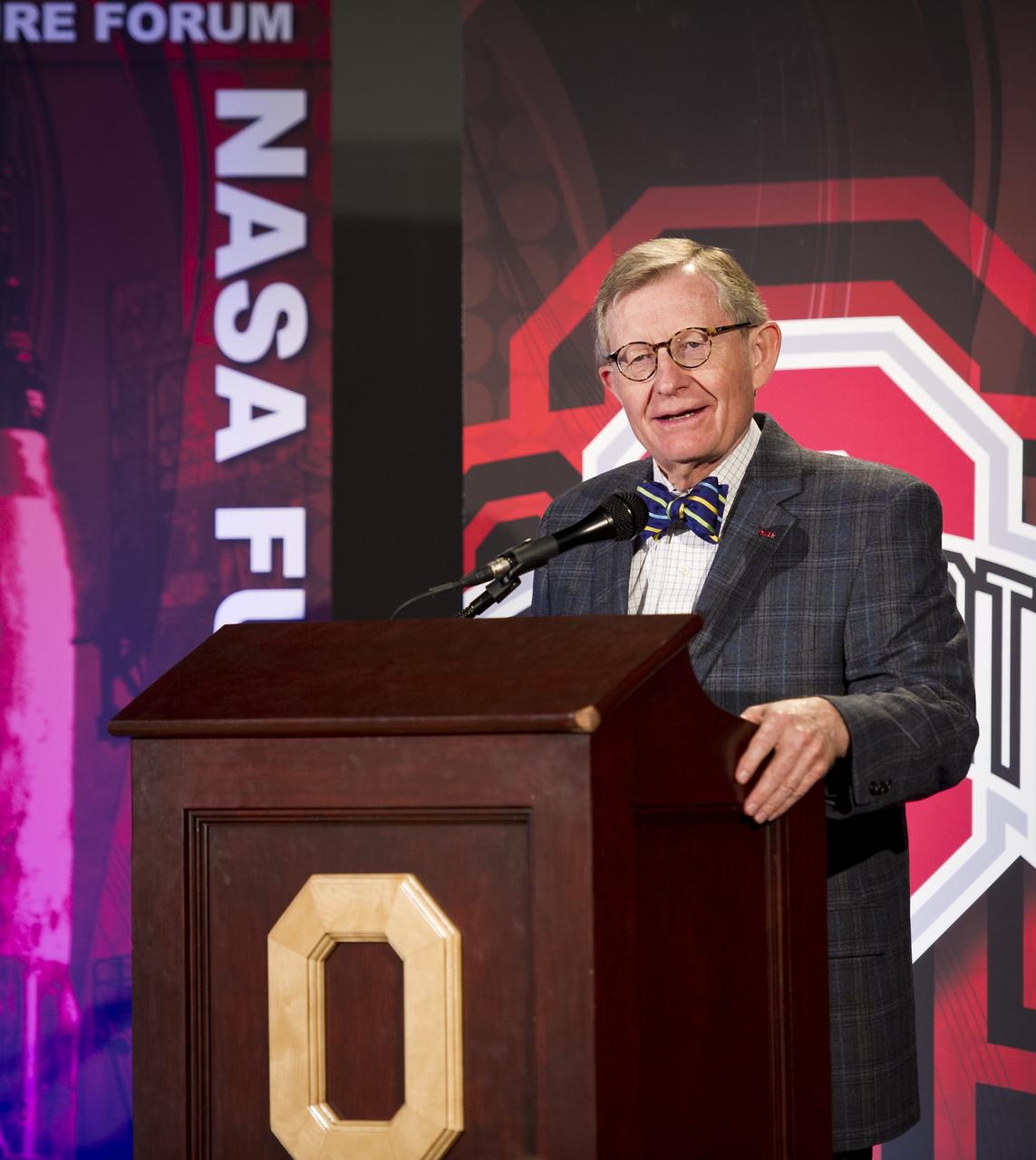
The Ohio State University President E. Gordon Gee speaks during the NASA Future Forum at The Ohio State University on Tuesday, Feb. 21, 2012 in Columbus, Ohio. The NASA Future Forum features panel discussions on the importance of education to our nation's future in space, the benefit of commercialized space technology to our economy and lives here on Earth, and the shifting roles for the public, commercial and international communities in space. Photo Credit: (NASA/Bill Ingalls)

Sen. John Glenn delivers the closing remarks for NASA's Future Forum at The Ohio State University on Tuesday, Feb. 21, 2012 in Columbus, Ohio. The NASA Future Forum features panel discussions on the importance of education to our nation's future in space, the benefit of commercialized space technology to our economy and lives here on Earth, and the shifting roles for the public, commercial and international communities in space. Photo Credit: (NASA/Bill Ingalls)

Ohio Space Grant Consortium (OSGC) Director Gary Slater talks during the NASA Future Forum Inspiration and Education Panel at The Ohio State University on Monday, Feb. 20, 2012, in Columbus, Ohio. The NASA Future Forum features panel discussions on the importance of education to our nation's future in space, the benefit of commercialized space technology to our economy and lives here on Earth, and the shifting roles for the public, commercial and international communities in space. Photo Credit: (NASA/Bill Ingalls)
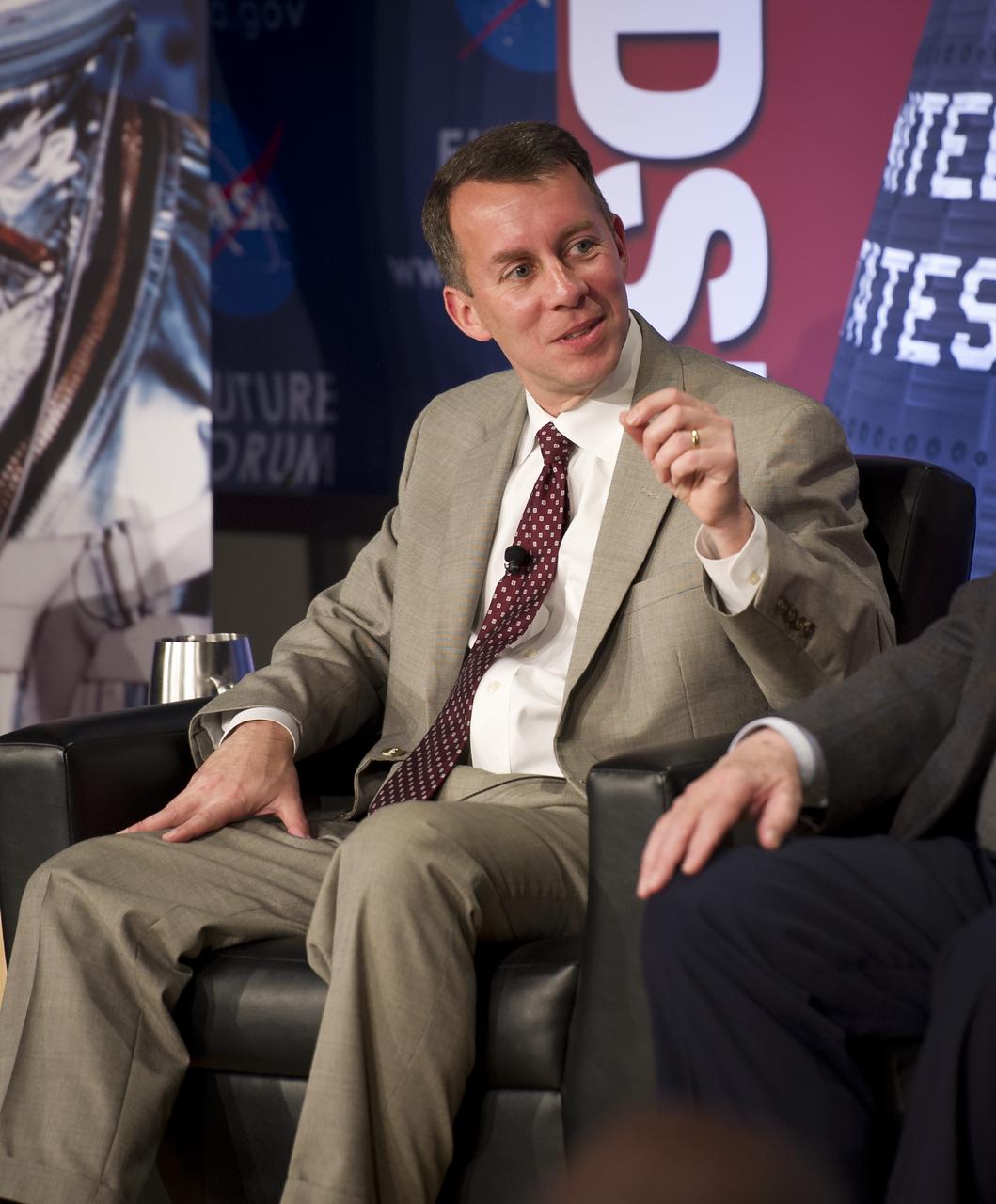
Bobby Braun, professor, Georgia Institute of Technology, talks during the NASA Future Forum panel titled "Shifting Roles for Public, Private, and International Players in Space" at The Ohio State University on Tuesday, Feb. 21, 2012 in Columbus, Ohio. The NASA Future Forum features panel discussions on the importance of education to our nation's future in space, the benefit of commercialized space technology to our economy and lives here on Earth, and the shifting roles for the public, commercial and international communities in space. Photo Credit: (NASA/Bill Ingalls)

Pickerington High School student Jordan Elliott, left, and Dayton Regional STEM student Cheyenne Benson participate in the NASA Future Forum Inspiration and Education Panel at The Ohio State University on Monday, Feb. 20, 2012, in Columbus, Ohio. The NASA Future Forum features panel discussions on the importance of education to our nation's future in space, the benefit of commercialized space technology to our economy and lives here on Earth, and the shifting roles for the public, commercial and international communities in space. Photo Credit: (NASA/Bill Ingalls)
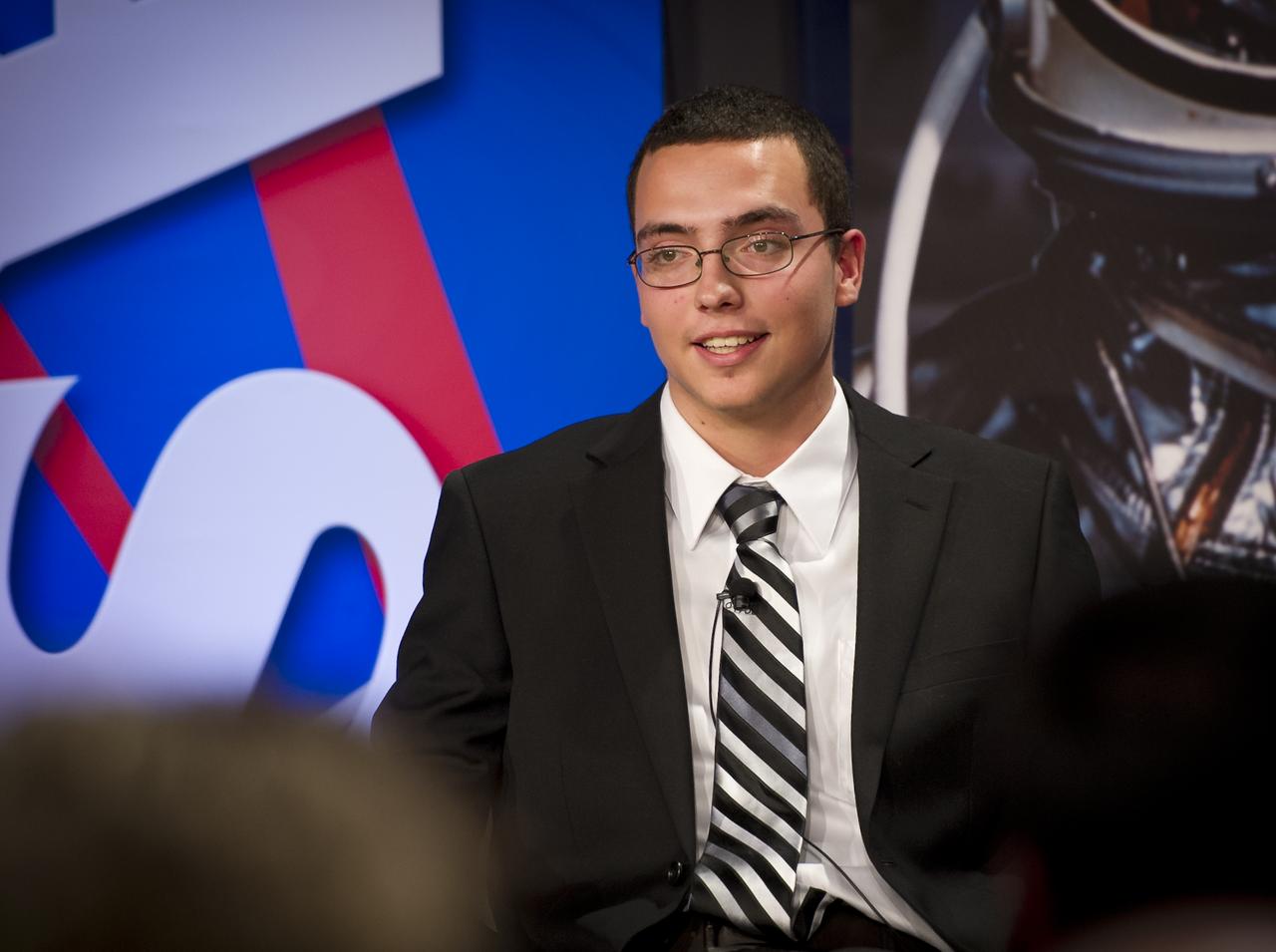
Metro High School Student Anthony Springer talks during the NASA Future Forum Inspiration and Education Panel at The Ohio State University on Monday, Feb. 20, 2012, in Columbus, Ohio. The NASA Future Forum features panel discussions on the importance of education to our nation's future in space, the benefit of commercialized space technology to our economy and lives here on Earth, and the shifting roles for the public, commercial and international communities in space. Photo Credit: (NASA/Bill Ingalls)
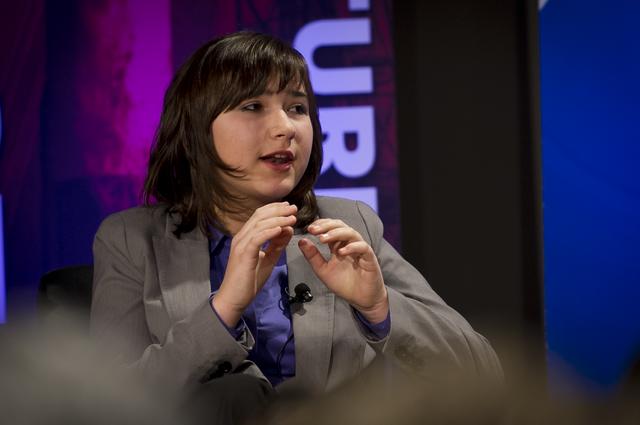
Dayton Regional STEM student Cheyenne Benson talks during the NASA Future Forum Inspiration and Education Panel at The Ohio State University on Monday, Feb. 20, 2012, in Columbus, Ohio. The NASA Future Forum features panel discussions on the importance of education to our nation's future in space, the benefit of commercialized space technology to our economy and lives here on Earth, and the shifting roles for the public, commercial and international communities in space. Photo Credit: (NASA/Bill Ingalls)
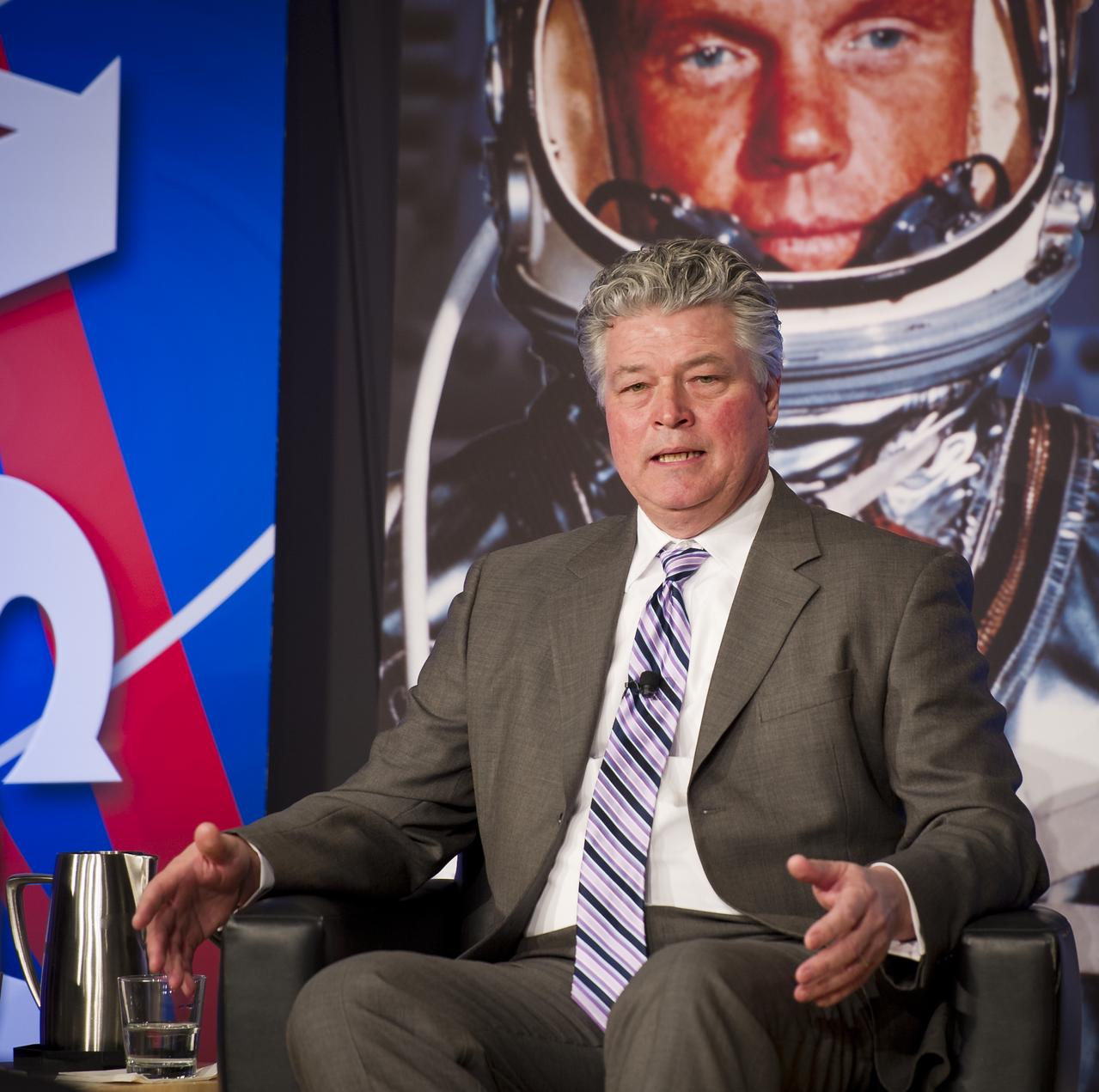
Fayette Collier, Aeronautics Research Mission Directorate, NASA Headquarters talks during the NASA Future Forum panel titled "Transferring and Commercializing Technology to Benefit Our Lives and Our Economy" at The Ohio State University on Tuesday, Feb. 21, 2012 in Columbus, Ohio. The NASA Future Forum features panel discussions on the importance of education to our nation's future in space, the benefit of commercialized space technology to our economy and lives here on Earth, and the shifting roles for the public, commercial and international communities in space. Photo Credit: (NASA/Bill Ingalls)
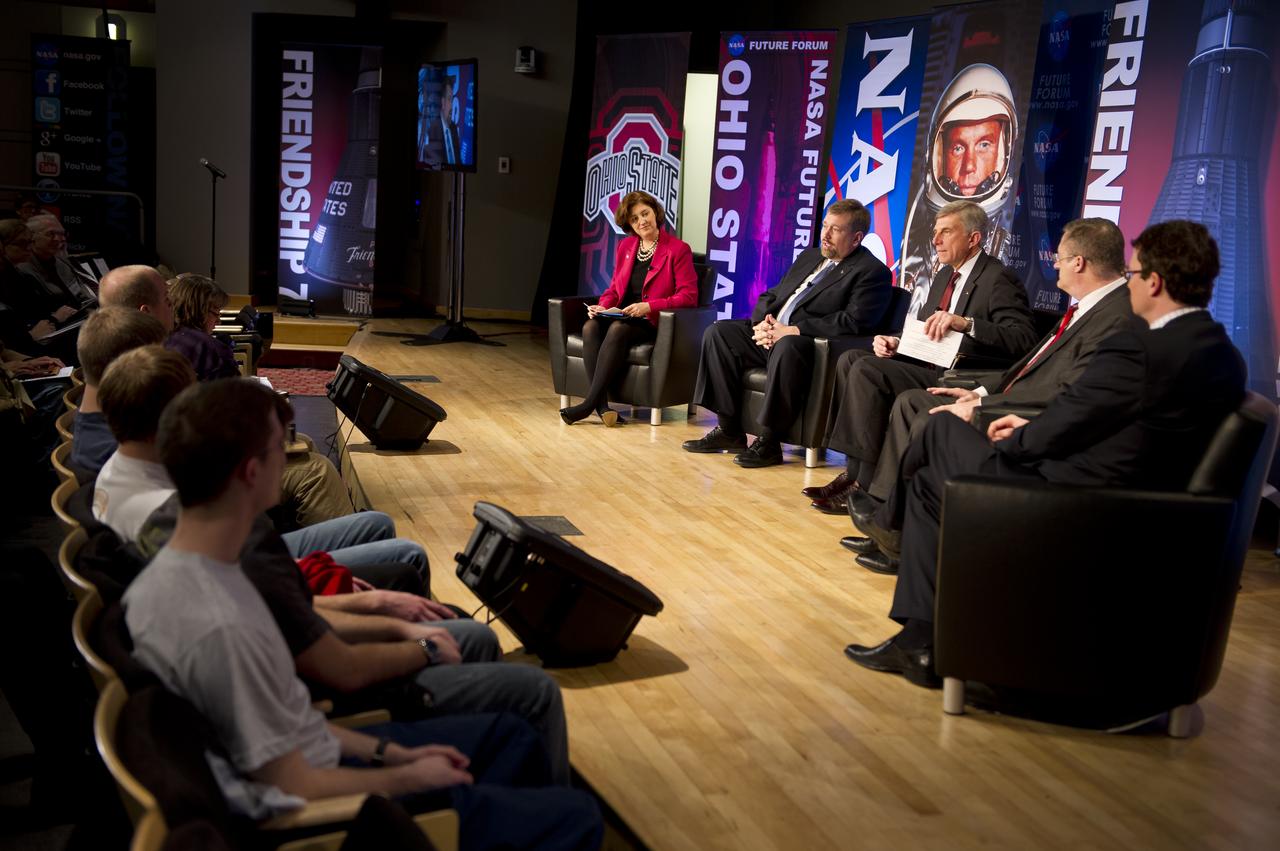
Laurie Leshin, dean of the School of Science, Rensselaer Polytechnic Institute, left, Mason Peck, NASA Chief Technologist, 2nd from left, Ron Sega, Vice president and enterprise executive for Energy and the Environment, The Ohio State University and Colorado State University, Michael Donovan, technology consultant, New Services Development, Hewlett-Packard Company, and, Jordan Hansell, chairman and CEO, NetJets Inc., right, participate in the NASA Future Forum panel titled "Importance of Technology, Science and Innovation for our Economic Future" at The Ohio State University on Tuesday, Feb. 21, 2012 in Columbus, Ohio. The NASA Future Forum features panel discussions on the importance of education to our nation's future in space, the benefit of commercialized space technology to our economy and lives here on Earth, and the shifting roles for the public, commercial and international communities in space. Photo Credit: (NASA/Bill Ingalls)
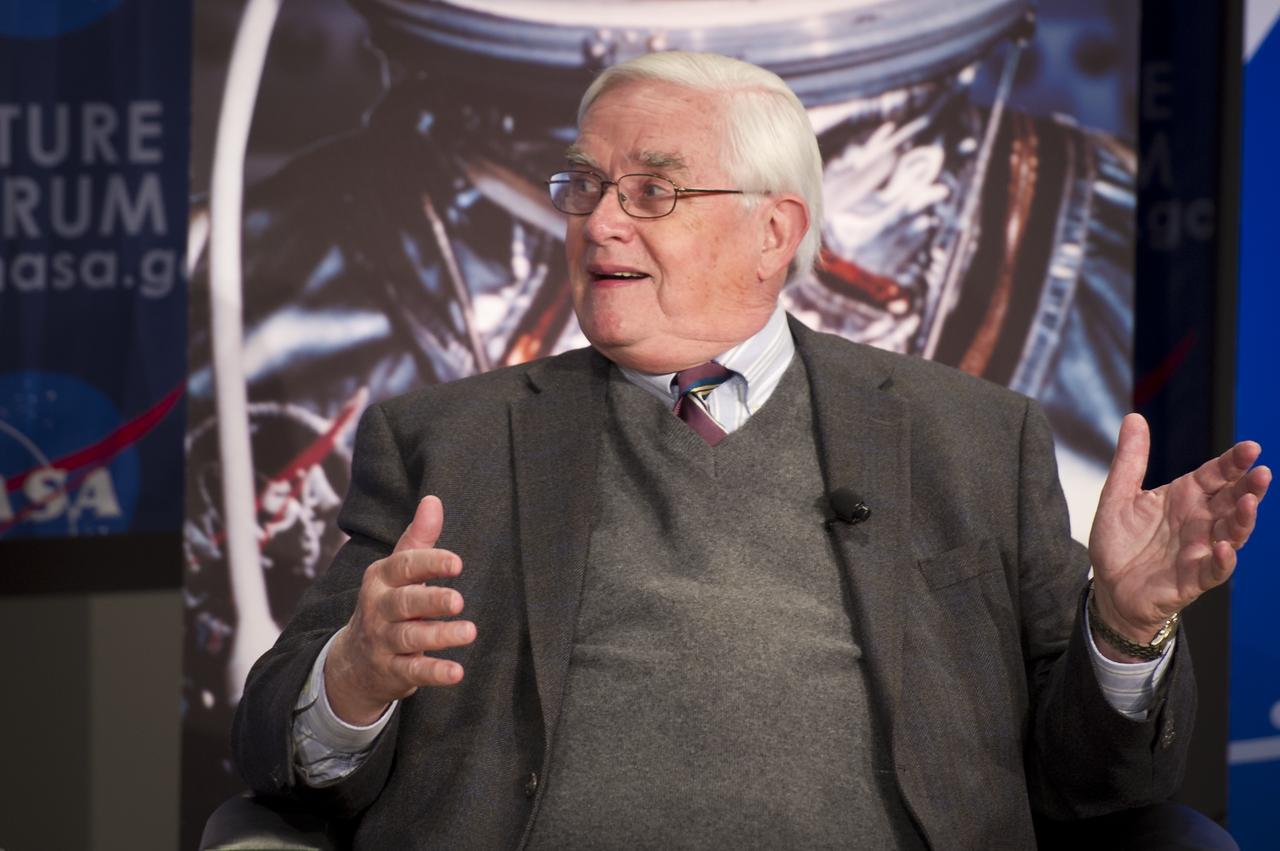
John Logsdon, professor emeritus of Political Science and International Affairs, Elliott School of International Affairs, George Washington University, talks during the NASA Future Forum panel titled "Shifting Roles for Public, Private, and International Players in Space" at The Ohio State University on Tuesday, Feb. 21, 2012 in Columbus, Ohio. The NASA Future Forum features panel discussions on the importance of education to our nation's future in space, the benefit of commercialized space technology to our economy and lives here on Earth, and the shifting roles for the public, commercial and international communities in space. Photo Credit: (NASA/Bill Ingalls)
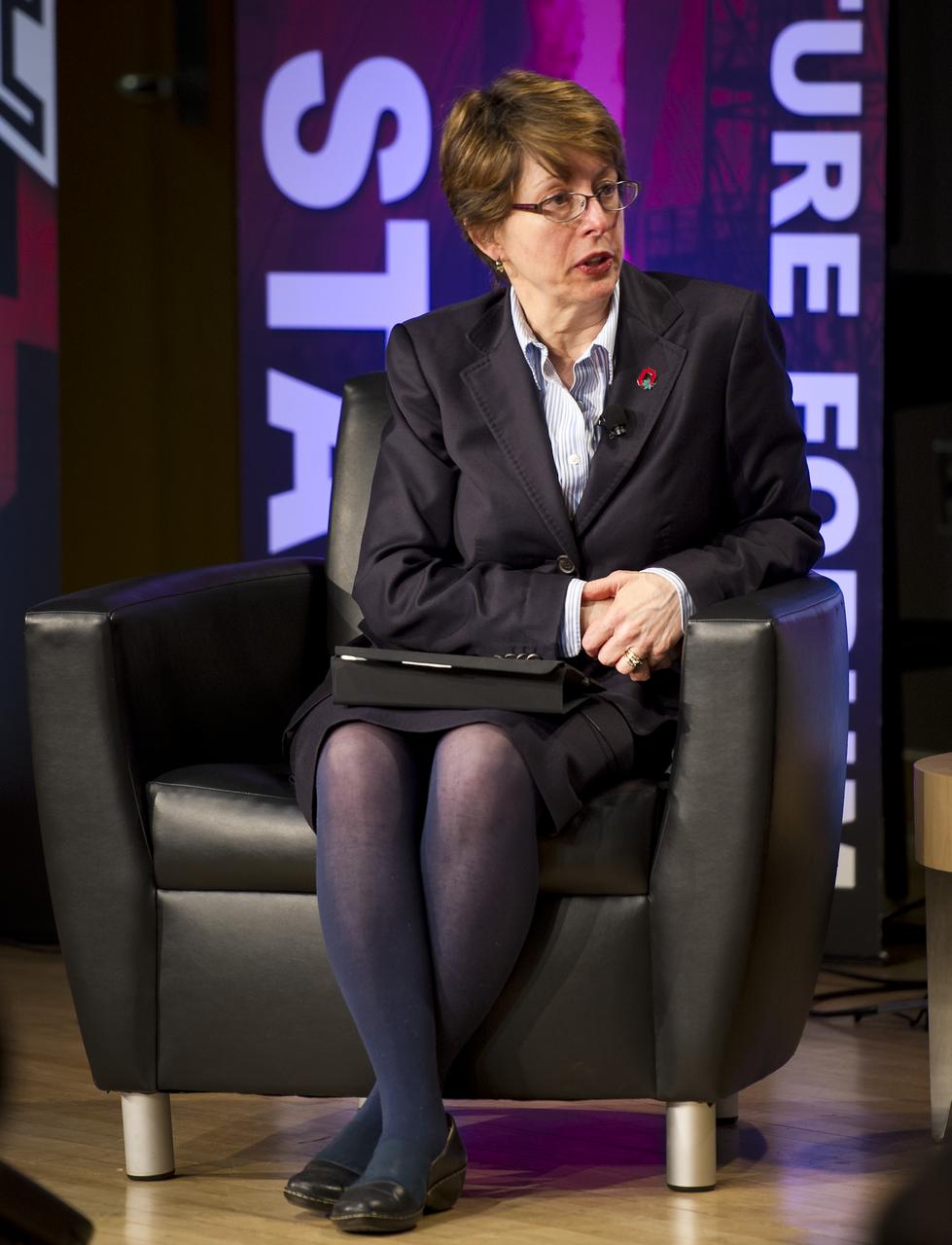
Dr. Caroline Wagner, associate professor, Ambassador Milton A. and Roslyn Z. Wolf Chair in International Affairs, and Director, Battelle Center for Science and Technology Policy, The Ohio State University moderates the NASA Future Forum panel titled "Shifting Roles for Public, Private, and International Players in Space" at The Ohio State University on Tuesday, Feb. 21, 2012 in Columbus, Ohio. The NASA Future Forum features panel discussions on the importance of education to our nation's future in space, the benefit of commercialized space technology to our economy and lives here on Earth, and the shifting roles for the public, commercial and international communities in space. Photo Credit: (NASA/Bill Ingalls)
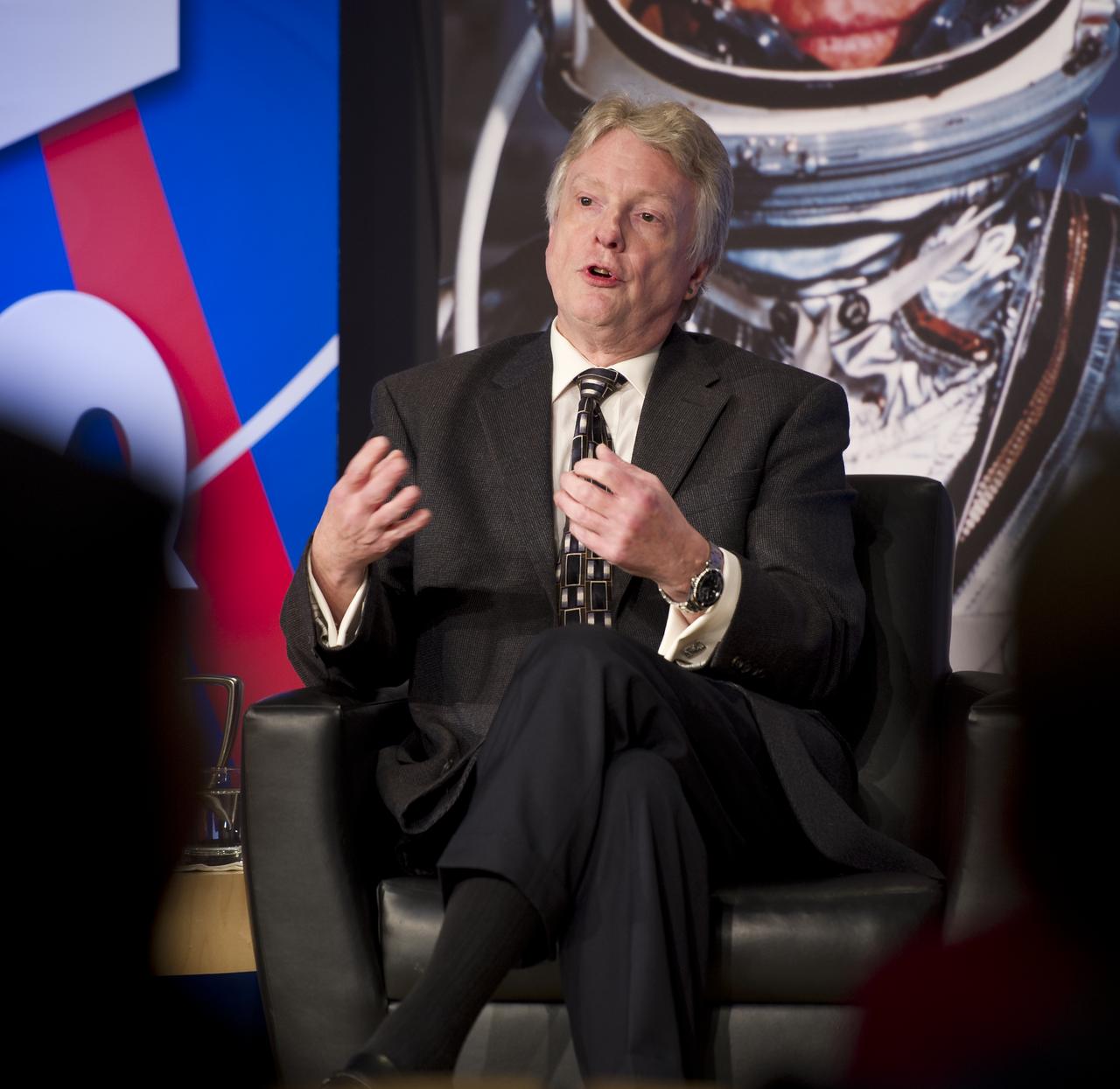
Roger Launius, senior curator, Smithsonian Institution National Air and Space Museum, talks during the NASA Future Forum panel titled "Shifting Roles for Public, Private, and International Players in Space" at The Ohio State University on Tuesday, Feb. 21, 2012 in Columbus, Ohio. The NASA Future Forum features panel discussions on the importance of education to our nation's future in space, the benefit of commercialized space technology to our economy and lives here on Earth, and the shifting roles for the public, commercial and international communities in space. Photo Credit: (NASA/Bill Ingalls)
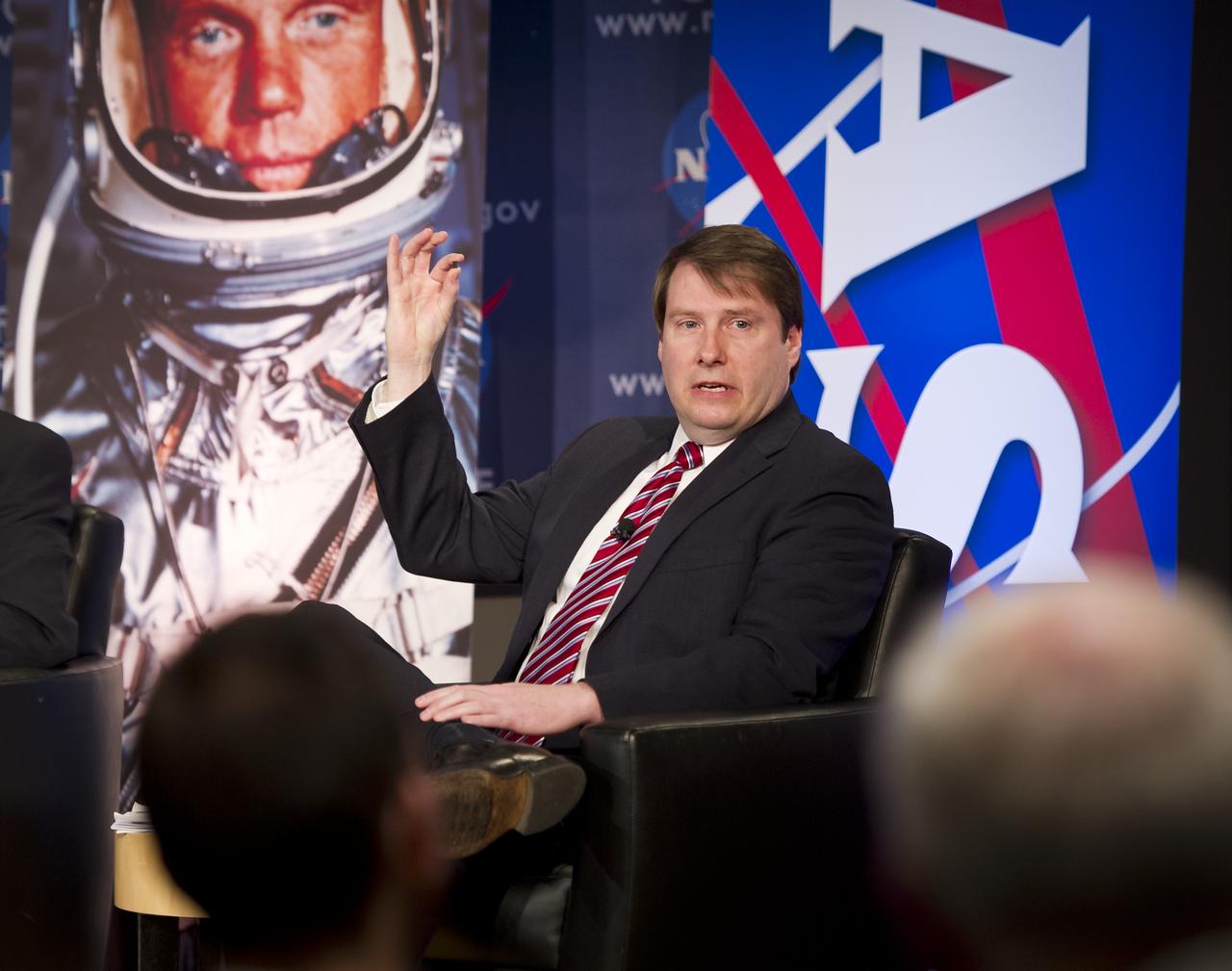
Neal Seater, President, Greenfield Solar, holds up a small solar chip during the NASA Future Forum panel titled "Transferring and Commercializing Technology to Benefit Our Lives and Our Economy" at The Ohio State University on Tuesday, Feb. 21, 2012 in Columbus, Ohio. The NASA Future Forum features panel discussions on the importance of education to our nation's future in space, the benefit of commercialized space technology to our economy and lives here on Earth, and the shifting roles for the public, commercial and international communities in space. Photo Credit: (NASA/Bill Ingalls)
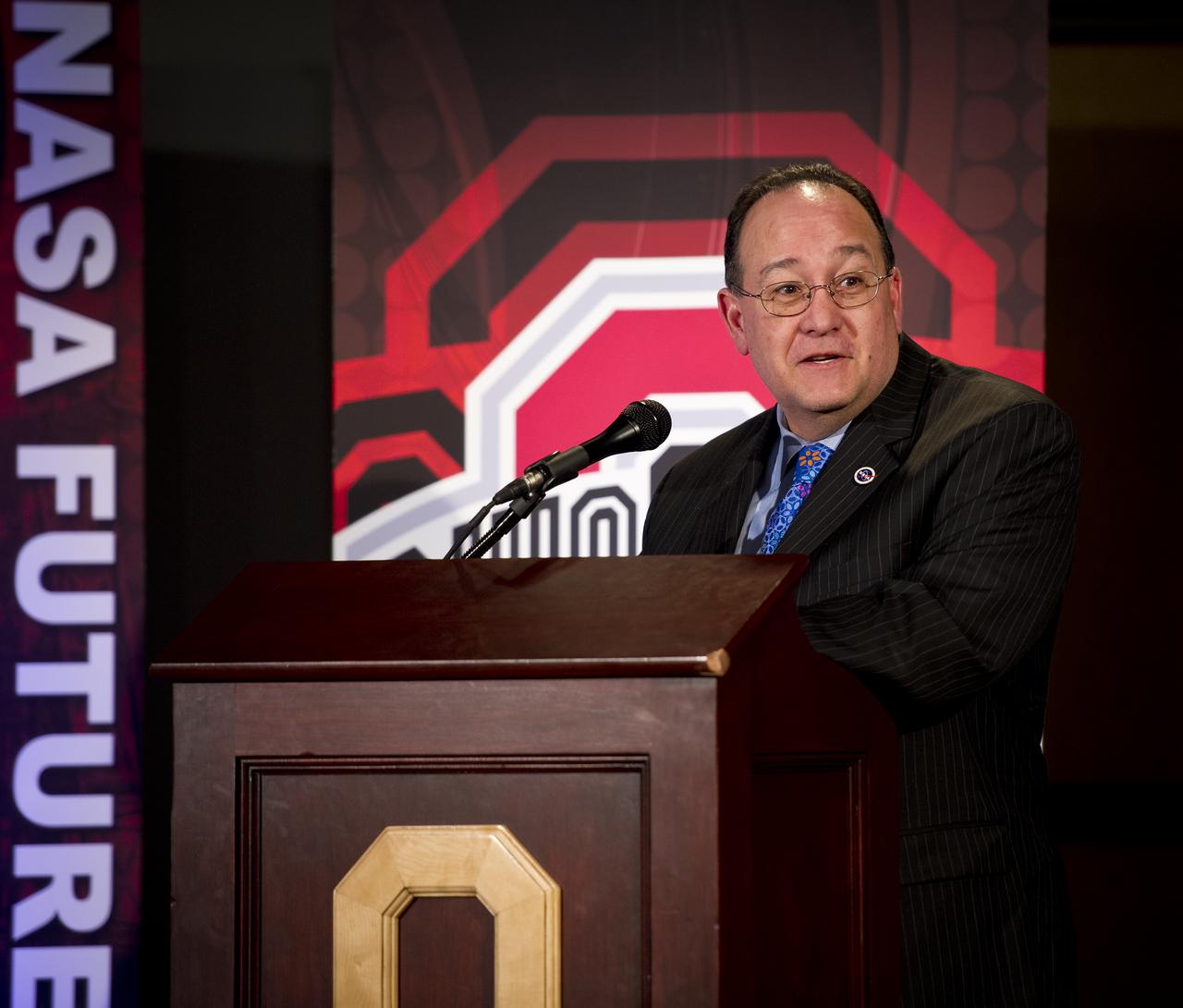
NASA Glenn Research Center Director Ray Lugo moderates a panel discussion with Sen. John Glenn titled "Learning from the Past to Innovate for the Future" during a NASA Future Forum held at The Ohio State University on Monday, Feb. 20, 2012, in Columbus, Ohio. Monday marked the 50th anniversary of Glenn's historic flight as the first American to orbit Earth. Photo Credit: (NASA/Bill Ingalls)
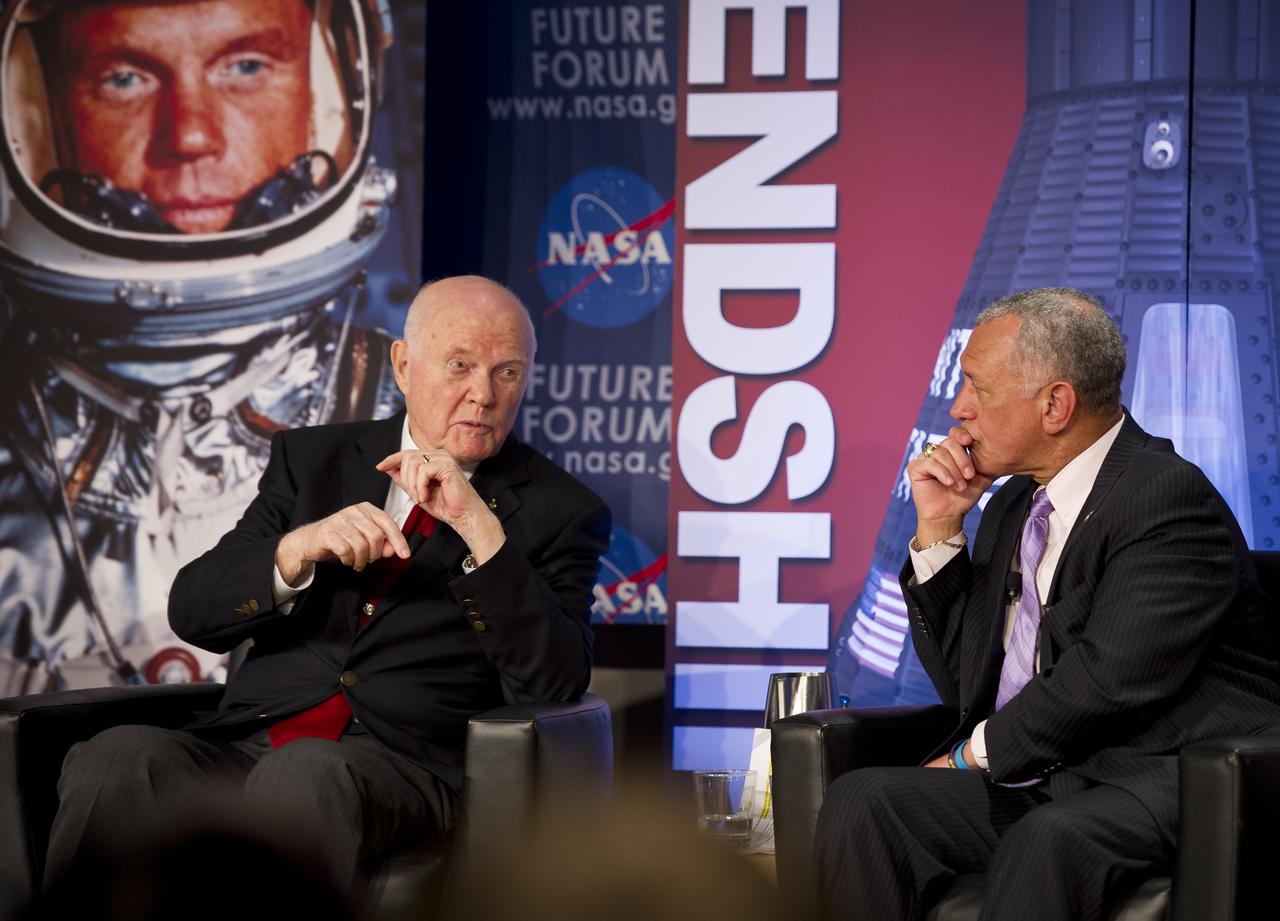
Sen. John Glenn, left, talks with NASA Administrator Charles Bolden during a NASA Future Forum panel discussion at The Ohio State University on Monday, Feb. 20, 2012, in Columbus, Ohio. Monday marked the 50th anniversary of Glenn's historic flight as the first American to orbit Earth. Photo Credit: (NASA/Bill Ingalls)
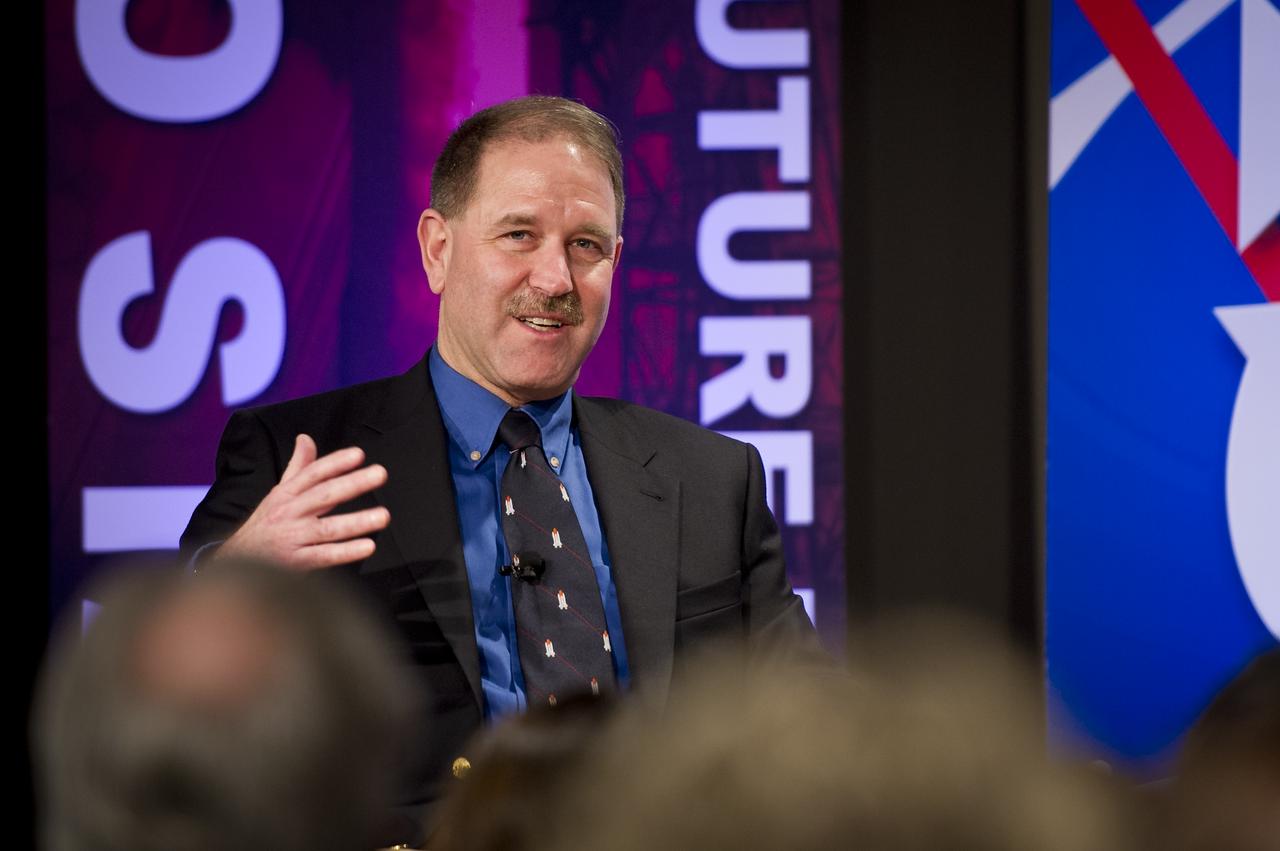
NASA Associate Administrator for Science Mission Directorate John Grunsfeld talks during a NASA Future Forum panel discussion at The Ohio State University on, Monday, Feb. 20, 2012, in Columbus, Ohio. Monday marked the 50th anniversary of Glenn's historic flight as the first American to orbit Earth. Photo Credit: (NASA/Bill Ingalls)
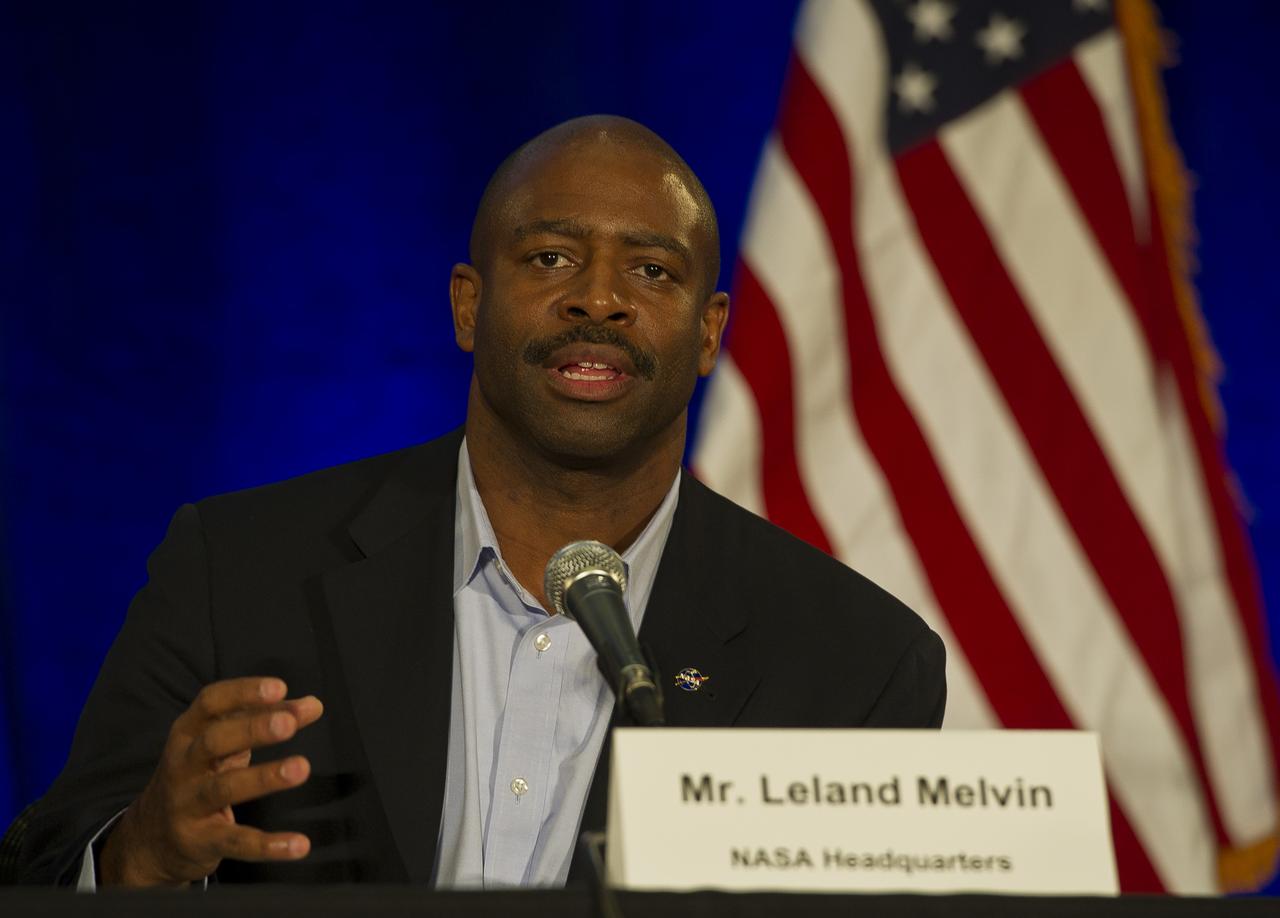
Leland Melvin, NASA Associate Administrator for Education, speaks during a panel discussion on inspiration in education at the 2011 NASA Future Forum held at the Riggs Alumni Center on the campus of the University of Maryland, Thursday, Aug. 11, 2011, in College Park, Md. Photo Credit: (NASA/Paul E. Alers)
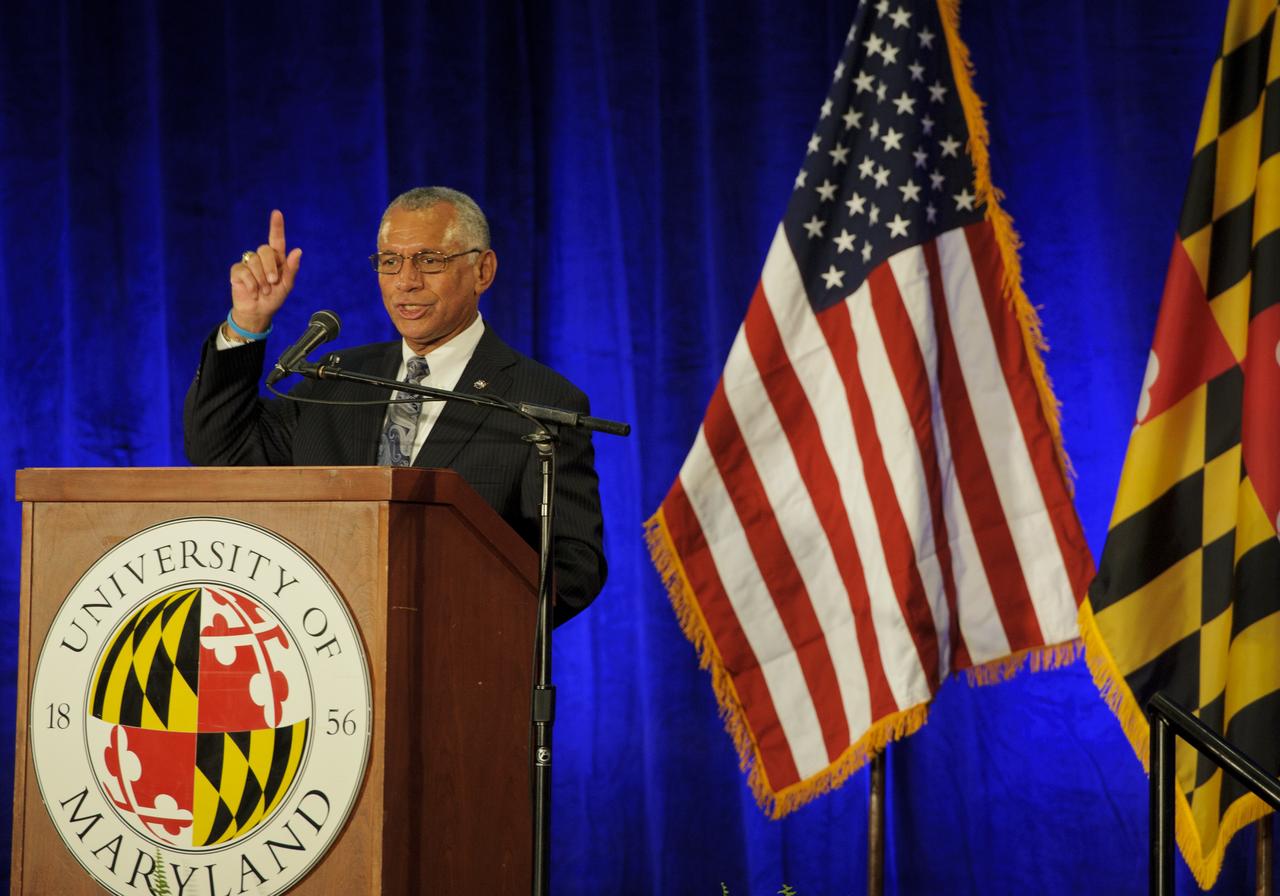
NASA Administrator Charles Bolden delivers opening remarks at the NASA Future Forum held at the Riggs Alumni Center on the campus of the University of Maryland, Thursday, Aug. 11, 2011 in College Park, Md. Photo Credit: (NASA/Paul E. Alers)
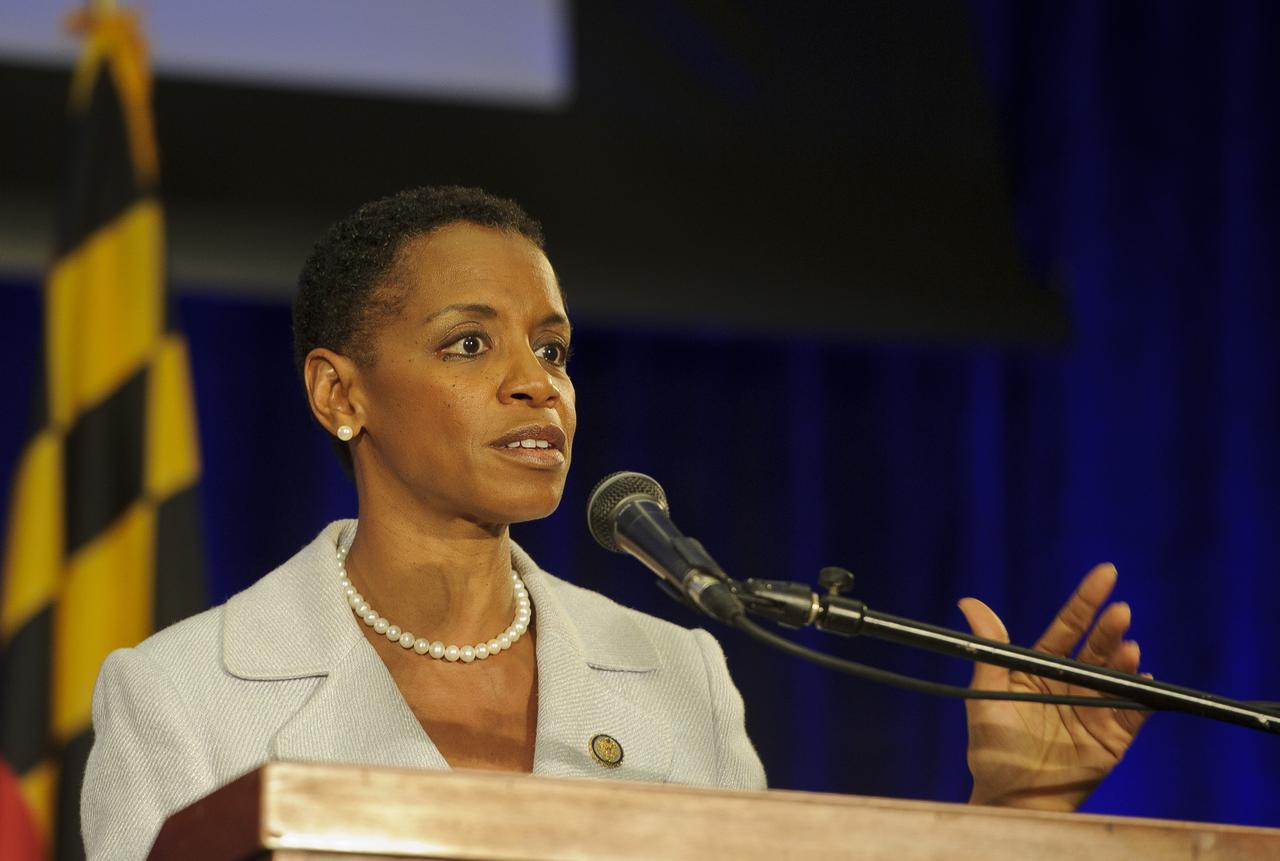
U.S. Rep. Donna Edwards, D-Md., addresses the audience at the 2011 NASA Future Forum, Thursday, Aug. 11, 2011, at the Riggs Alumni Center on the campus of the University of Maryland in College Park, Md. Photo Credit: (NASA/Paul E. Alers)
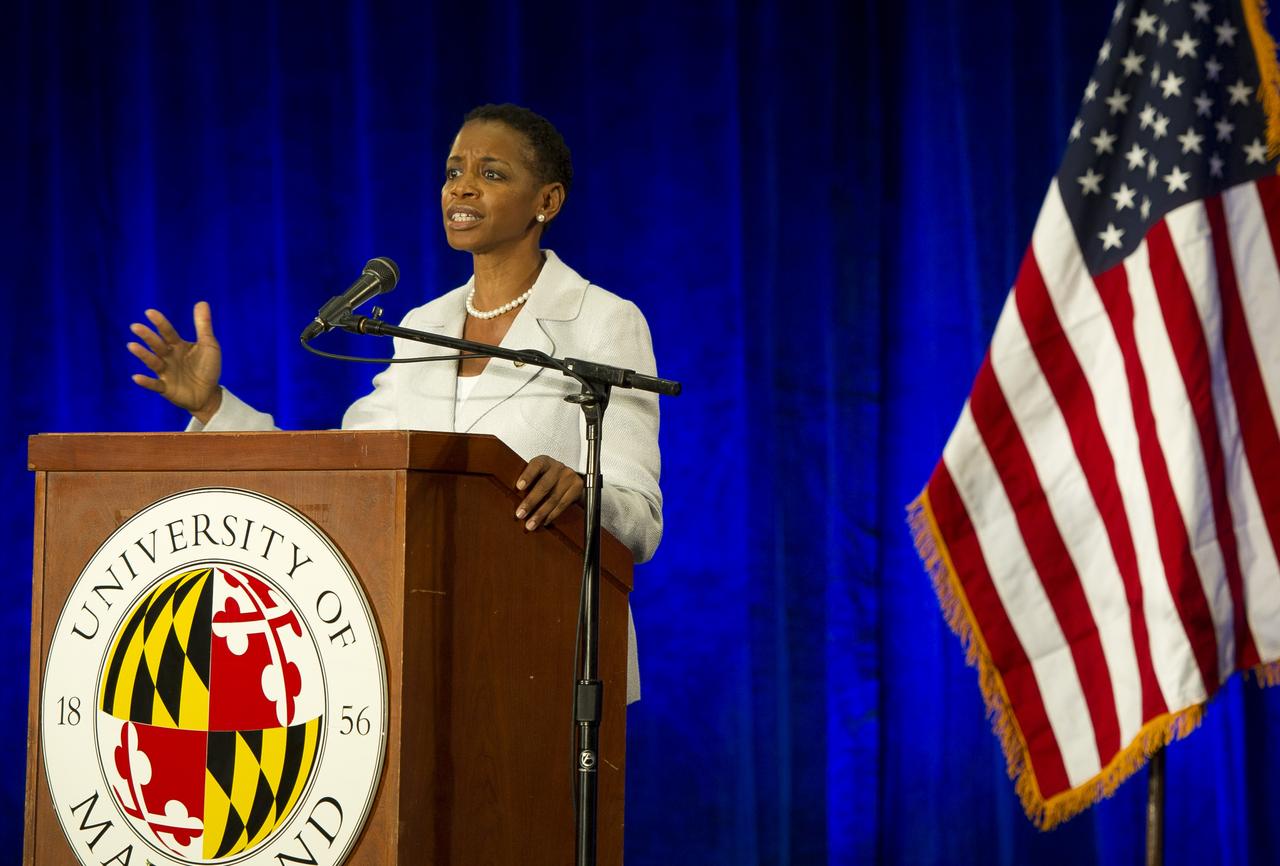
U.S. Rep. Donna Edwards, D-Md., addresses the audience at the 2011 NASA Future Forum, Thursday, Aug. 11, 2011, at the Riggs Alumni Center on the campus of the University of Maryland in College Park, Md. Photo Credit: (NASA/Paul E. Alers)
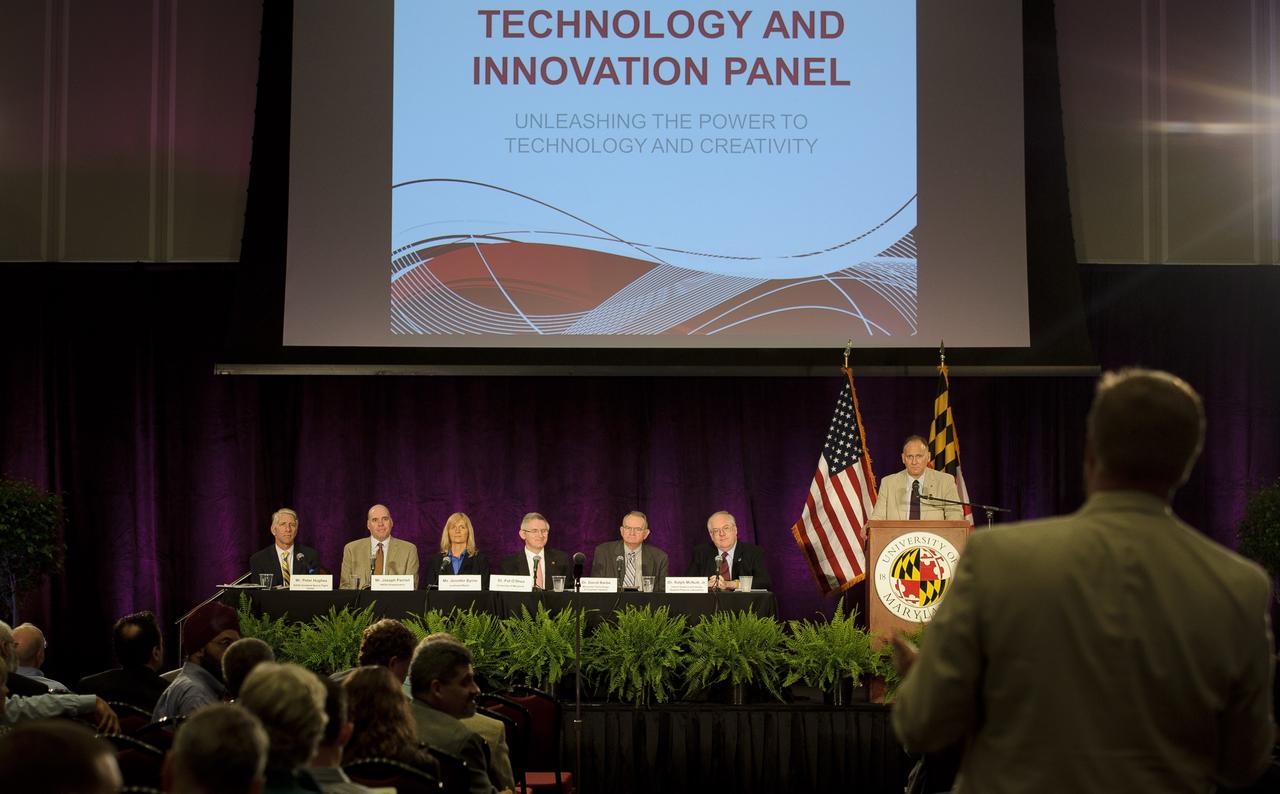
A member of the audience asks a question to the technology and innovation panel at the 2011 NASA Future Forum, Thursday, Aug. 11, 2011, at the Riggs Alumni Center on the campus of the University of Maryland in College Park, Md. Photo Credit: (NASA/Paul E. Alers)
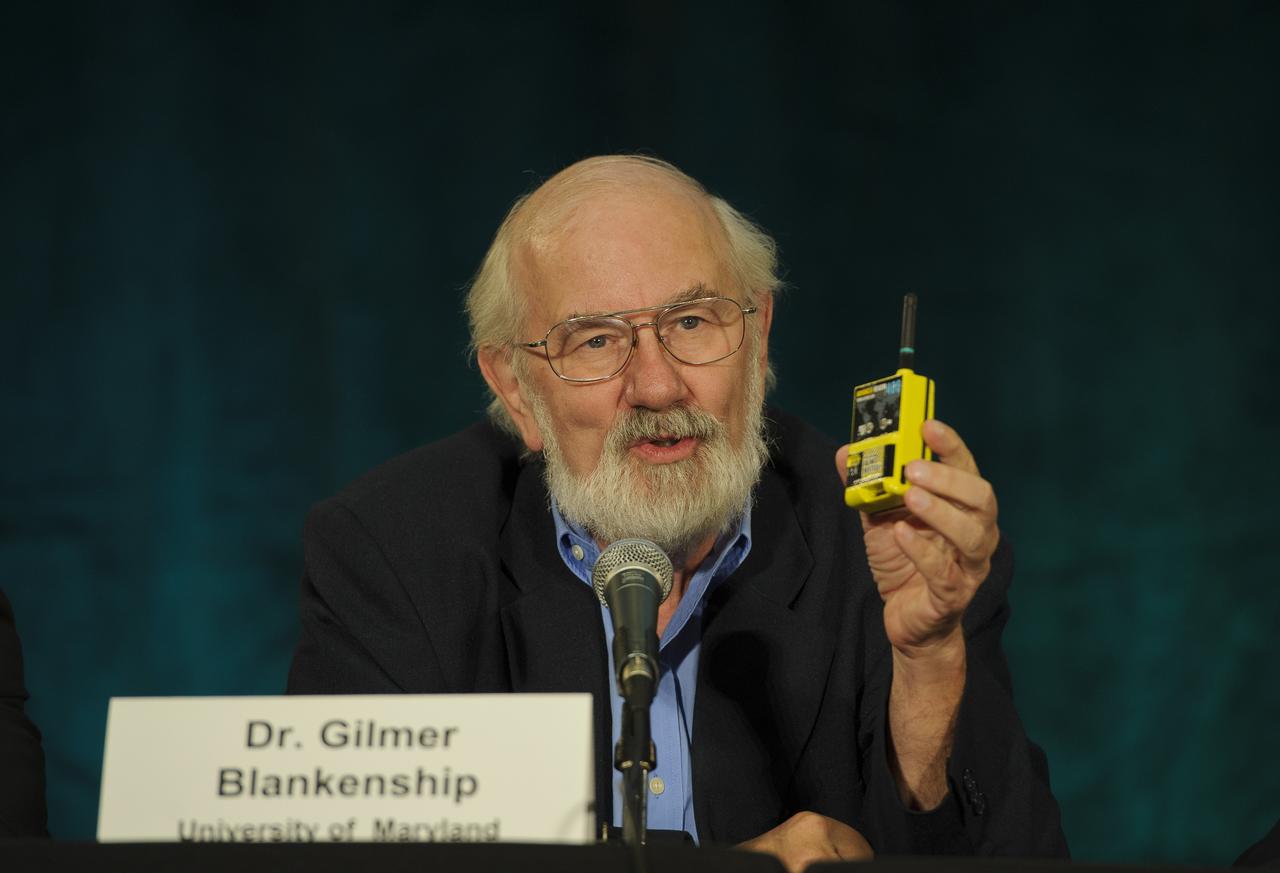
Dr. Gilmer Blankenship, of the University of Maryland, speaks about technology investments and their benefits during a panel discussion at the 2011 NASA Future Forum held at the Riggs Alumni Center on the campus of the University of Maryland, Thursday, Aug. 11, 2011, in College Park, Md. Photo Credit: (NASA/Paul E. Alers)
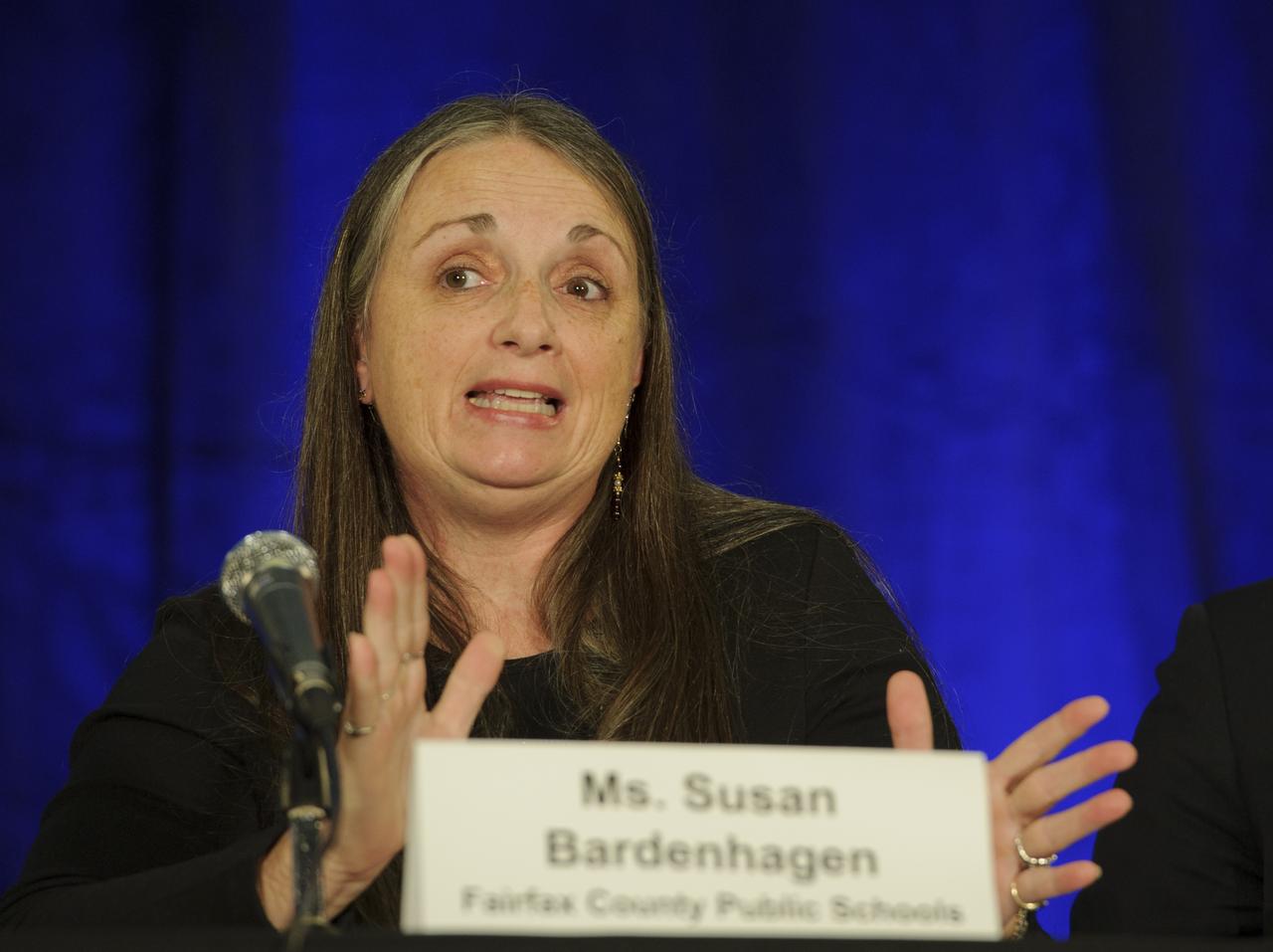
Susan Bardenhagen, an educator from the Fairfax County Public Schools, speaks during a panel discussion on inspiration in education at the 2011 NASA Future Forum held at the Riggs Alumni Center on the campus of the University of Maryland, Thursday, Aug. 11, 2011, in College Park, Md. Photo Credit: (NASA/Paul E. Alers)
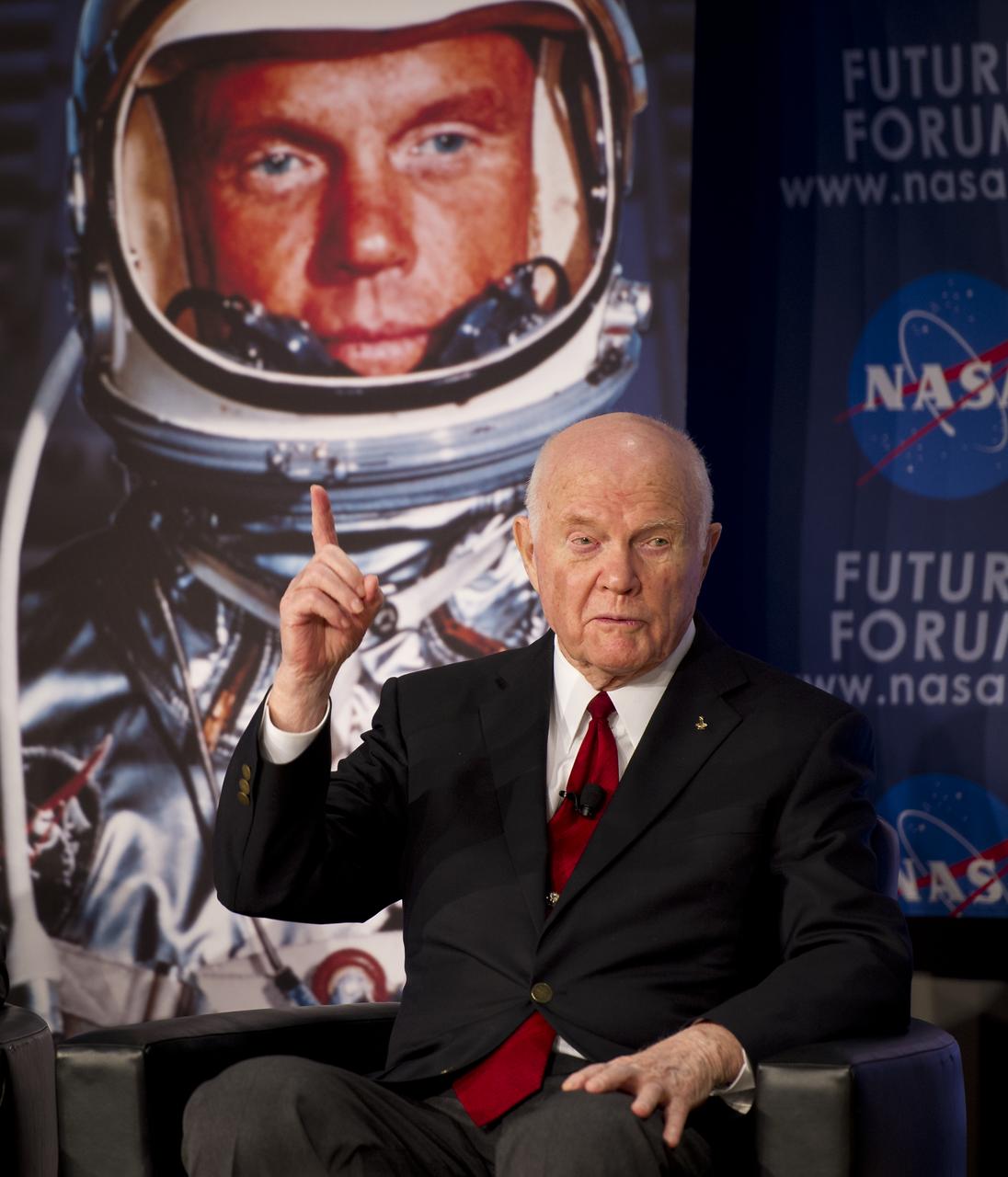
Sen. John Glenn speaks to guest at NASA's Future Forum at Ohio State University on Monday, Feb. 20, 2012, in Columbus, Ohio. Today marks the 50th anniversary of Glenn's historic flight. Glenn was the first American to orbit Earth. Photo Credit: (NASA/Bill Ingalls)
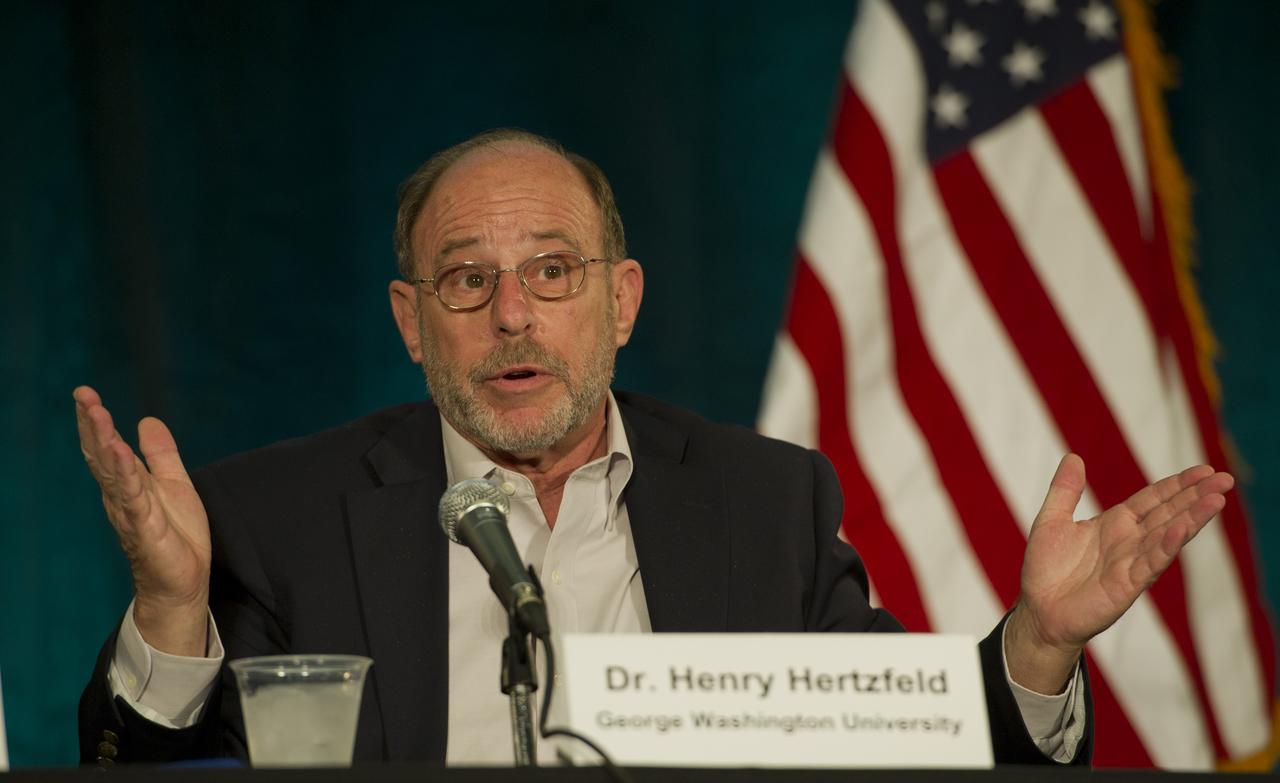
Dr. Henry Hertzfeld, from George Washington University, speaks about technology investments and their benefits during a panel discussion at the 2011 NASA Future Forum held at the Riggs Alumni Center on the campus of the University of Maryland, Thursday, Aug. 11, 2011, in College Park, Md. Photo Credit: (NASA/Paul E. Alers)
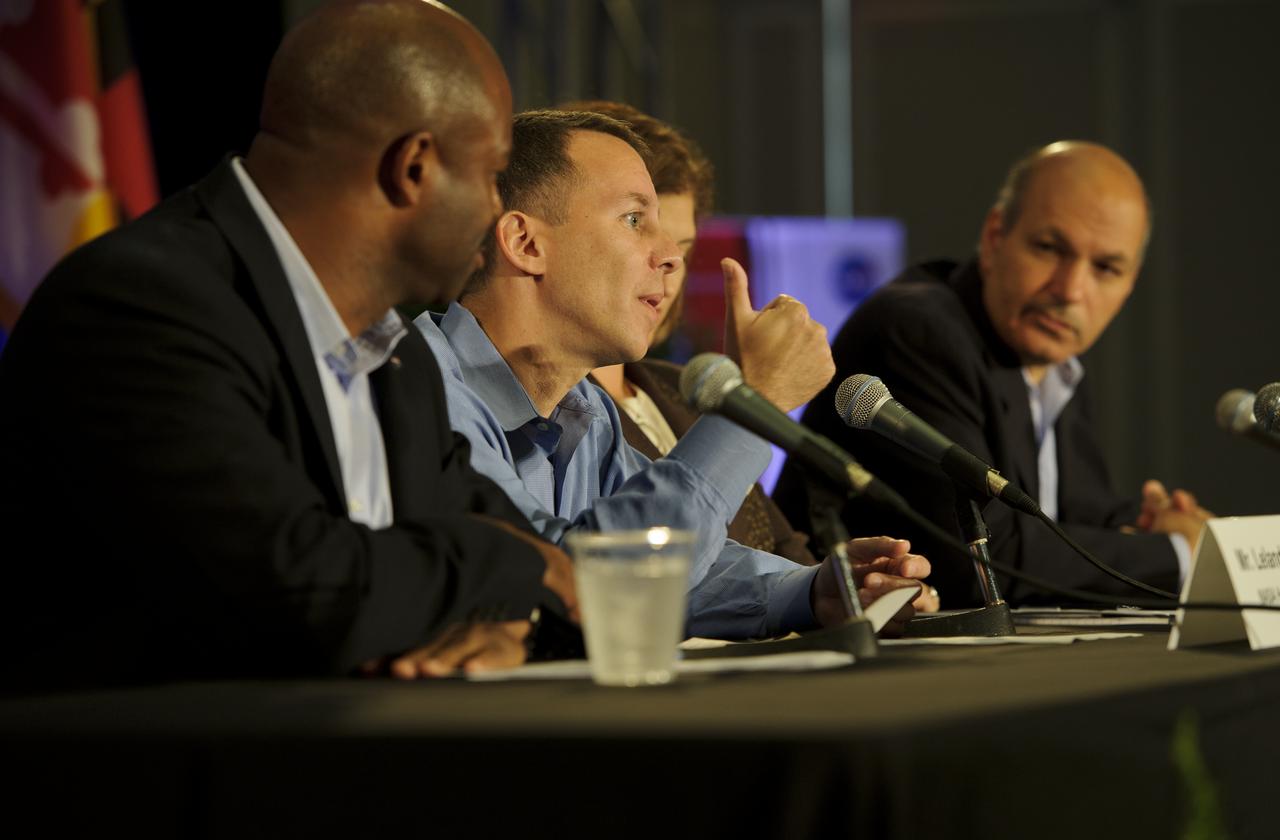
Dr. Robert Braun, NASA Chief Technologist, second from left, makes a point, as panelists Leland Melvin, Assoicate Administrator for NASA Education, left, Dr. Laurie Leshin, NASA Deputy Associate Administrator Exploration Systems Mission Directortorate, and Dr. Waleed Abdalati, NASA Chief Scientist, right, look on during a panel discussion at the NASA Future Forum held at the Riggs Alumni Center on the campus of the University of Maryland, Thursday, Aug. 11, 2011 in College Park, Md. Photo Credit: (NASA/Paul E. Alers)
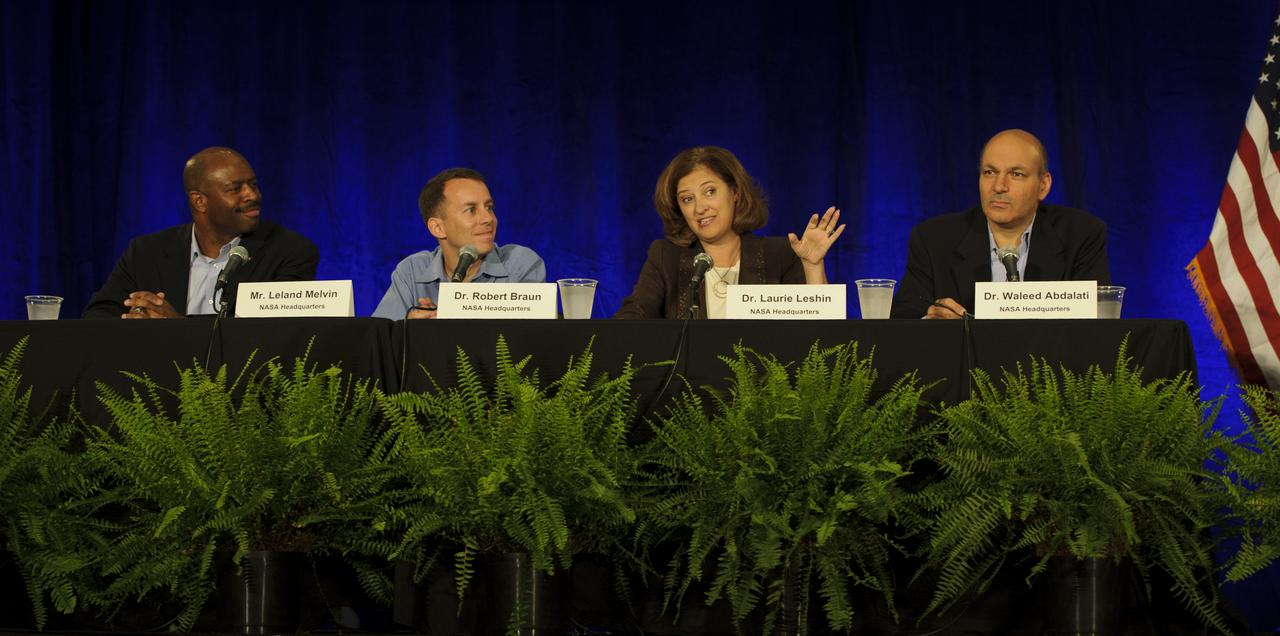
Dr. Laurie Leshin, NASA Deputy Associate Administrator Exploration Systems Mission Directortorate, second from right, speaks as Dr. Waleed Abdalati, NASA Chief Scientist, right, Dr. Robert Braun, NASA Chief Technologist, and Leland Melvin, Assoicate Administrator for NASA Education, far left, at the NASA Future Forum held at the Riggs Alumni Center on the campus of the University of Maryland, Thursday, Aug. 11, 2011 in College Park, Md. Photo Credit: (NASA/Paul E. Alers)
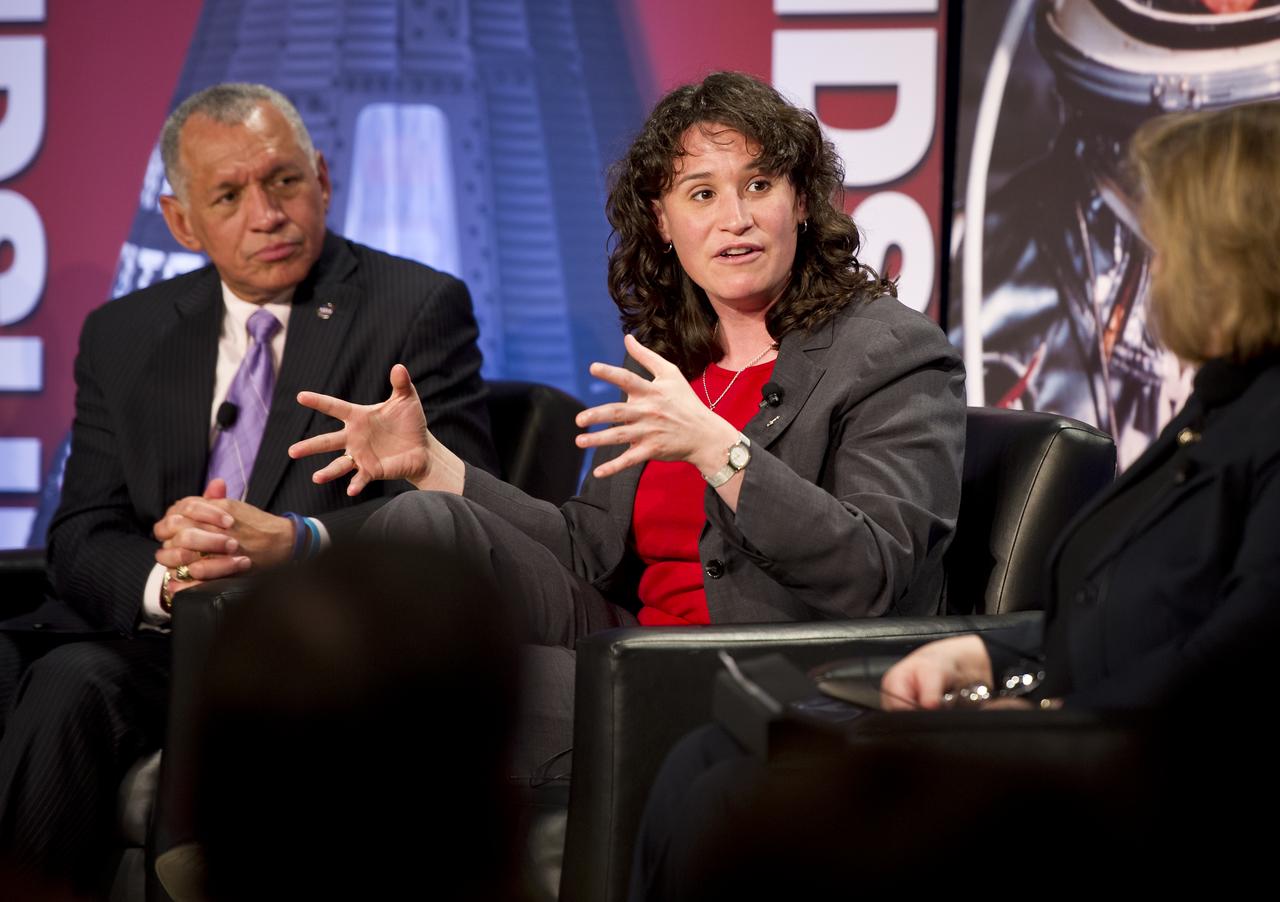
NASA 2009 Astronaut Candidate and Flight Surgeon Serena Auñón talks as NASA Administrator Charles Bolden looks on during a NASA Future Forum panel discussion at The Ohio State University on Monday, Feb. 20, 2012, in Columbus, Ohio. Monday marked the 50th anniversary of Glenn's historic flight as the first American to orbit Earth. Photo Credit: (NASA/Bill Ingalls)
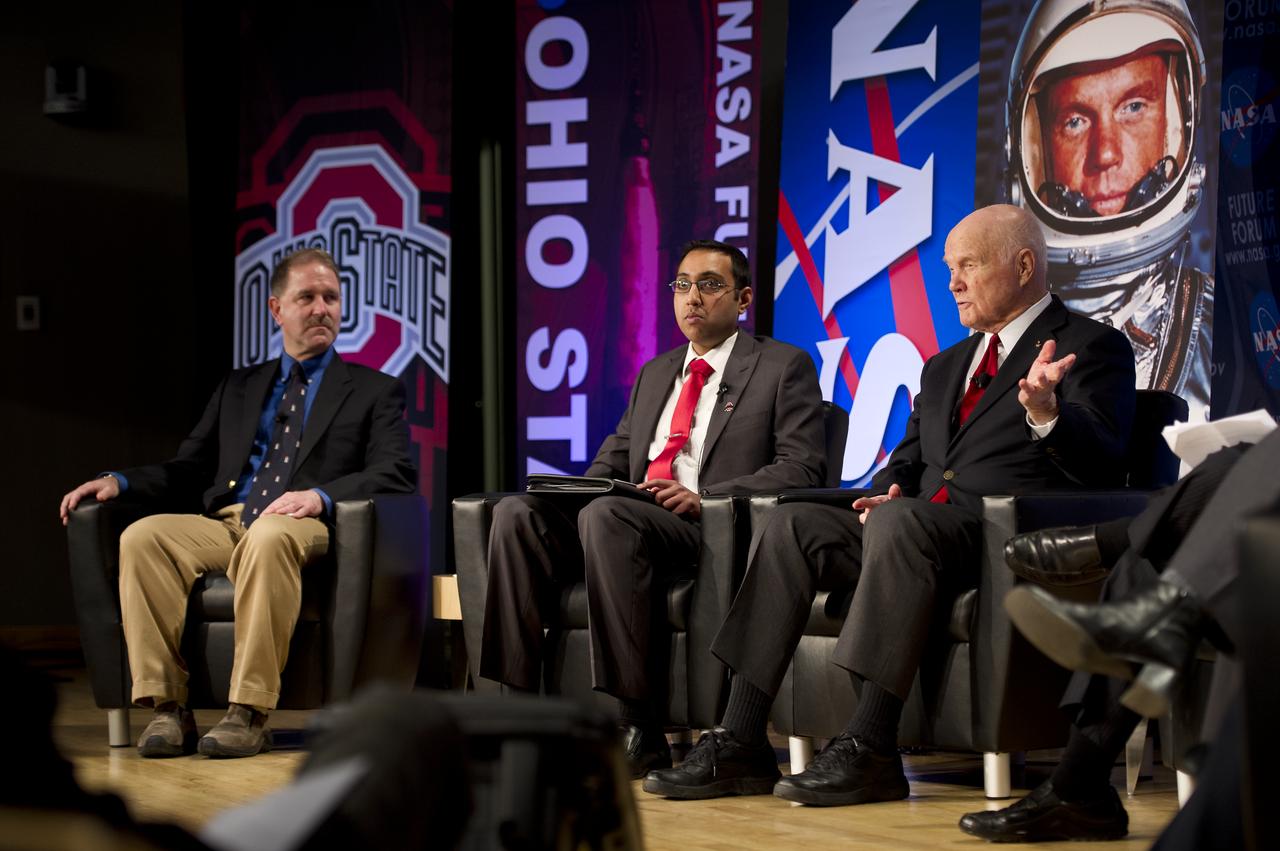
Sen. John Glenn, right, talks during a NASA Future Forum panel discussion at The Ohio State University as NASA Associate Administrator for Science Mission Directorate John Grunsfeld, left, and Ohio State University Graduate Research Associate Vijay Gadepally look on, Monday, Feb. 20, 2012, in Columbus, Ohio. Monday marked the 50th anniversary of Glenn's historic flight as the first American to orbit Earth. Photo Credit: (NASA/Bill Ingalls)

NASA Administrator Charles Bolden, right, talks as Sen. John Glenn, and Ohio State University Graduate Research Associate Vijay Gadepally, left, listen during a NASA Future Forum panel discussion at The Ohio State University on Monday, Feb. 20, 2012, in Columbus, Ohio. Monday marked the 50th anniversary of Glenn's historic flight as the first American to orbit Earth. Photo Credit: (NASA/Bill Ingalls)
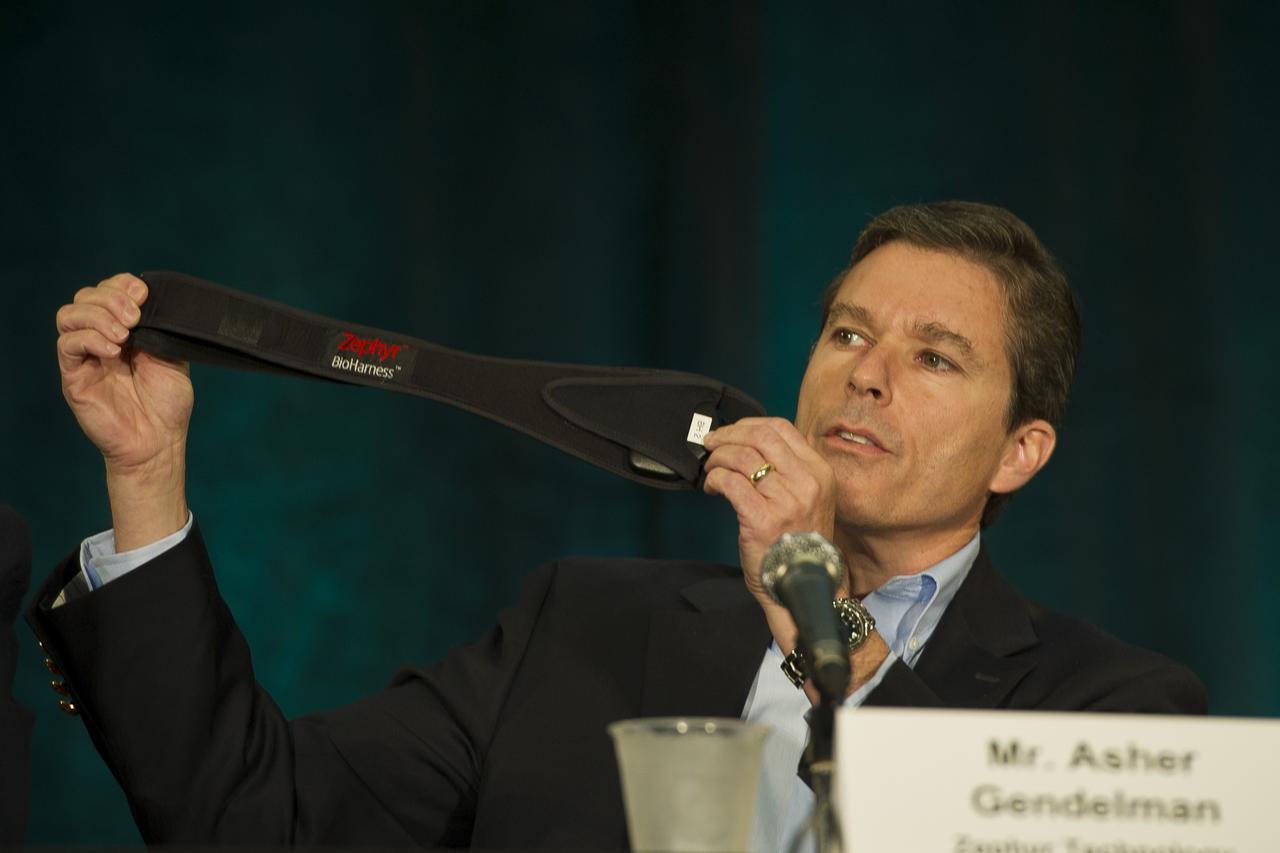
Asher Gendelman, a director of technology at Zephyr Technology, holds up chest belt as he speaks about technology investments and their benefits during a panel discussion at the 2011 NASA Future Forum held at the Riggs Alumni Center on the campus of the University of Maryland, Thursday, Aug. 11, 2011, in College Park, Md. Photo Credit: (NASA/Paul E. Alers)
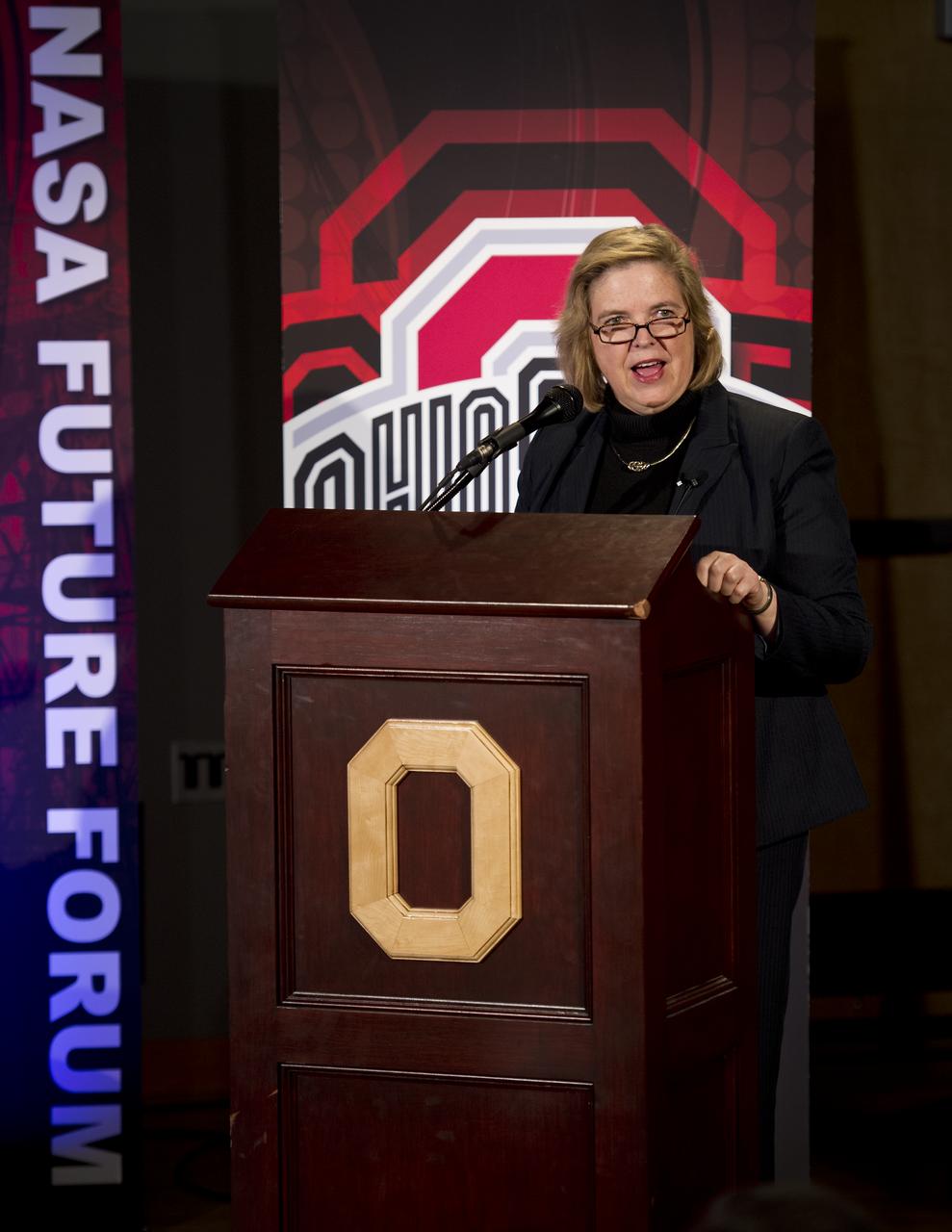
The Ohio State University Vice President for Research Dr. Caroline Whitacre kicks off the first panel discussion during NASA's Future Forum at The Ohio State University on Monday, Feb. 20, 2012, in Columbus, Ohio. Monday marked the 50th anniversary of Glenn's historic flight as the first American to orbit Earth. Photo Credit: (NASA/Bill Ingalls)
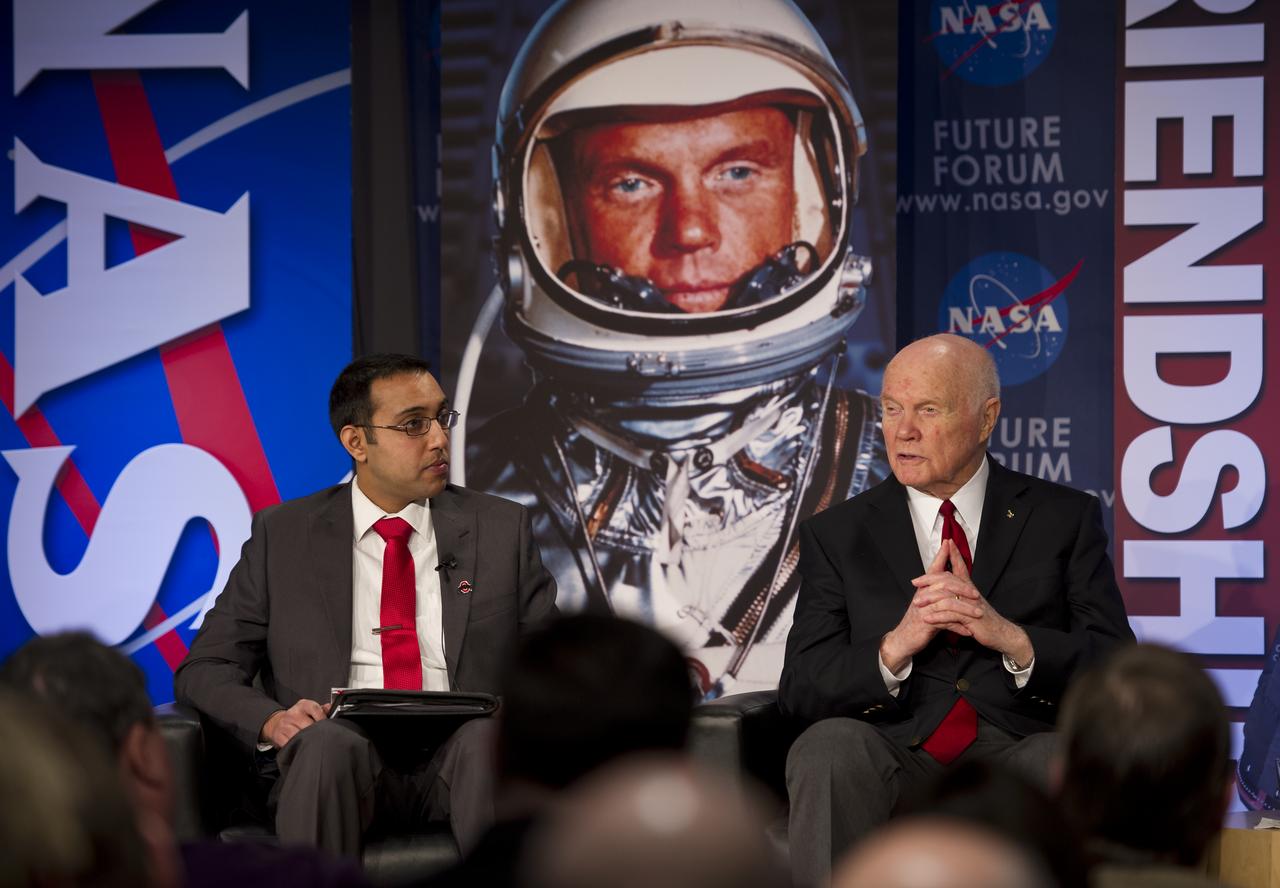
Ohio State University Graduate Research Associate Vijay Gadepally, left, listens as Sen. John Glenn talks during a NASA Future Forum panel discussion at The Ohio State University on Monday, Feb. 20, 2012, in Columbus, Ohio. Monday marked the 50th anniversary of Glenn's historic flight as the first American to orbit Earth. Photo Credit: (NASA/Bill Ingalls)

You might see a DeLorean zipping around Greenbelt, Maryland, on Oct. 21, 2015, the day Marty McFly and Doc Brown arrive from 1985 in "Back to the Future, Part II," but don't look for flaming tread marks in its wake. The DeLorean DMC-12, commonly seen on the roads of NASA’s Goddard Space Flight Center in Greenbelt, Maryland, is better known for the version that starred as a plutonium-powered time machine in the “Back to the Future” trilogy. After some investigation, Goddard’s Office of Communications found the owner of the stainless steel, gull-winged, two-door coupe. Goddard software test engineer, Brendan Rebo bought the 1982 DeLorean off eBay about four and a half years ago. “The car attracts a lot more attention than I expected,” Rebo admitted. “I hear a lot of jokes about whether or not I’ve reached 88 miles per hour yet.” As “Back to the Future” fans around the world celebrate today, Rebo also celebrates his birthday. While the second film predicted technology, such as flying cars, that doesn’t yet exist, people can still marvel at the classic car and movie reference. Credit: NASA/Goddard/Rebecca Roth

You might see a DeLorean zipping around Greenbelt, Maryland, on Oct. 21, 2015, the day Marty McFly and Doc Brown arrive from 1985 in "Back to the Future, Part II," but don't look for flaming tread marks in its wake. The DeLorean DMC-12, commonly seen on the roads of NASA’s Goddard Space Flight Center in Greenbelt, Maryland, is better known for the version that starred as a plutonium-powered time machine in the “Back to the Future” trilogy. After some investigation, Goddard’s Office of Communications found the owner of the stainless steel, gull-winged, two-door coupe. Goddard software test engineer, Brendan Rebo bought the 1982 DeLorean off eBay about four and a half years ago. “The car attracts a lot more attention than I expected,” Rebo admitted. “I hear a lot of jokes about whether or not I’ve reached 88 miles per hour yet.” As “Back to the Future” fans around the world celebrate today, Rebo also celebrates his birthday. While the second film predicted technology, such as flying cars, that doesn’t yet exist, people can still marvel at the classic car and movie reference. Credit: NASA/Goddard/Rebecca Roth

You might see a DeLorean zipping around Greenbelt, Maryland, on Oct. 21, 2015, the day Marty McFly and Doc Brown arrive from 1985 in "Back to the Future, Part II," but don't look for flaming tread marks in its wake. The DeLorean DMC-12, commonly seen on the roads of NASA’s Goddard Space Flight Center in Greenbelt, Maryland, is better known for the version that starred as a plutonium-powered time machine in the “Back to the Future” trilogy. After some investigation, Goddard’s Office of Communications found the owner of the stainless steel, gull-winged, two-door coupe. Goddard software test engineer, Brendan Rebo bought the 1982 DeLorean off eBay about four and a half years ago. “The car attracts a lot more attention than I expected,” Rebo admitted. “I hear a lot of jokes about whether or not I’ve reached 88 miles per hour yet.” As “Back to the Future” fans around the world celebrate today, Rebo also celebrates his birthday. While the second film predicted technology, such as flying cars, that doesn’t yet exist, people can still marvel at the classic car and movie reference. Credit: NASA/Goddard/Rebecca Roth
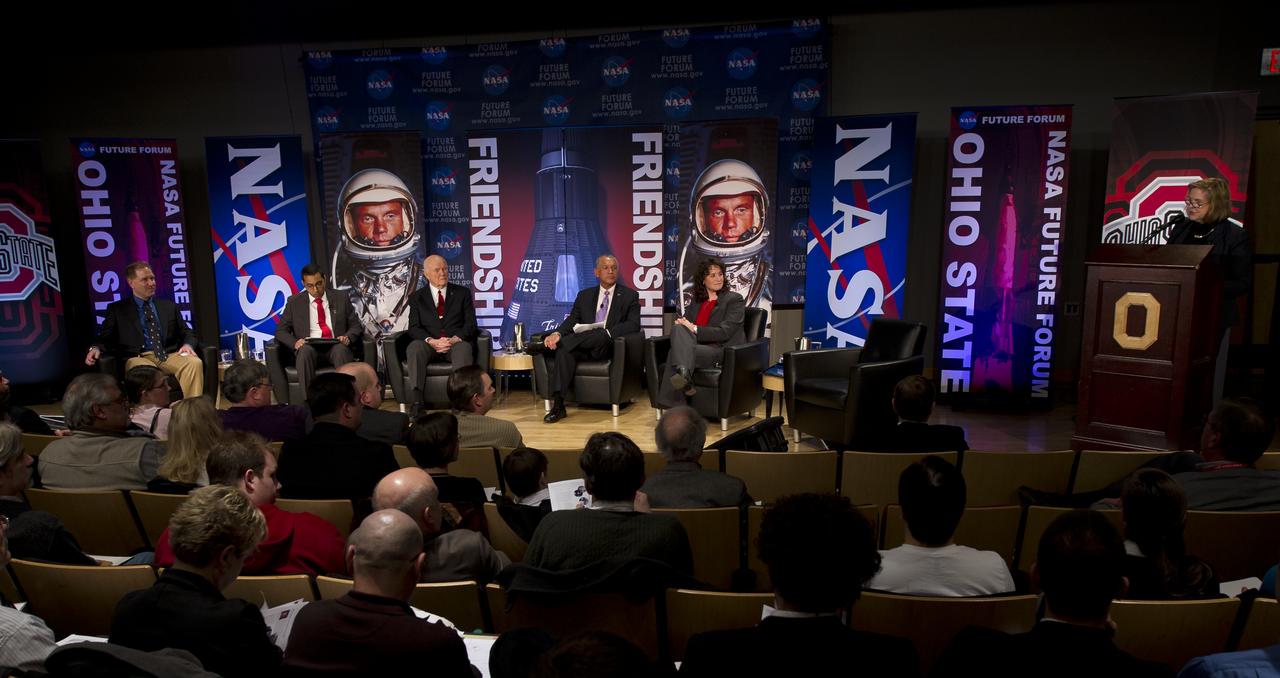
The Ohio State University Vice President for Research Dr. Caroline Whitacre, standing right, moderates the first panel discussion during NASA's Future Forum with NASA Associate Administrator for Science Mission Directorate John Grunsfeld, left, Ohio State University Graduate Research Associate Vijay Gadepally, Sen. John Glenn, NASA Administrator Charles Bolden, and NASA 2009 Astronaut Candidate and Flight Surgeon Serena Auñón, seated right, at The Ohio State University on Monday, Feb. 20, 2012, in Columbus, Ohio. Monday marked the 50th anniversary of Glenn's historic flight as the first American to orbit Earth. Photo Credit: (NASA/Bill Ingalls)
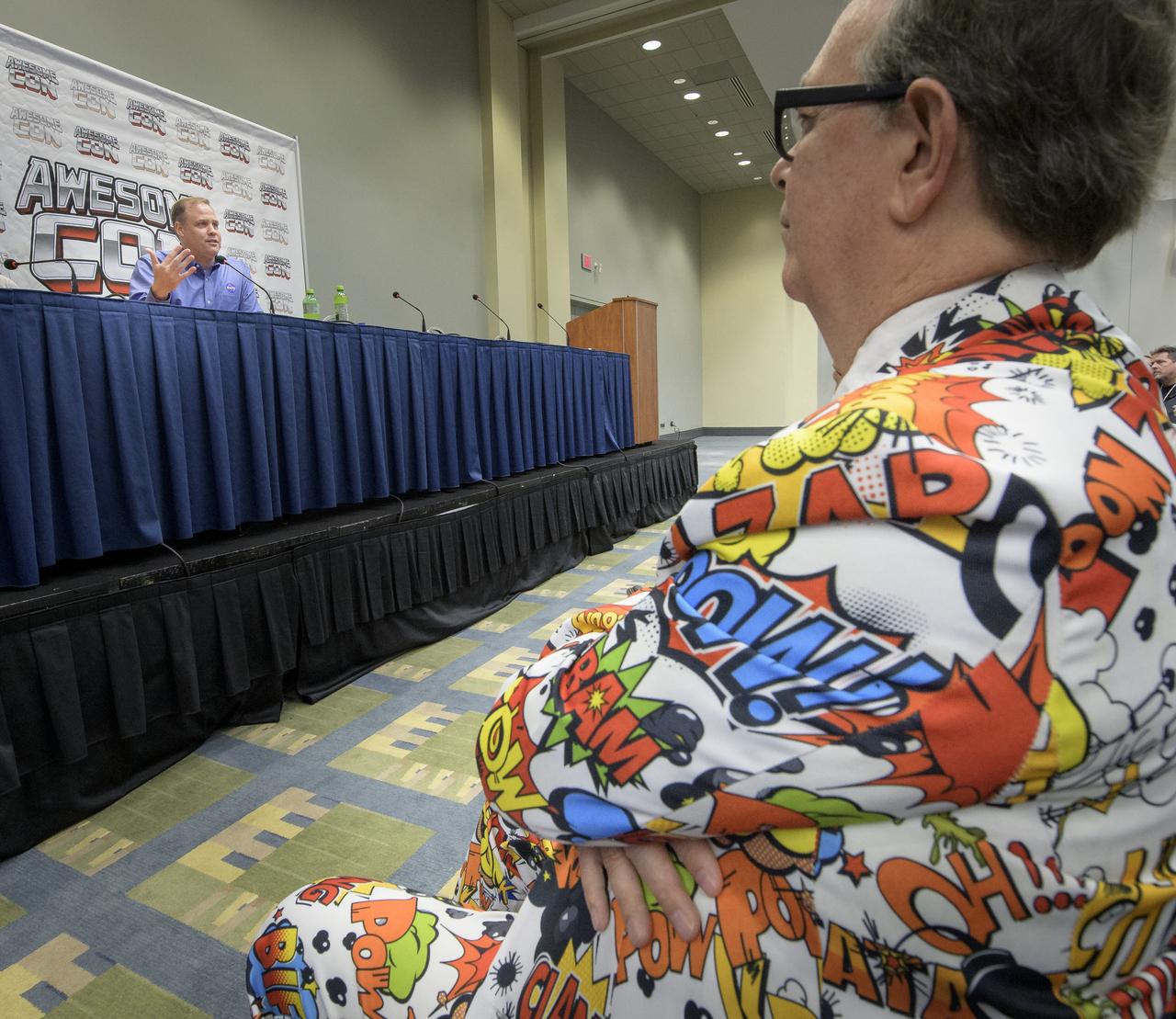
An audience member dressed in character listens as NASA Administrator Jim Bridenstine talks about getting American astronauts to the Moon in the next five years while participating in a Future Con panel discussion at Awesome Con, Saturday, April 27, 2019 at the Walter E. Washington Convention Center in Washington. Future Con highlights the intersection of science, technology, and science fiction inside D.C.’s largest pop culture event. Photo Credit: (NASA/Bill Ingalls)
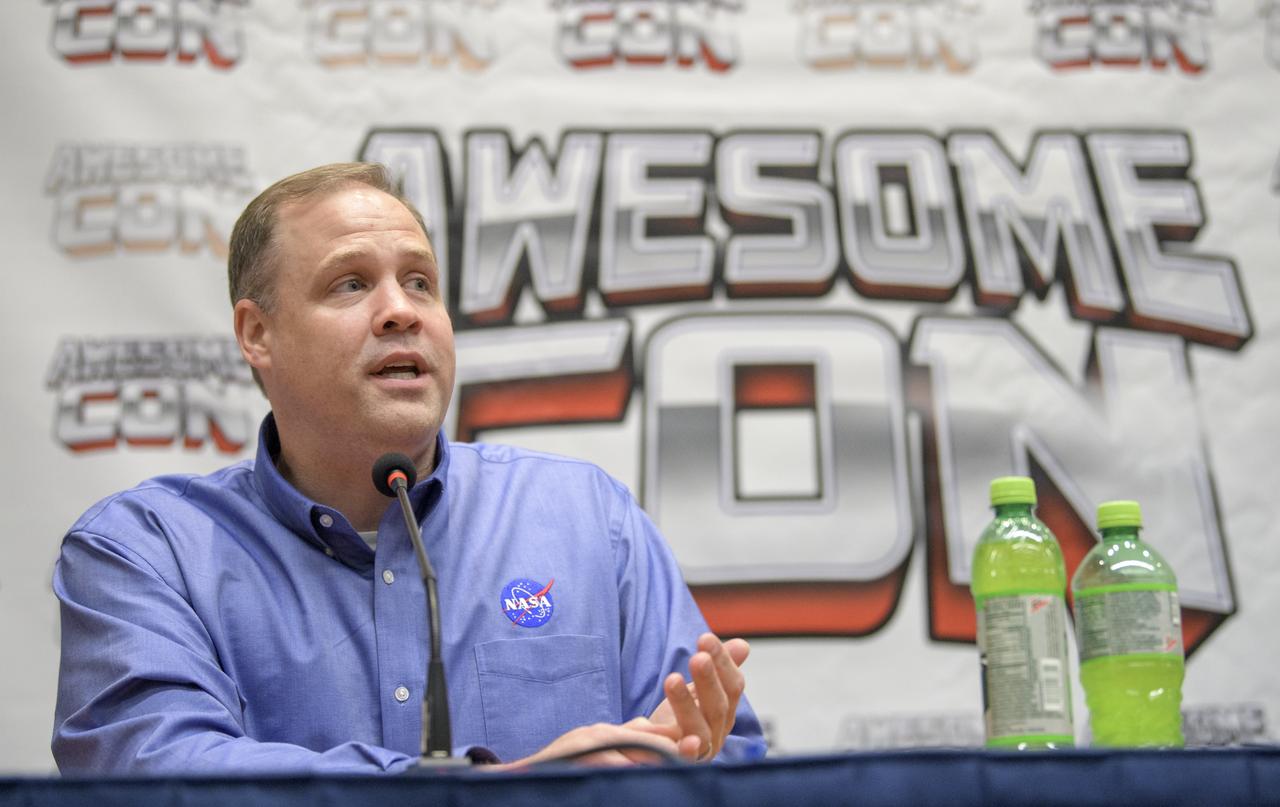
NASA Administrator Jim Bridenstine talks about getting American astronauts to the Moon in the next five years while participating in a Future Con panel discussion at Awesome Con, Saturday, April 27, 2019 at the Walter E. Washington Convention Center in Washington. Future Con highlights the intersection of science, technology, and science fiction inside D.C.’s largest pop culture event. Photo Credit: (NASA/Bill Ingalls)
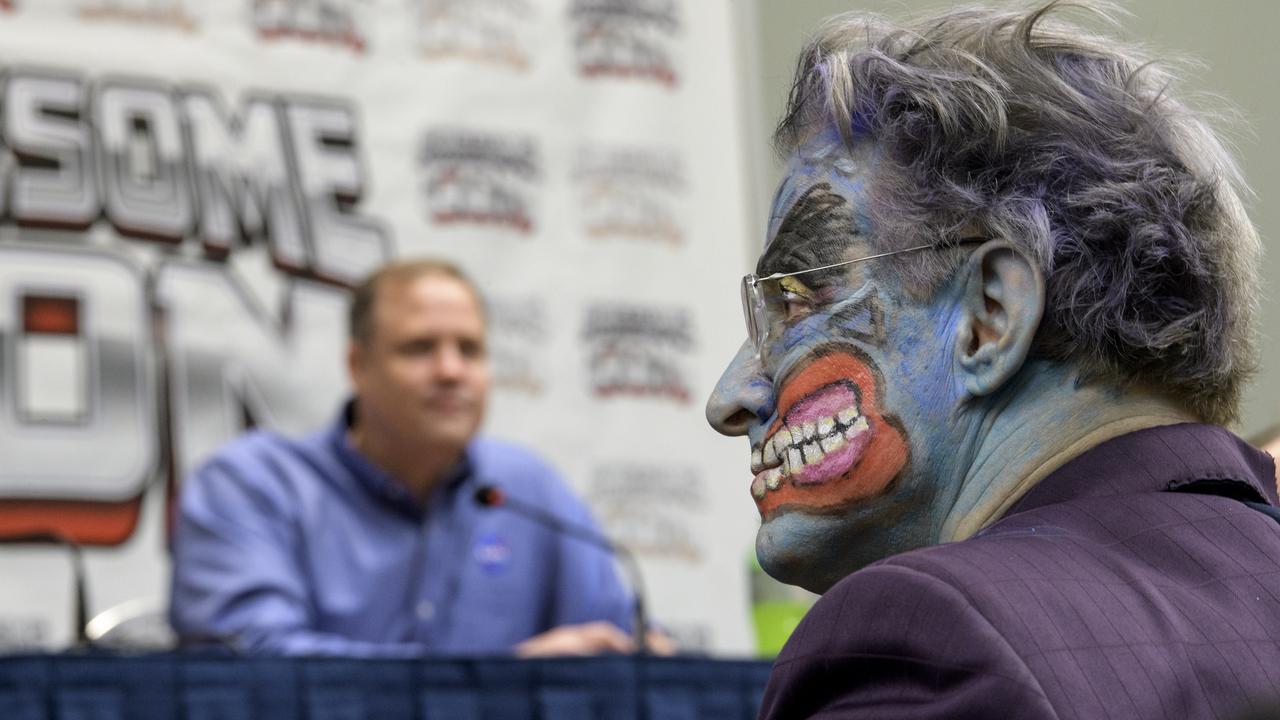
An audience member dressed in character listens as NASA Administrator Jim Bridenstine talks about getting American astronauts to the Moon in the next five years while participating in a Future Con panel discussion at Awesome Con, Saturday, April 27, 2019 at the Walter E. Washington Convention Center in Washington. Future Con highlights the intersection of science, technology, and science fiction inside D.C.’s largest pop culture event. Photo Credit: (NASA/Bill Ingalls)
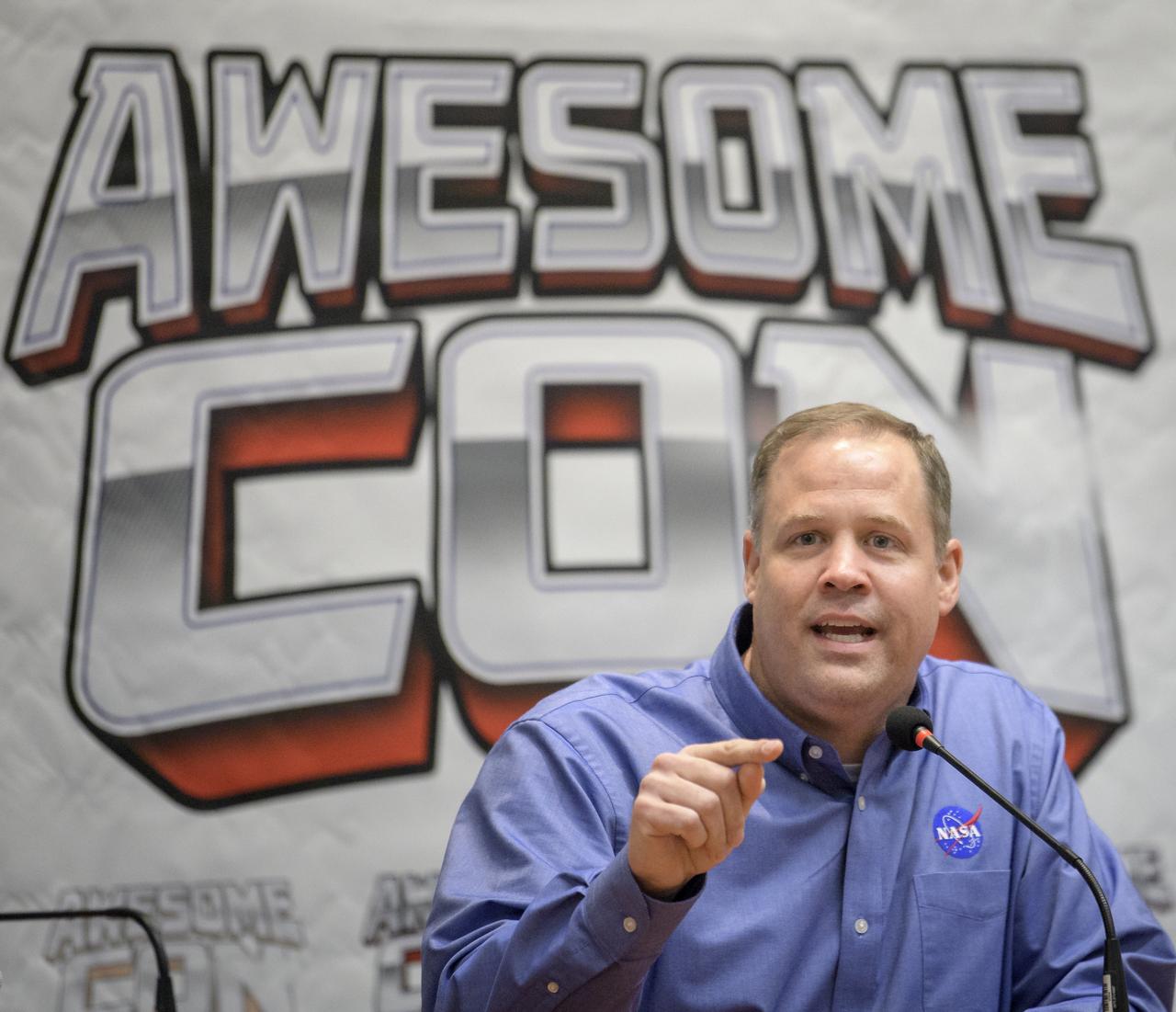
NASA Administrator Jim Bridenstine talks about getting American astronauts to the Moon in the next five years while participating in a Future Con panel discussion at Awesome Con, Saturday, April 27, 2019 at the Walter E. Washington Convention Center in Washington. Future Con highlights the intersection of science, technology, and science fiction inside D.C.’s largest pop culture event. Photo Credit: (NASA/Bill Ingalls)
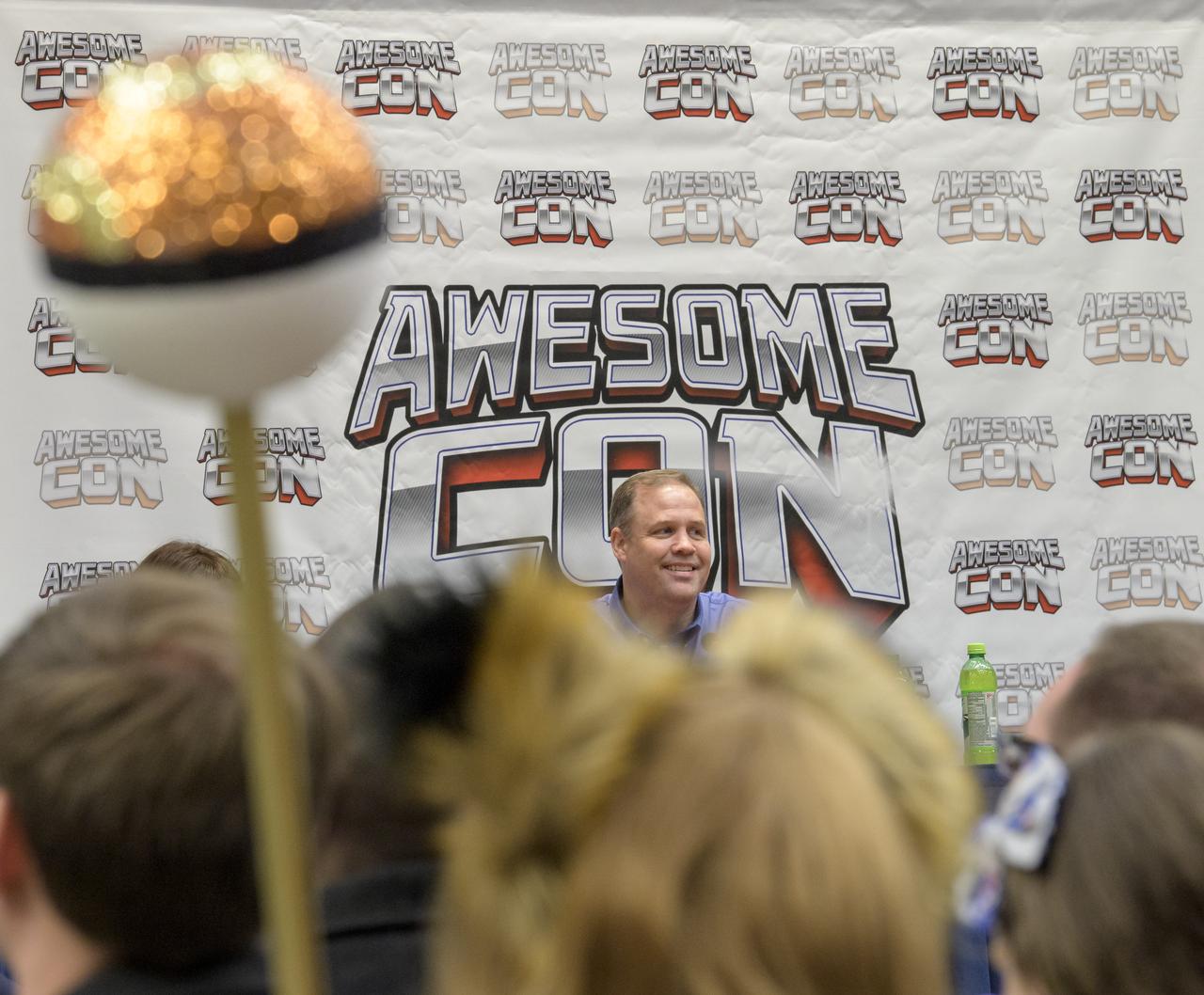
NASA Administrator Jim Bridenstine talks about getting American astronauts to the Moon in the next five years while participating in a Future Con panel discussion at Awesome Con, Saturday, April 27, 2019 at the Walter E. Washington Convention Center in Washington. Future Con highlights the intersection of science, technology, and science fiction inside D.C.’s largest pop culture event. Photo Credit: (NASA/Bill Ingalls)
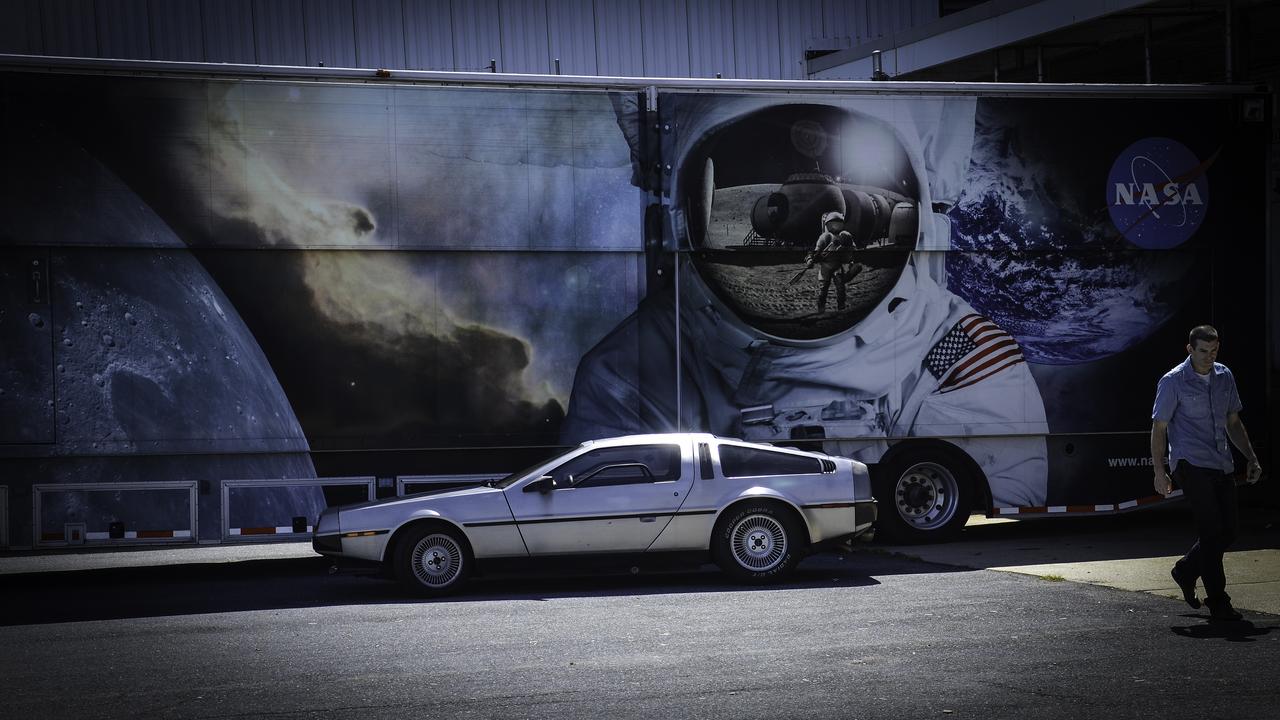
Great Scott, This is Heavy! You might see a DeLorean zipping around Greenbelt, Maryland, on Oct. 21, 2015, the day Marty McFly and Doc Brown arrive from 1985 in "Back to the Future, Part II," but don't look for flaming tread marks in its wake. The DeLorean DMC-12, commonly seen on the roads of NASA’s Goddard Space Flight Center in Greenbelt, Maryland, is better known for the version that starred as a plutonium-powered time machine in the “Back to the Future” trilogy. After some investigation, Goddard’s Office of Communications found the owner of the stainless steel, gull-winged, two-door coupe. Goddard software test engineer, Brendan Rebo bought the 1982 DeLorean off eBay about four and a half years ago. “The car attracts a lot more attention than I expected,” Rebo admitted. “I hear a lot of jokes about whether or not I’ve reached 88 miles per hour yet.” As “Back to the Future” fans around the world celebrate today, Rebo also celebrates his birthday. While the second film predicted technology, such as flying cars, that doesn’t yet exist, people can still marvel at the classic car and movie reference. Credit: NASA/Goddard/Rebecca Roth <b><a href="http://www.nasa.gov/audience/formedia/features/MP_Photo_Guidelines.html" rel="nofollow">NASA image use policy.</a></b> <b><a href="http://www.nasa.gov/centers/goddard/home/index.html" rel="nofollow">NASA Goddard Space Flight Center</a></b> enables NASA’s mission through four scientific endeavors: Earth Science, Heliophysics, Solar System Exploration, and Astrophysics. Goddard plays a leading role in NASA’s accomplishments by contributing compelling scientific knowledge to advance the Agency’s mission. <b>Follow us on <a href="http://twitter.com/NASAGoddardPix" rel="nofollow">Twitter</a></b> <b>Like us on <a href="http://www.facebook.com/pages/Greenbelt-MD/NASA-Goddard/395013845897?ref=tsd" rel="nofollow">Facebook</a></b> <b>Find us on <a href="http://instagrid.me/nasagoddard/?vm=grid" rel="nofollow">Instagram</a></b>
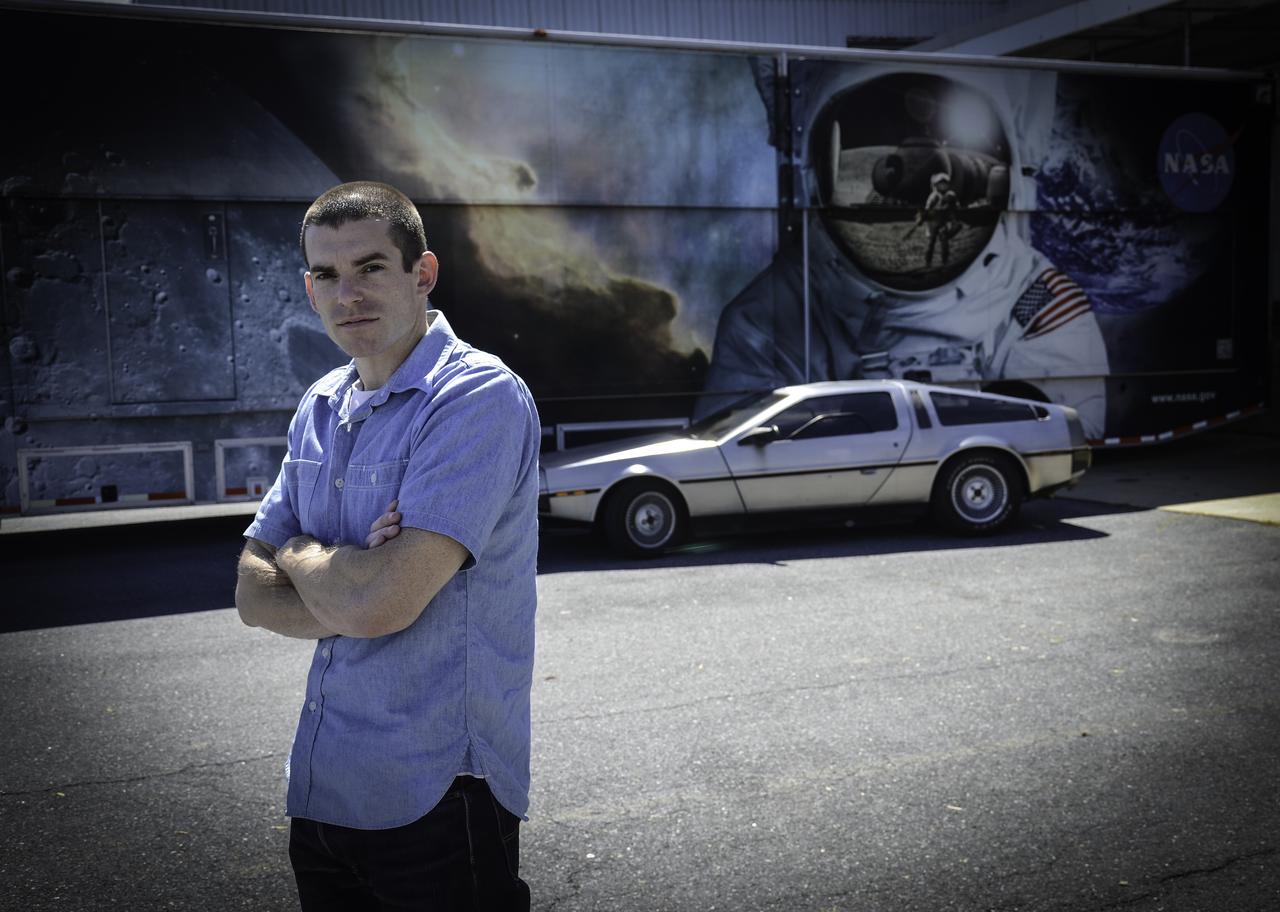
Great Scott, This is Heavy! You might see a DeLorean zipping around Greenbelt, Maryland, on Oct. 21, 2015, the day Marty McFly and Doc Brown arrive from 1985 in "Back to the Future, Part II," but don't look for flaming tread marks in its wake. The DeLorean DMC-12, commonly seen on the roads of NASA’s Goddard Space Flight Center in Greenbelt, Maryland, is better known for the version that starred as a plutonium-powered time machine in the “Back to the Future” trilogy. After some investigation, Goddard’s Office of Communications found the owner of the stainless steel, gull-winged, two-door coupe. Goddard software test engineer, Brendan Rebo bought the 1982 DeLorean off eBay about four and a half years ago. “The car attracts a lot more attention than I expected,” Rebo admitted. “I hear a lot of jokes about whether or not I’ve reached 88 miles per hour yet.” As “Back to the Future” fans around the world celebrate today, Rebo also celebrates his birthday. While the second film predicted technology, such as flying cars, that doesn’t yet exist, people can still marvel at the classic car and movie reference. Credit: NASA/Goddard/Rebecca Roth <b><a href="http://www.nasa.gov/audience/formedia/features/MP_Photo_Guidelines.html" rel="nofollow">NASA image use policy.</a></b> <b><a href="http://www.nasa.gov/centers/goddard/home/index.html" rel="nofollow">NASA Goddard Space Flight Center</a></b> enables NASA’s mission through four scientific endeavors: Earth Science, Heliophysics, Solar System Exploration, and Astrophysics. Goddard plays a leading role in NASA’s accomplishments by contributing compelling scientific knowledge to advance the Agency’s mission. <b>Follow us on <a href="http://twitter.com/NASAGoddardPix" rel="nofollow">Twitter</a></b> <b>Like us on <a href="http://www.facebook.com/pages/Greenbelt-MD/NASA-Goddard/395013845897?ref=tsd" rel="nofollow">Facebook</a></b> <b>Find us on <a href="http://instagrid.me/nasagoddard/?vm=grid" rel="nofollow">Instagram</a></b>
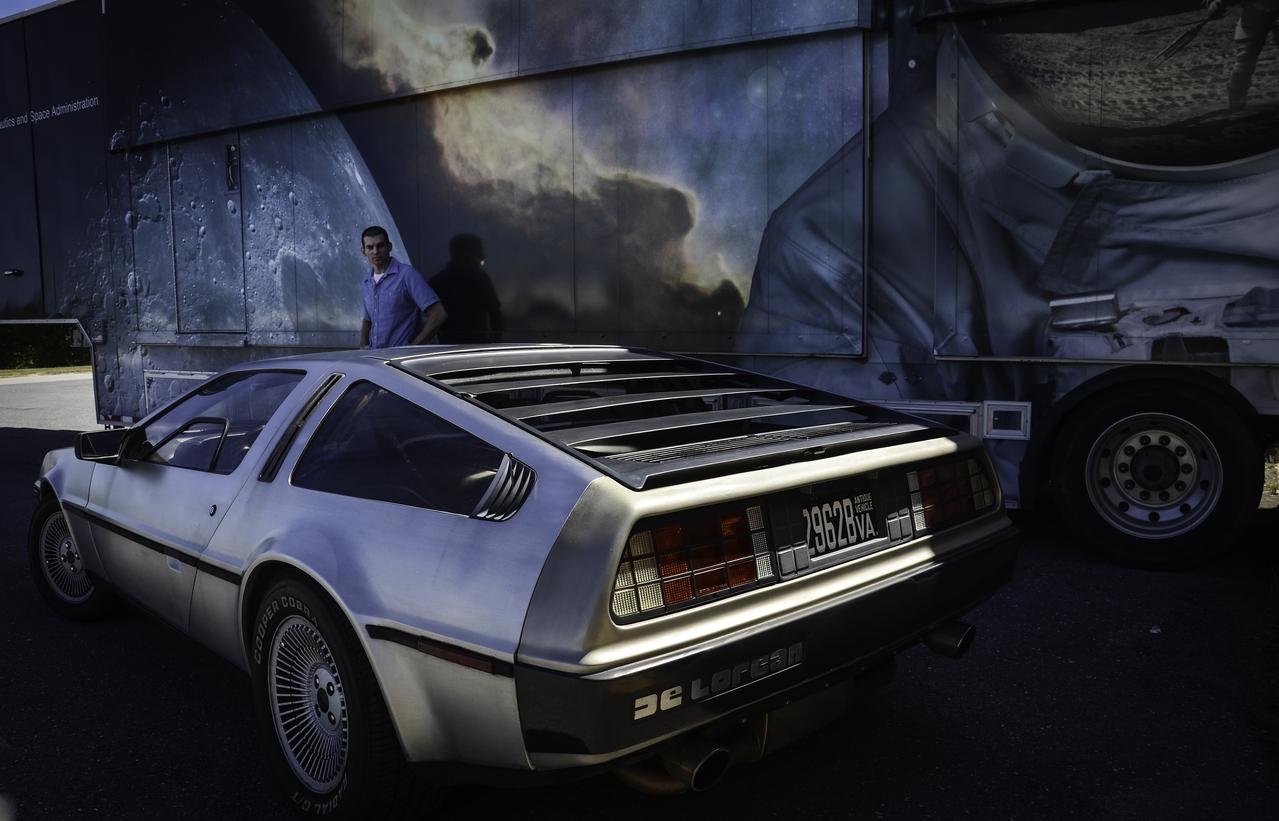
Great Scott, This is Heavy! You might see a DeLorean zipping around Greenbelt, Maryland, on Oct. 21, 2015, the day Marty McFly and Doc Brown arrive from 1985 in "Back to the Future, Part II," but don't look for flaming tread marks in its wake. The DeLorean DMC-12, commonly seen on the roads of NASA’s Goddard Space Flight Center in Greenbelt, Maryland, is better known for the version that starred as a plutonium-powered time machine in the “Back to the Future” trilogy. After some investigation, Goddard’s Office of Communications found the owner of the stainless steel, gull-winged, two-door coupe. Goddard software test engineer, Brendan Rebo bought the 1982 DeLorean off eBay about four and a half years ago. “The car attracts a lot more attention than I expected,” Rebo admitted. “I hear a lot of jokes about whether or not I’ve reached 88 miles per hour yet.” As “Back to the Future” fans around the world celebrate today, Rebo also celebrates his birthday. While the second film predicted technology, such as flying cars, that doesn’t yet exist, people can still marvel at the classic car and movie reference. Credit: NASA/Goddard/Rebecca Roth <b><a href="http://www.nasa.gov/audience/formedia/features/MP_Photo_Guidelines.html" rel="nofollow">NASA image use policy.</a></b> <b><a href="http://www.nasa.gov/centers/goddard/home/index.html" rel="nofollow">NASA Goddard Space Flight Center</a></b> enables NASA’s mission through four scientific endeavors: Earth Science, Heliophysics, Solar System Exploration, and Astrophysics. Goddard plays a leading role in NASA’s accomplishments by contributing compelling scientific knowledge to advance the Agency’s mission. <b>Follow us on <a href="http://twitter.com/NASAGoddardPix" rel="nofollow">Twitter</a></b> <b>Like us on <a href="http://www.facebook.com/pages/Greenbelt-MD/NASA-Goddard/395013845897?ref=tsd" rel="nofollow">Facebook</a></b> <b>Find us on <a href="http://instagrid.me/nasagoddard/?vm=grid" rel="nofollow">Instagram</a></b>
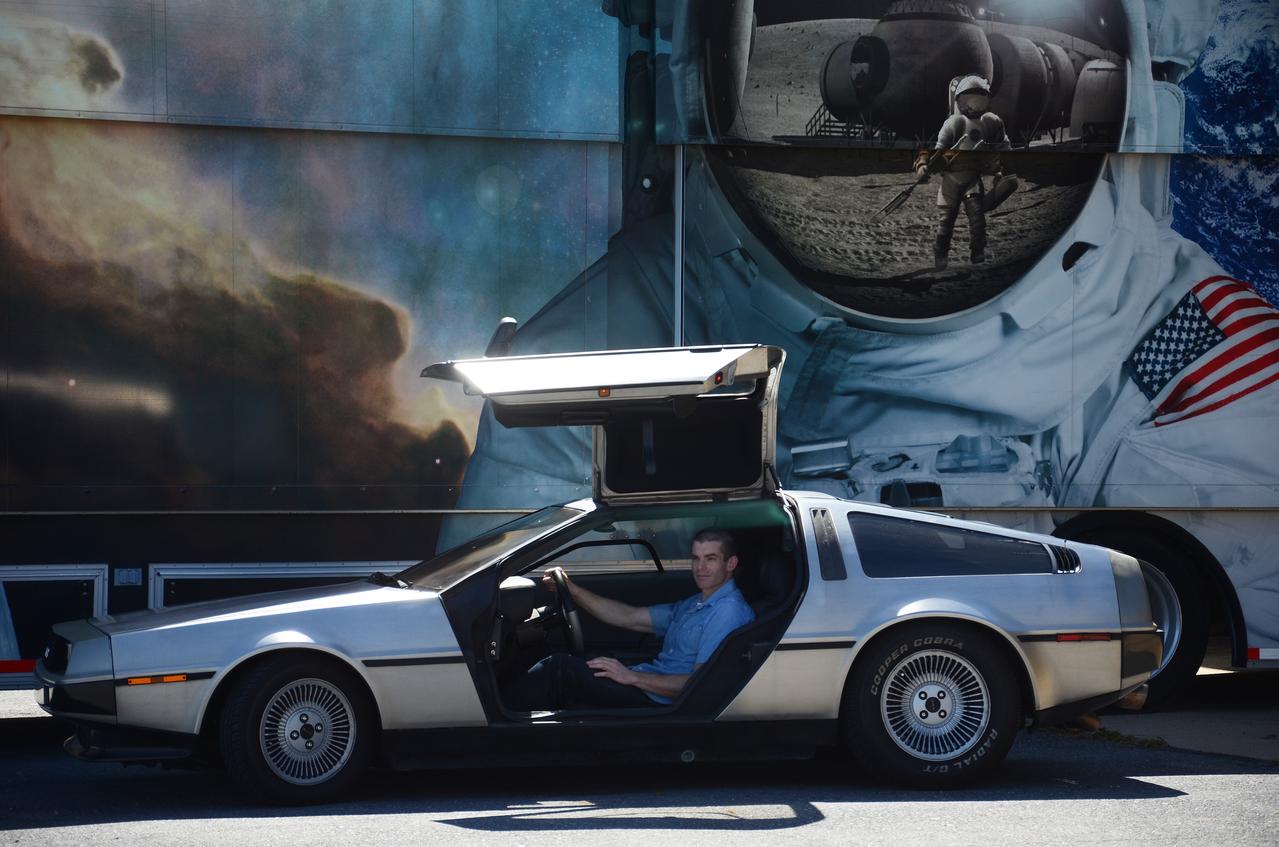
Great Scott, This is Heavy! You might see a DeLorean zipping around Greenbelt, Maryland, on Oct. 21, 2015, the day Marty McFly and Doc Brown arrive from 1985 in "Back to the Future, Part II," but don't look for flaming tread marks in its wake. The DeLorean DMC-12, commonly seen on the roads of NASA’s Goddard Space Flight Center in Greenbelt, Maryland, is better known for the version that starred as a plutonium-powered time machine in the “Back to the Future” trilogy. After some investigation, Goddard’s Office of Communications found the owner of the stainless steel, gull-winged, two-door coupe. Goddard software test engineer, Brendan Rebo bought the 1982 DeLorean off eBay about four and a half years ago. “The car attracts a lot more attention than I expected,” Rebo admitted. “I hear a lot of jokes about whether or not I’ve reached 88 miles per hour yet.” As “Back to the Future” fans around the world celebrate today, Rebo also celebrates his birthday. While the second film predicted technology, such as flying cars, that doesn’t yet exist, people can still marvel at the classic car and movie reference. Credit: NASA/Goddard/Rebecca Roth <b><a href="http://www.nasa.gov/audience/formedia/features/MP_Photo_Guidelines.html" rel="nofollow">NASA image use policy.</a></b> <b><a href="http://www.nasa.gov/centers/goddard/home/index.html" rel="nofollow">NASA Goddard Space Flight Center</a></b> enables NASA’s mission through four scientific endeavors: Earth Science, Heliophysics, Solar System Exploration, and Astrophysics. Goddard plays a leading role in NASA’s accomplishments by contributing compelling scientific knowledge to advance the Agency’s mission. <b>Follow us on <a href="http://twitter.com/NASAGoddardPix" rel="nofollow">Twitter</a></b> <b>Like us on <a href="http://www.facebook.com/pages/Greenbelt-MD/NASA-Goddard/395013845897?ref=tsd" rel="nofollow">Facebook</a></b> <b>Find us on <a href="http://instagrid.me/nasagoddard/?vm=grid" rel="nofollow">Instagram</a></b>
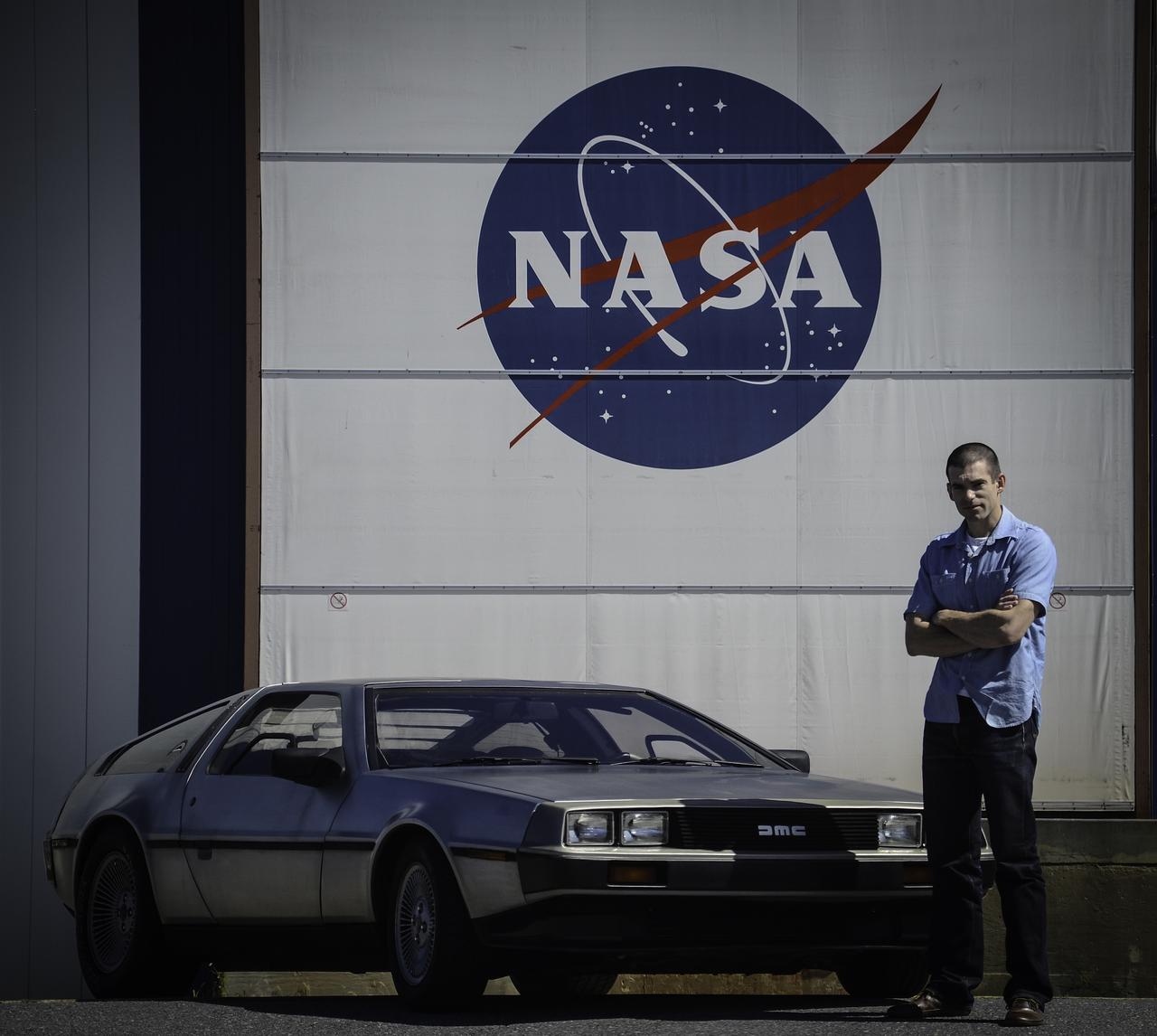
Great Scott, This is Heavy! You might see a DeLorean zipping around Greenbelt, Maryland, on Oct. 21, 2015, the day Marty McFly and Doc Brown arrive from 1985 in "Back to the Future, Part II," but don't look for flaming tread marks in its wake. The DeLorean DMC-12, commonly seen on the roads of NASA’s Goddard Space Flight Center in Greenbelt, Maryland, is better known for the version that starred as a plutonium-powered time machine in the “Back to the Future” trilogy. After some investigation, Goddard’s Office of Communications found the owner of the stainless steel, gull-winged, two-door coupe. Goddard software test engineer, Brendan Rebo bought the 1982 DeLorean off eBay about four and a half years ago. “The car attracts a lot more attention than I expected,” Rebo admitted. “I hear a lot of jokes about whether or not I’ve reached 88 miles per hour yet.” As “Back to the Future” fans around the world celebrate today, Rebo also celebrates his birthday. While the second film predicted technology, such as flying cars, that doesn’t yet exist, people can still marvel at the classic car and movie reference. Credit: NASA/Goddard/Rebecca Roth <b><a href="http://www.nasa.gov/audience/formedia/features/MP_Photo_Guidelines.html" rel="nofollow">NASA image use policy.</a></b> <b><a href="http://www.nasa.gov/centers/goddard/home/index.html" rel="nofollow">NASA Goddard Space Flight Center</a></b> enables NASA’s mission through four scientific endeavors: Earth Science, Heliophysics, Solar System Exploration, and Astrophysics. Goddard plays a leading role in NASA’s accomplishments by contributing compelling scientific knowledge to advance the Agency’s mission. <b>Follow us on <a href="http://twitter.com/NASAGoddardPix" rel="nofollow">Twitter</a></b> <b>Like us on <a href="http://www.facebook.com/pages/Greenbelt-MD/NASA-Goddard/395013845897?ref=tsd" rel="nofollow">Facebook</a></b> <b>Find us on <a href="http://instagrid.me/nasagoddard/?vm=grid" rel="nofollow">Instagram</a></b>
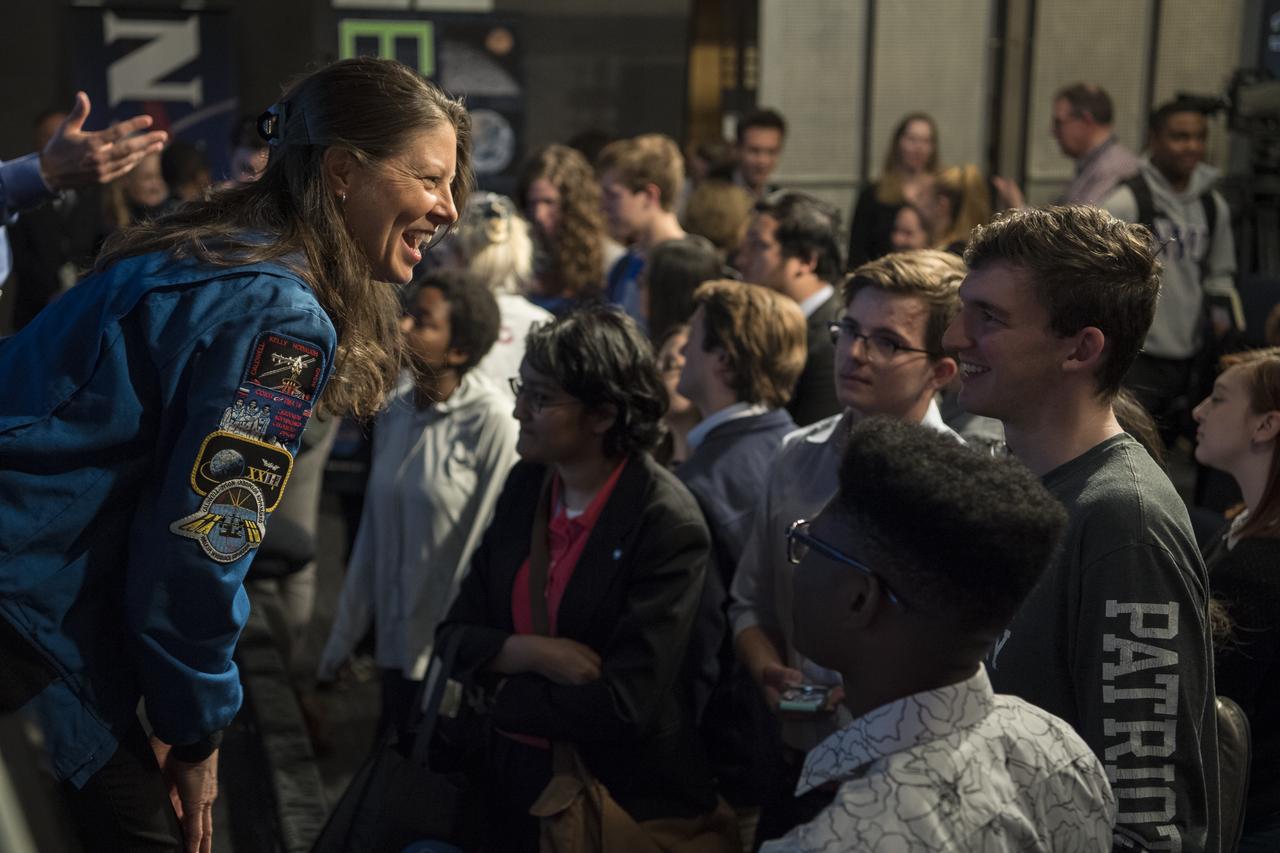
NASA astronaut Tracy Caldwell Dyson speaks with college students after the "Future of Space" STEM event, Monday, April 29, 2019 at NASA Headquarters in Washington. She moderated a panel discussion with NASA Administrator Jim Bridenstine, NASA Associate Administrator for the Human Exploration and Operations Mission Directorate, Bill Gerstenmaier, and NASA Deputy Associate Administrator for Exploration, Steve Clarke. Photo Credit: (NASA/Aubrey Gemignani)
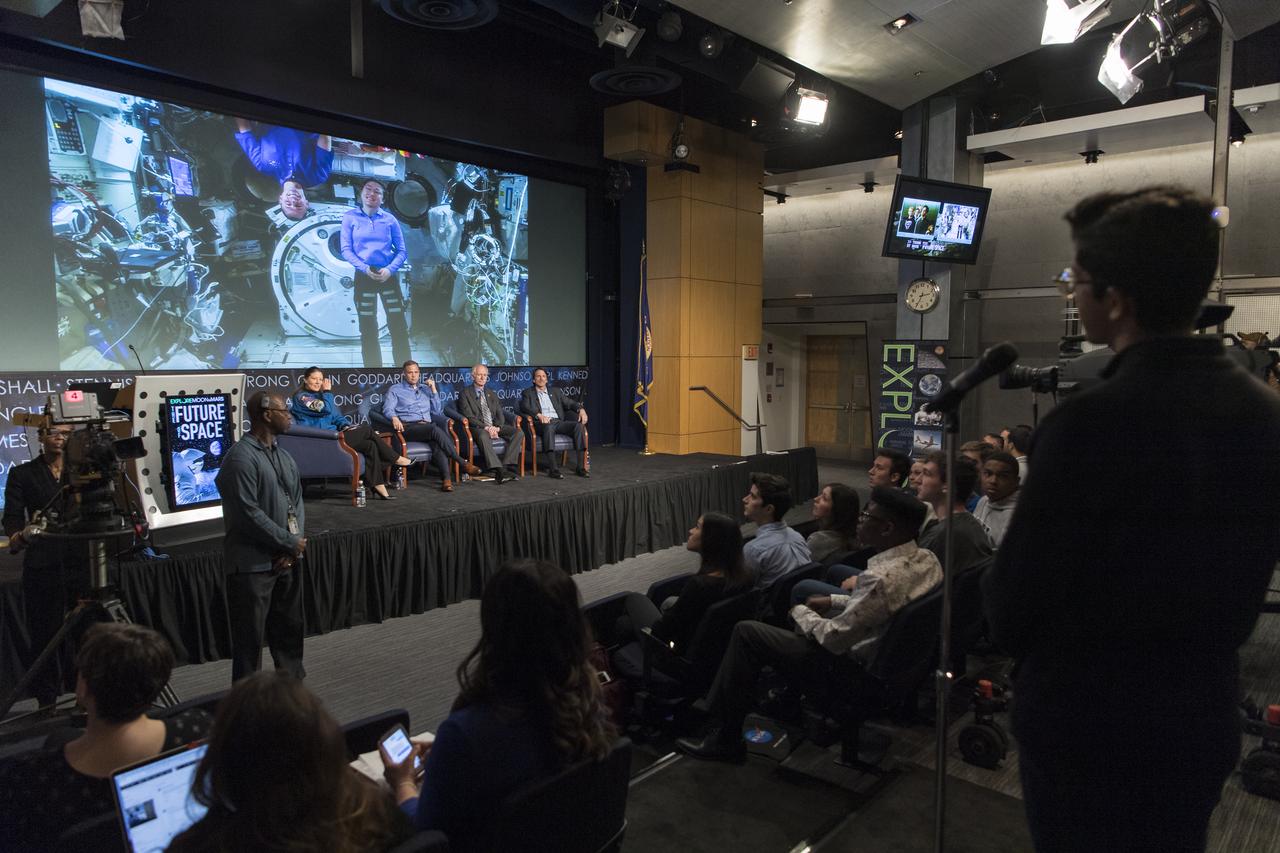
A student asks Nick Hague and Christina Koch, two astronauts currently living and working on the International Space Station, a question during a panel discussion with NASA Administrator Jim Bridenstine, NASA Associate Administrator for the Human Exploration and Operations Mission Directorate, Bill Gerstenmaier, and NASA Deputy Associate Administrator for Exploration, Steve Clarke at the "Future of Space" STEM event, Monday, April 29, 2019 at NASA Headquarters in Washington. NASA astronaut Tracy Caldwell Dyson, moderated the panel discussion. Photo Credit: (NASA/Aubrey Gemignani)
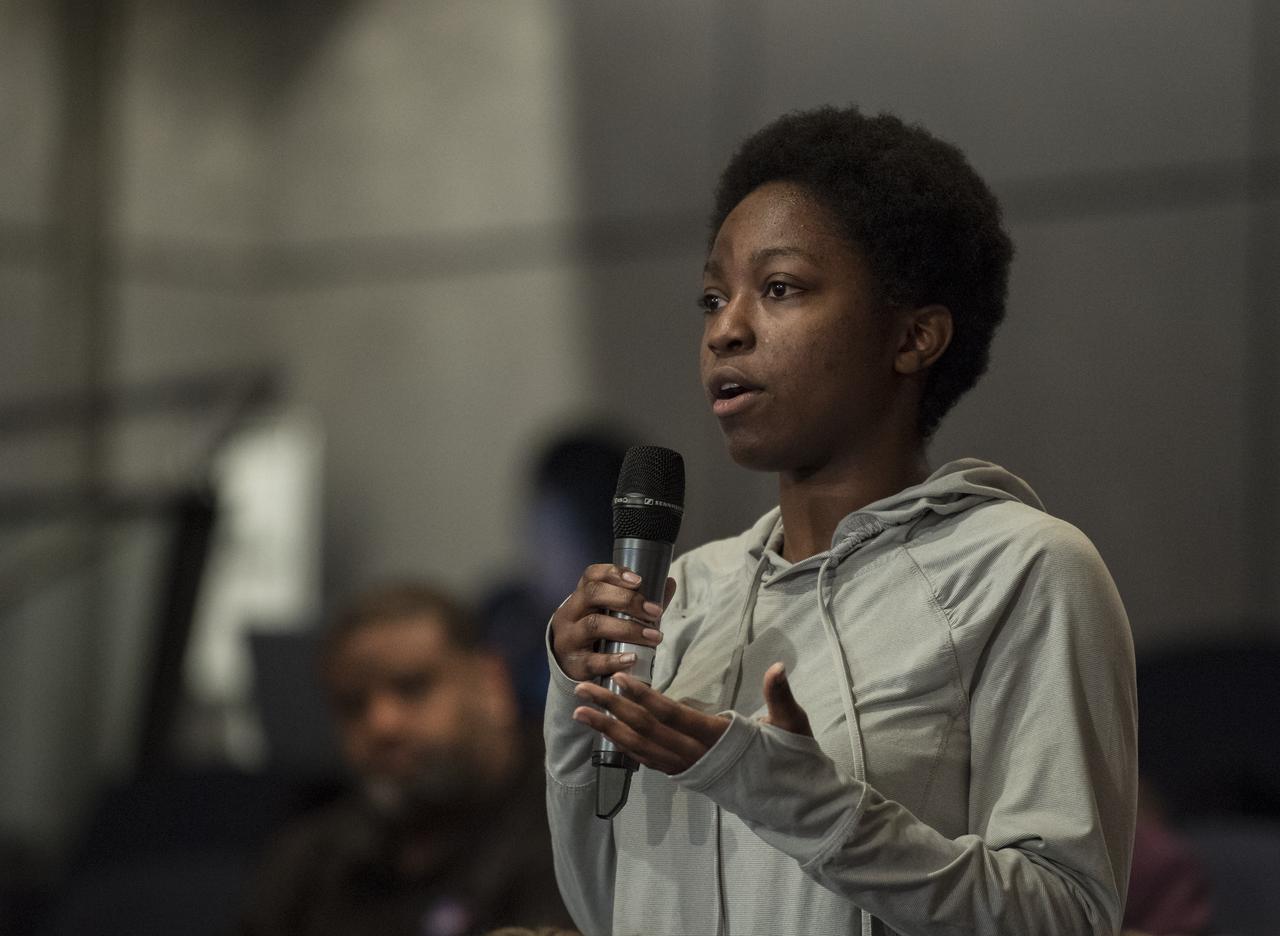
A student asks a questions during a panel discussion with NASA Administrator Jim Bridenstine, NASA Associate Administrator for the Human Exploration and Operations Mission Directorate, Bill Gerstenmaier, and NASA Deputy Associate Administrator for Exploration, Steve Clarke at the "Future of Space" STEM event, Monday, April 29, 2019 at NASA Headquarters in Washington. NASA astronaut Tracy Caldwell Dyson moderated the discussion. Photo Credit: (NASA/Aubrey Gemignani)
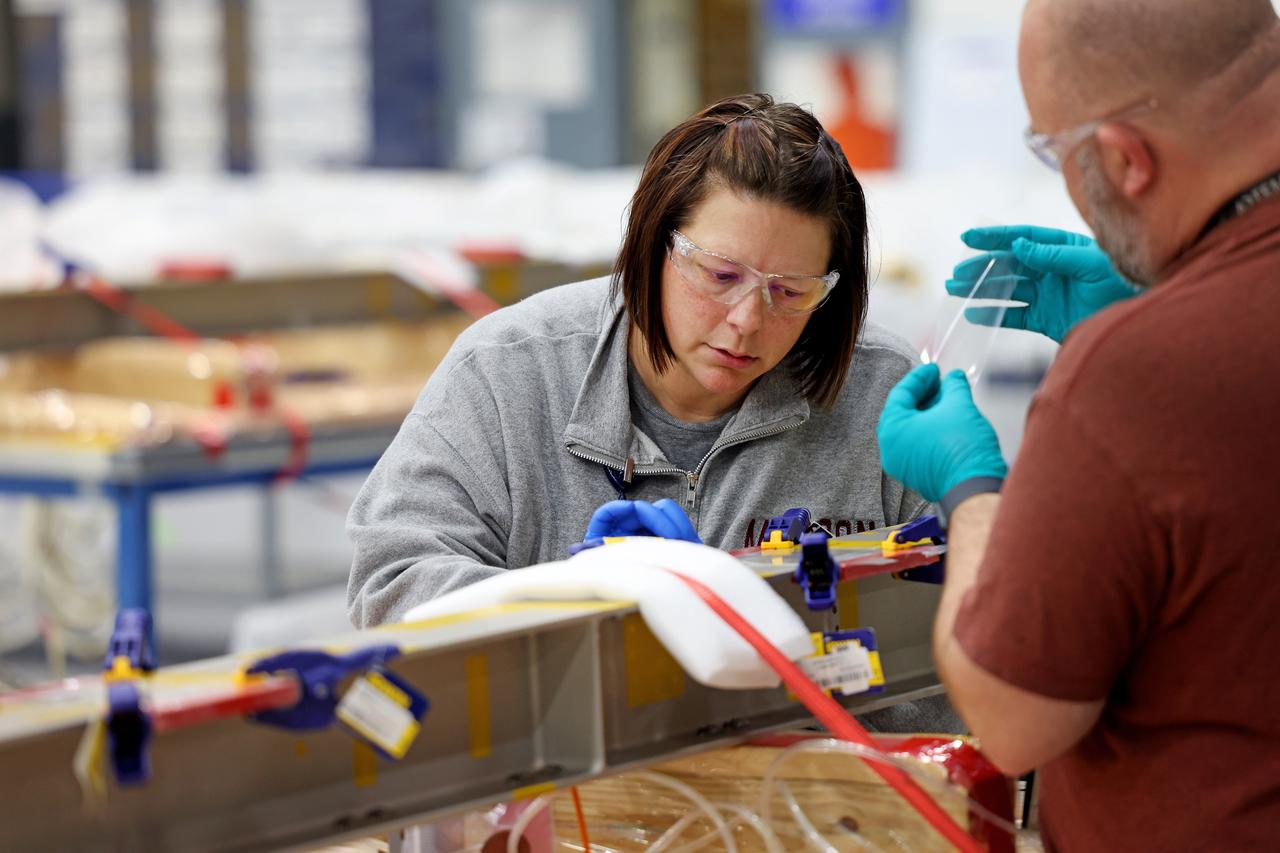
Technicians at NASA’s Michoud Assembly Facility in New Orleans on Feb. 22 prepare elements that will form part of the midbody for the future exploration upper stage for the SLS (Space Launch System) rocket. The midbody struts, or V-struts, will create the midbody’s cage-like outer structure to connect the upper stage’s larger liquid hydrogen tank to its smaller liquid oxygen tank. Manufacturing flight and test hardware for the future SLS upper stage is a collaborative effort between NASA and Boeing, the lead contractor for EUS and the SLS core stage. Beginning with Artemis IV, SLS will evolve to its more powerful Block 1B configuration with the advanced exploration upper stage that gives the rocket the capability to launch 40% more to the Moon along with Artemis astronauts inside NASA’s Orion spacecraft. The evolved in-space stage for SLS will use a combination of liquid oxygen and liquid hydrogen propellants to help power the engines to send large cargo and crew inside Orion to the Moon. Image credit: NASA/Michael DeMocker
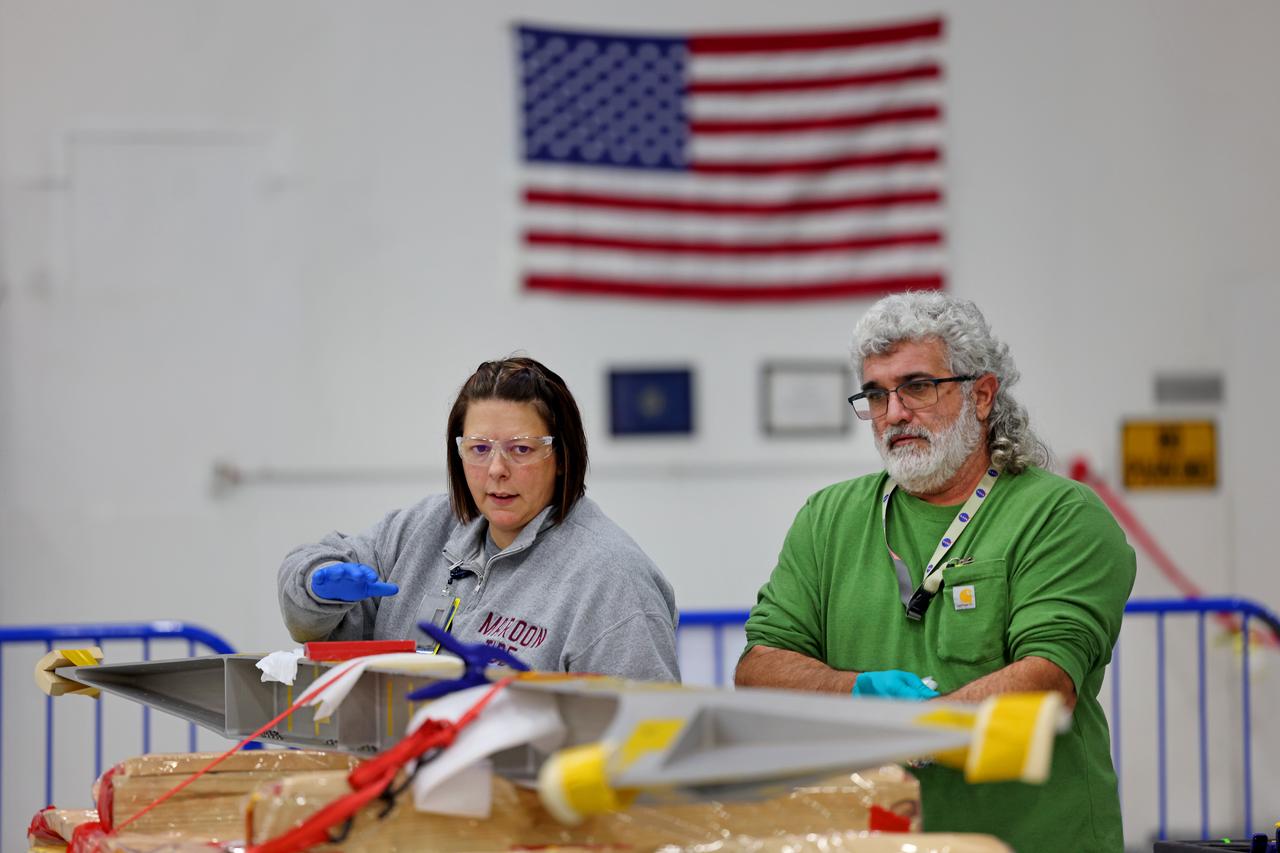
Technicians at NASA’s Michoud Assembly Facility in New Orleans on Feb. 22 prepare elements that will form part of the midbody for the future exploration upper stage for the SLS (Space Launch System) rocket. The midbody struts, or V-struts, will create the midbody’s cage-like outer structure to connect the upper stage’s larger liquid hydrogen tank to its smaller liquid oxygen tank. Manufacturing flight and test hardware for the future SLS upper stage is a collaborative effort between NASA and Boeing, the lead contractor for EUS and the SLS core stage. Beginning with Artemis IV, SLS will evolve to its more powerful Block 1B configuration with the advanced exploration upper stage that gives the rocket the capability to launch 40% more to the Moon along with Artemis astronauts inside NASA’s Orion spacecraft. The evolved in-space stage for SLS will use a combination of liquid oxygen and liquid hydrogen propellants to help power the engines to send large cargo and crew inside Orion to the Moon. Image credit: NASA/Michael DeMocker

Technicians at NASA’s Michoud Assembly Facility in New Orleans on Feb. 22 prepare elements that will form part of the midbody for the future exploration upper stage for the SLS (Space Launch System) rocket. The midbody struts, or V-struts, will create the midbody’s cage-like outer structure to connect the upper stage’s larger liquid hydrogen tank to its smaller liquid oxygen tank. Manufacturing flight and test hardware for the future SLS upper stage is a collaborative effort between NASA and Boeing, the lead contractor for EUS and the SLS core stage. Beginning with Artemis IV, SLS will evolve to its more powerful Block 1B configuration with the advanced exploration upper stage that gives the rocket the capability to launch 40% more to the Moon along with Artemis astronauts inside NASA’s Orion spacecraft. The evolved in-space stage for SLS will use a combination of liquid oxygen and liquid hydrogen propellants to help power the engines to send large cargo and crew inside Orion to the Moon. Image credit: NASA/Michael DeMocker

In Armstrong auditorium, Bridenstine discusses the future of NASA under his administration then answered questions from employees
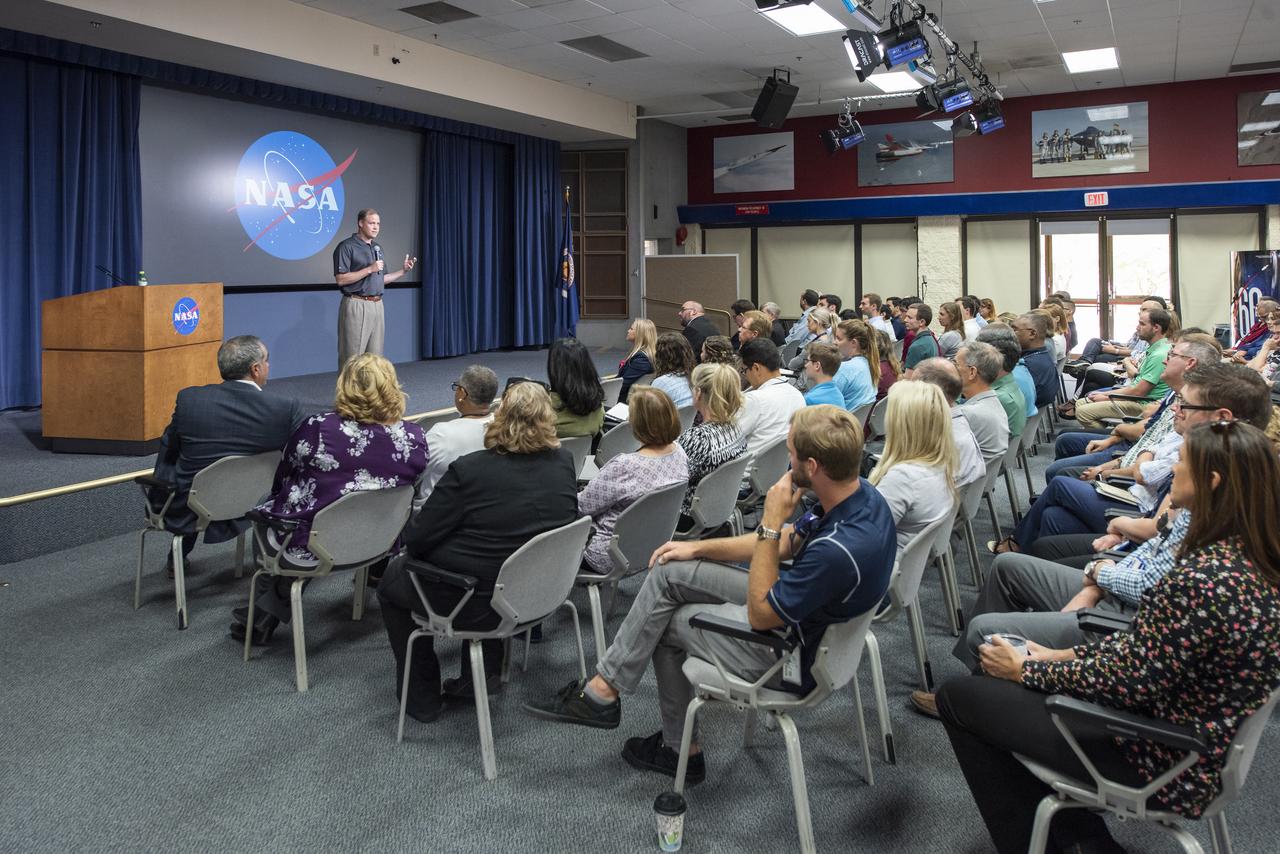
In Armstrong auditorium, Bridenstine discusses the future of NASA under his administration then answered questions from employees
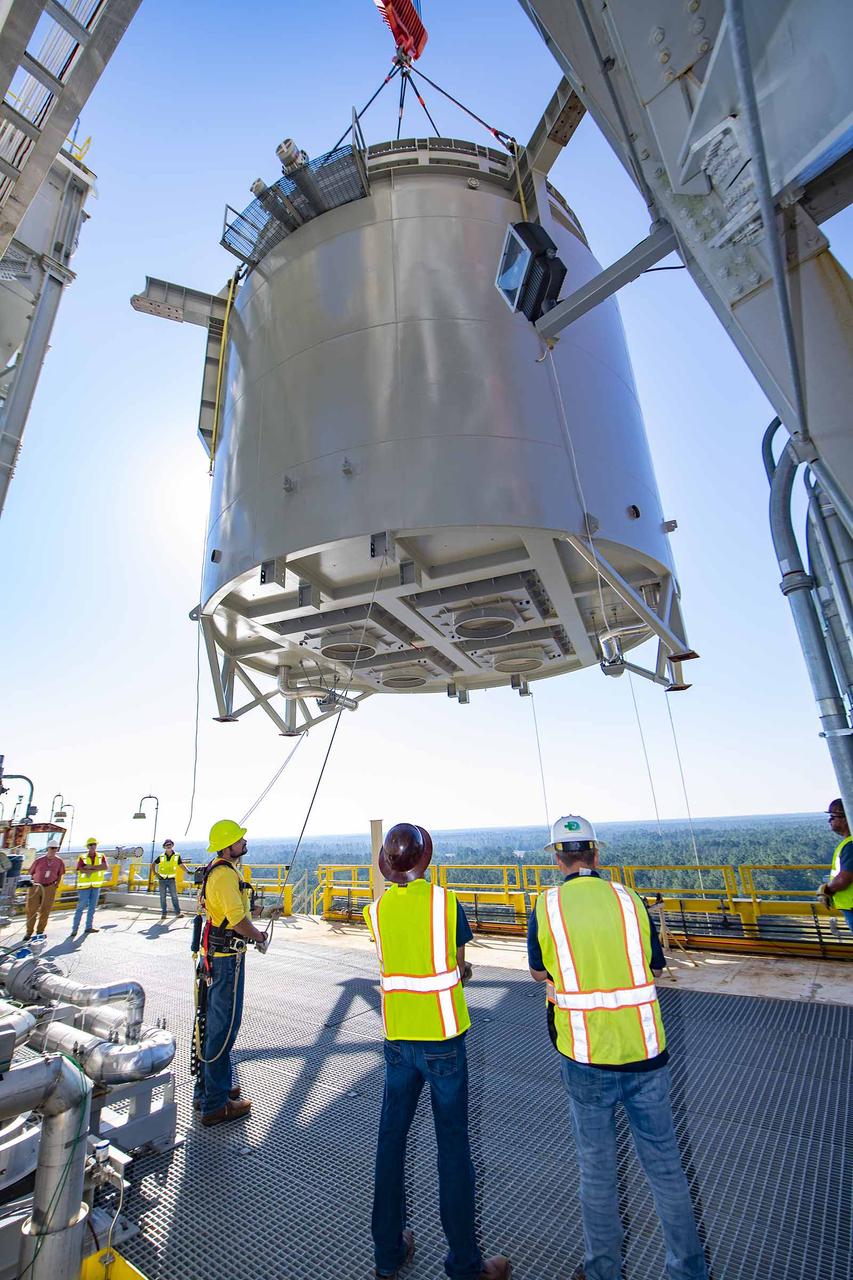
Teams at NASA’s Stennis Space Center complete a safe lift and install of an interstage simulator unit needed for future testing of NASA’s exploration upper stage (EUS) in the B-2 position of the Thad Cochran Test Stand. The lift and install, completed over a two-week period that began Oct. 10, marks a milestone for testing the new SLS (Space Launch System) rocket stage that will fly on future Artemis missions to the Moon and beyond. The EUS will undergo a series of Green Run tests of its integrated systems prior to its first flight. During testing, the interstage simulator component will function like the SLS interstage section that helps protect the upper stage during Artemis launches.
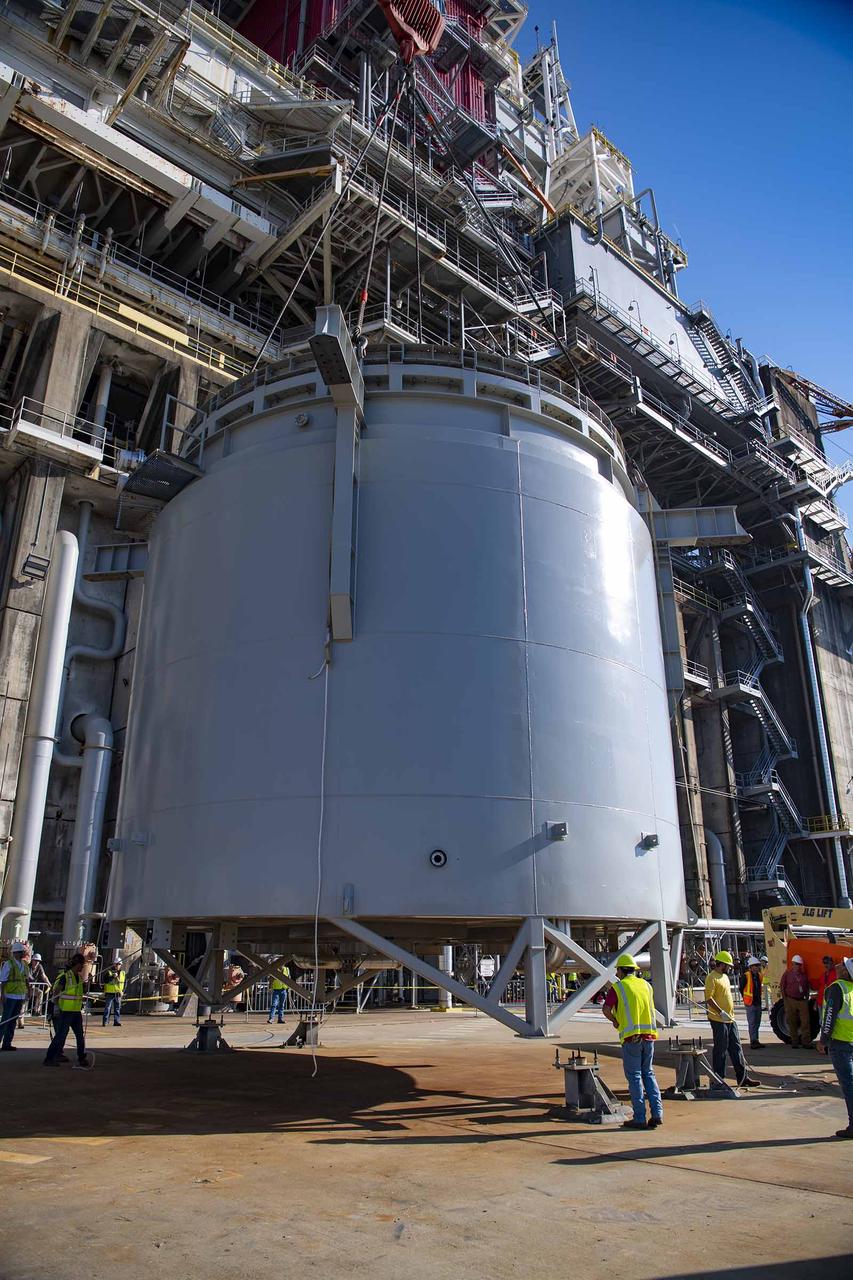
Teams at NASA’s Stennis Space Center complete a safe lift and install of an interstage simulator unit needed for future testing of NASA’s exploration upper stage (EUS) in the B-2 position of the Thad Cochran Test Stand. The lift and install, completed over a two-week period that began Oct. 10, marks a milestone for testing the new SLS (Space Launch System) rocket stage that will fly on future Artemis missions to the Moon and beyond. The EUS will undergo a series of Green Run tests of its integrated systems prior to its first flight. During testing, the interstage simulator component will function like the SLS interstage section that helps protect the upper stage during Artemis launches.
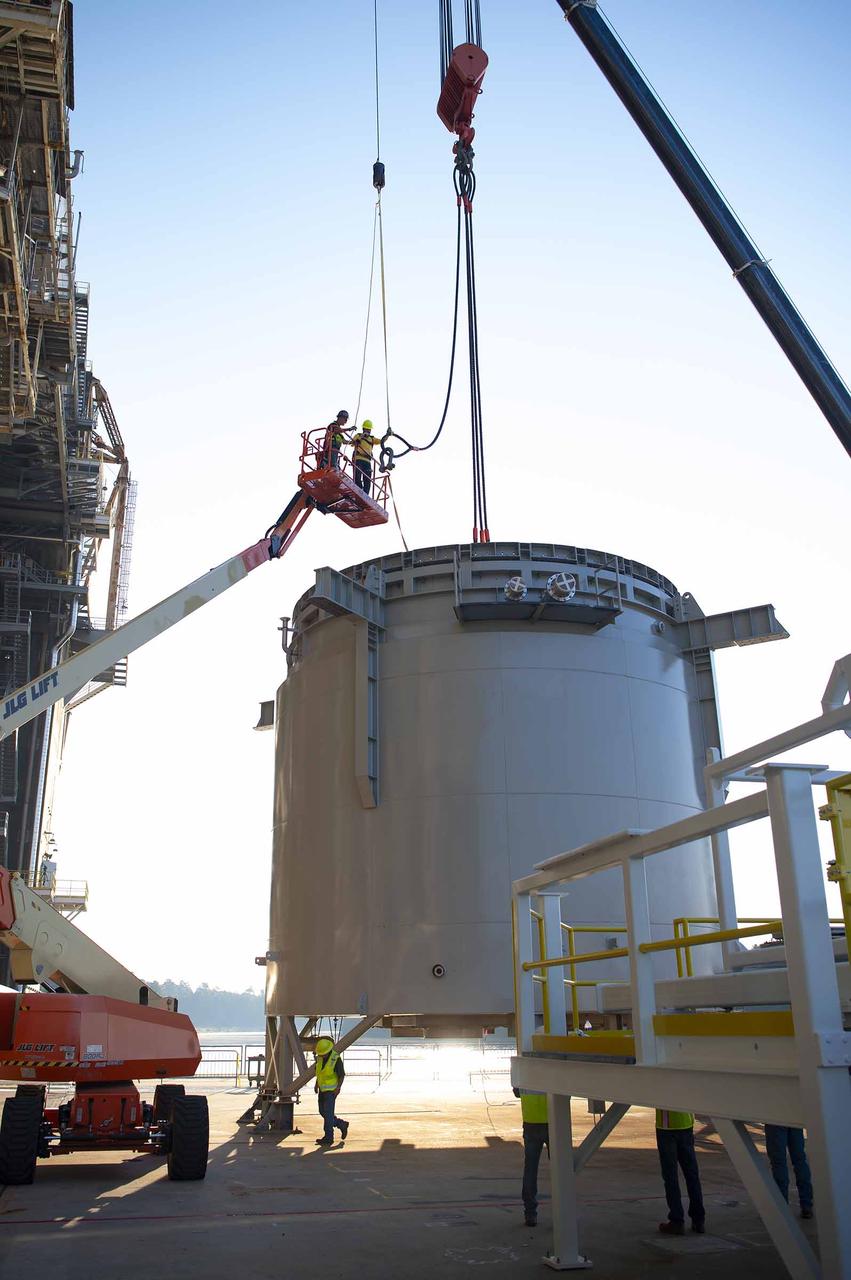
Teams at NASA’s Stennis Space Center complete a safe lift and install of an interstage simulator unit needed for future testing of NASA’s exploration upper stage (EUS) in the B-2 position of the Thad Cochran Test Stand. The lift and install, completed over a two-week period that began Oct. 10, marks a milestone for testing the new SLS (Space Launch System) rocket stage that will fly on future Artemis missions to the Moon and beyond. The EUS will undergo a series of Green Run tests of its integrated systems prior to its first flight. During testing, the interstage simulator component will function like the SLS interstage section that helps protect the upper stage during Artemis launches.
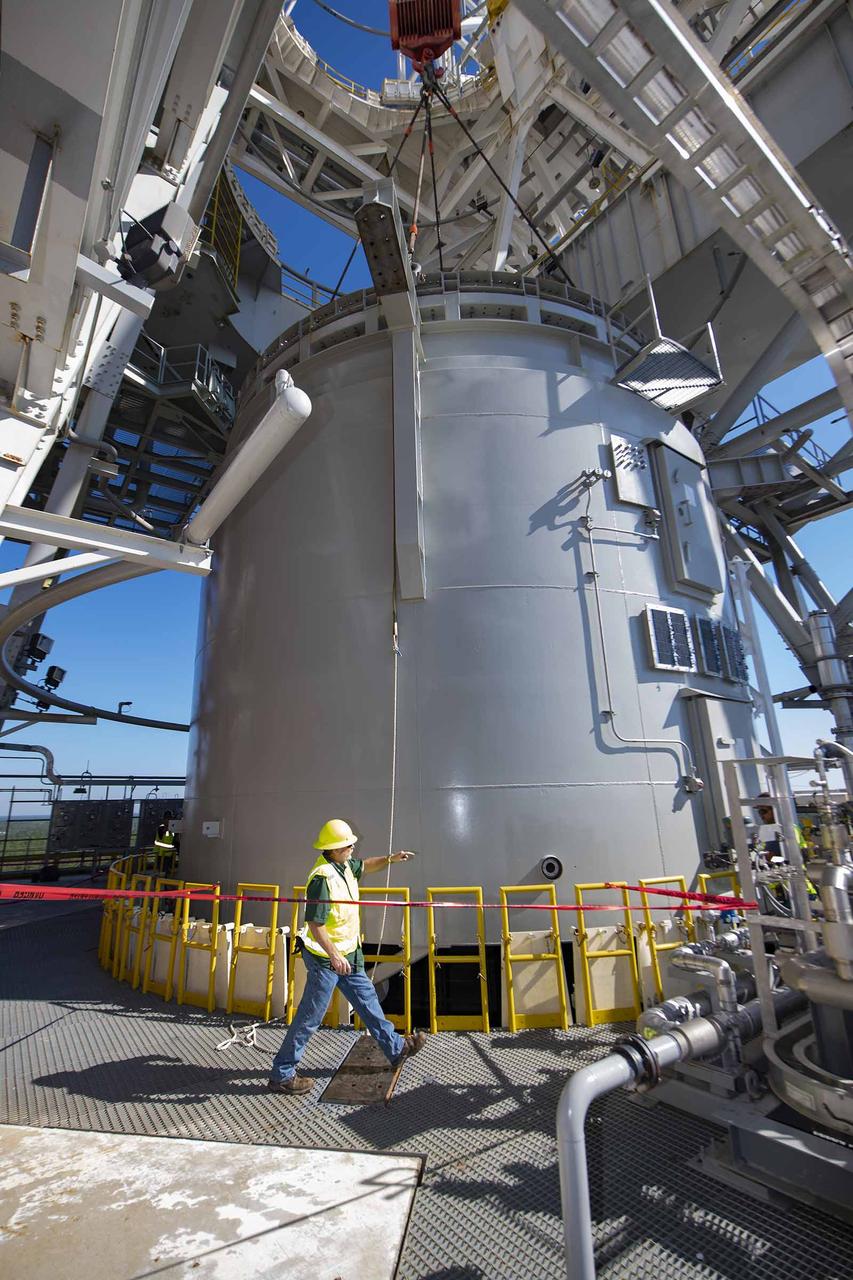
Teams at NASA’s Stennis Space Center complete a safe lift and install of an interstage simulator unit needed for future testing of NASA’s exploration upper stage (EUS) in the B-2 position of the Thad Cochran Test Stand. The lift and install, completed over a two-week period that began Oct. 10, marks a milestone for testing the new SLS (Space Launch System) rocket stage that will fly on future Artemis missions to the Moon and beyond. The EUS will undergo a series of Green Run tests of its integrated systems prior to its first flight. During testing, the interstage simulator component will function like the SLS interstage section that helps protect the upper stage during Artemis launches.
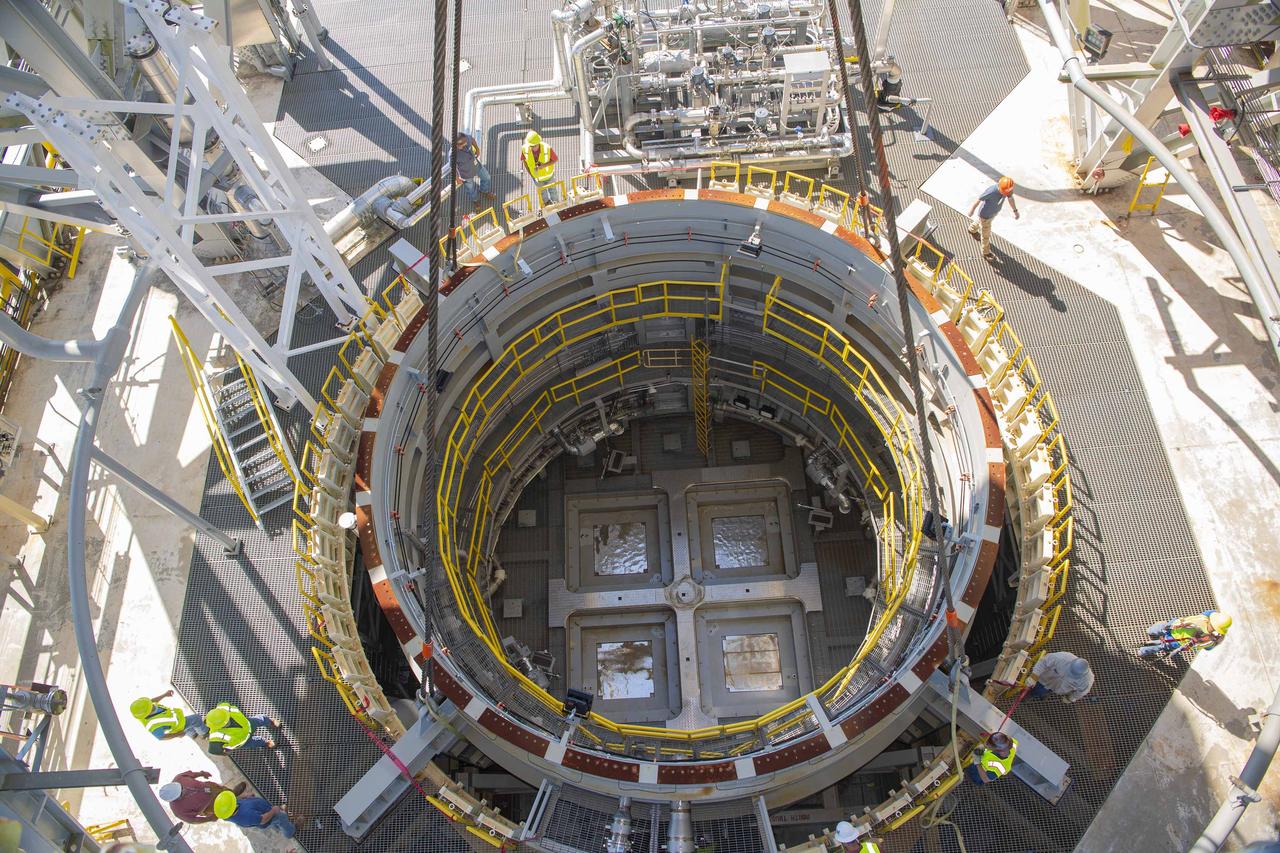
Teams at NASA’s Stennis Space Center complete a safe lift and install of an interstage simulator unit needed for future testing of NASA’s exploration upper stage (EUS) in the B-2 position of the Thad Cochran Test Stand. The lift and install, completed over a two-week period that began Oct. 10, marks a milestone for testing the new SLS (Space Launch System) rocket stage that will fly on future Artemis missions to the Moon and beyond. The EUS will undergo a series of Green Run tests of its integrated systems prior to its first flight. During testing, the interstage simulator component will function like the SLS interstage section that helps protect the upper stage during Artemis launches.
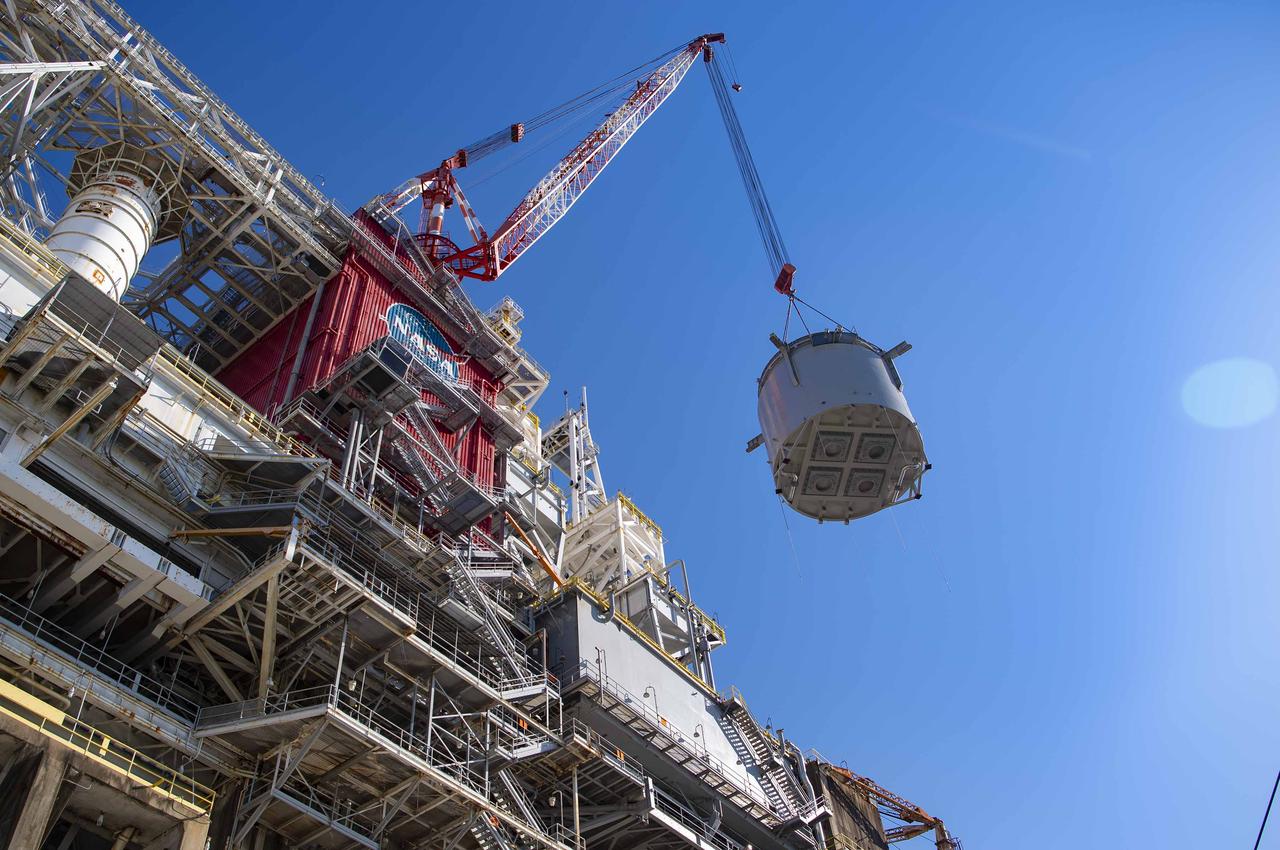
Teams at NASA’s Stennis Space Center complete a safe lift and install of an interstage simulator unit needed for future testing of NASA’s exploration upper stage (EUS) in the B-2 position of the Thad Cochran Test Stand. The lift and install, completed over a two-week period that began Oct. 10, marks a milestone for testing the new SLS (Space Launch System) rocket stage that will fly on future Artemis missions to the Moon and beyond. The EUS will undergo a series of Green Run tests of its integrated systems prior to its first flight. During testing, the interstage simulator component will function like the SLS interstage section that helps protect the upper stage during Artemis launches.
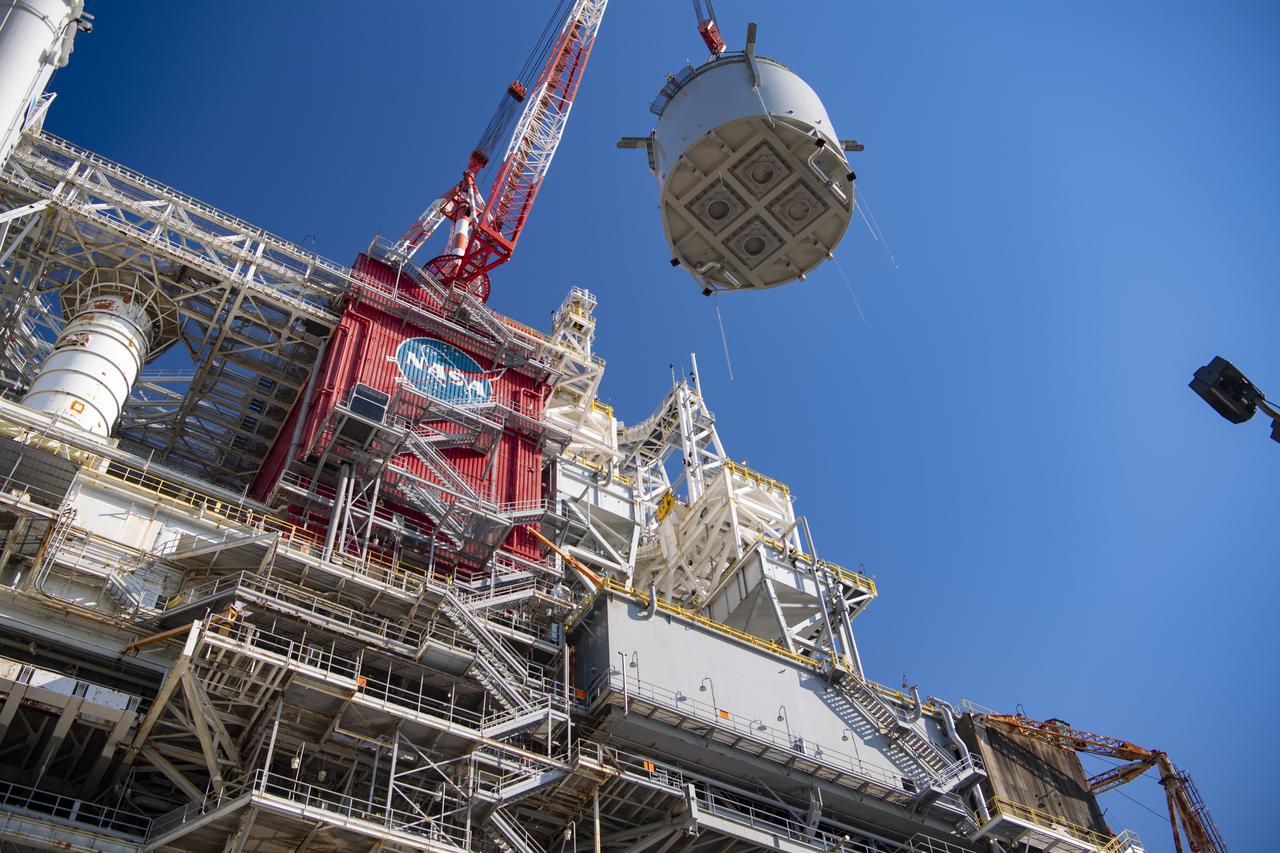
Teams at NASA’s Stennis Space Center complete a safe lift and install of an interstage simulator unit needed for future testing of NASA’s exploration upper stage (EUS) in the B-2 position of the Thad Cochran Test Stand. The lift and install, completed over a two-week period that began Oct. 10, marks a milestone for testing the new SLS (Space Launch System) rocket stage that will fly on future Artemis missions to the Moon and beyond. The EUS will undergo a series of Green Run tests of its integrated systems prior to its first flight. During testing, the interstage simulator component will function like the SLS interstage section that helps protect the upper stage during Artemis launches.
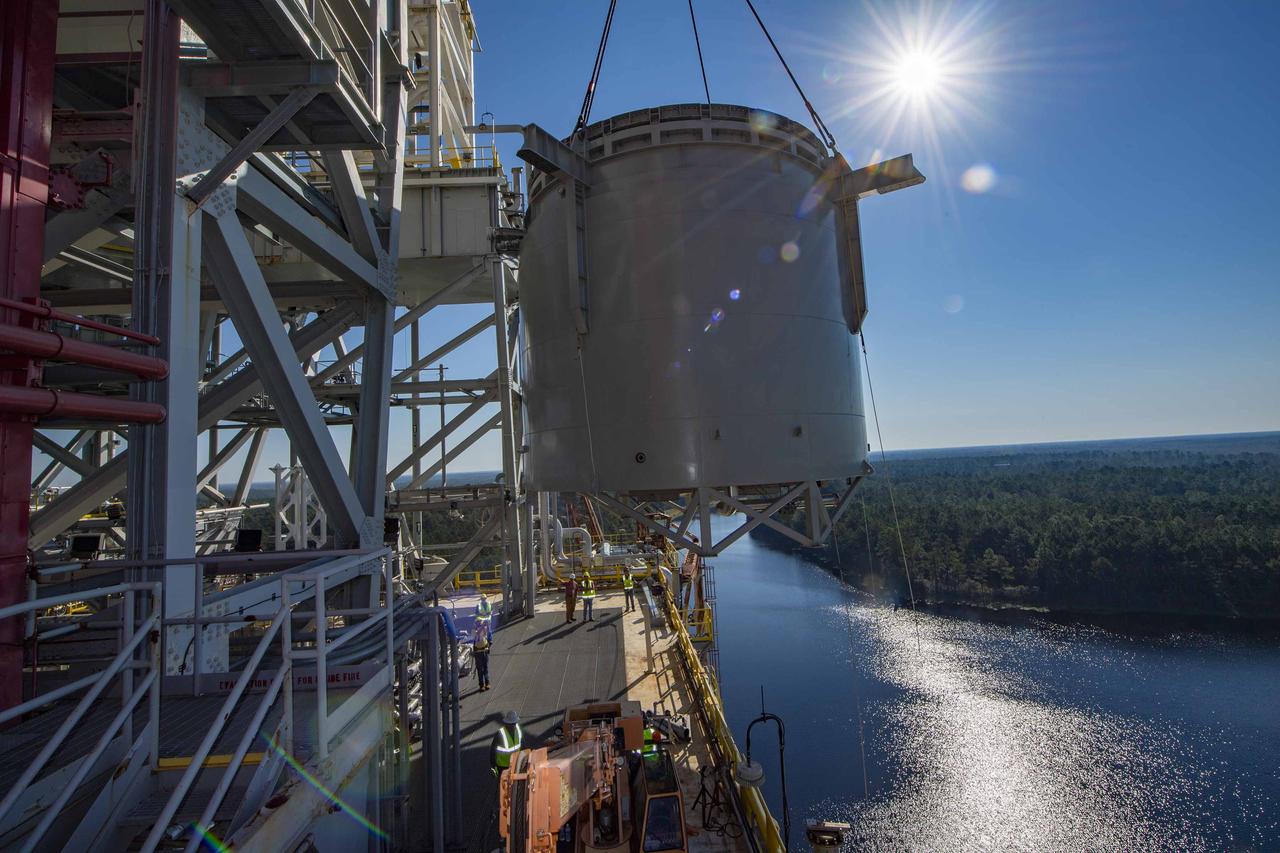
Teams at NASA’s Stennis Space Center complete a safe lift and install of an interstage simulator unit needed for future testing of NASA’s exploration upper stage (EUS) in the B-2 position of the Thad Cochran Test Stand. The lift and install, completed over a two-week period that began Oct. 10, marks a milestone for testing the new SLS (Space Launch System) rocket stage that will fly on future Artemis missions to the Moon and beyond. The EUS will undergo a series of Green Run tests of its integrated systems prior to its first flight. During testing, the interstage simulator component will function like the SLS interstage section that helps protect the upper stage during Artemis launches.
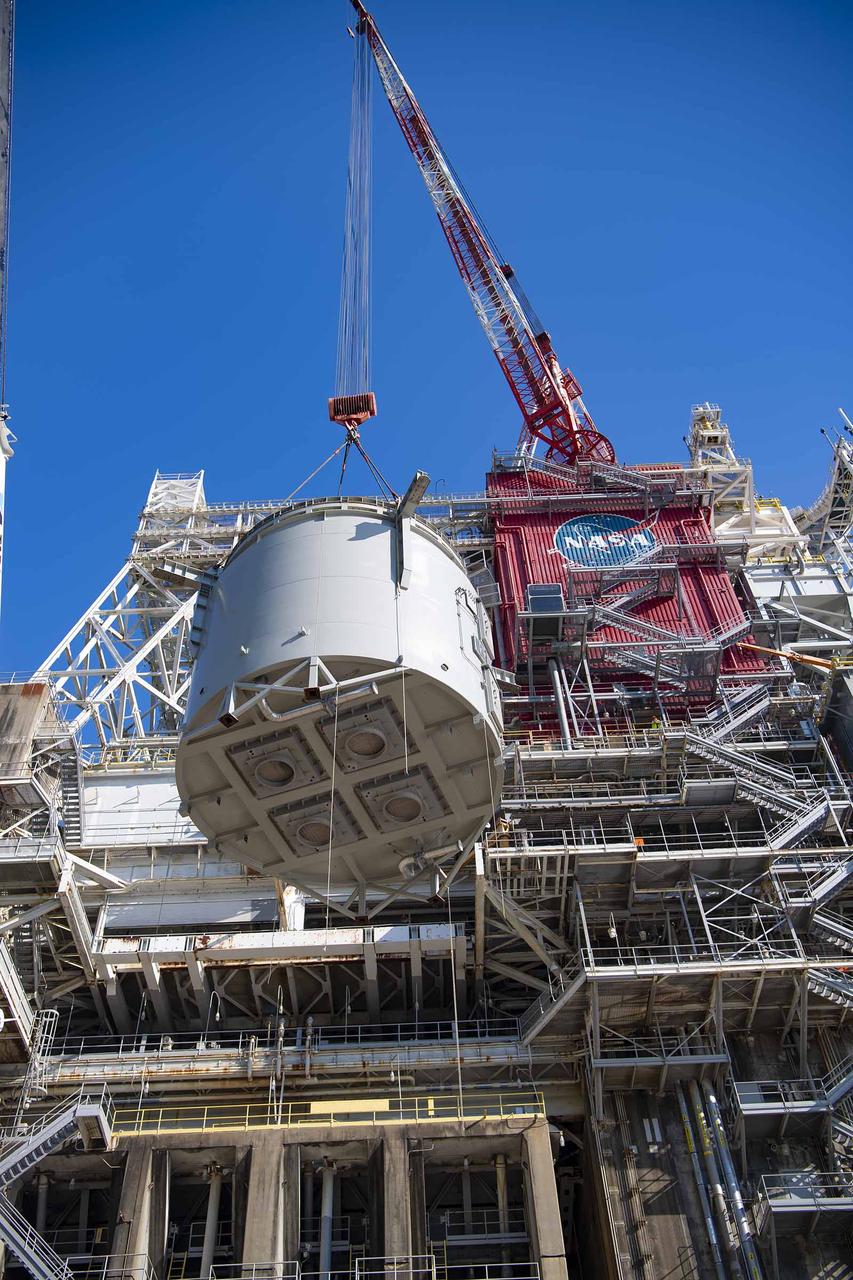
Teams at NASA’s Stennis Space Center complete a safe lift and install of an interstage simulator unit needed for future testing of NASA’s exploration upper stage (EUS) in the B-2 position of the Thad Cochran Test Stand. The lift and install, completed over a two-week period that began Oct. 10, marks a milestone for testing the new SLS (Space Launch System) rocket stage that will fly on future Artemis missions to the Moon and beyond. The EUS will undergo a series of Green Run tests of its integrated systems prior to its first flight. During testing, the interstage simulator component will function like the SLS interstage section that helps protect the upper stage during Artemis launches.
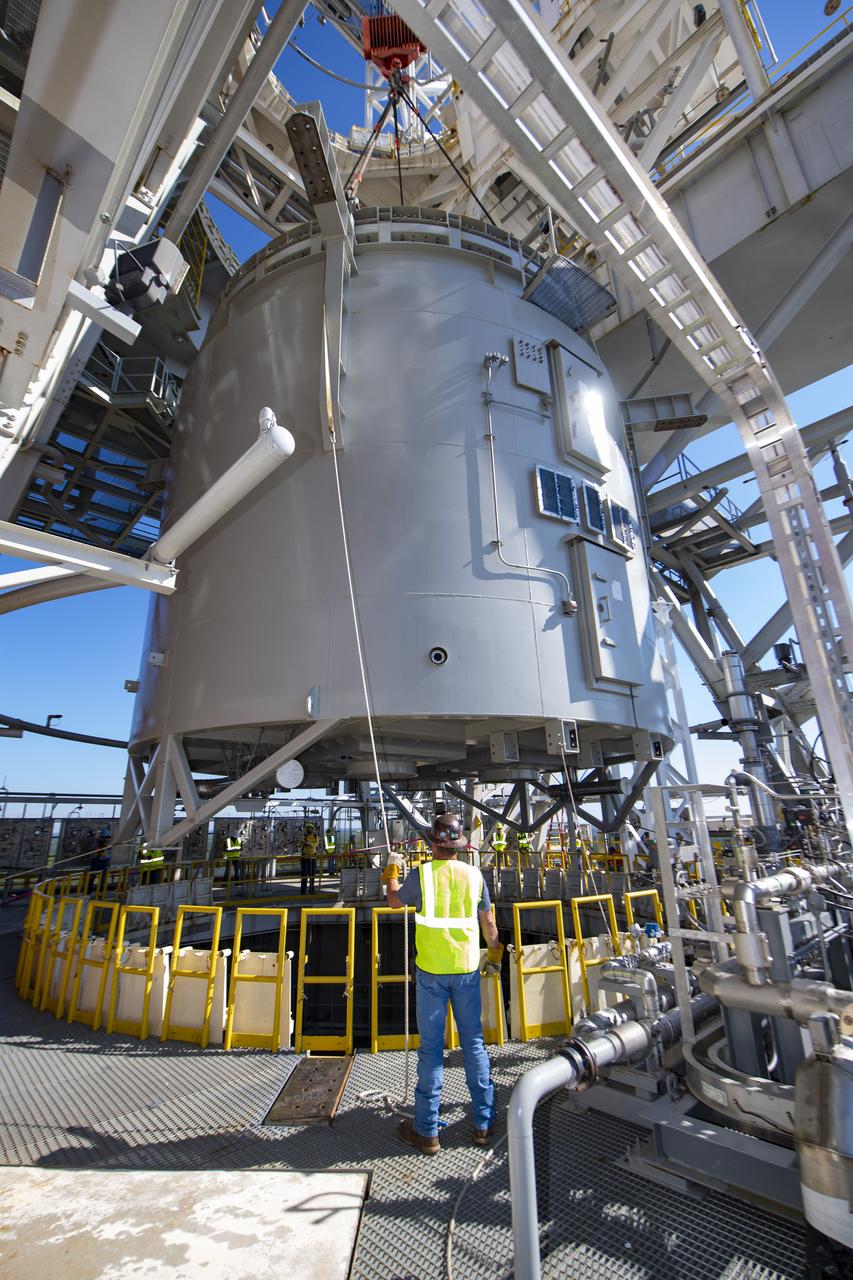
Teams at NASA’s Stennis Space Center complete a safe lift and install of an interstage simulator unit needed for future testing of NASA’s exploration upper stage (EUS) in the B-2 position of the Thad Cochran Test Stand. The lift and install, completed over a two-week period that began Oct. 10, marks a milestone for testing the new SLS (Space Launch System) rocket stage that will fly on future Artemis missions to the Moon and beyond. The EUS will undergo a series of Green Run tests of its integrated systems prior to its first flight. During testing, the interstage simulator component will function like the SLS interstage section that helps protect the upper stage during Artemis launches.
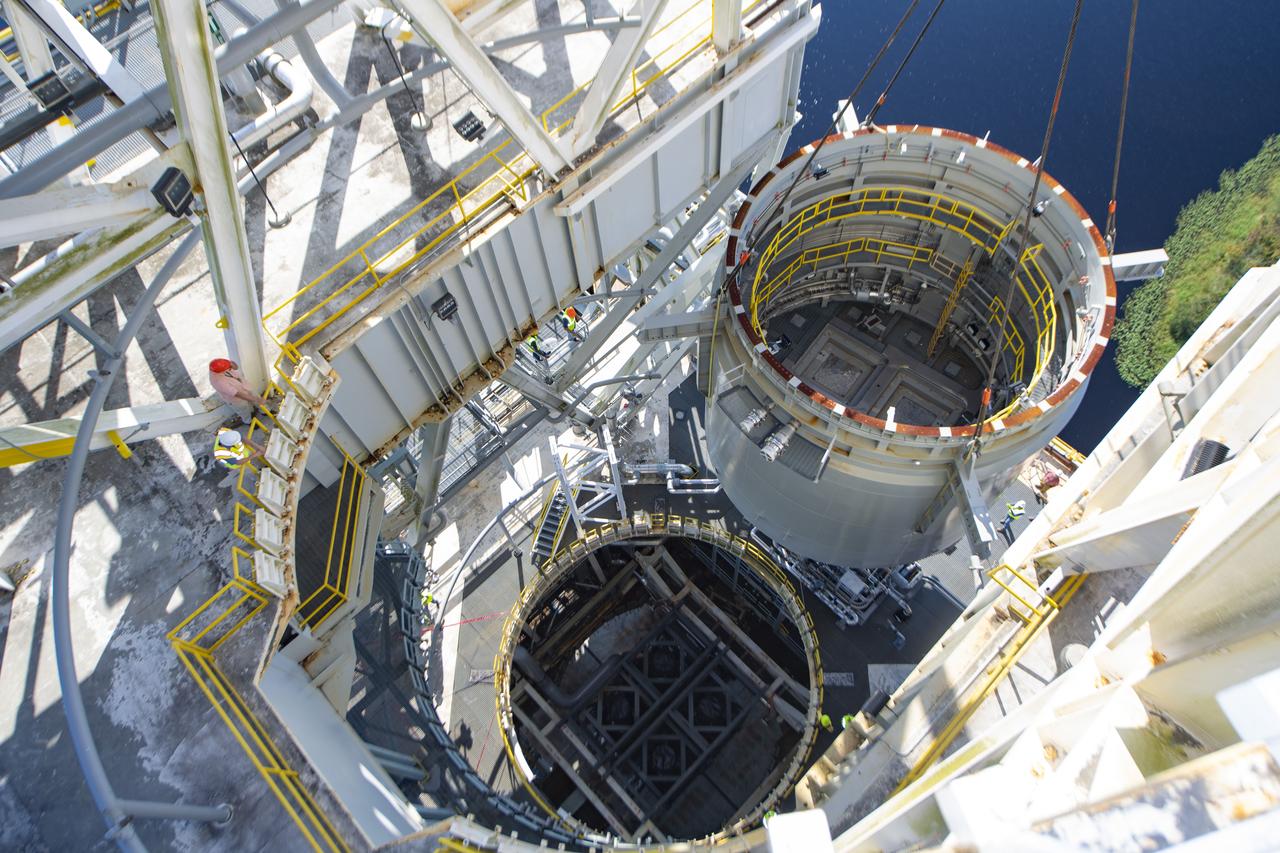
Teams at NASA’s Stennis Space Center complete a safe lift and install of an interstage simulator unit needed for future testing of NASA’s exploration upper stage (EUS) in the B-2 position of the Thad Cochran Test Stand. The lift and install, completed over a two-week period that began Oct. 10, marks a milestone for testing the new SLS (Space Launch System) rocket stage that will fly on future Artemis missions to the Moon and beyond. The EUS will undergo a series of Green Run tests of its integrated systems prior to its first flight. During testing, the interstage simulator component will function like the SLS interstage section that helps protect the upper stage during Artemis launches.
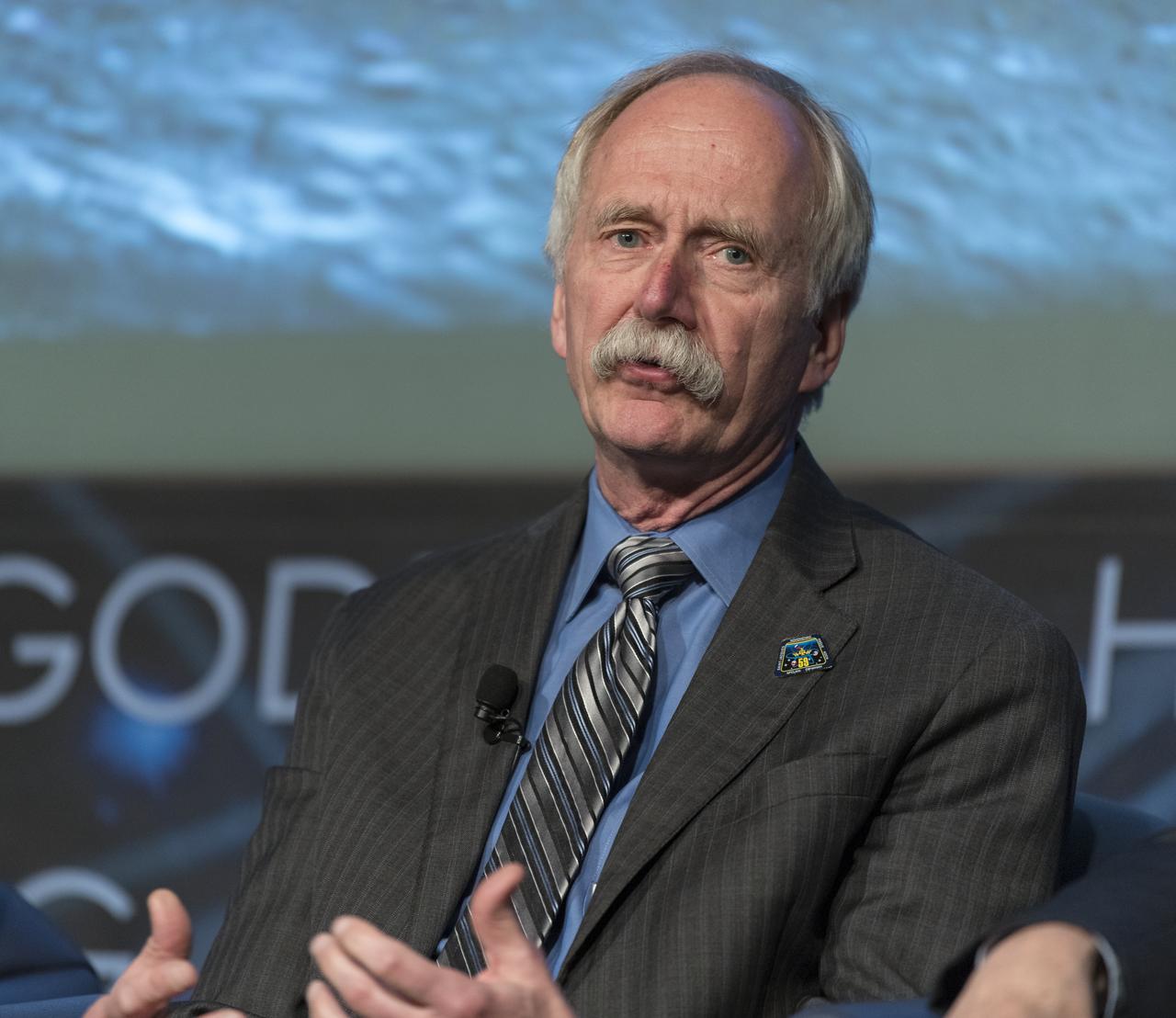
NASA Associate Administrator for the Human Exploration and Operations Mission Directorate, Bill Gerstenmaier speaks at the "Future of Space" STEM event, Monday, April 29, 2019 at NASA Headquarters in Washington, where college students were able to ask panelists, Gerstenmaier, NASA Administrator Jim Bridenstine, and NASA Deputy Associate Administrator for Exploration, Steve Clarke questions as well as speak with two astronauts currently on the International Space Station, Nick Hague and Christina Koch. NASA astronaut Tracy Caldwell Dyson moderated the panel discussion. Photo Credit: (NASA/Aubrey Gemignani)
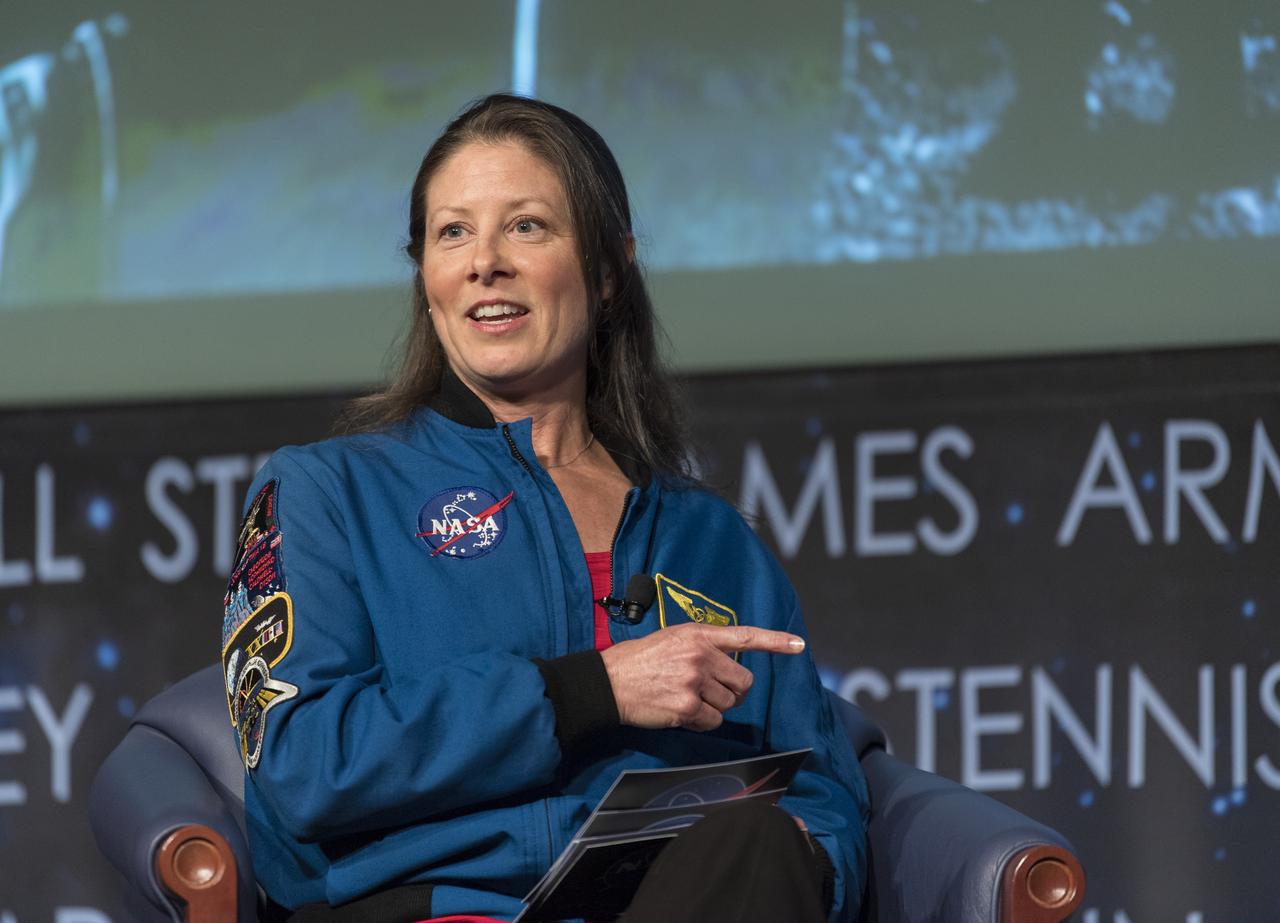
NASA astronaut Tracy Caldwell Dyson, moderates a panel discussion with NASA Administrator Jim Bridenstine, NASA Associate Administrator for the Human Exploration and Operations Mission Directorate, Bill Gerstenmaier, and NASA Deputy Associate Administrator for Exploration, Steve Clarke at the "Future of Space" STEM event, Monday, April 29, 2019 at NASA Headquarters in Washington, where college students were able to ask the panelists questions as well as speak with two astronauts currently on the International Space Station, Nick Hague and Christina Koch. Photo Credit: (NASA/Aubrey Gemignani)
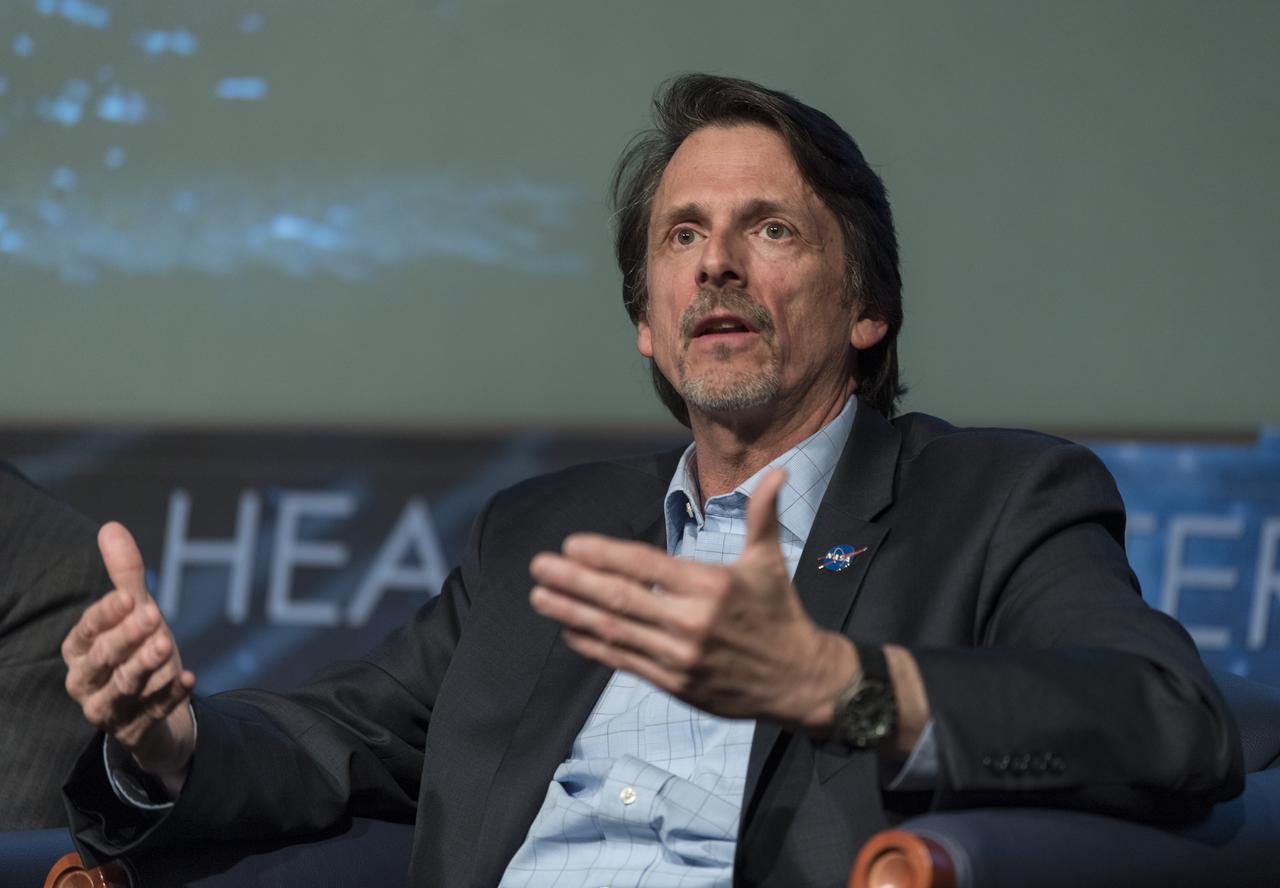
NASA Deputy Associate Administrator for Exploration, Steve Clarke speaks at the "Future of Space" STEM event, Monday, April 29, 2019 at NASA Headquarters in Washington, where college students were able to ask panelists, Clarke, NASA Administrator Jim Bridenstine, and NASA Associate Administrator for the Human Exploration and Operations Mission Directorate, Bill Gerstenmaier questions as well as speak with two astronauts currently on the International Space Station, Nick Hague and Christina Koch. NASA astronaut Tracy Caldwell Dyson moderated the panel discussion. Photo Credit: (NASA/Aubrey Gemignani)
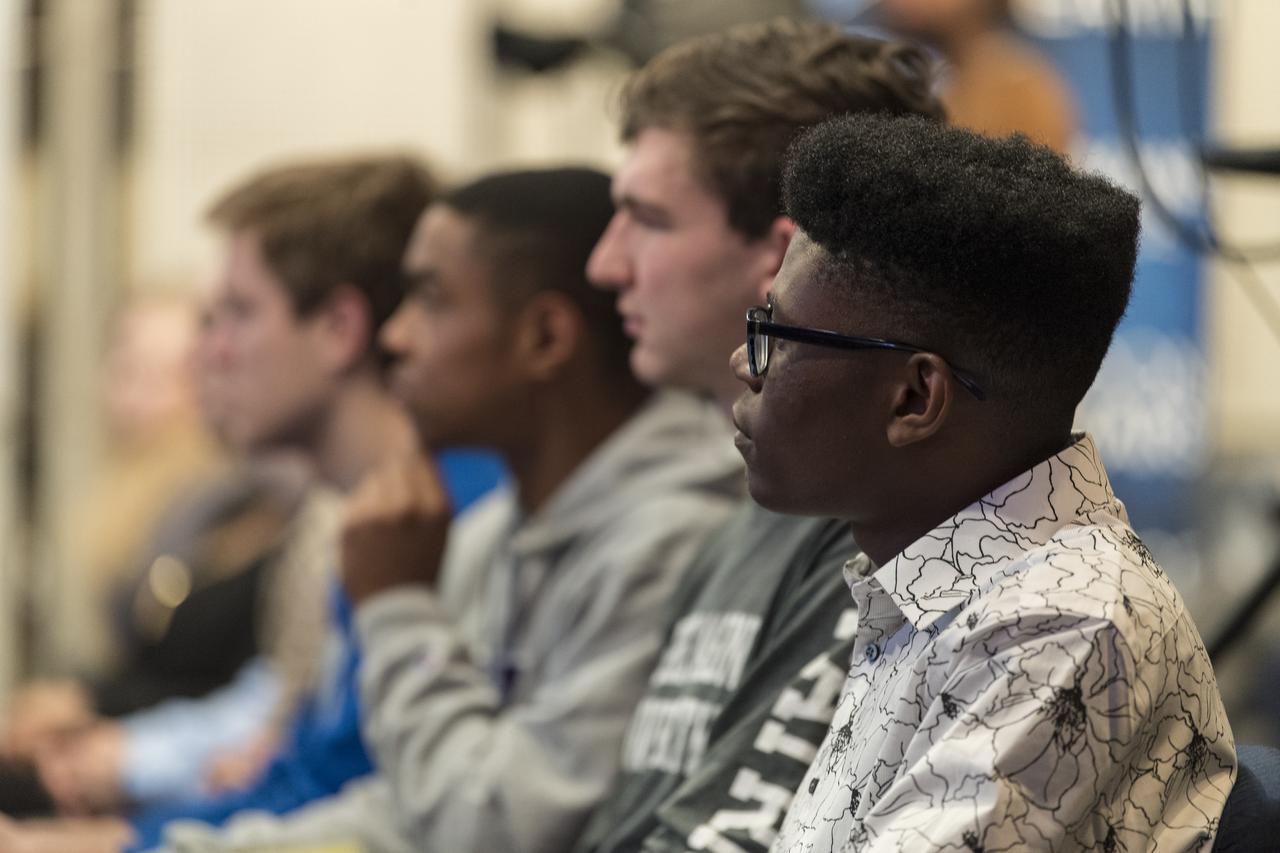
Students are seen in the audience as NASA astronaut Tracy Caldwell Dyson, moderates a panel discussion with NASA Administrator Jim Bridenstine, NASA Associate Administrator for the Human Exploration and Operations Mission Directorate, Bill Gerstenmaier, and NASA Deputy Associate Administrator for Exploration, Steve Clarke at the "Future of Space" STEM event, Monday, April 29, 2019 at NASA Headquarters in Washington. The students were able to ask the panelists questions as well as speak with two astronauts currently on the International Space Station, Nick Hague and Christina Koch. Photo Credit: (NASA/Aubrey Gemignani)
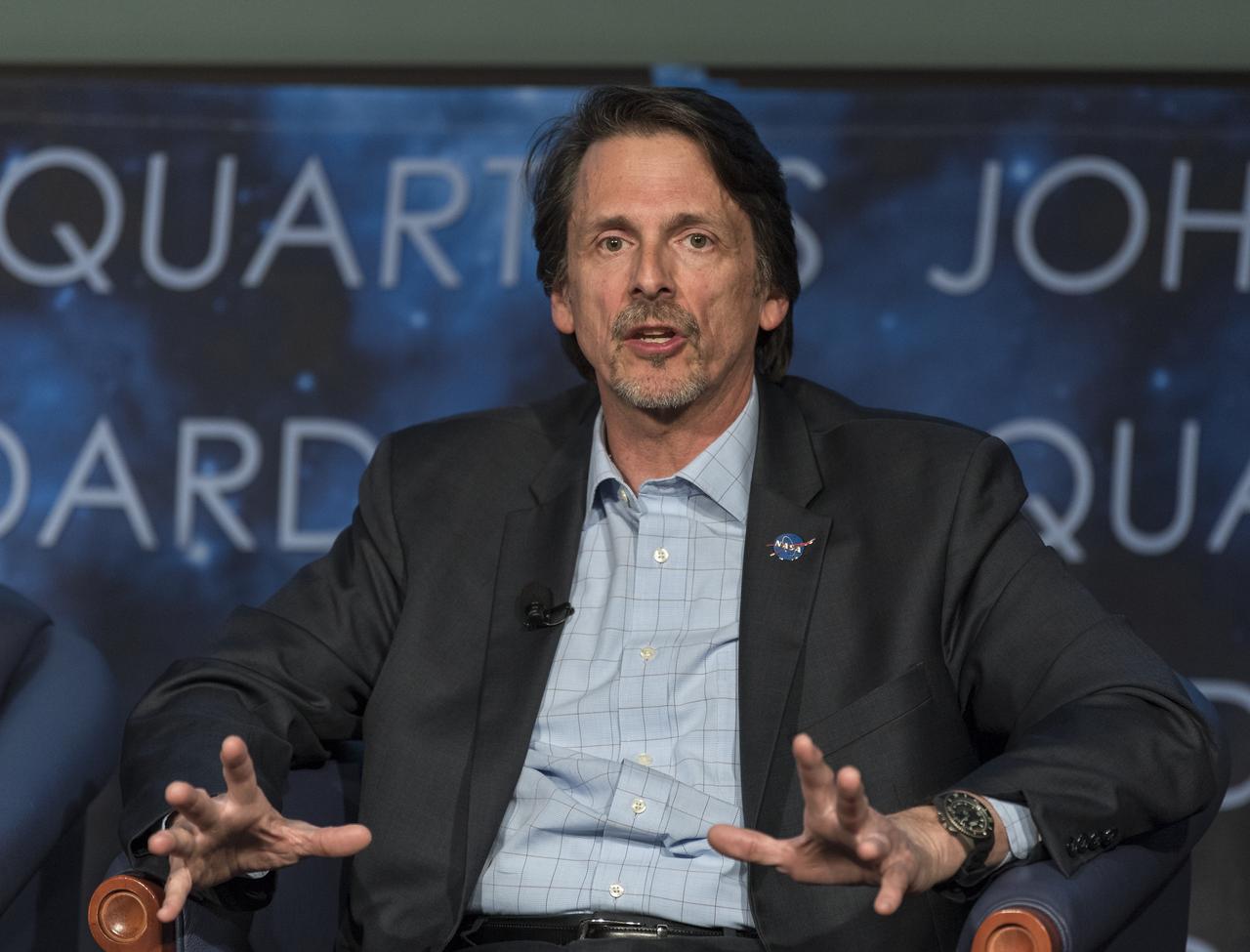
NASA Deputy Associate Administrator for Exploration, Steve Clarke speaks at the "Future of Space" STEM event, Monday, April 29, 2019 at NASA Headquarters in Washington, where college students were able to ask panelists, Clarke, NASA Administrator Jim Bridenstine, and NASA Associate Administrator for the Human Exploration and Operations Mission Directorate, Bill Gerstenmaier questions as well as speak with two astronauts currently on the International Space Station, Nick Hague and Christina Koch. NASA astronaut Tracy Caldwell Dyson moderated the panel discussion. Photo Credit: (NASA/Aubrey Gemignani)
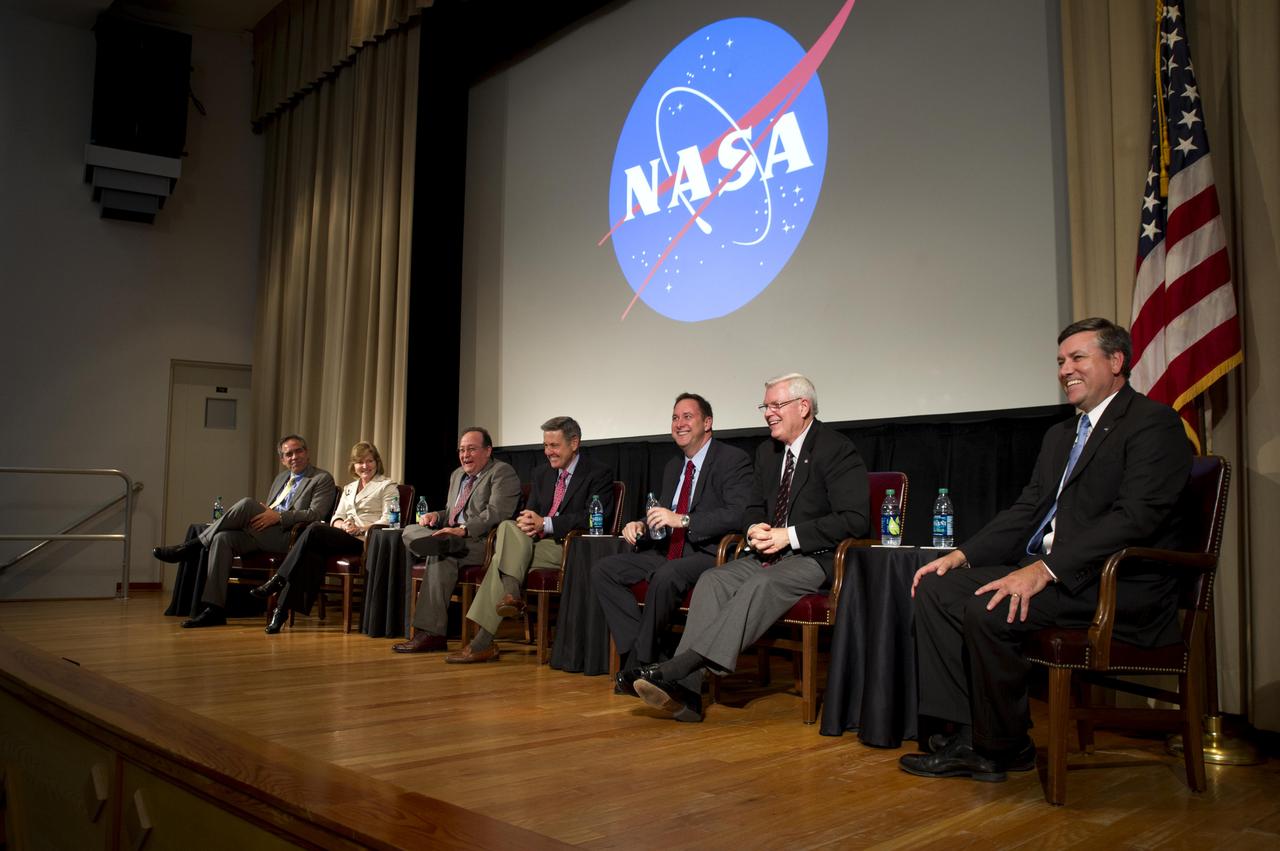
Stennis Space Center Director Patrick Scheuermann (right) hosted directors from six other NASA centers during a forum discussion at the south Mississippi rocket engine test facility Nov. 9. The directors discussed the future of the American space program from their perspectives during an all hands session with Stennis employees. Participants were: (l to r) David McBride, Lesa Roe, Ray Lugo, Bob Cabana, Robert Lightfoot, Mike Coats and Scheuermann.
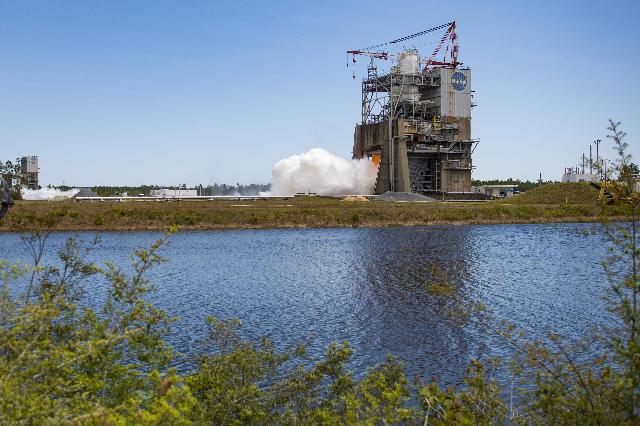
NASA closes in on a milestone for production of new RS-25 engines to help power future Artemis missions to the Moon and beyond following a successful full duration test on March 27 at NASA’s Stennis Space Center. It marks the 11th test of the 12-test series.
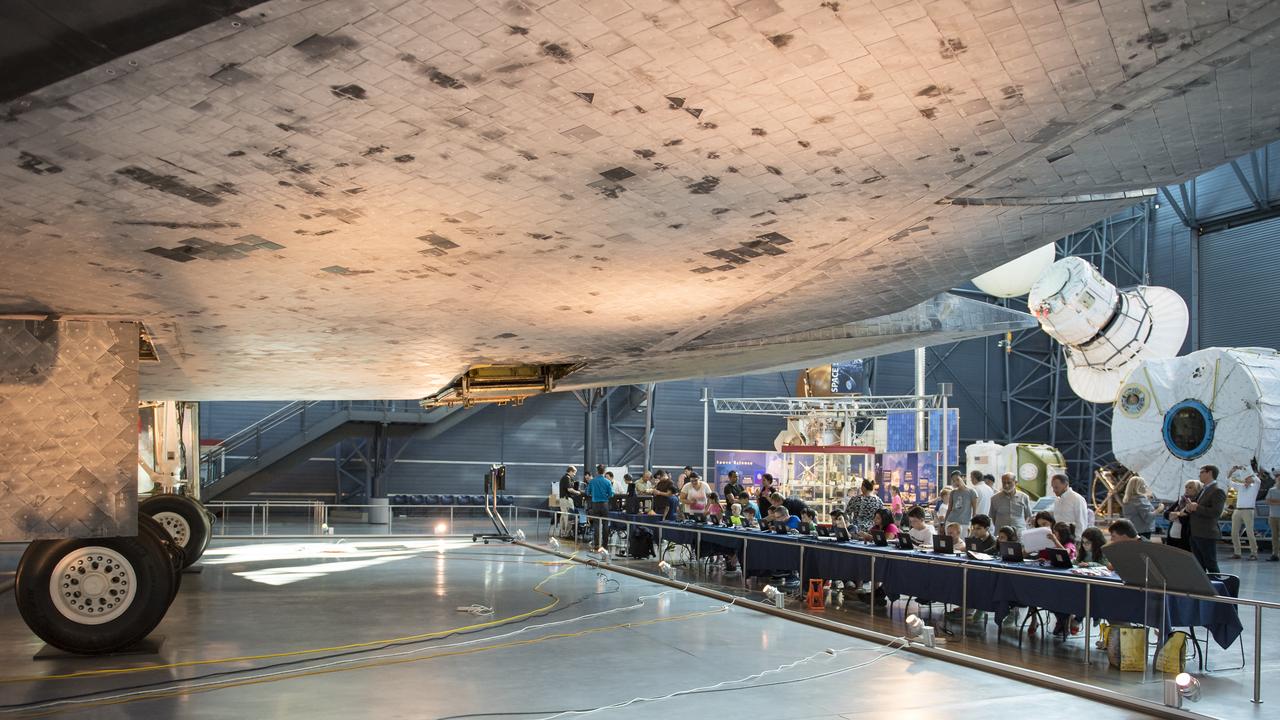
Future Engineers with support from NASA and The American Society of Mechanical Engineers (ASME), hosted a future engineers pop-up makerspace where youth were able to create digital 3D models using Autodesk Tinkercad and watch objects being printed with Makerbot 3D printers, at the Steven F. Udvar-Hazy Center, Thursday, September 21, 2017 in Chantilly, Virginia. Photo Credit: (NASA/Aubrey Gemignani)
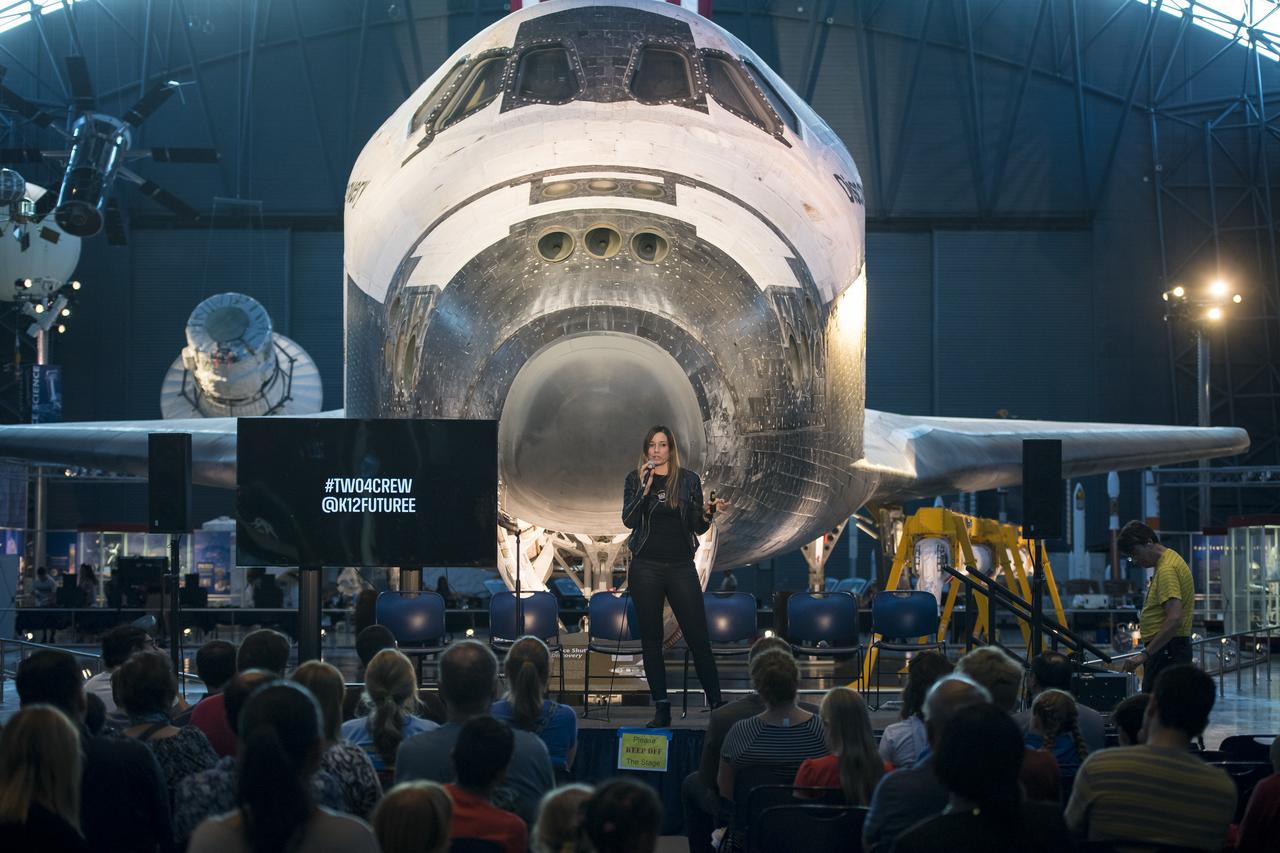
Founder and CEO of Future Engineers, Deanne Bell, speaks at a pop-up makerspace hosted by Future Engineers with support from NASA and The American Society of Mechanical Engineers (ASME), at the Steven F. Udvar-Hazy Center, Thursday, September 21, 2017 in Chantilly, Virginia. Participants were able to create digital 3D models using Autodesk Tinkercad and watch objects being printed with Makerbot 3D printers. Photo Credit: (NASA/Aubrey Gemignani)
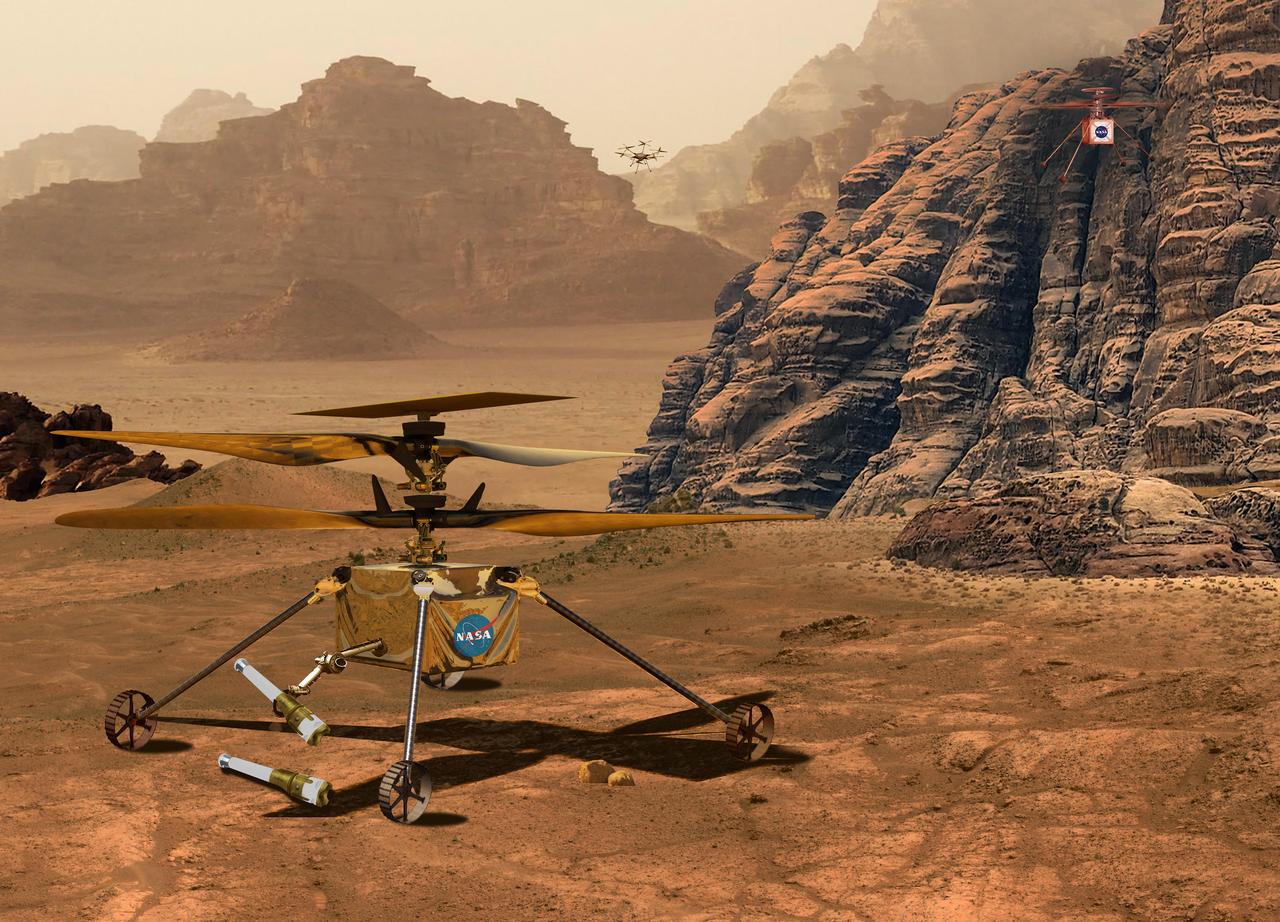
This illustration depicts three different of models of NASA's solar-powered Mars helicopter. In the upper right is the Ingenuity Mars Helicopter, currently operating at Jezero Crater. Depicted in the foreground is one of two Sample Recovery Helicopters slated to fly to Mars as part of the Mars Sample Return Campaign. NASA is developing the Sample Recovery Helicopters to serve as backups to the agency's Perseverance rover in transporting sample tubes to the Sample Return Lander. In the upper center of image is the Mars Science Helicopter concept. A proposed follow-on to Ingenuity, the six-rotor Mars Science Helicopter could be used during future Mars missions to serve as an aerial scout and carry between 4.5 and 11 pounds (2 to 5 kilograms) of payload, including science instruments, to study terrain that rovers can't reach. https://photojournal.jpl.nasa.gov/catalog/PIA25338
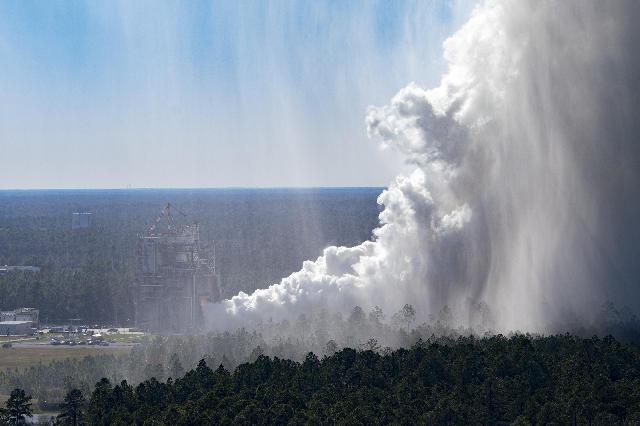
The cloud of steam is visible at NASA’s Stennis Space Center during the Oct. 17 hot fire, which marks the first test in the critical series to support future SLS (Space Launch System) missions to deep space. The steam released during the full duration, 550-second test is water and does not pollute the atmosphere.
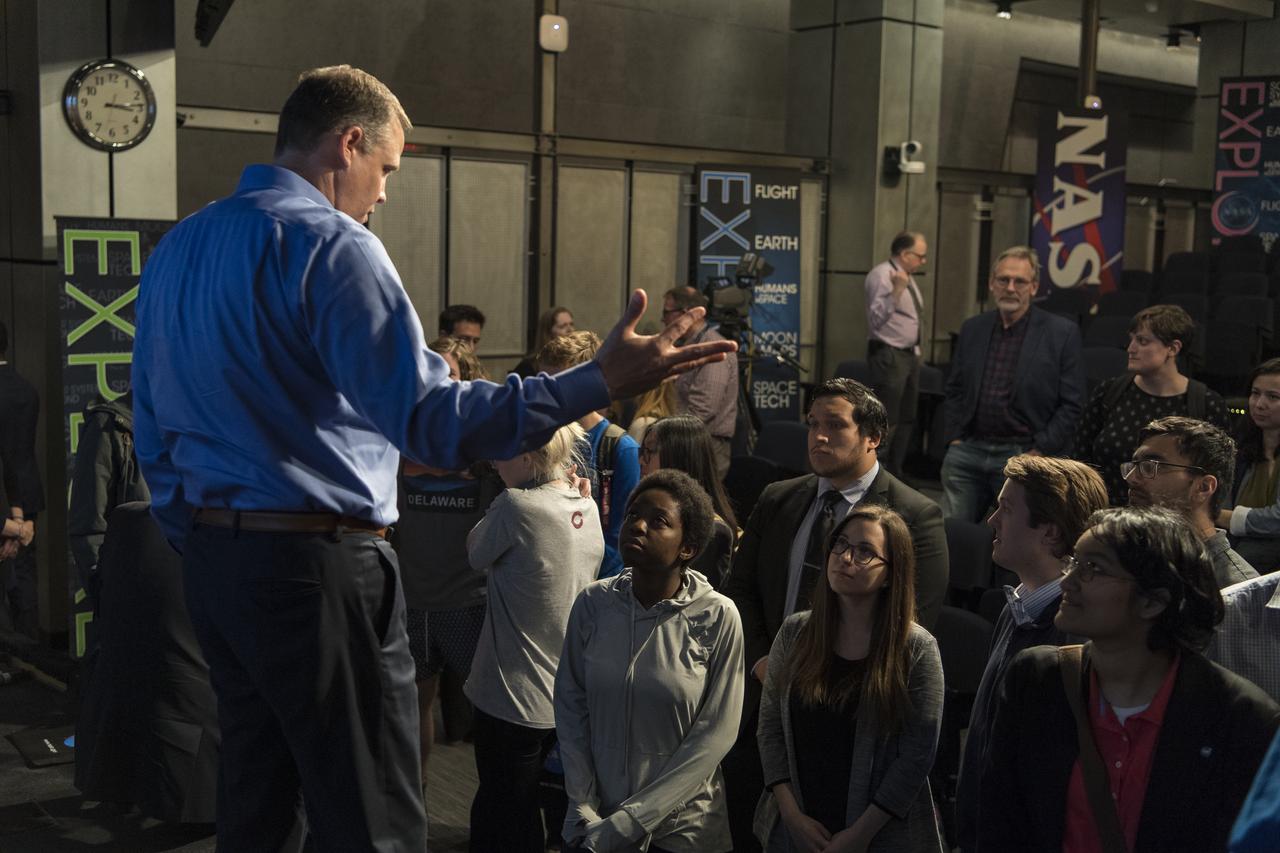
NASA Administrator Jim Bridenstine speaks with college students after the "Future of Space" STEM event, Monday, April 29, 2019 at NASA Headquarters in Washington. NASA astronaut Tracy Caldwell Dyson moderated a panel discussion with Bridenstine, NASA Associate Administrator for the Human Exploration and Operations Mission Directorate, Bill Gerstenmaier, and NASA Deputy Associate Administrator for Exploration, Steve Clarke. Photo Credit: (NASA/Aubrey Gemignani)

The first RS-25 hot fire of the spring came on March 22 when test teams at NASA’s Stennis Space Center fired the engine up to a power level of 113% for a full duration of 500 seconds. As NASA aims to establish a long-term presence on the Moon for scientific discovery and exploration, and prepare for future missions to Mars, new engines will incorporate dozens of improvements to make production more efficient and affordable while maintaining high performance and reliability.
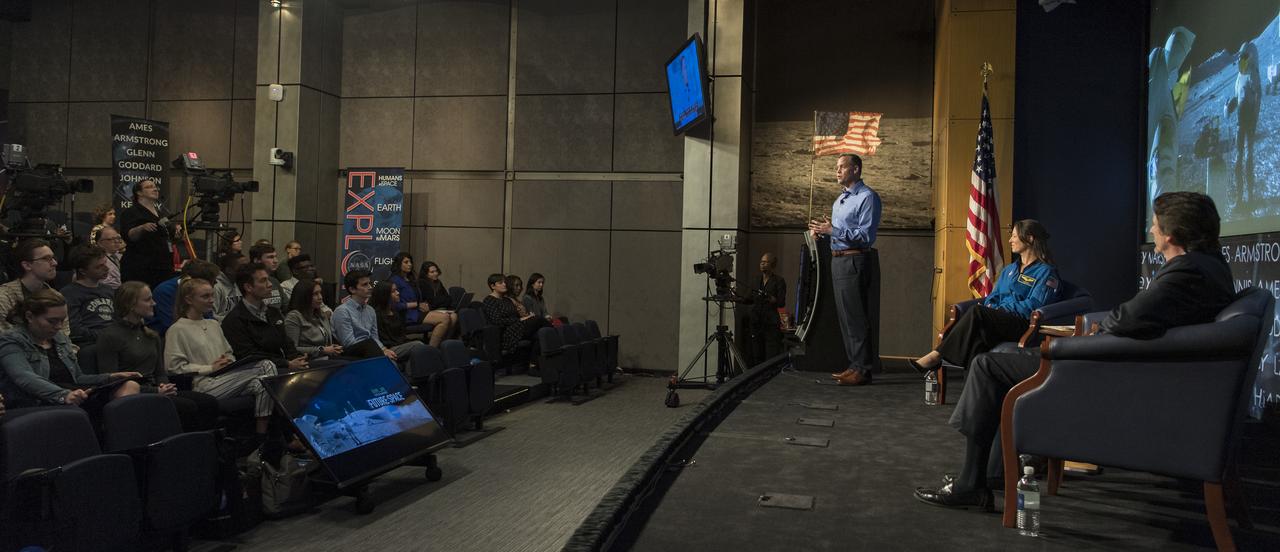
NASA Administrator Jim Bridenstine speaks at the "Future of Space" STEM event, Monday, April 29, 2019 at NASA Headquarters in Washington, where college students were able to ask panelists, Bridenstine, NASA Associate Administrator for the Human Exploration and Operations Mission Directorate, Bill Gerstenmaier, and NASA Deputy Associate Administrator for Exploration, Steve Clarke, questions as well as speak with two astronauts currently on the International Space Station, Nick Hague and Christina Koch. NASA astronaut Tracy Caldwell Dyson moderated the panel discussion. Photo Credit: (NASA/Aubrey Gemignani)
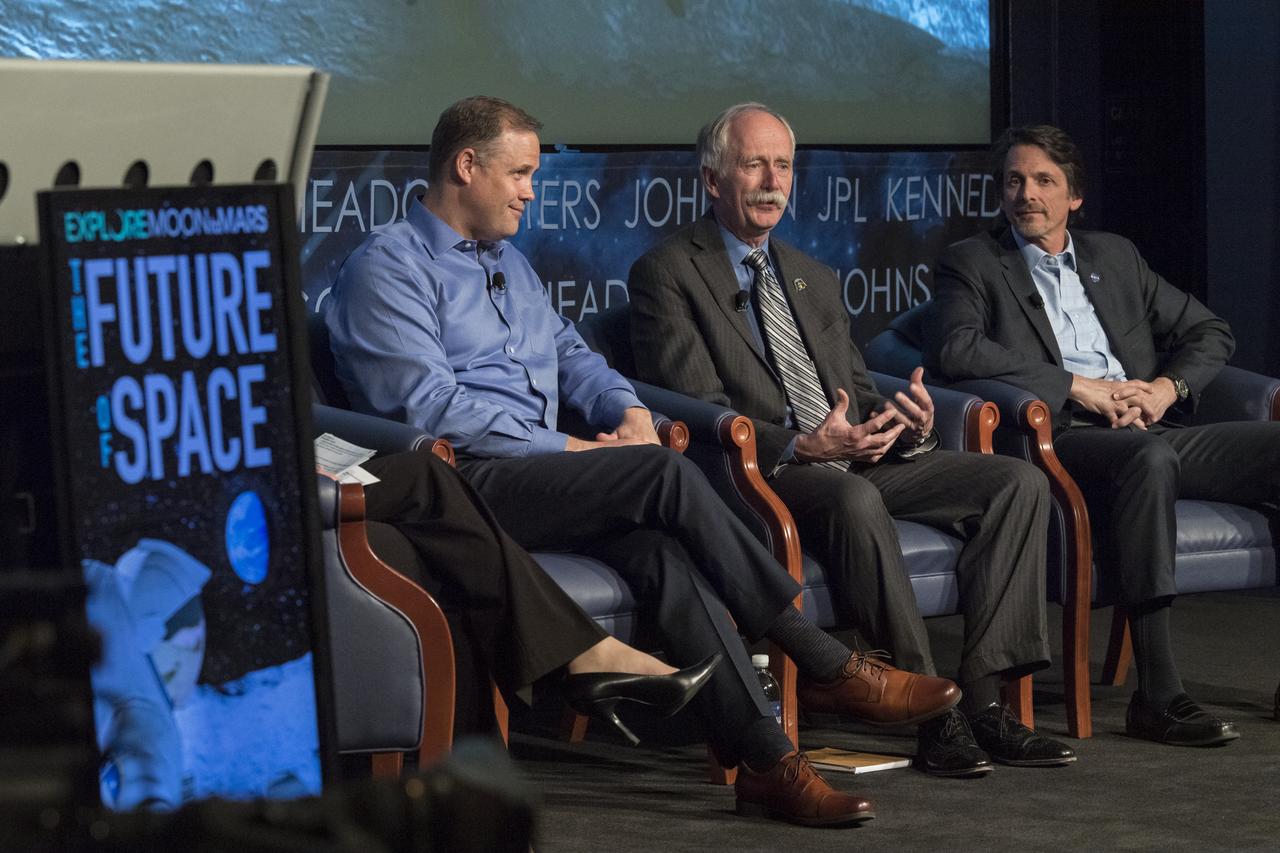
NASA Associate Administrator for the Human Exploration and Operations Mission Directorate, Bill Gerstenmaier, center, speaks at the "Future of Space" STEM event, Monday, April 29, 2019 at NASA Headquarters in Washington, where college students were able to ask panelists, NASA Administrator Jim Bridenstine, left, Gerstenmaier, and NASA Deputy Associate Administrator for Exploration, Steve Clarke, questions as well as speak with two astronauts currently on the International Space Station, Nick Hague and Christina Koch. NASA astronaut Tracy Caldwell Dyson moderated the panel discussion. Photo Credit: (NASA/Aubrey Gemignani)
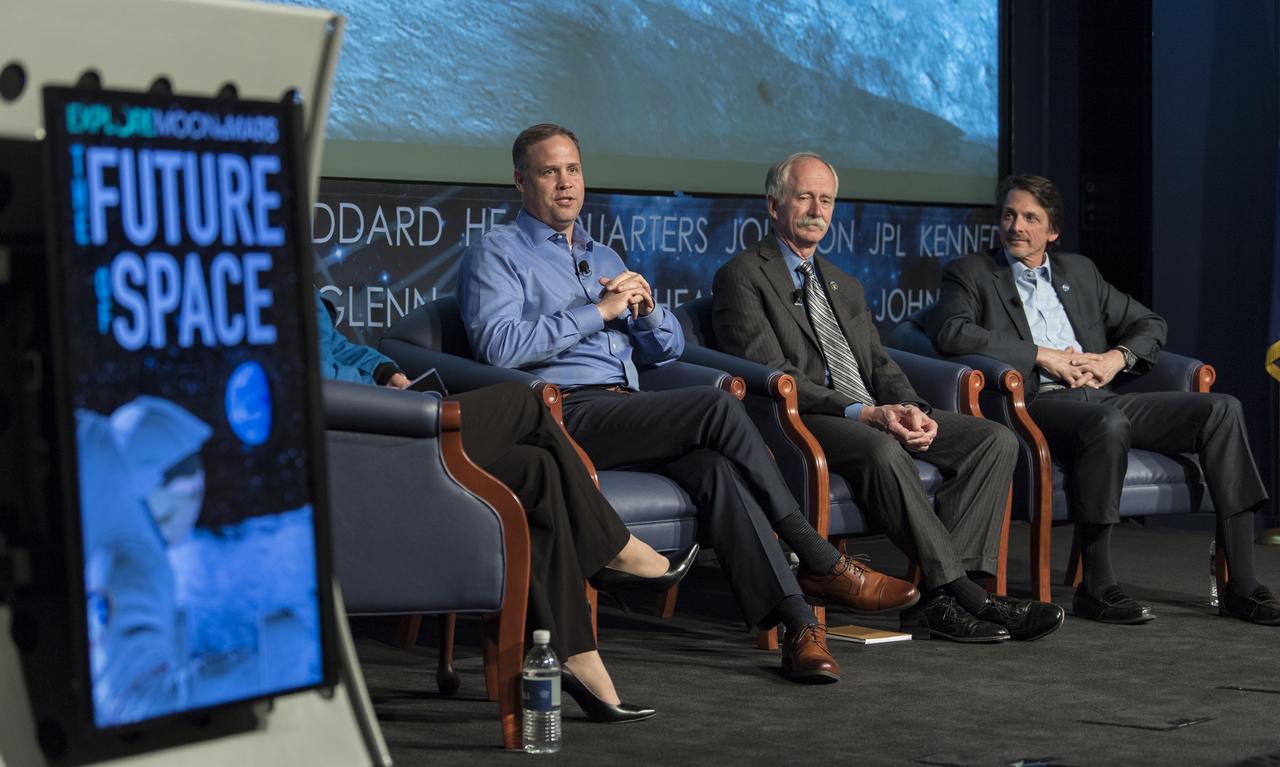
NASA Administrator Jim Bridenstine, left, speaks at the "Future of Space" STEM event, Monday, April 29, 2019 at NASA Headquarters in Washington, where college students were able to ask panelists, Bridenstine, NASA Associate Administrator for the Human Exploration and Operations Mission Directorate, Bill Gerstenmaier, center, and NASA Deputy Associate Administrator for Exploration, Steve Clarke, right, questions as well as speak with two astronauts currently on the International Space Station, Nick Hague and Christina Koch. NASA astronaut Tracy Caldwell Dyson moderated the panel discussion. Photo Credit: (NASA/Aubrey Gemignani)
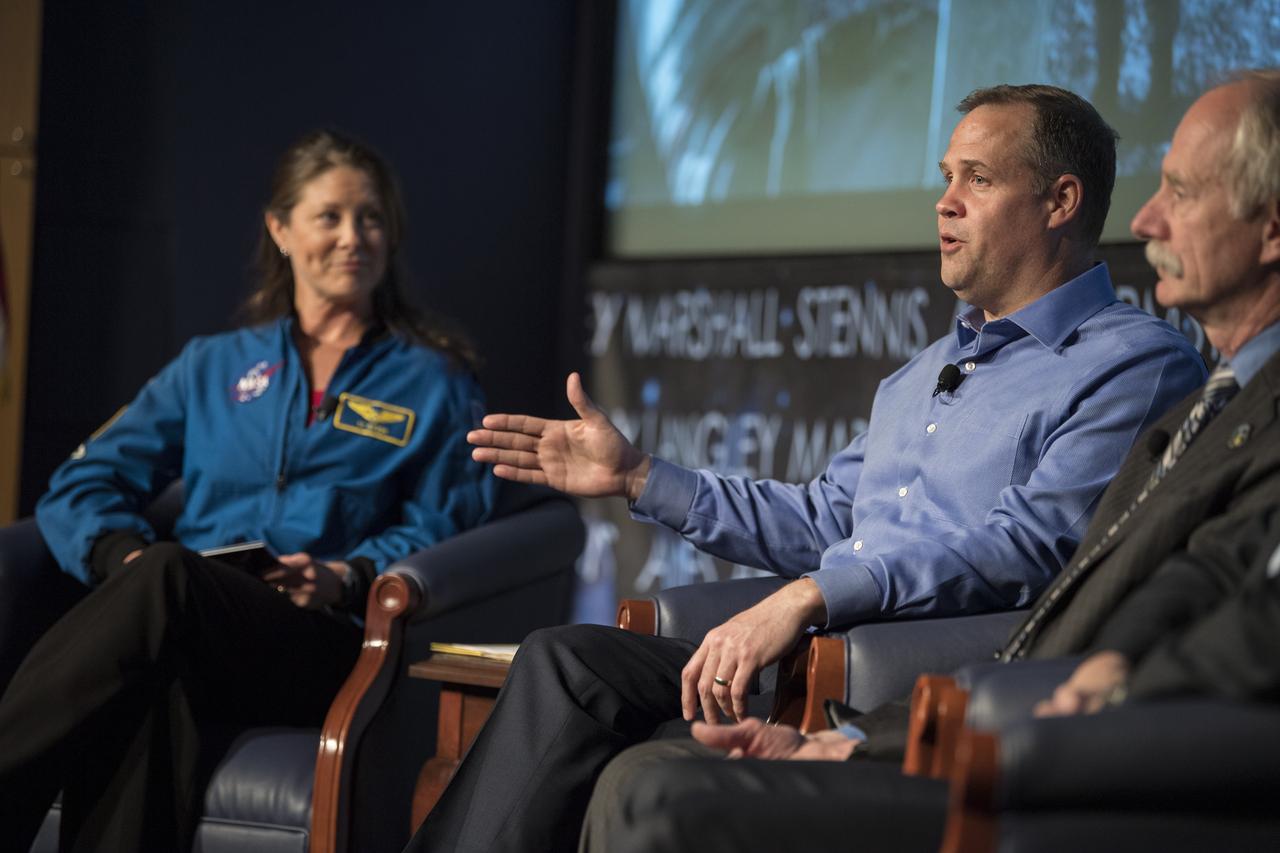
NASA Administrator Jim Bridenstine speaks at the "Future of Space" STEM event, Monday, April 29, 2019 at NASA Headquarters in Washington, where college students were able to ask panelists, Bridenstine, NASA Associate Administrator for the Human Exploration and Operations Mission Directorate, Bill Gerstenmaier, and NASA Deputy Associate Administrator for Exploration, Steve Clarke questions as well as speak with two astronauts currently on the International Space Station, Nick Hague and Christina Koch. NASA astronaut Tracy Caldwell Dyson moderated the panel discussion. Photo Credit: (NASA/Aubrey Gemignani)
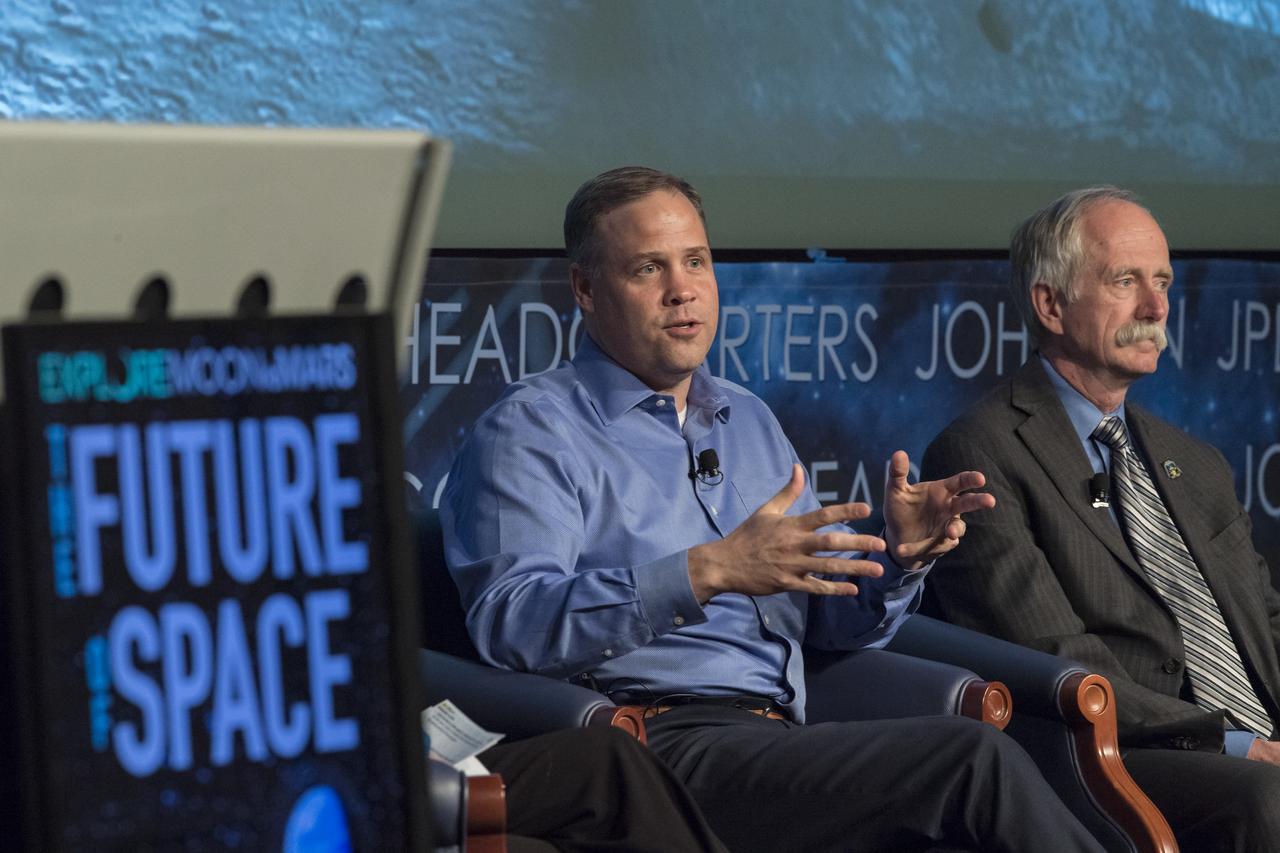
NASA Administrator Jim Bridenstine, left, speaks at the "Future of Space" STEM event, Monday, April 29, 2019 at NASA Headquarters in Washington, where college students were able to ask panelists, Bridenstine, NASA Associate Administrator for the Human Exploration and Operations Mission Directorate, Bill Gerstenmaier, right, and NASA Deputy Associate Administrator for Exploration, Steve Clarke, not pictured, questions as well as speak with two astronauts currently on the International Space Station, Nick Hague and Christina Koch. NASA astronaut Tracy Caldwell Dyson moderated the panel discussion. Photo Credit: (NASA/Aubrey Gemignani)
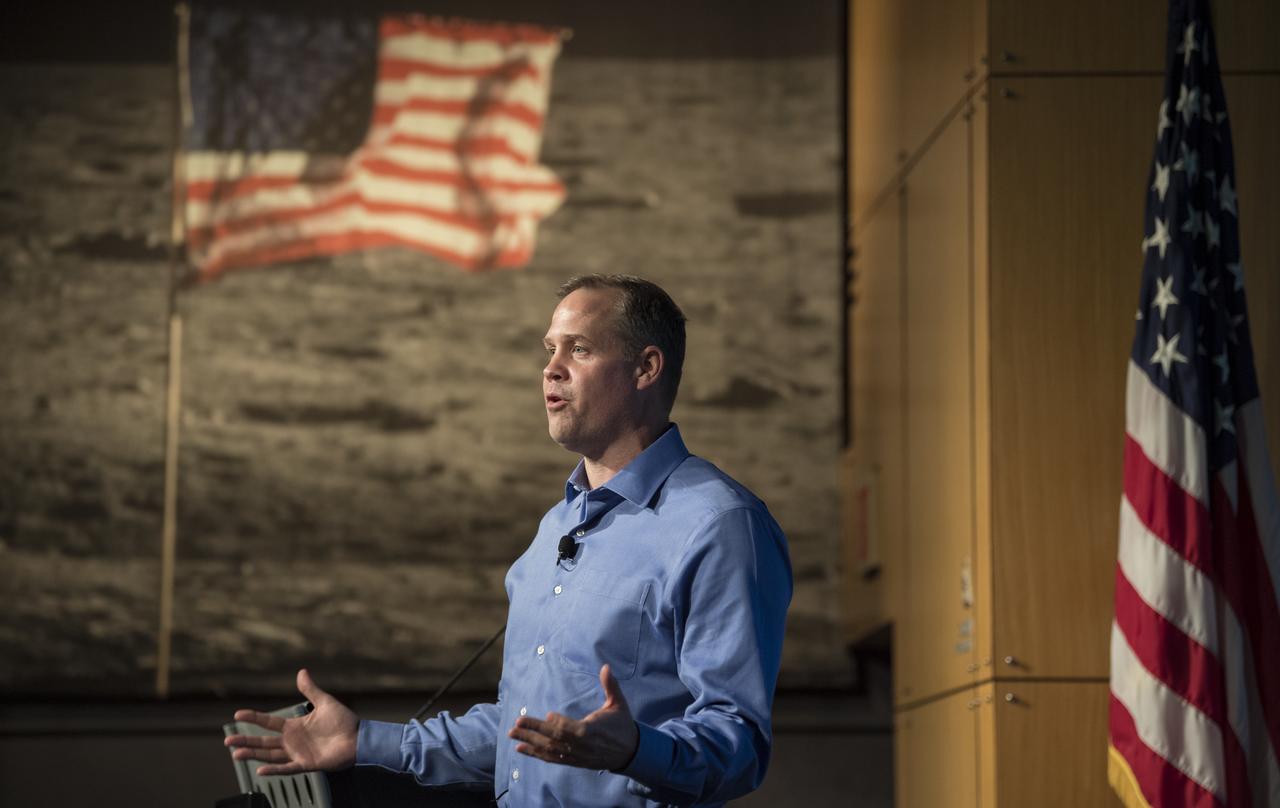
NASA Administrator Jim Bridenstine speaks at the "Future of Space" STEM event, Monday, April 29, 2019 at NASA Headquarters in Washington, where college students were able to ask panelists, Bridenstine, NASA Associate Administrator for the Human Exploration and Operations Mission Directorate, Bill Gerstenmaier, and NASA Deputy Associate Administrator for Exploration, Steve Clarke, questions as well as speak with two astronauts currently on the International Space Station, Nick Hague and Christina Koch. NASA astronaut Tracy Caldwell Dyson moderated the panel discussion. Photo Credit: (NASA/Aubrey Gemignani)
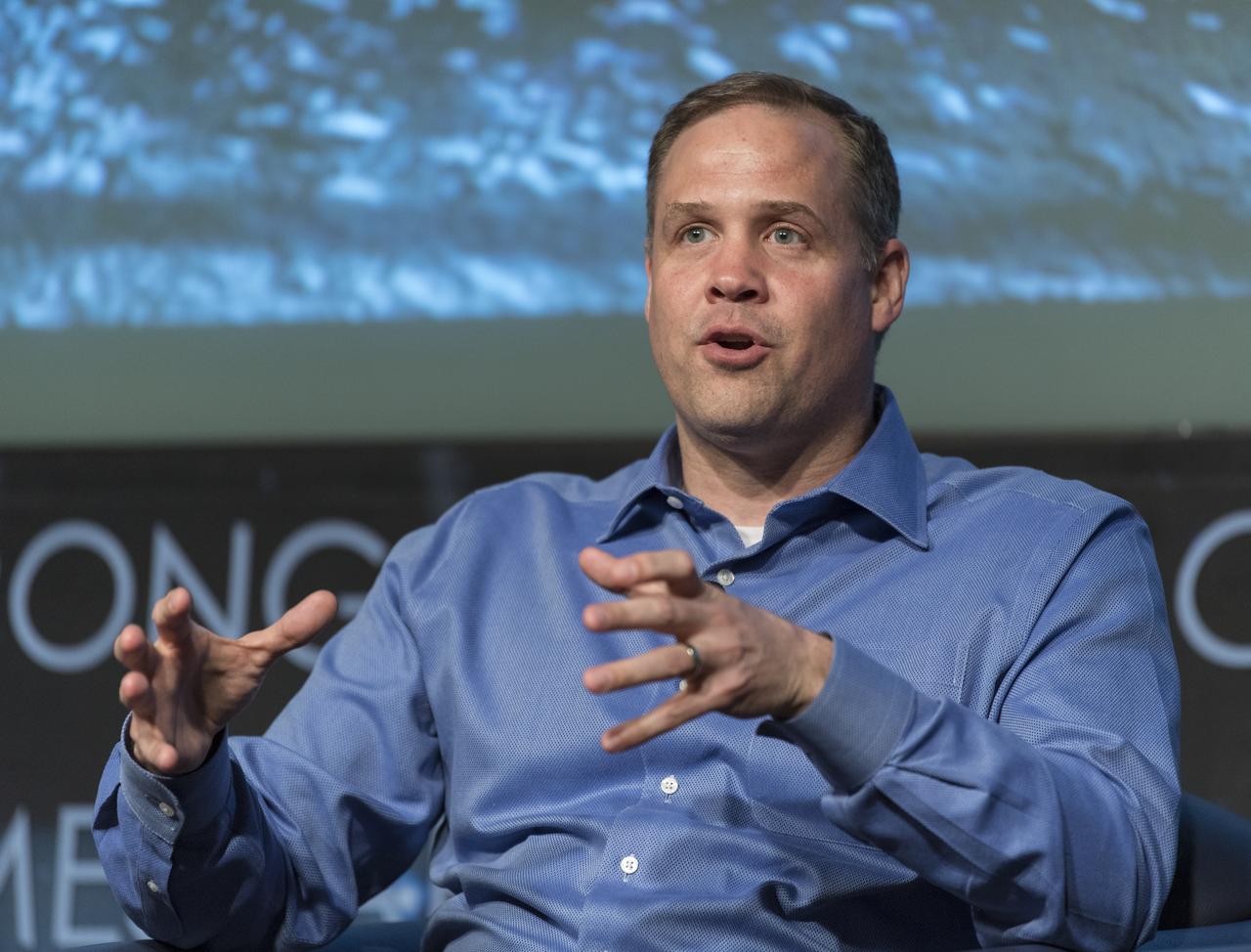
NASA Administrator Jim Bridenstine speaks at the "Future of Space" STEM event, Monday, April 29, 2019 at NASA Headquarters in Washington, where college students were able to ask panelists, Bridenstine, NASA Associate Administrator for the Human Exploration and Operations Mission Directorate, Bill Gerstenmaier, and NASA Deputy Associate Administrator for Exploration, Steve Clarke questions as well as speak with two astronauts currently on the International Space Station, Nick Hague and Christina Koch. NASA astronaut Tracy Caldwell Dyson moderated the panel discussion. Photo Credit: (NASA/Aubrey Gemignani)