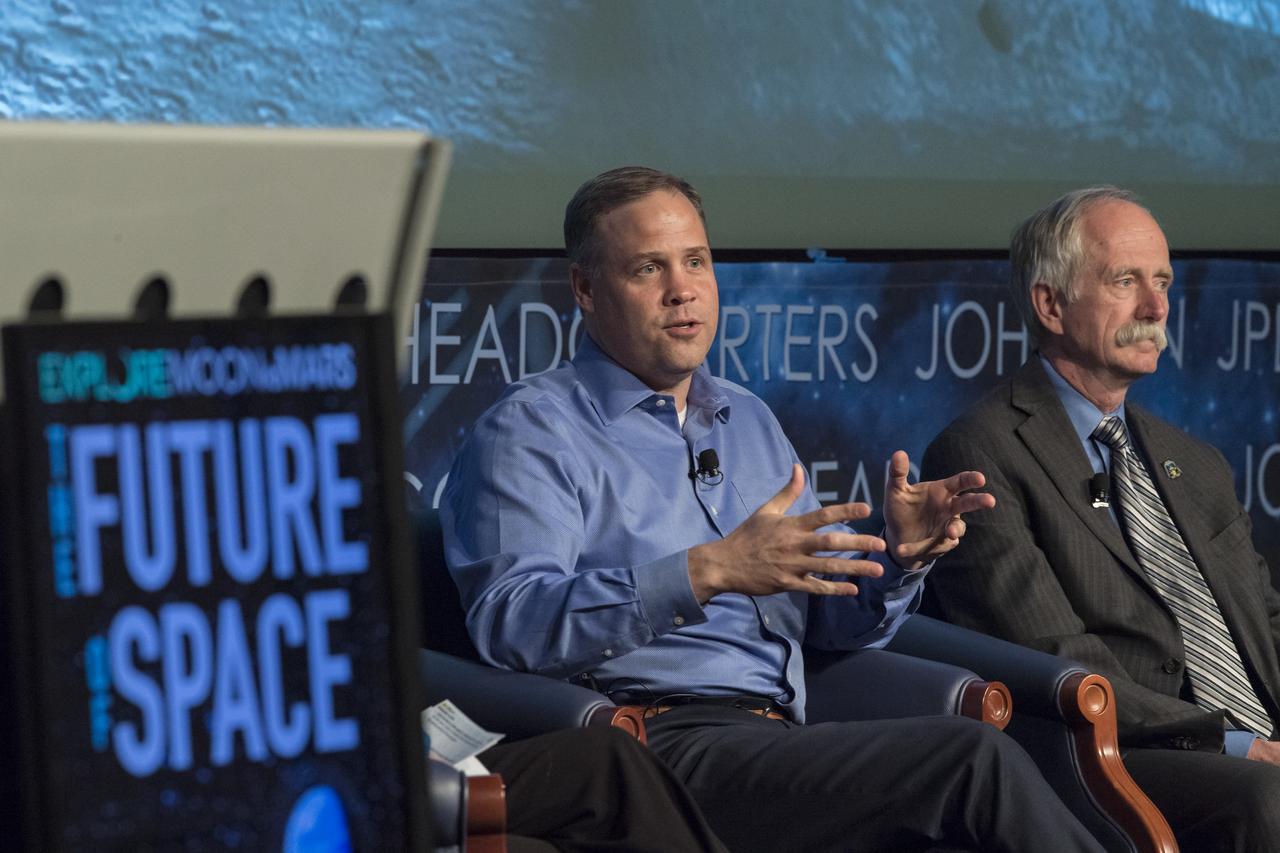
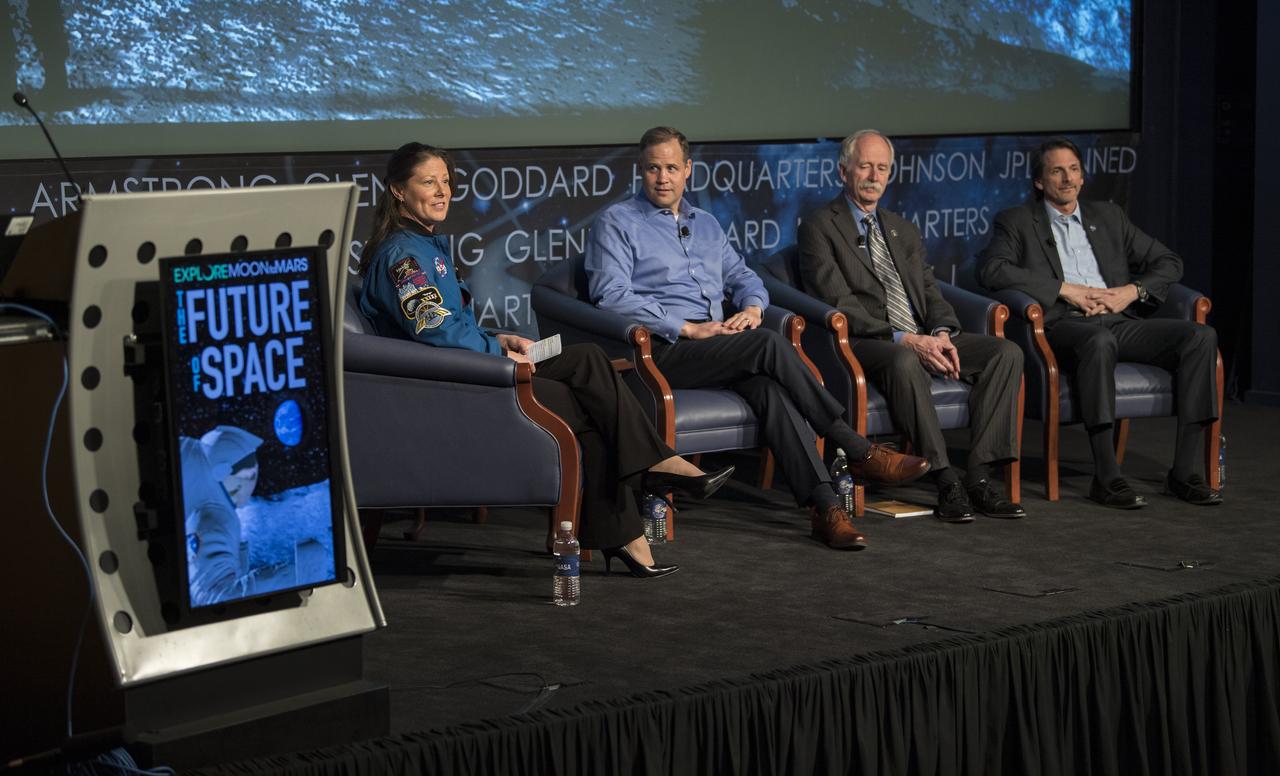
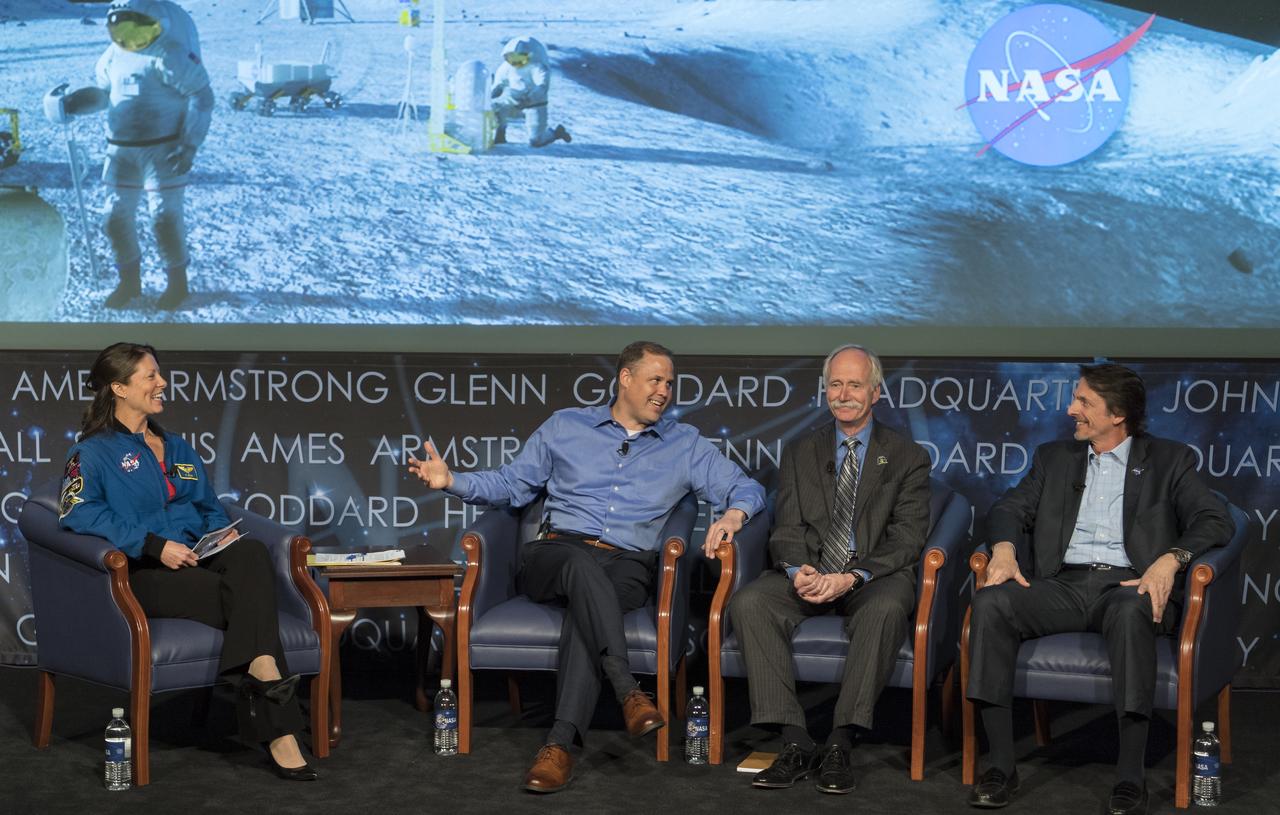
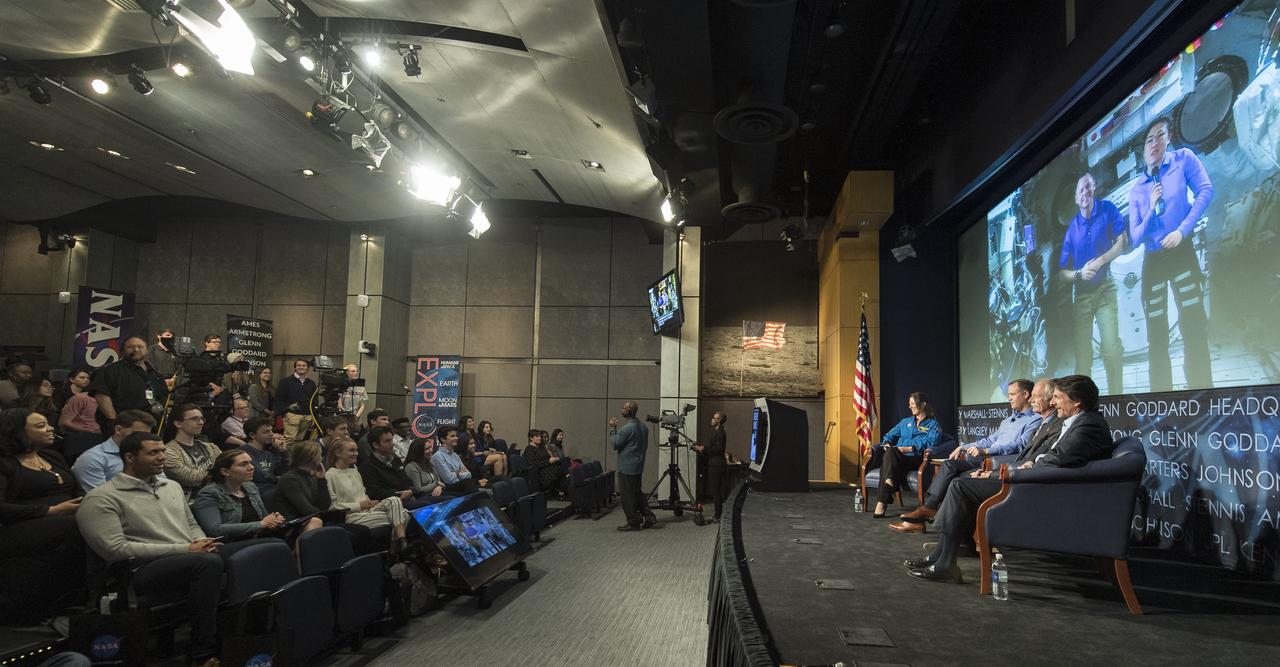
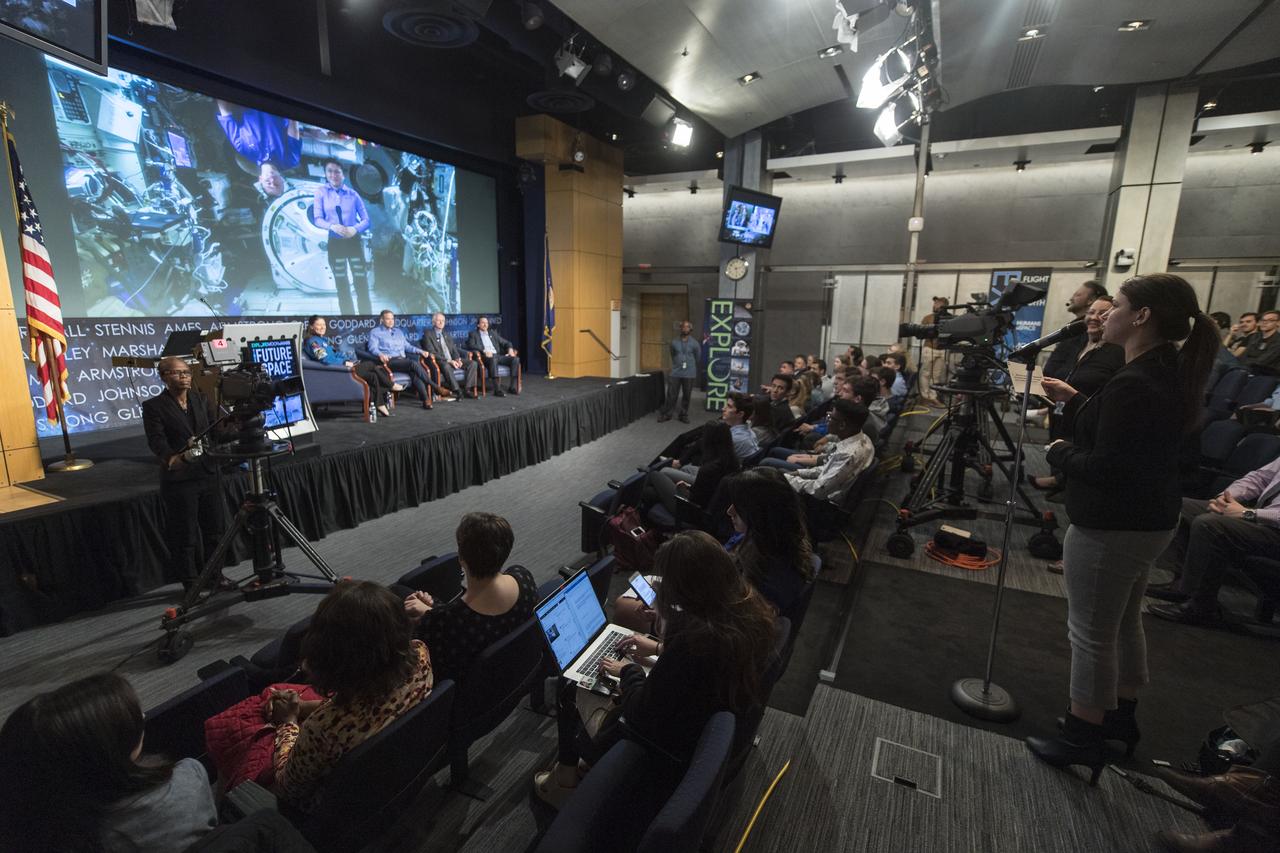
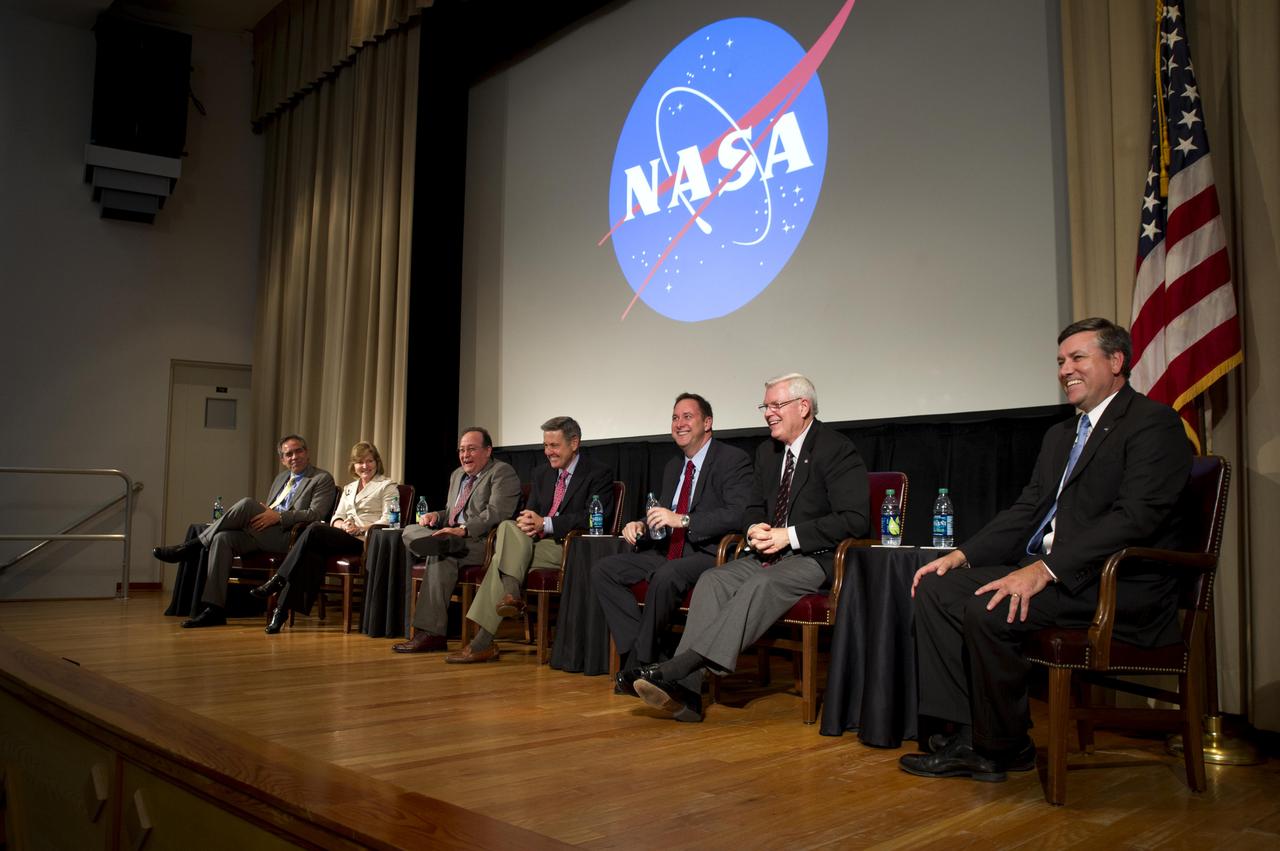
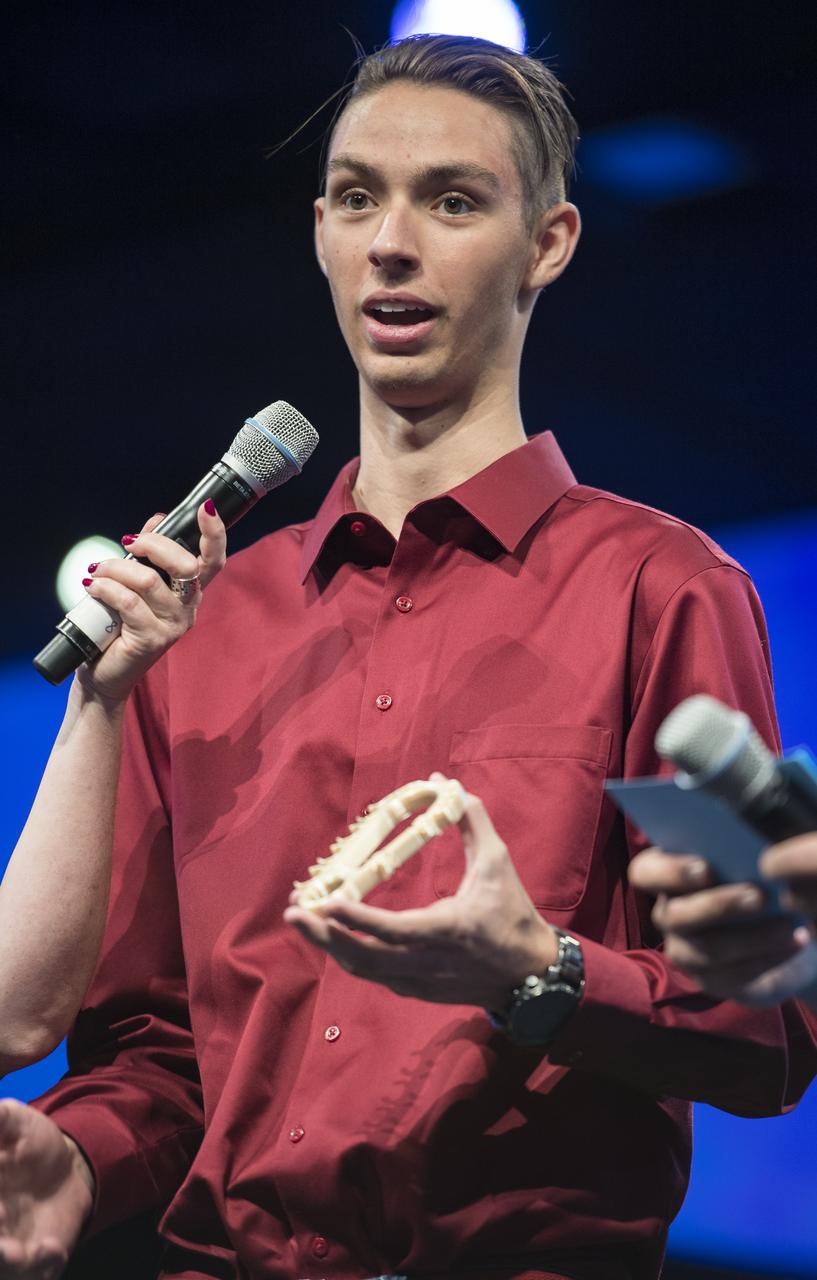
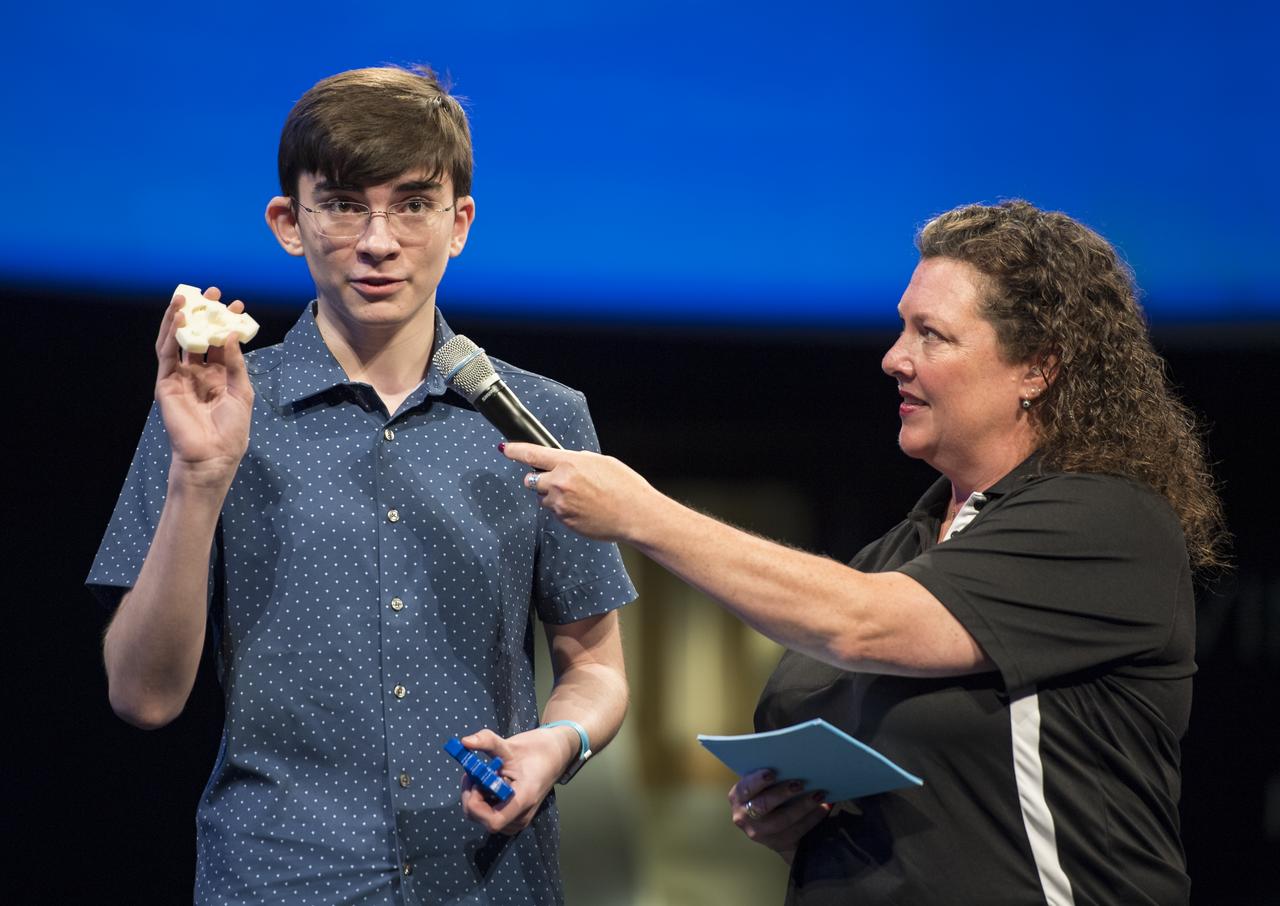
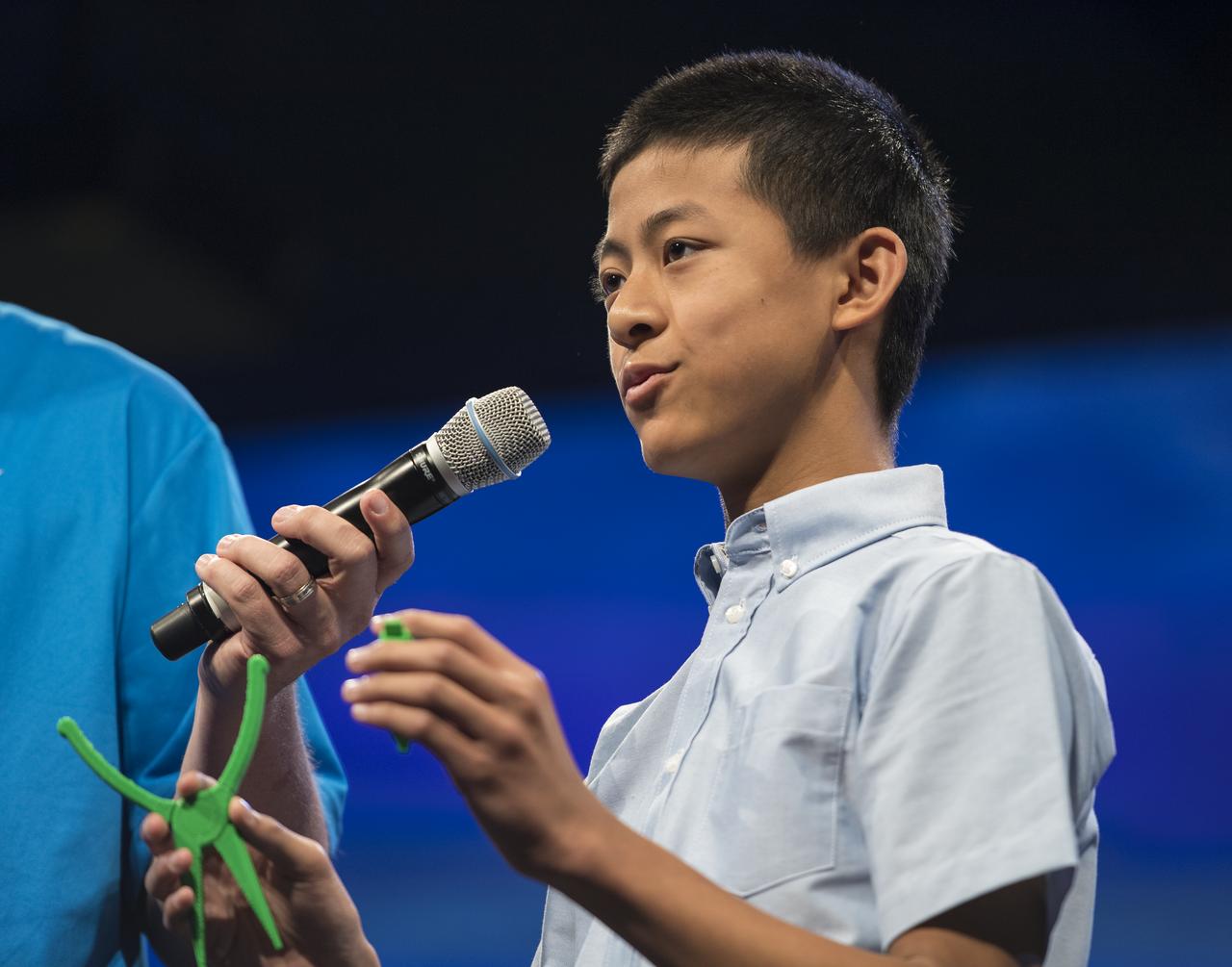
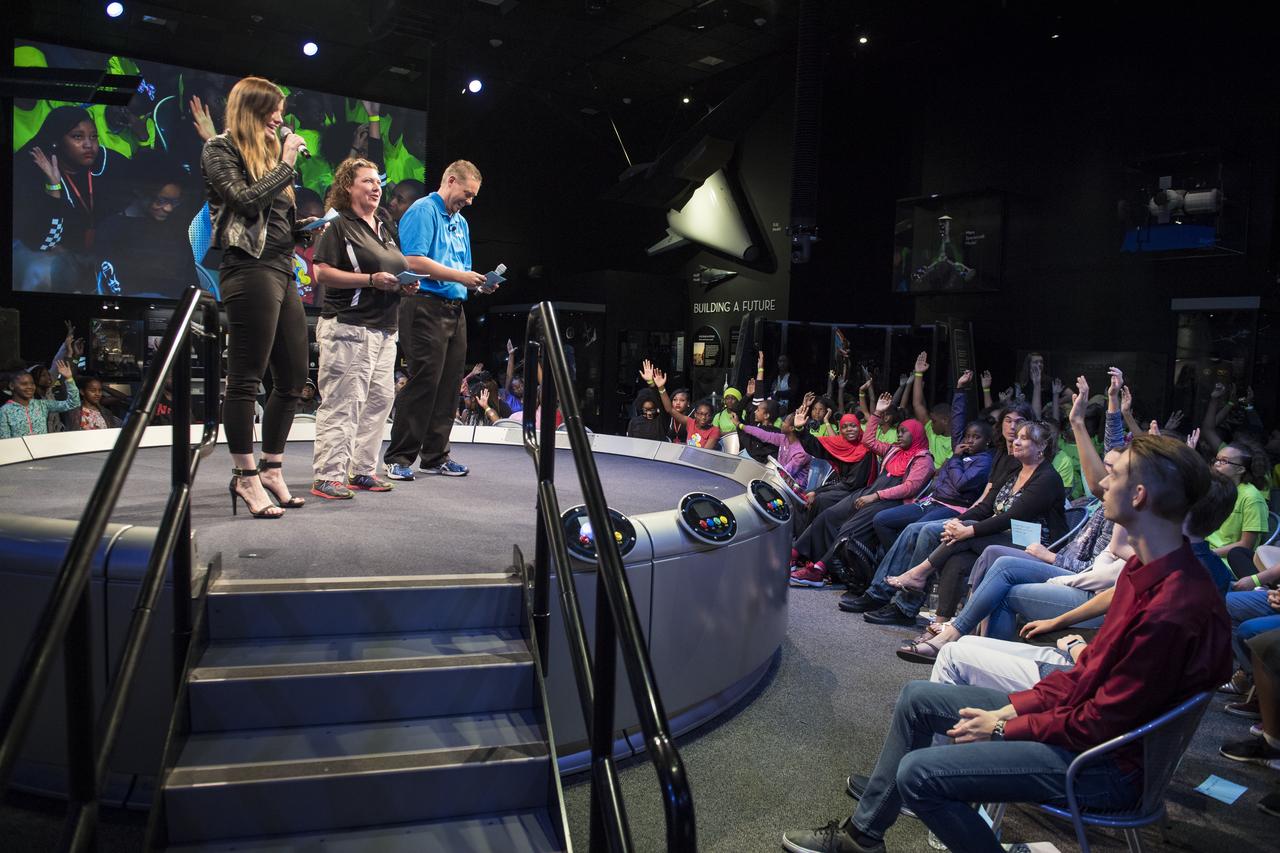
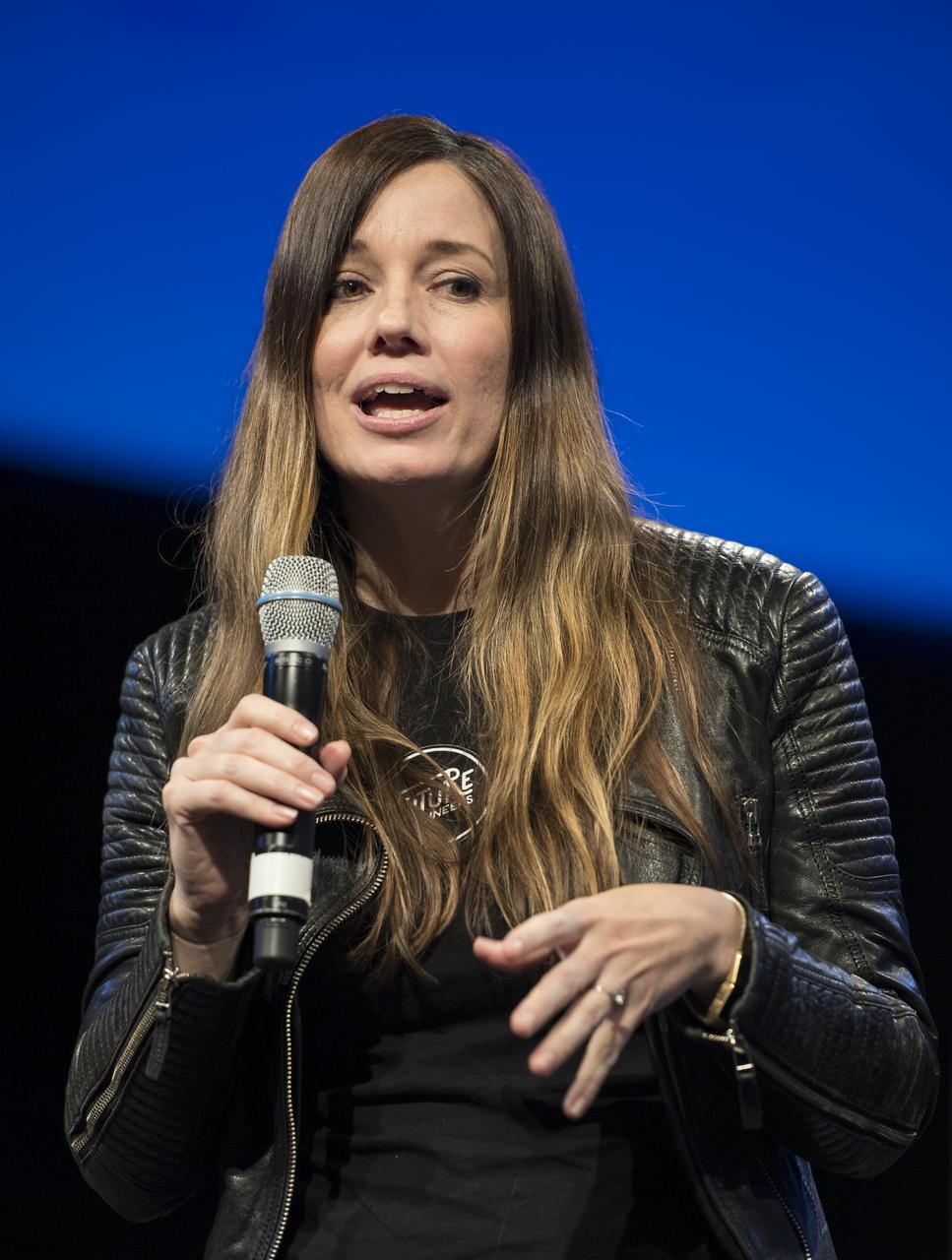
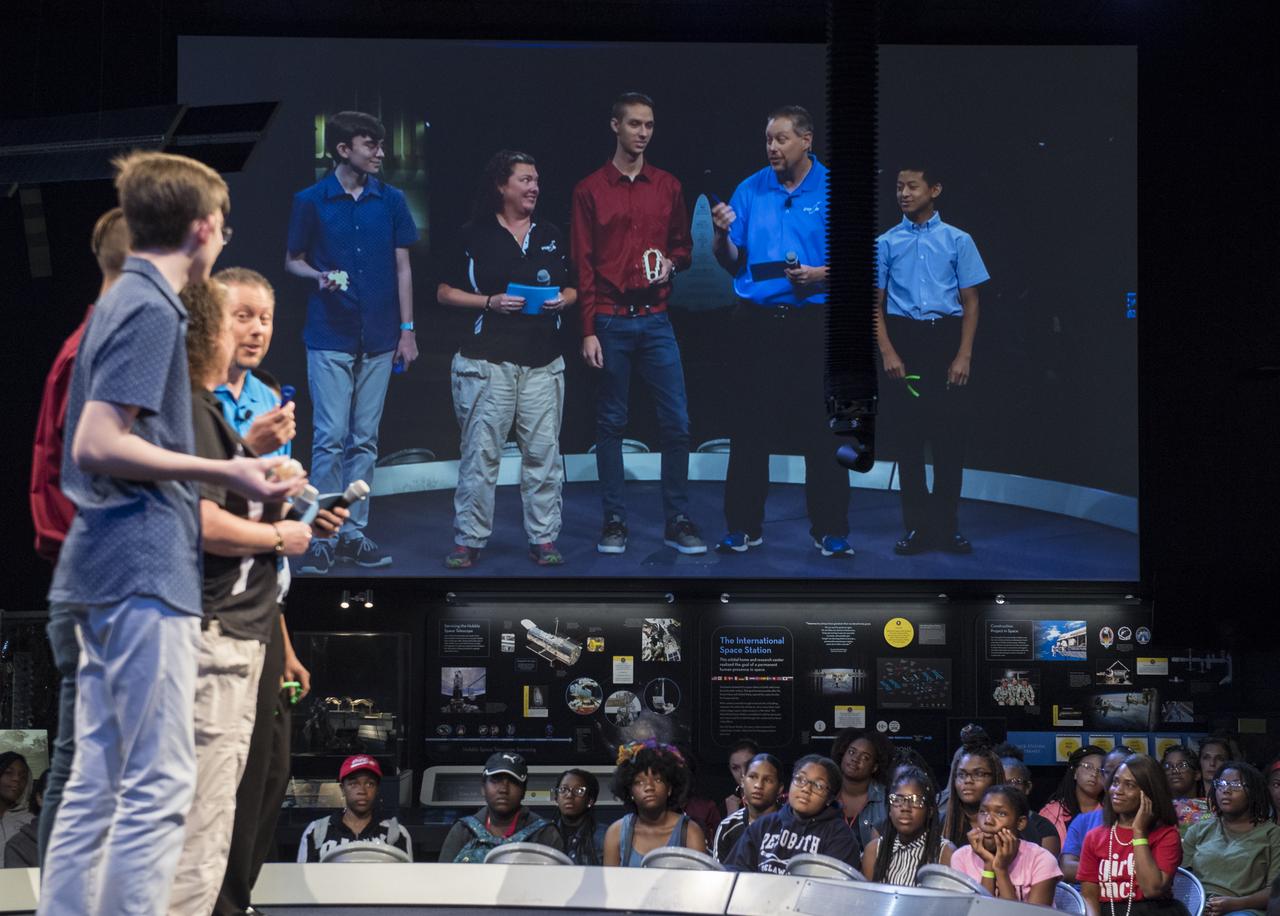
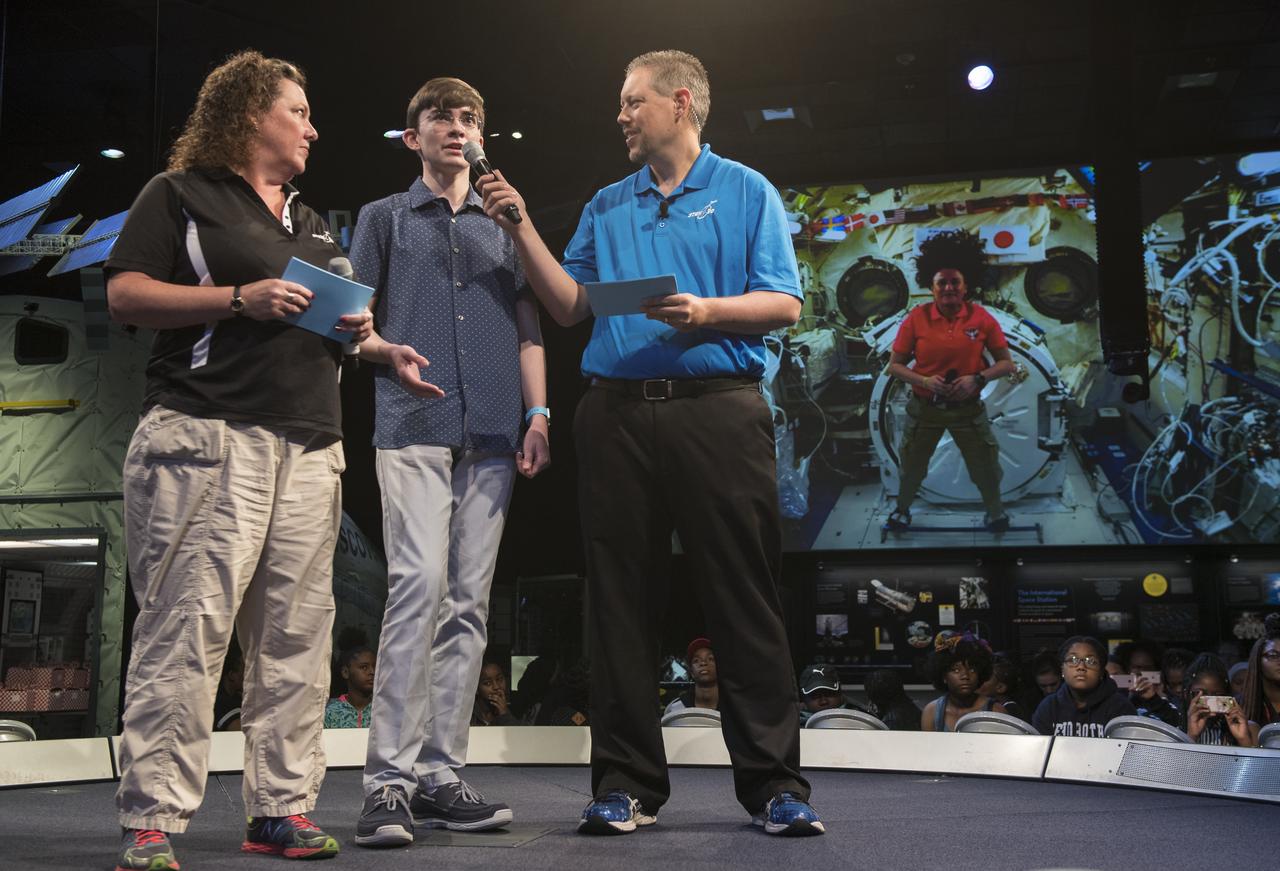
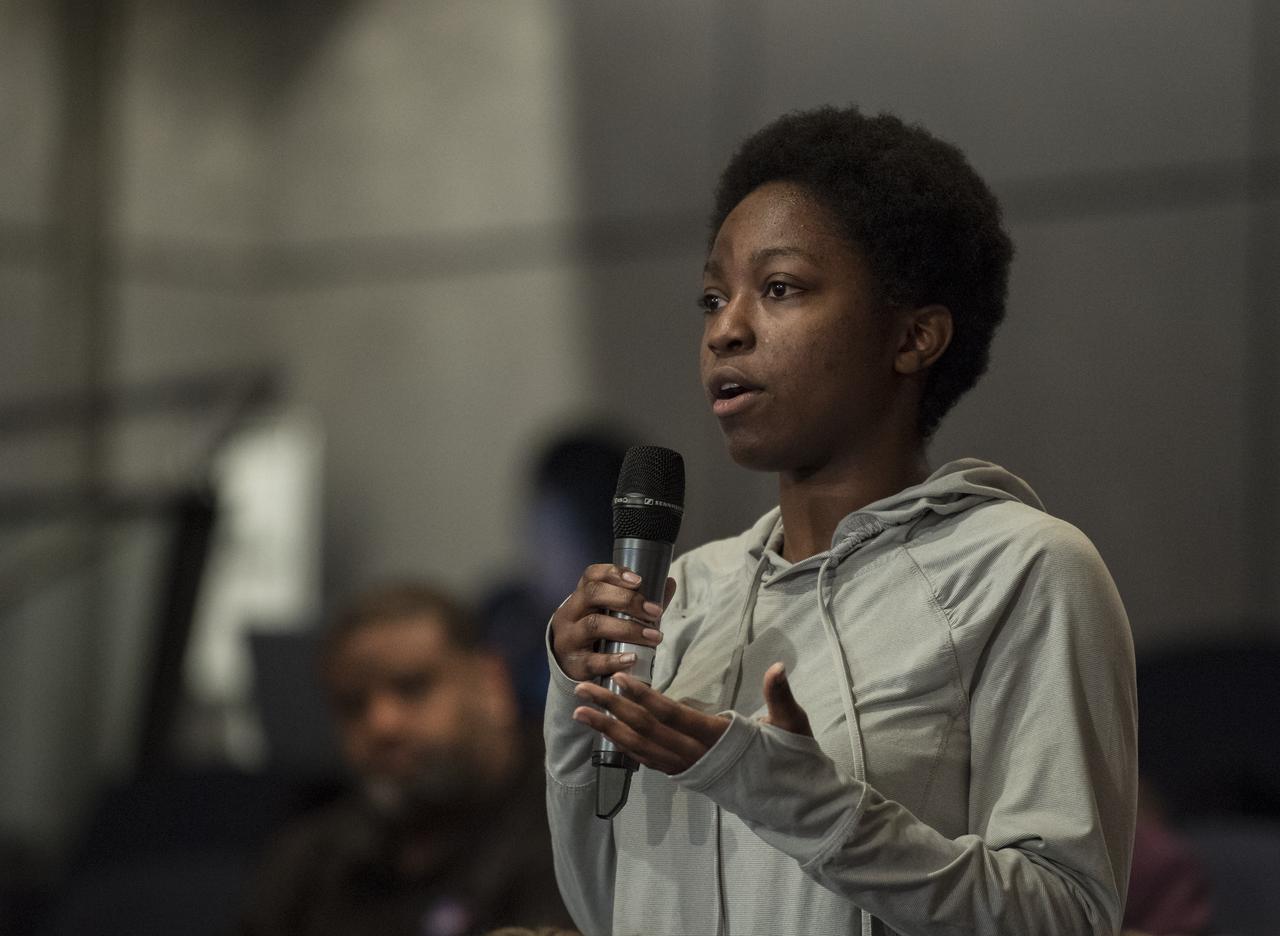
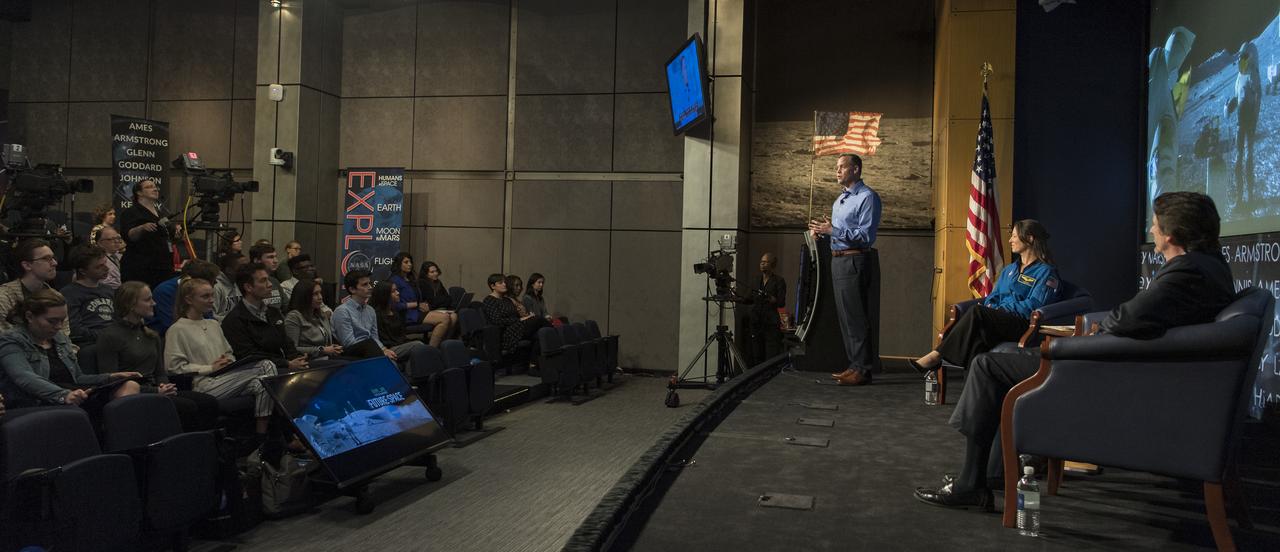
A student asks Nick Hague and Christina Koch, two astronauts currently living and working on the International Space Station, a question during a panel discussion with NASA Administrator Jim Bridenstine, NASA Associate Administrator for the Human Exploration and Operations Mission Directorate, Bill Gerstenmaier, and NASA Deputy Associate Administrator for Exploration, Steve Clarke at the "Future of Space" STEM event, Monday, April 29, 2019 at NASA Headquarters in Washington. NASA astronaut Tracy Caldwell Dyson, moderated the panel discussion. Photo Credit: (NASA/Aubrey Gemignani)
Future of Space STEM event
A student asks a questions during a panel discussion with NASA Administrator Jim Bridenstine, NASA Associate Administrator for the Human Exploration and Operations Mission Directorate, Bill Gerstenmaier, and NASA Deputy Associate Administrator for Exploration, Steve Clarke at the "Future of Space" STEM event, Monday, April 29, 2019 at NASA Headquarters in Washington. NASA astronaut Tracy Caldwell Dyson moderated the discussion. Photo Credit: (NASA/Aubrey Gemignani)
Future of Space STEM event
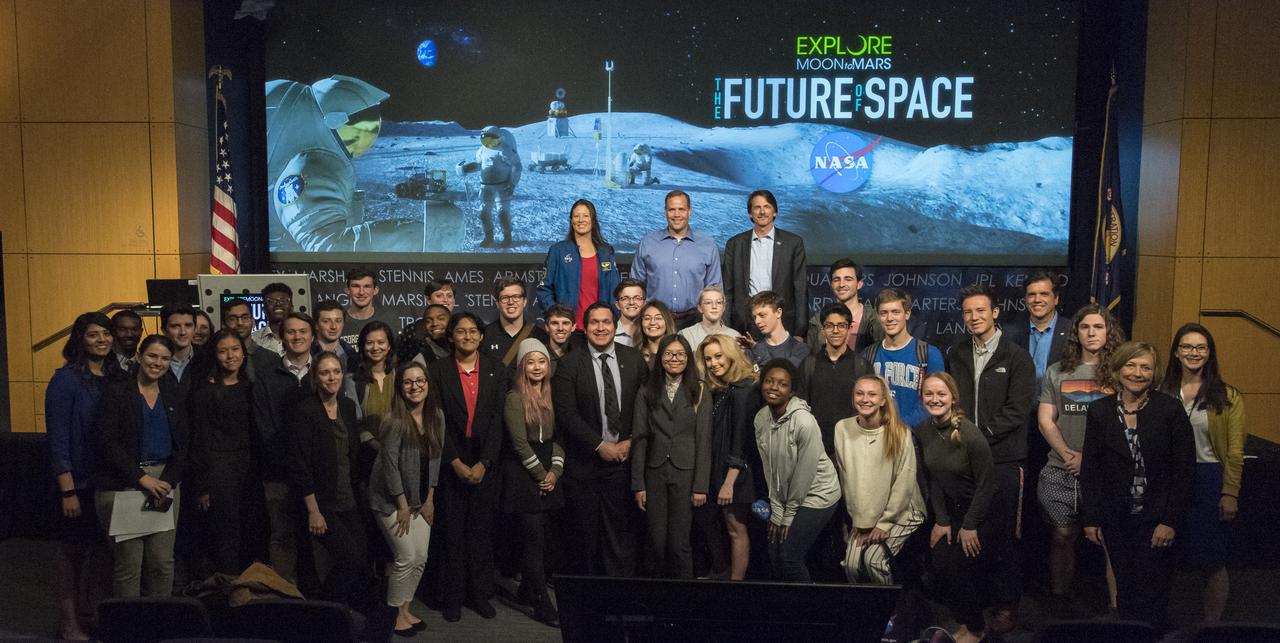
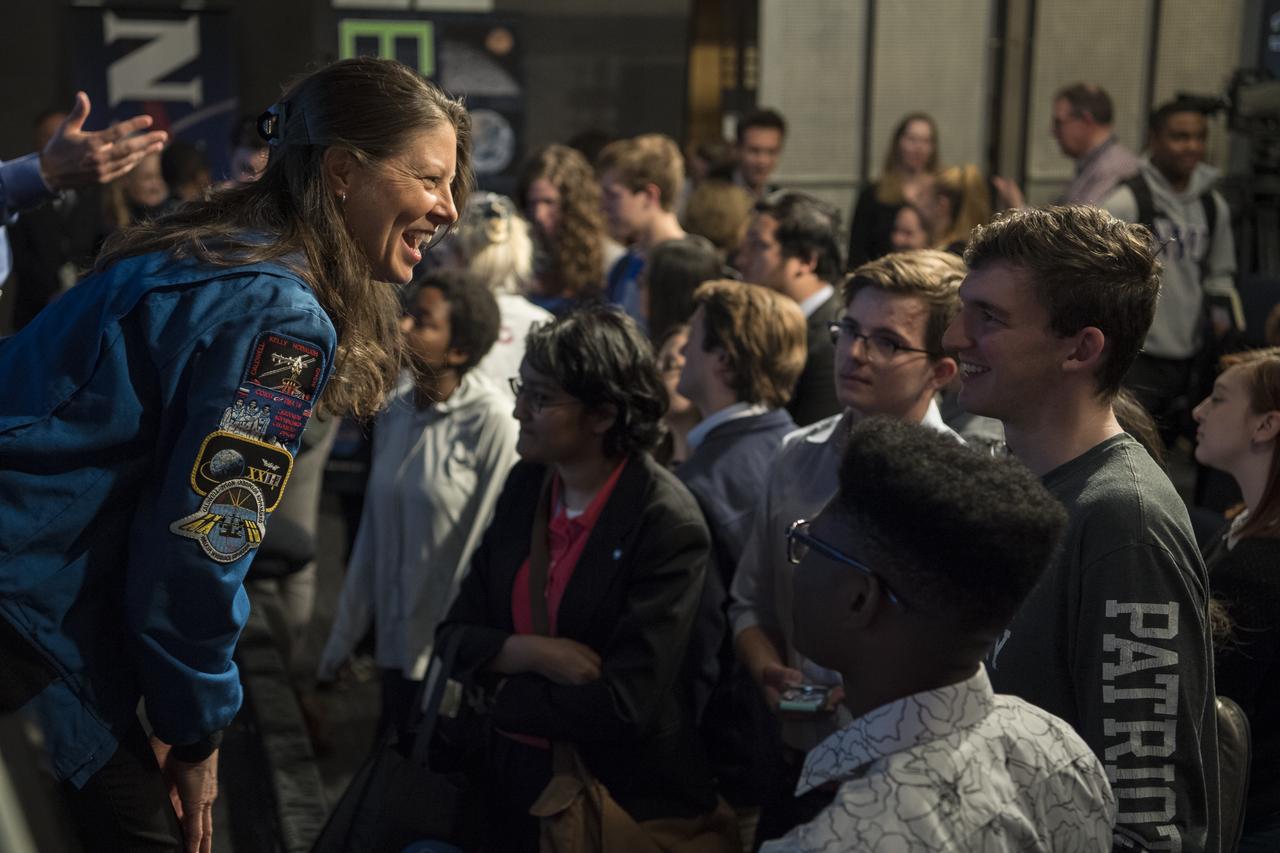
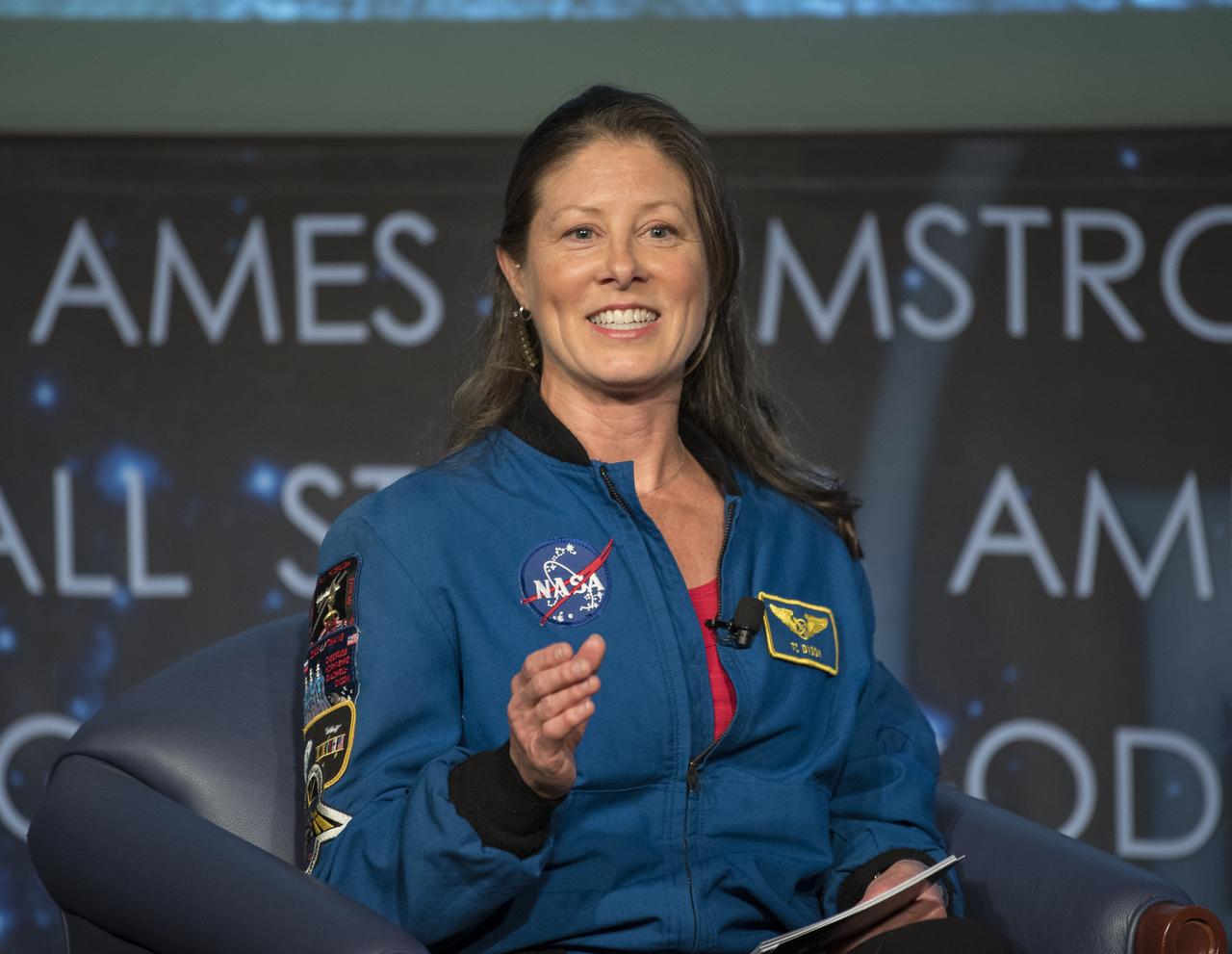
NASA astronaut Tracy Caldwell Dyson speaks with college students after the "Future of Space" STEM event, Monday, April 29, 2019 at NASA Headquarters in Washington. She moderated a panel discussion with NASA Administrator Jim Bridenstine, NASA Associate Administrator for the Human Exploration and Operations Mission Directorate, Bill Gerstenmaier, and NASA Deputy Associate Administrator for Exploration, Steve Clarke. Photo Credit: (NASA/Aubrey Gemignani)
Future of Space STEM event
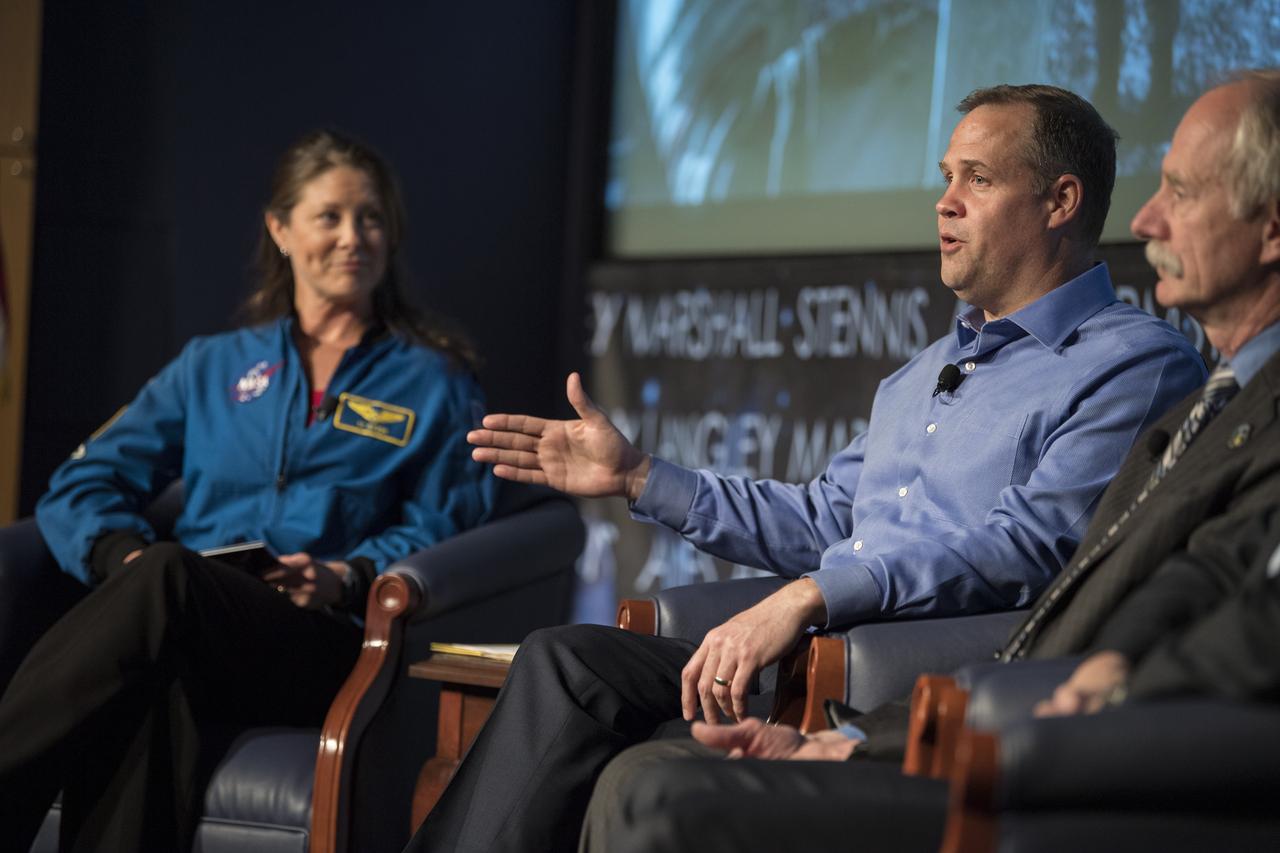
NASA astronaut Tracy Caldwell Dyson, moderates a panel discussion with NASA Administrator Jim Bridenstine, NASA Associate Administrator for the Human Exploration and Operations Mission Directorate, Bill Gerstenmaier, and NASA Deputy Associate Administrator for Exploration, Steve Clarke at the "Future of Space" STEM event, Monday, April 29, 2019 at NASA Headquarters in Washington, where college students were able to ask the panelists questions as well as speak with two astronauts currently on the International Space Station, Nick Hague and Christina Koch. Photo Credit: (NASA/Aubrey Gemignani)
Future of Space STEM event
NASA Associate Administrator for the Human Exploration and Operations Mission Directorate, Bill Gerstenmaier speaks at the "Future of Space" STEM event, Monday, April 29, 2019 at NASA Headquarters in Washington, where college students were able to ask panelists, Gerstenmaier, NASA Administrator Jim Bridenstine, and  NASA Deputy Associate Administrator for Exploration, Steve Clarke questions as well as speak with two astronauts currently on the International Space Station, Nick Hague and Christina Koch. NASA astronaut Tracy Caldwell Dyson moderated the panel discussion. Photo Credit: (NASA/Aubrey Gemignani)
Future of Space STEM event
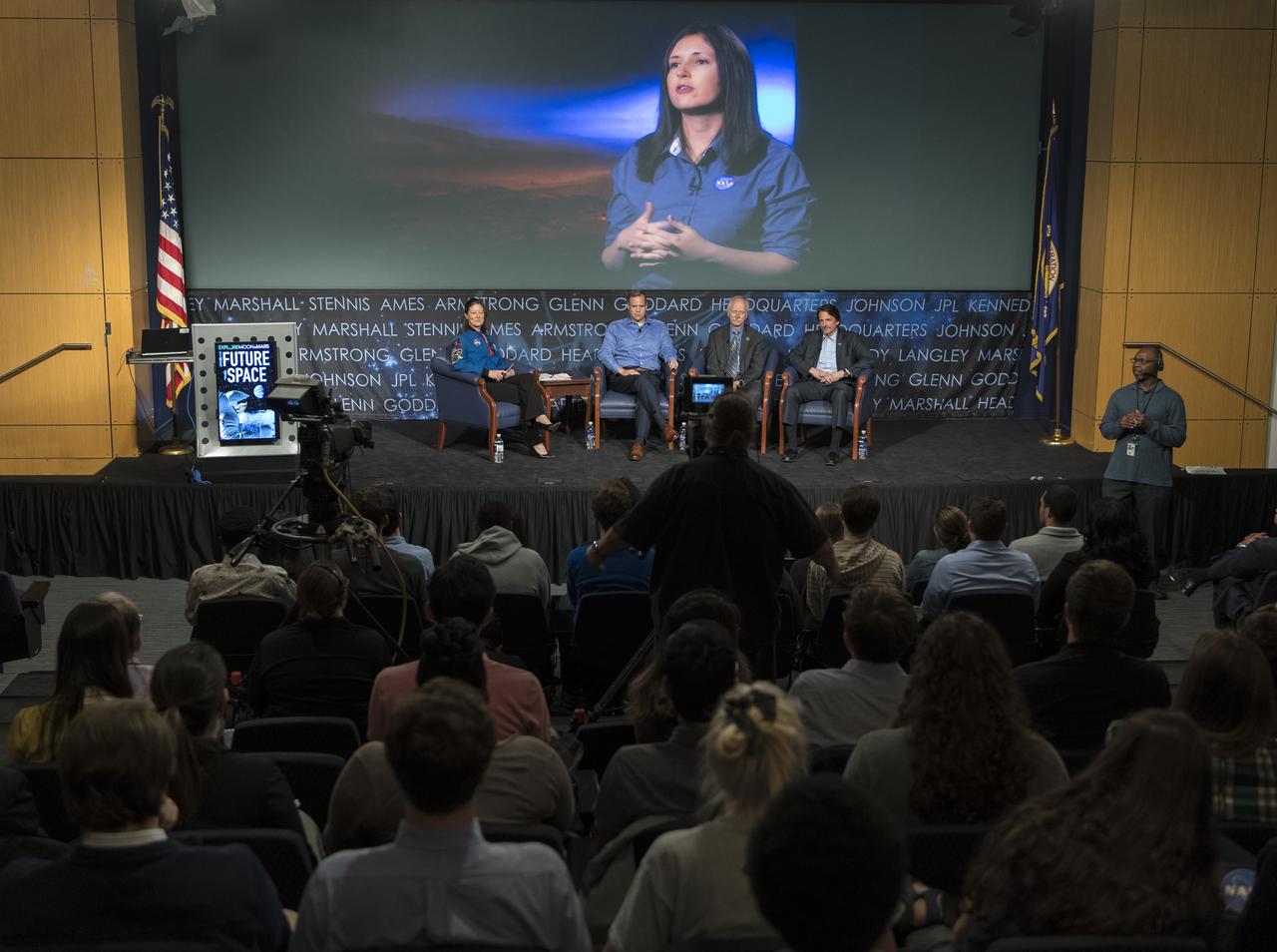
Students are seen in the audience as NASA astronaut Tracy Caldwell Dyson, moderates a panel discussion with NASA Administrator Jim Bridenstine, NASA Associate Administrator for the Human Exploration and Operations Mission Directorate, Bill Gerstenmaier, and NASA Deputy Associate Administrator for Exploration, Steve Clarke at the "Future of Space" STEM event, Monday, April 29, 2019 at NASA Headquarters in Washington. The students were able to ask the panelists questions as well as speak with two astronauts currently on the International Space Station, Nick Hague and Christina Koch. Photo Credit: (NASA/Aubrey Gemignani)
Future of Space STEM event
NASA Deputy Associate Administrator for Exploration, Steve Clarke speaks at the "Future of Space" STEM event, Monday, April 29, 2019 at NASA Headquarters in Washington, where college students were able to ask panelists, Clarke, NASA Administrator Jim Bridenstine, and NASA Associate Administrator for the Human Exploration and Operations Mission Directorate, Bill Gerstenmaier questions as well as speak with two astronauts currently on the International Space Station, Nick Hague and Christina Koch. NASA astronaut Tracy Caldwell Dyson moderated the panel discussion. Photo Credit: (NASA/Aubrey Gemignani)
Future of Space STEM event
NASA Deputy Associate Administrator for Exploration, Steve Clarke speaks at the "Future of Space" STEM event, Monday, April 29, 2019 at NASA Headquarters in Washington, where college students were able to ask panelists, Clarke, NASA Administrator Jim Bridenstine, and NASA Associate Administrator for the Human Exploration and Operations Mission Directorate, Bill Gerstenmaier questions as well as speak with two astronauts currently on the International Space Station, Nick Hague and Christina Koch. NASA astronaut Tracy Caldwell Dyson moderated the panel discussion. Photo Credit: (NASA/Aubrey Gemignani)
Future of Space STEM event
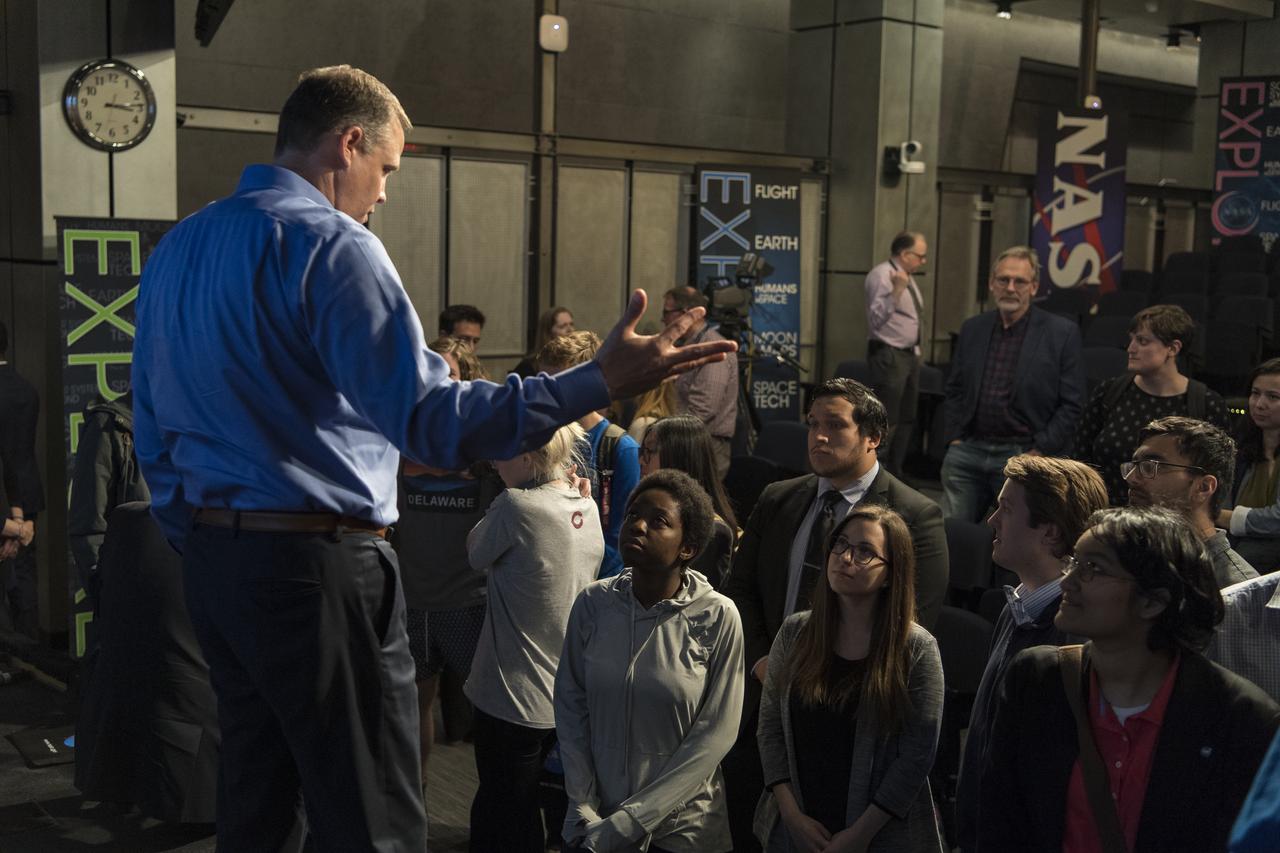
NASA Administrator Jim Bridenstine speaks with college students after the "Future of Space" STEM event, Monday, April 29, 2019 at NASA Headquarters in Washington. NASA astronaut Tracy Caldwell Dyson moderated a panel discussion with Bridenstine, NASA Associate Administrator for the Human Exploration and Operations Mission Directorate, Bill Gerstenmaier, and NASA Deputy Associate Administrator for Exploration, Steve Clarke. Photo Credit: (NASA/Aubrey Gemignani)
Future of Space STEM event
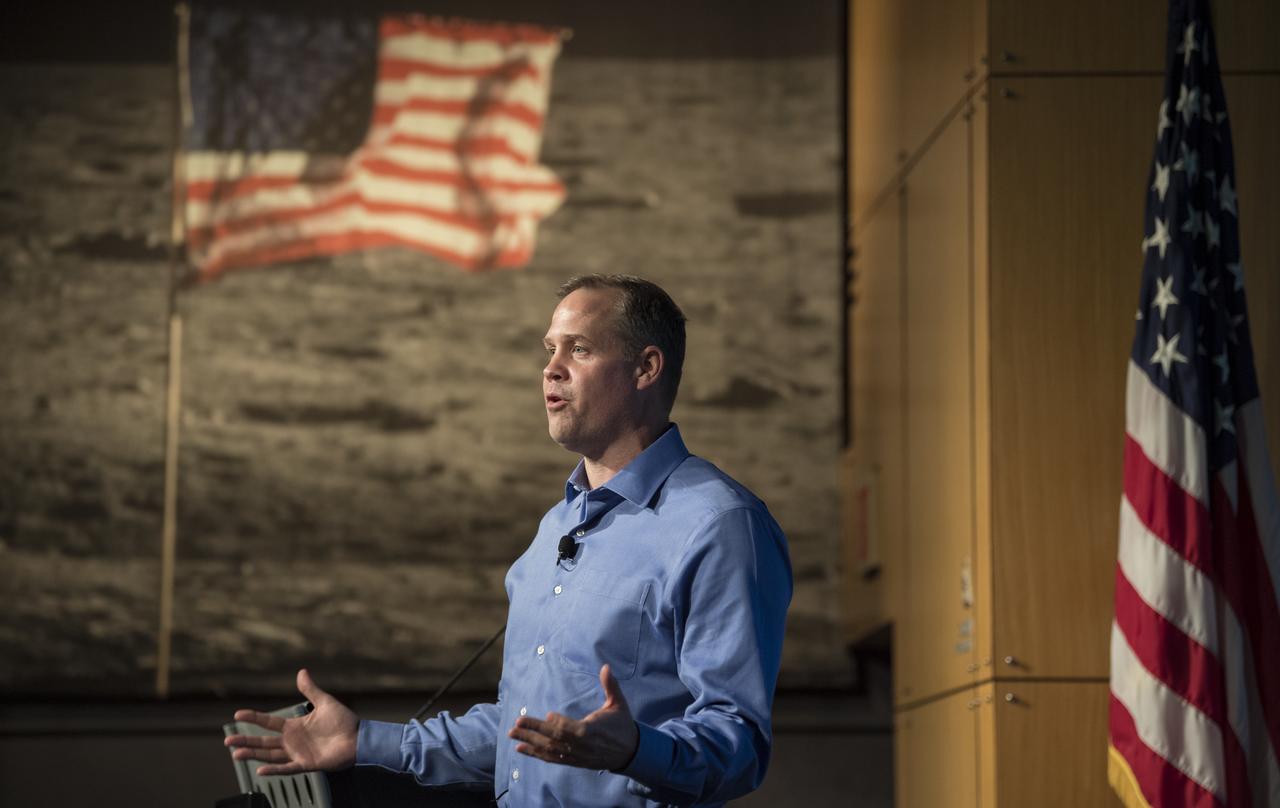
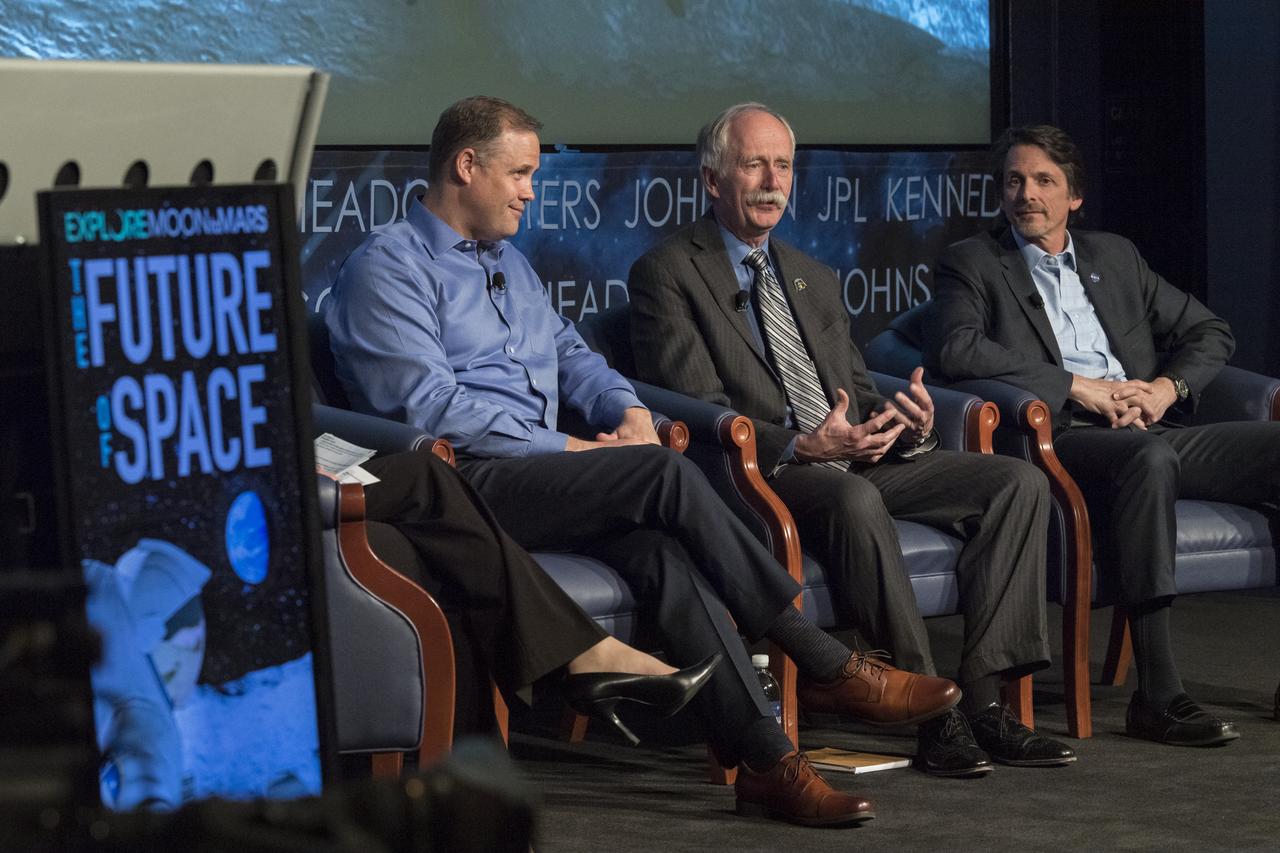
NASA Administrator Jim Bridenstine, left, speaks at the "Future of Space" STEM event, Monday, April 29, 2019 at NASA Headquarters in Washington, where college students were able to ask panelists, Bridenstine, NASA Associate Administrator for the Human Exploration and Operations Mission Directorate, Bill Gerstenmaier, center, and NASA Deputy Associate Administrator for Exploration, Steve Clarke, right, questions as well as speak with two astronauts currently on the International Space Station, Nick Hague and Christina Koch. NASA astronaut Tracy Caldwell Dyson moderated the panel discussion. Photo Credit: (NASA/Aubrey Gemignani)
Future of Space STEM event
NASA Administrator Jim Bridenstine, left, speaks at the "Future of Space" STEM event, Monday, April 29, 2019 at NASA Headquarters in Washington, where college students were able to ask panelists, Bridenstine, NASA Associate Administrator for the Human Exploration and Operations Mission Directorate, Bill Gerstenmaier, right, and NASA Deputy Associate Administrator for Exploration, Steve Clarke, not pictured, questions as well as speak with two astronauts currently on the International Space Station, Nick Hague and Christina Koch. NASA astronaut Tracy Caldwell Dyson moderated the panel discussion. Photo Credit: (NASA/Aubrey Gemignani)
Future of Space STEM event
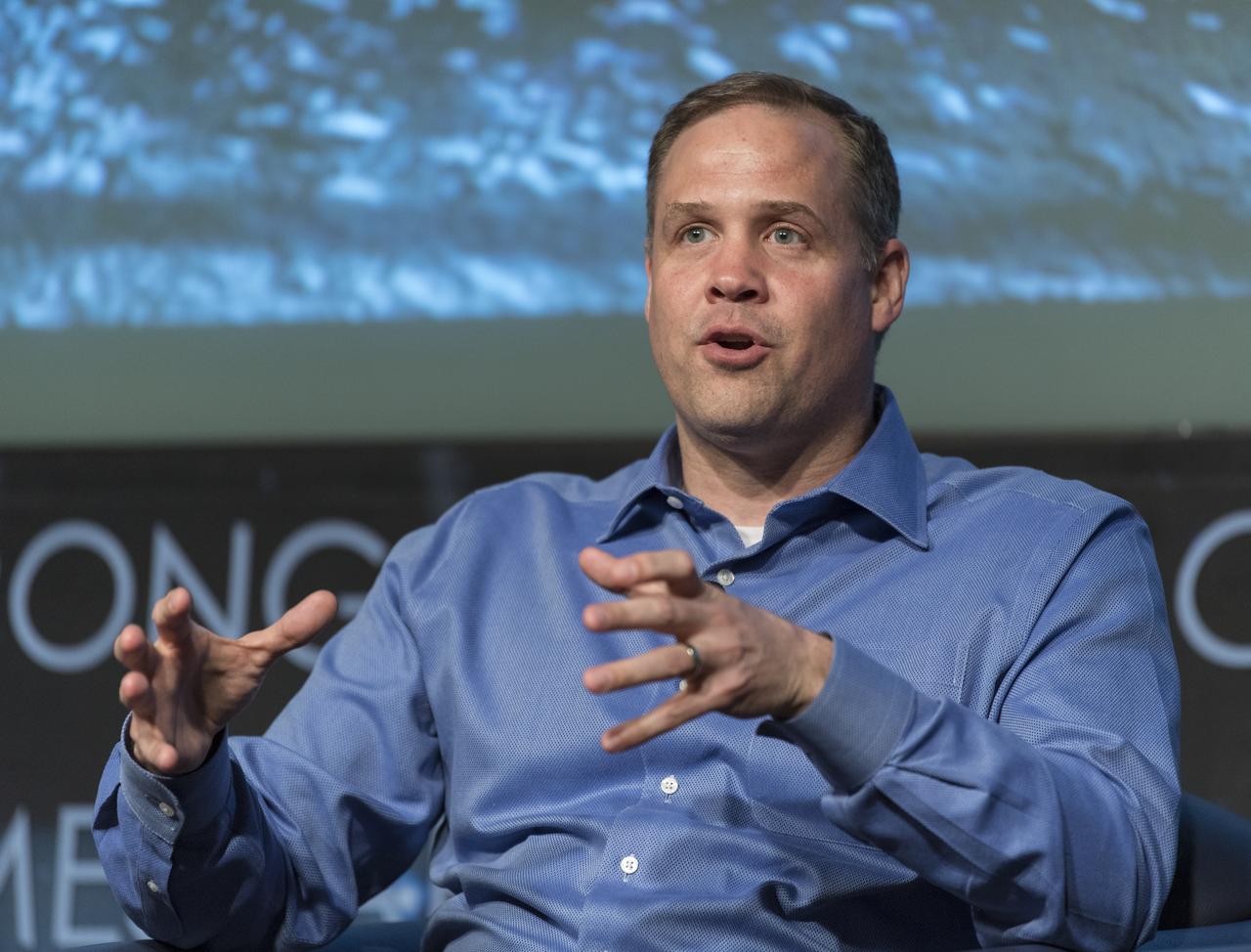
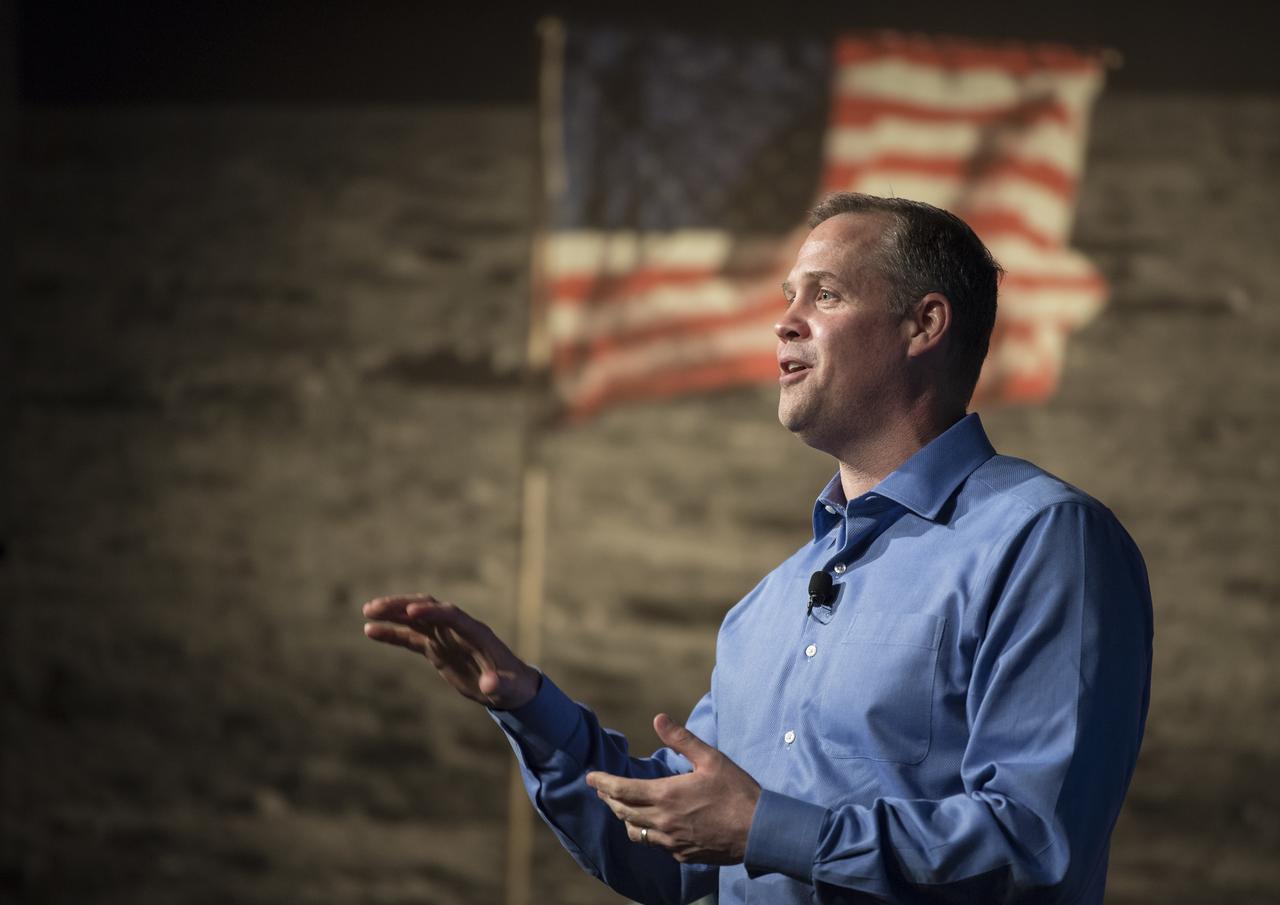
NASA Administrator Jim Bridenstine speaks at the "Future of Space" STEM event, Monday, April 29, 2019 at NASA Headquarters in Washington, where college students were able to ask panelists, Bridenstine, NASA Associate Administrator for the Human Exploration and Operations Mission Directorate, Bill Gerstenmaier, and NASA Deputy Associate Administrator for Exploration, Steve Clarke questions as well as speak with two astronauts currently on the International Space Station, Nick Hague and Christina Koch. NASA astronaut Tracy Caldwell Dyson moderated the panel discussion. Photo Credit: (NASA/Aubrey Gemignani)
Future of Space STEM event
NASA Administrator Jim Bridenstine speaks at the "Future of Space" STEM event, Monday, April 29, 2019 at NASA Headquarters in Washington, where college students were able to ask panelists, Bridenstine, NASA Associate Administrator for the Human Exploration and Operations Mission Directorate, Bill Gerstenmaier, and NASA Deputy Associate Administrator for Exploration, Steve Clarke questions as well as speak with two astronauts currently on the International Space Station, Nick Hague and Christina Koch. NASA astronaut Tracy Caldwell Dyson moderated the panel discussion. Photo Credit: (NASA/Aubrey Gemignani)
Future of Space STEM event
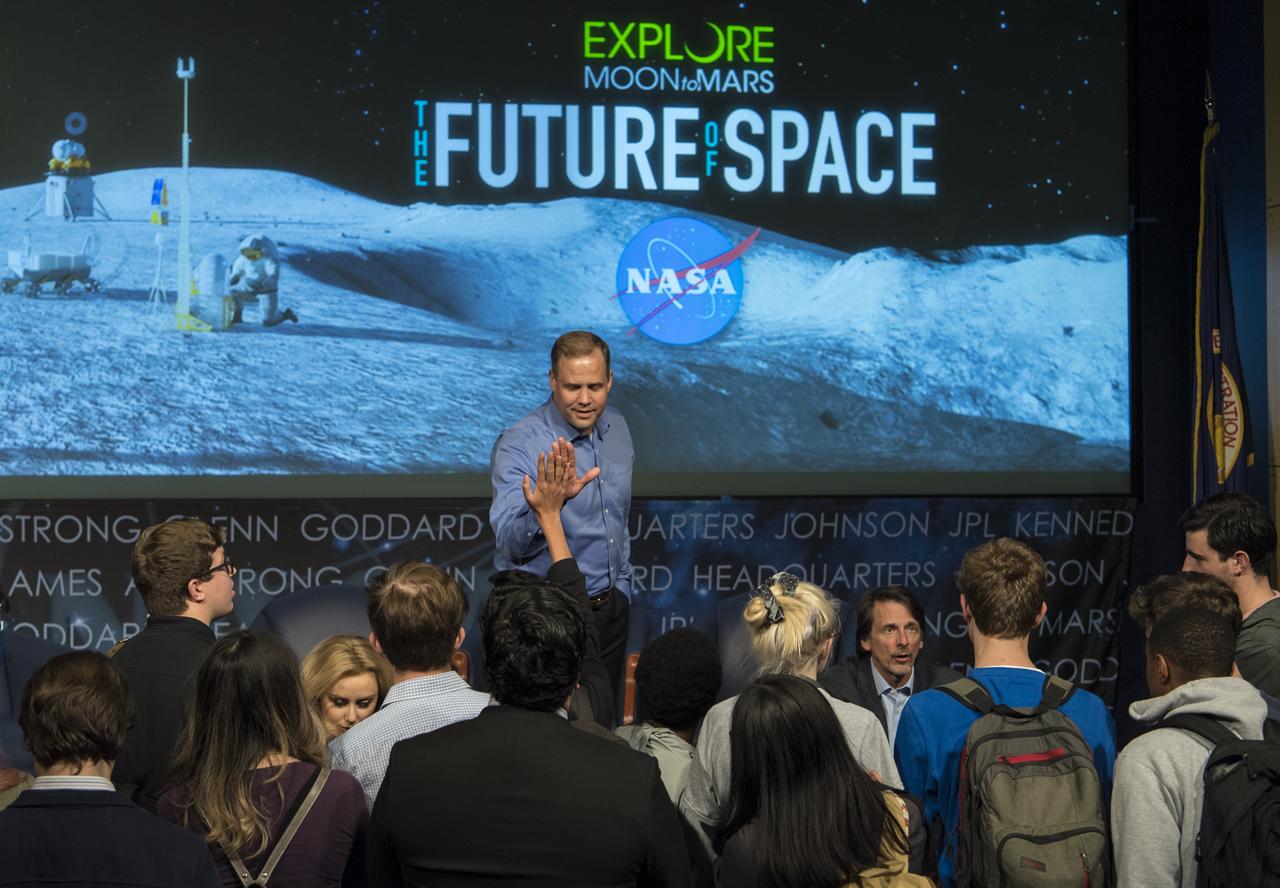
NASA Administrator Jim Bridenstine high fives a college student attending the same university he attended, Rice University, after the "Future of Space" STEM event, Monday, April 29, 2019 at NASA Headquarters in Washington, where they were able to ask panelists, Bridenstine, NASA Associate Administrator for the Human Exploration and Operations Mission Directorate, Bill Gerstenmaier, and NASA Deputy Associate Administrator for Exploration, Steve Clarke, questions as well as speak with two astronauts currently on the International Space Station, Nick Hague and Christina Koch. NASA astronaut Tracy Caldwell Dyson moderated the panel discussion. Photo Credit: (NASA/Aubrey Gemignani)
Future of Space STEM event
NASA Administrator Jim Bridenstine speaks at the "Future of Space" STEM event, Monday, April 29, 2019 at NASA Headquarters in Washington, where college students were able to ask panelists, Bridenstine, NASA Associate Administrator for the Human Exploration and Operations Mission Directorate, Bill Gerstenmaier, and NASA Deputy Associate Administrator for Exploration, Steve Clarke, questions as well as speak with two astronauts currently on the International Space Station, Nick Hague and Christina Koch. NASA astronaut Tracy Caldwell Dyson moderated the panel discussion. Photo Credit: (NASA/Aubrey Gemignani)
Future of Space STEM event
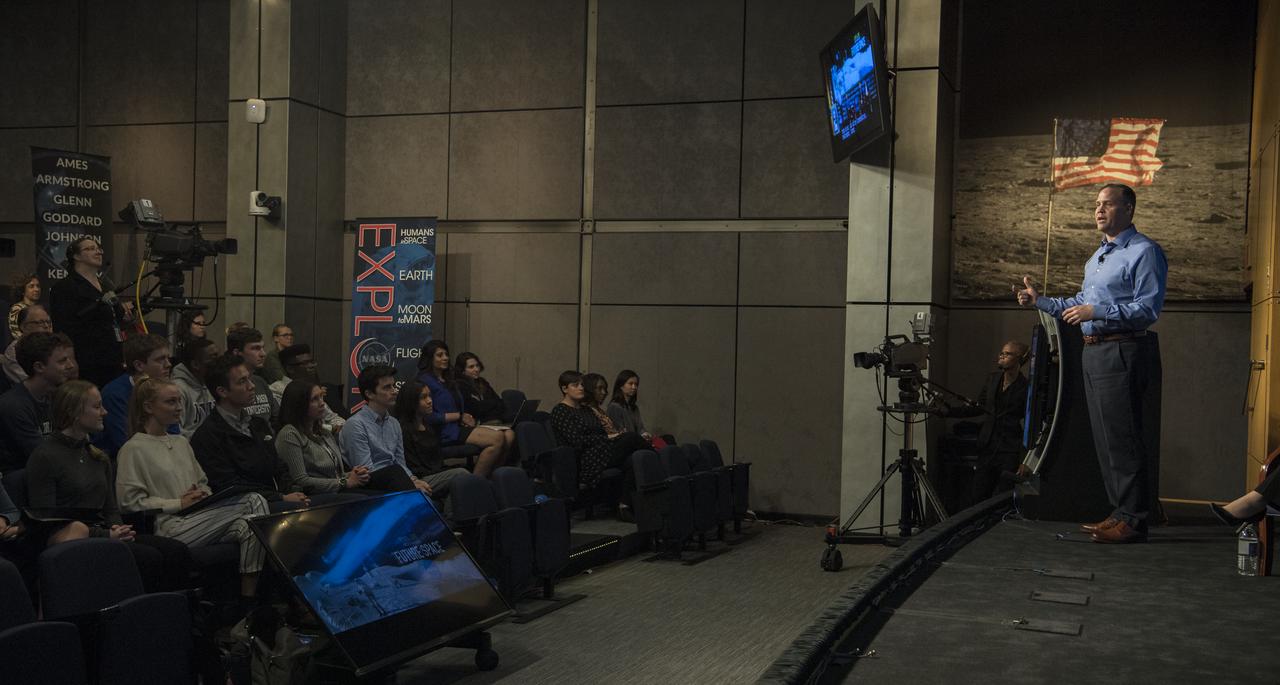
NASA Administrator Jim Bridenstine speaks at the "Future of Space" STEM event, Monday, April 29, 2019 at NASA Headquarters in Washington, where college students were able to ask panelists, Bridenstine, NASA Associate Administrator for the Human Exploration and Operations Mission Directorate, Bill Gerstenmaier, and NASA Deputy Associate Administrator for Exploration, Steve Clarke, questions as well as speak with two astronauts currently on the International Space Station, Nick Hague and Christina Koch. NASA astronaut Tracy Caldwell Dyson moderated the panel discussion. Photo Credit: (NASA/Aubrey Gemignani)
Future of Space STEM event
NASA Associate Administrator for the Human Exploration and Operations Mission Directorate, Bill Gerstenmaier, center, speaks at the "Future of Space" STEM event, Monday, April 29, 2019 at NASA Headquarters in Washington, where college students were able to ask panelists, NASA Administrator Jim Bridenstine, left, Gerstenmaier, and NASA Deputy Associate Administrator for Exploration, Steve Clarke, questions as well as speak with two astronauts currently on the International Space Station, Nick Hague and Christina Koch. NASA astronaut Tracy Caldwell Dyson moderated the panel discussion. Photo Credit: (NASA/Aubrey Gemignani)
Future of Space STEM event
NASA Administrator Jim Bridenstine speaks at the "Future of Space" STEM event, Monday, April 29, 2019 at NASA Headquarters in Washington, where college students were able to ask panelists, Bridenstine, NASA Associate Administrator for the Human Exploration and Operations Mission Directorate, Bill Gerstenmaier, and NASA Deputy Associate Administrator for Exploration, Steve Clarke, questions as well as speak with two astronauts currently on the International Space Station, Nick Hague and Christina Koch. NASA astronaut Tracy Caldwell Dyson moderated the panel discussion. Photo Credit: (NASA/Aubrey Gemignani)
Future of Space STEM event
NASA Administrator Jim Bridenstine speaks at the "Future of Space" STEM event, Monday, April 29, 2019 at NASA Headquarters in Washington, where college students were able to ask panelists, Bridenstine, NASA Associate Administrator for the Human Exploration and Operations Mission Directorate, Bill Gerstenmaier, and NASA Deputy Associate Administrator for Exploration, Steve Clarke, questions as well as speak with two astronauts currently on the International Space Station, Nick Hague and Christina Koch. NASA astronaut Tracy Caldwell Dyson moderated the panel discussion. Photo Credit: (NASA/Aubrey Gemignani)
Future of Space STEM event
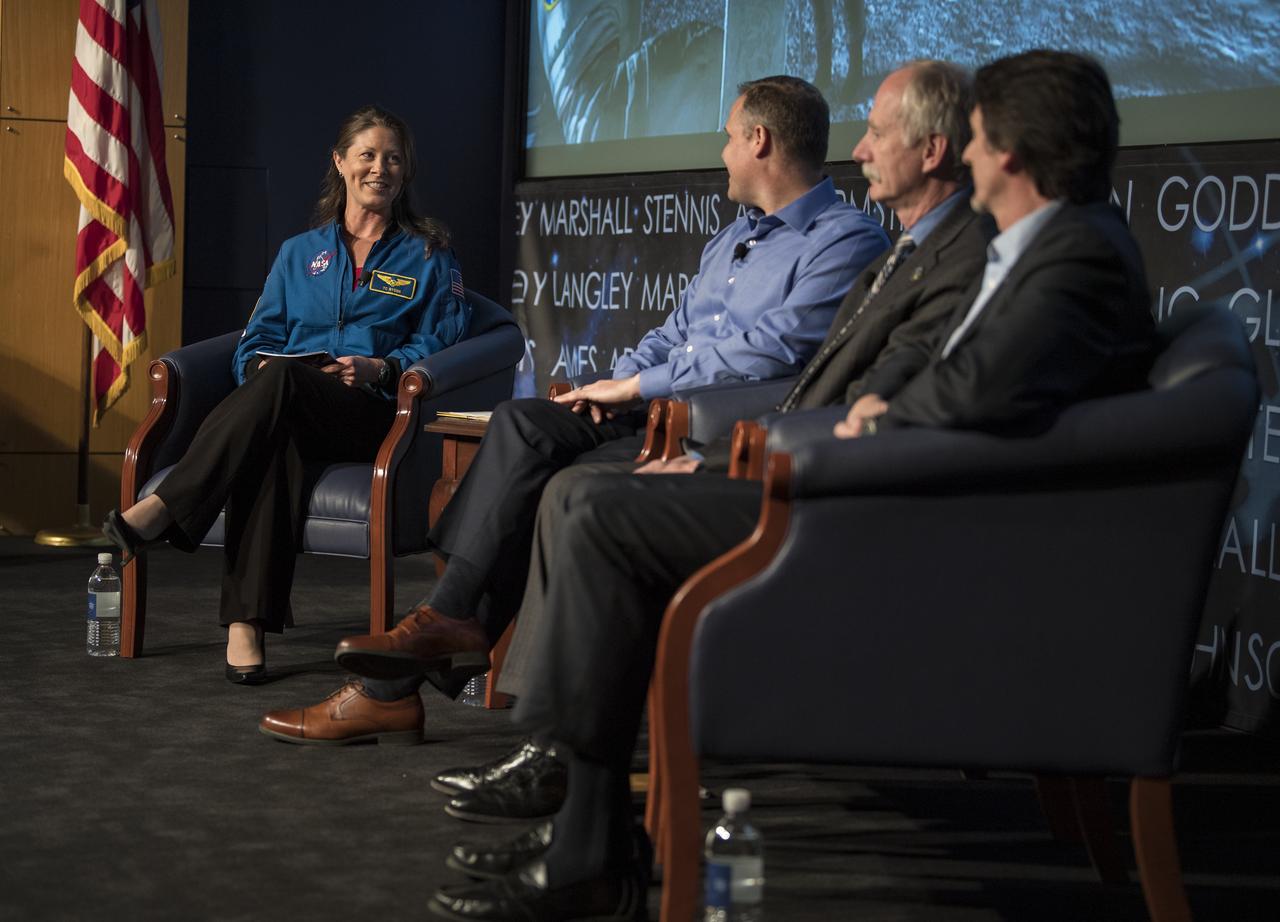
NASA astronaut Tracy Caldwell Dyson, moderates a panel discussion with NASA Administrator Jim Bridenstine, NASA Associate Administrator for the Human Exploration and Operations Mission Directorate, Bill Gerstenmaier, and NASA Deputy Associate Administrator for Exploration, Steve Clarke at the "Future of Space" STEM event, Monday, April 29, 2019 at NASA Headquarters in Washington, where college students were able to ask the panelists questions as well as speak with two astronauts currently on the International Space Station, Nick Hague and Christina Koch. Photo Credit: (NASA/Aubrey Gemignani)
Future of Space STEM event
NASA astronaut Tracy Caldwell Dyson, left, moderates a panel discussion with NASA Administrator Jim Bridenstine, NASA Associate Administrator for the Human Exploration and Operations Mission Directorate, Bill Gerstenmaier, and NASA Deputy Associate Administrator for Exploration, Steve Clarke at the "Future of Space" STEM event, Monday, April 29, 2019 at NASA Headquarters in Washington, where college students were able to ask the panelists questions as well as speak with two astronauts currently on the International Space Station, Nick Hague and Christina Koch. Photo Credit: (NASA/Aubrey Gemignani)
Future of Space STEM event
NASA Administrator Jim Bridenstine poses for a photo with college students after the "Future of Space" STEM event, Monday, April 29, 2019 at NASA Headquarters in Washington, where they were able to ask panelists, Bridenstine, NASA Associate Administrator for the Human Exploration and Operations Mission Directorate, Bill Gerstenmaier, and NASA Deputy Associate Administrator for Exploration, Steve Clarke, questions as well as speak with two astronauts currently on the International Space Station, Nick Hague and Christina Koch. NASA astronaut Tracy Caldwell Dyson moderated the panel discussion. Photo Credit: (NASA/Aubrey Gemignani)
Future of Space STEM event
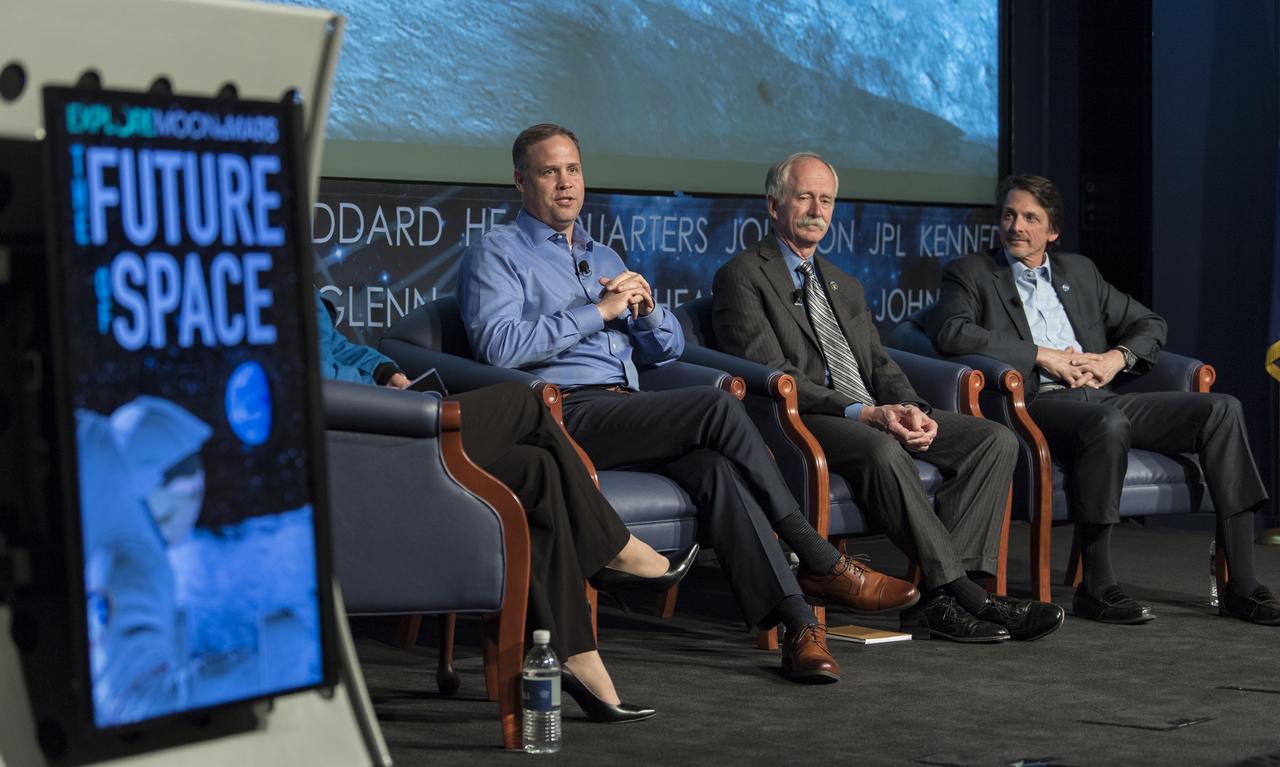
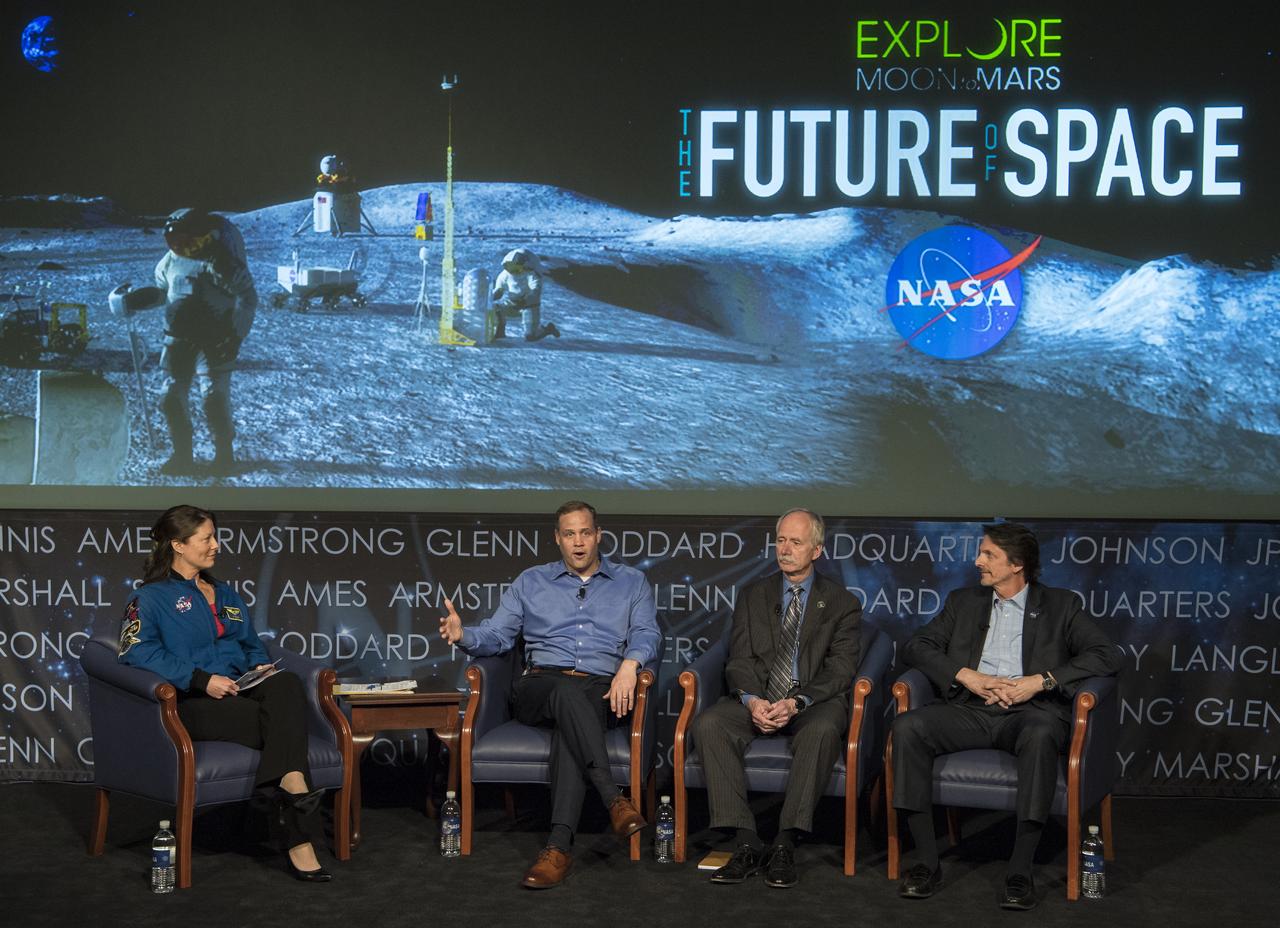
NASA Administrator Jim Bridenstine, second from left, speaks at the "Future of Space" STEM event, Monday, April 29, 2019 at NASA Headquarters in Washington, where college students were able to ask panelists, Bridenstine, NASA Associate Administrator for the Human Exploration and Operations Mission Directorate, Bill Gerstenmaier, second from right, and NASA Deputy Associate Administrator for Exploration, Steve Clarke, right, questions as well as speak with two astronauts currently on the International Space Station, Nick Hague and Christina Koch. NASA astronaut Tracy Caldwell Dyson, left, moderated the panel discussion. Photo Credit: (NASA/Aubrey Gemignani)
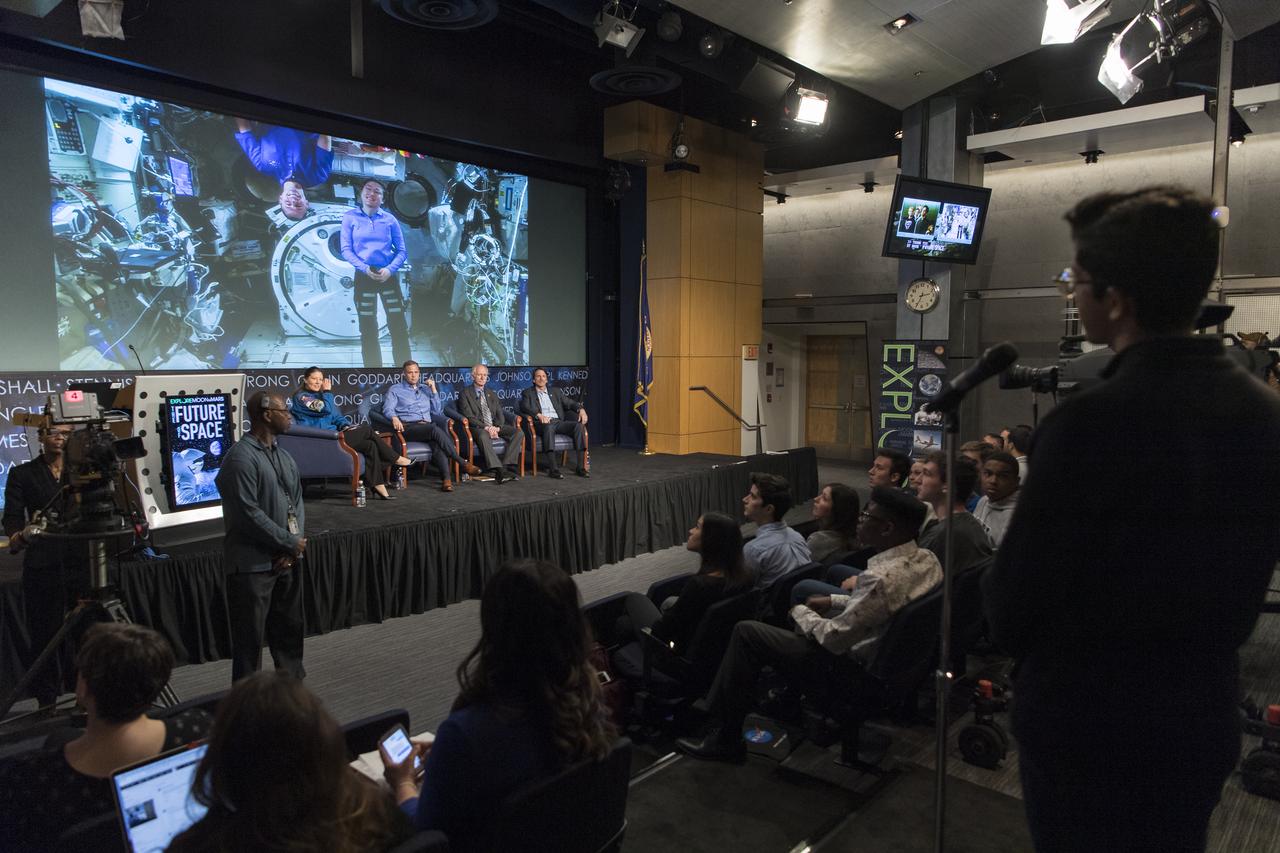
Future of Space STEM event
NASA astronaut Tracy Caldwell Dyson, left, moderates a panel discussion with NASA Administrator Jim Bridenstine, NASA Associate Administrator for the Human Exploration and Operations Mission Directorate, Bill Gerstenmaier, and NASA Deputy Associate Administrator for Exploration, Steve Clarke at the "Future of Space" STEM event, Monday, April 29, 2019 at NASA Headquarters in Washington, where college students were able to ask the panelists questions as well as speak with two astronauts currently on the International Space Station, Nick Hague and Christina Koch. Photo Credit: (NASA/Aubrey Gemignani)
Future of Space STEM event
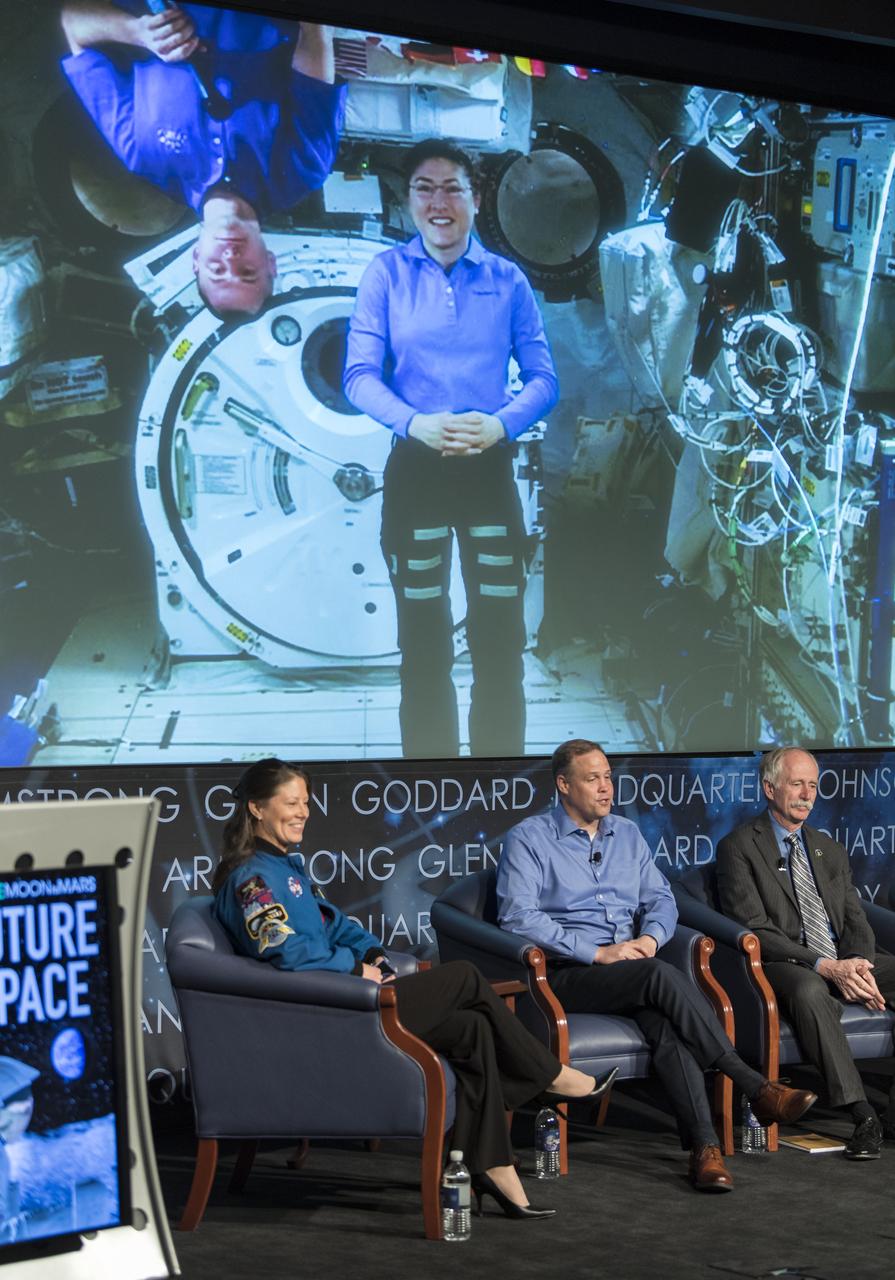
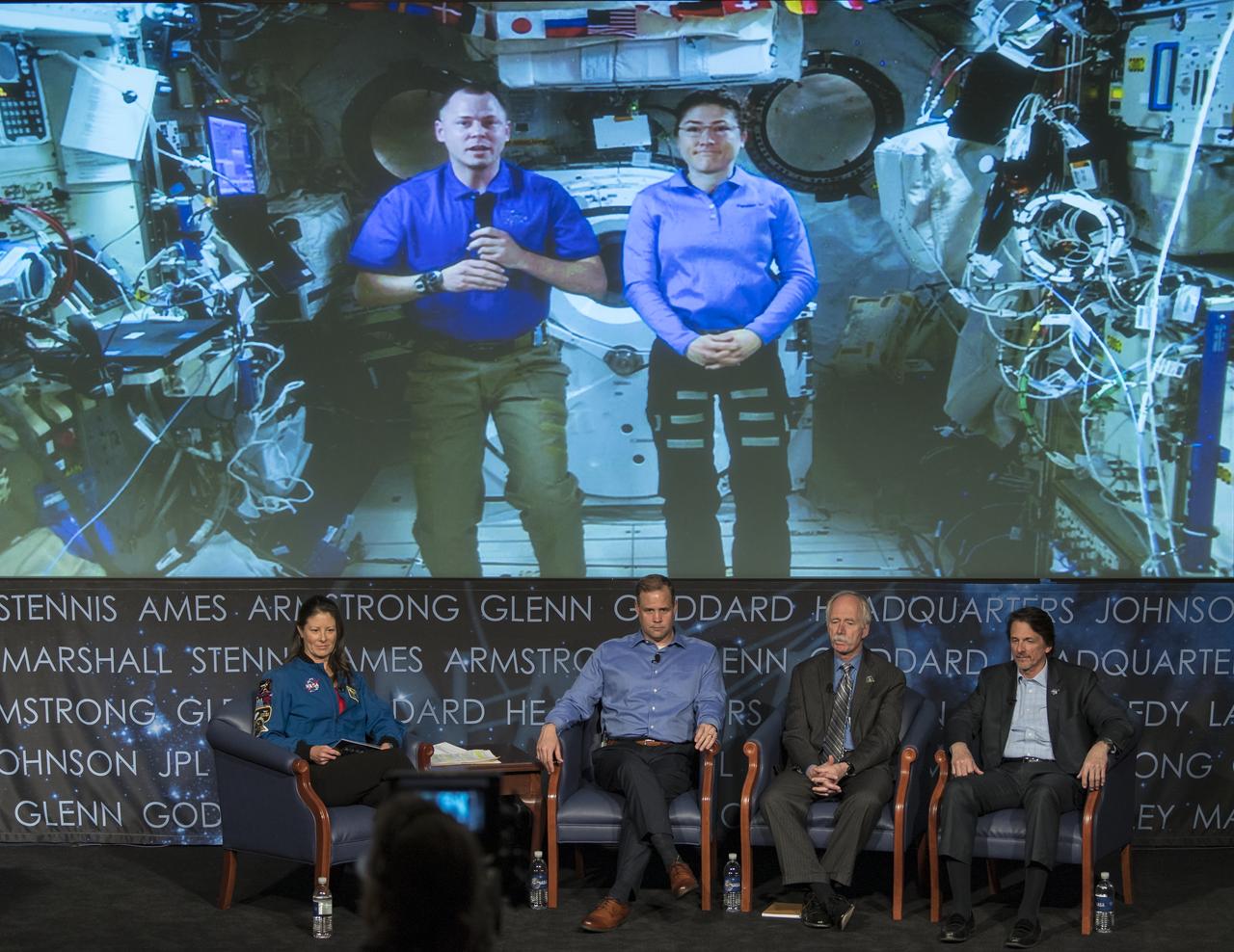
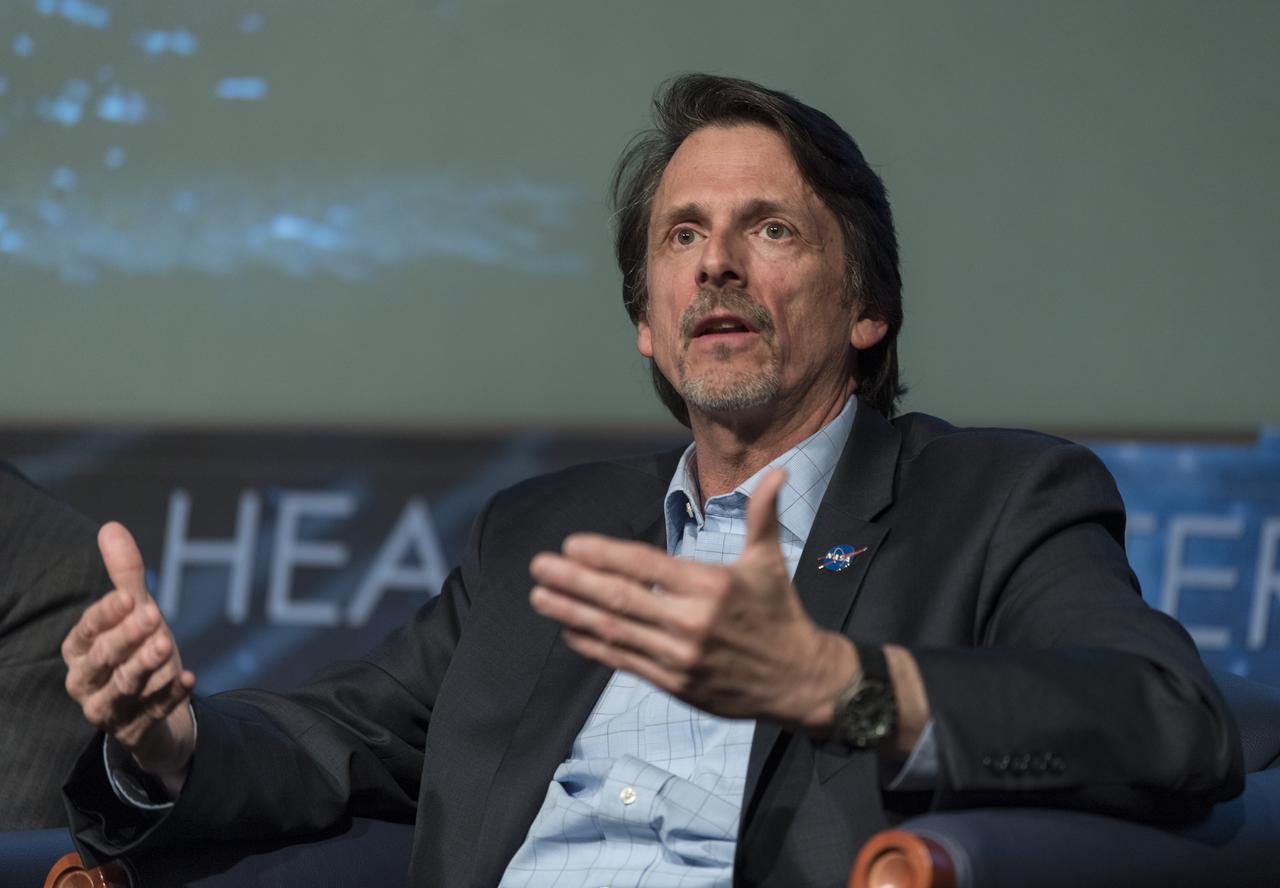
Nick Hague, left, and Christina Koch, two astronauts currently living and working on the International Space Station, are seen on the screen during a live uplink and panel discussion with NASA Administrator Jim Bridenstine, center, NASA Associate Administrator for the Human Exploration and Operations Mission Directorate, Bill Gerstenmaier, right, and NASA Deputy Associate Administrator for Exploration, Steve Clarke, not pictured, at the "Future of Space" STEM event, Monday, April 29, 2019 at NASA Headquarters in Washington. NASA astronaut Tracy Caldwell Dyson, left, moderated the panel discussion. Photo Credit: (NASA/Aubrey Gemignani)
Future of Space STEM event
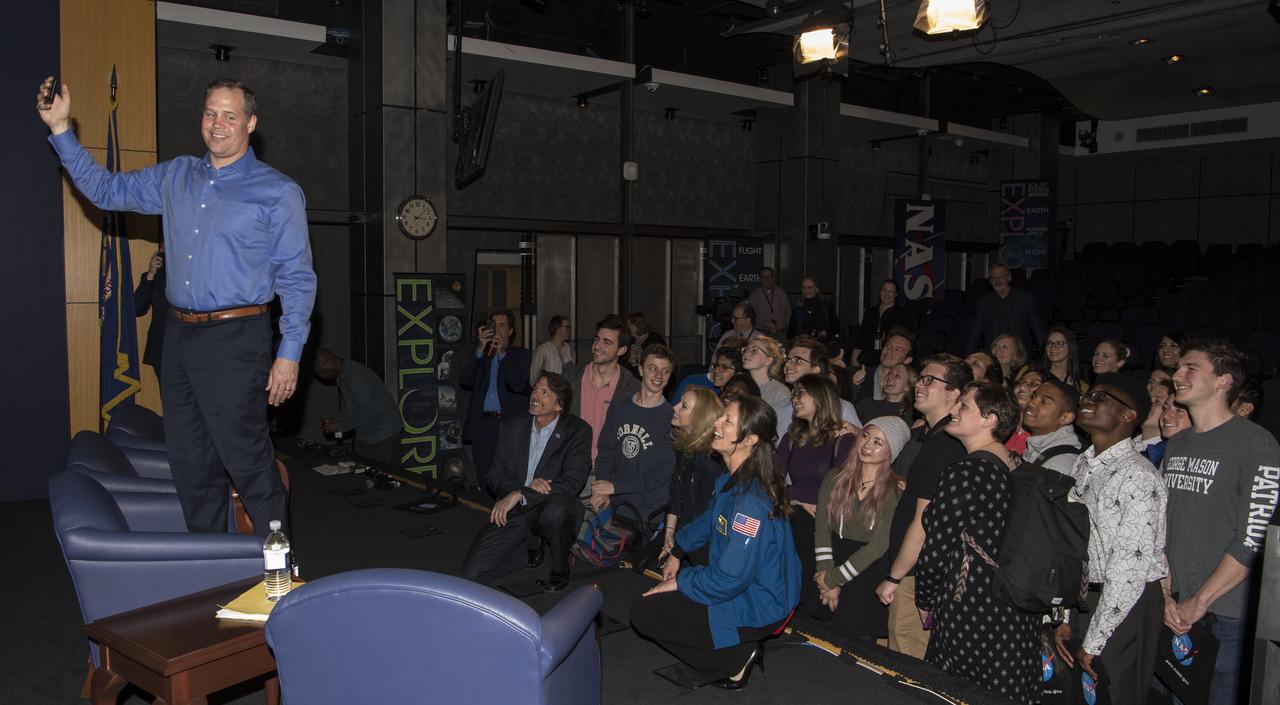
NASA Administrator Jim Bridenstine takes a selfie with college students after the "Future of Space" STEM event, Monday, April 29, 2019 at NASA Headquarters in Washington, where they were able to ask panelists, Bridenstine, NASA Associate Administrator for the Human Exploration and Operations Mission Directorate, Bill Gerstenmaier, and NASA Deputy Associate Administrator for Exploration, Steve Clarke, questions as well as speak with two astronauts currently on the International Space Station, Nick Hague and Christina Koch. NASA astronaut Tracy Caldwell Dyson moderated the panel discussion. Photo Credit: (NASA/Aubrey Gemignani)
Future of Space STEM event
A video profile of a NASA employee is seen as NASA astronaut Tracy Caldwell Dyson, moderates a panel discussion with NASA Administrator Jim Bridenstine, NASA Associate Administrator for the Human Exploration and Operations Mission Directorate, Bill Gerstenmaier, and NASA Deputy Associate Administrator for Exploration, Steve Clarke at the "Future of Space" STEM event, Monday, April 29, 2019 at NASA Headquarters in Washington. The students were able to ask the panelists questions as well as speak with two astronauts currently on the International Space Station, Nick Hague and Christina Koch. Photo Credit: (NASA/Aubrey Gemignani)
Future of Space STEM event
NASA Administrator Jim Bridenstine, second from left, speaks at the "Future of Space" STEM event, Monday, April 29, 2019 at NASA Headquarters in Washington, where college students were able to ask panelists, Bridenstine, NASA Associate Administrator for the Human Exploration and Operations Mission Directorate, Bill Gerstenmaier, second from right, and NASA Deputy Associate Administrator for Exploration, Steve Clarke, right, questions as well as speak with two astronauts currently on the International Space Station, Nick Hague and Christina Koch. NASA astronaut Tracy Caldwell Dyson, left, moderated the panel discussion. Photo Credit: (NASA/Aubrey Gemignani)
Future of Space STEM event
Nick Hague and Christina Koch, two astronauts currently living and working on the International Space Station, are seen on the screen during a live uplink and panel discussion with moderator NASA astronaut Tracy Caldwell Dyson, NASA Administrator Jim Bridenstine, NASA Associate Administrator for the Human Exploration and Operations Mission Directorate, Bill Gerstenmaier, and NASA Deputy Associate Administrator for Exploration, Steve Clarke, at the "Future of Space" STEM event, Monday, April 29, 2019 at NASA Headquarters in Washington. Photo Credit: (NASA/Aubrey Gemignani)
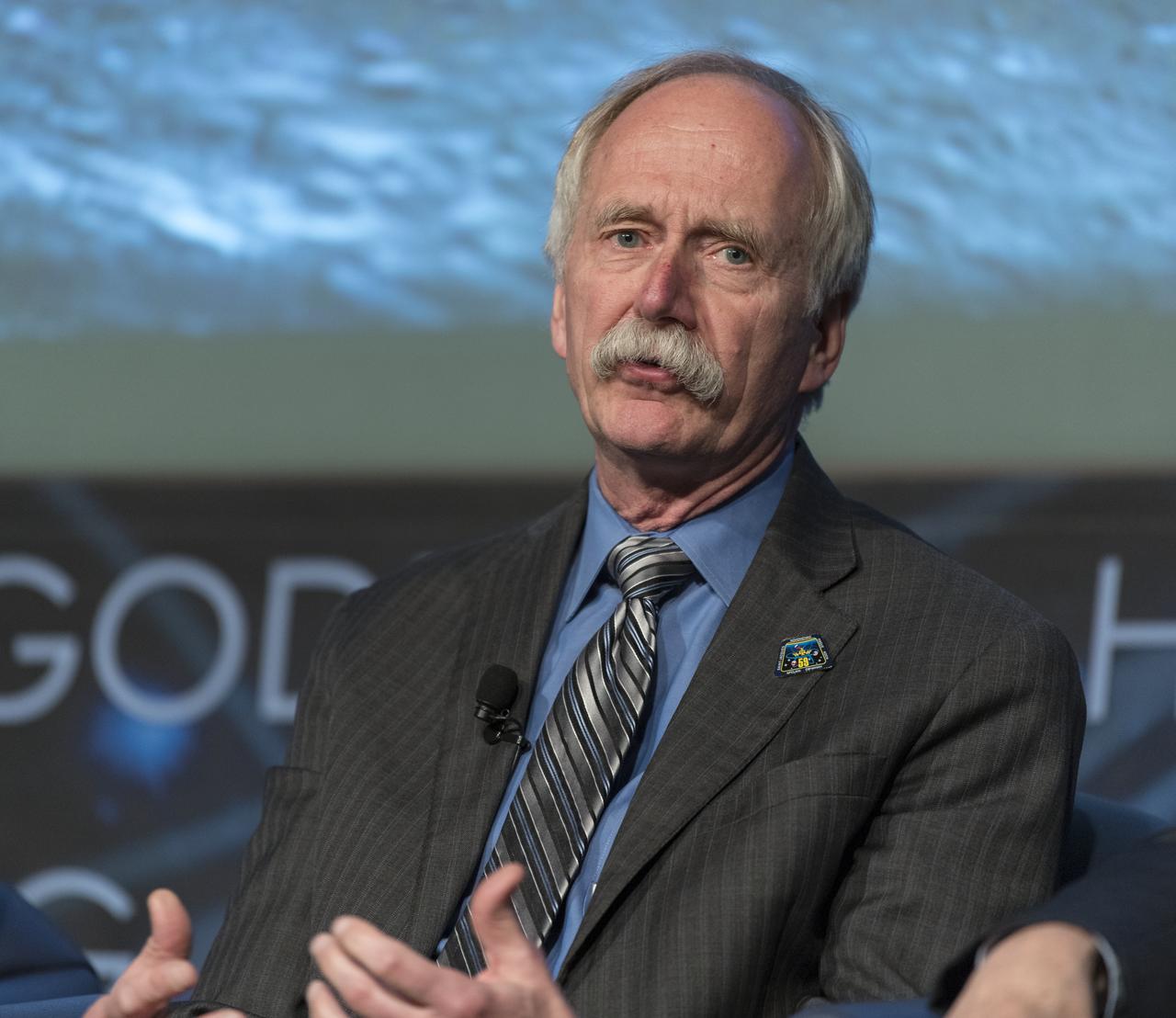
Future of Space STEM event
Nick Hague, left, and Christina Koch, two astronauts currently living and working on the International Space Station, are seen on the screen during a live uplink and panel discussion with, from left to right, moderator NASA astronaut Tracy Caldwell Dyson, NASA Administrator Jim Bridenstine, NASA Associate Administrator for the Human Exploration and Operations Mission Directorate, Bill Gerstenmaier, and NASA Deputy Associate Administrator for Exploration, Steve Clarke, at the "Future of Space" STEM event, Monday, April 29, 2019 at NASA Headquarters in Washington. Photo Credit: (NASA/Aubrey Gemignani)
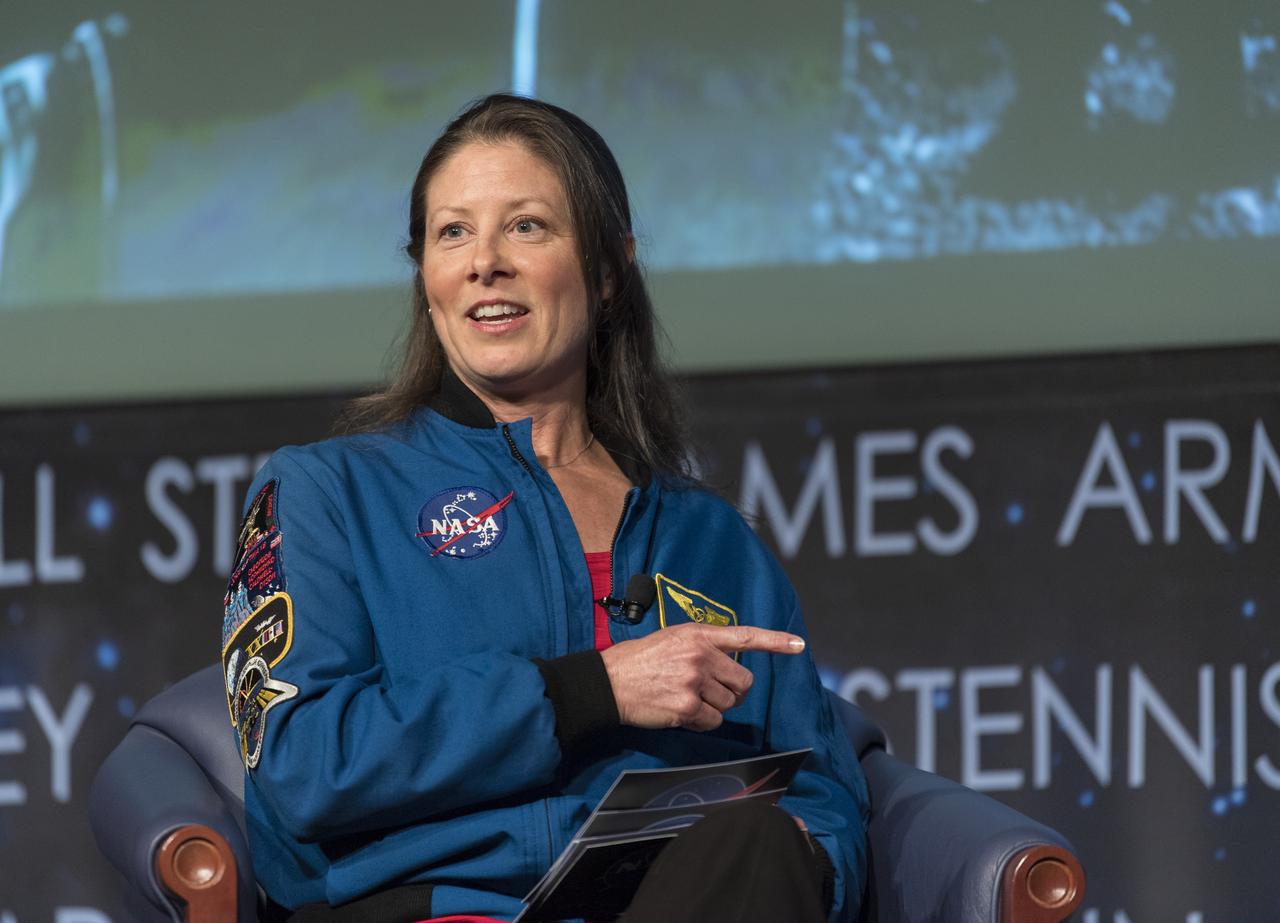
Future of Space STEM event
Anne Marie Demme asks Nick Hague and Christina Koch, two astronauts currently living and working on the International Space Station, a question during a panel discussion with NASA Administrator Jim Bridenstine, NASA Associate Administrator for the Human Exploration and Operations Mission Directorate, Bill Gerstenmaier, and NASA Deputy Associate Administrator for Exploration, Steve Clarke at the "Future of Space" STEM event, Monday, April 29, 2019 at NASA Headquarters in Washington. NASA astronaut Tracy Caldwell Dyson, moderated the panel discussion. Photo Credit: (NASA/Aubrey Gemignani)
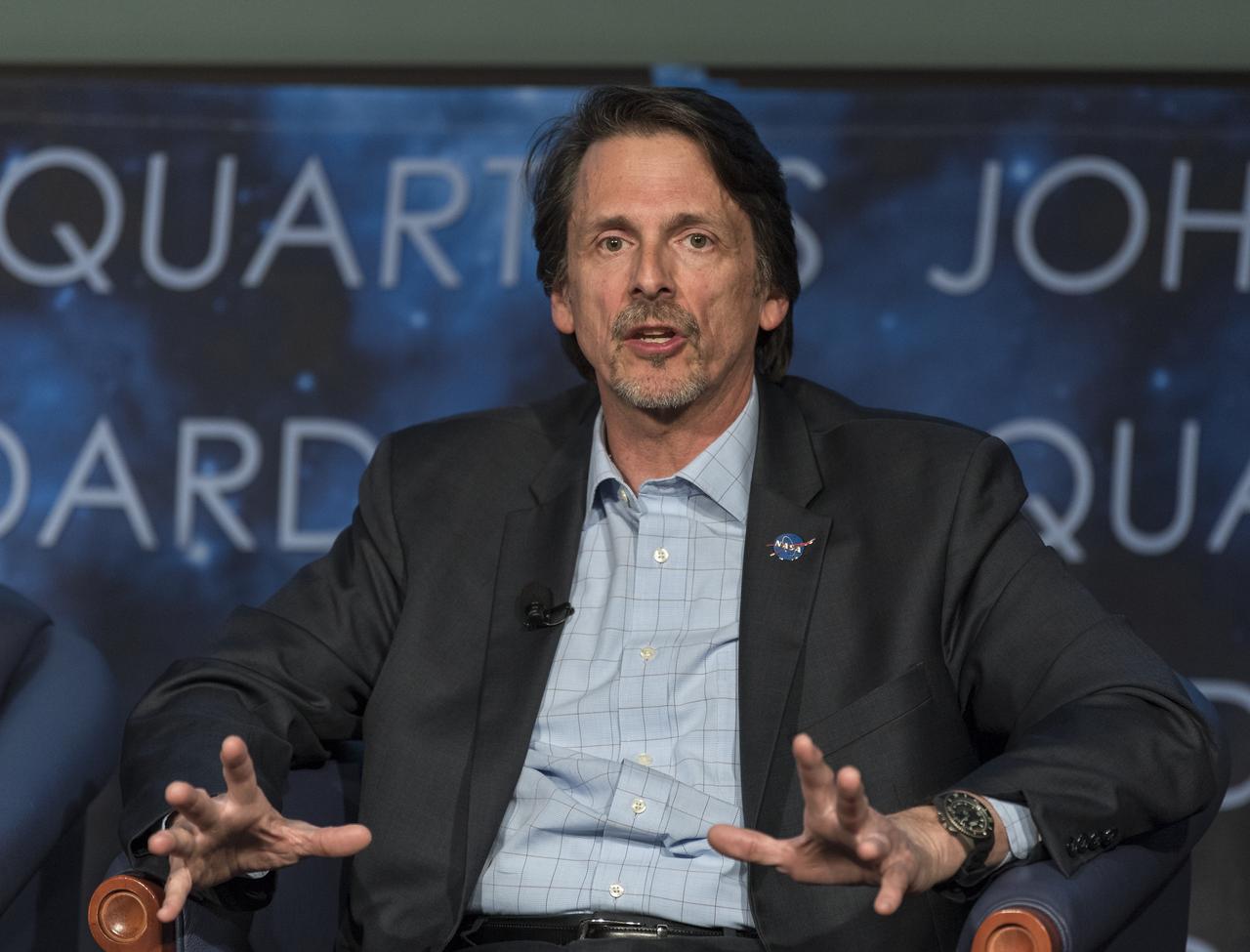
Future of Space STEM event
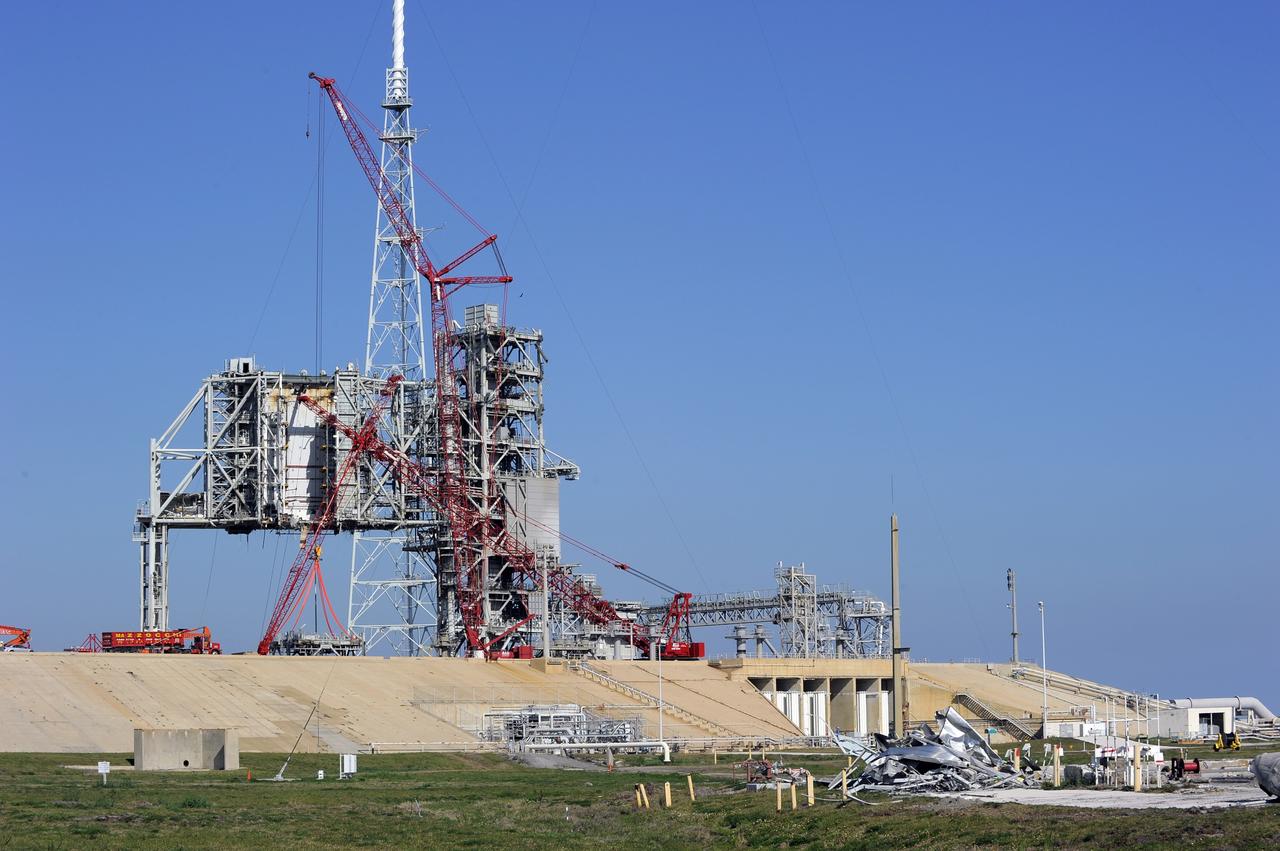
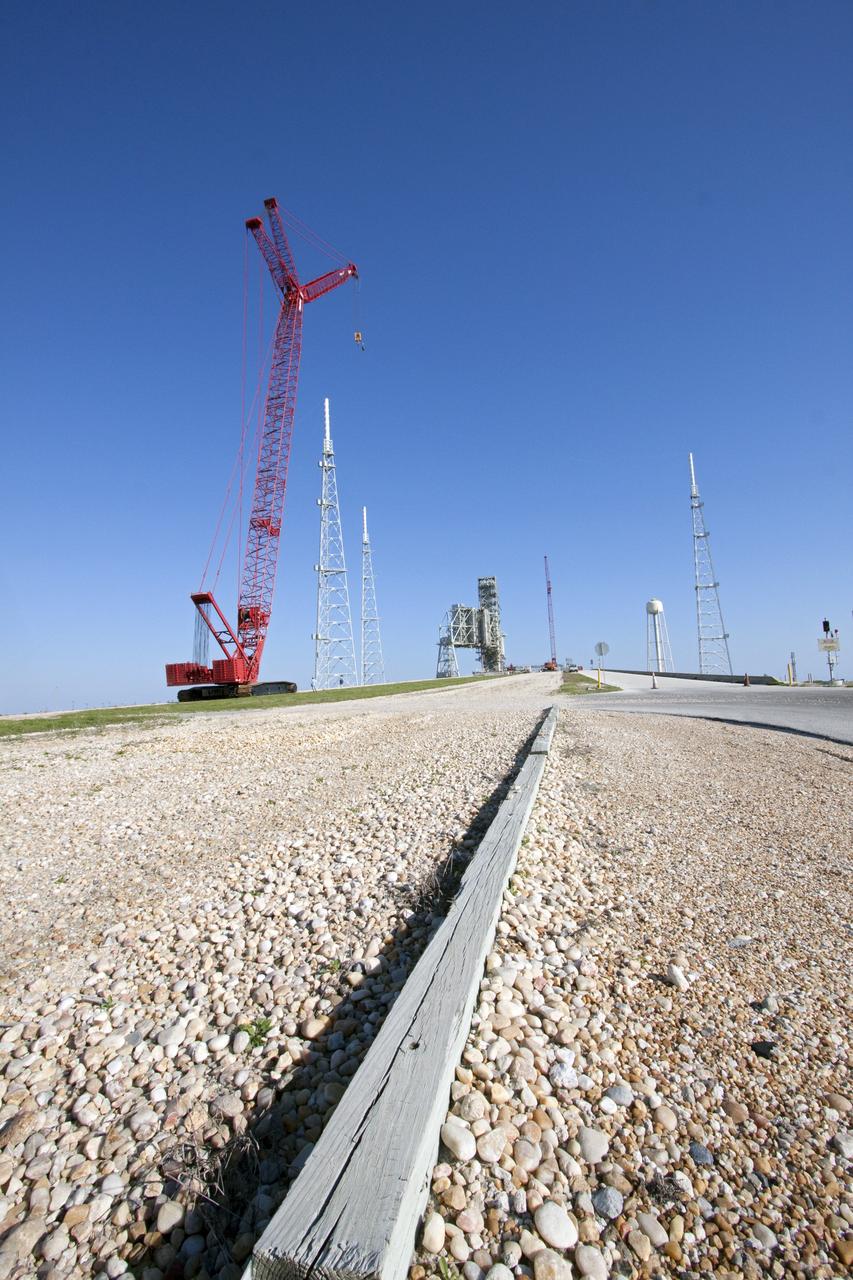
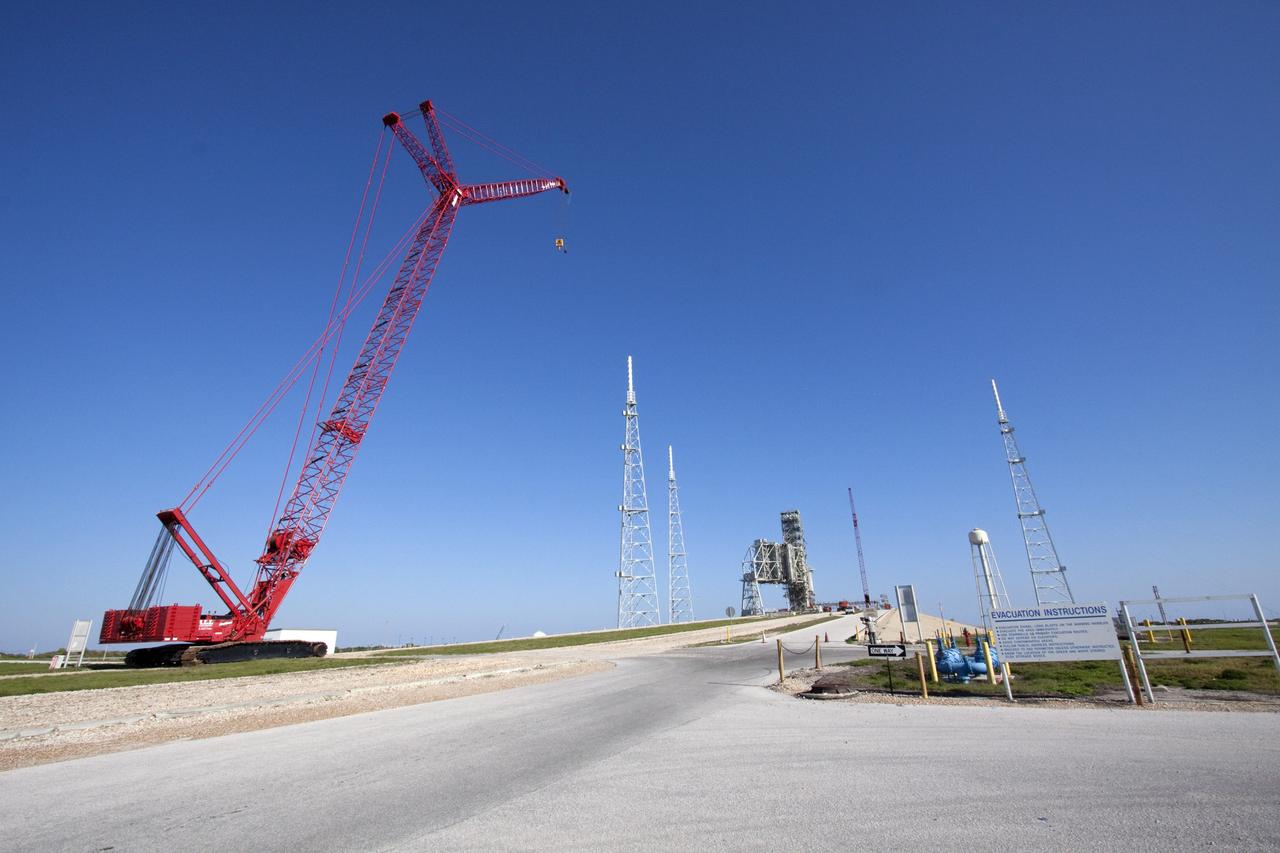
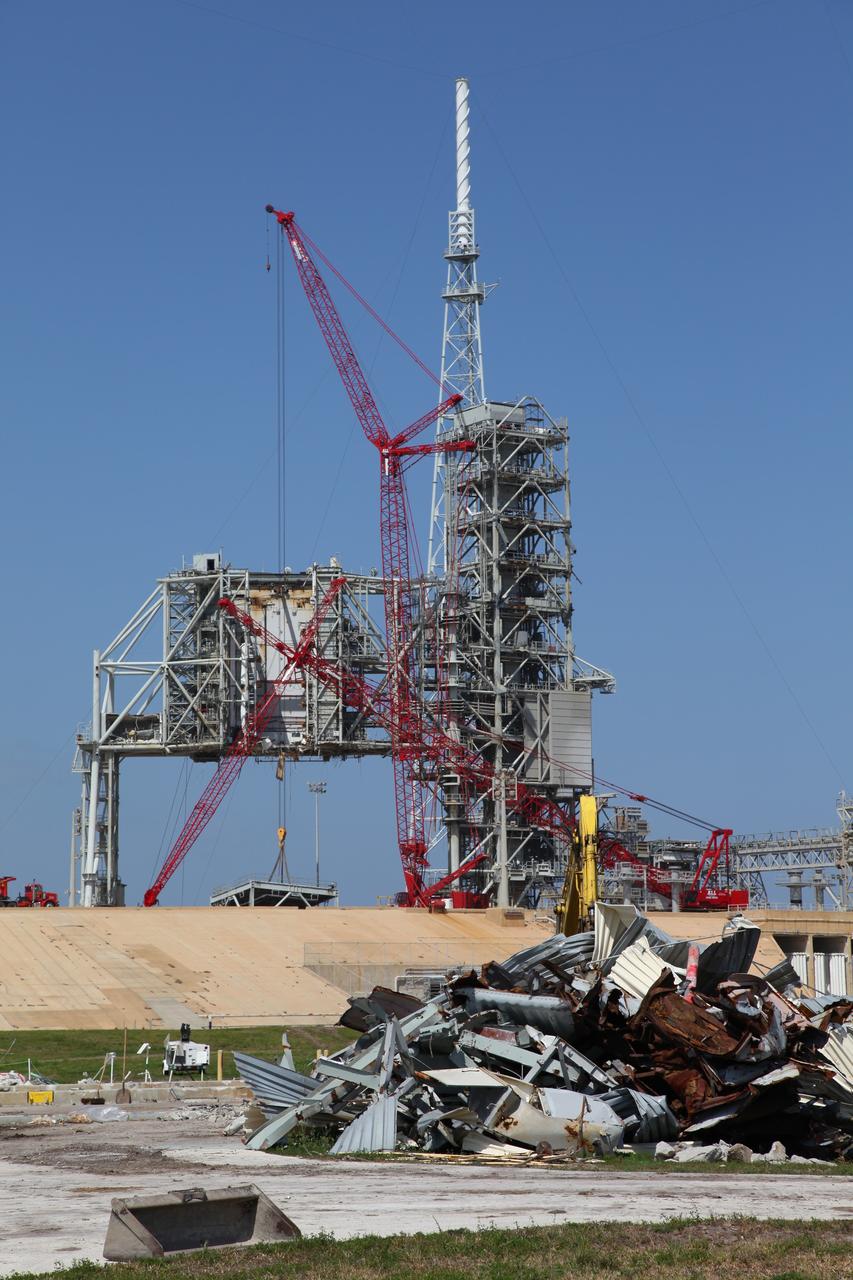
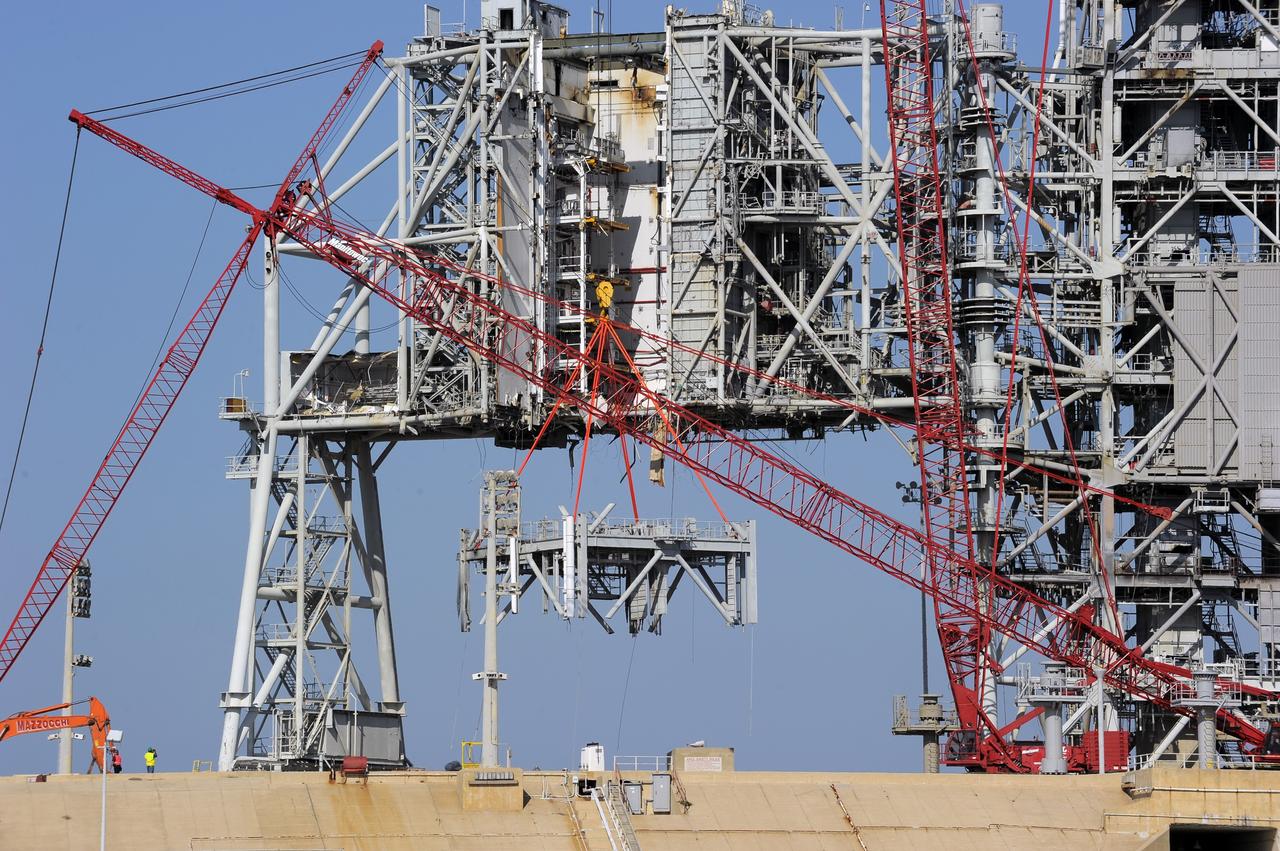
CAPE CANAVERAL, Fla. -- At NASA's Kennedy Space Center in Florida, a large crane makes its way up to the surface of Launch Pad 39B to assist in the removal of the fixed service structure FSS. Removal of the pad's rotating service structure RSS continues. The FSS and RSS were designed to support the unique needs of the Space Shuttle Program. In 2009, the pad was no longer needed for the shuttle program, so it is being restructured for future use.          Its new design will feature a "clean pad" for rockets to come with their own launcher, making it more versatile for a number of vehicles. The transformation also includes the refurbishment of the liquid oxygen and liquid hydrogen tanks and the upgrade of about 1.3 million feet of cable. The new lightning protection system, which was in place for the October 2009 launch of Ares I-X, will remain. For information on NASA's future plans, visit www.nasa.gov. Photo credit: NASA/Troy Cryder
KSC-2011-2362
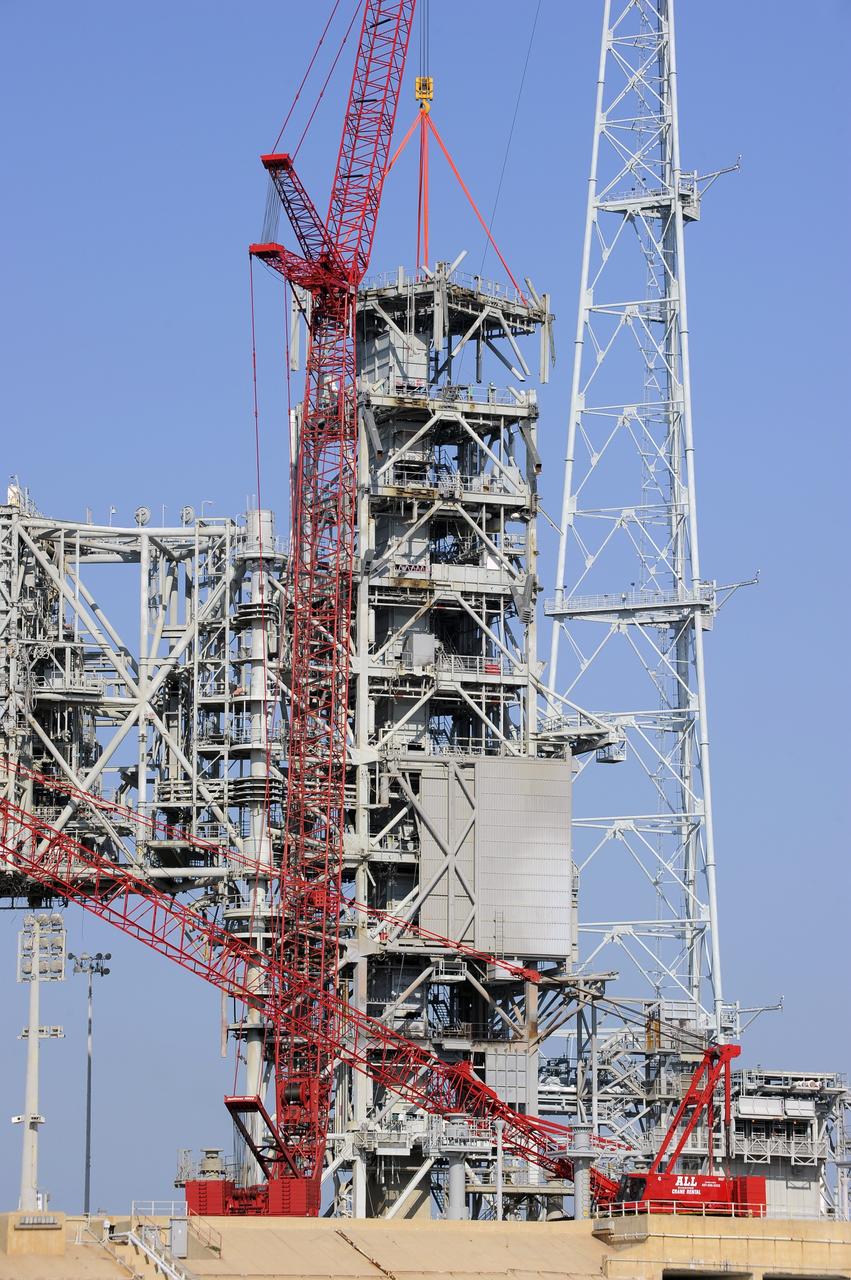
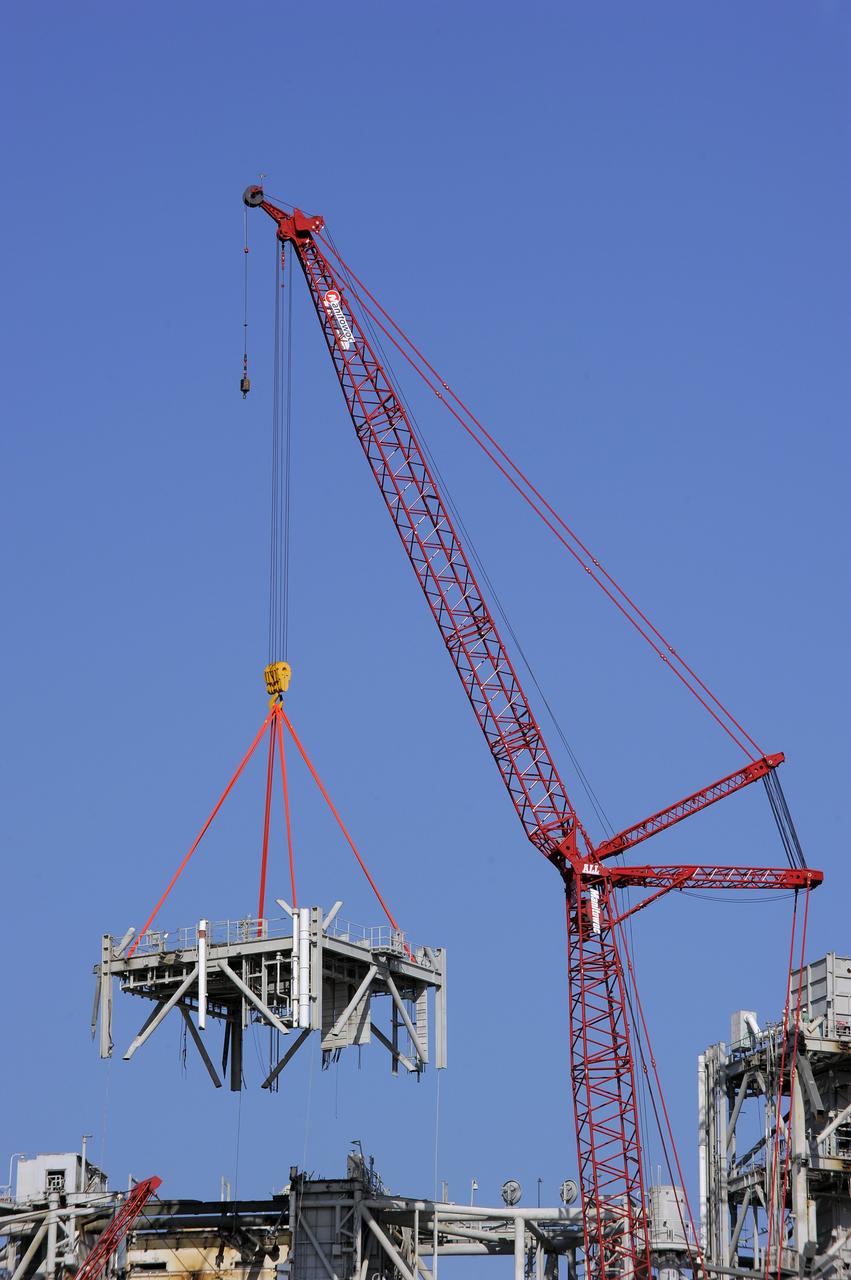
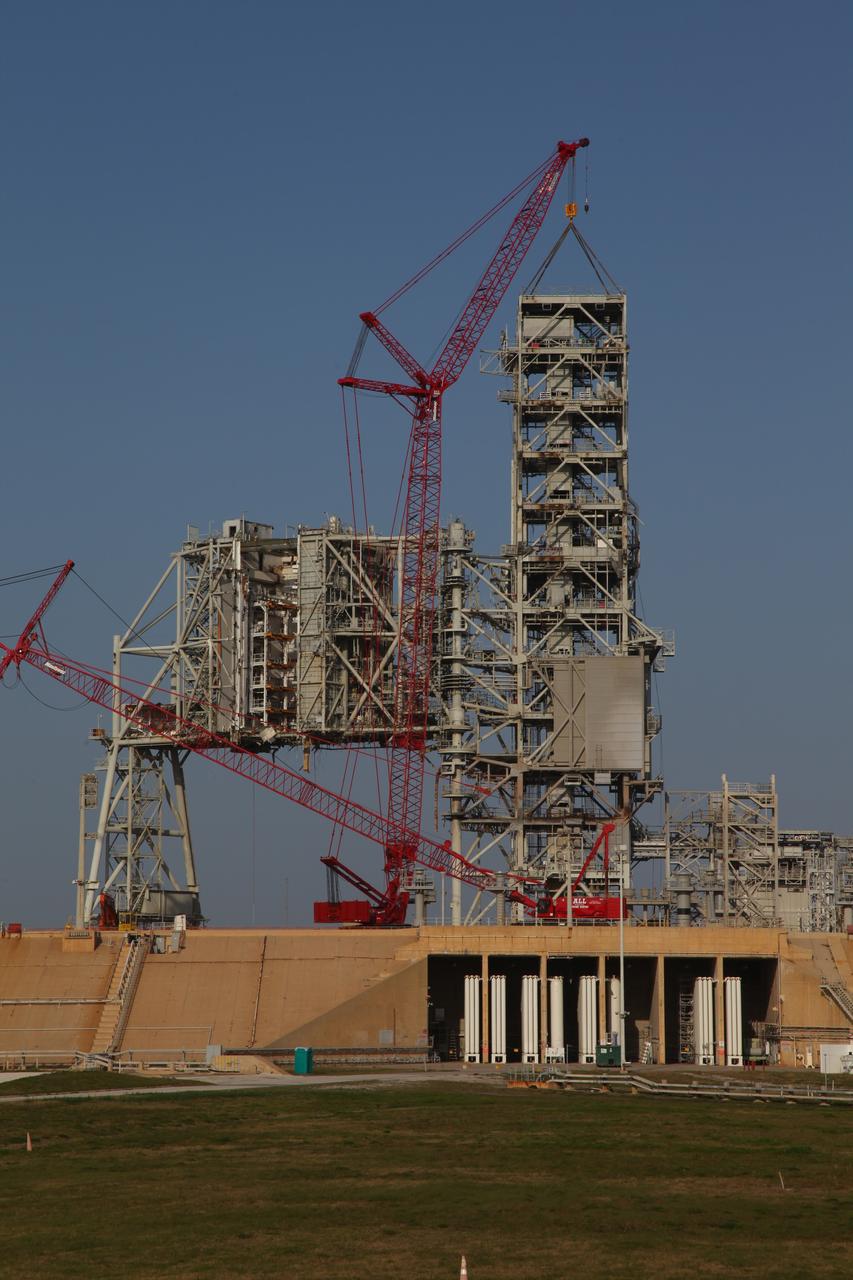
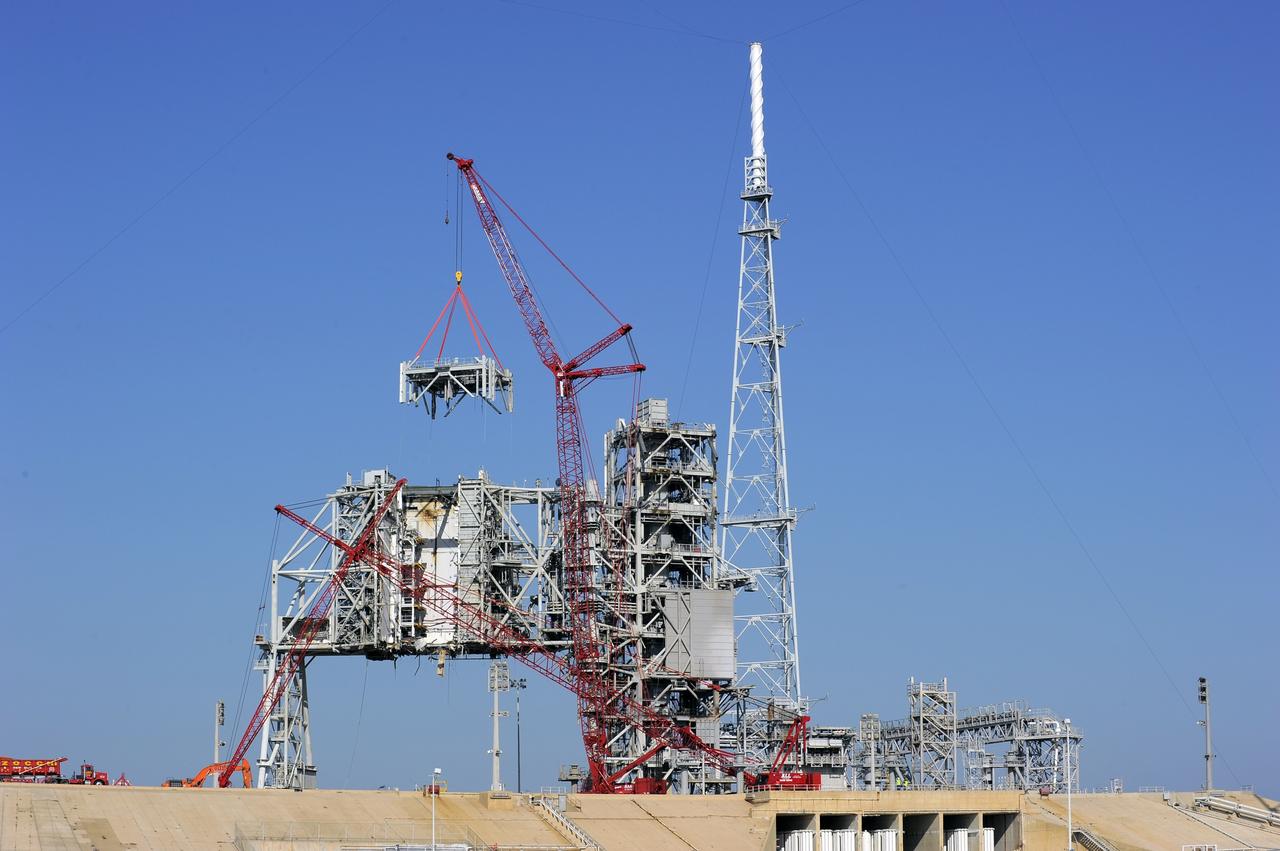
CAPE CANAVERAL, Fla. -- A large crane dismantles another level of the fixed service structure (FSS) on Launch Pad 39B at NASA's Kennedy Space Center in Florida. Work to remove the rotating service structure (RSS) also continues at the pad. The FSS and RSS were designed to support the unique needs of the Space Shuttle Program. In 2009, the pad was no longer needed for the shuttle program, so it is being restructured for future use.            Its new design will feature a "clean pad" for rockets to come with their own launcher, making it more versatile for a number of vehicles. The transformation also includes the refurbishment of the liquid oxygen and liquid hydrogen tanks and the upgrade of about 1.3 million feet of cable. The new lightning protection system, which was in place for the October 2009 launch of Ares I-X, will remain. For information on NASA's future plans, visit www.nasa.gov. Photo credit: NASA/Kim Shiflett
KSC-2011-2460
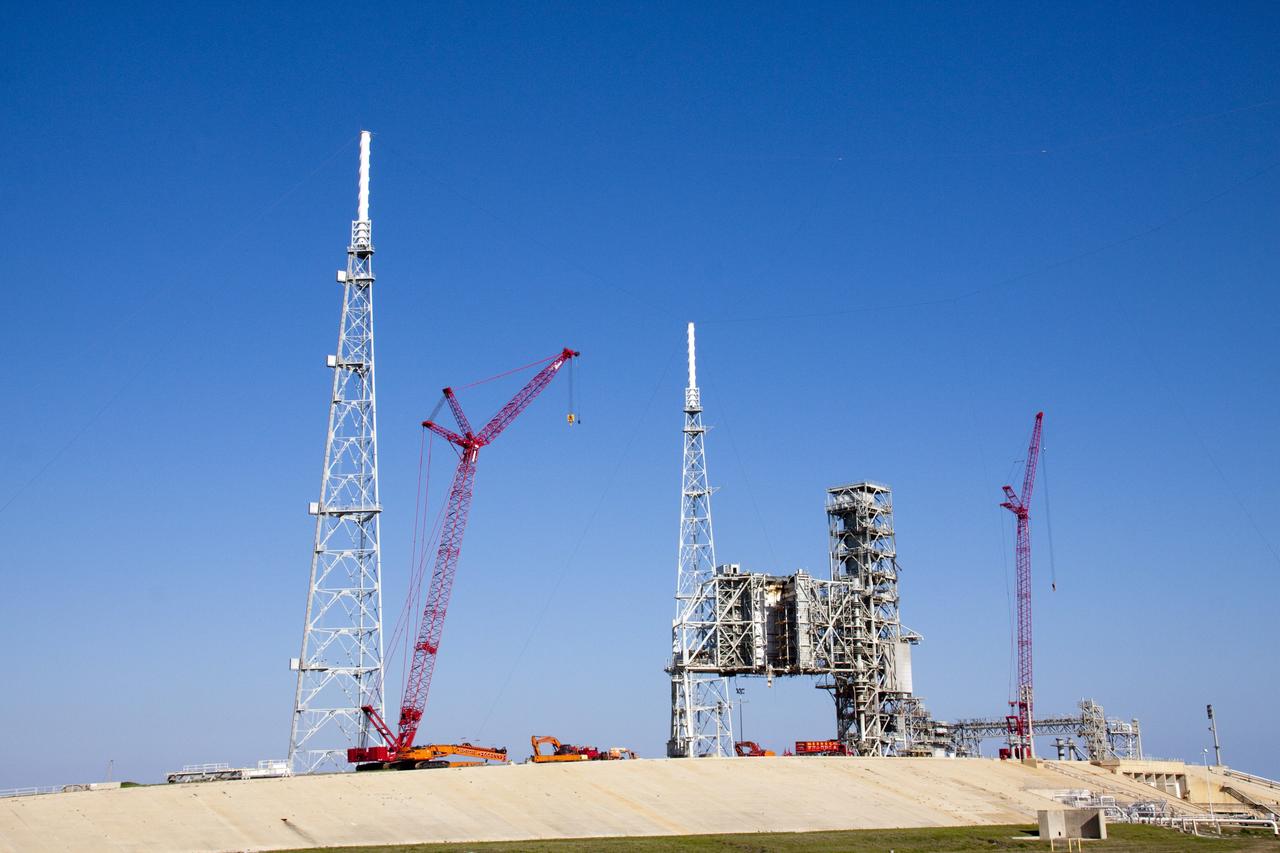
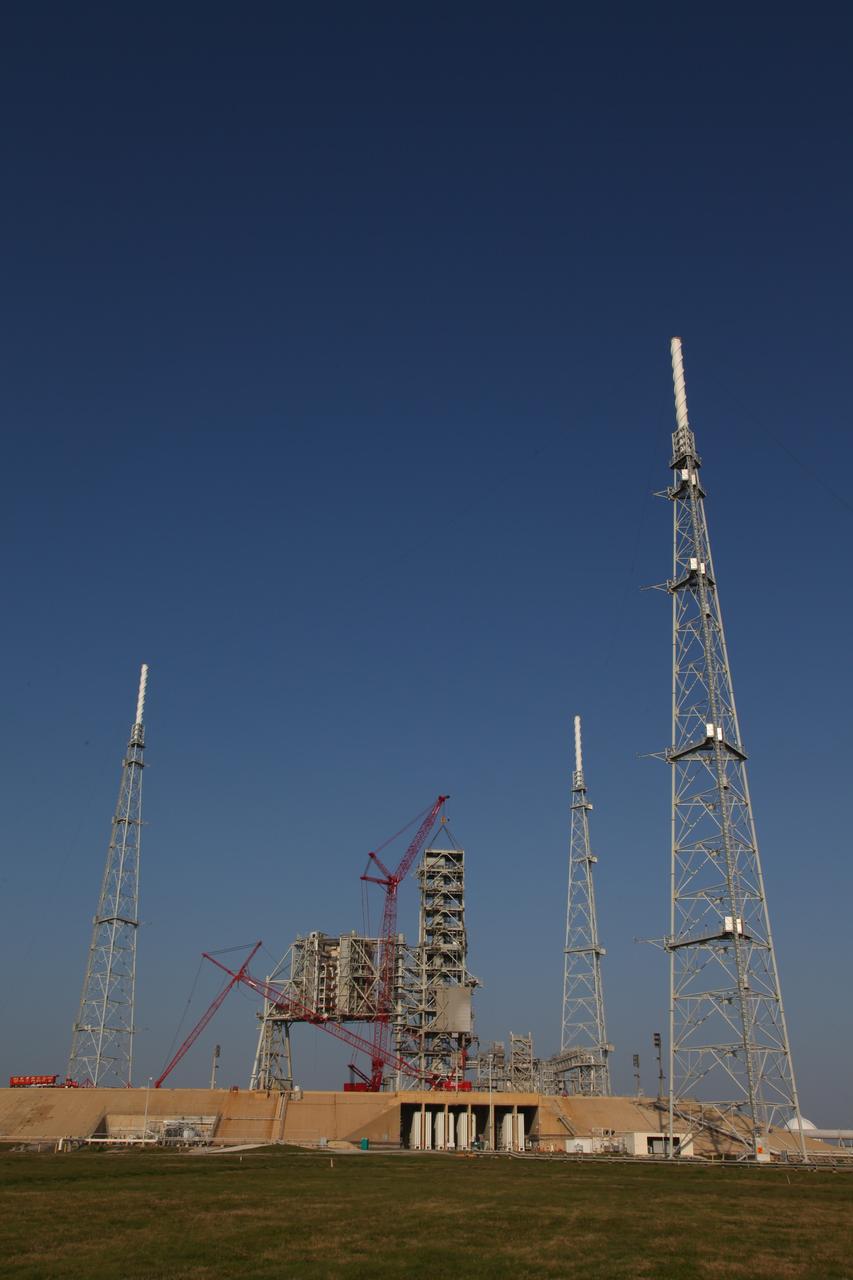
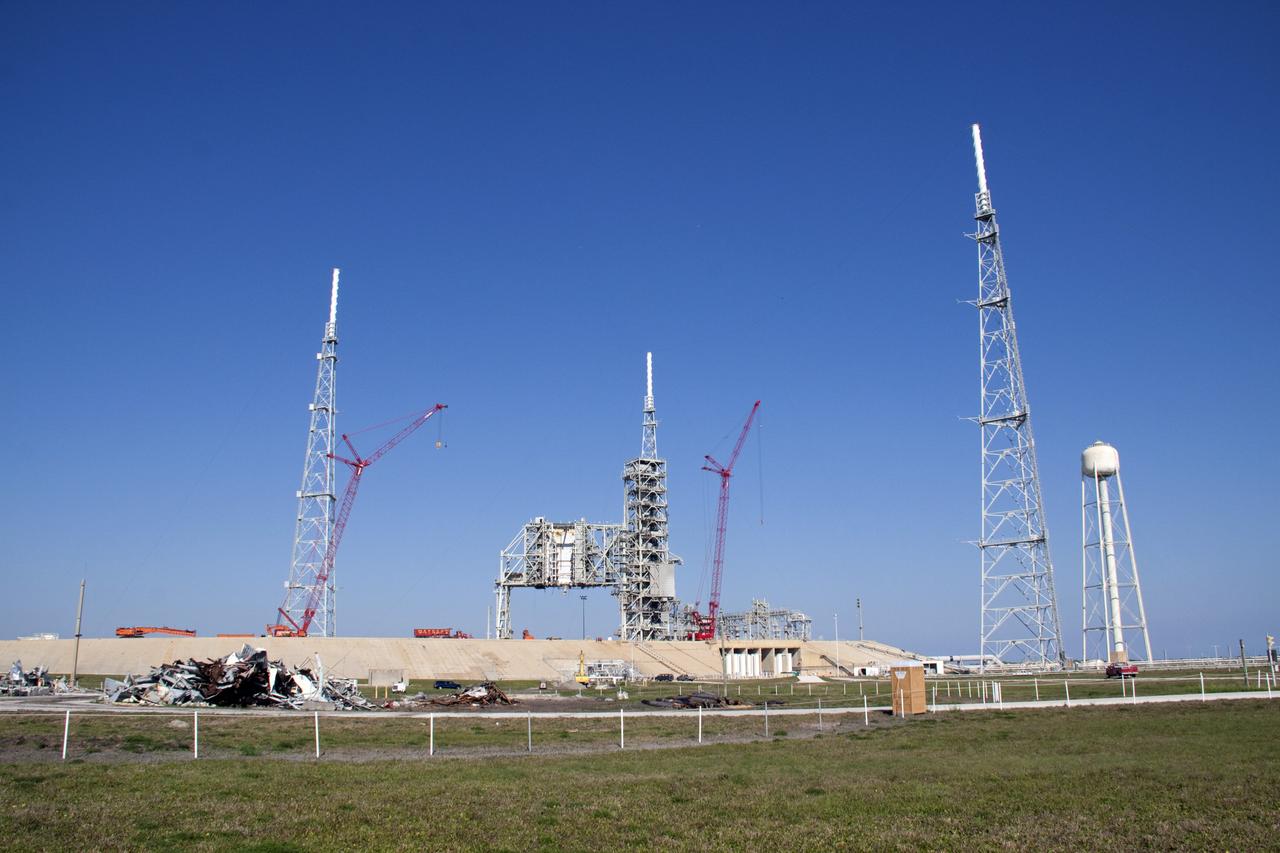
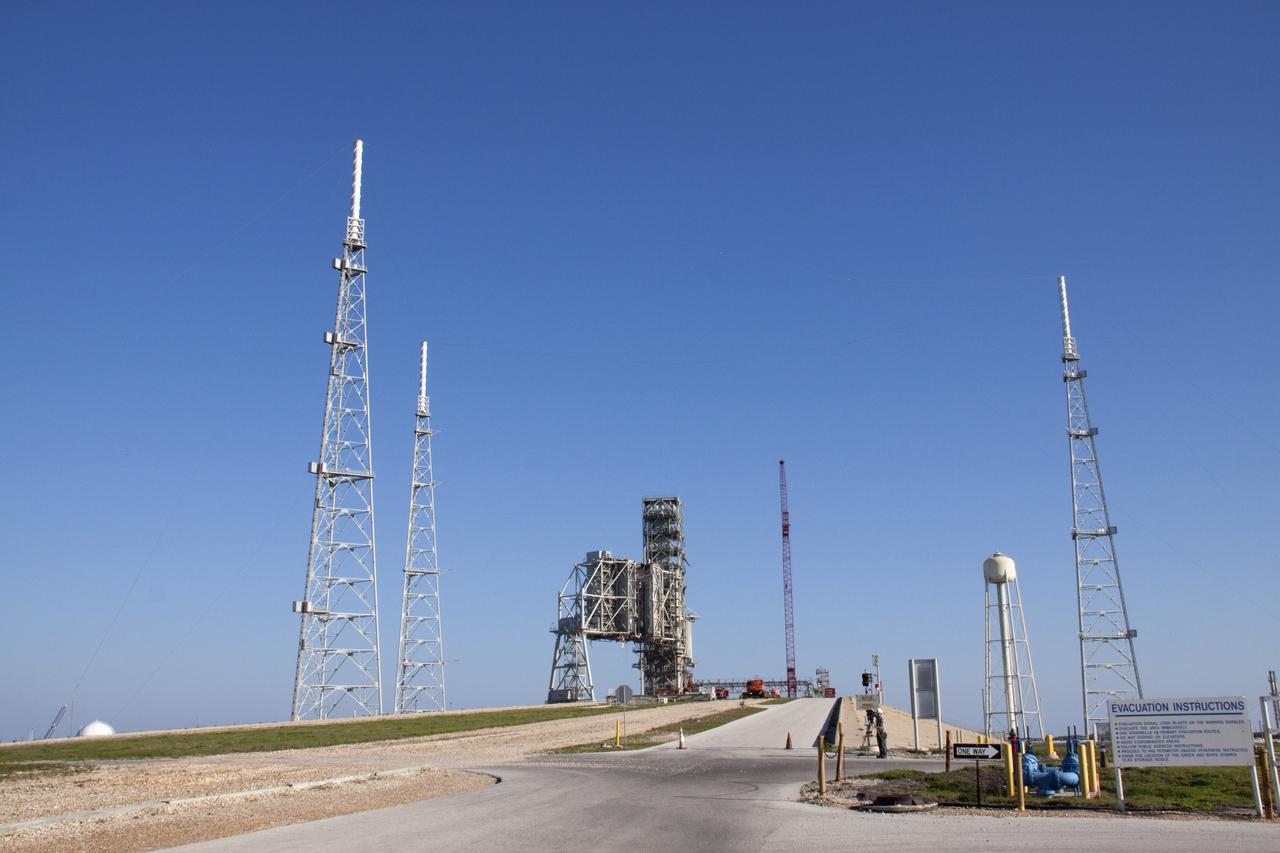
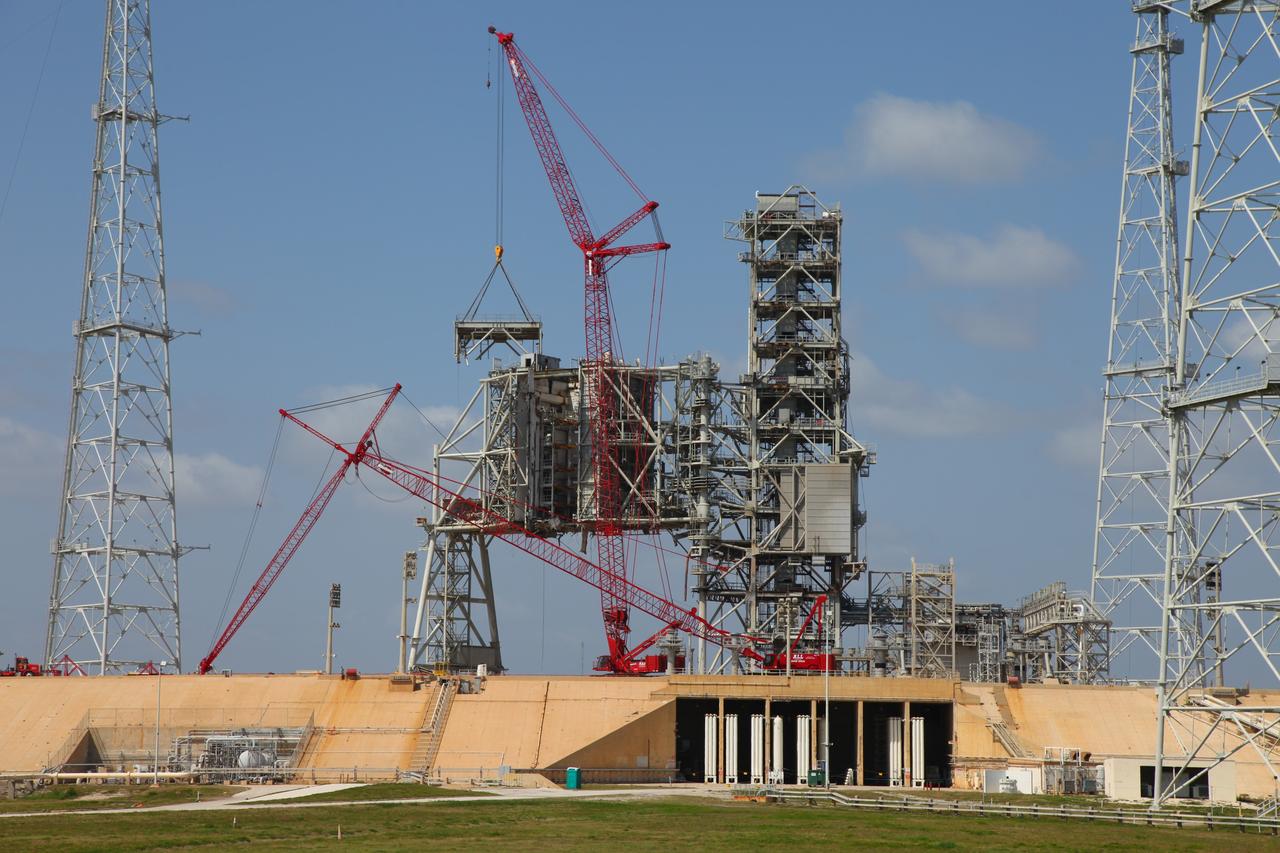
CAPE CANAVERAL, Fla. -- At NASA's Kennedy Space Center in Florida, two large cranes will assist in the removal of Launch Pad 39B's fixed service structure FSS and rotating service structure RSS. The FSS and RSS were designed to support the unique needs of the Space Shuttle Program. In 2009, the pad was no longer needed for the shuttle program, so it is being restructured for future use.    Its new design will feature a "clean pad" for rockets to come with their own launcher, making it more versatile for a number of vehicles. The transformation also includes the refurbishment of the liquid oxygen and liquid hydrogen tanks and the upgrade of about 1.3 million feet of cable. The new lightning protection system, which was in place for the October 2009 launch of Ares I-X, will remain. For information on NASA's future plans, visit www.nasa.gov. Photo credit: NASA/Troy Cryder
KSC-2011-2365
CAPE CANAVERAL, Fla. -- A large crane dismantles another level of the fixed service structure (FSS) on Launch Pad 39B at NASA's Kennedy Space Center in Florida. Work to remove the rotating service structure (RSS) also continues at the pad. The FSS and RSS were designed to support the unique needs of the Space Shuttle Program. In 2009, the pad was no longer needed for the shuttle program, so it is being restructured for future use.            Its new design will feature a "clean pad" for rockets to come with their own launcher, making it more versatile for a number of vehicles. The transformation also includes the refurbishment of the liquid oxygen and liquid hydrogen tanks and the upgrade of about 1.3 million feet of cable. The new lightning protection system, which was in place for the October 2009 launch of Ares I-X, will remain. For information on NASA's future plans, visit www.nasa.gov. Photo credit: NASA/Kim Shiflett
KSC-2011-2463
CAPE CANAVERAL, Fla. -- A large crane dismantles another level of the fixed service structure (FSS) on Launch Pad 39B at NASA's Kennedy Space Center in Florida. Work to remove the rotating service structure (RSS) also continues at the pad. The FSS and RSS were designed to support the unique needs of the Space Shuttle Program. In 2009, the pad was no longer needed for the shuttle program, so it is being restructured for future use.            Its new design will feature a "clean pad" for rockets to come with their own launcher, making it more versatile for a number of vehicles. The transformation also includes the refurbishment of the liquid oxygen and liquid hydrogen tanks and the upgrade of about 1.3 million feet of cable. The new lightning protection system, which was in place for the October 2009 launch of Ares I-X, will remain. For information on NASA's future plans, visit www.nasa.gov. Photo credit: NASA/Kim Shiflett
KSC-2011-2461
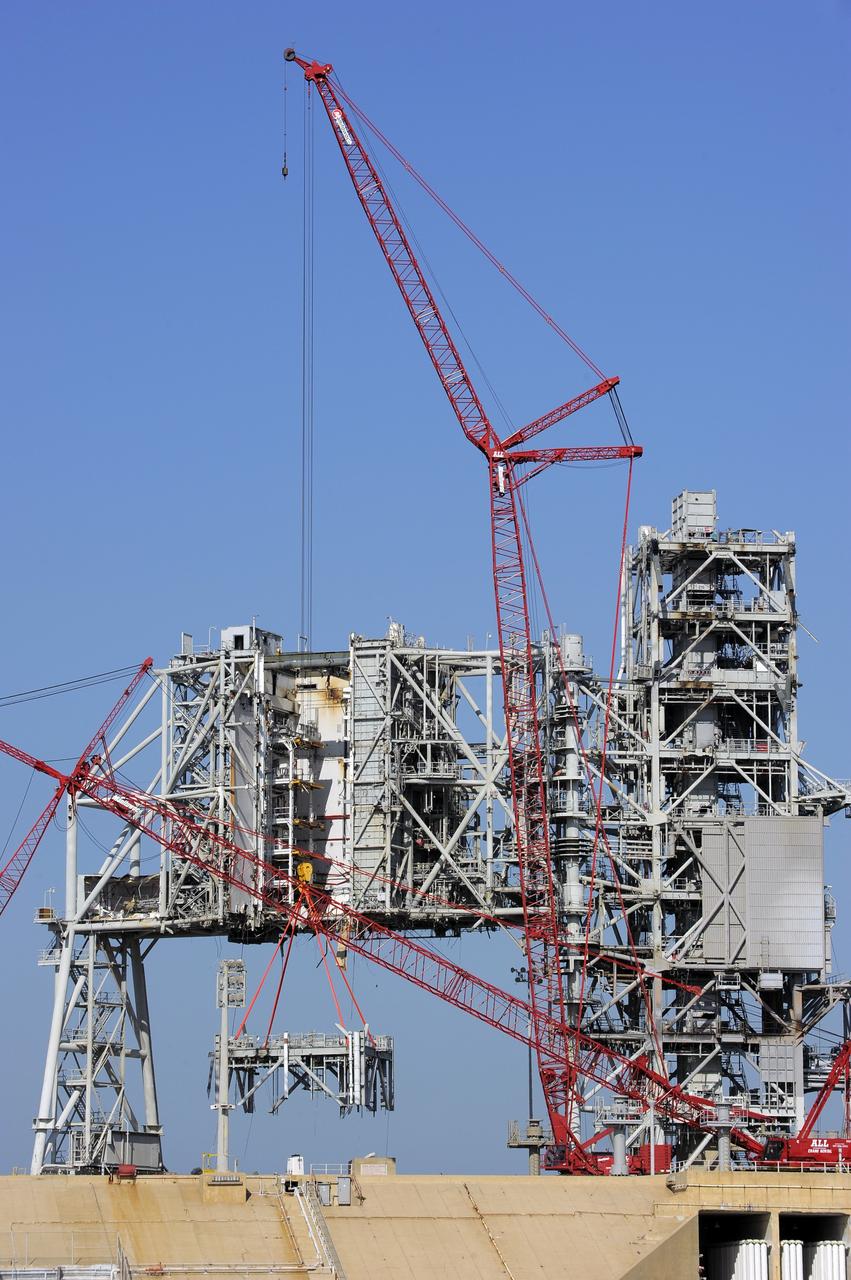
CAPE CANAVERAL, Fla. -- A large crane dismantles the fixed service structure FSS piece by piece on Launch Pad 39B at NASA's Kennedy Space Center in Florida. Work to remove the rotating service structure RSS also continues at the pad. The FSS and RSS were designed to support the unique needs of the Space Shuttle Program. In 2009, the pad was no longer needed for the shuttle program, so it is being restructured for future use.    Its new design will feature a "clean pad" for rockets to come with their own launcher, making it more versatile for a number of vehicles. The transformation also includes the refurbishment of the liquid oxygen and liquid hydrogen tanks and the upgrade of about 1.3 million feet of cable. The new lightning protection system, which was in place for the October 2009 launch of Ares I-X, will remain. For information on NASA's future plans, visit www.nasa.gov. Photo credit: NASA/Frankie Martin
KSC-2011-2372
CAPE CANAVERAL, Fla. -- A large crane dismantles the fixed service structure (FSS) piece by piece on Launch Pad 39B at NASA's Kennedy Space Center in Florida. Work to remove the rotating service structure (RSS) also continues at the pad. The FSS and RSS were designed to support the unique needs of the Space Shuttle Program. In 2009, the pad was no longer needed for the shuttle program, so it is being restructured for future use.    Its new design will feature a "clean pad" for rockets to come with their own launcher, making it more versatile for a number of vehicles. The transformation also includes the refurbishment of the liquid oxygen and liquid hydrogen tanks and the upgrade of about 1.3 million feet of cable. The new lightning protection system, which was in place for the October 2009 launch of Ares I-X, will remain. For information on NASA's future plans, visit www.nasa.gov. Photo credit: NASA/Frankie Martin
KSC-2011-2375
CAPE CANAVERAL, Fla. -- A large crane dismantles another level of the fixed service structure (FSS) on Launch Pad 39B at NASA's Kennedy Space Center in Florida. Work to remove the rotating service structure (RSS) also continues at the pad. The FSS and RSS were designed to support the unique needs of the Space Shuttle Program. In 2009, the pad was no longer needed for the shuttle program, so it is being restructured for future use.            Its new design will feature a "clean pad" for rockets to come with their own launcher, making it more versatile for a number of vehicles. The transformation also includes the refurbishment of the liquid oxygen and liquid hydrogen tanks and the upgrade of about 1.3 million feet of cable. The new lightning protection system, which was in place for the October 2009 launch of Ares I-X, will remain. For information on NASA's future plans, visit www.nasa.gov. Photo credit: NASA/Kim Shiflett
KSC-2011-2459
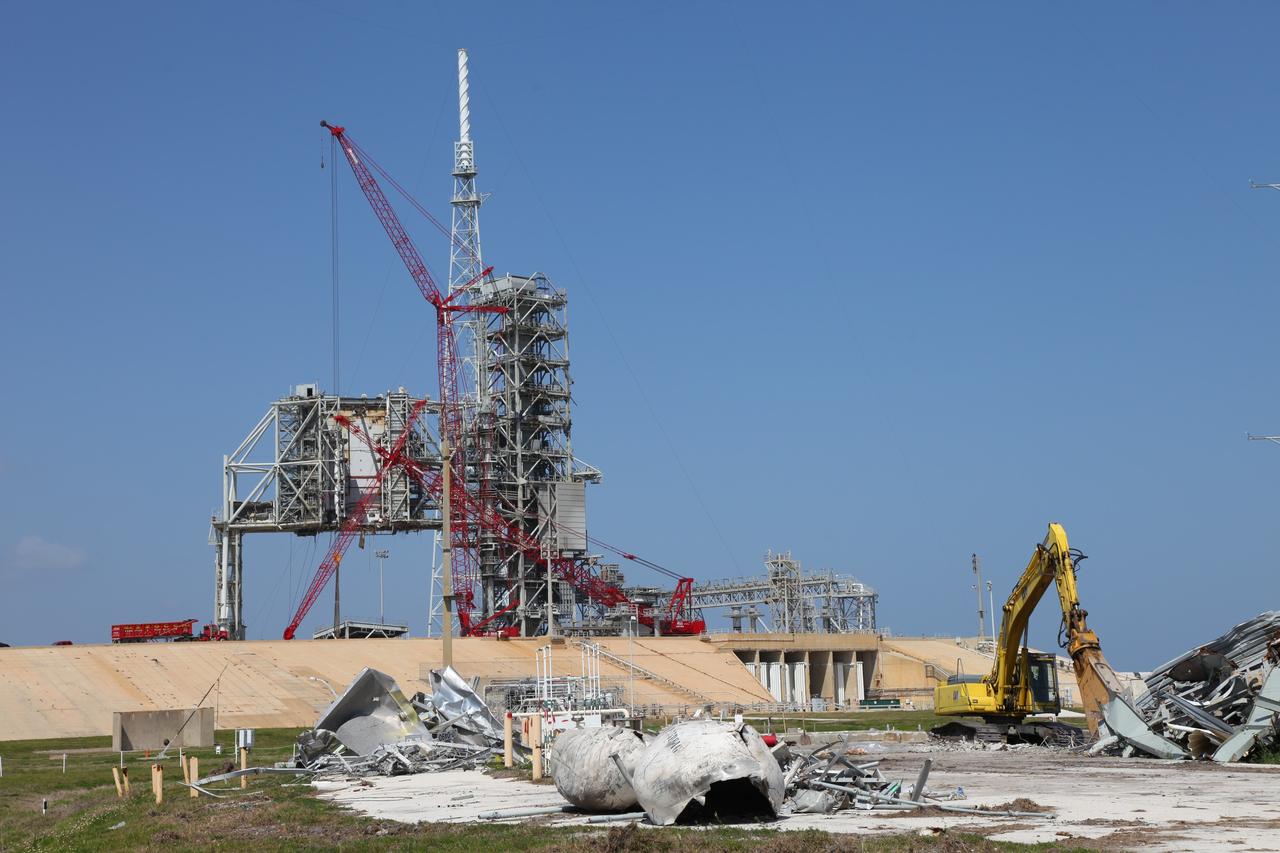
CAPE CANAVERAL, Fla. -- At NASA's Kennedy Space Center in Florida, preparations are under way to begin removing the fixed service structure FSS from Launch Pad 39B. Removal of the pad's rotating service structure RSS continues. The FSS and RSS were designed to support the unique needs of the Space Shuttle Program. In 2009, the pad was no longer needed for the shuttle program, so it is being restructured for future use.              Its new design will feature a "clean pad" for rockets to come with their own launcher, making it more versatile for a number of vehicles. The transformation also includes the refurbishment of the liquid oxygen and liquid hydrogen tanks and the upgrade of about 1.3 million feet of cable. The new lightning protection system, which was in place for the October 2009 launch of Ares I-X, will remain. For information on NASA's future plans, visit www.nasa.gov. Photo credit: NASA/Troy Cryder
KSC-2011-2360
CAPE CANAVERAL, Fla. -- A large crane dismantles the fixed service structure (FSS) piece by piece on Launch Pad 39B at NASA's Kennedy Space Center in Florida. Work to remove the rotating service structure (RSS) also continues at the pad. The FSS and RSS were designed to support the unique needs of the Space Shuttle Program. In 2009, the pad was no longer needed for the shuttle program, so it is being restructured for future use.    Its new design will feature a "clean pad" for rockets to come with their own launcher, making it more versatile for a number of vehicles. The transformation also includes the refurbishment of the liquid oxygen and liquid hydrogen tanks and the upgrade of about 1.3 million feet of cable. The new lightning protection system, which was in place for the October 2009 launch of Ares I-X, will remain. For information on NASA's future plans, visit www.nasa.gov. Photo credit: NASA/Frankie Martin
KSC-2011-2374
CAPE CANAVERAL, Fla. -- A large crane dismantles the fixed service structure (FSS) piece by piece on Launch Pad 39B at NASA's Kennedy Space Center in Florida. Work to remove the rotating service structure (RSS) also continues at the pad. The FSS and RSS were designed to support the unique needs of the Space Shuttle Program. In 2009, the pad was no longer needed for the shuttle program, so it is being restructured for future use.    Its new design will feature a "clean pad" for rockets to come with their own launcher, making it more versatile for a number of vehicles. The transformation also includes the refurbishment of the liquid oxygen and liquid hydrogen tanks and the upgrade of about 1.3 million feet of cable. The new lightning protection system, which was in place for the October 2009 launch of Ares I-X, will remain. For information on NASA's future plans, visit www.nasa.gov. Photo credit: NASA/Frankie Martin
KSC-2011-2373
CAPE CANAVERAL, Fla. -- A large crane dismantles the fixed service structure FSS piece by piece on Launch Pad 39B at NASA's Kennedy Space Center in Florida. Work to remove the rotating service structure RSS also continues at the pad. The FSS and RSS were designed to support the unique needs of the Space Shuttle Program. In 2009, the pad was no longer needed for the shuttle program, so it is being restructured for future use.    Its new design will feature a "clean pad" for rockets to come with their own launcher, making it more versatile for a number of vehicles. The transformation also includes the refurbishment of the liquid oxygen and liquid hydrogen tanks and the upgrade of about 1.3 million feet of cable. The new lightning protection system, which was in place for the October 2009 launch of Ares I-X, will remain. For information on NASA's future plans, visit www.nasa.gov. Photo credit: NASA/Frankie Martin
KSC-2011-2371
CAPE CANAVERAL, Fla. -- A large crane dismantles another level of the fixed service structure (FSS) on Launch Pad 39B at NASA's Kennedy Space Center in Florida. Work to remove the rotating service structure (RSS) also continues at the pad. The FSS and RSS were designed to support the unique needs of the Space Shuttle Program. In 2009, the pad was no longer needed for the shuttle program, so it is being restructured for future use.            Its new design will feature a "clean pad" for rockets to come with their own launcher, making it more versatile for a number of vehicles. The transformation also includes the refurbishment of the liquid oxygen and liquid hydrogen tanks and the upgrade of about 1.3 million feet of cable. The new lightning protection system, which was in place for the October 2009 launch of Ares I-X, will remain. For information on NASA's future plans, visit www.nasa.gov. Photo credit: NASA/Kim Shiflett
KSC-2011-2458
CAPE CANAVERAL, Fla. -- A large crane dismantles the fixed service structure FSS piece by piece on Launch Pad 39B at NASA's Kennedy Space Center in Florida. Work to remove the rotating service structure RSS also continues at the pad. The FSS and RSS were designed to support the unique needs of the Space Shuttle Program. In 2009, the pad was no longer needed for the shuttle program, so it is being restructured for future use.      Its new design will feature a "clean pad" for rockets to come with their own launcher, making it more versatile for a number of vehicles. The transformation also includes the refurbishment of the liquid oxygen and liquid hydrogen tanks and the upgrade of about 1.3 million feet of cable. The new lightning protection system, which was in place for the October 2009 launch of Ares I-X, will remain. For information on NASA's future plans, visit www.nasa.gov. Photo credit: NASA/Frankie Martin
KSC-2011-2370
CAPE CANAVERAL, Fla. -- At NASA's Kennedy Space Center in Florida, a large crane makes its way up to the surface of Launch Pad 39B to assist in the removal of the fixed service structure FSS. Removal of the pad's rotating service structure RSS continues. The FSS and RSS were designed to support the unique needs of the Space Shuttle Program. In 2009, the pad was no longer needed for the shuttle program, so it is being restructured for future use.            Its new design will feature a "clean pad" for rockets to come with their own launcher, making it more versatile for a number of vehicles. The transformation also includes the refurbishment of the liquid oxygen and liquid hydrogen tanks and the upgrade of about 1.3 million feet of cable. The new lightning protection system, which was in place for the October 2009 launch of Ares I-X, will remain. For information on NASA's future plans, visit www.nasa.gov. Photo credit: NASA/Troy Cryder
KSC-2011-2361
CAPE CANAVERAL, Fla. -- A large crane dismantles another level of the fixed service structure (FSS) on Launch Pad 39B at NASA's Kennedy Space Center in Florida. Work to remove the rotating service structure (RSS) also continues at the pad. The FSS and RSS were designed to support the unique needs of the Space Shuttle Program. In 2009, the pad was no longer needed for the shuttle program, so it is being restructured for future use.            Its new design will feature a "clean pad" for rockets to come with their own launcher, making it more versatile for a number of vehicles. The transformation also includes the refurbishment of the liquid oxygen and liquid hydrogen tanks and the upgrade of about 1.3 million feet of cable. The new lightning protection system, which was in place for the October 2009 launch of Ares I-X, will remain. For information on NASA's future plans, visit www.nasa.gov. Photo credit: NASA/Kim Shiflett
KSC-2011-2462
CAPE CANAVERAL, Fla. -- At NASA's Kennedy Space Center in Florida, two large cranes will assist in the removal of Launch Pad 39B's fixed service structure FSS and rotating service structure RSS. The FSS and RSS were designed to support the unique needs of the Space Shuttle Program. In 2009, the pad was no longer needed for the shuttle program, so it is being restructured for future use.        Its new design will feature a "clean pad" for rockets to come with their own launcher, making it more versatile for a number of vehicles. The transformation also includes the refurbishment of the liquid oxygen and liquid hydrogen tanks and the upgrade of about 1.3 million feet of cable. The new lightning protection system, which was in place for the October 2009 launch of Ares I-X, will remain. For information on NASA's future plans, visit www.nasa.gov. Photo credit: NASA/Troy Cryder
KSC-2011-2363
Stennis Space Center Director Patrick Scheuermann (right) hosted directors from six other NASA centers during a forum discussion at the south Mississippi rocket engine test facility Nov. 9. The directors discussed the future of the American space program from their perspectives during an all hands session with Stennis employees. Participants were: (l to r) David McBride, Lesa Roe, Ray Lugo, Bob Cabana, Robert Lightfoot, Mike Coats and Scheuermann.
NASA directors' forum
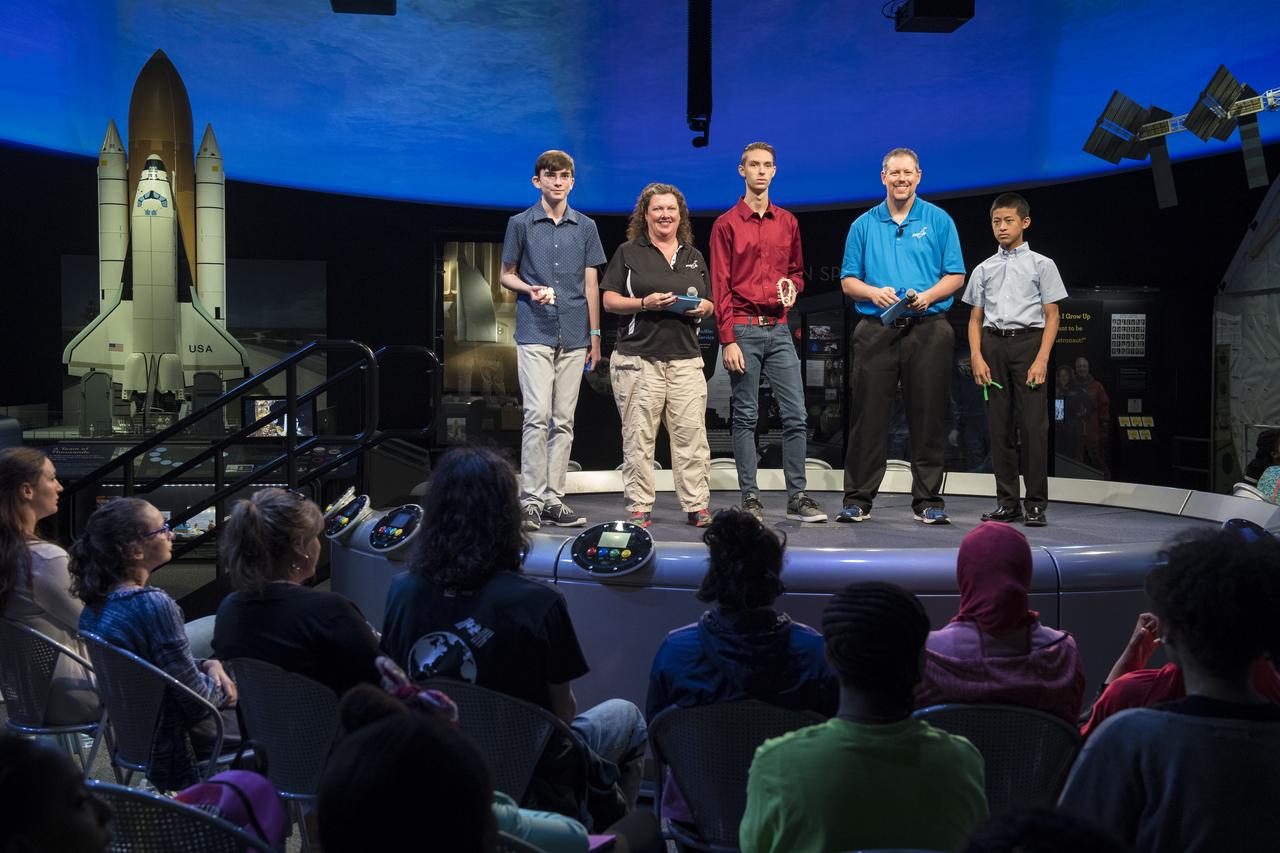
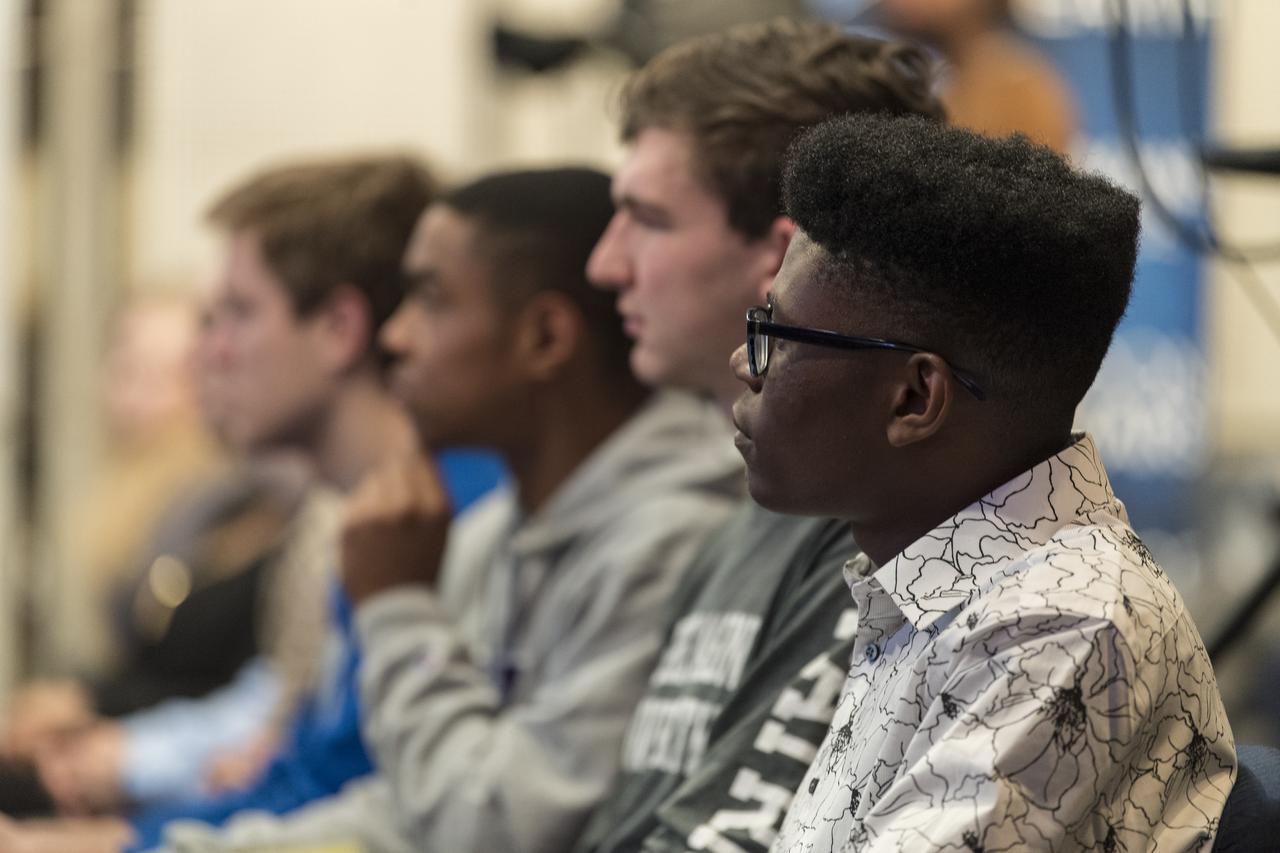
Deanne Bell, engineer, television host, and the founder & CEO of Future Engineers speaks to students during a STEM in 30 event where they announced the winners of the "Two for the Crew" competition, Wednesday, June 27, 2018 at Smithsonian's National Air and Space Museum in Washington. Photo Credit: (NASA/Aubrey Gemignani)
Astronaut Serena Auñon-Chancellor at Air and Space Museum
Future Engineers "Two for the Crew" competition winner, Ansel Austin, speaks about his Trillium Tool, a type of wrench, during a STEM in 30 event, Wednesday, June 27, 2018 at Smithsonian's National Air and Space Museum in Washington. Photo Credit: (NASA/Aubrey Gemignani)
Astronaut Serena Auñon-Chancellor at Air and Space Museum
Future Engineers "Two for the Crew" competition winner, Austin Suder, speaks about his Carabiner Tool Clip, during a STEM in 30 event, Wednesday, June 27, 2018 at Smithsonian's National Air and Space Museum in Washington. Photo Credit: (NASA/Aubrey Gemignani)
Astronaut Serena Auñon-Chancellor at Air and Space Museum
Future Engineers "Two for the Crew" competition winner, Jason Qin, speaks about his Two Pliers + 1 Handle, during a STEM in 30 event, Wednesday, June 27, 2018 at Smithsonian's National Air and Space Museum in Washington. Photo Credit: (NASA/Aubrey Gemignani)
Astronaut Serena Auñon-Chancellor at Air and Space Museum
Deanne Bell, engineer, television host, and the founder & CEO of Future Engineers speaks to students during a STEM in 30 event where they announced the winners of the "Two for the Crew" competition, Wednesday, June 27, 2018 at Smithsonian's National Air and Space Museum in Washington. Photo Credit: (NASA/Aubrey Gemignani)
Astronaut Serena Auñon-Chancellor at Air and Space Museum
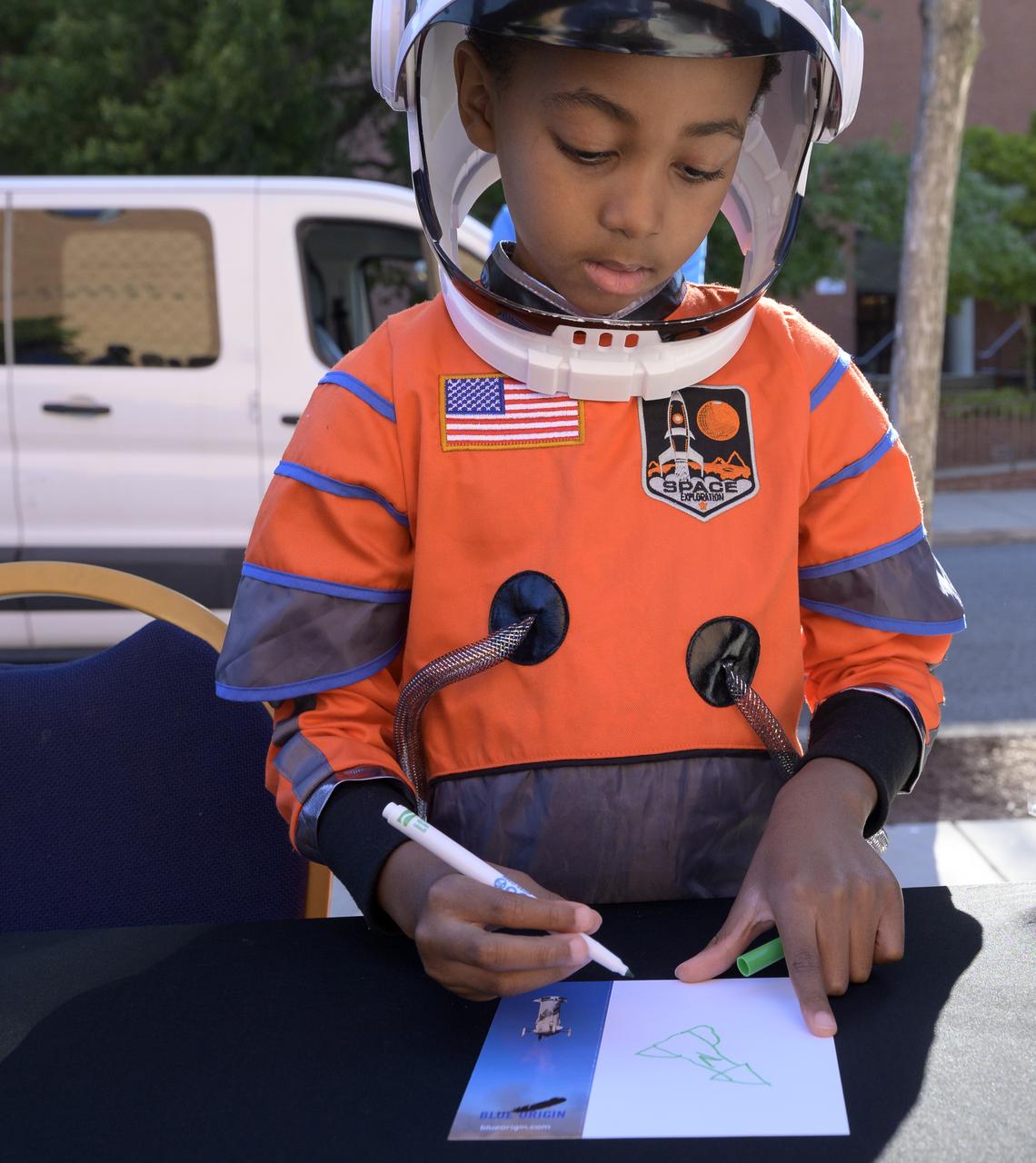
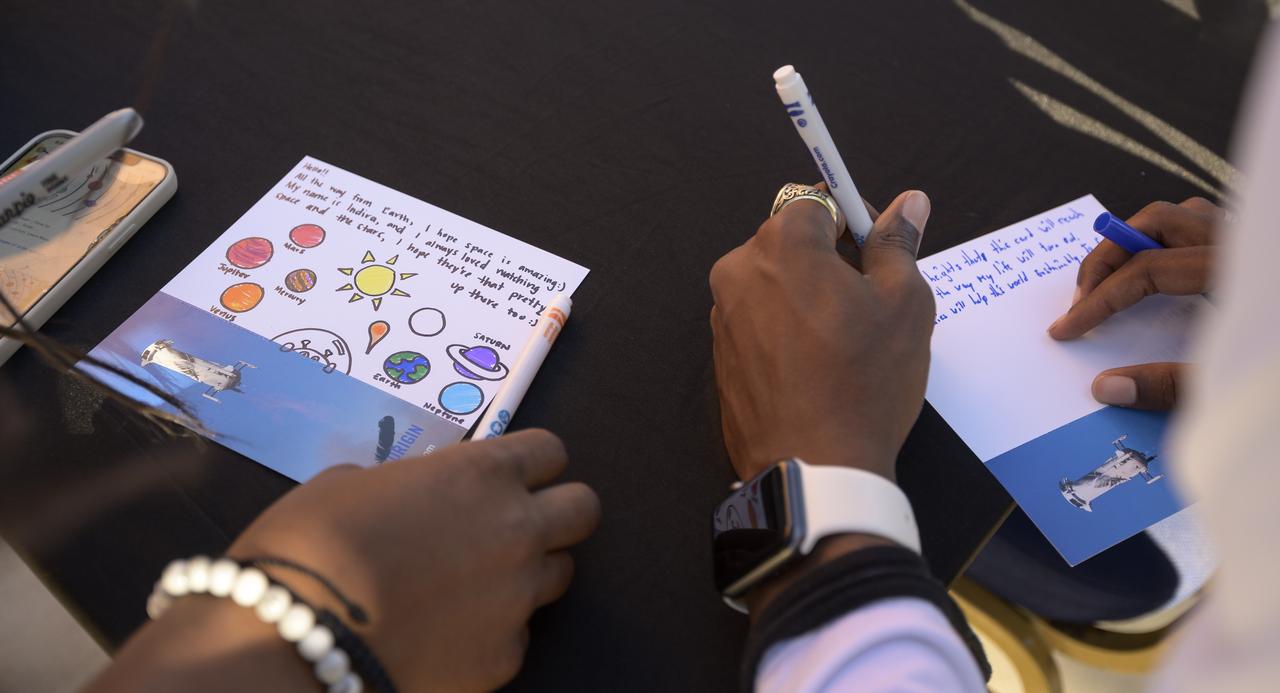
Children in attendance for the screening the NASA produced documentary “The Color of Space” draw on postcards that will be sent to space by Club for the Future on a Blue Origin New Shepard rocket at Howard University’s Cramton Auditorium in Washington, Saturday, June 18, 2022. Premiering on Juneteenth, the federal holiday commemorating the end of slavery in the United States, “The Color of Space” is an inspirational documentary that tells the stories of NASA’s Black astronauts determined to reach the stars. Photo Credit: (NASA/Bill Ingalls)
The Color of Space Documentary Screening
6-year old Armani Bonds draws on a postcard that will be sent to space by Club for the Future on a Blue Origin New Shepard rocket prior to he and his family screening the NASA produced documentary “The Color of Space” at Howard University’s Cramton Auditorium in Washington, Saturday, June 18, 2022. Premiering on Juneteenth, the federal holiday commemorating the end of slavery in the United States, “The Color of Space” is an inspirational documentary that tells the stories of NASA’s Black astronauts determined to reach the stars. Photo Credit: (NASA/Bill Ingalls)
The Color of Space Documentary Screening
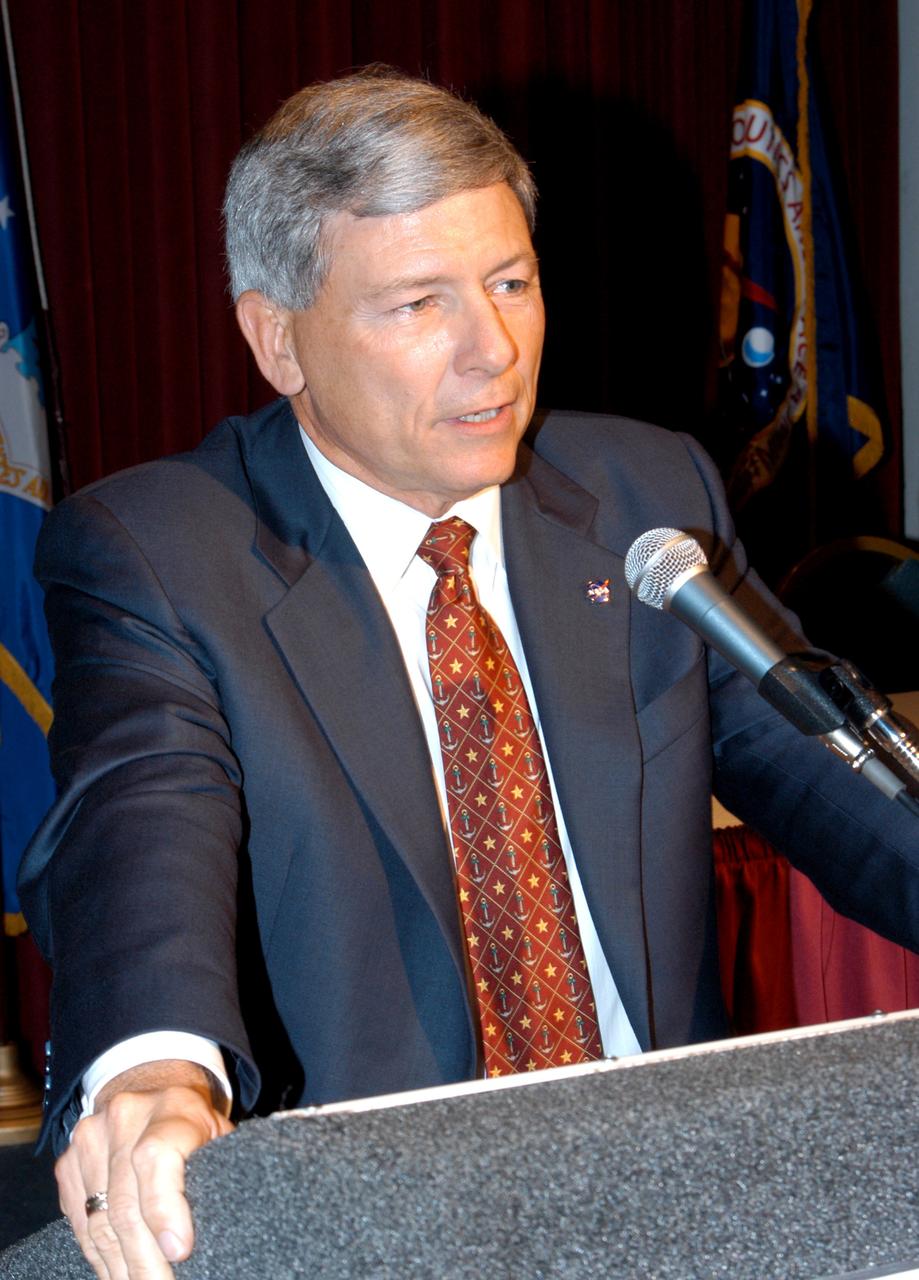
KENNEDY SPACE CENTER, FLA. - At a luncheon during Space Congress Week, Michael Kostelnik, NASA deputy associate administrator for the Space Shuttle and the International Space Station, speaks to luncheon attendees about the future challenges the Agency faces.  Held April 29-May 2, 2003, in Cape Canaveral, Fla., the Space Congress is an international conference that gathers attendees from the scientific community, the space industry workforce, educators and local supporting industries.  This year's event commemorated the 40th anniversary of the Kennedy Space Center and the Centennial of Flight.  The theme for the Space Congress was "Linking the Past to the Future: A Celebration of Space."
KENNEDY SPACE CENTER, FLA. - At a luncheon during Space Congress Week, Michael Kostelnik, NASA deputy associate administrator for the Space Shuttle and the International Space Station, speaks to luncheon attendees about the future challenges the Agency faces. Held April 29-May 2, 2003, in Cape Canaveral, Fla., the Space Congress is an international conference that gathers attendees from the scientific community, the space industry workforce, educators and local supporting industries. This year's event commemorated the 40th anniversary of the Kennedy Space Center and the Centennial of Flight. The theme for the Space Congress was "Linking the Past to the Future: A Celebration of Space."
KENNEDY SPACE CENTER, FLA. - At a luncheon during Space Congress Week, Michael Kostelnik, NASA deputy associate administrator for the Space Shuttle and the International Space Station, speaks to luncheon attendees about the future challenges the Agency faces.  Held April 29-May 2, 2003, in Cape Canaveral, Fla., the Space Congress is an international conference that gathers attendees from the scientific community, the space industry workforce, educators and local supporting industries.  This year's event commemorated the 40th anniversary of the Kennedy Space Center and the Centennial of Flight.  The theme for the Space Congress was "Linking the Past to the Future: A Celebration of Space."
KENNEDY SPACE CENTER, FLA. - At a luncheon during Space Congress Week, Michael Kostelnik, NASA deputy associate administrator for the Space Shuttle and the International Space Station, speaks to luncheon attendees about the future challenges the Agency faces. Held April 29-May 2, 2003, in Cape Canaveral, Fla., the Space Congress is an international conference that gathers attendees from the scientific community, the space industry workforce, educators and local supporting industries. This year's event commemorated the 40th anniversary of the Kennedy Space Center and the Centennial of Flight. The theme for the Space Congress was "Linking the Past to the Future: A Celebration of Space."
Future Engineers "Two for the Crew" competition winners, Ansel Austin, left, Austin Suder, center, and Jason Qin, right, are seen onstage during a STEM in 30 event, Wednesday, June 27, 2018 at Smithsonian's National Air and Space Museum in Washington. Photo Credit: (NASA/Aubrey Gemignani)
Astronaut Serena Auñon-Chancellor at Air and Space Museum
Future Engineers "Two for the Crew" competition winners, Ansel Austin, left, Austin Suder, center, and Jason Qin, right, are seen onstage during a STEM in 30 event, Wednesday, June 27, 2018 at Smithsonian's National Air and Space Museum in Washington. Photo Credit: (NASA/Aubrey Gemignani)
Astronaut Serena Auñon-Chancellor at Air and Space Museum
This image from NASA Hubble Space Telescope image of a celestial object called the Ant Nebula may shed new light on the future demise of our Sun.
Ant Nebula
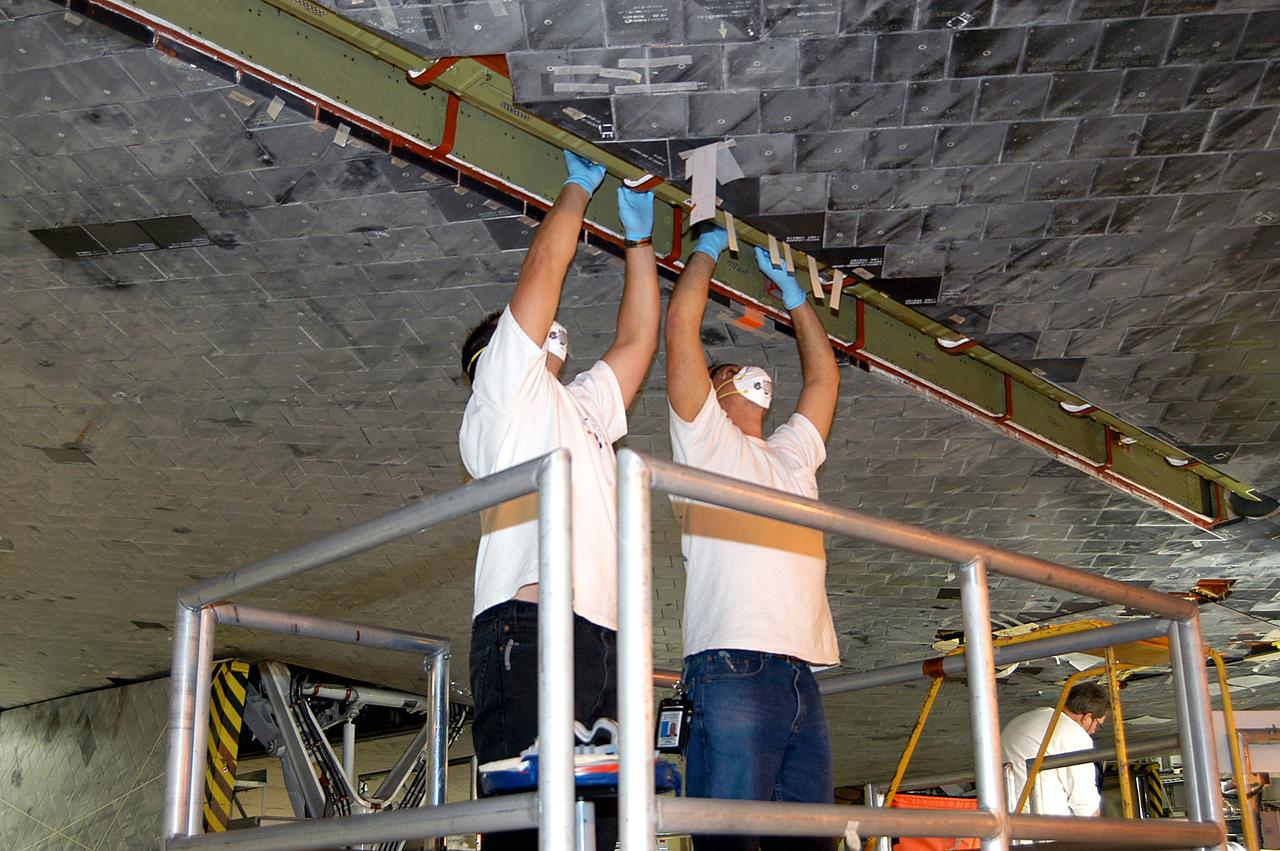
KENNEDY SPACE CENTER, FLA. -  In the Orbiter Processing Facility, technicians work on insulation tiles near the landing gear door of orbiter Discovery.  The orbiter is now being prepared for eventual launch on a future mission.
KENNEDY SPACE CENTER, FLA. - In the Orbiter Processing Facility, technicians work on insulation tiles near the landing gear door of orbiter Discovery. The orbiter is now being prepared for eventual launch on a future mission.
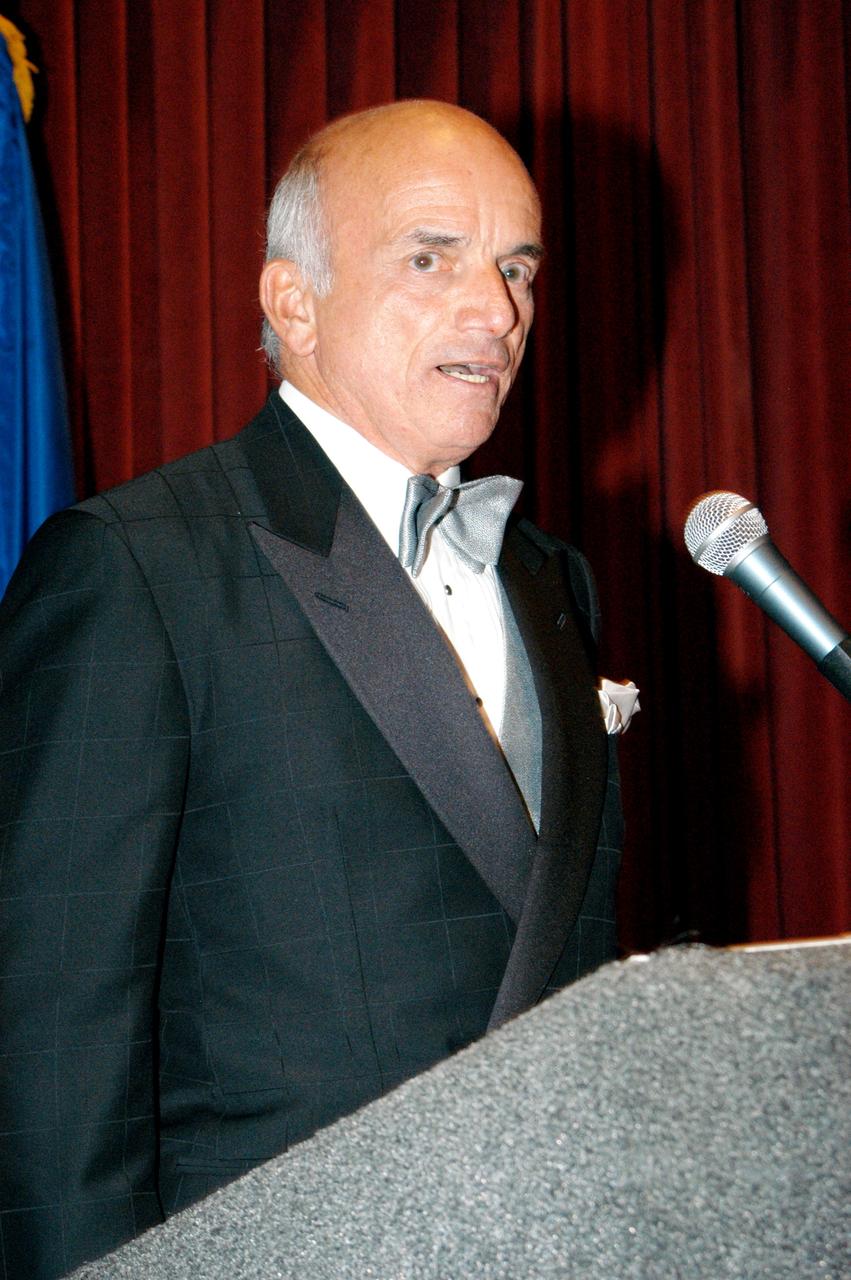
KENNEDY SPACE CENTER, FLA. - Dennis Tito, the first private citizen to visit the International Space Station, shares his experiences with visitors at the 40th  Space Congress.  Held April 29-May 2, 2003, in Cape Canaveral, Fla., the Space Congress is an international conference that gathers attendees from the scientific community, the space industry workforce, educators and local supporting industries.  This year's event commemorated the 40th anniversary of the Kennedy Space Center and the Centennial of Flight.  The theme for the Space Congress was "Linking the Past to the Future: A Celebration of Space."
KENNEDY SPACE CENTER, FLA. - Dennis Tito, the first private citizen to visit the International Space Station, shares his experiences with visitors at the 40th Space Congress. Held April 29-May 2, 2003, in Cape Canaveral, Fla., the Space Congress is an international conference that gathers attendees from the scientific community, the space industry workforce, educators and local supporting industries. This year's event commemorated the 40th anniversary of the Kennedy Space Center and the Centennial of Flight. The theme for the Space Congress was "Linking the Past to the Future: A Celebration of Space."
KENNEDY SPACE CENTER, FLA. - Dennis Tito, the first private citizen to visit the International Space Station, shares his experiences during the Space Congress Gala.  Held April 29-May 2, 2003, in Cape Canaveral, Fla., the Space Congress is an international conference that gathers attendees from the scientific community, the space industry workforce, educators and local supporting industries.  This year's event commemorated the 40th anniversary of the Kennedy Space Center and the Centennial of Flight.  The theme for the Space Congress was "Linking the Past to the Future: A Celebration of Space."
KENNEDY SPACE CENTER, FLA. - Dennis Tito, the first private citizen to visit the International Space Station, shares his experiences during the Space Congress Gala. Held April 29-May 2, 2003, in Cape Canaveral, Fla., the Space Congress is an international conference that gathers attendees from the scientific community, the space industry workforce, educators and local supporting industries. This year's event commemorated the 40th anniversary of the Kennedy Space Center and the Centennial of Flight. The theme for the Space Congress was "Linking the Past to the Future: A Celebration of Space."
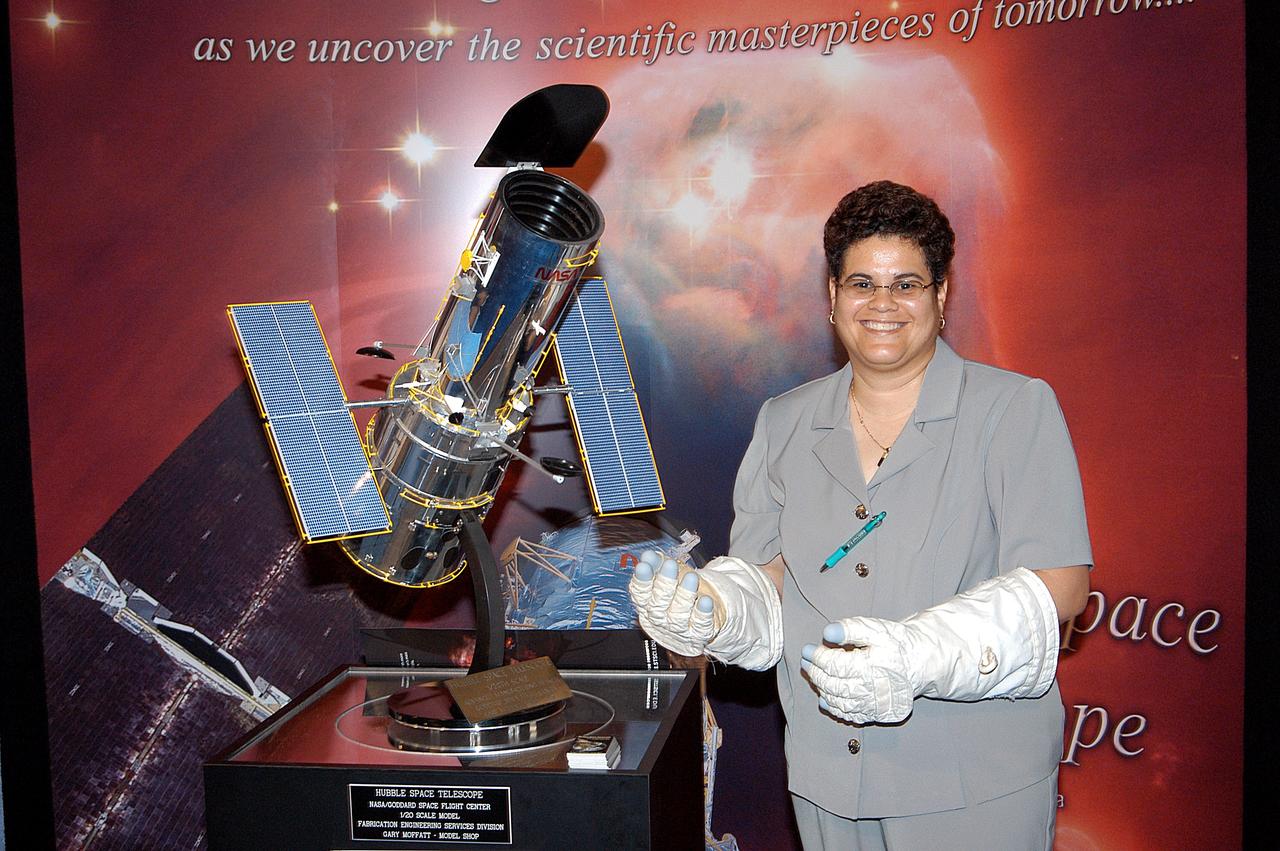
KENNEDY SPACE CENTER, FLA. -  A model of the Hubble Space Telescope is one of the exhibits during Space Congress Week, held April 29-May 2, 2003, in Cape Canaveral, Fla.  The Space Congress is an international conference that gathers attendees from the scientific community, the space industry workforce, educators and local supporting industries.  This year’s event commemorated the 40th anniversary of the Kennedy Space Center and the Centennial of Flight.  The theme for the Space Congress was “Linking the Past to the Future: A Celebration of Space.”
KENNEDY SPACE CENTER, FLA. - A model of the Hubble Space Telescope is one of the exhibits during Space Congress Week, held April 29-May 2, 2003, in Cape Canaveral, Fla. The Space Congress is an international conference that gathers attendees from the scientific community, the space industry workforce, educators and local supporting industries. This year’s event commemorated the 40th anniversary of the Kennedy Space Center and the Centennial of Flight. The theme for the Space Congress was “Linking the Past to the Future: A Celebration of Space.”
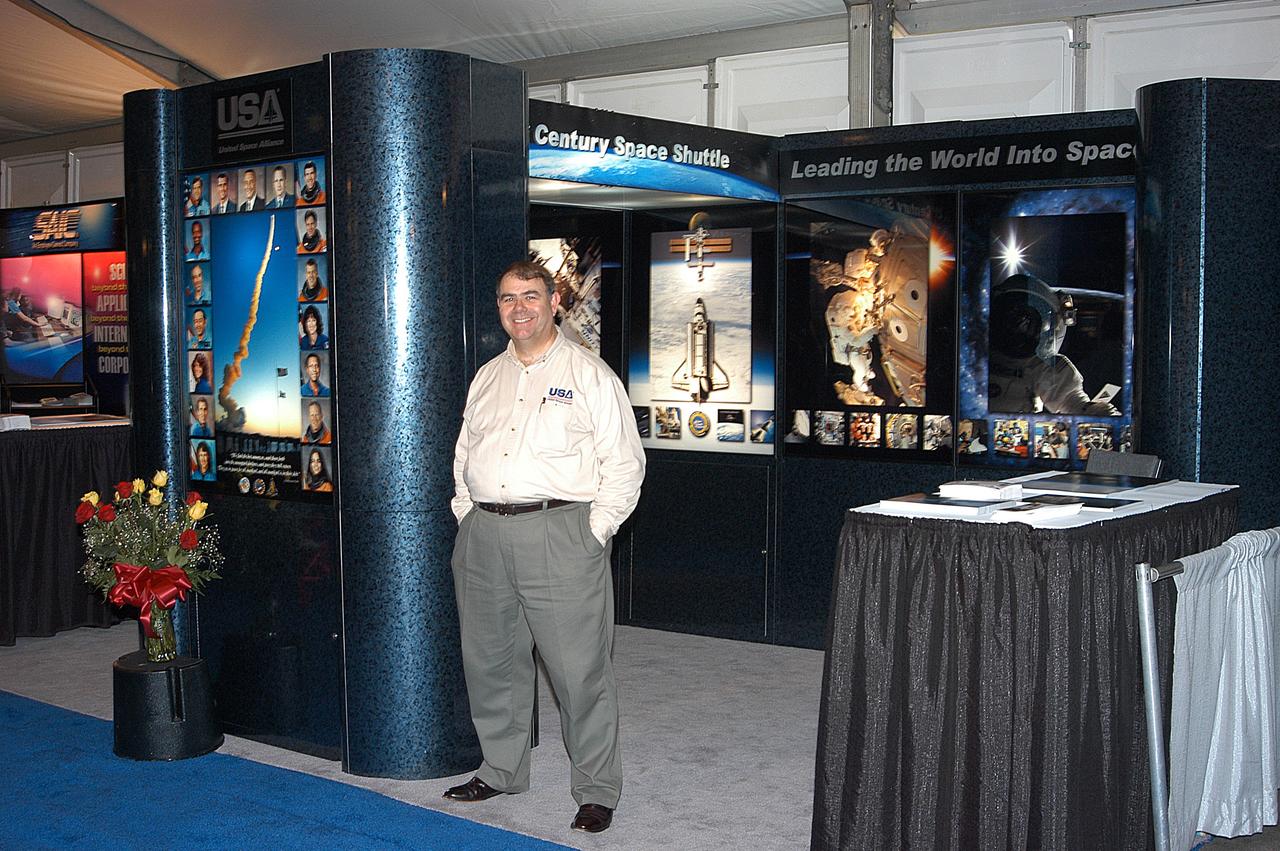
KENNEDY SPACE CENTER, FLA. - United Space Alliance, a KSC contractor, is one of the exhibitors during Space Congress Week, held April 29-May 2, 2003, in Cape Canaveral, Fla.  The Space Congress is an international conference that gathers attendees from the scientific community, the space industry workforce, educators and local supporting industries.  This year’s event commemorated the 40th anniversary of the Kennedy Space Center and the Centennial of Flight.  The theme for the Space Congress was “Linking the Past to the Future: A Celebration of Space.”
KENNEDY SPACE CENTER, FLA. - United Space Alliance, a KSC contractor, is one of the exhibitors during Space Congress Week, held April 29-May 2, 2003, in Cape Canaveral, Fla. The Space Congress is an international conference that gathers attendees from the scientific community, the space industry workforce, educators and local supporting industries. This year’s event commemorated the 40th anniversary of the Kennedy Space Center and the Centennial of Flight. The theme for the Space Congress was “Linking the Past to the Future: A Celebration of Space.”
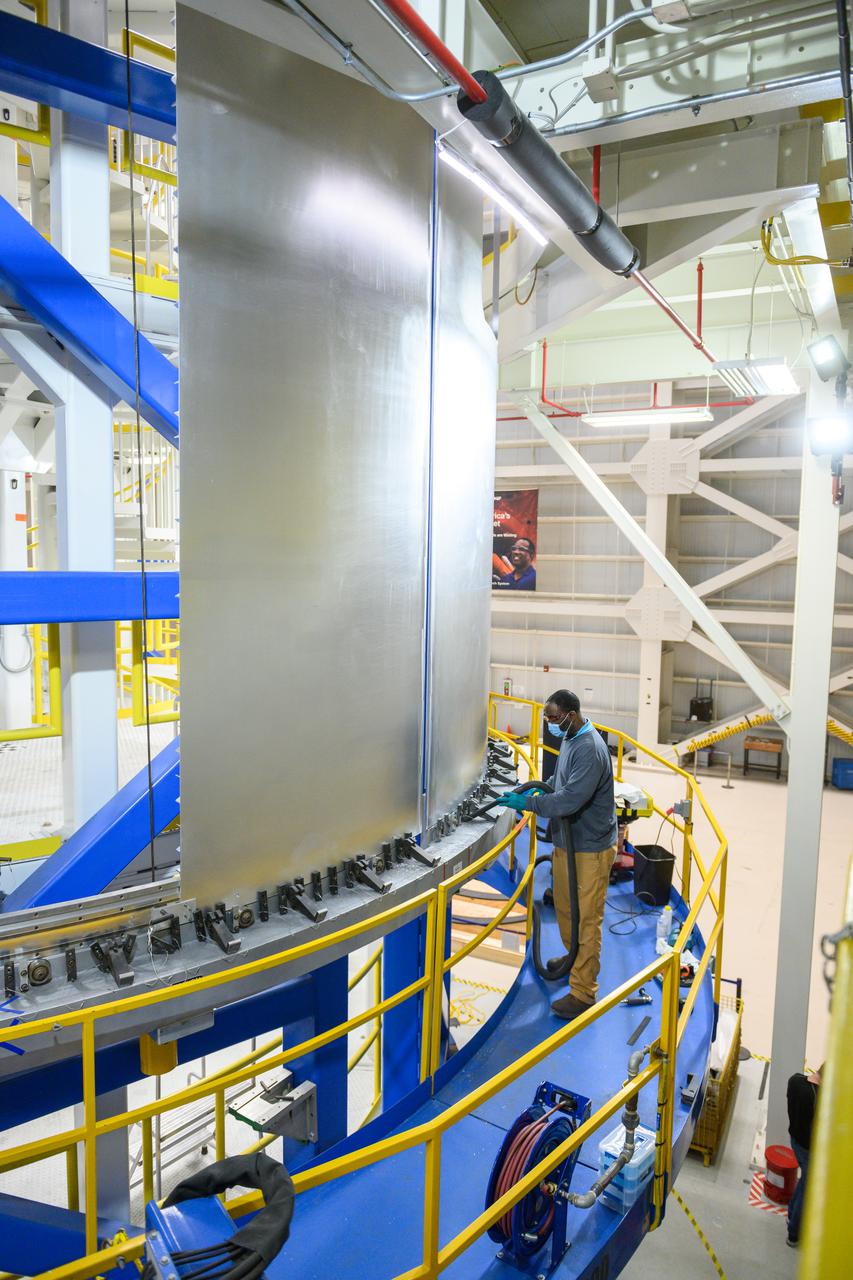
Technicians are manufacturing and testing the first in a series of initial weld confidence articles for the Exploration Upper Stage (EUS) for future flights of NASA’s Space Launch System (SLS) rocket at the agency’s Michoud Assembly Facility in New Orleans. The Exploration Upper Stage will be used on the second configuration of the SLS rocket, known as Block 1B, and will provide in-space propulsion to send astronauts in NASA’s Orion spacecraft and heavy cargo on a precise trajectory to the Moon. The Exploration Upper Stage weld confidence panels are first produced in the Vertical Weld Center at Michoud, then small sections of the panels are removed for mechanical testing and analysis in another area of the factory. Teams use weld confidence articles to verify welding procedures, interfaces between the tooling and hardware, and the structural integrity of the welds. Testing of the EUS weld confidence articles will help engineers and technicians validate welding parameters for manufacturing EUS hardware.  The first three SLS flights of NASA’s Artemis program will use an interim cryogenic propulsion stage with one RL10 engine to send Orion to the Moon. The SLS Exploration Upper Stage for flights beyond Artemis III has larger propellant tanks and four RL10 engines. The evolution of the rocket to SLS Block 1B configuration with EUS enables SLS to launch 40% more cargo to the Moon along with the crew. Manufacturing the Exploration Upper Stage is a collaborative effort between NASA and Boeing, the lead contractor for EUS and the SLS core stage.  SLS is the only rocket that can send Orion, astronauts, and supplies to the Moon in a single mission. The SLS rocket, NASA’s Orion spacecraft, Gateway, and human landing system are part of NASA’s backbone for deep space exploration. Under the Artemis program, NASA is working to land the first woman and the next man on the Moon to pave the way for sustainable exploration at the Moon and future missions to Mars. (NASA)
Exploration Upper Stage (EUS) for future flights of NASA’s Space Launch System (SLS) rocket
KENNEDY SPACE CENTER, FLA. - In the Space Station Processing Facility, workers check over the Italian-built Node 2, a future element of the International Space Station.  The second of three Station connecting modules, the Node 2 attaches to the end of the U.S. Lab and provides attach locations for several other elements.  Kopra is currently assigned technical duties in the Space Station Branch of the Astronaut Office, where his primary focus involves the testing of crew interfaces for two future ISS modules as well as the implementation of support computers and operational Local Area Network on ISS.   Node 2 is scheduled to launch on mission STS-120, Station assembly flight 10A.
KENNEDY SPACE CENTER, FLA. - In the Space Station Processing Facility, workers check over the Italian-built Node 2, a future element of the International Space Station. The second of three Station connecting modules, the Node 2 attaches to the end of the U.S. Lab and provides attach locations for several other elements. Kopra is currently assigned technical duties in the Space Station Branch of the Astronaut Office, where his primary focus involves the testing of crew interfaces for two future ISS modules as well as the implementation of support computers and operational Local Area Network on ISS. Node 2 is scheduled to launch on mission STS-120, Station assembly flight 10A.
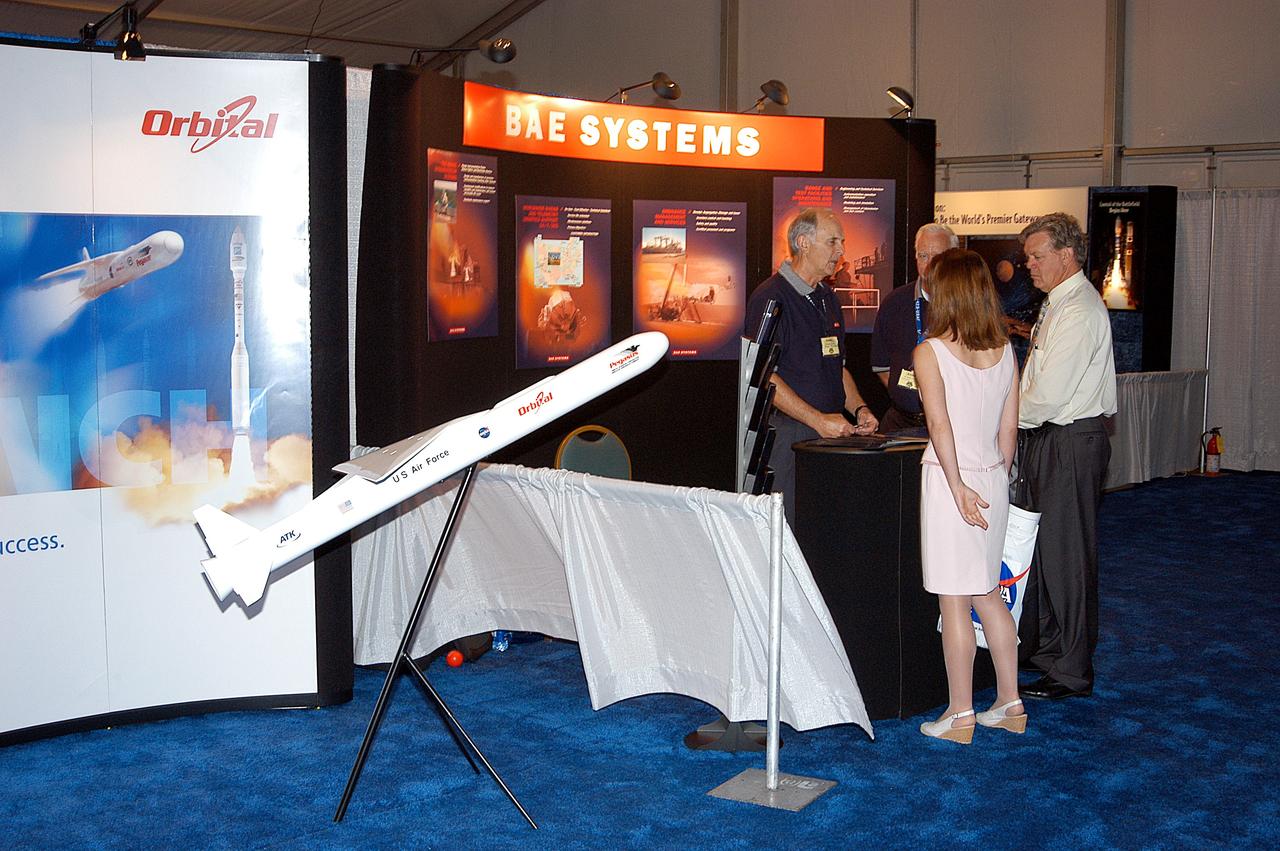
KENNEDY SPACE CENTER, FLA. -  Visitors stop at the Orbital Sciences booth during Space Congress Week, held April 29-May 2, 2003, in Cape Canaveral, Fla.  The Space Congress is an international conference that gathers attendees from the scientific community, the space industry workforce, educators and local supporting industries.  This year's event commemorated the 40th anniversary of the Kennedy Space Center and the Centennial of Flight.  The theme for the Space Congress was "Linking the Past to the Future: A Celebration of Space."
KENNEDY SPACE CENTER, FLA. - Visitors stop at the Orbital Sciences booth during Space Congress Week, held April 29-May 2, 2003, in Cape Canaveral, Fla. The Space Congress is an international conference that gathers attendees from the scientific community, the space industry workforce, educators and local supporting industries. This year's event commemorated the 40th anniversary of the Kennedy Space Center and the Centennial of Flight. The theme for the Space Congress was "Linking the Past to the Future: A Celebration of Space."
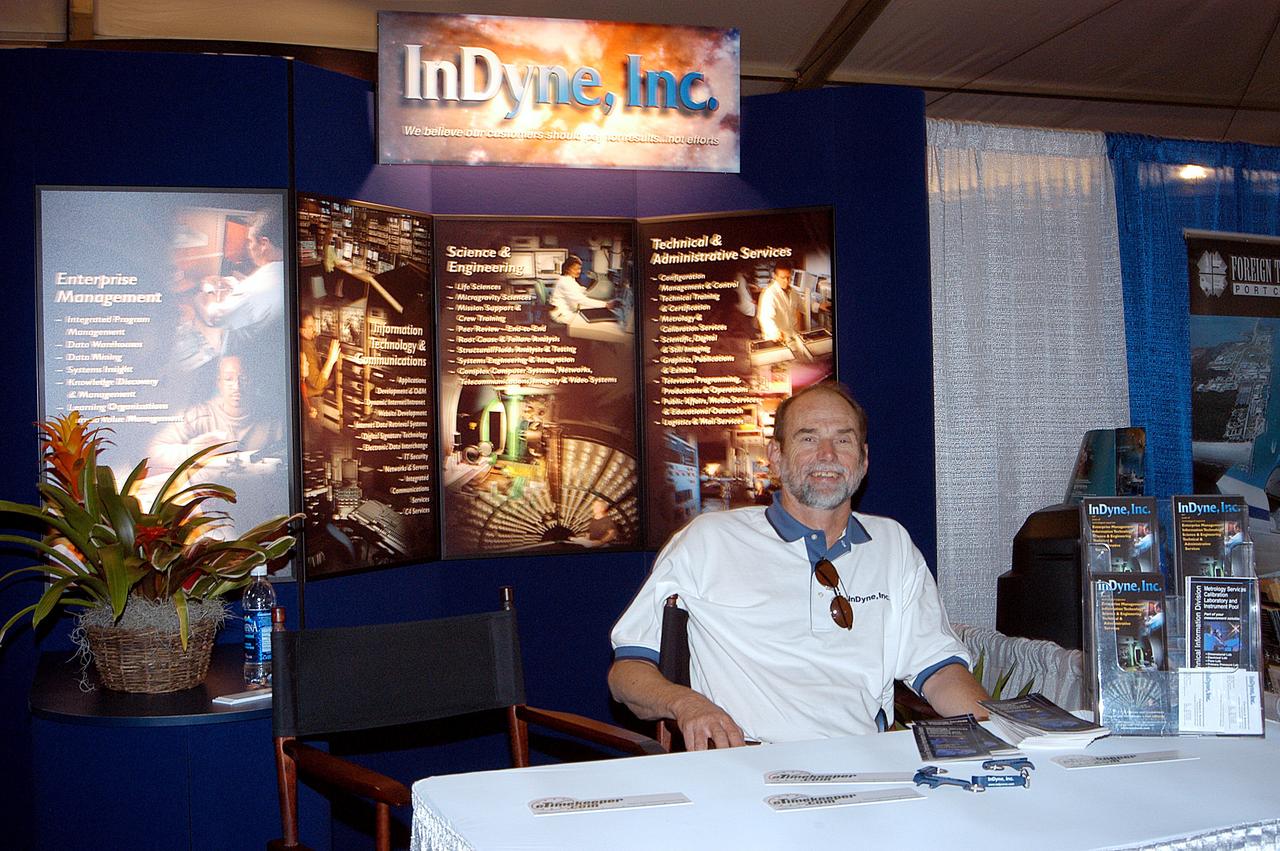
KENNEDY SPACE CENTER, FLA. - At the InDyne Inc. booth during the 40th Space Congress, Frank Kiep is ready to meet visitors.  Held April 29-May 2, 2003, in Cape Canaveral, Fla., the Space Congress is an international conference that gathers attendees from the scientific community, the space industry workforce, educators and local supporting industries.  This year's event commemorated the 40th anniversary of the Kennedy Space Center and the Centennial of Flight.  The theme for the Space Congress was "Linking the Past to the Future: A Celebration of Space."
KENNEDY SPACE CENTER, FLA. - At the InDyne Inc. booth during the 40th Space Congress, Frank Kiep is ready to meet visitors. Held April 29-May 2, 2003, in Cape Canaveral, Fla., the Space Congress is an international conference that gathers attendees from the scientific community, the space industry workforce, educators and local supporting industries. This year's event commemorated the 40th anniversary of the Kennedy Space Center and the Centennial of Flight. The theme for the Space Congress was "Linking the Past to the Future: A Celebration of Space."
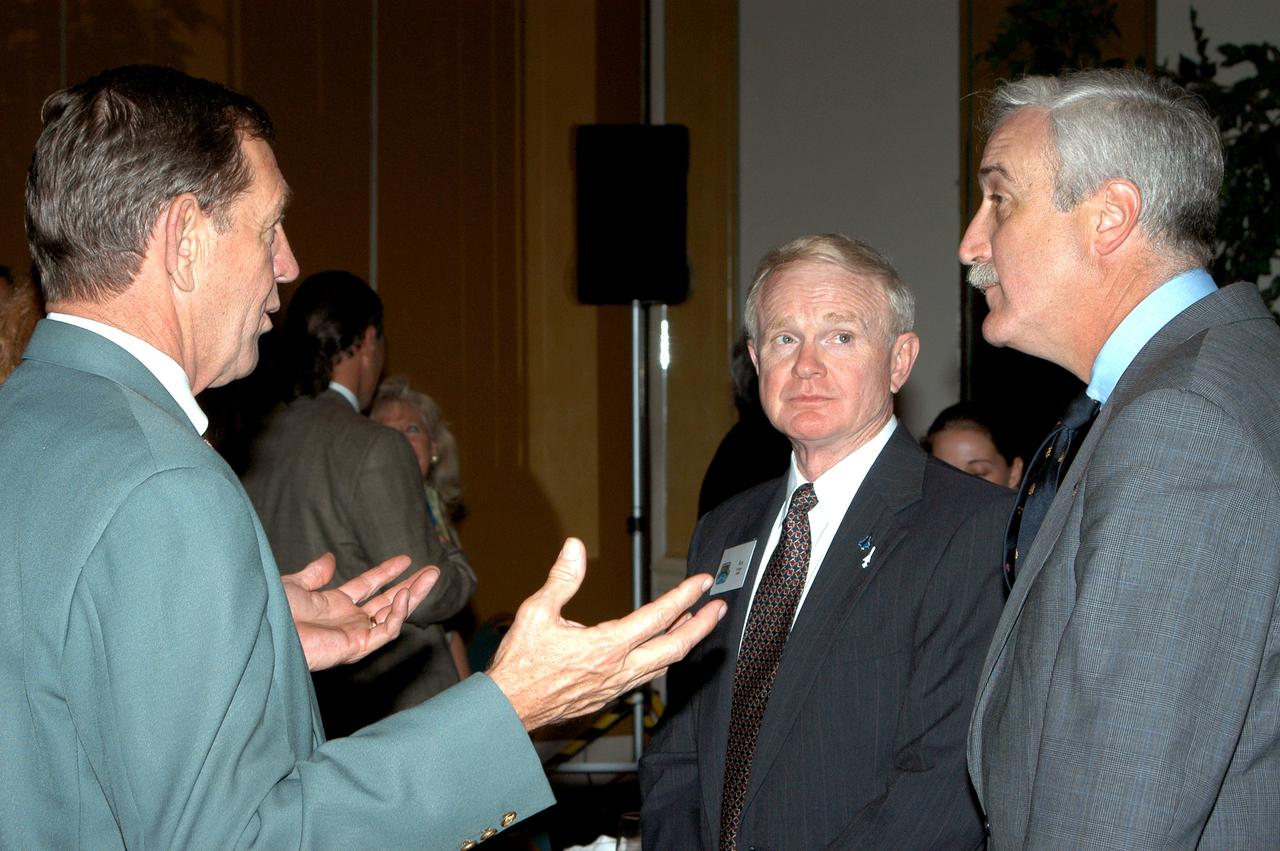
KENNEDY SPACE CENTER, FLA. - Mike McCulley (left), chief operating officer with United Space Alliance, talks with Center Director Roy Bridges Jr. (center) and NASA Administrator Sean O'Keefe (right) during the annual Congressional Dinner hosted by the Florida Space Business Roundtable.   The dinner kicked off the annual Space Congress, held April 28-May 1, 2003, in Cape Canaveral, Fla.  The theme for the event was "Linking the Past to the Future: A Celebration of Space" and commemorated the 40th anniversary of the Kennedy Space Center and the Centennial of Flight.
KENNEDY SPACE CENTER, FLA. - Mike McCulley (left), chief operating officer with United Space Alliance, talks with Center Director Roy Bridges Jr. (center) and NASA Administrator Sean O'Keefe (right) during the annual Congressional Dinner hosted by the Florida Space Business Roundtable. The dinner kicked off the annual Space Congress, held April 28-May 1, 2003, in Cape Canaveral, Fla. The theme for the event was "Linking the Past to the Future: A Celebration of Space" and commemorated the 40th anniversary of the Kennedy Space Center and the Centennial of Flight.
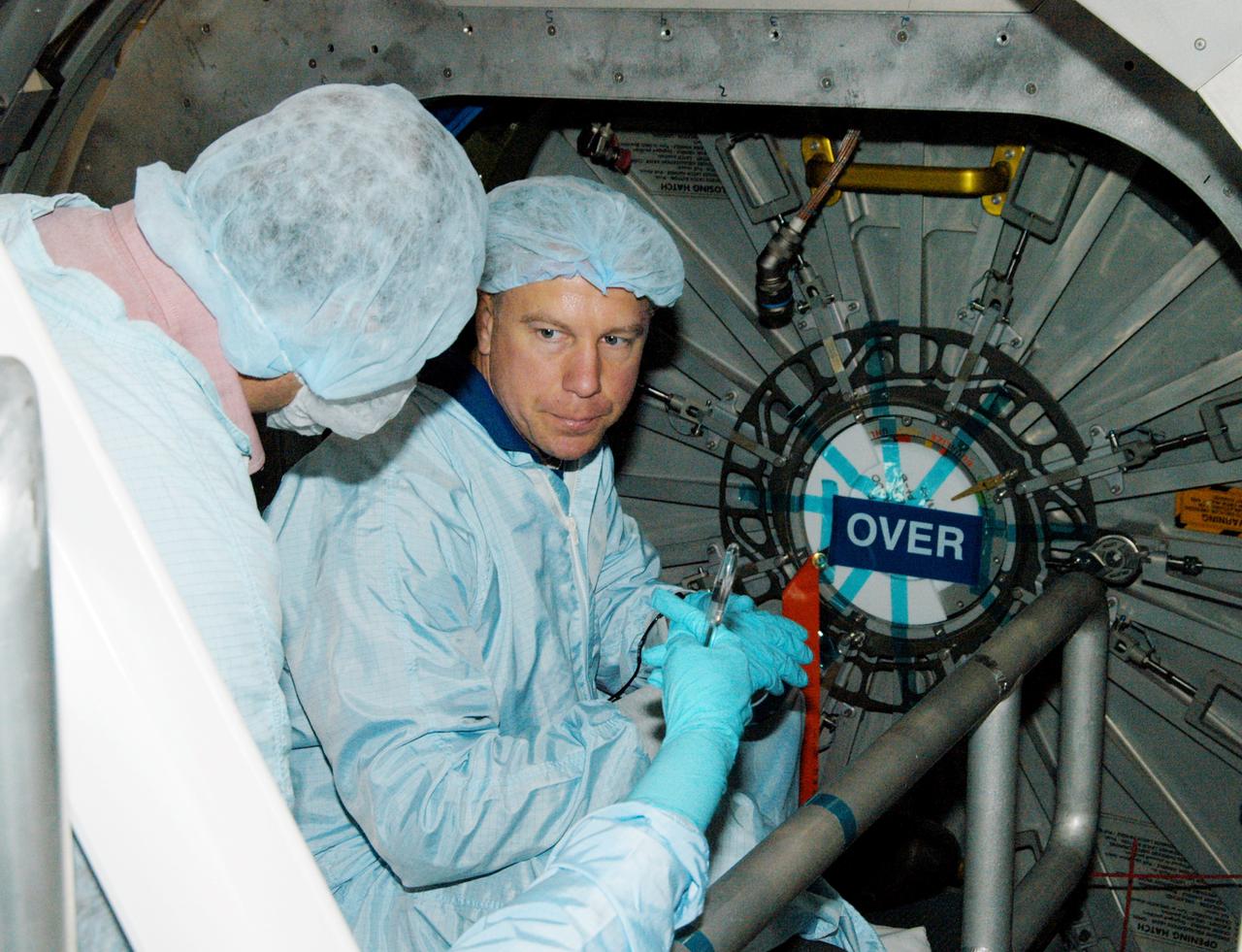
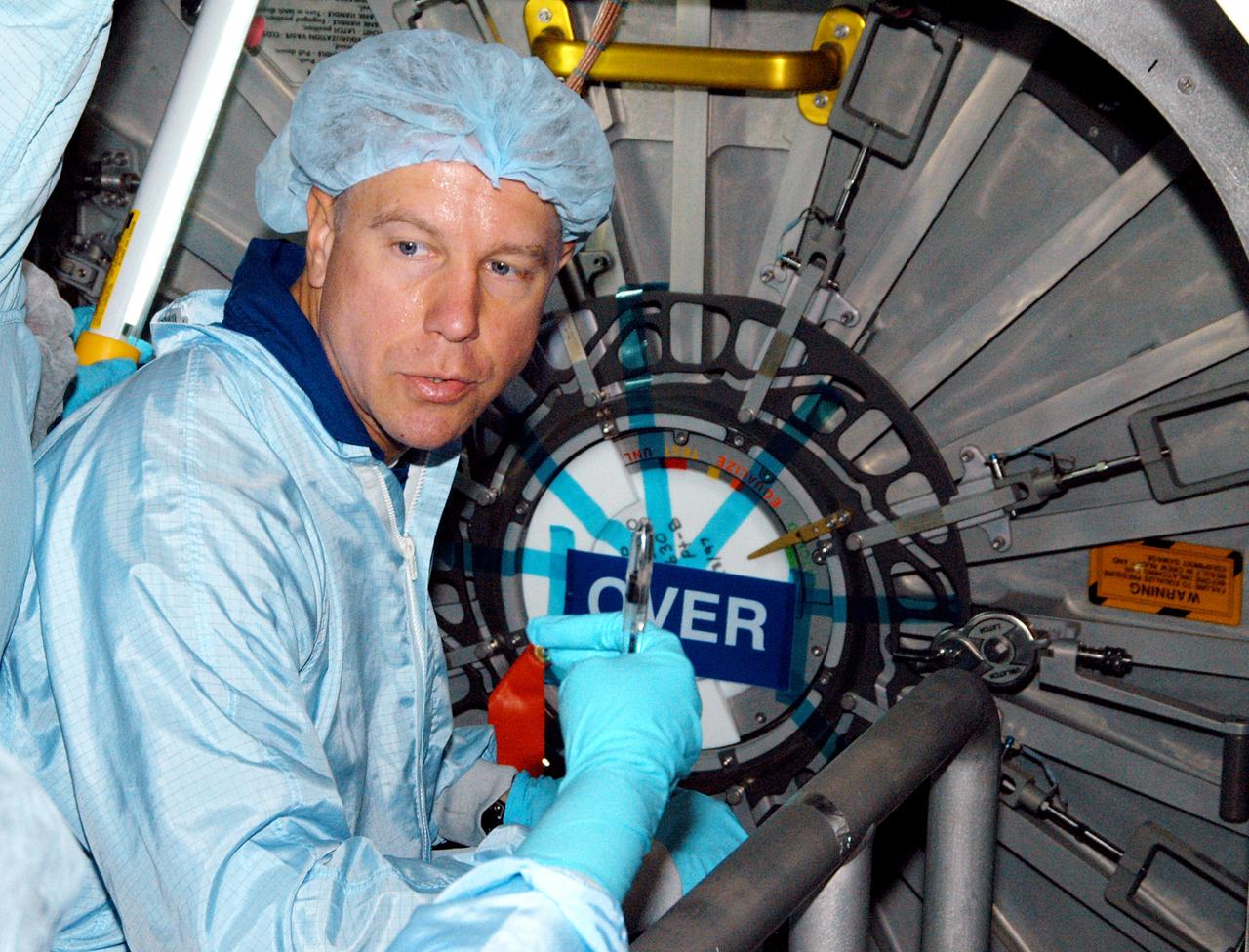
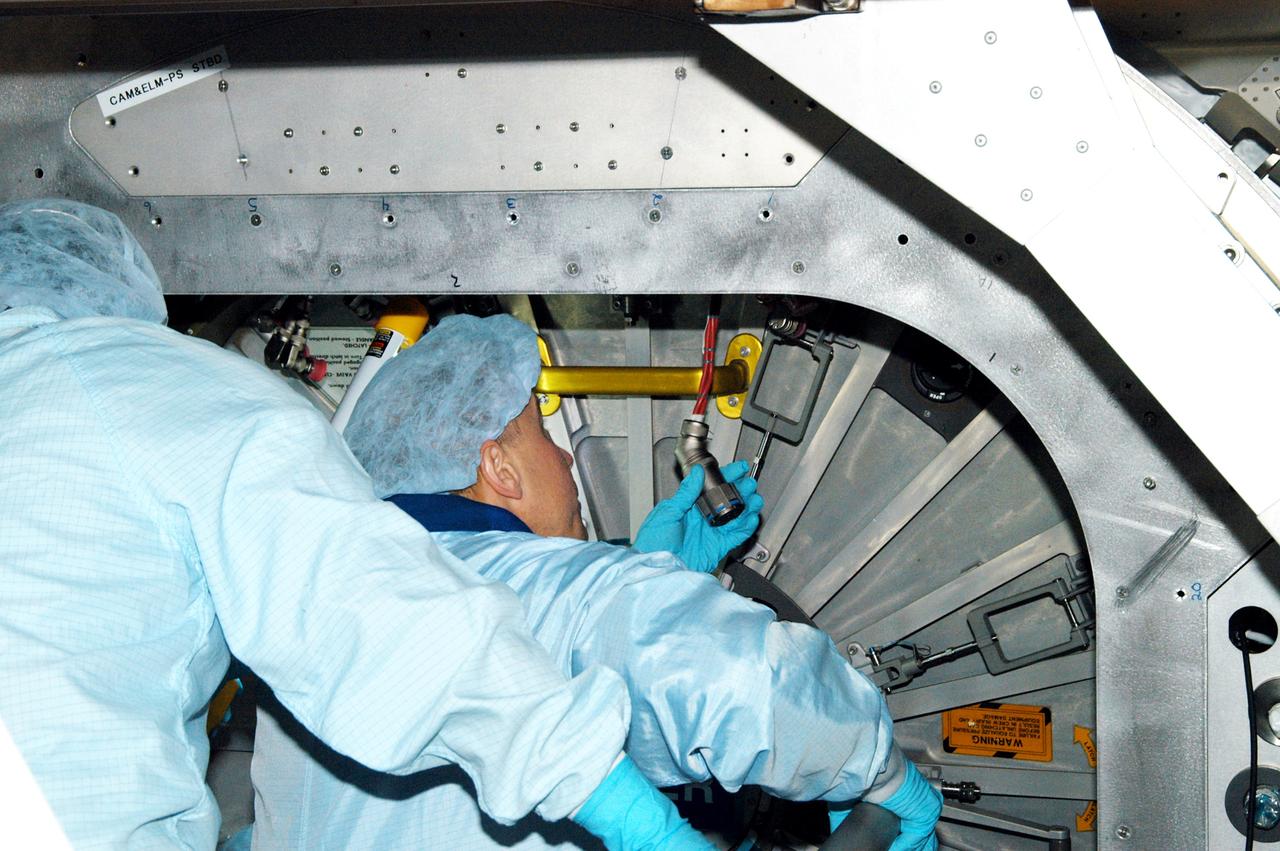
KENNEDY SPACE CENTER, FLA. - Astronaut Tim Kopra aids in Intravehicular Activity (IVA) constraints testing on the Italian-built Node 2, a future element of the International Space Station.  The second of three Station connecting modules, the Node 2 attaches to the end of the U.S. Lab and provides attach locations for several other elements.  Kopra is currently assigned technical duties in the Space Station Branch of the Astronaut Office, where his primary focus involves the testing of crew interfaces for two future ISS modules as well as the implementation of support computers and operational Local Area Network on ISS.   Node 2 is scheduled to launch on mission STS-120, Station assembly flight 10A.
KENNEDY SPACE CENTER, FLA. - Astronaut Tim Kopra aids in Intravehicular Activity (IVA) constraints testing on the Italian-built Node 2, a future element of the International Space Station. The second of three Station connecting modules, the Node 2 attaches to the end of the U.S. Lab and provides attach locations for several other elements. Kopra is currently assigned technical duties in the Space Station Branch of the Astronaut Office, where his primary focus involves the testing of crew interfaces for two future ISS modules as well as the implementation of support computers and operational Local Area Network on ISS. Node 2 is scheduled to launch on mission STS-120, Station assembly flight 10A.
KENNEDY SPACE CENTER, FLA. - Astronaut Tim Kopra (facing camera) aids in Intravehicular Activity (IVA) constraints testing on the Italian-built Node 2, a future element of the International Space Station.  The second of three Station connecting modules, the Node 2 attaches to the end of the U.S. Lab and provides attach locations for several other elements.  Kopra is currently assigned technical duties in the Space Station Branch of the Astronaut Office, where his primary focus involves the testing of crew interfaces for two future ISS modules as well as the implementation of support computers and operational Local Area Network on ISS.   Node 2 is scheduled to launch on mission STS-120, Station assembly flight 10A.
KENNEDY SPACE CENTER, FLA. - Astronaut Tim Kopra (facing camera) aids in Intravehicular Activity (IVA) constraints testing on the Italian-built Node 2, a future element of the International Space Station. The second of three Station connecting modules, the Node 2 attaches to the end of the U.S. Lab and provides attach locations for several other elements. Kopra is currently assigned technical duties in the Space Station Branch of the Astronaut Office, where his primary focus involves the testing of crew interfaces for two future ISS modules as well as the implementation of support computers and operational Local Area Network on ISS. Node 2 is scheduled to launch on mission STS-120, Station assembly flight 10A.
KENNEDY SPACE CENTER, FLA. - Astronaut Tim Kopra aids in Intravehicular Activity (IVA) constraints testing on the Italian-built Node 2, a future element of the International Space Station.  The second of three Station connecting modules, the Node 2 attaches to the end of the U.S. Lab and provides attach locations for several other elements.  Kopra is currently assigned technical duties in the Space Station Branch of the Astronaut Office, where his primary focus involves the testing of crew interfaces for two future ISS modules as well as the implementation of support computers and operational Local Area Network on ISS.   Node 2 is scheduled to launch on mission STS-120, Station assembly flight 10A.
KENNEDY SPACE CENTER, FLA. - Astronaut Tim Kopra aids in Intravehicular Activity (IVA) constraints testing on the Italian-built Node 2, a future element of the International Space Station. The second of three Station connecting modules, the Node 2 attaches to the end of the U.S. Lab and provides attach locations for several other elements. Kopra is currently assigned technical duties in the Space Station Branch of the Astronaut Office, where his primary focus involves the testing of crew interfaces for two future ISS modules as well as the implementation of support computers and operational Local Area Network on ISS. Node 2 is scheduled to launch on mission STS-120, Station assembly flight 10A.
Future Engineers "Two for the Crew" winner Ansel Austin asks NASA astronaut Serena Auñon-Chancellor a question during a live downlink with the International Space Station (ISS), Wednesday, June 27, 2018 at Smithsonian's National Air and Space Museum in Washington. Serena is part of the Expedition 56/57 crew that launched to the ISS June 6, 2018. Photo Credit: (NASA/Aubrey Gemignani)
Astronaut Serena Auñon-Chancellor at Air and Space Museum
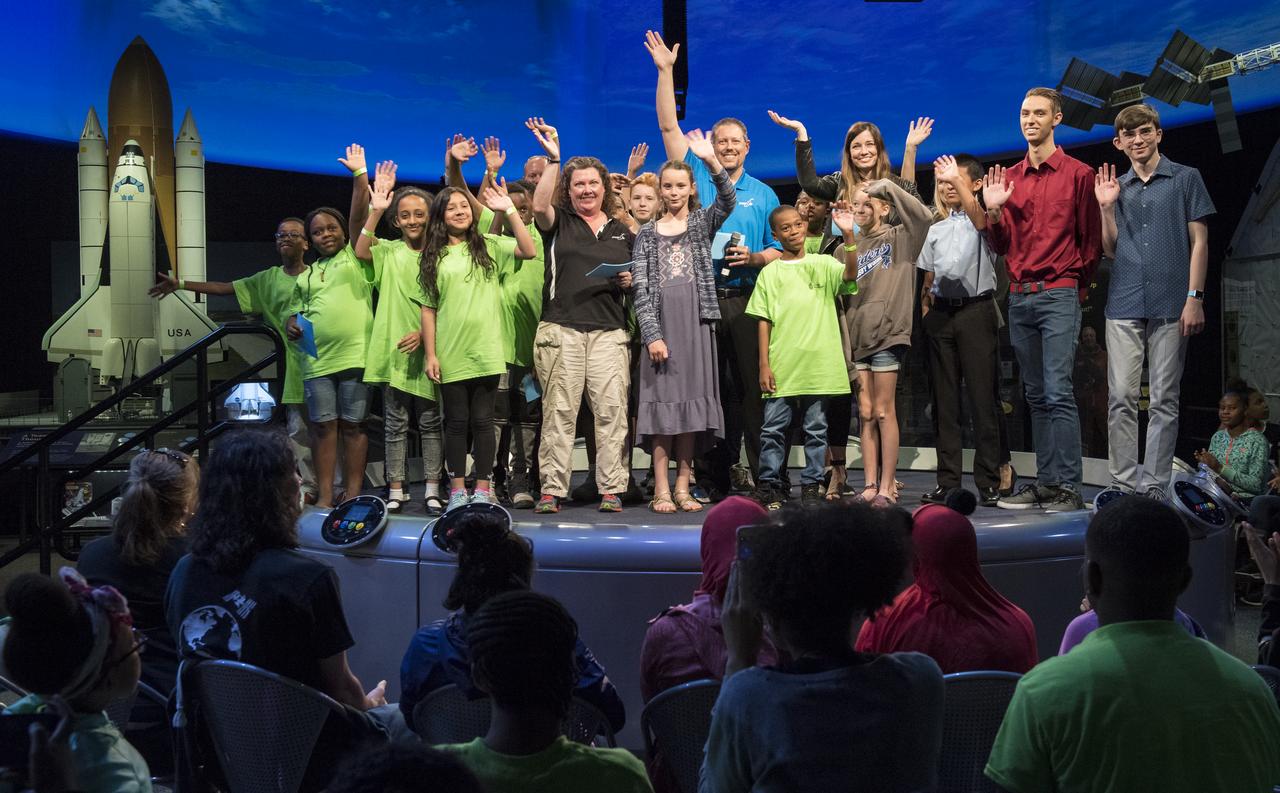
Students and Future Engineers "Two for the Crew" winners wave goodbye at the conclusion of a STEM in 30 event, Wednesday, June 27, 2018 at Smithsonian's National Air and Space Museum in Washington. During the event, NASA astronaut Serena Auñon-Chancellor spoke to students while onboard the International Space Station (ISS), during a live downlink. Photo Credit: (NASA/Aubrey Gemignani)
Astronaut Serena Auñon-Chancellor at Air and Space Museum
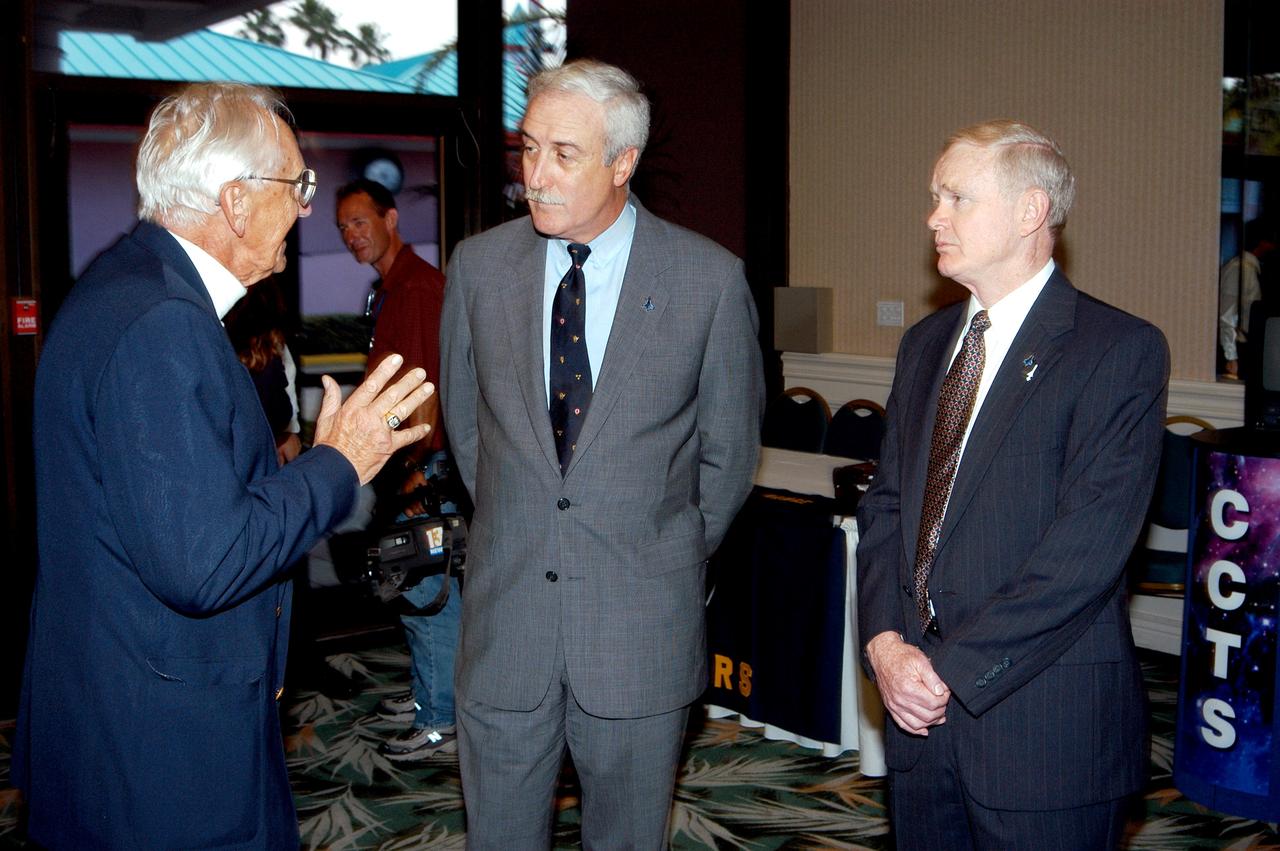
KENNEDY SPACE CENTER, FLA. - Gunther Wendt (left), NASA retiree, holds the attention of NASA Administrator Sean O'Keefe (center) and Center Director Roy Bridges Jr. (right) at the annual Congressional Dinner hosted by the Florida Space Business Roundtable.  The dinner kicked off the annual Space Congress, held April 28-May 1, 2003, in Cape Canaveral, Fla.  The theme for the event was "Linking the Past to the Future: A Celebration of Space" and commemorated the 40th anniversary of the Kennedy Space Center and the Centennial of Flight.
KENNEDY SPACE CENTER, FLA. - Gunther Wendt (left), NASA retiree, holds the attention of NASA Administrator Sean O'Keefe (center) and Center Director Roy Bridges Jr. (right) at the annual Congressional Dinner hosted by the Florida Space Business Roundtable. The dinner kicked off the annual Space Congress, held April 28-May 1, 2003, in Cape Canaveral, Fla. The theme for the event was "Linking the Past to the Future: A Celebration of Space" and commemorated the 40th anniversary of the Kennedy Space Center and the Centennial of Flight.
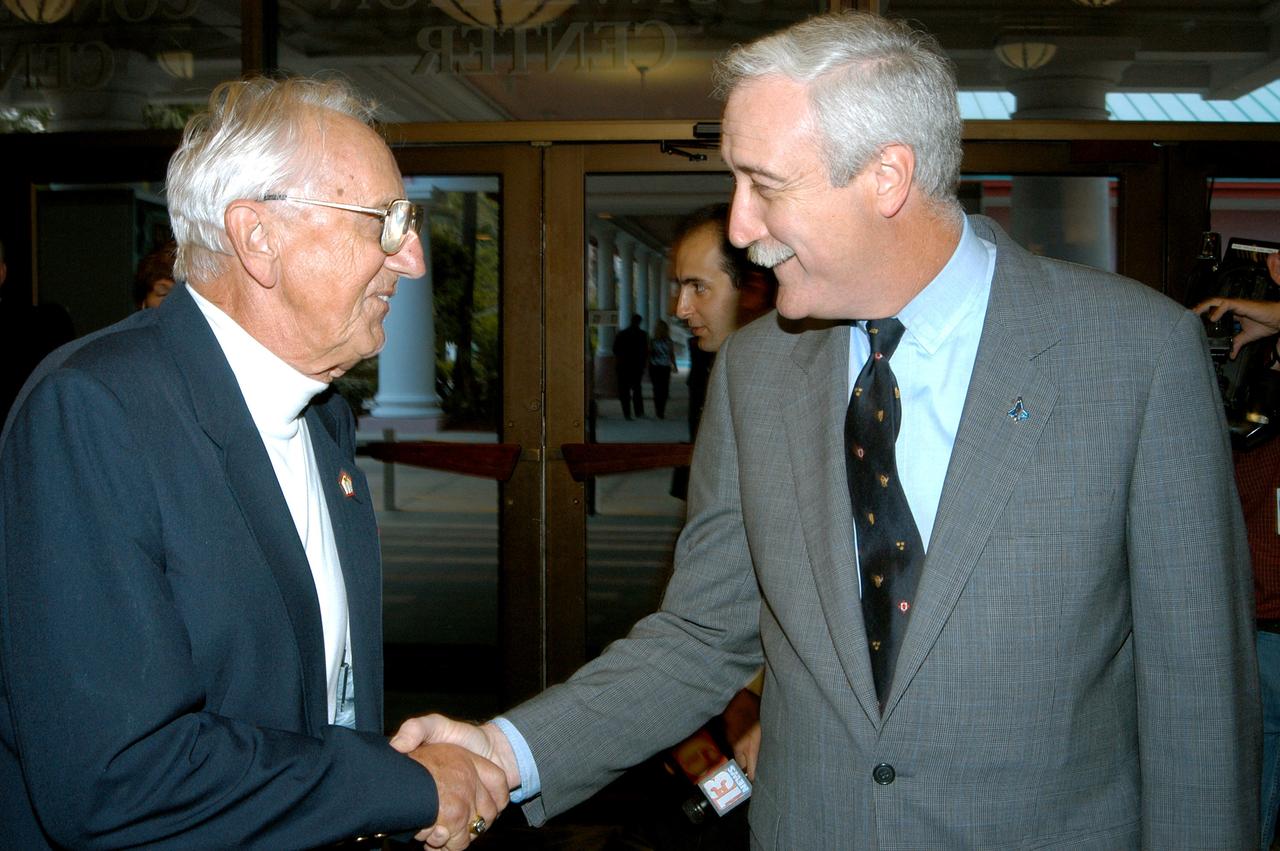
KENNEDY SPACE CENTER, FLA. - Gunther Wendt (left), NASA retiree, shakes hands with NASA Administrator Sean O'Keefe during the annual Congressional Dinner hosted by the Florida Space Business Roundtable.  The dinner kicked off the annual Space Congress, held April 28-May 1, 2003, in Cape Canaveral, Fla.  The theme for the event was "Linking the Past to the Future: A Celebration of Space" and commemorated the 40th anniversary of the Kennedy Space Center and the Centennial of Flight.
KENNEDY SPACE CENTER, FLA. - Gunther Wendt (left), NASA retiree, shakes hands with NASA Administrator Sean O'Keefe during the annual Congressional Dinner hosted by the Florida Space Business Roundtable. The dinner kicked off the annual Space Congress, held April 28-May 1, 2003, in Cape Canaveral, Fla. The theme for the event was "Linking the Past to the Future: A Celebration of Space" and commemorated the 40th anniversary of the Kennedy Space Center and the Centennial of Flight.
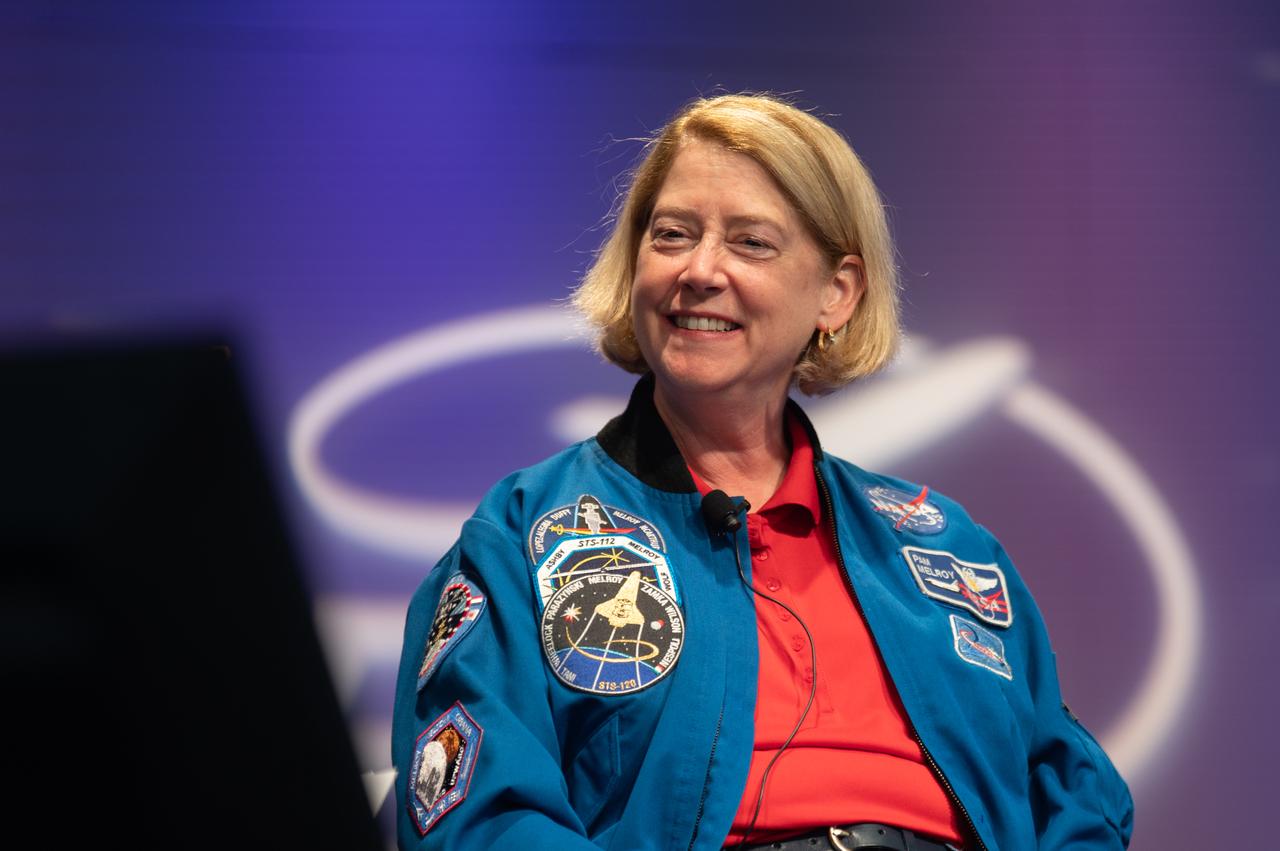
Deputy Administrator Pam Melroy appears as part of a special panel titled, “The Next Bold Step: The Future of Space Flight and Aerospace," on Friday, July 29, 2022, at EAA AirVenture.
AirVenture 2022
A look inside the International Space Station Payload Operations Integration Center at NASA’s Marshall Space Flight Center in Huntsville, AL.  The POIC team supports science operations on the International Space Station 24 hours a day, 7 days a week. For more than 20 years the POIC team has worked with scientists from around the world to enable the space station crew to conduct experiments that improve life on Earth and enable future exploration.
A look inside the International Space Station Payload Operations Integration Center at NASA’s Marshall Space Flight Center in Huntsville, AL. The POIC team supports science operations on the International Space Station 24 hours a day, 7 days a week. For more than 20 years the POIC team has worked with scientists from around the world to enable the space station crew to conduct experiments that improve life on Earth and enable future exploration.
A look inside the International Space Station Payload Operations Integration Center at NASA’s Marshall Space Flight Center in Huntsville, AL.  The POIC team supports science operations on the International Space Station 24 hours a day, 7 days a week. For more than 20 years the POIC team has worked with scientists from around the world to enable the space station crew to conduct experiments that improve life on Earth and enable future exploration.
A look inside the International Space Station Payload Operations Integration Center at NASA’s Marshall Space Flight Center in Huntsville, AL. The POIC team supports science operations on the International Space Station 24 hours a day, 7 days a week. For more than 20 years the POIC team has worked with scientists from around the world to enable the space station crew to conduct experiments that improve life on Earth and enable future exploration.
A look inside the International Space Station Payload Operations Integration Center at NASA’s Marshall Space Flight Center in Huntsville, AL.  The POIC team supports science operations on the International Space Station 24 hours a day, 7 days a week. For more than 20 years the POIC team has worked with scientists from around the world to enable the space station crew to conduct experiments that improve life on Earth and enable future exploration.
A look inside the International Space Station Payload Operations Integration Center at NASA’s Marshall Space Flight Center in Huntsville, AL. The POIC team supports science operations on the International Space Station 24 hours a day, 7 days a week. For more than 20 years the POIC team has worked with scientists from around the world to enable the space station crew to conduct experiments that improve life on Earth and enable future exploration.
A look inside the International Space Station Payload Operations Integration Center at NASA’s Marshall Space Flight Center in Huntsville, AL.  The POIC team supports science operations on the International Space Station 24 hours a day, 7 days a week. For more than 20 years the POIC team has worked with scientists from around the world to enable the space station crew to conduct experiments that improve life on Earth and enable future exploration.
A look inside the International Space Station Payload Operations Integration Center at NASA’s Marshall Space Flight Center in Huntsville, AL. The POIC team supports science operations on the International Space Station 24 hours a day, 7 days a week. For more than 20 years the POIC team has worked with scientists from around the world to enable the space station crew to conduct experiments that improve life on Earth and enable future exploration.
A look inside the International Space Station Payload Operations Integration Center at NASA’s Marshall Space Flight Center in Huntsville, AL.  The POIC team supports science operations on the International Space Station 24 hours a day, 7 days a week. For more than 20 years the POIC team has worked with scientists from around the world to enable the space station crew to conduct experiments that improve life on Earth and enable future exploration.
A look inside the International Space Station Payload Operations Integration Center at NASA’s Marshall Space Flight Center in Huntsville, AL. The POIC team supports science operations on the International Space Station 24 hours a day, 7 days a week. For more than 20 years the POIC team has worked with scientists from around the world to enable the space station crew to conduct experiments that improve life on Earth and enable future exploration.
A look inside the International Space Station Payload Operations Integration Center at NASA’s Marshall Space Flight Center in Huntsville, AL.  The POIC team supports science operations on the International Space Station 24 hours a day, 7 days a week. For more than 20 years the POIC team has worked with scientists from around the world to enable the space station crew to conduct experiments that improve life on Earth and enable future exploration.
A look inside the International Space Station Payload Operations Integration Center at NASA’s Marshall Space Flight Center in Huntsville, AL. The POIC team supports science operations on the International Space Station 24 hours a day, 7 days a week. For more than 20 years the POIC team has worked with scientists from around the world to enable the space station crew to conduct experiments that improve life on Earth and enable future exploration.
A look inside the International Space Station Payload Operations Integration Center at NASA’s Marshall Space Flight Center in Huntsville, AL.  The POIC team supports science operations on the International Space Station 24 hours a day, 7 days a week. For more than 20 years the POIC team has worked with scientists from around the world to enable the space station crew to conduct experiments that improve life on Earth and enable future exploration.
A look inside the International Space Station Payload Operations Integration Center at NASA’s Marshall Space Flight Center in Huntsville, AL. The POIC team supports science operations on the International Space Station 24 hours a day, 7 days a week. For more than 20 years the POIC team has worked with scientists from around the world to enable the space station crew to conduct experiments that improve life on Earth and enable future exploration.
A look inside the International Space Station Payload Operations Integration Center at NASA’s Marshall Space Flight Center in Huntsville, AL.  The POIC team supports science operations on the International Space Station 24 hours a day, 7 days a week. For more than 20 years the POIC team has worked with scientists from around the world to enable the space station crew to conduct experiments that improve life on Earth and enable future exploration.
A look inside the International Space Station Payload Operations Integration Center at NASA’s Marshall Space Flight Center in Huntsville, AL. The POIC team supports science operations on the International Space Station 24 hours a day, 7 days a week. For more than 20 years the POIC team has worked with scientists from around the world to enable the space station crew to conduct experiments that improve life on Earth and enable future exploration.
A look inside the International Space Station Payload Operations Integration Center at NASA’s Marshall Space Flight Center in Huntsville, AL.  The POIC team supports science operations on the International Space Station 24 hours a day, 7 days a week. For more than 20 years the POIC team has worked with scientists from around the world to enable the space station crew to conduct experiments that improve life on Earth and enable future exploration.
A look inside the International Space Station Payload Operations Integration Center at NASA’s Marshall Space Flight Center in Huntsville, AL. The POIC team supports science operations on the International Space Station 24 hours a day, 7 days a week. For more than 20 years the POIC team has worked with scientists from around the world to enable the space station crew to conduct experiments that improve life on Earth and enable future exploration.
A look inside the International Space Station Payload Operations Integration Center at NASA’s Marshall Space Flight Center in Huntsville, AL.  The POIC team supports science operations on the International Space Station 24 hours a day, 7 days a week. For more than 20 years the POIC team has worked with scientists from around the world to enable the space station crew to conduct experiments that improve life on Earth and enable future exploration.
A look inside the International Space Station Payload Operations Integration Center at NASA’s Marshall Space Flight Center in Huntsville, AL. The POIC team supports science operations on the International Space Station 24 hours a day, 7 days a week. For more than 20 years the POIC team has worked with scientists from around the world to enable the space station crew to conduct experiments that improve life on Earth and enable future exploration.
A look inside the International Space Station Payload Operations Integration Center at NASA’s Marshall Space Flight Center in Huntsville, AL.  The POIC team supports science operations on the International Space Station 24 hours a day, 7 days a week. For more than 20 years the POIC team has worked with scientists from around the world to enable the space station crew to conduct experiments that improve life on Earth and enable future exploration.
A look inside the International Space Station Payload Operations Integration Center at NASA’s Marshall Space Flight Center in Huntsville, AL. The POIC team supports science operations on the International Space Station 24 hours a day, 7 days a week. For more than 20 years the POIC team has worked with scientists from around the world to enable the space station crew to conduct experiments that improve life on Earth and enable future exploration.
A look inside the International Space Station Payload Operations Integration Center at NASA’s Marshall Space Flight Center in Huntsville, AL.  The POIC team supports science operations on the International Space Station 24 hours a day, 7 days a week. For more than 20 years the POIC team has worked with scientists from around the world to enable the space station crew to conduct experiments that improve life on Earth and enable future exploration.
A look inside the International Space Station Payload Operations Integration Center at NASA’s Marshall Space Flight Center in Huntsville, AL. The POIC team supports science operations on the International Space Station 24 hours a day, 7 days a week. For more than 20 years the POIC team has worked with scientists from around the world to enable the space station crew to conduct experiments that improve life on Earth and enable future exploration.
A look inside the International Space Station Payload Operations Integration Center at NASA’s Marshall Space Flight Center in Huntsville, AL.  The POIC team supports science operations on the International Space Station 24 hours a day, 7 days a week. For more than 20 years the POIC team has worked with scientists from around the world to enable the space station crew to conduct experiments that improve life on Earth and enable future exploration.
A look inside the International Space Station Payload Operations Integration Center at NASA’s Marshall Space Flight Center in Huntsville, AL. The POIC team supports science operations on the International Space Station 24 hours a day, 7 days a week. For more than 20 years the POIC team has worked with scientists from around the world to enable the space station crew to conduct experiments that improve life on Earth and enable future exploration.
A look inside the International Space Station Payload Operations Integration Center at NASA’s Marshall Space Flight Center in Huntsville, AL.  The POIC team supports science operations on the International Space Station 24 hours a day, 7 days a week. For more than 20 years the POIC team has worked with scientists from around the world to enable the space station crew to conduct experiments that improve life on Earth and enable future exploration.
A look inside the International Space Station Payload Operations Integration Center at NASA’s Marshall Space Flight Center in Huntsville, AL. The POIC team supports science operations on the International Space Station 24 hours a day, 7 days a week. For more than 20 years the POIC team has worked with scientists from around the world to enable the space station crew to conduct experiments that improve life on Earth and enable future exploration.
A look inside the International Space Station Payload Operations Integration Center at NASA’s Marshall Space Flight Center in Huntsville, AL.  The POIC team supports science operations on the International Space Station 24 hours a day, 7 days a week. For more than 20 years the POIC team has worked with scientists from around the world to enable the space station crew to conduct experiments that improve life on Earth and enable future exploration.
A look inside the International Space Station Payload Operations Integration Center at NASA’s Marshall Space Flight Center in Huntsville, AL. The POIC team supports science operations on the International Space Station 24 hours a day, 7 days a week. For more than 20 years the POIC team has worked with scientists from around the world to enable the space station crew to conduct experiments that improve life on Earth and enable future exploration.
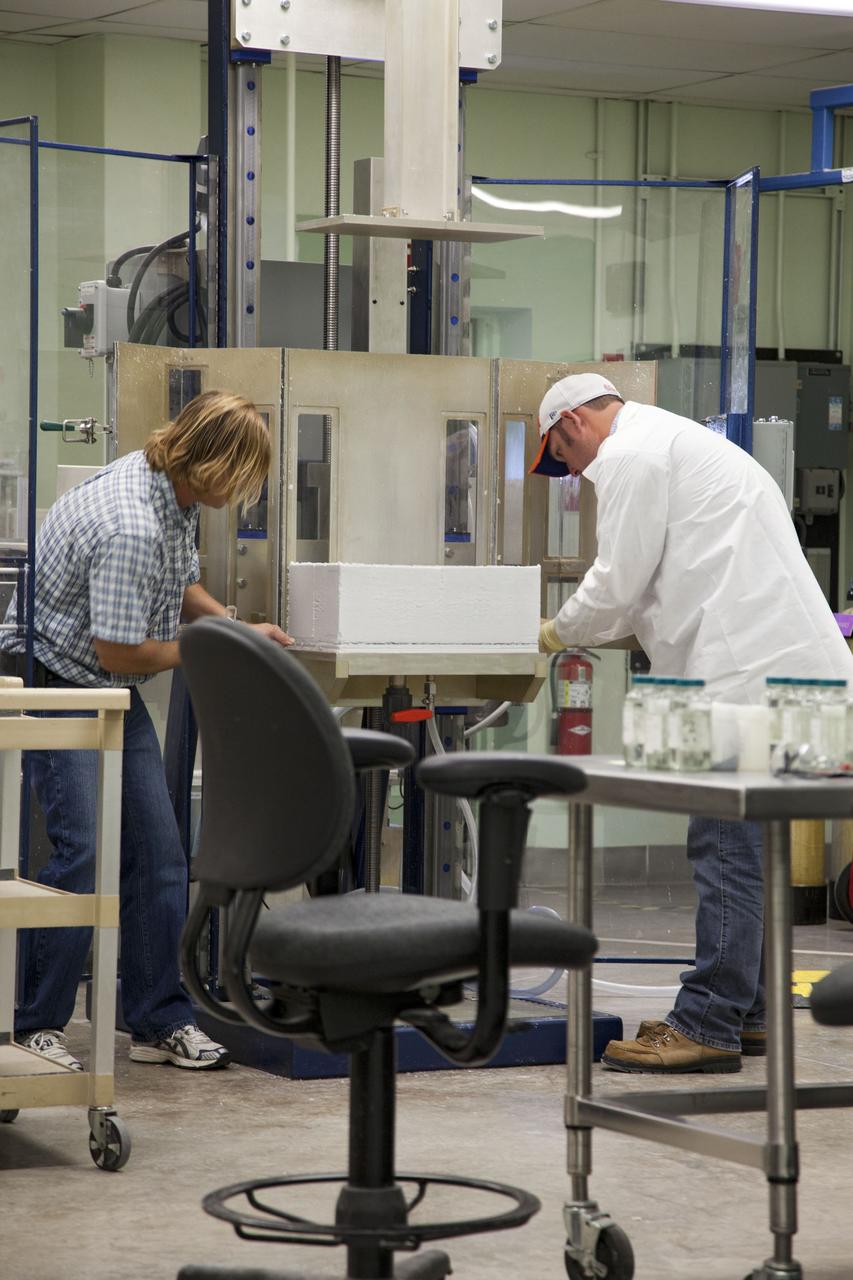
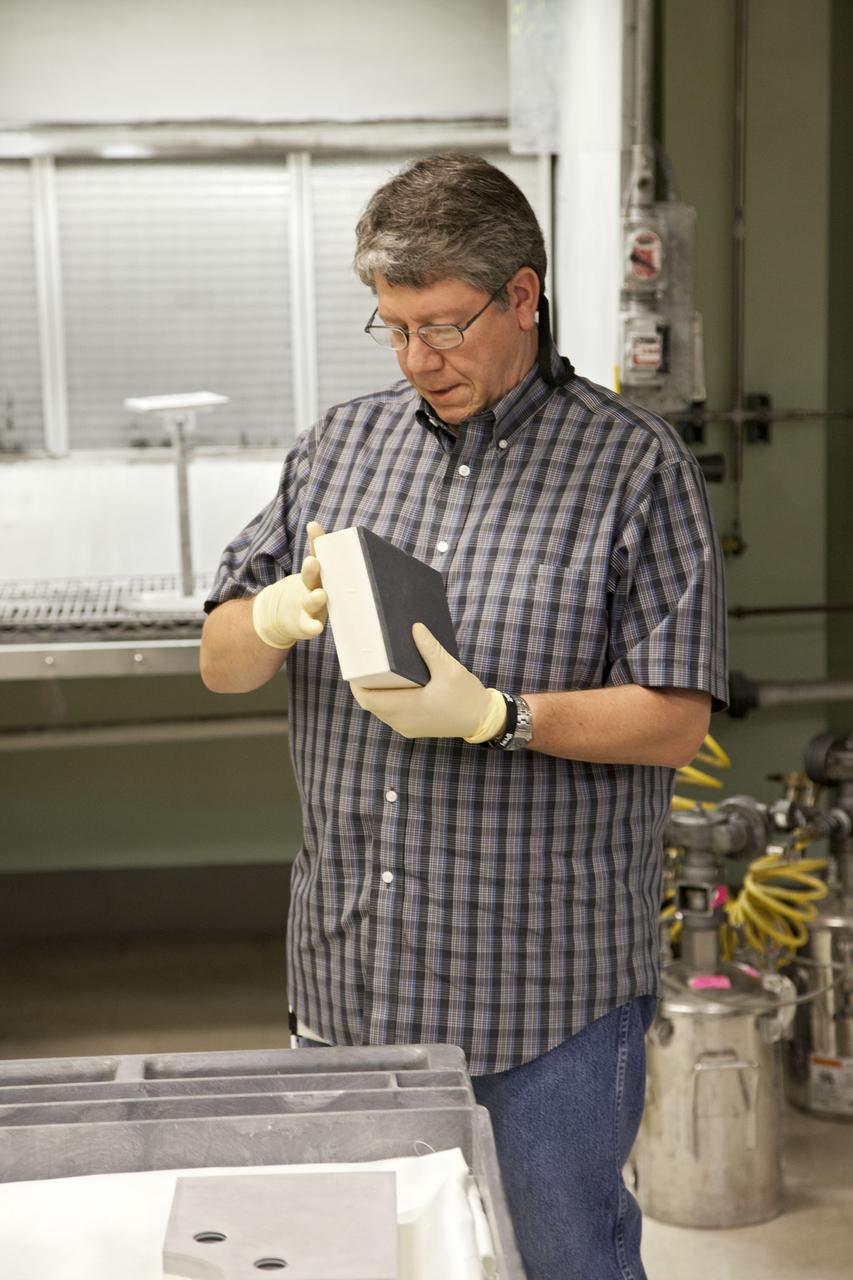
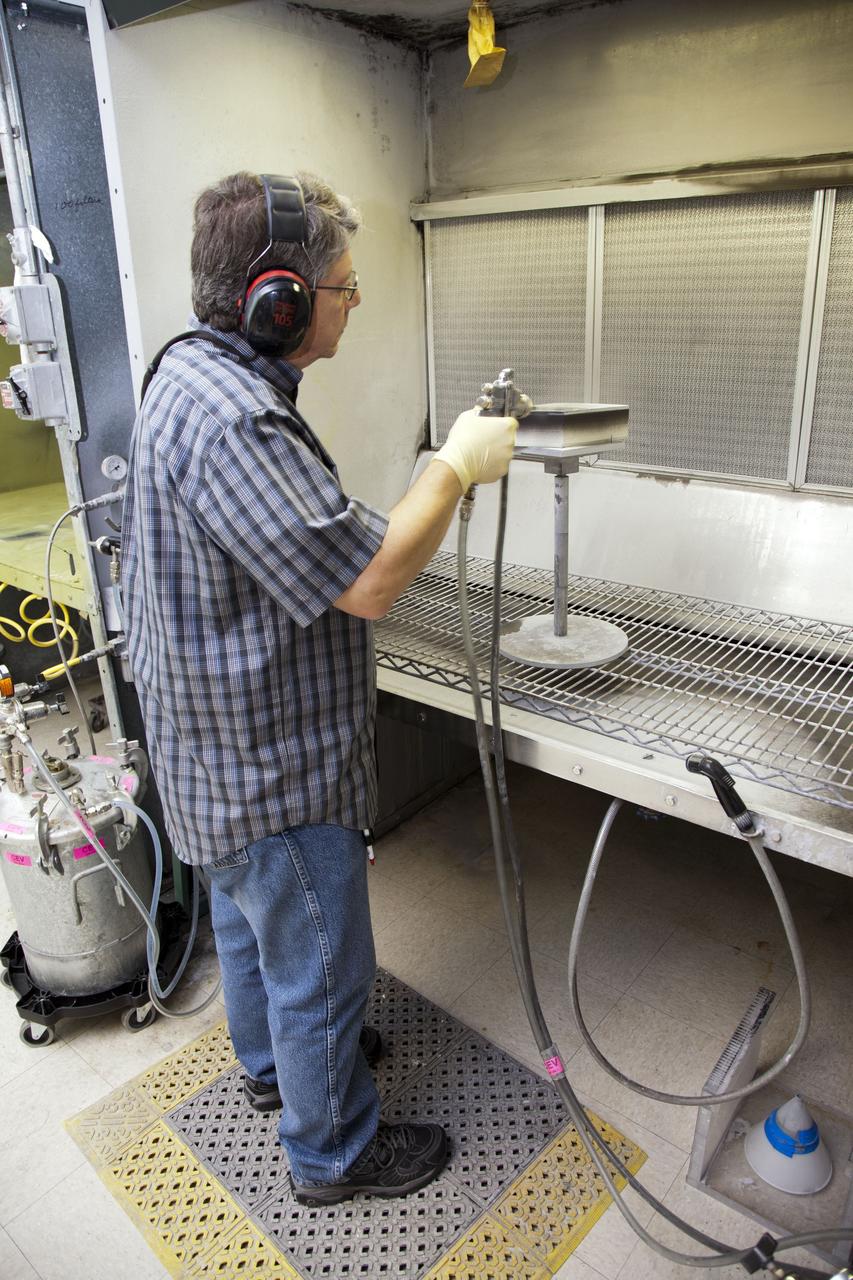
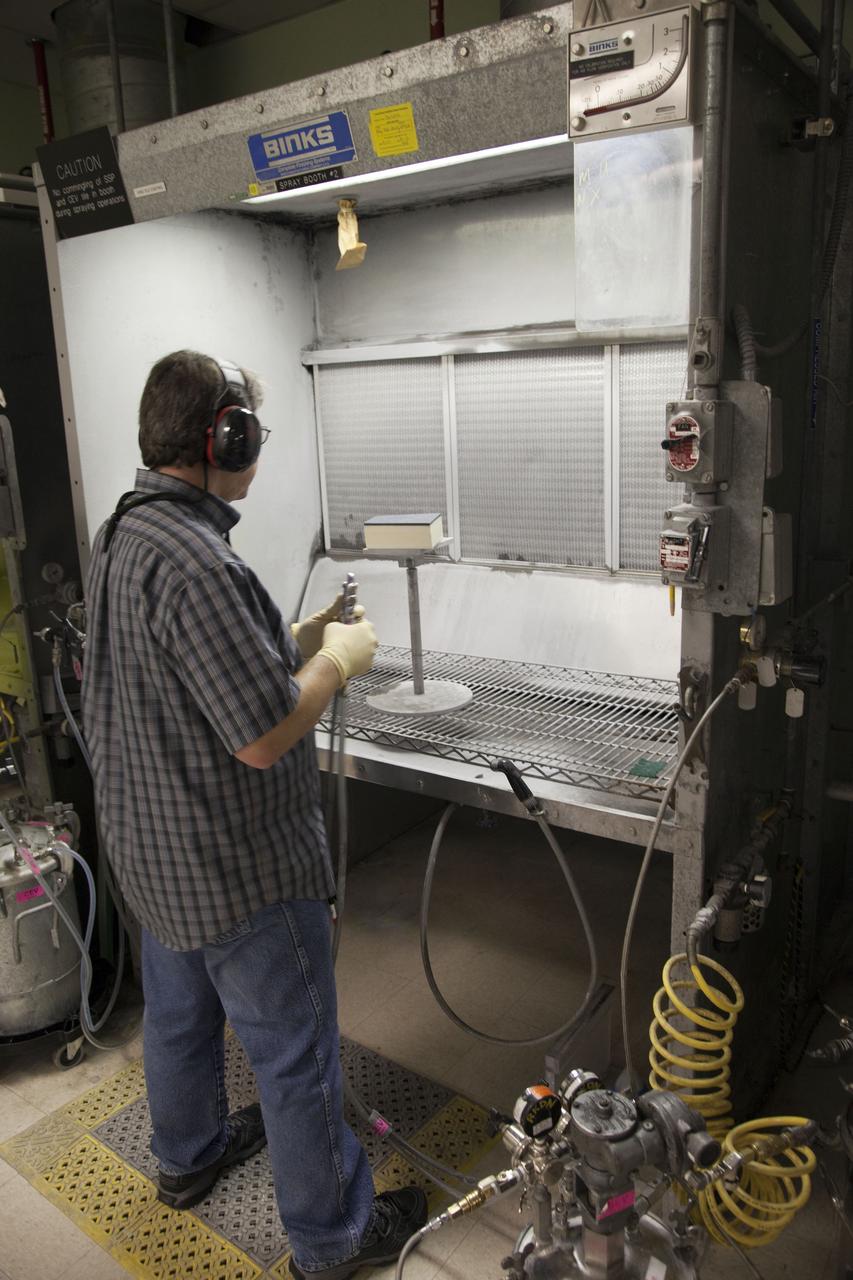
CAPE CANAVERAL, Fla. -- Chris Keeling, a United Space Alliance technician at NASA's Kennedy Space Center in Florida, manufactures the heat shield tiles that will be installed to the backshell of the Orion Multi-Purpose Crew Vehicle's Exploration Flight Test EFT-1 capsule. The work to manufacture and inspect the tiles is taking place in Kennedy's Thermal Protection System Facility. EFT-1 will be used during Orion's first test flight in space. For more information, visit www.nasa.gov/orion. Photo credit: Frankie Martin
KSC-2012-1581
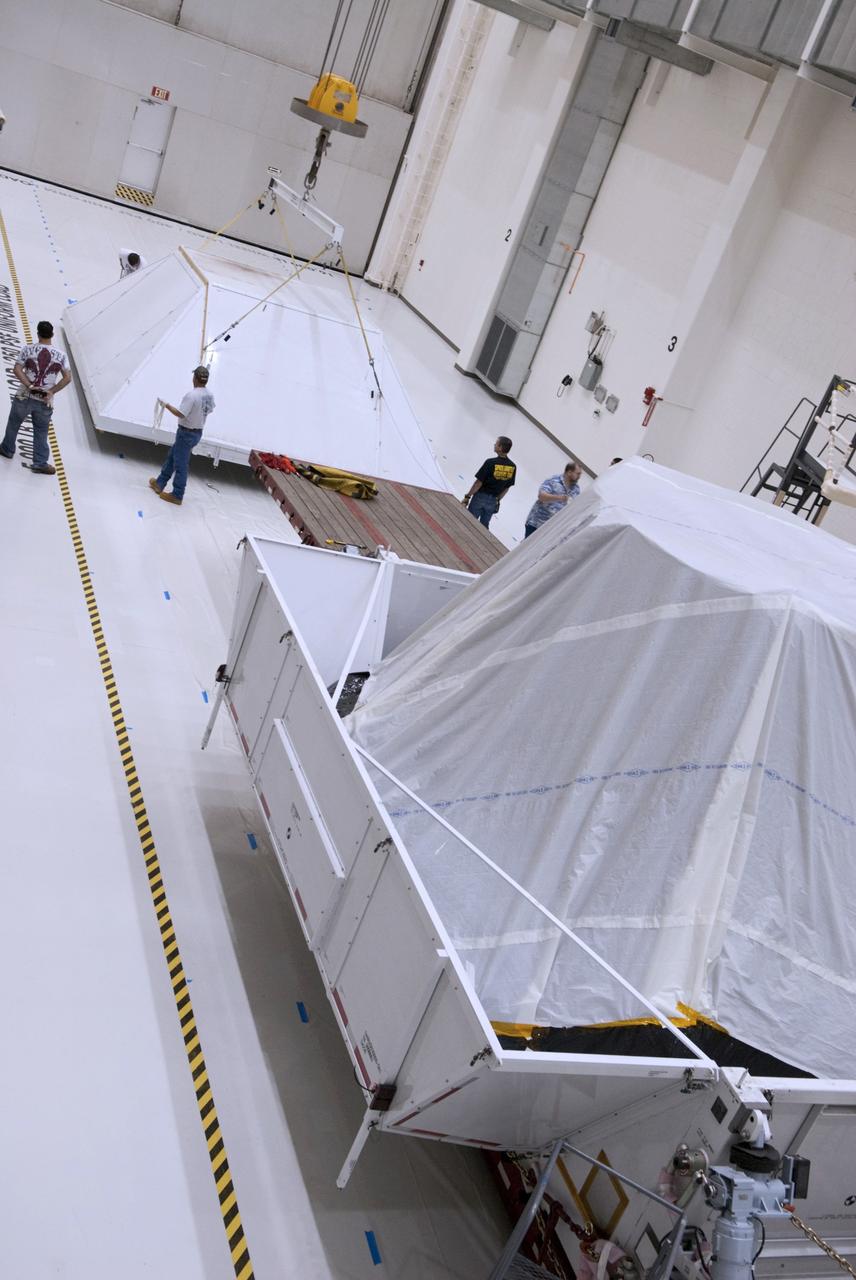
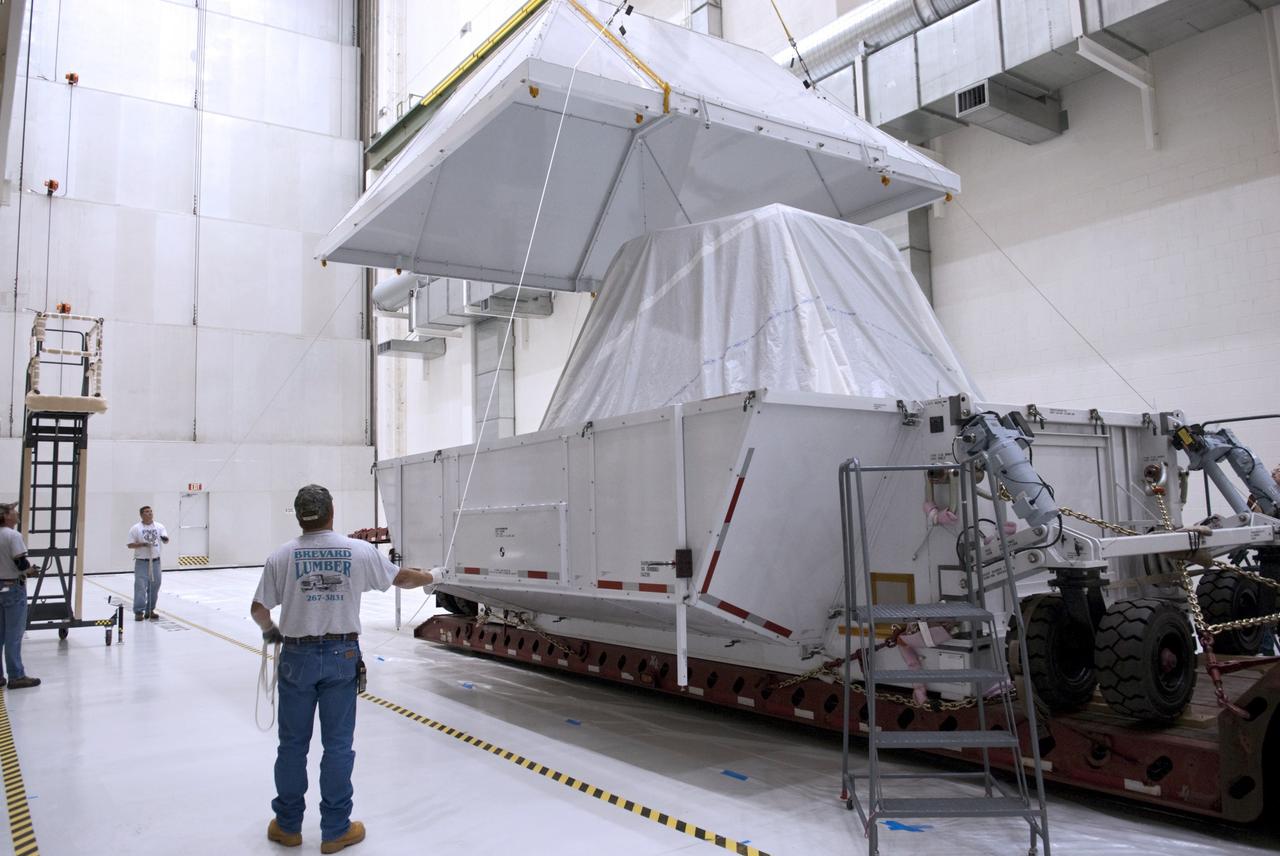
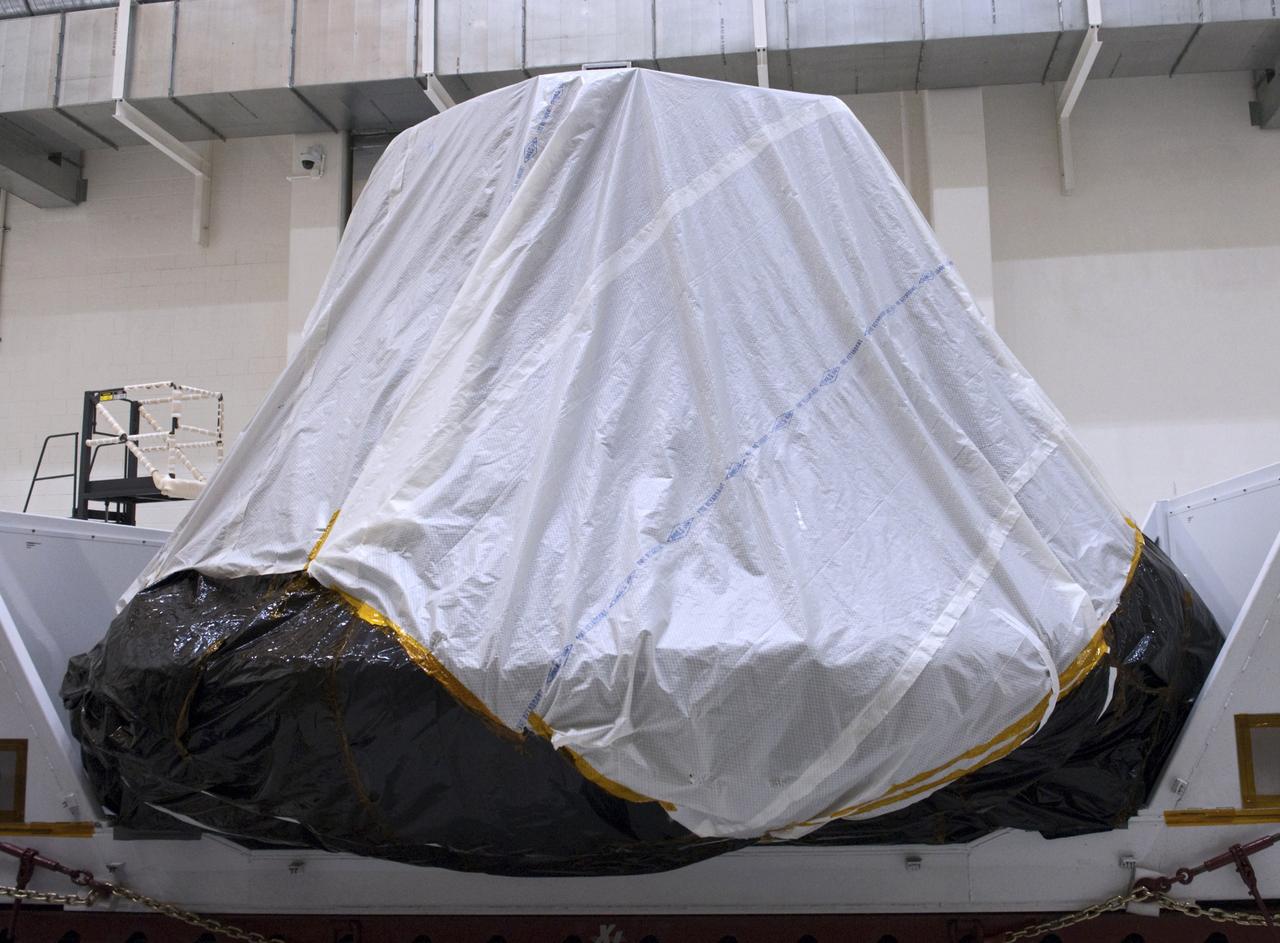
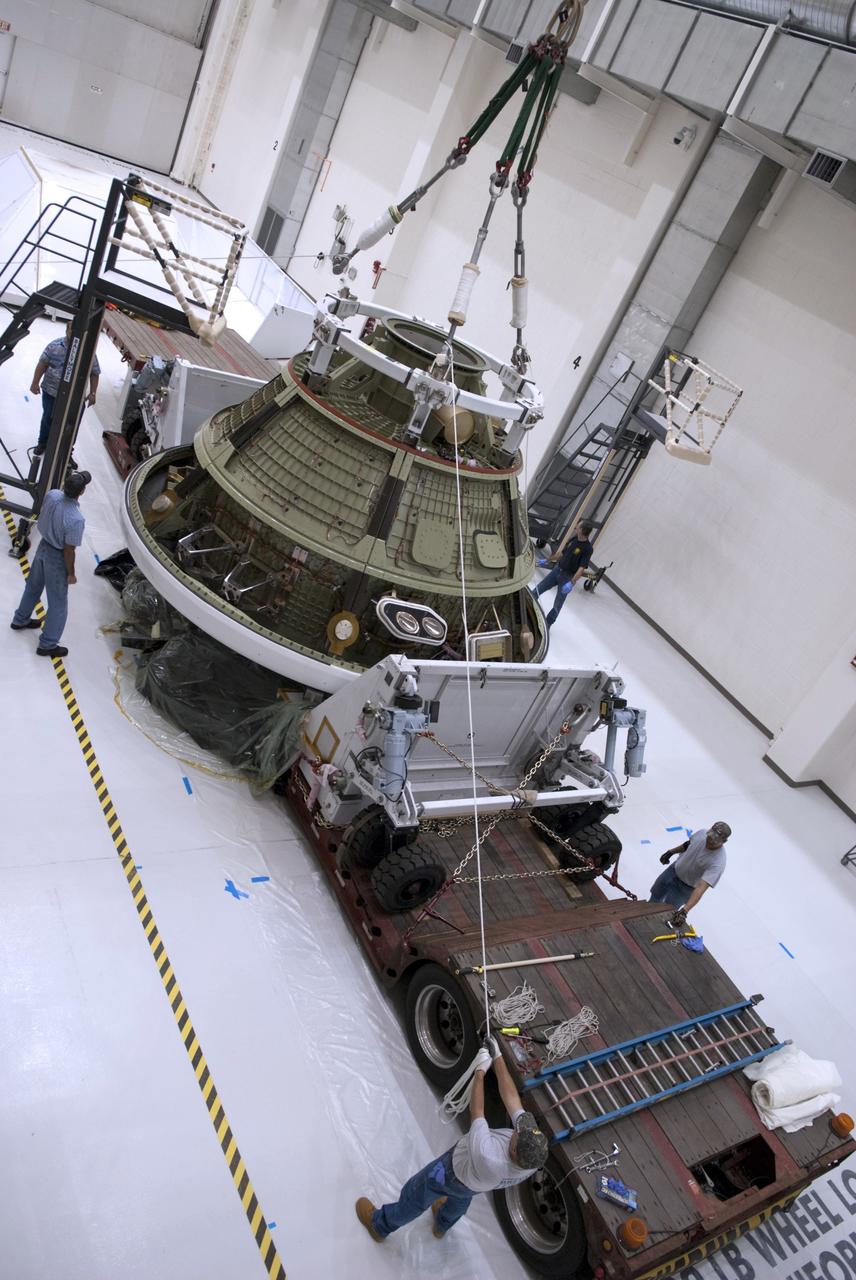
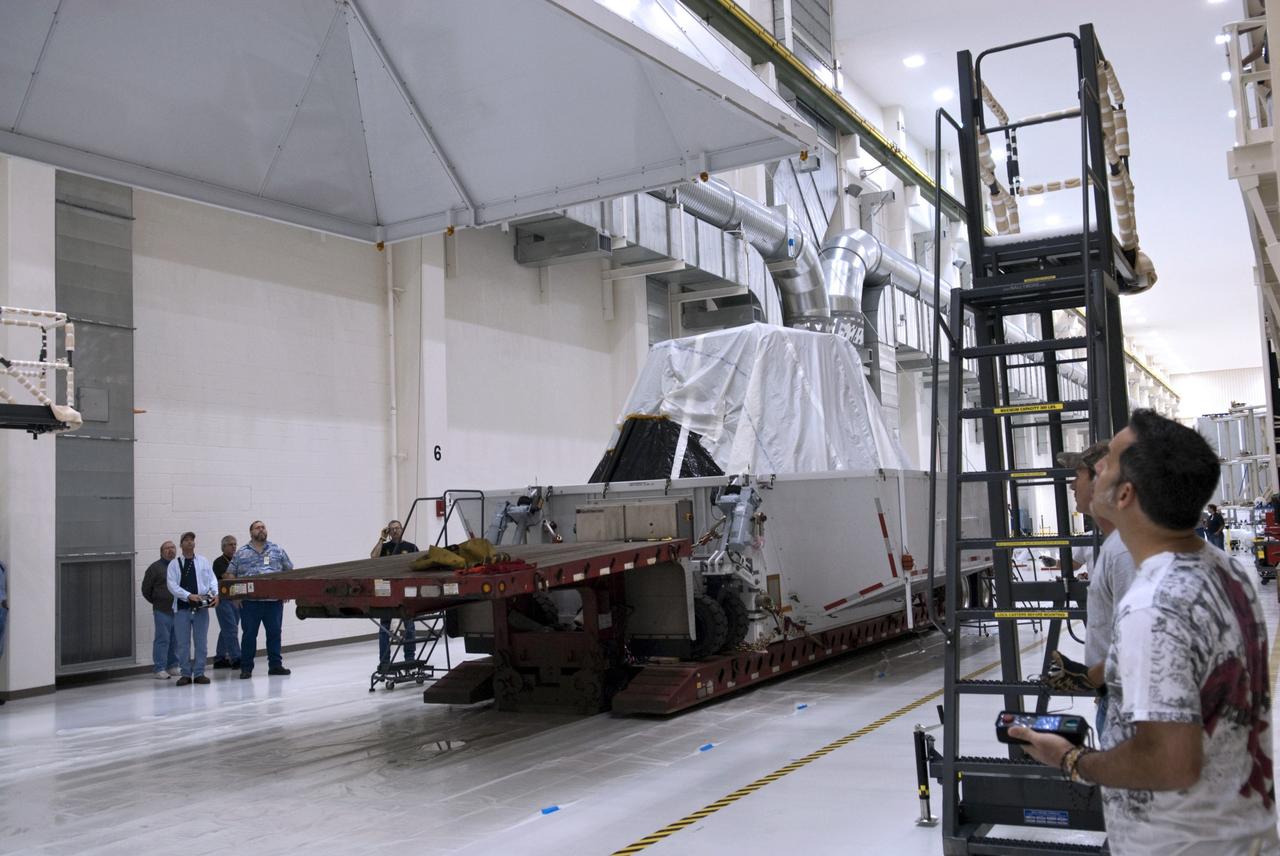
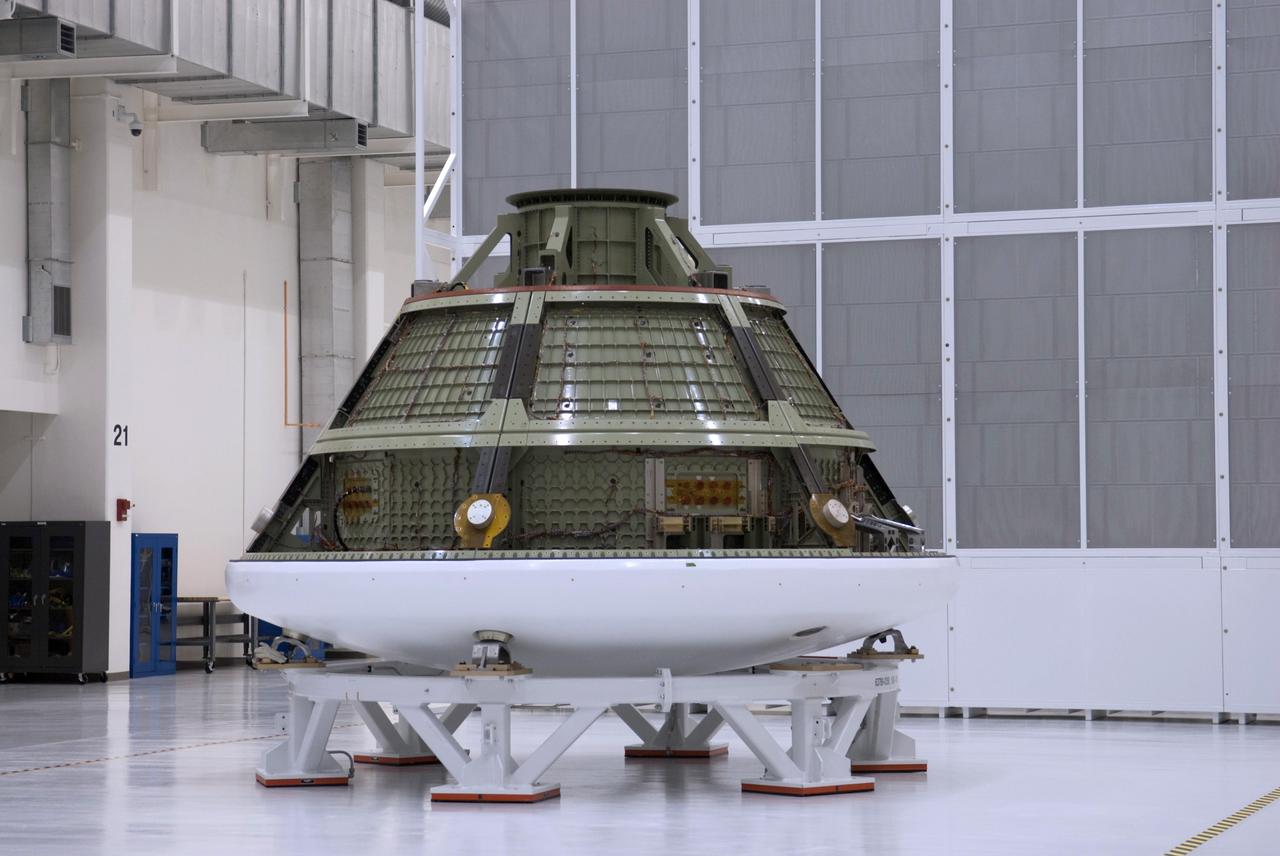
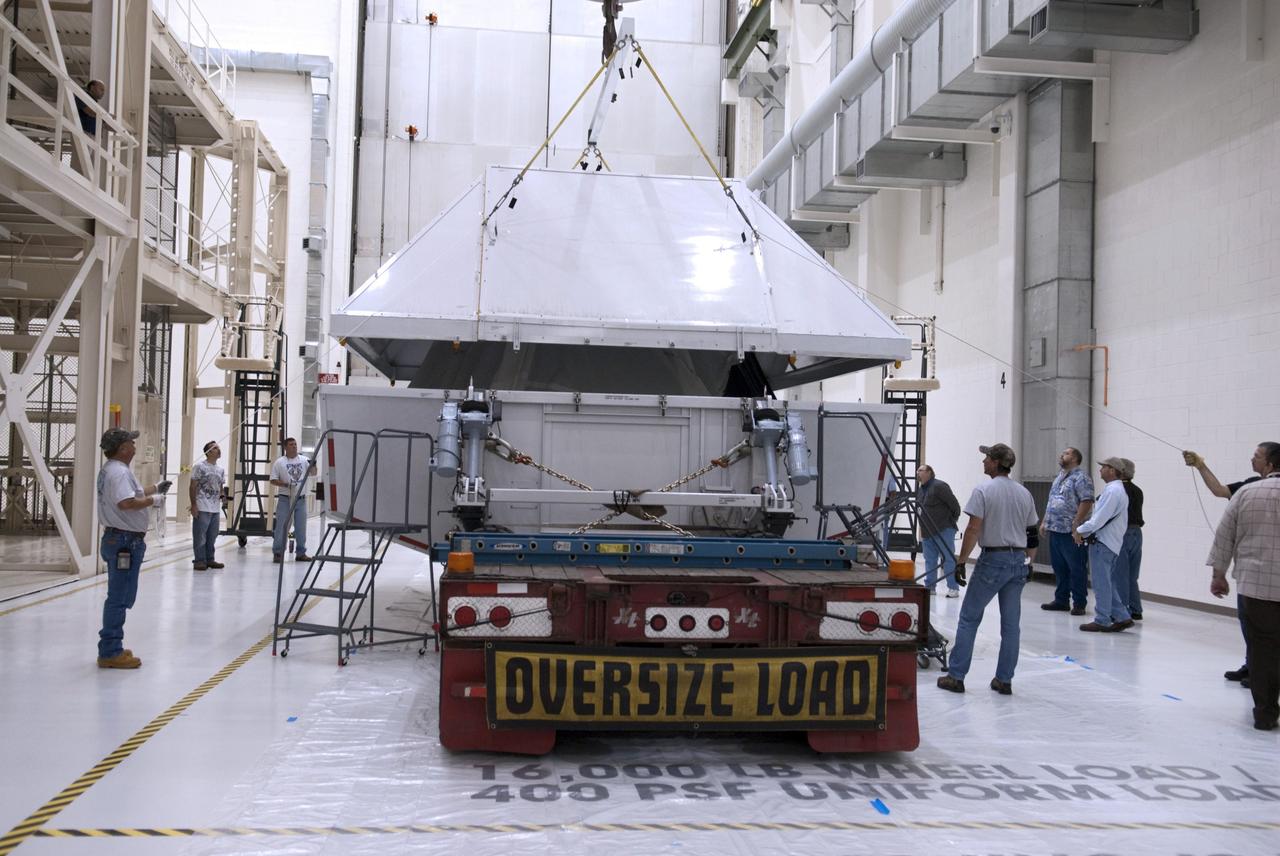
CAPE CANAVERAL, Fla. -- Lockheed Martin crews assist as a crane is used to move the Orion ground test vehicle in the Operations and Checkout O&C Facility at NASA's Kennedy Space Center in Florida. The vehicle traveled more than 1,800 miles from the company's Waterton Facility near Denver where it successfully completed a series of rigorous tests that simulated launch and spaceflight environments. The ground test vehicle will be used for pathfinding operations in the O&C, including simulated manufacturing and assembly procedures. After those operations are completed, new backshell panels will be installed on the ground test vehicle at the O&C prior to the vehicle’s trek to NASA's Langley Research Center in Virginia for splashdown testing at the agency's Hydro Impact Basin.    Launching atop NASA's heavy-lift Space Launch System SLS, which also is under development, the Orion Multi-Purpose Crew Vehicle MPCV will serve as the exploration vehicle that will carry astronaut crews beyond low Earth orbit. It also will provide emergency abort capabilities, sustain the crew during space travel and provide safe re-entry from deep space return velocities. For more information, visit www.nasa.gov/orion. Photo credit: Charisse Nahser
KSC-2012-2547
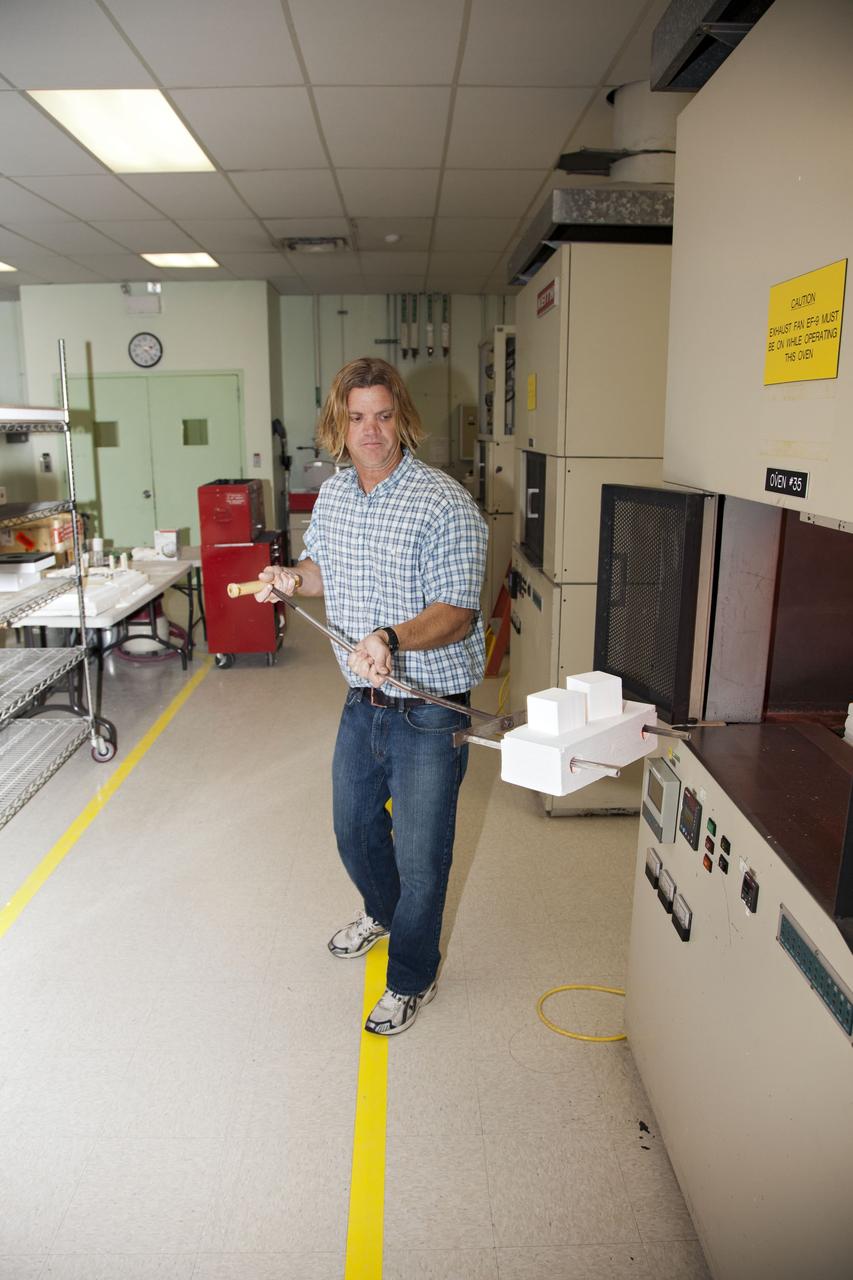
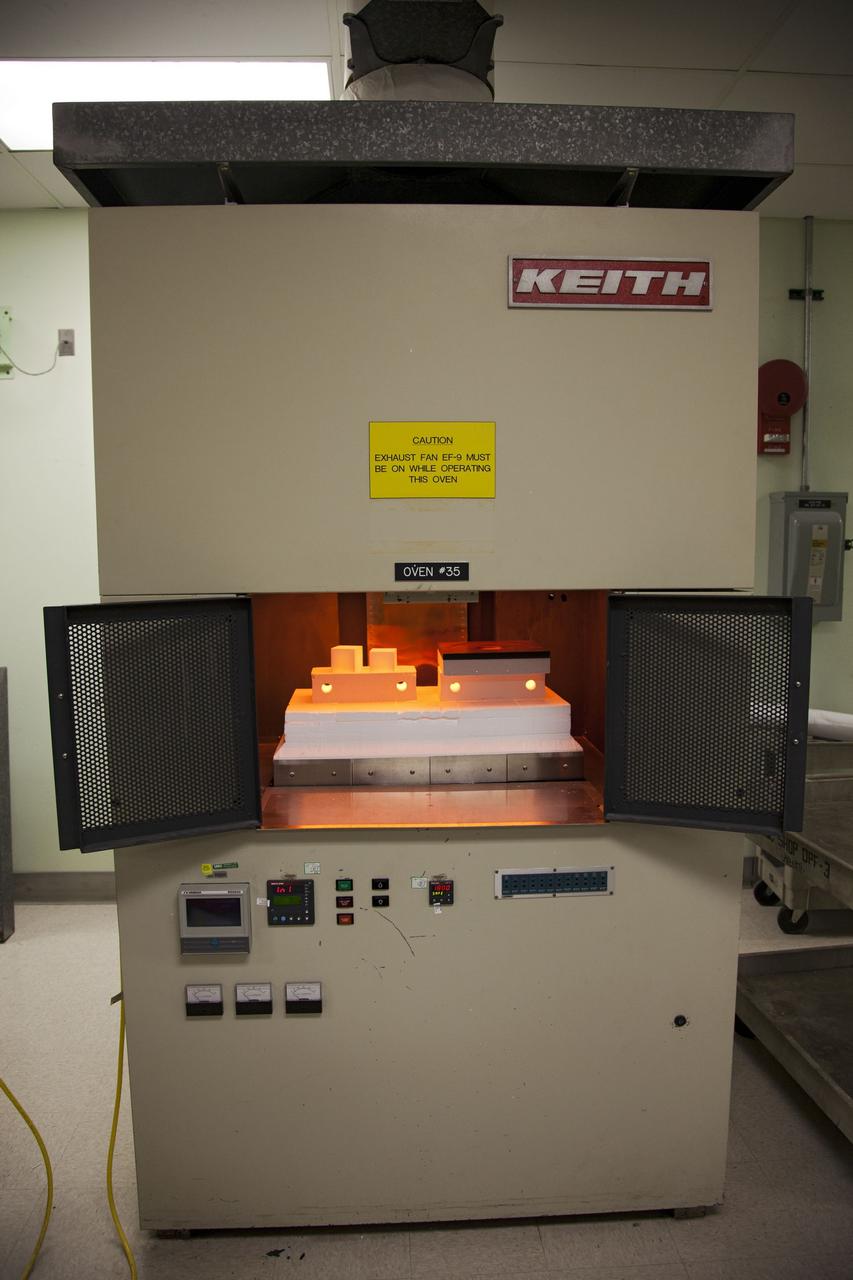
CAPE CANAVERAL, Fla. -- Tim Wright, a United Space Alliance engineering manager at NASA's Kennedy Space Center in Florida, removes the heat shield tiles that will be installed to the backshell of the Orion Multi-Purpose Crew Vehicle's Exploration Flight Test EFT-1 capsule from a Keith thermal automation oven. Inside, the tiles were baked at 2,200 degrees F to cure their ceramic coating. The work to manufacture and inspect the tiles is taking place in Kennedy's Thermal Protection System Facility. EFT-1 will be used during Orion's first test flight in space. For more information, visit www.nasa.gov/orion. Photo credit: Frankie Martin
KSC-2012-1586
CAPE CANAVERAL, Fla. -- Lockheed Martin crews remove the Orion ground test vehicle from its packaging in the Operations and Checkout O&C Facility at NASA's Kennedy Space Center in Florida. The vehicle traveled more than 1,800 miles from the company's Waterton Facility near Denver where it successfully completed a series of rigorous tests that simulated launch and spaceflight environments. The ground test vehicle will be used for pathfinding operations in the O&C, including simulated manufacturing and assembly procedures. After those operations are completed, new backshell panels will be installed on the ground test vehicle at the O&C prior to the vehicle’s trek to NASA's Langley Research Center in Virginia for splashdown testing at the agency's Hydro Impact Basin.        Launching atop NASA's heavy-lift Space Launch System SLS, which also is under development, the Orion Multi-Purpose Crew Vehicle MPCV will serve as the exploration vehicle that will carry astronaut crews beyond low Earth orbit. It also will provide emergency abort capabilities, sustain the crew during space travel and provide safe re-entry from deep space return velocities. For more information, visit www.nasa.gov/orion. Photo credit: Charisse Nahser
KSC-2012-2546
CAPE CANAVERAL, Fla. -- Chris Keeling, a United Space Alliance technician at NASA's Kennedy Space Center in Florida, manufactures the heat shield tiles that will be installed to the backshell of the Orion Multi-Purpose Crew Vehicle's Exploration Flight Test EFT-1 capsule. The work to manufacture and inspect the tiles is taking place in Kennedy's Thermal Protection System Facility. EFT-1 will be used during Orion's first test flight in space. For more information, visit www.nasa.gov/orion. Photo credit: Frankie Martin
KSC-2012-1584
CAPE CANAVERAL, Fla. -- The heat shield tiles that will be installed to the backshell of the Orion Multi-Purpose Crew Vehicle's Exploration Flight Test EFT-1 capsule are being manufactured in the Thermal Protection System Facility at NASA's Kennedy Space Center in Florida. EFT-1 will be used during Orion's first test flight in space. For more information, visit www.nasa.gov/orion. Photo credit: Frankie Martin
KSC-2012-1580