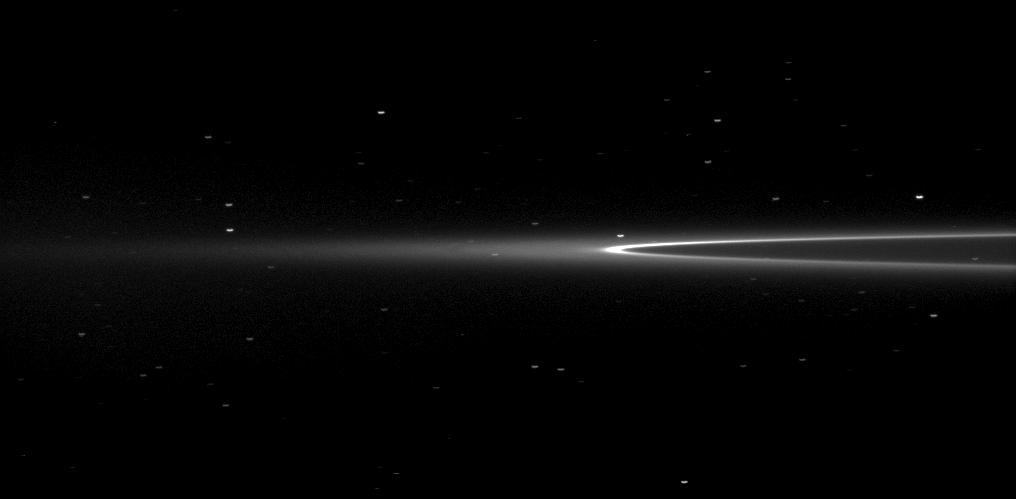
NASA Cassini spacecraft looks toward Saturn tiny moon Aegaeon within the G-ring arc. The moonlet Aegaeon formerly known as S/2008 S 1 cant be seen in this image, but it orbits in the bright arc of Saturn faint G ring shown here.

ADVISORY COMMITTEE: The Federal Women’ s Program Advisory Committee has been established to assist in the implementation of the Federal Women’ s Program at the Center. In an effort to define the specific problems of women employees at Langley, the committee is preparing a self-evaluation and discrimination questionnaire which will soon be distributed to all female employees. Members of the committee are (from left): Lorraine F. Satchell, Carmen, E. Batten, Patricia D. Hurt, Jane s. Hess, Chairman, Sallie M. Harvey, Eloise McGeehee, Mary W. Jackson, and Eunice G. Smith. Absent when the photograph was taken was Jeanette W. George. Photo published in the Langley Researcher, May 11,1973 page 5.
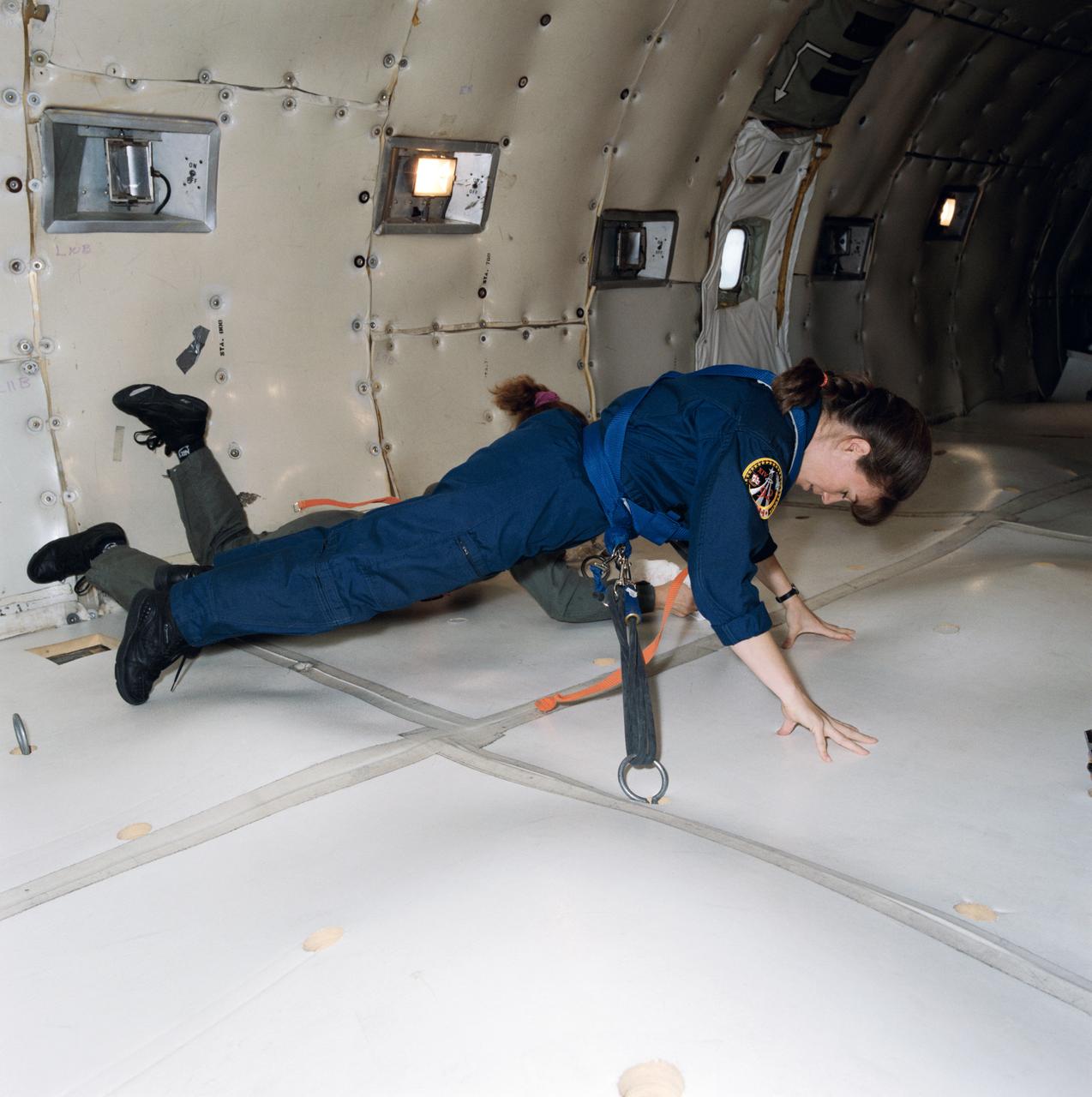
S94-35542 (June 1994) --- Astronaut Catherine G. Coleman, mission specialist, gets a preview of next year?s United States Microgravity Laboratory (USML-2) mission aboard the Space Shuttle Columbia. The weightless experience was afforded by a special parabolic pattern flown by NASA?s KC-135 ?zero gravity? aircraft.
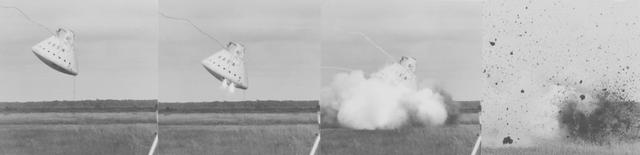
The first test of Apollo boilerplate equipped with landing rockets took place at Ellington AFB, 05/16. Spacecraft was dropped at 30-ft. p/s with 23-ft. p/s horizontal velocity. A force of 6 g's was measured inside the spacecraft during the landing. ELLINGTON AFB, HOUSTON, TX B&W
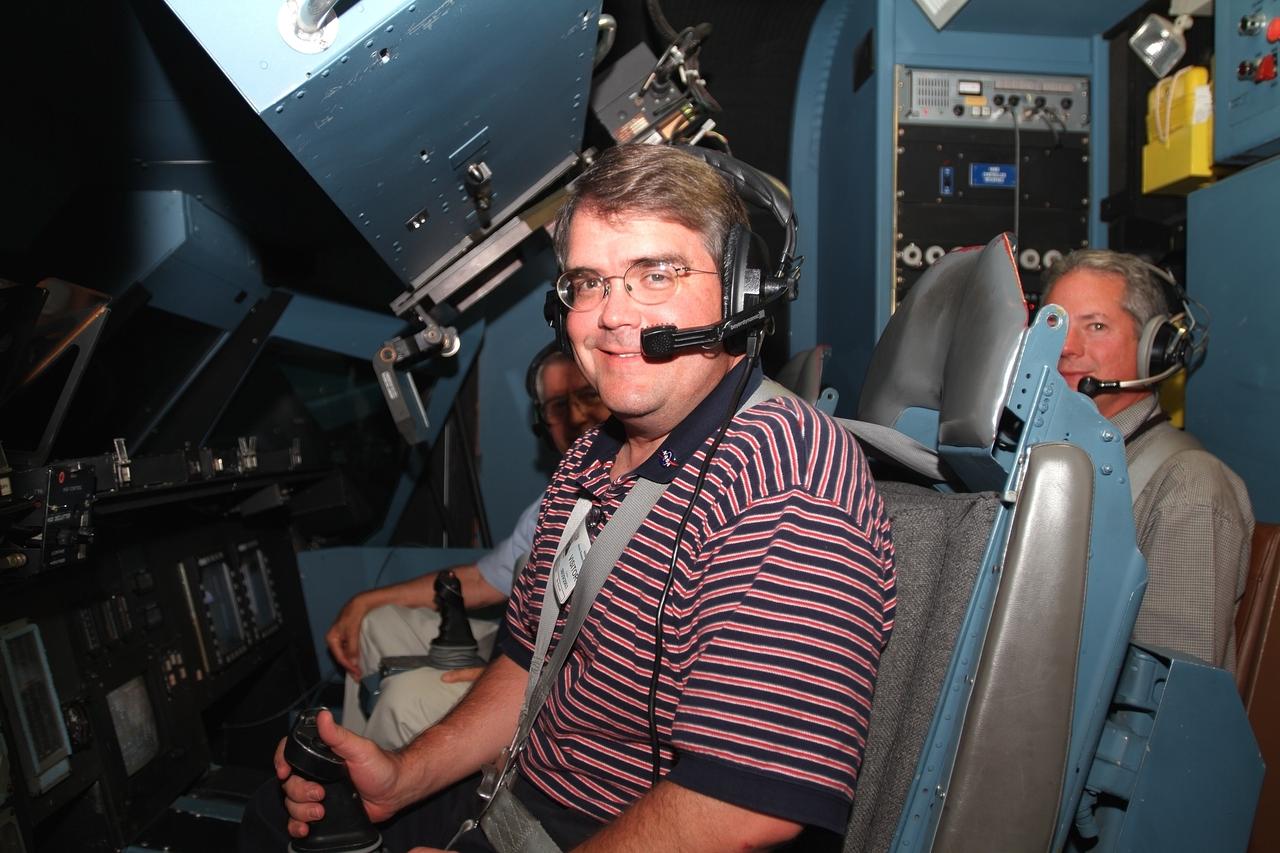
U. S. Congressman Culbertson, Texas and Mr John Webb, Webb & Associates visit and tour Ames Research Center with Center Director G. Scott Hubbard (Culbertson in cab of VMS)

U. S. Congressman Culbertson, Texas and Mr John Webb, Webb & Associates visit and tour Ames Research Center with Center Director G. Scott Hubbard (briefing and tour of the test facilities by Joe Hartman)
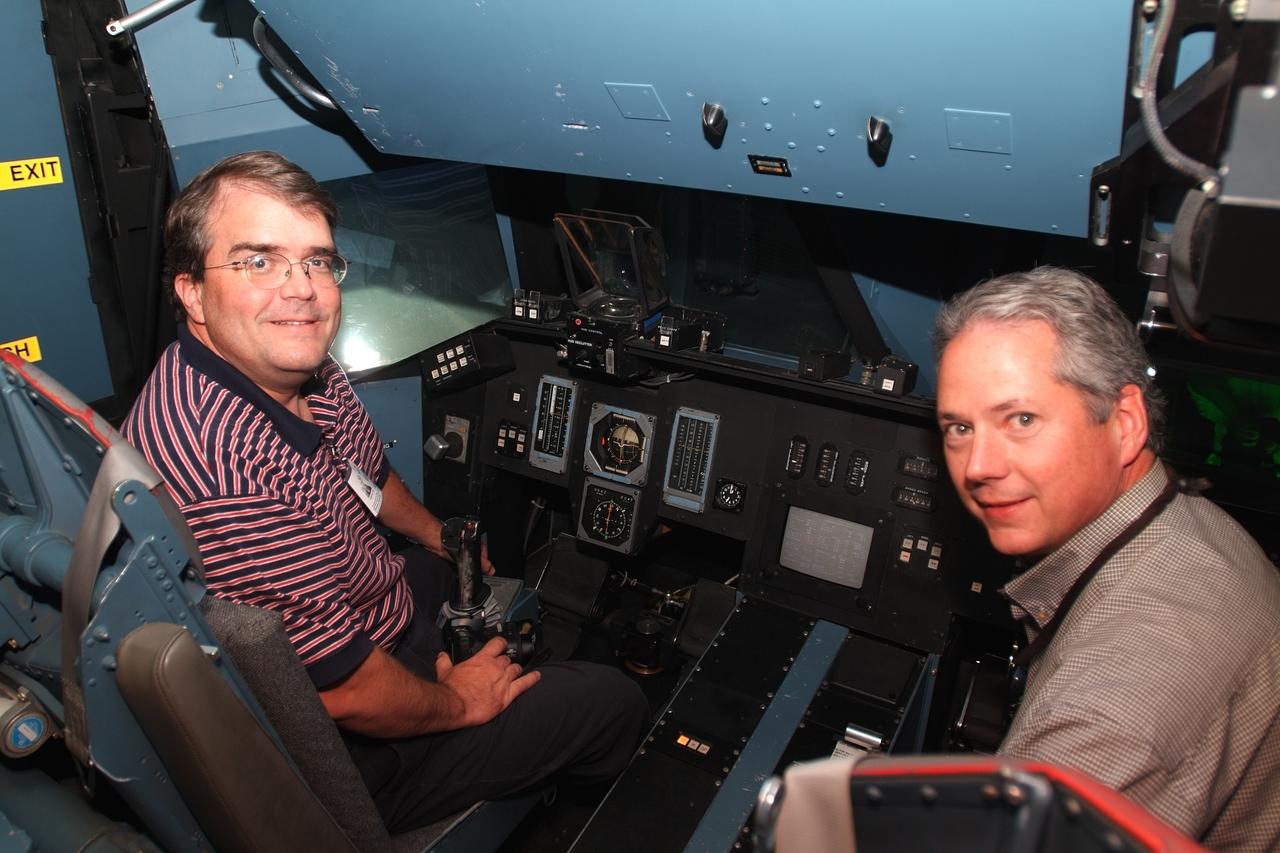
U. S. Congressman Culbertson, Texas and Mr John Webb, Webb & Associates visit and tour Ames Research Center with Center Director G. Scott Hubbard L-Culbertson, R-Webb in cab of VMS
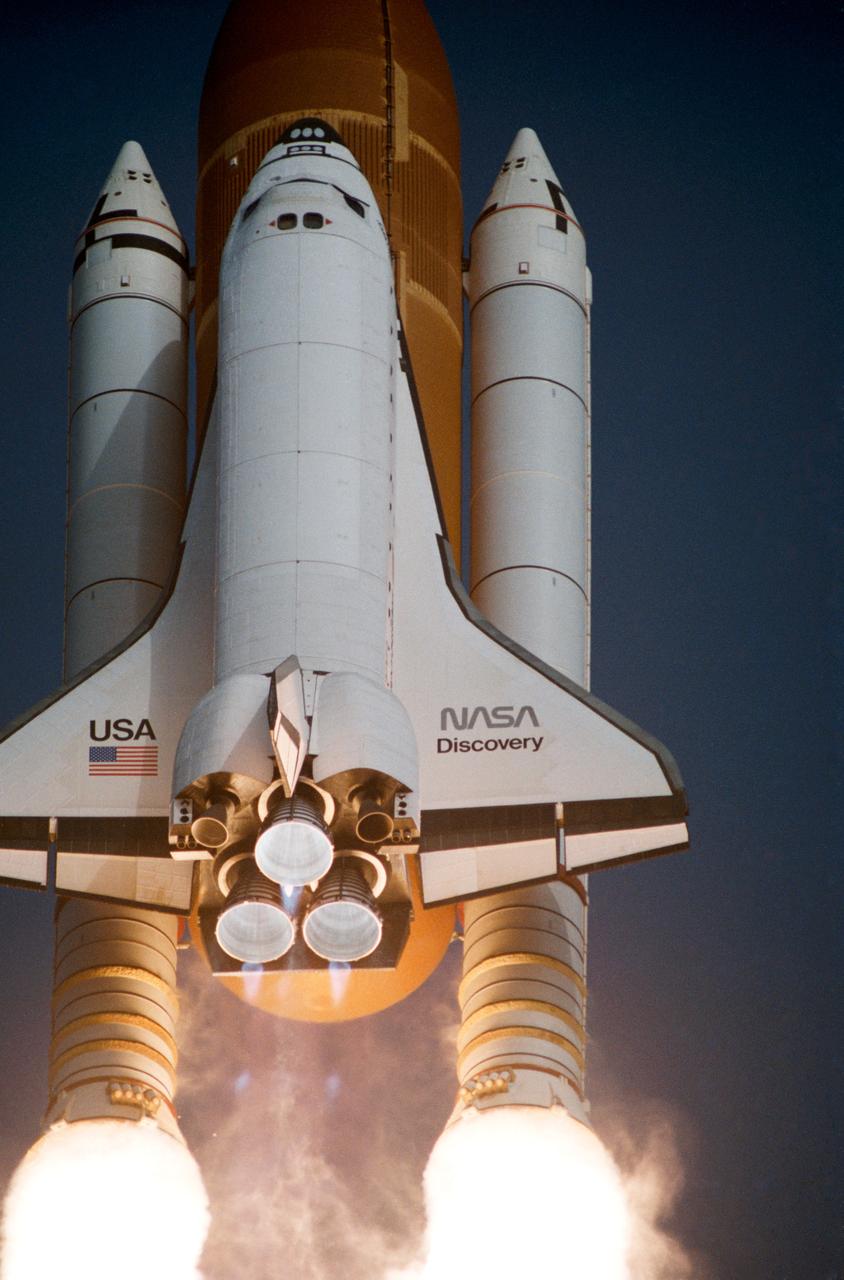
51G-S-100 (17 June 1985) --- A low-angle 35mm tracking view of the Space Shuttle Discovery, its external tank and two solid rocket boosters speeding from the KSC launch facility to begin NASA STS 51-G. The camera has captured the diamond shock effect associated with the launch phase or orbiter vehicles. Inside the Discovery are seven crewmembers and a variety of payloads representing international interests. Liftoff for 51-G occurred at 7:33:043 a.m. (EDT), June 17, 1985.
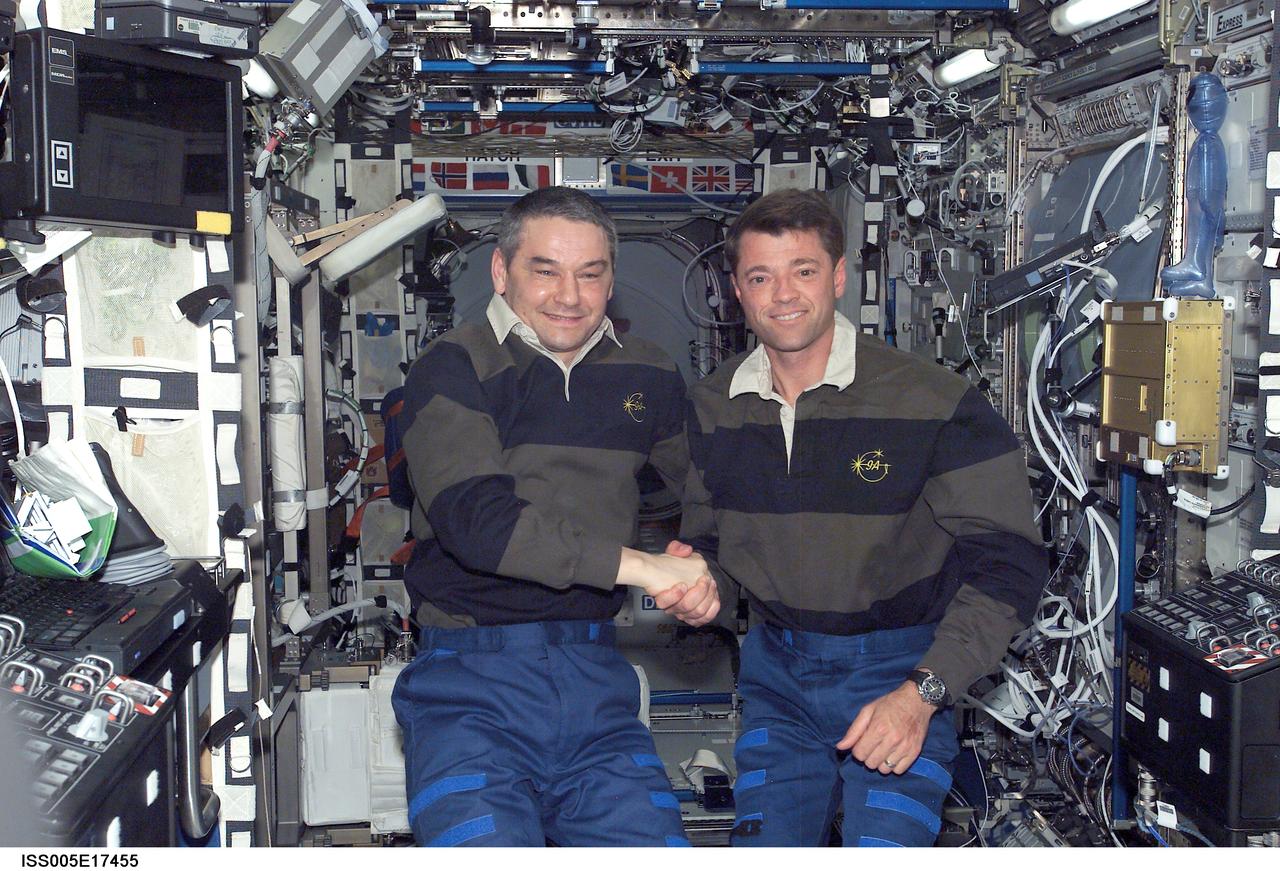
ISS005-E-17455 (13 October 2002) --- Cosmonaut Valery G. Korzun (left), Expedition Five mission commander, and astronaut Jeffrey S. Ashby, STS-112 mission commander, pose for a photo in the Destiny laboratory on the International Space Station (ISS). Korzun represents Rosaviakosmos.
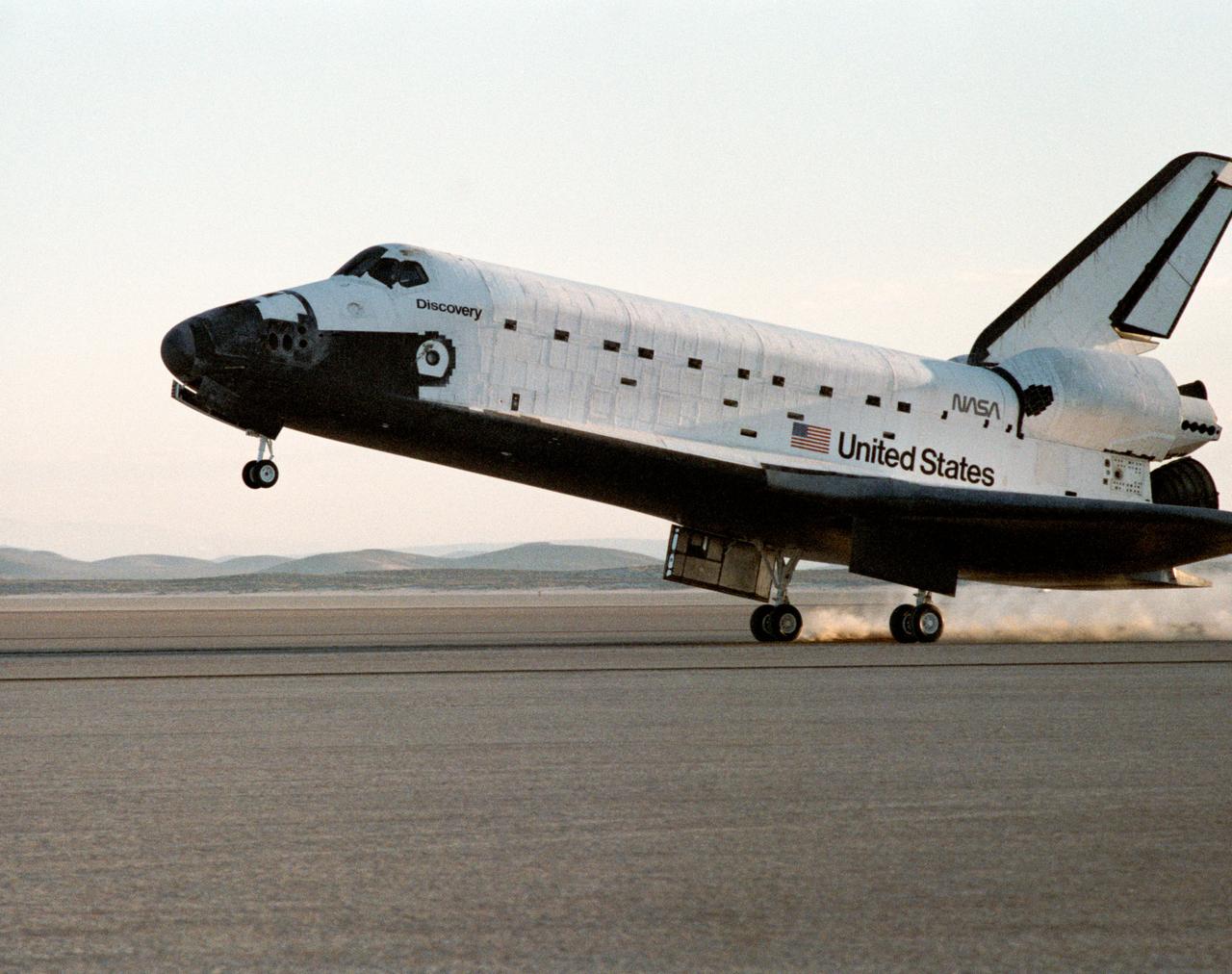
51G-S-225 (24 June 1985) --- Discovery, with its seven-member 51-G crew aboard, touches down on a dry lakebed at Edwards Air Force Base in California. Landing was noted at 6:11:53 a.m. (PDT), June 24, 1985.
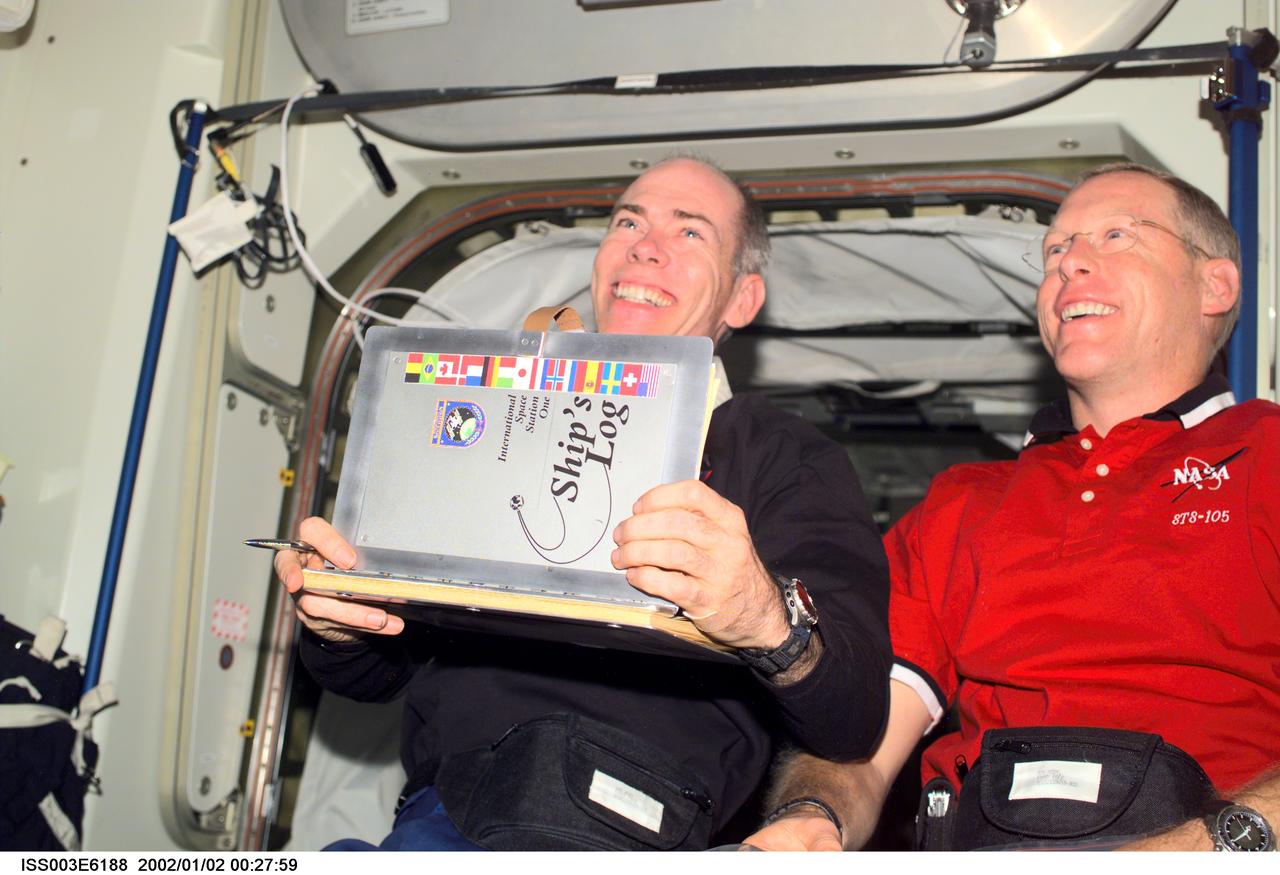
ISS003-E-6188 (August 2001) --- Astronauts Daniel T. Barry (left) and Patrick G. Forrester, both STS-105 mission specialists, add their names to the list of International Space Station (ISS) visitors in the ship’s log in the Unity node. This image was taken with a digital still camera.
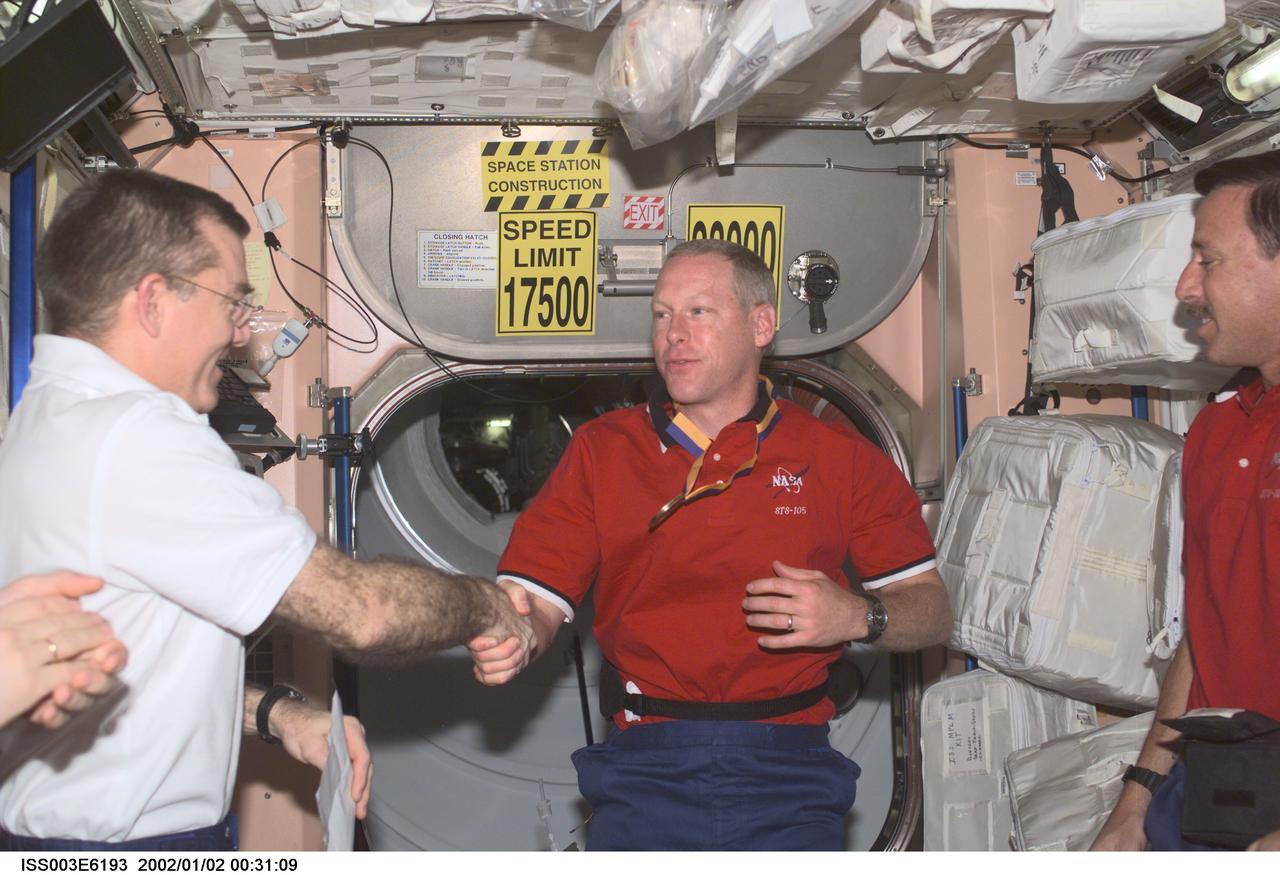
ISS003-E-6193 (August 2001) --- Astronauts James S. Voss (left), Expedition Two flight engineer, Patrick G. Forrester, STS-105 mission specialist, and Scott J. Horowitz, mission commander, exchange greetings in the Unity node on the International Space Station (ISS). This image was taken with a digital still camera.
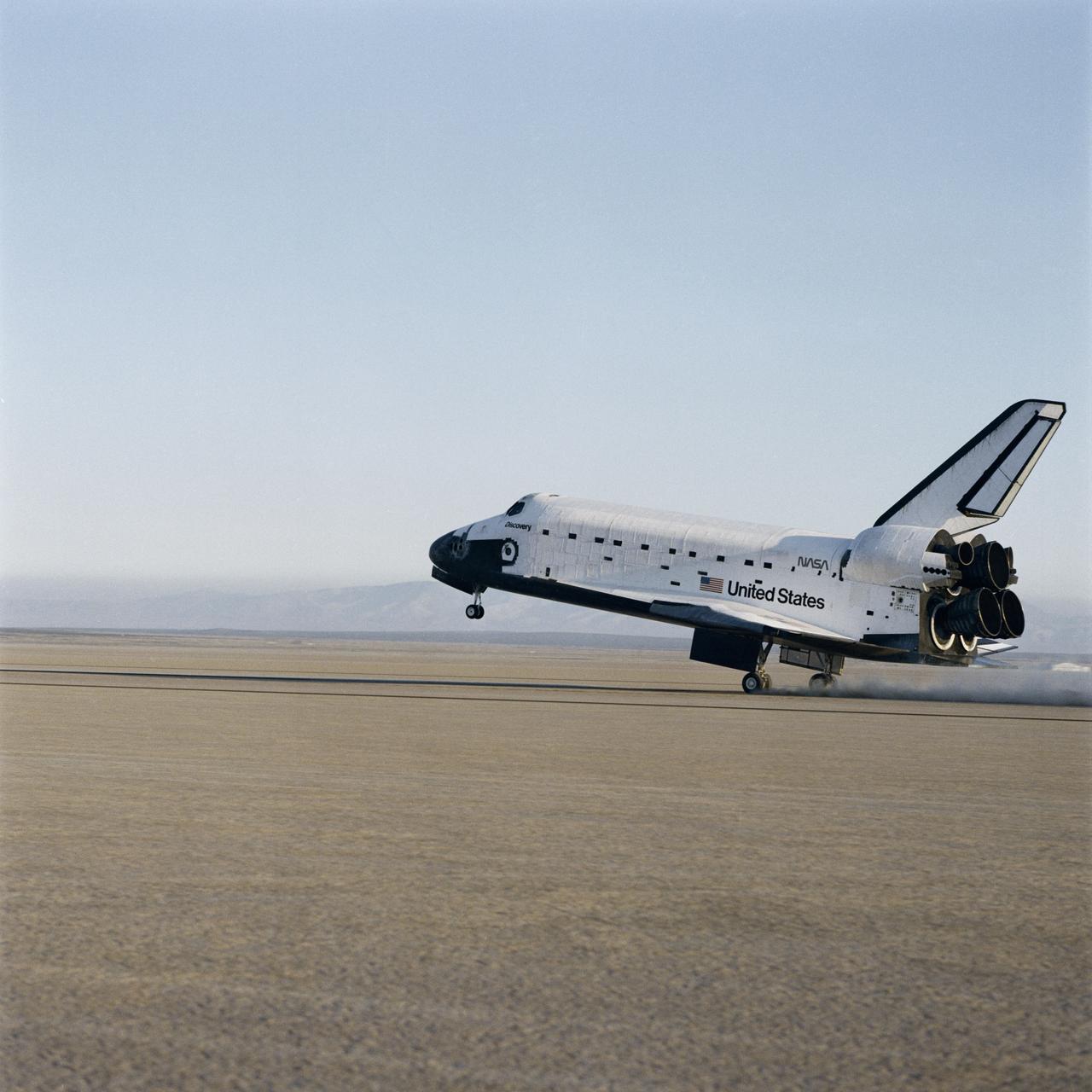
51G-S-224 (24 June 1985) --- Discovery, with its seven-member 51-G crew aboard, touches down on a dry lakebed at Edwards Air Force Base in California. Landing was noted at 6:11:53 a.m. (PDT), June 24, 1985.
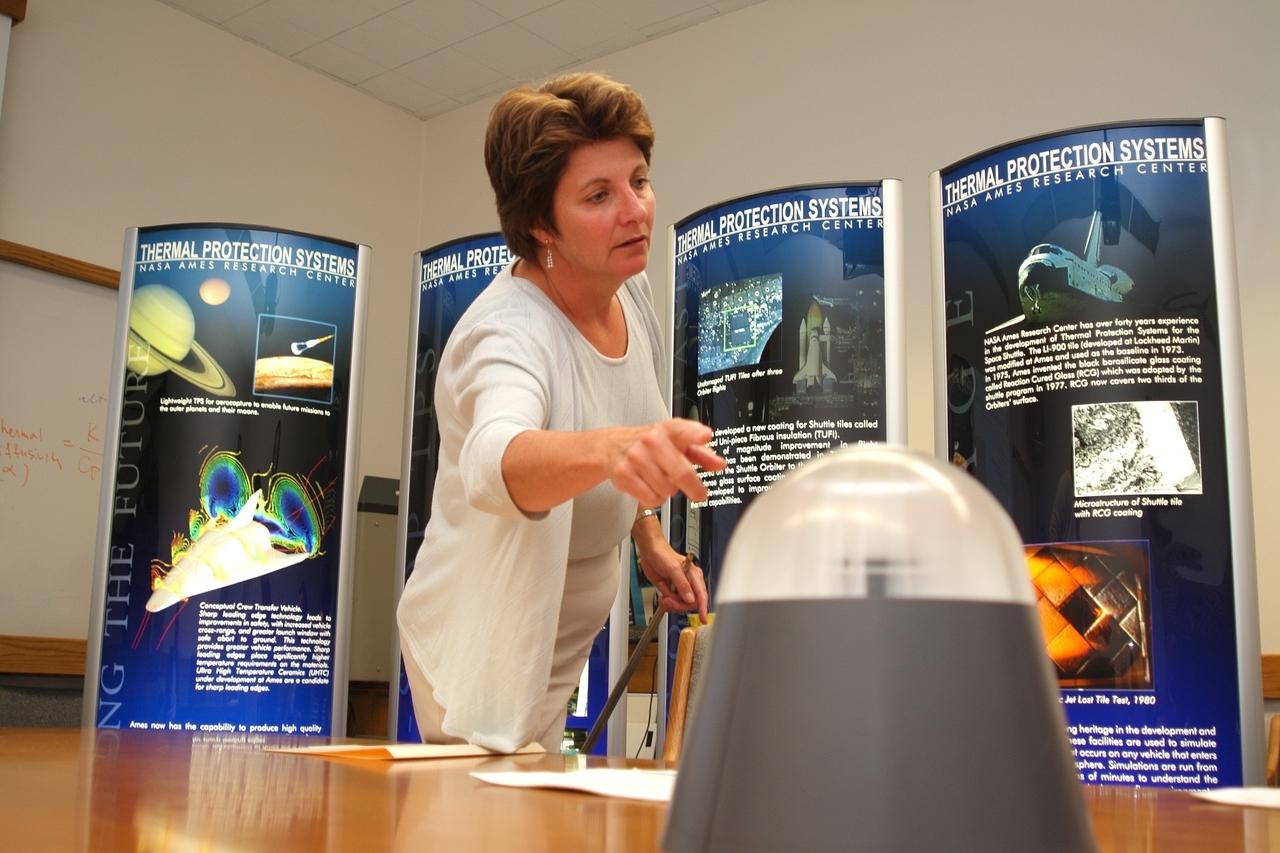
U. S. Congressman Culbertson, Texas and Mr John Webb, Webb & Associates visit and tour Ames Research Center with Center Director G. Scott Hubbard (pre-tour briefing at the Thermal Protection Facility - Arc Jet by Sylvia Johnson)

STS112-329-015 (13 October 2002) --- Cosmonaut Valery G. Korzun (left), Expedition Five mission commander, and astronaut Jeffrey S. Ashby, STS-112 mission commander, exchange greetings in the Destiny laboratory on the International Space Station (ISS). Korzun represents Rosaviakosmos.
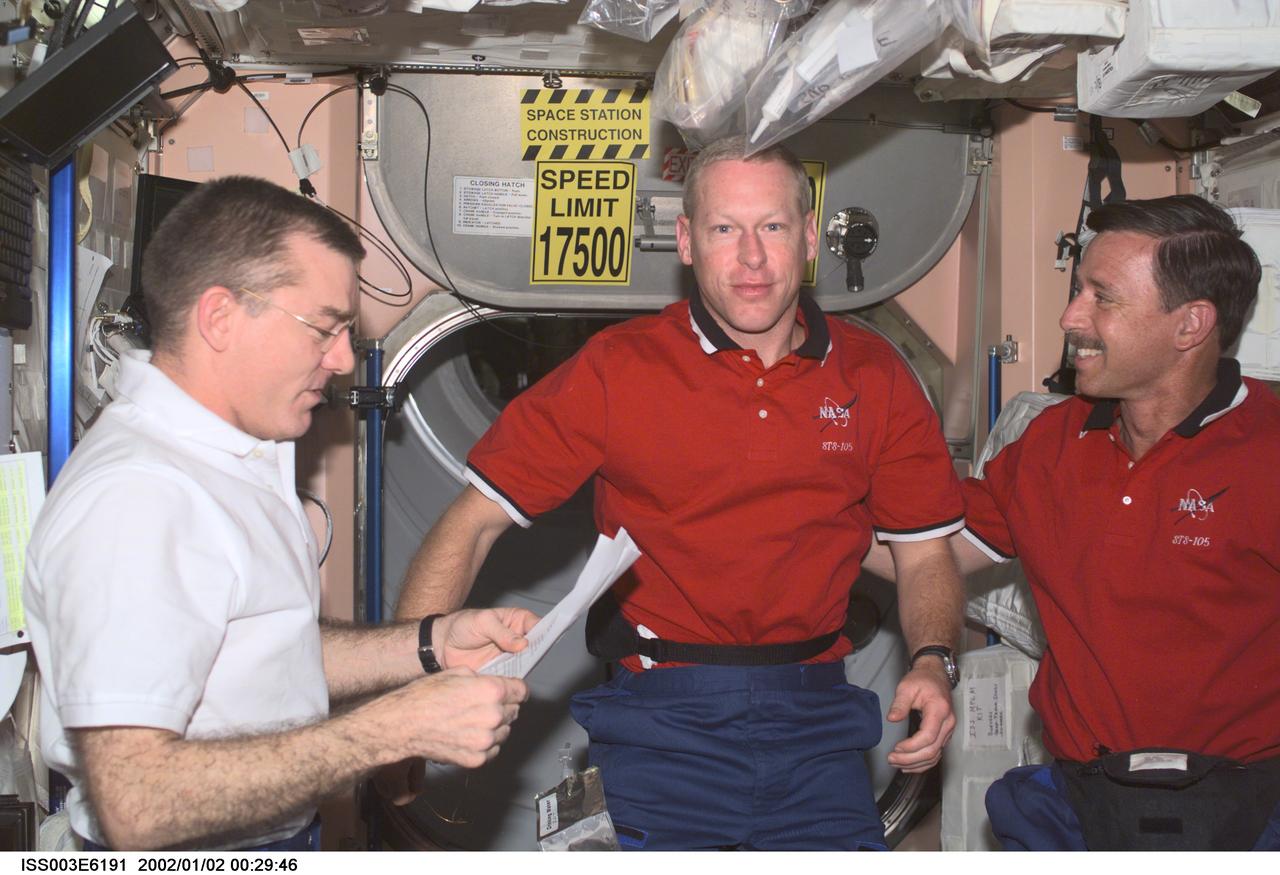
ISS003-E-6191 (August 2001) --- Astronauts James S. Voss (left), Expedition Two flight engineer, Patrick G. Forrester, STS-105 mission specialist, and Scott J. Horowitz, mission commander, are photographed in the Unity node on the International Space Station (ISS). This image was taken with a digital still camera.
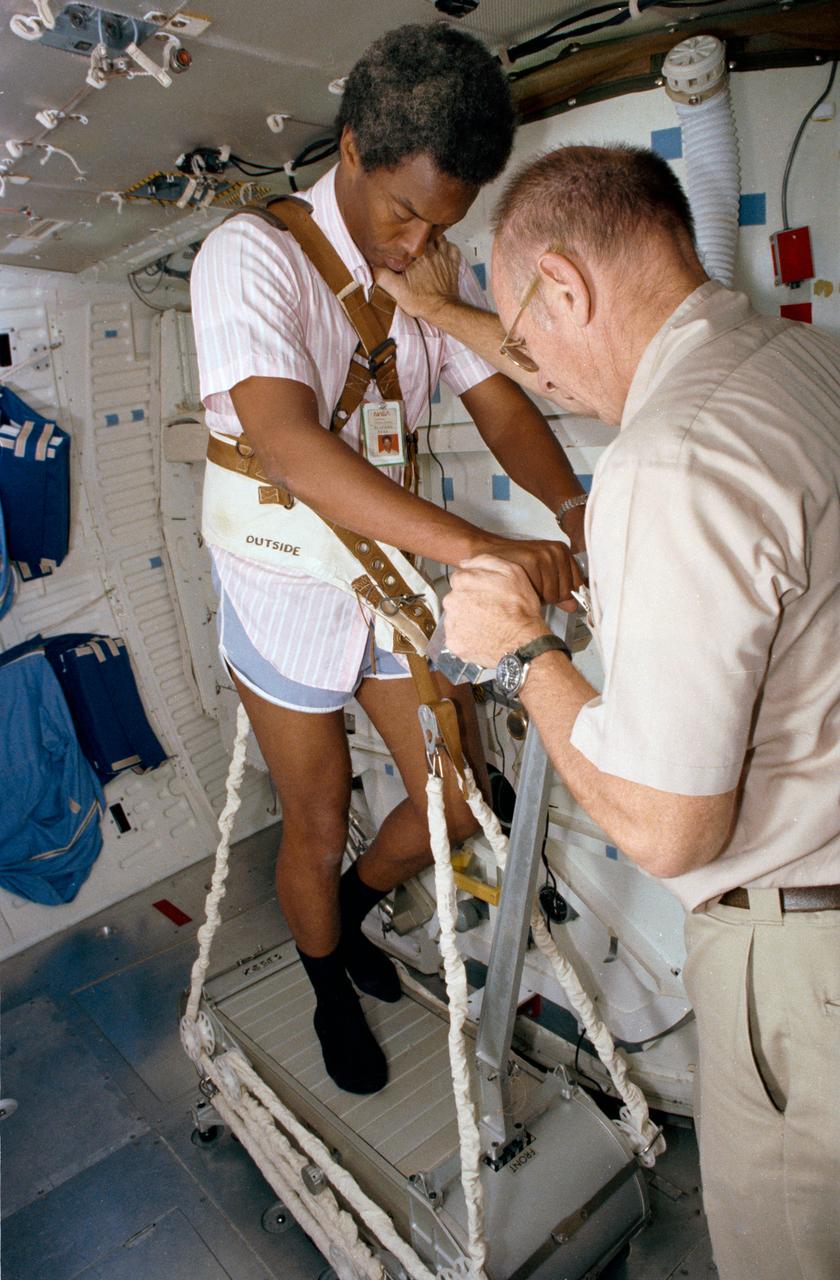
S83-37627 (26 July 1983) --- Dr. William E. Thornton, right, and Guion S. Bluford both mission specialists for STS-8, demonstrate an on-orbit experiment in the Johnson Space Center?s one-g trainer for the Shuttle orbiter. The treadmill device was designed by Dr. Thornton and has been used on previous spaceflights. The third Challenger mission has been scheduled for late August and early September of this year. This photograph was taken by Otis Imboden.
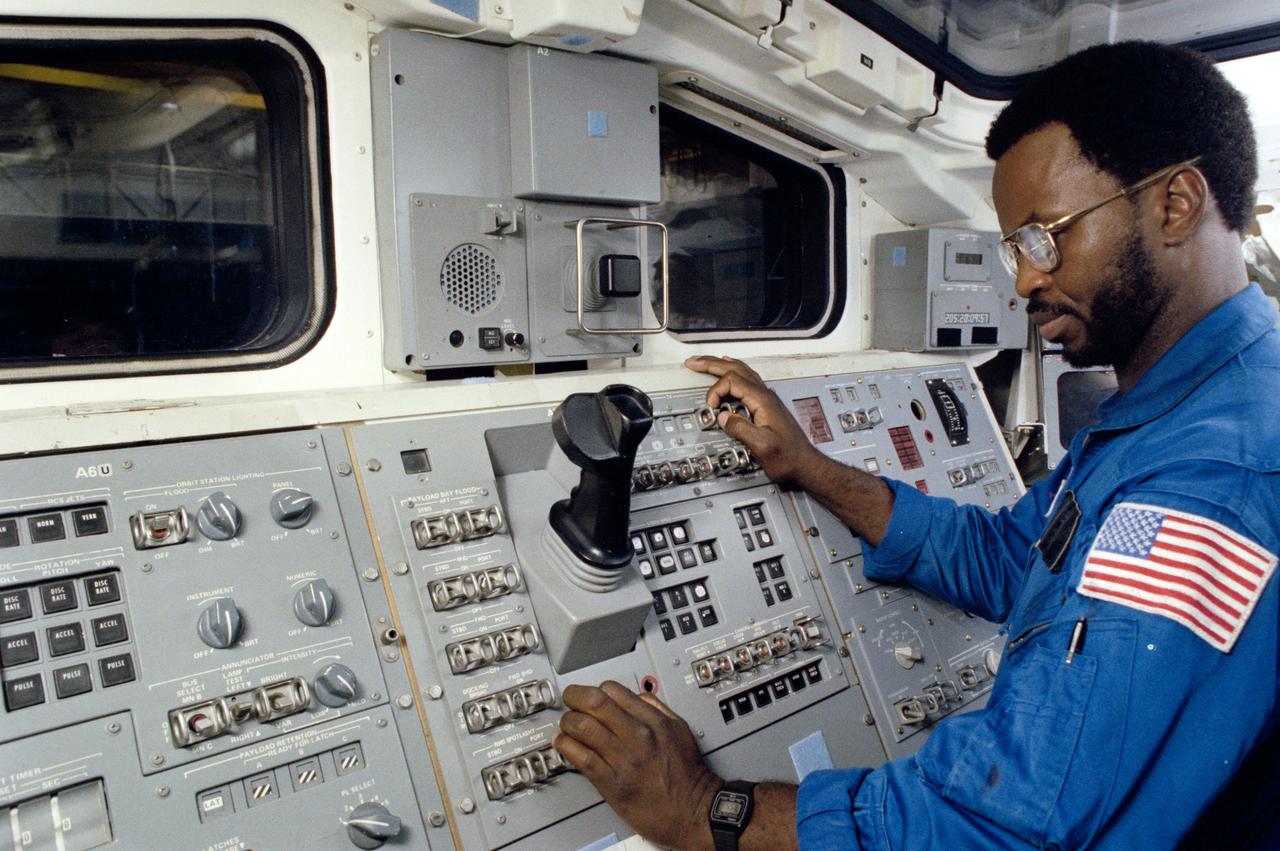
S83-33925 (14 June 1983) --- Astronaut Ronald E. McNair, one of NASA?s three 41-B mission specialists, participates in a training session in the Shuttle one-g trainer in the Johnson Space Center?s mockup and integrating laboratory. He stands at the aft flight deck, where controls for the remote manipulator system (RMS) arm are located. Dr. McNair and the remainder of the five-man astronaut crew are scheduled to lift into space aboard the Challenger on February 3, 1984.
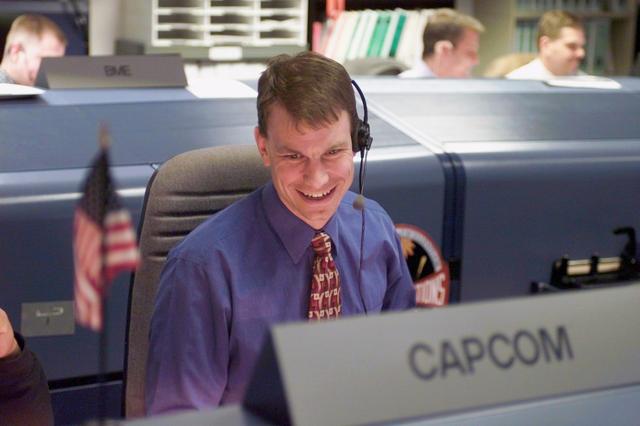
JSC2003-E-02167 (15 January 2003) --- Astronaut Stanley G. Love, spacecraft communicator (CAPCOM), monitors data at his console in the station flight control room (BFCR) in Houston’s Mission Control Center (MCC). At the time this photo was taken, astronauts Kenneth D. Bowersox and Donald R. Pettit, Expedition Six mission commander and NASA ISS science officer, respectively, were participating in the mission’s only scheduled session of extravehicular activity (EVA).
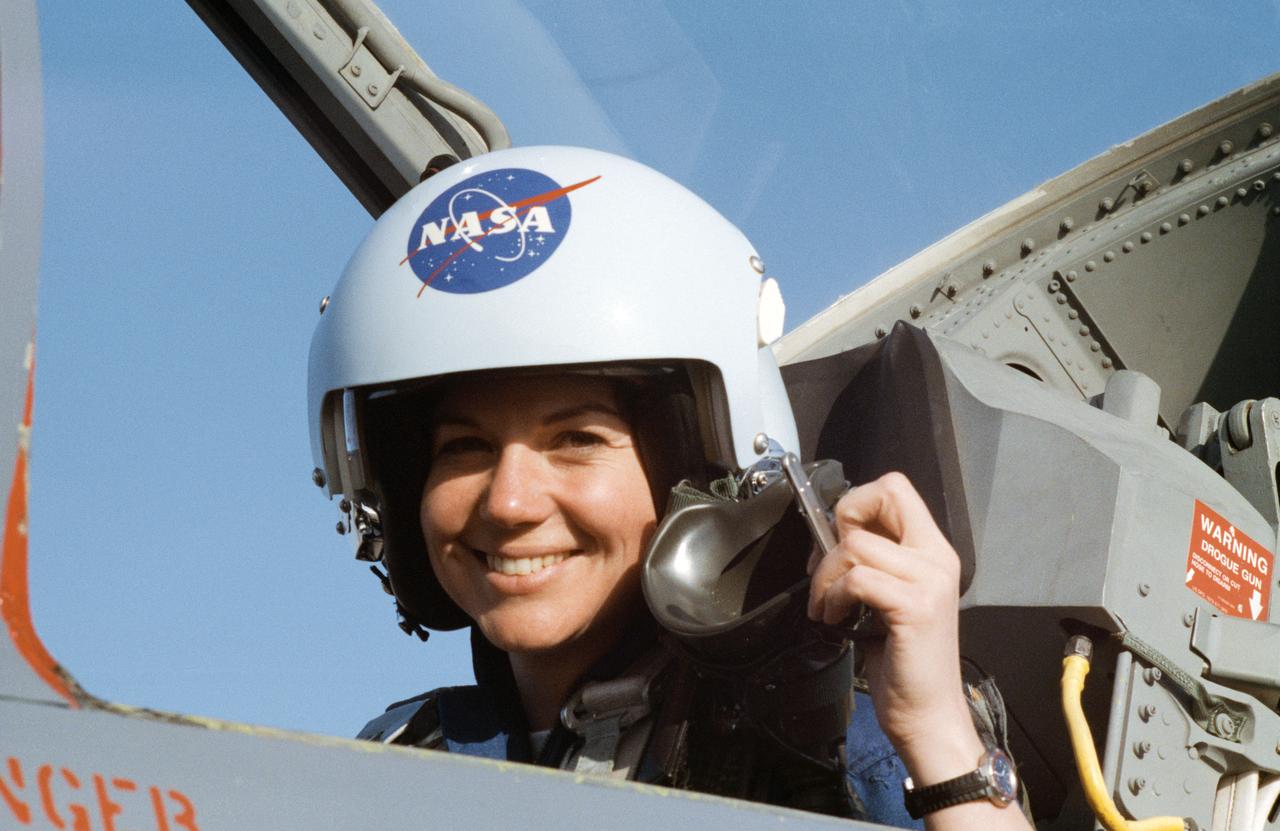
S93-30754 (September 1992) --- Astronaut Catherine G. Coleman, who had recently begun a year?s training and evaluation program at the Johnson Space Center (JSC), sits in the rear station of a T-38 jet trainer. She was about to take a familiarization flight in the jet. Coleman was later named mission specialist for NASA?s STS-73/United States Microgravity Laboratory (USML-2) mission.
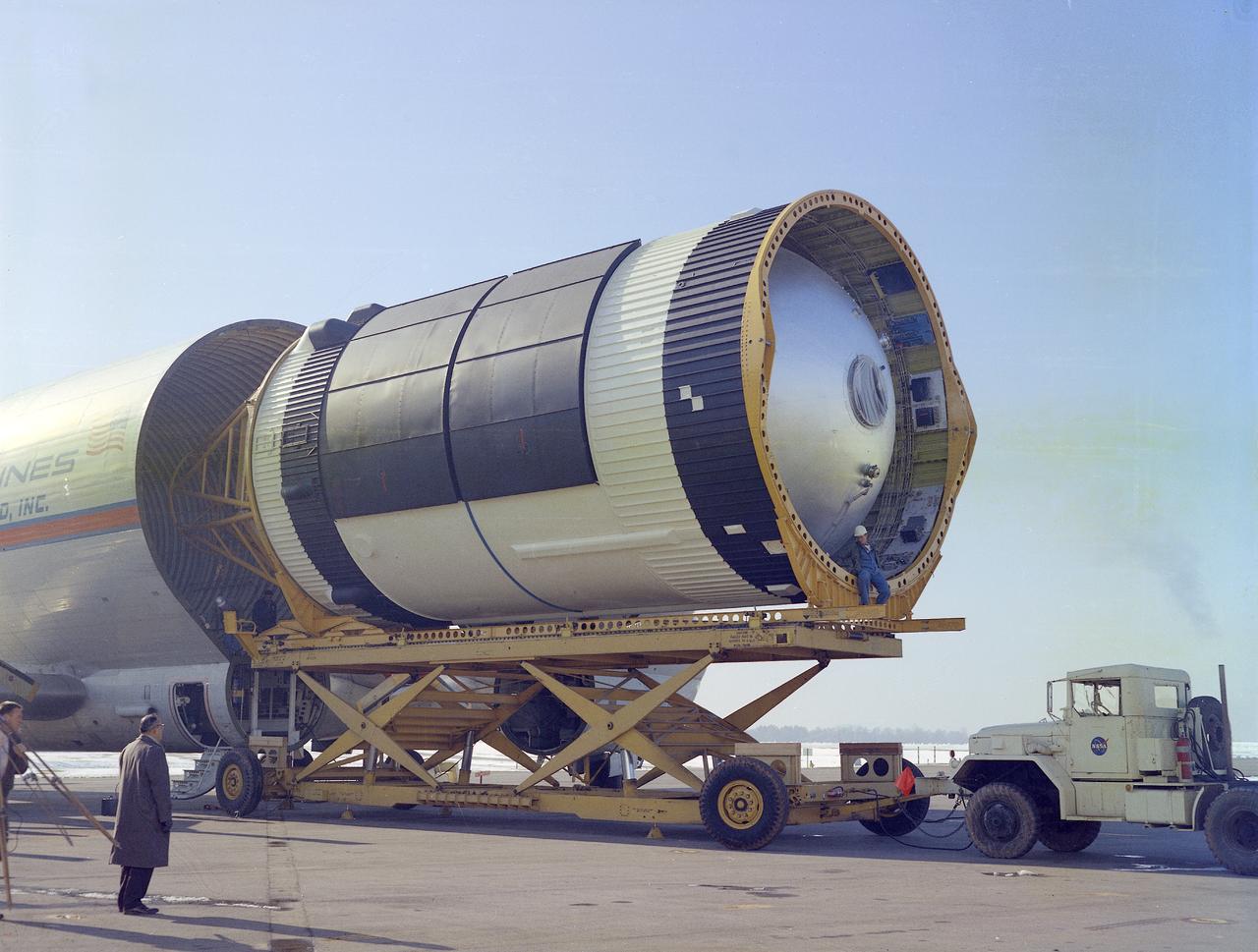
This photograph was taken at the Redstone airfield, Huntsville, Alabama, during the unloading of the Saturn V S-IVB stage that housed the Orbital Workshop (OWS) from the Super Guppy, the NASA plane that was specially built to carry oversized cargo. The OWS measured 22 feet (6.7 m) in diameter, and 48 feet (14.6 m) in length. The Saturn V S-IVB stage was modified at the McDornell Douglas facility at Huntington Beach, California, for a new role, which was to house the OWS. In addition to the test articles, engineering mockups, and flight equipment, both McDonnell Douglas and Martin Marietta built 0-G trainers, neutral buoyancy trainers, and high-fidelity mockups for the 1-G trainer to be used in the KC-135 aircraft. The Marshall Space Flight Center had program management responsibility for the development of Skylab hardware and experiments.
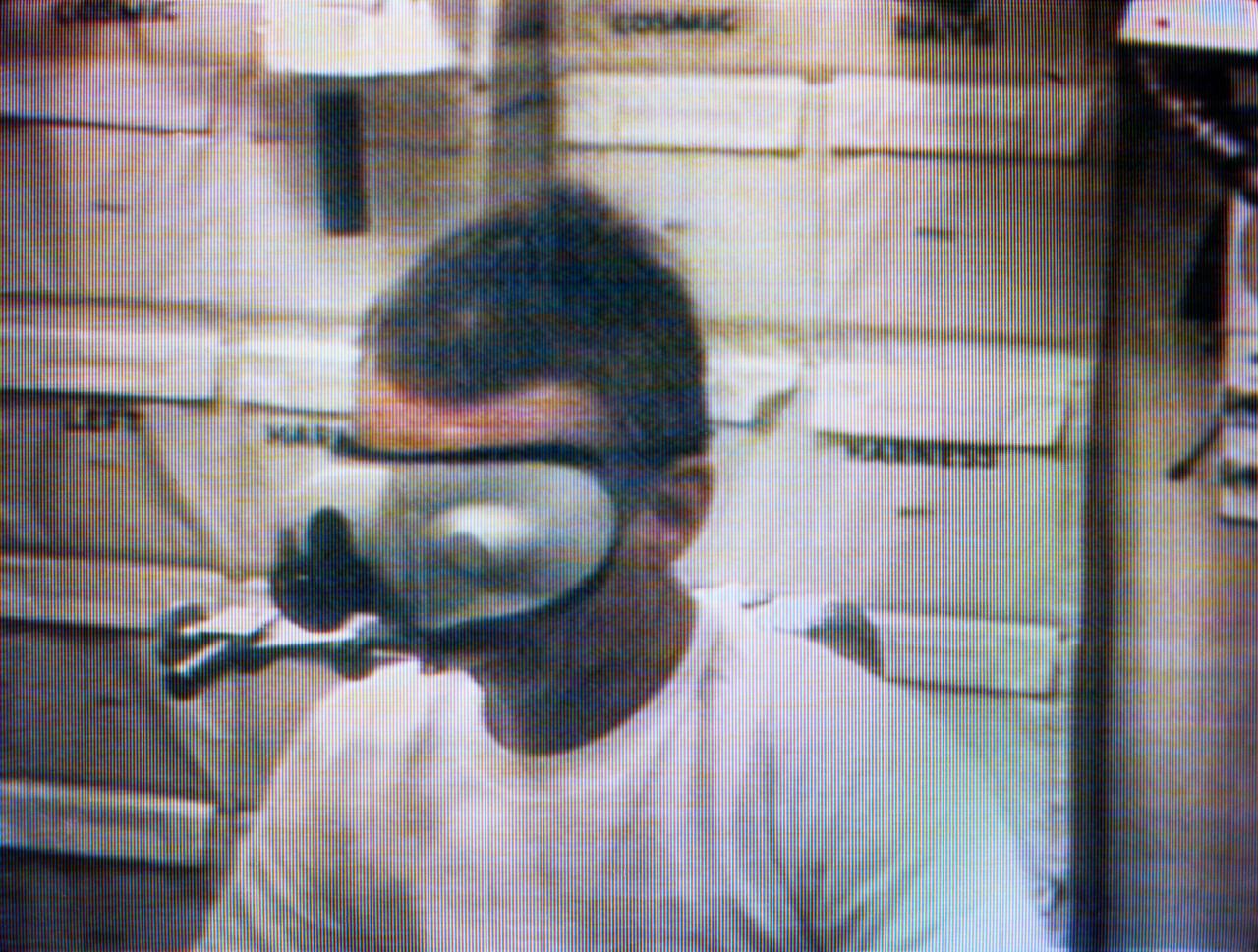
S73-32113 (9 Aug. 1973) --- Scientist-astronaut Owen K. Garriott, Skylab 3 science pilot, serves as test subject for the Skylab ?Human Vestibular Function? M131 Experiment, as seen in this photographic reproduction taken from a television transmission made by a color TV camera aboard the Skylab space station in Earth orbit. The objectives of the Skylab M131 experiment are to obtain data pertinent to establishing the validity of measurements of specific behavioral/physiological responses influenced by vestibular activity under one-g and zero-g conditions; to determine man?s adaptability to unusual vestibular conditions and predict habitability of future spacecraft conditions involving reduced gravity and Coriollis forces; and to measure the accuracy and variability in man?s judgment of spatial coordinates based on atypical gravity receptor cues and inadequate visual cues. Photo credit: NASA

STS122-S-002 (24 April 2007) --- These seven astronauts take a break from training to pose for the STS-122 crew portrait. From the left (front row) are astronauts Stephen N. Frick, commander; European Space Agency's (ESA) Leopold Eyharts; and Alan G. Poindexter, pilot. From the left (back row) are astronauts Leland D. Melvin, Rex J. Walheim, Stanley G. Love and European Space Agency's (ESA) Hans Schlegel, all mission specialists. Eyharts will join Expedition 16 in progress to serve as a flight engineer aboard the International Space Station. The crewmembers are attired in training versions of their shuttle launch and entry suits.
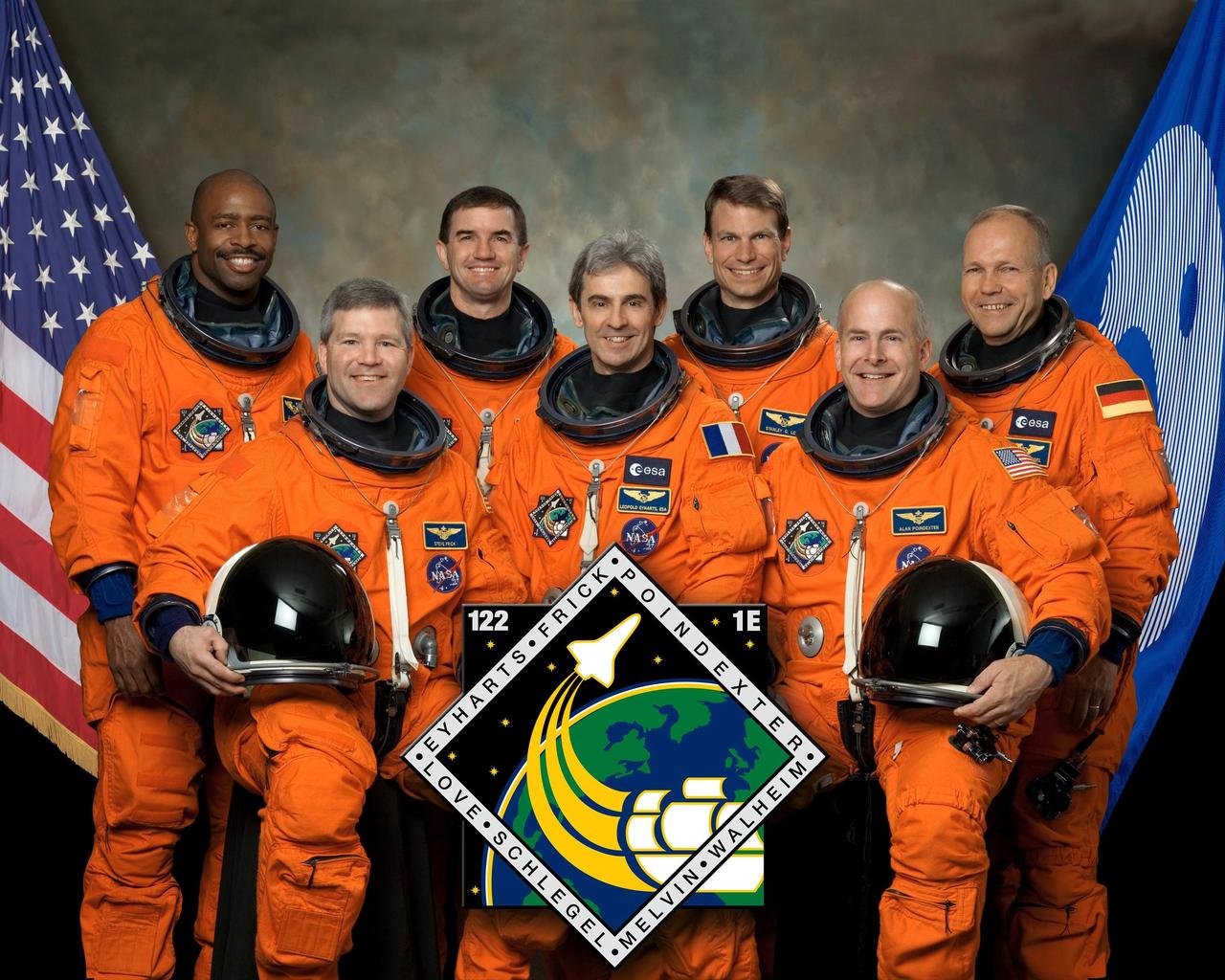
KENNEDY SPACE CENTER, FLA. -- STS122-S-002 -- These seven astronauts take a break from training to pose for the STS-122 crew portrait. From the left (front row) are astronauts Stephen N. Frick, commander; the European Space Agency's, or ESA's, Leopold Eyharts; and Alan G. Poindexter, pilot. From the left (back row) are astronauts Leland D. Melvin, Rex J. Walheim, Stanley G. Love and ESA's Hans Schlegel, all mission specialists. Eyharts will join Expedition 16 in progress to serve as a flight engineer aboard the International Space Station. The crewmembers are attired in training versions of their shuttle launch and entry suits.
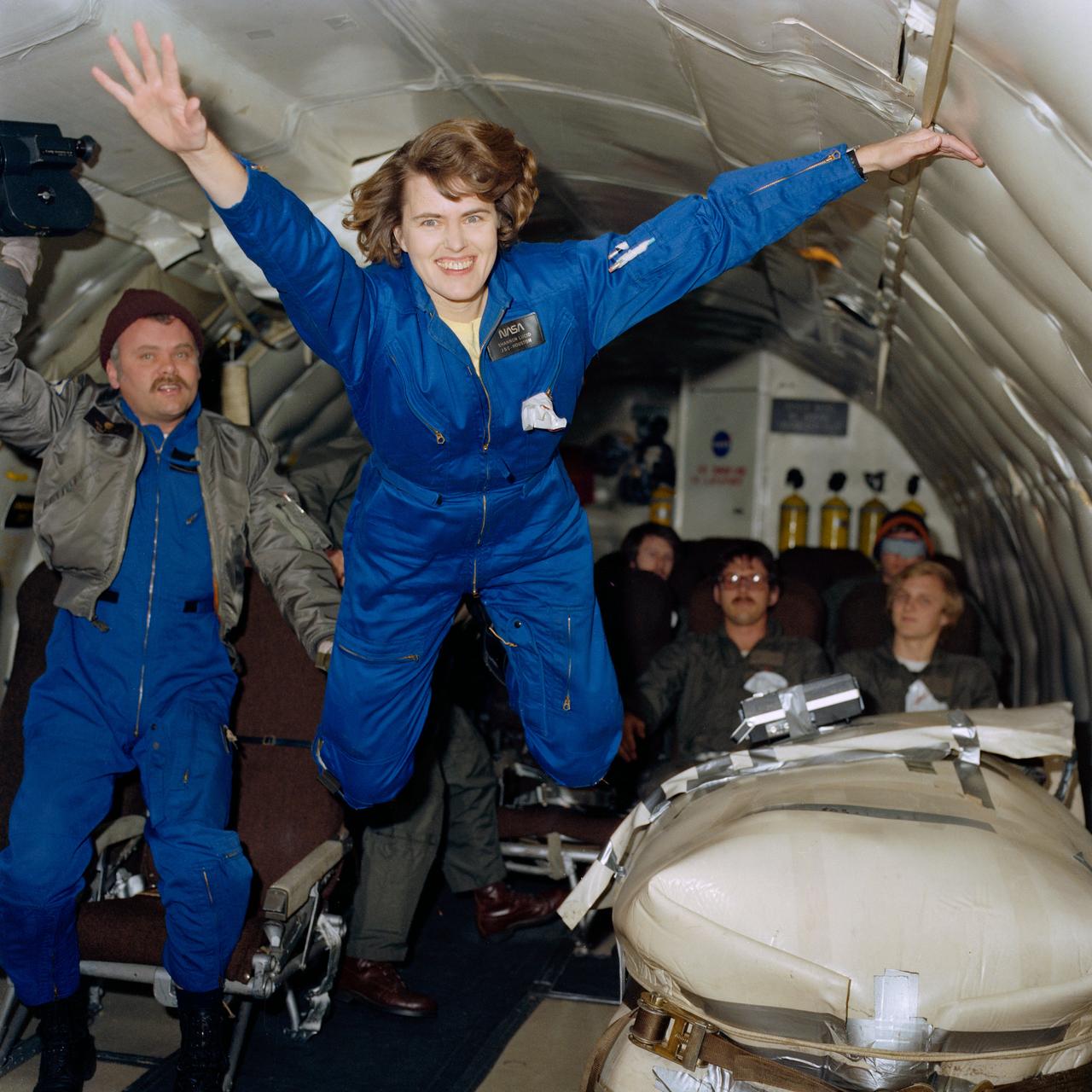
Astronaut -Candidate (ASCAN) Guion S. Bluford and Aviation Safety Officer Charles F. Hayes got a unique perspective of their environment during a zero- gravity flight. They are aboard a KC-135 Aircraft, which flies a special pattern repeatedly to afford a series of 30-seconds-of-weightlessness sessions. Astronauts Bluford and Hayes are being assisted by C. P. Stanley of the Photography Branch of the Photographic Technology Division (PTD) at Johnson Space Center (JSC). Some medical studies and a Motion Sickness Experiment were conducted on this particular flight. Astronaut Bluford is one of 20 Scientist/ASCAN's who began training at JSC, 07/1978. 1. Dr. Jeffrey A. Hoffman - Zero-G 2. ASCAN Shannon Lucid - Zero-G 3. ASCAN Guion Bluford - Zero-G
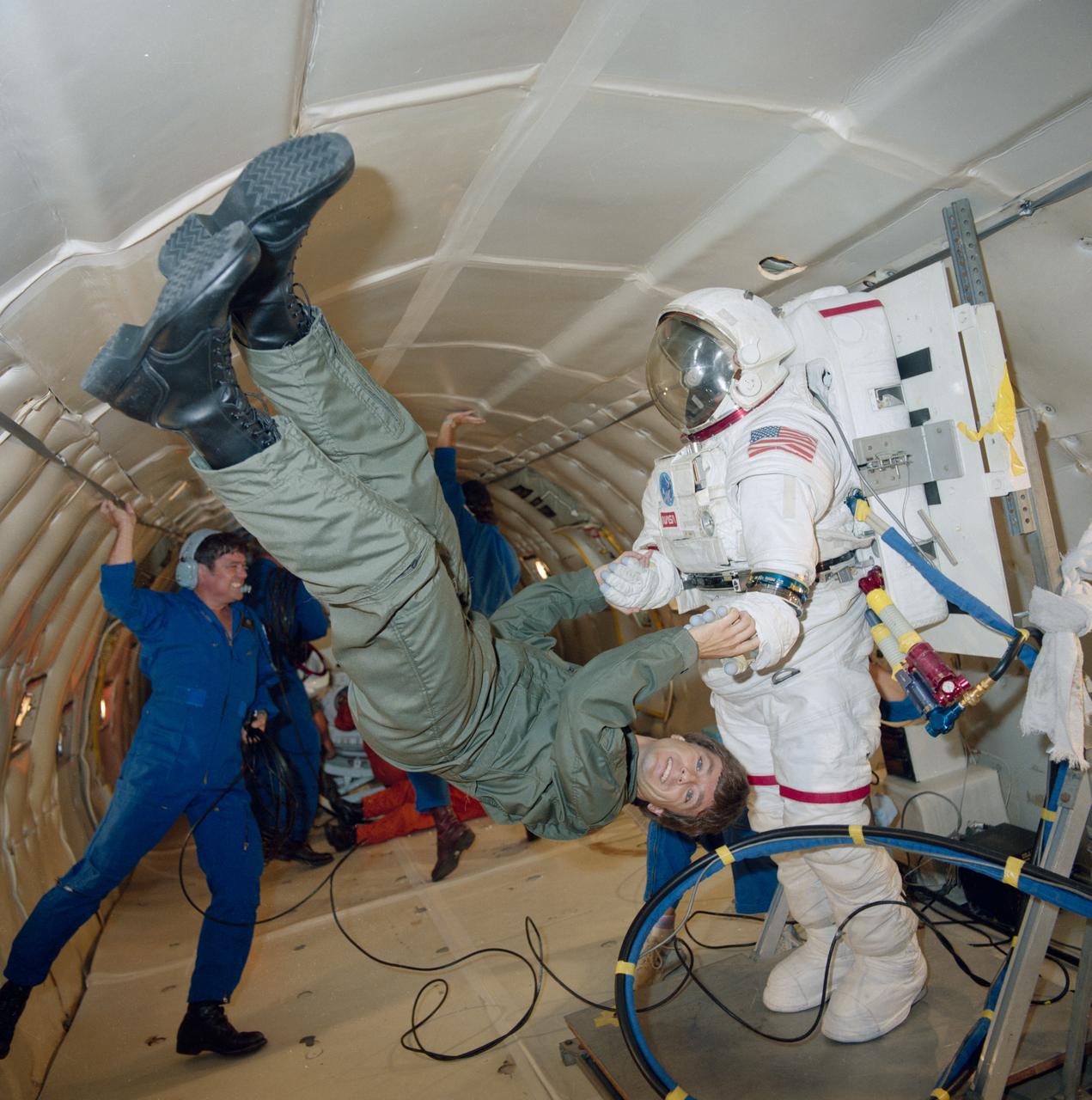
S84-37532 (18 July 1984) --? Robert B. Thirsk, backup payload specialist for 41-G appears to be shaking hands with an unoccupied extravehicular mobility unit (EMU) during a familiarization flight aboard NASA?s KC-135 aircraft. Thirsk, representing Canada?s National Research Council (NRC), serves as backup to Marc Garneau on the seven-member crew for Challenger?s October 1984 flight. This aircraft is used extensively for training and exposing Shuttle crewmembers to weightlessness as well as for evaluation of equipment and experiments scheduled for future flights.
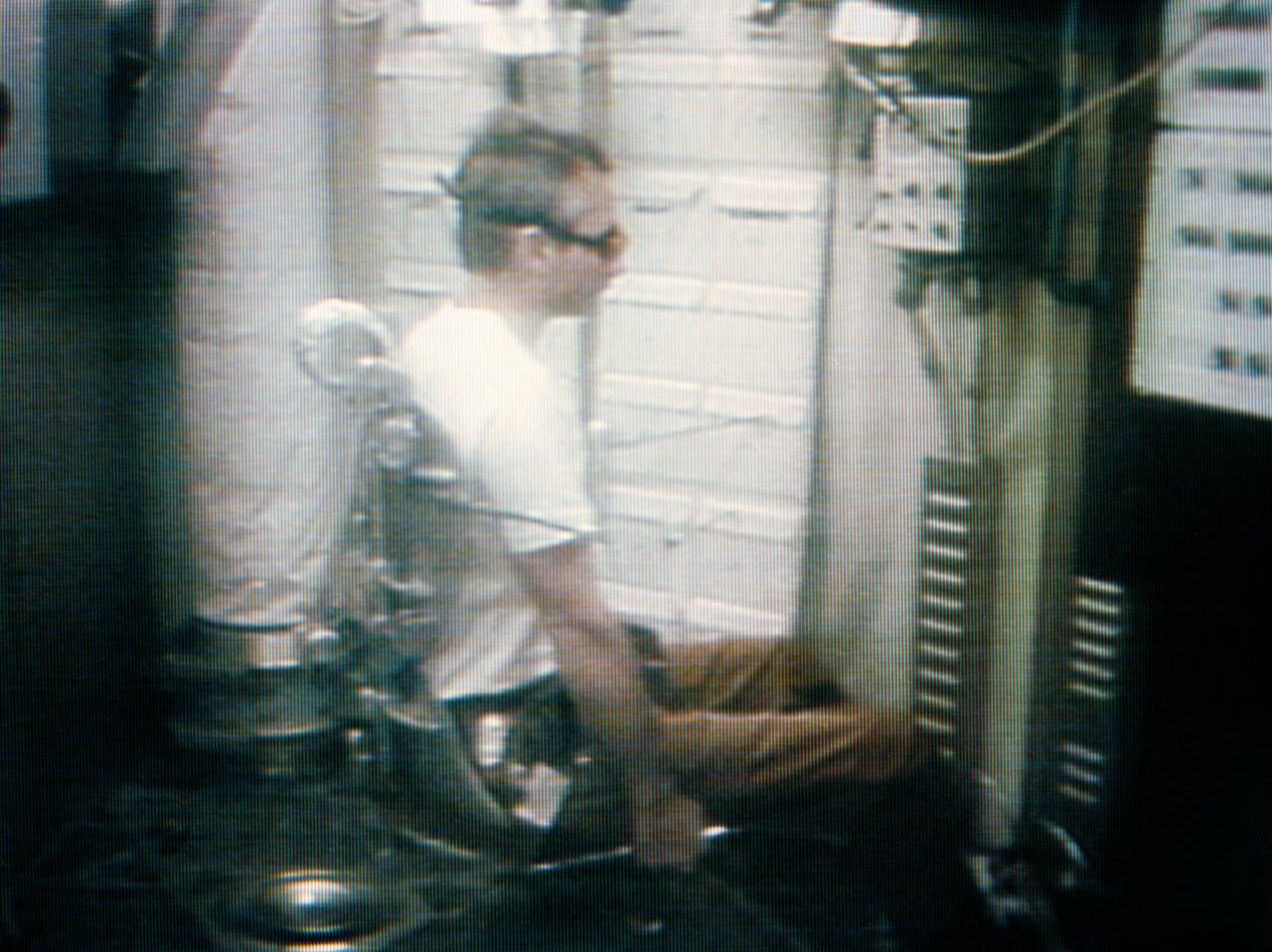
S73-34171 (9 Aug. 1973) --- Scientist-astronaut Owen K. Garriott, Skylab 3 science pilot, serves as test subject for the Skylab ?Human Vestibular Function? M131 Experiment, as seen in this photographic reproduction taken from a television transmission made by a color TV camera aboard the Skylab space station in Earth orbit. The objectives of the Skylab M131 experiment are to obtain data pertinent to establishing the validity of measurements of specific behavioral/physiological responses influenced by vestibular activity under one-g and zero-g conditions; to determine man?s adaptability to unusual vestibular conditions and predict habitability of future spacecraft conditions involving reduced gravity and Coriollis forces; and to measure the accuracy and variability in man?s judgment of spatial coordinates based on atypical gravity receptor cues and inadequate visual cures. Dr. Garriott is seated in the experiment?s litter chair which can rotate the test subject at predetermined rotational velocity or programmed acceleration/decelerational profile. Photo credit: NASA
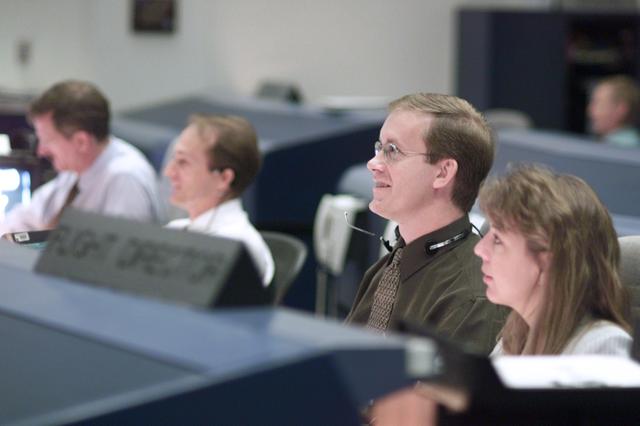
JSC2001-E-25125 (16 August 2001) --- Flight directors John Shannon (left foreground) and Kelly Beck watch the large screens from their consoles in the shuttle flight control room (WFCR) in Houston’s Mission Control Center (MCC) along with astronauts Joseph R. Tanner (left background) and Steve MacLean, STS-105 spacecraft communicators (CAPCOM). At the time this photo was taken, mission specialists Daniel T. Barry and Patrick G. Forrester were performing the first of two scheduled space walks during Discovery’s visit to the International Space Station (ISS). MacLean represents the Canadian Space Agency.
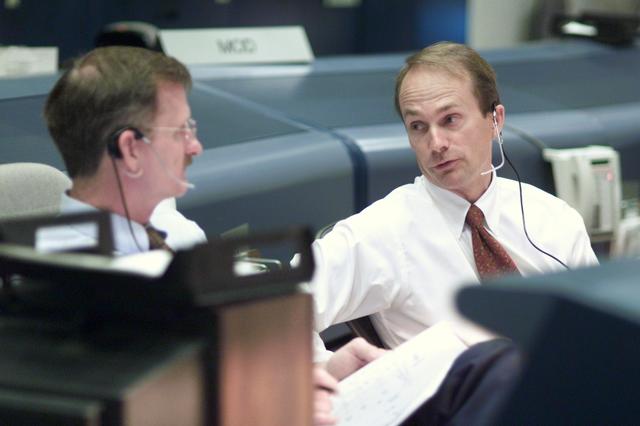
JSC2001-E-25123 (16 August 2001) --- Astronauts Joseph R. Tanner (left) and Steve MacLean, both STS-105 spacecraft communicators (CAPCOM), discuss the progress of the extravehicular activity at their consoles in the shuttle flight control room (WFCR) in Houston’s Mission Control Center (MCC). At the time this photo was taken, mission specialists Daniel T. Barry and Patrick G. Forrester were performing the first of two scheduled space walks during Discovery’s voyage to the International Space Station (ISS). MacLean represents the Canadian Space Agency.
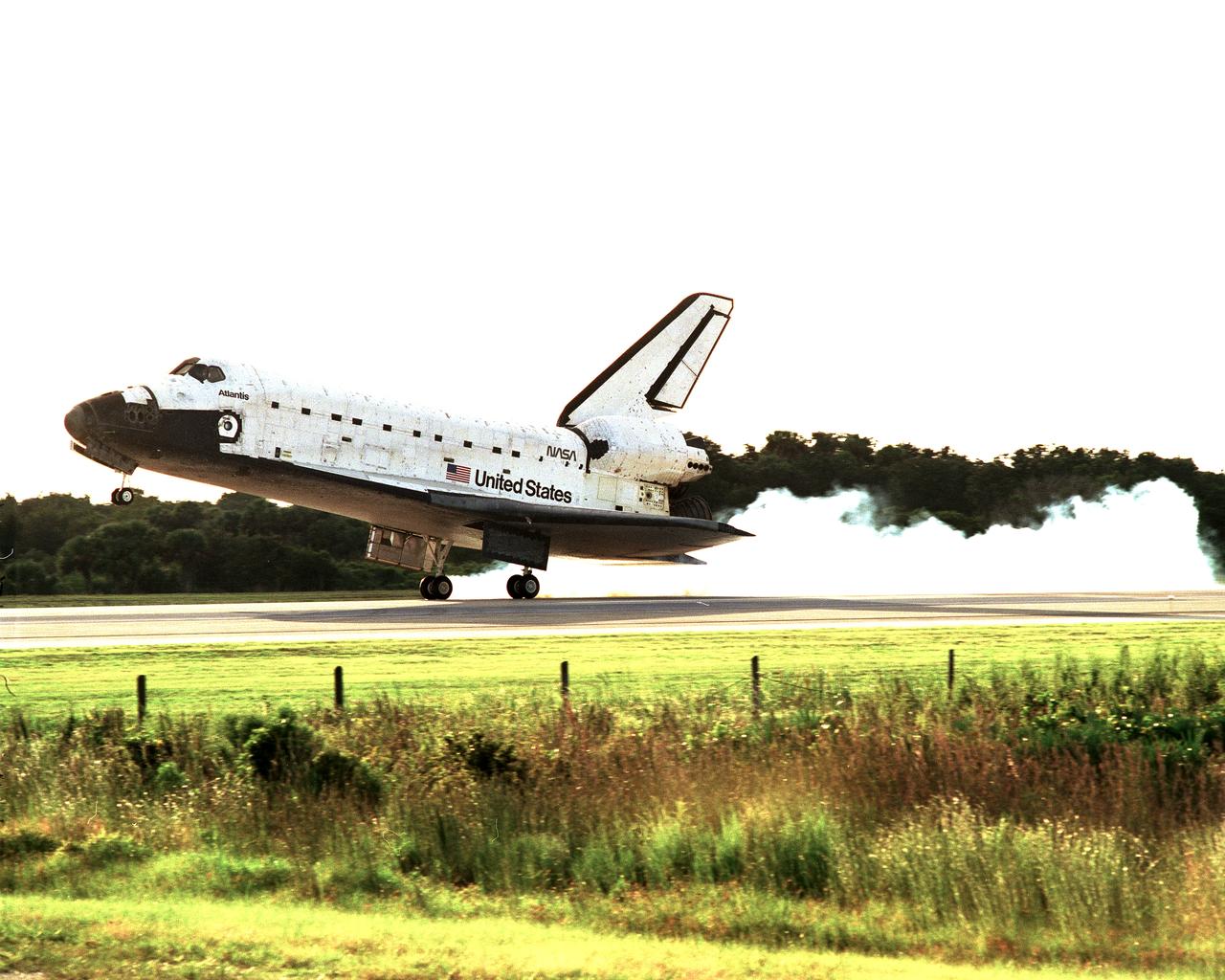
STS086-S-015 (6 Oct 1997) --- The main landing gear of the Space Shuttle Atlantis touches down on the Kennedy Space Center?s (KSC) Shuttle Landing Facility to complete the STS-86 mission. Touchdown occurred at 5:55:09 p.m. (EDT), October 6, 1997. Onboard were astronauts James D. Wetherbee, Michael J. Bloomfield, Wendy B. Lawrence, Scott F. Parazynski, Vladimir G. Titov, C. Michael Foale and Jean-Loup J. M. Chretien. Chretien and Titov represent the French Space Agency (CNES) and the Russian Space Agency (RSA), respectively.

JSC2001-E-25131 (16 August 2001) --- ISS flight director Mark Ferring (seated), assembly checkout officer (ACO) Jim Ruhnke and astronaut Stephanie D. Wilson, ISS spacecraft communicator (CAPCOM), discuss the progress of the extravehicular activities at their consoles in the station flight control room (BFCR) in Houston’s Mission Control Center (MCC). Operations support officer (OSO) Ted Kenny is in the background participating in the discussion over the voice loops. At the time this photo was taken, mission specialists Daniel T. Barry and Patrick G. Forrester were performing the first of two scheduled space walks during Discovery’s voyage to the International Space Station (ISS).

STS93-S-009 (23 July 1999) --- The Space Shuttle Columbia lifts off from Launch Pad 39B to begin the five-day STS-93 mission. After two unsuccessful attempts earlier in the week, liftoff occurred at 12:31 a.m. (EDT), July 23, 1999. Only hours after this picture was taken, the five-member crew released the Chandra X-Ray Observatory into orbit. Onboard were astronauts Eileen M. Collins, first woman shuttle mission commander; Jeffrey S. Ashby, pilot; and Steven A. Hawley, Catherine G. Coleman and Michel Tognini, all mission specialists. Tognini represents the Centre National d'Etudes Spatiales (CNES) of France.
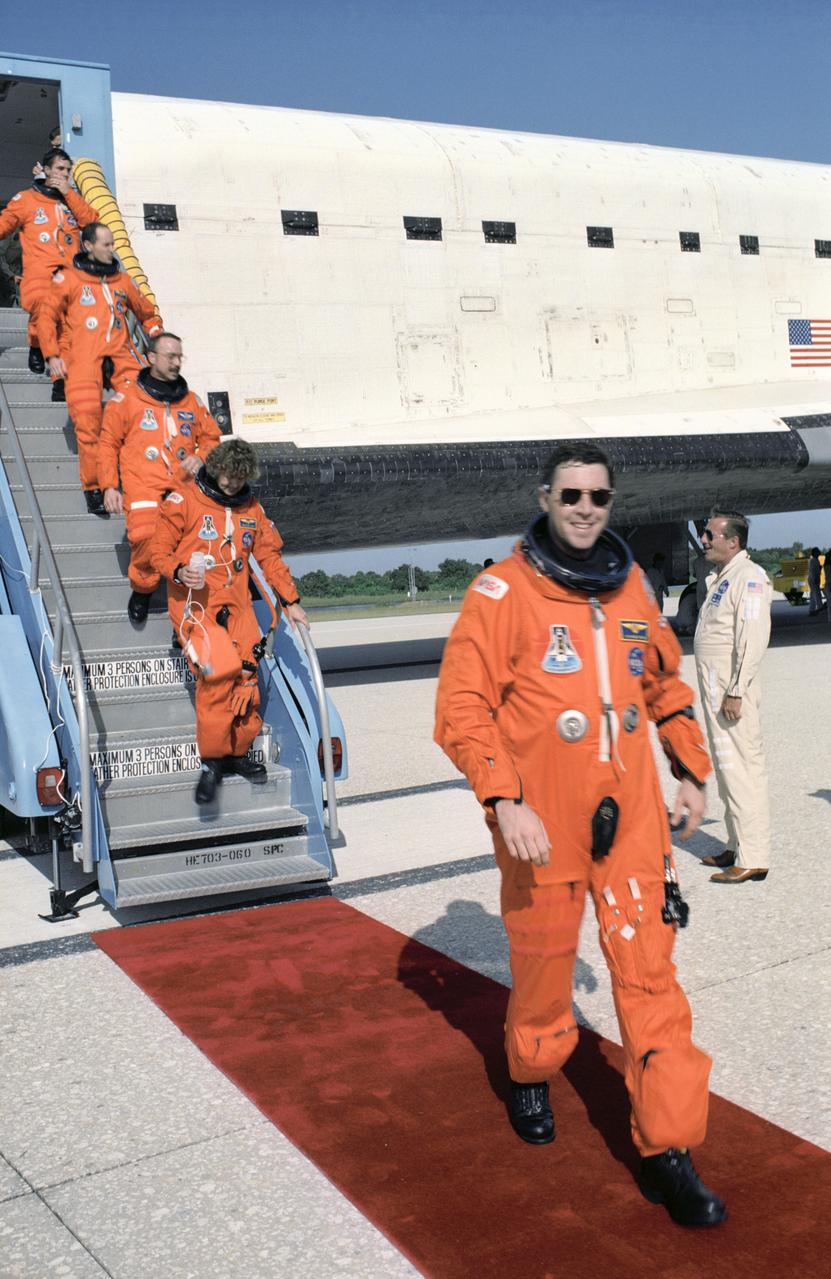
STS043-S-145 (11 Aug 1991) --- STS-43 crewmembers, wearing launch and entry suits (LESs), egress Atlantis, Orbiter Vehicle (OV) 104, via mobile stairway after landing on runway 15 at the Kennedy Space Center (KSC) Shuttle Landing Facility (SLF). Leading the crew and the first to step onto the red carpet is Pilot Michael A. Baker. He is followed by Mission Specialist (MS) Shannon W. Lucid, MS James C. Adamson, MS G. David Low, and Commander John E. Blaha. OV-104's fuselage is visible in the background.
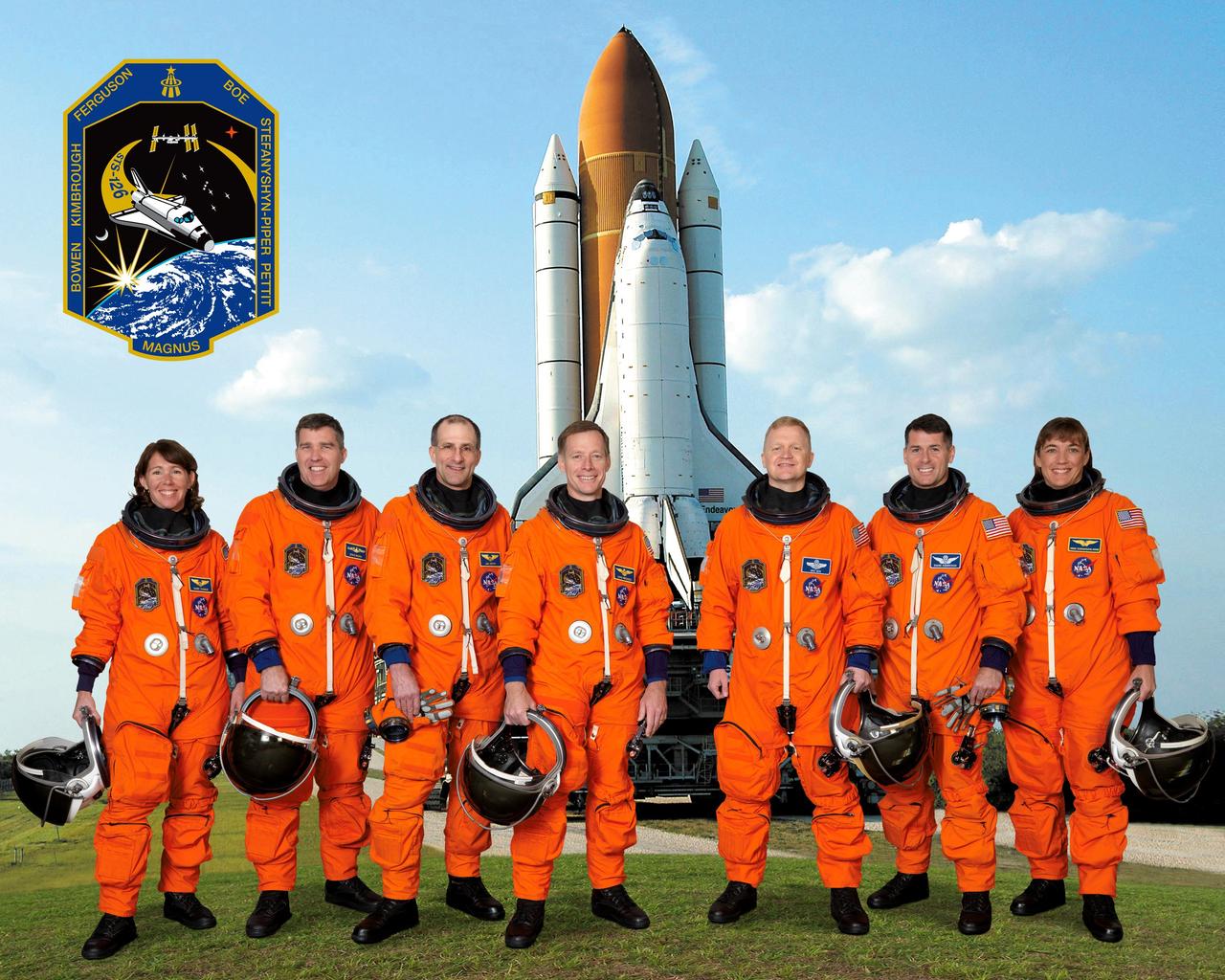
JOHNSON SPACE CENTER, Houston – STS126-S-002 -- Attired in training versions of their shuttle launch and entry suits, these seven astronauts take a break from training to pose for the STS-126 crew portrait. Astronaut Christopher J. Ferguson, commander, is at center; and astronaut Eric A. Boe, pilot, is third from the right. Remaining crewmembers, pictured from left to right, are astronauts Sandra H. Magnus, Stephen G. Bowen, Donald R. Pettit, Robert S. (Shane) Kimbrough and Heidemarie M. Stefanyshyn-Piper, all mission specialists. Magnus is scheduled to join Expedition 18 as flight engineer after launching to the International Space Station on mission STS-126.
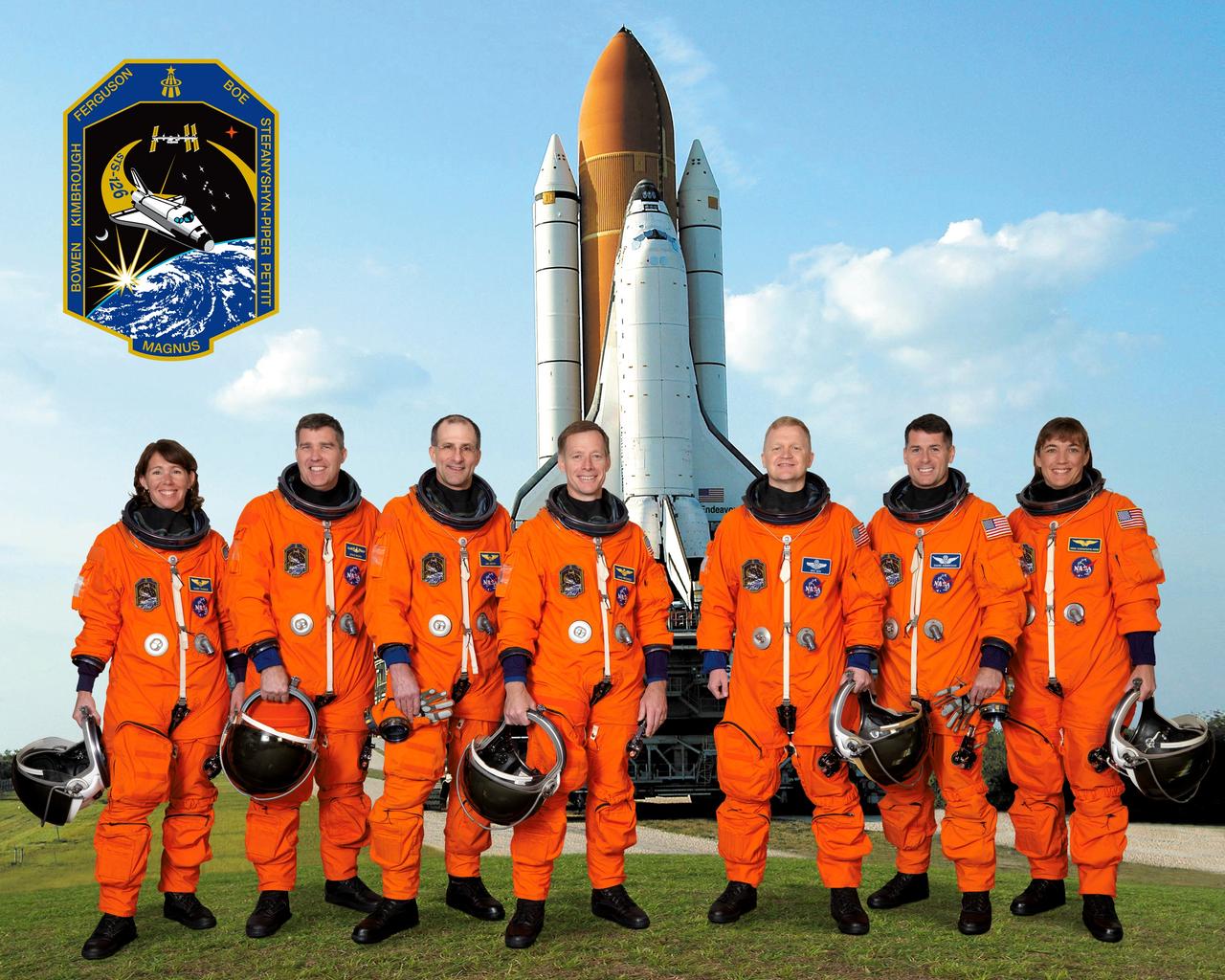
STS126-S-002 (5 March 2008) --- Attired in training versions of their shuttle launch and entry suits, these seven astronauts take a break from training to pose for the STS-126 crew portrait. Astronaut Christopher J. Ferguson, commander, is at center; and astronaut Eric A. Boe, pilot, is third from the right. Remaining crewmembers, pictured from left to right, are astronauts Sandra H. Magnus, Stephen G. Bowen, Donald R. Pettit, Robert S. (Shane) Kimbrough and Heidemarie M. Stefanyshyn-Piper, all mission specialists. Magnus is scheduled to join Expedition 18 as flight engineer after launching to the International Space Station on mission STS-126.
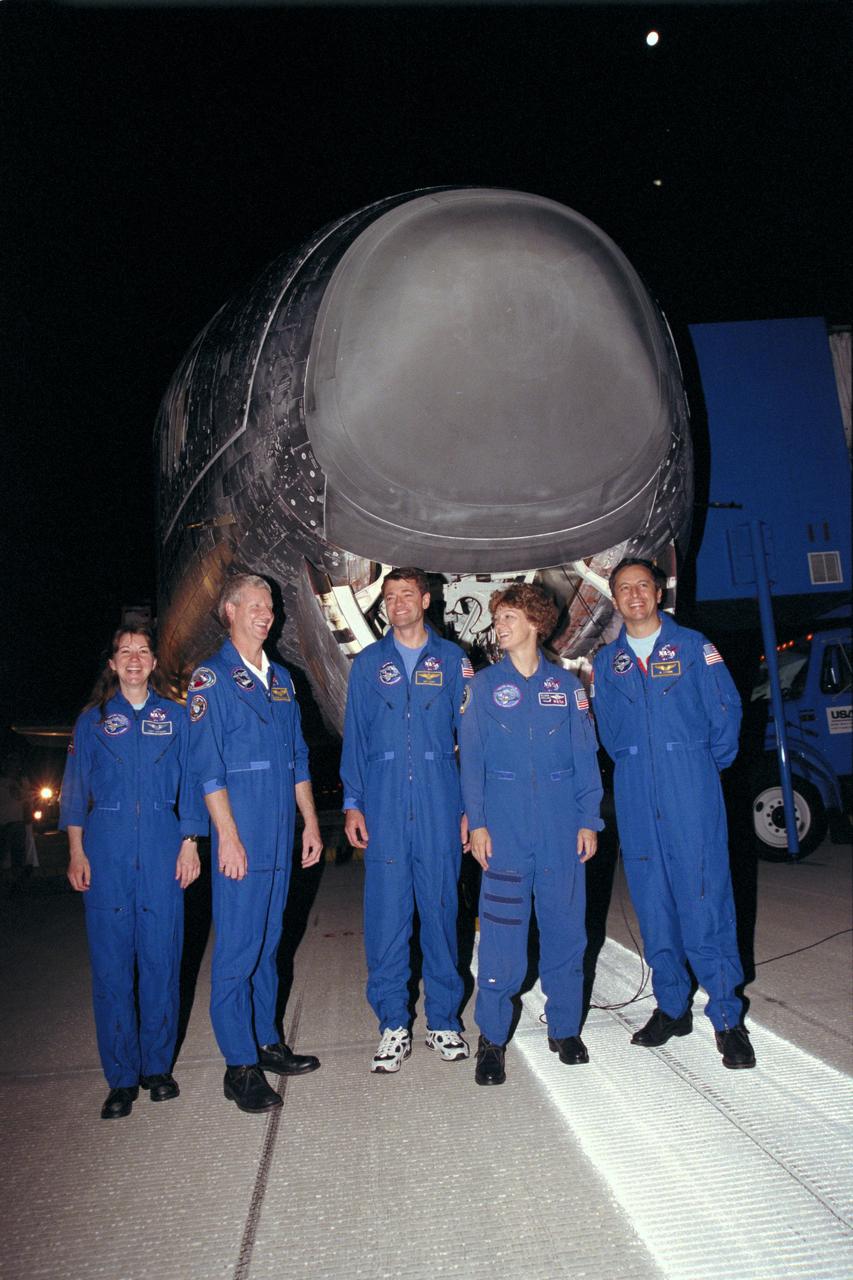
STS093-(S)-016 (27 July 1999) --- Members of the STS-93 crew pose in front of the Space Shuttle Columbia following the night landing on runway 33 at Kennedy Space Center's Shuttle Landing Facility. From the left are astronauts Catherine G. (Cady) Coleman and Steven A. Hawley, both mission specialists; Jeffrey S. Ashby, pilot; Eileen M. Collins, mission commander; and Michel Tognini, mission specialist representing France's Centre National d'Etudes Spatiales (CNES). Main gear touchdown occurred at 11:20:35 p.m.(EDT), July 27, 1999.
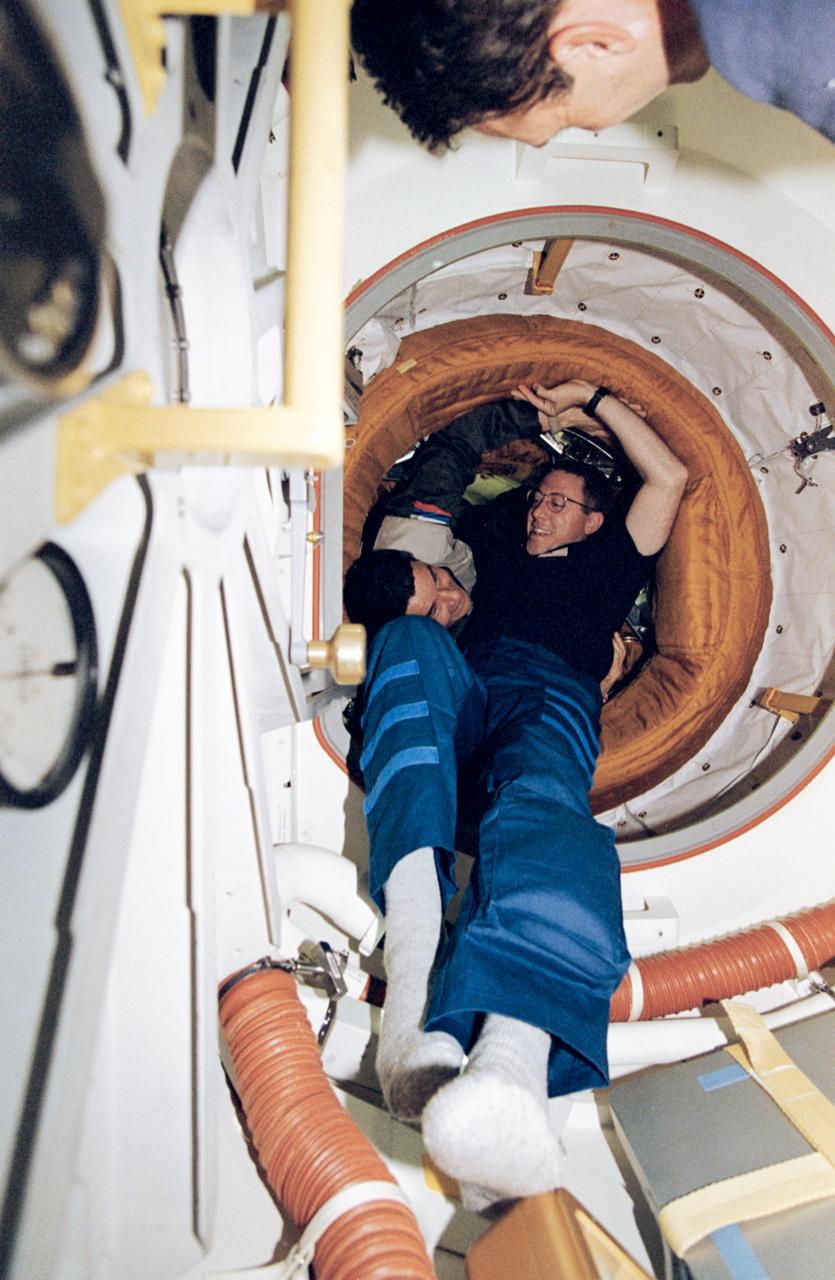
STS081-373-025 (14 Jan 1997) --- Greeting between commanders - astronaut Michael A. Baker (foreground) and cosmonaut Valeri G. Korzun - just after hatch opening following the January 14, 1997, docking. Out of frame on the Space Shuttle Atlantis is astronaut Jerry M. Linenger, soon to be trading places with John E. Blaha, the current cosmonaut guest researcher, onboard Russia?s Mir Space Station since mid September 1996. Along with Baker and Linenger, other crew members now aboard Atlantis are astronauts Brent W. Jett, Jr., pilot; and mission specialists John M. Grunsfeld, Marsha S. Ivins and Peter J. K. (Jeff) Wisoff.
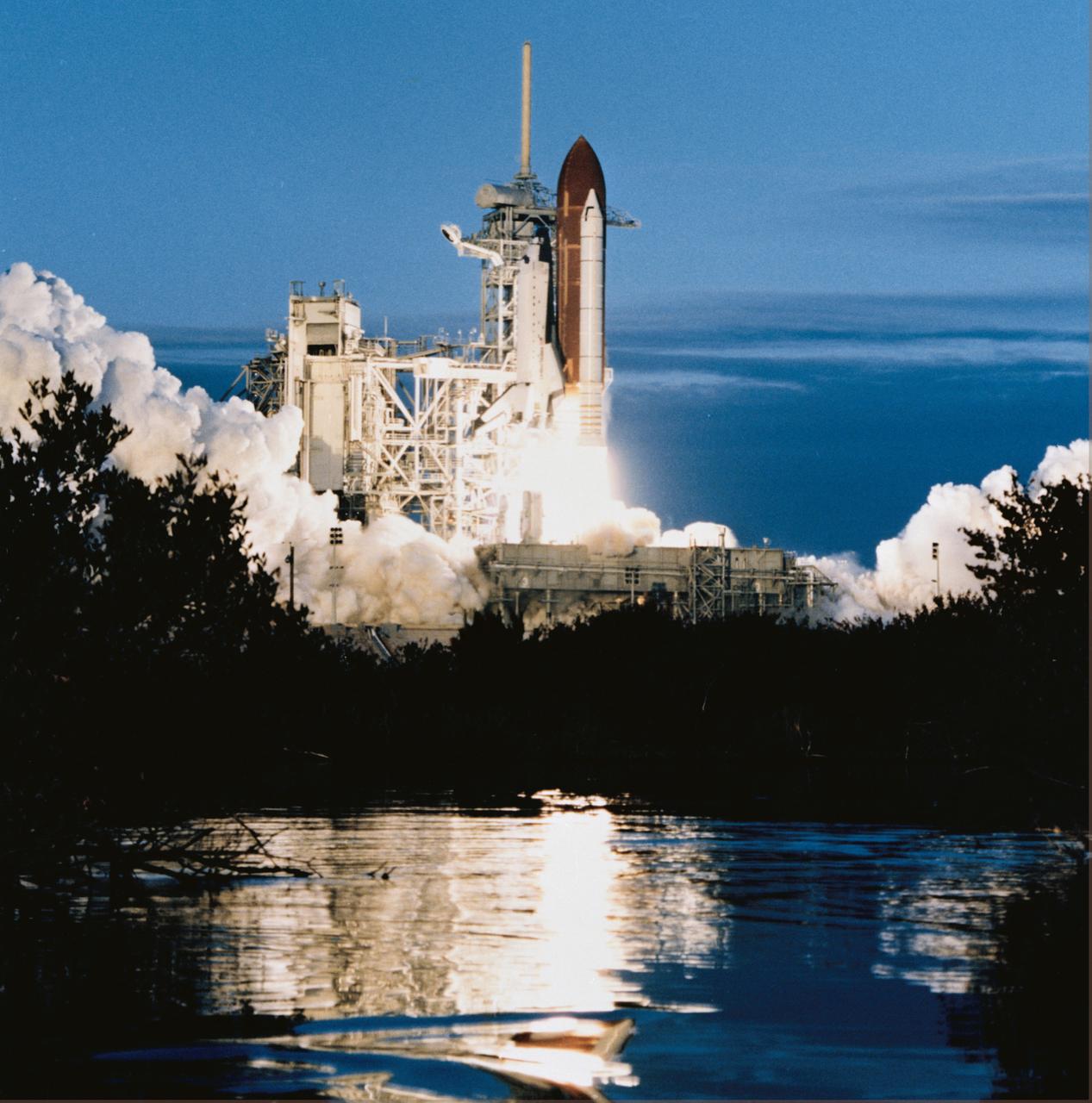
STS032-S-069 (9 Jan. 1990) --- The space shuttle Columbia, with a five member crew aboard, lifts off for the ninth time as STS-32 begins a 10-day mission in Earth orbit. Leaving from Launch Pad 39A at 7:34:59:98 a.m. EST, in this horizontal (cropped 70mm) frame, Columbia is seen reflected in nearby marsh waters some 24 hours after dubious weather at the return-to-launch site (RTLS) had cancelled a scheduled launch. Onboard the spacecraft were astronauts Daniel C. Brandenstein, James D. Wetherbee, Bonnie J. Dunbar, G. David Low and Marsha S. Ivins. Photo credit: NASA
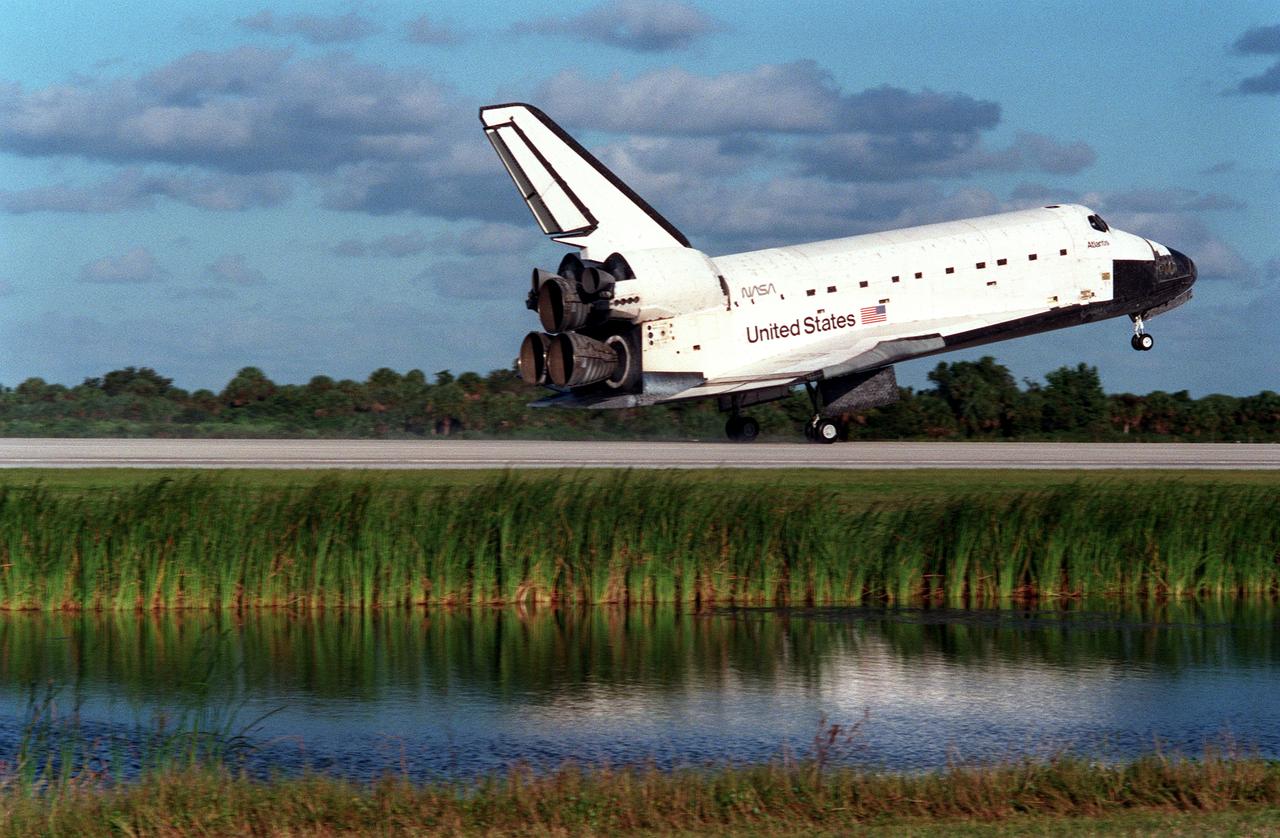
STS086-S-013 (6 Oct 1997) --- The main landing gear of the Space Shuttle Atlantis is about to touch down on the Kennedy Space Center?s (KSC) Shuttle Landing Facility to complete the STS-86 mission. Touchdown occurred at 5:55:09 p.m. (EDT), October 6, 1997. Onboard were astronauts James D. Wetherbee, Michael J. Bloomfield, Wendy B. Lawrence, Scott F. Parazynski, Vladimir G. Titov, C. Michael Foale and Jean-Loup J. M. Chretien. Chretien and Titov represent the French Space Agency (CNES) and the Russian Space Agency (RSA), respectively.
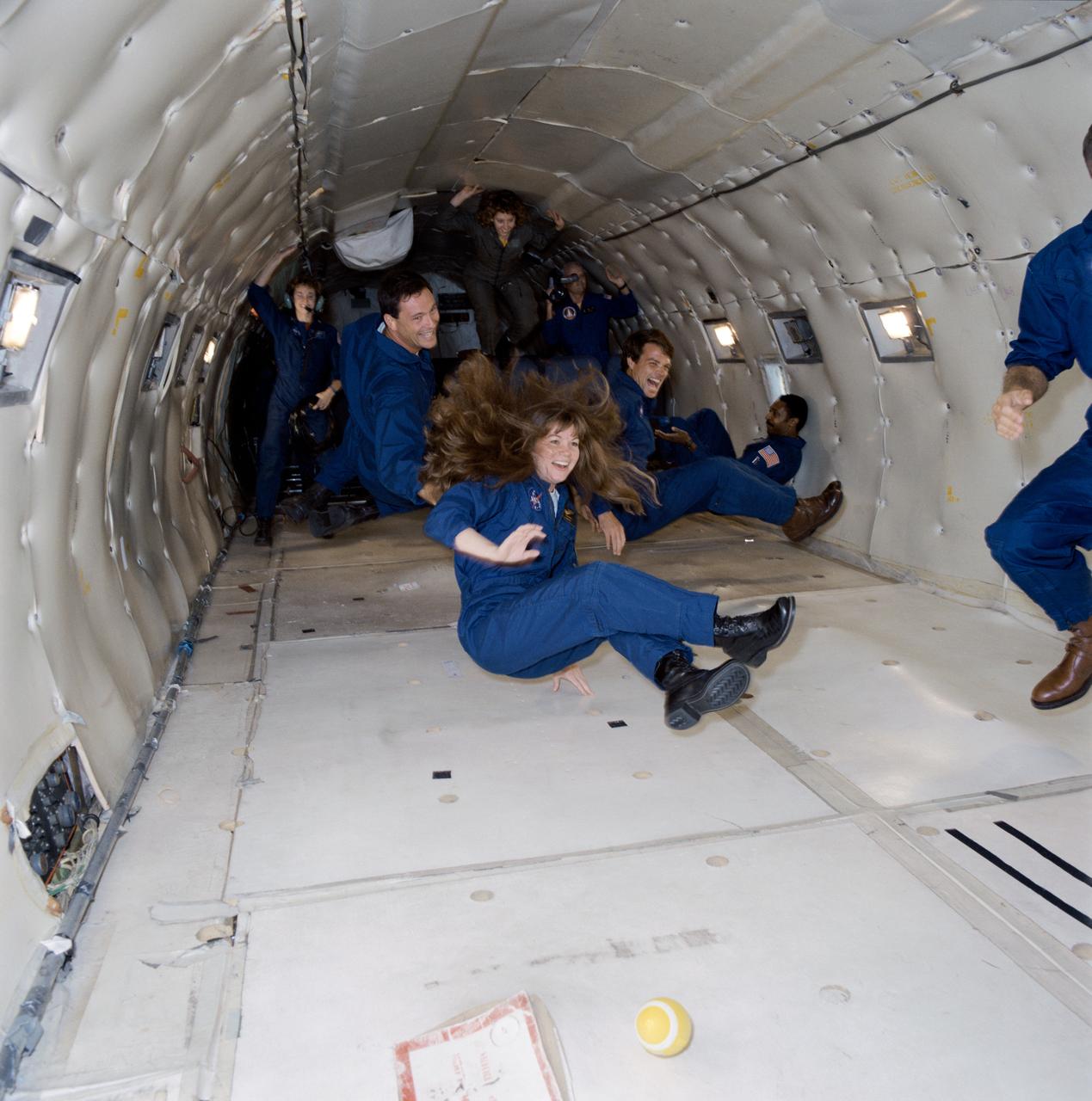
S94-26350 (10 Jan. 1994) --- Astronaut Catherine G. Coleman seems to enjoy the brief period of weightlessness she is sharing with fellow members of the 1992 class of astronauts. The weightless experience was afforded by a special parabolic pattern flown by NASA?s KC-135 ?zero gravity? aircraft. Left to right behind her are astronauts Michael E. Lopez-Alegria, Kevin R. Kregel and Winston E. Scott. EDITOR?S NOTE: Since this photograph was taken the four have been named to flights as follows: Kregel, STS-70; Scott, STS-72.
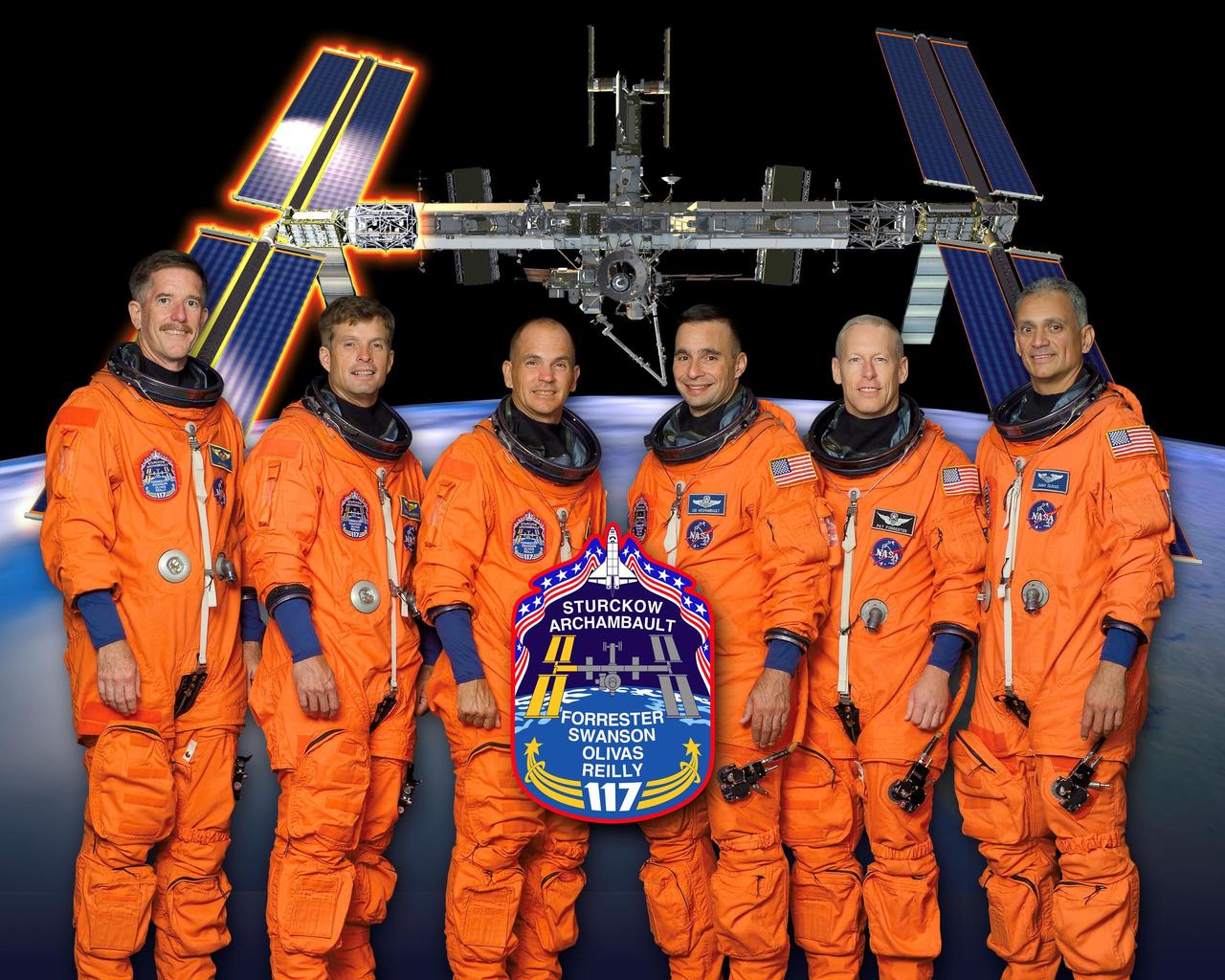
KENNEDY SPACE CENTER, FLA. -- STS117-S-002 -- These six astronauts take a break from traiing to pose for the STS-117 crew portrait. Scheduled to launch aboard the Space Shuttle Atlantis are (from the left) astronauts James F. Reilly II and Steven R. Swanson, mission specialists; Frederick W. (Rick) Sturckow, commander; Lee J. Archambault, pilot; Patrick G. Forrester and John D. (Danny) Olivas, mission specialists. The crew members are attired in training versions of their shuttle launch and entry suits.
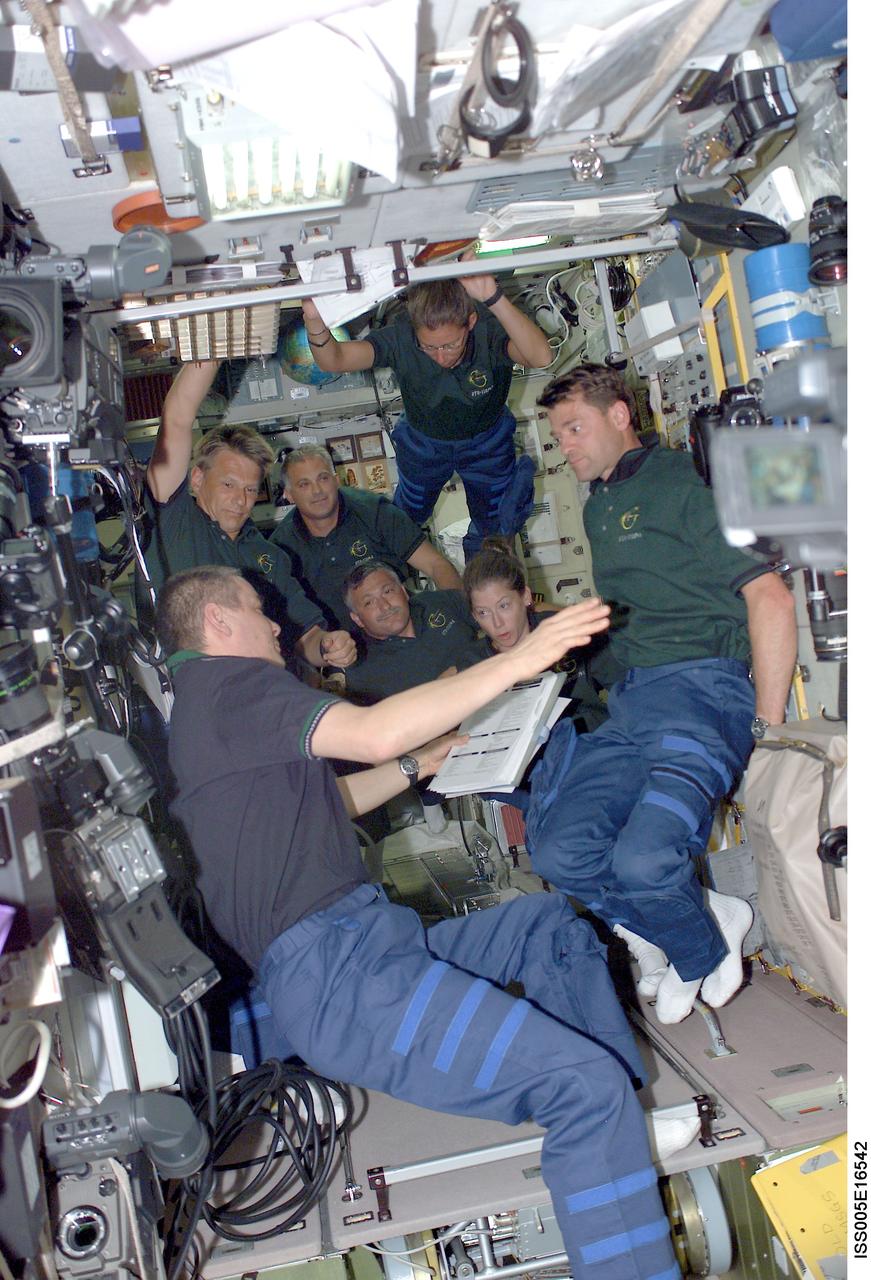
ISS005-E-16542 (9 October 2002) --- Cosmonaut Valery G. Korzun, Expedition Five mission commander, and the STS-112 crewmembers were photographed in the Zvezda Service Module on the International Space Station (ISS). Others pictured are astronauts Jeffrey S. Ashby, STS-112 mission commander; Pamela A. Melroy, pilot; Sandra H. Magnus, Piers J. Sellers, David A. Wolf, and cosmonaut Fyodor N. Yurchikhin, all mission specialists. Korzun and Yurchikhin represent Rosaviakosmos.
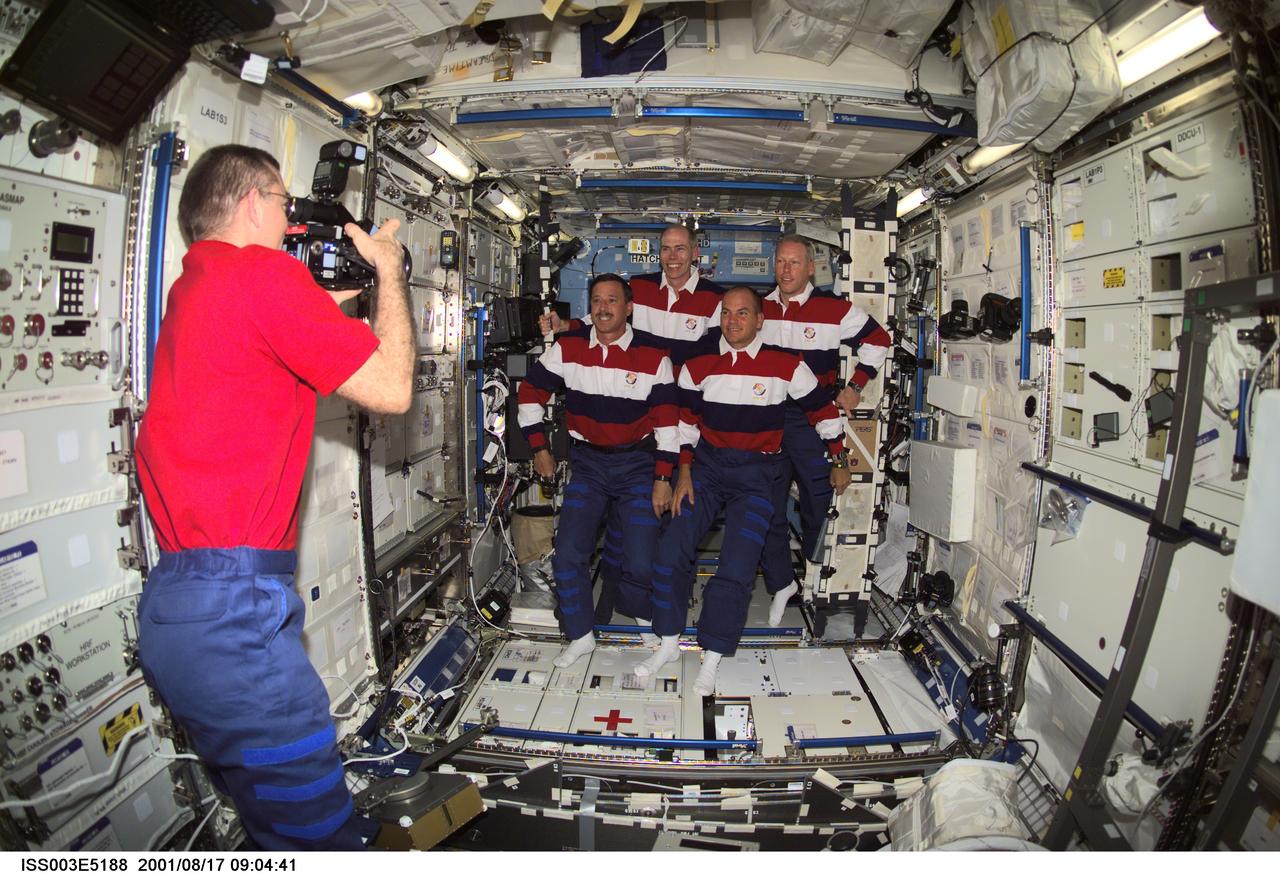
ISS003-E-5188 (17 August 2001) --- Astronaut James S. Voss, Expedition Two flight engineer, photographs astronauts Scott J. Horowitz (front left), STS-105 mission commander, Frederick W. (Rick) Sturckow, pilot, Daniel T. Barry (back left), and Patrick G. Forrester, both mission specialists, in the Destiny laboratory on the International Space Station (ISS). This image was taken with a digital still camera.
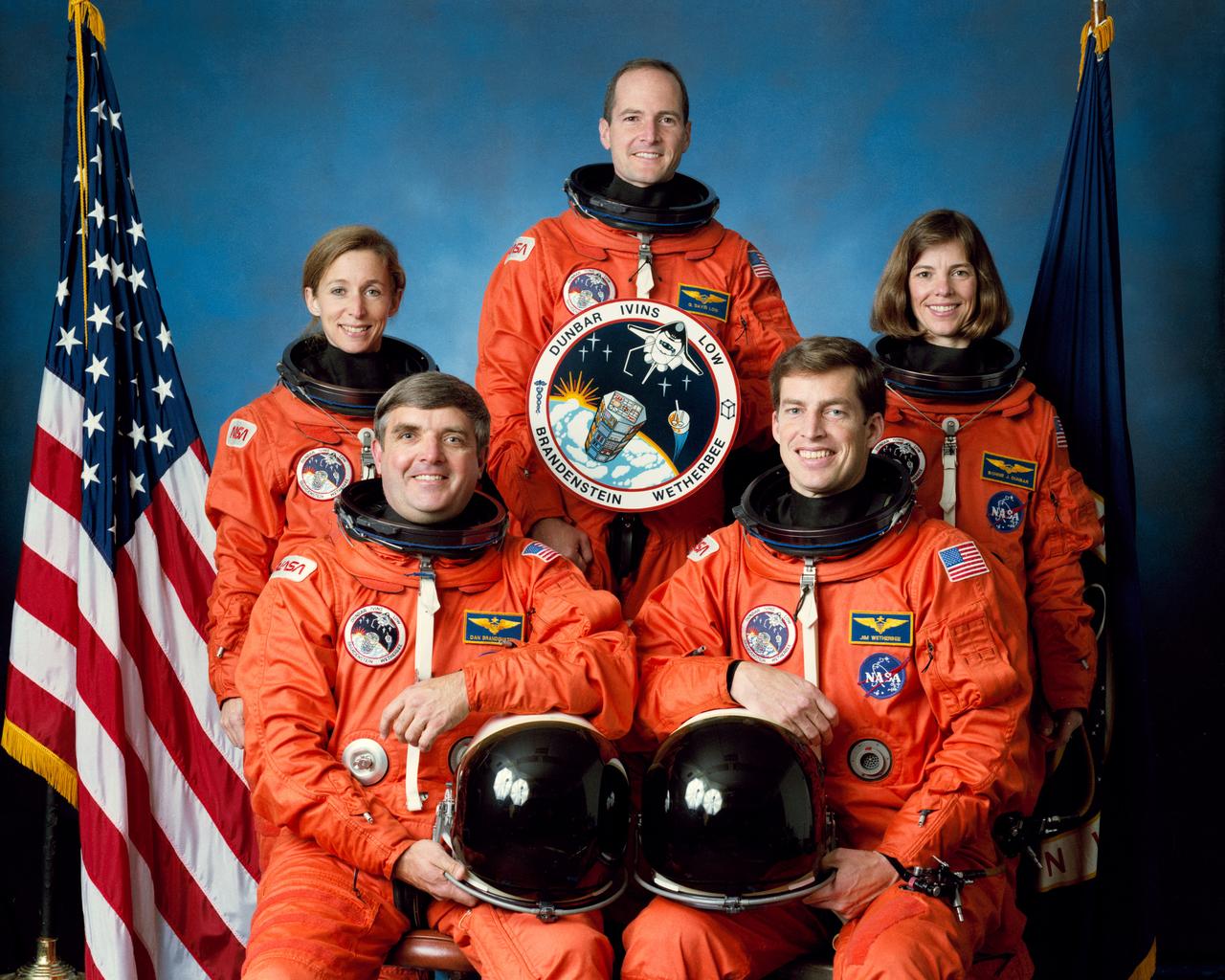
S89-48342 (October 1989) --- These five astronauts have been assigned to serve as crewmembers for NASA's STS-32 mission aboard the Space Shuttle Columbia in December of this year. In front are Astronauts Daniel C. Brandenstein (left), commander, and James D. Wetherbee, pilot. In back are Astronauts (l-r) Marsha S. Ivins, G. David Low and Bonnie J. Dunbar, all mission specialists.
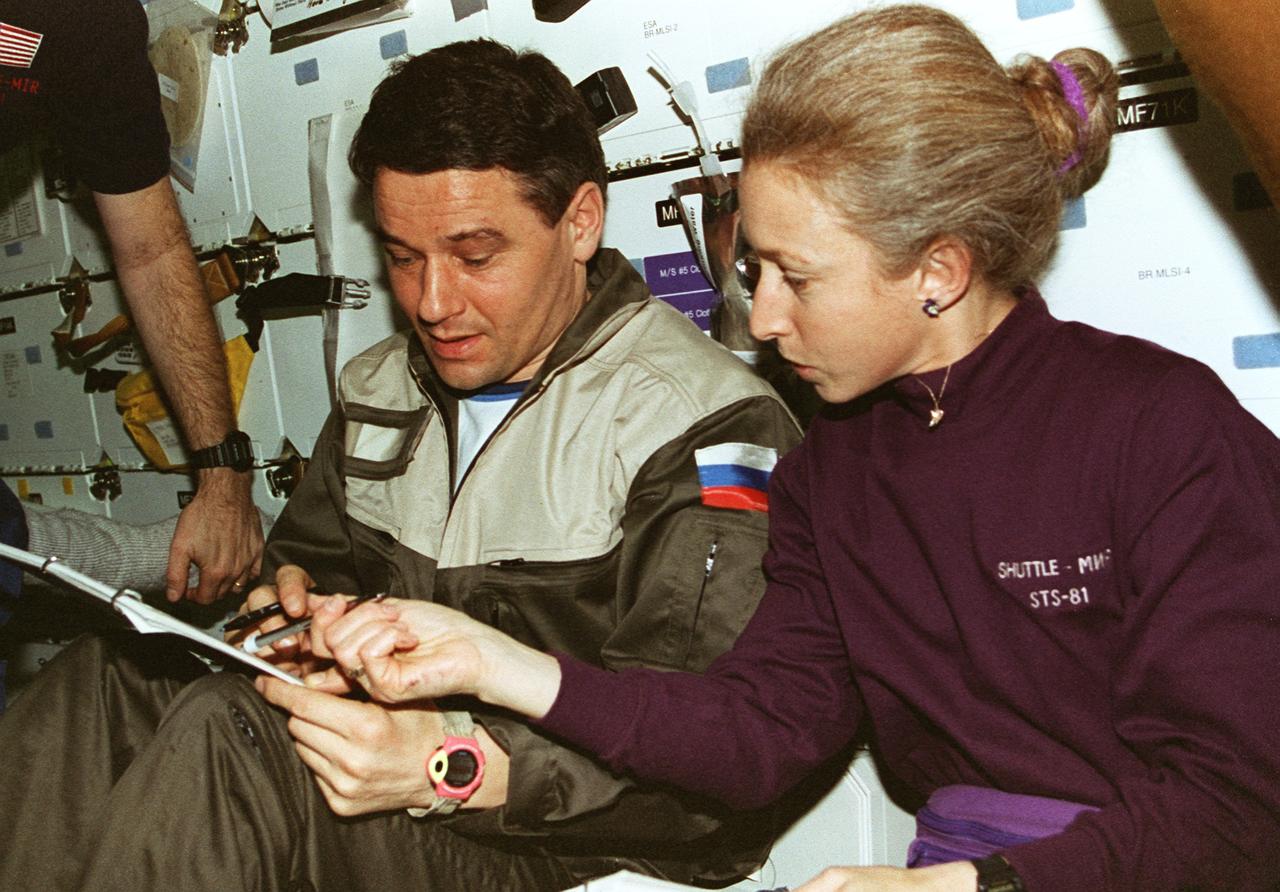
STS081-357-020 (12-22 Jan. 1997) --- Astronaut Marsha S. Ivins, STS-81 mission specialist, compares notes with cosmonaut Valeri G. Korzun, Mir-22 mission commander. The two were involved with the transfer of supplies from the Space Shuttle Atlantis to Russia's Mir Space Station, during the docking mission.
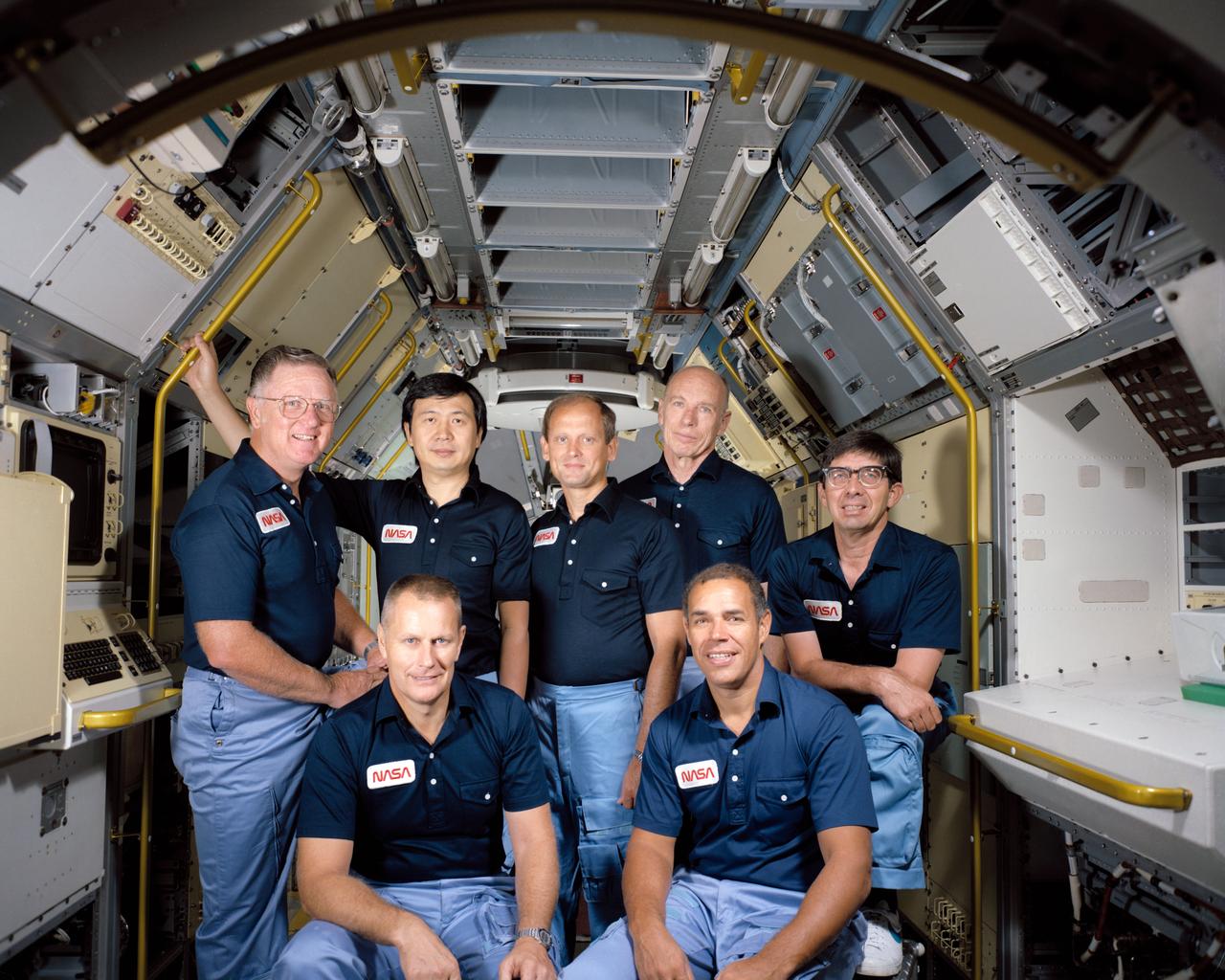
S84-43852 (November 1984) --- These seven men have been training for NASA’s Spacelab 3/STS-51B mission scheduled for launch in late April 1985. On the front row are astronauts Robert F. Overmyer (left), commander; and Frederick D. Gregory, pilot. On the back row, left to right, are Don L. Lind, mission specialist; Taylor G. Wang, payload specialist; Norman E. Thagard and William E. Thornton, both mission specialists; and Lodewijk van den Berg, payload specialist.
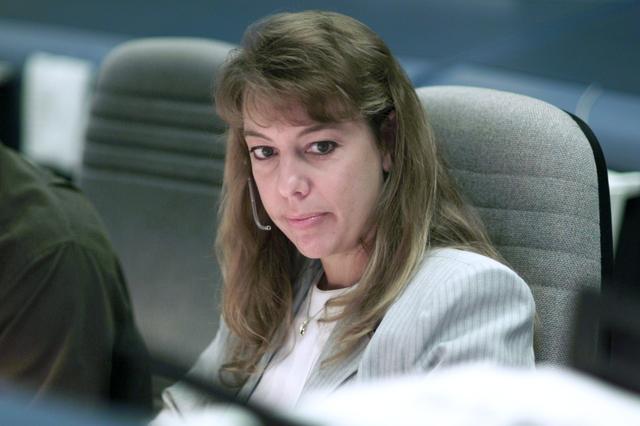
JSC2001-E-25113 (16 August 2001) --- Flight director Kelly Beck monitors data at her console in the shuttle flight control room (WFCR) in Houston’s Mission Control Center (MCC). At the time this photo was taken, STS-105 mission specialists Daniel T. Barry and Patrick G. Forrester were performing the first of the two scheduled space walks to perform work on the International Space Station (ISS).
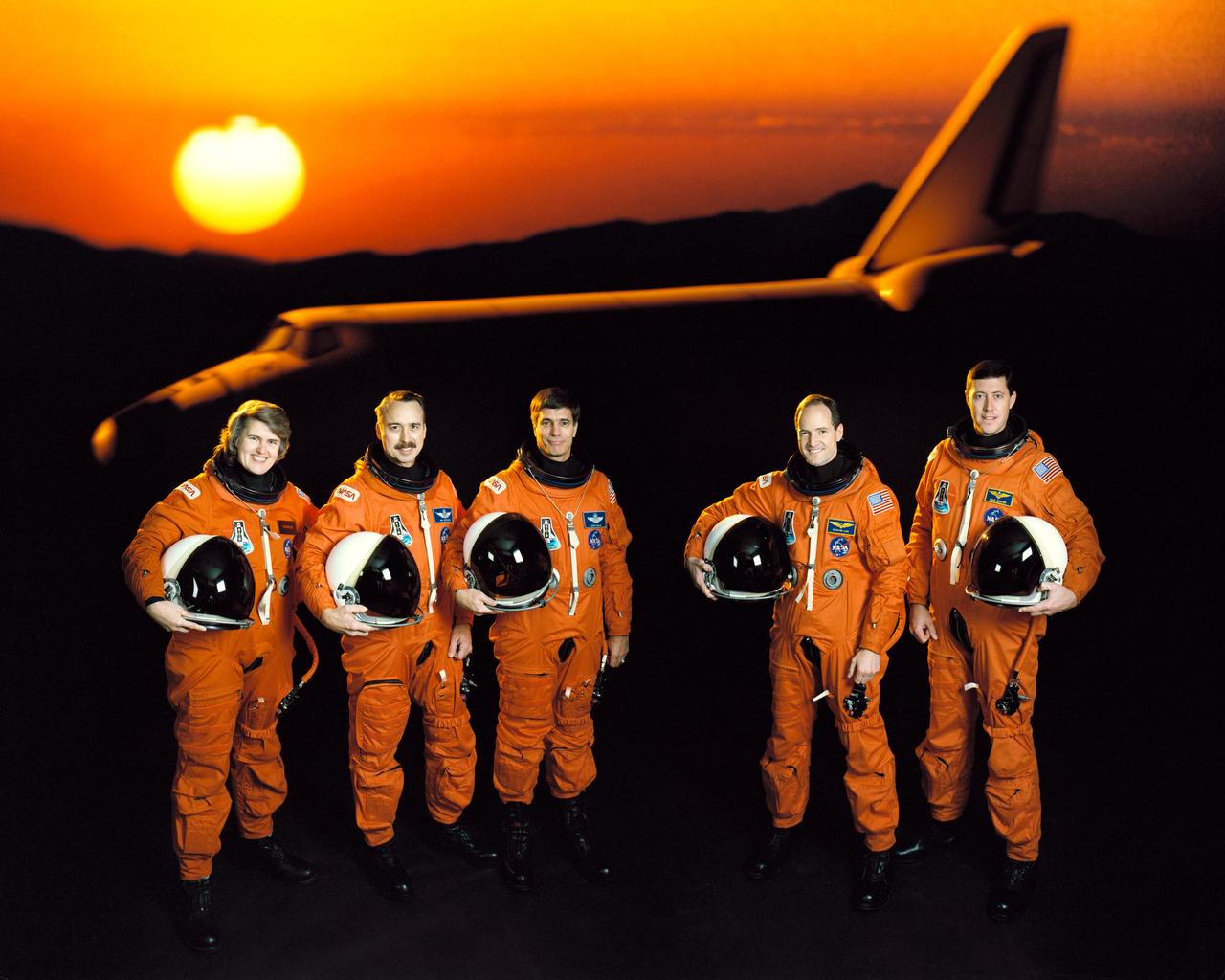
STS043-S-002 (May 1991) --- These five astronauts have been assigned to fly aboard the Space Shuttle Atlantis for NASA's STS-43 mission. Astronaut John E. Blaha (center) is mission commander. Other crew members are, left to right, astronauts Shannon W. Lucid, James C. Adamson and G. David Low, all mission specialists; and Michael A. Baker, pilot.
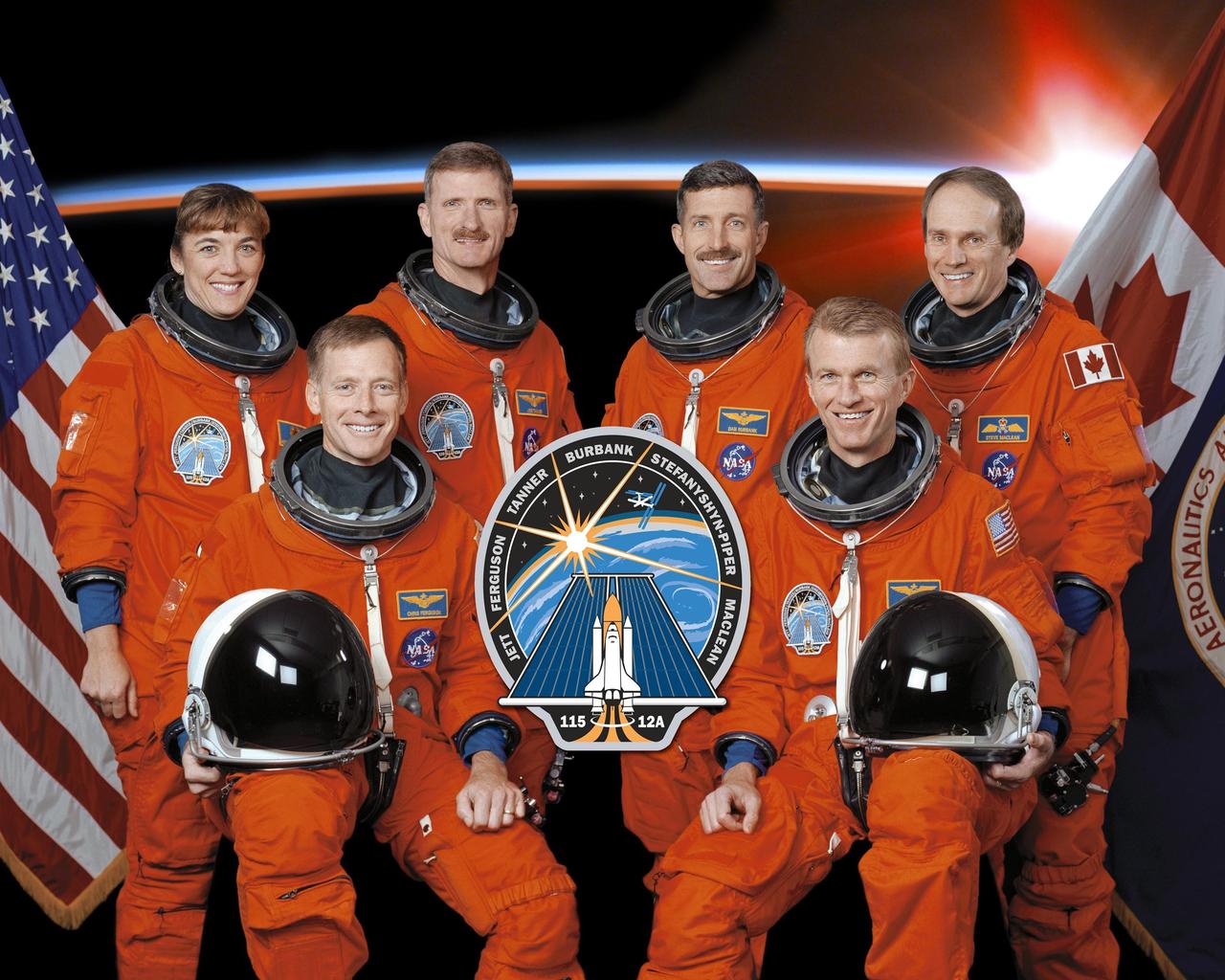
JOHNSON SPACE CENTER, TX - STS115-S-002 (November 8, 2002) -- These six astronauts take a break from training to pose for the STS-115 crew portrait. Astronauts Brent W. Jett Jr. (right) and Christopher J. Ferguson, command and pilot respectively, flank the mission insignia. The mission specialists are, from left to right, astronauts Heidemarie M. Stefanyshyn-Piper, Joseph R. (Joe) Tanner, Daniel C. Burbank, and Steven G. MacLean, who represents the Canadian Space Agency.
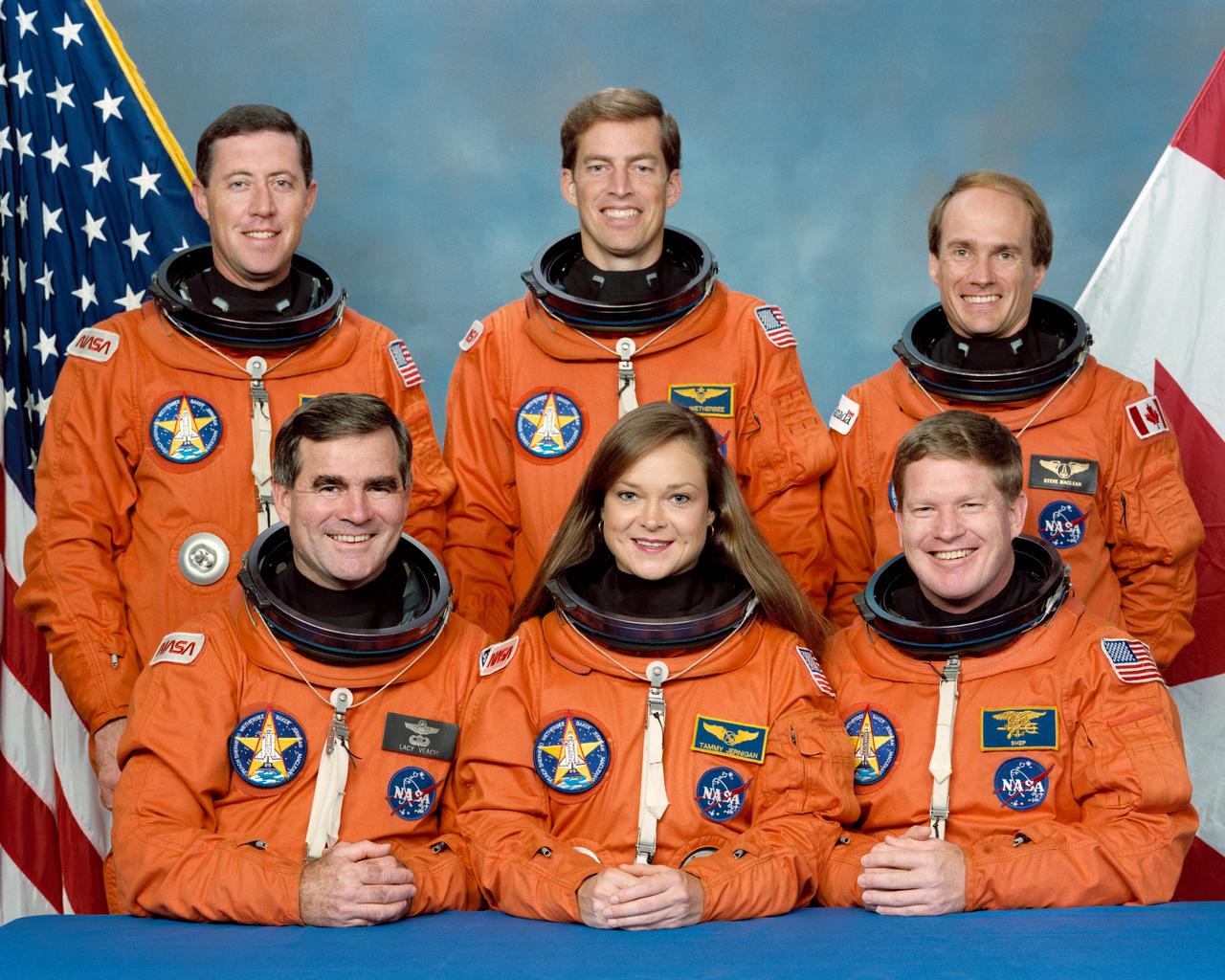
STS052-S-002 (August 1992) --- These five NASA astronauts and a Canadian payload specialist are assigned to the flight, scheduled for later this year. Pictured on the back row are, left to right, astronauts Michael A. Baker, pilot; James D. Wetherbee, mission commander; and Steven G. MacLean, payload specialist representing the Canadian Space Agency (CSA). In front are, left to right, astronauts Charles L. (Lacy) Veach, Tamara E. Jernigan and William M. Shepherd, all mission specialists.
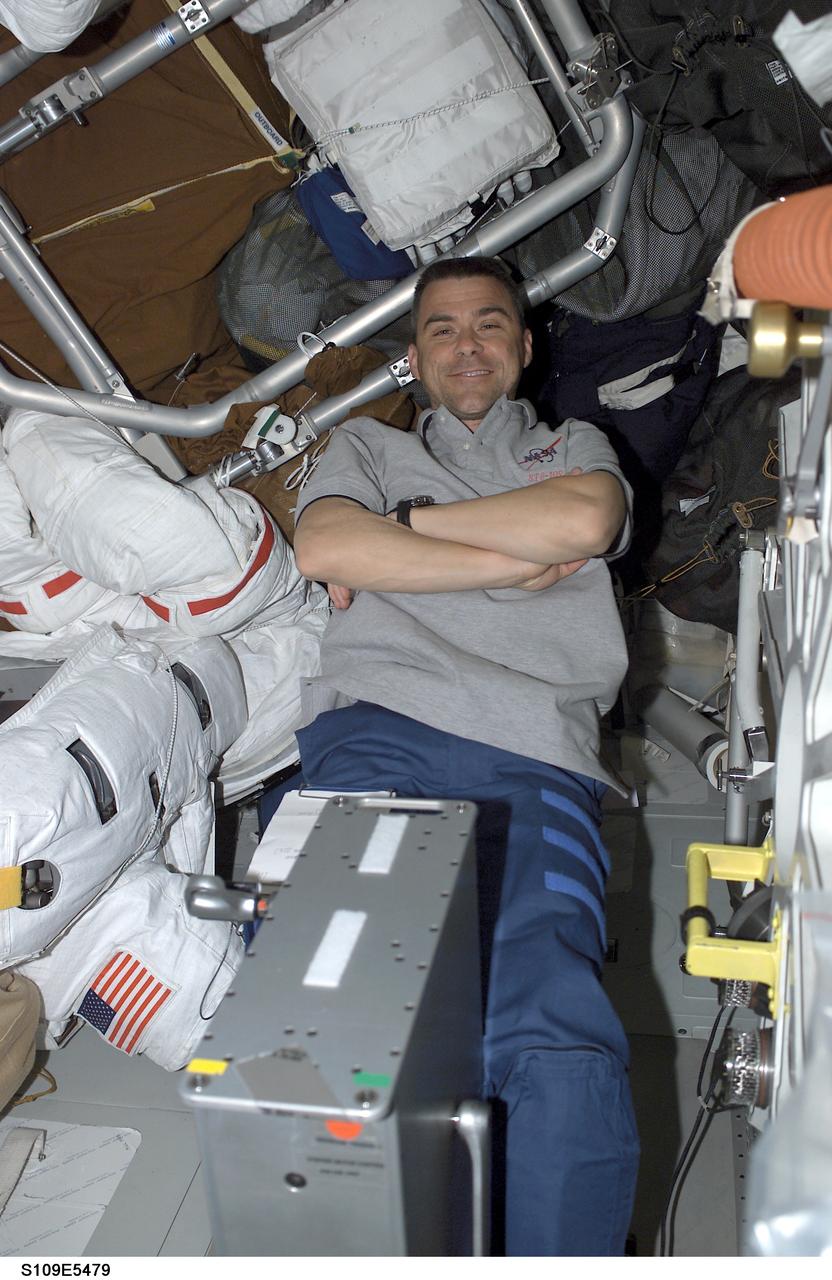
STS109-E-5479 (7 March 2002)-- Astronaut Duane G. Carey, STS-109 pilot, takes a leisurely "spin" on the bicycle ergometer on the mid deck of the Space Shuttle Columbia, while waiting to assist Flight Day 7's assigned space walkers--astronaut James H. Newman and Michael J. Massimino. The extravehicular mobility unit (EMU) space suits of the two can be seen in the background. The image was recorded with a digital still camera.
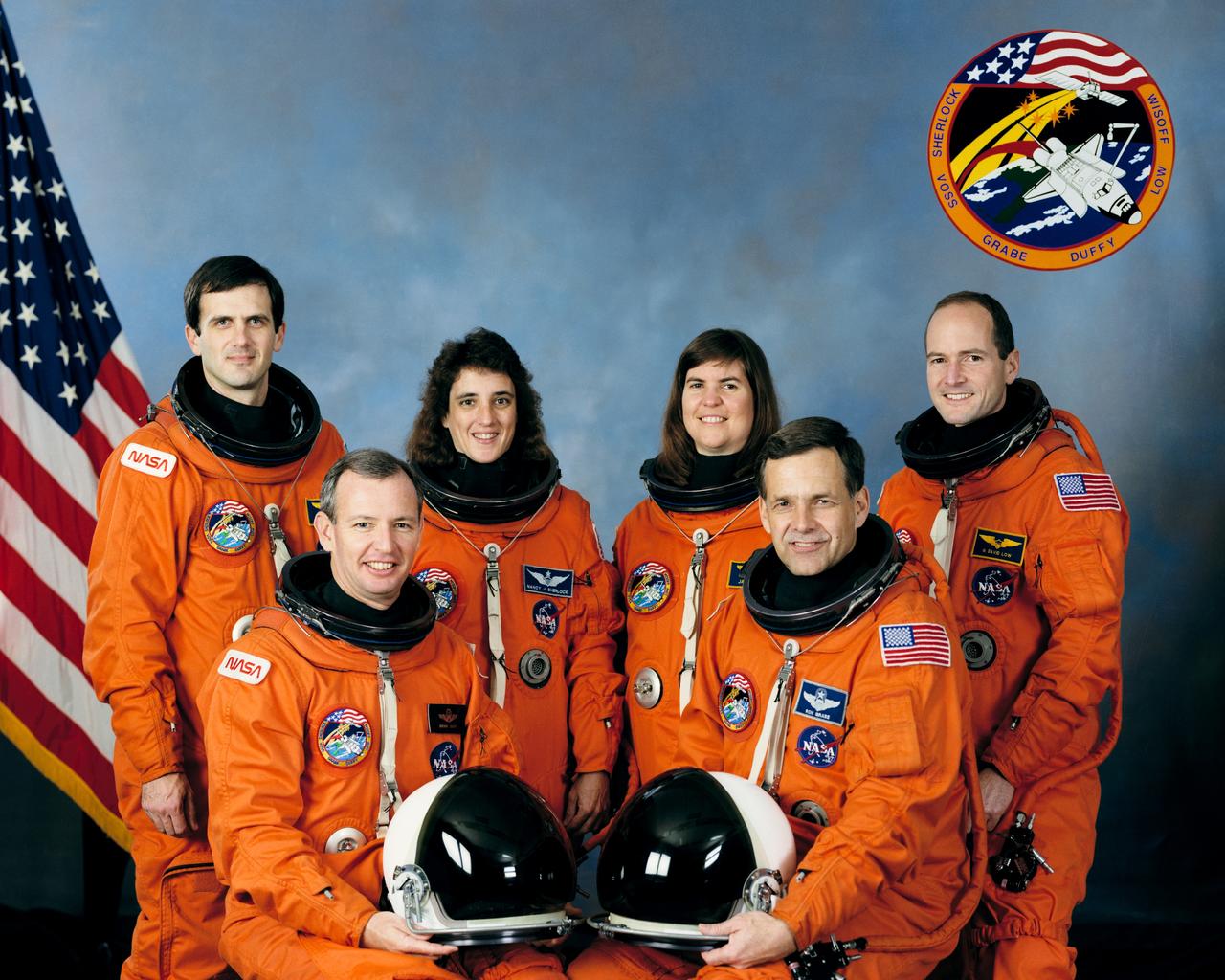
STS057-S-002 (February 1993) --- These seven astronauts are in training for NASA's mission scheduled for spring of this year. In front are astronauts Brian Duffy (left) and Ronald J. Grabe, pilot and commander, respectively. In back are (left to right) astronauts Peter J. Wisoff, Nancy J. Sherlock, Janice E. Voss, all mission specialists; and G. David Low, payload commander.
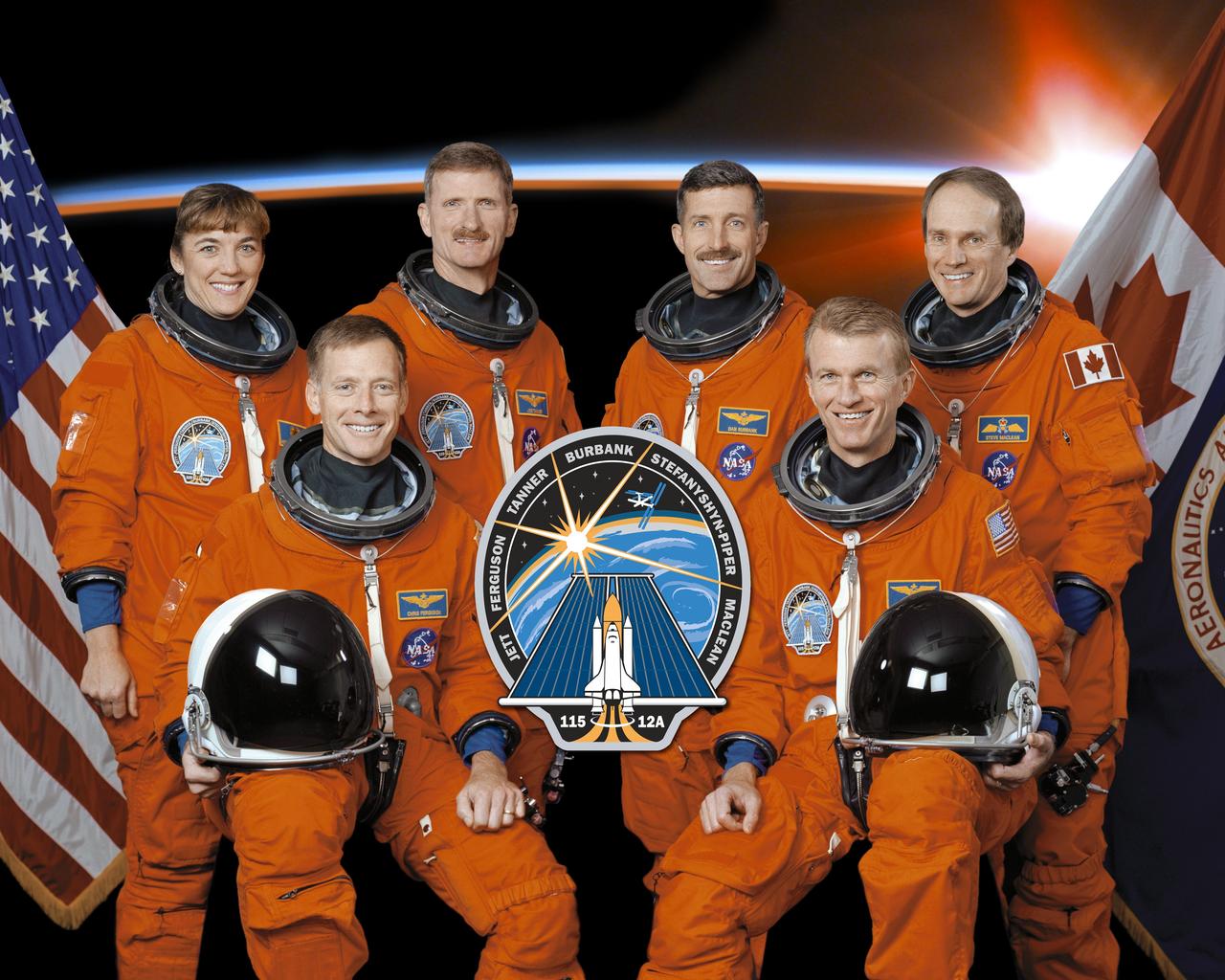
STS115-S-002 (8 November 2002) --- These six astronauts take a break from training to pose for the STS-115 crew portrait. Astronauts Brent W. Jett, Jr. (right) and Christopher J. Ferguson, commander and pilot, respectively, flank the mission insignia. The mission specialists are, from left to right, astronauts Heidemarie M. Stefanyshyn-Piper, Joseph R. (Joe) Tanner, Daniel C. Burbank, and Steven G. MacLean, who represents the Canadian Space Agency.
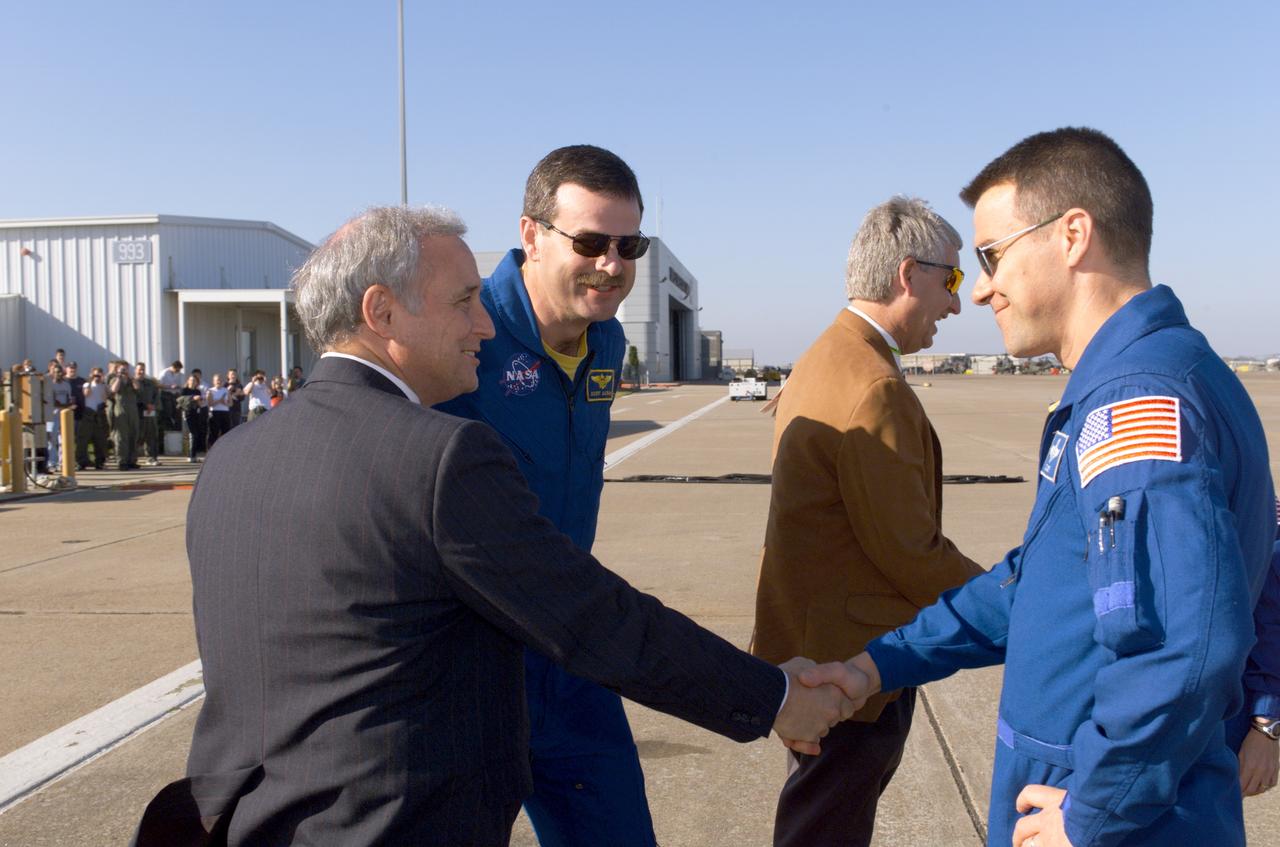
JSC2002-E-09329 (13 March 2002) --- Astronaut Duane G. Carey (right foreground), STS-109 pilot, shakes hands with Johnson Space Center’s (JSC) Acting Director Roy Estess during the crew return ceremonies at Ellington Field. Also pictured are astronaut Scott D. Altman (left background), mission commander, and astronaut Steven A. Hawley, Director of Flight Crew Operations.

51G-S-117 (17 June 1985) --- 51-G crewmembers depart the Kennedy Space Center's operations and checkout building on their way to the launch pad for the launch of the Discovery. Leading the seven are Daniel C. Brandenstein, commander; and John O. Creighton, pilot. Following are Payload specialist Sultan Salman Abdelazize Al-Saud; John M. Fabian, mission specialist; Patrick Baudry, payload specialist; Shannon Lucid and Steven R. Nagel, mission specialists.
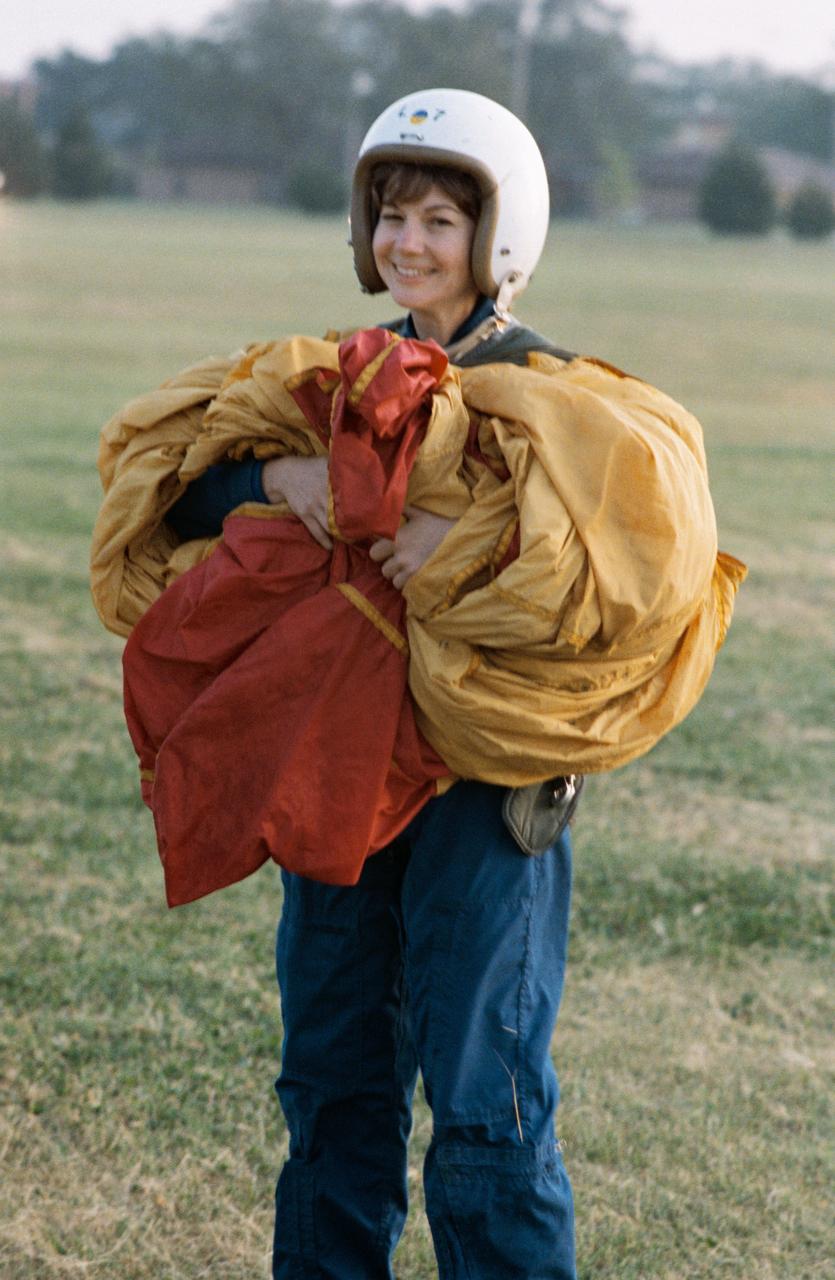
S93-38725 (12-14 Sept. 1992) --- Catherine G. Coleman, a member of the 1992 class of astronaut candidates at the Johnson Space Center (JSC), gathers up a parachute. The chute had just been used in one of many exercises experienced by the trainees at a three-day parachute/survival course hosted by Vance Air Force Base near Enid, Oklahoma. EDITOR?S NOTE: Coleman was later named as mission specialist for the United States Microgravity Laboratory (USML-2) mission, scheduled to fly as STS-73 in 1995.
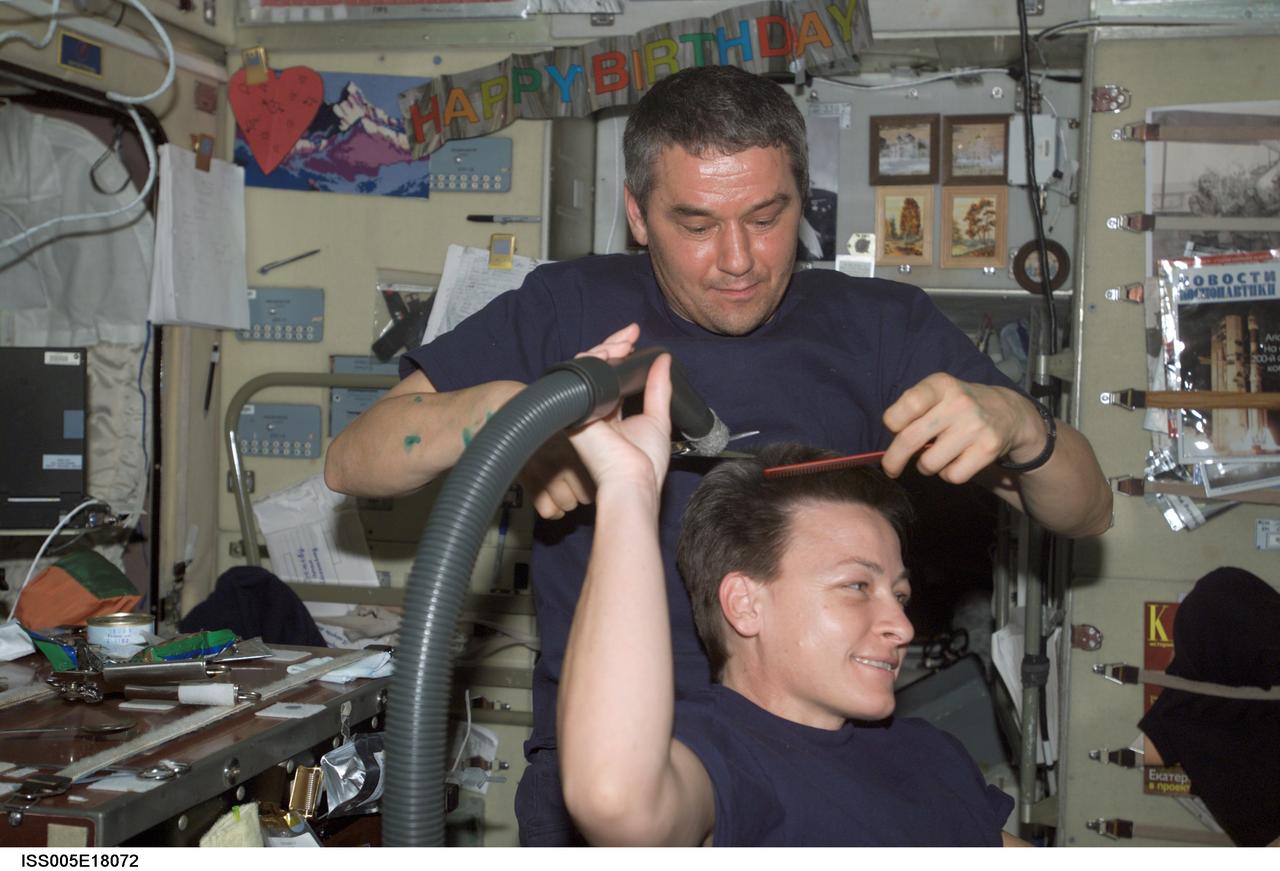
ISS005-E-18072 (October 2002) --- Cosmonaut Valery G. Korzun, Expedition Five mission commander, cuts astronaut Peggy A. Whitson’s hair in the Zvezda Service Module on the International Space Station (ISS). Whitson, flight engineer, holds a vacuum device the crew has fashioned to garner freshly cut hair, which is floating freely.
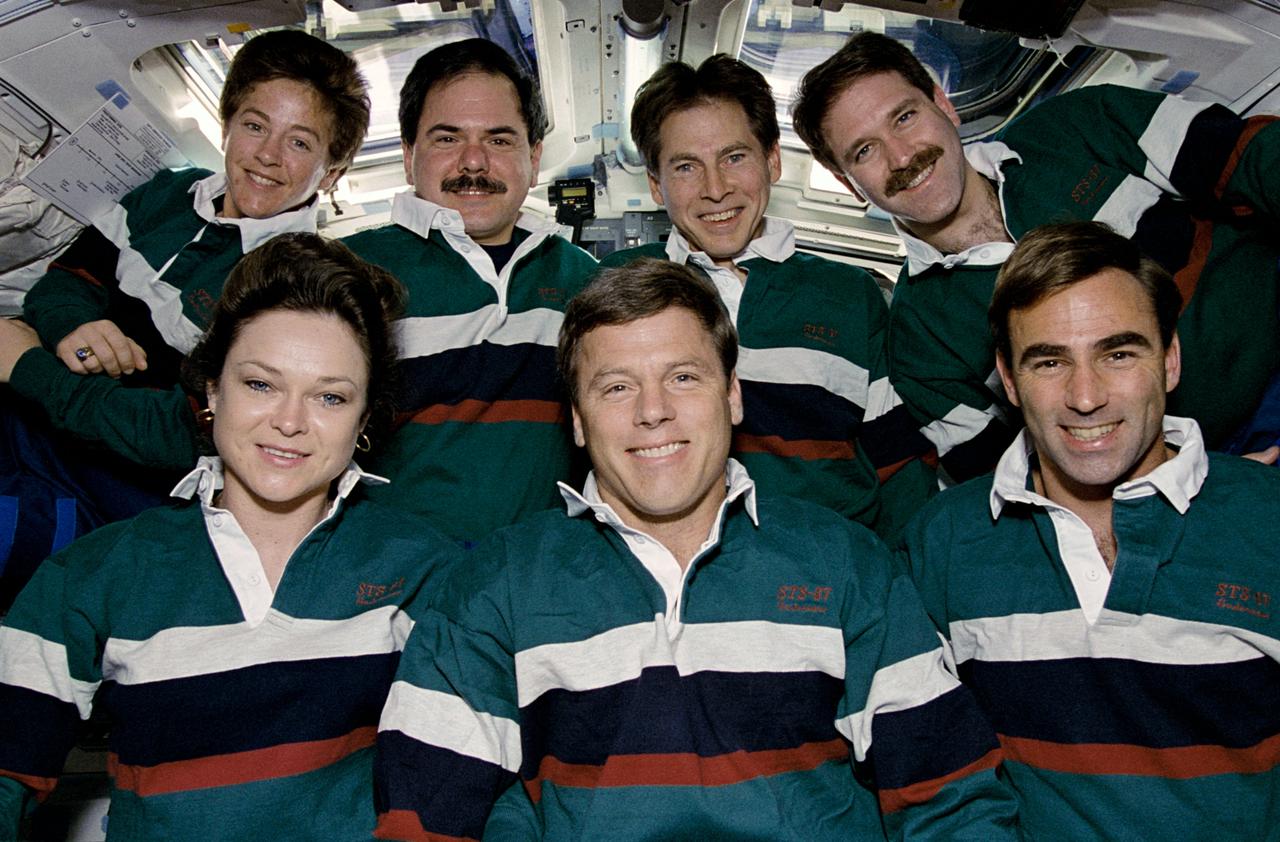
The STS-67/ASTRO-2 crew members pose for their traditional inflight portrait on the aft flight deck of the Earth orbiting Space Shuttle Endeavour. Left to right in the front are astronauts Tamara E. Jernigan, payload commander; Steven S. Oswald, mission commander; and William G. Gregory, pilot. Left to right on the back row are astronaut Wendy B. Lawrence, flight engineer; payload specialists Ronald A. Parise and Samuel T. Durrance; and John M. Grunsfeld, mission specialist.
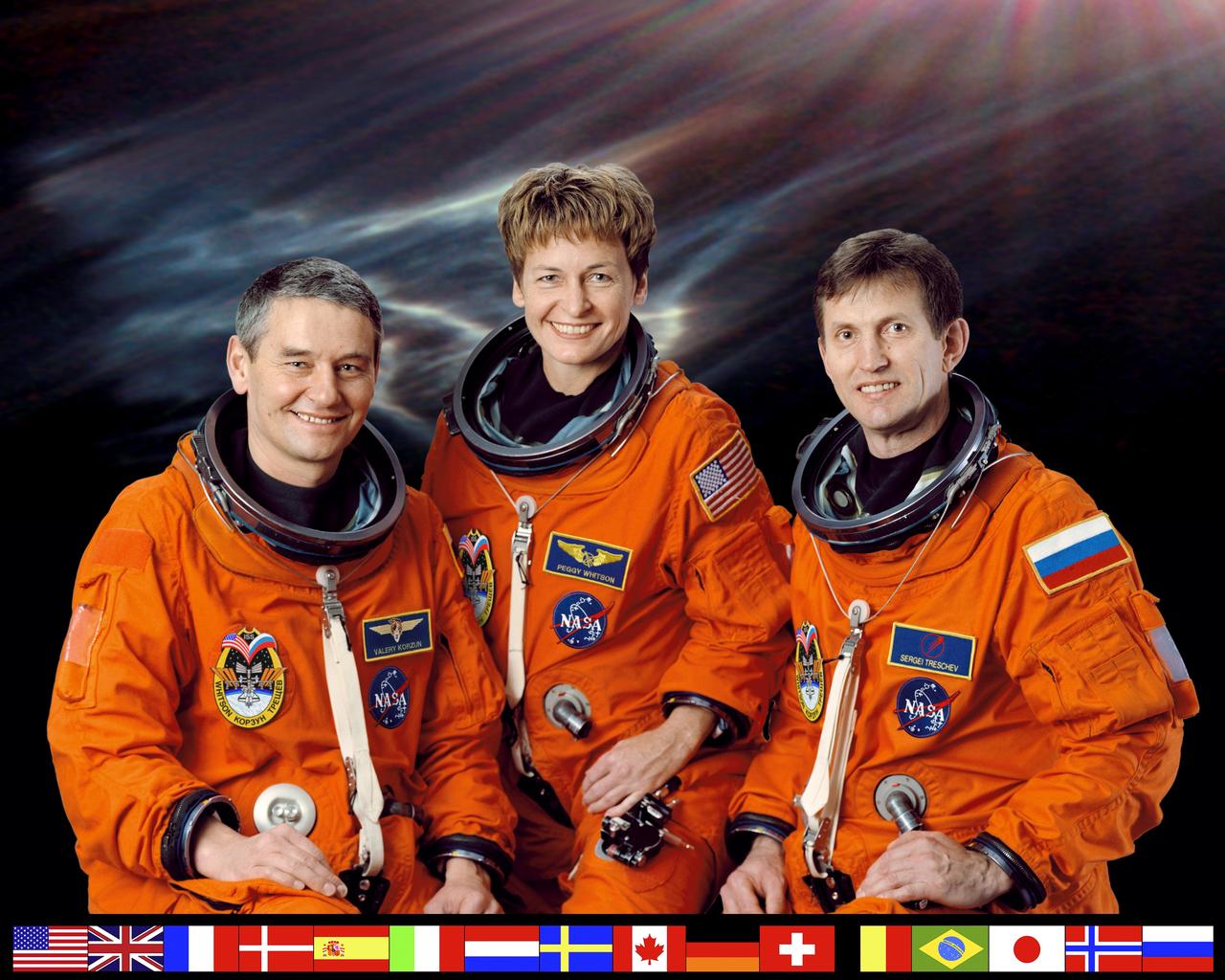
ISS005-S-002 (February 2002) --- Cosmonaut Valeri G. Korzun (left), Expedition Five mission commander; astronaut Peggy A. Whitson and cosmonaut Sergei Y. Treschev, both flight engineers, attired in training versions of the shuttle launch and entry suit, pause from their training schedule for a crew portrait. The three will be launched to the International Space Station (ISS) in early spring of this year aboard the Space Shuttle Atlantis. Korzun and Treschev represent the Russian Aviation and Space Agency (Rosaviakosmos).
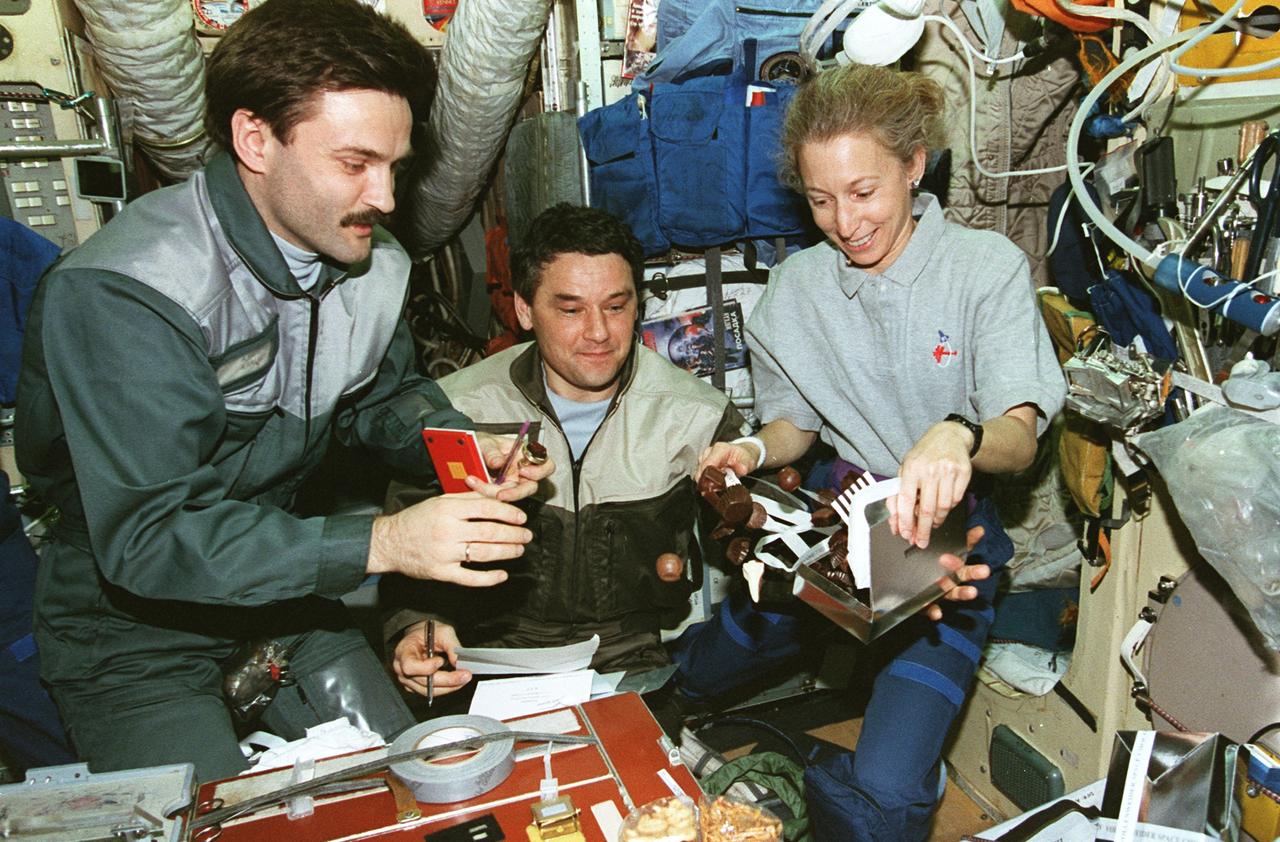
STS081-369-020 (12-22 Jan. 1997) --- Astronaut Marsha S. Ivins and two Mir-22 crewmembers stray from the conventional food fare as they open a box of chocolates on Russia's Mir Space Station's Base Block Module. Cosmonauts Aleksandr Y. Kaleri (left), flight engineer, and Valeri G. Korzun, share the treats.
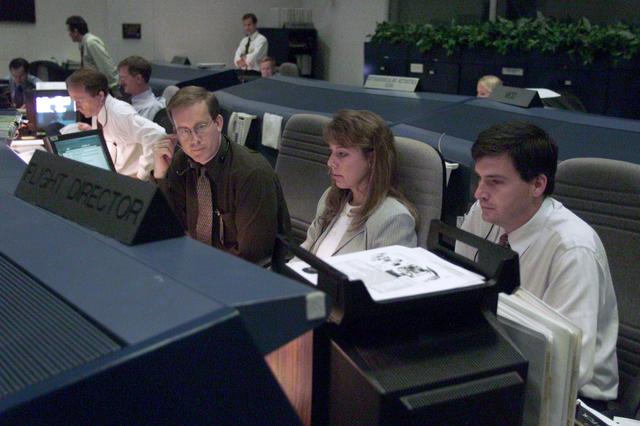
JSC2001-E-25111 (16 August 2001) --- Flight directors John Shannon (left foreground), Kelly Beck, and Steve Stich monitor the data displayed at their consoles in the shuttle flight control room (WFCR) in Houston’s Mission Control Center (MCC). At the time this photo was taken, STS-105 mission specialists Daniel T. Barry and Patrick G. Forrester were performing the first of the two scheduled space walks to perform work on the International Space Station (ISS).
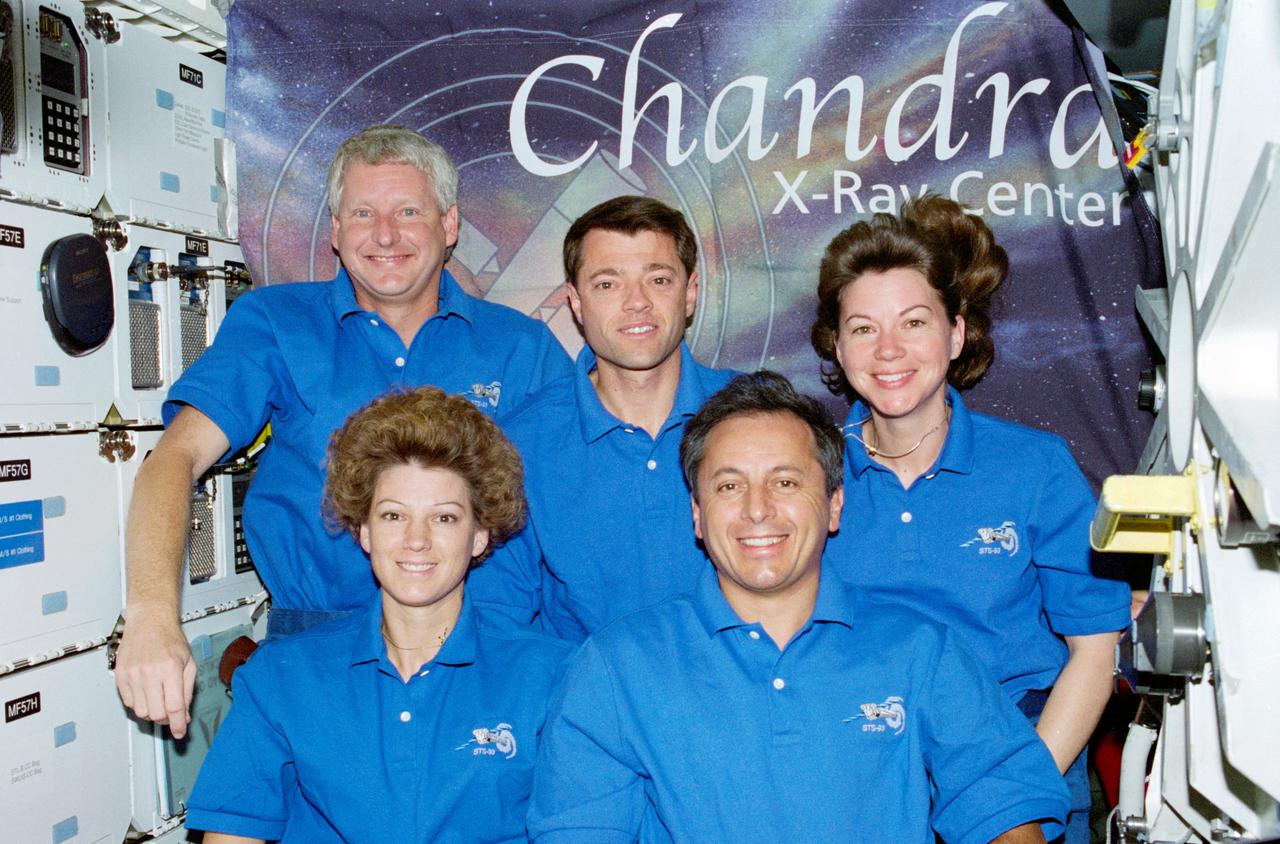
STS093-322-017 (23-27 July 1999) --- The five STS-93 astronauts pose for the traditional inflight crew portrait on Columbia's middeck. In front are astronauts Eileen M. Collins, mission commander, and Michel Tognini, mission specialist, representing France's Centre National d'Etudes Spatiales (CNES). Behind them are (from the left) astronauts Steven A. Hawley, mission specialist; Jeffrey S. Ashby, pilot; and Catherine G. (Cady) Coleman, mission specialist.
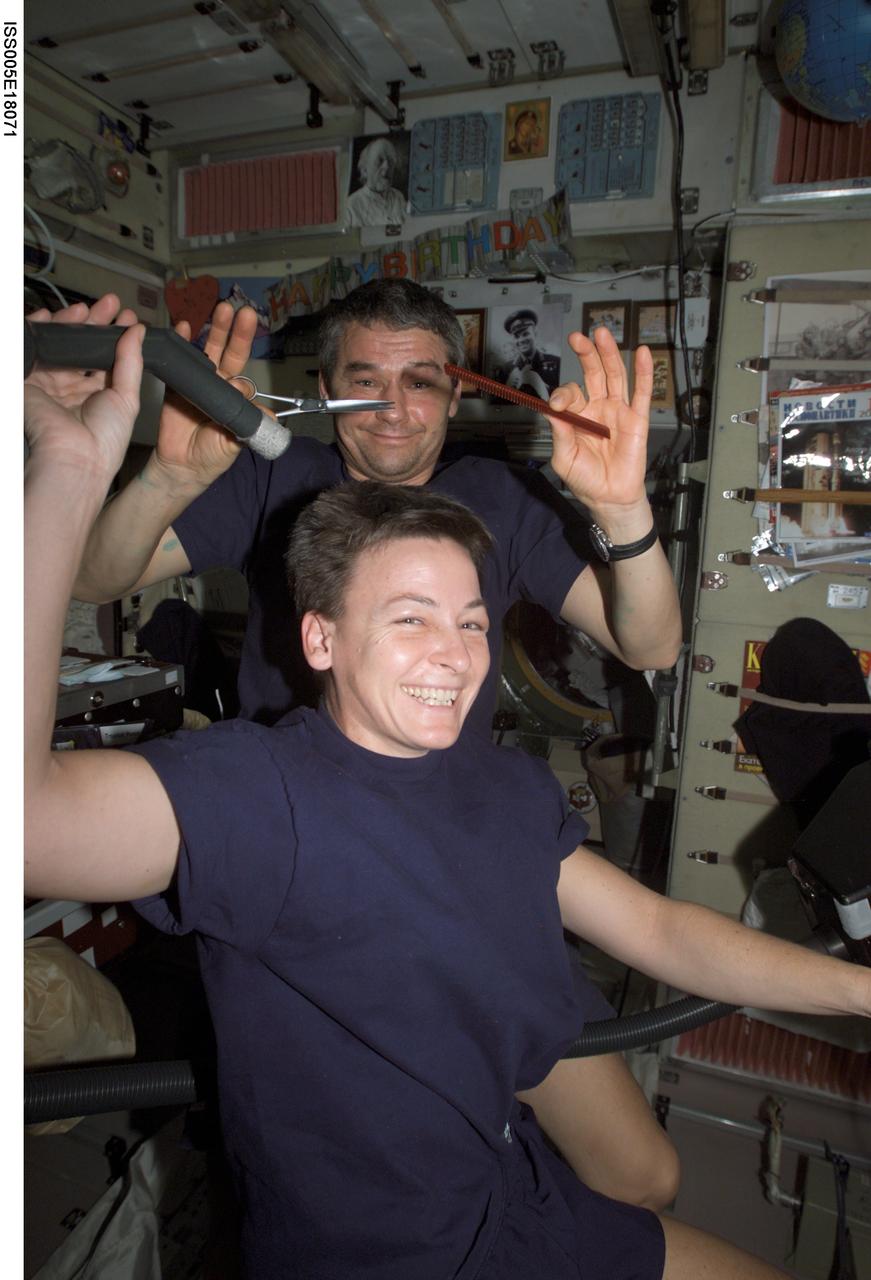
ISS005-E-18071 (October 2002) --- Cosmonaut Valery G. Korzun, Expedition Five mission commander, cuts astronaut Peggy A. Whitson’s hair in the Zvezda Service Module on the International Space Station (ISS). Whitson, flight engineer, holds a vacuum device the crew has fashioned to garner freshly cut hair, which is floating freely.
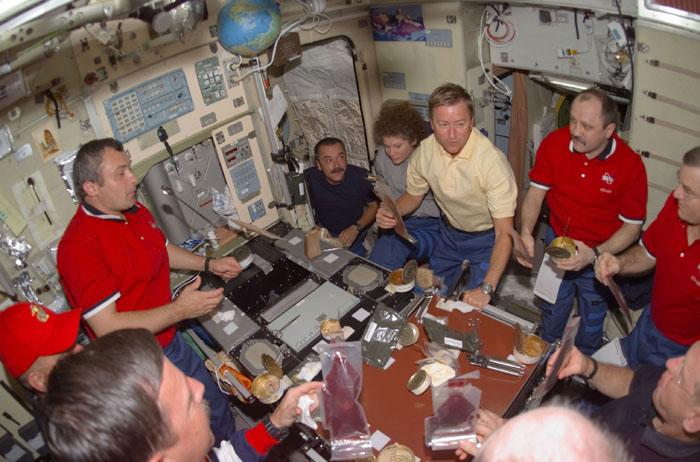
STS105-E-5198 (15 August 2001) --- Ten astronauts and cosmonauts dine in the Zvezda Service Module. Clockwise from lower left corner are Scott J. Horowitz, Frederick W. (Rick) Sturckow, Vladimir N. Dezhurov, Mikhail Tyurin, Susan J. Helms, Frank L. Culbertson, Yury V. Usachev, James S. Voss and Patrick G. Forrester. Daniel T. Barry is out of frame at lower right. Dezhurov, Tyurin and Usachev represent Rosaviakosmos. The image was recorded with a digital still camera.
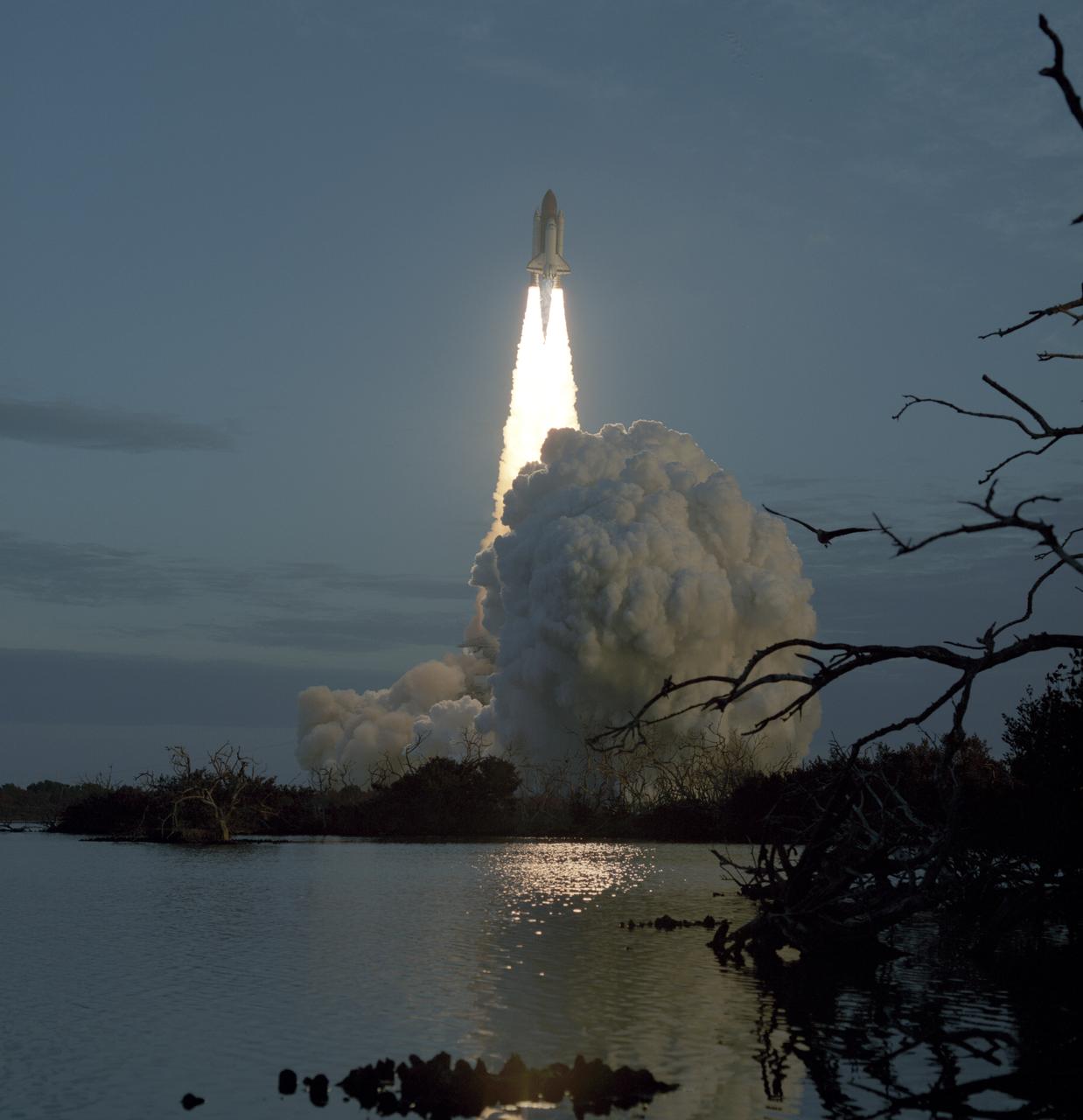
Five astronauts launched aboard the Space Shuttle Columbia on January 9, 1990 at 7:35:00am (EST) for the STS-32 mission. The crew included David C. Brandenstein, commander; James D. Weatherbee, pilot; and mission specialists Marsha S. Ivins, G. David Low, and Bonnie J. Dunbar. Primary objectives of the mission were the deployment of the SYNCOM IV-F5 defense communications satellite and the retrieval of NASA’s Long Duration Exposure Facility (LDEF).
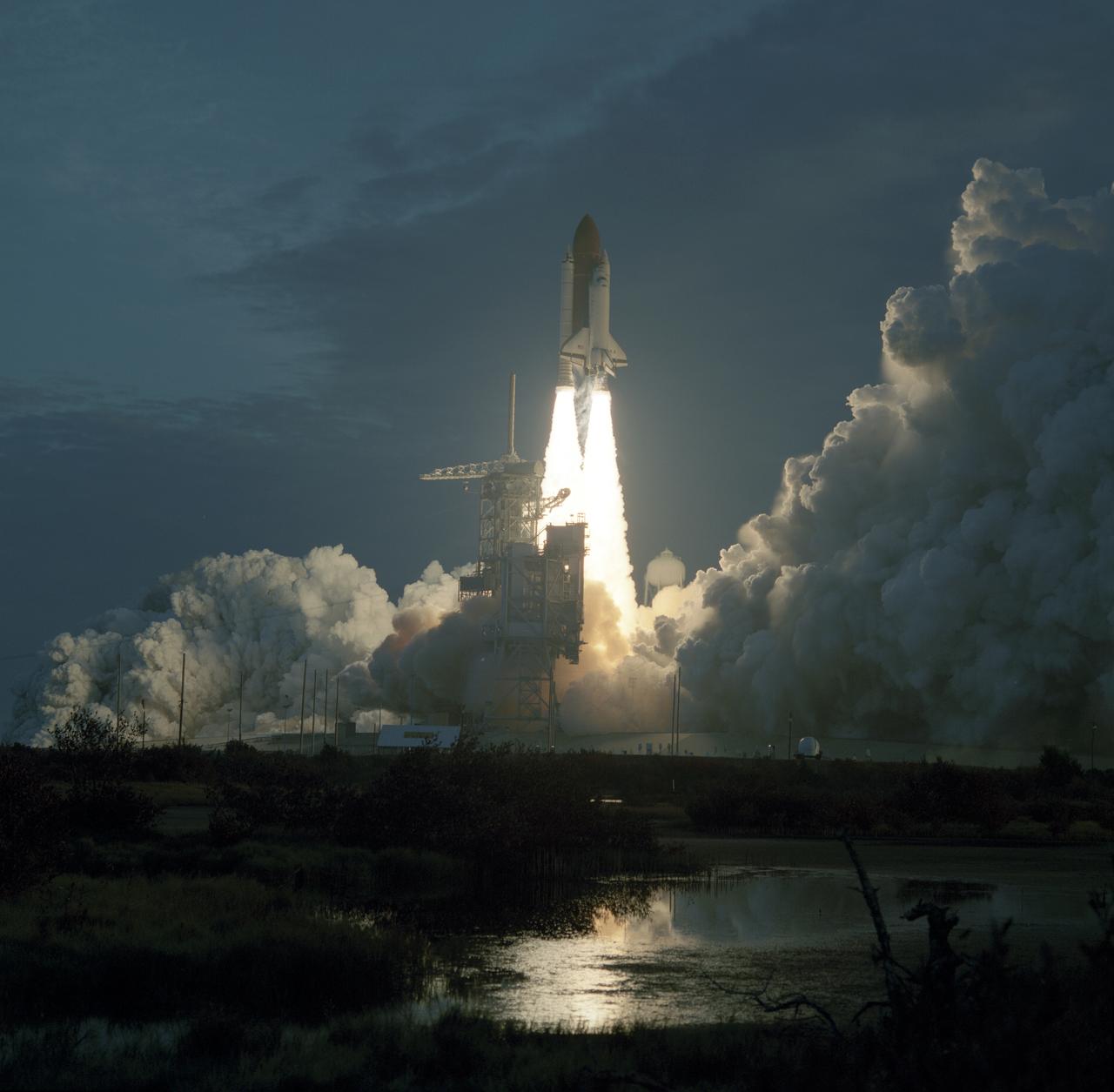
Five astronauts launched aboard the Space Shuttle Columbia on January 9, 1990 at 7:35:00am (EST) for the STS-32 mission. The crew included David C. Brandenstein, commander; James D. Weatherbee, pilot; and mission specialists Marsha S. Ivins, G. David Low, and Bonnie J. Dunbar. Primary objectives of the mission were the deployment of the SYNCOM IV-F5 defense communications satellite and the retrieval of NASA’s Long Duration Exposure Facility (LDEF).
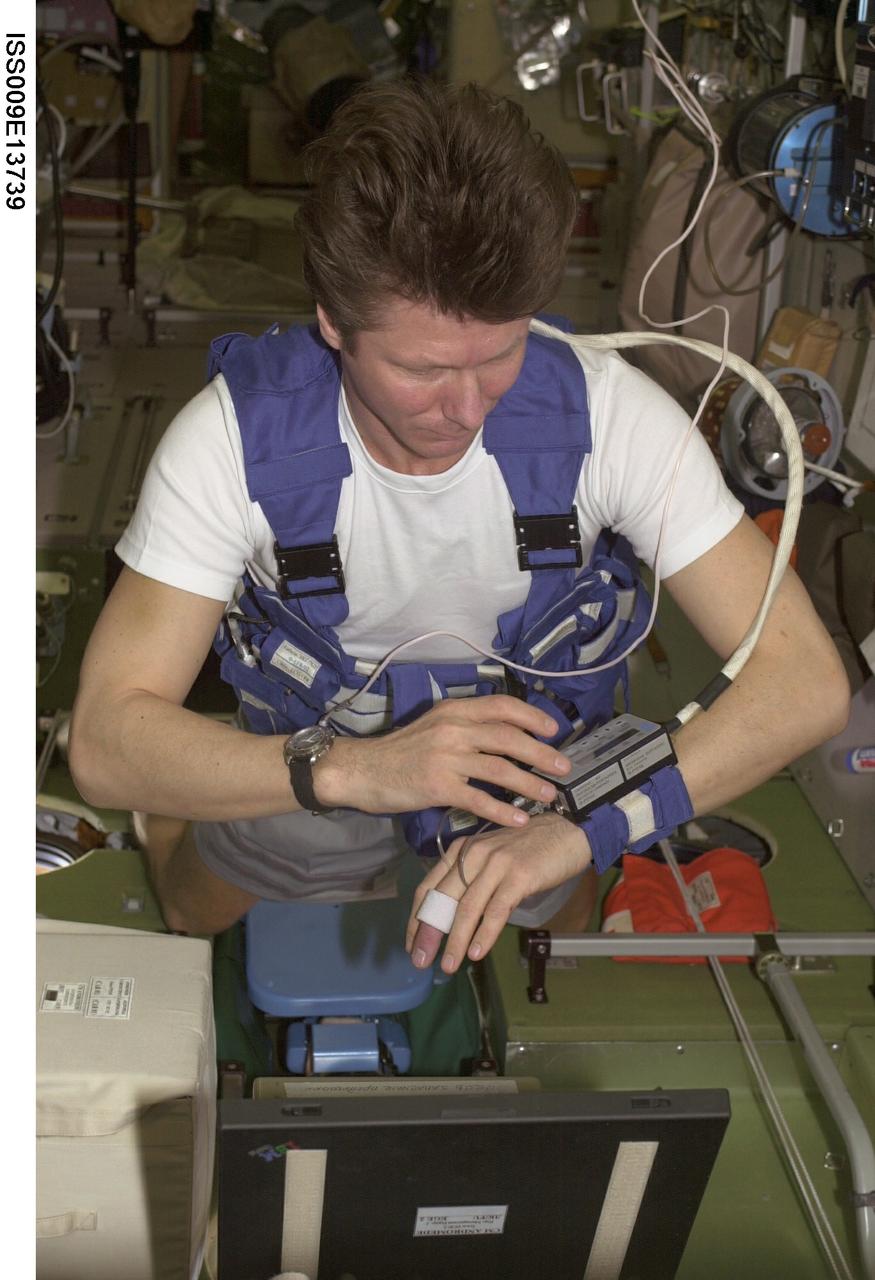
ISS009-E-13739 (5 July 2004) --- Cosmonaut Gennady I. Padalka, Expedition 9 commander representing Russia’s Federal Space Agency, works with the Cardiocog experiment in the Zvezda Service Module of the International Space Station (ISS). Originally part of Pedro Duque's VC5 "Cervantes" science program, Cardiocog studies changes in the human cardiovascular system in micro-G, expressed in the peripheral arteries, and the vegetative regulation of arterial blood pressure and heart rate.
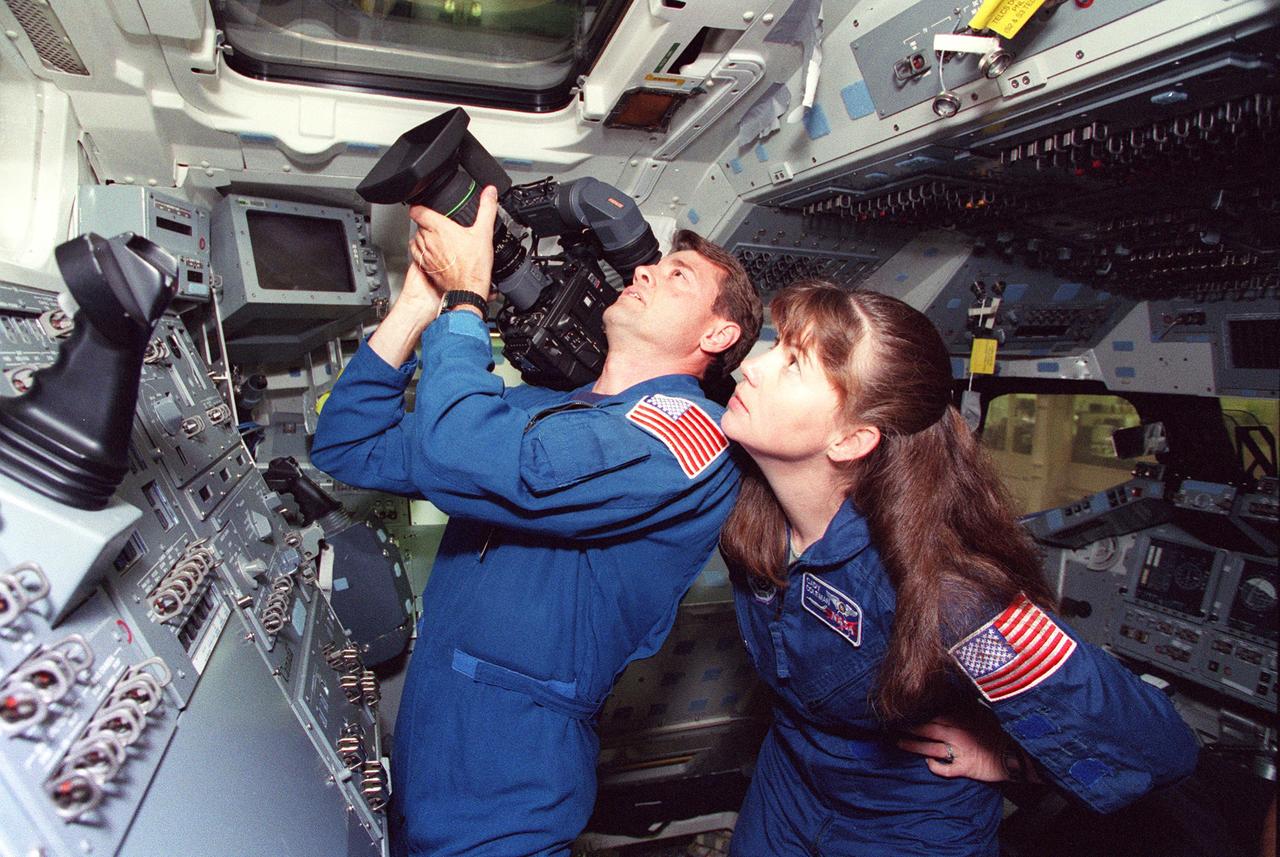
S99-05085 (April 1999) --- In preparation for a STS-93 detailed test objective (DTO), astronauts Jeffrey S. Ashby, pilot, and Catherine G. (Cady) Coleman, mission specialist, train with a high-definition television camcorder. The camera will be carried onboard the Space Shuttle Columbia for their scheduled July mission. The rehearsal with the DTO 700-17A hardware took place in the Crew Compartment Trainer (CCT)in the Systems Integration Facility at the Johnson Space Center (JSC).
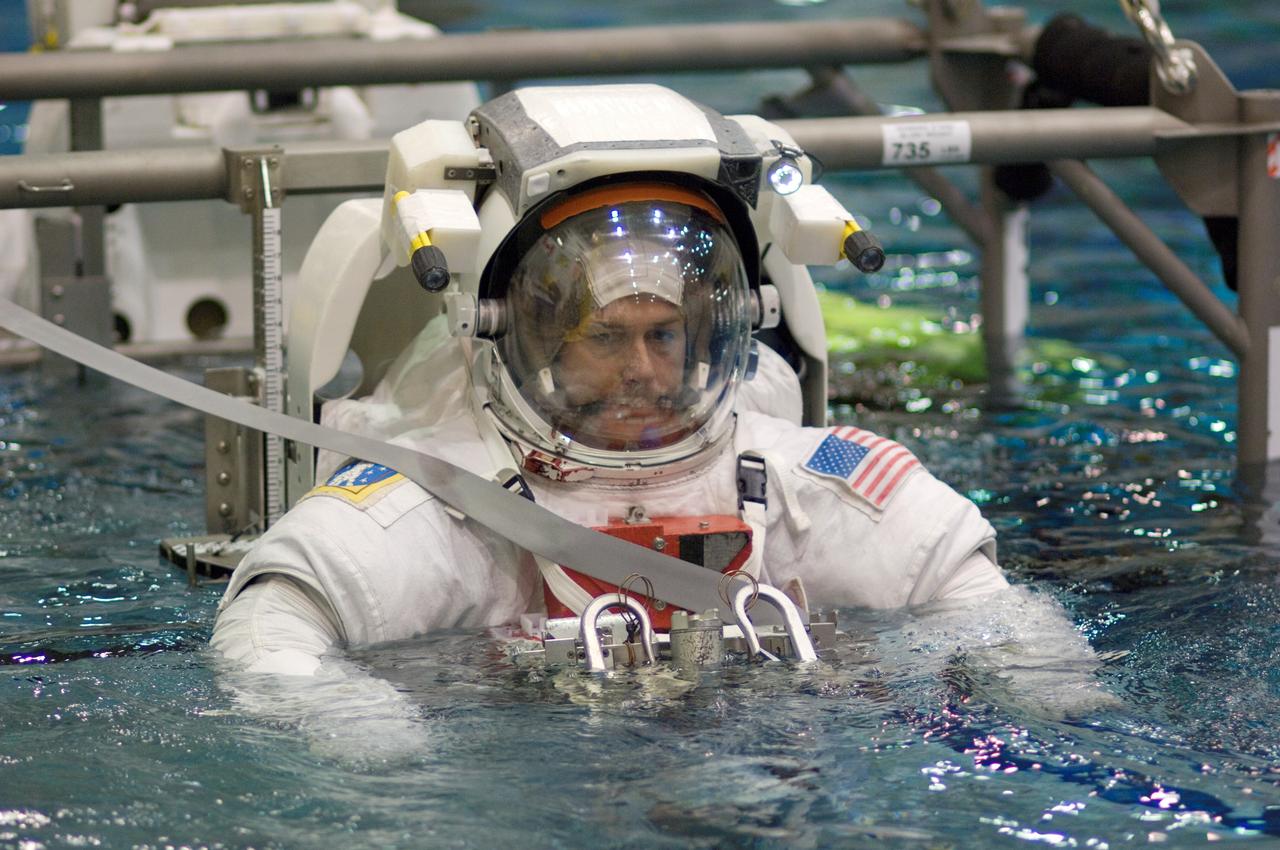
JSC2008-E-015735 (26 Feb. 2008) --- Astronauts Robert S. (Shane) Kimbrough and Stephen G. Bowen (partially obscured), both STS-126 mission specialists, are submerged in the waters of the Neutral Buoyancy Laboratory (NBL) near Johnson Space Center. Kimbrough and Bowen are attired in training versions of the Extravehicular Mobility Unit (EMU) spacesuit. SCUBA-equipped divers (out of frame) are in the water to assist the crewmembers in their rehearsal, intended to help prepare them for work on the exterior of the International Space Station.
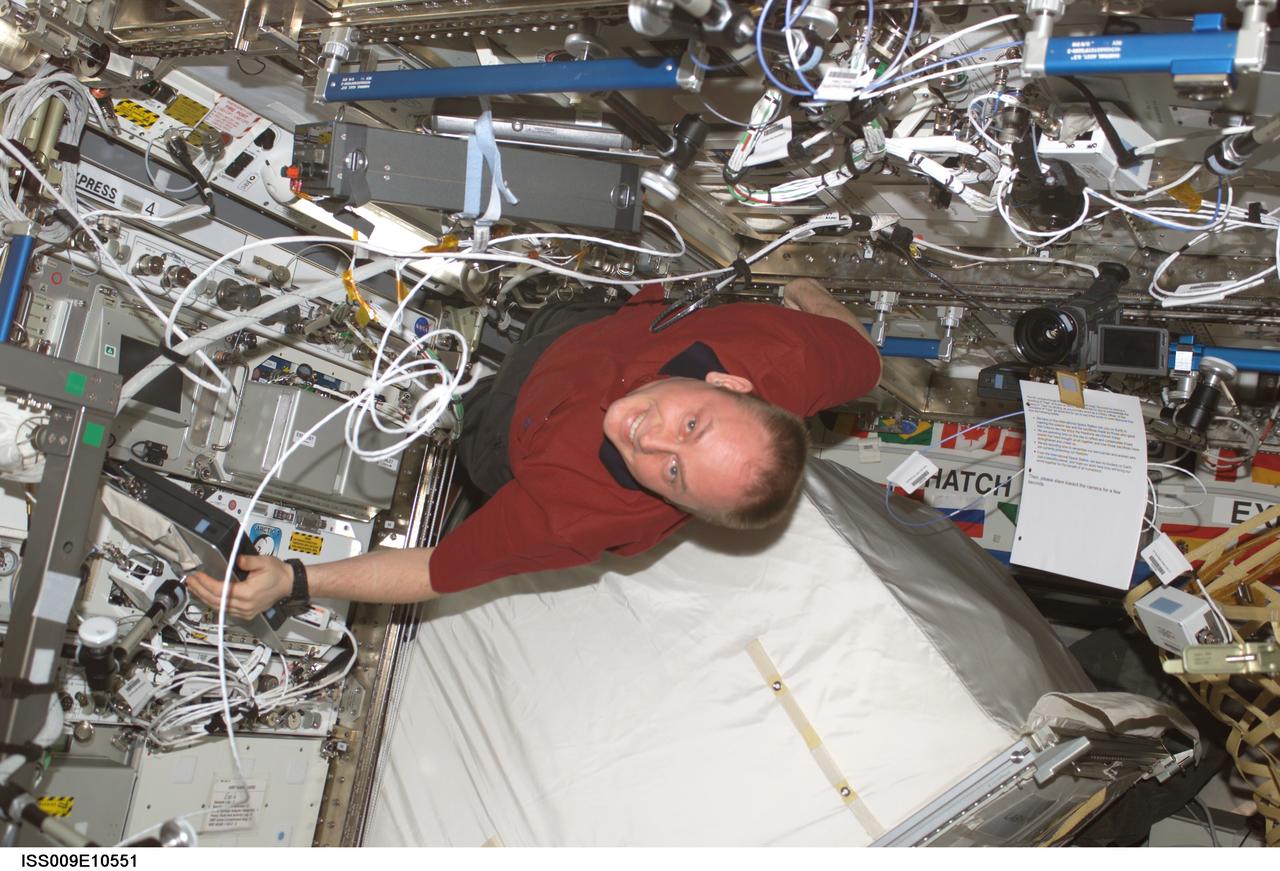
ISS009-E-10551 (4 June 2004) --- Astronaut Edward M. (Mike) Fincke, Expedition 9 NASA ISS science officer and flight engineer, moves the Zero-G Storage Rack (ZSR) in the Destiny laboratory of the International Space Station (ISS) in order to retrieve the spare Remote Power Controller Module (RPCM), scheduled to replace the failed RPCM on the S0 (S-Zero) Truss. Fincke is positioned above the ZSR, which has been pulled from the Express Rack.
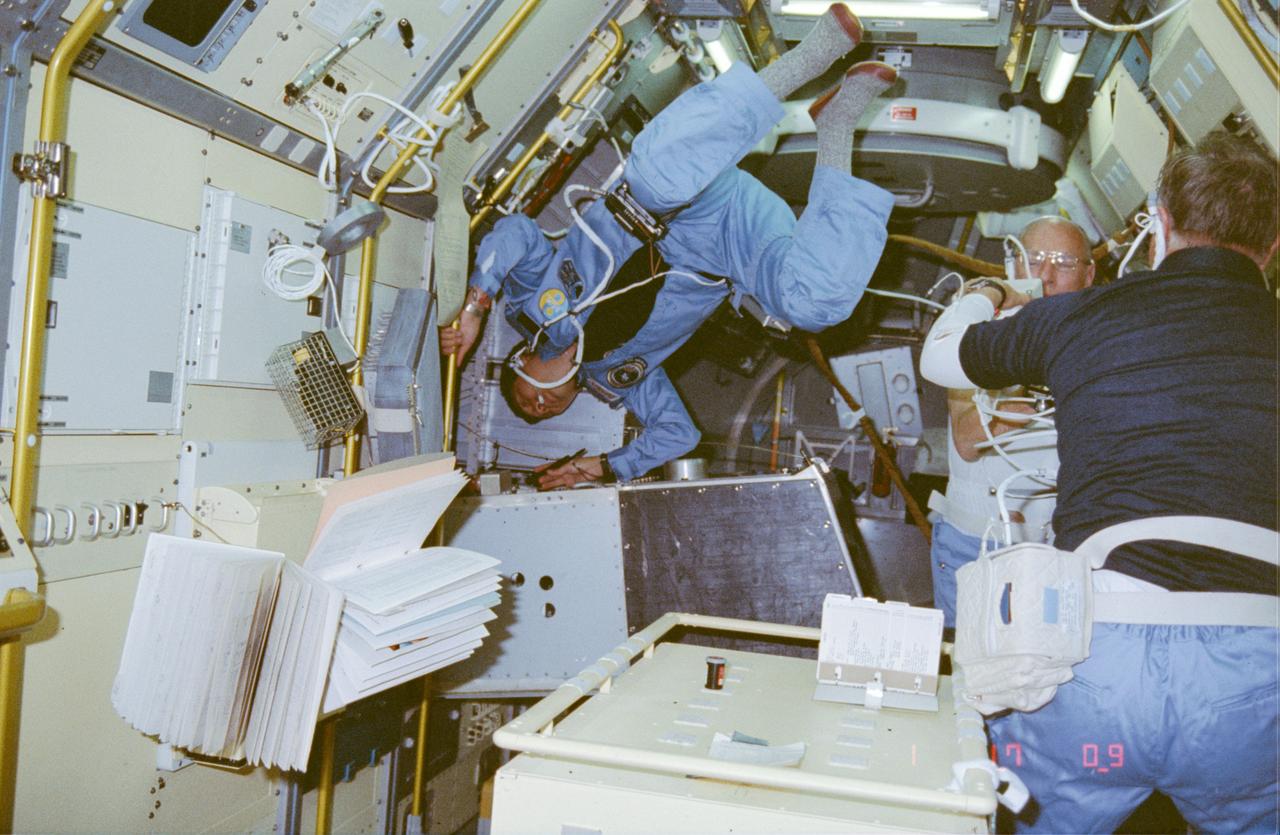
51B-03-035 (29 April-6 May 1985) --- Payload specialist Taylor G. Wang performs a repair task on the Drop Dynamics Module (DDM) in the Science Module aboard the Earth-orbiting Space Shuttle Challenger. The photo was taken with a 35mm camera. Dr. Wang is principal investigator for the first time-to-fly experiment, developed by his team at NASA?s Jet Propulsion Laboratory (JPL), Pasadena, California. This photo was among the first to be released by NASA upon return to Earth by the Spacelab 3 crew.
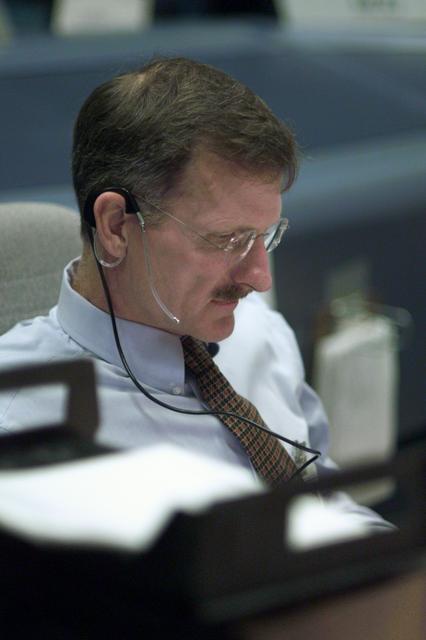
JSC2001-E-25121 (16 August 2001) --- Astronaut Joseph R. Tanner, STS-105 spacecraft communicator (CAPCOM), monitors the progress of the extravehicular activity at his console in the shuttle flight control room (WFCR) in Houston’s Mission Control Center (MCC). At the time this photo was taken, mission specialists Daniel T. Barry and Patrick G. Forrester were performing the first of two scheduled space walks to perform work on the International Space Station (ISS).
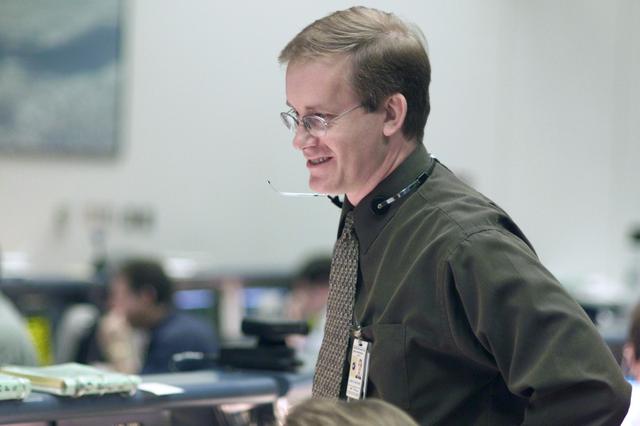
JSC2001-E-25114 (16 August 2001) --- Flight director John Shannon monitors data at his console in the shuttle flight control room (WFCR) in Houston’s Mission Control Center (MCC). At the time this photo was taken, STS-105 mission specialists Daniel T. Barry and Patrick G. Forrester were performing the first of two scheduled space walks to perform work on the International Space Station (ISS).

JSC2001-02185 (9 August 2001) --- Astronaut Duane G. Carey, STS-109 pilot, occupies the pilot’s station during a mission training session in the Space Vehicle Mockup Facility at the Johnson Space Center (JSC). Carey is attired in a training version of the shuttle launch and entry garment. STS-109 will be the 108th shuttle flight and the fourth Hubble Space Telescope (HST) servicing mission.
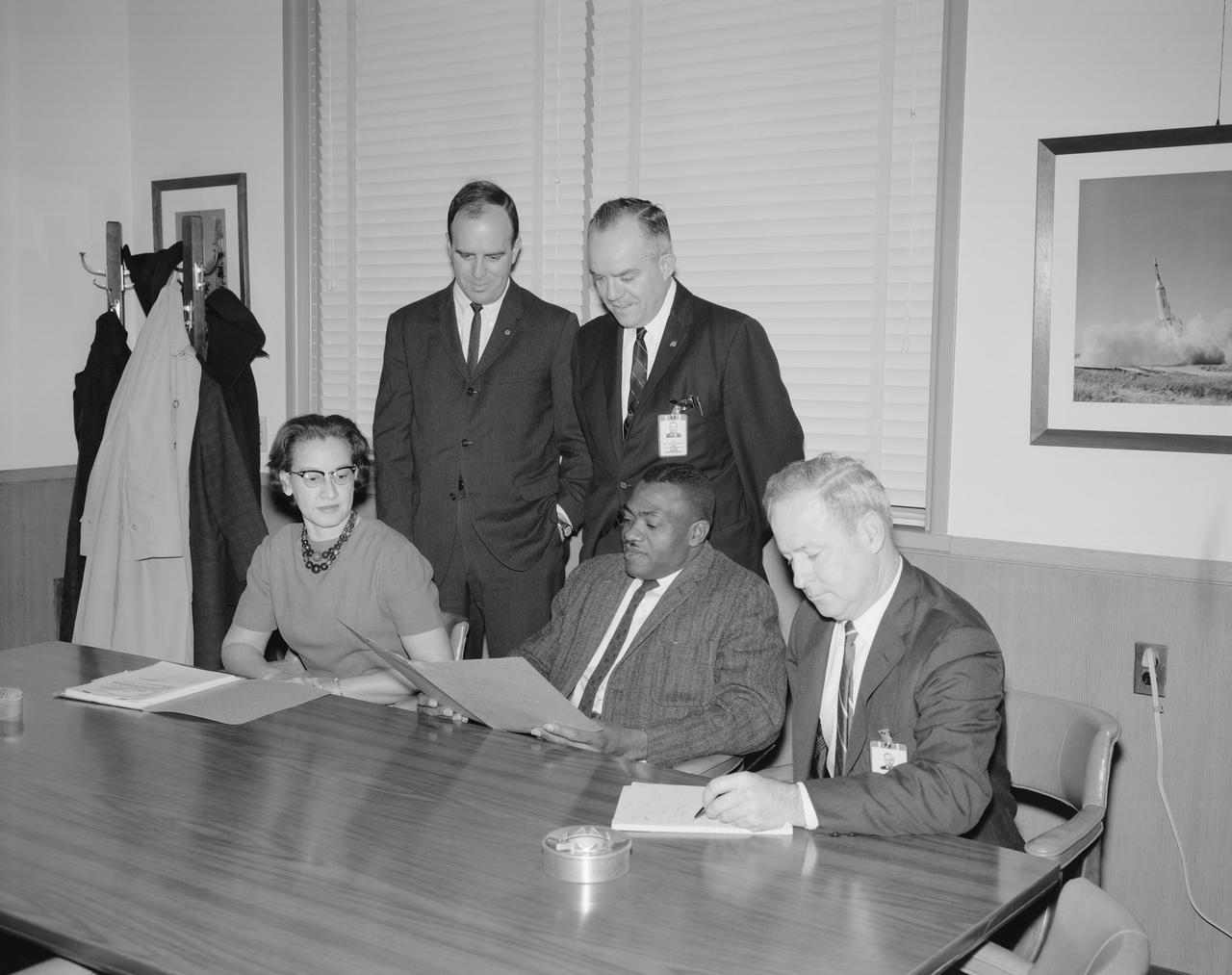
Seated from From Left: Katherine G Johnson, Lawrence W Brown, and J Norwood Evans, Employment Officer. Standing from Left: John J Cox, secretary; and Edward T Maher, chairman. Absent when picture was taken: Vernon S Courtney. Members are shown as they review the Center's Affirmative Action Program. The committee serves in an advisory capacity to the Personnel Division and Center management officials and seeks to explore realistic approaches to accomplishment of the objectives of the Affirmative Action program.
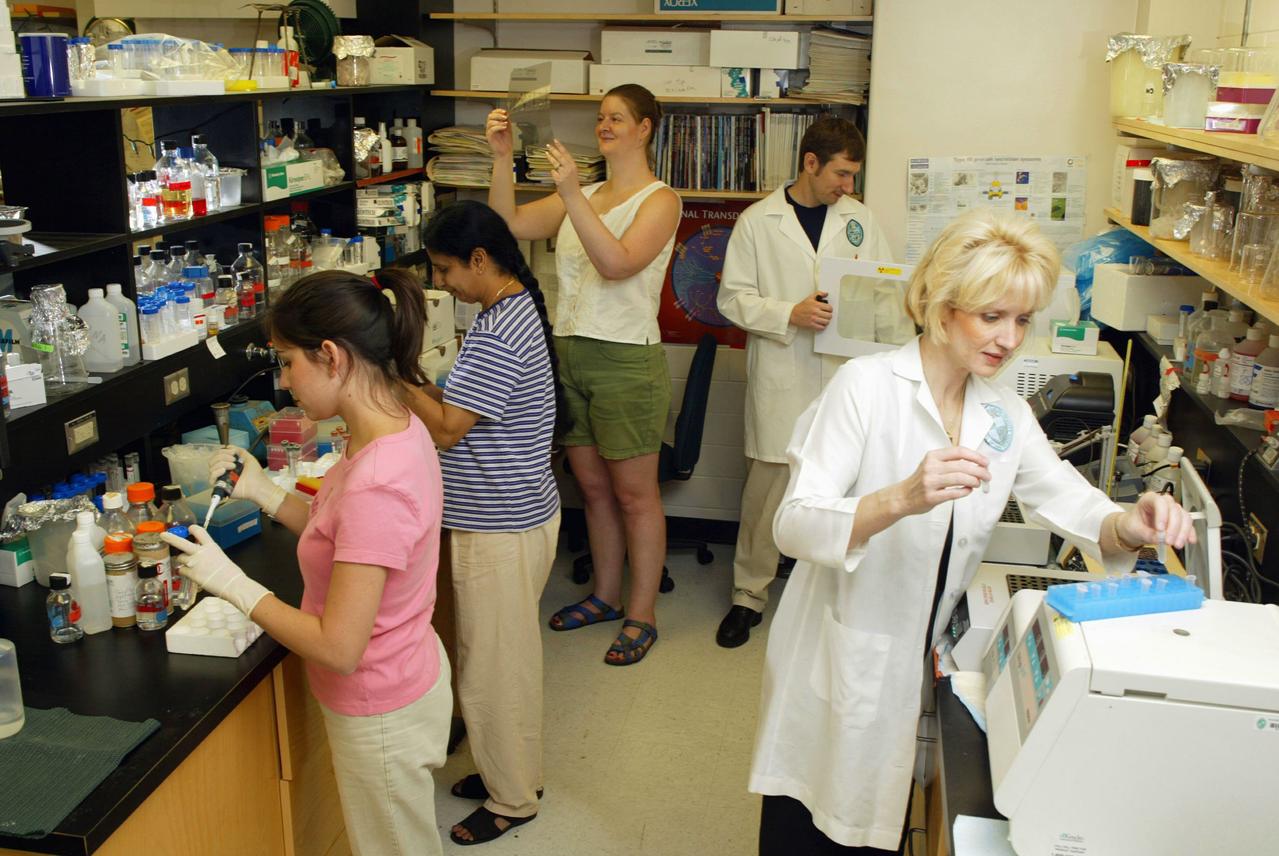
Dr. Cheryl Nickerson (right) of Tulane University is studying the effects of simulated low-g on a well-known pathogen, Salmonella typhimurium, a bacterium that causes two to four million cases of gastrointestinal illness in the United States each year. While most healthy people recover readily, S. typhimurium can kill people with weakened immune systems. Thus, a simple case of food poisoning could disrupt a space mission. Using the NASA rotating-wall bioreactor, Nickerson cultured S. typhimurium in modeled microgravity. Mice infected with the bacterium died an average of three days faster than the control mice, indicating that S. typhimurium's virulence was enhanced by the bioreactor. Earlier research showed that 3 percent of the genes were altered by exposure to the bioreactor. Nickerson's work earned her a 2001 Presidential Early Career Award for Scientists and Engineers.
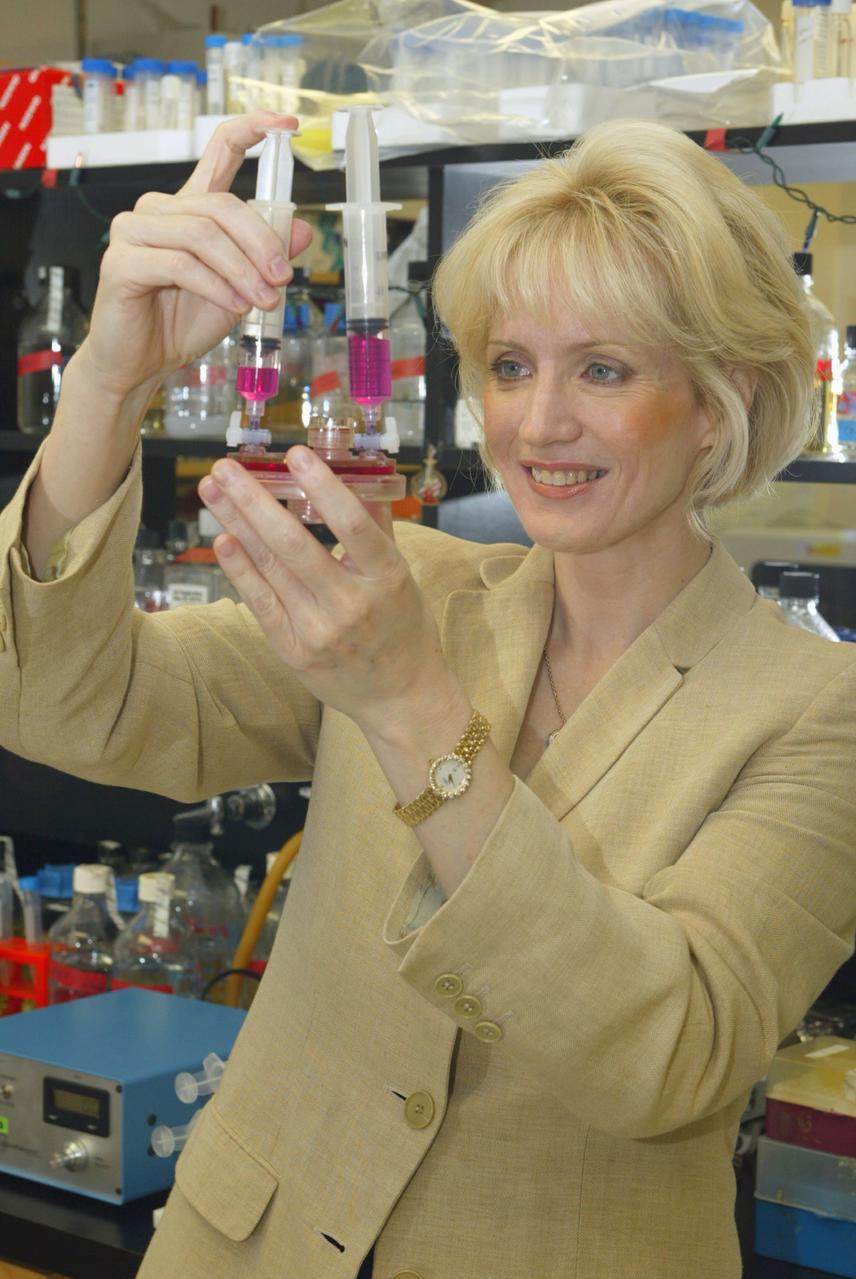
Dr. Cheryl Nickerson of Tulane University is studying the effects of simulated low-g on a well-known pathogen, Salmonella typhimurium, a bacterium that causes two to four million cases of gastrointestinal illness in the United States each year. While most healthy people recover readily, S. typhimurium can kill people with weakened immune systems. Thus, a simple case of food poisoning could disrupt a space mission. Using the NASA rotating-wall bioreactor, Nickerson cultured S. typhimurium in modeled microgravity. Mice infected with the bacterium died an average of three days faster than the control mice, indicating that S. typhimurium's virulence was enhanced by the bioreactor. Earlier research showed that 3 percent of the genes were altered by exposure to the bioreactor. Nickerson's work earned her a 2001 Presidential Early Career Award for Scientists and Engineers.
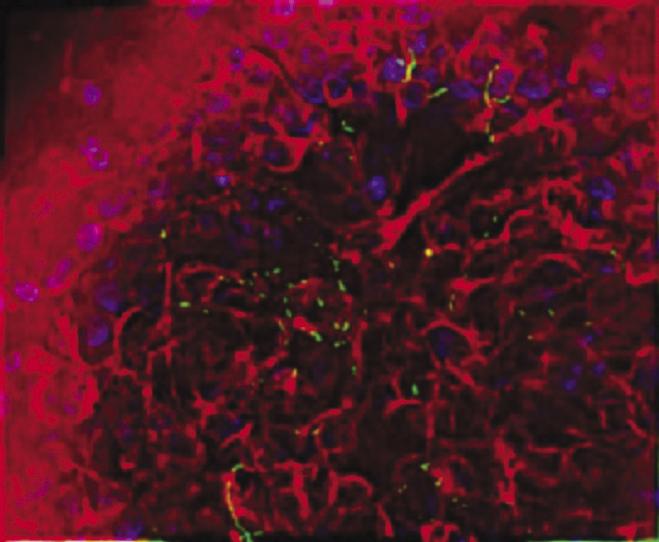
Salmonella typhimurium appears green in on human intestinal tissue (stained red) cultured in a NASA rotating wall bioreactor. Dr. Cheryl Nickerson of Tulane University is studying the effects of simulated low-g on a well-known pathogen, Salmonella typhimurium, a bacterium that causes two to four million cases of gastrointestinal illness in the United States each year. While most healthy people recover readily, S. typhimurium can kill people with weakened immune systems. Thus, a simple case of food poisoning could disrupt a space mission. Using the NASA rotating-wall bioreactor, Nickerson cultured S. typhimurium in modeled microgravity. Mice infected with the bacterium died an average of three days faster than the control mice, indicating that S. typhimurium's virulence was enhanced by the bioreactor. Earlier research showed that 3 percent of the genes were altered by exposure to the bioreactor. Nickerson's work earned her a 2001 Presidential Early Career Award for Scientists and Engineers.
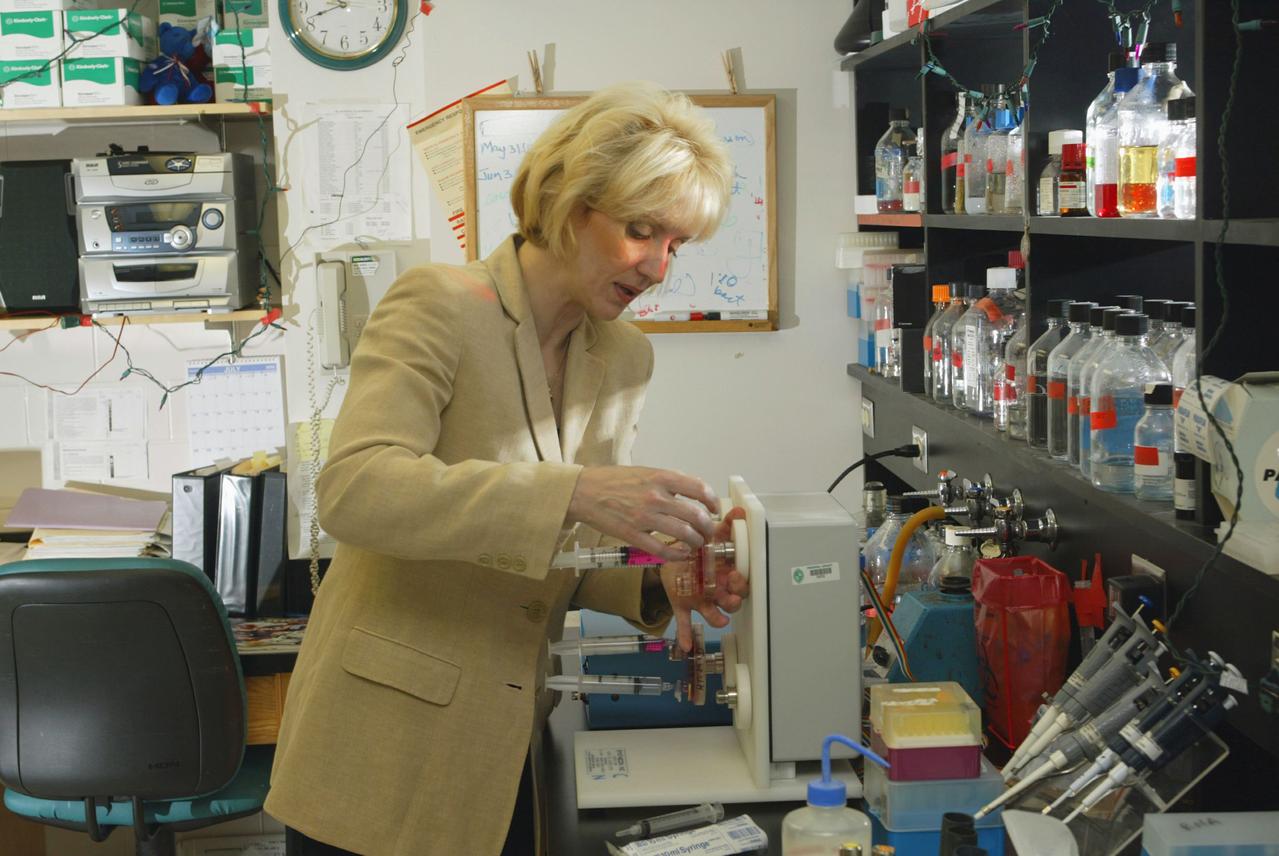
Dr. Cheryl Nickerson of Tulane University is studying the effects of simulated low-g on a well-known pathogen, Salmonella typhimurium, a bacterium that causes two to four million cases of gastrointestinal illness in the United States each year. While most healthy people recover readily, S. typhimurium can kill people with weakened immune systems. Thus, a simple case of food poisoning could disrupt a space mission. Using the NASA rotating-wall bioreactor, Nickerson cultured S. typhimurium in modeled microgravity. Mice infected with the bacterium died an average of three days faster than the control mice, indicating that S. typhimurium's virulence was enhanced by the bioreactor. Earlier research showed that 3 percent of the genes were altered by exposure to the bioreactor. Nickerson's work earned her a 2001 Presidential Early Career Award for Scientists and Engineers.
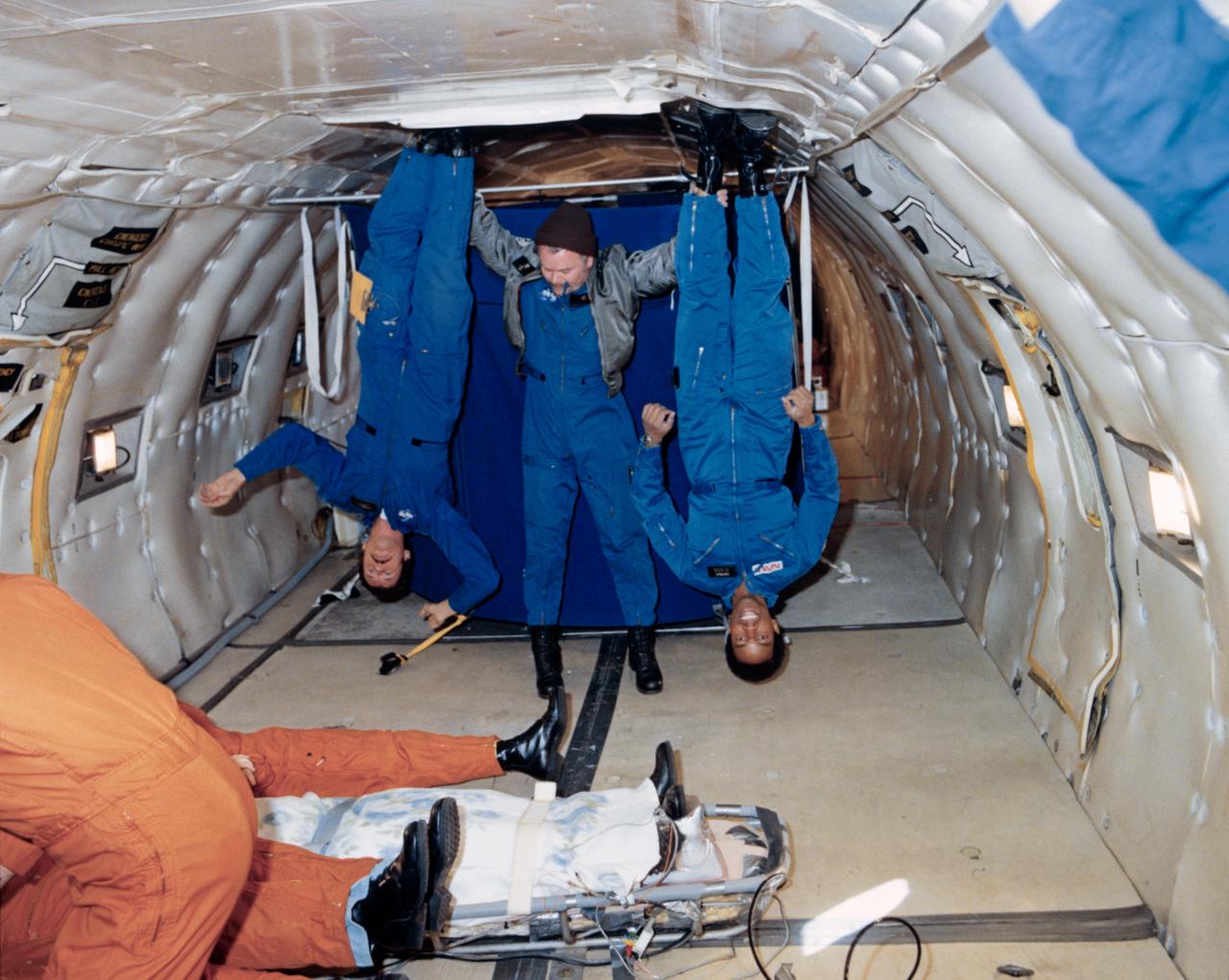
S79-28602 (2 March 1979) --- Astronaut candidate Guion S. Bluford and Aviation Safety Officer Charles F. Hayes got a unique perspective of their environment during a zero gravity flight. They are aboard a KC-135 aircraft, which flies a special pattern repeatedly to afford a series of 30-seconds-of-weightlessness sessions. Bluford and Hayes are being assisted by C. P. Stanley of the photography branch of the photographic technology division at Johnson Space Center (JSC). Some medical studies and a motion sickness experiment were conducted on this particular flight. Bluford is one of 20 scientist-astronaut candidates who began training at JSC in July of 1978. Photo credit: NASA
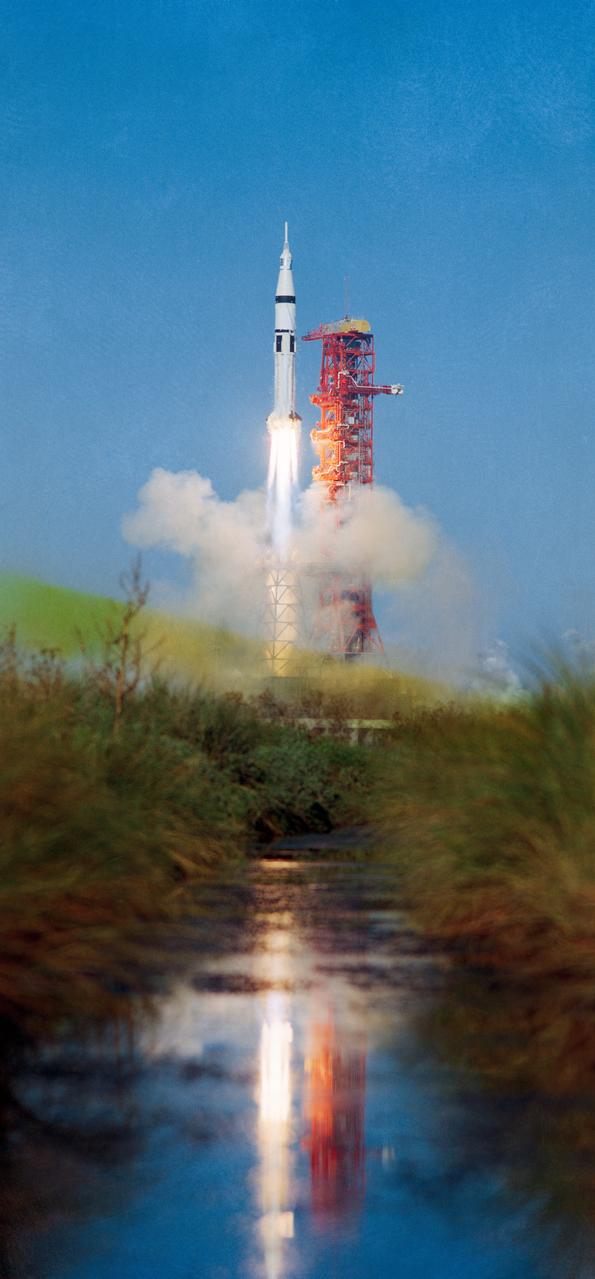
S73-37285 (16 Nov. 1973) --- The Skylab 4/Saturn 1B space vehicle is launched from Pad B, Launch Complex 39, Kennedy Space Center, Florida, at 9:01:23 a.m. (EST), Friday, Nov. 16, 1973. Skylab 4 is the third and last of three scheduled manned Skylab missions. Aboard the Skylab 4 Command/Service Module were astronauts Gerald P. Carr, Edward G. Gibson and William R. Pogue. In addition to the CSM and its launch escape system, the Skylab 4 space vehicle consisted of the Saturn 1B first (S-1B) stage and the Saturn 1B second (S-IVB) stage. (The Skylab 1/Saturn V unmanned space vehicle with the space station payload was launched from Pad A on May 14, 1973). Photo credit: NASA
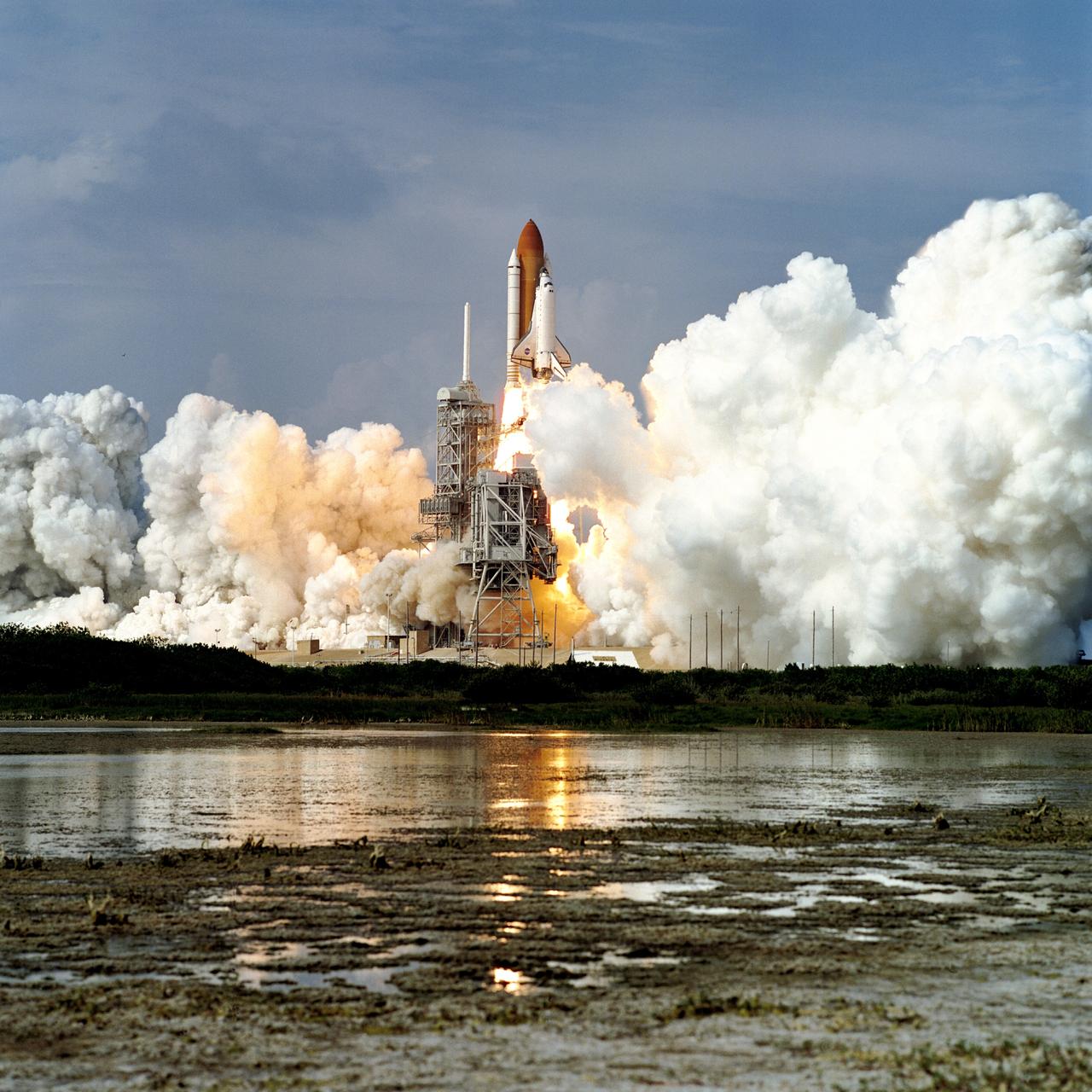
STS111-S-008 (5 June 2002) --- The Space Shuttle Endeavour leaves the launch pad, headed into space for mission STS-111 to the International Space Station (ISS). Liftoff occurred at 5:22:49 p.m. (EDT), June 5, 2002. The STS-111 crew includes astronauts Kenneth D. Cockrell, commander; Paul S. Lockhart, pilot, and Franklin R. Chang-Diaz and Philippe Perrin, mission specialists. Also onboard were the Expedition Five crew members including cosmonaut Valery G. Korzun, commander, along with astronaut Peggy A. Whitson and cosmonaut Sergei Y. Treschev, flight engineers. Perrin represents CNES, the French space agency, and Korzun and Treschev are with the Russian Aviation and Space Agency (Rosaviakosmos). This mission marks the 14th Shuttle flight to the International Space Station and the third Shuttle mission this year. Mission STS-111 is the 18th flight of Endeavour and the 110th flight overall in NASA's Space Shuttle program.
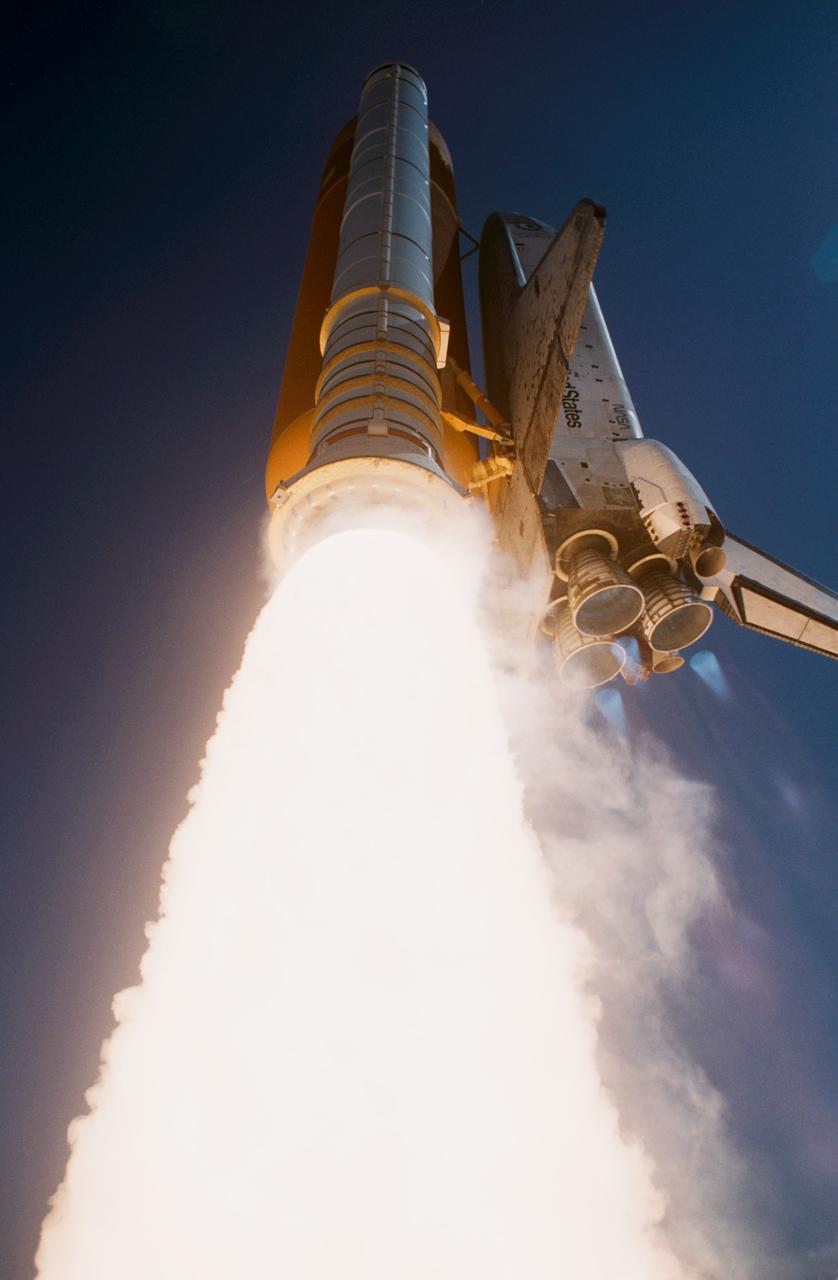
STS052-S-053 (22 Oct. 1992) --- This low-angle 35mm image shows the space shuttle Columbia on its way toward a ten-day Earth-orbital mission with a crew of five NASA astronauts and a Canadian payload specialist. Liftoff occurred at 1:09:39 p.m. (EDT), Oct. 22, from Kennedy Space Center?s (KSC) Launch Pad 39B. Crew members onboard are astronauts James D. Wetherbee, Michael A. Baker, Tamara E. Jernigan, Charles L. (Lacy) Veach and William M. Shepherd, along with payload specialist Steven G. MacLean. Payloads onboard include the Laser Geodynamic Satellite II (LAGEOS II), which will be deployed early in the mission, a series of Canadian experiments, and the United States Microgravity Payload-1 (USMP-1). Photo credit: NASA
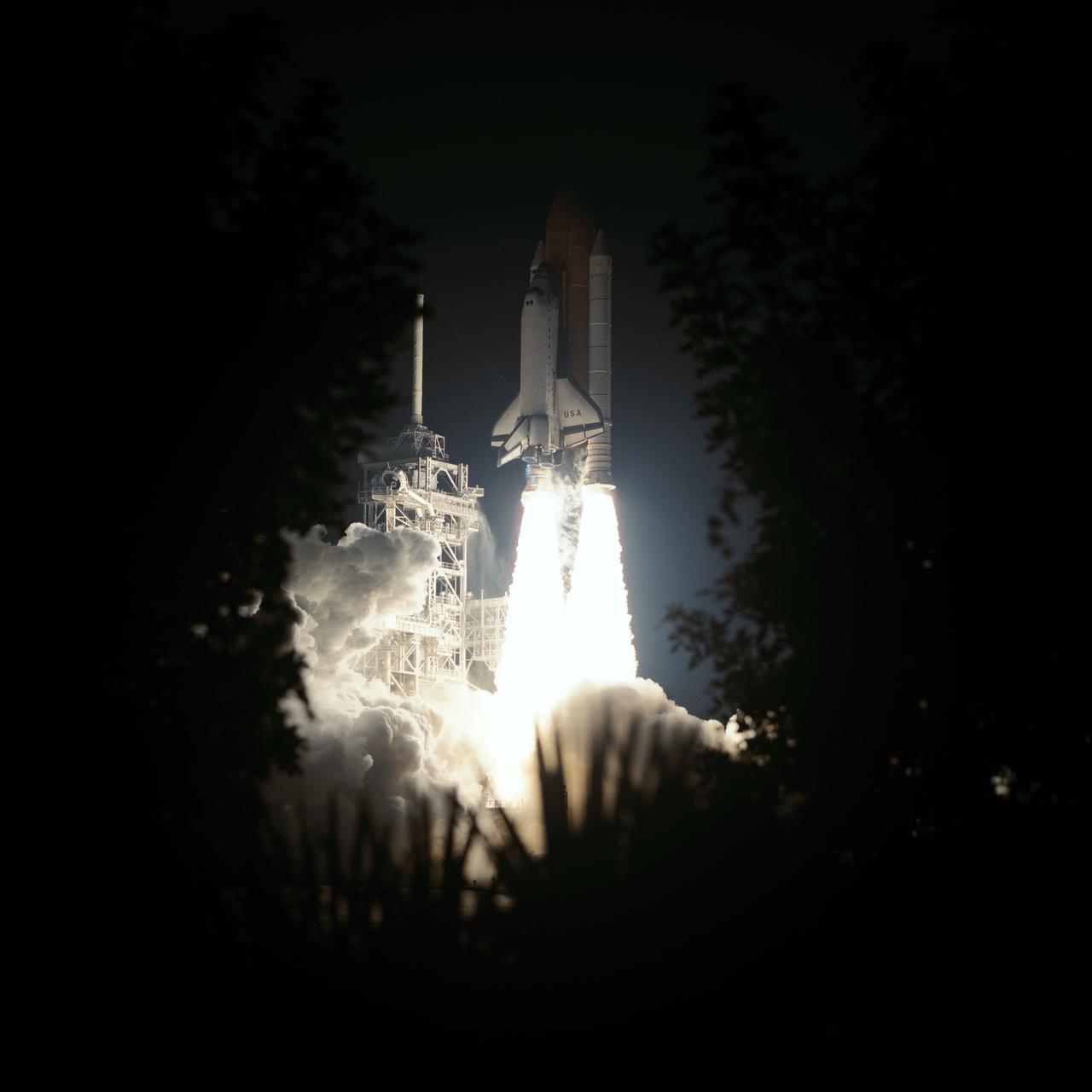
STS93-S-007 (23 July 1999) --- Framed by Florida foliage in this night time scene, the Space Shuttle Columbia lifts off from Launch Pad 39B to begin the five-day STS-93 mission. After two unsuccessful attempts earlier in the week, liftoff occurred at 12:31 a.m. (EDT), July 23, 1999. Only hours after this picture was taken, the five-member crew released the Chandra X-Ray Observatory into orbit. Onboard were astronauts Eileen M. Collins, first woman shuttle commander; Jeffrey S. Ashby, pilot; and Steven A. Hawley, Catherine G. Coleman and Michel Tognini, all mission specialists. Tognini represents the Centre National d'Etudes Spatiales (CNES) of France.
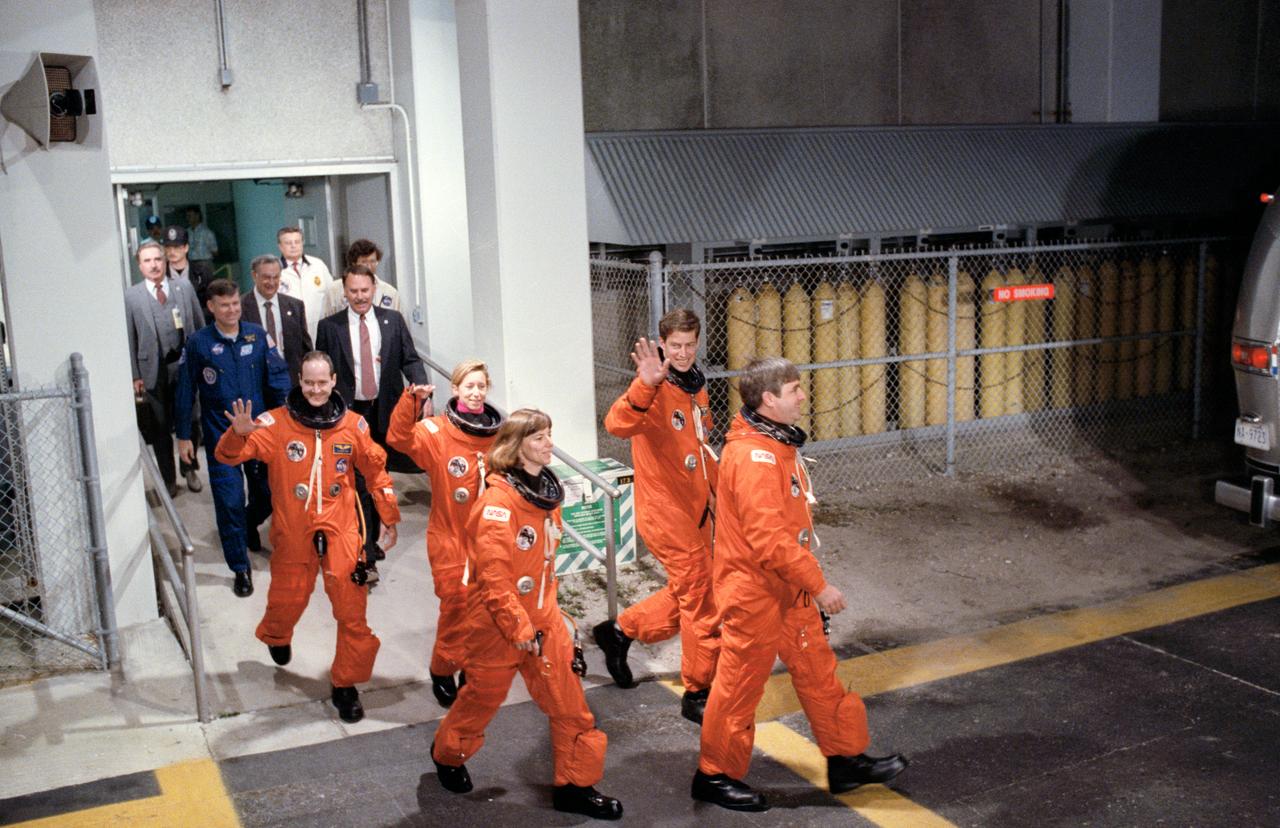
STS032-S-056 (20 Jan 1990) --- STS-32 Columbia, Orbiter Vehicle (OV) 102, crewmembers depart the Kennedy Space Center (KSC) Operations and Checkout (O and C) Building enroute to KSC Launch Complex (LC) Pad 39A. Dubious weather at the return-to-launch site (RTLS) caused postponement of yesterday's planned launch. From left to right are Mission Specialist (MS) G. David Low, MS Marsha S. Ivins, MS Bonnie J. Dunbar, Pilot James D. Wetherbee, and Commander Daniel C. Brandenstein. All crewmembers are wearing launch and entry suits (LESs) and Low, Ivins, and Wetherbee wave to spectators as they head to the transportation van. Following the crew are astronaut Michael L. Coats (left) and NASA/JSC manager Donald R. Puddy.
![KENNEDY SPACE CENTER, FLA. -- Seventeen new astronaut candidates visited the Vehicle Assembly Building as part of an orientation tour of KSC facilities. Here they are grouped around one of the external fuel tanks in the transfer aisle of the VAB. This latest group of candidates is the tenth chosen since the original seven Mercury astronauts. [From left, Michael J. McCulley, Curtis L. Brown Jr., Frank L. Culbertson Jr., Kathryn C. Thornton, Mark N. Brown, Mark C. Lee, Kenneth D. Cameron, John H. Casper, L. Blaine Hammond Jr., Charles Lacy Veach (deceased), James C. Adamson, William M. Shepherd, Sidney M. Gutierrez, Marsha S. Ivins, David G. Low, Michael J. Smith (deceased), Ellen S. Baker, Sonny Carter (deceased).]](https://images-assets.nasa.gov/image/108-KSC-84P-339/108-KSC-84P-339~medium.jpg)
KENNEDY SPACE CENTER, FLA. -- Seventeen new astronaut candidates visited the Vehicle Assembly Building as part of an orientation tour of KSC facilities. Here they are grouped around one of the external fuel tanks in the transfer aisle of the VAB. This latest group of candidates is the tenth chosen since the original seven Mercury astronauts. [From left, Michael J. McCulley, Curtis L. Brown Jr., Frank L. Culbertson Jr., Kathryn C. Thornton, Mark N. Brown, Mark C. Lee, Kenneth D. Cameron, John H. Casper, L. Blaine Hammond Jr., Charles Lacy Veach (deceased), James C. Adamson, William M. Shepherd, Sidney M. Gutierrez, Marsha S. Ivins, David G. Low, Michael J. Smith (deceased), Ellen S. Baker, Sonny Carter (deceased).]
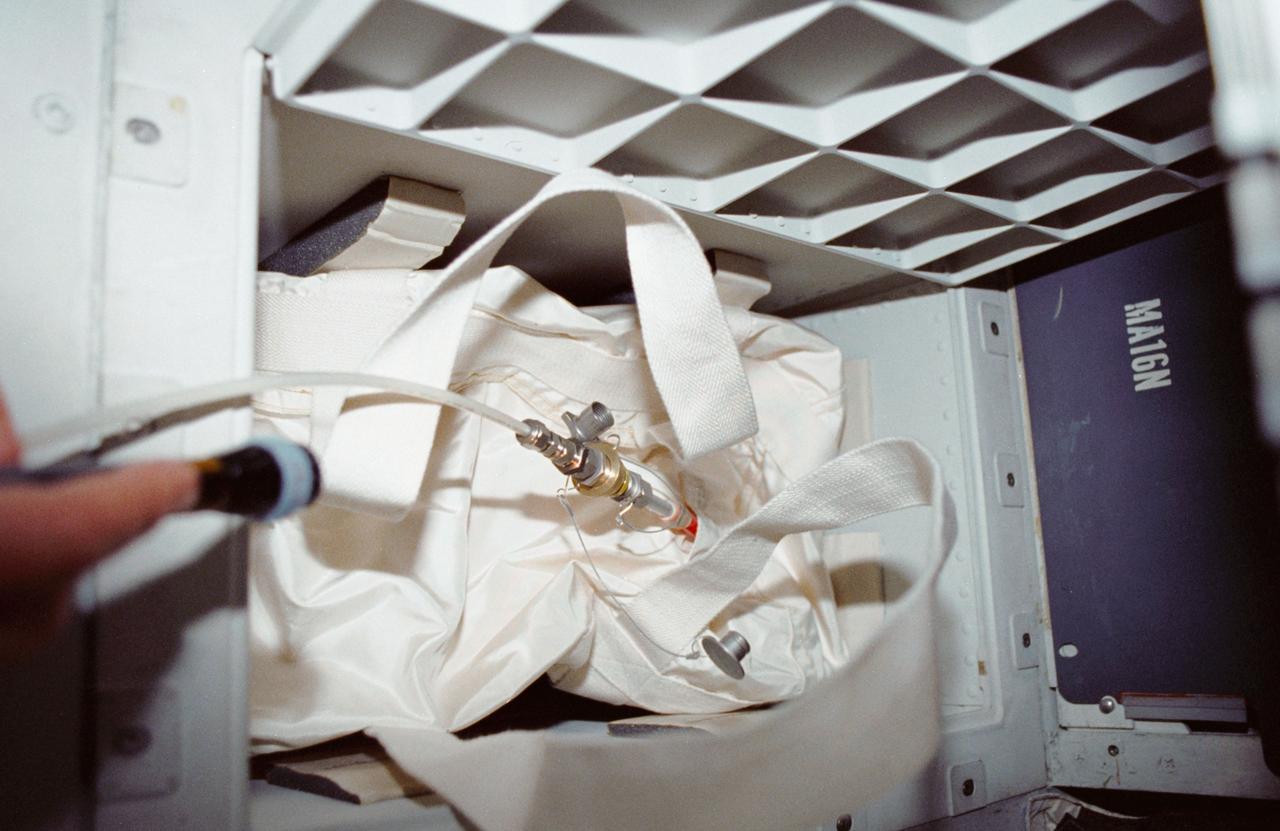
STS035-12-005 (2-10 Dec 1990) --- During STS-35, middeck stowage volume G and a contingency water container (CWC) were utilized to remedy a problem onboard Columbia, Orbiter Vehicle (OV) 102. A hose connecting OV-102's waste water system to the CWC was used in order to bypass a suspected clog in the line from the waste water tank to the exit nozzle. On flight day seven, Pilot Guy S. Gardner carried out an inflight maintenance (IFM) procedure by connecting a spare hose from the line to the container. The CWC is a rubber-lined duffle bag that holds about 95 pounds of water and is used in situations where water cannot be dumped overboard normally.
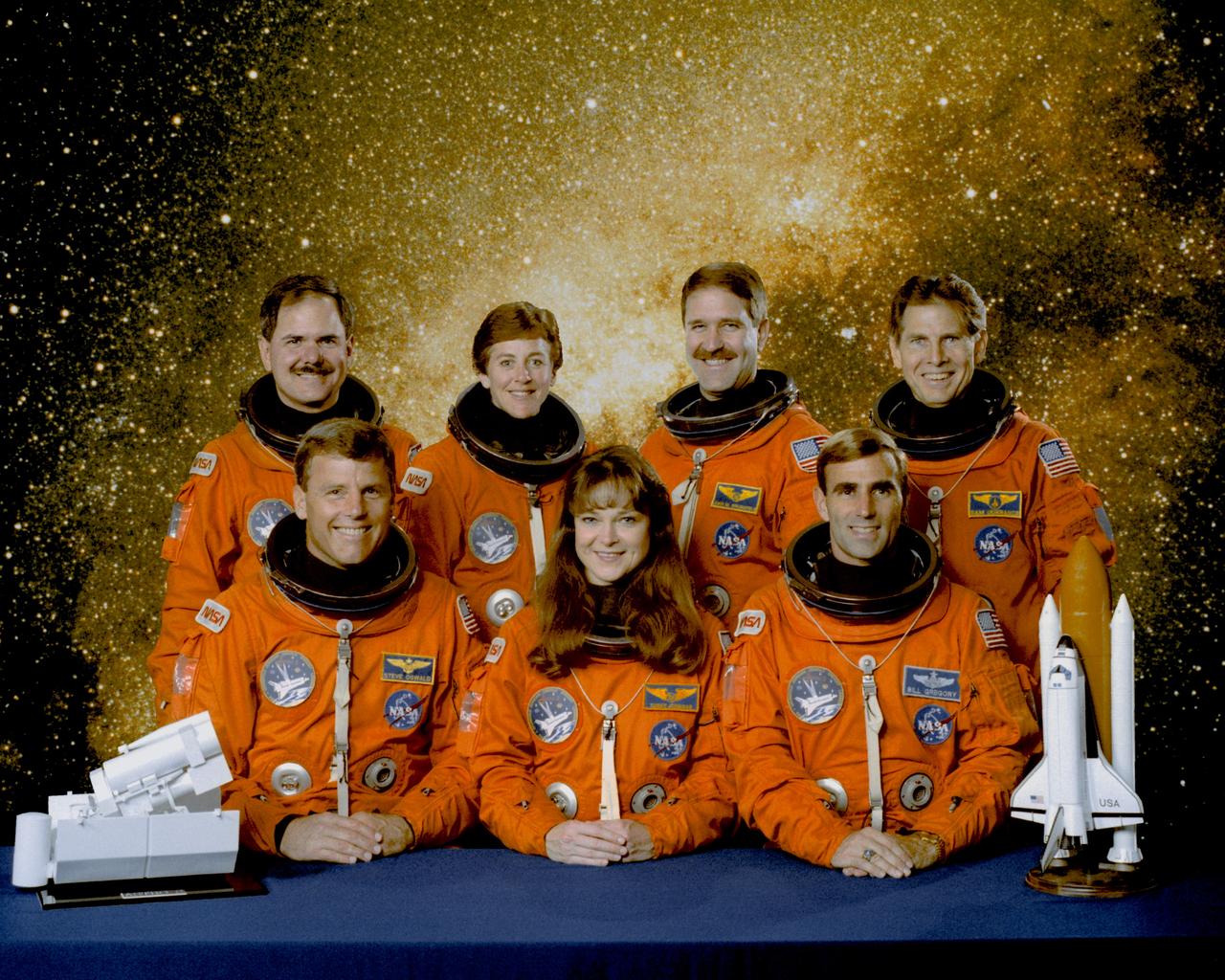
STS067-S-002 (December 1994) --- Five NASA astronauts and two payload specialists from the private sector have been named to fly aboard the Space Shuttle Endeavour for the STS-67/ASTRO-2 mission, scheduled for March 1995. In front are astronauts (left to right) Stephen S. Oswald, mission commander; Tamara E. Jernigan, payload commander; and William G. Gregory, pilot. In the back are (left to right) Ronald A. Parise, payload specialist; astronauts Wendy B. Lawrence, and John M. Grunsfeld, both mission specialists; and Samuel T. Durrance, payload specialist. Dr. Durrance is a research scientist in the Department of Physics and Astronomy at Johns Hopkins University, Baltimore, Maryland. Dr. Parise is a senior scientist in the Space Observatories Department, Computer Sciences Corporation, Silver Spring, Maryland. Both payload specialist's flew aboard the Space Shuttle Columbia for the STS-35/ASTRO-1 mission in December 1990.
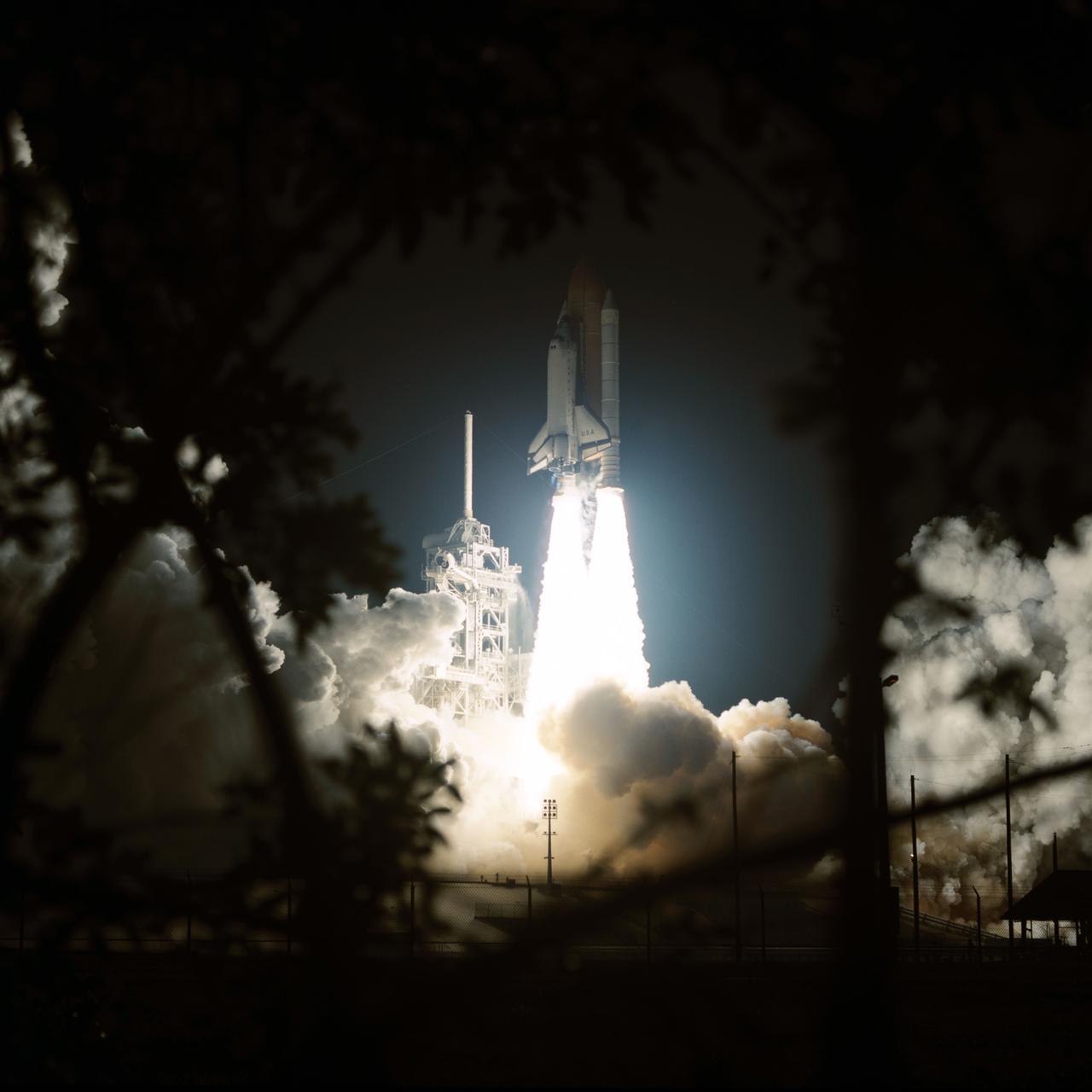
STS93-S-005 (23 July 1999) --- The Space Shuttle Columbia lifts off from Launch Pad 39B to begin the five-day STS-93 mission in this 70mm frame. After two unsuccessful attempts earlier in the week, liftoff occurred at 12:31 a.m. (EDT), July 23, 1999. Only hours after this picture was taken, the five-member crew released the Chandra X-Ray Observatory into orbit. Onboard were astronauts Eileen M. Collins, first woman shuttle mission commander; Jeffrey S. Ashby, pilot; and Steven A. Hawley, Catherine G. Coleman and Michel Tognini, all mission specialists. Tognini represents the Centre National d'Etudes Spatiales (CNES) of France.
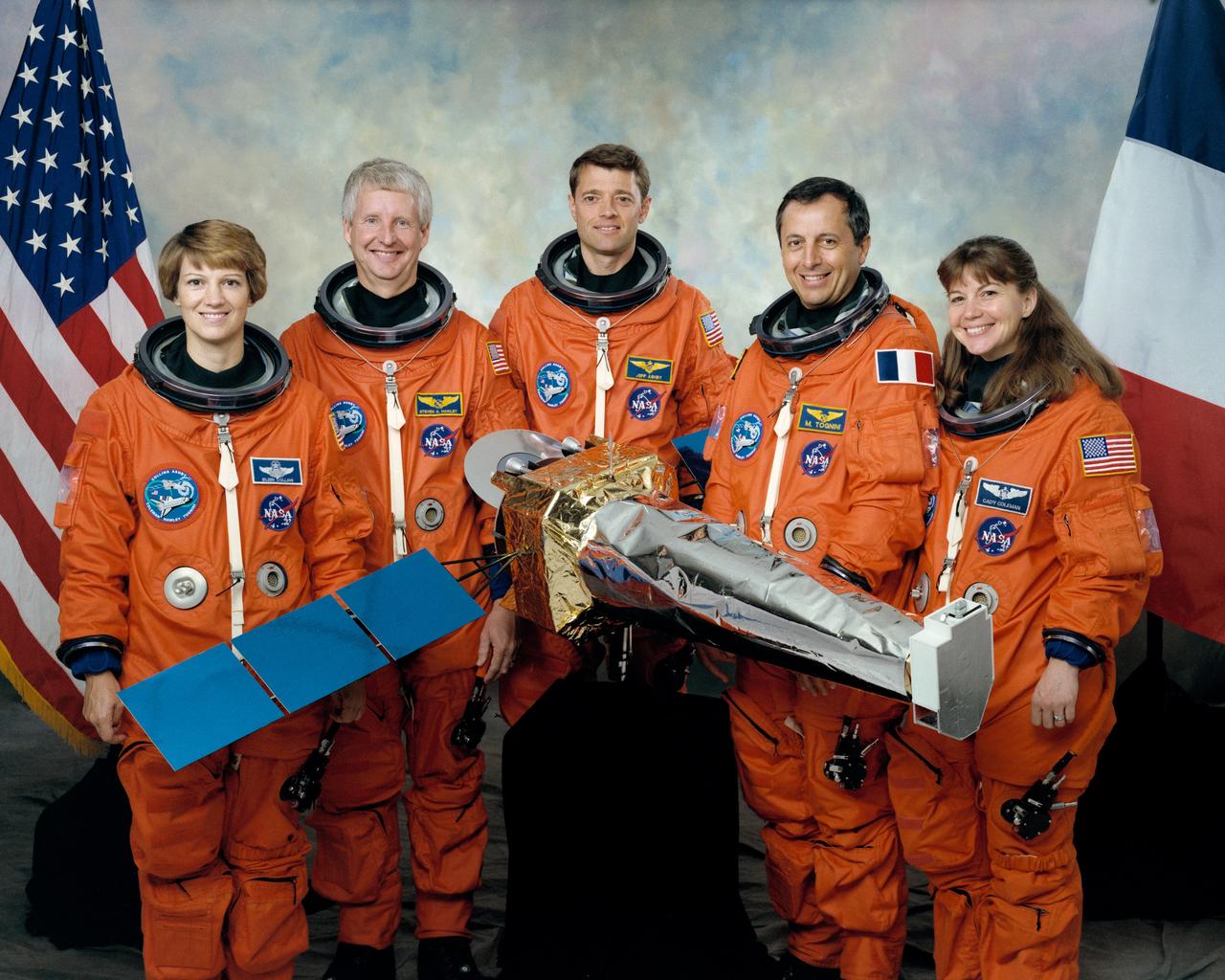
STS093-S-002 (September 1998) --- The five astronauts assigned to fly aboard the Space Shuttle Columbia early next year for the STS-93 mission pose with a small model of their primary payload-the Advanced X-ray Astrophysics Facility (AXAF). From the left are astronauts Eileen M. Collins, mission commander; Steven A. Hawley, mission specialist; Jeffrey S. Ashby, pilot; Michel Tognini and Catherine G. Coleman, both mission specialists. Tognini represents France's Centre National d'Etudes Spatiales (CNES). The scheduled five-day mission will feature the deployment of AXAF, which will enable scientists to conduct comprehensive studies of exotic phenomena in the universe. Among bodies studied will be exploding stars, quasars and black holes.
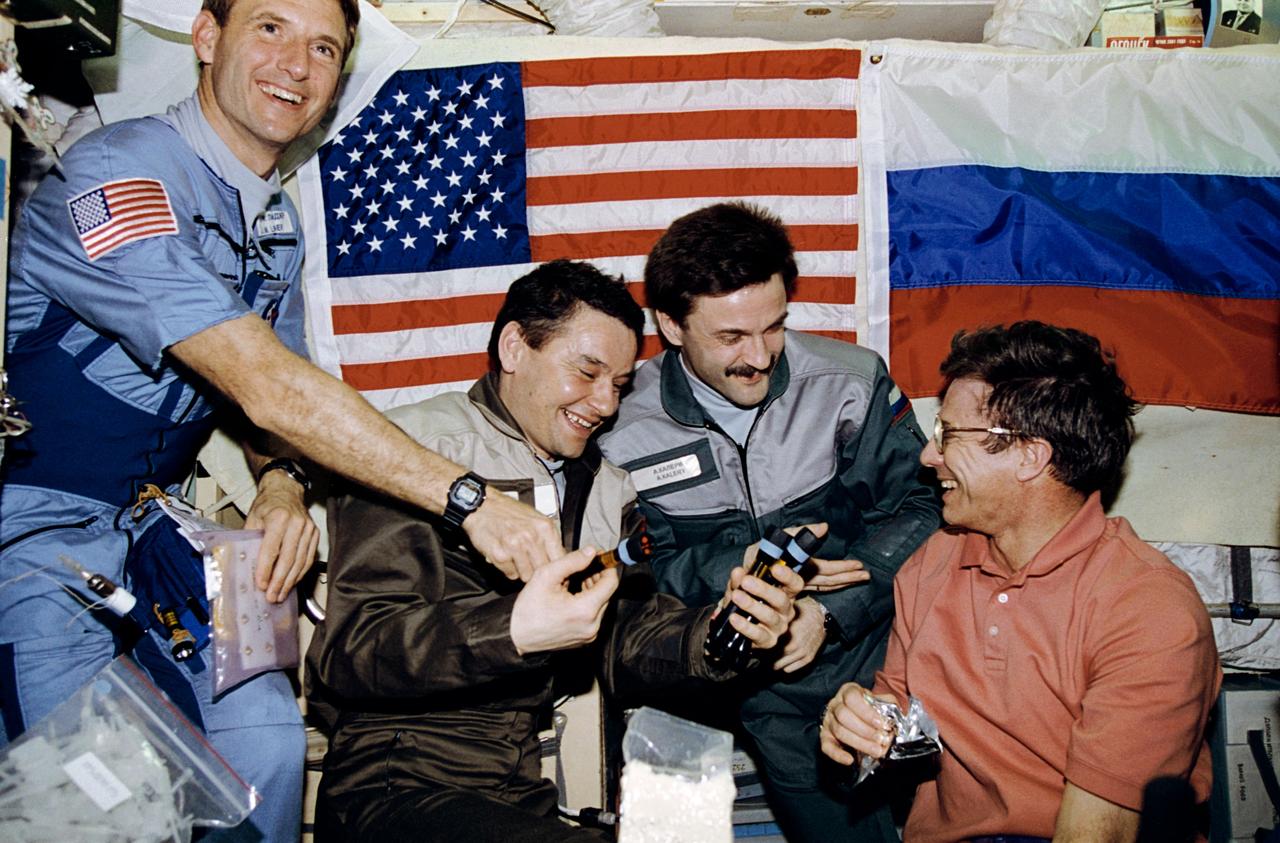
STS081-350-013 (12-22 Jan 1997) --- Members of Mir-22 crew show appreciation for small flash lights brought up by the STS-81 crew. Left to right, new cosmonaut guest researcher Jerry M. Linenger, cosmonauts Valeri G. Korzun, mission commander, and Aleksandr Y. Kaleri, flight engineer, along with former cosmonaut guest researcher John E. Blaha. The four are on the Base Block Module of Russia?s Mir Space Station on the eve of the Space Shuttle Atlantis and Mir undocking day.
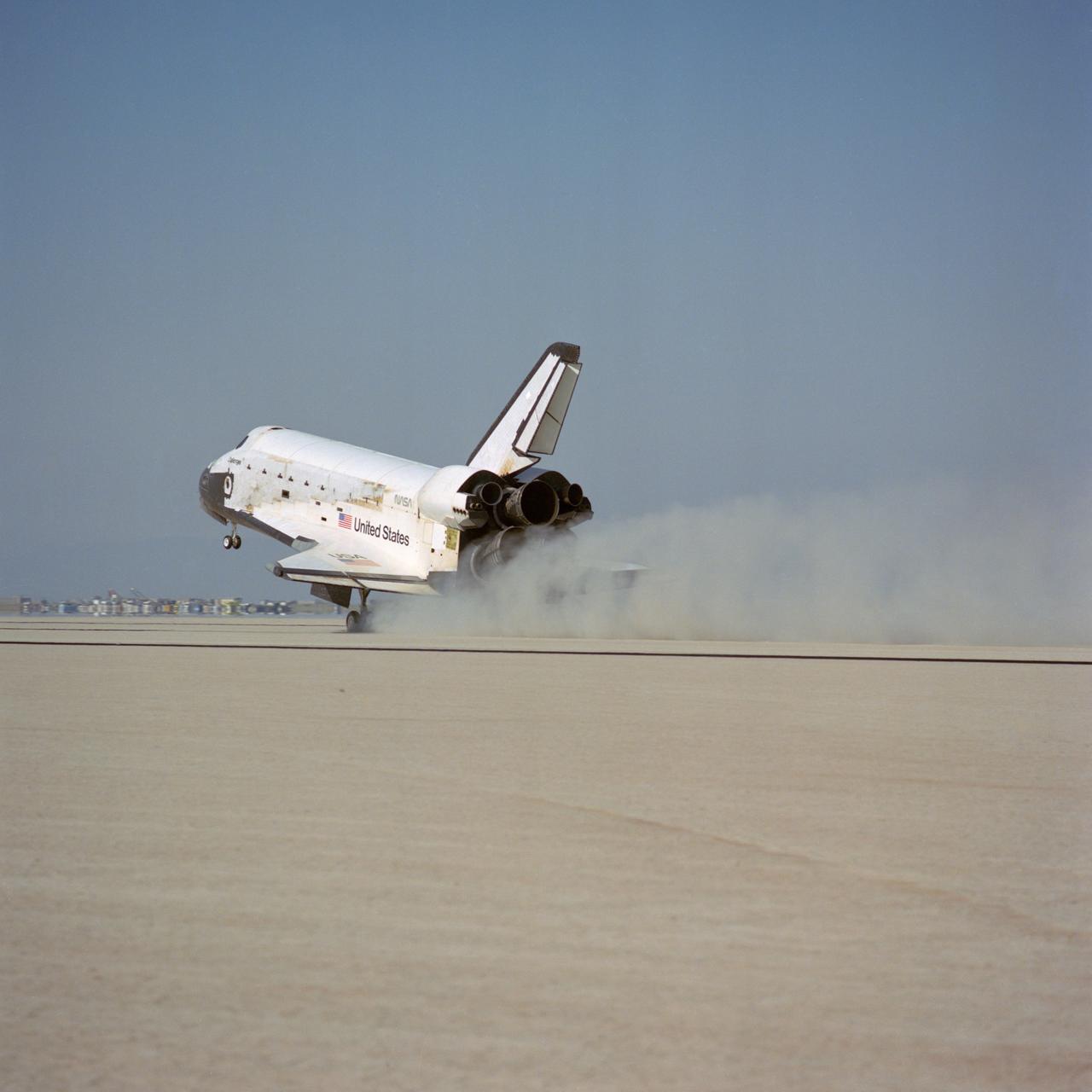
51B-S-071 (6 May 1985) --- The Space Shuttle Challenger lands on Runway 17 at Edwards Air Force Base to complete a week in space for its seven-member crew and a variety of payload. The vehicle stopped at 9:12:05 a.m. (PDT), May 6, 1985. Onboard were astronauts Robert F. Overmyer, Frederick D. Gregory, Don L. Lind, Norman E. Thagard and William E. Thornton of National Aeronautics and Space Administration (NASA); and payload specialists Lodewijk van den Berg and Taylor G. Wang.
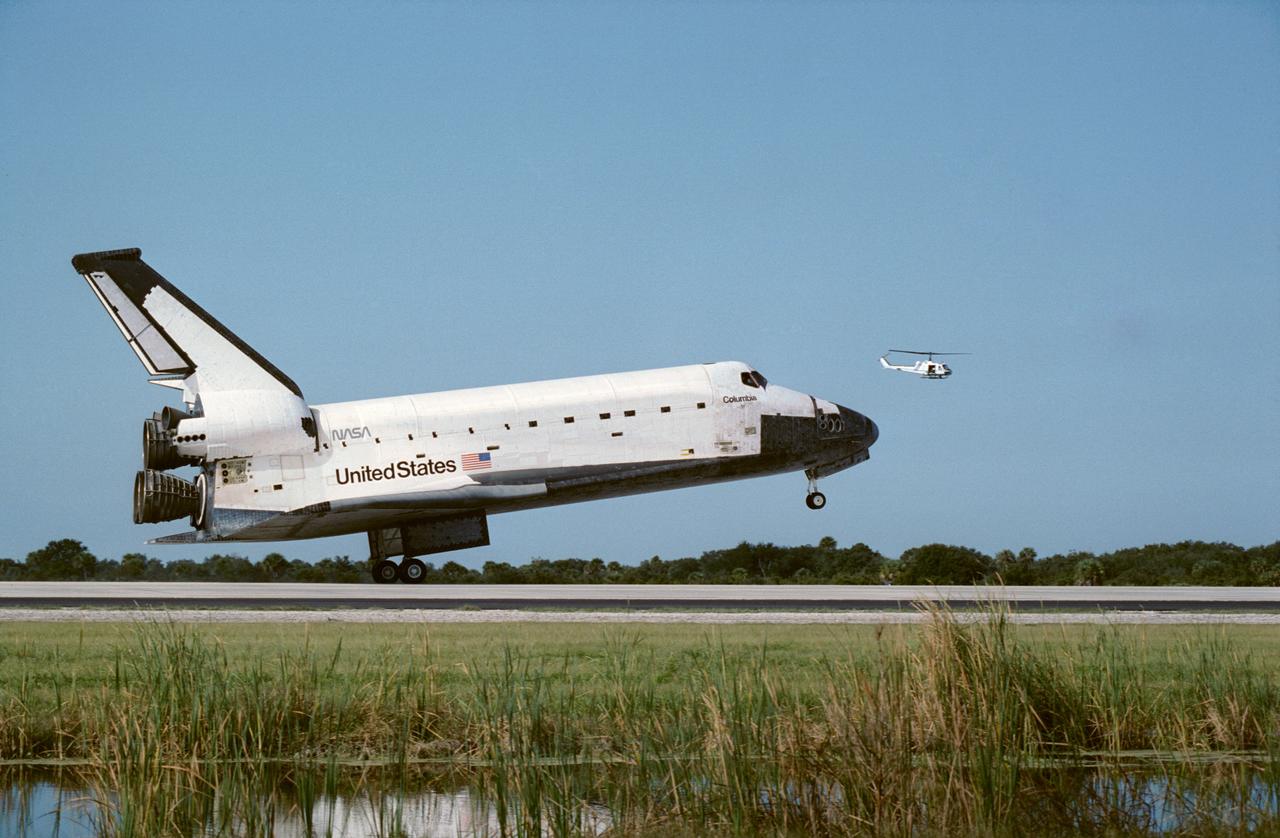
STS052-S-098 (1 Nov 1992) --- This ground-level side view shows the Space Shuttle Columbia just prior to main landing gear touchdown at KSC's Shuttle Landing Facility to successfully complete a ten-day Earth-orbital mission. Onboard were a crew of five NASA astronauts and a Canadian payload specialist. Landing occurred at 9:05:53 a.m. (EST), November 1, 1992. Crewmembers are astronauts James D. Wetherbee, Michael A. Baker, Tamara E. Jernigan, Charles L. (Lacy) Veach and William M. Shepherd along with payload specialist Steven G. MacLean. The view was recorded with a 35mm camera.
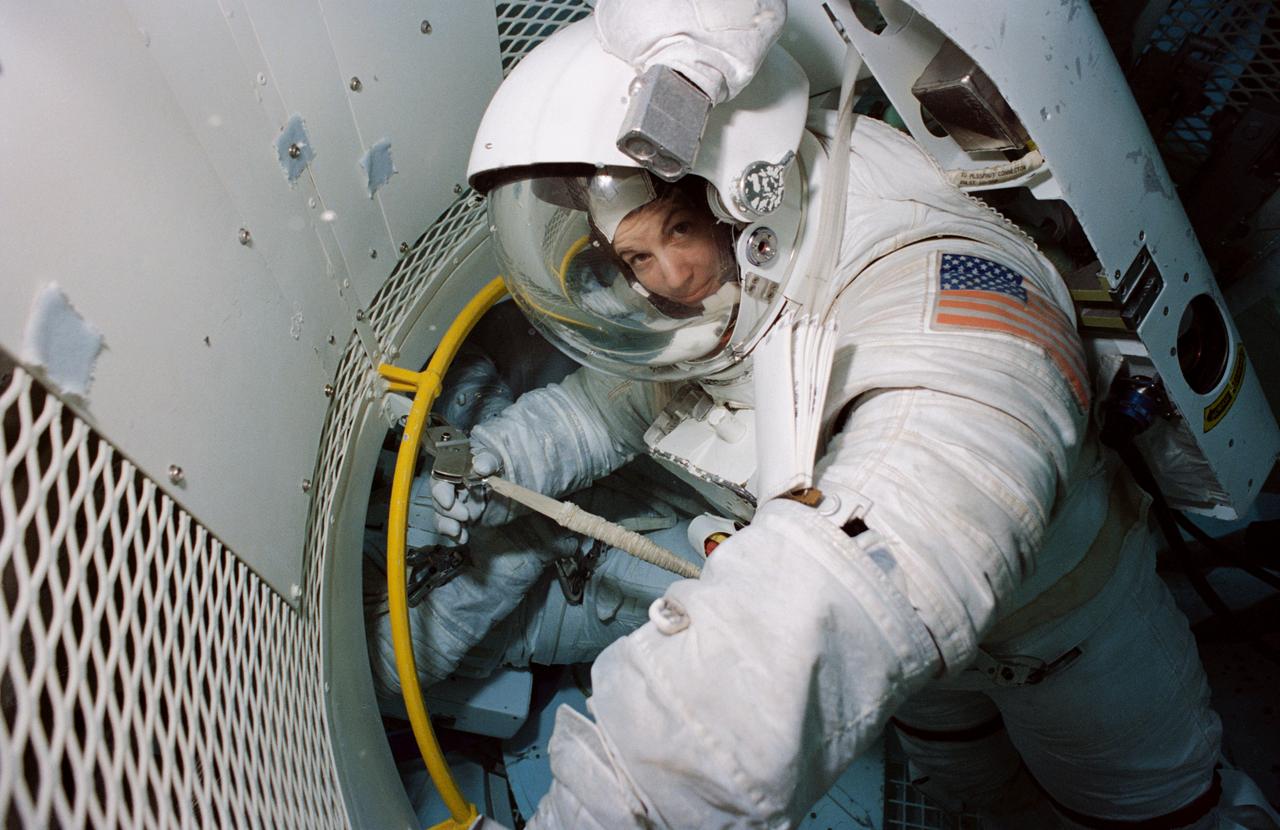
S94-25956 (April 1994) --- Astronaut Catherine G. Coleman, mission specialist, wearing a high-fidelity training version of an Extravehicular Mobility Unit (EMU), trains for a contingency space walk at the Johnson Space Center?s (JSC) Weightless Environment Training Facility (WET-F). Coleman has recently been named as one of seven crew members for the U.S. Microgravity Laboratory (USML-2) mission. The 25-feet deep pool is used to train astronauts for mission specific space walk chores as well as for contingency Extravehicular Activity (EVA) tasks.
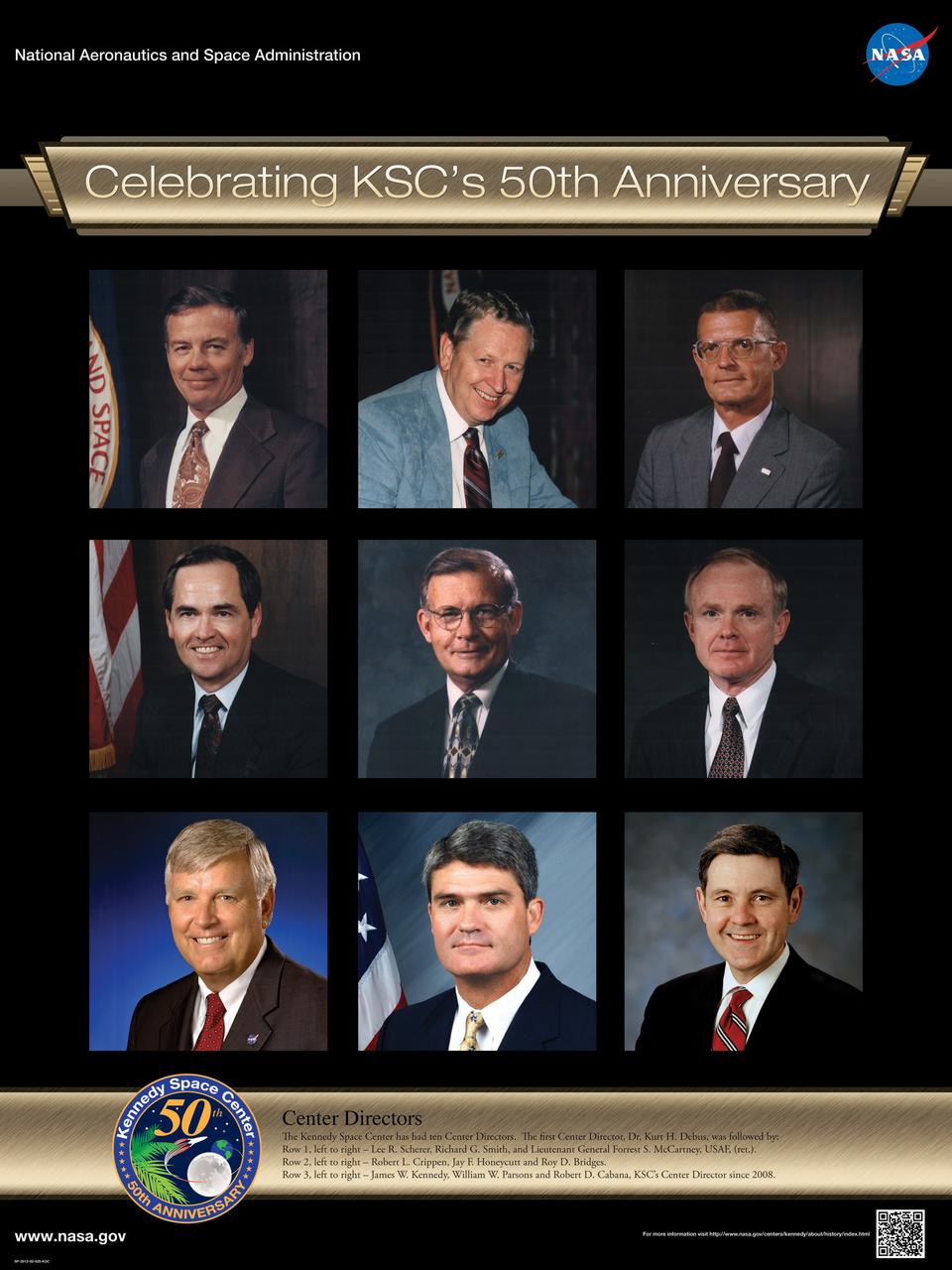
Center Directors: The Kennedy Space Center has had ten Center Directors. The first Center Director, Dr. Kurt H. Debus, was followed by: Row 1, left to right – Lee R. Scherer, Richard G. Smith, and Lieutenant General Forrest S. McCartney, USAF, ret.. Row 2, left to right – Robert L. Crippen, Jay F. Honeycutt and Roy D. Bridges. Row 3, left to right – James W. Kennedy, William W. Parsons and Robert D. Cabana, KSC’s Center Director since 2008. Poster designed by Kennedy Space Center Graphics Department/Greg Lee. Credit: NASA
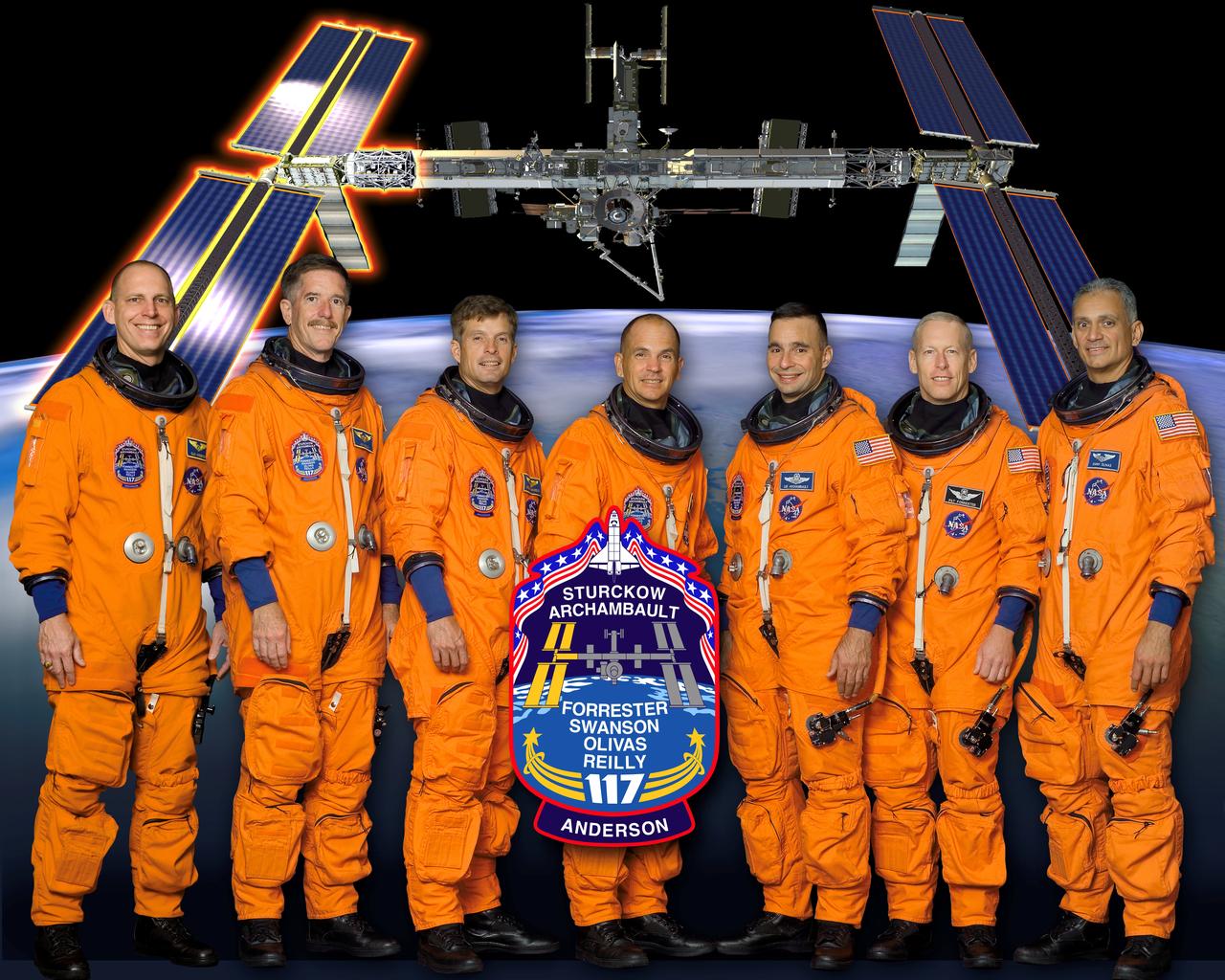
STS117-S-002 (May 2007) --- These seven astronauts take a break from training to pose for the STS-117 crew portrait. Scheduled to launch aboard the Space Shuttle Atlantis are (from the left) astronauts Clayton C. Anderson, James F. Reilly II, Steven R. Swanson, mission specialists; Frederick W. (Rick) Sturckow, commander; Lee J. Archambault, pilot; Patrick G. Forrester and John D. (Danny) Olivas, mission specialists. Anderson will join Expedition 15 in progress to serve as a flight engineer aboard the International Space Station. The crewmembers are attired in training versions of their shuttle launch and entry suits.
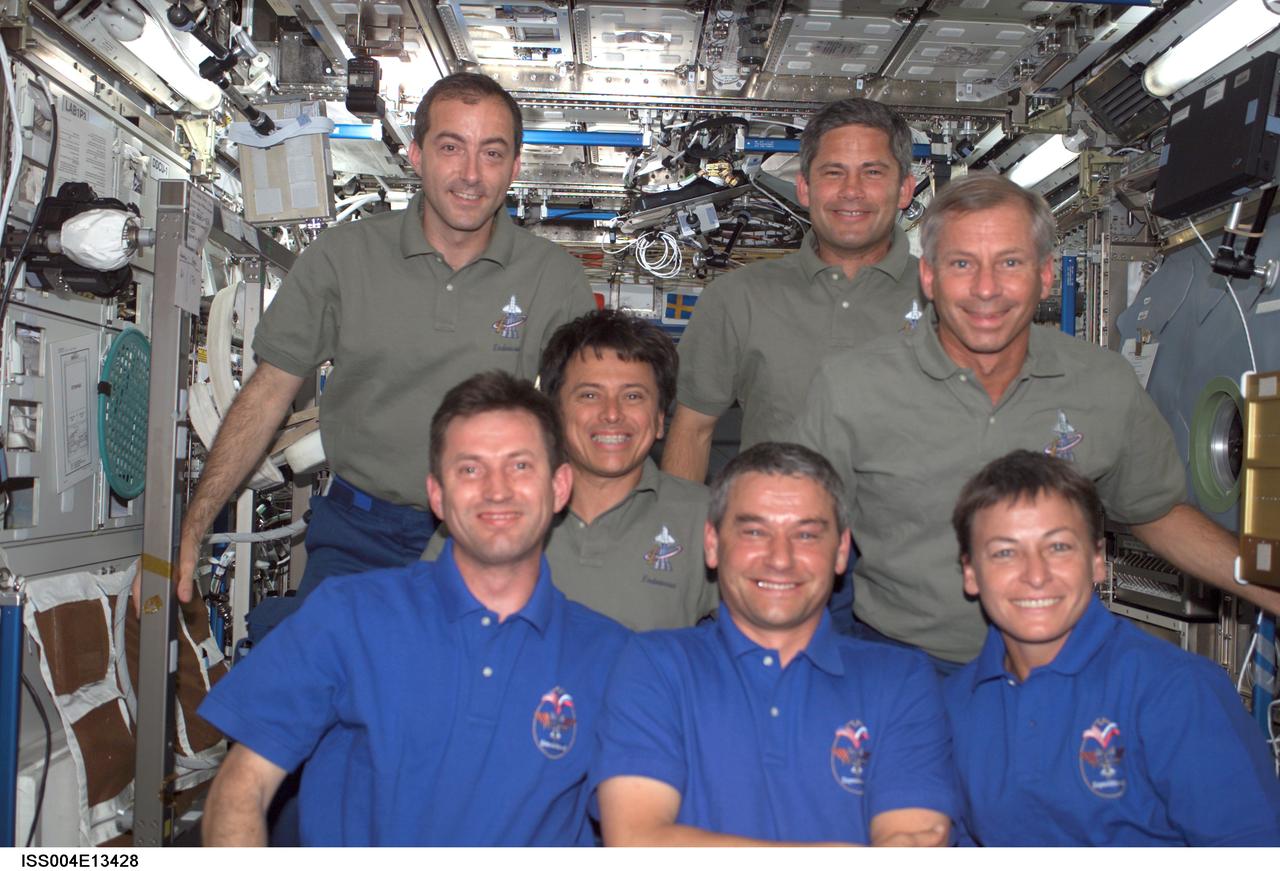
ISS004-E-13428 (June 2002) --- The Expedition Five (front row) and STS-111 crews assemble for a group photo in the Destiny laboratory on the International Space Station (ISS). The Expedition Five crewmembers, from left to right, are cosmonauts Sergei Y. Treschev, flight engineer; Valery G. Korzun, mission commander; and astronaut Peggy A. Whitson, flight engineer. The STS-111 crewmembers, from left to right, are astronauts Philippe Perrin and Franklin R. Chang-Diaz, both mission specialists; Paul S. Lockhart and Kenneth D. Cockrell, pilot and mission commander, respectively. Onufrienko, Korzun and Treschev represent Rosaviakosmos and Perrin represents CNES, the French Space Agency.
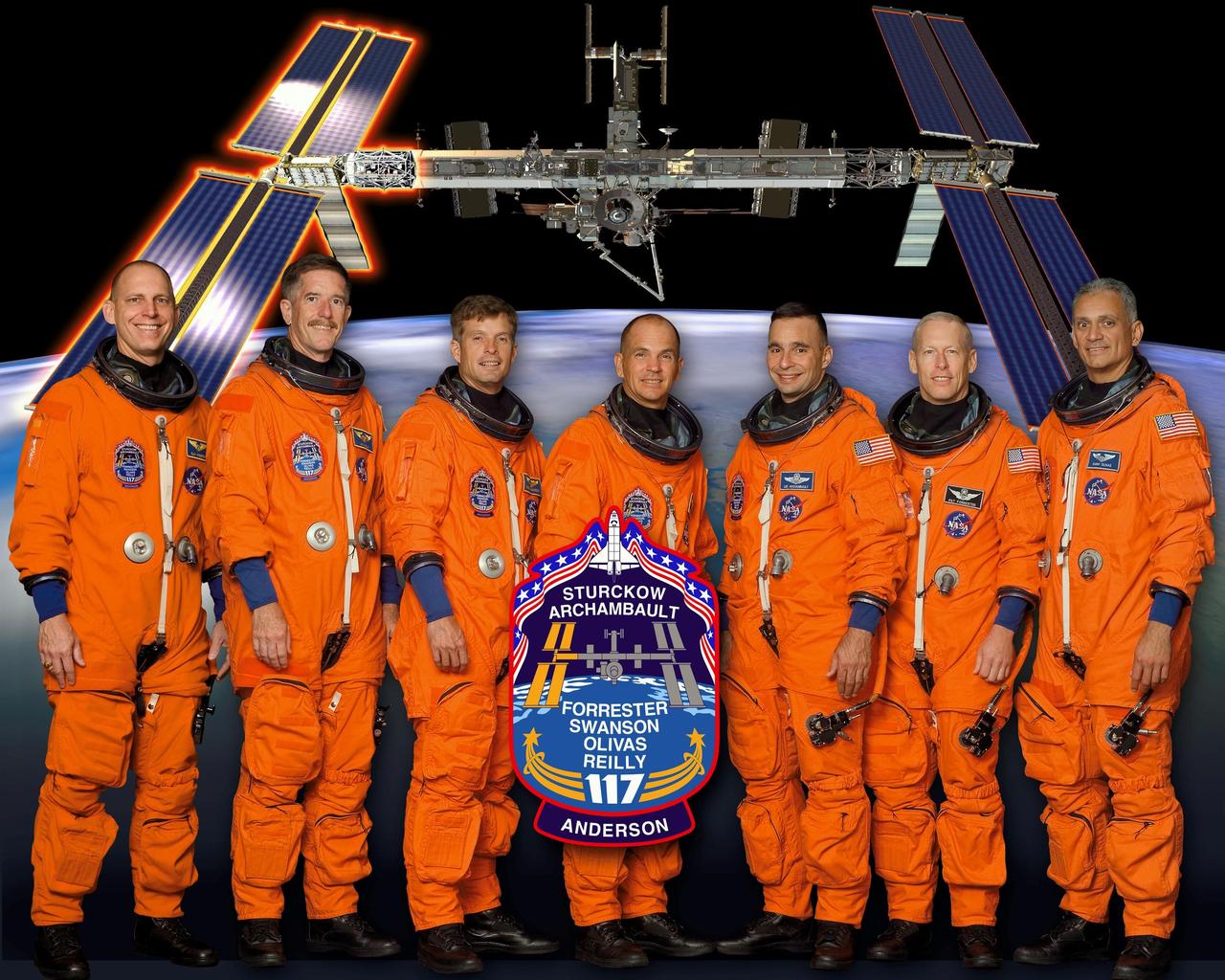
KENNEDY SPACE CENTER, FLA. -- STS117-S-002 (May 2007) --- These seven astronauts take a break from training to pose for the STS-117 crew portrait. Scheduled to launch aboard the Space Shuttle Atlantis are (from the left) astronauts Clayton C. Anderson, James F. Reilly II, Steven R. Swanson, mission specialists; Frederick W. (Rick) Sturckow, commander; Lee J. Archambault, pilot; Patrick G. Forrester and John D. (Danny) Olivas, mission specialists. Anderson will join Expedition 15 in progress to serve as a flight engineer aboard the International Space Station. The crewmembers are attired in training versions of their shuttle launch and entry suits.
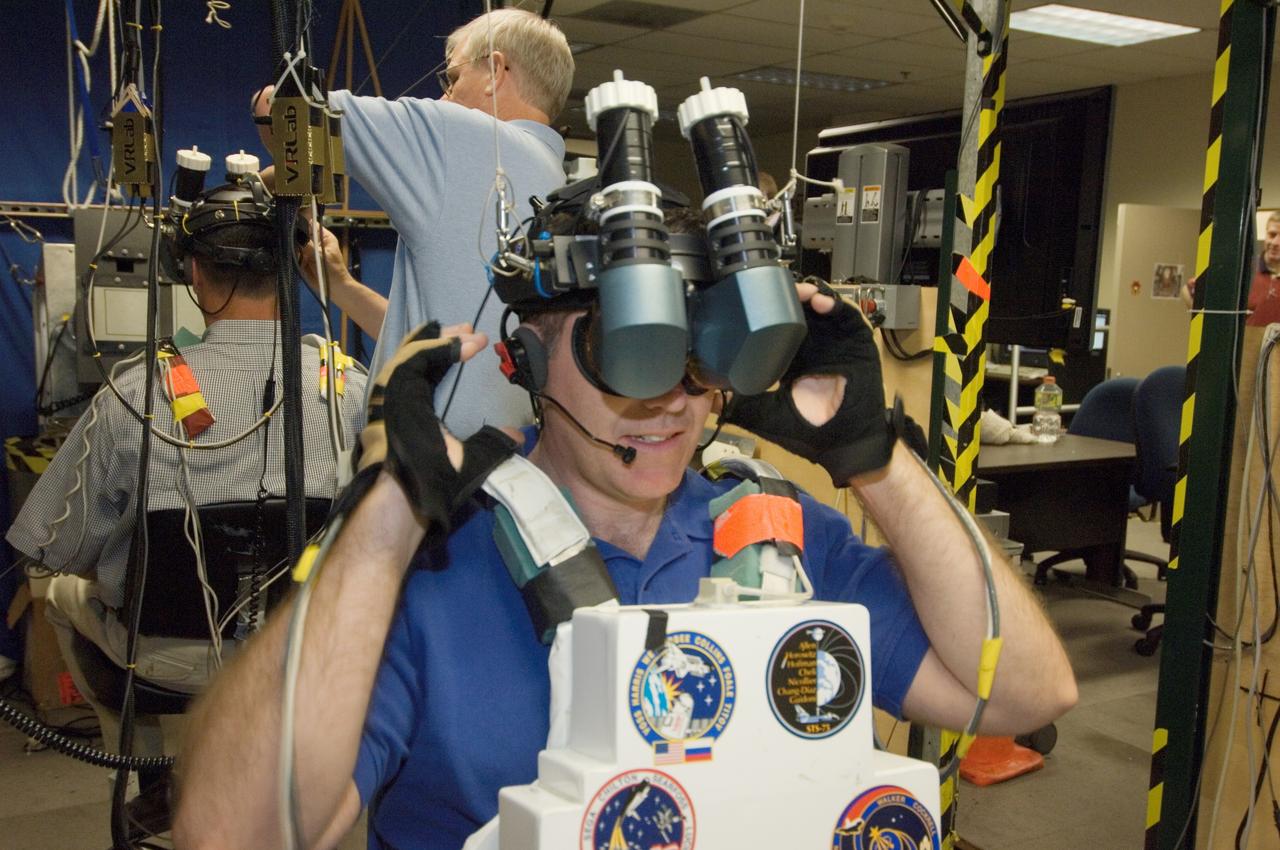
JSC2008-E-033766 (14 April 2008) --- Astronauts Stephen G. Bowen (foreground) and Robert S. (Shane) Kimbrough, both STS-126 mission specialists, use virtual reality hardware in the Space Vehicle Mockup Facility at NASA's Johnson Space Center to rehearse some of their duties on the upcoming mission to the International Space Station. This type of virtual reality training allows the astronauts to wear special gloves and other gear while looking at computer displays simulating actual movements around the various locations on the station hardware with which they will be working. David J. Homan assisted Bowen and Kimbrough.
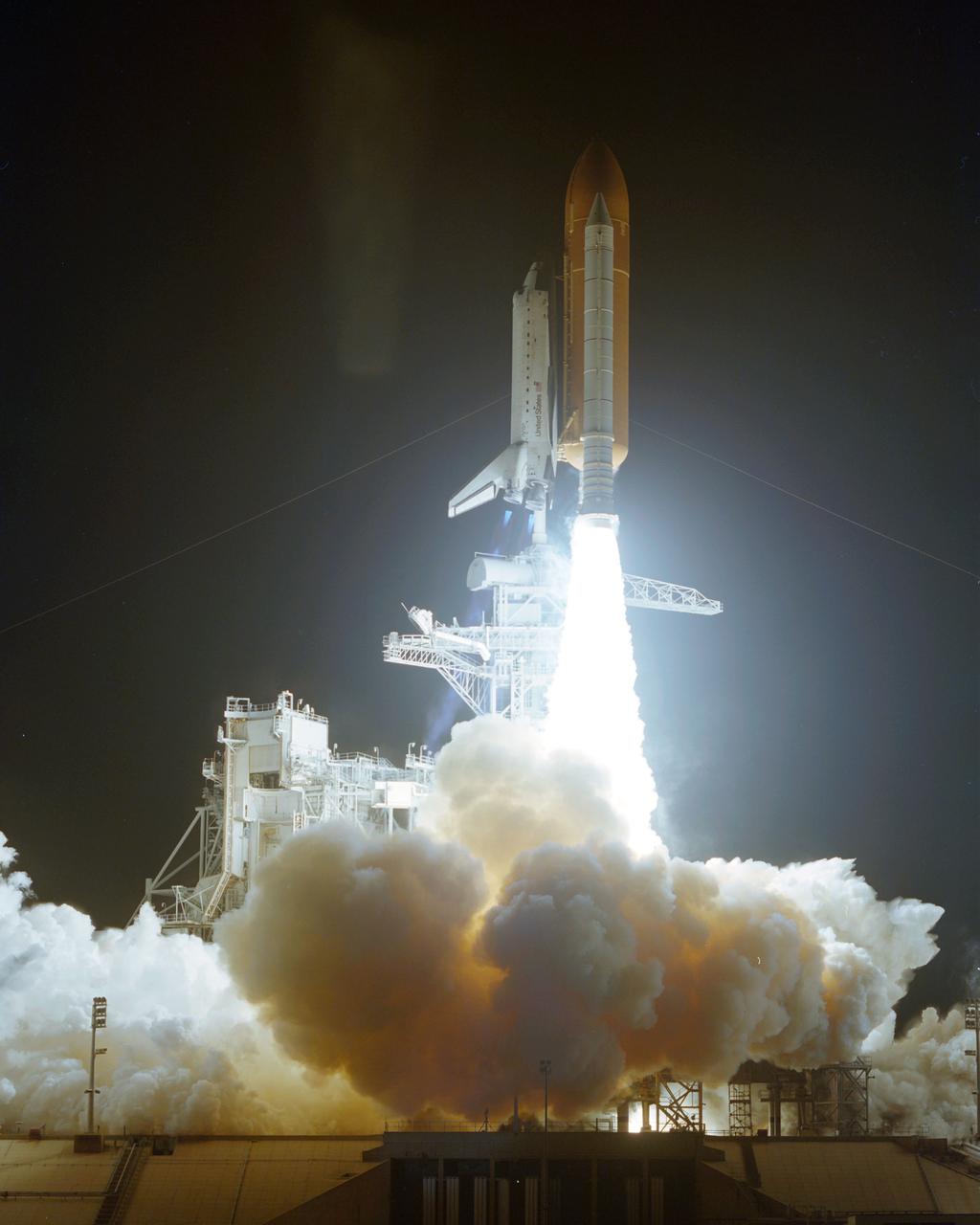
STS063-S-007 (3 Feb 1995) --- The race to catch up with the Russia's Mir gets underway as the Space Shuttle Discovery launches from Pad 39B, Kennedy Space Center (KSC) at 12:22:04 (EST), February 3, 1995. Discovery is the first in the current fleet of four Space Shuttle vehicles to make 20 launches. Onboard for the 67th (STS-63 is out of sequence) Shuttle flight are astronauts James D. Wetherbee, mission commander; Eileen M. Collins, pilot; Bernard A. Harris Jr., payload commander; mission specialists Janice Voss and C. Michael Foale; along with Russian cosmonaut Vladimir G. Titov.