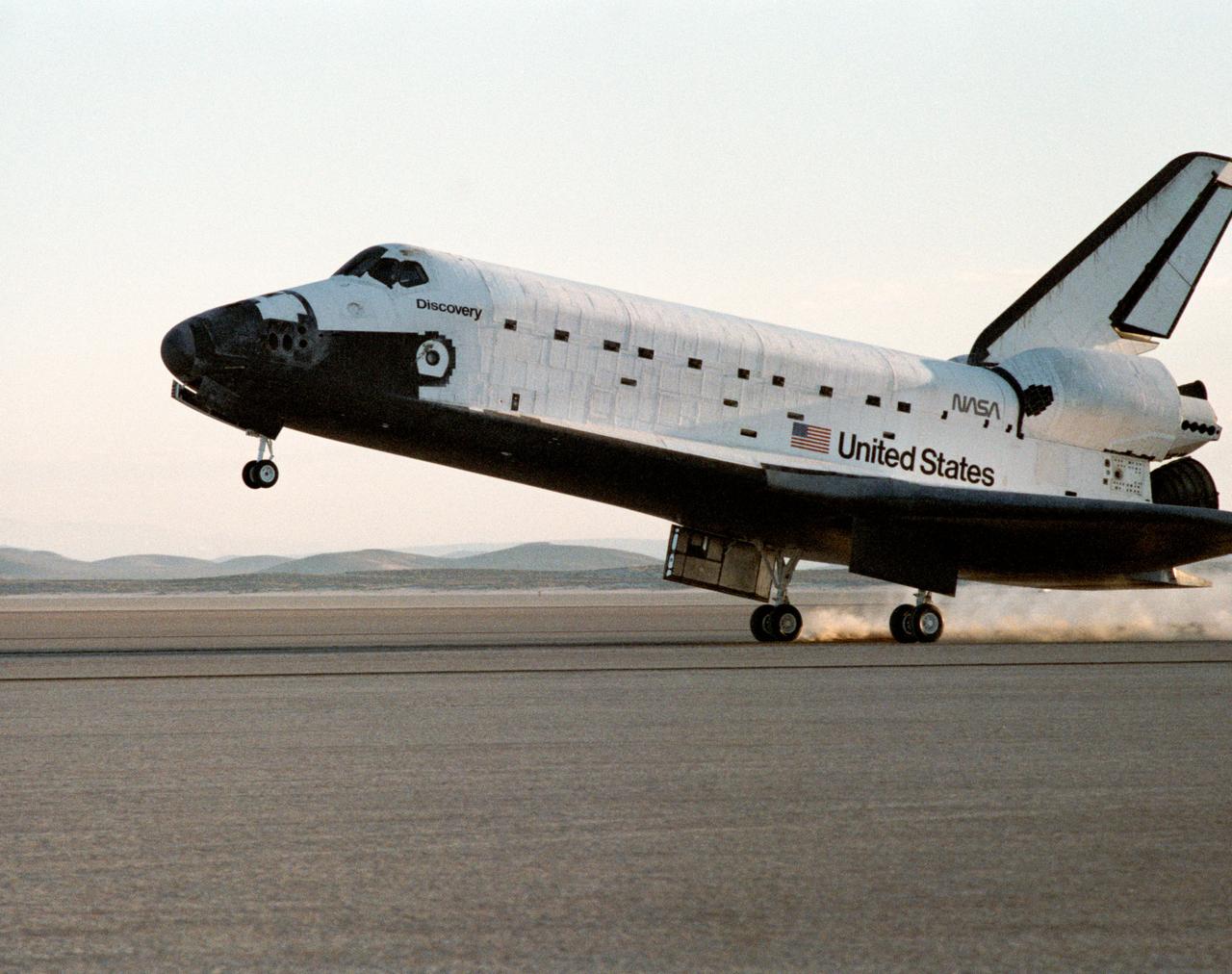
51G-S-225 (24 June 1985) --- Discovery, with its seven-member 51-G crew aboard, touches down on a dry lakebed at Edwards Air Force Base in California. Landing was noted at 6:11:53 a.m. (PDT), June 24, 1985.
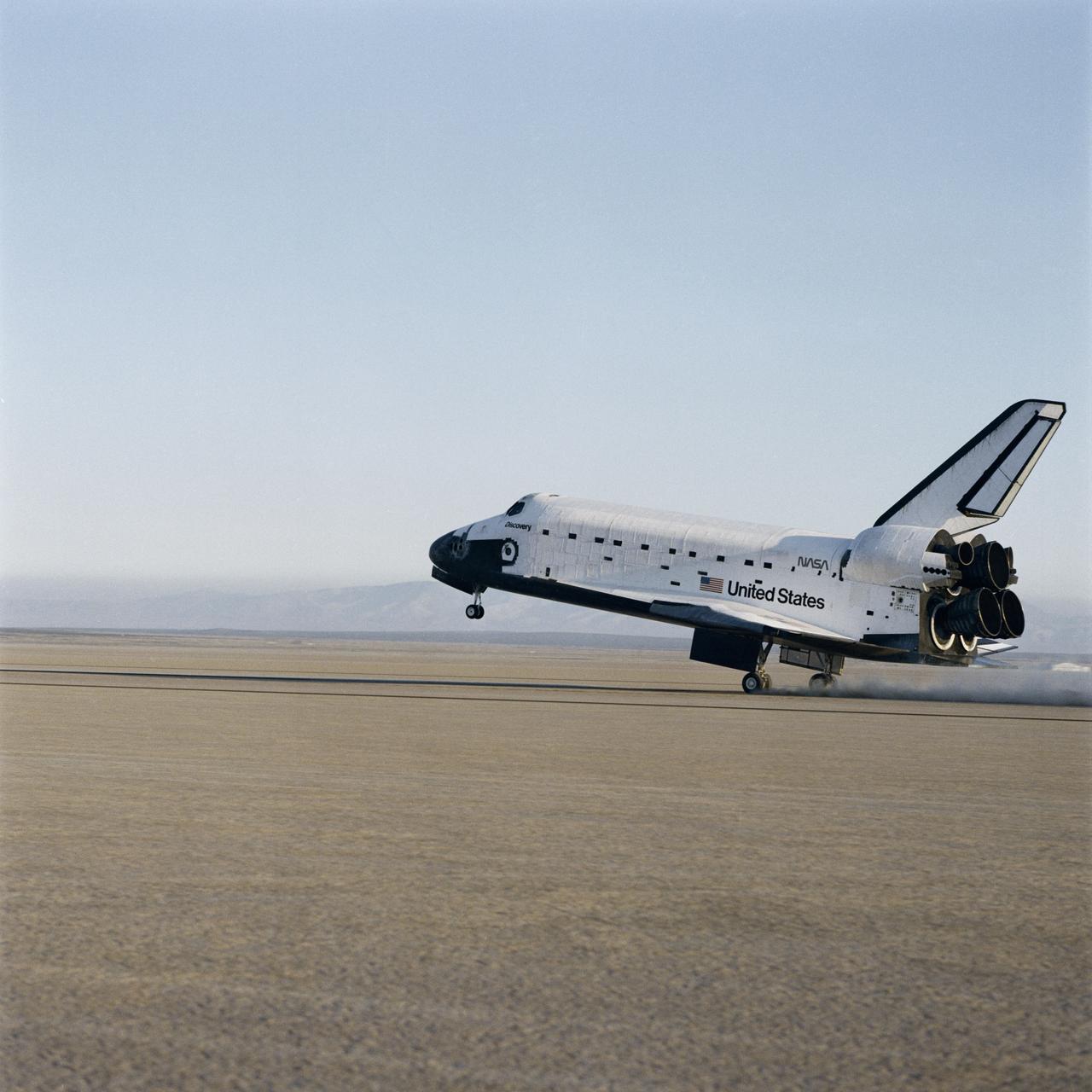
51G-S-224 (24 June 1985) --- Discovery, with its seven-member 51-G crew aboard, touches down on a dry lakebed at Edwards Air Force Base in California. Landing was noted at 6:11:53 a.m. (PDT), June 24, 1985.
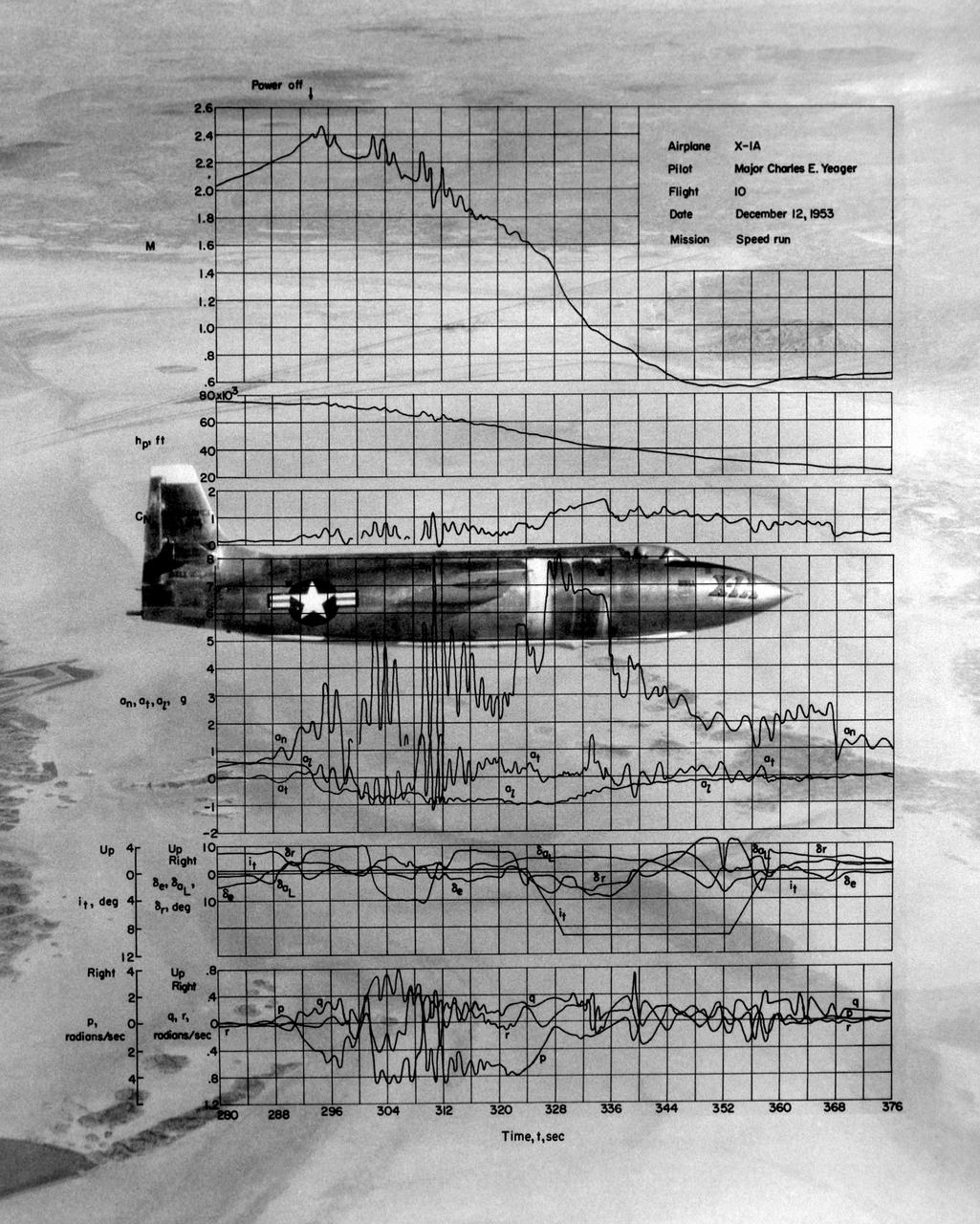
This photo of the X-1A includes graphs of the flight data from Maj. Charles E. Yeager's Mach 2.44 flight on December 12, 1953. (This was only a few days short of the 50th anniversary of the Wright brothers' first powered flight.) After reaching Mach 2.44, then the highest speed ever reached by a piloted aircraft, the X-1A tumbled completely out of control. The motions were so violent that Yeager cracked the plastic canopy with his helmet. He finally recovered from a inverted spin and landed on Rogers Dry Lakebed. Among the data shown are Mach number and altitude (the two top graphs). The speed and altitude changes due to the tumble are visible as jagged lines. The third graph from the bottom shows the G-forces on the airplane. During the tumble, these twice reached 8 Gs or 8 times the normal pull of gravity at sea level. (At these G forces, a 200-pound human would, in effect, weigh 1,600 pounds if a scale were placed under him in the direction of the force vector.) Producing these graphs was a slow, difficult process. The raw data from on-board instrumentation recorded on oscillograph film. Human computers then reduced the data and recorded it on data sheets, correcting for such factors as temperature and instrument errors. They used adding machines or slide rules for their calculations, pocket calculators being 20 years in the future.
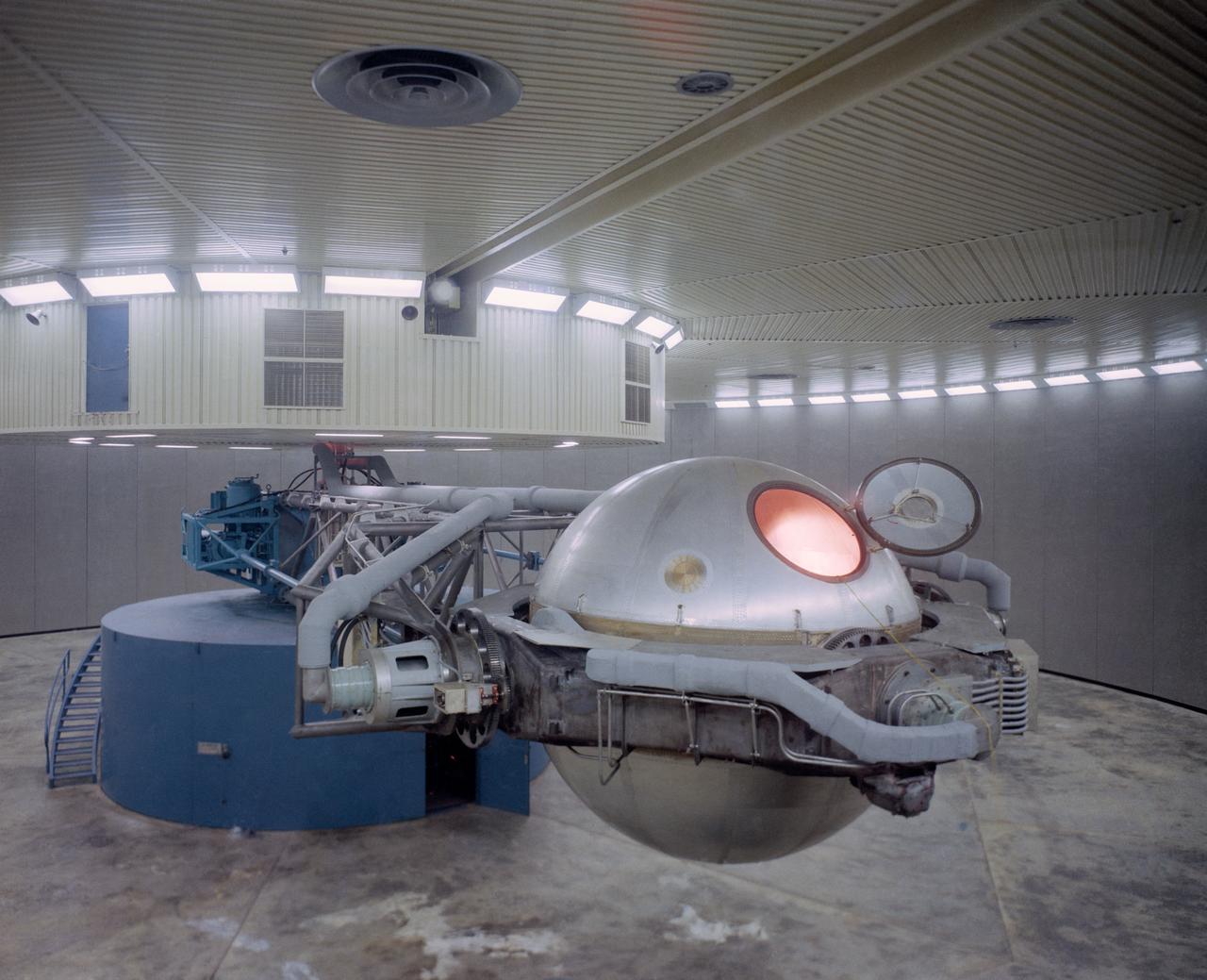
The new centrifuge at MSC, located in the Flight Acceleration Facility (FAF), Bldg. 29. The 50-ft. arm can swing the 3-man gondola to create G-Forces Astronauts will experience during liftoffs and re-entry conditions. MSC, HOUSTON, TX CN
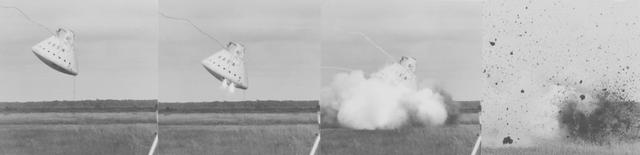
The first test of Apollo boilerplate equipped with landing rockets took place at Ellington AFB, 05/16. Spacecraft was dropped at 30-ft. p/s with 23-ft. p/s horizontal velocity. A force of 6 g's was measured inside the spacecraft during the landing. ELLINGTON AFB, HOUSTON, TX B&W
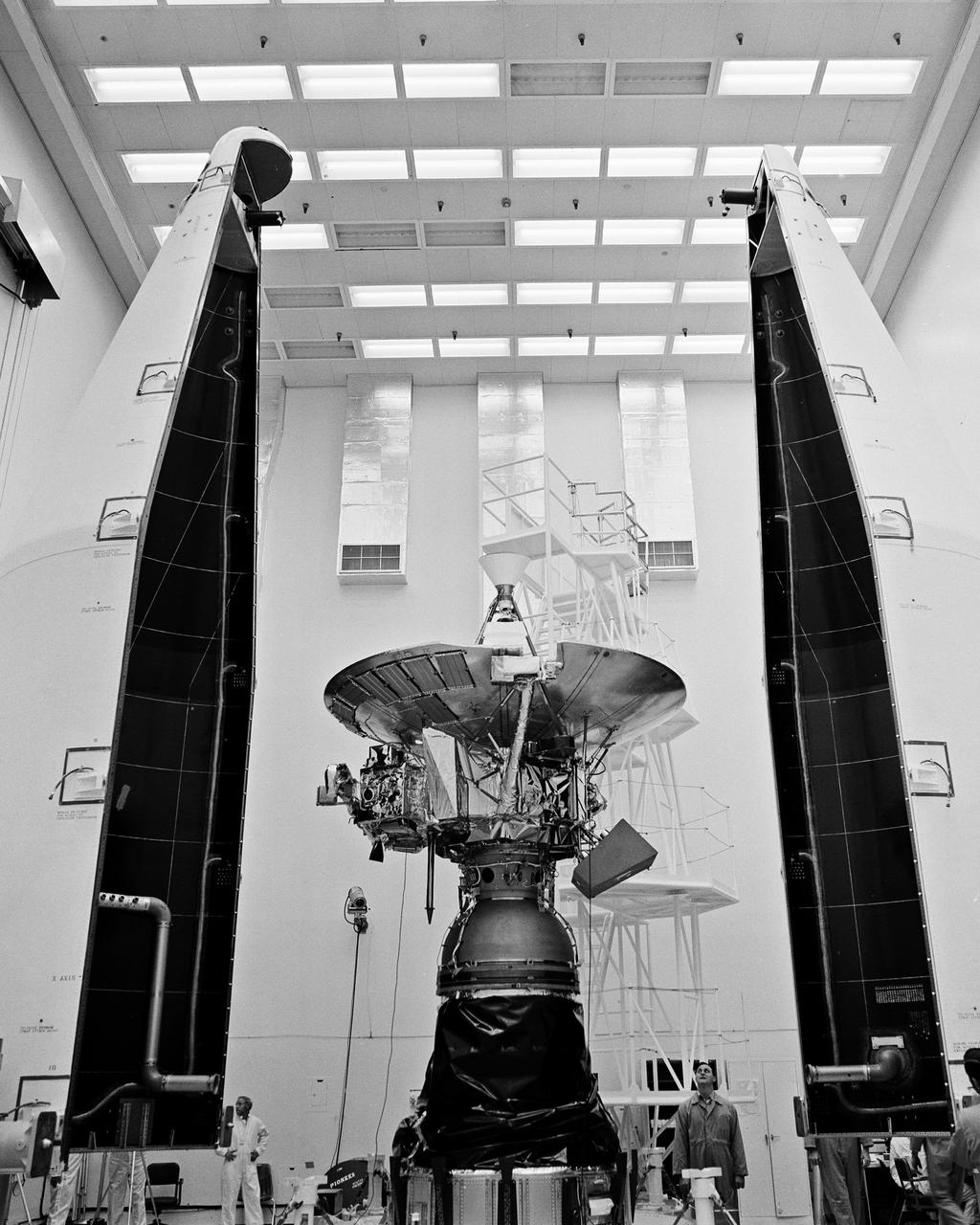
CAPE KENNEDY, Fla. -- In the AO Building at Cape Kennedy Air Force Station in Florida, the Pioneer G spacecraft awaits the installation of its protective payload fairing. The interplanetary space probe is scheduled for launch atop an Atlas Centaur rocket from Cape Kennedy April 5, 1973. Pioneer G's nearly two-year mission will take it on an investigation of the asteroid belt, then on to Jupiter, largest planet in our solar system. NASA's launch teams from the Kennedy Space Center will direct final testing and the launch itself. The mission is a project of the Ames Research Center. Photo Credit: NASA
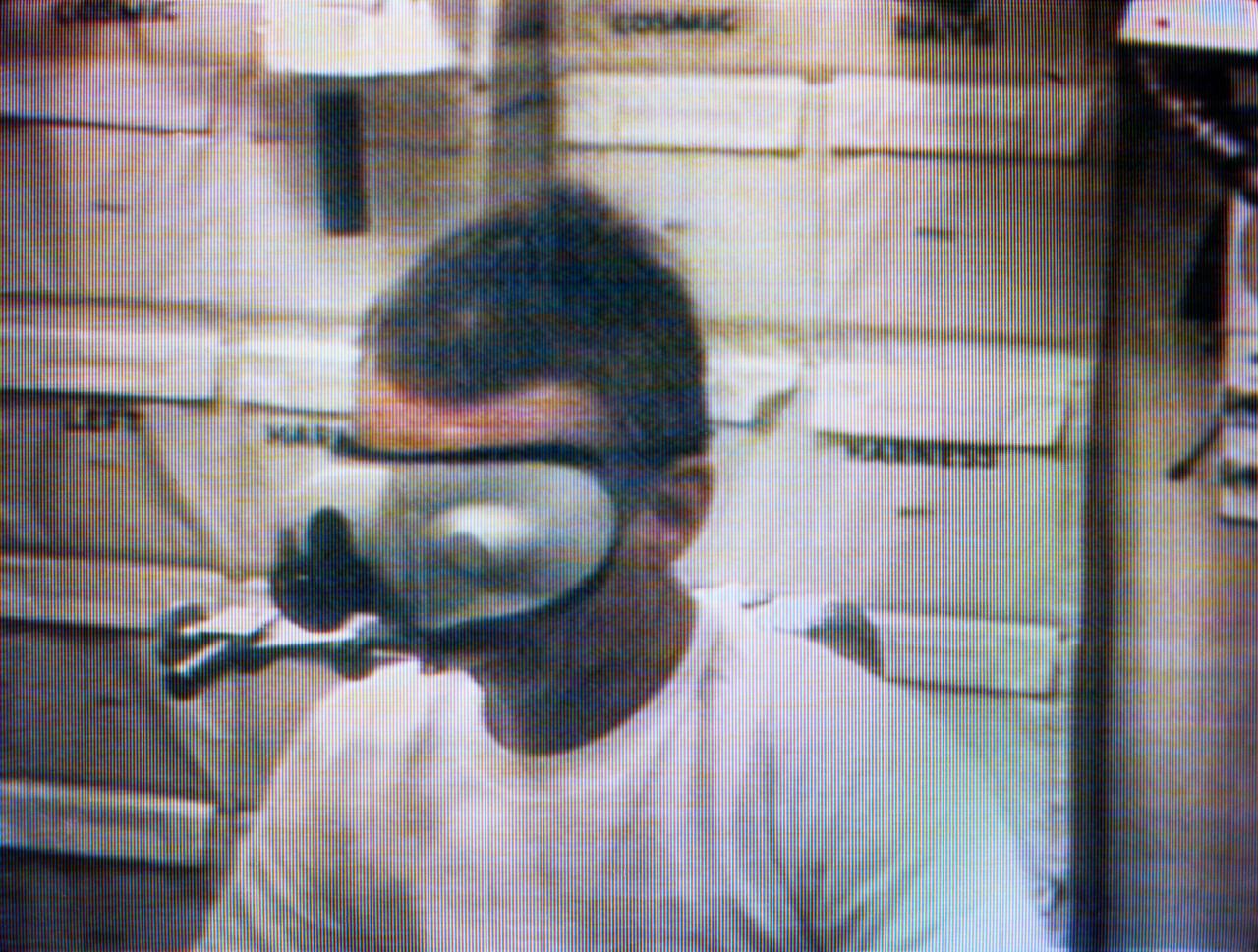
S73-32113 (9 Aug. 1973) --- Scientist-astronaut Owen K. Garriott, Skylab 3 science pilot, serves as test subject for the Skylab ?Human Vestibular Function? M131 Experiment, as seen in this photographic reproduction taken from a television transmission made by a color TV camera aboard the Skylab space station in Earth orbit. The objectives of the Skylab M131 experiment are to obtain data pertinent to establishing the validity of measurements of specific behavioral/physiological responses influenced by vestibular activity under one-g and zero-g conditions; to determine man?s adaptability to unusual vestibular conditions and predict habitability of future spacecraft conditions involving reduced gravity and Coriollis forces; and to measure the accuracy and variability in man?s judgment of spatial coordinates based on atypical gravity receptor cues and inadequate visual cues. Photo credit: NASA
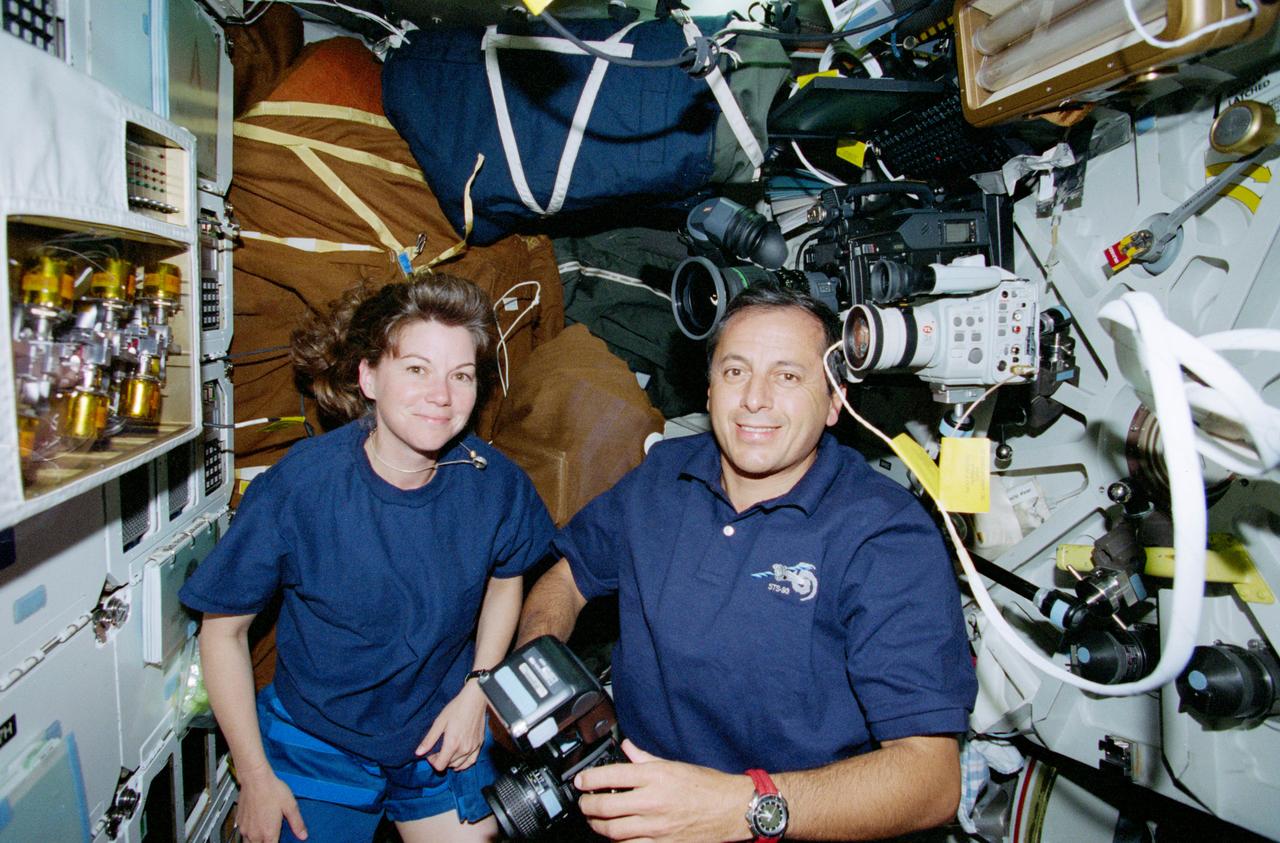
STS093-321-035 (23-27 July 1999) --- Astronauts Catherine G. (Cady) Coleman and Michel Tognini, mission specialists, check out the Lightweight Flexible Solar Array Hinge (LFSAH, upper left) on Columbia's middeck. LFSAH consists of several hinges fabricated from shape-memory alloys and other spacecraft appendages. During the five-day STS-93 flight, the experiment demonstrated the deployment capability of a number of hinge configurations. The experiment is sponsored by the U.S. Air Force Research Lab, Kirtland Air Force Base. Tognini represents the Centre National d'Etudes Spatiales (CNES) of France.
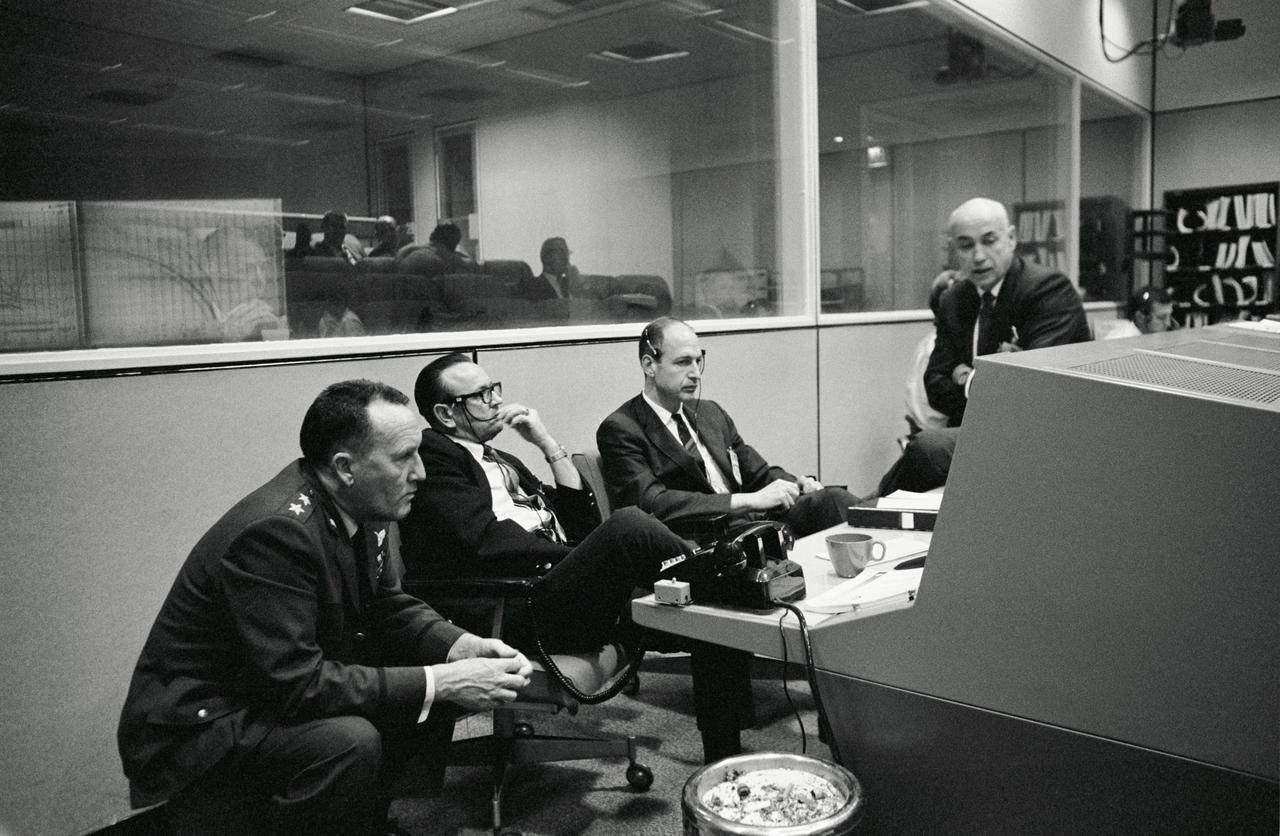
S68-20986 (4 April 1968) --- Scene at the flight operations director's console in the Mission Control Center, Building 30, during the Apollo 6 (Spacecraft 020/Saturn 520) unmanned space flight. Left to right, are Air Force Maj. Gen. Vincent G. Huston, DOD Manager, Manned Space Flight Operations, Andrews Air Force Base, Washington, D.C.; Dr. Christopher C. Kraft Jr., MSC director of flight operations; George M. Low, manager, MSC Apollo Spacecraft Program Office; and Dr. Robert R. Gilruth, MSC Director.
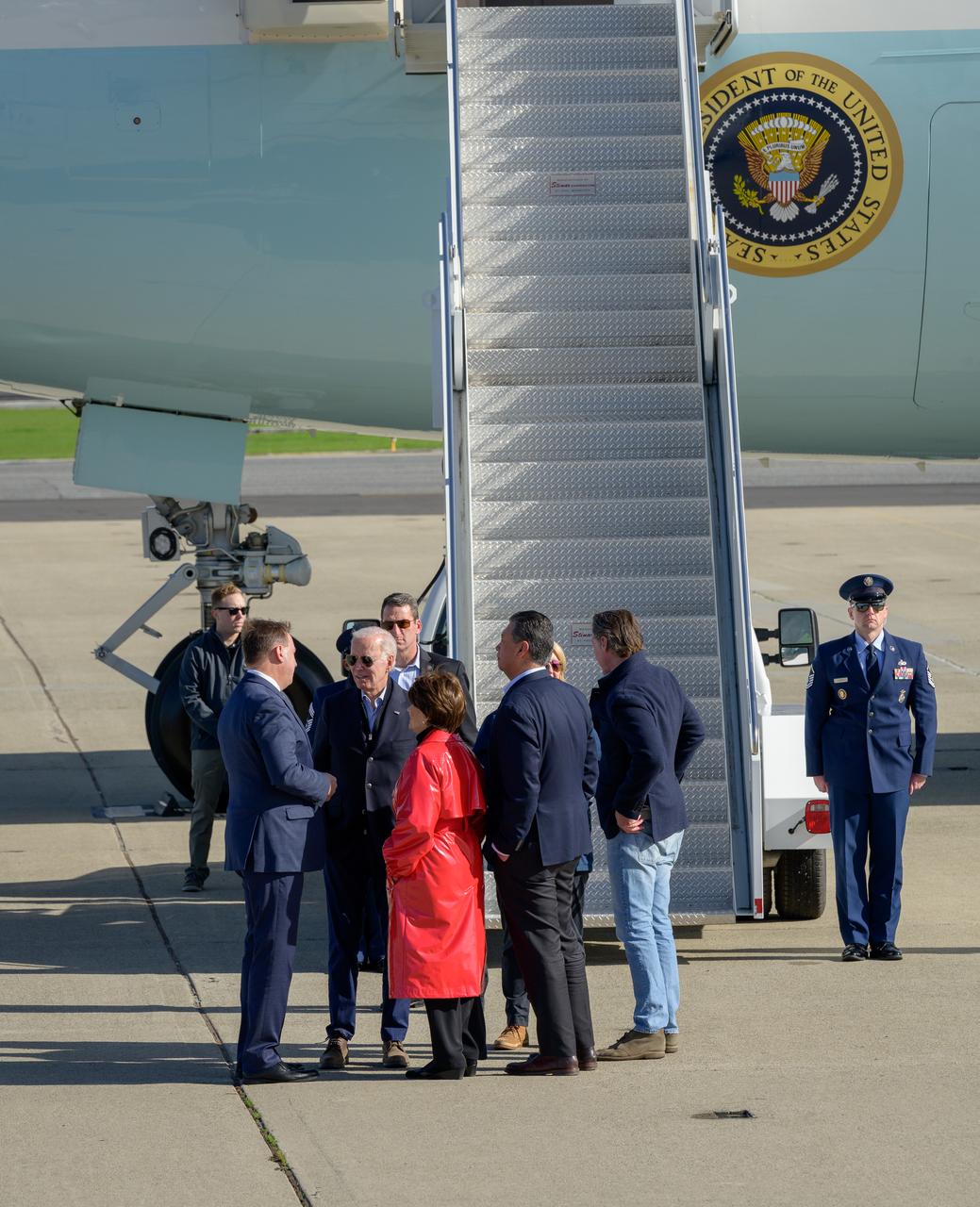
President Joe Biden landed aboard Air Force One at Moffett Federal Airfield, near NASA’s Ames Research Center in California’s Silicon Valley, Thursday, Jan. 19, 2023, en route to tour recent storm damage in the state. The President was greeted by Dr. David Korsmeyer, associate center director for research and technology at Ames, U.S. Congresswoman Anna G. Eshoo, U.S. Senator Alex Padilla, and California Governor Gavin Newsom.
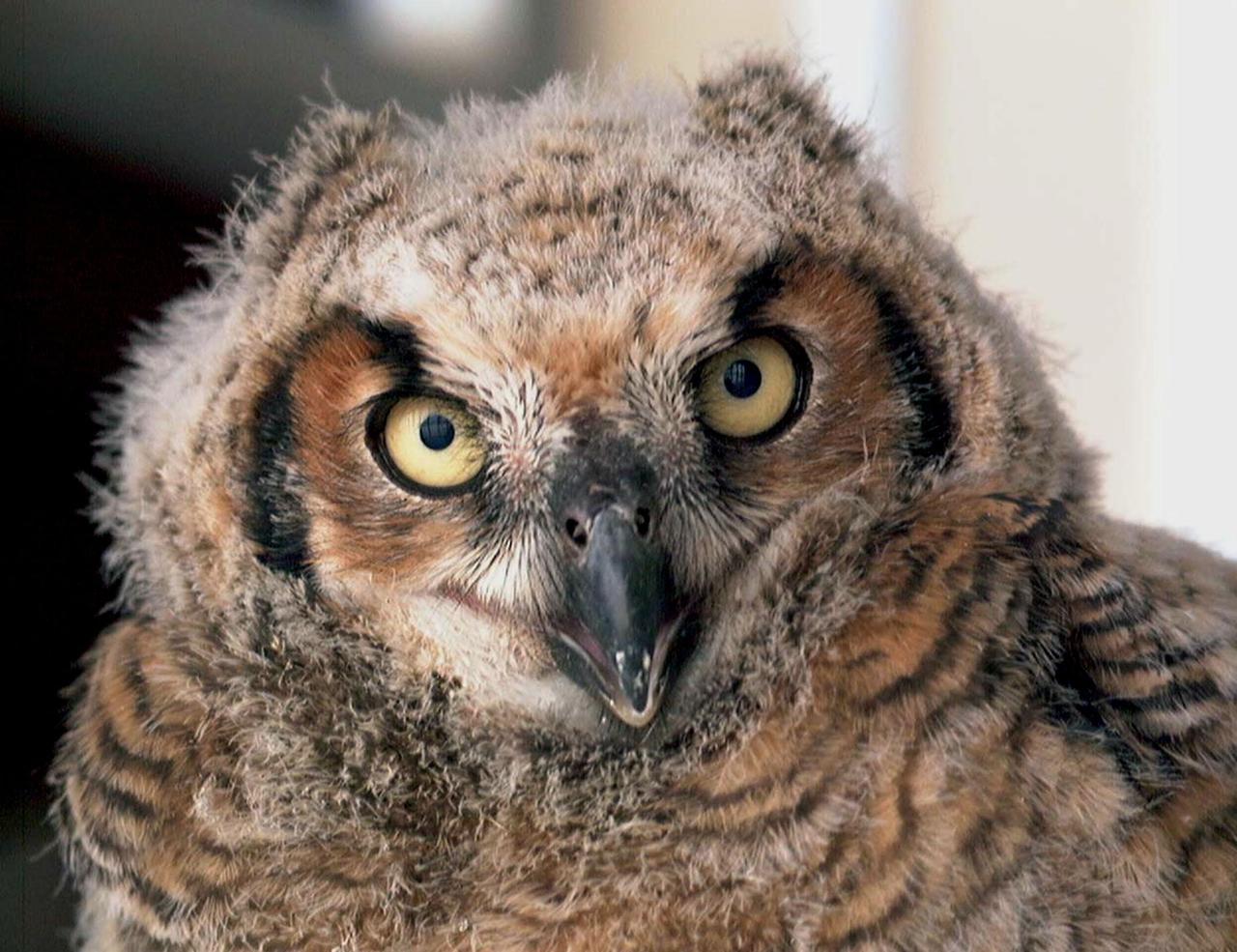
KENNEDY SPACE CENTER, FLA. -- A baby owl, possibly a screech owl, stares at the photographer snapping its picture. The owl was found on the stairs inside Hangar G, Cape Canaveral Air Force Station. It had apparently tried to fly from a nest near the ceiling but couldn't get back to it. Workers called an Audubon rescue center near Orlando, which captured it and will ensure the bird is returned to the wild when it's ready
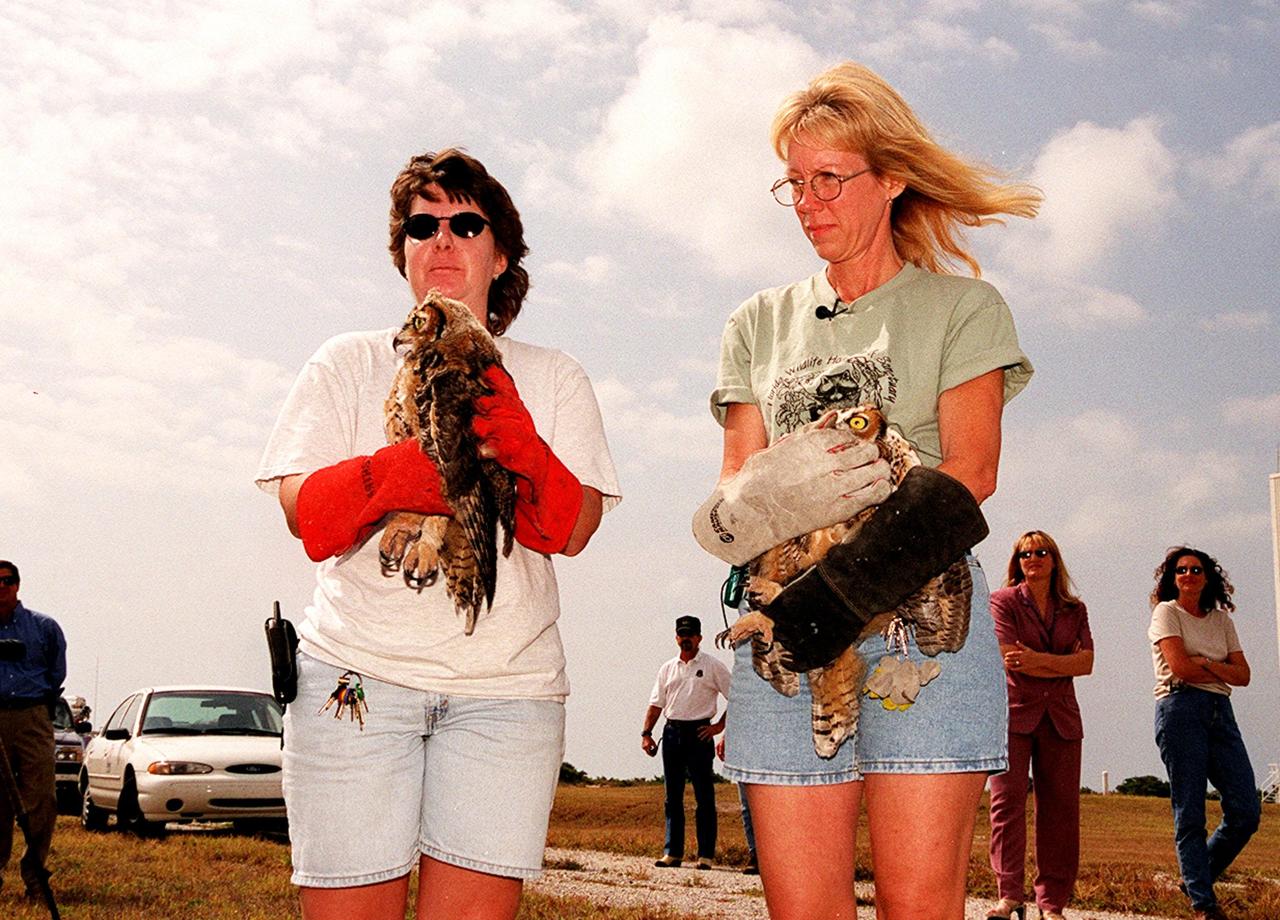
Eileen Olejarski (left), manager of Florida Wildlife Hospital, and Susan Small, director of the hospital, get ready to release two great horned owls at Cape Canaveral Air Force Station, Complex 25/29. The owls were found in June on the floor of CCAFS Hangar G, where their nest was located. They were treated at a local veterinary hospital and then taken to the Florida Wildlife Hospital in Melbourne for care and rehabilitation before release
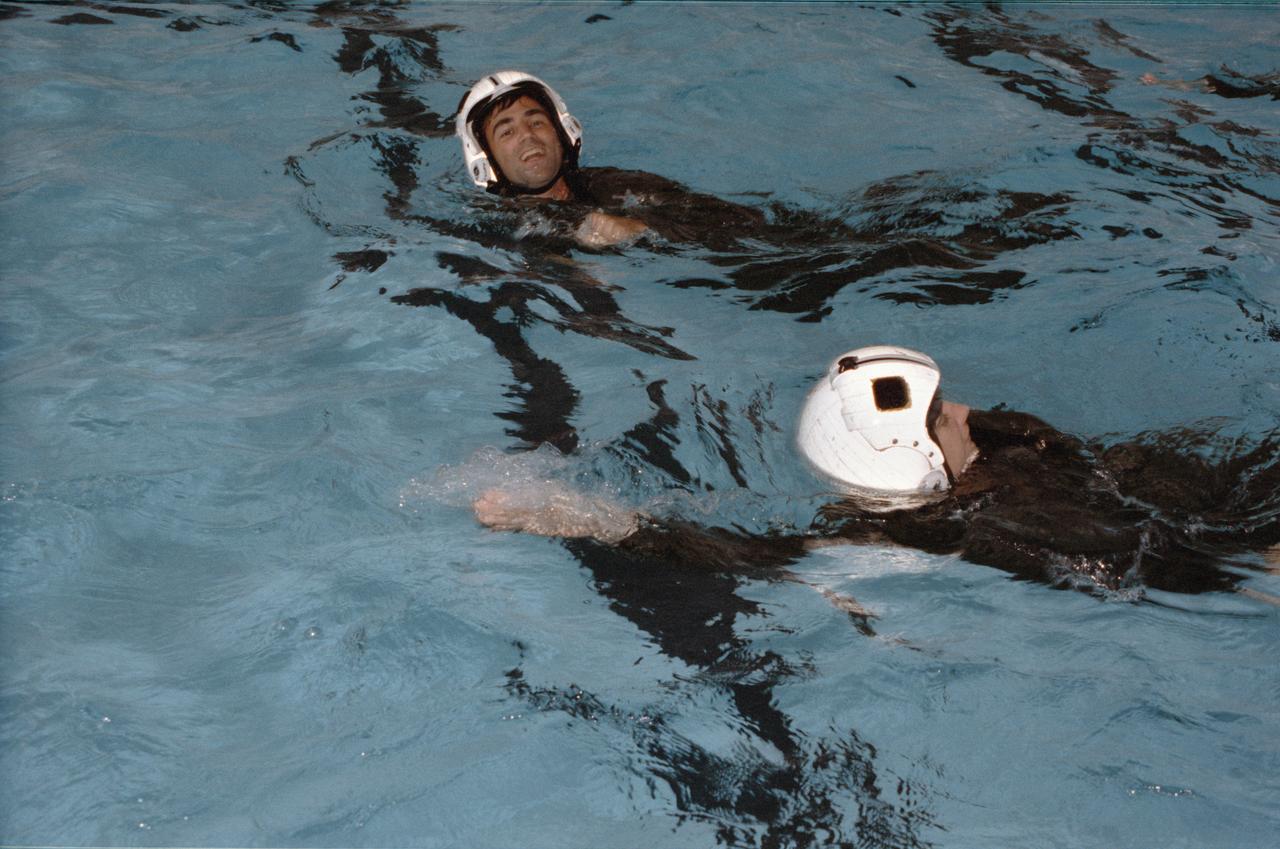
1990 Group 13 Astronaut Candidates (ASCANs) Susan J. Helms (foreground) and William G. Gregory, wearing helmets and flight suits, swim in pool at Elgin Air Force Base (AFB) in Pensacola, Florida, during water survival exercises. The training familiarized the candidates with survival techniques necessary in the event of a water landing. ASCANs participated in the exercises from 08-14-90 through 08-17-90.
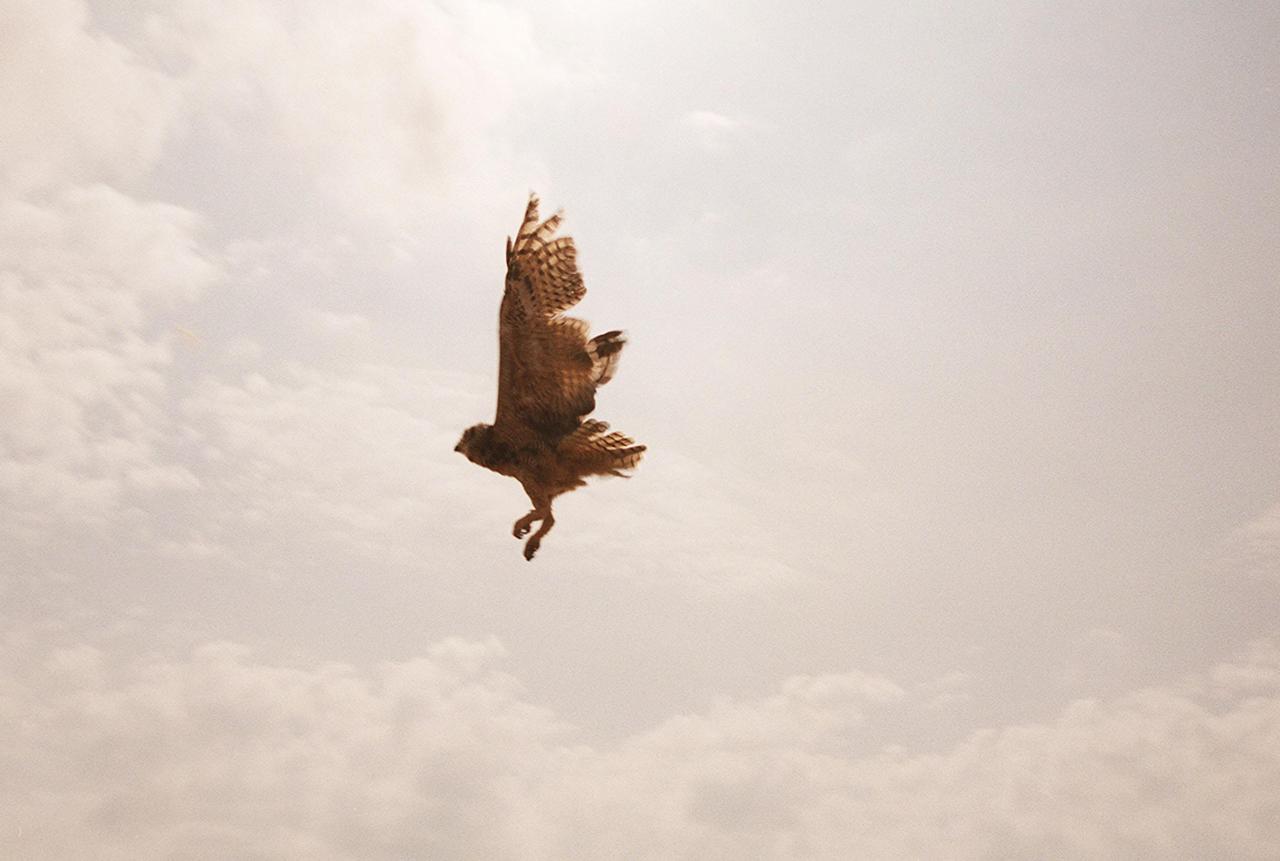
A great horned owl flies to freedom after its release at Cape Canaveral Air Force Station, Complex 25/29. The owl is one of two found in June on the floor of CCAFS Hangar G, where their nest was located. They were treated at a local veterinary hospital and then taken to the Florida Wildlife Hospital in Melbourne for care and rehabilitation before release
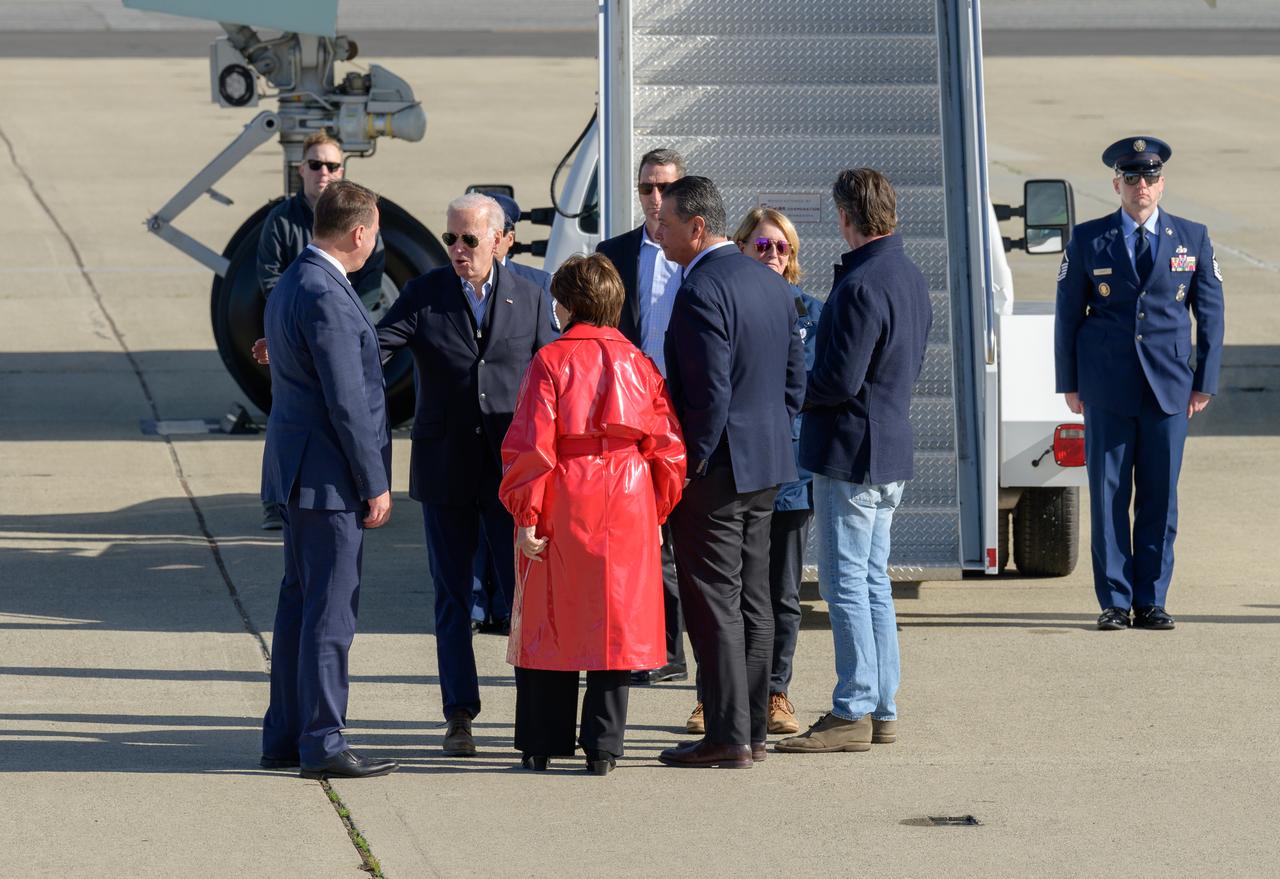
President Joe Biden landed aboard Air Force One at Moffett Federal Airfield, near NASA’s Ames Research Center in California’s Silicon Valley, Thursday, Jan. 19, 2023, en route to tour recent storm damage in the state. The President was greeted by Dr. David Korsmeyer, associate center director for research and technology at Ames, U.S. Congresswoman Anna G. Eshoo, U.S. Senator Alex Padilla, and California Governor Gavin Newsom.
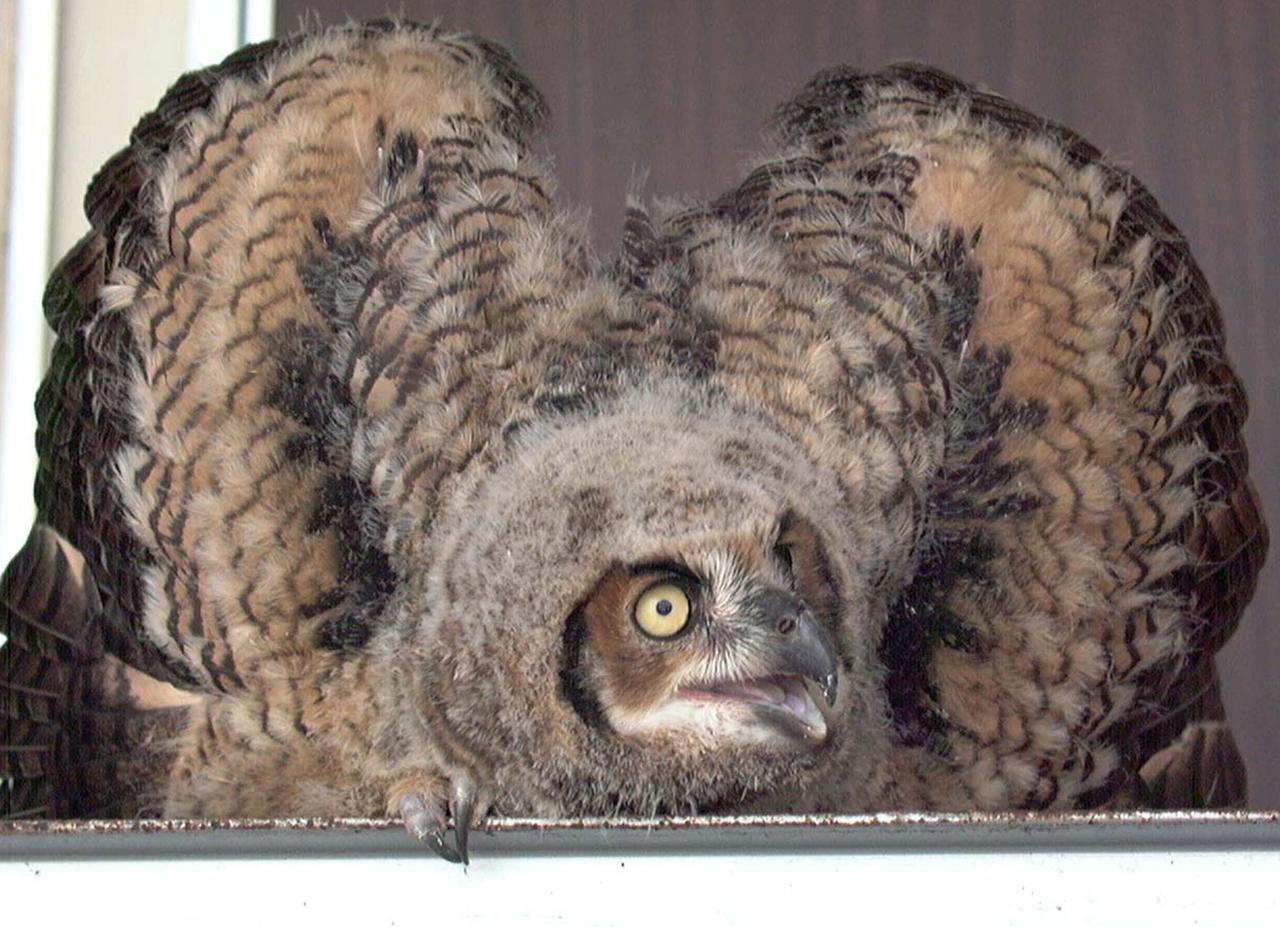
KENNEDY SPACE CENTER, FLA. -- A baby owl, possibly a screech owl, shows its fear and resentment of the photographer snapping its picture. The owl was found on the stairs inside Hangar G, Cape Canaveral Air Force Station. It had apparently tried to fly from a nest near the ceiling but couldn't get back to it. Workers called an Audubon rescue center near Orlando, which captured it and will ensure the bird is returned to the wild when it's ready
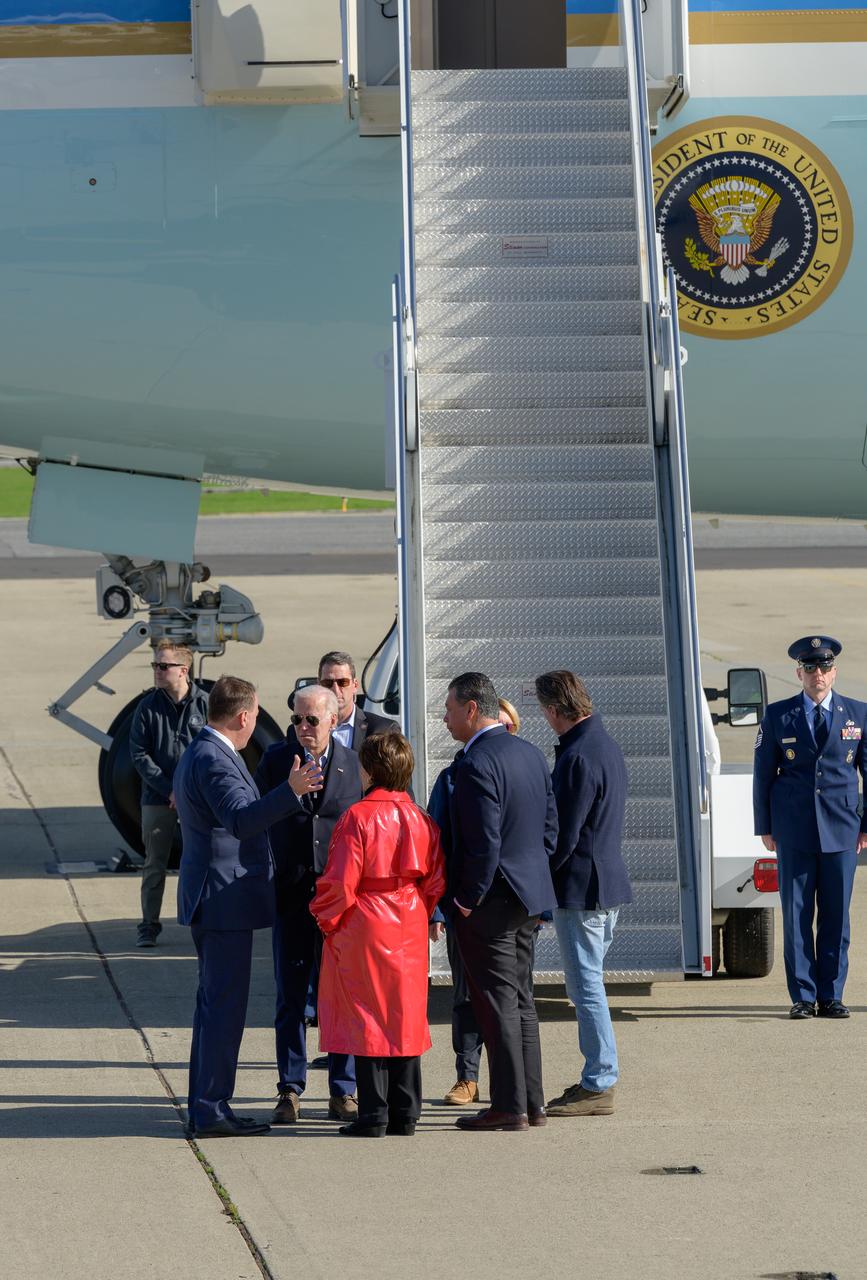
President Joe Biden landed aboard Air Force One at Moffett Federal Airfield, near NASA’s Ames Research Center in California’s Silicon Valley, Thursday, Jan. 19, 2023, en route to tour recent storm damage in the state. The President was greeted by Dr. David Korsmeyer, associate center director for research and technology at Ames, U.S. Congresswoman Anna G. Eshoo, U.S. Senator Alex Padilla, and California Governor Gavin Newsom.
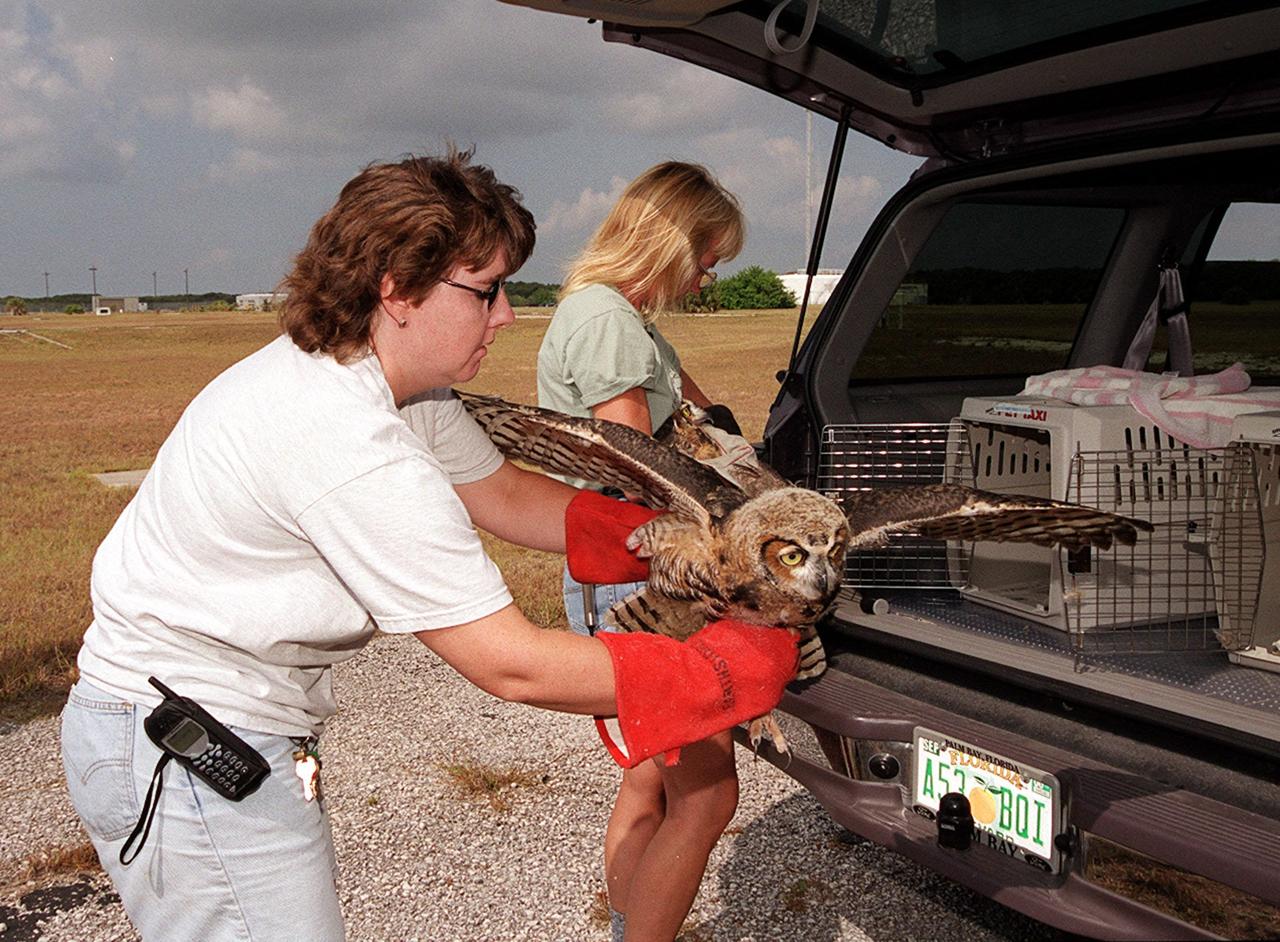
Eileen Olejarski (left), manager of Florida Wildlife Hospital, and Susan Small, director of the hospital, remove two great horned owls from the vehicle before releasing them at Cape Canaveral Air Force Station, Complex 25/29. The owls were found in June on the floor of CCAFS Hangar G, where their nest was located. They were treated at a local veterinary hospital and then taken to the Florida Wildlife Hospital in Melbourne for care and rehabilitation before release.
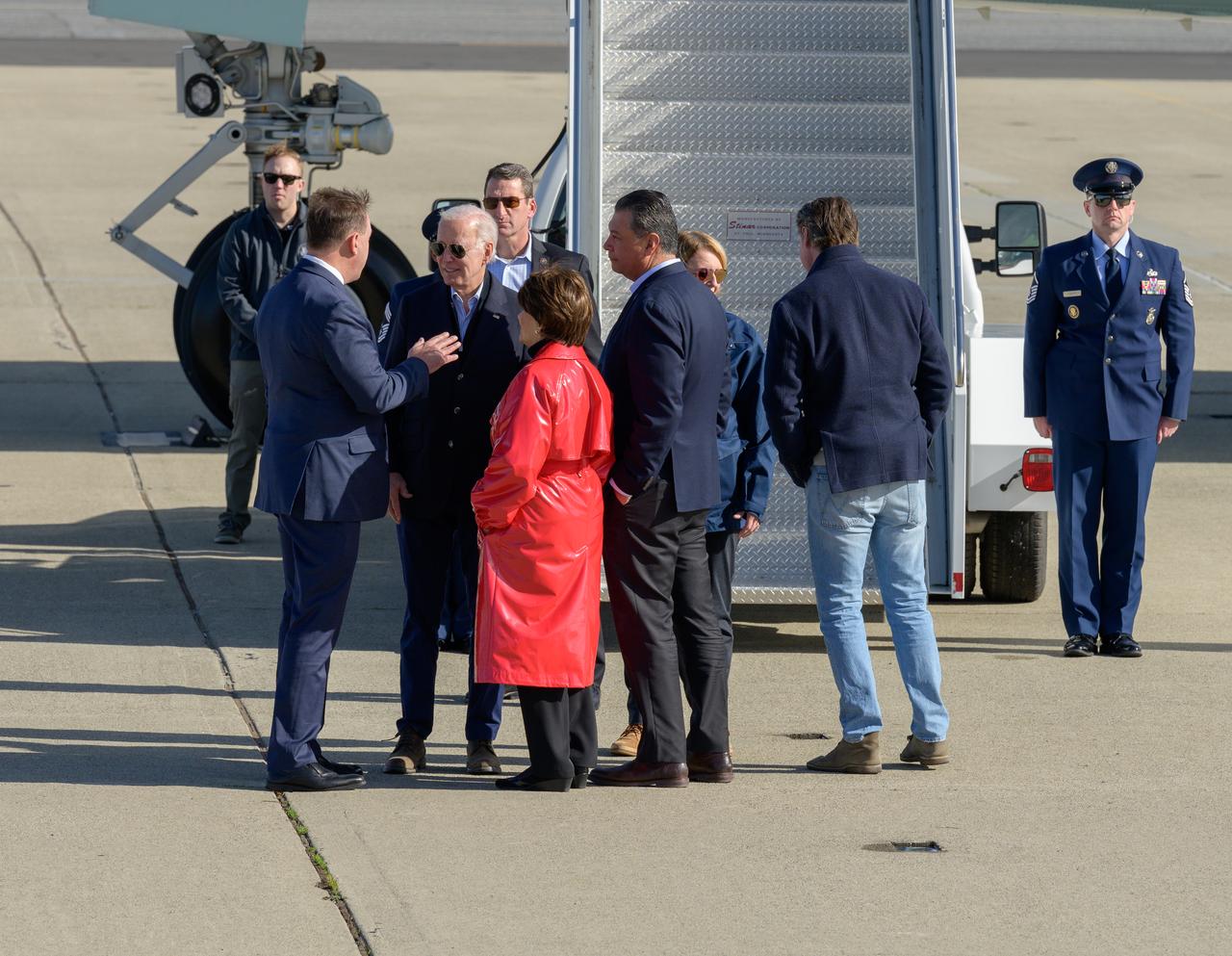
President Joe Biden landed aboard Air Force One at Moffett Federal Airfield, near NASA’s Ames Research Center in California’s Silicon Valley, Thursday, Jan. 19, 2023, en route to tour recent storm damage in the state. The President was greeted by Dr. David Korsmeyer, associate center director for research and technology at Ames, U.S. Congresswoman Anna G. Eshoo, U.S. Senator Alex Padilla, and California Governor Gavin Newsom.
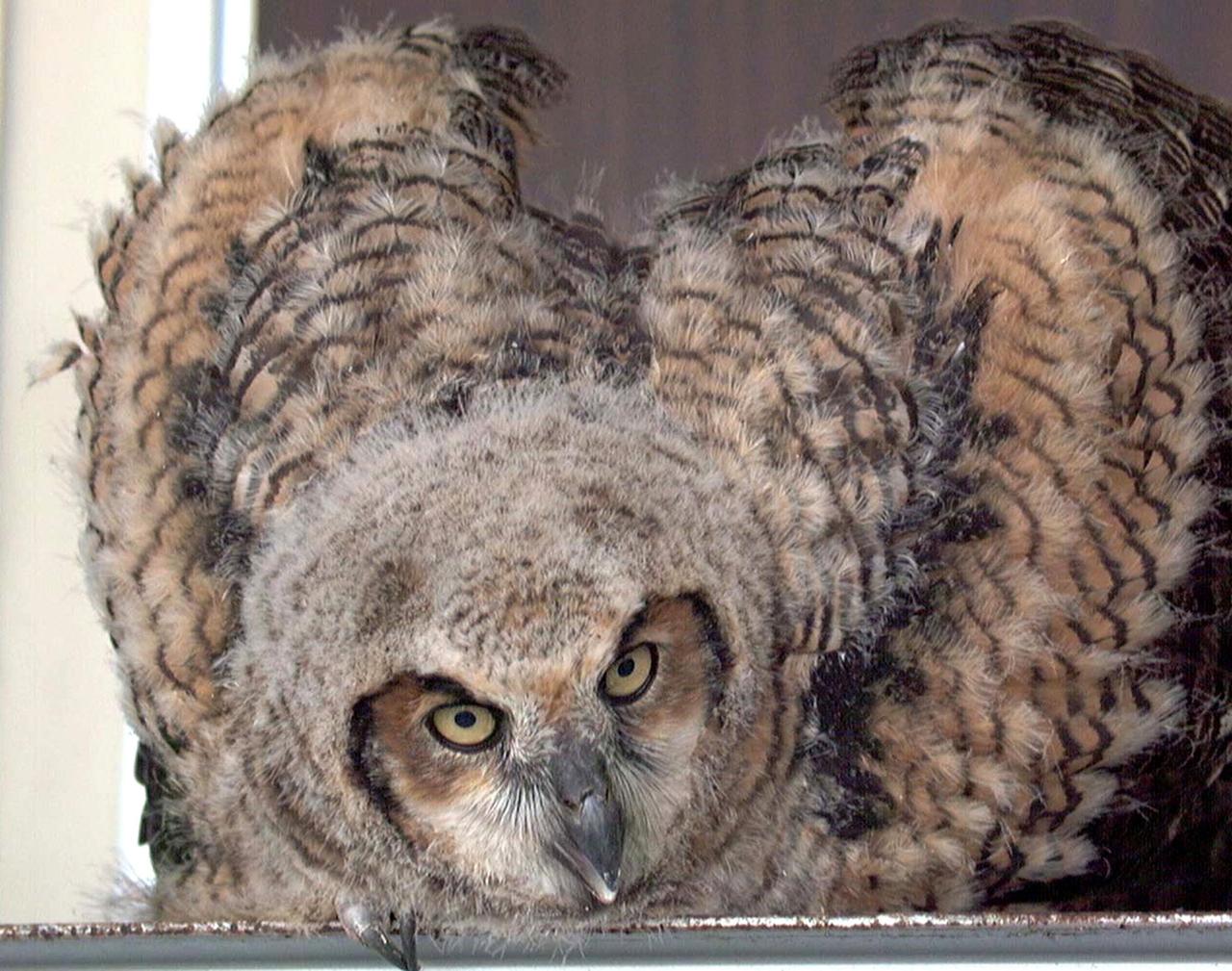
KENNEDY SPACE CENTER, FLA. -- A baby owl displays its wings at the photographer snapping its picture. The owl was found on the stairs inside Hangar G, Cape Canaveral Air Force Station. It had apparently tried to fly from a nest near the ceiling but couldn't get back to it. Workers called an Audubon rescue center near Orlando, which captured it and will ensure the bird is returned to the wild when it's ready.
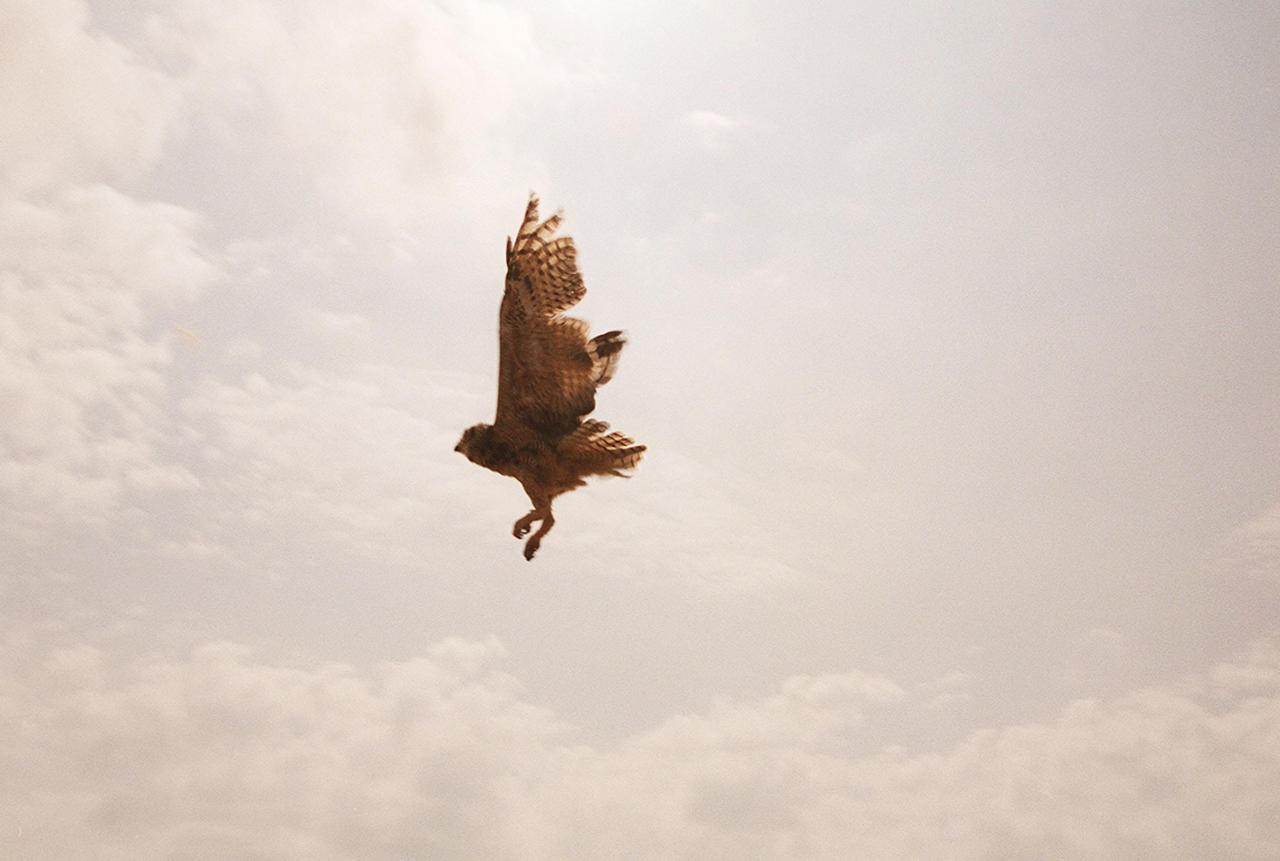
A great horned owl flies to freedom after its release at Cape Canaveral Air Force Station, Complex 25/29. The owl is one of two found in June on the floor of CCAFS Hangar G, where their nest was located. They were treated at a local veterinary hospital and then taken to the Florida Wildlife Hospital in Melbourne for care and rehabilitation before release
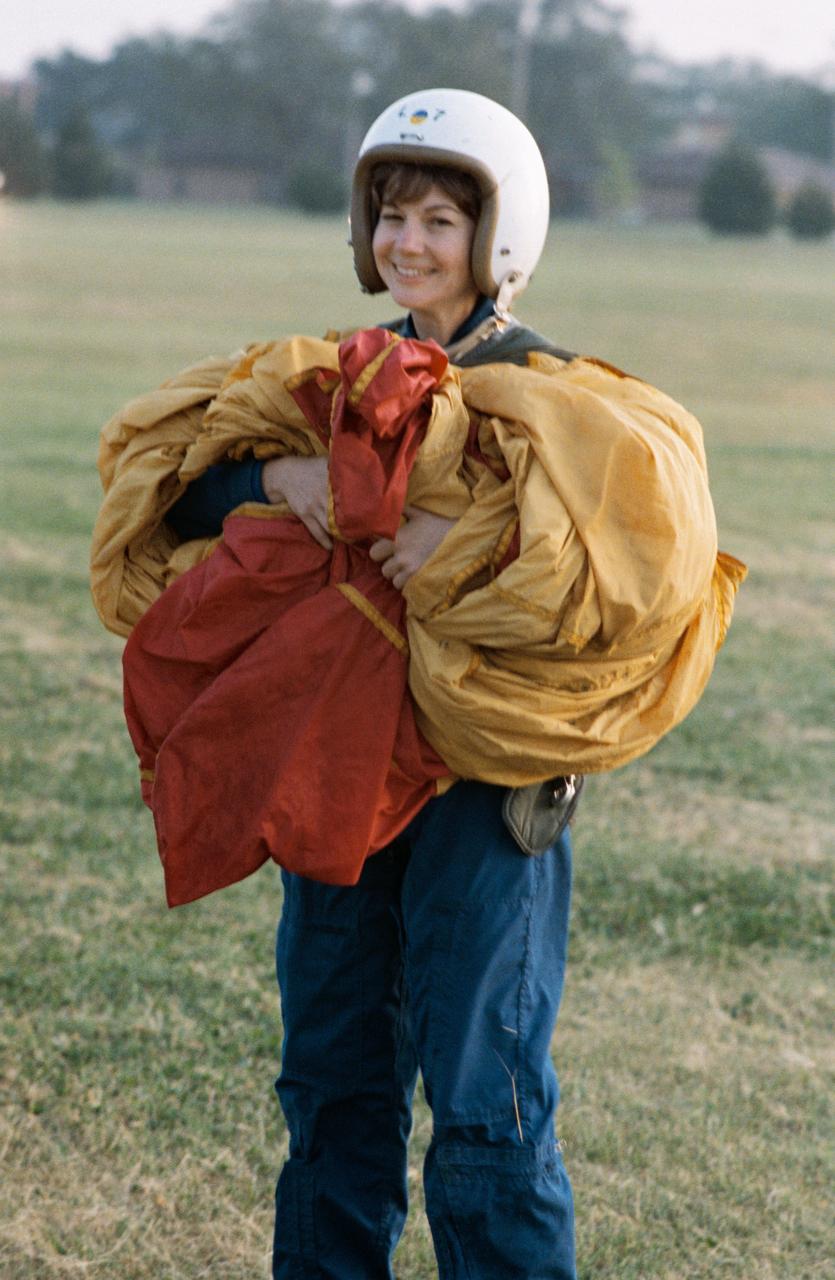
S93-38725 (12-14 Sept. 1992) --- Catherine G. Coleman, a member of the 1992 class of astronaut candidates at the Johnson Space Center (JSC), gathers up a parachute. The chute had just been used in one of many exercises experienced by the trainees at a three-day parachute/survival course hosted by Vance Air Force Base near Enid, Oklahoma. EDITOR?S NOTE: Coleman was later named as mission specialist for the United States Microgravity Laboratory (USML-2) mission, scheduled to fly as STS-73 in 1995.
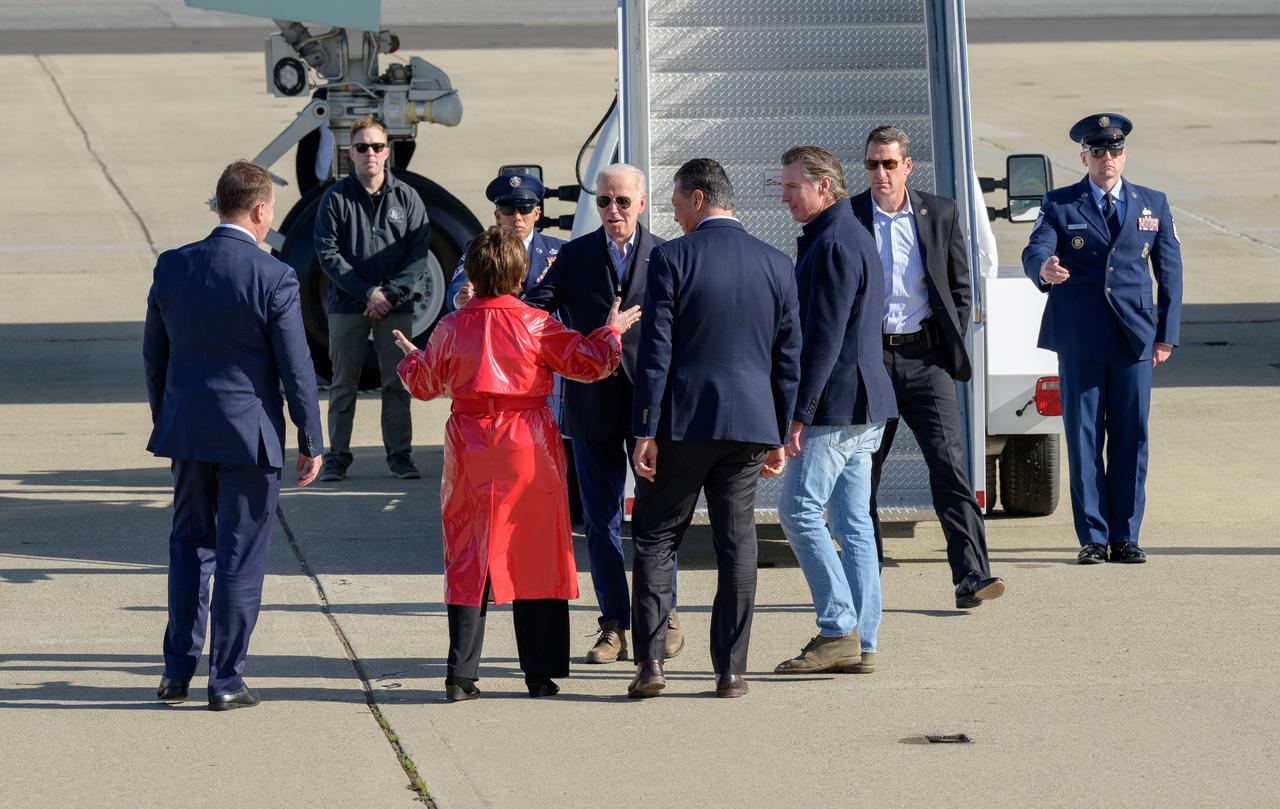
President Joe Biden landed aboard Air Force One at Moffett Federal Airfield, near NASA’s Ames Research Center in California’s Silicon Valley, Thursday, Jan. 19, 2023, en route to tour recent storm damage in the state. The President was greeted by Dr. David Korsmeyer, associate center director for research and technology at Ames, U.S. Congresswoman Anna G. Eshoo, U.S. Senator Alex Padilla, and California Governor Gavin Newsom.
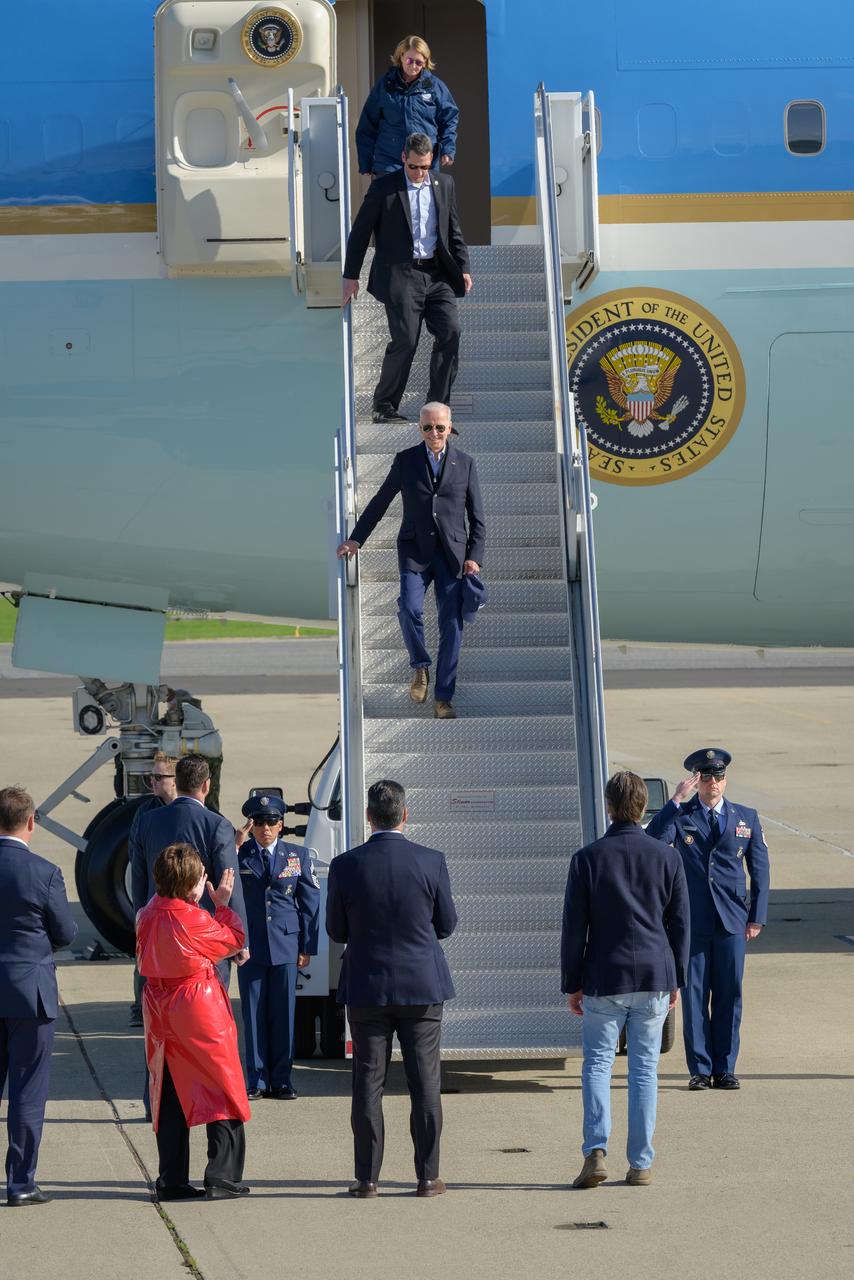
President Joe Biden landed aboard Air Force One at Moffett Federal Airfield, near NASA’s Ames Research Center in California’s Silicon Valley, Thursday, Jan. 19, 2023, en route to tour recent storm damage in the state. The President was greeted by Dr. David Korsmeyer, associate center director for research and technology at Ames, U.S. Congresswoman Anna G. Eshoo, U.S. Senator Alex Padilla, and California Governor Gavin Newsom.
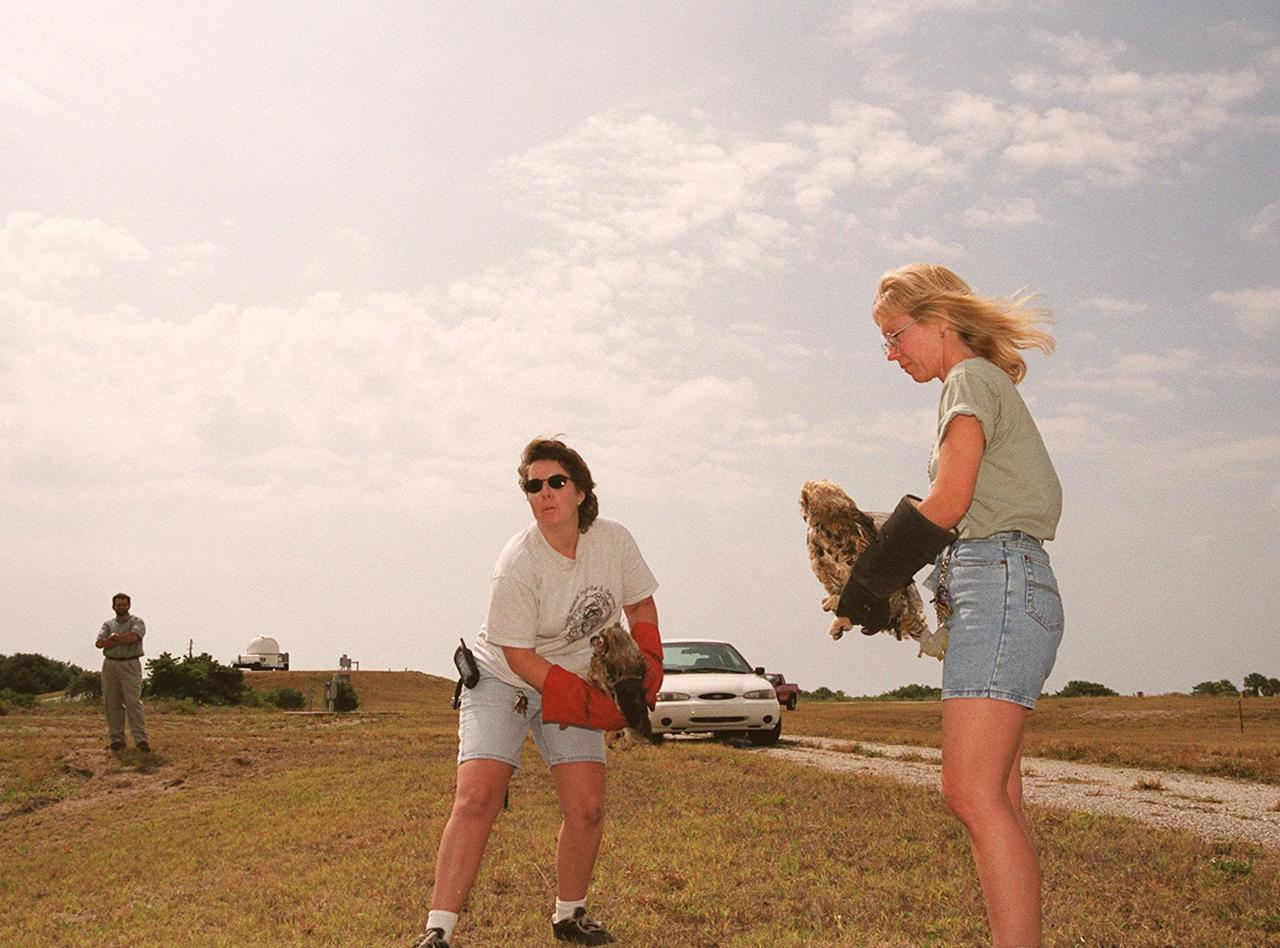
Eileen Olejarski (left), manager of Florida Wildlife Hospital, and Susan Small, director of the hospital, get ready to release two great horned owls at Cape Canaveral Air Force Station, Complex 25/29. The owls were found in June on the floor of CCAFS Hangar G, where their nest was located. They were treated at a local veterinary hospital and then taken to the Florida Wildlife Hospital in Melbourne for care and rehabilitation before release
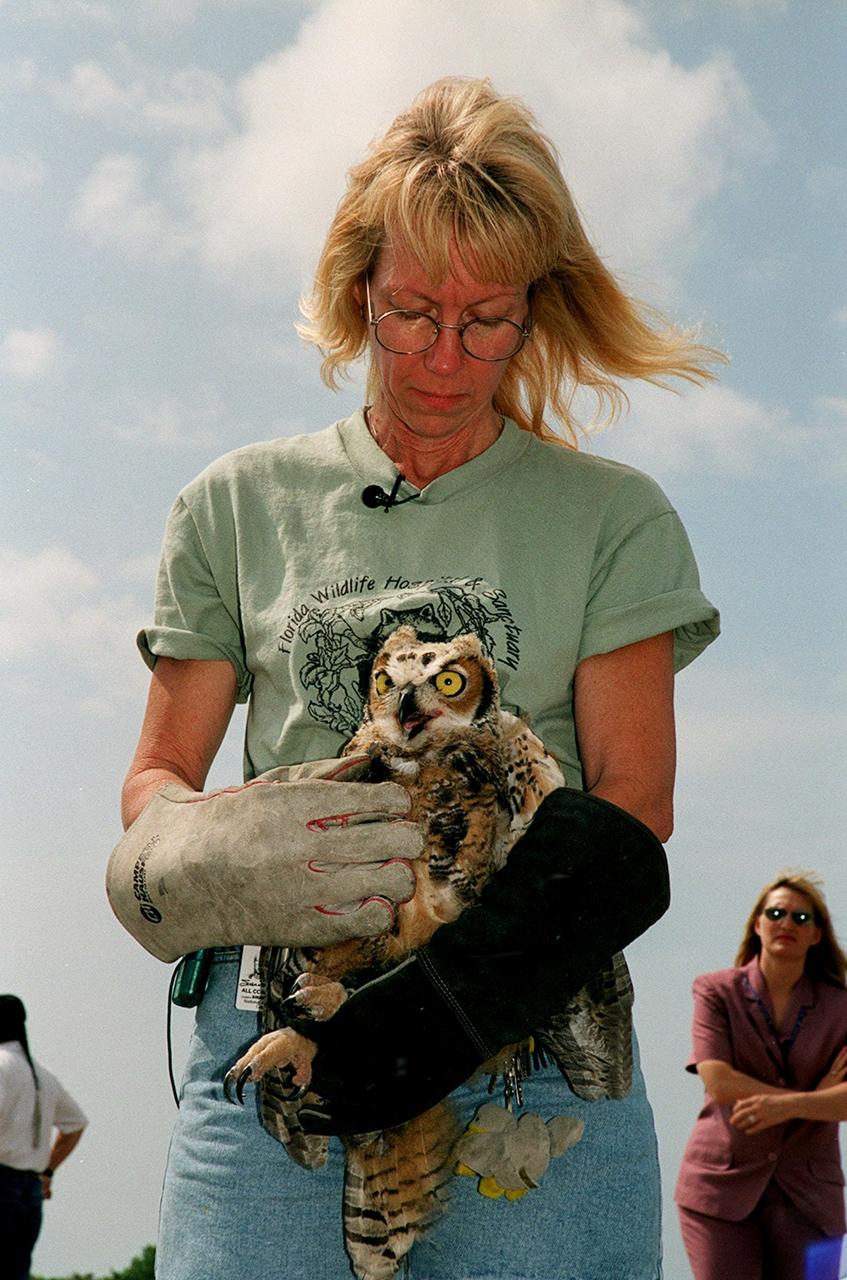
Susan Small, director of the Florida Wildlife Hospital, holds a great horned owl before releasing it at Cape Canaveral Air Force Station, Complex 25/29. The owl is one of two found in June on the floor of CCAFS Hangar G, where their nest was located. They were treated at a local veterinary hospital and then taken to the Florida Wildlife Hospital in Melbourne for care and rehabilitation before release
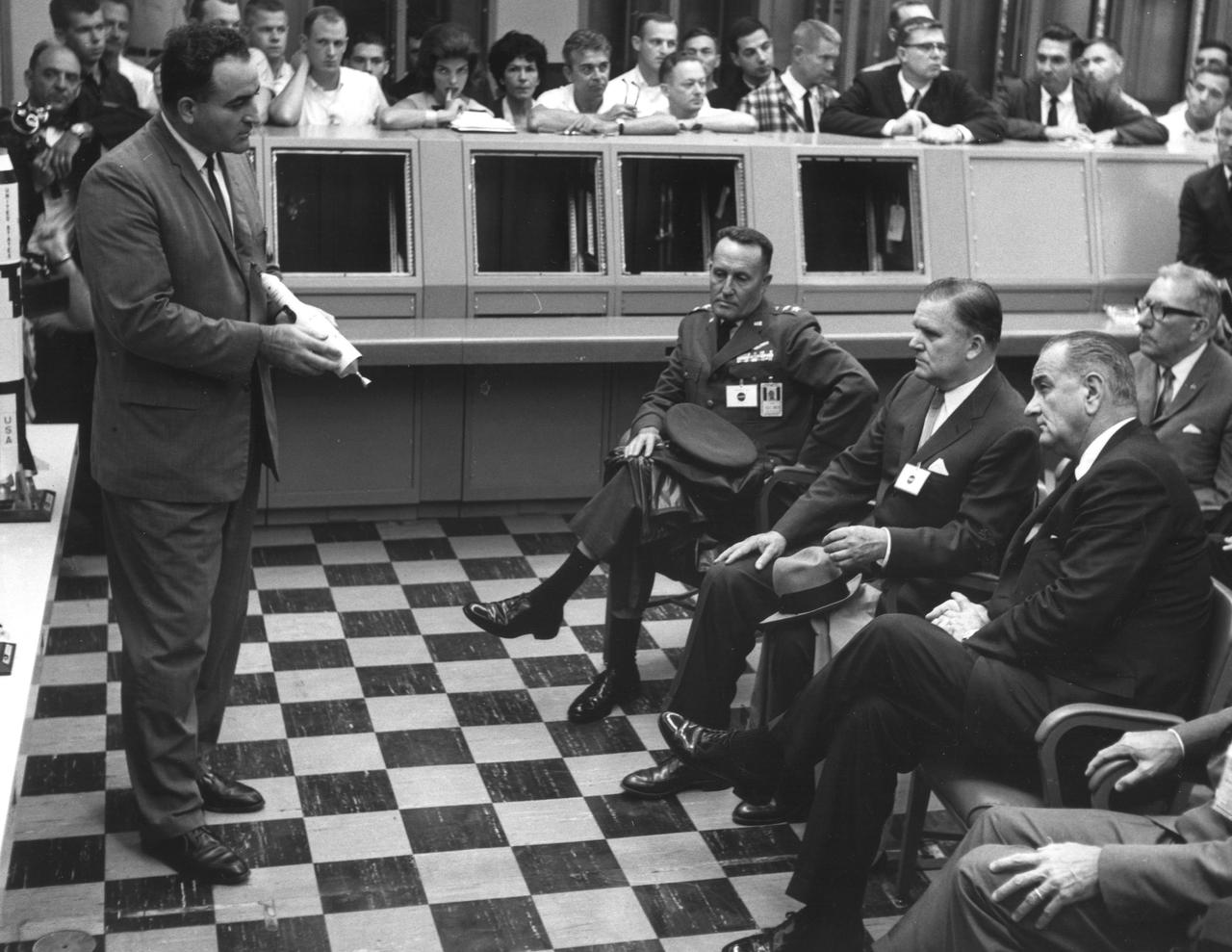
KENNEDY SPACE CENTER, FLA. -- President Lyndon B. Johnson (seated at right), NASA Administrator James T. Webb (seated, center) and Major General Vincent G. Huston (seated, left), commander, Air Force Eastern Test Range, are briefed by Rocco A. Petrone (left), director of Kennedy Space Center Launch Operations, during the Sept. 15, 1964 visit.
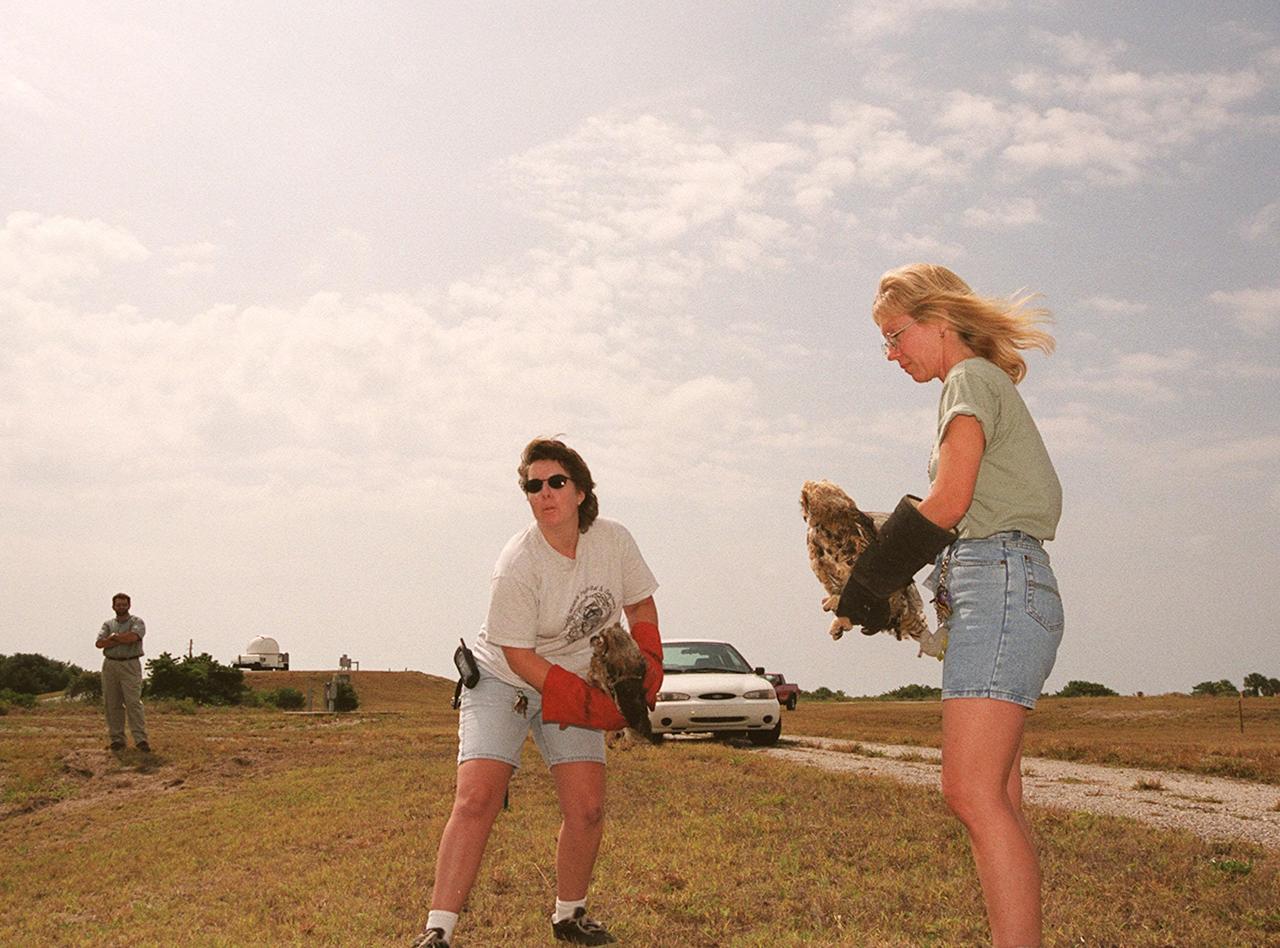
Eileen Olejarski (left), manager of Florida Wildlife Hospital, and Susan Small, director of the hospital, get ready to release two great horned owls at Cape Canaveral Air Force Station, Complex 25/29. The owls were found in June on the floor of CCAFS Hangar G, where their nest was located. They were treated at a local veterinary hospital and then taken to the Florida Wildlife Hospital in Melbourne for care and rehabilitation before release
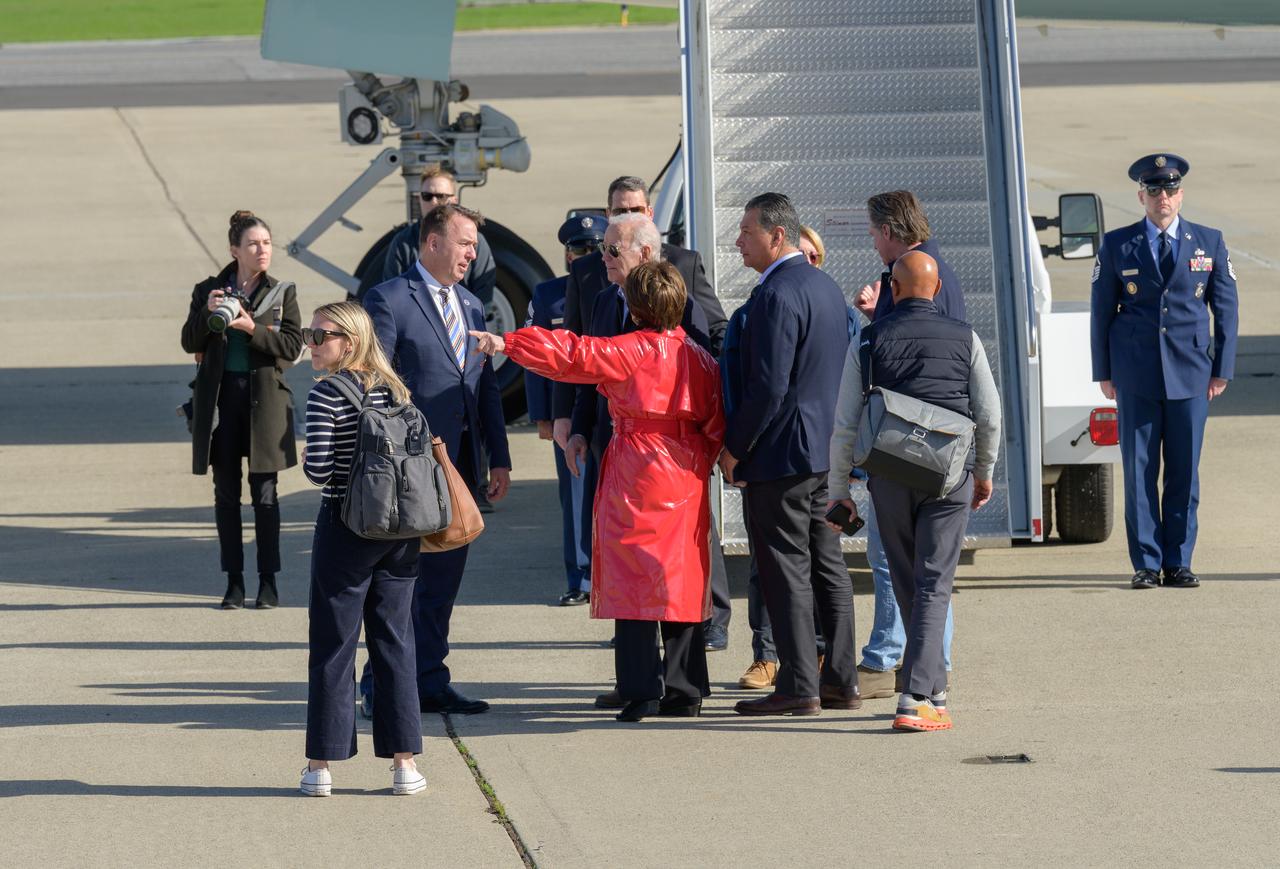
President Joe Biden landed aboard Air Force One at Moffett Federal Airfield, near NASA’s Ames Research Center in California’s Silicon Valley, Thursday, Jan. 19, 2023, en route to tour recent storm damage in the state. The President was greeted by Dr. David Korsmeyer, associate center director for research and technology at Ames, U.S. Congresswoman Anna G. Eshoo, U.S. Senator Alex Padilla, and California Governor Gavin Newsom.
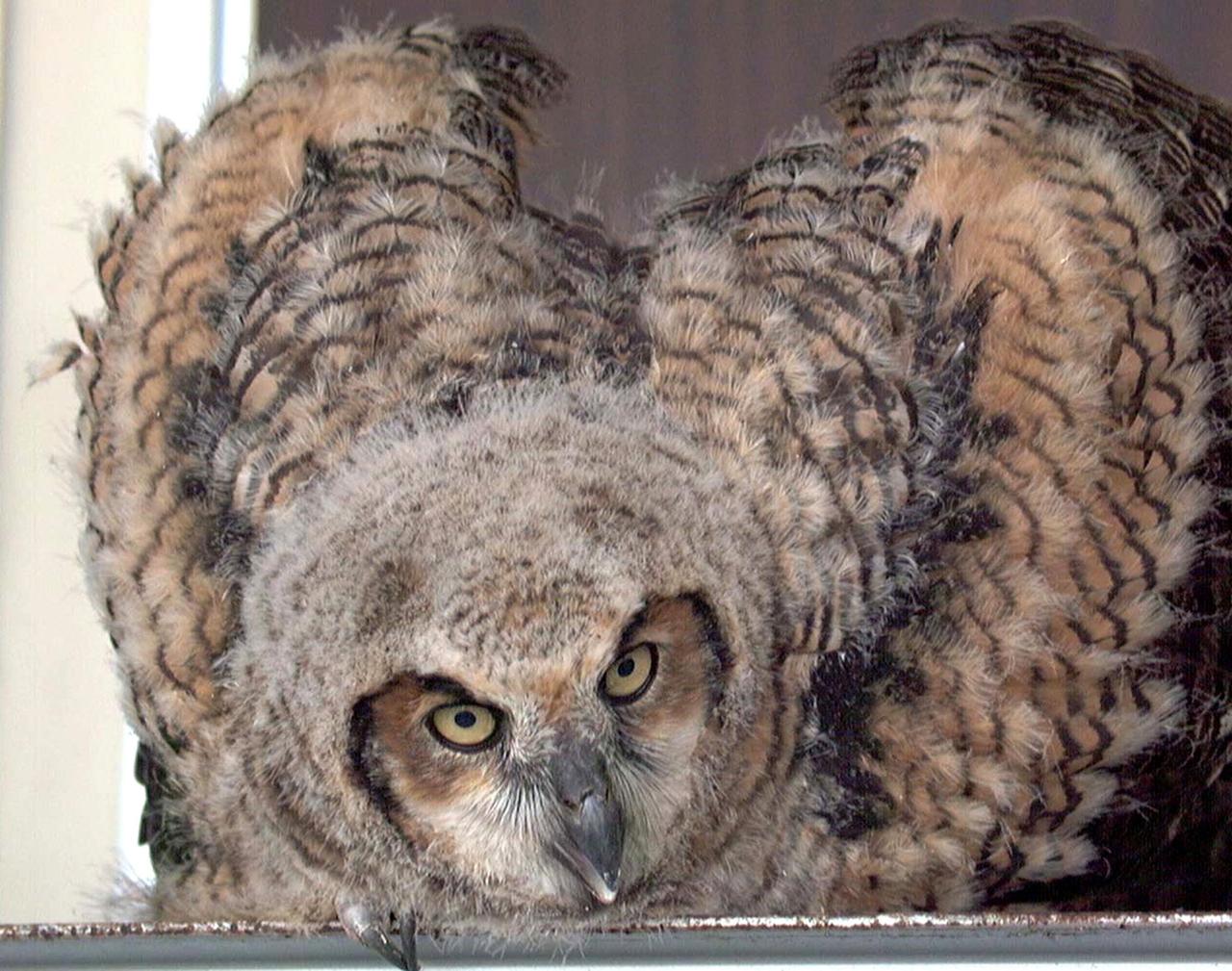
KENNEDY SPACE CENTER, FLA. -- A baby owl displays its wings at the photographer snapping its picture. The owl was found on the stairs inside Hangar G, Cape Canaveral Air Force Station. It had apparently tried to fly from a nest near the ceiling but couldn't get back to it. Workers called an Audubon rescue center near Orlando, which captured it and will ensure the bird is returned to the wild when it's ready.
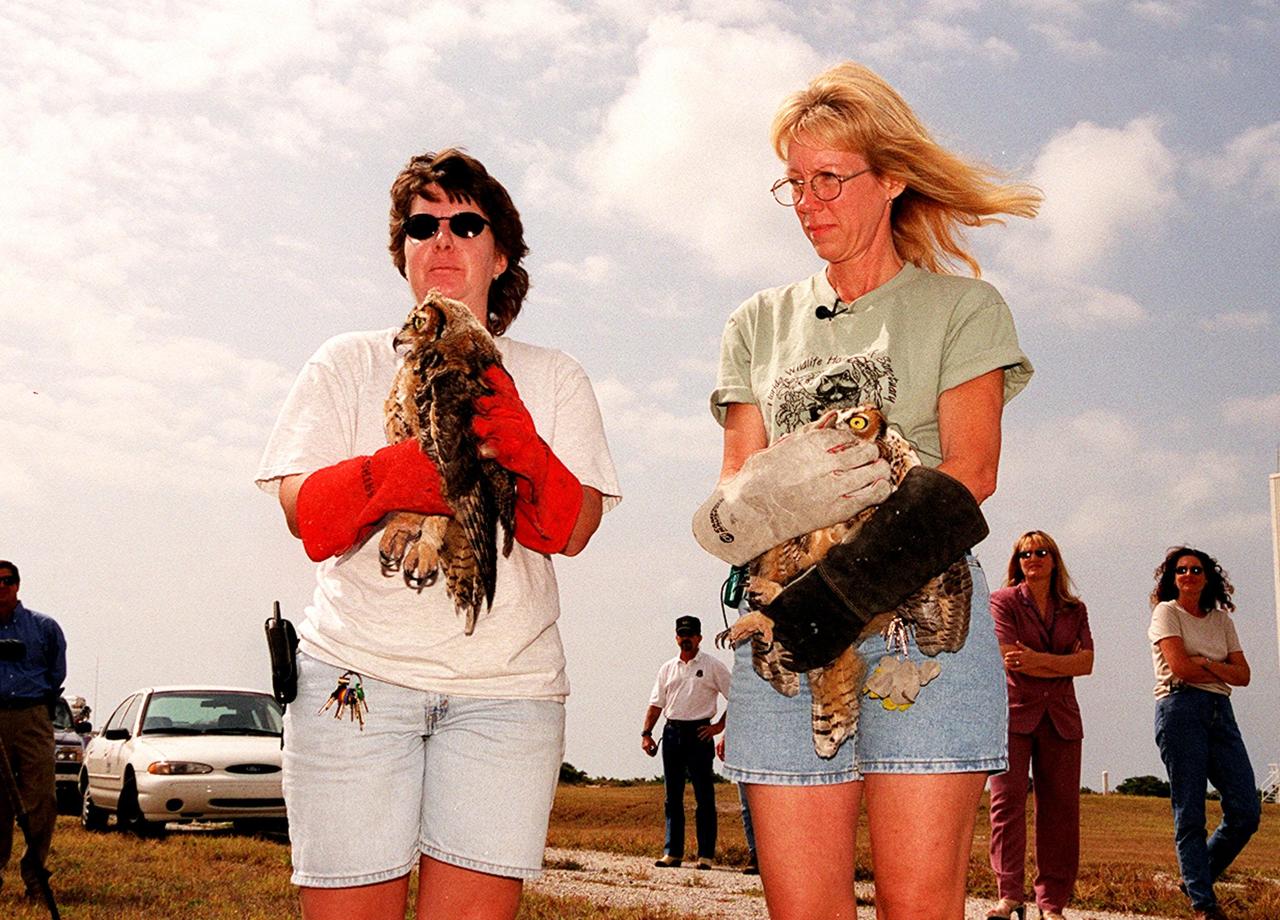
Eileen Olejarski (left), manager of Florida Wildlife Hospital, and Susan Small, director of the hospital, get ready to release two great horned owls at Cape Canaveral Air Force Station, Complex 25/29. The owls were found in June on the floor of CCAFS Hangar G, where their nest was located. They were treated at a local veterinary hospital and then taken to the Florida Wildlife Hospital in Melbourne for care and rehabilitation before release
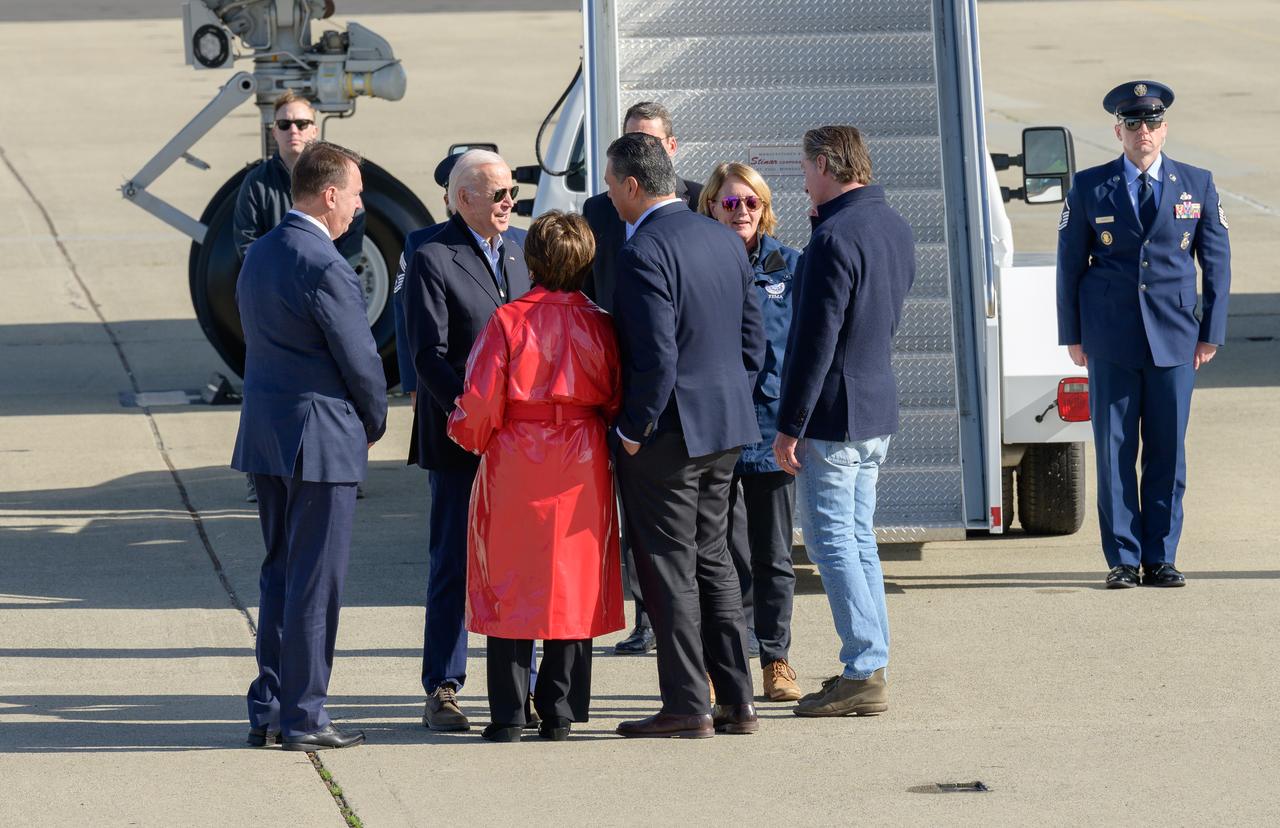
President Joe Biden landed aboard Air Force One at Moffett Federal Airfield, near NASA’s Ames Research Center in California’s Silicon Valley, Thursday, Jan. 19, 2023, en route to tour recent storm damage in the state. The President was greeted by Dr. David Korsmeyer, associate center director for research and technology at Ames, U.S. Congresswoman Anna G. Eshoo, U.S. Senator Alex Padilla, and California Governor Gavin Newsom.
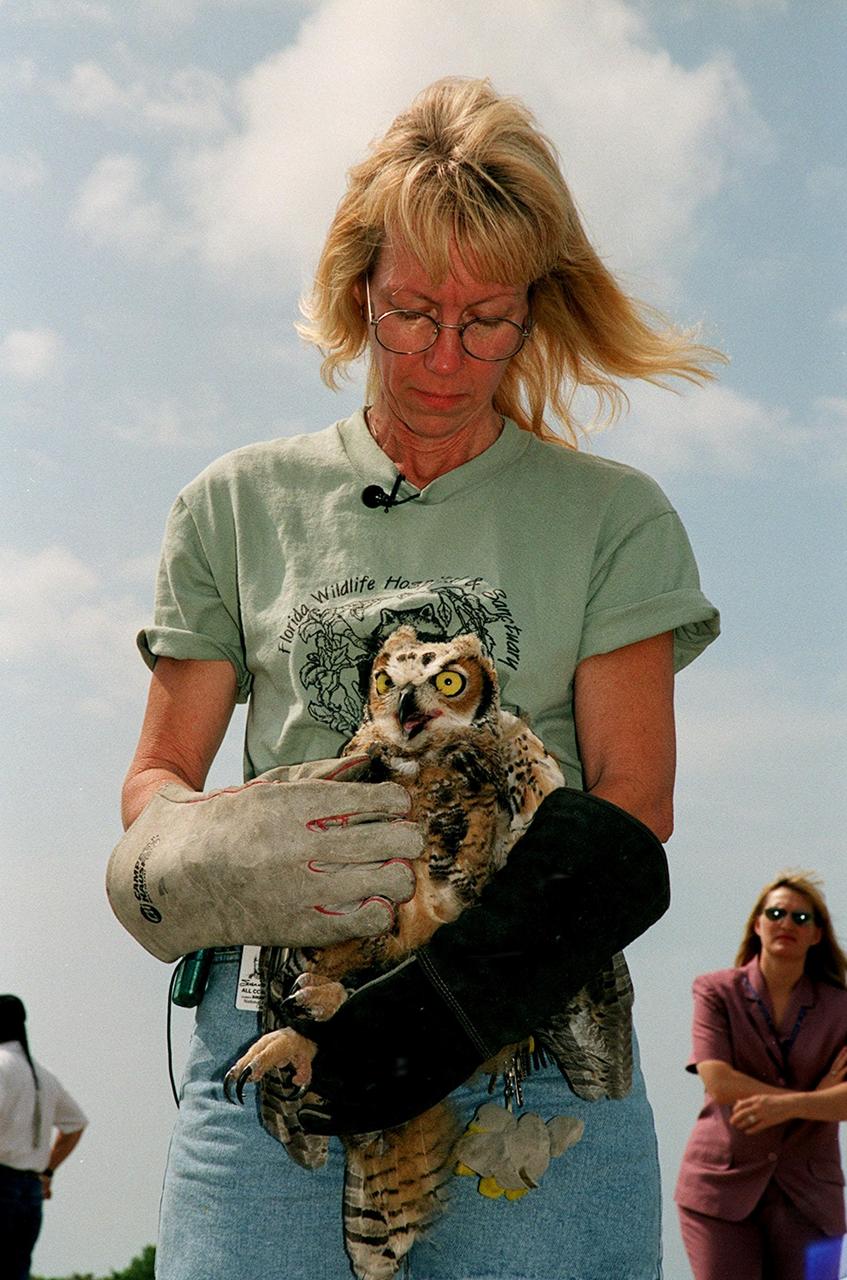
Susan Small, director of the Florida Wildlife Hospital, holds a great horned owl before releasing it at Cape Canaveral Air Force Station, Complex 25/29. The owl is one of two found in June on the floor of CCAFS Hangar G, where their nest was located. They were treated at a local veterinary hospital and then taken to the Florida Wildlife Hospital in Melbourne for care and rehabilitation before release
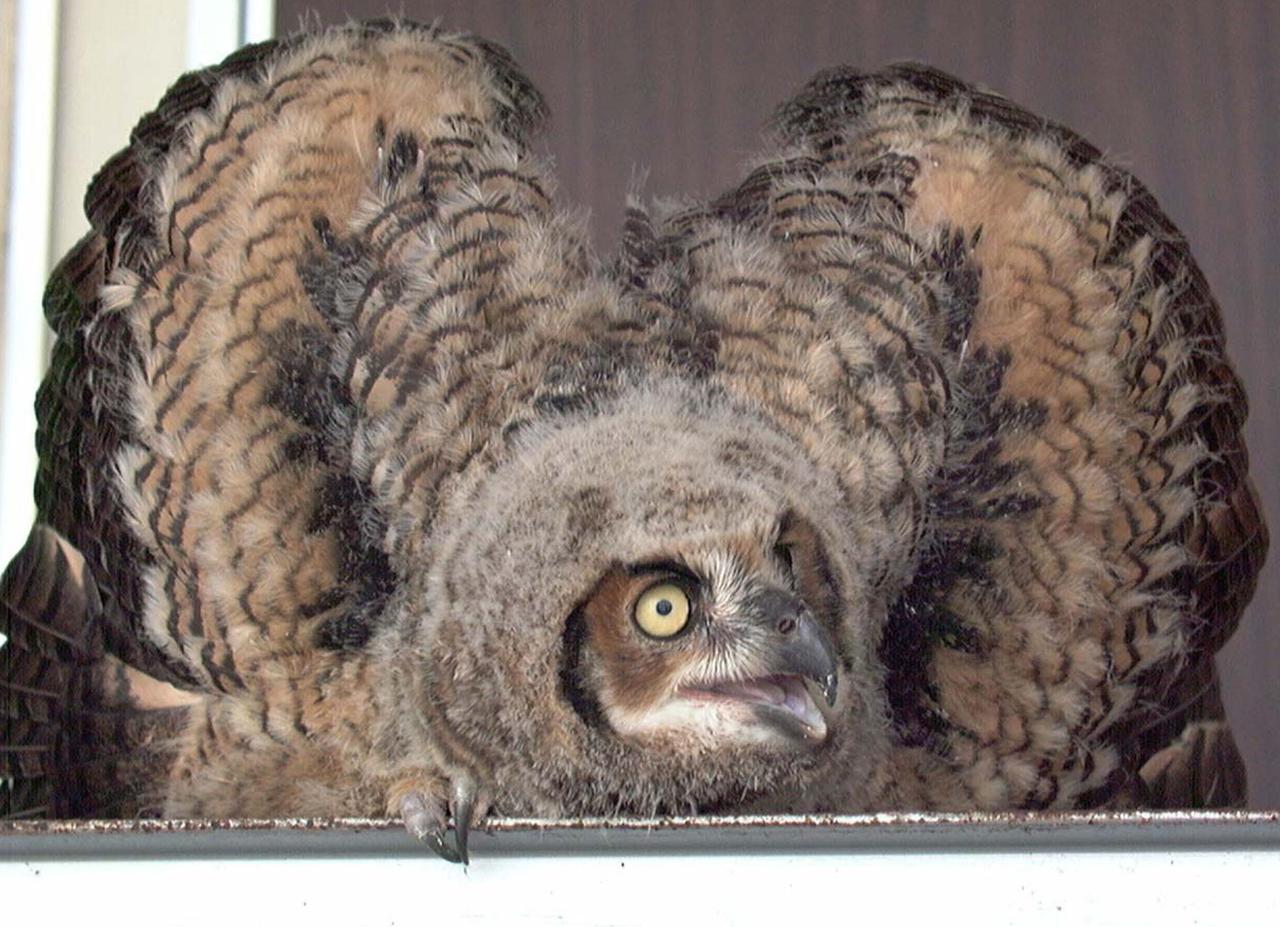
KENNEDY SPACE CENTER, FLA. -- A baby owl, possibly a screech owl, shows its fear and resentment of the photographer snapping its picture. The owl was found on the stairs inside Hangar G, Cape Canaveral Air Force Station. It had apparently tried to fly from a nest near the ceiling but couldn't get back to it. Workers called an Audubon rescue center near Orlando, which captured it and will ensure the bird is returned to the wild when it's ready
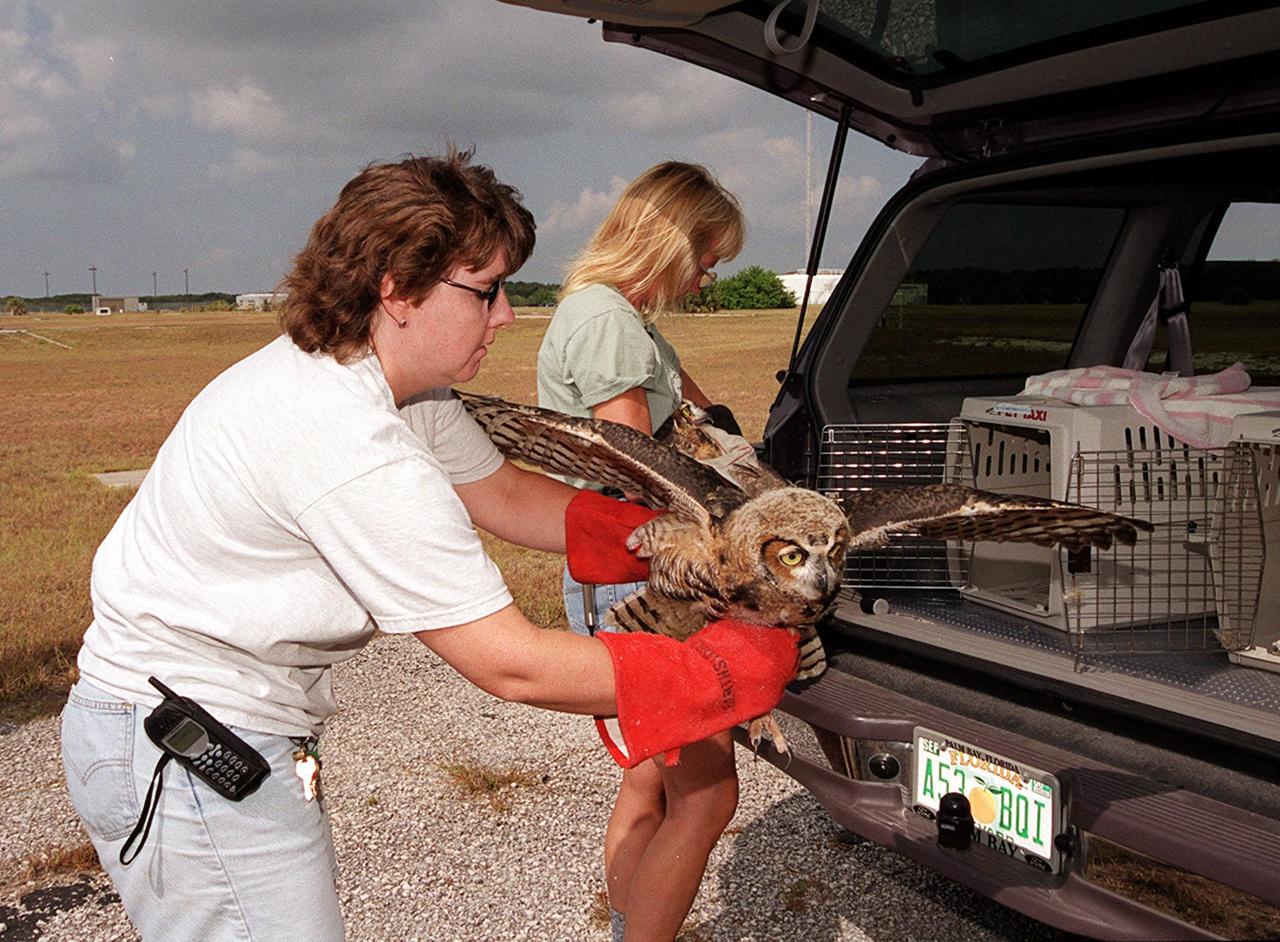
Eileen Olejarski (left), manager of Florida Wildlife Hospital, and Susan Small, director of the hospital, remove two great horned owls from the vehicle before releasing them at Cape Canaveral Air Force Station, Complex 25/29. The owls were found in June on the floor of CCAFS Hangar G, where their nest was located. They were treated at a local veterinary hospital and then taken to the Florida Wildlife Hospital in Melbourne for care and rehabilitation before release.
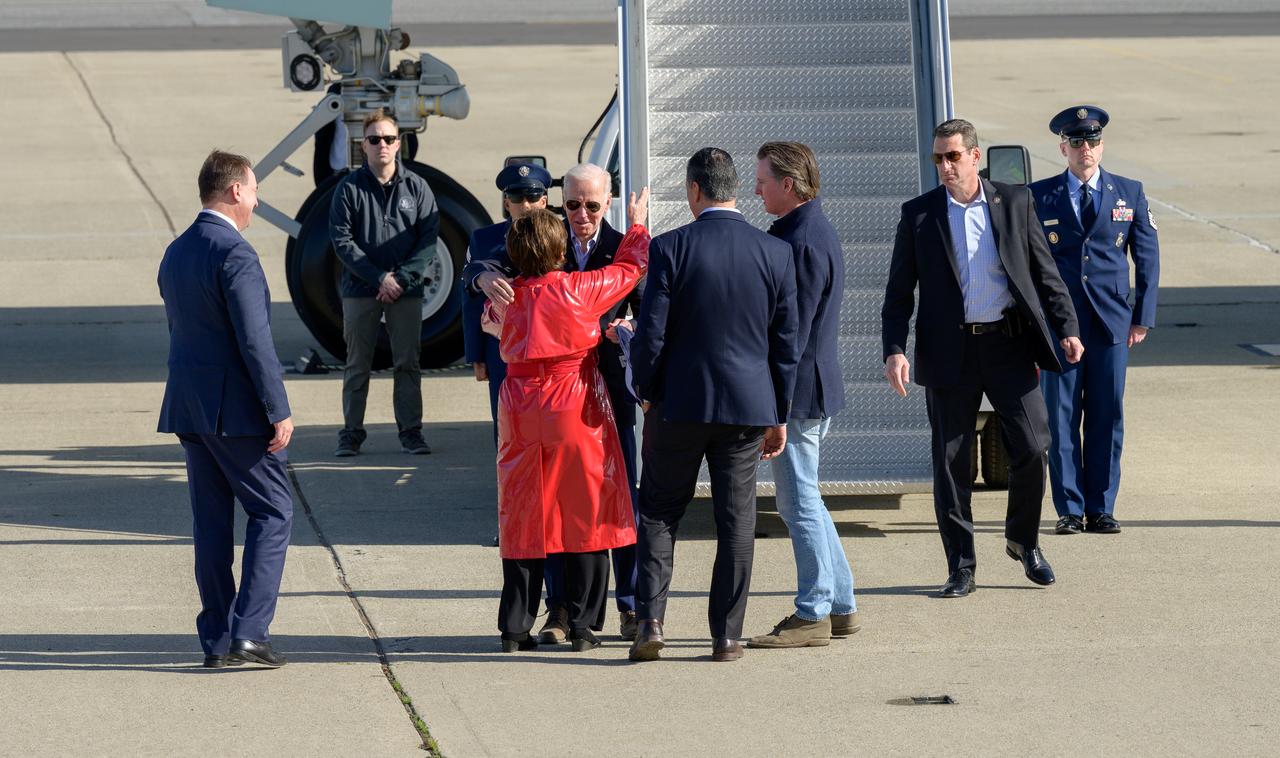
President Joe Biden landed aboard Air Force One at Moffett Federal Airfield, near NASA’s Ames Research Center in California’s Silicon Valley, Thursday, Jan. 19, 2023, en route to tour recent storm damage in the state. The President was greeted by Dr. David Korsmeyer, associate center director for research and technology at Ames, U.S. Congresswoman Anna G. Eshoo, U.S. Senator Alex Padilla, and California Governor Gavin Newsom.
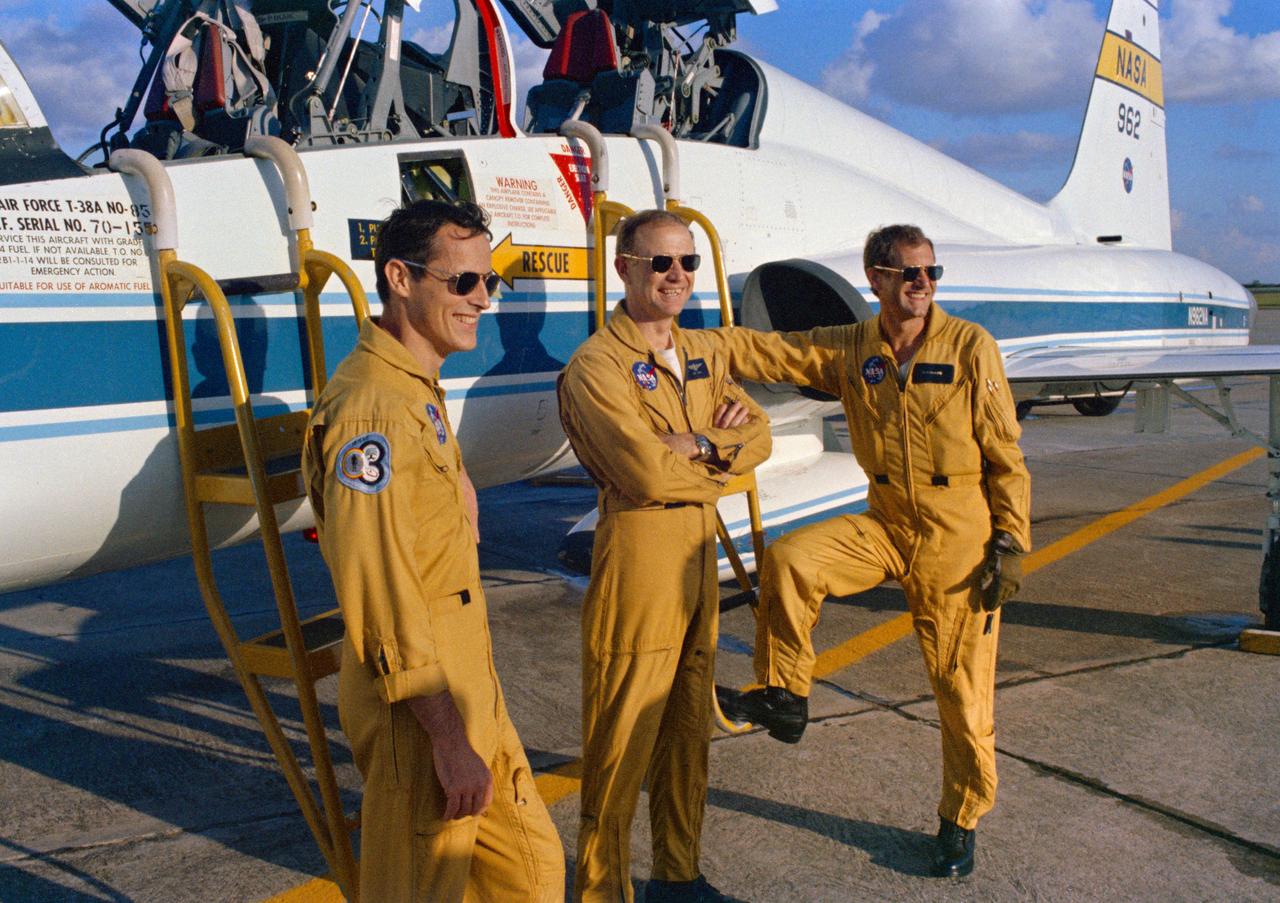
S73-36766 (November 1973) --- The prime crewmen of the third manned Skylab mission (Skylab 4) pause at a USAF T-38A jet at Ellington Air Force Base, Texas before flying to Kennedy Space Center (KSC) at Cape Canaveral, Florida. Skylab 4 crewmen are astronaut Gerald P. Carr, center, commander; scientist-astronaut Edward G. Gibson, science pilot, left; and astronaut William R. Pogue, pilot. Photo credit: NASA
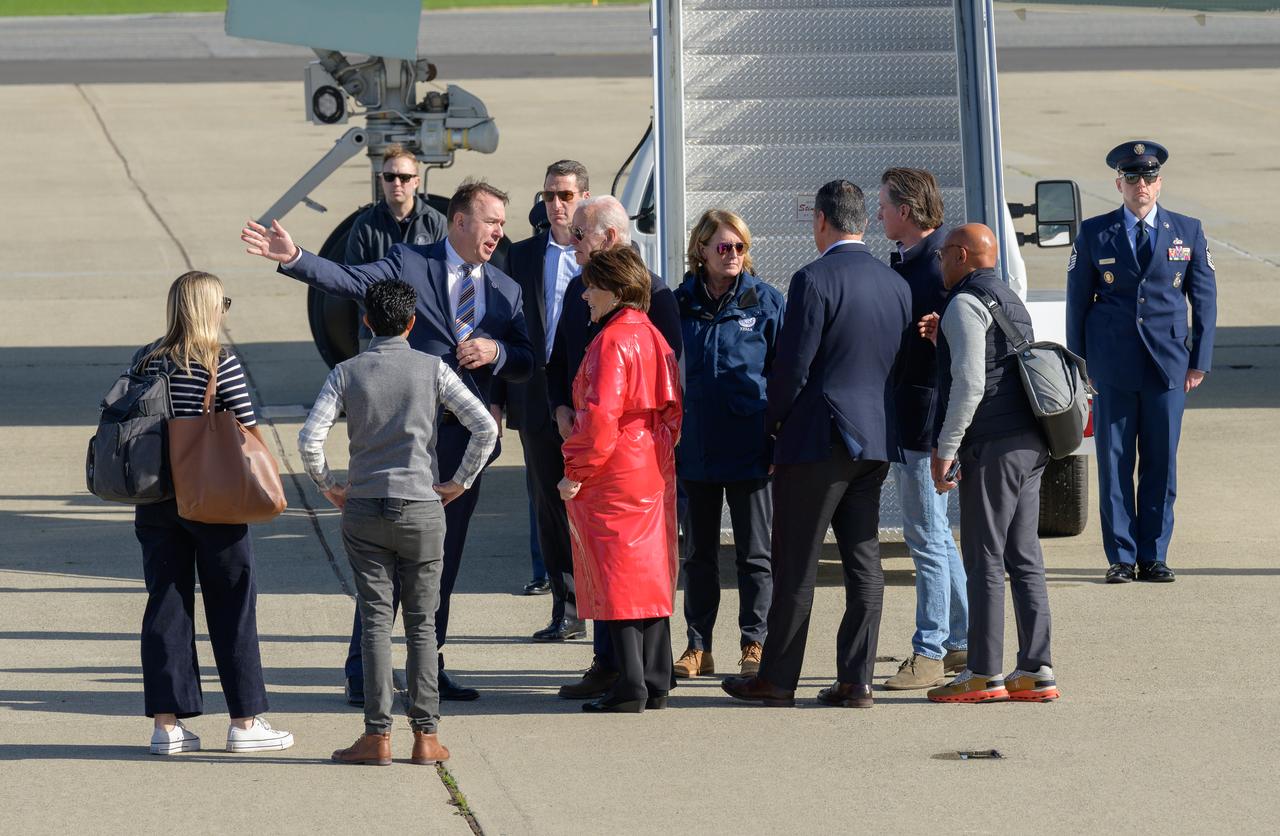
President Joe Biden landed aboard Air Force One at Moffett Federal Airfield, near NASA’s Ames Research Center in California’s Silicon Valley, Thursday, Jan. 19, 2023, en route to tour recent storm damage in the state. The President was greeted by Dr. David Korsmeyer, associate center director for research and technology at Ames, U.S. Congresswoman Anna G. Eshoo, U.S. Senator Alex Padilla, and California Governor Gavin Newsom.
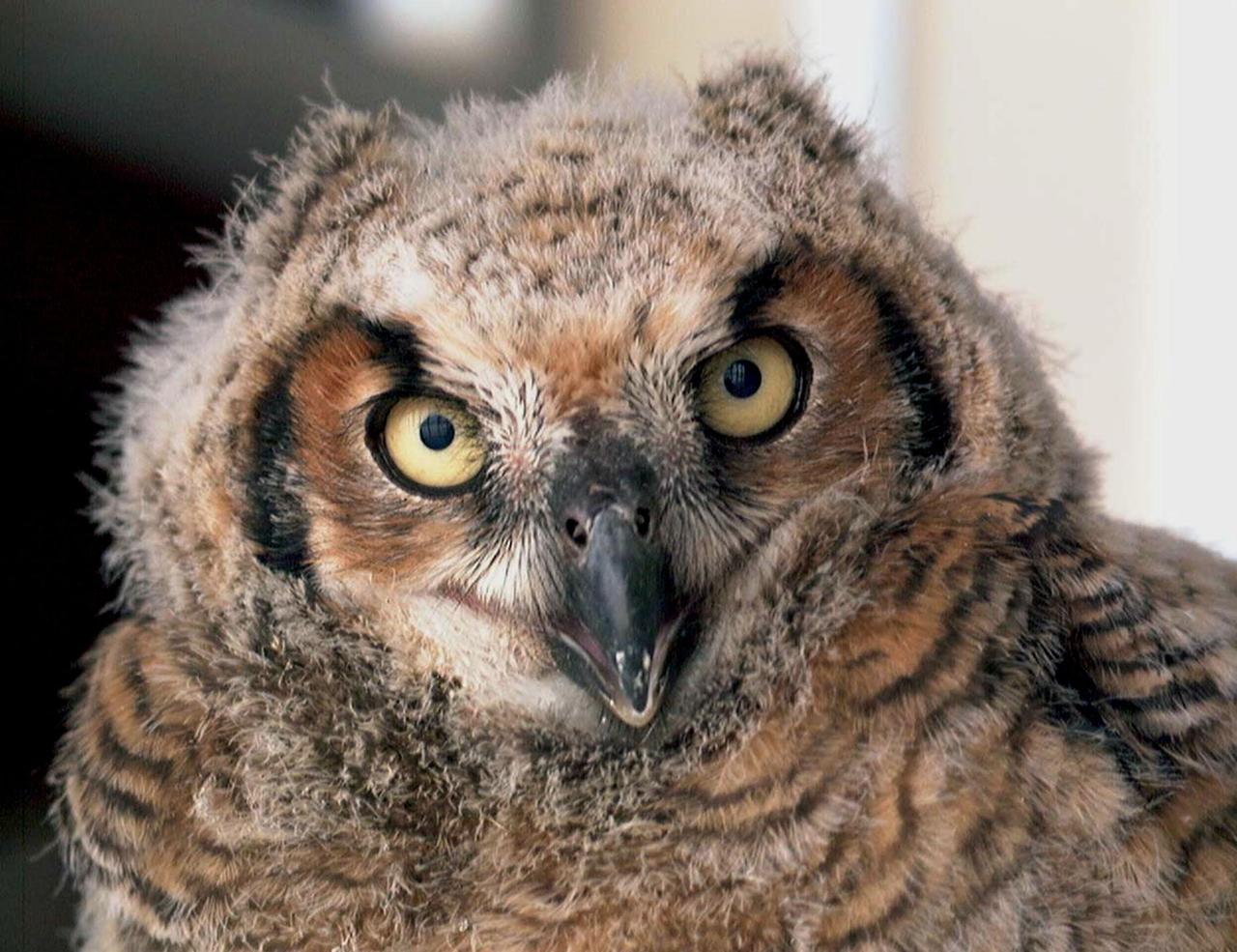
KENNEDY SPACE CENTER, FLA. -- A baby owl, possibly a screech owl, stares at the photographer snapping its picture. The owl was found on the stairs inside Hangar G, Cape Canaveral Air Force Station. It had apparently tried to fly from a nest near the ceiling but couldn't get back to it. Workers called an Audubon rescue center near Orlando, which captured it and will ensure the bird is returned to the wild when it's ready
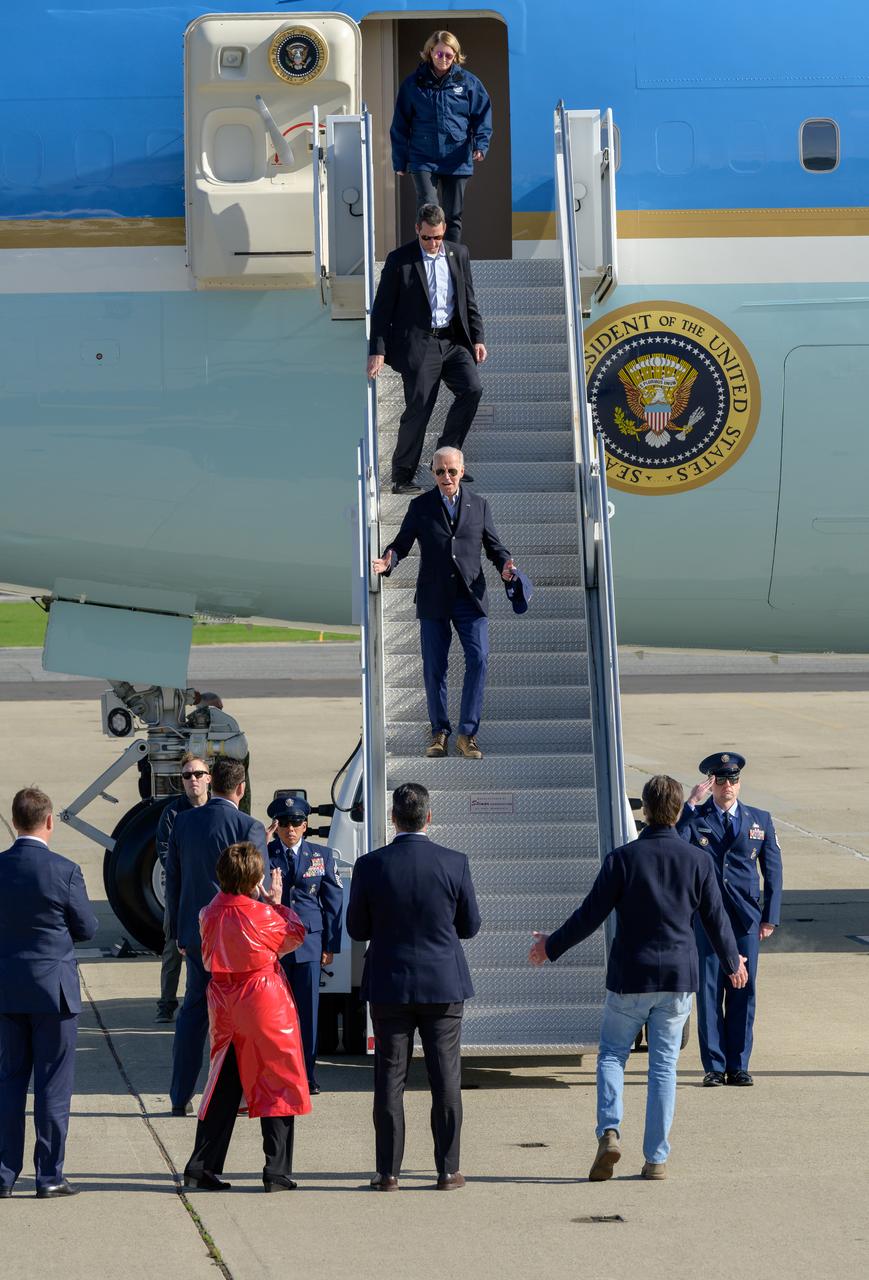
President Joe Biden landed aboard Air Force One at Moffett Federal Airfield, near NASA’s Ames Research Center in California’s Silicon Valley, Thursday, Jan. 19, 2023, en route to tour recent storm damage in the state. The President was greeted by Dr. David Korsmeyer, associate center director for research and technology at Ames, U.S. Congresswoman Anna G. Eshoo, U.S. Senator Alex Padilla, and California Governor Gavin Newsom.
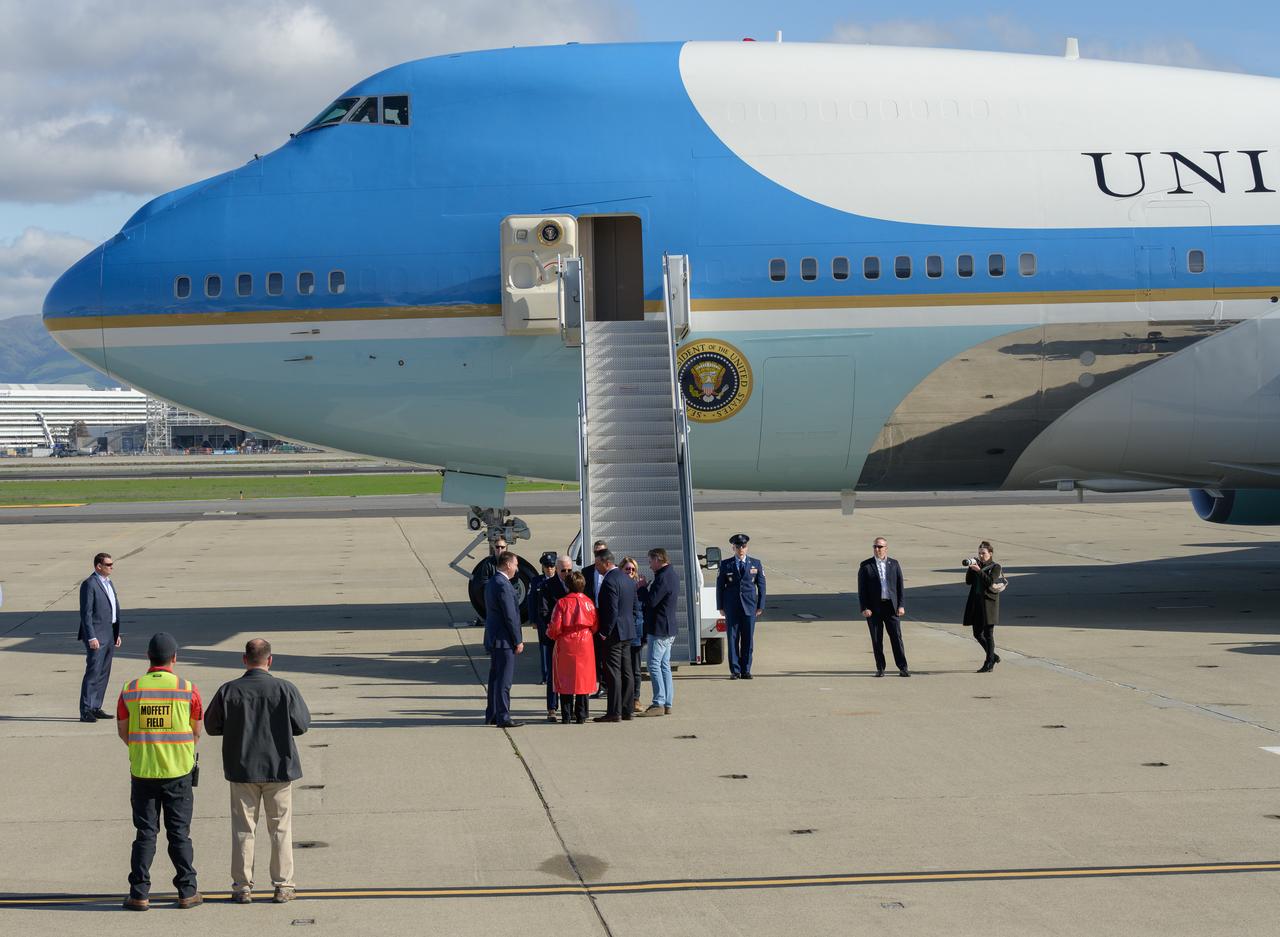
President Joe Biden landed aboard Air Force One at Moffett Federal Airfield, near NASA’s Ames Research Center in California’s Silicon Valley, Thursday, Jan. 19, 2023, en route to tour recent storm damage in the state. The President was greeted by Dr. David Korsmeyer, associate center director for research and technology at Ames, U.S. Congresswoman Anna G. Eshoo, U.S. Senator Alex Padilla, and California Governor Gavin Newsom.
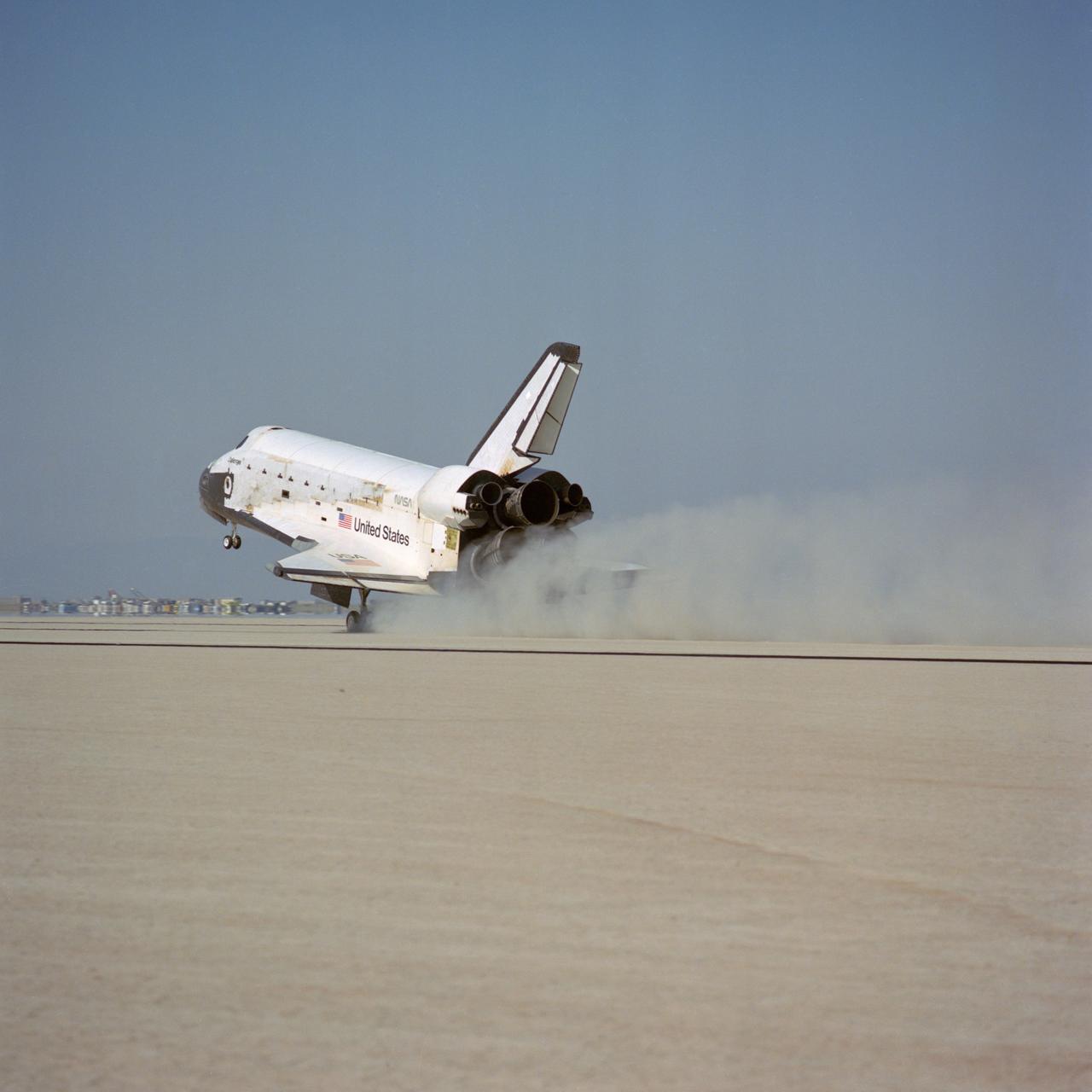
51B-S-071 (6 May 1985) --- The Space Shuttle Challenger lands on Runway 17 at Edwards Air Force Base to complete a week in space for its seven-member crew and a variety of payload. The vehicle stopped at 9:12:05 a.m. (PDT), May 6, 1985. Onboard were astronauts Robert F. Overmyer, Frederick D. Gregory, Don L. Lind, Norman E. Thagard and William E. Thornton of National Aeronautics and Space Administration (NASA); and payload specialists Lodewijk van den Berg and Taylor G. Wang.
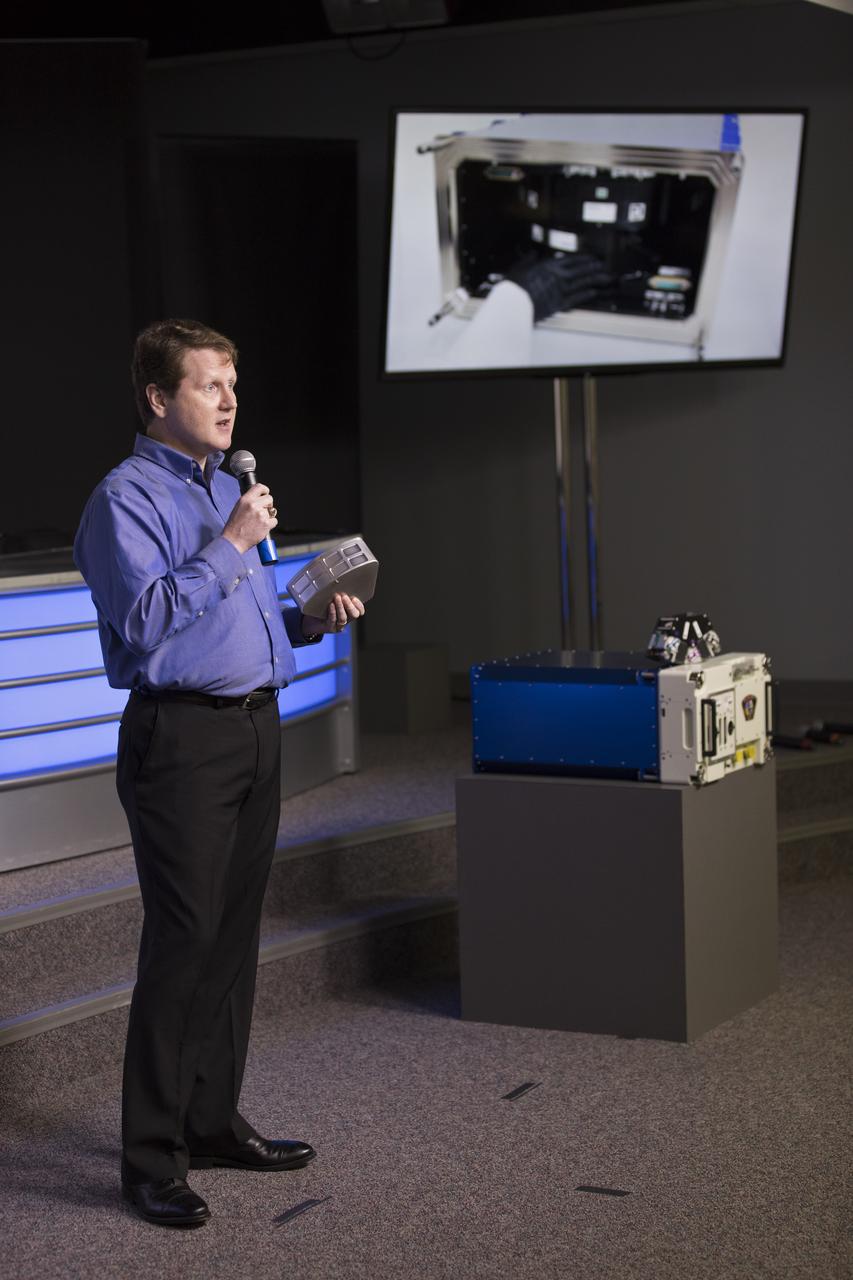
Rich Boling, vice president for corporate advancement at Techshot Inc., discusses the Multi-purpose Variable-g Platform, developed, owned and operated by Techshot. The new test bed will be able to host six separate experiment modules with samples such as plants, cells, protein crystals and fruit flies. The test bed is one of the scientific investigations that will be aboard a Dragon spacecraft scheduled for liftoff from Cape Canaveral Air Force Station's Space Launch Complex 40 at 4:30 p.m. EST, on April 2, 2018. The SpaceX Falcon 9 rocket will launch the company's 14th Commercial Resupply Services mission to the space station.
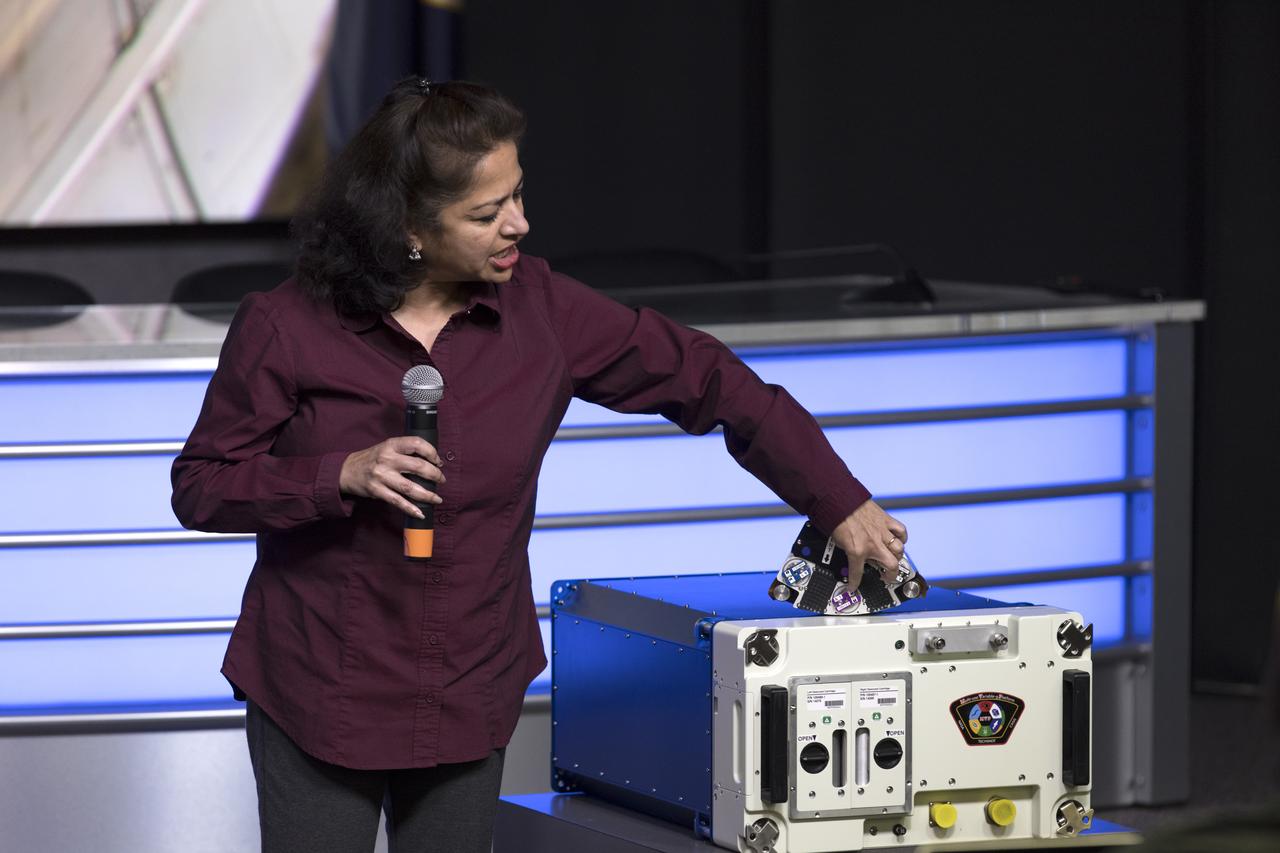
Sharmila Bhattacharya, a senior scientist at NASA's Ames Research Center, discusses the Multi-purpose Variable-g Platform, developed, owned and operated by Techshot. The new test bed will be able to host six separate experiment modules with samples such as plants, cells, protein crystals and fruit flies. The test bed is one of the scientific investigations that will be aboard a Dragon spacecraft scheduled for liftoff from Cape Canaveral Air Force Station's Space Launch Complex 40 at 4:30 p.m. EST, on April 2, 2018. The SpaceX Falcon 9 rocket will launch the company's 14th Commercial Resupply Services mission to the space station.
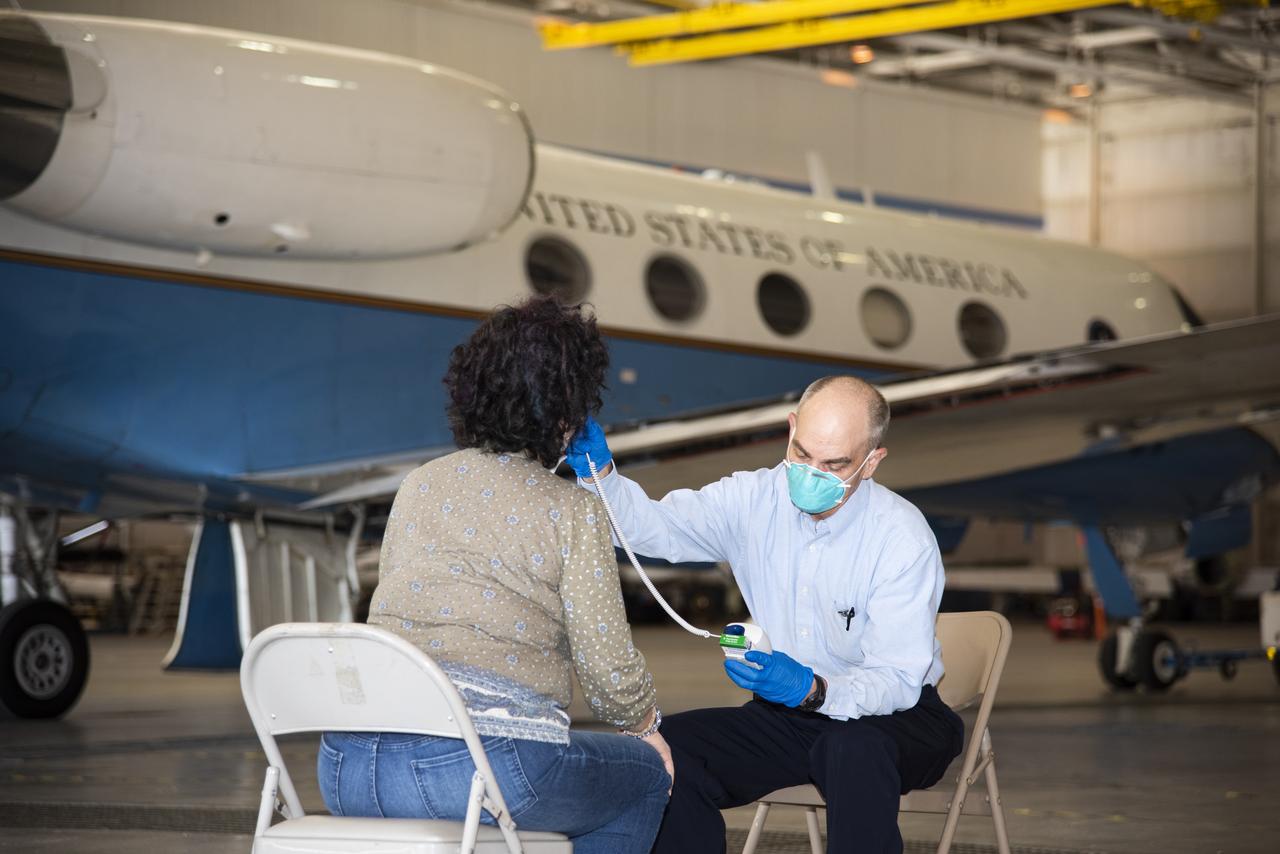
Dr. Dwight Peake, NASA’s Armstrong Flight Research Center chief medical officer and flight surgeon, confirms a NASA Jet Propulsion Laboratory (JPL) staff member is ready for flight. The two California NASA centers are working together to fly JPL staff on an Armstrong G-III aircraft from California to NASA’s Kennedy Space Center in Florida. JPL staff are completing critical work to ensure NASA’s Mars 2020 mission is ready on time.
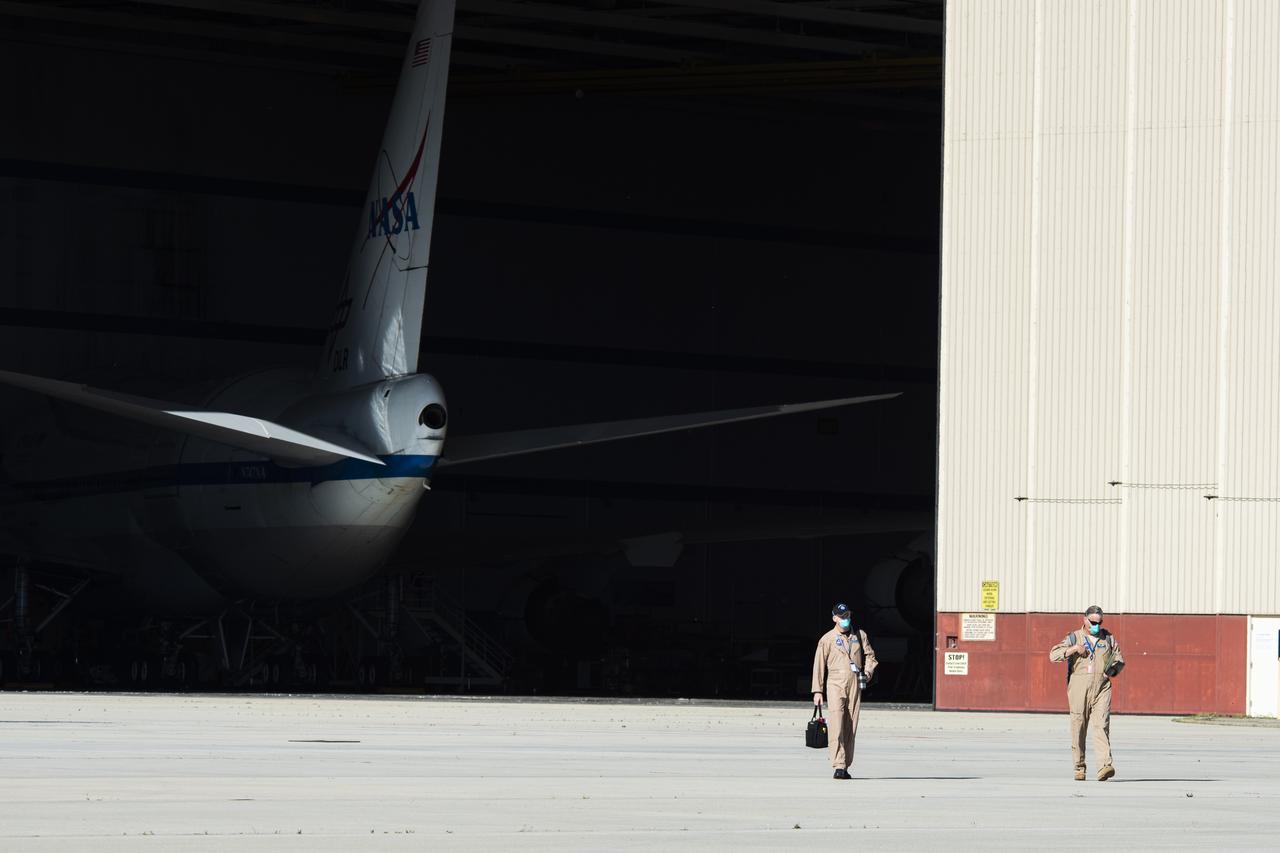
A flight crew from NASA's Armstrong Flight Research Center in California prepares to fly NASA's Jet Propulsion Laboratory (JPL) staff on an Armstrong G-III aircraft from California to NASA's Kennedy Space Center in Florida. JPL staff are completing critical work to ensure NASA's Mars 2020 mission is ready on time
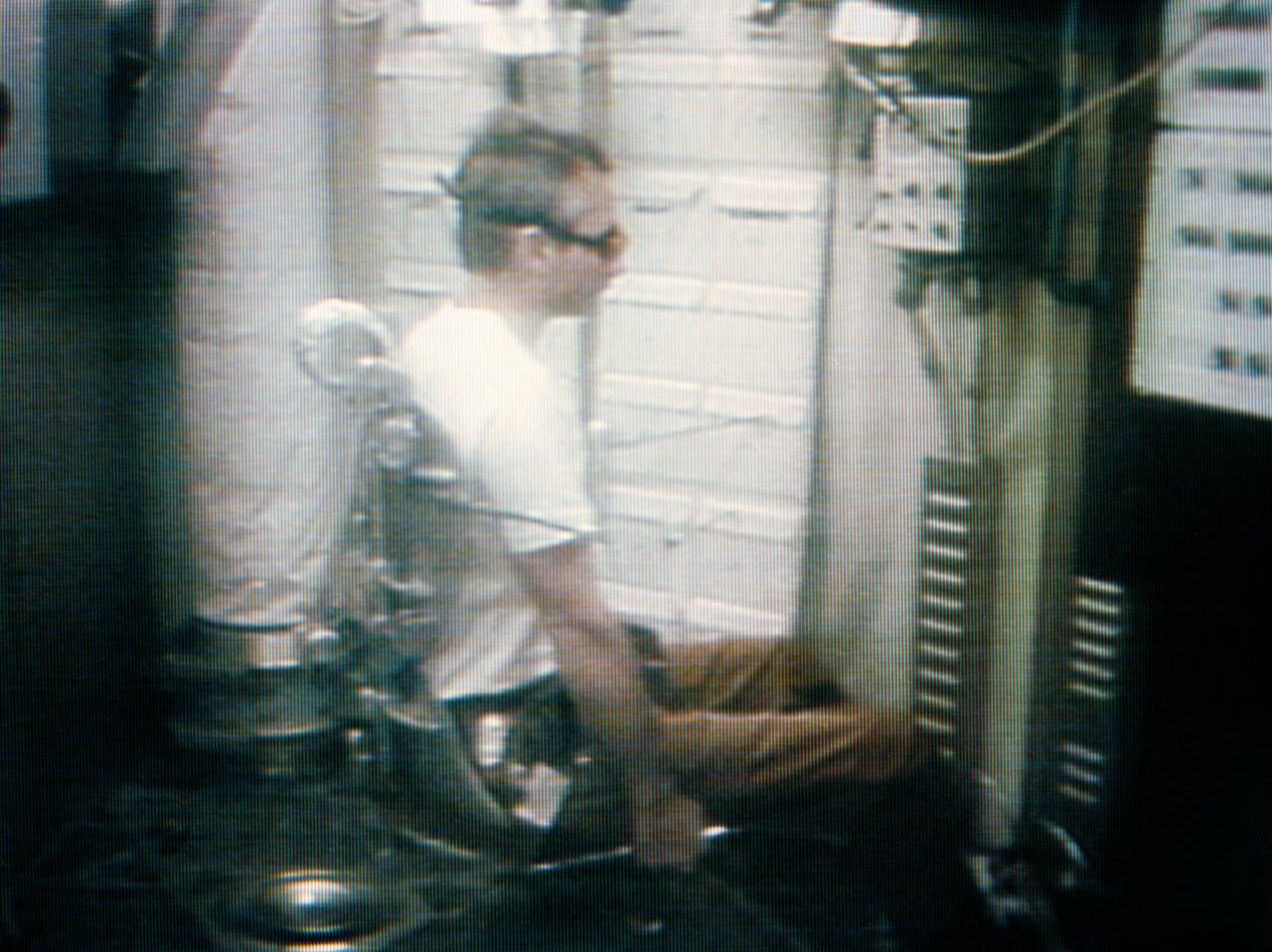
S73-34171 (9 Aug. 1973) --- Scientist-astronaut Owen K. Garriott, Skylab 3 science pilot, serves as test subject for the Skylab ?Human Vestibular Function? M131 Experiment, as seen in this photographic reproduction taken from a television transmission made by a color TV camera aboard the Skylab space station in Earth orbit. The objectives of the Skylab M131 experiment are to obtain data pertinent to establishing the validity of measurements of specific behavioral/physiological responses influenced by vestibular activity under one-g and zero-g conditions; to determine man?s adaptability to unusual vestibular conditions and predict habitability of future spacecraft conditions involving reduced gravity and Coriollis forces; and to measure the accuracy and variability in man?s judgment of spatial coordinates based on atypical gravity receptor cues and inadequate visual cures. Dr. Garriott is seated in the experiment?s litter chair which can rotate the test subject at predetermined rotational velocity or programmed acceleration/decelerational profile. Photo credit: NASA
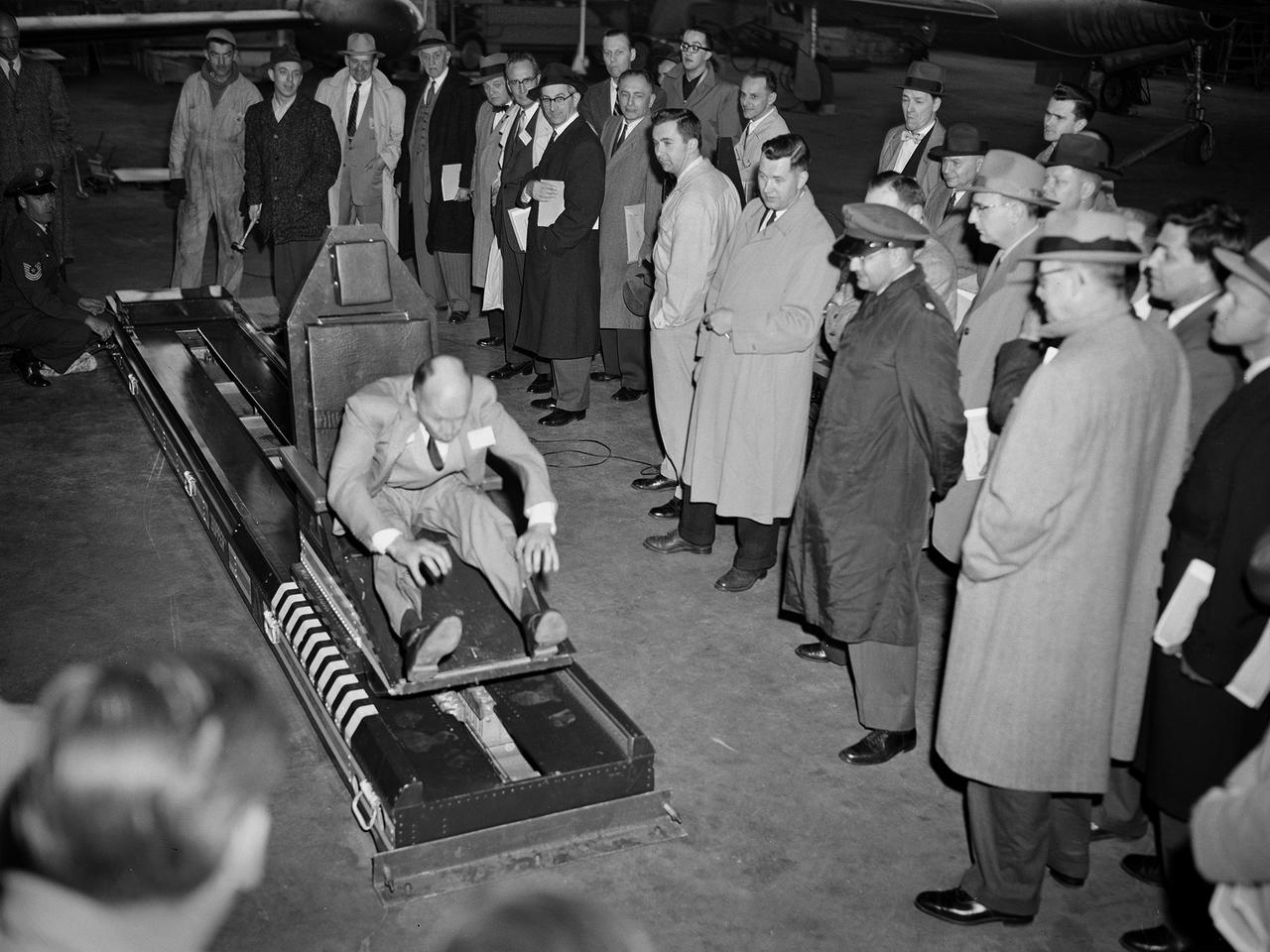
Howard Hasbrook volunteers for a demonstration of a scaled-down version of Lieutenant Colonel John Stapp’s rocket sled set up in the hangar at the National Advisory Committee for Aeronautics (NACA) Lewis Flight Propulsion Laboratory. In 1945 Stapp, an Air Force medical doctor, volunteered to participate in a deceleration program to study the human body’s tolerance to aircraft crash forces. A 1500-pound sled powered by rockets was installed in 1947 on a section of railroad track in the California desert. Stapp participated in 29 experiments over the next seven years and broke land and deceleration records. These tests studied the effects of acceleration, G-force, deceleration, and wind blast on humans. Stapp suffered broken bones and retinal hemorrhages, but suffered no permanent damage. NACA Lewis was conducting a series of crash impact studies in the mid-1950s using dummies in actual aircraft. Irving Pinkel, the director of the program, and Stapp became friends through their mutual interest in this field. In April 1956 Stapp visited the Cleveland lab to give a talk to the local section of the American Rocket Society that discussed issues relating to the escape of pilots from the cockpit of supersonic jet aircraft. That same week, NACA Lewis’ Pinkel, Gerard Pesman, Merritt Preston, and Dugald Black received the annual Laura Taber Barbour Air Safety Award for their work on the Crash Fire Program. Black and Preston are visible in the crowd in this photograph.
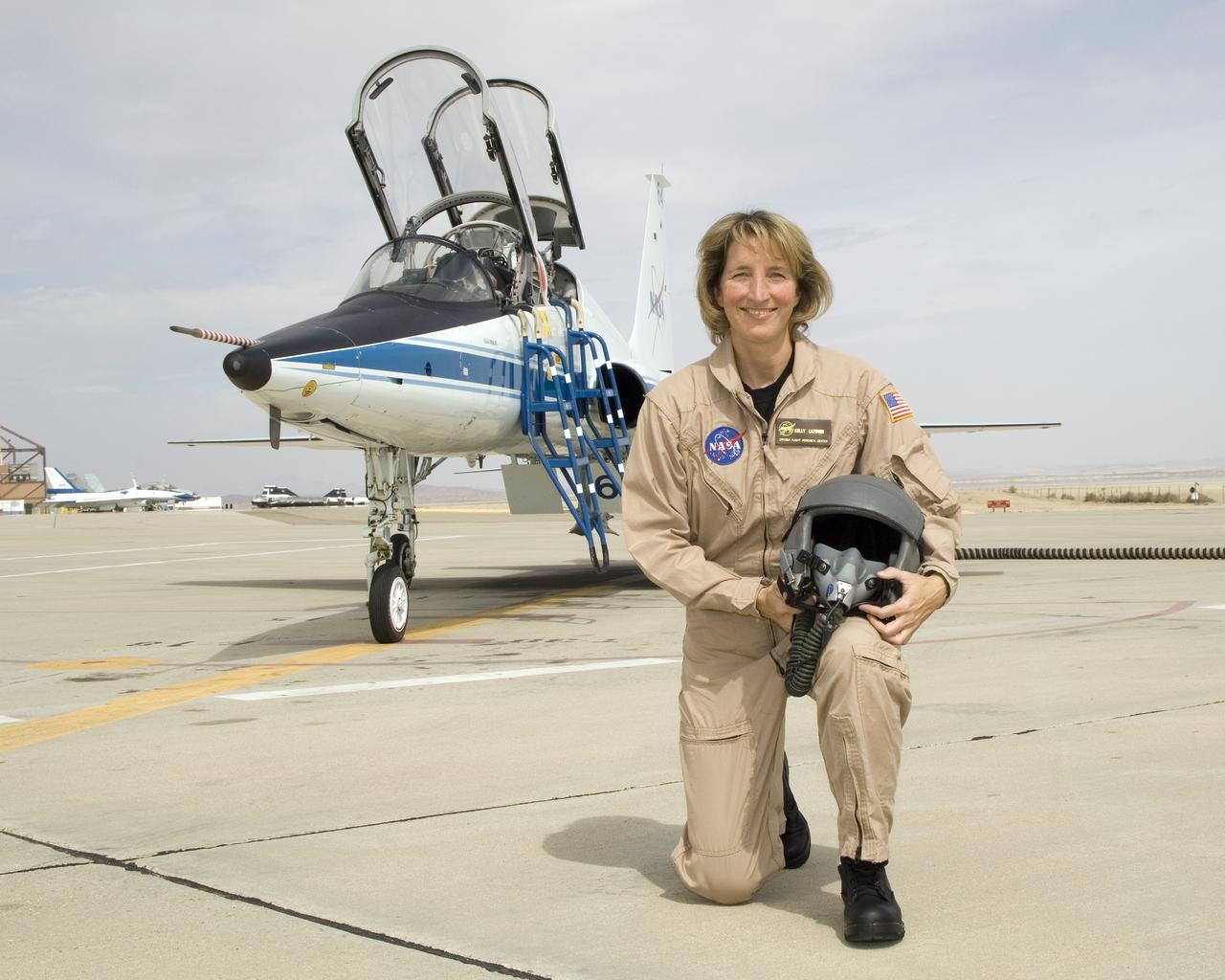
Kelly Latimer is a research pilot in the Flight Crew Branch of NASA's Dryden Flight Research Center, Edwards, Calif. Latimer joined NASA in March 2007 and will fly the T38, T-34, G-III, C-17 and the "Ikhana" Predator B. Latimer is Dryden's first female research test pilot. Prior to joining NASA, Latimer was on active duty with the U.S. Air Force. She has accumulated more than 5,000 hours of military and civilian flight experience in 30 aircraft. Latimer's first association with NASA was while attending graduate school at George Washington University, Washington, D.C. Her studies included work with the Joint Institute for the Advancement of Flight Sciences at NASA's Langley Research Center, Hampton, Va. She flew an Air Force C-17 during a 2005 NASA study to reduce aircraft noise. A team of California Polytechnic State University students and Northrop Grumman personnel were stationed on Rogers Dry Lake located at Edwards Air Force Base, Calif., to record the noise footprint of the aircraft as it made various landing approaches to Edwards' runway. Latimer completed undergraduate pilot training at Reese Air Force Base, Texas, in 1990. She remained at Reese as a T-38 instructor pilot until 1993. She was assigned as a C-141 aircraft commander at McCord Air Force Base, Tacoma, Wash., until 1996. Latimer graduated from the U.S. Air Force Test Pilot School at Edwards in Class 96B. She served as a C-17 and C-141 experimental test pilot at Edwards until 2000. She then became the chief of the Performance Branch and a T-38 instructor pilot at The Air Force Test Pilot School. She returned to McCord in 2002, where she was a C-17 aircraft commander and the operations officer for the 62nd Operations Support Squadron. In 2004, Latimer became the commander of Edwards' 418th Flight Test Squadron and director of the Global Reach Combined Test Force. Following that assignment, she deployed to Iraq as an advisor to the Iraqi Air Force. Her last active duty tour was as an instructor a
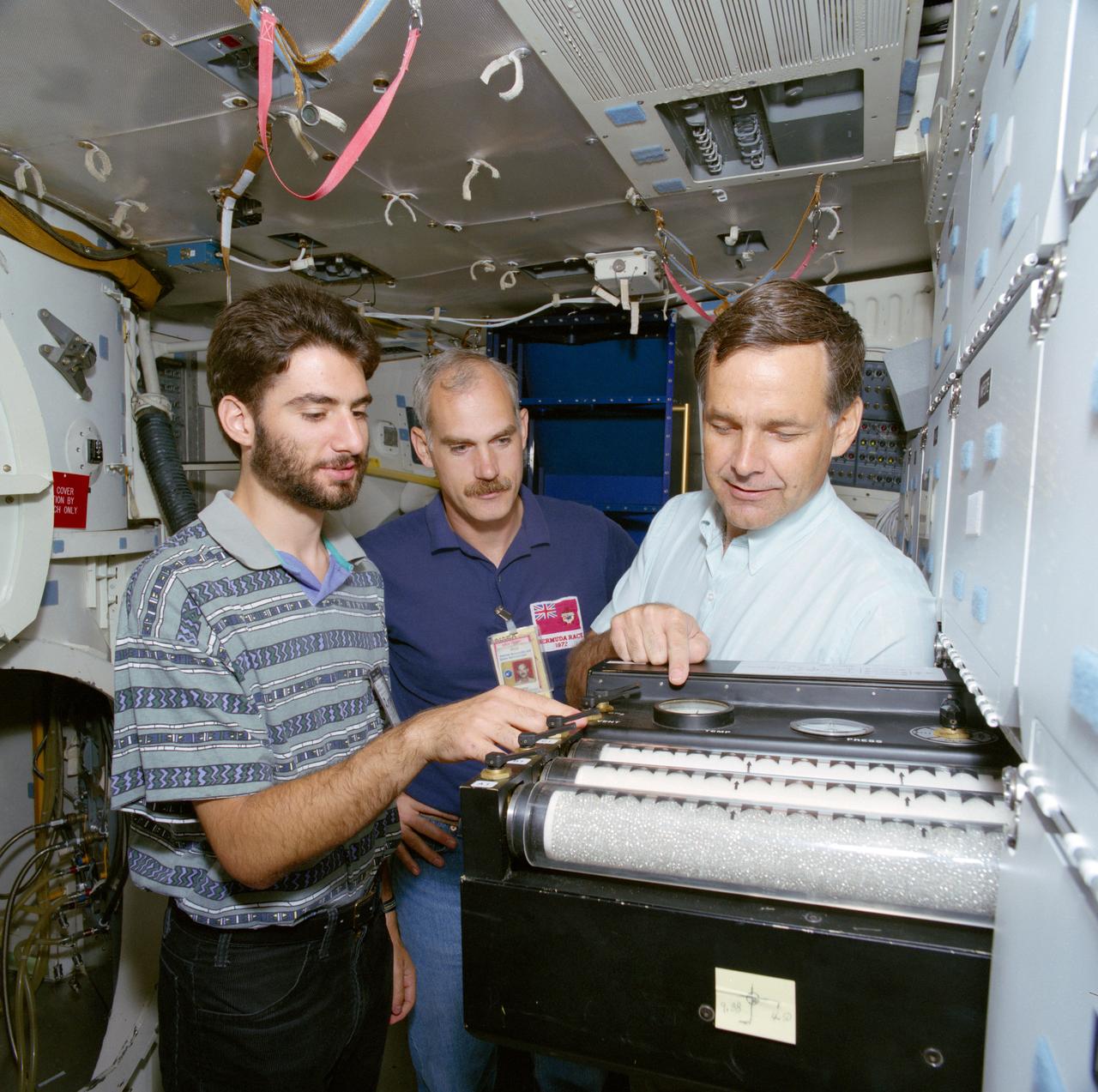
S91-47323 (18 Sept 1991) --- Constantine Costes, left, a student experimenter sponsored by United Space Boosters Inc, in Huntsville, Alabama, discusses his student experiment, "Zero-G Rise of Liquid Through Porous Media" with astronauts Ronald J. Grabe (right), STS 42 mission commander; and William Readdy, mission specialist. The student experimenter and crew members are in the Full Fuselage Trainer (FFT) in the Shuttle Mockup and Integration Laboratory. While attending Randolph School, a high school in Huntsville, Alabama, Costes was chosen in the national competition to participate in the Shuttle Student Involvement Program (SSIP). The experiment, contained in a middeck locker, involves the investigation of the effects of gravity on the flow characteristics of a fluid. Both pure capillary and forced flow behavior will be investigated. A ground based experiment was conducted so that gravity influenced data can be compared to that gathered in weightlessness. Costes is now a candidate for a Ph.D in mathematics at Harvard University.
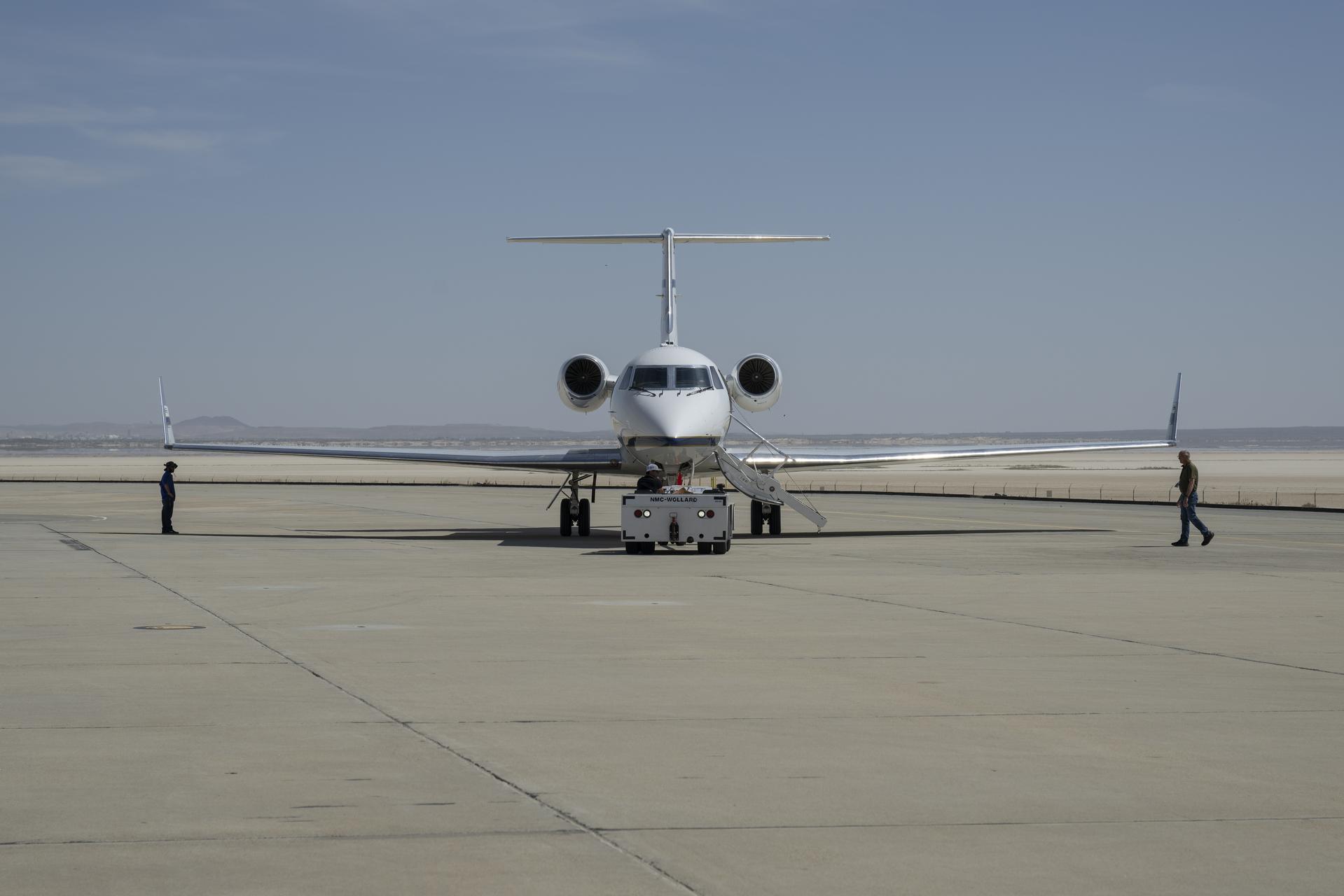
Manny Rodriguez, center, Gulfstream G-III aircraft crew chief, drives a tug while mechanic Marlon Espinoza, left, and Scott Erickson, a quality assurance inspector, prepare the aircraft for takeoff on Friday, March 27, 2026, at NASA’s Armstrong Flight Research Center in Edwards, California. The G-III will join other NASA aircraft to capture imagery of the Orion spacecraft’s heat shield during Artemis II reentry. The mission is part of NASA’s Scientifically Calibrated In-Flight Imagery (SCIFLI) project, based at NASA’s Langley Research Center in Hampton, Virginia.
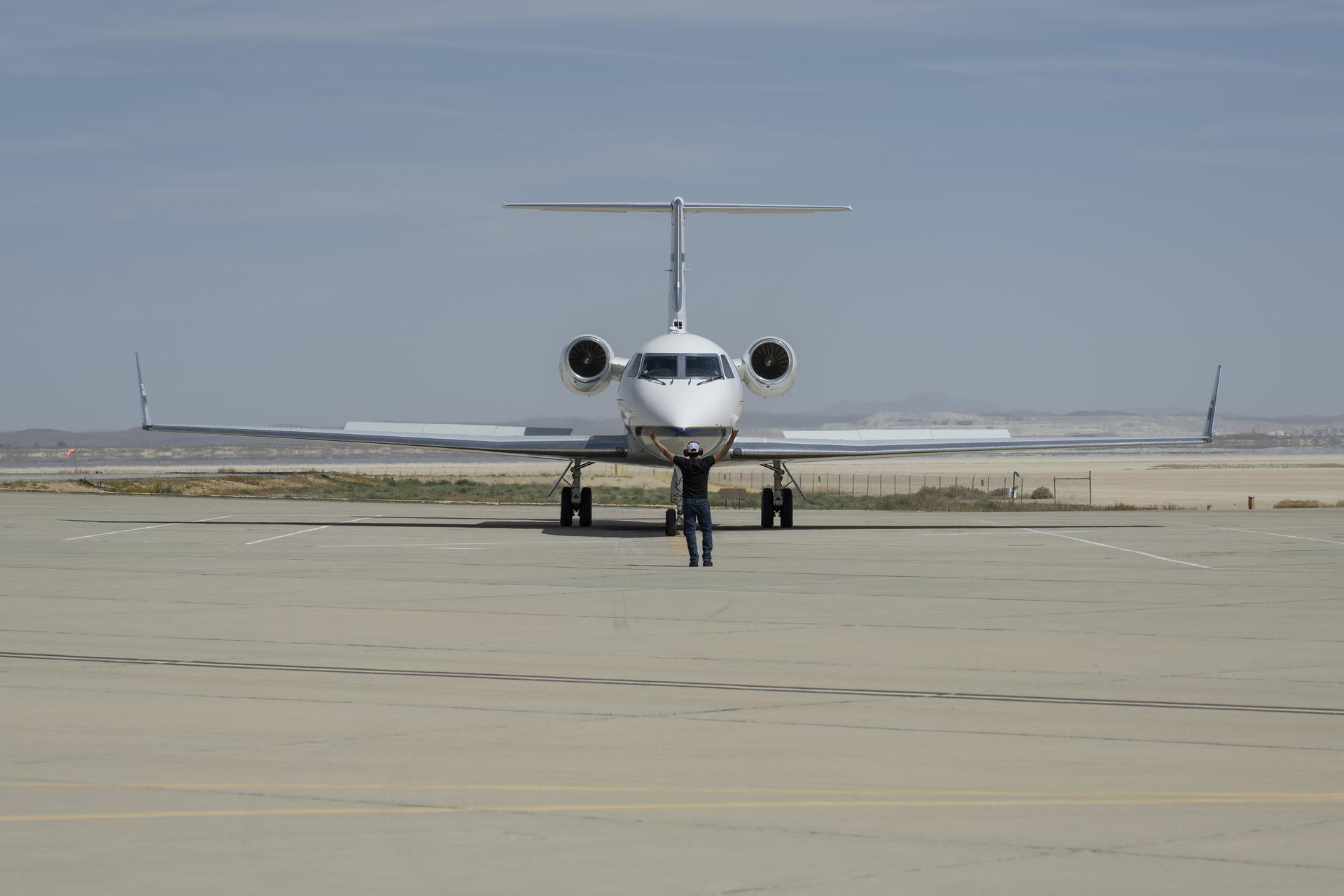
Manny Rodriguez, Gulfstream G-III crew chief, completes flight control checks with the pilots on Friday, March 27, 2026, at NASA’s Armstrong Flight Research Center in Edwards, California. The G-III will join other NASA aircraft to capture imagery of the Orion spacecraft’s heat shield during Artemis II reentry. The mission is part of NASA’s Scientifically Calibrated In-Flight Imagery (SCIFLI) project, based at NASA’s Langley Research Center in Hampton, Virginia.
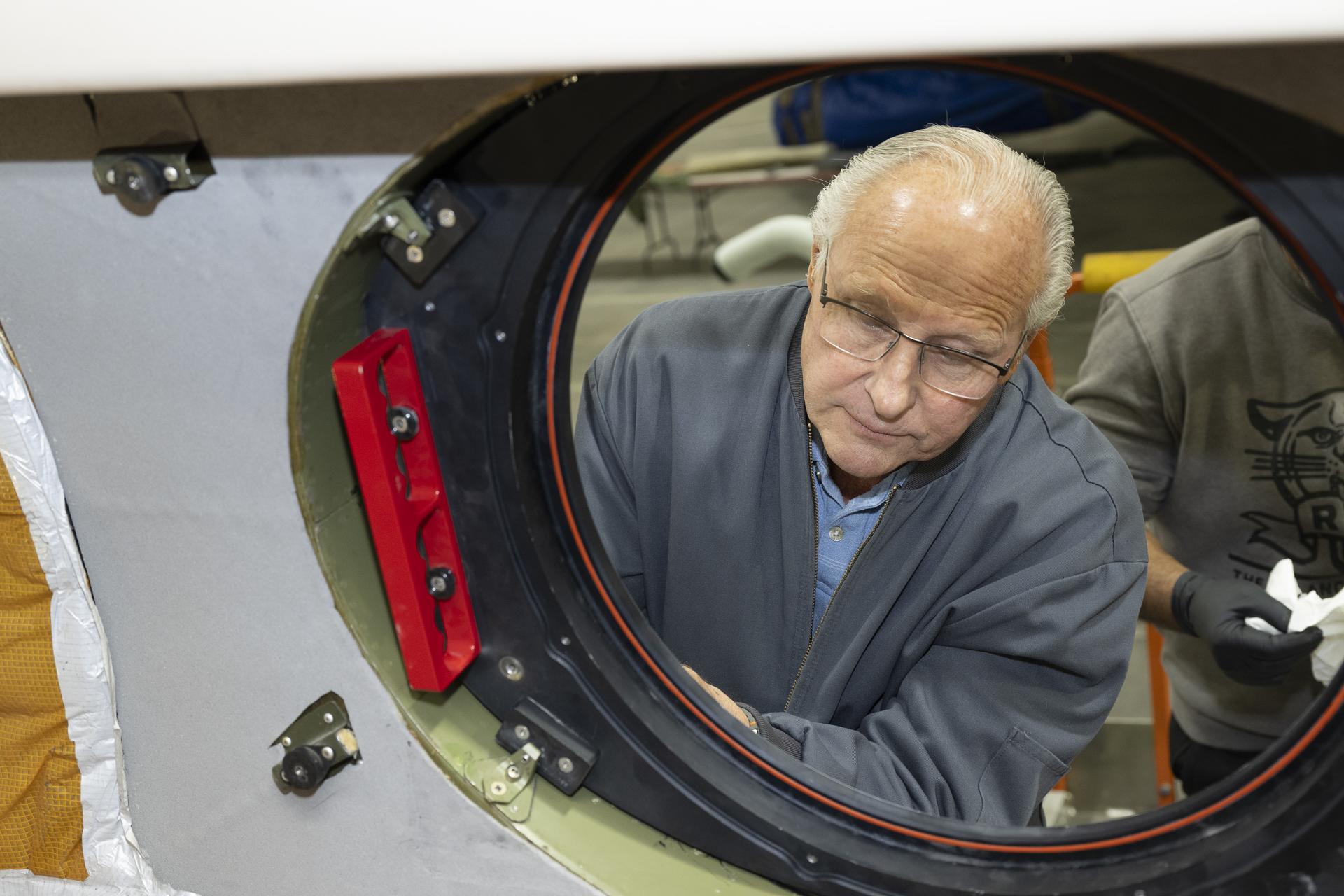
Scott Erickson, a quality assurance inspector, reviews installation of a temporary aircraft window on a NASA Gulfstream G-III aircraft on Wednesday, Jan. 7, 2026, at NASA’s Armstrong Flight Research Center in Edwards, California. The modifications prepare the aircraft to join three others flying at different altitudes to capture a complete view of the Orion spacecraft’s heat shield during Artemis II reentry. This effort is part of NASA’s Scientifically Calibrated In-Flight Imagery project.
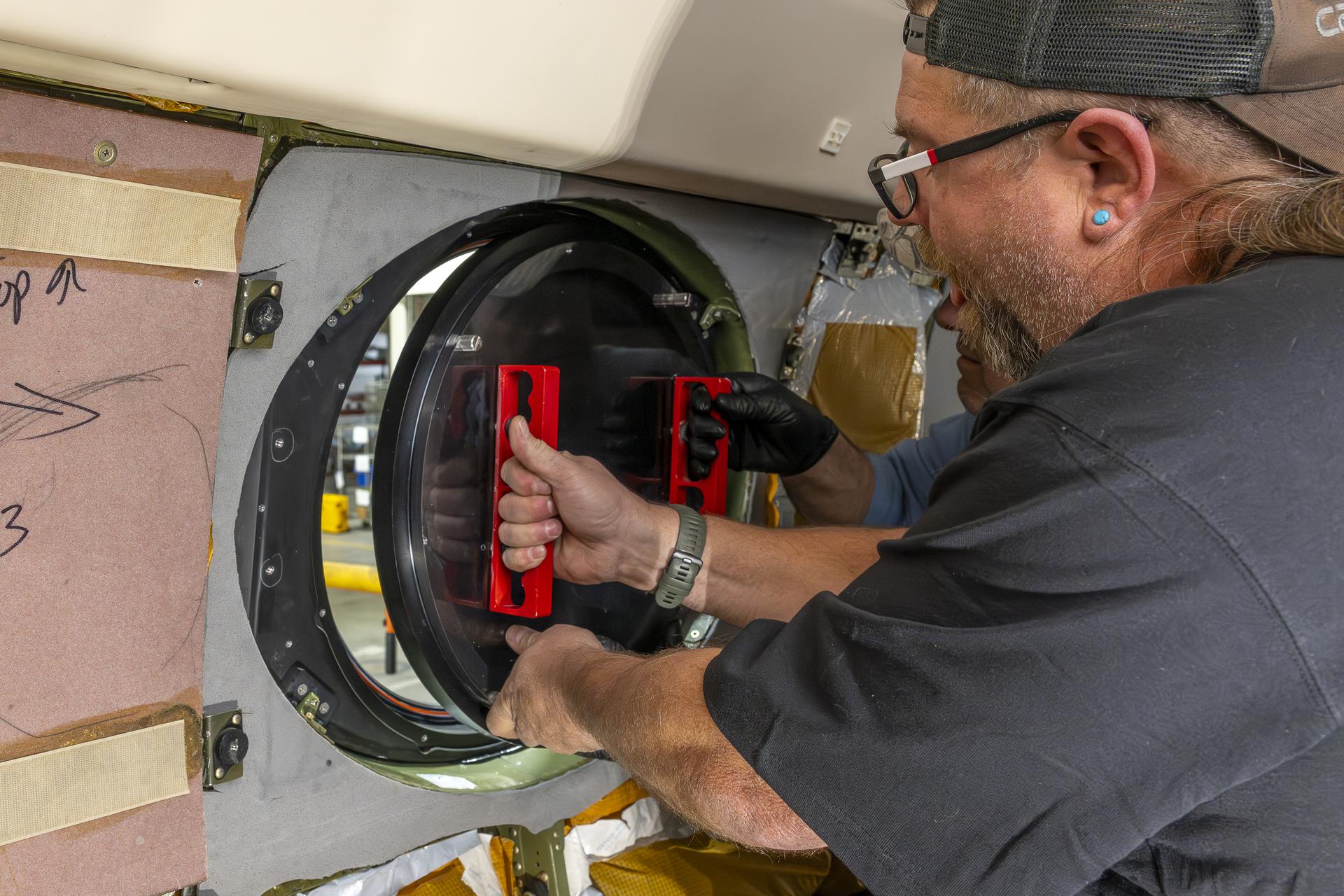
Aircraft mechanic Brian Harness, left, and mechanic Eric Apikian install a temporary aircraft window on a NASA Gulfstream G-III aircraft on Wednesday, Jan. 7, 2026, at NASA’s Armstrong Flight Research Center in Edwards, California. The modifications prepare the aircraft to join three others flying at different altitudes to capture a complete view of the Orion spacecraft’s heat shield during Artemis II reentry. This effort is part of NASA’s Scientifically Calibrated In-Flight Imagery project.
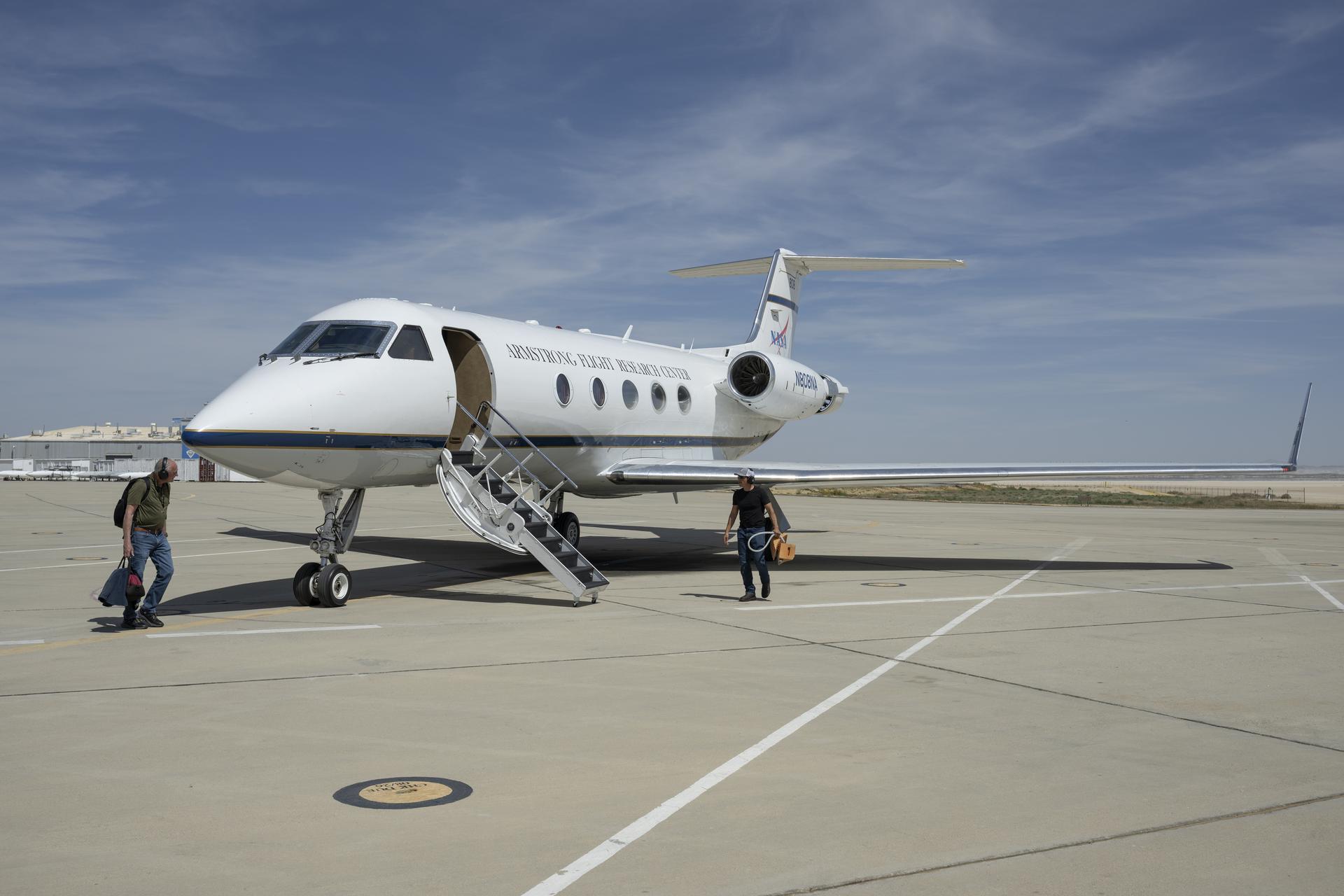
Scott Erickson, left, a quality assurance inspector, and Manny Rodriguez, Gulfstream G-III crew chief, prepare the aircraft for flight on Friday, March 27, 2026, at NASA’s Armstrong Flight Research Center in Edwards, California. The G-III will join other NASA aircraft to capture imagery of the Orion spacecraft’s heat shield during Artemis II reentry. The mission is part of NASA’s Scientifically Calibrated In-Flight Imagery (SCIFLI) project, based at NASA’s Langley Research Center in Hampton, Virginia.
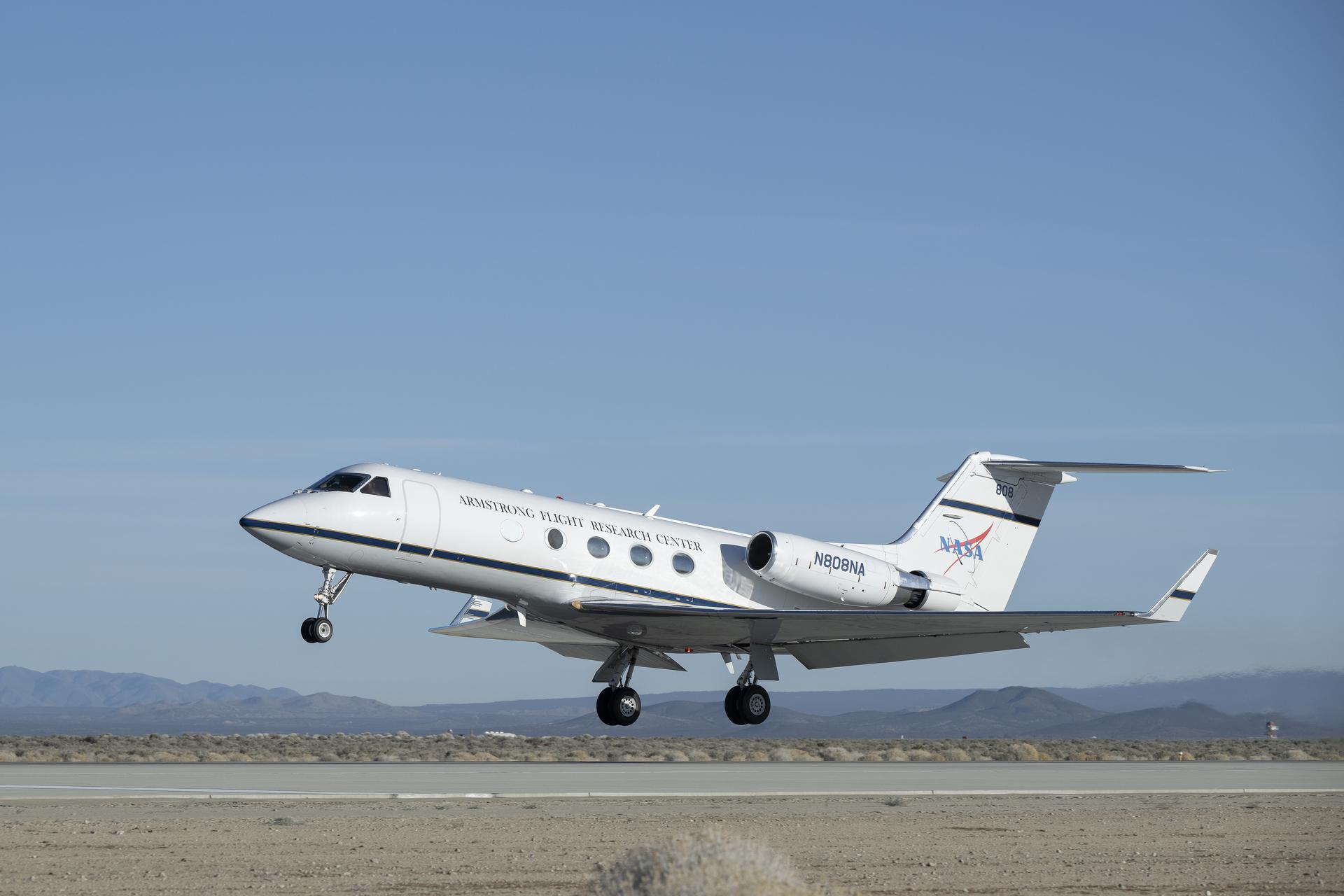
A NASA Gulfstream G-III aircraft lifts off from NASA’s Armstrong Flight Research Center in Edwards, California, on Tuesday, Jan. 20, 2026. Modifications were made to the aircraft to enable it to join three others flying at different altitudes to capture a complete view of the Orion spacecraft’s heat shield during Artemis II reentry. This effort is part of NASA’s Scientifically Calibrated In-Flight Imagery project.
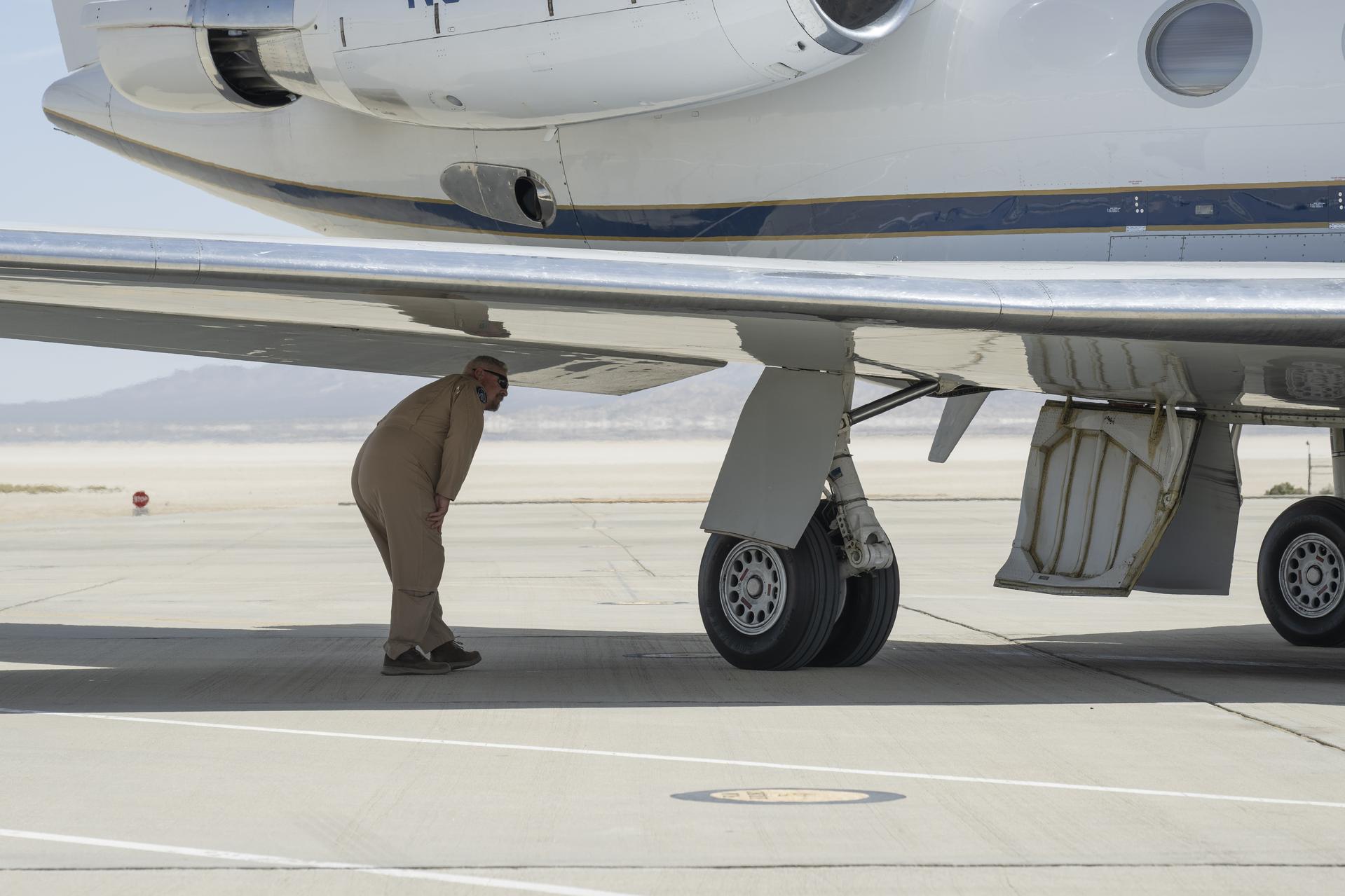
NASA pilot Tracy Phelps inspects the Gulfstream G-III aircraft on Friday, March 27, 2026, at NASA’s Armstrong Flight Research Center in Edwards, California. The G-III will join other NASA aircraft to capture imagery of the Orion spacecraft’s heat shield during Artemis II reentry. The mission is part of NASA’s Scientifically Calibrated In-Flight Imagery (SCIFLI) project, based at NASA’s Langley Research Center in Hampton, Virginia.
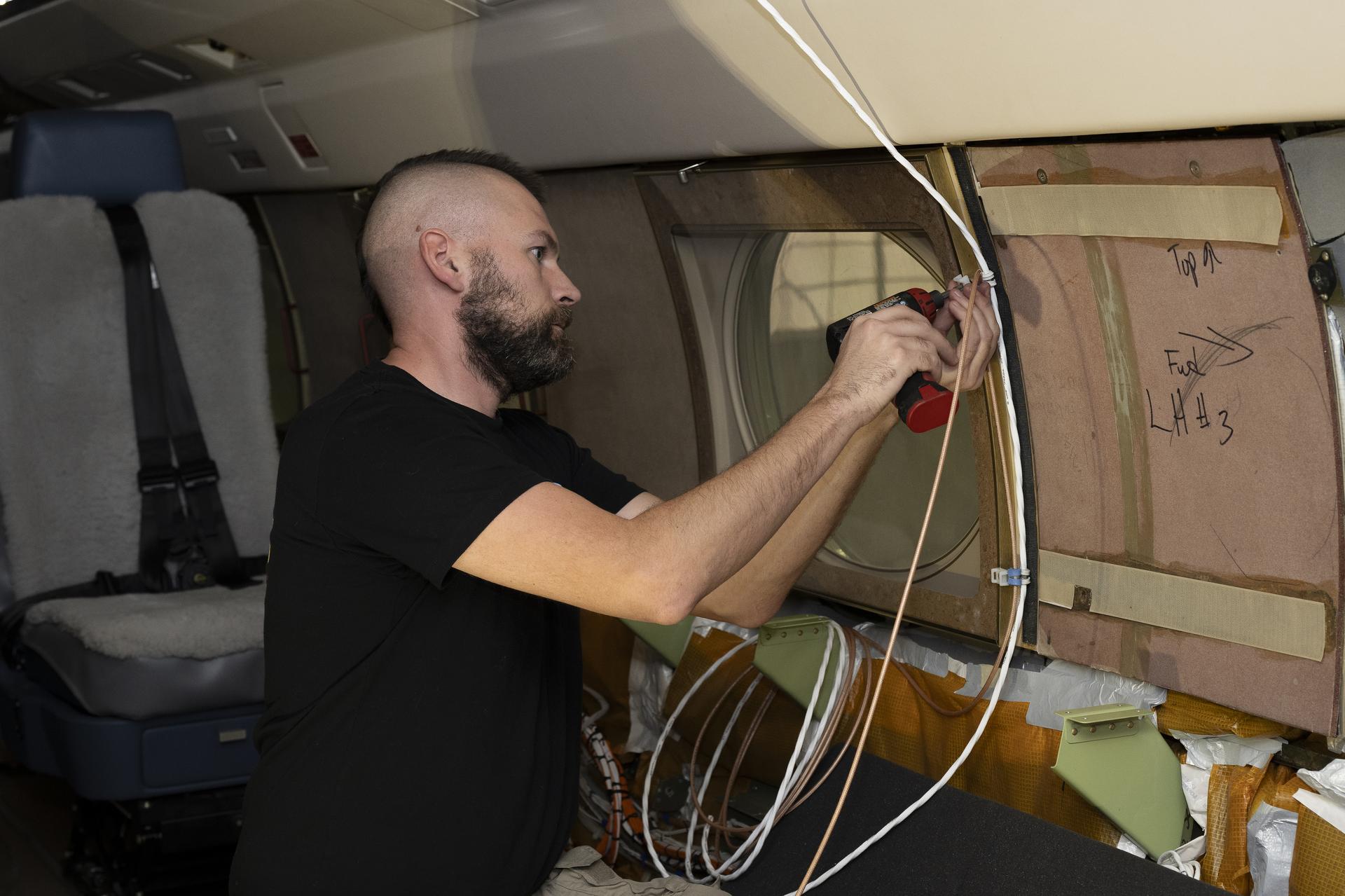
Kelly Jellison, an avionics lead, installs a clip to secure wiring installed on a NASA Gulfstream G-III aircraft on Wednesday, Jan. 7, 2026, at NASA’s Armstrong Flight Research Center in Edwards, California. The modifications prepare the aircraft to join three others flying at different altitudes to capture a complete view of the Orion spacecraft’s heat shield during Artemis II reentry. This effort is part of NASA’s Scientifically Calibrated In-Flight Imagery project.
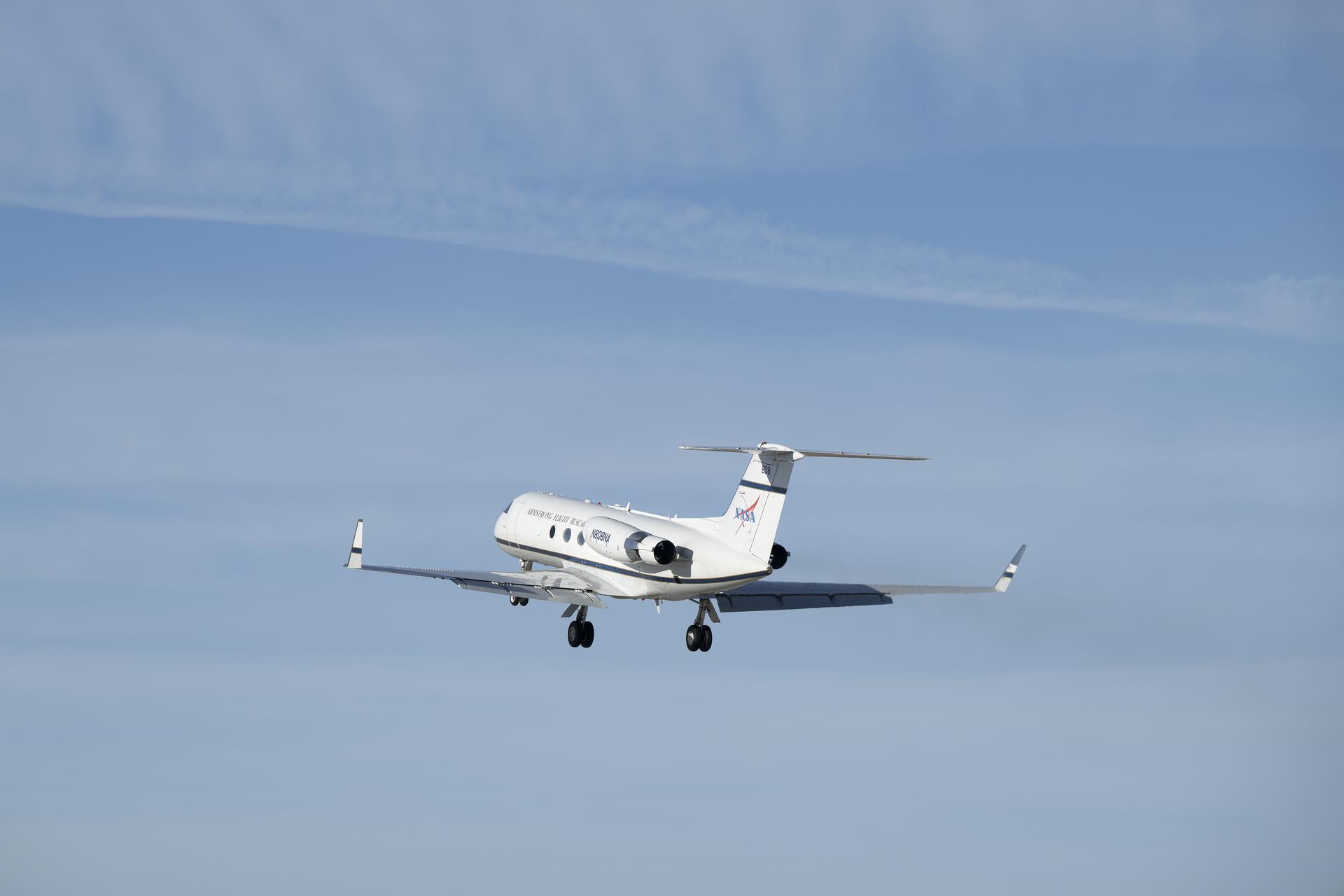
A NASA Gulfstream G-III aircraft lifts off from NASA’s Armstrong Flight Research Center in Edwards, California, on Tuesday, Jan. 20, 2026. Modifications were made to the aircraft to enable it to join three others flying at different altitudes to capture a complete view of the Orion spacecraft’s heat shield during Artemis II reentry. This effort is part of NASA’s Scientifically Calibrated In-Flight Imagery project.
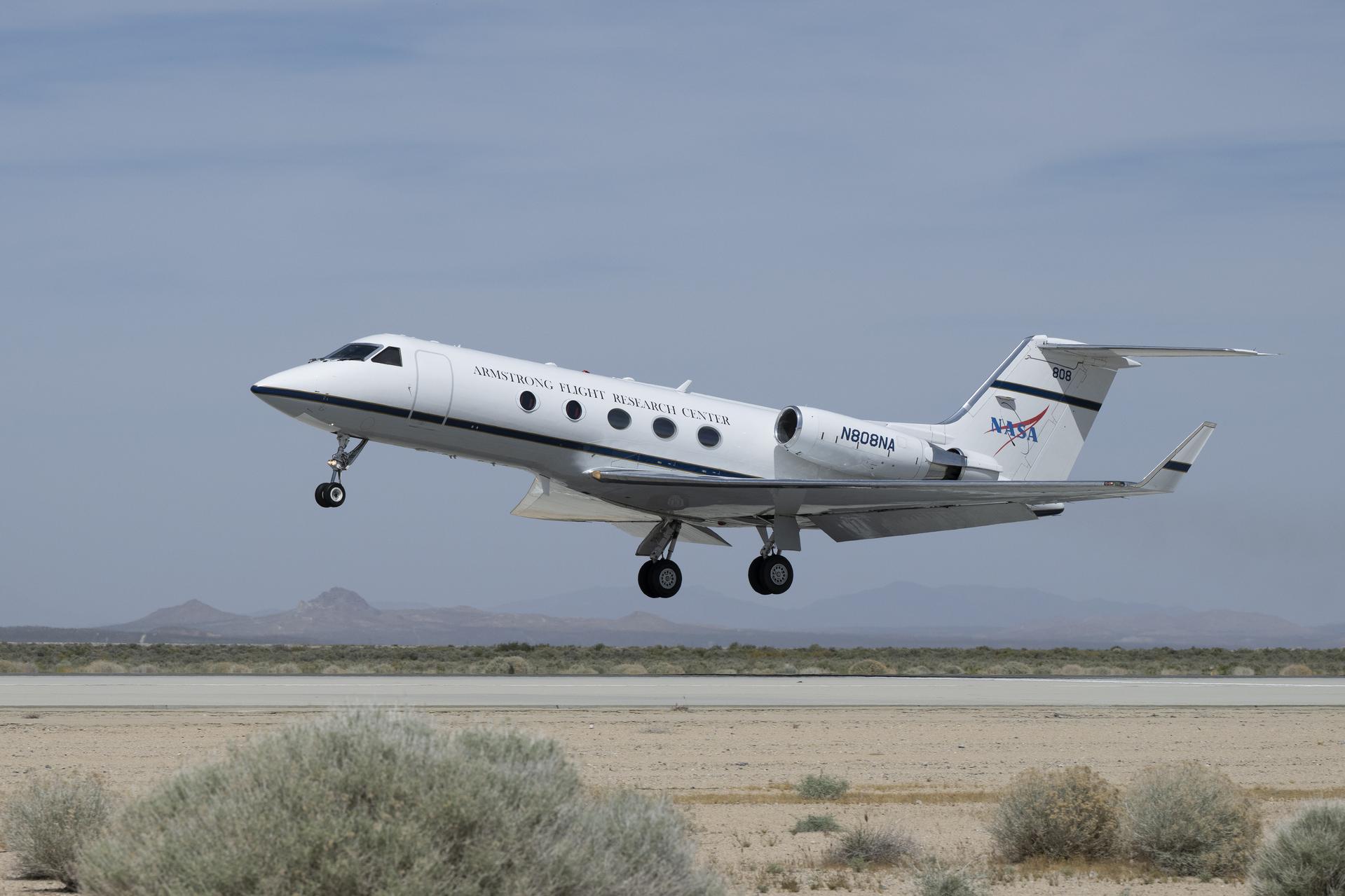
A Gulfstream G-III takes off Friday, March 27, 2026, from NASA’s Armstrong Flight Research Center in Edwards, California. The G-III will join other NASA aircraft to capture imagery of the Orion spacecraft’s heat shield during Artemis II reentry. The mission is part of NASA’s Scientifically Calibrated In-Flight Imagery (SCIFLI) project, based at NASA’s Langley Research Center in Hampton, Virginia.
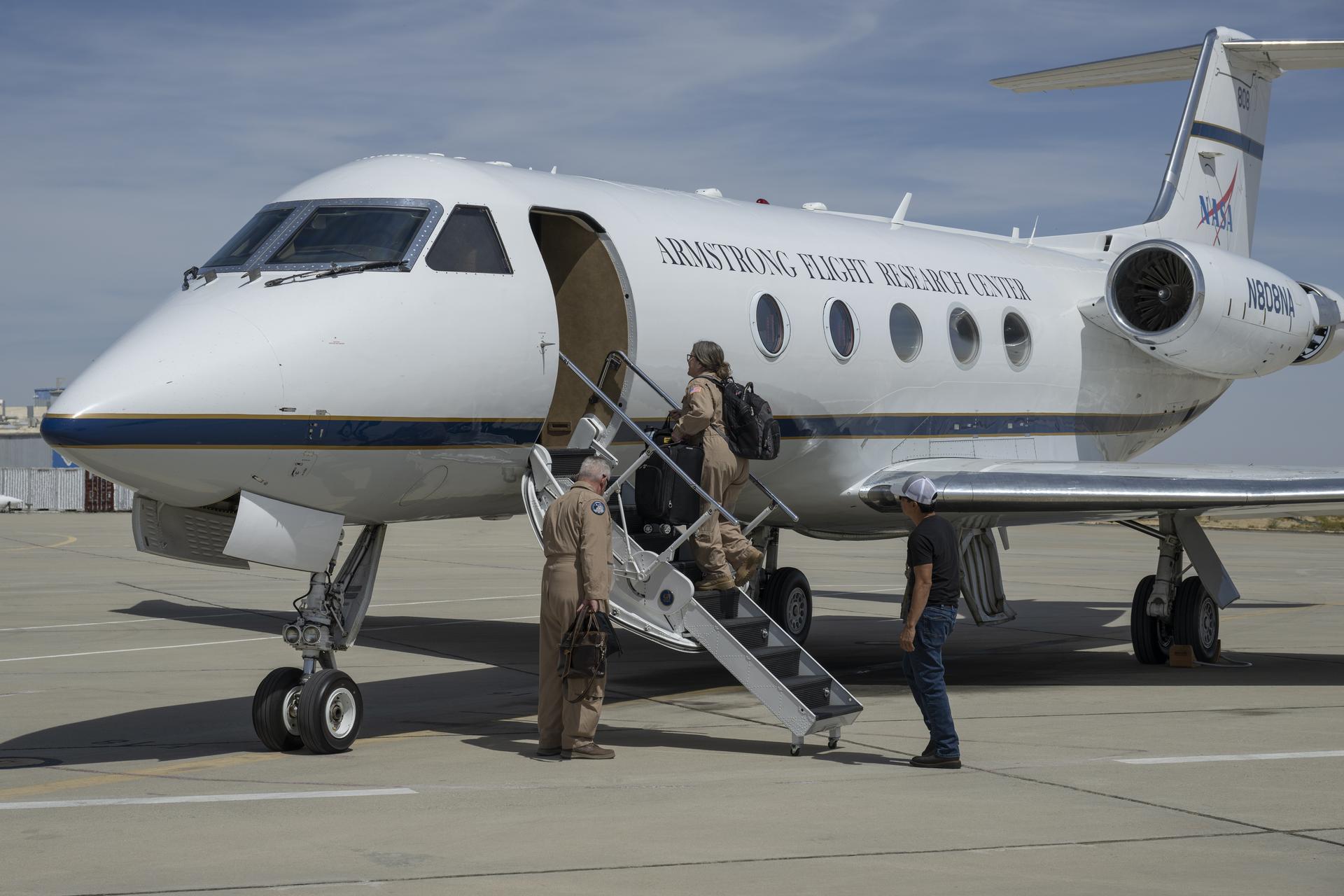
NASA pilot Carrie Worth, center, and Tracy Phelps, left, board the Gulfstream G-III aircraft on Friday, March 27, 2026, at NASA’s Armstrong Flight Research Center in Edwards, California. Manny Rodriguez, crew chief, prepares the aircraft for flight. The G-III will join other NASA aircraft to capture imagery of the Orion spacecraft’s heat shield during Artemis II reentry. The mission is part of NASA’s Scientifically Calibrated In-Flight Imagery (SCIFLI) project, based at NASA’s Langley Research Center in Hampton, Virginia.
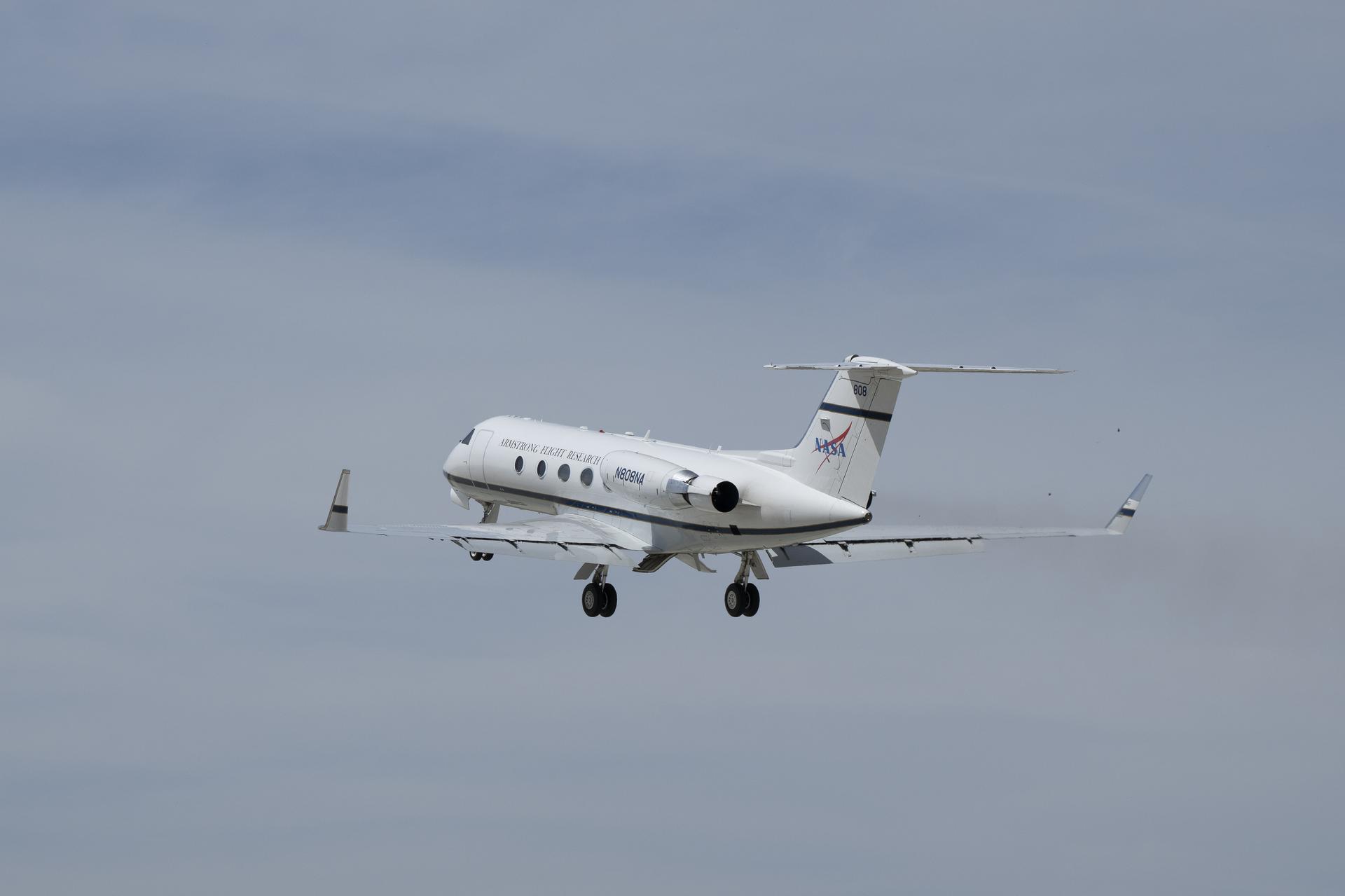
A Gulfstream G-III takes off Friday, March 27, 2026, from NASA’s Armstrong Flight Research Center in Edwards, California. The G-III will join other NASA aircraft to capture imagery of the Orion spacecraft’s heat shield during Artemis II reentry. The mission is part of NASA’s Scientifically Calibrated In-Flight Imagery (SCIFLI) project, based at NASA’s Langley Research Center in Hampton, Virginia.
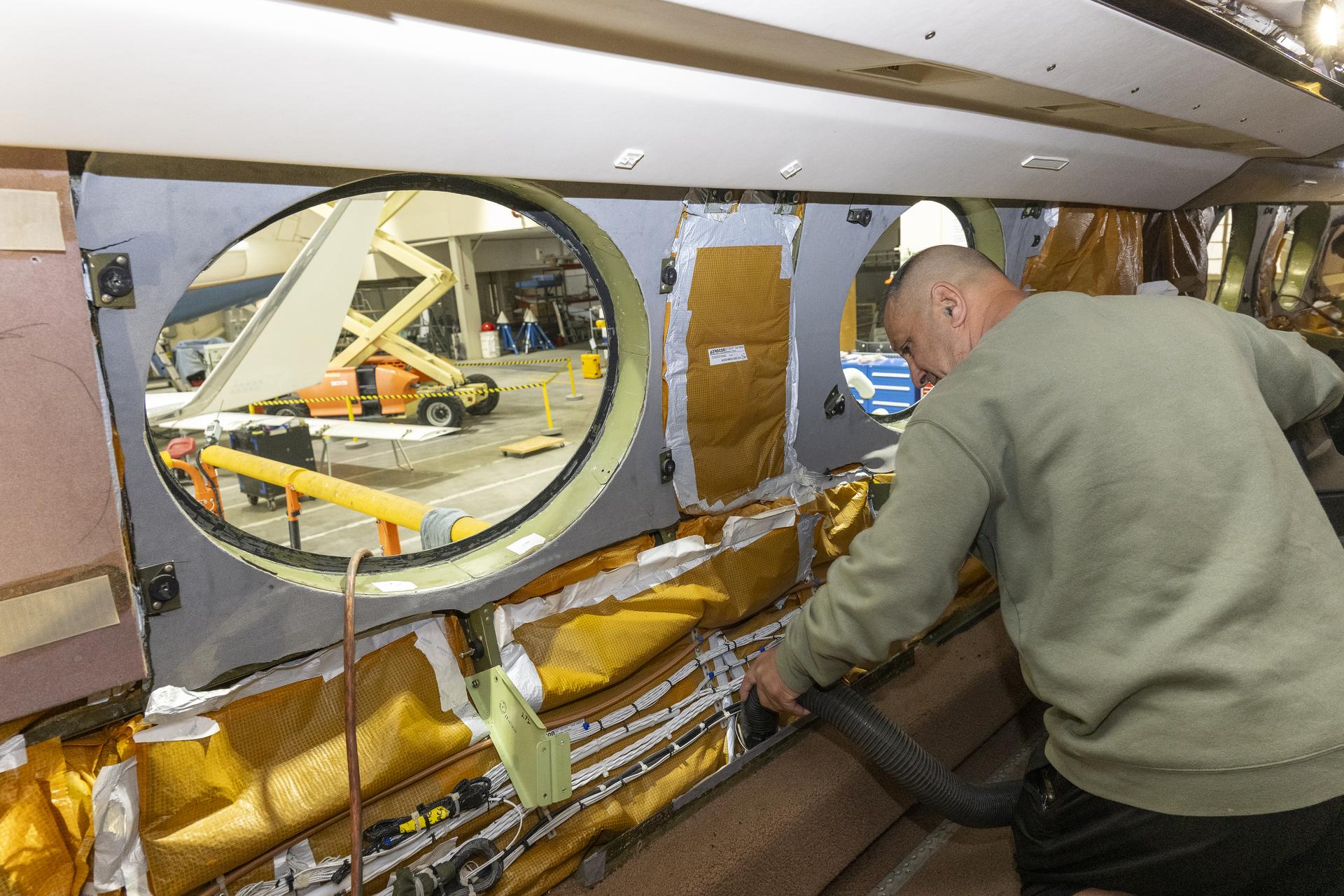
Eric Apikian, an aircraft mechanic, vacuums a NASA Gulfstream G-III aircraft compartment after wiring was added for sensors on Wednesday, Jan. 7, 2026, at NASA’s Armstrong Flight Research Center in Edwards, California. The modifications prepare the aircraft to join three others flying at different altitudes to capture a complete view of the Orion spacecraft’s heat shield during Artemis II reentry. This effort is part of NASA’s Scientifically Calibrated In-Flight Imagery project.
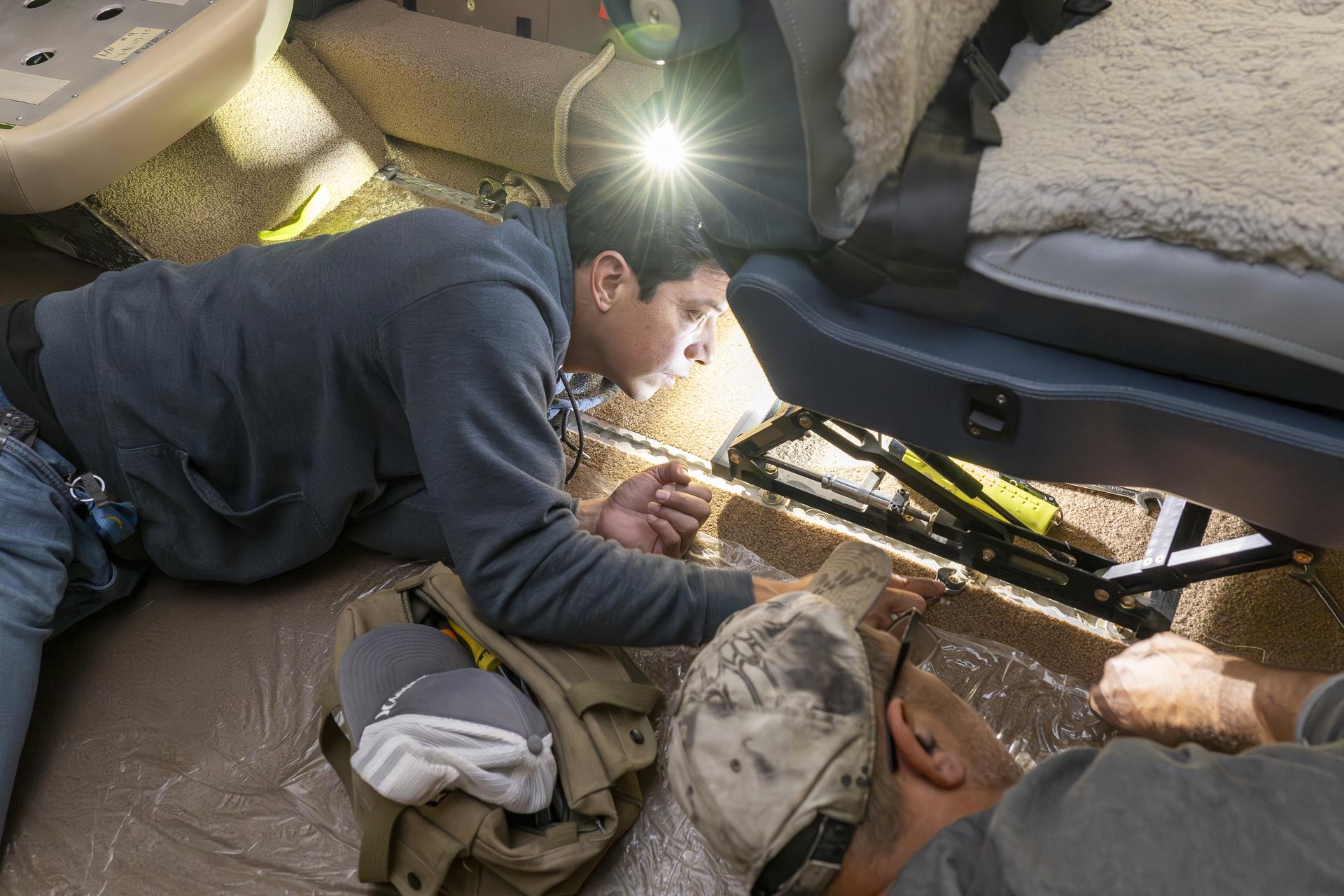
Manny Rodriguez, Gulfstream G-III aircraft crew chief, left, and Eric Apikian, aircraft mechanic, attach an instrumented seat onto a G-III on Wednesday, Jan. 7, 2026, at NASA’s Armstrong Flight Research Center in Edwards, California. The modifications prepare the aircraft to join three others flying at different altitudes to capture a complete view of the Orion spacecraft’s heat shield during Artemis II reentry. This effort is part of NASA’s Scientifically Calibrated In-Flight Imagery project.
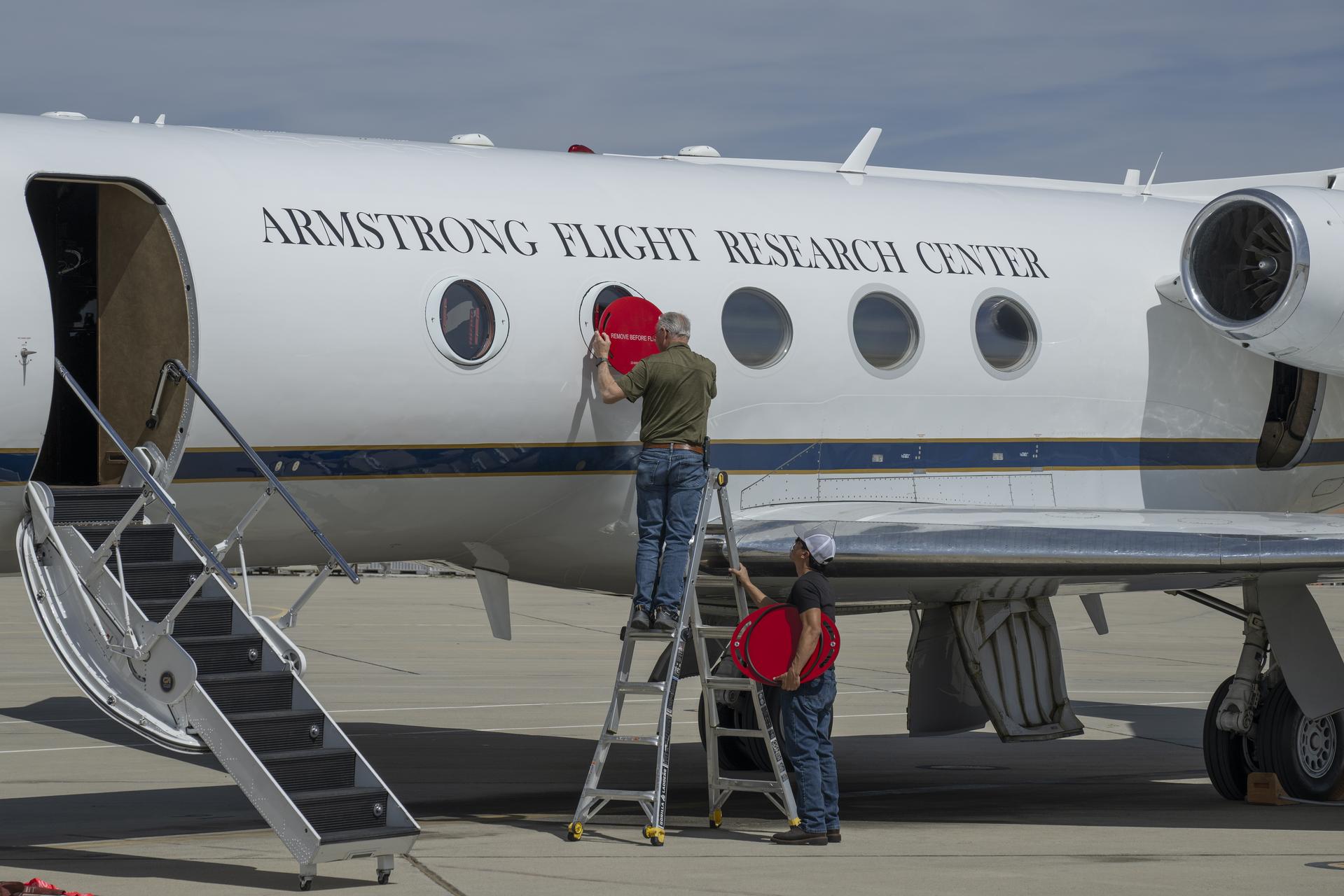
Scott Erickson, left, a quality assurance inspector, and Manny Rodriguez, Gulfstream G-III aircraft crew chief, remove window coverings from the aircraft on Friday, March 27, 2026, at NASA’s Armstrong Flight Research Center in Edwards, California. The G-III will join other NASA aircraft to capture imagery of the Orion spacecraft’s heat shield during Artemis II reentry. The mission is part of NASA’s Scientifically Calibrated In-Flight Imagery (SCIFLI) project, based at NASA’s Langley Research Center in Hampton, Virginia.
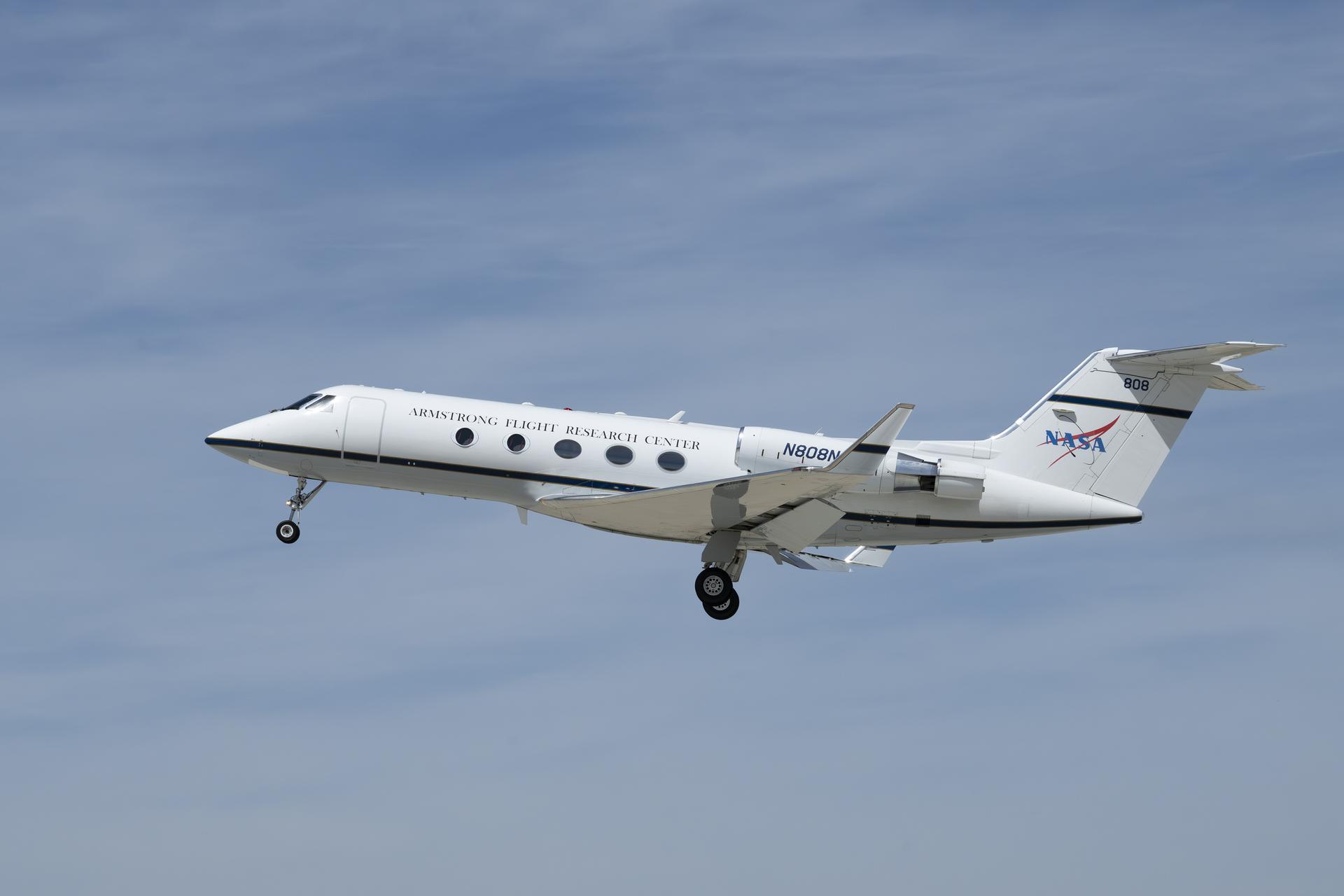
A Gulfstream G-III takes off Friday, March 27, 2026, from NASA’s Armstrong Flight Research Center in Edwards, California. The G-III will join other NASA aircraft to capture imagery of the Orion spacecraft’s heat shield during Artemis II reentry. The mission is part of NASA’s Scientifically Calibrated In-Flight Imagery (SCIFLI) project, based at NASA’s Langley Research Center in Hampton, Virginia.
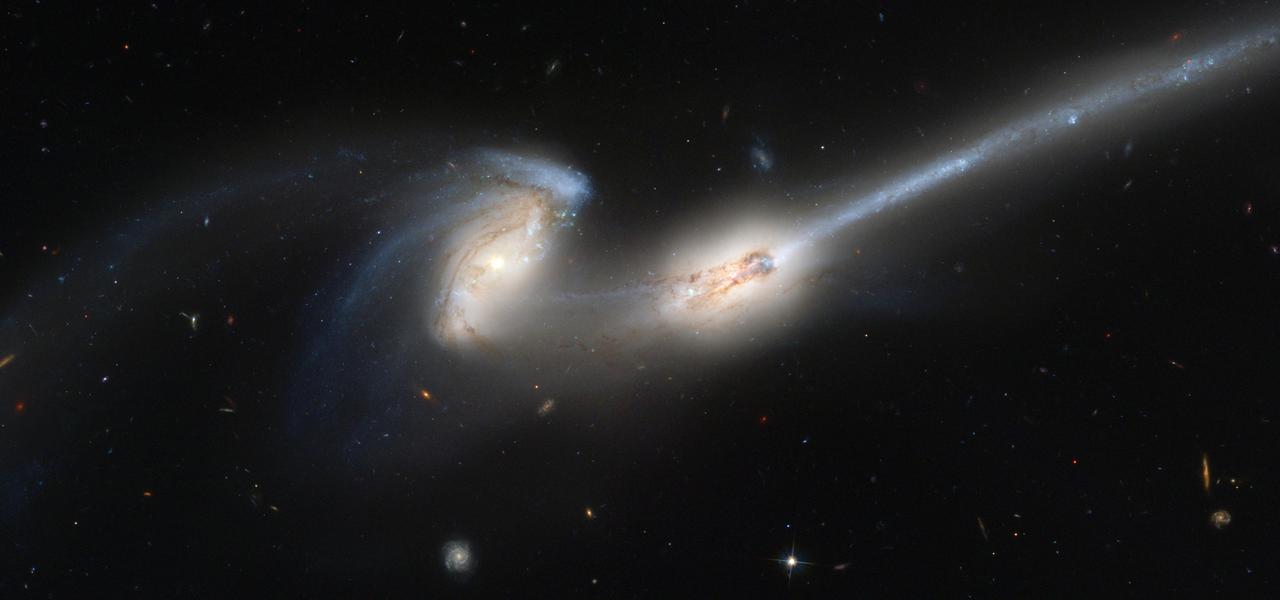
The Advanced Camera for Surveys (ACS), the newest camera on the Hubble Space Telescope, has captured a spectacular pair of galaxies. Located 300 million light-years away in the constellation Coma Berenices, the colliding galaxies have been nicknamed "The Mice" because of the long tails of stars and gas emanating from each galaxy. Otherwise known as NGC 4676, the pair will eventually merge into a single giant galaxy. In the galaxy at left, the bright blue patch is resolved into a vigorous cascade of clusters and associations of young, hot blue stars, whose formation has been triggered by the tidal forces of the gravitational interaction. The clumps of young stars in the long, straight tidal tail (upper right) are separated by fainter regions of material. These dim regions suggest that the clumps of stars have formed from the gravitational collapse of the gas and dust that once occupied those areas. Some of the clumps have luminous masses comparable to dwarf galaxies that orbit the halo of our own Milky Way Galaxy. Computer simulations by astronomers show that we are seeing two near identical spiral galaxies approximately 160 million years after their closest encounter. The simulations also show that the pair will eventually merge, forming a large, nearly spherical galaxy (known as an elliptical galaxy). The Mice presage what may happen to our own Milky Way several billion years from now when it collides with our nearest large neighbor, the Andromeda Galaxy (M31). This picture is assembled from three sets of images taken on April 7, 2002, in blue, orange, and near-infrared filters. Credit: NASA, H. Fort (JHU), G. Illingworth (USCS/LO), M. Clampin (STScI), G. Hartig (STScI), the ACS Science Team, and ESA.
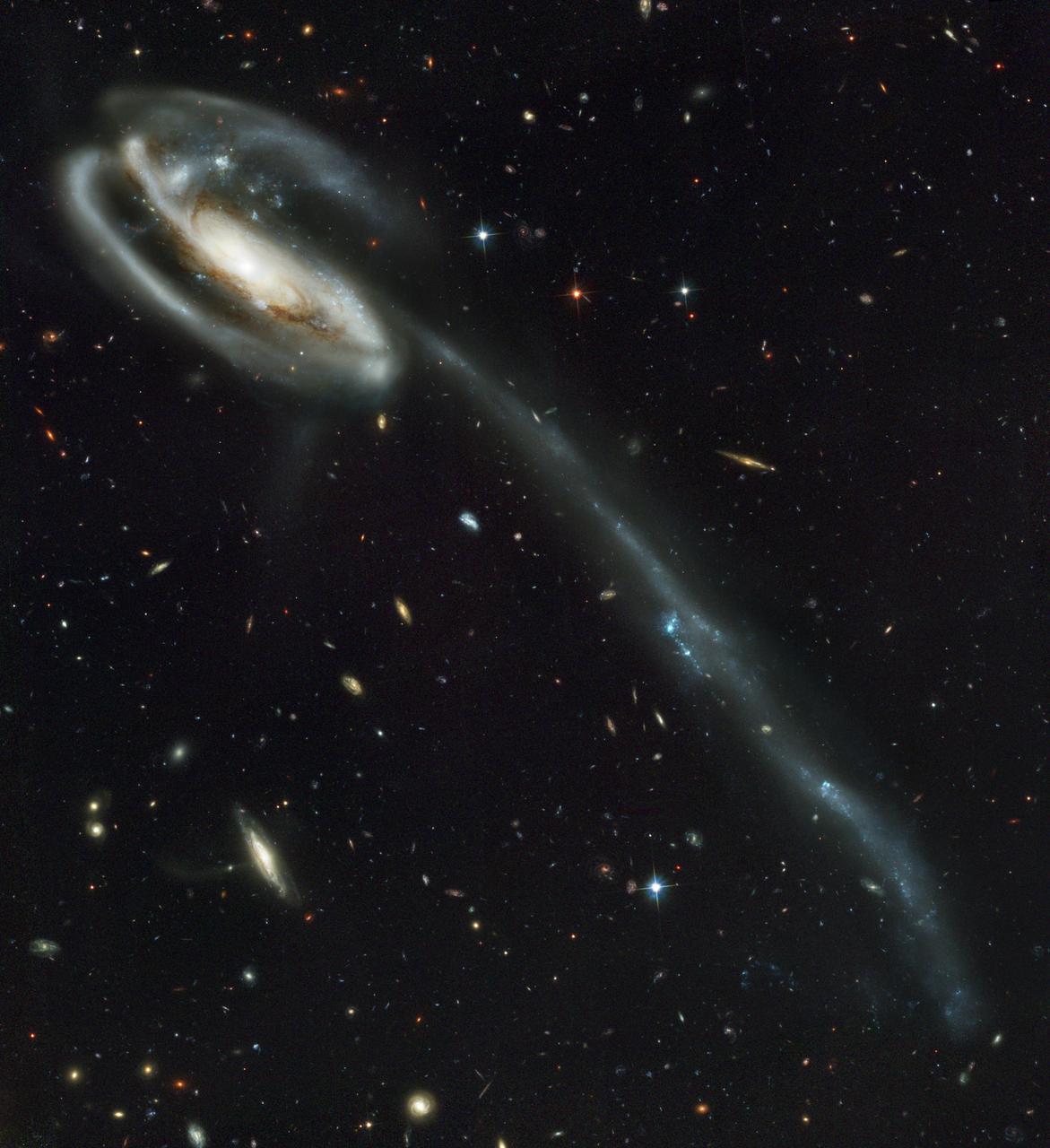
This picture of the galaxy UGC 10214 was was taken by the Advanced Camera for Surveys (ACS), which was installed aboard the Hubble Space Telescope (HST) in March 2002 during HST Servicing Mission 3B (STS-109 mission). Dubbed the "Tadpole," this spiral galaxy is unlike the textbook images of stately galaxies. Its distorted shape was caused by a small interloper, a very blue, compact galaxy visible in the upper left corner of the more massive Tadpole. The Tadpole resides about 420 million light-years away in the constellation Draco. Seen shining through the Tadpole's disk, the tiny intruder is likely a hit-and-run galaxy that is now leaving the scene of the accident. Strong gravitational forces from the interaction created the long tail of debris, consisting of stars and gas that stretch our more than 280,000 light-years. The galactic carnage and torrent of star birth are playing out against a spectacular backdrop: a "wallpaper pattern" of 6,000 galaxies. These galaxies represent twice the number of those discovered in the legendary Hubble Deep Field, the orbiting observatory's "deepest" view of the heavens, taken in 1995 by the Wide Field and planetary camera 2. The ACS picture, however, was taken in one-twelfth of the time it took to observe the original HST Deep Field. In blue light, ACS sees even fainter objects than were seen in the "deep field." The galaxies in the ACS picture, like those in the deep field, stretch back to nearly the begirning of time. Credit: NASA, H. Ford (JHU), G. Illingworth (USCS/LO), M. Clampin (STScI), G. Hartig (STScI), the ACS Science Team, and ESA.
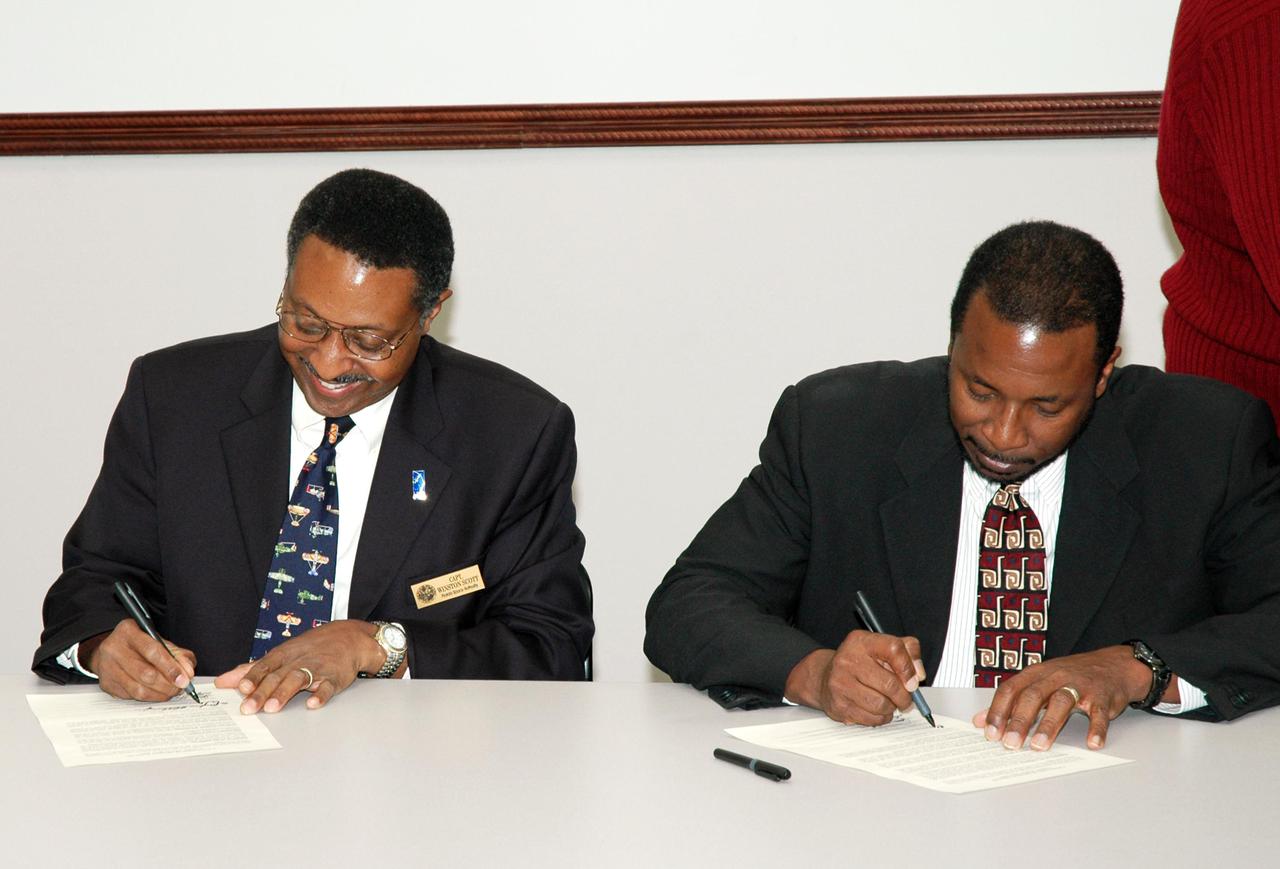
KENNEDY SPACE CENTER, FLA. - Leaders of prominent Florida space organizations convened at the Florida Space Authority campus in Cape Canaveral to sign a memorandum of agreement with the Space Foundation to launch the first “Florida Space” conference. Retired Navy Capt. Winston E. Scott (left), executive director of the Florida Space Authority, and Dr. Woodrow Whitlow Jr., deputy director of the Kennedy Space Center, sign copies of the agreement for their respective organizations. Others present to sign the agreement are Dr. James W. Johnson, chairman of the Canaveral Council of Technical Societies; Col. Mark H. Owen, commander of the 45th Space Wing at Patrick Air Force Base; and Elliot G. Pulham, president and chief executive officer of the Space Foundation. The conference will combine and build on the best features of previous Florida space events including Space Congress and the Cape Canaveral Spaceport Symposium. Both will be retired now in favor of this new event to be held annually and operated by the Space Foundation. Florida Space 2005 will be presented in November 2005.
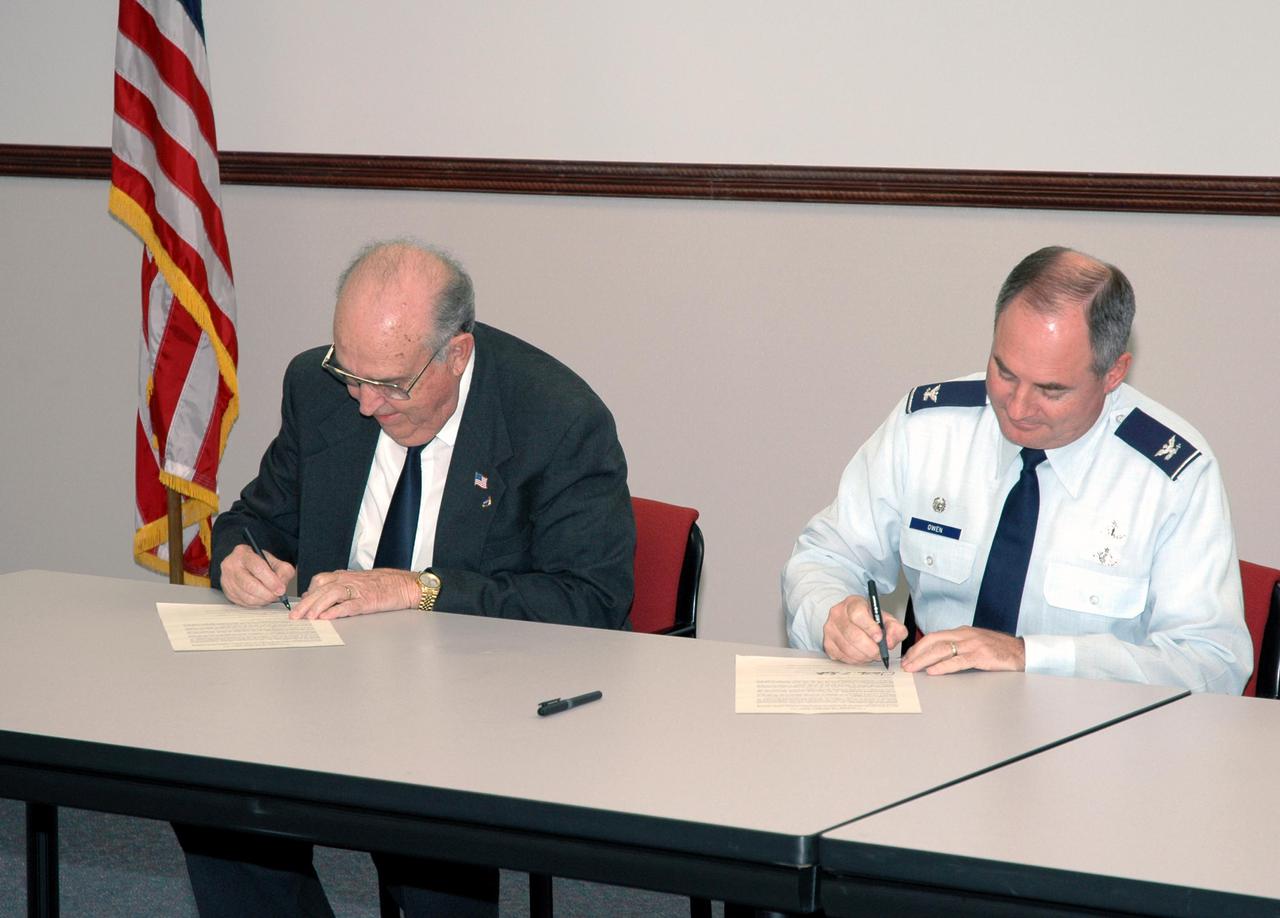
KENNEDY SPACE CENTER, FLA. - Leaders of prominent Florida space organizations convened at the Florida Space Authority campus in Cape Canaveral to sign a memorandum of agreement with the Space Foundation to launch the first “Florida Space” conference. Dr. James W. Johnson (left), chairman of the Canaveral Council of Technical Societies, and Col. Mark H. Owen, commander of the 45th Space Wing at Patrick Air Force Base, sign copies of the agreement for their respective organizations. Others present to sign the agreement are retired Navy Capt. Winston E. Scott, executive director of the Florida Space Authority; Dr. Woodrow Whitlow Jr., deputy director of the Kennedy Space Center; and Elliot G. Pulham, president and chief executive officer of the Space Foundation. The conference will combine and build on the best features of previous Florida space events including Space Congress and the Cape Canaveral Spaceport Symposium. Both will be retired now in favor of this new event to be held annually and operated by the Space Foundation. Florida Space 2005 will be presented in November 2005.
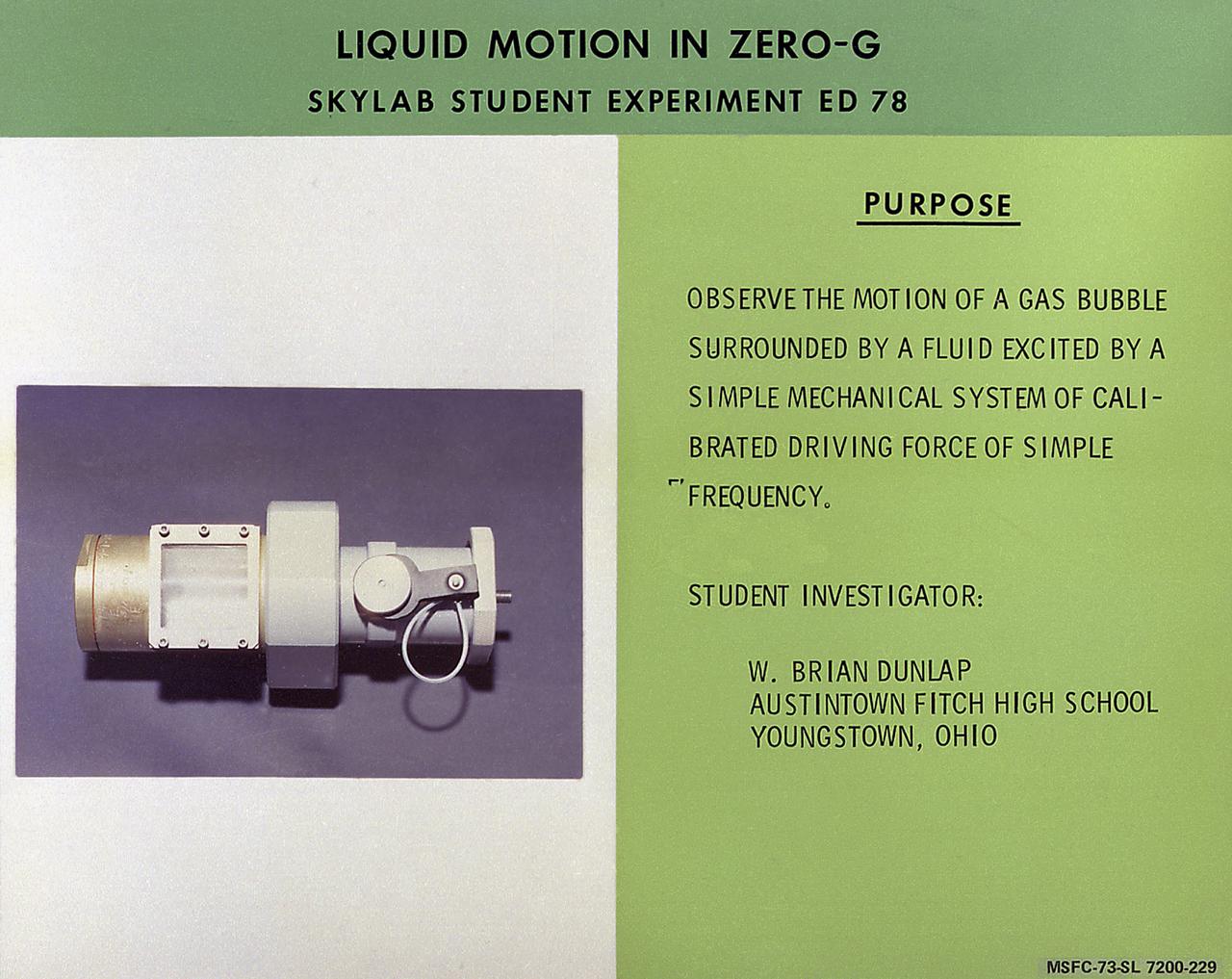
W. Brian Dunlap of Youngstown, Ohio, proposed Skylab student experiment ED-78, Liquid Motion in Zero-G, a study of wave motion in a liquid. He was particularly interested in comparing surface waves over a liquid in zero-gravity with those occurring on Earth. In space, with the absence of gravity, a liquid does not necessarily take the shape of its container as it does on Earth. Adhesion forces may hold the liquid in contact with its container, but the liquid can also assume a free-floating condition. It was in this latter state that Dunlap wished to examine the behavior of surface waves. Data were recorded on videotape and subsequently converted to 16-mm film. Dunlap analyzed these data to determine periods of oscillation of free-floating globules and found agreement with the theory to be much better than expected. In March 1972, NASA and the National Science Teachers Association selected 25 experiment proposals for flight on Skylab. Science advisors from the Marshall Space Flight Center aided and assisted the students in developing the proposals for flight on Skylab.
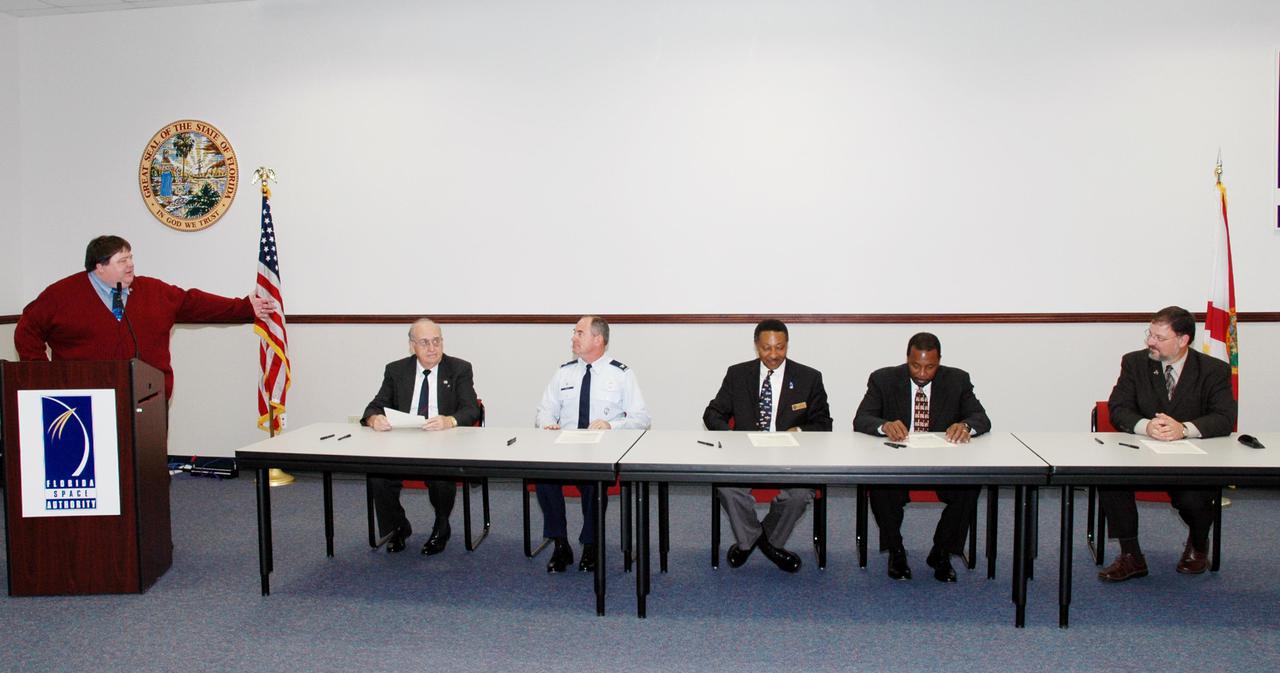
KENNEDY SPACE CENTER, FLA. - Leaders of prominent Florida space organizations convened at the Florida Space Authority campus in Cape Canaveral to sign a memorandum of agreement with the Space Foundation to launch the first “Florida Space” conference. From left are Jim Banke (at podium), vice president of Florida operations for the Space Foundation; Dr. James W. Johnson, chairman of the Canaveral Council of Technical Societies; Col. Mark H. Owen, commander of the 45th Space Wing at Patrick Air Force Base; retired Navy Capt. Winston E. Scott, executive director of the Florida Space Authority; Dr. Woodrow Whitlow Jr., deputy director of the Kennedy Space Center; and Elliot G. Pulham, president and chief executive officer of the Space Foundation. The conference will combine and build on the best features of previous Florida space events including Space Congress and the Cape Canaveral Spaceport Symposium. Both will be retired now in favor of this new event to be held annually and operated by the Space Foundation. Florida Space 2005 will be presented in November 2005.
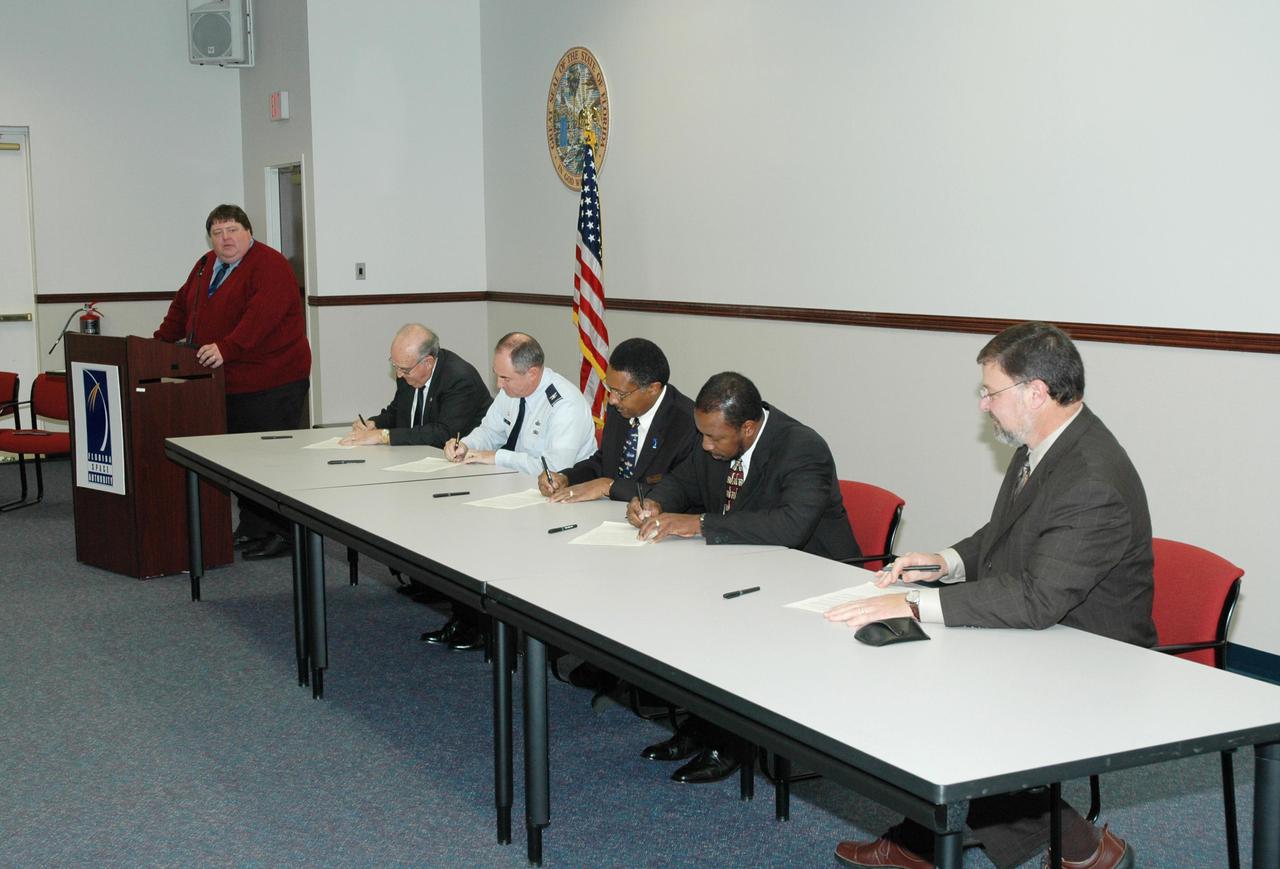
KENNEDY SPACE CENTER, FLA. - Leaders of prominent Florida space organizations convened at the Florida Space Authority campus in Cape Canaveral to sign a memorandum of agreement with the Space Foundation to launch the first “Florida Space” conference. From left are Jim Banke (at podium), vice president of Florida operations for the Space Foundation; Dr. James W. Johnson, chairman of the Canaveral Council of Technical Societies; Col. Mark H. Owen, commander of the 45th Space Wing at Patrick Air Force Base; retired Navy Capt. Winston E. Scott, executive director of the Florida Space Authority; Dr. Woodrow Whitlow Jr., deputy director of the Kennedy Space Center; and Elliot G. Pulham, president and chief executive officer of the Space Foundation. The conference will combine and build on the best features of previous Florida space events including Space Congress and the Cape Canaveral Spaceport Symposium. Both will be retired now in favor of this new event to be held annually and operated by the Space Foundation. Florida Space 2005 will be presented in November 2005.
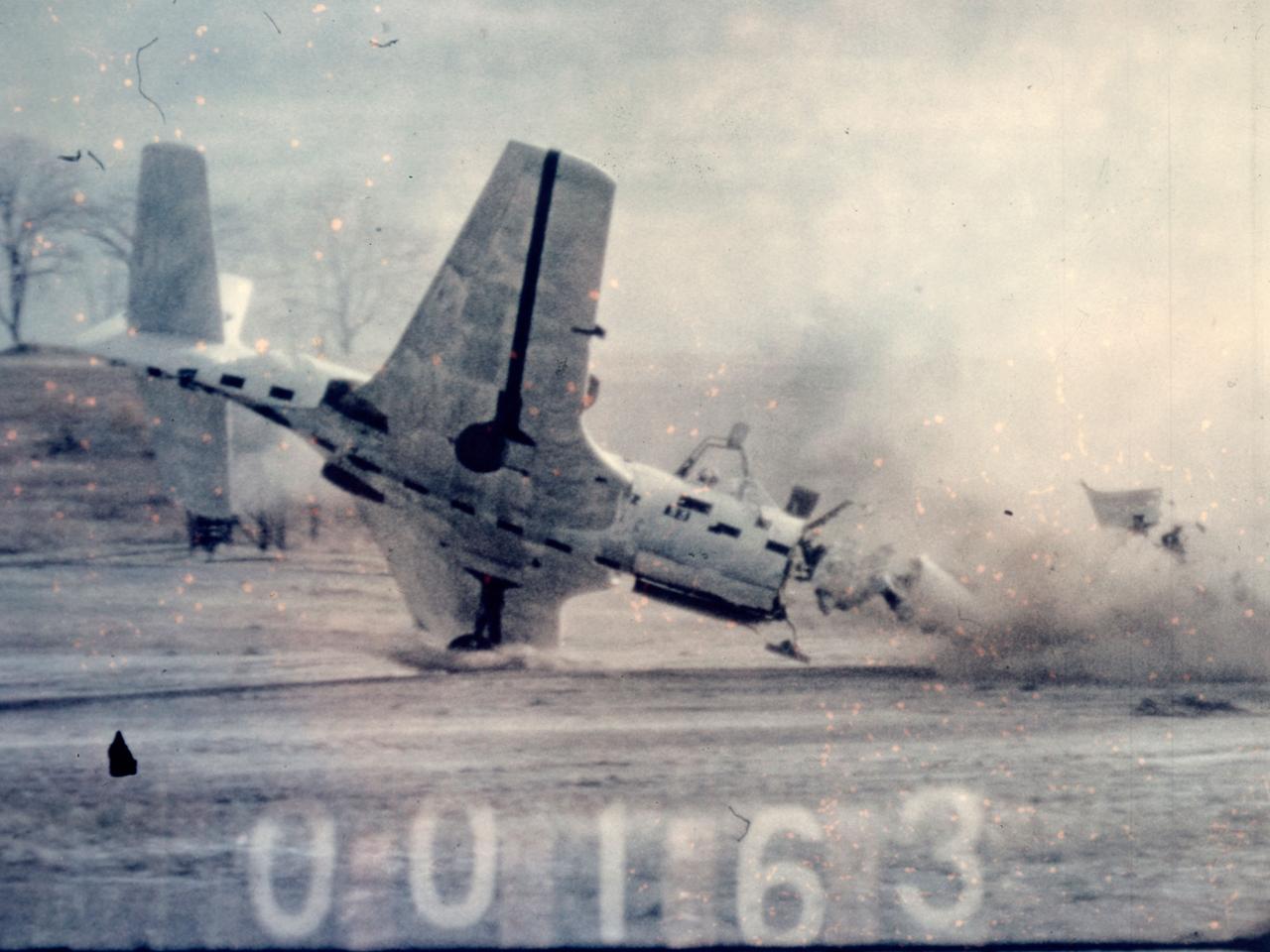
Researchers at the National Advisory Committee for Aeronautics (NACA) Lewis Flight Propulsion Laboratory purposely wreck a McDonnell FH-1 Phantom as part of the laboratory’s Crash Fire Program. NACA Lewis researchers created the program in 1949 to investigate methods for improving survival rates for take-off and landing-type crashes. In these types of crashes, the passengers often survived the impact only to perish in the ensuing fire. Previously there had been little information on the nature of post-crash fires, and it was difficult to use analytical studies in this area. Irving Pinkel, Chief of the Lewis Flight Propulsion Division, was the primary researcher. He enlisted flight safety specialist and aeronautics researchers G. Merritt Preston and Gerard Pesman, mechanical engineer Dugald Black, and others. The tests were conducted at the nearby Ravenna Arsenal using decommissioned Air Force fighter and transport aircraft. The pilotless aircraft were accelerated down a rail on a 1700-foot track at take-off speeds and run into barriers to simulate a variety of different types of crashes. The first barrier stripped off the landing gears and another briefly sent the aircraft off the ground before it crashed into a dirt mound. Telemetry and high-speed cameras were crucial elements in these studies. NACA Lewis photographer Bill Wynne developed a method for inserting timekeeping devices on test film that were able to show time to one thousandth of a second.

KENNEDY SPACE CENTER, FLA. - Leaders of prominent Florida space organizations convened at the Florida Space Authority campus in Cape Canaveral to sign a memorandum of agreement with the Space Foundation to launch the first “Florida Space” conference. From left are U.S. Rep. Tom Feeney and those signing the agreement: Dr. James W. Johnson, chairman of the Canaveral Council of Technical Societies; Col. Mark H. Owen, commander of the 45th Space Wing at Patrick Air Force Base; retired Navy Capt. Winston E. Scott, executive director of the Florida Space Authority; Dr. Woodrow Whitlow Jr., deputy director of the Kennedy Space Center; and Elliot G. Pulham, president and chief executive officer of the Space Foundation. The conference will combine and build on the best features of previous Florida space events including Space Congress and the Cape Canaveral Spaceport Symposium. Both will be retired now in favor of this new event to be held annually and operated by the Space Foundation. Florida Space 2005 will be presented in November 2005.
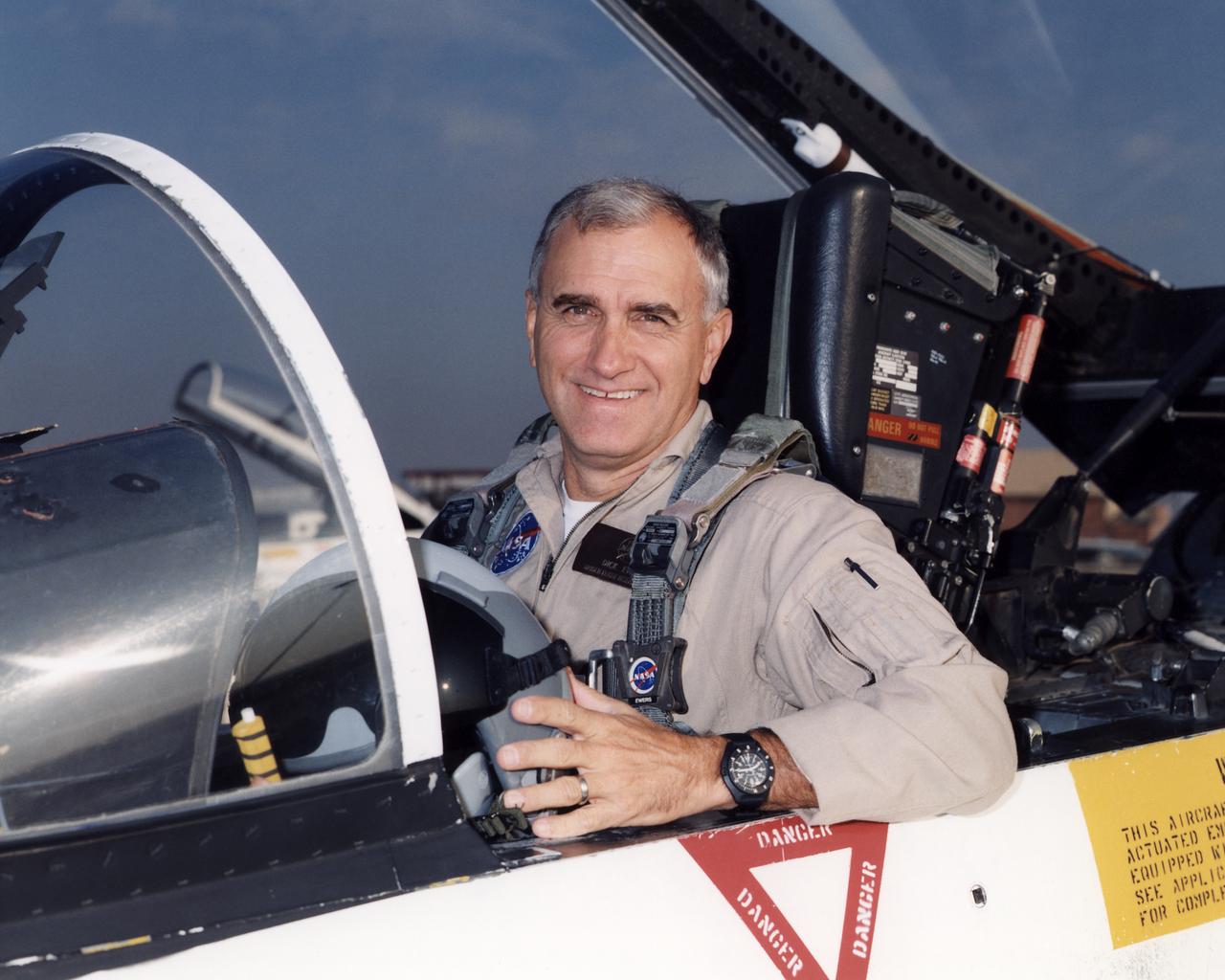
Richard G. (Dick) Ewers became a pilot in the Flight Crew Branch of NASA's Dryden Flight Research Center, Edwards, California, in May 1998. His flying duties focus on operation of the Airborne Science DC-8 and Systems Research F/A-18 aircraft, but he also maintains qualifications in the King Air and T-34C. He has more than 32 years and nearly 9,000 hours of military and civilian flight experience in all types of aircraft from jet fighters to blimps. Ewers came to NASA Dryden from a position as an engineering test pilot with Northrop Grumman's Electronic Sensors and Systems Division (formerly Westinghouse's Electronic Systems Group). He spent eight and a half years with Westinghouse flight testing radar and forward looking infrared systems under development for military and civilian use. Before going to work for Westinghouse, Ewers served for more than 21 years as a U.S. Marine Corps fighter and test pilot, flying F-4, A-4, and F/A-18 aircraft. He underwent flight training at Naval Air Station Pensacola, Fla., in 1969-70. He was subsequently assigned to both fighter/attack and reconnaissance squadrons before ultimately commanding an F-4S squadron for two years. Additionally, his flying included combat service in Vietnam and operational exchange tours with both U.S. Navy and U.S. Air Force squadrons flying F-4s around the world, including off aircraft carriers. Ewers graduated from the U.S. Naval Test Pilot School in 1981 and subsequently served two tours as a test pilot at the Naval Air Test Center, Patuxent River, Md. Most of his flight test experience was with the F/A-18 Hornet. He retired from the Marine Corps in 1989 with the rank of lieutenant colonel. Ewers graduated from the U.S. Air Force Academy in 1968 with a bachelor of science degree in engineering mechanics. He earned a master of science degree in aeronautical systems from the University of West Florida in 1970.
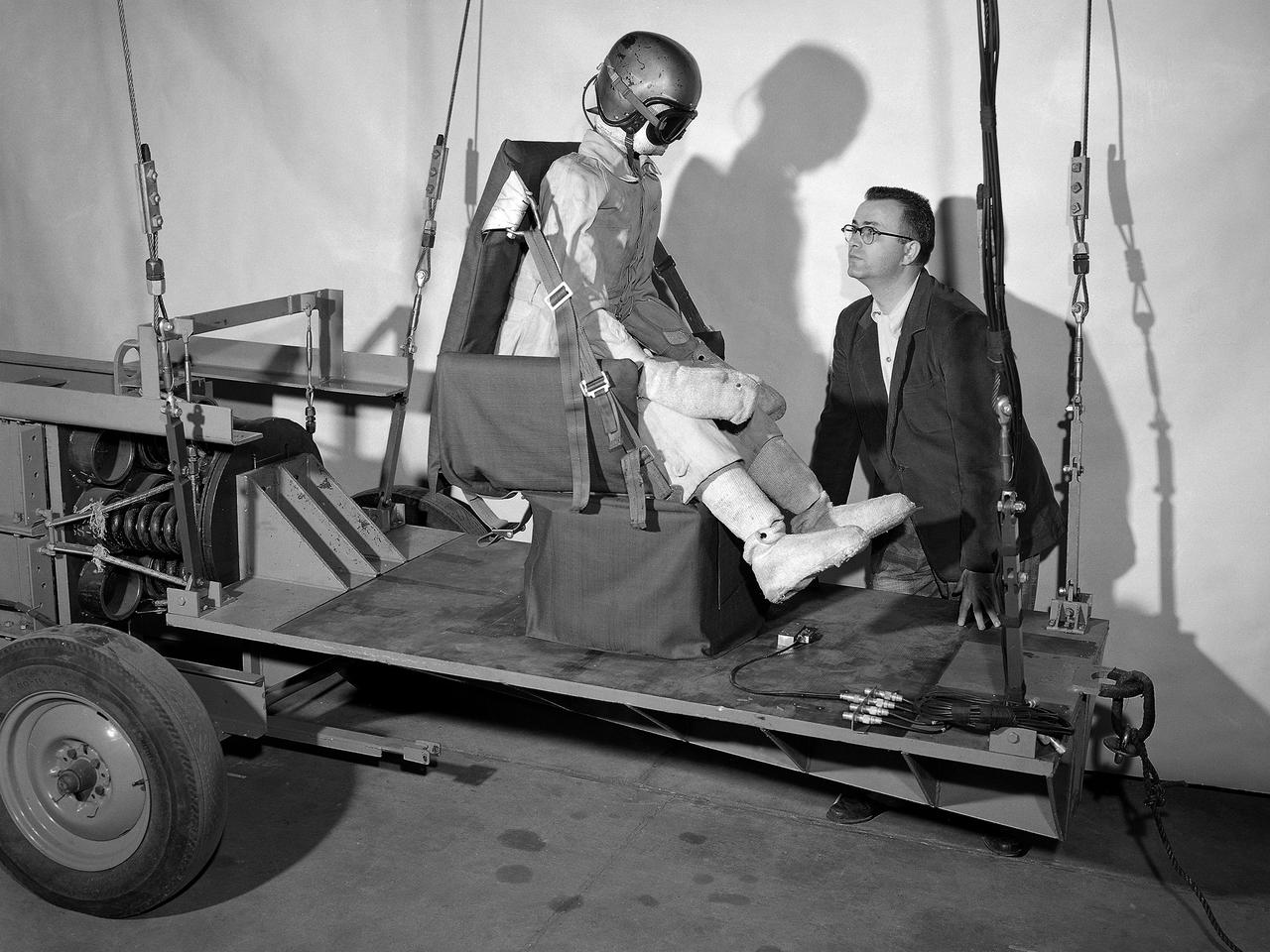
A researcher at the National Advisory Committee for Aeronautics (NACA) Lewis Flight Propulsion Laboratory prepares for a test of an NACA-designed aircraft seat. The laboratory had undertaken a multi-year investigation into the causes and prevention of fires on low altitude aircraft crashes. The program was expanded in the mid-1950s to include the study of impact on passengers, types of seat restraints, and seat design. The crash impact portion of the program began by purposely wrecking surplus Fairchild C-82 Packet and Piper Cub aircraft into barricades at the end of a test runway at the Ravenna Arsenal, located approximately 40 miles south of the Lewis lab in Cleveland. Instrumented dummies and cameras were installed in the pilot and passenger areas. After determining the different loads and their effects on the passengers, the NACA researchers began designing new types of seats and restraints. The result was an elastic seat that flexed upon impact, absorbing 75 percent of the loads before it slowly recoiled. This photograph shows the seats mounted on a pendulum with a large spring behind the platform to provide the jolt that mimicked the forces of a crash. The seat was constructed without any potentially damaging metal parts and included rubber-like material, an inflated back and arms, and a seat cushion. After the pendulum tests, the researchers compared the flexible seats to the rigid seats during a crash of a transport aircraft. They found the passengers in the rigid seats received 66 percent higher g-forces than the NACA-designed seats.
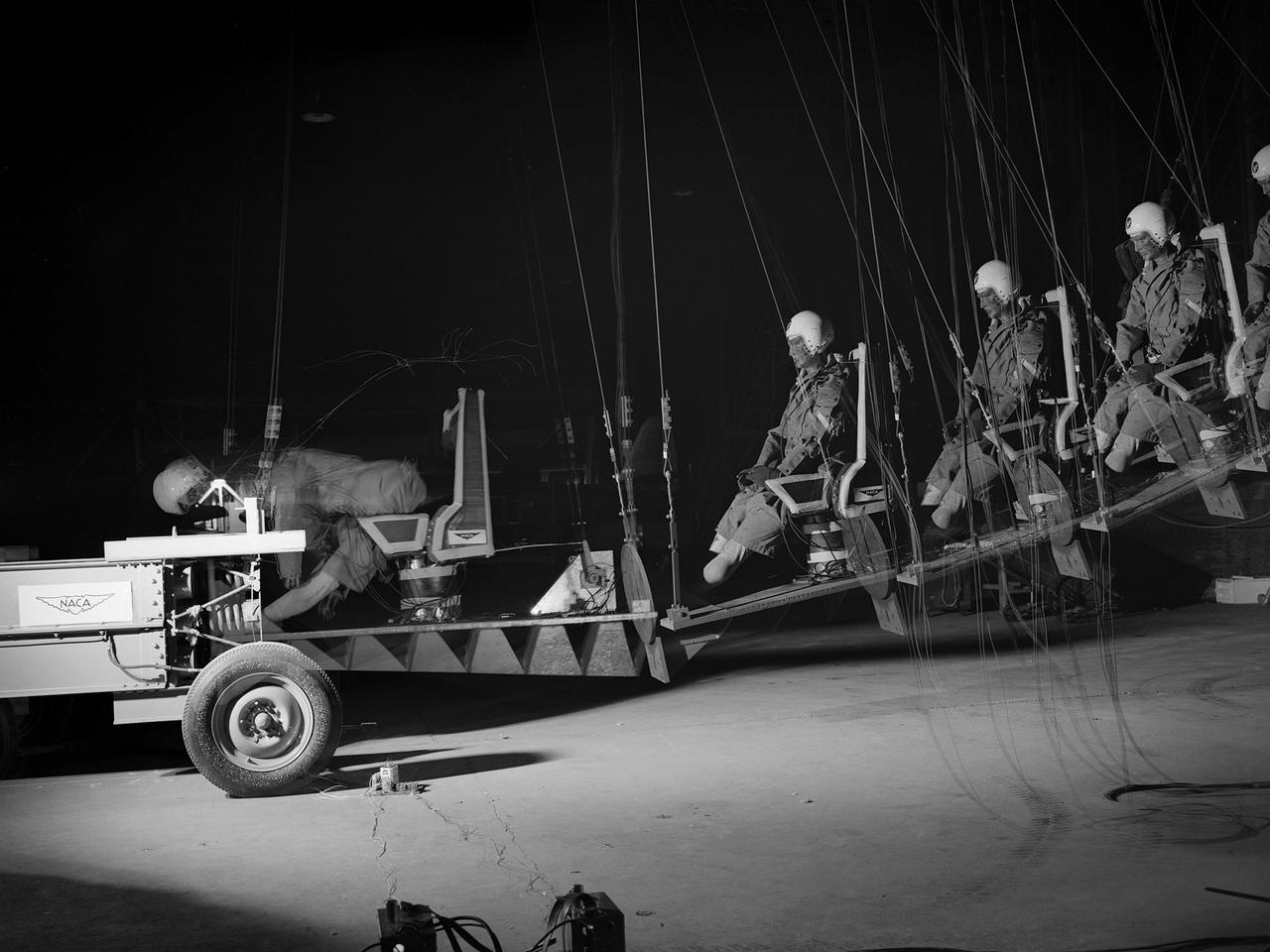
This time-lapse photograph shows the test of a pilot seat and restraint designed by researchers at the National Advisory Committee for Aeronautics (NACA) Lewis Flight Propulsion Laboratory. The laboratory had undertaken a multi-year investigation into the causes and preventative measures for fires resulting from low altitude aircraft crashes. The program was expanded in the mid-1950s to include the study of crash impact on passengers, new types of types of seat restraints, and better seat designs. The impact program began by purposely wrecking surplus transport Fairchild C-82 Packet and Piper Cub aircraft into barricades at the end of a test runway. Instrumented dummies and cameras were installed in the pilot and passenger areas. After determining the different loads experienced during a crash and the effects on the passengers, the NACA researchers began designing new types of seats and restraints. The result was an elastic seat that flexed upon impact, absorbing 75 percent of the loads before it slowly recoiled. This photograph shows the seats mounted on a pendulum with a large spring behind the platform to provide the jolt that mimicked the forces of a crash. The seat was constructed without any potentially damaging metal parts and included rubber-like material, an inflated back and arms, and a seat cushion. After the pendulum tests, the researchers compared the flexible seats to the rigid seats during a crash of a transport aircraft. They found the passengers in the rigid seats received 66 percent higher g-forces than the NACA-designed seats.
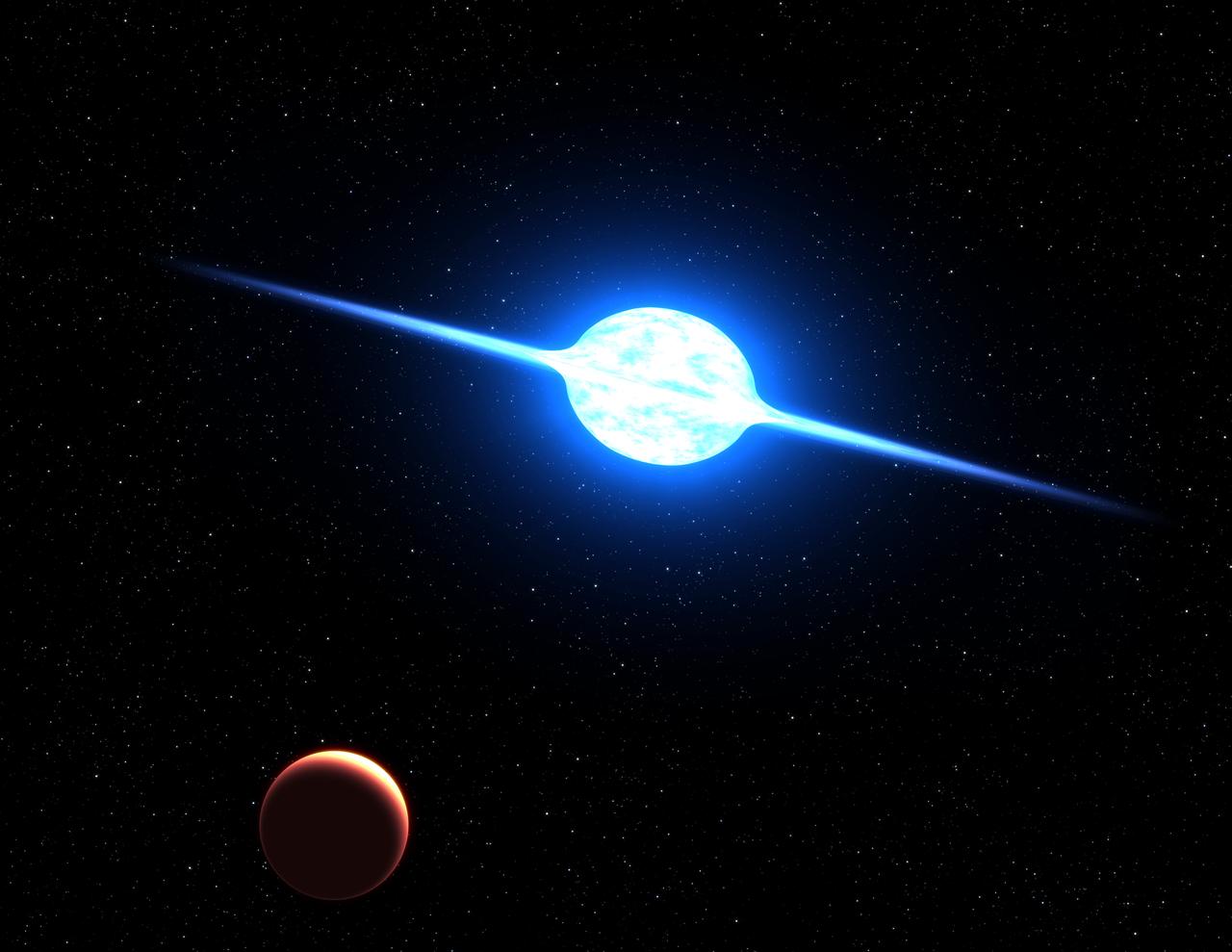
NASA image release December 5, 2011 This is an artist's concept of the fastest rotating star found to date. The massive, bright young star, called VFTS 102, rotates at a million miles per hour, or 100 times faster than our Sun does. Centrifugal forces from this dizzying spin rate have flattened the star into an oblate shape and spun off a disk of hot plasma, seen edge on in this view from a hypothetical planet. The star may have "spun up" by accreting material from a binary companion star. The rapidly evolving companion later exploded as a supernova. The whirling star lies 160,000 light-years away in the Large Magellanic Cloud, a satellite galaxy of our Milky Way. The team will use NASA's Hubble Space Telescope to make precise measurements of the star's proper motion across space. To read more go to: <a href="http://hubblesite.org/newscenter/archive/releases/2011/39/full/" rel="nofollow">hubblesite.org/newscenter/archive/releases/2011/39/full/</a> Image Type: Artwork Credit: NASA, ESA, and G. Bacon (STScI) <b><a href="http://www.nasa.gov/audience/formedia/features/MP_Photo_Guidelines.html" rel="nofollow">NASA image use policy.</a></b> <b><a href="http://www.nasa.gov/centers/goddard/home/index.html" rel="nofollow">NASA Goddard Space Flight Center</a></b> enables NASA’s mission through four scientific endeavors: Earth Science, Heliophysics, Solar System Exploration, and Astrophysics. Goddard plays a leading role in NASA’s accomplishments by contributing compelling scientific knowledge to advance the Agency’s mission. <b>Follow us on <a href="http://twitter.com/NASA_GoddardPix" rel="nofollow">Twitter</a></b> <b>Like us on <a href="http://www.facebook.com/pages/Greenbelt-MD/NASA-Goddard/395013845897?ref=tsd" rel="nofollow">Facebook</a></b> <b>Find us on <a href="http://instagrid.me/nasagoddard/?vm=grid" rel="nofollow">Instagram</a></b>
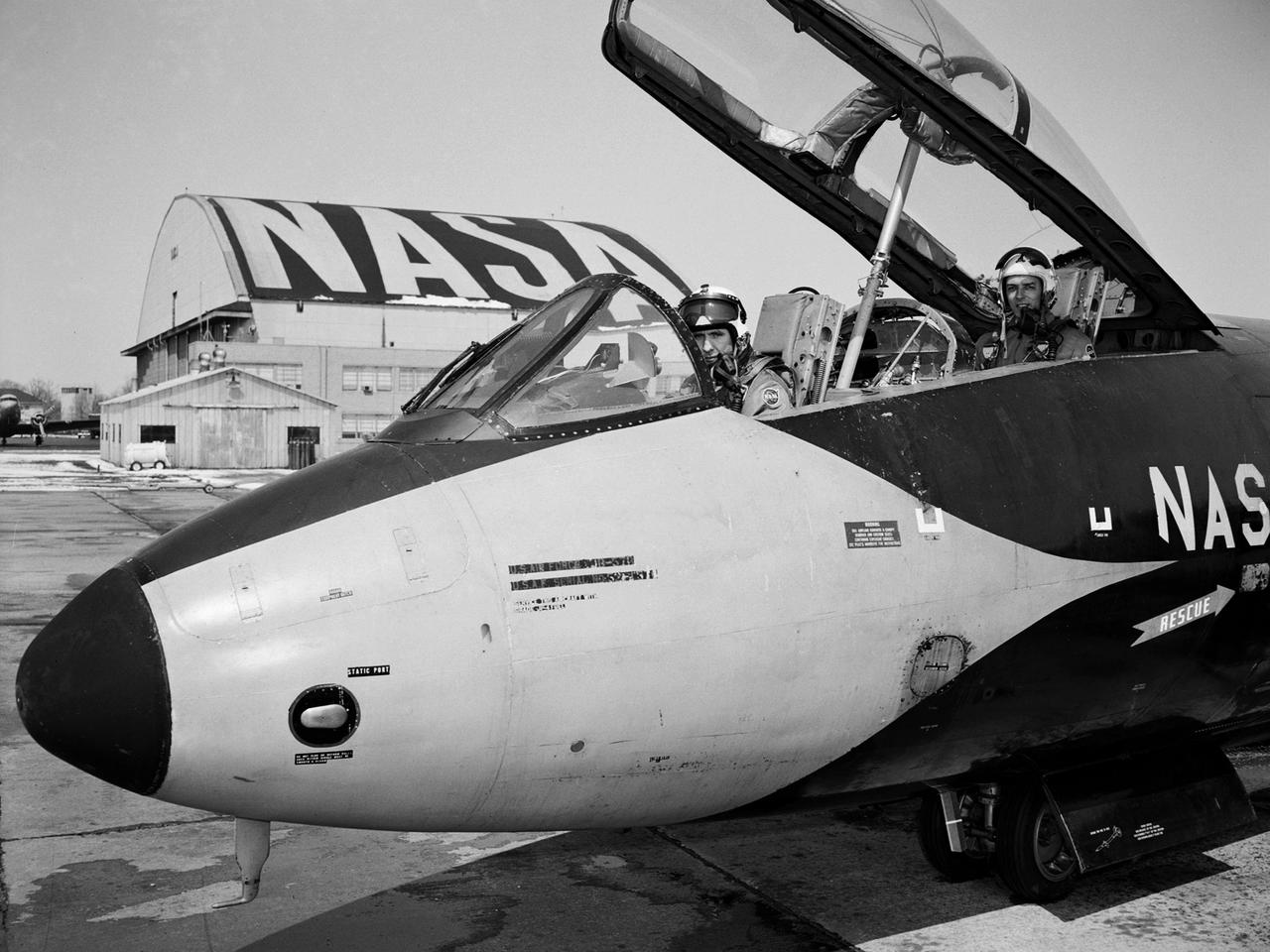
Pilot Earle Boyer and researcher Henry Brandhorst prepare for a solar cell calibration flight in a Martin B-57B Canberra at the National Aeronautics and Space Administration (NASA) Lewis Research Center. Lewis was in the early stages of decades-long energy conversion and space power research effort. Brandhorst, a member of the Chemistry and Energy Conversion Division, led a team of Lewis researchers in a quest to develop new power sources to sustain spacecraft in orbit. Solar cells proved to be an important source of energy, but researchers discovered that their behavior varied at different atmospheric levels. Their standardization and calibration were critical. Brandhorst initiated a standardized way to calibrate solar cells in the early 1960s using the B-57B aircraft. The pilots would take the aircraft up into the troposphere and open the solar cell to the sunlight. The aircraft would steadily descend while instruments recorded how much energy was being captured by the solar cell. From this data, Brandhorst could determine the estimated power for a particular solar cell at any altitude. Pilot Earle Boyer joined NASA Lewis in October 1962. He had flown Convair F-102 Delta Dagger fighters in the Air Force and served briefly in the National Guard before joining the Langley Research Center. Boyer was only at Langley a few months before he transferred to Cleveland. He flew the B-57B, a Convair F-106 Delta Dart, Gulfstream G-1 with an experimental turboprop, Learjet and many other aircraft over the next 32 years at Lewis.
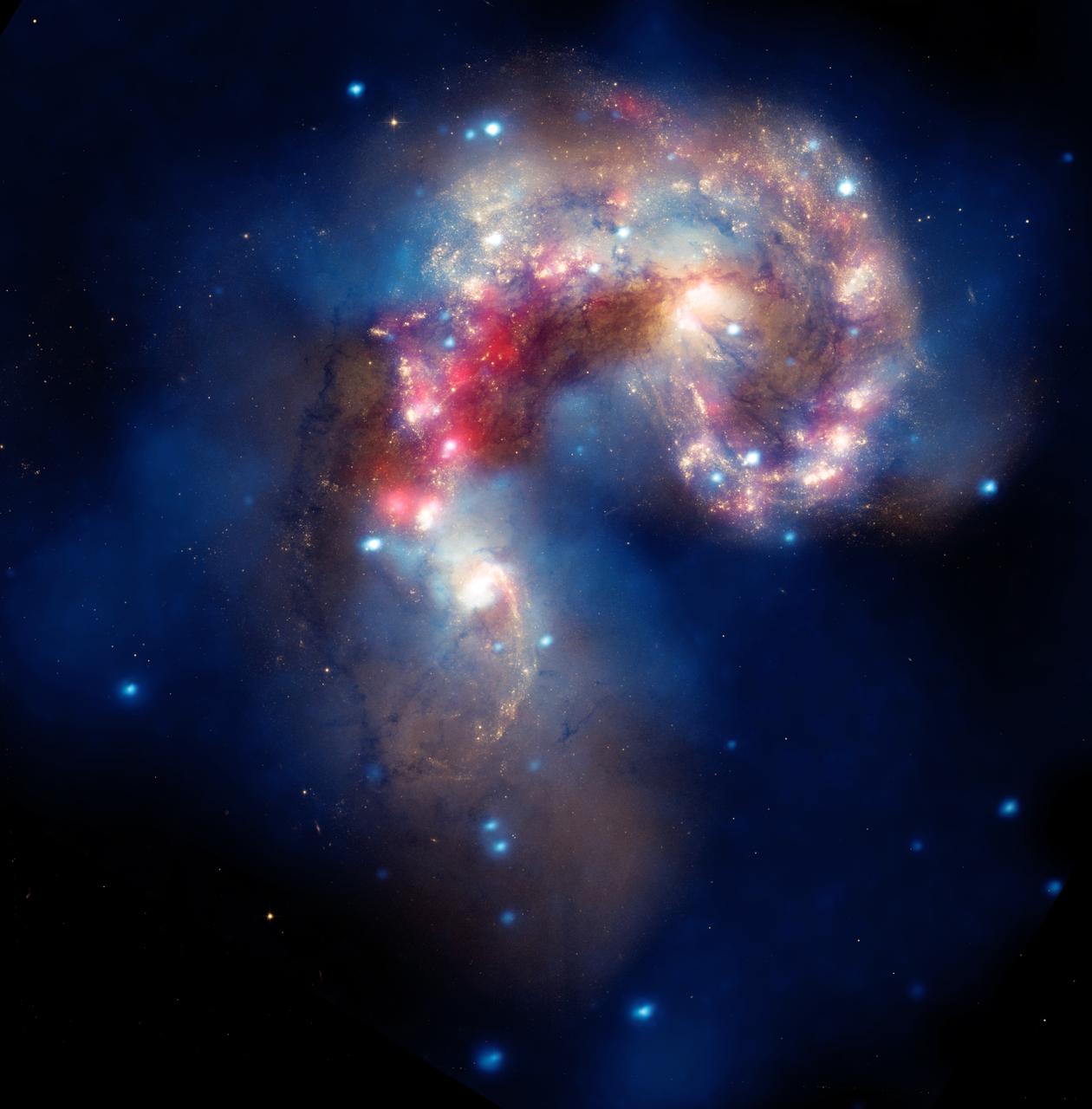
NASA image release August 5, 2010 A beautiful new image of two colliding galaxies has been released by NASA's Great Observatories. The Antennae galaxies, located about 62 million light-years from Earth, are shown in this composite image from the Chandra X-ray Observatory (blue), the Hubble Space Telescope (gold and brown), and the Spitzer Space Telescope (red). The Antennae galaxies take their name from the long antenna-like "arms," seen in wide-angle views of the system. These features were produced by tidal forces generated in the collision. The collision, which began more than 100 million years ago and is still occurring, has triggered the formation of millions of stars in clouds of dusts and gas in the galaxies. The most massive of these young stars have already sped through their evolution in a few million years and exploded as supernovas. The X-ray image from Chandra shows huge clouds of hot, interstellar gas that have been injected with rich deposits of elements from supernova explosions. This enriched gas, which includes elements such as oxygen, iron, magnesium, and silicon, will be incorporated into new generations of stars and planets. The bright, point-like sources in the image are produced by material falling onto black holes and neutron stars that are remnants of the massive stars. Some of these black holes may have masses that are almost one hundred times that of the Sun. The Spitzer data show infrared light from warm dust clouds that have been heated by newborn stars, with the brightest clouds lying in the overlapping region between the two galaxies. The Hubble data reveal old stars and star-forming regions in gold and white, while filaments of dust appear in brown. Many of the fainter objects in the optical image are clusters containing thousands of stars. The Chandra image was taken in December 1999. The Spitzer image was taken in December 2003. The Hubble image was taken in July 2004, and February 2005. Credit: NASA, ESA, SAO, CXC, JPL-Caltech, and STScI Acknowledgment: G. Fabbiano and Z. Wang (Harvard-Smithsonian CfA), and B. Whitmore (STScI)
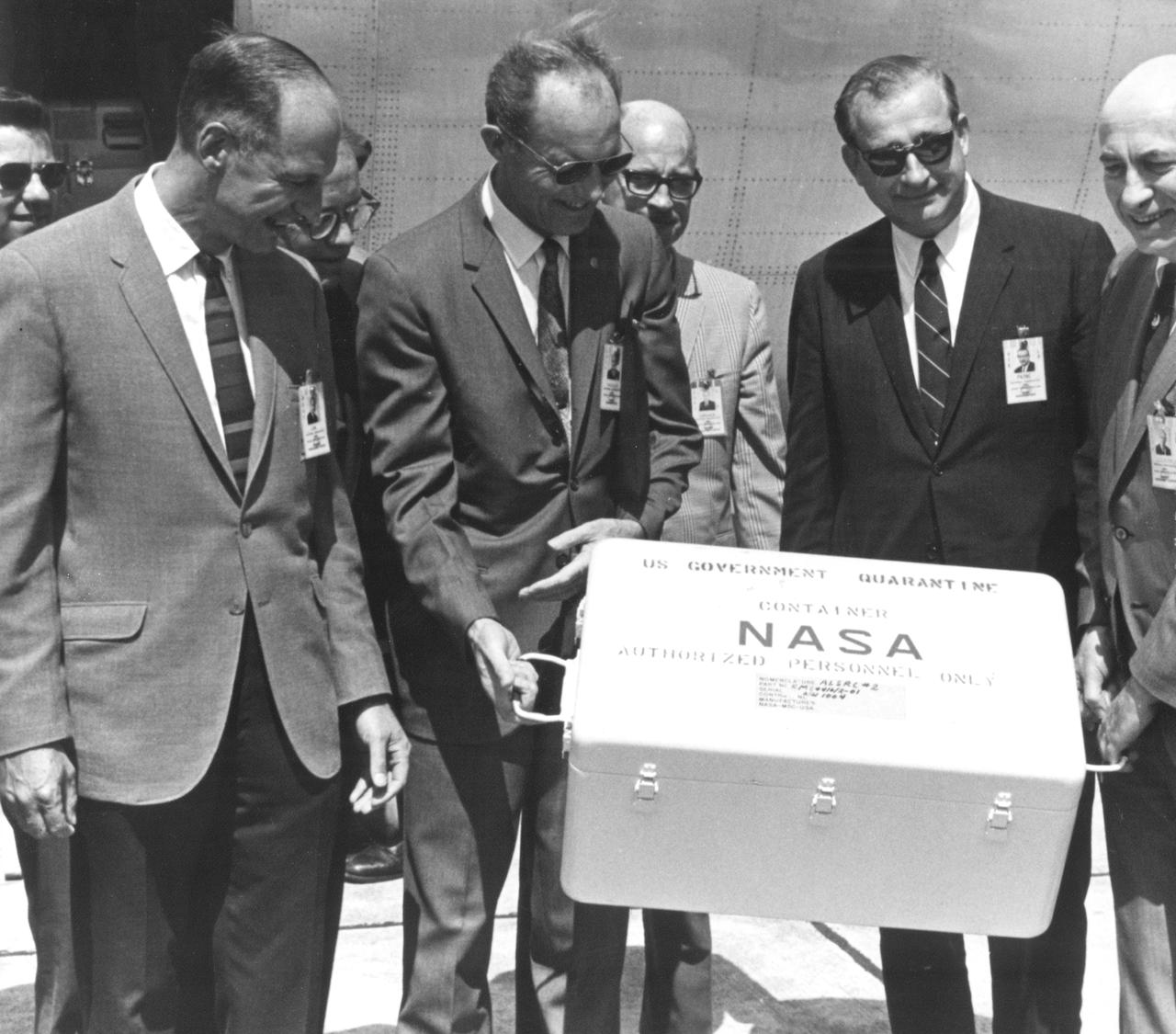
The Apollo 11 mission, the first manned lunar mission, launched from the Kennedy Space Center, Florida via the Marshall Space Flight Center (MSFC) developed Saturn V launch vehicle on July 16, 1969 and safely returned to Earth on July 24, 1969. Aboard the space craft were astronauts Neil A. Armstrong, commander; Michael Collins, Command Module (CM) pilot; and Edwin E. Aldrin Jr., Lunar Module (LM) pilot. The CM, piloted by Michael Collins remained in a parking orbit around the Moon while the LM, named “Eagle’’, carrying astronauts Neil Armstrong and Edwin Aldrin, landed on the Moon. During 2½ hours of surface exploration, the crew collected 47 pounds of lunar surface material for analysis back on Earth. This photograph was taken as the mission’s first loaded sample return container arrived at Ellington Air Force Base by air from the Pacific recovery area. The rock box was immediately taken to the Lunar Receiving Laboratory at the Manned Spacecraft Center (MSC) in Houston, Texas. Happily posing for the photograph with the rock container are (L-R) Richard S. Johnston (back), special assistant to the MSC Director; George M. Low, MSC Apollo Spacecraft Program manager; George S. Trimble (back), MSC Deputy Director; Lt. General Samuel C. Phillips, Apollo Program Director, Office of Manned Spaceflight at NASA headquarters; Eugene G. Edmonds, MSC Photographic Technology Laboratory; Dr. Thomas O. Paine, NASA Administrator; and Dr. Robert R. Gilruth, MSC Director.
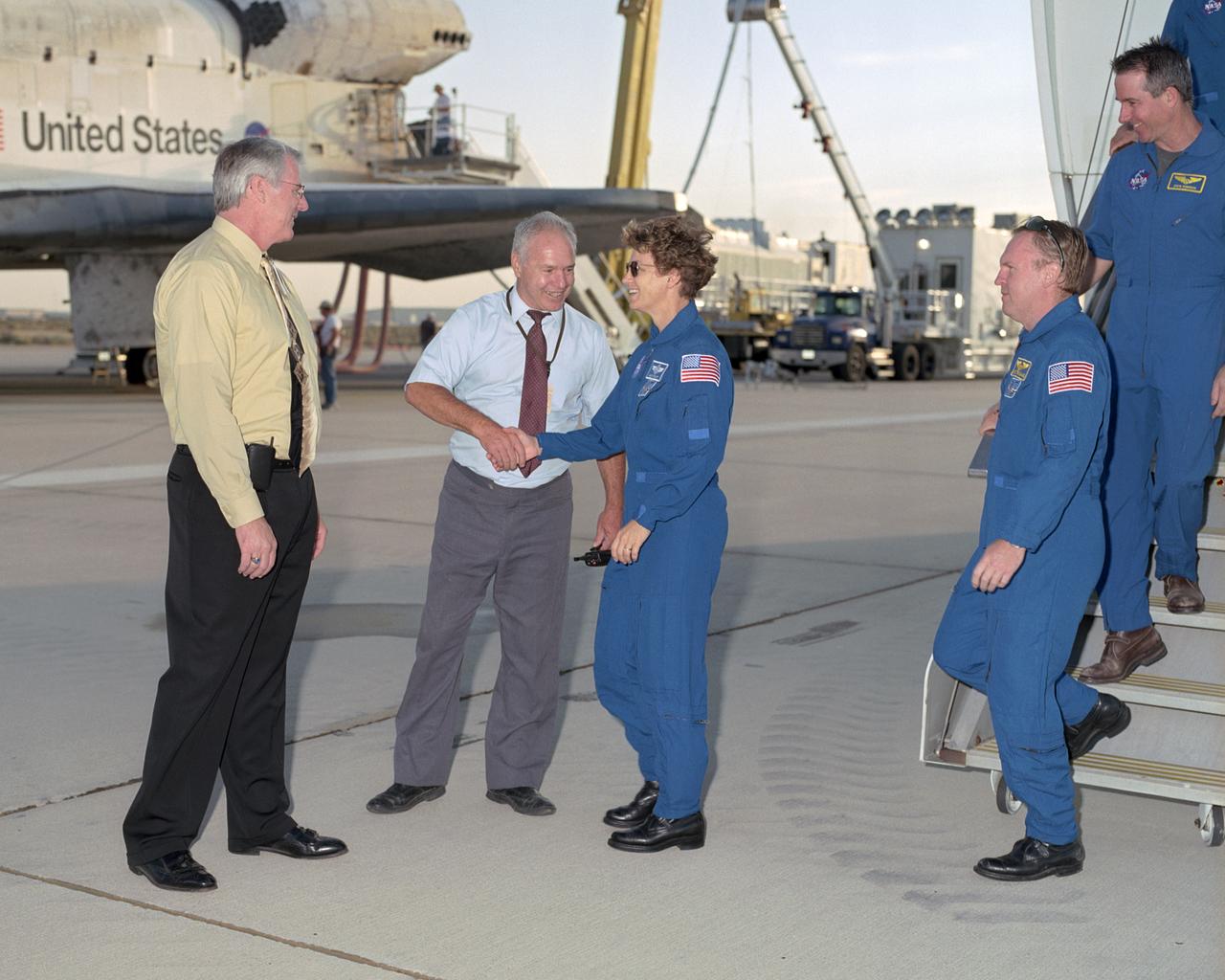
NASA DFRC Deputy Director Steven Schmidt and DFRC Shuttle Program Manager Joe D'Agostino greet Commander Eileen Collins and the crew of STS-114. Left to right: Steven G. Schmidt, deputy director of the NASA Dryden Flight Research Center; Joe D'Agostino, DFRC Space Shuttle Flight Management Support Specialist; STS-114 Commander Eileen Collins and Mission Specialists Andrew Thomas and Stephen Robinson. Space Shuttle Discovery landed safely at NASA's Dryden Flight Research Center at Edwards Air Force Base in California at 5:11:22 a.m. PDT this morning, following the very successful 14-day STS-114 return to flight mission. During their two weeks in space, Commander Eileen Collins and her six crewmates tested out new safety procedures and delivered supplies and equipment the International Space Station. Discovery spent two weeks in space, where the crew demonstrated new methods to inspect and repair the Shuttle in orbit. The crew also delivered supplies, outfitted and performed maintenance on the International Space Station. A number of these tasks were conducted during three spacewalks. In an unprecedented event, spacewalkers were called upon to remove protruding gap fillers from the heat shield on Discovery's underbelly. In other spacewalk activities, astronauts installed an external platform onto the Station's Quest Airlock and replaced one of the orbital outpost's Control Moment Gyroscopes. Inside the Station, the STS-114 crew conducted joint operations with the Expedition 11 crew. They unloaded fresh supplies from the Shuttle and the Raffaello Multi-Purpose Logistics Module. Before Discovery undocked, the crews filled Raffeallo with unneeded items and returned to Shuttle payload bay. Discovery launched on July 26 and spent almost 14 days on orbit.
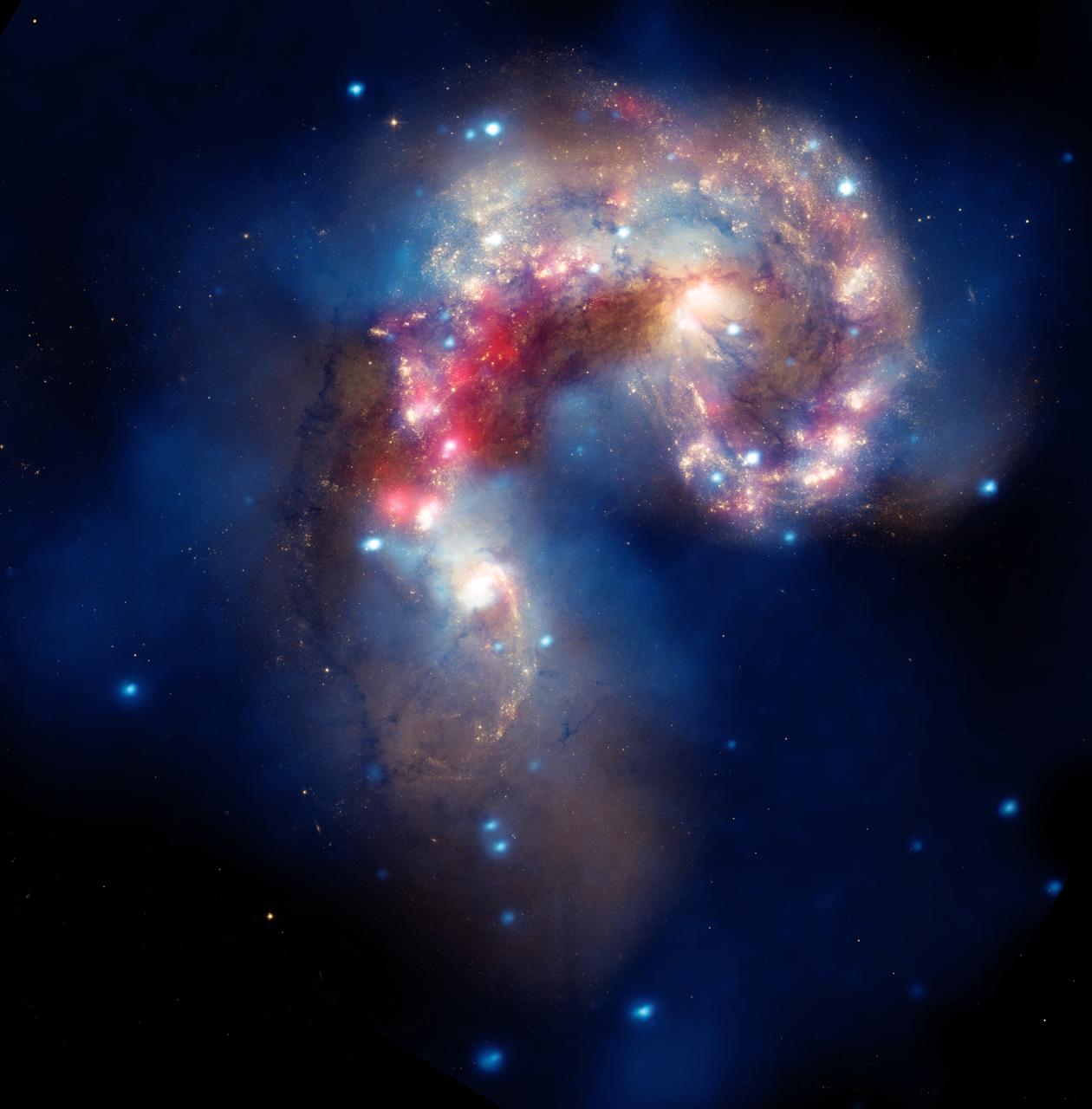
NASA image release August 5, 2010 A beautiful new image of two colliding galaxies has been released by NASA's Great Observatories. The Antennae galaxies, located about 62 million light-years from Earth, are shown in this composite image from the Chandra X-ray Observatory (blue), the Hubble Space Telescope (gold and brown), and the Spitzer Space Telescope (red). The Antennae galaxies take their name from the long antenna-like "arms," seen in wide-angle views of the system. These features were produced by tidal forces generated in the collision. The collision, which began more than 100 million years ago and is still occurring, has triggered the formation of millions of stars in clouds of dusts and gas in the galaxies. The most massive of these young stars have already sped through their evolution in a few million years and exploded as supernovas. The X-ray image from Chandra shows huge clouds of hot, interstellar gas that have been injected with rich deposits of elements from supernova explosions. This enriched gas, which includes elements such as oxygen, iron, magnesium, and silicon, will be incorporated into new generations of stars and planets. The bright, point-like sources in the image are produced by material falling onto black holes and neutron stars that are remnants of the massive stars. Some of these black holes may have masses that are almost one hundred times that of the Sun. The Spitzer data show infrared light from warm dust clouds that have been heated by newborn stars, with the brightest clouds lying in the overlapping region between the two galaxies. The Hubble data reveal old stars and star-forming regions in gold and white, while filaments of dust appear in brown. Many of the fainter objects in the optical image are clusters containing thousands of stars. The Chandra image was taken in December 1999. The Spitzer image was taken in December 2003. The Hubble image was taken in July 2004, and February 2005. To read more go to: <a href="http://www.nasa.gov/mission_pages/chandra/multimedia/antennae.html" rel="nofollow">www.nasa.gov/mission_pages/chandra/multimedia/antennae.html</a> <b><a href="http://www.nasa.gov/centers/goddard/home/index.html" rel="nofollow">NASA Goddard Space Flight Center</a></b> is home to the nation's largest organization of combined scientists, engineers and technologists that build spacecraft, instruments and new technology to study the Earth, the sun, our solar system, and the universe. <b>Follow us on <a href="http://twitter.com/NASA_GoddardPix" rel="nofollow">Twitter</a></b> <b>Join us on <a href="http://www.facebook.com/pages/Greenbelt-MD/NASA-Goddard/395013845897?ref=tsd" rel="nofollow">Facebook</a><b></b></b> Credit: NASA, ESA, SAO, CXC, JPL-Caltech, and STScI Acknowledgment: G. Fabbiano and Z. Wang (Harvard-Smithsonian CfA), and B. Whitmore (STScI)