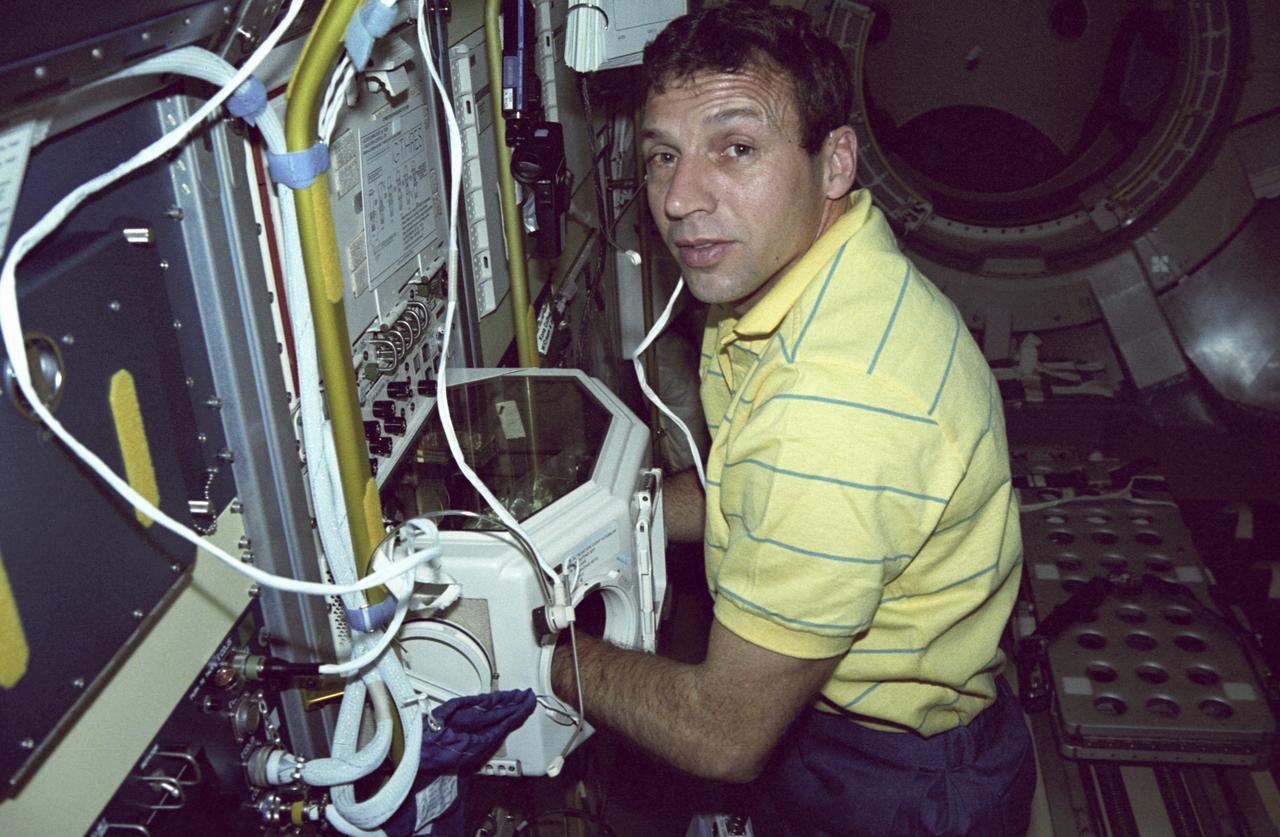
In this photograph, astronaut David Hilmers conducts a life science experiment by using the Biorack Glovebox (GBX) during the International Microgravity Laboratory-1 (IML-1) mission. The Biorack was a large multipurpose facility designed for studying the effects of microgravity and cosmic radiation on numerous small life forms such as cells, tissues, small organisms, and plants. Located at the Biorack, the GBX was an enclosed environment that protected samples from contamination and prevented liquid from escaping. Crewmembers handled the specimens with their hands inside gloves that extended into the sealed work area. A microscope and video camera mounted on the GBX door were used to observe and document experiments. Managed by the Marshall Space Flight Center, the IML-1 mission was the first in a series of Shuttle flights dedicated to fundamental materials and life sciences research and was launched aboard the Shuttle Orbiter Discovery (STS-42) on January 22, 1992.
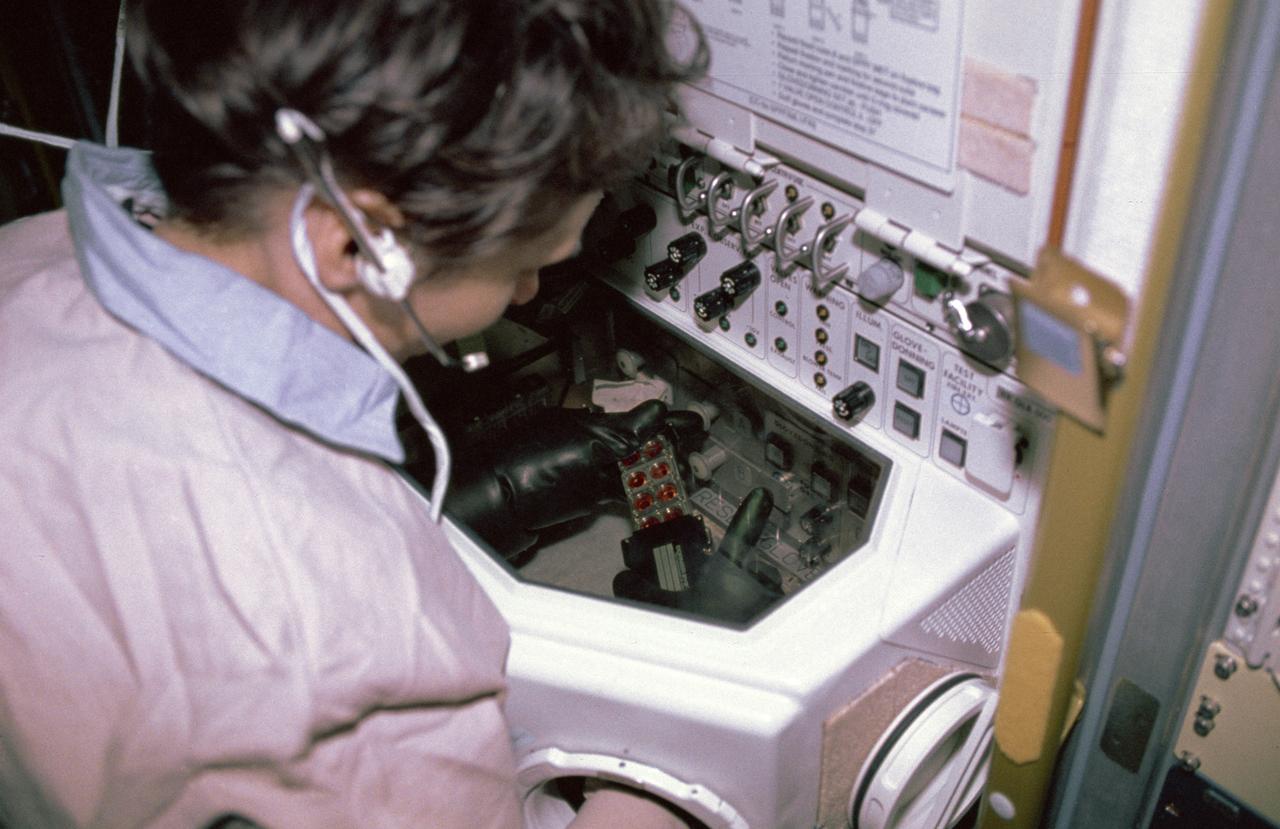
In this photograph, astronaut Roberta Bondar conducts a life science experiment by using the Biorack Glovebox (GBX) during the International Microgravity Laboratory-1 (IML-1) mission. The Biorack was a large multipurpose facility designed for studying the effects of microgravity and cosmic radiation on numerous small life forms such as cells, tissues, small organisms, and plants. Located at the Biorack, the GBX was an enclosed environment that protected samples from contamination and prevented liquid from escaping. Crewmembers handled the specimens with their hands inside gloves that extended into the sealed work area. A microscope and video camera mounted on the GBX door were used to observe and document experiments. Managed by the Marshall Space Flight Center, the IML-1 mission was the first in a series of Shuttle flights dedicated to fundamental materials and life sciences research and was launched aboard the Shuttle Orbiter Discovery (STS-42) on January 22, 1992.
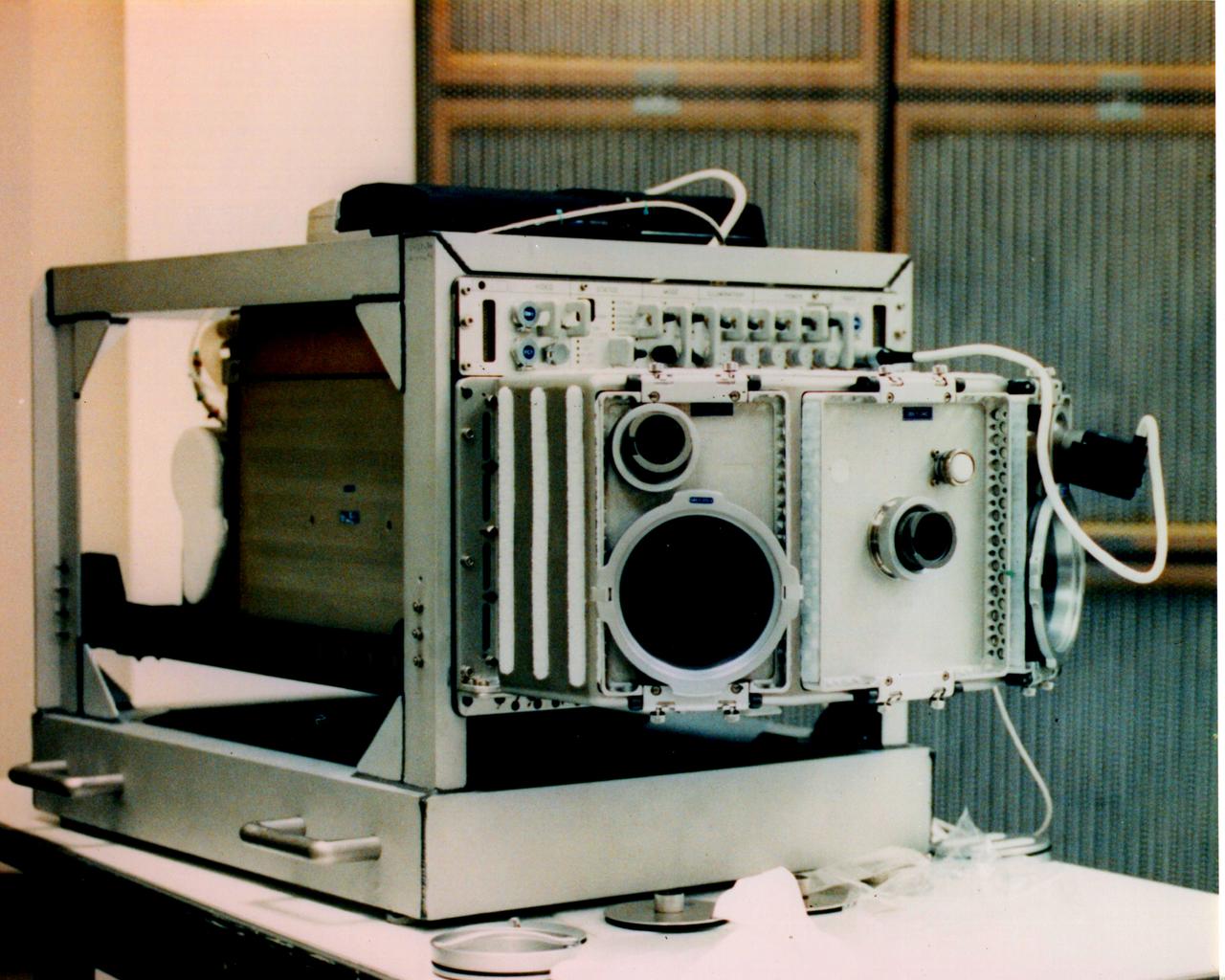
The USML-1 Glovebox (GBX) is a multi-user facility supporting 16 experiments in fluid dynamics, combustion sciences, crystal growth, and technology demonstration. The GBX has an enclosed working space which minimizes the contamination risks to both Spacelab and experiment samples. The GBX supports four charge-coupled device (CCD) cameras (two of which may be operated simultaneously) with three black-and-white and three color camera CCD heads available. The GBX also has a backlight panel, a 35 mm camera, and a stereomicroscope that offers high-magnification viewing of experiment samples. Video data can also be downlinked in real-time. The GBX also provides electrical power for experiment hardware, a time-temperature display, and cleaning supplies.
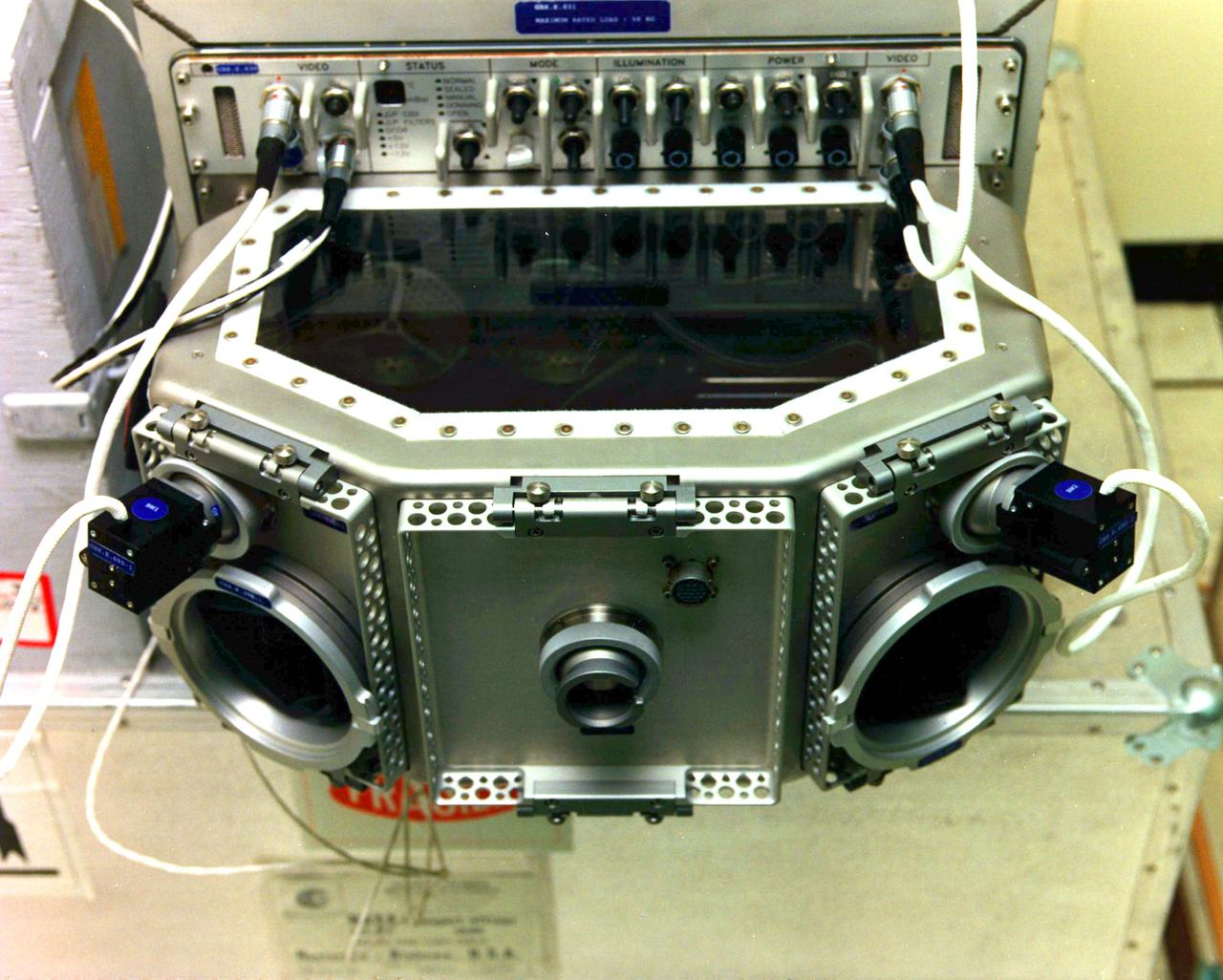
The USML-1 Glovebox (GBX) is a multi-user facility supporting 16 experiments in fluid dynamics, combustion sciences, crystal growth, and technology demonstration. The GBX has an enclosed working space which minimizes the contamination risks to both Spacelab and experiment samples. The GBX supports four charge-coupled device (CCD) cameras (two of which may be operated simultaneously) with three black-and-white and three color camera CCD heads available. The GBX also has a backlight panel, a 35 mm camera, and a stereomicroscope that offers high-magnification viewing of experiment samples. Video data can also be downlinked in real-time. The GBX also provides electrical power for experiment hardware, a time-temperature display, and cleaning supplies.
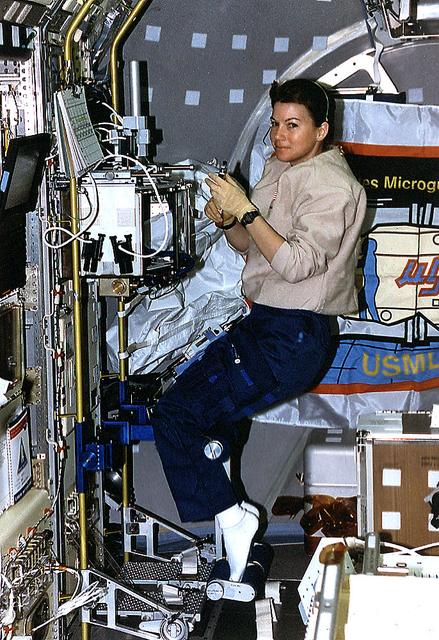
Onboard Space Shuttle Columbia (STS-73) Mission Specialists Catherine Cady Coleman works at the glovebox facility in support of the Protein Crystal Growth Glovebox (PCG-GBX) experiment in the United States Microgravity Laboratory 2 (USML-2) Spacelab science module.
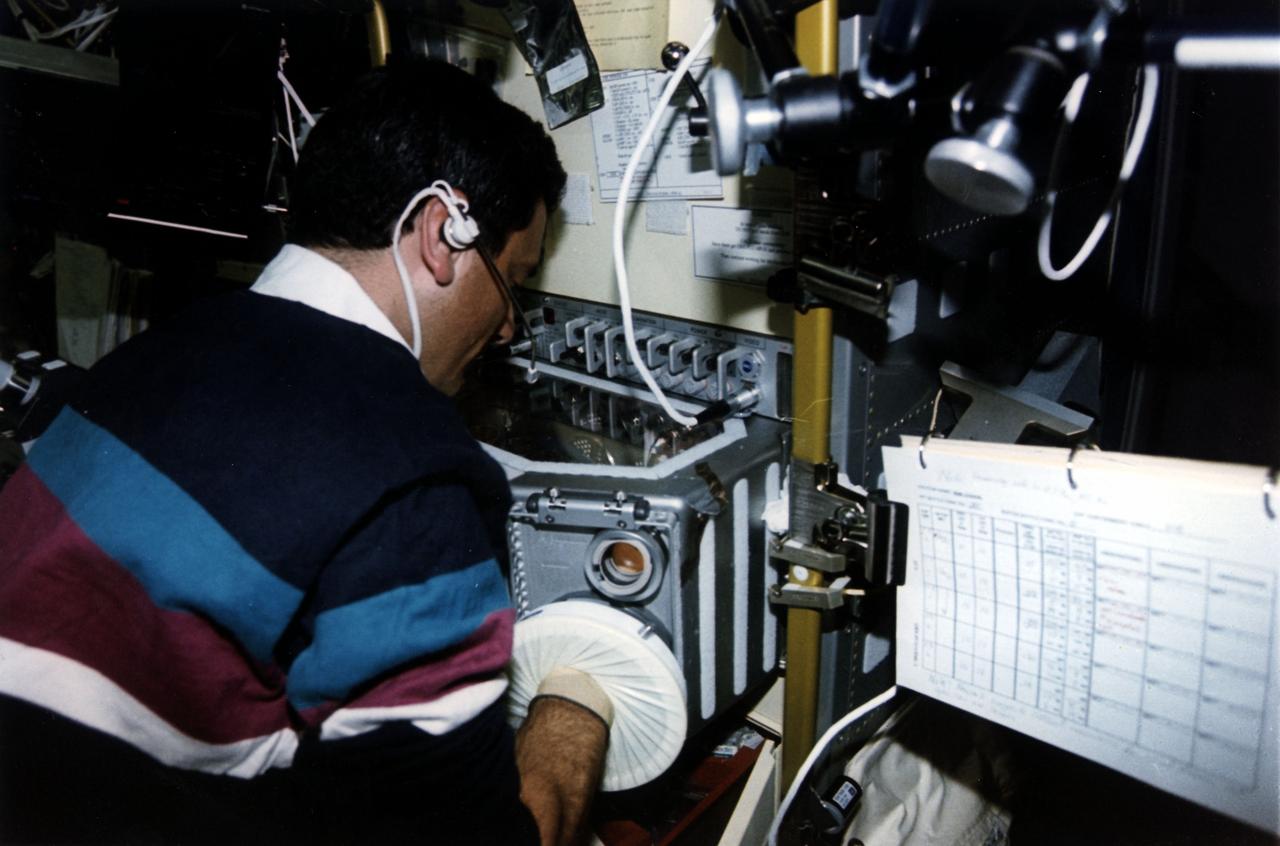
Dr. Larry DeLucas operating the USML-1 Glovebox (GBX) during the USML-1 (STS-50) mission. Dr. DeLucas was a Payload Specialist during the USML-1 mission and is Associate Director of the Center for Macromolecular Crystallography at The University of Alabama at Birmingham.
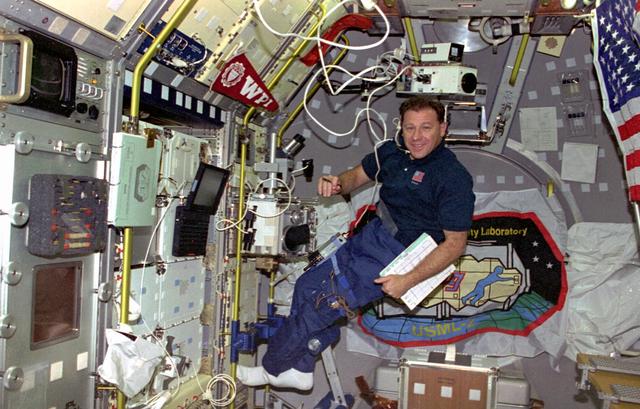
STS073-106-001 (20 October-5 November 1995) --- Payload specialist Albert Sacco Jr. takes direction from a crew mate out of frame onboard the United States Microgravity Laboratory (USML-2) science module in the cargo bay of the Space Shuttle Columbia. Sacco was about to check out an experiment in a glovebox, which represented one of the busier areas during the 16-day USML-2 flight.
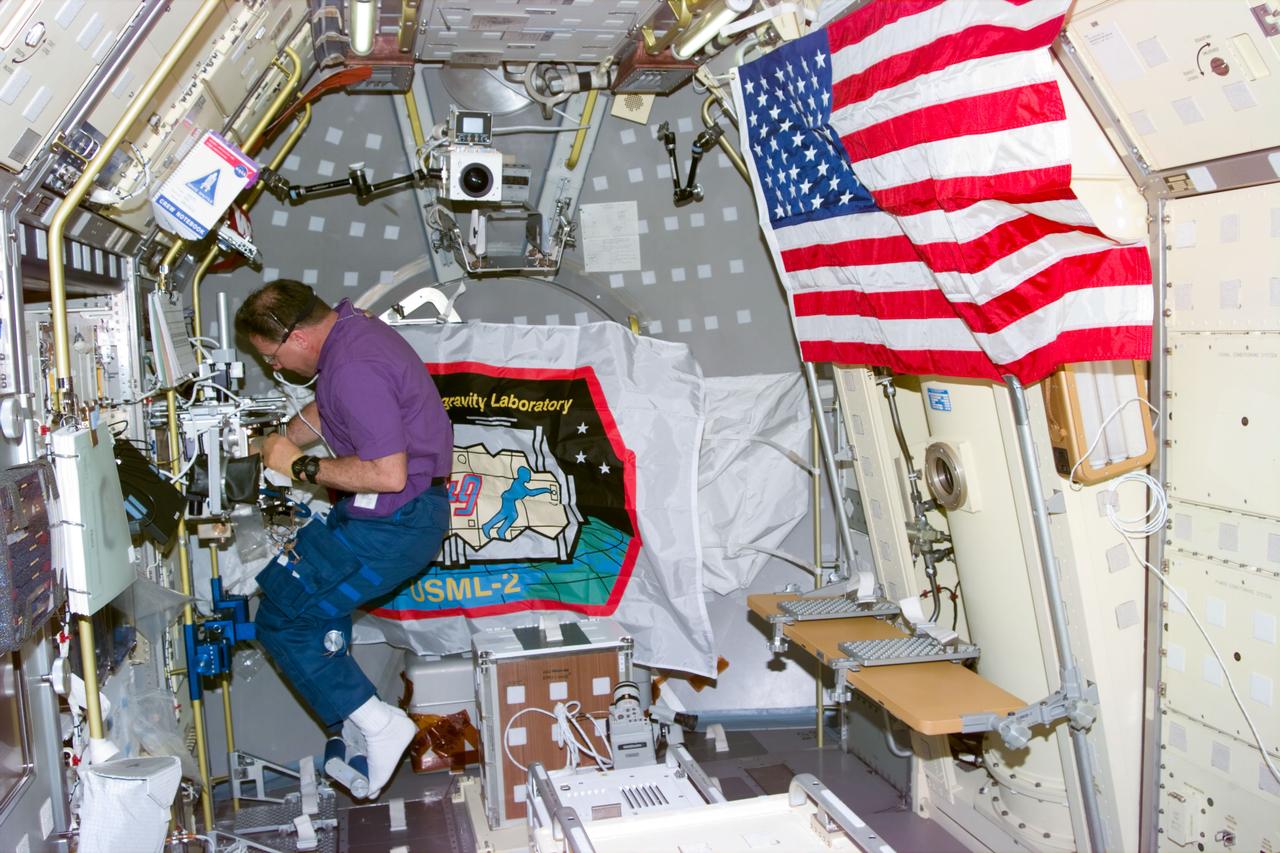
STS073-E-5024 (23 Oct. 1995)--- Albert Sacco Jr., STS-73 payload specialist, works in the Glovebox on the portside of the science module aboard the space shuttle Columbia in Earth orbit. This frame was exposed with the color Electronic Still Camera (ESC) assigned to the scheduled 16-day United States Microgravity Laboratory (USML-2) mission.
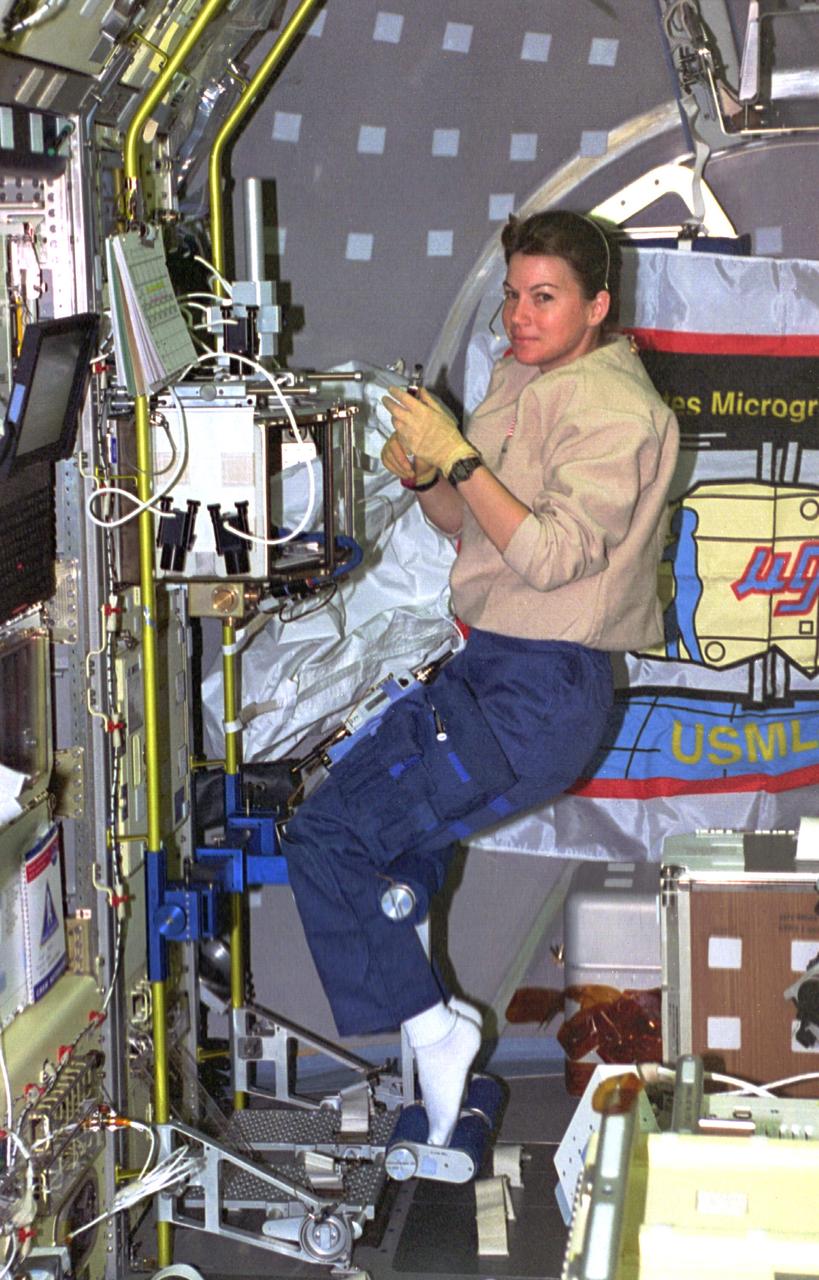
STS073-105-011 (20 October-5 November 1995) --- Astronaut Catherine G. Coleman, STS-73 mission specialist, settles in for a session of work at the glovebox on the starboard side of the United States Microgravity Laboratory (USML-2) module. Coleman was joined by four other NASA astronauts and two guest researchers for almost 16 days of research aboard the Space Shuttle Columbia in Earth-orbit.