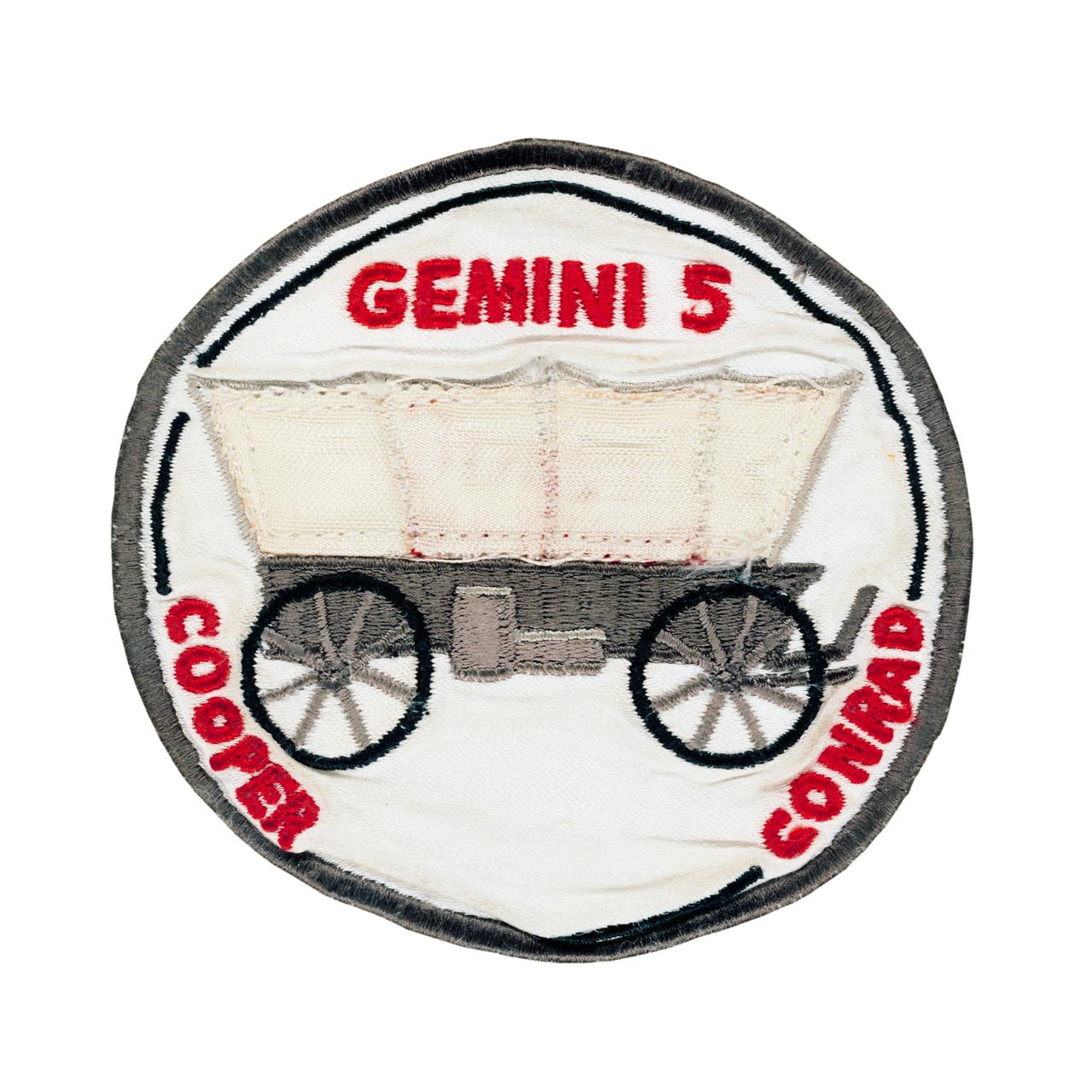
S66-59530 (August 1965) --- This is the insignia of the Gemini-Titan 5 (GT-5) spaceflight. The Gemini-5 prime crew members are astronauts L. Gordon Cooper Jr., command pilot; and Charles Conrad Jr., pilot. The covered wagon symbolizes pioneer spirit of space exploration. The NASA insignia design for Gemini flights is reserved for use by the astronauts and for other official use as the NASA Administrator may authorize. Public availability has been approved only in the form of illustrations by the various news media. When and if there is any change in this policy, which we do not anticipate, it will be publicly announced.
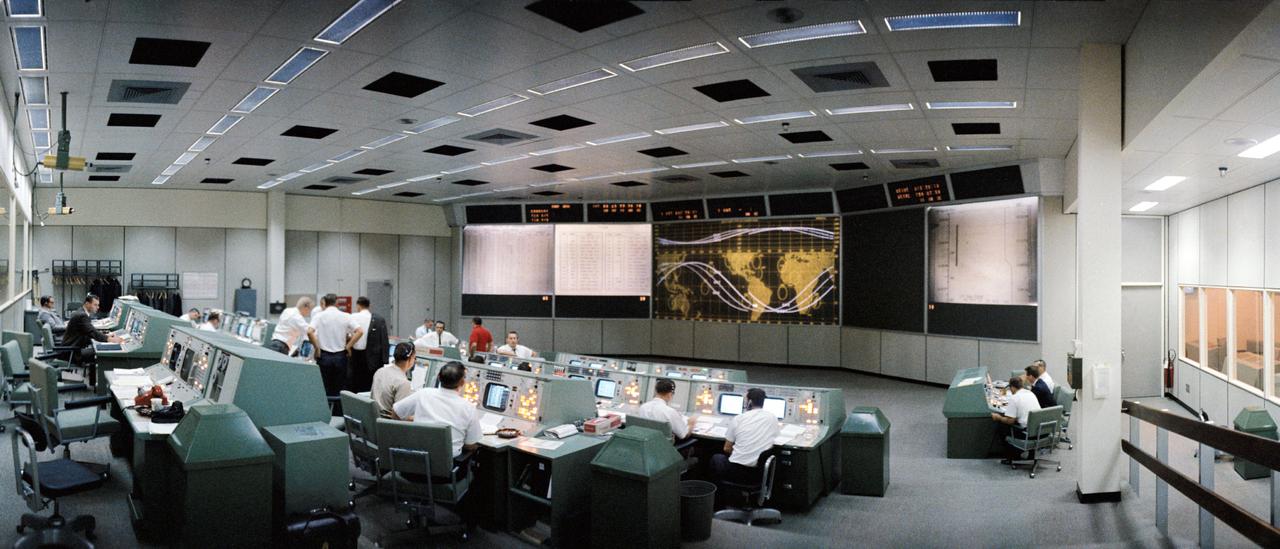
S65-45280 (21-29 Aug. 1965) --- Overall view of the Mission Control Center (MCC), Houston, Texas, during the Gemini-5 flight. Note the screen at the front of the MCC which is used to track the progress of the Gemini spacecraft.
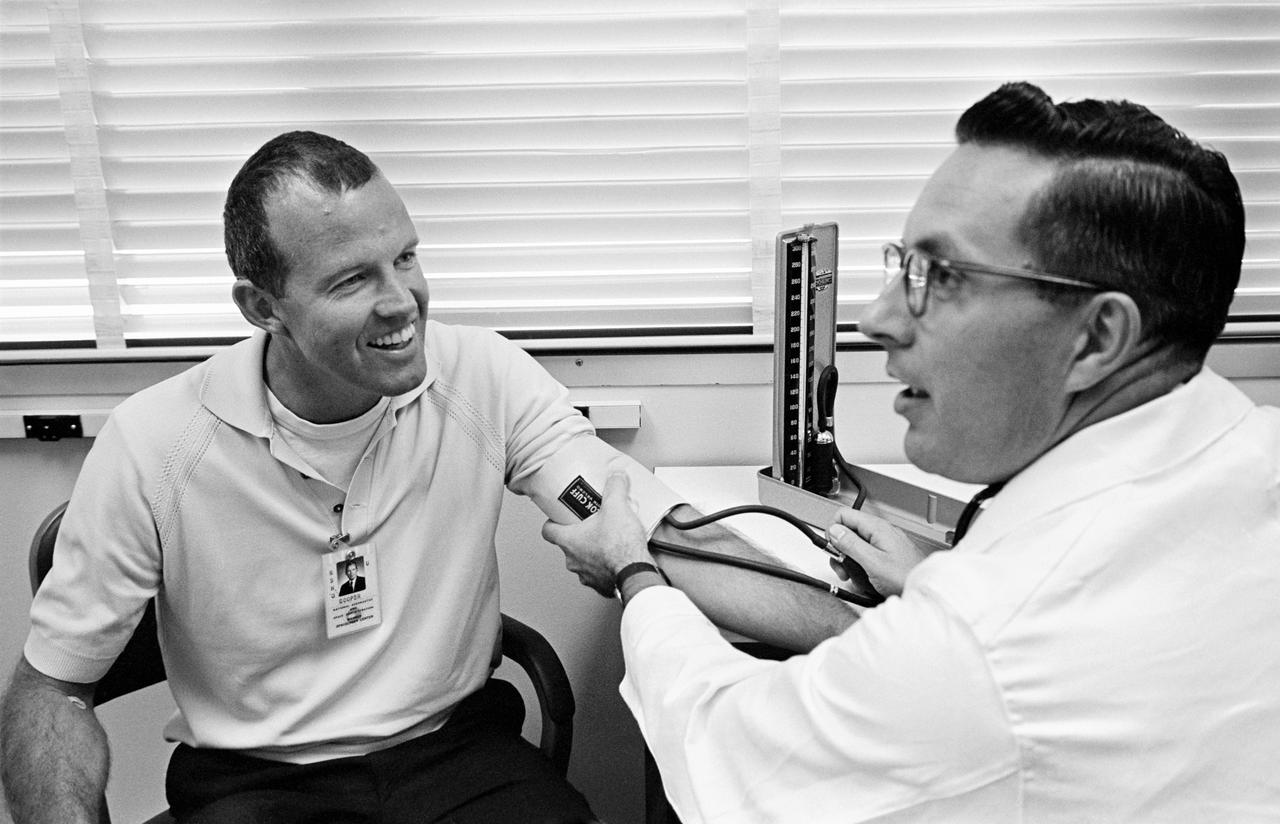
S65-28710 (17 Aug. 1965) --- Astronaut L. Gordon Cooper Jr., command pilot for the Gemini-5 spaceflight, has his blood pressure checked by Dr. Charles A. Berry, chief, Center Medical Programs, Manned Spacecraft Center, during a preflight physical examination.

S65-45683 (21-29 Aug. 1965) --- Astronaut Charles Conrad Jr. inside the Gemini-5 spacecraft as it orbited Earth. Astronaut L. Gordon Cooper Jr. took this photograph.
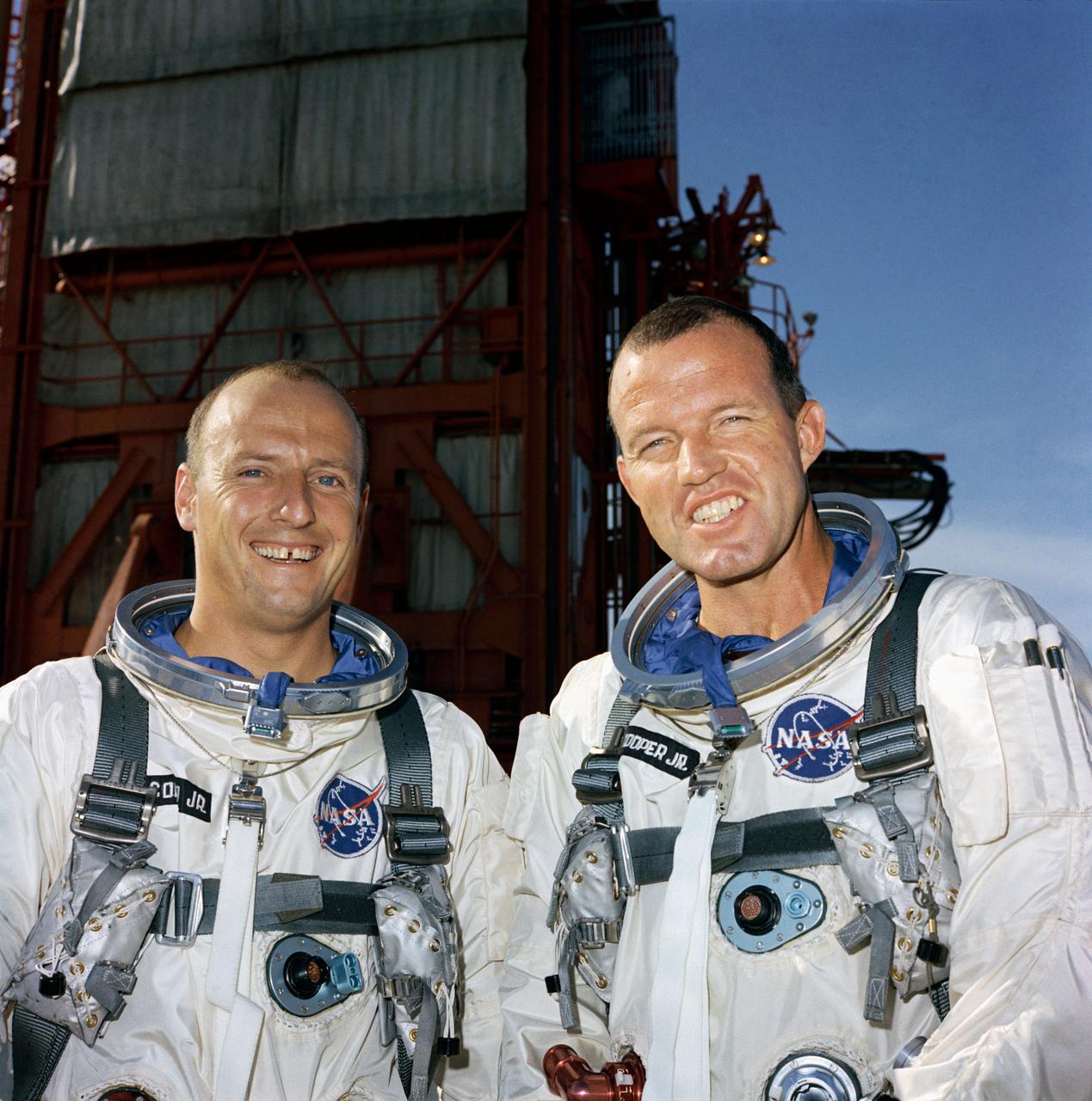
S65-46990 (16 Aug. 1965) --- Astronauts Charles Conrad Jr. (left), pilot, and L. Gordon Cooper Jr., command pilot, are the prime crew for the Gemini-Titan 5 mission.
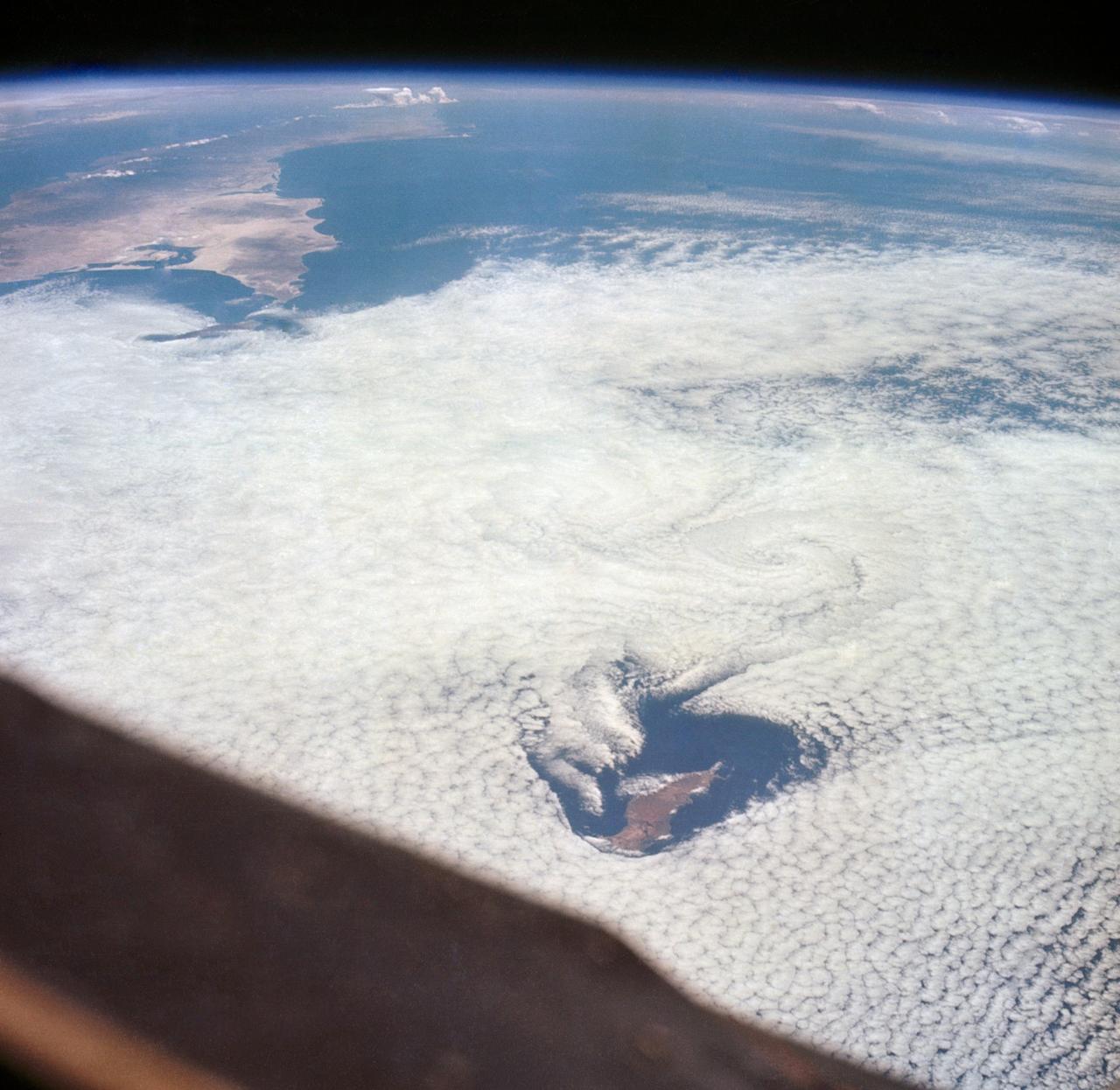
S65-45697 (21-29 Aug. 1965) --- The western coastline of Baja, California and Cedros Island is photographed from the Gemini-5 spacecraft in orbit over Earth.
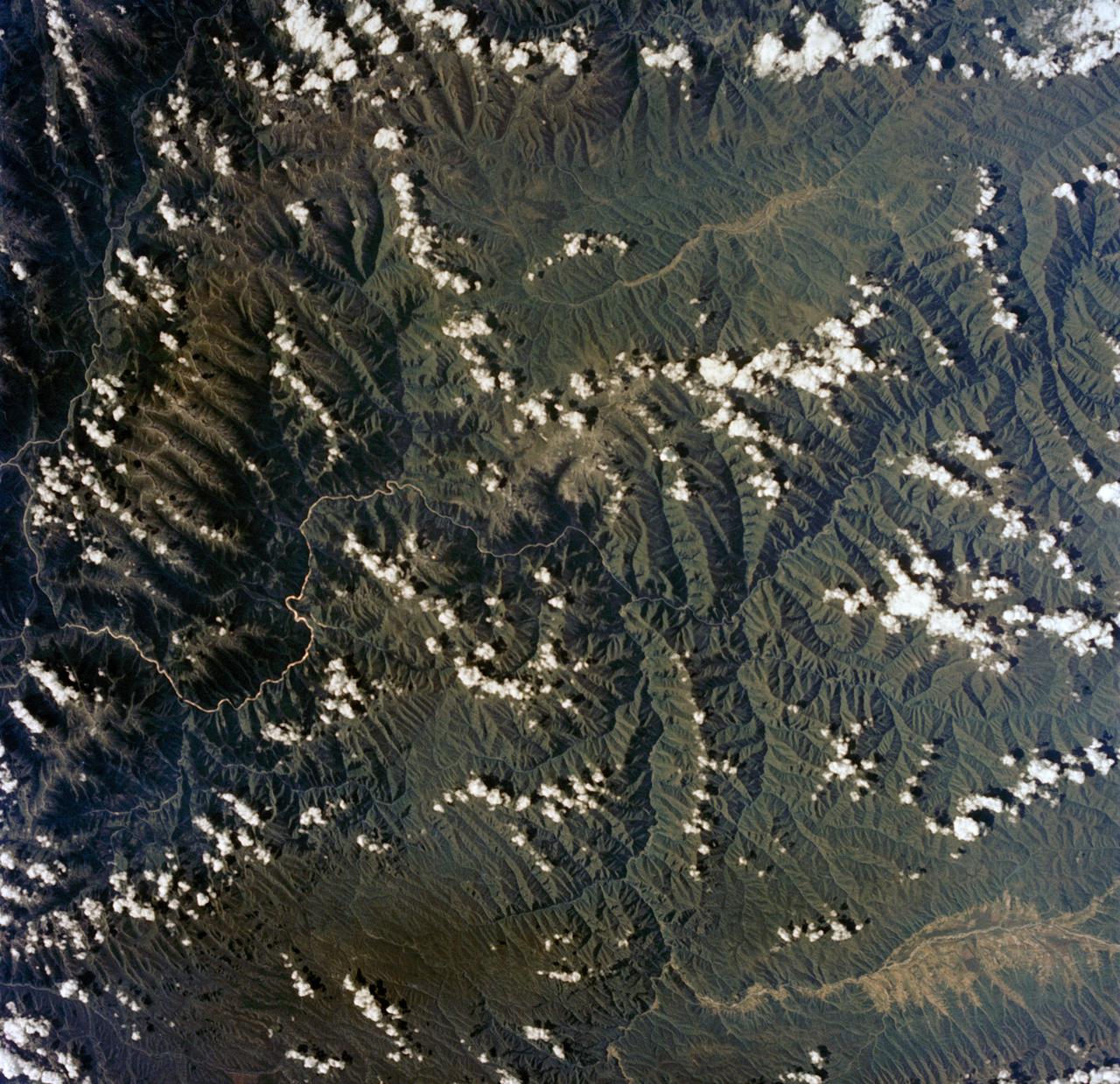
S65-45717 (21-29 Aug. 1965) --- View of the Himalayas and Northern India photographed from the Gemini-5 spacecraft in orbit over Earth.
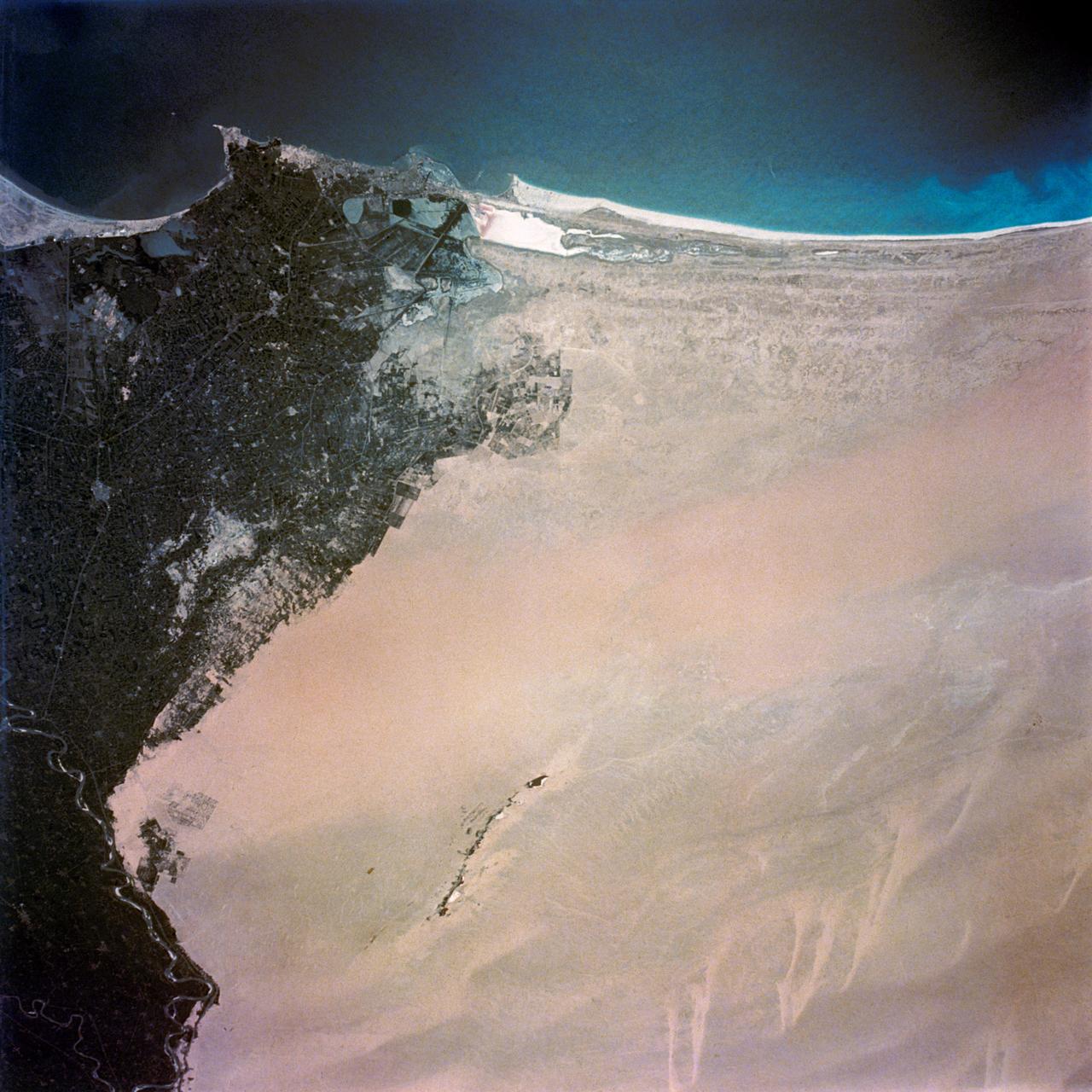
S65-45736 (21-29 Aug. 1965) --- Alexandria, Egypt is photographed from the Gemini-5 spacecraft in orbit over Earth.
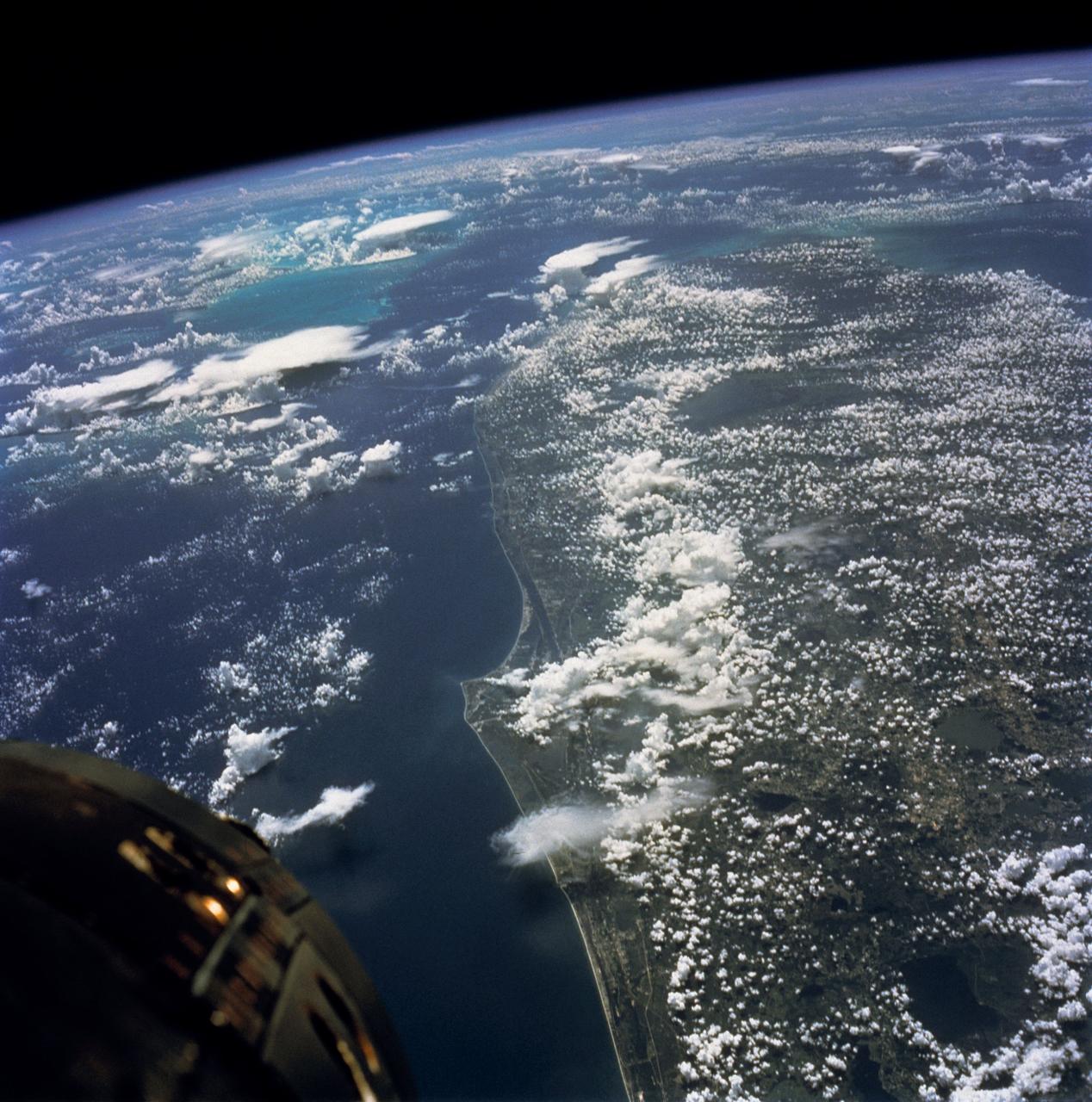
S65-45753 (21-29 Aug. 1965) --- Cape Kennedy, Florida is featured in this image photographed from the Gemini-5 spacecraft in orbit over Earth.
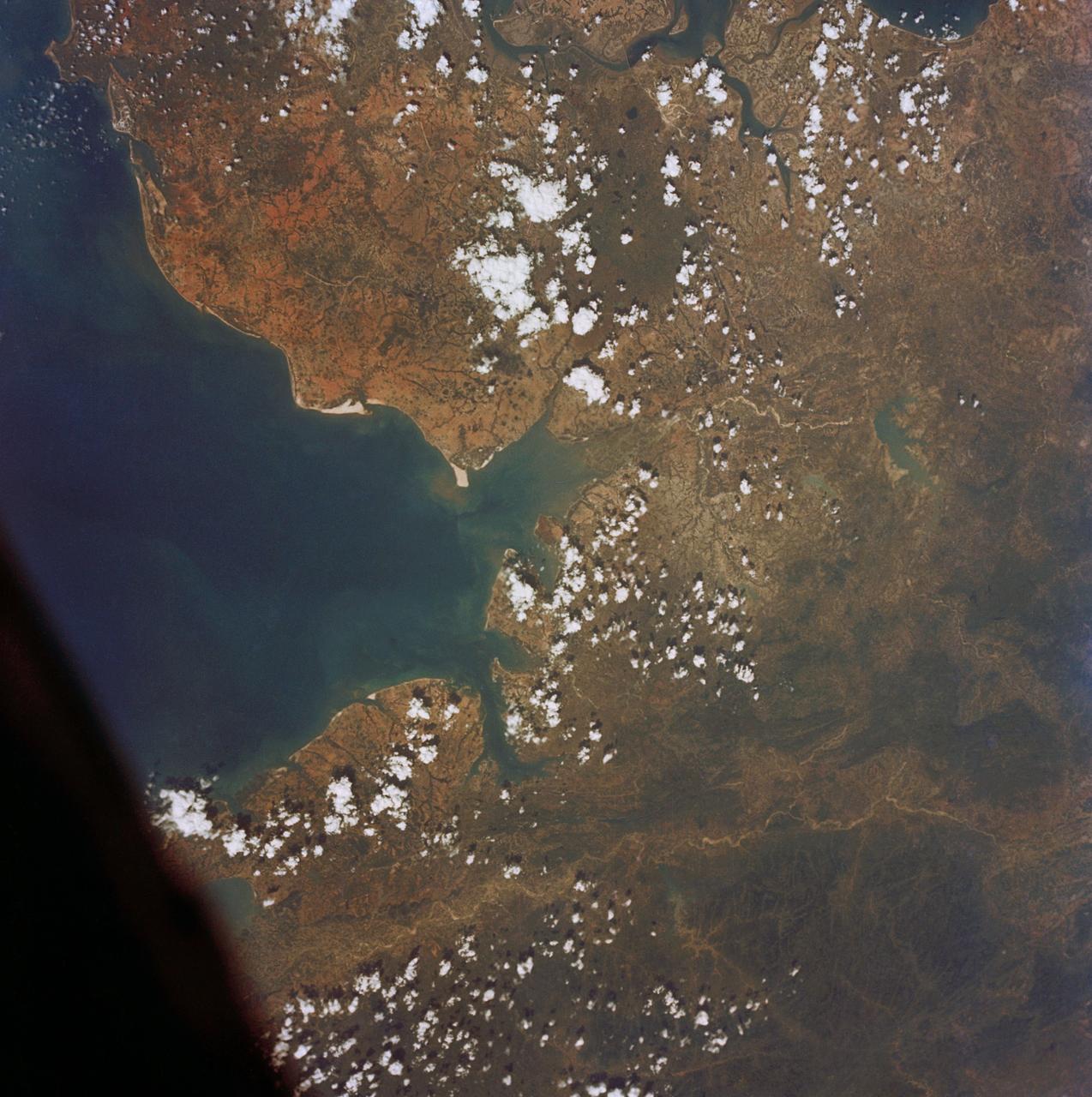
S65-45731 (21-29 Aug. 1965) --- View of the Gulf of Tonkin, China and the Luichow Peninsula photographed from the Gemini-5 spacecraft in orbit over Earth.
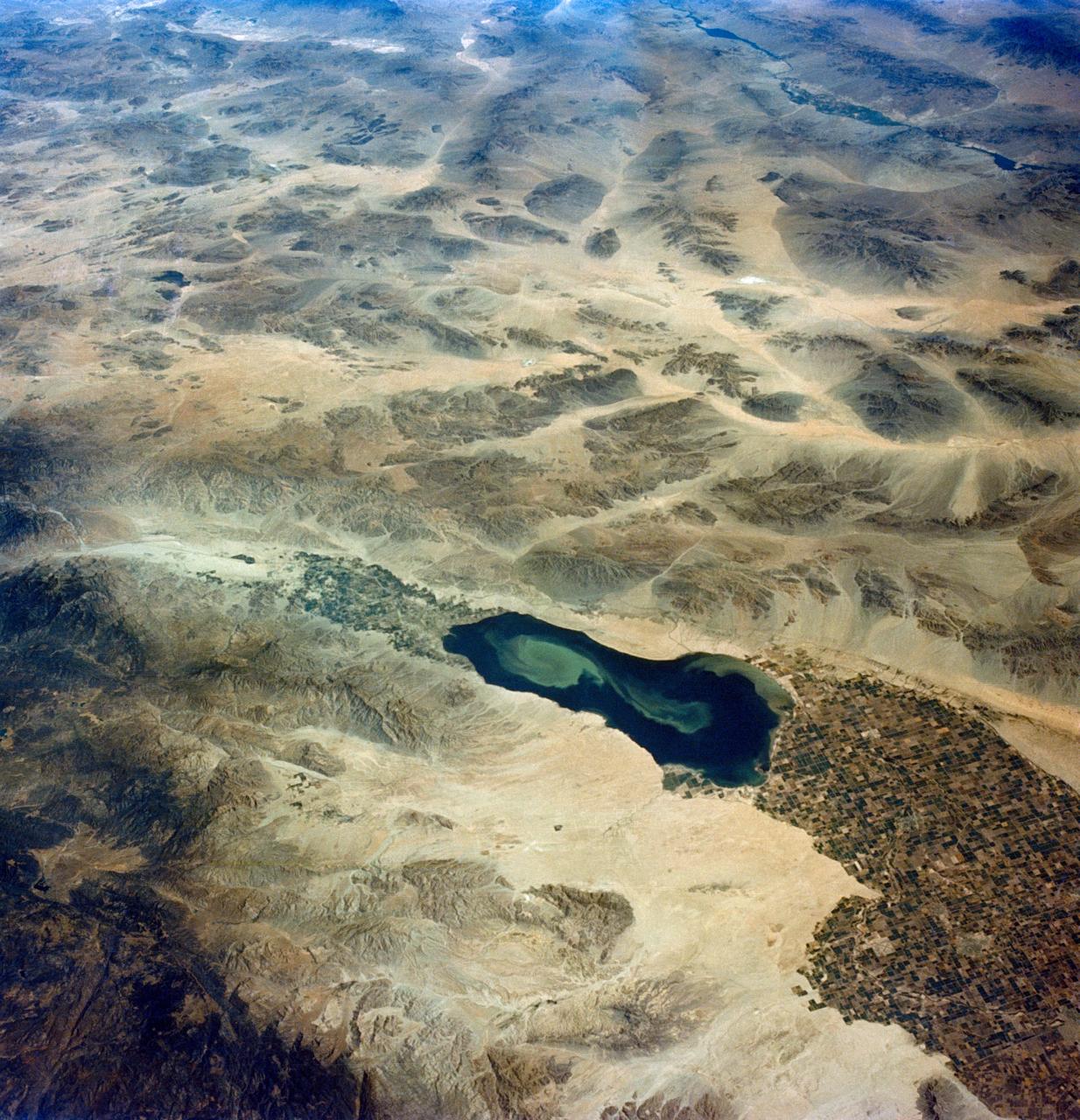
S65-45748 (21-29 Aug. 1965) --- Looking northeast, the Imperial Valley and Salton Sea in southern California is photographed from the Earth-orbiting Gemini-5 spacecraft. This picture was taken with a modified 70mm Hasselblad camera, using MS Ektachrome thin base film, ASA 64.
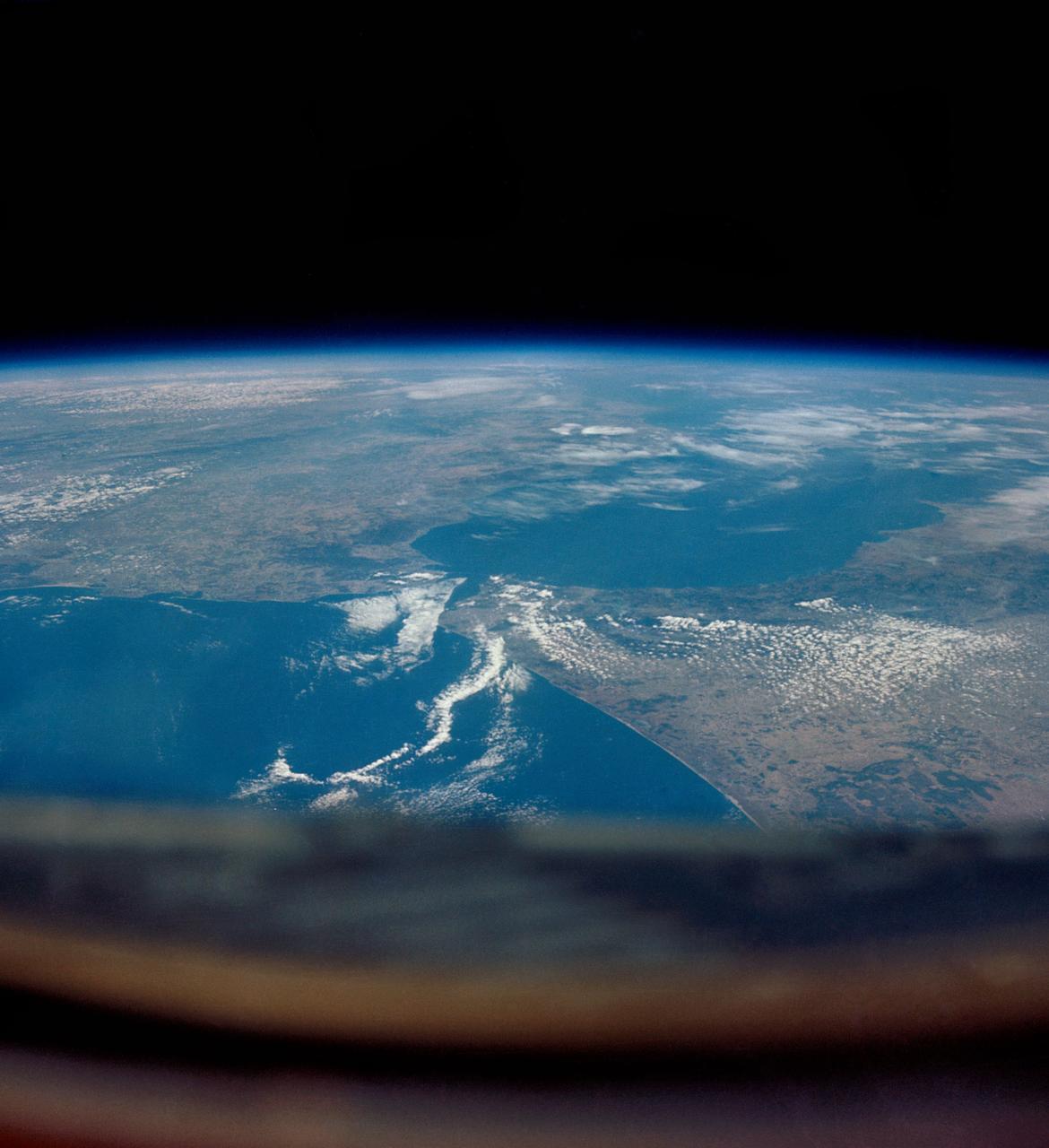
S65-45737 (22 Aug. 1965) --- Looking northeast, the Strait of Gibraltar, Morocco (foreground) and Spain (background) are photographed from the Gemini-5 spacecraft during its 14th revolution of Earth.
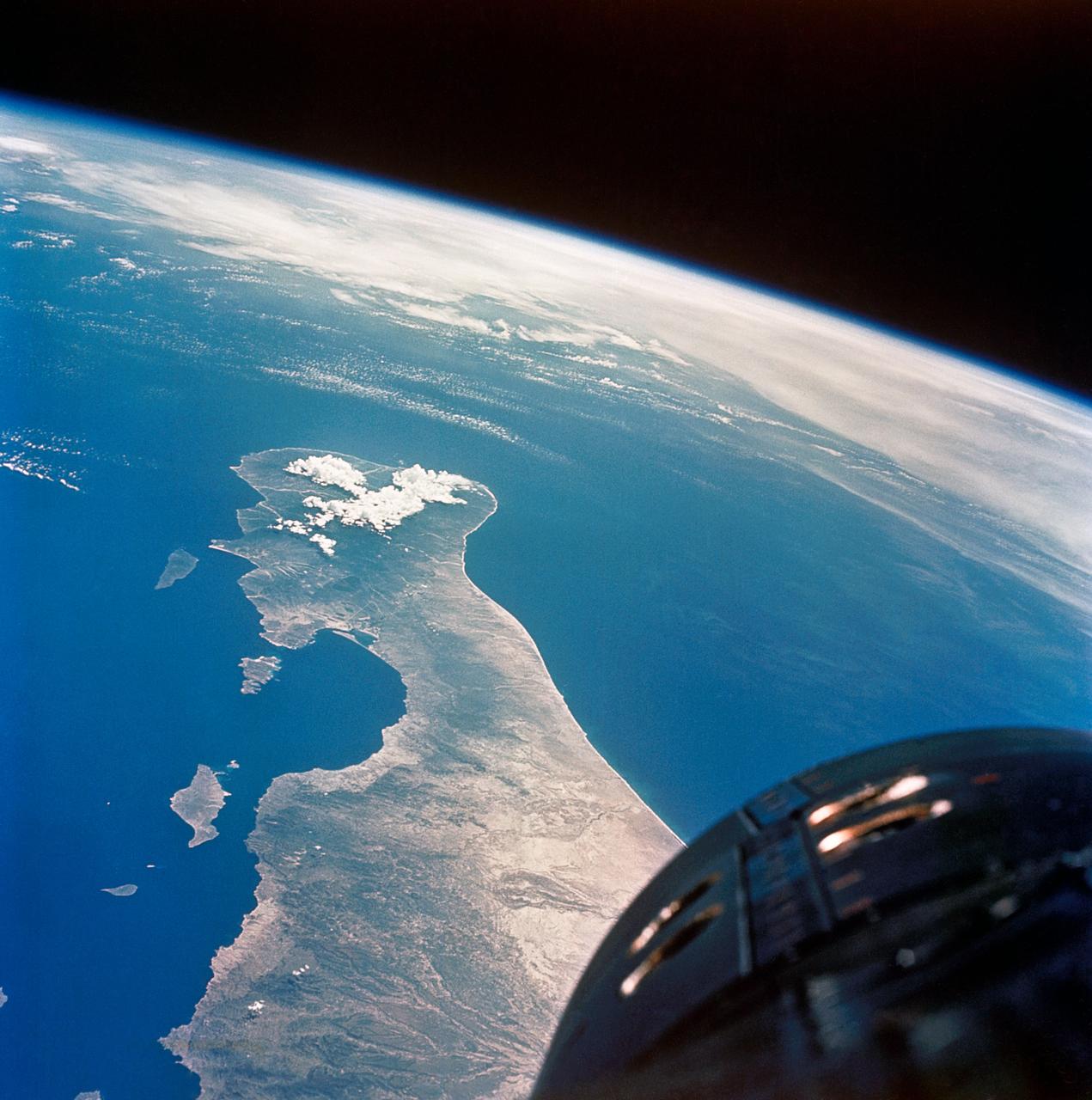
S65-45763 (21-29 Aug. 1965) --- View of the lower tip of Baja, California and Bahia de la Paz taken from the Gemini-5 spacecraft in orbit over Earth.
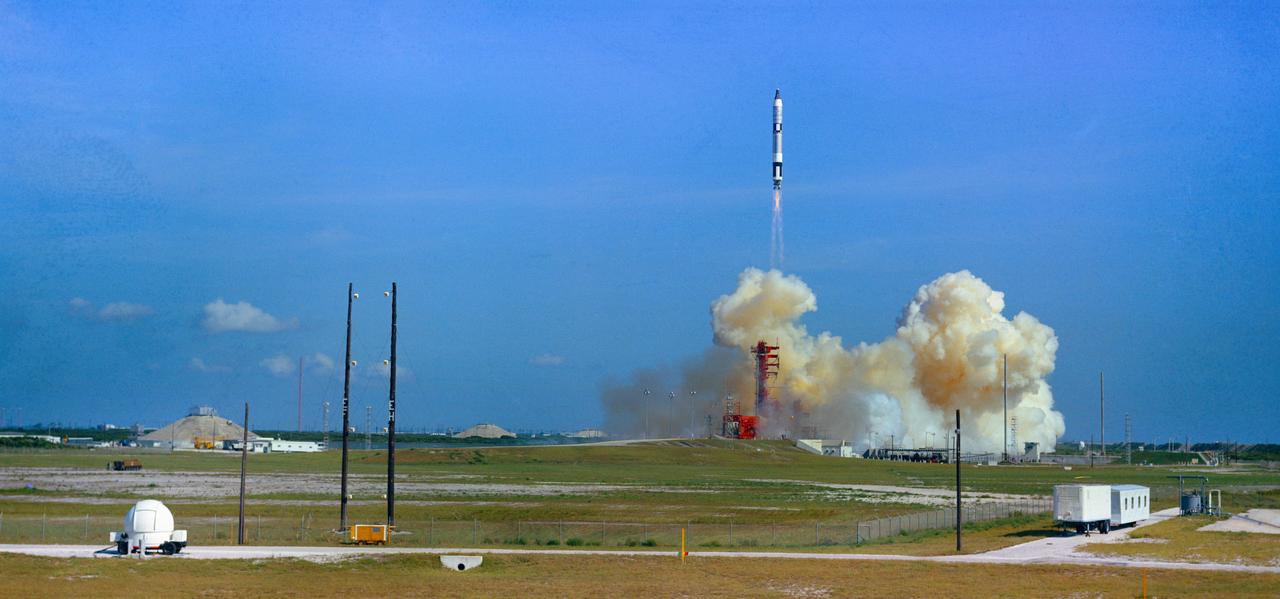
S65-50774 (21 Aug. 1965) --- The National Aeronautics and Space Administration launched the Gemini-5 spacecraft from Pad 19 at 9 a.m. (EST) Aug. 21, 1965, on a planned eight-day orbital mission. Astronaut L. Gordon Cooper Jr. was the command pilot; and astronaut Charles Conrad Jr. was the pilot. A full duration mission will achieve the longest manned spaceflight to date.
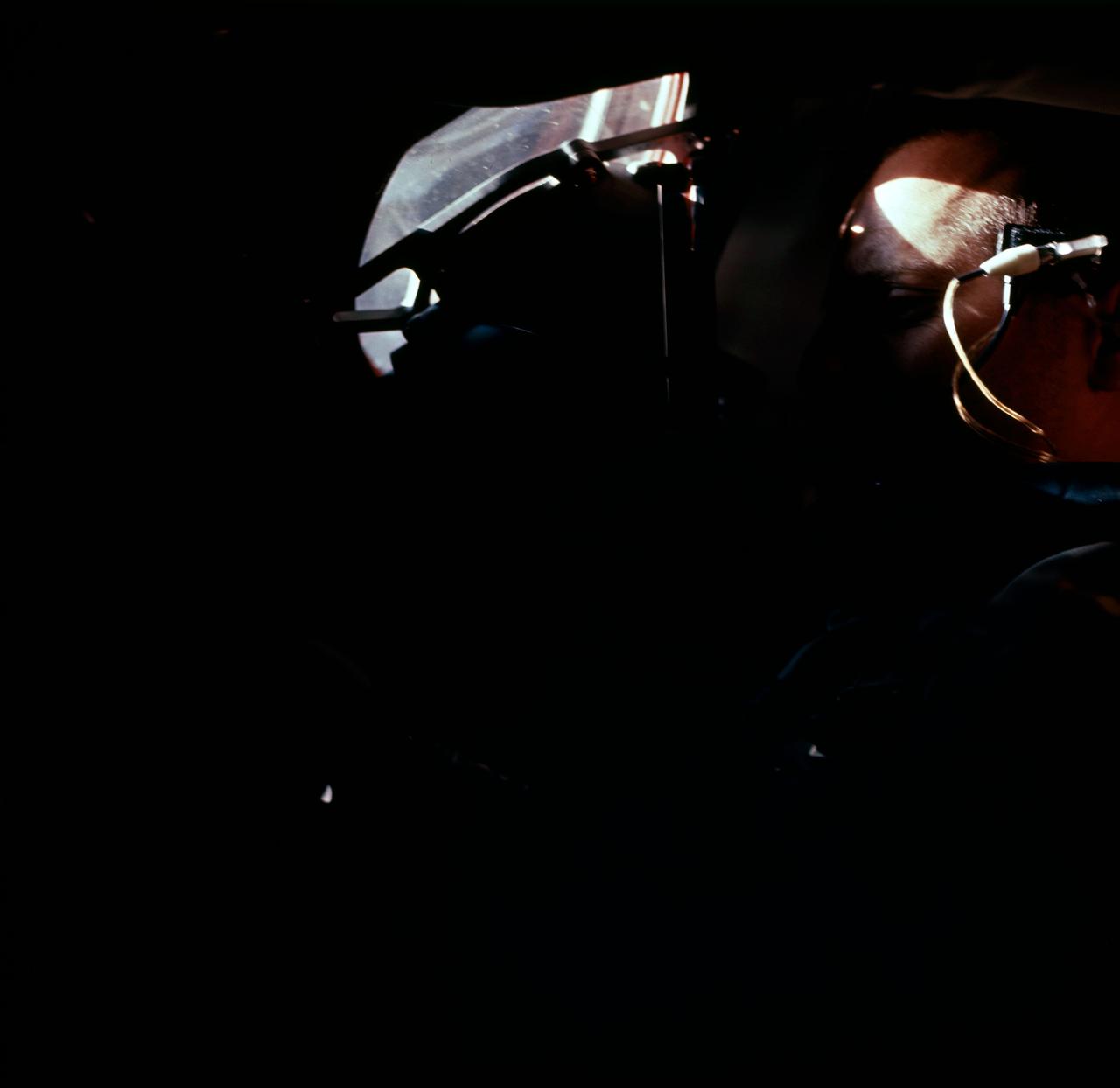
S65-45610 (21 Aug. 1965) --- Astronaut Charles Conrad Jr. as seen through the Gemini-5 spacecraft window before launch.
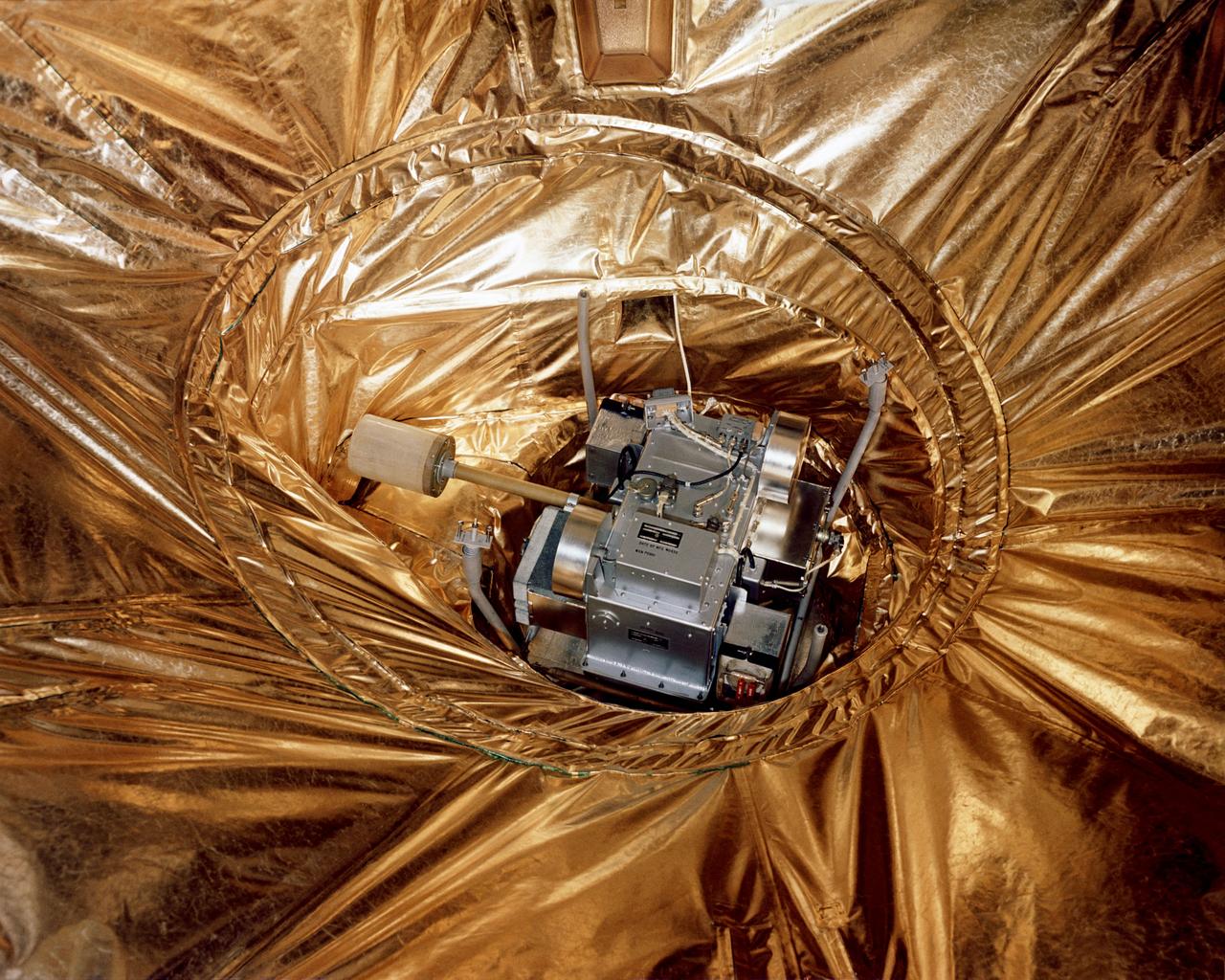
S65-42044 (28 July 1965) --- Close-up view of the Rendezvous Evaluation Pod installed in the equipment section of the Gemini-5 spacecraft at Pad 19.
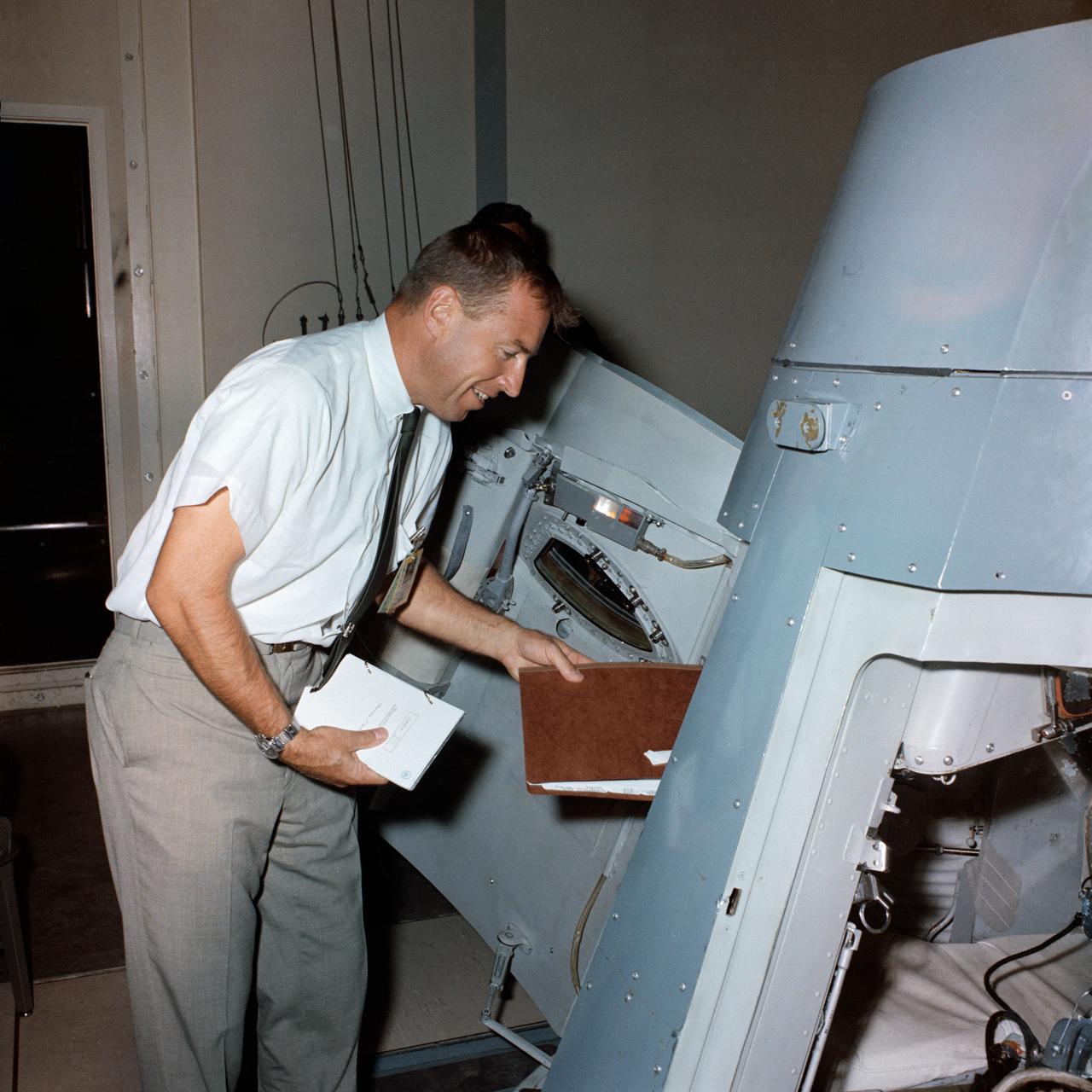
S66-45580 (6 Sept. 1966) --- Astronaut James A. Lovell Jr., prime crew command pilot of the Gemini-12 spaceflight, prepares to enter the Gemini Mission Simulator in Building 5 for flight training. Photo credit: NASA
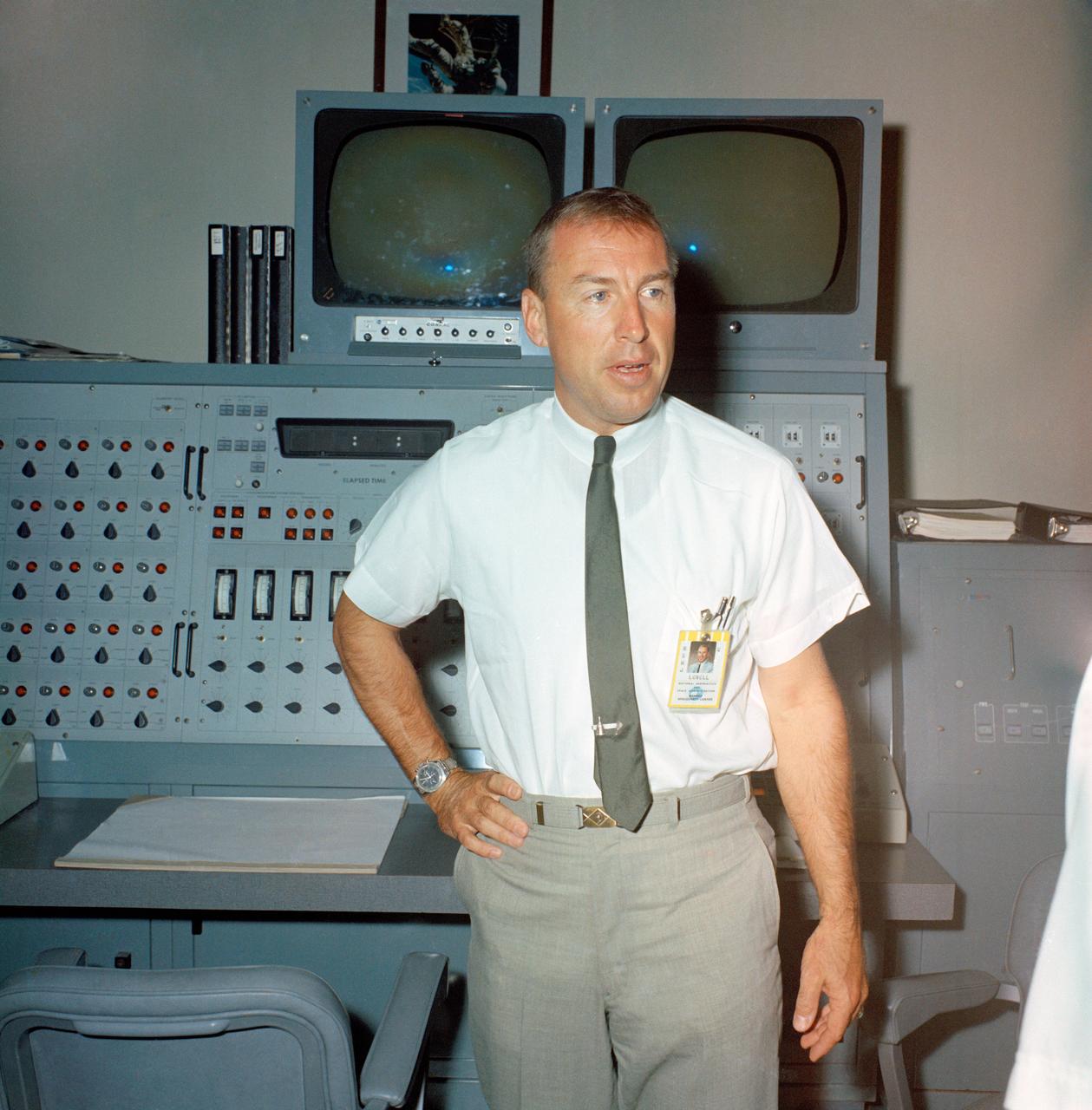
S66-45578 (6 Sept. 1966) --- Astronaut James A. Lovell Jr., prime crew command pilot for the Gemini-12 spaceflight, is pictured in Building 5, Mission Simulation and Training Facility, prior to entering the Gemini Mission Simulator for flight training. Photo credit: NASA
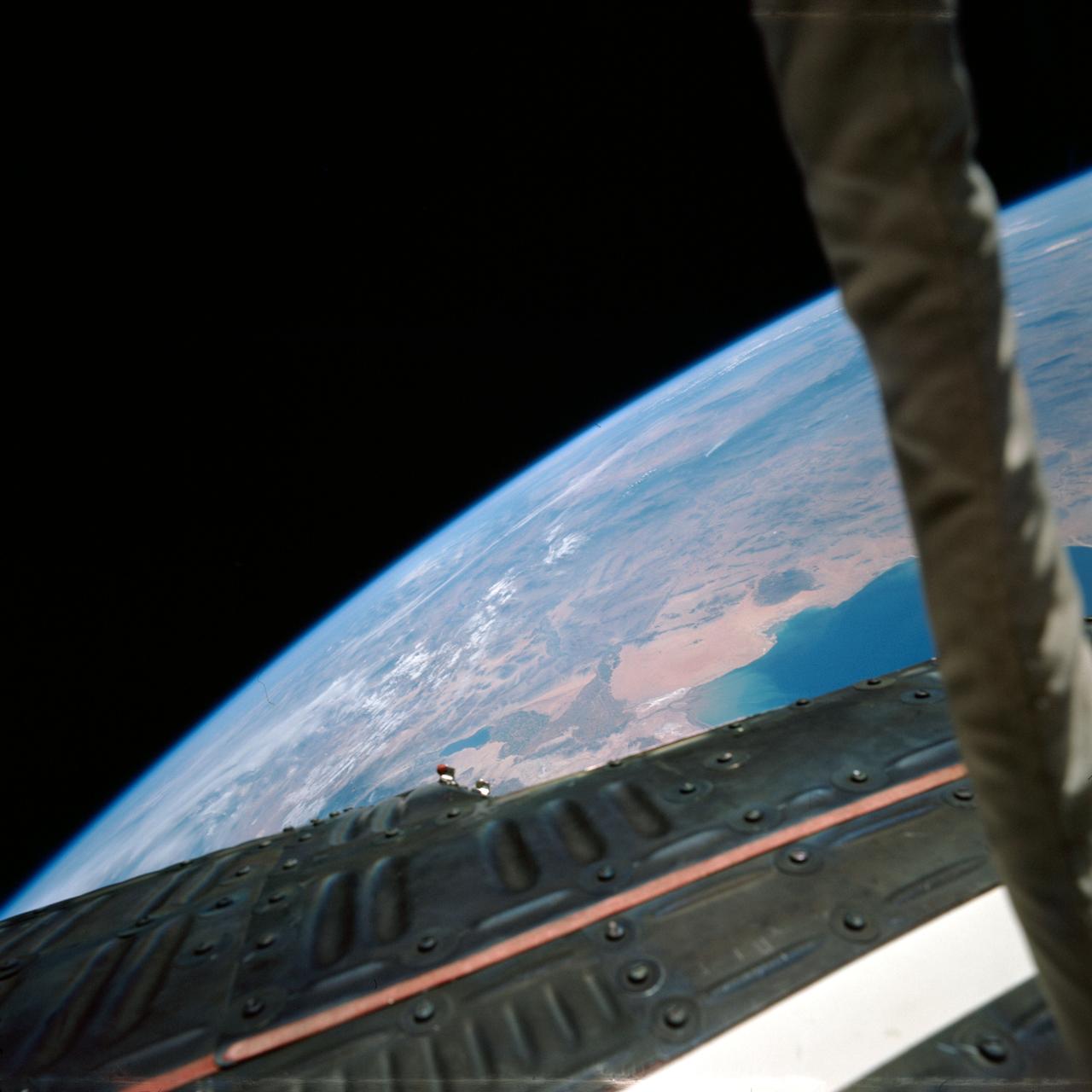
S66-38068 (5 June 1966) --- Astronaut Eugene A. Cernan took this view of the Gemini-9A spacecraft and his umbilical cord (right) over California, Arizona, and Sonora, Mexico, during his extravehicular activity (EVA) on the Gemini-9A mission. Taken during the 32nd revolution of the flight. Photo credit: NASA
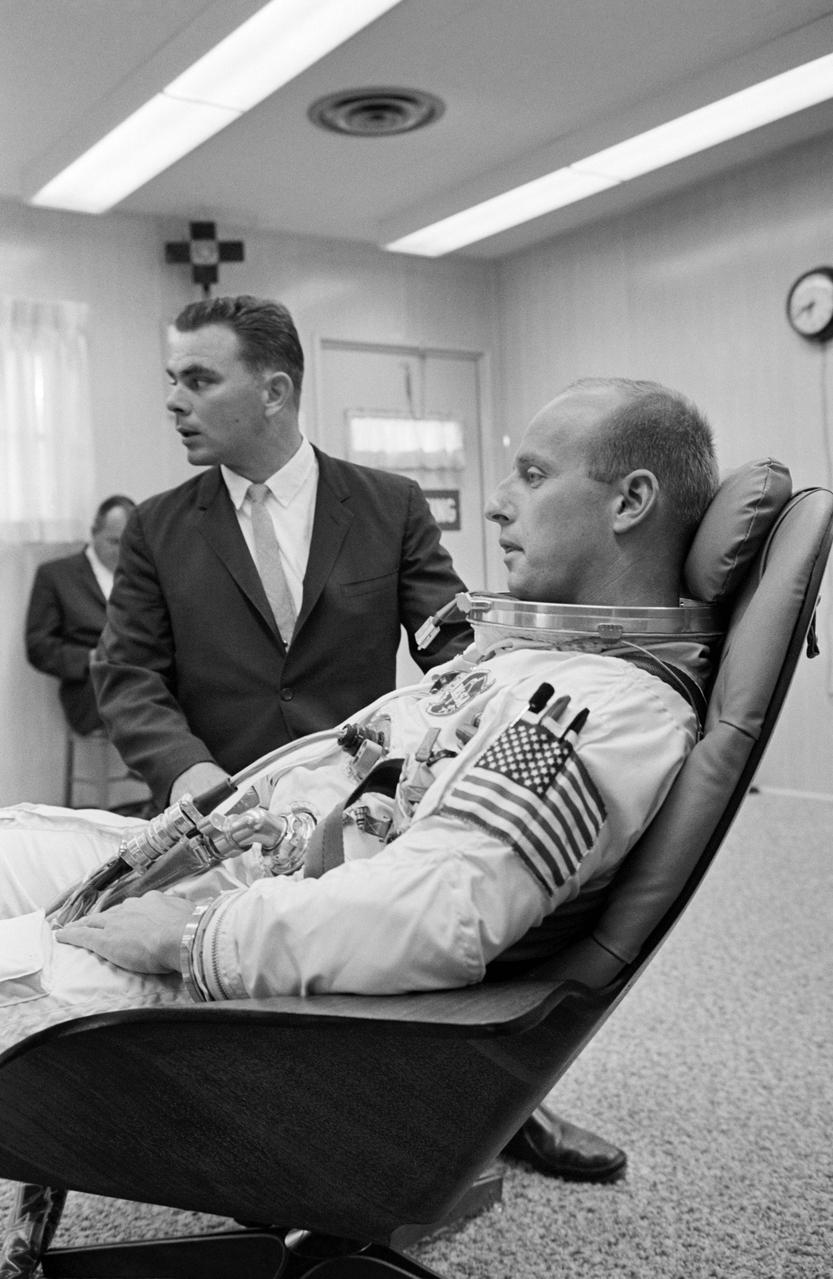
S65-46374 (21 Aug. 1965) --- Astronaut Charles Conrad Jr., Gemini-5 pilot, is pictured during suiting up operations on the morning of the flight of Gemini-5. With him is Dr. Eugene Tubbs, a member of the medical team at Cape Kennedy. The mission was originally set for Aug. 19, 1965, but was scrubbed and reset for Aug. 21. Command pilot for the flight is astronaut L. Gordon Cooper Jr.

S65-48759 (21 Aug. 1965) --- View of astronaut Charles Conrad Jr. through the window as he sits in the Gemini-5 spacecraft during preflight activities.
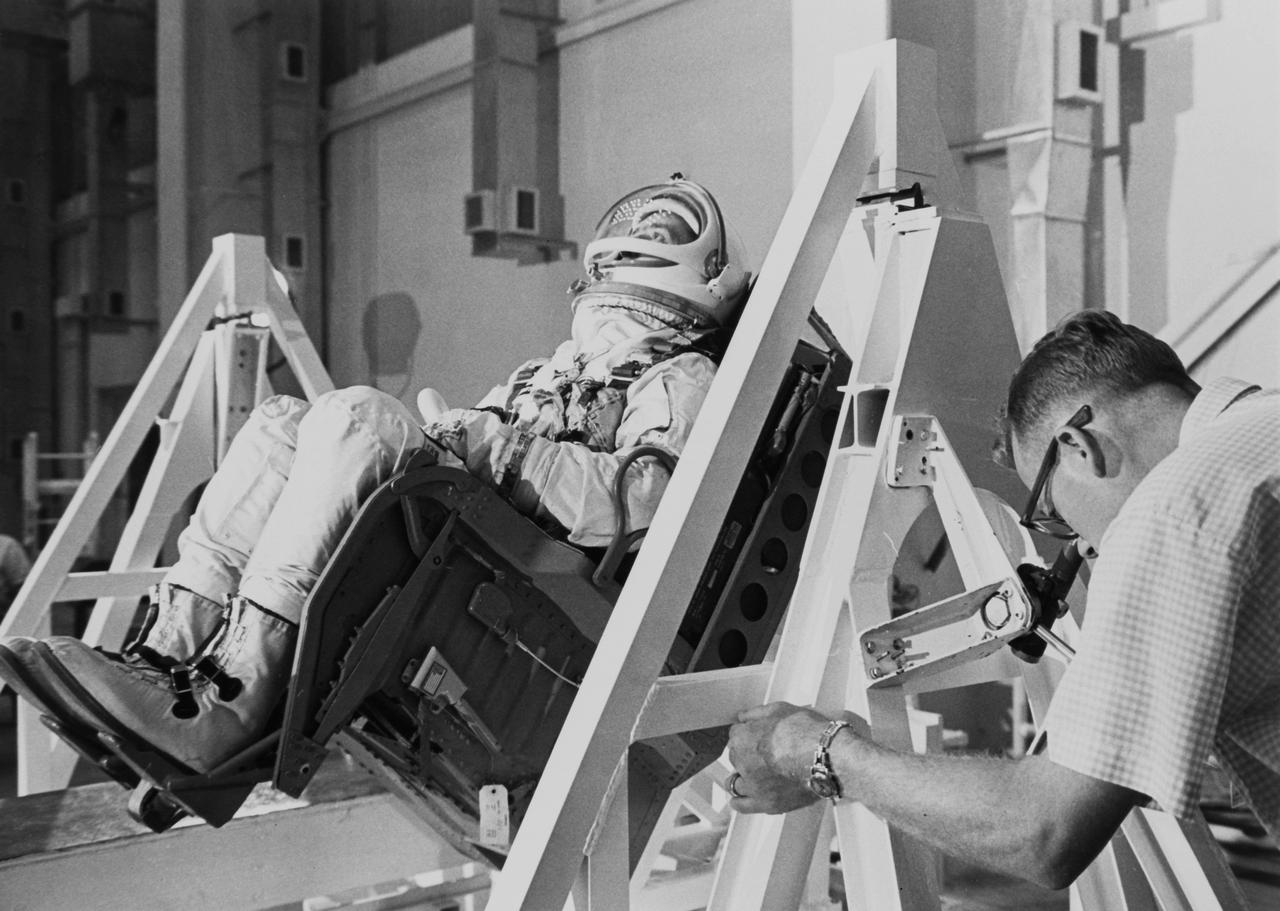
S65-19585 (21 May 1965) --- Astronaut James A. McDivitt, command pilot for the Gemini-Titan 4 prime crew, participates in a weight and balance test during a wet mock simulation exercise at Cape Kennedy, Florida. The two-man Gemini-4 mission, scheduled no earlier than June 3, 1965, will orbit Earth 62 times in four days. Astronaut Edward H. White II (out of frame) is the GT-4 prime crew pilot.
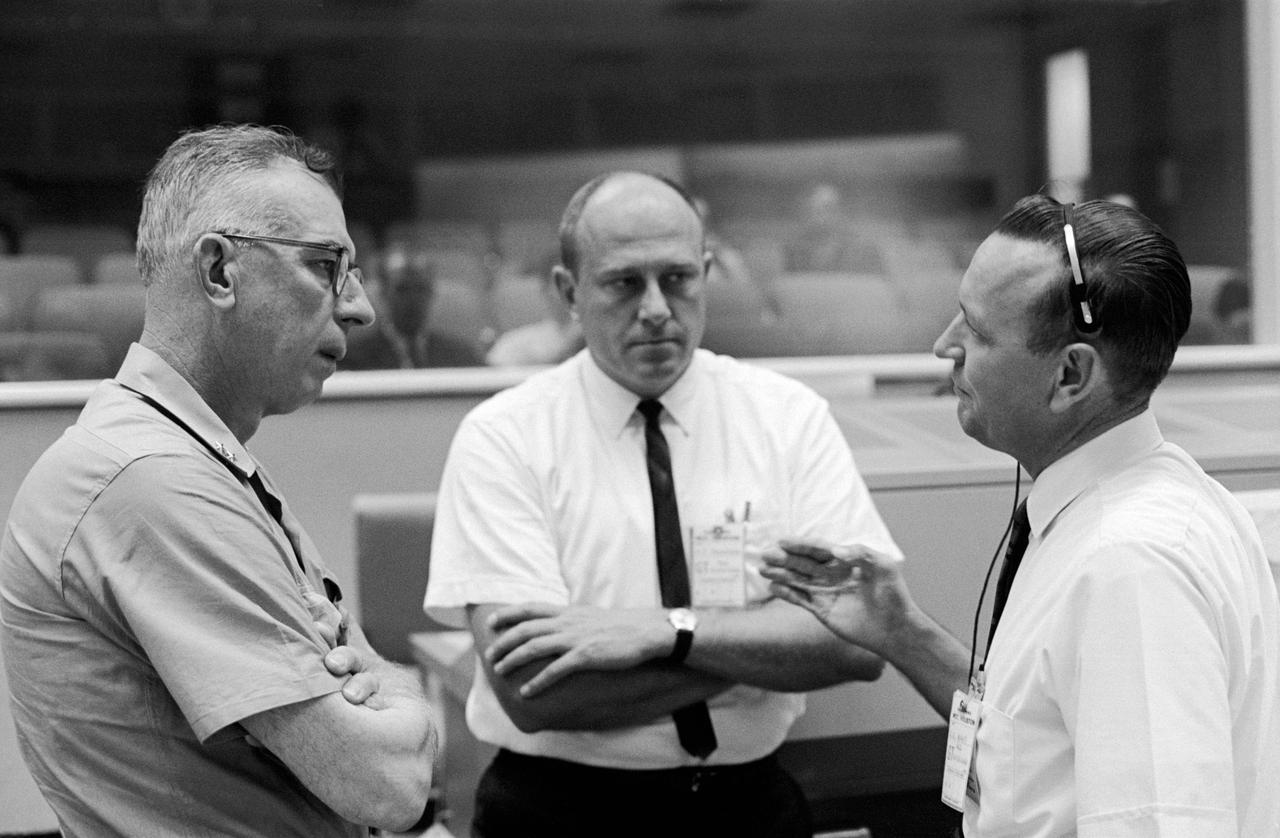
S65-28734 (24 Aug. 1965) --- Rear Admiral W.C. Abhau (left), who will take over command of Task Force 140 for Gemini-6, is shown in the Mission Control Center being briefed on recovery operations for Gemini by Robert F. Thompson (center), NASA recovery coordinator; and Christopher C. Kraft Jr., flight director for Gemini-5.
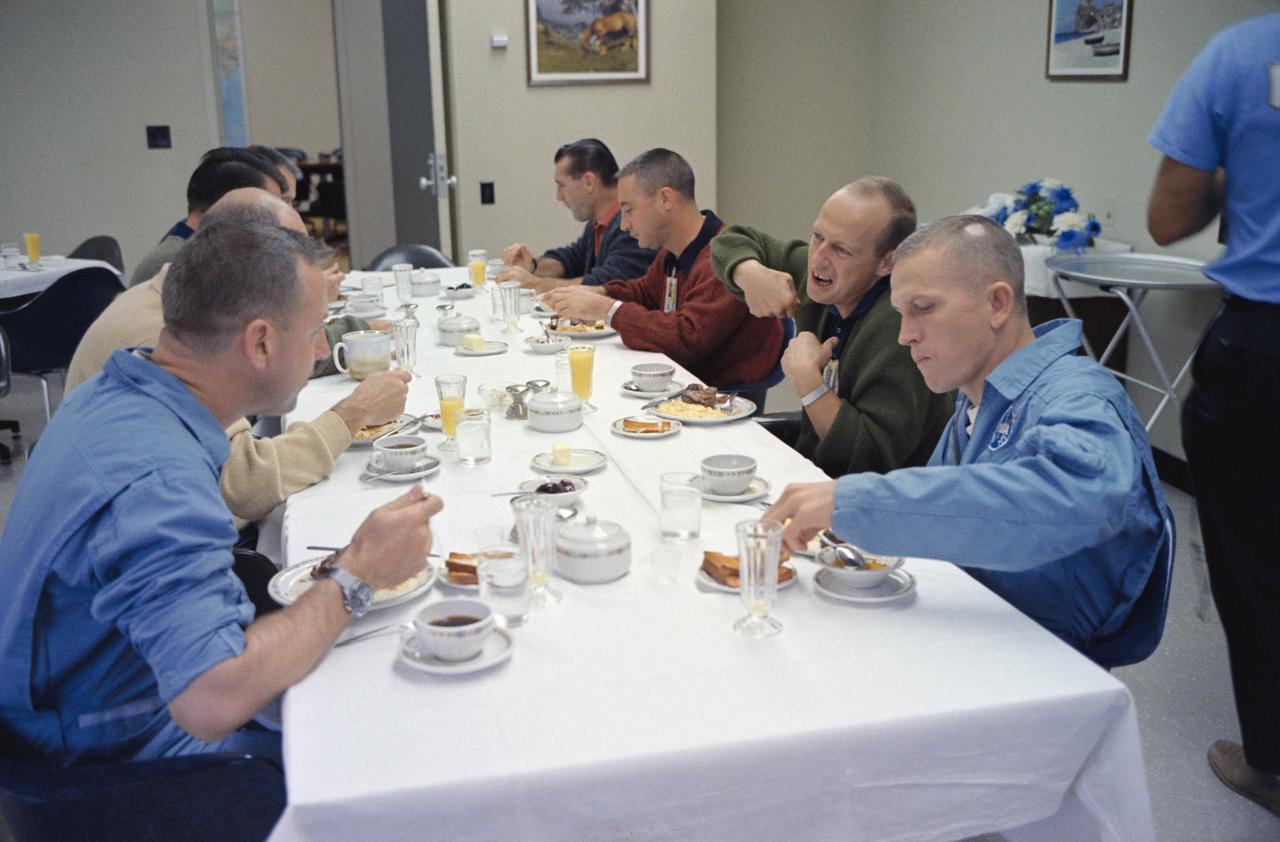
S65-59927 (4 Dec. 1965) --- Fellow astronauts join the Gemini-7 prime crew for breakfast in the Manned Spacecraft Operations Building, Merritt Island, on the day of the Gemini-7 launch. Clockwise around the table, starting lower left, are astronauts James A. Lovell Jr., Gemini-7 prime crew pilot; Walter M. Schirra Jr., Gemini-6 prime crew command pilot; Donald K. Slayton, MSC assistant director for Flight Crew Operations; Virgil I. Grissom, Gemini-6 backup crew command pilot; Charles Conrad Jr., Gemini-5 prime crew pilot; and Frank Borman, Gemini-7 prime crew command pilot. Photo credit: NASA
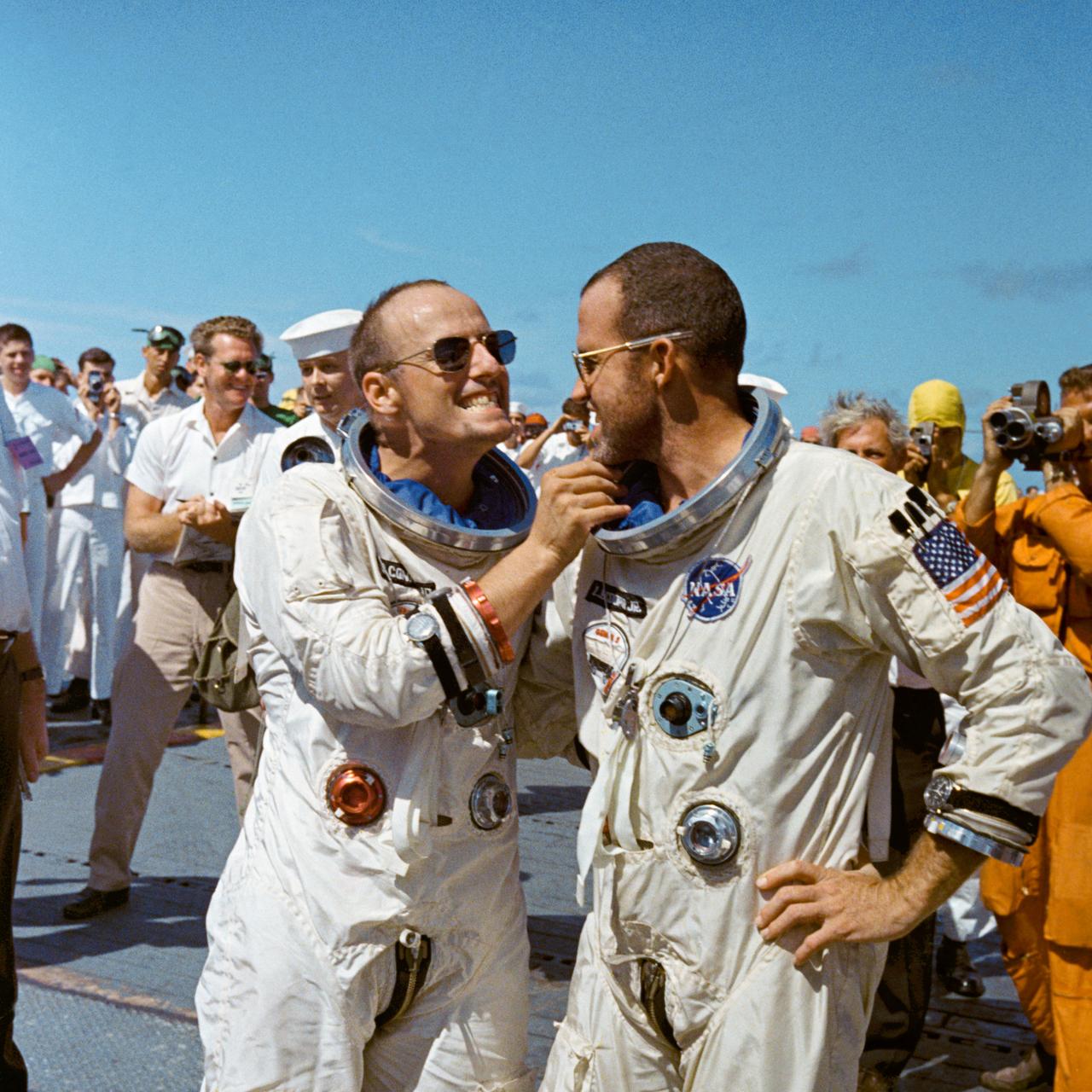
S65-46638 (29 Aug. 1965) --- Astronaut Charles Conrad Jr. tweaks astronaut L. Gordon Cooper's eight-day growth of beard for the cameramen while onboard the prime recovery vessel after their Gemini-5 flight.
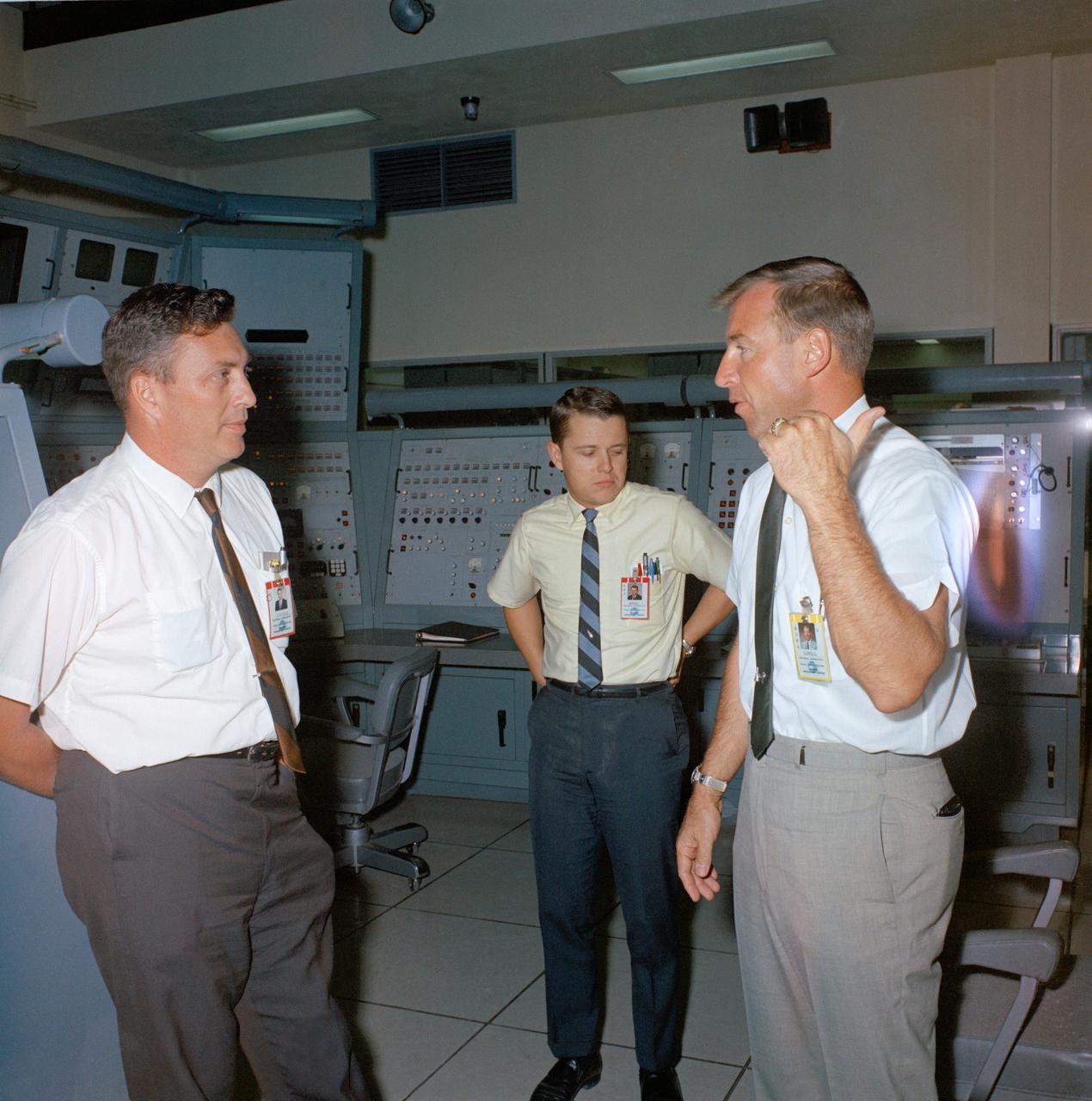
S66-45579 (6 Sept. 1966) --- Astronaut James A. Lovell Jr. (right), prime crew command pilot of the Gemini-12 spaceflight, talks with Burton M. Gifford (left) and Duane K. Mosel (center), both with the Simulation Branch, Flight Crew Support Division. Lovell was preparing to undergo flight training in the Gemini Mission Simulator in Building 5, Mission Simulation and Training Facility. Photo credit: NASA
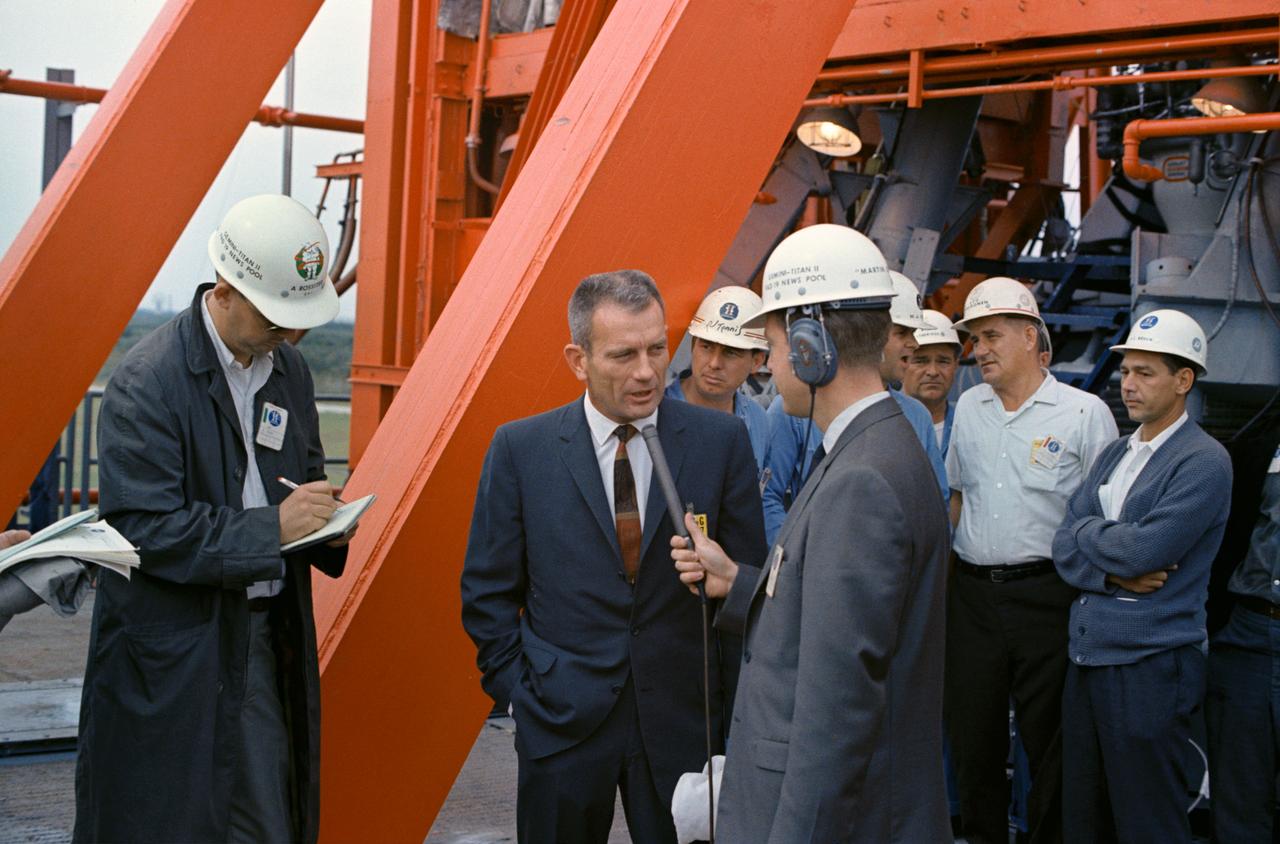
S65-61846 (5 Dec. 1965) --- Donald K. Slayton, assistant director for Flight Crew Operations, talks with newsmen after examining damage to Pad 19 at Kennedy Space Center, following liftoff of the Gemini-7 spacecraft on Dec. 4, 1965. Damage was slight and will be repaired quickly for the planned launch of Gemini-6. Photo credit: NASA
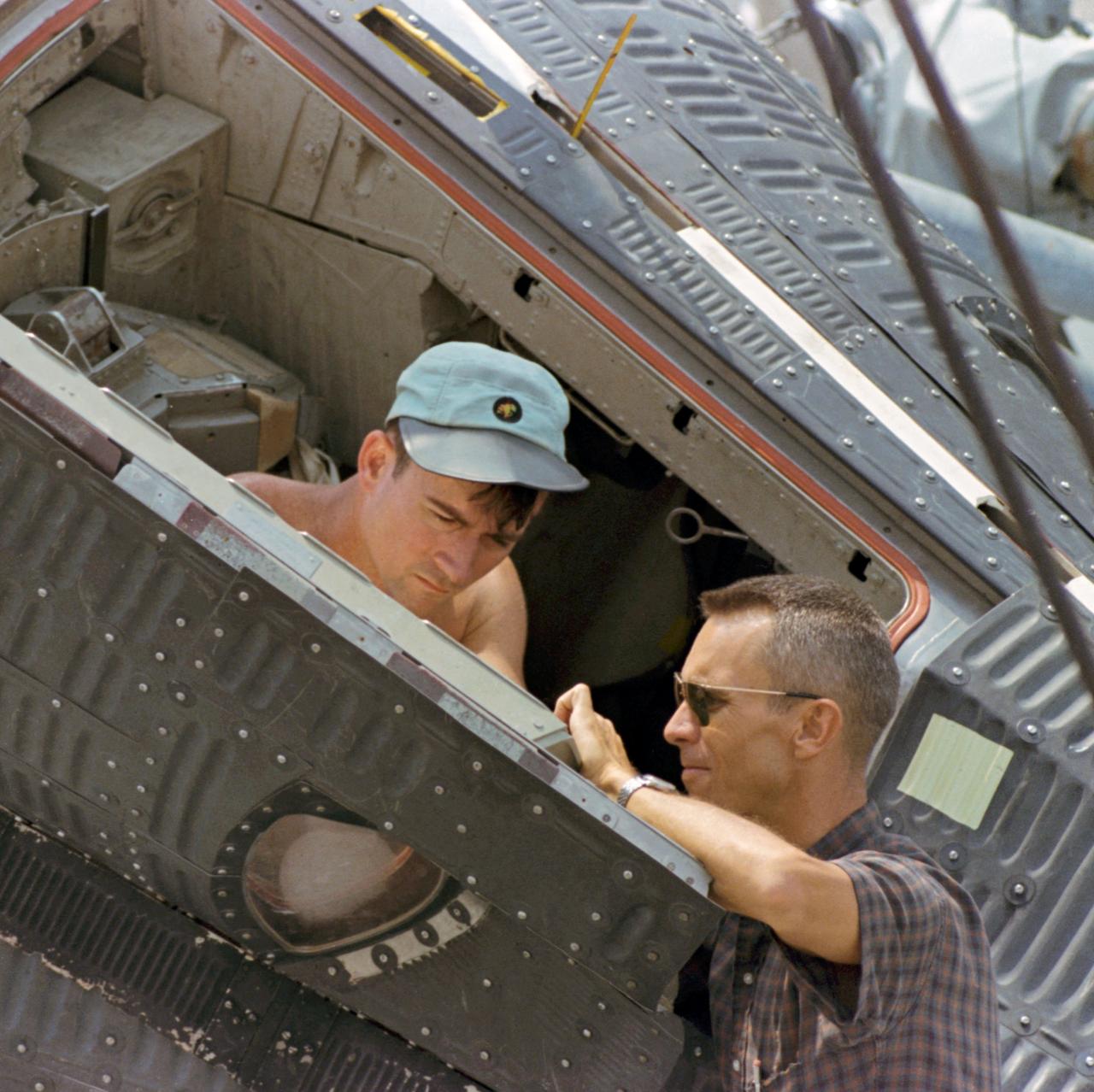
S66-39691 (18 June 1966) --- Astronaut John W. Young, prime crew command pilot for the Gemini-10 spaceflight, sits in Static Article 5 during water egress training activity onboard the NASA Motor Vessel Retriever. The SA-5 will be placed in the water and he and astronaut Michael Collins will then practice egress and water survival techniques. At right is Gordon Harvey, Spacecraft Operations Branch, Flight Crew Support Division. Photo credit: NASA
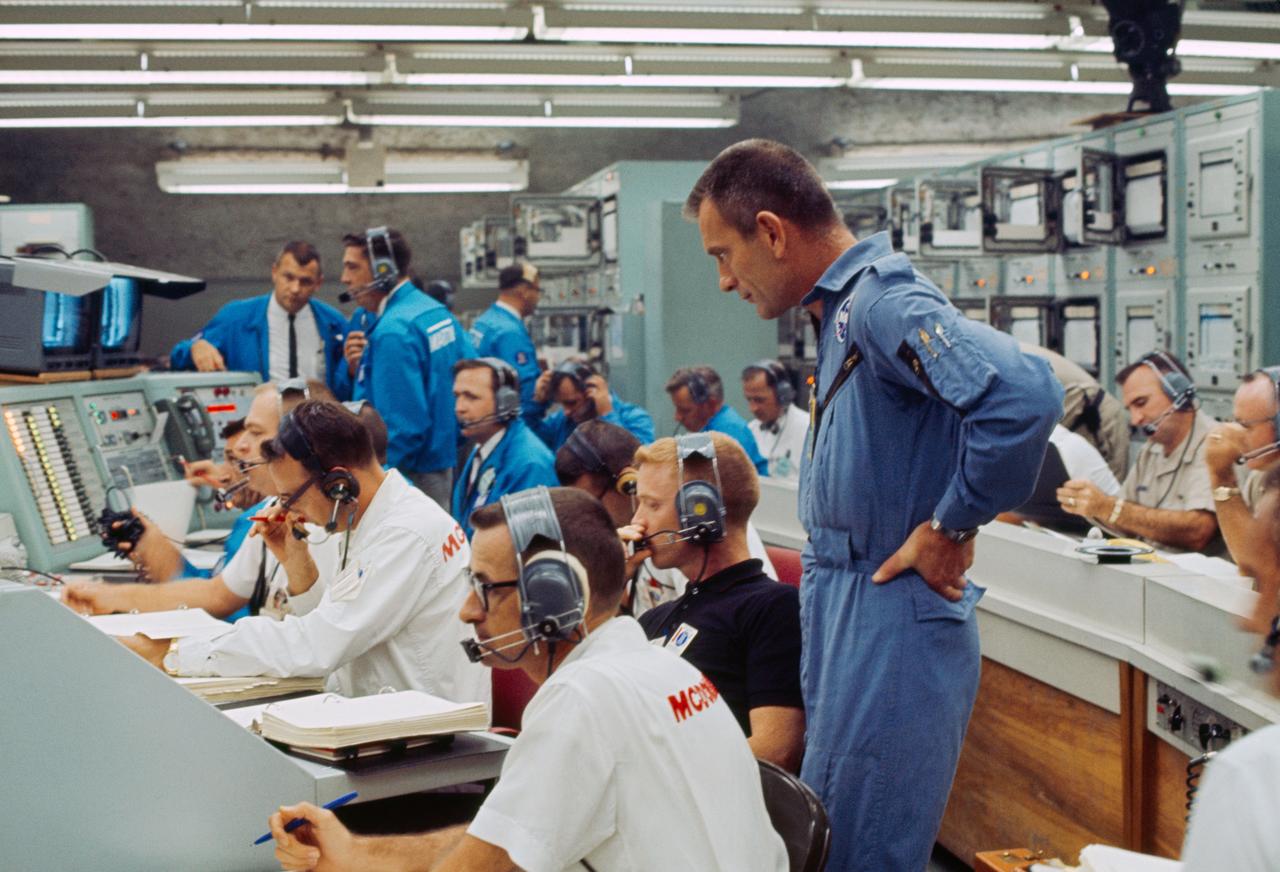
S65-28742 (21 Aug. 1965) --- View of Mission Control Center at Cape Kennedy, Florida, moments after the Gemini-5 spacecraft was launched from Pad 19 on Aug. 21, 1965. Standing at right is astronaut Donald K. Slayton, assistant director for Flight Crew Operations, Manned Spacecraft Center. Seated (wearing dark shirt) is astronaut Russell L. Schweickart. Other NASA and McDonnell Aircraft Col. personnel also monitor the progress of the flight.
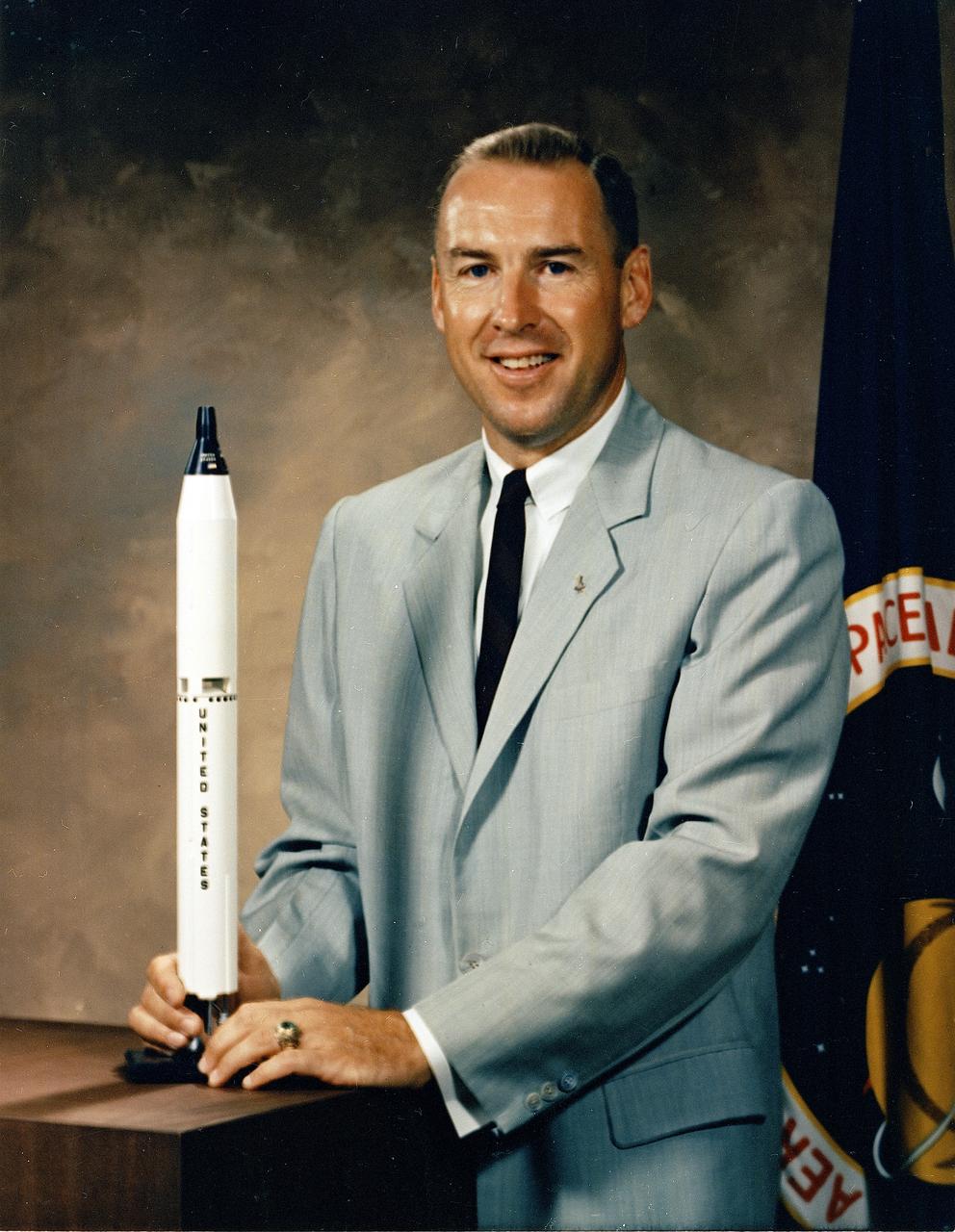
This is the official NASA portrait of astronaut James Lovell. Captain Lovell was selected as an Astronaut by NASA in September 1962. He has since served as backup pilot for the Gemini 4 flight and backup Commander for the Gemini 9 flight, as well as backup Commander to Neil Armstrong for the Apollo 11 lunar landing mission. On December 4, 1965, he and Frank Borman were launched into space on the history making Gemini 7 mission. The flight lasted 330 hours and 35 minutes and included the first rendezvous of two manned maneuverable spacecraft. The Gemini 12 mission, commanded by Lovell with Pilot Edwin Aldrin, began on November 11, 1966 for a 4-day, 59-revolution flight that brought the Gemini program to a successful close. Lovell served as Command Module Pilot and Navigator on the epic six-day journey of Apollo 8, the first manned Saturn V liftoff responsible for allowing the first humans to leave the gravitational influence of Earth. He completed his fourth mission as Spacecraft Commander of the Apollo 13 flight, April 11-17, 1970, and became the first man to journey twice to the moon. The Apollo 13 mission was cut short due to a failure of the Service Module cryogenic oxygen system. Aborting the lunar course, Lovell and fellow crewmen, John L. Swigert and Fred W. Haise, working closely with Houston ground controllers, converted their lunar module, Aquarius, into an effective lifeboat that got them safely back to Earth. Captain Lovell held the record for time in space with a total of 715 hours and 5 minutes until surpassed by the Skylab flights. On March 1, 1973, Captain Lovell retired from the Navy and the Space Program.

STS008-16-454 (30 Aug-5 Sept 1983) --- Following a precedent set early two decades ago during the Gemini program, three members of the STS-8 astronaut crew aboard the Earth-orbiting Space Shuttle Challenger reveal their military backgrounds and loyalties. Astronauts (left to right) Dale A. Gardner, Richard H. Truly and Daniel C. Brandenstein leave no mystery as to their alma mater and gridiron sentimentalities as they display U.S. Navy stickers. The trio was photographed by Astronaut Guion S. Bluford on the flight deck. Truly is crew commander; Brandenstein, pilot; and Gardner and Bluford, along with Dr. William E. Thornton are all mission specialists for this six-day flight.
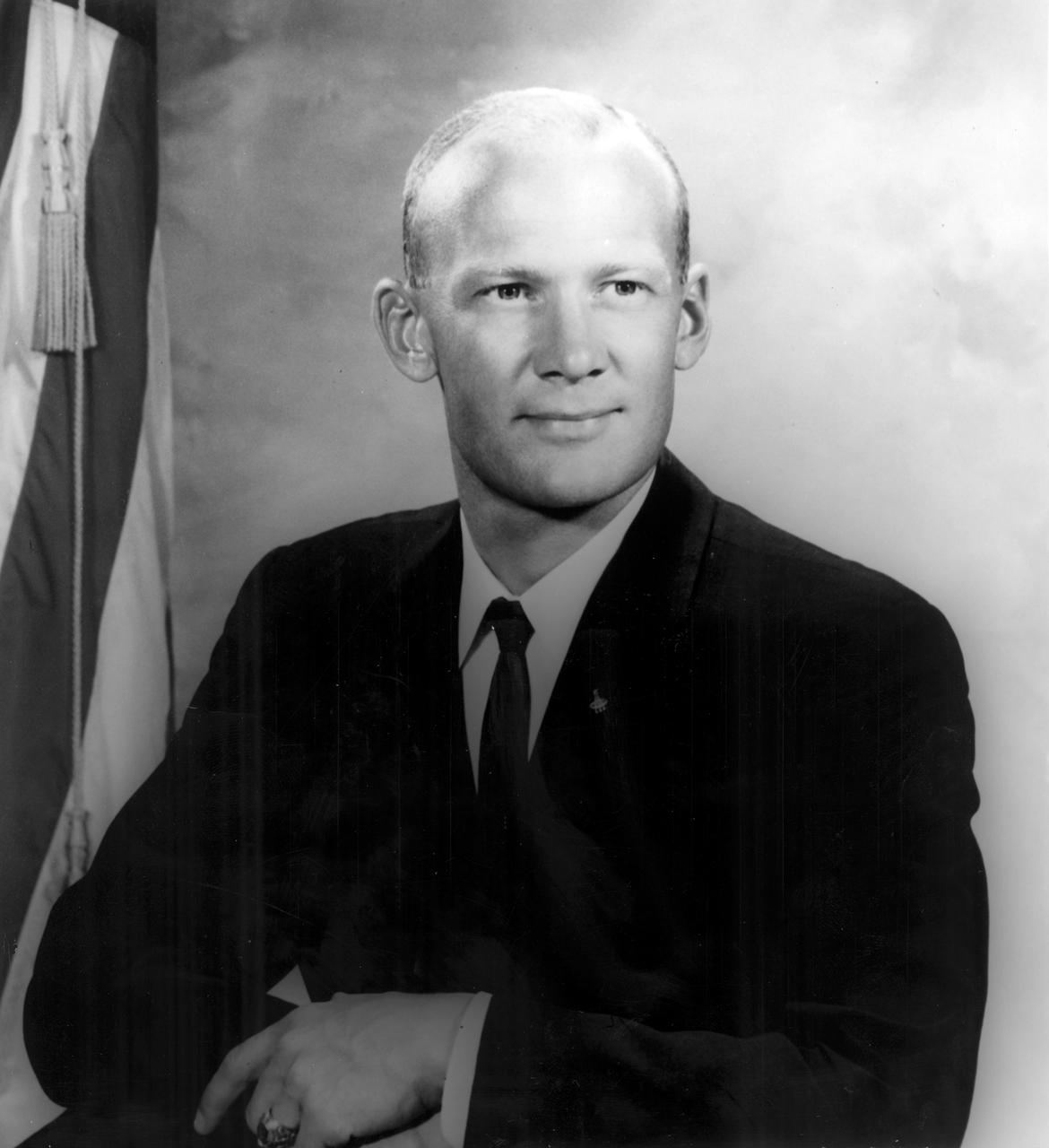
This is the official NASA portrait of astronaut Edwin E. (Buzz) Aldrin. Prior to joining NASA, Aldrin flew 66 combat missions in F-86s while on duty in Korea. At Nellis Air Force Base, Nevada, he served as an aerial gunnery instructor. Following his assignment as aide to the dean of faculty at the Air Force Academy, Aldrin flew F-100s as a flight commander at Bitburg, Germany. Aldrin was one of the third group of astronauts named by NASA in October 1963 and has logged 289 hours and 53 minutes in space, of which, 7 hours and 52 minutes were spent in Extra Vehicular Activity (EVA). On November 11, 1966, he launched into space aboard the Gemini 12 spacecraft on a 4-day flight, which brought the Gemini program to a successful close. During that mission, Aldrin established a new record for EVA, spending 5-1/2 hours outside the spacecraft. July 16-24, 1969, Aldrin served as lunar module pilot for Apollo 11, the first manned lunar landing mission. Aldrin followed Neil Armstrong onto the lunar surface on July 20, 1969, completing a 2-hour and 15 minute lunar EVA. Aldrin resigned from NASA in July 1971.
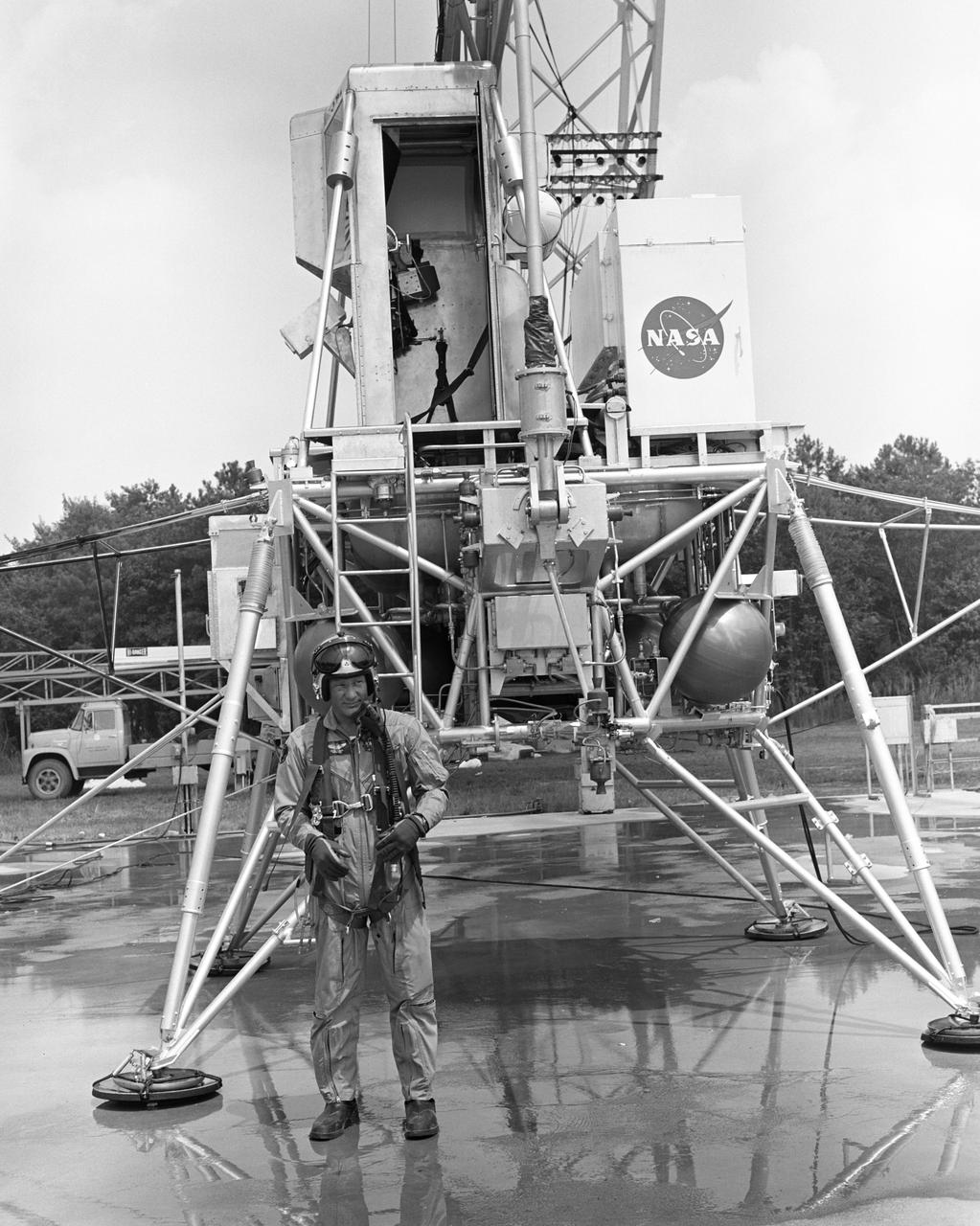
Astronaut Edwin Buzz Aldrin Lunar Module Pilot at the (LLRF) Lunar Landing Research Facility. Aldrin was one of the third group of astronauts named by NASA in October 1963. On November 11, 1966, he and command pilot James Lovell were launched into space in the Gemini 12 spacecraft on a 4-day flight, which brought the Gemini program to a successful close. Aldrin established a new record for extravehicular activity (EVA), spending 5-1/2 hours outside the spacecraft. He served as lunar module pilot for Apollo 11, July 16-24, 1969, the first manned lunar landing mission. Aldrin followed Neil Armstrong onto the lunar surface on July 20, 1969, completing a 2-hour and 15 minute lunar EVA. In July 1971, Aldrin resigned from NASA. Aldrin has logged 289 hours and 53 minutes in space, of which, 7 hours and 52 minutes were spent in EVA. https://www.nasa.gov/astronauts/biographies/former
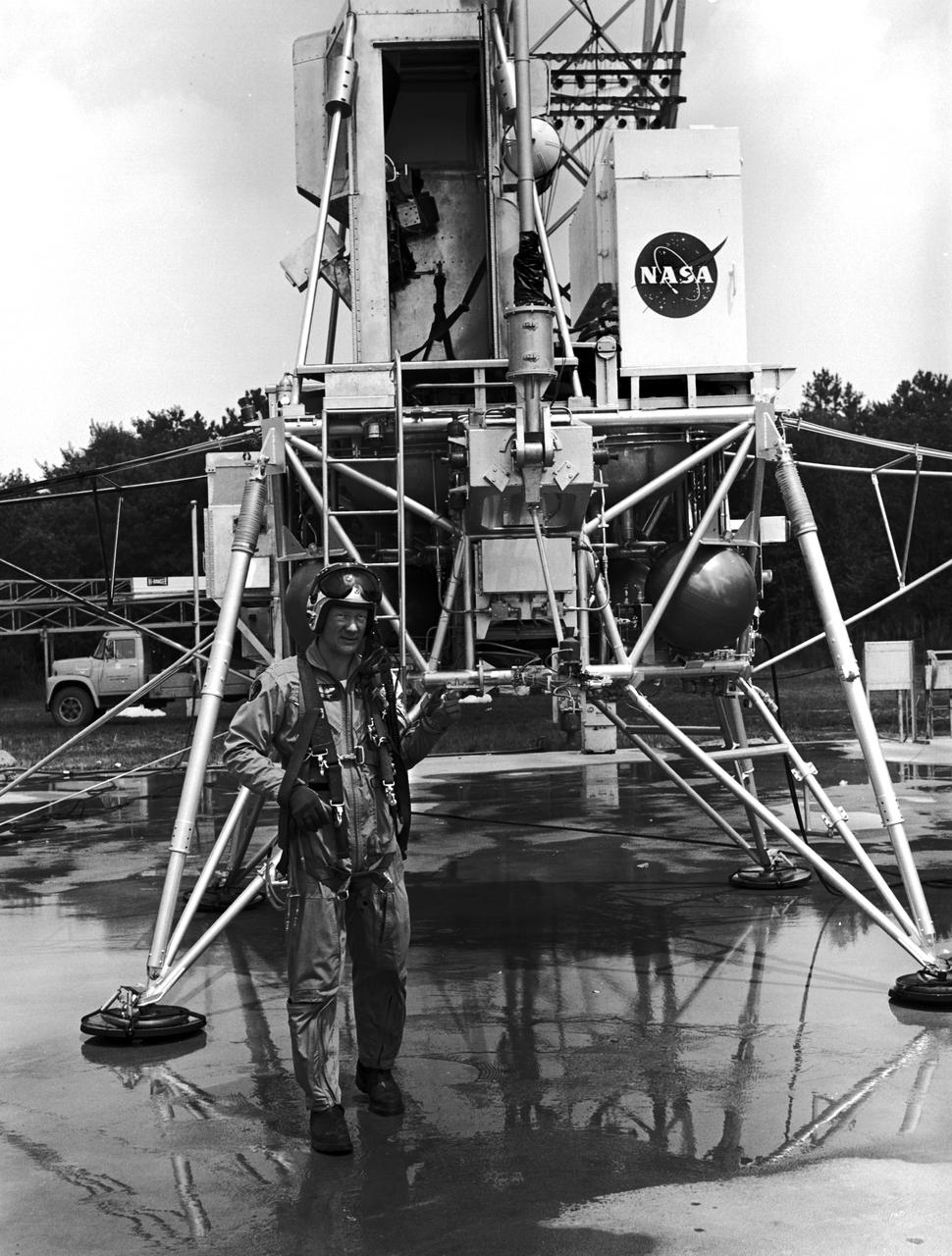
Astronaut Edwin Buzz Aldrin Lunar Module Pilot at the (LLRF) Lunar Landing Research Facility. Aldrin was one of the third group of astronauts named by NASA in October 1963. On November 11, 1966, he and command pilot James Lovell were launched into space in the Gemini 12 spacecraft on a 4-day flight, which brought the Gemini program to a successful close. Aldrin established a new record for extravehicular activity (EVA), spending 5-1/2 hours outside the spacecraft. He served as lunar module pilot for Apollo 11, July 16-24, 1969, the first manned lunar landing mission. Aldrin followed Neil Armstrong onto the lunar surface on July 20, 1969, completing a 2-hour and 15 minute lunar EVA. In July 1971, Aldrin resigned from NASA. Aldrin has logged 289 hours and 53 minutes in space, of which, 7 hours and 52 minutes were spent in EVA. https://www.nasa.gov/astronauts/biographies/former
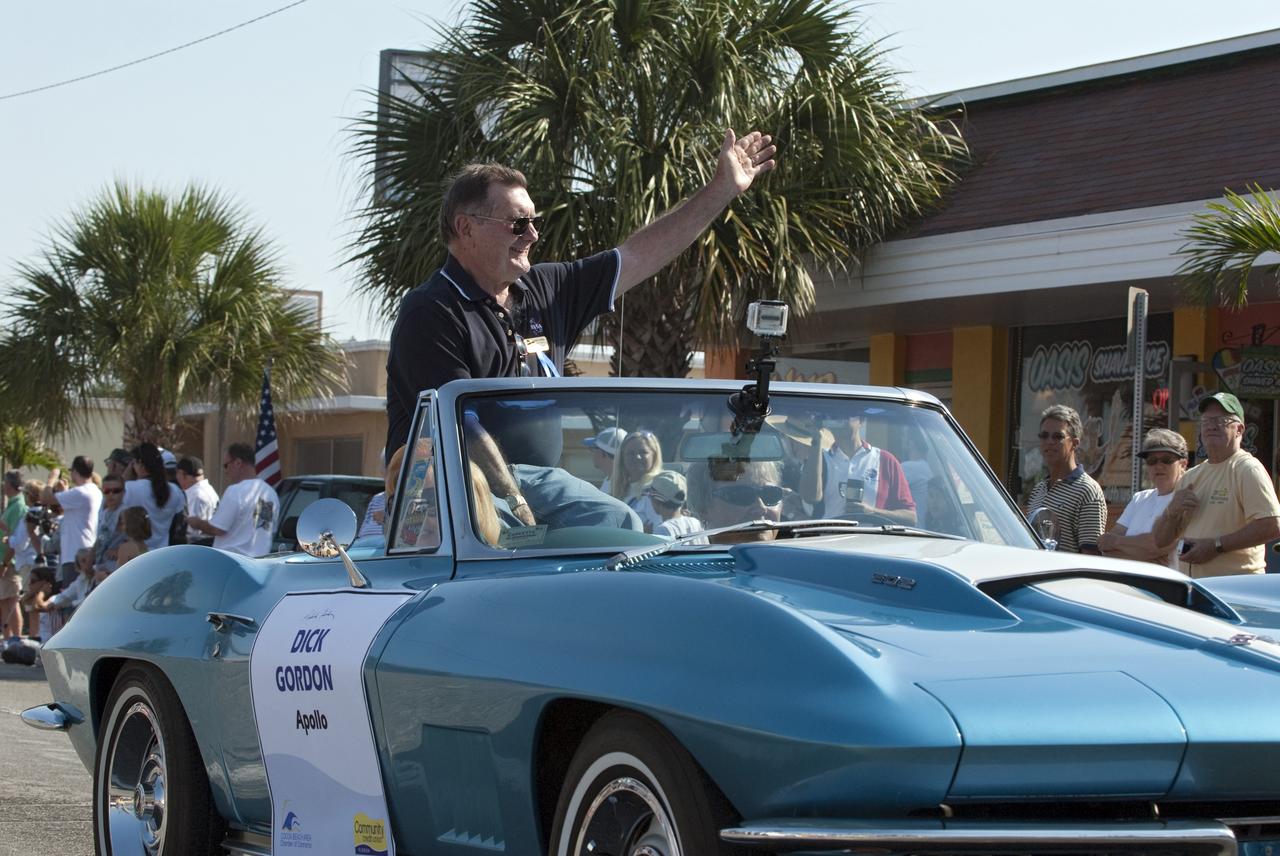
Cape Canaveral, Fla. -- Retired Gemini and Apollo astronaut Dick Gordon waves to spectators from a vintage Chevrolet Corvette during a commemorative parade in Cocoa Beach, Fla. A group of current and retired NASA astronauts gathered in Cocoa Beach to commemorate NASA’s 50 years of accomplishments and to honor astronaut Alan Shepard’s Mercury/Freedom 7 suborbital flight May 5, 1961.The event was marked by a parade, with the astronauts riding in a fleet of Chevrolet Corvettes that corresponded with the time period of their space missions. Members of the Cape Kennedy Corvette Club, a group established in 1967, escorted almost two dozen astronauts or their family representatives in club members' cars. The Corvette parade started at the glass bank building, at 9:34 a.m. EDT, the same time Shepard launched into space. Photo credit: NASA/Kim Shiflett

On June 4, 1974, 5 years after the successful Apollo 11 lunar landing mission, commander Neil Armstrong (right) presented a plaque to U.S. President Richard Milhous Nixon (left) on behalf of all people who had taken part in the space program. In making the presentation, Armstrong said “Mr. President, you have proclaimed this week to be United States Space week in conjunction with the fifth anniversary of our first successful landing on the Moon. It is my privilege to represent my colleagues, the crewmen of projects Mercury, Gemini, Apollo, and Skylab, and the men and women of NASA, and the hundreds of thousands of Americans from across the land who contributed so mightily to the success of our efforts in space in presenting this plaque which bears the names of each individual who has had the privilege of representing this country” in a space flight. The presentation was made at the California white house in San Clemente.
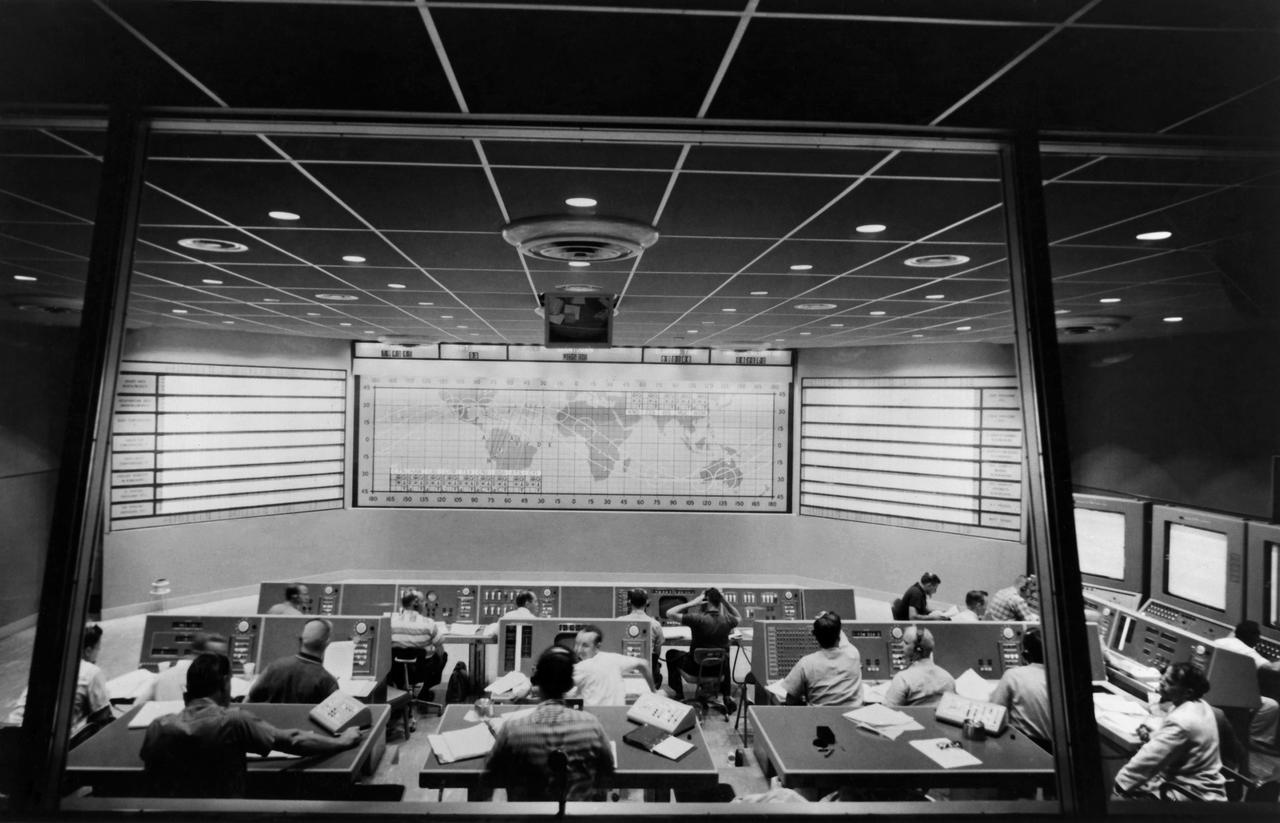
CAPE CANAVERAL, Fla. - Flight controllers gather inside Mercury Mission Control for Alan Shepard's Freedom 7 mission, which launched on May 5, 1961. The Mercury Mission Control Center in Florida played a key role in the United States' early spaceflight program. Located at Cape Canaveral Air Force Station, the original part of the building was constructed between 1956 and 1958, with additions in 1959 and 1963. The facility officially was transferred to NASA on Dec. 26, 1963, and served as mission control during all the Project Mercury missions, as well as the first three flights of the Gemini Program, when it was renamed Mission Control Center. With its operational days behind, on June 1, 1967, the Mission Control Center became a stop on the public tour of NASA facilities until the mid-90s. In 1999, much of the equipment and furnishings from the Flight Control Area were moved to the Kennedy Space Center Visitor Complex where they became part of the exhibit there. The building was demolished in spring 2010. Photo credit: NASA
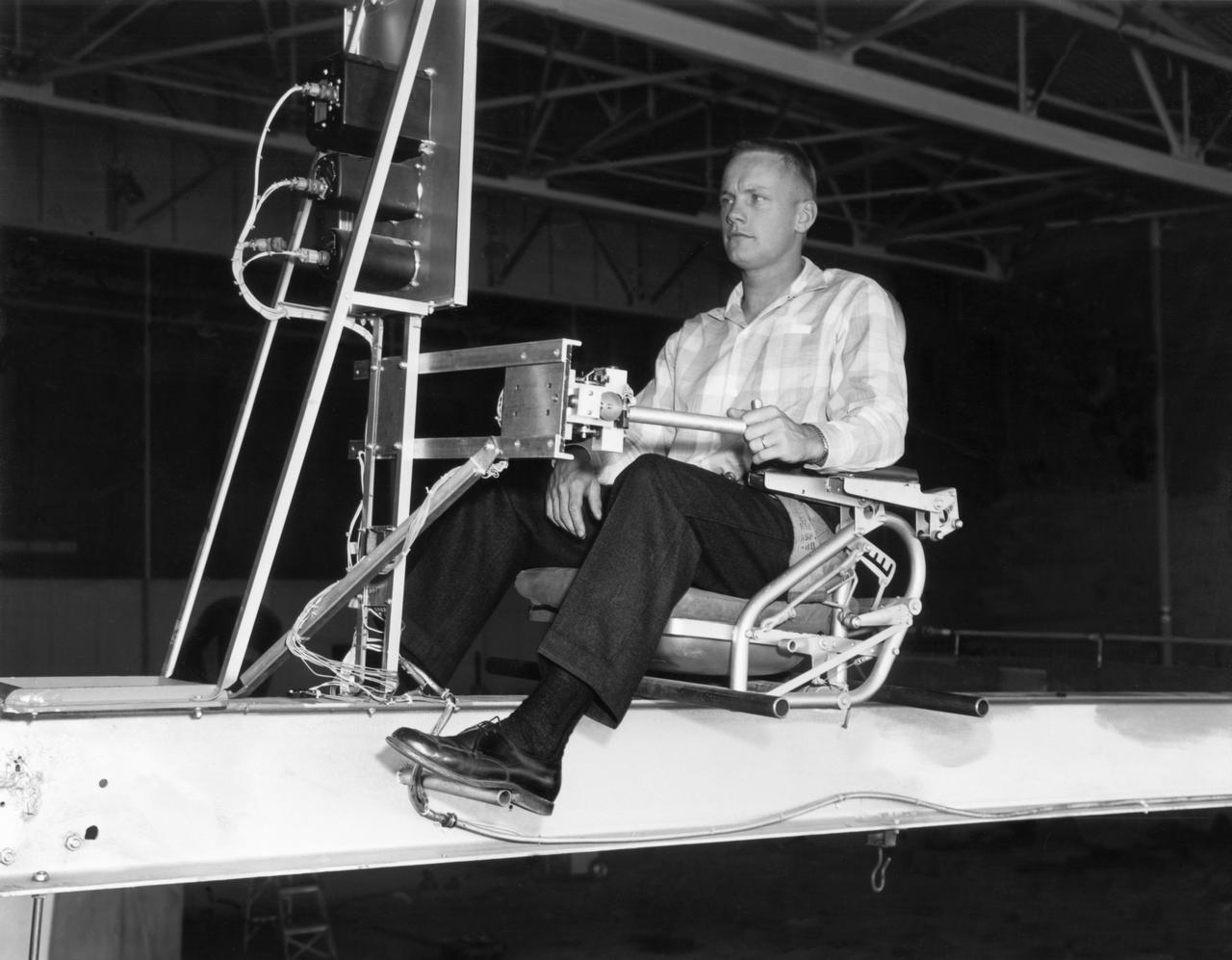
Famed astronaut Neil A. Armstrong, the first man to set foot on the moon during the historic Apollo 11 space mission in July 1969, served for seven years as a research pilot at the NACA-NASA High-Speed Flight Station, now the Dryden Flight Research Center, at Edwards, California, before he entered the space program. Armstrong joined the National Advisory Committee for Aeronautics (NACA) at the Lewis Flight Propulsion Laboratory (later NASA's Lewis Research Center, Cleveland, Ohio, and today the Glenn Research Center) in 1955. Later that year, he transferred to the High-Speed Flight Station at Edwards as an aeronautical research scientist and then as a pilot, a position he held until becoming an astronaut in 1962. He was one of nine NASA astronauts in the second class to be chosen. As a research pilot Armstrong served as project pilot on the F-100A and F-100C aircraft, F-101, and the F-104A. He also flew the X-1B, X-5, F-105, F-106, B-47, KC-135, and Paresev. He left Dryden with a total of over 2450 flying hours. He was a member of the USAF-NASA Dyna-Soar Pilot Consultant Group before the Dyna-Soar project was cancelled, and studied X-20 Dyna-Soar approaches and abort maneuvers through use of the F-102A and F5D jet aircraft. Armstrong was actively engaged in both piloting and engineering aspects of the X-15 program from its inception. He completed the first flight in the aircraft equipped with a new flow-direction sensor (ball nose) and the initial flight in an X-15 equipped with a self-adaptive flight control system. He worked closely with designers and engineers in development of the adaptive system, and made seven flights in the rocket plane from December 1960 until July 1962. During those fights he reached a peak altitude of 207,500 feet in the X-15-3, and a speed of 3,989 mph (Mach 5.74) in the X-15-1. Armstrong has a total of 8 days and 14 hours in space, including 2 hours and 48 minutes walking on the Moon. In March 1966 he was commander of the Gemini 8 or