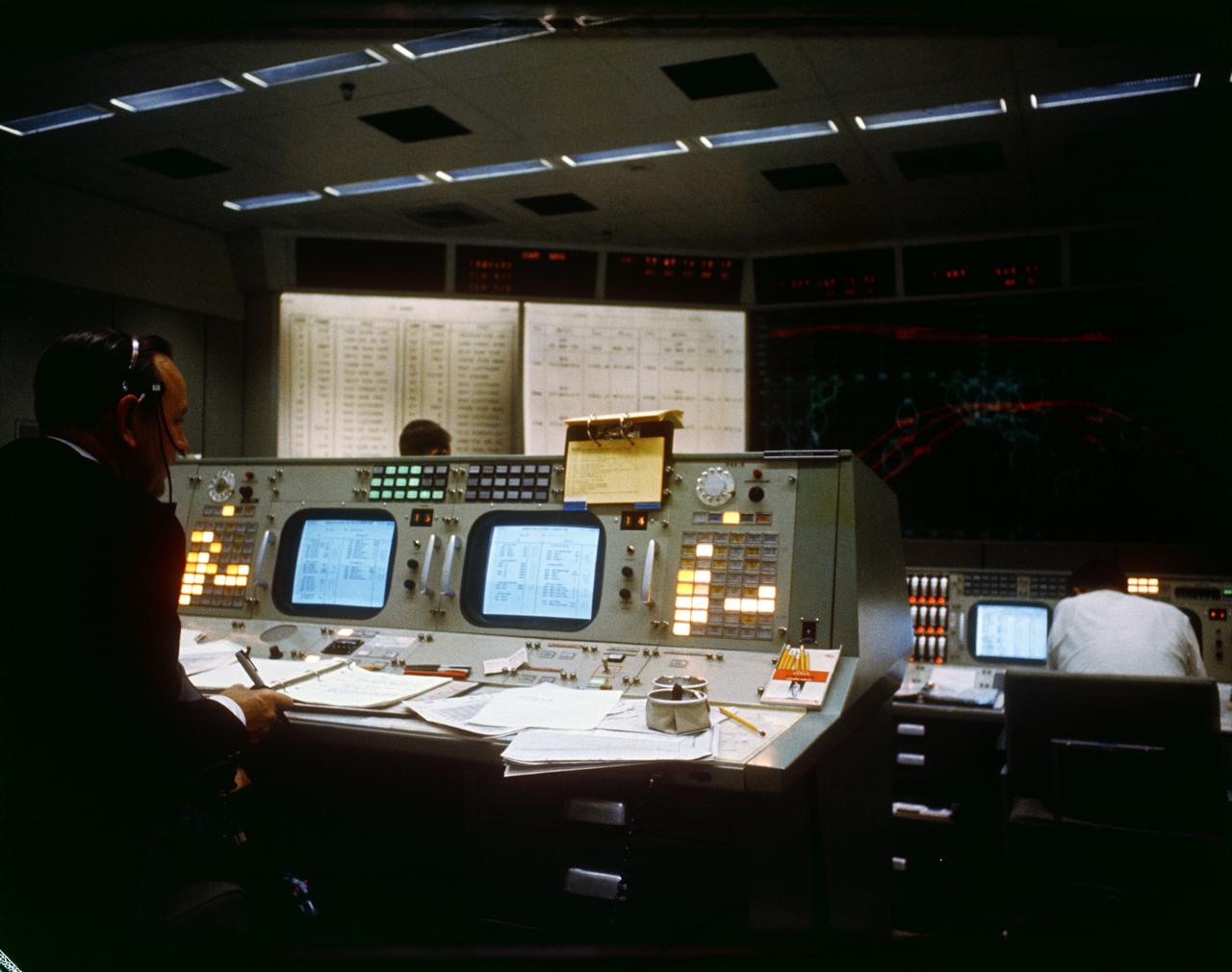
S65-60039 (7 Dec. 1965) --- Christopher C. Kraft Jr. (left), assistant director for Flight Operations, monitors his console in the Mission Control Center during the Gemini-7 spaceflight. Photo credit: NASA
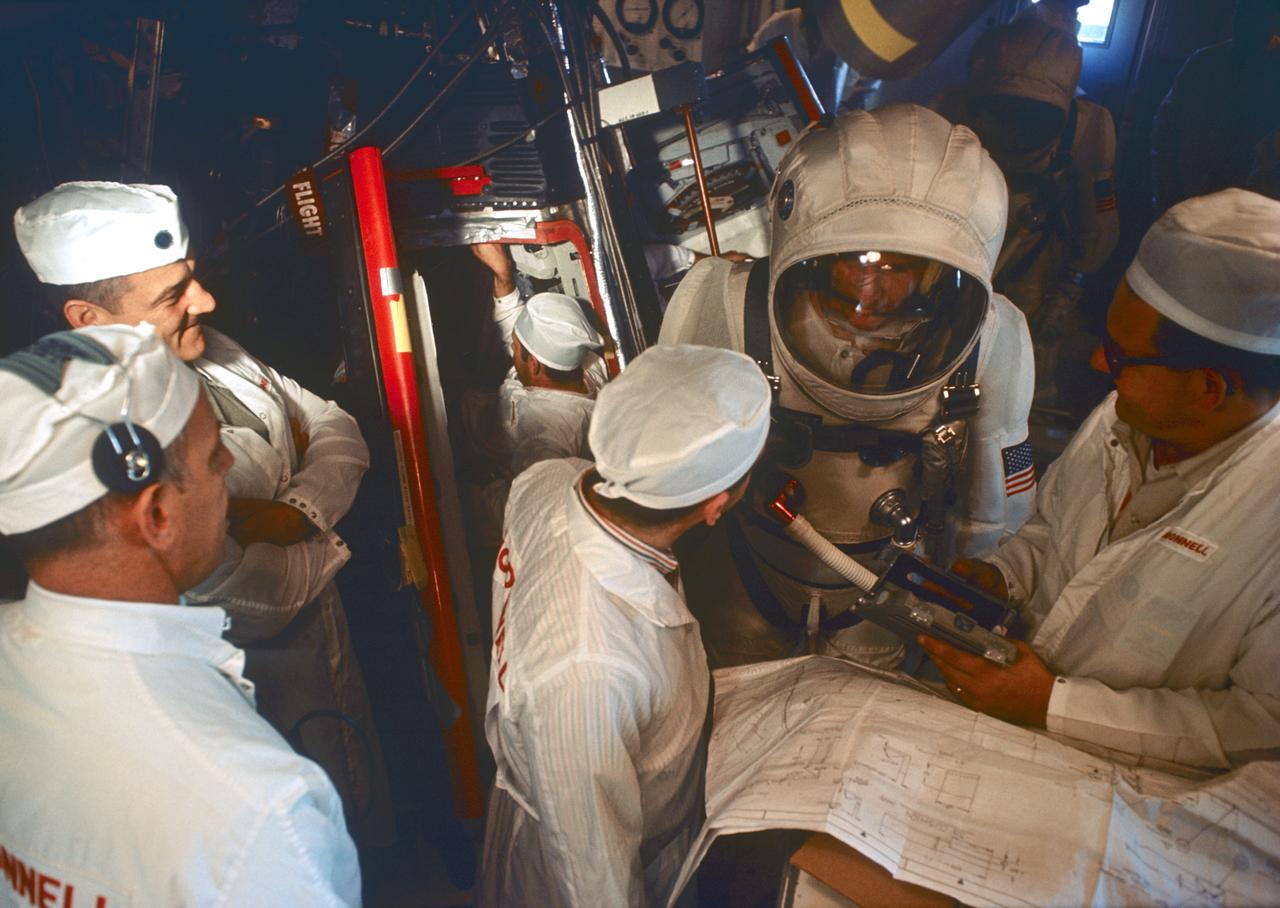
S65-61837 (27 Nov. 1965) --- The Gemini-7 backup crew seen in the White Room atop Pad 19 during Gemini-7 simulation flight activity. McDonnell Aircraft Corporation technicians assist in the exercise. Astronaut Edward H. White II (in foreground) is the Gemini-7 backup crew command pilot; and astronaut Michael Collins (right background) is the backup crew pilot. Photo credit: NASA
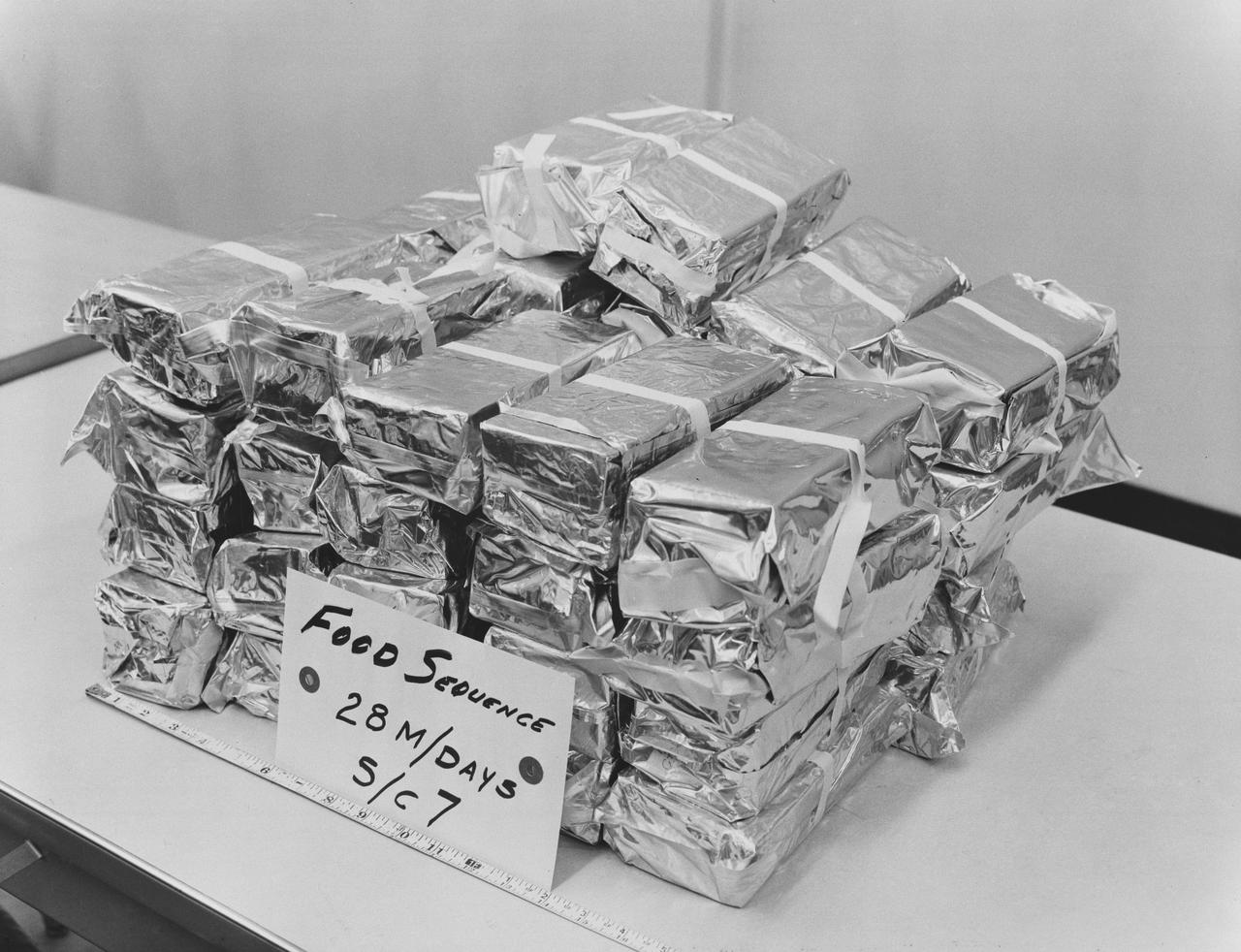
S65-61653 (1 Dec. 1965) --- Complete food supply for the two-man crew of the National Aeronautics and Space Administration's Gemini-7 spaceflight as it appears prior to stowage in the spacecraft. The food packages are tied in sequence for 28-manned days or a complete supply for two men for a 14-day mission. Photo credit: NASA

S65-54129 (November 1965) --- Design for the emblem of the Gemini VII spaceflight. At left of hand-held torch is a Gemini spacecraft. Roman numeral indicates the seventh flight in the Gemini series. Prime crew men for the mission are astronauts Frank Borman, command pilot, and James A. Lovell Jr., pilot. The NASA insignia design for Gemini flights is reserved for use by the astronauts and for other official use as the NASA Administrator may authorize. Public availability has been approved only in the form of illustrations by the various news media. When and if there is any change in this policy, which we do not anticipate, it will be publicly announced. Photo credit: NASA
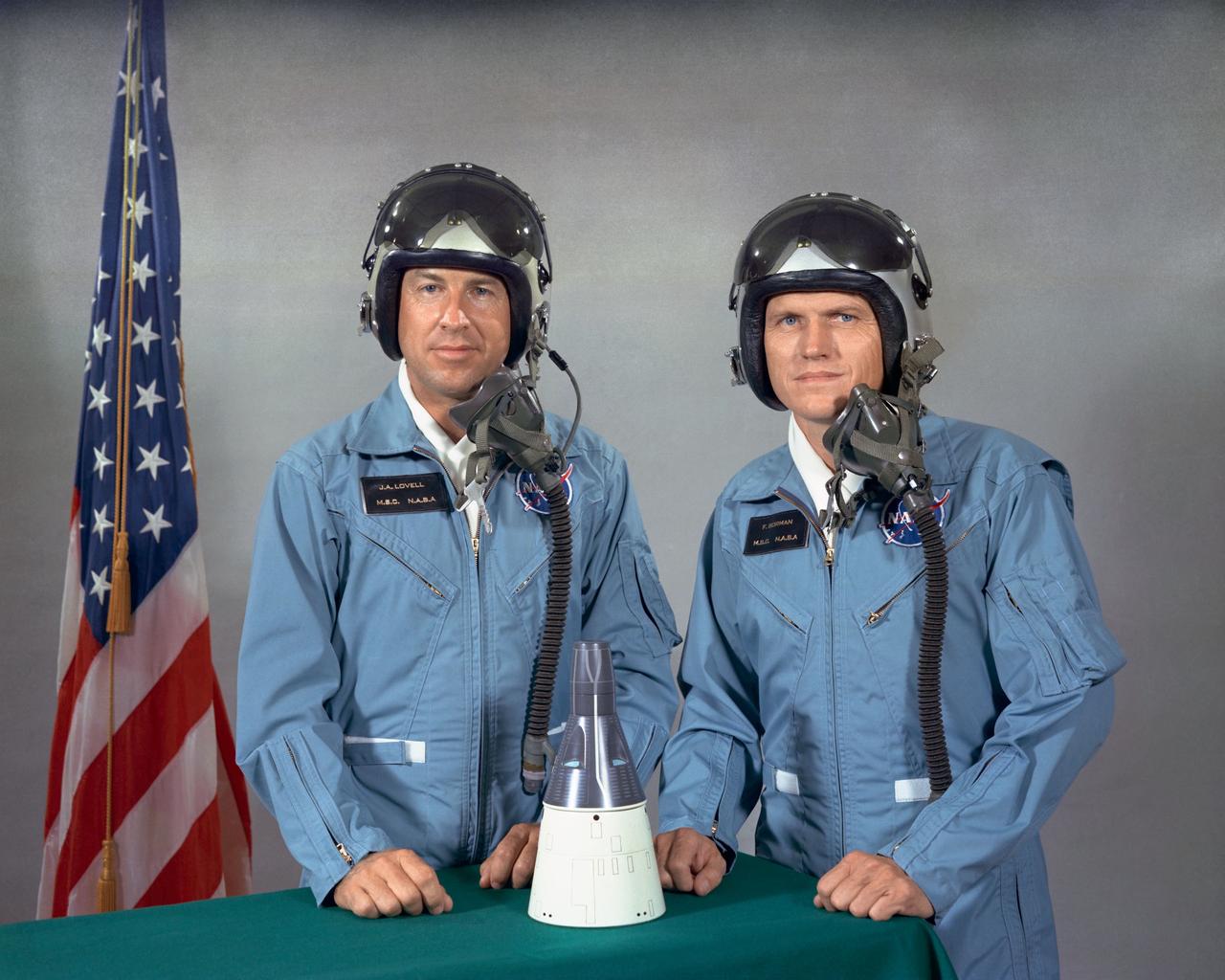
S65-41825 (1 July 1965) --- Astronauts Frank Borman (right), command pilot, and James A. Lovell Jr., pilot, are the prime crew members for NASA's Gemini-Titan 7 (GT-7) mission. Photo credit: NASA

S65-63189 (15 Dec. 1965) --- The National Aeronautics and Space Administration's (NASA) Gemini-7 spacecraft as seen from the Gemini-6 spacecraft during their rendezvous mission in space. The two spacecraft are approximately 43 feet apart. This image was taken with a modified 70mm Hasselblad camera, using Eastman Kodak, Ektachrome (S.O. 217) color film. Photo credit: NASA or National Aeronautics and Space Administration
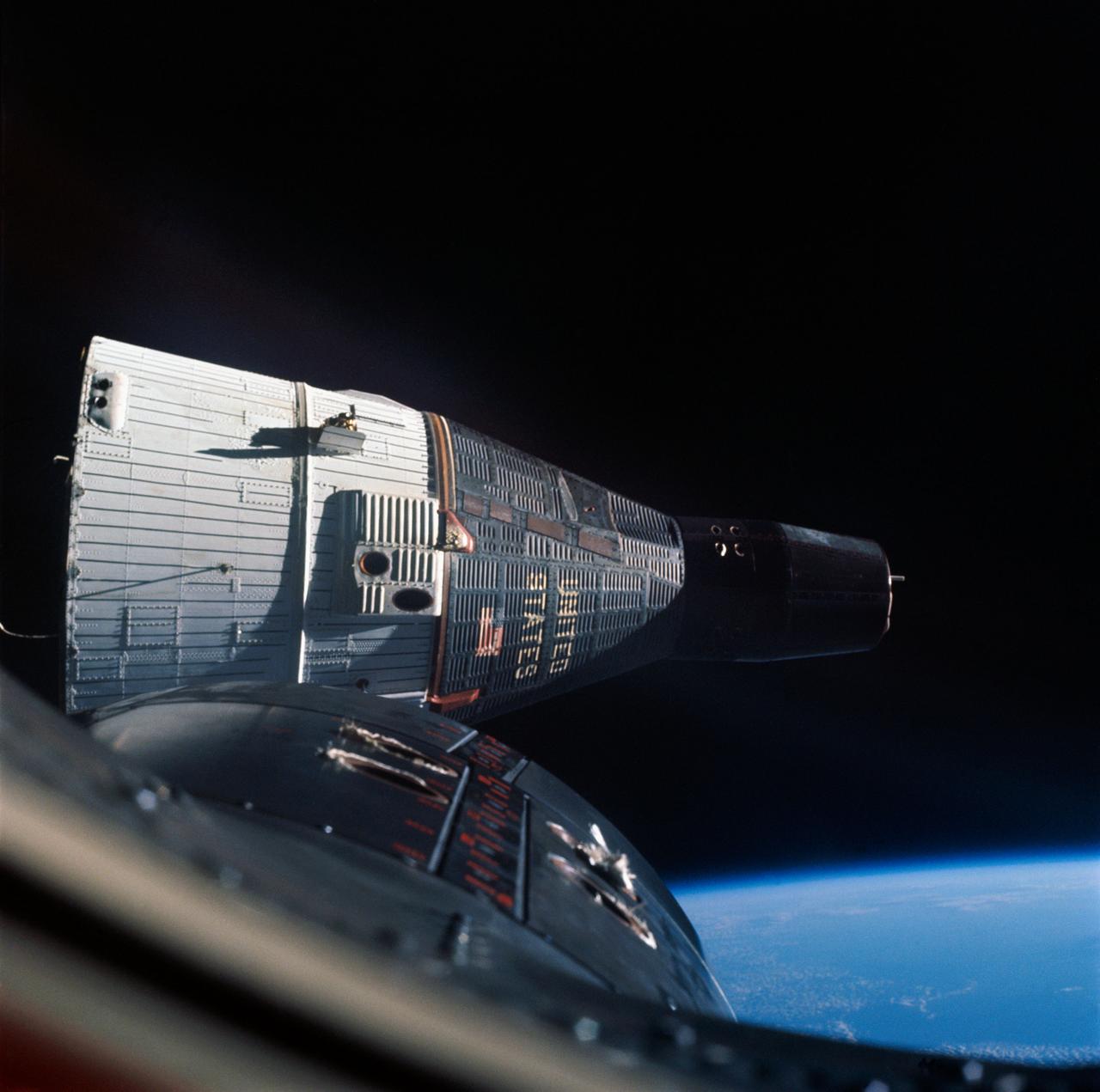
S65-63194 (15 Dec. 1965) --- This photograph of the National Aeronautics and Space Administration's (NASA) Gemini-7 spacecraft was taken through the hatch window of the Gemini-6 spacecraft during rendezvous and station keeping maneuvers at an altitude of approximately 160 miles on Dec. 15, 1965. The photograph was taken with a Hasselblad camera using Kodak SO 217 film with an ASA of 1964. Photo credit: NASA or National Aeronautics and Space Administration
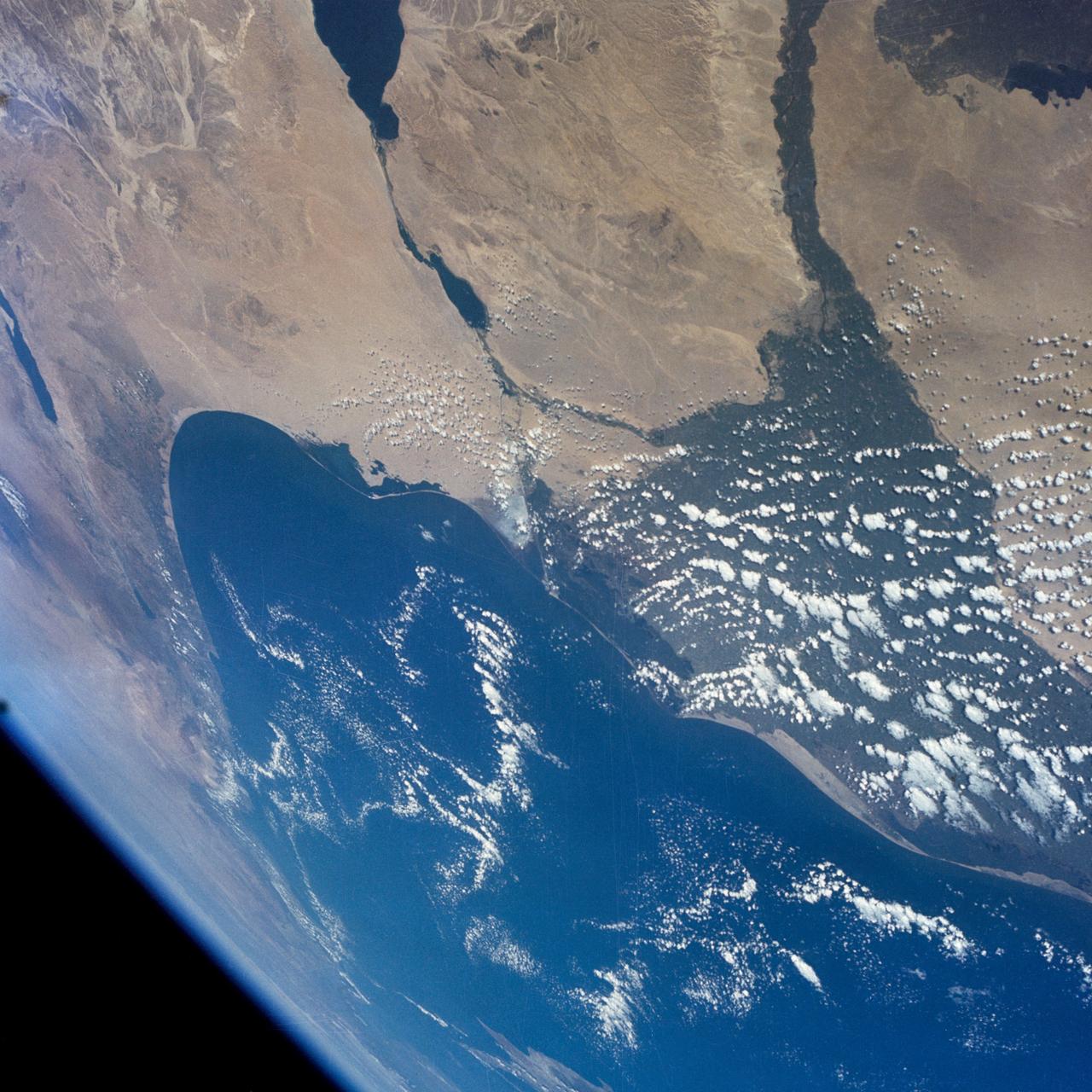
S65-63849 (8 Dec. 1965) --- The eastern Mediterranean area as seen from the National Aeronautics and Space Administration's Gemini-7 spacecraft. The Nile Delta in Egypt is at bottom. The Suez Canal, Gulf of Suez and Red Sea are in the center of the photograph. The Sinai Peninsula is in the upper right corner of the picture. The body of water at the top edge of the photograph is the Gulf of Aqaba. The Dead Sea can be seen at top center. Israel, Palestine, Jordan and Syria are also at top center. The Island of Cyprus is at extreme left. Astronauts Frank Borman and James A. Lovell Jr. took this picture using a modified 70mm Hasselblad camera, with Eastman Kodak, Ektachrome MS (S.O. 217) color film. Photo credit: NASA
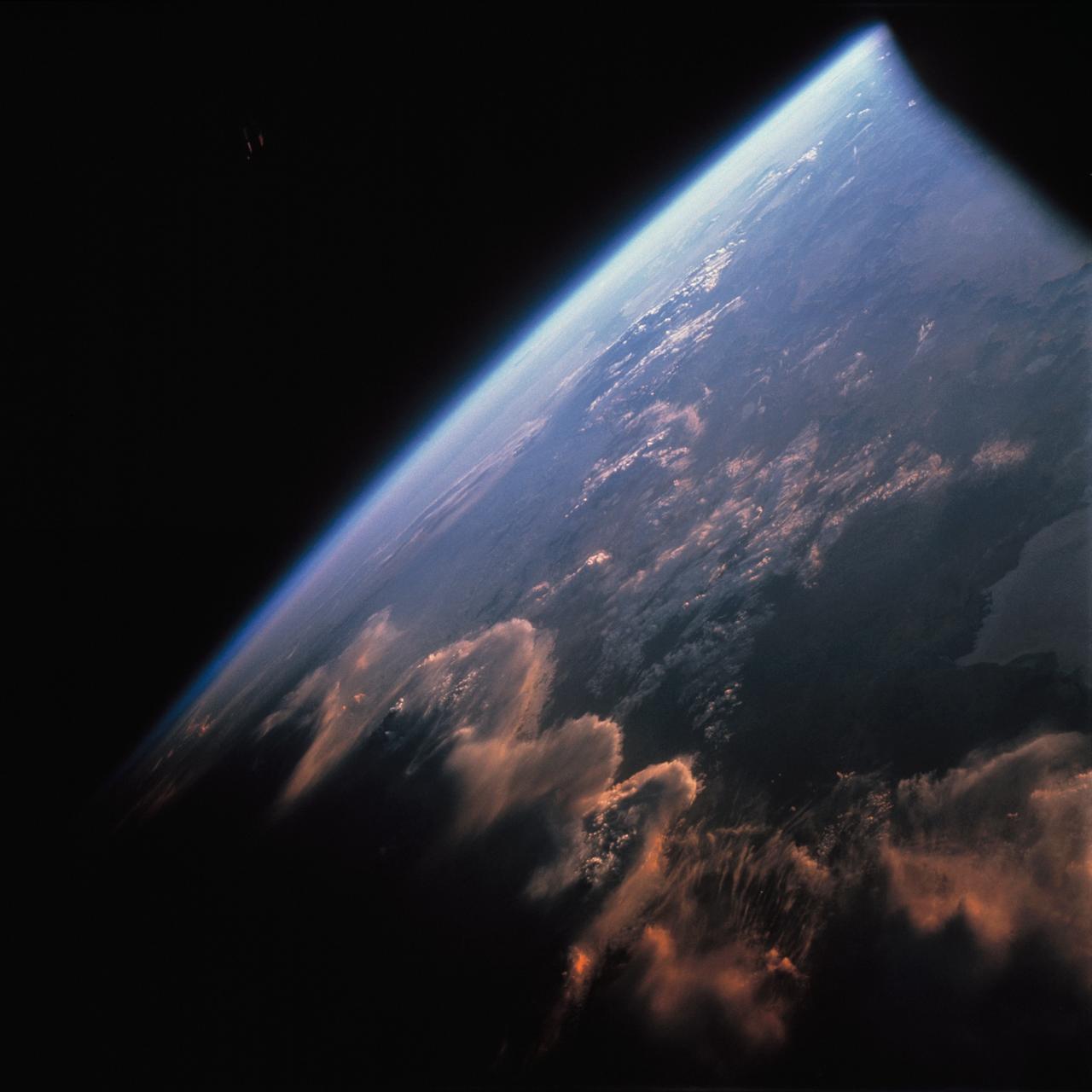
S65-63780 (12 Dec. 1965) --- Wave of clouds along the east flanks of the Andes Mountains cast off an orange glow by the low angle of the sun in the west. The dark area to the left is at Earth's terminator. Astronauts James A. Lovell Jr., pilot, and Frank Borman, command pilot, of the National Aeronautics and Space Administration's (NASA) Gemini-Titan 7 (GT-7) mission took the picture while looking south from northern Bolivia across the Andes Mountains. The intermontane salt basins are visible in the background. This photograph was taken with a modified 70mm Hasselblad camera, with Eastman Kodak, Ektachrome MS (SO 217) color film. Photo credit: NASA
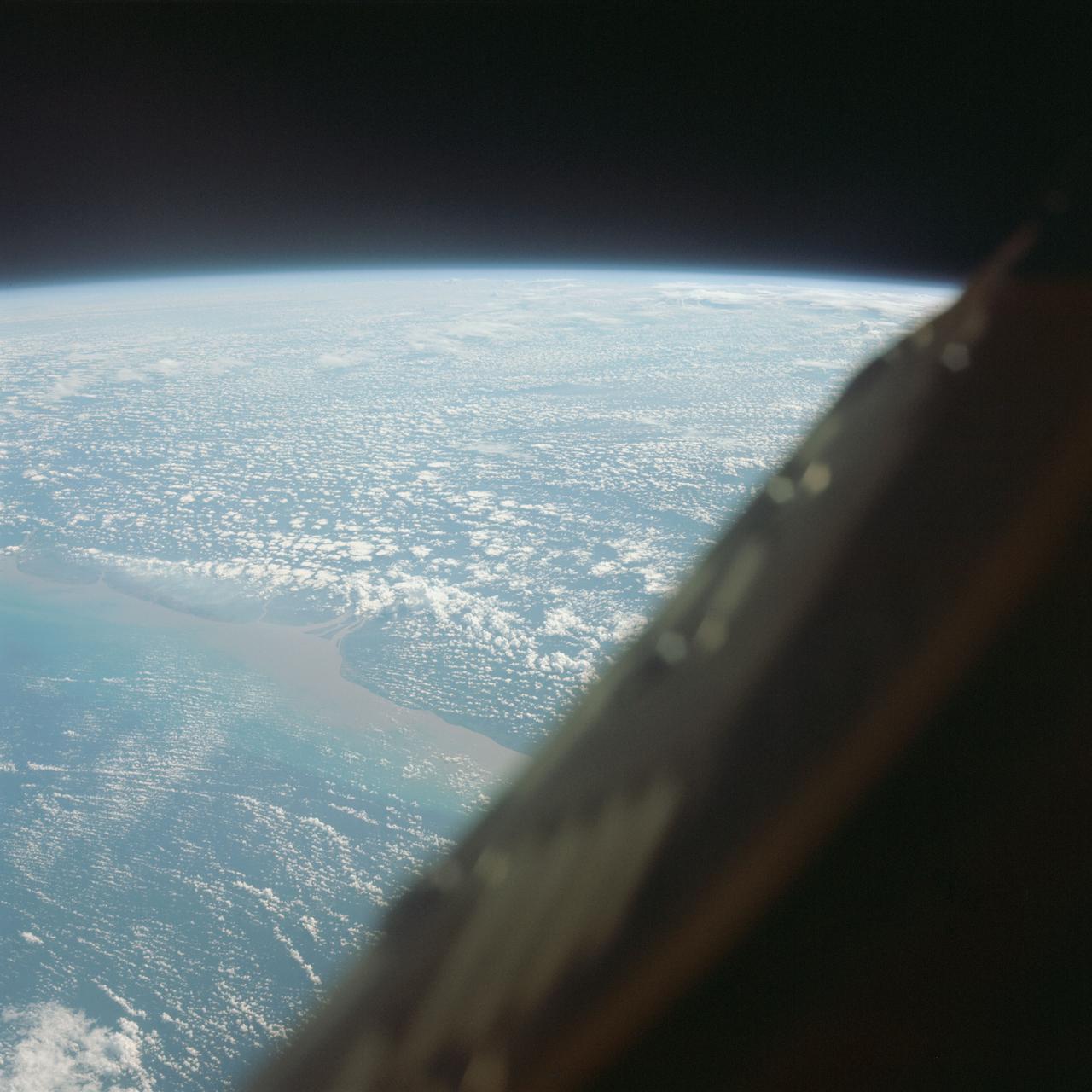
S65-64029 (13 Dec. 1965) --- Coast of British Guiana, South America, looking south, as seen from the National Aeronautics and Space Administration?s Gemini-7 spacecraft during its 135th revolution of Earth. This photograph was taken with a modified 70mm Hasselblad camera, using Eastman Kodak, Ektachrome MS (S.O. 217) color film. Photo credit: NASA
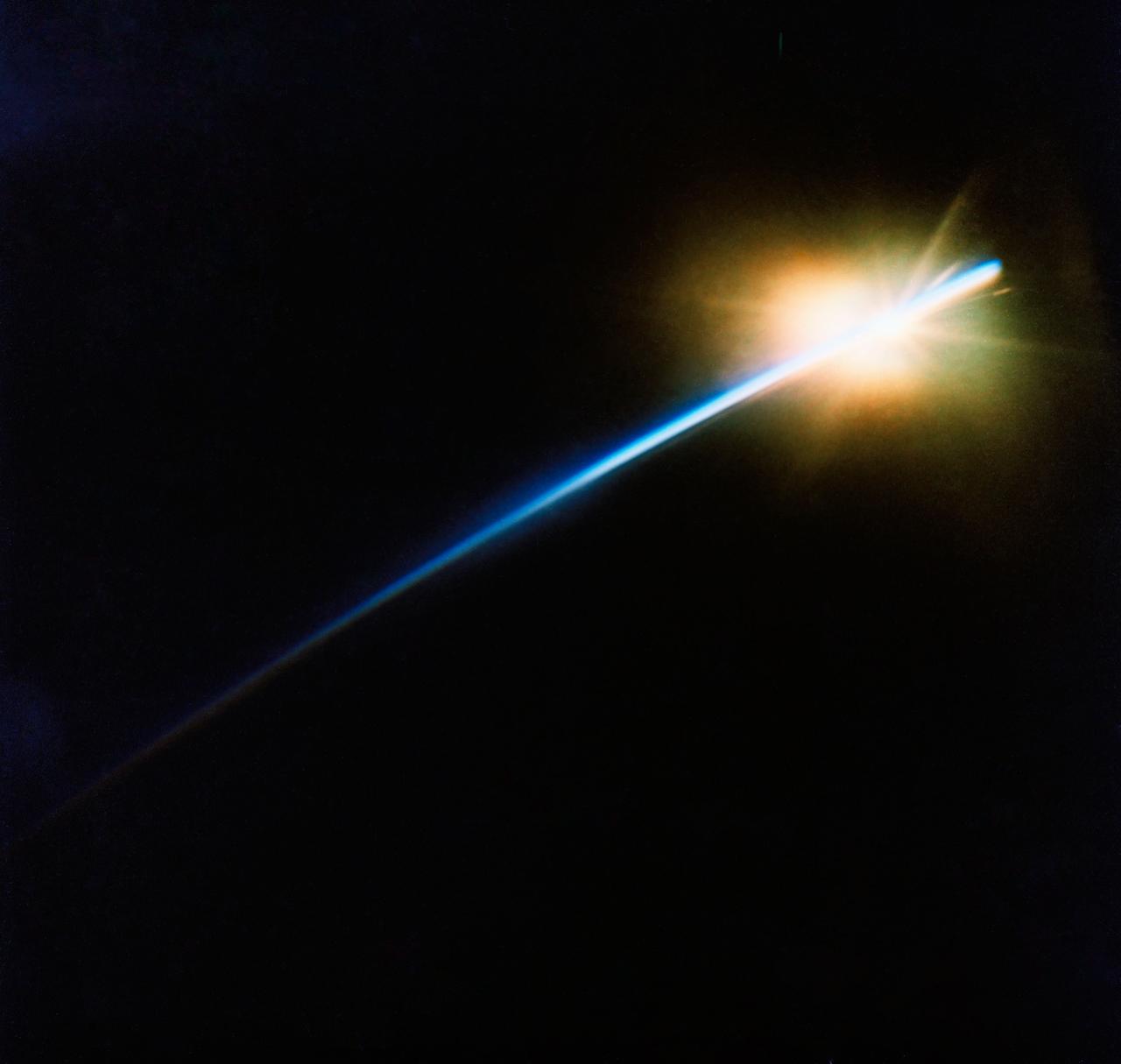
S65-65257 (4-18 Dec. 1965) --- Sunrise and Earth's limb, as photographed by astronauts Frank Borman and James A. Lovell Jr. during their Earth-orbital 14-day mission in the Gemini-7 (GT-7) spacecraft. Photo credit: NASA
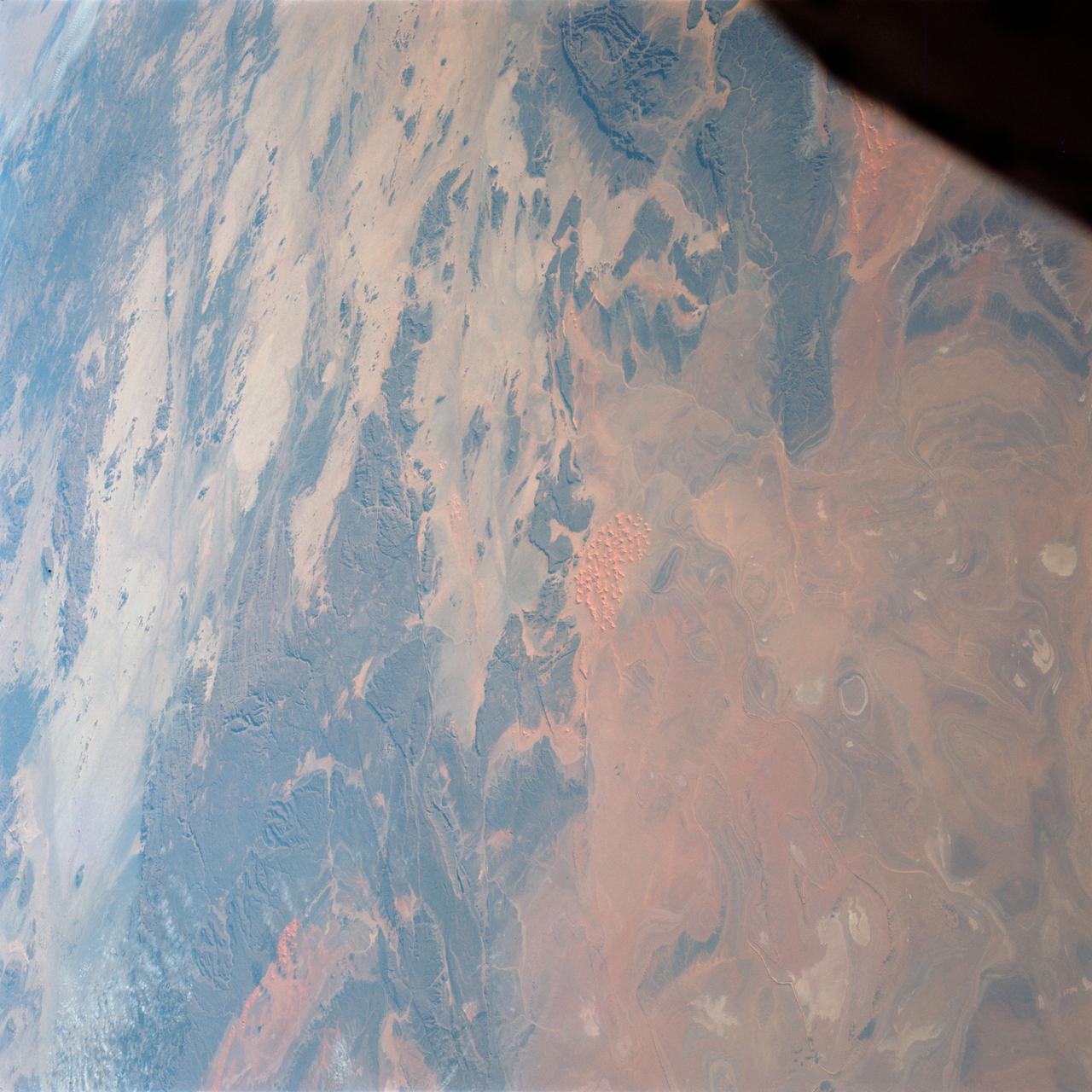
S65-63784 (7 Dec. 1965) --- Algeria, south of Celemb Bechar, as seen from the orbiting Gemini-7 spacecraft during its 42nd revolution of Earth. Note rain runoff on the desert floor. Astronaut Frank Borman and James A. Lovell Jr. were aboard the National Aeronautics and Space Administration?s Gemini-7 spacecraft. The photograph was taken with a modified 70mm Hasselblad camera, using Eastman Kodak, Ektachrome MS (S.O. 217) color film. Photo credit: NASA
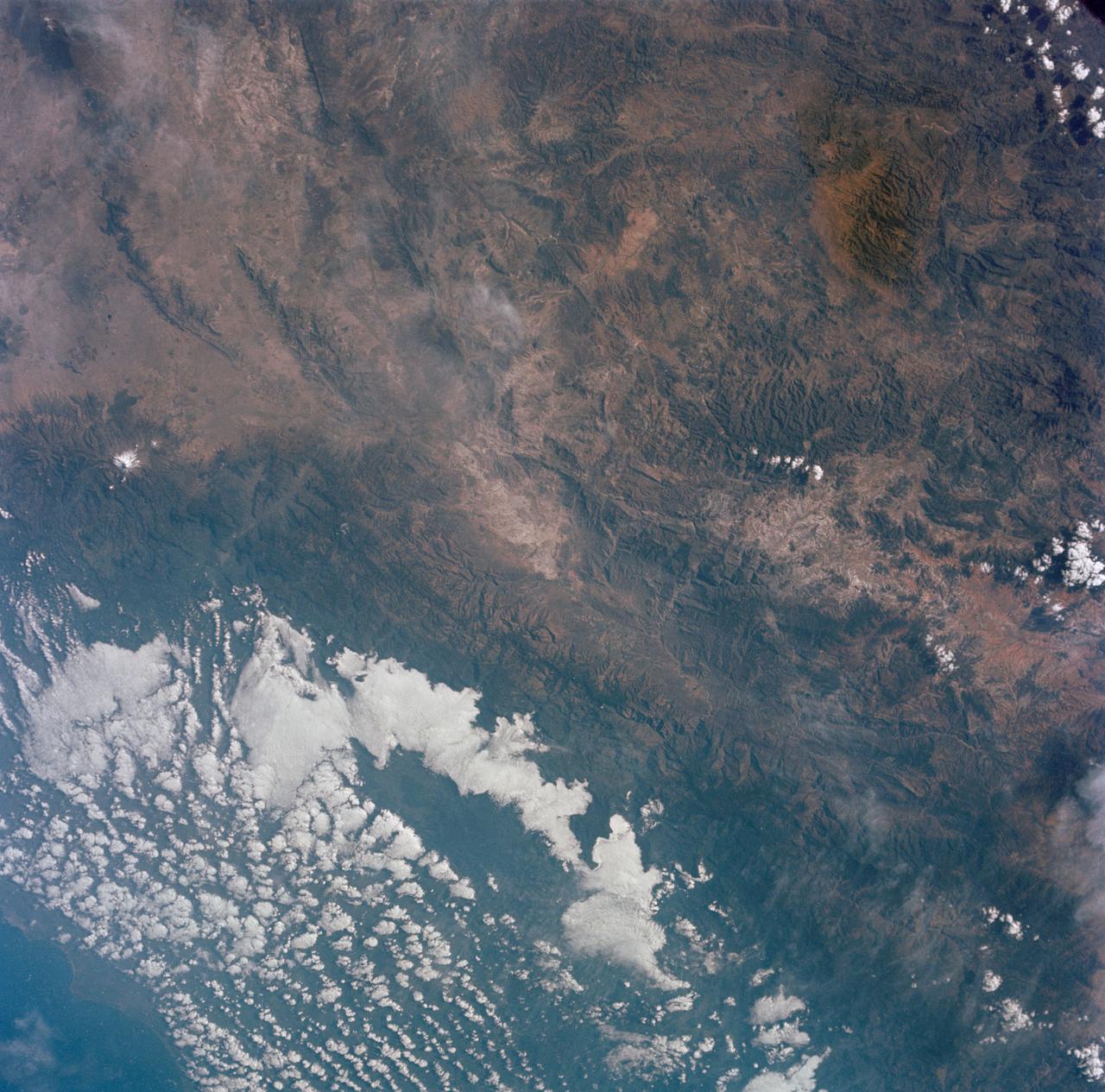
S65-63758 (11 Dec. 1965) --- The states of Puebla, Vera Cruz, Tlaxcala and Oaxaca in Mexico, as seen from the National Aeronautics and Space Administration?s Gemini-7 spacecraft during its 107th revolution of Earth. Taken with a modified 70mm Hasselblad camera, with Eastman Kodak, Ektachrome MS (S.O. 217) color film. Photo credit: NASA
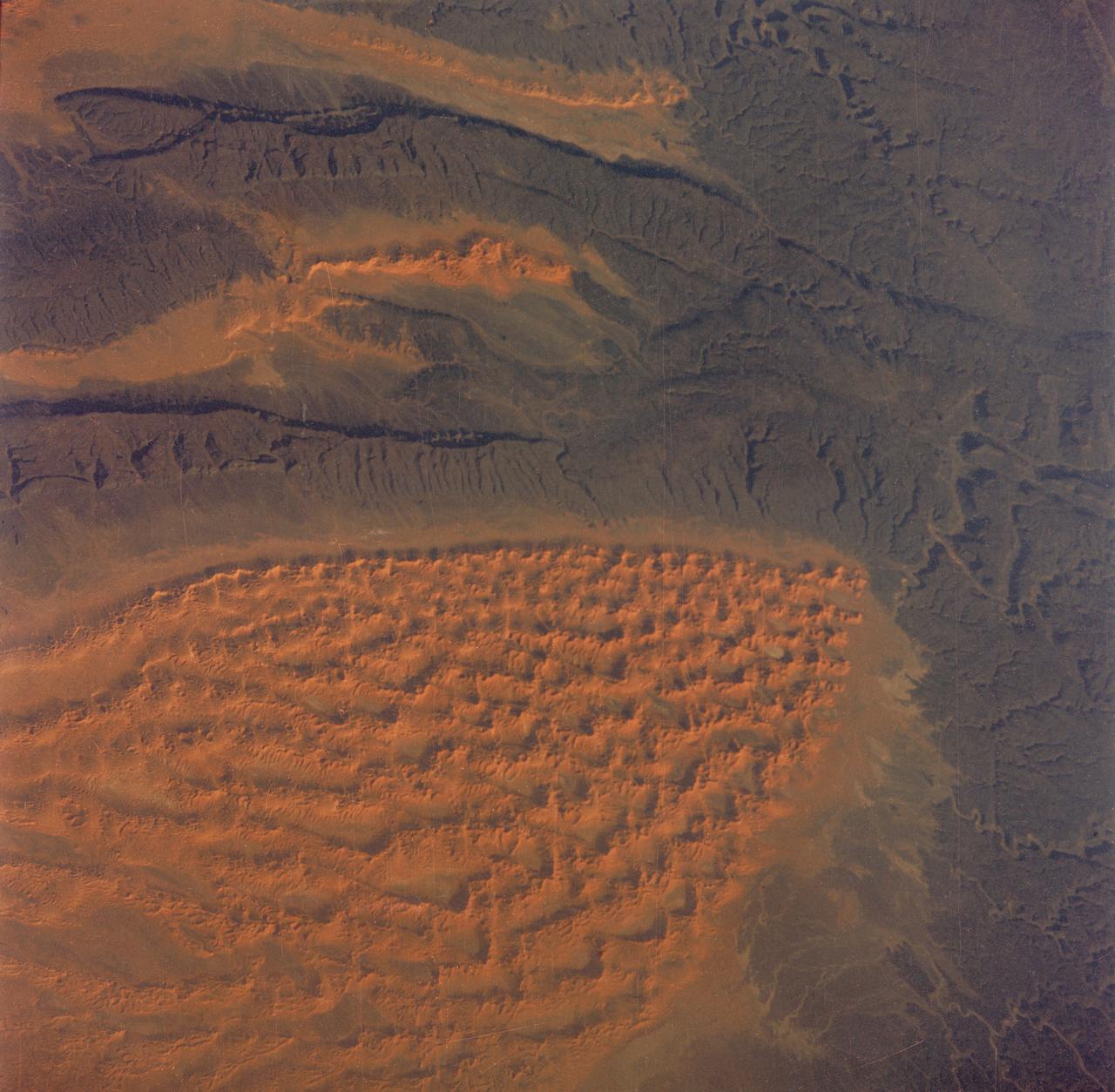
S65-63829 (5 Dec. 1965) --- Algeria, south of the Fort Flatters area, as seen from the National Aeronautics and Space Administration?s Gemini-7 spacecraft during its 13th revolution of Earth. The orange color area is the Tifermine Sand Dunes that reach a height of 1,000 feet. The photograph was taken with a modified 70mm Hasselblad camera, with Eastman Kodak, Ektachrome MS (S.O. 217) color film. Photo credit: NASA
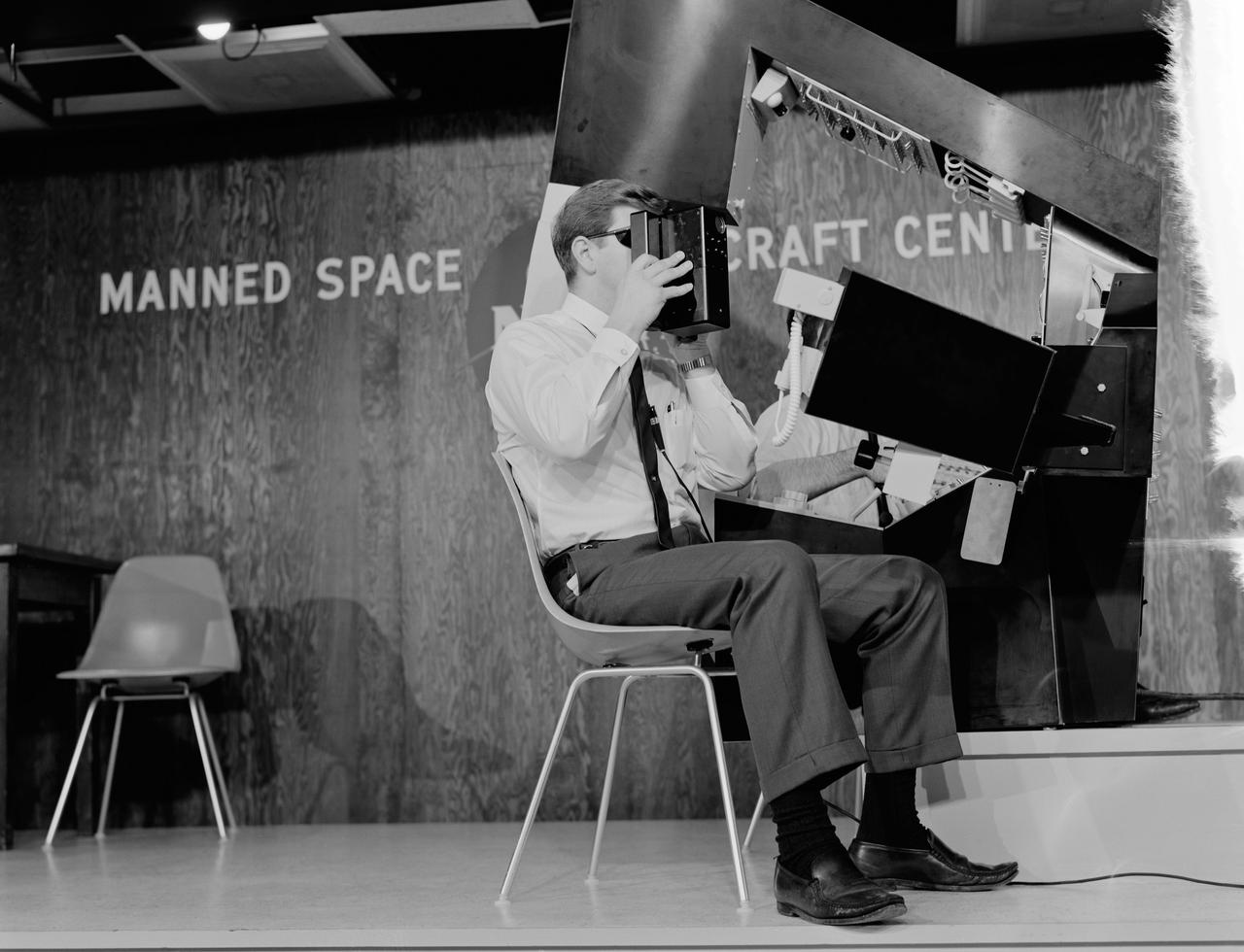
S65-42598 (10 Nov. 1965) --- Douglas S. Idlly, Electromagnetic Systems Branch, Instrumentation and Electronic Systems Division, illustrates an Optical Communications Transmitter (LASER) during a briefing at the news center of the Manned Spacecraft Center in Houston, Texas. Photo credit: NASA
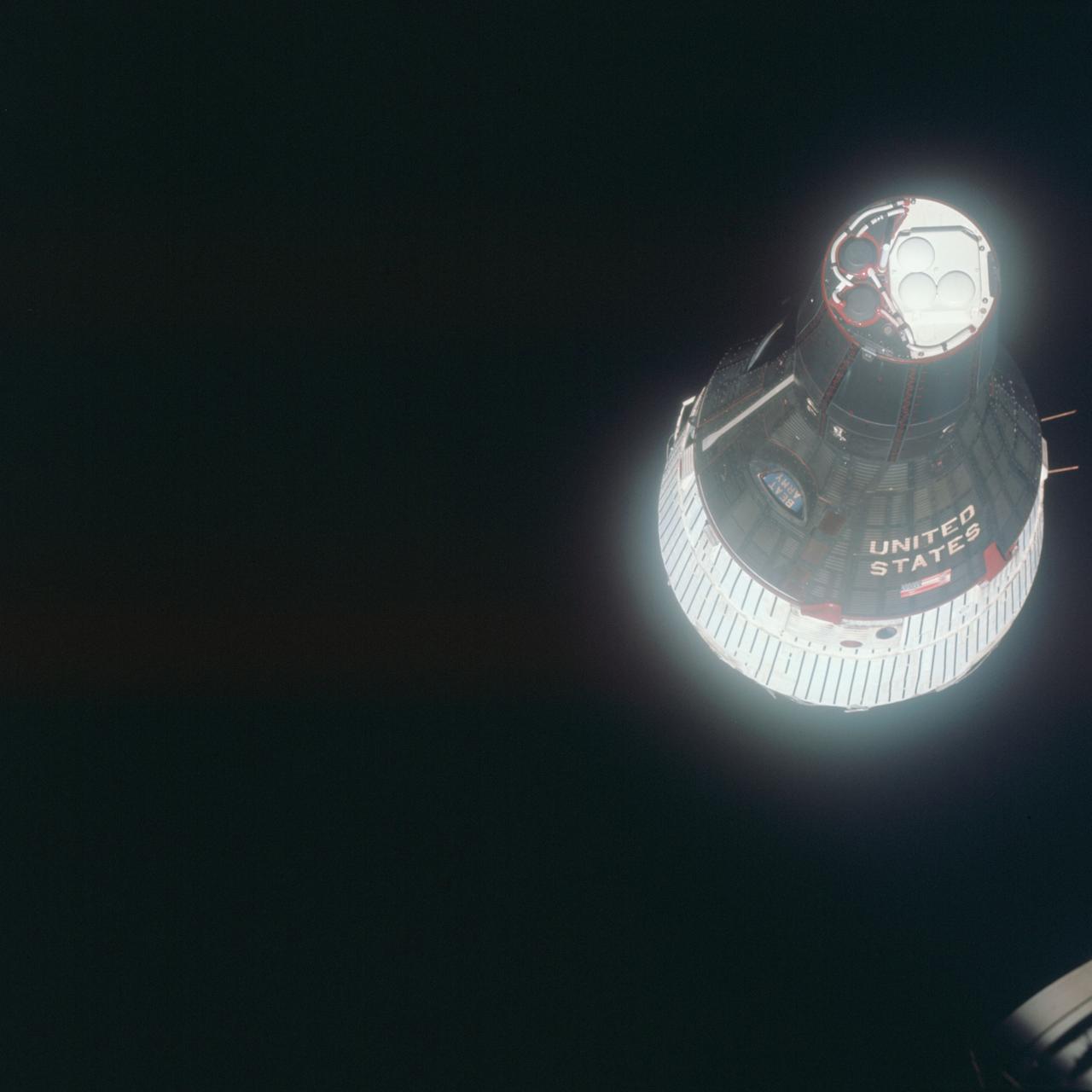
S65-64040 (15 Dec. 1965) --- Nose-on view of the Gemini-6 spacecraft against the blackness of space as seen from Gemini-7 spacecraft. The two spacecraft were approximately 38 feet apart. Astronauts Walter M. Schirra and Thomas P. Stafford were onboard the Gemini-6 spacecraft. Astronauts Frank Borman and James A. Lovell Jr. were aboard the Gemini-7 spacecraft. A "Beat Army" sign can be seen in the Gemini-6 window. Photo credit: NASA
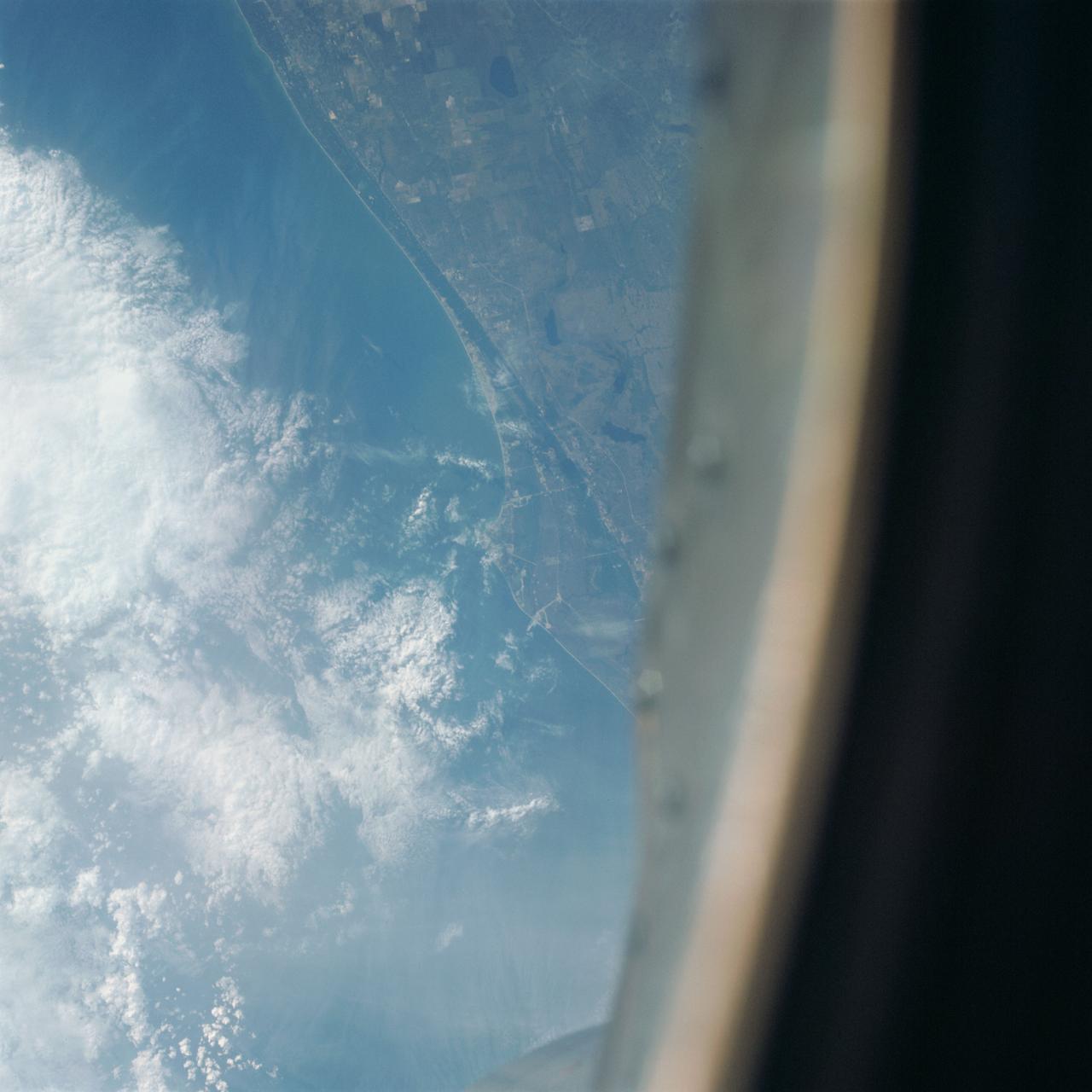
S65-63771 (12 Dec. 1965) --- Kennedy Space Center area on the east coast of Florida as seen from the Gemini-7 spacecraft, during Gemini-6 abort, on its 118th revolution of Earth. Photo credit: NASA
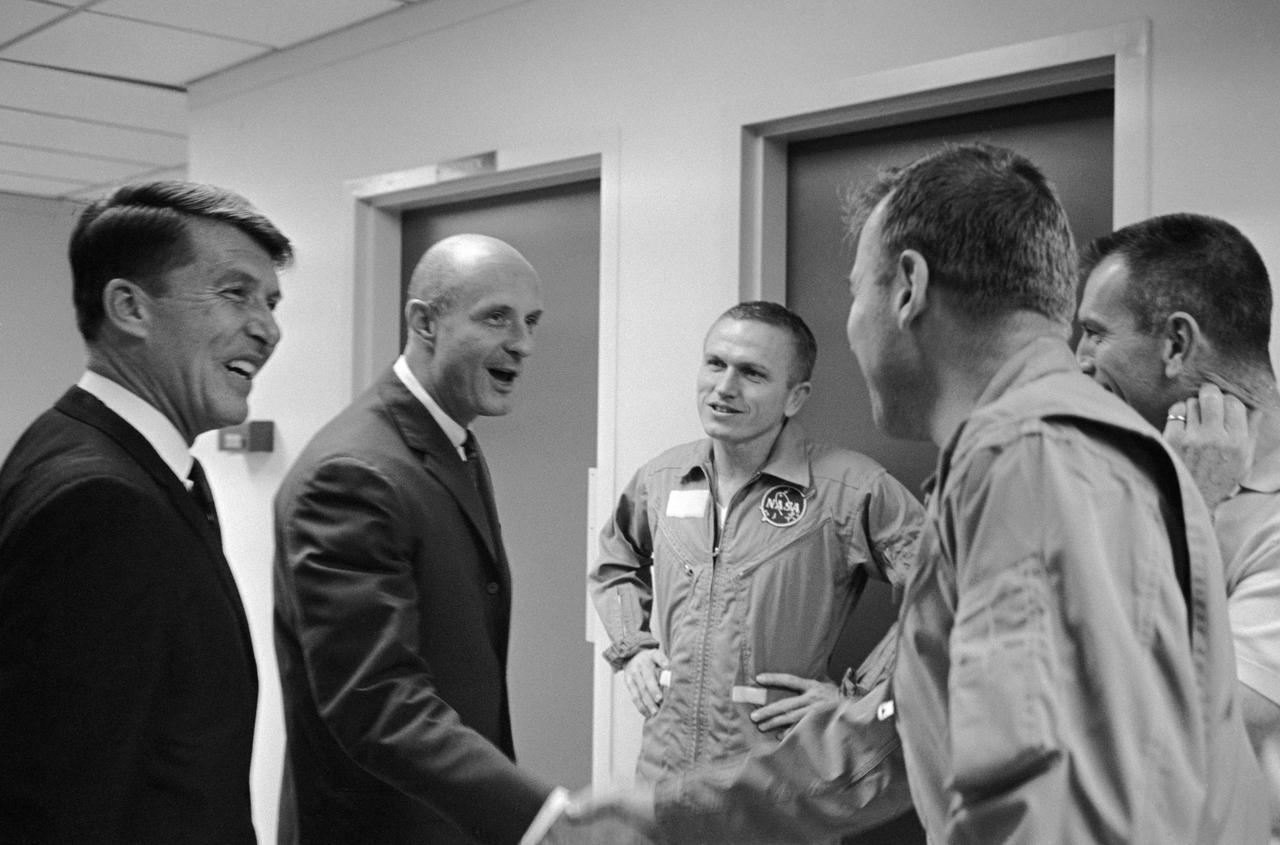
S65-66728 (19 Dec. 1965) --- This happy round of handshakes took place in the Manned Spacecraft Operations Building crew quarters, Merritt Island, as the Gemini-6 crew (left) welcomed the Gemini-7 crew back to the Kennedy Space Center. Left to right, are astronauts Walter M. Schirra Jr., Gemini-6 command pilot; Thomas P. Stafford, Gemini-6 pilot; Frank Borman, Gemini-7 command pilot; James A. Lovell Jr., Gemini-7 pilot; and Donald K. Slayton (partially hidden behind Lovell), assistant director for Flight Crew Operations, Manned Spacecraft Center, Houston. Photo credit: NASA
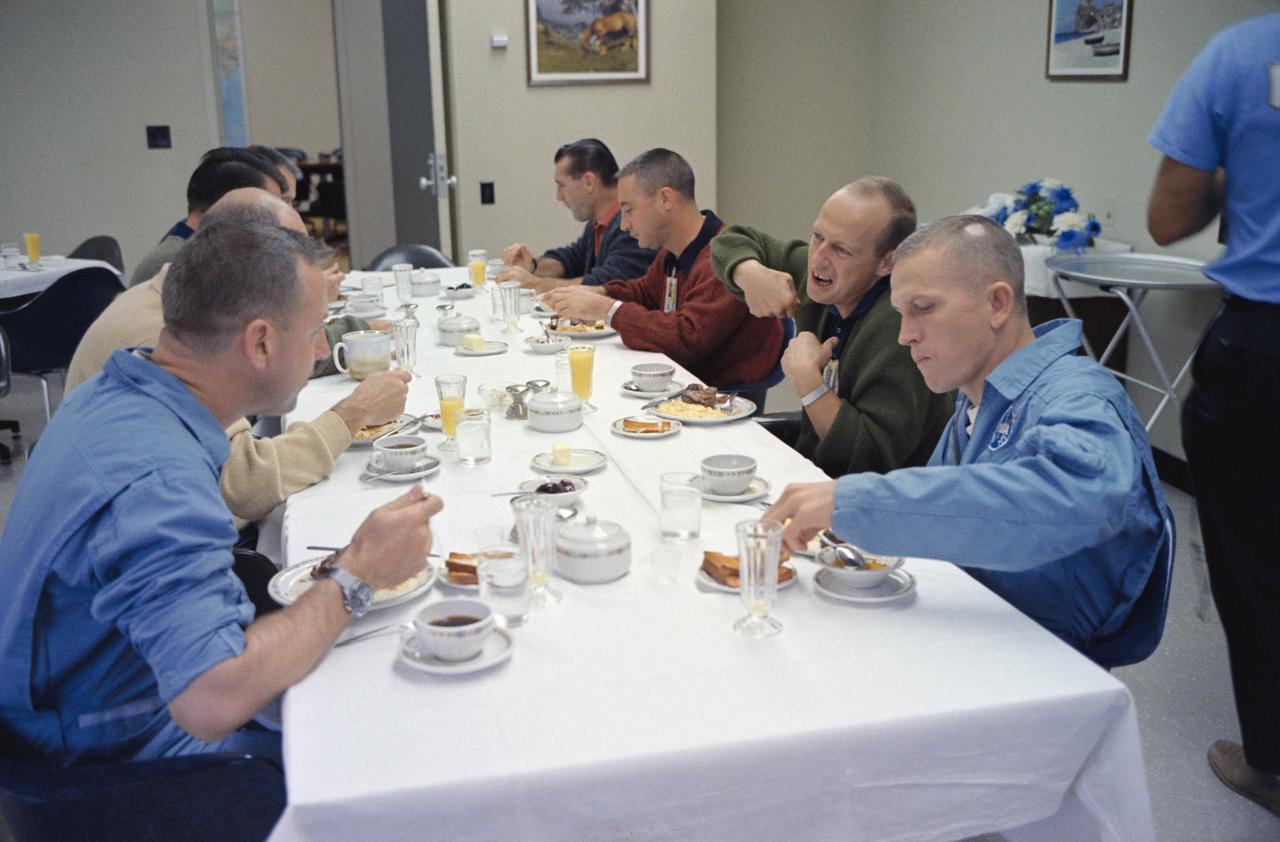
S65-59927 (4 Dec. 1965) --- Fellow astronauts join the Gemini-7 prime crew for breakfast in the Manned Spacecraft Operations Building, Merritt Island, on the day of the Gemini-7 launch. Clockwise around the table, starting lower left, are astronauts James A. Lovell Jr., Gemini-7 prime crew pilot; Walter M. Schirra Jr., Gemini-6 prime crew command pilot; Donald K. Slayton, MSC assistant director for Flight Crew Operations; Virgil I. Grissom, Gemini-6 backup crew command pilot; Charles Conrad Jr., Gemini-5 prime crew pilot; and Frank Borman, Gemini-7 prime crew command pilot. Photo credit: NASA

S65-63171 (15 Dec. 1965) --- The Gemini-7 spacecraft as seen from the Gemini-6 spacecraft during their rendezvous mission in space. Photo credit: NASA or National Aeronautics and Space Administration

S65-63198 (15 Dec. 1965) --- The Gemini-7 spacecraft as seen from the Gemini-6 spacecraft during their rendezvous mission in space. They are approximately 39 feet apart. Photo credit: NASA or National Aeronautics and Space Administration

S65-63113 (15 Dec. 1965) --- This photograph of the Gemini-7 spacecraft was taken from the hatch window of the Gemini-6 spacecraft during rendezvous and station keeping maneuvers at an altitude of approximately 160 miles on Dec. 15, 1965. Photo credit: NASA or National Aeronautics and Space Administration

S65-63220 (15 Dec. 1965) --- This photograph of the Gemini-Titan 7 (GT-7) spacecraft was taken from the Gemini-Titan 6 (GT-6) spacecraft during the historic rendezvous of the two spacecraft on Dec. 15, 1965. The two spacecraft are some 37 feet apart here. Earth can be seen below. Astronauts Walter M. Schirra Jr., command pilot; and Thomas P. Stafford, pilot, were inside the GT-6 spacecraft, while crewmen for the GT-7 mission were astronauts Frank Borman, command pilot, and James A. Lovell Jr., pilot. Photo credit: NASA or National Aeronautics and Space Administration
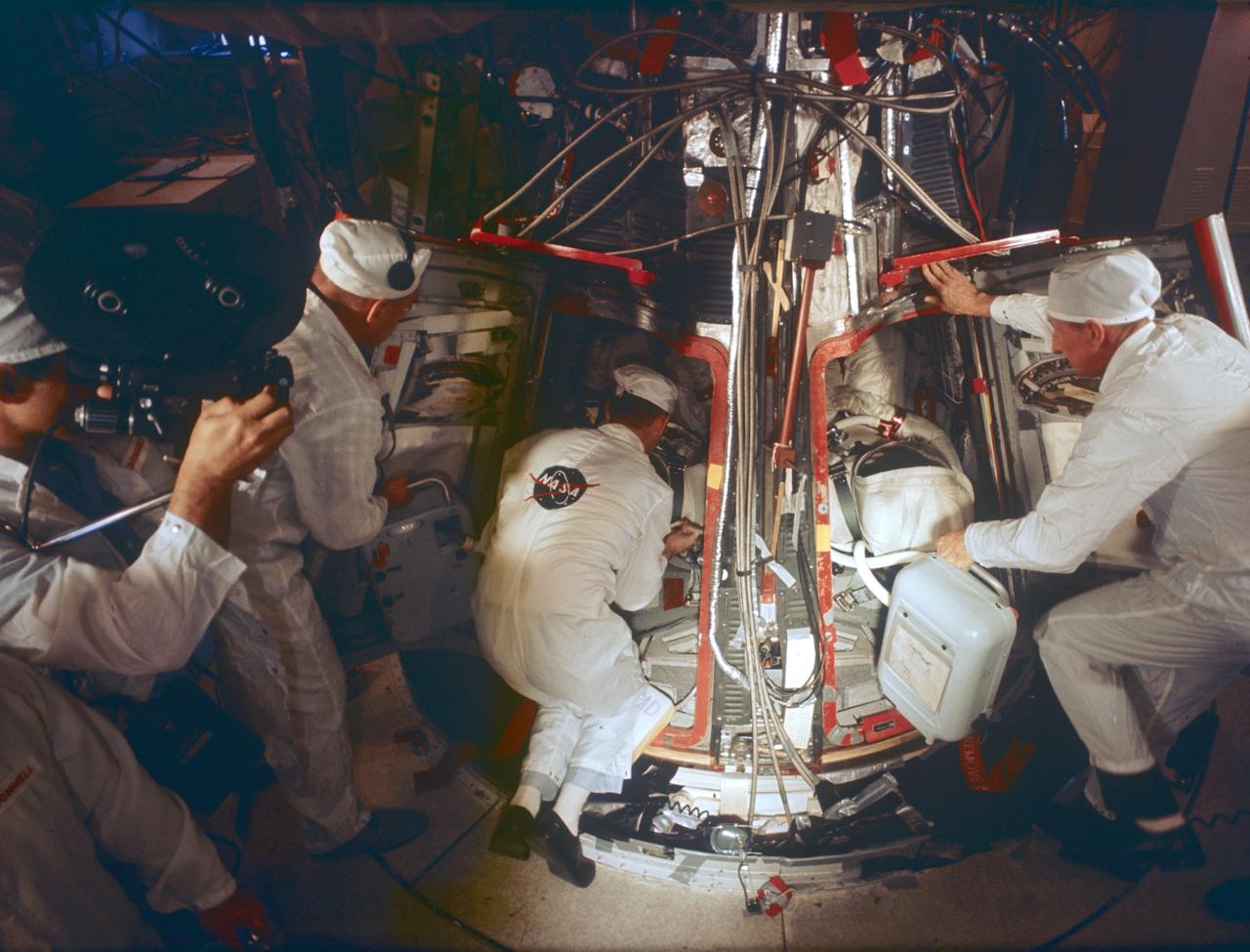
S65-61835 (15 Nov. 1965) --- Technicians assist the prime crew for the Gemini-7 spaceflight in systems checks inside their spacecraft in the White Room atop Pad 19. Prime crew members are astronauts Frank Borman (left, inside spacecraft), command pilot, and James A. Lovell Jr. (right, inside spacecraft), pilot. They wear the new light-weight spacesuit planned for use during their 14-day mission. Photo credit: NASA
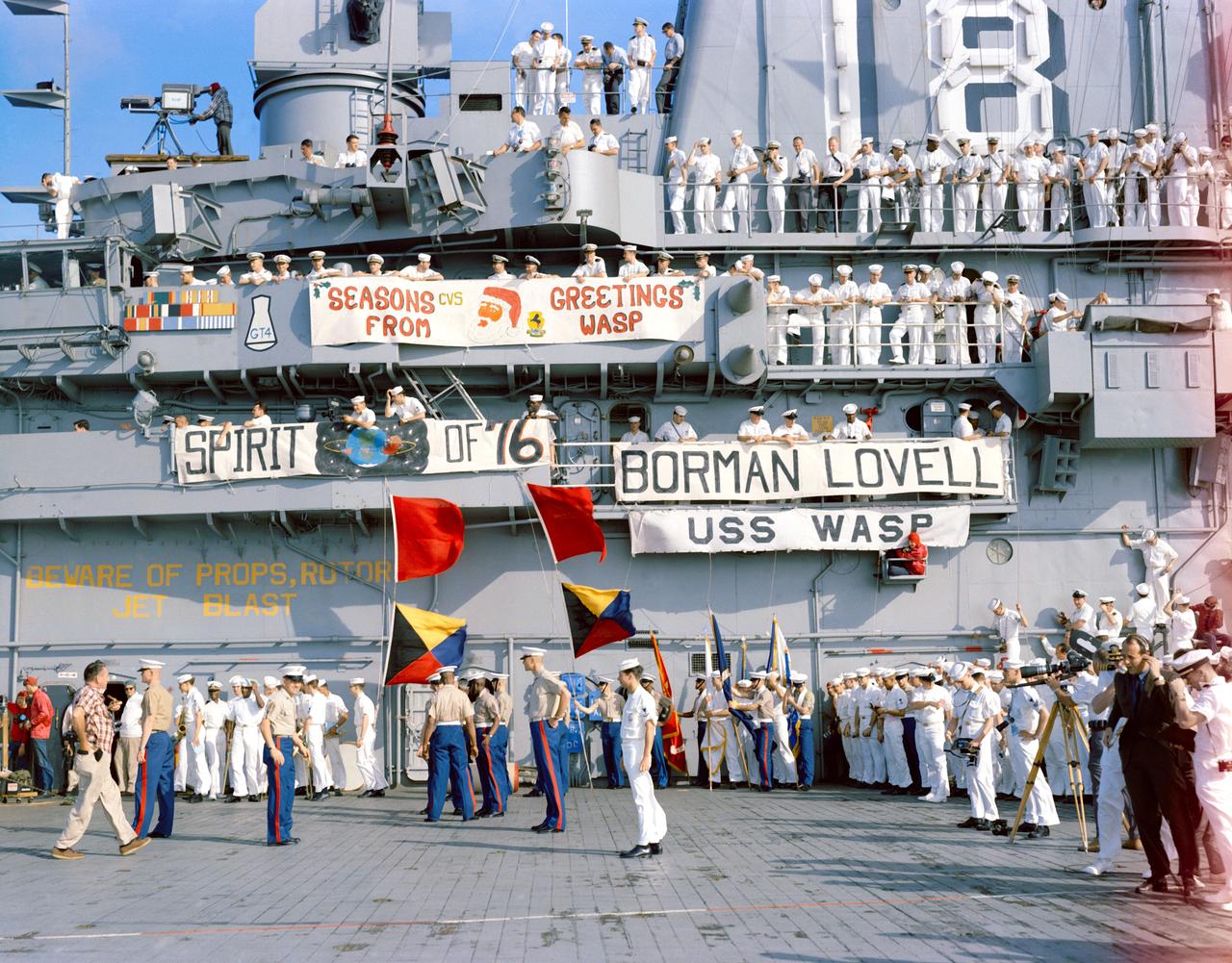
S65-63644 (18 Dec. 1965) --- Crewmen of the aircraft carrier USS Wasp gather on deck to watch the recovery of the National Aeronautics and Space Administration's Gemini-7 spacecraft and astronauts. Gemini-7, with astronauts Frank Borman, command pilot, and James A. Lovell Jr., pilot, splashed down in the western Atlantic at 9:05 a.m. (EST), Dec. 18, 1965, to conclude a record-breaking 14-day mission in space. Photo credit: NASA
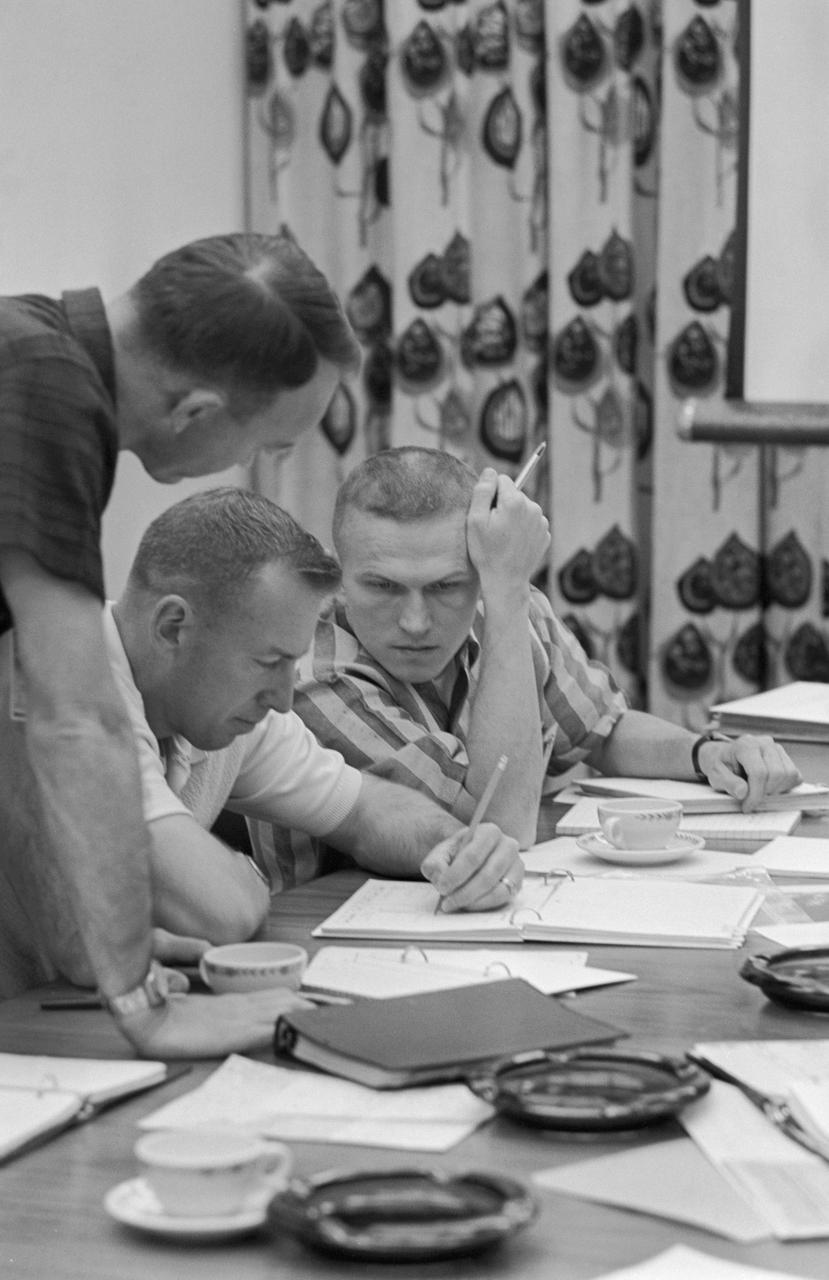
S65-56313 (2 Dec. 1965) --- Gemini-7 astronauts James Lovell Jr. (center) and Frank Borman (right) review mission requirements for their Gemini-7 flight. The two astronauts are scheduled for a 14-day mission. On the fifth day, they will attempt a rendezvous with the Gemini-6 spacecraft to be launched nine days later and piloted by astronaut Walter Schirra Jr. and Thomas Stafford. Photo credit: NASA
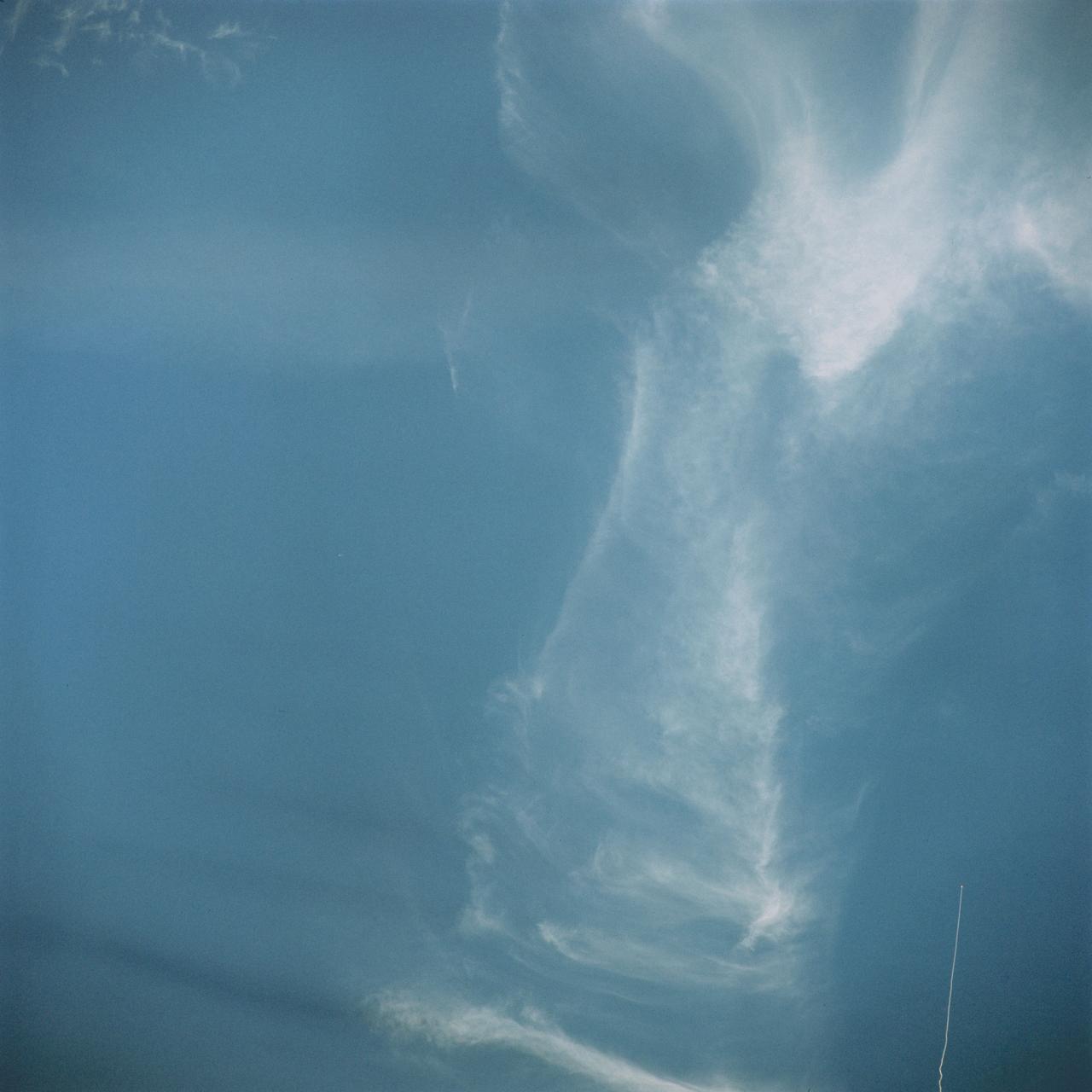
S65-63797 (12 Dec. 1965) --- Polaris, underwater launch, missile and trail, off Florida, as seen from the Gemini-7 spacecraft during its 31st revolution of Earth. Photo credit: NASA

S65-63826 (5 Dec. 1965) --- Oriente Province, eastern end of Cuba, as seen from the National Aeronautics and Space Administration's Gemini-7 spacecraft during its 14th revolution of Earth. Guantanamo Bay is in the center of the picture on the southern coast of Cuba. Santiago de Cuba is located about one inch from the bottom edge of the picture, or about three inches westward down the coast from Guantanamo. This photograph was taken with a modified 70mm Hasselblad camera, using Eastman Kodak, Ektachrome MS (S.O. 217) color film. Photo credit: NASA
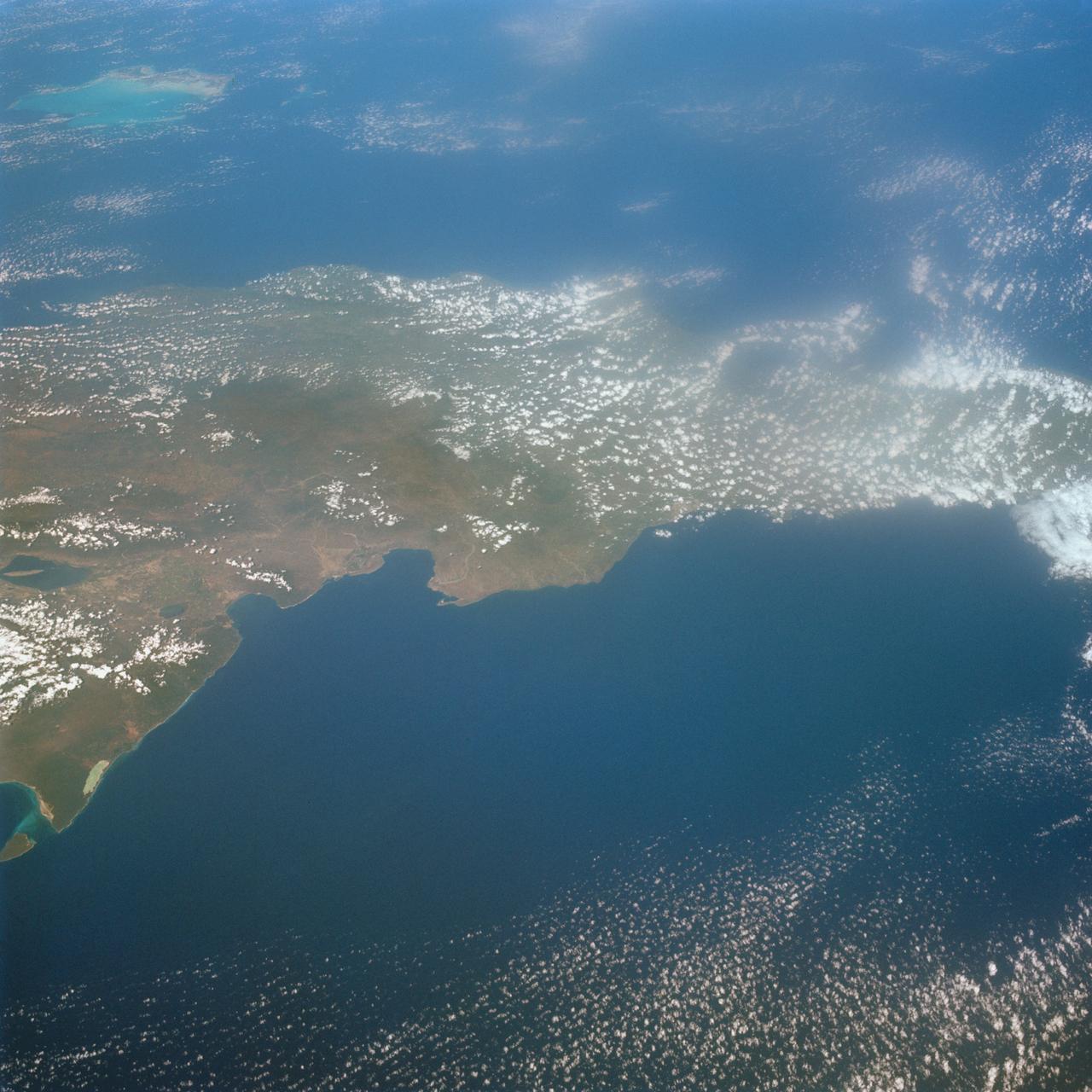
S65-63926 (16 Dec. 1965) --- Island of Hispaniola, Dominican Republic end, as seen from the National Aeronautics and Space Administration's Gemini-7 spacecraft during its 179th revolution of Earth. North is toward the left of the picture. This photograph was taken with a modified 70mm Hasselblad camera, using Eastman Kodak, Ektachrome MS (S.O. 217) color film. Photo credit: NASA
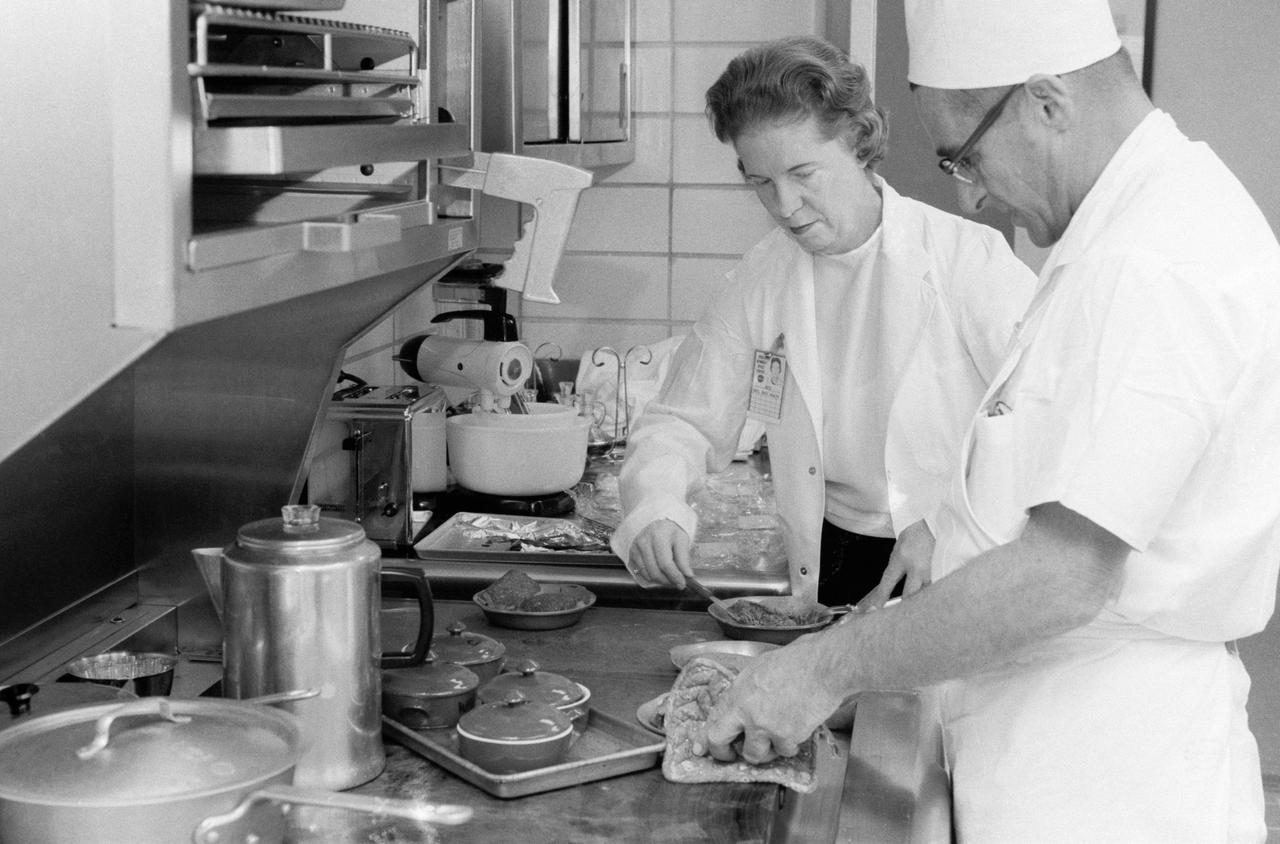
S65-56311 (2 Dec. 1965) --- Kennedy Space Center food specialists prepare an Earth-bound meal for Gemini-7 astronauts. Astronauts' diet is strictly controlled before and during spaceflights to avoid interfering with planned medical experiments. Photo credit: NASA
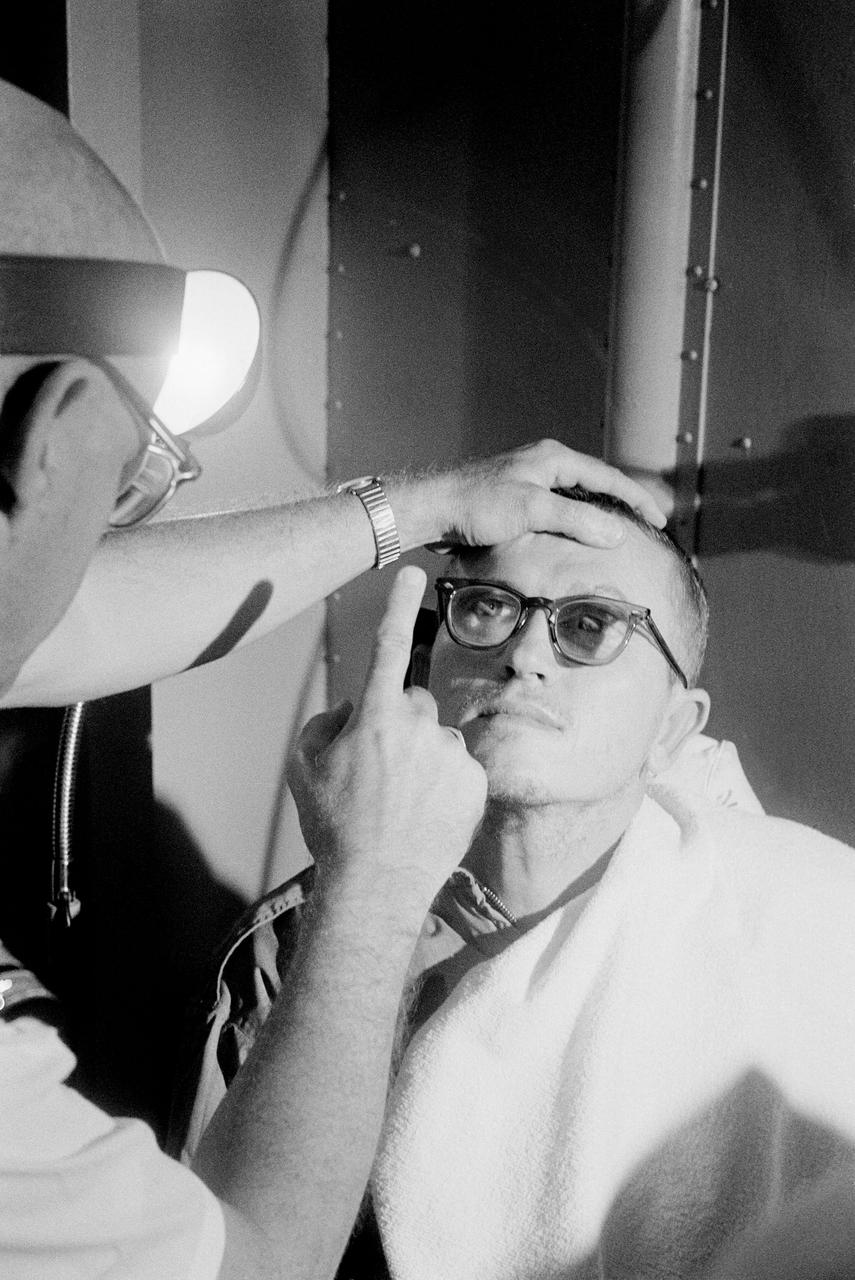
S66-17442 (19 Jan. 1966) --- Astronaut Frank Borman, command pilot for the Gemini-7 mission, has his vision checked during a postflight medical exam. Photo credit: NASA
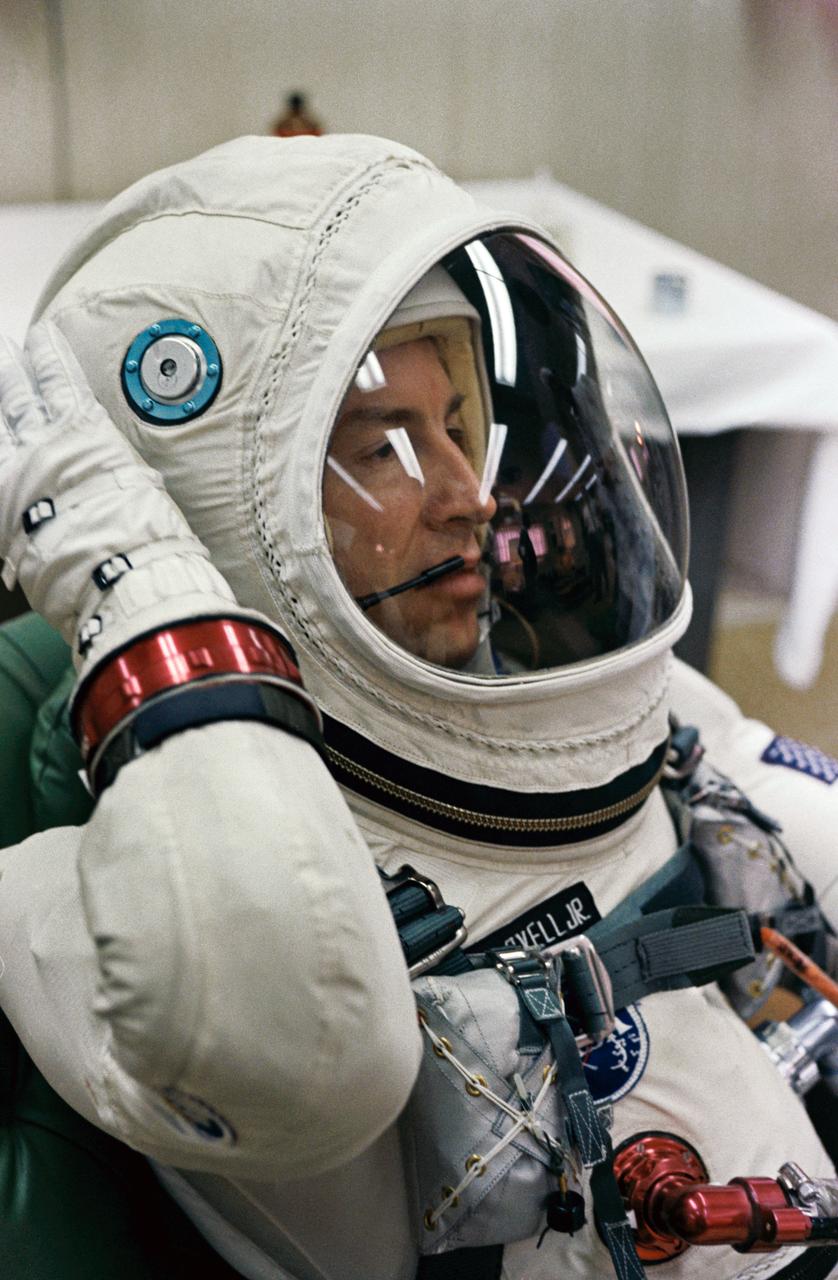
S65-61849 (4 Dec. 1965) --- Astronaut James A. Lovell Jr., pilot of the Gemini-7 spaceflight, relaxes in the suiting up trailer at Launch Complex 16, during the Gemini-7 prelaunch countdown at Cape Kennedy, Florida. Lovell wears the new lightweight spacesuit specially designed for long-duration flights. Photo credit: NASA
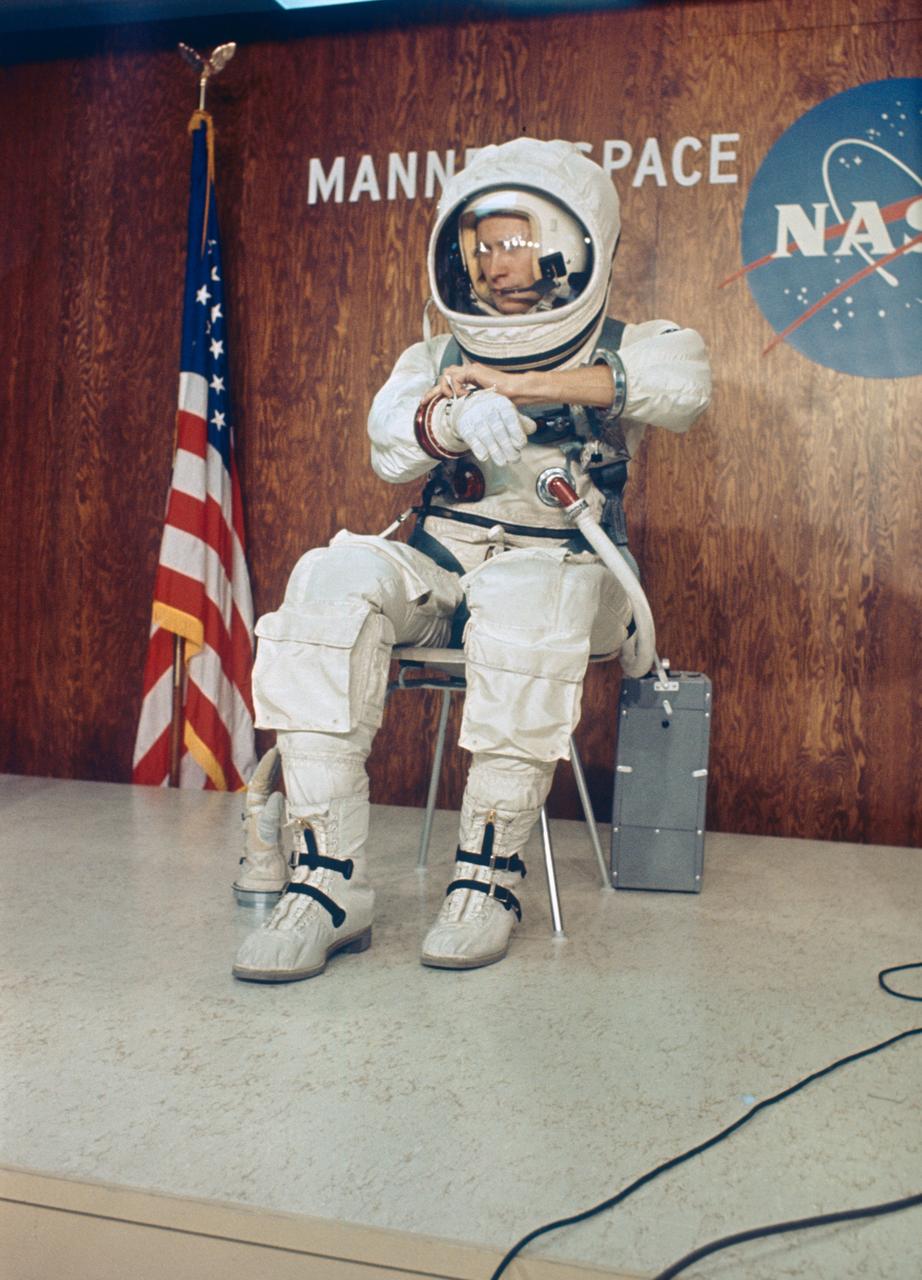
S65-60035 (6 Dec. 1965) --- The new light-weight spacesuit planned for possible use during the Gemini-7 mission is modeled by Fred R. Spross, Gemini Support Office, Crew Systems Division. The spacesuit weighs 16 pounds, including the aviator's crash helmet. The suit is designed so that it may be partially or completely removed during flight. It has two layers of material while the previously used Gemini spacesuit has four layers. Photo credit: NASA
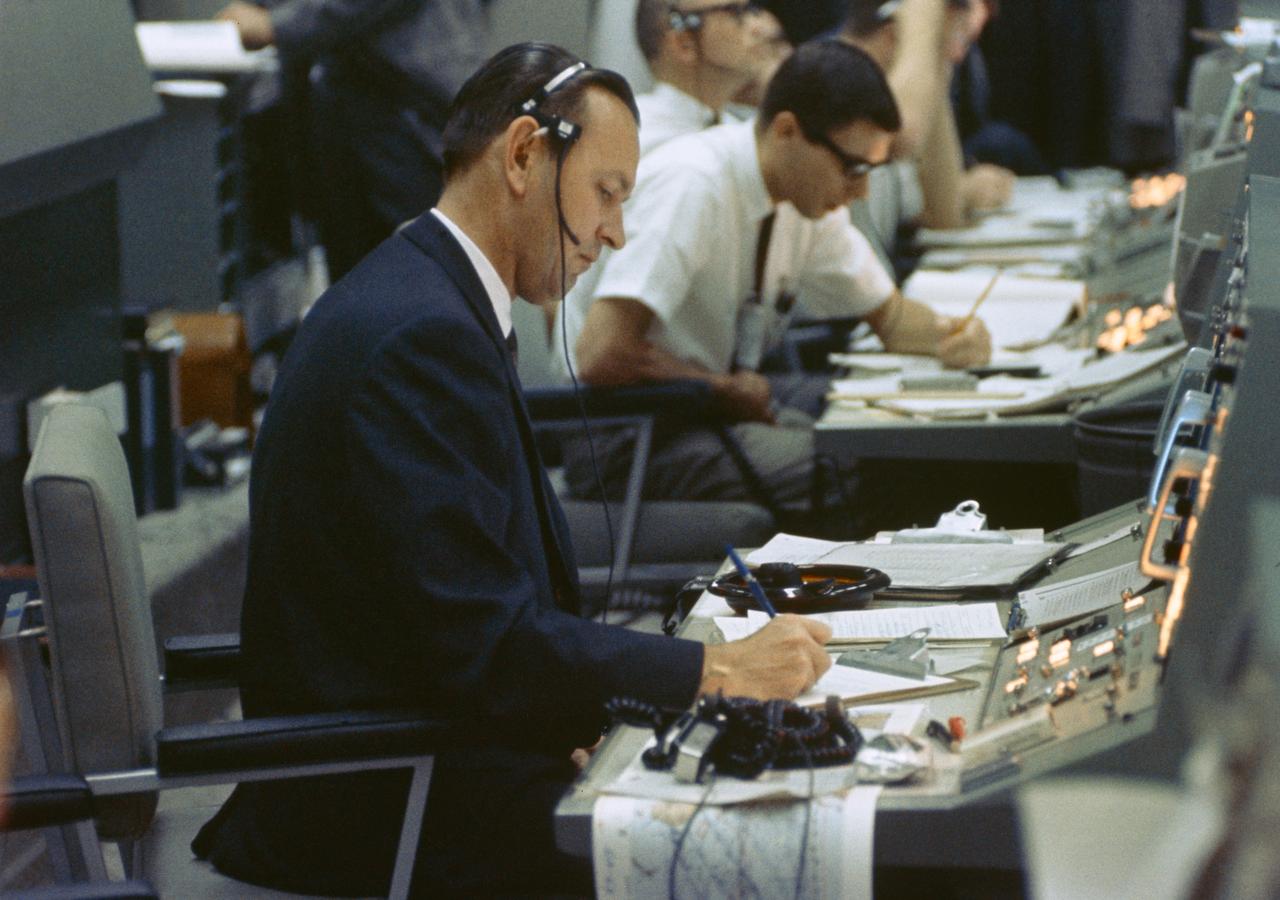
S65-28462 (3-7 June 1965) --- Christopher C. Kraft Jr., assistant director for Flight Operations, at his console in the Mission Control Center during Gemini-4 spaceflight. He served as mission director and as a flight director.
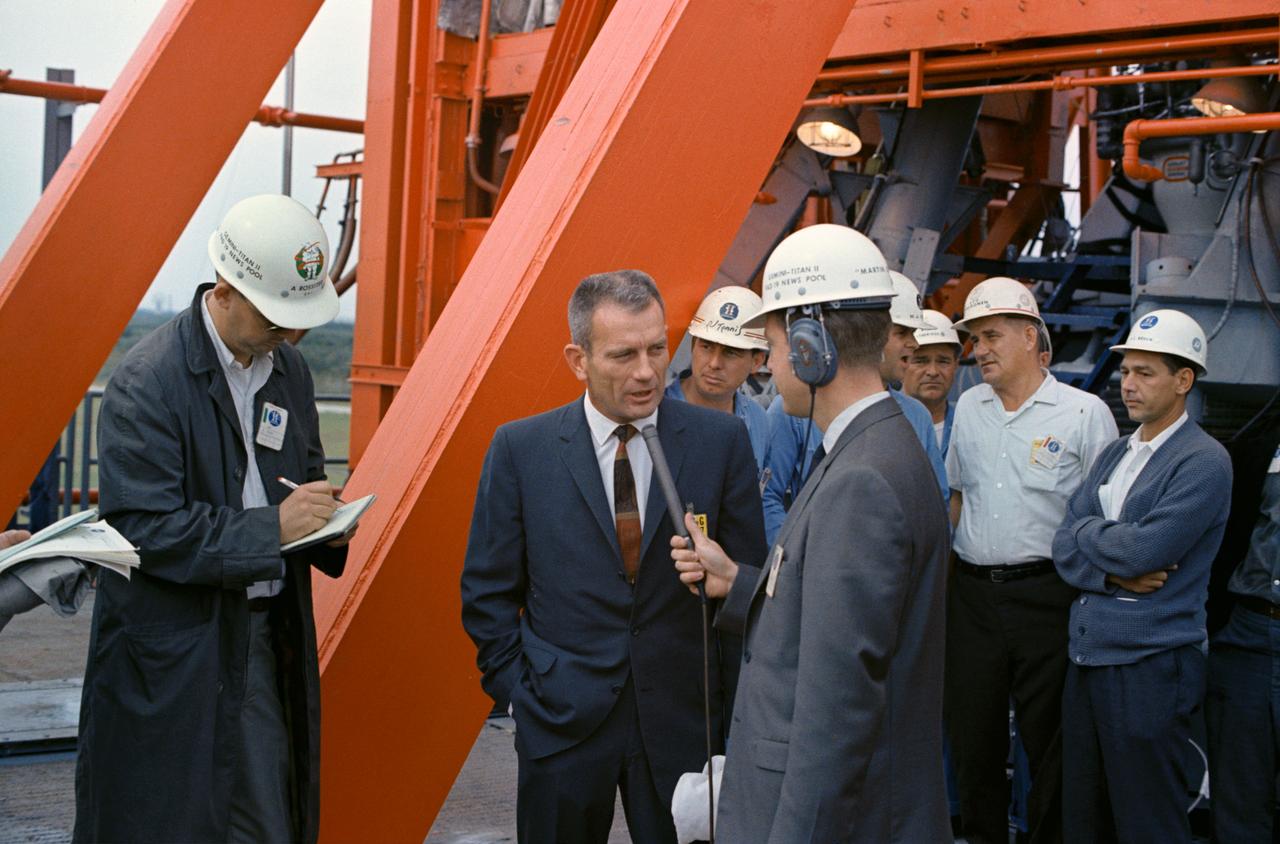
S65-61846 (5 Dec. 1965) --- Donald K. Slayton, assistant director for Flight Crew Operations, talks with newsmen after examining damage to Pad 19 at Kennedy Space Center, following liftoff of the Gemini-7 spacecraft on Dec. 4, 1965. Damage was slight and will be repaired quickly for the planned launch of Gemini-6. Photo credit: NASA
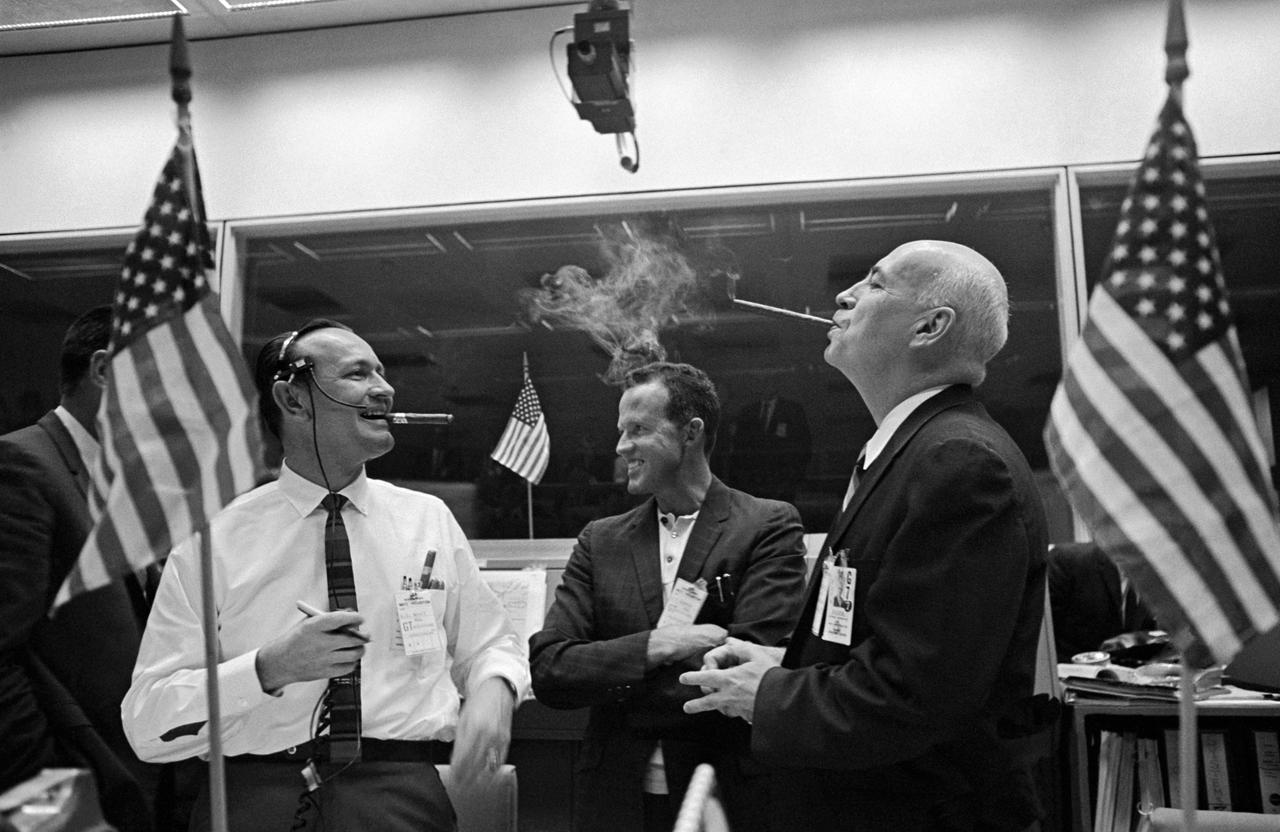
S65-62719 (15 Dec. 1965) --- Discussing the successful and historic rendezvous in space of the National Aeronautics and Space Administration?s Gemini-6 and 7 spacecrafts are, Christopher C. Kraft Jr. (left), red team flight director; astronaut L. Gordon Cooper Jr. (center); and Dr. Robert R. Gilruth, Manned Spacecraft Center director. Consoles in the Center were decorated with small American flags and the traditional cigars were lit to celebrate the rendezvous. Crew members of the two spacecraft are astronaut Walter M. Schirra Jr., command pilot, and Thomas P. Stafford, pilot, Gemini-6; and astronauts Frank Borman, command pilot, and James A. Lovell Jr., pilot, Gemini-7. Photo credit: NASA or National Aeronautics and Space Administration
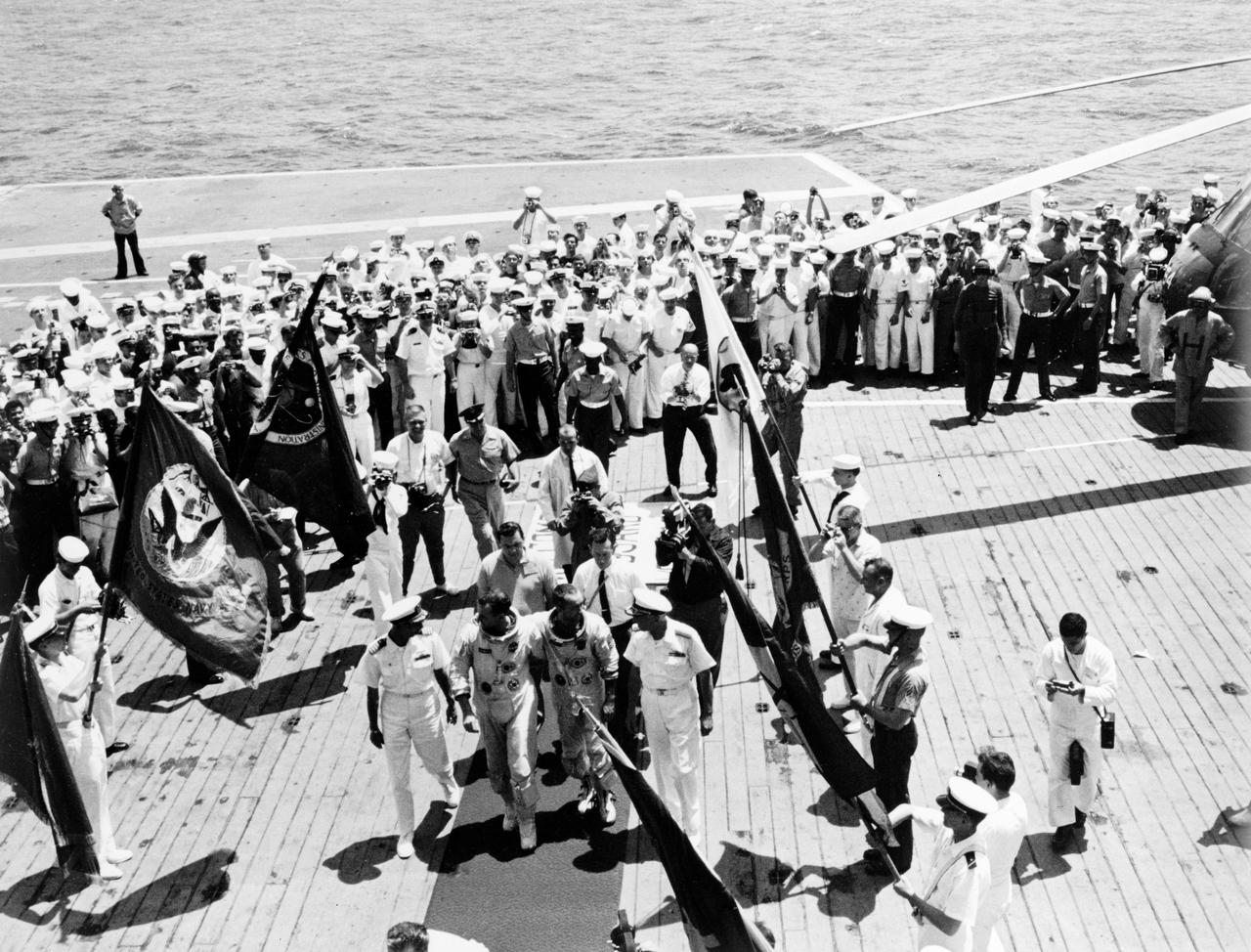
S65-19530 (7 June 1965) --- The red carpet treatment is given to the Gemini-Titan 4 astronauts Edward H. White II and James A. McDivitt as they arrive on the flight deck of the aircraft carrier USS Wasp after their record breaking 62-revolution, 97-hour and 56-minute flight which ended in the Atlantic Ocean about 400 miles east of Cape Kennedy at 12:12 p.m. (EST) on June 7, 1965. Here they are shown being welcomed by members of the crew and NASA people. White and McDivitt (center) walk on the red carpet flanked by Capt. J.W. Conger (left), commander of the ship; and Rear Adm. W.M. McCormick, commander, Carrier Division 14, Atlantic Fleet. NASA's Gemini-4 flight landed about 48 miles short of the aircraft carrier.
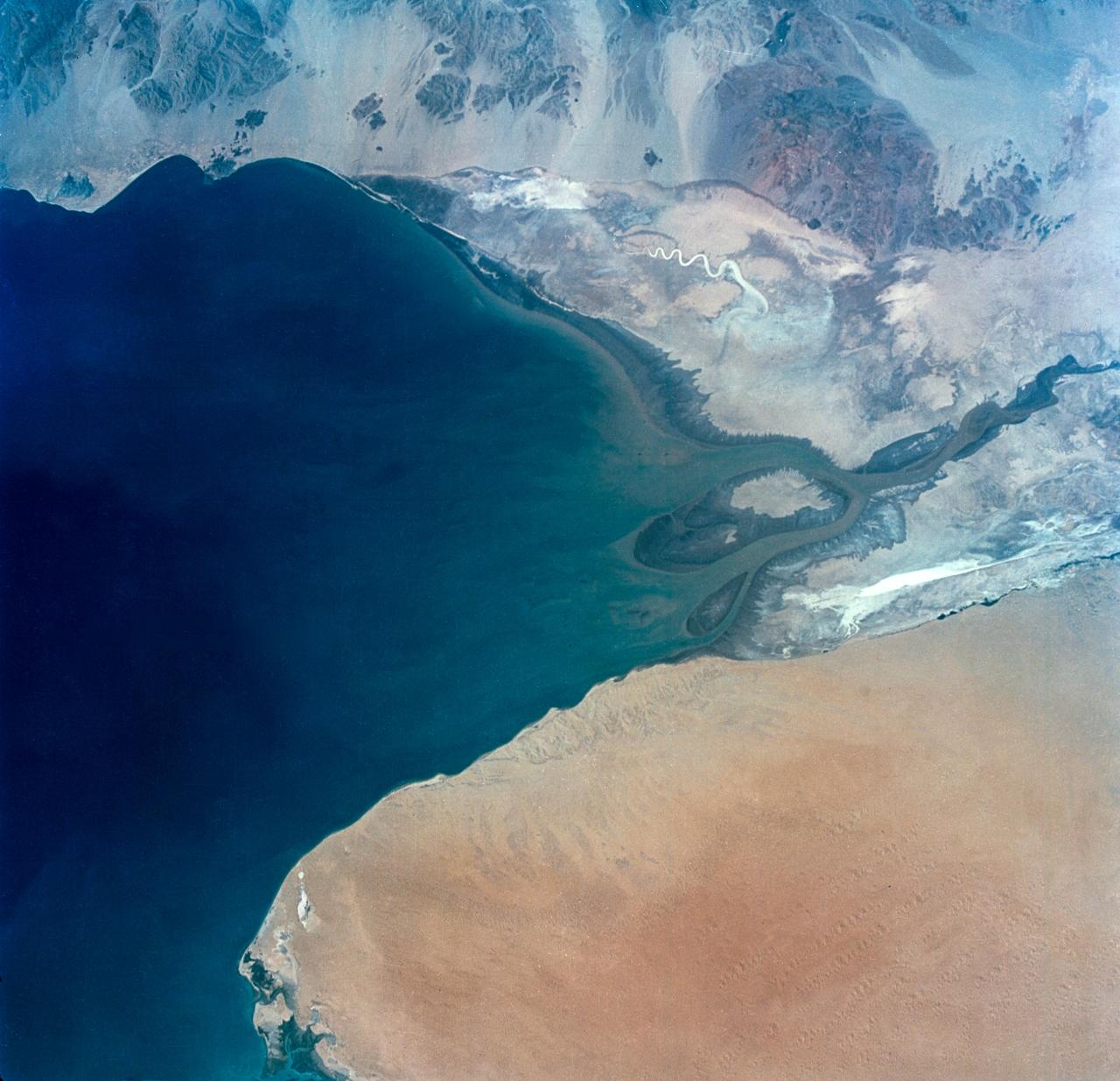
S65-34673 (3-7 June 1965) --- This photograph shows the north end of the Gulf of California at the mouth of the Colorado River as it was seen from the Gemini-4 spacecraft during orbital flight June 3-7, 1965. This picture was part of the Synoptic Terrain Photography experiments conducted during the flight to obtain high quality photographs of large land areas already mapped by aerial photography. In charge of these experiments was Dr. Paul D. Lowman Jr., NASA geologist from Goddard Space Flight Center, Greenbelt, Md. This picture was taken with a modified 70mm Hasselblad camera using Eastman color film, ASA 64 at a lens setting of 250th of a second at f/11.
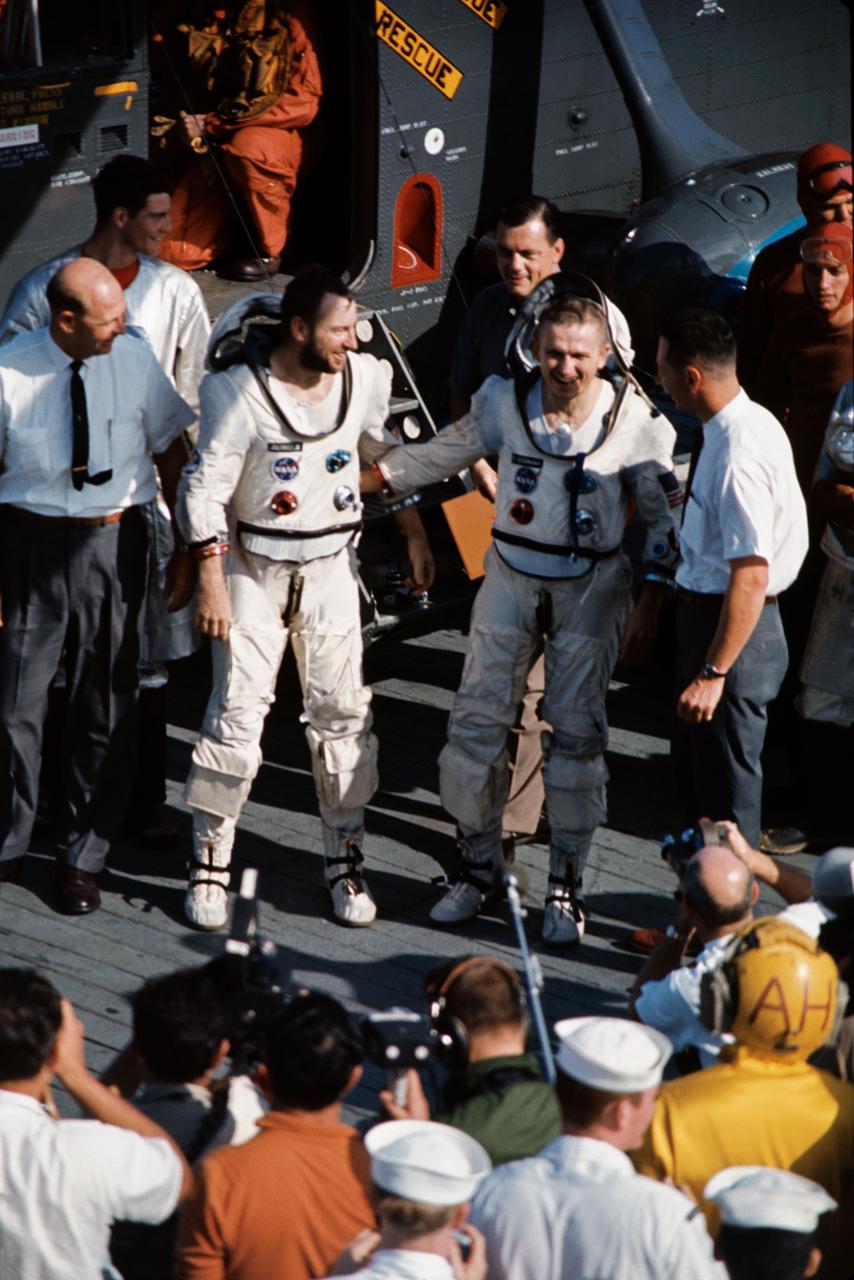
S65-61830 (18 Dec. 1965) --- Astronauts James A. Lovell Jr. (left), Gemini-7 pilot, and Frank Borman, command pilot, are shown just after they arrived aboard the aircraft carrier USS Wasp. Greeting the astronauts are Donald Stullken (at Lovell's right), Recovery Operations Branch, Landing and Recovery Division, Dr. Howard Minners (standing beside Borman), Flight Medicine Branch, Center Medical Office, Manned Spacecraft Center, and Bennett James (standing behind Borman), a NASA Public Affairs Officer. The National Aeronautics and Space Administration's Gemini-7 spacecraft splashed down in the western Atlantic recovery area at 9:05 a.m. (EST), Dec. 18, 1965, to conclude a record-breaking 14-day mission in space. Photo credit: NASA
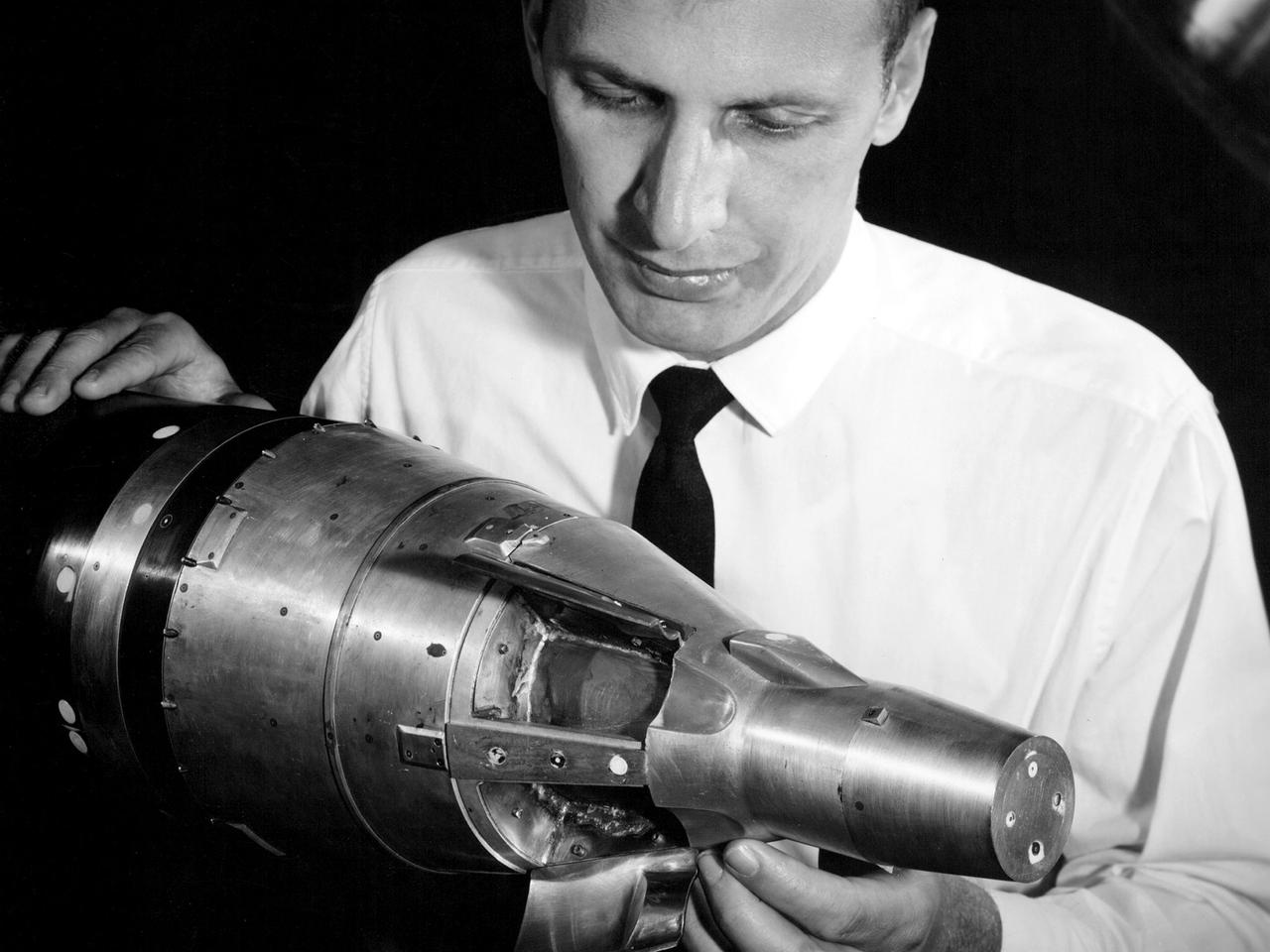
A researcher at the National Aeronautics and Space Administration (NASA) Lewis Research Center examines a small-scale model of the Gemini capsule in the 10- by 10-Foot Supersonic Wind Tunnel test section. Gemini was added to NASA’s manned space program after its predecessor, Mercury, and its antecedent, Apollo, were already established. Gemini was a transitional mission designed provide the astronauts with practice docking with other spacecraft and withstanding durations in space up to two weeks. The program was officially announced on December 7, 1961, but planning began in mid-1959. It was named Gemini after the zodiac twins because of the spacecraft’s two passenger capacity. The Gemini Program was the first program to start at the new Manned Spacecraft Center in Houston, now the Johnson Space Center. Unlike Mercury and Apollo, Lewis had very little involvement with the Gemini Program. This model was tested in the 10- by 10 tunnel for several weeks in September 1962. Lewis began managing the Agena second-stage rocket program shortly after this photograph was taken. Agenas were used to launch a variety of spacecraft and satellites in the 1960s. They were also used on several Gemini missions to provide targets for the astronauts to practice their rendezvous maneuvers. Gemini had two unmanned and ten manned flights in 1965 and 1966. These yielded the first spacewalks, long-duration space missions, first onboard computer, docking with a second spacecraft, and rendezvous maneuvers.
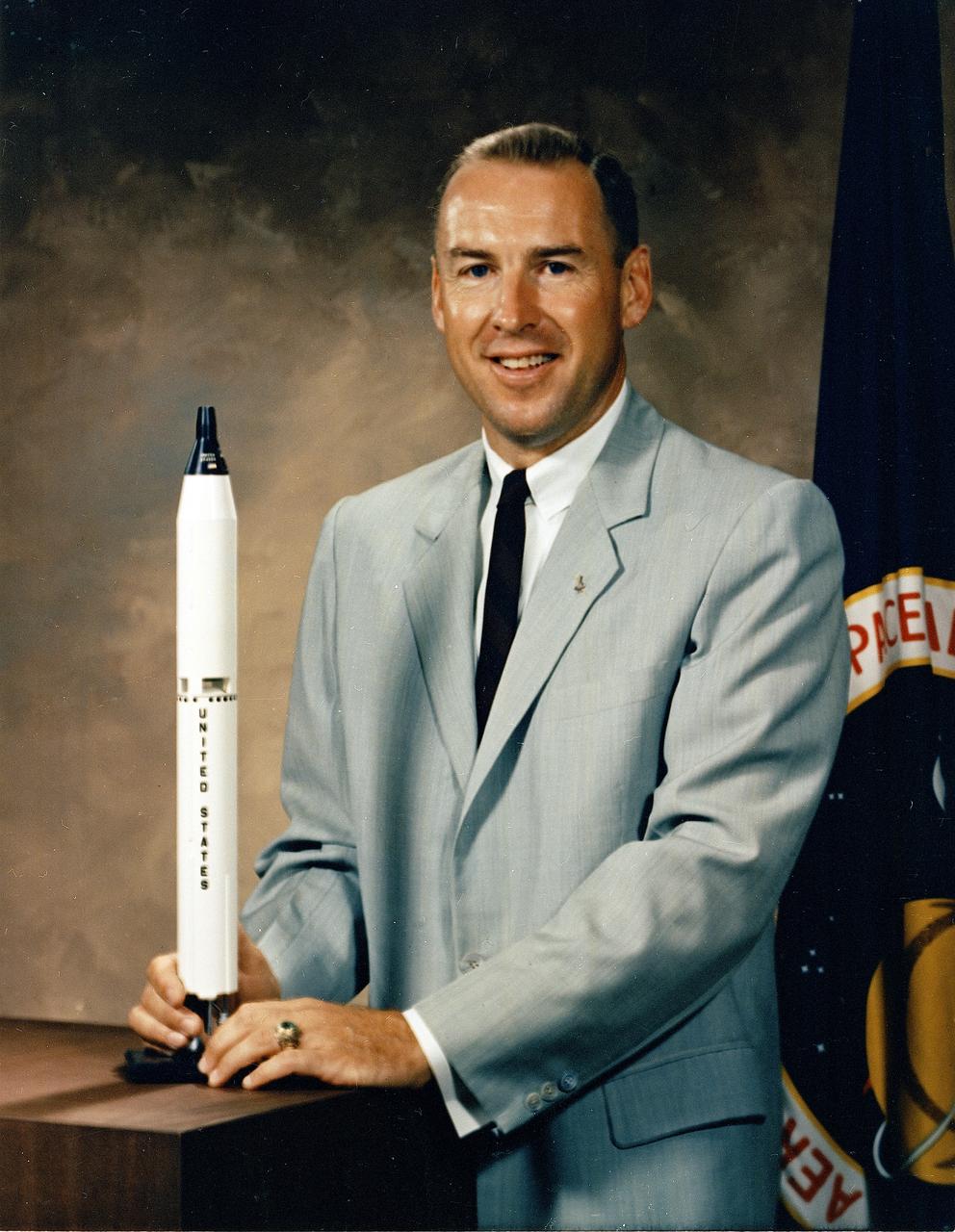
This is the official NASA portrait of astronaut James Lovell. Captain Lovell was selected as an Astronaut by NASA in September 1962. He has since served as backup pilot for the Gemini 4 flight and backup Commander for the Gemini 9 flight, as well as backup Commander to Neil Armstrong for the Apollo 11 lunar landing mission. On December 4, 1965, he and Frank Borman were launched into space on the history making Gemini 7 mission. The flight lasted 330 hours and 35 minutes and included the first rendezvous of two manned maneuverable spacecraft. The Gemini 12 mission, commanded by Lovell with Pilot Edwin Aldrin, began on November 11, 1966 for a 4-day, 59-revolution flight that brought the Gemini program to a successful close. Lovell served as Command Module Pilot and Navigator on the epic six-day journey of Apollo 8, the first manned Saturn V liftoff responsible for allowing the first humans to leave the gravitational influence of Earth. He completed his fourth mission as Spacecraft Commander of the Apollo 13 flight, April 11-17, 1970, and became the first man to journey twice to the moon. The Apollo 13 mission was cut short due to a failure of the Service Module cryogenic oxygen system. Aborting the lunar course, Lovell and fellow crewmen, John L. Swigert and Fred W. Haise, working closely with Houston ground controllers, converted their lunar module, Aquarius, into an effective lifeboat that got them safely back to Earth. Captain Lovell held the record for time in space with a total of 715 hours and 5 minutes until surpassed by the Skylab flights. On March 1, 1973, Captain Lovell retired from the Navy and the Space Program.
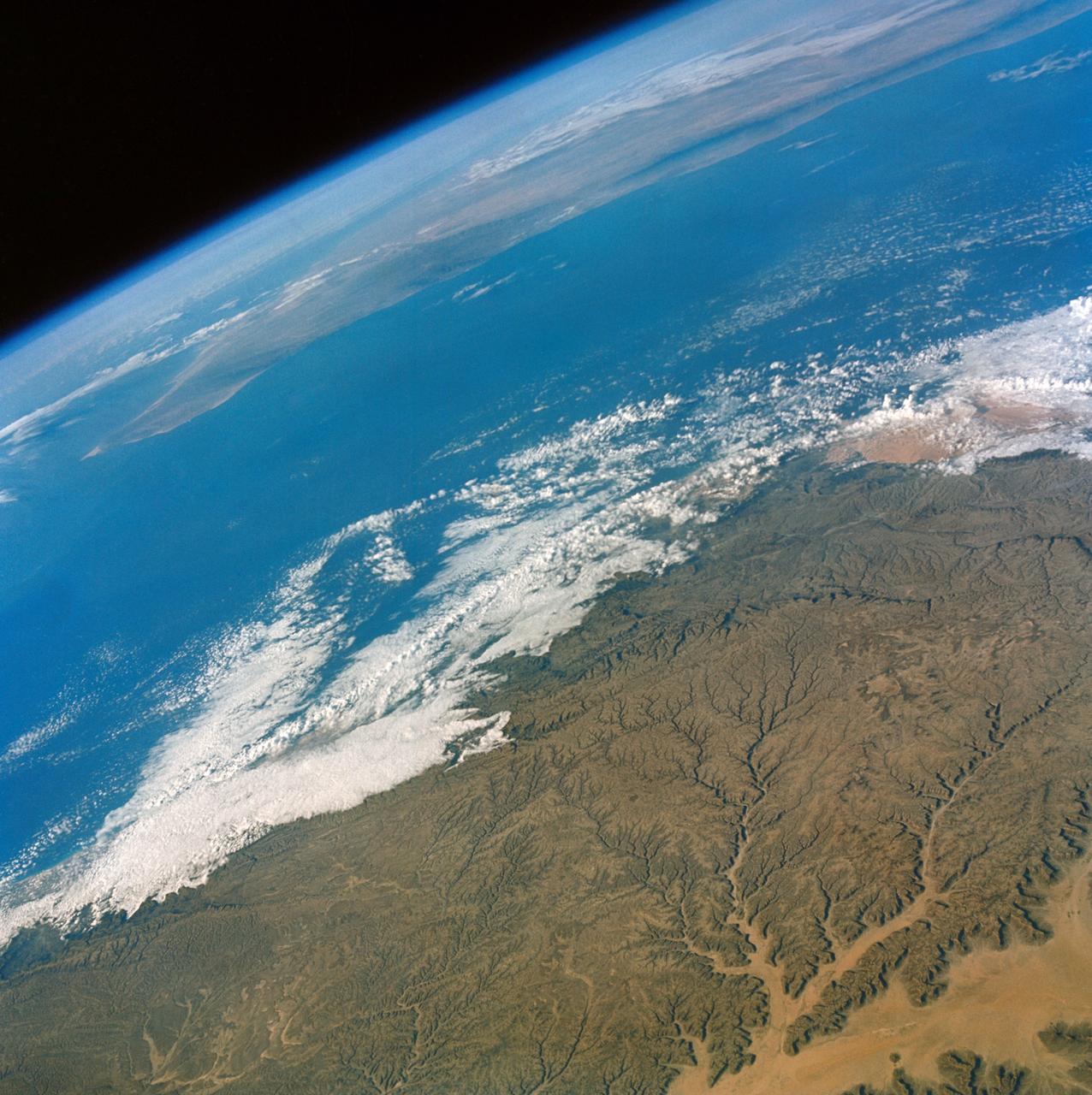
S65-34659 (3-7 June 1965) --- Among the many photographs taken from the Gemini-4 spacecraft during its orbital flight around Earth was this view of the Hahramaut Plateau on the southern portion of the Arabian Peninsula. The Wadi Hahramaut is in the foreground; with the Gulf of Aden (dark blue). This photograph was made with a modified 70mm Hasselblad camera, using Eastman color film, ASA 64, at a lens setting of 250th of a second at f/11.
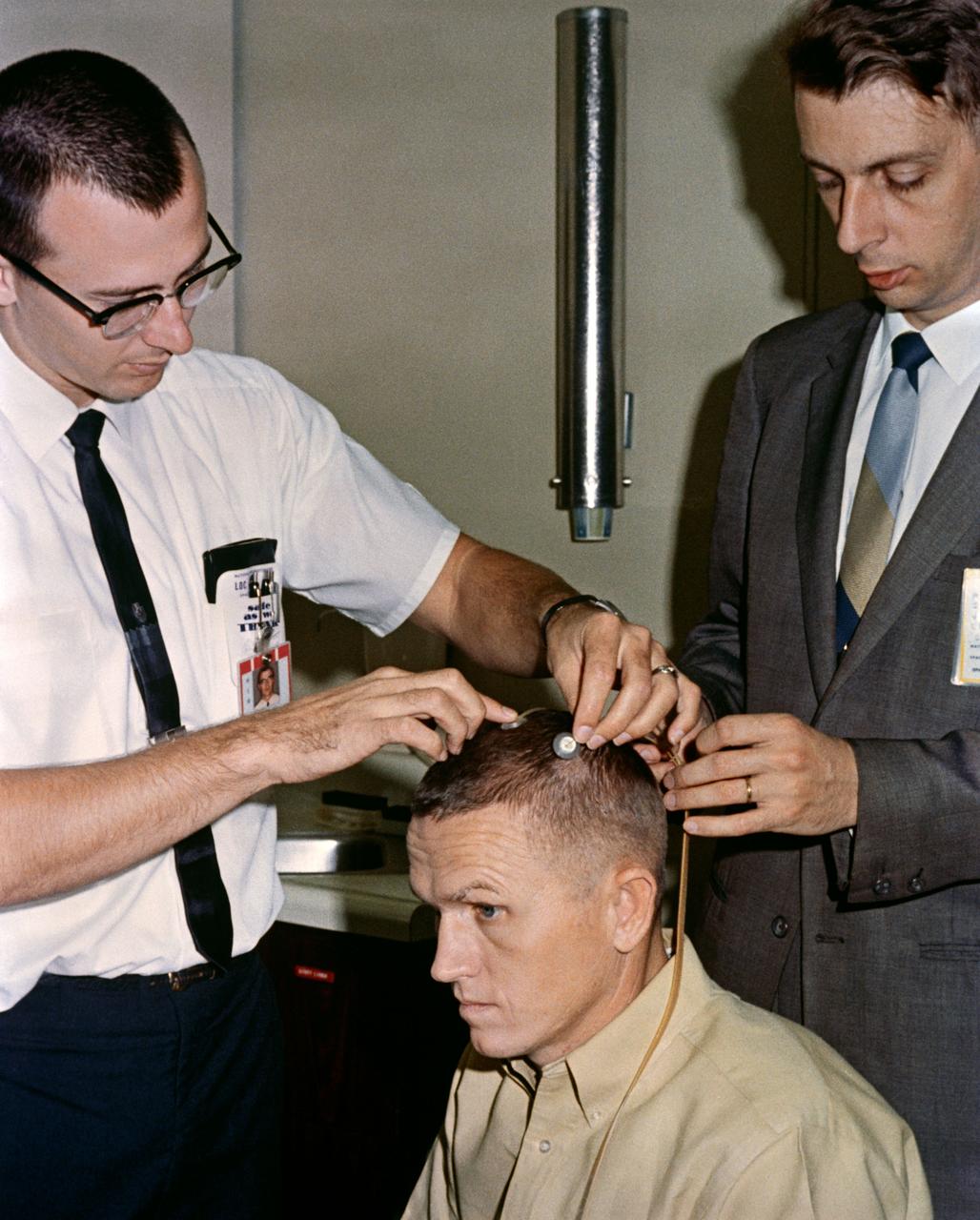
S65-60603 (2 Dec. 1965) --- Astronaut Frank Borman, Gemini-7 command pilot, sits attentively as two scalp electrodes are attached to his head. The electrodes will allow doctors to record electrical activity of the astronaut's cerebral cortex during periods of weightlessness. The objectives of this in-flight experiment are to assess state of alertness, levels of consciousness, and depth of sleep. Photo credit: NASA
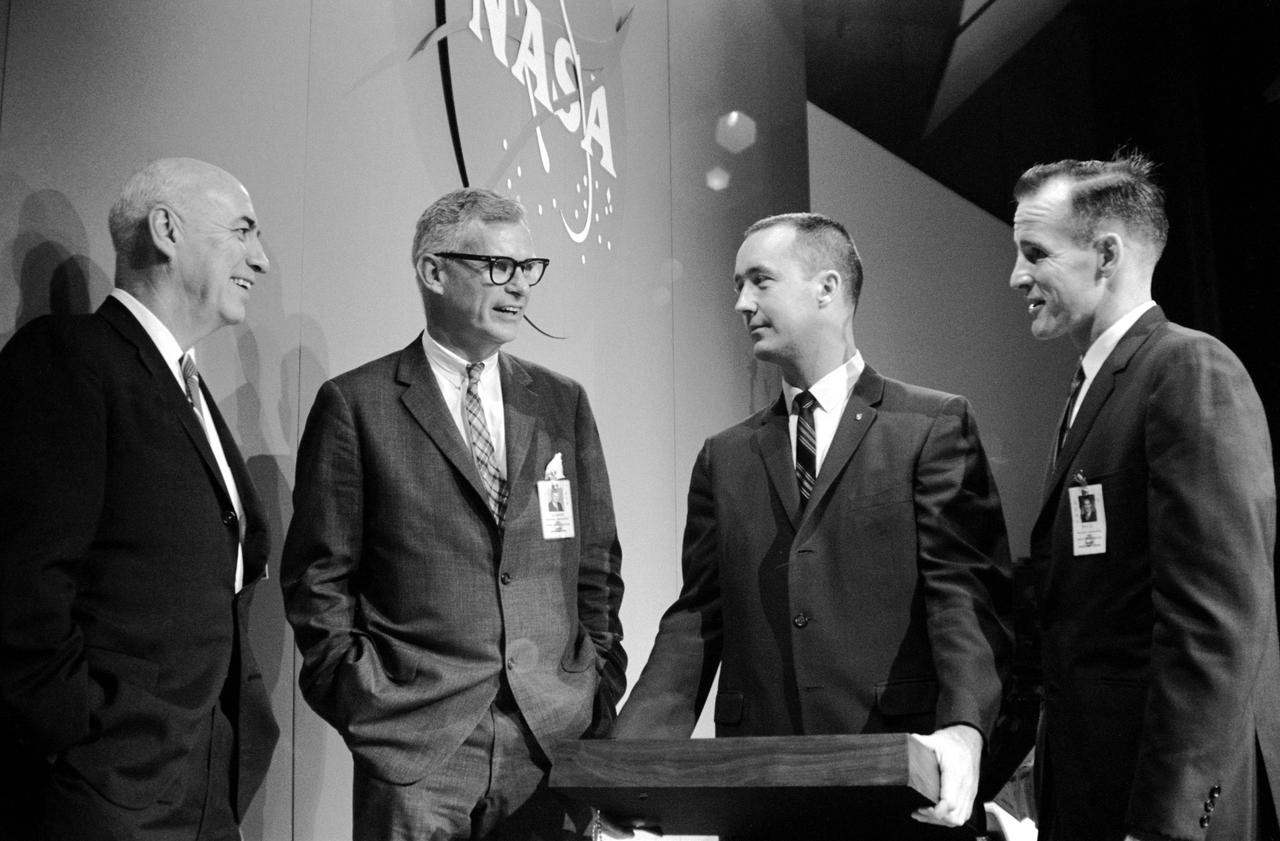
S65-33352 (11 June 1965) --- The Gemini-4 prime crew pose with two NASA officials after a press conference in the MSC auditorium. Left to right, are Dr. Robert R. Gilruth, MSC director; Dr. Robert C. Seamans Jr., associate administrator, National Aeronautics and Space Administration; astronaut James A. McDivitt, command pilot of the Gemini-4 flight; and astronaut Edward H. White II, pilot of the mission. The two astronauts had just returned to Houston following their debriefings at Cape Kennedy. The Gt-4 liftoff was at 10:16 a.m. (EST) on June 3, 1965. Time of splashdown ending the four-day, 62-revolution mission was at 12:12 p.m. on June 7, 1965.
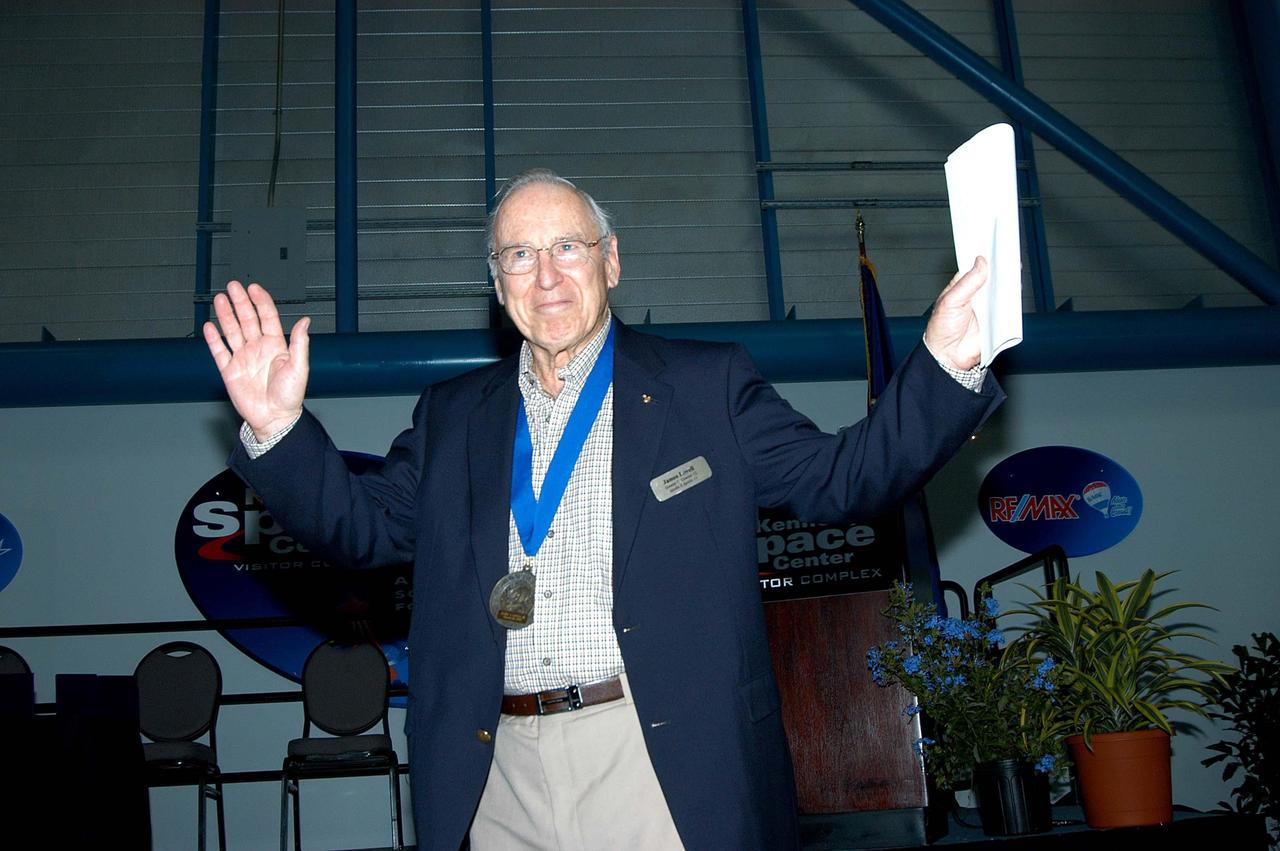
KENNEDY SPACE CENTER, FLA. -- Former astronaut Jim Lovell acknowledges the applause as he is introduced as a previous inductee into the U.S. Astronaut Hall of Fame. He and other Hall of Fame members were present for the induction of five new space program heroes into the U.S. Astronaut Hall of Fame: Richard O. Covey, commander of the Hubble Space Telescope repair mission; Norman E. Thagard, the first American to occupy Russia’s Mir space station; the late Francis R. "Dick" Scobee, commander of the ill-fated 1986 Challenger mission; Kathryn D. Sullivan, the first American woman to walk in space; and Frederick D. Gregory, the first African-American to command a space mission and the current NASA deputy administrator. Lovell piloted Gemini 7, commanded Gemini 12, orbited the Moon on Apollo 8 and commanded the aborted Apollo 13 moon flight. The induction ceremony was held at the Apollo/Saturn V Center at KSC. The U.S. Astronaut Hall of Fame opened in 1990 to provide a place where space travelers could be remembered for their participation and accomplishments in the U.S. space program. The five inductees join 52 previously honored astronauts from the ranks of the Gemini, Apollo, Skylab, Apollo-Soyuz, and Space Shuttle programs.
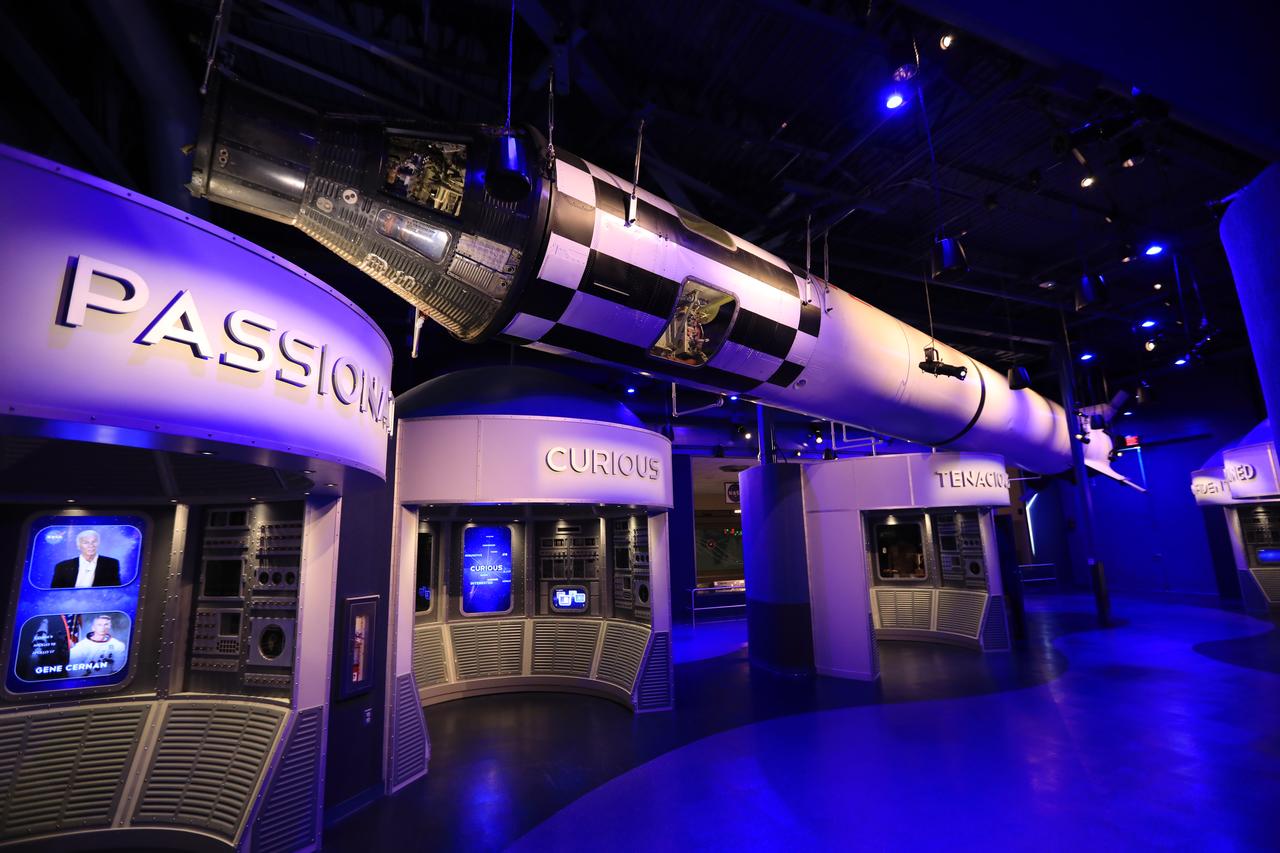
Inside the Heroes and Legends attraction at the Kennedy Space Center Visitor Complex, the Sigma 7 Mercury spacecraft in this exhibit was piloted by astronaut Wally Schirra during his six-orbit mission on Oct. 3, 1962. For display purposes, it is shown here attached to a Redstone launch vehicle like the one that boosted astronauts Alan Shepard and Gus Grissom on sub-orbital flights in 1961. Schirra's capsule was actually launched by the more powerful Atlas rocket in order to reach orbit. The new facility looks back to the pioneering efforts of Mercury, Gemini and Apollo. It sets the stage by providing the background and context for space exploration and the legendary men and women who pioneered the nation's journey into space.
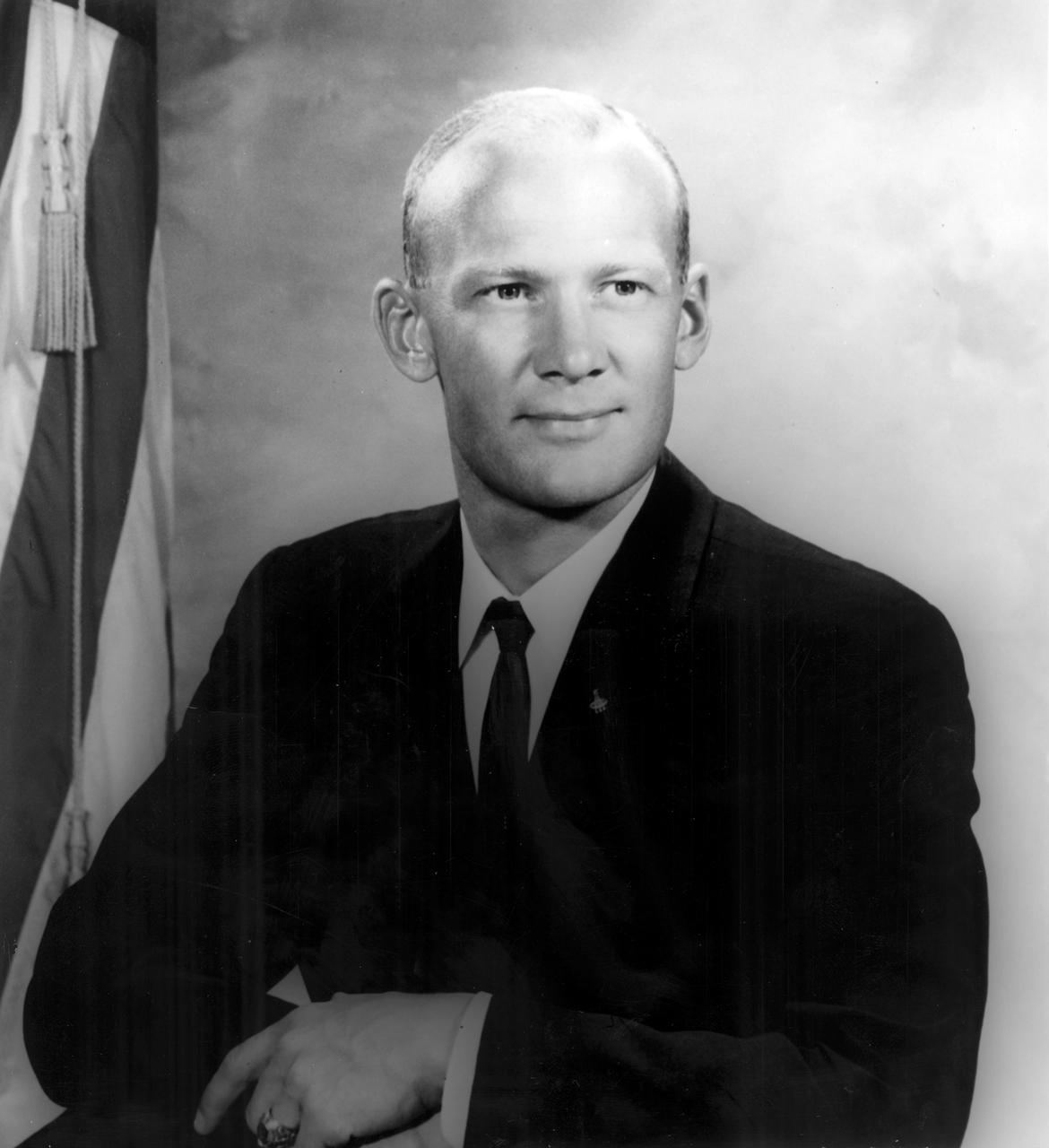
This is the official NASA portrait of astronaut Edwin E. (Buzz) Aldrin. Prior to joining NASA, Aldrin flew 66 combat missions in F-86s while on duty in Korea. At Nellis Air Force Base, Nevada, he served as an aerial gunnery instructor. Following his assignment as aide to the dean of faculty at the Air Force Academy, Aldrin flew F-100s as a flight commander at Bitburg, Germany. Aldrin was one of the third group of astronauts named by NASA in October 1963 and has logged 289 hours and 53 minutes in space, of which, 7 hours and 52 minutes were spent in Extra Vehicular Activity (EVA). On November 11, 1966, he launched into space aboard the Gemini 12 spacecraft on a 4-day flight, which brought the Gemini program to a successful close. During that mission, Aldrin established a new record for EVA, spending 5-1/2 hours outside the spacecraft. July 16-24, 1969, Aldrin served as lunar module pilot for Apollo 11, the first manned lunar landing mission. Aldrin followed Neil Armstrong onto the lunar surface on July 20, 1969, completing a 2-hour and 15 minute lunar EVA. Aldrin resigned from NASA in July 1971.
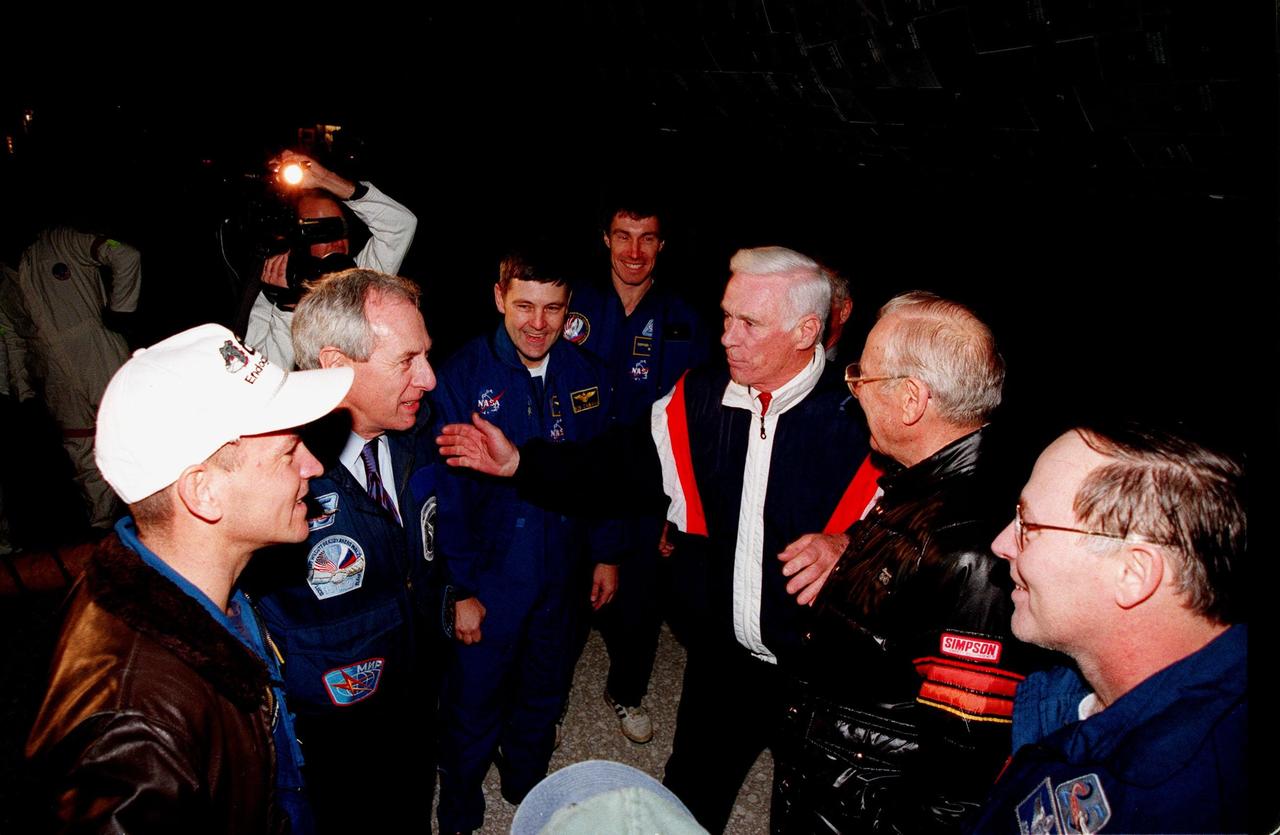
Following their touchdown on Runway 15 at 10:53:29 p.m. EST, STS-88 crew members are greeted by NASA Administrator Daniel Goldin and former astronauts Eugene A. Cernan and James A. Lovell Jr. From left are Pilot Frederick W. "Rick" Sturckow, Goldin , Commander Robert D. Cabana, Mission Specialist Sergei Konstantinovich Krikalev, Cernan, Lovell and Mission Specialist Jerry L. Ross. Cernan flew on Gemini 9, Apollo 10 and 17 and has more than 566 cumulative hours of space flight. Lovell flew on Gemini 7 and 12, Apollo 8 and 13. His cumulative hours of space flight are more than 715. On the 4.6-million-mile, nearly 12-day STS-88 mission, Endeavour carried the U.S.-built Unity connecting module to begin construction of the International Space Station. The crew successfully mated Unity with the Russian-built Zarya control module during three space walks. With this mission, Ross completed seven space walks totaling 44 hours and 9 minutes, more than any other American space walker. Newman moved into third place for U.S. space walks with a total of 28 hours and 27 minutes on four excursions
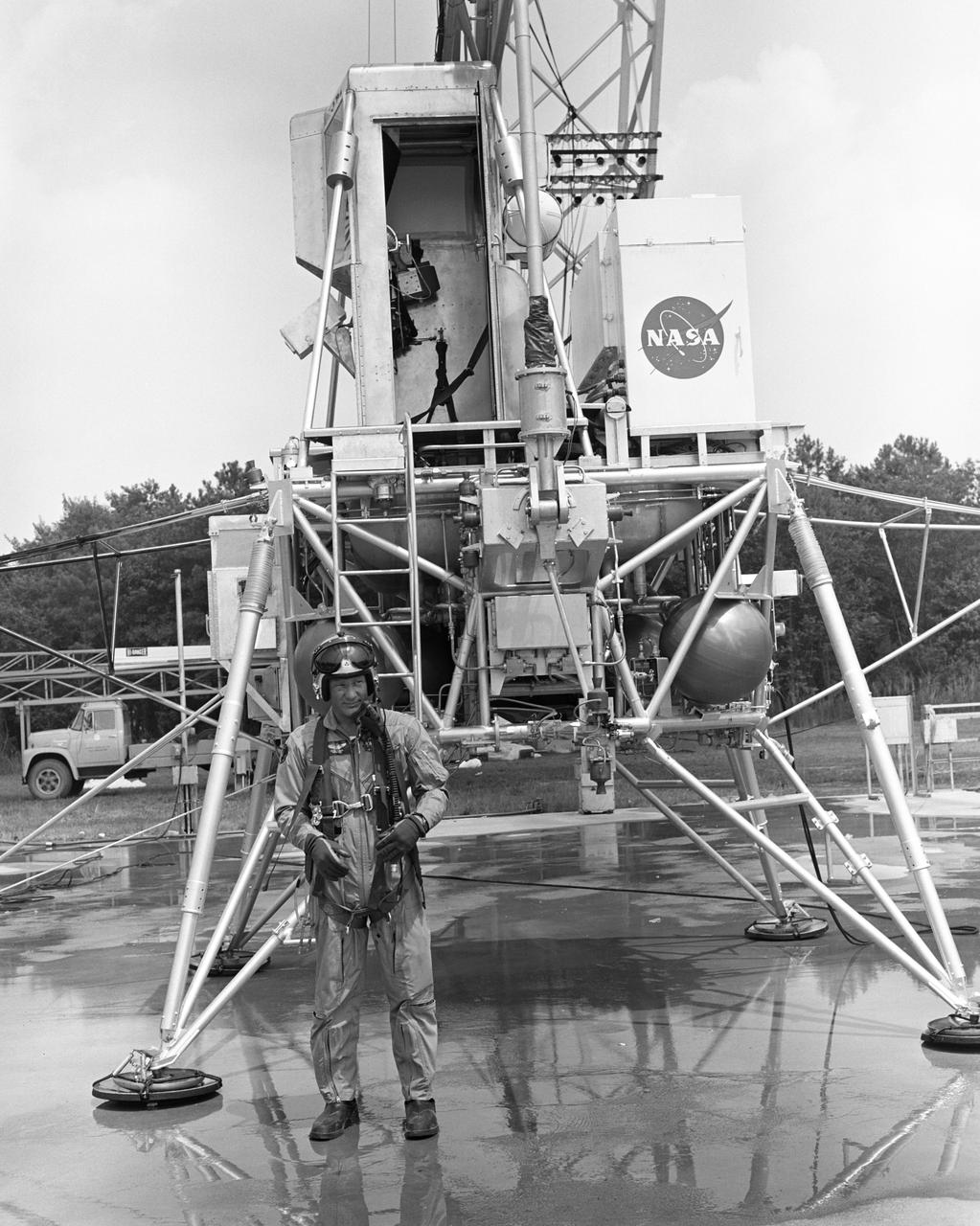
Astronaut Edwin Buzz Aldrin Lunar Module Pilot at the (LLRF) Lunar Landing Research Facility. Aldrin was one of the third group of astronauts named by NASA in October 1963. On November 11, 1966, he and command pilot James Lovell were launched into space in the Gemini 12 spacecraft on a 4-day flight, which brought the Gemini program to a successful close. Aldrin established a new record for extravehicular activity (EVA), spending 5-1/2 hours outside the spacecraft. He served as lunar module pilot for Apollo 11, July 16-24, 1969, the first manned lunar landing mission. Aldrin followed Neil Armstrong onto the lunar surface on July 20, 1969, completing a 2-hour and 15 minute lunar EVA. In July 1971, Aldrin resigned from NASA. Aldrin has logged 289 hours and 53 minutes in space, of which, 7 hours and 52 minutes were spent in EVA. https://www.nasa.gov/astronauts/biographies/former
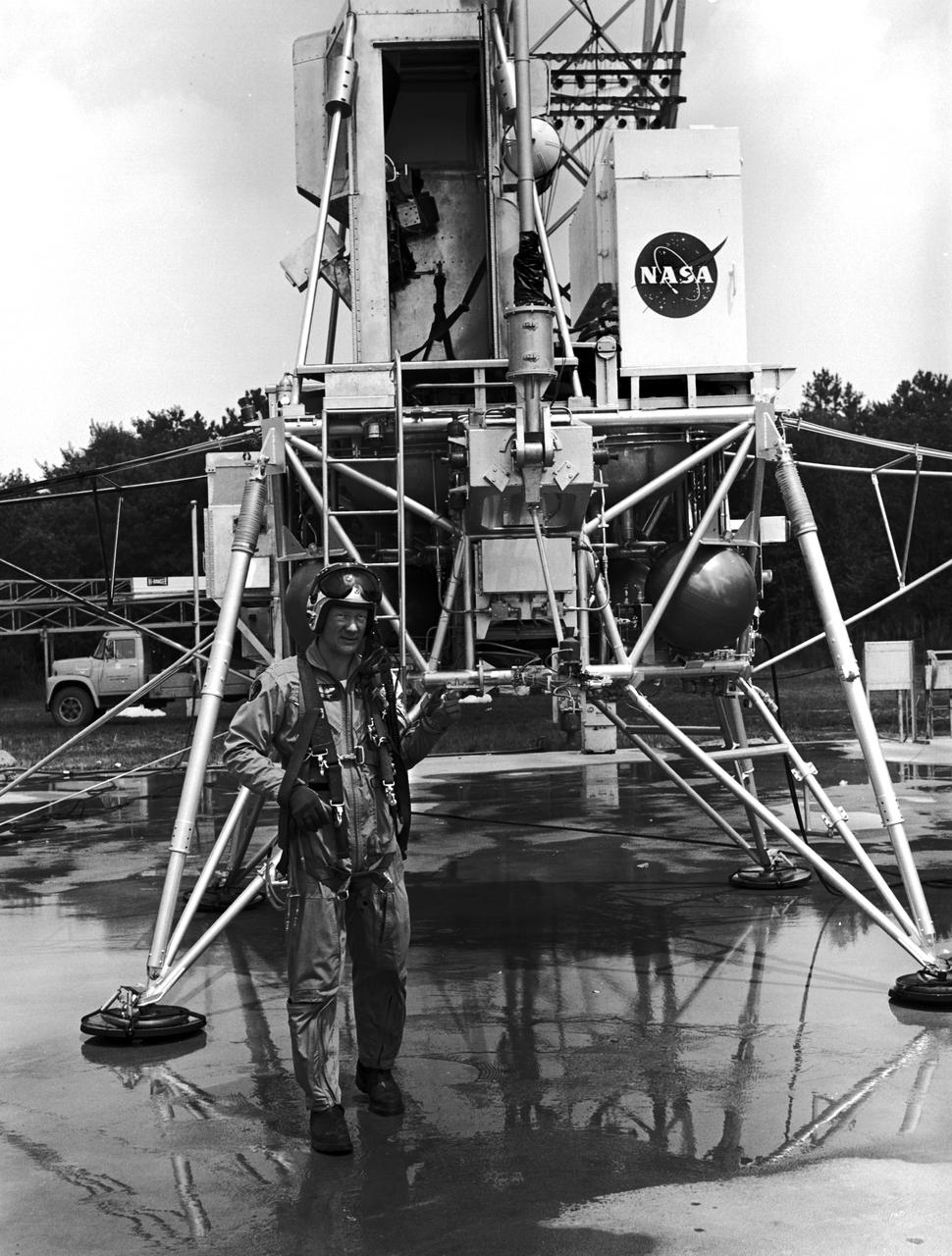
Astronaut Edwin Buzz Aldrin Lunar Module Pilot at the (LLRF) Lunar Landing Research Facility. Aldrin was one of the third group of astronauts named by NASA in October 1963. On November 11, 1966, he and command pilot James Lovell were launched into space in the Gemini 12 spacecraft on a 4-day flight, which brought the Gemini program to a successful close. Aldrin established a new record for extravehicular activity (EVA), spending 5-1/2 hours outside the spacecraft. He served as lunar module pilot for Apollo 11, July 16-24, 1969, the first manned lunar landing mission. Aldrin followed Neil Armstrong onto the lunar surface on July 20, 1969, completing a 2-hour and 15 minute lunar EVA. In July 1971, Aldrin resigned from NASA. Aldrin has logged 289 hours and 53 minutes in space, of which, 7 hours and 52 minutes were spent in EVA. https://www.nasa.gov/astronauts/biographies/former
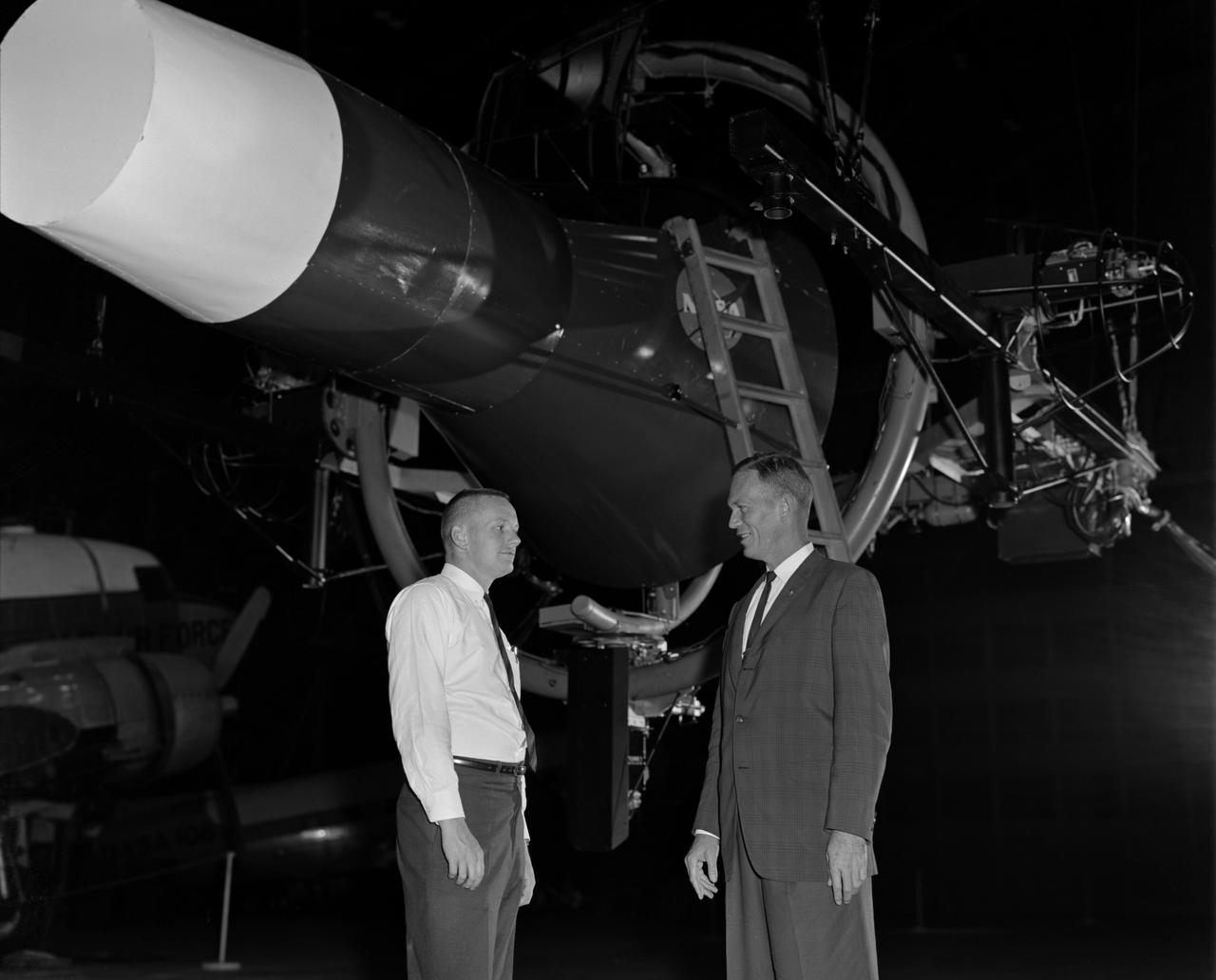
Astronaut Neil Armstrong (left) was one of 14 astronauts, 8 NASA test pilots, and 2 McDonnell test pilots who took part in simulator studies. Armstrong was the first astronaut to participate (November 6, 1963). A.W. Vogeley described the simulator in his paper "Discussion of Existing and Planned Simulators For Space Research," "Many of the astronauts have flown this simulator in support of the Gemini studies and they, without exception, appreciated the realism of the visual scene. The simulator has also been used in the development of pilot techniques to handle certain jet malfunctions in order that aborts could be avoided. In these situations large attitude changes are sometimes necessary and the false motion cues that were generated due to earth gravity were somewhat objectionable; however, the pilots were readily able to overlook these false motion cues in favor of the visual realism." Roy F. Brissenden, noted in his paper "Initial Operations with Langley's Rendezvous Docking Facility," "The basic Gemini control studies developed the necessary techniques and demonstrated the ability of human pilots to perform final space docking with the specified Gemini-Agena systems using only visual references. ... Results... showed that trained astronauts can effect the docking with direct acceleration control and even with jet malfunctions as long as good visual conditions exist.... Probably more important than data results was the early confidence that the astronauts themselves gained in their ability to perform the maneuver in the ultimate flight mission." Francis B. Smith, noted in his paper "Simulators for Manned Space Research," "Some major areas of interest in these flights were fuel requirements, docking accuracies, the development of visual aids to assist alignment of the vehicles, and investigation of alternate control techniques with partial failure modes. However, the familiarization and confidence developed by the astronaut through flying and safely docking the simulator during these tests was one of the major contributions. For example, it was found that fuel used in docking from 200 feet typically dropped from about 20 pounds to 7 pounds after an astronaut had made a few training flights." -- Published in Barton C. Hacker and James M. Grimwood, On the Shoulders of Titans: A History of Project Gemini, NASA SP-4203; A.W. Vogeley, "Discussion of Existing and Planned Simulators For Space Research," Paper presented at the Conference on the Role of Simulation in Space Technology, August 17-21, 1964; Roy F. Brissenden, "Initial Operations with Langley's Rendezvous Docking Facility," Langley Working Paper, LWP-21, 1964; Francis B. Smith, "Simulators for Manned Space Research," Paper presented at the 1966 IEEE International convention, March 21-25, 1966.
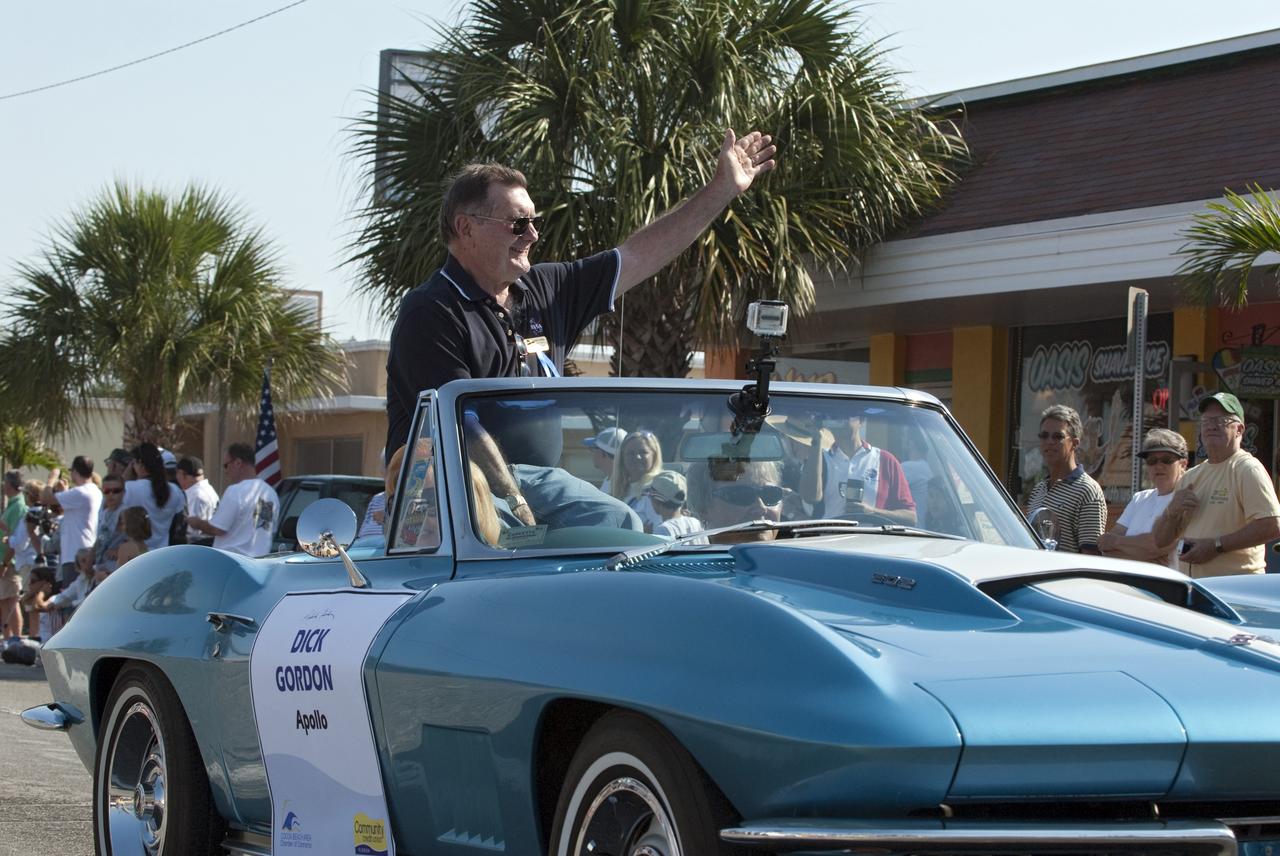
Cape Canaveral, Fla. -- Retired Gemini and Apollo astronaut Dick Gordon waves to spectators from a vintage Chevrolet Corvette during a commemorative parade in Cocoa Beach, Fla. A group of current and retired NASA astronauts gathered in Cocoa Beach to commemorate NASA’s 50 years of accomplishments and to honor astronaut Alan Shepard’s Mercury/Freedom 7 suborbital flight May 5, 1961.The event was marked by a parade, with the astronauts riding in a fleet of Chevrolet Corvettes that corresponded with the time period of their space missions. Members of the Cape Kennedy Corvette Club, a group established in 1967, escorted almost two dozen astronauts or their family representatives in club members' cars. The Corvette parade started at the glass bank building, at 9:34 a.m. EDT, the same time Shepard launched into space. Photo credit: NASA/Kim Shiflett
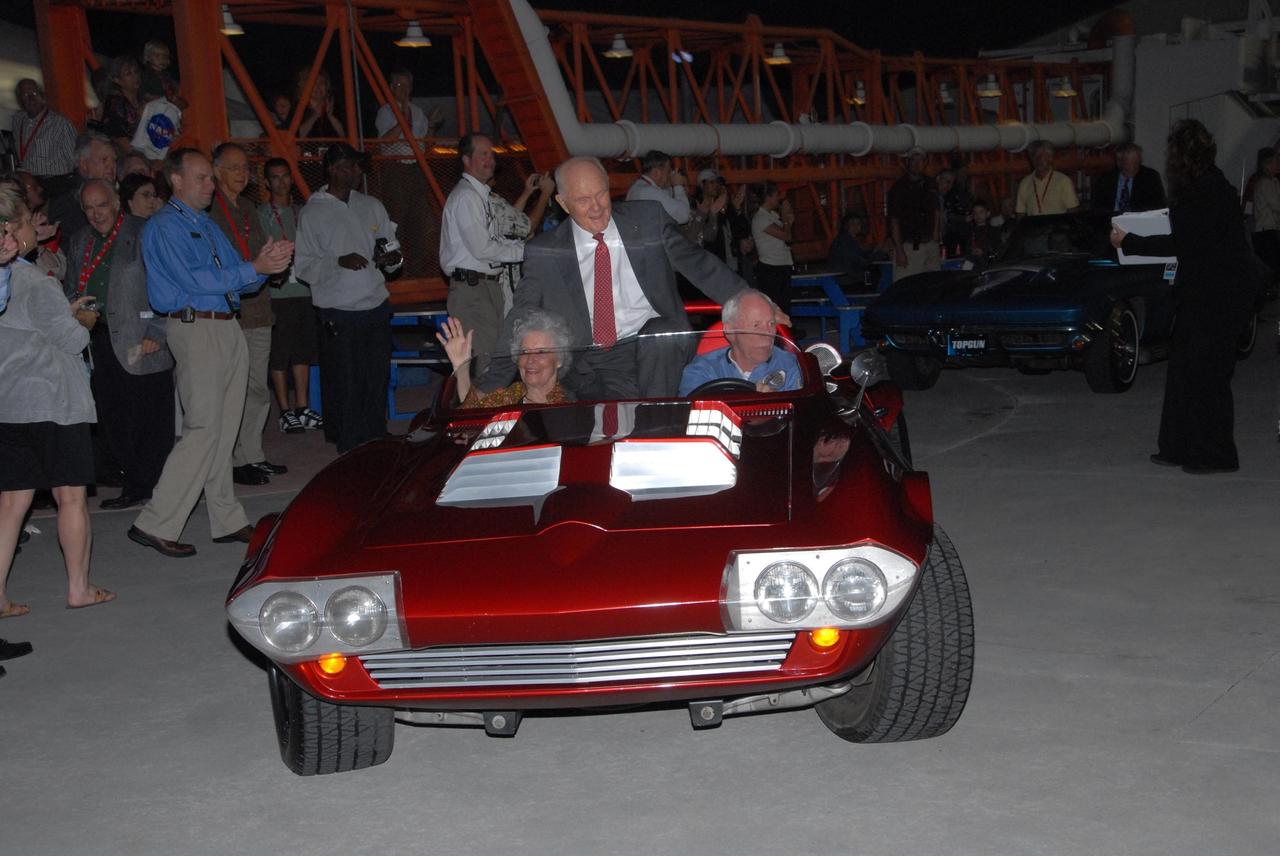
KENNEDY SPACE CENTER, FLA. -- In a cavalcade of veteran Apollo and Mercury astronauts, John Glenn rides in the back of a Corvette driven by Al Worden. On Feb. 20, 1962, John Glenn piloted the Mercury-Atlas 6 "Friendship 7" spacecraft on the first U.S. manned orbital mission. Worden was command module pilot for Apollo 15, July 26-Aug. 7, 1971. The astronauts were part of the World Space Expo, an event to commemorate humanity's first 50 years in space while looking forward to returning people to the moon and exploring beyond. Commemorating humanity's first 50 years in space while looking forward to returning people to the moon and exploring beyond, the expo showcased various panels, presentations and educational programs, as well as an aerial salute featuring the U.S. Air Force Thunderbirds, U.S. Air Force F-22 Raptor, U.S. Navy F-18 Super Hornet, U.S. Air Force F-15 Eagle, the P-51 Mustang Heritage Flight, and the U.S. Air Force 920th Rescue Wing, which was responsible for Mercury and Gemini capsule recovery. The U.S. Army Golden Knights also demonstrated precision skydiving. Photo credit: NASA/George Shelton
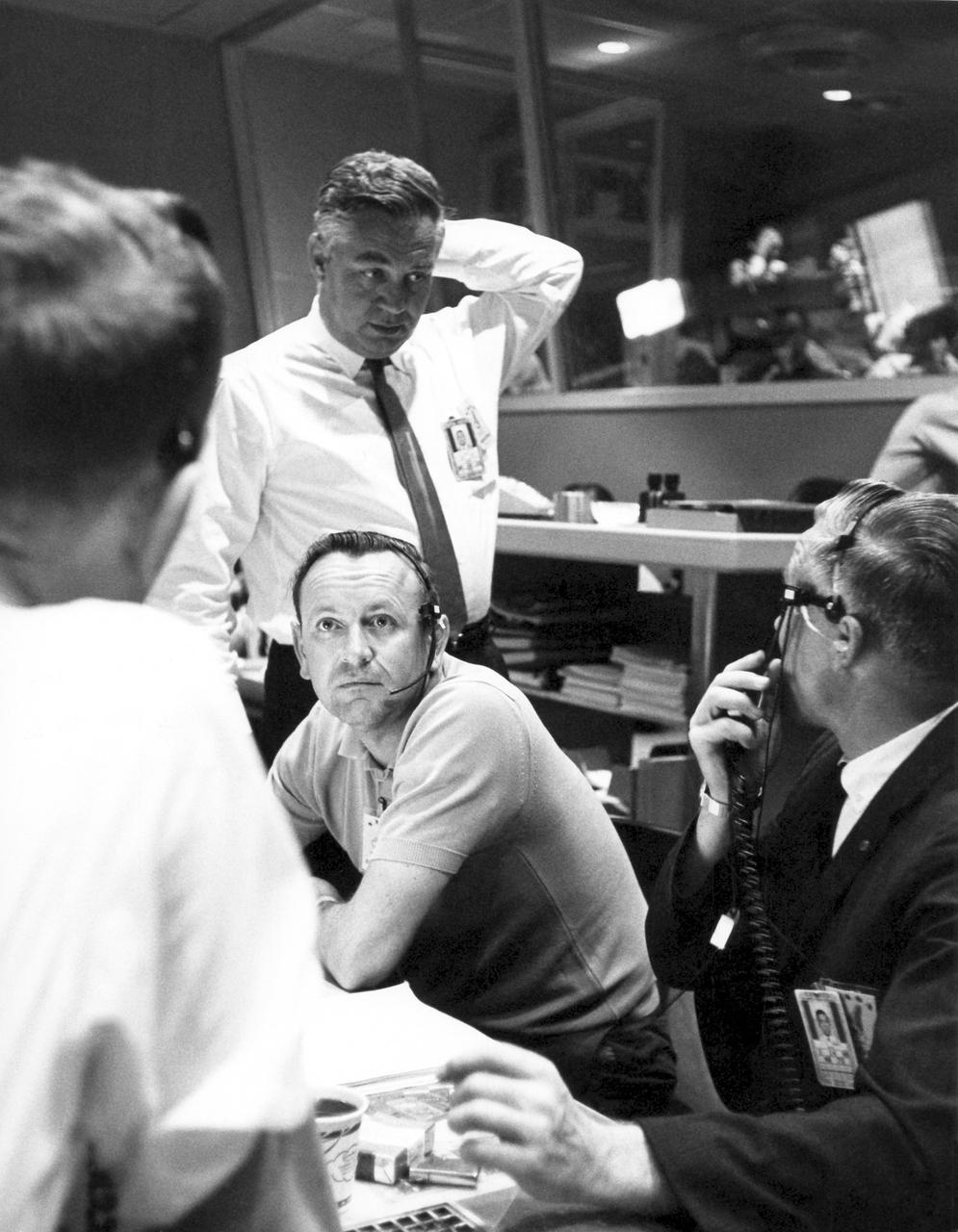
CAPE CANAVERAL, Fla. - Inside Mercury Mission Control, Walter C. Williams standing, associate director for Project Mercury operations, and Christopher Kraft seated, left, flight director, work in flight control as the decision is made to have Mercury astronaut Gordon Cooper aboard his spacecraft, Faith 7, go the full 22 orbits. The launch took place on May 15, 1963. The Mercury Mission Control Center in Florida played a key role in the United States' early spaceflight program. Located at Cape Canaveral Air Force Station, the original part of the building was constructed between 1956 and 1958, with additions in 1959 and 1963. The facility officially was transferred to NASA on Dec. 26, 1963, and served as mission control during all the Project Mercury missions, as well as the first three flights of the Gemini Program, when it was renamed Mission Control Center. With its operational days behind, on June 1, 1967, the Mission Control Center became a stop on the public tour of NASA facilities until the mid-90s. In 1999, much of the equipment and furnishings from the Flight Control Area were moved to the Kennedy Space Center Visitor Complex where they became part of the exhibit there. The building was demolished in spring 2010. Photo credit: NASA
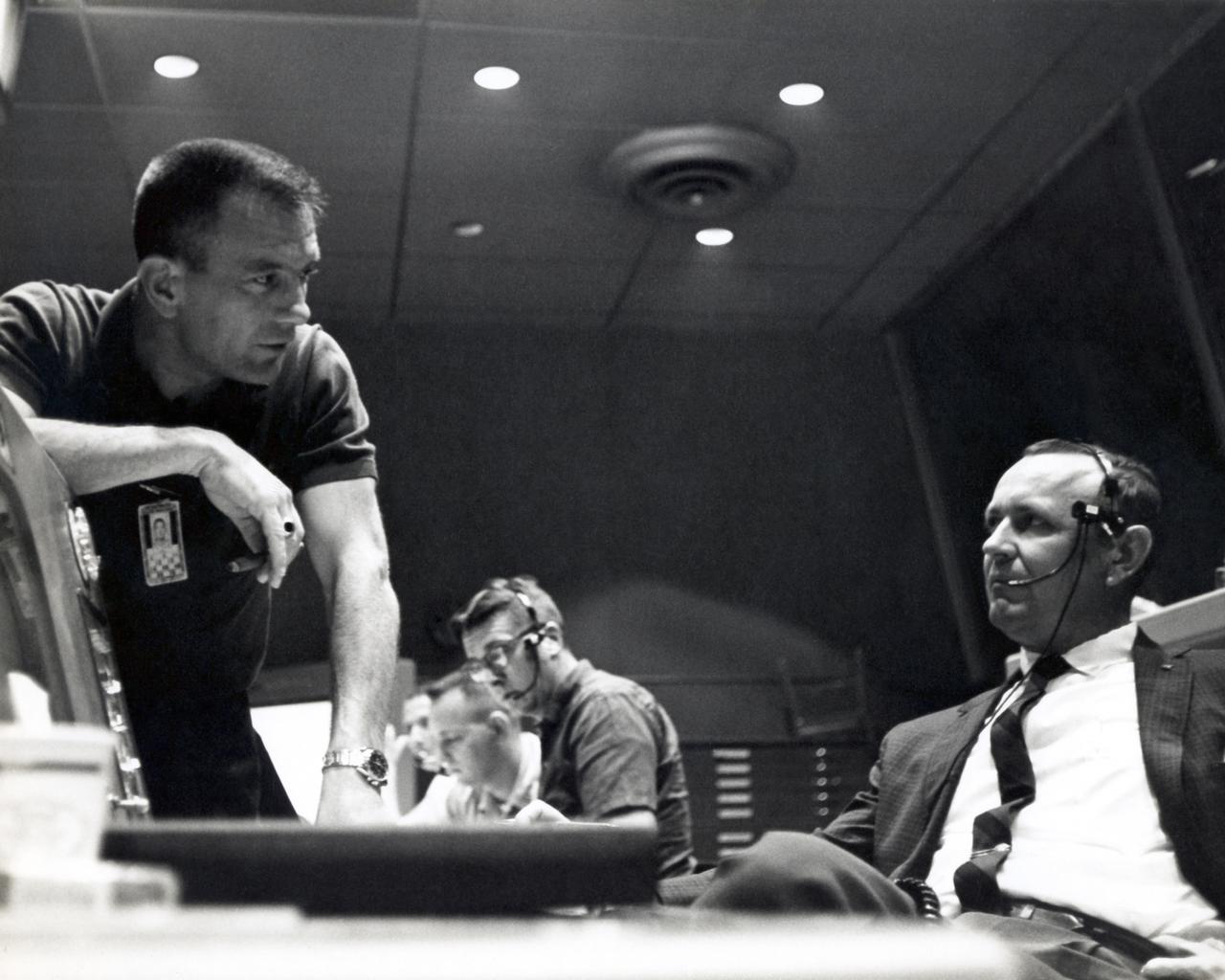
CAPE CANAVERAL, Fla. - Inside Mercury Mission Control, astronaut Deke Slayton left discusses a point with Christopher Kraft, Mercury's flight director, during preparations for astronaut Gordon Cooper's Faith 7 launch, which took place on May 15, 1963. The Mercury Mission Control Center in Florida played a key role in the United States' early spaceflight program. Located at Cape Canaveral Air Force Station, the original part of the building was constructed between 1956 and 1958, with additions in 1959 and 1963. The facility officially was transferred to NASA on Dec. 26, 1963, and served as mission control during all the Project Mercury missions, as well as the first three flights of the Gemini Program, when it was renamed Mission Control Center. With its operational days behind, on June 1, 1967, the Mission Control Center became a stop on the public tour of NASA facilities until the mid-90s. In 1999, much of the equipment and furnishings from the Flight Control Area were moved to the Kennedy Space Center Visitor Complex where they became part of the exhibit there. The building was demolished in spring 2010. Photo credit: NASA
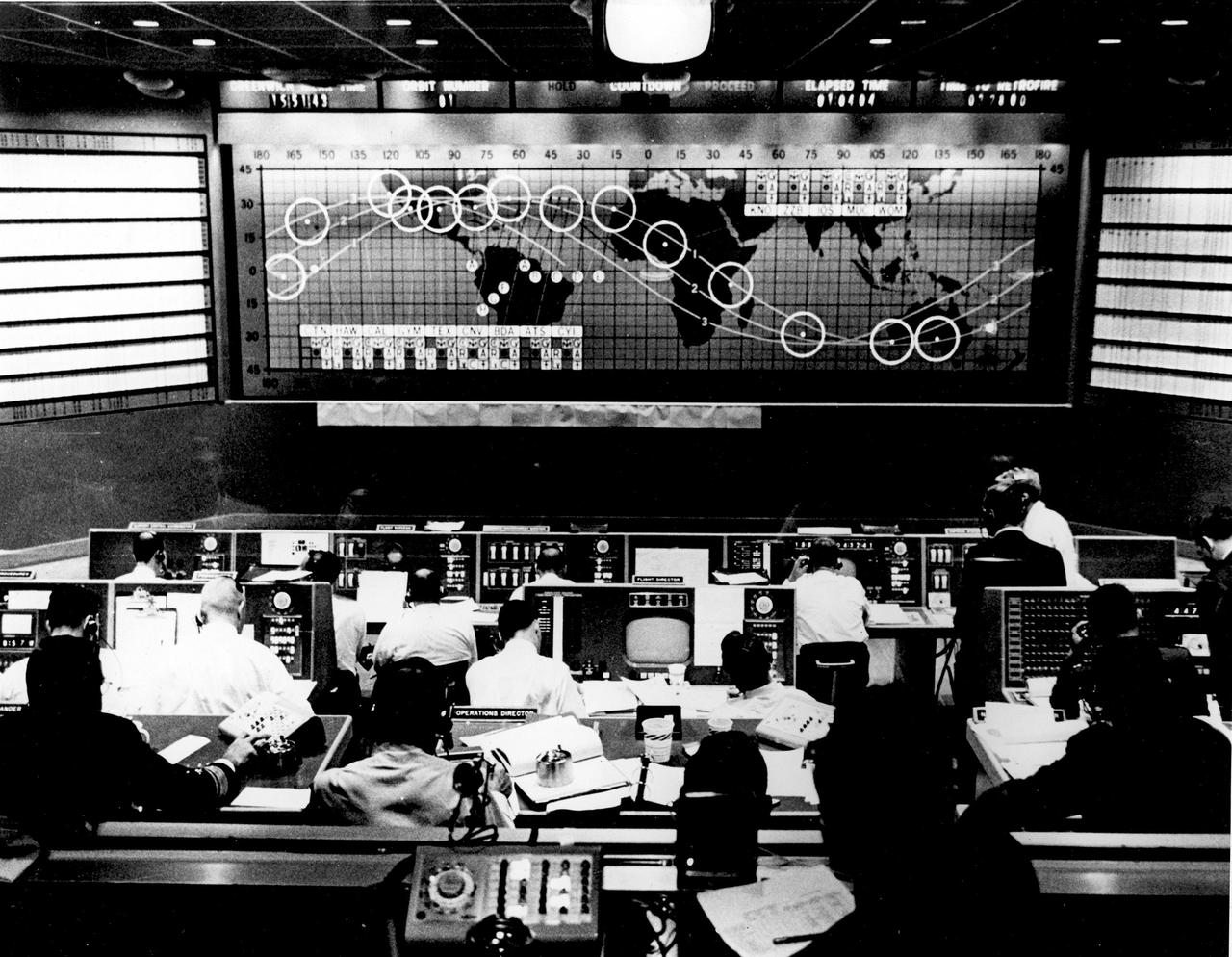
CAPE CANAVERAL, Fla. - Flight controllers gather inside Mercury Mission Control during the first orbit of John Glenn's Friendship 7 mission, which launched on Feb. 20, 1962. The Mercury Mission Control Center in Florida played a key role in the United States' early spaceflight program. Located at Cape Canaveral Air Force Station, the original part of the building was constructed between 1956 and 1958, with additions in 1959 and 1963. The facility officially was transferred to NASA on Dec. 26, 1963, and served as mission control during all the Project Mercury missions, as well as the first three flights of the Gemini Program, when it was renamed Mission Control Center. With its operational days behind, on June 1, 1967, the Mission Control Center became a stop on the public tour of NASA facilities until the mid-90s. In 1999, much of the equipment and furnishings from the Flight Control Area were moved to the Kennedy Space Center Visitor Complex where they became part of the exhibit there. The building was demolished in spring 2010. Photo credit: NASA
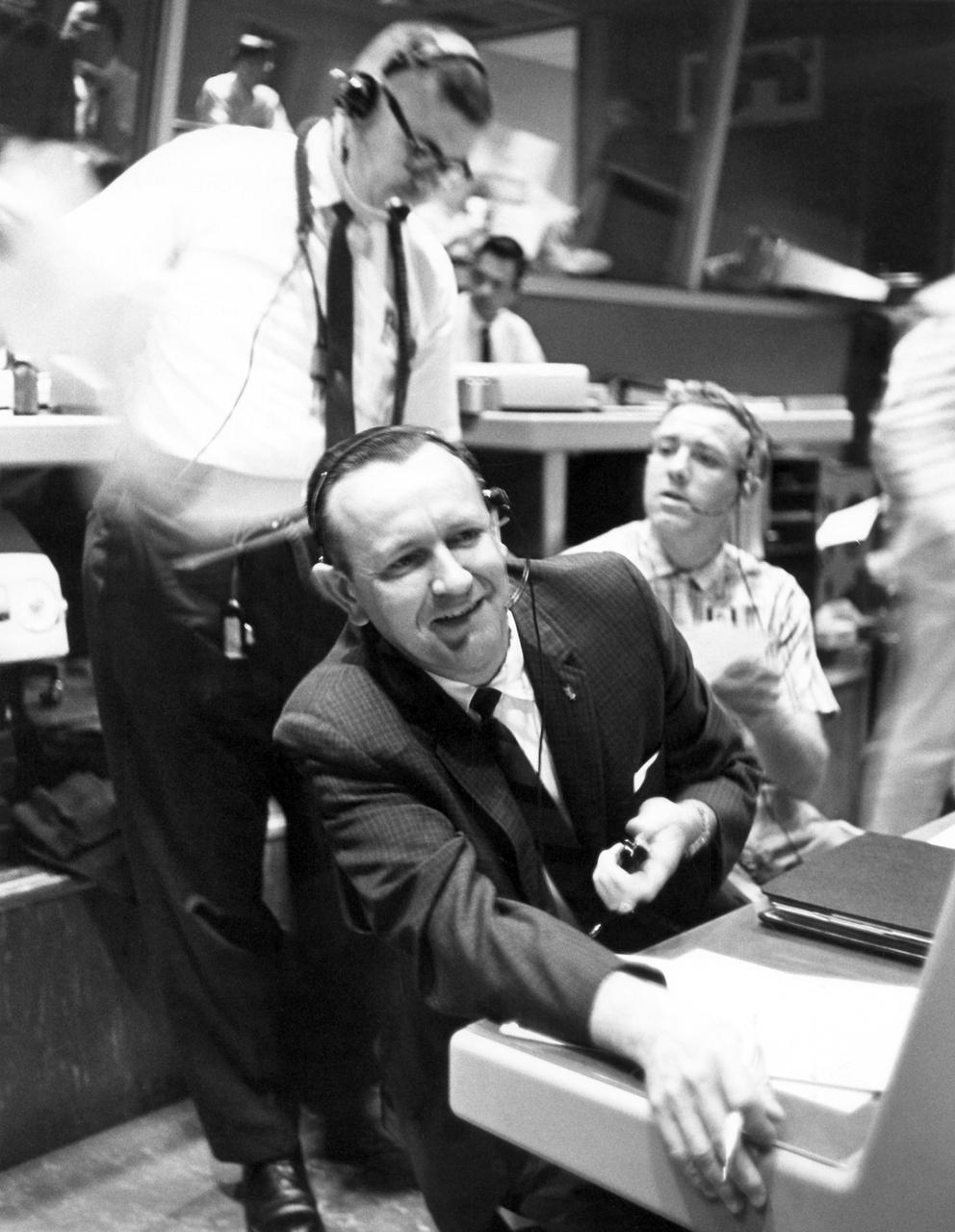
CAPE CANAVERAL, Fla. - Inside Mercury Mission Control, Christopher Kraft, Mercury's flight director, sits at his console during preparations for astronaut Gordon Cooper's Faith 7 launch, which took place on May 15, 1963. The Mercury Mission Control Center in Florida played a key role in the United States' early spaceflight program. Located at Cape Canaveral Air Force Station, the original part of the building was constructed between 1956 and 1958, with additions in 1959 and 1963. The facility officially was transferred to NASA on Dec. 26, 1963, and served as mission control during all the Project Mercury missions, as well as the first three flights of the Gemini Program, when it was renamed Mission Control Center. With its operational days behind, on June 1, 1967, the Mission Control Center became a stop on the public tour of NASA facilities until the mid-90s. In 1999, much of the equipment and furnishings from the Flight Control Area were moved to the Kennedy Space Center Visitor Complex where they became part of the exhibit there. The building was demolished in spring 2010. Photo credit: NASA
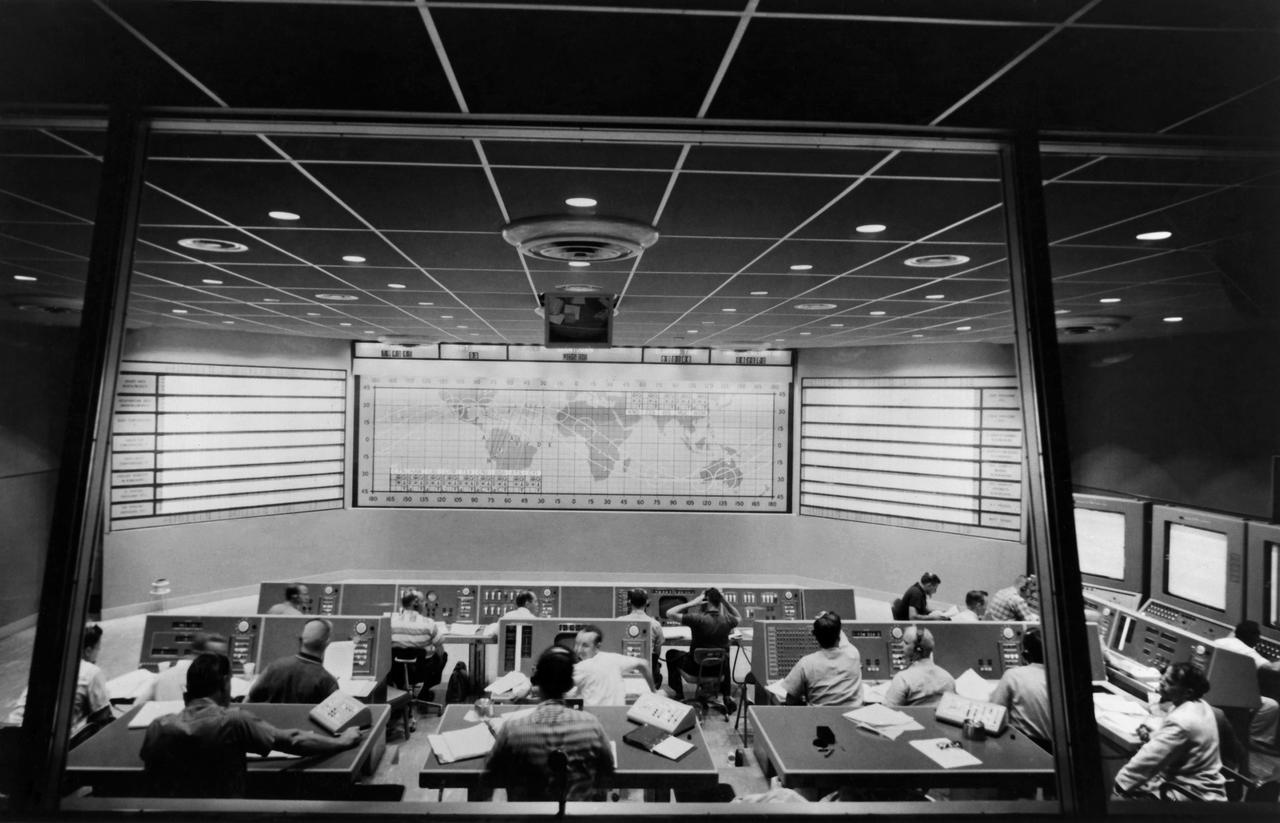
CAPE CANAVERAL, Fla. - Flight controllers gather inside Mercury Mission Control for Alan Shepard's Freedom 7 mission, which launched on May 5, 1961. The Mercury Mission Control Center in Florida played a key role in the United States' early spaceflight program. Located at Cape Canaveral Air Force Station, the original part of the building was constructed between 1956 and 1958, with additions in 1959 and 1963. The facility officially was transferred to NASA on Dec. 26, 1963, and served as mission control during all the Project Mercury missions, as well as the first three flights of the Gemini Program, when it was renamed Mission Control Center. With its operational days behind, on June 1, 1967, the Mission Control Center became a stop on the public tour of NASA facilities until the mid-90s. In 1999, much of the equipment and furnishings from the Flight Control Area were moved to the Kennedy Space Center Visitor Complex where they became part of the exhibit there. The building was demolished in spring 2010. Photo credit: NASA
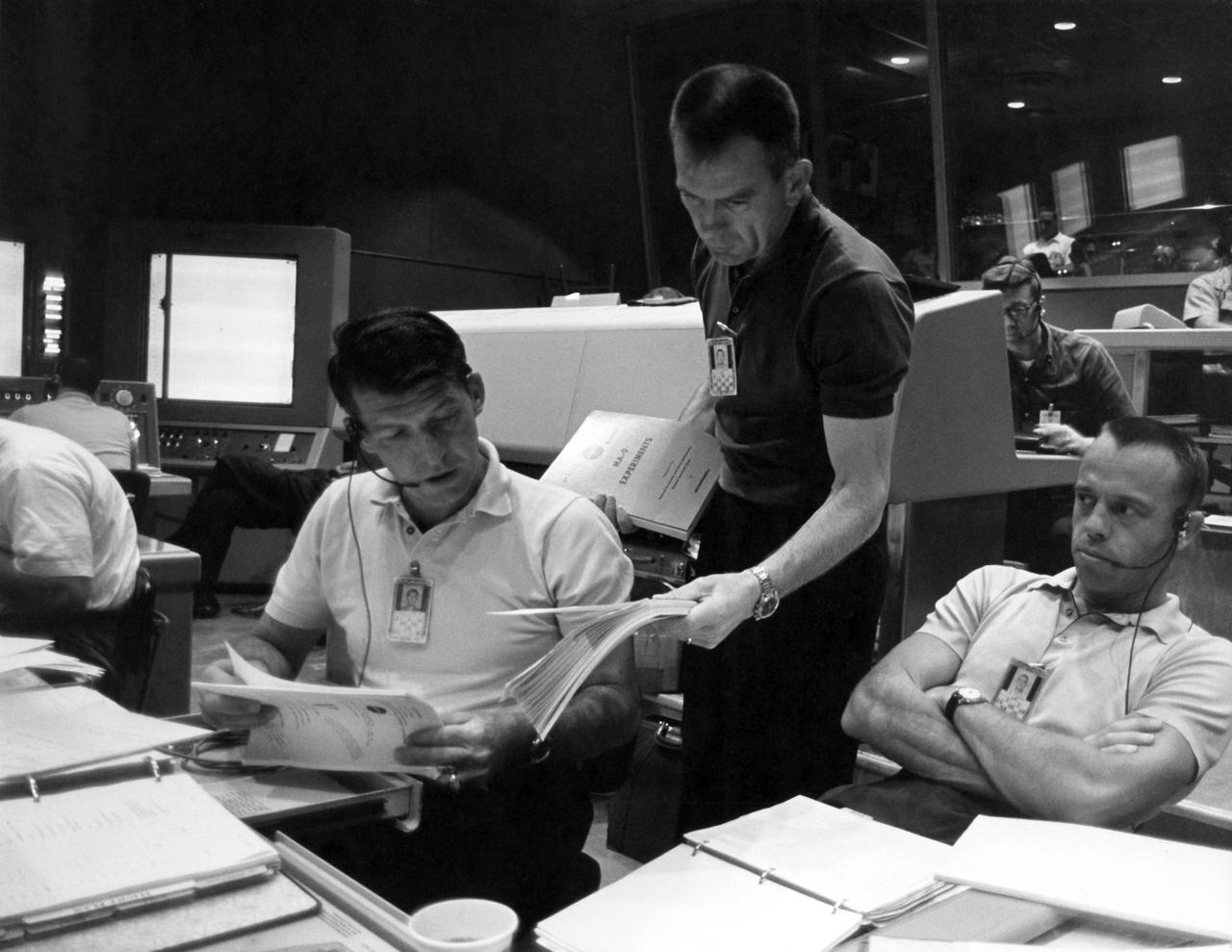
CAPE CANAVERAL, Fla. - Mercury astronauts, from left, Wally Schirra, Deke Slayton and Alan Shepard work inside the Mercury Control Center where they were stationed during the Faith 7 mission of astronaut Gordon Cooper, launched on May 15, 1963. This was the final mission of the Mercury Program. The Mercury Mission Control Center in Florida played a key role in the United States' early spaceflight program. Located at Cape Canaveral Air Force Station, the original part of the building was constructed between 1956 and 1958, with additions in 1959 and 1963. The facility officially was transferred to NASA on Dec. 26, 1963, and served as mission control during all the Project Mercury missions, as well as the first three flights of the Gemini Program, when it was renamed Mission Control Center. With its operational days behind, on June 1, 1967, the Mission Control Center became a stop on the public tour of NASA facilities until the mid-90s. In 1999, much of the equipment and furnishings from the Flight Control Area were moved to the Kennedy Space Center Visitor Complex where they became part of the exhibit there. The building was demolished in spring 2010. Photo credit: NASA
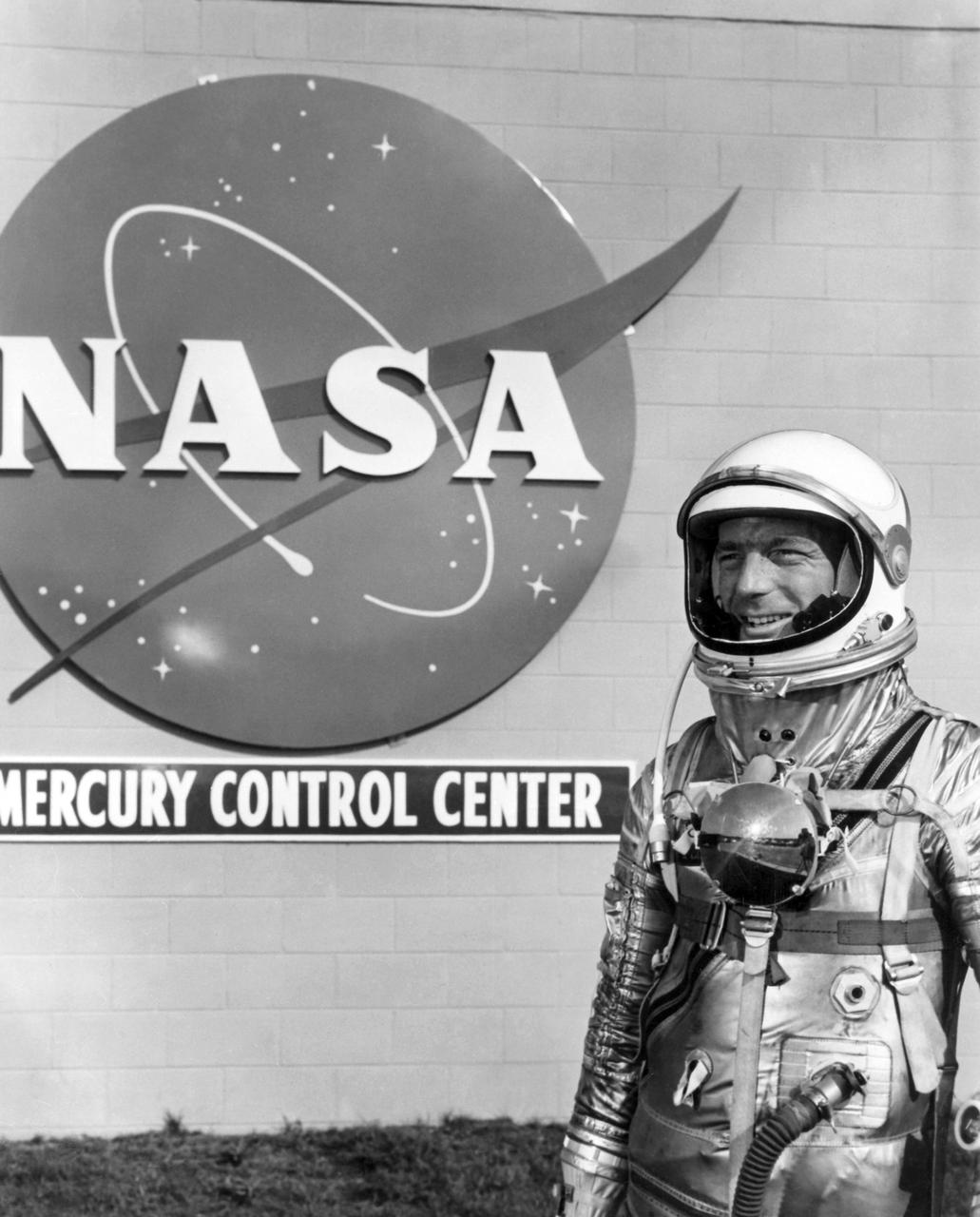
CAPE CANAVERAL, Fla. - Mercury astronaut Scott Carpenter stands in front of the Mercury Control Center. Carpenter flew the Aurora 7 mission, launched on May 24, 1962. The Mercury Mission Control Center in Florida played a key role in the United States' early spaceflight program. Located at Cape Canaveral Air Force Station, the original part of the building was constructed between 1956 and 1958, with additions in 1959 and 1963. The facility officially was transferred to NASA on Dec. 26, 1963, and served as mission control during all the Project Mercury missions, as well as the first three flights of the Gemini Program, when it was renamed Mission Control Center. With its operational days behind, on June 1, 1967, the Mission Control Center became a stop on the public tour of NASA facilities until the mid-90s. In 1999, much of the equipment and furnishings from the Flight Control Area were moved to the Kennedy Space Center Visitor Complex where they became part of the exhibit there. The building was demolished in spring 2010. Photo credit: NASA