S65-05399 (1965) --- Composite drawing showing the vertical, lateral, forward and aft maneuvering control of the Gemini spacecraft.
GEMINI SPACECRAFT - MANEUVERING CONTROL - MSC
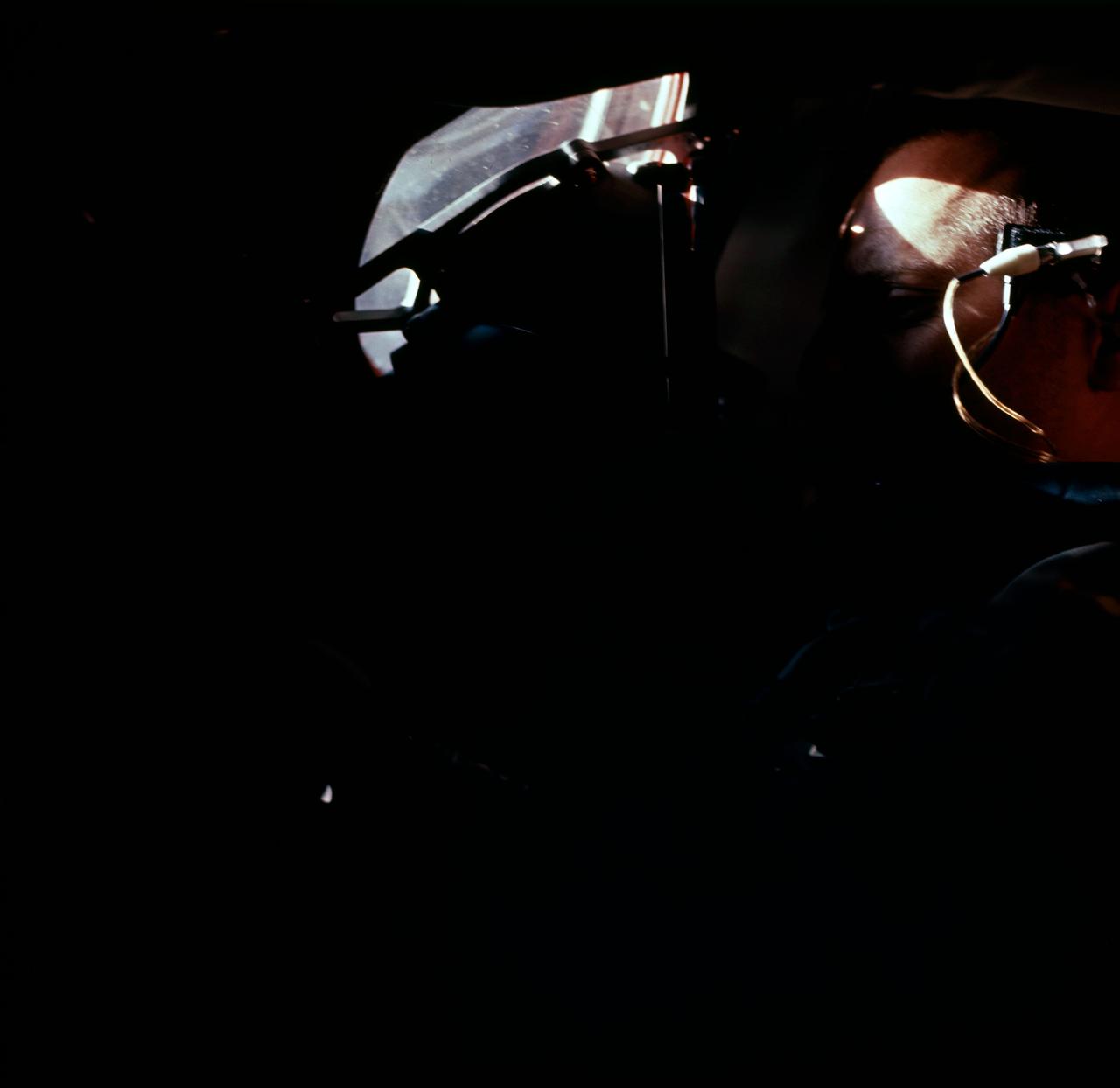
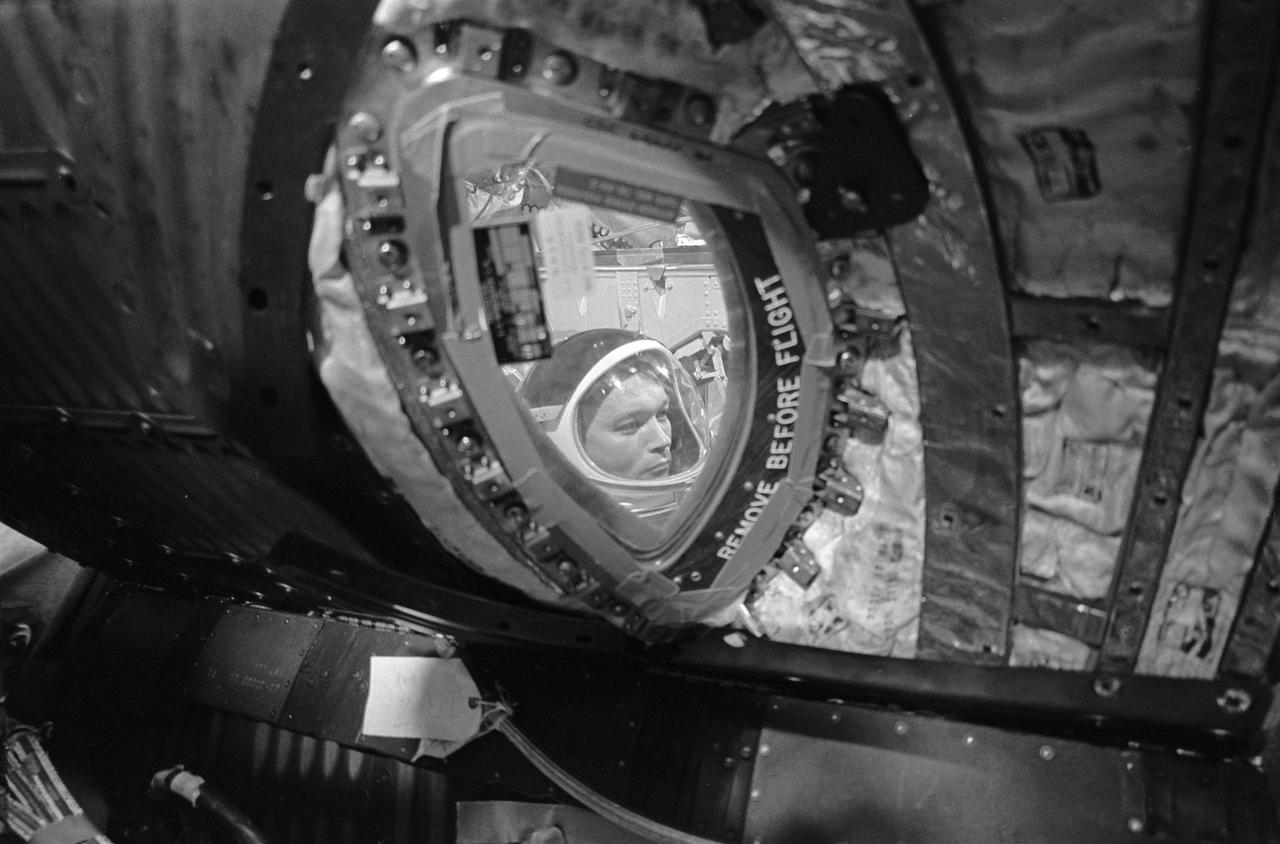
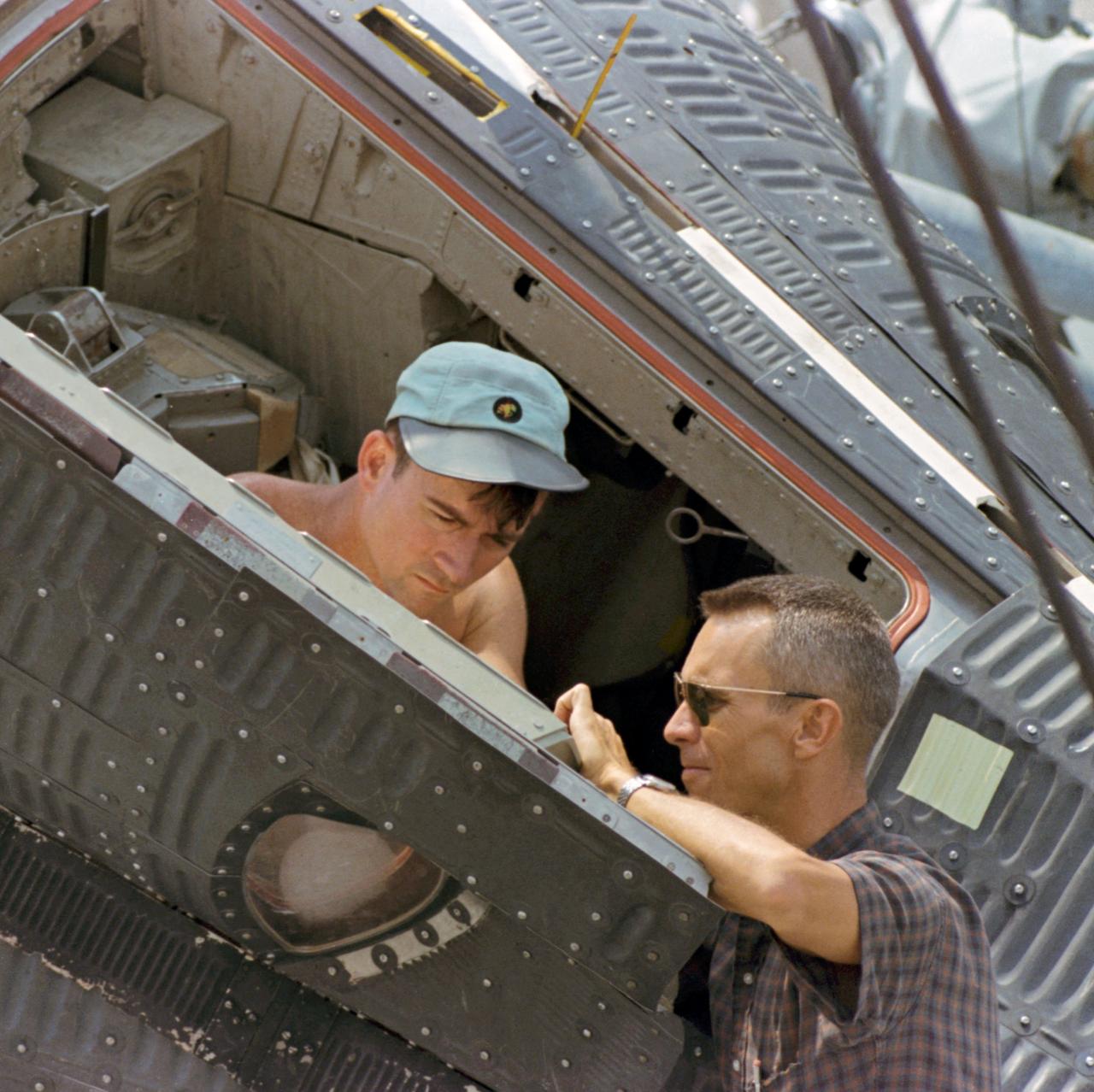
S65-45610 (21 Aug. 1965) --- Astronaut Charles Conrad Jr. as seen through the Gemini-5 spacecraft window before launch.
Astronaut Charles Conrad as seen through Gemini 5 spacecraft window
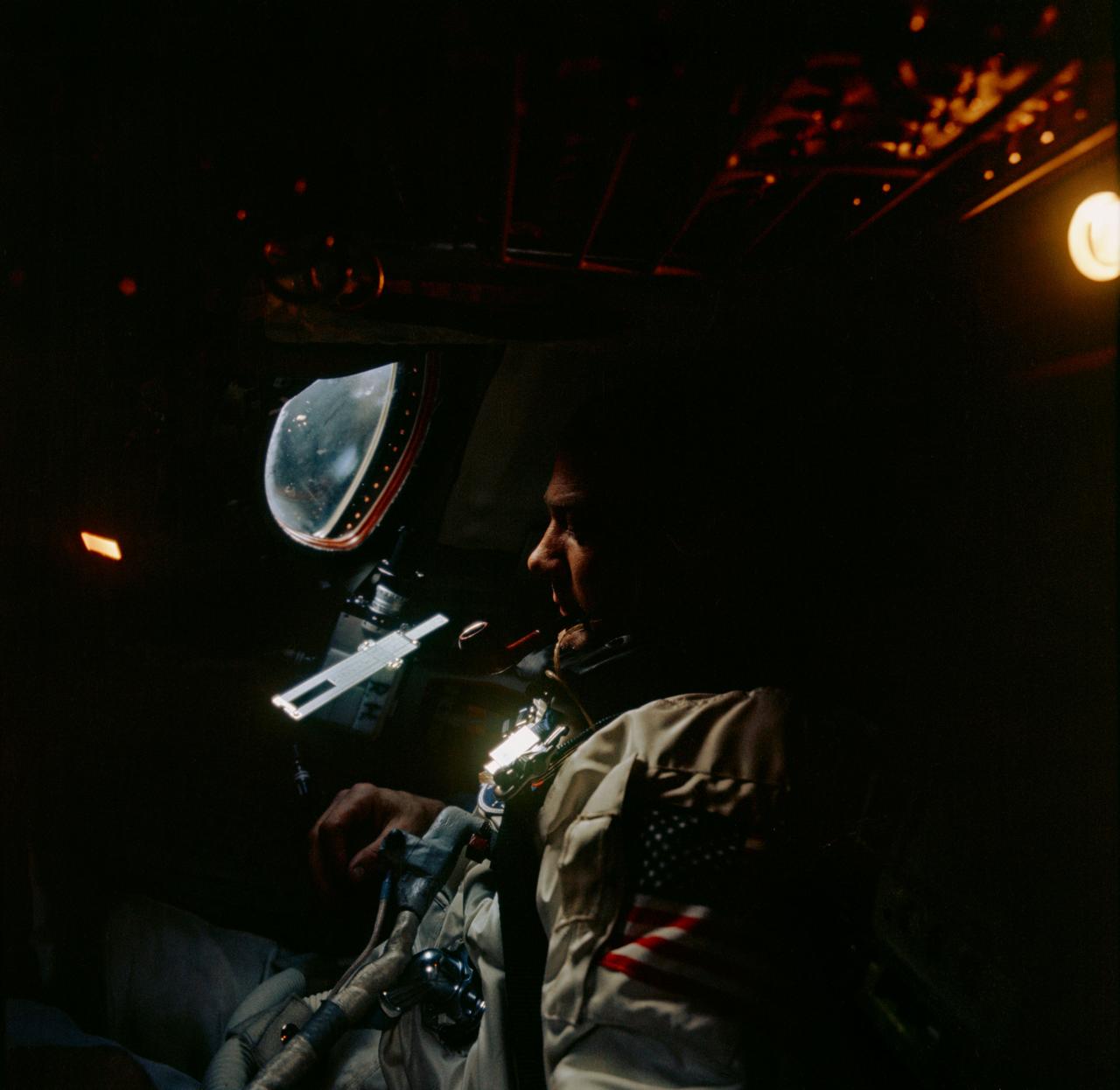
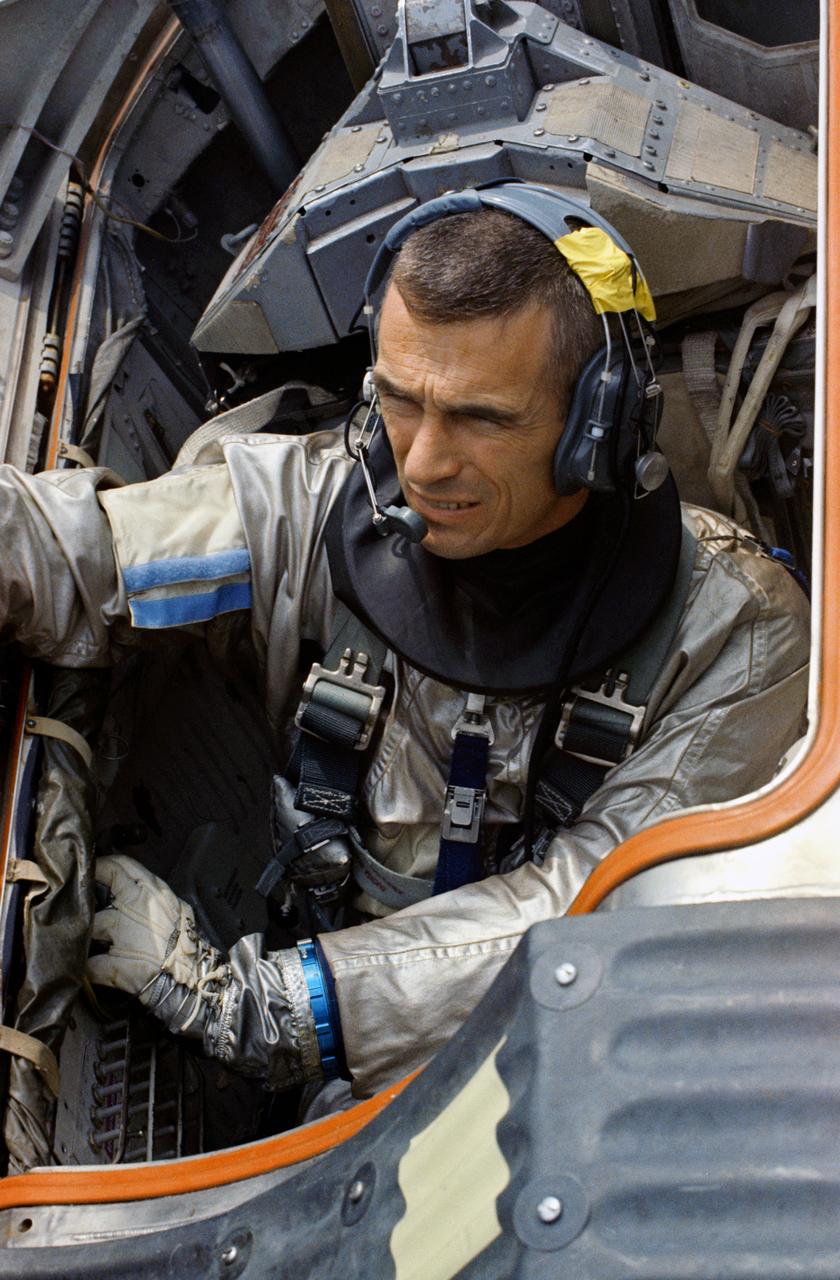
S66-62984 (13 Nov. 1966) --- Astronaut Edwin Aldrin Jr. photographed inside the Gemini-12 spacecraft cabin during the spaceflight. Photo credit: NASA
Astronaut Edwin Aldrin inside Gemini spacecraft cabin during flight
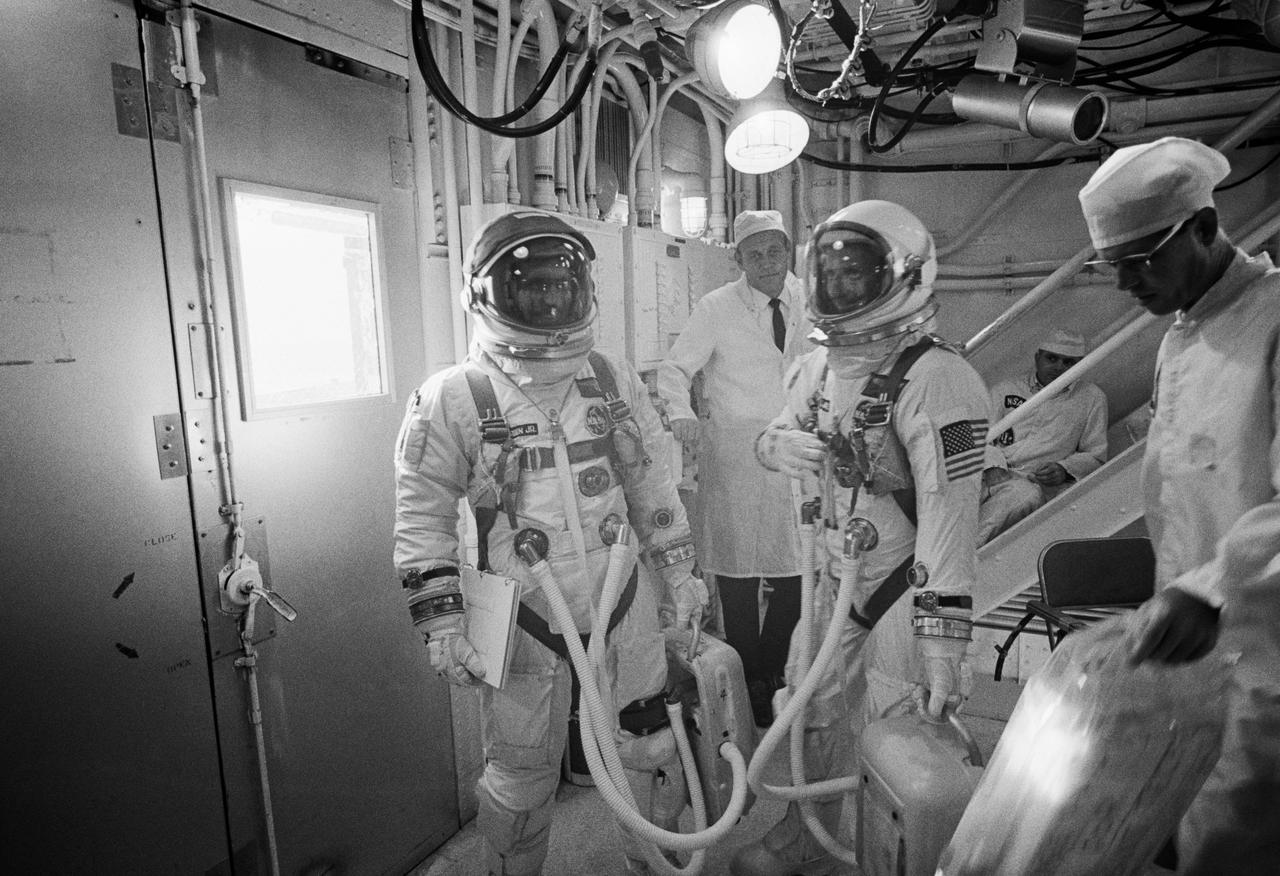
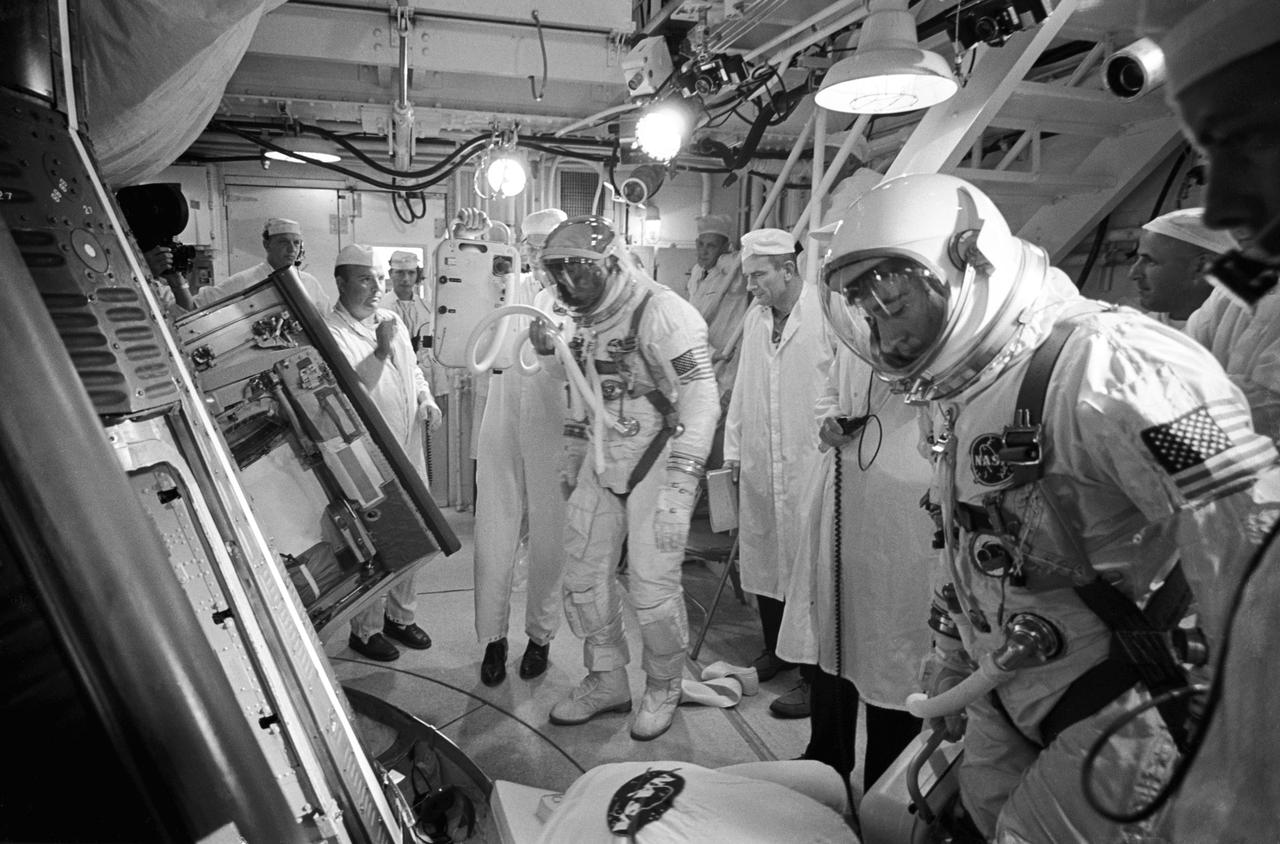
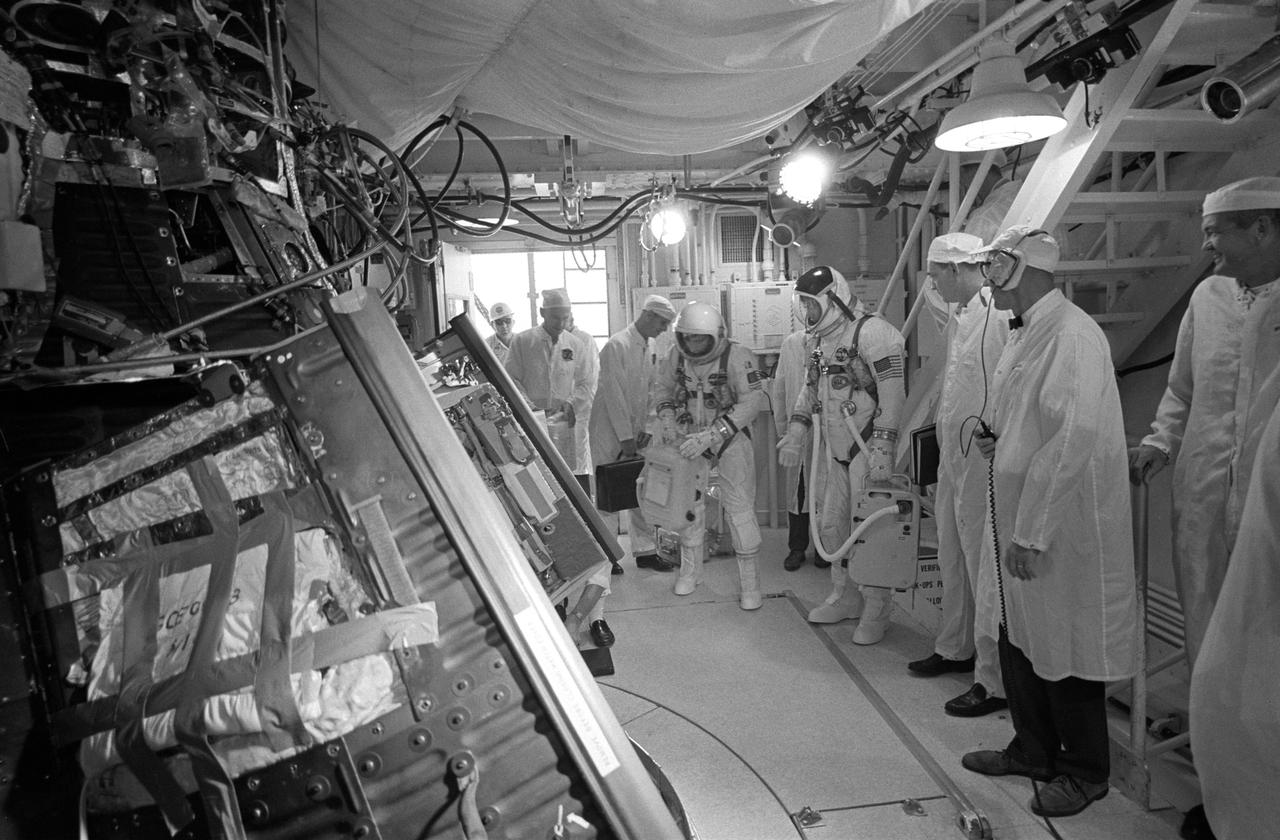
S66-57967 (10 Sept. 1966) --- Gemini-11 prime crew, astronauts Charles Conrad Jr. (right), command pilot, and Richard F. Gordon Jr. (left), pilot, prepare to enter the Gemini-11 spacecraft in the White Room atop Pad 19. Photo credit: NASA
Gemini 11 prime crew prepare to enter Gemini 11 spacecraft
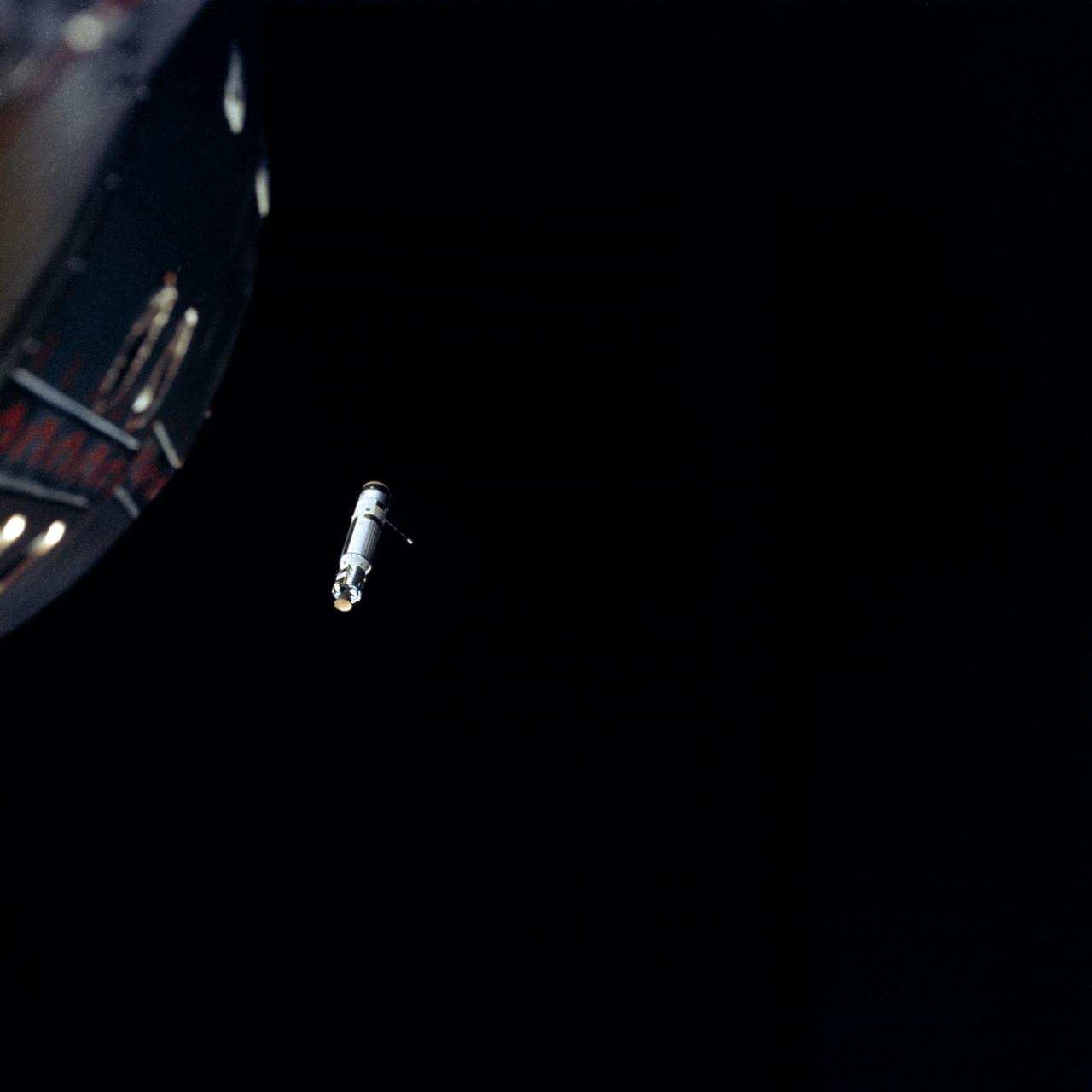
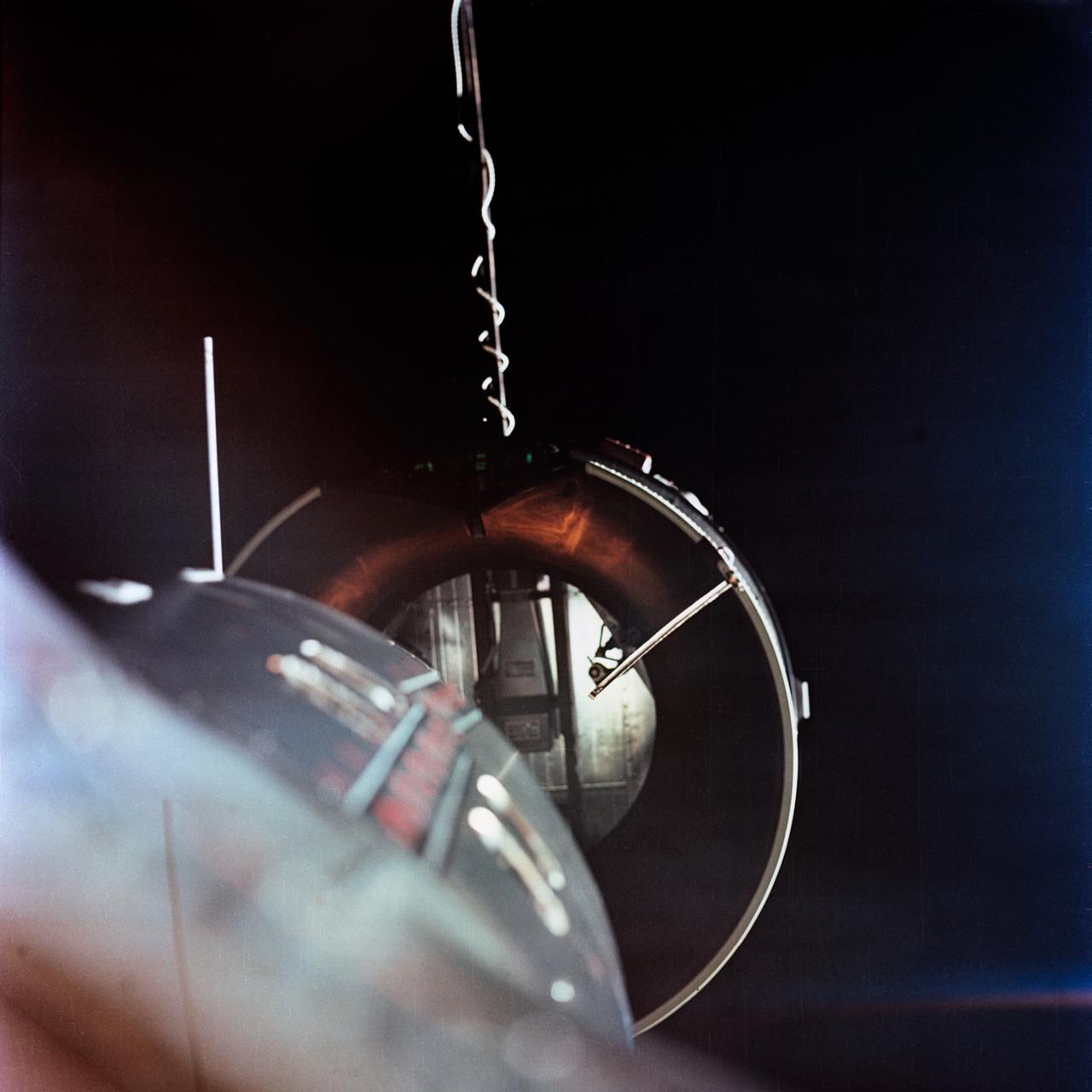
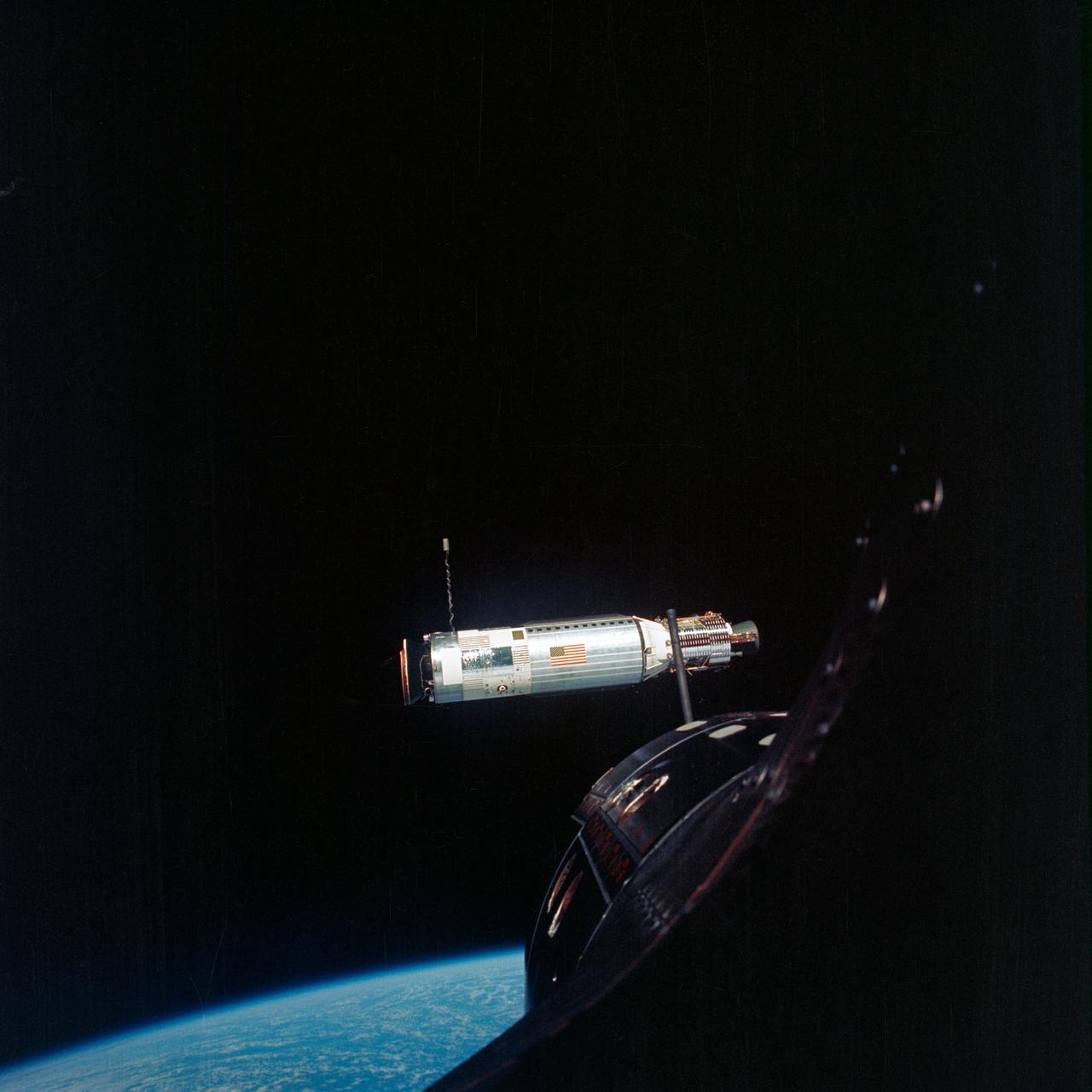
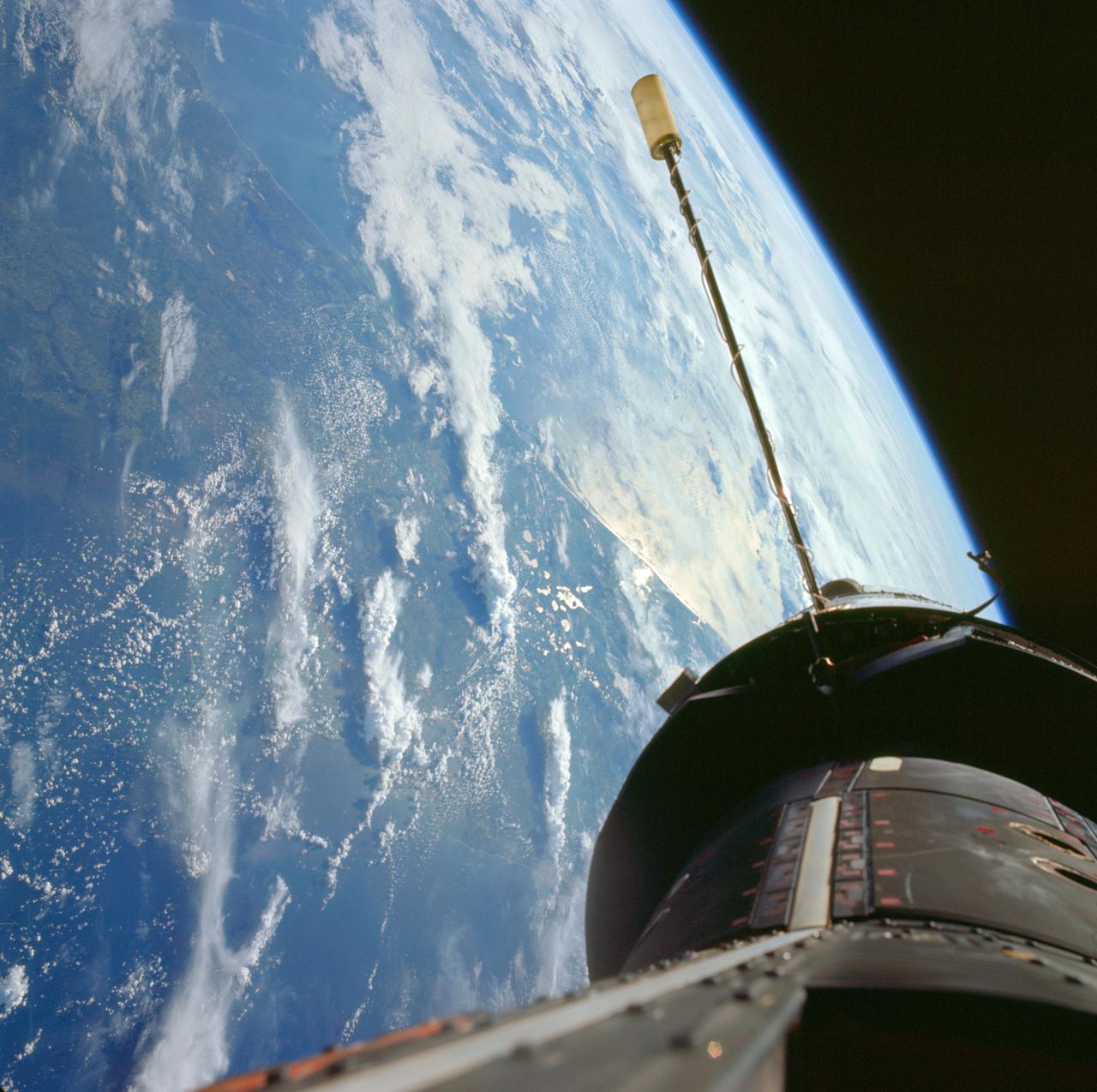
S66-25778 (16 March 1966) --? The Agena Target Docking Vehicle seen from the National Aeronautics and Space Administration?s Gemini-8 spacecraft during rendezvous in space. The Agena is approximately 260 feet away from the nose of the spacecraft (lower left). Crewmen for the Gemini-8 mission are astronauts Neil A. Armstrong, command pilot, and David R. Scott, pilot. Photo credit: NASA
Agena Target Docking vehicle seen from Gemini 8 spacecraft
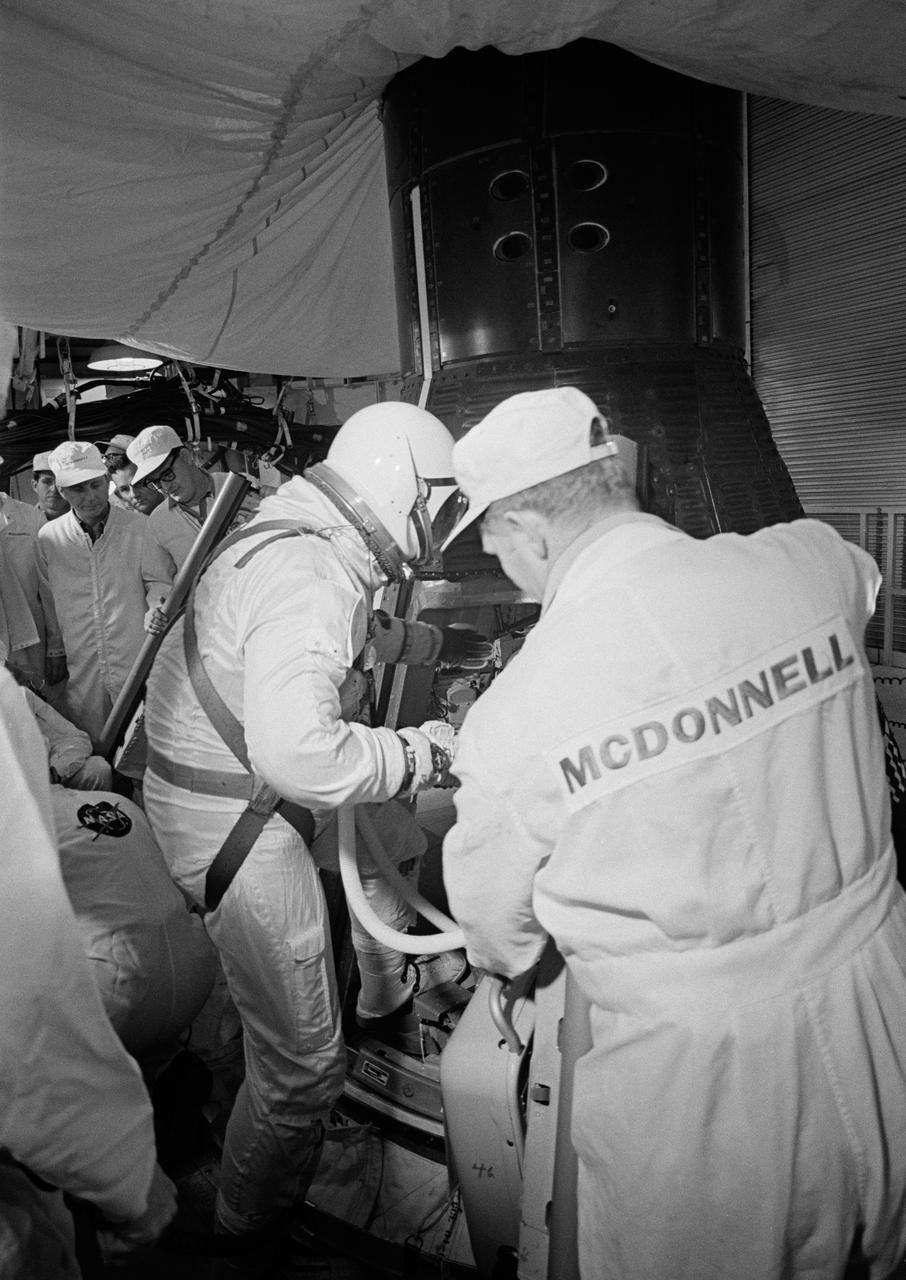
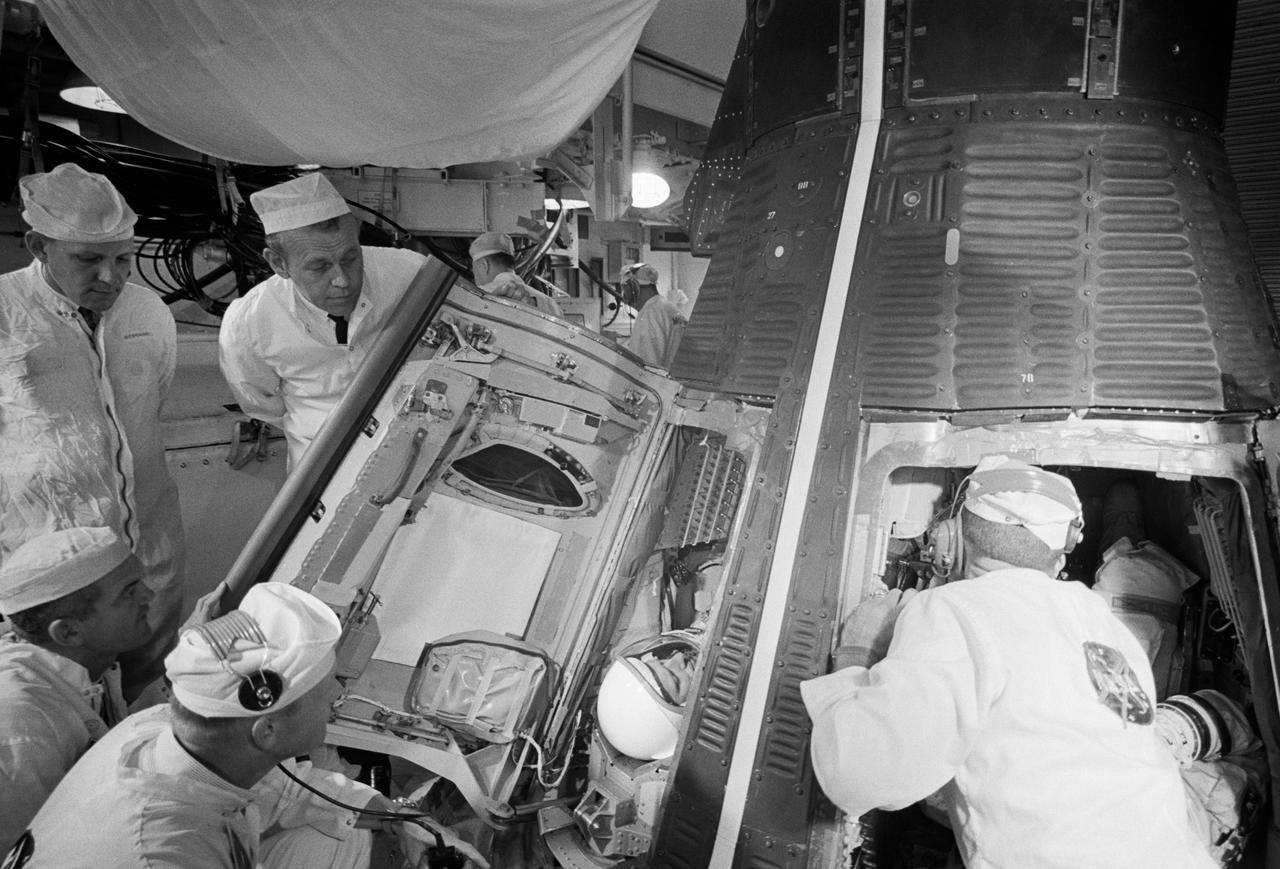
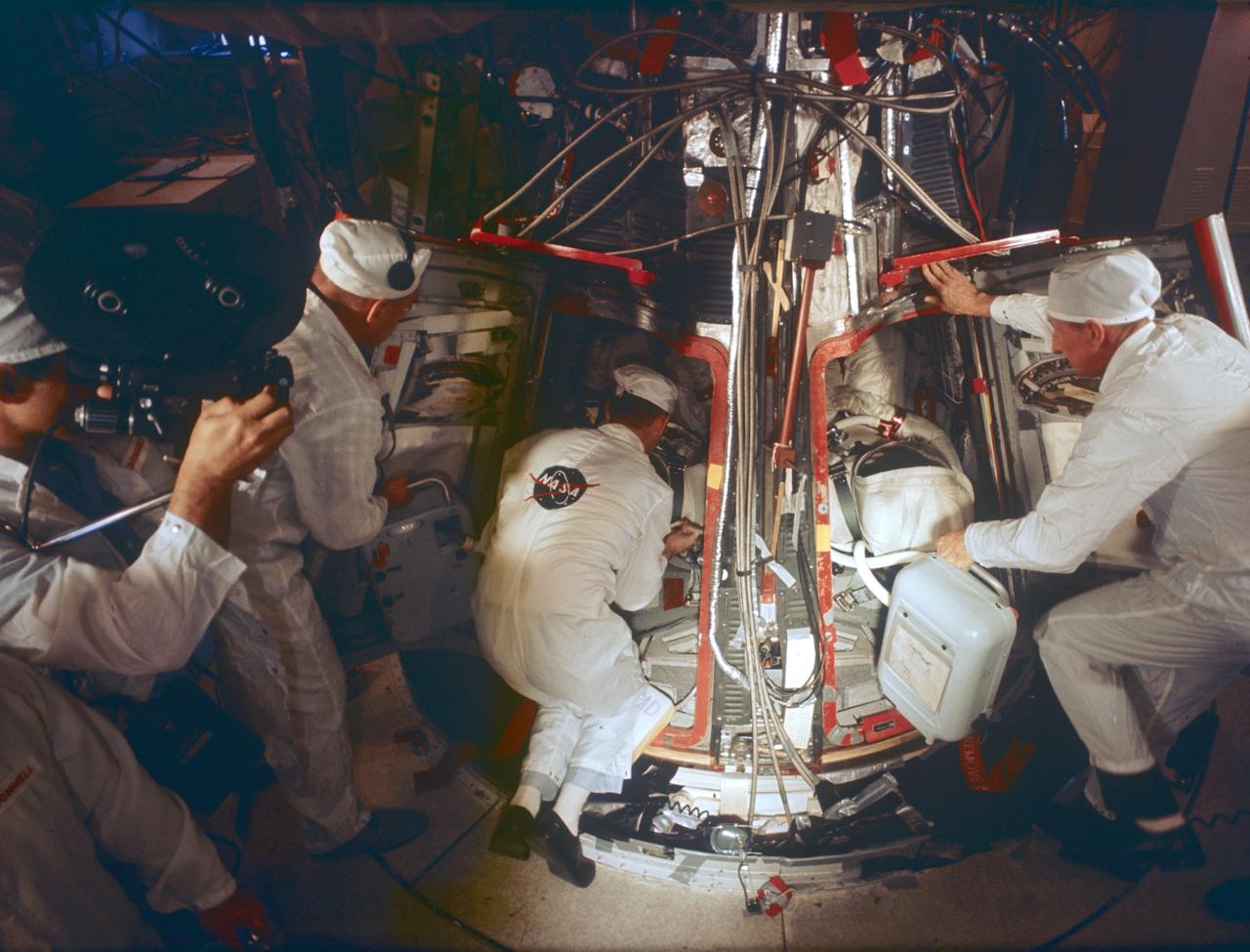
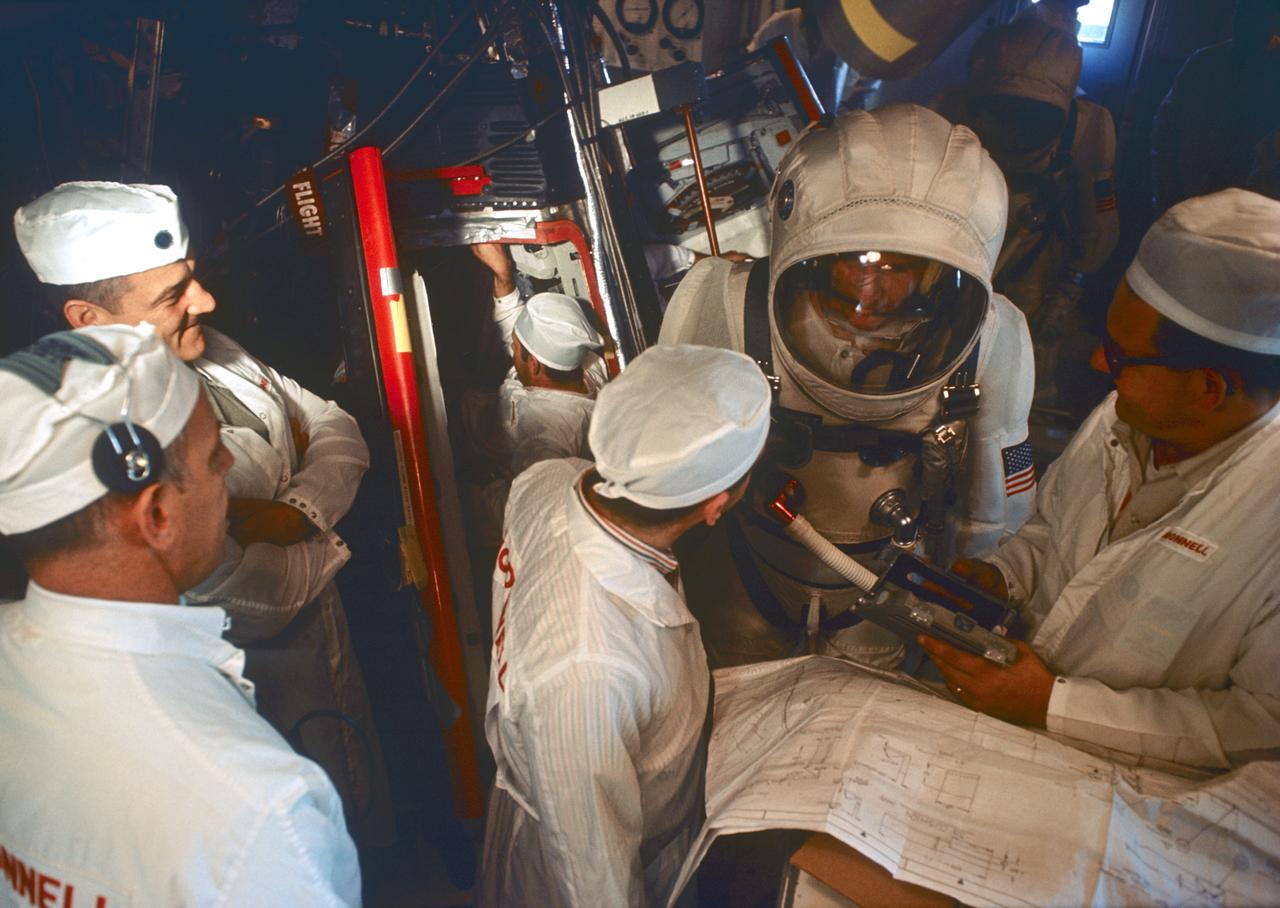
S65-20604 (23 March 1965) --- Astronaut John W. Young, the pilot of the Gemini-Titan 3 three-orbit mission, is assisted by a McDonnell Aircraft Corp. engineer as he enters the Gemini spacecraft in the white room atop the Gemini launch vehicle.
Astronaut John Young assisted into Gemini spacecraft in white room
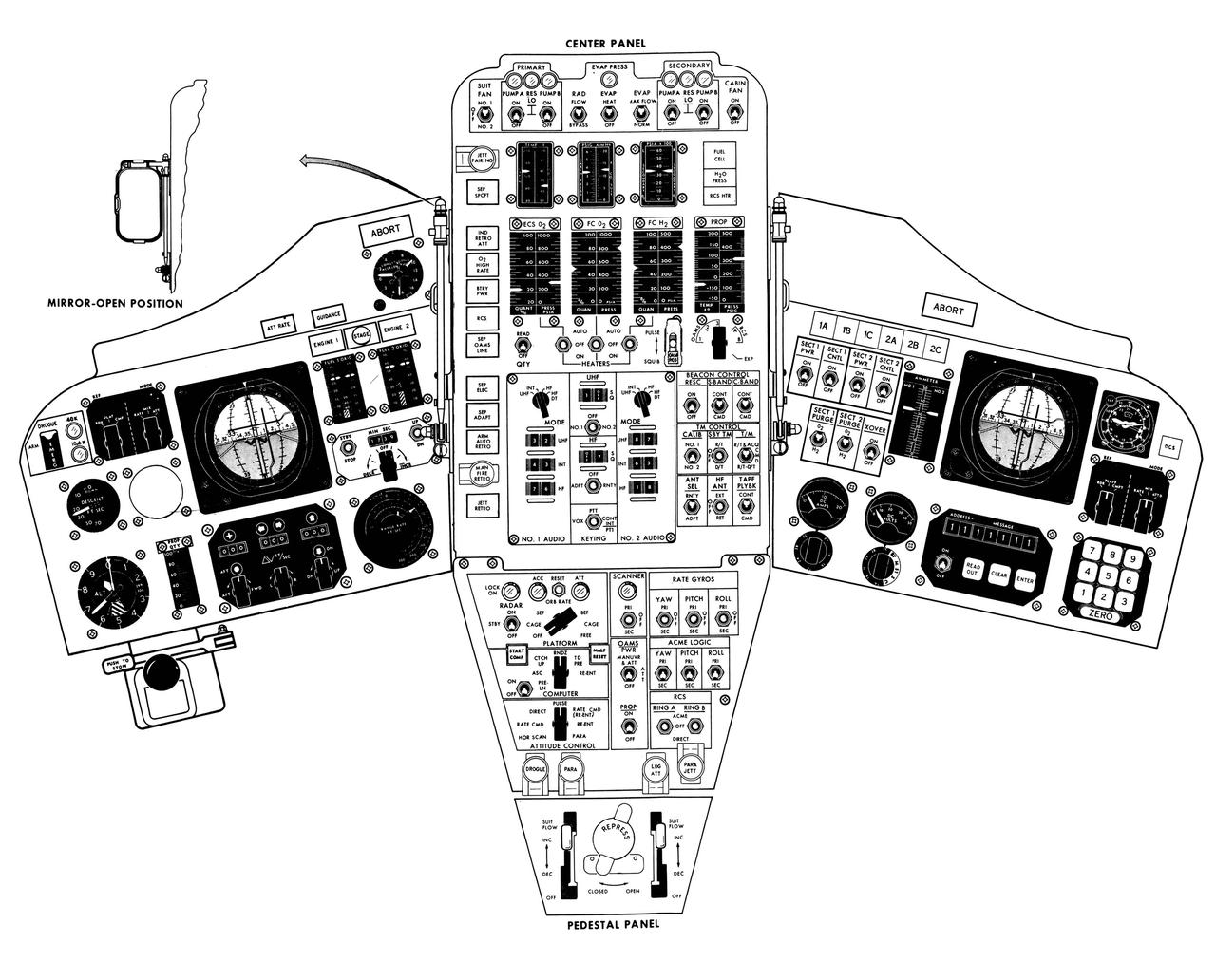
S65-14095 (1965) --- Artist concept of the Gemini spacecraft control panel.
Artist concept of the Gemini spacecraft control panel
S66-25784 (16 March 1966) --? The Agena Target Docking Vehicle seen from the National Aeronautics and Space Administration?s Gemini adapter of the Agena is approximately two feet from the nose of the spacecraft (lower left).  Crewmen for the Gemini-8 mission were astronauts Neil A. Armstrong, command pilot, and David R. Scott, pilot. Photo credit: NASA
Agena Target Docking vehicle seen from Gemini 8 spacecraft
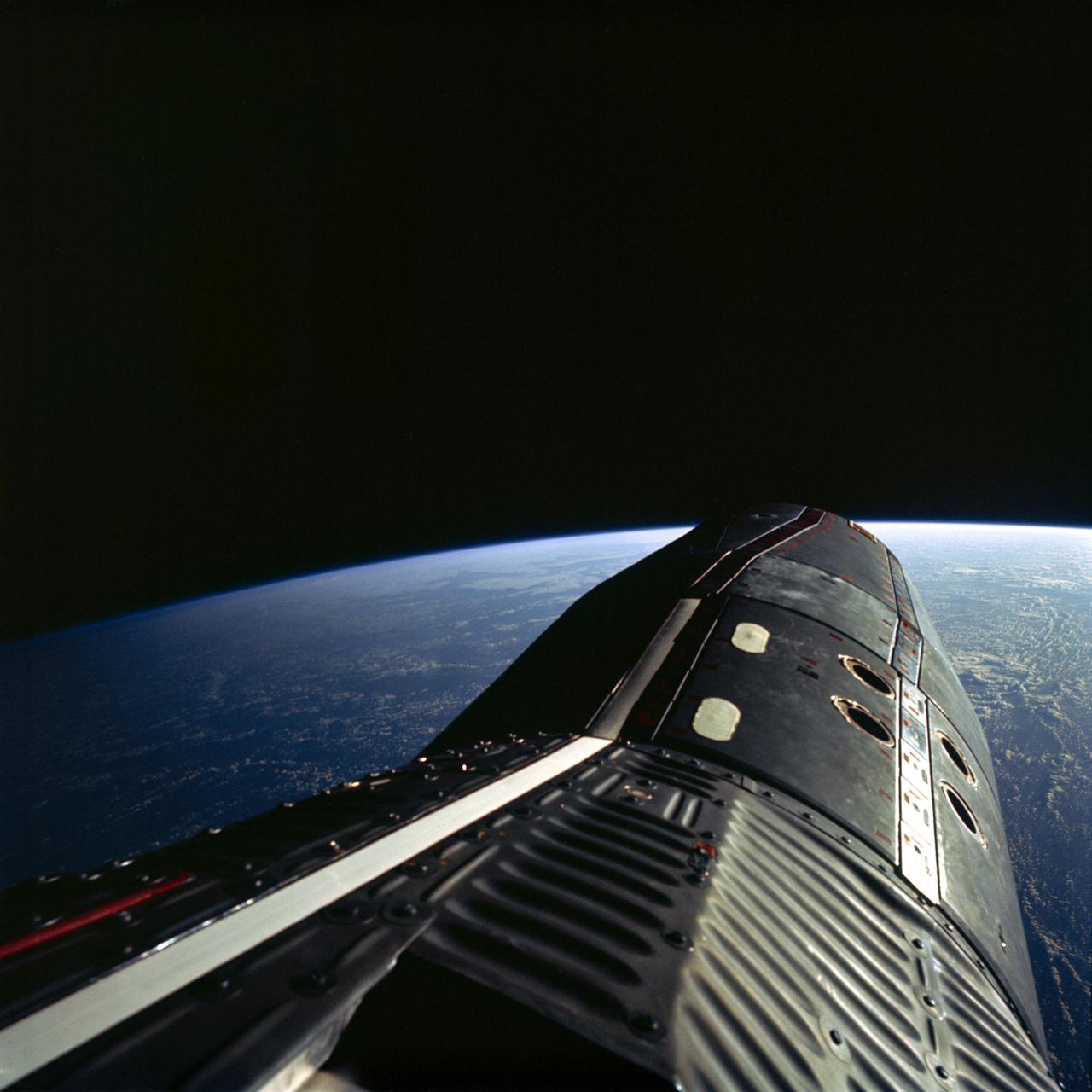
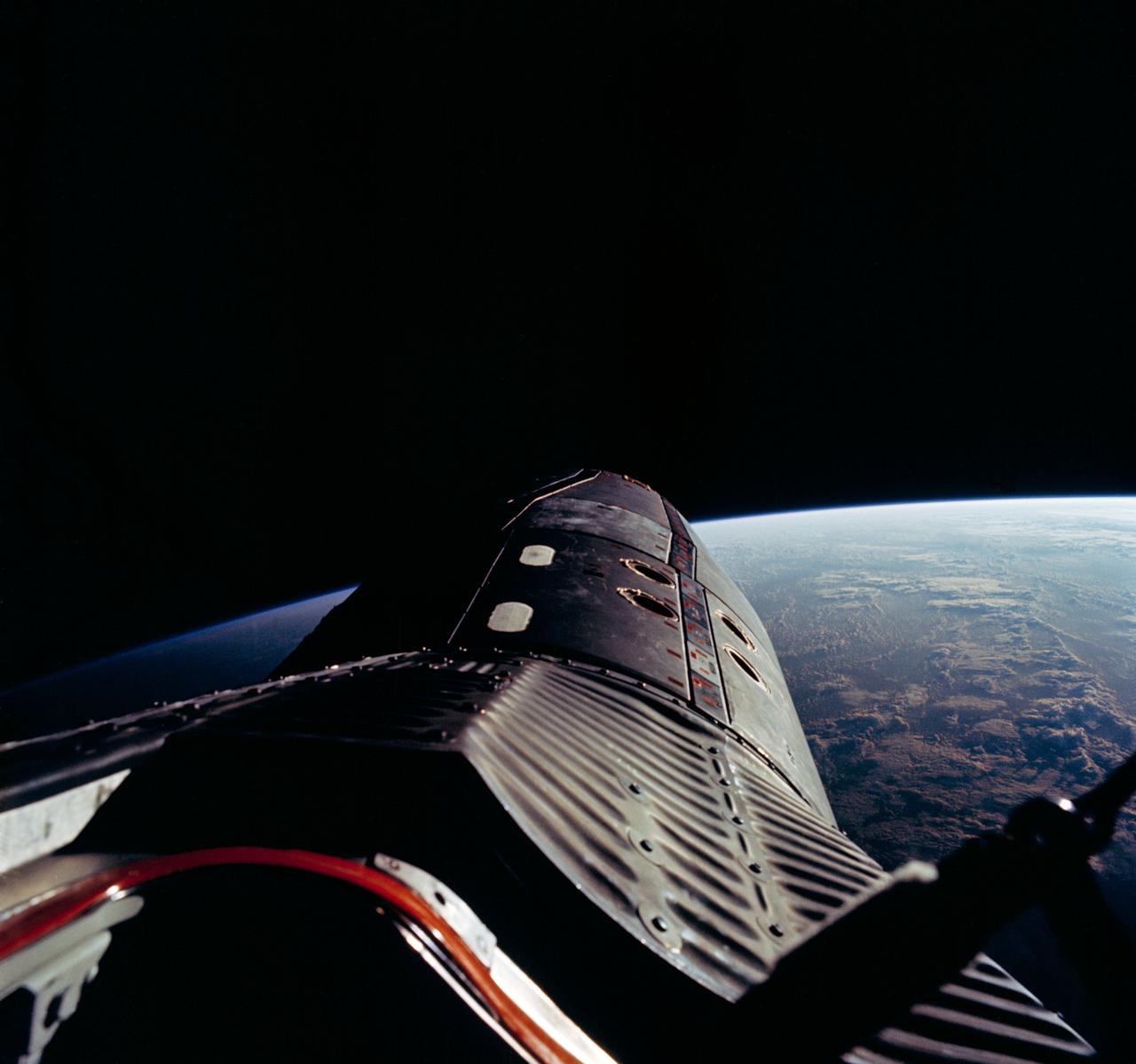
S66-62920 (13 Nov. 1966) --- Astronaut Edwin E. Aldrin Jr., pilot of the Gemini-12 spaceflight, took this picture of the Gemini-12 spacecraft during standup extravehicular activity (EVA) with the hatch open. This is a view to the rear showing the adapter section. Photo credit: NASA
Gemini 12 spacecraft seen during EVA
S66-63011 (13 Nov. 1966) --- Astronaut Edwin E. Aldrin Jr., pilot of the Gemini-12 spaceflight, took this picture of the Gemini-12 spacecraft during standup extravehicular activity (EVA) with the hatch open. Photo credit: NASA
Gemini 12 spacecraft seen during EVA
S66-63007 (12 Nov. 1966) --- Astronaut Edwin E. Aldrin Jr., pilot of the Gemini-12 spaceflight, took this picture of the Gemini-12 spacecraft during standup extravehicular activity (EVA) with the hatch open. This is a view looking forward showing the adapter section. Photo credit: NASA
Gemini 12 spacecraft seen during EVA
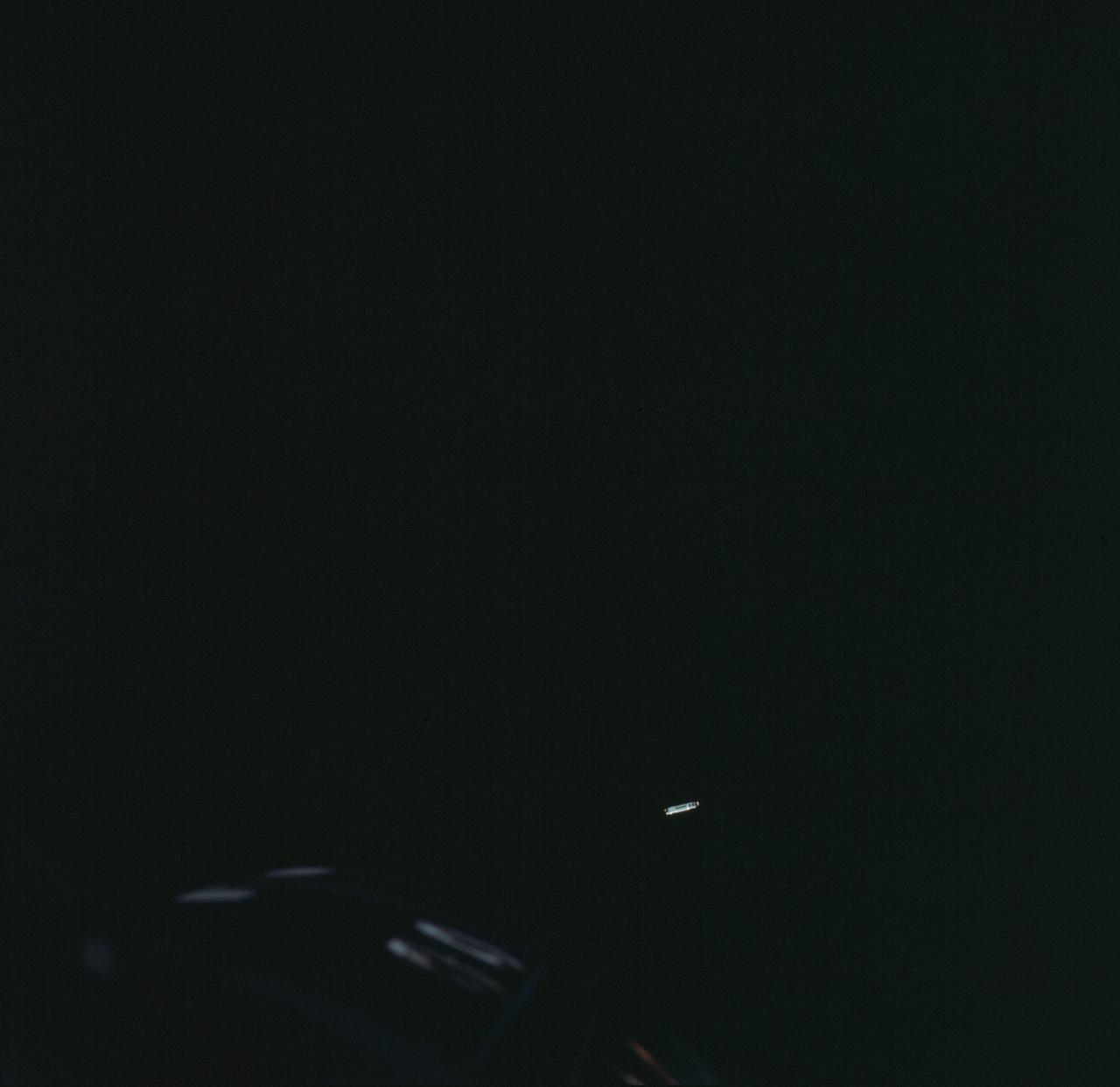
S66-25774 (16 March 1966) --- The Agena Target Docking vehicle seen from the Gemini-8 spacecraft during rendezvous in space. The Agena is approximately 1,000 feet away from the nose of the spacecraft (lower left). Photo credit: NASA
Agena Target Docking vehicle seen from Gemini 8 spacecraft
S66-54692 (14 Sept. 1966) --- Indonesian Islands (partial cloud cover): Sumatra, Java, Bali, Borneo, and Sumbawa, as photographed from the Gemini-11 spacecraft during its 26th revolution of Earth, at an altitude of 570 nautical miles.  Photo credit: NASA
Indonesian Islands as seen from Gemini 11 spacecraft
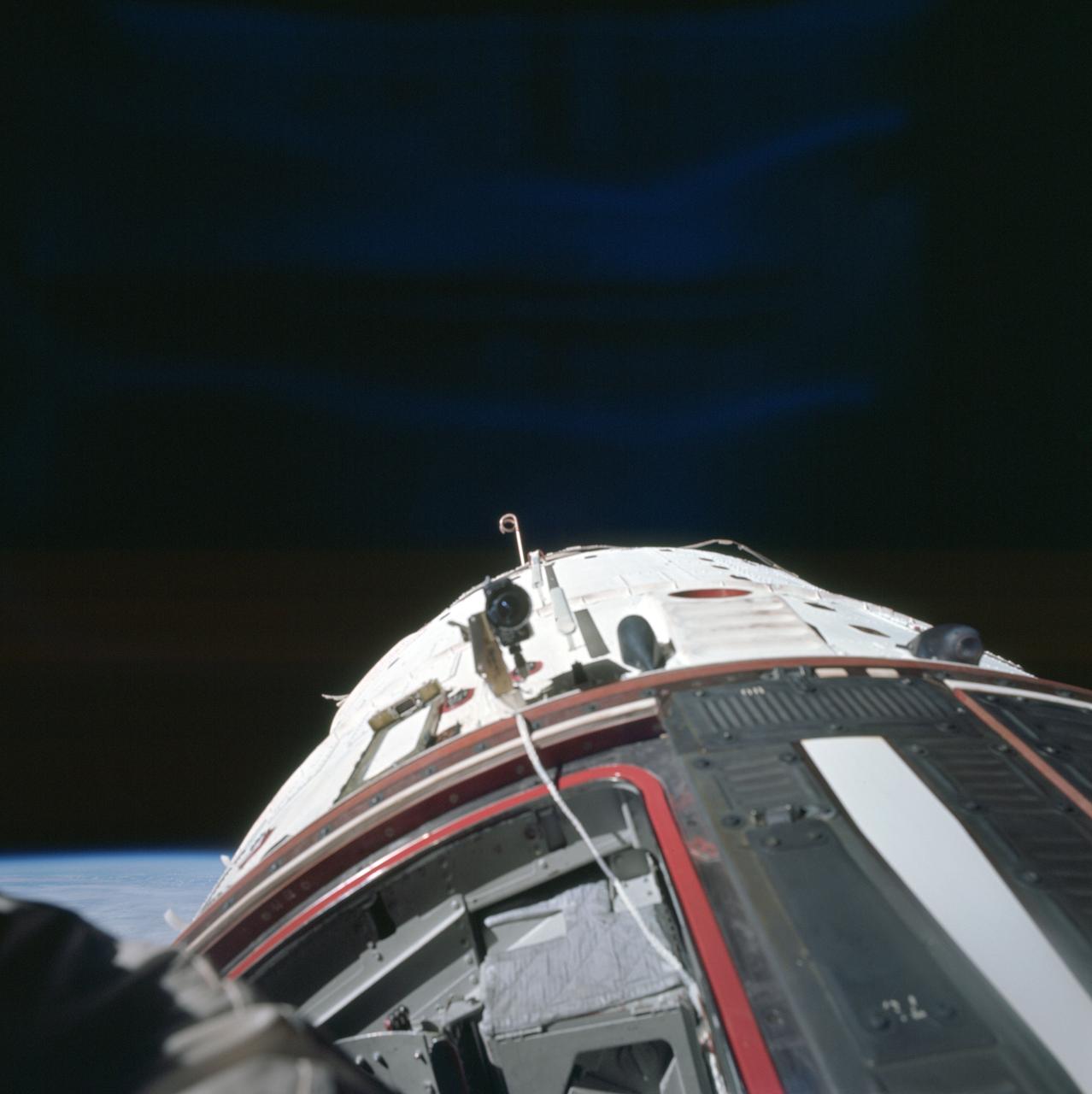
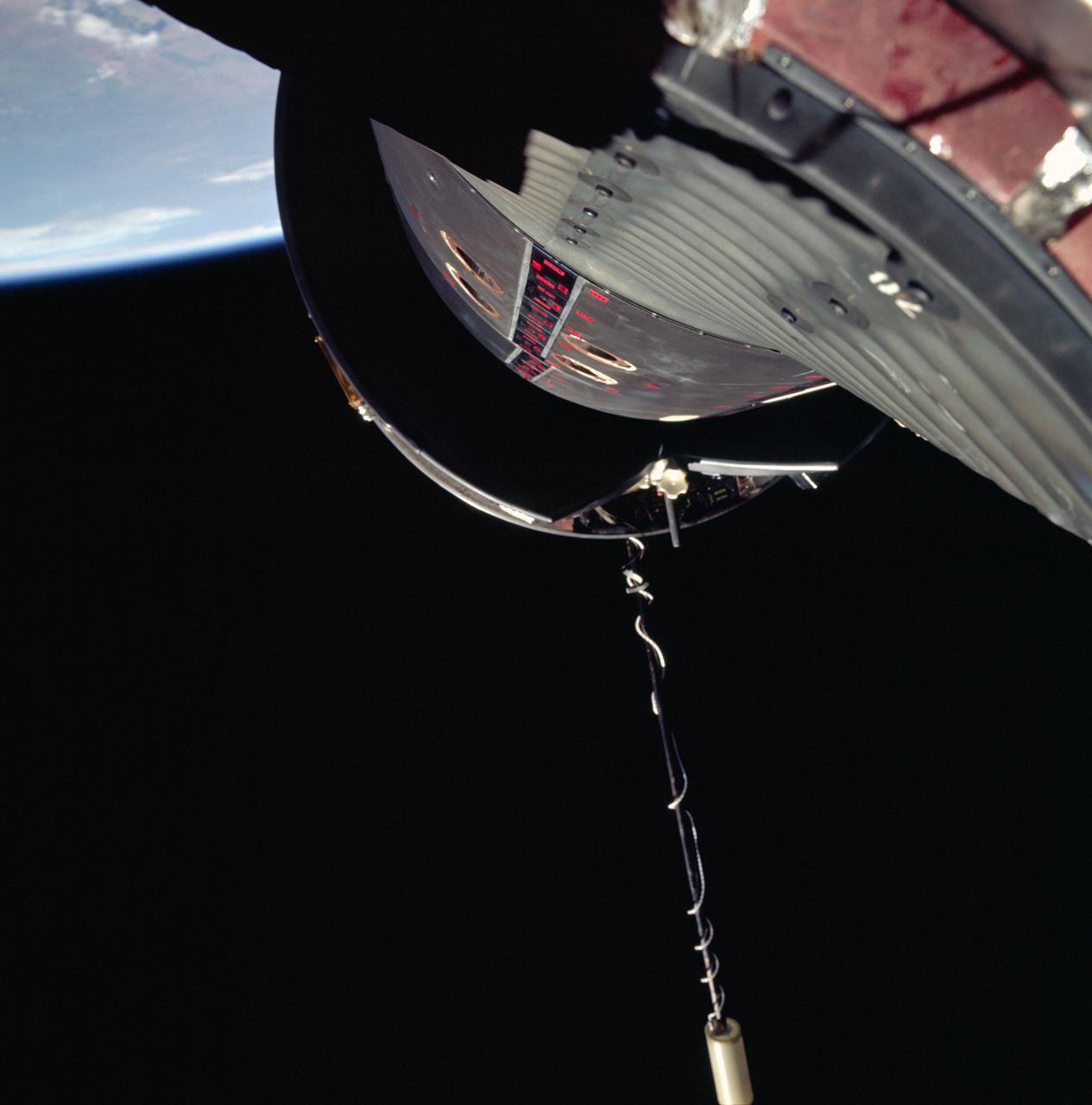
S66-54656 (13 Sept. 1966) --- Nose of Gemini-11 spacecraft and Agena Target Vehicle while docked as photographed by astronaut Richard F. Gordon Jr., pilot, during his stand-up extravehicular activity (EVA). Taken with a modified 70mm Hasselblad camera, using Eastman Kodak, Ektachrome, MS (S.O. 368) color film. Photo credit: NASA
Nose of Gemini 11 spacecraft and Agena Target Vehicle as seen during EVA
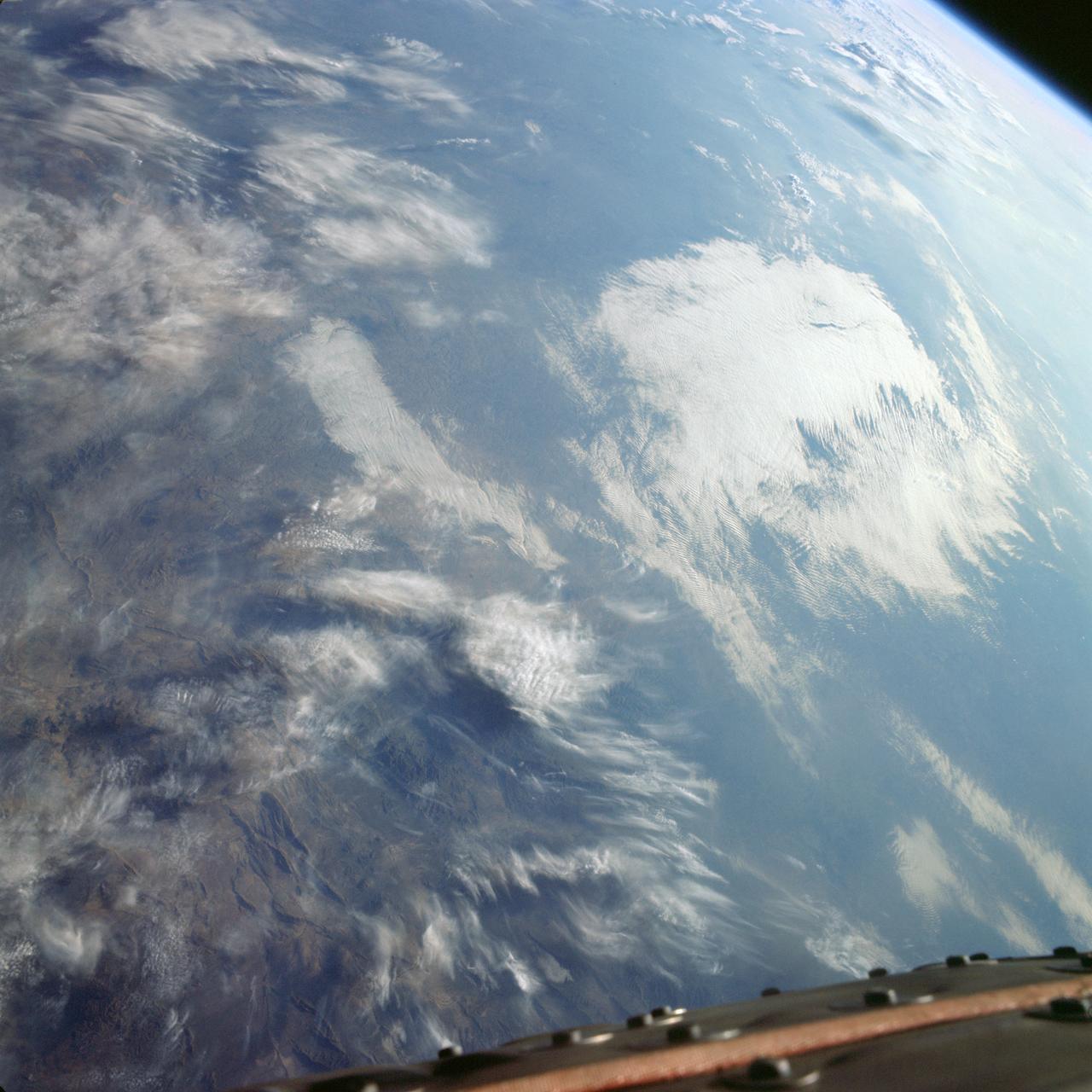
S66-54558 (14 Sept. 1966) --- Del Rio and Eagle Pass area of the Rio Grande Valley of Texas and Mexico as seen from the Gemini-11 spacecraft during its 29th revolution of Earth. Photo credit: NASA
Rio Grande Valley of Texas as seen from Gemini 11 spacecraft
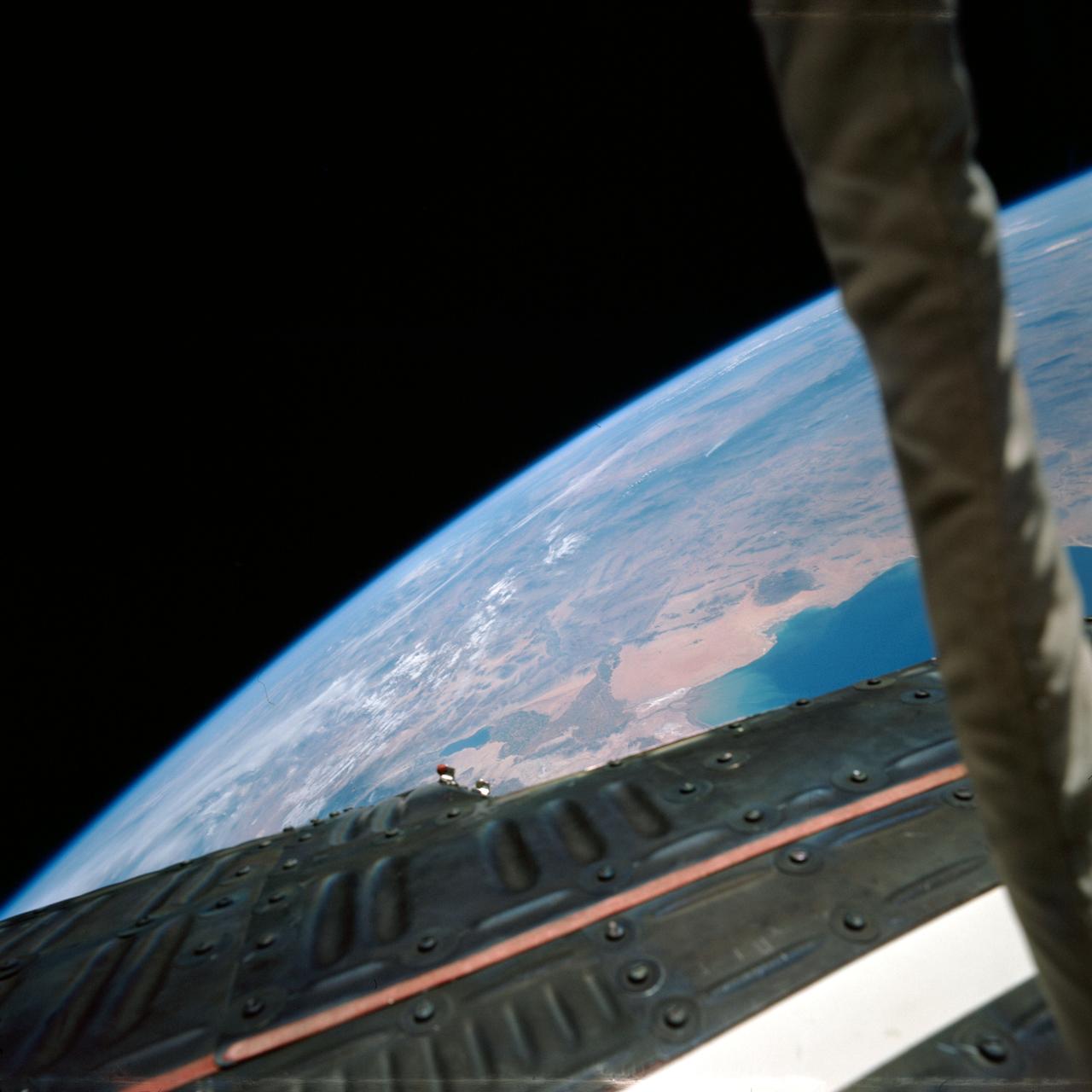
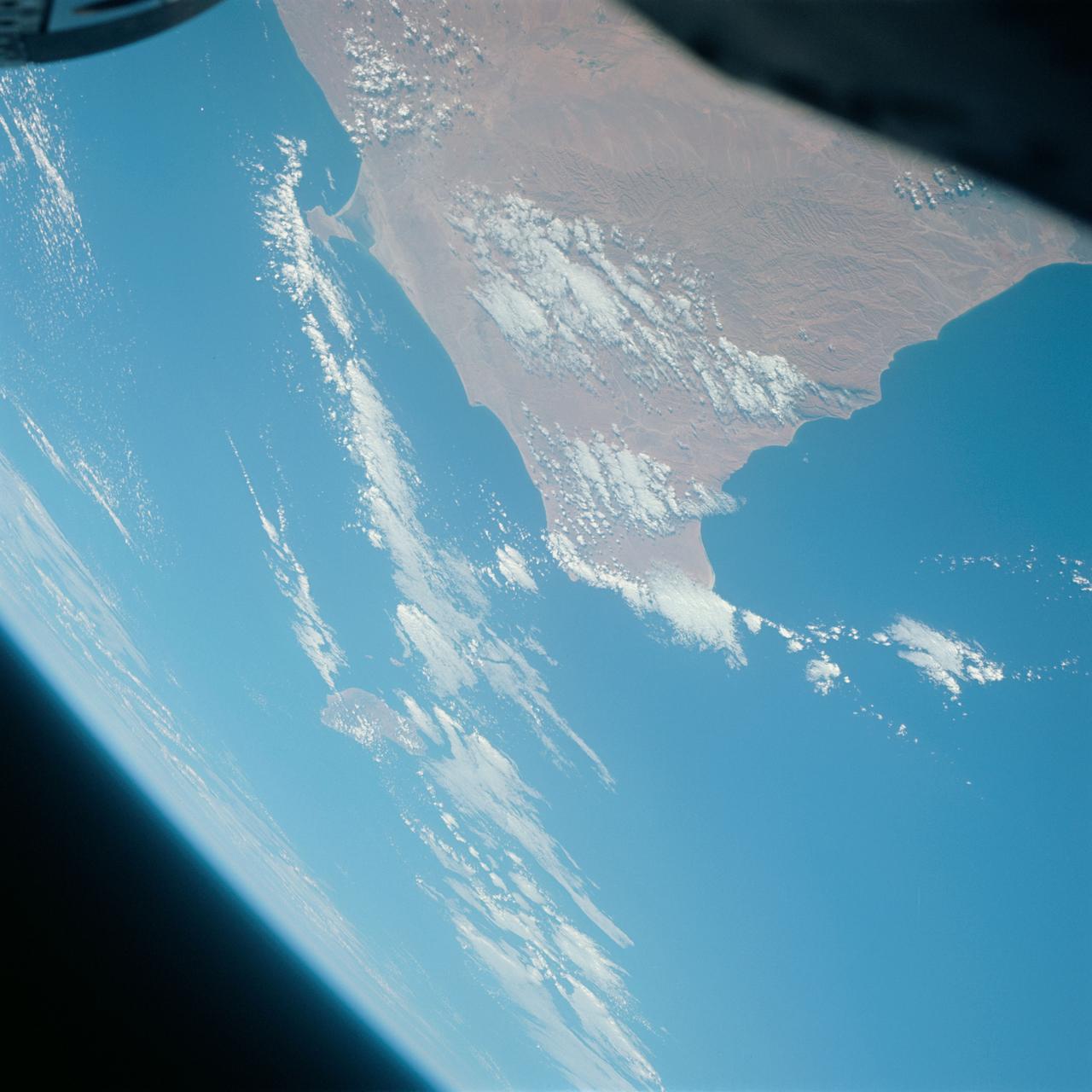
S66-38068 (5 June 1966) --- Astronaut Eugene A. Cernan took this view of the Gemini-9A spacecraft and his umbilical cord (right) over California, Arizona, and Sonora, Mexico, during his extravehicular activity (EVA) on the Gemini-9A mission. Taken during the 32nd revolution of the flight. Photo credit: NASA
Gemini 9 spacecraft during EVA as seen Astronaut Eugene Cernan
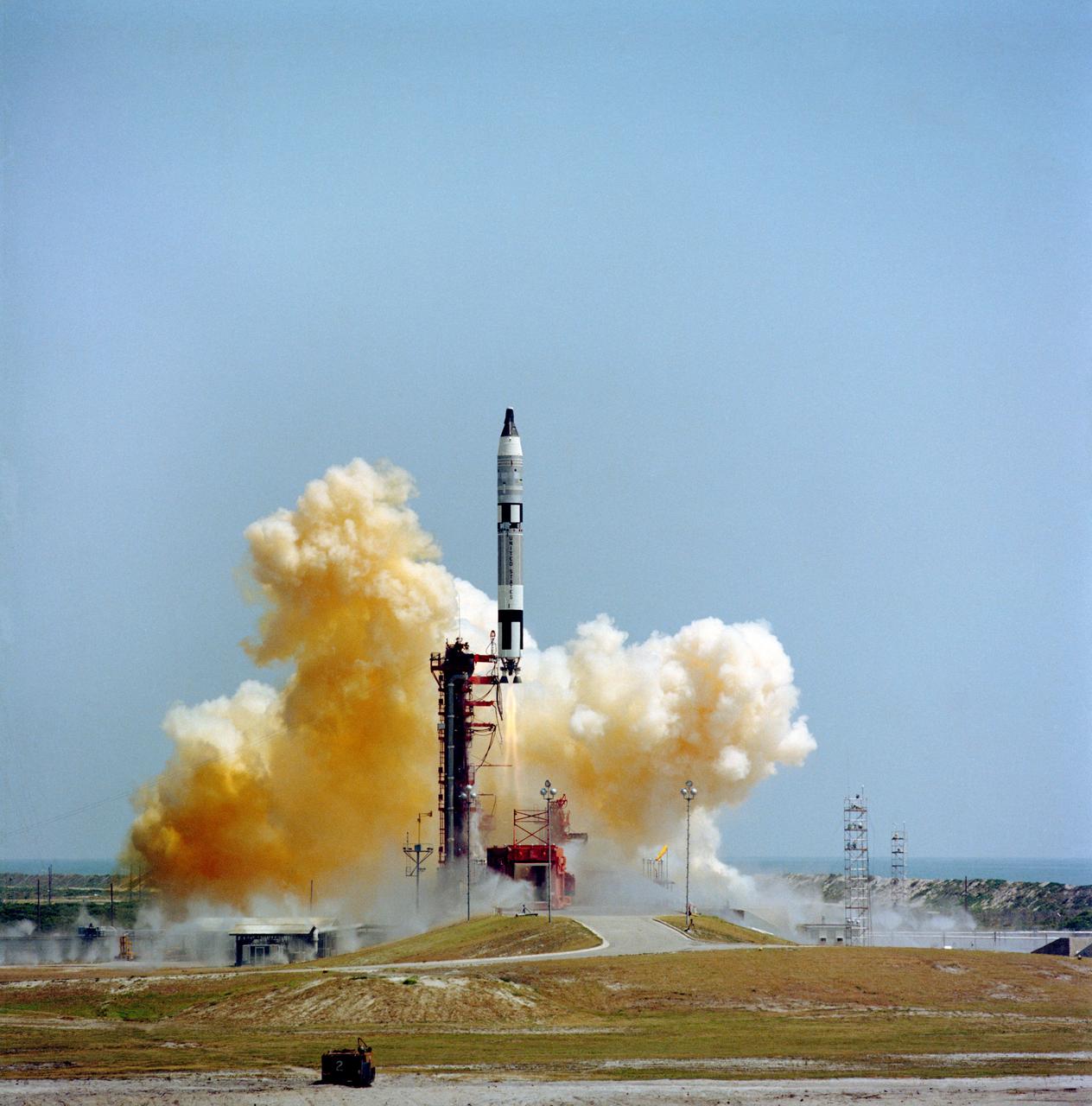
S65-29639 (3 June 1965) --- The Gemini-Titan 4 (GT-4) spaceflight launches from Cape Kennedy's Pad 19 at 10:16 a.m. (EST) on June 3, 1965. The GT-4 spacecraft carried astronauts James A. McDivitt, command pilot, and Edward H. White II, pilot, on a four-day, 62-revolution mission.
View of the Gemini-Titan 4 spacecraft launch
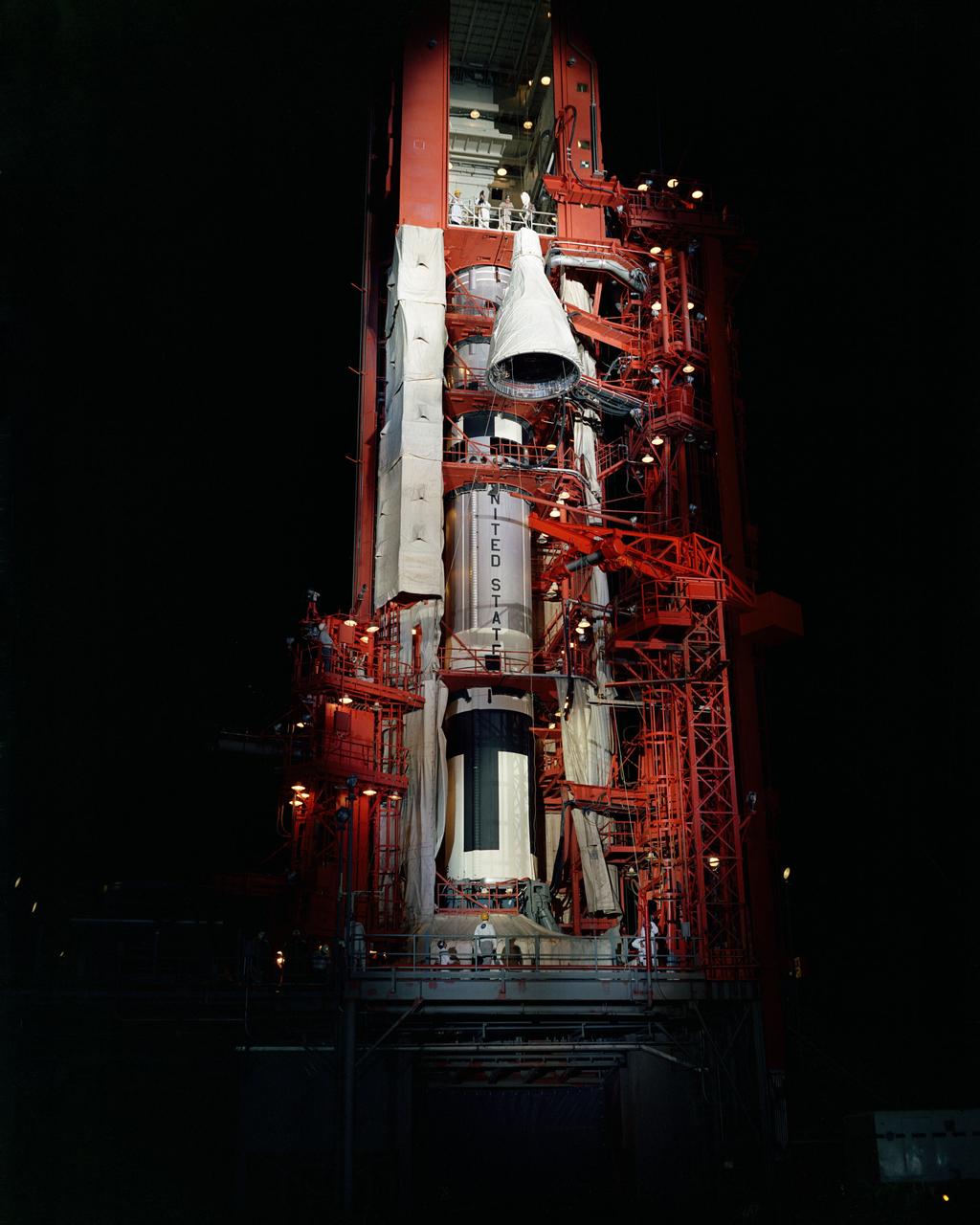
S65-23710 (14 April 1965) --- Nighttime scene showing the Gemini-4 spacecraft being hoisted to the white room at the top of the gantry at Pad 19 for soft mating with the Titan launch vehicle.
Nighttime scene of Gemini spacecraft being hoisted to top of Pad 19
S66-46124 (18 July 1966) --- Agena Target Docking Vehicle 5005 is photographed from the Gemini-10 spacecraft during rendezvous in space. The two spacecraft are about 41 feet apart. After docking with the Agena, astronauts John W. Young, command pilot, and Michael Collins, pilot, fired the 16,000-pound thrust engine of Agena-10's primary propulsion system to boost the combined vehicles into an orbit with an apogee of 413 nautical miles to set a new altitude record for manned spaceflight. Photo credit: NASA
Agena Target Docking Vehicle photographed from Gemini 10 spacecraft
S66-56177 (10 Sept. 1966) --- Technicians in the White Room atop Pad 19 prepare to close hatches on the Gemini-11 spacecraft during prelaunch countdown. Inside the spacecraft are astronauts Charles Conrad Jr., command pilot, and Richard F. Gordon Jr., pilot. Photo credit: NASA
Technicians close hatches on Gemini 11 spacecraft during countdown
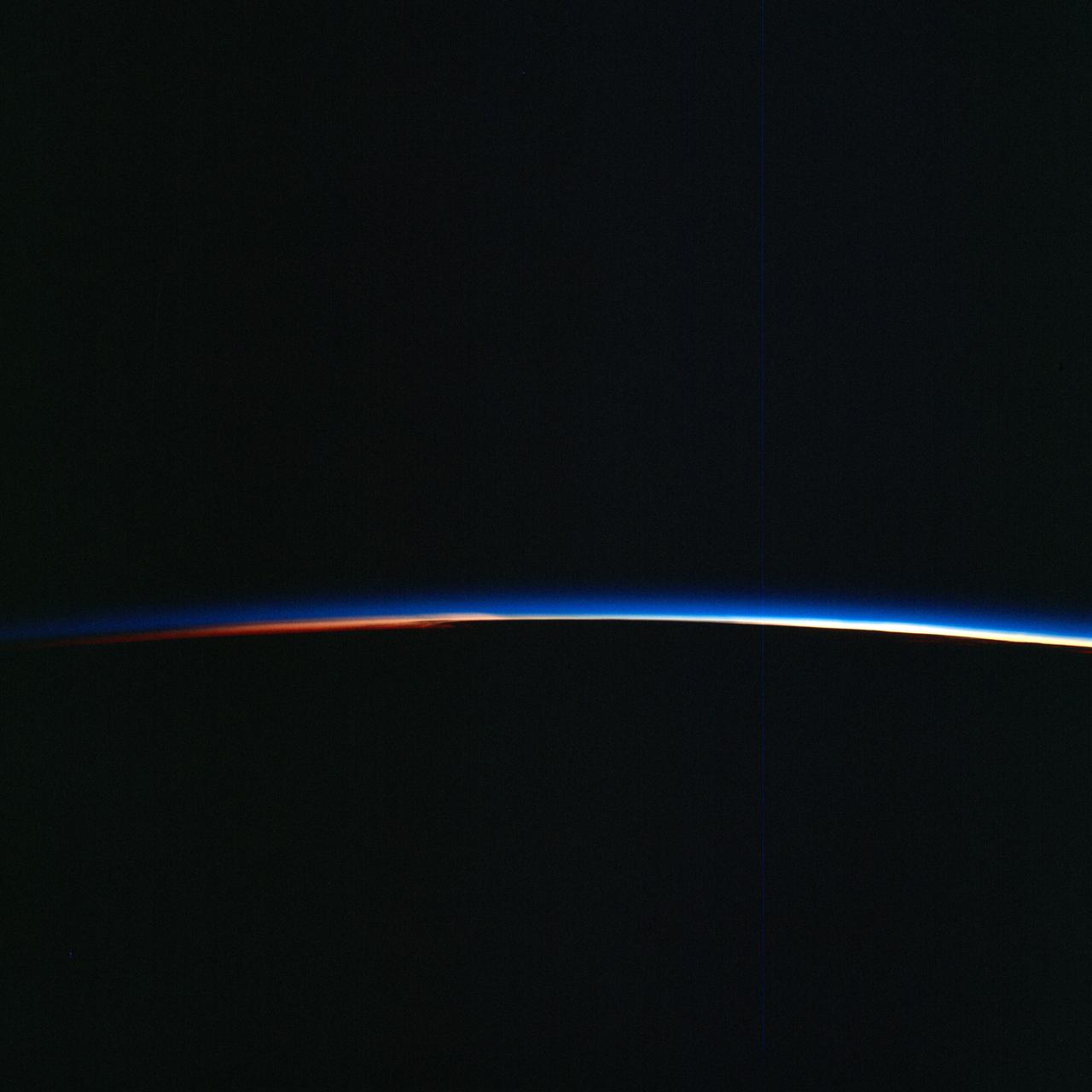
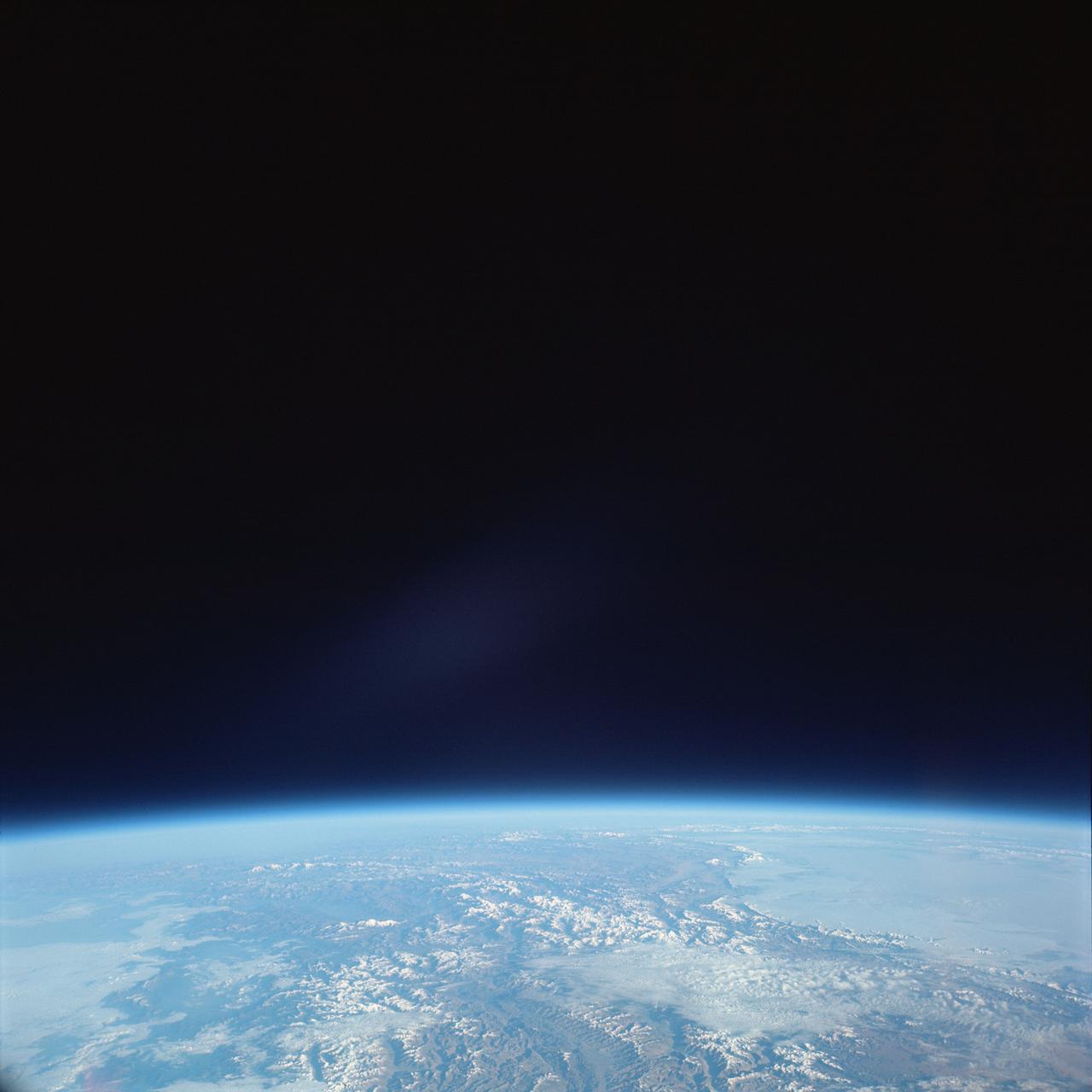
S66-38275 (3-6 June 1966) --- Earth's limb at sunrise as seen from the orbiting Gemini-9 spacecraft during its three-day mission in space. Taken with a modified 70mm Hasselblad camera, using Eastman Kodak, Ektachrome MS (S.O. 217) color film. Photo credit: NASA
Earth's limb at sunrise as seen from the Gemini 9-A spacecraft
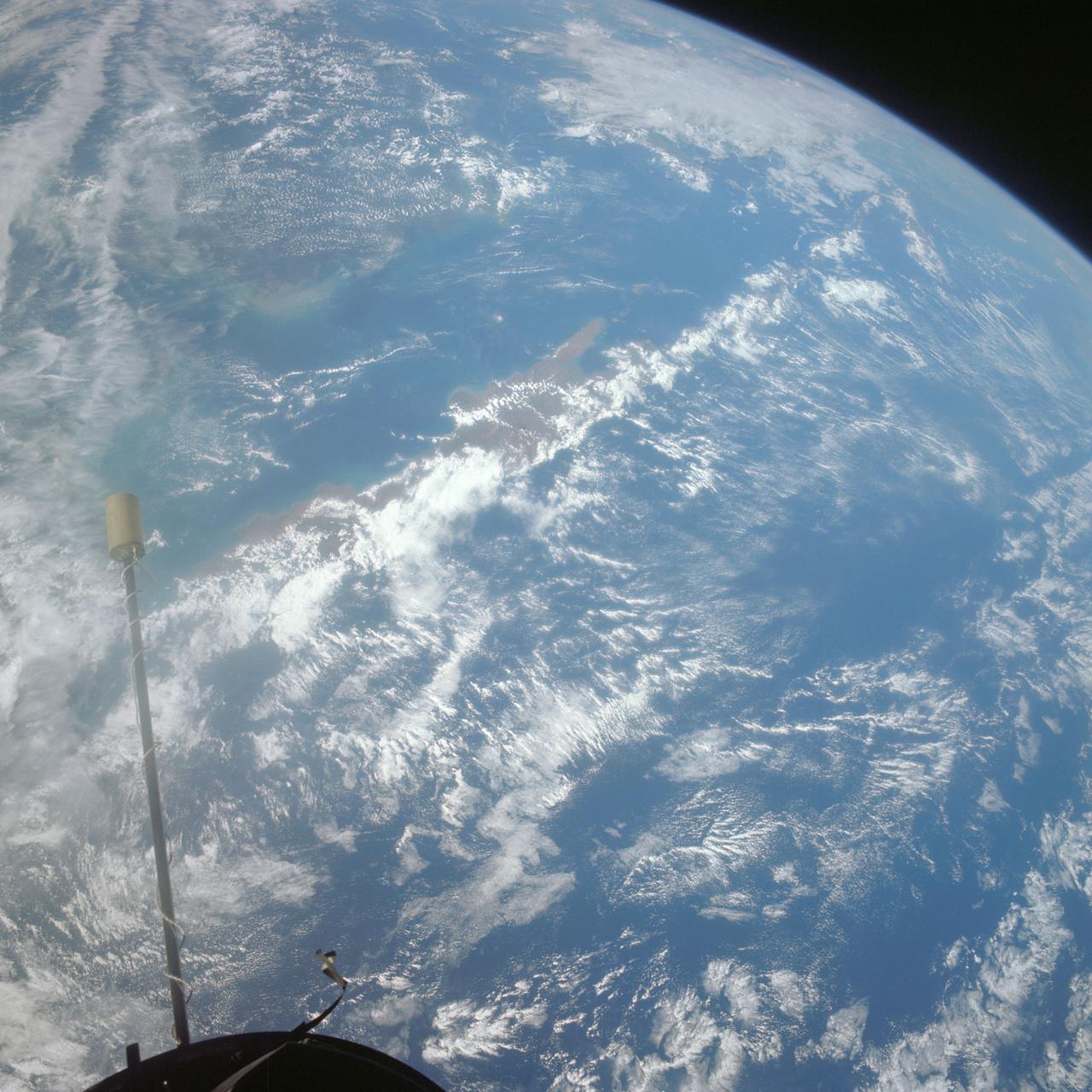
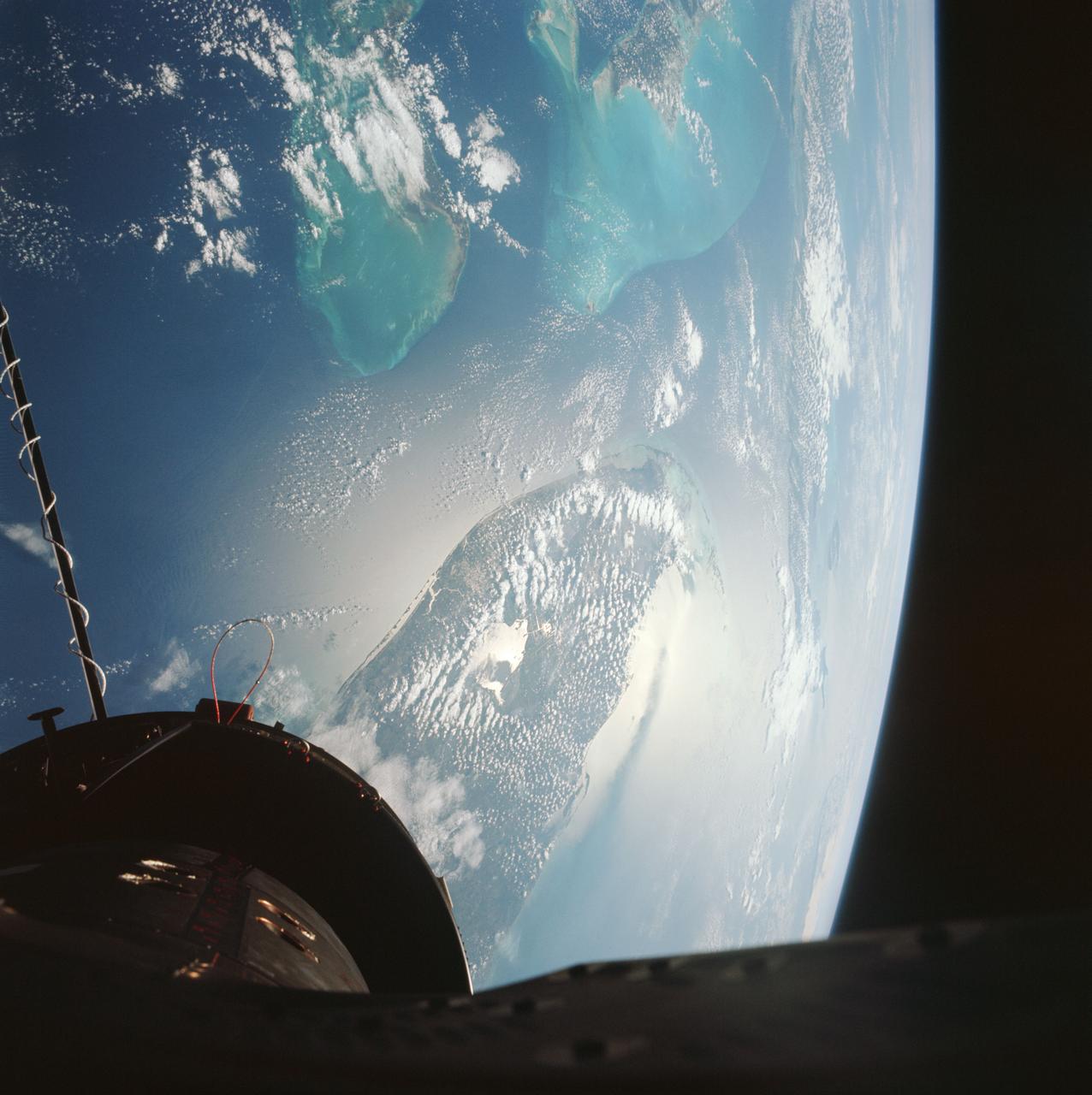
S66-63418 (13 Nov. 1966) --- Florida (south half), Bahamas Islands (Andros-Grand Bahamas-Bimini), and Cuba, looking south as seen from Gemini-12 spacecraft on its 15th revolution of Earth. Photo credit: NASA
Florida, Bahama Islands, Cuba as seen from Gemini 12 spacecraft
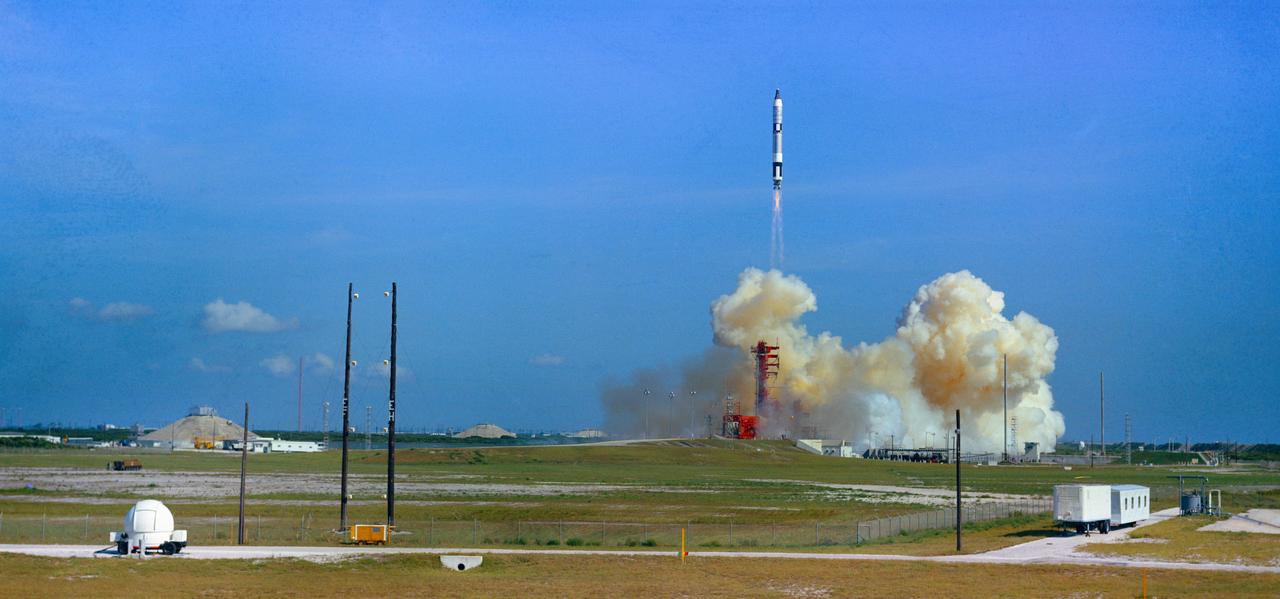
S65-50774 (21 Aug. 1965) --- The National Aeronautics and Space Administration launched the Gemini-5 spacecraft from Pad 19 at 9 a.m. (EST) Aug. 21, 1965, on a planned eight-day orbital mission. Astronaut L. Gordon Cooper Jr. was the command pilot; and astronaut Charles Conrad Jr. was the pilot. A full duration mission will achieve the longest manned spaceflight to date.
Launch of the Gemini 5 spacecraft from Pad 19 at 9 a.m. Aug. 21, 1965.
S65-63171 (15 Dec. 1965) --- The Gemini-7 spacecraft as seen from the Gemini-6 spacecraft during their rendezvous mission in space. Photo credit: NASA or National Aeronautics and Space Administration
View of the Gemini 6 and Gemini 7 rendezvous
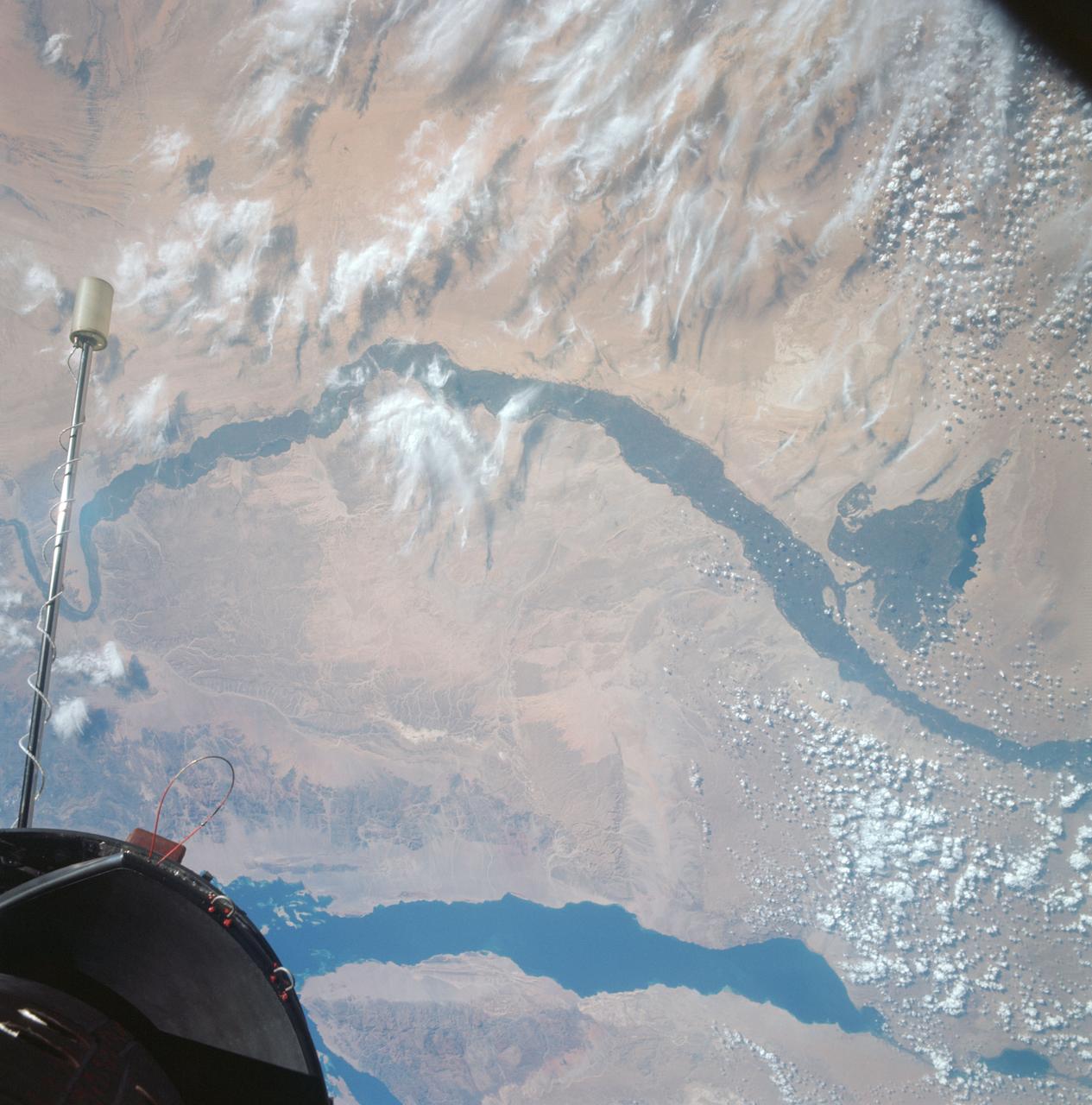
S66-63477 (13 Nov. 1966) --- United Arab Republic (Egypt), the Nile Valley from Luxor to Cairo, El Payium, Gulf of Suez, Sinai as seen from Gemini-12 spacecraft on its 25th revolution of Earth.  Photo credit: NASA
Egypt, Nile Valley, Gulf of Suez, Sinai as seen from Gemini 12 spacecraft
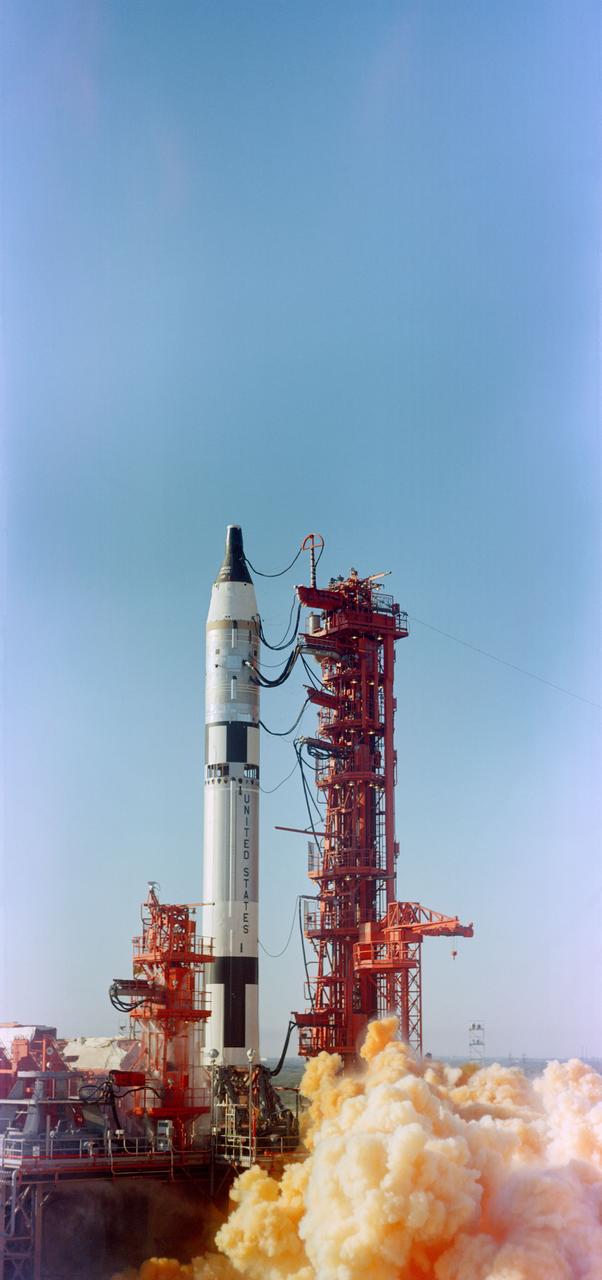
S65-14150 (19 January 1965) --- Launching of the unmanned Gemini 2 flight. The second Titan II Gemini Launch Vehicle (GLV-2) carried the unmanned, instrumented Gemini spacecraft (GT-2) for a suborbital shot preliminary to the first U.S. two-man Gemini mission.
Liftoff of Gemini 2
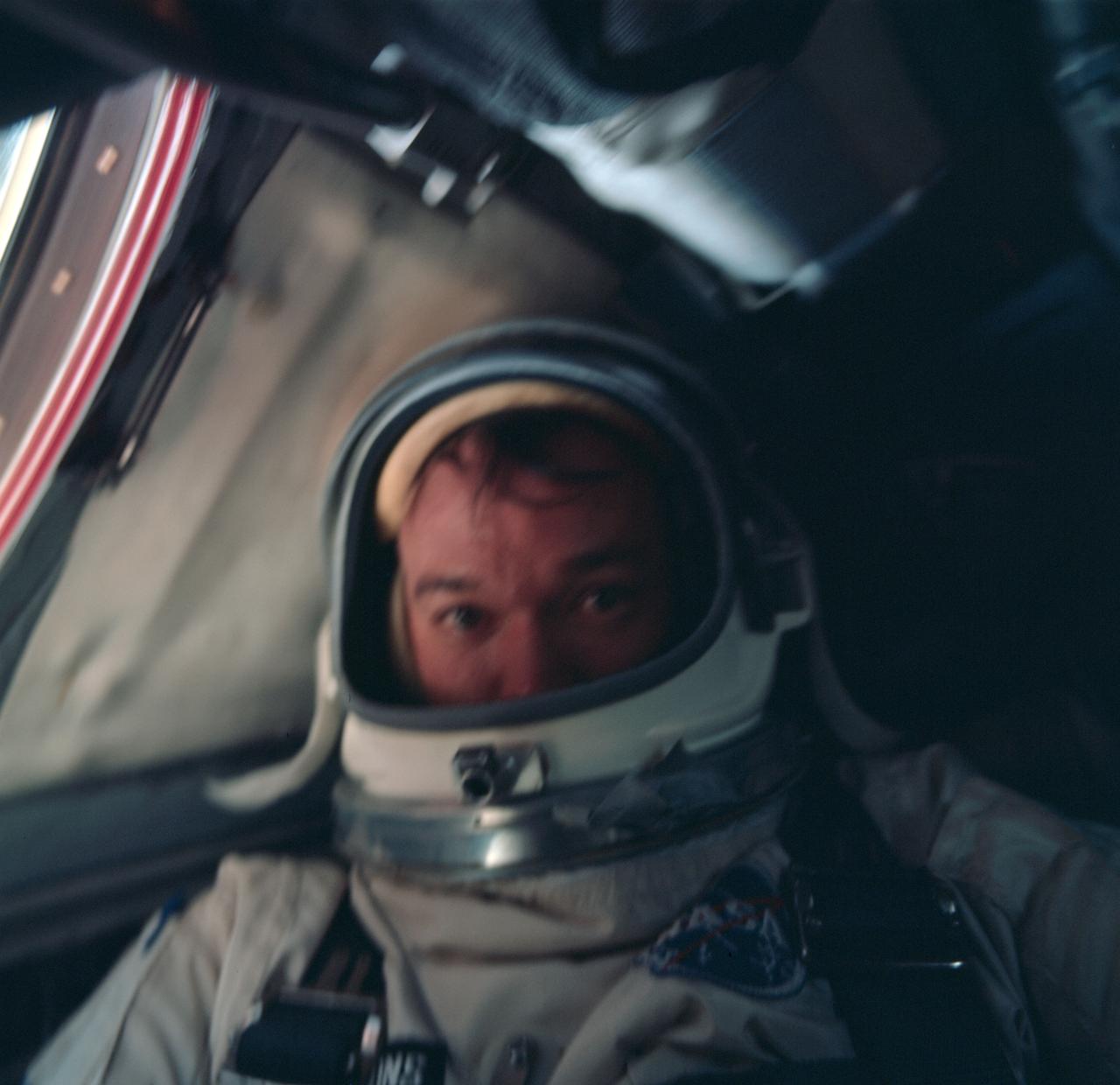
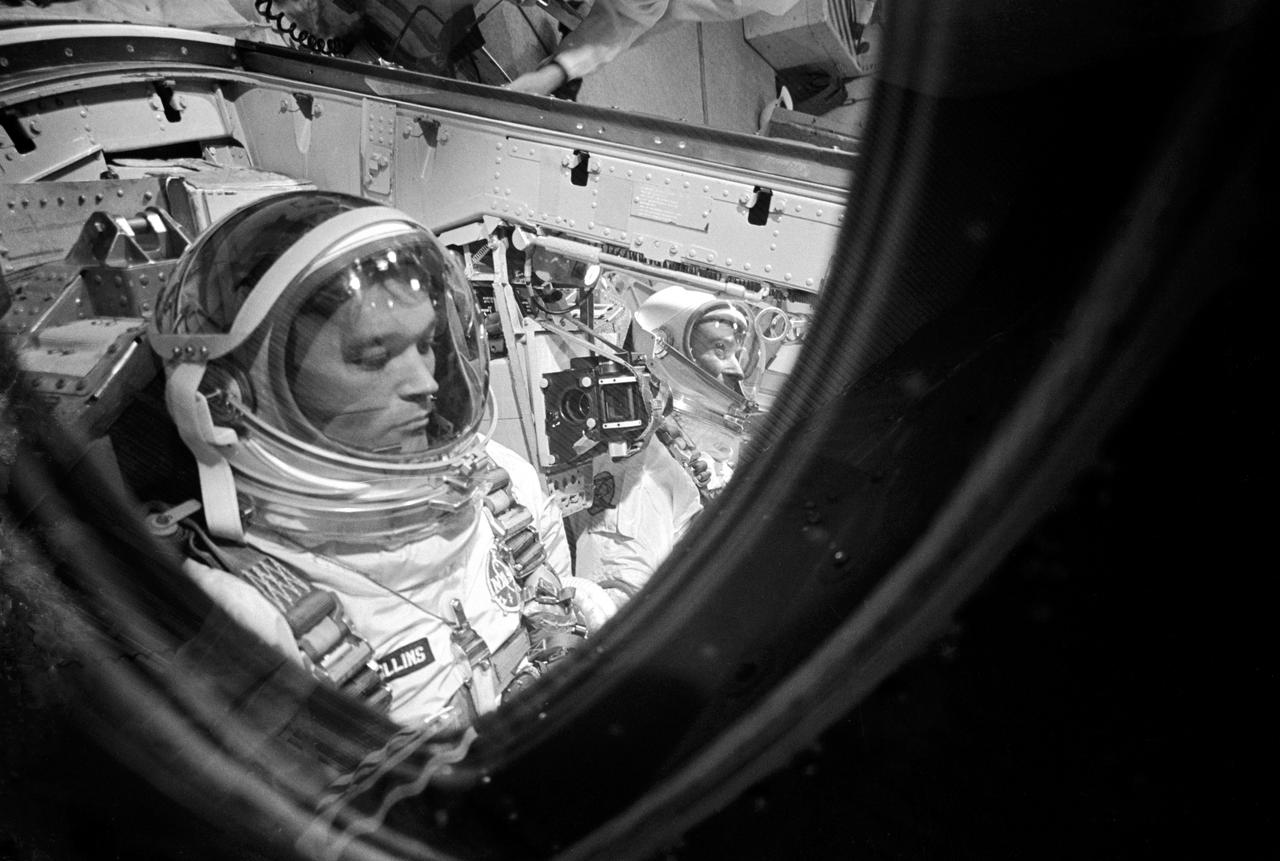
S66-46270 (18 July 1966) --- Astronaut Michael Collins is photographed inside the spacecraft during the Gemini-10 mission. Photo credit: NASA
Astronaut Michael Collins photographed inside spacecraft during mission
S65-63198 (15 Dec. 1965) --- The Gemini-7 spacecraft as seen from the Gemini-6 spacecraft during their rendezvous mission in space. They are approximately 39 feet apart. Photo credit: NASA or National Aeronautics and Space Administration
View of the Gemini 6 and Gemini 7 rendezvous
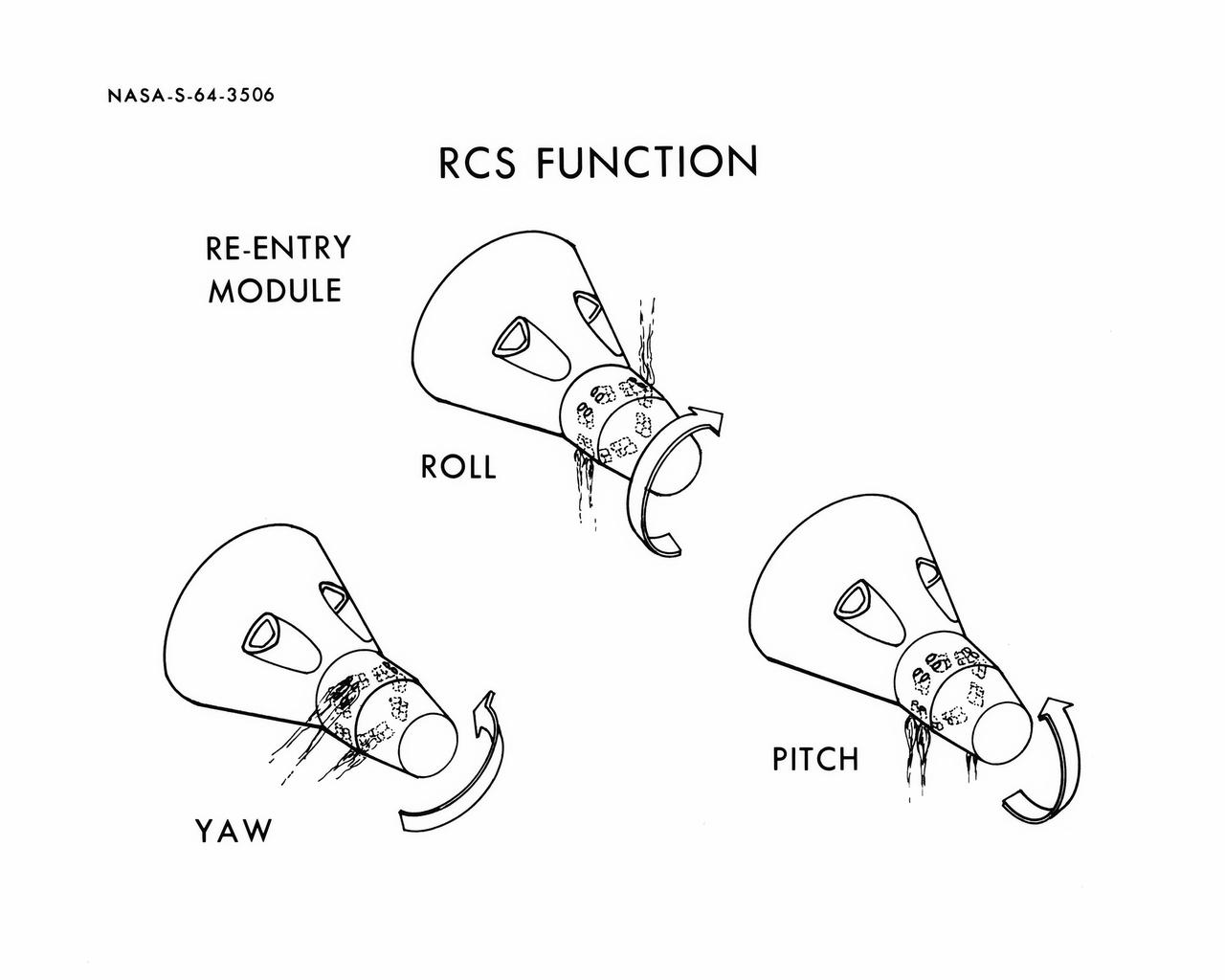
S64-03506 (1964) --- Diagrams shows Gemini spacecraft functions of the thrusters in the Gemini spacecraft's re-entry control system. Thrusters may be fired in various combinations to cause yaw, roll and pitch.
Diagrams of Spacecraft Reaction Control System (RCS) Function
S65-63189 (15 Dec. 1965) --- The National Aeronautics and Space Administration's (NASA) Gemini-7 spacecraft as seen from the Gemini-6 spacecraft during their rendezvous mission in space. The two spacecraft are approximately 43 feet apart. This image was taken with a modified 70mm Hasselblad camera, using Eastman Kodak, Ektachrome (S.O. 217) color film. Photo credit: NASA or National Aeronautics and Space Administration
Gemini VI Mission Image - Rendezvous with Gemini VII
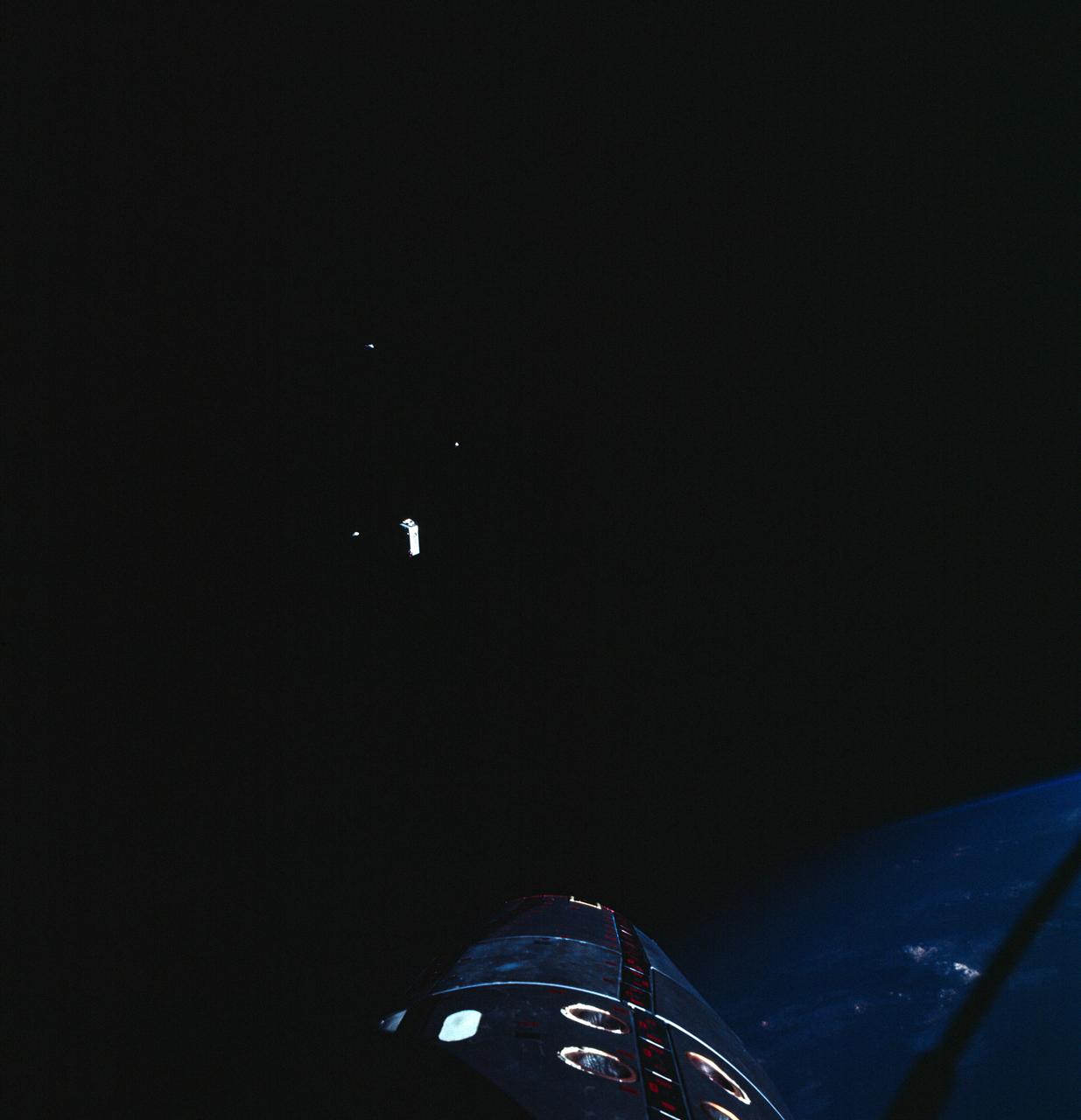
S66-62999 (13 Nov. 1966) --- Jettison of the extravehicular life support system (ELSS) and other equipment from the Gemini-12 spacecraft during its rendezvous mission in space. The nose of the Gemini-12 spacecraft is clearly visible at right edge of photo. Photo credit: NASA
Gemini 12 equipment jettison during rendezvous mission in space
S65-63194 (15 Dec. 1965) --- This photograph of the National Aeronautics and Space Administration's (NASA) Gemini-7 spacecraft was taken through the hatch window of the Gemini-6 spacecraft during rendezvous and station keeping maneuvers at an altitude of approximately 160 miles on Dec. 15, 1965. The photograph was taken with a Hasselblad camera using Kodak SO 217 film with an ASA of 1964. Photo credit: NASA or National Aeronautics and Space Administration
Gemini-Titan (GT)-6 - Gemini 6 of 7 - Space Photography - Outer Space
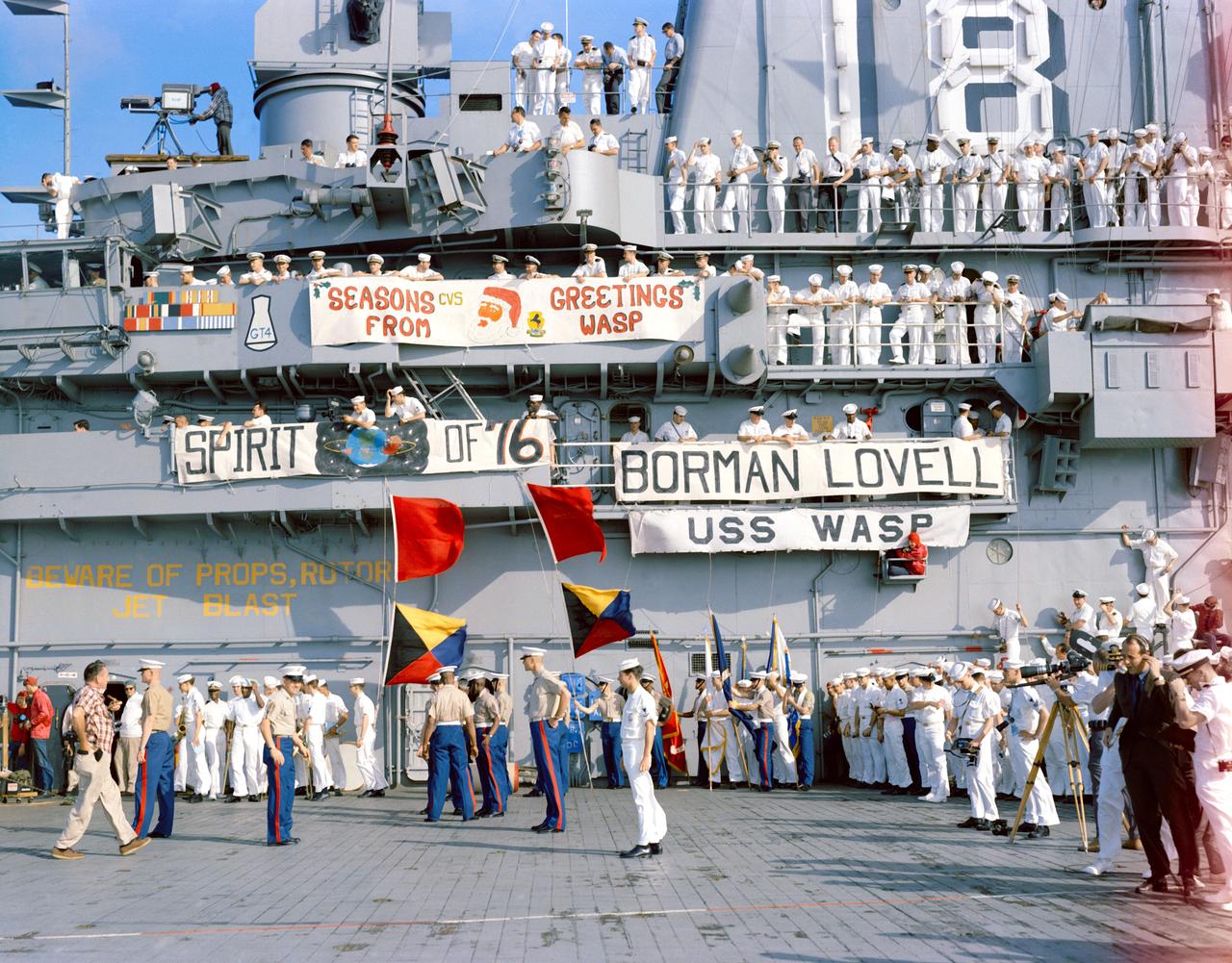
S65-63644 (18 Dec. 1965) --- Crewmen of the aircraft carrier USS Wasp gather on deck to watch the recovery of the National Aeronautics and Space Administration's Gemini-7 spacecraft and astronauts. Gemini-7, with astronauts Frank Borman, command pilot, and James A. Lovell Jr., pilot, splashed down in the western Atlantic at 9:05 a.m. (EST), Dec. 18, 1965, to conclude a record-breaking 14-day mission in space. Photo credit: NASA
GT-7 recovery
S65-63113 (15 Dec. 1965) --- This photograph of the Gemini-7 spacecraft was taken from the hatch window of the Gemini-6 spacecraft during rendezvous and station keeping maneuvers at an altitude of approximately 160 miles on Dec. 15, 1965. Photo credit: NASA or National Aeronautics and Space Administration
View of the Gemini 6 and Gemini 7 rendezvous
S64-12007 (1964) --- Artist concept of Gemini spacecraft and Command Module with two astronauts seated at the controls.
GEMINI SPACECRAFT - ARTIST CONCEPT
S66-46477 (18 July 1966) --- Close-up of astronaut Michael Collins, Gemini-10 pilot, making final adjustments and checks in the Gemini spacecraft during prelaunch countdown. In right background is astronaut John W. Young, command pilot. Photo credit: NASA
Astronaut Collins - Gemini 10 - Young - MSC
S66-42737 (18 July 1966) --- In the White Room atop the Gemini launch vehicle, astronauts Michael Collins (left), pilot, and John W. Young (right), command pilot, prepare to enter the Gemini-10 spacecraft. Engineers and technicians stand by to assist in the insertion. Photo credit: NASA
Gemini 10 prime crew in White Room preparing for insertion
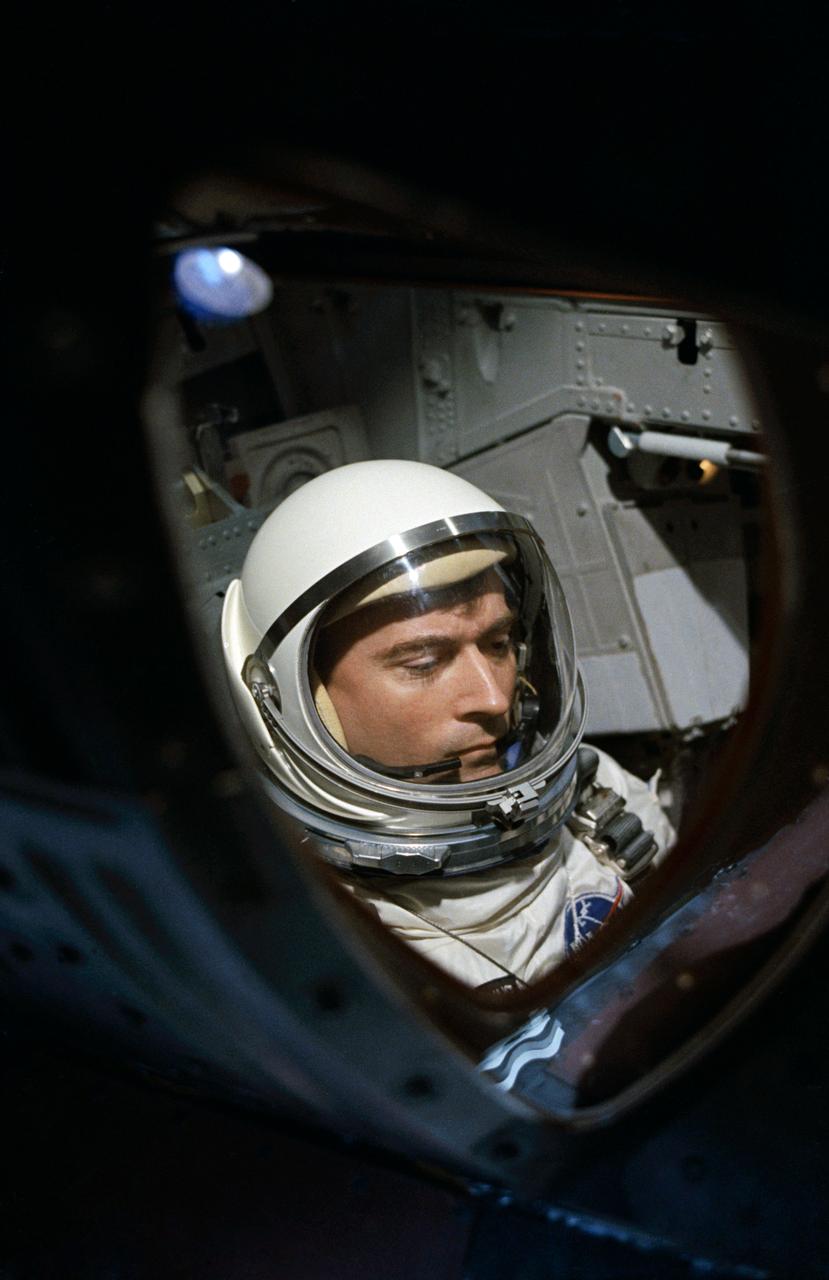
View of Astronaut John W. Young through spacecraft window prior to launch of Gemini-Titan 3 mission.
View of Astronaut John Young through spacecraft window prior to launch
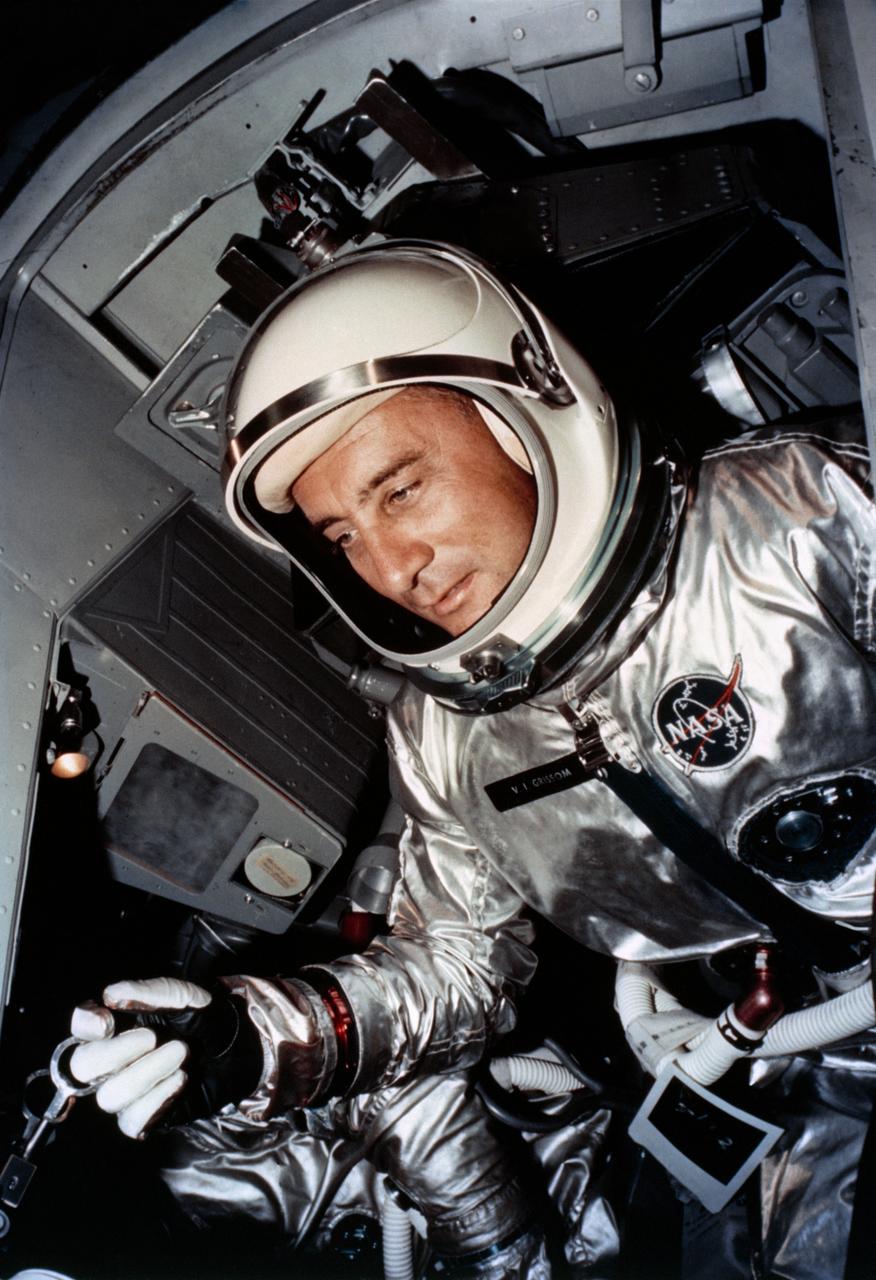
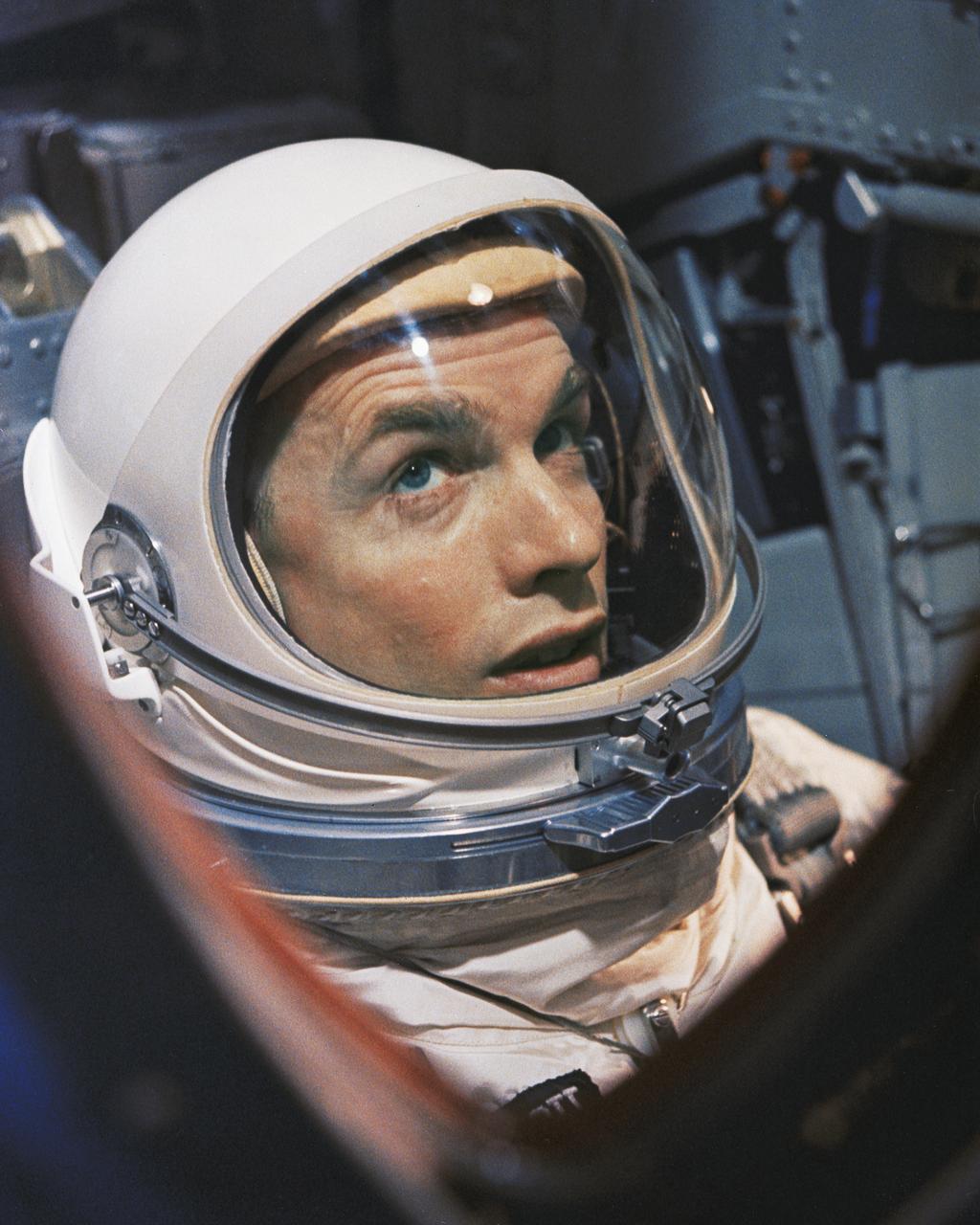
View of Astronaut Virgil I. Grissom through spacecraft window prior to launch of Gemini-Titan 3 mission.
View of Astronaut Virgil Grissom through spacecraft window prior to launch
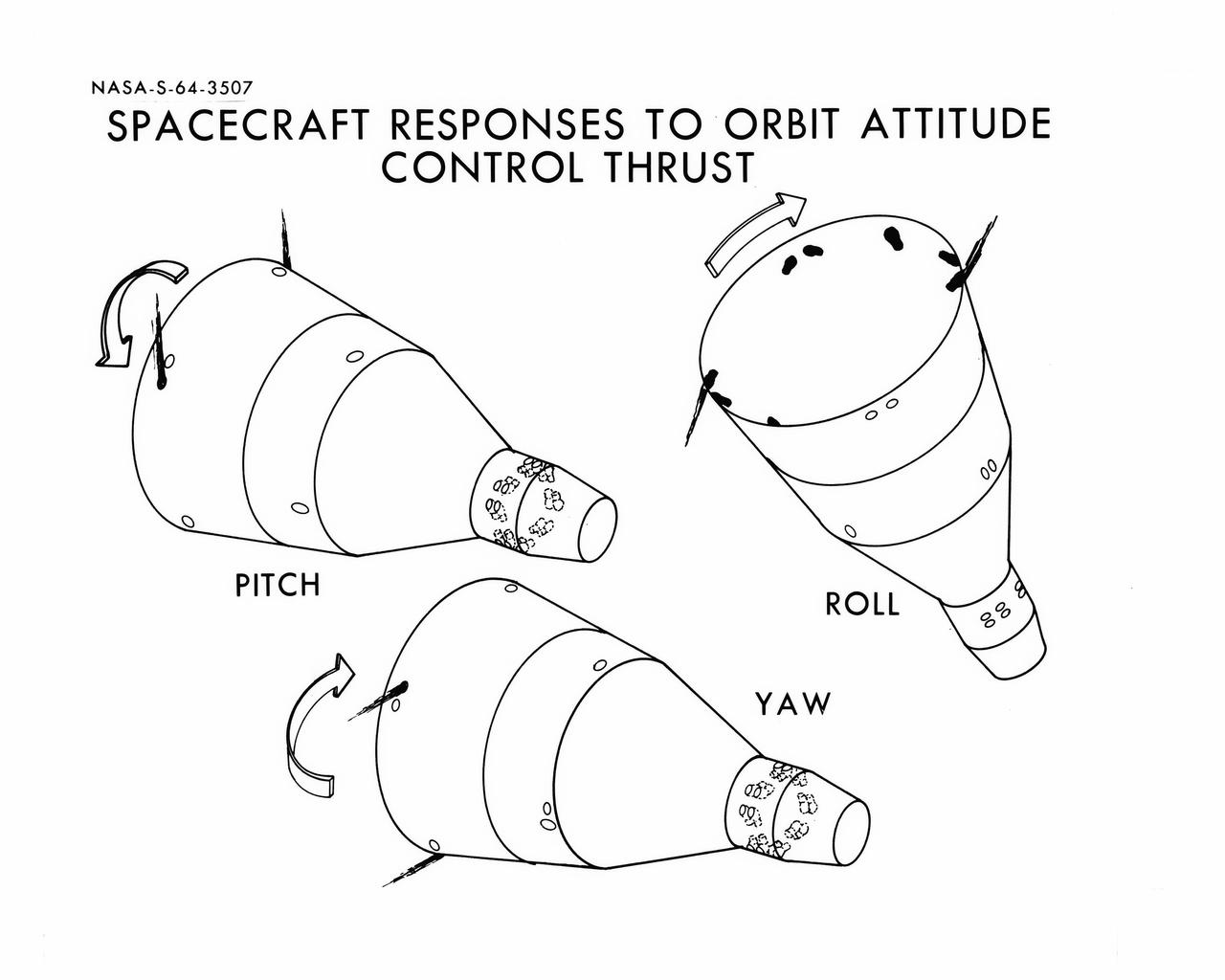
S64-03507 (1964) --- Diagrams shows Gemini spacecraft responses to orbital attitude systems's thrusters. Firing of appropriate combination of the thrusters cause pitch, roll and yaw.
Diagrams of Spacecraft Responses to Orbit Attitude Control Thrust
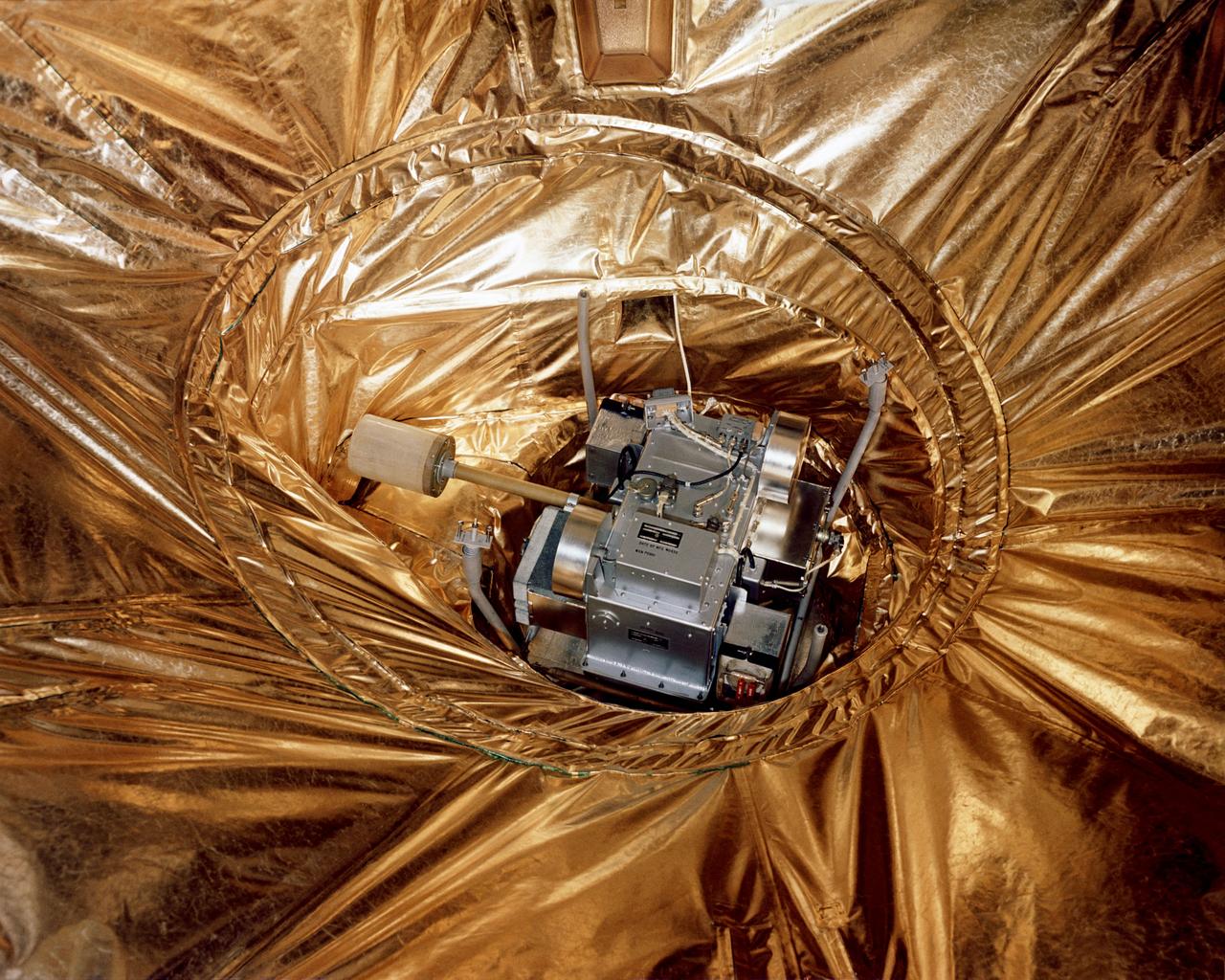
S65-42044 (28 July 1965) --- Close-up view of the Rendezvous Evaluation Pod installed in the equipment section of the Gemini-5 spacecraft at Pad 19.
Closeup view of Rendezvous Evaluation Pod
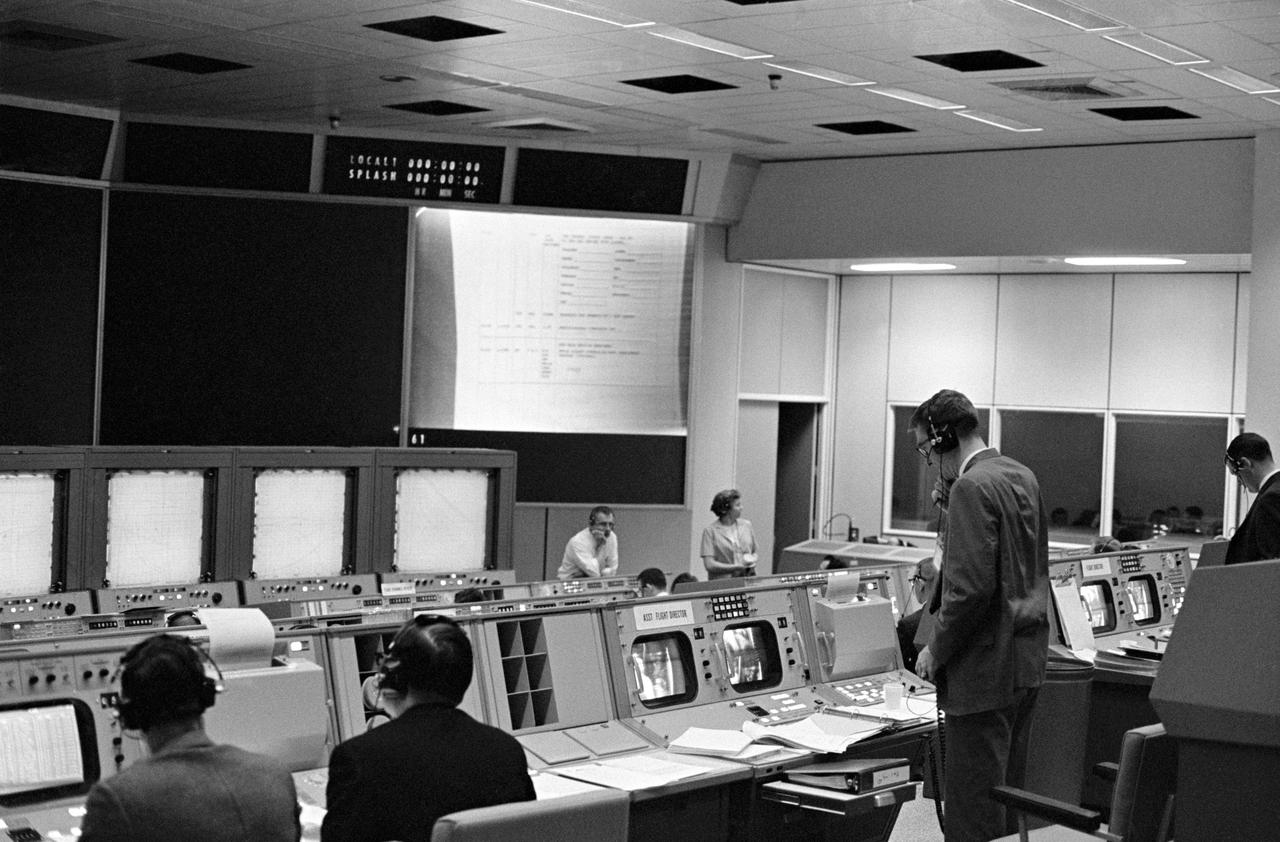
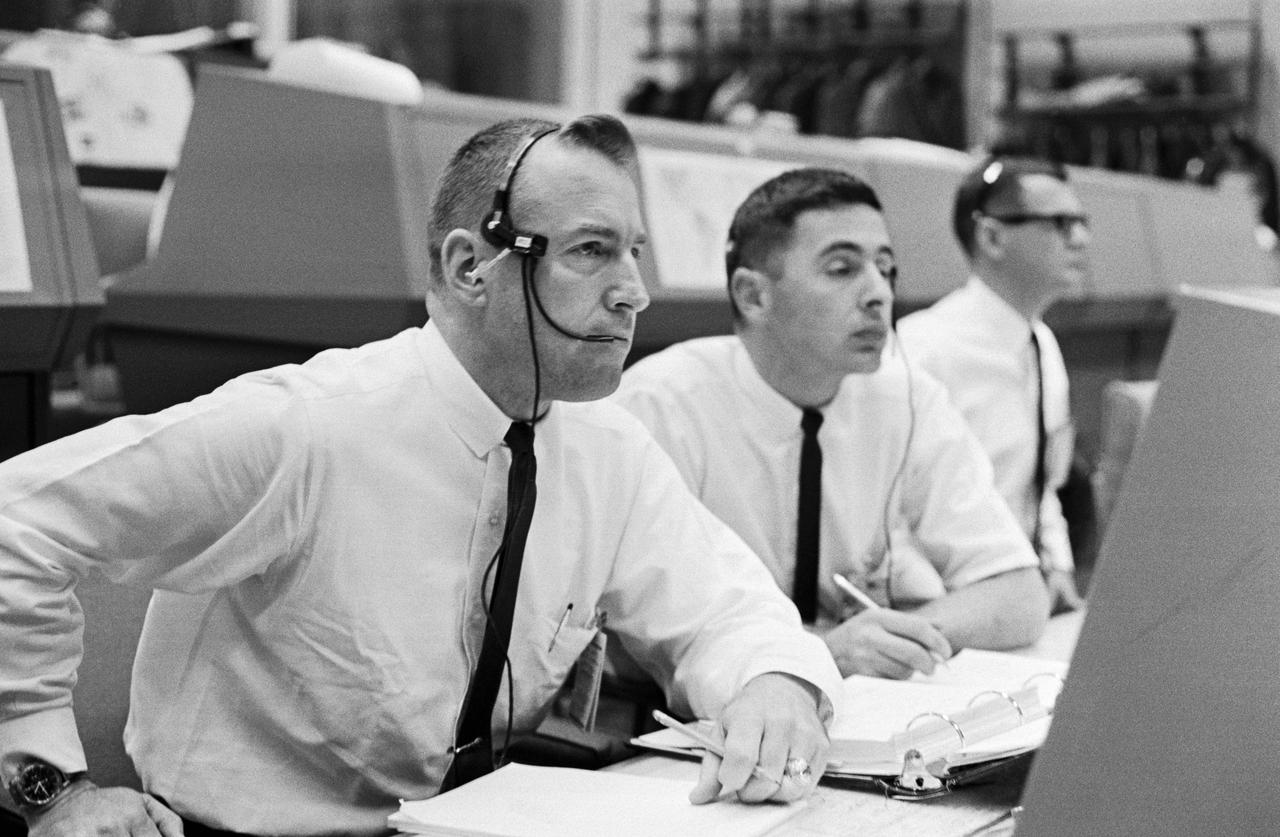
S65-18200 (23 March 1965) --- Overall view of the Mission Control Center at the Manned Spacecraft Center in Houston, Texas during the Gemini-Titan 3 flight.
MISSION CONTROL CENTER (MCC) - GEMINI-TITAN (GT)-3 ACTIVITY - MSC
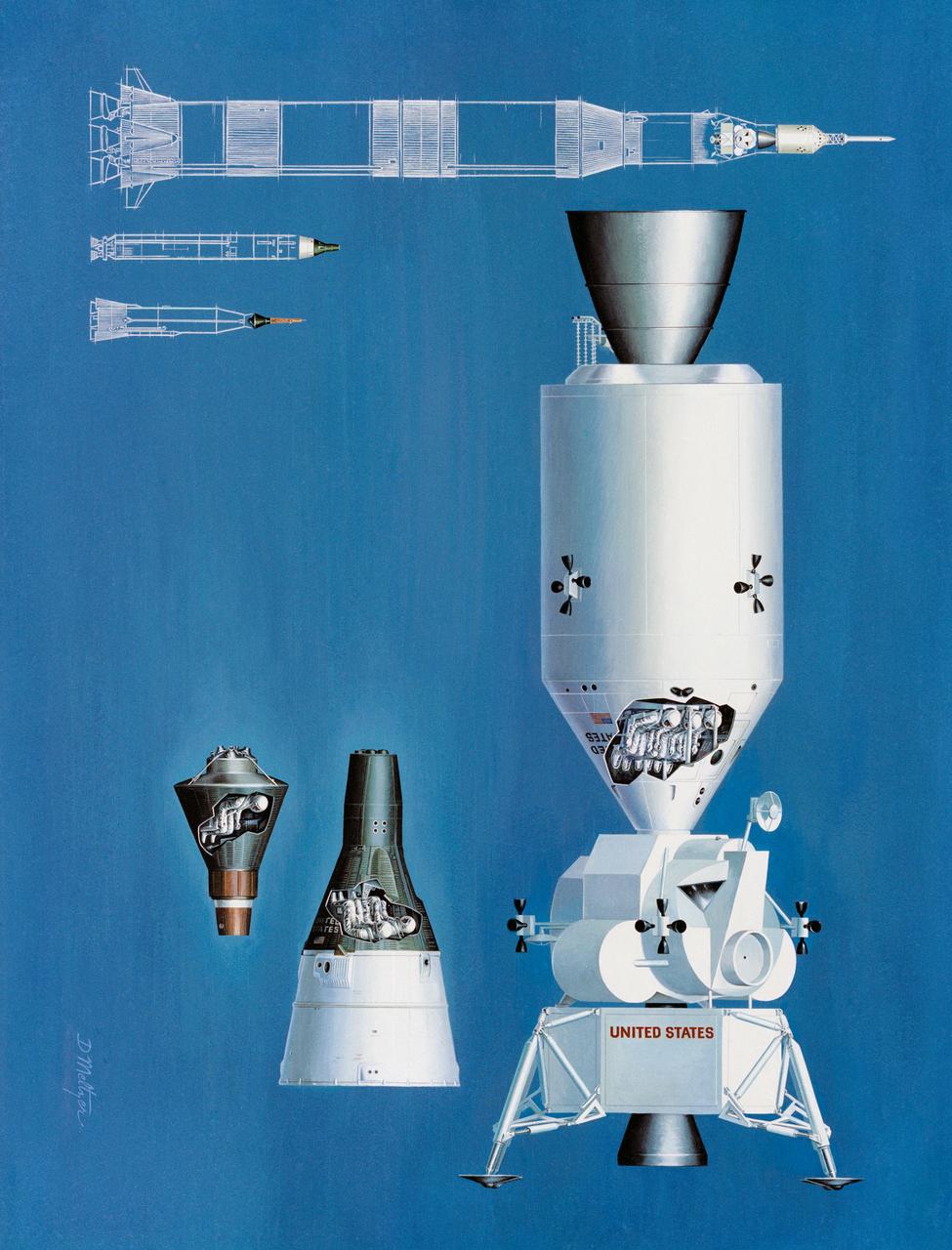
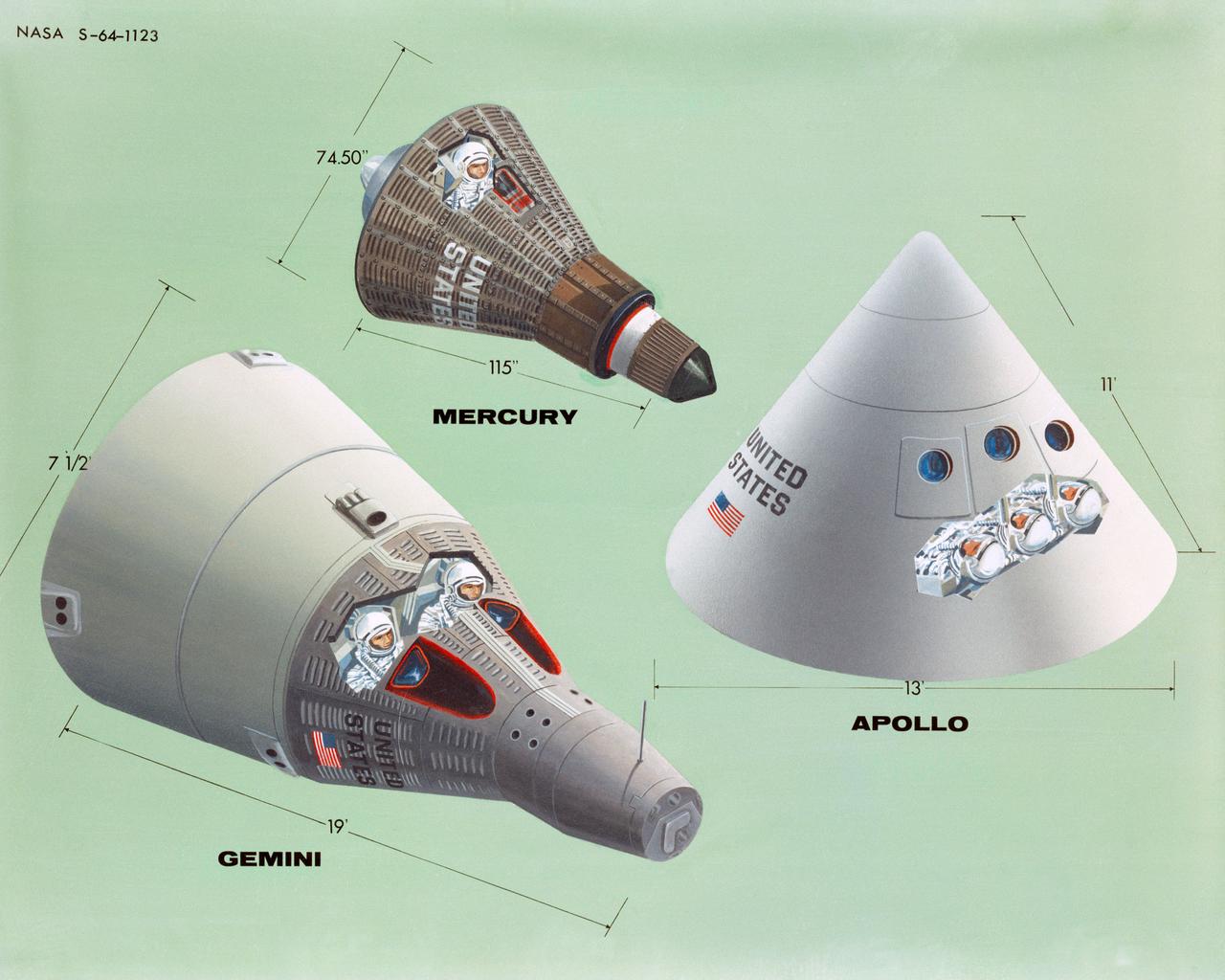
S64-22331 (1964) --- Artist concept illustrating the relative sizes of the one-man Mercury spacecraft, the two-man Gemini spacecraft, and the three-man Apollo spacecraft. Also shows line drawing of launch vehicles to show their relative size in relation to each other. Photo credit: NASA
GEMINI SPACECRAFT - ARTIST CONCEPT
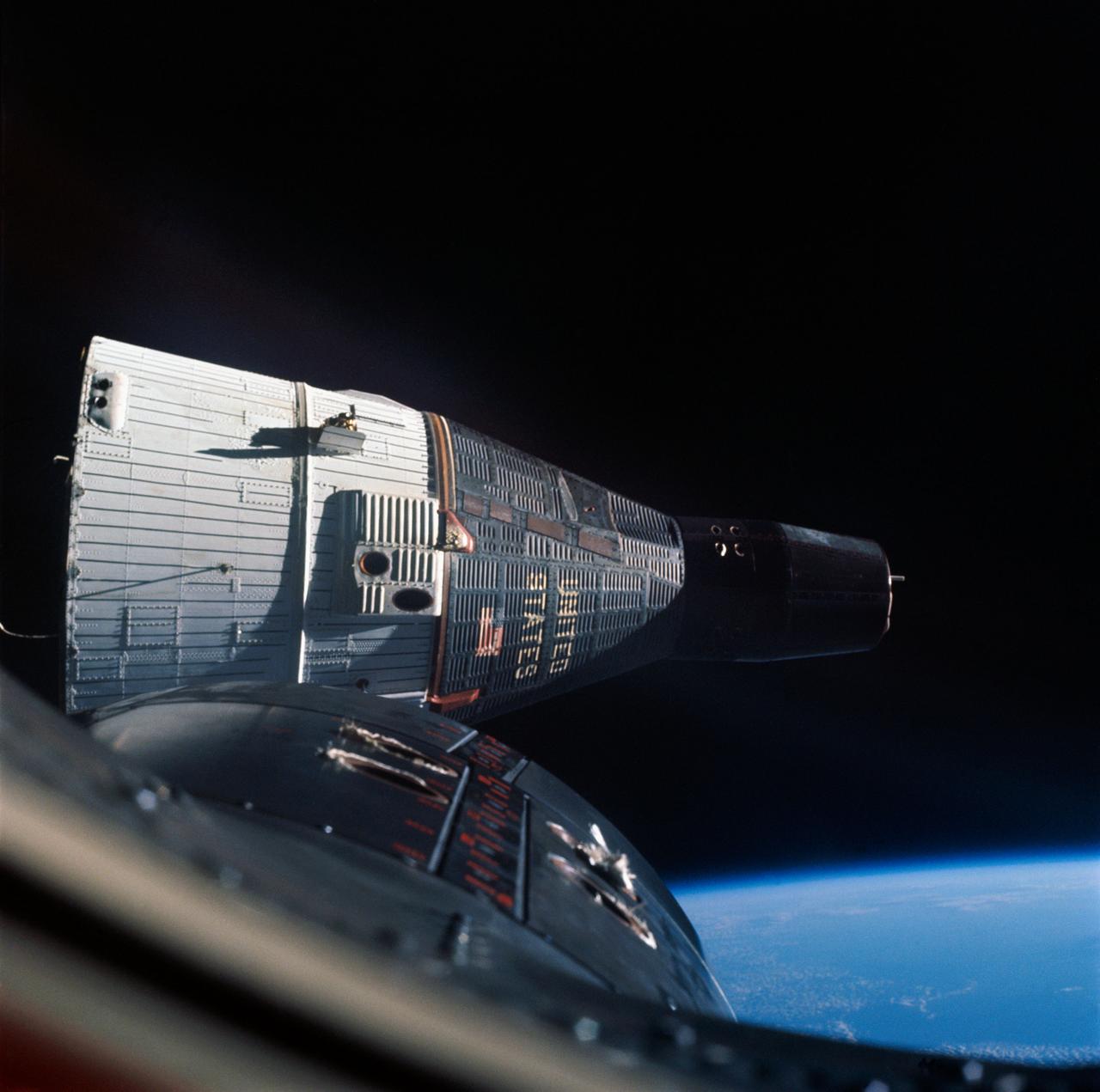
S65-63220 (15 Dec. 1965) --- This photograph of the Gemini-Titan 7 (GT-7) spacecraft was taken from the Gemini-Titan 6 (GT-6) spacecraft during the historic rendezvous of the two spacecraft on Dec. 15, 1965. The two spacecraft are some 37 feet apart here. Earth can be seen below. Astronauts Walter M. Schirra Jr., command pilot; and Thomas P. Stafford, pilot, were inside the GT-6 spacecraft, while crewmen for the GT-7 mission were astronauts Frank Borman, command pilot, and James A. Lovell Jr., pilot. Photo credit: NASA or National Aeronautics and Space Administration
View of the Gemini 6 and Gemini 7 rendezvous
S66-54590 (13 Sept. 1966) --- Astronaut Richard F. Gordon Jr., Gemini-11 pilot, prepares to open spacecraft hatch to jettison used equipment. Photo credit: NASA
Astronaut Richard Gordon prepares to open hatch to jettison equipment
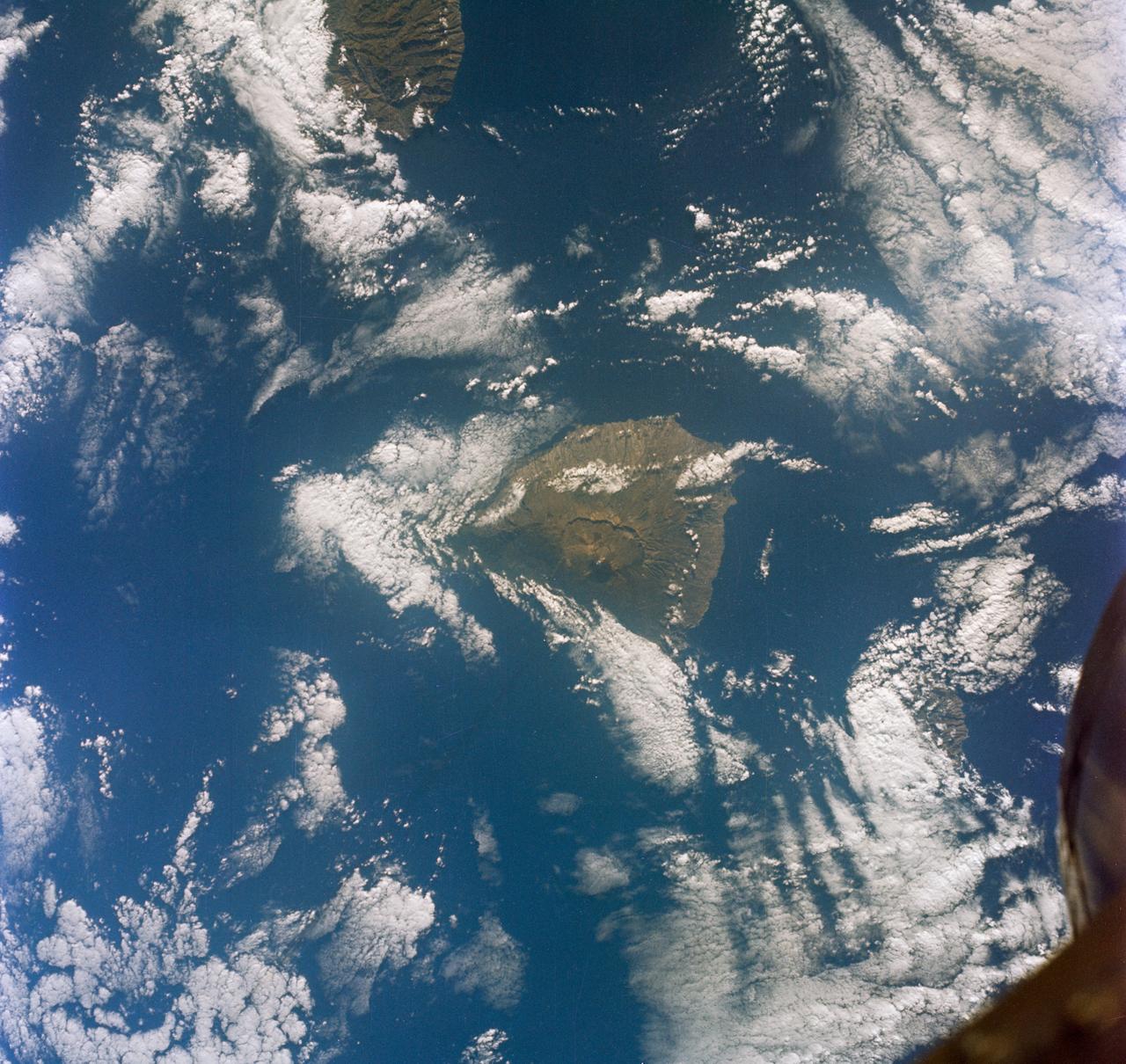
S65-63150 (16 Dec. 1965) --- Eddies in stratocumulus clouds over the Canary Islands as seen from the Gemini-6 spacecraft during its 14th revolution of Earth. Photo credit: NASA or National Aeronautics and Space Administration
GEMINI-6 - EARTH-SKY - CANARY ISLANDS - OUTER SPACE
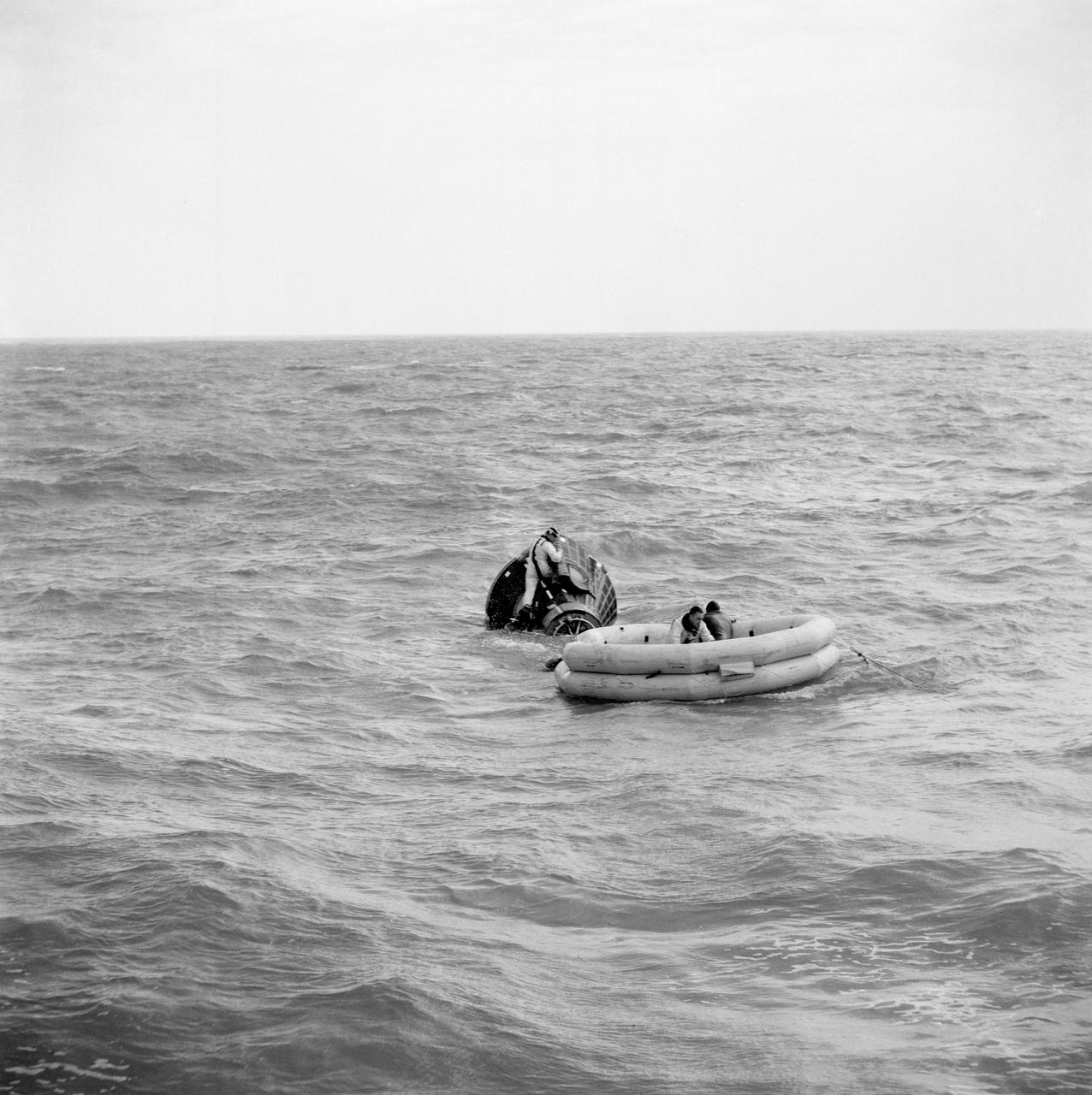
S65-14457 (23 Feb. 1965) --- Both members of the Gemini-Titan 3 prime crew egress through the left, or command pilot's, hatch into the Gulf of Mexico during specialized training in egress from the Gemini spacecraft. Astronaut Virgil I. Grissom, the command pilot, has already climbed into a raft, as astronaut John W. Young, pilot, egresses from the spacecraft.
Gemini 3 prime crew egress throught command pilot's hatch during training
S65-34635 (3 June 1965) --- Astronaut Edward H. White II, pilot on the Gemini-Titan 4 spaceflight, is shown during his egress from the spacecraft. His face is covered by a shaded visor to protect him from the unfiltered rays of the sun. White became the first American astronaut to walk in space. He remained outside the spacecraft for 21 minutes during the third revolution of the Gemini-4 mission. He wears a specially designed spacesuit for the extravehicular activity (EVA). In his right hand, he carries a Hand-Held Self-Maneuvering Unit (HHSMU) with which he controlled his movements while in space. He was attached to the spacecraft by a 25-feet umbilical line and a 23-feet tether line, both wrapped together with gold tape to form one cord. He wears an emergency oxygen supply chest pack. Astronaut James A. McDivitt is command pilot for the Gemini-4 mission.    EDITOR'S NOTE: Astronaut Edward H. White II died in the Apollo/Saturn 204 fire at Cape Kennedy on Jan. 27, 1967.
Astronaut Edward White during first EVA performed during Gemini 4 flight
S66-42704 (12 July 1966) --- Astronaut Michael Collins, prime crew pilot for the Gemini-10 spaceflight, is seen through a hatch in the spacecraft during a Simultaneous Launch Demonstration in the White Room atop Pad 19, Cape Kennedy, Florida. Photo credit: NASA
Astronaut Michael Collins during Simultaneous Launch Demonstration
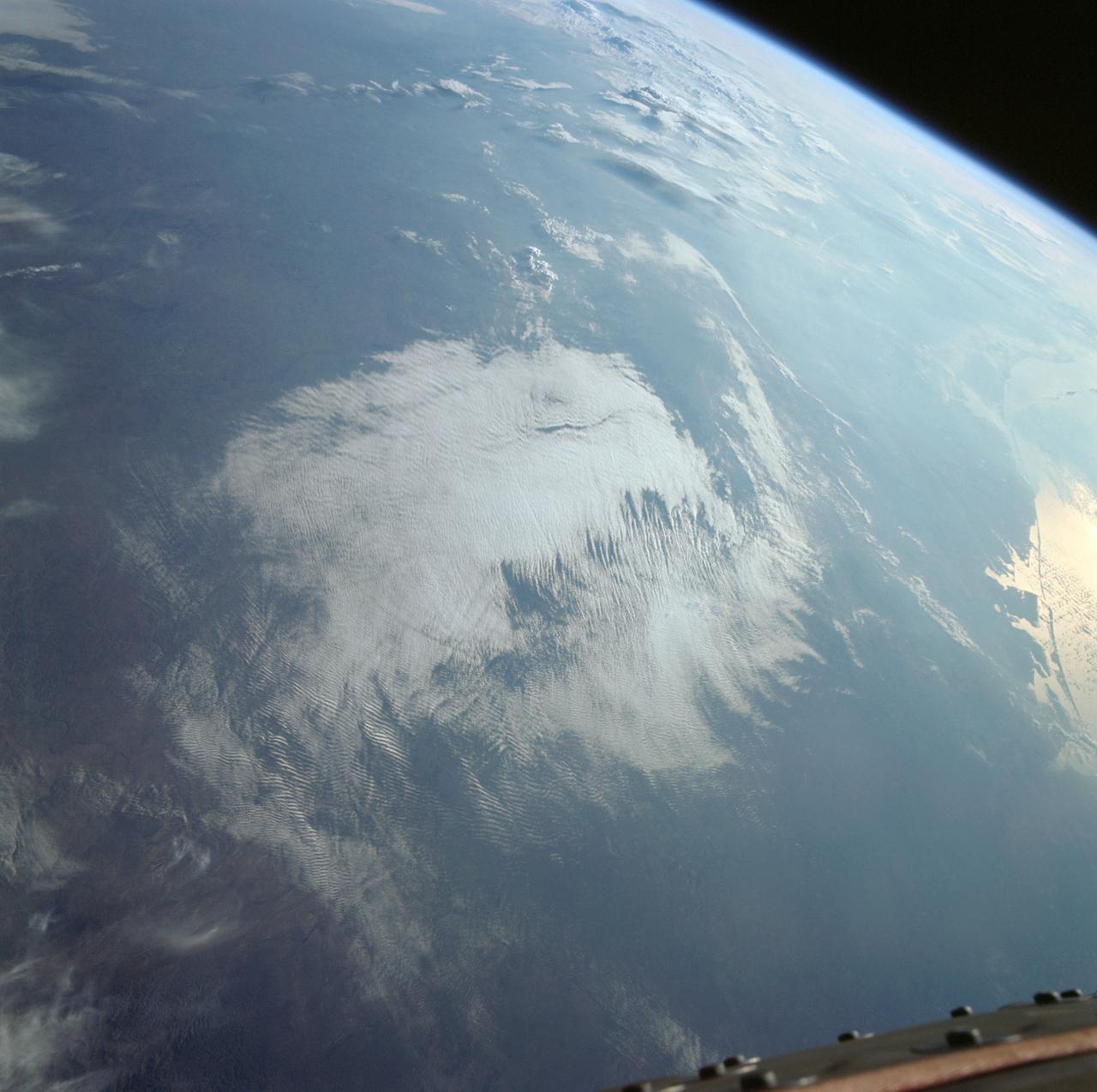
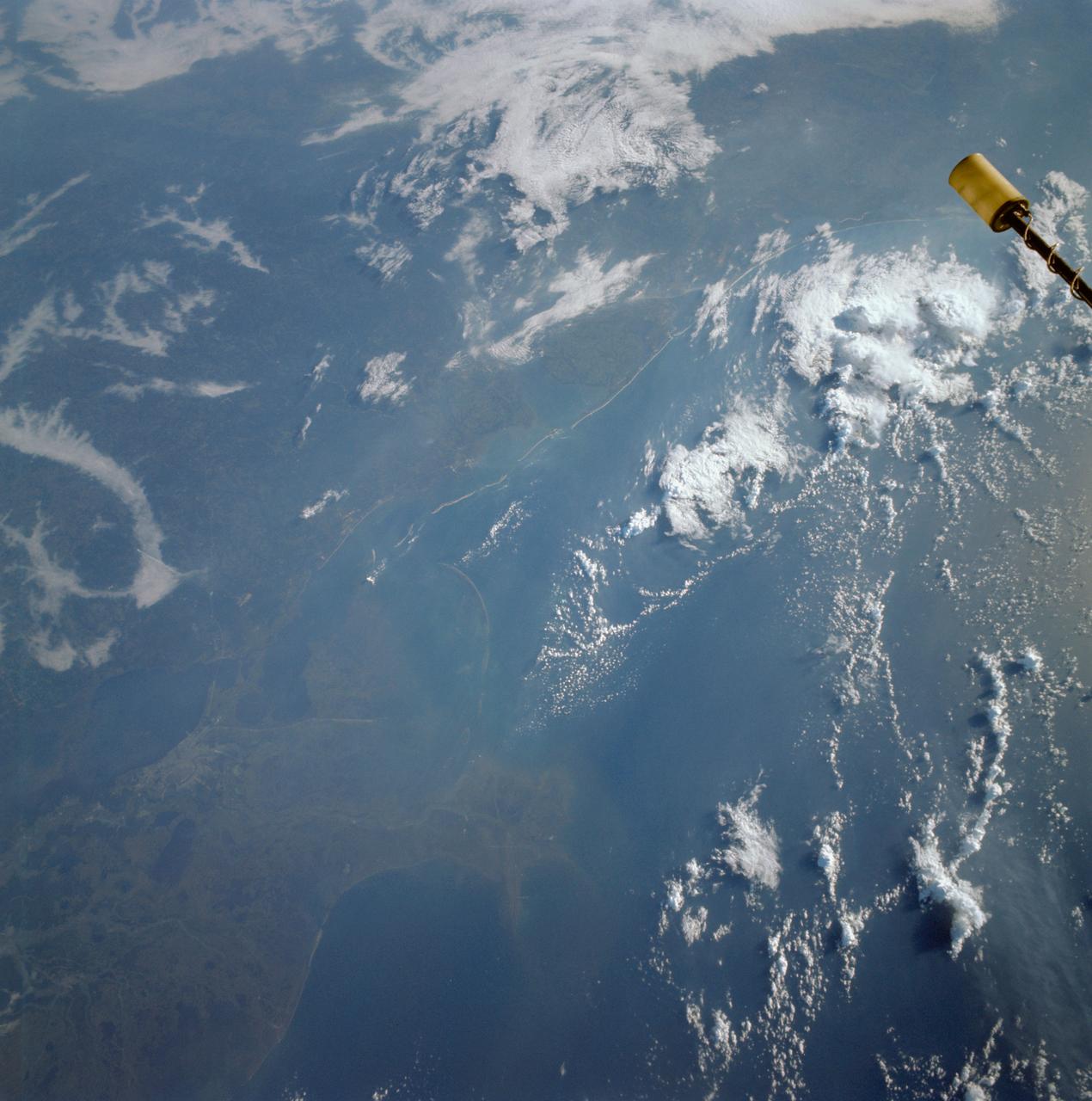
S66-54559 (14 Sept. 1966) --- Gulf Coast from Corpus Christi, Texas, to mouth of Mississippi River, as seen from the Gemini-11 spacecraft during its 29th revolution of Earth. This photo was taken near sunrise. Photo credit: NASA
Gulf Coast from Corpus Christi to mouth of Mississippi river from Gemini 11
S65-61835 (15 Nov. 1965) --- Technicians assist the prime crew for the Gemini-7 spaceflight in systems checks inside their spacecraft in the White Room atop Pad 19. Prime crew members are astronauts Frank Borman (left, inside spacecraft), command pilot, and James A. Lovell Jr. (right, inside spacecraft), pilot. They wear the new light-weight spacesuit planned for use during their 14-day mission. Photo credit: NASA
Technicians assist Gemini 7 prime crew in systems checks
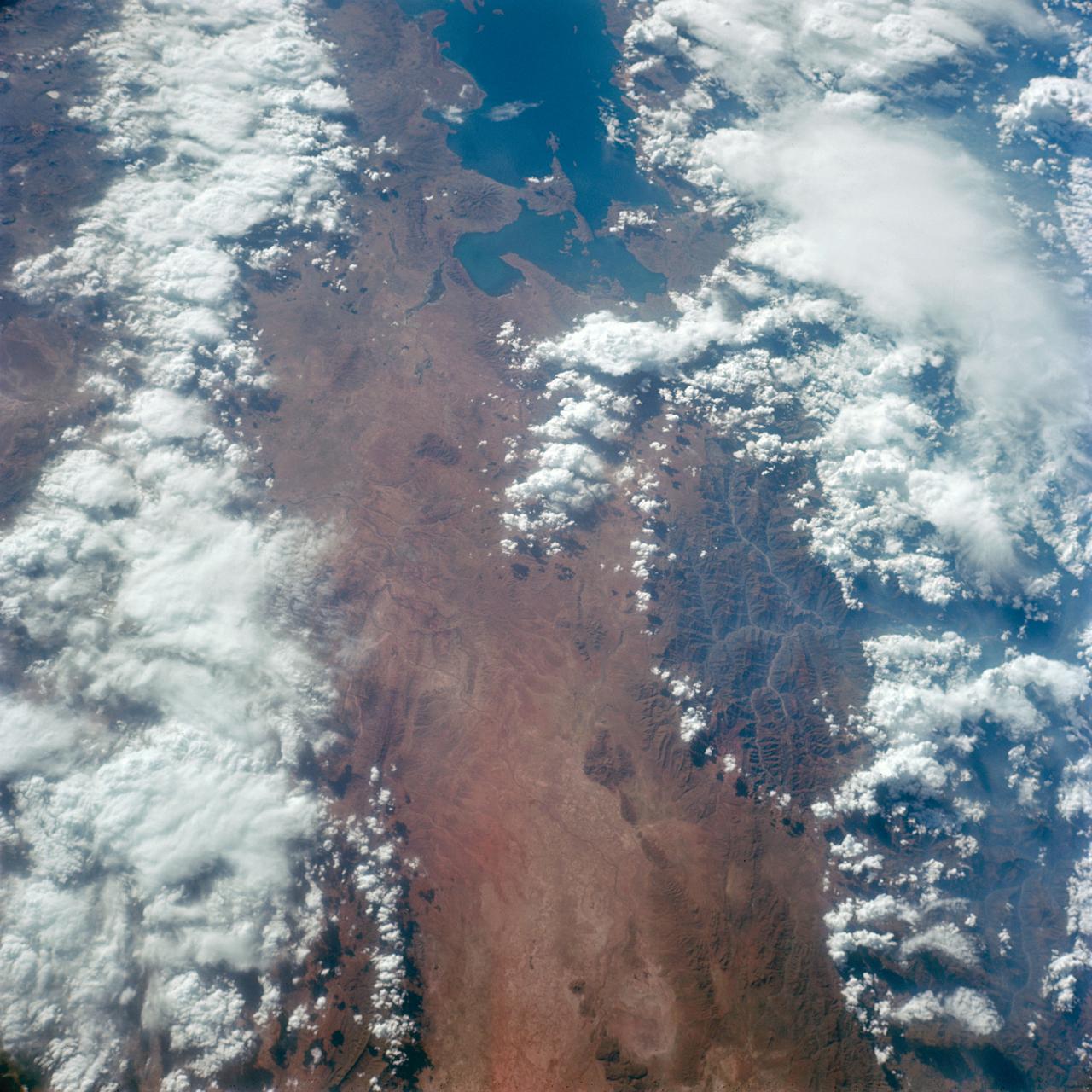
S66-54834 (14 Sept. 1966) --- Peru, Bolivia, Chile, Lake Titicaca and La Paz, as seen from the Gemini-11 spacecraft during its 34th revolution of Earth. Photo credit: NASA
Peru, Bolivia, Chile as seen from Gemini 11
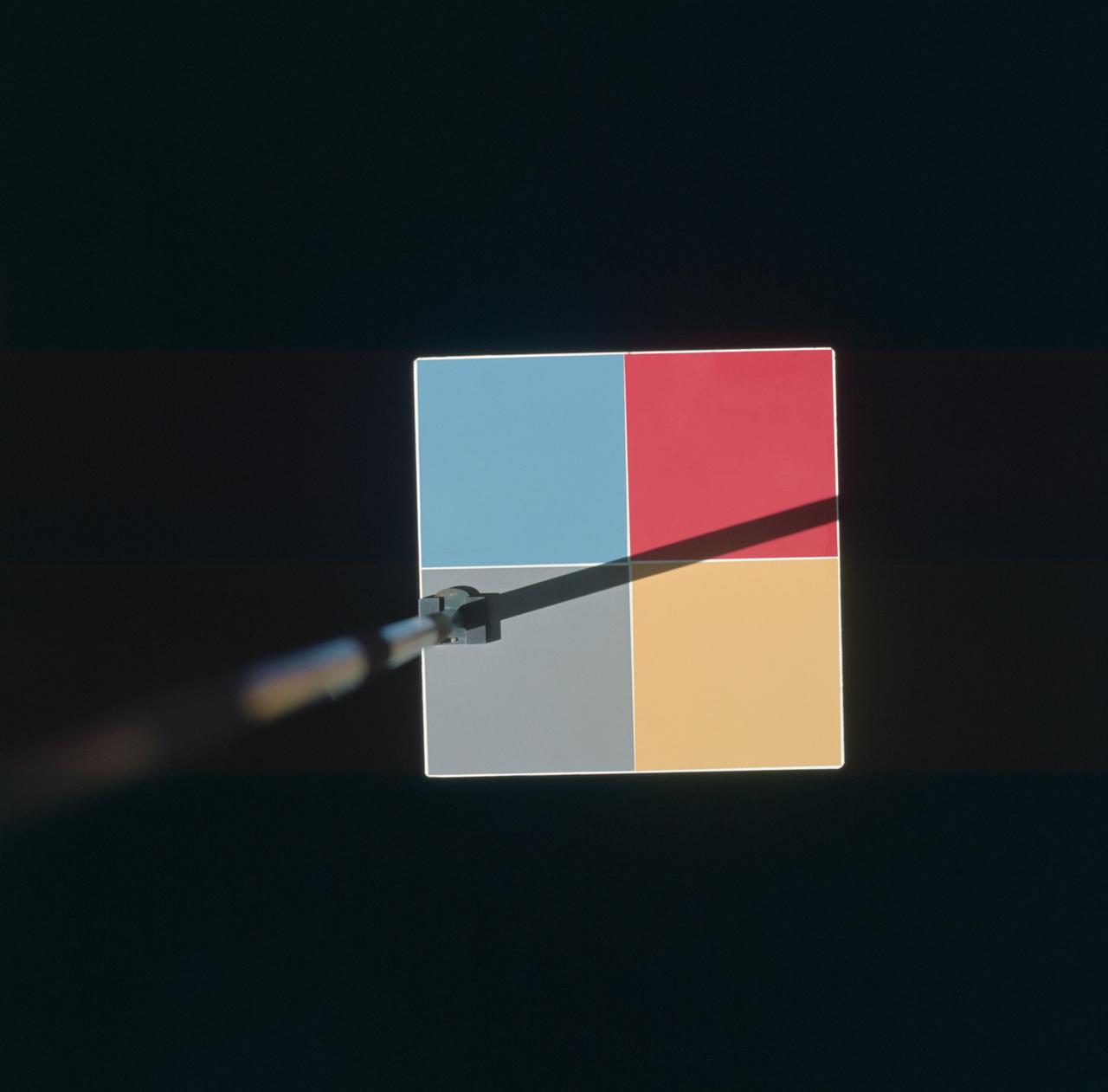
S66-46025 (18 July 1966) --- Astronaut Michael Collins, Gemini-10 pilot, photographed this MSC-8 color patch outside the spacecraft during the Gemini-10/Agena docking mission. The experiment was for the purpose of showing what effect the environment of space will have upon the color photography taken in cislunar space and on the lunar surface during an Apollo mission. Photo credit: NASA
Photograph of MSC-8 color patch outside spacecraft during docking
S64-01123 (1964) --- Artist concept illustrating the relative sizes of the one-man Mercury spacecraft, the two-man Gemini spacecraft, and the three-man Apollo   spacecraft. Photo credit: NASA
GEMINI - ARTIST CONCEPT - SPACECRAFT COMPARISONS - MSC
S66-54563 (14 Sept. 1966) --- View of the Gulf Coast area from Atchafalaya Bay to Apalachicola, including the mouth of the Mississippi River, Mobile Bay, New Orleans, Louisiana, and Pensacola, Florida, as seen from the Gemini-11 spacecraft during its 29th revolution of Earth. This photo was taken near sunrise. Photo credit: NASA
Gulf Coast from from Atchafalaya Bay to Apalachicola seen from Gemini 11
S66-39691 (18 June 1966) --- Astronaut John W. Young, prime crew command pilot for the Gemini-10 spaceflight, sits in Static Article 5 during water egress training activity onboard the NASA Motor Vessel Retriever. The SA-5 will be placed in the water and he and astronaut Michael Collins will then practice egress and water survival techniques. At right is Gordon Harvey, Spacecraft Operations Branch, Flight Crew Support Division. Photo credit: NASA
Astronaut John W. Young during water egress training
S66-54565 (14 Sept. 1966) --- Central portion of Florida, Gulf of Mexico to Atlantic Ocean, Cape Kennedy is at left center of photo, as seen from the Gemini-11 spacecraft during its 29th revolution of Earth. Photo lacks detail due to low sun angle. Sunglint on lakes is visible. Photo credit: NASA
Central portion of Florida, Gulf of Mexico seen from Gemini 11
S66-54839 (14 Sept. 1966) --- China, India, and Nepal, looking east, as seen from the Gemini-11 spacecraft during its 37th revolution of Earth. The Great Himalaya Mountain Range is clearly visible. Photo credit: NASA
China, India, and Nepal as seen from Gemini 11
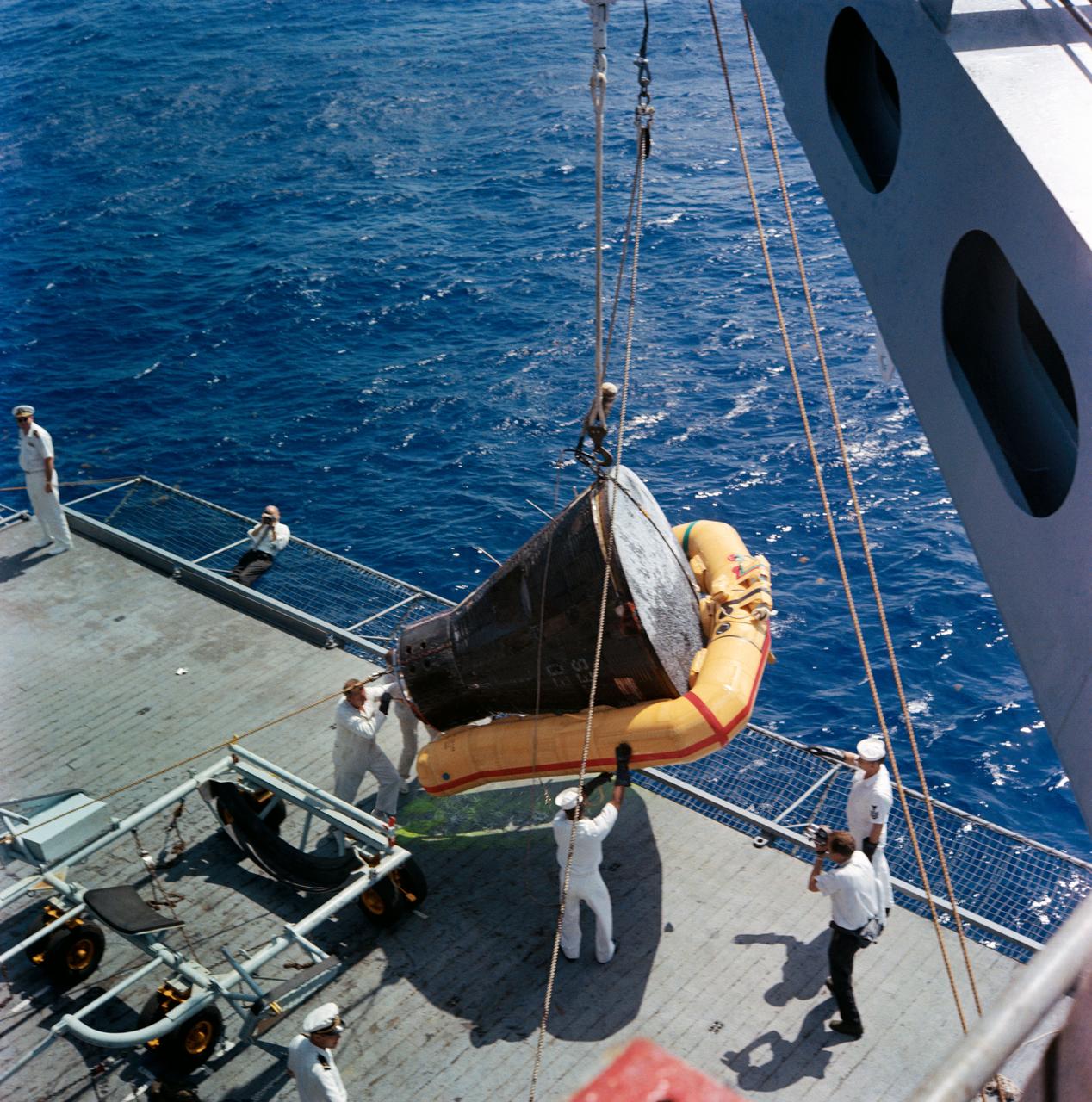
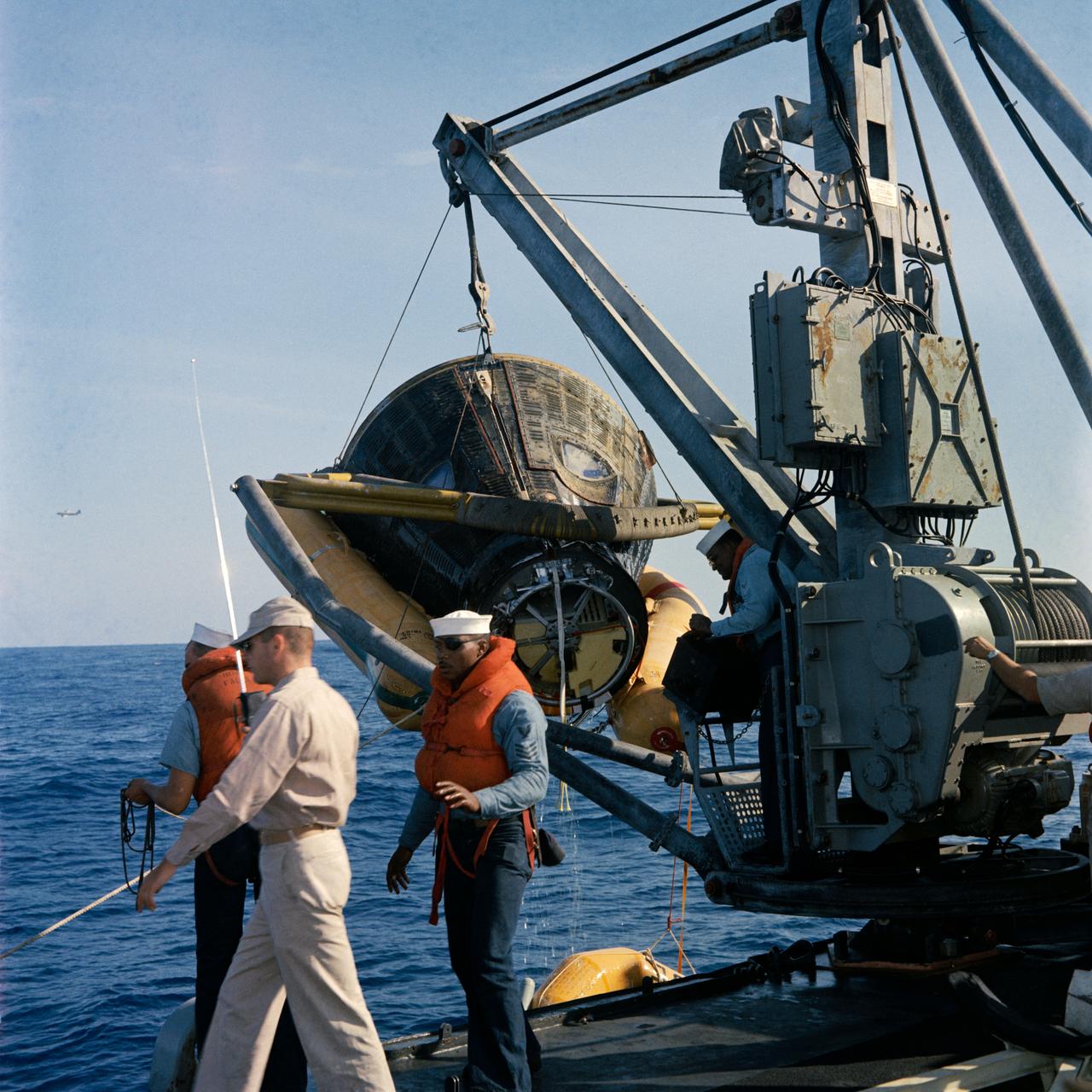
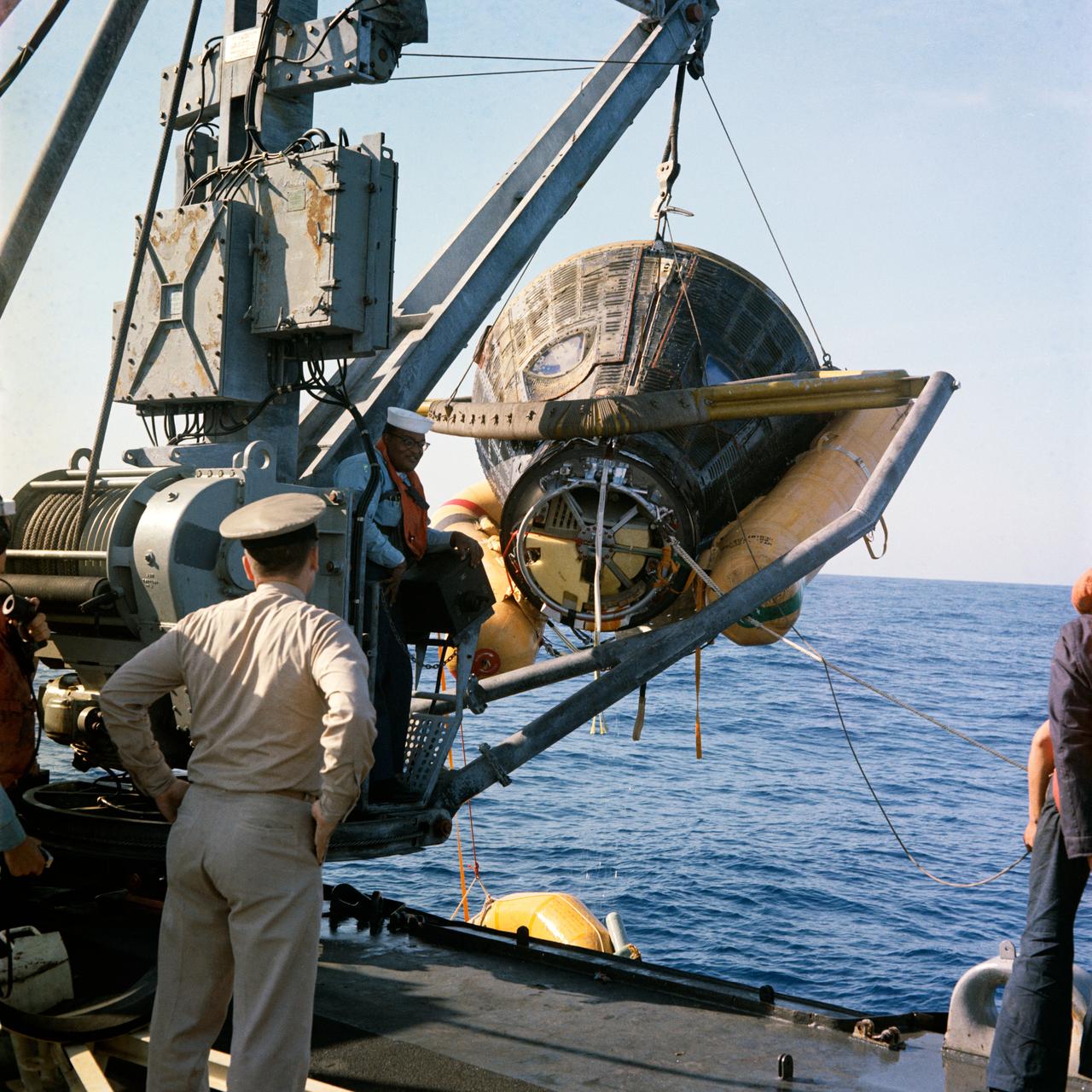
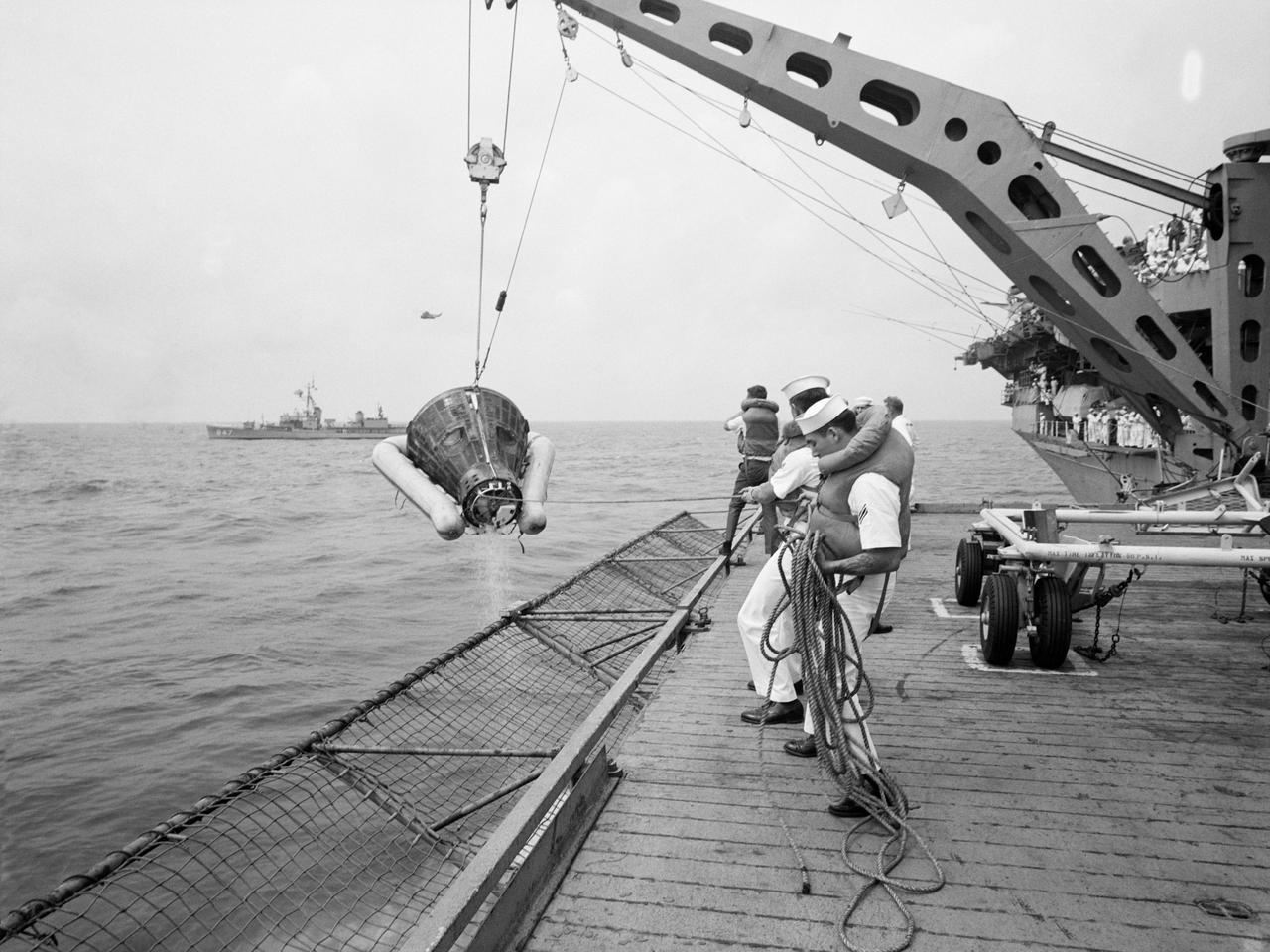
S65-32962 (7 June 1965) --- The Gemini-4 (GT-4) spacecraft is hoisted aboard the recovery ship USS Wasp during recovery operations following the successful four-day mission.
GEMINI-TITAN (GT)-IV SPACECRAFT - RECOVERY - ATLANTIC
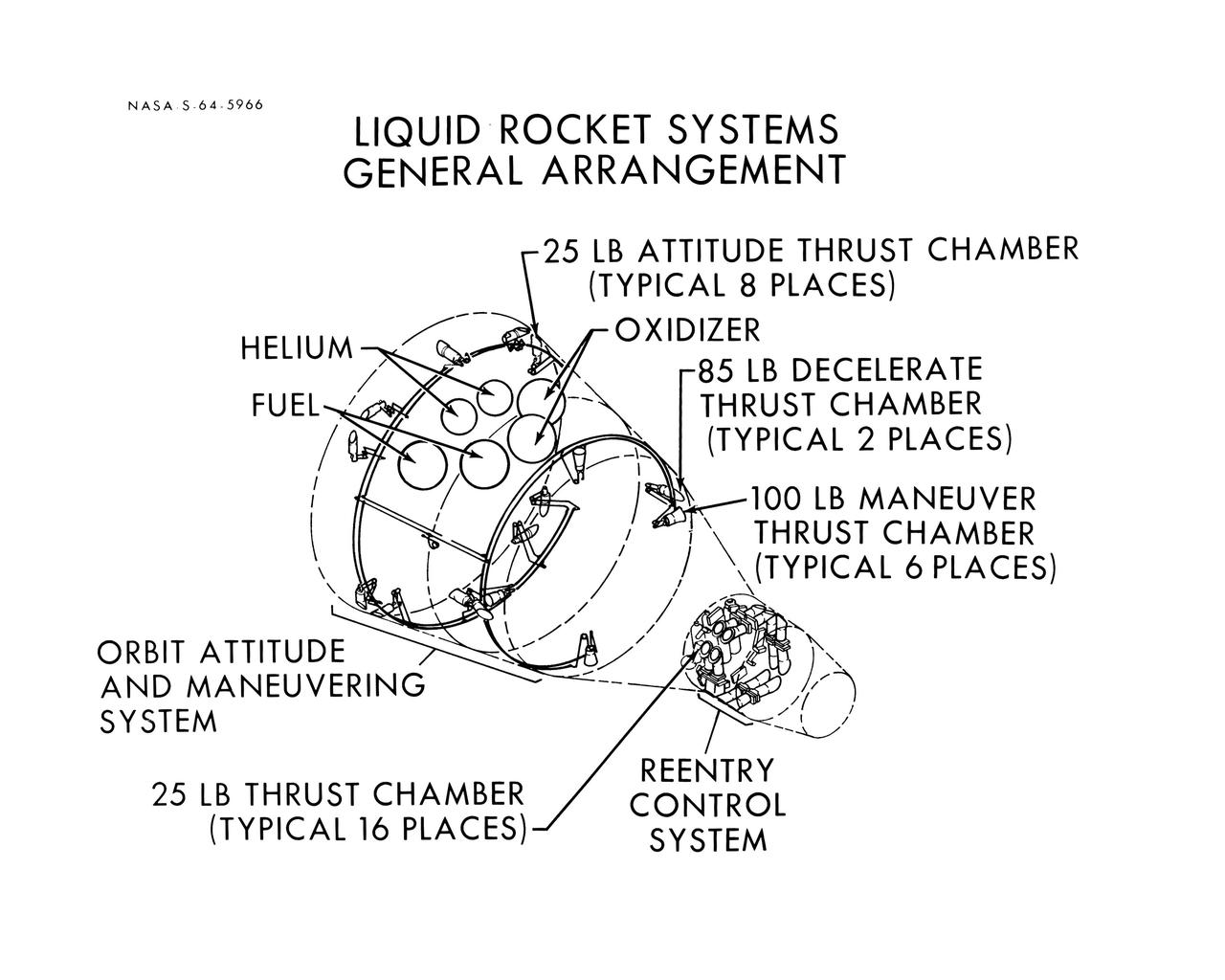
S64-05966 (1964) --- Diagram shows the general arrangement of the liquid rocket systems on the Gemini spacecraft are shown. The locations of the 25-pound, 85-pound and 100-pound thrusters of the orbital attitude and maneuver system and the 25-pound thrusters of the re-entry control system are shown.
Diagram of Liquid Rocket Systems General Arrangement
S66-26037 (16 March 1966) --- The Gemini-8 spacecraft, with astronauts Neil A. Armstrong and David R. Scott still aboard, is hoisted aboard the destroyer USS Leonard F. Mason. Trouble with the Gemini-8 Orbit Attitude and Maneuvering System (OAMS) forced an early termination of the mission. Photo credit: NASA
Gemini 8 spacecraft hoisted aboard the U.S.S. Leonard F. Mason
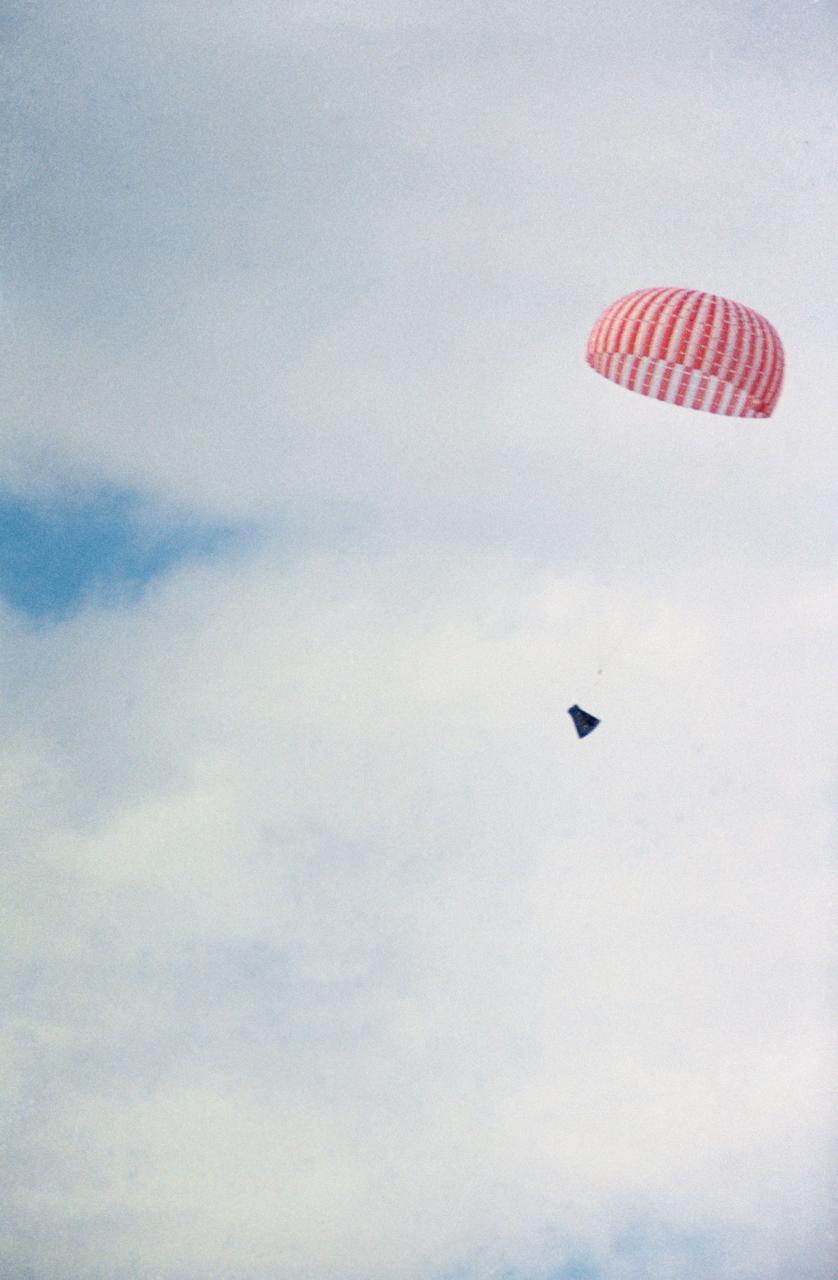
S66-59986 (15 Nov. 1966) --- The Gemini spaceflight program concludes as the Gemini-12 spacecraft, with astronaut James A. Lovell Jr., command pilot, and Edwin E. Aldrin Jr., pilot, aboard, nears touchdown in the Atlantic Ocean 2.5 nautical miles from the prime recovery ship, USS Wasp. Gemini-12 splashed down at 2:21 p.m. (EST), Nov. 11, 1966, to conclude the four-day mission in space. Photo credit: NASA
Splashdown - Gemini-Titan (GT-12) Spacecraft - Mission Close - Atlantic
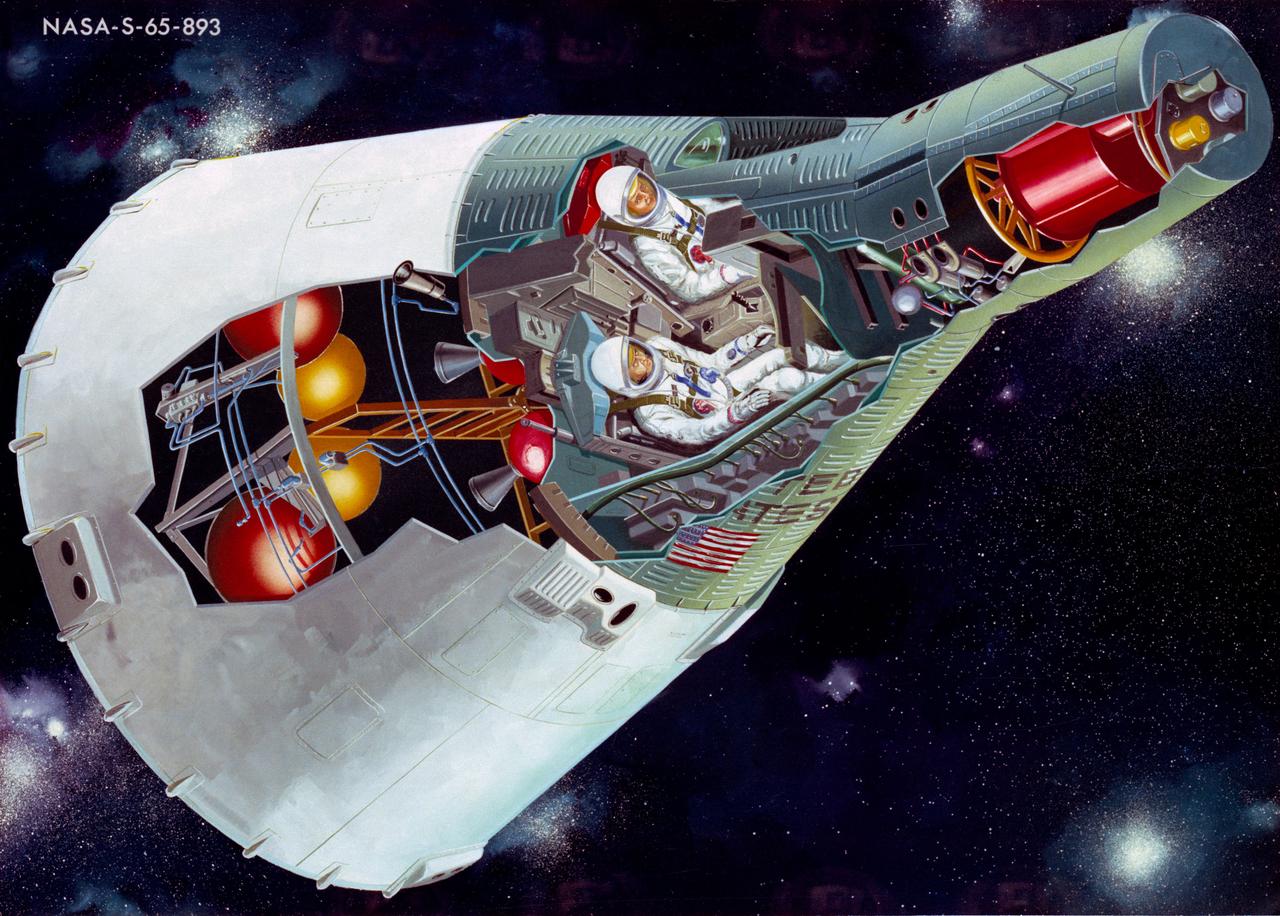
S65-14257 (January 1965) --- This is an artist's concept of a two-man Gemini spacecraft in flight, showing a cutaway view.
GEMINI SPACECRAFT - ARTIST CONCEPT - SEE-THROUGH (CUTAWAY) VIEW - MSC
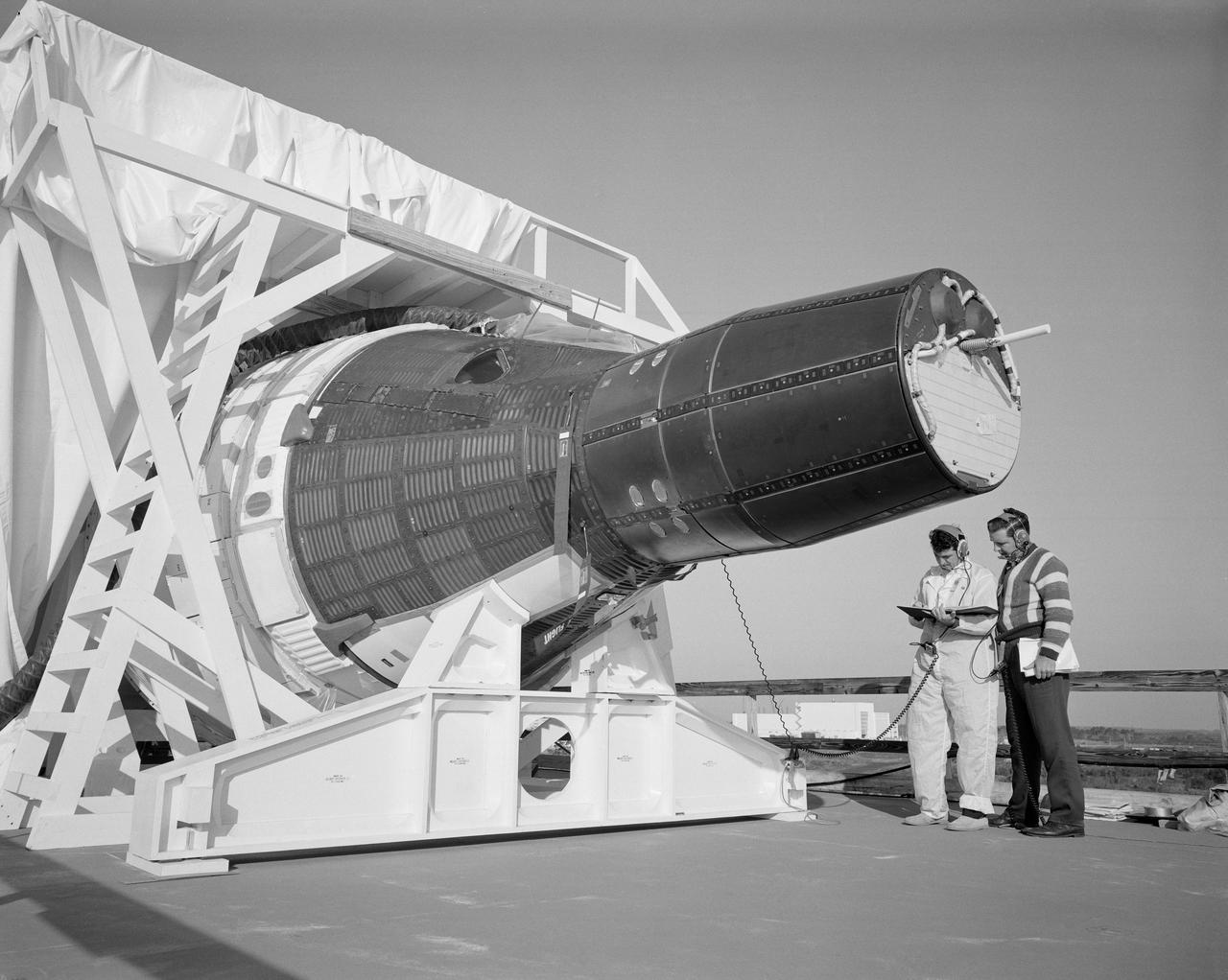
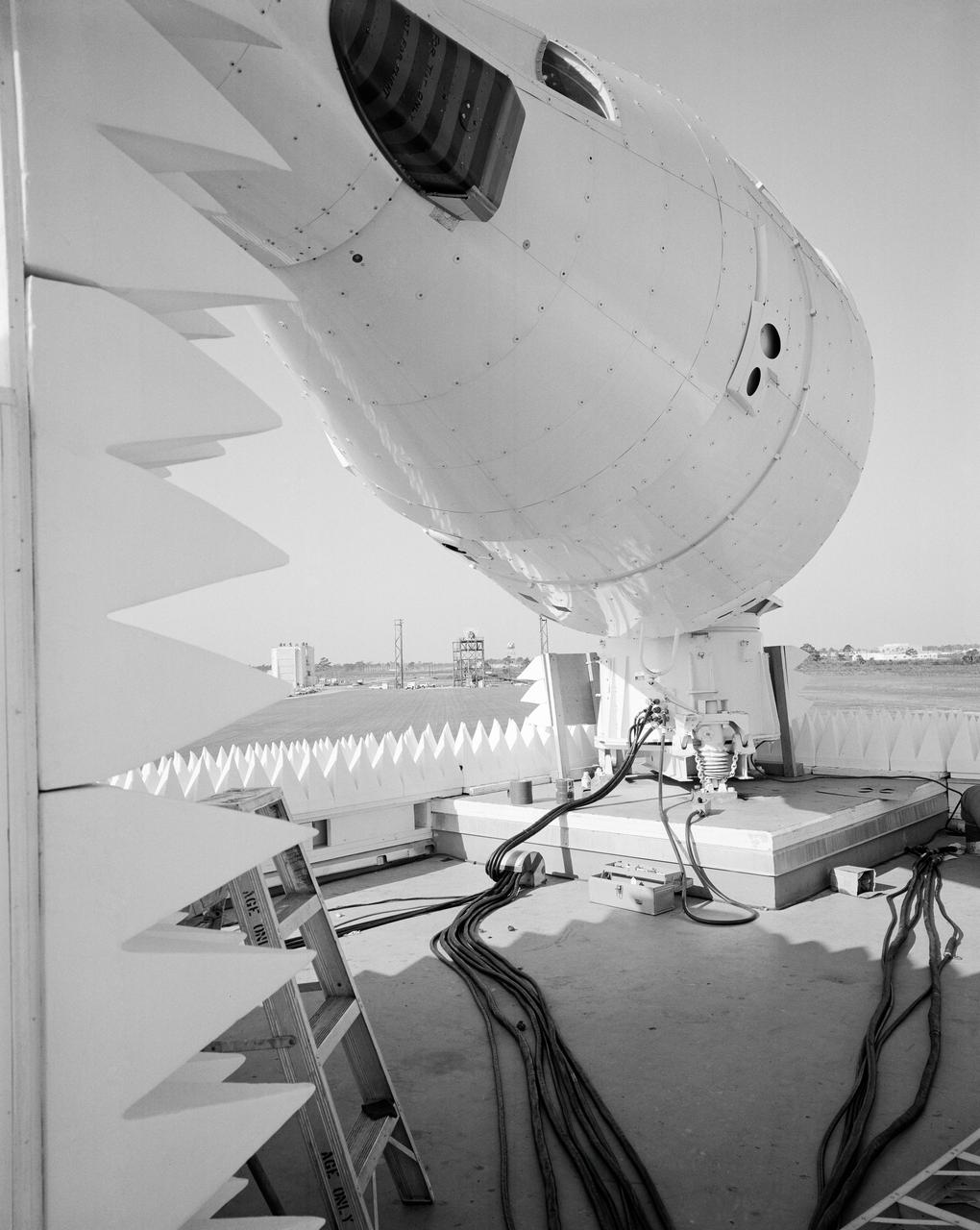
S65-13395 (6 Jan. 1965) --- Gemini-3 spacecraft (final configuation) during test at Boresight Range, Merritt Island launch area.
GEMINI TESTING - SPACECRAFT 3 - SIMULATOR - BORESIGHT RANGE TEST - CAPE
S65-13394 (6 Jan. 1965) --- Gemini-3 spacecraft (background) on tower at Boresight Range, Merritt Island launch area, showing simulator in foreground.
GEMINI TESTING - SPACECRAFT 3 - SIMULATOR - BORESIGHT RANGE TEST - CAPE
S65-48759 (21 Aug. 1965) --- View of astronaut Charles Conrad Jr. through the window as he sits in the Gemini-5 spacecraft during preflight activities.
View of Astronaut Charles Conrad Jr. in Gemini 5 spacecraft
S66-24805 (16 March 1966) --- Personnel in Mission Control watch Gemini-8 launch on their screens. Photo credit: NASA
Gemini 8 spacecraft communicators James A. Lovell Jr and William A. Anders in the MCC
S65-46630 (29 Aug. 1965) --- The Gemini-5 spacecraft is brought aboard the recovery ship, USS Lake Champlain after a successful landing at the end of its mission.
RECOVERY (HOIST SPACECRAFT ONBOARD) - GEMINI-TITAN (GT)-5 - ATLANTIC
S65-45683 (21-29 Aug. 1965) --- Astronaut Charles Conrad Jr. inside the Gemini-5 spacecraft as it orbited Earth. Astronaut L. Gordon Cooper Jr. took this photograph.
Astronaut Charles Conrad - Gemini-5 Spacecraft - Post-Launch
S65-63766 (12 Dec. 1965) --- Ras Azir on the coast of the Republic of Somali, looking east, as seen from the National Aeronautics and Space Administration's Gemini-7 spacecraft during its 117th revolution of Earth. Taken with a modified 70mm Hasselblad camera, using Eastman Kodak, Ektachrome MS (S.O. 217) color film. Photo credit: NASA
Earth Sky- GT-7
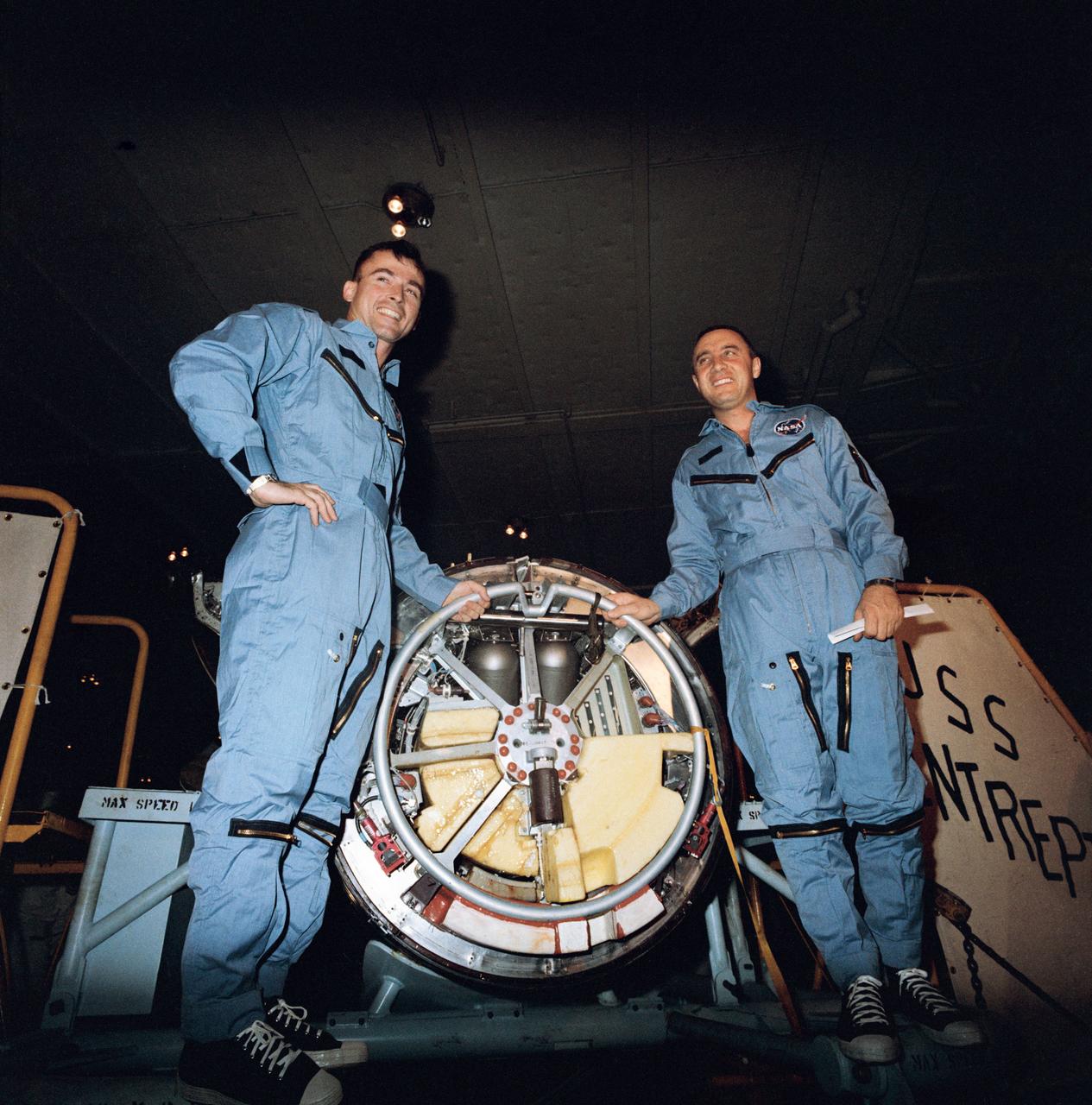
S65-18713 (23 March 1965) --- Astronauts John W. Young (left) and Virgil I. Grissom are shown during their first inspection of the Gemini 3 spacecraft aboard the USS Intrepid following their successful Gemini-Titan 3 flight. Photo credit: NASA or National Aeronautics and Space Administration
GEMINI-TITAN (GT)-3 SPACECRAFT - ASTRONAUT JOHN W. YOUNG - MISC. - ATLANTIC
S66-18613 (16 March 1966) --- The Gemini-8 spacecraft, with astronauts Neil A. Armstrong and David R. Scott still aboard, is hoisted aboard the destroyer USS Leonard F. Mason. Trouble with the Gemini-8 Orbit Attitude and Maneuvering System (OAMS) forced an early termination of the mission. Photo credit: NASA
GEMINI-TITAN (GT)-8 - RECOVERY - SPACECRAFT (S/C) HOISTED ABOARD - PACIFIC
S66-24403 (16 March 1966) --- Astronauts David R. Scott and Neil A. Armstrong inserted into Gemini-8 spacecraft prior to liftoff. Photo credit: NASA
GORDON, RICHARD F., ASTRONAUT - TRAINING - GEMINI-TITAN (GT)-8 SIMULATION - BACKUP IN SPACECRAFT (S/C) - CAPE
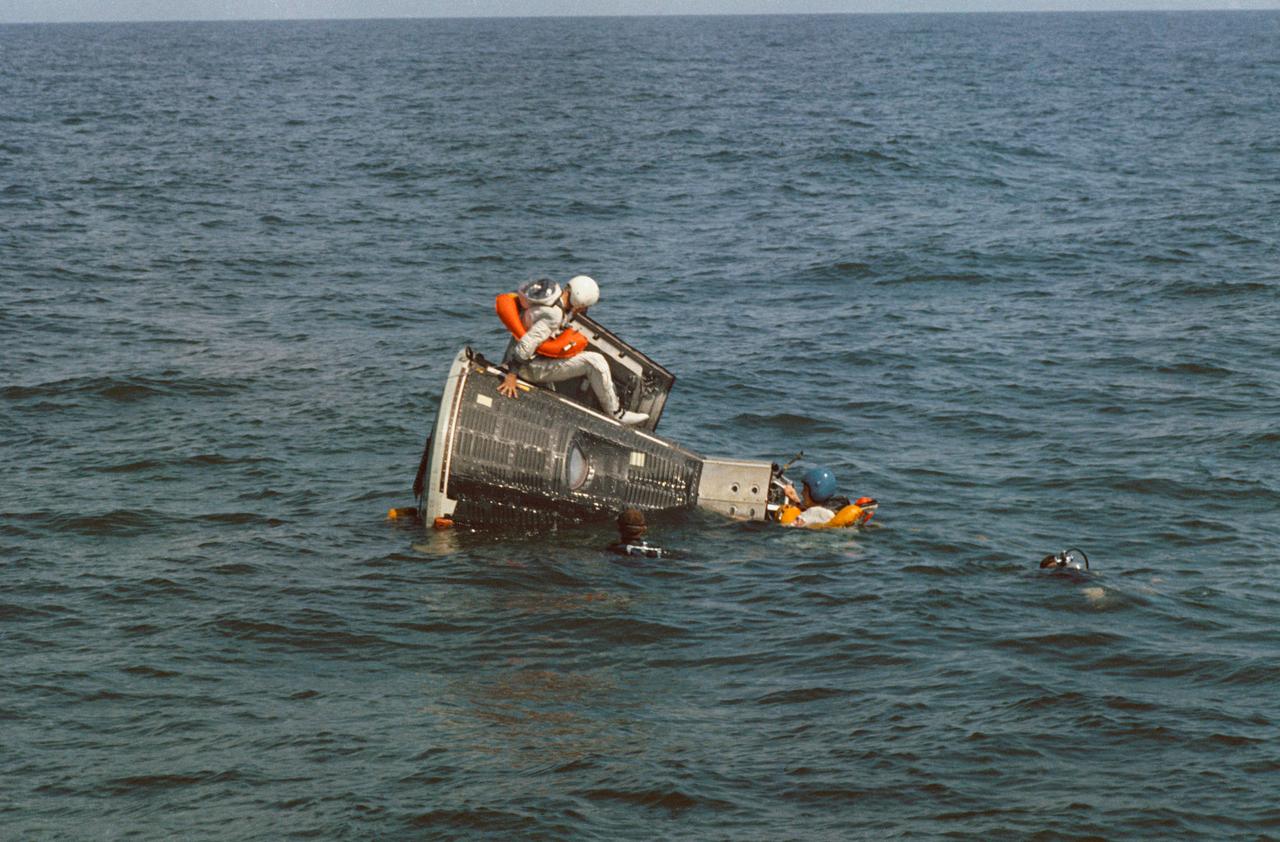
S65-55562 (15 Oct. 1965) --- Astronaut James A. Lovell Jr., prime crew pilot for the Gemini-7 spaceflight, sits on top of the Gemini spacecraft Static Test Article during water egress training in the Gulf of Mexico. Astronaut Frank Borman (wearing blue helmet), prime crew command pilot, hangs onto the nose of the spacecraft. NASA divers are in the water as a safety precaution. Photo credit: NASA
Gemini-Titan (GT)-7 - Water Egress Pilots - Spacecraft (S/C) - Gulf
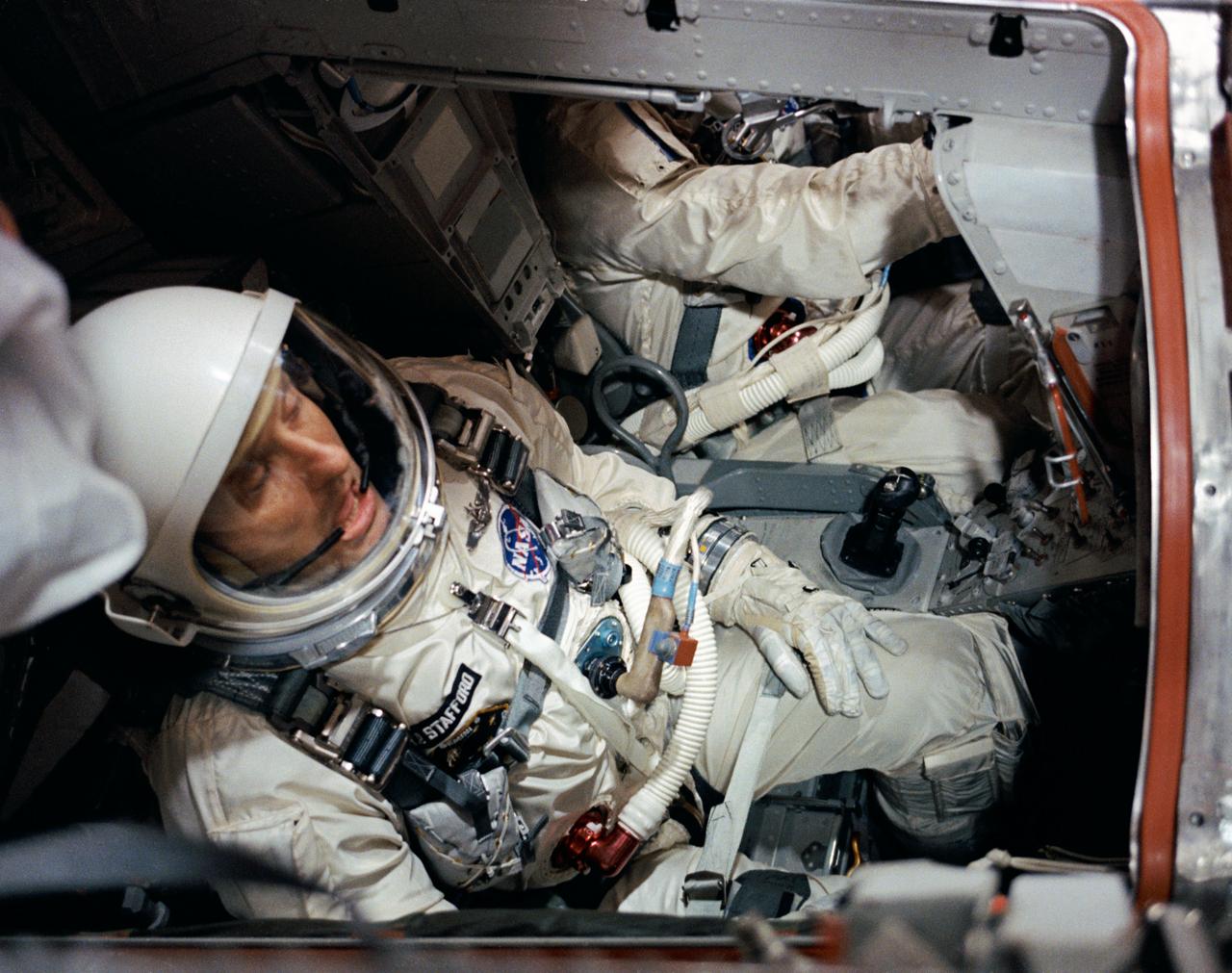
S65-59961 (15 Dec. 1965) --- Astronaut Thomas P. Stafford, pilot, is pictured in the Gemini-6 spacecraft in the White Room atop Pad 19 prior to the closing of the hatches during the Gemini-6 prelaunch countdown. In the background (partially out of view) is astronaut Walter M. Schirra Jr., command pilot. Photo credit: NASA or National Aeronautics and Space Administration
(GEMINI-TITAN [GT]-6 PREFLIGHT ACTIVITY) (PILOT INSIDE SPACECRAFT) - ASTRONAUT THOMAS P. STAFFORD - MISC. - CAPE
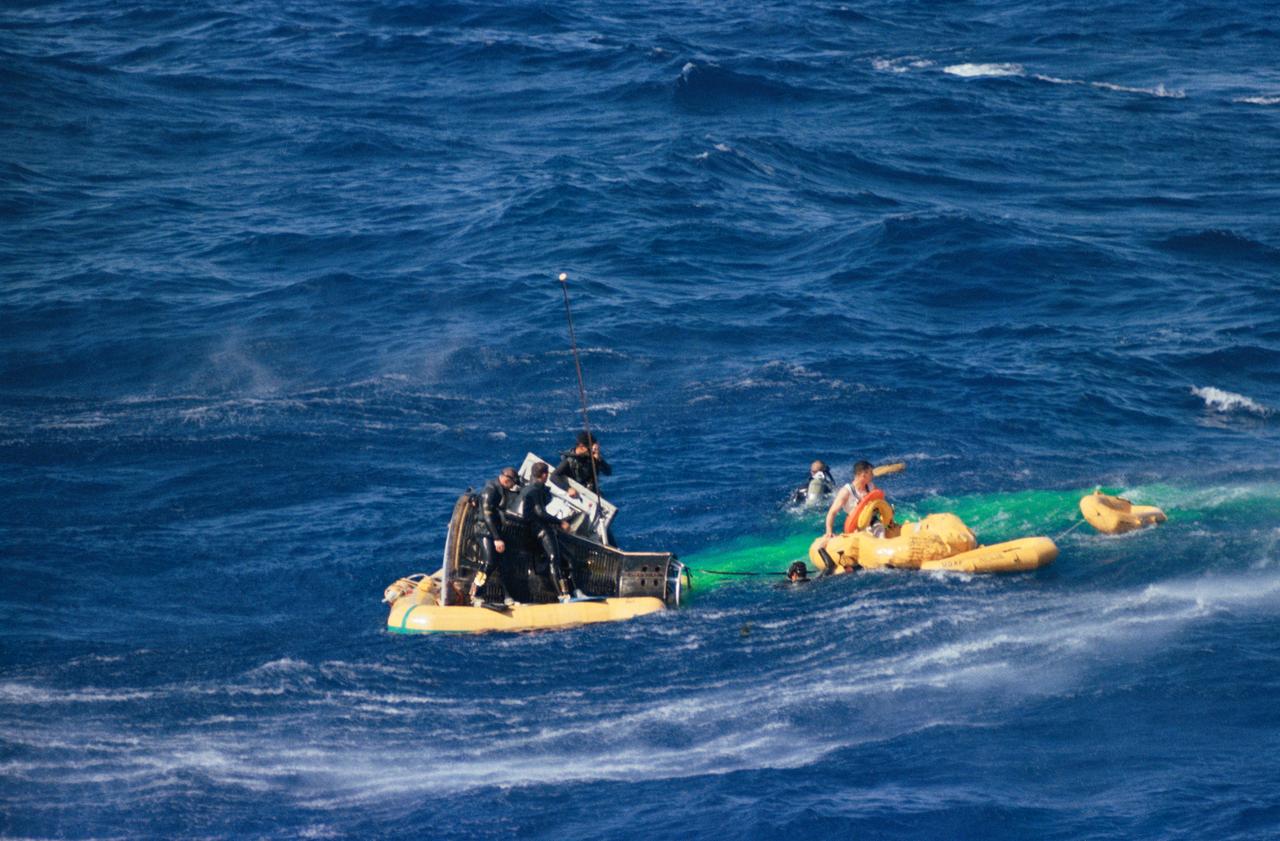
S66-34101 (6 June 1966) --- The Gemini-9 spacecraft, with astronauts Thomas P. Stafford and Eugene A. Cernan still inside, is hoisted aboard the aircraft carrier USS Wasp. Gemini-9 splashed down only 3.5 miles from the big recovery ship at 9 a.m. (EST), June 6, 1966, 345 miles east of Cape Kennedy, to conclude a 72-hour, 21-minute mission in space. Photo credit: NASA
GEMINI-TITAN (GT)-9A - RECOVERY - SPACECRAFT (S/C) HOISTED ABOARD - ATLANTIC
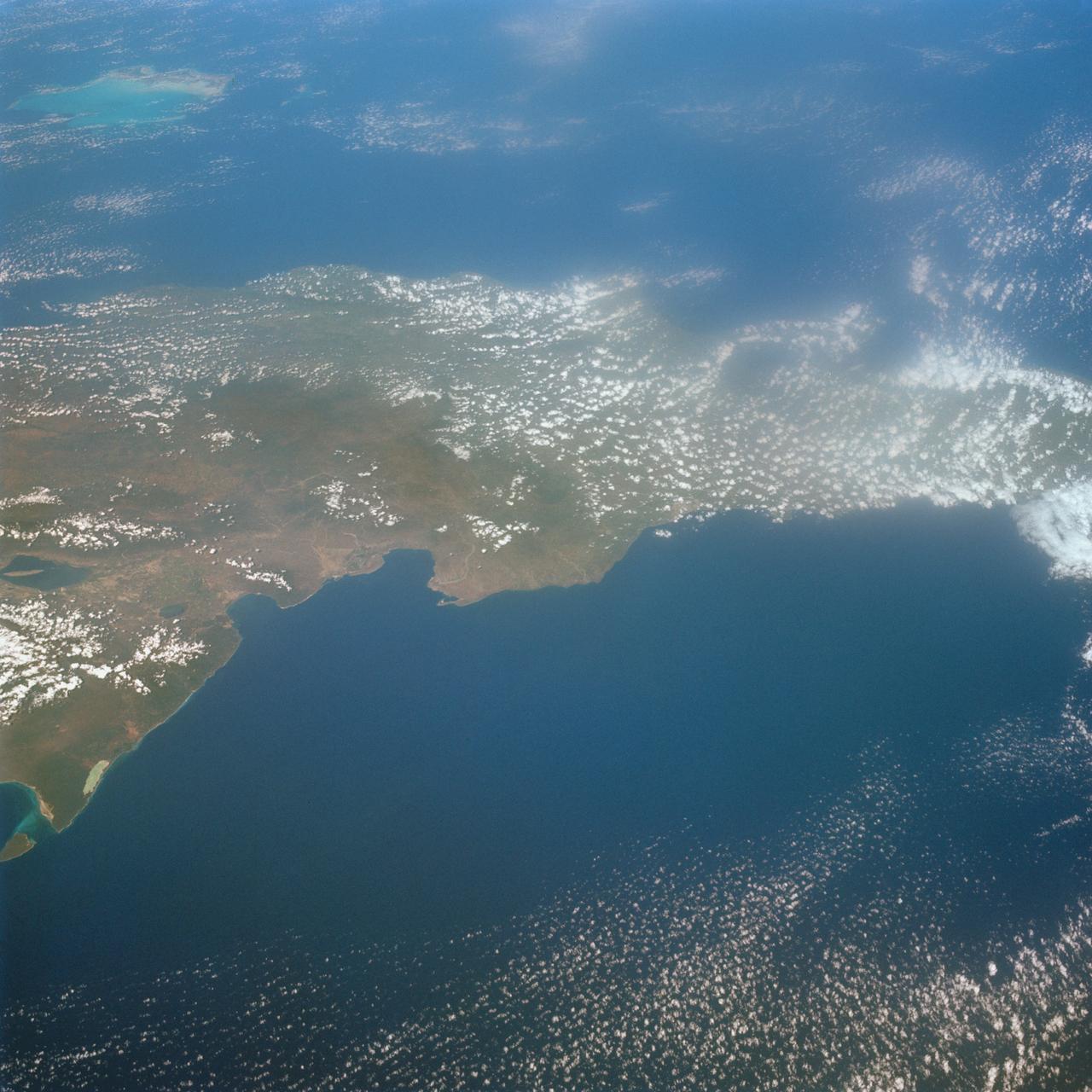
S65-63926 (16 Dec. 1965) --- Island of Hispaniola, Dominican Republic end, as seen from the National Aeronautics and Space Administration's Gemini-7 spacecraft during its 179th revolution of Earth. North is toward the left of the picture. This photograph was taken with a modified 70mm Hasselblad camera, using Eastman Kodak, Ektachrome MS (S.O. 217) color film. Photo credit: NASA
Island of Hispaniola, Dominican Republic as seen from Gemini 7 spacecraft
S65-23489 (23 March 1965) --- Astronaut Virgil I. Grissom, the command pilot of the Gemini-Titan 3 (GT-3) space flight, is shown in the GT-3 spacecraft just before the hatches are secured prior to launch. Grissom and his pilot, astronaut John W. Young, made three orbits of Earth during the GT-3 mission, in four hours and 53 minutes.
GEMINI-TITAN-3 - AWAITS IN SPACECRAFT (S/C) - CAPE
S65-63826 (5 Dec. 1965) --- Oriente Province, eastern end of Cuba, as seen from the National Aeronautics and Space Administration's Gemini-7 spacecraft during its 14th revolution of Earth. Guantanamo Bay is in the center of the picture on the southern coast of Cuba. Santiago de Cuba is located about one inch from the bottom edge of the picture, or about three inches westward down the coast from Guantanamo. This photograph was taken with a modified 70mm Hasselblad camera, using Eastman Kodak, Ektachrome MS (S.O. 217) color film. Photo credit: NASA
Orienete Province, eastern end of Cuba as seen from Gemini 7 spacecraft
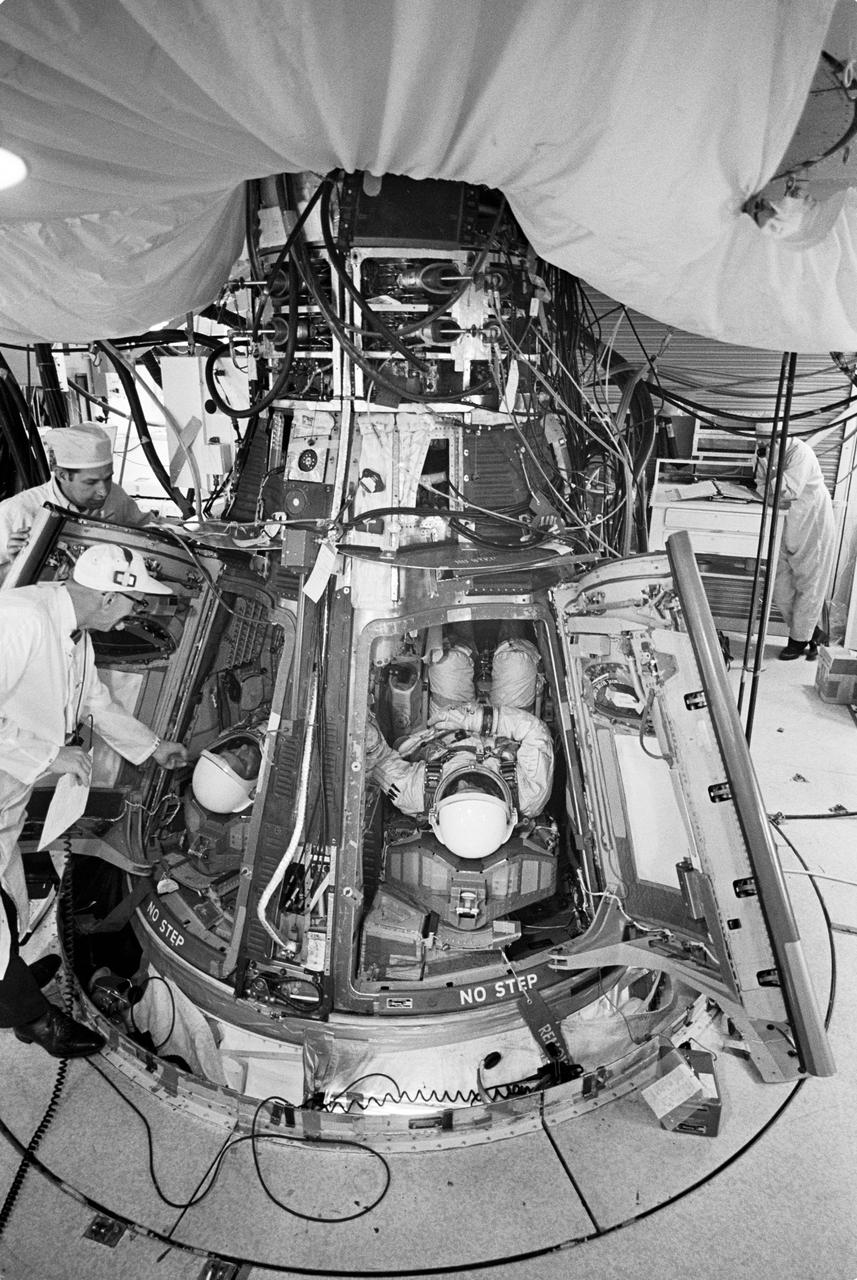
S65-29642 (3 June 1965) --- Close-up view of astronauts James A. McDivitt (foreground) and Edward H. White II inside their Gemini-4 spacecraft. NASA Headquarters alternative photo number is 65-H-294.
GEMINI-TITAN (GT)-4 SPACECRAFT (S/C) (ATOP WHITE ROOM) - ASTRONAUT EDWARD H. WHITE II - MISC. - CAPE
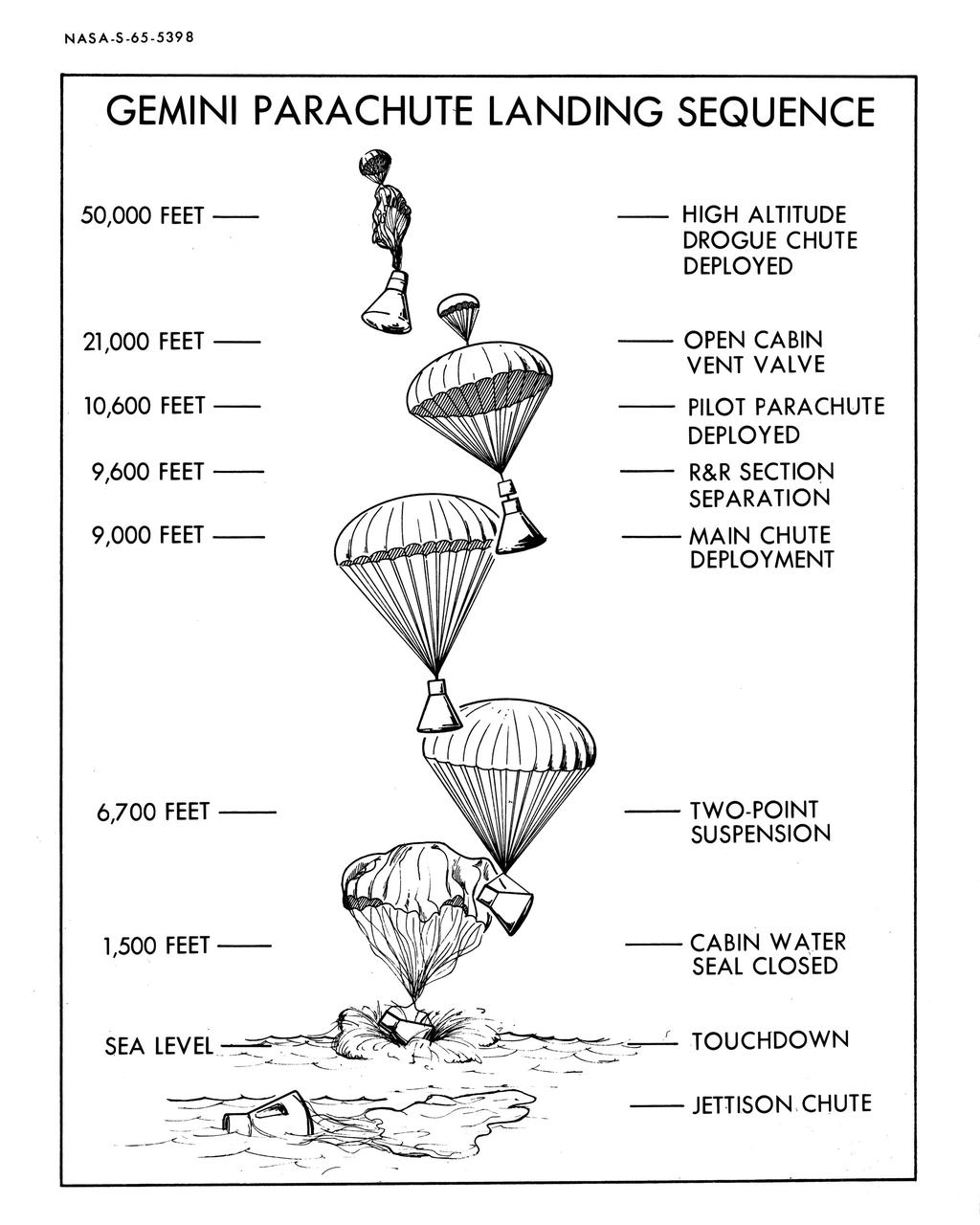
S65-05398 (1965) --- Artist concept of Gemini parachute landing sequence from high altitude drogue chute deployed to jettison of chute.
GEMINI PARACHUTE LANDING SEQUENCE - CHART - MSC
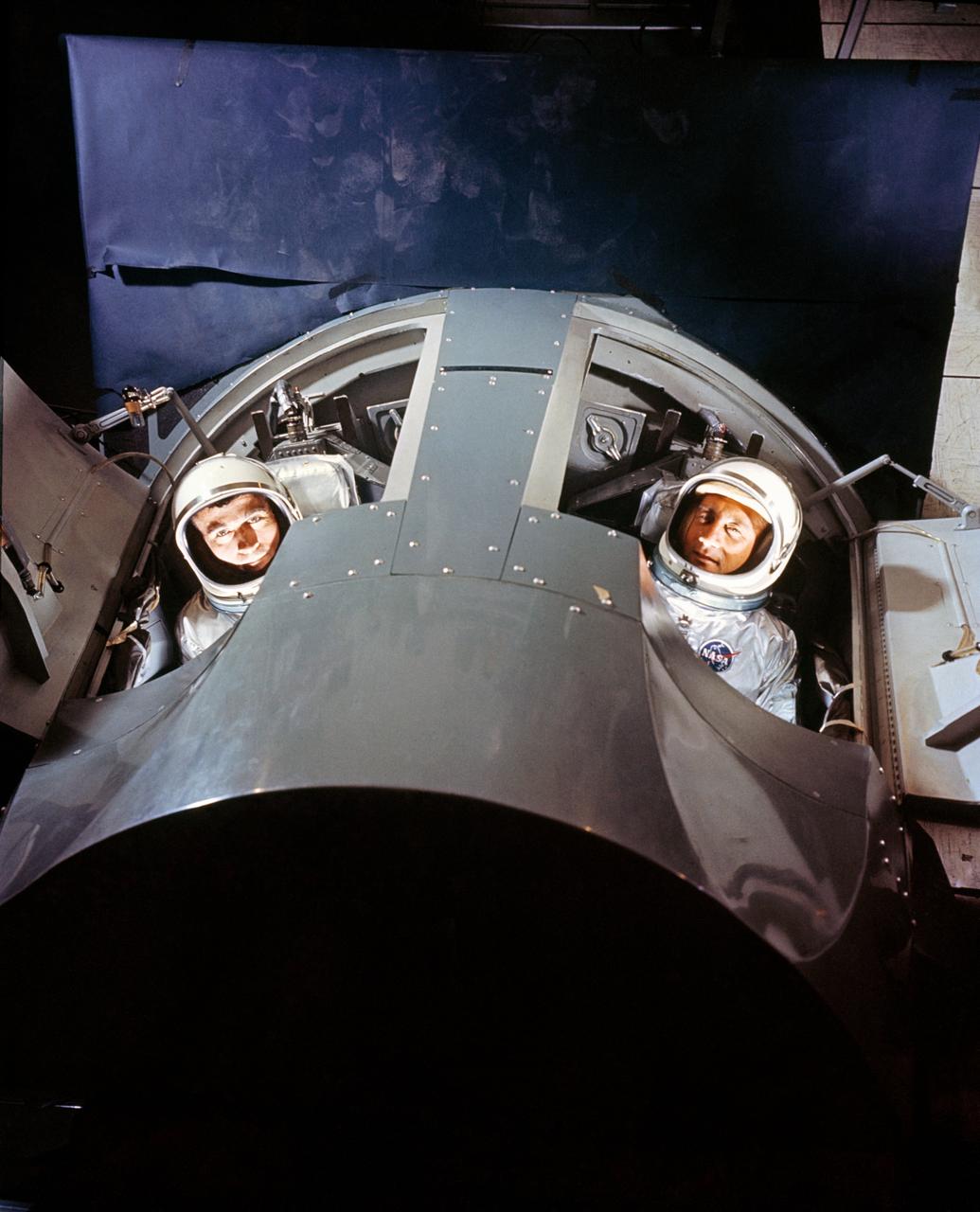
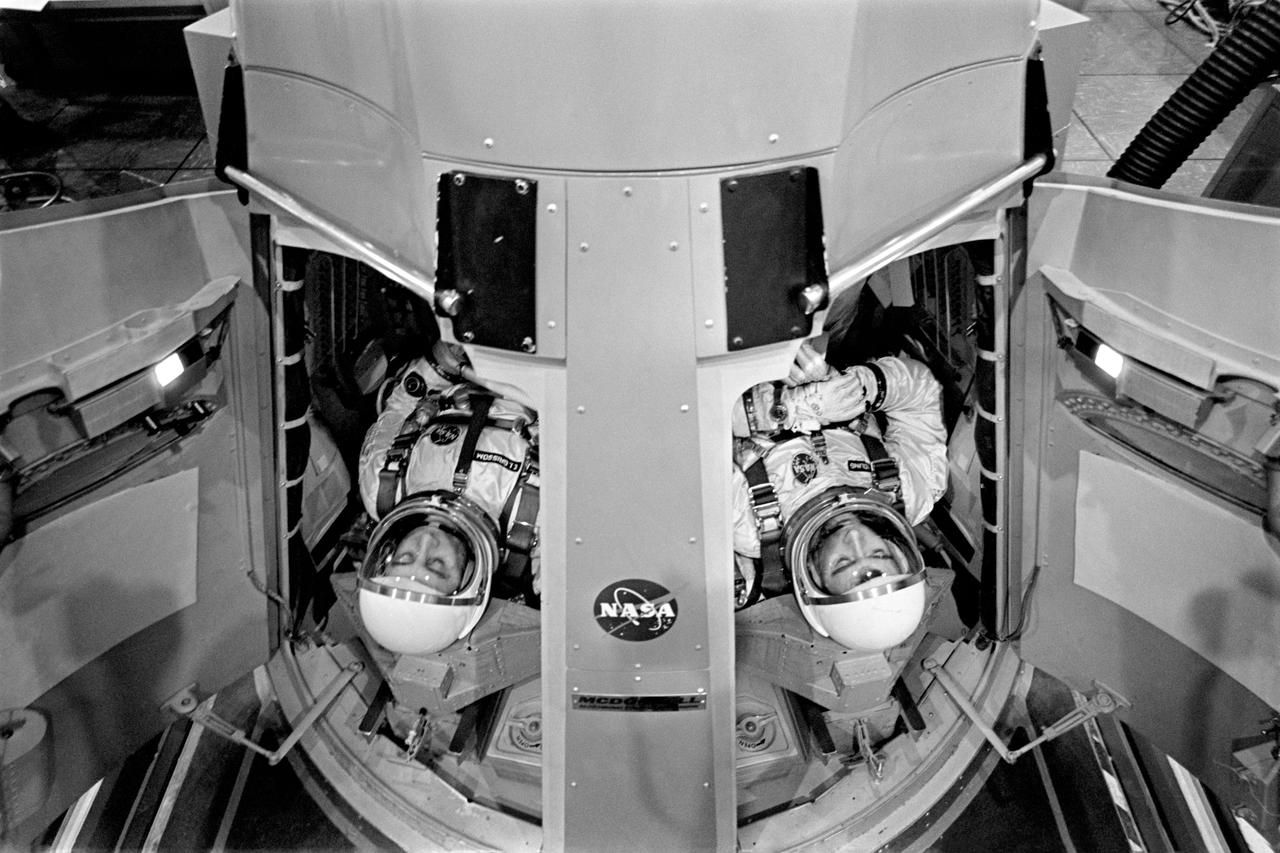
S64-25295 (March 1964) --- Astronauts Virgil I. (Gus) Grissom (right) and John W. Young, prime crew for the first manned Gemini mission (GT-3), are shown inside a Gemini mission simulator at McDonnell Aircraft Corp., St. Louis, MO. The simulator will provide Gemini astronauts and ground crews with realistic mission simulation during intensive training prior to actual launch.
Astronauts Grissom and Young in Gemini Mission Simulator
S65-22893 (23 March 1965) --- Astronaut John W. Young, the pilot of the Gemini-Titan III (GT-3) flight, waits in a life raft to be picked up by a helicopter during recovery operations following the successful three-orbit mission. Young and astronaut Virgil I. Grissom, command pilot, were flown by helicopter to the nearby recovery vessel, the USS Intrepid. The recovery ship later came alongside and retrieved the GT-3 spacecraft.  United States Navy swimmers assisted in the GT-3 recovery operations.
GEMINI-TITAN (GT)-3 - RECOVERY OPERATIONS - ASTRONAUT JOHN W. YOUNG (SPACECRAFT IN WATER) - ATLANTIC
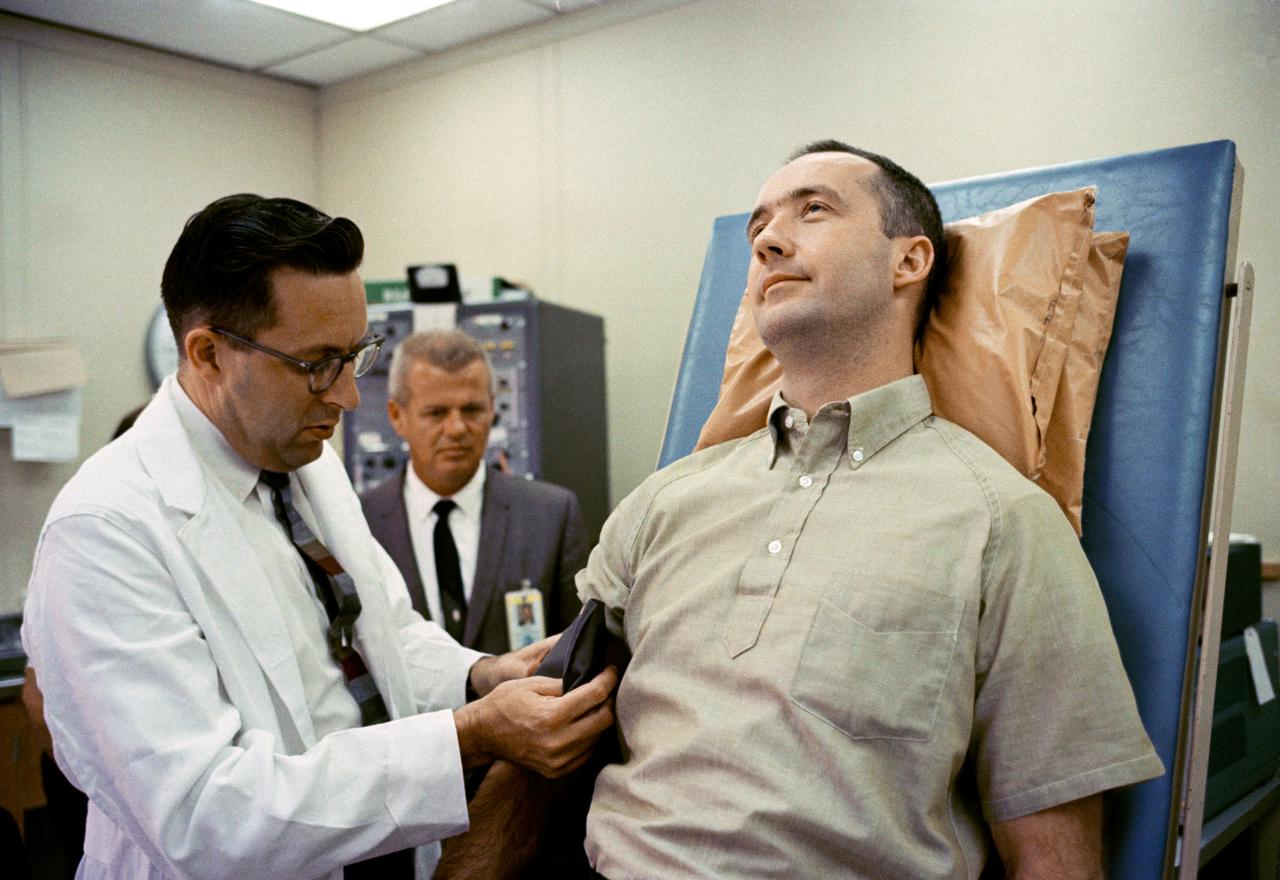
S65-19524 (1 June 1965) --- Dr. Charles A. Berry, chief of Center Medical Programs, MSC, Houston, Texas, prepares to check the blood pressure of astronaut James A. McDivitt, command pilot for the Gemini-Titan 4 spaceflight. McDivitt is on the tilt table at the Aero Medical Area, MSC, Merritt Island, where he and astronaut Edward H. White II (out of frame), GT-4 pilot, underwent preflight physicals in preparation for the four-day, 62-revolution spaceflight. The two astronauts were declared in top physical condition. In the background is Dr. Gordon Benson, NASA physician at Cape Kennedy.
Astronaut McDivitt - Blood Pressure Check - Preflight Examination - Merritt Island, FL
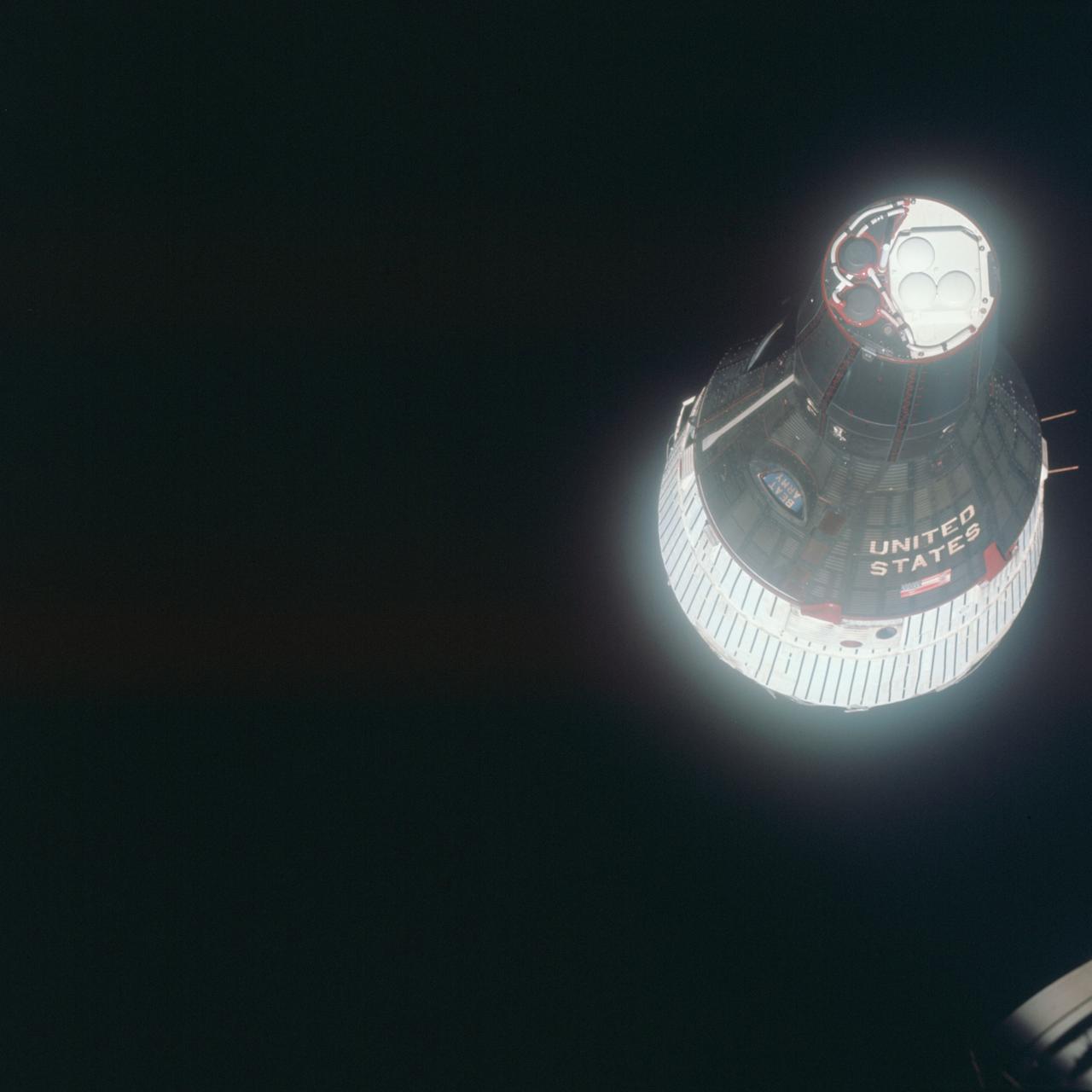
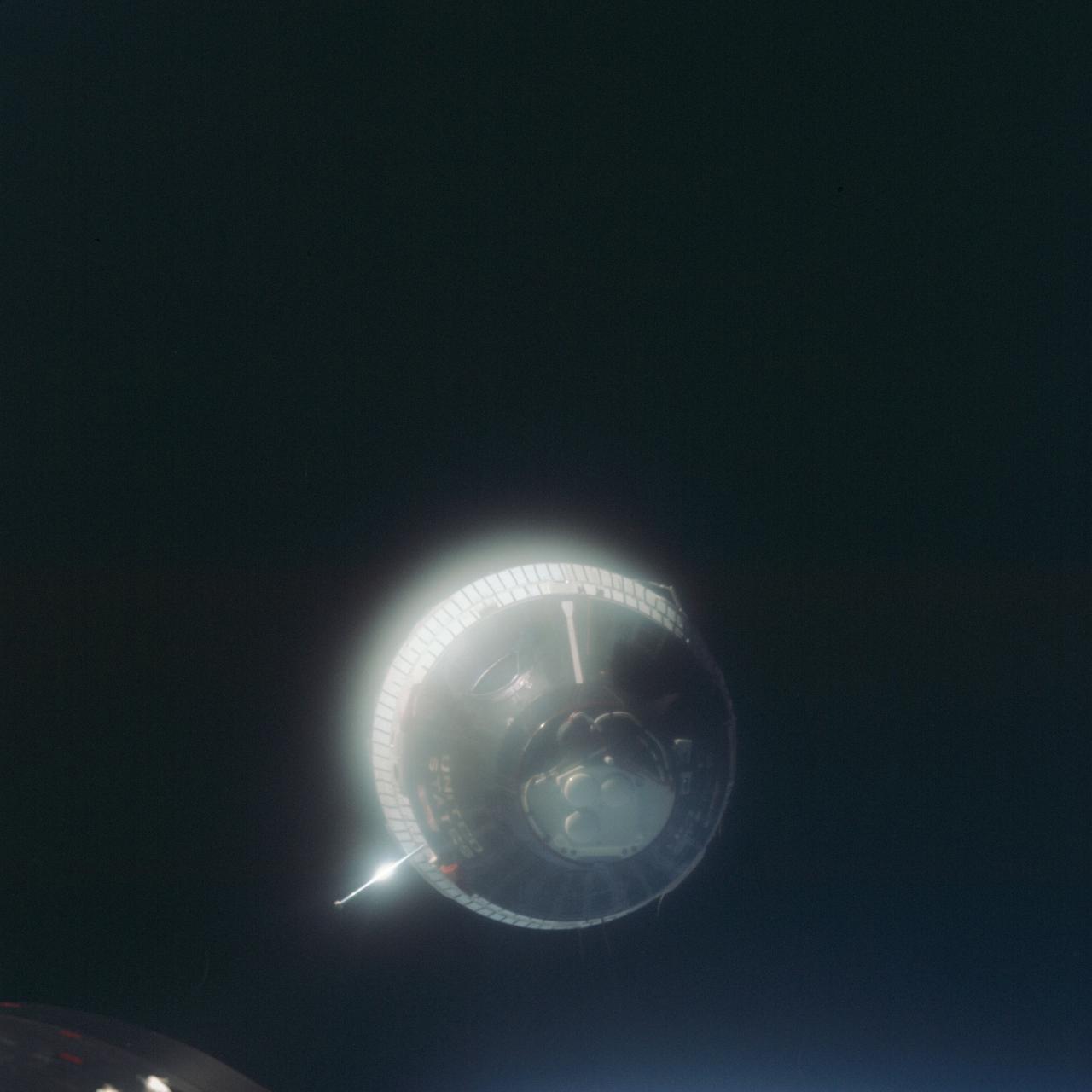
S65-64040 (15 Dec. 1965) --- Nose-on view of the Gemini-6 spacecraft against the blackness of space as seen from Gemini-7 spacecraft.  The two spacecraft were approximately 38 feet apart. Astronauts Walter M. Schirra and Thomas P. Stafford were onboard the Gemini-6 spacecraft. Astronauts Frank Borman and James A. Lovell Jr. were aboard the Gemini-7 spacecraft. A "Beat Army" sign can be seen in the Gemini-6 window. Photo credit: NASA
Gemini-Titan (GT)-7 of GT-6 Space Photography - Outer Space
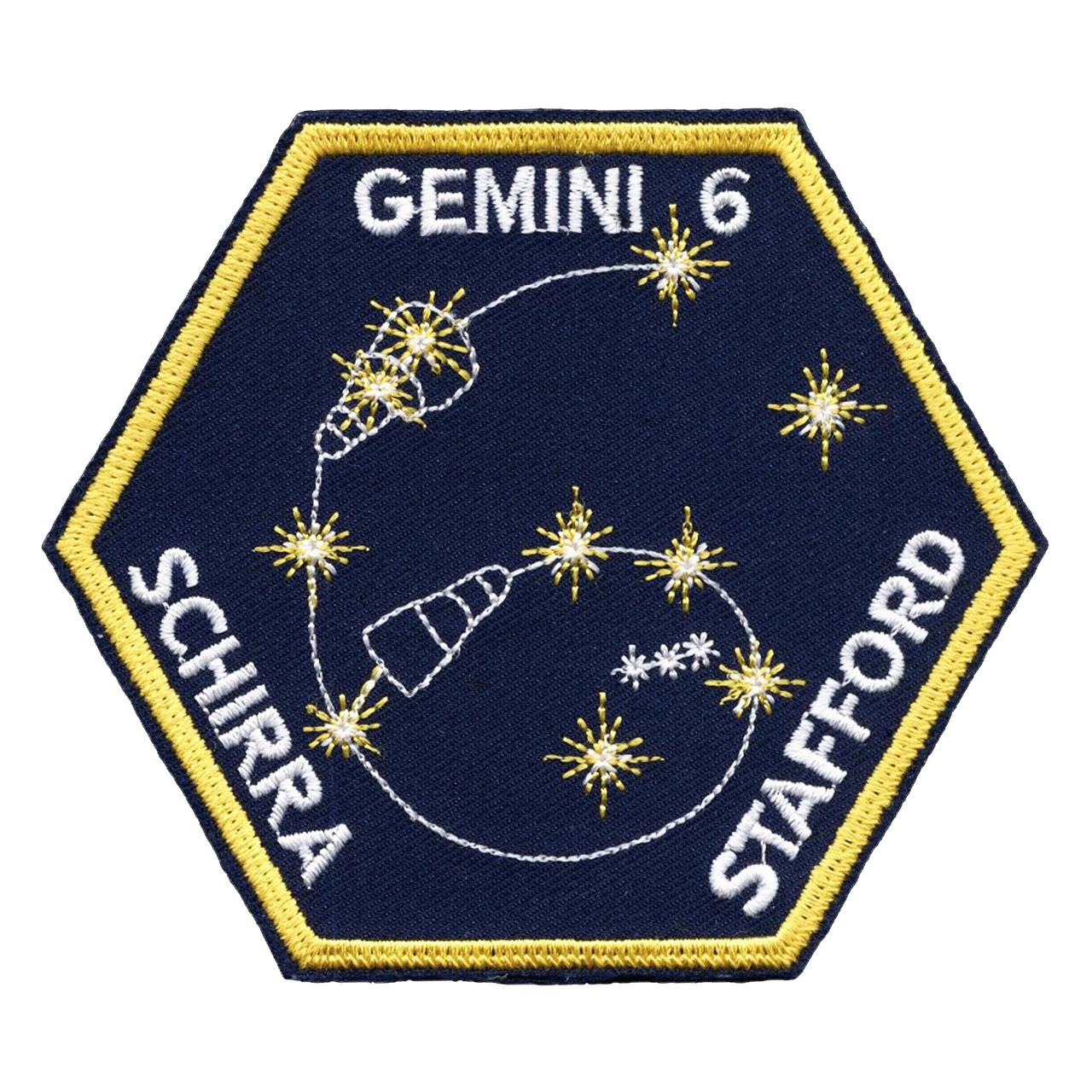
The Gemini 6 patch is hexagonal in shape, reflecting the mission number; and the spacecraft trajectory also traces out the number "6". The Gemini 6 spacecraft is shown superimposed on the "twin stars" Castor and Pollux, for "Gemini".
Gemini 6 patch
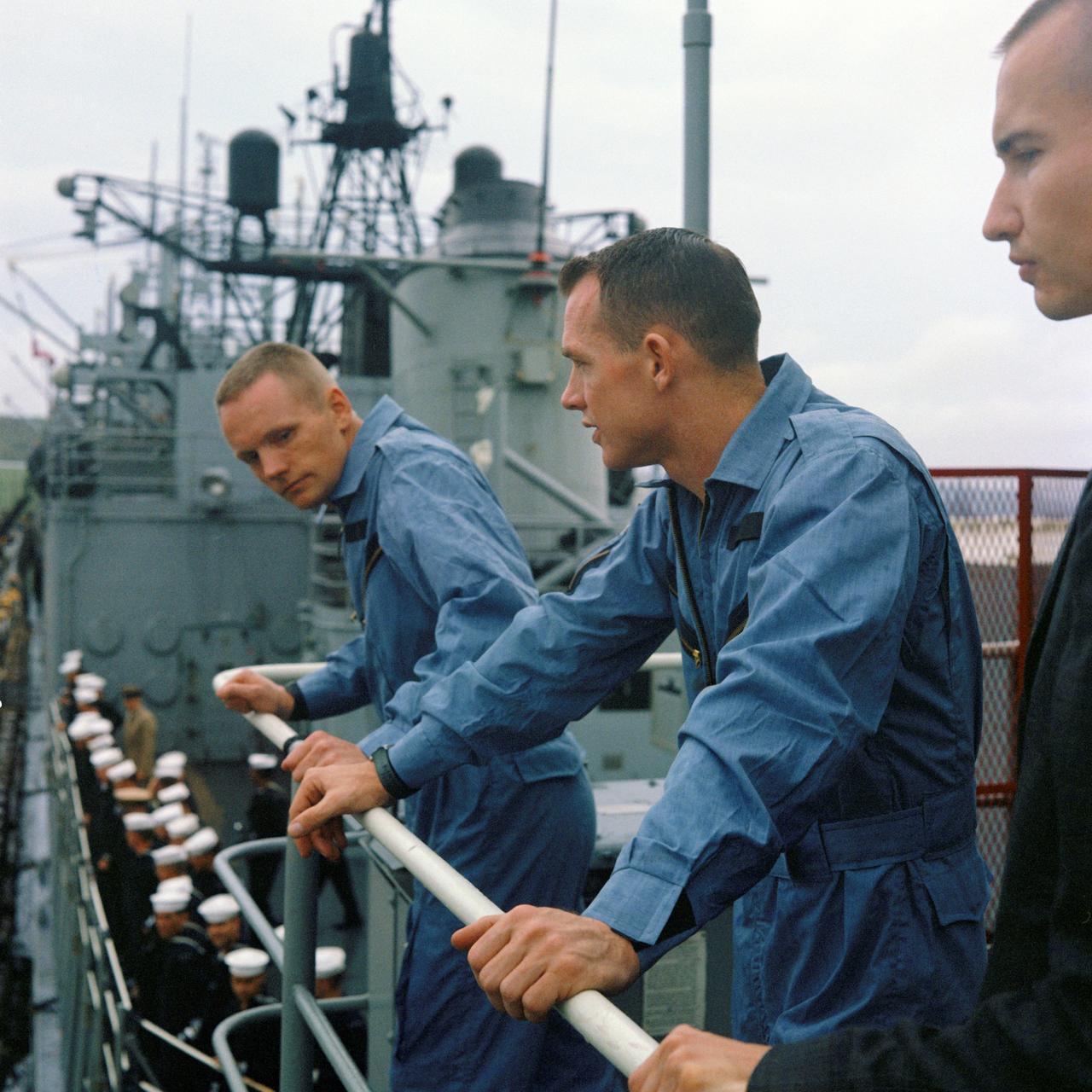
S66-18609 (17 March 1966) --- Astronauts David R. Scott (left), Gemini-8 pilot, and Neil A. Armstrong, command pilot, stand on the deck of the destroyer USS Leonard F. Mason upon its arrival at Nahs, Okinawa. Photo credit: NASA
Gemini 8 crew stands on deck of recovery vessel
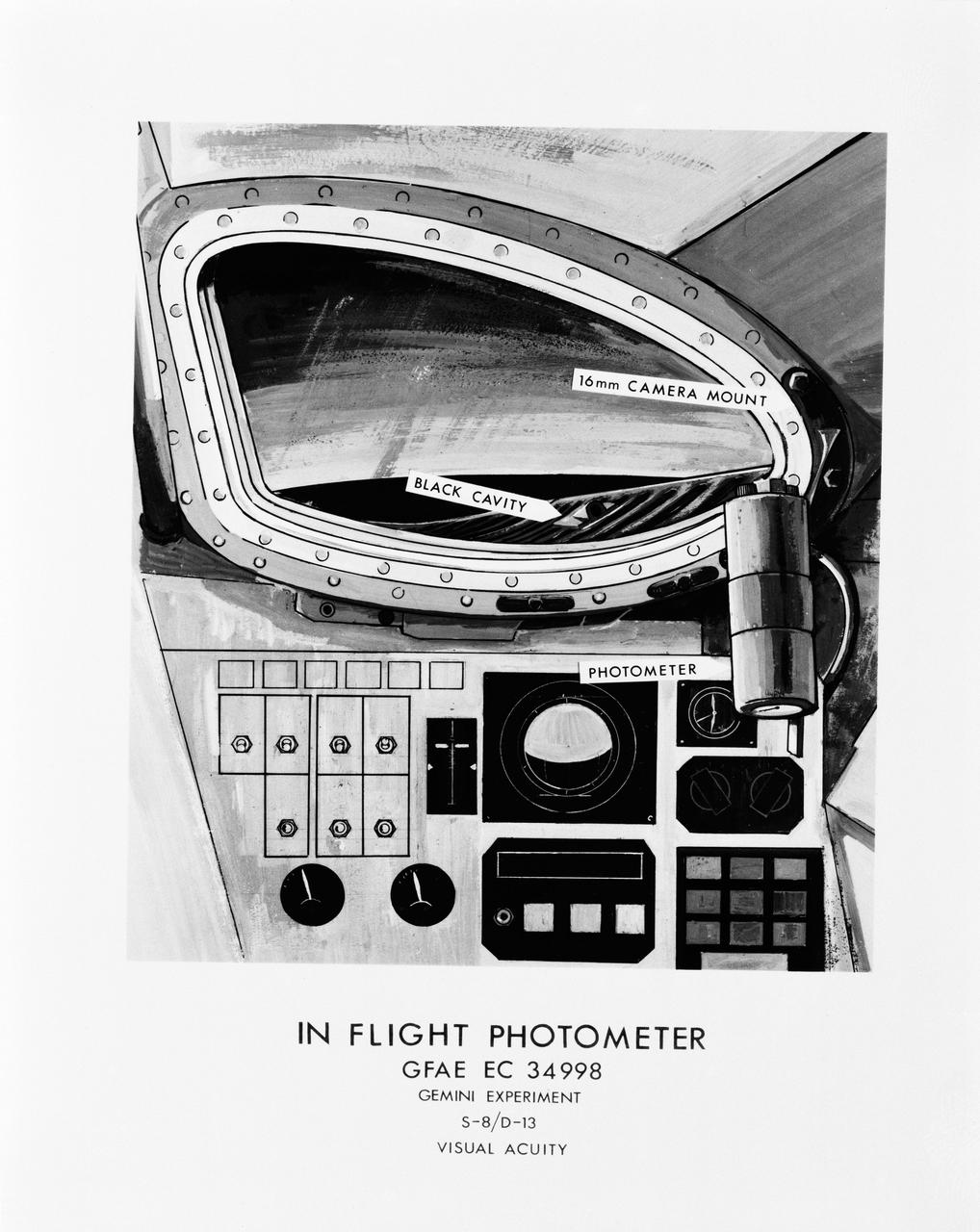
S65-28643 (June 1965) --- Artist concept showing the position of Gemini experiment In-flight Photometer in Gemini spacecraft.
Chart - Visual Acuity - Gemini Experiment - CA
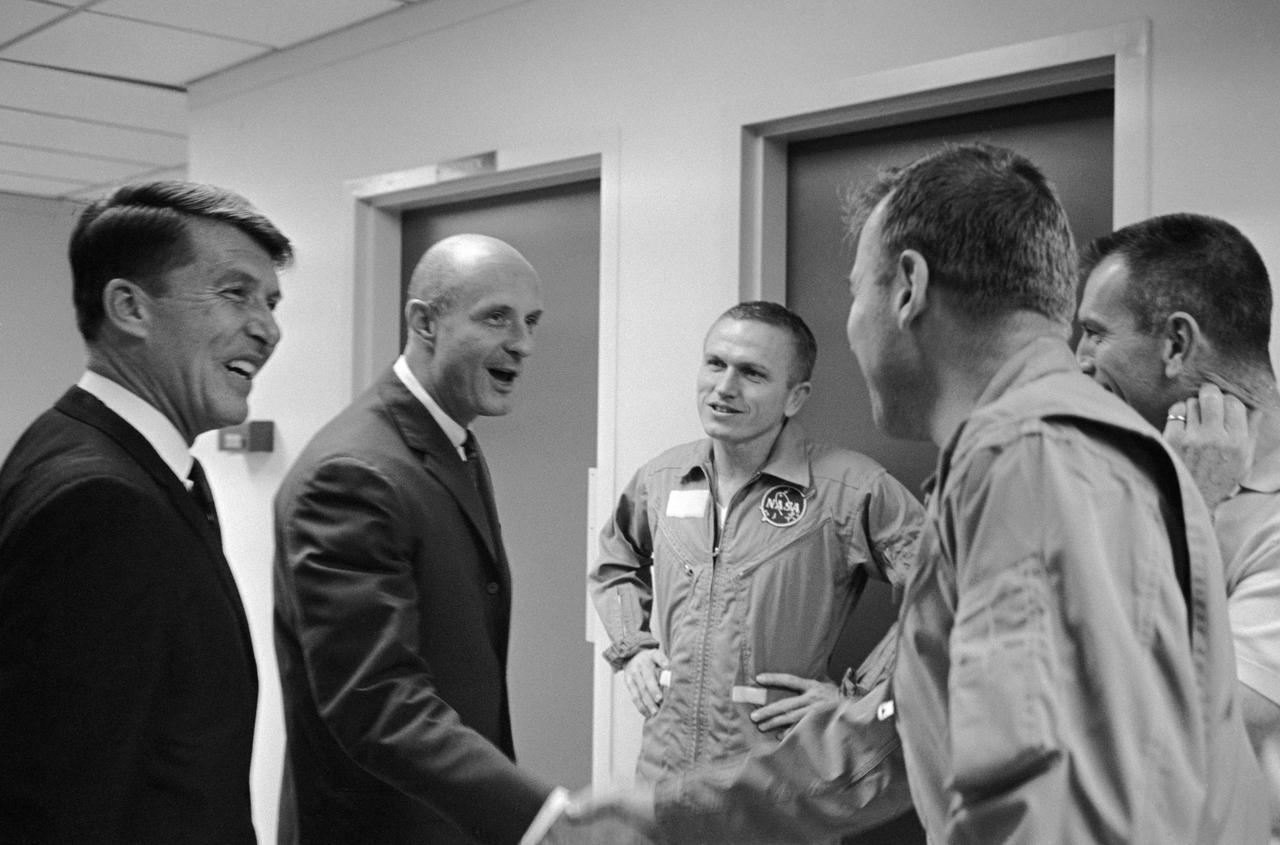
S65-66728 (19 Dec. 1965) --- This happy round of handshakes took place in the Manned Spacecraft Operations Building crew quarters, Merritt Island, as the Gemini-6 crew (left) welcomed the Gemini-7 crew back to the Kennedy Space Center. Left to right, are astronauts Walter M. Schirra Jr., Gemini-6 command pilot; Thomas P. Stafford, Gemini-6 pilot; Frank Borman, Gemini-7 command pilot; James A. Lovell Jr., Gemini-7 pilot; and Donald K. Slayton (partially hidden behind Lovell), assistant director for Flight Crew Operations, Manned Spacecraft Center, Houston. Photo credit: NASA
ASTRONAUT GROUP - GT-6 AND GT-7 CREWS - WELCOME
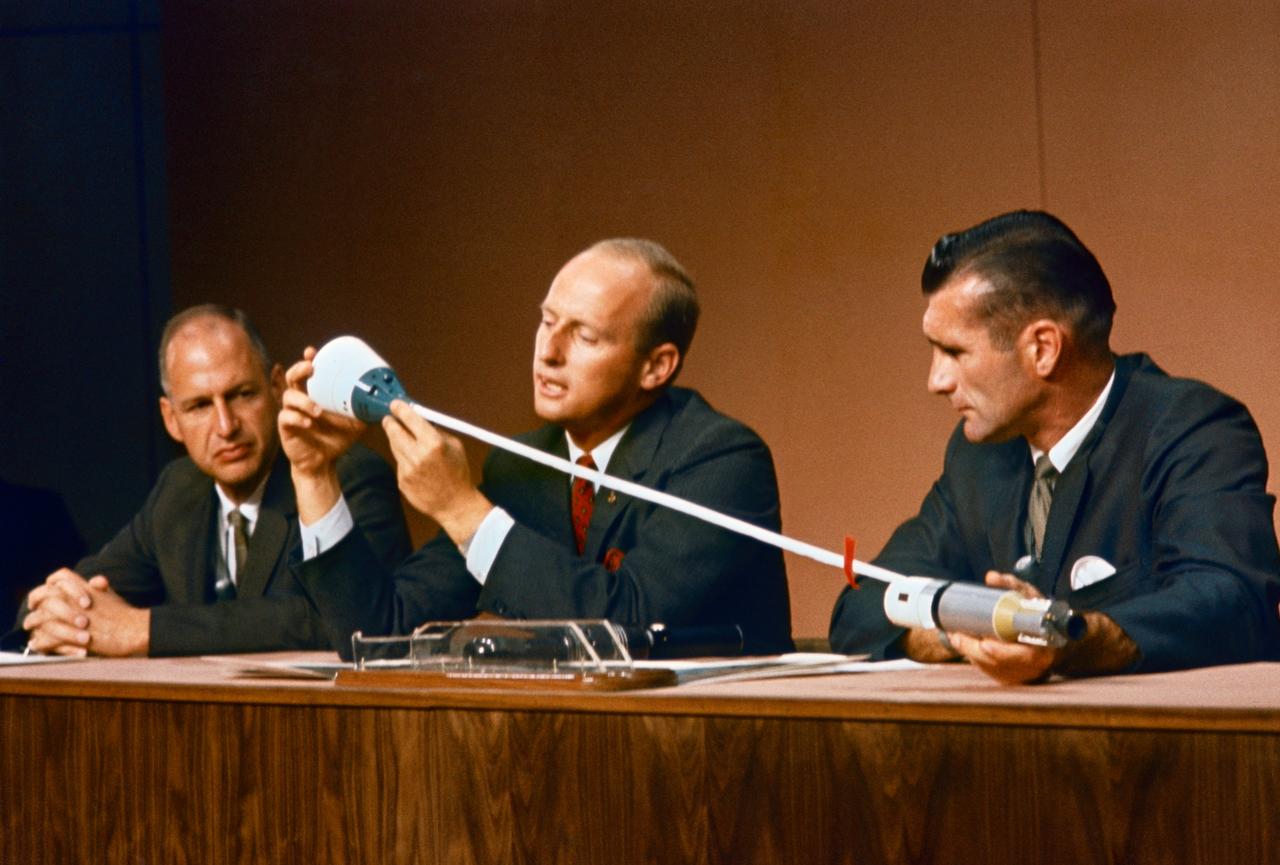
S66-45635 (26 Sept. 1966) --- Astronaut Charles Conrad Jr. (center), Gemini-11 prime crew command pilot, discusses the Gemini-11/Agena tether before a gathering of news media representatives in the MSC Building 1 auditorium. Holding an Agena model at right is astronaut Richard F. Gordon Jr., Gemini-11 pilot. Looking on at left is George M. Low, MSC Deputy Director. Photo credit: NASA
Astronauts Conrad and Gordon Tethering Procedures Demonstration - News Media - MSC
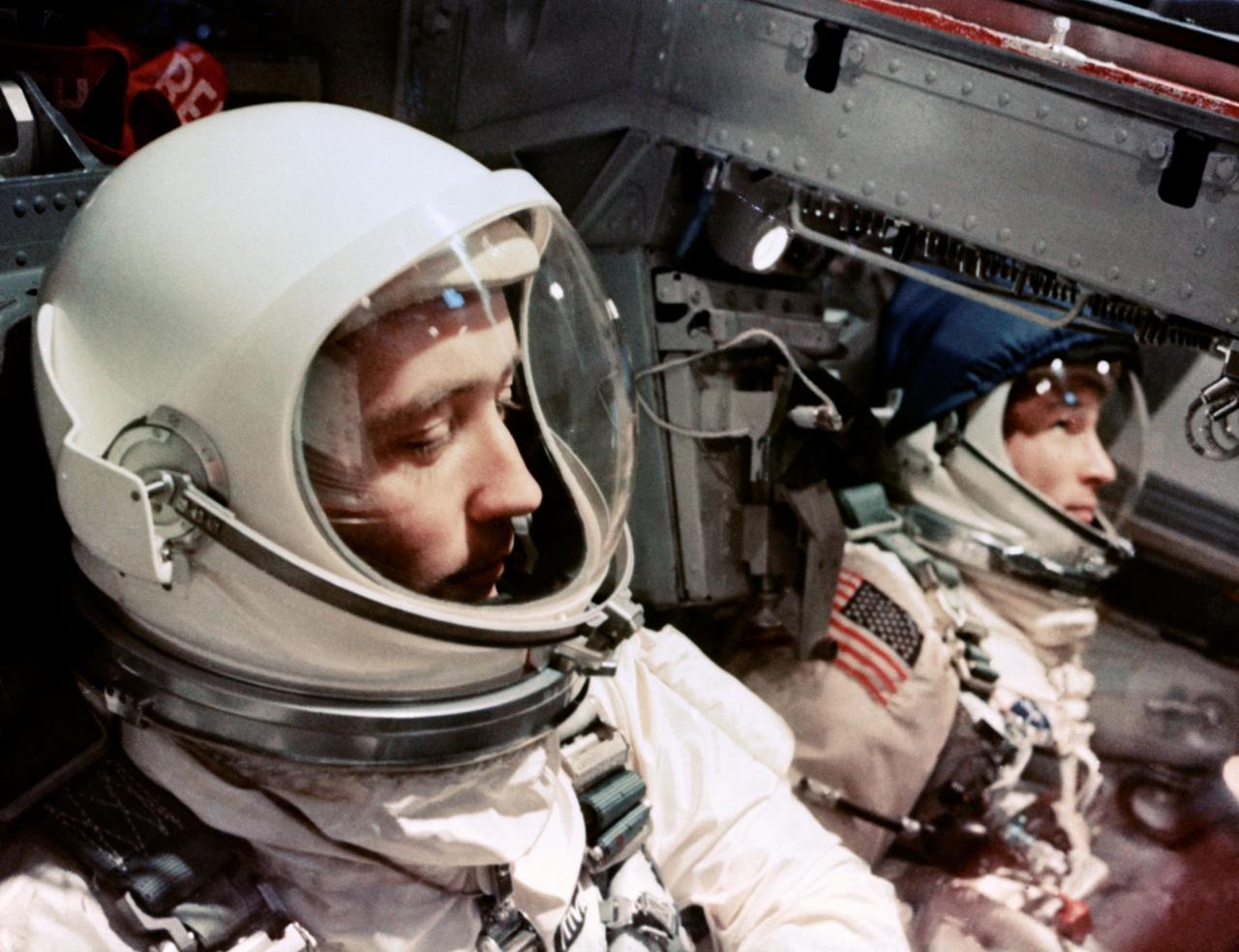
S65-21864 (19 March 1965) --- Astronauts Virgil I. Grissom (left), command pilot; and John W. Young, pilot, prepare to run Gemini-Titan 3 simulations in the Gemini mission simulator at Cape Kennedy, Florida. The NASA GT-3 flight was scheduled for March 23, 1965.
Astronauts Grissom and Young prepare to preform flight simulations
S66-42702 (12 July 1966) --- Gemini-10 prime crew, astronauts John W. Young (left), command pilot, and Michael Collins (right), pilot, check equipment in the White Room atop Pad 19 where they participated in a Simultaneous Launch Demonstration. Photo credit: NASA
Gemini 10 prime crew participate in Simultaneous Launch Demonstration
S66-29559 (9 April 1966) --- Astronaut Eugene A. Cernan, prime crew pilot of the National Aeronautics and Space Administration?s Gemini-9 spaceflight, sits in Gemini Boiler-plate during water egress training activity in the Gulf of Mexico. Photo credit: NASA
Astronaut Eugene Cernan sits in Gemini boilerplate during water egress
S65-61837 (27 Nov. 1965) --- The Gemini-7 backup crew seen in the White Room atop Pad 19 during Gemini-7 simulation flight activity. McDonnell Aircraft Corporation technicians assist in the exercise. Astronaut Edward H. White II (in foreground) is the Gemini-7 backup crew command pilot; and astronaut Michael Collins (right background) is the backup crew pilot. Photo credit: NASA
Gemini 7 backup crew seen in white room during Gemini 7 simulation activity
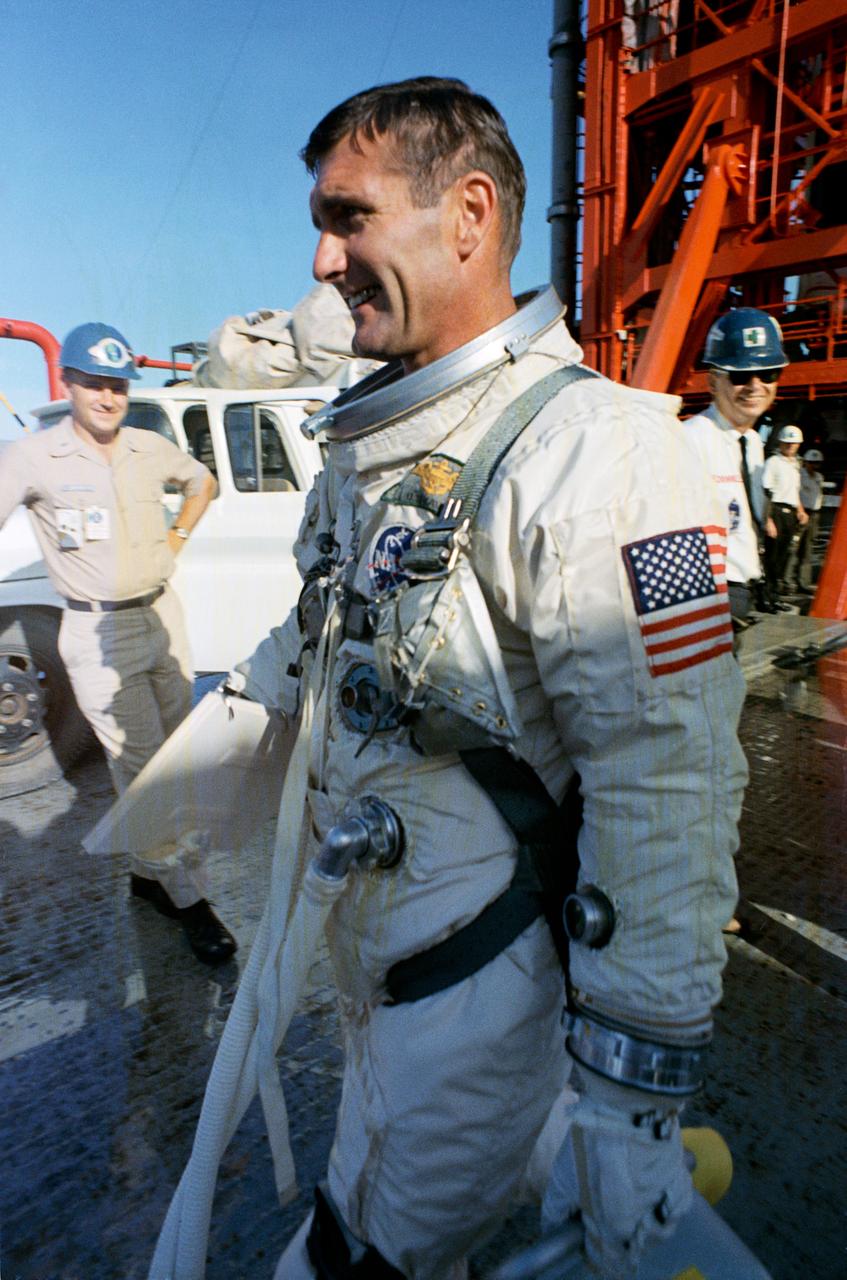
S66-50775 (10 Sept. 1966) --- Astronaut Richard F. Gordon Jr., pilot, walks away from Pad 19 following postponement of the Gemini-11 spaceflight. The mission was rescheduled for Sept. 12, 1966. Photo credit: NASA
Astronaut Richard Gordon walks away from Pad 19 following postponement
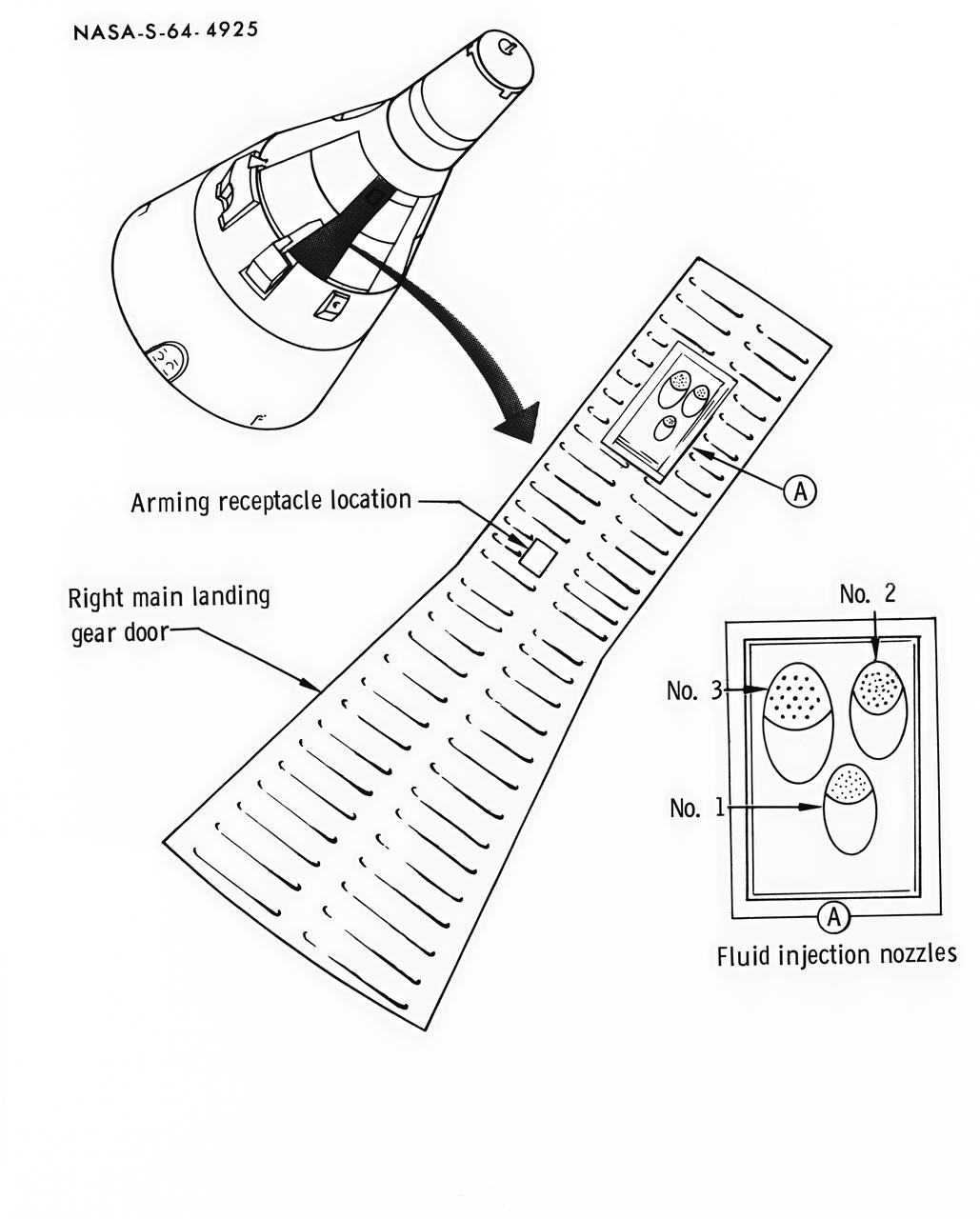
S64-04925 (September 1964) --- Diagram of Gemini spacecraft location of re-entry communications experiment planned for the Gemini-Titan 3 orbital flight.
RE-ENTRY COMMUNICATIONS (EXPERIMENT) - GEMINI-TITAN (GT)-III - TEST - DIAGRAMS - MSC
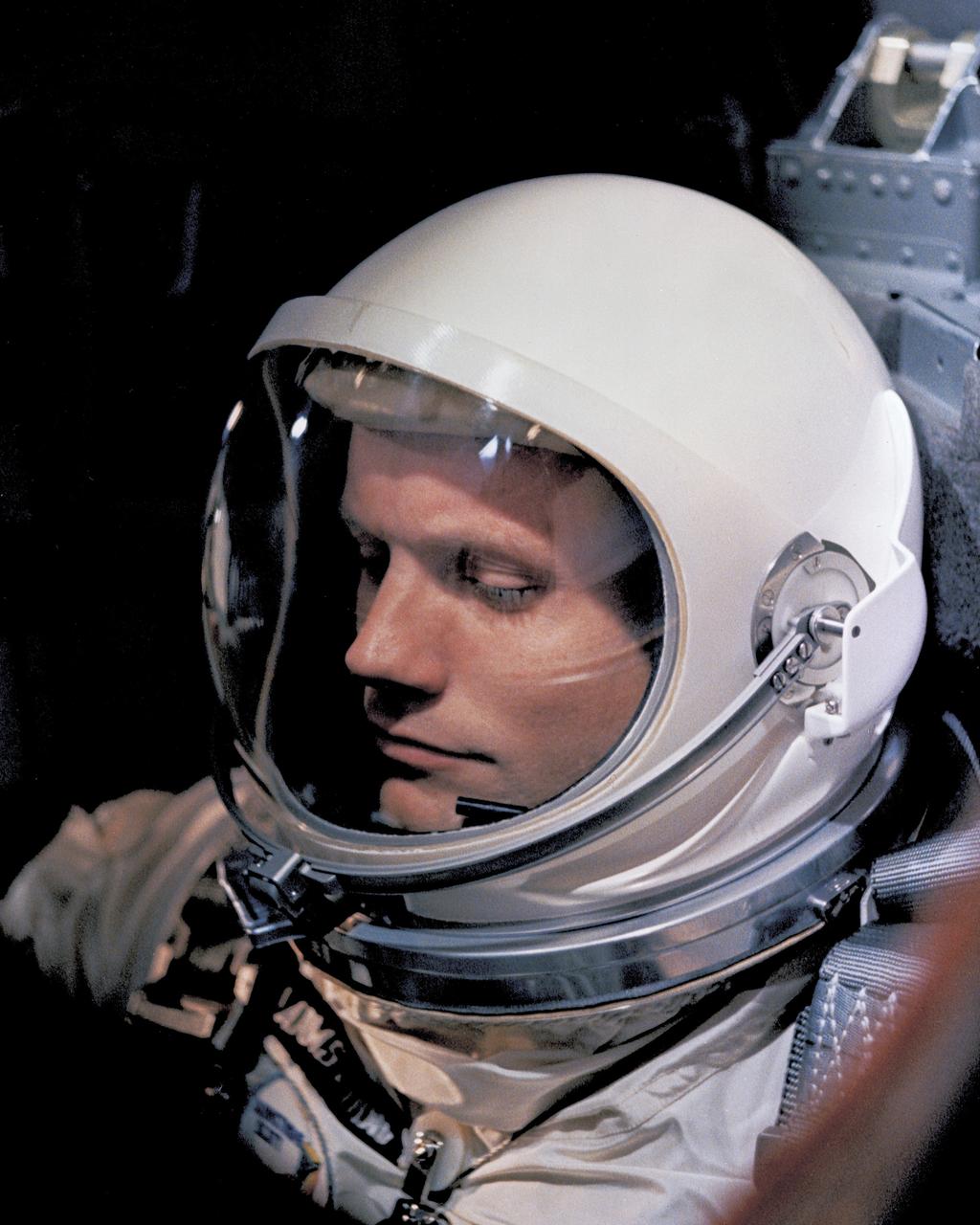
KSC-66C-1871  Gemini 8 Pilot David R. Scott seen through window of Gemini 8 Spacecraft just before liftoff. (jrs)
104-KSC-66C-1871
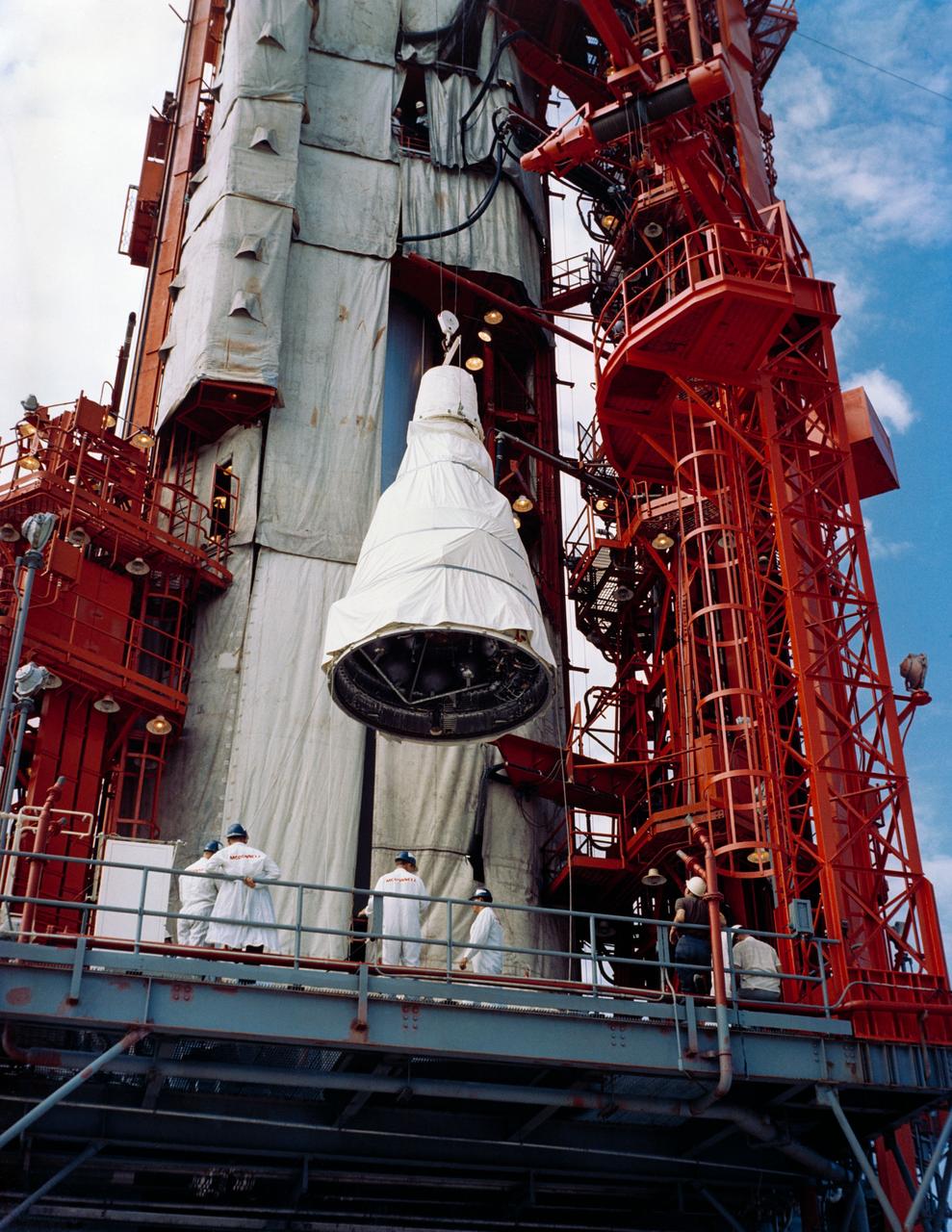
S65-43446 (25 June 1965) --- The Gemini-5 spacecraft is hoisted to the top of the gantry at Pad 19 to be mated with the Gemini Launch Vehicle 5.
GEMINI-TITAN (GT)-5 - MATING - CAPE
KSC-66C-1872  Gemini 8 Command Pilot Neil A. Armstrong seen through window of Gemini 8 Spacecraft just before liftoff. (jrs)
104-KSC-66C-1872
S65-63197 (15 Dec. 1965) --- This historic view of the orbiting Gemini-7 spacecraft was taken from the Gemini-6 spacecraft during their rendezvous mission in space. Astronauts Frank Borman and James A. Lovell Jr. were in the Gemini-7 spacecraft. In the Gemini-6 spacecraft were astronauts Walter M. Schirra Jr. and Thomas P. Stafford. This photograph was taken with a modified 70mm Hassleblad camera, using Eastman Kodak, Ektachrome MS (SO 217) color film. The two National Aeronautics and Space Administration (NASA) spacecraft?s are approximately 34 feet apart. Photo credit: NASA or National Aeronautics and Space Administration
Gemini-Titan (GT)-6 - Gemini 6 of Gemini 7 - Space Photography - Outer Space