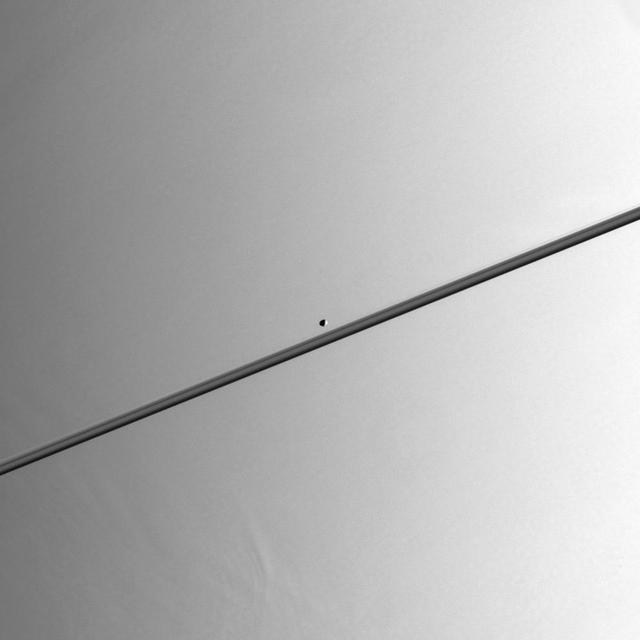
Pandora Glides Along
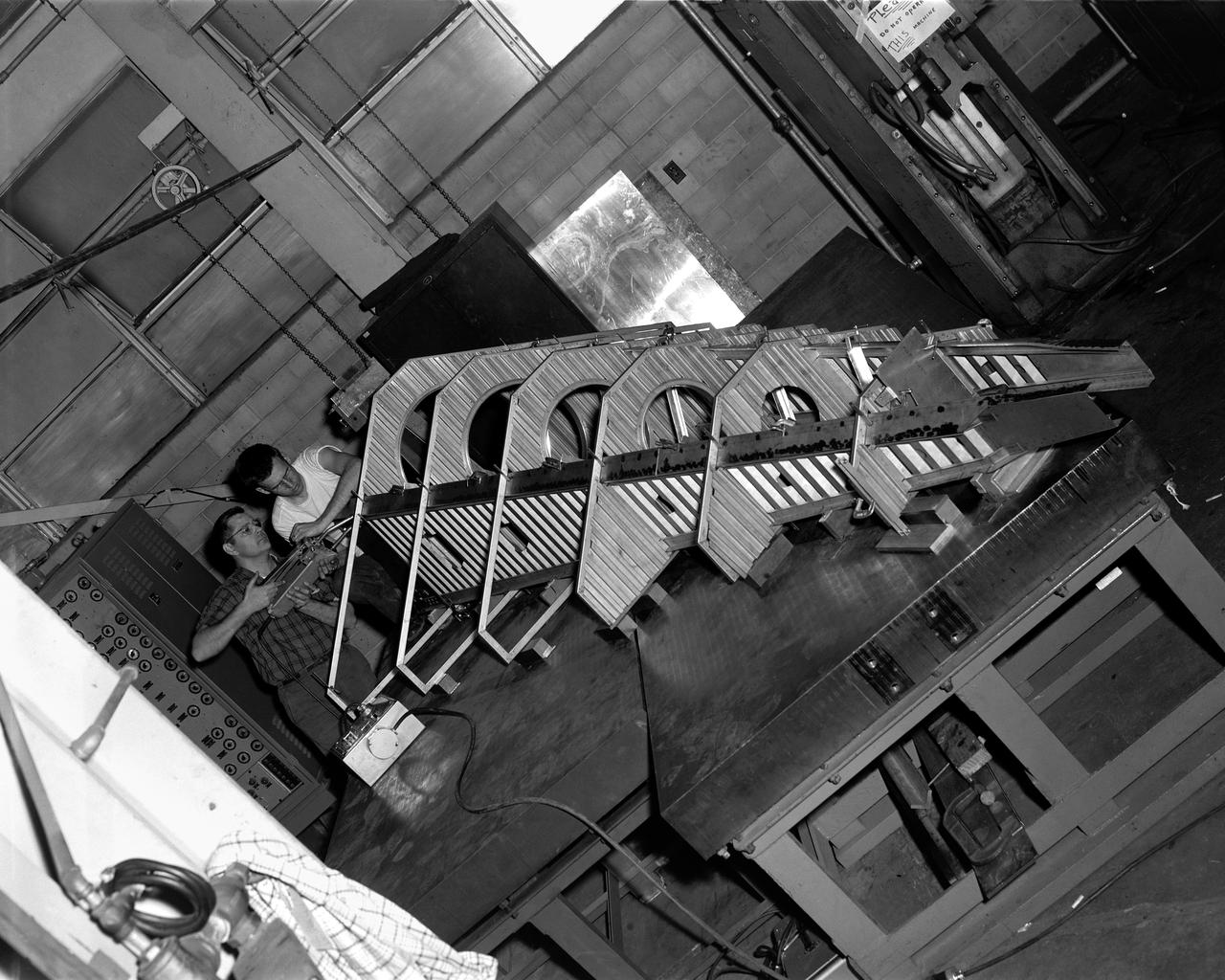
Boost glide model
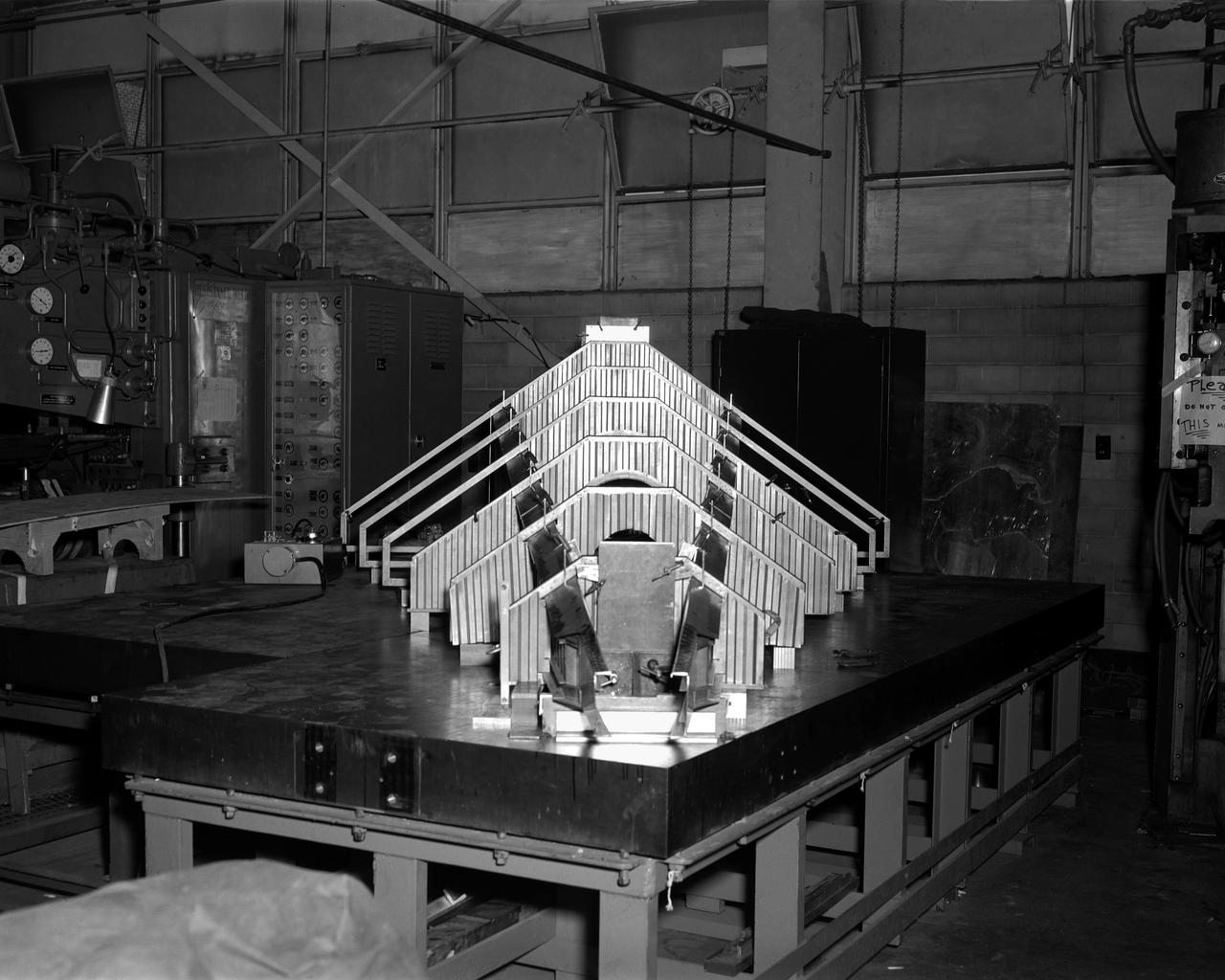
Boost glide model
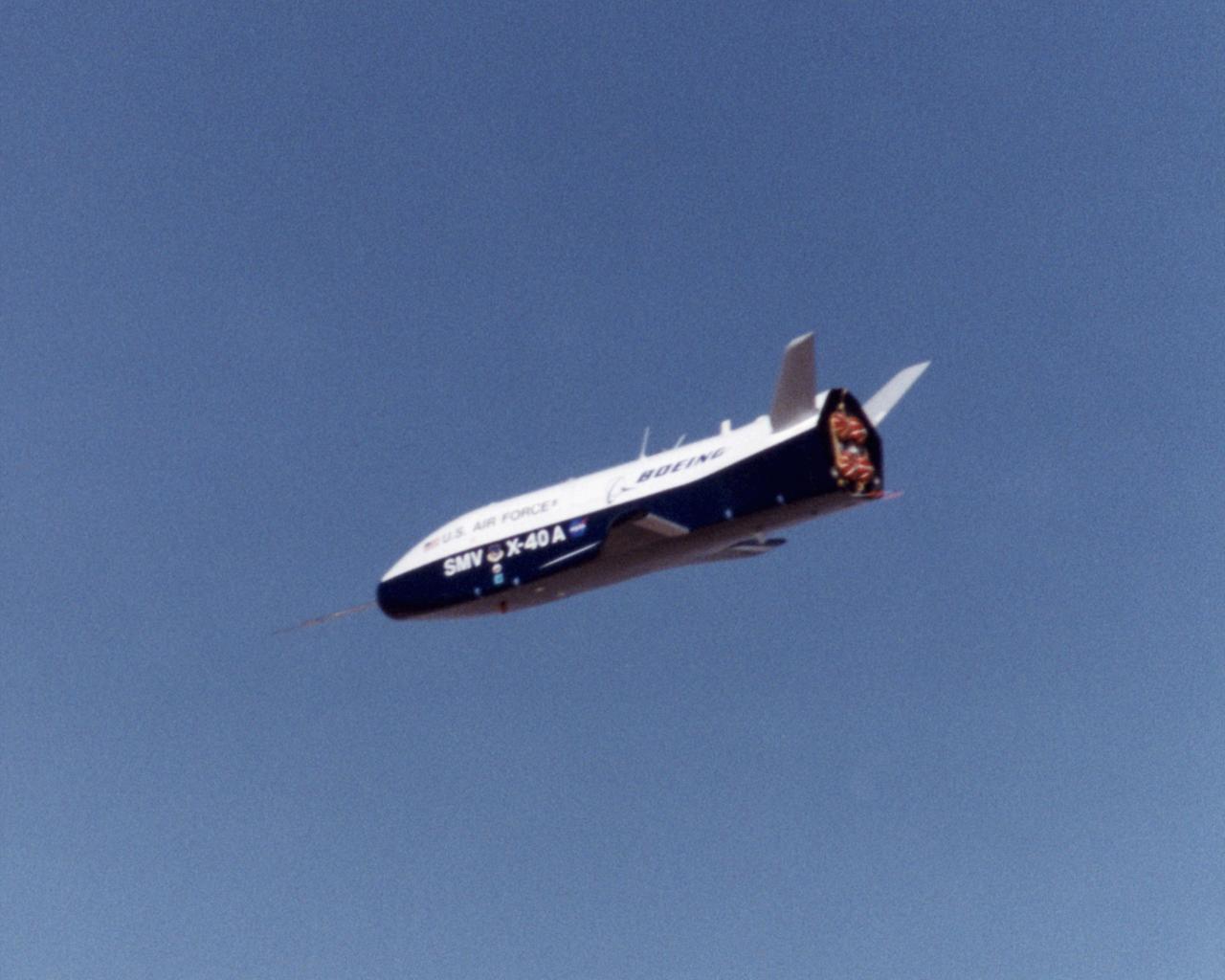
First flight at NASA's Dryden Flight Research Center for the X-40A was a 74 second glide from 15,000 feet on March 14, 2001. The unpiloted X-40 is a risk-reduction vehicle for the X-37, which is intended to be a reusable space vehicle. NASA's Marshall Space Flight Center in Huntsville, Ala, manages the X-37 project. At Dryden, the X-40A will undergo a series of ground and air tests to reduce possible risks to the larger X-37, including drop tests from a helicopter to check guidance and navigation systems planned for use in the X-37. The X-37 is designed to demonstrate technologies in the orbital and reentry environments for next-generation reusable launch vehicles that will increase both safety and reliability, while reducing launch costs from $10,000 per pound to $1,000 per pound.
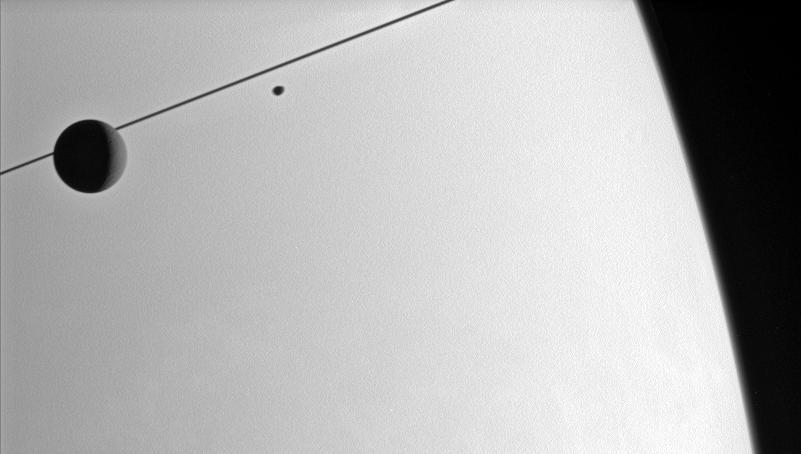
The Cassini spacecraft looks toward the Saturnian horizon as Dione and Janus glide past
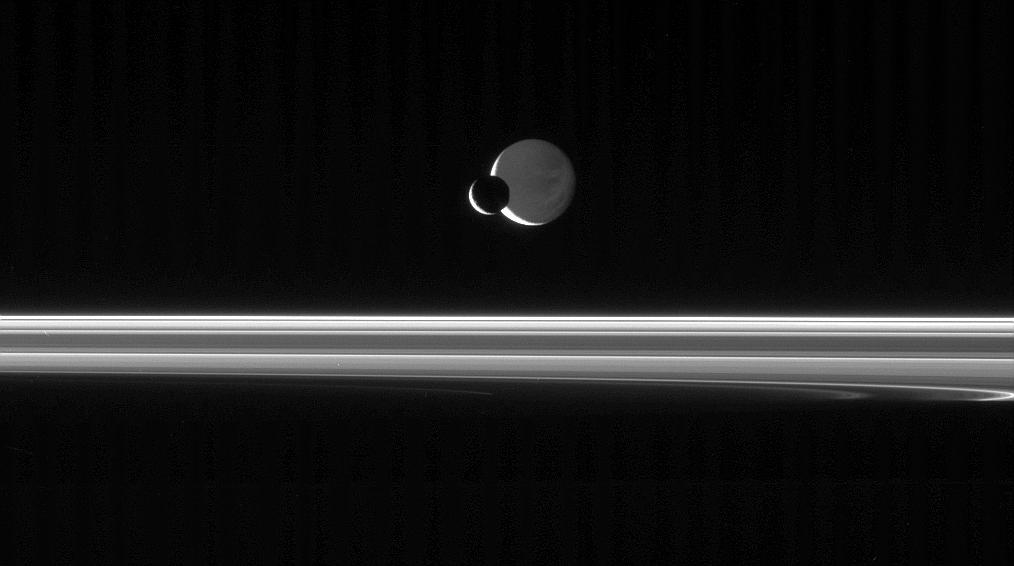
The Cassini spacecraft looks across the unlit ringplane as Mimas glides silently in front of Dione

The oblong form of Prometheus glides by, trailing behind it wiggles in Saturn ribbon-like F ring
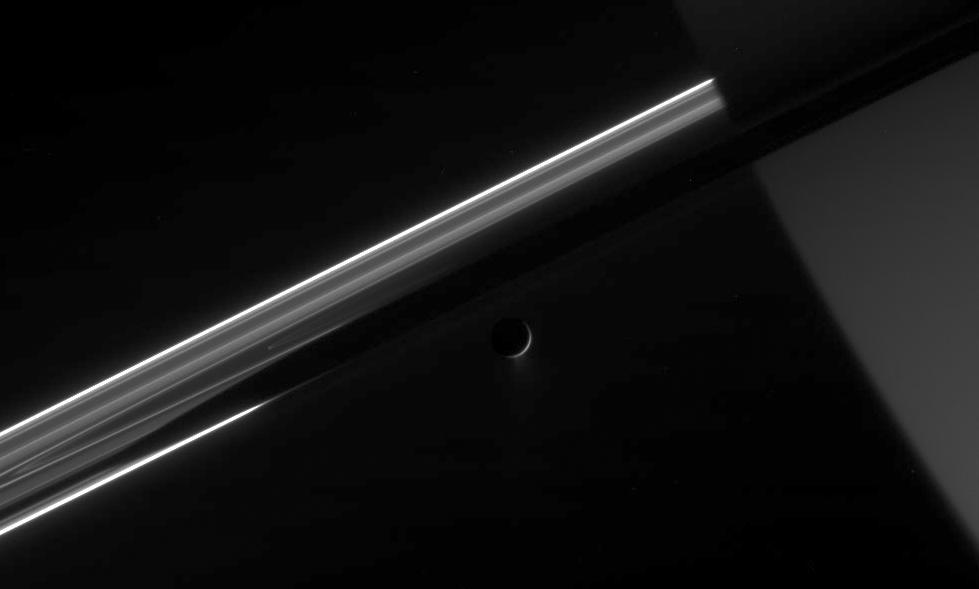
Cassini stares toward the night side of Saturn, seen here on the right, as the active icy moon Enceladus glides past
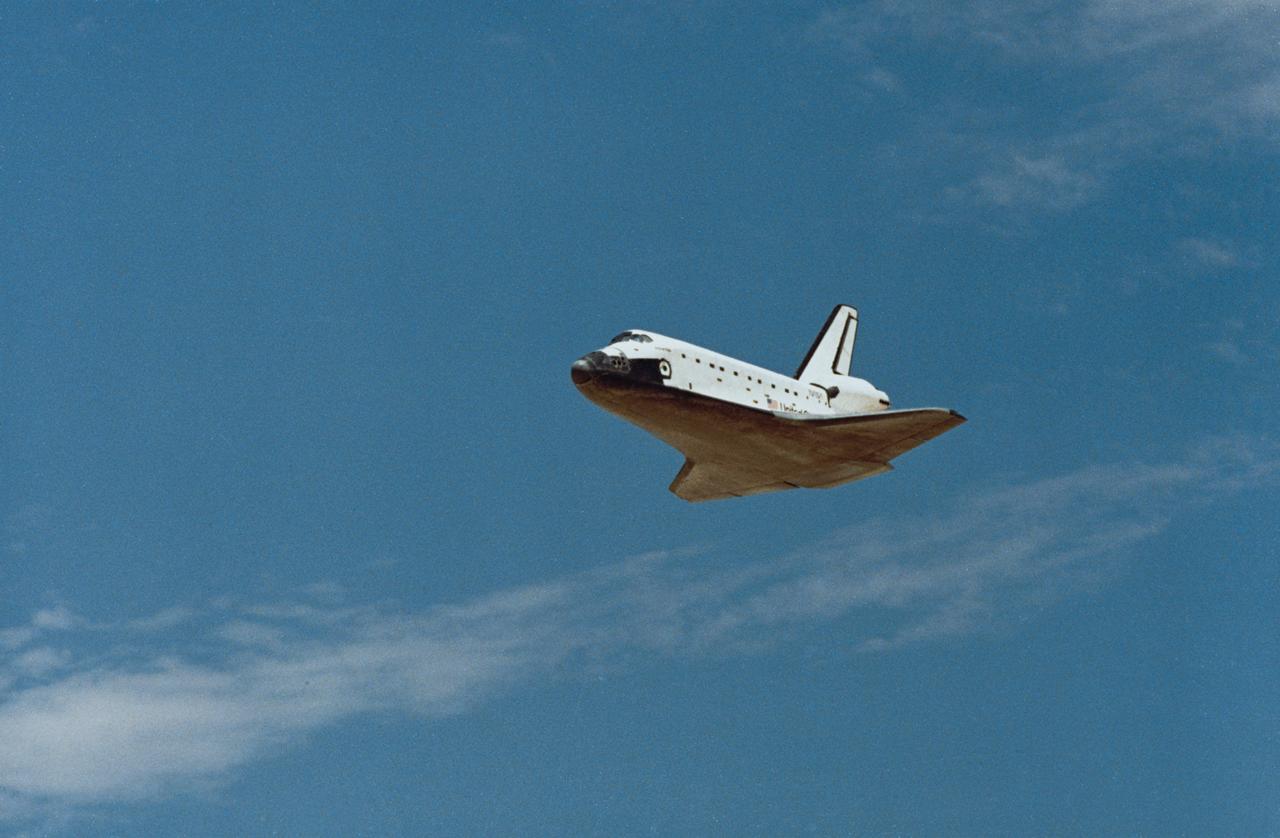
STS030-S-126 (8 May 1989) --- The space shuttle Atlantis, as seen in a low angle view on its glide in from Earth orbit, heads toward a concrete runway at Edwards Air Force Base in California. Onboard were astronauts David M. Walker, STS-30 commander; Ronald J. Grabe, pilot; and astronauts Norman E. Thagard, Mary L. Cleave and Mark C. Lee ? all mission specialists. Photo credit: NASA
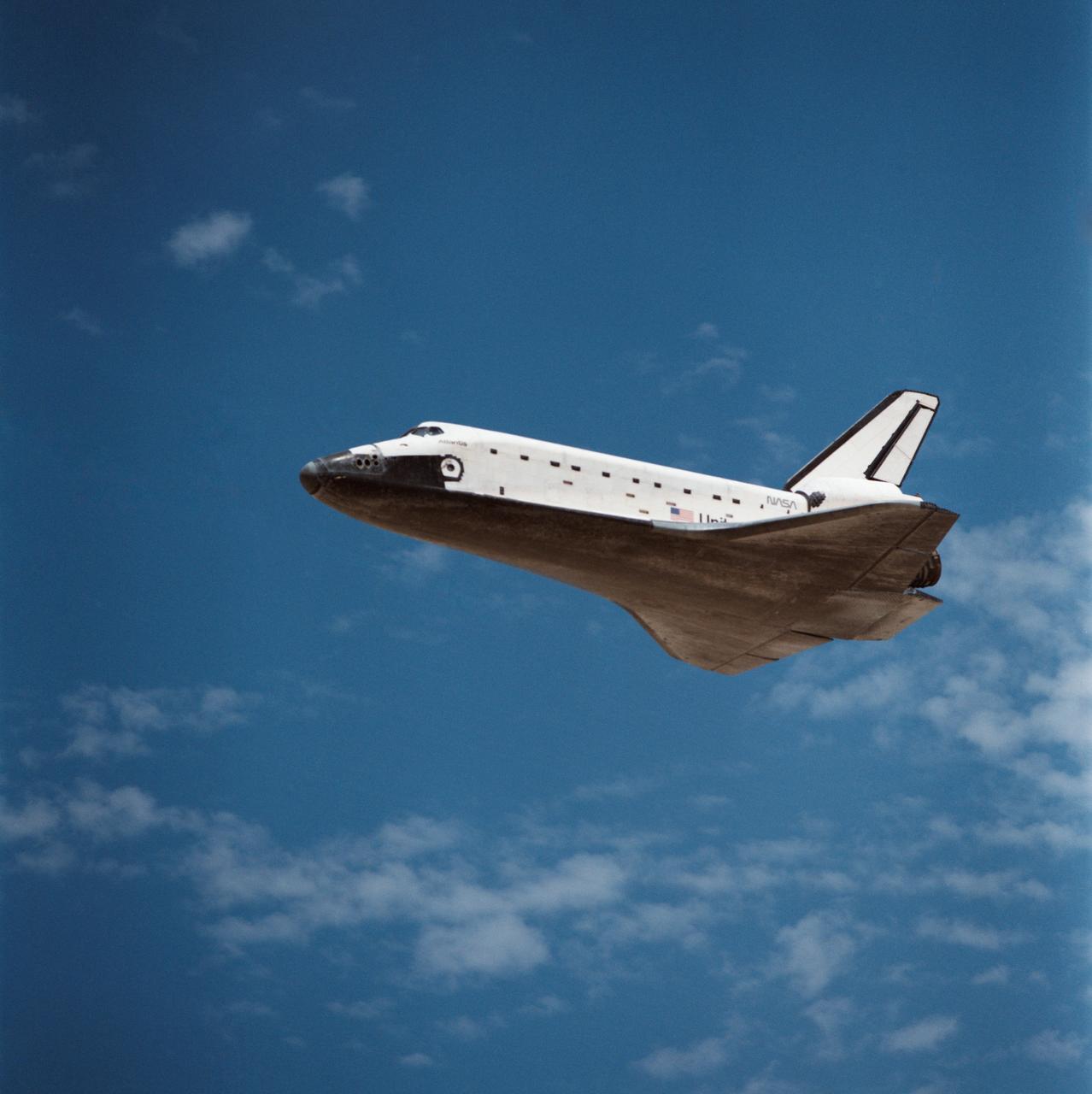
STS030-S-127 (8 May 1989) --- The space shuttle Atlantis, as seen in a low angle view on its glide in from Earth orbit, heads toward a concrete runway at Edwards Air Force Base in California. Onboard were astronauts David M. Walker, STS-30 commander; Ronald J. Grabe, pilot; and astronauts Norman E. Thagard, Mary L. Cleave and Mark C. Lee ? all mission specialists. Photo credit: NASA
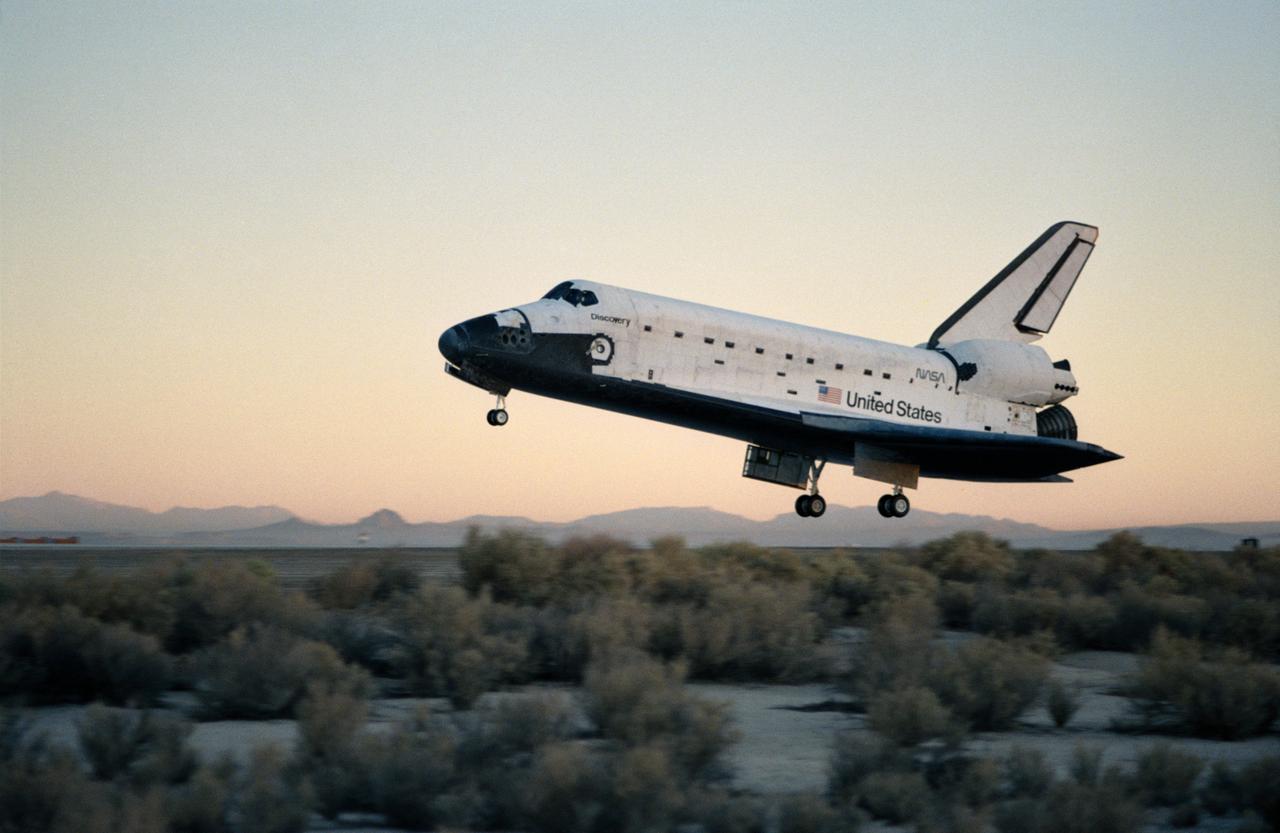
STS-41 Discovery, Orbiter Vehicle (OV) 103, with nose landing gear (NLG) and main landing gear (MLG) deployed, glides over concrete runway 22 at Edwards Air Force Base (EAFB), California, prior to touchdown.
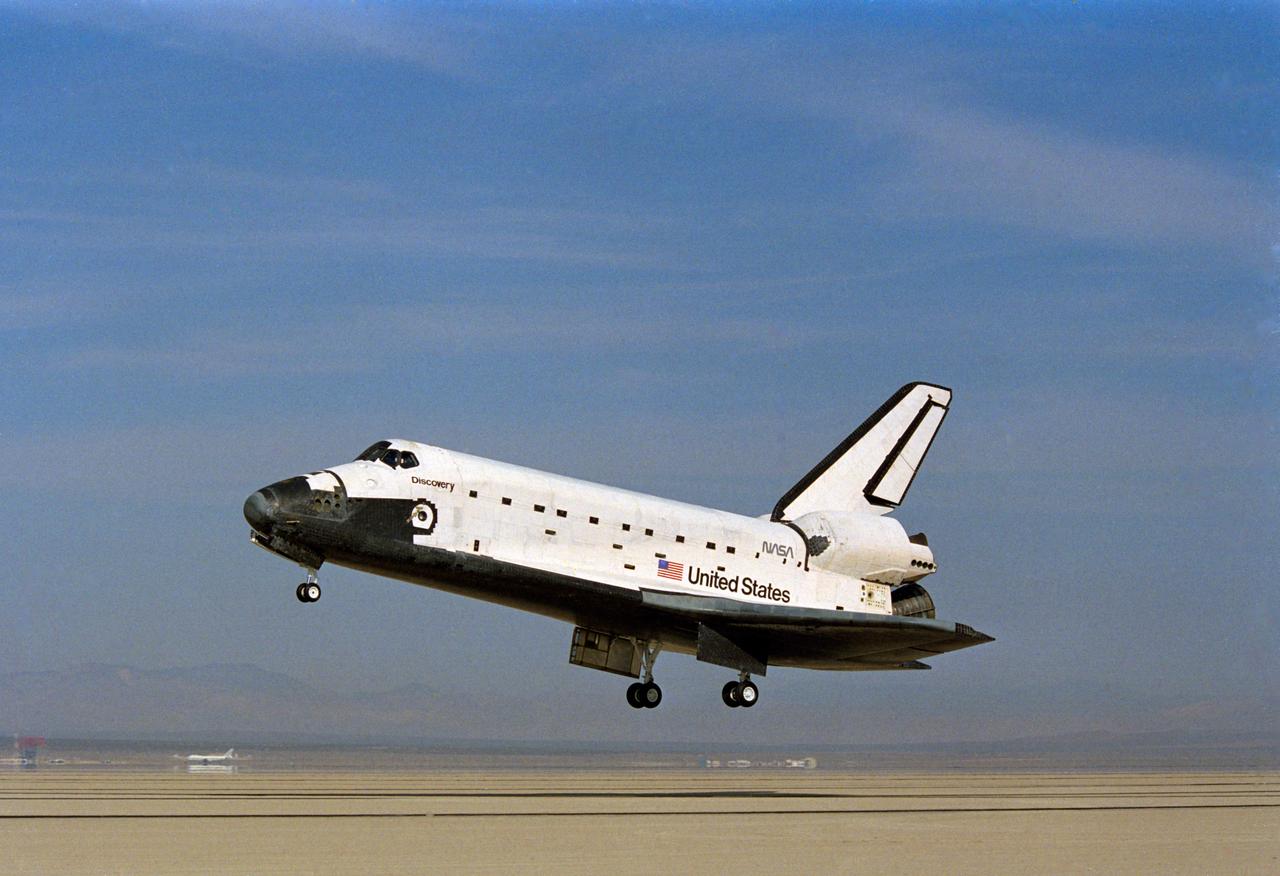
STS-26 Discovery, Orbiter Vehicle (OV) 103, with nose landing gear (NLG) and main landing gear (MLG) deployed glides above dry lakebed runway 17 at Edwards Air Force Base (EAFB), California. This profile view shows OV-103's port side just before MLG touchdown.

STS-41 Discovery, Orbiter Vehicle (OV) 103, with nose landing gear (NLG) and main landing gear (MLG) deployed, glides over concrete runway 22 at Edwards Air Force Base (EAFB), California, prior to touchdown.
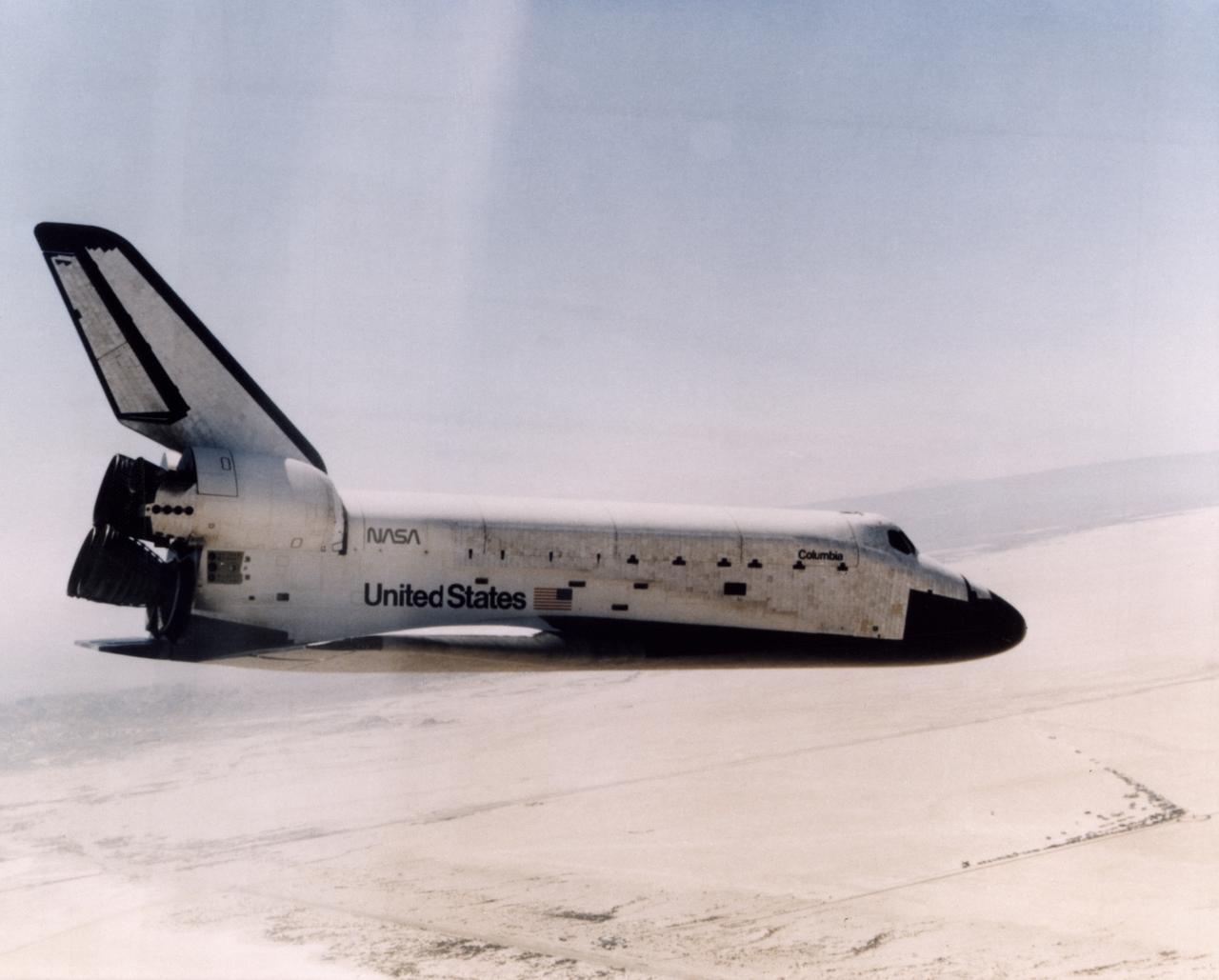
FIRST SHUTTLE LANDING -- The Space Shuttle Columbia glides down over Rogers Dry Lake as it heads for a landing at Edwards Air Force Base at the conclusion of its first orbital mission on April 14, 1981.
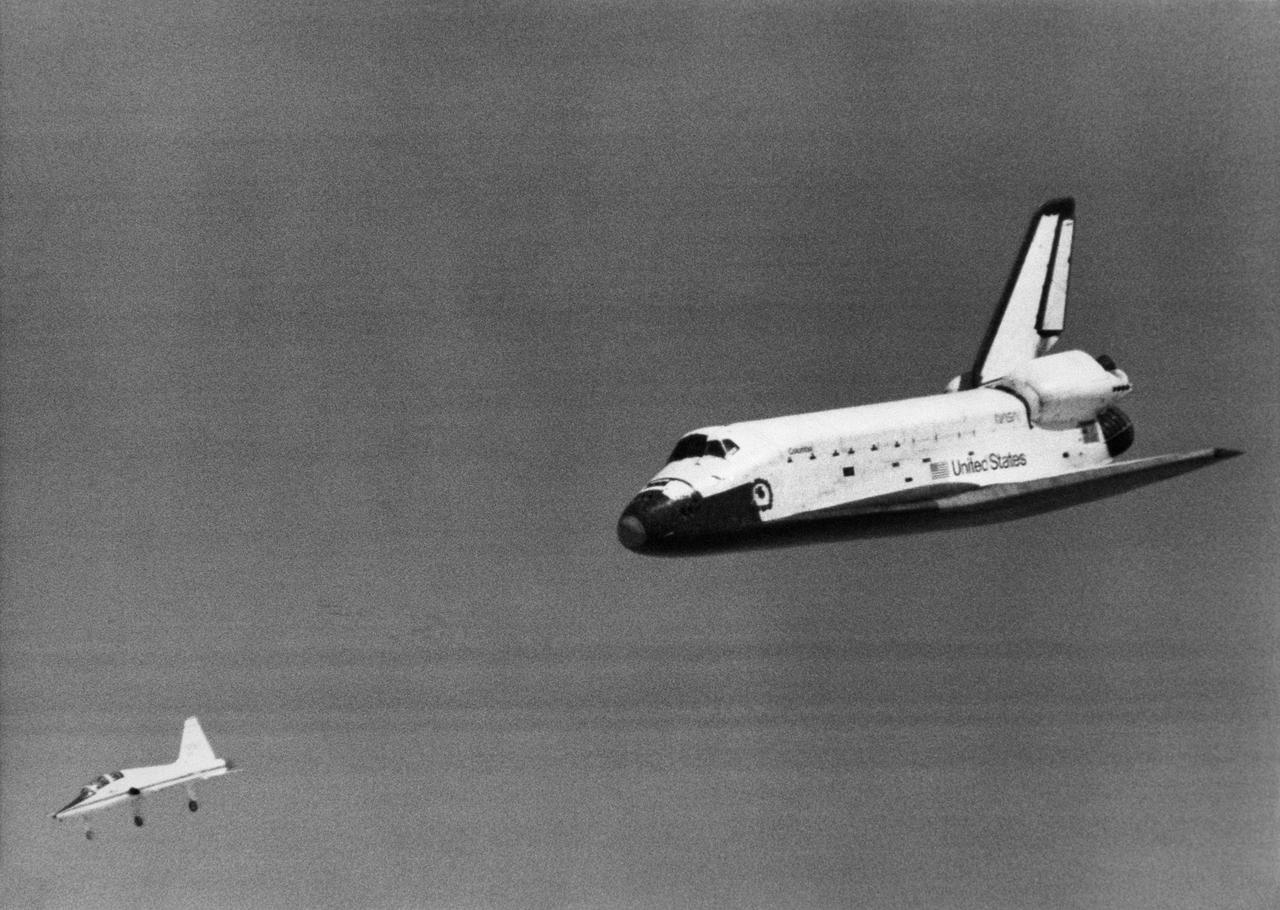
The Space Shuttle Columbia glides down over Rogers Dry Lake as it heads for a landing at Edwards Air Force Base at the conclusion of its first orbital mission on April 14, 1981.
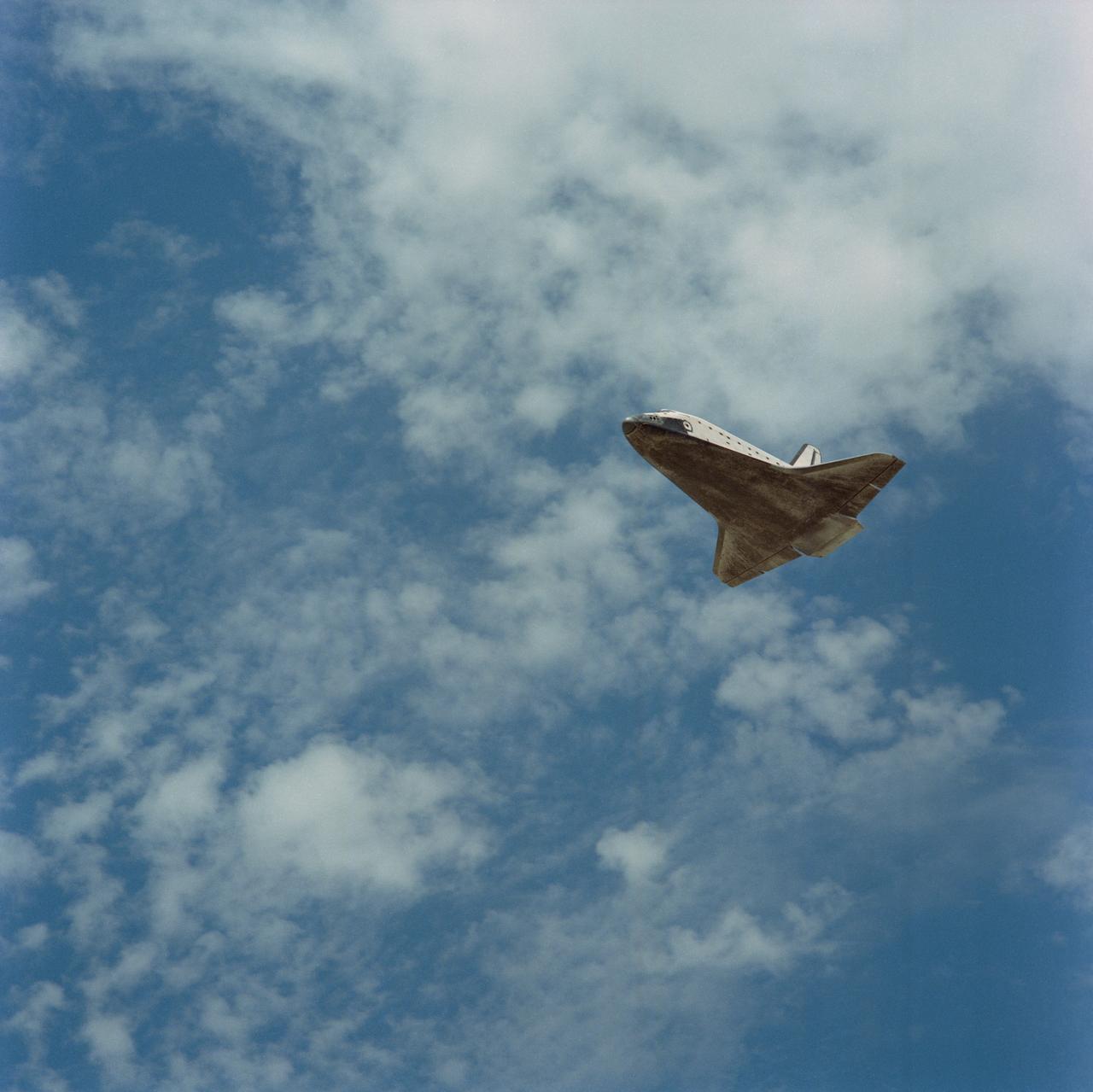
STS030-S-123 (8 May 1989) --- The Space Shuttle Atlantis glides toward a landing on the Mojave Desert after spending just over four full days in space. Aboard were astronauts David. M. Walker, Ronald J. Grabe, Norman E. Thagard, Mary L. Cleave and Mark C. Lee. Moments later, the spacecraft?s landing gear came to a stop at 12:44:33 P.M. (PDT), 8 May 1989. It landed on runway 22, a concrete facility, like a number of other NASA flights. Still others have landed on unpaved dry lakebed strips.
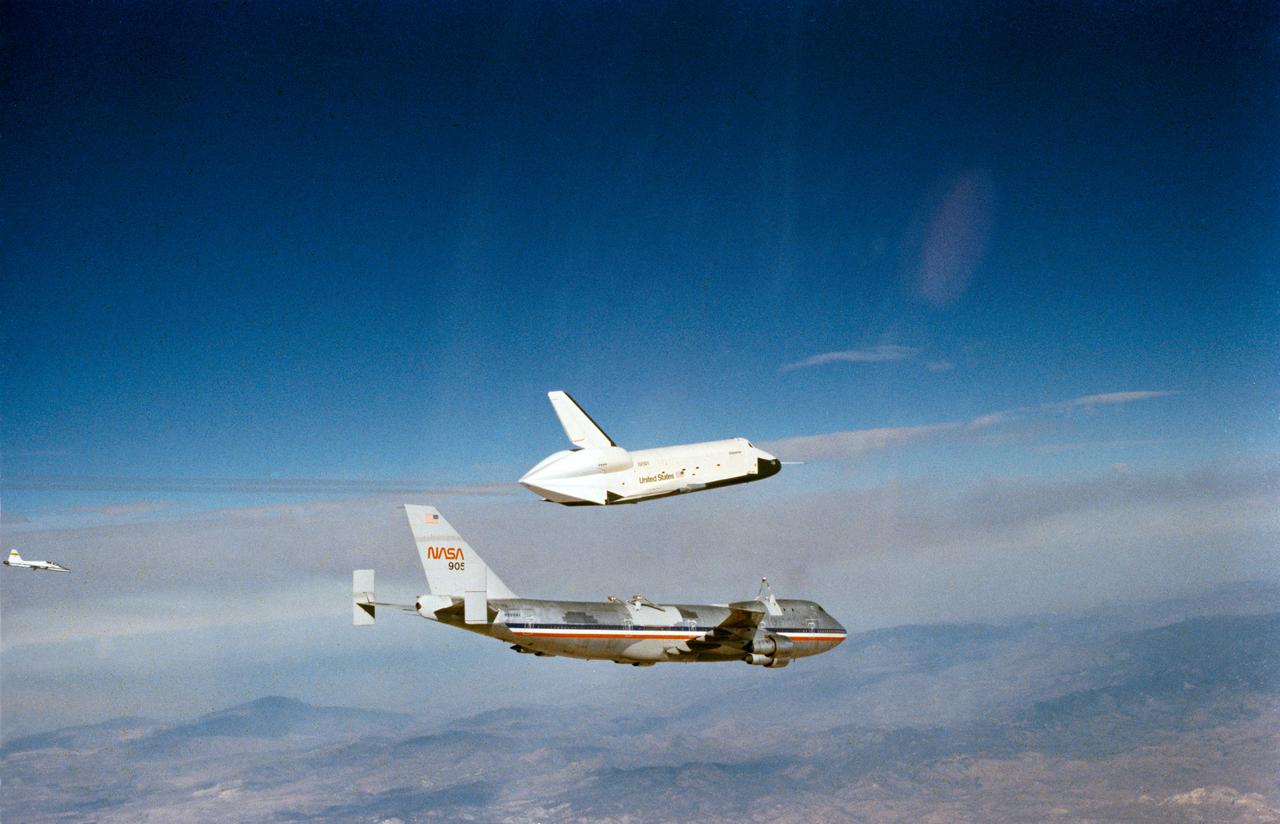
S77-28137 (13 Sept 1977) --- The Orbiter 101 "Enterprise" soars above the NASA 747 carrier aircraft during the second free flight of the Shuttle Approach and Landing Tests (ALTs) conducted on September 13, 1977 at Dryden Flight Research Center in Southern California. Astronauts Joe H. Engle, and Richard H. Truly were the crew of the "Enterprise." The ALT free flights are designed to verify Orbiter subsonic airworthiness, integrated systems operations and pilot-guided approach and landing capability and satisfying prerequisites to automatic flight control and navigation mode.
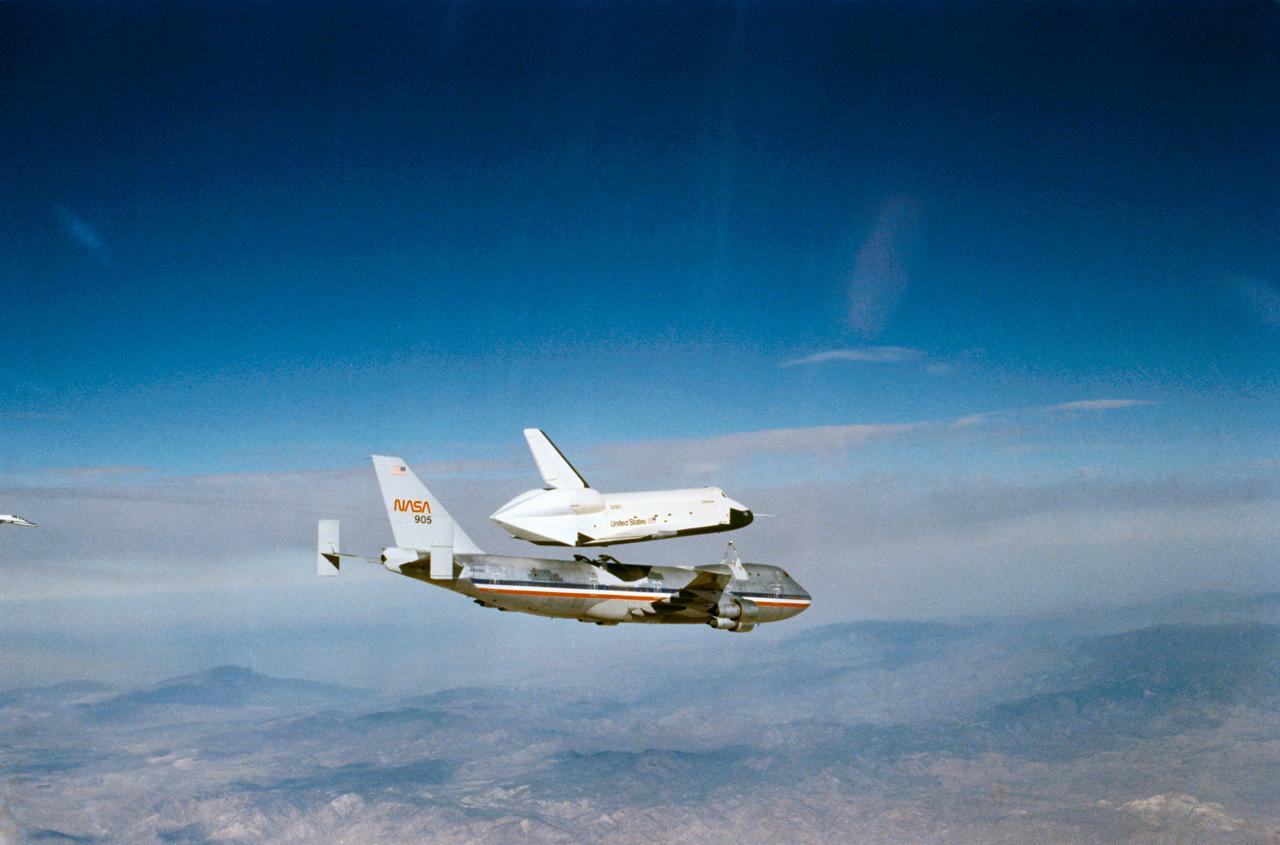
S77-28136 (13 Sept 1977) --- The Orbiter 101 "Enterprise" is seen separating from the NASA 747 carrier aircraft during the second free flight of the Shuttle Approach and Landing Tests (ALTs) conducted on September 13, 1977 at Dryden Flight Research Center in Southern California. Astronauts Joe H. Engle, and Richard H. Truly were the crew of the "Enterprise." The ALT free flights are designed to verify Orbiter subsonic airworthiness, integrated systems operations and pilot-guided approach and landing capability and satisfying prerequisites to automatic flight control and navigation mode.
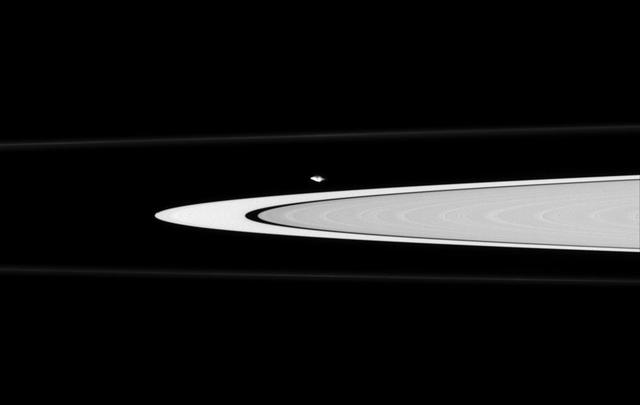
The Cassini spacecraft finds oddly-shaped Atlas gliding along the edge of the A ring. The moon has a prominent equatorial bulge, which is accentuated here by the grazing viewing angle of Cassini, making Atlas appear pointy
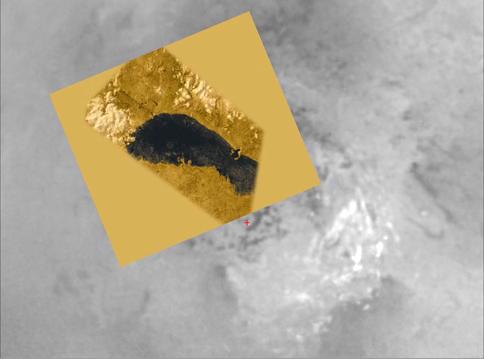
This image is from an animation that glides along the shoreline of Ontario Lacus, the largest lake on the southern hemisphere of Saturn moon Titan. The animation is based on overlapping radar images obtained by NASA Cassini spacecraft.
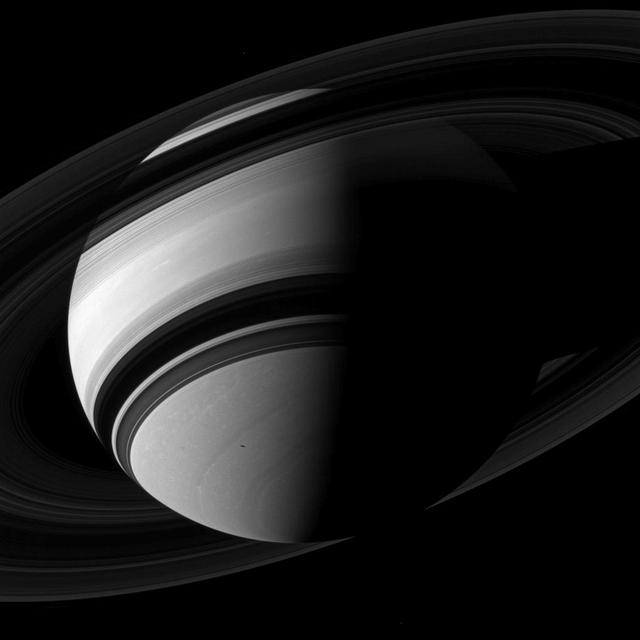
Janus is spotted over Saturn north pole in this image while Mimas shadow glides across Saturn in this image from NASA Cassini spacecraft. Janus is the faint dot that appears just above Saturn north pole.
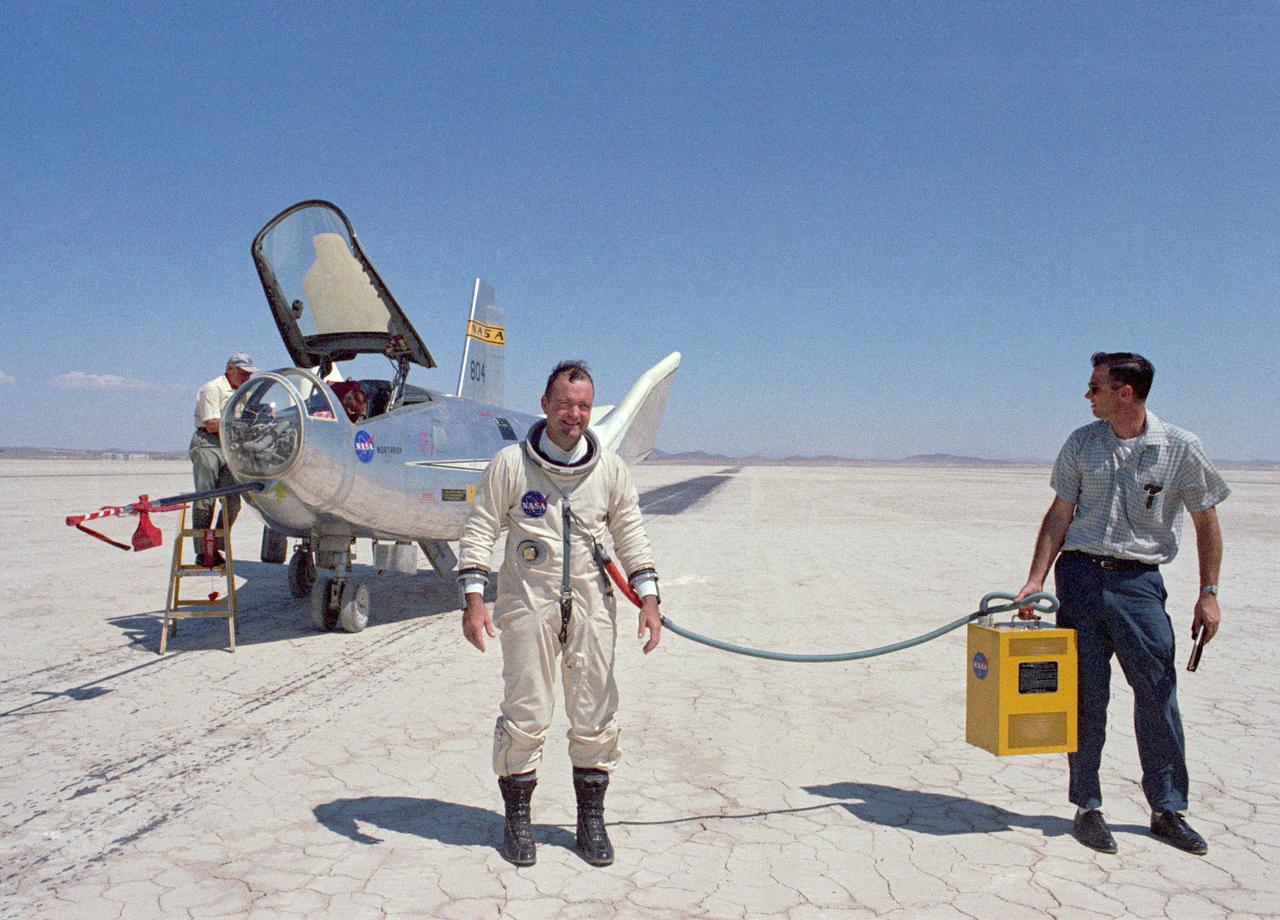
NASA research pilot Bill Dana after his fourth free flight (1 glide and 3 powered) in the HL-10. This particular flight reached a maximum speed of Mach 1.45. Dana made a total of nine HL-10 flights (1 glide and 8 powered), and his lifting body experience as a whole included several car tow and 1 air tow flights in the M2-F1; 4 glide and 15 powered flights in the M2-F3; and 2 powered flights in the X-24B. He is wearing a pressure suit for protection against the cockpit depressurizing at high altitudes. The air conditioner box held by the ground crewman provides cool air to prevent overheating.
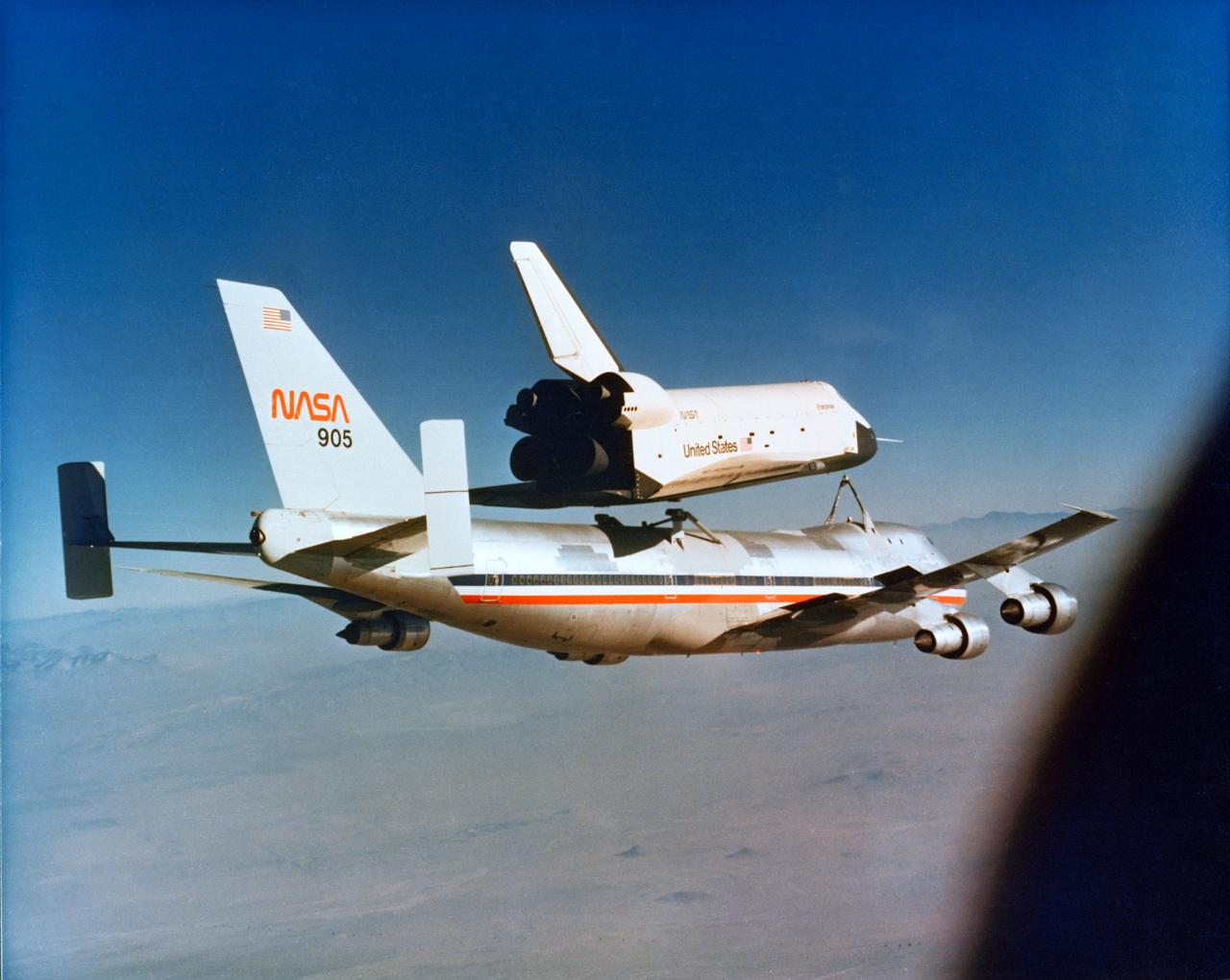
PAO news release material for the 5th and final FF of the ALT series. Precise moment of separation captured by camera from a T-38 chase plane.
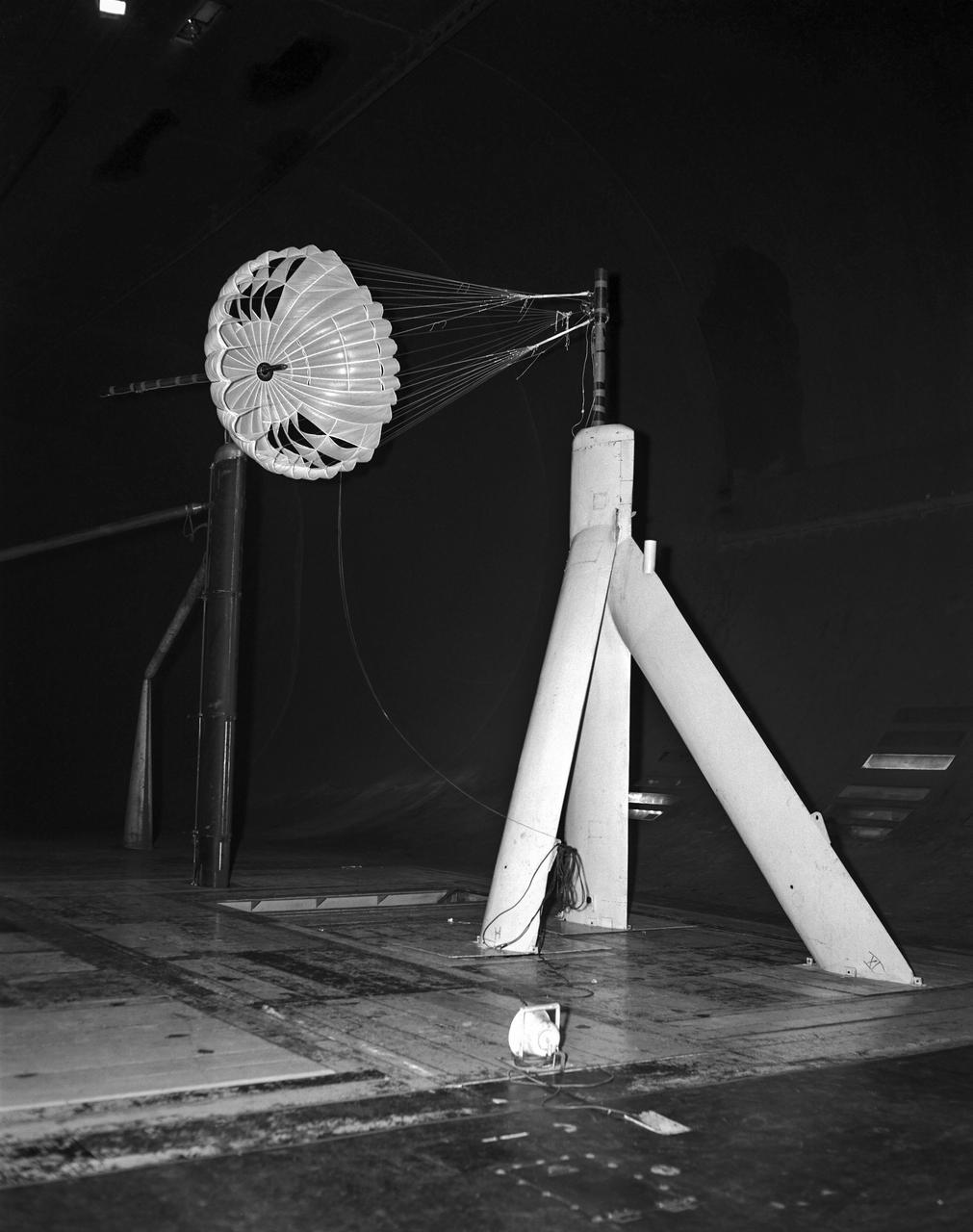
Gliding parachute test in 40x80 foot Wind Tunnel, mounted on main strut flying horizontally.
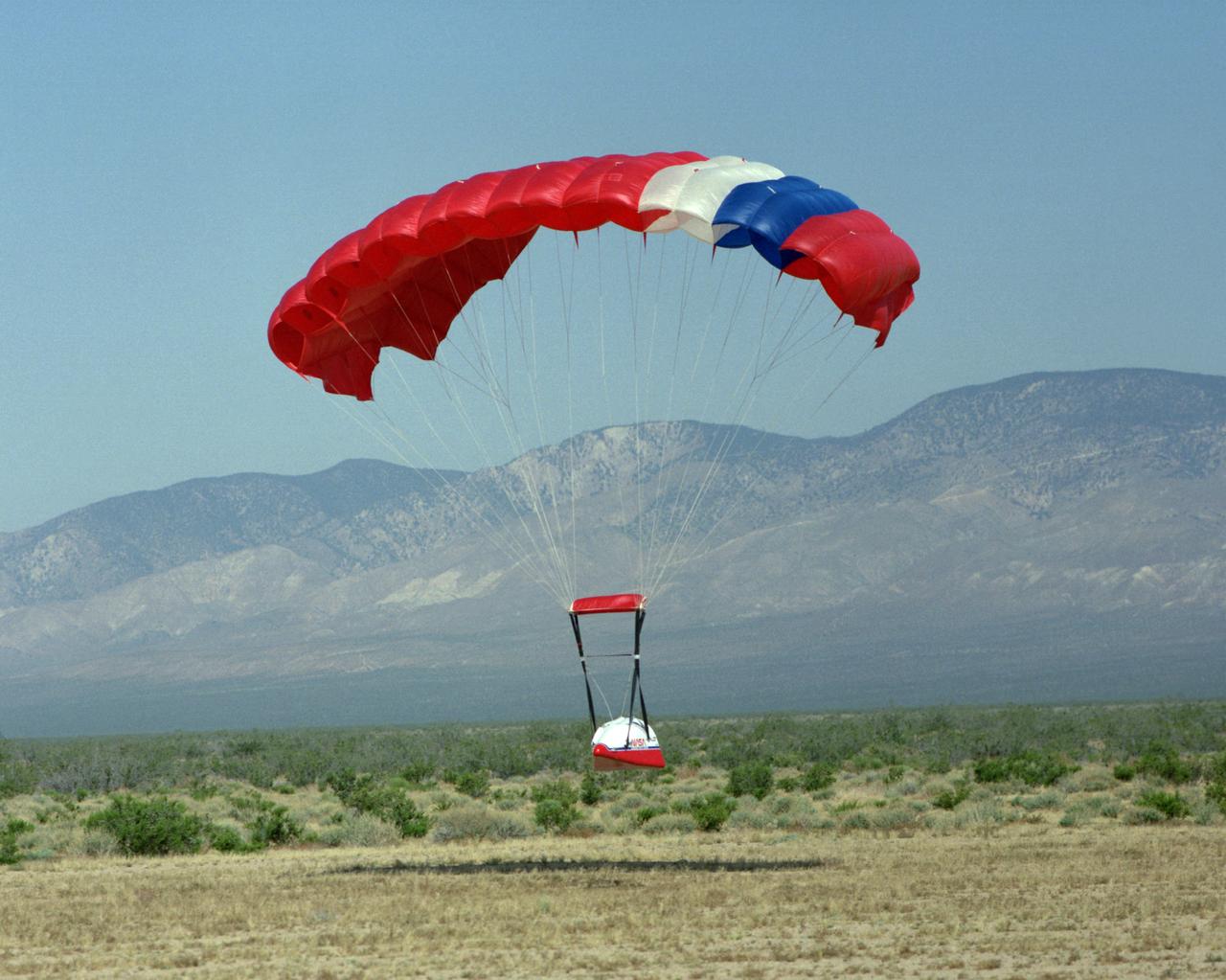
The Spacewedge subscale research model glides in toward a touchdown at a California City landing zone during 1992 flight tests of the vehicle.
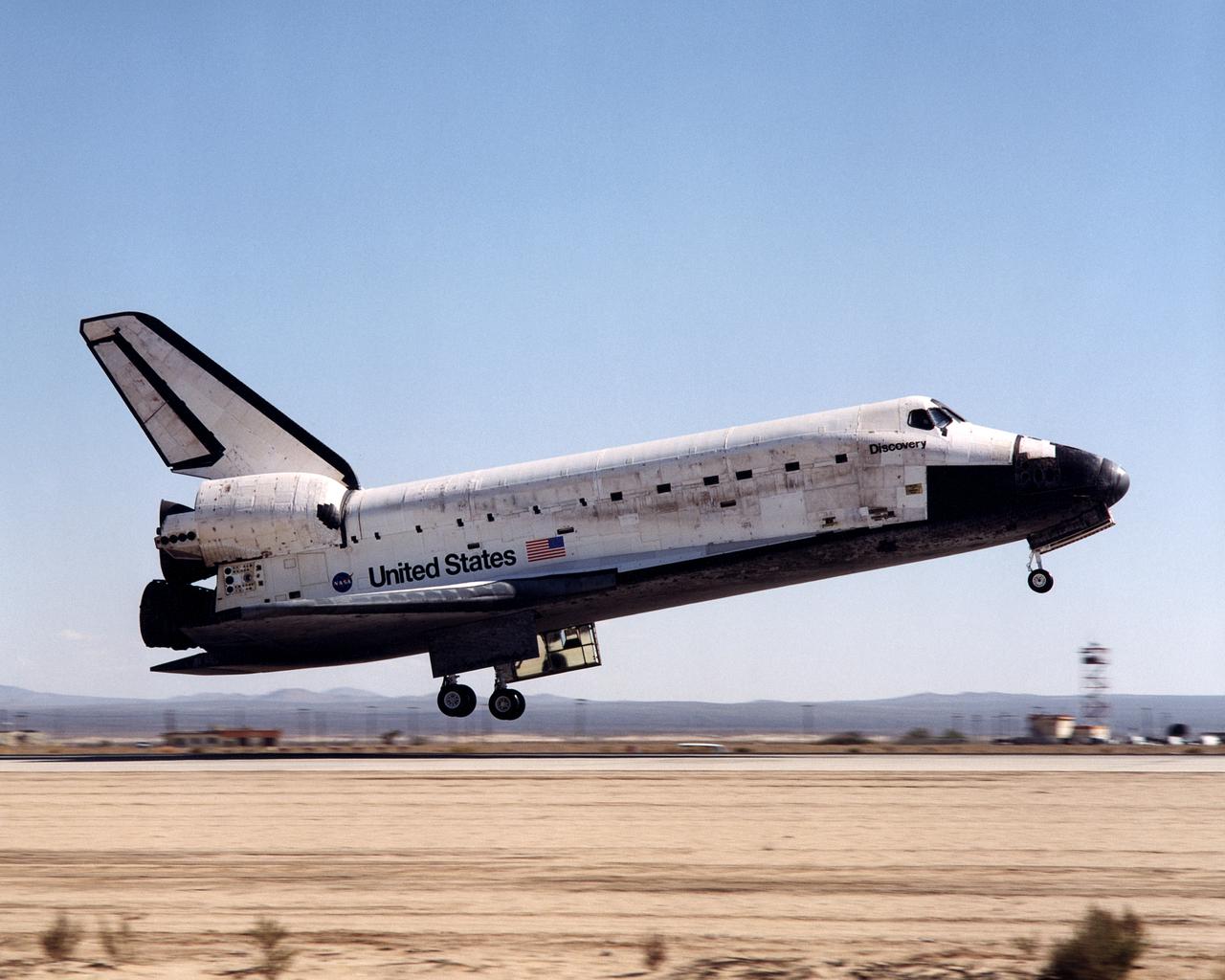
The Space Shuttle Discovery glides in for landing at Edwards Air Force Base in Southern California at the conclusion of mission STS-92 on October 24, 2000.
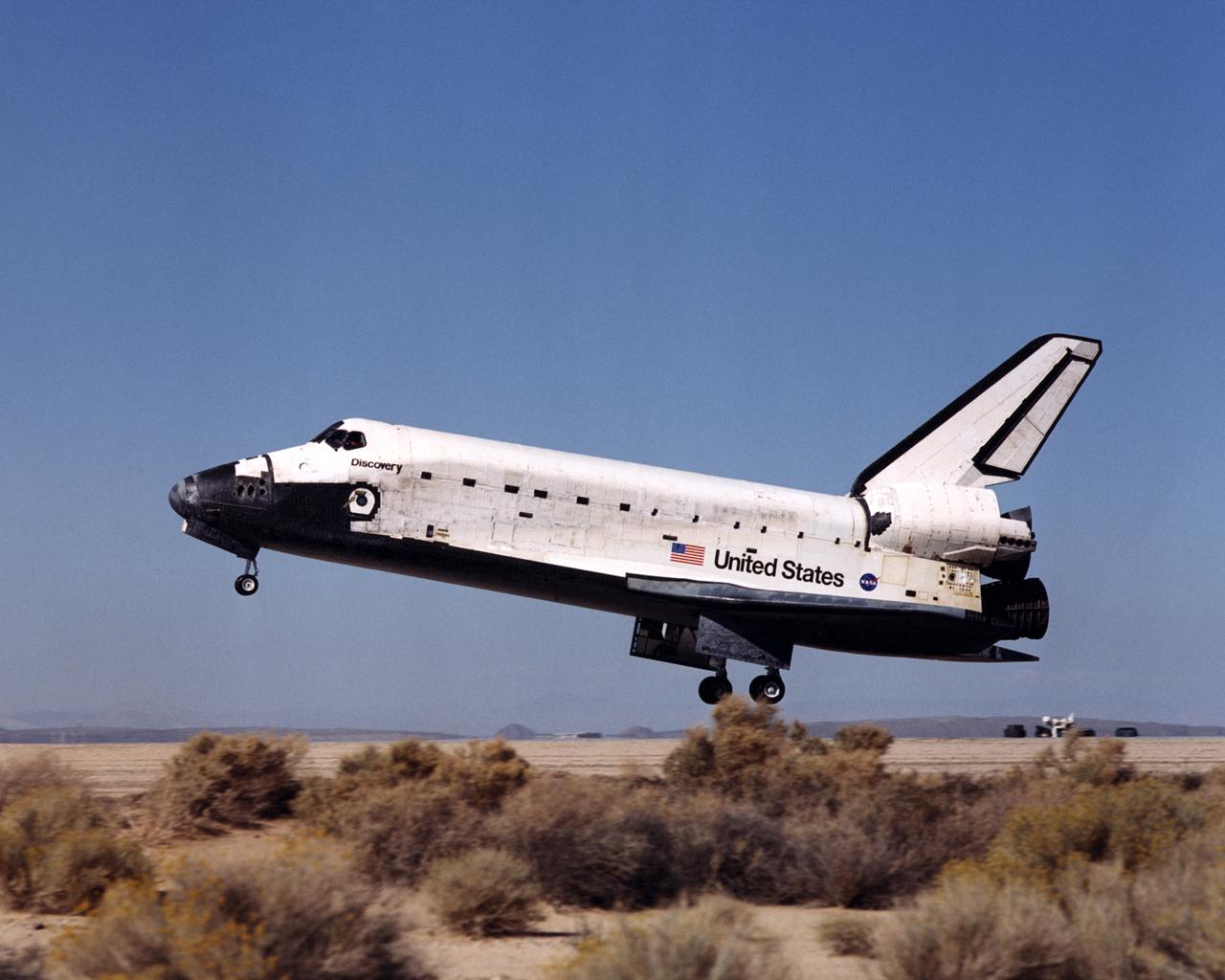
The Space Shuttle Discovery glides in for landing at Edwards Air Force Base in Southern California at the conclusion of mission STS-92 on October 24, 2000.
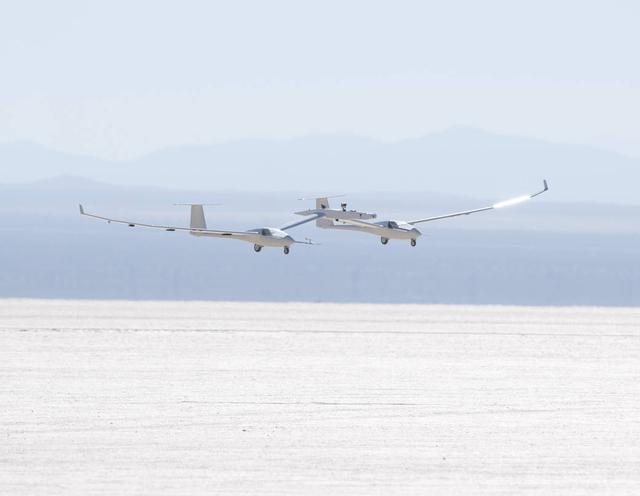
The one-third scale twin-fuselage towed glider glides in for landing on Rogers Dry Lake after its successful first test flight.
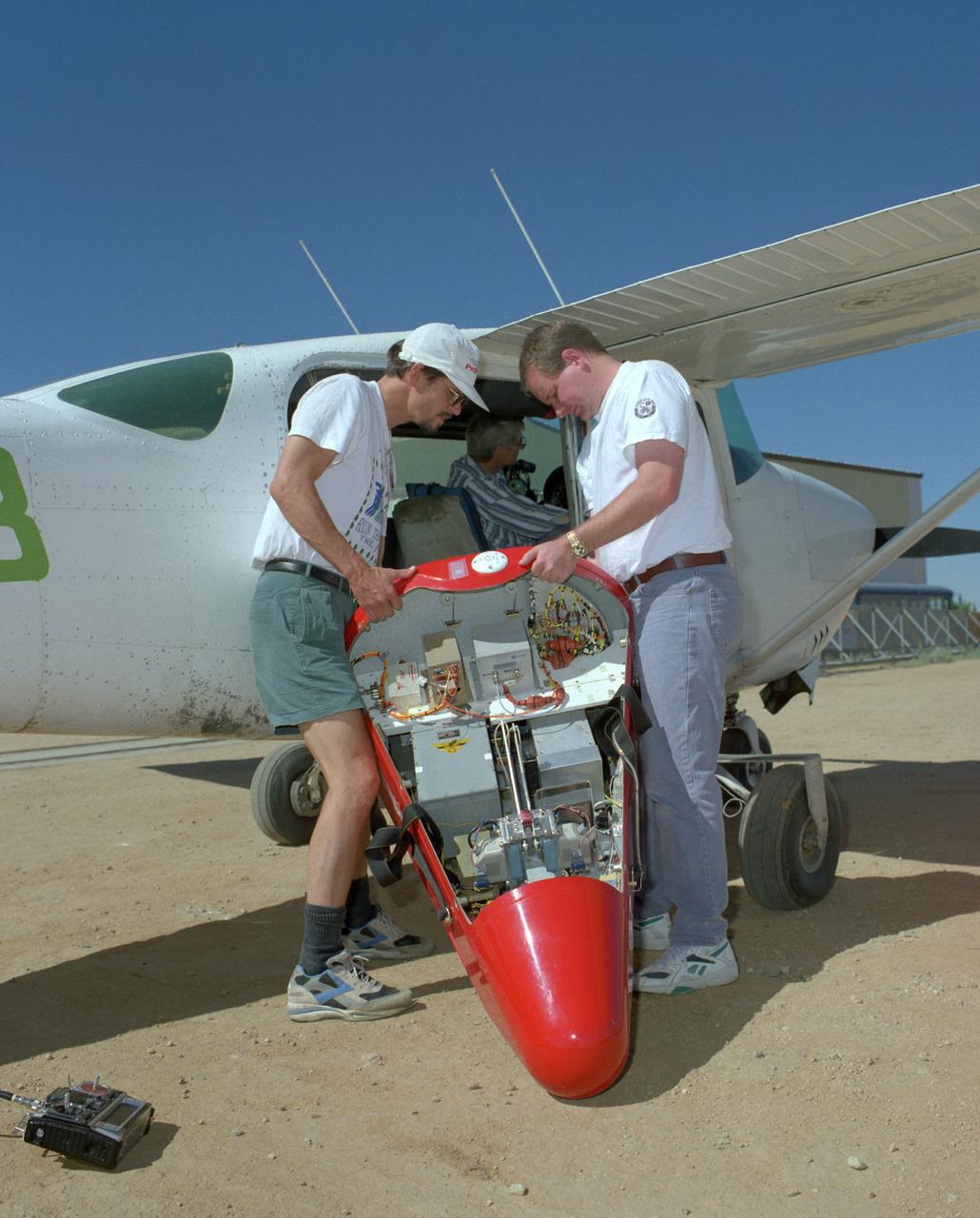
Crew members load a Spacewedge subscale research model into a Cessna aircraft for flight testing in 1996. The Spacewedge was drop-launched from the Cessna and then glided back to a soft landing under a steerable parafoil.
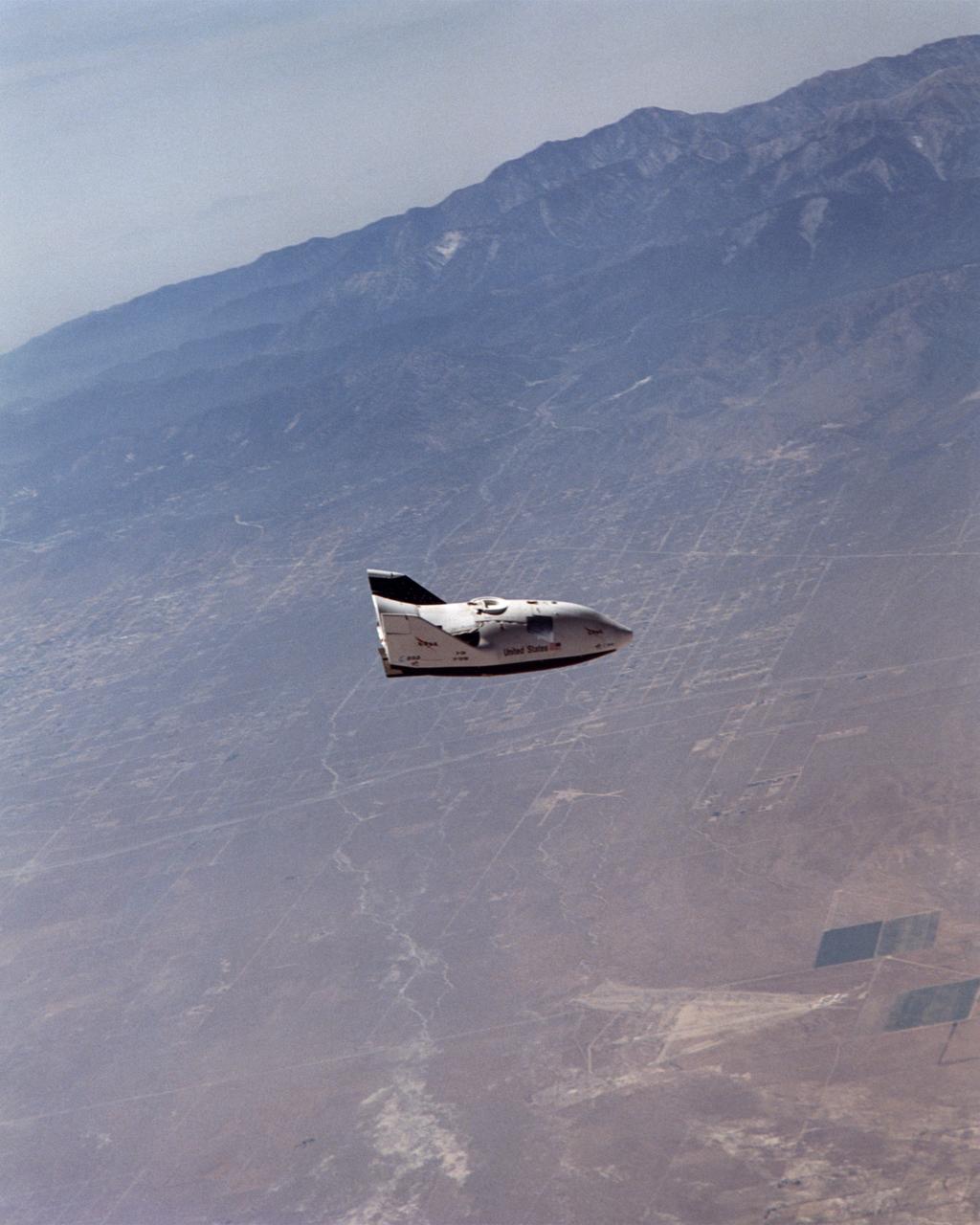
NASA's X-38 glided high over California desert test ranges as it descended from 37,500 feet to land on Rogers Dry Lake for the seventh free flight of the program July 10, 2001.
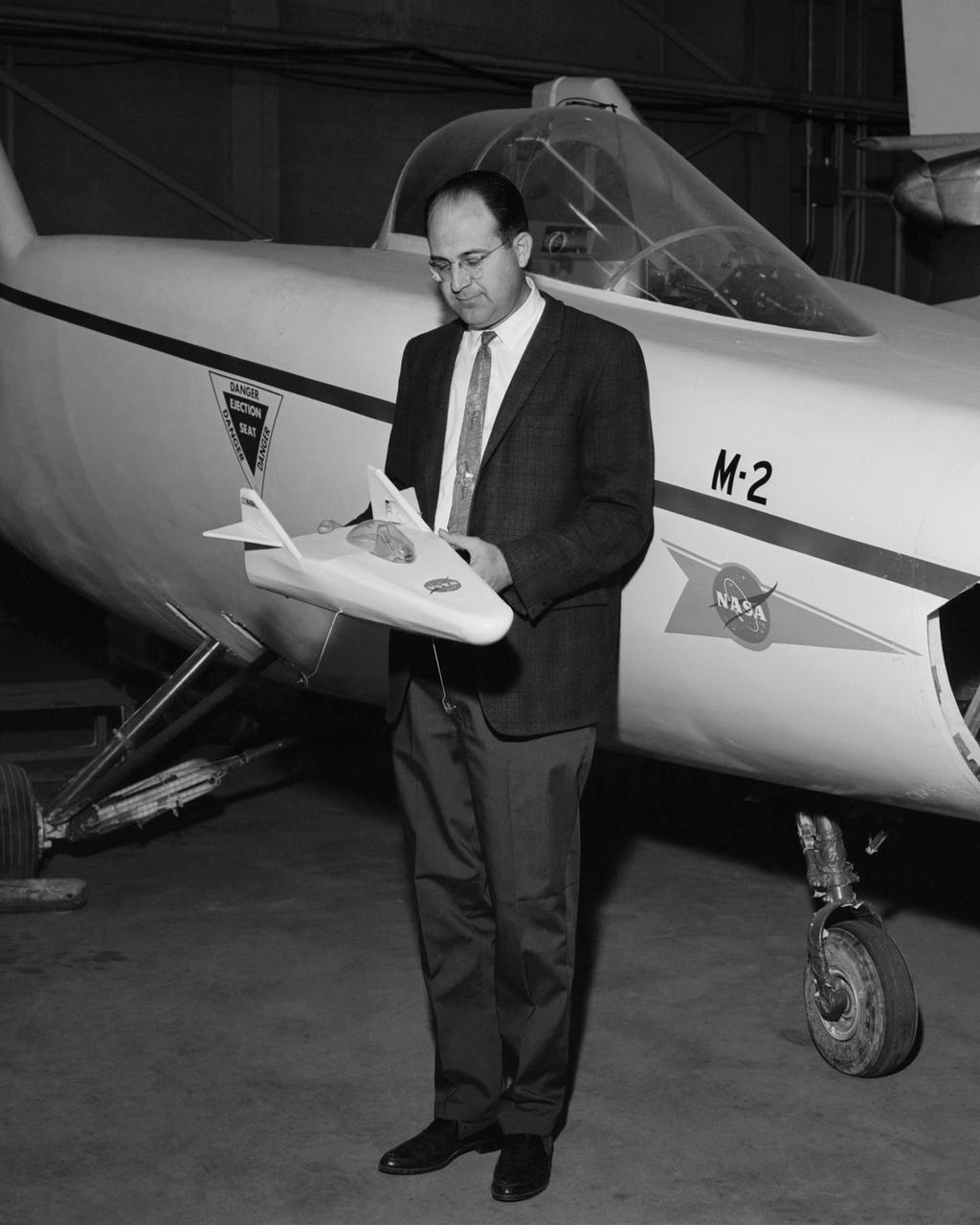
Dale Reed with a model of the M2-F1 in front of the actual lifting body. Reed used the model to show the potential of the lifting bodies. He first flew it into tall grass to test stability and trim, then hand-launched it from buildings for longer flights. Finally, he towed the lifting-body model aloft using a powered model airplane known as the "Mothership." A timer released the model and it glided to a landing. Dale's wife Donna used a 9 mm. camera to film the flights of the model. Its stability as it glided--despite its lack of wings--convinced Milt Thompson and some Flight Research Center engineers including the center director, Paul Bikle, that a piloted lifting body was possible.

Wranglers steadied the X-40A at NASA's Dryden Flight Research Center, Edwards, California, March 14, 2001, as the experimental craft was carried to 15,000 feet for an unpiloted glide flight. The unpiloted X-40 is a risk-reduction vehicle for the X-37, which is intended to be a reusable space vehicle. NASA's Marshall Space Flight Center in Huntsville, Ala, manages the X-37 project. At Dryden, the X-40A will undergo a series of ground and air tests to reduce possible risks to the larger X-37, including drop tests from a helicopter to check guidance and navigation systems planned for use in the X-37. The X-37 is designed to demonstrate technologies in the orbital and reentry environments for next-generation reusable launch vehicles that will increase both safety and reliability, while reducing launch costs from $10,000 per pound to $1,000 per pound.
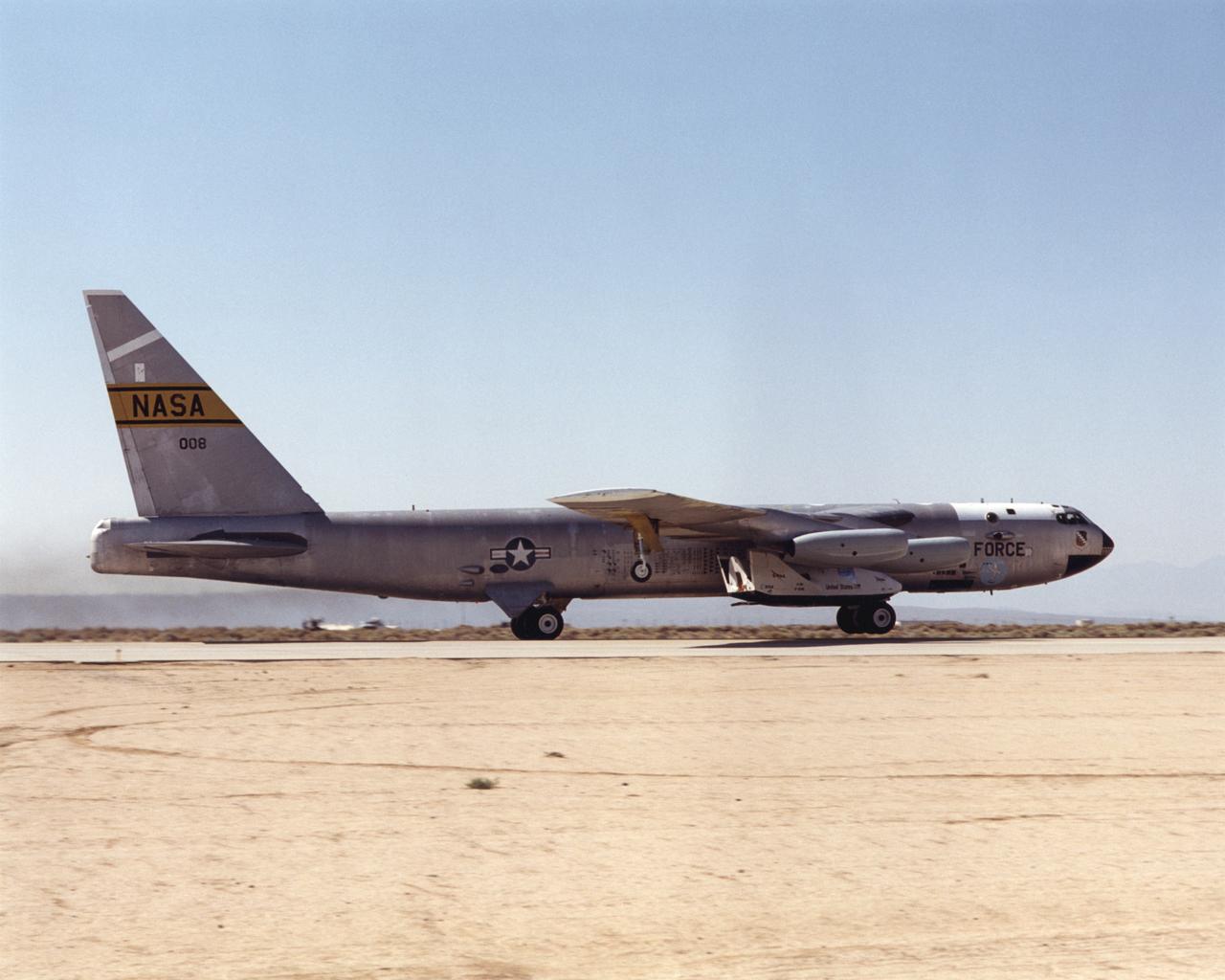
The X-38, mounted beneath the right wing of NASA's B-52, climbed from the runway at Edwards Air Force Base for the seventh free flight test of the X-38, July 10, 2001. The X-38 was released at 37,500 feet and completed a thirteen minute glide flight to a landing on Rogers Dry Lake.
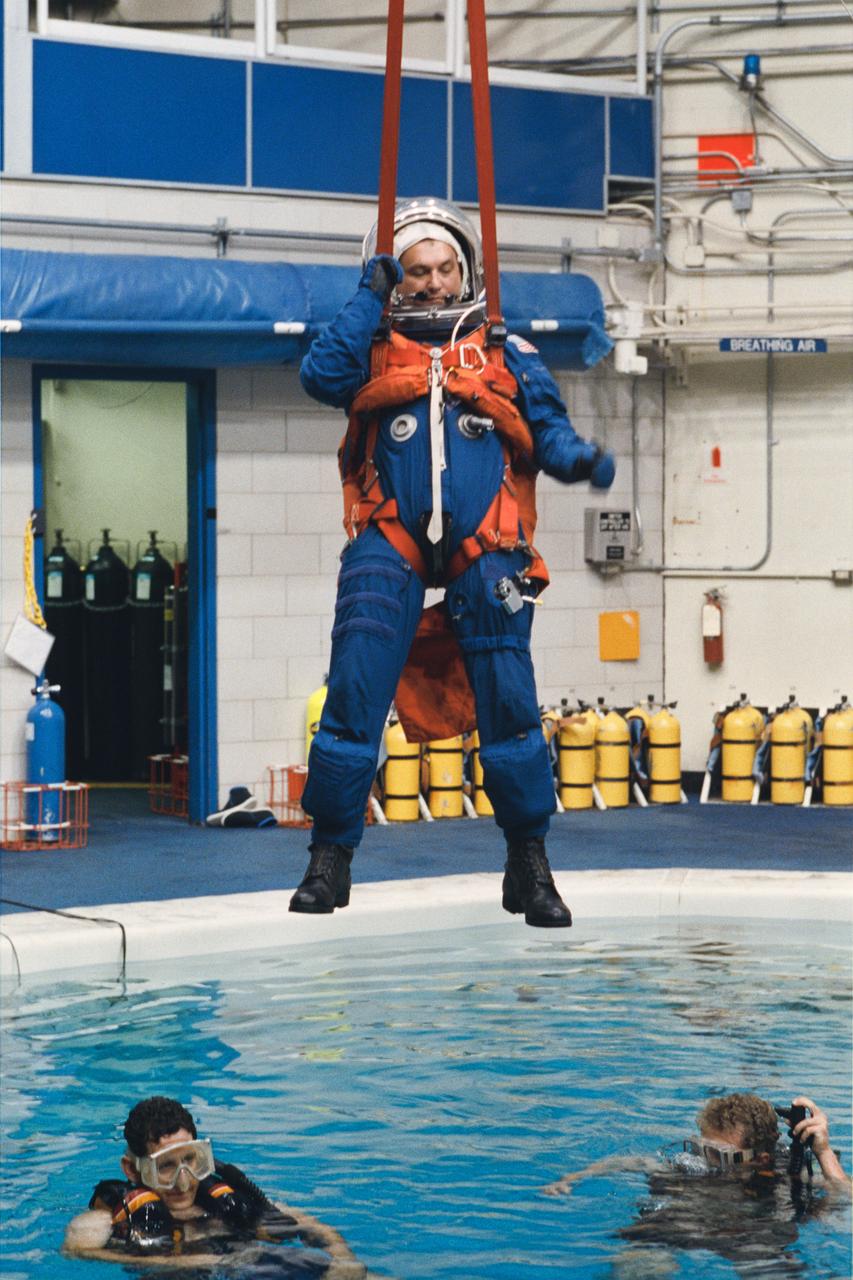
Cosmanaut Vladimir Titov, an alternate mission specialist for STS-60, simulates a parachute glide into water during a bailout training exercise at JSC. This phase of emergency egress training took place in JSC's Weightless Environment Training Facility (WETF).
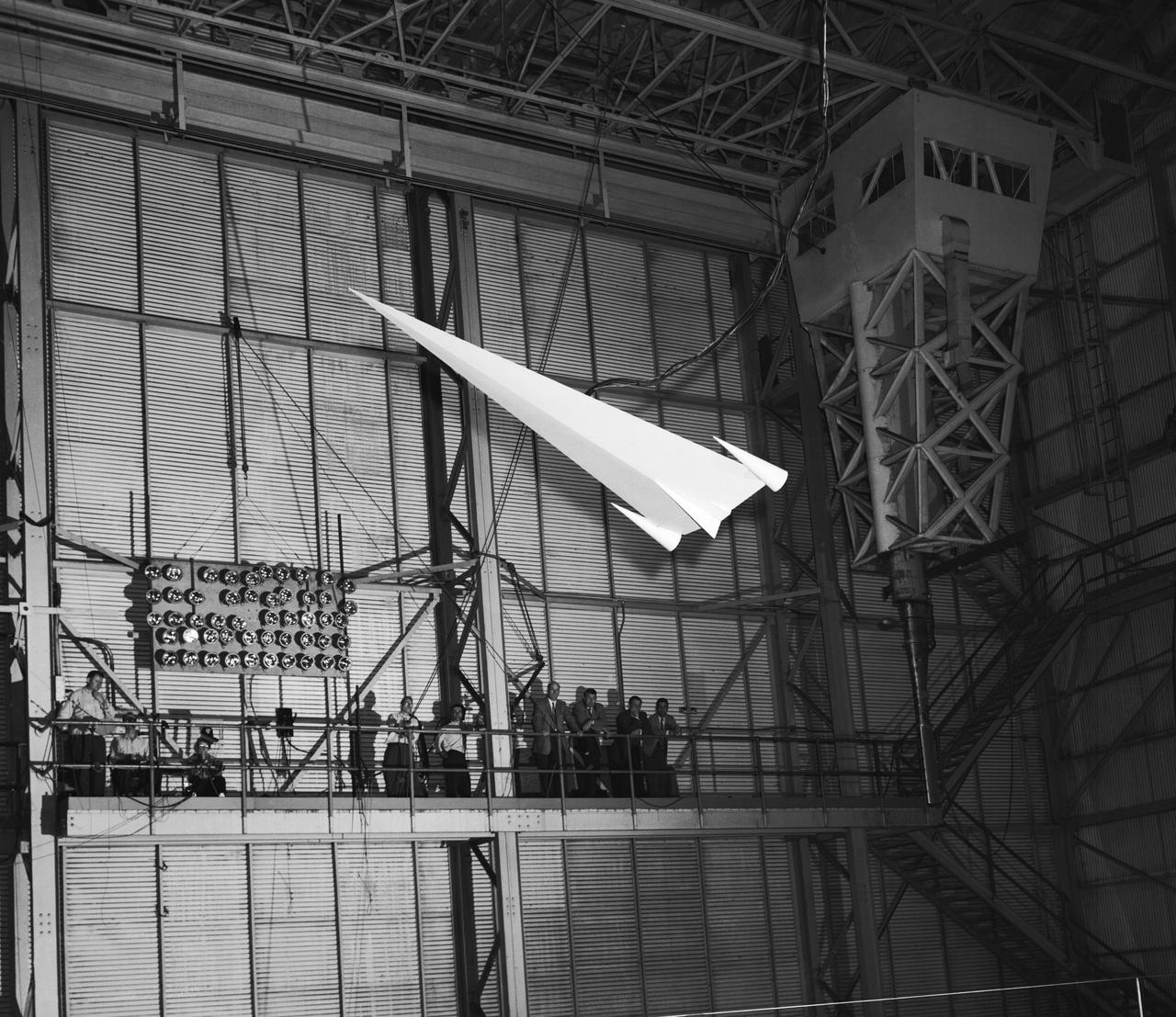
L57-1439 A model based on Langley s concept of a hypersonic glider was test flown on an umbilical cord inside the Full Scale Tunnel in 1957. Photograph published in Engineer in Charge: A History of the Langley Aeronautical Laboratory, 1917-1958 by James R. Hansen. Page 374.
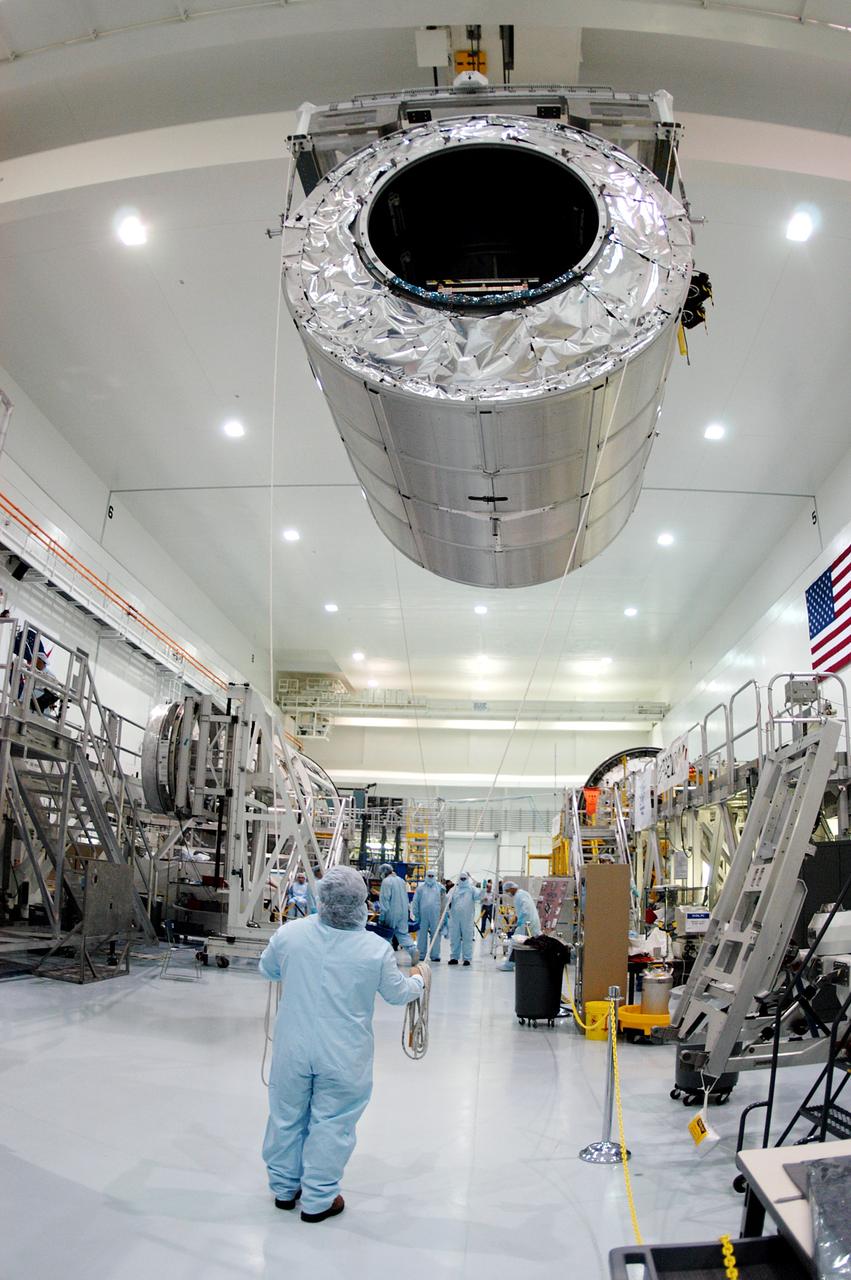
KENNEDY SPACE CENTER, FLA. - In the Space Station Processing Facility, the Multi-Purpose Logistics Module Raffaello glides above the floor as it moves to another stand on the other side. Raffaello is the second MPLM built by the Italian Space Agency, serving as a reusable logistics carrier and primary delivery system to resupply and return station cargo requiring a pressurized environment. It is being moved to allow the third MPLM, Donatello, to be brought in for routine testing. Donatello has been stored in the Operations and Checkout Building. This is the first time all three MPLMs are in the SSPF; the other one is the Leonardo. Raffaello is scheduled to fly on Space Shuttle Atlantis on mission STS-114.
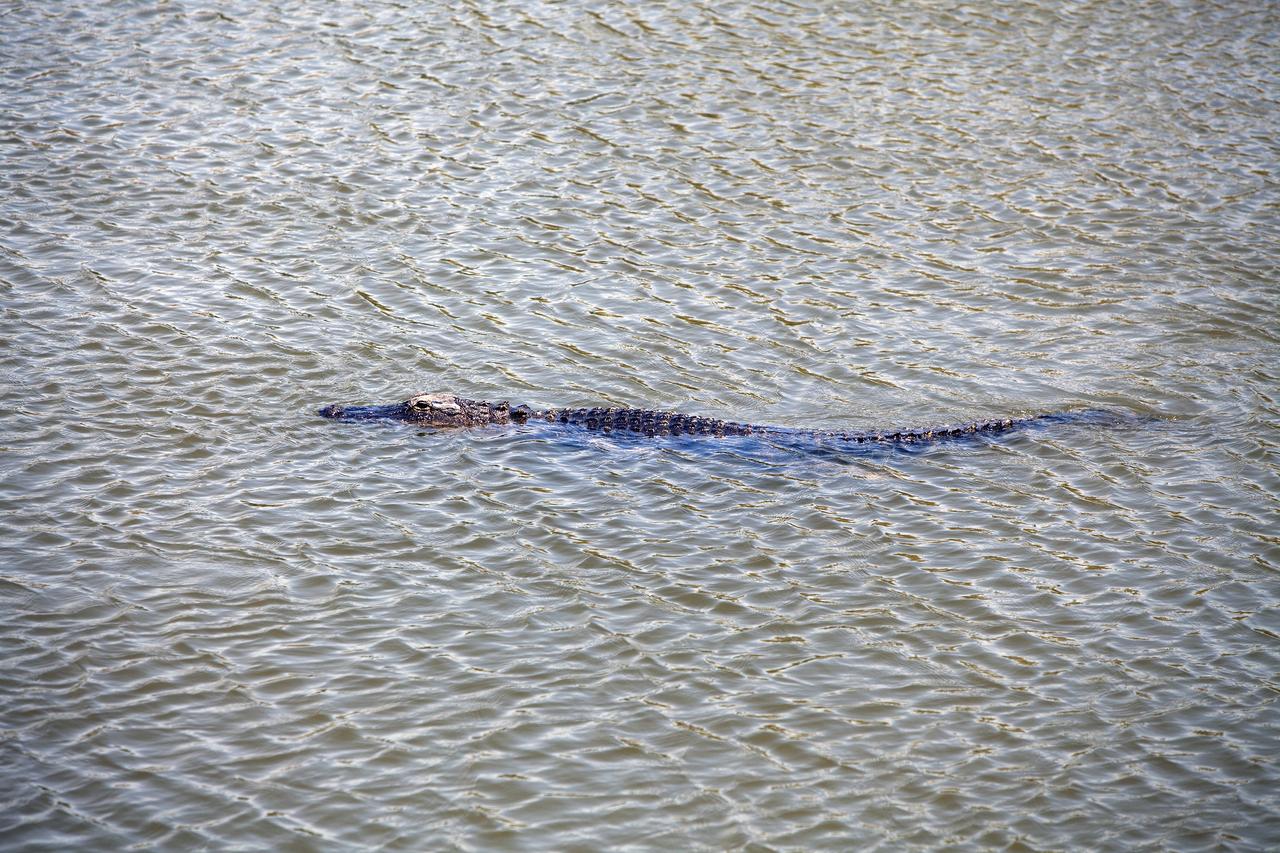
CAPE CANAVERAL, Fla. – An alligator glides through the shallow water of a creek at NASA's Kennedy Space Center. The center shares a boundary with the Merritt Island National Wildlife Refuge, which encompasses 140,000 acres that provide a habitat for more than 330 species of birds, 31 mammals, 117 fishes, and 65 amphibians and reptiles. Photo credit: NASA/Daniel Casper

STS038-S-041 (20 Nov 1990) --- STS-38 Atlantis, Orbiter Vehicle (OV) 104, lands on runway 33 at Kennedy Space Center (KSC) Shuttle Landing Facility (SLF). The main landing gear (MLG) has just touched down on the runway surface as the nose landing gear (NLG) glides above it. The Department of Defense (DOD)-devoted mission came to an end (with complete wheel stop) at 4:43:37 pm (Eastern Standard Time (EST)).
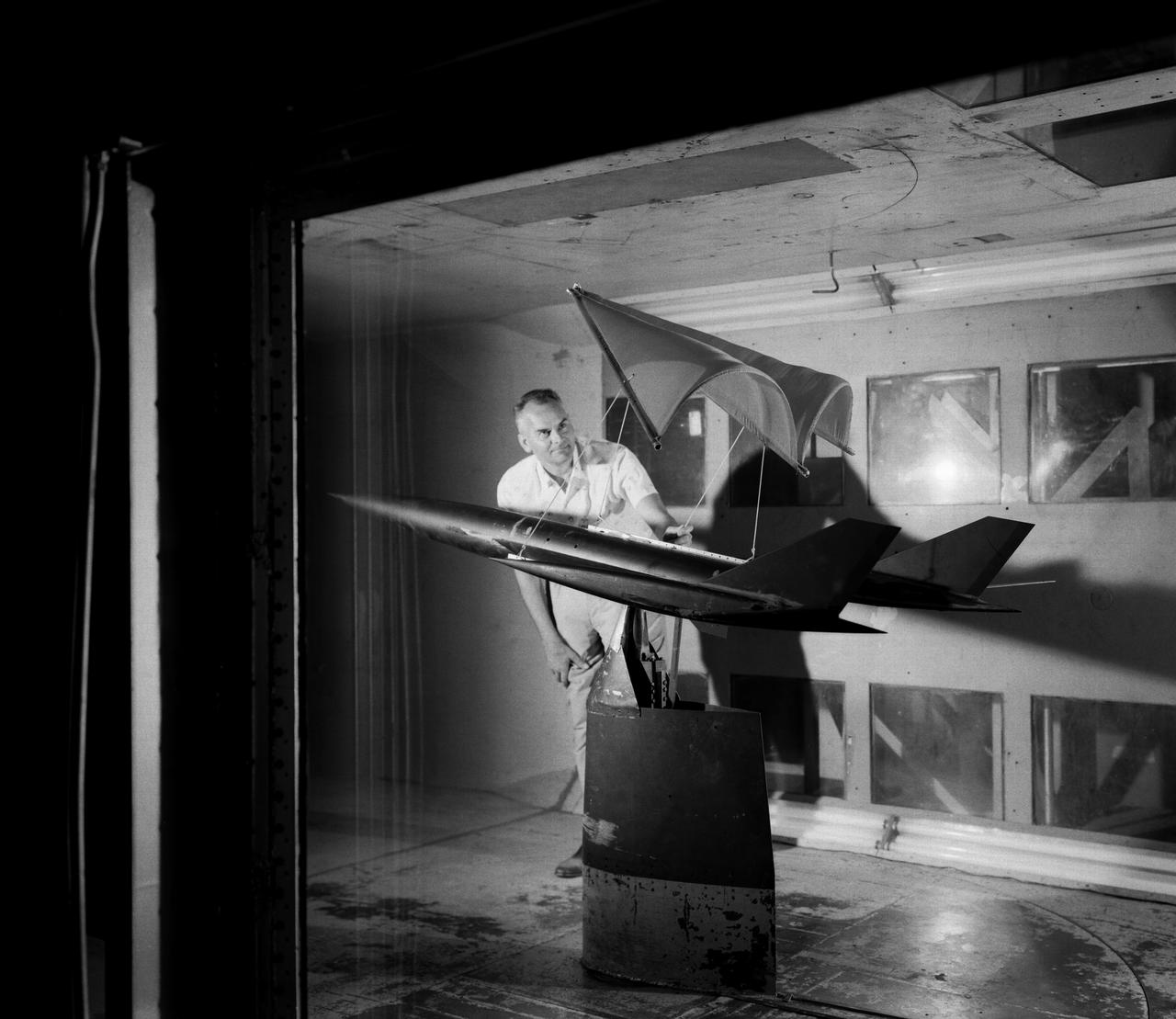
On June 26, 1959, then-Langley-research Francis Rogallo examined the Rogallo wing in the 7x10 FT Tunnel. Originally conceived as a means of bringing manned spacecraft to controlled, soft landings, Rogallo's concept was avidly embraced by later generations of hang-gliding enthusiasts. -- Photograph published in Winds of Change, 75th Anniversary NASA publication (page 18), by James Schultz.
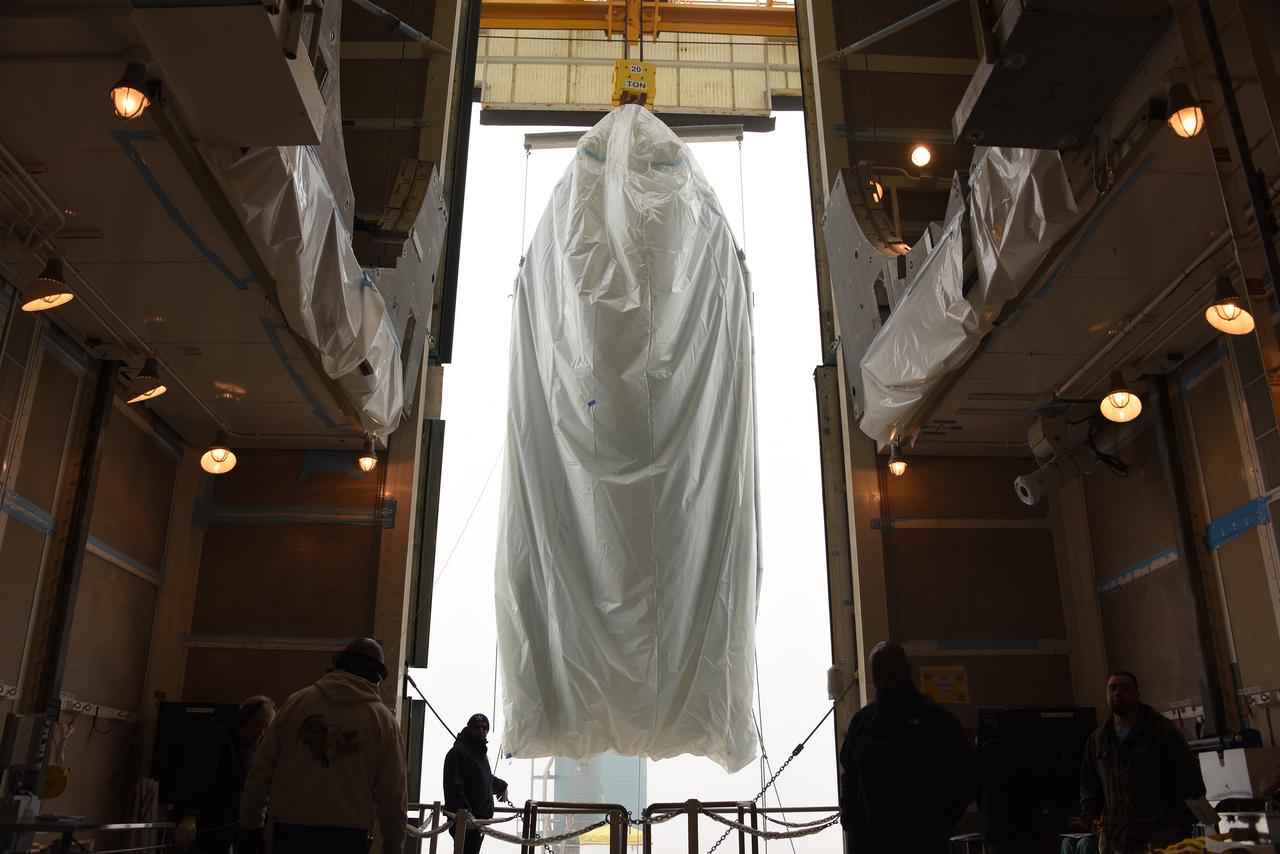
A bi-sector half of the payload fairing for a United Launch Alliance Delta II rocket glides into the clean room on level 4 of the mobile service tower on Space Launch Complex 2 at Vandenberg Air Force Base in California. Preparations are underway for launch of the Joint Polar Satellite System (JPSS-1) spacecraft in 2017. JPSS-1 is part of the next-generation environmental satellite system, a collaborative program between the National Oceanic and Atmospheric Administration (NOAA) and NASA. To learn more about JPSS-1, visit http://www.jpss.noaa.gov.
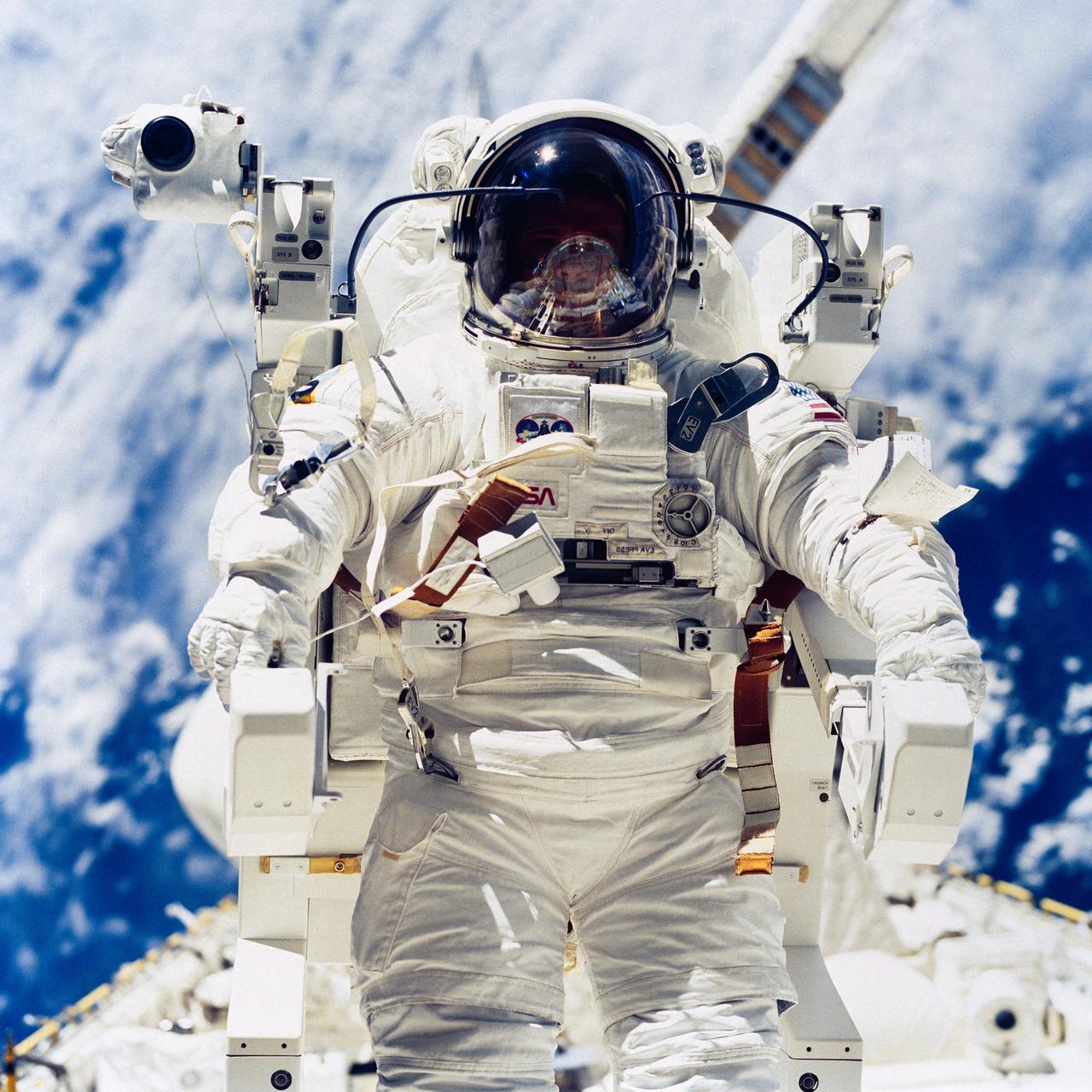
S84-27034A (9 Feb. 1984) --- Astronaut Robert L. Stewart appears to glide a few meters above the Earth-orbiting Space Shuttle Challenger's cargo bay during the second of two extravehicular activity (EVA) session on the Challenger's fourth flight in space. Astronauts Stewart and Bruce McCandless II, two of NASA's three mission specialists on flight STS-41B, earlier made another EVA, testing another manned maneuvering unit (MMU).

The Bell Aircraft Corporation X-1-2 aircraft on the ramp at NACA High Speed Flight Research Station located on the South Base of Muroc Army Air Field in 1947. The X-1-2 flew until October 23, 1951, completing 74 glide and powered flights with nine different pilots. The aircraft has white paint and the NACA tail band. The black Xs are reference markings for tracking purposes. They were widely used on NACA aircraft in the early 1950s.
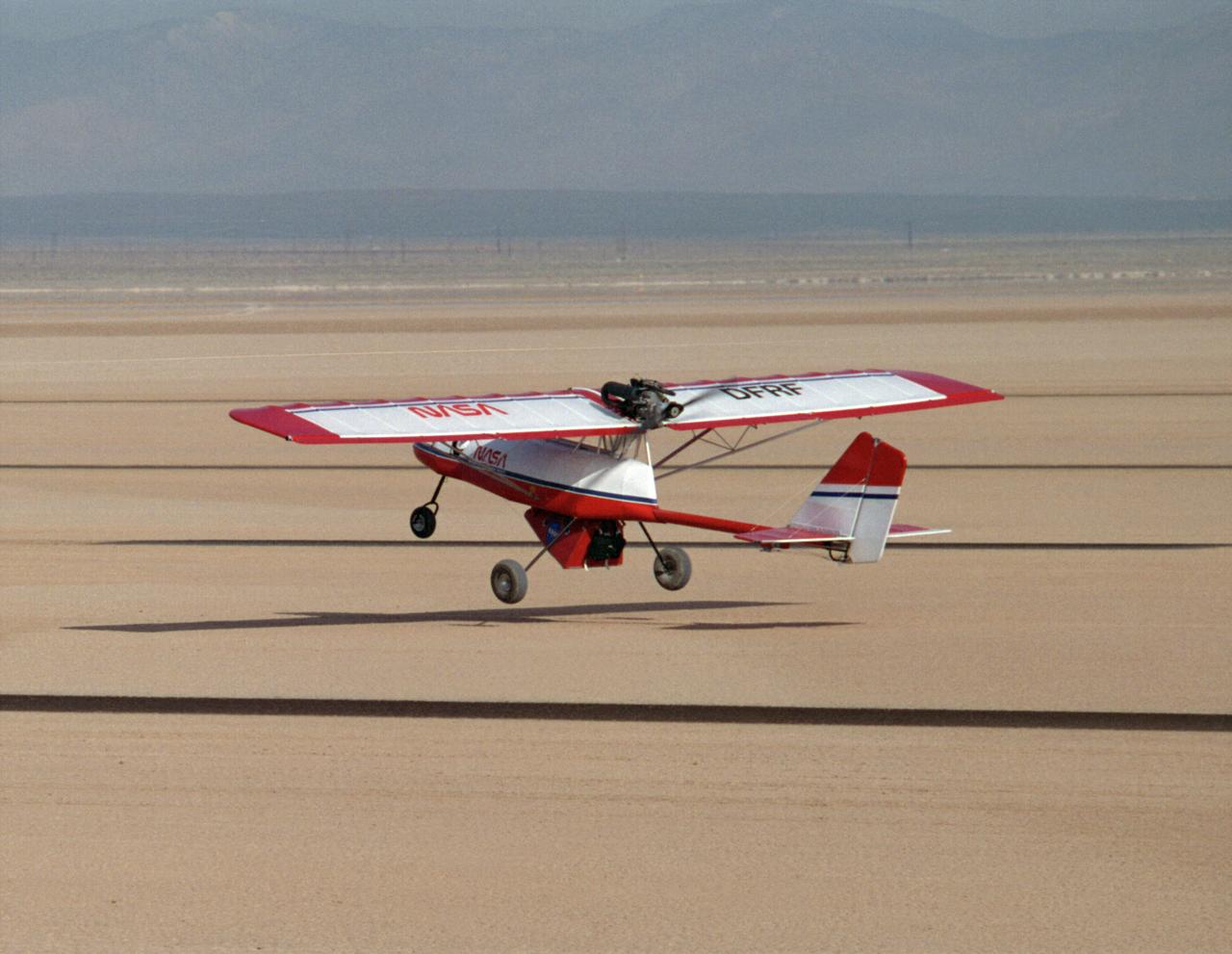
A Rans S-12 remotely piloted "mothership" takes off from a lakebed runway carrying a Spacewedge research model during 1992 flight tests. The Spacewedge was lauched in flight from the Rans S-12 aircraft and then glided back to a landing under a steerable parafoil. Technology tested in the Spacewedge program was used in developing the X-38 research vehicle.
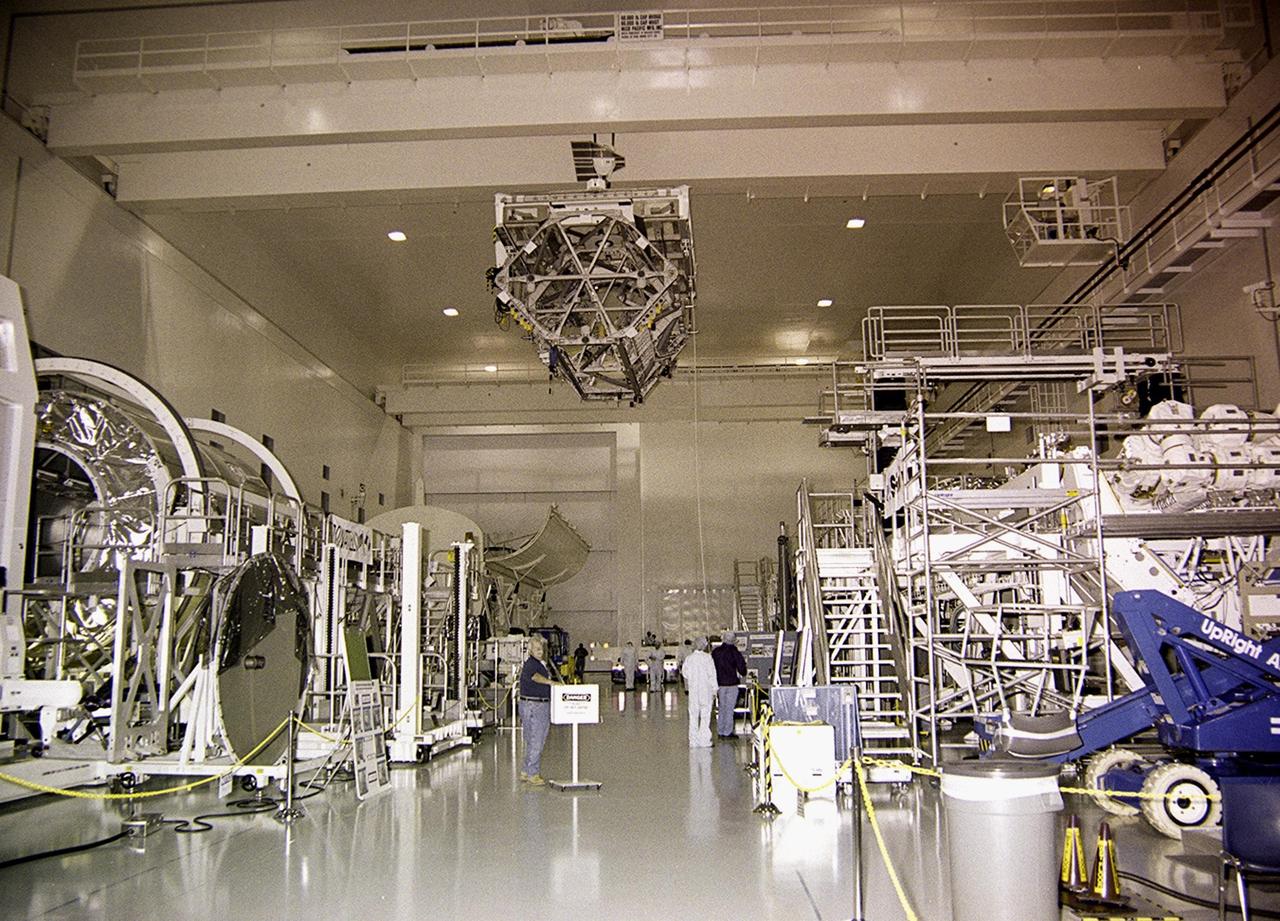
KENNEDY SPACE CENTER, FLA. -- Suspended from an overhead crane in the Space Station Processing Facility, the P3 Integrated Truss Structure glides along the ceiling to a workstand. The port-side P3 truss is scheduled to be added to the International Space Station on mission STS-115 in 2002 aboard Space Shuttle Atlantis. . The P3 will be attached to the first port truss segment, P1, being installed in an earlier mission.
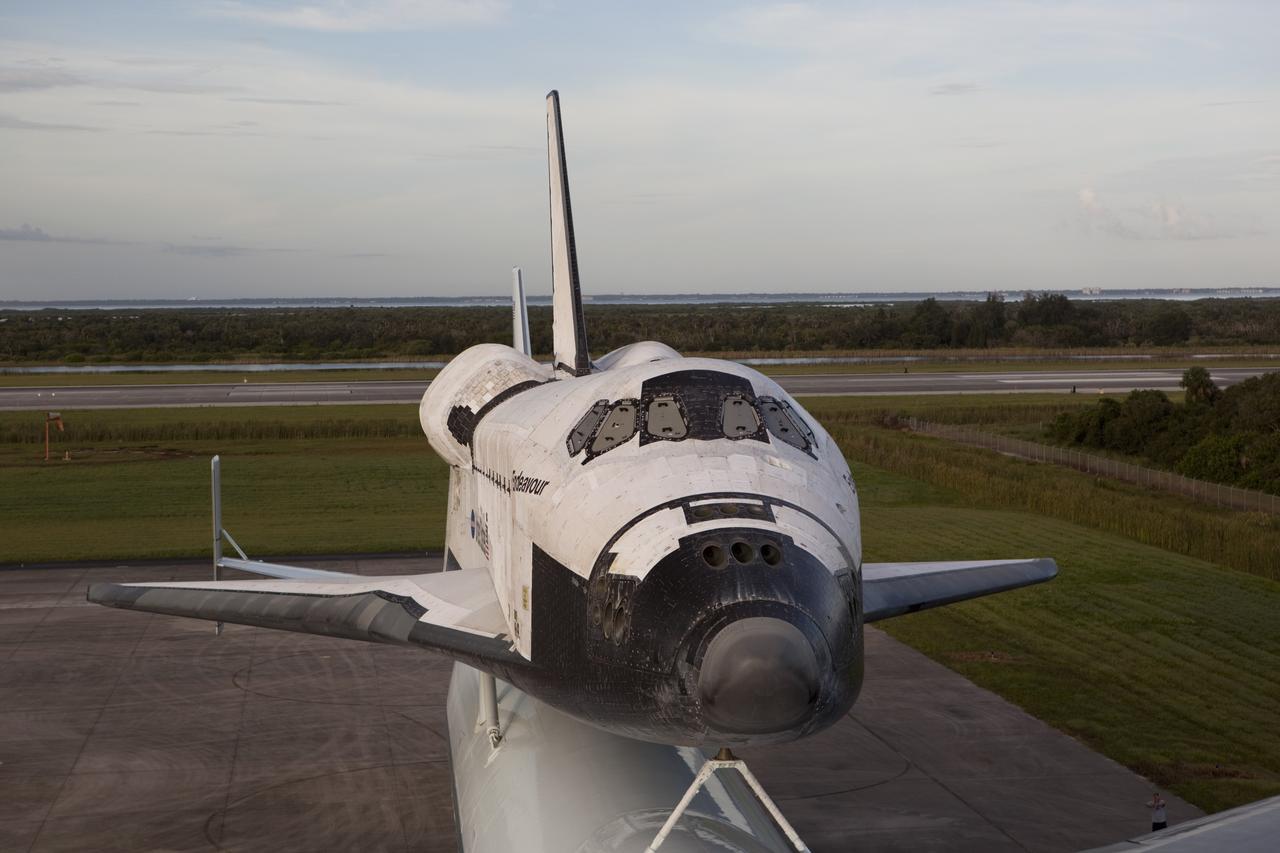
CAPE CANAVERAL, Fla. – Space shuttle Endeavour, secured atop NASA's Shuttle Carrier Aircraft, or SCA, glides away from the mate-demate device at the Shuttle Landing Facility at NASA's Kennedy Space Center in Florida. The SCA, a modified 747 jetliner, will fly Endeavour to Los Angeles where it will be placed on public display at the California Science Center. This is the final ferry flight scheduled in the Space Shuttle Program era. For more information on the shuttles' transition and retirement, visit http://www.nasa.gov/transition. Photo credit: NASA/Dimitri Gerondidakis

The United Launch Alliance barge Delta Mariner glides past the jetties as it enters Port Canaveral in Florida on March 6, 2014. The barge is carrying two of the booster stages for the Delta IV Heavy rocket slated for Orion's Exploration Flight Test-1, or EFT-1. Orion is the exploration spacecraft designed to carry astronauts to destinations not yet explored by humans. It will have emergency abort capability, sustain the crew during space travel and provide safe re-entry from deep-space return velocities.
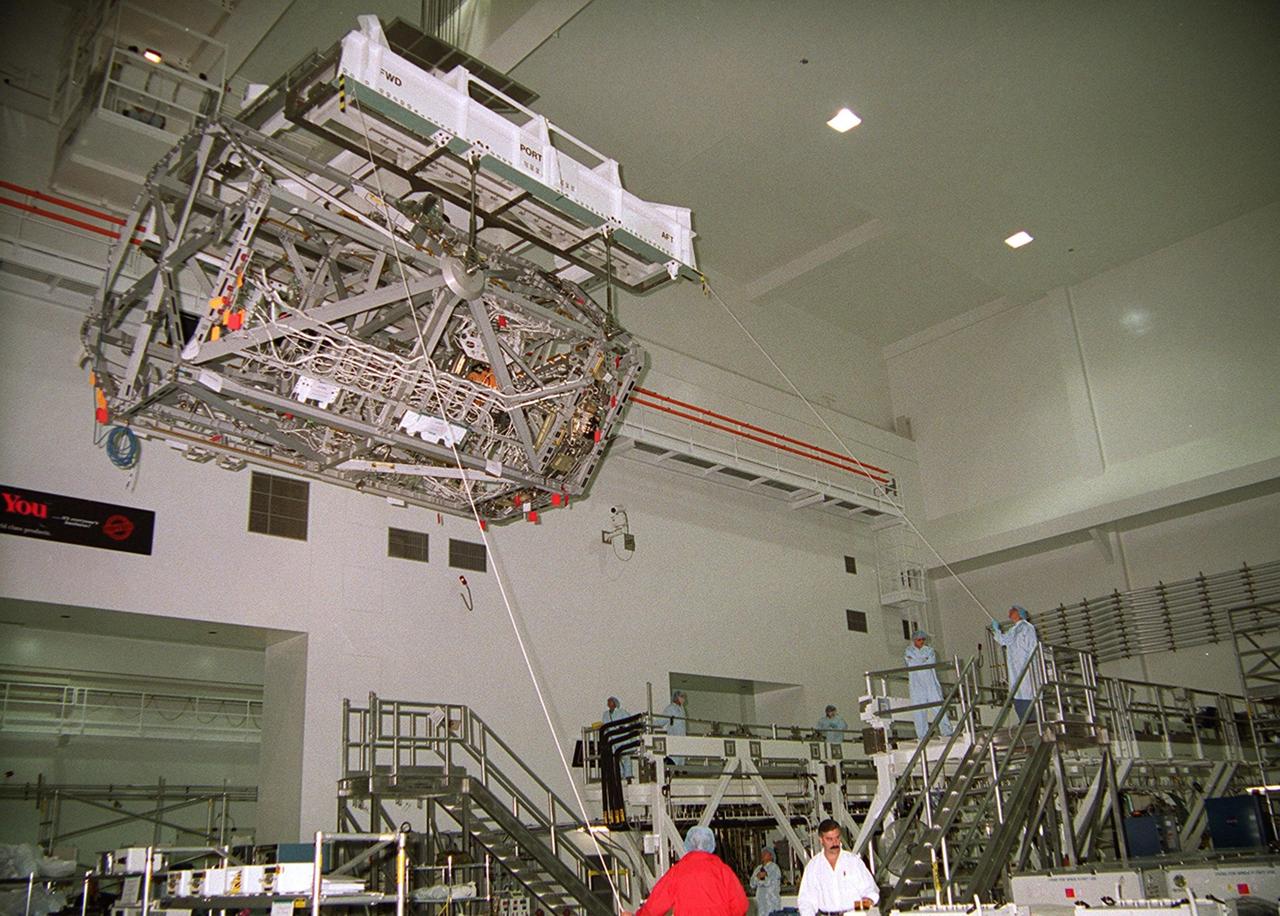
KENNEDY SPACE CENTER, FLA. -- Suspended from an overhead crane in the Space Station Processing Facility, the P3 Integrated Truss Structure glides along the ceiling to a workstand, at right. The port-side P3 truss is scheduled to be added to the International Space Station on mission STS-115 in 2002 aboard Space Shuttle Atlantis. . The P3 will be attached to the first port truss segment, P1, being installed in an earlier mission
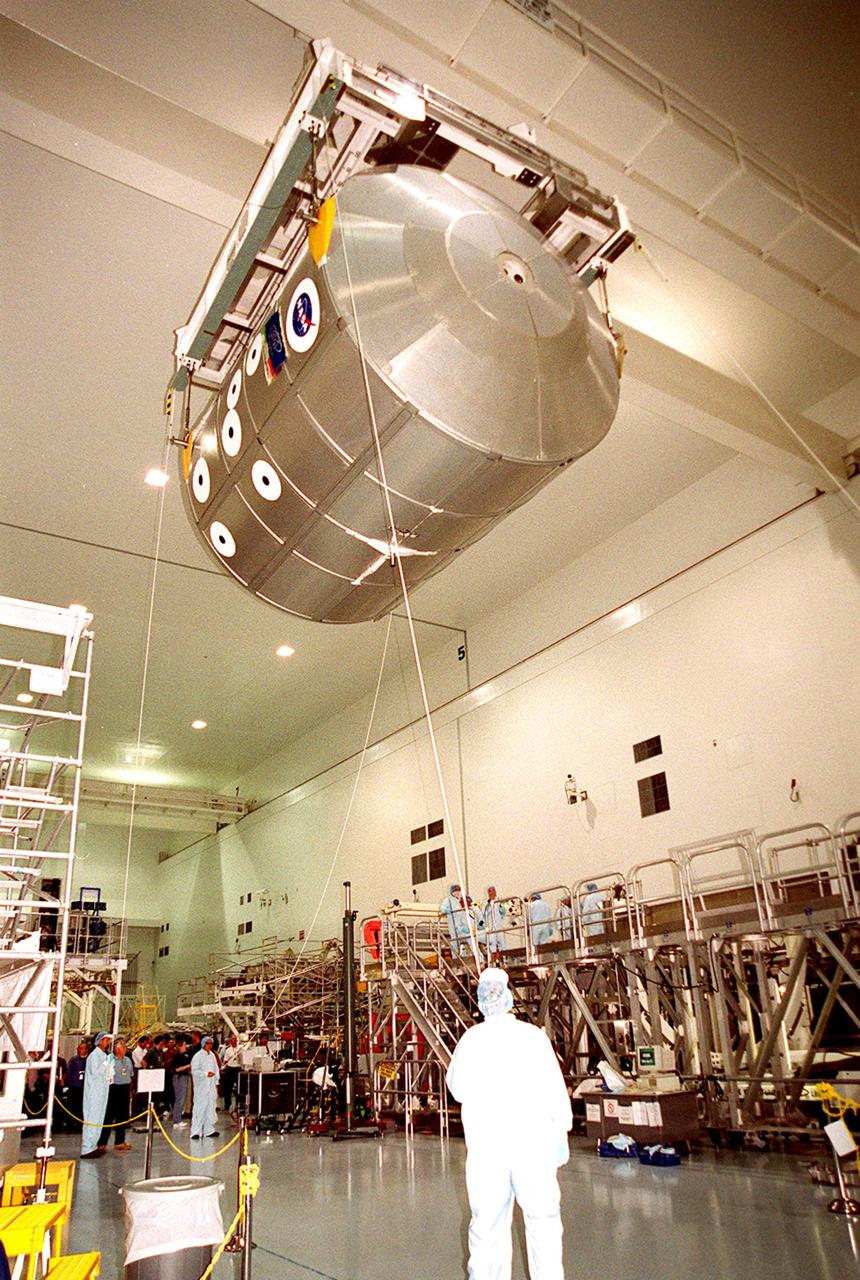
KENNEDY SPACE CENTER, FLA. -- Suspended from an overhead crane in the Space Station Processing Facility, the Multi-Purpose Logistics Module Leonardo glides toward the workstand at right. The MPLM joins two others, Raffaello and Donatello, in the SSPF being prepared for future launches to the International Space Station. The three MPLMs are being used as cargo vans to carry supplies, equipment and research racks to the Space Station and back to KSC. Leonardo recently returned from its maiden voyage to the Station on mission STS-102
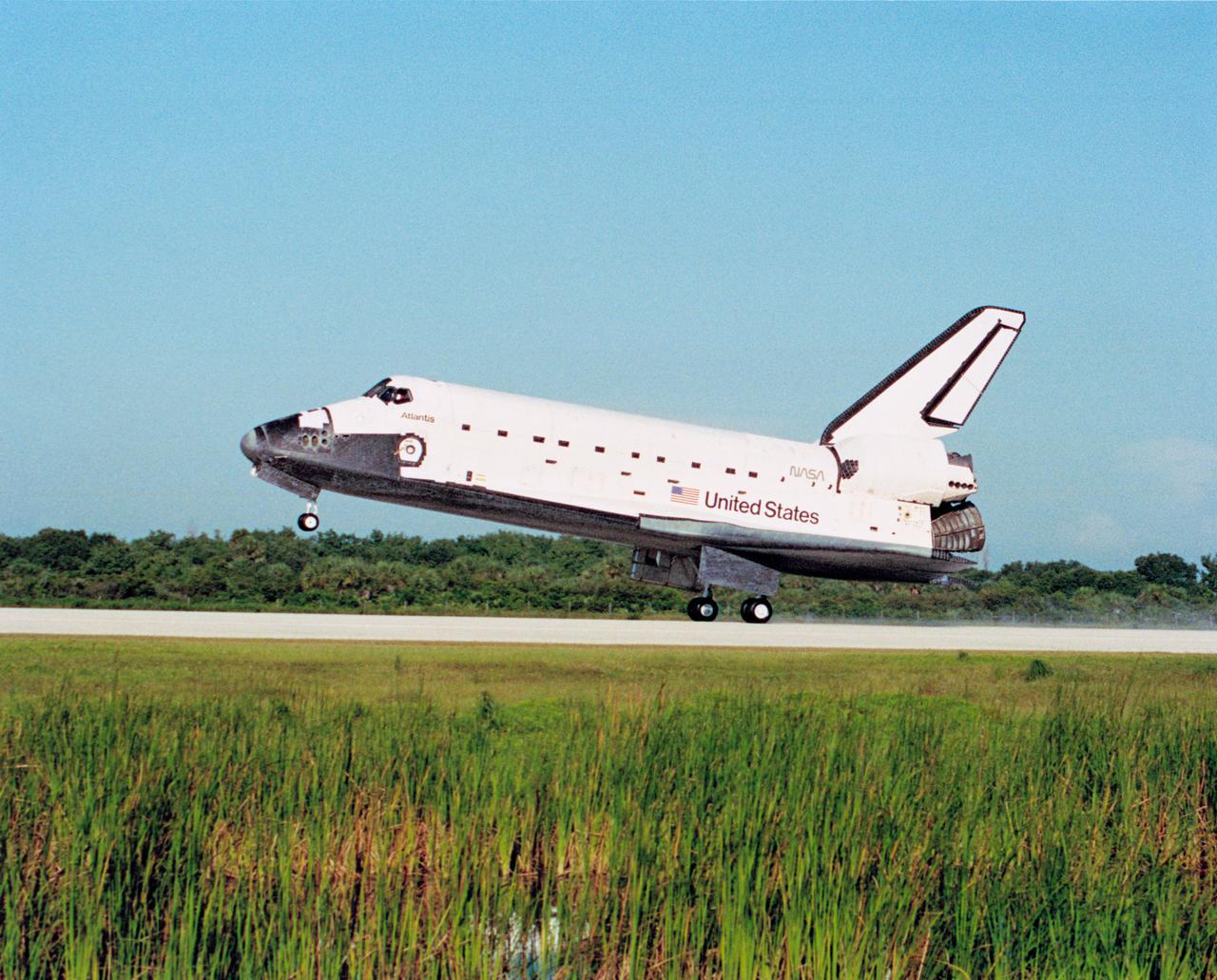
STS-43 Atlantis, Orbiter Vehicle (OV) 104, lands on runway 15 at the Kennedy Space Center's (KSC's) Shuttle Landing Facility (SLF). The main landing gear (MLG) touched down at 8:23:25 am (Eastern Daylight Time (EDT)). OV-104 glides toward wheel stop as the nose landing gear (NLG) rides above the runway.
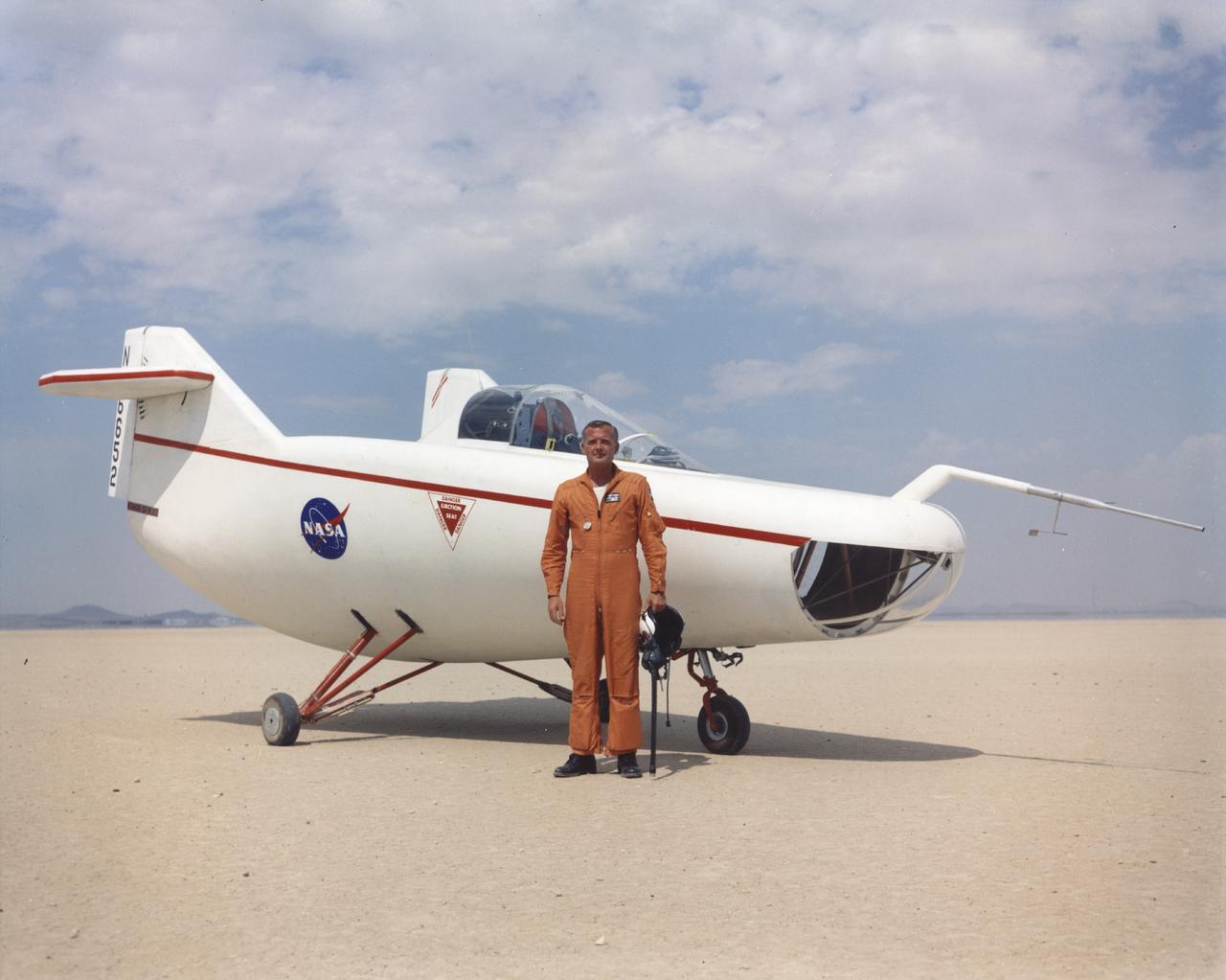
NASA Flight Research Pilot Milt Thompson, shown here on the lakebed with the M2-F1 lifting body, was an early backer of R. Dale Reed's lifting-body proposal. He urged Flight Research Center director Paul Bikle to approve the M2-F1's construction. Thompson also made the first glide flights in both the M2-F1 and its successor, the heavyweight M2-F2.
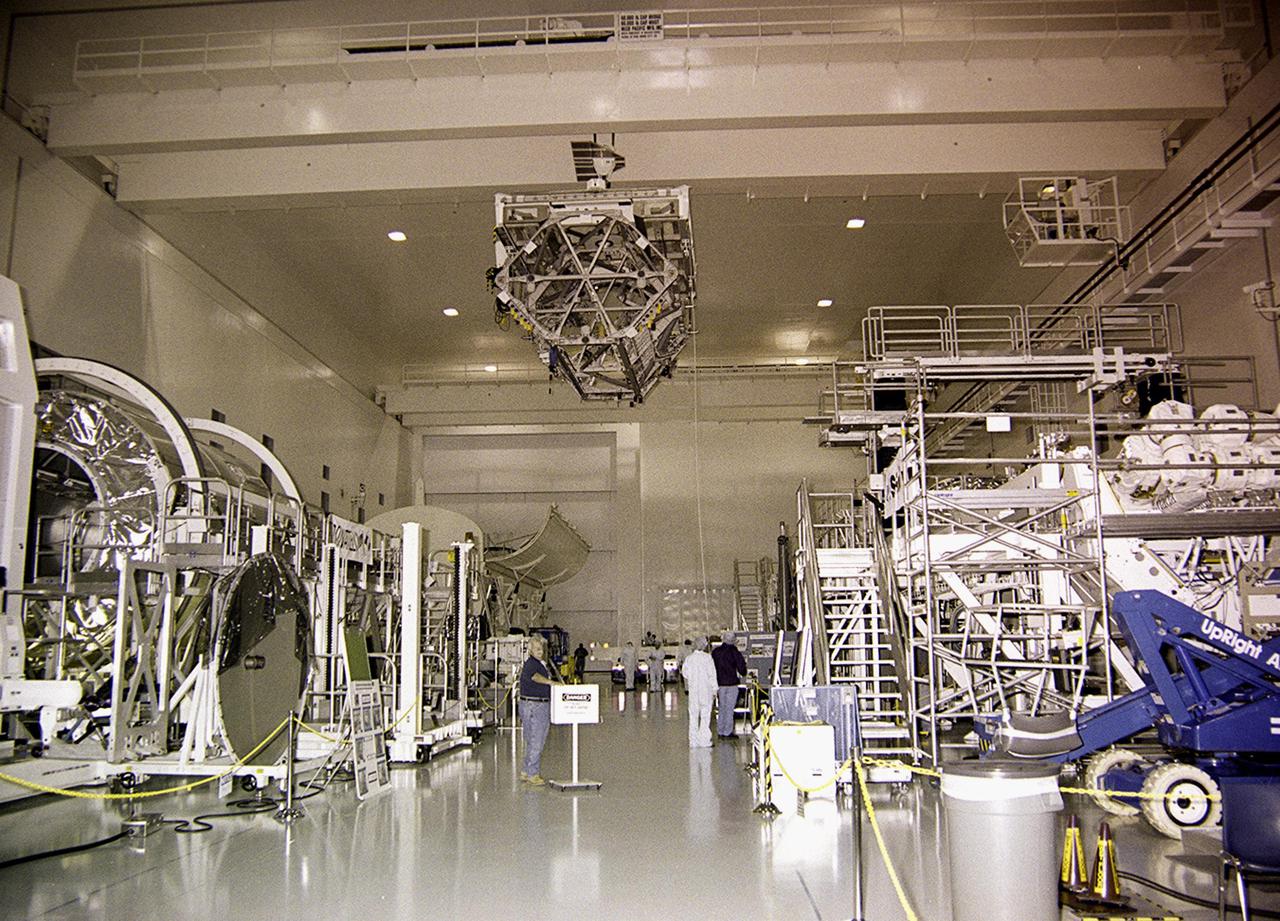
KENNEDY SPACE CENTER, FLA. -- Suspended from an overhead crane in the Space Station Processing Facility, the P3 Integrated Truss Structure glides along the ceiling to a workstand. The port-side P3 truss is scheduled to be added to the International Space Station on mission STS-115 in 2002 aboard Space Shuttle Atlantis. . The P3 will be attached to the first port truss segment, P1, being installed in an earlier mission.
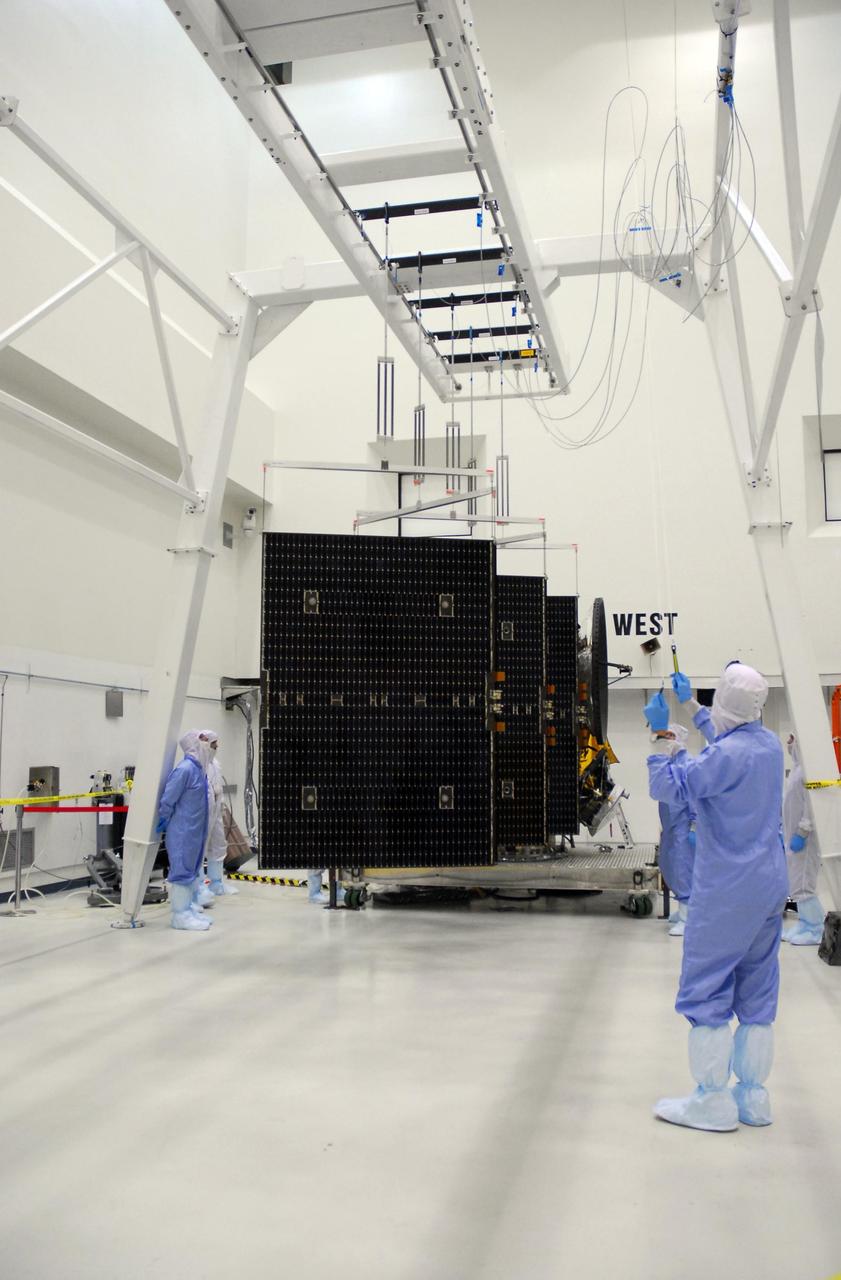
KENNEDY SPACE CENTER, FLA. -- At Astrotech, the more than 32-foot-long solar panels on one side of the Dawn spacecraft glide open during a test deployment. Dawn's mission is to explore two of the asteroid belt's most intriguing and dissimilar occupants: asteroid Vesta and the dwarf planet Ceres. Dawn is scheduled to launch June 30 aboard a Delta II rocket from Launch Complex 17-B at Cape Canaveral Air Force Station. Photo credit: NASA/George Shelton
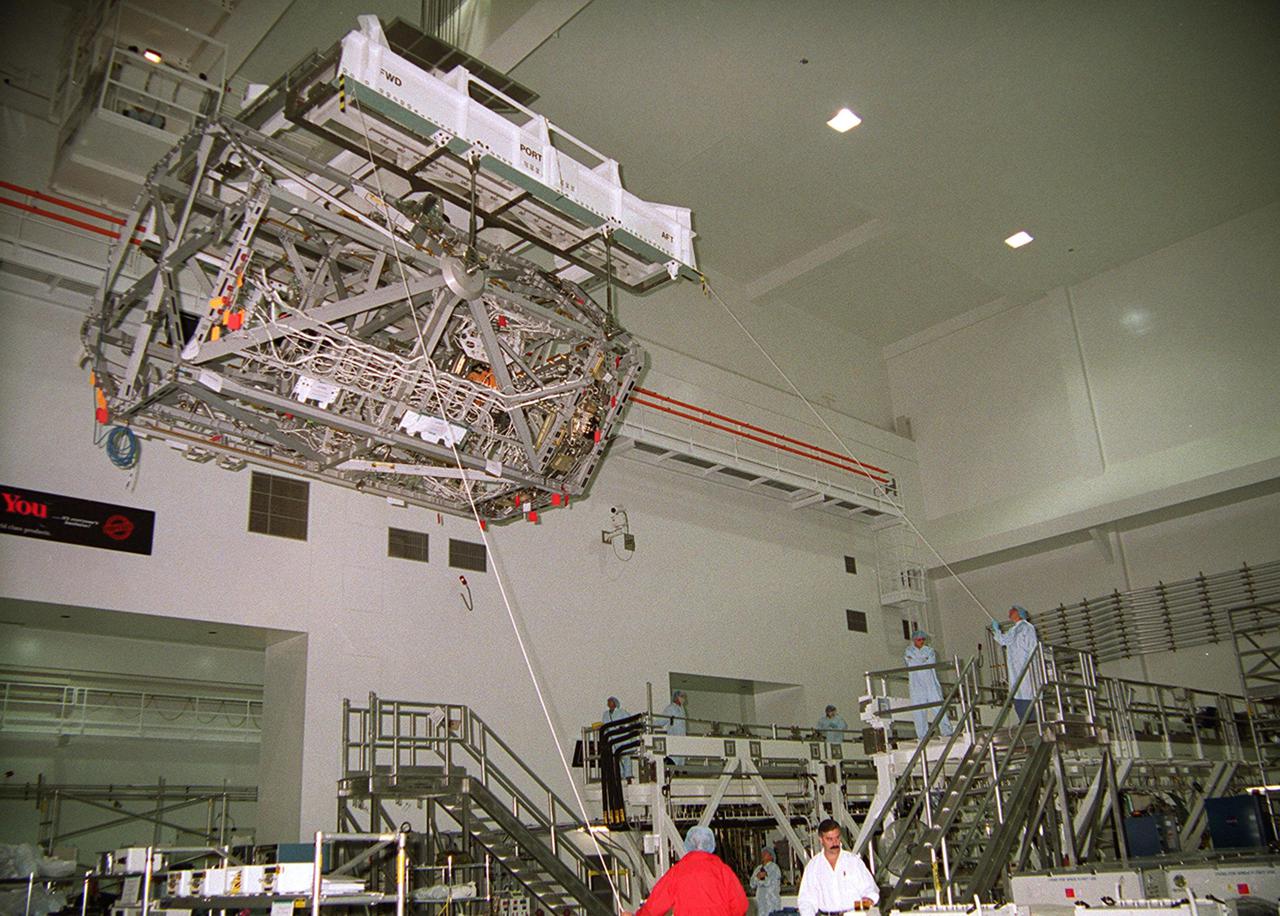
KENNEDY SPACE CENTER, FLA. -- Suspended from an overhead crane in the Space Station Processing Facility, the P3 Integrated Truss Structure glides along the ceiling to a workstand, at right. The port-side P3 truss is scheduled to be added to the International Space Station on mission STS-115 in 2002 aboard Space Shuttle Atlantis. . The P3 will be attached to the first port truss segment, P1, being installed in an earlier mission
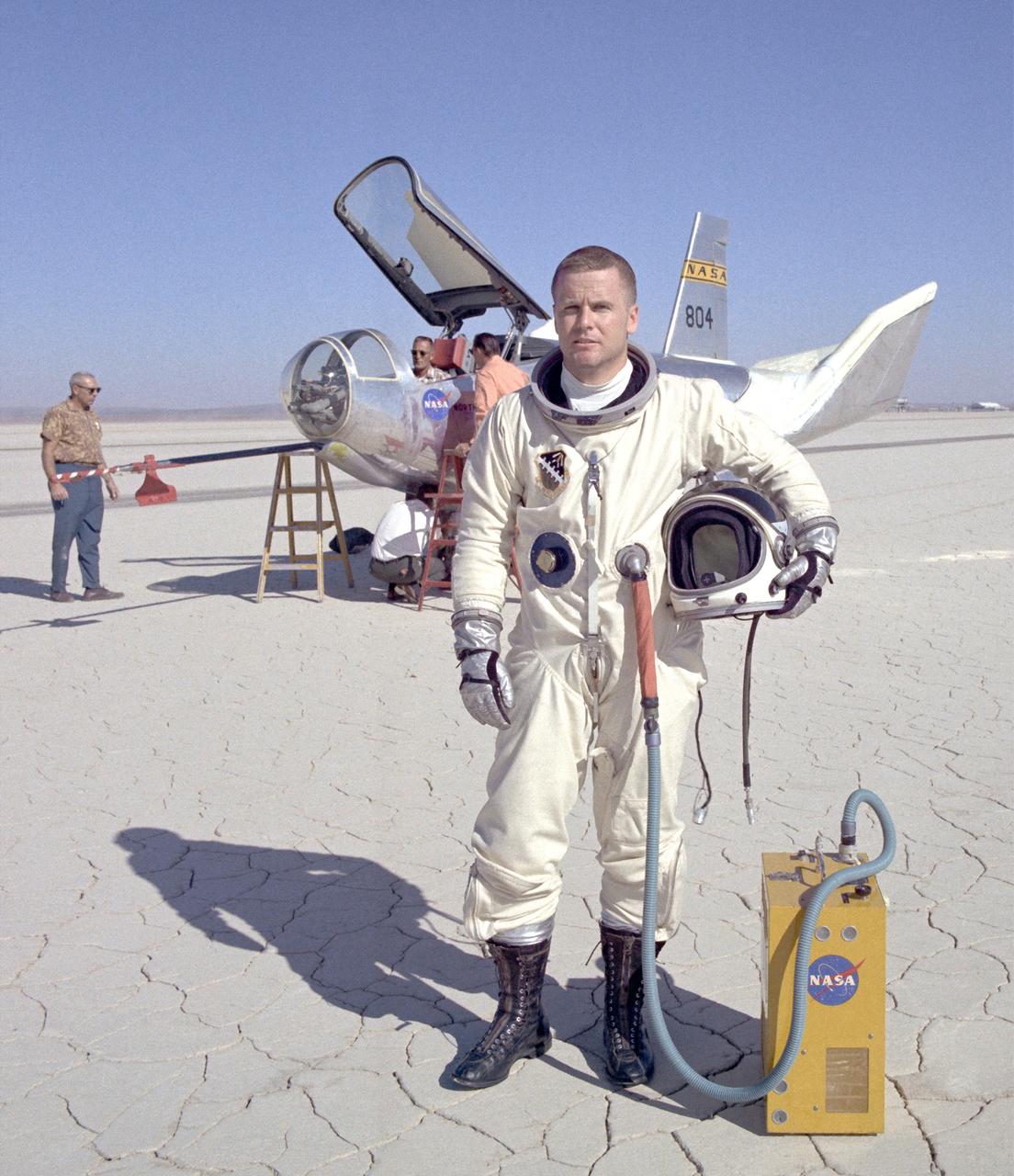
Air Force Major Peter Hoag stands in front of the HL-10 Lifting Body. Maj. Hoag joined the HL-10 program in 1969 and made his first glide flight on June 6, 1969. He made a total of 8 flights in the HL-10. They included the fastest lifting-body flight, which reached Mach 1.861 on Feb. 18, 1970.
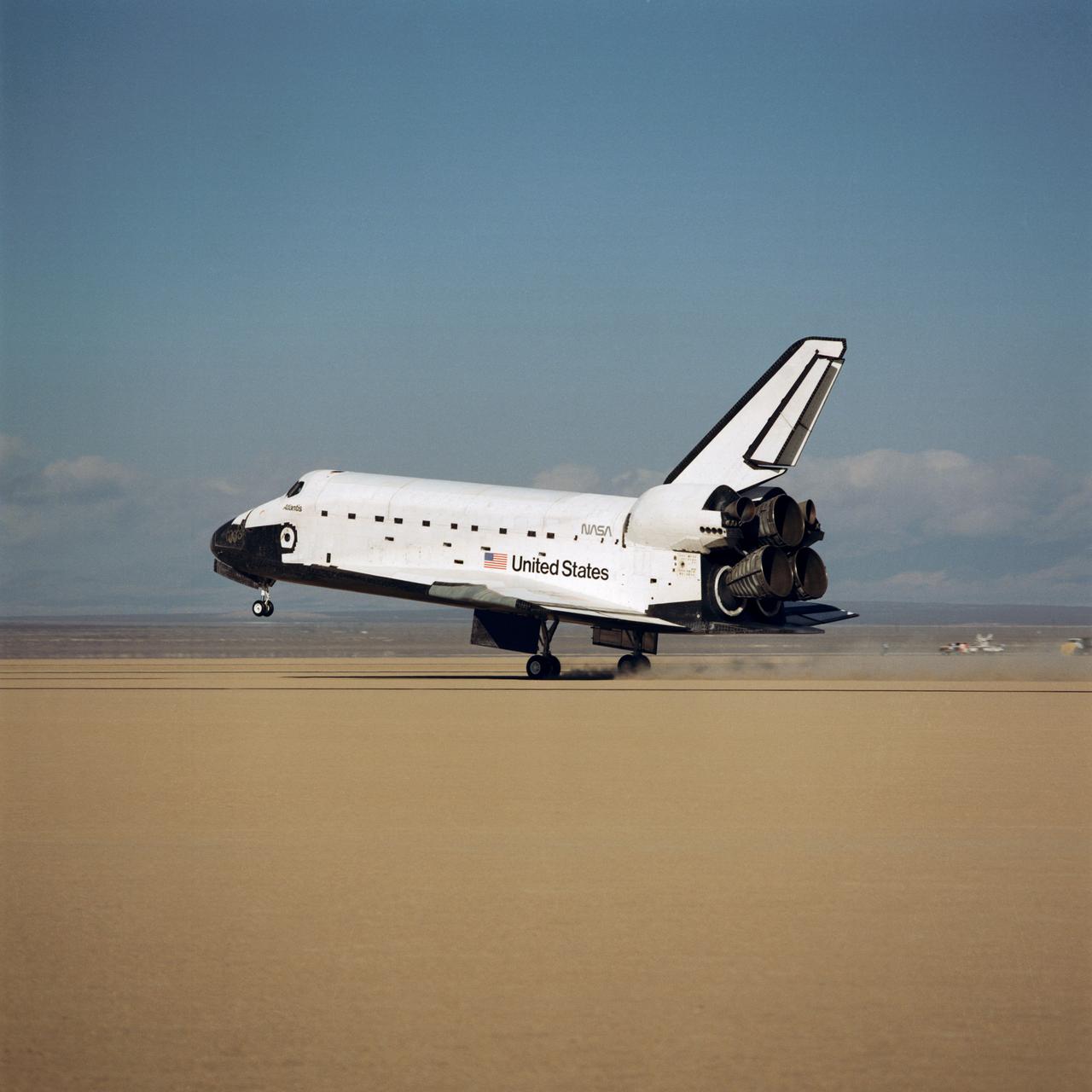
STS-34 Atlantis, Orbiter Vehicle (OV) 104, main landing gear (MLG) touches down on Runway 23 dry lake bed at Edwards Air Force Base (EAFB), California. The nose landing gear rides above runway before touchdown as the MLG wheels produce a cloud of dust. OV-104's port side profile is captured as it glides by at a speed of approximately 195 knots (224 miles per hour). The tail section with deployed speedbrake/rudder and space shuttle main engines (SSMEs) are visible.
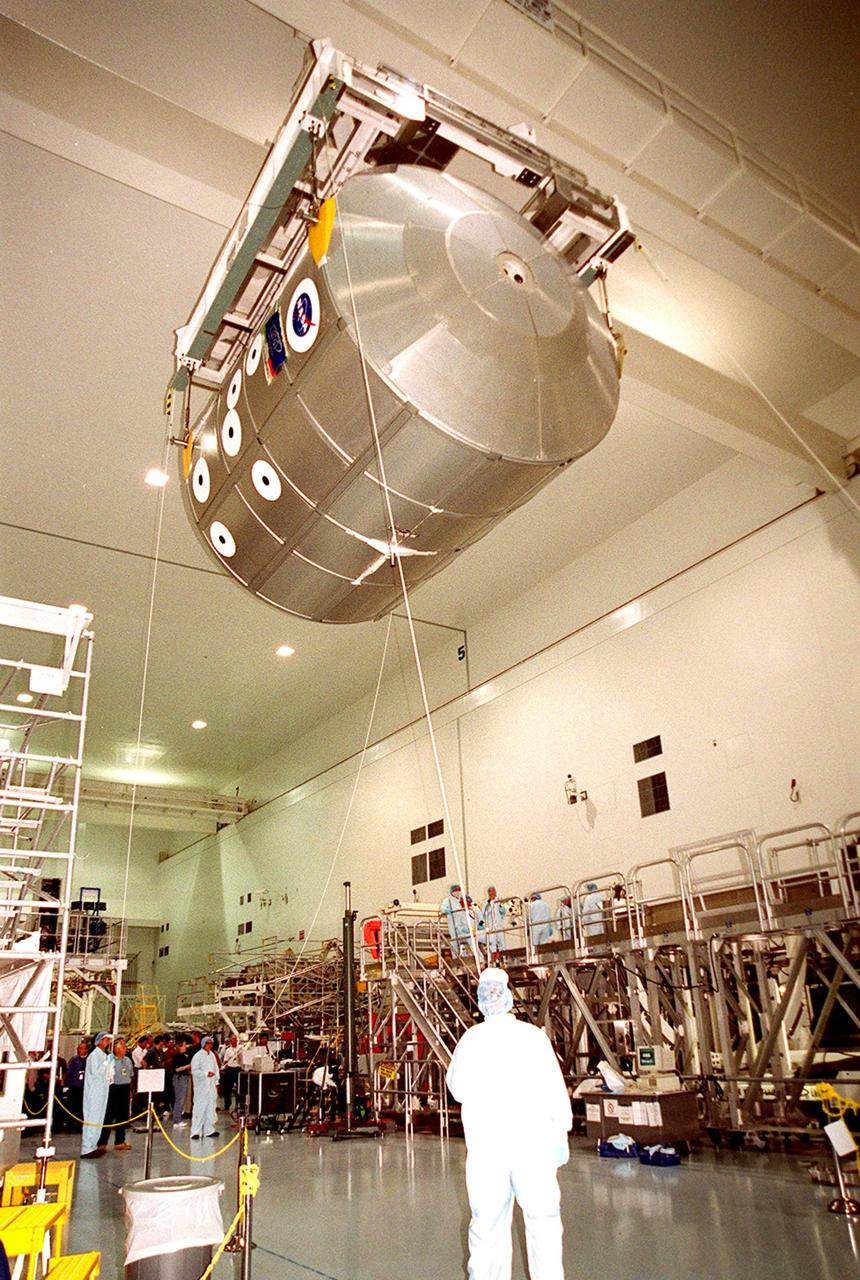
KENNEDY SPACE CENTER, FLA. -- Suspended from an overhead crane in the Space Station Processing Facility, the Multi-Purpose Logistics Module Leonardo glides toward the workstand at right. The MPLM joins two others, Raffaello and Donatello, in the SSPF being prepared for future launches to the International Space Station. The three MPLMs are being used as cargo vans to carry supplies, equipment and research racks to the Space Station and back to KSC. Leonardo recently returned from its maiden voyage to the Station on mission STS-102
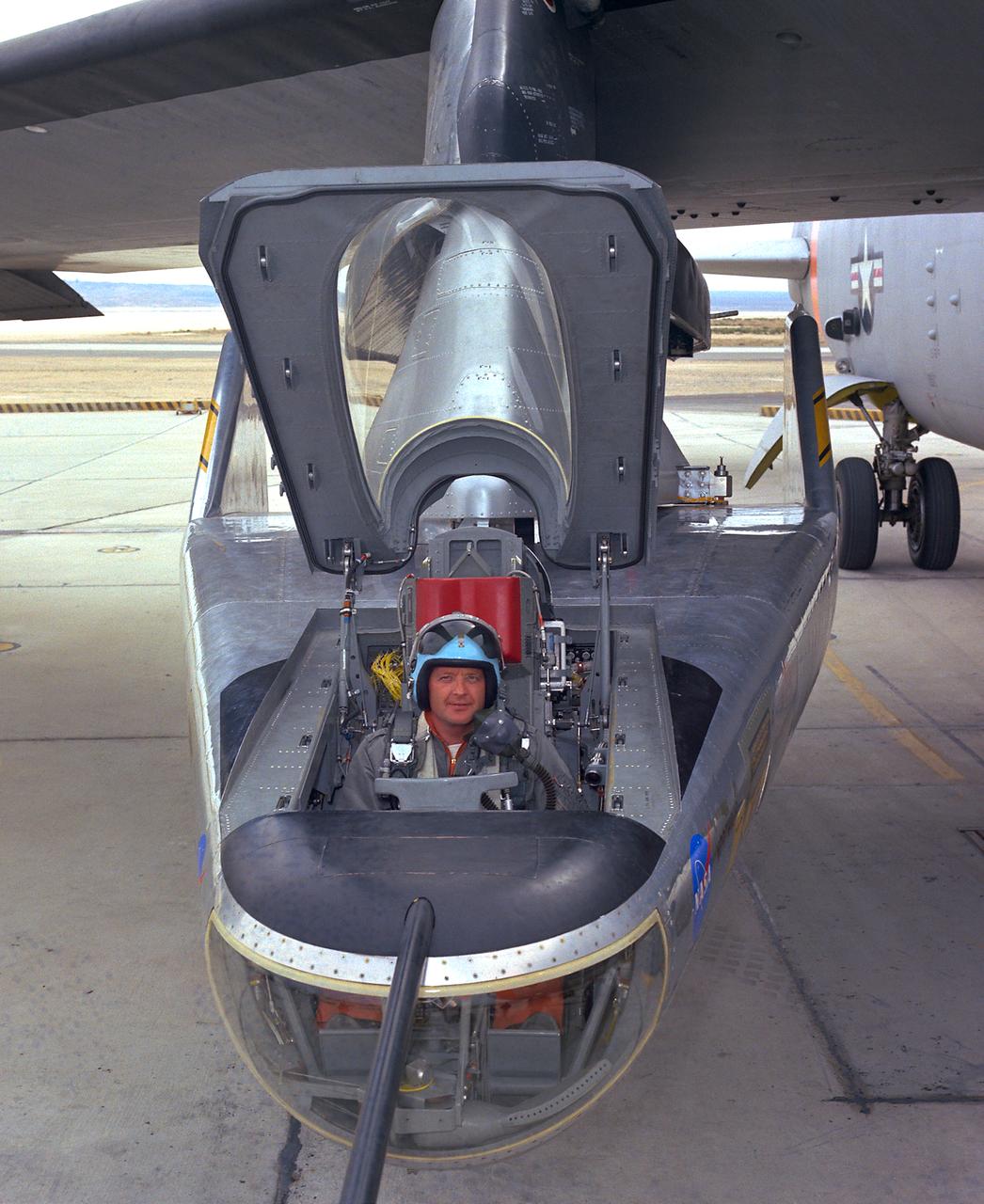
NASA research pilot Milt Thompson sits in the M2-F2 "heavyweight" lifting body research vehicle before a 1966 test flight. The M2-F2 and the other lifting-body designs were all attached to a wing pylon on NASA’s B-52 mothership and carried aloft. The vehicles were then drop-launched and, at the end of their flights, glided back to wheeled landings on the dry lake or runway at Edwards AFB. The lifting body designs influenced the design of the Space Shuttle and were also reincarnated in the design of the X-38 in the 1990s.
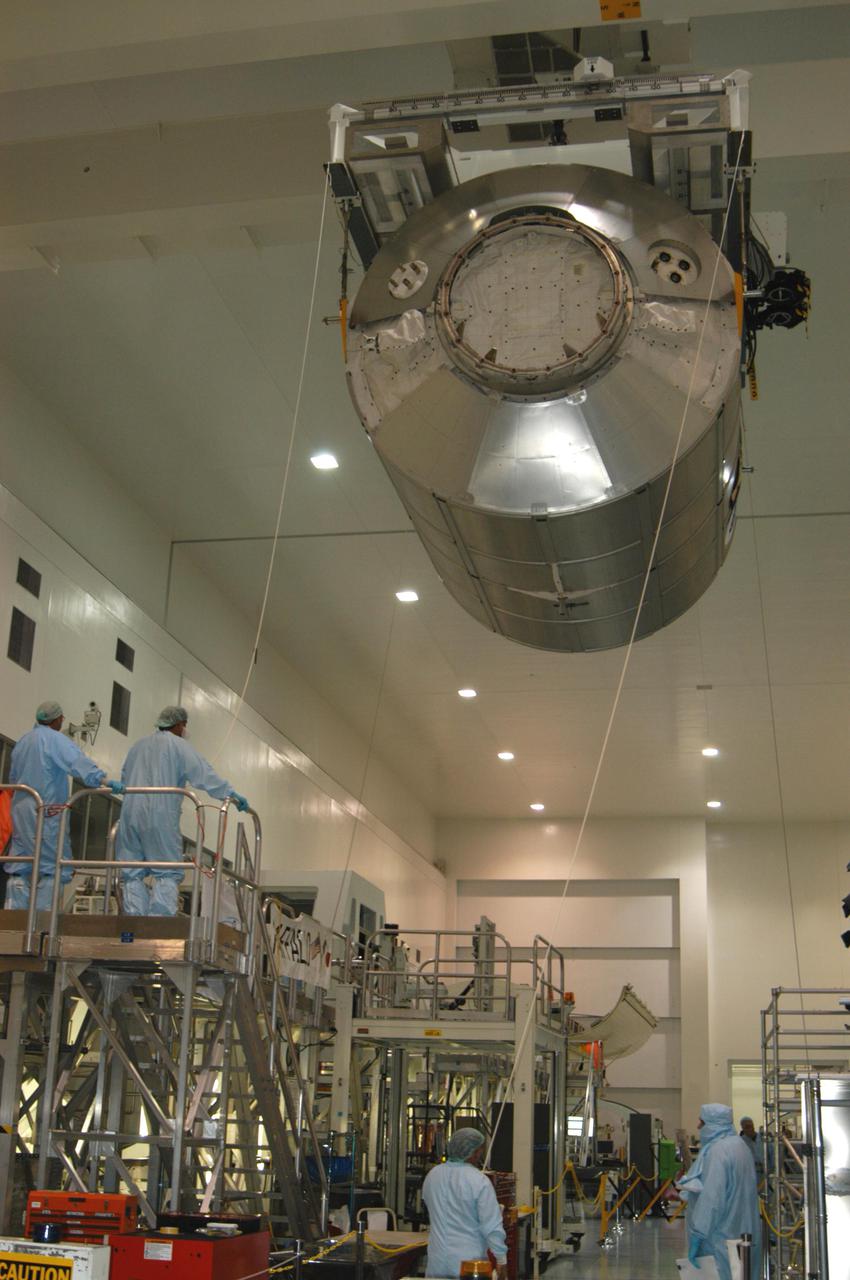
KENNEDY SPACE CENTER, FLA. -- In the Space Station Processing Facility, the suspended Multi-Purpose Logistics Module Raffaello glides above the floor to a work stand at left. The module will be emptied of its contents, returned from the International Space Station on mission STS-114. During the Return to Flight mission STS-114, the crews of Discovery and Expedition 11 transferred more than a ton of material from the ISS to be returned to Earth.
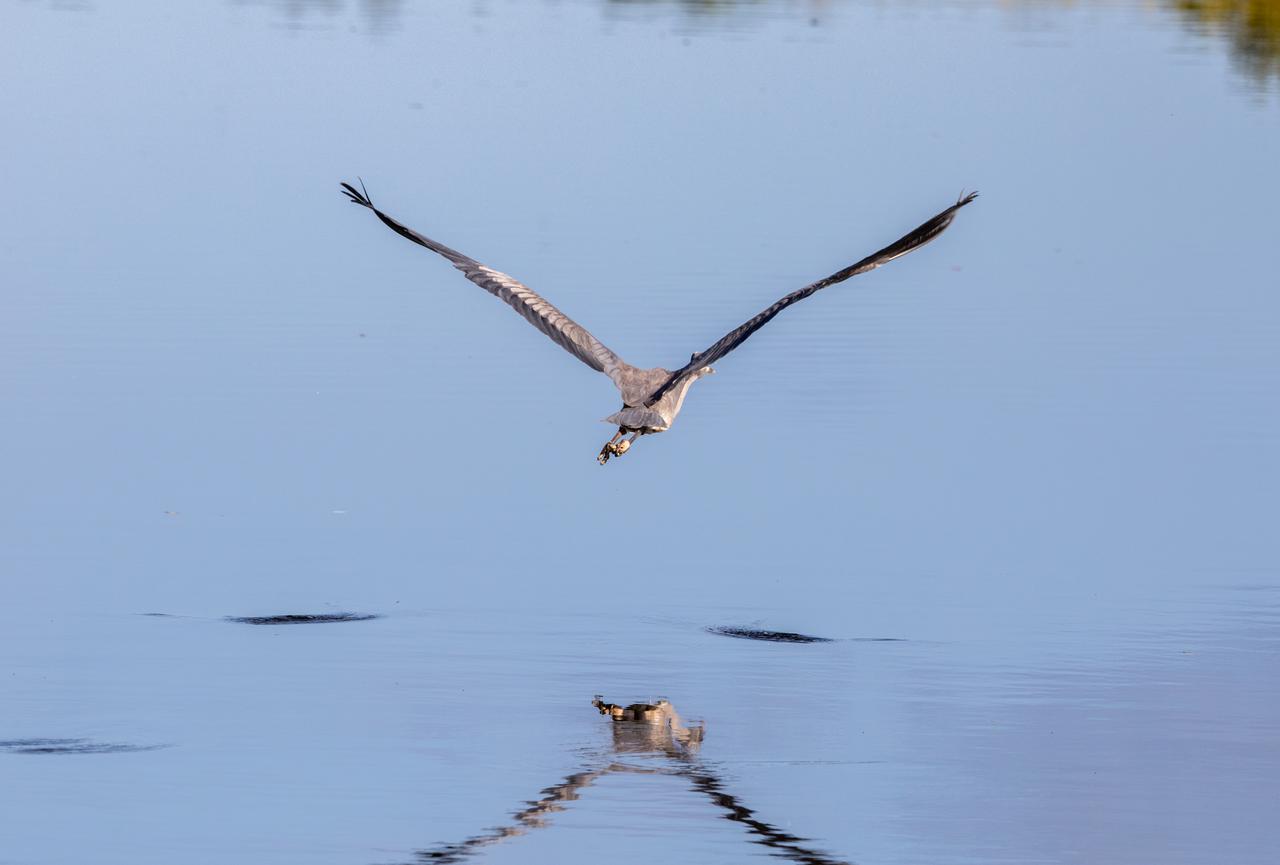
A Great Blue Heron glides close to a waterway at NASA's Kennedy Space Center in Florida on Jan. 11, 2021. The center shares a border with the Merritt Island National Wildlife Refuge. More than 330 native and migratory bird species, along with 25 mammal, 117 fish, and 65 amphibian and reptile species call Kennedy and the wildlife refuge home.
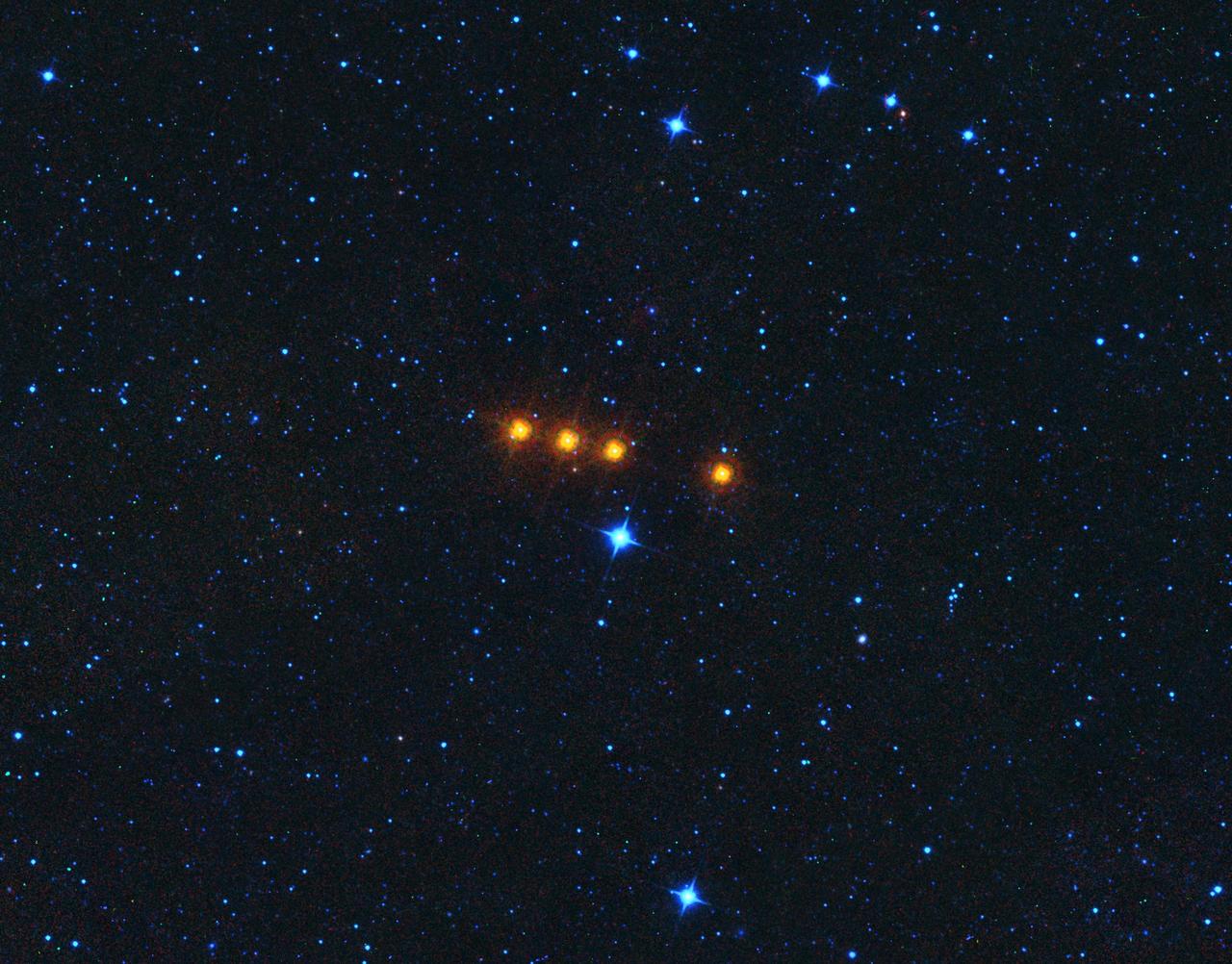
The asteroid Euphrosyne glides across a field of background stars in this time-lapse view from NASA's WISE spacecraft. WISE obtained the images used to create this view over a period of about a day around May 17, 2010, during which it observed the asteroid four times. Because WISE (renamed NEOWISE in 2013) is an infrared telescope, it senses heat from asteroids. Euphrosyne is quite dark in visible light, but glows brightly at infrared wavelengths. This view is a composite of images taken at four different infrared wavelengths: 3.4 microns (color-coded blue), 4.6 microns (cyan), 12 microns (green) and 22 microns (red). The moving asteroid appears as a string of red dots because it is much cooler than the distant background stars. Stars have temperatures in the thousands of degrees, but the asteroid is cooler than room temperature. Thus the stars are represented by shorter wavelength (hotter) blue colors in this view, while the asteroid is shown in longer wavelength (cooler) reddish colors. The WISE spacecraft was put into hibernation in 2011 upon completing its goal of surveying the entire sky in infrared light. WISE cataloged three quarters of a billion objects, including asteroids, stars and galaxies. In August 2013, NASA decided to reinstate the spacecraft on a mission to find and characterize more asteroids. http://photojournal.jpl.nasa.gov/catalog/PIA19645
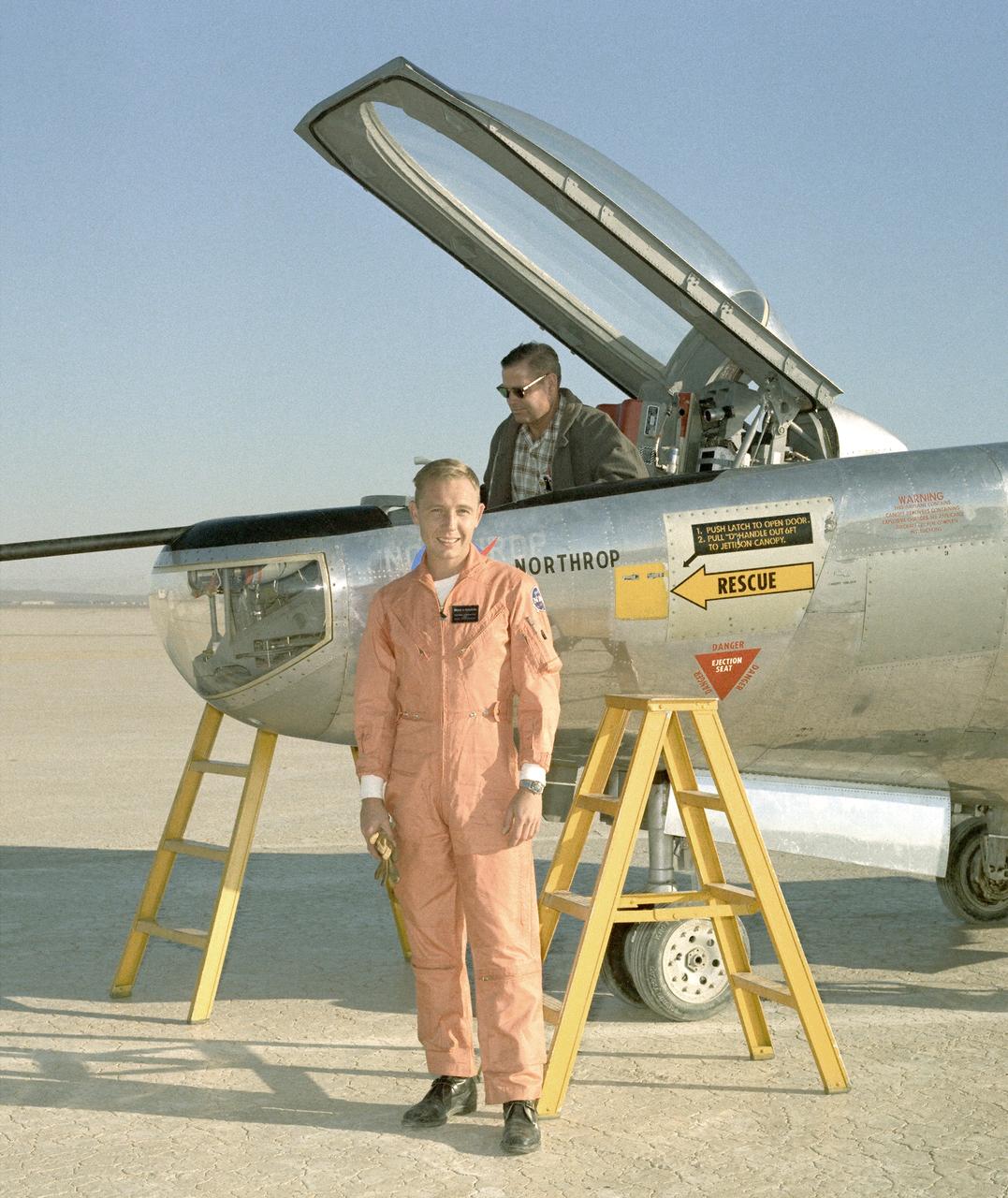
Bruce A. Peterson standing beside the M2-F2 lifting body on Rogers Dry Lake. Peterson became the NASA project pilot for the lifting body program after Milt Thompson retired from flying in late 1966. Peterson had flown the M2-F1, and made the first glide flight of the HL-10 heavy-weight lifting body in December 1966. On May 10, 1967, Peterson made his fourth glide flight in the M2-F2. This was also the M2-F2's 16th glide flight, scheduled to be the last one before the powered flights began. However, as pilot Bruce Peterson neared the lakebed, the M2-F2 suffered a pilot induced oscillation (PIO). The vehicle rolled from side to side in flight as he tried to bring it under control. Peterson recovered, but then observed a rescue helicopter that seemed to pose a collision threat. Distracted, Peterson drifted in a cross-wind to an unmarked area of the lakebed where it was very difficult to judge the height over the lakebed because of a lack of the guidance the markers provided on the lakebed runway. Peterson fired the landing rockets to provide additional lift, but he hit the lakebed before the landing gear was fully down and locked. The M2-F2 rolled over six times, coming to rest upside down. Pulled from the vehicle by Jay King and Joseph Huxman, Peterson was rushed to the base hospital, transferred to March Air Force Base and then the UCLA Hospital. He recovered but lost vision in his right eye due to a staph infection.
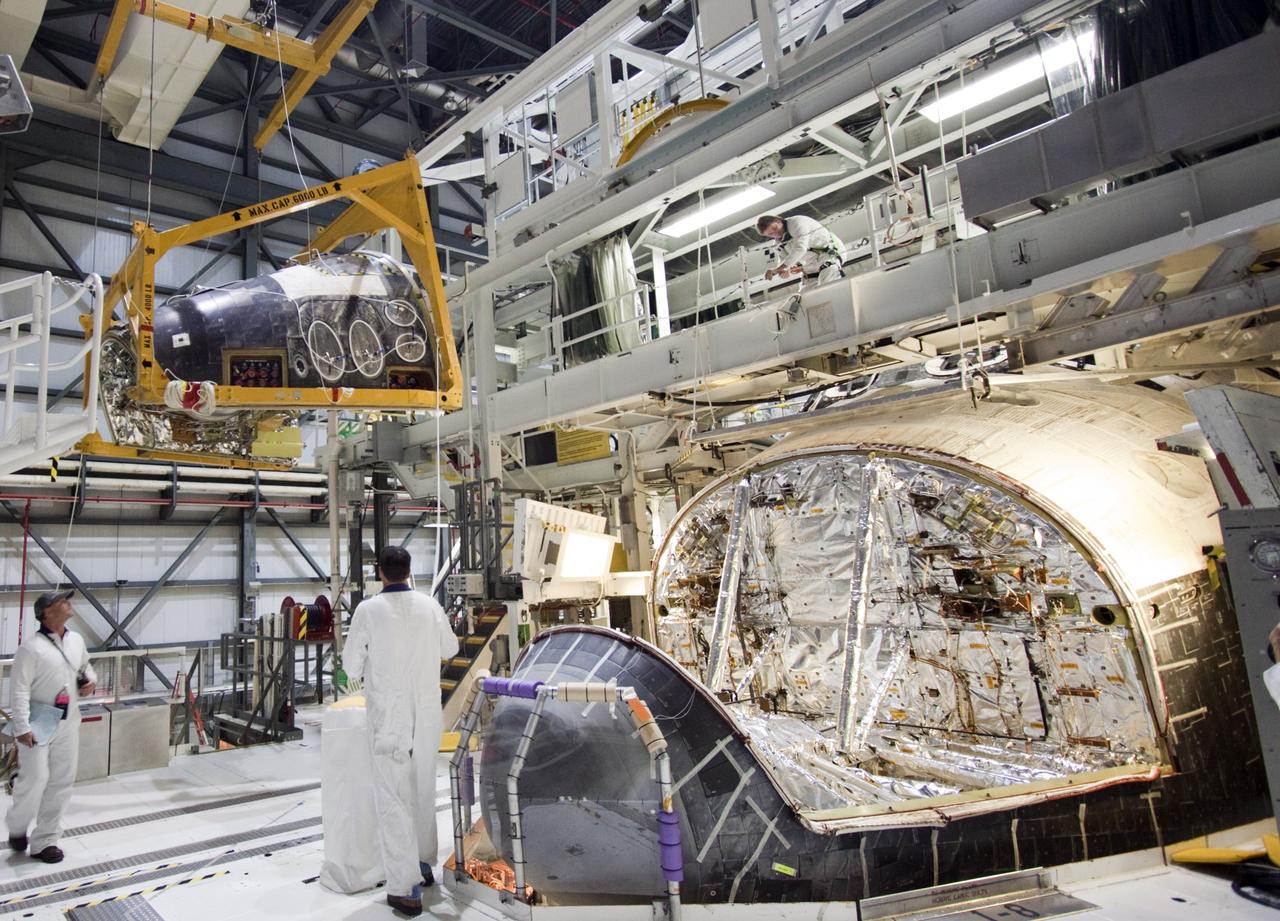
CAPE CANAVERAL, Fla. -- In Orbiter Processing Facility-2 (OPF-2) at NASA’s Kennedy Space Center in Florida, technicians monitor the progress of a special crane as it lifts the forward reaction control system away from space shuttle Atlantis. The system provided some of the maneuvering capabilities to the spacecraft during its missions. Atlantis glided to a landing, July 21, 2011, at Kennedy Space Center’s Shuttle Landing Facility, completing NASA’s final space shuttle mission, STS-135. The shuttle is in OPF-2 being decommissioned and prepared for eventual display at the Kennedy Space Center Visitor Complex in Florida. Photo credit: Jim Grossmann
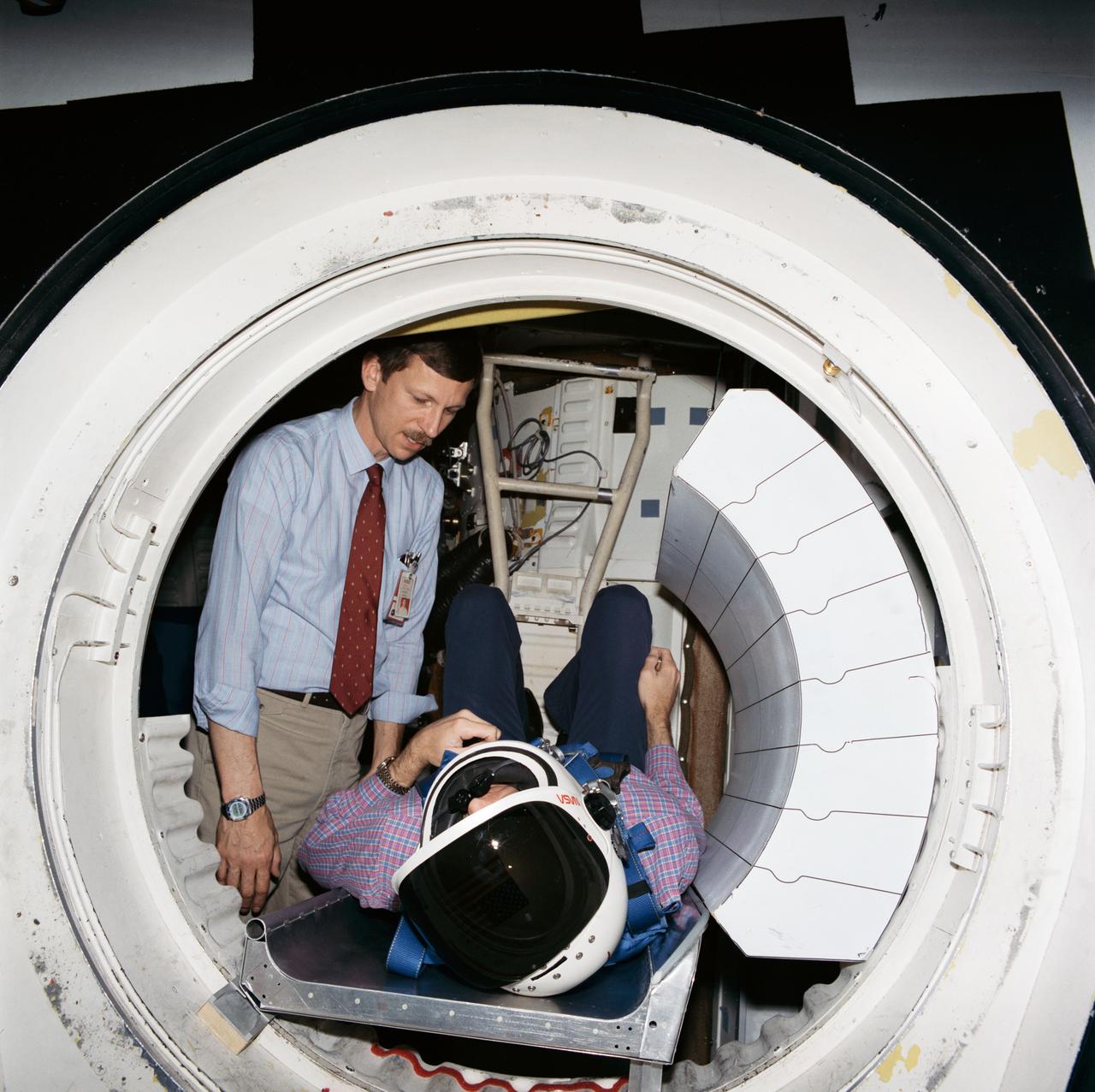
Shuttle crew escape systems test is conducted by astronauts Steven R. Nagel (left) and Manley L. (Sonny) Carter in JSC One Gravity Mockup and Training Facilities Bldg 9A crew compartment trainer (CCT). Nagel and Carter are evaluating methods for crew escape during Space Shuttle controlled gliding flight. JSC test was done in advance of tests scheduled for facilities in California and Utah. Here, Carter serves as test subject evaluating egress positioning for the tractor rocket escape method - one of the two systems currently being closely studied by NASA.
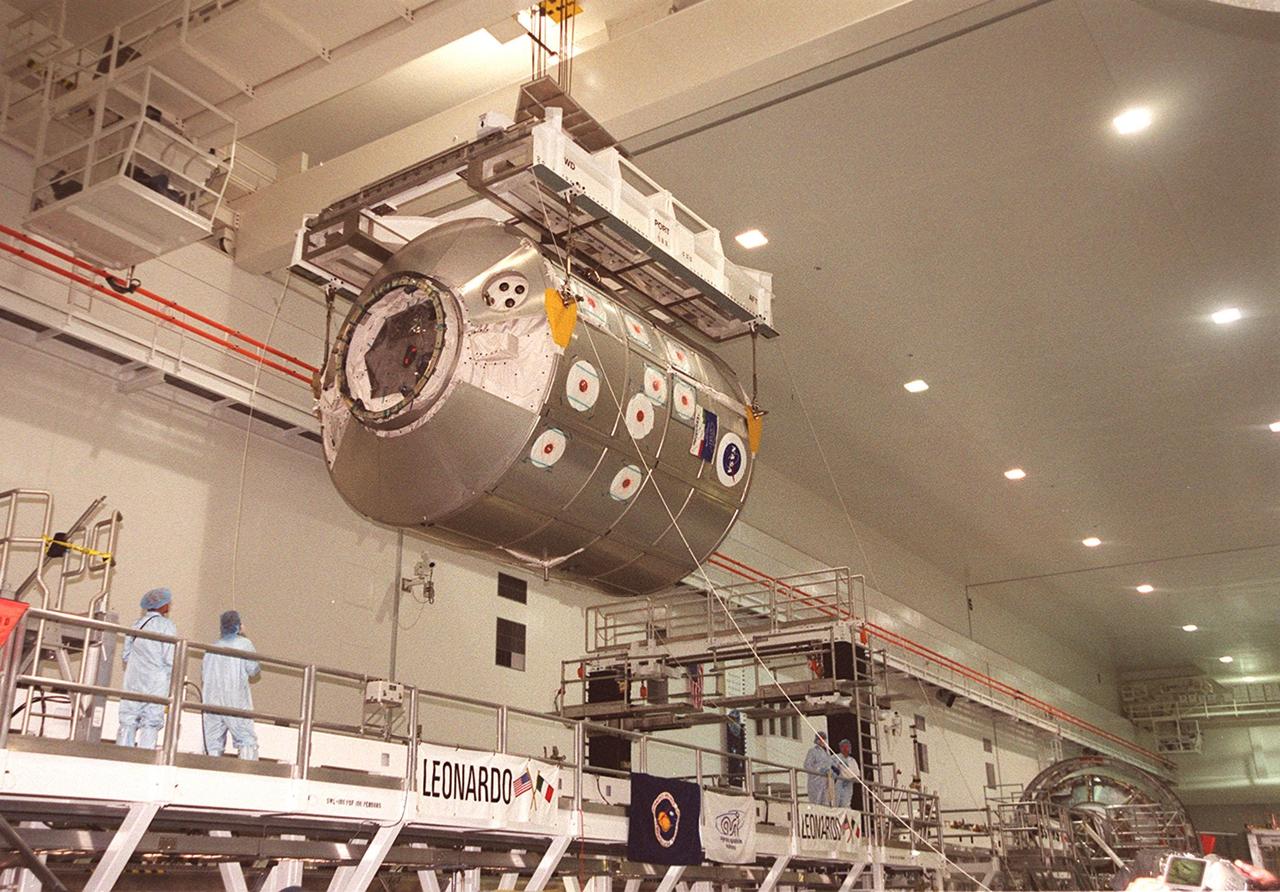
In the Space Station Processing Facility, the Multi-Purpose Logistics Module Leonardo, suspended from an overhead crane, glides across the room to a payload canister for transfer to Launch Pad 39B and installation in Space Shuttle Discovery. The Leonardo, one of Italy’s major contributions to the International Space Station program, is a reusable logistics carrier. It is the primary delivery system used to resupply and return Station cargo requiring a pressurized environment. Leonardo is the primary payload on mission STS-102 and will deliver up to 10 tons of laboratory racks filled with equipment, experiments and supplies for outfitting the newly installed U.S. Laboratory Destiny. STS-102 is scheduled to launch March 8 at 6:45 a.m. EST
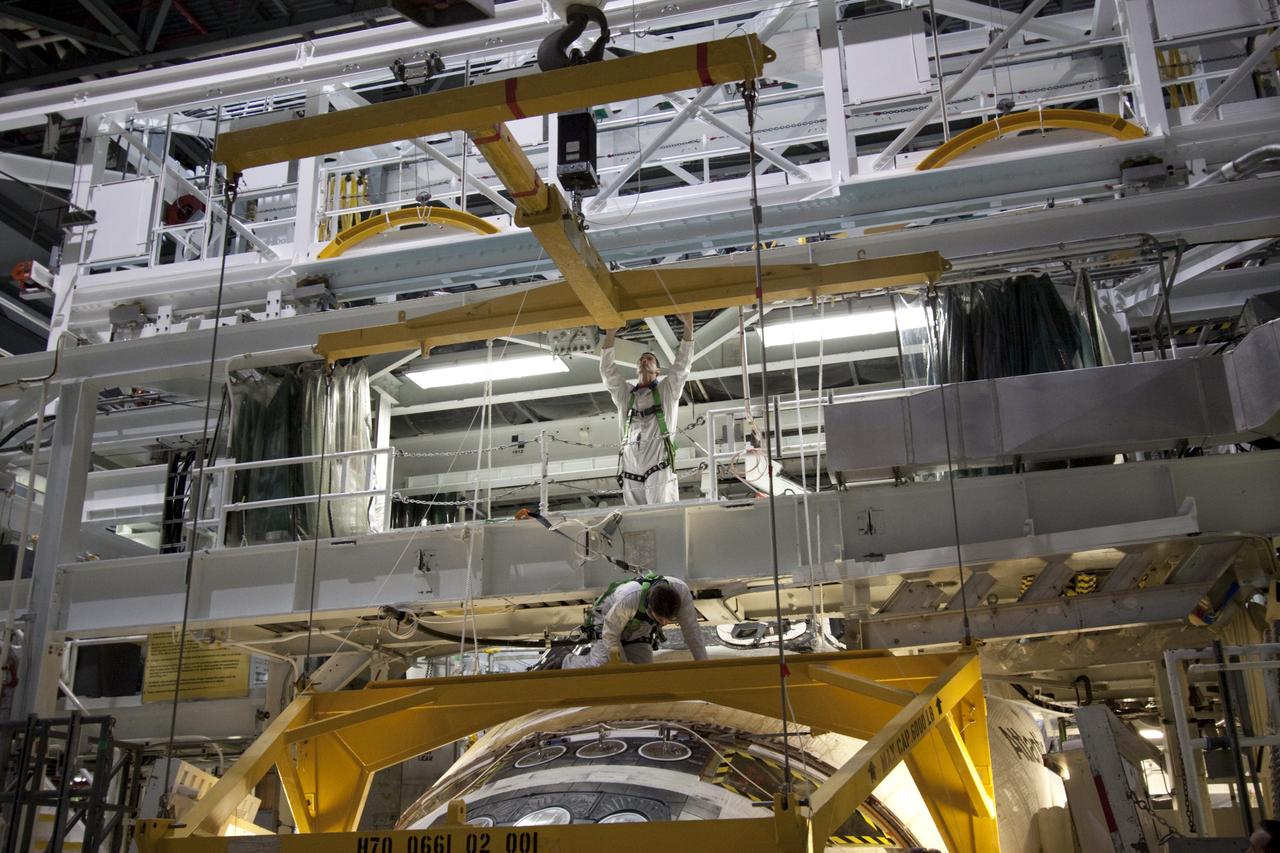
CAPE CANAVERAL, Fla. -- In Orbiter Processing Facility-2 (OPF-2) at NASA’s Kennedy Space Center in Florida, technicians help guide a special crane around space shuttle Atlantis so that work can begin to remove its forward reaction control system. The system provided maneuvering capabilities to the spacecraft during its missions. Atlantis glided to a landing, July 21, 2011, at Kennedy Space Center’s Shuttle Landing Facility, completing NASA’s final space shuttle mission, STS-135. The shuttle is in OPF-2 being decommissioned and prepared for eventual display at the Kennedy Space Center Visitor Complex in Florida. Photo credit: Jim Grossmann
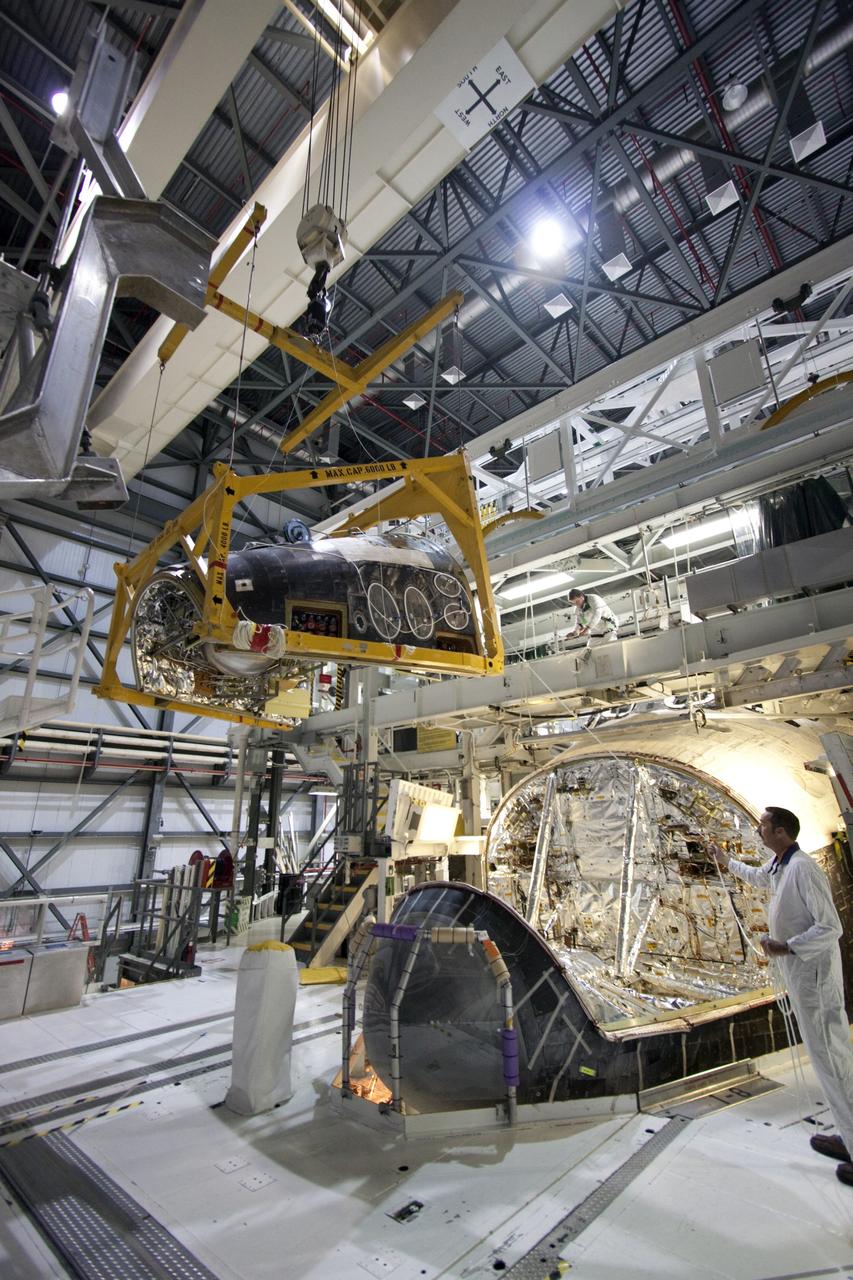
CAPE CANAVERAL, Fla. -- In Orbiter Processing Facility-2 (OPF-2) at NASA’s Kennedy Space Center in Florida, a technician monitors the progress of a special crane as it lifts the forward reaction control system away from space shuttle Atlantis. The system provided some of the maneuvering capabilities to the spacecraft during its missions. Atlantis glided to a landing, July 21, 2011, at Kennedy Space Center’s Shuttle Landing Facility, completing NASA’s final space shuttle mission, STS-135. The shuttle is in OPF-2 being decommissioned and prepared for eventual display at the Kennedy Space Center Visitor Complex in Florida. Photo credit: Jim Grossmann
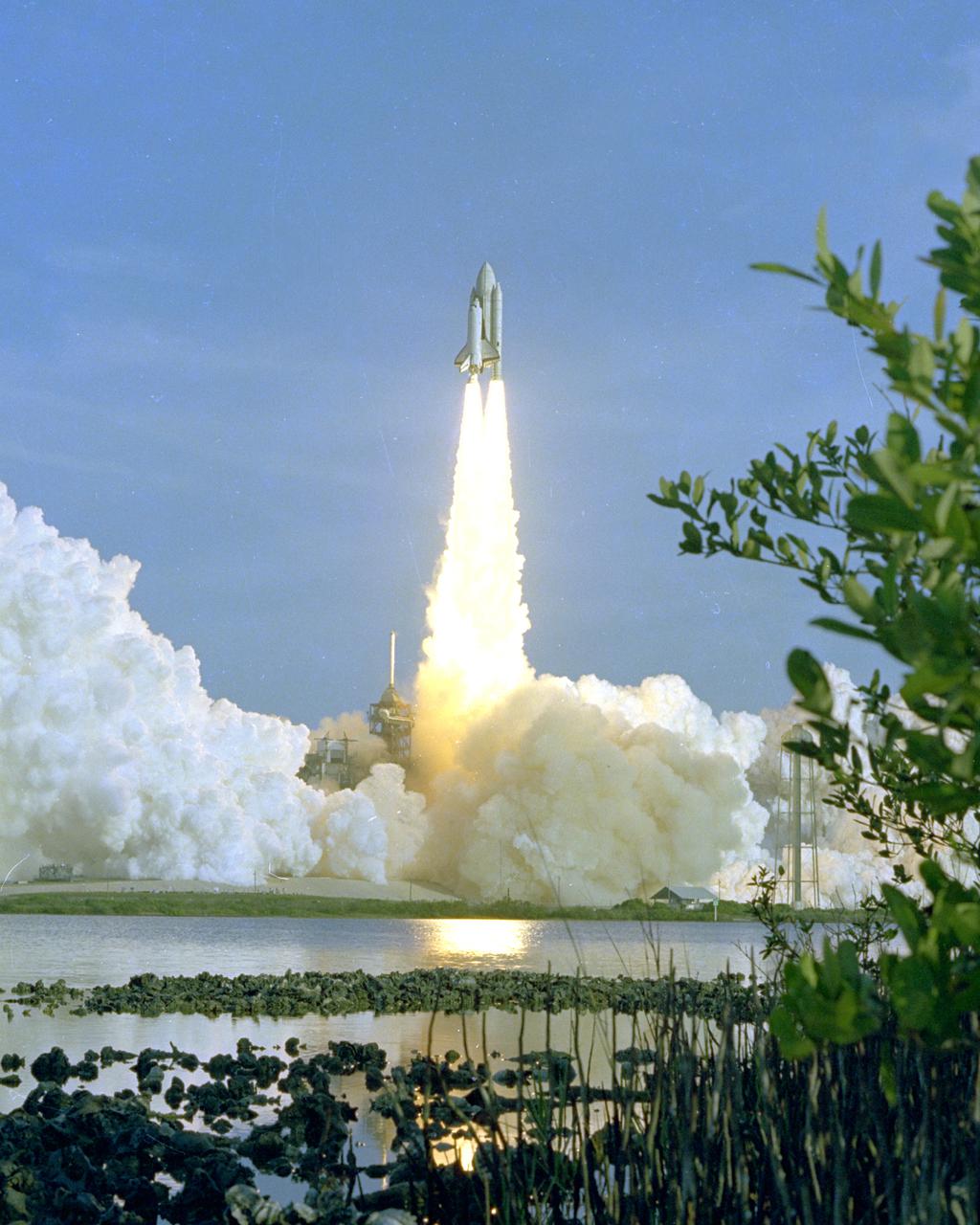
KENNEDY SPACE CENTER, FLA. - The Space Shuttle Columbia rises off Pad 39A a few seconds past 7 a.m. on April 12, 1981 — the dawn of a new age in spaceflight. Onboard, astronauts John Young and Bob Crippen ride toward orbit following a successful liftoff of the first Space Shuttle mission. Mission plans call for the Columbia to remain in orbit for about 54 hours, during which astronauts Young and Criipen will perform a series of checkout activities designed to test the Space Shuttle's systems in space for the first time. The Columbia is scheduled to glide to an airplane-like landing at Edwards Air Force Base, Calif.
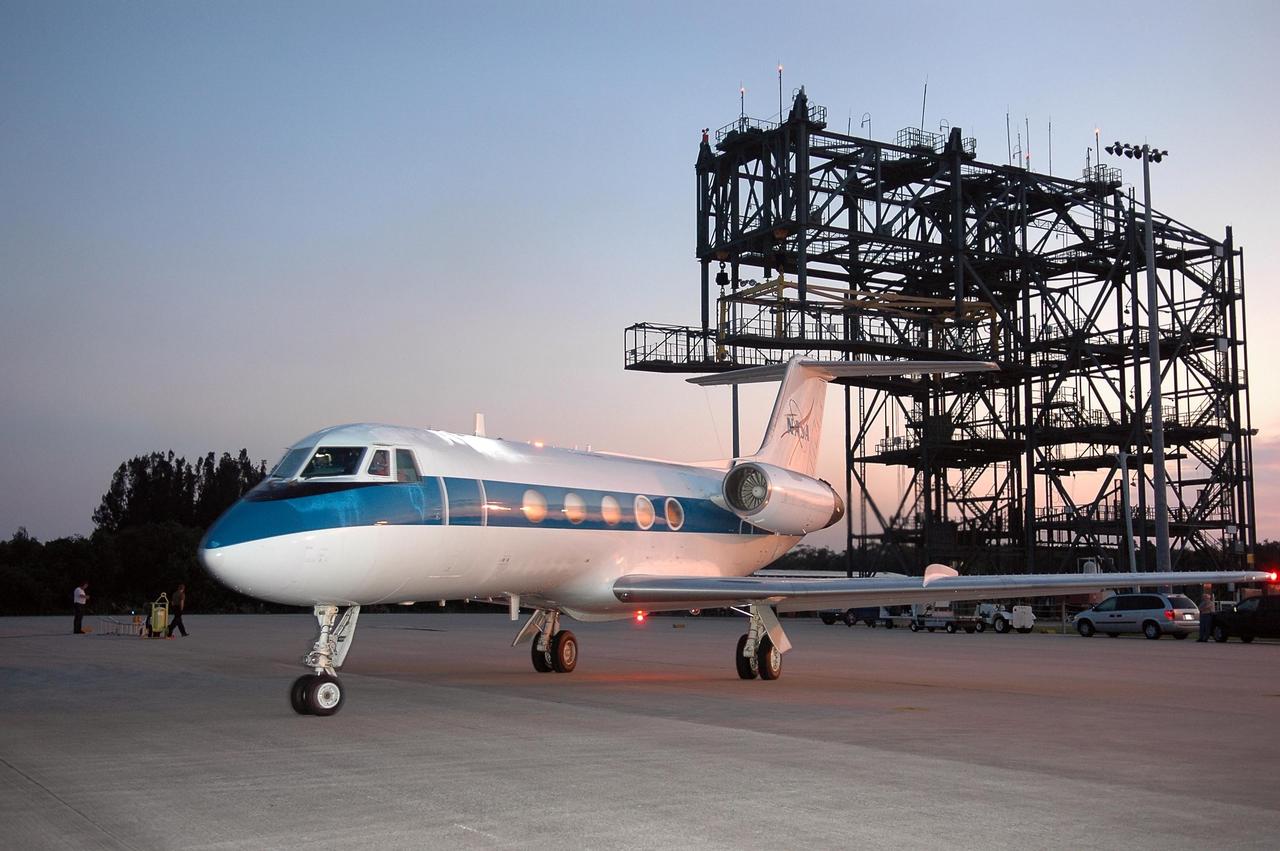
KENNEDY SPACE CENTER, FLA. - In the early dawn, STS-121 Pilot Mark Kelly is ready for takeoff from the Shuttle Training Facility to practice landing a shuttle in preparation for the July 1 launch of Space Shuttle Discovery. The STA is a Grumman American Aviation-built Gulf Stream II jet that was modified to simulate an orbiter’s cockpit, motion and visual cues, and handling qualities. In flight, the STA duplicates the orbiter’s atmospheric descent trajectory from approximately 35,000 feet altitude to landing on a runway. Because the orbiter is unpowered during re-entry and landing, its high-speed glide must be perfectly executed the first time. Photo credit: NASA/Kim Shiflett
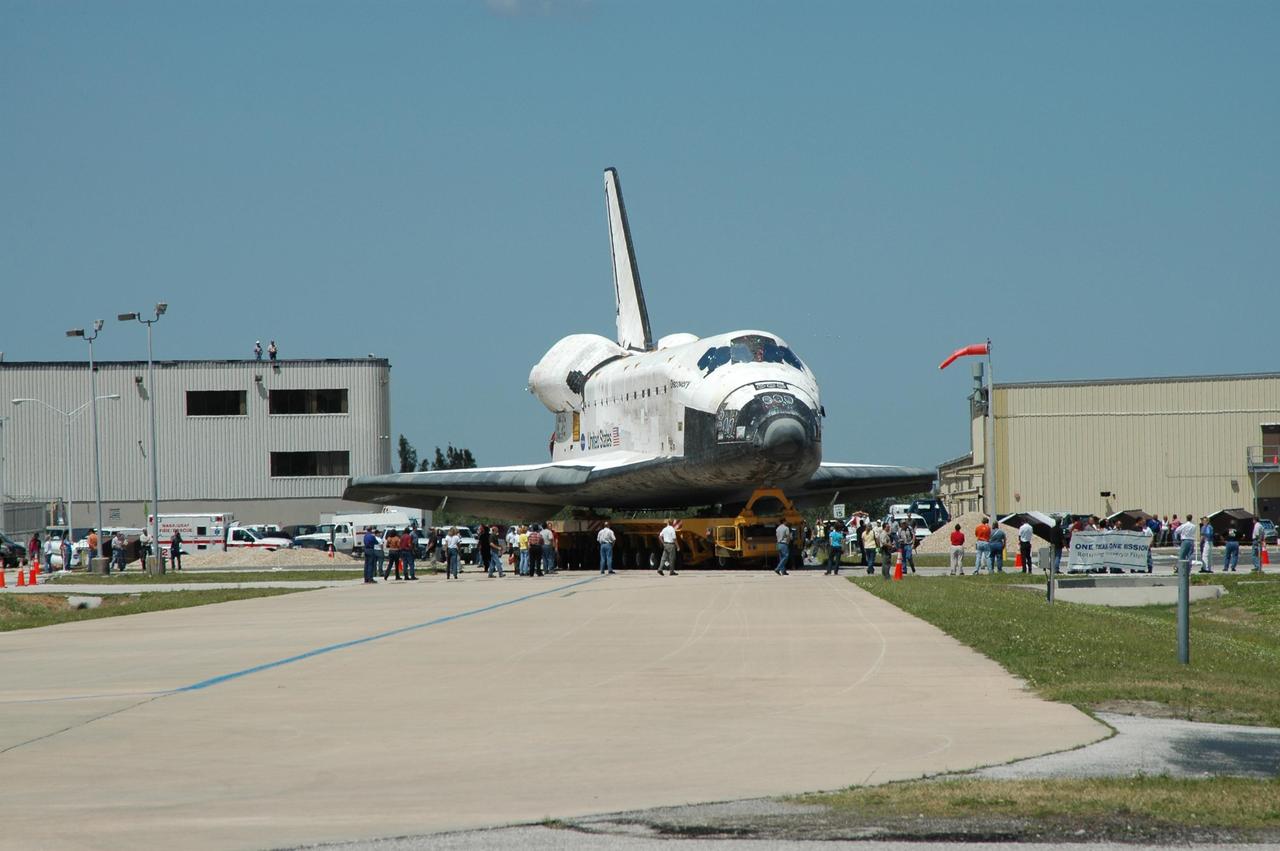
KENNEDY SPACE CENTER, FLA. - The orbiter Discovery, sitting on an orbiter transporter, turns the corner after gliding out of NASA's Orbiter Processing Facility to begin the rollover to the Vehicle Assembly Building (VAB). The rollover marks the start of the journey to the launch pad and, ultimately, launch. Once inside the VAB, Discovery will be raised to vertical and lifted up and over into high bay 3 for stacking with its redesigned external tank and twin solid rocket boosters. The rollout of Space Shuttle Discovery to Launch Pad 39B is expected in approximately a week. Launch of Discovery on mission STS-121 is scheduled to take place in a window extending July 1 to July 19. Photo credit: NASA/Jim Grossmann
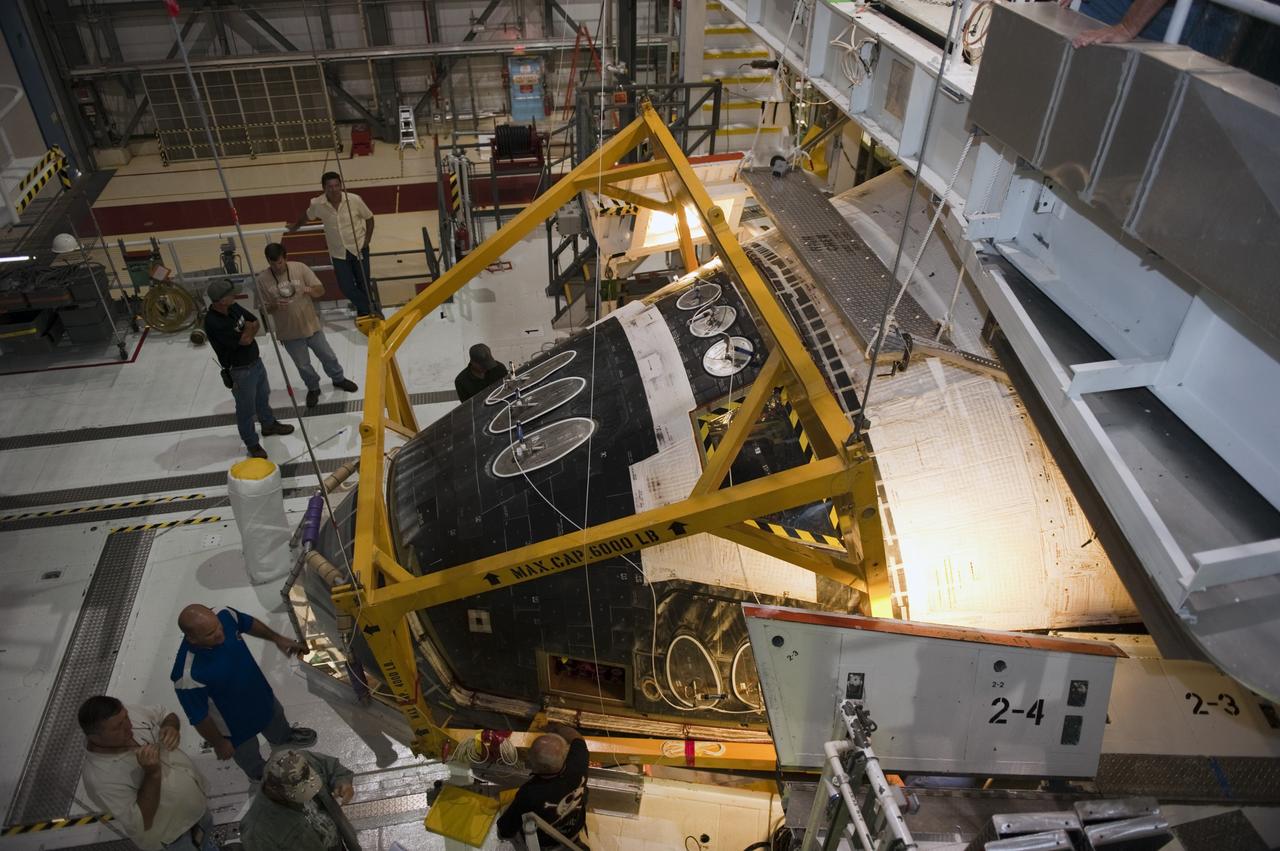
CAPE CANAVERAL, Fla. -- In Orbiter Processing Facility-2 (OPF-2) at NASA’s Kennedy Space Center in Florida, technicians help position a special crane around space shuttle Atlantis so that work can begin to remove the spacecraft’s forward reaction control system. The system provided some of the maneuvering capabilities to the spacecraft during its missions. Atlantis glided to a landing, July 21, 2011, at Kennedy Space Center’s Shuttle Landing Facility, completing NASA’s final space shuttle mission, STS-135. The shuttle is in OPF-2 being decommissioned and prepared for eventual display at the Kennedy Space Center Visitor Complex in Florida. Photo credit: Kim Shiflett
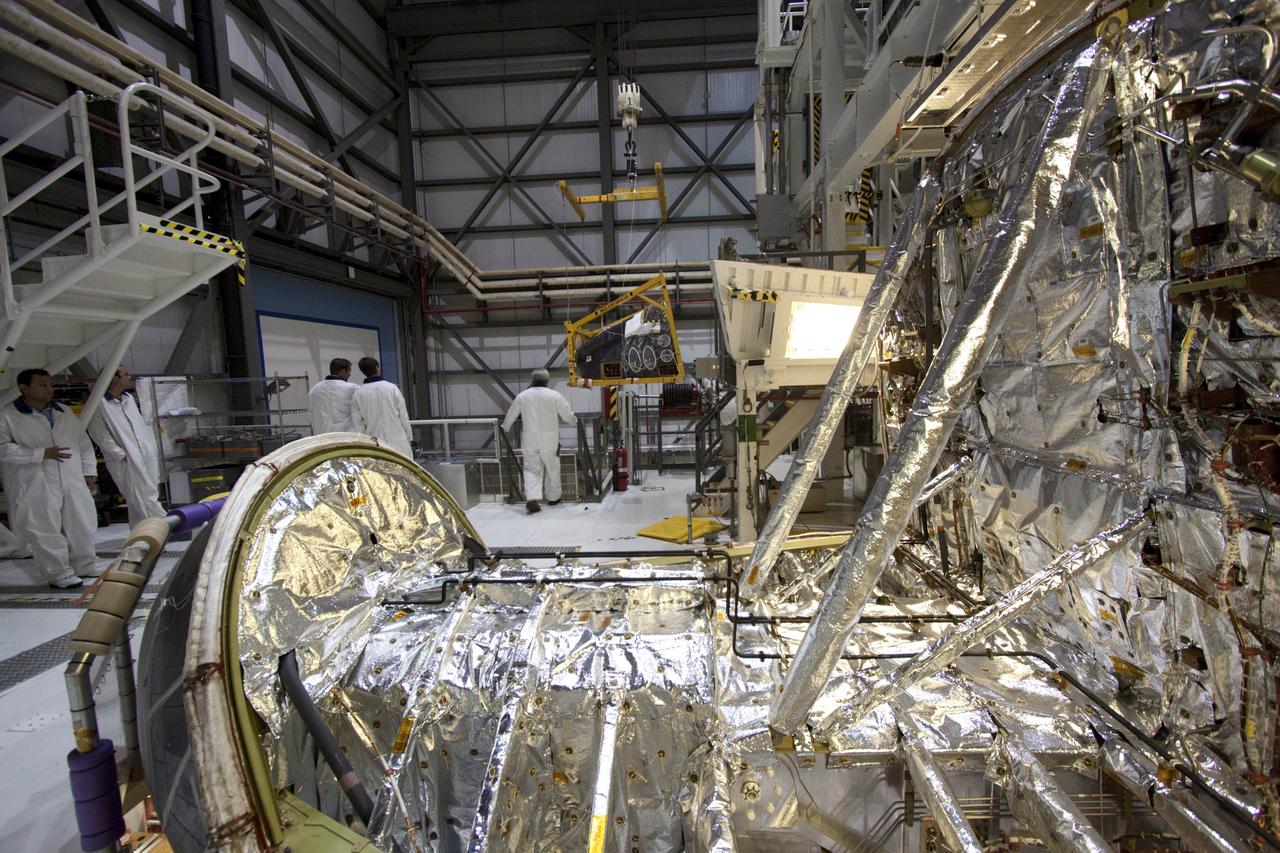
CAPE CANAVERAL, Fla. -- In Orbiter Processing Facility-2 (OPF-2) at NASA’s Kennedy Space Center in Florida, the section behind space shuttle Atlantis’ nose cone is exposed after a special crane lifted the forward reaction control system away from the vehicle. The system provided some of the maneuvering capabilities to the spacecraft during its missions. Atlantis glided to a landing, July 21, 2011, at Kennedy Space Center’s Shuttle Landing Facility, completing NASA’s final space shuttle mission, STS-135. The shuttle is in OPF-2 being decommissioned and prepared for eventual display at the Kennedy Space Center Visitor Complex in Florida. Photo credit: Jim Grossmann
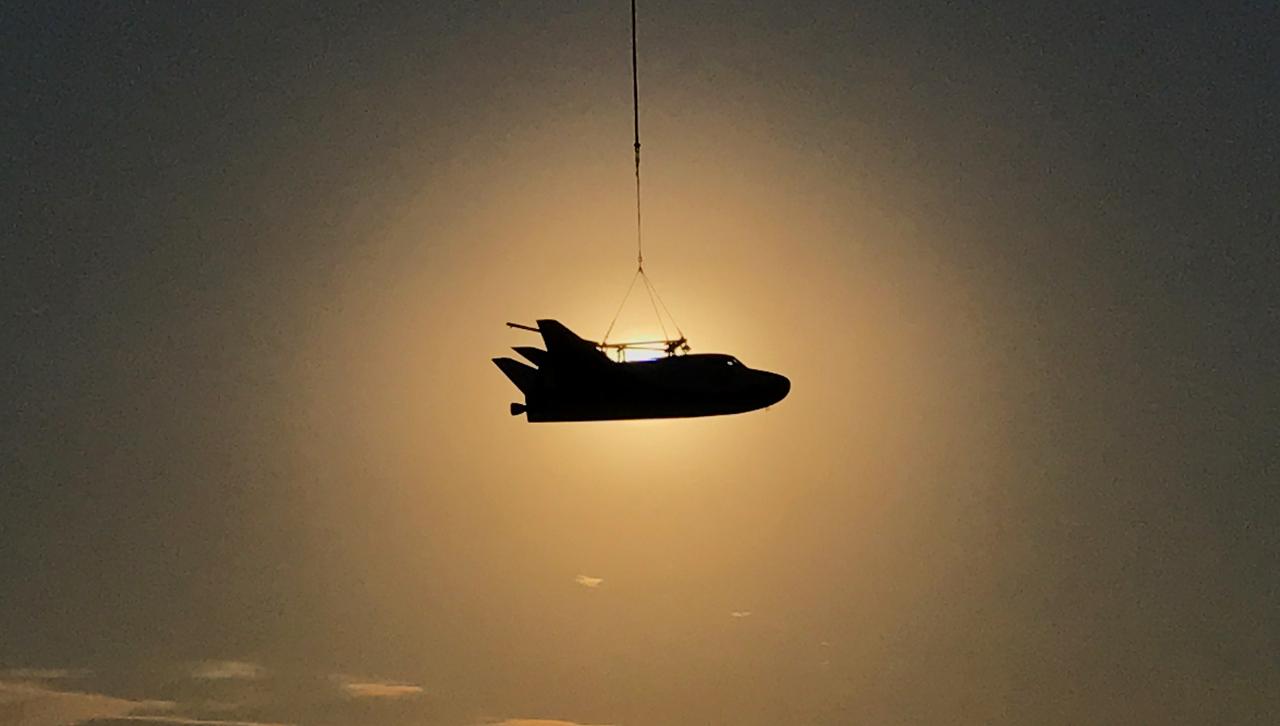
Sierra Nevada Corporation’s Dream Chaser completed an important step toward orbital flight with a successful captive carry test at NASA’s Armstrong Flight Research Center in California, located on Edwards Air Force Base. A helicopter successfully carried a Dream Chaser test article, which has the same specifications as a flight-ready spacecraft, to the same altitude and flight conditions of an upcoming free flight test. The Dream Chaser is a lifting-body, winged spacecraft that will fly back to Earth in a manner similar to NASA’s space shuttles. The successful captive carry test clears the way for a free flight test of the spacecraft later this year in which the uncrewed Dream Chaser will be released to glide on its own and land.
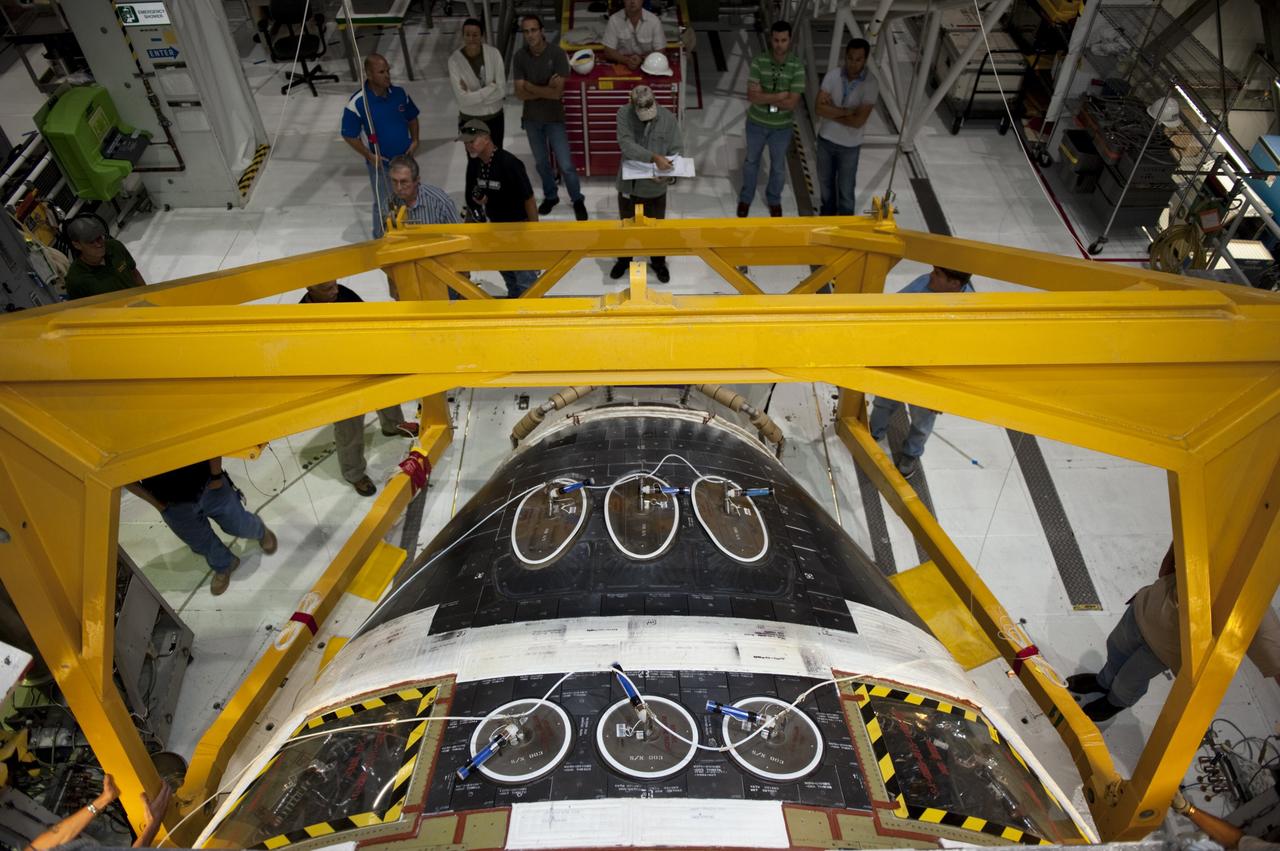
CAPE CANAVERAL, Fla. -- In Orbiter Processing Facility-2 (OPF-2) at NASA’s Kennedy Space Center in Florida, technicians monitor a special crane as it is positioned around space shuttle Atlantis so that work can begin to remove the spacecraft’s forward reaction control system. The system provided some of the maneuvering capabilities to the spacecraft during its missions. Atlantis glided to a landing, July 21, 2011, at Kennedy Space Center’s Shuttle Landing Facility, completing NASA’s final space shuttle mission, STS-135. The shuttle is in OPF-2 being decommissioned and prepared for eventual display at the Kennedy Space Center Visitor Complex in Florida. Photo credit: Kim Shiflett
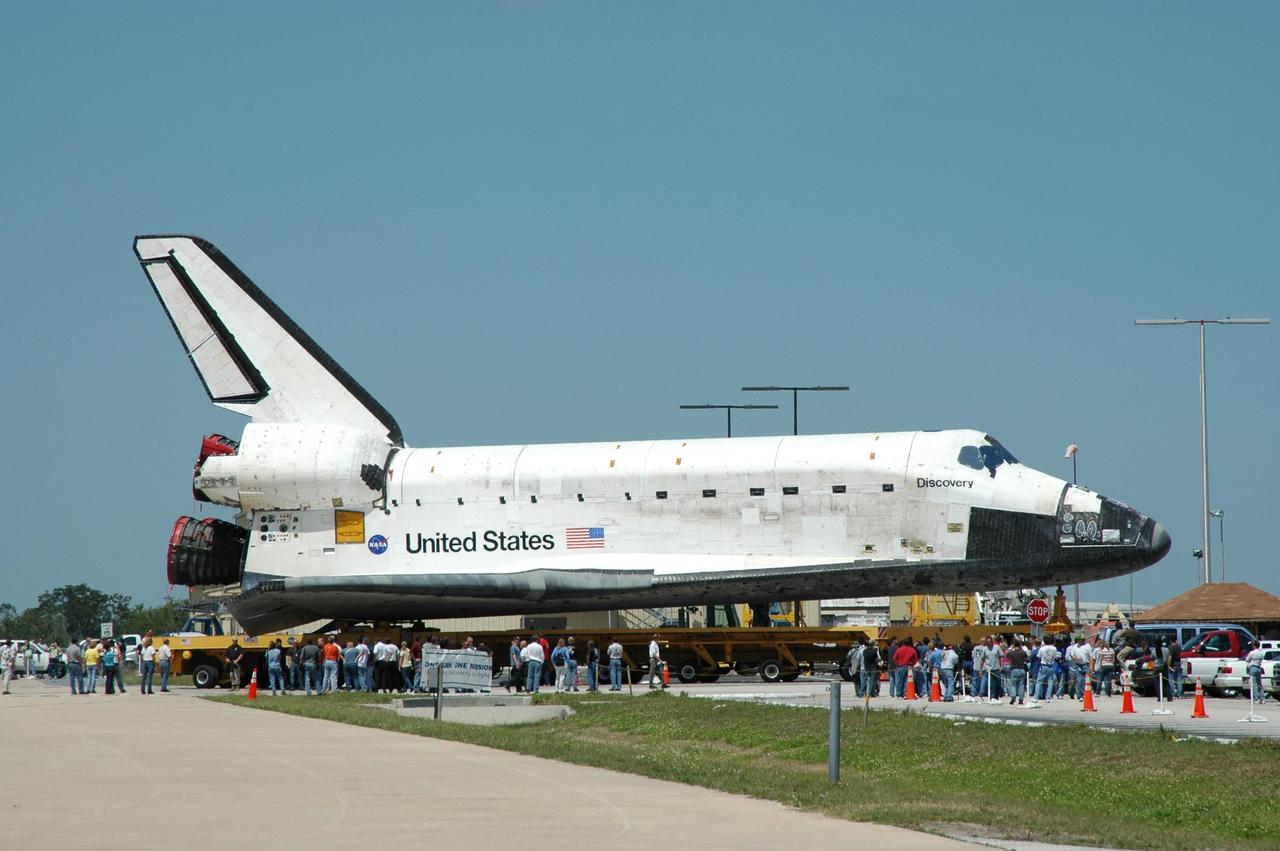
KENNEDY SPACE CENTER, FLA. - Workers crowd around the orbiter Discovery, sitting on an orbiter transporter, as it glides out of NASA's Orbiter Processing Facility to begin the rollover to the Vehicle Assembly Building (VAB). The rollover marks the start of the journey to the launch pad and, ultimately, launch. Once inside the VAB, Discovery will be raised to vertical and lifted up and over into high bay 3 for stacking with its redesigned external tank and twin solid rocket boosters. The rollout of Space Shuttle Discovery to Launch Pad 39B is expected in approximately a week. Launch of Discovery on mission STS-121 is scheduled to take place in a window extending July 1 to July 19. Photo credit: NASA/Jim Grossmann
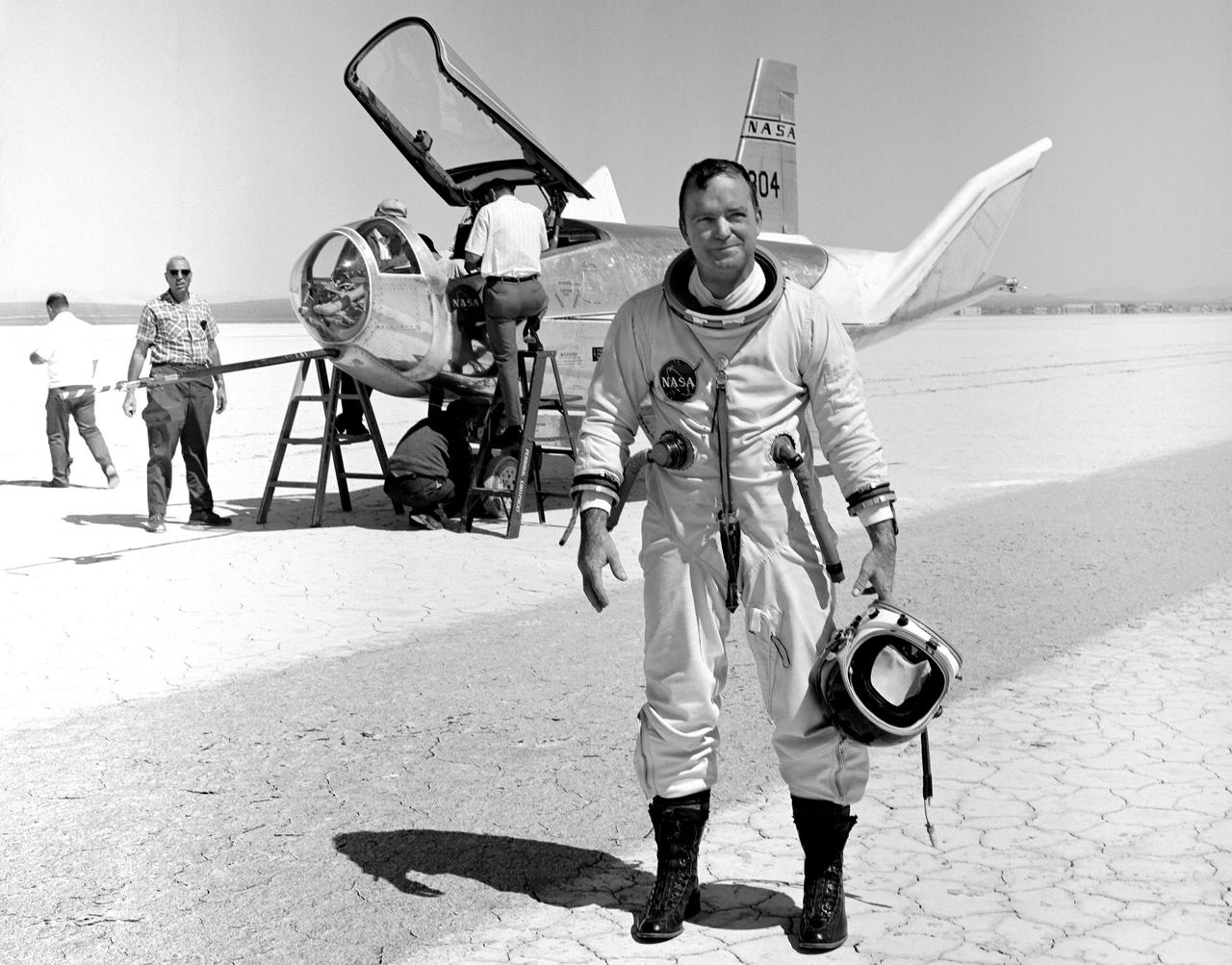
NASA research pilot Bill Dana stands in front of the HL-10 Lifting Body following his first glide flight on April 25, 1969. Dana later retired as Chief Engineer at NASA's Dryden Flight Research Center, (called the NASA Flight Research Center in 1969). Prior to his lifting body assignment, Dana flew the X-15 research airplane. He flew the rocket-powered aircraft 16 times, reaching a top speed of 3,897 miles per hour and a peak altitude of 310,000 feet (almost 59 miles high).
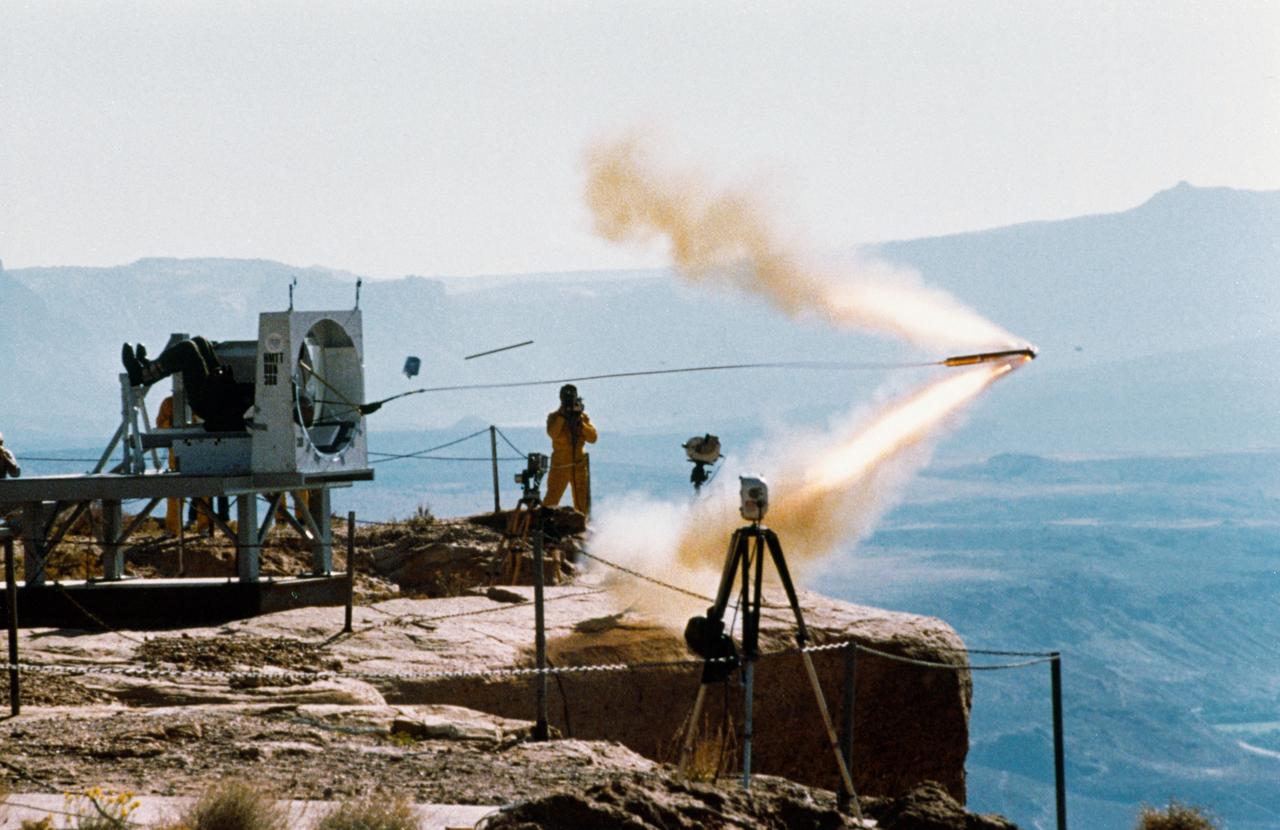
Shuttle crew escape systems (CES) tractor rocket tests conducted at Hurricane Mesa, Utah. This preliminary ground test of the tractor rocket will lead up to in-air evaluations. View shows tractor rocket as it is fired from side hatch mockup. The tractor rocket concept is one of two escape methods being studied to provide crew egress capability during Space Shuttle controlled gliding flight. In-air tests of the system, utilizing a Convair-240 aircraft, will begin 11-19-87 at the Naval Weapons Center in China Lake, California.
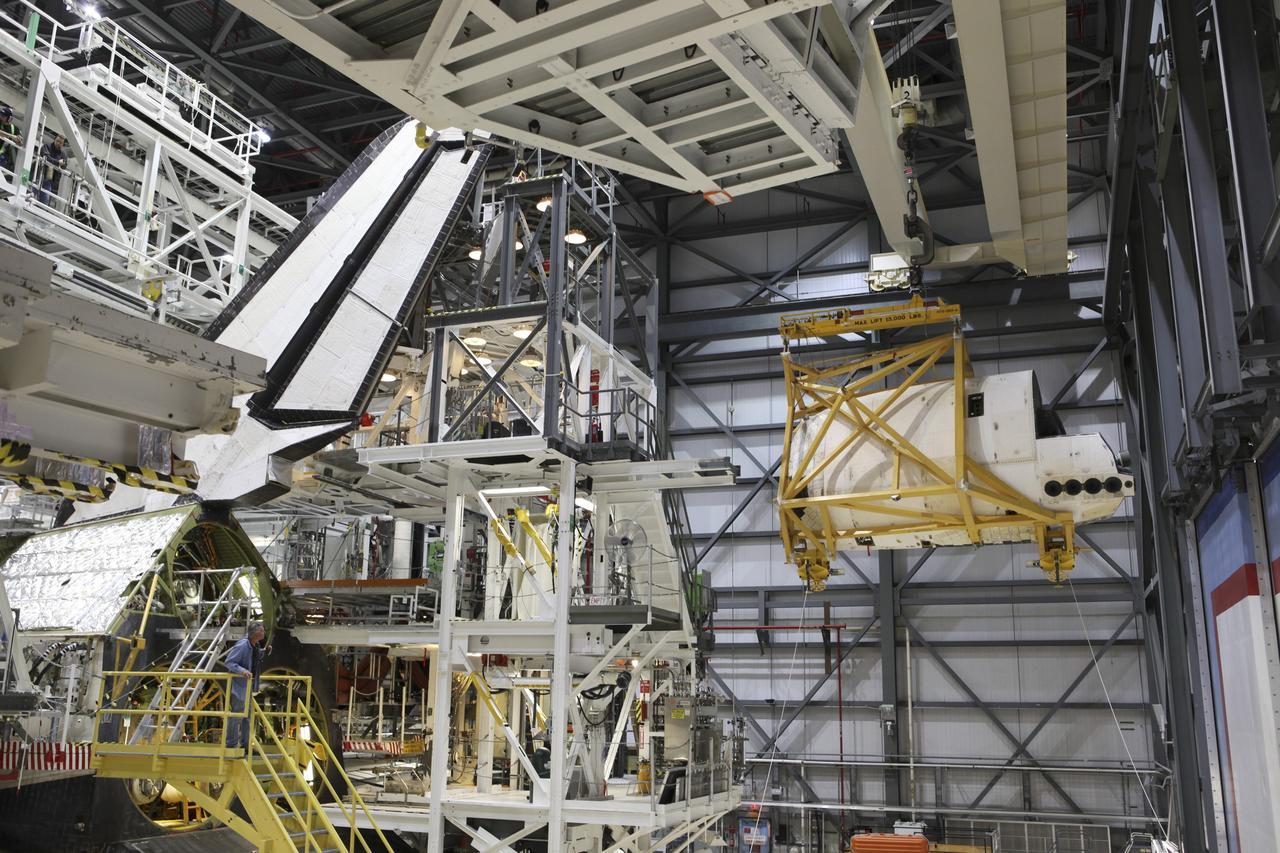
CAPE CANAVERAL, Fla. -- At NASA's Kennedy Space Center in Florida, space shuttle Endeavour’s left orbital maneuvering system OMS pod glides along the rails in Orbiter Processing Facility-2 toward the aft of the shuttle. The OMS pod is being reinstalled on Endeavour following a complete deservicing and cleaning at White Sands Space Harbor in New Mexico, part of the shuttle’s transition and retirement processing. Endeavour is being prepared for public display at the California Science Center in Los Angeles. Over the course of its 19-year career, Endeavour spent 299 days in space during 25 missions. For more information, visit http://www.nasa.gov/shuttle. Photo credit: NASA/Dimitri Gerondidakis
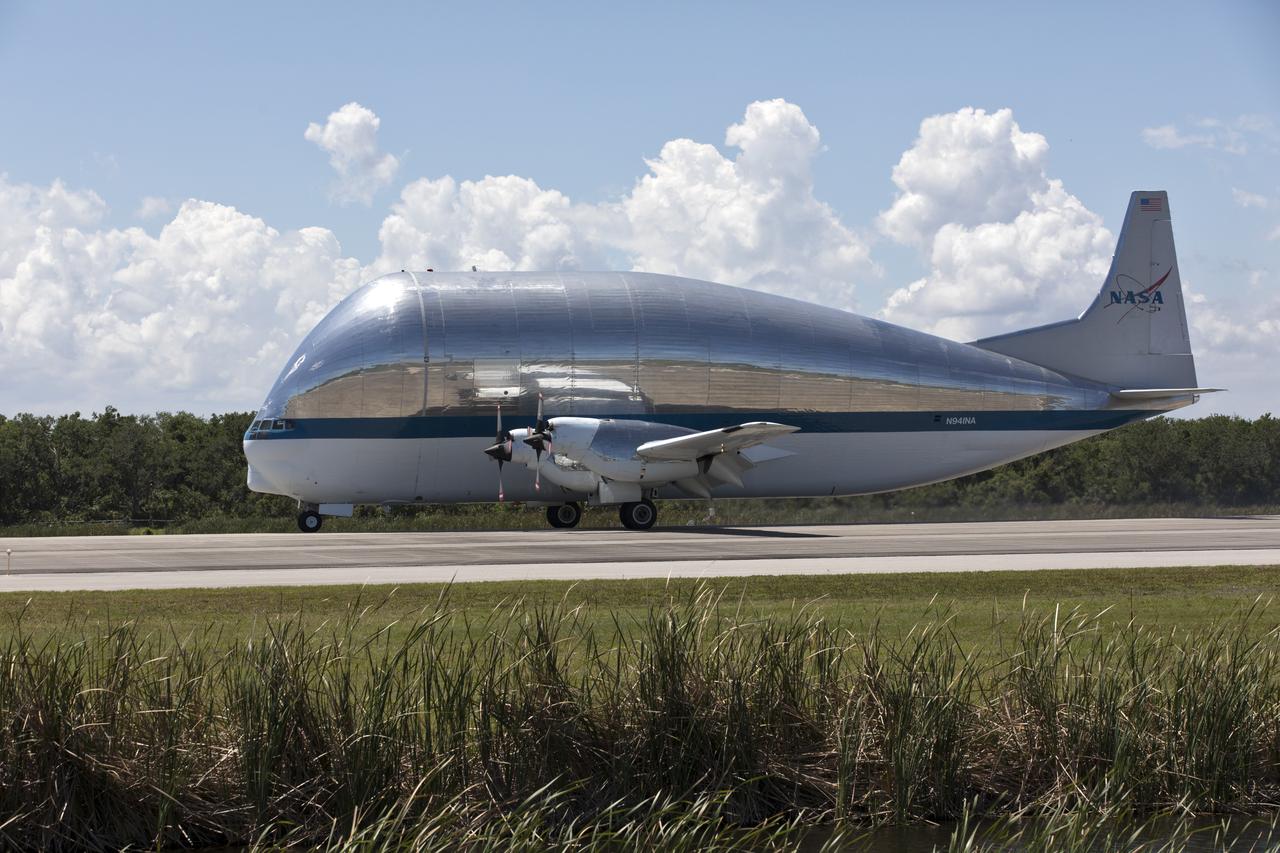
NASA's Super Guppy aircraft glides to a stop at the Shuttle Landing Facility at the agency's Kennedy Space Center in Florida. The Super Guppy is carrying the Orion Stage Adapter (OSA), the second flight-hardware section of NASA's Space Launch System (SLS) rocket that has arrived at Kennedy. The OSA will connect the Orion spacecraft to the upper part of the SLS rocket, the interim cryogenic propulsion stage (ICPS). Both the OSA and ICPS are being stored for processing in the center's Space Station Processing Facility in preparation for Exploration Mission-1, the first uncrewed, integrated launch of the SLS rocket and Orion spacecraft.
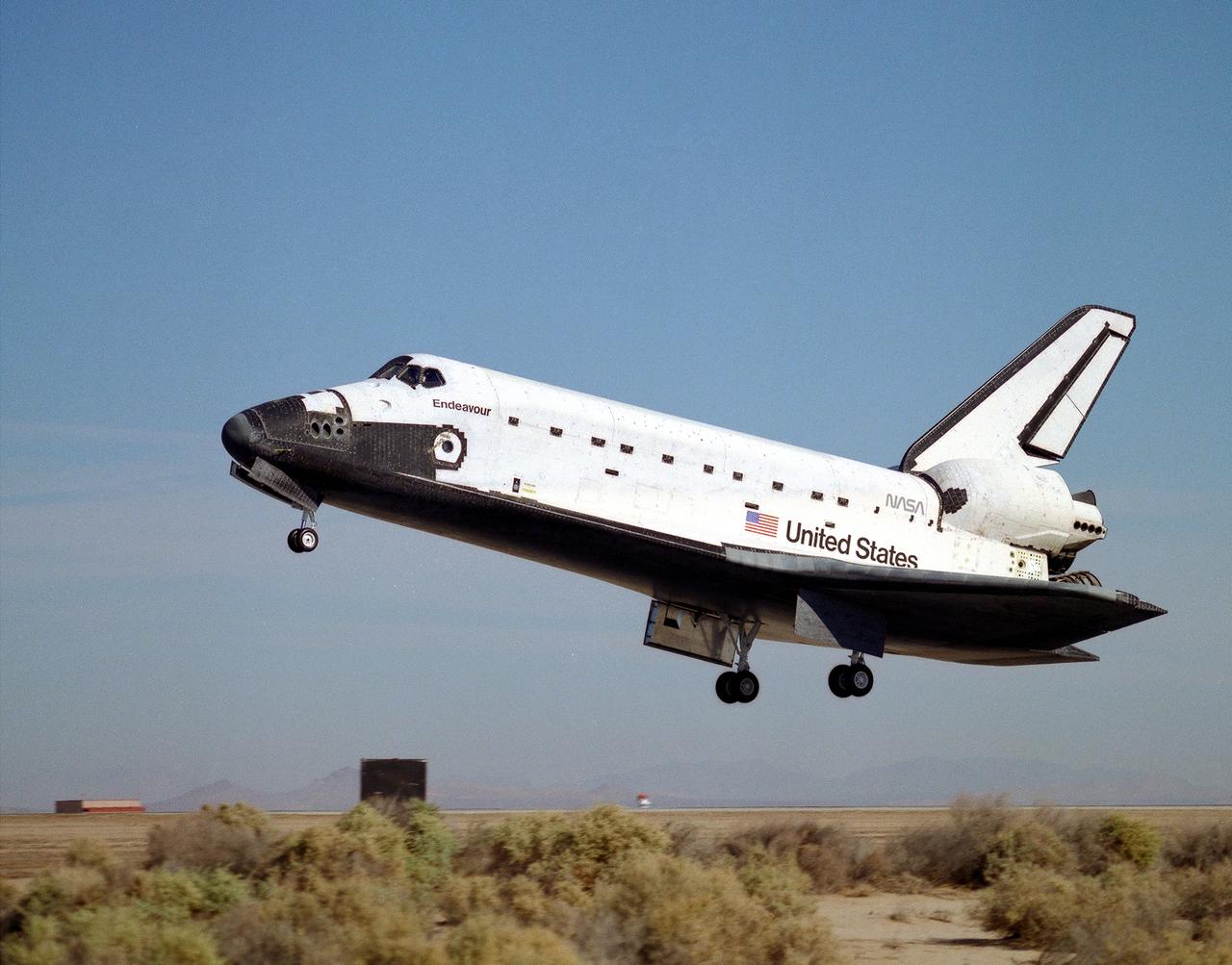
The space shuttle Endeavour glides to a landing on runway 22 at Edwards, California, to complete the highly successful STS-68 mission dedicated to radar imaging of the earth's surface as part of NASA's Mission To Planet Earth program. The landing was at 10:02 a.m. (PDT) 11 October 1994, after waiving off from the Kennedy Space Center, Florida, earlier that morning due to adverse weather at Kennedy. The Endeavour crew was originally scheduled to land at Kennedy the morning of October 10, but mission planners decided early in the flight to extend the mission by one day. Mission commander was Michael A. Baker, making his third flight, and the pilot was Terrence W. Wilcutt, on his first mission.
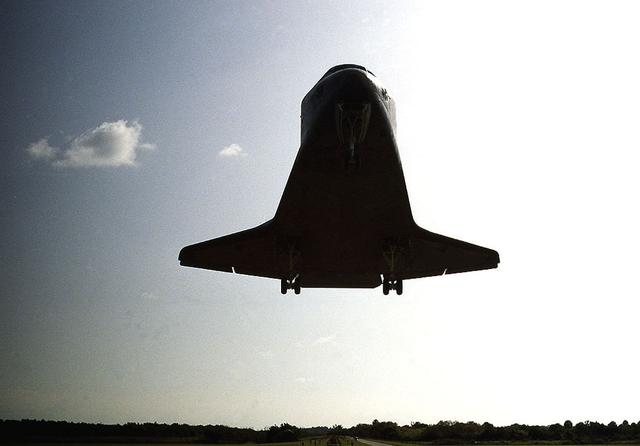
Aligned straight on with the red approach lights, the Orbiter Columbia (STS-52) glides toward Runway 33 of Kennedy Space Center's (KSC) Shuttle Landing Facility. The six member crew successfully completed deployment of the Laser Geodynamic Satellite II (LAGEOS), which is a spherical passive satellite covered with reflectors which are illuminated by ground-based lasers to determine precise measurements of the Earth's crustal movements. The crew also completed a series of materials processing experiments in the microgravity environment aboard the United States Microgravity Payload 1 (USMP-1) carried in the orbiter's cargo bay.
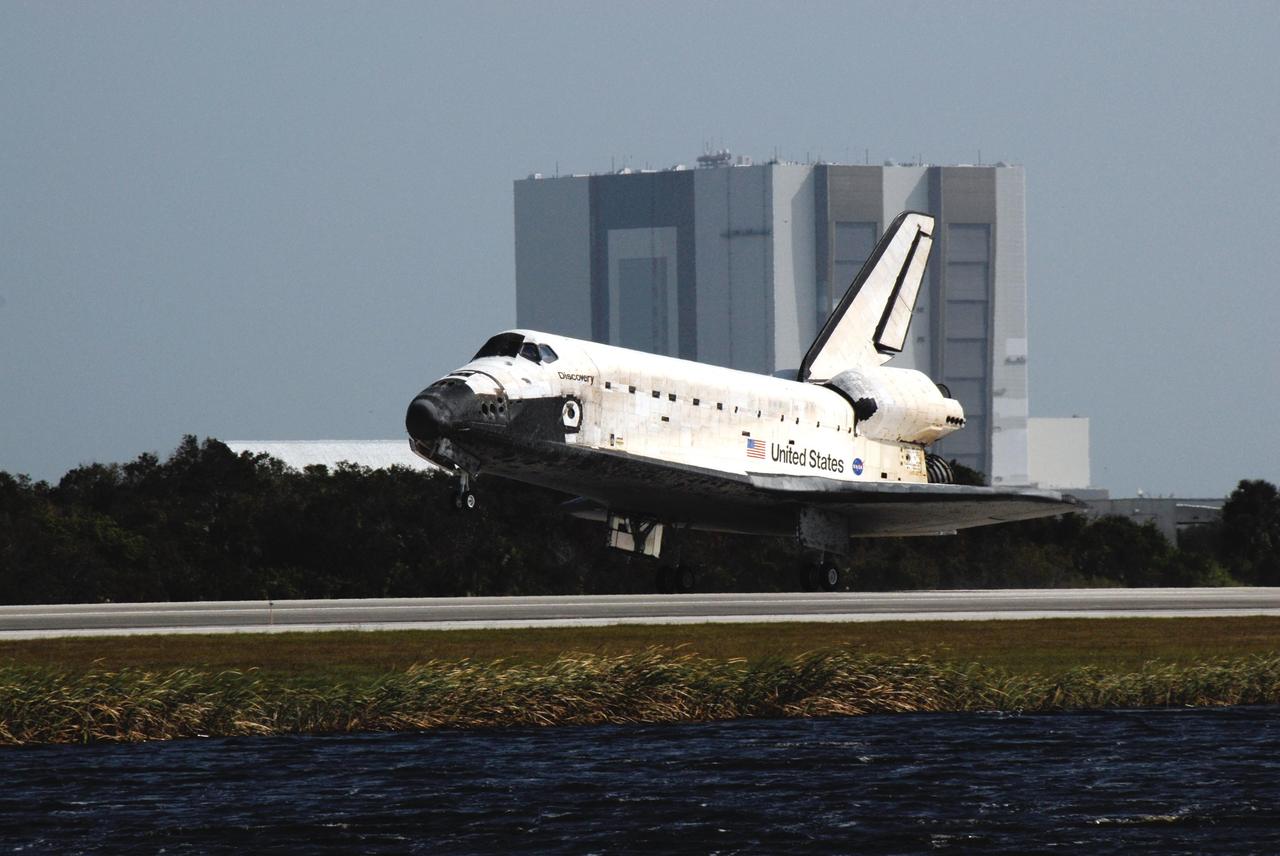
KENNEDY SPACE CENTER, FLA. -- After a 15-day mission to the International Space Station, space shuttle Discovery glides to a smooth landing on Runway 33 of the Shuttle Landing Facility at NASA's Kennedy Space Center at 1:01 p.m. EST on Nov. 7, completing mission STS-120. Main gear touchdown was 1:01:16 p.m. Wheel stop was at 1:02:07 p.m. Mission elapsed time was 15 days, 2 hours, 24 minutes and 2 seconds. The STS-120 crew continued the construction of the station with the installation of the Harmony Node 2 module and the relocation of the P6 truss. Photo credit: NASA/Kim Shiflett
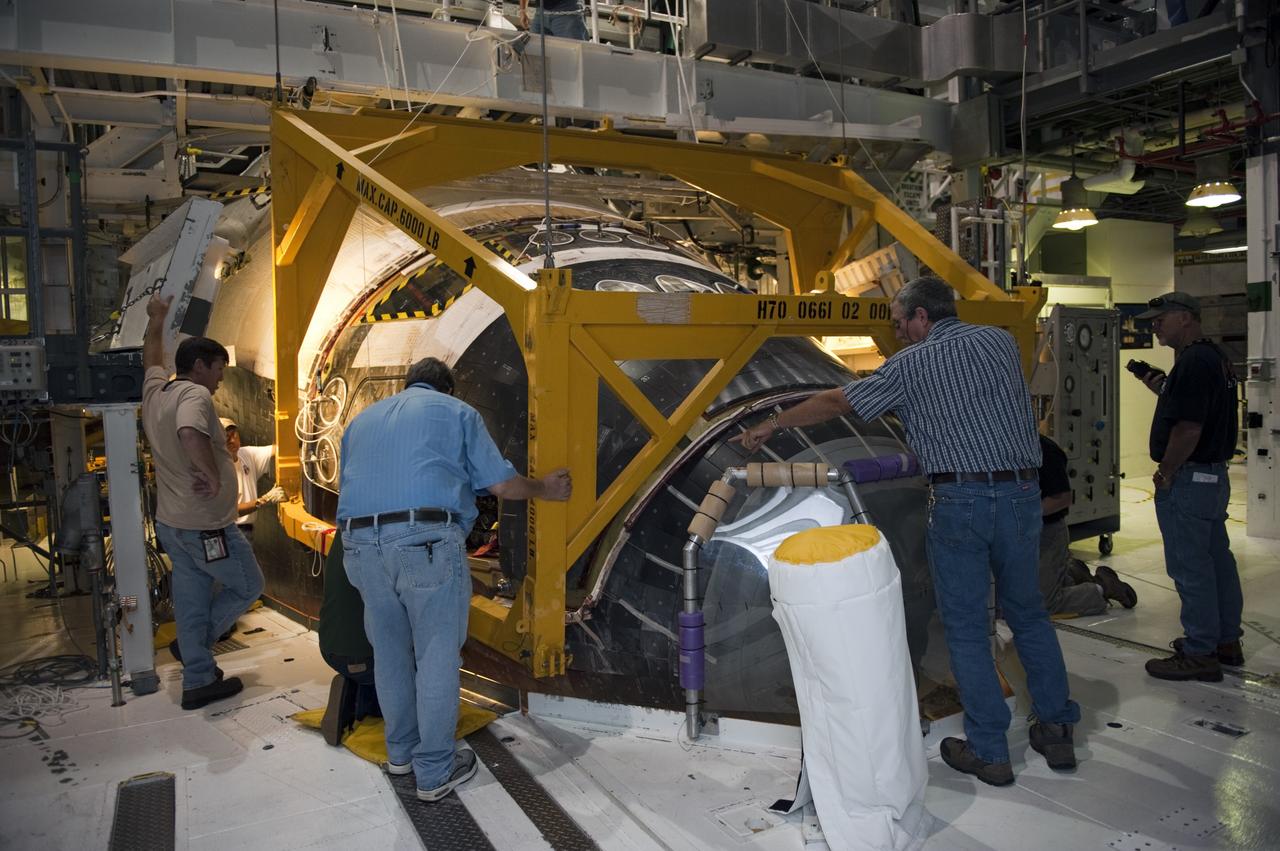
CAPE CANAVERAL, Fla. -- In Orbiter Processing Facility-2 (OPF-2) at NASA’s Kennedy Space Center in Florida, technicians help position a special crane around space shuttle Atlantis so that work can begin to remove the spacecraft’s forward reaction control system. The system provided some of the maneuvering capabilities to the spacecraft during its missions. Atlantis glided to a landing, July 21, 2011, at Kennedy Space Center’s Shuttle Landing Facility, completing NASA’s final space shuttle mission, STS-135. The shuttle is in OPF-2 being decommissioned and prepared for eventual display at the Kennedy Space Center Visitor Complex in Florida. Photo credit: Kim Shiflett
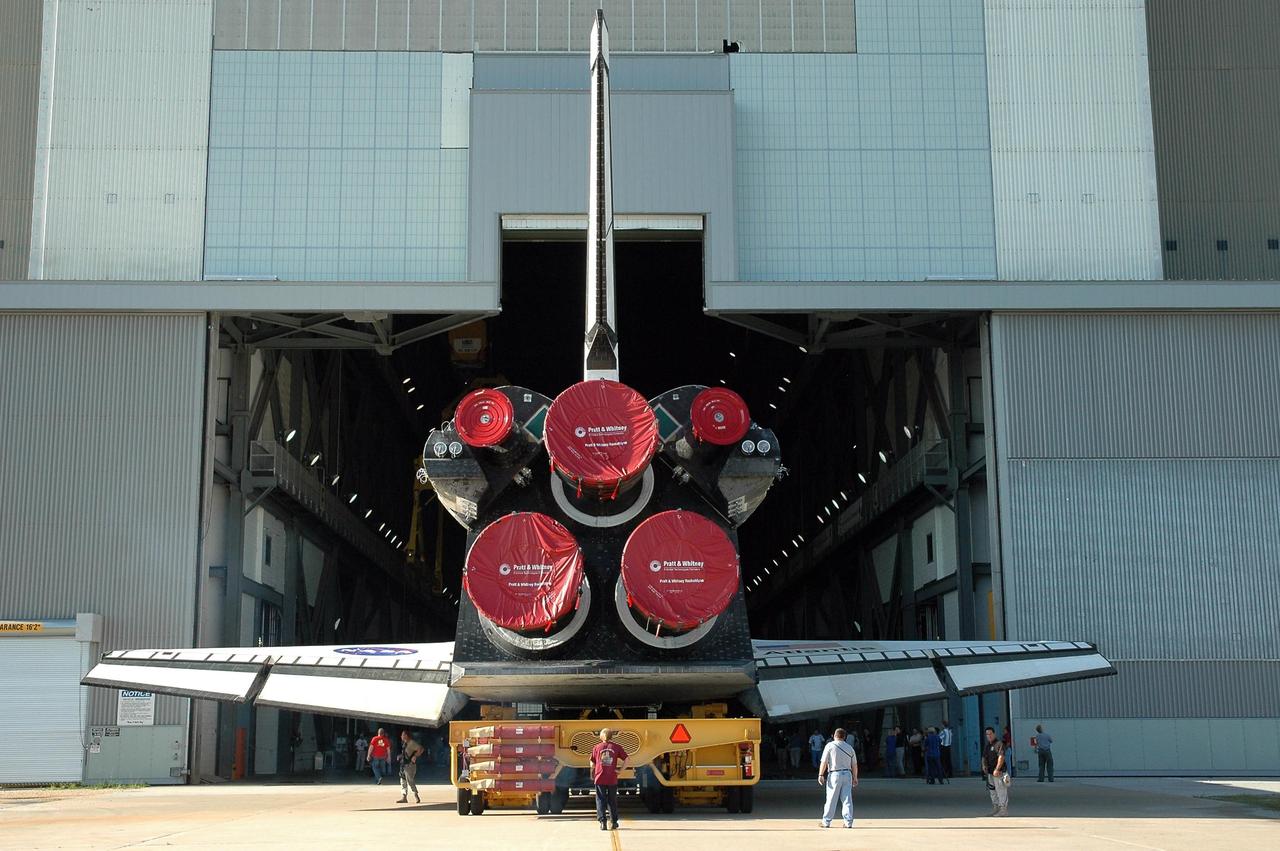
KENNEDY SPACE CENTER, FLA. - Atlantis glides into the open doors of the Vehicle Assembly Building into the transfer aisle, concluding its rollover from the Orbiter Processing Facility. In the VAB, the orbiter will be lifted into high bay 3 for mating to the external fuel tank and solid rocket boosters. Atlantis' launch window begins Aug. 28. During its 11-day mission to the International Space Station, the STS-115 crew of six astronauts will install the Port 3/4 truss segment with its two large solar arrays. Photo credit: NASA/Charisse Nahser
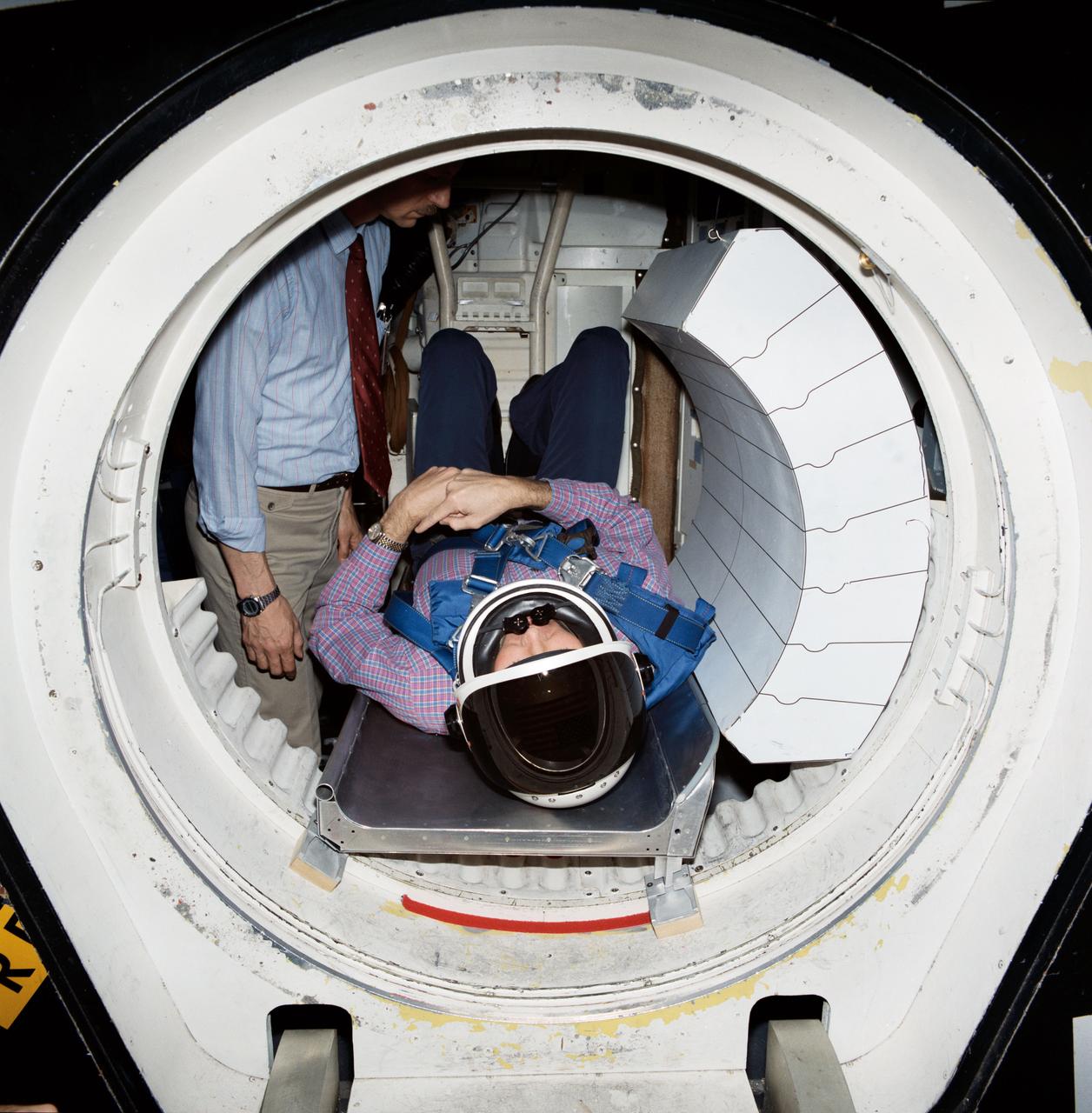
Shuttle crew escape systems test is conducted by astronauts Steven R. Nagel (left) and Manley L. (Sonny) Carter in JSC One Gravity Mockup and Training Facilities Bldg 9A crew compartment trainer (CCT). Nagel and Carter are evaluating methods for crew escape during Space Shuttle controlled gliding flight. JSC test was done in advance of tests scheduled for facilities in California and Utah. Here, Carter serves as test subject evaluating egress positioning for the tractor rocket escape method - one of the two systems currently being closely studied by NASA.
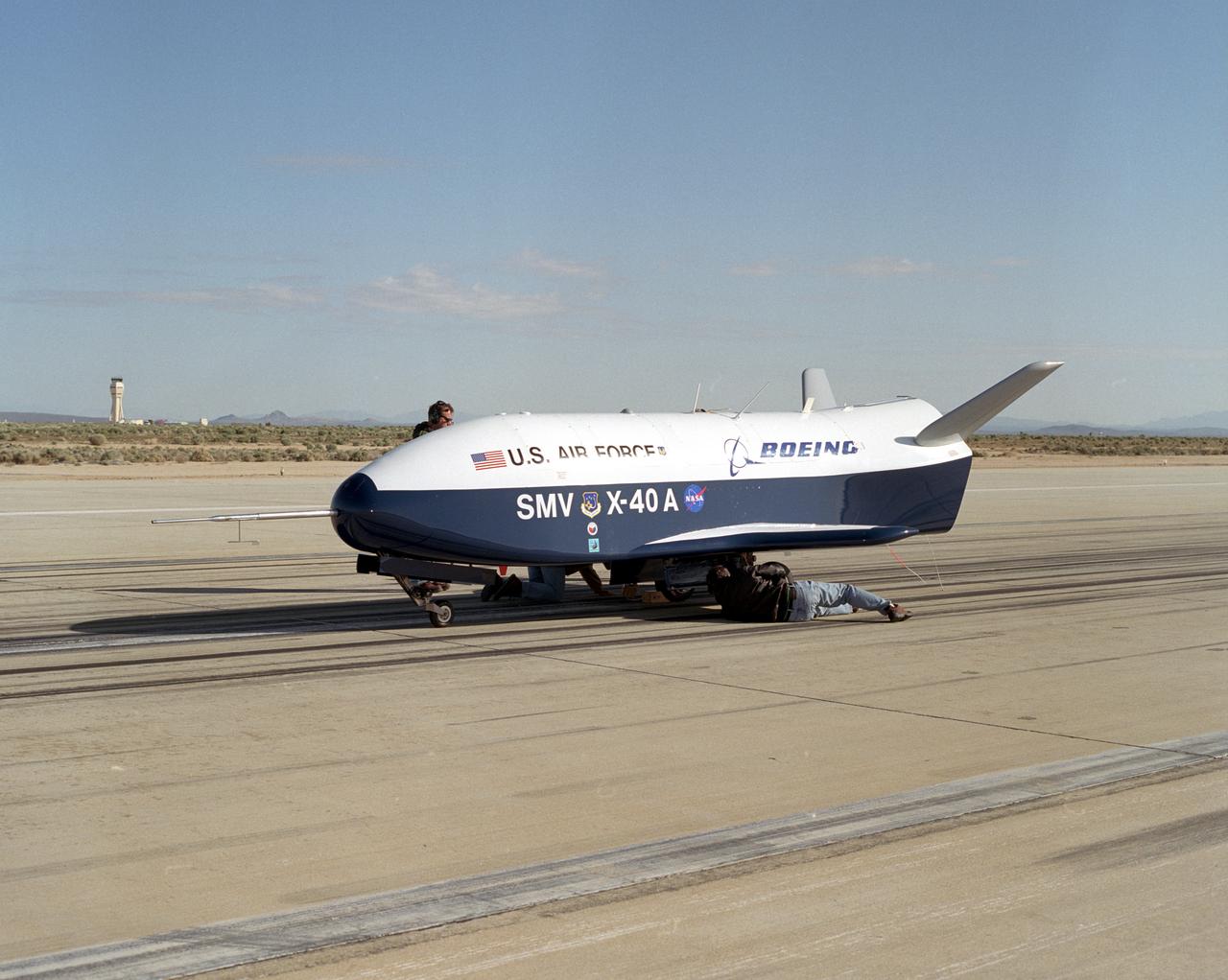
Second free-flight of the X-40A at the NASA Dryden Flight Research Center, on Edwards AFB, Calif., was made on Apr. 12, 2001. The unpowered X-40A, an 85 percent scale risk reduction version of the proposed X-37, is proving the capability of an autonomous flight control and landing system in a series of glide flights at Edwards. The April 12 flight introduced complex vehicle maneuvers during the landing sequence. The X-40A was released from an Army Chinook helicopter flying 15,050 feet overhead. Ultimately, the unpiloted X-37 is intended as an orbital testbed and technology demonstrator, capable of landing like an airplane and being quickly serviced for a follow-up mission.
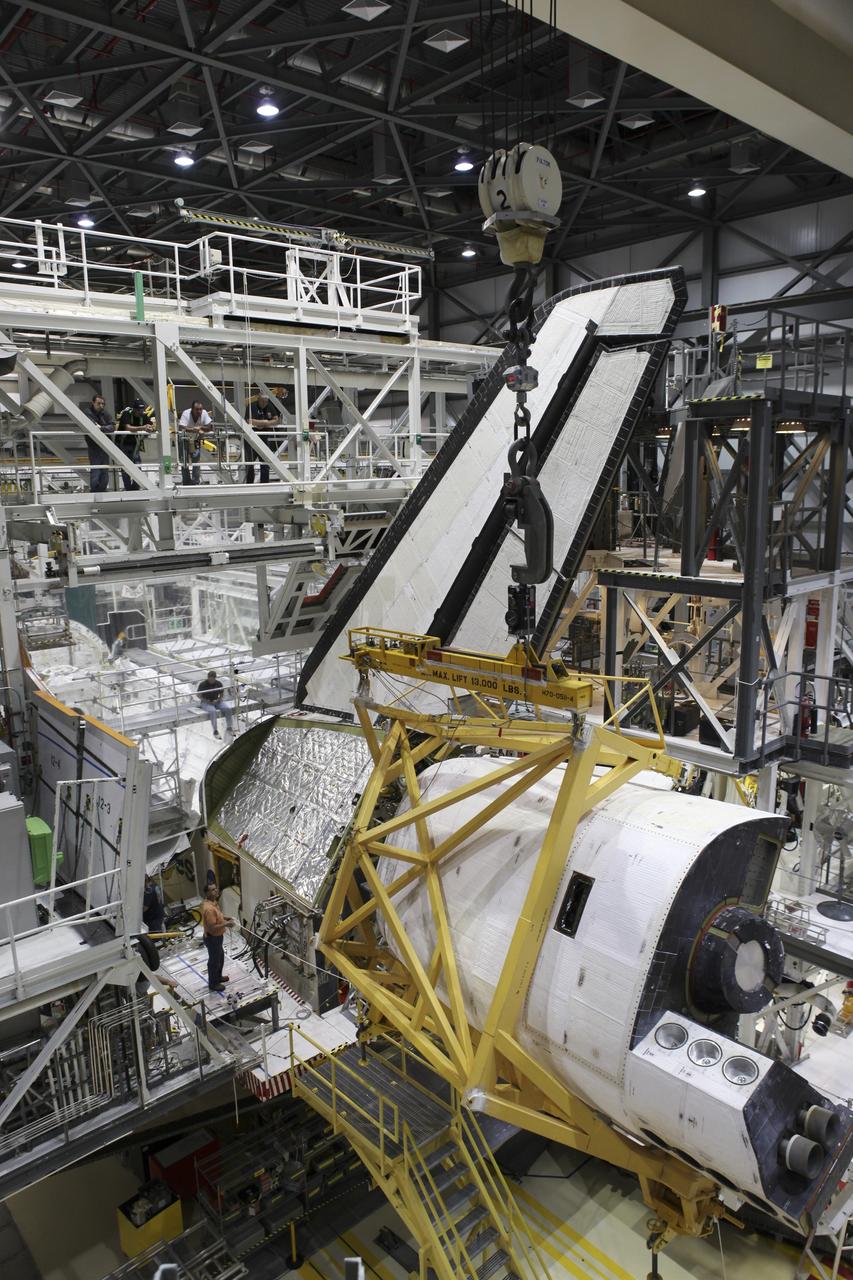
CAPE CANAVERAL, Fla. – Slowly, space shuttle Endeavour’s left orbital maneuvering system OMS pod glides into position alongside the shuttle in Orbiter Processing Facility-2 at NASA's Kennedy Space Center in Florida. The OMS pod is being reinstalled on Endeavour following a complete deservicing and cleaning at White Sands Space Harbor in New Mexico, part of the shuttle’s transition and retirement processing. Endeavour is being prepared for public display at the California Science Center in Los Angeles. Over the course of its 19-year career, Endeavour spent 299 days in space during 25 missions. For more information, visit http://www.nasa.gov/shuttle. Photo credit: NASA/Dimitri Gerondidakis
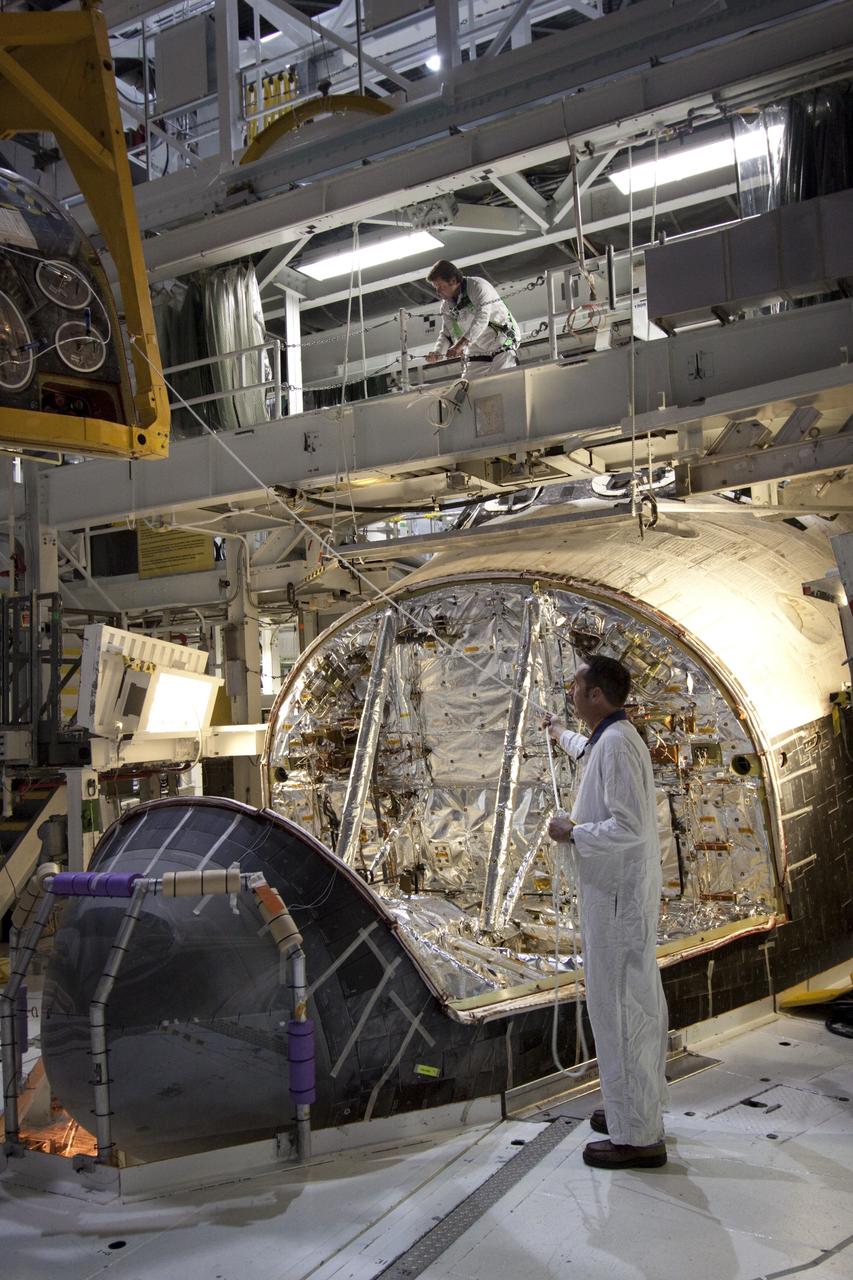
CAPE CANAVERAL, Fla. -- In Orbiter Processing Facility-2 (OPF-2) at NASA’s Kennedy Space Center in Florida, technicians monitor the progress of a special crane as it lifts the forward reaction control system away from space shuttle Atlantis. The system provided some of the maneuvering capabilities to the spacecraft during its missions. Atlantis glided to a landing, July 21, 2011, at Kennedy Space Center’s Shuttle Landing Facility, completing NASA’s final space shuttle mission, STS-135. The shuttle is in OPF-2 being decommissioned and prepared for eventual display at the Kennedy Space Center Visitor Complex in Florida. Photo credit: Jim Grossmann
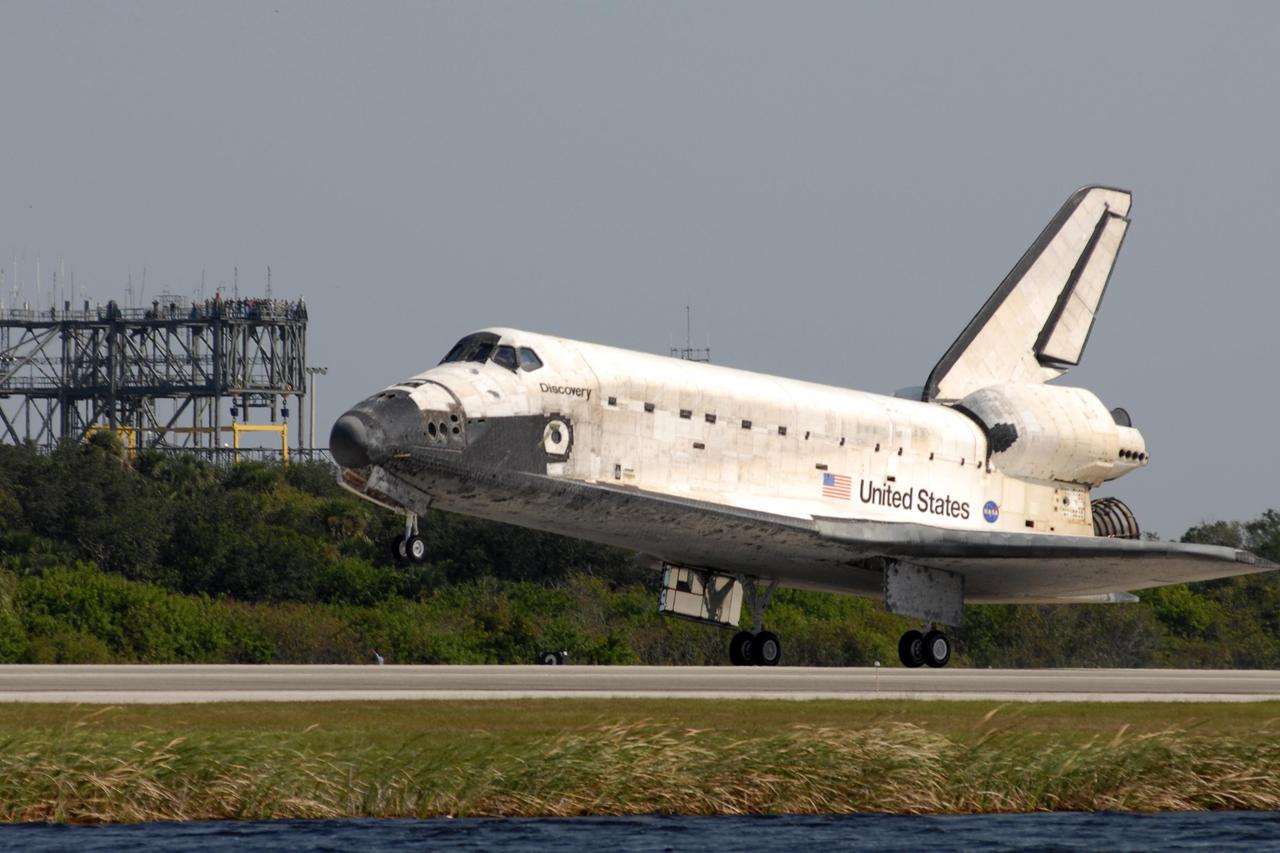
KENNEDY SPACE CENTER, FLA. -- After a 15-day mission to the International Space Station, space shuttle Discovery glides to a smooth landing on Runway 33 of the Shuttle Landing Facility at NASA's Kennedy Space Center at 1:01 p.m. EST on Nov. 7, completing mission STS-120. Main gear touchdown was 1:01:16 p.m. Wheel stop was at 1:02:07 p.m. Mission elapsed time was 15 days, 2 hours, 24 minutes and 2 seconds. The STS-120 crew continued the construction of the station with the installation of the Harmony Node 2 module and the relocation of the P6 truss. Photo credit: NASA/Tom Joseph
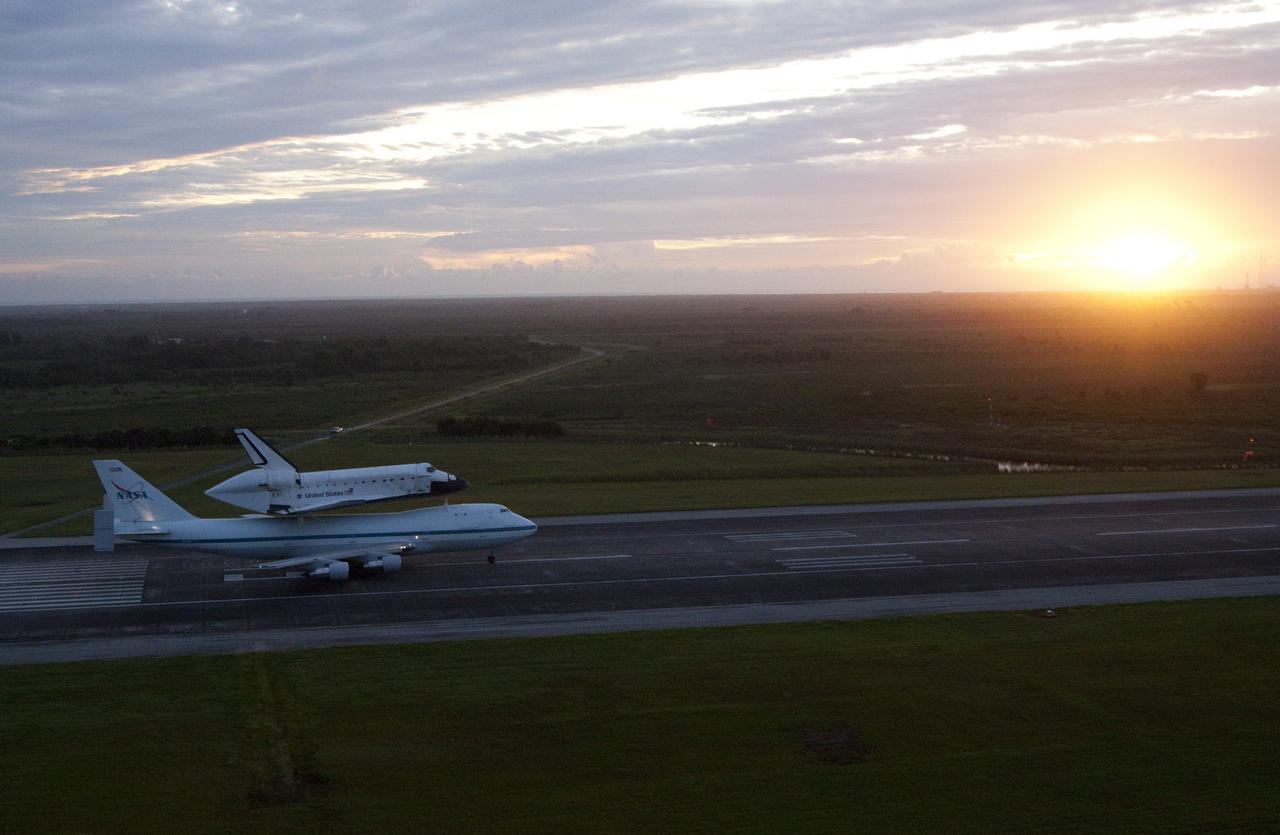
CAPE CANAVERAL, Fla. – NASA's Shuttle Carrier Aircraft, or SCA, glides down the runway at the Shuttle Landing at NASA's Kennedy Space Center in Florida with space shuttle Endeavour secured on top. Takeoff came at 7:22 a.m. EDT. The SCA, a modified 747 jetliner, will fly Endeavour to Los Angeles where it will be placed on public display at the California Science Center. This is the final ferry flight scheduled in the Space Shuttle Program era. For more information on the shuttles' transition and retirement, visit http://www.nasa.gov/transition. Photo credit: NASA/Kim Shiflett
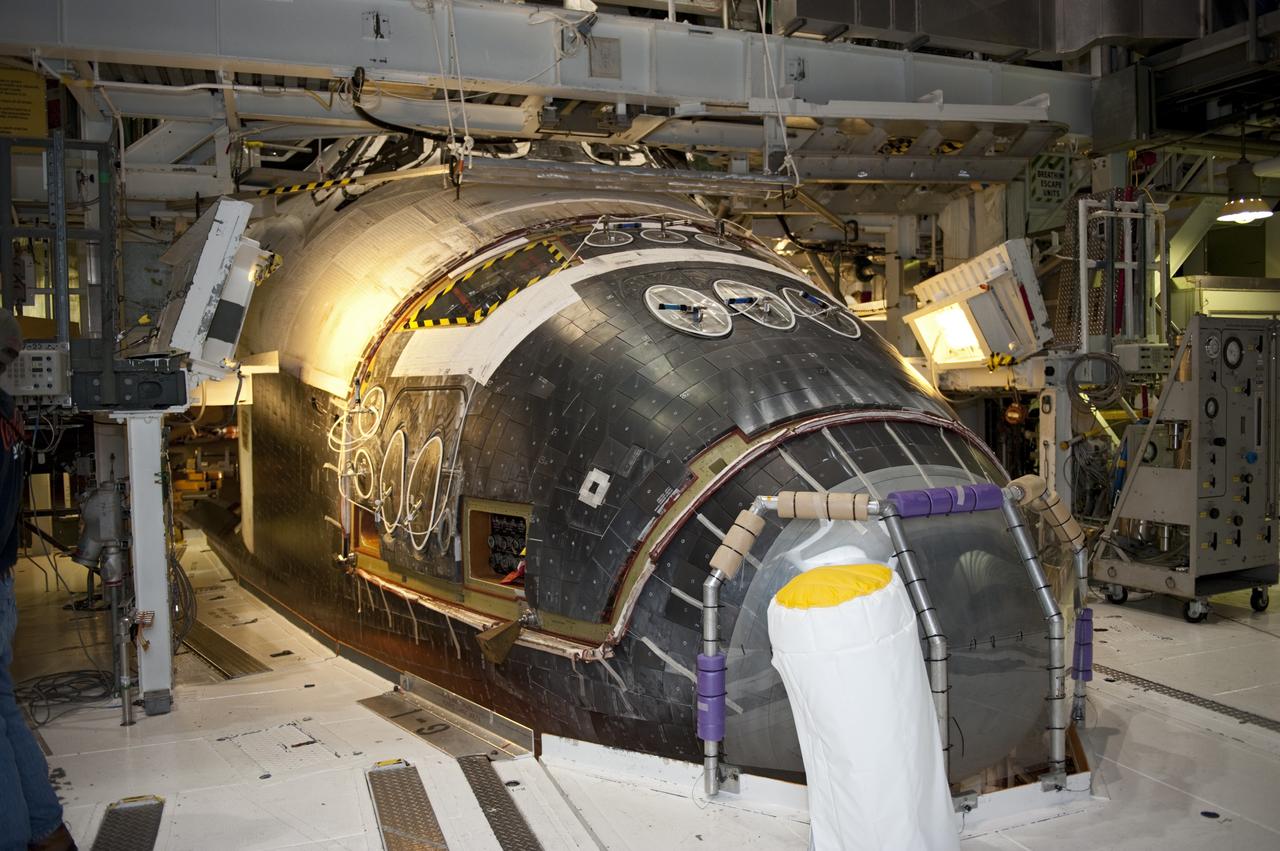
CAPE CANAVERAL, Fla. -- In Orbiter Processing Facility-2 (OPF-2) at NASA’s Kennedy Space Center in Florida, work begins to remove space shuttle Atlantis’ forward reaction control system. The system provided maneuvering capabilities to the spacecraft during its missions. Atlantis glided to a landing, July 21, 2011, at Kennedy Space Center’s Shuttle Landing Facility, completing NASA’s final space shuttle mission, STS-135. The shuttle is in OPF-2 being decommissioned and prepared for eventual display at the Kennedy Space Center Visitor Complex in Florida. Photo credit: Kim Shiflett
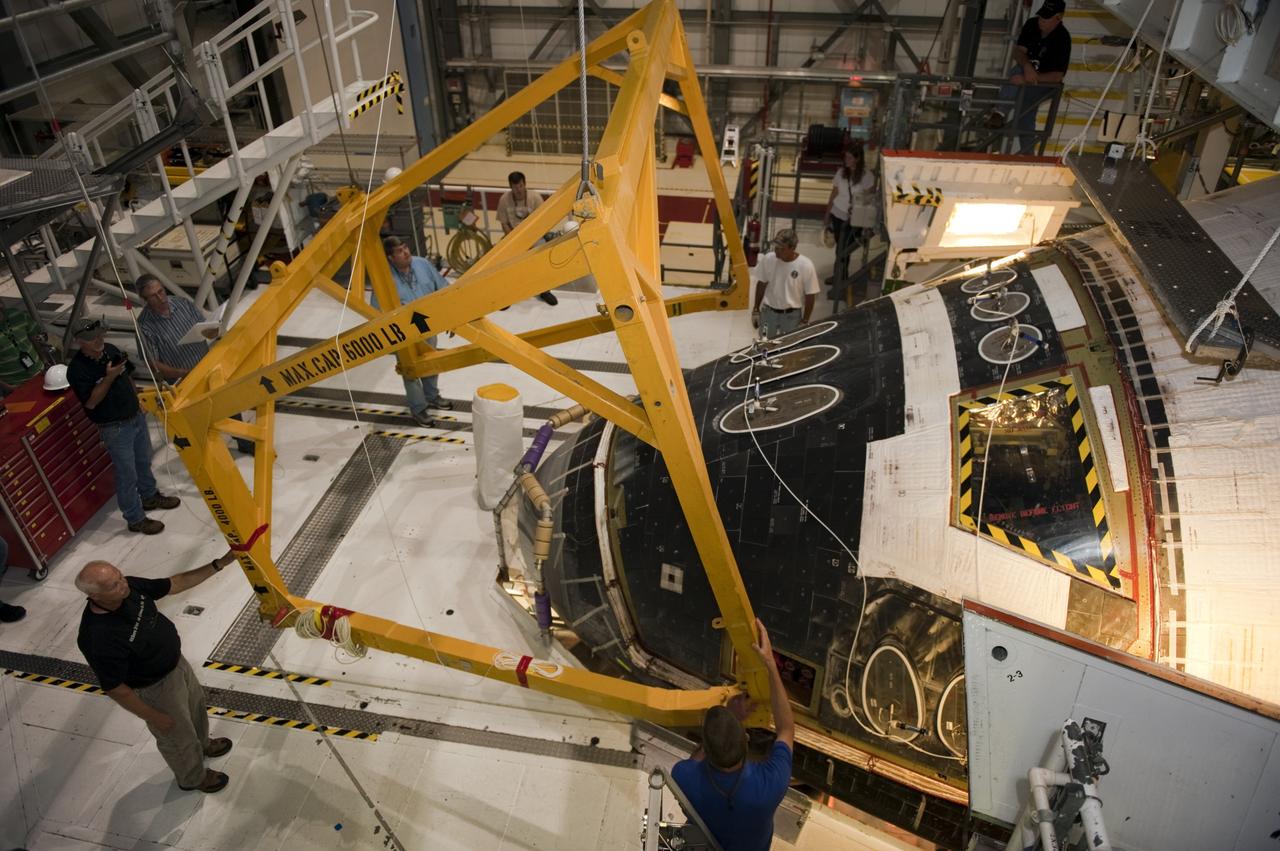
CAPE CANAVERAL, Fla. -- In Orbiter Processing Facility-2 (OPF-2) at NASA’s Kennedy Space Center in Florida, technicians help guide a special crane around space shuttle Atlantis as work begins to remove the spacecraft’s forward reaction control system. The system provided some of the maneuvering capabilities to the spacecraft during its missions. Atlantis glided to a landing, July 21, 2011, at Kennedy Space Center’s Shuttle Landing Facility, completing NASA’s final space shuttle mission, STS-135. The shuttle is in OPF-2 being decommissioned and prepared for eventual display at the Kennedy Space Center Visitor Complex in Florida. Photo credit: Kim Shiflett
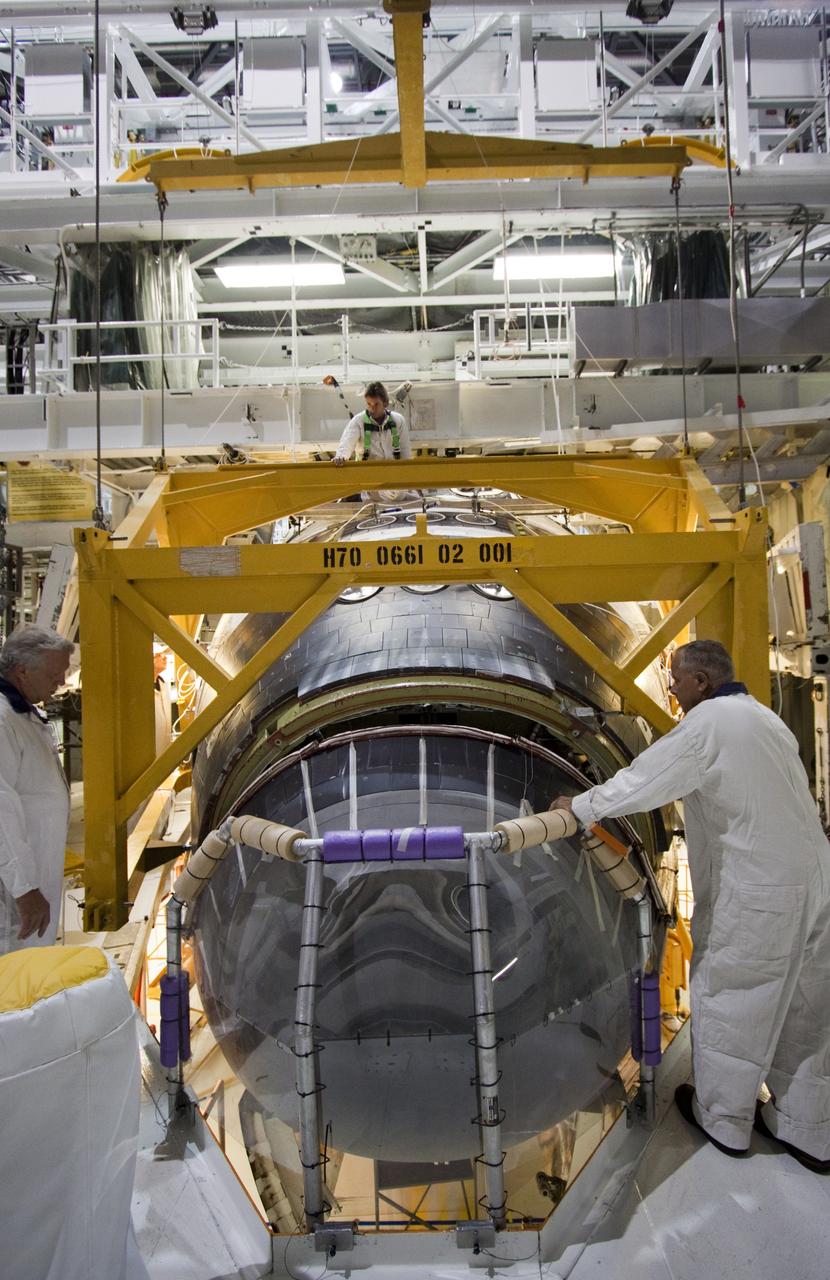
CAPE CANAVERAL, Fla. -- In Orbiter Processing Facility-2 (OPF-2) at NASA’s Kennedy Space Center in Florida, technicians help guide a special crane around space shuttle Atlantis so that work can begin to remove its forward reaction control system. The system provided maneuvering capabilities to the spacecraft during its missions. Atlantis glided to a landing, July 21, 2011, at Kennedy Space Center’s Shuttle Landing Facility, completing NASA’s final space shuttle mission, STS-135. The shuttle is in OPF-2 being decommissioned and prepared for eventual display at the Kennedy Space Center Visitor Complex in Florida. Photo credit: Jim Grossmann
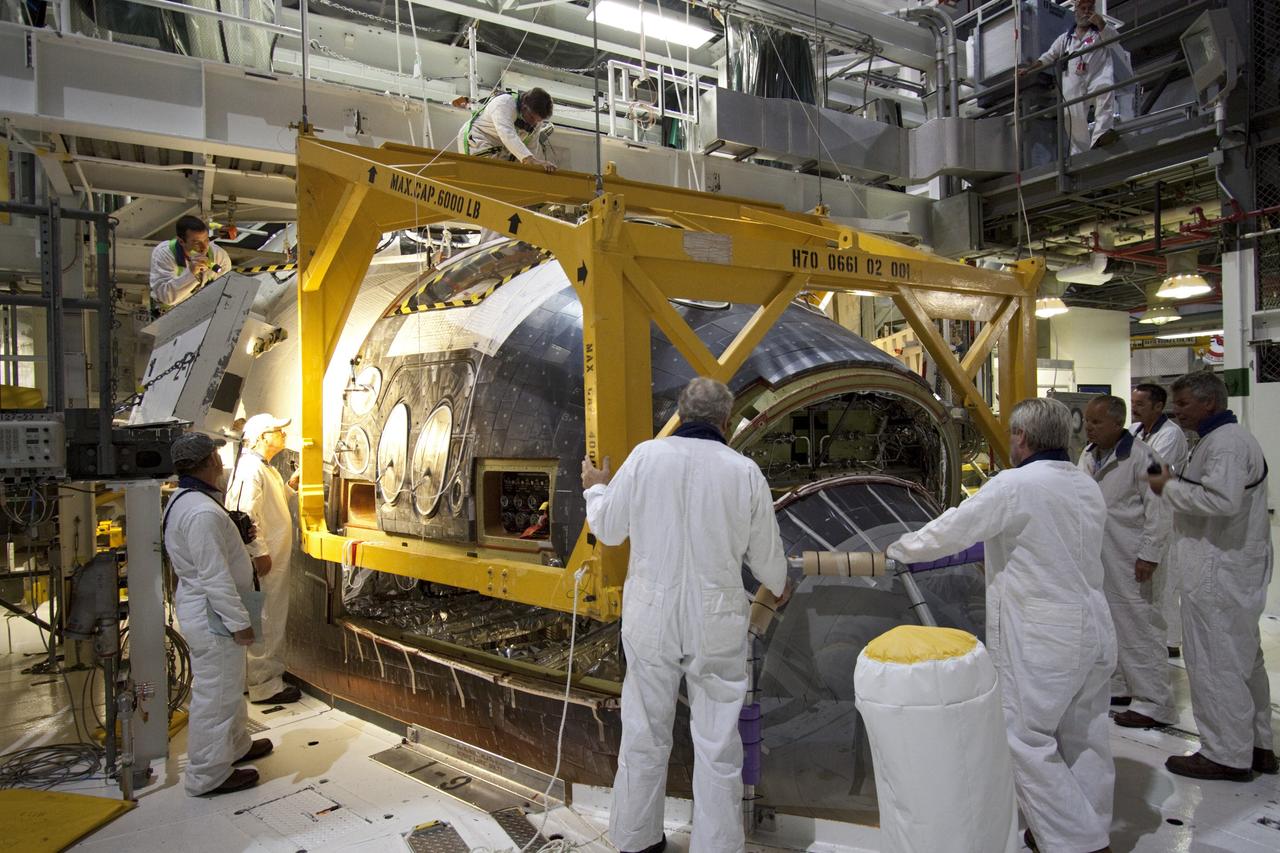
CAPE CANAVERAL, Fla. -- In Orbiter Processing Facility-2 (OPF-2) at NASA’s Kennedy Space Center in Florida, technicians help secure a special crane around space shuttle Atlantis as work begins to remove the spacecraft’s forward reaction control system. The system provided some of the maneuvering capabilities to the spacecraft during its missions. Atlantis glided to a landing, July 21, 2011, at Kennedy Space Center’s Shuttle Landing Facility, completing NASA’s final space shuttle mission, STS-135. The shuttle is in OPF-2 being decommissioned and prepared for eventual display at the Kennedy Space Center Visitor Complex in Florida. Photo credit: Jim Grossmann

KENNEDY SPACE CENTER, FLA. - At the Shuttle Landing Facility, the Shuttle Training Aircraft (STA) waits for the STS-121 pilot and commander to begin their practice flights. The STA is a modified Grumman American Aviation-built Gulf Stream II jet that was modified to simulate an orbiter’s cockpit, motion and visual cues, and handling qualities. In flight, the STA duplicates the orbiter’s atmospheric descent trajectory from approximately 35,000 feet altitude to landing on a runway. Because the orbiter is unpowered during re-entry and landing, its high-speed glide must be perfectly executed the first time. Space Shuttle Discovery is scheduled to launch July 1 on mission STS-121. Photo credit: NASA/Kim Shiflett
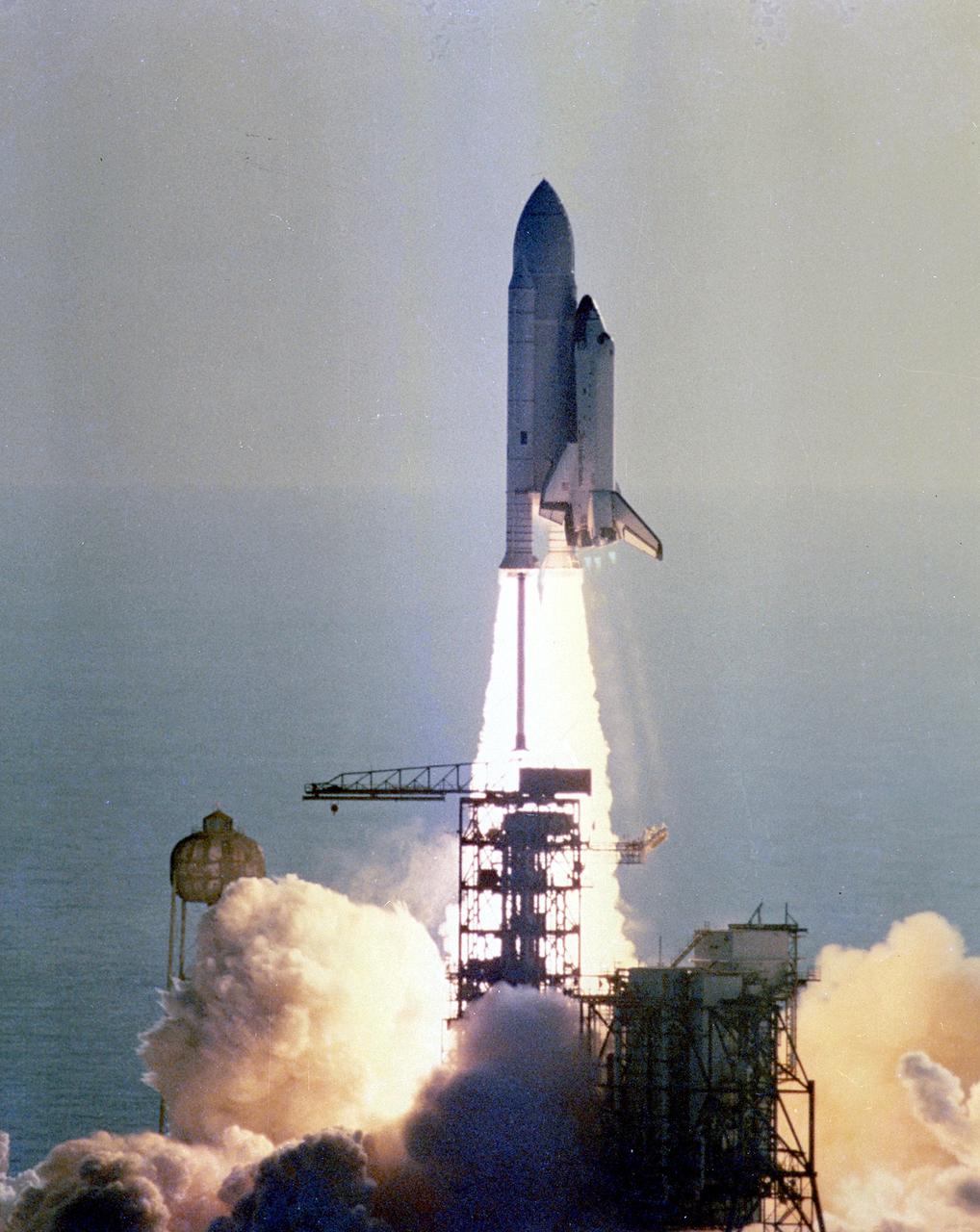
KENNEDY SPACE CENTER, FLA. -- The Space Shuttle Columbia rises off Pad 39A a few seconds past 7 a.m. on April 12, 1981 — the dawn of a new age in spaceflight. Onboard, astronauts John Young and Bob Crippen ride toward orbit following a successful liftoff of the first Space Shuttle mission. Mission plans call for the Columbia to remain in orbit for about 54 hours, during which astronauts Young and Criipen will perform a series of checkout activities designed to test the Space Shuttle's systems in space for the first time. The Columbia is scheduled to glide to an airplane-like landing at Edwards Air Force Base, Calif.

Shuttle crew escape systems test is conducted by astronauts Steven R. Nagel (left) and Manley L. (Sonny) Carter in JSC One Gravity Mockup and Training Facilities Bldg 9A crew compartment trainer (CCT). Nagel and Carter are evaluating methods for crew escape during Space Shuttle controlled gliding flight. JSC test was done in advance of tests scheduled for facilities in California and Utah. Here, Carter serves as test subject evaluating egress positioning for the tractor rocket escape method - one of the two systems currently being closely studied by NASA.
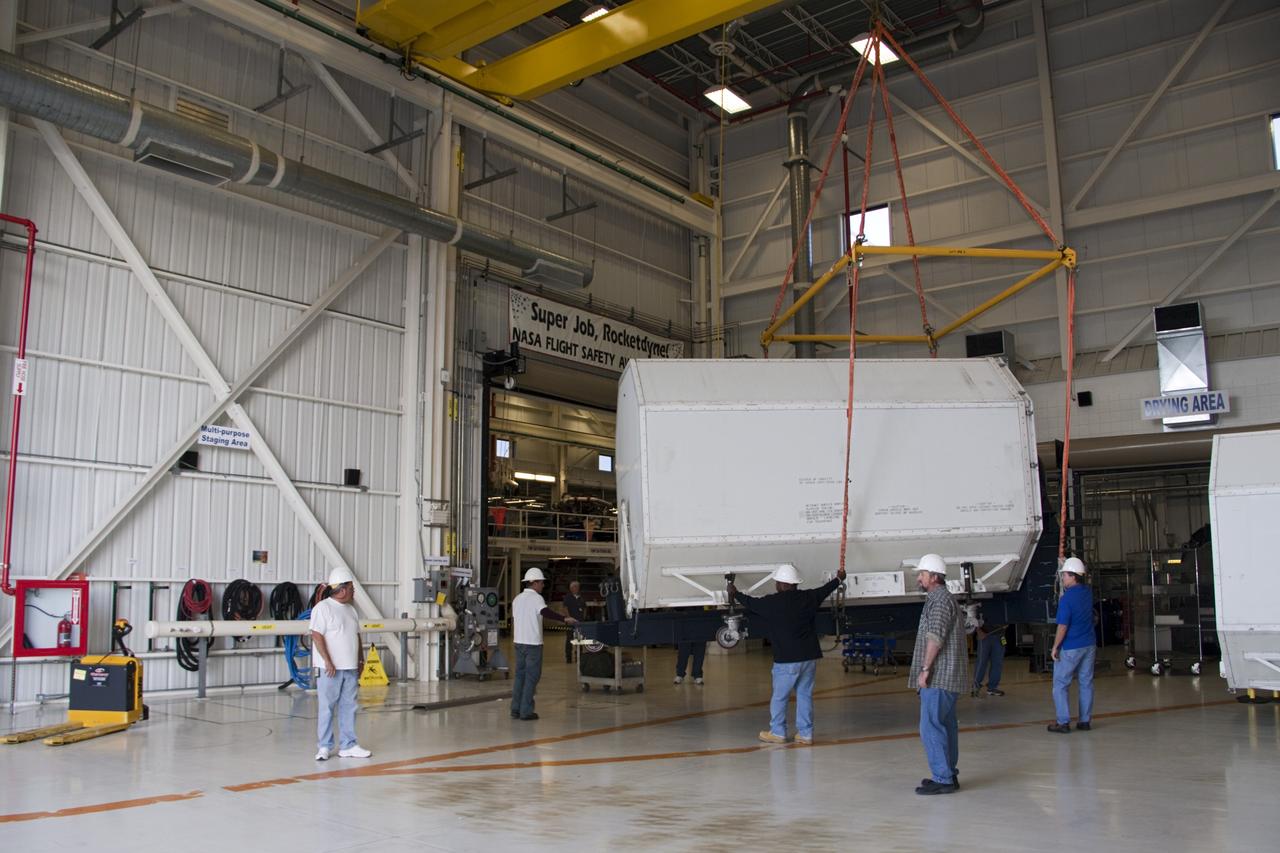
CAPE CANAVERAL, Fla. – In the Space Shuttle Main Engine Processing Facility at NASA’s Kennedy Space Center in Florida, a transportation canister containing a Pratt & Whitney Rocketdyne space shuttle main engine (SSME) glides above the floor toward a flatbed trailer. This is the second of the 15 engines used during the Space Shuttle Program to be transported to NASA's Stennis Space Center in Mississippi. The engines will be stored at Stennis for future use on NASA's new heavy-lift rocket, the Space Launch System (SLS), which will carry NASA's new Orion spacecraft, cargo, equipment and science experiments to space. For more information, visit http://www.nasa.gov/shuttle. Photo credit: NASA/Jim Grossmann
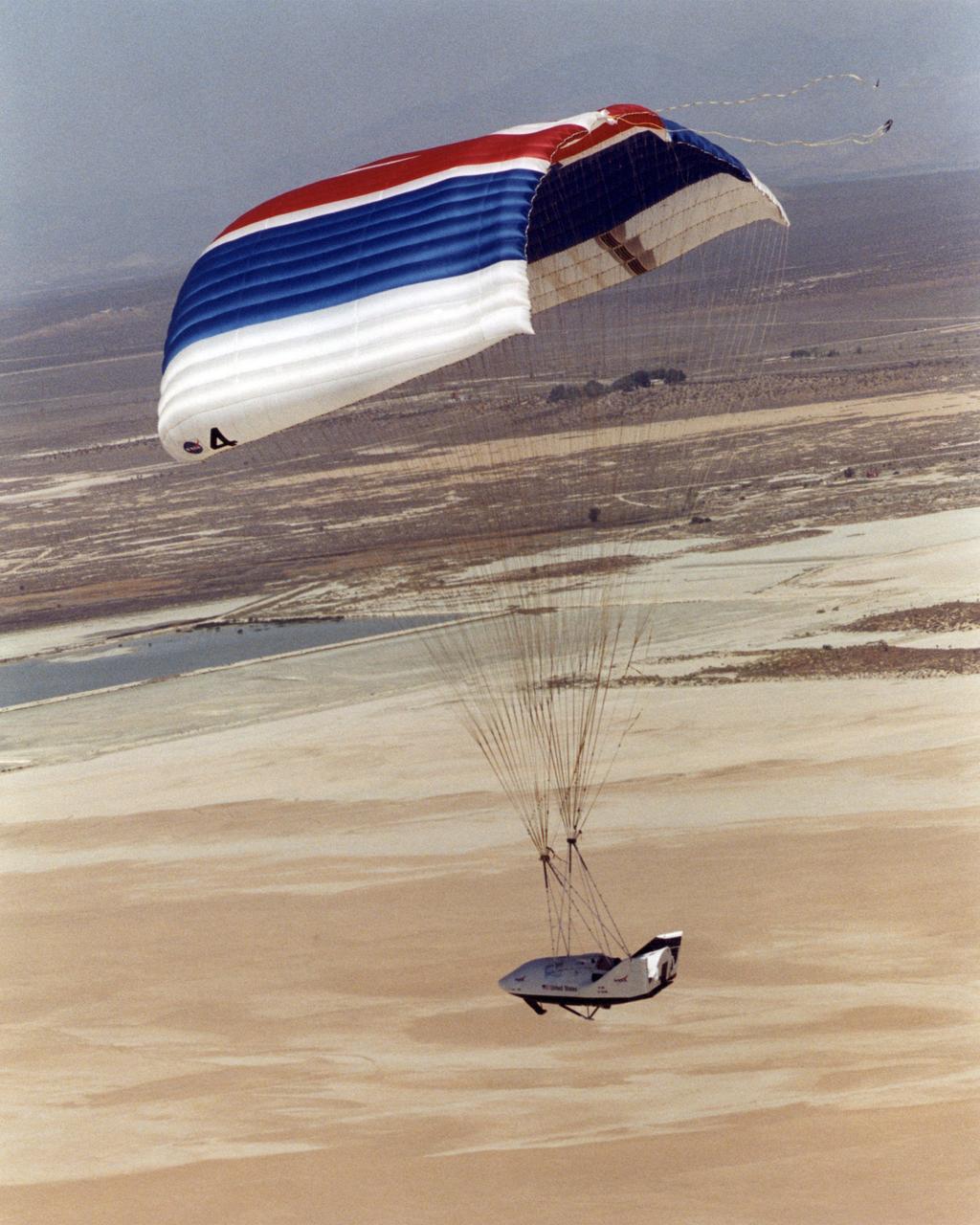
The seventh free flight of an X-38 prototype for an emergency space station crew return vehicle culminated in a graceful glide to landing under the world's largest parafoil. The mission began when the X-38 was released from NASA's B-52 mother ship over Edwards Air Force Base, California, where NASA Dryden Flight Research Center is located. The July 10, 2001 flight helped researchers evaluate software and deployment of the X-38's drogue parachute and subsequent parafoil. NASA intends to create a space-worthy Crew Return Vehicle (CRV) to be docked to the International Space Station as a "lifeboat" to enable a full seven-person station crew to evacuate in an emergency.
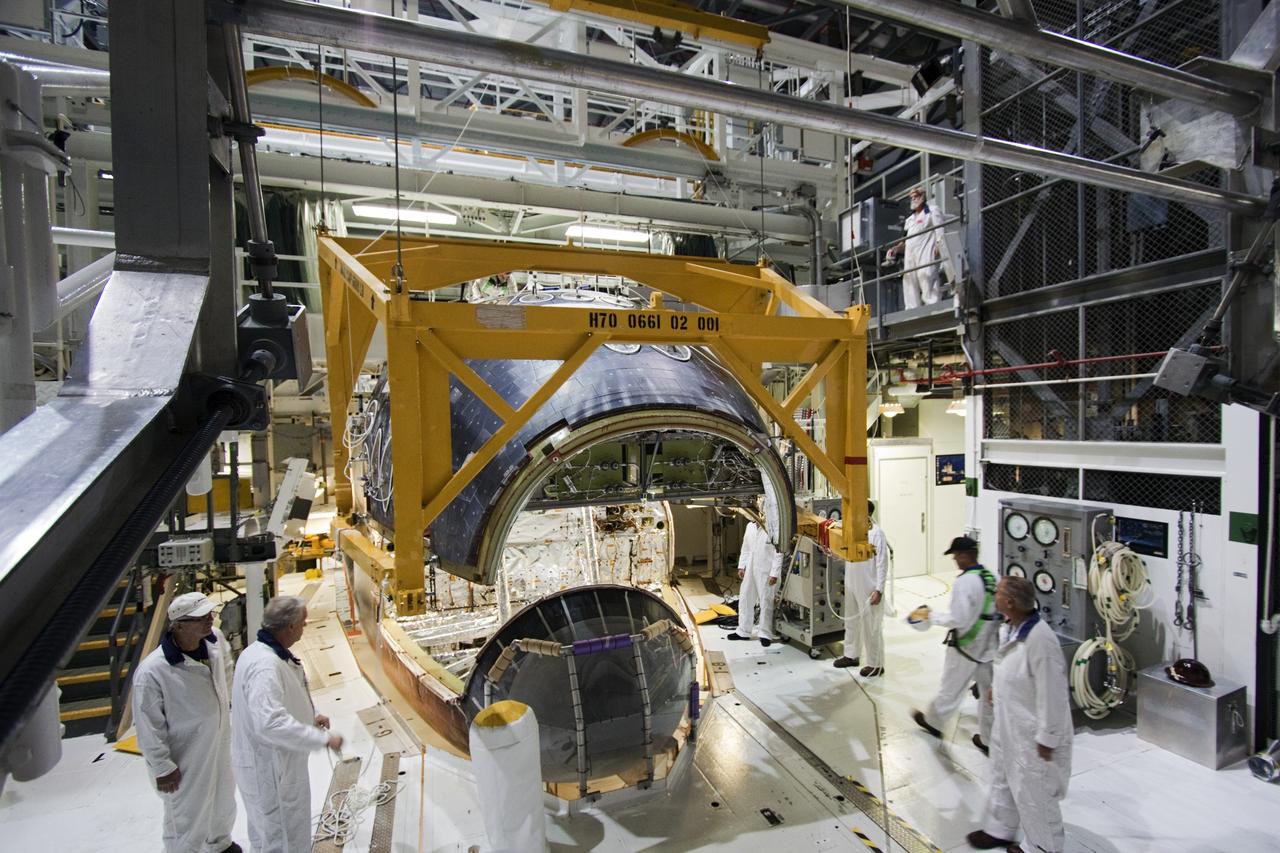
CAPE CANAVERAL, Fla. -- In Orbiter Processing Facility-2 (OPF-2) at NASA’s Kennedy Space Center in Florida, technicians monitor the progress of a special crane as it lifts the forward reaction control system away from space shuttle Atlantis. The system provided some of the maneuvering capabilities to the spacecraft during its missions. Atlantis glided to a landing, July 21, 2011, at Kennedy Space Center’s Shuttle Landing Facility, completing NASA’s final space shuttle mission, STS-135. The shuttle is in OPF-2 being decommissioned and prepared for eventual display at the Kennedy Space Center Visitor Complex in Florida. Photo credit: Jim Grossmann
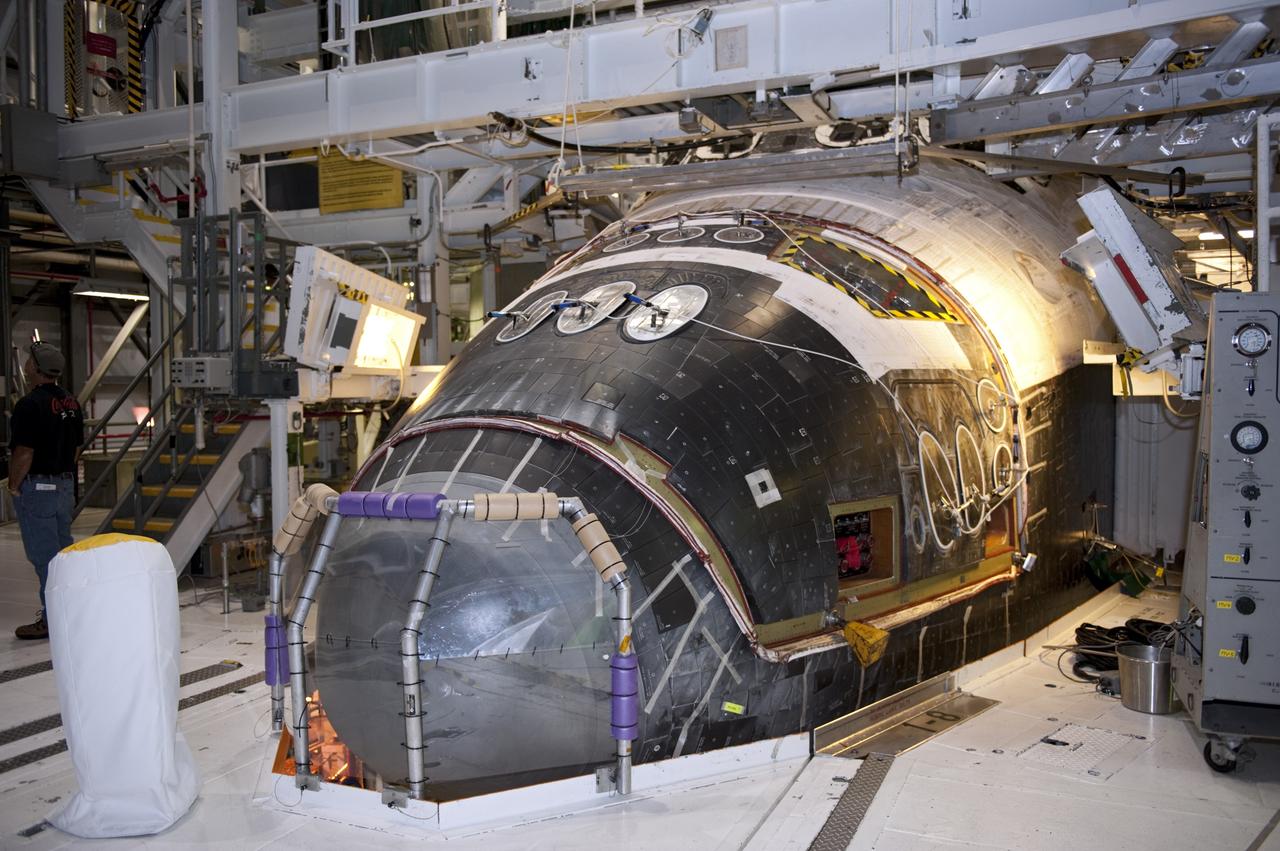
CAPE CANAVERAL, Fla. -- In Orbiter Processing Facility-2 (OPF-2) at NASA’s Kennedy Space Center in Florida, work begins to remove space shuttle Atlantis’ forward reaction control system. The system provided maneuvering capabilities to the spacecraft during its missions. Atlantis glided to a landing, July 21, 2011, at Kennedy Space Center’s Shuttle Landing Facility, completing NASA’s final space shuttle mission, STS-135. The shuttle is in OPF-2 being decommissioned and prepared for eventual display at the Kennedy Space Center Visitor Complex in Florida. Photo credit: Kim Shiflett