
Joy Bretthauer, Glory Program Executive, NASA Headquarters, talks about the launch of the GLORY mission during a news conference at NASA Headquarters, Thursday, Jan. 20, 2011, in Washington. NASA's newest Earth-observing research mission is scheduled for launch form Vandenburg Air Force Base in California on Feb. 23. The mission will improve our understanding of how the sun and tiny atmosppheric particles called aerosols affect Earth's climate. Photo Credit: (NASA/Paul E. Alers)

Michael Mischenko, from NASA's Goddard Institute for Space Studies, and a Glory project scientist, talks about the launch of the GLORY mission during a news conference at NASA Headquarters, Thursday, Jan. 20, 2011, in Washington. NASA's newest Earth-observing research mission is scheduled for launch form Vandenburg Air Force Base in California on Feb. 23. The mission will improve our understanding of how the sun and tiny atmosppheric particles called aerosols affect Earth's climate. Photo Credit: (NASA/Paul E. Alers)
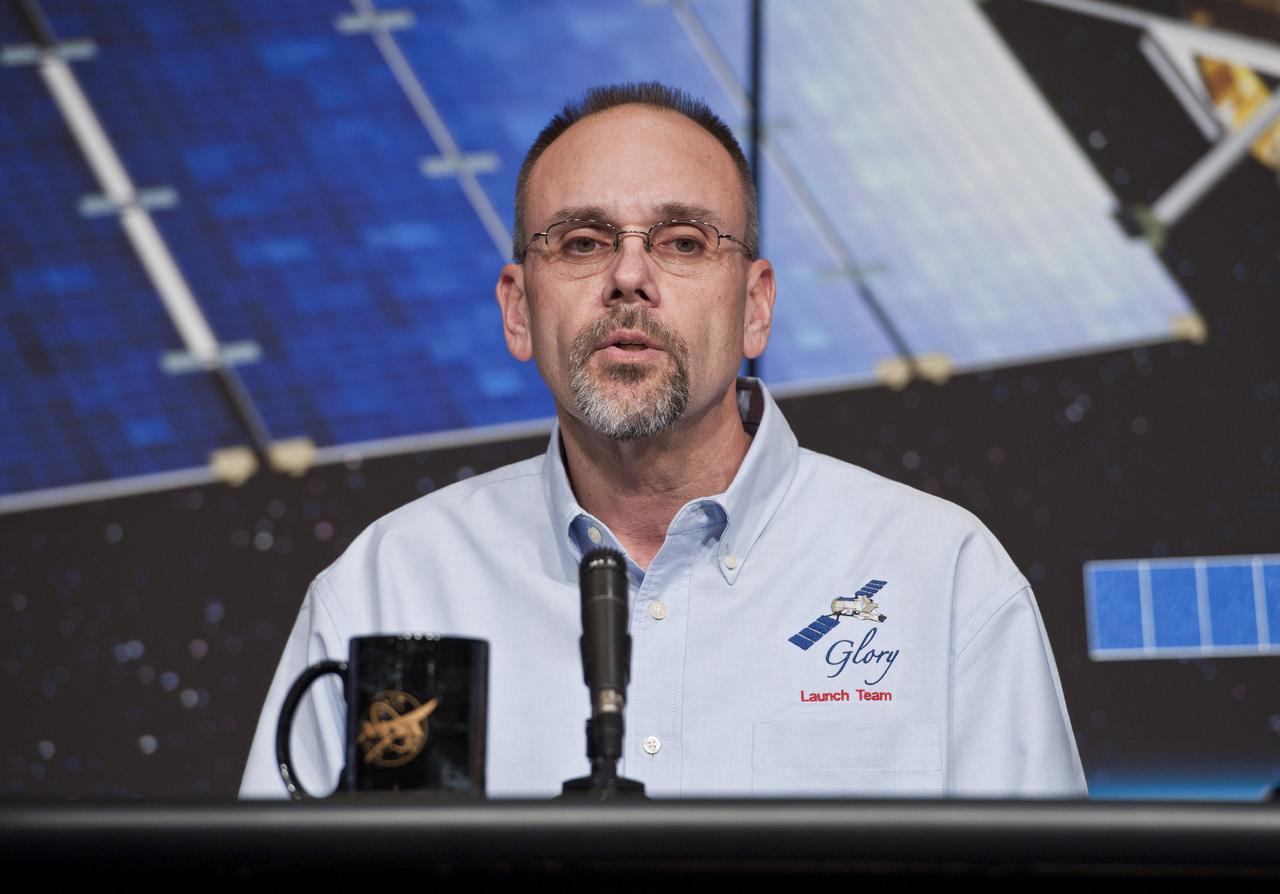
Bryan Fafaul, Glory Project Manager from Goddard Space Flight Center, talks about the launch of the GLORY mission during a news conference at NASA Headquarters, Thursday, Jan. 20, 2011, in Washington. NASA's newest Earth-observing research mission is scheduled for launch form Vandenburg Air Force Base in California on Feb. 23. The mission will improve our understanding of how the sun and tiny atmosppheric particles called aerosols affect Earth's climate. Photo Credit: (NASA/Paul E. Alers)
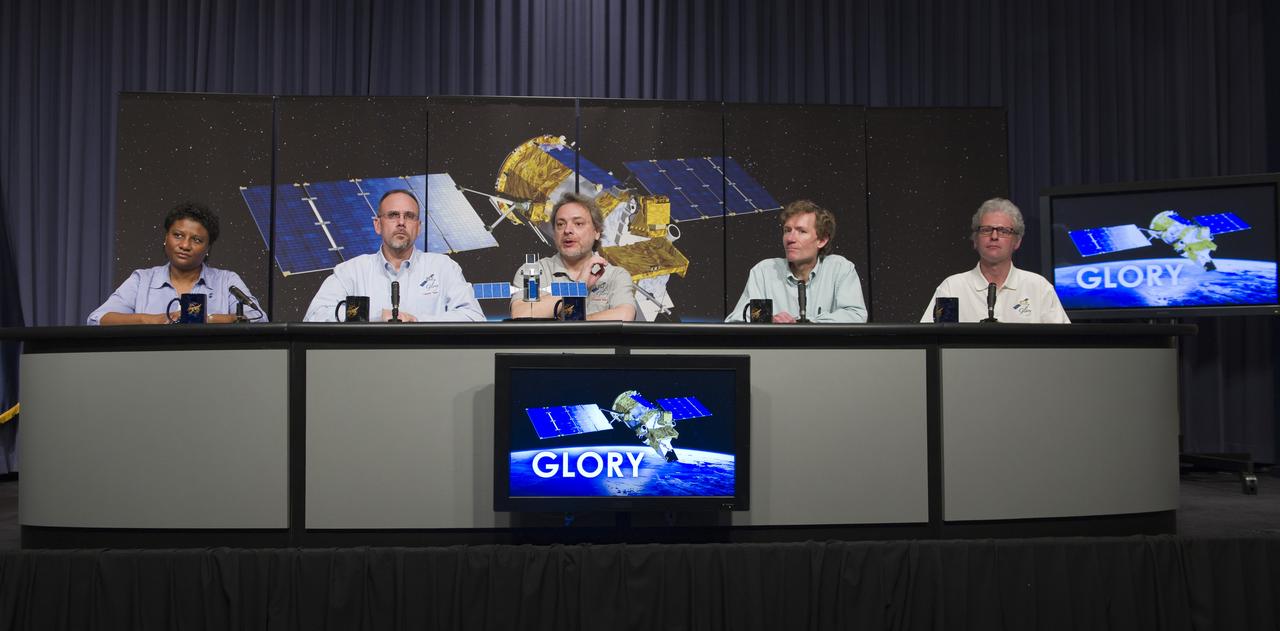
Joy Bretthauer, Glory Program Executive, left, Bryan Fafaul, Glory project manager, Michael Mischenko, Glory project scientist, center, Greg Kopp, University of Colorado, and Brian Cairns, instrument scientist, right, talk about the launch of the GLORY mission during a news conference at NASA Headquarters, Thursday, Jan. 20, 2011, in Washington. NASA's newest Earth-observing research mission is scheduled for launch form Vandenburg Air Force Base in California on Feb. 23. The mission will improve our understanding of how the sun and tiny atmosppheric particles called aerosols affect Earth's climate. Photo Credit: (NASA/Paul E. Alers)
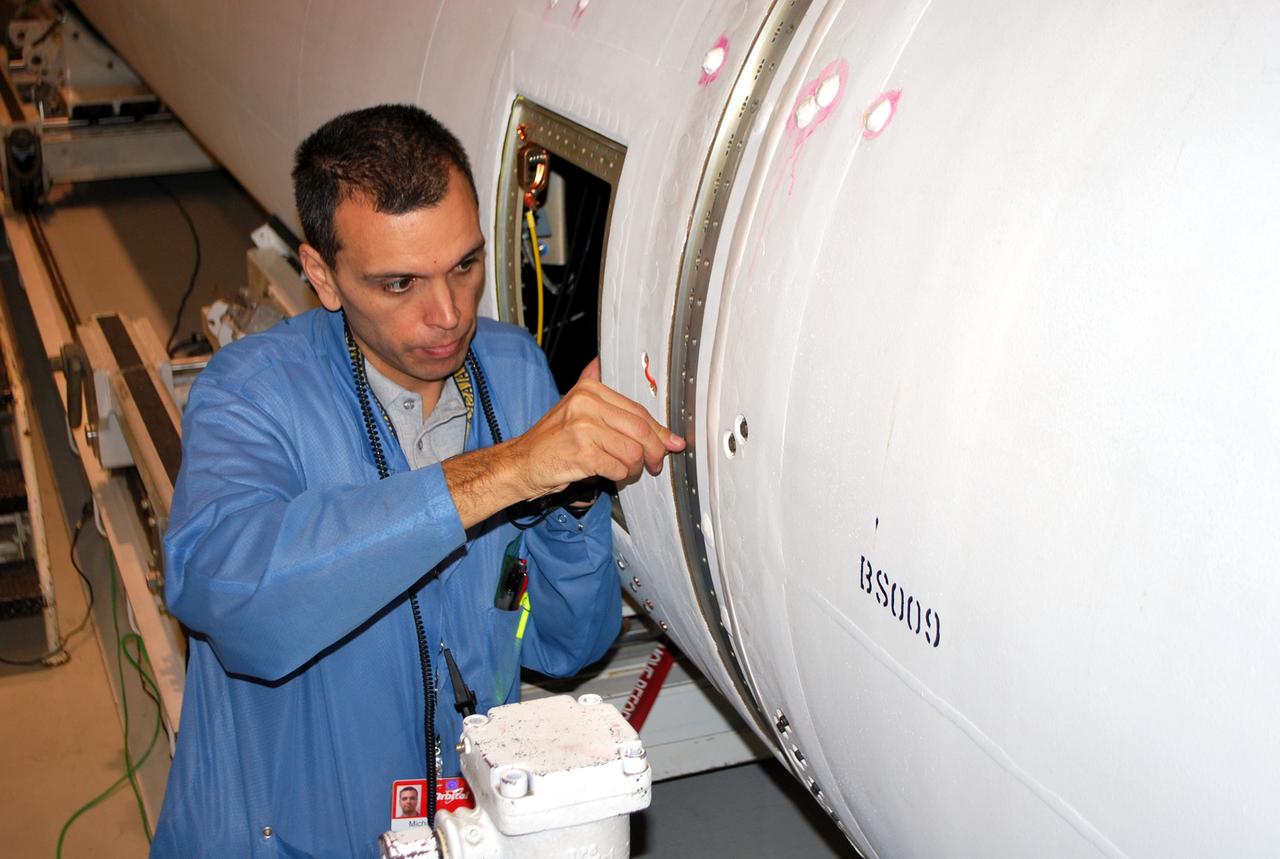
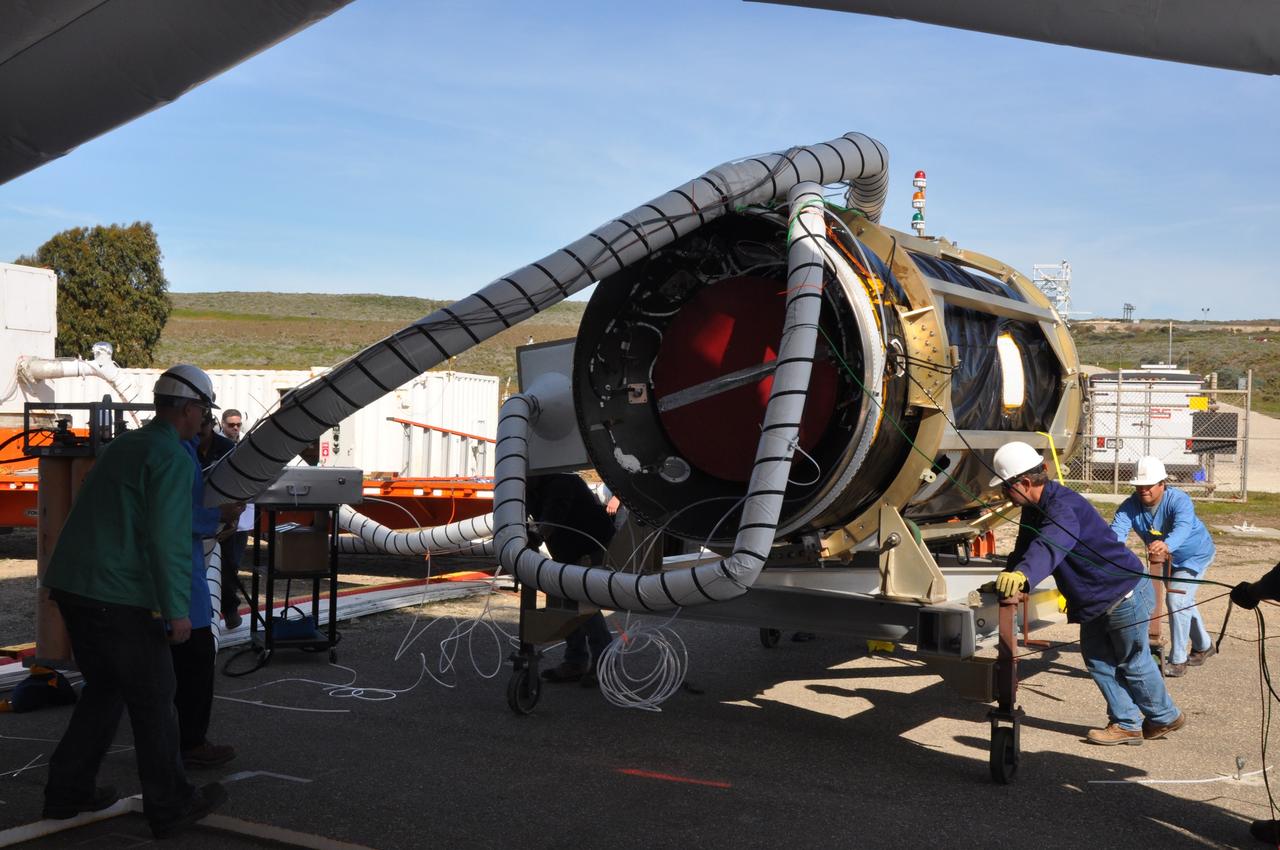
TAURUS GLORY - STAGE 1 MATE TO STAGE 2
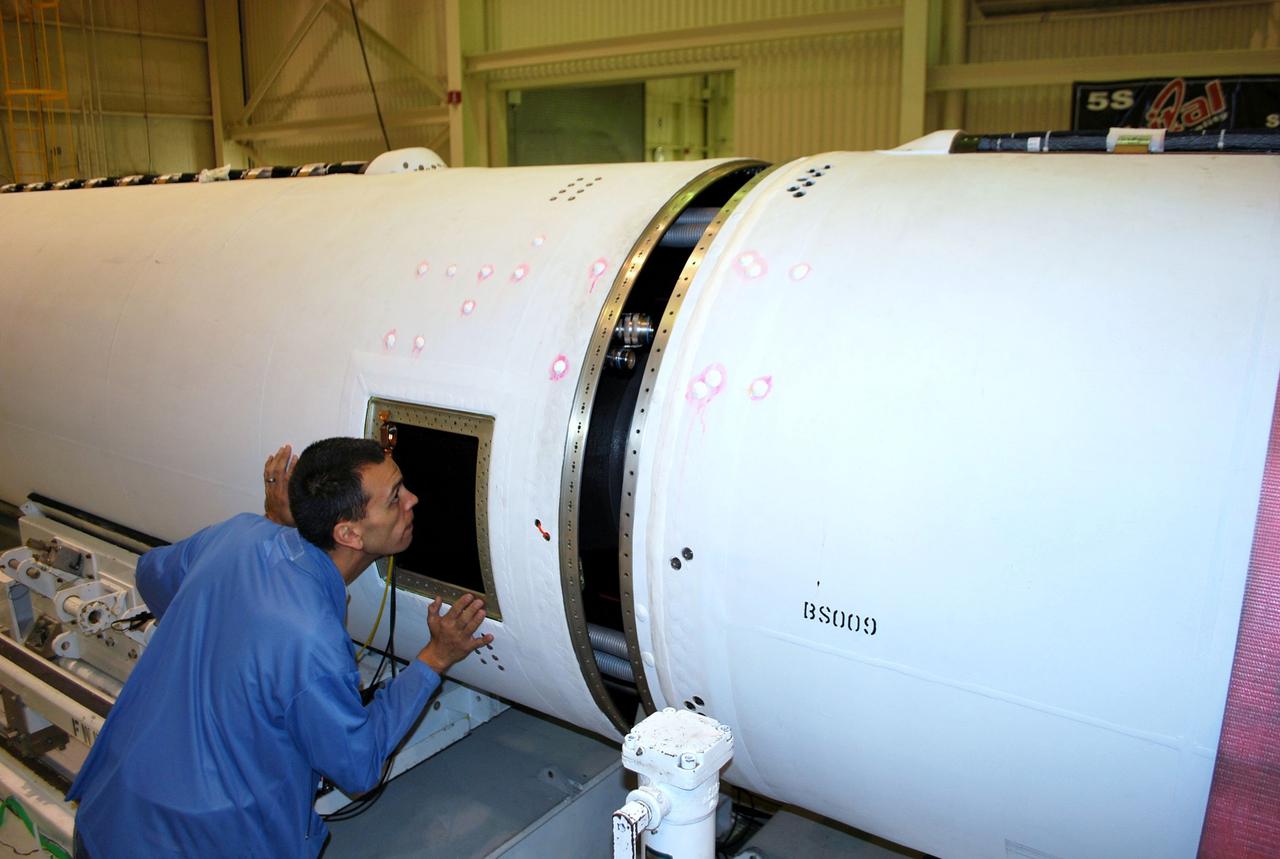
TAURUS GLORY - STAGE 1 MATE TO STAGE 2
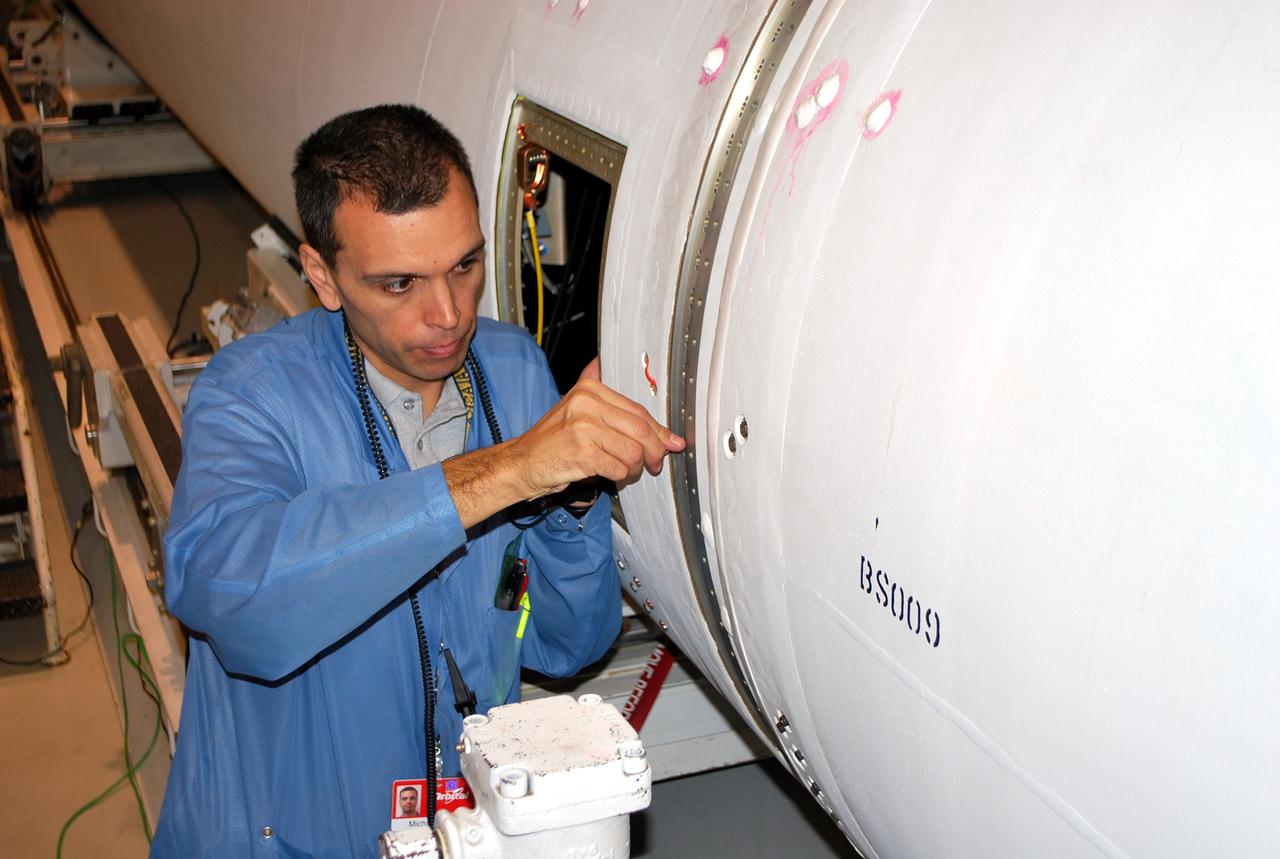
TAURUS GLORY - STAGE 1 MATE TO STAGE 2

Greg Kopp, from the University of Colorado's Laboratory for Atmospheric and Space Physics in Boulder, Colo., talks about the launch of the GLORY mission during a news conference at NASA Headquarters, Thursday, Jan. 20, 2011, in Washington. NASA's newest Earth-observing research mission is scheduled for launch form Vandenburg Air Force Base in California on Feb. 23. The mission will improve our understanding of how the sun and tiny atmosppheric particles called aerosols affect Earth's climate. Photo Credit: (NASA/Paul E. Alers)

A small model of the Glory earth-observing spacecraft is seen during a news conference at NASA Headquarters, Thursday, Jan. 20, 2011, in Washington. NASA's newest Earth-observing research mission is scheduled for launch form Vandenburg Air Force Base in California on Feb. 23. The mission will improve our understanding of how the sun and tiny atmosppheric particles called aerosols affect Earth's climate. Photo Credit: (NASA/Paul E. Alers)

At the Orbital Sciences Corp. Building 1555 at Vandenberg Air Force Base in California, Stage 0/1 interstage, part of the four-stage Taurus XL rocket that will carry NASA's Glory spacecraft into low Earth orbit, is being prepared for transport to Space Launch Complex 576-E. Once Glory reaches orbit, it will collect data on the properties of aerosols and black carbon. It also will help scientists understand how the sun's irradiance affects Earth's climate. Launch is scheduled for 5:09 a.m. EST Feb. 23. For information, visit www.nasa.gov/glory. Photo credit: NASA/Randy Beaudoin, VAFB
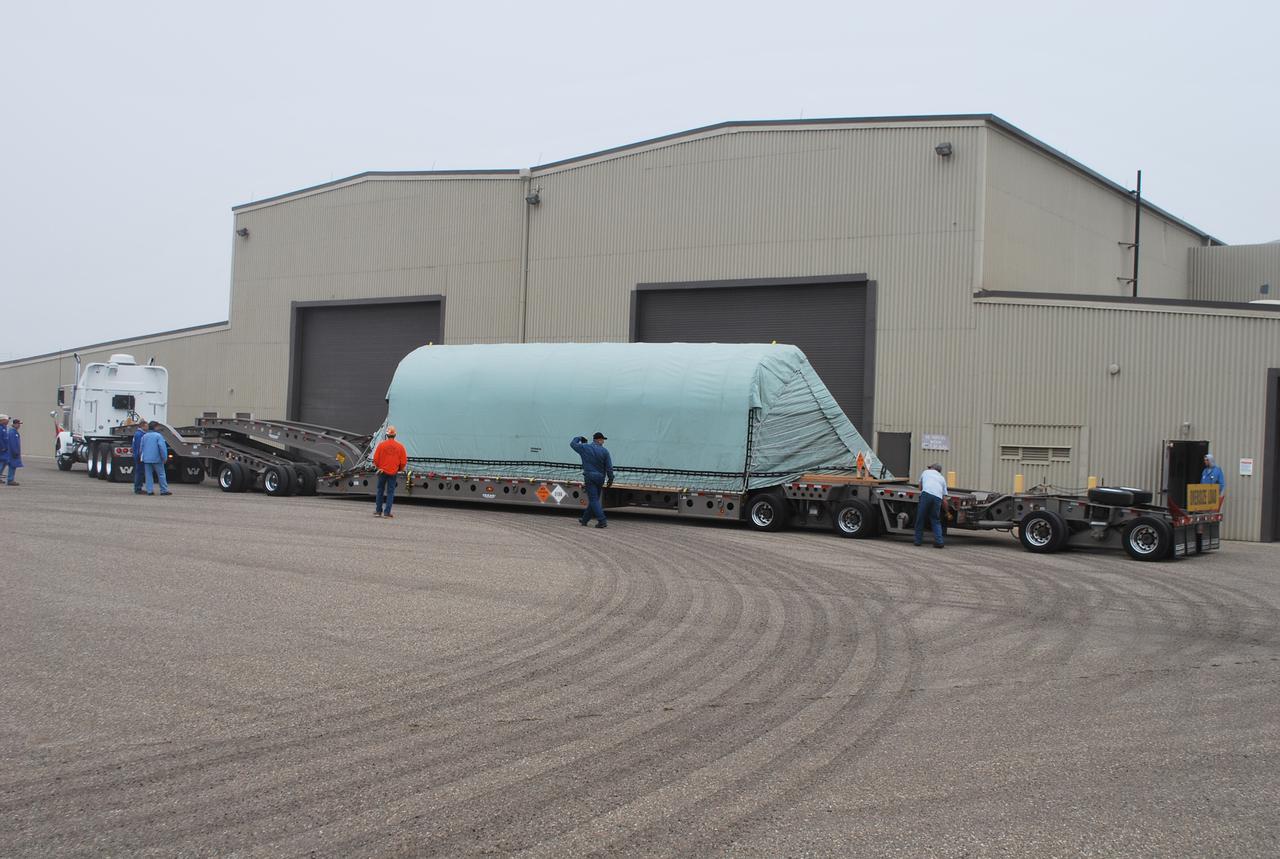
VANDENBERG AIR FORCE BASE, Calif. -- The Stage 0 motor for the Taurus XL launch vehicle arrives at Vandenberg Air Force Base in California. The motor will help carry NASA's Glory satellite into low Earth orbit. Glory is scheduled to launch in November from Vandenberg's Launch Pad SLC 576-E. Once Glory reaches orbit, it will collect data on the properties of aerosols and black carbon. It also will help scientists understand how the sun's irradiance affects Earth's climate. Photo credit: NASA_Randy Beaudoin, VAFB
VANDENBERG AIR FORCE BASE, Calif. -- At Vandenberg Air Force Base in California, the Stage 0 motor for the Taurus XL launch vehicle is revealed. The motor will help carry NASA's Glory satellite into low Earth orbit. Glory is scheduled to launch in November from Vandenberg's Launch Pad SLC 576-E. Once Glory reaches orbit, it will collect data on the properties of aerosols and black carbon. It also will help scientists understand how the sun's irradiance affects Earth's climate. Photo credit: NASA_Randy Beaudoin, VAFB
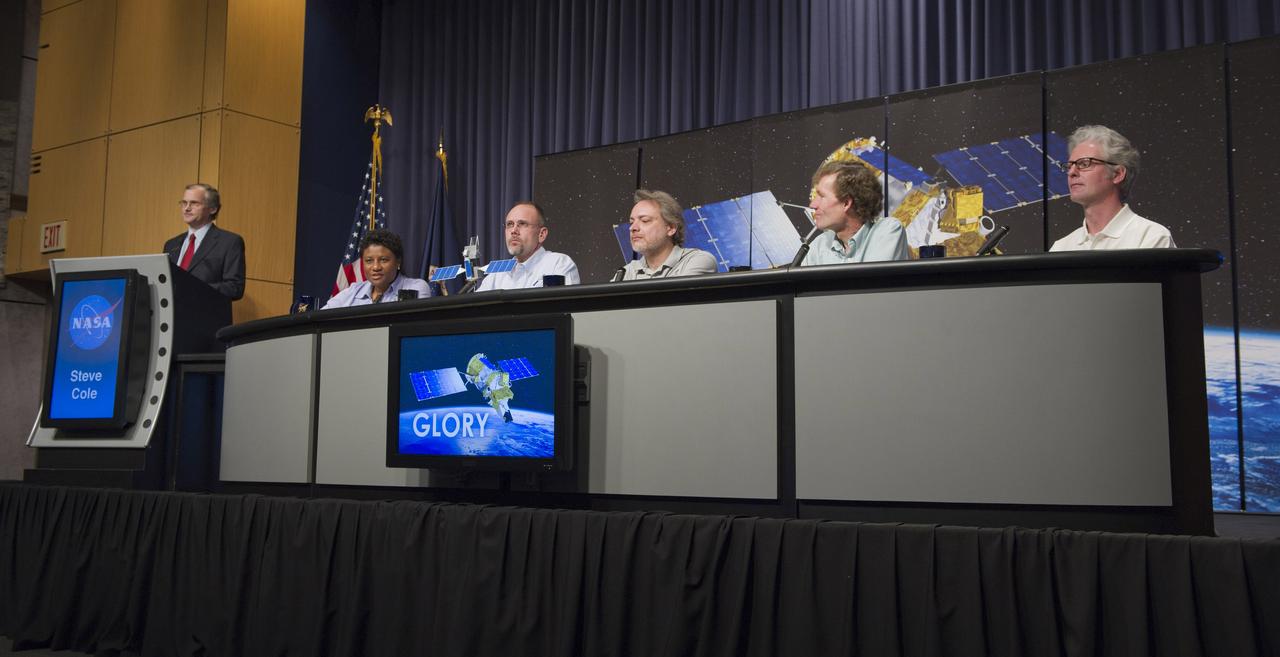
Joy Bretthauer, Glory Program Executive, seated left, Bryan Fafaul, Michael Mischenko, Greg Kopp and Brian Cairns, seated right, talk about the launch of the GLORY mission during a news conference at NASA Headquarters, Thursday, Jan. 20, 2011, in Washington. NASA's newest Earth-observing research mission is scheduled for launch form Vandenburg Air Force Base in California on Feb. 23. The mission will improve our understanding of how the sun and tiny atmosppheric particles called aerosols affect Earth's climate. Photo Credit: (NASA/Paul E. Alers)
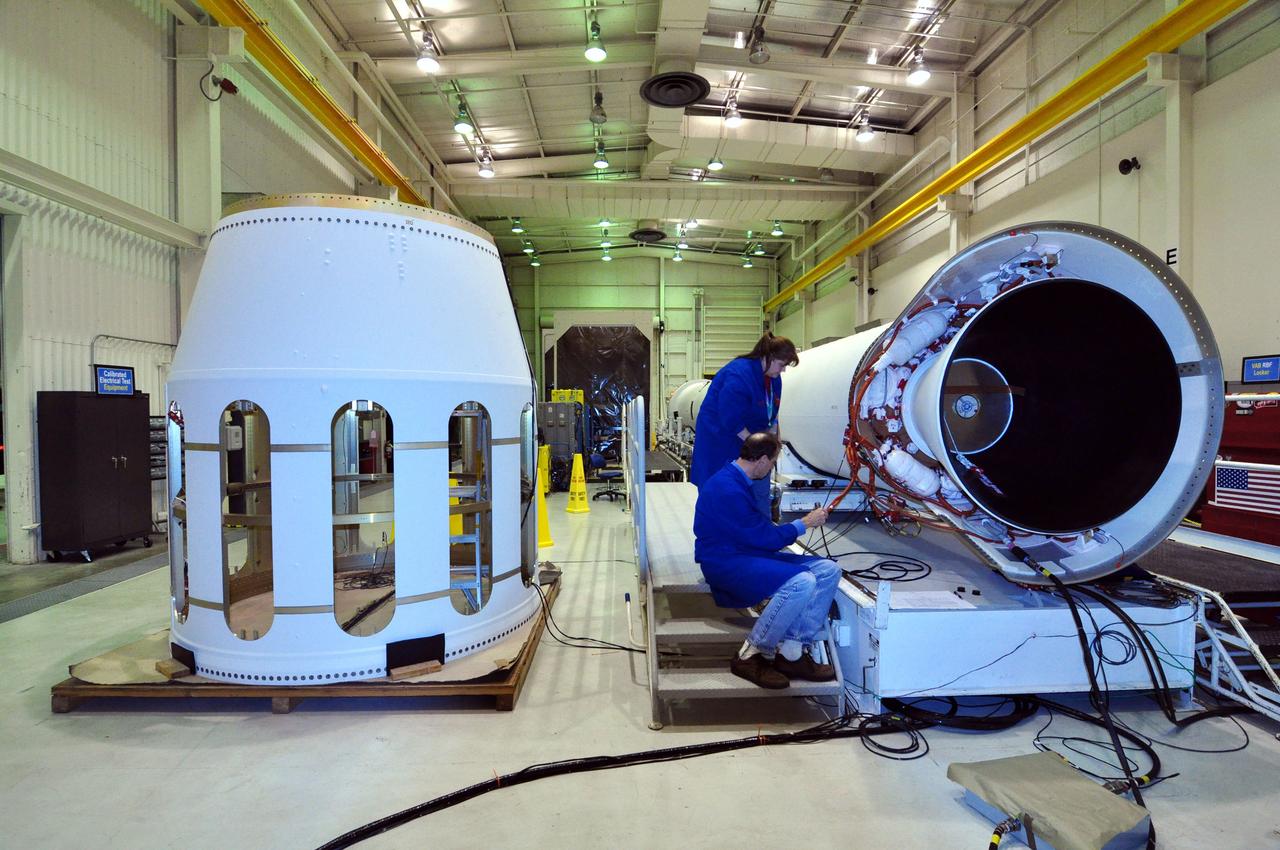
TAURUS GLORY - STAGE 1 TO STAGE 2 MATE - WIDE ANGLE OVERVIEW SHOTS
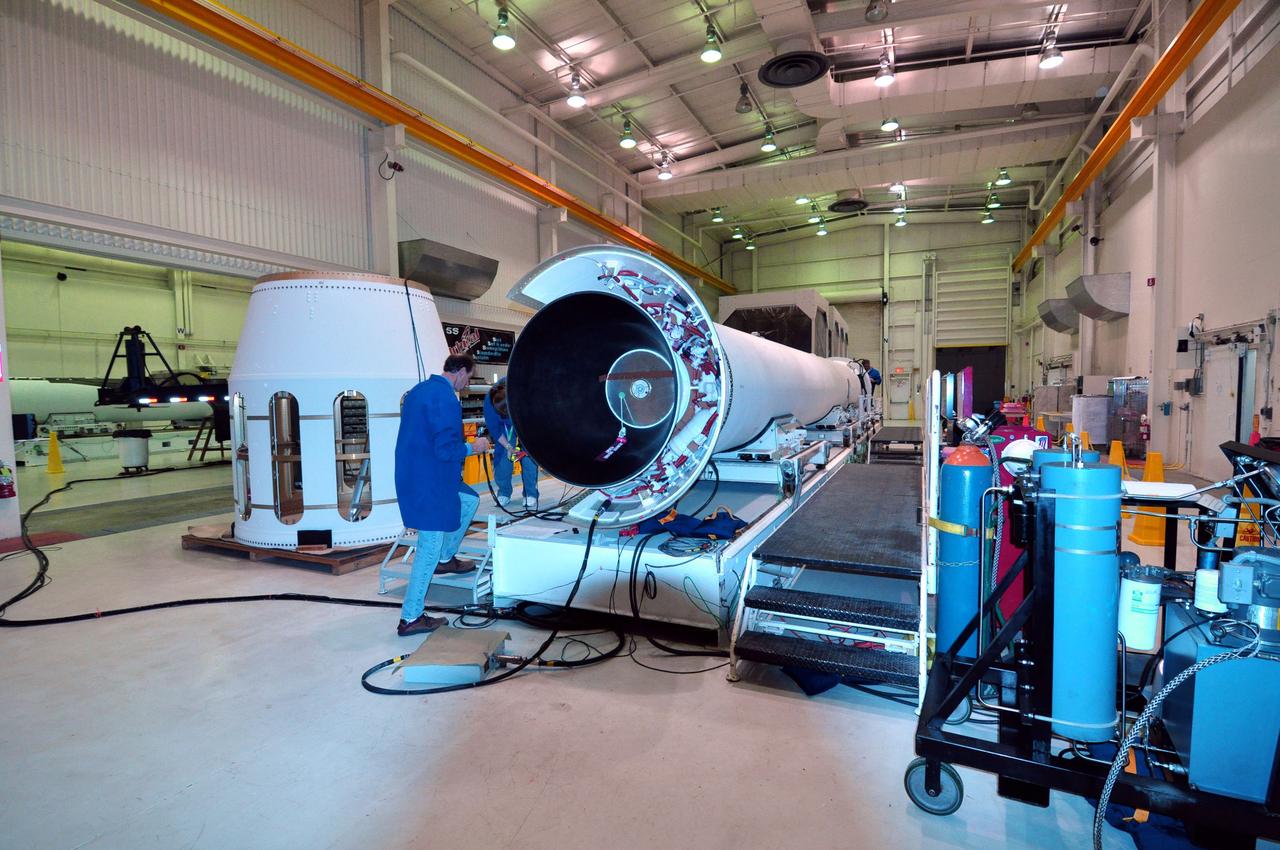
TAURUS GLORY - STAGE 1 TO STAGE 2 MATE - WIDE ANGLE OVERVIEW SHOTS
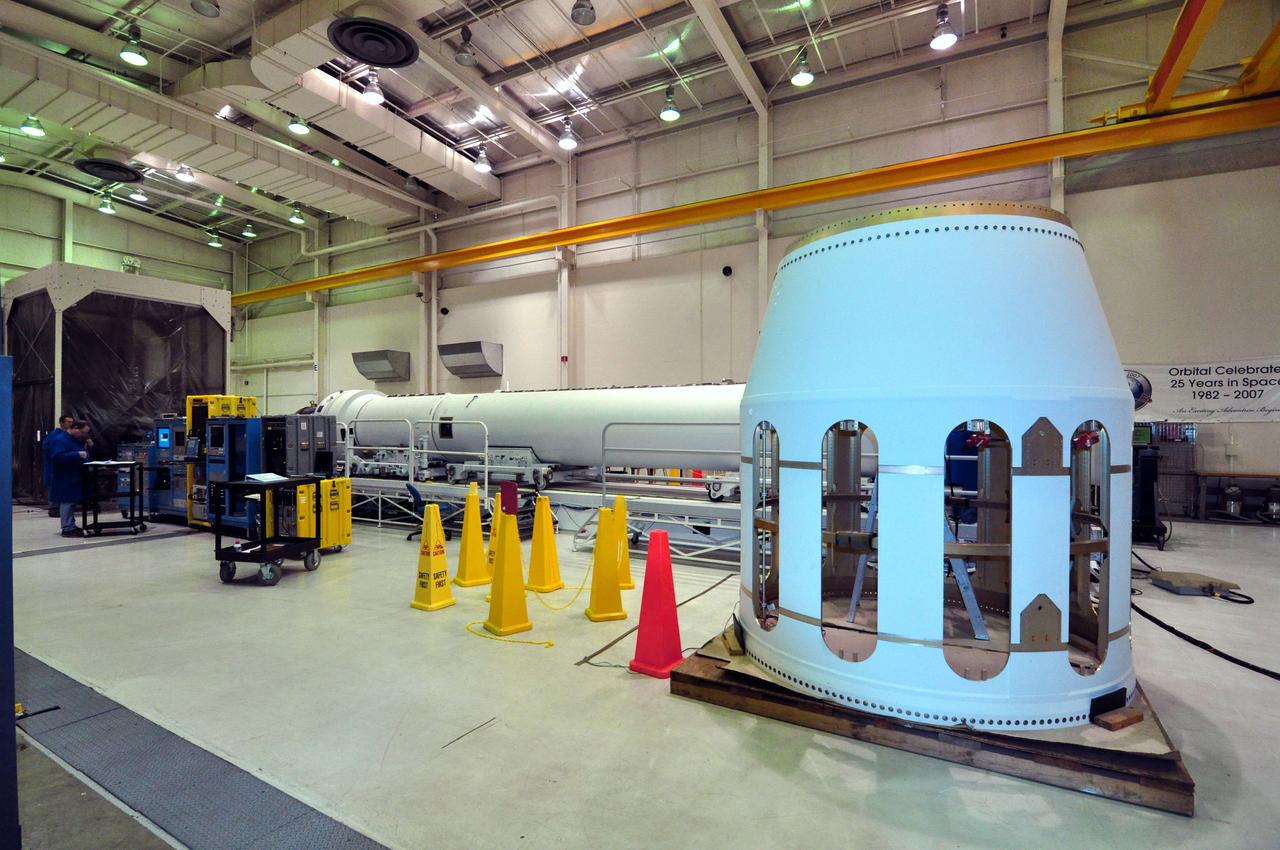
TAURUS GLORY - STAGE 1 TO STAGE 2 MATE - WIDE ANGLE OVERVIEW SHOTS
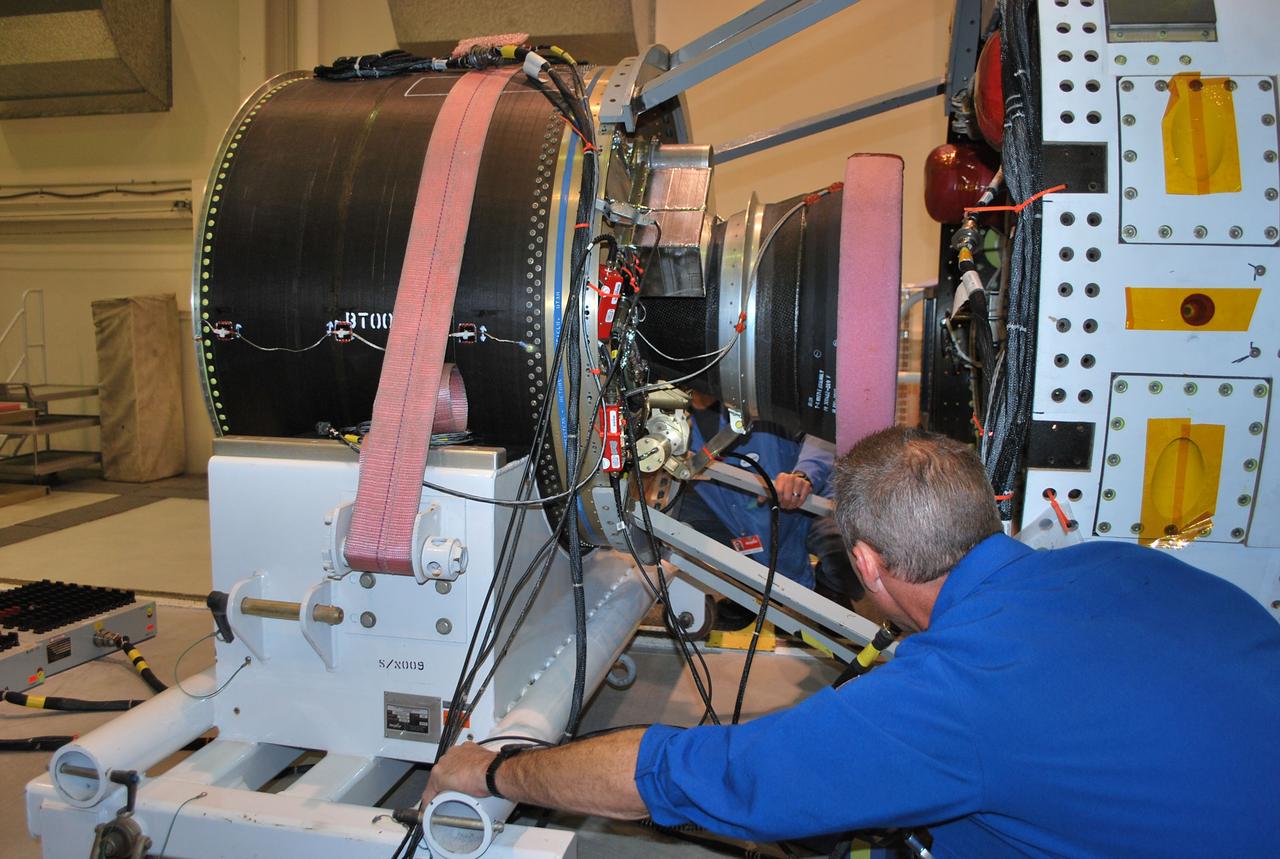
GLORY - TAURUS MATING THE STAGE 3 MOTOR TO THE TEMPORARY MOTOR INTERFACE FIXTURE (MIF) TO STAGE 2
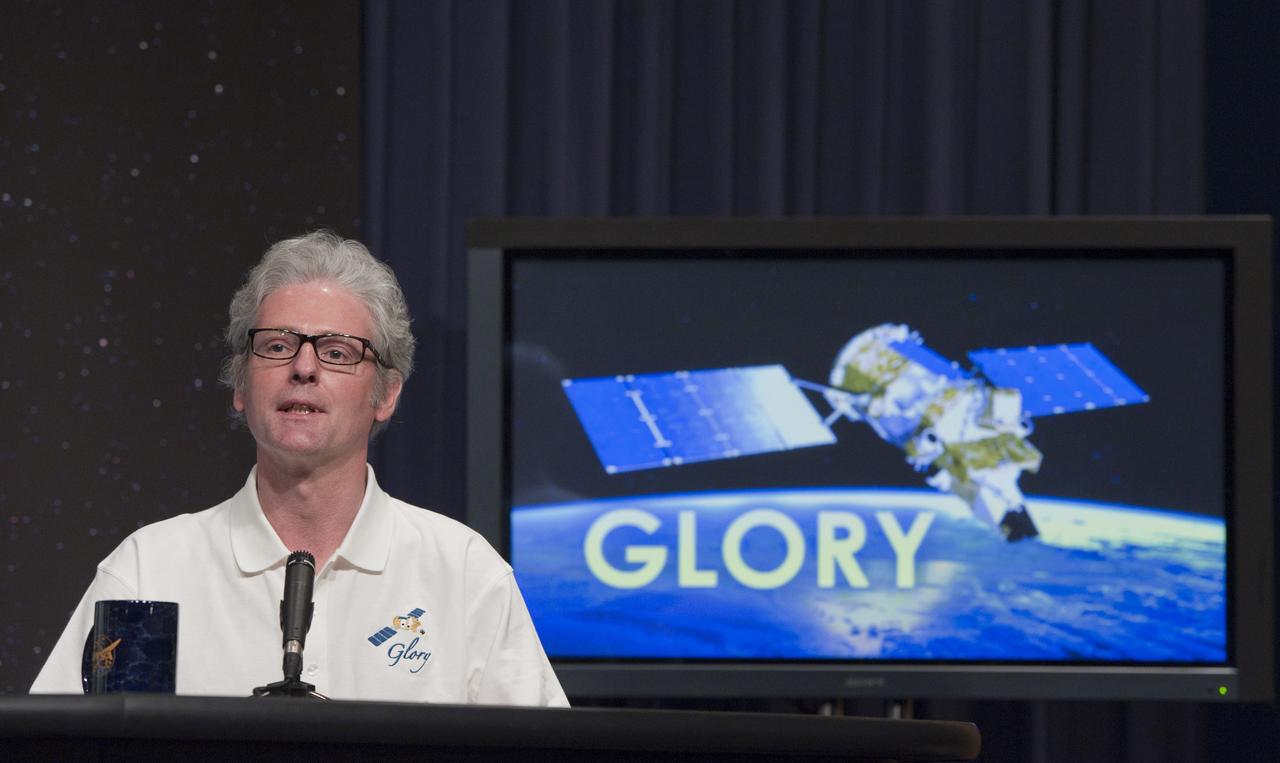
Brian Cairns, from NASA's Goddard Institute for Space Studies, talks about the launch of the GLORY mission during a news conference at NASA Headquarters, Thursday, Jan. 20, 2011, in Washington. NASA's newest Earth-observing research mission is scheduled for launch form Vandenburg Air Force Base in California on Feb. 23. The mission will improve our understanding of how the sun and tiny atmosppheric particles called aerosols affect Earth's climate. Photo Credit: (NASA/Paul E. Alers)
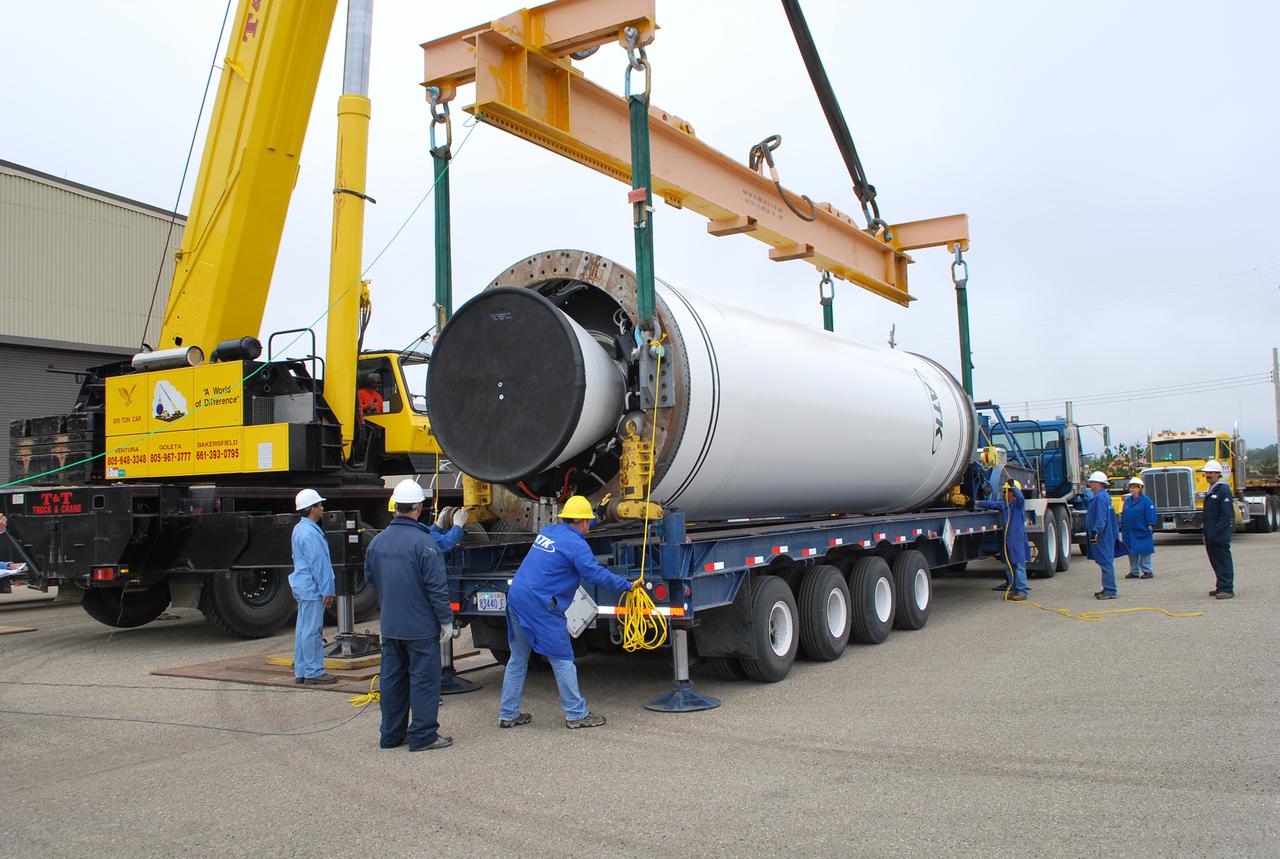
VANDENBERG AIR FORCE BASE, Calif. -- At Vandenberg Air Force Base in California, the Stage 0 motor for the Taurus XL launch vehicle is readied for its move into Orbital Sciences' Hangar 1555. The motor will help lift NASA's Glory satellite into low Earth orbit. Glory is scheduled to launch in November from Vandenberg's Launch Pad SLC 576-E. Once Glory reaches orbit, it will collect data on the properties of aerosols and black carbon. It also will help scientists understand how the sun's irradiance affects Earth's climate. Photo credit: NASA_Randy Beaudoin, VAFB
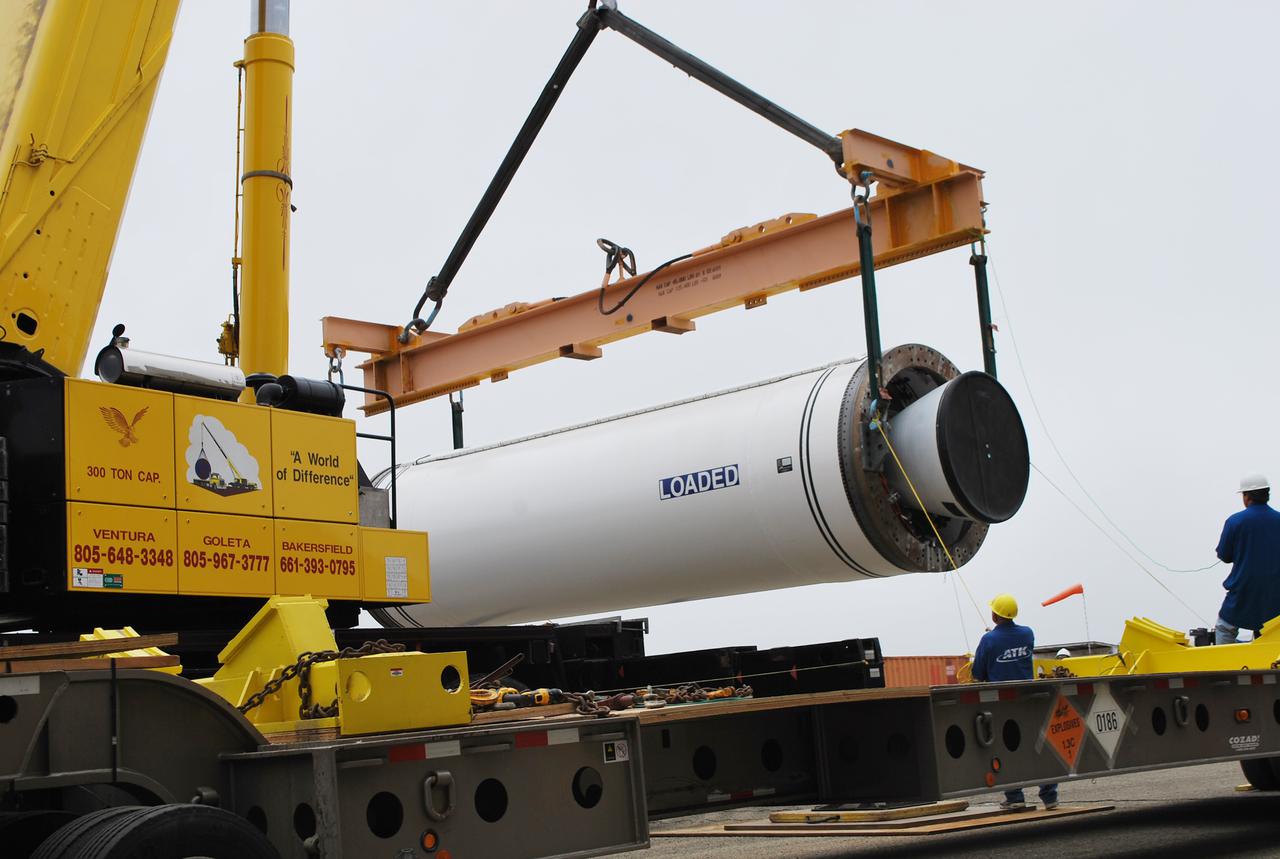
VANDENBERG AIR FORCE BASE, Calif. -- At Vandenberg Air Force Base in California, a crane lifts the Stage 0 motor for the Taurus XL launch vehicle for its move into Orbital Sciences' Hangar 1555. The motor will help carry NASA's Glory satellite into low Earth orbit. Glory is scheduled to launch in November from Vandenberg's Launch Pad SLC 576-E. Once Glory reaches orbit, it will collect data on the properties of aerosols and black carbon. It also will help scientists understand how the sun's irradiance affects Earth's climate. Photo credit: NASA_Randy Beaudoin, VAFB
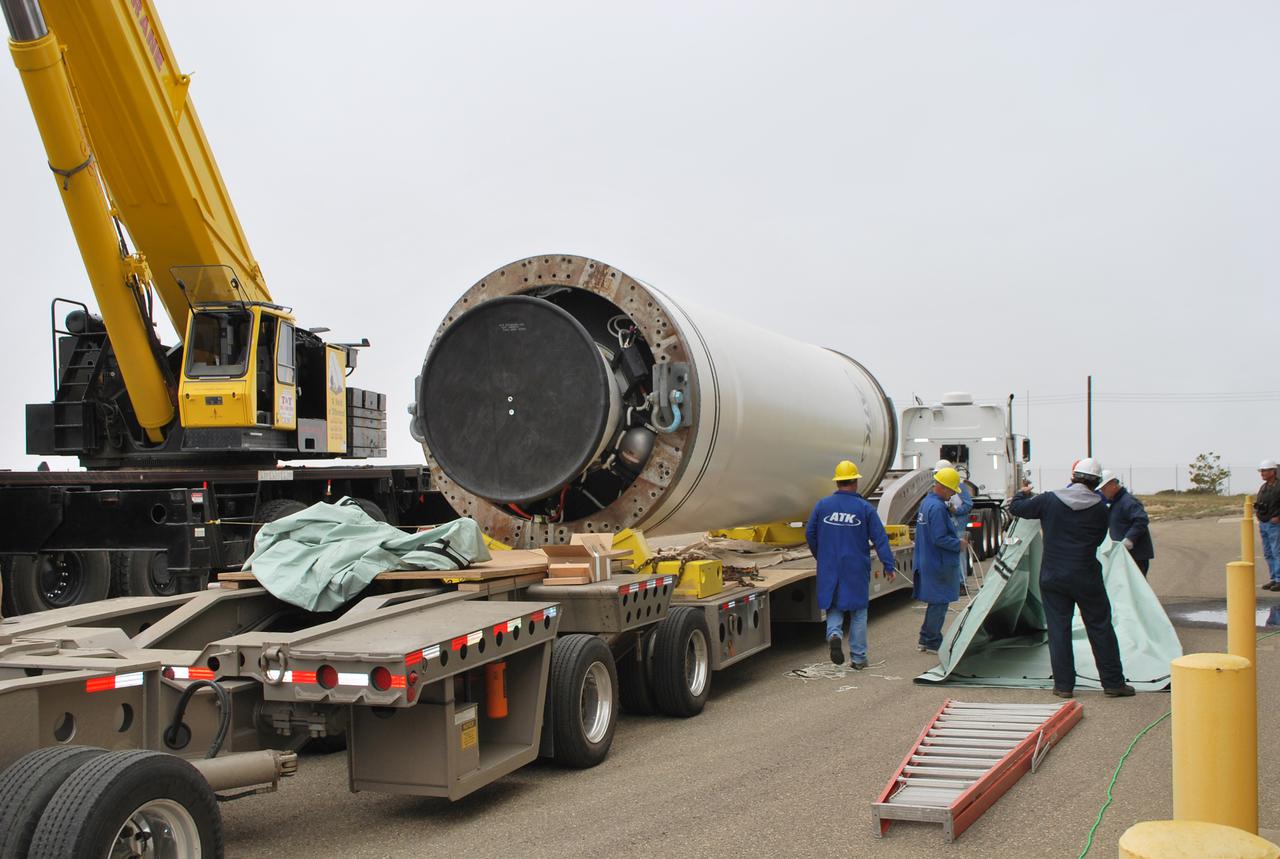
VANDENBERG AIR FORCE BASE, Calif. -- At Vandenberg Air Force Base in California, the Stage 0 motor for the Taurus XL launch vehicle is prepared for transportation into Orbital Sciences' Hangar 1555. The motor will help carry NASA's Glory satellite into low Earth orbit. Glory is scheduled to launch in November from Vandenberg's Launch Pad SLC 576-E. Once Glory reaches orbit, it will collect data on the properties of aerosols and black carbon. It also will help scientists understand how the sun's irradiance affects Earth's climate. Photo credit: NASA_Randy Beaudoin, VAFB
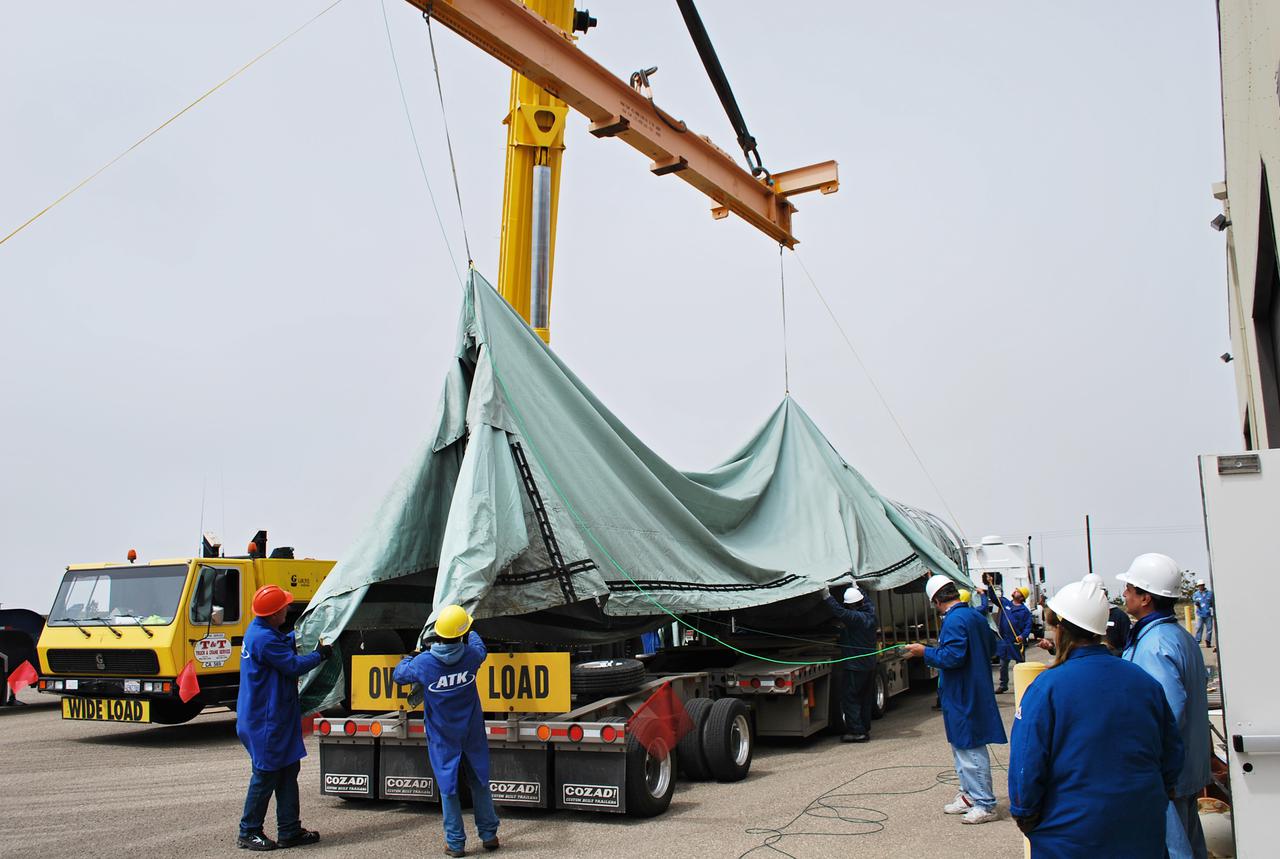
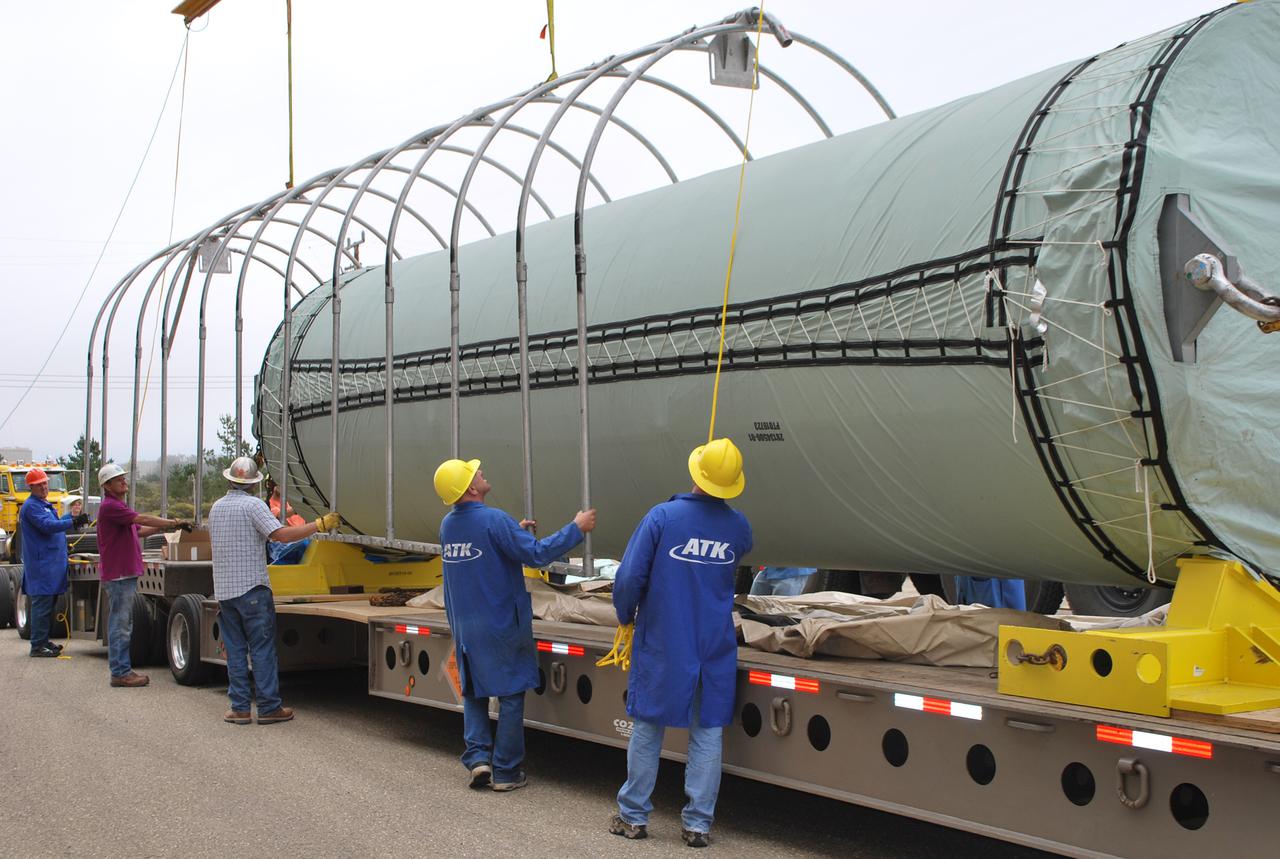
VANDENBERG AIR FORCE BASE, Calif. -- At Vandenberg Air Force Base in California, workers remove the shipping canvas off the Stage 0 motor for the Taurus XL launch vehicle. The motor will help carry NASA's Glory satellite into low Earth orbit. Glory is scheduled to launch in November from Vandenberg's Launch Pad SLC 576-E. Once Glory reaches orbit, it will collect data on the properties of aerosols and black carbon. It also will help scientists understand how the sun's irradiance affects Earth's climate. Photo credit: NASA_Randy Beaudoin, VAFB
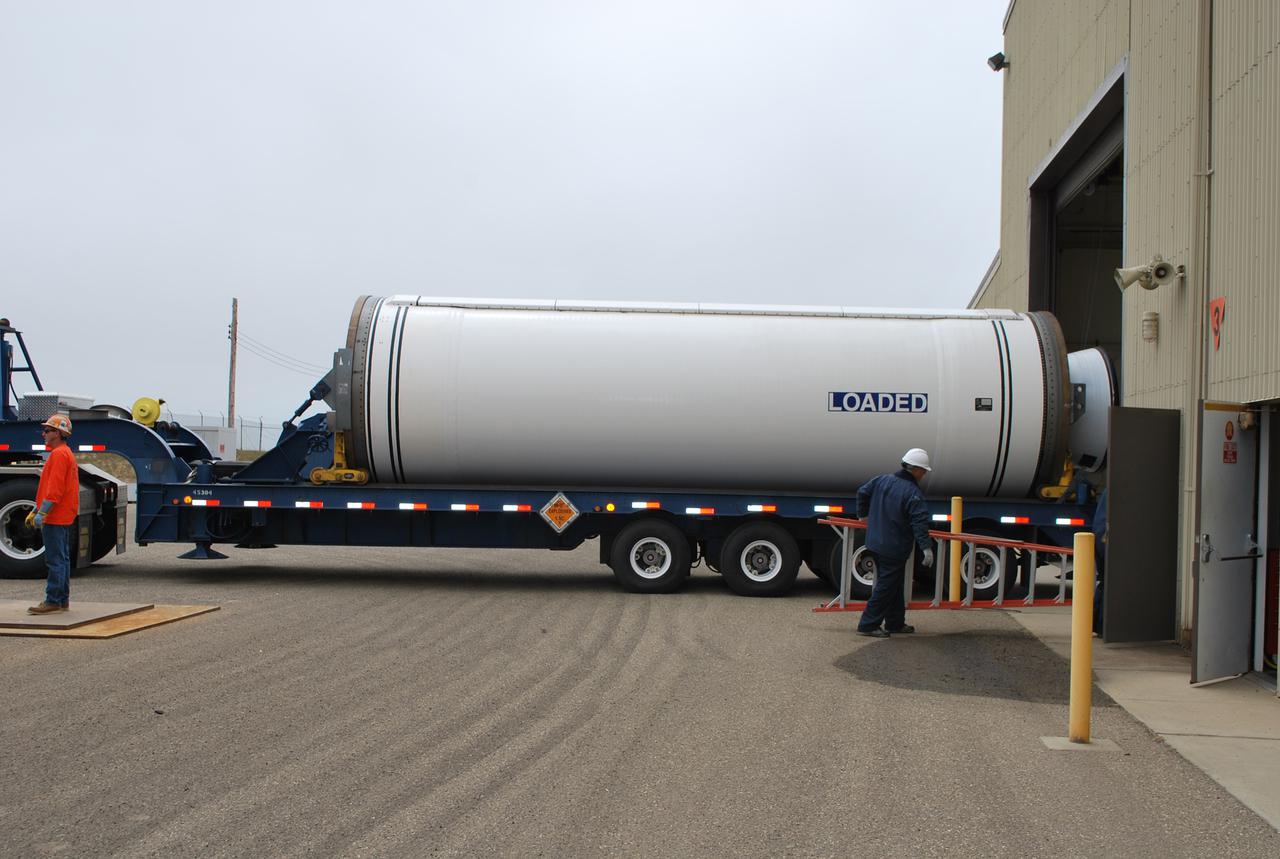
VANDENBERG AIR FORCE BASE, Calif. -- At Vandenberg Air Force Base in California, the Stage 0 motor for the Taurus XL launch vehicle is moved into Orbital Sciences' Hangar 1555. The motor will help lift NASA's Glory satellite into low Earth orbit. Glory is scheduled to launch in November from Vandenberg's Launch Pad SLC 576-E. Once Glory reaches orbit, it will collect data on the properties of aerosols and black carbon. It also will help scientists understand how the sun's irradiance affects Earth's climate. Photo credit: NASA_Randy Beaudoin, VAFB
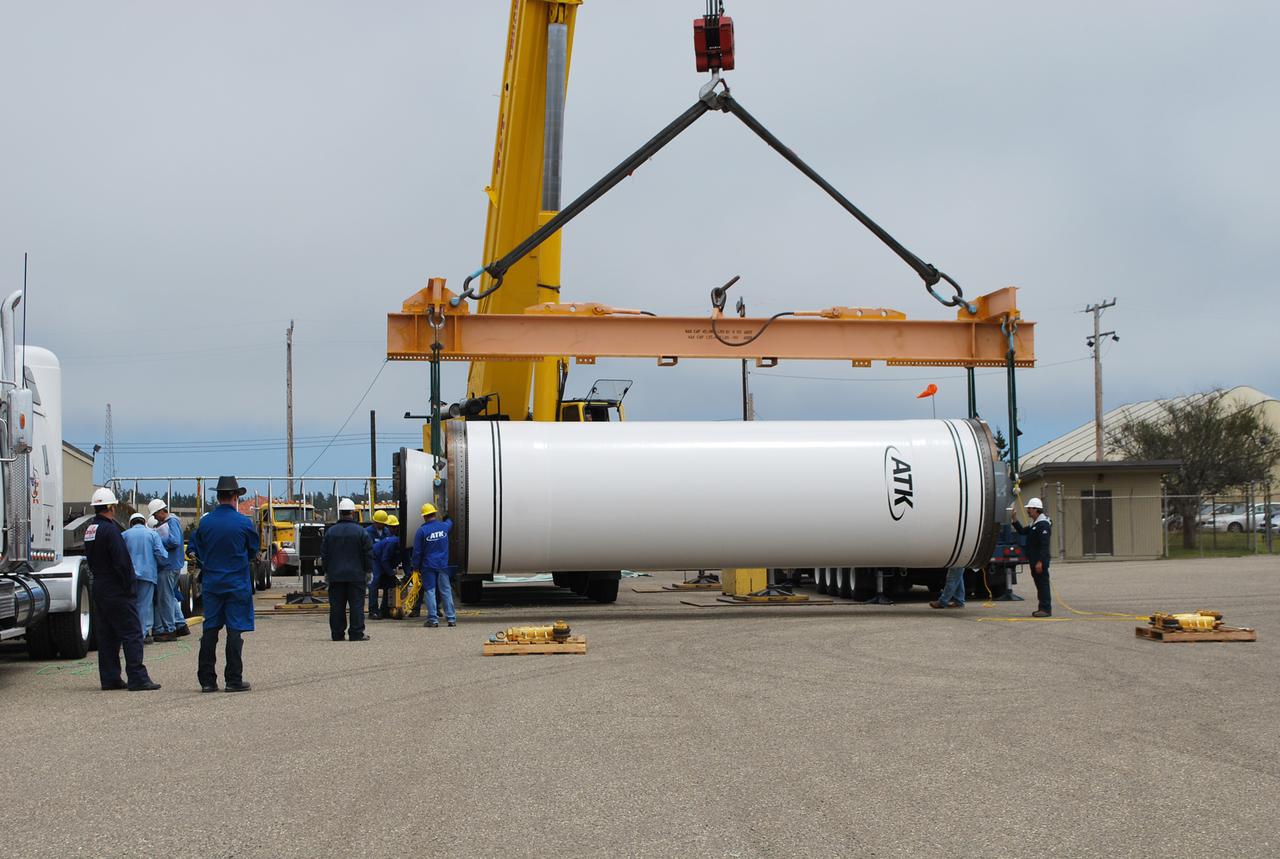
VANDENBERG AIR FORCE BASE, Calif. -- At Vandenberg Air Force Base in California, a crane lowers the Stage 0 motor for the Taurus XL launch vehicle to the ground for its move into Orbital Sciences' Hangar 1555. The motor will help carry NASA's Glory satellite into low Earth orbit. Glory is scheduled to launch in November from Vandenberg's Launch Pad SLC 576-E. Once Glory reaches orbit, it will collect data on the properties of aerosols and black carbon. It also will help scientists understand how the sun's irradiance affects Earth's climate. Photo credit: NASA_Randy Beaudoin, VAFB
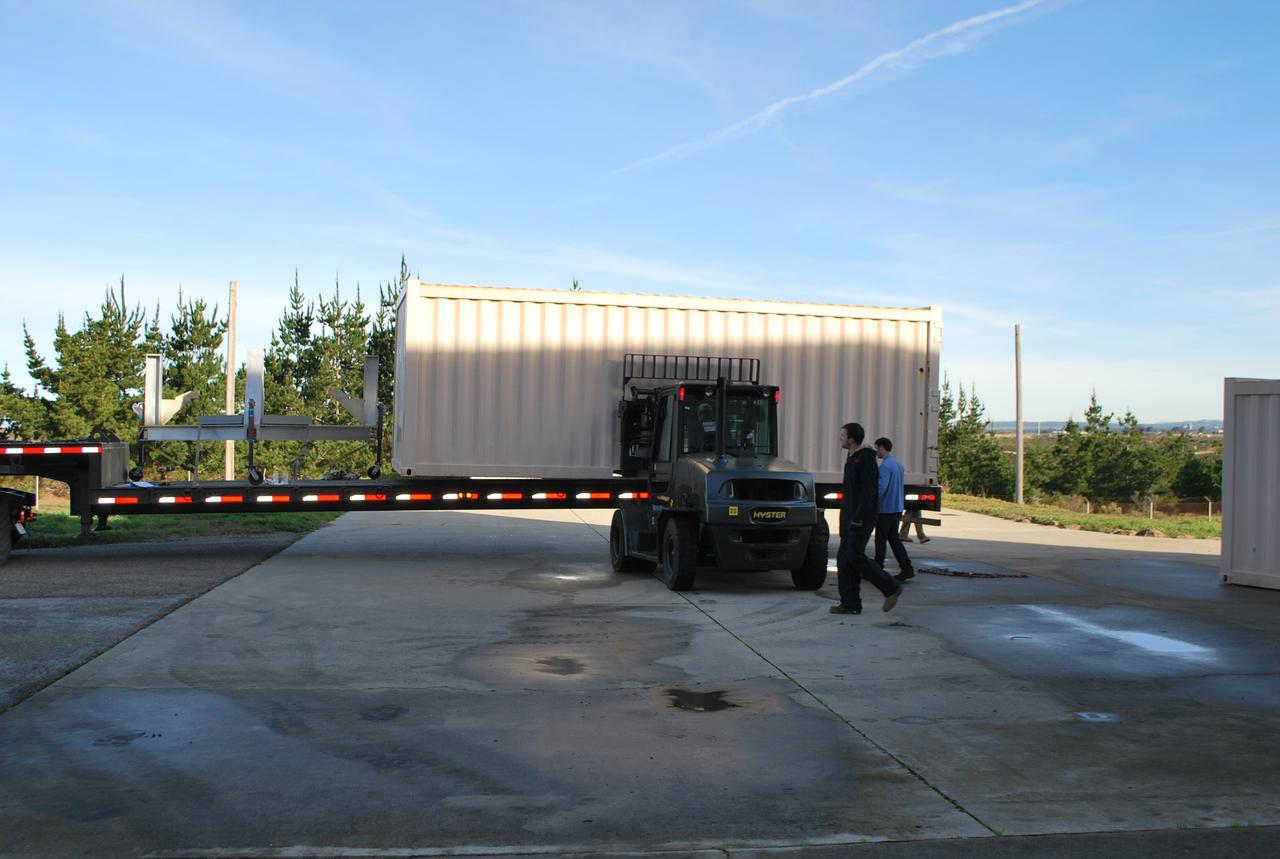
VANDENBERG AIR FORCE BASE, Calif. -- At the Orbital Sciences Corp. Building 1555 at Vandenberg Air Force Base in California, a crane lifts the cargo container housing one half of the fairing onto a trailer for transport to the Astrotech Payload Processing Facility. Once both halves of the fairing are delivered to Astrotech they will be installed around NASA's Glory satellite to protect it from the weather at the launch pad as well as from the atmosphere during flight. A four-stage Taurus XL rocket will carry Glory into low Earth orbit. Once Glory reaches orbit, it will collect data on the properties of aerosols and black carbon. It also will help scientists understand how the sun's irradiance affects Earth's climate. Launch is scheduled for 2:09 a.m. PST Feb. 23 from Vandenberg's Space Launch Complex 576-E. For information, visit www.nasa.gov/glory. Photo credit: NASA/Randy Beaudoin, VAFB
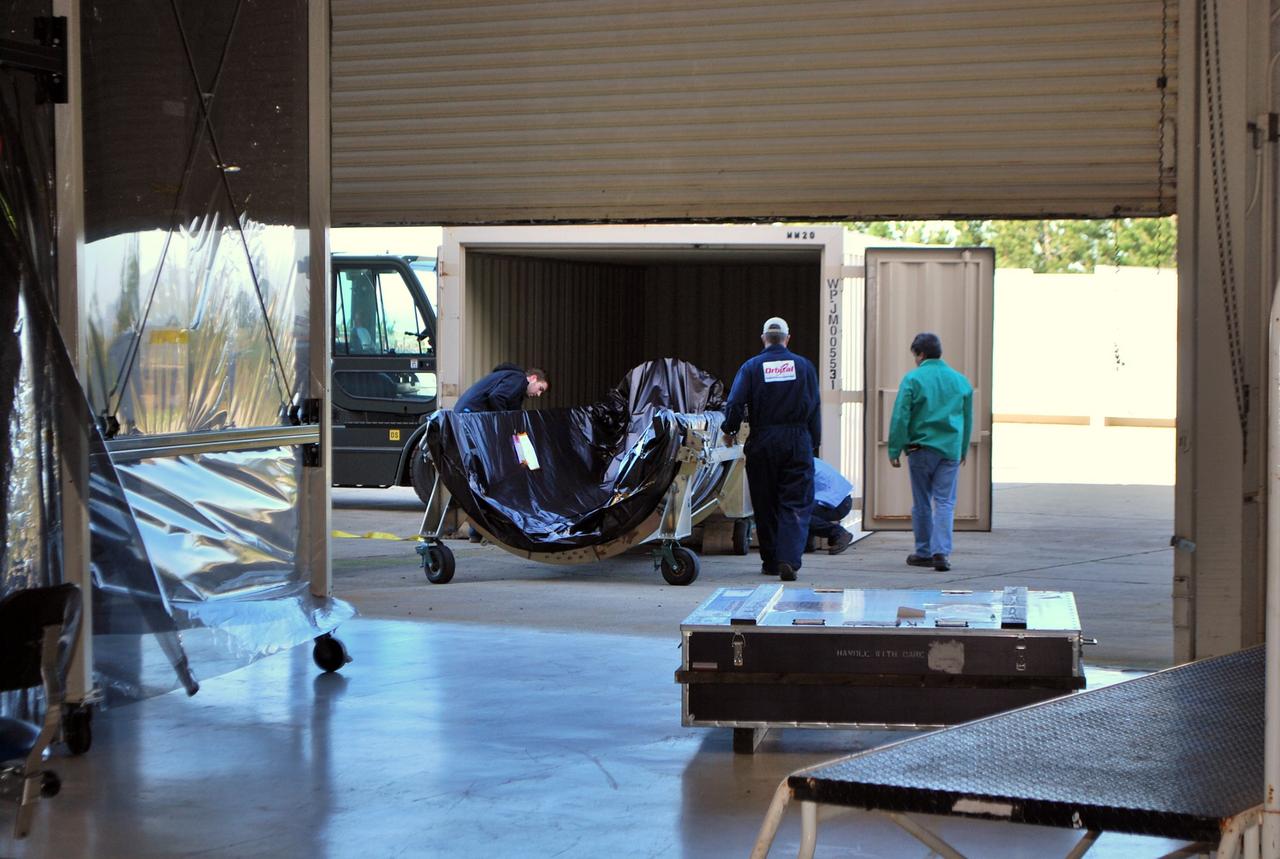
VANDENBERG AIR FORCE BASE, Calif. -- Workers move one half of the fairing, wrapped in plastic protective covering, into a cargo container for transport from the Orbital Sciences Corp. Building 1555 at Vandenberg Air Force Base in California to the Astrotech Payload Processing Facility. Once both halves of the fairing are delivered to Astrotech they will be installed around NASA's Glory satellite to protect it from the weather at the launch pad as well as from the atmosphere during flight. A four-stage Taurus XL rocket will carry Glory into low Earth orbit. Once Glory reaches orbit, it will collect data on the properties of aerosols and black carbon. It also will help scientists understand how the sun's irradiance affects Earth's climate. Launch is scheduled for 2:09 a.m. PST Feb. 23 from Vandenberg's Space Launch Complex 576-E. For information, visit www.nasa.gov/glory. Photo credit: NASA/Randy Beaudoin, VAFB
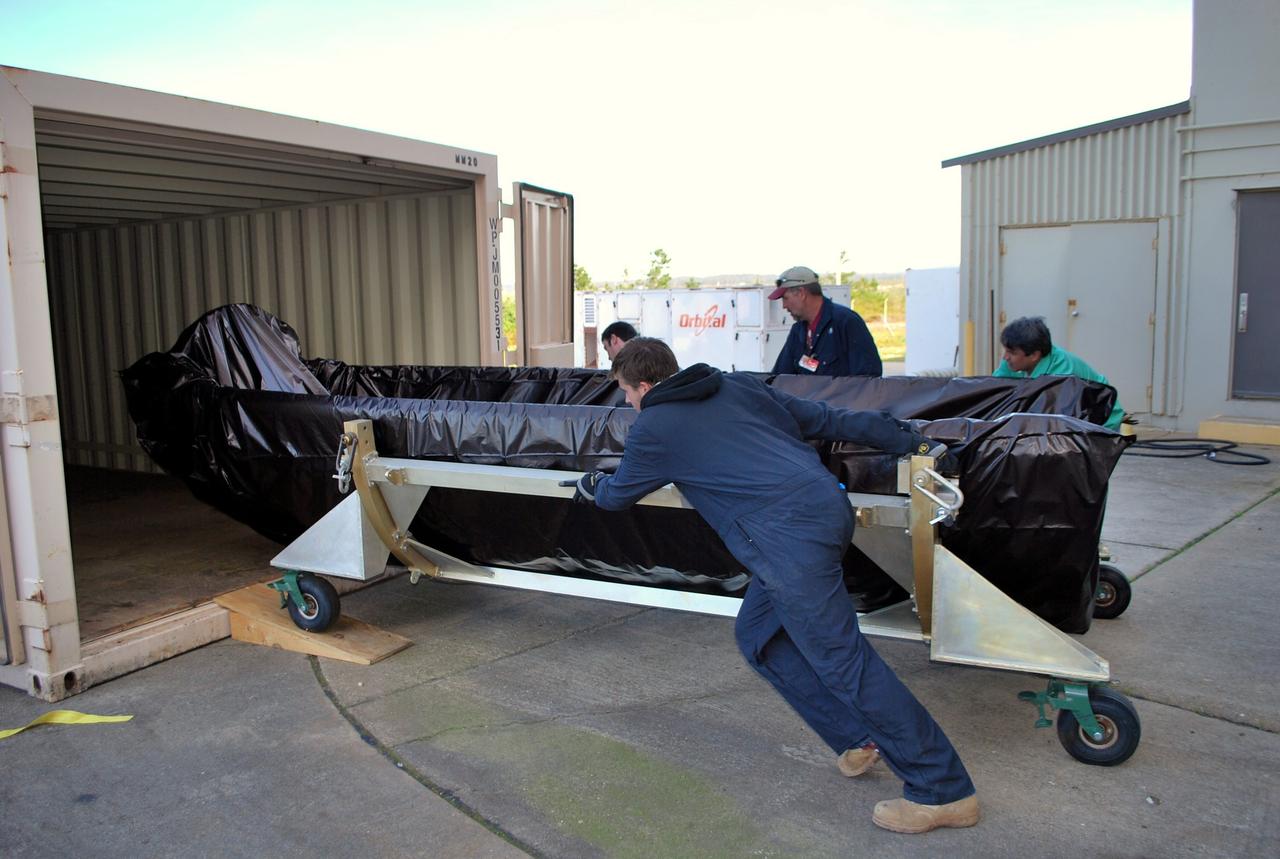
VANDENBERG AIR FORCE BASE, Calif. -- Workers move one half of the fairing, wrapped in plastic protective covering, into a cargo container for transport from the Orbital Sciences Corp. Building 1555 at Vandenberg Air Force Base in California to the Astrotech Payload Processing Facility. Once both halves of the fairing are delivered to Astrotech they will be installed around NASA's Glory satellite to protect it from the weather at the launch pad as well as from the atmosphere during flight. A four-stage Taurus XL rocket will carry Glory into low Earth orbit. Once Glory reaches orbit, it will collect data on the properties of aerosols and black carbon. It also will help scientists understand how the sun's irradiance affects Earth's climate. Launch is scheduled for 2:09 a.m. PST Feb. 23 from Vandenberg's Space Launch Complex 576-E. For information, visit www.nasa.gov/glory. Photo credit: NASA/Randy Beaudoin, VAFB
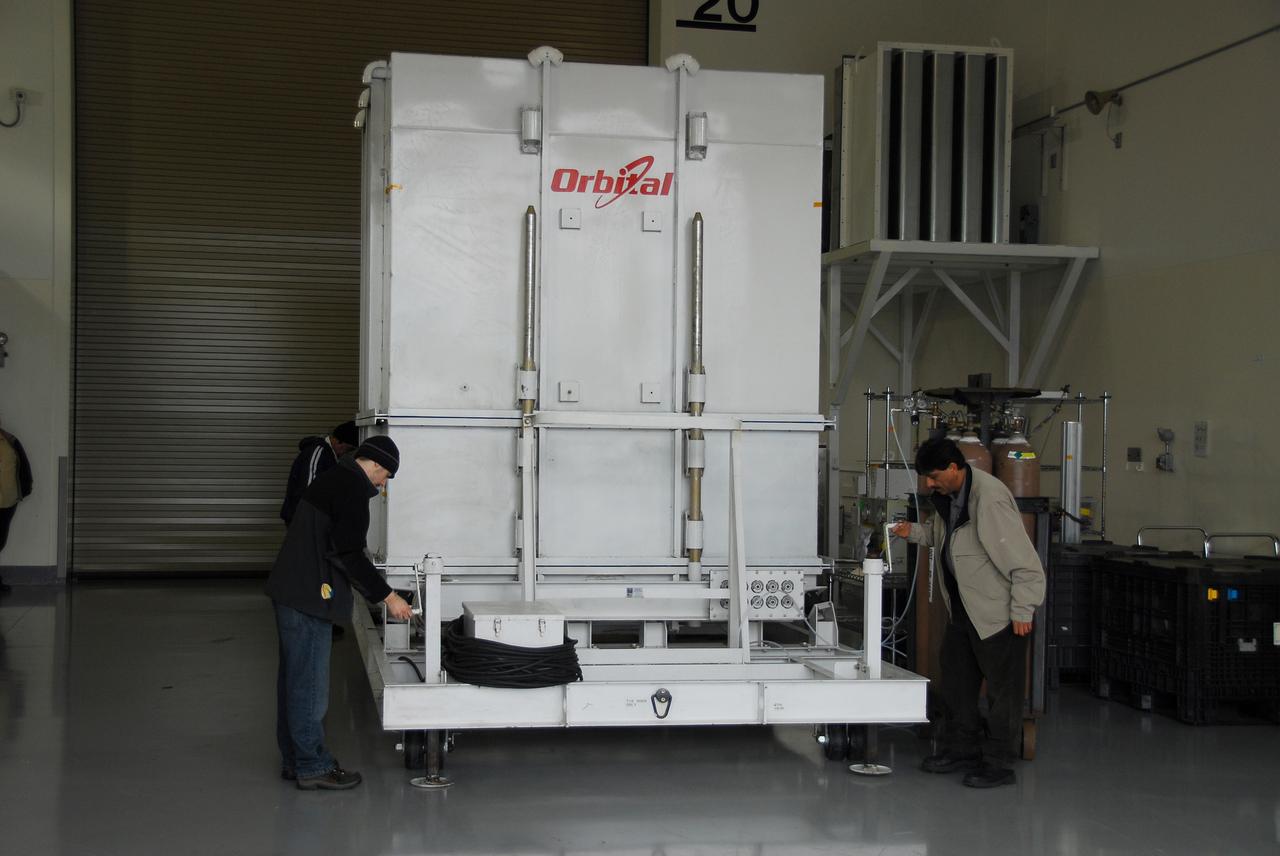
VANDENBERG AIR FORCE BASE, Calif. – The latest Earth-observing satellite developed by NASA, called Glory, is inside the Astrotech Payload Processing Facility at Vandenberg Air Force Base in California. An Orbital Sciences Taurus XL rocket is targeted to launch Glory into low Earth orbit Feb. 23 from Vandenberg's Space Launch Complex 576-E. Once in orbit, Glory will collect data on the properties of aerosols and black carbon. It also will help scientists understand how the sun's irradiance affects Earth's climate. Photo credit: NASA/Ed Henry, VAFB
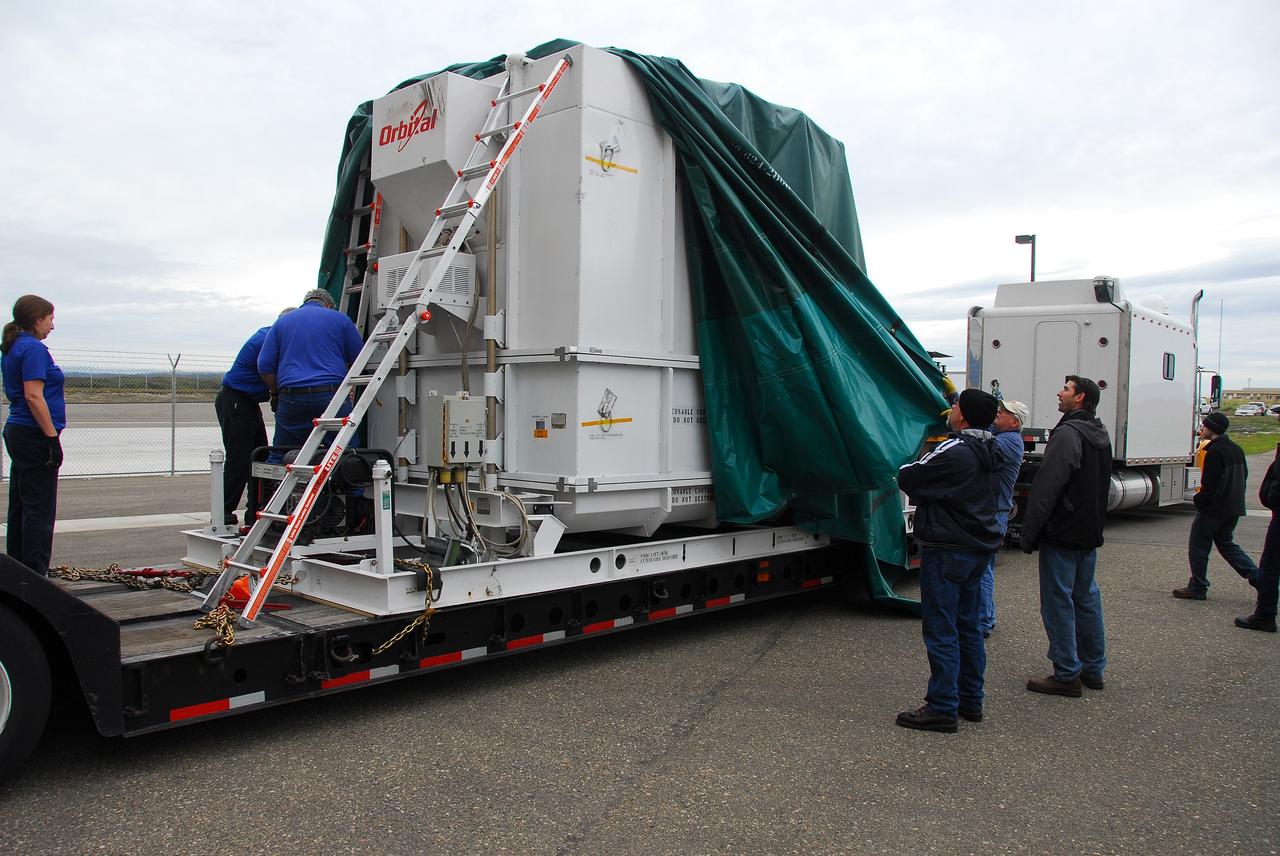
VANDENBERG AIR FORCE BASE, Calif. – The latest Earth-observing satellite developed by NASA, called Glory, arrives at the Astrotech Payload Processing Facility at Vandenberg Air Force Base in California by tractor-trailer. An Orbital Sciences Taurus XL rocket is targeted to launch Glory into low Earth orbit Feb. 23 from Vandenberg's Space Launch Complex 576-E. Once in orbit, Glory will collect data on the properties of aerosols and black carbon. It also will help scientists understand how the sun's irradiance affects Earth's climate. Photo credit: NASA/Ed Henry, VAFB
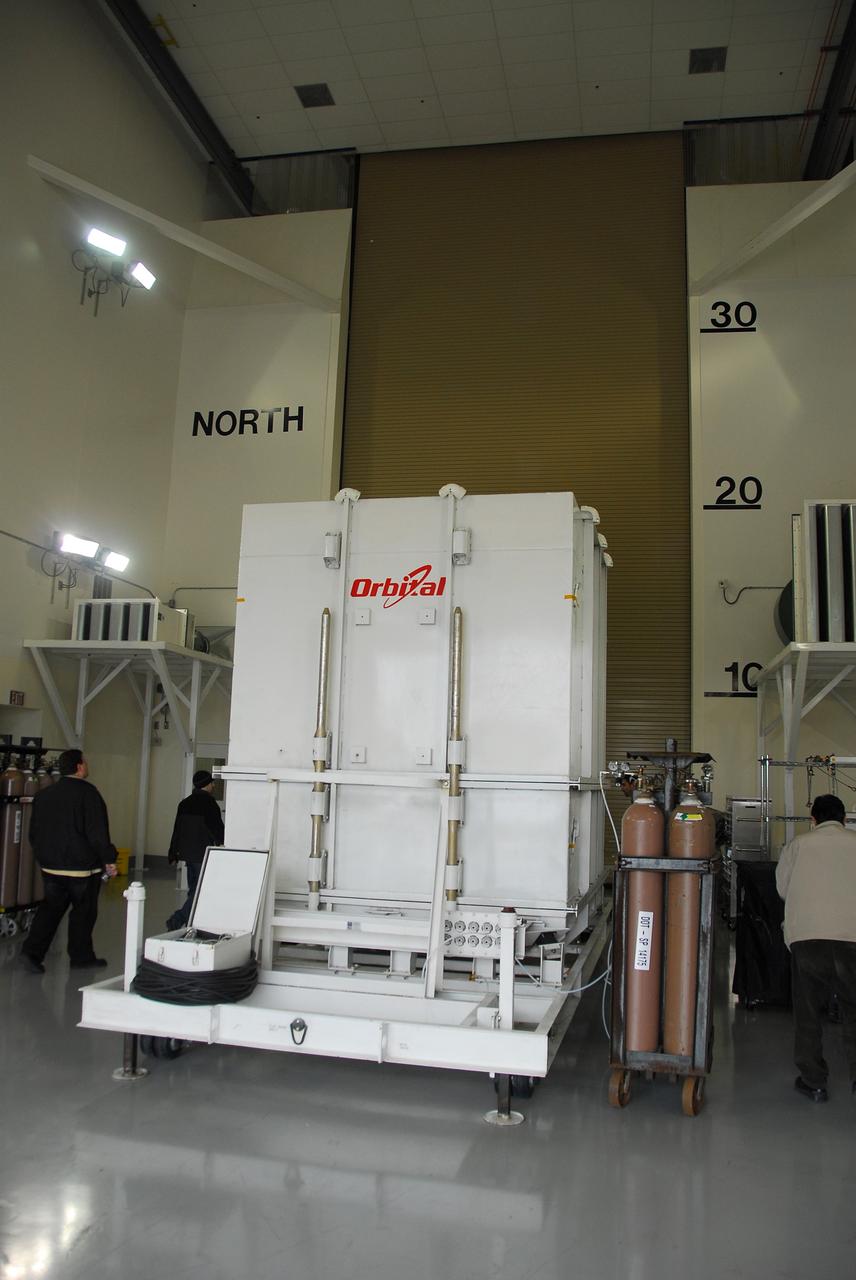
VANDENBERG AIR FORCE BASE, Calif. – The latest Earth-observing satellite developed by NASA, called Glory, is inside the Astrotech Payload Processing Facility at Vandenberg Air Force Base in California. An Orbital Sciences Taurus XL rocket is targeted to launch Glory into low Earth orbit Feb. 23 from Vandenberg's Space Launch Complex 576-E. Once in orbit, Glory will collect data on the properties of aerosols and black carbon. It also will help scientists understand how the sun's irradiance affects Earth's climate. Photo credit: NASA/Ed Henry, VAFB
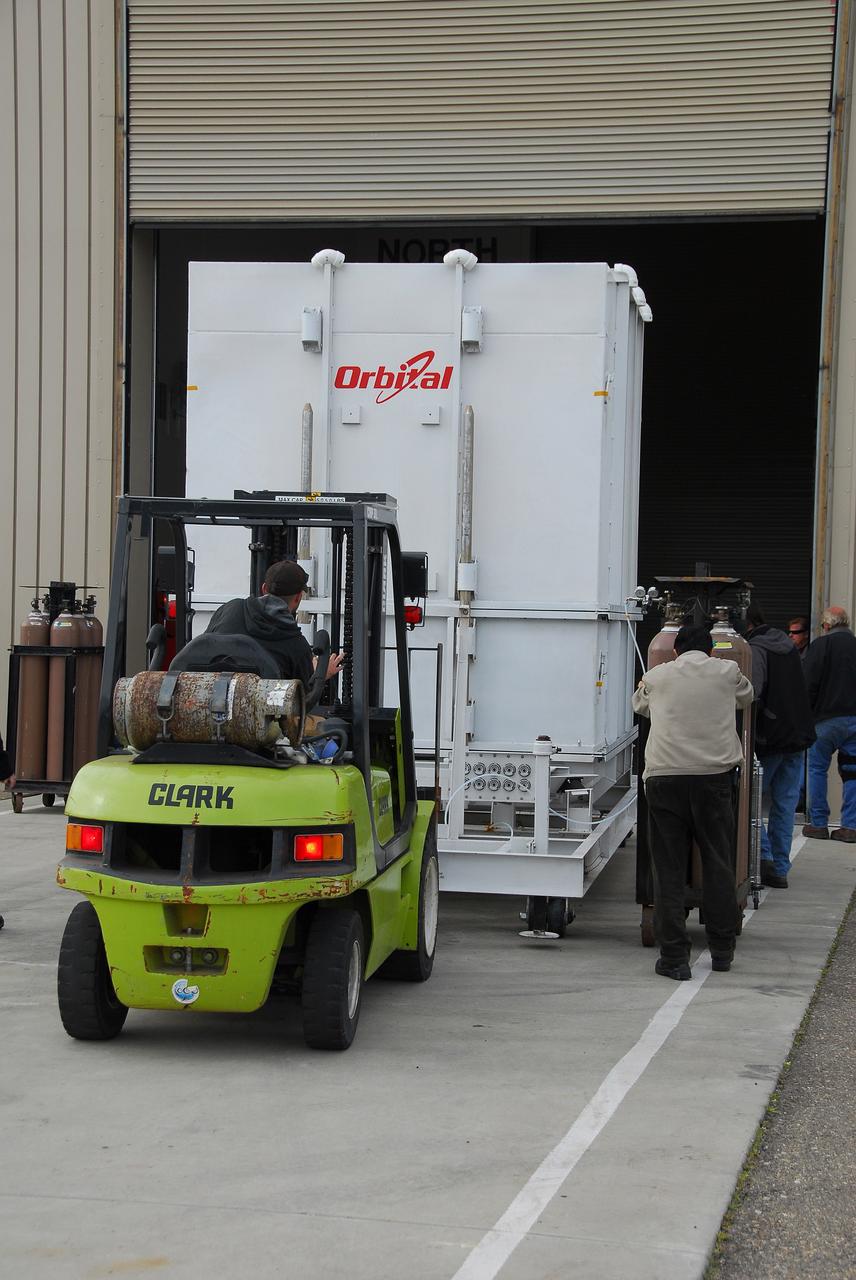
VANDENBERG AIR FORCE BASE, Calif. – The latest Earth-observing satellite developed by NASA, called Glory, arrives at the Astrotech Payload Processing Facility at Vandenberg Air Force Base in California by tractor-trailer. An Orbital Sciences Taurus XL rocket is targeted to launch Glory into low Earth orbit Feb. 23 from Vandenberg's Space Launch Complex 576-E. Once in orbit, Glory will collect data on the properties of aerosols and black carbon. It also will help scientists understand how the sun's irradiance affects Earth's climate. Photo credit: NASA/Ed Henry, VAFB
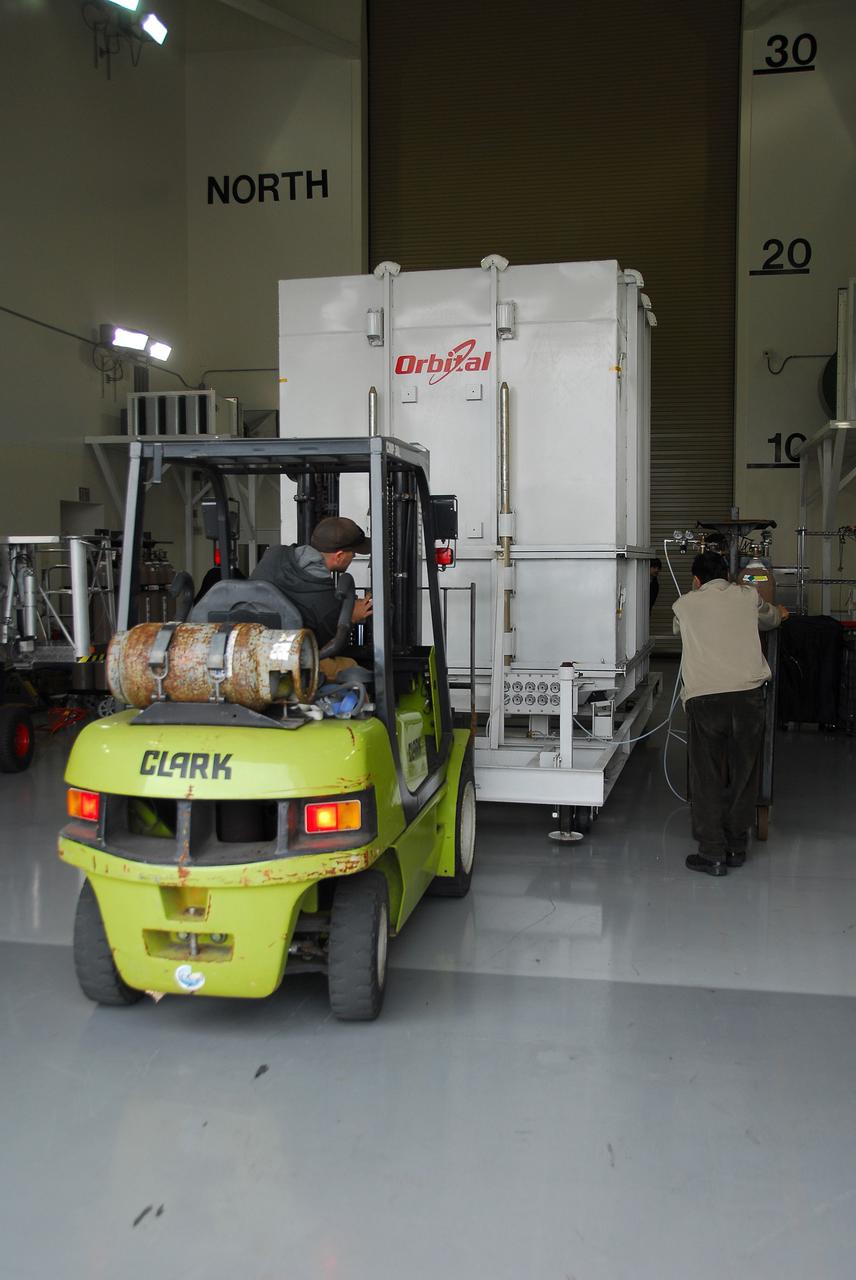
VANDENBERG AIR FORCE BASE, Calif. – The latest Earth-observing satellite developed by NASA, called Glory, is moved into the Astrotech Payload Processing Facility at Vandenberg Air Force Base in California. An Orbital Sciences Taurus XL rocket is targeted to launch Glory into low Earth orbit Feb. 23 from Vandenberg's Space Launch Complex 576-E. Once in orbit, Glory will collect data on the properties of aerosols and black carbon. It also will help scientists understand how the sun's irradiance affects Earth's climate. Photo credit: NASA/Ed Henry, VAFB
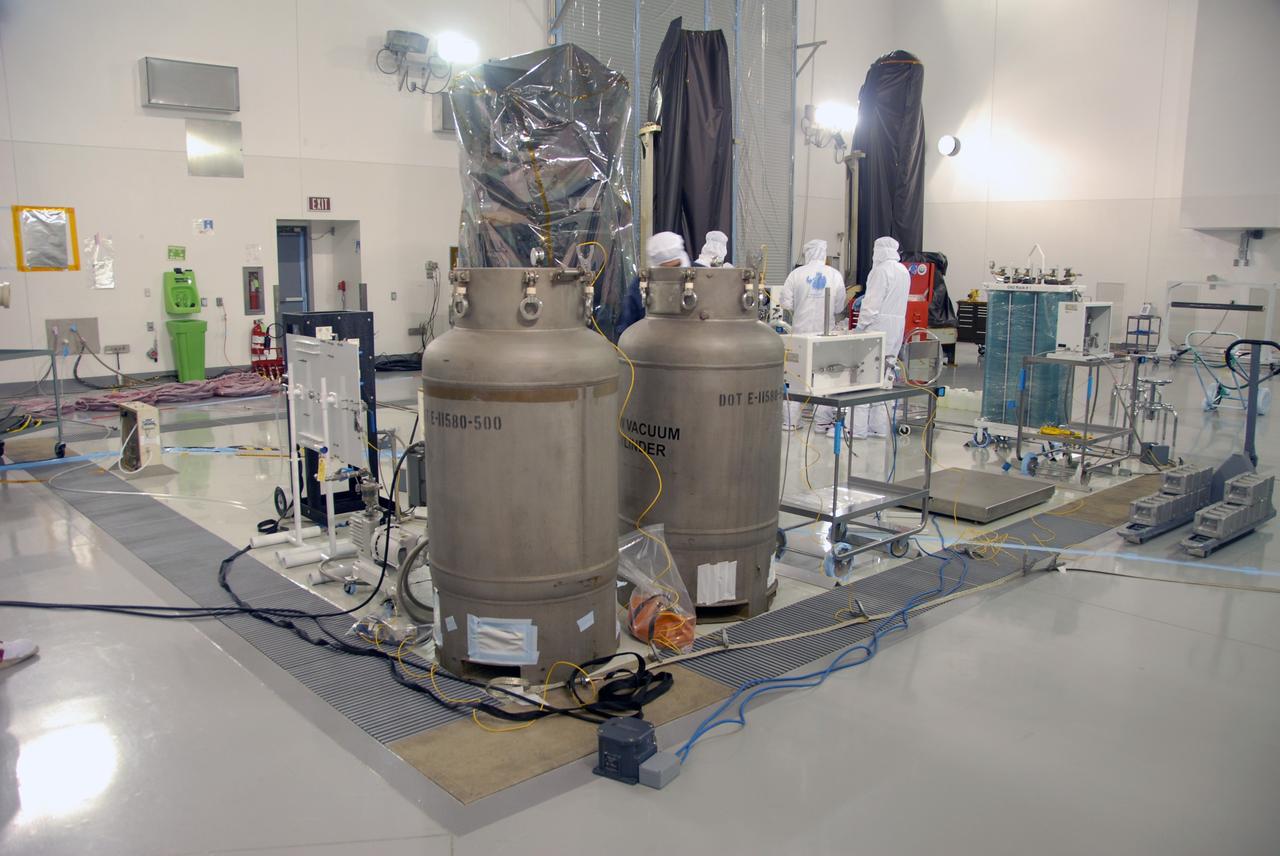
VANDENBERG AIR FORCE BASE, Calif. -- At the Astrotech payload processing facility at Vandenberg Air Force Base in California, technicians configure the equipment for the fueling of the Glory spacecraft, seen in the background wrapped in a protective covering, with its attitude control propellant. The Orbital Sciences Corp. Taurus XL rocket will carry NASA's Glory spacecraft into low Earth orbit. Once Glory reaches orbit, it will collect data on the properties of aerosols and black carbon. It also will help scientists understand how the sun's irradiance affects Earth's climate. Launch is scheduled for 5:09 a.m. EST Feb. 23. For information, visit www.nasa.gov/glory. Photo credit: NASA/Dan Liberotti, VAFB
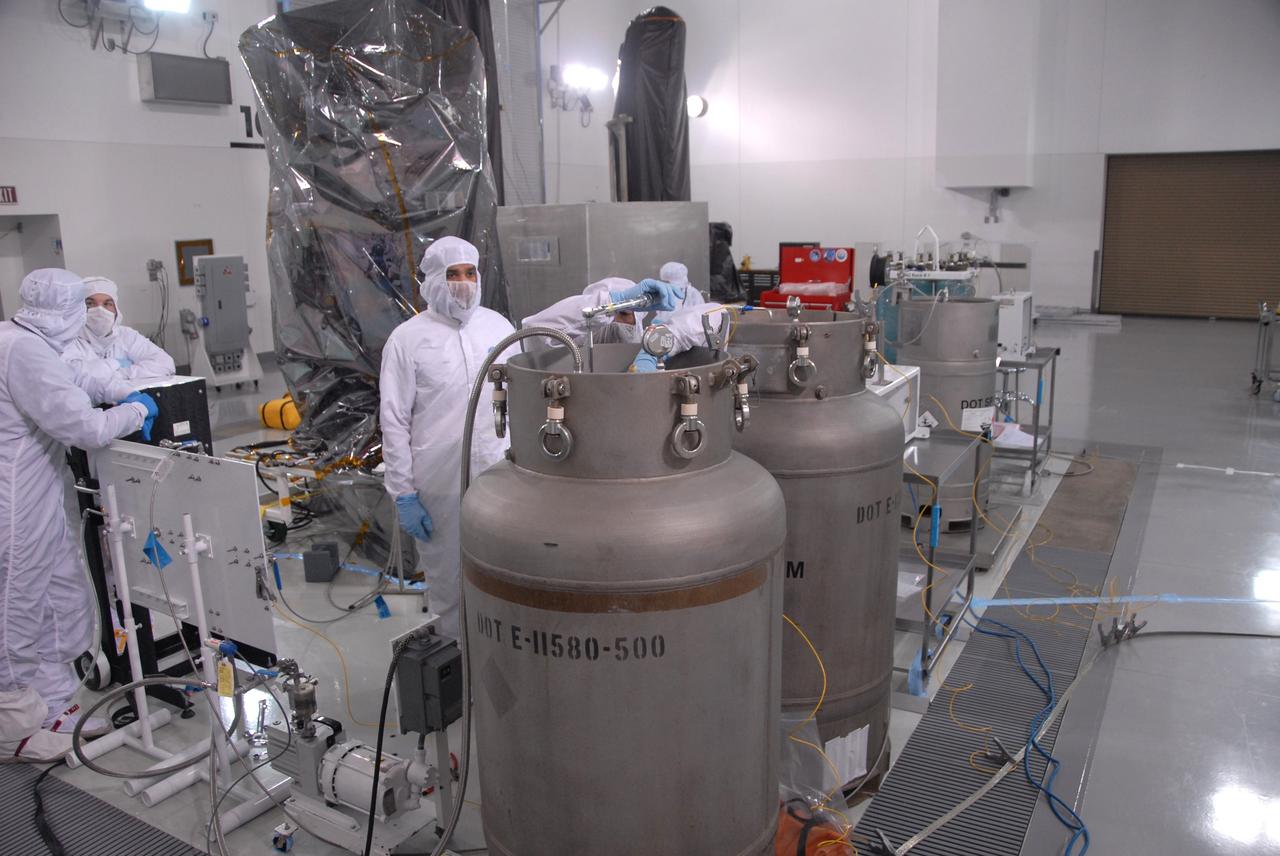
VANDENBERG AIR FORCE BASE, Calif. -- At the Astrotech payload processing facility at Vandenberg Air Force Base in California, technicians configure the equipment for the fueling of the Glory spacecraft, seen in the background wrapped in a protective covering, with its attitude control propellant. The Orbital Sciences Corp. Taurus XL rocket will carry NASA's Glory spacecraft into low Earth orbit. Once Glory reaches orbit, it will collect data on the properties of aerosols and black carbon. It also will help scientists understand how the sun's irradiance affects Earth's climate. Launch is scheduled for 5:09 a.m. EST Feb. 23. For information, visit www.nasa.gov/glory. Photo credit: NASA/Dan Liberotti, VAFB
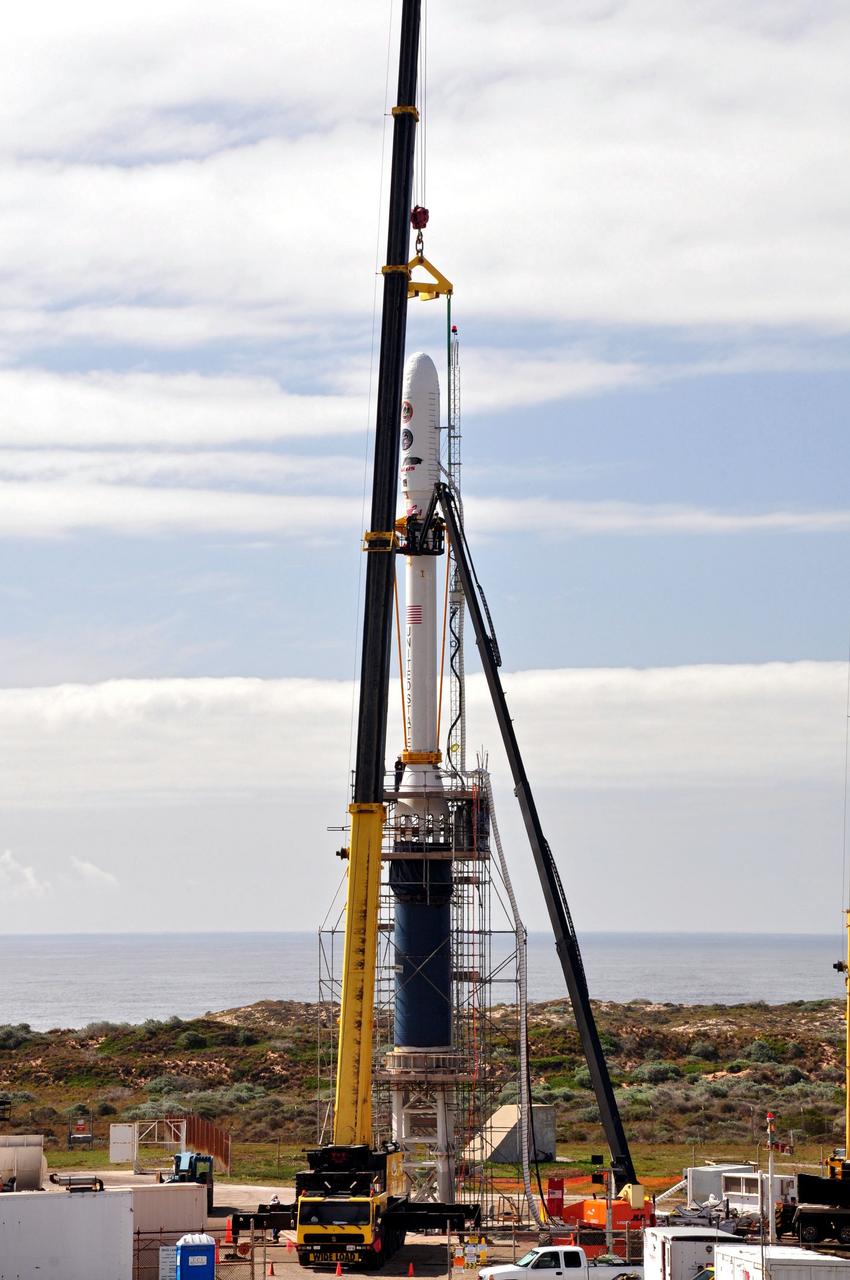
VANDENBERG AIR FORCE BASE, Calif. -- On Space Launch Complex 576-E at Vandenberg Air Force Base in California, workers in a bucket begin the process of removing the lifting fixture and sling from NASA's Glory upper stack after it was secured in place to the Taurus XL rocket's Stage 0. The upper stack consists of Stages 1, 2 and 3 of the Taurus as well as the encapsulated Glory spacecraft. The Orbital Sciences Taurus XL rocket will launch Glory into low Earth orbit. Once Glory reaches orbit, it will collect data on the properties of aerosols and black carbon. It also will help scientists understand how the sun's irradiance affects Earth's climate. Launch is scheduled for 5:09 a.m. EST Feb. 23. For information, visit www.nasa.gov/glory. Photo credit: NASA/Randy Beaudoin, VAFB
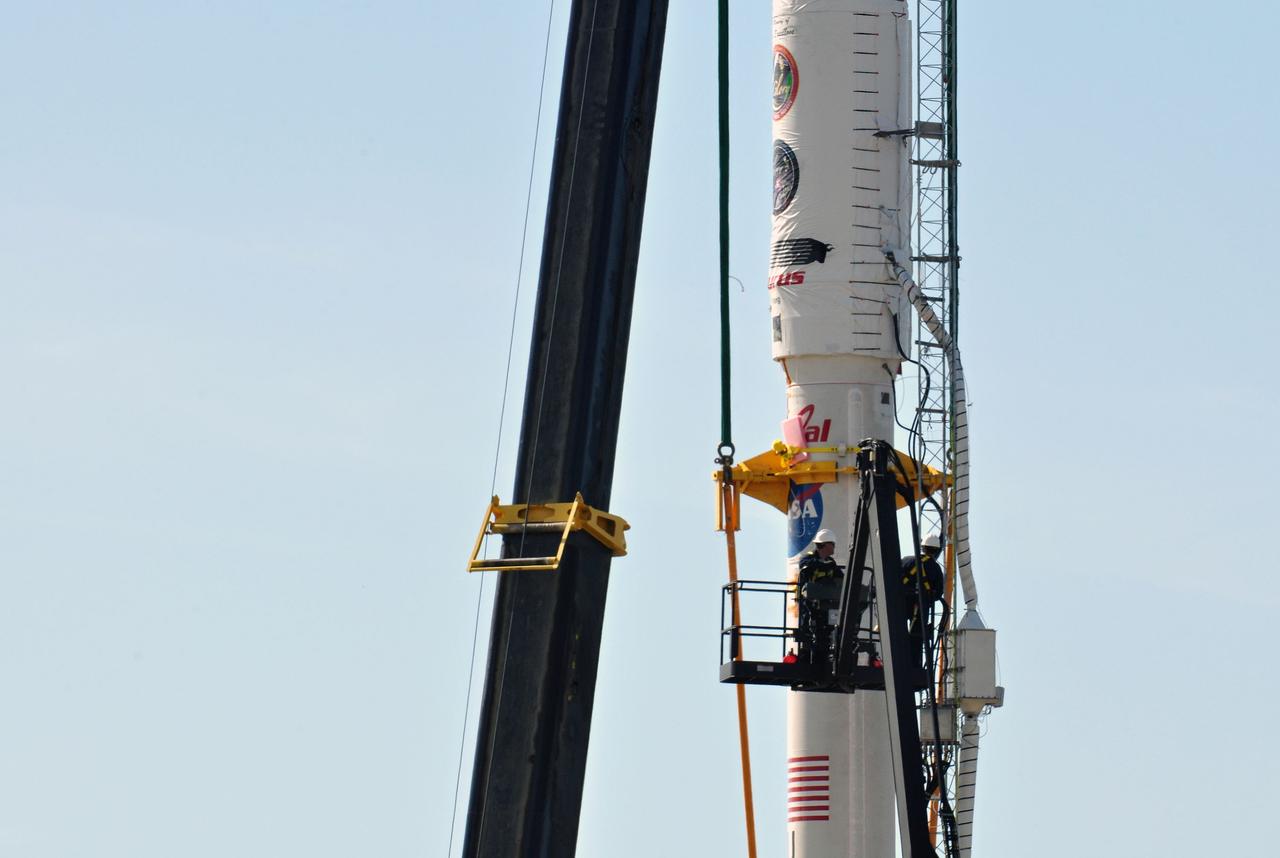
VANDENBERG AIR FORCE BASE, Calif. -- On Space Launch Complex 576-E at Vandenberg Air Force Base in California, workers in a bucket begin the process of removing the lifting fixture and sling from NASA's Glory upper stack after it was secured in place to the Taurus XL rocket's Stage 0. The upper stack consists of Stages 1, 2 and 3 of the Taurus as well as the encapsulated Glory spacecraft. The Orbital Sciences Taurus XL rocket will launch Glory into low Earth orbit. Once Glory reaches orbit, it will collect data on the properties of aerosols and black carbon. It also will help scientists understand how the sun's irradiance affects Earth's climate. Launch is scheduled for 5:09 a.m. EST Feb. 23. For information, visit www.nasa.gov/glory. Photo credit: NASA/Randy Beaudoin, VAFB
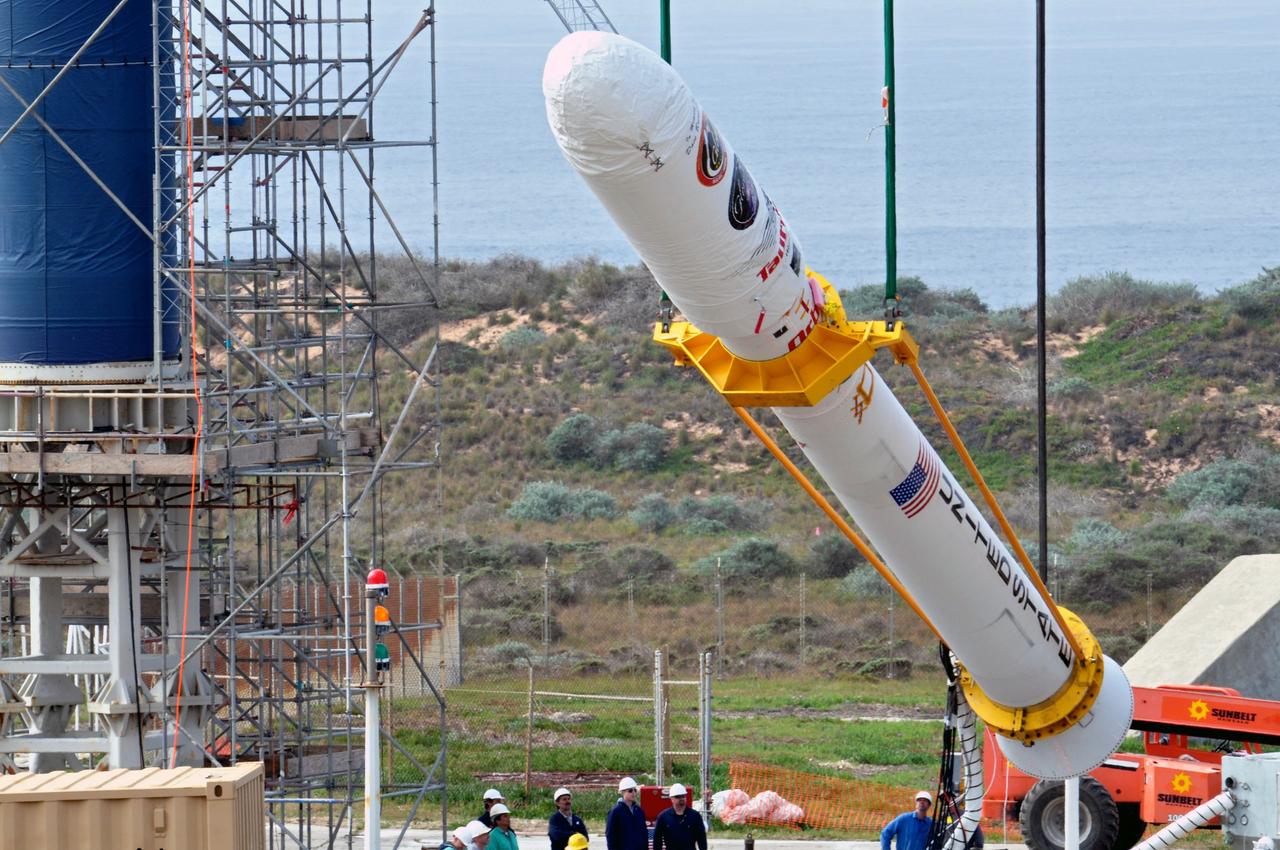
VANDENBERG AIR FORCE BASE, Calif. -- On Space Launch Complex 576-E at Vandenberg Air Force Base in California, Orbital Sciences workers monitor NASA's Glory upper stack as a crane lifts it from a stationary rail for attachment to the Taurus XL rocket's Stage 0. The upper stack consists of Stages 1, 2 and 3 of the Taurus as well as the encapsulated Glory spacecraft. Workers put the non-flight environmental shield over the fairing prior to assembly. The Orbital Sciences Taurus XL rocket will launch Glory into low Earth orbit. Once Glory reaches orbit, it will collect data on the properties of aerosols and black carbon. It also will help scientists understand how the sun's irradiance affects Earth's climate. Launch is scheduled for 5:09 a.m. EST Feb. 23. For information, visit www.nasa.gov/glory. Photo credit: NASA/Randy Beaudoin, VAFB
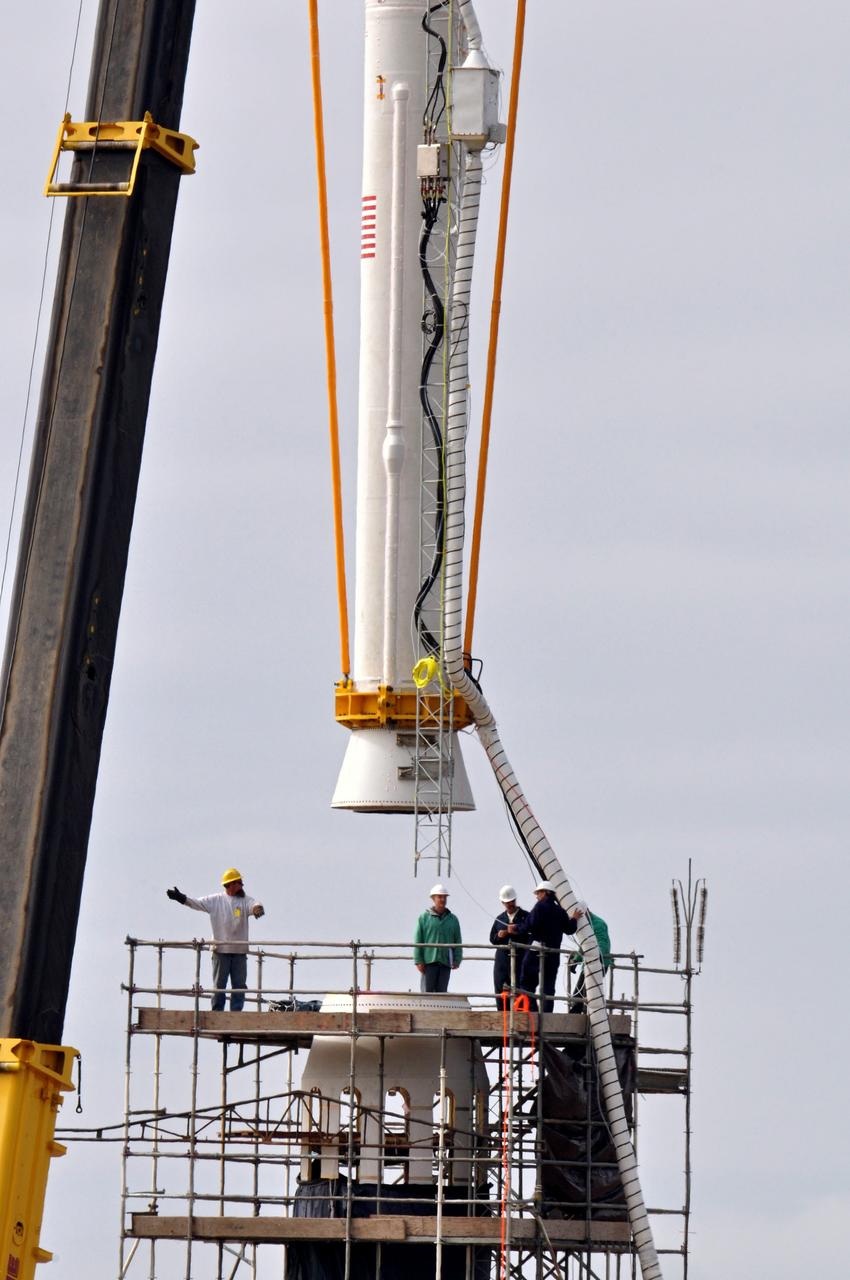
VANDENBERG AIR FORCE BASE, Calif. -- On Space Launch Complex 576-E at Vandenberg Air Force Base in California, workers guide NASA's Glory upper stack as a crane lowers it toward the Taurus XL rocket's Stage 0. The upper stack consists of Stages 1, 2 and 3 of the Taurus as well as the encapsulated Glory spacecraft. The Orbital Sciences Taurus XL rocket will launch Glory into low Earth orbit. Once Glory reaches orbit, it will collect data on the properties of aerosols and black carbon. It also will help scientists understand how the sun's irradiance affects Earth's climate. Launch is scheduled for 5:09 a.m. EST Feb. 23. For information, visit www.nasa.gov/glory. Photo credit: NASA/Randy Beaudoin, VAFB
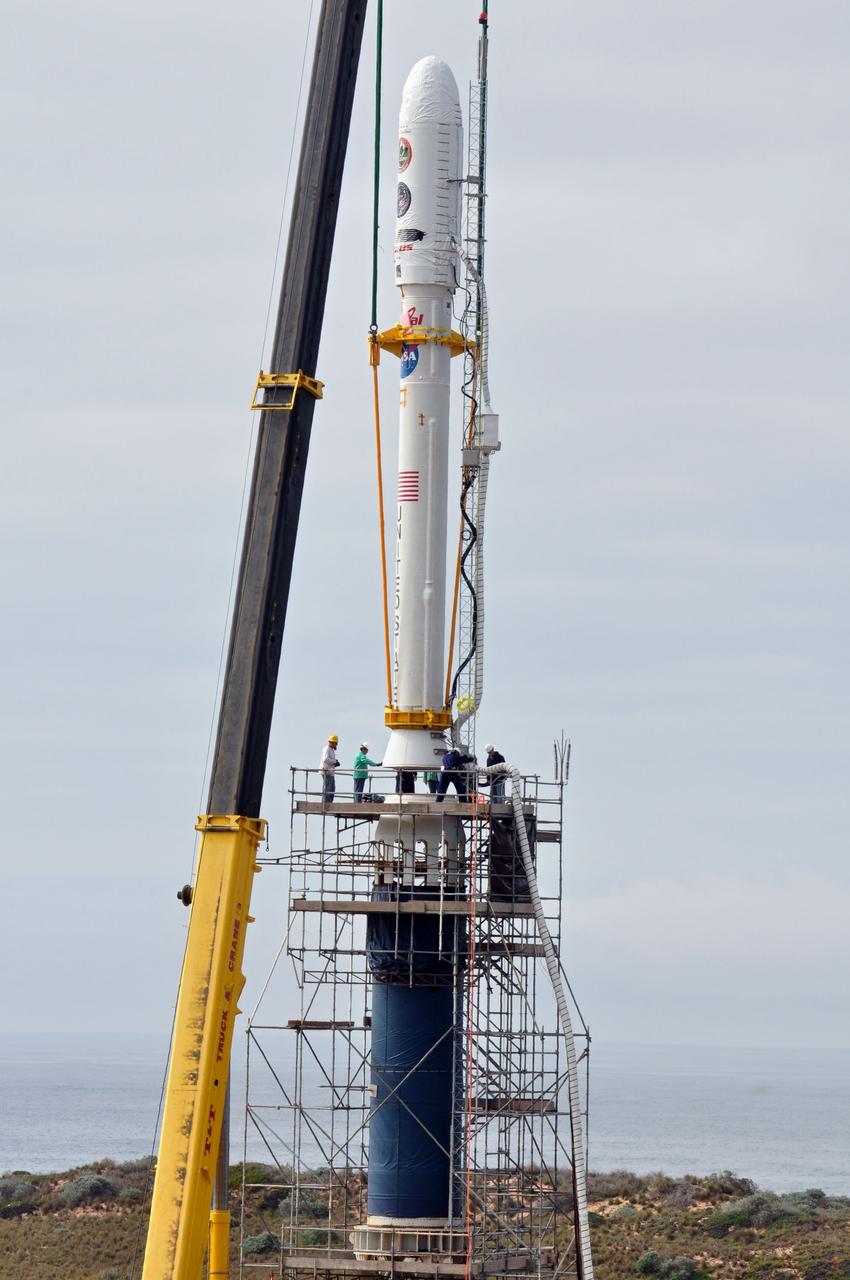
VANDENBERG AIR FORCE BASE, Calif. -- On Space Launch Complex 576-E at Vandenberg Air Force Base in California, workers guide NASA's Glory upper stack as a crane lowers it toward the Taurus XL rocket's Stage 0. The upper stack consists of Stages 1, 2 and 3 of the Taurus as well as the encapsulated Glory spacecraft. The Orbital Sciences Taurus XL rocket will launch Glory into low Earth orbit. Once Glory reaches orbit, it will collect data on the properties of aerosols and black carbon. It also will help scientists understand how the sun's irradiance affects Earth's climate. Launch is scheduled for 5:09 a.m. EST Feb. 23. For information, visit www.nasa.gov/glory. Photo credit: NASA/Randy Beaudoin, VAFB
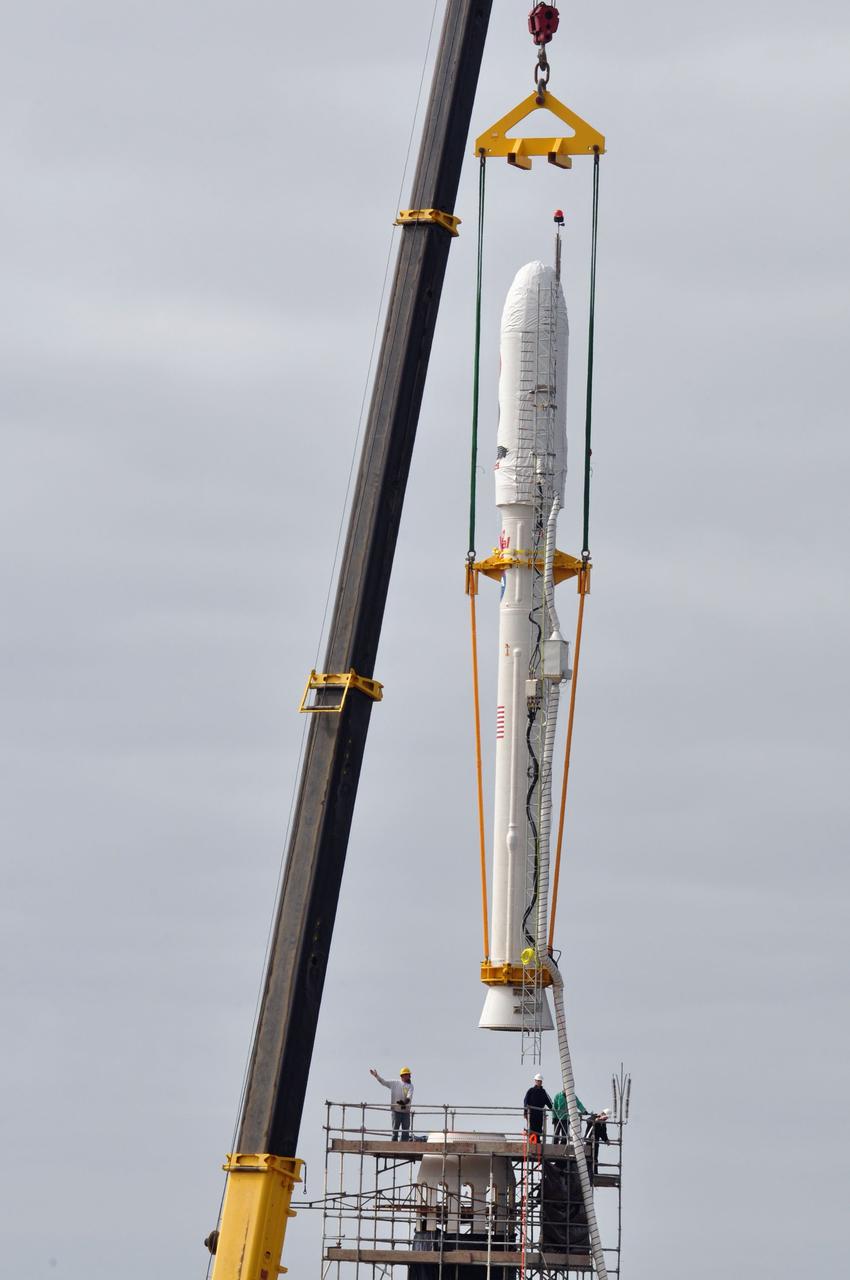
VANDENBERG AIR FORCE BASE, Calif. -- On Space Launch Complex 576-E at Vandenberg Air Force Base in California, a crane lowers NASA's Glory upper stack toward the Taurus XL rocket's Stage 0. The upper stack consists of Stages 1, 2 and 3 of the Taurus as well as the encapsulated Glory spacecraft. The Orbital Sciences Taurus XL rocket will launch Glory into low Earth orbit. Once Glory reaches orbit, it will collect data on the properties of aerosols and black carbon. It also will help scientists understand how the sun's irradiance affects Earth's climate. Launch is scheduled for 5:09 a.m. EST Feb. 23. For information, visit www.nasa.gov/glory. Photo credit: NASA/Randy Beaudoin, VAFB
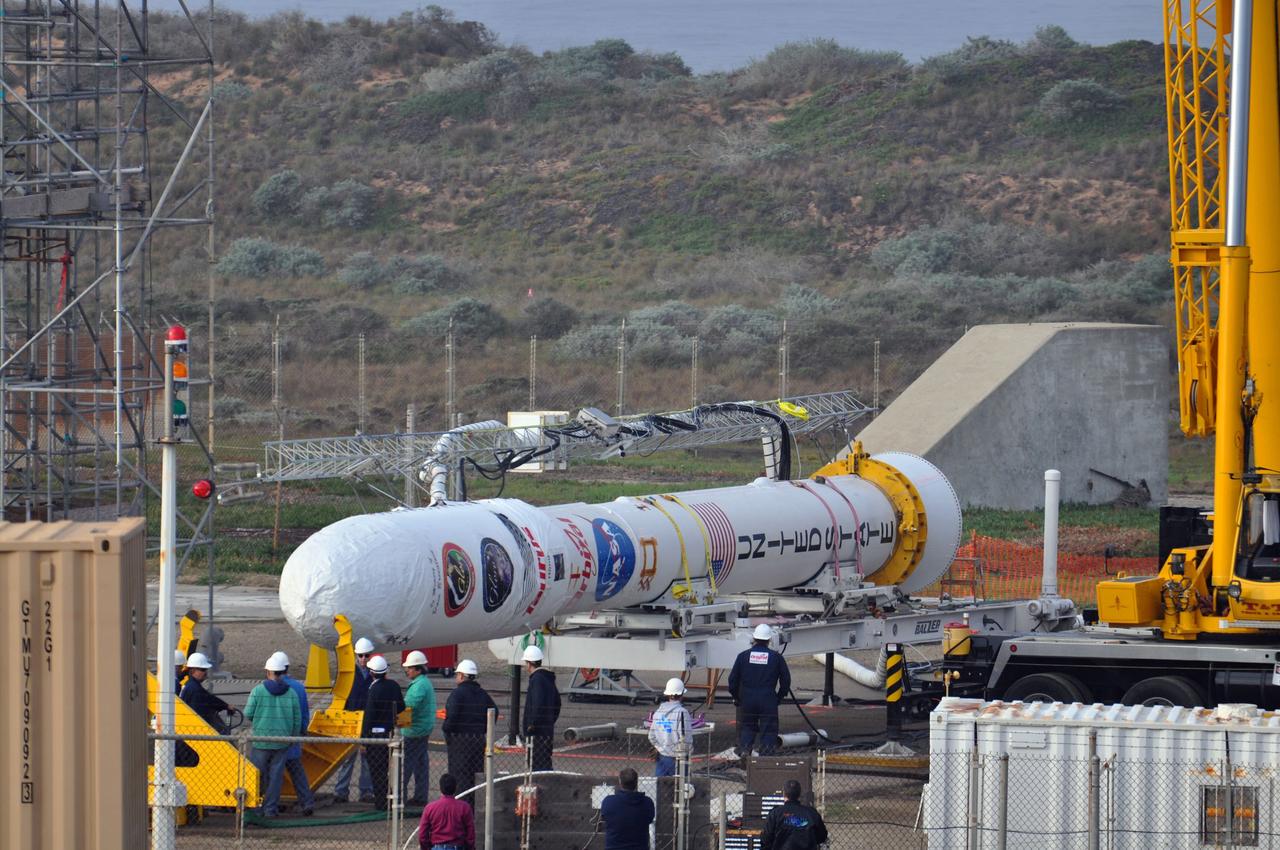
VANDENBERG AIR FORCE BASE, Calif. -- On Space Launch Complex 576-E at Vandenberg Air Force Base in California, Orbital Sciences workers prepare NASA's Glory upper stack for attachment to the Taurus XL rocket's Stage 0. The upper stack consists of Stages 1, 2 and 3 of the Taurus as well as the encapsulated Glory spacecraft. Workers put the non-flight environmental shield over the fairing prior to assembly. A portion of the umbilical tower is attached to the upper stack which falls away from the spacecraft during liftoff. The Orbital Sciences Taurus XL rocket will launch Glory into low Earth orbit. Once Glory reaches orbit, it will collect data on the properties of aerosols and black carbon. It also will help scientists understand how the sun's irradiance affects Earth's climate. Launch is scheduled for 5:09 a.m. EST Feb. 23. For information, visit www.nasa.gov/glory. Photo credit: NASA/Randy Beaudoin, VAFB
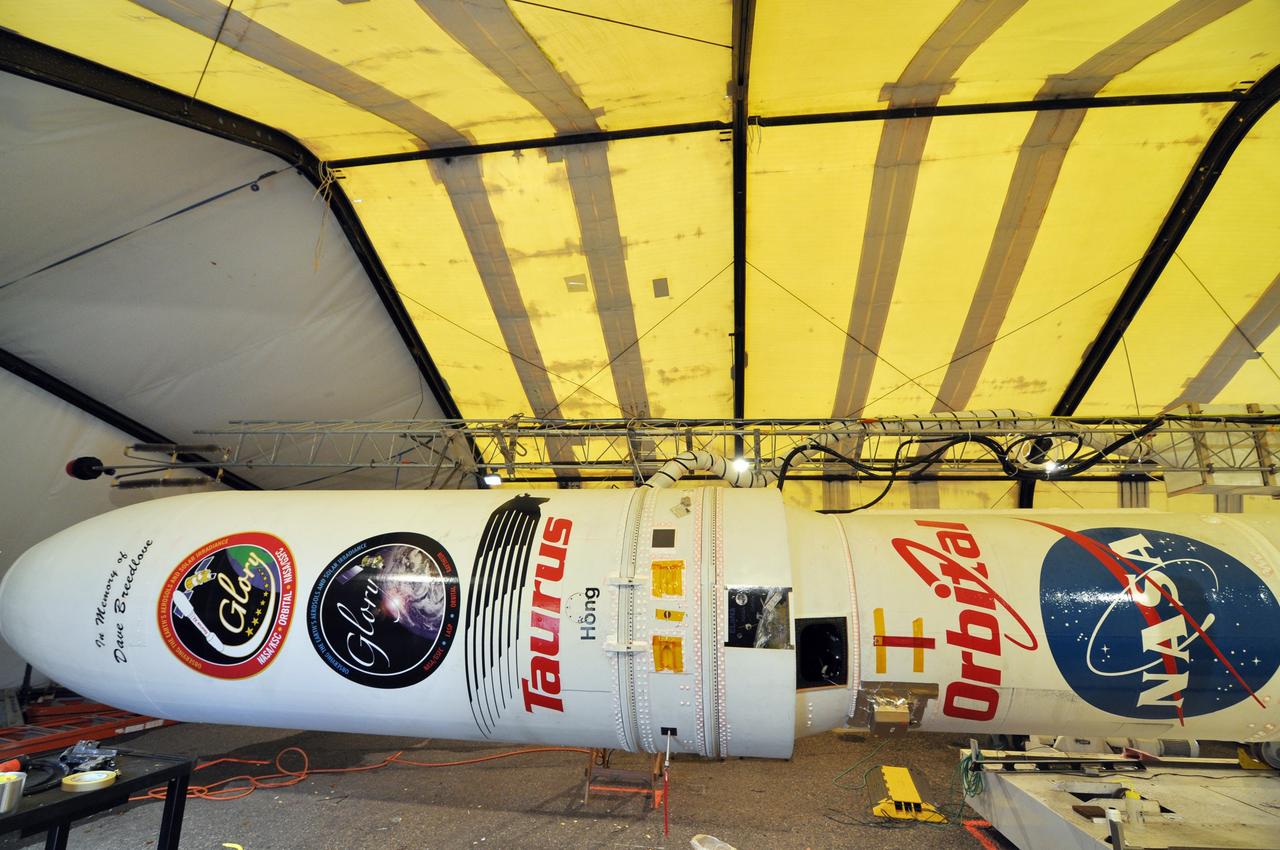
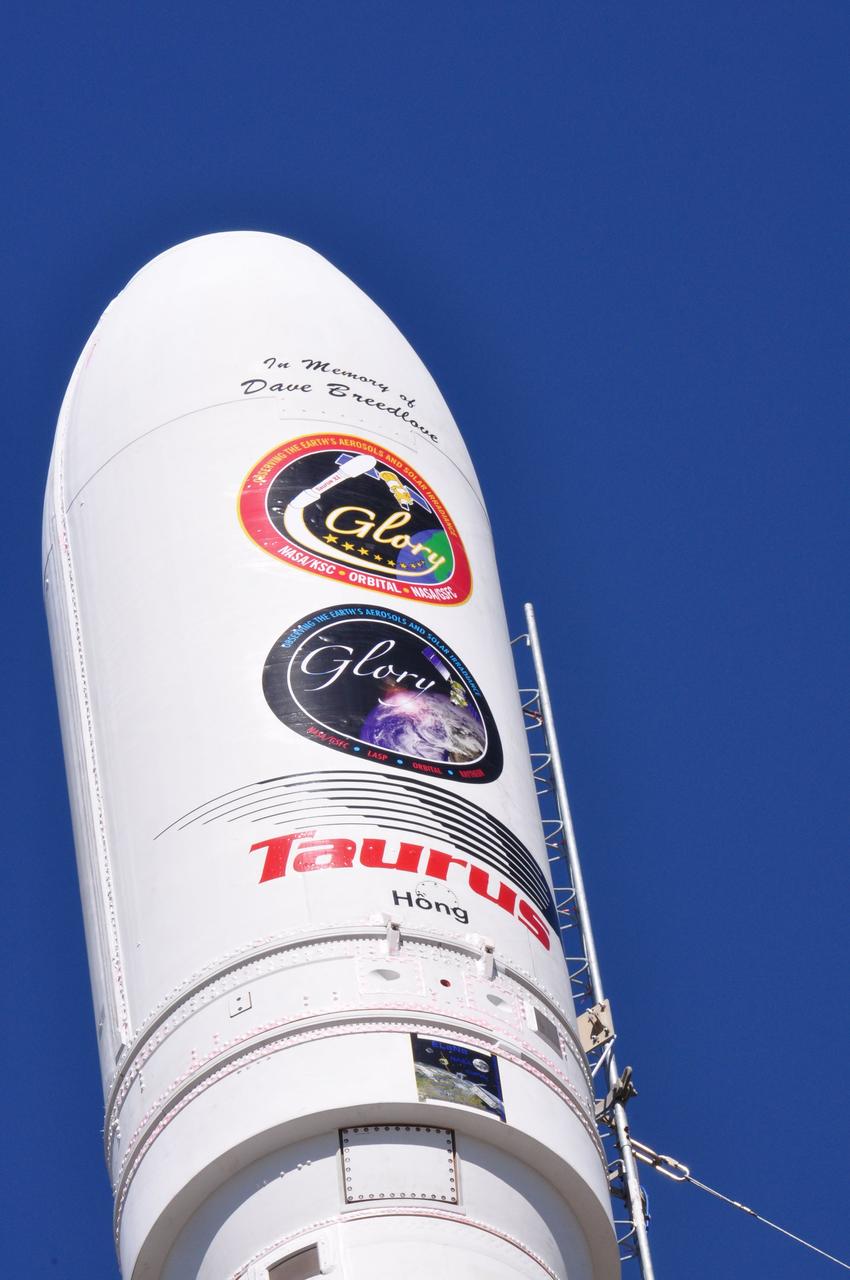
VANDENBERG AIR FORCE BASE, Calif. -- At Space Launch Complex 576-E at Vandenberg Air Force Base in California, NASA's Glory spacecraft, integrated with the upper stack of the Taurus rocket, displays mission decals including one in remembrance of Dave Breedlove who was a mission manager and long-time member of the Launch Services Program team. The vehicle is dedicated to his memory. The Orbital Sciences Corp. Taurus XL rocket will launch Glory into low Earth orbit. Once Glory reaches orbit, it will collect data on the properties of aerosols and black carbon. It also will help scientists understand how the sun's irradiance affects Earth's climate. Launch is scheduled for 5:09 a.m. EST Feb. 23. For information, visit www.nasa.gov/glory. Photo credit: NASA/Randy Beaudoin, VAFB

VANDENBERG AIR FORCE BASE, Calif. -- At Space Launch Complex 576-E at Vandenberg Air Force Base in California, NASA's Glory spacecraft, integrated with the upper stack of the Taurus rocket, displays mission decals including one in remembrance of Dave Breedlove who was a mission manager and long-time member of the Launch Services Program team. The vehicle is dedicated to his memory. The Orbital Sciences Corp. Taurus XL rocket will launch Glory into low Earth orbit. Once Glory reaches orbit, it will collect data on the properties of aerosols and black carbon. It also will help scientists understand how the sun's irradiance affects Earth's climate. Launch is scheduled for 5:09 a.m. EST Feb. 23. For information, visit www.nasa.gov/glory. Photo credit: NASA/Randy Beaudoin, VAFB
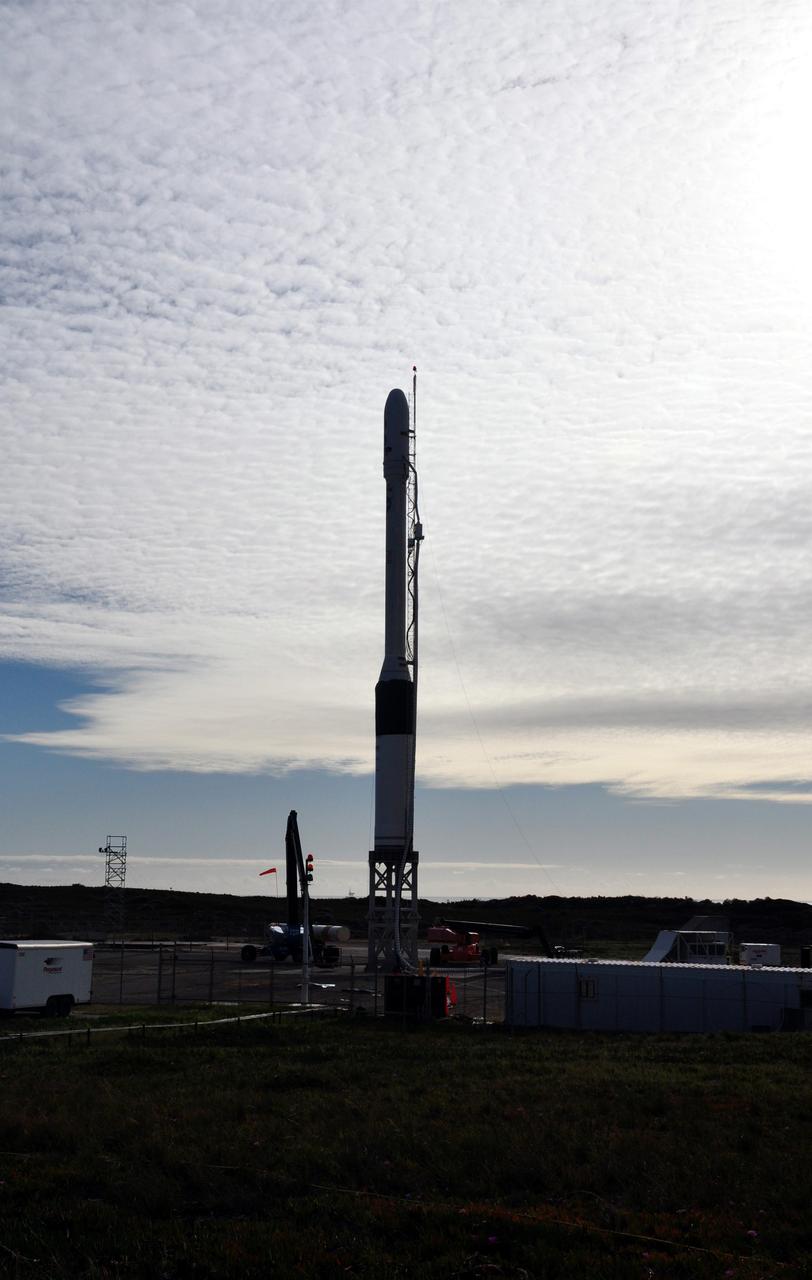
VANDENBERG AIR FORCE BASE, Calif. -- On Space Launch Complex 576-E at Vandenberg Air Force Base in California, the Taurus XL rocket is in its launch configuration. The upper stack, consisting of Stages 1, 2 and 3, as well as the encapsulated Glory spacecraft, is attached to an interstage and Stage 0 at the launch pad. The Orbital Sciences Taurus XL rocket will launch Glory into low Earth orbit. Once Glory reaches orbit, it will collect data on the properties of aerosols and black carbon. It also will help scientists understand how the sun's irradiance affects Earth's climate. Launch is scheduled for 5:09 a.m. EST Feb. 23. For information, visit www.nasa.gov/glory. Photo credit: NASA/Randy Beaudoin, VAFB
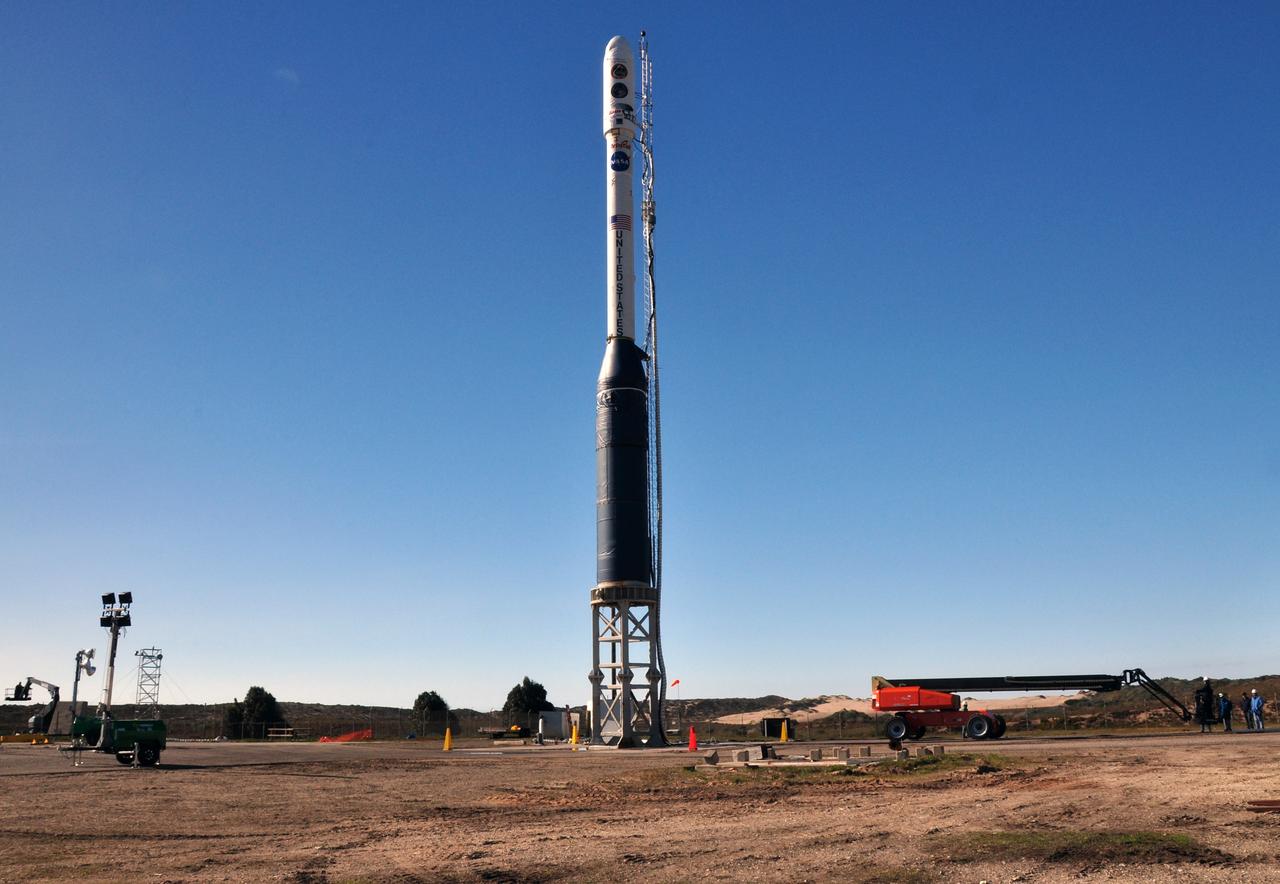
VANDENBERG AIR FORCE BASE, Calif. -- On Space Launch Complex 576-E at Vandenberg Air Force Base in California, the Taurus XL rocket is in its launch configuration. The upper stack, consisting of Stages 1, 2 and 3, as well as the encapsulated Glory spacecraft, is attached to an interstage and Stage 0 at the launch pad. The umbilical tower attached to the upper stack will fall away from the spacecraft during liftoff. The Orbital Sciences Taurus XL rocket will launch Glory into low Earth orbit. Once Glory reaches orbit, it will collect data on the properties of aerosols and black carbon. It also will help scientists understand how the sun's irradiance affects Earth's climate. Launch is scheduled for 5:09 a.m. EST Feb. 23. For information, visit www.nasa.gov/glory. Photo credit: NASA/Randy Beaudoin, VAFB
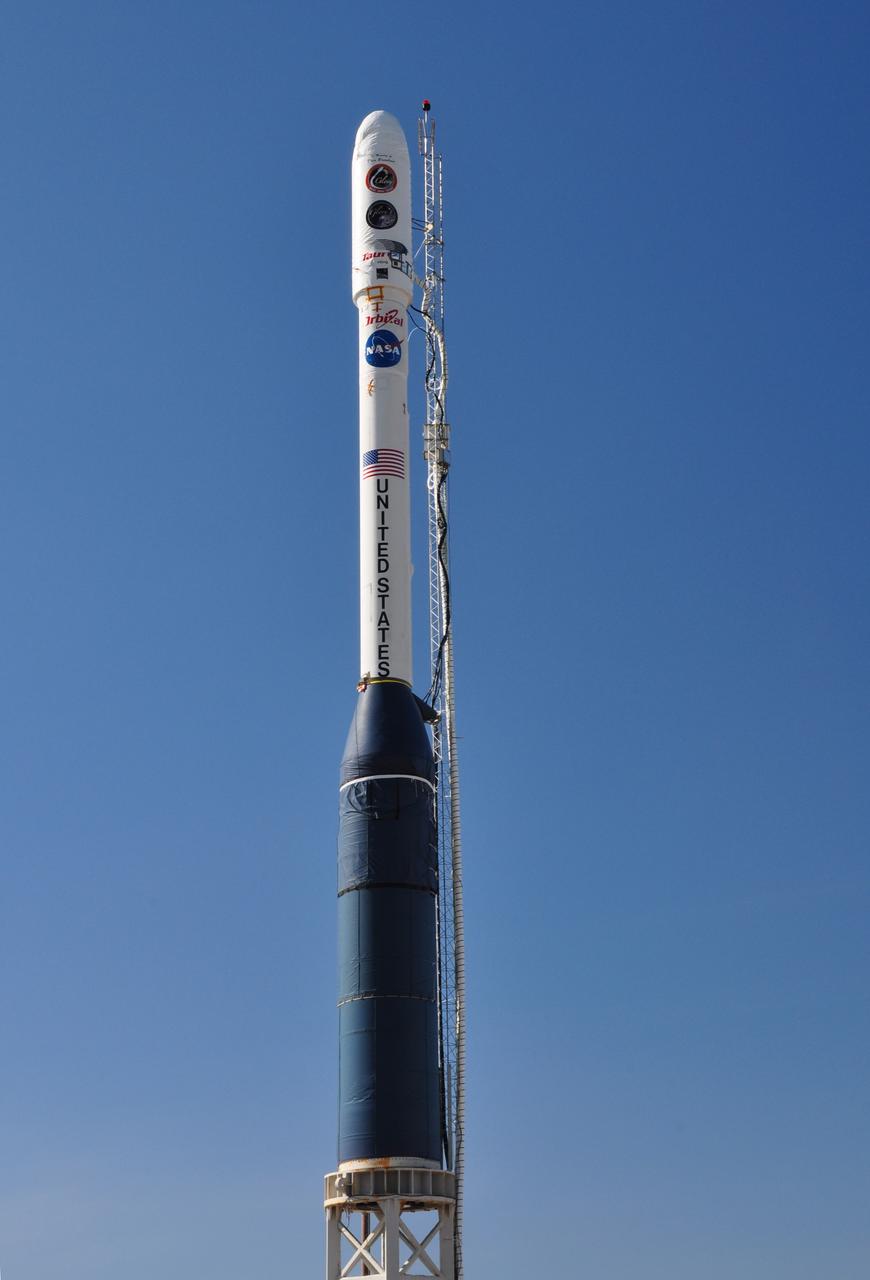
VANDENBERG AIR FORCE BASE, Calif. -- On Space Launch Complex 576-E at Vandenberg Air Force Base in California, the Taurus XL rocket is in its launch configuration. The upper stack, consisting of Stages 1, 2 and 3, as well as the encapsulated Glory spacecraft, is attached to an interstage and Stage 0 at the launch pad. The umbilical tower attached to the upper stack will fall away from the spacecraft during liftoff. The Orbital Sciences Taurus XL rocket will launch Glory into low Earth orbit. Once Glory reaches orbit, it will collect data on the properties of aerosols and black carbon. It also will help scientists understand how the sun's irradiance affects Earth's climate. Launch is scheduled for 5:09 a.m. EST Feb. 23. For information, visit www.nasa.gov/glory. Photo credit: NASA/Randy Beaudoin, VAFB
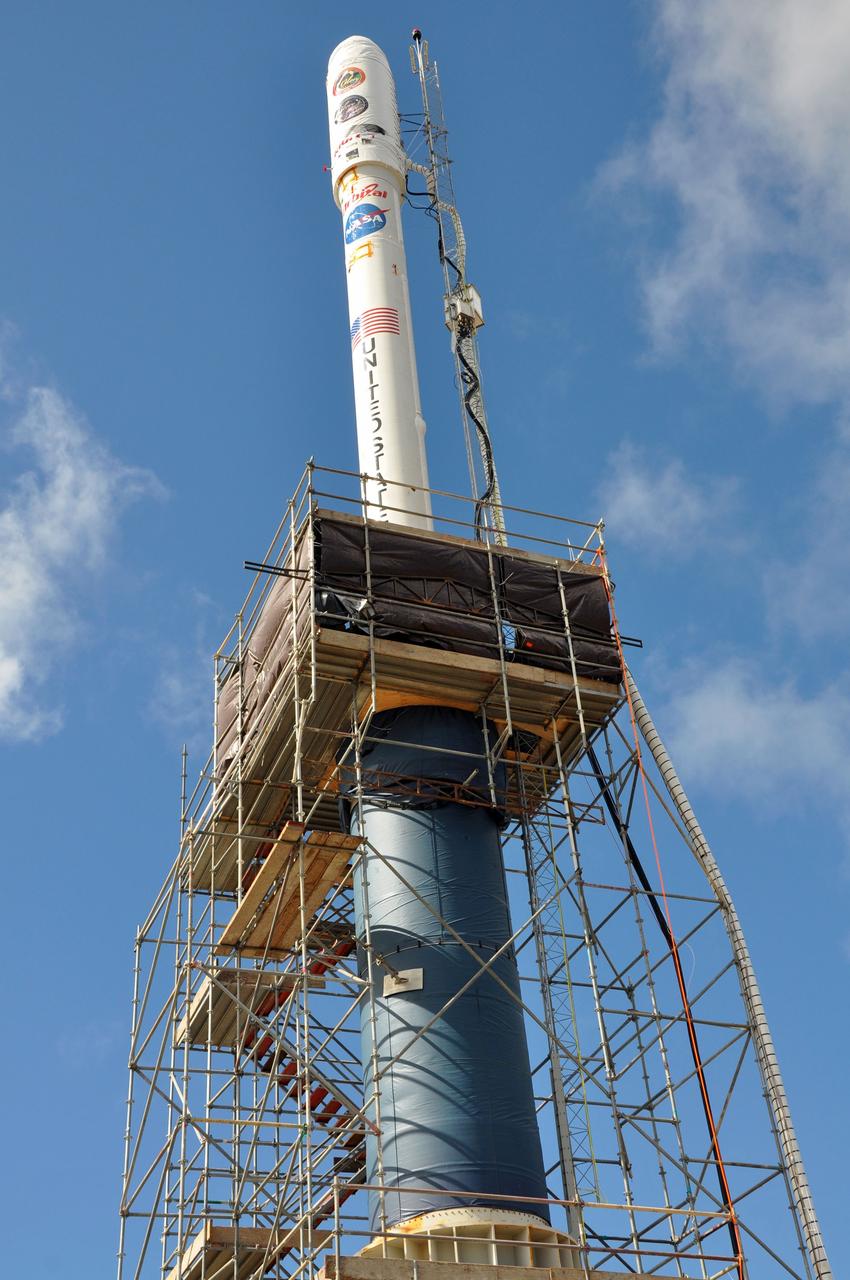
VANDENBERG AIR FORCE BASE, Calif. -- On Space Launch Complex 576-E at Vandenberg Air Force Base in California, the Taurus XL rocket is in its launch configuration. The upper stack, consisting of Stages 1, 2 and 3, as well as the encapsulated Glory spacecraft, is attached to an interstage and Stage 0 at the launch pad. The scaffolding around Stage 0 will be removed prior to next week's launch, after workers install 12 vent-door covers to the interstage. The Orbital Sciences Taurus XL rocket will launch Glory into low Earth orbit. Once Glory reaches orbit, it will collect data on the properties of aerosols and black carbon. It also will help scientists understand how the sun's irradiance affects Earth's climate. Launch is scheduled for 5:09 a.m. EST Feb. 23. For information, visit www.nasa.gov/glory. Photo credit: NASA/Randy Beaudoin, VAFB
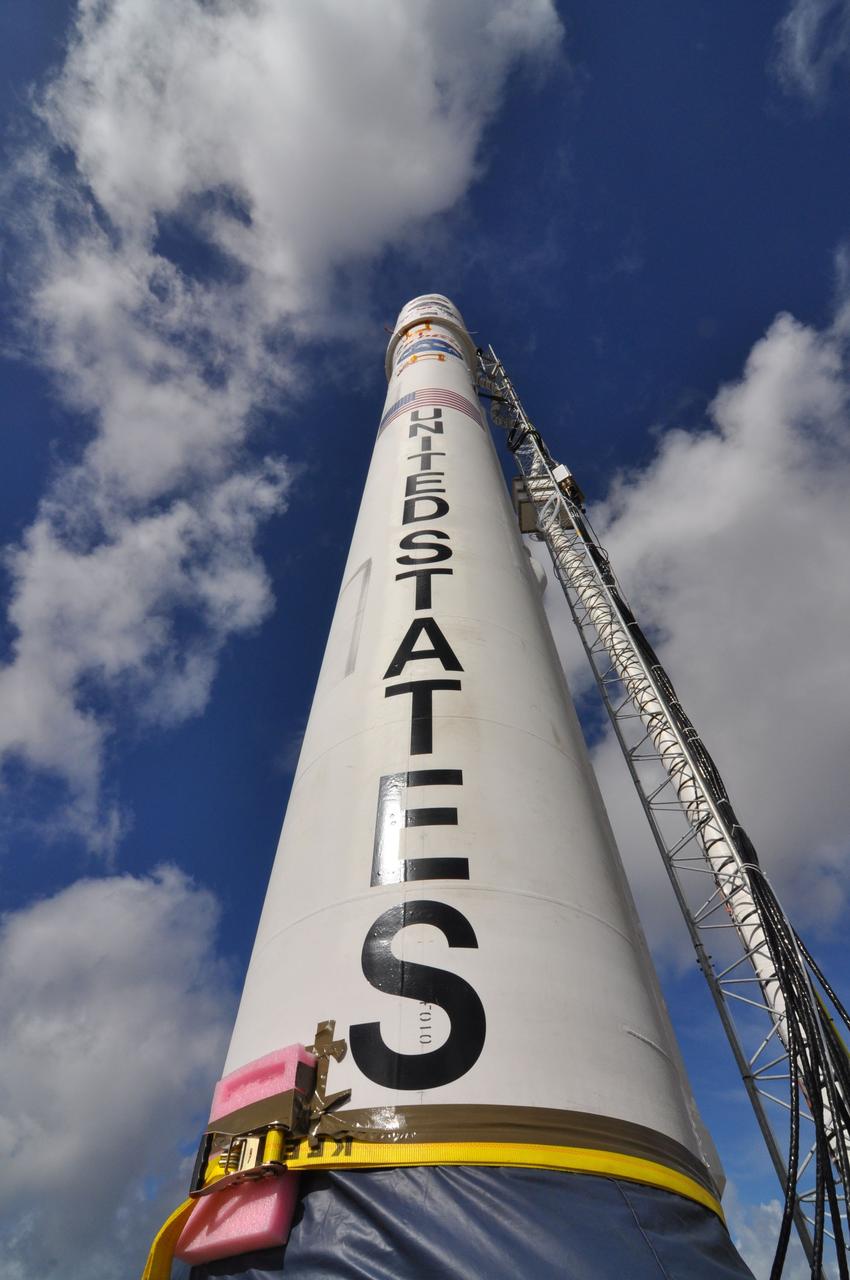
VANDENBERG AIR FORCE BASE, Calif. -- On Space Launch Complex 576-E at Vandenberg Air Force Base in California, the Taurus XL rocket is in its launch configuration. The upper stack, consisting of Stages 1, 2 and 3, as well as the encapsulated Glory spacecraft, is attached to an interstage and Stage 0 at the launch pad. The umbilical tower (right) attached to the upper stack will fall away from the spacecraft during liftoff. The Orbital Sciences Taurus XL rocket will launch Glory into low Earth orbit. Once Glory reaches orbit, it will collect data on the properties of aerosols and black carbon. It also will help scientists understand how the sun's irradiance affects Earth's climate. Launch is scheduled for 5:09 a.m. EST Feb. 23. For information, visit www.nasa.gov/glory. Photo credit: NASA/Randy Beaudoin, VAFB
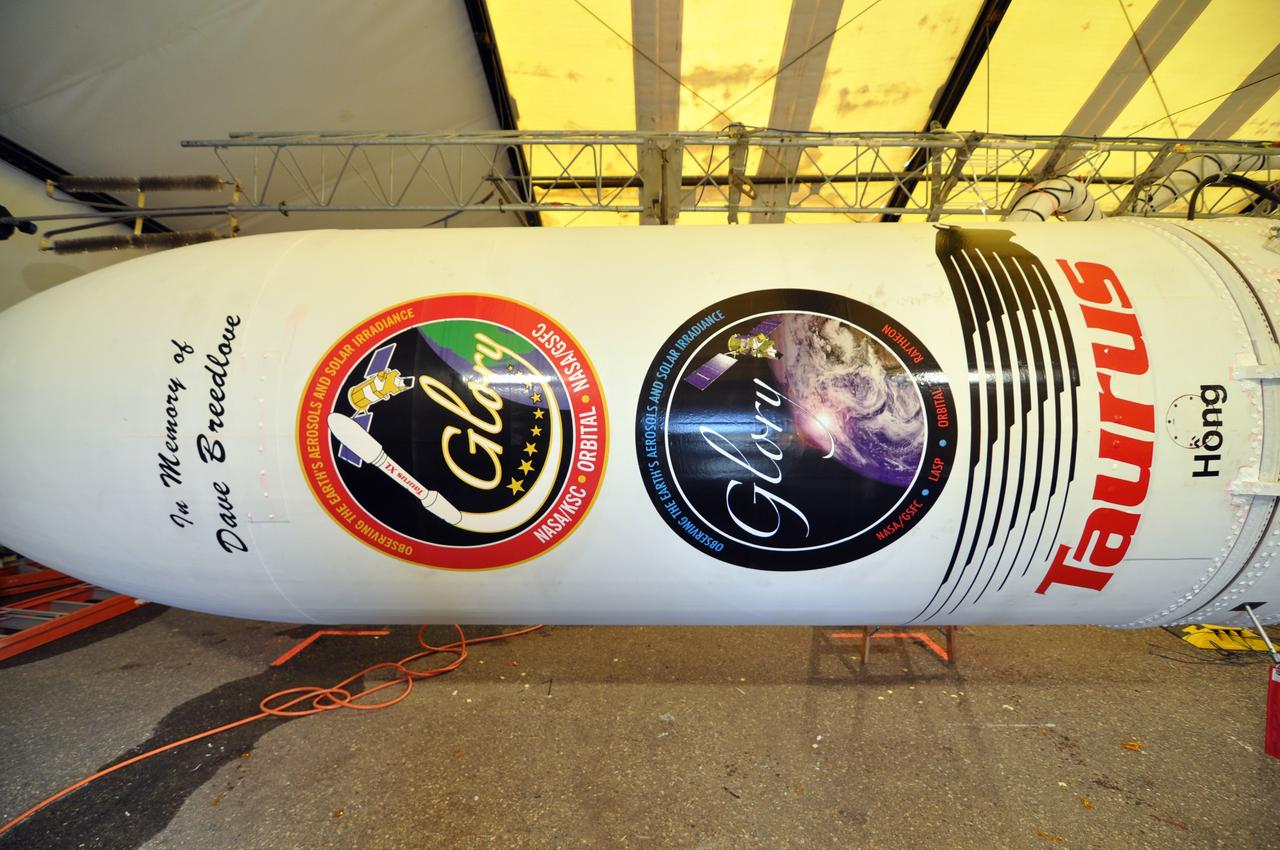
VANDENBERG AIR FORCE BASE, Calif. -- At Space Launch Complex 576-E at Vandenberg Air Force Base in California, NASA's Glory spacecraft, integrated with the upper stack of the Taurus rocket, displays mission decals including one in remembrance of Dave Breedlove who was a mission manager and long-time member of the Launch Services Program team. The vehicle is dedicated to his memory. The Orbital Sciences Corp. Taurus XL rocket will launch Glory into low Earth orbit. Once Glory reaches orbit, it will collect data on the properties of aerosols and black carbon. It also will help scientists understand how the sun's irradiance affects Earth's climate. Launch is scheduled for 5:09 a.m. EST Feb. 23. For information, visit www.nasa.gov/glory. Photo credit: NASA/Randy Beaudoin, VAFB
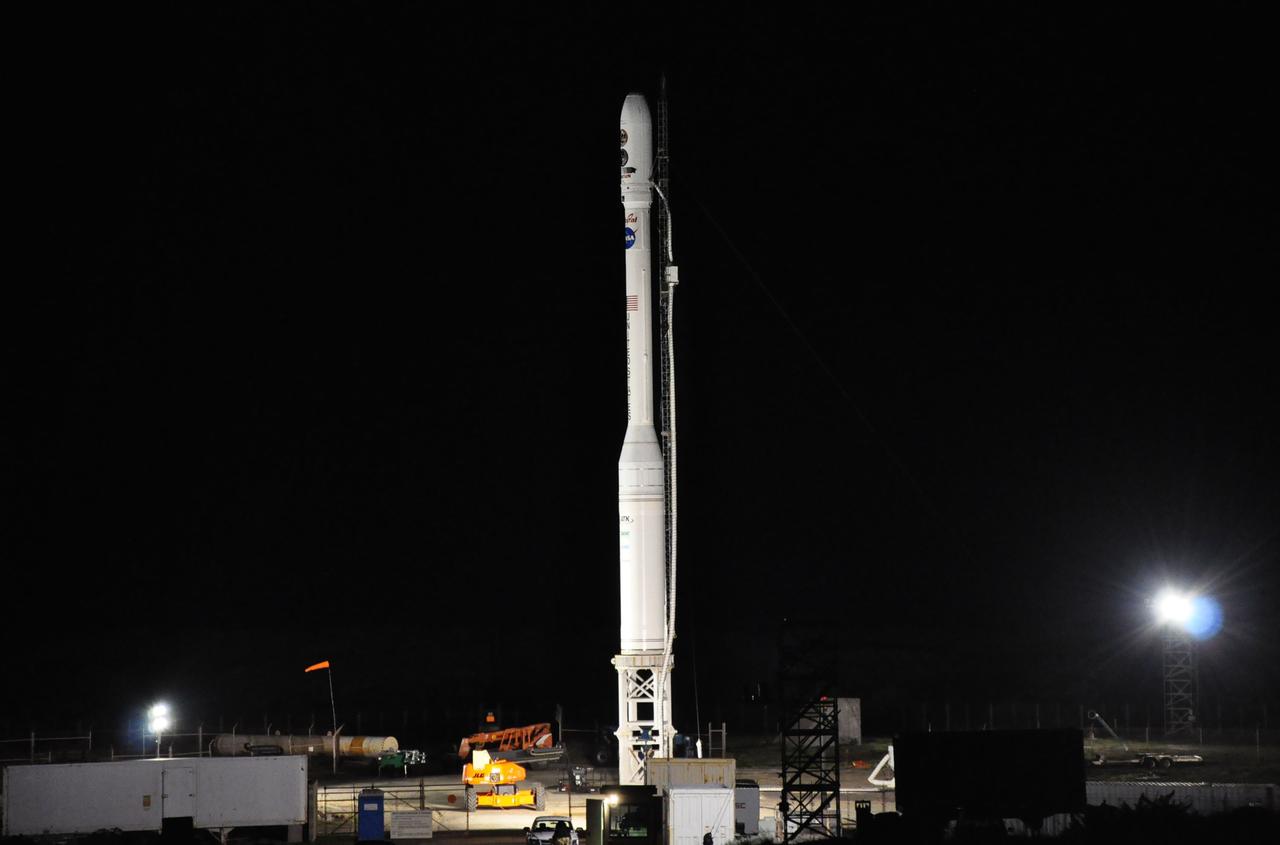
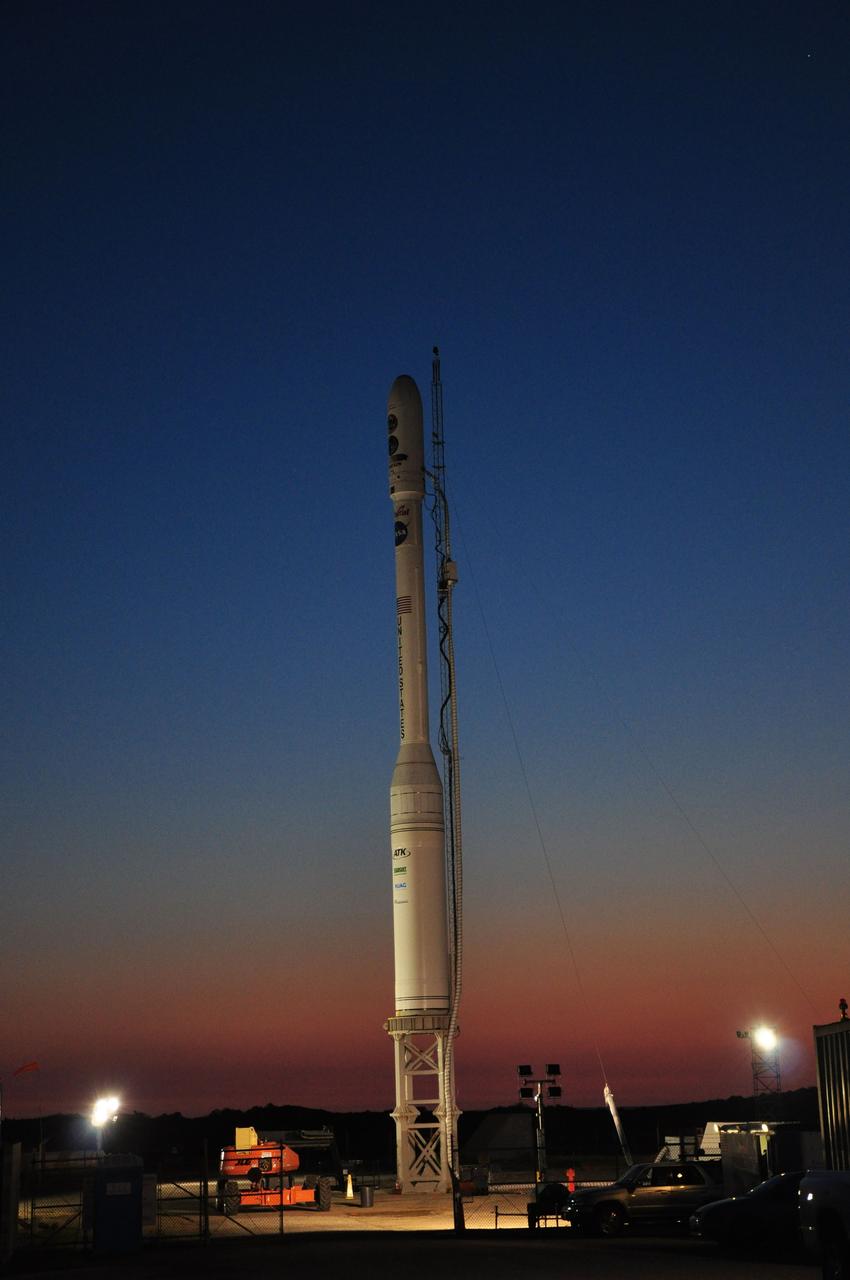
VANDENBERG AIR FORCE BASE, Calif. -- As nighttime descends on Vandenberg Air Force Base in California, the Orbital Sciences Taurus XL rocket and NASA's encapsulated Glory spacecraft await an early morning launch on the pad at Space Launch Complex 576-E. Liftoff originally was scheduled for 5:09 a.m. EST Feb. 23, but was scrubbed for at least 24 hours due to a technical issue that engineers are evaluating. Once Glory reaches orbit, it will collect data on the properties of aerosols and black carbon. It also will help scientists understand how the sun's irradiance affects Earth's climate. For information, visit www.nasa.gov/glory. Photo credit: NASA/Randy Beaudoin, VAFB
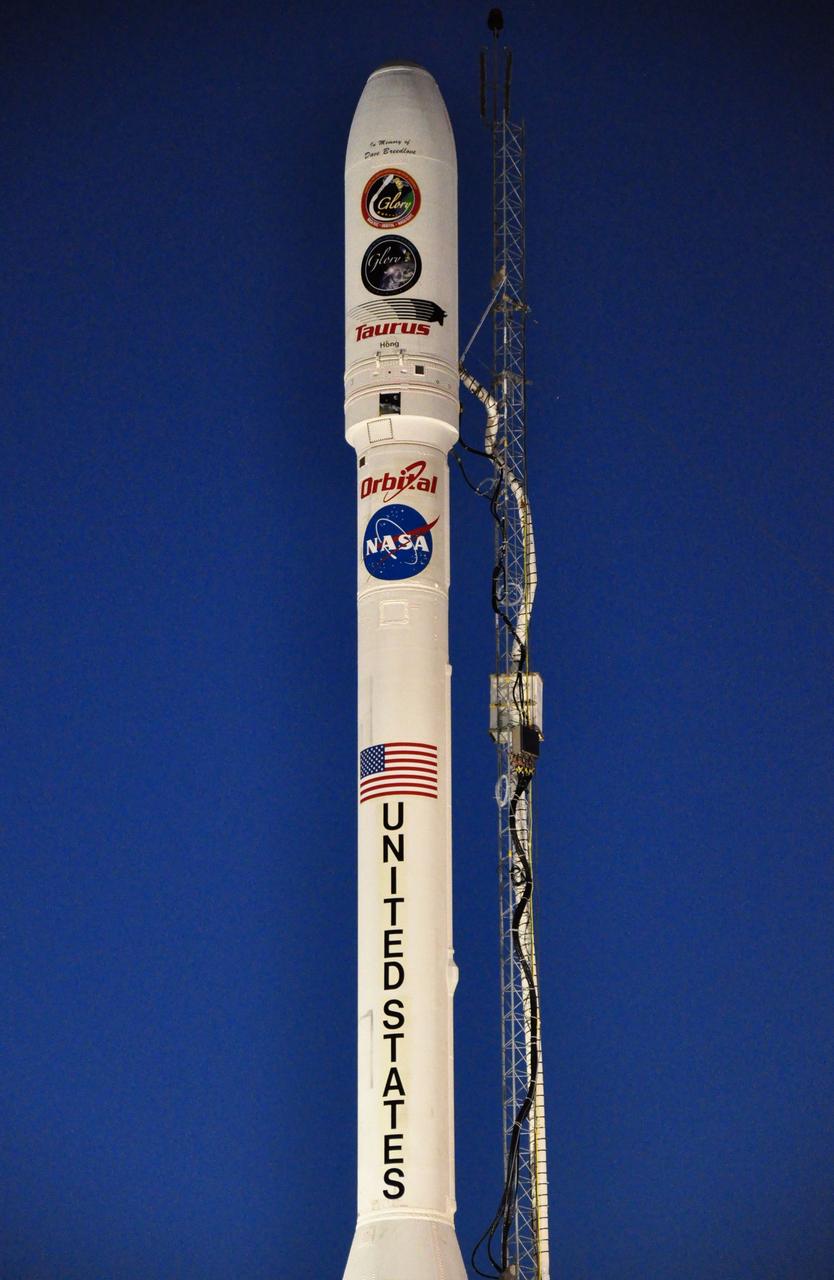
VANDENBERG AIR FORCE BASE, Calif. -- As the sun goes down over Vandenberg Air Force Base in California, the Orbital Sciences Taurus XL rocket and NASA's encapsulated Glory spacecraft await an early morning launch on the pad at Space Launch Complex 576-E. Liftoff originally was scheduled for 5:09 a.m. EST Feb. 23, but was scrubbed for at least 24 hours due to a technical issue that engineers are evaluating. Once Glory reaches orbit, it will collect data on the properties of aerosols and black carbon. It also will help scientists understand how the sun's irradiance affects Earth's climate. For information, visit www.nasa.gov/glory. Photo credit: NASA/Randy Beaudoin, VAFB
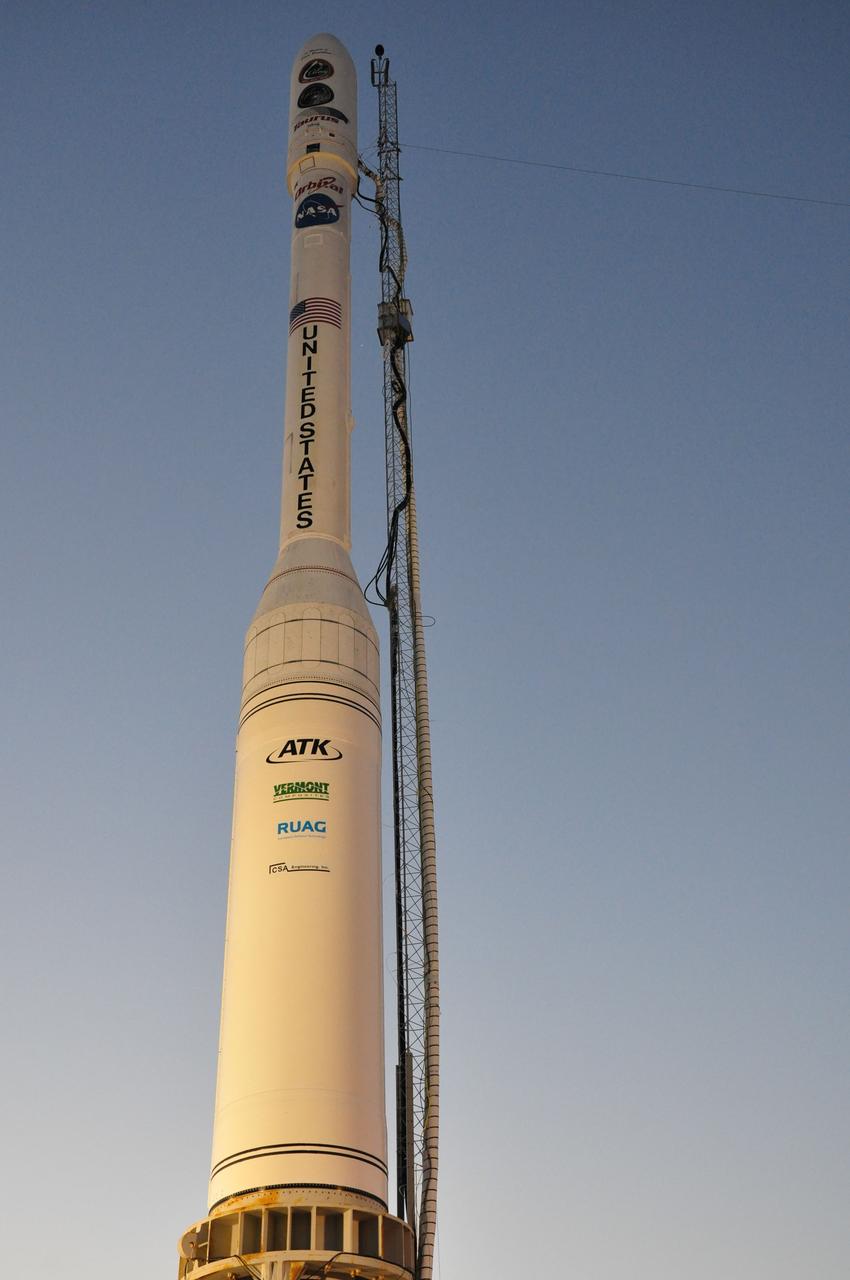
VANDENBERG AIR FORCE BASE, Calif. -- As the sun goes down over Vandenberg Air Force Base in California, the Orbital Sciences Taurus XL rocket and NASA's encapsulated Glory spacecraft await an early morning launch on the pad at Space Launch Complex 576-E. Liftoff originally was scheduled for 5:09 a.m. EST Feb. 23, but was scrubbed for at least 24 hours due to a technical issue that engineers are evaluating. Once Glory reaches orbit, it will collect data on the properties of aerosols and black carbon. It also will help scientists understand how the sun's irradiance affects Earth's climate. For information, visit www.nasa.gov/glory. Photo credit: NASA/Randy Beaudoin, VAFB
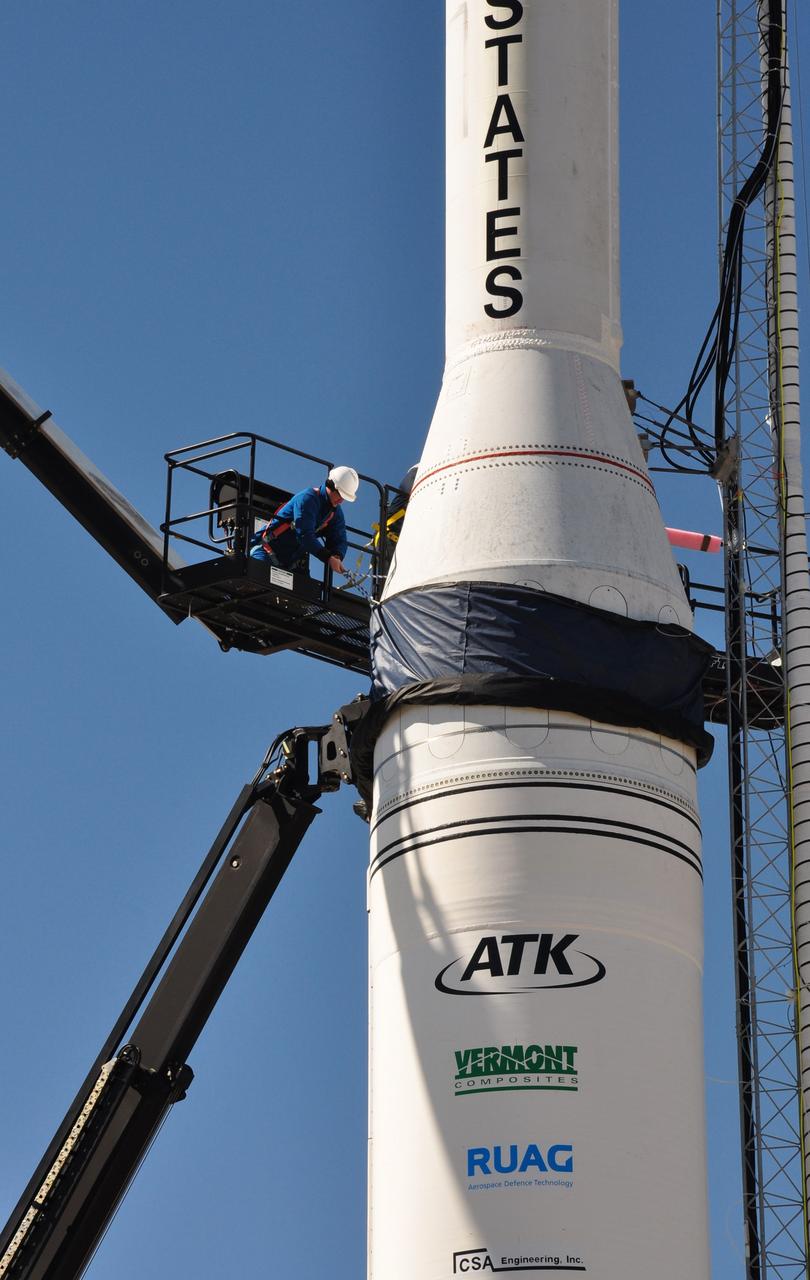
VANDENBERG AIR FORCE BASE, Calif. -- On Space Launch Complex 576-E at Vandenberg Air Force Base in California, workers enclose the spacecraft's fairing in a non-flight environmental shield that will be removed before launch. The Orbital Sciences Taurus XL rocket will launch Glory into low Earth orbit. Once Glory reaches orbit, it will collect data on the properties of aerosols and black carbon. It also will help scientists understand how the sun's irradiance affects Earth's climate. Launch is scheduled for 5:09 a.m. EST Feb. 23. For information, visit www.nasa.gov/glory. Photo credit: NASA/Randy Beaudoin, VAFB

VANDENBERG AIR FORCE BASE, Calif. -- Workers at Vandenberg Air Force Base in California, guide the Stage 0/1 interstage, part of the four-stage Taurus XL rocket that will carry NASA's Glory spacecraft into low Earth orbit, into launch position at Space Launch Complex 576-E. Once Glory reaches orbit, it will collect data on the properties of aerosols and black carbon. It also will help scientists understand how the sun's irradiance affects Earth's climate. Launch is scheduled for 5:09 a.m. EST Feb. 23. For information, visit www.nasa.gov/glory. Photo credit: NASA/Roy Allison, VAFB
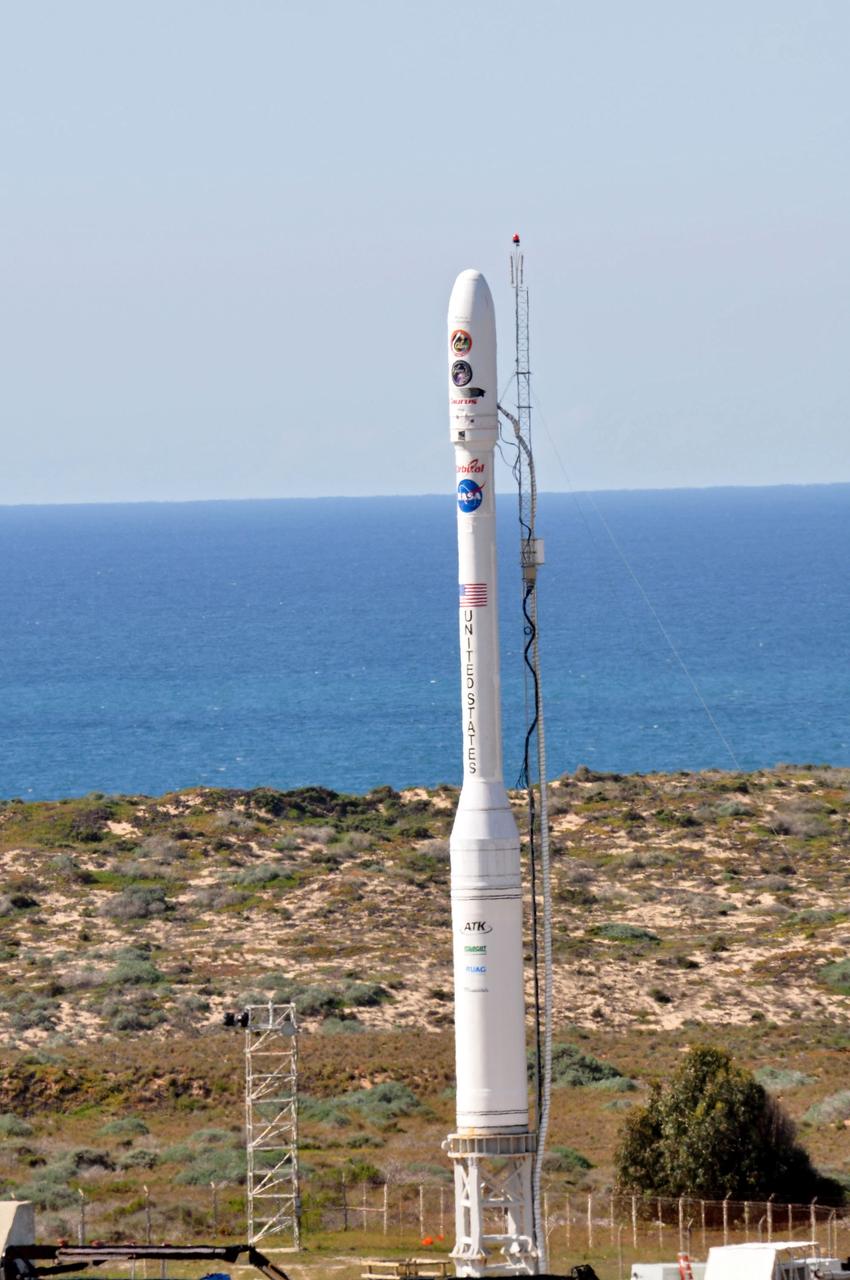
VANDENBERG AIR FORCE BASE, Calif. -- The Orbital Sciences Taurus XL rocket and NASA's encapsulated Glory spacecraft await launch on the pad at Vandenberg Air Force Base's Space Launch Complex 576-E in California. Liftoff originally was scheduled for 5:09 a.m. EST Feb. 23, but was scrubbed for at least 24 hours due to a technical issue that engineers are evaluating. Once Glory reaches orbit, it will collect data on the properties of aerosols and black carbon. It also will help scientists understand how the sun's irradiance affects Earth's climate. For information, visit www.nasa.gov/glory. Photo credit: NASA/Randy Beaudoin, VAFB
VANDENBERG AIR FORCE BASE, Calif. -- The Orbital Sciences Taurus XL rocket and NASA's encapsulated Glory spacecraft await launch on the pad at Vandenberg Air Force Base's Space Launch Complex 576-E in California. Liftoff originally was scheduled for 5:09 a.m. EST Feb. 23, but was scrubbed for at least 24 hours due to a technical issue that engineers are evaluating. Once Glory reaches orbit, it will collect data on the properties of aerosols and black carbon. It also will help scientists understand how the sun's irradiance affects Earth's climate. For information, visit www.nasa.gov/glory. Photo credit: NASA/Randy Beaudoin, VAFB
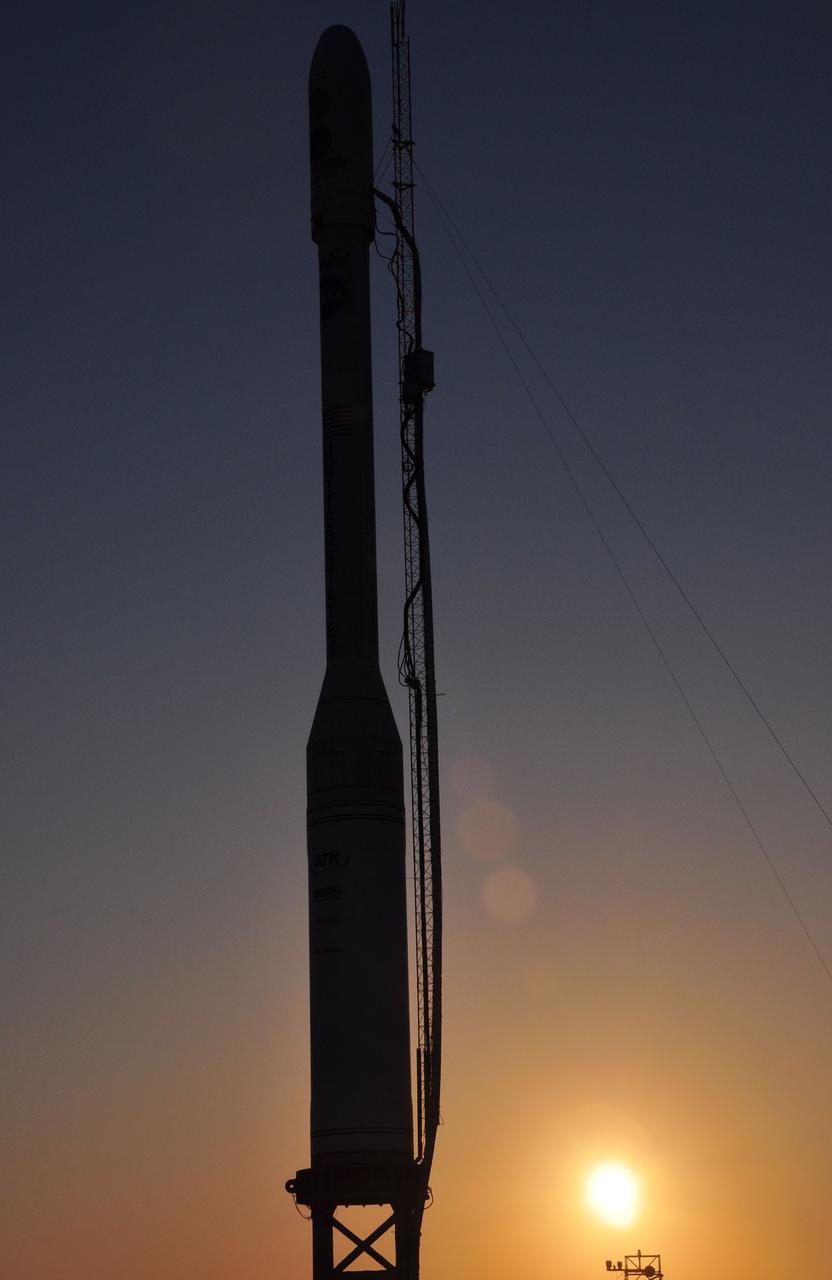
VANDENBERG AIR FORCE BASE, Calif. -- As the sun goes down over Vandenberg Air Force Base in California, the Orbital Sciences Taurus XL rocket and NASA's encapsulated Glory spacecraft await an early morning launch on the pad at Space Launch Complex 576-E. Liftoff originally was scheduled for 5:09 a.m. EST Feb. 23, but was scrubbed for at least 24 hours due to a technical issue that engineers are evaluating. Once Glory reaches orbit, it will collect data on the properties of aerosols and black carbon. It also will help scientists understand how the sun's irradiance affects Earth's climate. For information, visit www.nasa.gov/glory. Photo credit: NASA/Randy Beaudoin, VAFB
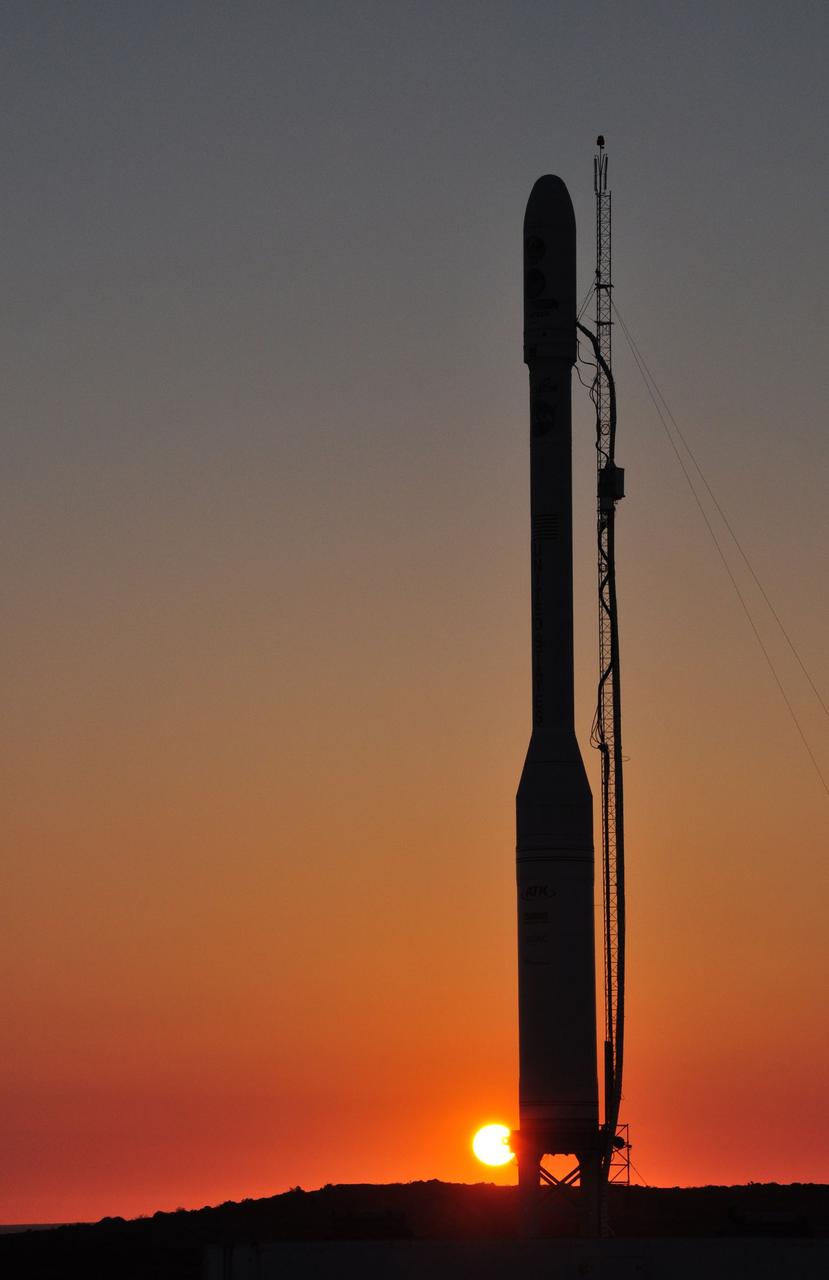
VANDENBERG AIR FORCE BASE, Calif. -- As the sun goes down over Vandenberg Air Force Base in California, the Orbital Sciences Taurus XL rocket and NASA's encapsulated Glory spacecraft await an early morning launch on the pad at Space Launch Complex 576-E. Liftoff originally was scheduled for 5:09 a.m. EST Feb. 23, but was scrubbed for at least 24 hours due to a technical issue that engineers are evaluating. Once Glory reaches orbit, it will collect data on the properties of aerosols and black carbon. It also will help scientists understand how the sun's irradiance affects Earth's climate. For information, visit www.nasa.gov/glory. Photo credit: NASA/Randy Beaudoin, VAFB
VANDENBERG AIR FORCE BASE, Calif. -- As the sun goes down over Vandenberg Air Force Base in California, the Orbital Sciences Taurus XL rocket and NASA's encapsulated Glory spacecraft await an early morning launch on the pad at Space Launch Complex 576-E. Liftoff originally was scheduled for 5:09 a.m. EST Feb. 23, but was scrubbed for at least 24 hours due to a technical issue that engineers are evaluating. Once Glory reaches orbit, it will collect data on the properties of aerosols and black carbon. It also will help scientists understand how the sun's irradiance affects Earth's climate. For information, visit www.nasa.gov/glory. Photo credit: NASA/Randy Beaudoin, VAFB
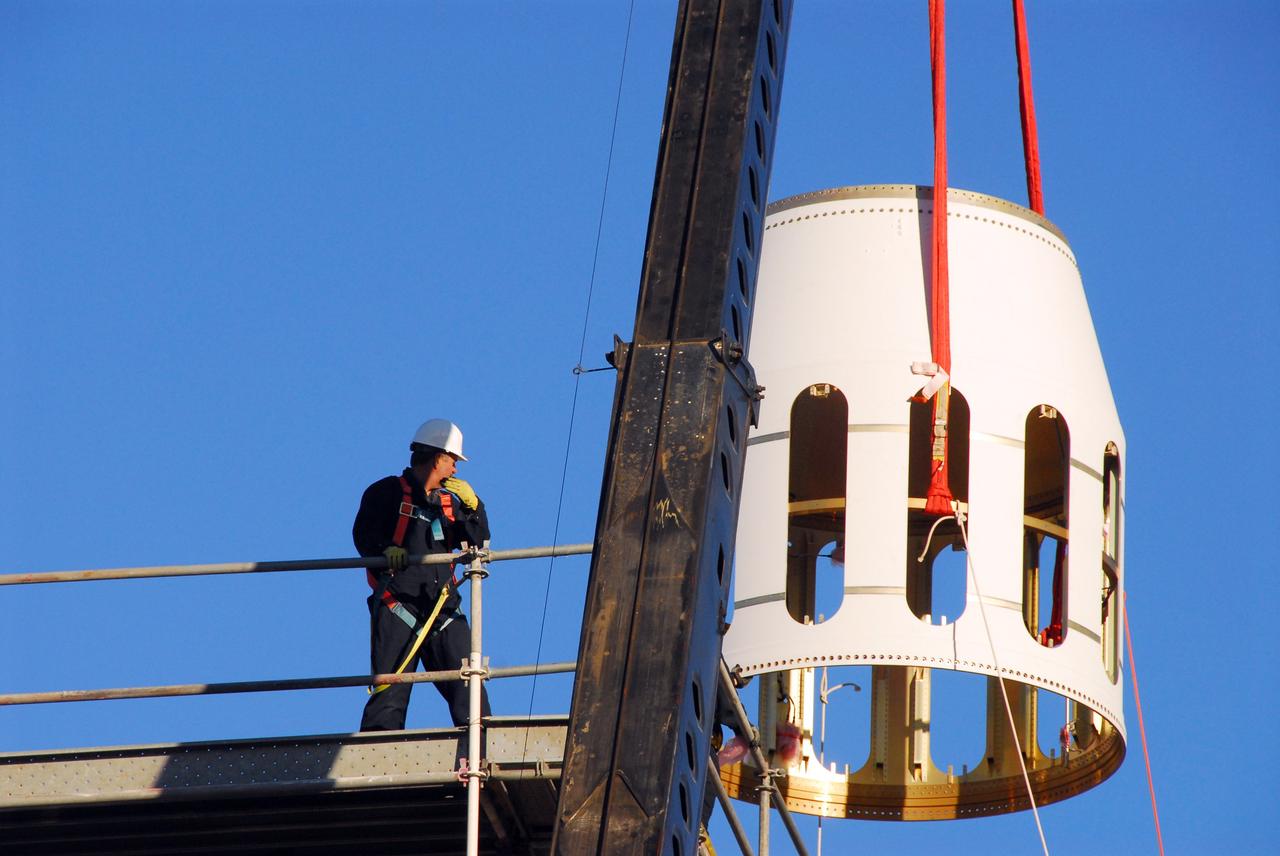
VANDENBERG AIR FORCE BASE, Calif. -- At Vandenberg Air Force Base in California, the Stage 0/1 interstage, part of the four-stage Taurus XL rocket that will carry NASA's Glory spacecraft into low Earth orbit, is lifted by crane toward the pad at Space Launch Complex 576-E. Once Glory reaches orbit, it will collect data on the properties of aerosols and black carbon. It also will help scientists understand how the sun's irradiance affects Earth's climate. Launch is scheduled for 5:09 a.m. EST Feb. 23. For information, visit www.nasa.gov/glory. Photo credit: NASA/Roy Allison, VAFB
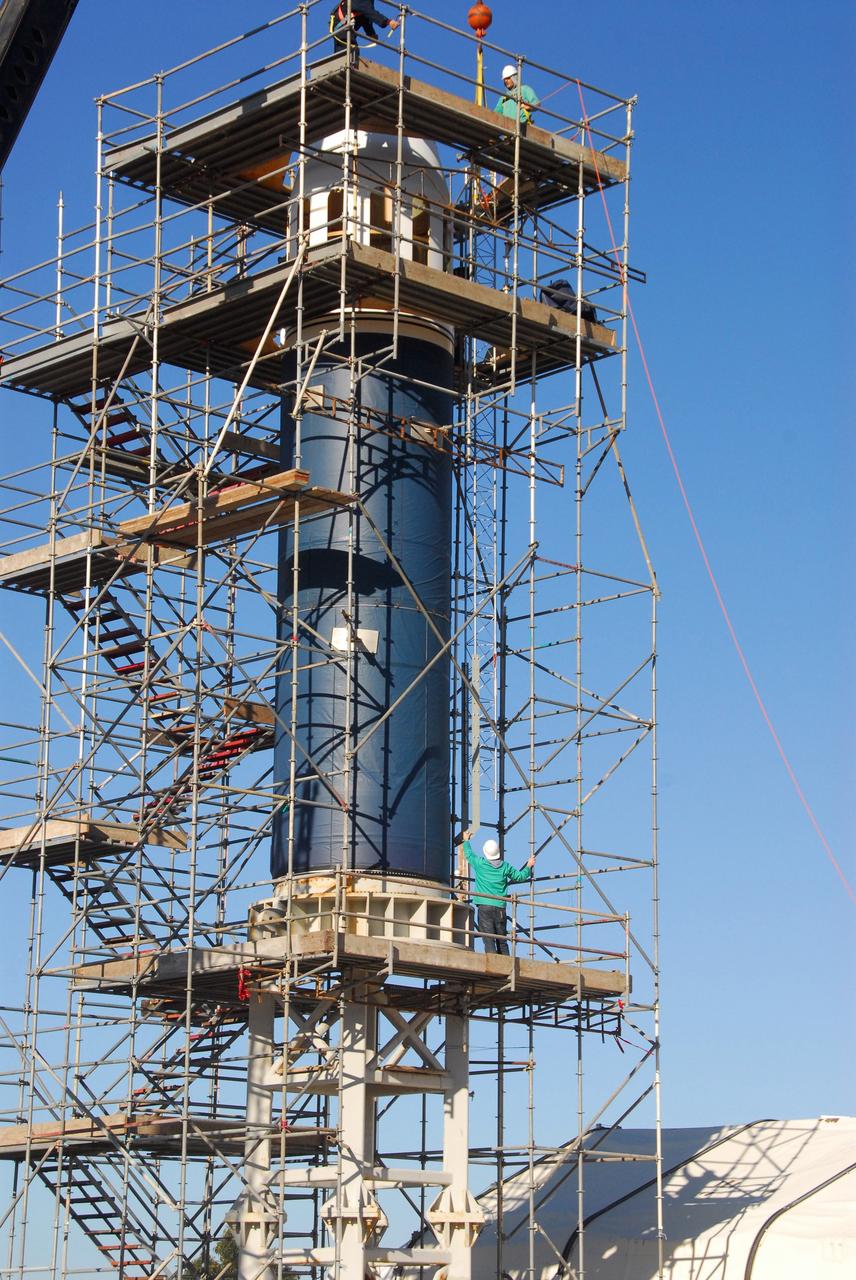
VANDENBERG AIR FORCE BASE, Calif. -- At Space Launch Complex 576-E at Vandenberg Air Force Base in California, the Stage 0/1 interstage is attached to Stage 0 of the four-stage Taurus XL rocket that will carry NASA's Glory spacecraft into low Earth orbit. Once Glory reaches orbit, it will collect data on the properties of aerosols and black carbon. It also will help scientists understand how the sun's irradiance affects Earth's climate. Launch is scheduled for 5:09 a.m. EST Feb. 23. For information, visit www.nasa.gov/glory. Photo credit: NASA/Roy Allison, VAFB
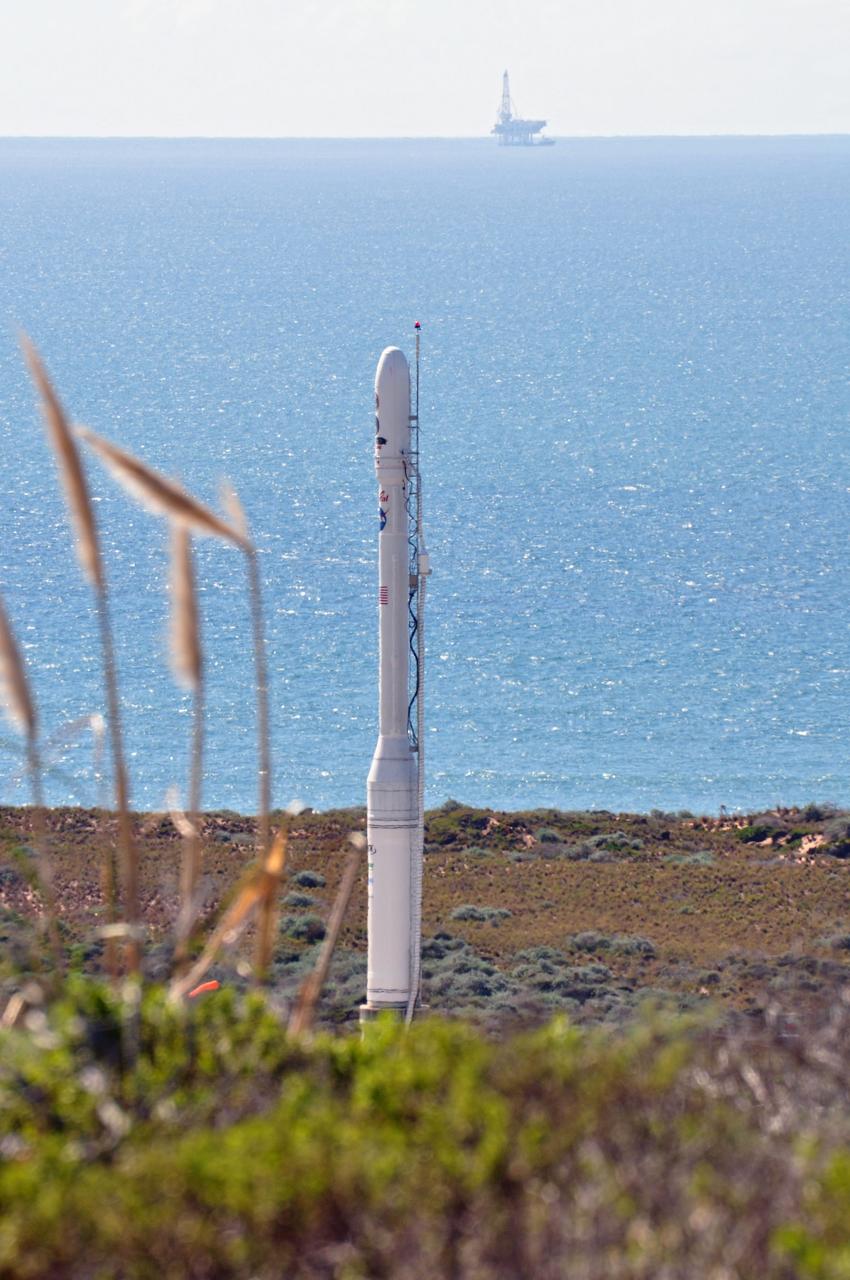
VANDENBERG AIR FORCE BASE, Calif. -- The Orbital Sciences Taurus XL rocket and NASA's encapsulated Glory spacecraft await launch on the pad at Vandenberg Air Force Base's Space Launch Complex 576-E in California. Liftoff originally was scheduled for 5:09 a.m. EST Feb. 23, but was scrubbed for at least 24 hours due to a technical issue that engineers are evaluating. Once Glory reaches orbit, it will collect data on the properties of aerosols and black carbon. It also will help scientists understand how the sun's irradiance affects Earth's climate. For information, visit www.nasa.gov/glory. Photo credit: NASA/Randy Beaudoin, VAFB
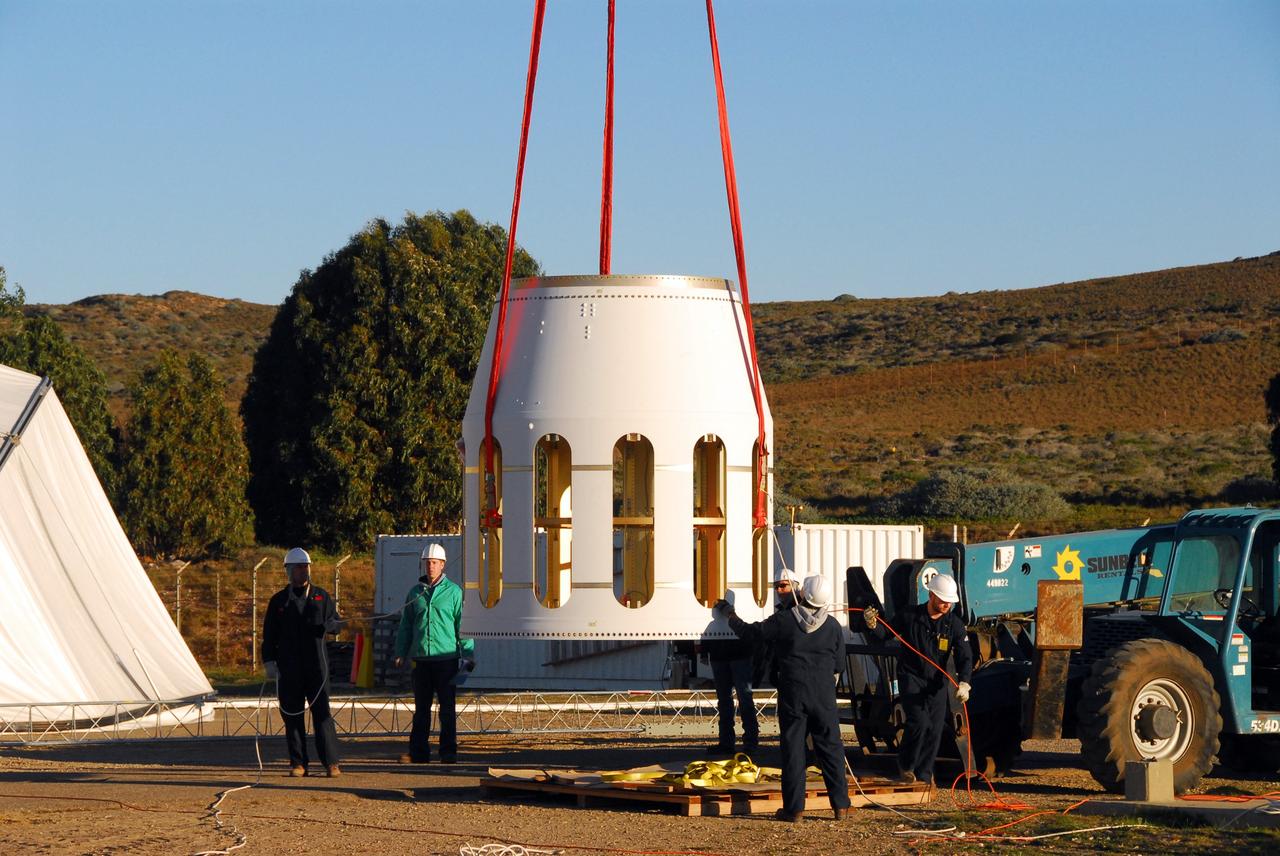
VANDENBERG AIR FORCE BASE, Calif. -- At Vandenberg Air Force Base in California, the Stage 0/1 interstage, part of the four-stage Taurus XL rocket that will carry NASA's Glory spacecraft into low Earth orbit, is lifted by crane toward the pad at Space Launch Complex 576-E. Once Glory reaches orbit, it will collect data on the properties of aerosols and black carbon. It also will help scientists understand how the sun's irradiance affects Earth's climate. Launch is scheduled for 5:09 a.m. EST Feb. 23. For information, visit www.nasa.gov/glory. Photo credit: NASA/Roy Allison, VAFB
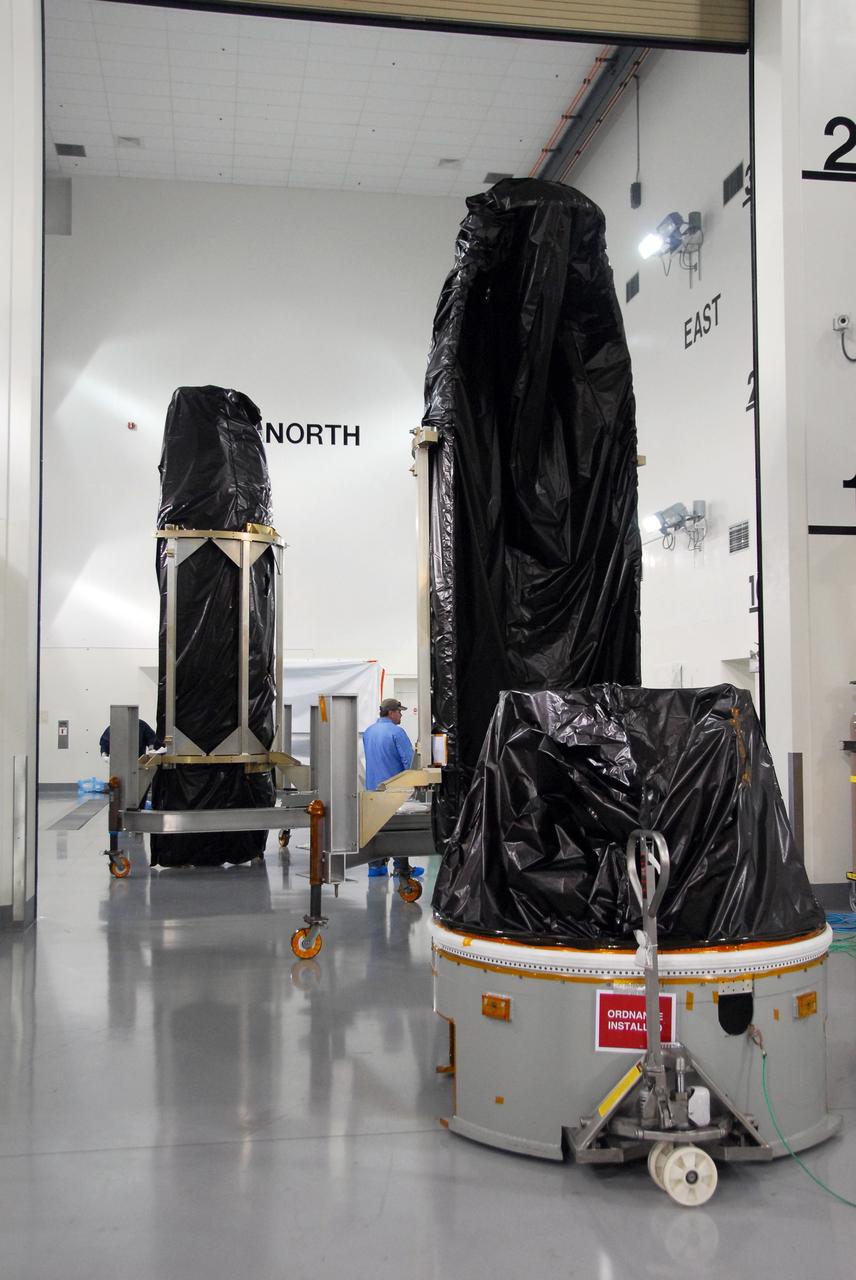
VANDENBERG AIR FORCE BASE, Calif. -- A technician works in the Astrotech payload processing facility at Vandenberg Air Force Base in California before the pieces that will make up the payload fairing for the Glory mission are moved to the East High Bay. The payload fairing will protect the Glory spacecraft from aerodynamic pressures and heating during the first part of its climb into orbit. Once Glory reaches orbit, it will collect data on the properties of aerosols and black carbon. It also will help scientists understand how the sun's irradiance affects Earth's climate. Launch is scheduled for 5:09 a.m. EST Feb. 23. For information, visit www.nasa.gov/glory. Photo credit: NASA/Ed Henry, VAFB
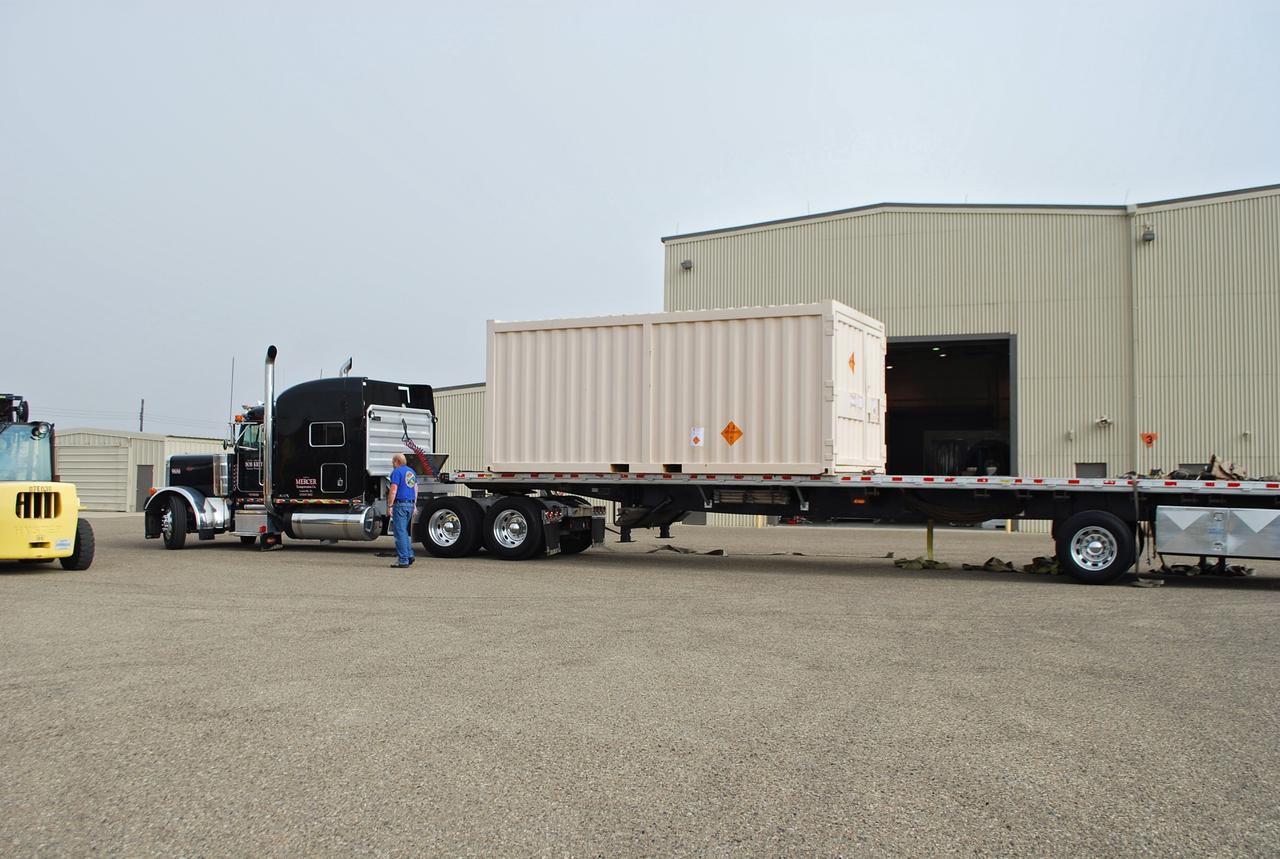
VANDENBERG AIR FORCE BASE, Calif. -- At Vandenberg Air Force Base in California, workers are preparing to unload a payload cone for NASA's Glory mission. The payload cone is an adapter that interfaces the Taurus XL rocket with the spacecraft. A four-stage Taurus XL rocket will carry Glory into low Earth orbit. Once Glory reaches orbit, it will collect data on the properties of aerosols and black carbon. It also will help scientists understand how the sun's irradiance affects Earth's climate. Launch is scheduled for 2:09 a.m. PST Nov. 22. For information, visit www.nasa.gov/glory. Photo credit: NASA/Randy Beaudoin, VAFB
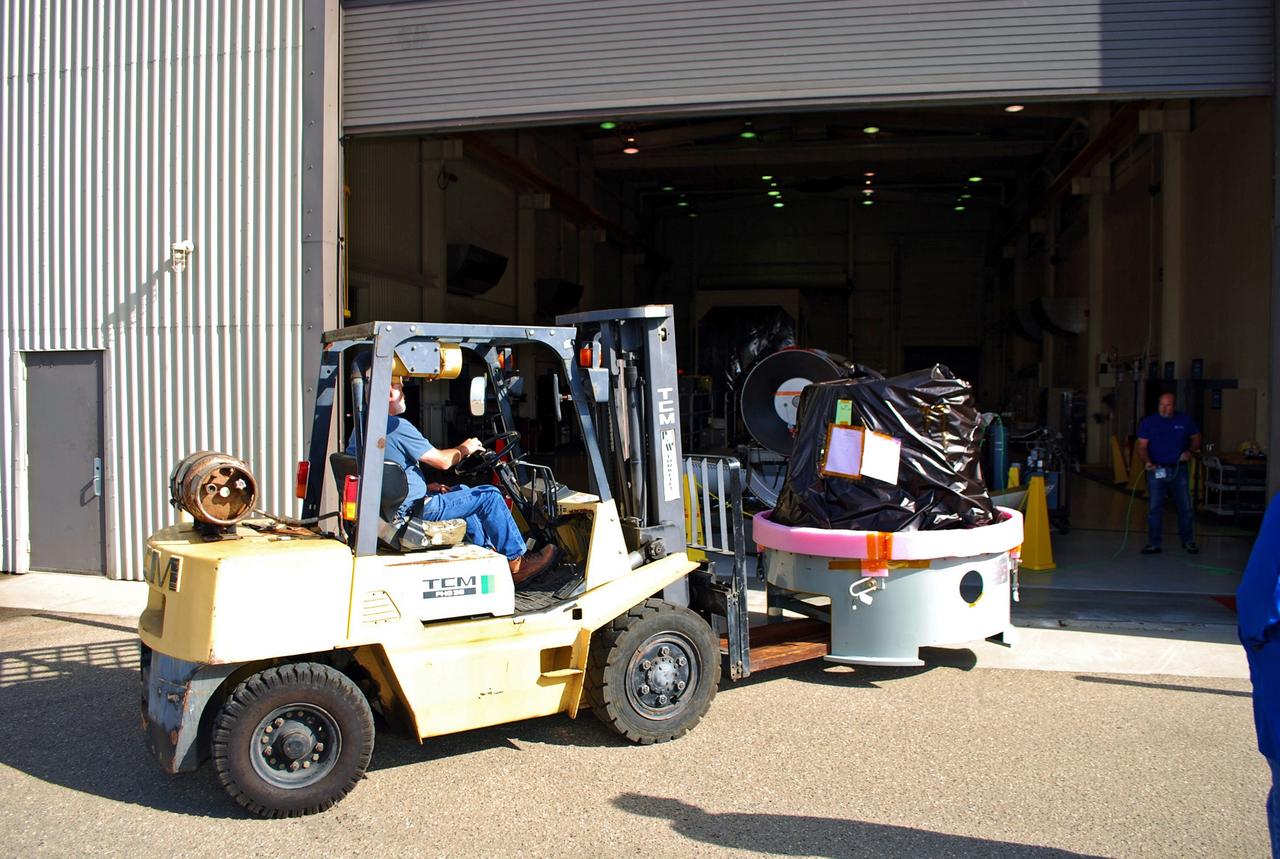
VANDENBERG AIR FORCE BASE, Calif. -- At Vandenberg Air Force Base in California, a worker user a Hyster lift moves the payload cone for NASA's Glory mission into VAFB's payload processing facility. The payload cone is an adapter that interfaces the Taurus XL rocket with the spacecraft. A four-stage Taurus XL rocket will carry Glory into low Earth orbit. Once Glory reaches orbit, it will collect data on the properties of aerosols and black carbon. It also will help scientists understand how the sun's irradiance affects Earth's climate. Launch is scheduled for 2:09 a.m. PST Nov. 22. For information, visit www.nasa.gov/glory. Photo credit: NASA/Randy Beaudoin, VAFB
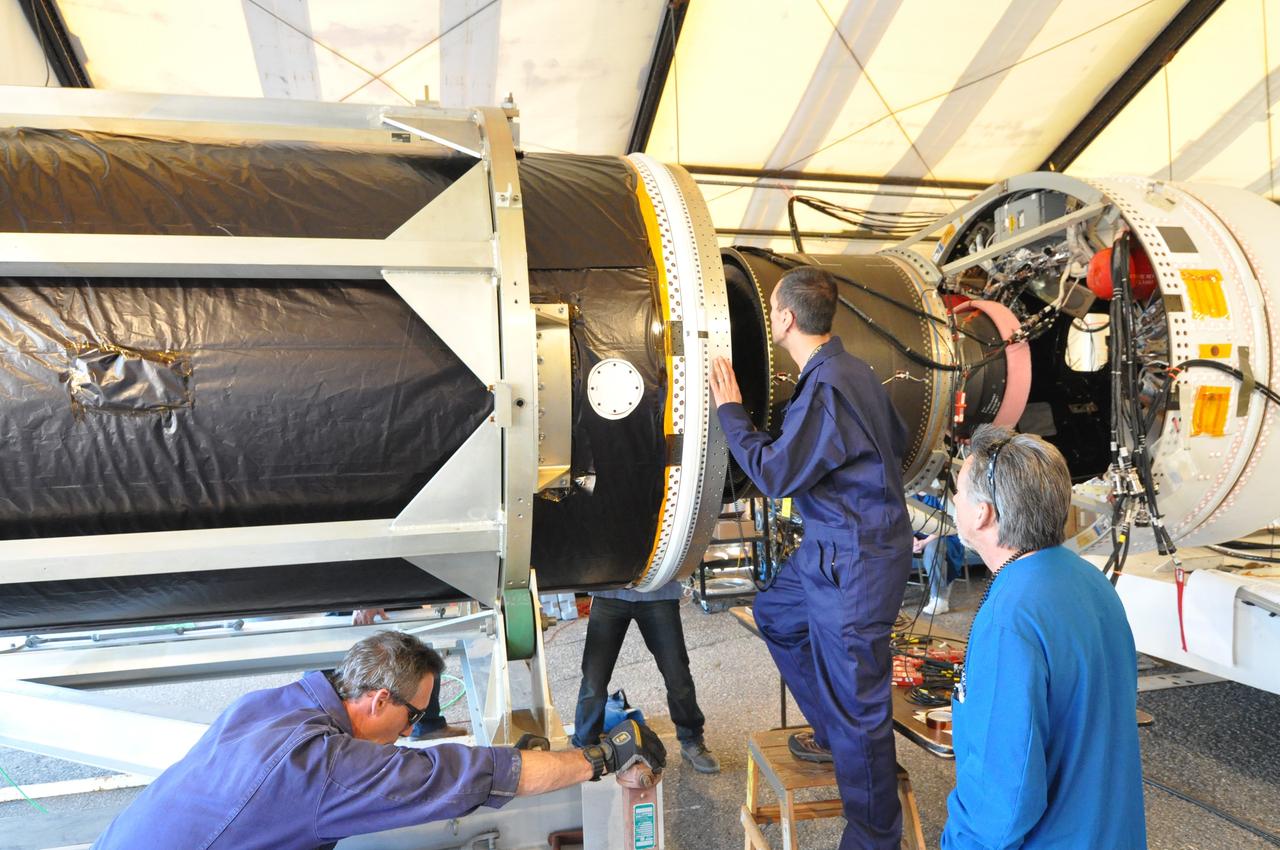
VANDENBERG AIR FORCE BASE, Calif. -- At Vandenberg Air Force Base in California, technicians join NASA's Glory spacecraft with the Taurus XL rocket's third stage, housed inside a temporary processing tent near the pad at Space Launch Complex 576-E. The Orbital Sciences Corp. Taurus XL rocket will carry Glory into low Earth orbit. Once Glory reaches orbit, it will collect data on the properties of aerosols and black carbon. It also will help scientists understand how the sun's irradiance affects Earth's climate. Launch is scheduled for 5:09 a.m. EST Feb. 23. For information, visit www.nasa.gov/glory. Photo credit: NASA/Randy Beaudoin, VAFB
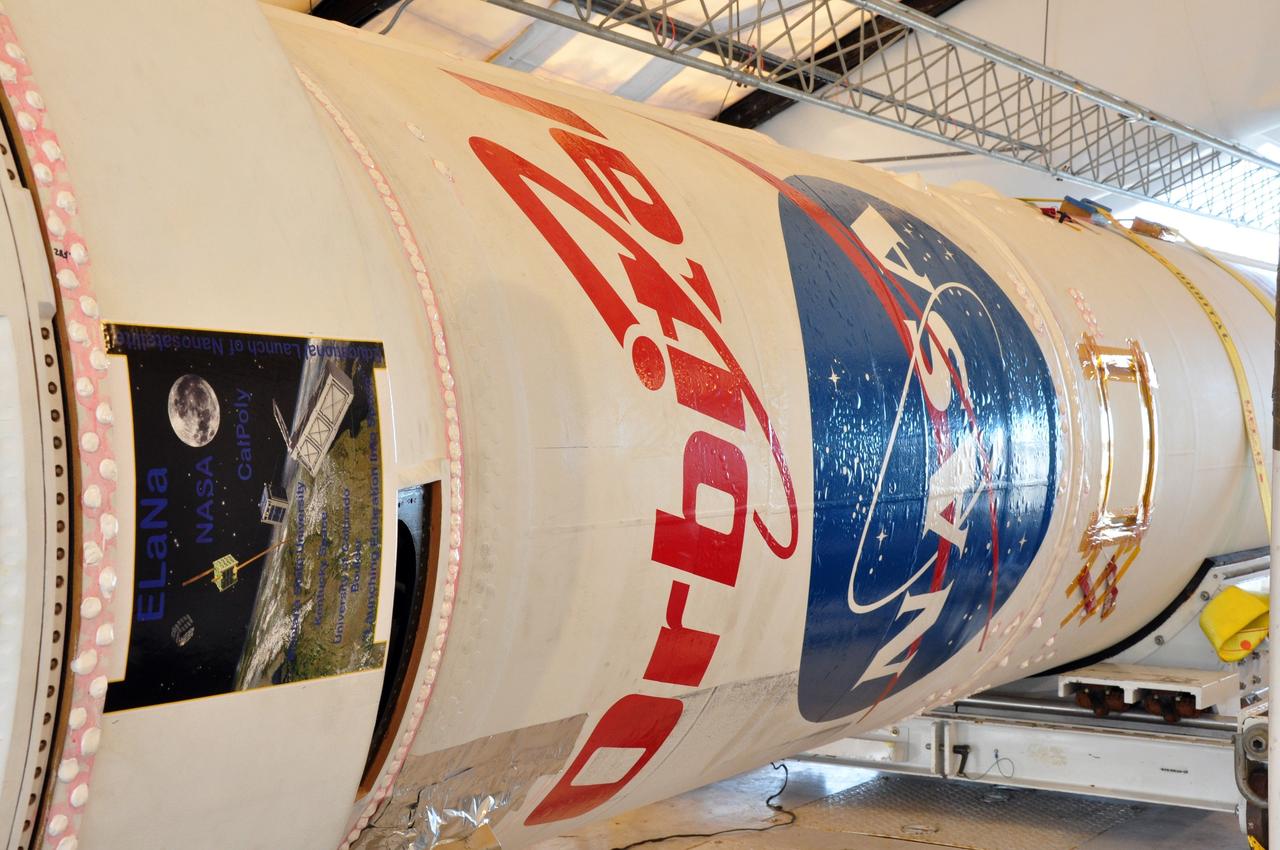
VANDENBERG AIR FORCE BASE, Calif. -- At Space Launch Complex 576-E at Vandenberg Air Force Base in California, NASA's Glory spacecraft already integrated with the upper stack of the Taurus rocket displays the mission decals. The Orbital Sciences Corp. Taurus XL rocket will launch Glory into low Earth orbit. Once Glory reaches orbit, it will collect data on the properties of aerosols and black carbon. It also will help scientists understand how the sun's irradiance affects Earth's climate. Launch is scheduled for 5:09 a.m. EST Feb. 23. For information, visit www.nasa.gov/glory. Photo credit: NASA/Randy Beaudoin, VAFB
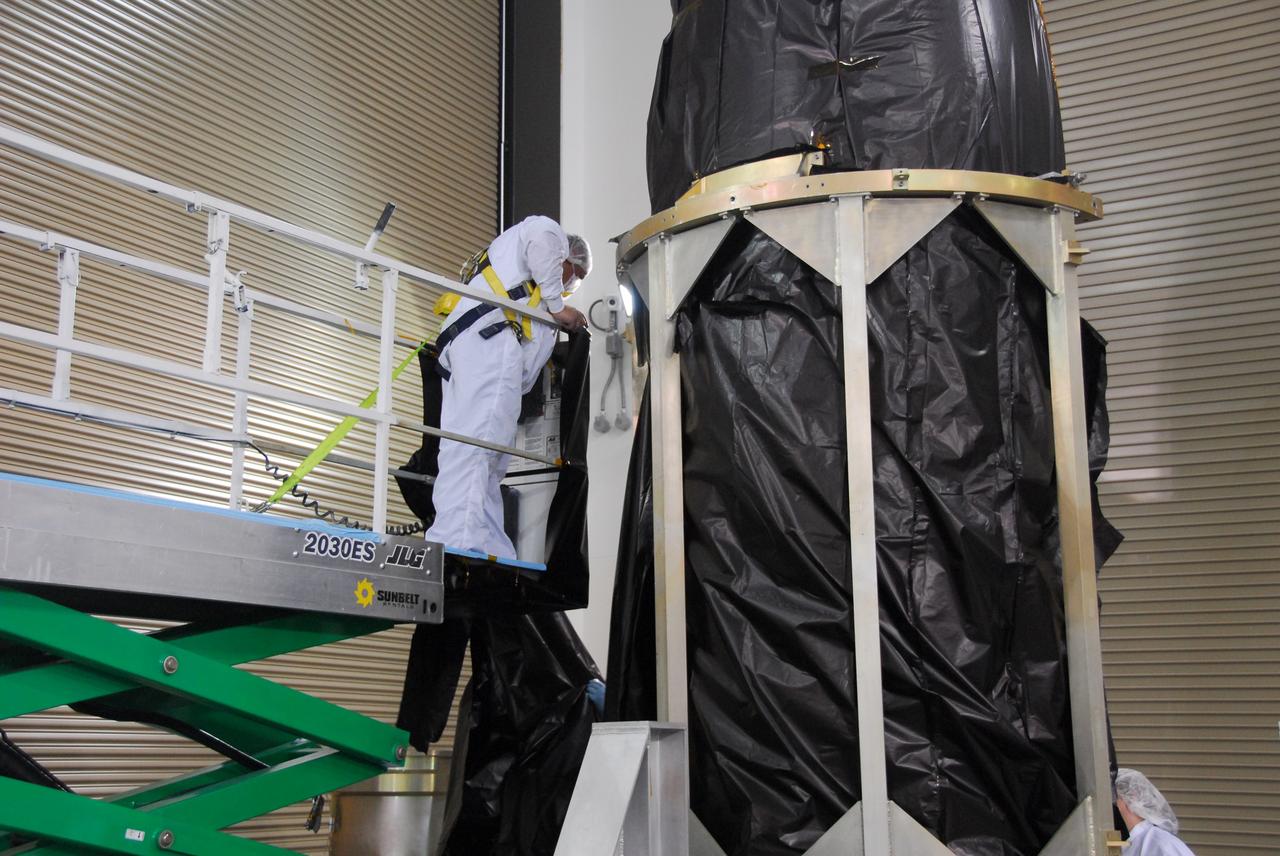
VANDENBERG AIR FORCE BASE, Calif. -- A technician prepare to remove the covering of the payload fairing for the Glory mission. He is working inside the Astrotech payload processing facility at Vandenberg Air Force Base in California. The payload fairing will protect the Glory spacecraft from aerodynamic pressures and heating during the first part of its climb into orbit. Once Glory reaches orbit, it will collect data on the properties of aerosols and black carbon. It also will help scientists understand how the sun's irradiance affects Earth's climate. Launch is scheduled for 5:09 a.m. EST Feb. 23. For information, visit www.nasa.gov/glory. Photo credit: NASA/Ed Henry, VAFB
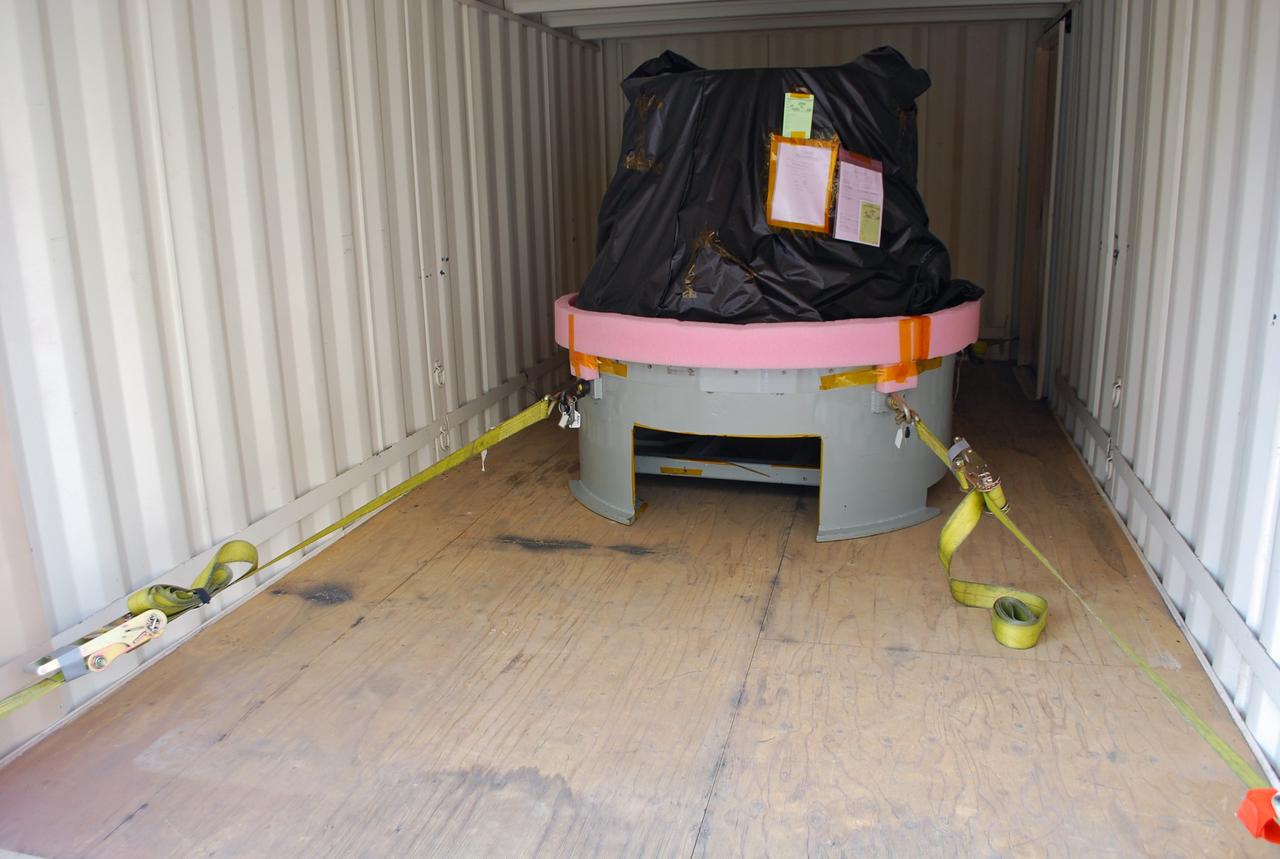
VANDENBERG AIR FORCE BASE, Calif. -- At Vandenberg Air Force Base in California, the payload cone for NASA's Glory mission is pictures secured inside its cargo carrier. The payload cone is an adapter that interfaces the Taurus XL rocket with the spacecraft. A four-stage Taurus XL rocket will carry Glory into low Earth orbit. Once Glory reaches orbit, it will collect data on the properties of aerosols and black carbon. It also will help scientists understand how the sun's irradiance affects Earth's climate. Launch is scheduled for 2:09 a.m. PST Nov. 22. For information, visit www.nasa.gov/glory. Photo credit: NASA/Randy Beaudoin, VAFB
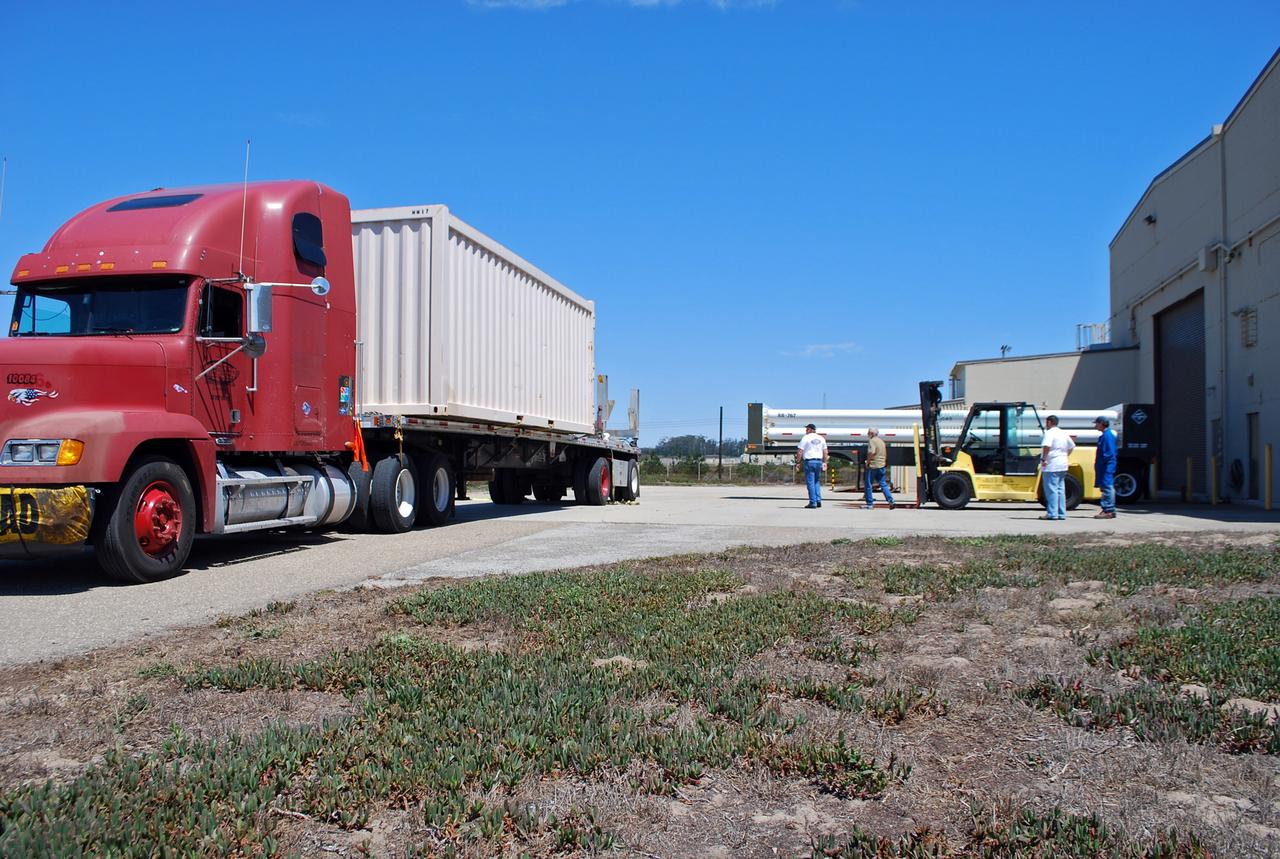
VANDENBERG AIR FORCE BASE, Calif. -- At Vandenberg Air Force Base in California, workers are preparing to unload one half of the fairing that will envelop NASA's Glory satellite. Both halves of the fairing will be installed around the spacecraft to protect it from the weather on the ground as well as from the atmosphere during flight. A four-stage Taurus XL rocket will carry Glory into low Earth orbit. Once Glory reaches orbit, it will collect data on the properties of aerosols and black carbon. It also will help scientists understand how the sun's irradiance affects Earth's climate. Launch is scheduled for 2:09 a.m. PST Nov. 22. For information, visit www.nasa.gov/glory. Photo credit: NASA/Randy Beaudoin, VAFB
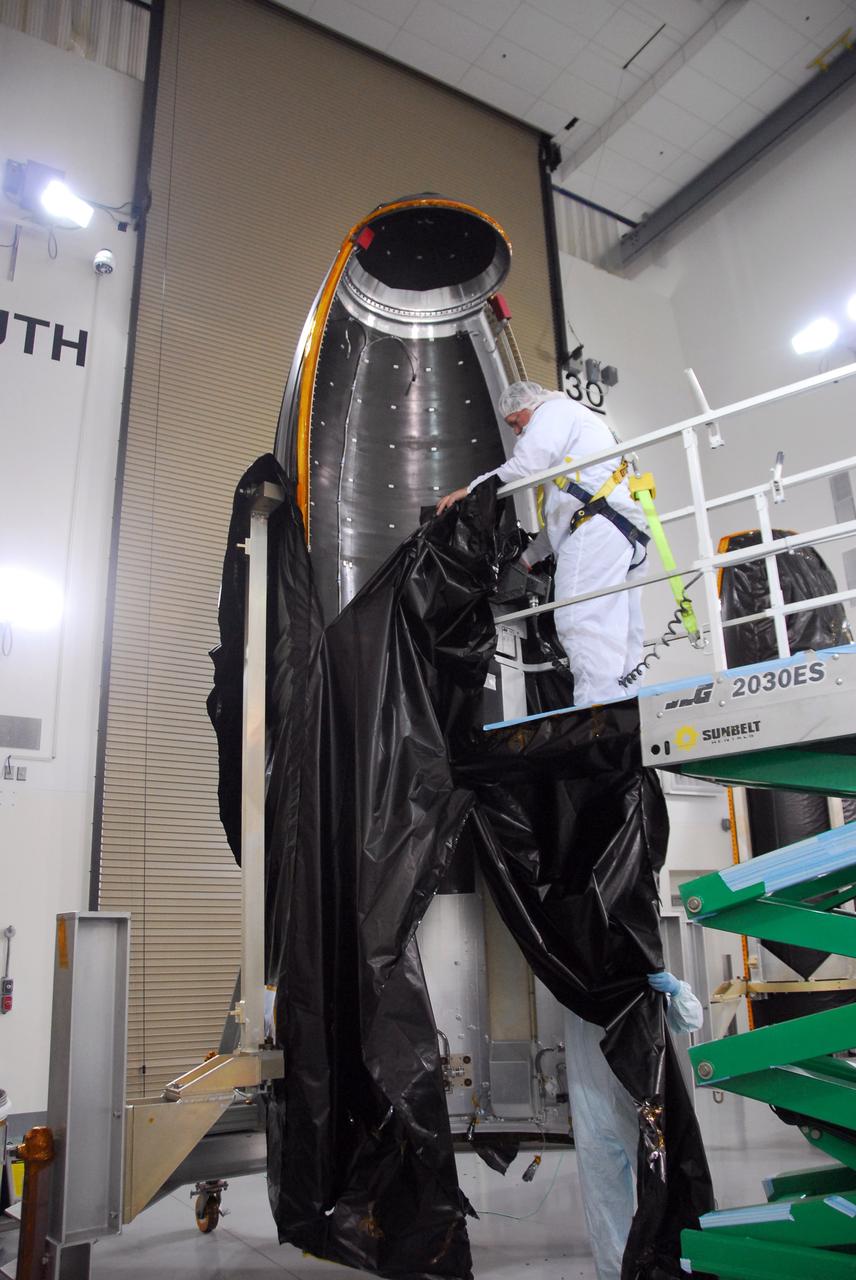
VANDENBERG AIR FORCE BASE, Calif. -- A technician uncovers half of the payload fairing for the Glory mission after the section was moved to the East High Bay of the Astrotech payload processing facility at Vandenberg Air Force Base in California. The payload fairing will protect the Glory spacecraft from aerodynamic pressures and heating during the first part of its climb into orbit. Once Glory reaches orbit, it will collect data on the properties of aerosols and black carbon. It also will help scientists understand how the sun's irradiance affects Earth's climate. Launch is scheduled for 5:09 a.m. EST Feb. 23. For information, visit www.nasa.gov/glory. Photo credit: NASA/Ed Henry, VAFB
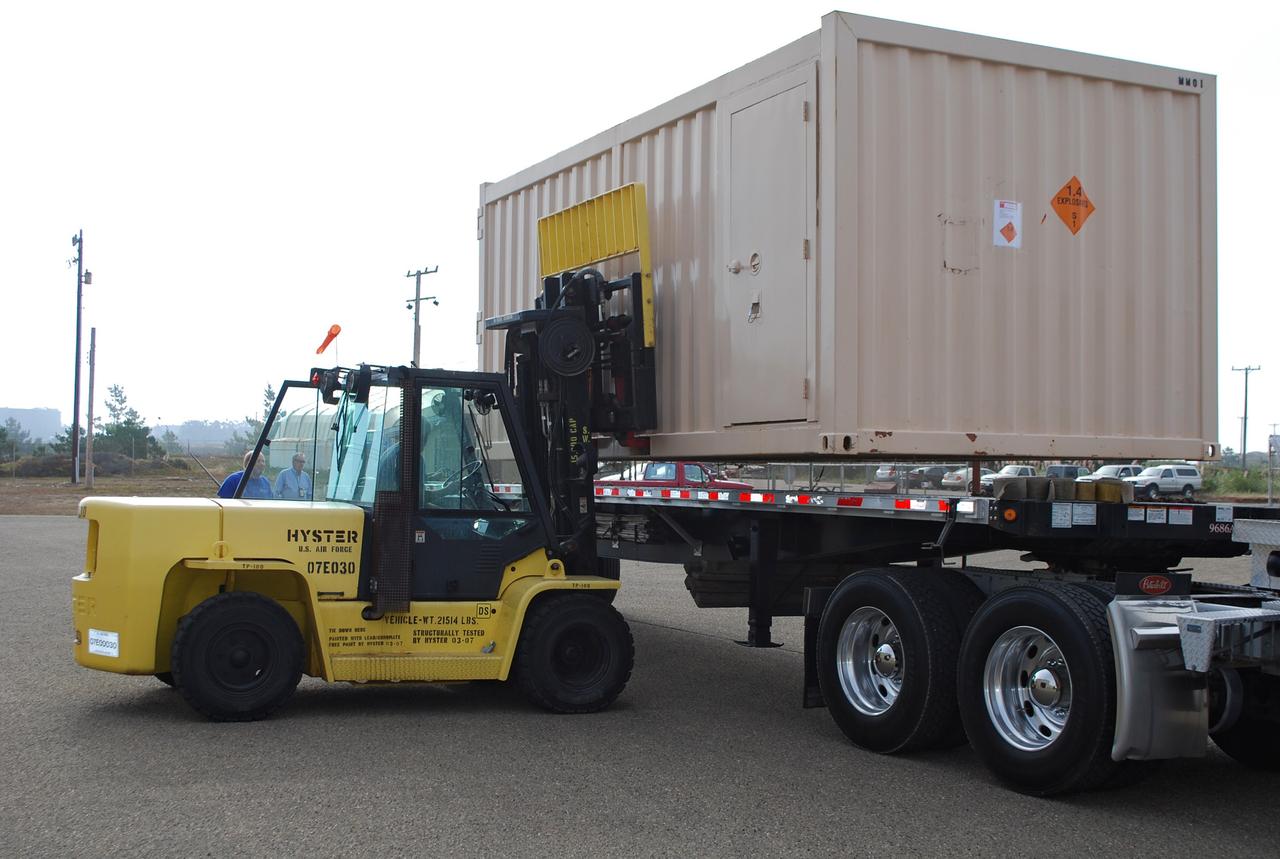
VANDENBERG AIR FORCE BASE, Calif. -- At Vandenberg Air Force Base in California, workers are preparing to unload a payload cone for NASA's Glory mission. The payload cone is an adapter that interfaces the Taurus XL rocket with the spacecraft. A four-stage Taurus XL rocket will carry Glory into low Earth orbit. Once Glory reaches orbit, it will collect data on the properties of aerosols and black carbon. It also will help scientists understand how the sun's irradiance affects Earth's climate. Launch is scheduled for 2:09 a.m. PST Nov. 22. For information, visit www.nasa.gov/glory. Photo credit: NASA/Randy Beaudoin, VAFB
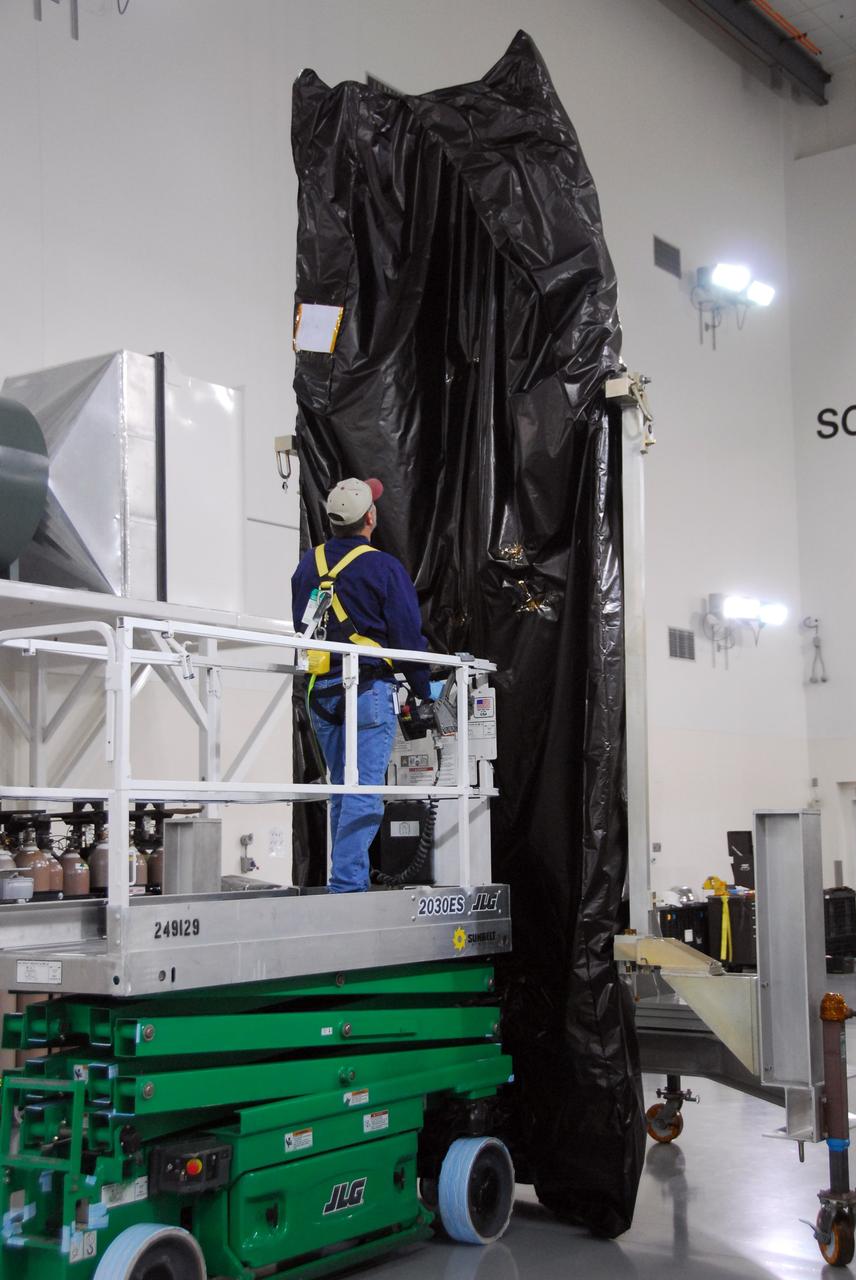
VANDENBERG AIR FORCE BASE, Calif. -- A technician works with half of the payload fairing to be used in the Glory mission before the fairing is moved to the East High Bay at the Astrotech payload processing facility at Vandenberg Air Force Base in California. The payload fairing will protect the Glory spacecraft from aerodynamic pressures and heating during the first part of its climb into orbit. Once Glory reaches orbit, it will collect data on the properties of aerosols and black carbon. It also will help scientists understand how the sun's irradiance affects Earth's climate. Launch is scheduled for 5:09 a.m. EST Feb. 23. For information, visit www.nasa.gov/glory. Photo credit: NASA/Ed Henry, VAFB
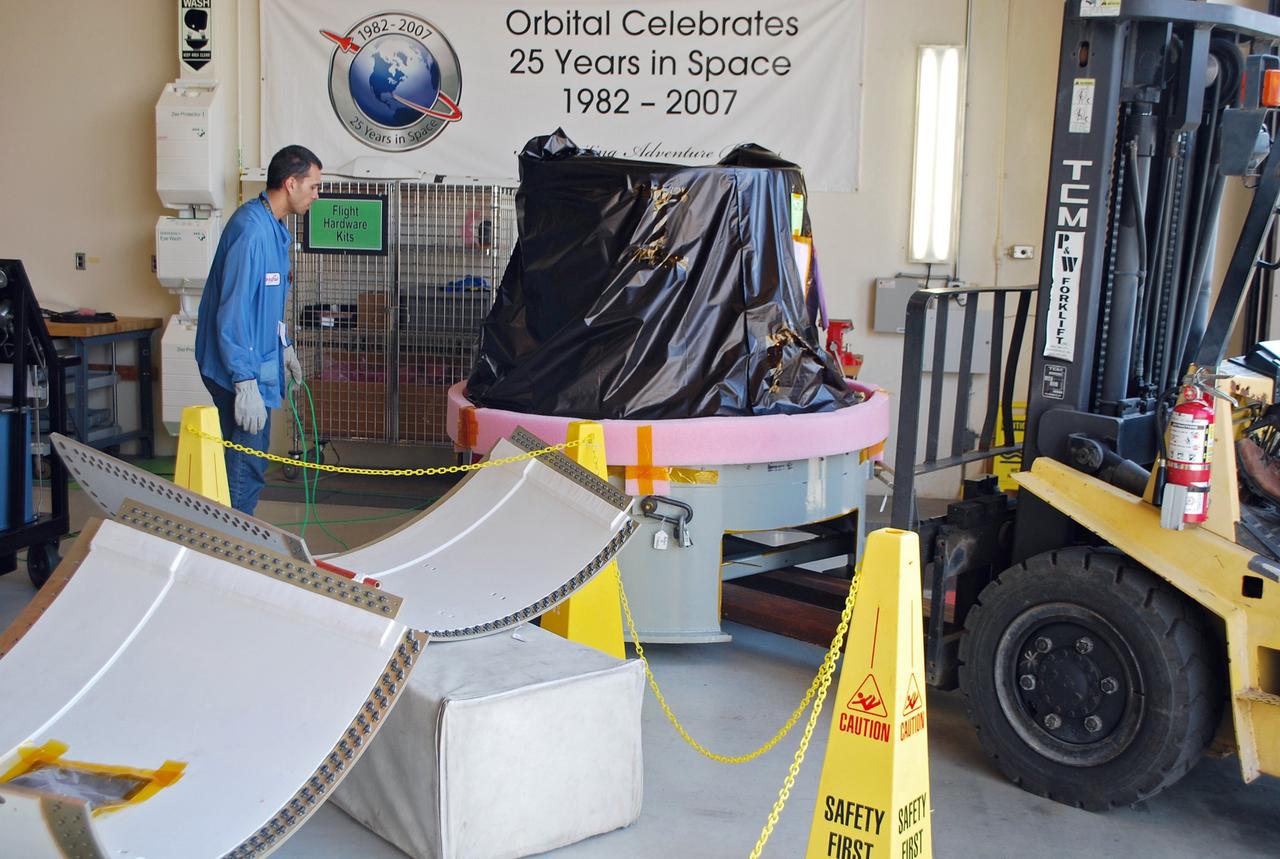
VANDENBERG AIR FORCE BASE, Calif. -- At Vandenberg Air Force Base in California, the payload cone is lowered onto the floor of VAFB's payload processing facility for NASA's Glory mission. The payload cone is an adapter that interfaces the Taurus XL rocket with the spacecraft. A four-stage Taurus XL rocket will carry Glory into low Earth orbit. Once Glory reaches orbit, it will collect data on the properties of aerosols and black carbon. It also will help scientists understand how the sun's irradiance affects Earth's climate. Launch is scheduled for 2:09 a.m. PST Nov. 22. For information, visit www.nasa.gov/glory. Photo credit: NASA/Randy Beaudoin, VAFB
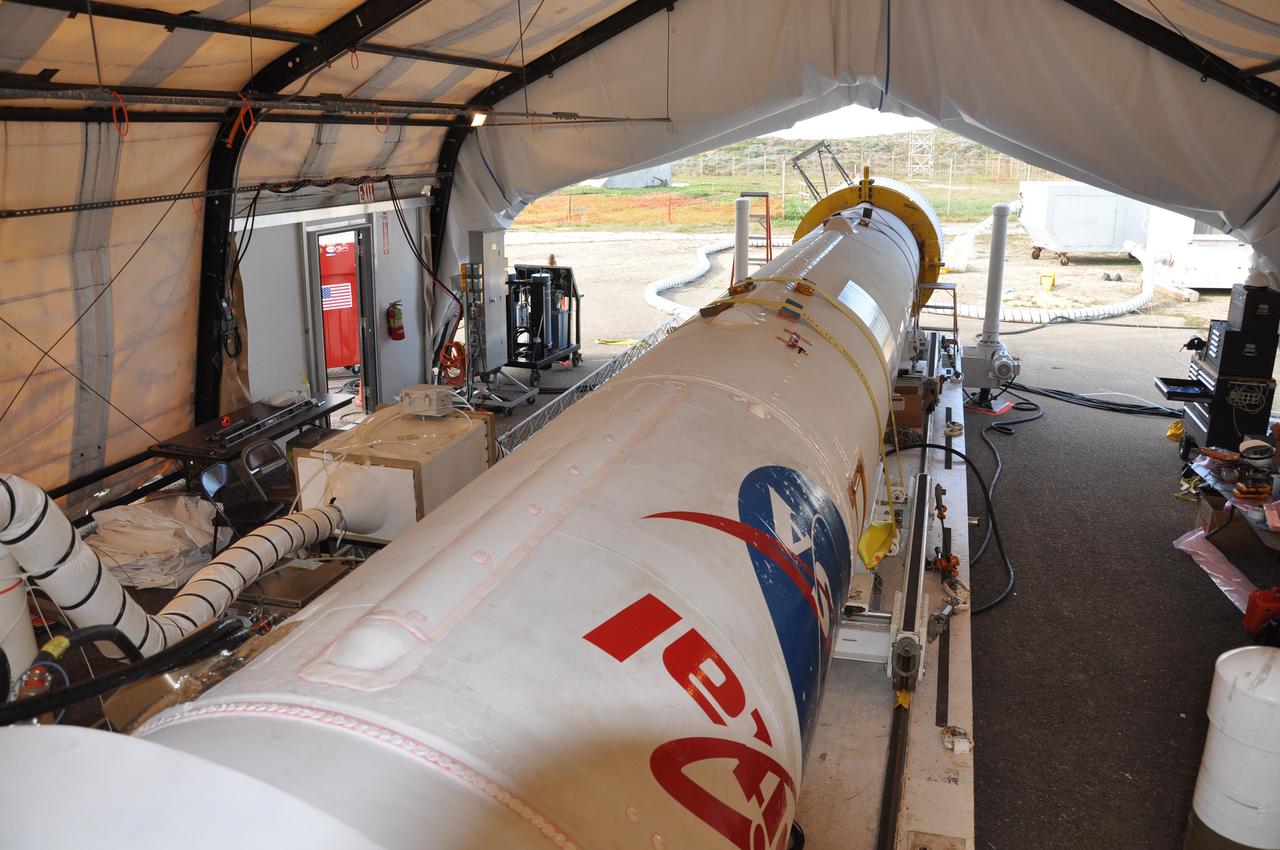
VANDENBERG AIR FORCE BASE, Calif. -- At Space Launch Complex 576-E at Vandenberg Air Force Base in California, NASA's Glory spacecraft, already integrated with the upper stack of the Taurus rocket, awaits installation of the upper umbilical tower inside a processing tent near the pad. The Orbital Sciences Corp. Taurus XL rocket will launch Glory into low Earth orbit. Once Glory reaches orbit, it will collect data on the properties of aerosols and black carbon. It also will help scientists understand how the sun's irradiance affects Earth's climate. Launch is scheduled for 5:09 a.m. EST Feb. 23. For information, visit www.nasa.gov/glory. Photo credit: NASA/Randy Beaudoin, VAFB
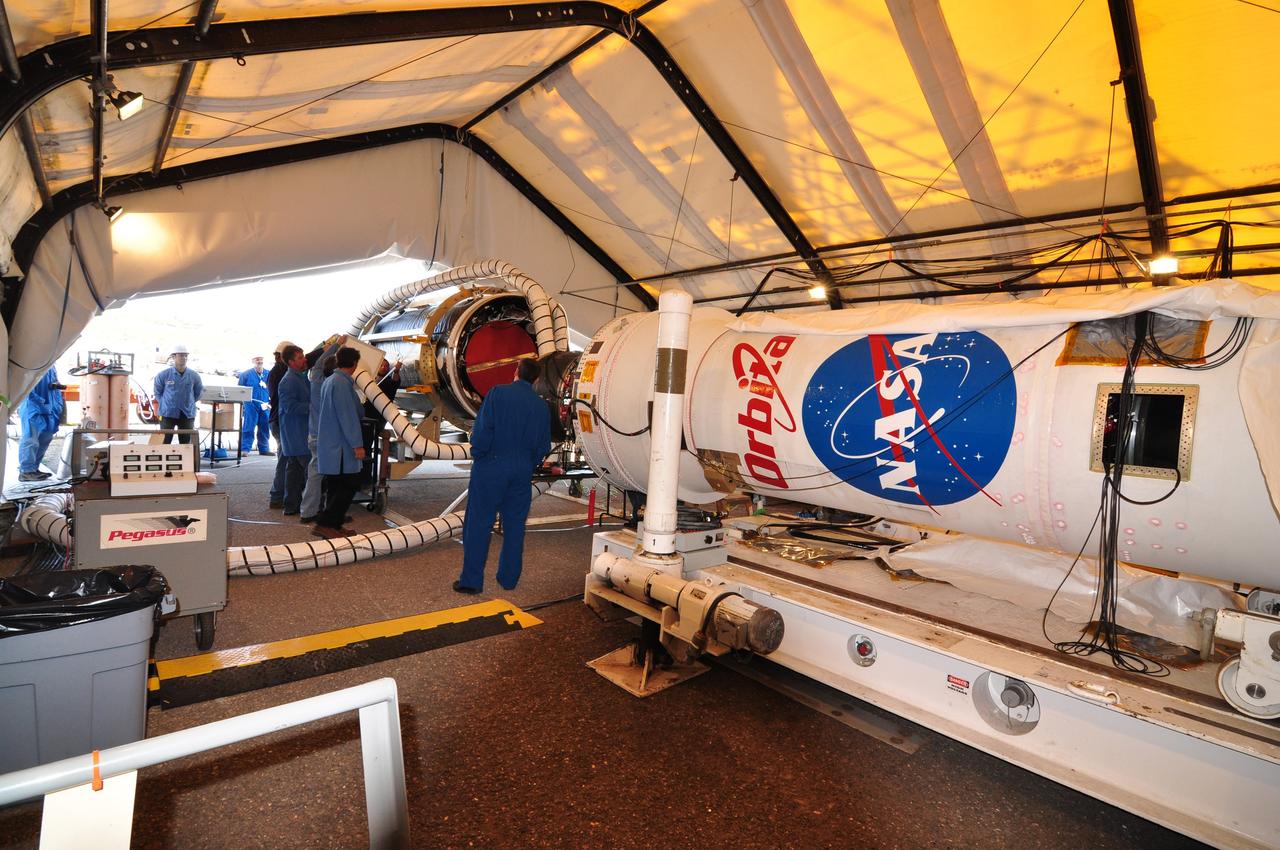
VANDENBERG AIR FORCE BASE, Calif. -- At Vandenberg Air Force Base in California, technicians are preparing to join NASA's Glory spacecraft with the Taurus XL rocket's third stage housed inside a temporary processing tent near the pad at Space Launch Complex 576-E. The Orbital Sciences Corp. Taurus XL rocket will carry Glory into low Earth orbit. Once Glory reaches orbit, it will collect data on the properties of aerosols and black carbon. It also will help scientists understand how the sun's irradiance affects Earth's climate. Launch is scheduled for 5:09 a.m. EST Feb. 23. For information, visit www.nasa.gov/glory. Photo credit: NASA/Randy Beaudoin, VAFB
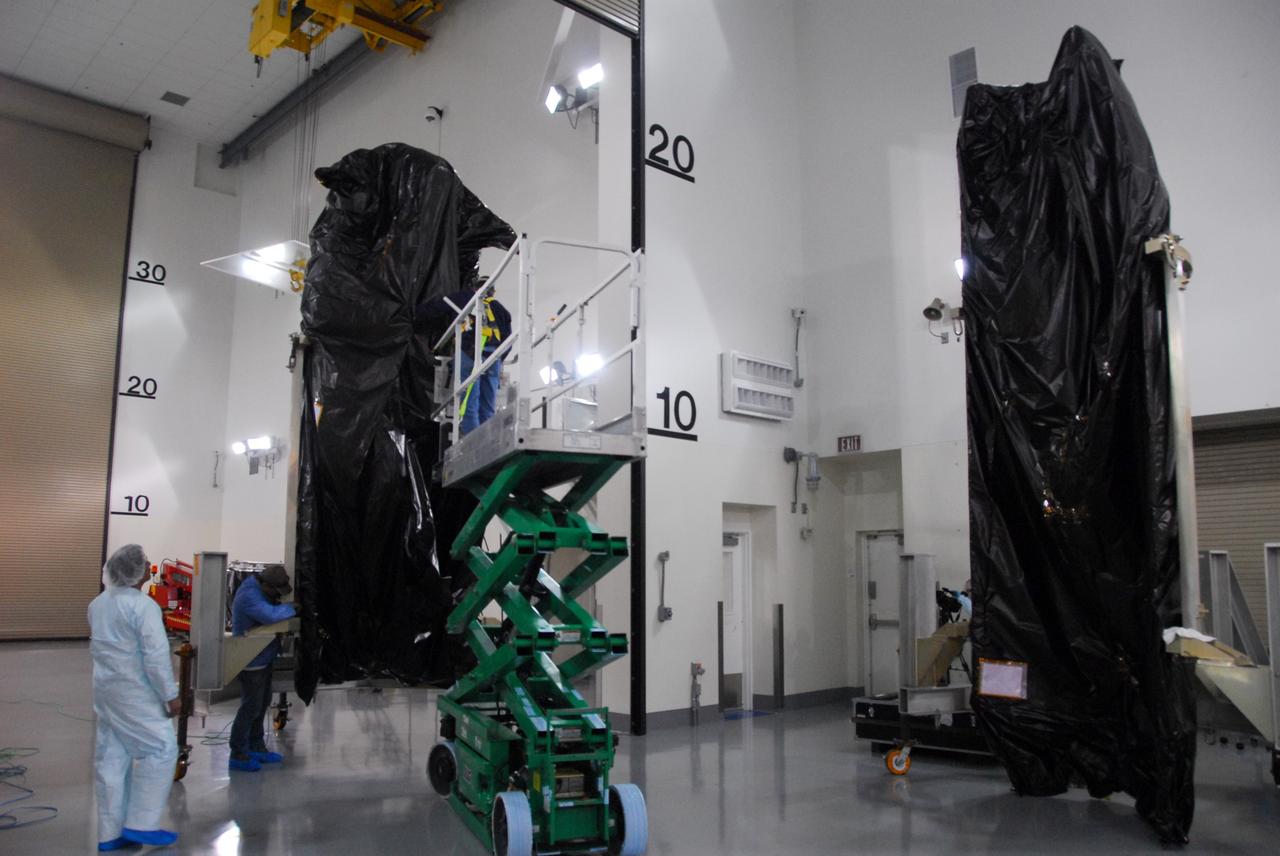
VANDENBERG AIR FORCE BASE, Calif. -- Technicians prepare the payload fairing to be used in the Glory mission before the fairing is moved to East High Bay at the Astrotech payload processing facility at Vandenberg Air Force Base in California. The payload fairing will protect the Glory spacecraft from aerodynamic pressures and heating during the first part of its climb into orbit. Once Glory reaches orbit, it will collect data on the properties of aerosols and black carbon. It also will help scientists understand how the sun's irradiance affects Earth's climate. Launch is scheduled for 5:09 a.m. EST Feb. 23. For information, visit www.nasa.gov/glory. Photo credit: NASA/Ed Henry, VAFB
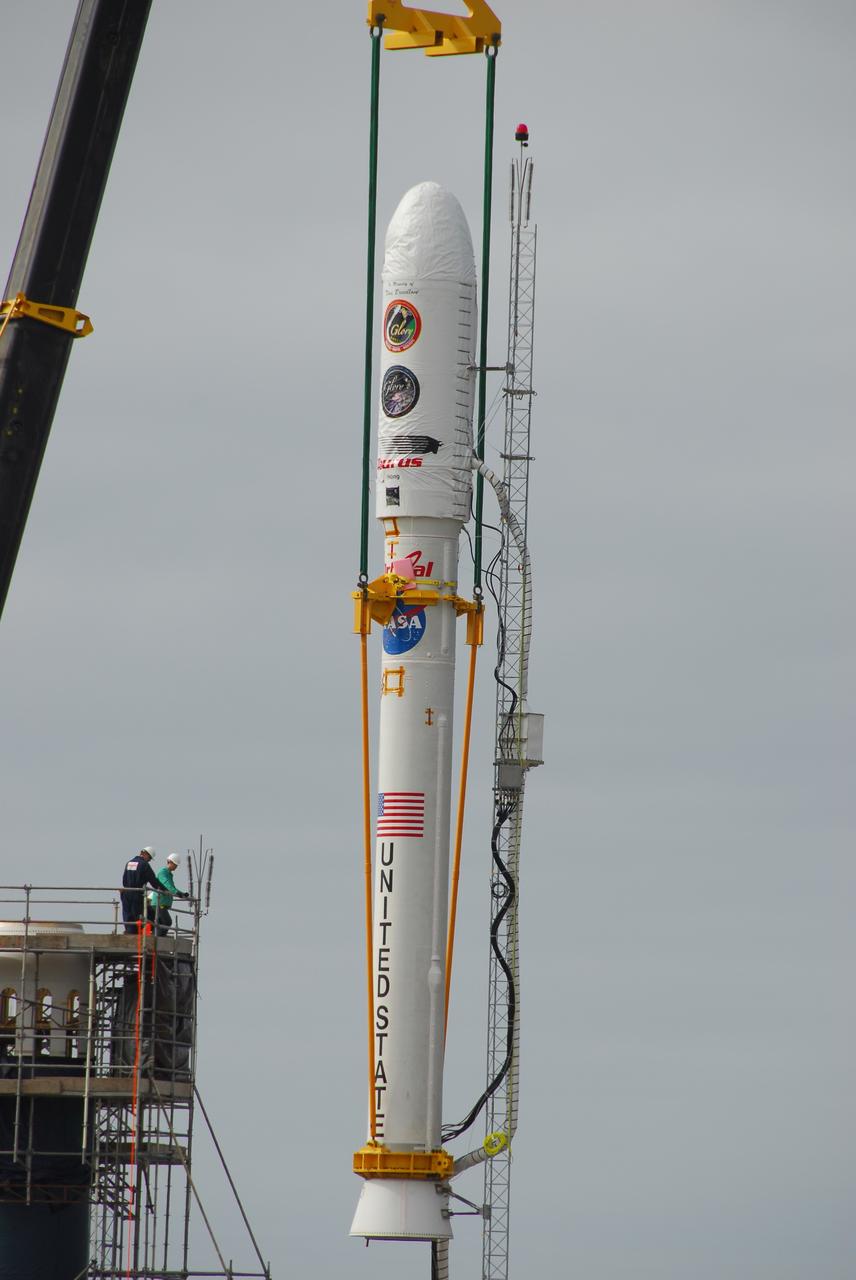
VANDENBERG AIR FORCE BASE, Calif. -- On Space Launch Complex 576-E at Vandenberg Air Force Base in California, a crane lowers NASA's Glory upper stack toward the Taurus XL rocket's Stage 0. The upper stack consists of Stages 1, 2 and 3 of the Taurus as well as the encapsulated Glory spacecraft. The Orbital Sciences Taurus XL rocket will launch Glory into low Earth orbit. Once Glory reaches orbit, it will collect data on the properties of aerosols and black carbon. It also will help scientists understand how the sun's irradiance affects Earth's climate. Launch is scheduled for 5:09 a.m. EST Feb. 23. For information, visit www.nasa.gov/glory. Photo credit: NASA/VAFB
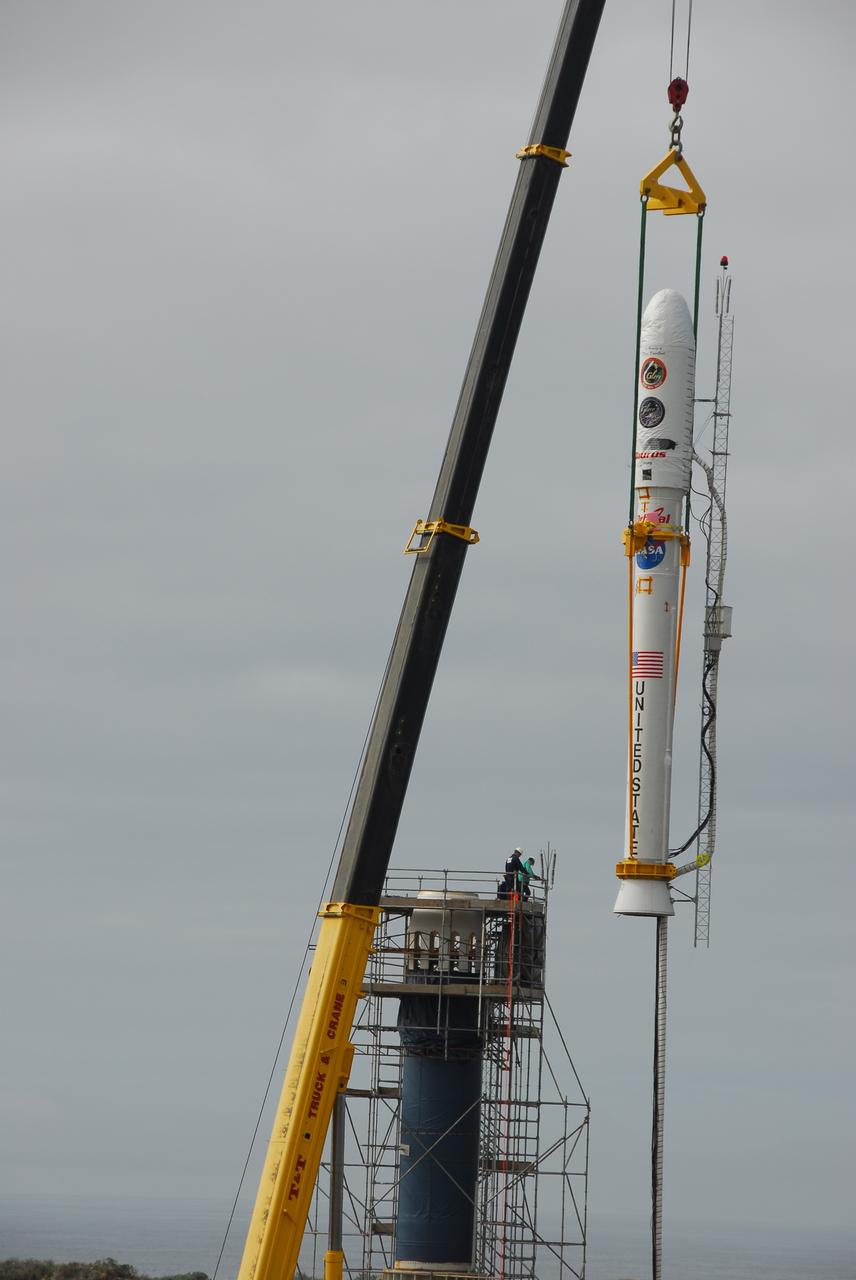
VANDENBERG AIR FORCE BASE, Calif. -- On Space Launch Complex 576-E at Vandenberg Air Force Base in California, a crane moves NASA's Glory upper stack toward the Taurus XL rocket's Stage 0. The upper stack consists of Stages 1, 2 and 3 of the Taurus as well as the encapsulated Glory spacecraft. The Orbital Sciences Taurus XL rocket will launch Glory into low Earth orbit. Once Glory reaches orbit, it will collect data on the properties of aerosols and black carbon. It also will help scientists understand how the sun's irradiance affects Earth's climate. Launch is scheduled for 5:09 a.m. EST Feb. 23. For information, visit www.nasa.gov/glory. Photo credit: NASA/VAFB
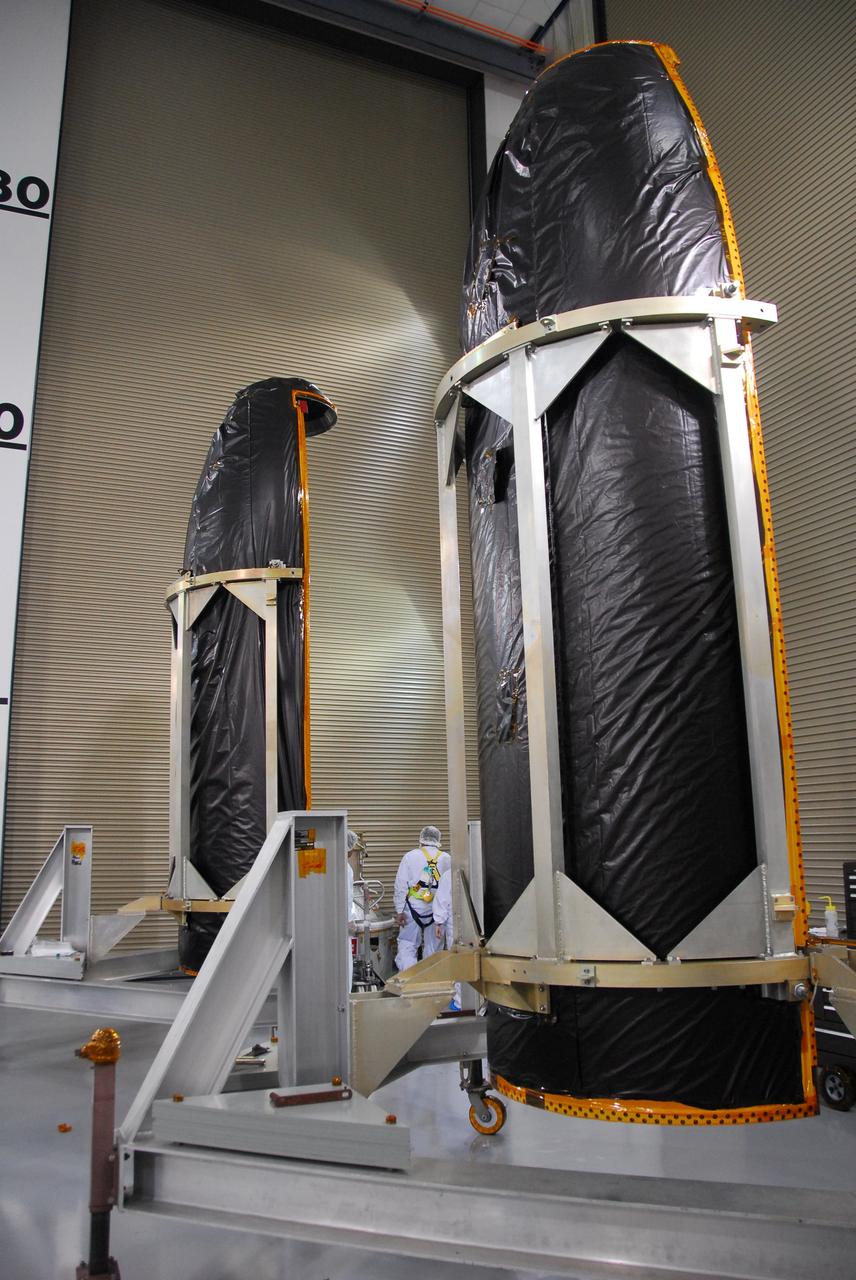
VANDENBERG AIR FORCE BASE, Calif. -- The two sections of the payload fairing for the Glory mission stand in the East High Bay in the Astrotech payload processing facility at Vandenberg Air Force Base in California. The payload fairing will cover the Glory spacecraft and be placed at the top of a Taurus XL rocket slated to lift the spacecraft into orbit. The payload fairing will protect the Glory spacecraft from aerodynamic pressures and heating during the first part of its climb into orbit. Once Glory reaches orbit, it will collect data on the properties of aerosols and black carbon. It also will help scientists understand how the sun's irradiance affects Earth's climate. Launch is scheduled for 5:09 a.m. EST Feb. 23. For information, visit www.nasa.gov/glory. Photo credit: NASA/Ed Henry, VAFB
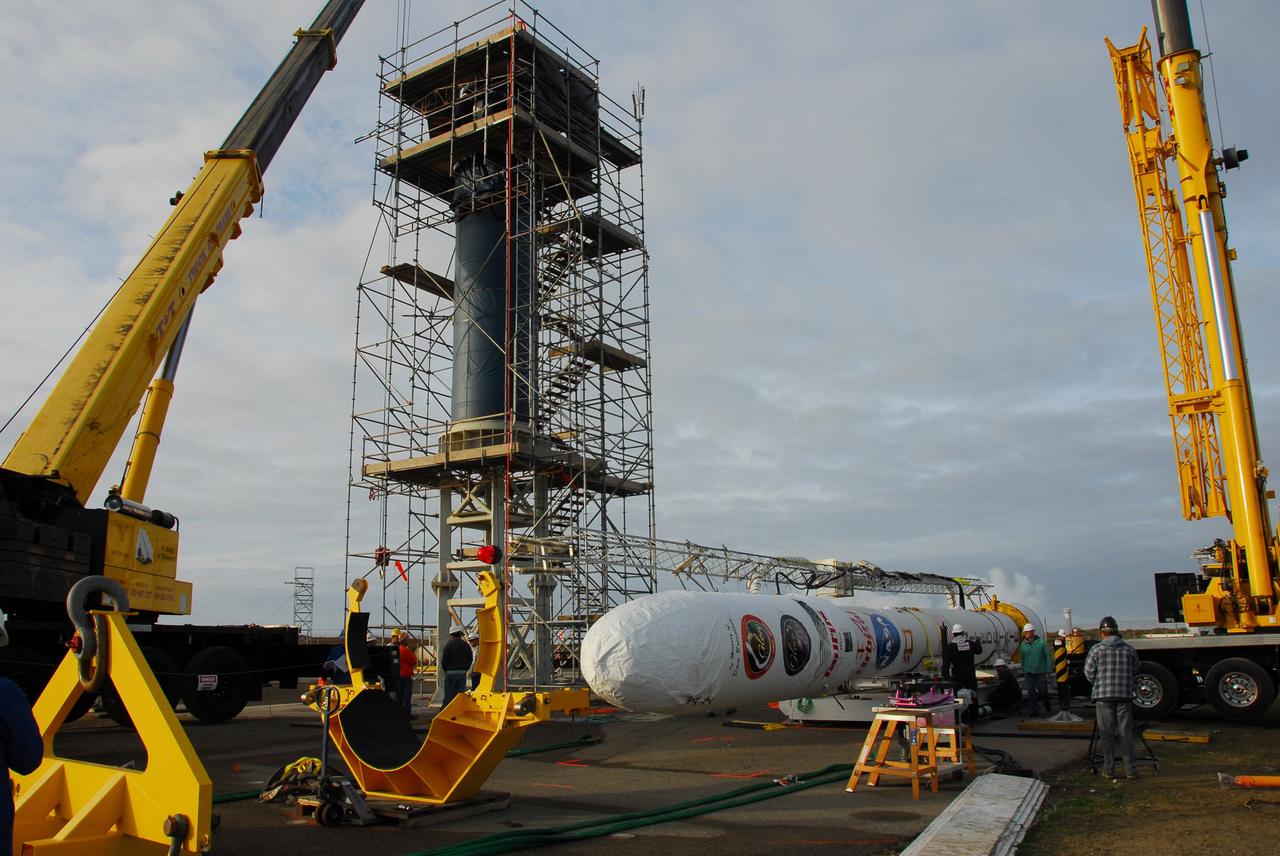
VANDENBERG AIR FORCE BASE, Calif. -- On Space Launch Complex 576-E at Vandenberg Air Force Base in California, Orbital Sciences workers prepare NASA's Glory upper stack for attachment to the Taurus XL rocket's Stage 0. The upper stack consists of Stages 1, 2 and 3 of the Taurus as well as the encapsulated Glory spacecraft. The Orbital Sciences Taurus XL rocket will launch Glory into low Earth orbit. Once Glory reaches orbit, it will collect data on the properties of aerosols and black carbon. It also will help scientists understand how the sun's irradiance affects Earth's climate. Launch is scheduled for 5:09 a.m. EST Feb. 23. For information, visit www.nasa.gov/glory. Photo credit: NASA/VAFB
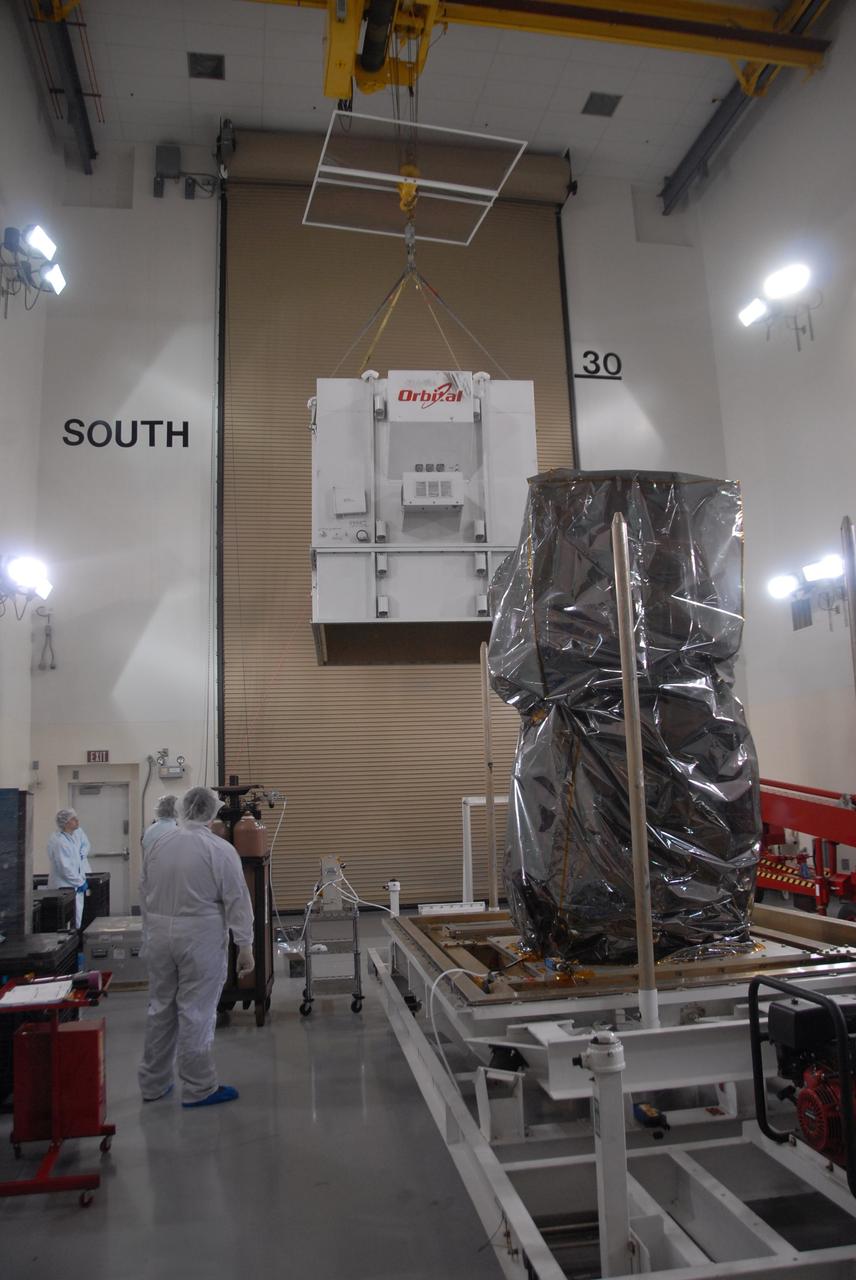
VANDENBERG AIR FORCE BASE, Calif. -- Inside the Astrotech processing facility at Vandenberg Air Force Base in California, technicians remove the shipping container surrounding NASA's Glory spacecraft. Next, technicians will take off Glory's protective covering before it is encapsulated in a protective payload fairing for flight. In early February, Glory is scheduled to be transported Space Launch Complex 576-E where it will be joined with the Taurus XL rocket, which is manufactured by Orbital Sciences Corp. Once Glory reaches orbit, it will collect data on the properties of aerosols and black carbon. It also will help scientists understand how the sun's irradiance affects Earth's climate. Launch is scheduled for 5:09 a.m. EST Feb. 23. For information, visit www.nasa.gov/glory. Photo credit: NASA/Ed Henry, VAFB
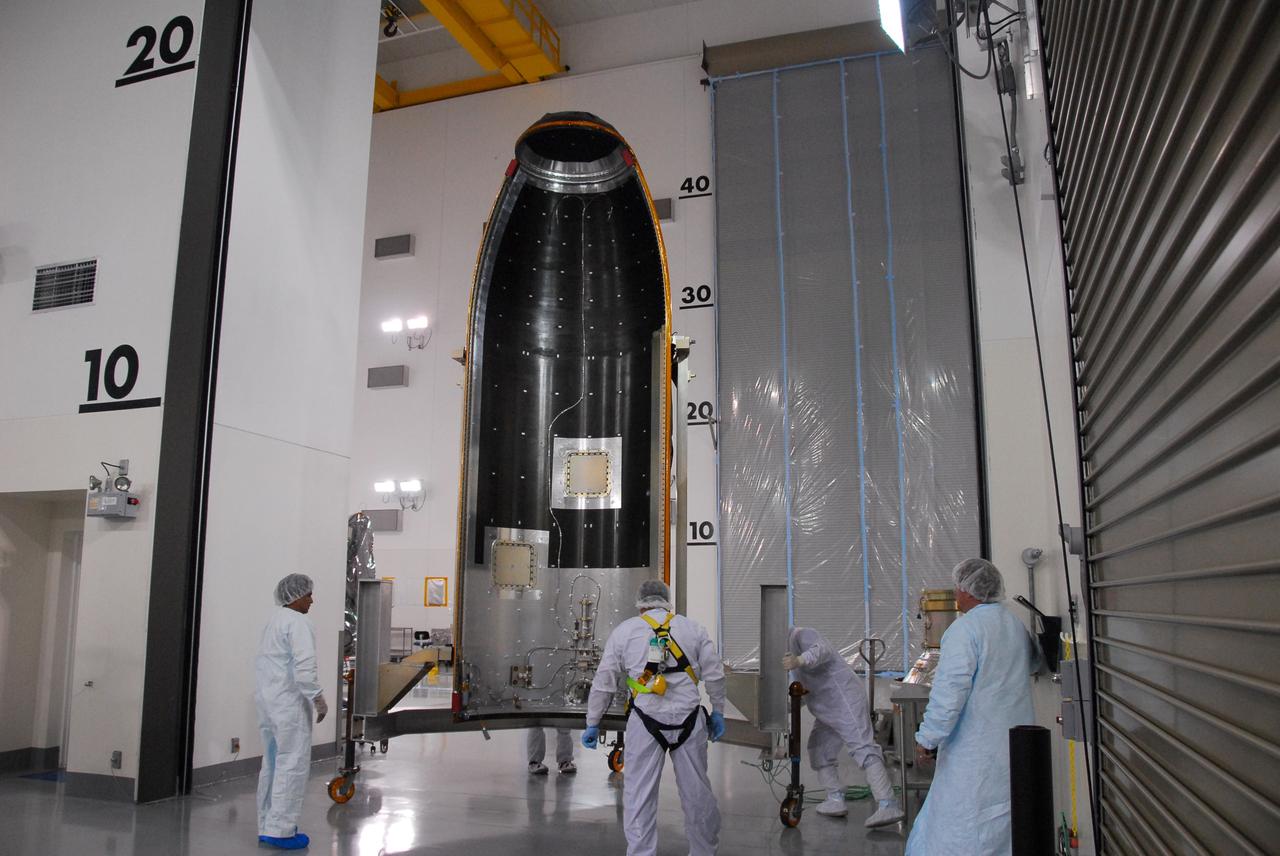
VANDENBERG AIR FORCE BASE, Calif. -- Technicians wheel half of Glory's payload fairing into the East High Bay at the Astrotech payload processing facility at Vandenberg Air Force Base in California. The payload fairing will cover the Glory spacecraft and be placed at the top of a Taurus XL rocket slated to lift the spacecraft into orbit. The payload fairing will protect the Glory spacecraft from aerodynamic pressures and heating during the first part of its climb into orbit. Once Glory reaches orbit, it will collect data on the properties of aerosols and black carbon. It also will help scientists understand how the sun's irradiance affects Earth's climate. Launch is scheduled for 5:09 a.m. EST Feb. 23. For information, visit www.nasa.gov/glory. Photo credit: NASA/Ed Henry, VAFB
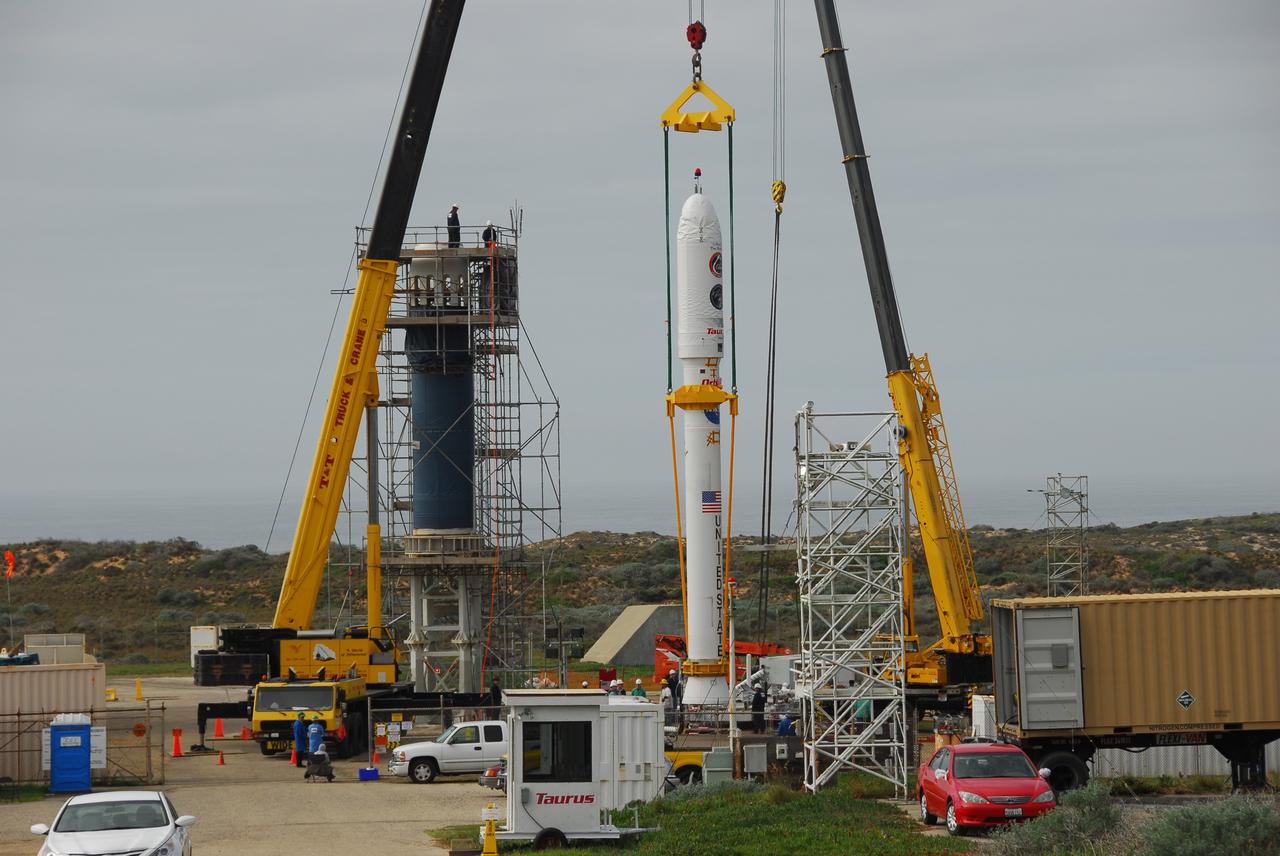
VANDENBERG AIR FORCE BASE, Calif. -- On Space Launch Complex 576-E at Vandenberg Air Force Base in California, Orbital Sciences workers monitor NASA's Glory upper stack as a crane lifts it from a stationary rail for attachment to the Taurus XL rocket's Stage 0. The upper stack consists of Stages 1, 2 and 3 of the Taurus as well as the encapsulated Glory spacecraft. The Orbital Sciences Taurus XL rocket will launch Glory into low Earth orbit. Once Glory reaches orbit, it will collect data on the properties of aerosols and black carbon. It also will help scientists understand how the sun's irradiance affects Earth's climate. Launch is scheduled for 5:09 a.m. EST Feb. 23. For information, visit www.nasa.gov/glory. Photo credit: NASA/VAFB
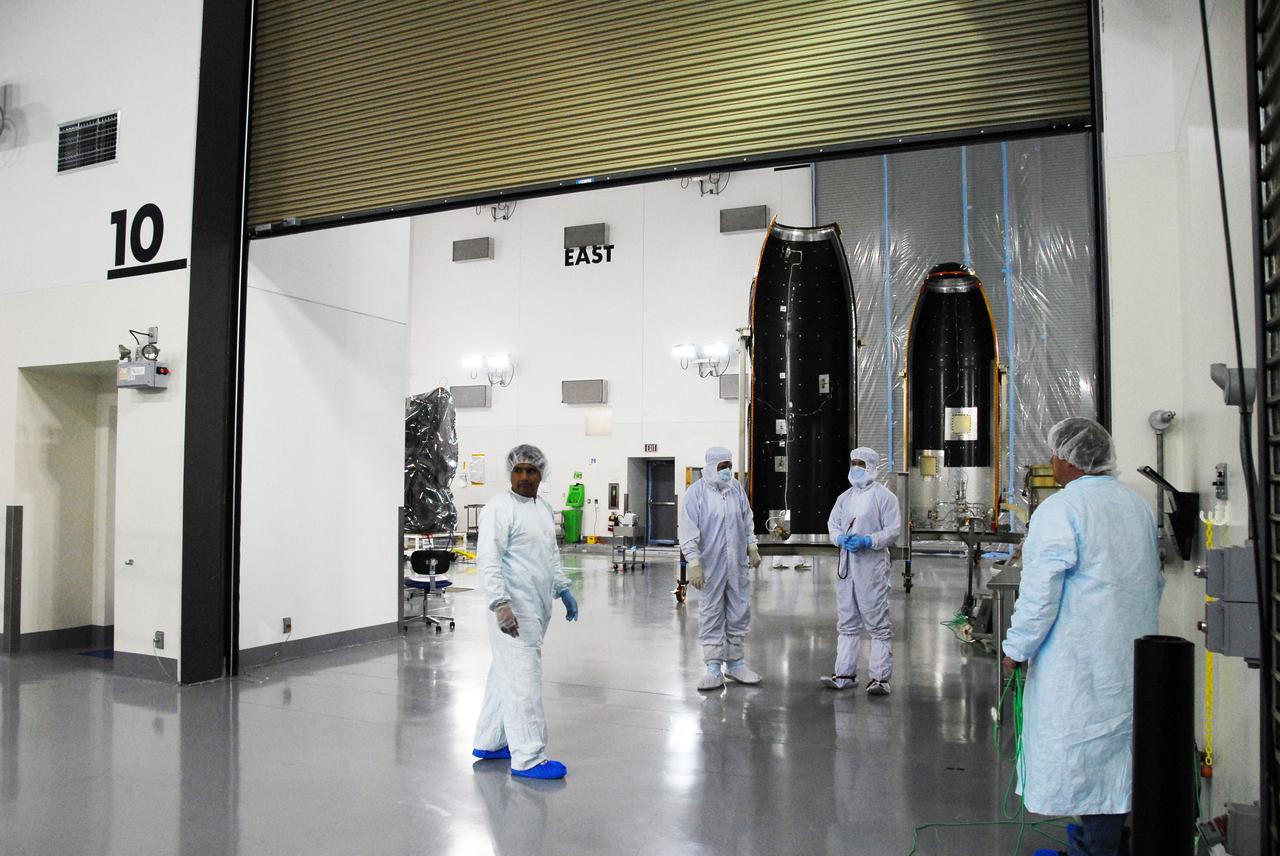
VANDENBERG AIR FORCE BASE, Calif. -- The payload fairing for the Glory mission stands in the East High Bay at the Astrotech payload processing facility at Vandenberg Air Force Base in California. The payload fairing will cover the Glory spacecraft and be placed at the top of a Taurus XL rocket slated to lift the spacecraft into orbit. The payload fairing will protect the Glory spacecraft from aerodynamic pressures and heating during the first part of its climb into orbit. Once Glory reaches orbit, it will collect data on the properties of aerosols and black carbon. It also will help scientists understand how the sun's irradiance affects Earth's climate. Launch is scheduled for 5:09 a.m. EST Feb. 23. For information, visit www.nasa.gov/glory. Photo credit: NASA/Ed Henry, VAFB
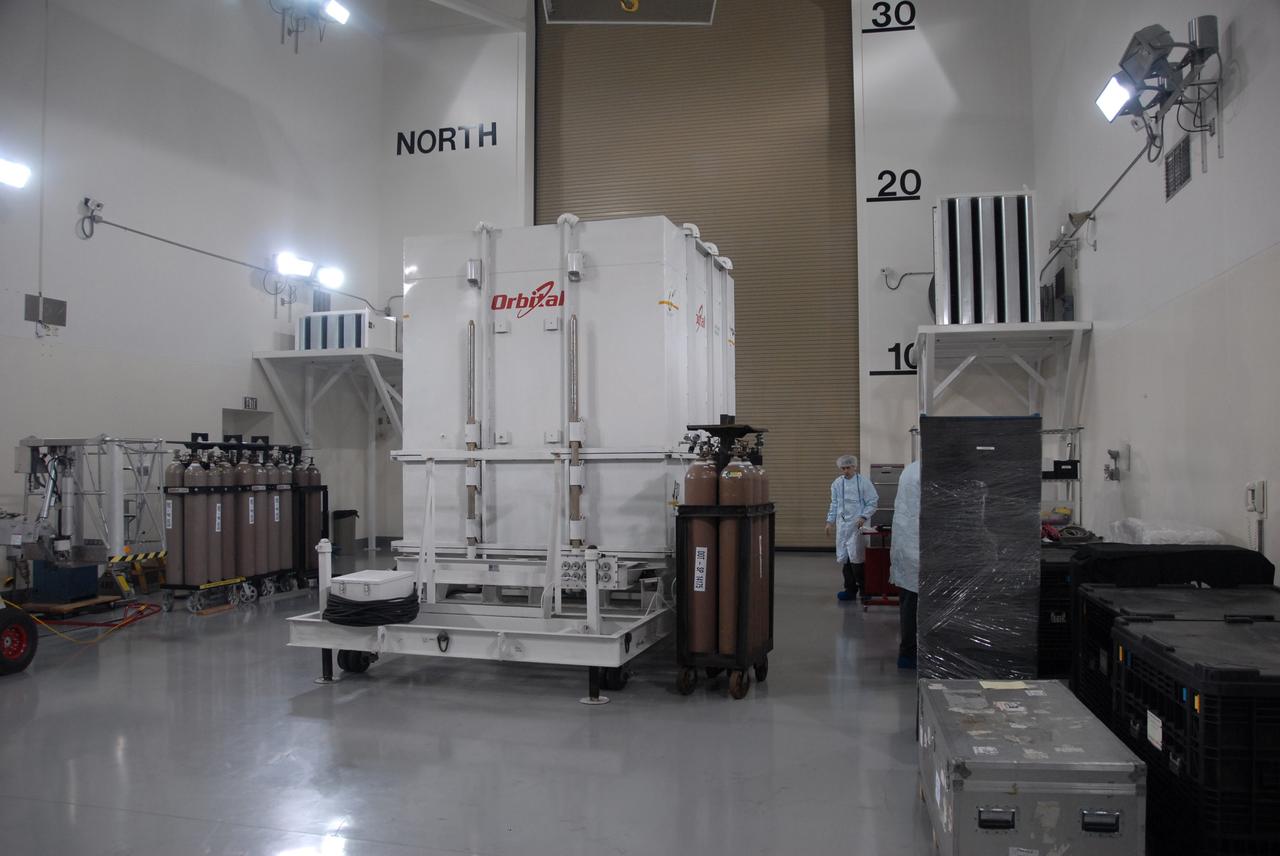
VANDENBERG AIR FORCE BASE, Calif. -- Inside the Astrotech processing facility at Vandenberg Air Force Base in California, the shipping container surrounding NASA's Glory spacecraft is ready for removal. Next, technicians will take off Glory's protective covering before it is encapsulated in a protective payload fairing for flight. In early February, Glory is scheduled to be transported Space Launch Complex 576-E where it will be joined with the Taurus XL rocket, which is manufactured by Orbital Sciences Corp. Once Glory reaches orbit, it will collect data on the properties of aerosols and black carbon. It also will help scientists understand how the sun's irradiance affects Earth's climate. Launch is scheduled for 5:09 a.m. EST Feb. 23. For information, visit www.nasa.gov/glory. Photo credit: NASA/Ed Henry, VAFB
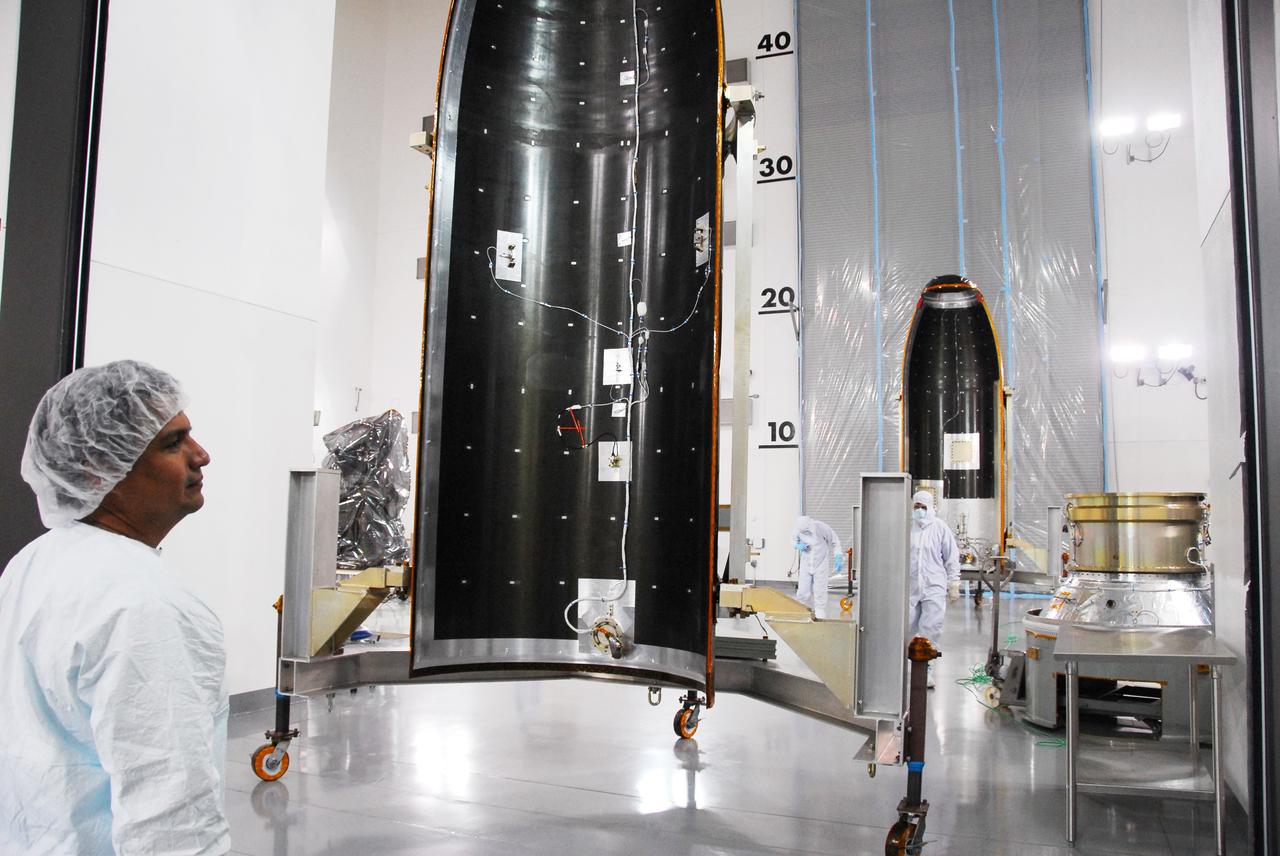
VANDENBERG AIR FORCE BASE, Calif. -- Technicians wheel the payload fairing for the Glory mission into the East High Bay at the Astrotech payload processing facility at Vandenberg Air Force Base in California. The payload fairing will cover the Glory spacecraft and be placed at the top of a Taurus XL rocket slated to lift the spacecraft into orbit. The payload fairing will protect the Glory spacecraft from aerodynamic pressures and heating during the first part of its climb into orbit. Once Glory reaches orbit, it will collect data on the properties of aerosols and black carbon. It also will help scientists understand how the sun's irradiance affects Earth's climate. Launch is scheduled for 5:09 a.m. EST Feb. 23. For information, visit www.nasa.gov/glory. Photo credit: NASA/Ed Henry, VAFB
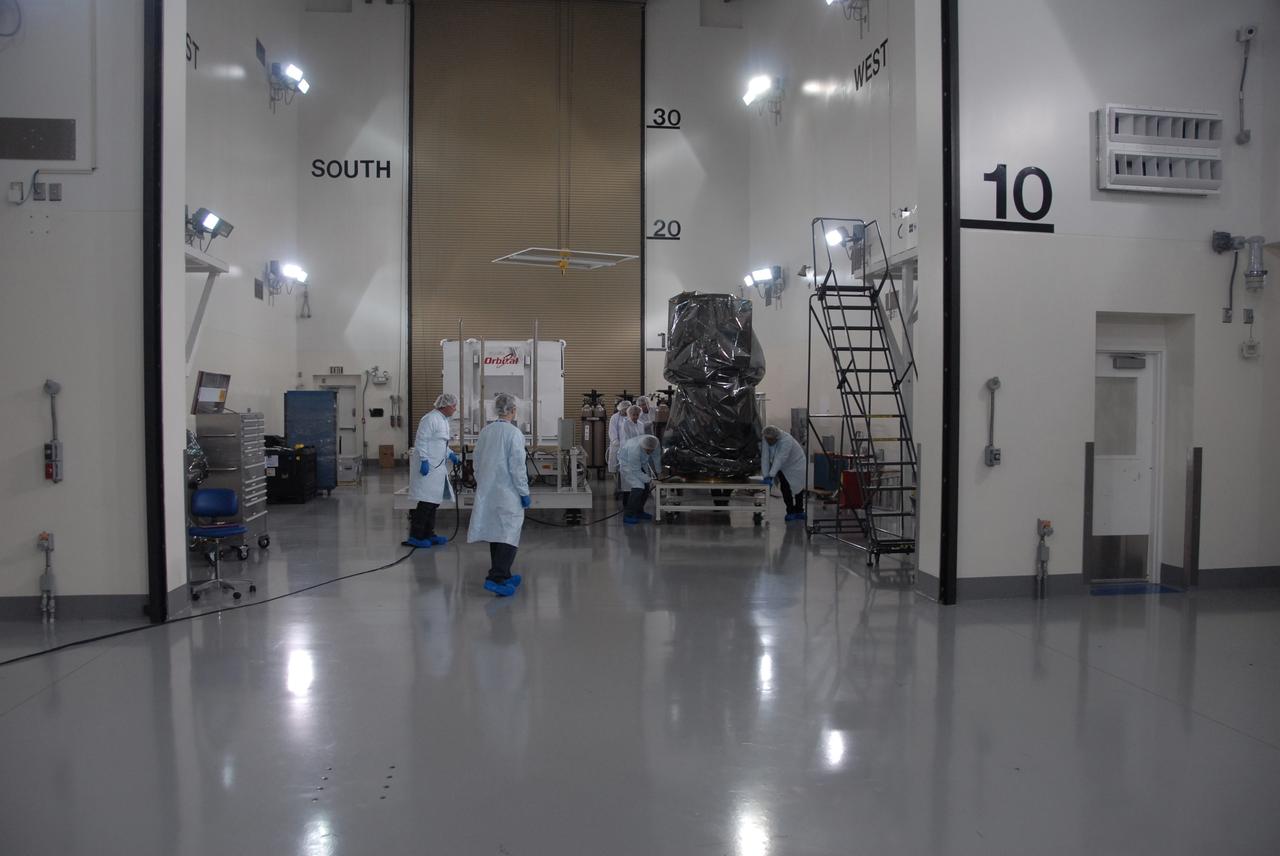
VANDENBERG AIR FORCE BASE, Calif. -- Inside the Astrotech processing facility at Vandenberg Air Force Base in California, NASA's Glory spacecraft is transferring to a processing dolly. Next, technicians will take off Glory's protective covering before it is encapsulated in a protective payload fairing for flight. In early February, Glory is scheduled to be transported Space Launch Complex 576-E where it will be joined with the Taurus XL rocket, which is manufactured by Orbital Sciences Corp. Once Glory reaches orbit, it will collect data on the properties of aerosols and black carbon. It also will help scientists understand how the sun's irradiance affects Earth's climate. Launch is scheduled for 5:09 a.m. EST Feb. 23. For information, visit www.nasa.gov/glory. Photo credit: NASA/Ed Henry, VAFB
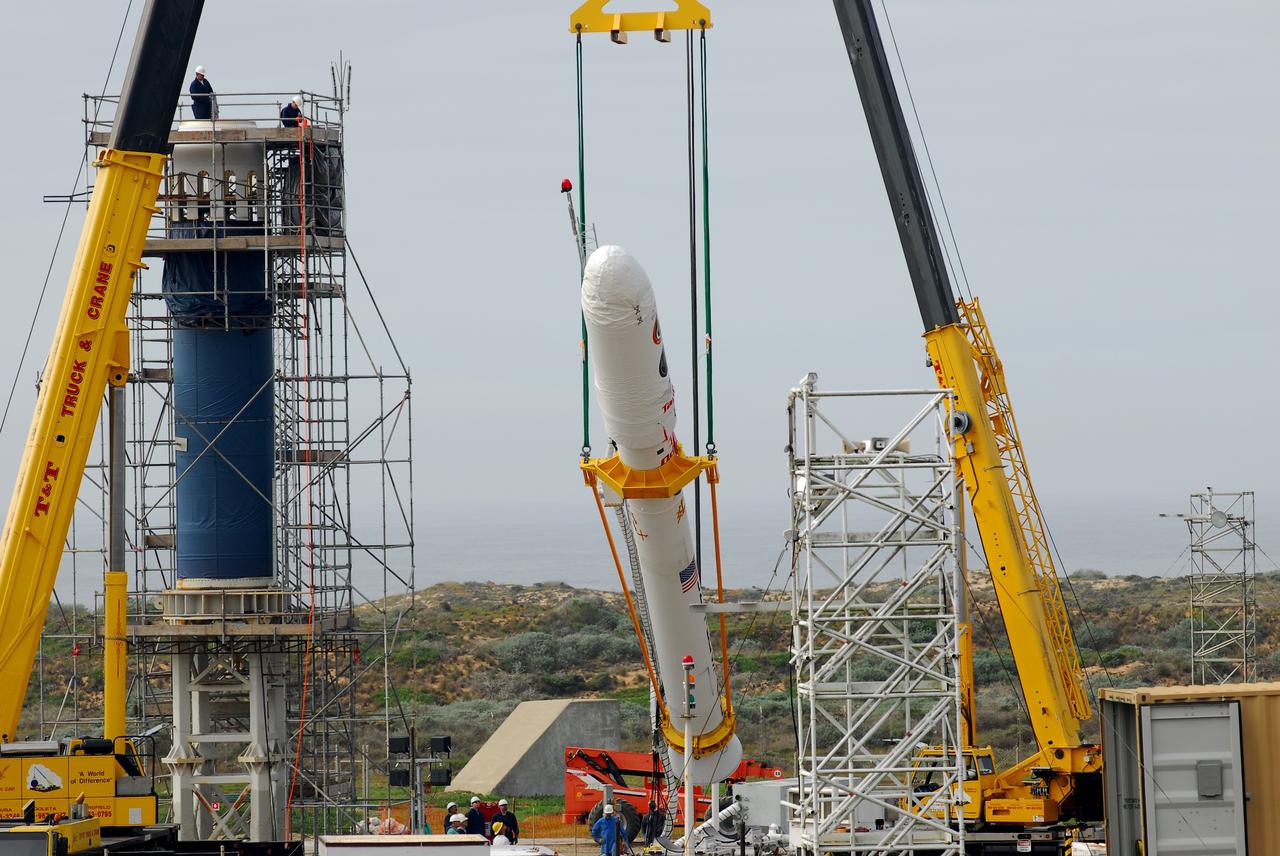
VANDENBERG AIR FORCE BASE, Calif. -- On Space Launch Complex 576-E at Vandenberg Air Force Base in California, Orbital Sciences workers monitor NASA's Glory upper stack as a crane lifts it from a stationary rail for attachment to the Taurus XL rocket's Stage 0. The upper stack consists of Stages 1, 2 and 3 of the Taurus as well as the encapsulated Glory spacecraft. The Orbital Sciences Taurus XL rocket will launch Glory into low Earth orbit. Once Glory reaches orbit, it will collect data on the properties of aerosols and black carbon. It also will help scientists understand how the sun's irradiance affects Earth's climate. Launch is scheduled for 5:09 a.m. EST Feb. 23. For information, visit www.nasa.gov/glory. Photo credit: NASA/VAFB
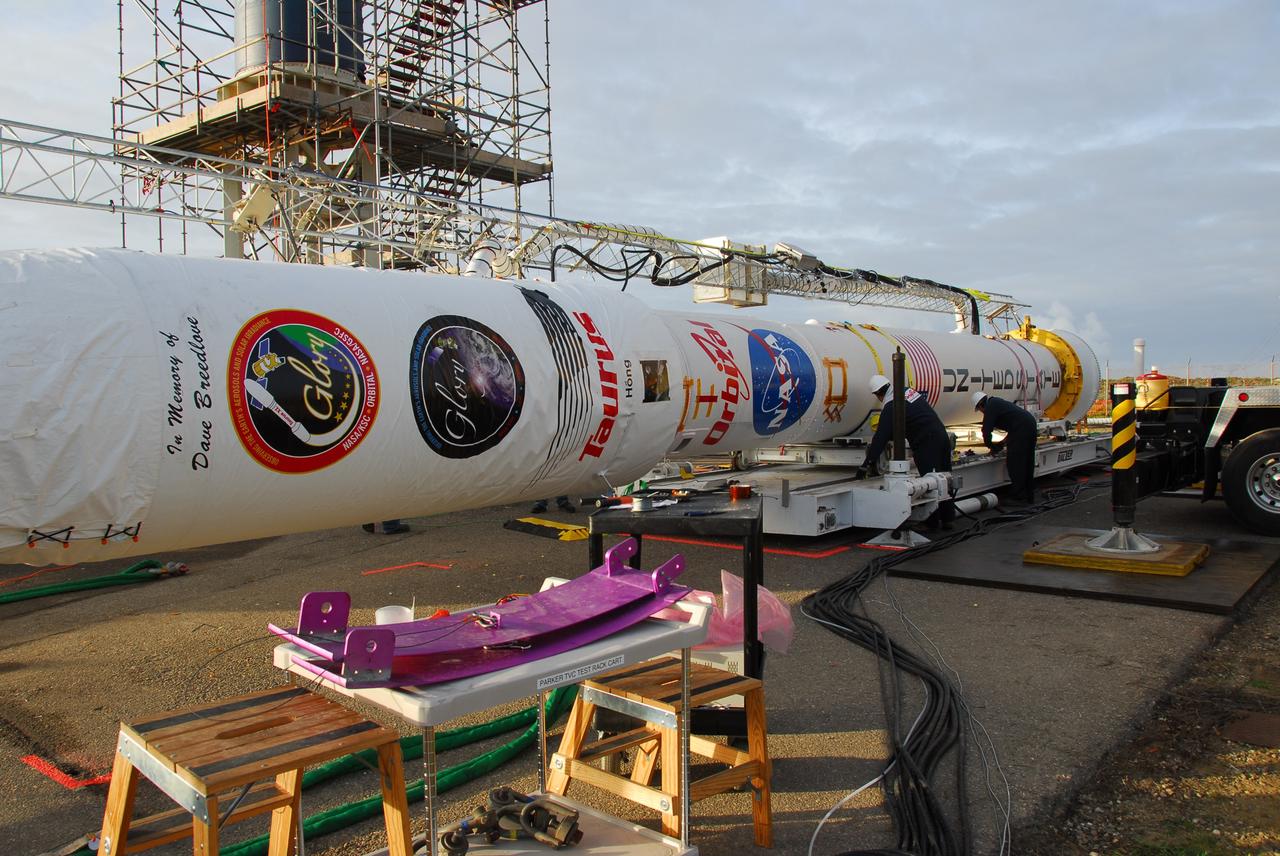
VANDENBERG AIR FORCE BASE, Calif. -- On Space Launch Complex 576-E at Vandenberg Air Force Base in California, Orbital Sciences workers prepare NASA's Glory upper stack for attachment to the Taurus XL rocket's Stage 0. The upper stack consists of Stages 1, 2 and 3 of the Taurus as well as the encapsulated Glory spacecraft. The Orbital Sciences Taurus XL rocket will launch Glory into low Earth orbit. Once Glory reaches orbit, it will collect data on the properties of aerosols and black carbon. It also will help scientists understand how the sun's irradiance affects Earth's climate. Launch is scheduled for 5:09 a.m. EST Feb. 23. For information, visit www.nasa.gov/glory. Photo credit: NASA/VAFB
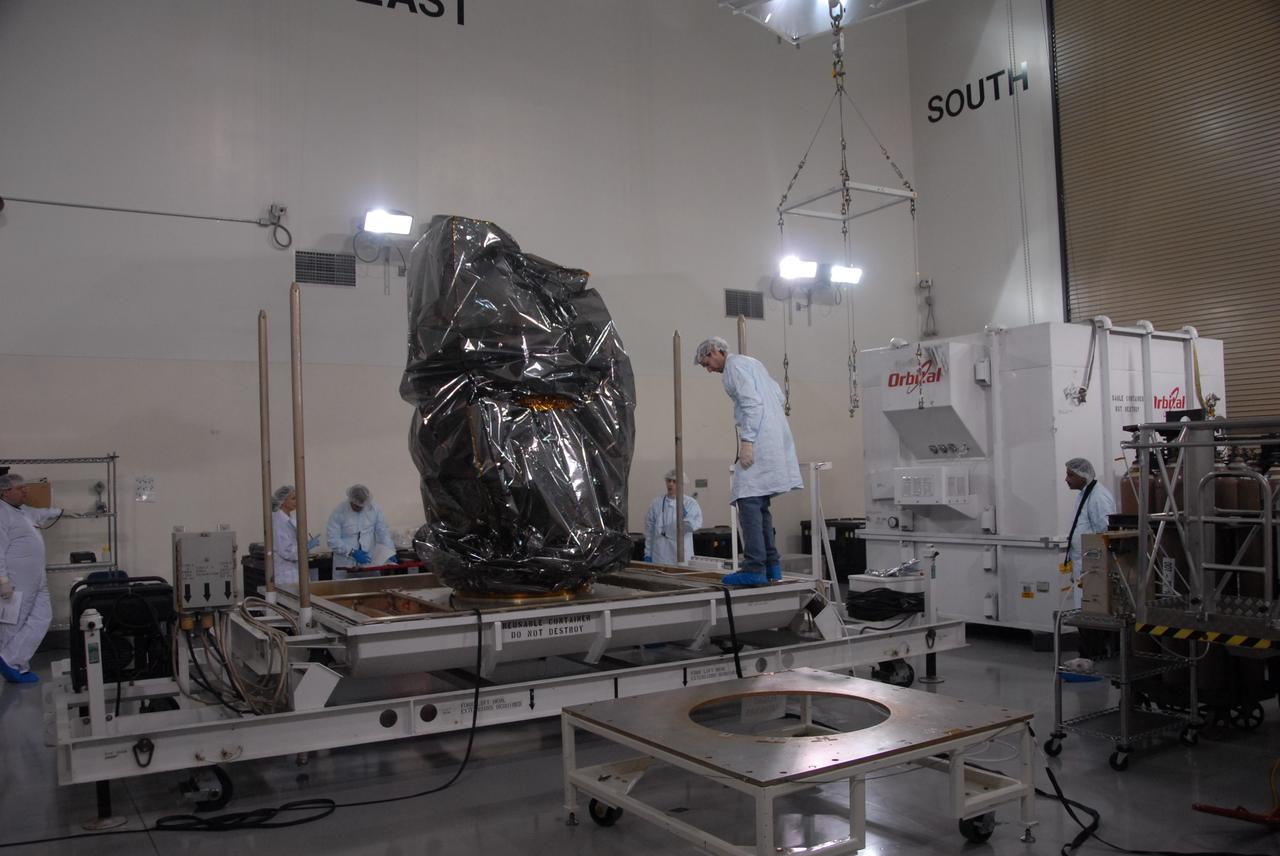
VANDENBERG AIR FORCE BASE, Calif. -- Inside the Astrotech processing facility at Vandenberg Air Force Base in California, technicians prepare to transfer NASA's Glory spacecraft to a processing dolly. Next, technicians will take off Glory's protective covering before it is encapsulated in a protective payload fairing for flight. In early February, Glory is scheduled to be transported Space Launch Complex 576-E where it will be joined with the Taurus XL rocket, which is manufactured by Orbital Sciences Corp. Once Glory reaches orbit, it will collect data on the properties of aerosols and black carbon. It also will help scientists understand how the sun's irradiance affects Earth's climate. Launch is scheduled for 5:09 a.m. EST Feb. 23. For information, visit www.nasa.gov/glory. Photo credit: NASA/Ed Henry, VAFB
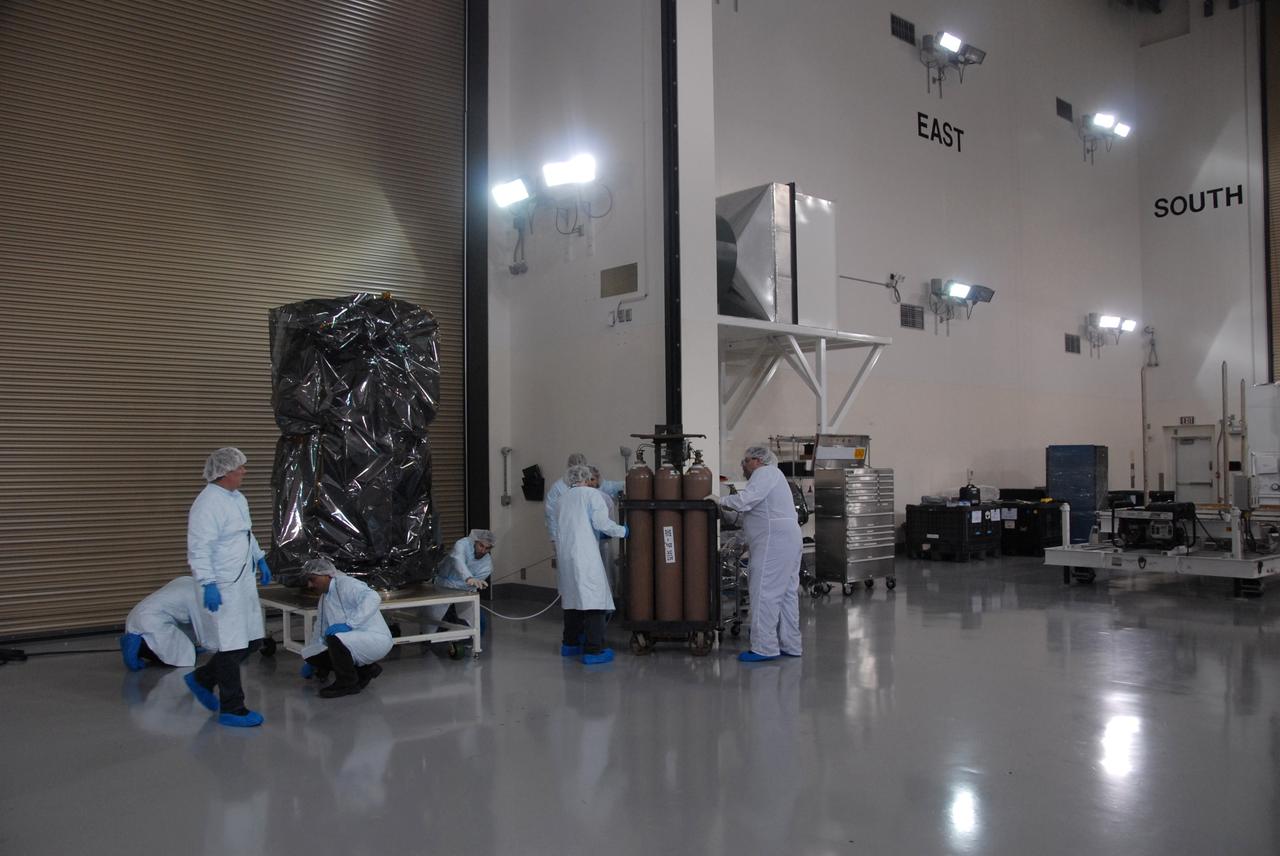
VANDENBERG AIR FORCE BASE, Calif. -- Inside the Astrotech processing facility at Vandenberg Air Force Base in California, NASA's Glory spacecraft is situated on a dolly and ready for processing. Next, technicians will take off Glory's protective covering before it is encapsulated in a protective payload fairing for flight. In early February, Glory is scheduled to be transported Space Launch Complex 576-E where it will be joined with the Taurus XL rocket, which is manufactured by Orbital Sciences Corp. Once Glory reaches orbit, it will collect data on the properties of aerosols and black carbon. It also will help scientists understand how the sun's irradiance affects Earth's climate. Launch is scheduled for 5:09 a.m. EST Feb. 23. For information, visit www.nasa.gov/glory. Photo credit: NASA/Ed Henry, VAFB
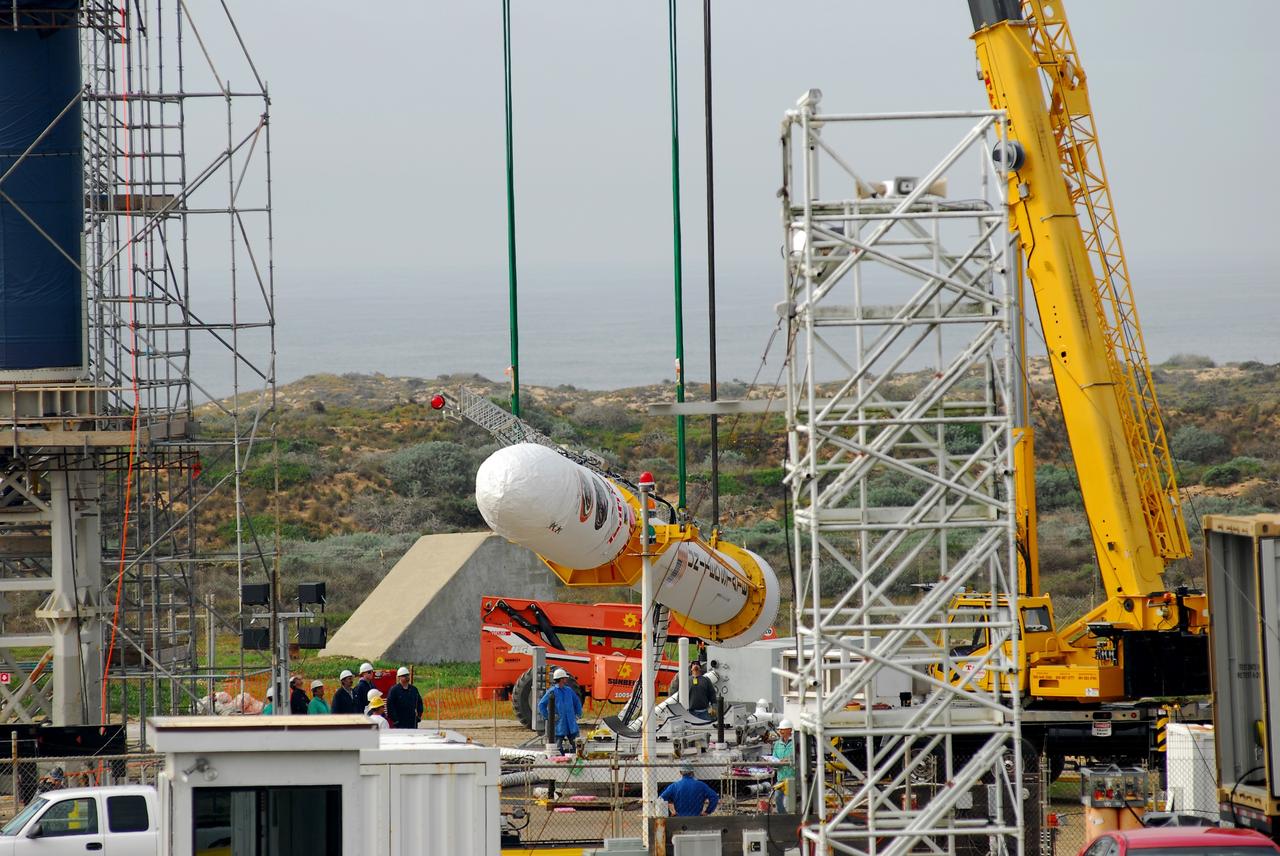
VANDENBERG AIR FORCE BASE, Calif. -- On Space Launch Complex 576-E at Vandenberg Air Force Base in California, Orbital Sciences workers monitor NASA's Glory upper stack as a crane lifts it from a stationary rail for attachment to the Taurus XL rocket's Stage 0. The upper stack consists of Stages 1, 2 and 3 of the Taurus as well as the encapsulated Glory spacecraft. The Orbital Sciences Taurus XL rocket will launch Glory into low Earth orbit. Once Glory reaches orbit, it will collect data on the properties of aerosols and black carbon. It also will help scientists understand how the sun's irradiance affects Earth's climate. Launch is scheduled for 5:09 a.m. EST Feb. 23. For information, visit www.nasa.gov/glory. Photo credit: NASA/VAFB
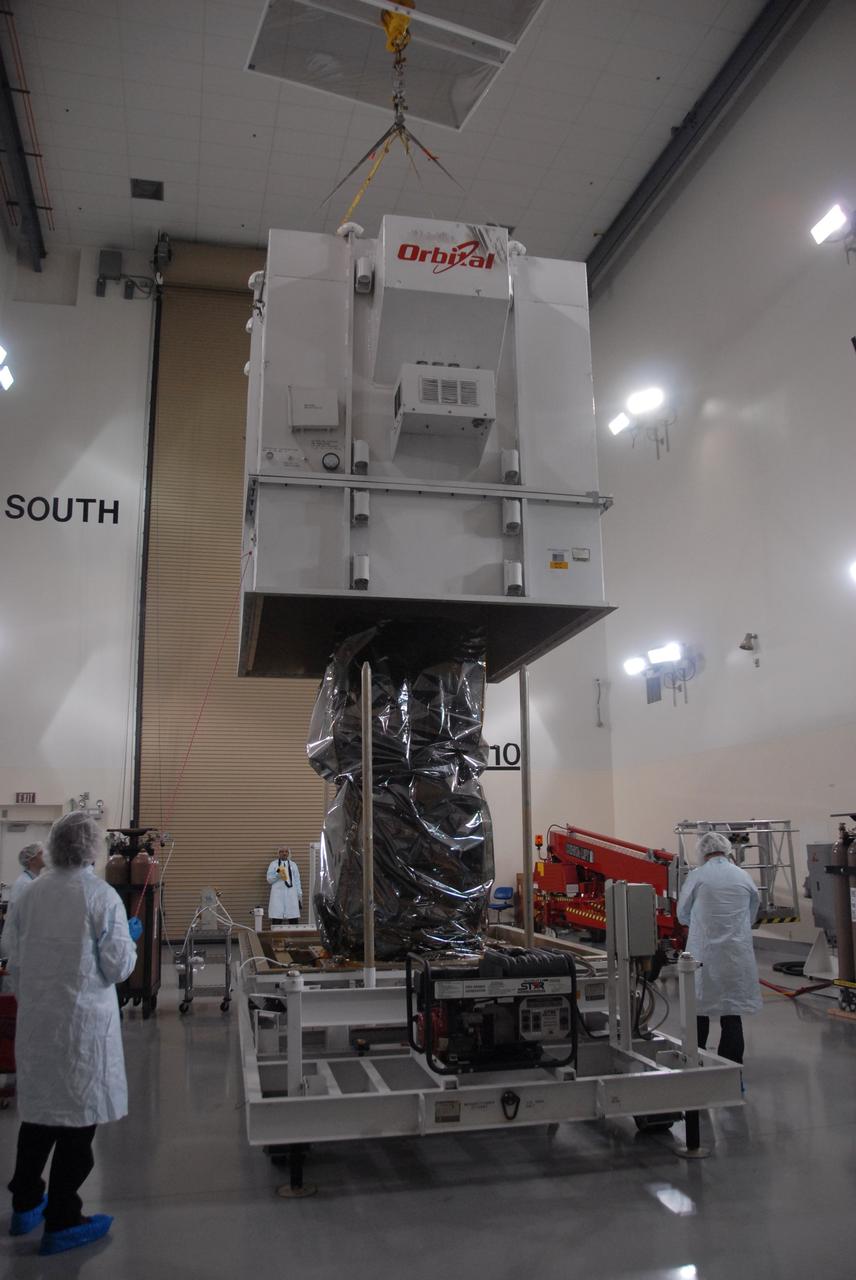
VANDENBERG AIR FORCE BASE, Calif. -- Inside the Astrotech processing facility at Vandenberg Air Force Base in California, technicians remove the shipping container surrounding NASA's Glory spacecraft. Next, technicians will take off Glory's protective covering before it is encapsulated in a protective payload fairing for flight. In early February, Glory is scheduled to be transported Space Launch Complex 576-E where it will be joined with the Taurus XL rocket, which is manufactured by Orbital Sciences Corp. Once Glory reaches orbit, it will collect data on the properties of aerosols and black carbon. It also will help scientists understand how the sun's irradiance affects Earth's climate. Launch is scheduled for 5:09 a.m. EST Feb. 23. For information, visit www.nasa.gov/glory. Photo credit: NASA/Ed Henry, VAFB
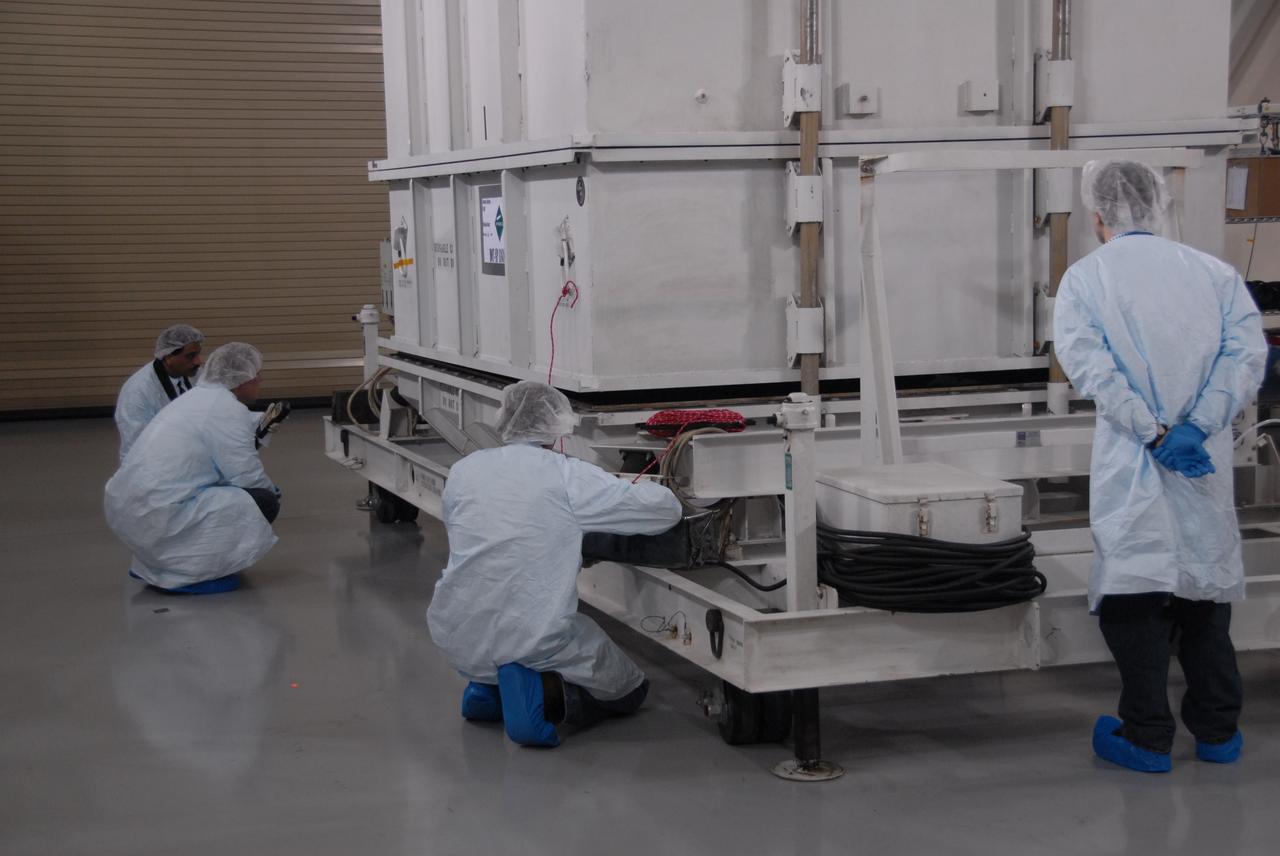
VANDENBERG AIR FORCE BASE, Calif. -- Inside the Astrotech processing facility at Vandenberg Air Force Base in California, technicians prepare to remove the shipping container surrounding NASA's Glory spacecraft. Next, technicians will take off Glory's protective covering before it is encapsulated in a protective payload fairing for flight. In early February, Glory is scheduled to be transported Space Launch Complex 576-E where it will be joined with the Taurus XL rocket, which is manufactured by Orbital Sciences Corp. Once Glory reaches orbit, it will collect data on the properties of aerosols and black carbon. It also will help scientists understand how the sun's irradiance affects Earth's climate. Launch is scheduled for 5:09 a.m. EST Feb. 23. For information, visit www.nasa.gov/glory. Photo credit: NASA/Ed Henry, VAFB
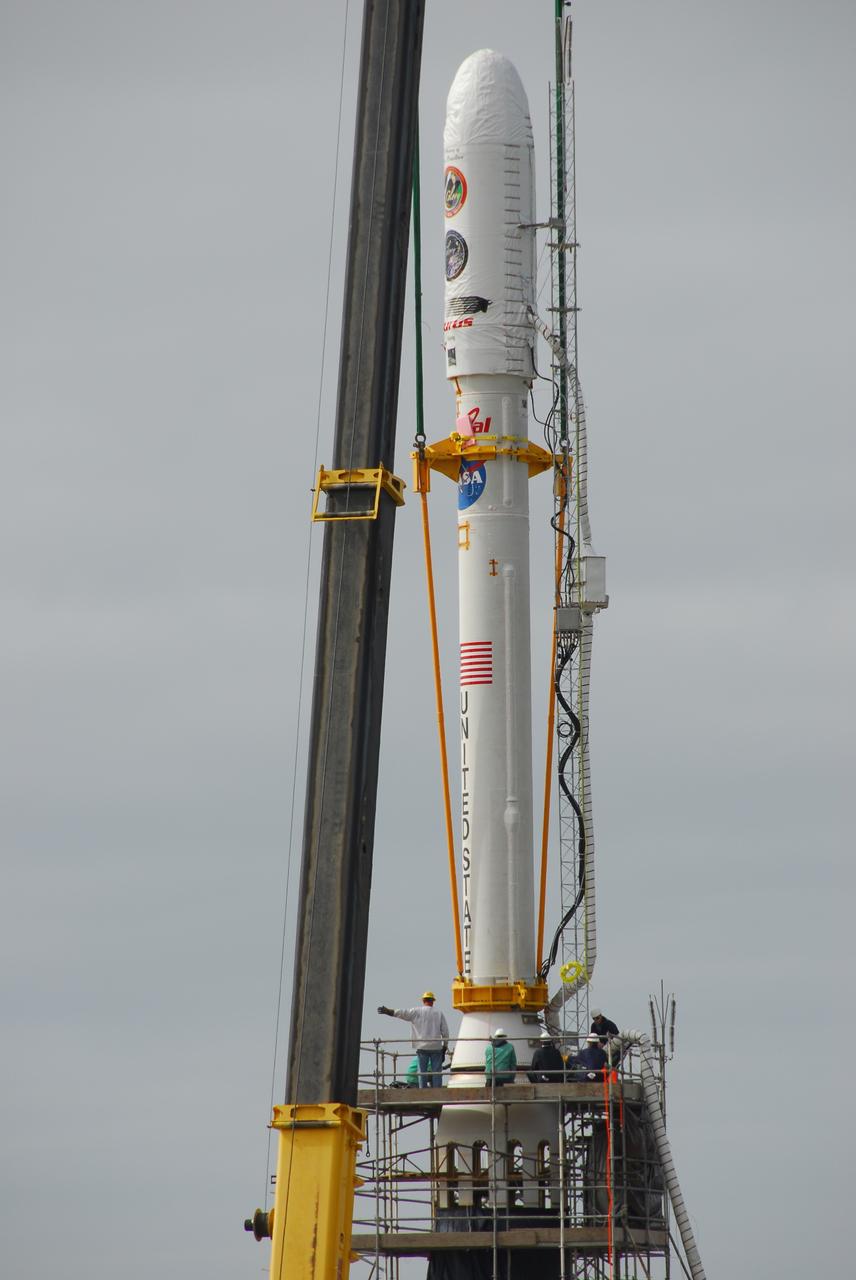
VANDENBERG AIR FORCE BASE, Calif. -- On Space Launch Complex 576-E at Vandenberg Air Force Base in California, a crane lowers NASA's Glory upper stack toward the Taurus XL rocket's Stage 0. The upper stack consists of Stages 1, 2 and 3 of the Taurus as well as the encapsulated Glory spacecraft. The Orbital Sciences Taurus XL rocket will launch Glory into low Earth orbit. Once Glory reaches orbit, it will collect data on the properties of aerosols and black carbon. It also will help scientists understand how the sun's irradiance affects Earth's climate. Launch is scheduled for 5:09 a.m. EST Feb. 23. For information, visit www.nasa.gov/glory. Photo credit: NASA/VAFB
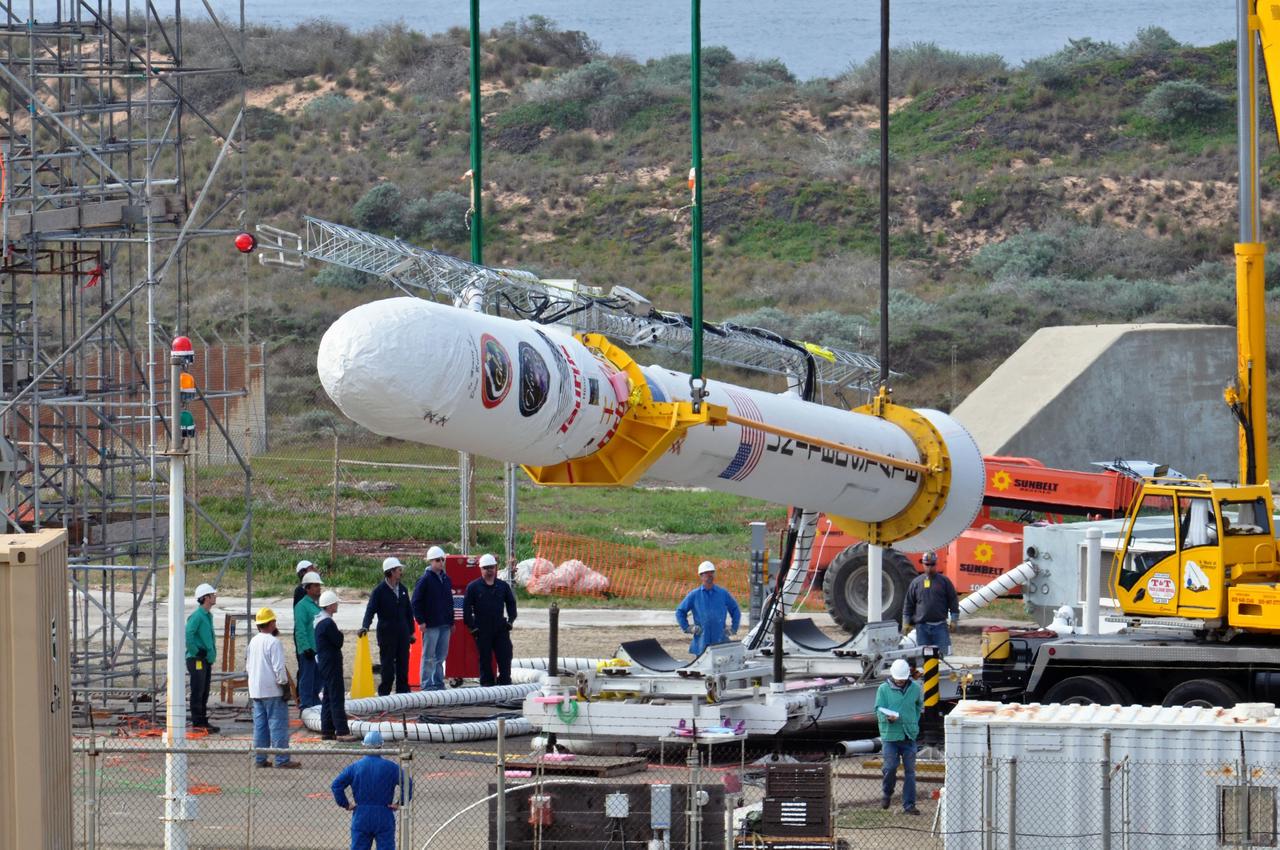
VANDENBERG AIR FORCE BASE, Calif. -- On Space Launch Complex 576-E at Vandenberg Air Force Base in California, Orbital Sciences workers monitor NASA's Glory upper stack as a crane lifts it from a stationary rail for attachment to the Taurus XL rocket's Stage 0. The upper stack consists of Stages 1, 2 and 3 of the Taurus as well as the encapsulated Glory spacecraft. Workers put the non-flight environmental shield over the fairing prior to assembly. A portion of the umbilical tower is attached to the upper stack which falls away from the spacecraft during liftoff. The Orbital Sciences Taurus XL rocket will launch Glory into low Earth orbit. Once Glory reaches orbit, it will collect data on the properties of aerosols and black carbon. It also will help scientists understand how the sun's irradiance affects Earth's climate. Launch is scheduled for 5:09 a.m. EST Feb. 23. For information, visit www.nasa.gov/glory. Photo credit: NASA/Randy Beaudoin, VAFB
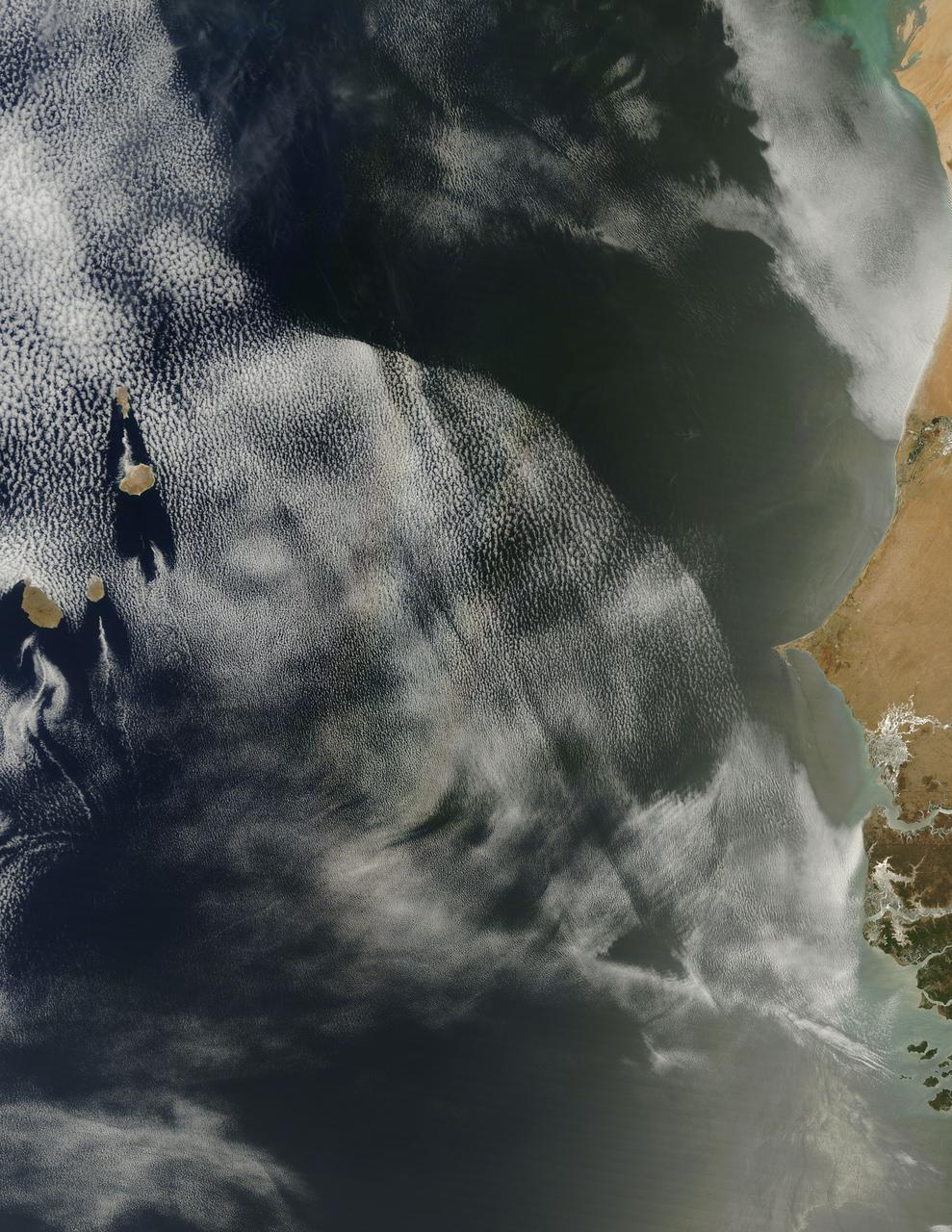
On April 23, 2013 NASA’s Terra satellite passed off the coast of West Africa, allowing the Moderate Resolution Imaging Spectroradiometer (MODIS) flying aboard to capture a curious phenomenon over the cloud deck below. The rainbow-like discoloration that can be seen streaking across the bank of marine cumulus clouds near the center of this image is known as a “glory”. A glory is caused by the scattering of sunlight by a cloud made of water droplets that are all roughly the same size, and is only produced when the light is just right. In order for a glory to be viewed, the observer’s anti-solar point must fall on the cloud deck below. In this case the observer is the Terra satellite, and the anti-solar point is where the sun is directly behind you – 180° from the MODIS line of sight. Water and ice particles in the cloud bend the light, breaking it into all its wavelengths, and the result is colorful flare, which may contain all of the colors of the rainbow. Credit: NASA/GSFC/Jeff Schmaltz/MODIS Land Rapid Response Team <b><a href="http://www.nasa.gov/audience/formedia/features/MP_Photo_Guidelines.html" rel="nofollow">NASA image use policy.</a></b> <b><a href="http://www.nasa.gov/centers/goddard/home/index.html" rel="nofollow">NASA Goddard Space Flight Center</a></b> enables NASA’s mission through four scientific endeavors: Earth Science, Heliophysics, Solar System Exploration, and Astrophysics. Goddard plays a leading role in NASA’s accomplishments by contributing compelling scientific knowledge to advance the Agency’s mission. <b>Follow us on <a href="http://twitter.com/NASA_GoddardPix" rel="nofollow">Twitter</a></b> <b>Like us on <a href="http://www.facebook.com/pages/Greenbelt-MD/NASA-Goddard/395013845897?ref=tsd" rel="nofollow">Facebook</a></b> <b>Find us on <a href="http://instagram.com/nasagoddard?vm=grid" rel="nofollow">Instagram</a></b>
VANDENBERG AIR FORCE BASE, Calif. -- At Space Launch Complex 576-E at Vandenberg Air Force Base in California, workers move NASA's Glory spacecraft, secured on a stationary rail, into a temporary processing tent near the pad where it will be joined with the Taurus XL rocket's third stage. The Orbital Sciences Corp. Taurus XL rocket will carry Glory into low Earth orbit. Once Glory reaches orbit, it will collect data on the properties of aerosols and black carbon. It also will help scientists understand how the sun's irradiance affects Earth's climate. Launch is scheduled for 5:09 a.m. EST Feb. 23. For information, visit www.nasa.gov/glory. Photo credit: NASA/Randy Beaudoin, VAFB