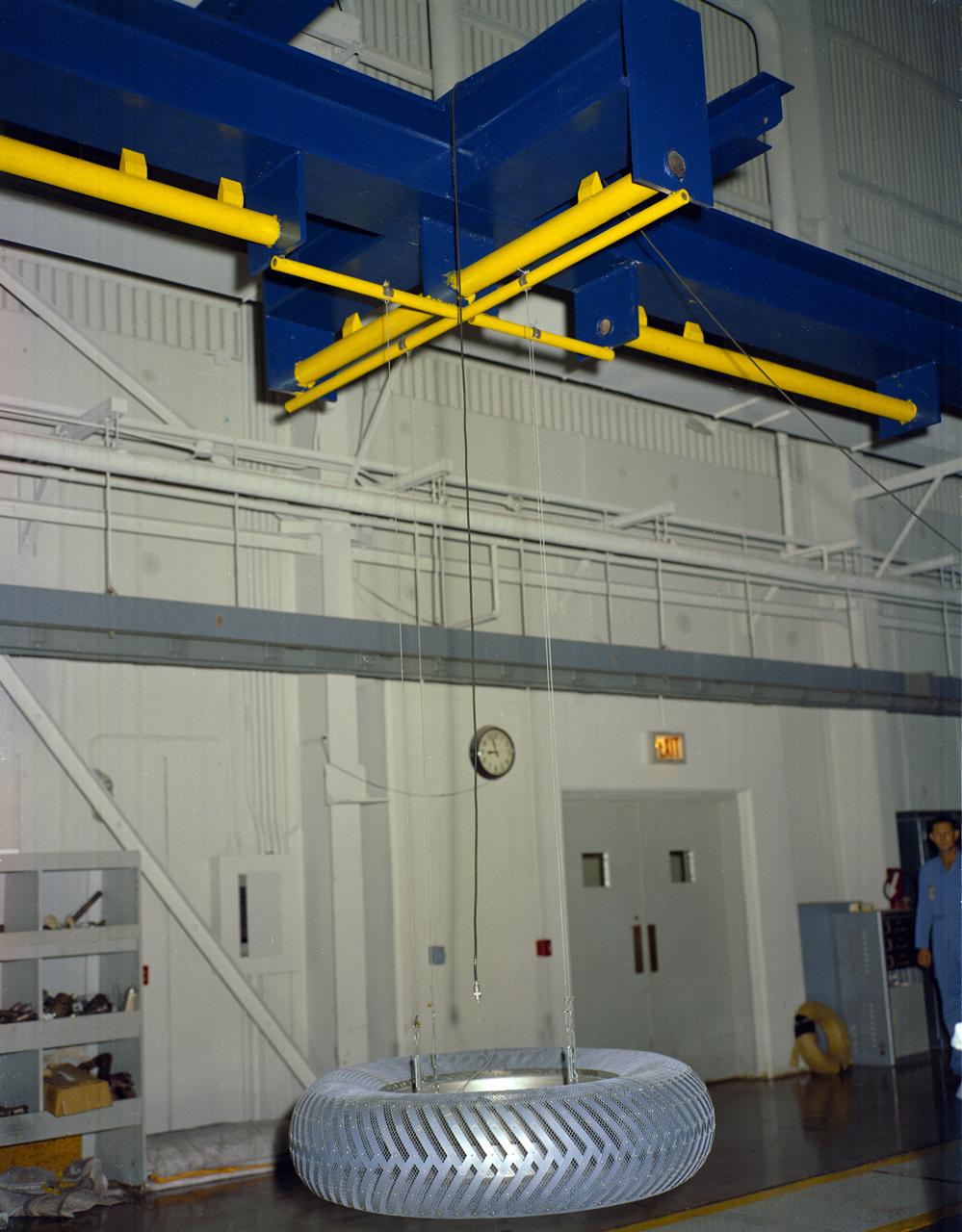
Under the direction of Marshall Space Flight Center (MSFC), the Lunar Roving Vehicle (LRV) was designed to allow Apollo astronauts a greater range of mobility during lunar exploration missions. During the development process, LRV prototype wheels underwent soil tests in building 4481 at Marshall Space Flight Center (MSFC). Pictured is the GM wheel design.
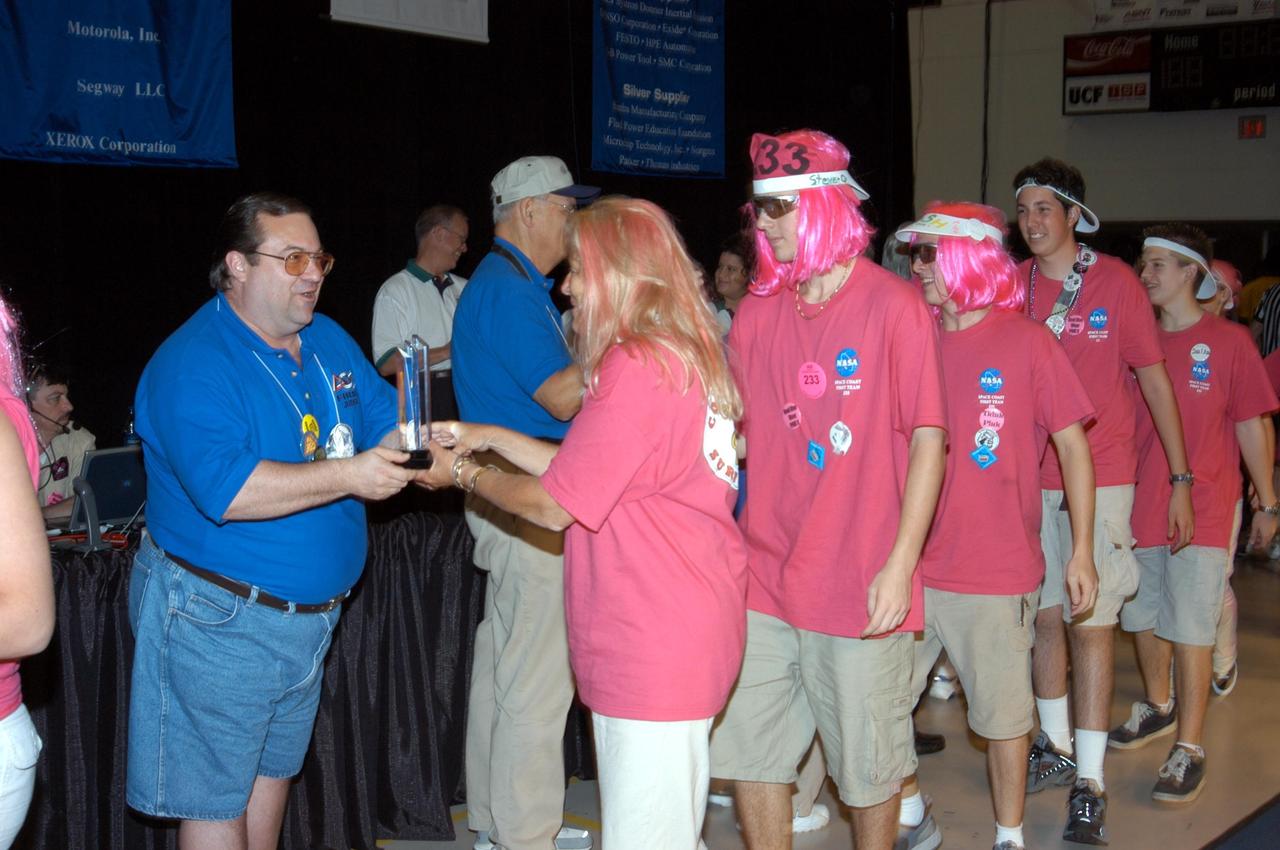
KENNEDY SPACE CENTER, FLA. - The NASA/Kennedy Space Center-sponsored student team (in pink wigs) is congratulated by the judges of the 2003 Southeastern Regional FIRST Robotic Competition. The competition is being held at the University of Central Florida (UCF) in Orlando, March 20-23. The team won awards for Regional Finalist 2, GM Industrial Design and the Imagery Award. Forty student teams from around the country are participating in the event that pits team-built gladiator robots against each other in an athletic-style competition. The teams are sponsored by NASA/Kennedy Space Center, The Boeing Company/Brevard Community College, and Lockheed Martin Space Operations/Mission Systems for the nonprofit organization For Inspiration and Recognition of Science and Technology, known as FIRST. The vision of FIRST is to inspire in the youth of our nation an appreciation of science and technology and an understanding that mastering these disciplines can enrich the lives of all mankind.
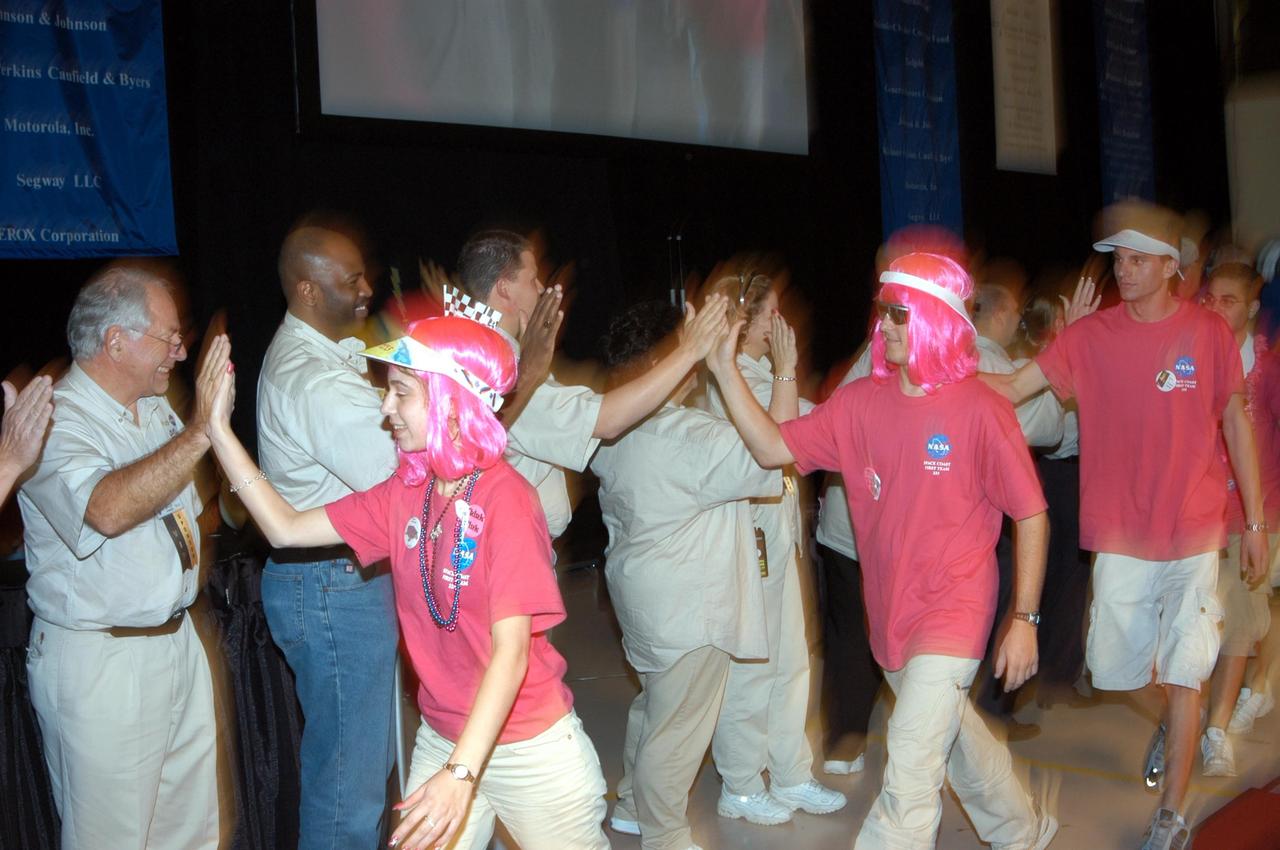
KENNEDY SPACE CENTER, FLA. - The NASA/Kennedy Space Center-sponsored student team (in pink wigs) is congratulated by the mentors and support staff of the 2003 Southeastern Regional FIRST Robotic Competition. The competition is being held at the University of Central Florida (UCF) in Orlando, March 20-23. The team won awards for Regional Finalist 2, GM Industrial Design and the Imagery Award. Forty student teams from around the country are participating in the event that pits team-built gladiator robots against each other in an athletic-style competition. The teams are sponsored by NASA/Kennedy Space Center, The Boeing Company/Brevard Community College, and Lockheed Martin Space Operations/Mission Systems for the nonprofit organization For Inspiration and Recognition of Science and Technology, known as FIRST. The vision of FIRST is to inspire in the youth of our nation an appreciation of science and technology and an understanding that mastering these disciplines can enrich the lives of all mankind.
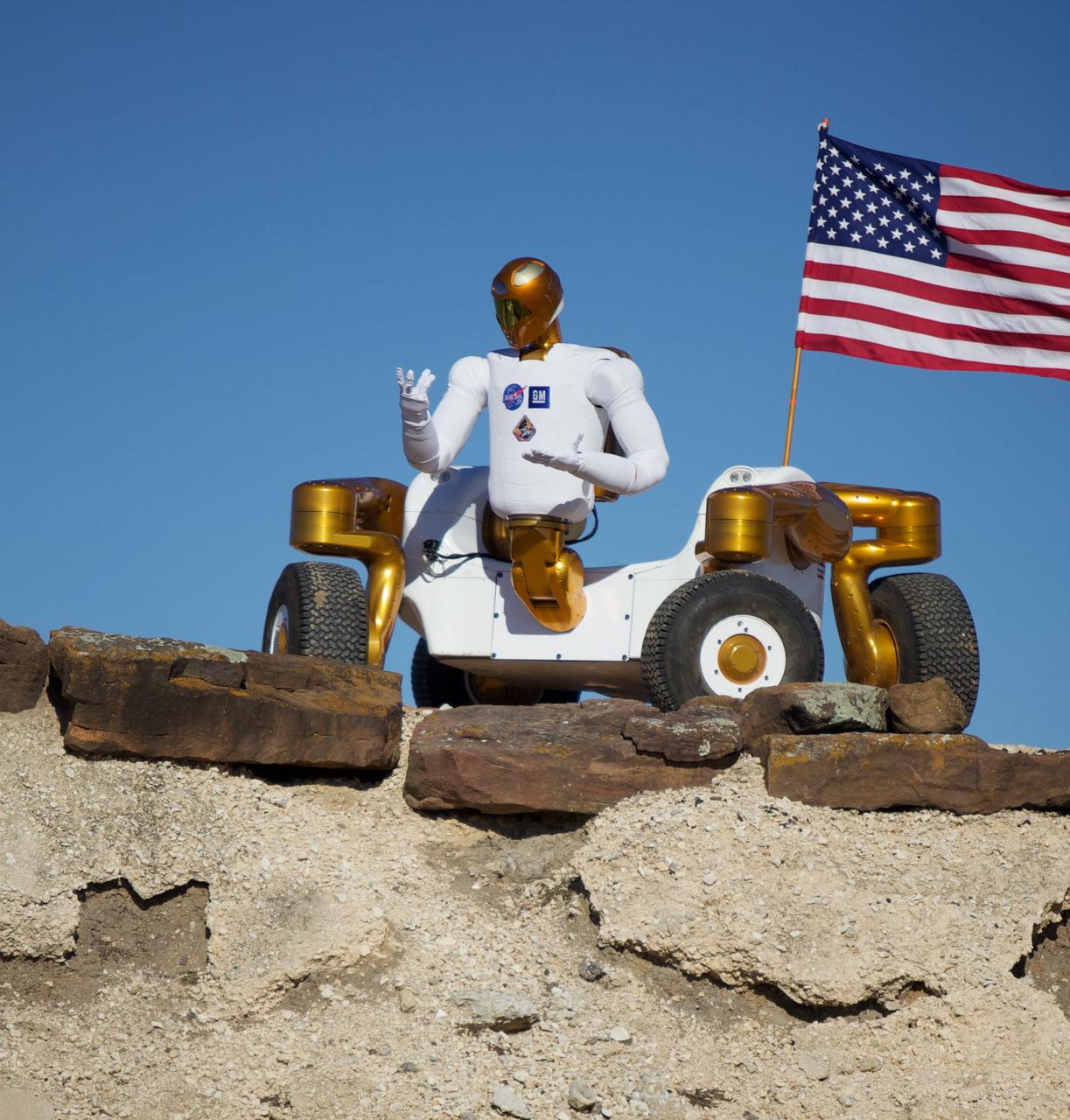
JSC2011-E-017945 (February 2011) --- Robonaut 2 poses atop its new wheeled base, Centaur 2, at the Johnson Space Center Planetary Analog Test Site. The Centaur base builds off of lessons learned through the Space Exploration Vehicle, a rover for astronauts, and could allow the dexterous humanoid robot to help with the future exploration of distant planetary surfaces. Photo credit: NASA or National Aeronautics and Space Administration
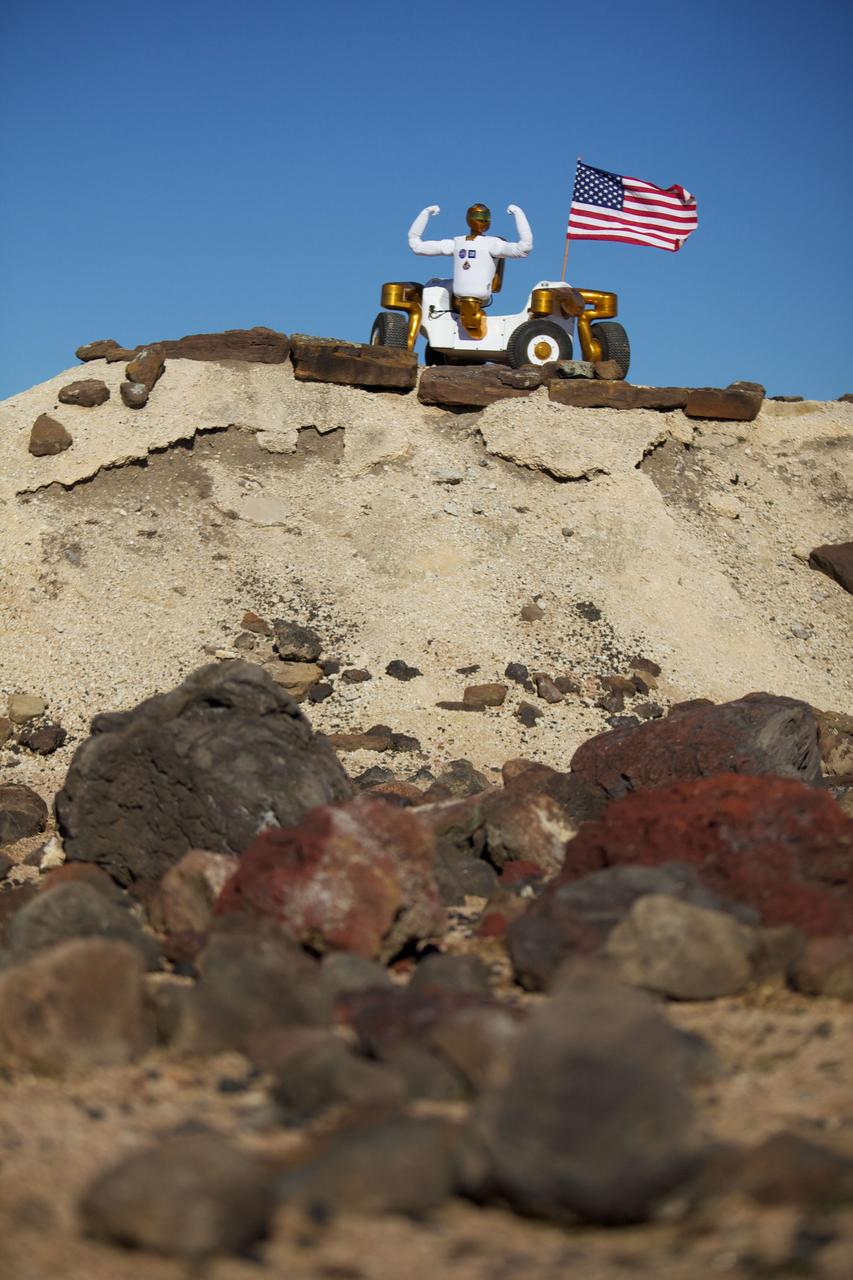
JSC2011-E-017946 (February 2011) --- Robonaut 2 poses atop its new wheeled base, Centaur 2, at the Johnson Space Center Planetary Analog Test Site. The Centaur base builds off of lessons learned through the Space Exploration Vehicle, a rover for astronauts, and could allow the dexterous humanoid robot to help with the future exploration of distant planetary surfaces. Photo credit: NASA or National Aeronautics and Space Administration
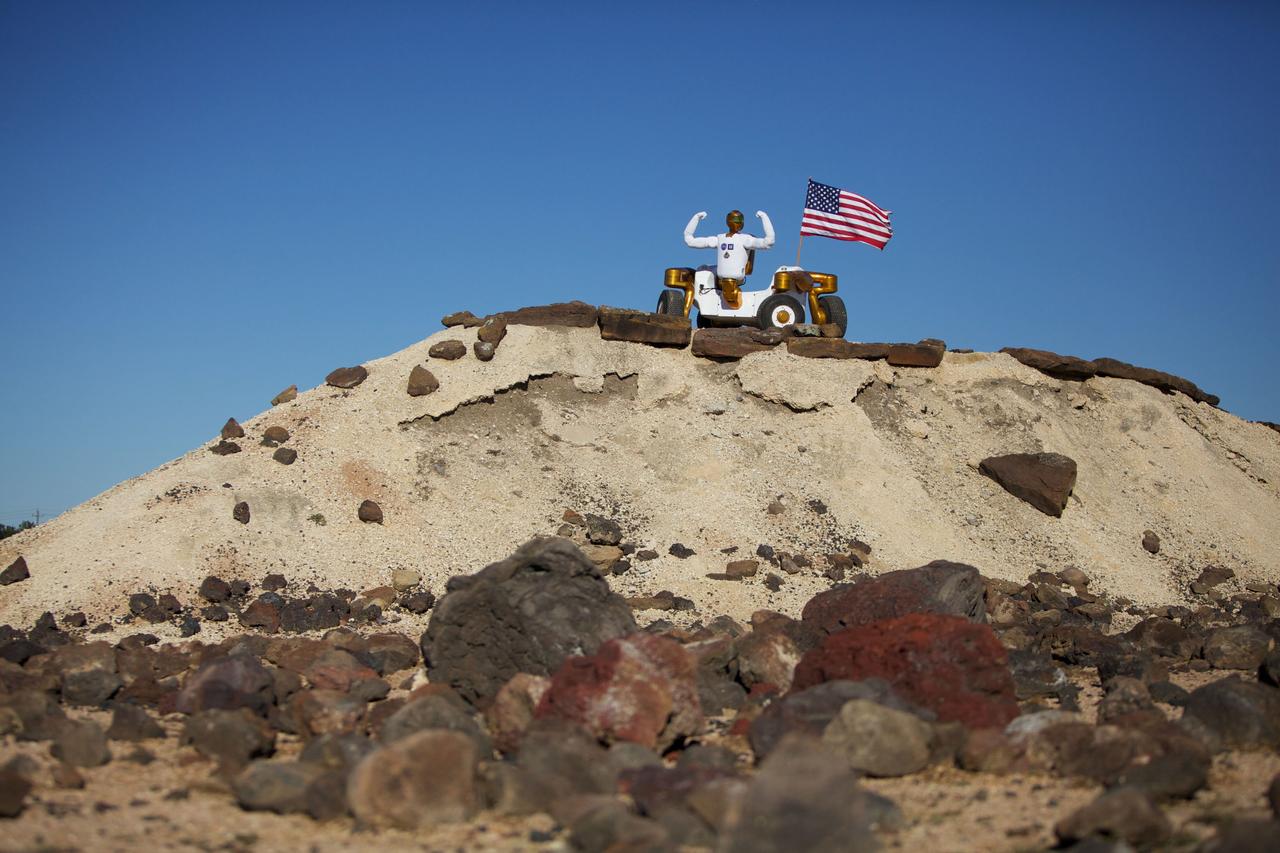
JSC2011-E-017947 (February 2011) --- Robonaut 2 poses atop its new wheeled base, Centaur 2, at the Johnson Space Center Planetary Analog Test Site. The Centaur base builds off of lessons learned through the Space Exploration Vehicle, a rover for astronauts, and could allow the dexterous humanoid robot to help with the future exploration of distant planetary surfaces. Photo credit: NASA or National Aeronautics and Space Administration
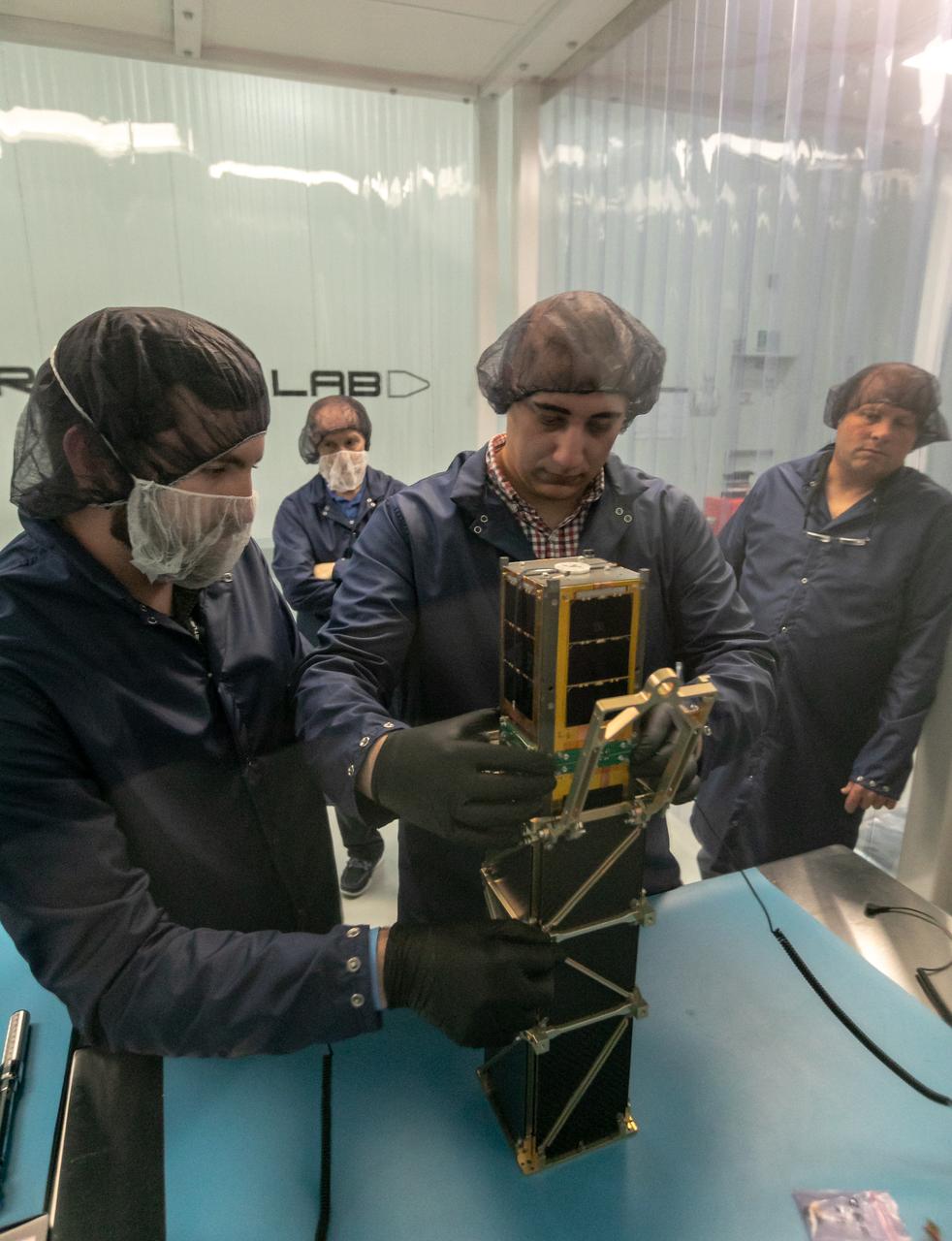
CubeSail is a nano-scale flight experiment to demonstrate deployment and control of a single 250-meter (20 m2) solar sail blade as a low-cost risk reduction precursor of the exciting advanced interplanetary UltraSail concept having four 5-kilometer blades (with approximately 100,000 m2 of sail area). CubeSail was built by the University of Illinois at Urbana-Champaign and CU Aerospace, the same team that designed the I-Sail and UltraSail concepts funded by NASA’s SBIR program. CubeSail represents an affordable stepping-stone towards the future development of the UltraSail solar sail concept that would enable very high-energy inner heliosphere and interstellar scientific missions. In addition, near-earth missions such as Heliostorm for early warning of solar storms will provide more warning margin as the solar sail performance is increased with UltraSail technology. Spacecraft design studies show that for sail areal densities below 5 gm/m2, as proposed with UltraSail, that spacecraft payloads can be significantly increased to 50-60% because of the elimination of the propellant, without sacrificing flight time. Furthermore, higher payload fractions will result in dramatically lower total spacecraft mass and consequently much lower launch cost, enabling more missions for the research dollar.
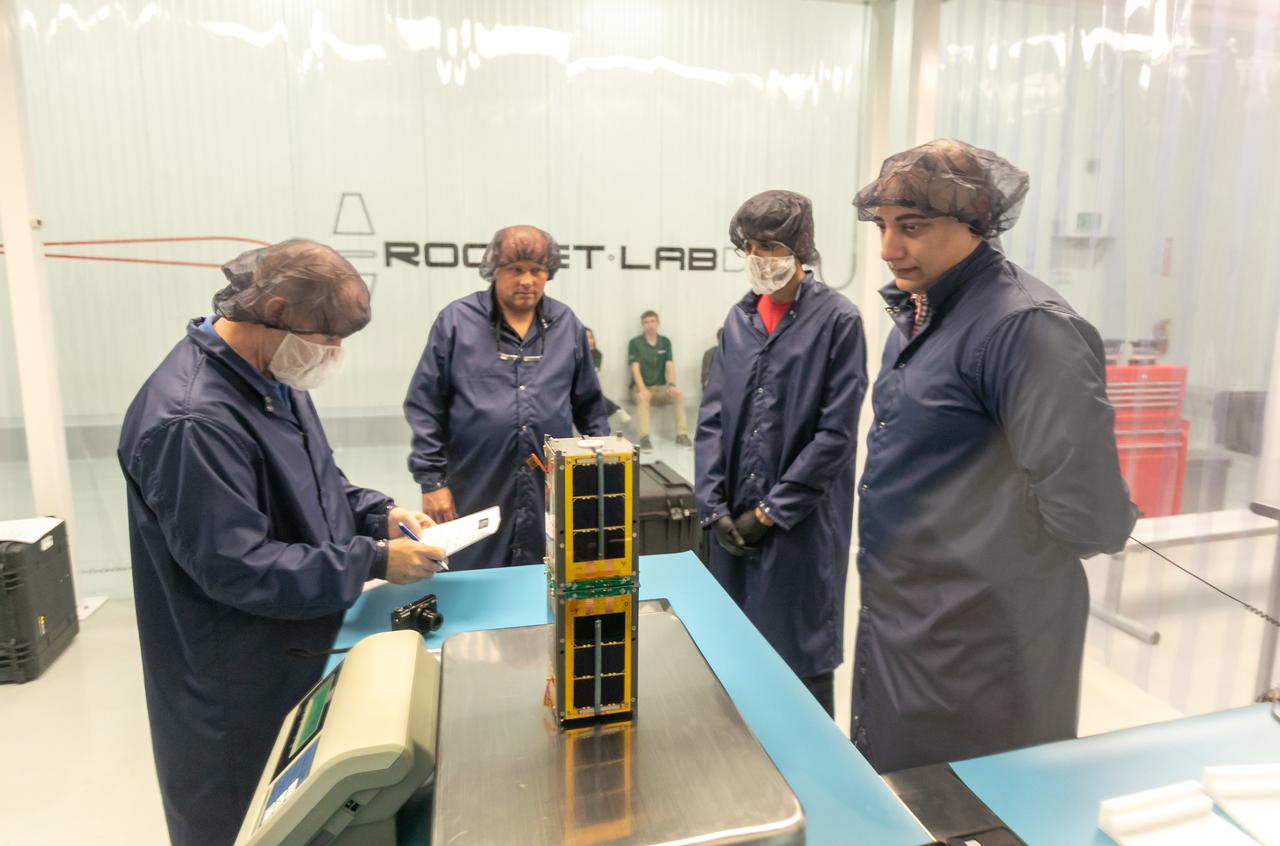
CubeSail is a nano-scale flight experiment to demonstrate deployment and control of a single 250-meter (20 m2) solar sail blade as a low-cost risk reduction precursor of the exciting advanced interplanetary UltraSail concept having four 5-kilometer blades (with approximately 100,000 m2 of sail area). CubeSail was built by the University of Illinois at Urbana-Champaign and CU Aerospace, the same team that designed the I-Sail and UltraSail concepts funded by NASA’s SBIR program. CubeSail represents an affordable stepping-stone towards the future development of the UltraSail solar sail concept that would enable very high-energy inner heliosphere and interstellar scientific missions. In addition, near-earth missions such as Heliostorm for early warning of solar storms will provide more warning margin as the solar sail performance is increased with UltraSail technology. Spacecraft design studies show that for sail areal densities below 5 gm/m2, as proposed with UltraSail, that spacecraft payloads can be significantly increased to 50-60% because of the elimination of the propellant, without sacrificing flight time. Furthermore, higher payload fractions will result in dramatically lower total spacecraft mass and consequently much lower launch cost, enabling more missions for the research dollar.
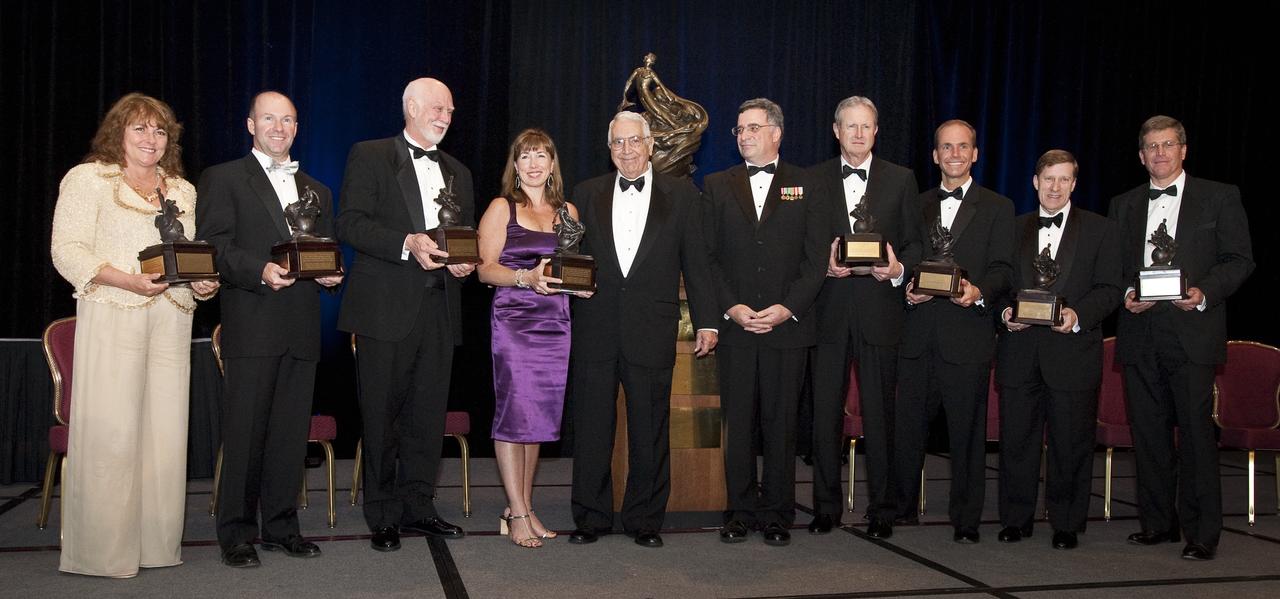
NASA and the International Space Station (ISS) team is selected as the recipient of the 2009 Robert J. Collier Trophy on Thursday, May 13, 2010, in Arlington, VA. Lori Garver, fourth from left, Deputy Administrator of NASA accepts the Collier Trophy on behalf of NASA. The ISS Team nomination consisted NASA, The Boeing Company, Draper Laboratory, Honeywell, Lockheed Martin Corporation, United Space Alliance, and United Technologies/Hamilton Sunstrand. Seen from left are: Virginia Barnes, President and CEO, United Space Alliance; Alain Bellemare, President, United Technologies/Hamilton Sunstrand; James Crocker, VP and GM, Sensing & Exploration, Lockheed Martin; Lori Garver; Wayne Boyne, Chairman, National Aeronautic Association; Jonathan Gaffney, President, National Aeronautic Association; Jim Albaugh, Executive VP of The Boeing Company, President and CEO of Boeing Commercial Airplanes; Dennis Muilenberg, Executive Vice President, The Boeing Company, President and CEO, Boeing Defense, Space and Security; James Shields, President and CEO, Draper Laboratory and Dave Douglas, Vice President, Space, Missiles and Munitions, Honeywell. Photo Credit: (NASA/Carla Cioffi)
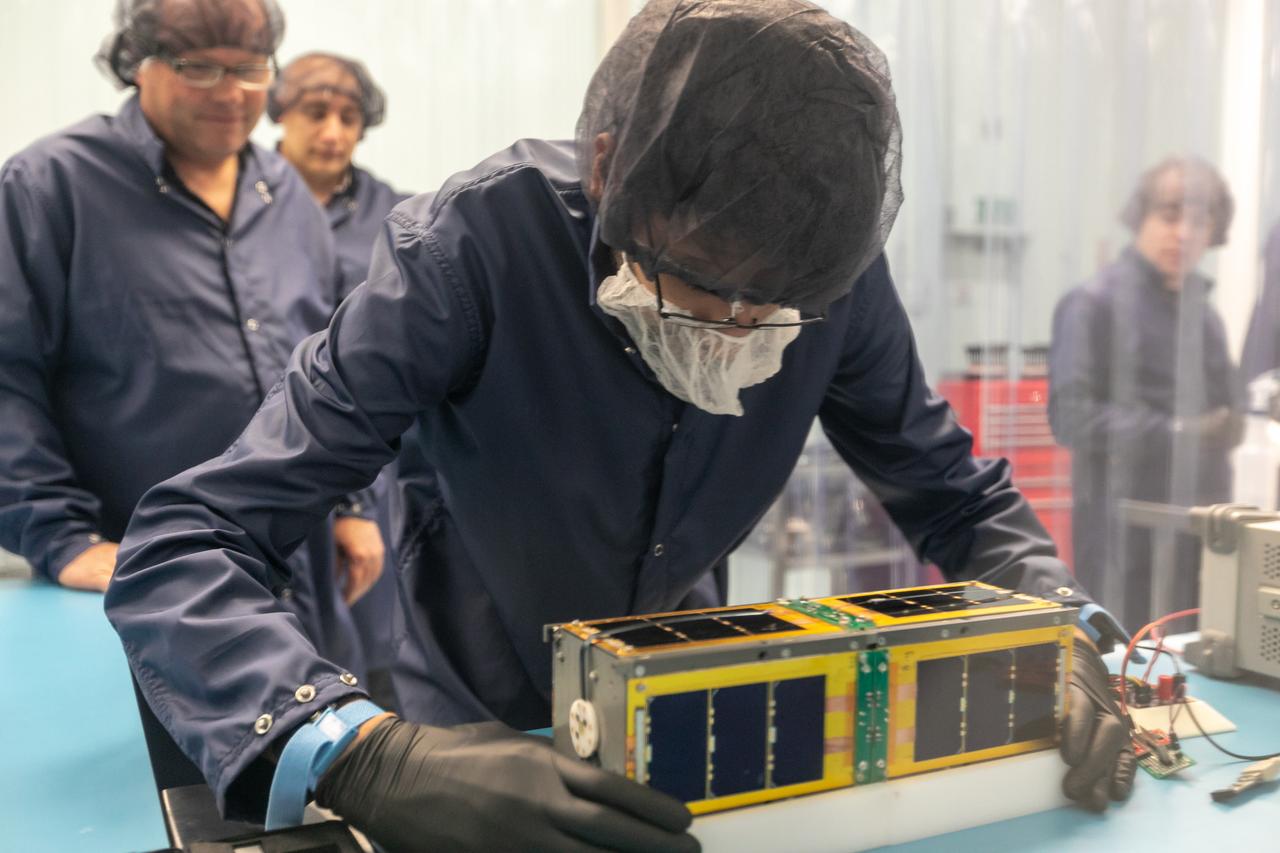
CubeSail is a nano-scale flight experiment to demonstrate deployment and control of a single 250-meter (20 m2) solar sail blade as a low-cost risk reduction precursor of the exciting advanced interplanetary UltraSail concept having four 5-kilometer blades (with approximately 100,000 m2 of sail area). CubeSail was built by the University of Illinois at Urbana-Champaign and CU Aerospace, the same team that designed the I-Sail and UltraSail concepts funded by NASA’s SBIR program. CubeSail represents an affordable stepping-stone towards the future development of the UltraSail solar sail concept that would enable very high-energy inner heliosphere and interstellar scientific missions. In addition, near-earth missions such as Heliostorm for early warning of solar storms will provide more warning margin as the solar sail performance is increased with UltraSail technology. Spacecraft design studies show that for sail areal densities below 5 gm/m2, as proposed with UltraSail, that spacecraft payloads can be significantly increased to 50-60% because of the elimination of the propellant, without sacrificing flight time. Furthermore, higher payload fractions will result in dramatically lower total spacecraft mass and consequently much lower launch cost, enabling more missions for the research dollar.
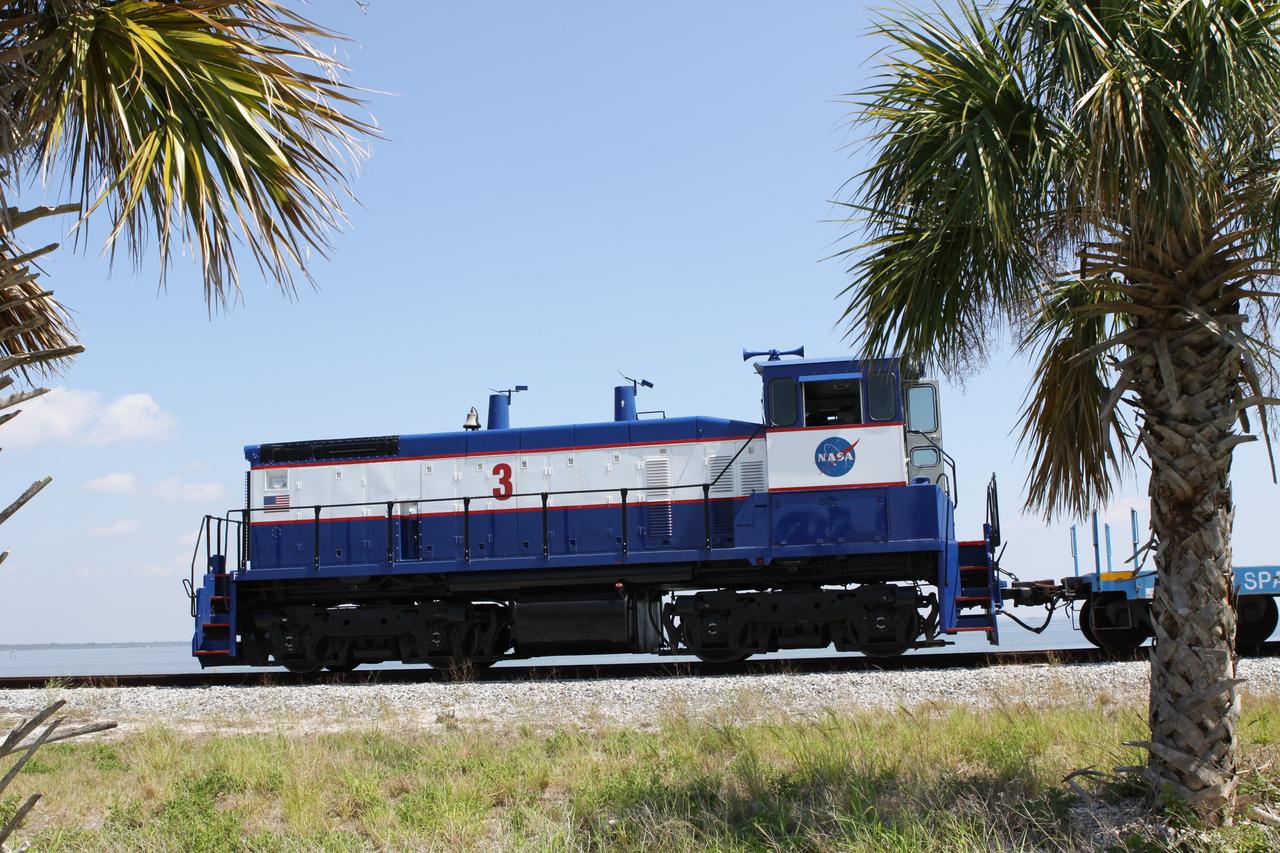
CAPE CANAVERAL, Fla. – NASA Railroad locomotive No. 3 delivers tank cars from NASA’s Kennedy Space Center in Florida to the Florida East Coast Railway interchange in Titusville, Fla. The locomotive is one of three NASA Railroad locomotives built for the Toledo, Peoria and Western, or TP&W, between 1968 and 1970. It is a GM Electromotive Division SW-1500 switcher. The locomotive was acquired by NASA from the TP&W in 1984 and painted in the NASA Railroad paint scheme. The power plant was completely overhauled in 2009. The locomotive will pull the train to the interchange in Titusville, where the train’s helium tank cars, a liquid oxygen tank car, and a liquid hydrogen dewar or tank car will be transferred for delivery to the SpaceX engine test complex outside McGregor, Texas. The railroad cars were needed in support of the Space Shuttle Program but currently are not in use by NASA following the completion of the program in 2011. Originally, the tankers belonged to the U.S. Bureau of Mines. At the peak of the shuttle program, there were approximately 30 cars in the fleet. About half the cars were returned to the bureau as launch activity diminished. Five tank cars are being loaned to SpaceX and repurposed to support their engine tests in Texas. Eight cars previously were shipped to California on loan to support the SpaceX Falcon 9 rocket launches from Space Launch Complex-4 on Vandenberg Air Force Base. SpaceX already has three helium tank cars previously used for the shuttle program at Space Launch Complex-40 on Cape Canaveral Air Force Station in Florida. For more information, visit http://www.nasa.gov/spacex. Photo credit: NASA/Jim Grossmann
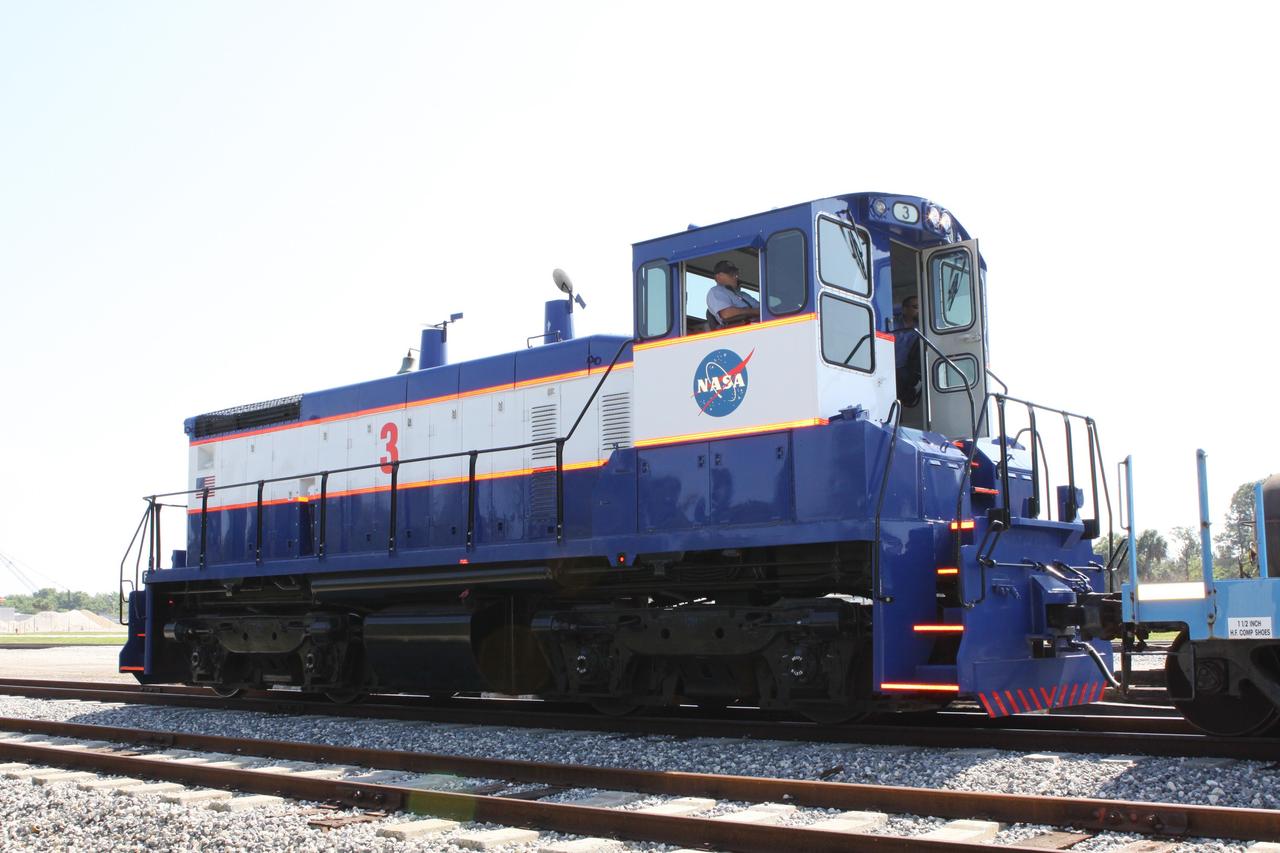
CAPE CANAVERAL, Fla. – NASA Railroad locomotive No. 3 is enlisted to deliver tank cars from NASA’s Kennedy Space Center in Florida to the Florida East Coast Railway interchange in Titusville, Fla. The locomotive is one of three NASA Railroad locomotives built for the Toledo, Peoria and Western, or TP&W, between 1968 and 1970. It is a GM Electromotive Division SW-1500 switcher. The locomotive was acquired by NASA from the TP&W in 1984 and painted in the NASA Railroad paint scheme. The power plant was completely overhauled in 2009. The locomotive will pull the train to the interchange in Titusville, where the train’s helium tank cars, a liquid oxygen tank car, and a liquid hydrogen dewar or tank car will be transferred for delivery to the SpaceX engine test complex outside McGregor, Texas. The railroad cars were needed in support of the Space Shuttle Program but currently are not in use by NASA following the completion of the program in 2011. Originally, the tankers belonged to the U.S. Bureau of Mines. At the peak of the shuttle program, there were approximately 30 cars in the fleet. About half the cars were returned to the bureau as launch activity diminished. Five tank cars are being loaned to SpaceX and repurposed to support their engine tests in Texas. Eight cars previously were shipped to California on loan to support the SpaceX Falcon 9 rocket launches from Space Launch Complex-4 on Vandenberg Air Force Base. SpaceX already has three helium tank cars previously used for the shuttle program at Space Launch Complex-40 on Cape Canaveral Air Force Station in Florida. For more information, visit http://www.nasa.gov/spacex. Photo credit: NASA/Jim Grossmann
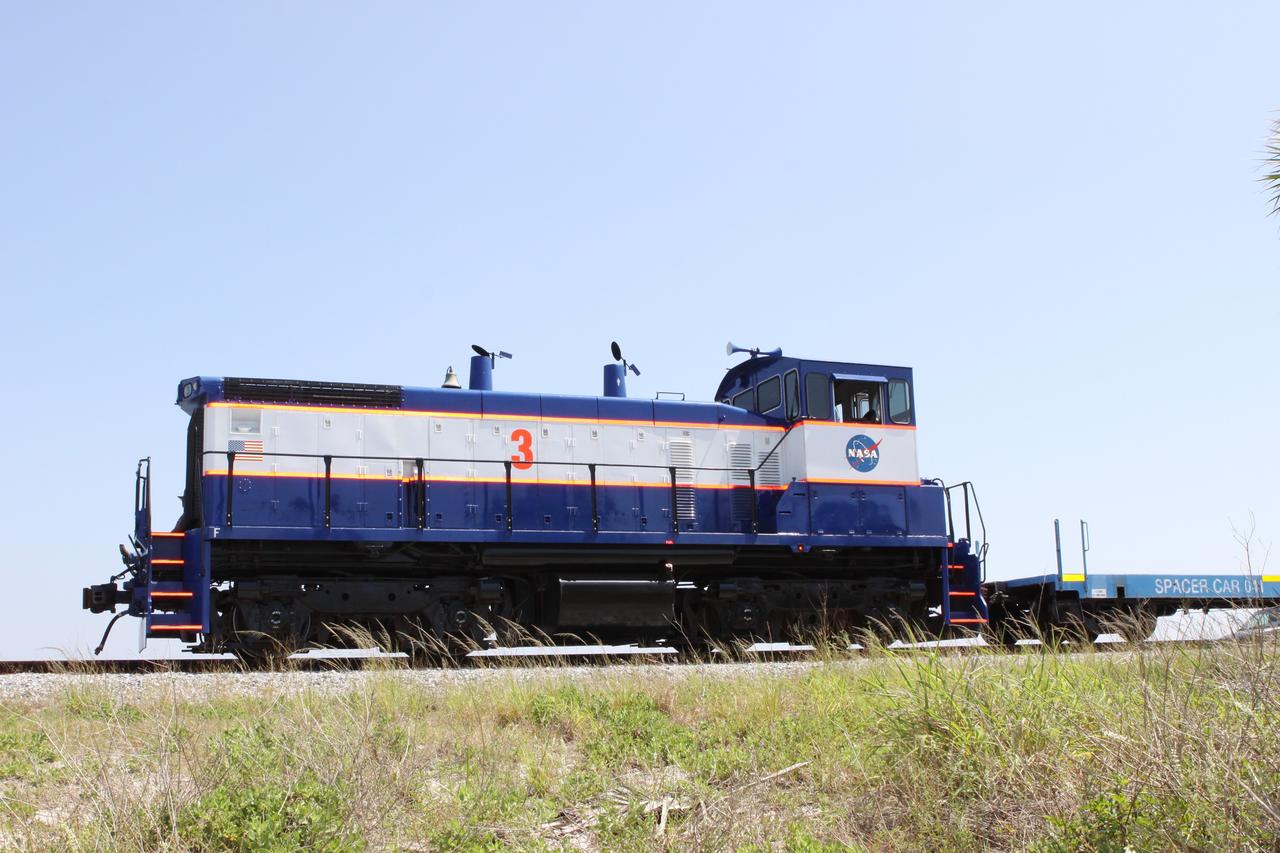
CAPE CANAVERAL, Fla. – NASA Railroad locomotive No. 3 delivers tank cars from NASA’s Kennedy Space Center in Florida to the Florida East Coast Railway interchange in Titusville, Fla. The locomotive is one of three NASA Railroad locomotives built for the Toledo, Peoria and Western, or TP&W, between 1968 and 1970. It is a GM Electromotive Division SW-1500 switcher. The locomotive was acquired by NASA from the TP&W in 1984 and painted in the NASA Railroad paint scheme. The power plant was completely overhauled in 2009. The locomotive will pull the train to the interchange in Titusville, where the train’s helium tank cars, a liquid oxygen tank car, and a liquid hydrogen dewar or tank car will be transferred for delivery to the SpaceX engine test complex outside McGregor, Texas. The railroad cars were needed in support of the Space Shuttle Program but currently are not in use by NASA following the completion of the program in 2011. Originally, the tankers belonged to the U.S. Bureau of Mines. At the peak of the shuttle program, there were approximately 30 cars in the fleet. About half the cars were returned to the bureau as launch activity diminished. Five tank cars are being loaned to SpaceX and repurposed to support their engine tests in Texas. Eight cars previously were shipped to California on loan to support the SpaceX Falcon 9 rocket launches from Space Launch Complex-4 on Vandenberg Air Force Base. SpaceX already has three helium tank cars previously used for the shuttle program at Space Launch Complex-40 on Cape Canaveral Air Force Station in Florida. For more information, visit http://www.nasa.gov/spacex. Photo credit: NASA/Jim Grossmann
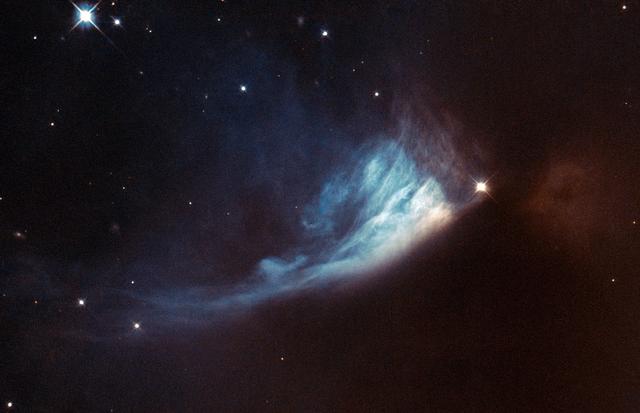
The Universe is rarely static, although the timescales involved can be very long. Since modern astronomical observations began we have been observing the birthplaces of new stars and planets, searching for and studying the subtle changes that help us to figure out what is happening within. The bright spot located at the edge of the bluish fan-shaped structure in this Hubble image is a young star called V* PV Cephei, or PV Cep. It is a favorite target for amateur astronomers because the fan-shaped nebulosity, known as GM 1-29 or Gyulbudaghian’s Nebula, changes over a timescale of months. The brightness of the star has also varied over time. Images of PV Cep taken in 1952 showed a nebulous streak, similar to a comet’s tail. However, this had vanished when new images of the star were obtained some twenty-five years later. Instead, the blue fan-shaped nebula had appeared. Twenty-five years is a very short period on cosmic timescales, so astronomers think that the mysterious streak may have been a temporary phenomenon, such as the remnants of a massive stellar flare — similar to the solar flares we are used to seeing in the solar system. At the same time as this was happening, the star itself was brightening. This provided the light to illuminate the newly formed fan-shaped nebula. This brightening might be related to the start of the hydrogen-burning phase of the star, which would mean that it was reaching maturity. PV Cep is thought to be surrounded by a disc of gas and dust, which would stop light from escaping in all directions. The fan-like appearance is therefore probably a result of starlight escaping from the dust disc and projecting onto the nebula. PV Cep is located in the northern constellation of Cepheus at a distance of over 1600 light-years from Earth. European Space Agency/NASA Hubble <b><a href="http://www.nasa.gov/audience/formedia/features/MP_Photo_Guidelines.html" rel="nofollow">NASA image use policy.</a></b> <b><a href="http://www.nasa.gov/centers/goddard/home/index.html" rel="nofollow">NASA Goddard Space Flight Center</a></b> enables NASA’s mission through four scientific endeavors: Earth Science, Heliophysics, Solar System Exploration, and Astrophysics. Goddard plays a leading role in NASA’s accomplishments by contributing compelling scientific knowledge to advance the Agency’s mission. <b>Follow us on <a href="http://twitter.com/NASA_GoddardPix" rel="nofollow">Twitter</a></b> <b>Like us on <a href="http://www.facebook.com/pages/Greenbelt-MD/NASA-Goddard/395013845897?ref=tsd" rel="nofollow">Facebook</a></b> <b>Find us on <a href="http://instagram.com/nasagoddard?vm=grid" rel="nofollow">Instagram</a></b>