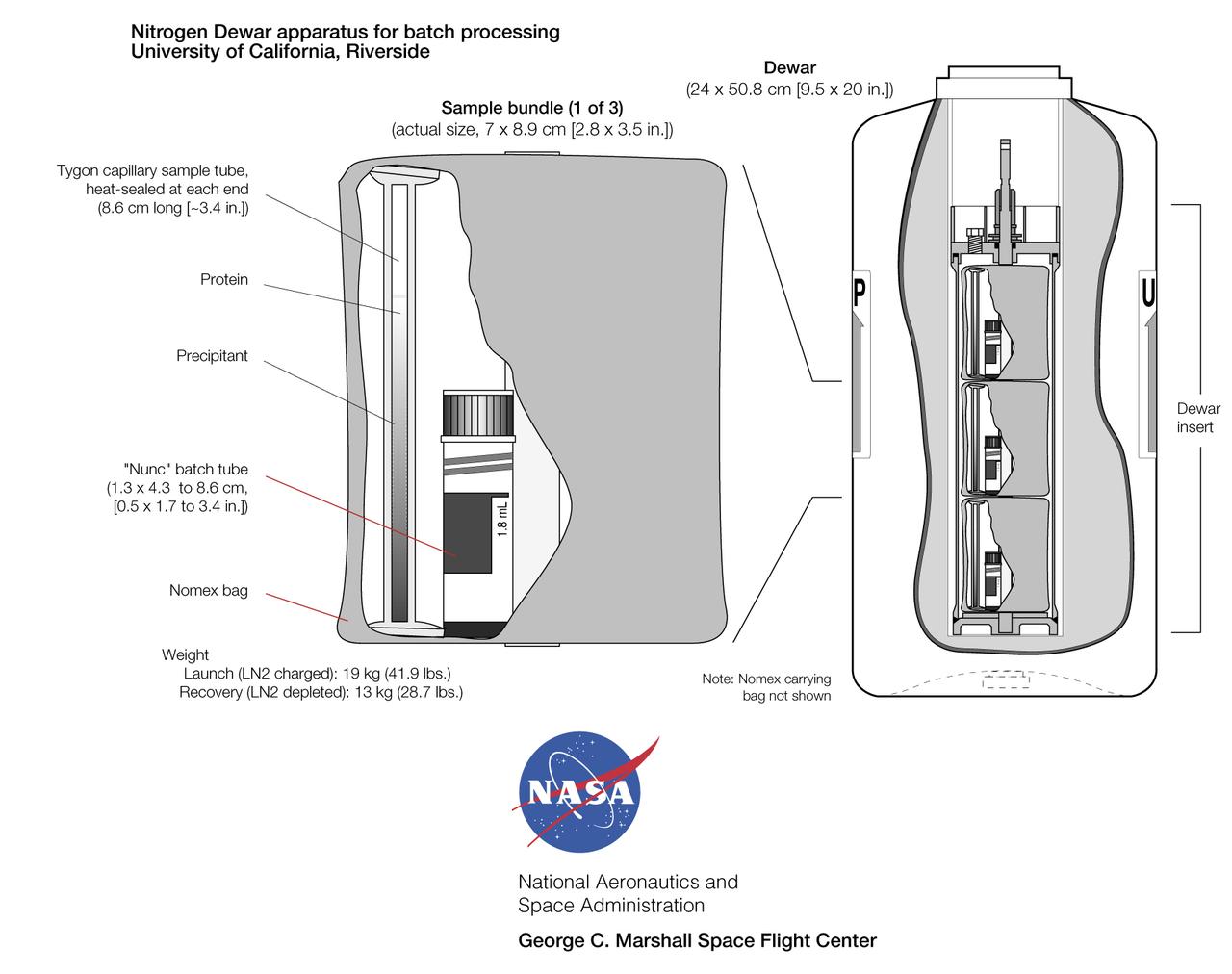
Gaseous Nitrogen Dewar apparatus developed by Dr. Alex McPherson of the University of California, Irvine for use aboard Mir and the International Space Station allows large quantities of protein samples to be crystallized in orbit. The specimens are contained either in plastic tubing (heat-sealed at each end). Biological samples are prepared with a precipitating agent in either a batch or liquid-liquid diffusion configuration. The samples are then flash-frozen in liquid nitrogen before crystallization can start. On orbit, the Dewar is placed in a quiet area of the station and the nitrogen slowly boils off (it is taken up by the environmental control system), allowing the proteins to thaw to begin crystallization. The Dewar is returned to Earth after one to four months on orbit, depending on Shuttle flight opportunities. The tubes then are analyzed for crystal presence and quality
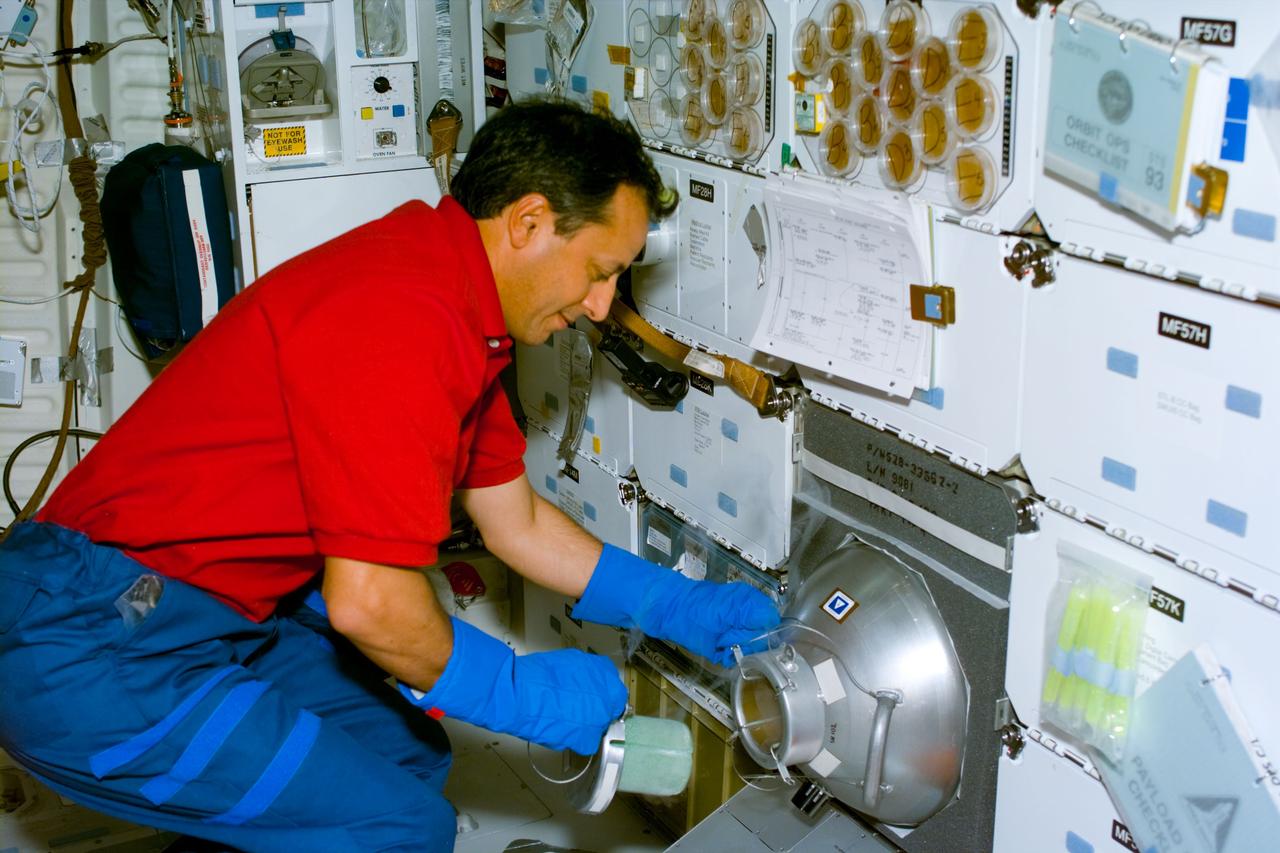
S93-E-5006 (23 July 1999) --- Astronaut Michel Tognini, mission specialist representing the French space agency (CNES), opens the gaseous nitorgen (GN2) freezer on Columbia's middeck. The freezer is flown in support of two plant growth experiments--Plant Growth Investigations in Microgravity (PGIM) and Biological Research in Canisters (BRIC). Throughout the mission Tognini periodically freezes samples from the experiments to provide glimpses of the plants in various stages of development. The photo was recorded with an electronic still camera (ESC) on Flight Day 1.
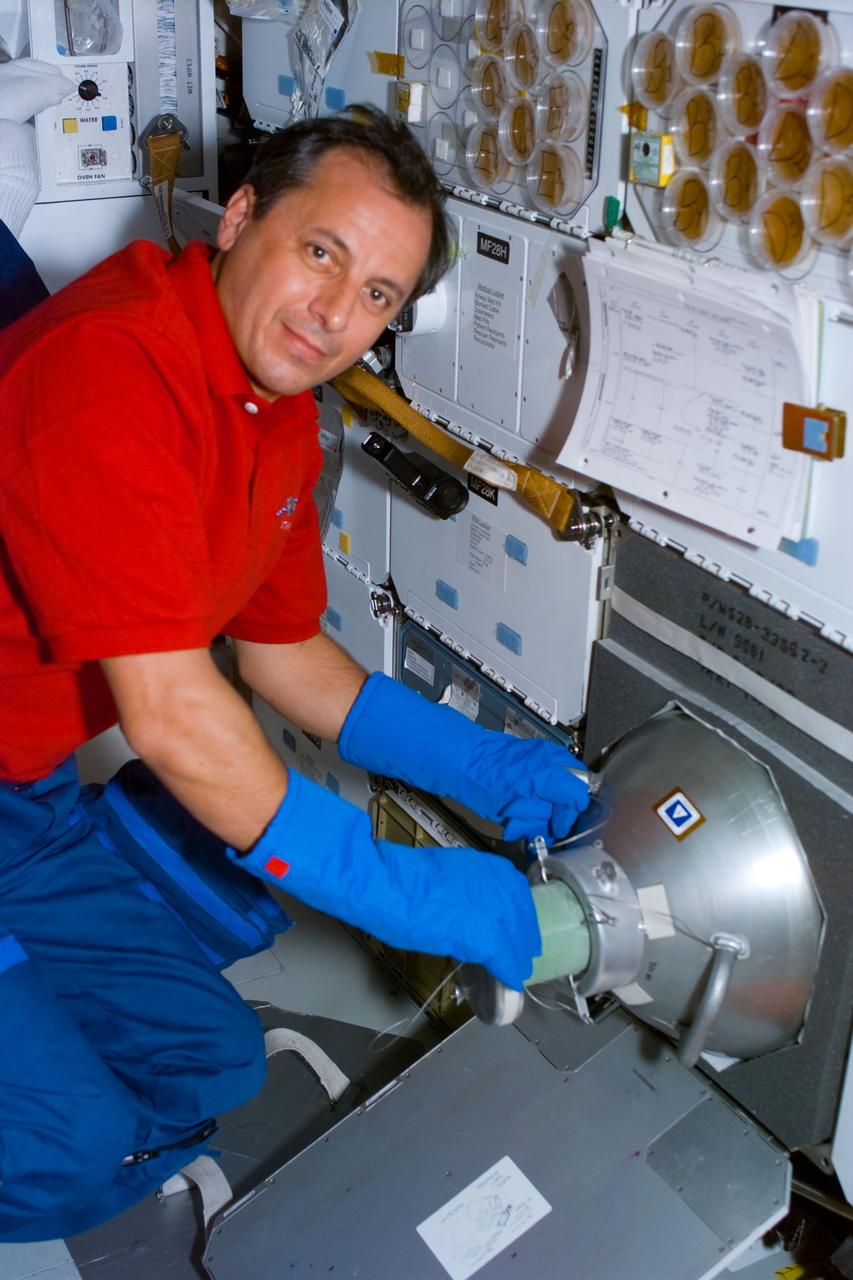
S93-E-5009 (22-27 July 1999) --- Astronaut Michel Tognini, mission specialist, is photographed on the mid deck of the Earth-orbiting Space Shuttle Columbia as he handles the Biological Research in Canisters (BRIC) GN2 freezer. Tognini represents France?s Centre National d?Etudes Spatiales (CNES). The photo was recorded with an electronic still camera (ESC).
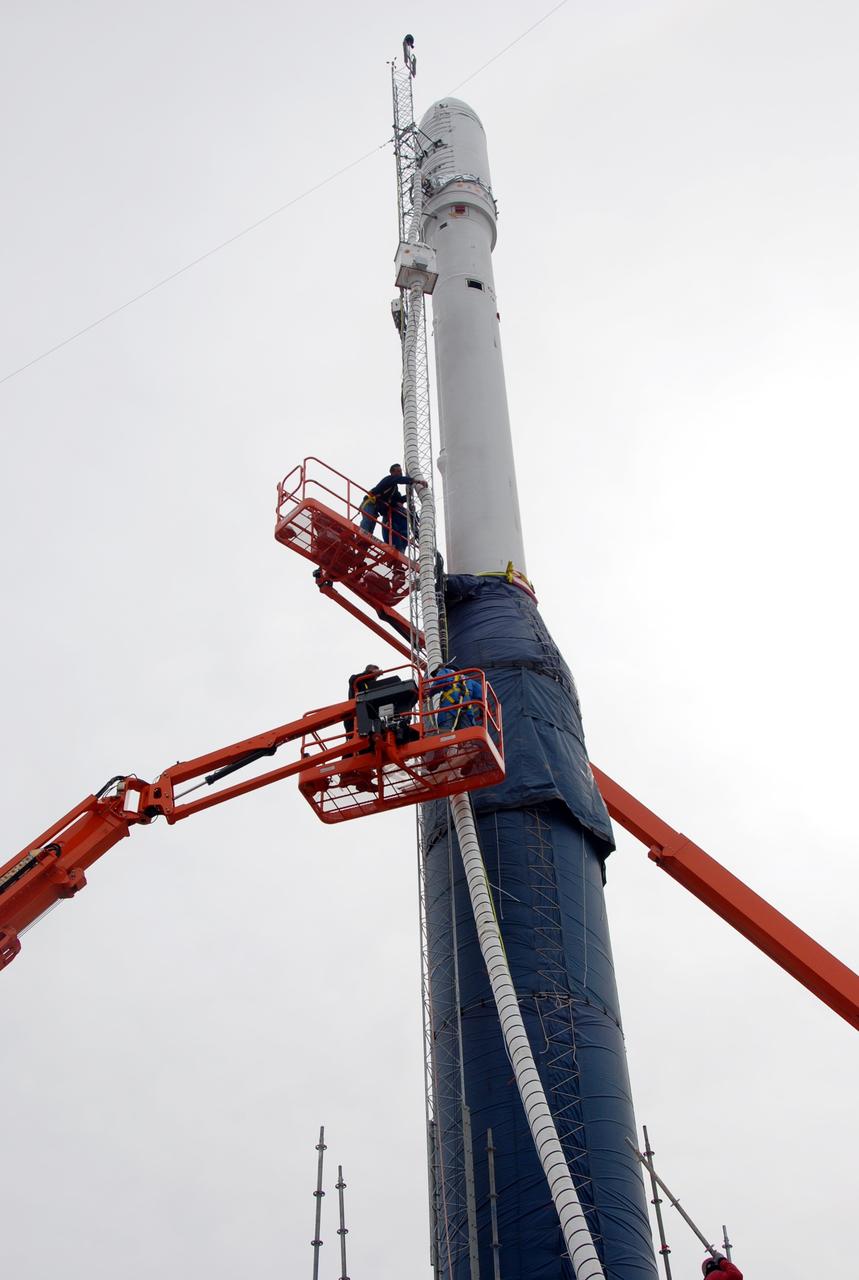
VANDENBERG AIR FORCE BASE, Calif. -- On Launch Complex 576-E at Vandenberg Air Force Base in California, workers in the bucket trucks are securing the fairing ducting, GN2 purge line, and cable harnesses to the umbilical mast attached to Orbital Sciences' Taurus XL rocket. Atop the rocket is NASA's Orbiting Carbon Observatory, or OCO, which is scheduled to launch Feb. 24 from Vandenberg. The spacecraft will collect precise global measurements of carbon dioxide (CO2) in the Earth's atmosphere. Scientists will analyze OCO data to improve our understanding of the natural processes and human activities that regulate the abundance and distribution of this important greenhouse gas. Photo credit: NASA/Richard Nielsen, VAFB
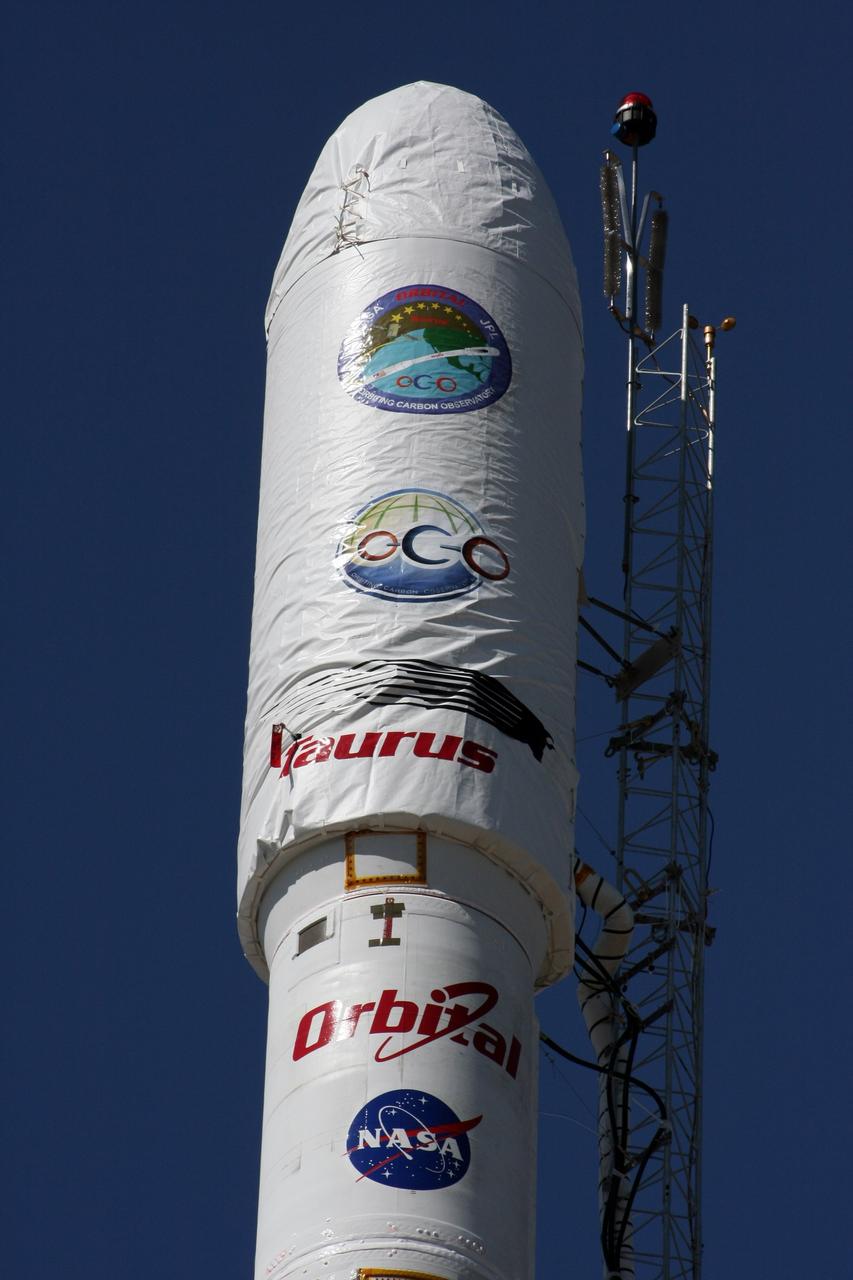
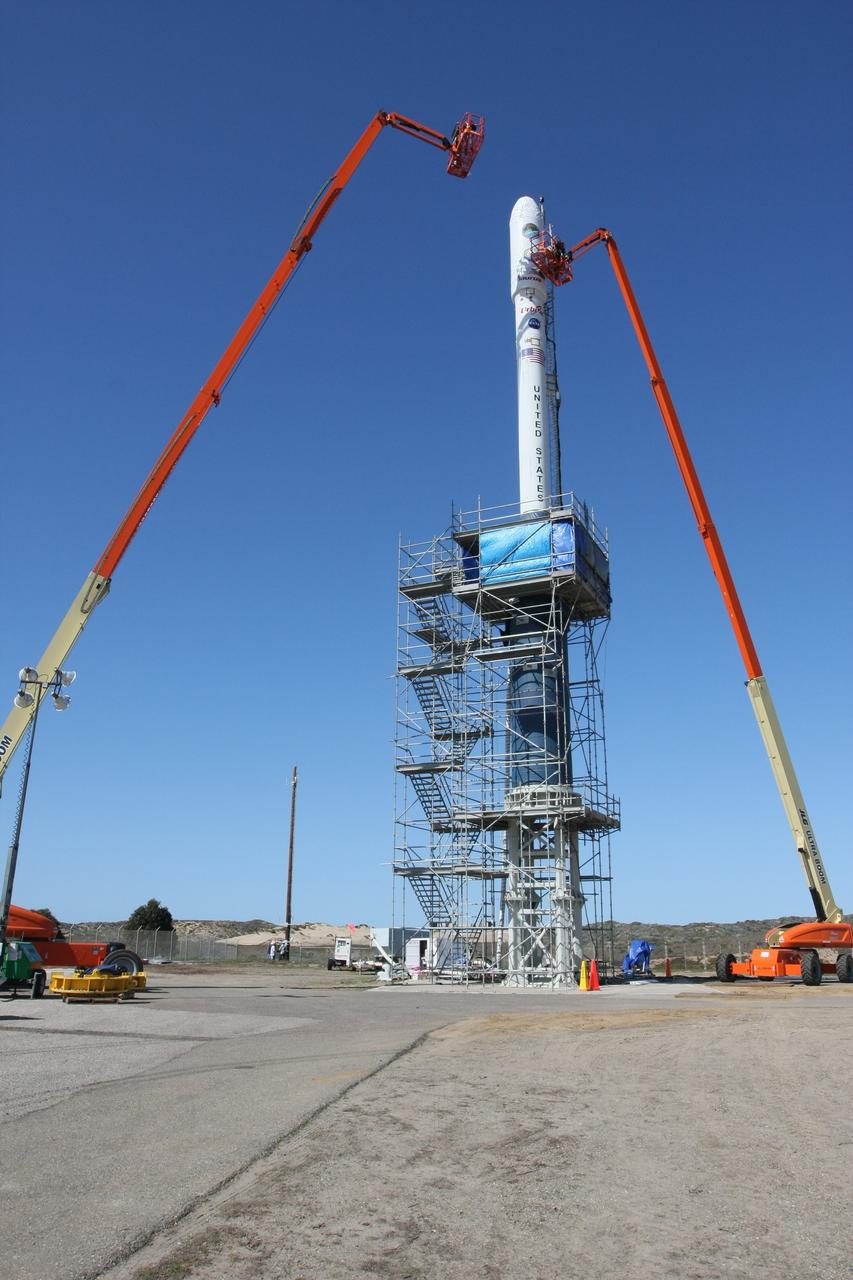
VANDENBERG AIR FORCE BASE, Calif. -- On Launch Complex 576-E at Vandenberg Air Force Base in California, NASA's Orbiting Carbon Observatory, or OCO, spacecraft awaits a GN2 instrument purge flow test in preparation for launch Feb. 24. The spacecraft sits atop Orbital Sciences' Taurus XL rocket. At right is a portion of the umbilical tower attached to the upper stack. The spacecraft will collect precise global measurements of carbon dioxide (CO2) in the Earth's atmosphere. Scientists will analyze OCO data to improve our understanding of the natural processes and human activities that regulate the abundance and distribution of this important greenhouse gas. Photo courtesy of Jim Stowers, Orbital Sciences
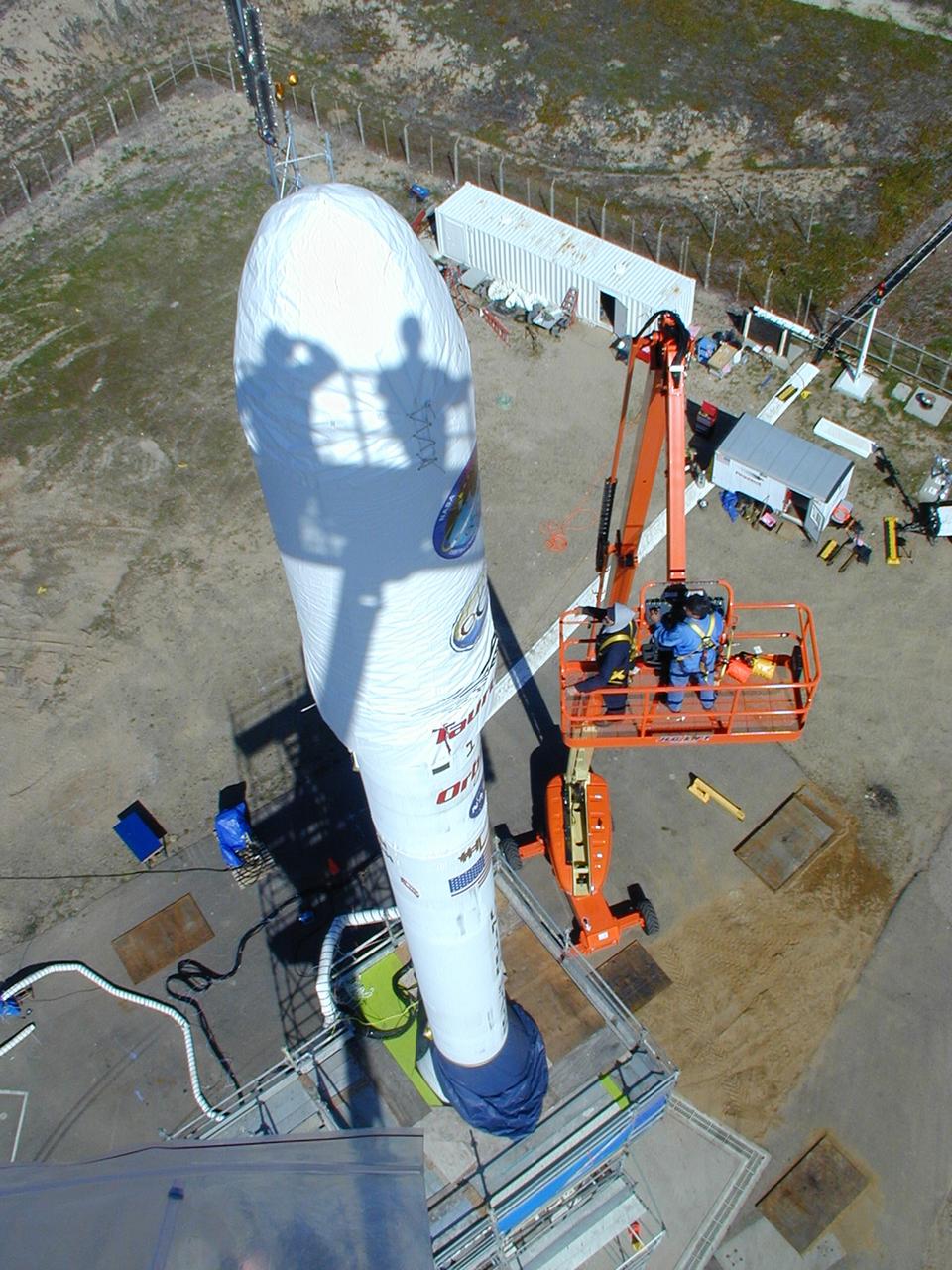
VANDENBERG AIR FORCE BASE, Calif. -- On Launch Complex 576-E at Vandenberg Air Force Base in California, Orbital Science's Jose Castillo and Mark Neuse (right) move in to remove the fairing payload access door on NASA's Orbiting Carbon Observatory, or OCO, spacecraft. Orbital Science's Glenn Weigle and Brett Gladish are nearby (shadows on the fairing) to take the GN2 flow reading. The encapsulated OCO tops Orbital Sciences' Taurus XL rocket, which is scheduled to launch Feb. 24. The spacecraft will collect precise global measurements of carbon dioxide (CO2) in the Earth's atmosphere. Scientists will analyze OCO data to improve our understanding of the natural processes and human activities that regulate the abundance and distribution of this important greenhouse gas. Photo courtesy of Glenn Weigle, Orbital Sciences
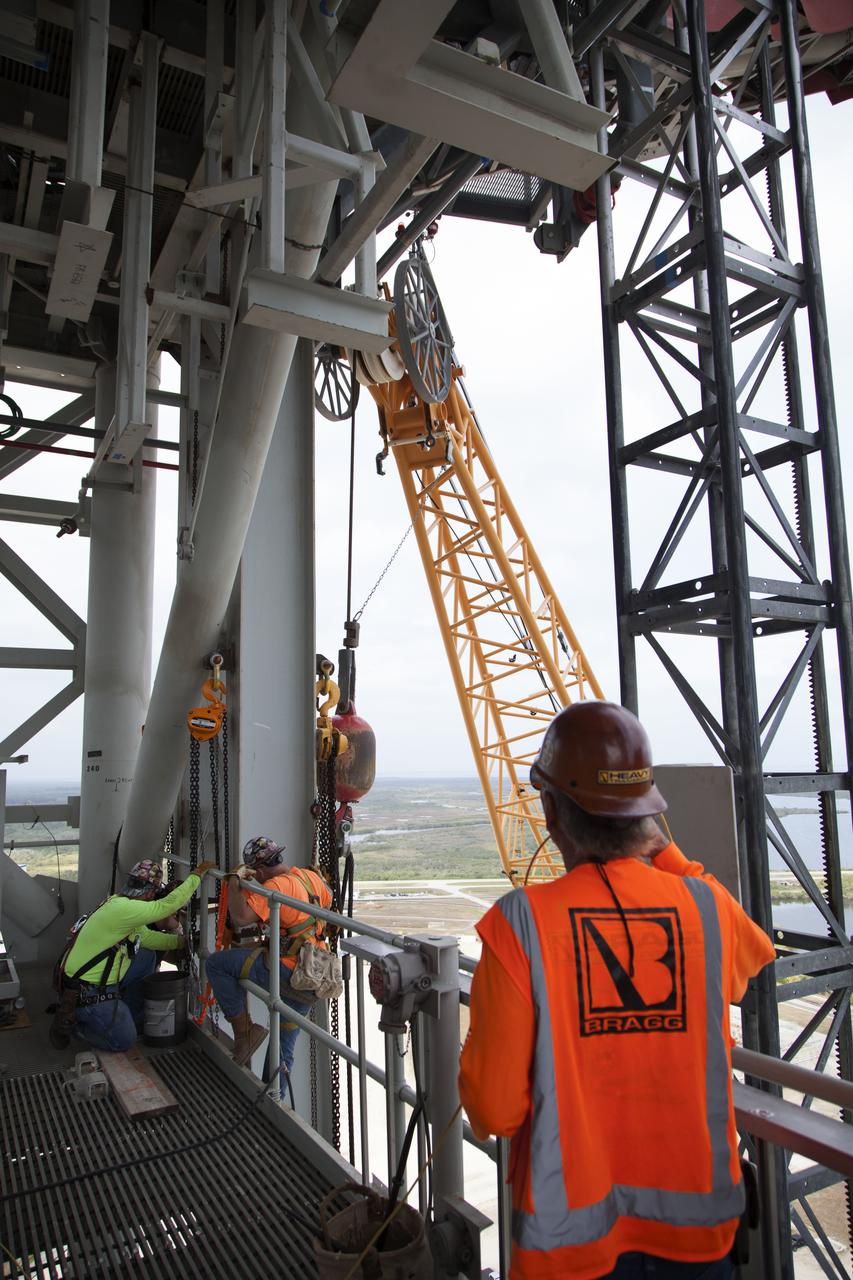
Construction workers assist as a crane lifts the Core Stage Forward Skirt Umbilical up for installation on the mobile launcher tower at NASA's Kennedy Space Center in Florida. The mobile launcher tower will be equipped with a number of lines, called umbilicals that will connect to the Space Launch System (SLS) rocket and Orion spacecraft for Exploration Mission-1 (EM-1). The CSFSU will be located at about the 180-foot level on the tower, above the liquid oxygen tank. The CSFSU is an umbilical that will swing into position to provide connections to the core stage forward skirt of the SLS rocket, and then swing away before launch. Its main purpose is to provide conditioned air/GN2 to the SLS core stage forward skirt cavity. The Ground Systems Development and Operations Program is overseeing installation of the umbilicals.
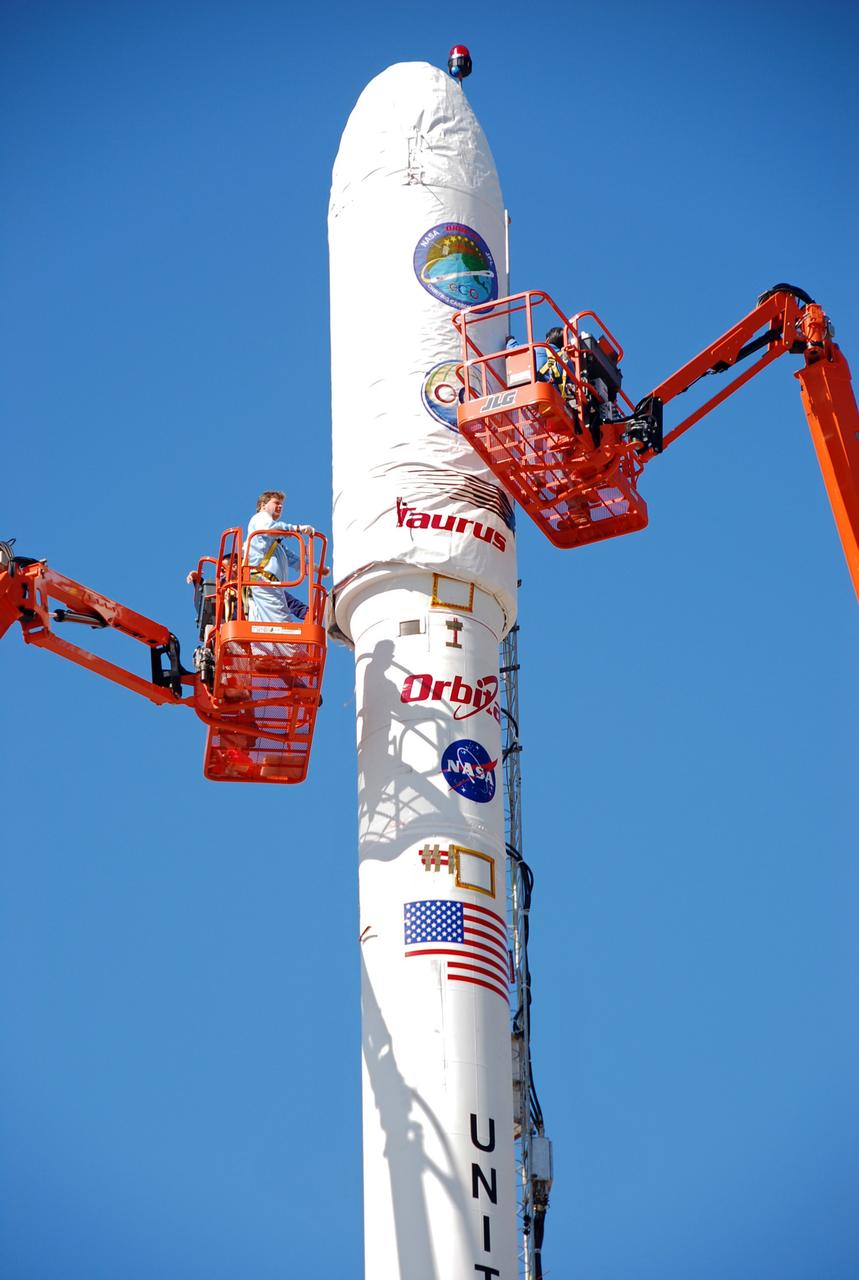
VANDENBERG AIR FORCE BASE, Calif. -- On Launch Complex 576-E at Vandenberg Air Force Base in California, Orbital Sciences Engineer Jose Castillo maneuvers the bucket truck at right into position over the fairing access door on NASA's Orbiting Carbon Observatory, or OCO. Glenn Weigle of Orbital Satellite Systems Group is on the bucket at left. Weigle is prepared to move in and inspect the GN2 instrument purge flow. OCO will collect precise global measurements of carbon dioxide (CO2) in the Earth's atmosphere. Scientists will analyze OCO data to improve our understanding of the natural processes and human activities that regulate the abundance and distribution of this important greenhouse gas. OCO is scheduled to launch Feb. 24 aboard an Orbital Sciences' Taurus XL rocket. Photo credit: NASA/Richard Nielsen, KSC
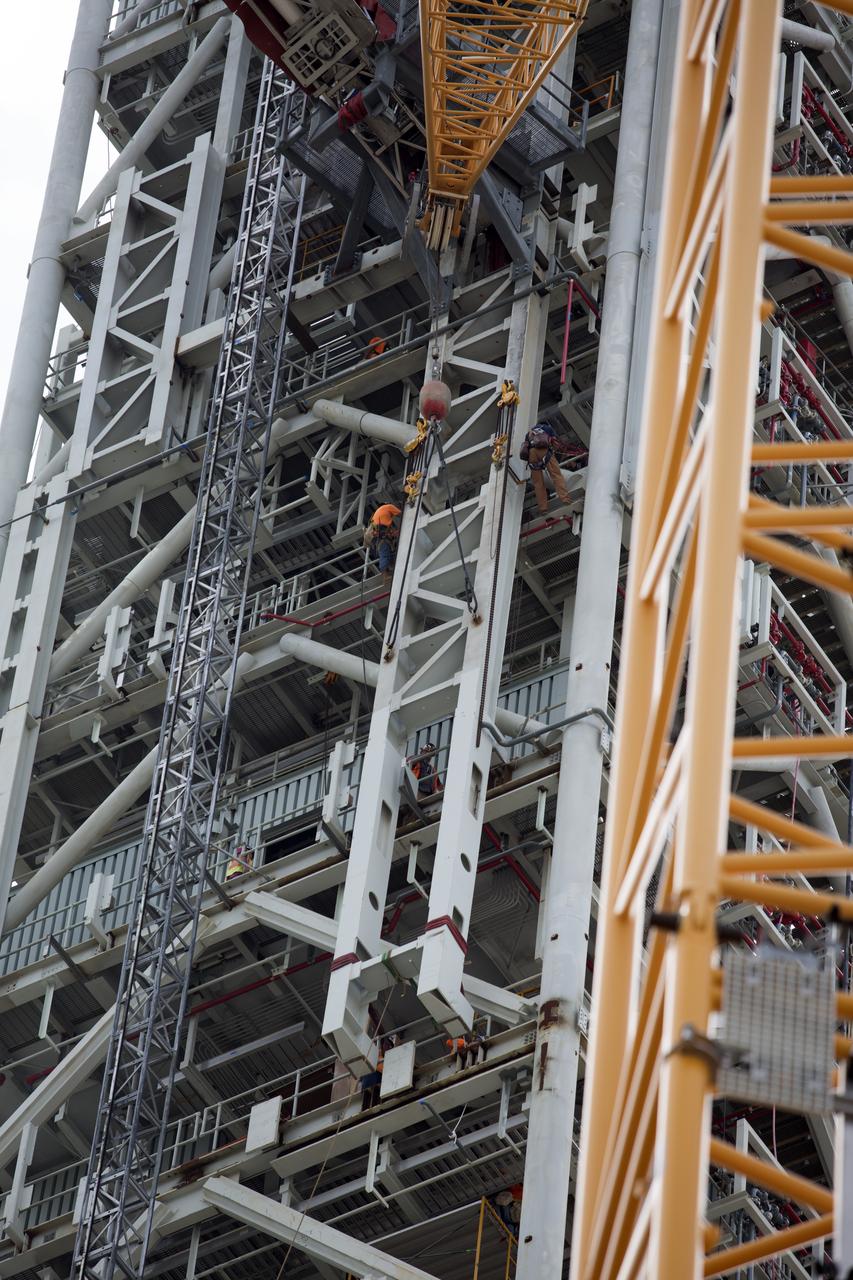
Construction workers assist as a crane lifts the Core Stage Forward Skirt Umbilical into position for installation on the mobile launcher tower at NASA's Kennedy Space Center in Florida. The mobile launcher tower will be equipped with a number of lines, called umbilicals that will connect to the Space Launch System (SLS) rocket and Orion spacecraft for Exploration Mission-1 (EM-1). The CSFSU will be located at about the 180-foot level on the tower, above the liquid oxygen tank. The CSFSU is an umbilical that will swing into position to provide connections to the core stage forward skirt of the SLS rocket, and then swing away before launch. Its main purpose is to provide conditioned air/GN2 to the SLS core stage forward skirt cavity. The Ground Systems Development and Operations Program is overseeing installation of the umbilicals.
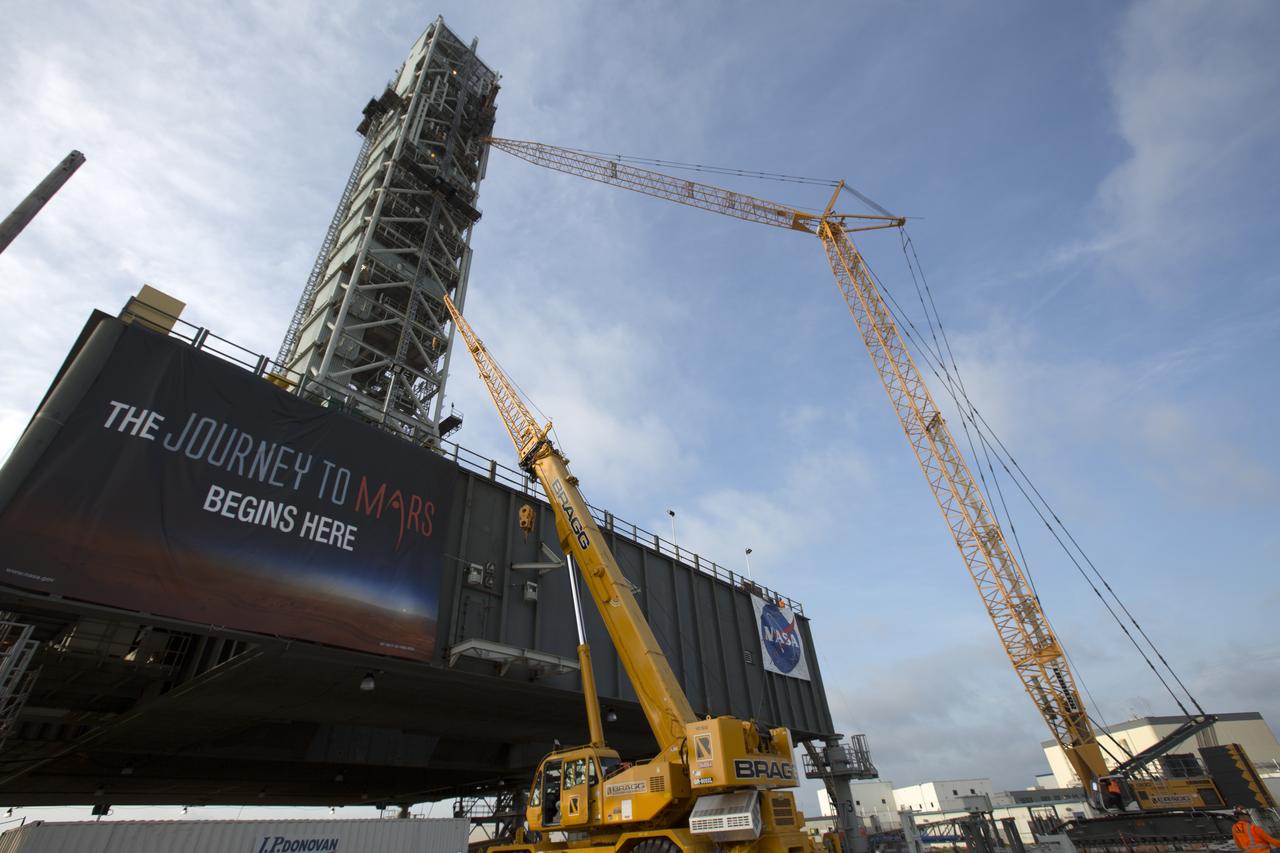
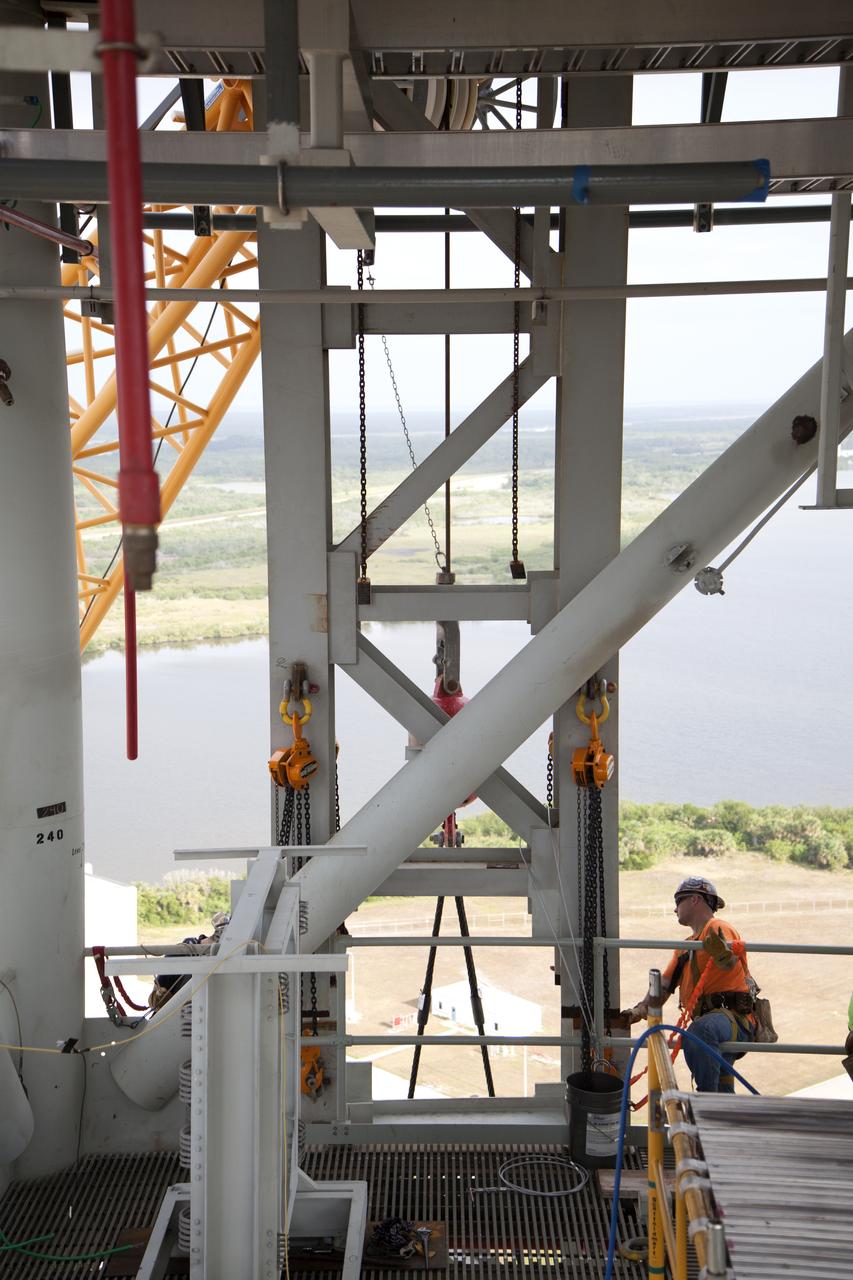
Cranes and rigging are being used to lift up the Core Stage Forward Skirt Umbilical (CSFSU) for installation on the mobile launcher tower at NASA's Kennedy Space Center in Florida. The mobile launcher tower will be equipped with a number of lines, called umbilicals that will connect to the Space Launch System (SLS) rocket and Orion spacecraft for Exploration Mission-1 (EM-1). The CSFSU will be located at about the 180-foot level on the tower, above the liquid oxygen tank. The CSFSU is an umbilical that will swing into position to provide connections to the core stage forward skirt of the SLS rocket, and then swing away before launch. Its main purpose is to provide conditioned air/GN2 to the SLS core stage forward skirt cavity. The Ground Systems Development and Operations Program is overseeing installation of the umbilicals.

Cranes and rigging are being used to lift up the Core Stage Forward Skirt Umbilical (CSFSU) for installation on the mobile launcher tower at NASA's Kennedy Space Center in Florida. The mobile launcher tower will be equipped with a number of lines, called umbilicals that will connect to the Space Launch System (SLS) rocket and Orion spacecraft for Exploration Mission-1 (EM-1). The CSFSU will be located at about the 180-foot level on the tower, above the liquid oxygen tank. The CSFSU is an umbilical that will swing into position to provide connections to the core stage forward skirt of the SLS rocket, and then swing away before launch. Its main purpose is to provide conditioned air/GN2 to the SLS core stage forward skirt cavity. The Ground Systems Development and Operations Program is overseeing installation of the umbilicals.
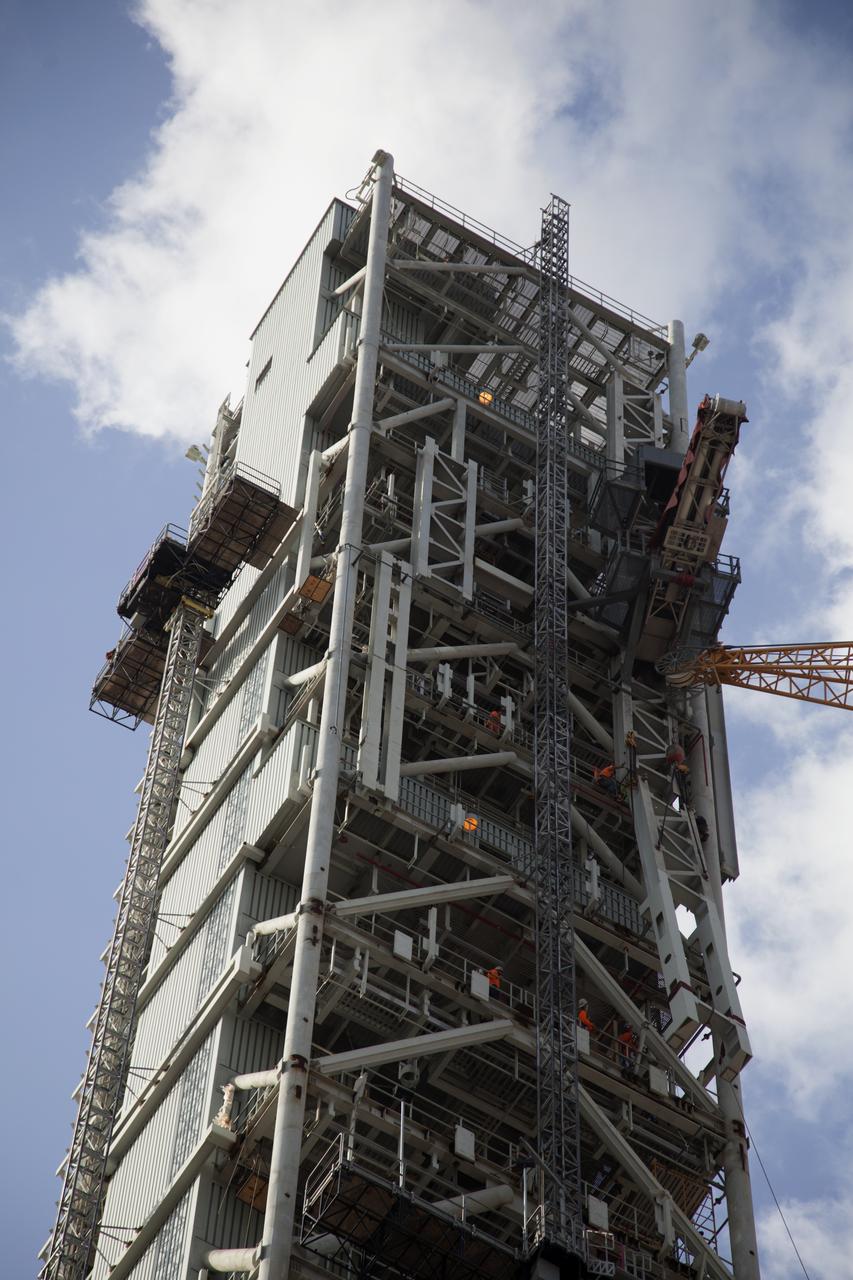
Cranes and rigging are being used to lift up the Core Stage Forward Skirt Umbilical (CSFSU) for installation on the mobile launcher tower at NASA's Kennedy Space Center in Florida. The mobile launcher tower will be equipped with a number of lines, called umbilicals that will connect to the Space Launch System (SLS) rocket and Orion spacecraft for Exploration Mission-1 (EM-1). The CSFSU will be located at about the 180-foot level on the tower, above the liquid oxygen tank. The CSFSU is an umbilical that will swing into position to provide connections to the core stage forward skirt of the SLS rocket, and then swing away before launch. Its main purpose is to provide conditioned air/GN2 to the SLS core stage forward skirt cavity. The Ground Systems Development and Operations Program is overseeing installation of the umbilicals.
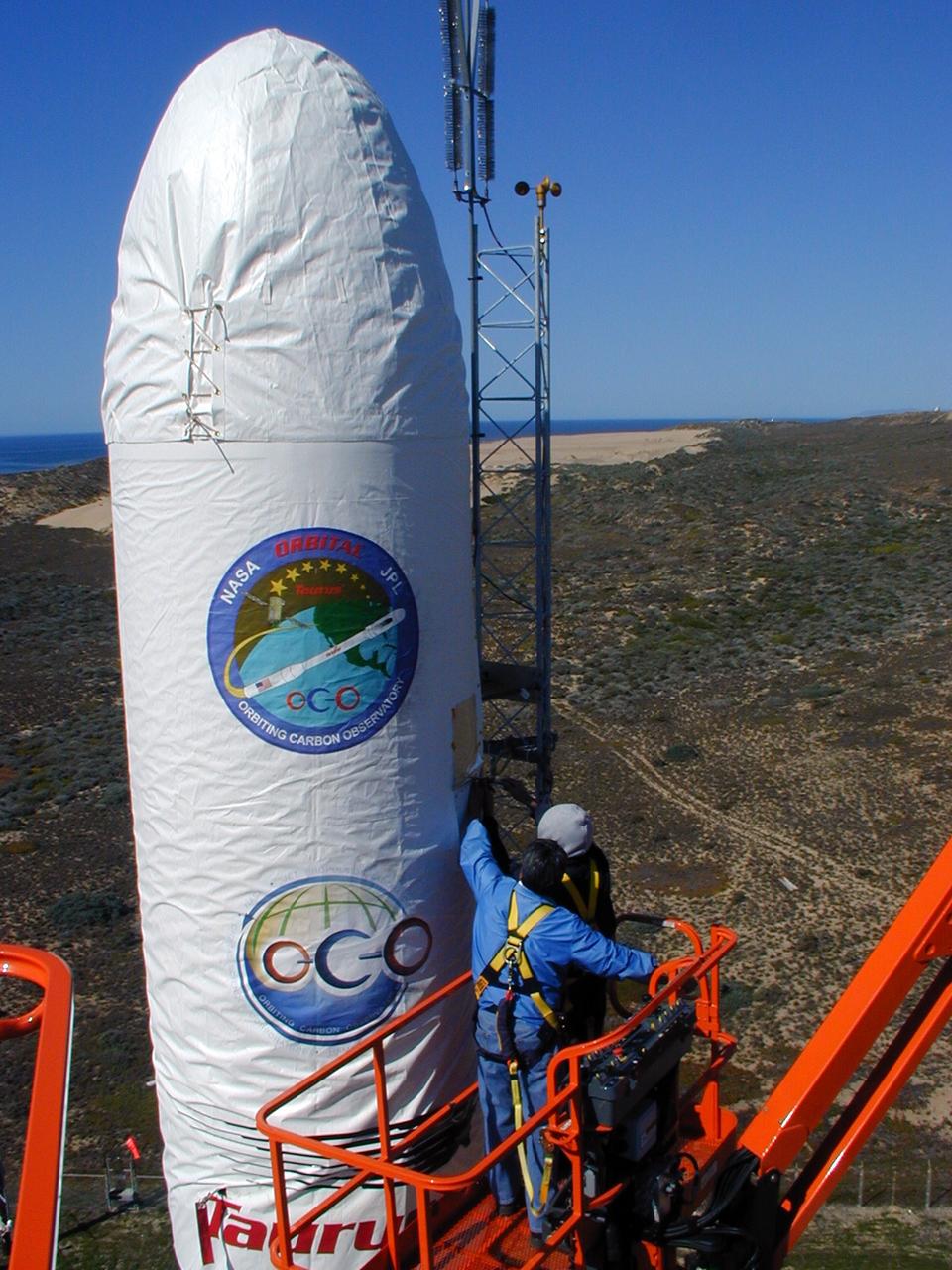
VANDENBERG AIR FORCE BASE, Calif. -- With the fairing door off, Orbital Science's Jose Castillo and Mark Neuse remove the fairing payload access door on NASA's Orbiting Carbon Observatory, or OCO, spacecraft on Launch Complex 576-E at Vandenberg Air Force Base in California. Orbital Science's Glenn Weigle and Brett Gladish stand by to take the GN2 flow reading The encapsulated OCO tops Orbital Sciences' Taurus XL rocket, which is scheduled to launch Feb. 24. The spacecraft will collect precise global measurements of carbon dioxide (CO2) in the Earth's atmosphere. Scientists will analyze OCO data to improve our understanding of the natural processes and human activities that regulate the abundance and distribution of this important greenhouse gas. Photo courtesy of Glenn Weigle, Orbital Sciences
VANDENBERG AIR FORCE BASE, Calif. -- With the fairing door off, Orbital Sciences' Glenn Weigle and Brett Gladish take the GN2 flow reading on NASA's Orbiting Carbon Observatory, or OCO, spacecraft on Launch Complex 576-E at Vandenberg Air Force Base in California. The encapsulated OCO tops Orbital Sciences' Taurus XL rocket, which is scheduled to launch Feb. 24. The spacecraft sits atop Orbital Sciences' Taurus XL rocket. At right is a portion of the umbilical tower attached to the upper stack. The spacecraft sits atop Orbital Sciences' Taurus XL rocket. At right is a portion of the umbilical tower attached to the upper stack. The spacecraft will collect precise global measurements of carbon dioxide (CO2) in the Earth's atmosphere. Scientists will analyze OCO data to improve our understanding of the natural processes and human activities that regulate the abundance and distribution of this important greenhouse gas. Photo courtesy of Jim Stowers, Orbital Sciences

Construction workers assist as a crane lifts the Core Stage Forward Skirt Umbilical into position for installation on the mobile launcher tower at NASA's Kennedy Space Center in Florida. The mobile launcher tower will be equipped with a number of lines, called umbilicals that will connect to the Space Launch System (SLS) rocket and Orion spacecraft for Exploration Mission-1 (EM-1). The CSFSU will be located at about the 180-foot level on the tower, above the liquid oxygen tank. The CSFSU is an umbilical that will swing into position to provide connections to the core stage forward skirt of the SLS rocket, and then swing away before launch. Its main purpose is to provide conditioned air/GN2 to the SLS core stage forward skirt cavity. The Ground Systems Development and Operations Program is overseeing installation of the umbilicals.
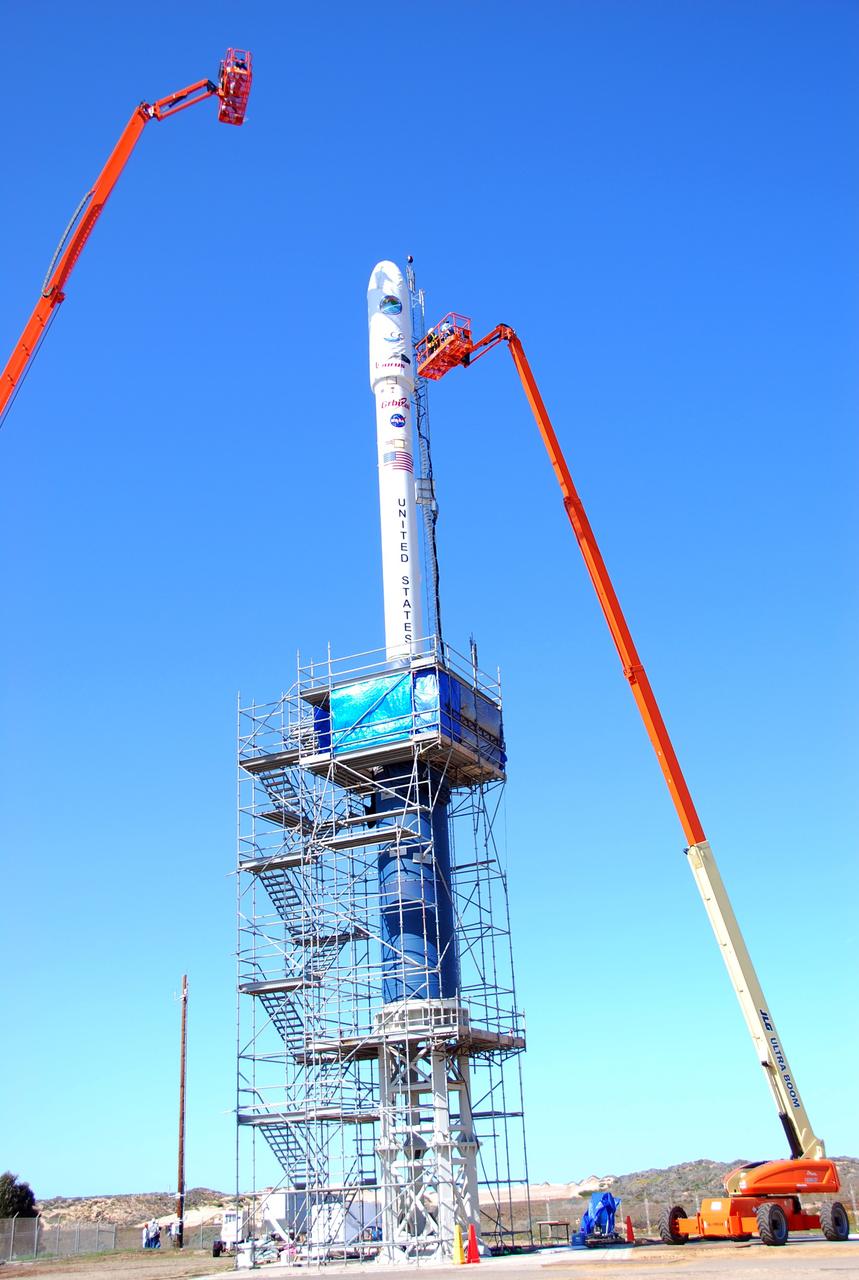
VANDENBERG AIR FORCE BASE, Calif. -- On Launch Complex 576-E at Vandenberg Air Force Base in California, Orbital Sciences Engineer Jose Castillo maneuvers the bucket truck into position over the fairing access door on NASA's Orbiting Carbon Observatory, or OCO. On the top of the OCO fairing is the shadow of Glenn Weigle of Orbital Satellite Systems Group, on the bucket at upper left, who is prepared to move in and inspect the GN2 instrument purge flow. OCO will collect precise global measurements of carbon dioxide (CO2) in the Earth's atmosphere. Scientists will analyze OCO data to improve our understanding of the natural processes and human activities that regulate the abundance and distribution of this important greenhouse gas. Photo credit: NASA/Richard Nielsen, KSC
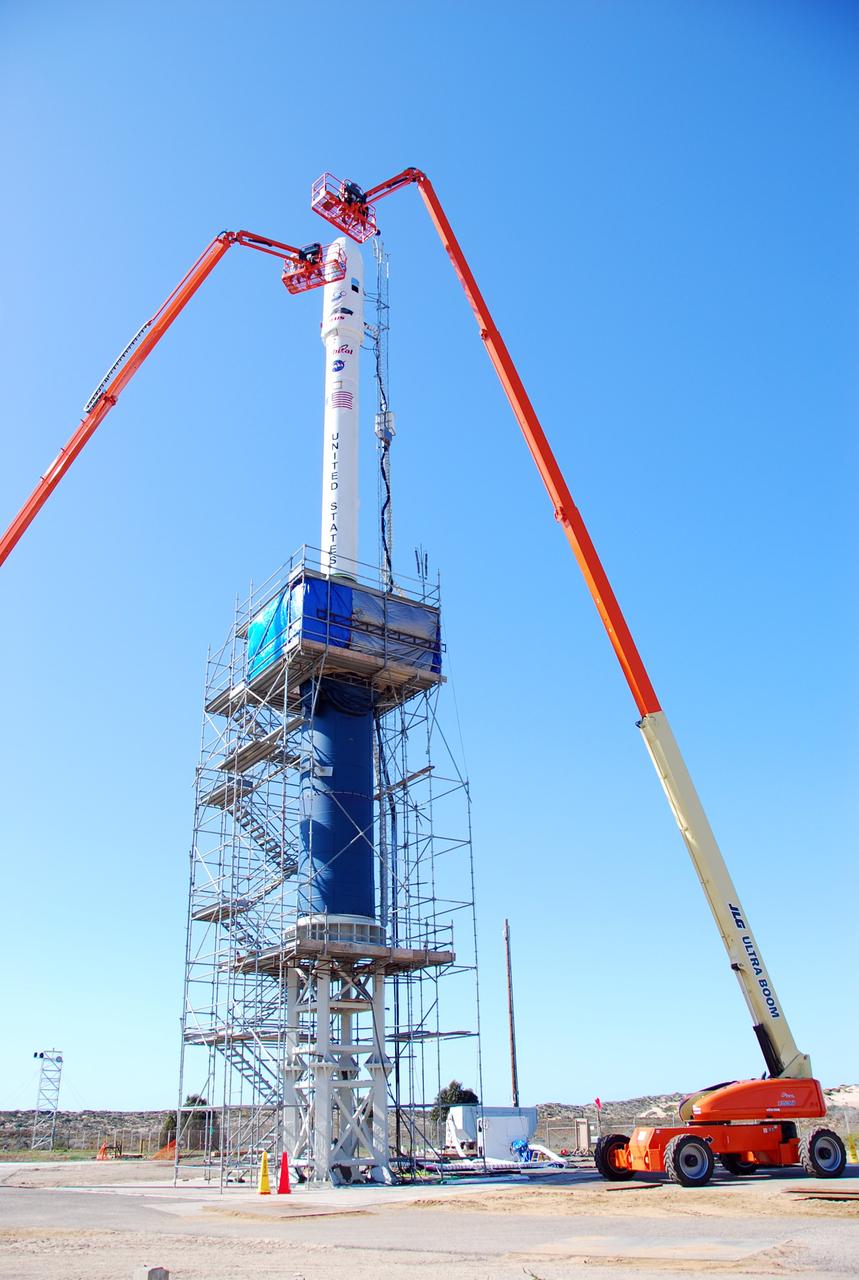
VANDENBERG AIR FORCE BASE, Calif. -- On Launch Complex 576-E at Vandenberg Air Force Base in California, Orbital Sciences Engineer Jose Castillo maneuvers the bucket truck at right into position over the fairing access door on NASA's Orbiting Carbon Observatory, or OCO. Glenn Weigle of Orbital Satellite Systems Group is on the bucket at left. Weigle is prepared to move in and inspect the GN2 instrument purge flow. OCO will collect precise global measurements of carbon dioxide (CO2) in the Earth's atmosphere. Scientists will analyze OCO data to improve our understanding of the natural processes and human activities that regulate the abundance and distribution of this important greenhouse gas. OCO is scheduled to launch Feb. 24 aboard an Orbital Sciences' Taurus XL rocket. Photo credit: NASA/Richard Nielsen, KSC
Construction workers assist as a crane lifts the Core Stage Forward Skirt Umbilical up for installation on the mobile launcher tower at NASA's Kennedy Space Center in Florida. The mobile launcher tower will be equipped with a number of lines, called umbilicals that will connect to the Space Launch System (SLS) rocket and Orion spacecraft for Exploration Mission-1 (EM-1). The CSFSU will be located at about the 180-foot level on the tower, above the liquid oxygen tank. The CSFSU is an umbilical that will swing into position to provide connections to the core stage forward skirt of the SLS rocket, and then swing away before launch. Its main purpose is to provide conditioned air/GN2 to the SLS core stage forward skirt cavity. The Ground Systems Development and Operations Program is overseeing installation of the umbilicals.

VANDENBERG AIR FORCE BASE, Calif. -- With the fairing door off, Orbital Sciences' Glenn Weigle and Brett Gladish maneuver into position to take the GN2 flow reading from NASA's Orbiting Carbon Observatory, or OCO, spacecraft. At left, Jose Castillo and Mark Neuse stand by to replace the fairing door when the OCO operation is complete. The spacecraft sits atop Orbital Sciences' Taurus XL rocket. At right is a portion of the umbilical tower attached to the upper stack. The spacecraft sits atop Orbital Sciences' Taurus XL rocket. At right is a portion of the umbilical tower attached to the upper stack. The spacecraft will collect precise global measurements of carbon dioxide (CO2) in the Earth's atmosphere. Scientists will analyze OCO data to improve our understanding of the natural processes and human activities that regulate the abundance and distribution of this important greenhouse gas. Photo courtesy of Jim Stowers, Orbital Sciences
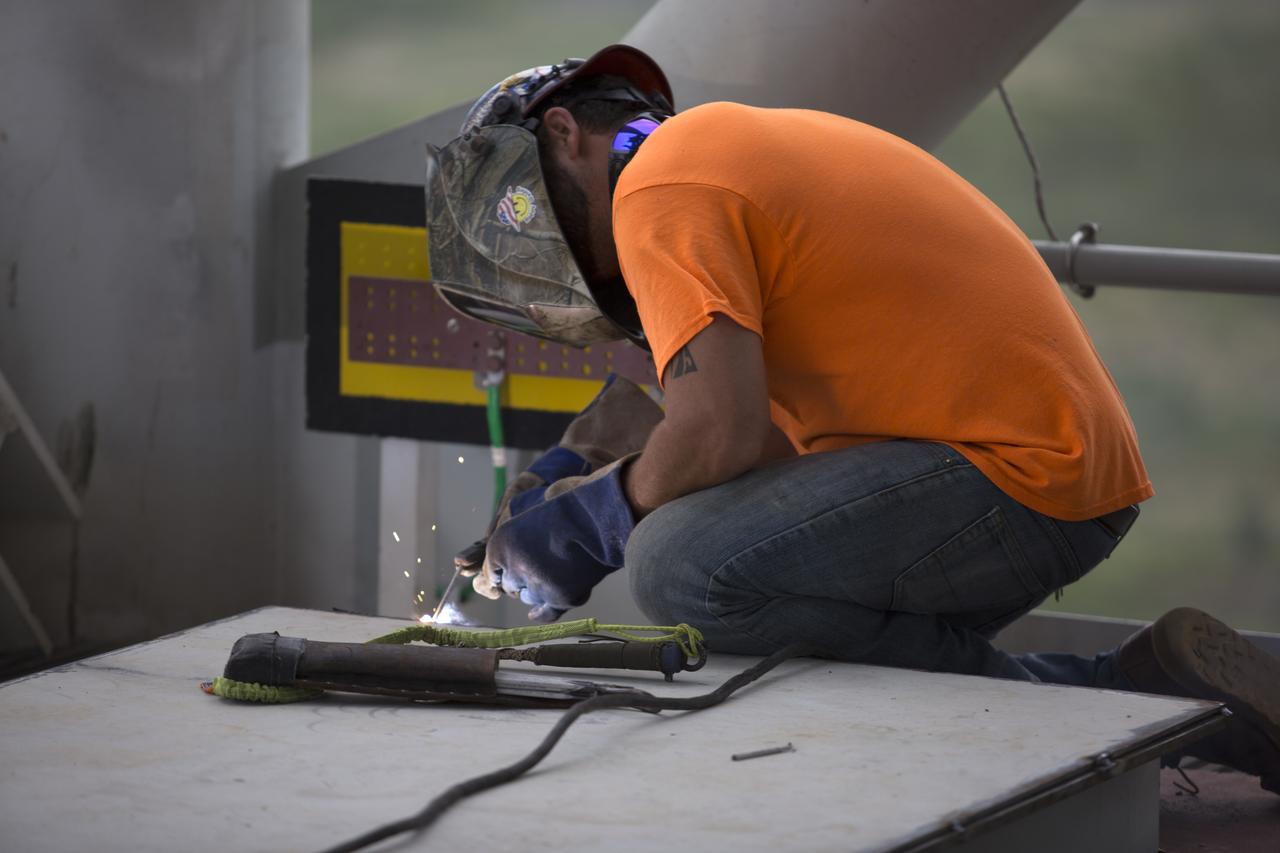
A construction worker welds a metal part during installation of the Core Stage Forward Skirt Umbilical on the mobile launcher tower at NASA's Kennedy Space Center in Florida. The mobile launcher tower will be equipped with a number of lines, called umbilicals that will connect to the Space Launch System (SLS) rocket and Orion spacecraft for Exploration Mission-1 (EM-1). The CSFSU will be located at about the 180-foot level on the tower, above the liquid oxygen tank. The CSFSU is an umbilical that will swing into position to provide connections to the core stage forward skirt of the SLS rocket, and then swing away before launch. Its main purpose is to provide conditioned air/GN2 to the SLS core stage forward skirt cavity. The Ground Systems Development and Operations Program is overseeing installation of the umbilicals.
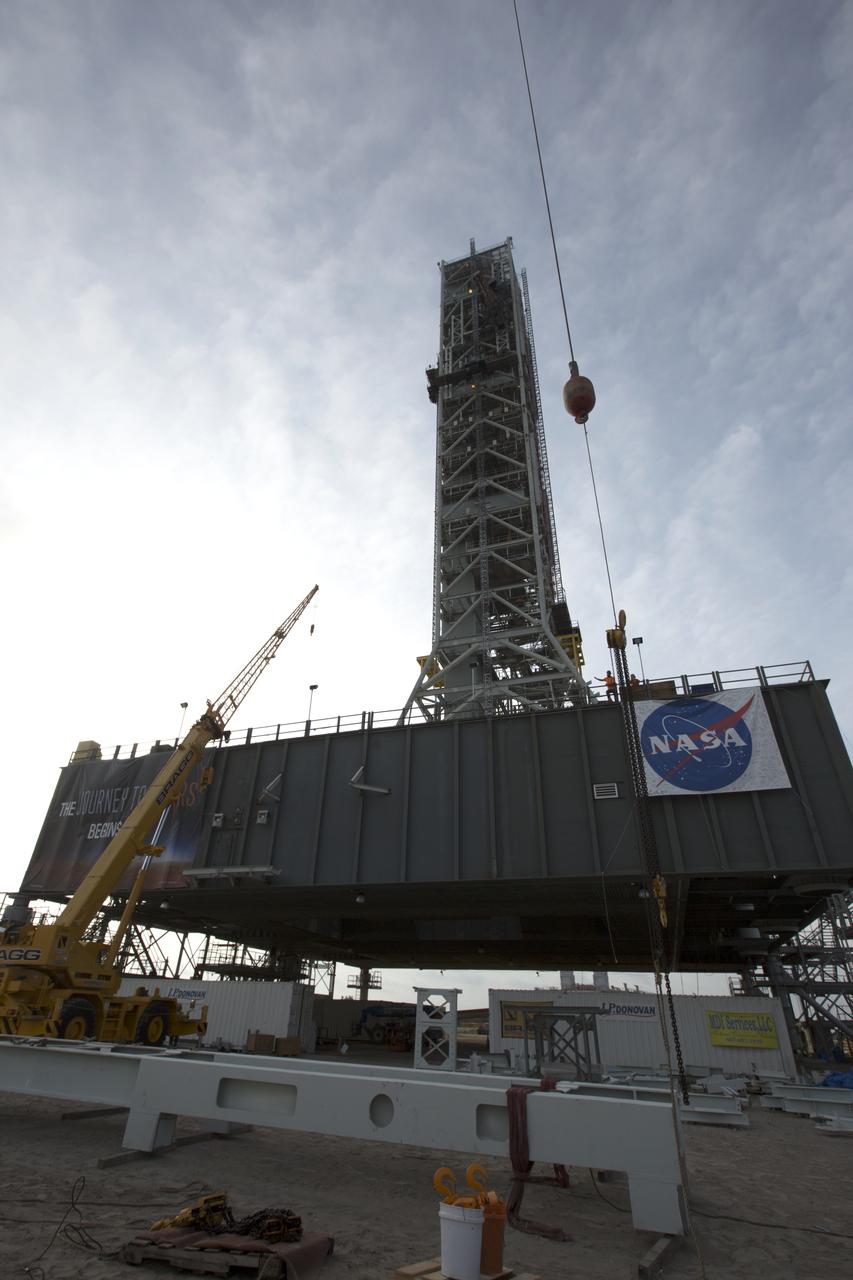
A crane has been attached to the Core Stage Forward Skirt Umbilical (CSFSU) to lift it up for installation on the mobile launcher tower at NASA's Kennedy Space Center in Florida. The mobile launcher tower will be equipped with a number of lines, called umbilicals that will connect to the Space Launch System (SLS) rocket and Orion spacecraft for Exploration Mission-1 (EM-1). The CSFSU will be located at about the 180-foot level on the tower, above the liquid oxygen tank. The CSFSU is an umbilical that will swing into position to provide connections to the core stage forward skirt of the SLS rocket, and then swing away before launch. Its main purpose is to provide conditioned air/GN2 to the SLS core stage forward skirt cavity. The Ground Systems Development and Operations Program is overseeing installation of the umbilicals.
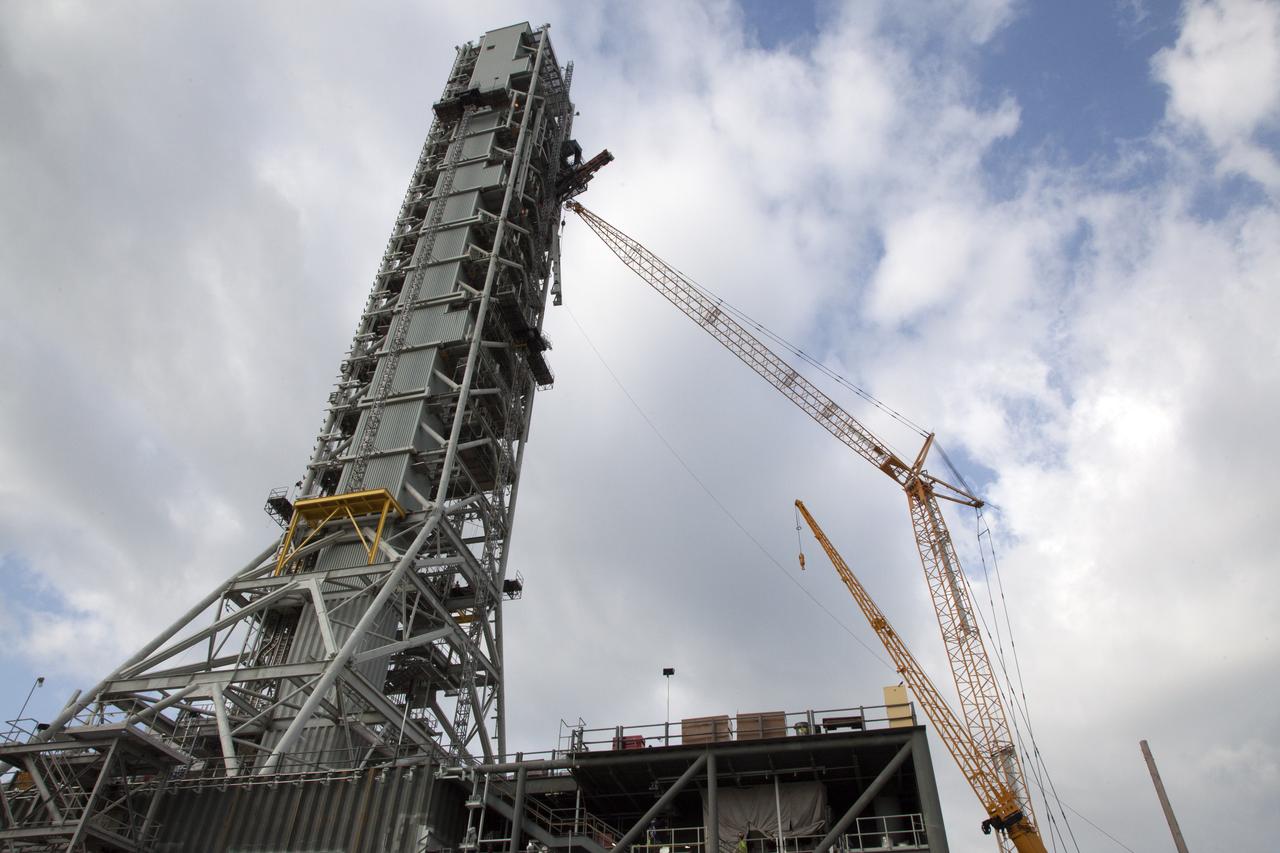
Cranes and rigging are being used to lift up the Core Stage Forward Skirt Umbilical (CSFSU) for installation on the mobile launcher tower at NASA's Kennedy Space Center in Florida. The mobile launcher tower will be equipped with a number of lines, called umbilicals that will connect to the Space Launch System (SLS) rocket and Orion spacecraft for Exploration Mission-1 (EM-1). The CSFSU will be located at about the 180-foot level on the tower, above the liquid oxygen tank. The CSFSU is an umbilical that will swing into position to provide connections to the core stage forward skirt of the SLS rocket, and then swing away before launch. Its main purpose is to provide conditioned air/GN2 to the SLS core stage forward skirt cavity. The Ground Systems Development and Operations Program is overseeing installation of the umbilicals.
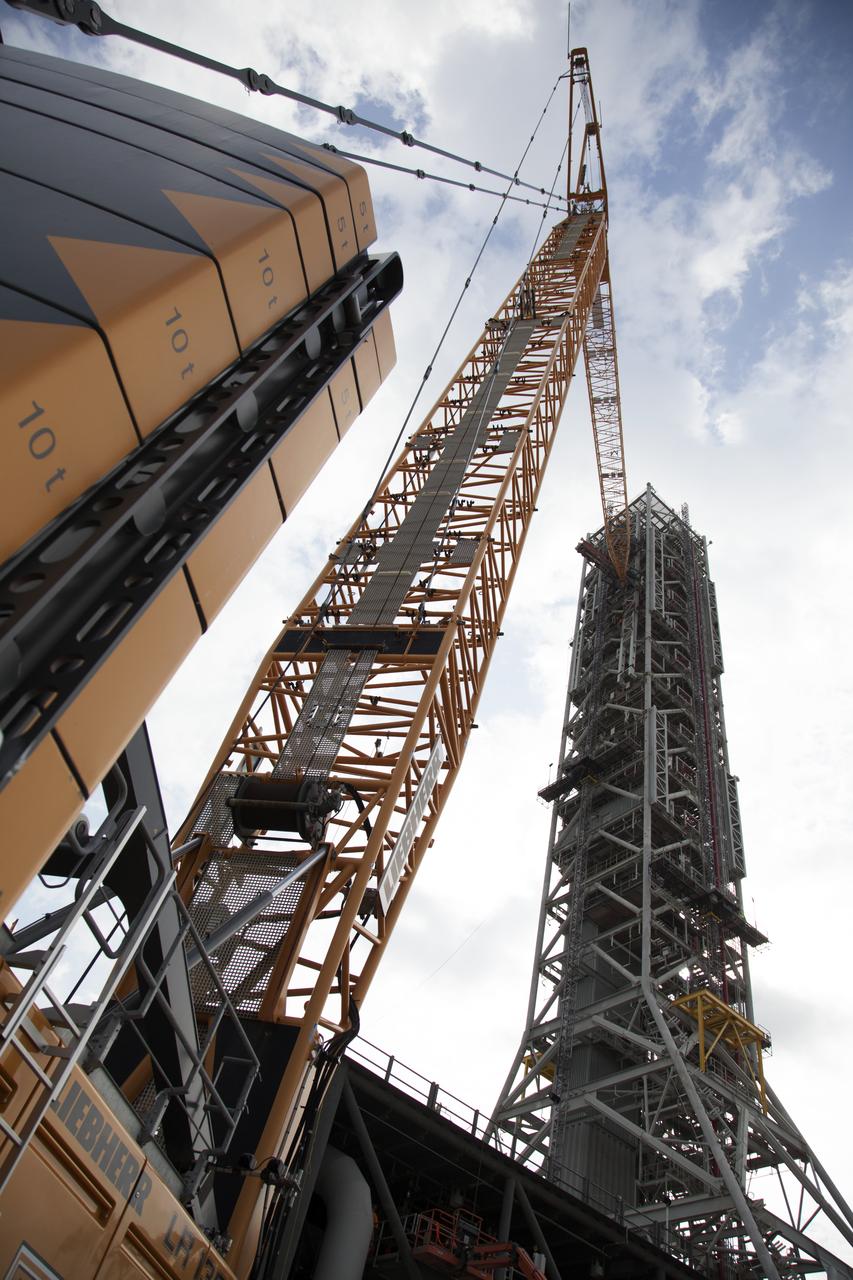
Cranes and rigging are being used to lift the Core Stage Forward Skirt Umbilical (CSFSU) into position for installation on the mobile launcher tower at NASA's Kennedy Space Center in Florida. The mobile launcher tower will be equipped with a number of lines, called umbilicals that will connect to the Space Launch System (SLS) rocket and Orion spacecraft for Exploration Mission-1 (EM-1). The CSFSU will be located at about the 180-foot level on the tower, above the liquid oxygen tank. The CSFSU is an umbilical that will swing into position to provide connections to the core stage forward skirt of the SLS rocket, and then swing away before launch. Its main purpose is to provide conditioned air/GN2 to the SLS core stage forward skirt cavity. The Ground Systems Development and Operations Program is overseeing installation of the umbilicals.
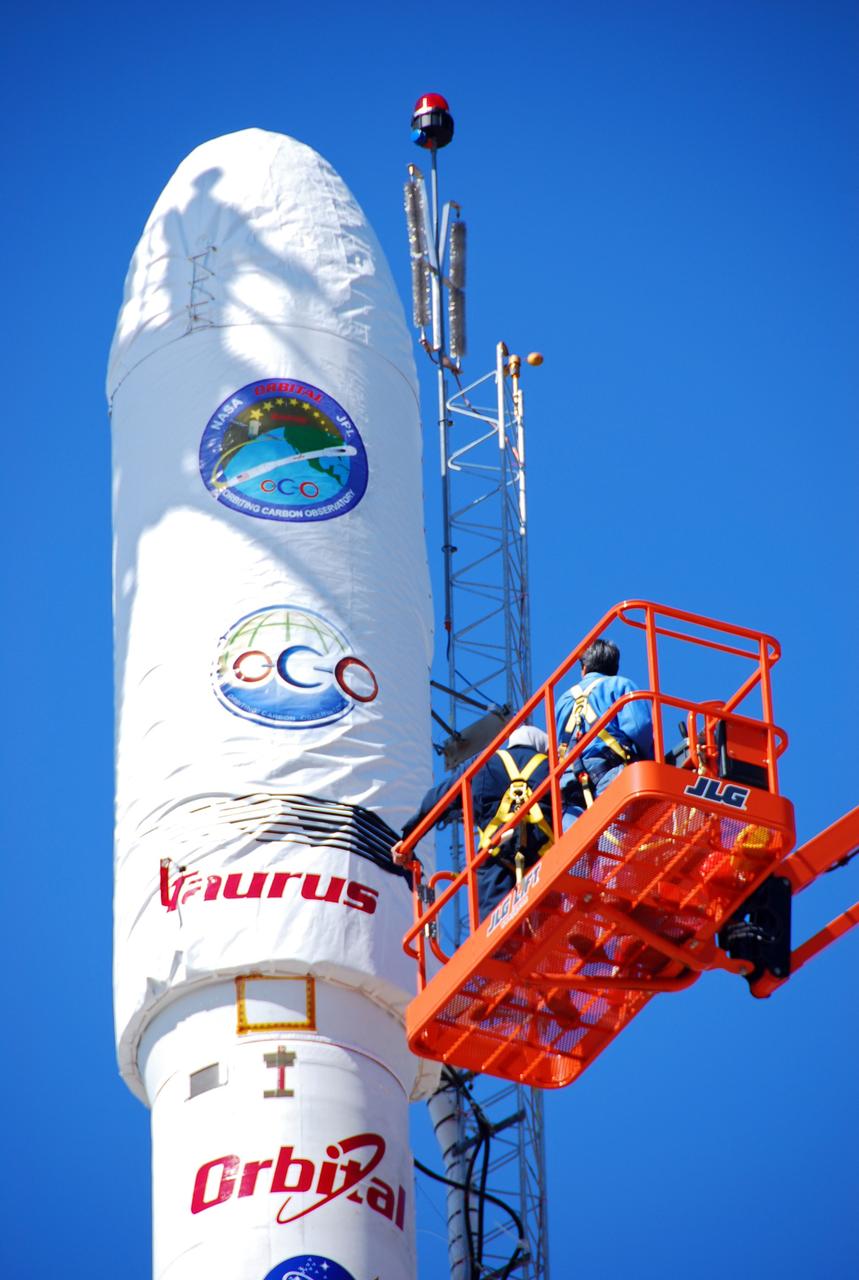
VANDENBERG AIR FORCE BASE, Calif. -- On Launch Complex 576-E at Vandenberg Air Force Base in California, Orbital Sciences Engineer Jose Castillo maneuvers the bucket truck into position over the fairing access door on NASA's Orbiting Carbon Observatory, or OCO. On the top of the OCO fairing is the shadow of Glenn Weigle of Orbital Satellite Systems Group, on a bucket out of camera range at left, who is waiting to move in and inspect the GN2 instrument purge flow. OCO will collect precise global measurements of carbon dioxide (CO2) in the Earth's atmosphere. Scientists will analyze OCO data to improve our understanding of the natural processes and human activities that regulate the abundance and distribution of this important greenhouse gas. Photo credit: NASA/Richard Nielsen, KSC
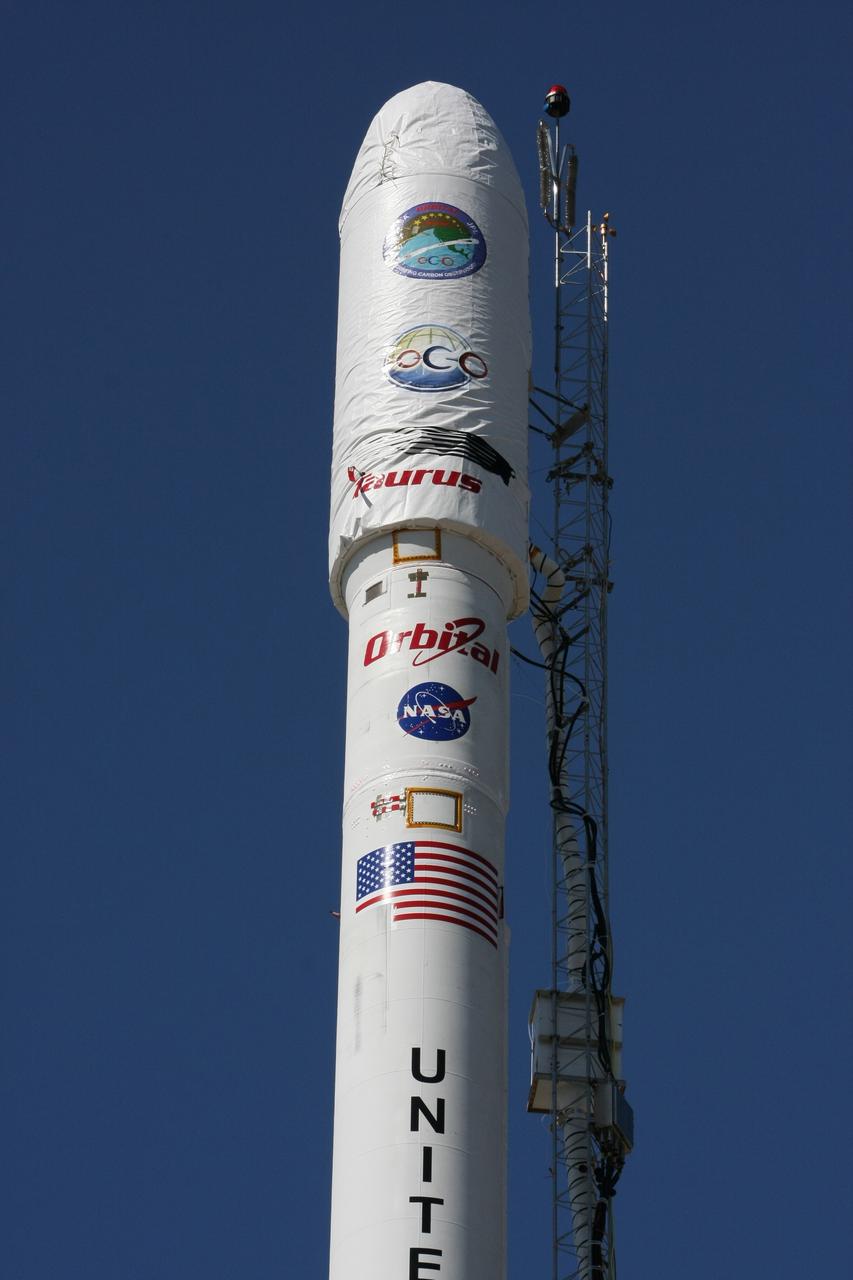
VANDENBERG AIR FORCE BASE, Calif. -- On Launch Complex 576-E at Vandenberg Air Force Base in California, NASA's Orbiting Carbon Observatory, or OCO, spacecraft awaits a GN2 instrument purge flow test in preparation for launch Feb. 24. The spacecraft sits atop Orbital Sciences' Taurus XL rocket. At right is a portion of the umbilical tower attached to the upper stack. The spacecraft sits atop Orbital Sciences' Taurus XL rocket. At right is a portion of the umbilical tower attached to the upper stack. The spacecraft will collect precise global measurements of carbon dioxide (CO2) in the Earth's atmosphere. Scientists will analyze OCO data to improve our understanding of the natural processes and human activities that regulate the abundance and distribution of this important greenhouse gas. Photo courtesy of Jim Stowers, Orbital Sciences
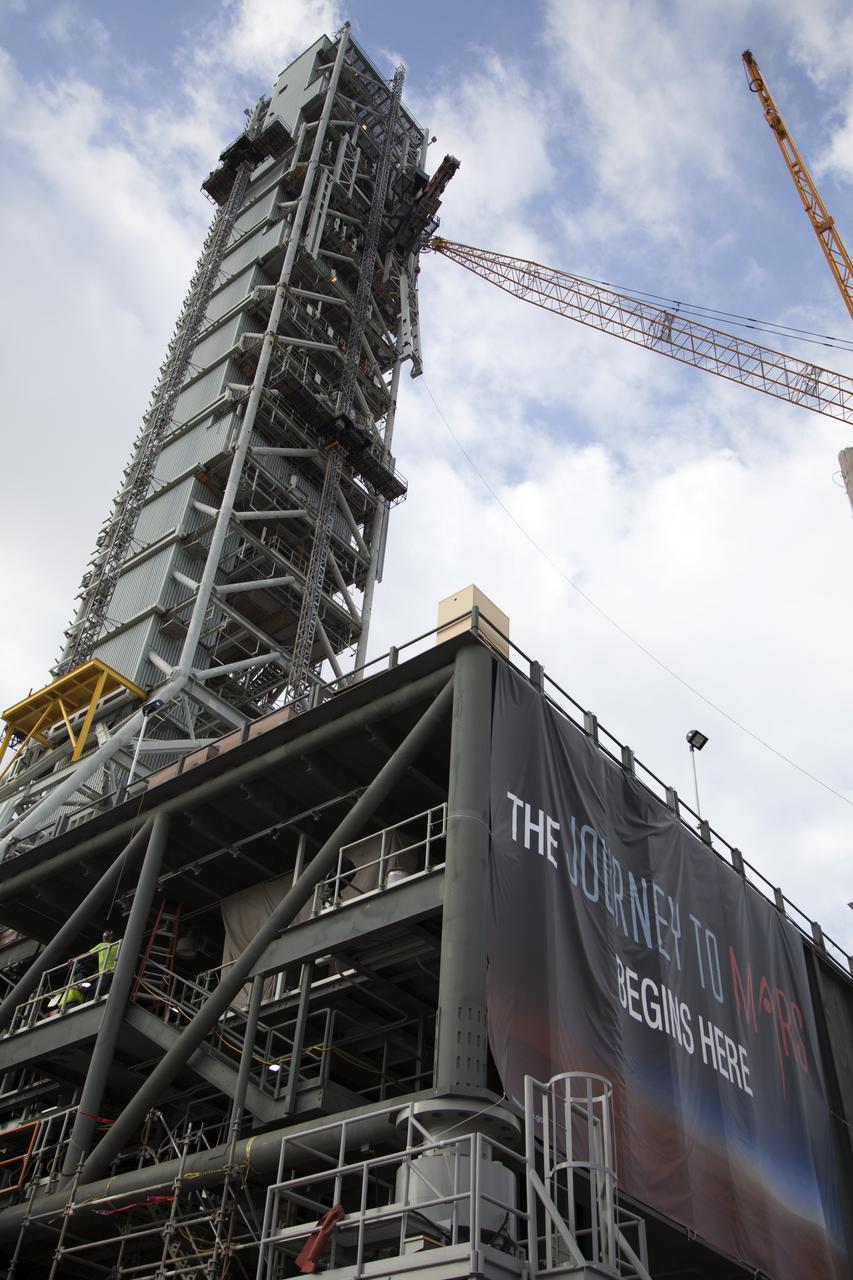
Cranes and rigging are being used to lift up the Core Stage Forward Skirt Umbilical (CSFSU) for installation on the mobile launcher tower at NASA's Kennedy Space Center in Florida. The mobile launcher tower will be equipped with a number of lines, called umbilicals that will connect to the Space Launch System (SLS) rocket and Orion spacecraft for Exploration Mission-1 (EM-1). The CSFSU will be located at about the 180-foot level on the tower, above the liquid oxygen tank. The CSFSU is an umbilical that will swing into position to provide connections to the core stage forward skirt of the SLS rocket, and then swing away before launch. Its main purpose is to provide conditioned air/GN2 to the SLS core stage forward skirt cavity. The Ground Systems Development and Operations Program is overseeing installation of the umbilicals.

Construction workers assist as a crane lifts the Core Stage Forward Skirt Umbilical up for installation on the mobile launcher tower at NASA's Kennedy Space Center in Florida. The mobile launcher tower will be equipped with a number of lines, called umbilicals that will connect to the Space Launch System (SLS) rocket and Orion spacecraft for Exploration Mission-1 (EM-1). The CSFSU will be located at about the 180-foot level on the tower, above the liquid oxygen tank. The CSFSU is an umbilical that will swing into position to provide connections to the core stage forward skirt of the SLS rocket, and then swing away before launch. Its main purpose is to provide conditioned air/GN2 to the SLS core stage forward skirt cavity. The Ground Systems Development and Operations Program is overseeing installation of the umbilicals.
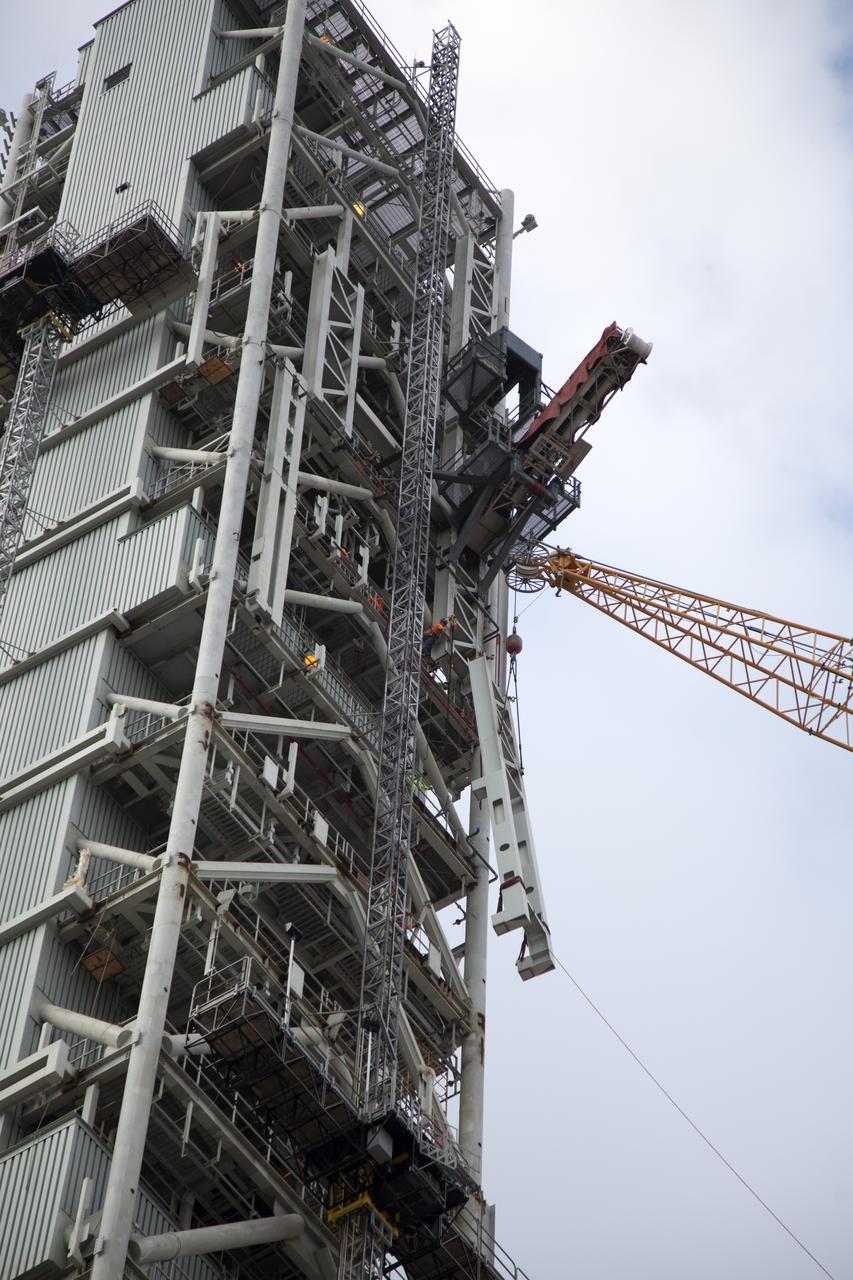
Seeming to hang in midair, the Core Stage Forward Skirt Umbilical (CSFSU) is lifted high up by crane for installation on the mobile launcher tower at NASA's Kennedy Space Center in Florida. The mobile launcher tower will be equipped with a number of lines, called umbilicals that will connect to the Space Launch System rocket and Orion spacecraft for Exploration Mission-1 (EM-1). The CSFSU will be located at about the 180-foot level on the tower, above the liquid oxygen tank. The CSFSU is an umbilical that will swing into position to provide connections to the core stage forward skirt of the SLS rocket, and then swing away before launch. Its main purpose is to provide conditioned air/GN2 to the SLS core stage forward skirt cavity. The Ground Systems Development and Operations Program is overseeing installation of the umbilicals.
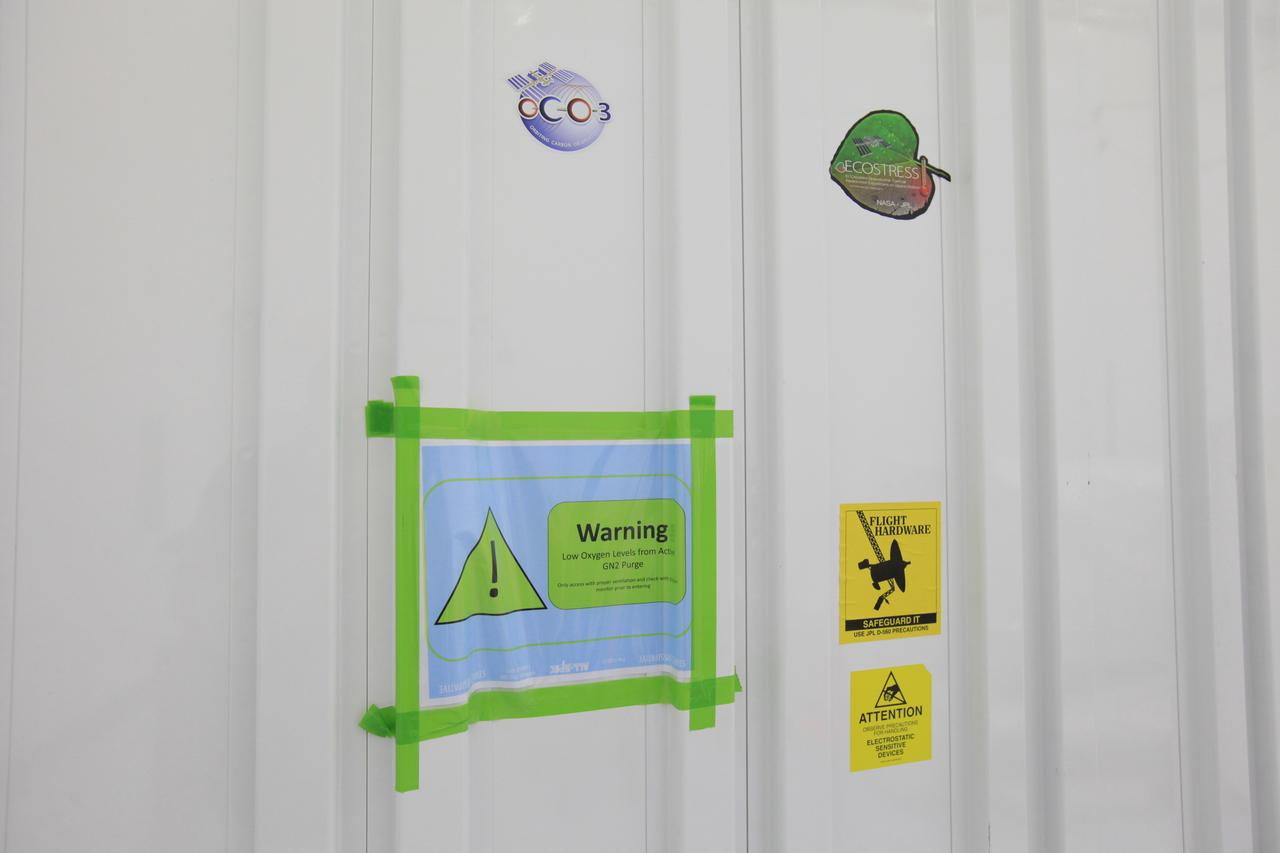
A transportation container carrying NASA’s Orbiting Carbon Observatory 3, or OCO-3, payload sits at the Space Station Processing Facility high bay at the agency’s Kennedy Space Center in Florida bearing a warning sign of low oxygen levels from an active GN2 (gaseous nitrogen that creates a dry atmosphere) purge prior to its move to the SpaceX facility on March 18, 2019. The OCO-3 payload will be stowed in the trunk of SpaceX’s Dragon spacecraft and will launch aboard a Falcon 9 rocket on the company’s 17th Commercial Resupply Services mission to the International Space Station. Launch is scheduled for April 25, 2019, from Launch Complex 40 at Cape Canaveral Air Force Station. Once the payload reaches the station, it will be removed from Dragon and robotically installed on the exterior of the orbiting laboratory’s Japanese Experiment Module Exposed Facility Unit, where it will measure and map carbon dioxide from space to provide further understanding of the relationship between carbon and climate.