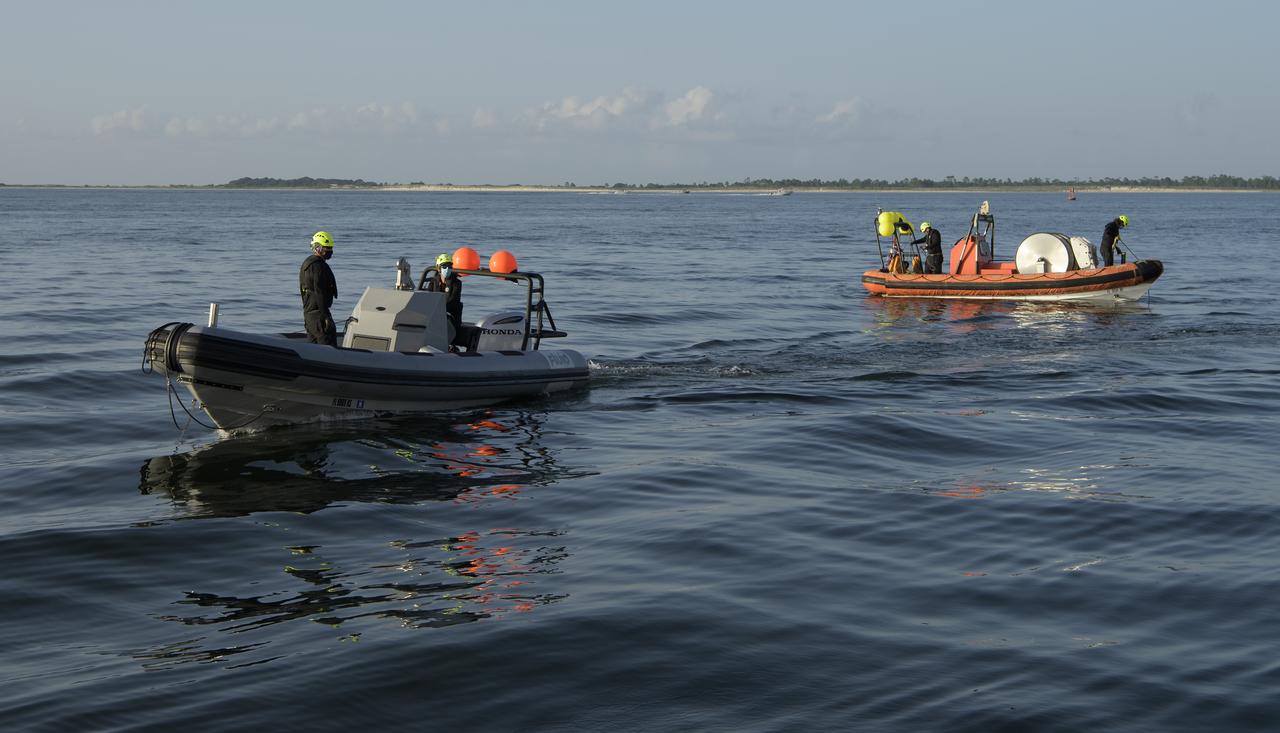
SpaceX support teams are deployed on fast boats from the SpaceX GO Navigator recovery ship ahead of the landing of the SpaceX Crew Dragon Endeavour spacecraft with NASA astronauts Robert Behnken and Douglas Hurley onboard, Sunday, Aug. 2, 2020 in the Gulf of Mexico off the cost of Pensacola, Florida. The Demo-2 test flight for NASA's Commercial Crew Program is the first to deliver astronauts to the International Space Station and return them to Earth onboard a commercially built and operated spacecraft. Behnken and Hurley are returning after spending 64 days in space. Photo Credit: (NASA/Bill Ingalls)
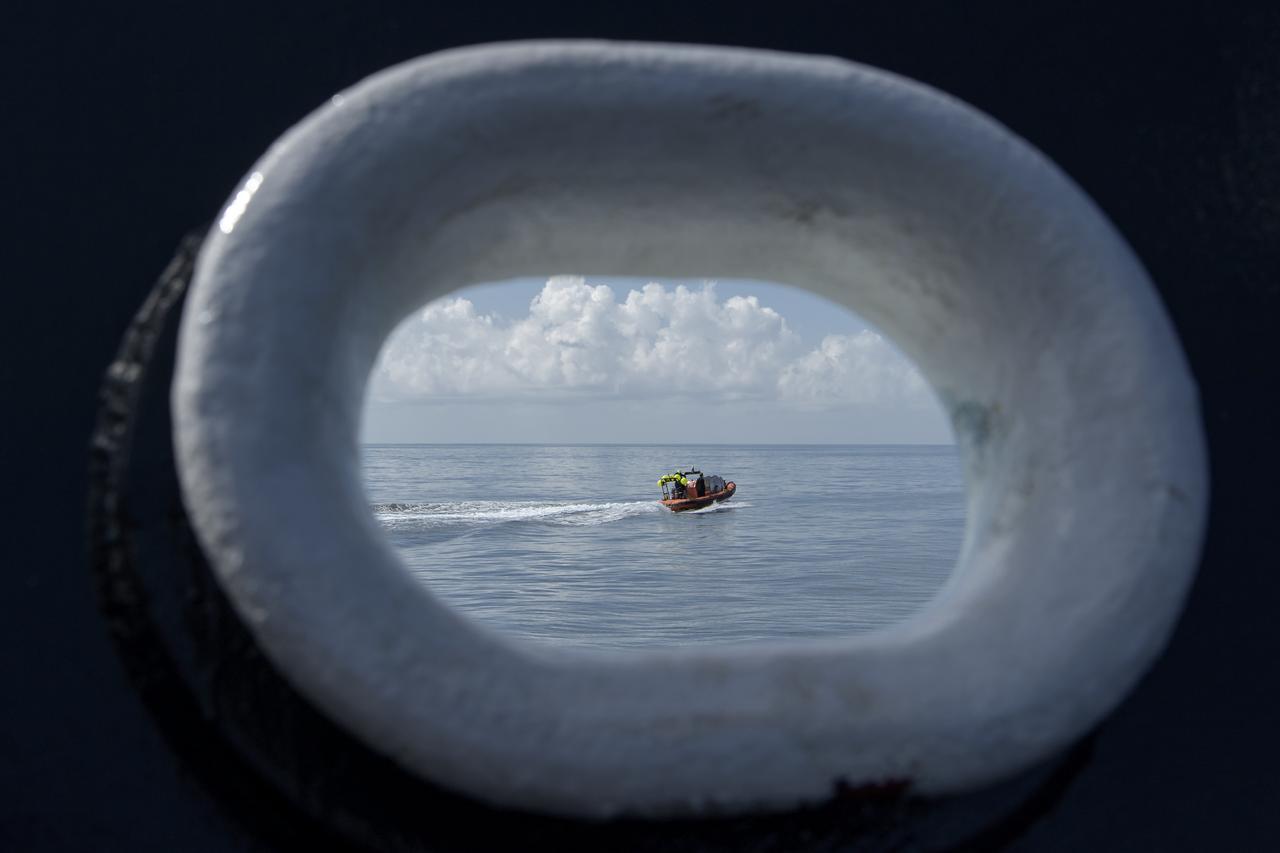
SpaceX support teams are deployed on fast boats from the SpaceX GO Navigator recovery ship ahead of the landing of the SpaceX Crew Dragon Endeavour spacecraft with NASA astronauts Robert Behnken and Douglas Hurley onboard, Sunday, Aug. 2, 2020 in the Gulf of Mexico off the cost of Pensacola, Florida. The Demo-2 test flight for NASA's Commercial Crew Program is the first to deliver astronauts to the International Space Station and return them to Earth onboard a commercially built and operated spacecraft. Behnken and Hurley are returning after spending 64 days in space. Photo Credit: (NASA/Bill Ingalls)
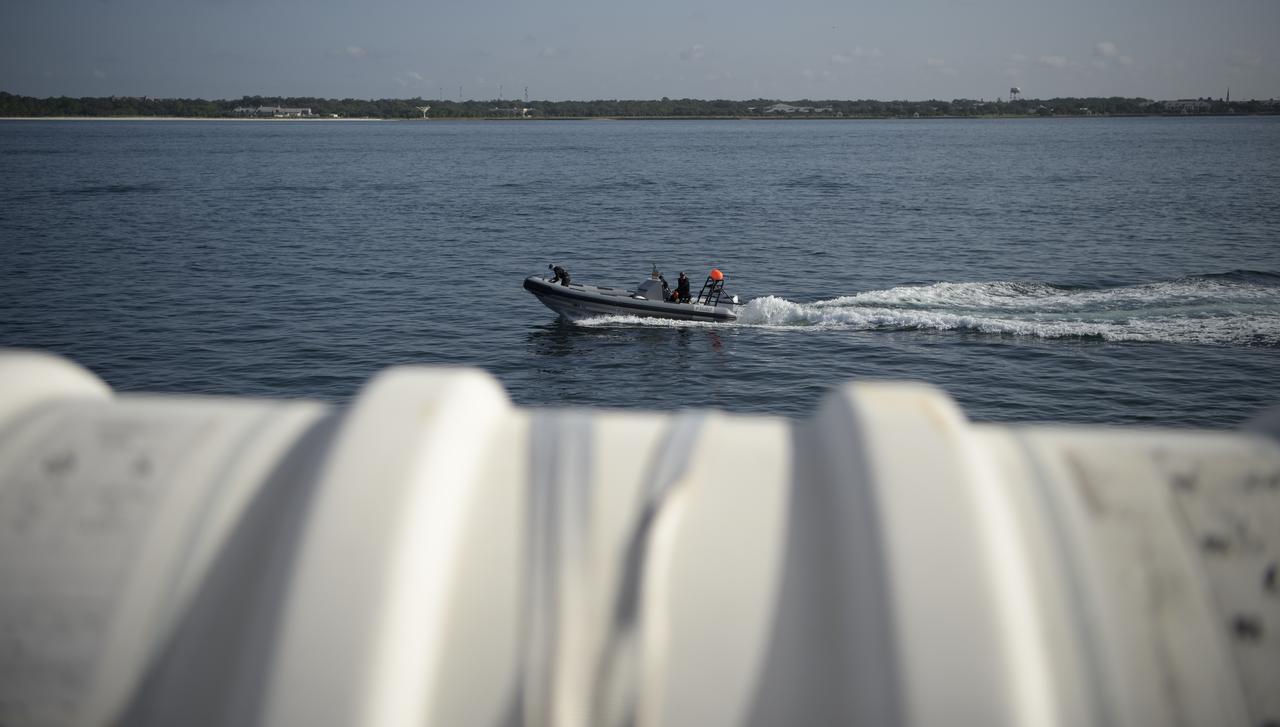
SpaceX support teams are deployed on fast boats from the SpaceX GO Navigator recovery ship ahead of the landing of the SpaceX Crew Dragon Endeavour spacecraft with NASA astronauts Robert Behnken and Douglas Hurley onboard, Sunday, Aug. 2, 2020 in the Gulf of Mexico off the cost of Pensacola, Florida. The Demo-2 test flight for NASA's Commercial Crew Program is the first to deliver astronauts to the International Space Station and return them to Earth onboard a commercially built and operated spacecraft. Behnken and Hurley are returning after spending 64 days in space. Photo Credit: (NASA/Bill Ingalls)
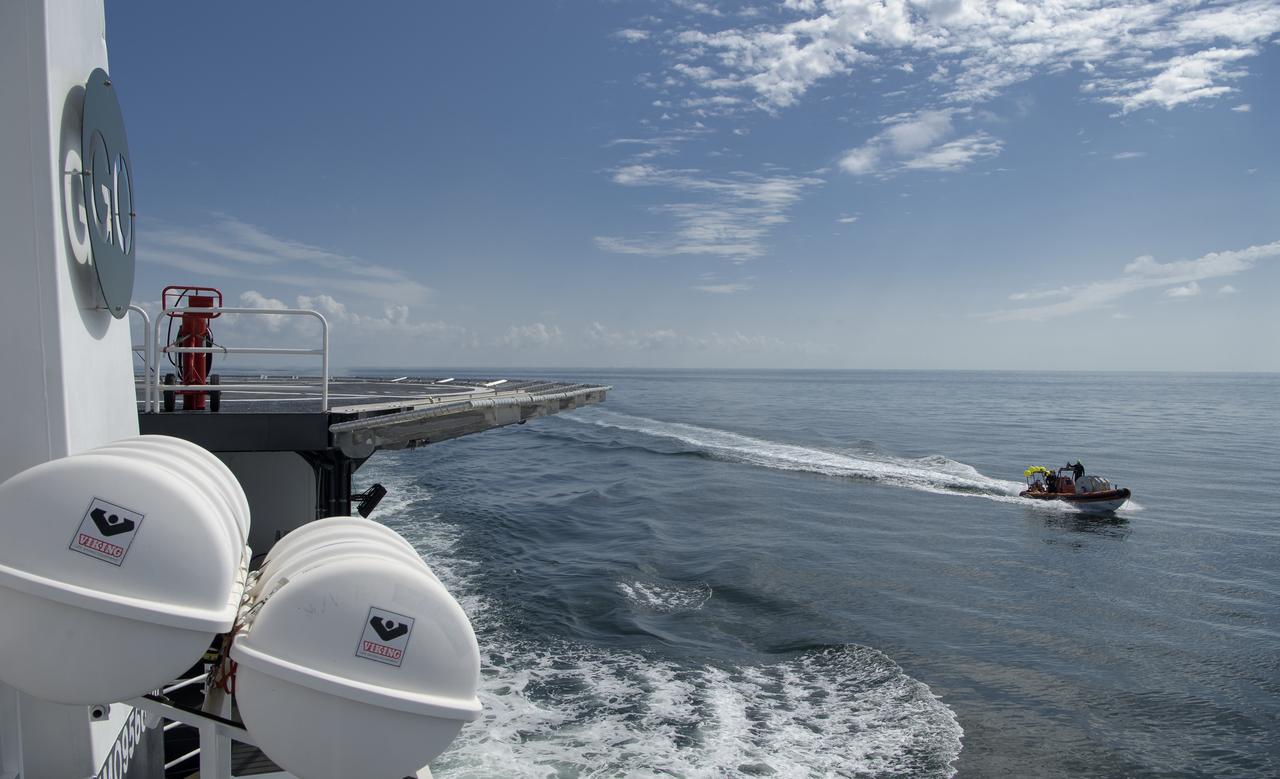
SpaceX support teams are deployed on fast boats from the SpaceX GO Navigator recovery ship ahead of the landing of the SpaceX Crew Dragon Endeavour spacecraft with NASA astronauts Robert Behnken and Douglas Hurley onboard, Sunday, Aug. 2, 2020 in the Gulf of Mexico off the cost of Pensacola, Florida. The Demo-2 test flight for NASA's Commercial Crew Program is the first to deliver astronauts to the International Space Station and return them to Earth onboard a commercially built and operated spacecraft. Behnken and Hurley are returning after spending 64 days in space. Photo Credit: (NASA/Bill Ingalls)
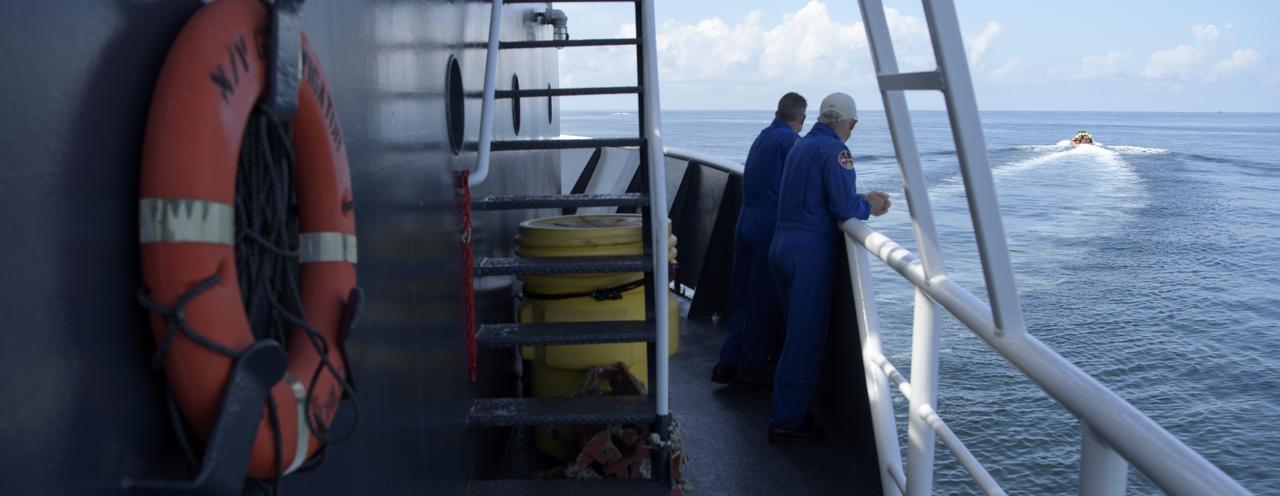
NASA and SpaceX support teams onboard the SpaceX GO Navigator recovery ship prepare for the landing of the SpaceX Crew Dragon Endeavour spacecraft with NASA astronauts Robert Behnken and Douglas Hurley onboard, Sunday, Aug. 2, 2020 in the Gulf of Mexico off the cost of Pensacola, Florida. The Demo-2 test flight for NASA's Commercial Crew Program is the first to deliver astronauts to the International Space Station and return them to Earth onboard a commercially built and operated spacecraft. Behnken and Hurley are returning after spending 64 days in space. Photo Credit: (NASA/Bill Ingalls)
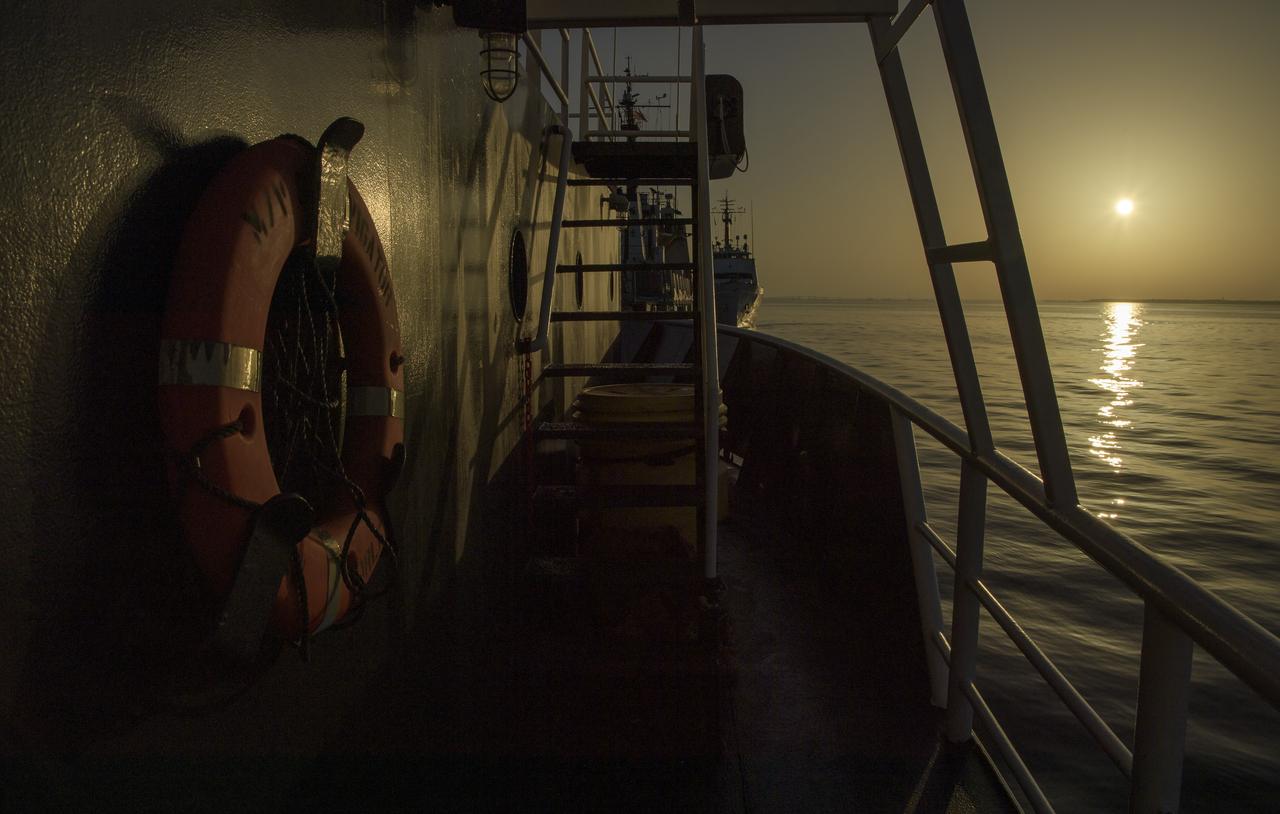
Sunrise as seen from the SpaceX GO Navigator recovery ship as NASA and SpaceX support teams prepare for the landing of the SpaceX Crew Dragon Endeavour spacecraft with NASA astronauts Robert Behnken and Douglas Hurley onboard, Sunday, Aug. 2, 2020 in the Gulf of Mexico off the cost of Pensacola, Florida. The Demo-2 test flight for NASA's Commercial Crew Program is the first to deliver astronauts to the International Space Station and return them to Earth onboard a commercially built and operated spacecraft. Behnken and Hurley are returning after spending 64 days in space. Photo Credit: (NASA/Bill Ingalls)
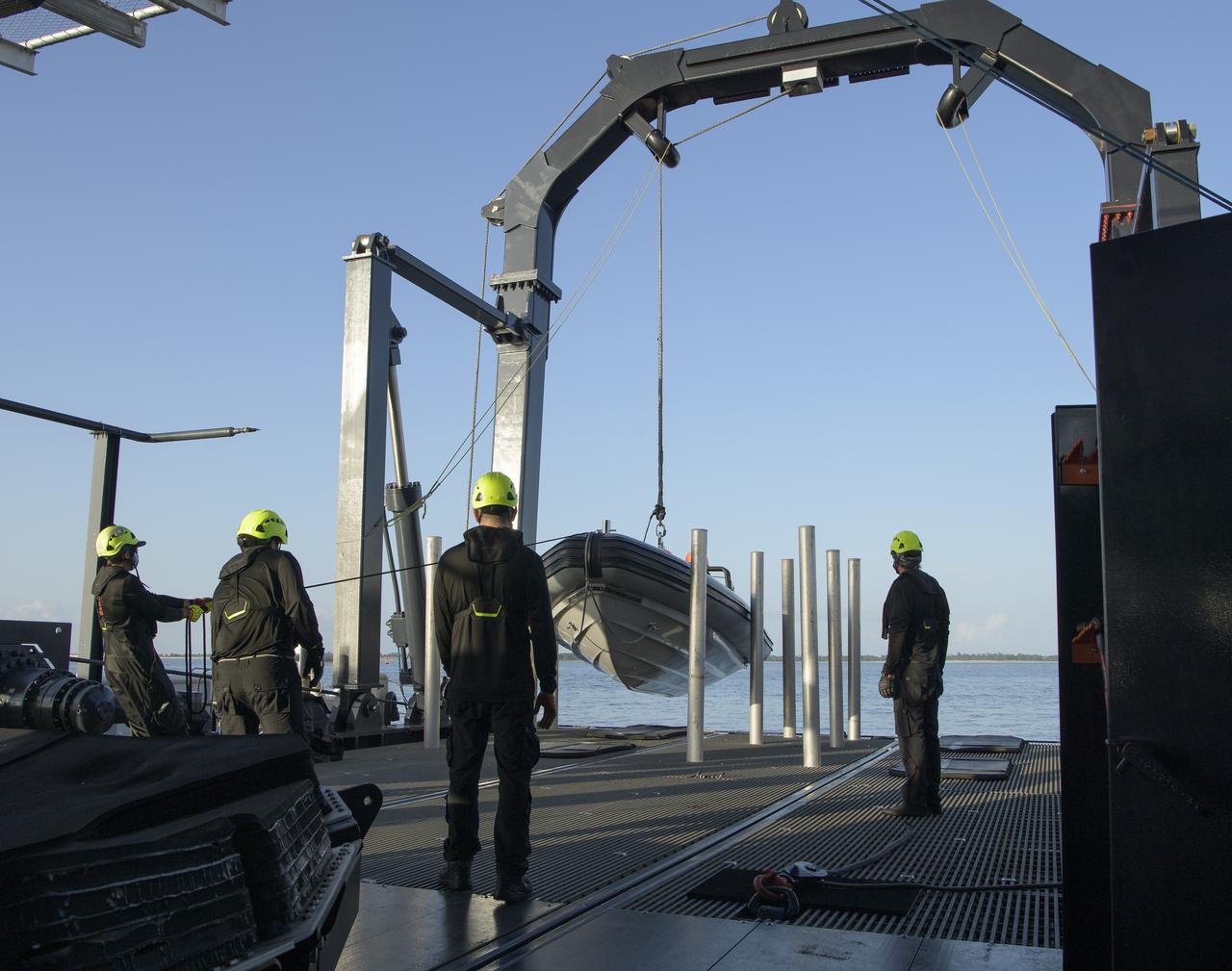
SpaceX support teams onboard the SpaceX GO Navigator recovery ship deploy one of the fast boats ahead of the landing of the SpaceX Crew Dragon Endeavour spacecraft with NASA astronauts Robert Behnken and Douglas Hurley onboard, Sunday, Aug. 2, 2020 in the Gulf of Mexico off the cost of Pensacola, Florida. The Demo-2 test flight for NASA's Commercial Crew Program is the first to deliver astronauts to the International Space Station and return them to Earth onboard a commercially built and operated spacecraft. Behnken and Hurley are returning after spending 64 days in space. Photo Credit: (NASA/Bill Ingalls)
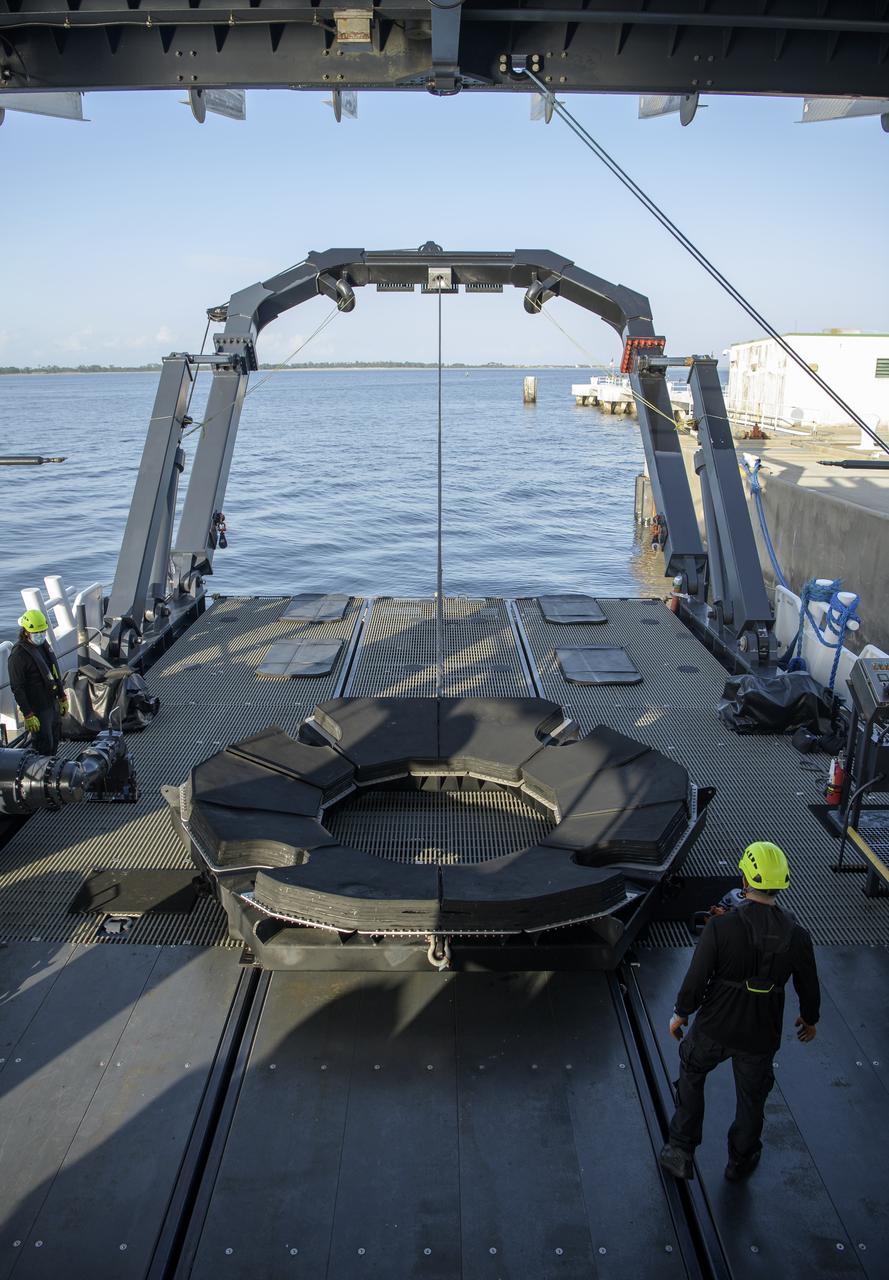
NASA and SpaceX support teams onboard the SpaceX GO Navigator recovery ship prepare for the landing of the SpaceX Crew Dragon Endeavour spacecraft with NASA astronauts Robert Behnken and Douglas Hurley onboard, Sunday, Aug. 2, 2020 in the Gulf of Mexico off the cost of Pensacola, Florida. The Demo-2 test flight for NASA's Commercial Crew Program is the first to deliver astronauts to the International Space Station and return them to Earth onboard a commercially built and operated spacecraft. Behnken and Hurley are returning after spending 64 days in space. Photo Credit: (NASA/Bill Ingalls)
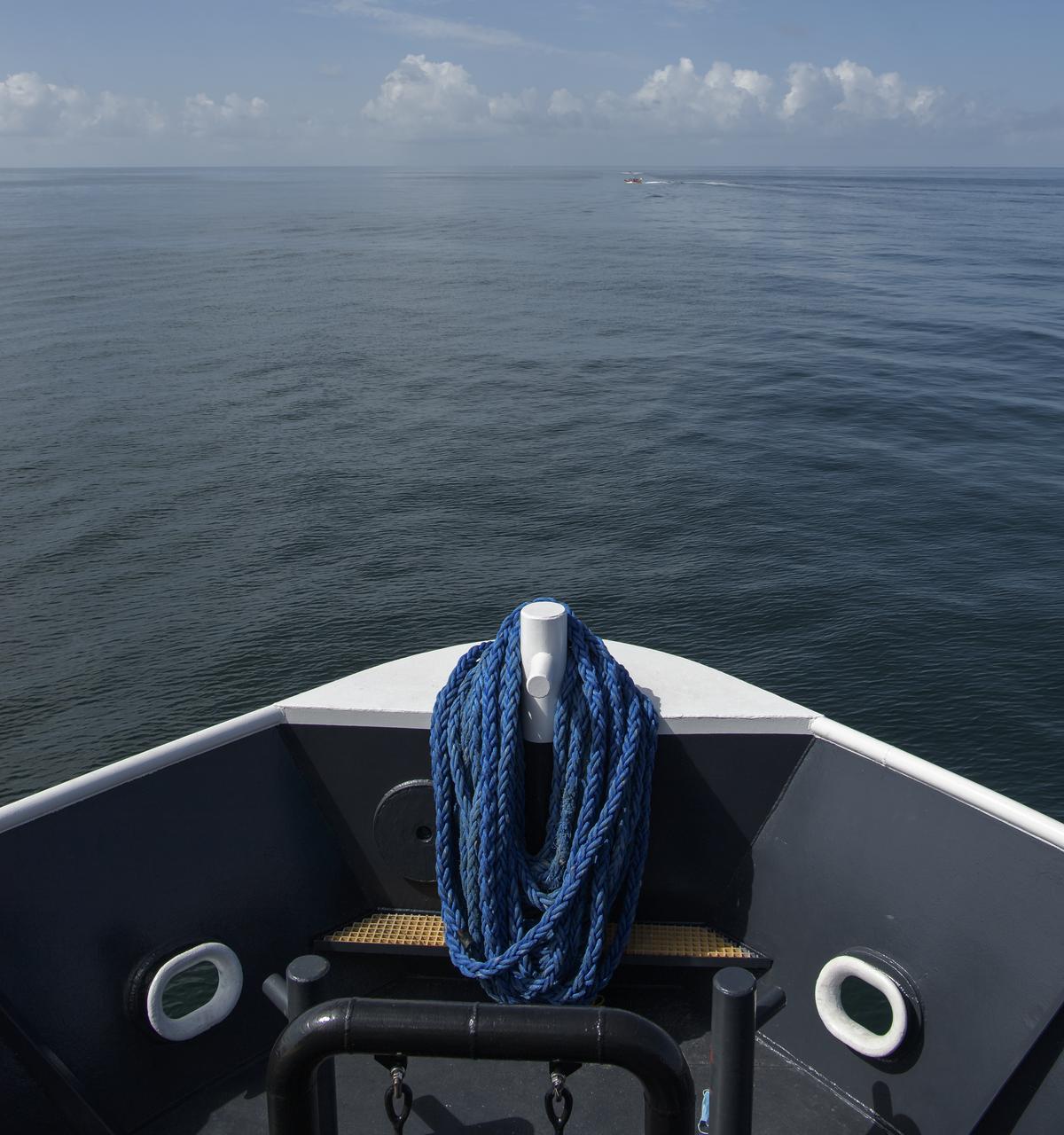
NASA and SpaceX support teams onboard the SpaceX GO Navigator recovery ship prepare for the landing of the SpaceX Crew Dragon Endeavour spacecraft with NASA astronauts Robert Behnken and Douglas Hurley onboard, Sunday, Aug. 2, 2020 in the Gulf of Mexico off the cost of Pensacola, Florida. The Demo-2 test flight for NASA's Commercial Crew Program is the first to deliver astronauts to the International Space Station and return them to Earth onboard a commercially built and operated spacecraft. Behnken and Hurley are returning after spending 64 days in space. Photo Credit: (NASA/Bill Ingalls)
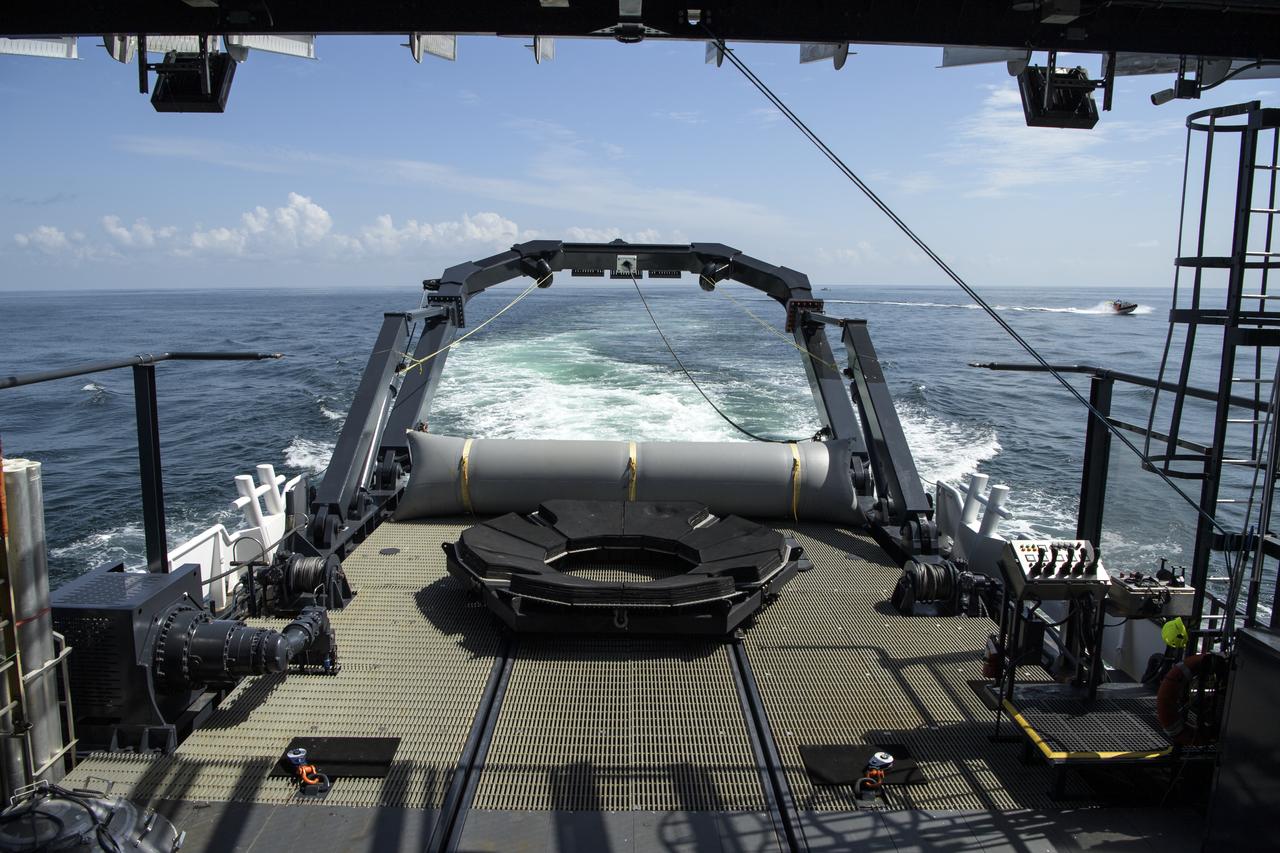
NASA and SpaceX support teams onboard the SpaceX GO Navigator recovery ship prepare for the landing of the SpaceX Crew Dragon Endeavour spacecraft with NASA astronauts Robert Behnken and Douglas Hurley onboard, Sunday, Aug. 2, 2020 in the Gulf of Mexico off the cost of Pensacola, Florida. The Demo-2 test flight for NASA's Commercial Crew Program is the first to deliver astronauts to the International Space Station and return them to Earth onboard a commercially built and operated spacecraft. Behnken and Hurley are returning after spending 64 days in space. Photo Credit: (NASA/Bill Ingalls)
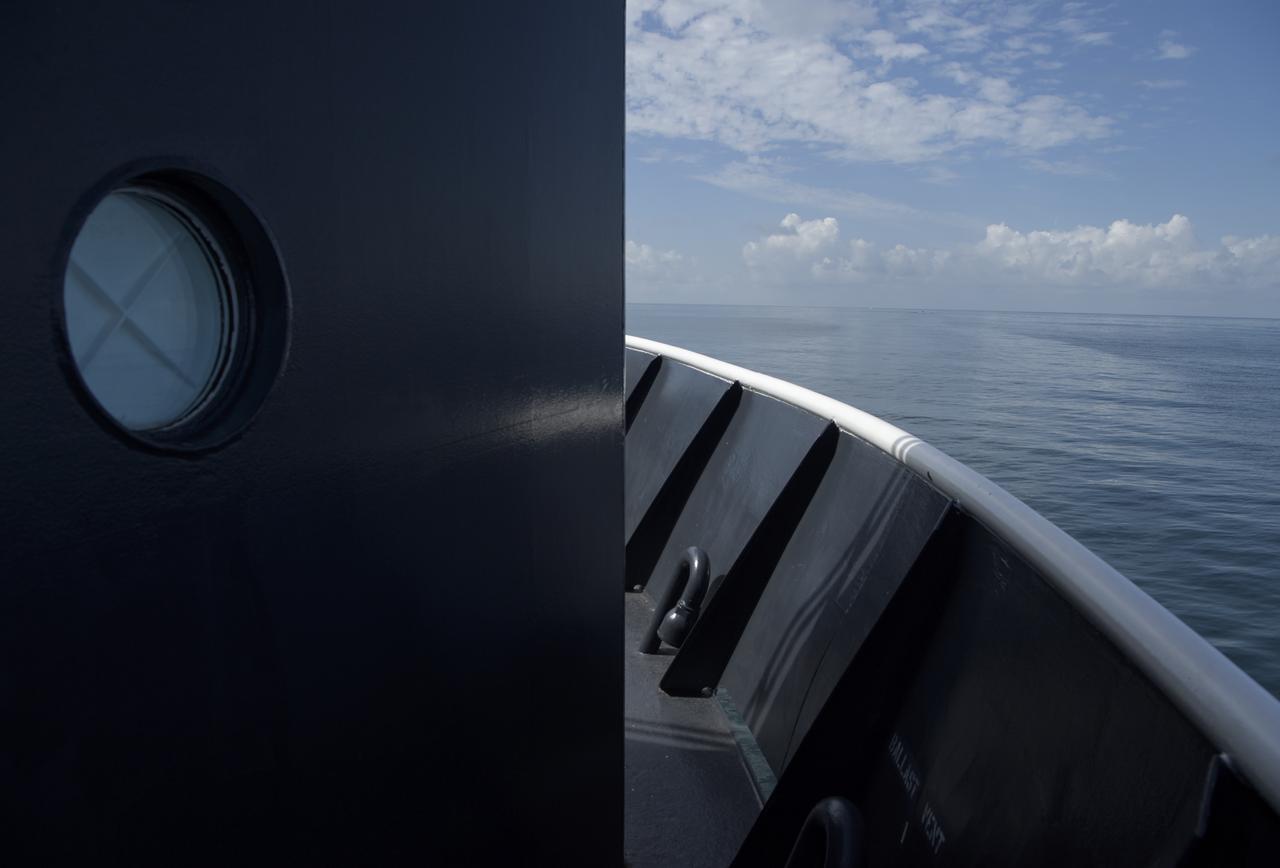
NASA and SpaceX support teams onboard the SpaceX GO Navigator recovery ship prepare for the landing of the SpaceX Crew Dragon Endeavour spacecraft with NASA astronauts Robert Behnken and Douglas Hurley onboard, Sunday, Aug. 2, 2020 in the Gulf of Mexico off the cost of Pensacola, Florida. The Demo-2 test flight for NASA's Commercial Crew Program is the first to deliver astronauts to the International Space Station and return them to Earth onboard a commercially built and operated spacecraft. Behnken and Hurley are returning after spending 64 days in space. Photo Credit: (NASA/Bill Ingalls)
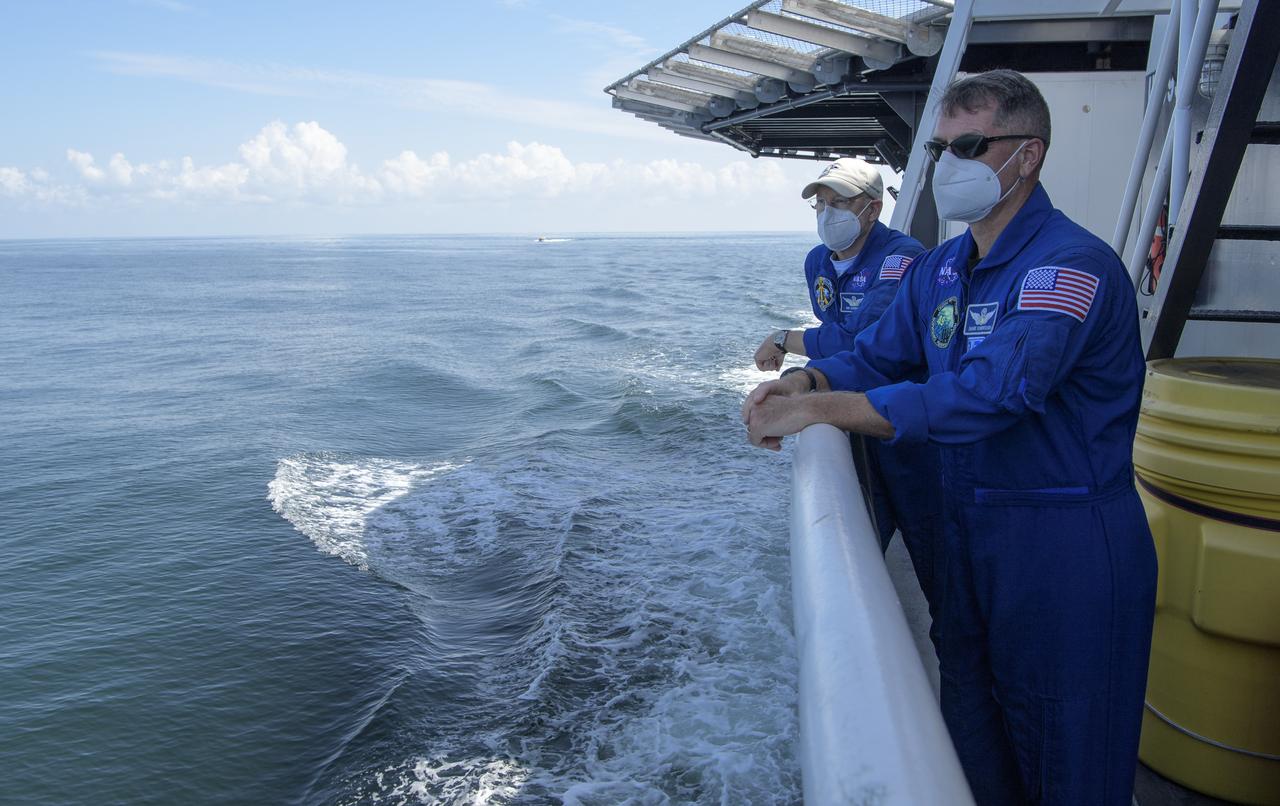
NASA Chief Astronaut Pat Forrester, left, and NASA astronaut and Crew Recovery Chief Shane Kimbrough, along with other NASA and SpaceX support teams onboard the SpaceX GO Navigator recovery ship, prepare for the landing of the SpaceX Crew Dragon Endeavour spacecraft with NASA astronauts Robert Behnken and Douglas Hurley onboard, Sunday, Aug. 2, 2020 in the Gulf of Mexico off the cost of Pensacola, Florida. The Demo-2 test flight for NASA's Commercial Crew Program is the first to deliver astronauts to the International Space Station and return them to Earth onboard a commercially built and operated spacecraft. Behnken and Hurley are returning after spending 64 days in space. Photo Credit: (NASA/Bill Ingalls)
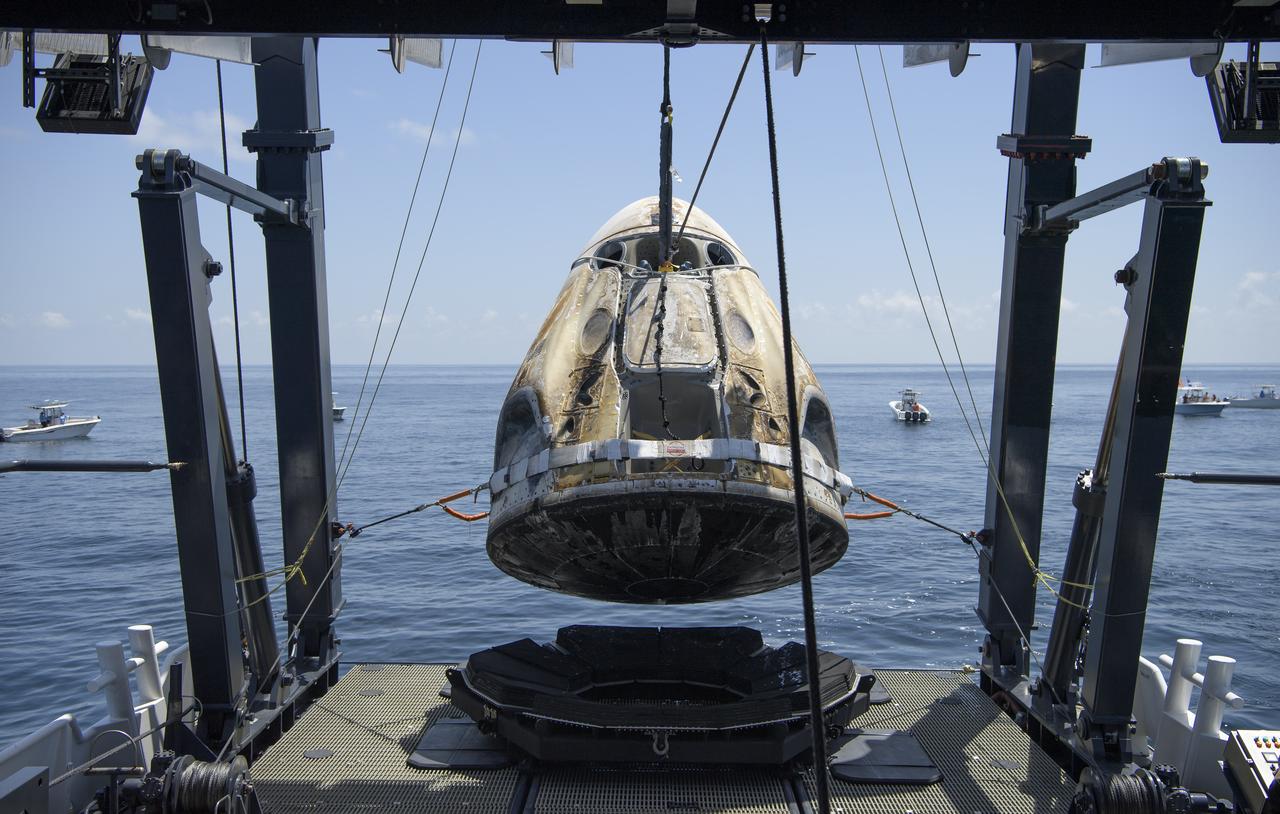
The SpaceX Crew Dragon Endeavour spacecraft is lifted onto the SpaceX GO Navigator recovery ship shortly after it landed with NASA astronauts Robert Behnken and Douglas Hurley onboard in the Gulf of Mexico off the coast of Pensacola, Florida, Sunday, Aug. 2, 2020. The Demo-2 test flight for NASA's Commercial Crew Program was the first to deliver astronauts to the International Space Station and return them safely to Earth onboard a commercially built and operated spacecraft. Behnken and Hurley returned after spending 64 days in space. Photo Credit: (NASA/Bill Ingalls)
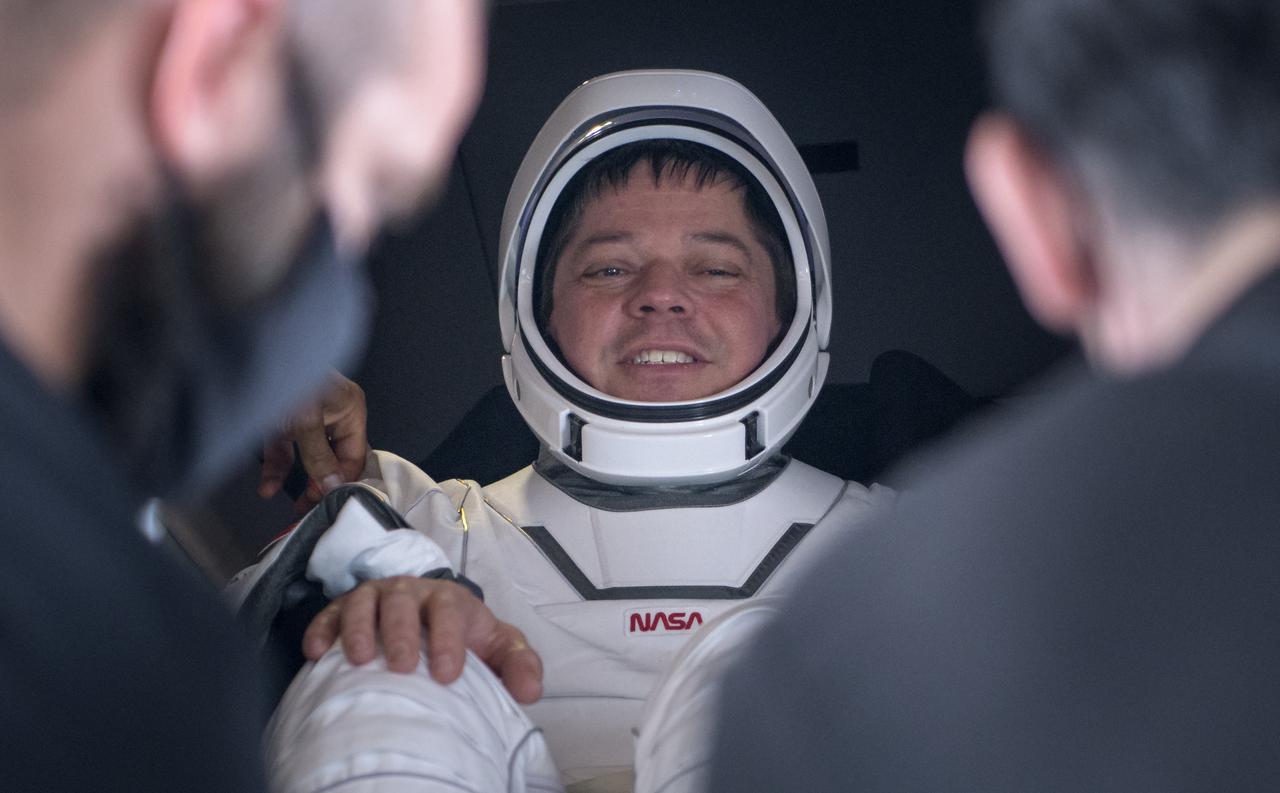
NASA astronaut Robert Behnken smiles prior to being helped out of the SpaceX Crew Dragon Endeavour spacecraft onboard the SpaceX GO Navigator recovery ship after he and NASA astronaut Douglas Hurley landed in the Gulf of Mexico off the coast of Pensacola, Florida, Sunday, Aug. 2, 2020. The Demo-2 test flight for NASA's Commercial Crew Program was the first to deliver astronauts to the International Space Station and return them safely to Earth onboard a commercially built and operated spacecraft. Behnken and Hurley returned after spending 64 days in space. Photo Credit: (NASA/Bill Ingalls)
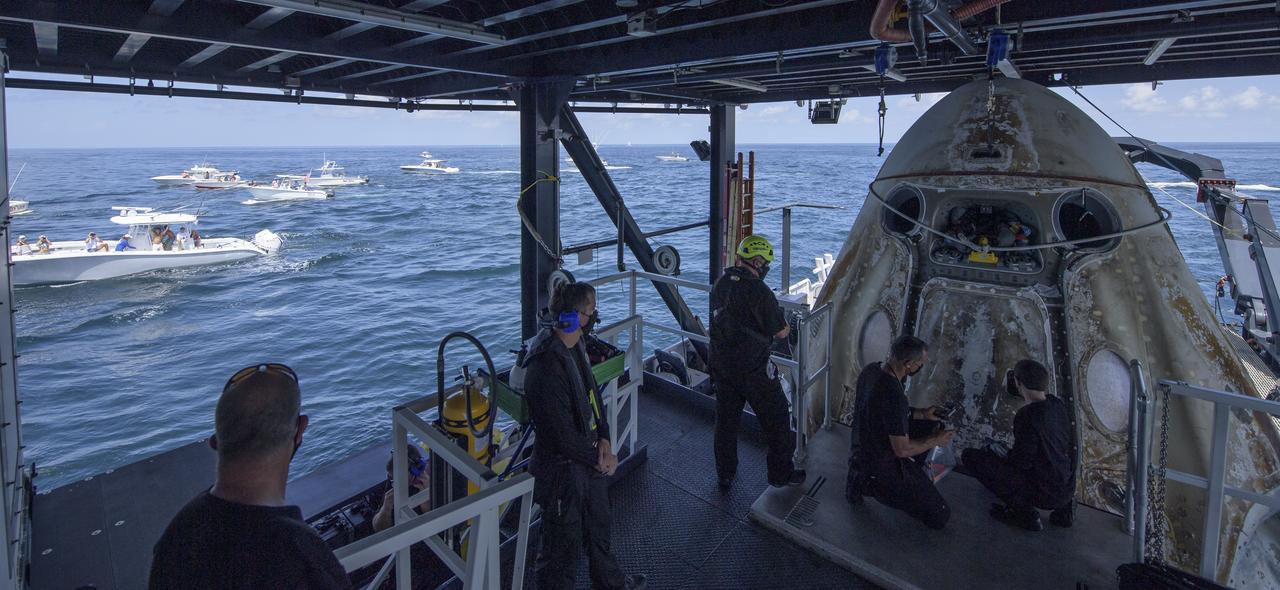
The SpaceX Crew Dragon Endeavour spacecraft, with NASA astronauts Robert Behnken and Douglas Hurley onboard, is positioned on the SpaceX GO Navigator recovery ship for crew egress shortly after landing in the Gulf of Mexico off the coast of Pensacola, Florida, Sunday, Aug. 2, 2020. The Demo-2 test flight for NASA's Commercial Crew Program was the first to deliver astronauts to the International Space Station and return them safely to Earth onboard a commercially built and operated spacecraft. Behnken and Hurley returned after spending 64 days in space. Photo Credit: (NASA/Bill Ingalls)
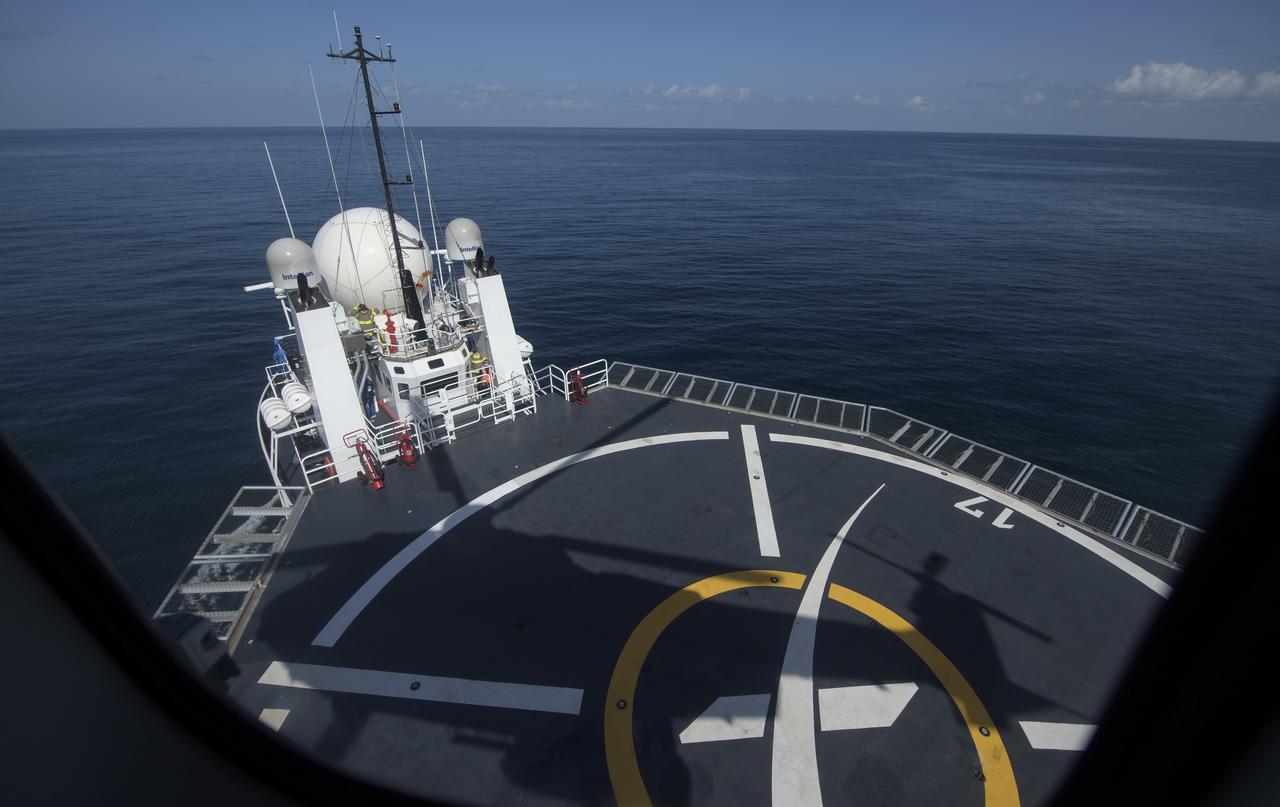
The helicopter carrying NASA astronauts Robert Behnken and Douglas Hurley to Pensacola Naval Air Station is seen silhouetted on the SpaceX GO Navigator recovery ship after the duo landed in their SpaceX Crew Dragon Endeavour spacecraft in the Gulf of Mexico off the coast of Pensacola, Florida, Sunday, Aug. 2, 2020. The Demo-2 test flight for NASA's Commercial Crew Program was the first to deliver astronauts to the International Space Station and return them safely to Earth onboard a commercially built and operated spacecraft. Behnken and Hurley returned after spending 64 days in space. Photo Credit: (NASA/Bill Ingalls)
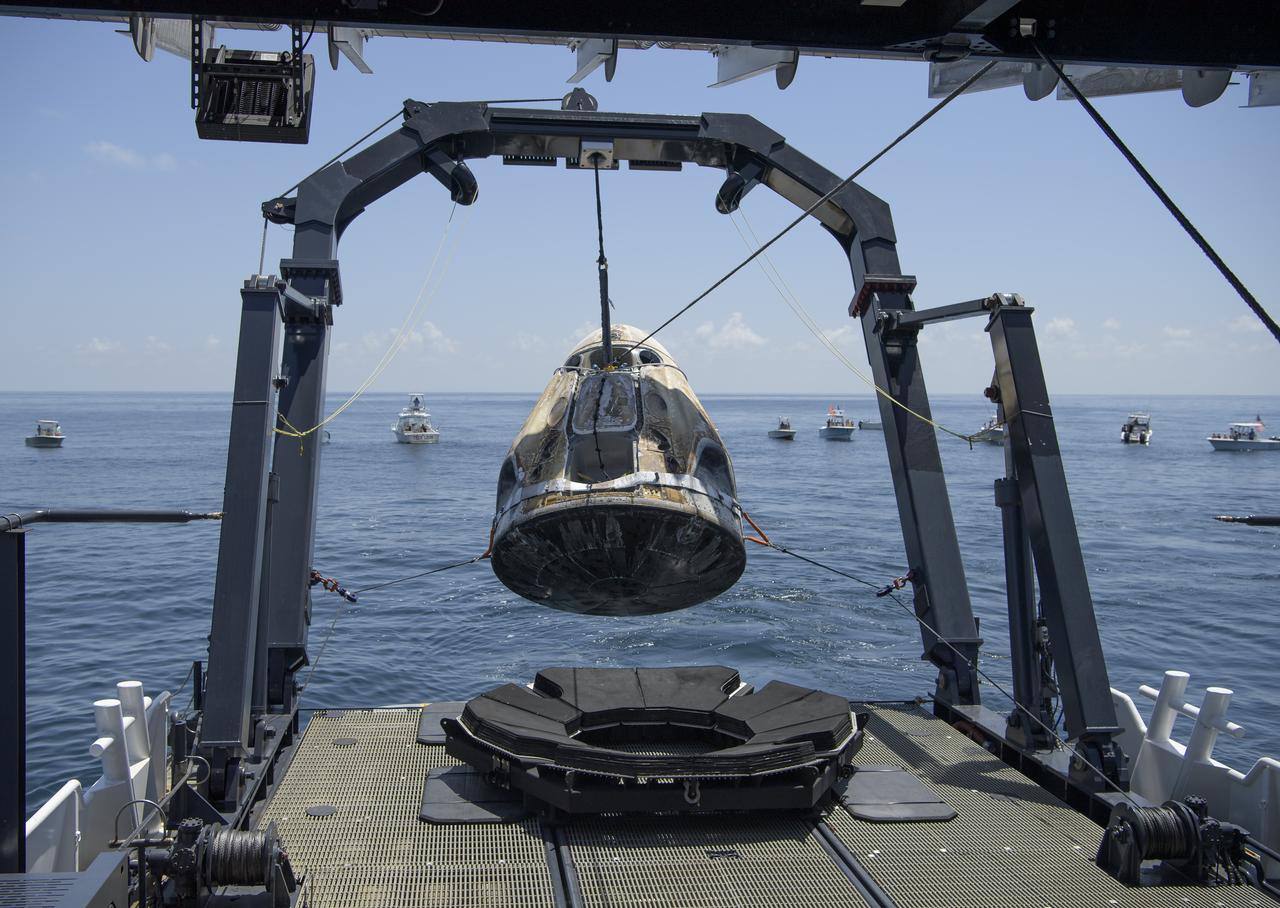
The SpaceX Crew Dragon Endeavour spacecraft is lifted onto the SpaceX GO Navigator recovery ship shortly after it landed with NASA astronauts Robert Behnken and Douglas Hurley onboard in the Gulf of Mexico off the coast of Pensacola, Florida, Sunday, Aug. 2, 2020. The Demo-2 test flight for NASA's Commercial Crew Program was the first to deliver astronauts to the International Space Station and return them safely to Earth onboard a commercially built and operated spacecraft. Behnken and Hurley returned after spending 64 days in space. Photo Credit: (NASA/Bill Ingalls)
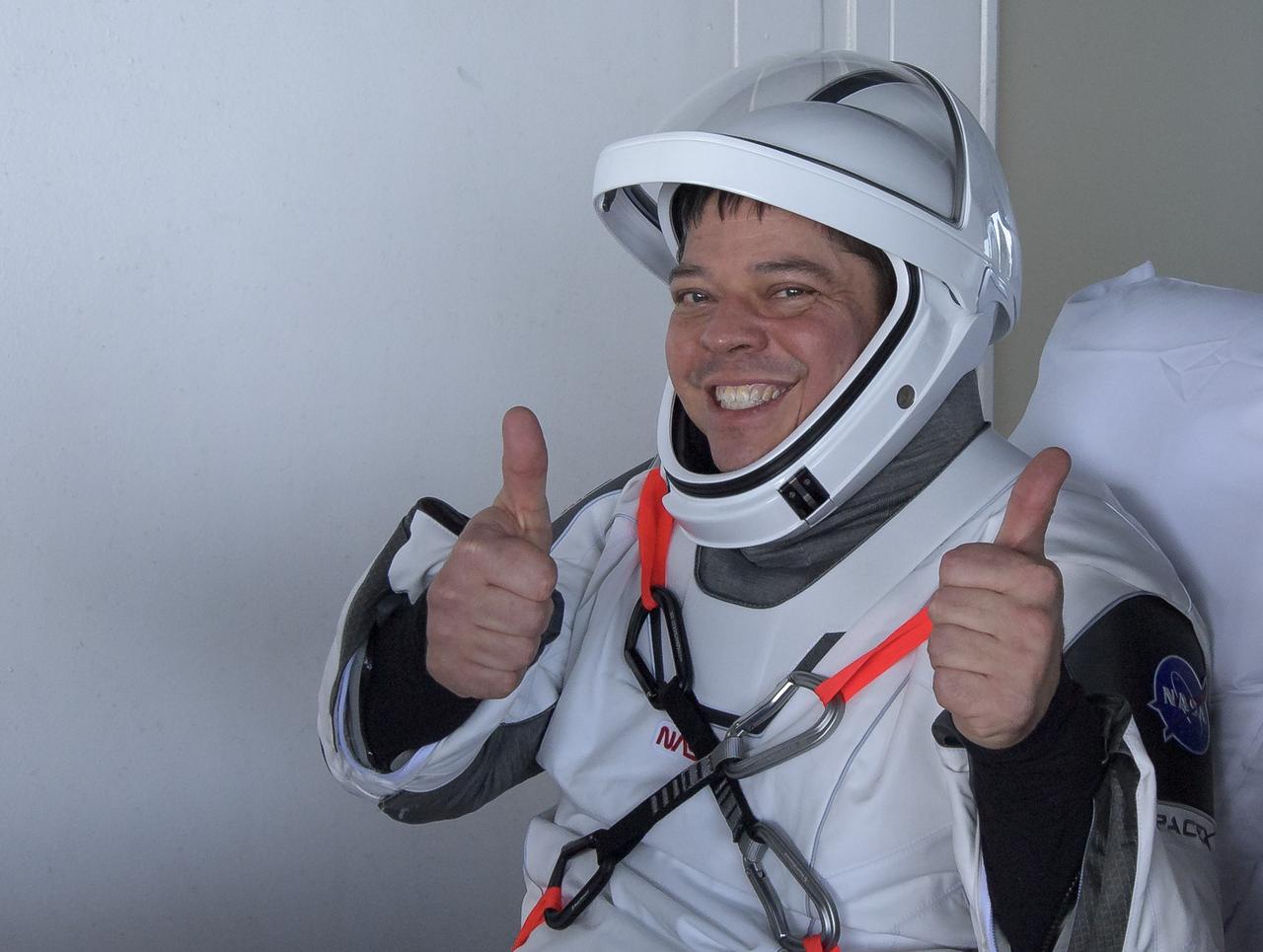
NASA astronaut Robert Behnken gives a thumbs up after egressing the SpaceX Crew Dragon Endeavour spacecraft onboard the SpaceX GO Navigator recovery ship after he and NASA astronaut Douglas Hurley landed in the Gulf of Mexico off the coast of Pensacola, Florida, Sunday, Aug. 2, 2020. The Demo-2 test flight for NASA's Commercial Crew Program was the first to deliver astronauts to the International Space Station and return them safely to Earth onboard a commercially built and operated spacecraft. Behnken and Hurley returned after spending 64 days in space. Photo Credit: (NASA/Bill Ingalls)
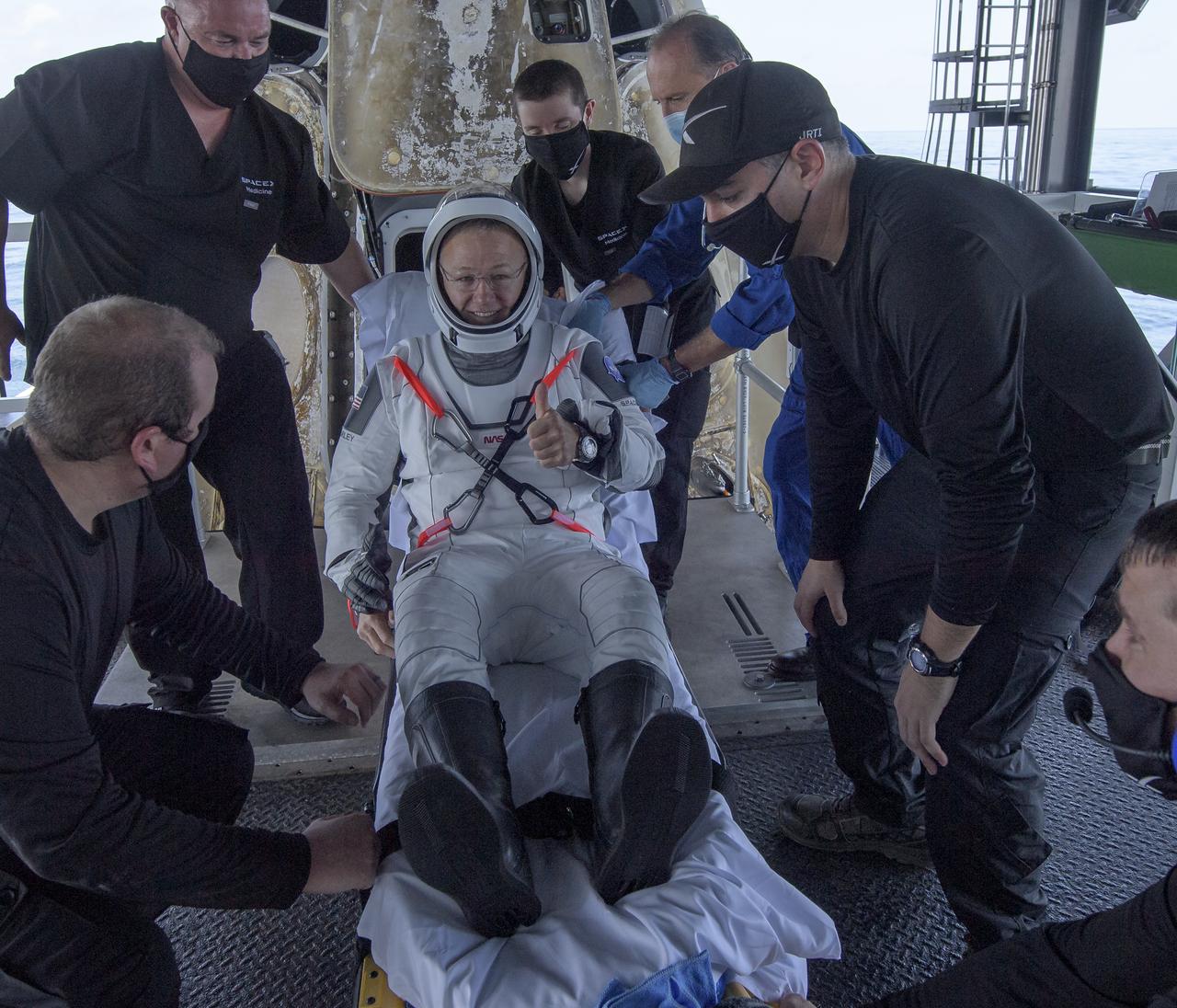
NASA astronaut Douglas Hurley is helped out of the SpaceX Crew Dragon Endeavour spacecraft onboard the SpaceX GO Navigator recovery ship after he and NASA astronaut Robert Behnken landed in the Gulf of Mexico off the coast of Pensacola, Florida, Sunday, Aug. 2, 2020. The Demo-2 test flight for NASA's Commercial Crew Program was the first to deliver astronauts to the International Space Station and return them safely to Earth onboard a commercially built and operated spacecraft. Behnken and Hurley returned after spending 64 days in space. Photo Credit: (NASA/Bill Ingalls)
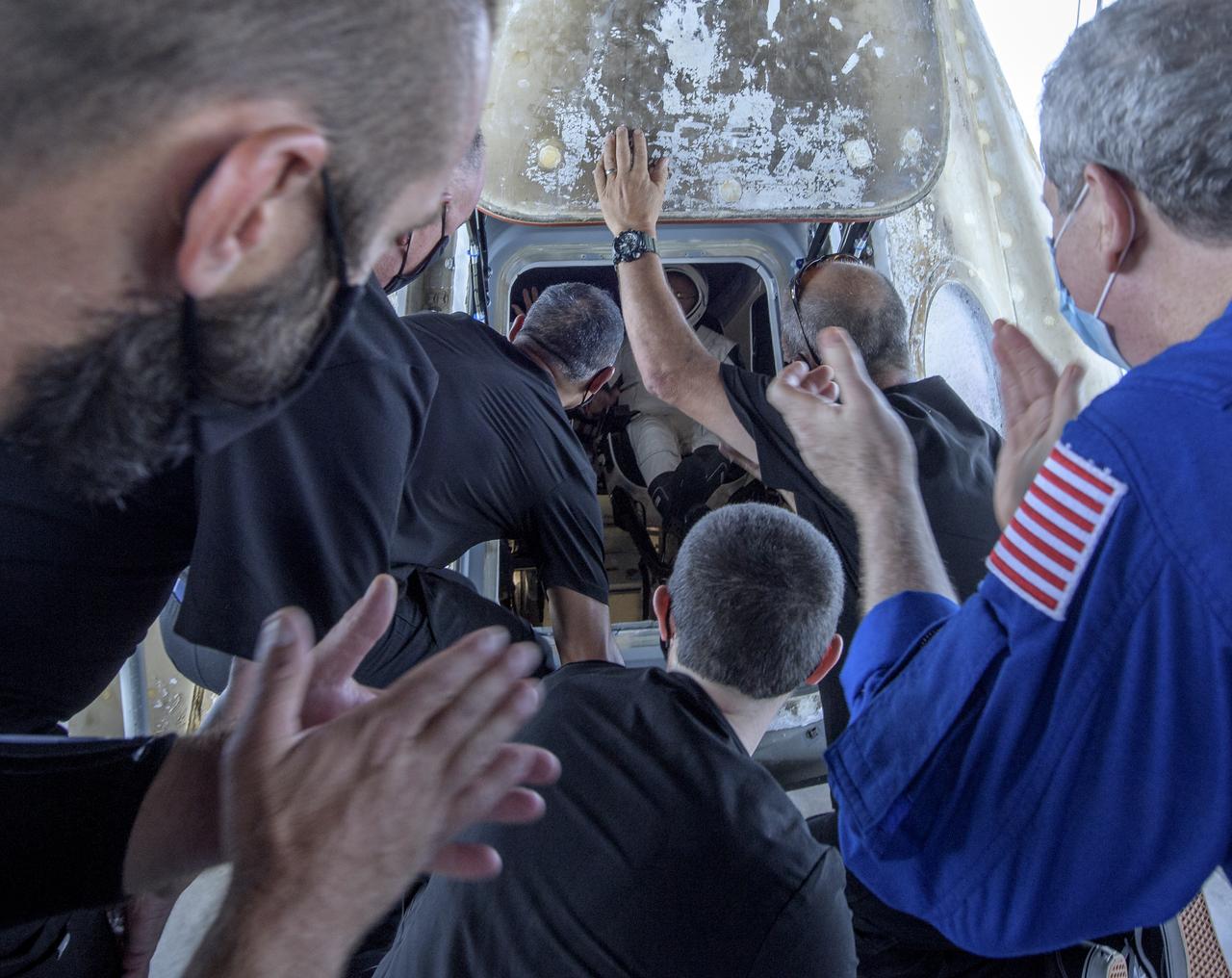
Support teams applaud as after the hatch of the SpaceX Crew Dragon Endeavour spacecraft is opened to allow for egress of NASA astronauts Robert Behnken and Douglas Hurley onto the SpaceX GO Navigator recovery ship shortly the duo landed in the Gulf of Mexico off the coast of Pensacola, Florida, Sunday, Aug. 2, 2020. The Demo-2 test flight for NASA's Commercial Crew Program was the first to deliver astronauts to the International Space Station and return them safely to Earth onboard a commercially built and operated spacecraft. Behnken and Hurley returned after spending 64 days in space. Photo Credit: (NASA/Bill Ingalls)
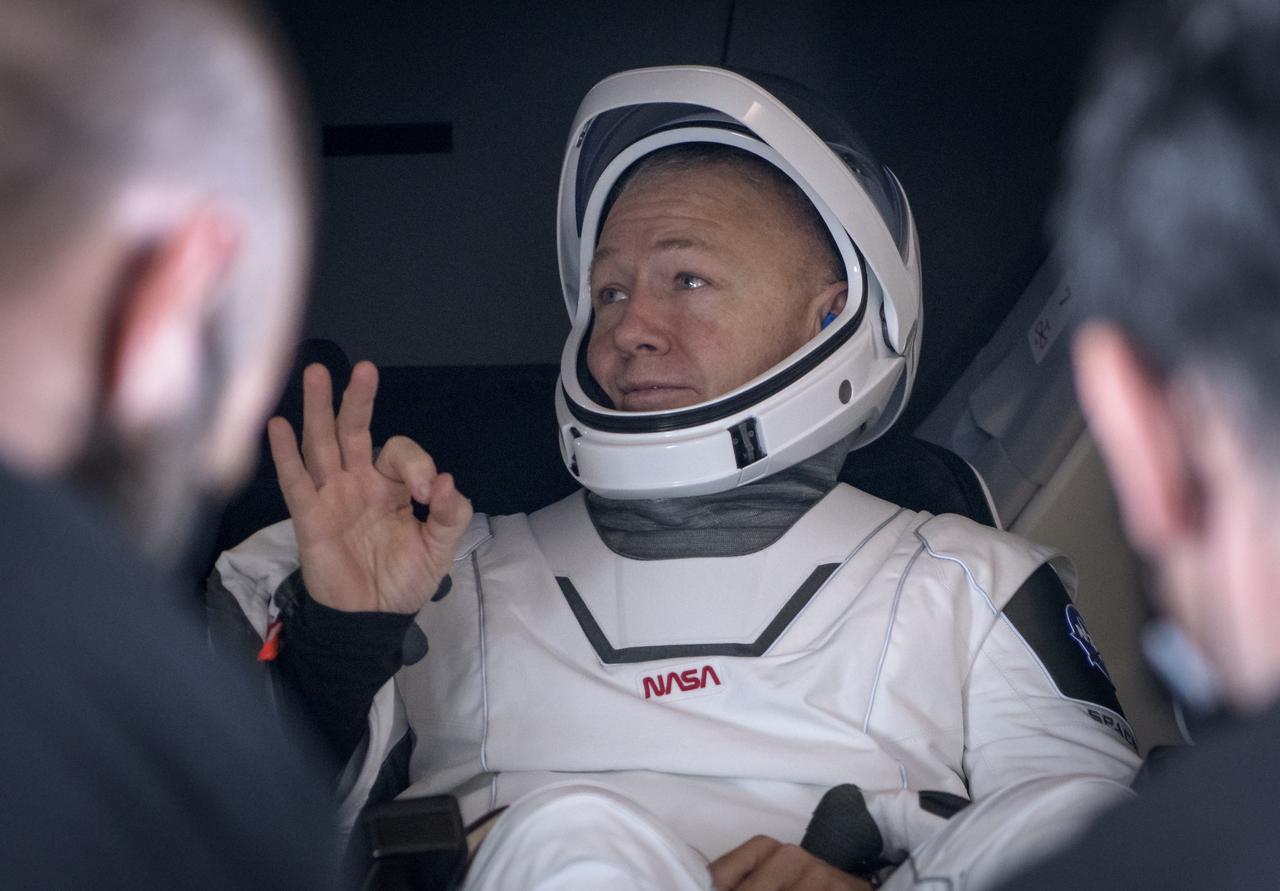
NASA astronaut Douglas Hurley gives the OK sign prior to being helped out of the SpaceX Crew Dragon Endeavour spacecraft onboard the SpaceX GO Navigator recovery ship after he and NASA astronaut Robert Behnken landed in the Gulf of Mexico off the coast of Pensacola, Florida, Sunday, Aug. 2, 2020. The Demo-2 test flight for NASA's Commercial Crew Program was the first to deliver astronauts to the International Space Station and return them safely to Earth onboard a commercially built and operated spacecraft. Behnken and Hurley returned after spending 64 days in space. Photo Credit: (NASA/Bill Ingalls)
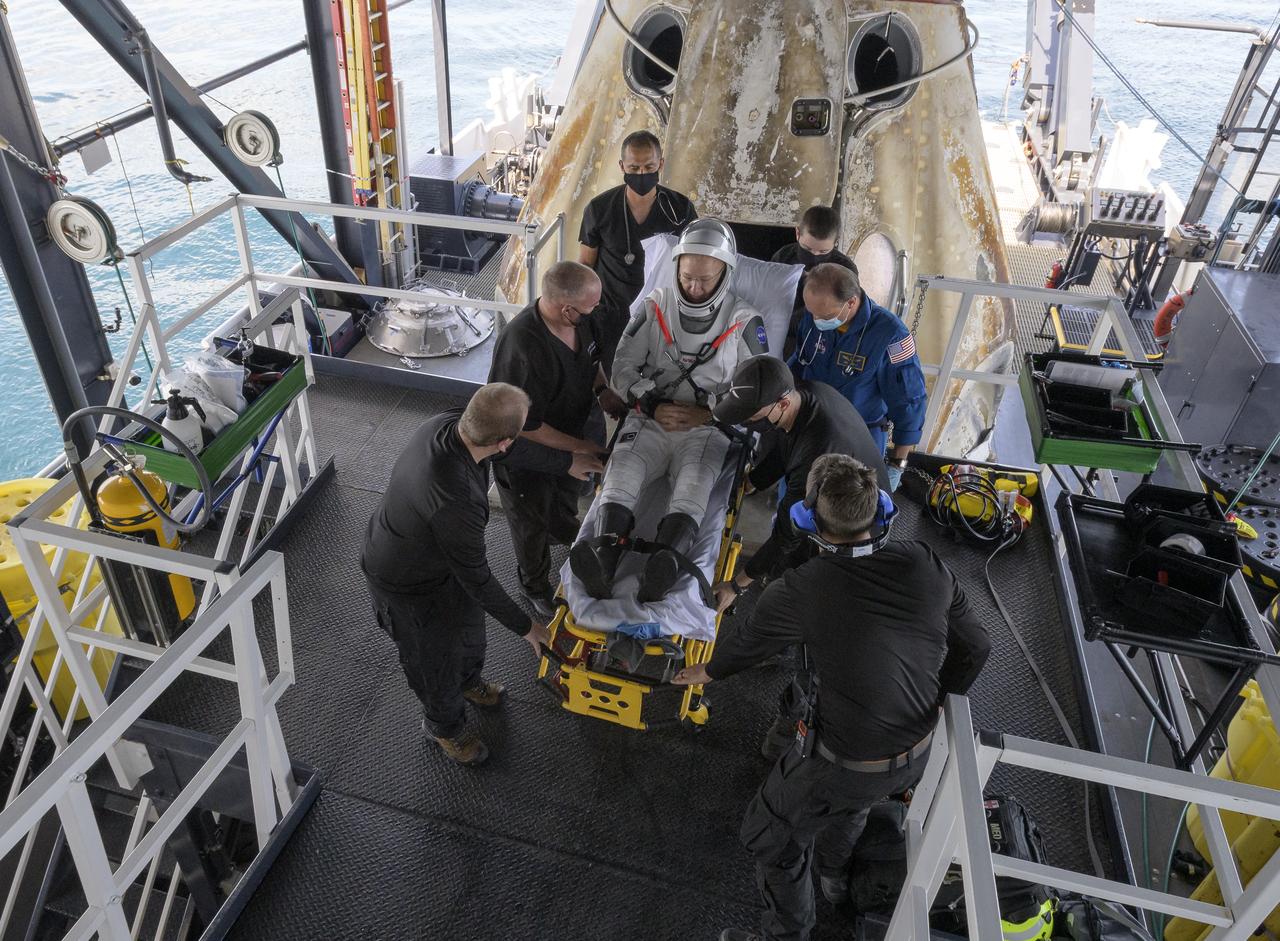
NASA astronaut Douglas Hurley is helped out of the SpaceX Crew Dragon Endeavour spacecraft onboard the SpaceX GO Navigator recovery ship after he and NASA astronaut Robert Behnken landed in the Gulf of Mexico off the coast of Pensacola, Florida, Sunday, Aug. 2, 2020. The Demo-2 test flight for NASA's Commercial Crew Program was the first to deliver astronauts to the International Space Station and return them safely to Earth onboard a commercially built and operated spacecraft. Behnken and Hurley returned after spending 64 days in space. Photo Credit: (NASA/Bill Ingalls)
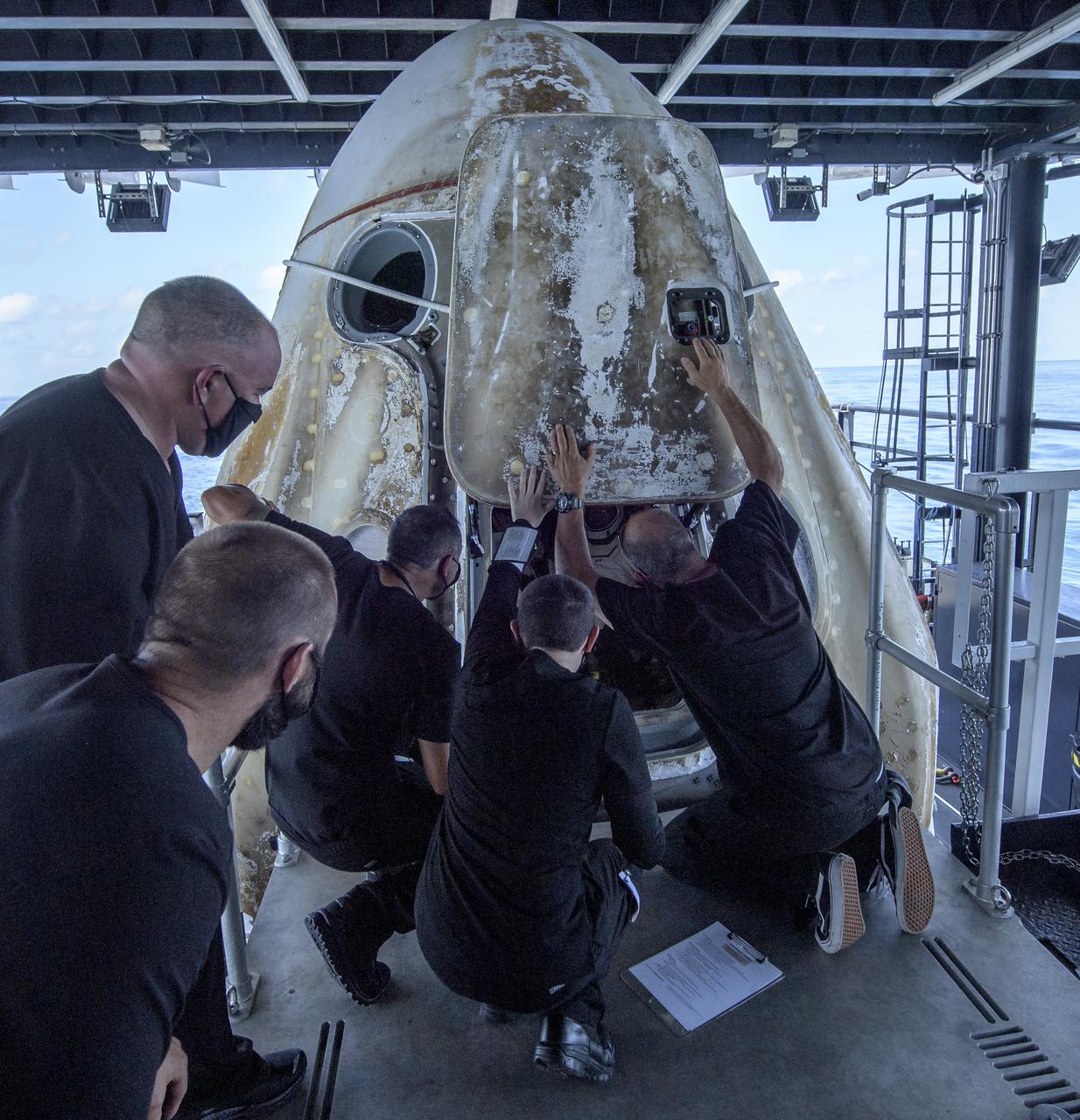
The hatch of the SpaceX Crew Dragon Endeavour spacecraft is opened for egress of NASA astronauts Robert Behnken and Douglas Hurley onboard the SpaceX GO Navigator recovery ship shortly the duo landed in the Gulf of Mexico off the coast of Pensacola, Florida, Sunday, Aug. 2, 2020. The Demo-2 test flight for NASA's Commercial Crew Program was the first to deliver astronauts to the International Space Station and return them safely to Earth onboard a commercially built and operated spacecraft. Behnken and Hurley returned after spending 64 days in space. Photo Credit: (NASA/Bill Ingalls)
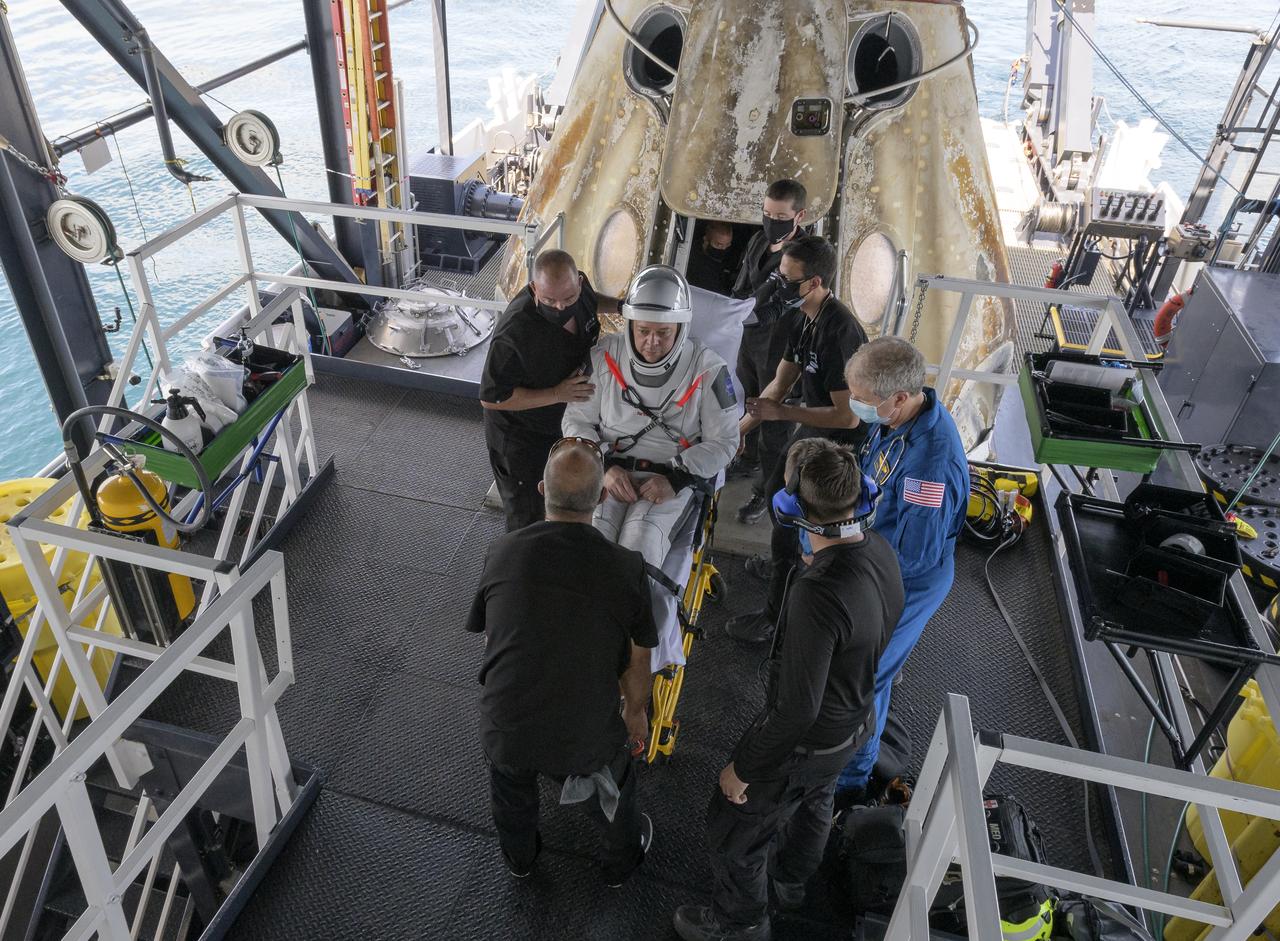
NASA astronaut Robert Behnken is helped out of the SpaceX Crew Dragon Endeavour spacecraft onboard the SpaceX GO Navigator recovery ship after he and NASA astronaut Douglas Hurley landed in the Gulf of Mexico off the coast of Pensacola, Florida, Sunday, Aug. 2, 2020. The Demo-2 test flight for NASA's Commercial Crew Program was the first to deliver astronauts to the International Space Station and return them safely to Earth onboard a commercially built and operated spacecraft. Behnken and Hurley returned after spending 64 days in space. Photo Credit: (NASA/Bill Ingalls)
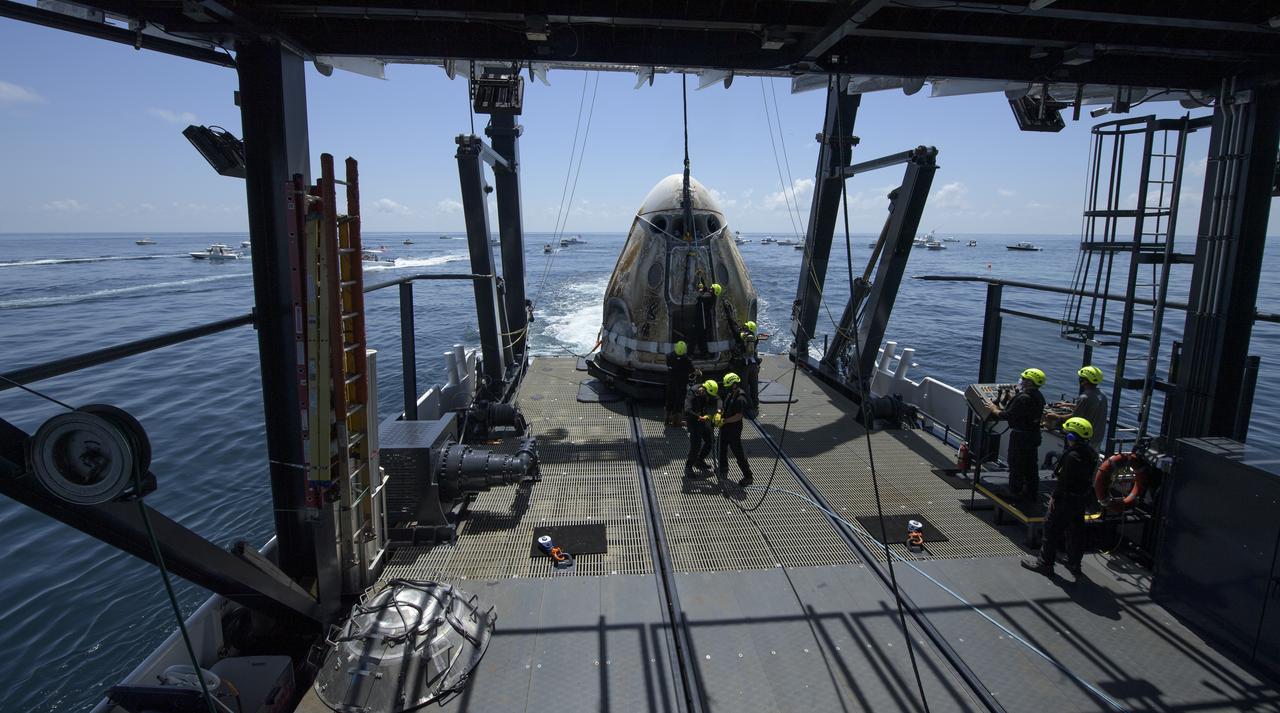
The SpaceX Crew Dragon Endeavour spacecraft is lowered onto the SpaceX GO Navigator recovery ship shortly after it landed with NASA astronauts Robert Behnken and Douglas Hurley onboard in the Gulf of Mexico off the coast of Pensacola, Florida, Sunday, Aug. 2, 2020. The Demo-2 test flight for NASA's Commercial Crew Program was the first to deliver astronauts to the International Space Station and return them safely to Earth onboard a commercially built and operated spacecraft. Behnken and Hurley returned after spending 64 days in space. Photo Credit: (NASA/Bill Ingalls)
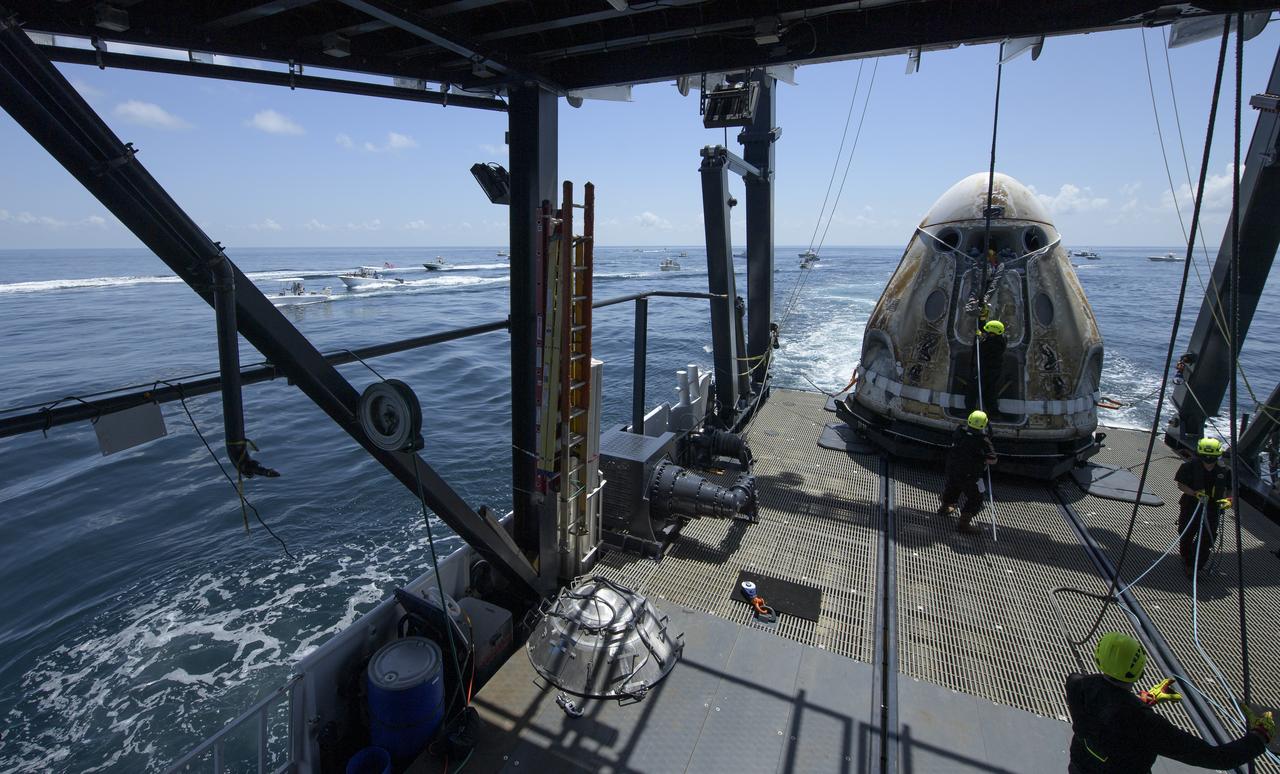
The SpaceX Crew Dragon Endeavour spacecraft is lowered onto the SpaceX GO Navigator recovery ship shortly after it landed with NASA astronauts Robert Behnken and Douglas Hurley onboard in the Gulf of Mexico off the coast of Pensacola, Florida, Sunday, Aug. 2, 2020. The Demo-2 test flight for NASA's Commercial Crew Program was the first to deliver astronauts to the International Space Station and return them safely to Earth onboard a commercially built and operated spacecraft. Behnken and Hurley returned after spending 64 days in space. Photo Credit: (NASA/Bill Ingalls)
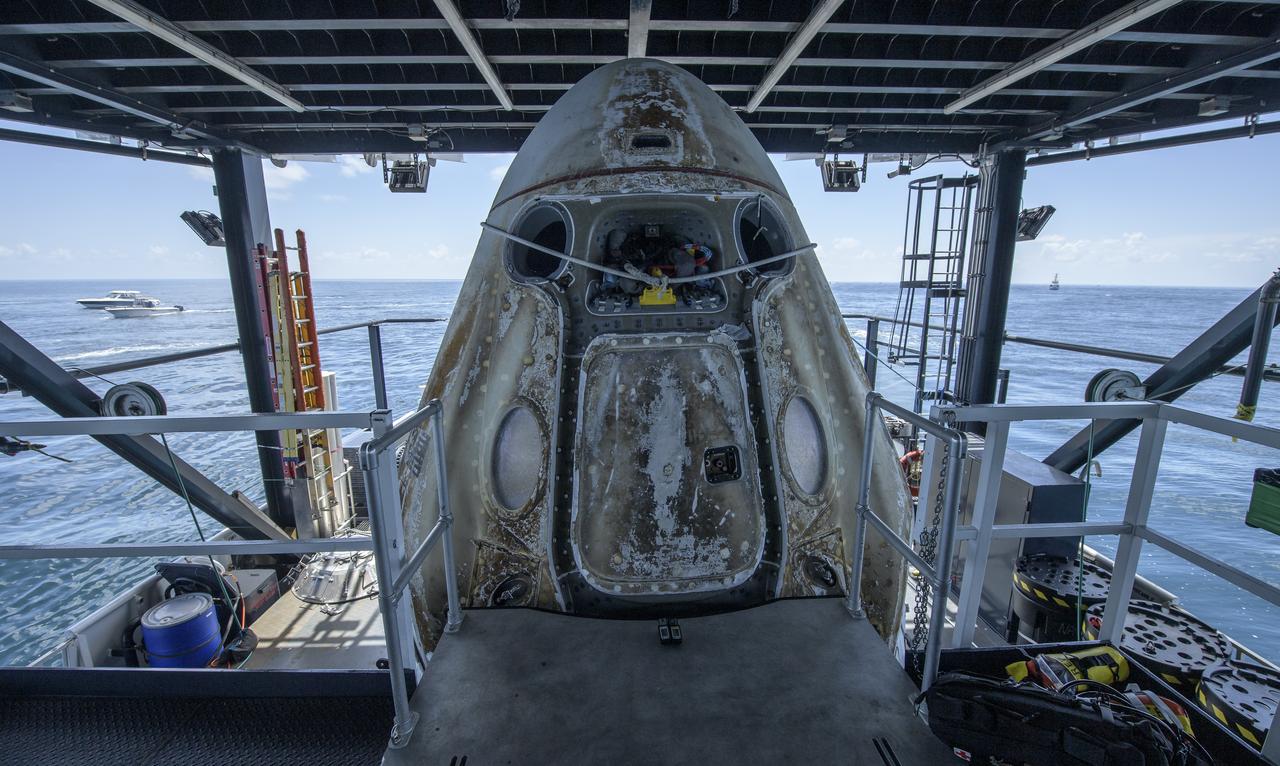
The SpaceX Crew Dragon Endeavour spacecraft, with NASA astronauts Robert Behnken and Douglas Hurley onboard, is positioned on the SpaceX GO Navigator recovery ship for crew egress shortly after landing in the Gulf of Mexico off the coast of Pensacola, Florida, Sunday, Aug. 2, 2020. The Demo-2 test flight for NASA's Commercial Crew Program was the first to deliver astronauts to the International Space Station and return them safely to Earth onboard a commercially built and operated spacecraft. Behnken and Hurley returned after spending 64 days in space. Photo Credit: (NASA/Bill Ingalls)
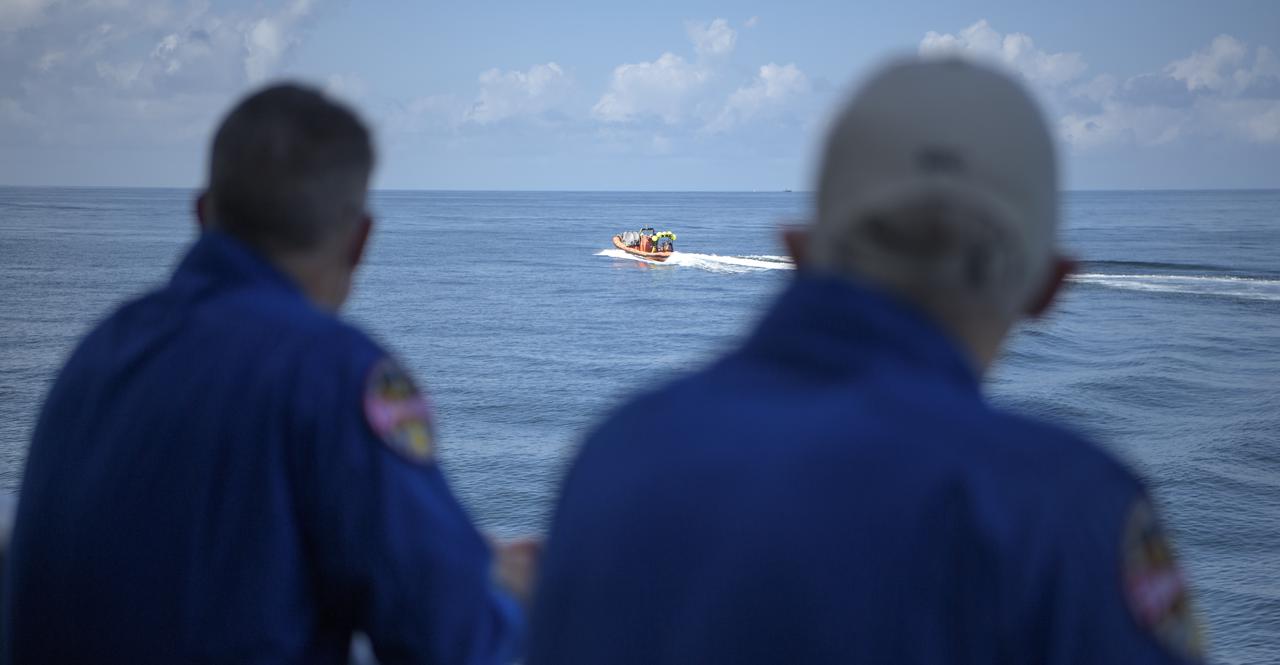
NASA astronaut and Crew Recovery Chief Shane Kimbrough, left, and NASA Chief Astronaut Pat Forrester watch as SpaceX support teams are deployed on fast boats from the SpaceX GO Navigator recovery ship ahead of the landing of the SpaceX Crew Dragon Endeavour spacecraft with NASA astronauts Robert Behnken and Douglas Hurley onboard, Sunday, Aug. 2, 2020 in the Gulf of Mexico off the cost of Pensacola, Florida. The Demo-2 test flight for NASA's Commercial Crew Program is the first to deliver astronauts to the International Space Station and return them to Earth onboard a commercially built and operated spacecraft. Behnken and Hurley are returning after spending 64 days in space. Photo Credit: (NASA/Bill Ingalls)
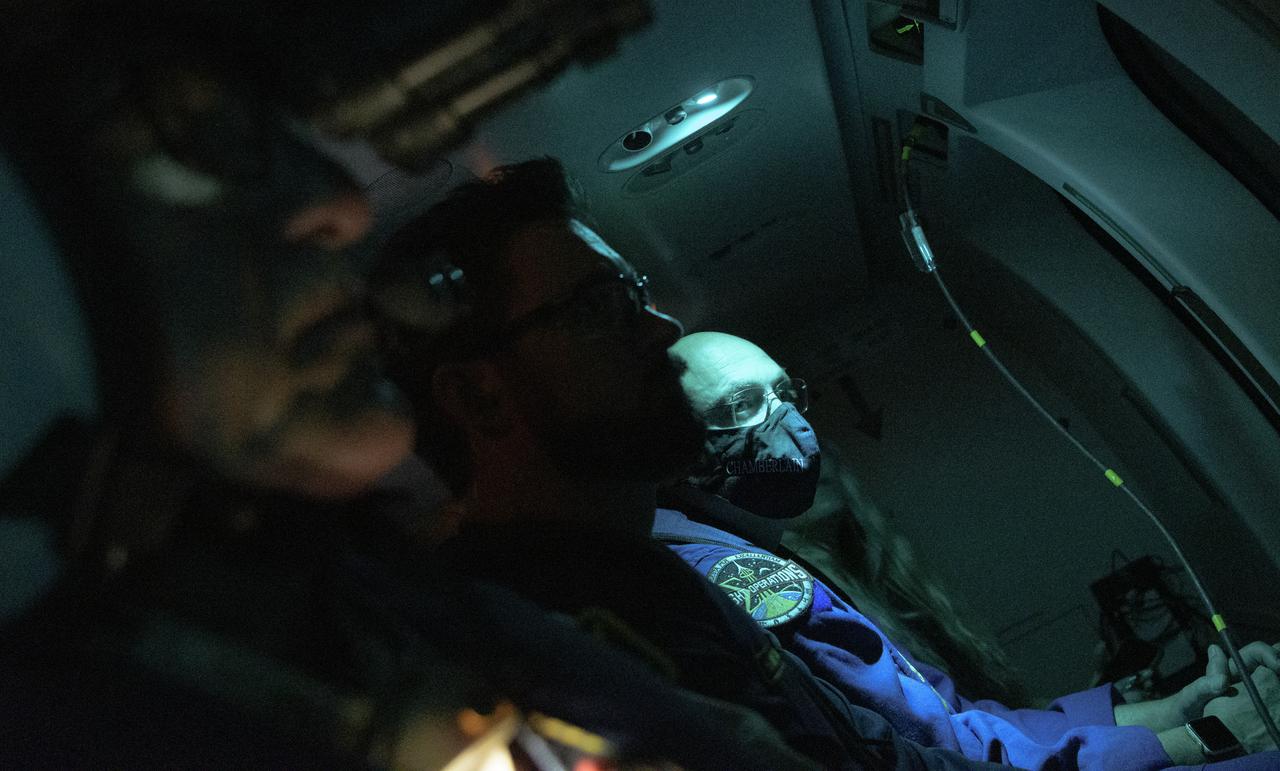
NASA Flight Surgeon Blake Chamberlain and other NASA and SpaceX support teams helicopter out to the SpaceX GO Navigator recovery ship to prepare for the landing of the SpaceX Crew Dragon Resilience spacecraft with NASA astronauts Mike Hopkins, Shannon Walker, and Victor Glover, and Japan Aerospace Exploration Agency (JAXA) astronaut Soichi Noguchi aboard in the Gulf of Mexico off the coast of Panama City, Florida, Saturday, May 1, 2021. NASA’s SpaceX Crew-1 mission is the first crew rotation flight of the SpaceX Crew Dragon spacecraft and Falcon 9 rocket with astronauts to the International Space Station as part of the agency’s Commercial Crew Program. Photo Credit: (NASA/Bill Ingalls)
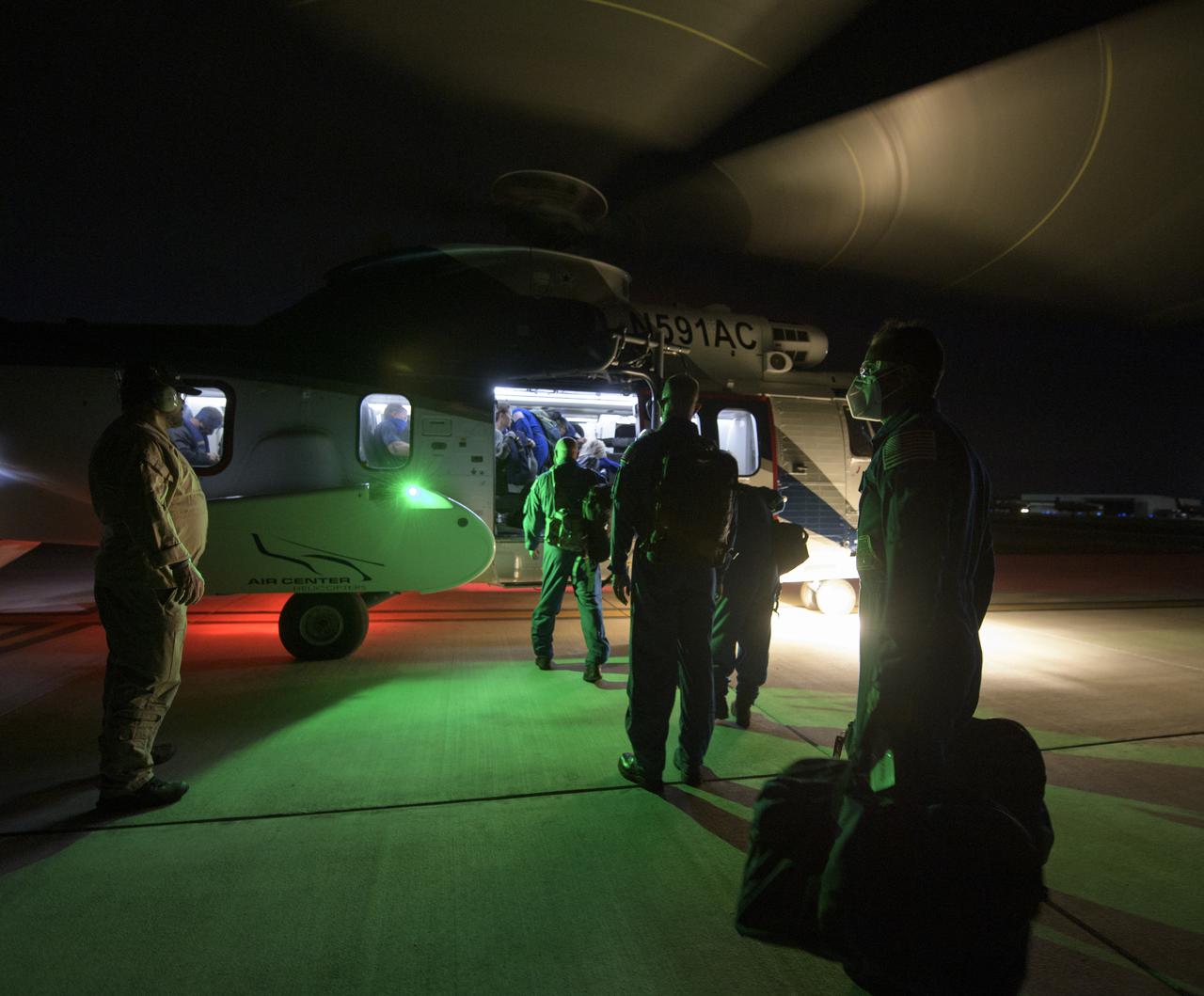
NASA and SpaceX support teams depart from Pensacola, Florida via helicopter to the SpaceX GO Navigator recovery ship to prepare for the landing of the SpaceX Crew Dragon Resilience spacecraft with NASA astronauts Mike Hopkins, Shannon Walker, and Victor Glover, and Japan Aerospace Exploration Agency (JAXA) astronaut Soichi Noguchi aboard in the Gulf of Mexico off the coast of Panama City, Florida, Saturday, May 1, 2021. NASA’s SpaceX Crew-1 mission is the first crew rotation flight of the SpaceX Crew Dragon spacecraft and Falcon 9 rocket with astronauts to the International Space Station as part of the agency’s Commercial Crew Program. Photo Credit: (NASA/Bill Ingalls)
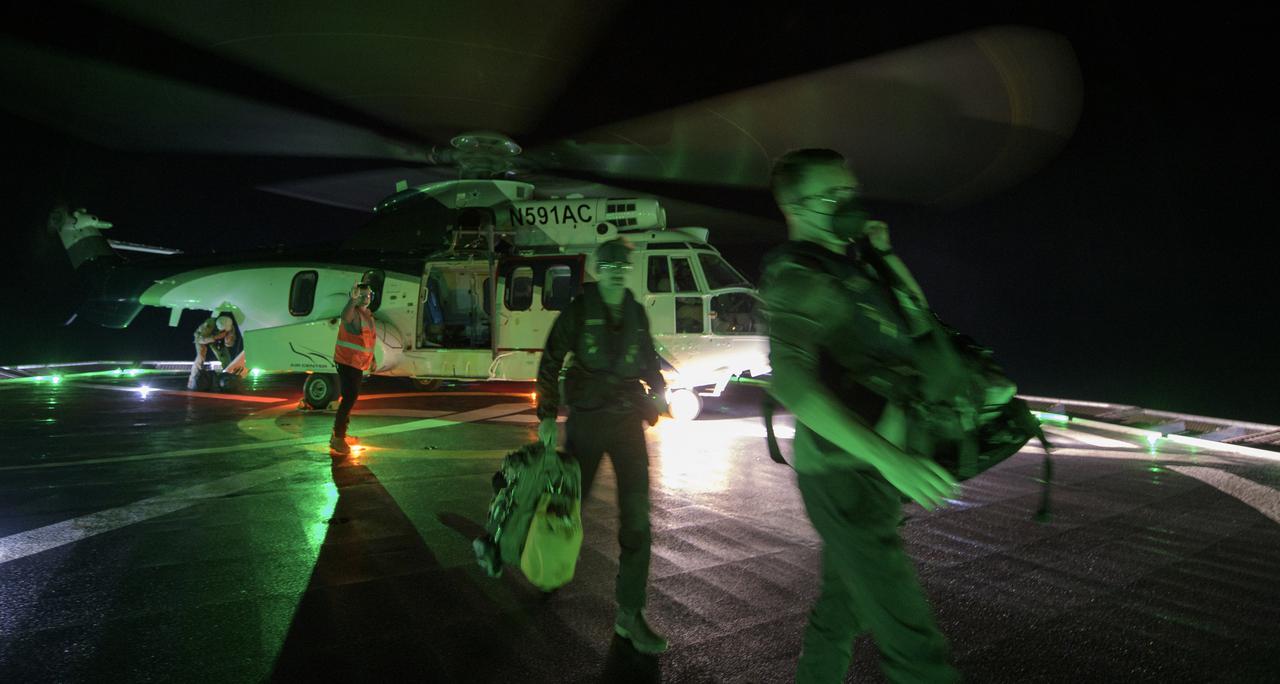
NASA and SpaceX support teams arrive via helicopter to the SpaceX GO Navigator recovery ship in order to prepare for the landing of the SpaceX Crew Dragon Resilience spacecraft with NASA astronauts Mike Hopkins, Shannon Walker, and Victor Glover, and Japan Aerospace Exploration Agency (JAXA) astronaut Soichi Noguchi aboard in the Gulf of Mexico off the coast of Panama City, Florida, Saturday, May 1, 2021. NASA’s SpaceX Crew-1 mission is the first crew rotation flight of the SpaceX Crew Dragon spacecraft and Falcon 9 rocket with astronauts to the International Space Station as part of the agency’s Commercial Crew Program. Photo Credit: (NASA/Bill Ingalls)
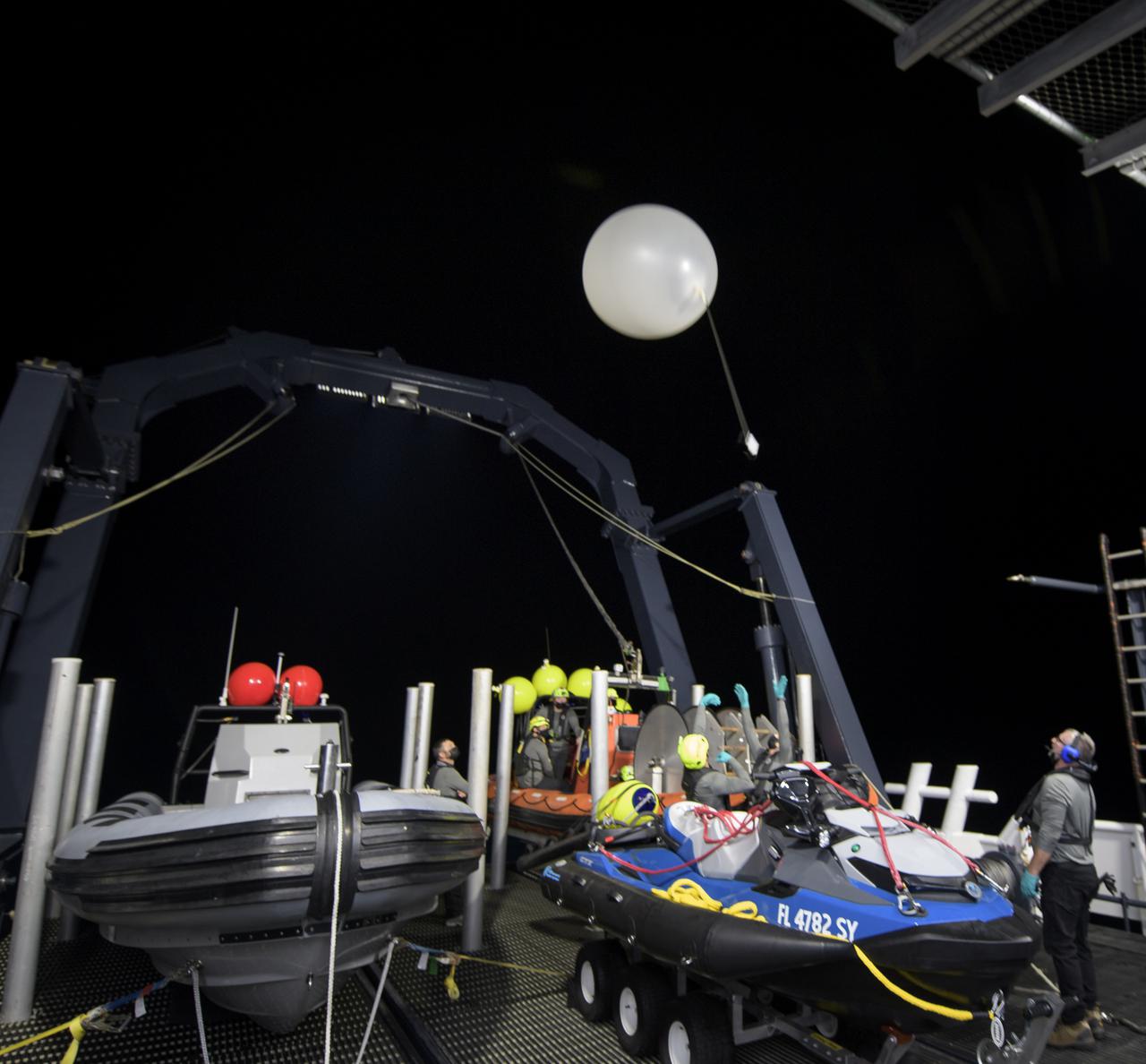
SpaceX support teams onboard the SpaceX GO Navigator recovery launch a weather balloon ahead of the landing of the SpaceX Crew Dragon Resilience spacecraft with NASA astronauts Mike Hopkins, Shannon Walker, and Victor Glover, and Japan Aerospace Exploration Agency (JAXA) astronaut Soichi Noguchi aboard in the Gulf of Mexico off the coast of Panama City, Florida, Saturday, May 1, 2021. NASA’s SpaceX Crew-1 mission is the first crew rotation flight of the SpaceX Crew Dragon spacecraft and Falcon 9 rocket with astronauts to the International Space Station as part of the agency’s Commercial Crew Program. Photo Credit: (NASA/Bill Ingalls)
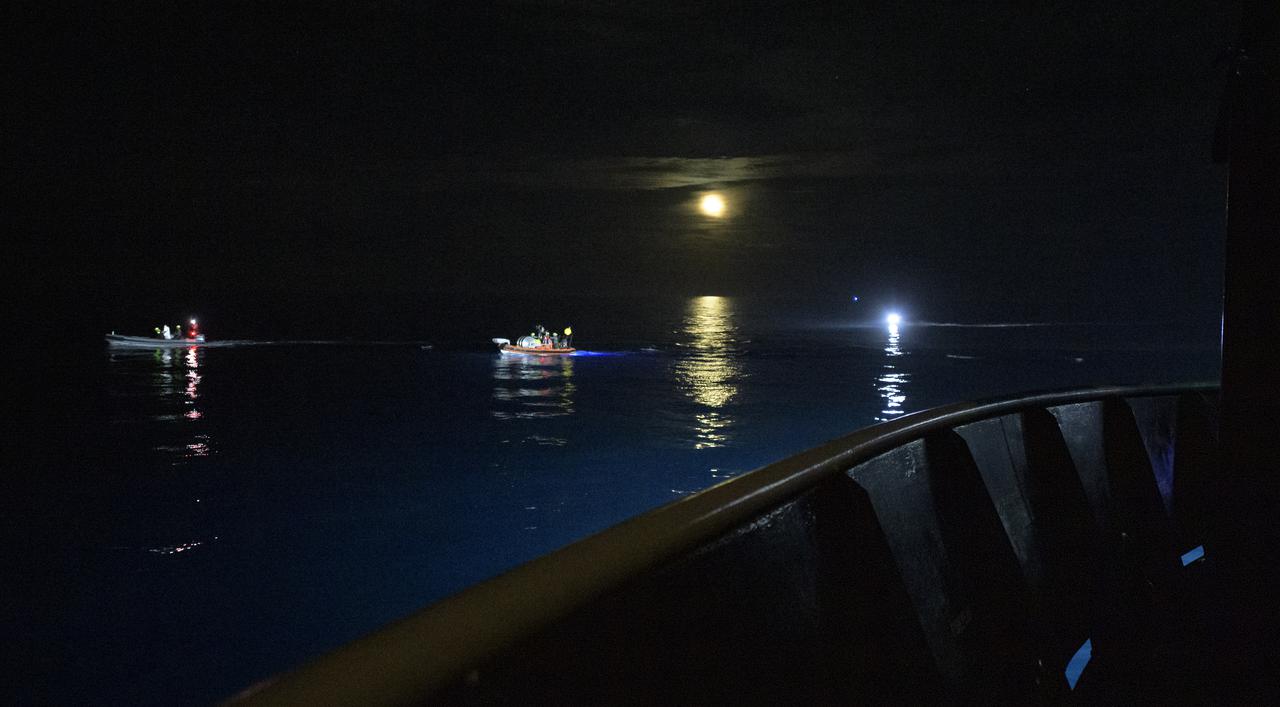
SpaceX support teams deploy in fast boats off the SpaceX GO Navigator recovery ship as they prepare for the landing of the SpaceX Crew Dragon Resilience spacecraft with NASA astronauts Mike Hopkins, Shannon Walker, and Victor Glover, and Japan Aerospace Exploration Agency (JAXA) astronaut Soichi Noguchi aboard in the Gulf of Mexico off the coast of Panama City, Florida, Sunday, May 2, 2021. NASA’s SpaceX Crew-1 mission is the first crew rotation flight of the SpaceX Crew Dragon spacecraft and Falcon 9 rocket with astronauts to the International Space Station as part of the agency’s Commercial Crew Program. Photo Credit: (NASA/Bill Ingalls)
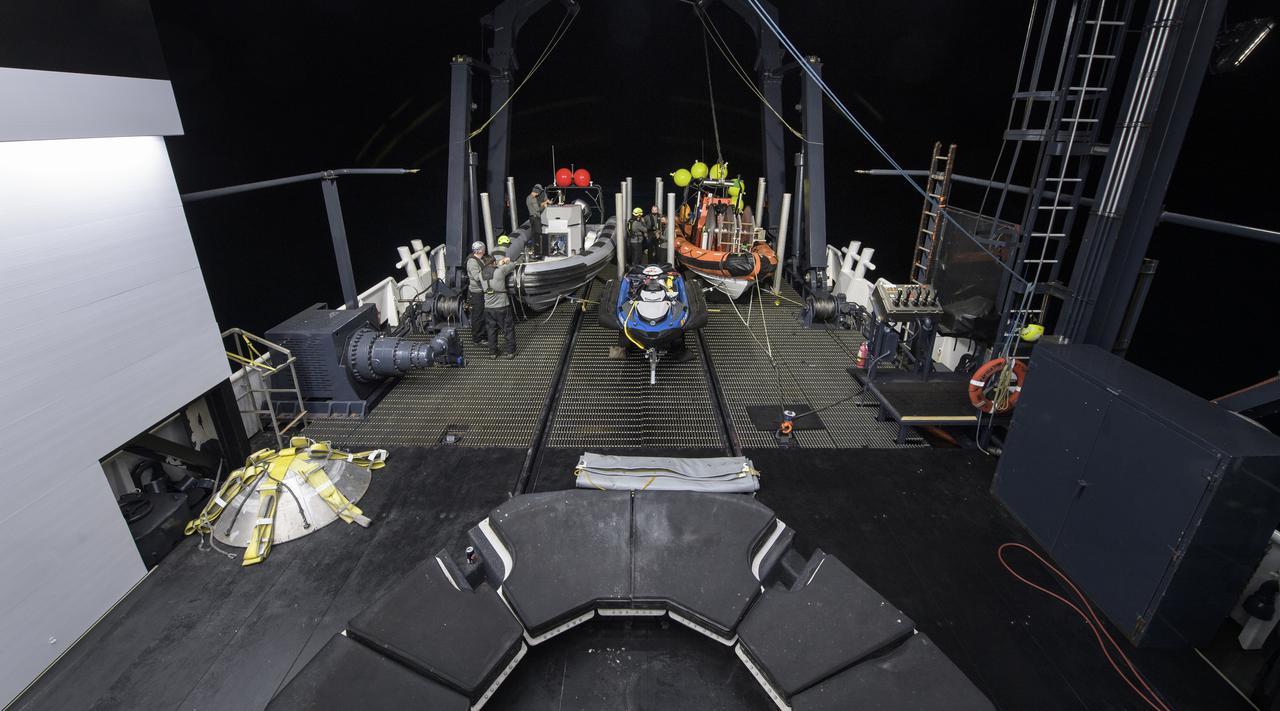
NASA and SpaceX support teams onboard the SpaceX GO Navigator recovery ship prepare for the landing of the SpaceX Crew Dragon Resilience spacecraft with NASA astronauts Mike Hopkins, Shannon Walker, and Victor Glover, and Japan Aerospace Exploration Agency (JAXA) astronaut Soichi Noguchi aboard in the Gulf of Mexico off the coast of Panama City, Florida, Saturday, May 1, 2021. NASA’s SpaceX Crew-1 mission is the first crew rotation flight of the SpaceX Crew Dragon spacecraft and Falcon 9 rocket with astronauts to the International Space Station as part of the agency’s Commercial Crew Program. Photo Credit: (NASA/Bill Ingalls)
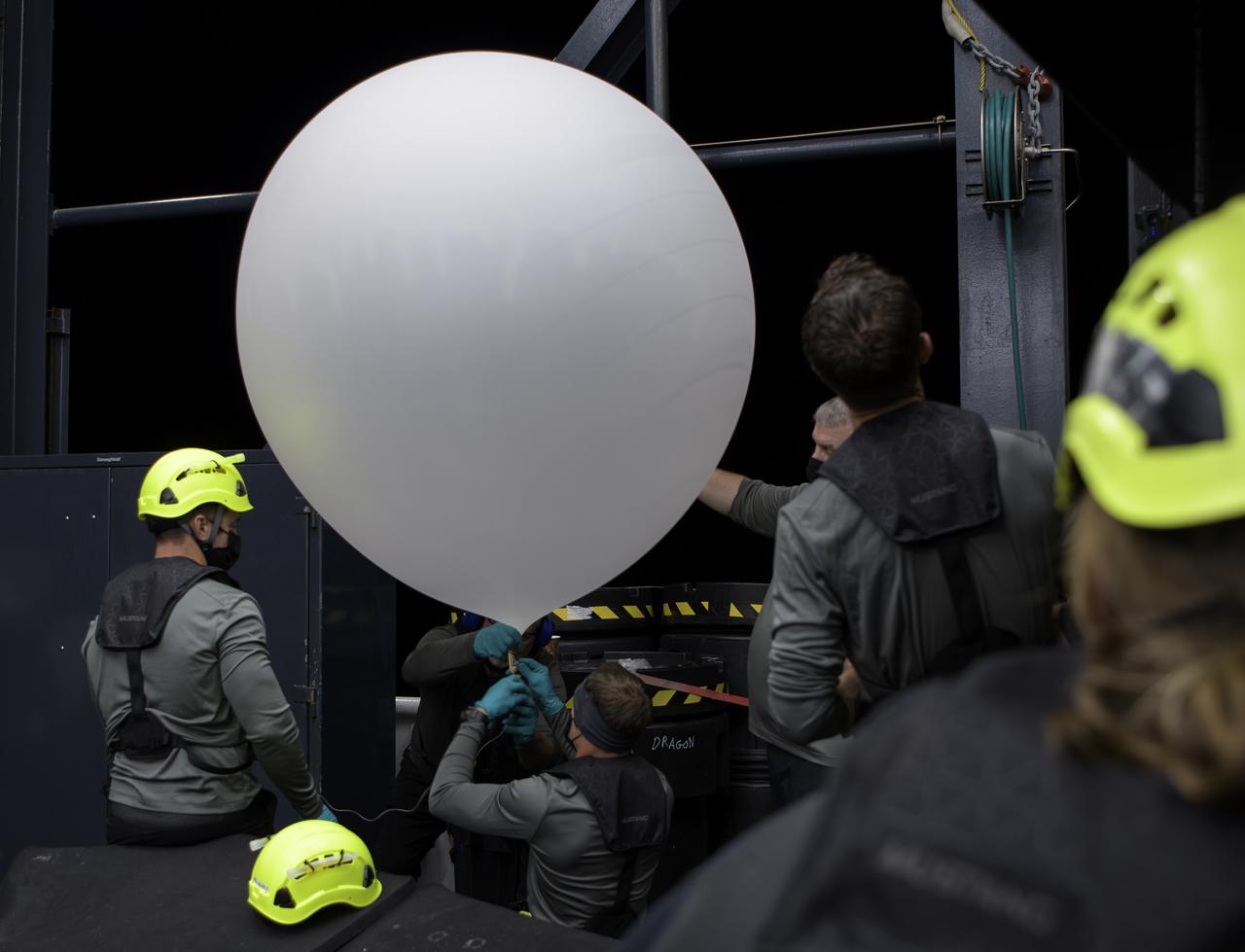
SpaceX support teams onboard the SpaceX GO Navigator recovery ship prepare to launch a weather balloon ahead of the landing of the SpaceX Crew Dragon Resilience spacecraft with NASA astronauts Mike Hopkins, Shannon Walker, and Victor Glover, and Japan Aerospace Exploration Agency (JAXA) astronaut Soichi Noguchi aboard in the Gulf of Mexico off the coast of Panama City, Florida, Saturday, May 1, 2021. NASA’s SpaceX Crew-1 mission is the first crew rotation flight of the SpaceX Crew Dragon spacecraft and Falcon 9 rocket with astronauts to the International Space Station as part of the agency’s Commercial Crew Program. Photo Credit: (NASA/Bill Ingalls)
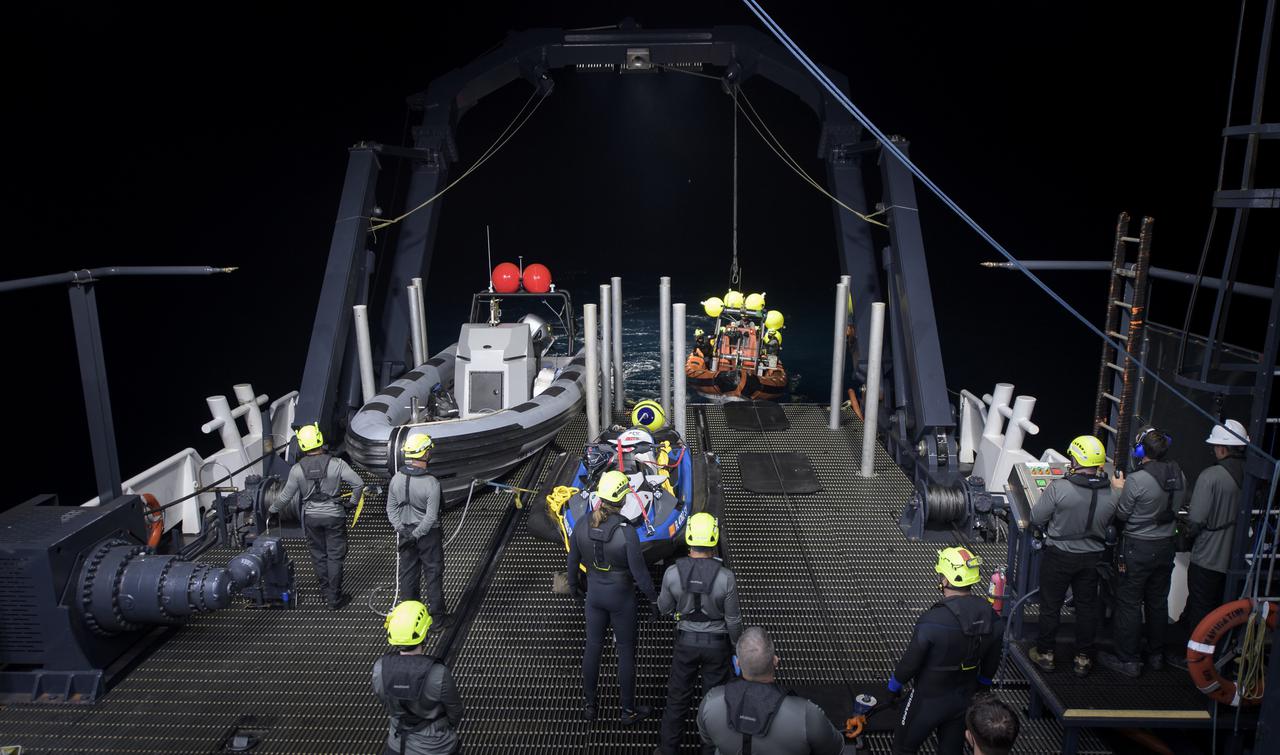
NASA and SpaceX support teams onboard the SpaceX GO Navigator recovery ship prepare for the landing of the SpaceX Crew Dragon Resilience spacecraft with NASA astronauts Mike Hopkins, Shannon Walker, and Victor Glover, and Japan Aerospace Exploration Agency (JAXA) astronaut Soichi Noguchi aboard in the Gulf of Mexico off the coast of Panama City, Florida, Saturday, May 1, 2021. NASA’s SpaceX Crew-1 mission is the first crew rotation flight of the SpaceX Crew Dragon spacecraft and Falcon 9 rocket with astronauts to the International Space Station as part of the agency’s Commercial Crew Program. Photo Credit: (NASA/Bill Ingalls)
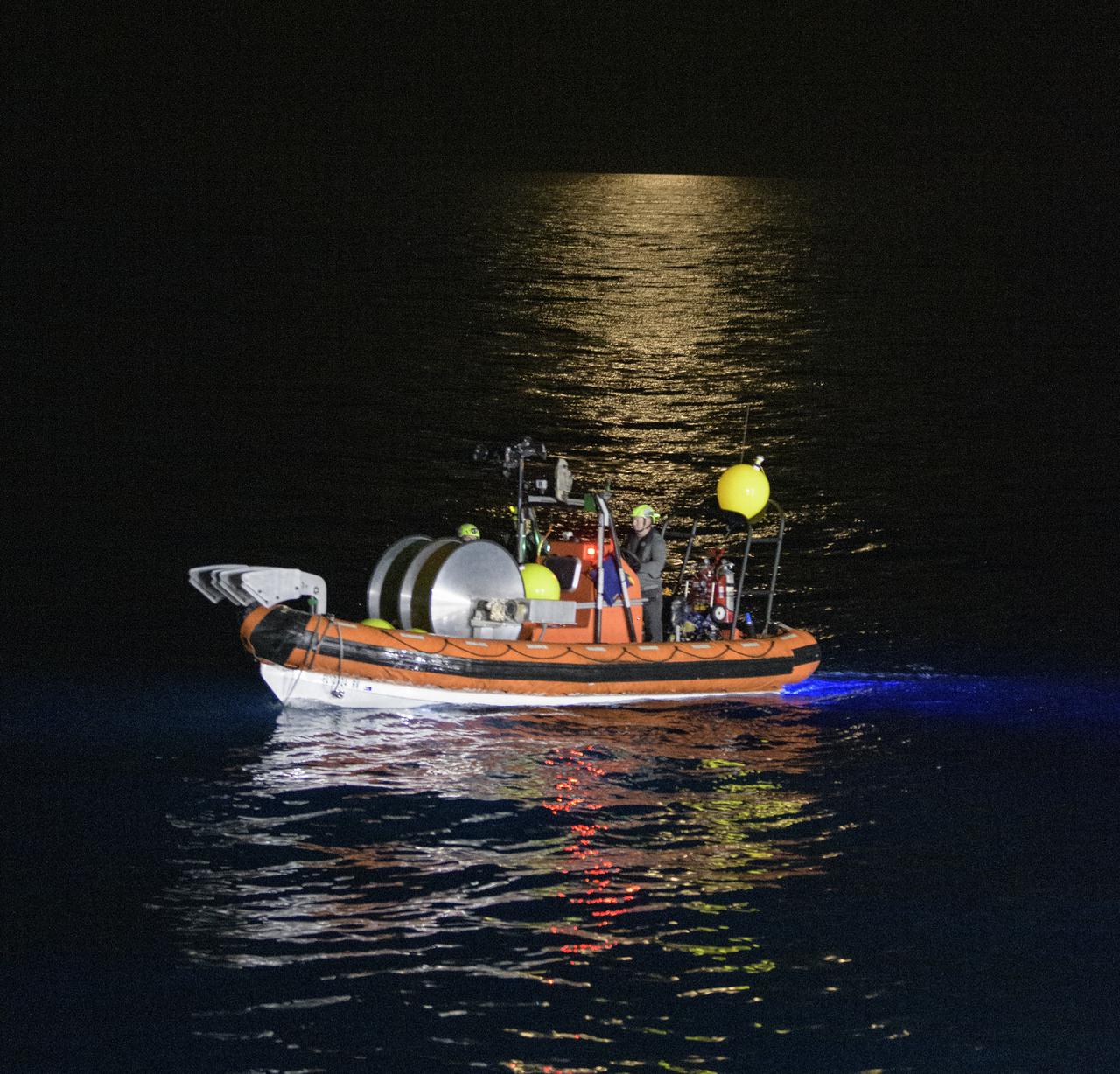
SpaceX support teams deploy in fast boats off the SpaceX GO Navigator recovery ship as they prepare for the landing of the SpaceX Crew Dragon Resilience spacecraft with NASA astronauts Mike Hopkins, Shannon Walker, and Victor Glover, and Japan Aerospace Exploration Agency (JAXA) astronaut Soichi Noguchi aboard in the Gulf of Mexico off the coast of Panama City, Florida, Sunday, May 2, 2021. NASA’s SpaceX Crew-1 mission is the first crew rotation flight of the SpaceX Crew Dragon spacecraft and Falcon 9 rocket with astronauts to the International Space Station as part of the agency’s Commercial Crew Program. Photo Credit: (NASA/Bill Ingalls)
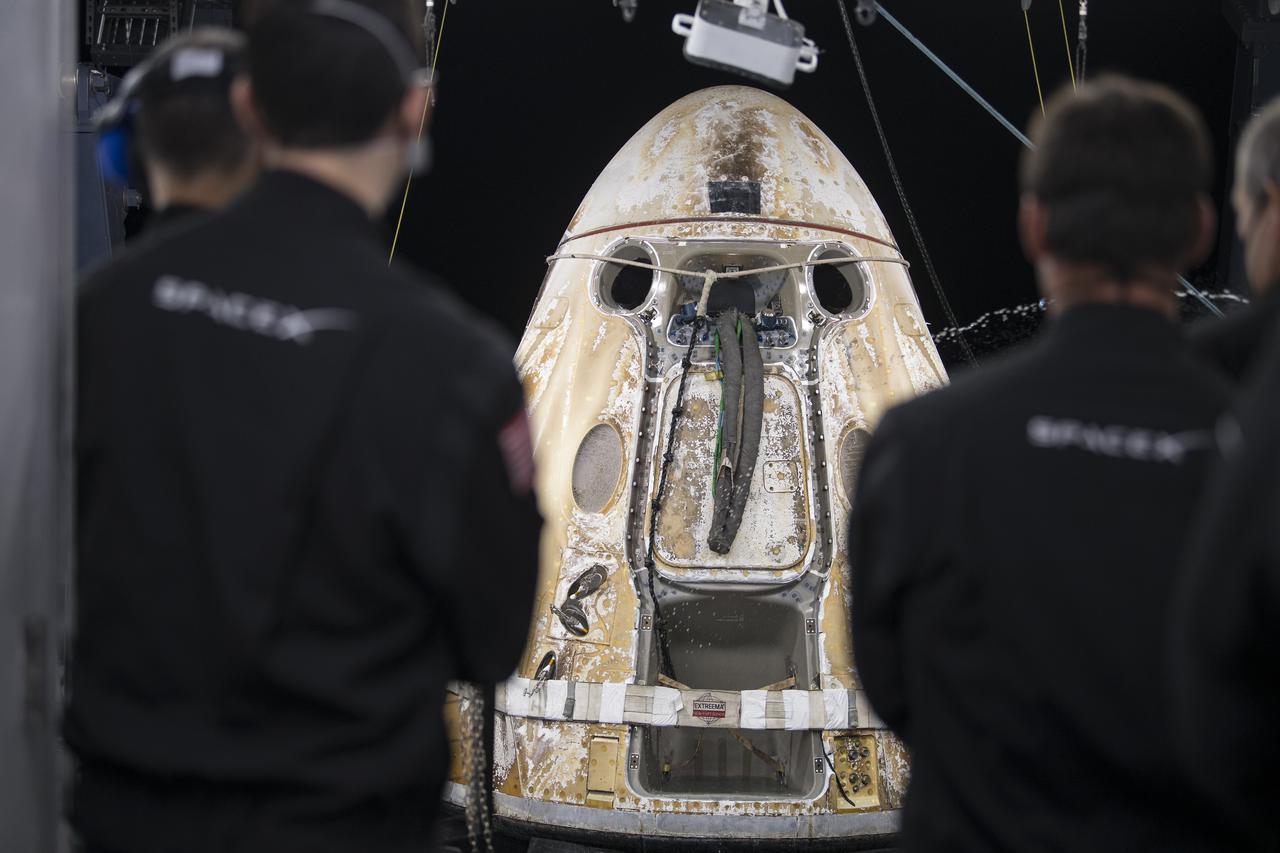
The SpaceX Crew Dragon Endeavour spacecraft is seen as it is lifted onto the SpaceX GO Navigator recovery ship shortly after having landed in the Gulf of Mexico off the coast of Pensacola, Florida with NASA astronauts Shane Kimbrough and Megan McArthur, Japan Aerospace Exploration Agency (JAXA) astronaut Aki Hoshide, and ESA (European Space Agency) astronaut Thomas Pesquet aboard, Monday, Nov. 8, 2021. NASA’s SpaceX Crew-2 mission is the second operational mission of the SpaceX Crew Dragon spacecraft and Falcon 9 rocket to the International Space Station as part of the agency’s Commercial Crew Program. Photo Credit: (NASA/Aubrey Gemignani)
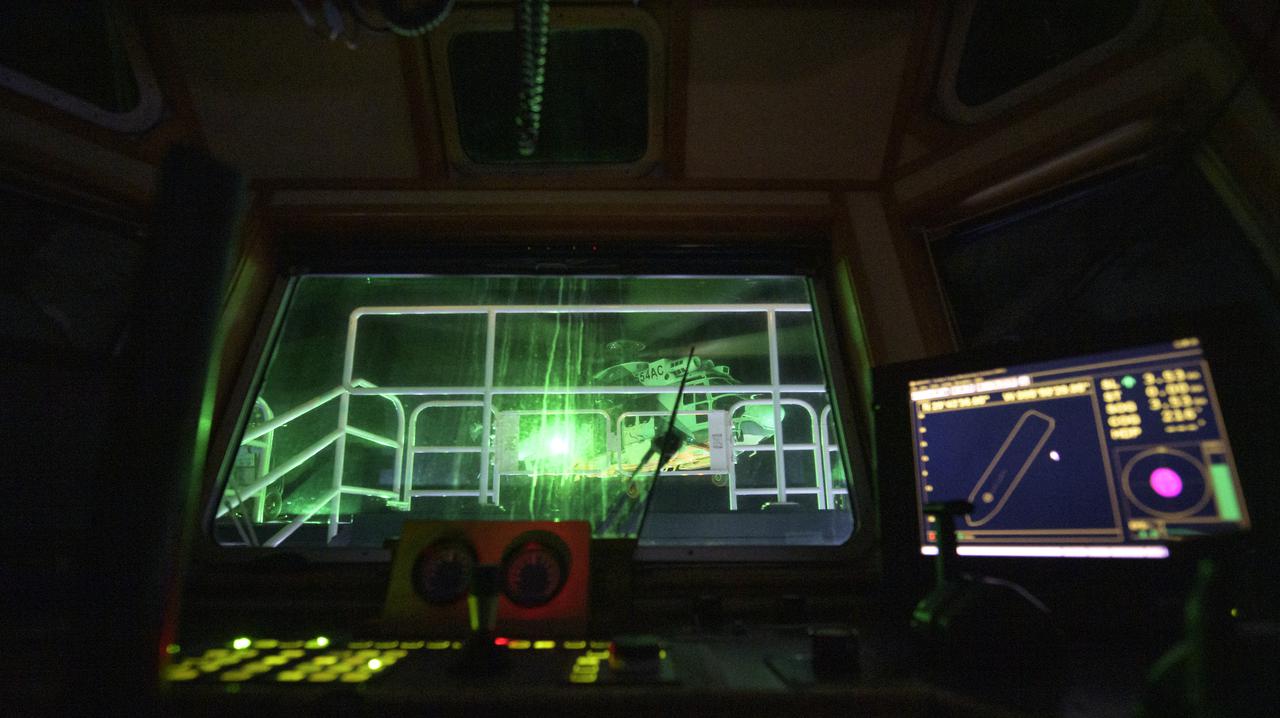
NASA and SpaceX support teams arrive via helicopter to the SpaceX GO Navigator recovery ship in order to prepare for the landing of the SpaceX Crew Dragon Resilience spacecraft with NASA astronauts Mike Hopkins, Shannon Walker, and Victor Glover, and Japan Aerospace Exploration Agency (JAXA) astronaut Soichi Noguchi aboard in the Gulf of Mexico off the coast of Panama City, Florida, Saturday, May 1, 2021. NASA’s SpaceX Crew-1 mission is the first crew rotation flight of the SpaceX Crew Dragon spacecraft and Falcon 9 rocket with astronauts to the International Space Station as part of the agency’s Commercial Crew Program. Photo Credit: (NASA/Bill Ingalls)
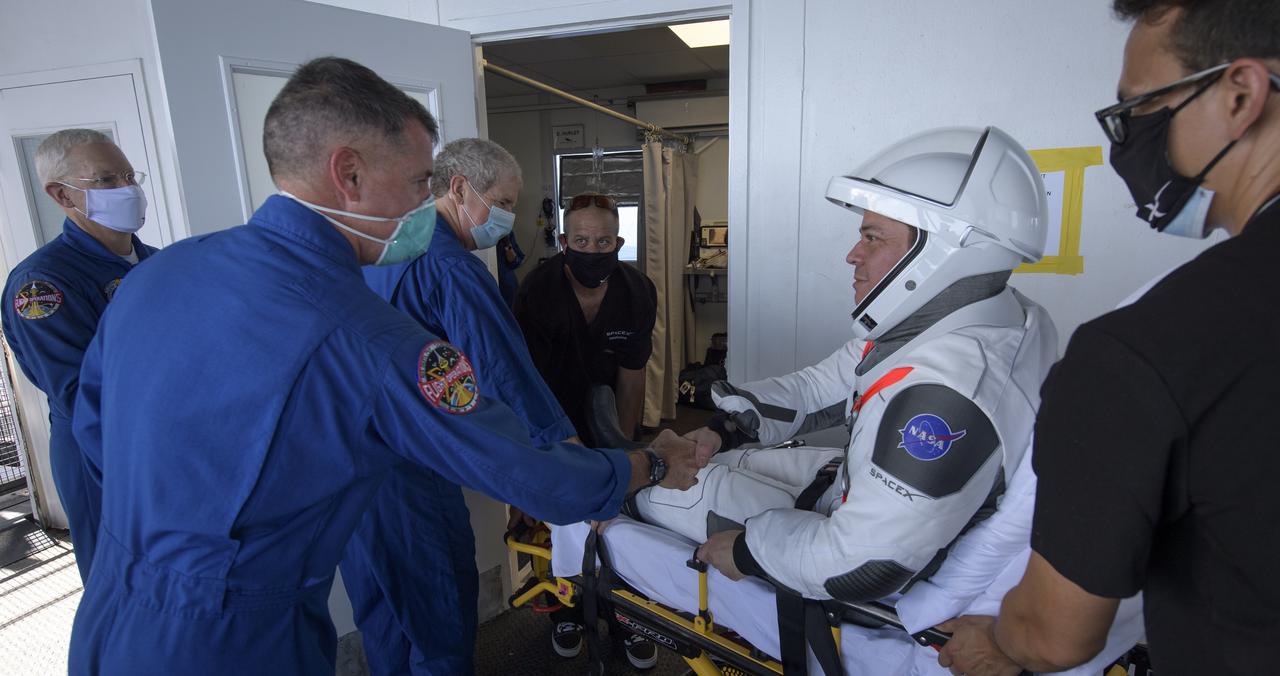
NASA astronaut Robert Behnken is greeted by NASA astronaut and Crew Recovery Chief Shane Kimbrough after egressing the SpaceX Crew Dragon Endeavour spacecraft onboard the SpaceX GO Navigator recovery ship after he and NASA astronaut Douglas Hurley landed in the Gulf of Mexico off the coast of Pensacola, Florida, Sunday, Aug. 2, 2020. The Demo-2 test flight for NASA's Commercial Crew Program was the first to deliver astronauts to the International Space Station and return them safely to Earth onboard a commercially built and operated spacecraft. Behnken and Hurley returned after spending 64 days in space. Photo Credit: (NASA/Bill Ingalls)
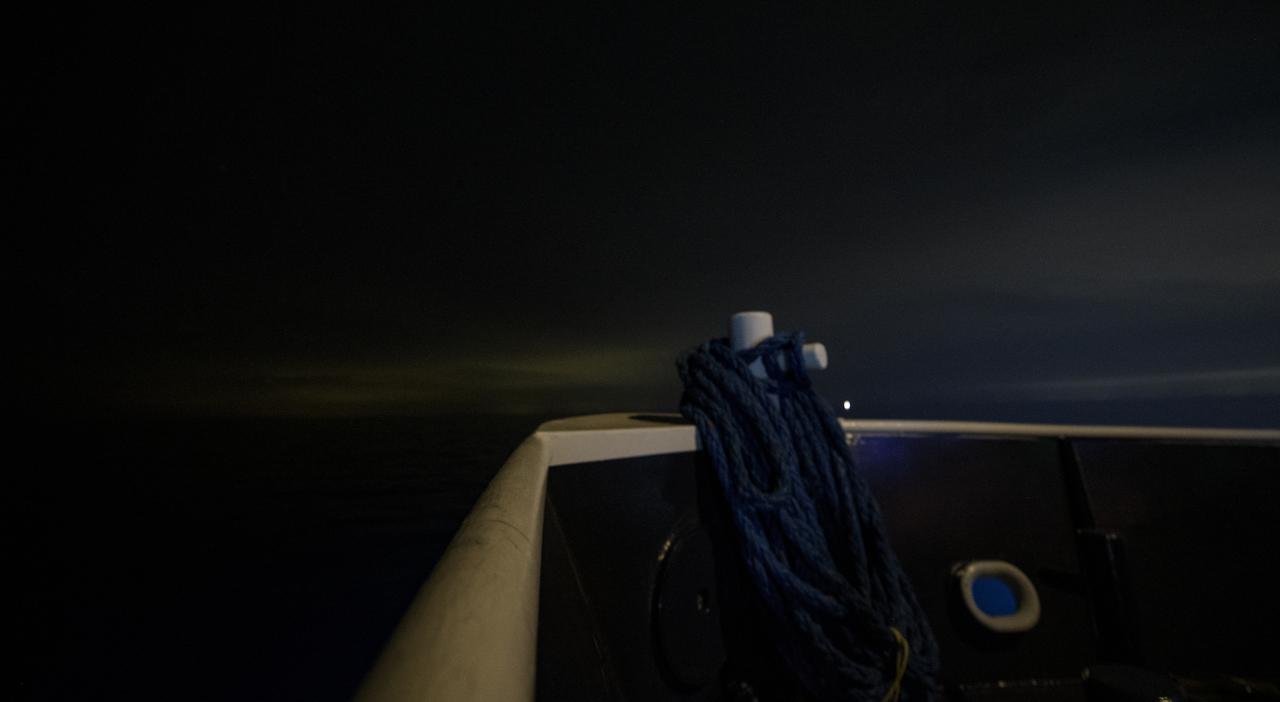
The night sky off the bow of the SpaceX GO Navigator recovery ship is seen in this one second exposure photograph as NASA and SpaceX support teams prepare for the landing of the SpaceX Crew Dragon Resilience spacecraft with NASA astronauts Mike Hopkins, Shannon Walker, and Victor Glover, and Japan Aerospace Exploration Agency (JAXA) astronaut Soichi Noguchi aboard in the Gulf of Mexico off the coast of Panama City, Florida, Saturday, May 1, 2021. NASA’s SpaceX Crew-1 mission is the first crew rotation flight of the SpaceX Crew Dragon spacecraft and Falcon 9 rocket with astronauts to the International Space Station as part of the agency’s Commercial Crew Program. Photo Credit: (NASA/Bill Ingalls)
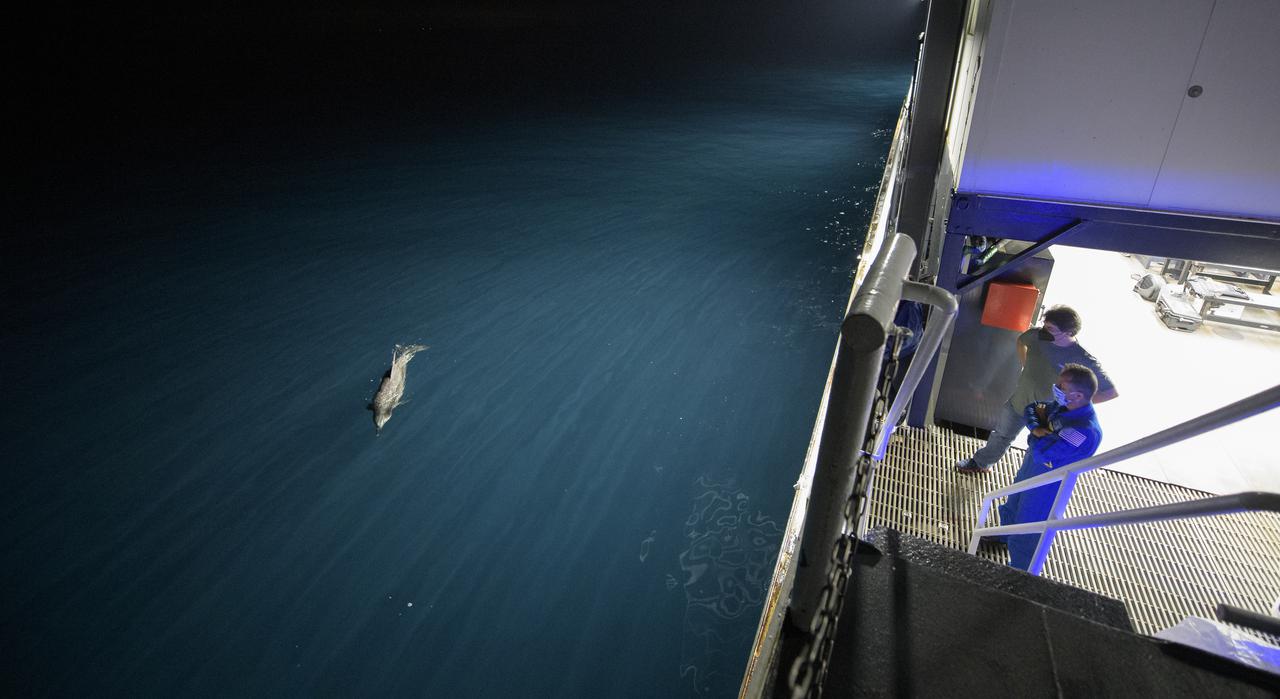
Manager, NASA ISS Transportation Integration Office, Bill Spetch and NASA astronaut representative Joe Acaba watch dolphin swim along with the SpaceX GO Navigator recovery ship as NASA and SpaceX teams prepare for the landing of the SpaceX Crew Dragon Resilience spacecraft with NASA astronauts Mike Hopkins, Shannon Walker, and Victor Glover, and Japan Aerospace Exploration Agency (JAXA) astronaut Soichi Noguchi aboard in the Gulf of Mexico off the coast of Panama City, Florida, Saturday, May 1, 2021. NASA’s SpaceX Crew-1 mission is the first crew rotation flight of the SpaceX Crew Dragon spacecraft and Falcon 9 rocket with astronauts to the International Space Station as part of the agency’s Commercial Crew Program. Photo Credit: (NASA/Bill Ingalls)
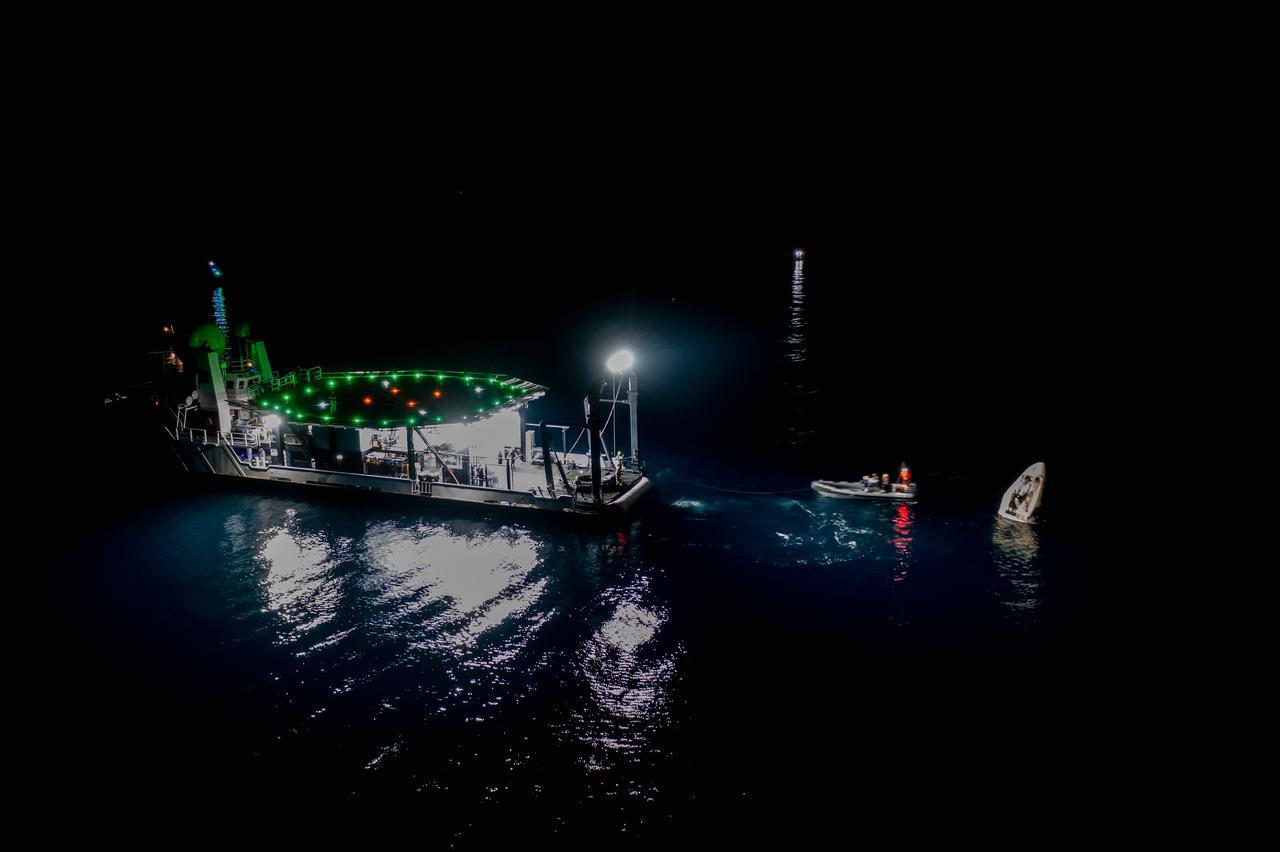
The SpaceX Crew Dragon Resilience splashes down in the Gulf of Mexico off the coast of Panama City, in Florida, at 2:56 a.m. EDT on May 2, 2021. Astronauts Michael Hopkins, Victor Glover, and Shannon Walker of NASA, and Soichi Noguchi of JAXA (Japan Aerospace Exploration Agency) completed Crew-1, the first crew rotation mission to the International Space Station in partnership with NASA as part of the agency’s Commercial Crew Program. At left is SpaceX’s Go Navigator recovery ship. Teams on two fast boats and Go Navigator will secure Crew Dragon to be hoisted onto the main deck of the recovery ship with the astronauts inside.
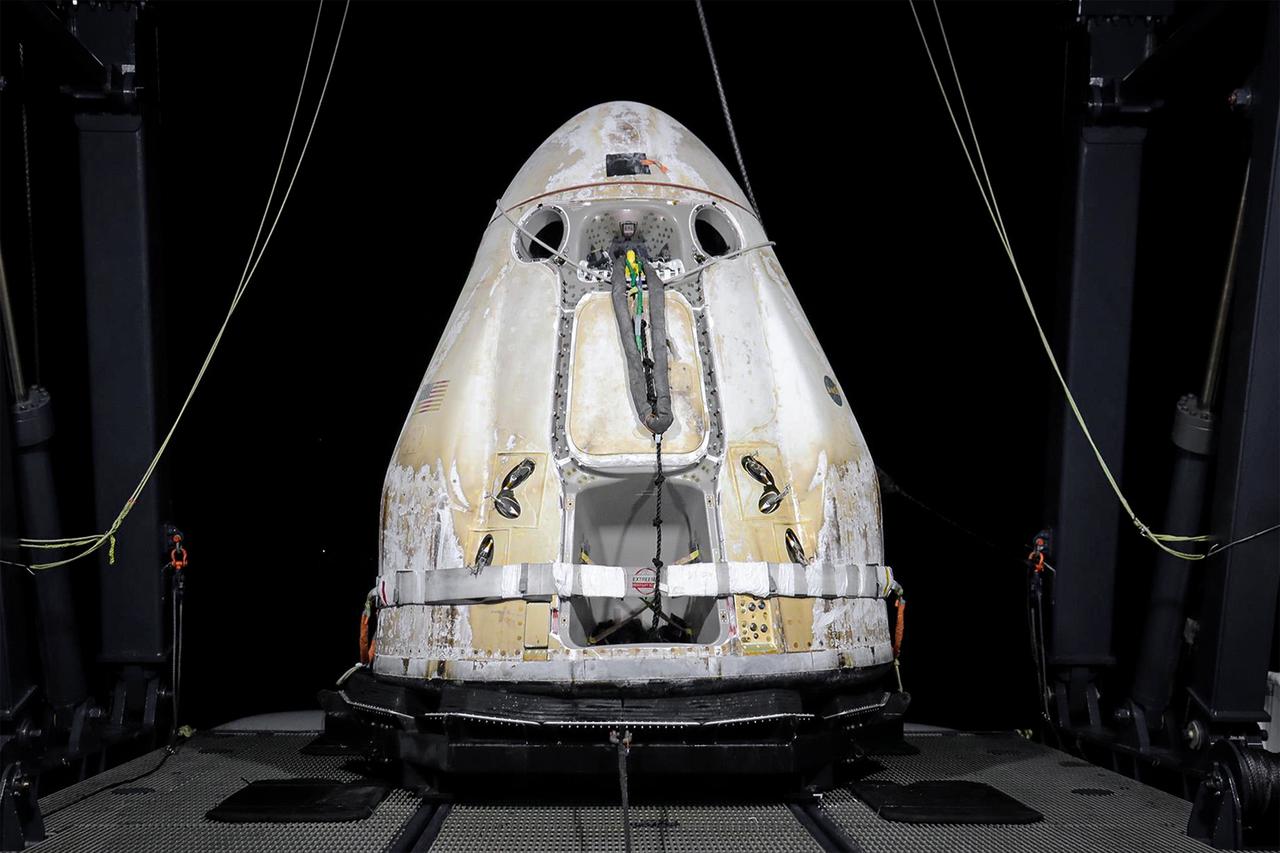
Shown here is the SpaceX Cargo Dragon spacecraft on board the company's Go Navigator recovery ship after making its successful parachute-assisted splashdown west of Tampa off the Florida coast on Jan. 13, 2020, at 8:26 p.m. EST. Just after loading Dragon onto Go Navigator, SpaceX packed an Airbus H225 helicopter with the time-sensitive research cargo for delivery to NASA’s Kennedy Space Center. Dragon returned more than 4,400 pounds of scientific experiments and other cargo from the International Space Station. The upgraded cargo Dragon capsule boasts double the powered locker capacity to preserve science samples, allowing for a significant increase in the research that can be carried back to Earth. Photo credit: SpaceX

Shown here is the SpaceX Cargo Dragon spacecraft on board the company's Go Navigator recovery ship after making its successful parachute-assisted splashdown west of Tampa off the Florida coast on Jan. 13, 2020, at 8:26 p.m. EST. Just after loading Dragon onto Go Navigator, SpaceX packed an Airbus H225 helicopter with the time-sensitive research cargo for delivery to NASA’s Kennedy Space Center. Dragon returned more than 4,400 pounds of scientific experiments and other cargo from the International Space Station. The upgraded cargo Dragon capsule boasts double the powered locker capacity to preserve science samples, allowing for a significant increase in the research that can be carried back to Earth. Photo credit: SpaceX

Large, eruptive prominence in He II at 304Å, with an image of the Earth added for size comparison. This prominence from 24 July 1999 is particularly large and looping, extending over 35 Earths out from the Sun. Erupting prominences (when Earthward directed) can affect communications, navigation systems, even power grids, while also producing auroras visible in the night skies. Credit: NASA/GSFC/SOHO/ESA To learn more go to the SOHO website: <a href="http://sohowww.nascom.nasa.gov/home.html" rel="nofollow">sohowww.nascom.nasa.gov/home.html</a> To learn more about NASA's Sun Earth Day go here: <a href="http://sunearthday.nasa.gov/2010/index.php" rel="nofollow">sunearthday.nasa.gov/2010/index.php</a>
!["I was on console as a part of the primary launch team [for Artemis I]. I was the Orion system specialist for Guidance, Navigation, and Control. … In a few missions, we're sending astronauts to the Moon again, so being a part of the very, very first mission [was memorable]. … I wasn't here in 2017 when they first began discussions, but [I can’t even explain how it felt] that within just the four-year journey, I could see how far we had come: from when we were talking about getting the hardware here, to the hardware arriving, and then [to realize] ‘Oh, it's going today, we’re going!’ “… From a personal standpoint, I'm a person of faith, so for me, it was like: We launched at night — it was in the darkest part of the [night]. … Once the rocket launched, [I saw] how it illuminated such a dark space. So even when you're in a dark space, you can let your light shine. And it won't just shine for you and those that are immediately around you, but even people that you don't know will notice it, even people that you will never see will notice your light shining and be inspired.” — Ales-cia Winsley, Guidance, Navigation, and Flight Control Engineer, Kennedy Space Center Interviewer: NASA / Michelle Zajac](https://images-assets.nasa.gov/image/KSC-20231128-PH-CSH01_0004/KSC-20231128-PH-CSH01_0004~medium.jpg)
"I was on console as a part of the primary launch team [for Artemis I]. I was the Orion system specialist for Guidance, Navigation, and Control. … In a few missions, we're sending astronauts to the Moon again, so being a part of the very, very first mission [was memorable]. … I wasn't here in 2017 when they first began discussions, but [I can’t even explain how it felt] that within just the four-year journey, I could see how far we had come: from when we were talking about getting the hardware here, to the hardware arriving, and then [to realize] ‘Oh, it's going today, we’re going!’ “… From a personal standpoint, I'm a person of faith, so for me, it was like: We launched at night — it was in the darkest part of the [night]. … Once the rocket launched, [I saw] how it illuminated such a dark space. So even when you're in a dark space, you can let your light shine. And it won't just shine for you and those that are immediately around you, but even people that you don't know will notice it, even people that you will never see will notice your light shining and be inspired.” — Ales-cia Winsley, Guidance, Navigation, and Flight Control Engineer, Kennedy Space Center Interviewer: NASA / Michelle Zajac
!["I was on console as a part of the primary launch team [for Artemis I]. I was the Orion system specialist for Guidance, Navigation, and Control. … In a few missions, we're sending astronauts to the Moon again, so being a part of the very, very first mission [was memorable]. … I wasn't here in 2017 when they first began discussions, but [I can’t even explain how it felt] that within just the four-year journey, I could see how far we had come: from when we were talking about getting the hardware here, to the hardware arriving, and then [to realize] ‘Oh, it's going today, we’re going!’ “… From a personal standpoint, I'm a person of faith, so for me, it was like: We launched at night — it was in the darkest part of the [night]. … Once the rocket launched, [I saw] how it illuminated such a dark space. So even when you're in a dark space, you can let your light shine. And it won't just shine for you and those that are immediately around you, but even people that you don't know will notice it, even people that you will never see will notice your light shining and be inspired.” — Ales-cia Winsley, Guidance, Navigation, and Flight Control Engineer, Kennedy Space Center Interviewer: NASA / Michelle Zajac](https://images-assets.nasa.gov/image/KSC-20231128-PH-CSH01_0003/KSC-20231128-PH-CSH01_0003~medium.jpg)
"I was on console as a part of the primary launch team [for Artemis I]. I was the Orion system specialist for Guidance, Navigation, and Control. … In a few missions, we're sending astronauts to the Moon again, so being a part of the very, very first mission [was memorable]. … I wasn't here in 2017 when they first began discussions, but [I can’t even explain how it felt] that within just the four-year journey, I could see how far we had come: from when we were talking about getting the hardware here, to the hardware arriving, and then [to realize] ‘Oh, it's going today, we’re going!’ “… From a personal standpoint, I'm a person of faith, so for me, it was like: We launched at night — it was in the darkest part of the [night]. … Once the rocket launched, [I saw] how it illuminated such a dark space. So even when you're in a dark space, you can let your light shine. And it won't just shine for you and those that are immediately around you, but even people that you don't know will notice it, even people that you will never see will notice your light shining and be inspired.” — Ales-cia Winsley, Guidance, Navigation, and Flight Control Engineer, Kennedy Space Center Interviewer: NASA / Michelle Zajac
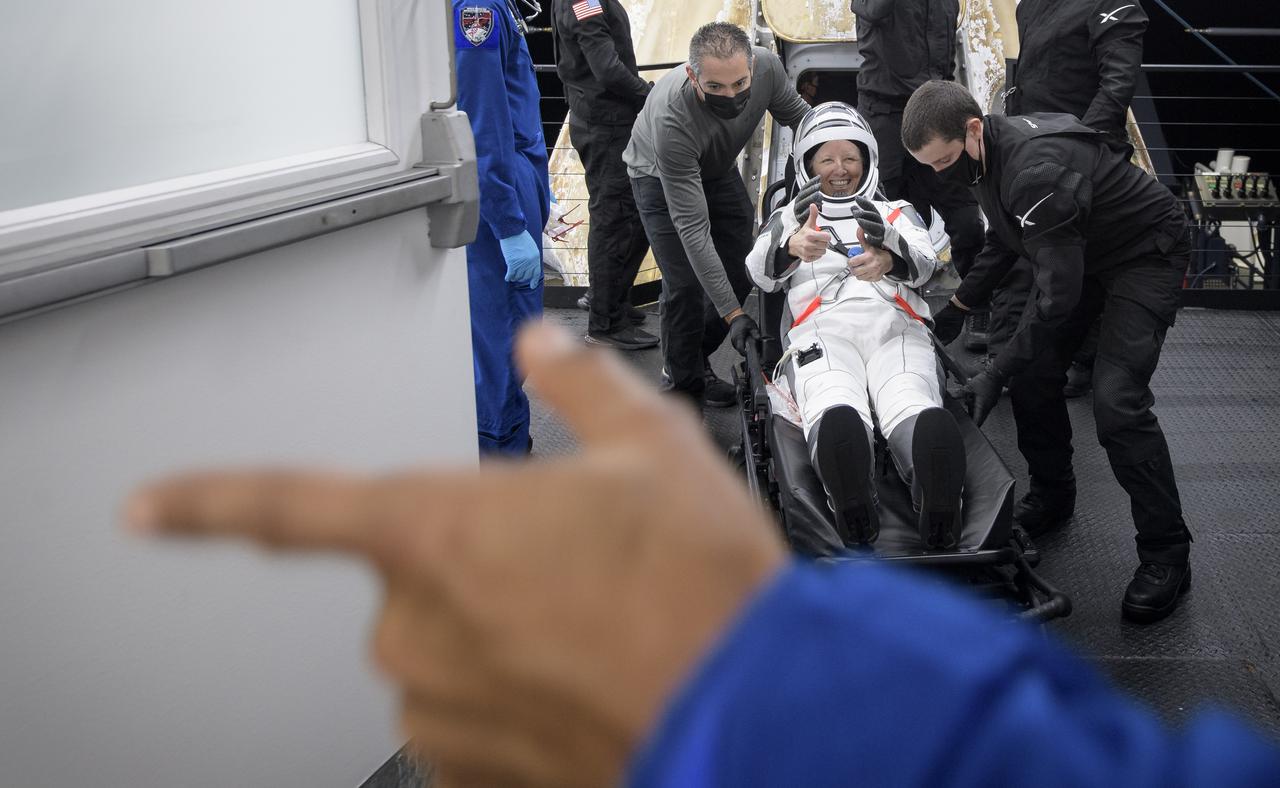
NASA astronaut Shannon Walker smiles and gives a thumbs up after being helped out of the SpaceX Crew Dragon Resilience spacecraft onboard the SpaceX GO Navigator recovery ship after she, NASA astronauts Mike Hopkins, Victor Glover, and Japan Aerospace Exploration Agency (JAXA) astronaut Soichi Noguchi, landed in the Gulf of Mexico off the coast of Panama City, Florida, Sunday, May 2, 2021. NASA’s SpaceX Crew-1 mission was the first crew rotation flight of the SpaceX Crew Dragon spacecraft and Falcon 9 rocket with astronauts to the International Space Station as part of the agency’s Commercial Crew Program. Photo Credit: (NASA/Bill Ingalls)
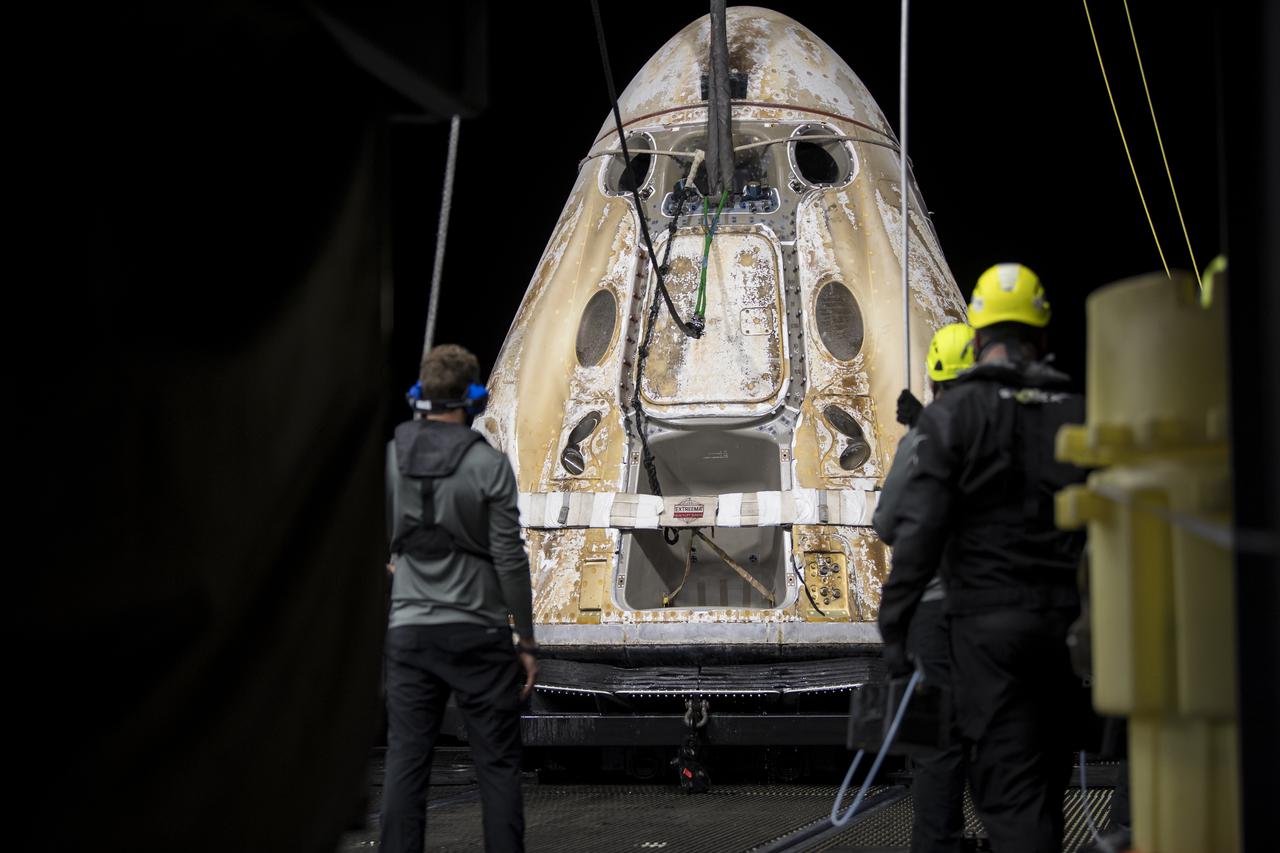
The SpaceX Crew Dragon Endeavour spacecraft is lifted onto the GO Navigator recovery ship after it landed with NASA astronauts Shane Kimbrough and Megan McArthur, Japan Aerospace Exploration Agency (JAXA) astronaut Aki Hoshide, and ESA (European Space Agency) astronaut Thomas Pesquet in the Gulf of Mexico off the coast of Pensacola, Florida, Monday, Nov. 8, 2021. NASA’s SpaceX Crew-2 mission is the second operational mission of the SpaceX Crew Dragon spacecraft and Falcon 9 rocket to the International Space Station as part of the agency’s Commercial Crew Program. Photo Credit: (NASA/Aubrey Gemignani)
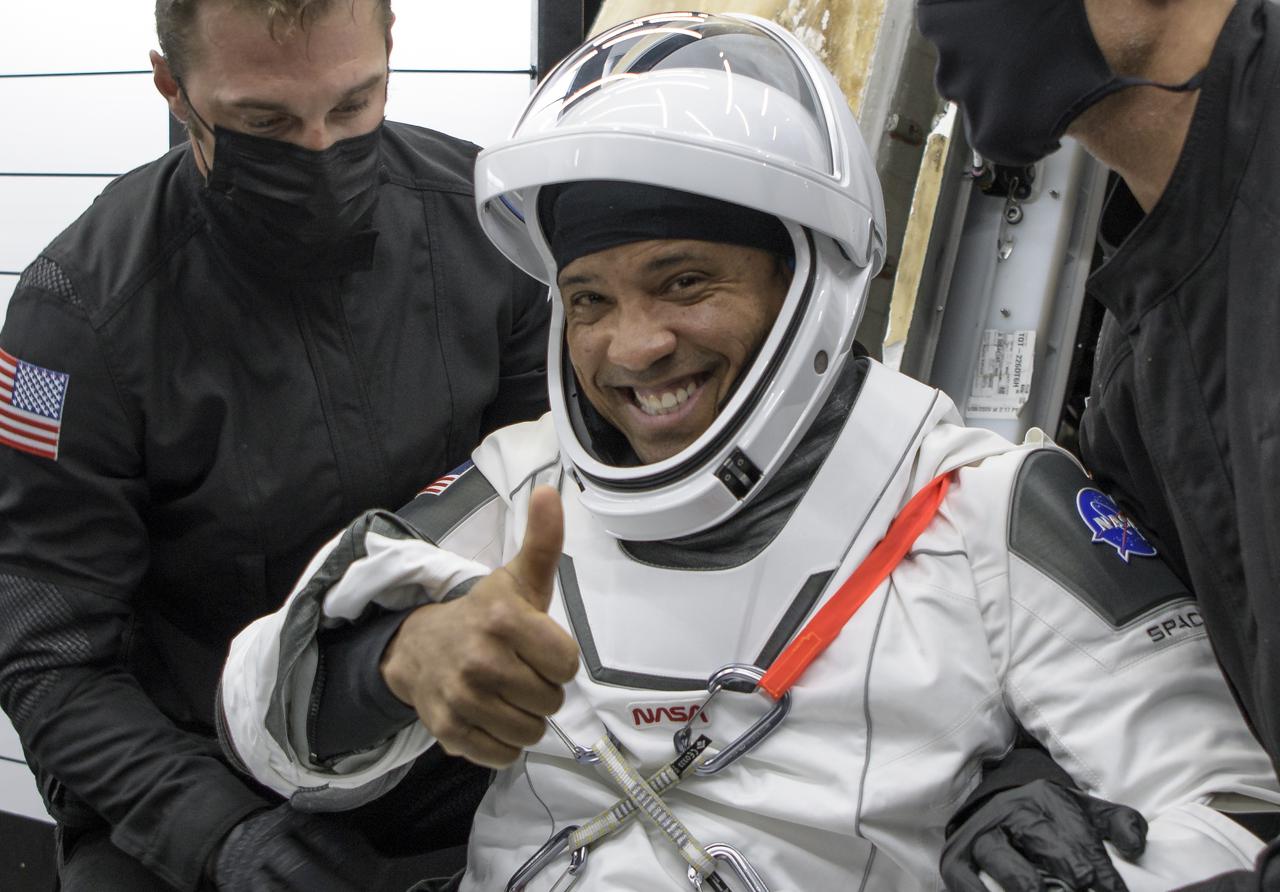
NASA astronaut Victor Glover is helped out of the SpaceX Crew Dragon Resilience spacecraft onboard the SpaceX GO Navigator recovery ship after he, NASA astronauts Mike Hopkins, Shannon Walker, and Japan Aerospace Exploration Agency (JAXA) astronaut Soichi Noguchi, landed in the Gulf of Mexico off the coast of Panama City, Florida, Sunday, May 2, 2021. NASA’s SpaceX Crew-1 mission was the first crew rotation flight of the SpaceX Crew Dragon spacecraft and Falcon 9 rocket with astronauts to the International Space Station as part of the agency’s Commercial Crew Program. Photo Credit: (NASA/Bill Ingalls)
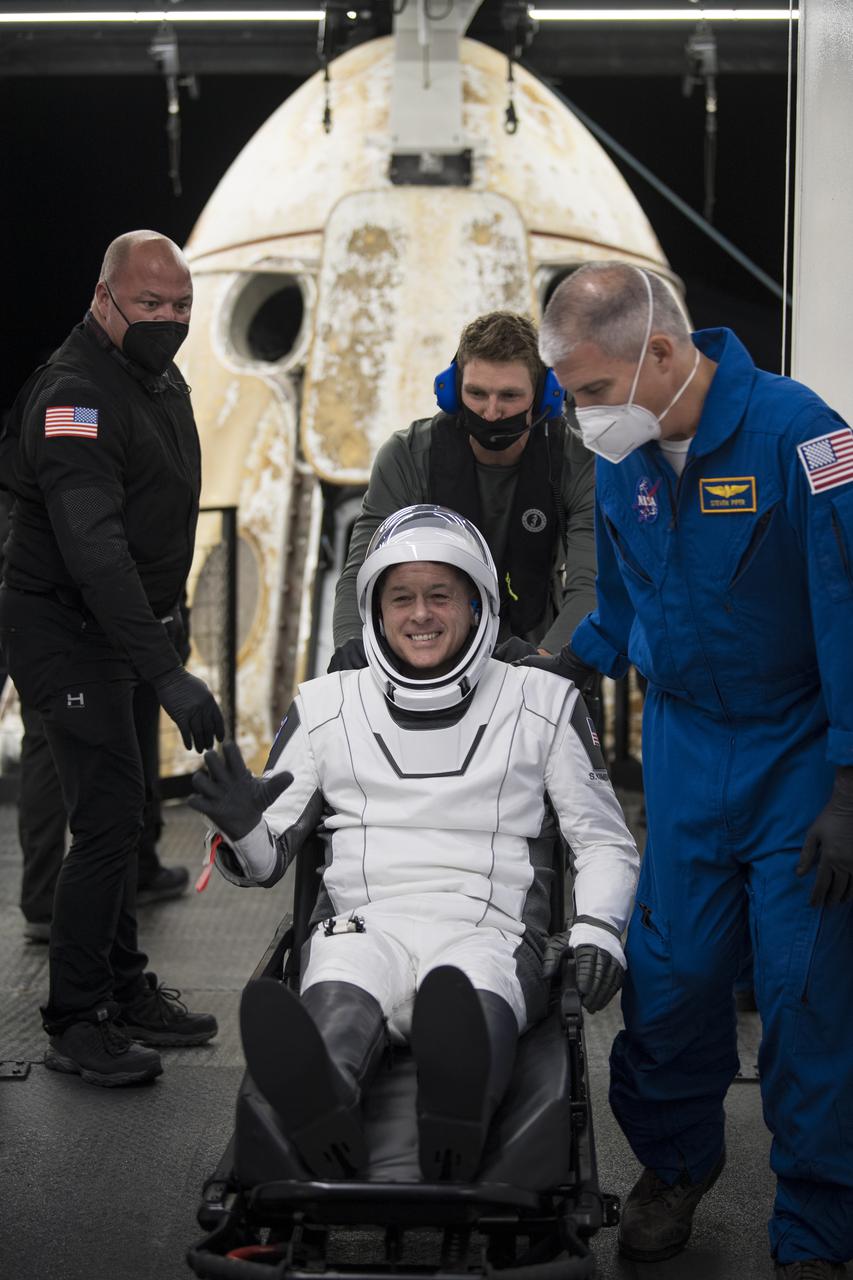
NASA astronaut Shane Kimbrough is seen after being helped out of the SpaceX Crew Dragon Endeavour spacecraft onboard the SpaceX GO Navigator recovery ship after he and NASA astronaut Megan McArthur, Japan Aerospace Exploration Agency (JAXA) astronaut Aki Hoshide, and ESA (European Space Agency) astronaut Thomas Pesquet landed in the Gulf of Mexico off the coast of Pensacola, Florida, Monday, Nov. 8, 2021. NASA’s SpaceX Crew-2 mission is the second operational mission of the SpaceX Crew Dragon spacecraft and Falcon 9 rocket to the International Space Station as part of the agency’s Commercial Crew Program. Photo Credit: (NASA/Aubrey Gemignani)
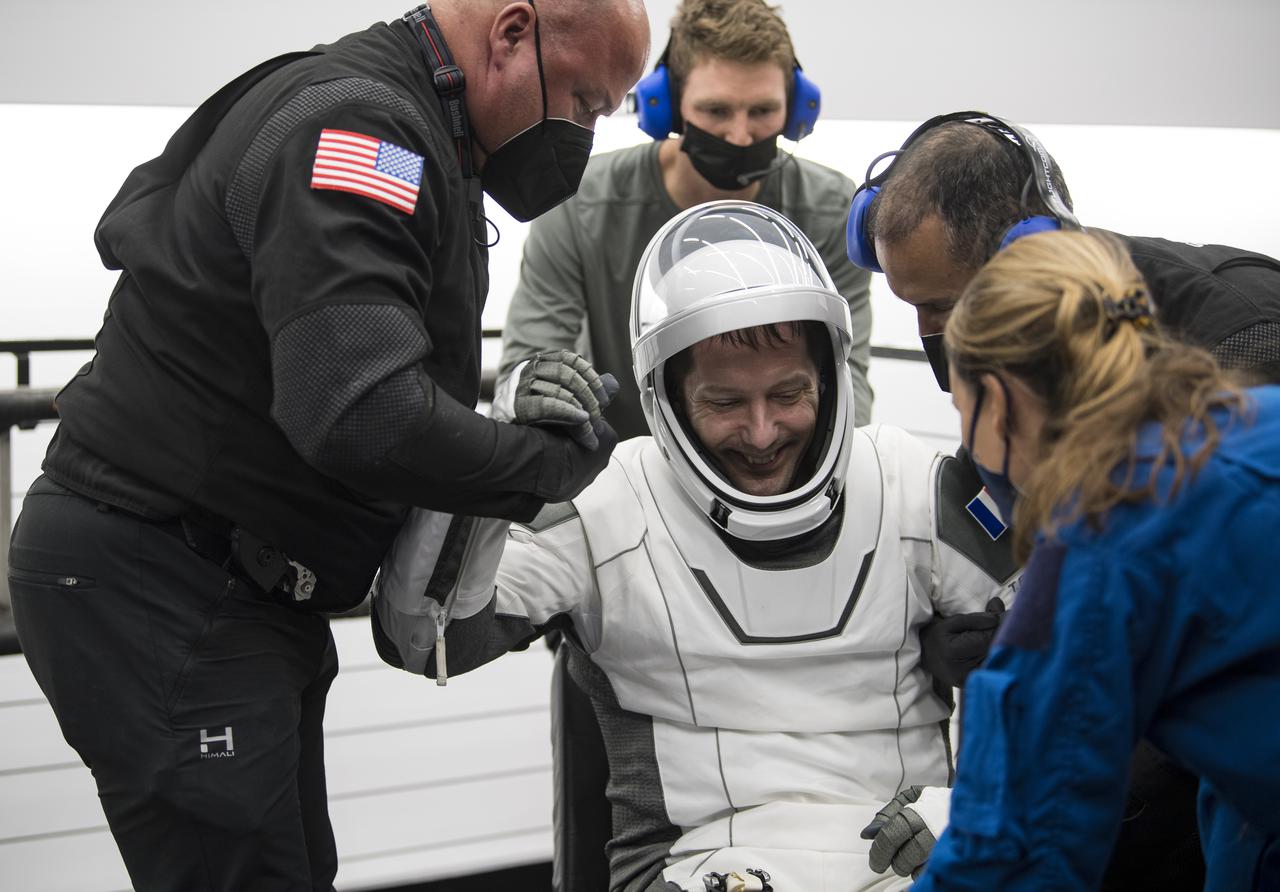
ESA (European Space Agency) astronaut Thomas Pesquet is helped out of the SpaceX Crew Dragon Endeavour spacecraft onboard the SpaceX GO Navigator recovery ship after he and NASA astronauts Shane Kimbrough and Megan McArthur, and Japan Aerospace Exploration Agency (JAXA) astronaut Aki Hoshide landed in the Gulf of Mexico off the coast of Pensacola, Florida, Monday, Nov. 8, 2021. NASA’s SpaceX Crew-2 mission is the second operational mission of the SpaceX Crew Dragon spacecraft and Falcon 9 rocket to the International Space Station as part of the agency’s Commercial Crew Program. Photo Credit: (NASA/Aubrey Gemignani)
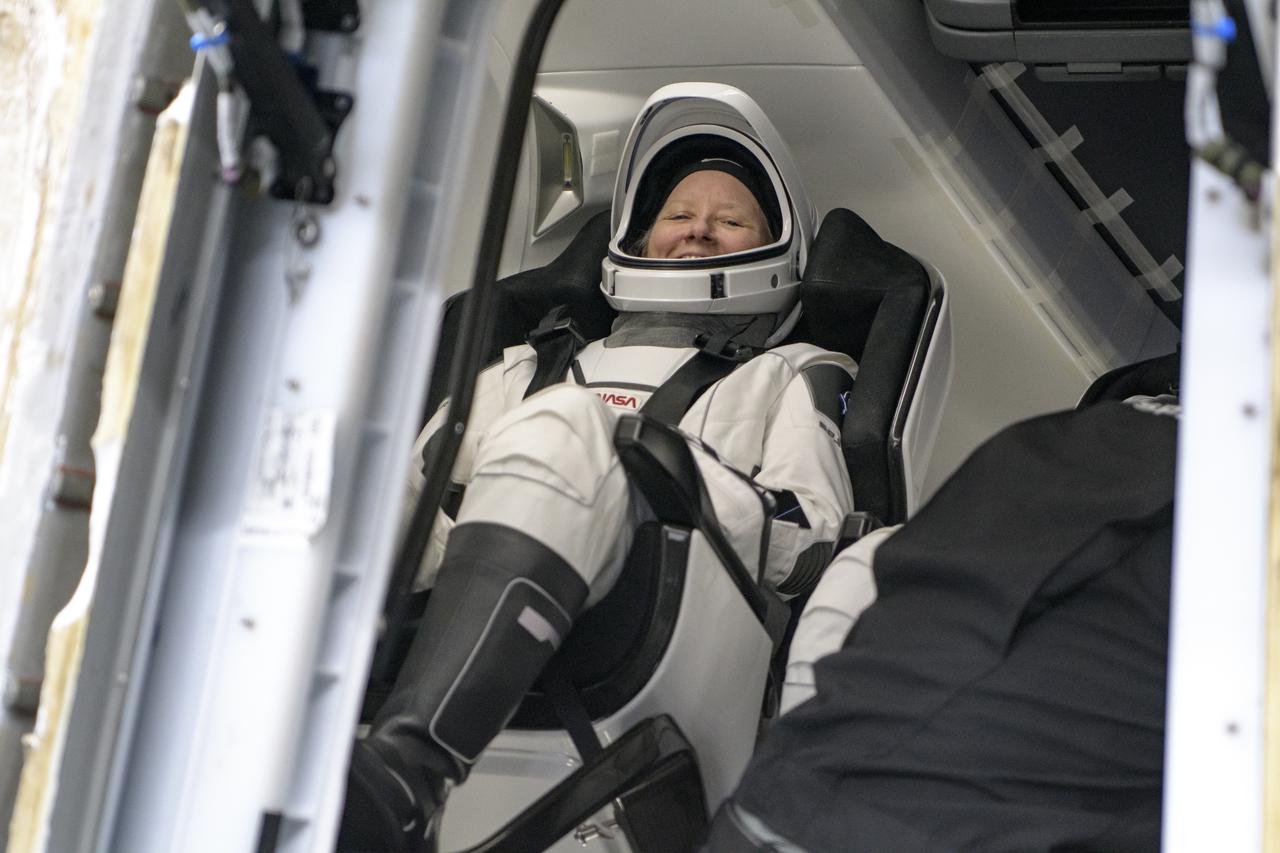
NASA astronaut Shannon Walker smiles prior to being helped out of the SpaceX Crew Dragon Resilience spacecraft onboard the SpaceX GO Navigator recovery ship after she, NASA astronauts Mike Hopkins, Victor Glover, and Japan Aerospace Exploration Agency (JAXA) astronaut Soichi Noguchi, landed in the Gulf of Mexico off the coast of Panama City, Florida, Sunday, May 2, 2021. NASA’s SpaceX Crew-1 mission was the first crew rotation flight of the SpaceX Crew Dragon spacecraft and Falcon 9 rocket with astronauts to the International Space Station as part of the agency’s Commercial Crew Program. Photo Credit: (NASA/Bill Ingalls)
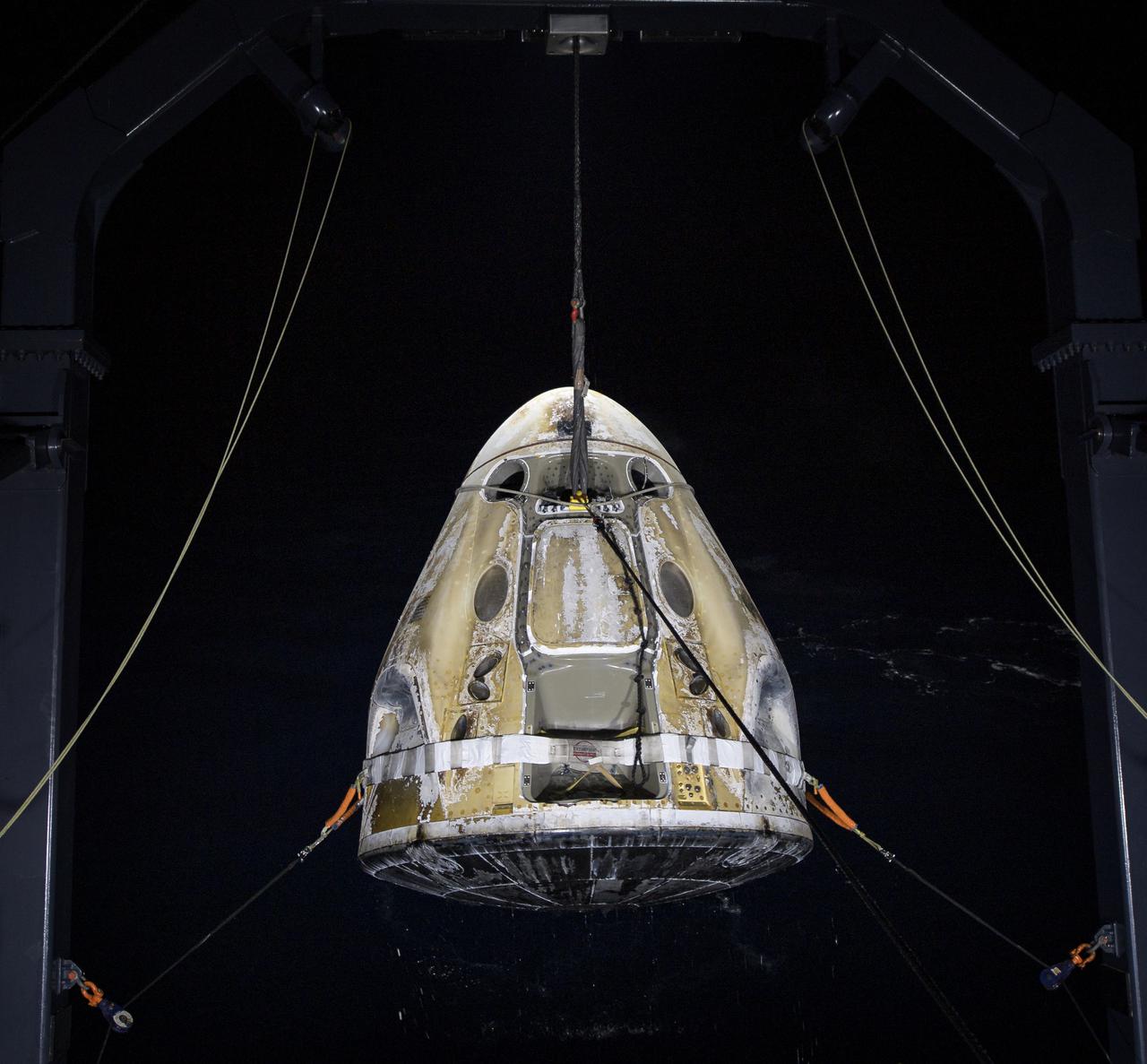
The SpaceX Crew Dragon Resilience spacecraft is lifted onto the GO Navigator recovery ship after it landed with NASA astronauts Mike Hopkins, Shannon Walker, and Victor Glover, and Japan Aerospace Exploration Agency (JAXA) astronaut Soichi Noguchi aboard in the Gulf of Mexico off the coast of Panama City, Florida, Sunday, May 2, 2021. NASA’s SpaceX Crew-1 mission was the first crew rotation flight of the SpaceX Crew Dragon spacecraft and Falcon 9 rocket with astronauts to the International Space Station as part of the agency’s Commercial Crew Program. Photo Credit: (NASA/Bill Ingalls)
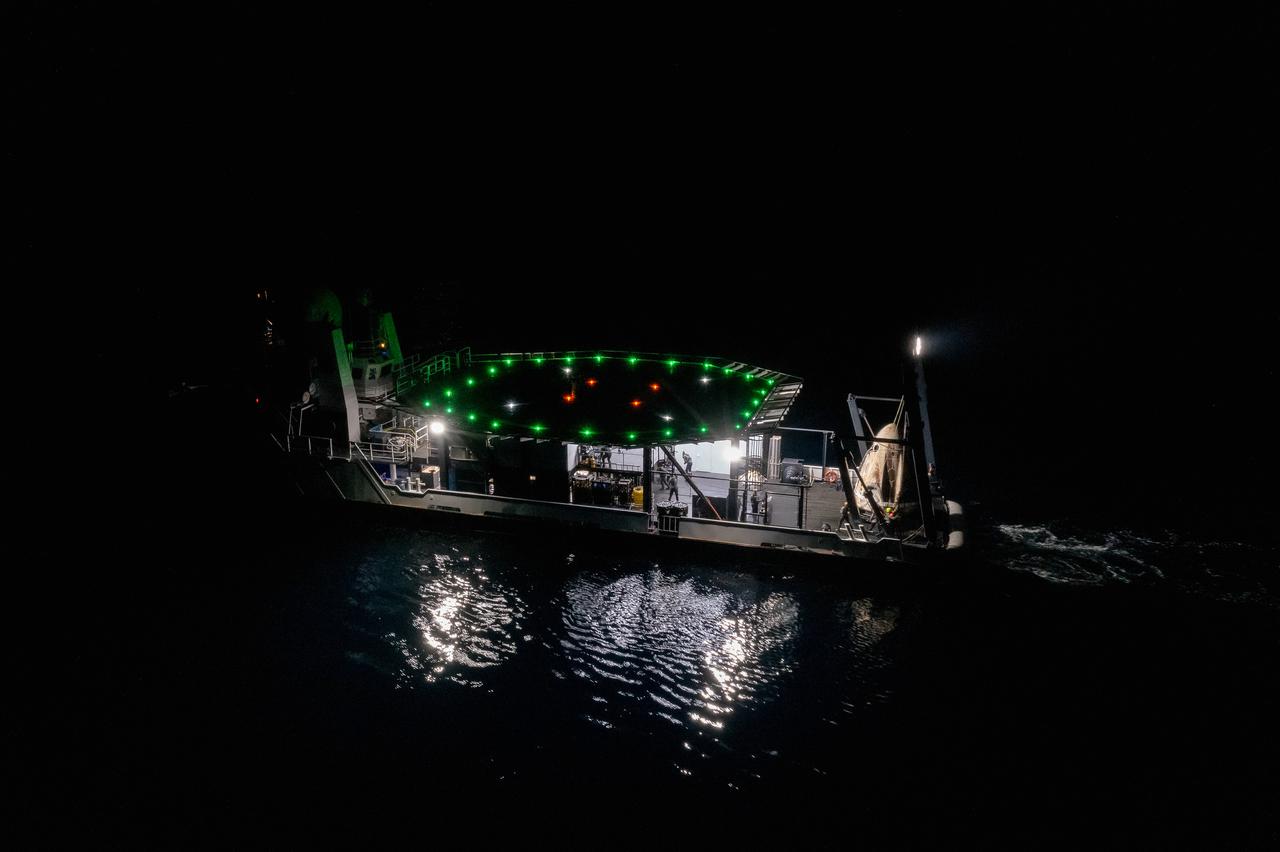
The SpaceX Crew Dragon Resilience splashed down in the Gulf of Mexico off the coast of Panama City, in Florida, at 2:56 a.m. EDT on May 2, 2021. Astronauts Michael Hopkins, Victor Glover, and Shannon Walker of NASA, and Soichi Noguchi of JAXA (Japan Aerospace Exploration Agency) completed Crew-1, the first crew rotation mission to the International Space Station in partnership with NASA as part of the agency’s Commercial Crew Program. Teams on the Go Navigator recovery ship, including two fast boats, work to secure and hoist Crew Dragon onto the main deck of the recovery ship with the astronauts inside.
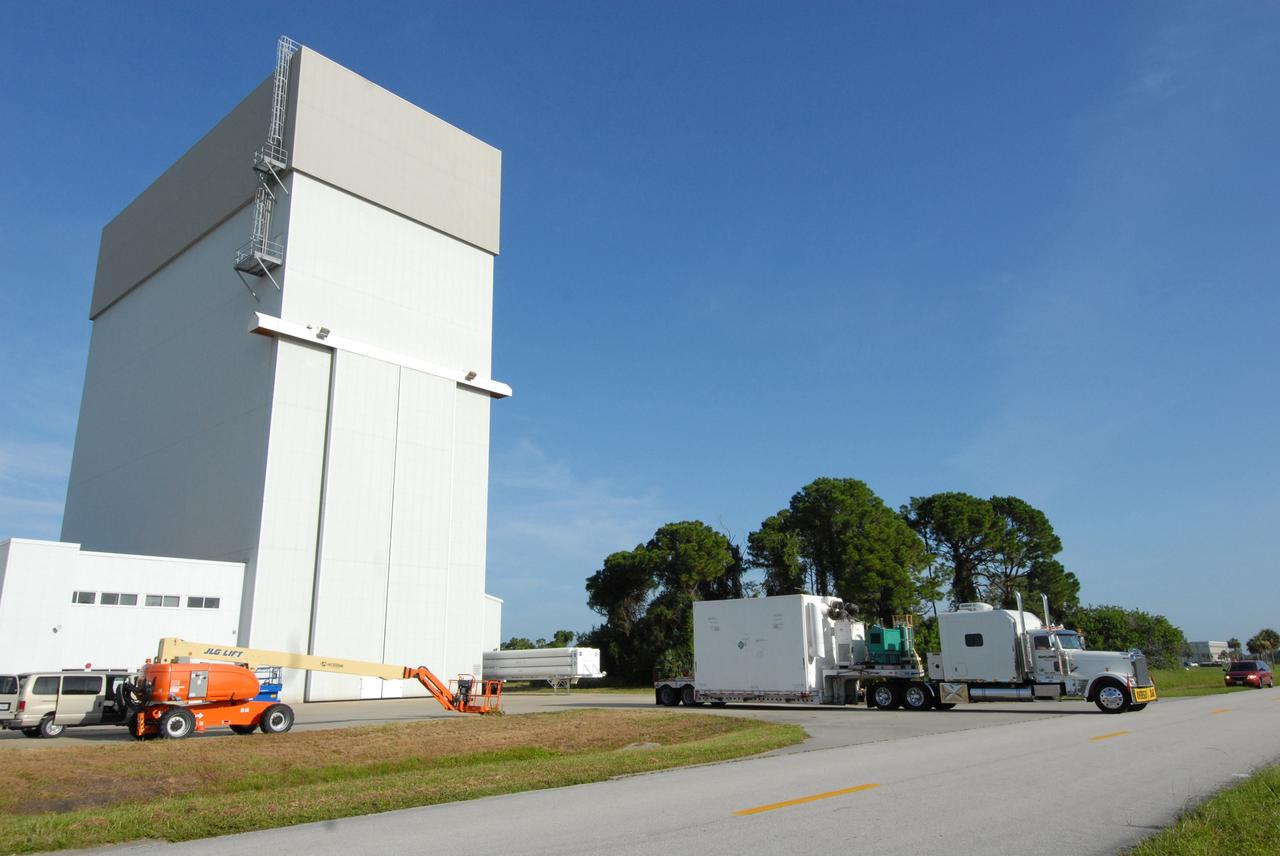
CAPE CANAVERAL, Fla. – The Multi-Use Lightweight Equipment (MULE) carrier arrives at NASA's Kennedy Space Center for the fifth and final shuttle servicing mission to NASA's Hubble Space Telescope, STS-125. The MULE carrier will join the Flight Support System, the Super Lightweight Interchangeable Carrier and the Orbital Replacement Unit Carrier in the Payload Hazardous Servicing Facility where the Hubble payload is being prepared for launch. The Relative Navigation Sensors and the New Outer Blanket Layers will be on the MULE. The payload is scheduled to go to Launch Pad 39A in mid-September to be installed into Atlantis' payload bay. Atlantis is targeted to launch Oct. 8 at 1:34 a.m. EDT. .Photo credit: NASA/Amanda Diller
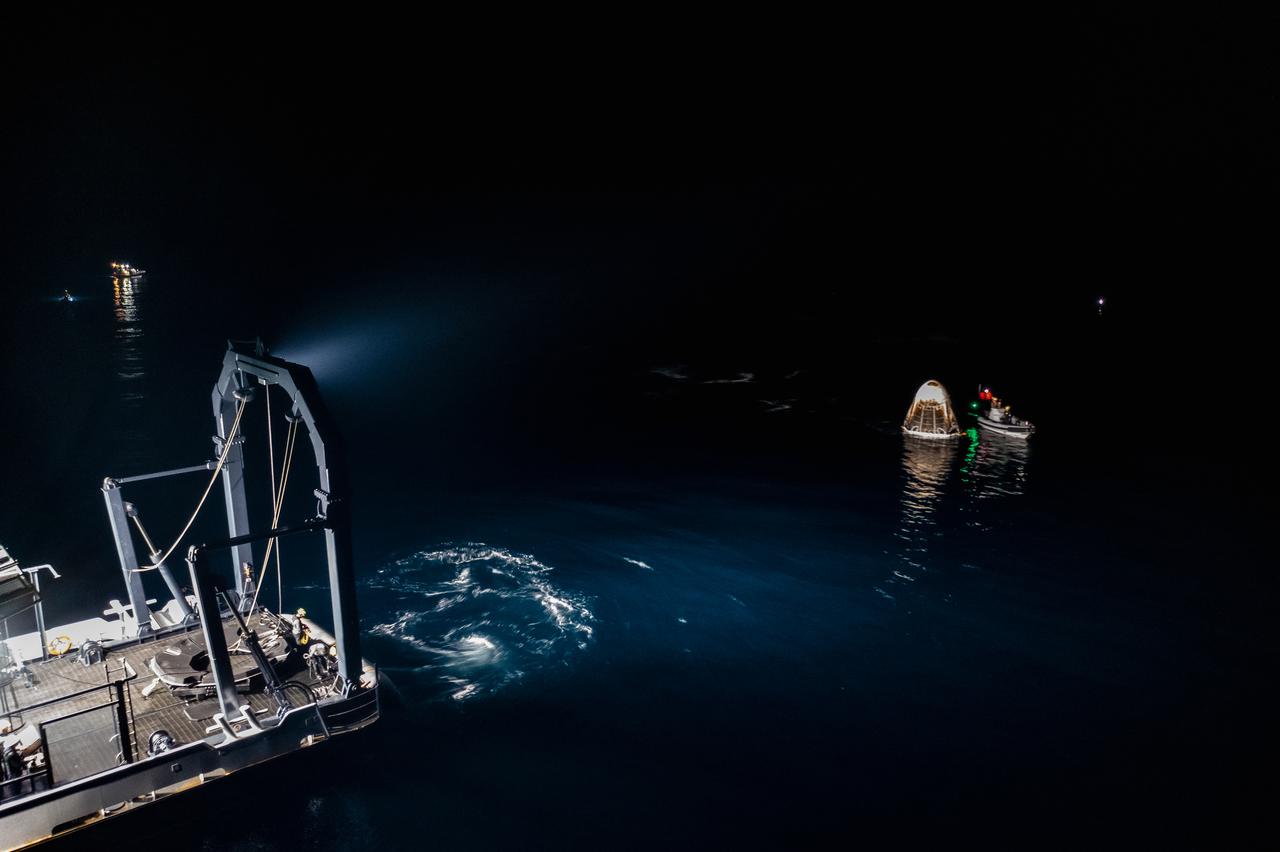
The SpaceX Crew Dragon Resilience splashes down in the Gulf of Mexico off the coast of Panama City, in Florida, at 2:56 a.m. EDT on May 2, 2021. Astronauts Michael Hopkins, Victor Glover, and Shannon Walker of NASA, and Soichi Noguchi of JAXA (Japan Aerospace Exploration Agency) completed Crew-1, the first crew rotation mission to the International Space Station in partnership with NASA as part of the agency’s Commercial Crew Program. At left is SpaceX’s Go Navigator recovery ship. Crew Dragon will be secured and then hoisted onto the main deck of the recovery ship with the astronauts inside.
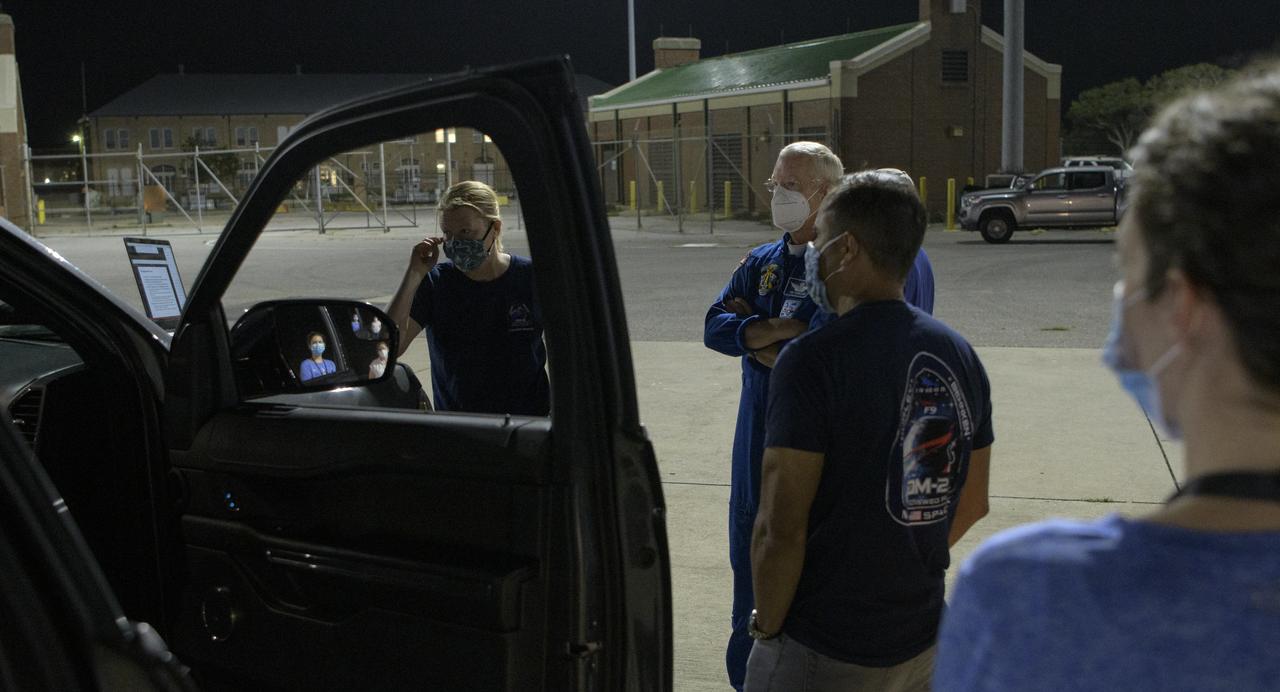
NASA and SpaceX support teams meet prior to boarding the SpaceX GO Navigator recovery ship for the landing of the SpaceX Crew Dragon Endeavour spacecraft with NASA astronauts Robert Behnken and Douglas Hurley onboard, Sunday, Aug. 2, 2020 in the Gulf of Mexico off the cost of Pensacola, Florida. The Demo-2 test flight for NASA's Commercial Crew Program is the first to deliver astronauts to the International Space Station and return them to Earth onboard a commercially built and operated spacecraft. Behnken and Hurley are returning after spending 64 days in space. Photo Credit: (NASA/Bill Ingalls)
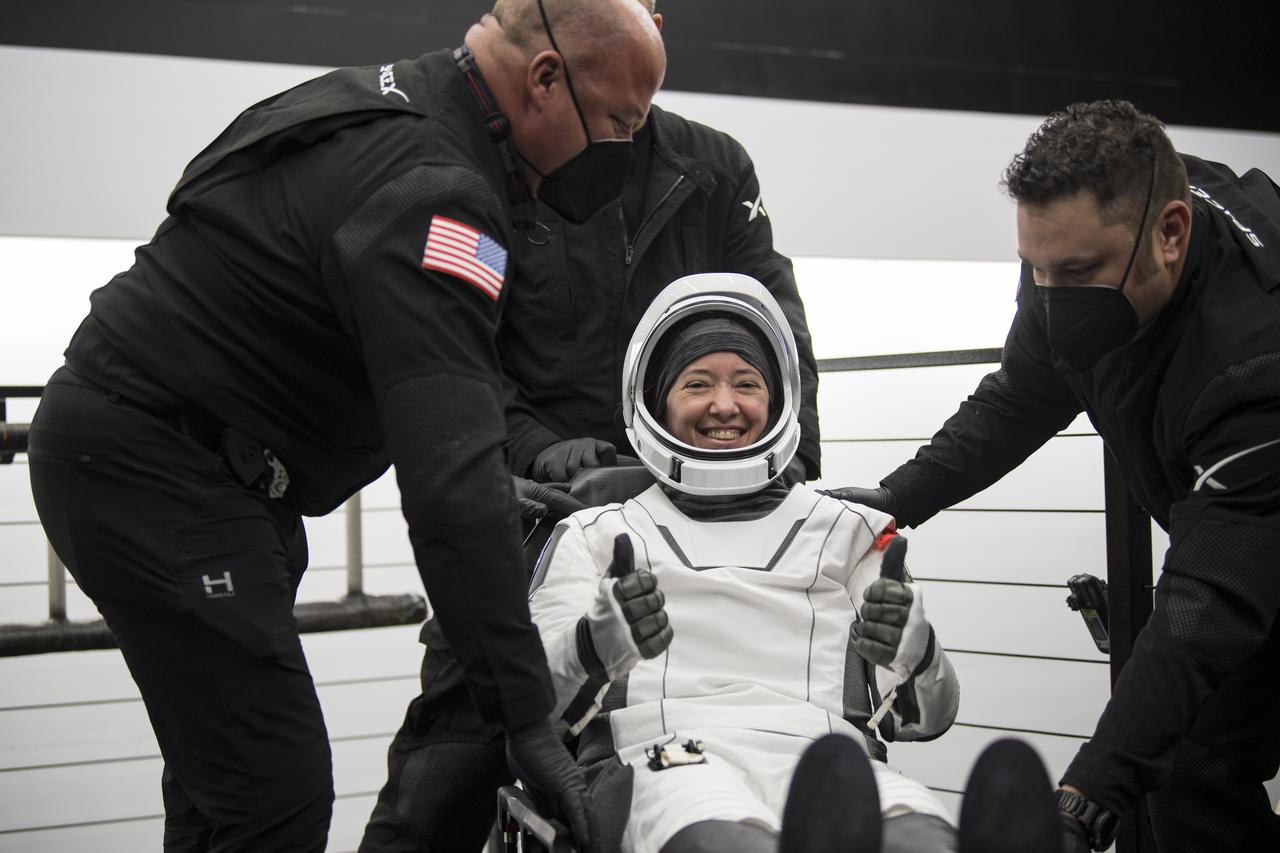
NASA astronaut Megan McArthur gives a thumbs up after being helped out of the SpaceX Crew Dragon Endeavour spacecraft onboard the SpaceX GO Navigator recovery ship after she and NASA astronaut Shane Kimbrough, Japan Aerospace Exploration Agency (JAXA) astronaut Aki Hoshide, and ESA (European Space Agency) astronaut Thomas Pesquet landed in the Gulf of Mexico off the coast of Pensacola, Florida, Monday, Nov. 8, 2021. NASA’s SpaceX Crew-2 mission is the second operational mission of the SpaceX Crew Dragon spacecraft and Falcon 9 rocket to the International Space Station as part of the agency’s Commercial Crew Program. Photo Credit: (NASA/Aubrey Gemignani)
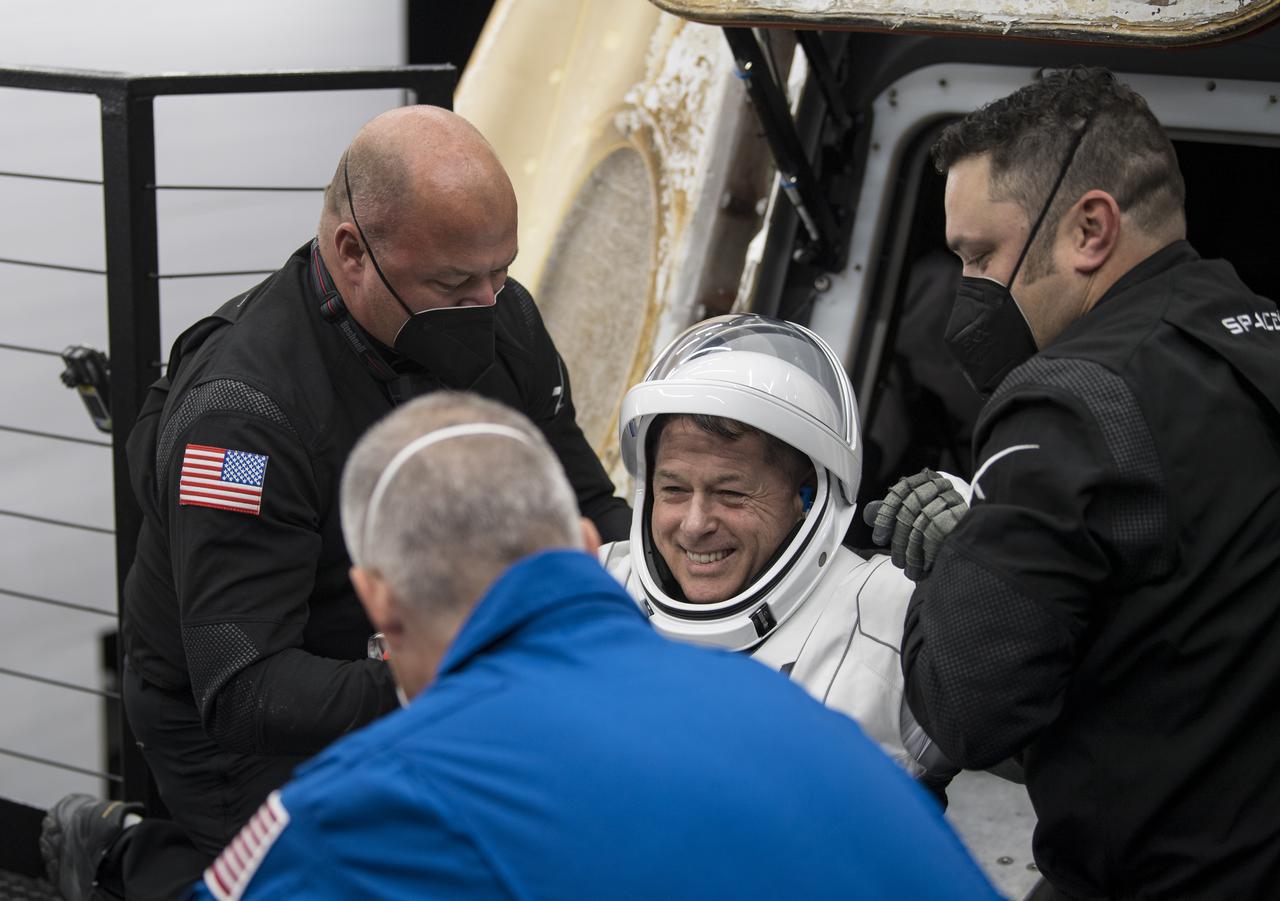
NASA astronaut Shane Kimbrough is helped out of the SpaceX Crew Dragon Endeavour spacecraft onboard the SpaceX GO Navigator recovery ship after he and NASA astronaut Megan McArthur, Japan Aerospace Exploration Agency (JAXA) astronaut Aki Hoshide, and ESA (European Space Agency) astronaut Thomas Pesquet landed in the Gulf of Mexico off the coast of Pensacola, Florida, Monday, Nov. 8, 2021. NASA’s SpaceX Crew-2 mission is the second operational mission of the SpaceX Crew Dragon spacecraft and Falcon 9 rocket to the International Space Station as part of the agency’s Commercial Crew Program. Photo Credit: (NASA/Aubrey Gemignani)
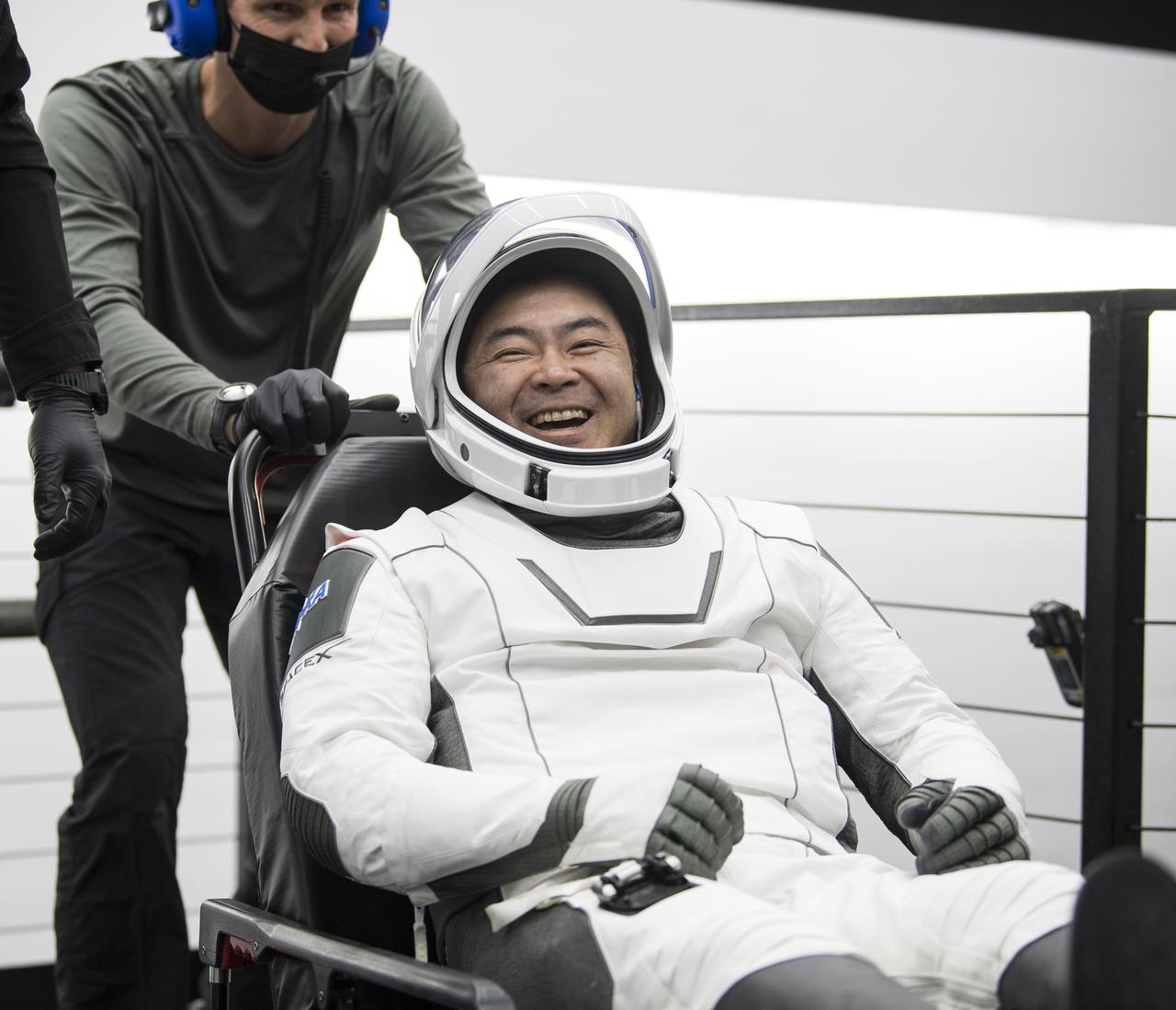
Japan Aerospace Exploration Agency (JAXA) astronaut Aki Hoshide reacts to a comment after being helped out of the SpaceX Crew Dragon Endeavour spacecraft onboard the SpaceX GO Navigator recovery ship after he and NASA astronauts Shane Kimbrough and Megan McArthur, and ESA (European Space Agency) astronaut Thomas Pesquet landed in the Gulf of Mexico off the coast of Pensacola, Florida, Monday, Nov. 8, 2021. NASA’s SpaceX Crew-2 mission is the second operational mission of the SpaceX Crew Dragon spacecraft and Falcon 9 rocket to the International Space Station as part of the agency’s Commercial Crew Program. Photo Credit: (NASA/Aubrey Gemignani)
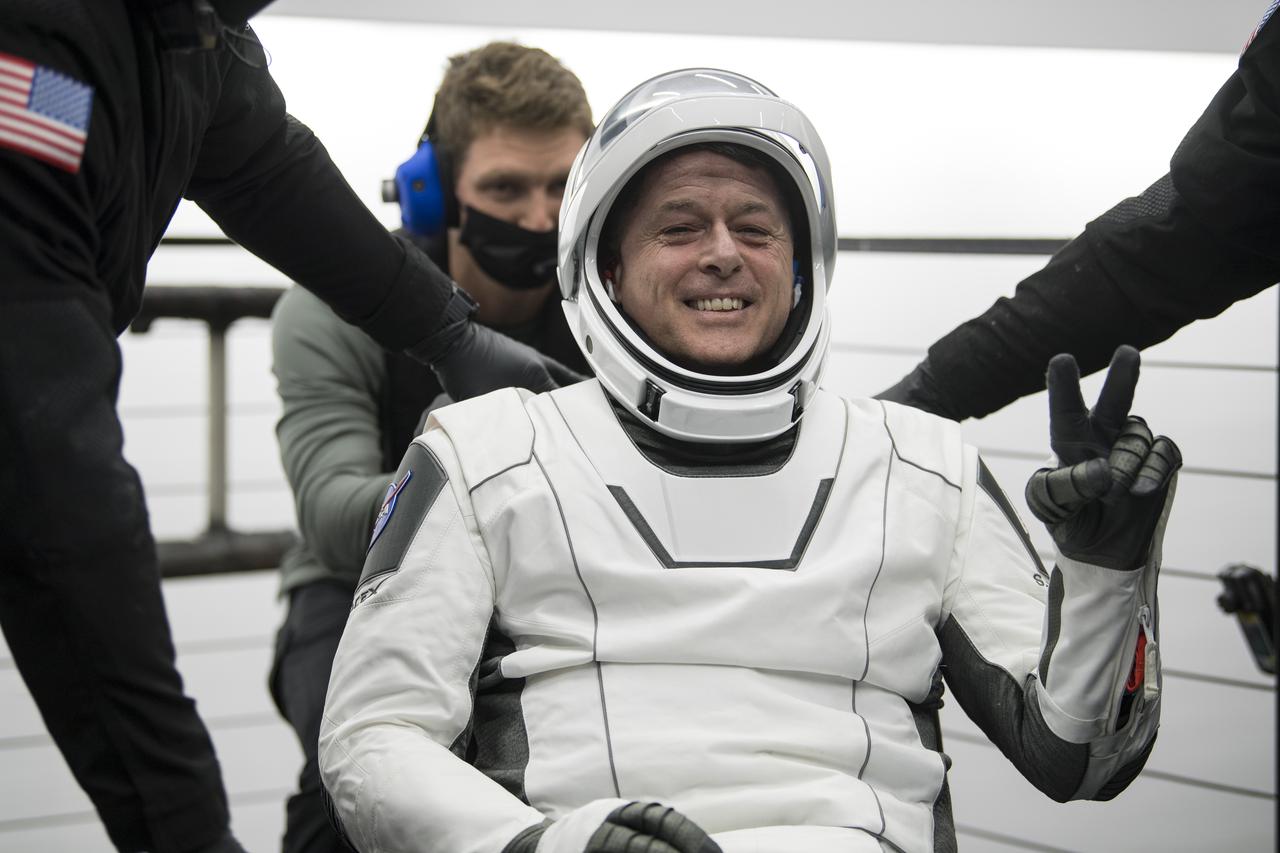
NASA astronaut Shane Kimbrough gives a hand sign after he was helped out of the SpaceX Crew Dragon Endeavour spacecraft onboard the SpaceX GO Navigator recovery ship after he and NASA astronaut Megan McArthur, Japan Aerospace Exploration Agency (JAXA) astronaut Aki Hoshide, and ESA (European Space Agency) astronaut Thomas Pesquet landed in the Gulf of Mexico off the coast of Pensacola, Florida, Monday, Nov. 8, 2021. NASA’s SpaceX Crew-2 mission is the second operational mission of the SpaceX Crew Dragon spacecraft and Falcon 9 rocket to the International Space Station as part of the agency’s Commercial Crew Program. Photo Credit: (NASA/Aubrey Gemignani)
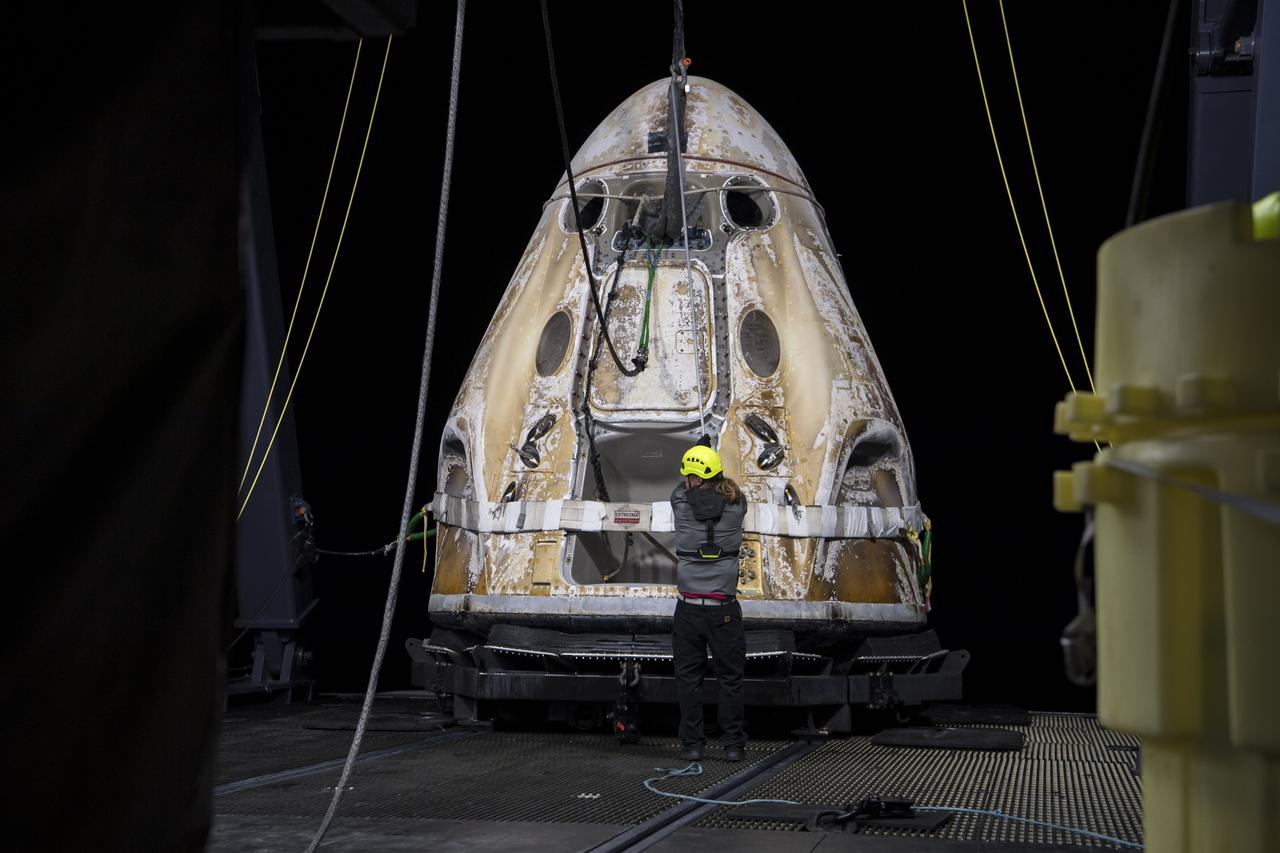
The SpaceX Crew Dragon Endeavour spacecraft is lifted onto the GO Navigator recovery ship after it landed with NASA astronauts Shane Kimbrough and Megan McArthur, Japan Aerospace Exploration Agency (JAXA) astronaut Aki Hoshide, and ESA (European Space Agency) astronaut Thomas Pesquet in the Gulf of Mexico off the coast of Pensacola, Florida, Monday, Nov. 8, 2021. NASA’s SpaceX Crew-2 mission is the second operational mission of the SpaceX Crew Dragon spacecraft and Falcon 9 rocket to the International Space Station as part of the agency’s Commercial Crew Program. Photo Credit: (NASA/Aubrey Gemignani)
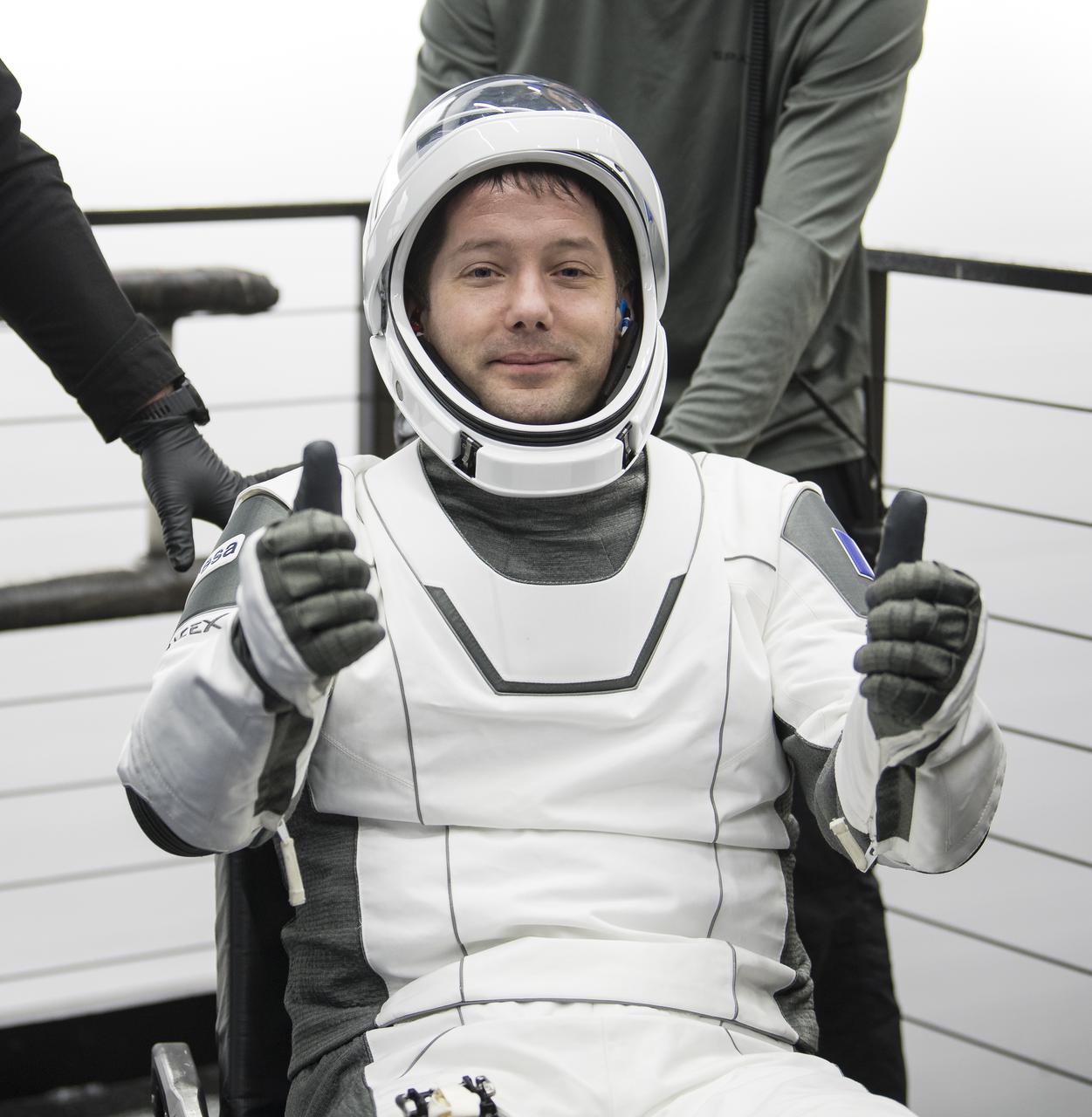
ESA (European Space Agency) astronaut Thomas Pesquet gives a thumbs up after being helped out of the SpaceX Crew Dragon Endeavour spacecraft onboard the SpaceX GO Navigator recovery ship after he and NASA astronauts Shane Kimbrough and Megan McArthur, and Japan Aerospace Exploration Agency (JAXA) astronaut Aki Hoshide landed in the Gulf of Mexico off the coast of Pensacola, Florida, Monday, Nov. 8, 2021. NASA’s SpaceX Crew-2 mission is the second operational mission of the SpaceX Crew Dragon spacecraft and Falcon 9 rocket to the International Space Station as part of the agency’s Commercial Crew Program. Photo Credit: (NASA/Aubrey Gemignani)
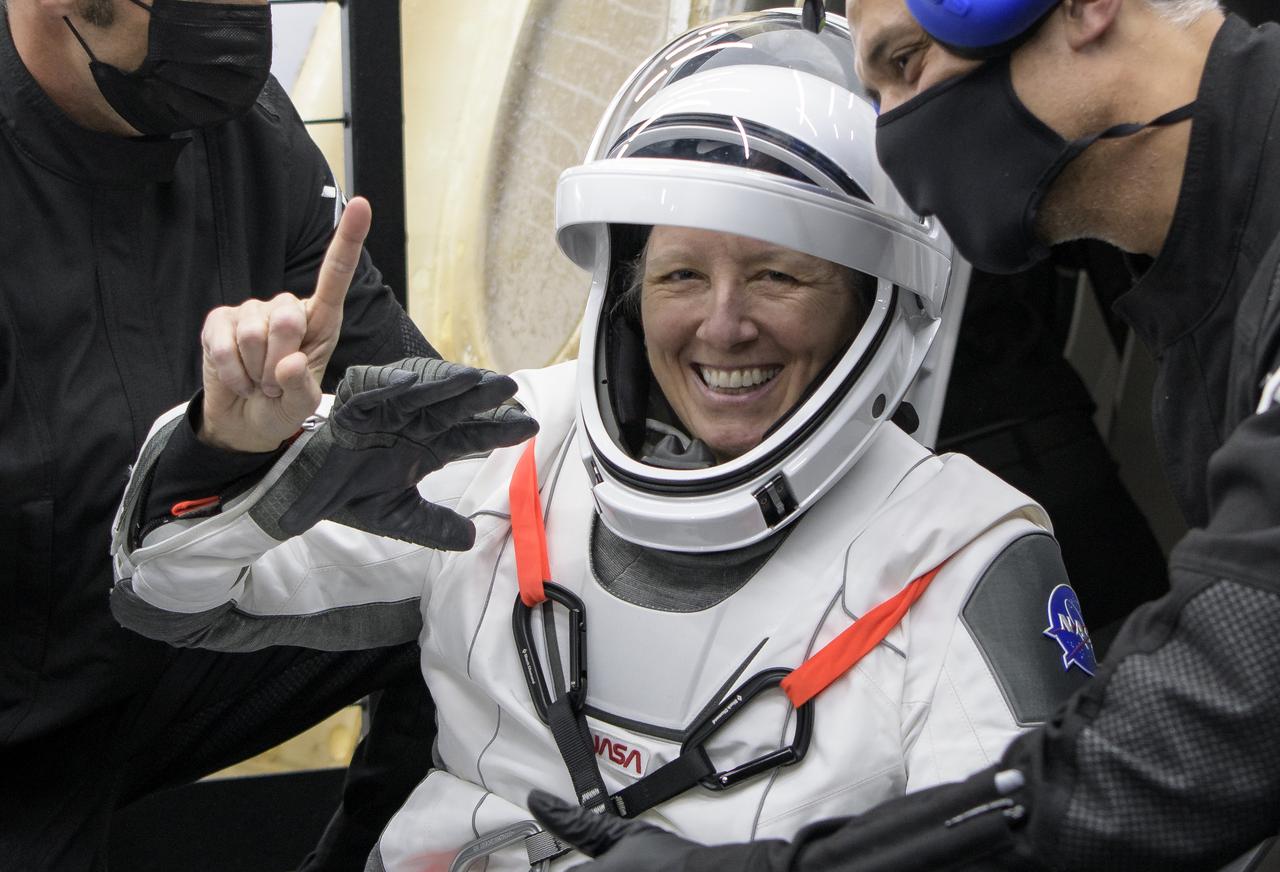
NASA astronaut Shannon Walker is helped out of the SpaceX Crew Dragon Resilience spacecraft onboard the SpaceX GO Navigator recovery ship after she, NASA astronauts Mike Hopkins, Victor Glover, and Japan Aerospace Exploration Agency (JAXA) astronaut Soichi Noguchi, landed in the Gulf of Mexico off the coast of Panama City, Florida, Sunday, May 2, 2021. NASA’s SpaceX Crew-1 mission was the first crew rotation flight of the SpaceX Crew Dragon spacecraft and Falcon 9 rocket with astronauts to the International Space Station as part of the agency’s Commercial Crew Program. Photo Credit: (NASA/Bill Ingalls)
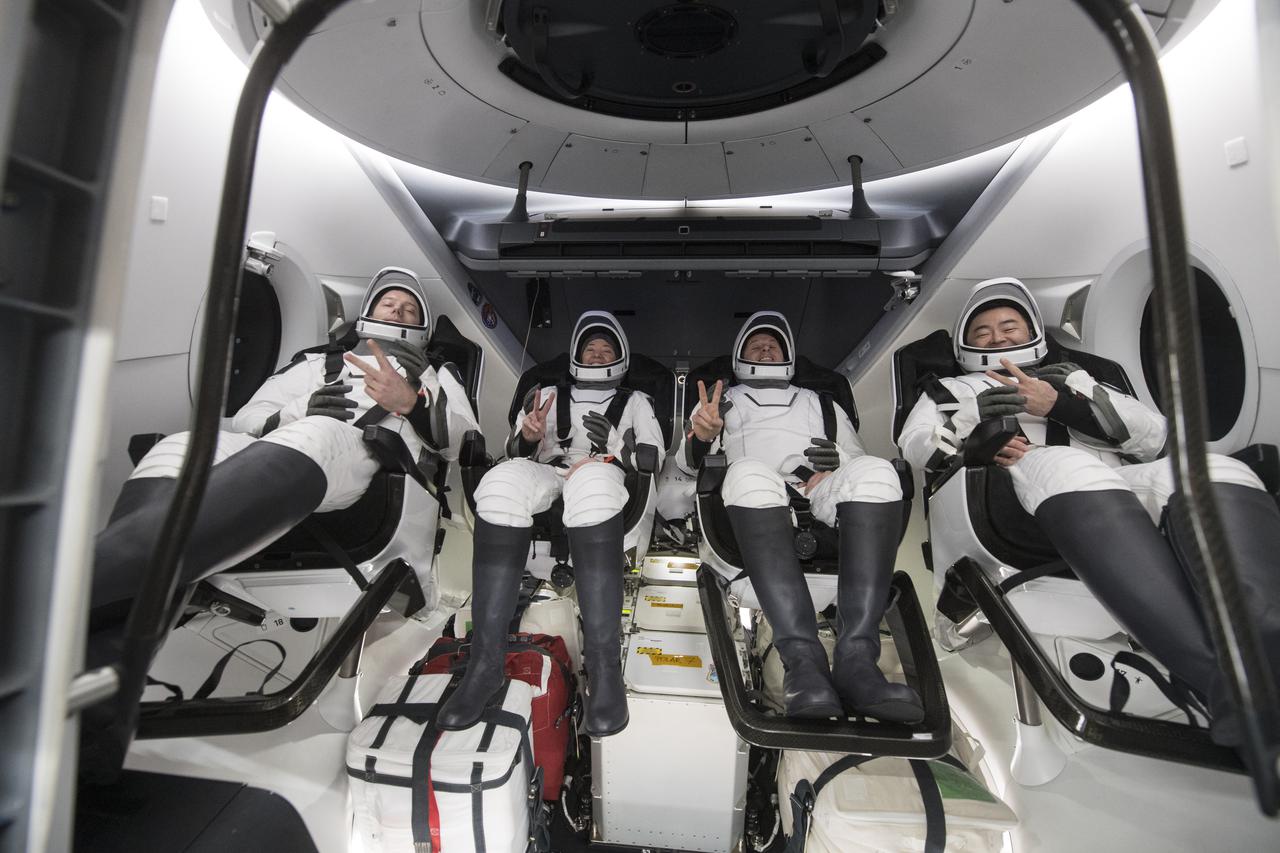
ESA (European Space Agency) astronaut Thomas Pesquet, left, NASA astronauts Megan McArthur and Shane Kimbrough, and Japan Aerospace Exploration Agency (JAXA) astronaut Aki Hoshide, right, are seen inside the SpaceX Crew Dragon Endeavour spacecraft onboard the SpaceX GO Navigator recovery ship shortly after having landed in the Gulf of Mexico off the coast of Pensacola, Florida, Monday, Nov. 8, 2021. NASA’s SpaceX Crew-2 mission is the second operational mission of the SpaceX Crew Dragon spacecraft and Falcon 9 rocket to the International Space Station as part of the agency’s Commercial Crew Program. Photo Credit: (NASA/Aubrey Gemignani)
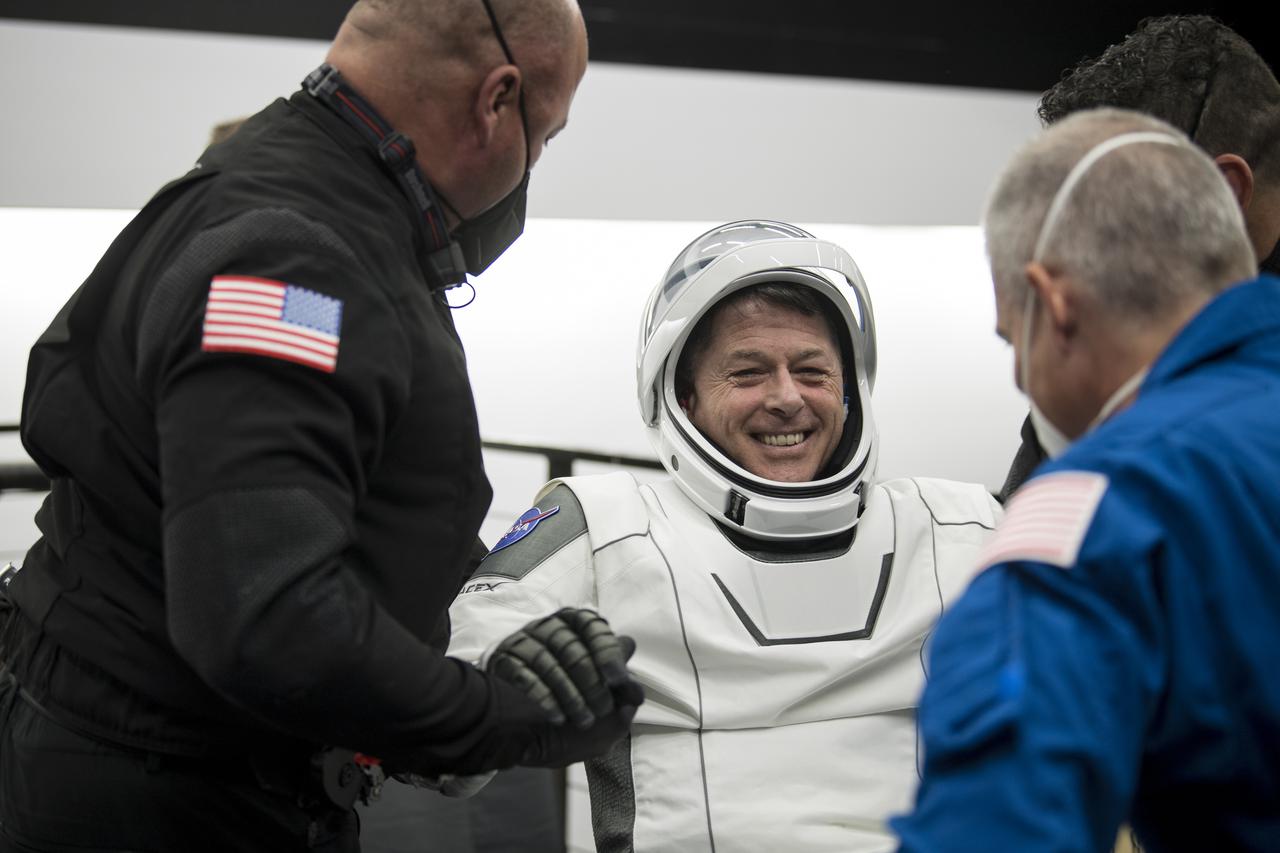
NASA astronaut Shane Kimbrough is helped out of the SpaceX Crew Dragon Endeavour spacecraft onboard the SpaceX GO Navigator recovery ship after he and NASA astronaut Megan McArthur, Japan Aerospace Exploration Agency (JAXA) astronaut Aki Hoshide, and ESA (European Space Agency) astronaut Thomas Pesquet landed in the Gulf of Mexico off the coast of Pensacola, Florida, Monday, Nov. 8, 2021. NASA’s SpaceX Crew-2 mission is the second operational mission of the SpaceX Crew Dragon spacecraft and Falcon 9 rocket to the International Space Station as part of the agency’s Commercial Crew Program. Photo Credit: (NASA/Aubrey Gemignani)
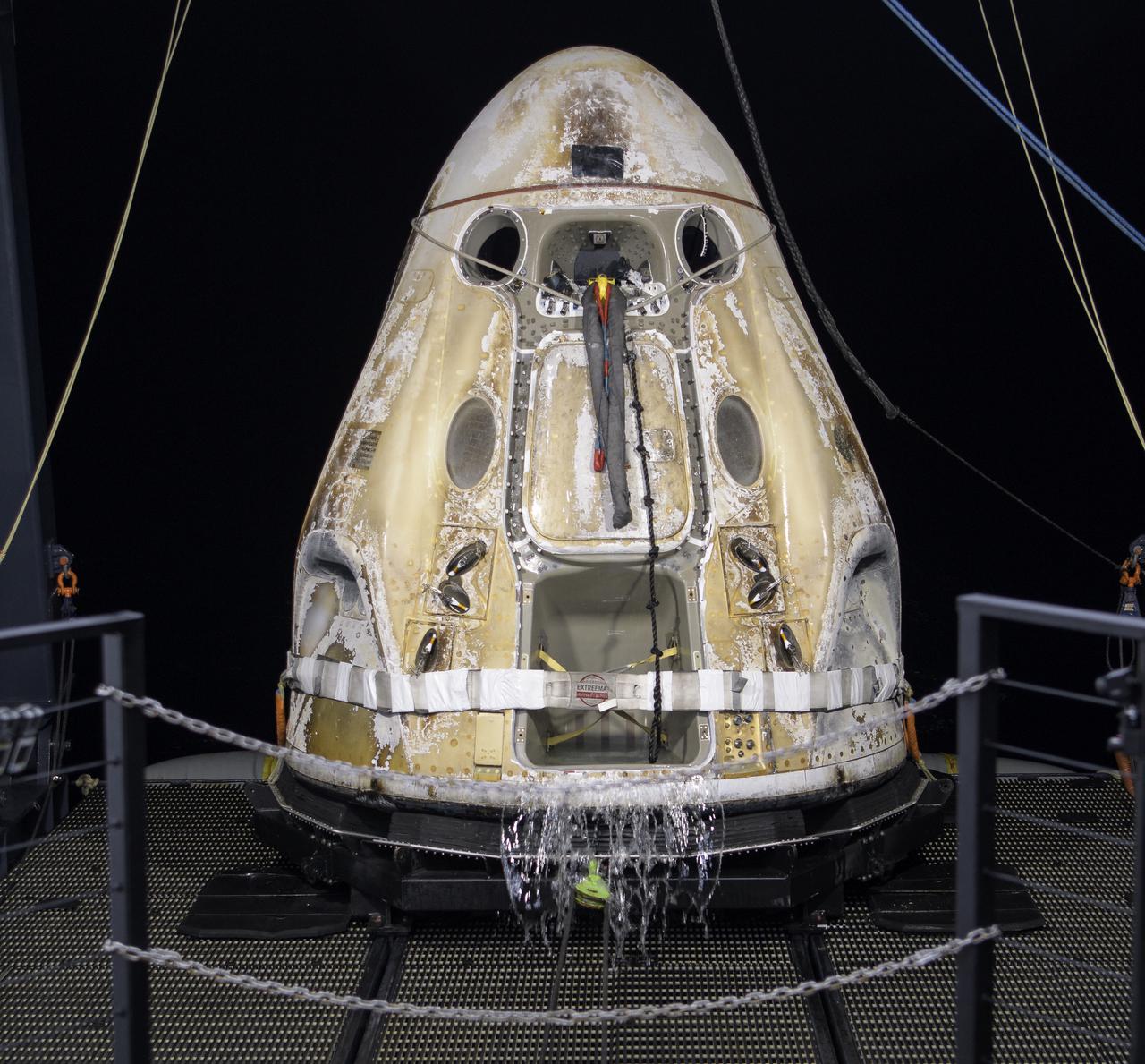
The SpaceX Crew Dragon Resilience spacecraft is lifted onto the GO Navigator recovery ship after it landed with NASA astronauts Mike Hopkins, Shannon Walker, and Victor Glover, and Japan Aerospace Exploration Agency (JAXA) astronaut Soichi Noguchi aboard in the Gulf of Mexico off the coast of Panama City, Florida, Sunday, May 2, 2021. NASA’s SpaceX Crew-1 mission was the first crew rotation flight of the SpaceX Crew Dragon spacecraft and Falcon 9 rocket with astronauts to the International Space Station as part of the agency’s Commercial Crew Program. Photo Credit: (NASA/Bill Ingalls)
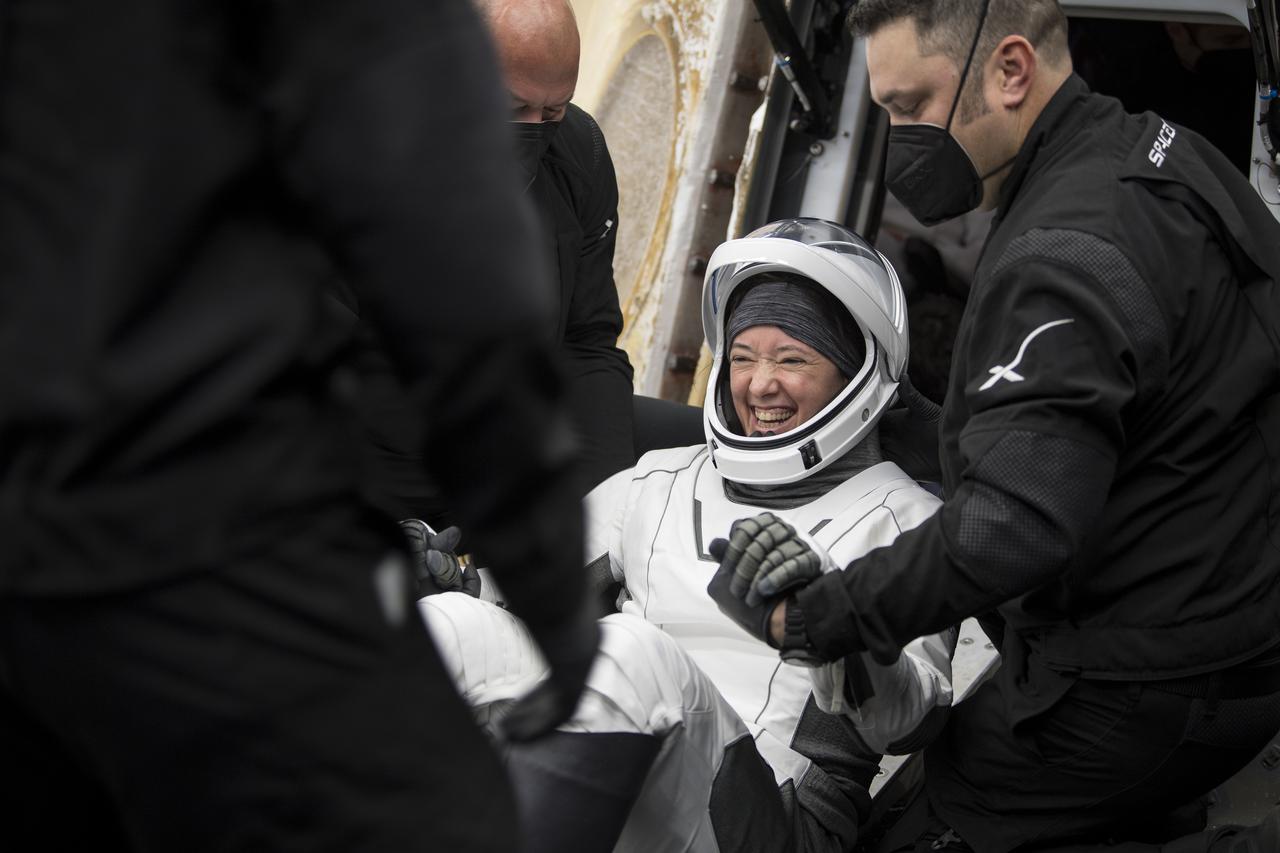
NASA astronaut Megan McArthur is helped out of the SpaceX Crew Dragon Endeavour spacecraft onboard the SpaceX GO Navigator recovery ship after she and NASA astronaut Shane Kimbrough, Japan Aerospace Exploration Agency (JAXA) astronaut Aki Hoshide, and ESA (European Space Agency) astronaut Thomas Pesquet landed in the Gulf of Mexico off the coast of Pensacola, Florida, Monday, Nov. 8, 2021. NASA’s SpaceX Crew-2 mission is the second operational mission of the SpaceX Crew Dragon spacecraft and Falcon 9 rocket to the International Space Station as part of the agency’s Commercial Crew Program. Photo Credit: (NASA/Aubrey Gemignani)
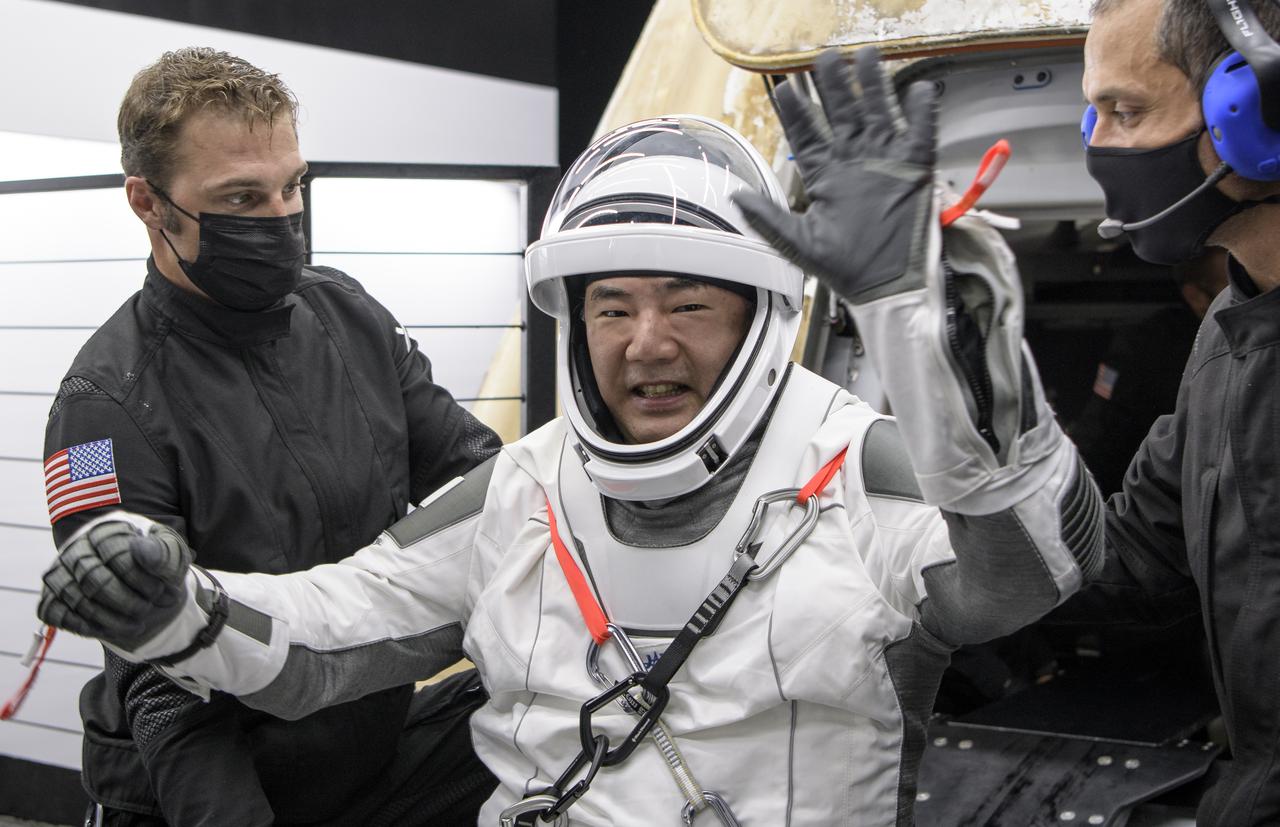
Japan Aerospace Exploration Agency (JAXA) astronaut Soichi Noguchi is helped out of the SpaceX Crew Dragon Resilience spacecraft onboard the SpaceX GO Navigator recovery ship after he, NASA astronauts Mike Hopkins, Shannon Walker, and Victor Glover, landed in the Gulf of Mexico off the coast of Panama City, Florida, Sunday, May 2, 2021. NASA’s SpaceX Crew-1 mission was the first crew rotation flight of the SpaceX Crew Dragon spacecraft and Falcon 9 rocket with astronauts to the International Space Station as part of the agency’s Commercial Crew Program. Photo Credit: (NASA/Bill Ingalls)
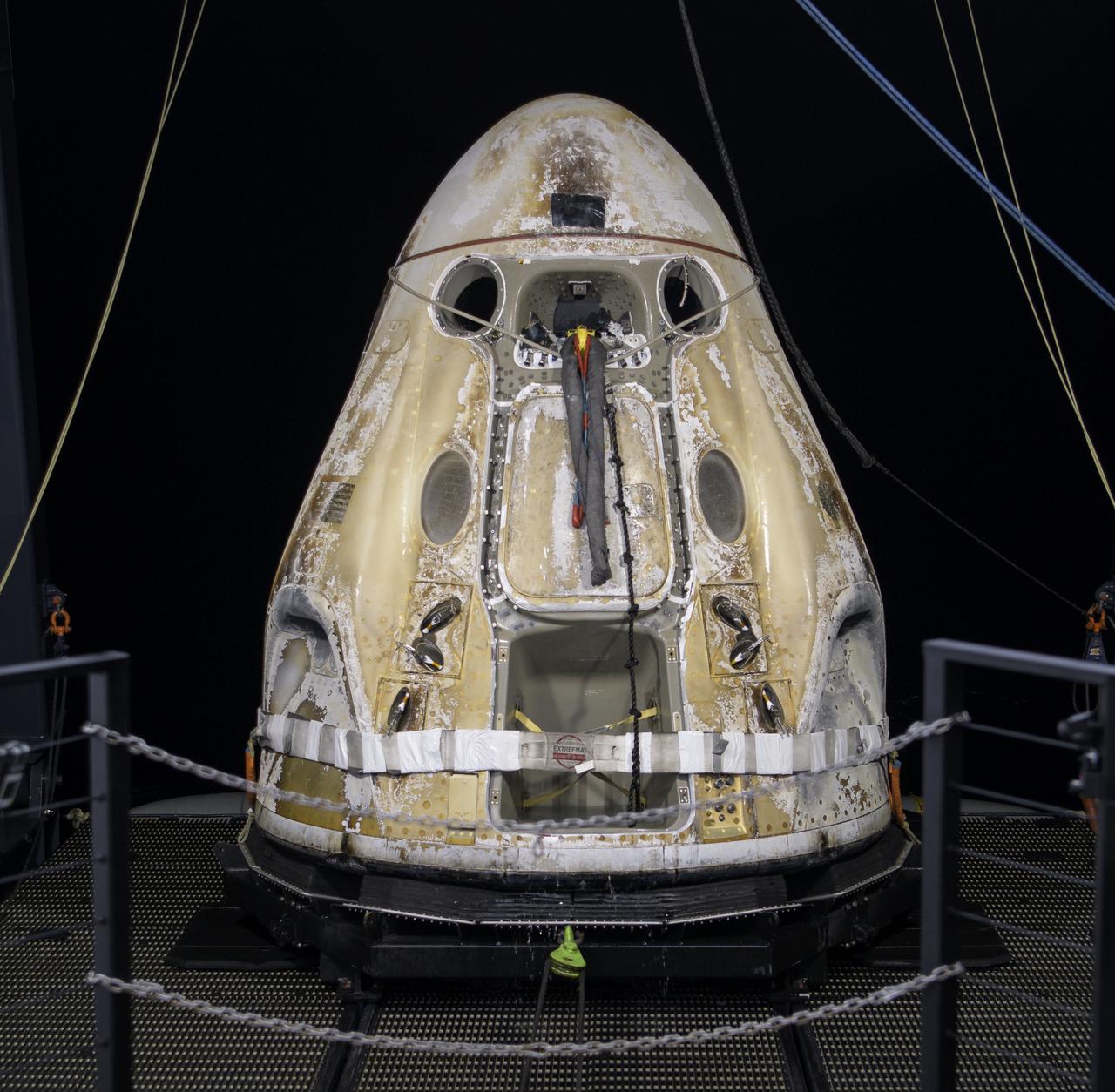
The SpaceX Crew Dragon Resilience spacecraft is lifted onto the GO Navigator recovery ship after it landed with NASA astronauts Mike Hopkins, Shannon Walker, and Victor Glover, and Japan Aerospace Exploration Agency (JAXA) astronaut Soichi Noguchi aboard in the Gulf of Mexico off the coast of Panama City, Florida, Sunday, May 2, 2021. NASA’s SpaceX Crew-1 mission was the first crew rotation flight of the SpaceX Crew Dragon spacecraft and Falcon 9 rocket with astronauts to the International Space Station as part of the agency’s Commercial Crew Program. Photo Credit: (NASA/Bill Ingalls)
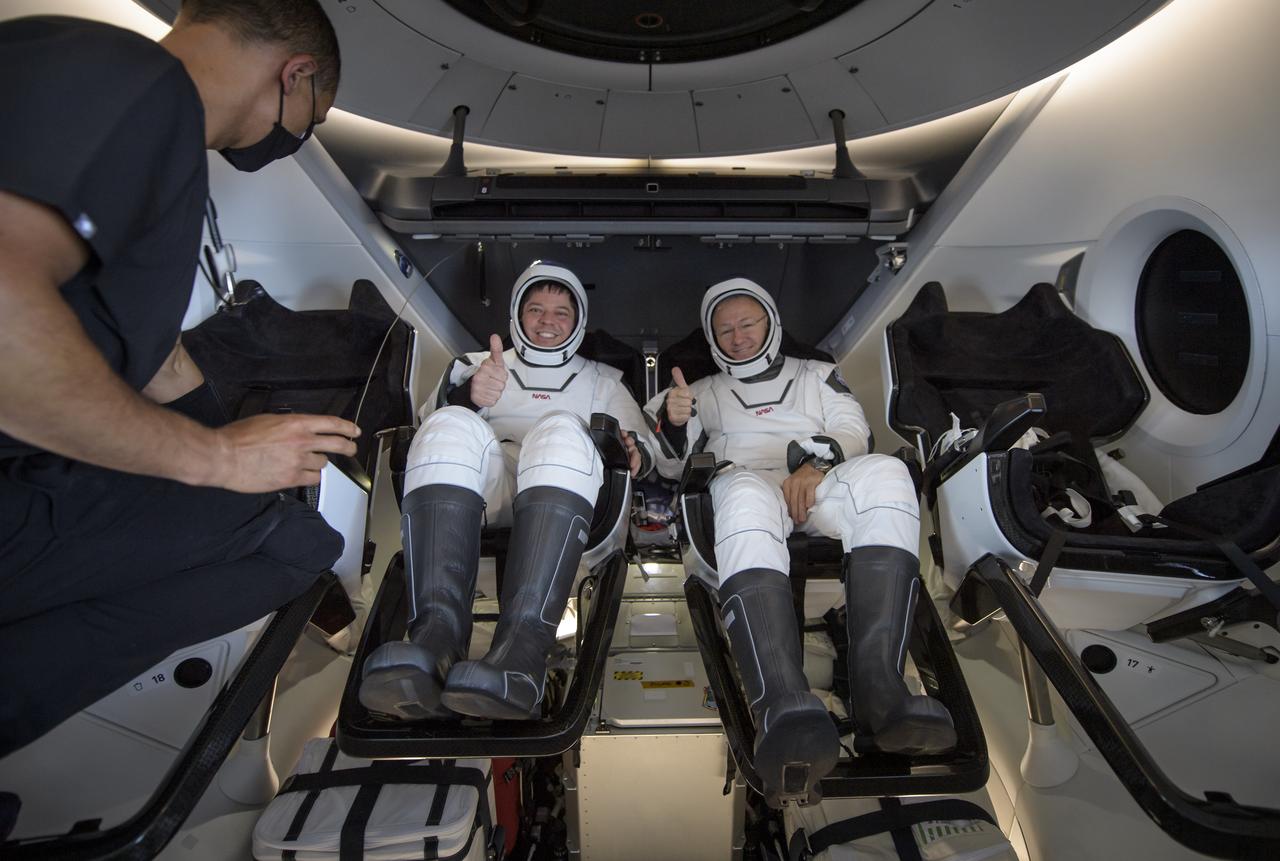
NASA astronauts Robert Behnken, left, and Douglas Hurley are seen inside the SpaceX Crew Dragon Endeavour spacecraft onboard the SpaceX GO Navigator recovery ship shortly after having landed in the Gulf of Mexico off the coast of Pensacola, Florida, Sunday, Aug. 2, 2020. The Demo-2 test flight for NASA's Commercial Crew Program was the first to deliver astronauts to the International Space Station and return them safely to Earth onboard a commercially built and operated spacecraft. Behnken and Hurley returned after spending 64 days in space. Photo Credit: (NASA/Bill Ingalls)
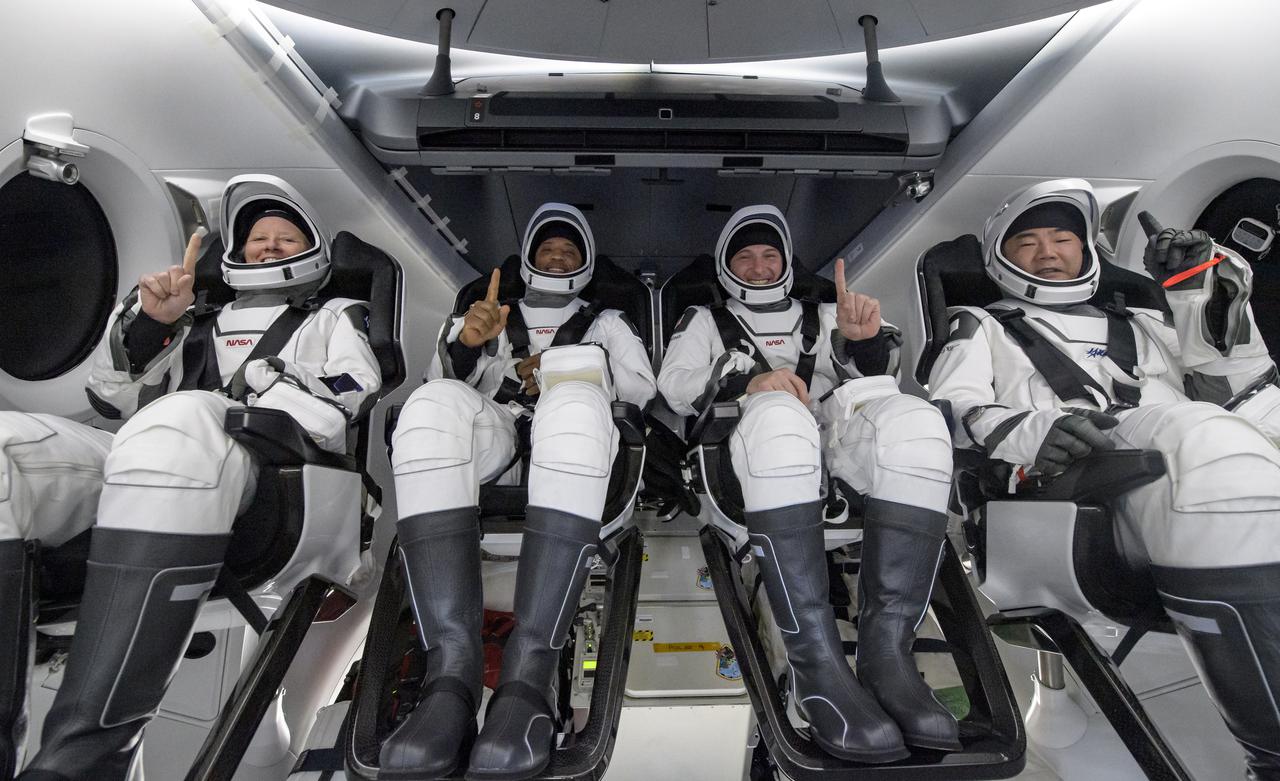
NASA astronauts Shannon Walker, left, Victor Glover, Mike Hopkins, and Japan Aerospace Exploration Agency (JAXA) astronaut Soichi Noguchi, right are seen inside the SpaceX Crew Dragon Resilience spacecraft onboard the SpaceX GO Navigator recovery ship shortly after having landed in the Gulf of Mexico off the coast of Panama City, Florida, Sunday, May 2, 2021. NASA’s SpaceX Crew-1 mission was the first crew rotation flight of the SpaceX Crew Dragon spacecraft and Falcon 9 rocket with astronauts to the International Space Station as part of the agency’s Commercial Crew Program. Photo Credit: (NASA/Bill Ingalls)
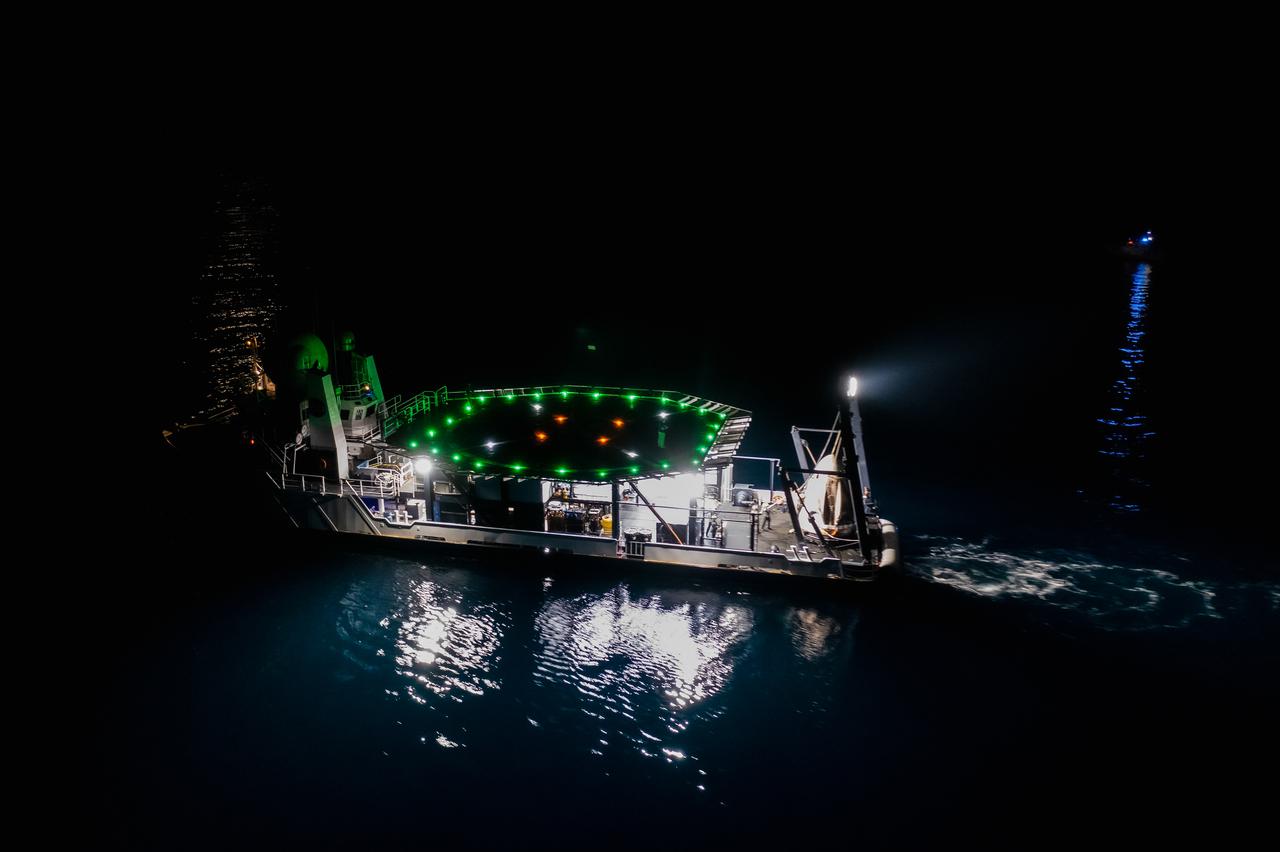
The SpaceX Crew Dragon Resilience splashed down in the Gulf of Mexico off the coast of Panama City, in Florida, at 2:56 a.m. EDT on May 2, 2021. Astronauts Michael Hopkins, Victor Glover, and Shannon Walker of NASA, and Soichi Noguchi of JAXA (Japan Aerospace Exploration Agency) completed Crew-1, the first crew rotation mission to the International Space Station in partnership with NASA as part of the agency’s Commercial Crew Program. Teams on the Go Navigator recovery ship, including two fast boats, work to secure and hoist Crew Dragon onto the main deck of the recovery ship with the astronauts inside.
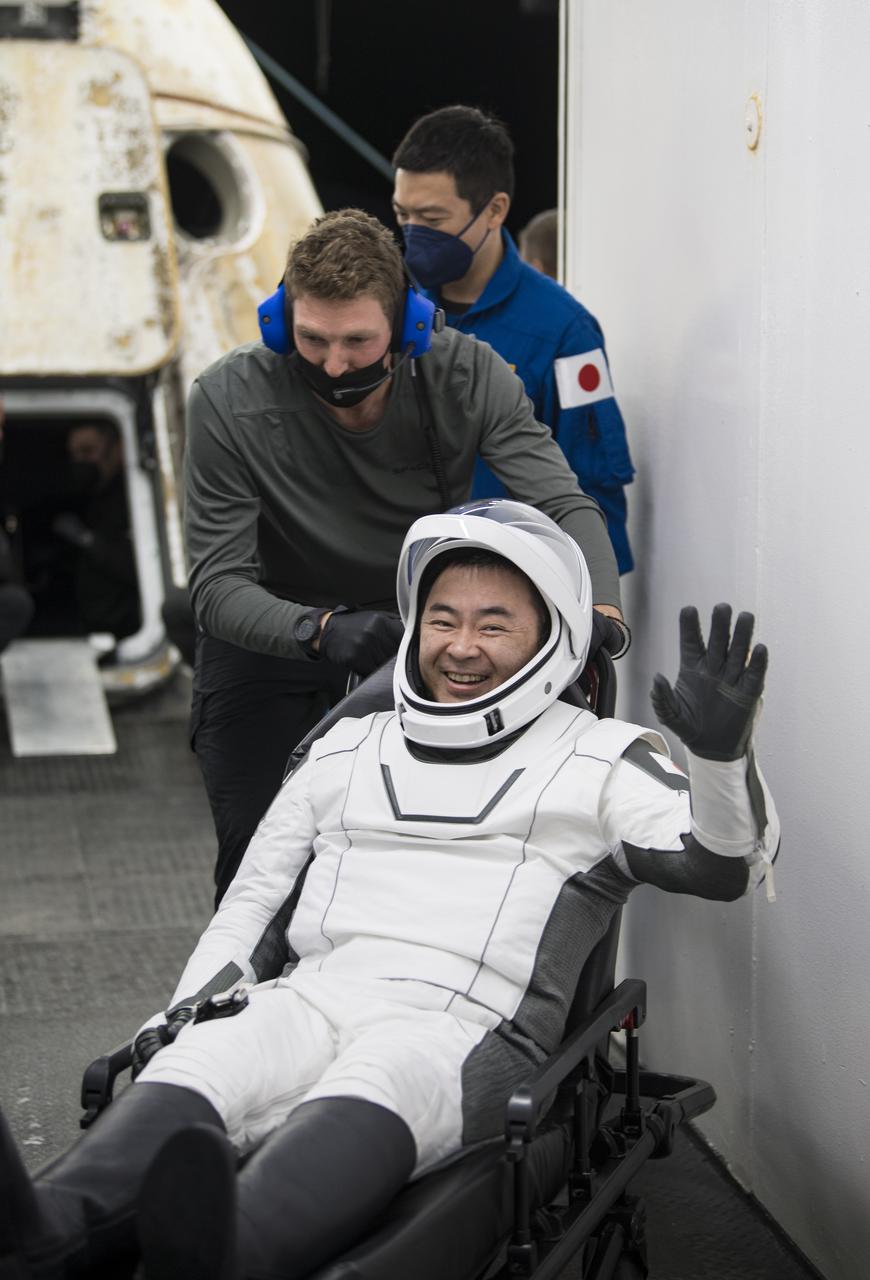
Japan Aerospace Exploration Agency (JAXA) astronaut Aki Hoshide waves after being helped out of the SpaceX Crew Dragon Endeavour spacecraft onboard the SpaceX GO Navigator recovery ship after he and NASA astronauts Shane Kimbrough and Megan McArthur, and ESA (European Space Agency) astronaut Thomas Pesquet landed in the Gulf of Mexico off the coast of Pensacola, Florida, Monday, Nov. 8, 2021. NASA’s SpaceX Crew-2 mission is the second operational mission of the SpaceX Crew Dragon spacecraft and Falcon 9 rocket to the International Space Station as part of the agency’s Commercial Crew Program. Photo Credit: (NASA/Aubrey Gemignani)
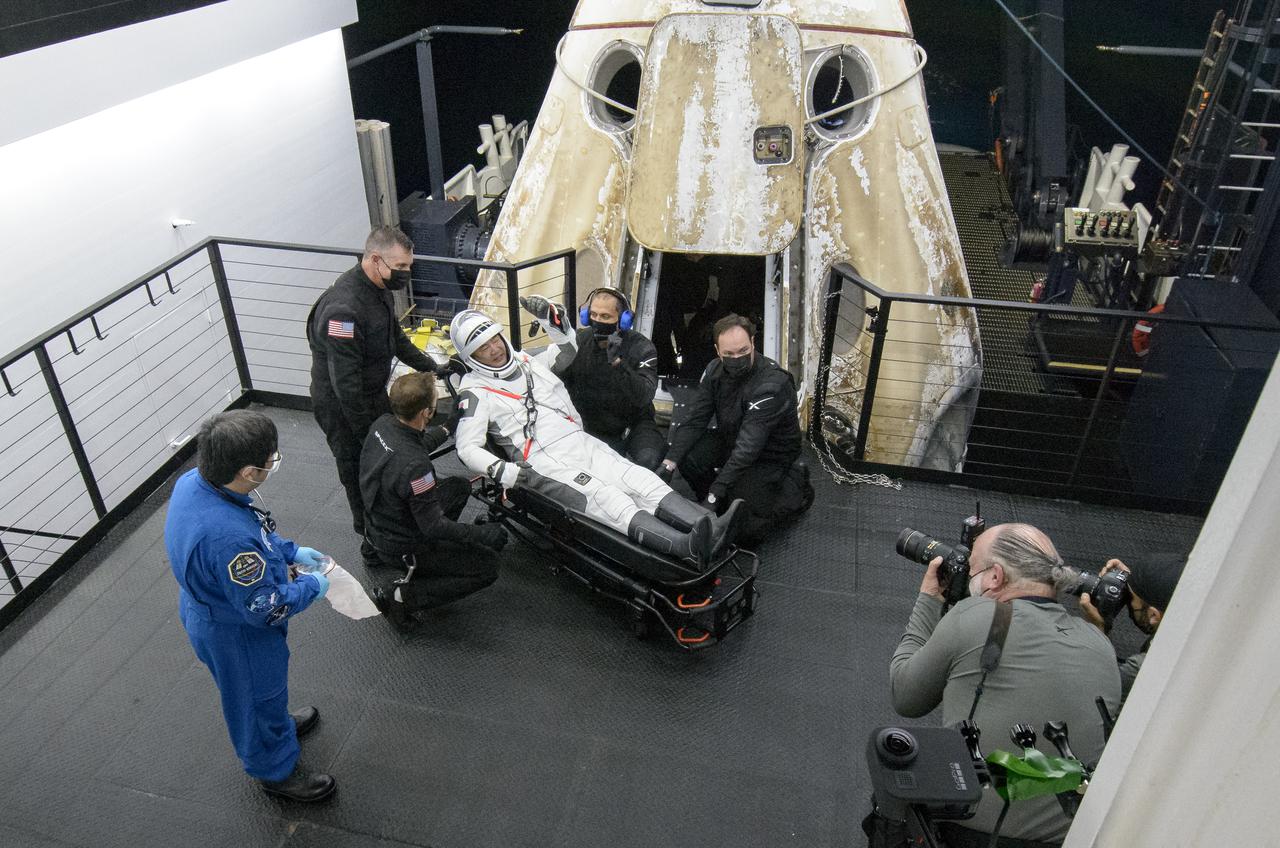
Japan Aerospace Exploration Agency (JAXA) astronaut Soichi Noguchi gives a thumbs up after he is helped out of the SpaceX Crew Dragon Resilience spacecraft onboard the SpaceX GO Navigator recovery ship after he, NASA astronauts Mike Hopkins, Shannon Walker and Victor Glover, landed in the Gulf of Mexico off the coast of Panama City, Florida, Sunday, May 2, 2021. NASA’s SpaceX Crew-1 mission was the first crew rotation flight of the SpaceX Crew Dragon spacecraft and Falcon 9 rocket with astronauts to the International Space Station as part of the agency’s Commercial Crew Program. Photo Credit: (NASA/Bill Ingalls)
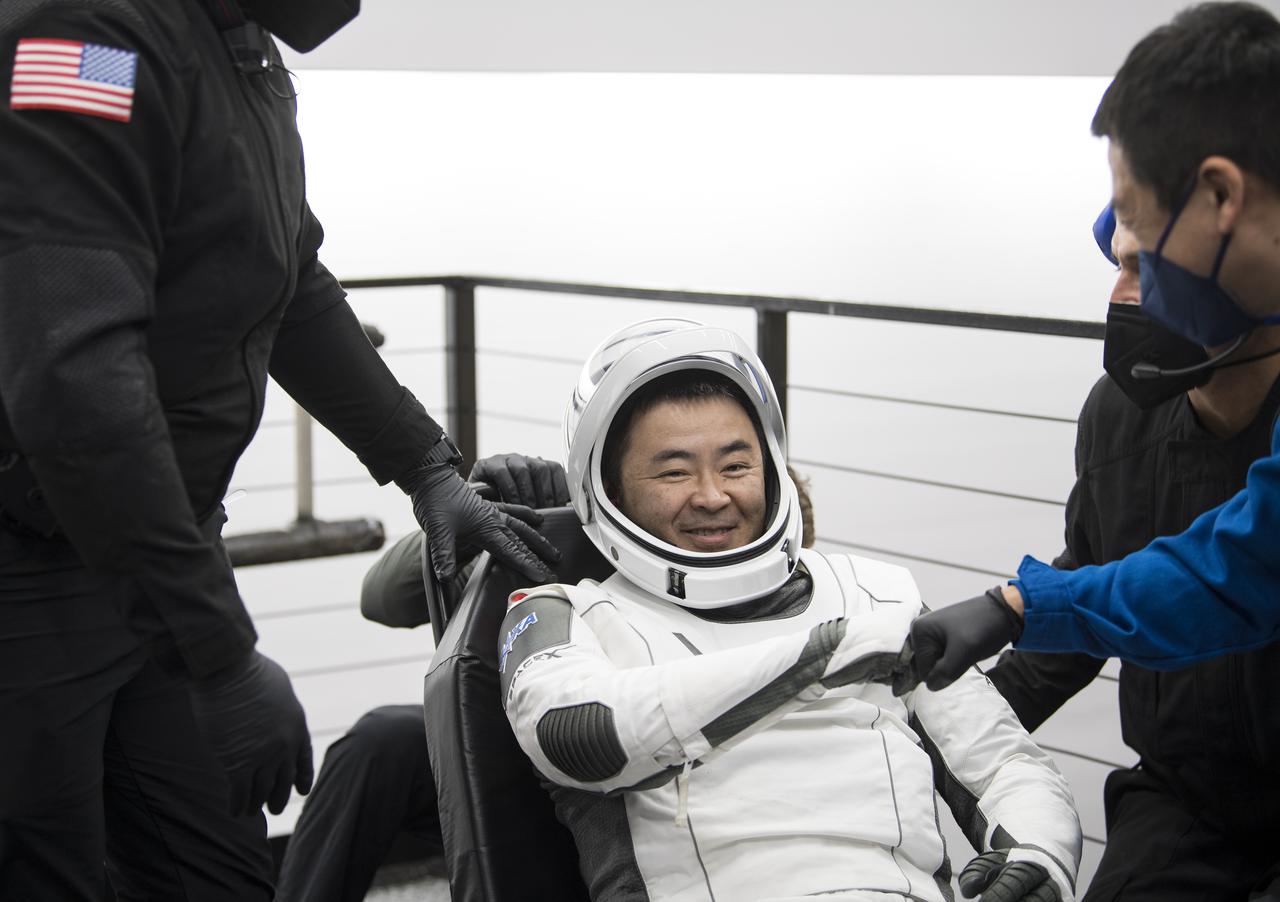
Japan Aerospace Exploration Agency (JAXA) astronaut Aki Hoshide gives a fist bump after being helped out of the SpaceX Crew Dragon Endeavour spacecraft onboard the SpaceX GO Navigator recovery ship after he and NASA astronauts Shane Kimbrough and Megan McArthur, and ESA (European Space Agency) astronaut Thomas Pesquet landed in the Gulf of Mexico off the coast of Pensacola, Florida, Monday, Nov. 8, 2021. NASA’s SpaceX Crew-2 mission is the second operational mission of the SpaceX Crew Dragon spacecraft and Falcon 9 rocket to the International Space Station as part of the agency’s Commercial Crew Program. Photo Credit: (NASA/Aubrey Gemignani)
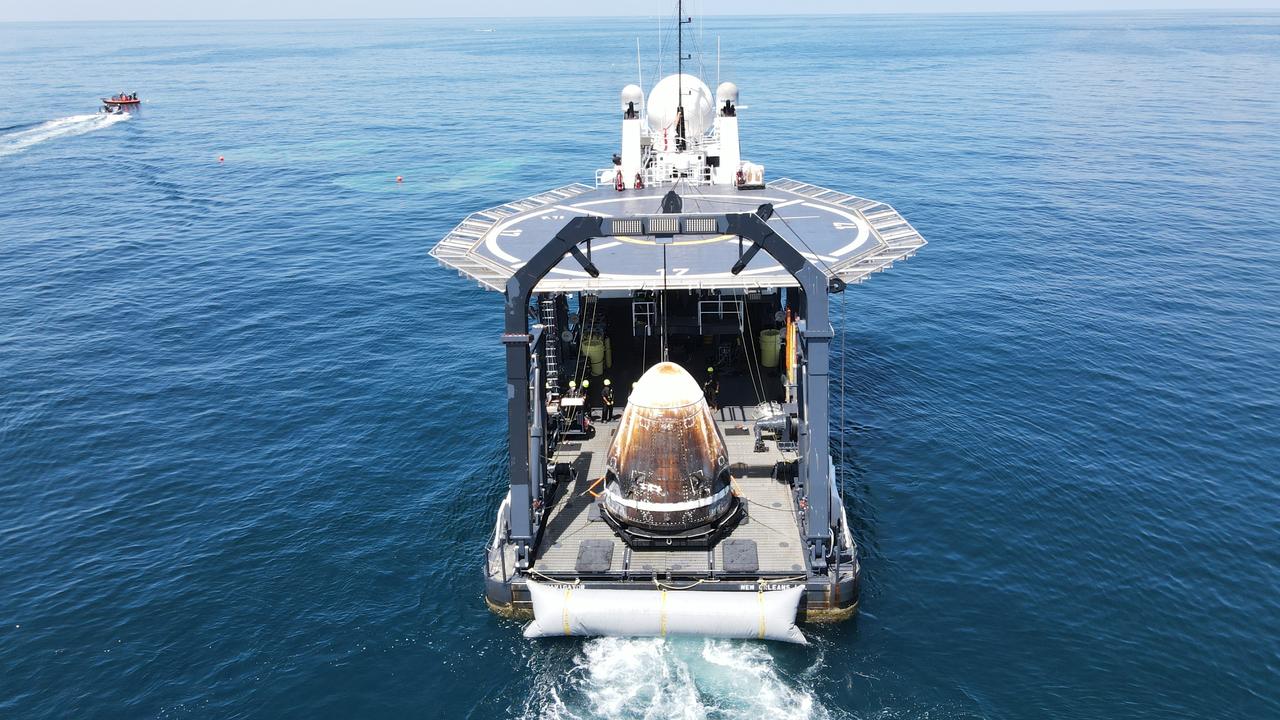
The SpaceX Crew Dragon spacecraft, with NASA astronauts Robert Behnken and Douglas Hurley inside, is seen aboard SpaceX’s GO Navigator recovery ship shortly after splashing down in the Gulf of Mexico off the coast of Pensacola, Florida, on Aug. 2, 2020. Behnken and Hurley spent 62 days aboard the International Space Station for NASA’s SpaceX Demo-2 mission, becoming the first astronauts to launch to the orbiting laboratory from U.S. soil since the end of the shuttle program in 2011. The final flight test for SpaceX, Demo-2 will pave the way for the agency to certify the company’s transportation system for regular, crewed flights to the orbiting laboratory.
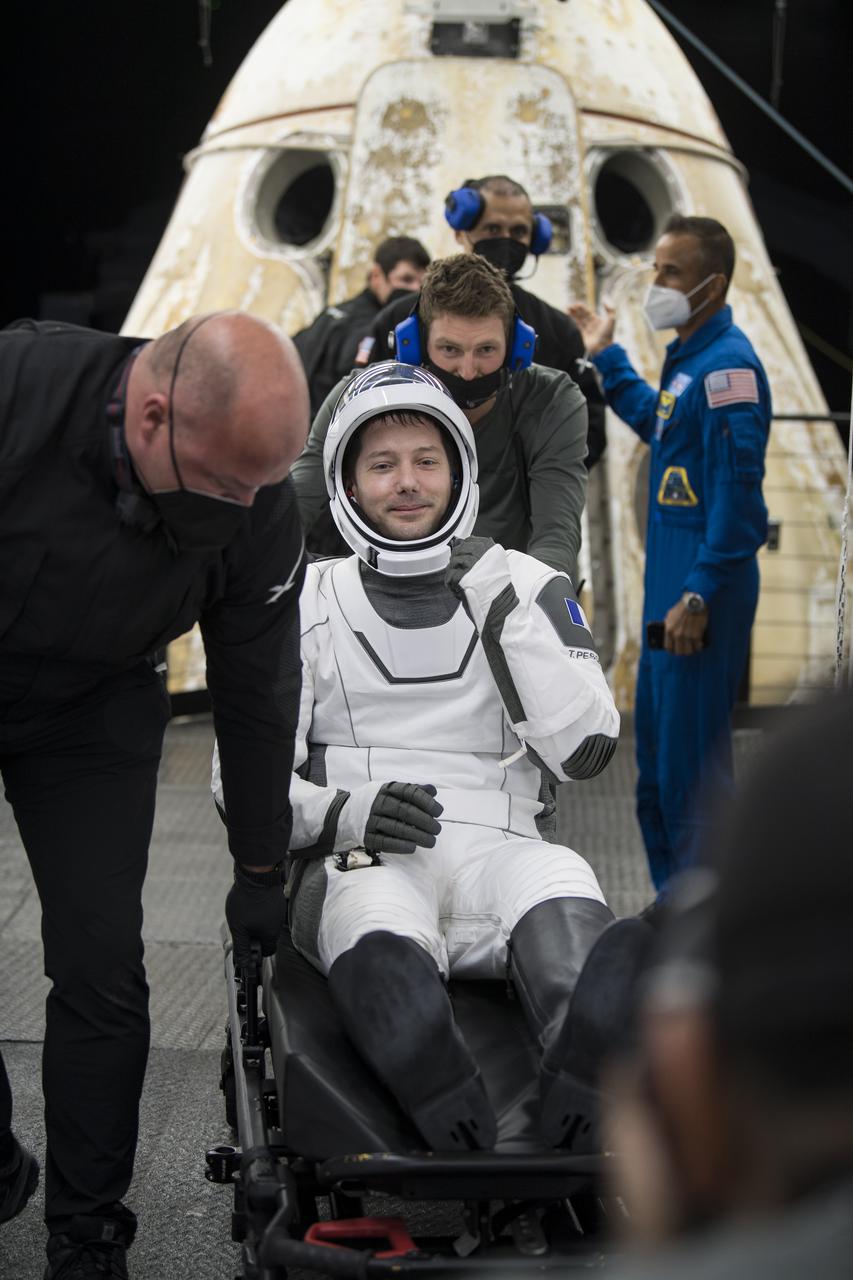
ESA (European Space Agency) astronaut Thomas Pesquet is seen after being helped out of the SpaceX Crew Dragon Endeavour spacecraft onboard the SpaceX GO Navigator recovery ship after he and NASA astronauts Shane Kimbrough and Megan McArthur, and Japan Aerospace Exploration Agency (JAXA) astronaut Aki Hoshide landed in the Gulf of Mexico off the coast of Pensacola, Florida, Monday, Nov. 8, 2021. NASA’s SpaceX Crew-2 mission is the second operational mission of the SpaceX Crew Dragon spacecraft and Falcon 9 rocket to the International Space Station as part of the agency’s Commercial Crew Program. Photo Credit: (NASA/Aubrey Gemignani)
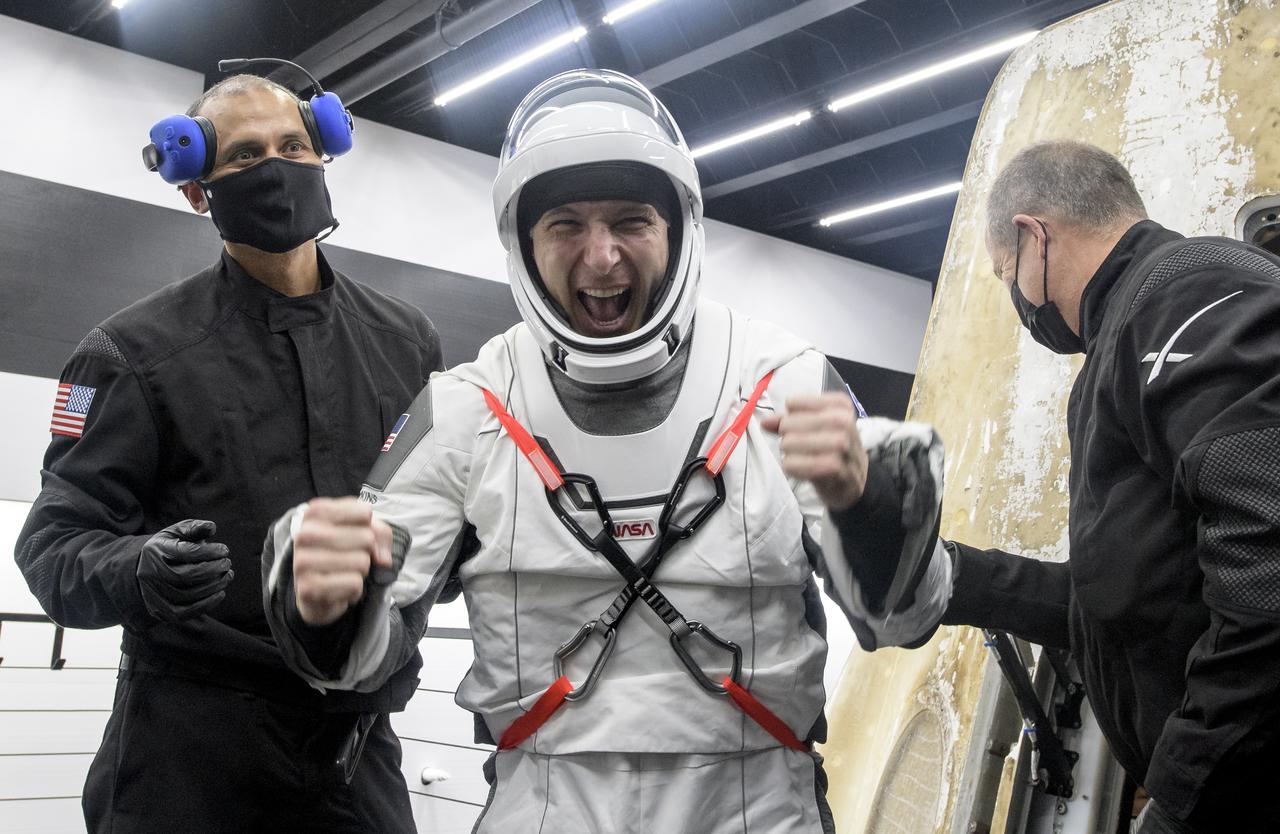
NASA astronaut Mike Hopkins is helped out of the SpaceX Crew Dragon Resilience spacecraft onboard the SpaceX GO Navigator recovery ship after he, NASA astronauts Shannon Walker, Victor Glover and Japan Aerospace Exploration Agency (JAXA) astronaut Soichi Noguchi, landed in the Gulf of Mexico off the coast of Panama City, Florida, Sunday, May 2, 2021. NASA’s SpaceX Crew-1 mission was the first crew rotation flight of the SpaceX Crew Dragon spacecraft and Falcon 9 rocket with astronauts to the International Space Station as part of the agency’s Commercial Crew Program. Photo Credit: (NASA/Bill Ingalls)
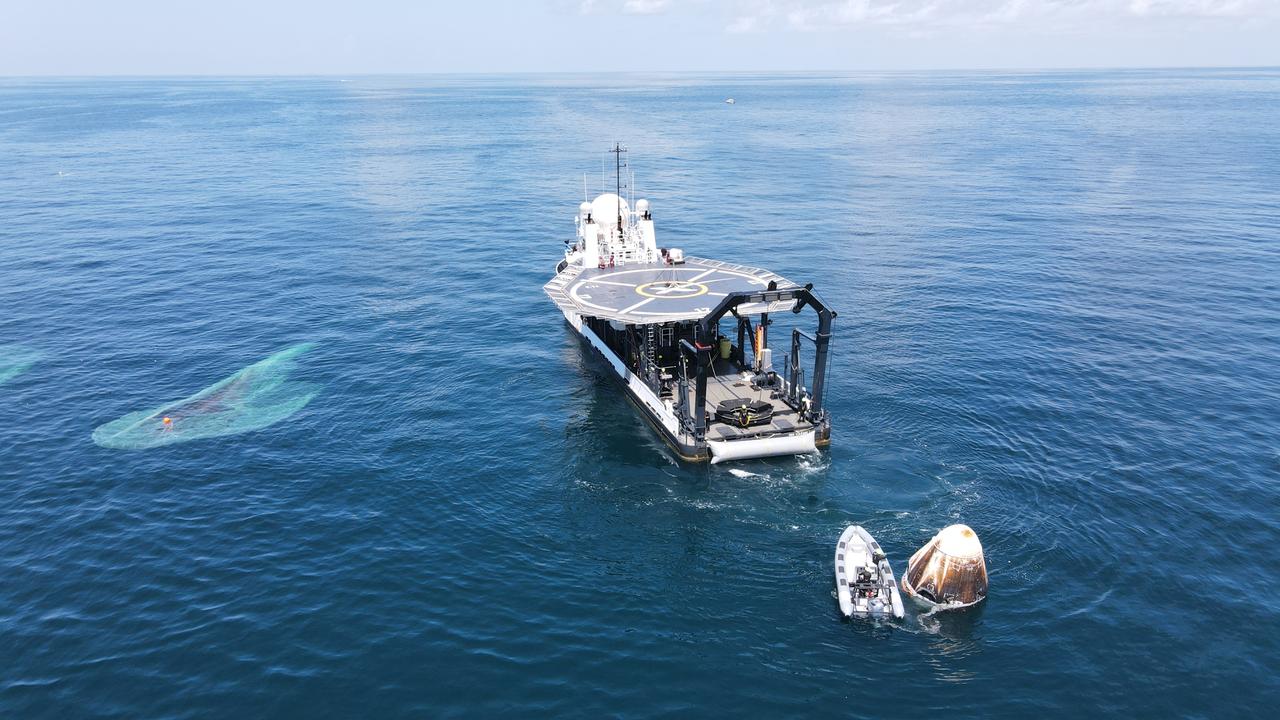
Support teams arrive at the SpaceX Crew Dragon spacecraft, with NASA astronauts Robert Behnken and Douglas Hurley onboard, shortly after it splashed down in the Gulf of Mexico off the coast of Pensacola, Florida, on Aug. 2, 2020, for the agency’s SpaceX Demo-2 mission. Behind them is the SpaceX GO Navigator recovery ship, where Crew Dragon was taken for Behnken and Hurley to exit the capsule. The final flight test for SpaceX under NASA’s Commercial Crew Program, Demo-2 will pave the way for the agency to certify the company’s transportation system for regular, crewed flights to the orbiting laboratory.
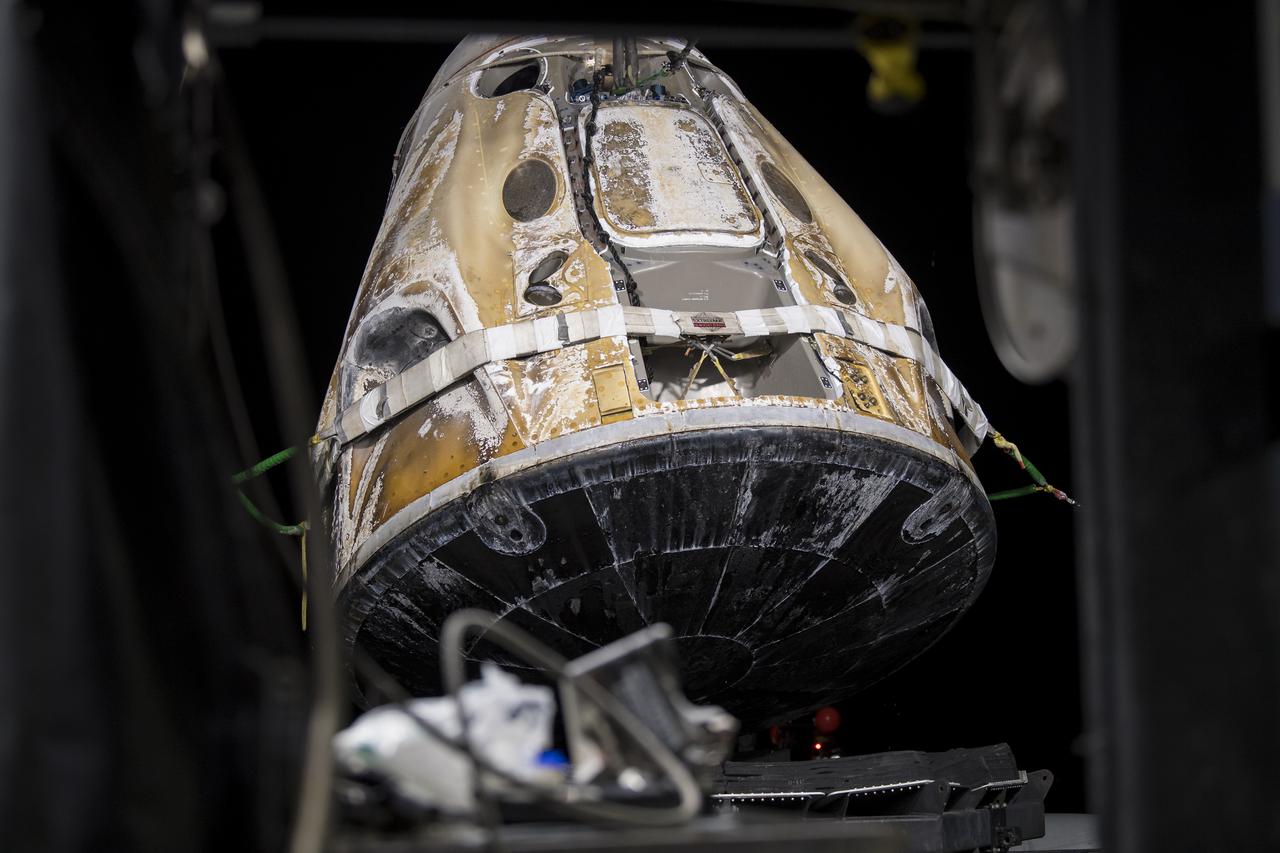
The SpaceX Crew Dragon Endeavour spacecraft is lifted onto the GO Navigator recovery ship after it landed with NASA astronauts Shane Kimbrough and Megan McArthur, Japan Aerospace Exploration Agency (JAXA) astronaut Aki Hoshide, and ESA (European Space Agency) astronaut Thomas Pesquet in the Gulf of Mexico off the coast of Pensacola, Florida, Monday, Nov. 8, 2021. NASA’s SpaceX Crew-2 mission is the second operational mission of the SpaceX Crew Dragon spacecraft and Falcon 9 rocket to the International Space Station as part of the agency’s Commercial Crew Program. Photo Credit: (NASA/Aubrey Gemignani)
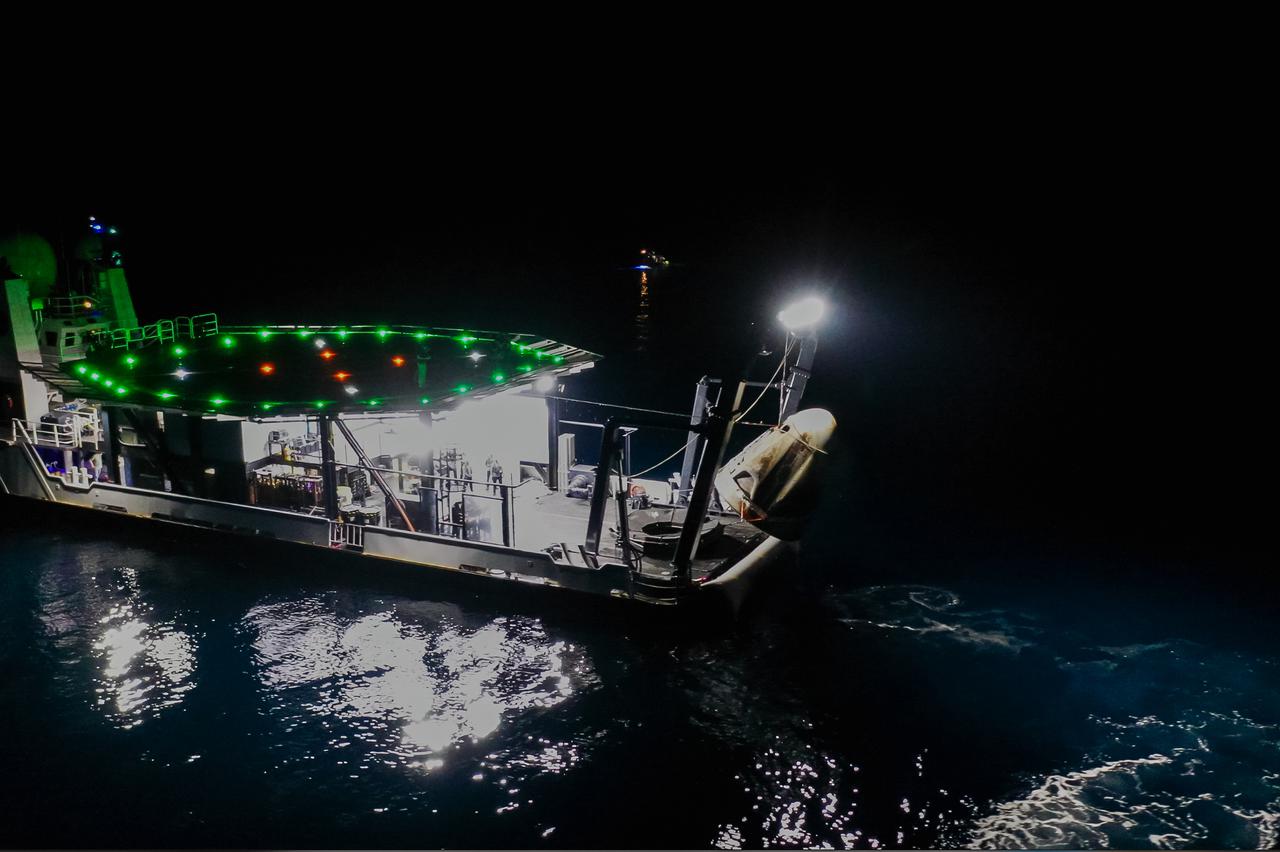
The SpaceX Crew Dragon Resilience splashed down in the Gulf of Mexico off the coast of Panama City, in Florida, at 2:56 a.m. EDT on May 2, 2021. Astronauts Michael Hopkins, Victor Glover, and Shannon Walker of NASA, and Soichi Noguchi of JAXA (Japan Aerospace Exploration Agency) completed Crew-1, the first crew rotation mission to the International Space Station in partnership with NASA as part of the agency’s Commercial Crew Program. Teams on the Go Navigator recovery ship, including two fast boats, work to secure and hoist Crew Dragon onto the main deck of the recovery ship with the astronauts inside.
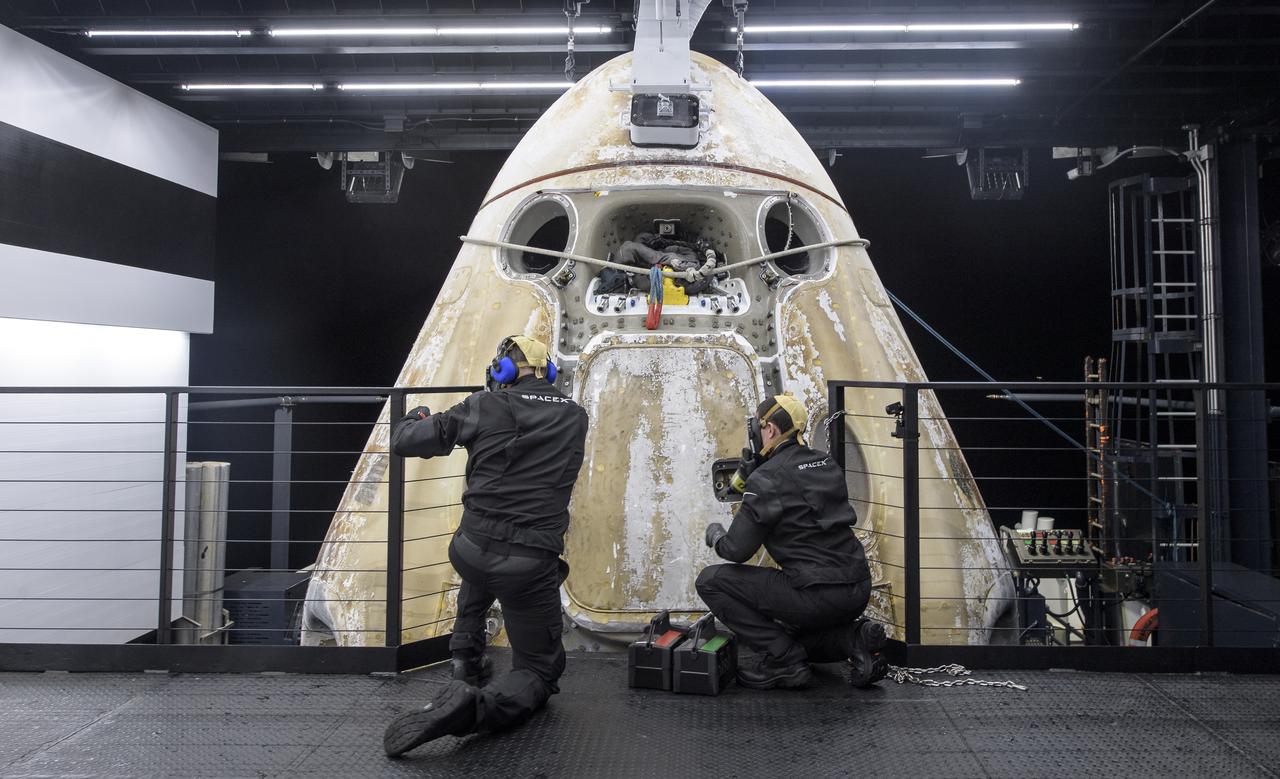
Support teams work around the SpaceX Crew Dragon Resilience spacecraft shortly after it landed with NASA astronauts Mike Hopkins, Shannon Walker, and Victor Glover, and Japan Aerospace Exploration Agency (JAXA) astronaut Soichi Noguchi aboard in the Gulf of Mexico off the coast of Panama City, Florida, Sunday, May 2, 2021. NASA’s SpaceX Crew-1 mission was the first crew rotation flight of the SpaceX Crew Dragon spacecraft and Falcon 9 rocket with astronauts to the International Space Station as part of the agency’s Commercial Crew Program. Photo Credit: (NASA/Bill Ingalls)
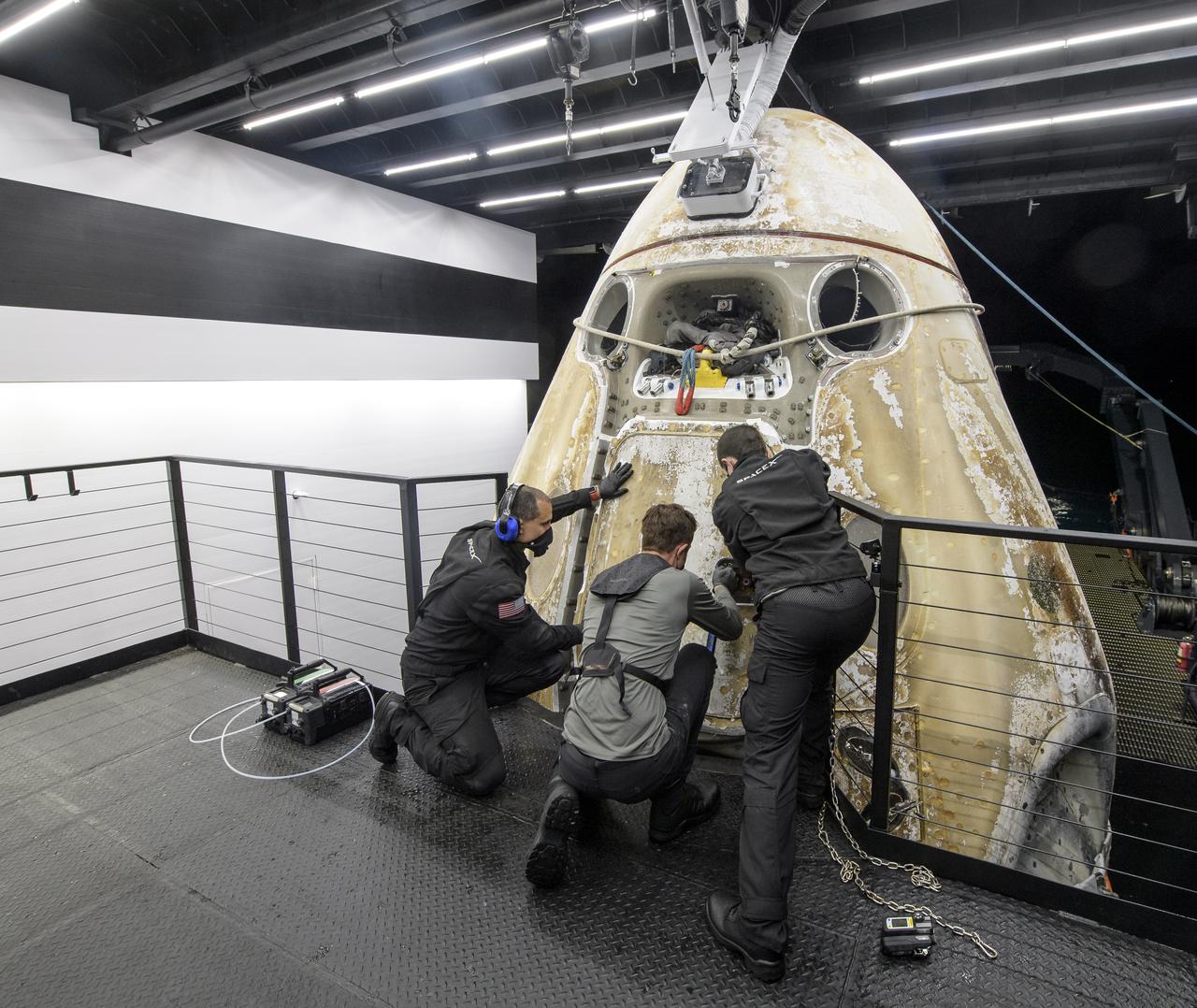
Support teams work around the SpaceX Crew Dragon Resilience spacecraft shortly after it landed with NASA astronauts Mike Hopkins, Shannon Walker, and Victor Glover, and Japan Aerospace Exploration Agency (JAXA) astronaut Soichi Noguchi aboard in the Gulf of Mexico off the coast of Panama City, Florida, Sunday, May 2, 2021. NASA’s SpaceX Crew-1 mission was the first crew rotation flight of the SpaceX Crew Dragon spacecraft and Falcon 9 rocket with astronauts to the International Space Station as part of the agency’s Commercial Crew Program. Photo Credit: (NASA/Bill Ingalls)
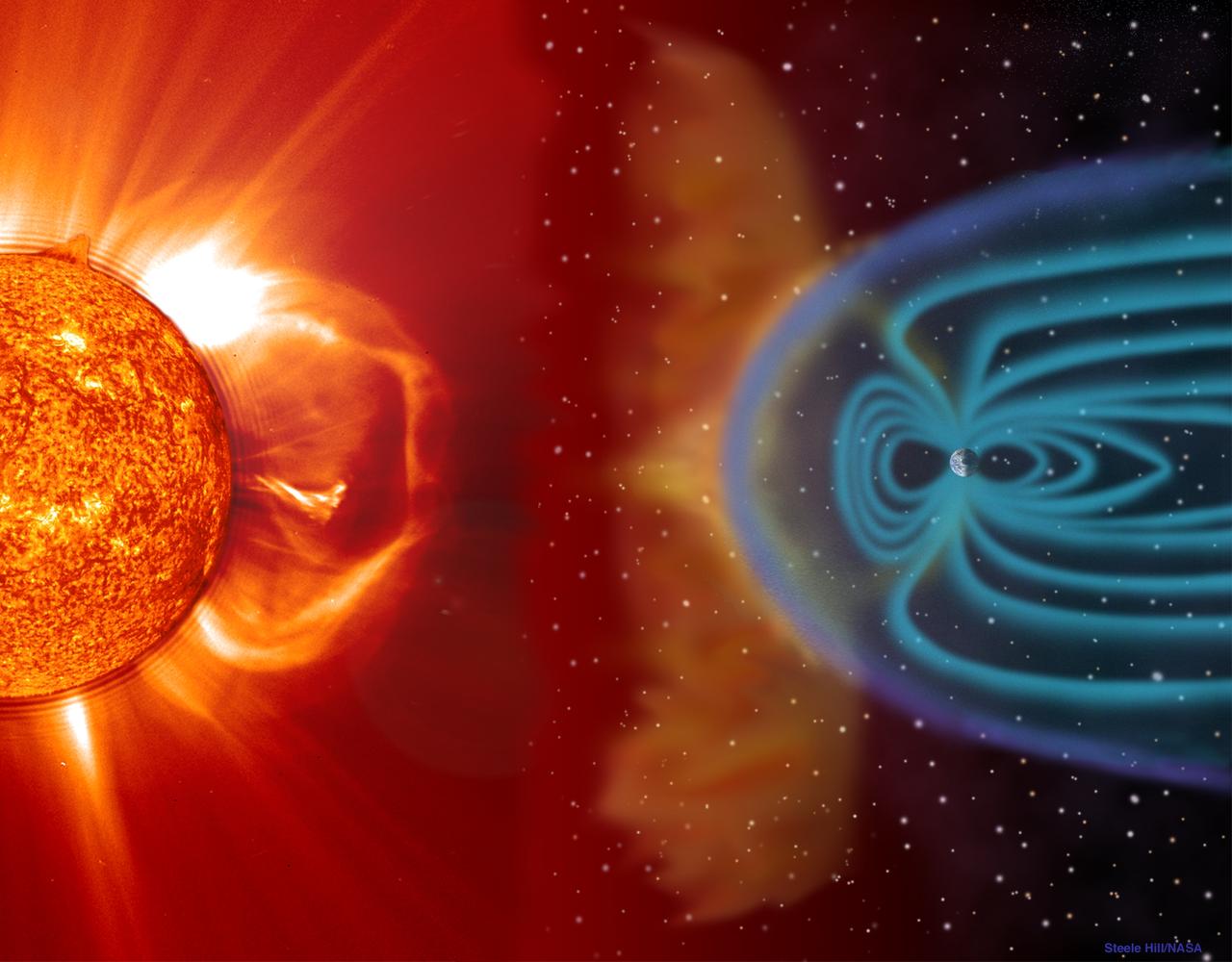
CME blast and subsequent impact at Earth -- This illustration shows a CME blasting off the Sun’s surface in the direction of Ea CME blast and subsequent impact at Earth -- This illustration shows a CME blasting off the Sun’s surface in the direction of Earth. This left portion is composed of an EIT 304 image superimposed on a LASCO C2 coronagraph. Two to four days later, the CME cloud is shown striking and beginning to be mostly deflected around the Earth’s magnetosphere. The blue paths emanating from the Earth’s poles represent some of its magnetic field lines. The magnetic cloud of plasma can extend to 30 million miles wide by the time it reaches earth. These storms, which occur frequently, can disrupt communications and navigational equipment, damage satellites, and even cause blackouts. (Objects in the illustration are not drawn to scale.) Credit: NASA/GSFC/SOHO/ESA To learn more go to the SOHO website: <a href="http://sohowww.nascom.nasa.gov/home.html" rel="nofollow">sohowww.nascom.nasa.gov/home.html</a> To learn more about NASA's Sun Earth Day go here: <a href="http://sunearthday.nasa.gov/2010/index.php" rel="nofollow">sunearthday.nasa.gov/2010/index.php</a>
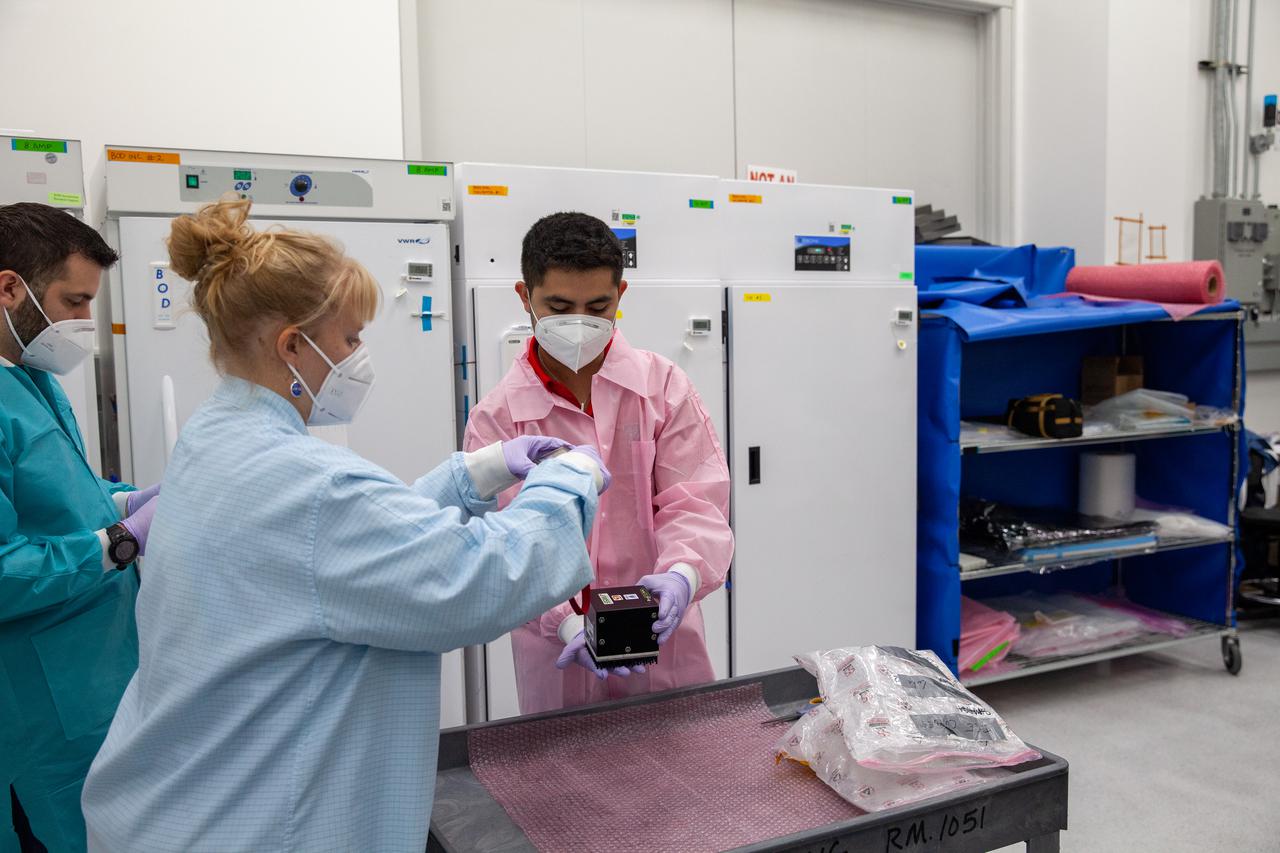
Members of the cold stowage team unpack science experiments inside the Space Station Processing Facility at NASA’s Kennedy Space Center in Florida on Jan. 14, 2021. The experiments returned to Earth on SpaceX’s 21st commercial resupply services mission (CRS-21). Making its successful parachute-assisted splashdown west of Tampa off the Florida coast, at 8:26 p.m. EST on Jan. 13, the SpaceX cargo Dragon returned more than 4,400 pounds of scientific experiments and other cargo from the International Space Station. After splashdown, SpaceX loaded Dragon aboard their Go Navigator recovery ship and packed an Airbus H225 helicopter with the time-sensitive research cargo for delivery to Kennedy. The upgraded cargo Dragon capsule also boasts double the powered locker capacity to preserve science samples, allowing for a significant increase in the research that can be carried back to Earth.
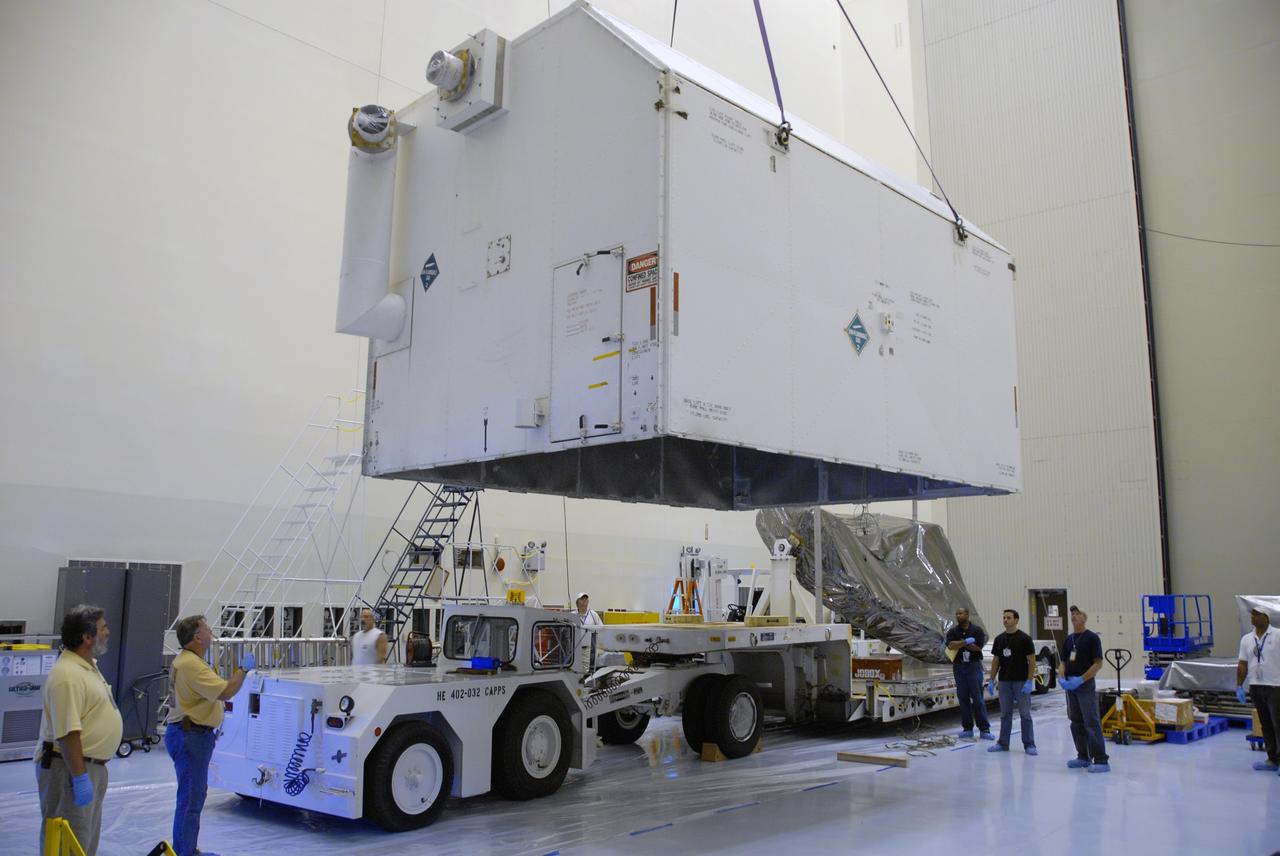
CAPE CANAVERAL, Fla. – In the Payload Hazardous Servicing Facility at NASA's Kennedy Space Center, arcane moves the cover of the shipping container away from its cargo, the Multi-Use Lightweight Equipment (MULE) carrier. The MULE is part of the payload for the fifth and final shuttle servicing mission to NASA's Hubble Space Telescope, STS-125. The MULE carrier will join the Flight Support System, the Super Lightweight Interchangeable Carrier and the Orbital Replacement Unit Carrier in the Payload Hazardous Servicing Facility where the Hubble payload is being prepared for launch. The Relative Navigation Sensors and the New Outer Blanket Layers will be on the MULE. The payload is scheduled to go to Launch Pad 39A in mid-September to be installed into Atlantis' payload bay. Atlantis is targeted to launch Oct. 8 at 1:34 a.m. EDT. .Photo credit: NASA/Amanda Diller
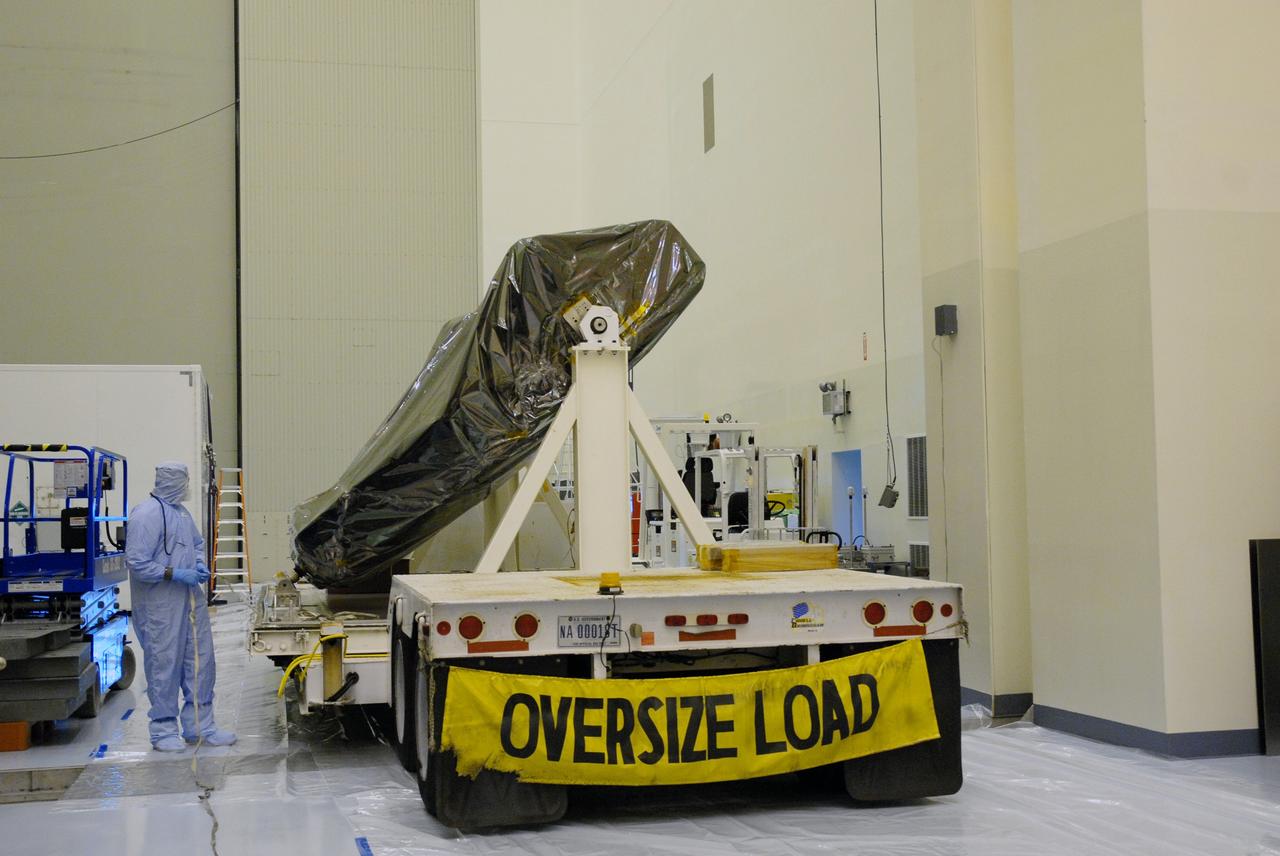
CAPE CANAVERAL, Fla. – The Multi-Use Lightweight Equipment, or MULE, carrier is being moved into the high bay in the Payload Hazardous Servicing Facility at NASA's Kennedy Space Center. The MULE is part of the payload for the fifth and final shuttle servicing mission to NASA's Hubble Space Telescope, STS-125. The MULE carrier will join the Flight Support System, the Super Lightweight Interchangeable Carrier and the Orbital Replacement Unit Carrier in the Payload Hazardous Servicing Facility where the Hubble payload is being prepared for launch. The Relative Navigation Sensors and the New Outer Blanket Layers will be on the MULE. The payload is scheduled to go to Launch Pad 39A in mid-September to be installed into Atlantis' payload bay. Atlantis is targeted to launch Oct. 8 at 1:34 a.m. EDT. .Photo credit: NASA/Jack Pfaller
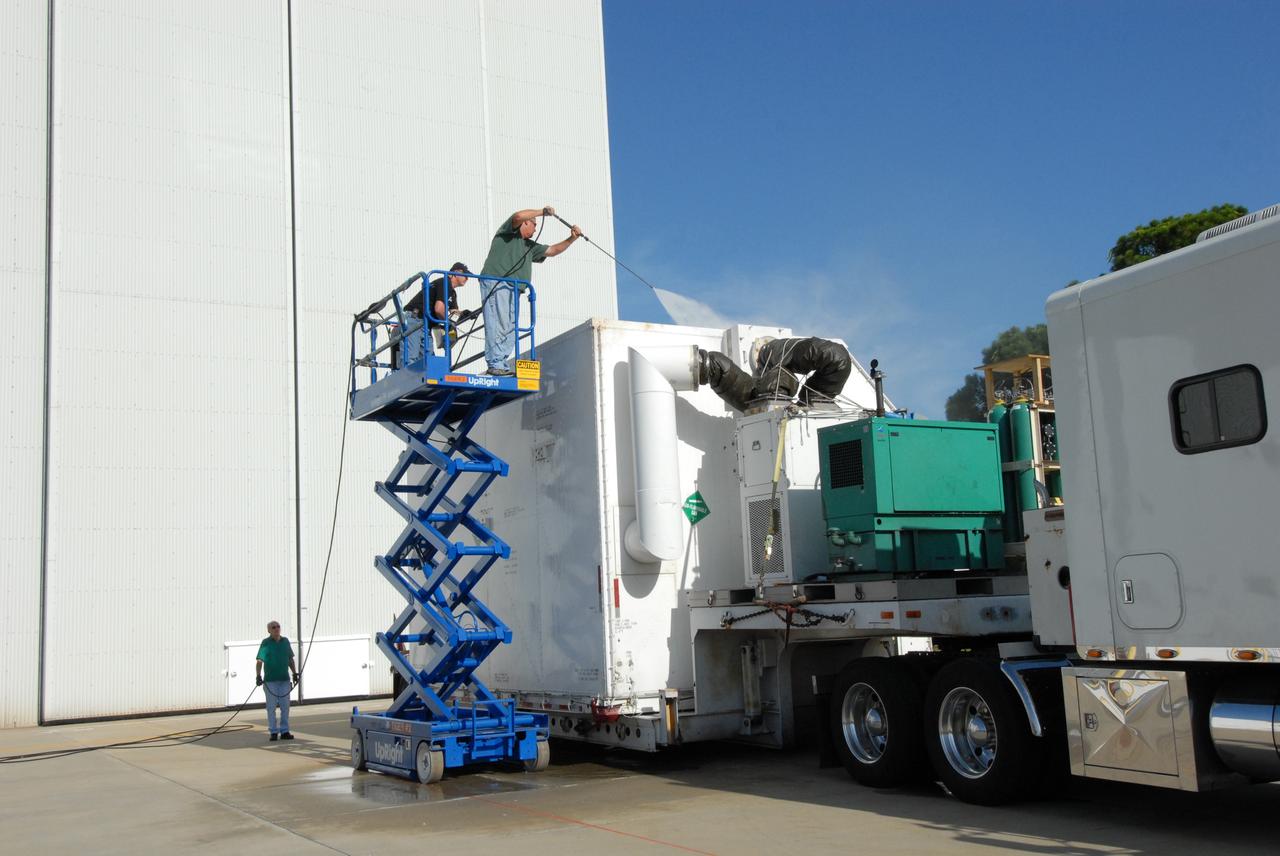
CAPE CANAVERAL, Fla. – At the Canister Rotation Facility at NASA's Kennedy Space Center, the shipping container with the Multi-Use Lightweight Equipment (MULE) carrier inside is pressure cleaned after its arrival. The MULE is part of the payload for the fifth and final shuttle servicing mission to NASA's Hubble Space Telescope, STS-125. The MULE carrier will join the Flight Support System, the Super Lightweight Interchangeable Carrier and the Orbital Replacement Unit Carrier in the Payload Hazardous Servicing Facility where the Hubble payload is being prepared for launch. The Relative Navigation Sensors and the New Outer Blanket Layers will be on the MULE. The payload is scheduled to go to Launch Pad 39A in mid-September to be installed into Atlantis' payload bay. Atlantis is targeted to launch Oct. 8 at 1:34 a.m. EDT. .Photo credit: NASA/Amanda Diller

CAPE CANAVERAL, Fla. – In the Payload Hazardous Servicing Facility at NASA's Kennedy Space Center, an overhead crane lifts the Multi-Use Lightweight Equipment, or MULE, carrier from a mobile platform to move it to another stand in the high bay. The MULE is part of the payload for the fifth and final shuttle servicing mission to NASA's Hubble Space Telescope, STS-125. The MULE carrier will join the Flight Support System, the Super Lightweight Interchangeable Carrier and the Orbital Replacement Unit Carrier in the Payload Hazardous Servicing Facility where the Hubble payload is being prepared for launch. The Relative Navigation Sensors and the New Outer Blanket Layers will be on the MULE. The payload is scheduled to go to Launch Pad 39A in mid-September to be installed into Atlantis' payload bay. Atlantis is targeted to launch Oct. 8 at 1:34 a.m. EDT. Photo credit: NASA/Jack Pfaller

CAPE CANAVERAL, Fla. – In the Payload Hazardous Servicing Facility at NASA's Kennedy Space Center, an overhead crane lifts the Multi-Use Lightweight Equipment, or MULE, carrier from a mobile platform to move it to another stand in the high bay. The MULE is part of the payload for the fifth and final shuttle servicing mission to NASA's Hubble Space Telescope, STS-125. The MULE carrier will join the Flight Support System, the Super Lightweight Interchangeable Carrier and the Orbital Replacement Unit Carrier in the Payload Hazardous Servicing Facility where the Hubble payload is being prepared for launch. The Relative Navigation Sensors and the New Outer Blanket Layers will be on the MULE. The payload is scheduled to go to Launch Pad 39A in mid-September to be installed into Atlantis' payload bay. Atlantis is targeted to launch Oct. 8 at 1:34 a.m. EDT. Photo credit: NASA/Jack Pfaller

CAPE CANAVERAL, Fla. – The Multi-Use Lightweight Equipment, or MULE, carrier is revealed after its protective cover was removed in the Payload Hazardous Servicing Facility at NASA's Kennedy Space Center. The MULE is part of the payload for the fifth and final shuttle servicing mission to NASA's Hubble Space Telescope, STS-125. The MULE carrier will join the Flight Support System, the Super Lightweight Interchangeable Carrier and the Orbital Replacement Unit Carrier in the Payload Hazardous Servicing Facility where the Hubble payload is being prepared for launch. The Relative Navigation Sensors and the New Outer Blanket Layers will be on the MULE. The payload is scheduled to go to Launch Pad 39A in mid-September to be installed into Atlantis' payload bay. Atlantis is targeted to launch Oct. 8 at 1:34 a.m. EDT. Photo credit: NASA/Jack Pfaller
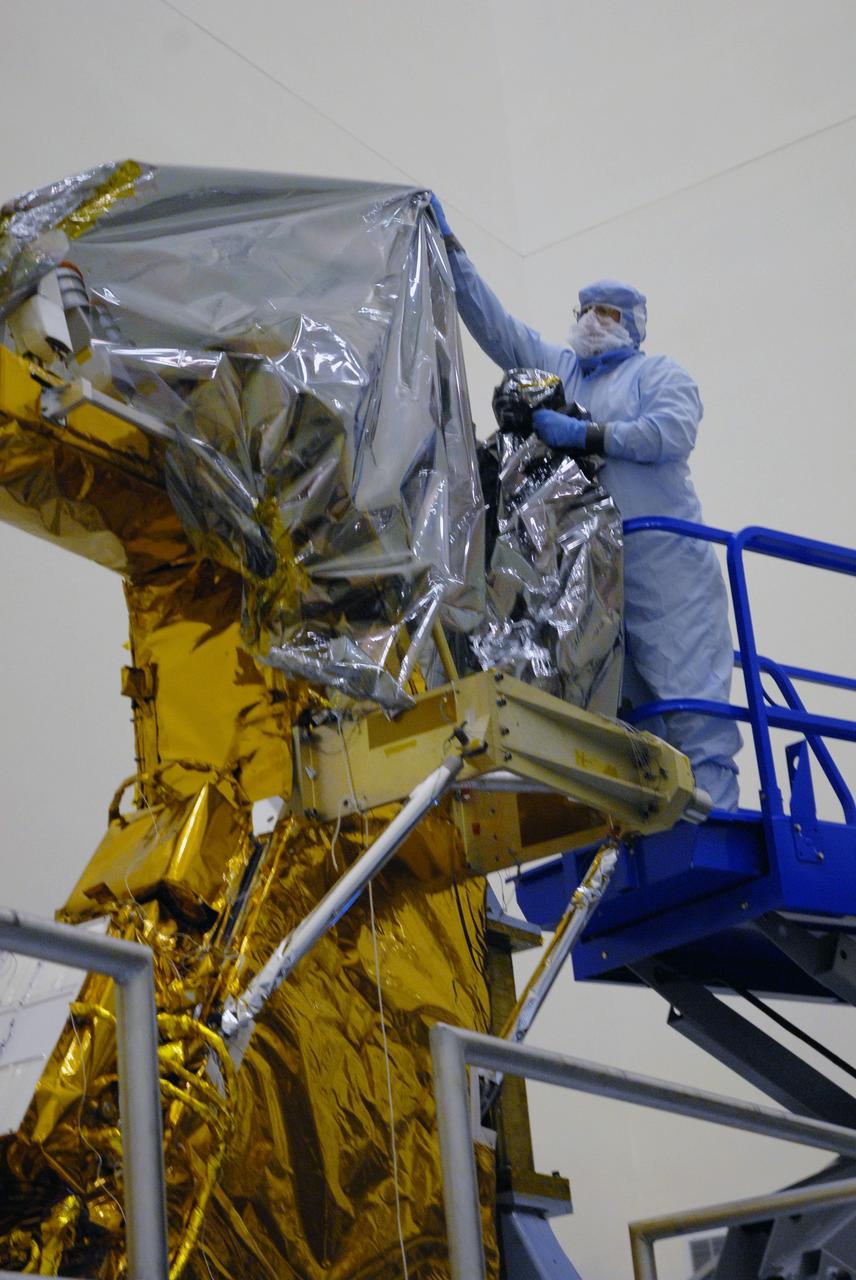
CAPE CANAVERAL, Fla. – In the Payload Hazardous Servicing Facility at NASA's Kennedy Space Center, a technician removes the protective cover from the Multi-Use Lightweight Equipment, or MULE, carrier. The MULE is part of the payload for the fifth and final shuttle servicing mission to NASA's Hubble Space Telescope, STS-125. The MULE carrier will join the Flight Support System, the Super Lightweight Interchangeable Carrier and the Orbital Replacement Unit Carrier in the Payload Hazardous Servicing Facility where the Hubble payload is being prepared for launch. The Relative Navigation Sensors and the New Outer Blanket Layers will be on the MULE. The payload is scheduled to go to Launch Pad 39A in mid-September to be installed into Atlantis' payload bay. Atlantis is targeted to launch Oct. 8 at 1:34 a.m. EDT. Photo credit: NASA/Jack Pfaller
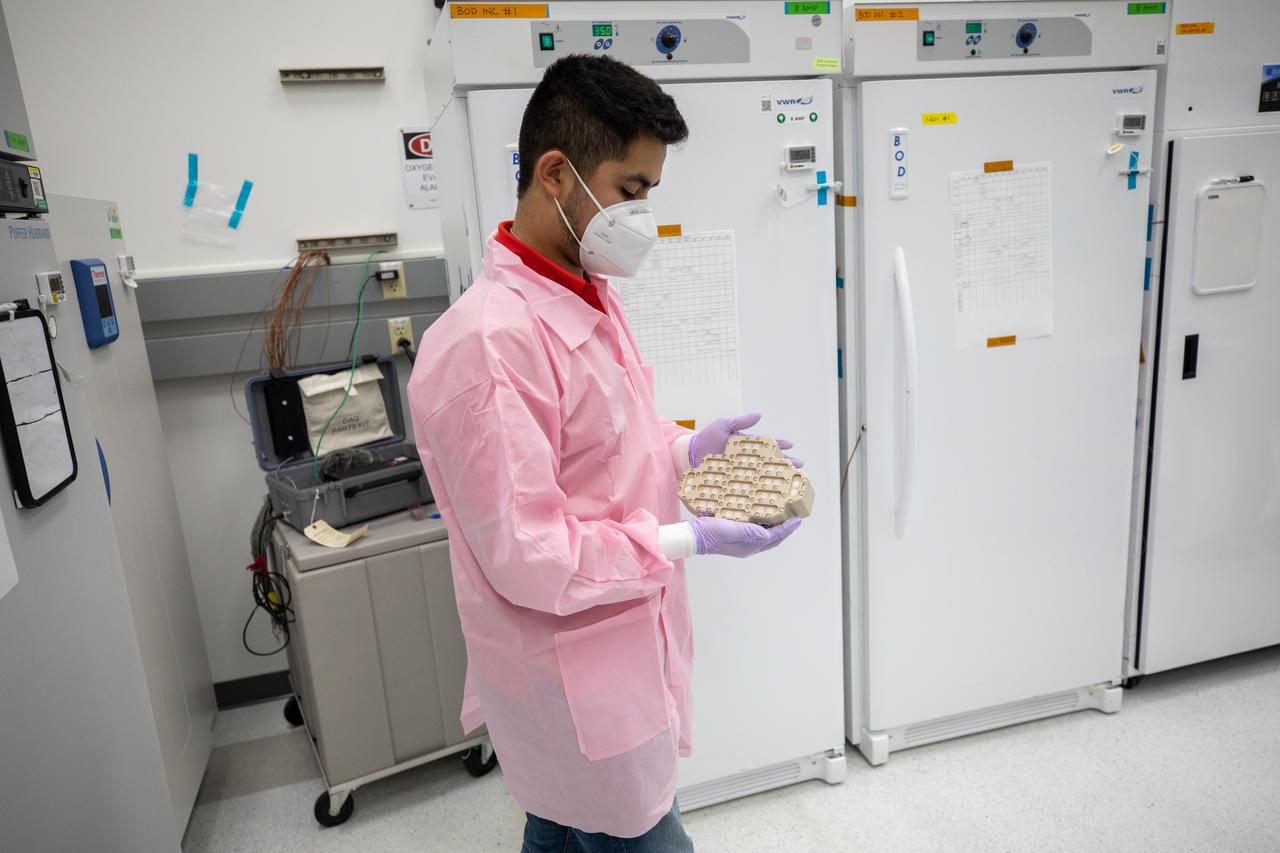
A member of the cold stowage team unpacks science experiments inside the Space Station Processing Facility at NASA’s Kennedy Space Center in Florida on Jan. 14, 2021. The experiments returned to Earth on SpaceX’s 21st commercial resupply services mission (CRS-21). Making its successful parachute-assisted splashdown west of Tampa off the Florida coast, at 8:26 p.m. EST on Jan. 13, the SpaceX cargo Dragon returned more than 4,400 pounds of scientific experiments and other cargo from the International Space Station. After splashdown, SpaceX loaded Dragon aboard their Go Navigator recovery ship and packed an Airbus H225 helicopter with the time-sensitive research cargo for delivery to Kennedy. The upgraded cargo Dragon capsule also boasts double the powered locker capacity to preserve science samples, allowing for a significant increase in the research that can be carried back to Earth.
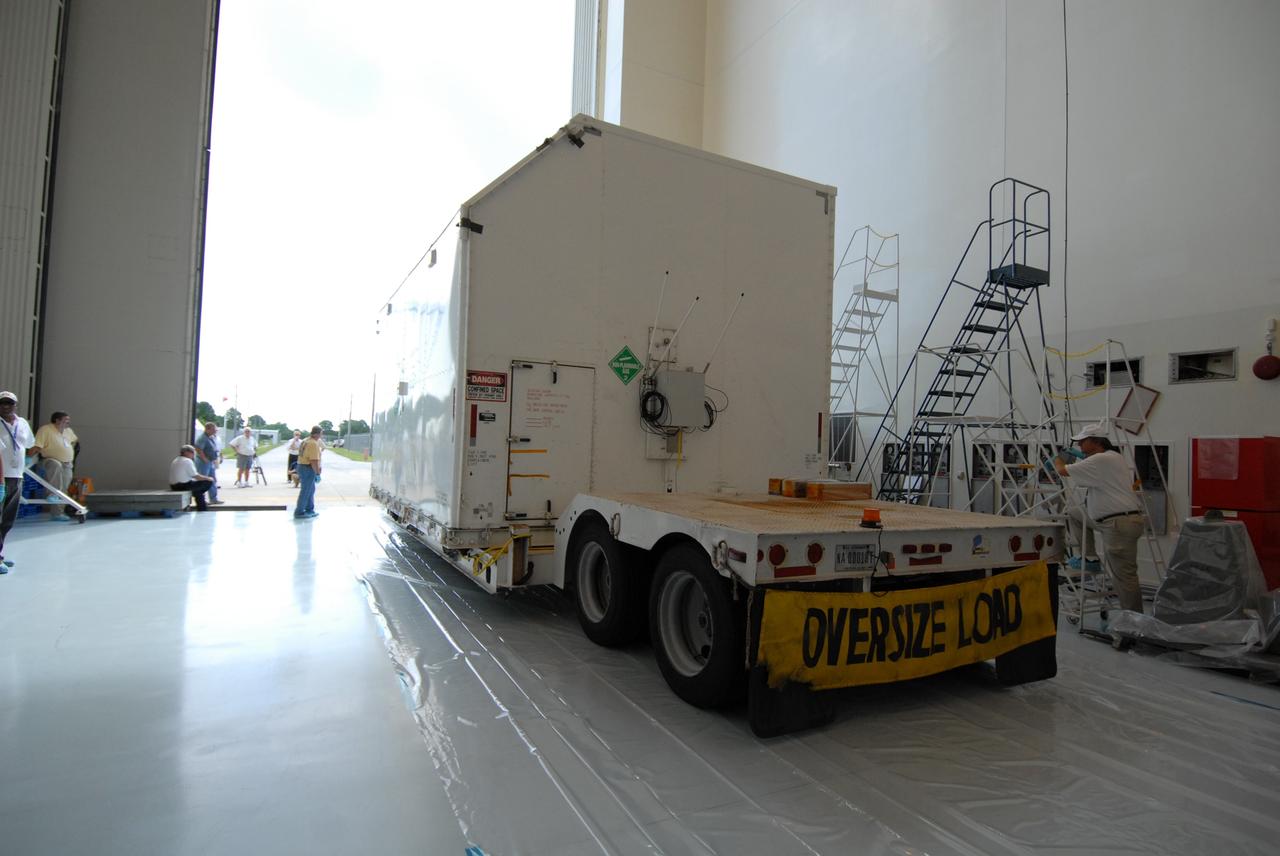
CAPE CANAVERAL, Fla. – The shipping container with the Multi-Use Lightweight Equipment (MULE) carrier inside is moved into the airlock in the Payload Hazardous Servicing Facility at NASA's Kennedy Space Center. The MULE is part of the payload for the fifth and final shuttle servicing mission to NASA's Hubble Space Telescope, STS-125. The MULE carrier will join the Flight Support System, the Super Lightweight Interchangeable Carrier and the Orbital Replacement Unit Carrier in the Payload Hazardous Servicing Facility where the Hubble payload is being prepared for launch. The Relative Navigation Sensors and the New Outer Blanket Layers will be on the MULE. The payload is scheduled to go to Launch Pad 39A in mid-September to be installed into Atlantis' payload bay. Atlantis is targeted to launch Oct. 8 at 1:34 a.m. EDT. .Photo credit: NASA/Amanda Diller
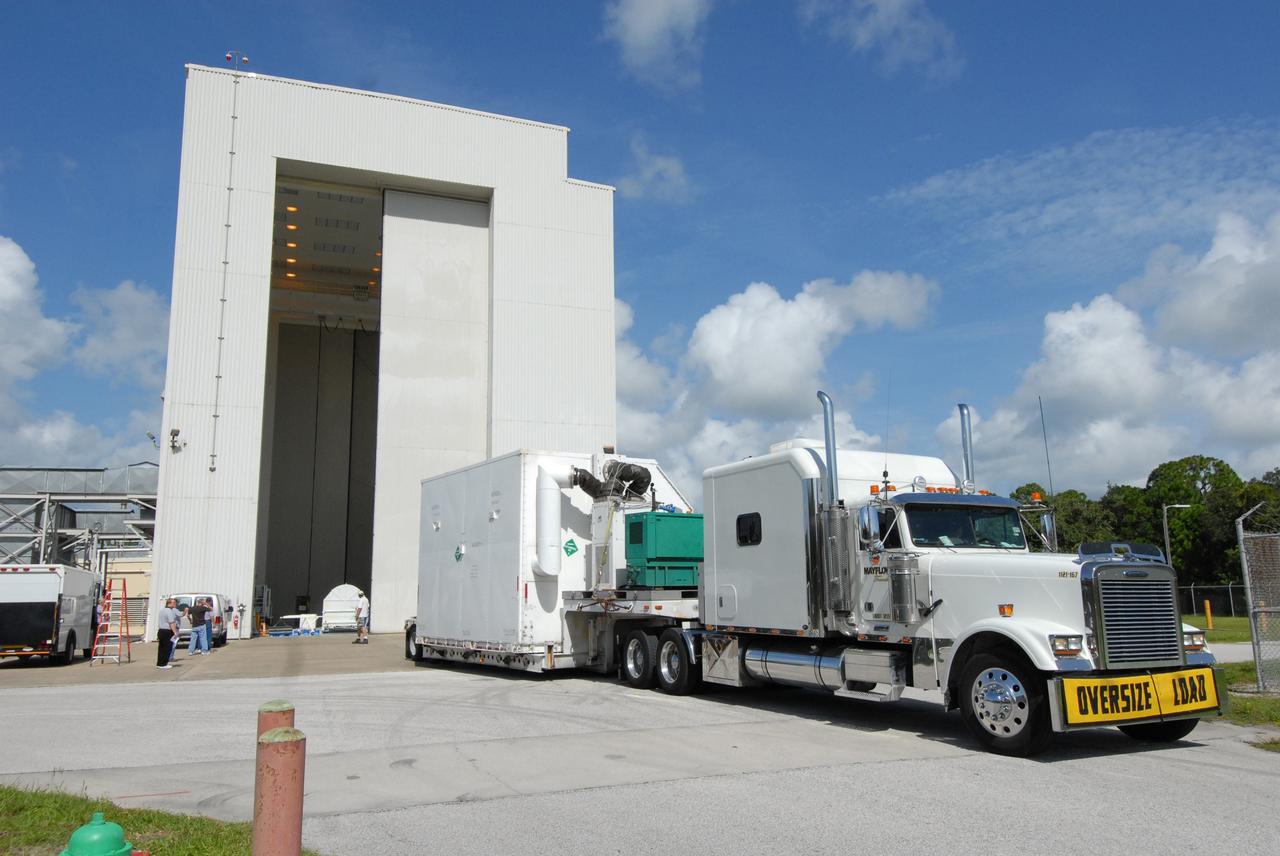
CAPE CANAVERAL, Fla. – The Multi-Use Lightweight Equipment (MULE) carrier arrives at the Payload Hazardous Servicing Facility at NASA's Kennedy Space Center. The MULE is part of the payload for the fifth and final shuttle servicing mission to NASA's Hubble Space Telescope, STS-125. The MULE carrier will join the Flight Support System, the Super Lightweight Interchangeable Carrier and the Orbital Replacement Unit Carrier in the Payload Hazardous Servicing Facility where the Hubble payload is being prepared for launch. The Relative Navigation Sensors and the New Outer Blanket Layers will be on the MULE. The payload is scheduled to go to Launch Pad 39A in mid-September to be installed into Atlantis' payload bay. Atlantis is targeted to launch Oct. 8 at 1:34 a.m. EDT. .Photo credit: NASA/Amanda Diller
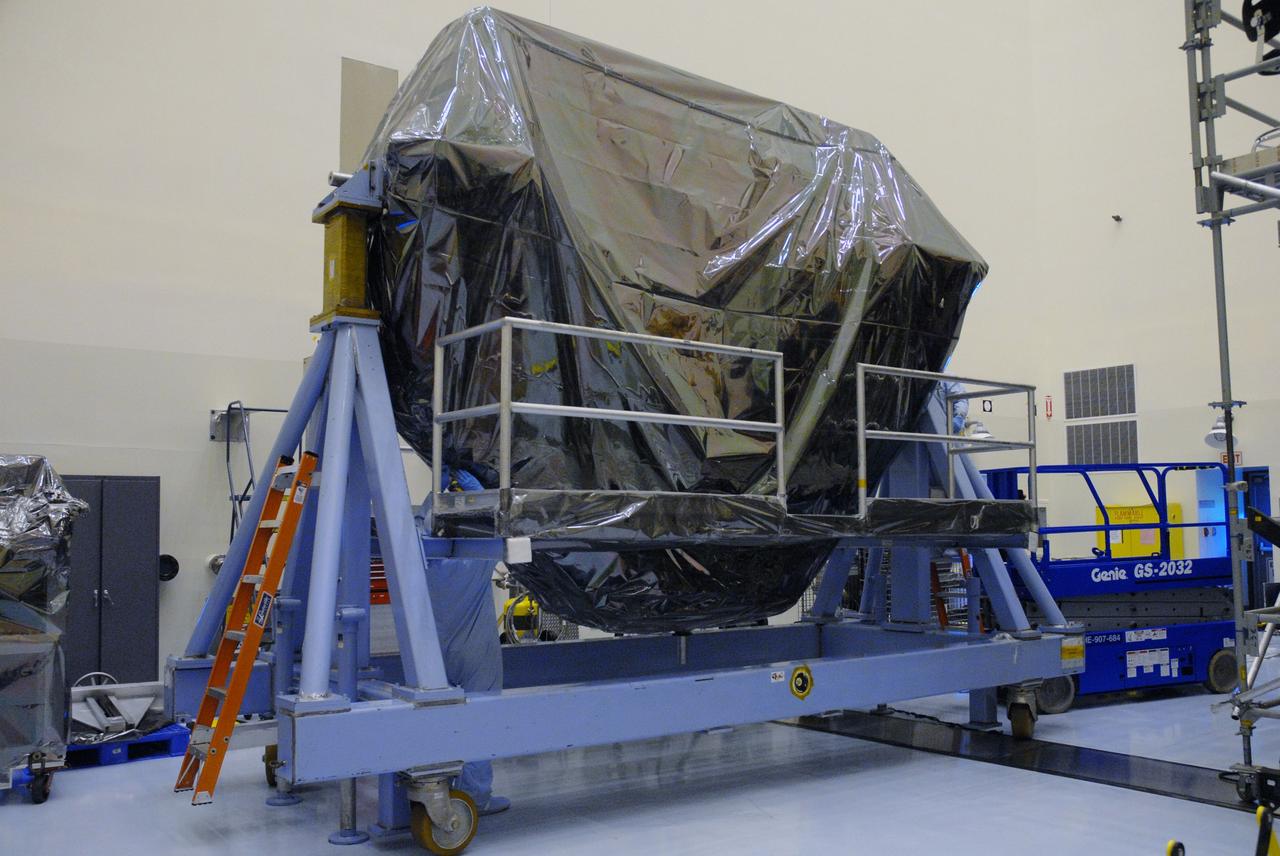
CAPE CANAVERAL, Fla. – In the Payload Hazardous Servicing Facility at NASA's Kennedy Space Center, the Multi-Use Lightweight Equipment, or MULE, carrier rests on a stand in the high bay. The MULE is part of the payload for the fifth and final shuttle servicing mission to NASA's Hubble Space Telescope, STS-125. The MULE carrier will join the Flight Support System, the Super Lightweight Interchangeable Carrier and the Orbital Replacement Unit Carrier in the Payload Hazardous Servicing Facility where the Hubble payload is being prepared for launch. The Relative Navigation Sensors and the New Outer Blanket Layers will be on the MULE. The payload is scheduled to go to Launch Pad 39A in mid-September to be installed into Atlantis' payload bay. Atlantis is targeted to launch Oct. 8 at 1:34 a.m. EDT. Photo credit: NASA/Jack Pfaller
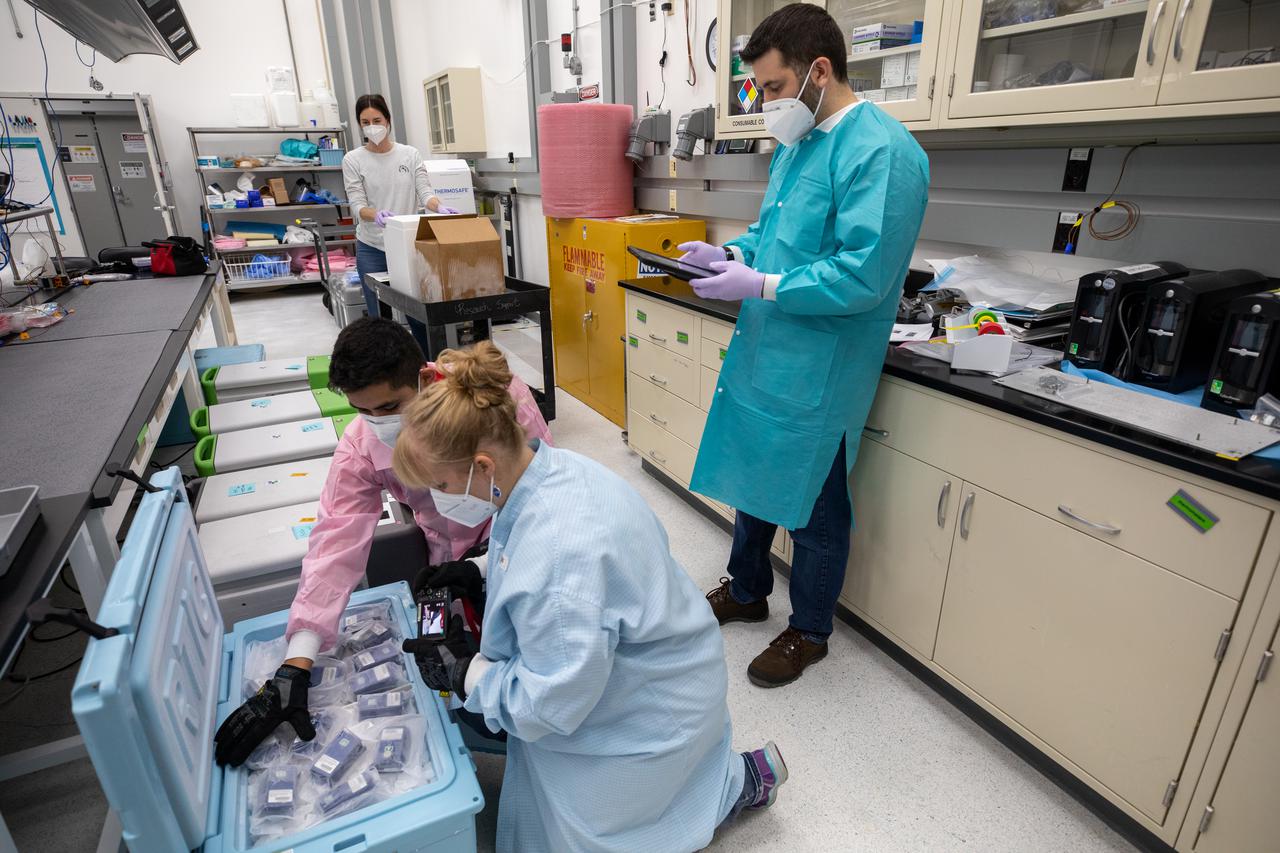
Members of the cold stowage team unpack science experiments inside the Space Station Processing Facility at NASA’s Kennedy Space Center in Florida on Jan. 14, 2021. The experiments returned to Earth on SpaceX’s 21st commercial resupply services mission (CRS-21). Making its successful parachute-assisted splashdown west of Tampa off the Florida coast, at 8:26 p.m. EST on Jan. 13, the SpaceX cargo Dragon returned more than 4,400 pounds of scientific experiments and other cargo from the International Space Station. After splashdown, SpaceX loaded Dragon aboard their Go Navigator recovery ship and packed an Airbus H225 helicopter with the time-sensitive research cargo for delivery to Kennedy. The upgraded cargo Dragon capsule also boasts double the powered locker capacity to preserve science samples, allowing for a significant increase in the research that can be carried back to Earth.