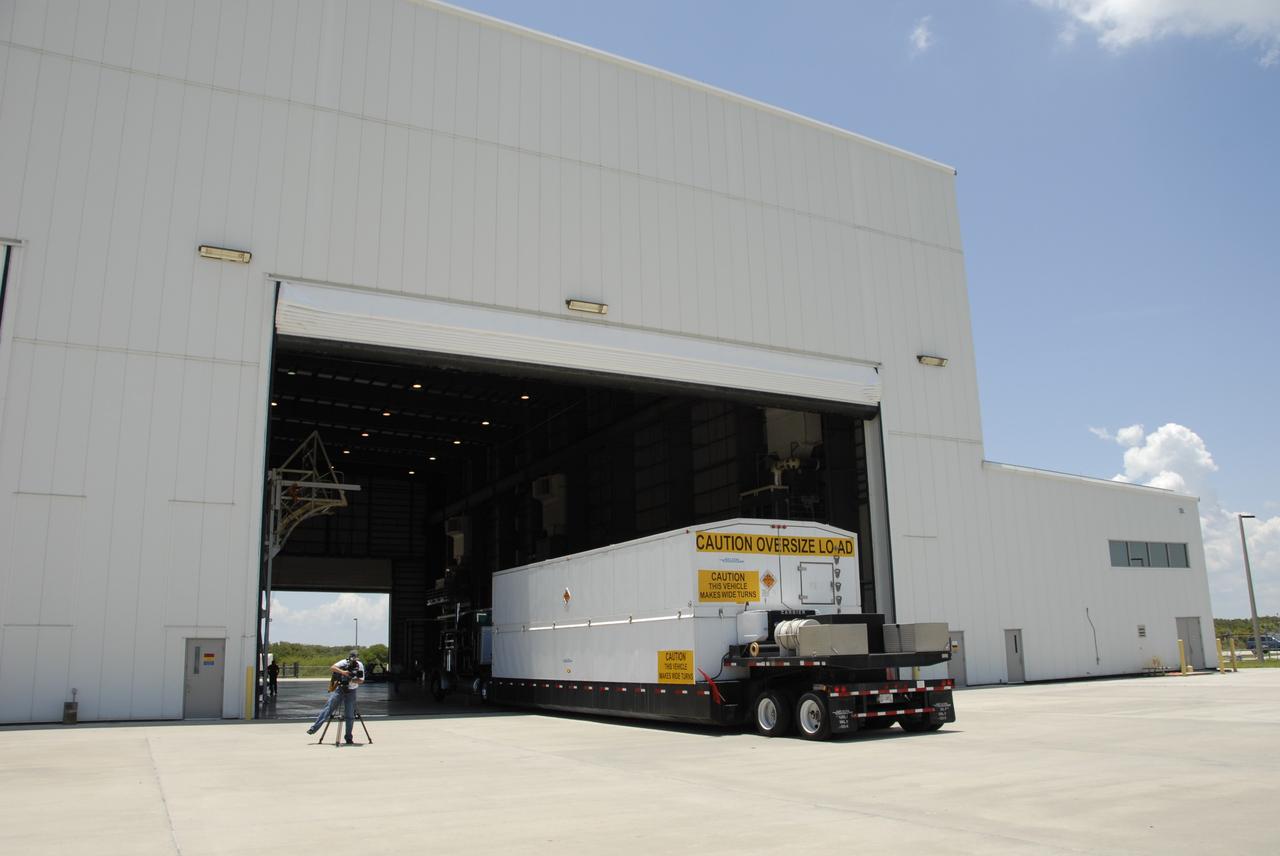
CAPE CANAVERAL, Fla. -- The truck carrying a second stage Delta IV arrives at the Horizontal Integration Facility on Cape Canaveral Air Force Station. The Delta IV will launch the GOES-O satellite from Launch Complex 37 late in 2008. GOES – O is one of a series of Geostationary Operational Environmental Satellites. The multimission GOES series N-P will be a vital contributor to weather, solar, and space operations and science. NASA and the National Oceanic and Atmospheric Administration, or NOAA, are actively engaged in a cooperative program to expand the existing GOES system with the launch of the GOES N-P satellites. Photo credit: NASA/Dimitri Gerondidakis
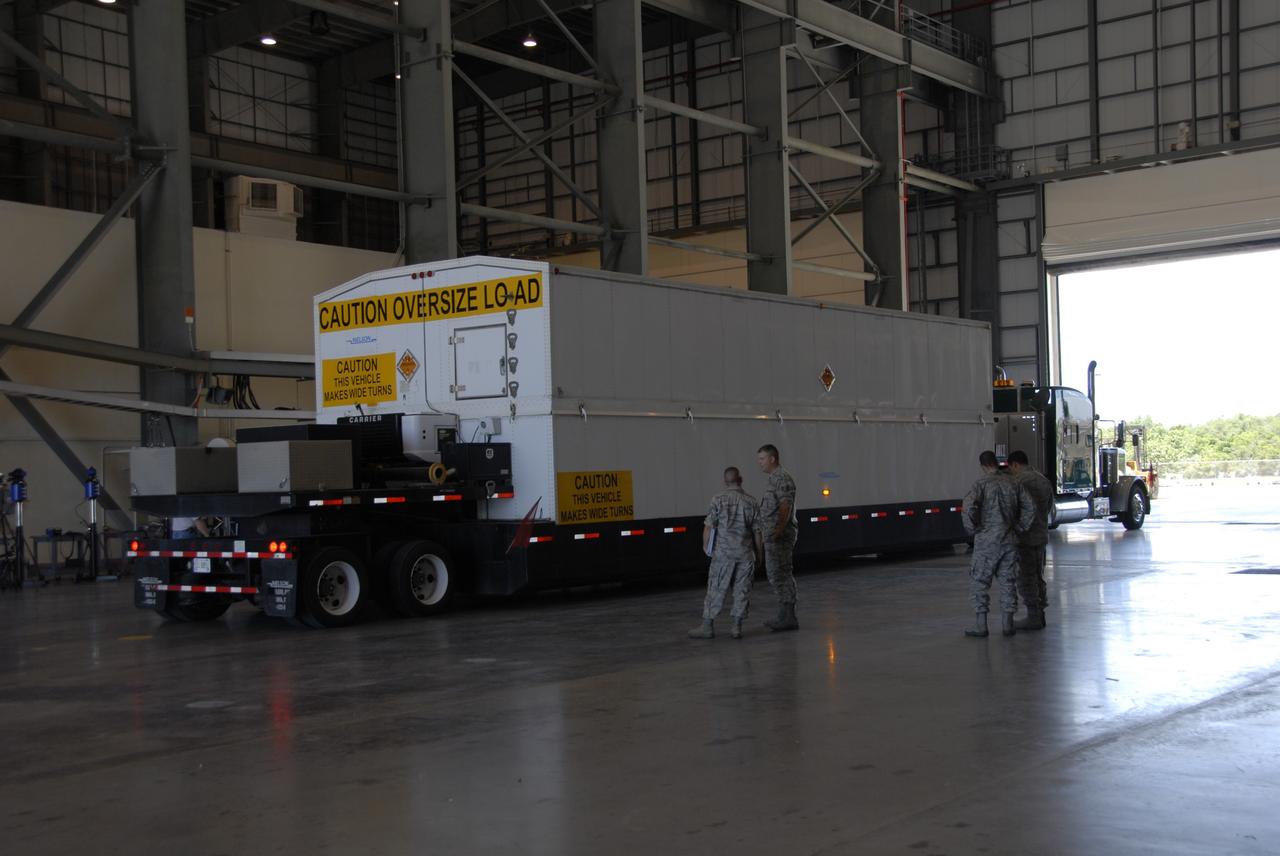
CAPE CANAVERAL, Fla. -- The truck carrying the second stage of a Delta IV rocket arrives inside the Horizontal Integration Facility on Cape Canaveral Air Force Station. The Delta IV will launch the GOES-O satellite from Launch Complex 37 late in 2008. GOES – O is one of a series of Geostationary Operational Environmental Satellites. The multimission GOES series N-P will be a vital contributor to weather, solar, and space operations and science. NASA and the National Oceanic and Atmospheric Administration, or NOAA, are actively engaged in a cooperative program to expand the existing GOES system with the launch of the GOES N-P satellites. Photo credit: NASA/Dimitri Gerondidakis
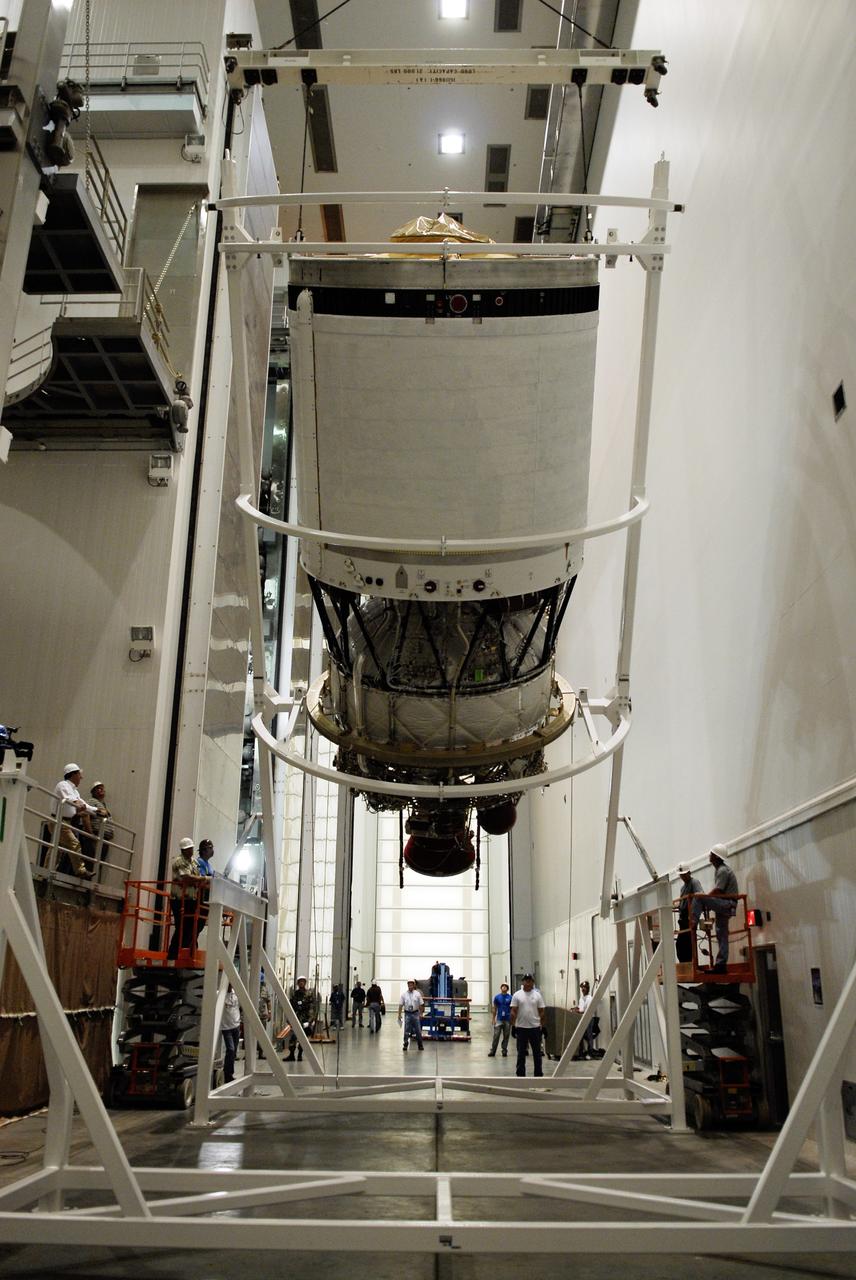
CAPE CANAVERAL, Fla. -- At Cape Canaveral Air Force Station, the second stage for the GOES-O Delta IV rocket is rotated vertically. Once upright, the second stage will be moved into a work cell for processing. GOES – O is one of a series of Geostationary Operational Environmental Satellites. The multimission GOES series N-P will be a vital contributor to weather, solar, and space operations and science. NASA and the National Oceanic and Atmospheric Administration, or NOAA, are actively engaged in a cooperative program to expand the existing GOES system with the launch of the GOES N-P satellites. Photo credit: NASA/Kim Shiflett
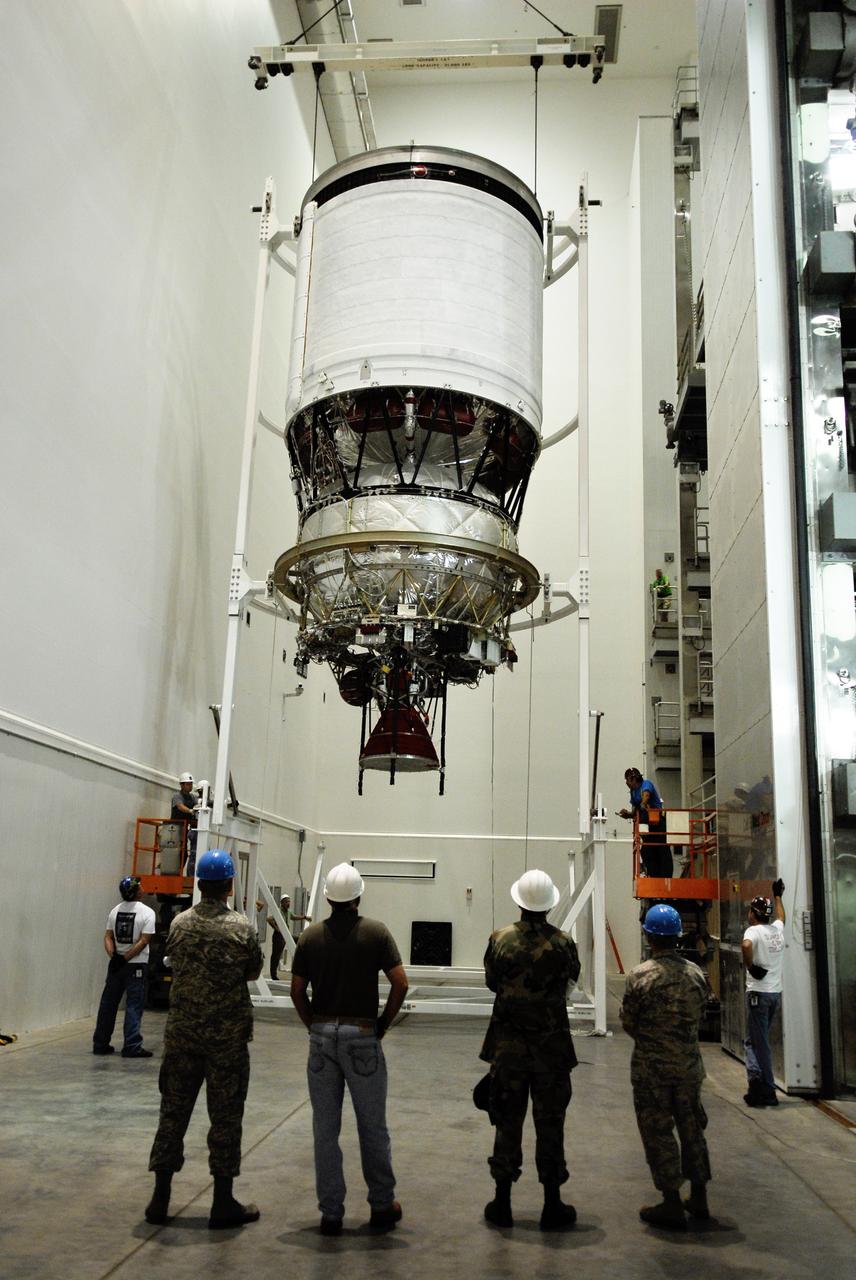
CAPE CANAVERAL, Fla. -- At Cape Canaveral Air Force Station, the second stage for the GOES-O Delta IV rocket is suspended vertically. It will be moved into a work cell for processing. GOES – O is one of a series of Geostationary Operational Environmental Satellites. The multimission GOES series N-P will be a vital contributor to weather, solar, and space operations and science. NASA and the National Oceanic and Atmospheric Administration, or NOAA, are actively engaged in a cooperative program to expand the existing GOES system with the launch of the GOES N-P satellites. Photo credit: NASA/Kim Shiflett
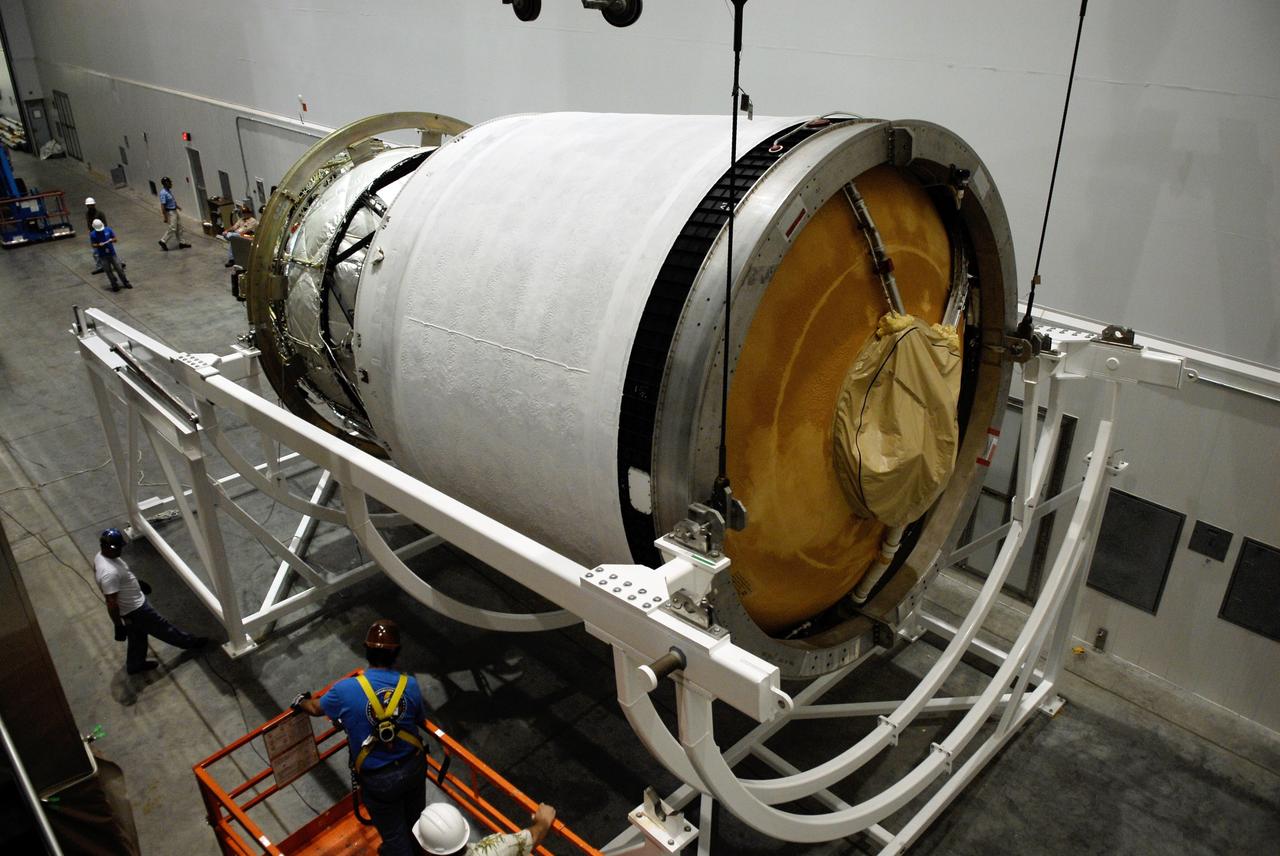
CAPE CANAVERAL, Fla. -- At Cape Canaveral Air Force Station, the second stage for the GOES-O Delta IV rocket rests in the rotation stand. The second stage will be rotated to vertical and moved into a work cell for processing. GOES – O is one of a series of Geostationary Operational Environmental Satellites. The multimission GOES series N-P will be a vital contributor to weather, solar, and space operations and science. NASA and the National Oceanic and Atmospheric Administration, or NOAA, are actively engaged in a cooperative program to expand the existing GOES system with the launch of the GOES N-P satellites. Photo credit: NASA/Kim Shiflett
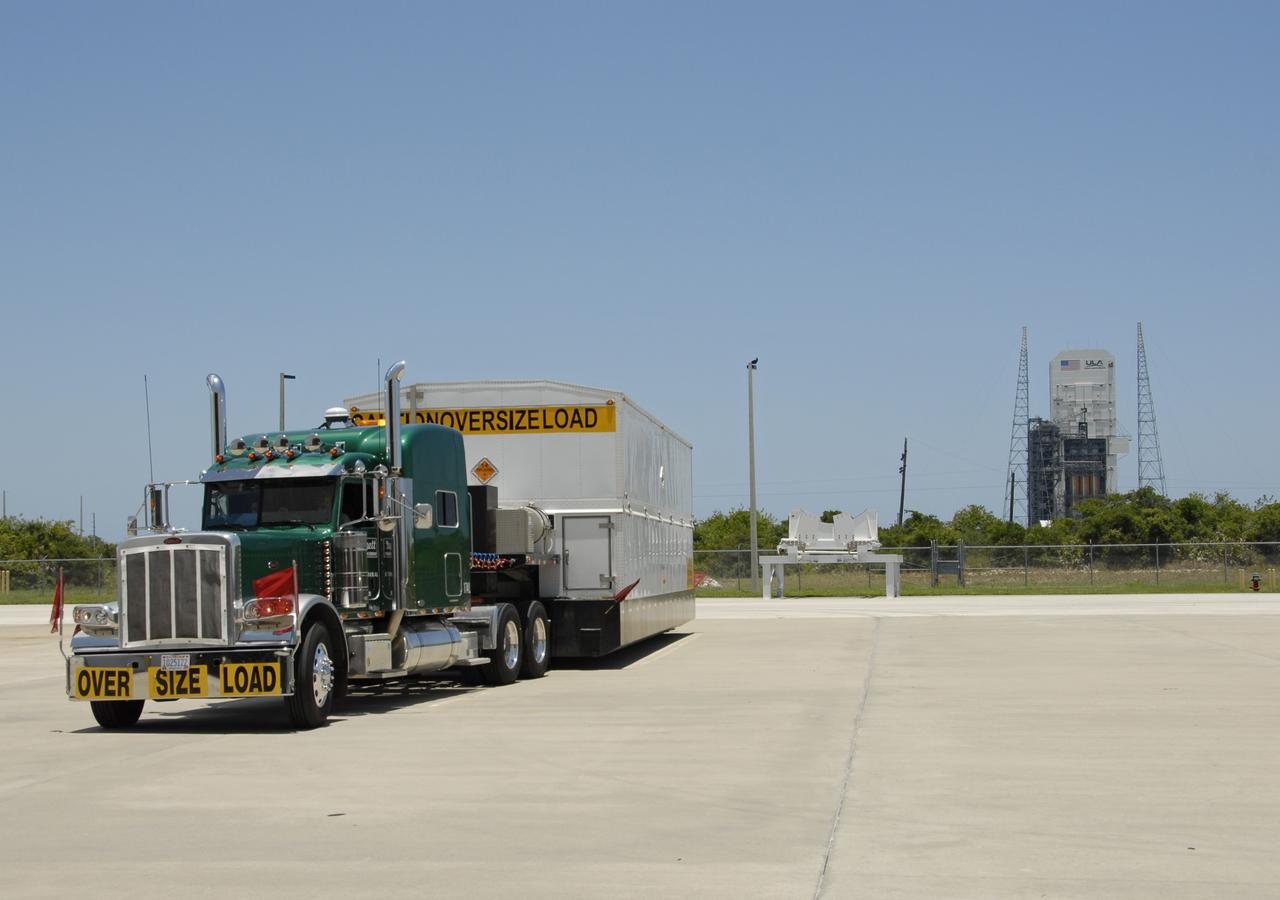
CAPE CANAVERAL, Fla. -- A truck arrives on Cape Canaveral Air Force Station to deliver its cargo, the second stage of a Delta IV rocket, to the Horizontal Integration Facility. In the background is Launch Complex 37, from where the rocket will launch. The Delta IV will launch the GOES-O satellite late in 2008. GOES – O is one of a series of Geostationary Operational Environmental Satellites. The multimission GOES series N-P will be a vital contributor to weather, solar, and space operations and science. NASA and the National Oceanic and Atmospheric Administration, or NOAA, are actively engaged in a cooperative program to expand the existing GOES system with the launch of the GOES N-P satellites. Photo credit: NASA/Dimitri Gerondidakis
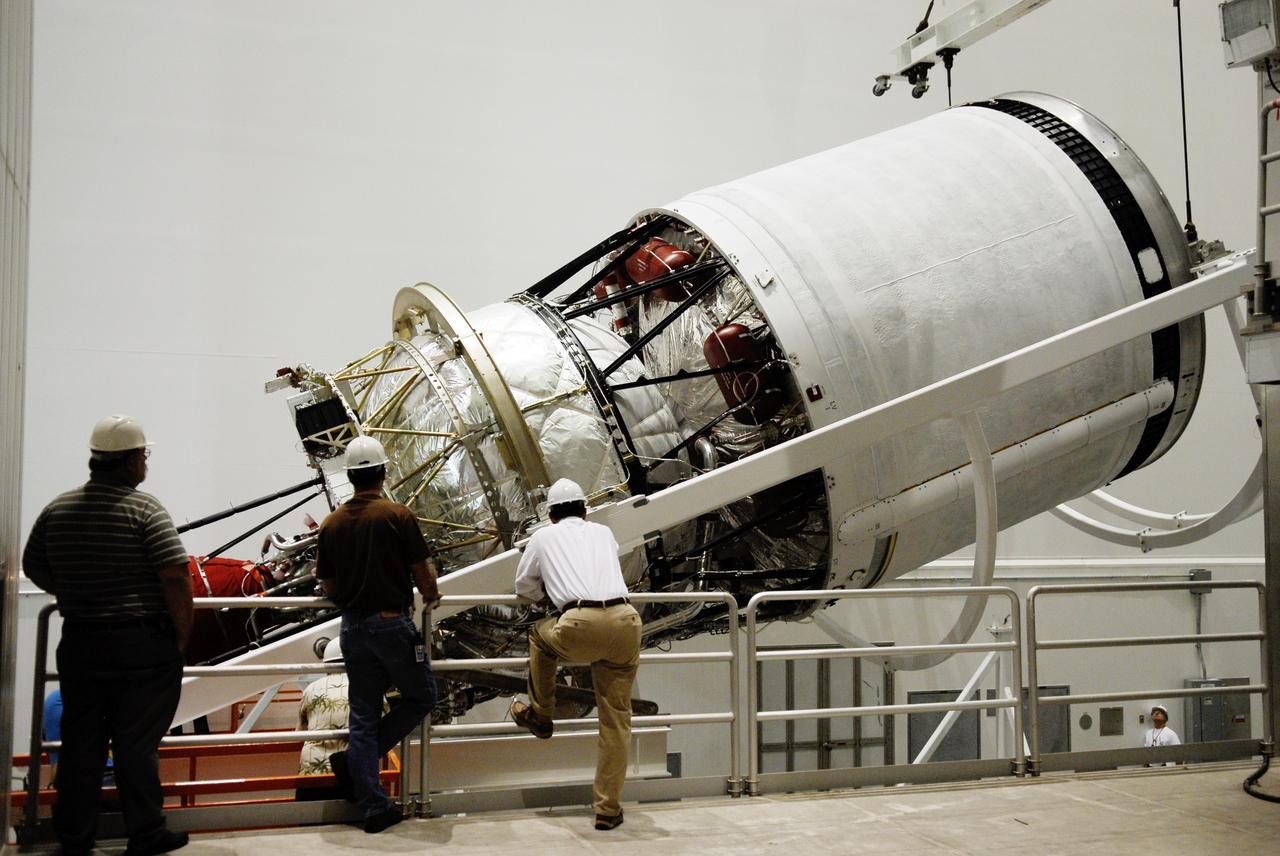
CAPE CANAVERAL, Fla. -- At Cape Canaveral Air Force Station, the second stage for the GOES-O Delta IV rocket is lifted from its horizontal position on the rotation stand. Once vertical, the second stage will be moved into a work cell for processing. GOES – O is one of a series of Geostationary Operational Environmental Satellites. The multimission GOES series N-P will be a vital contributor to weather, solar, and space operations and science. NASA and the National Oceanic and Atmospheric Administration, or NOAA, are actively engaged in a cooperative program to expand the existing GOES system with the launch of the GOES N-P satellites. Photo credit: NASA/Kim Shiflett
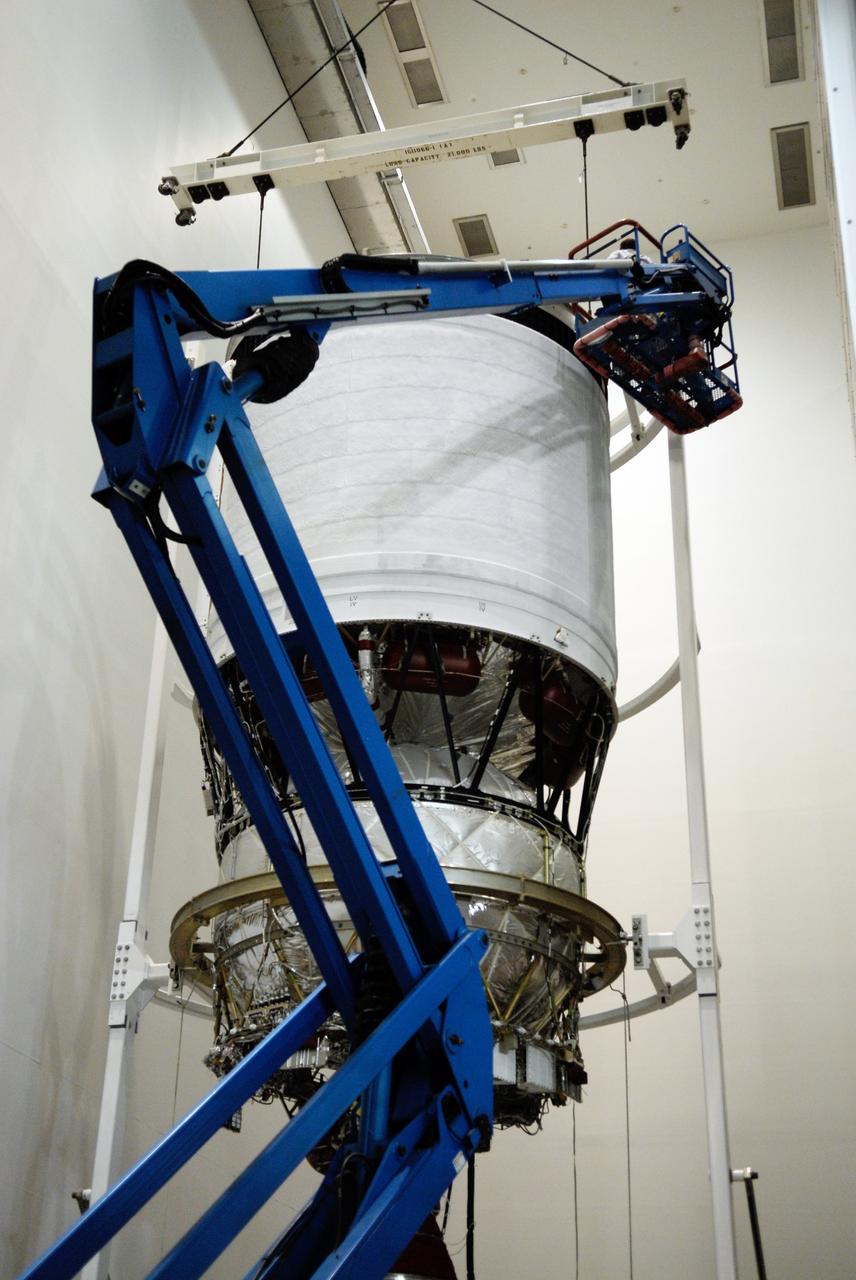
CAPE CANAVERAL, Fla. -- At Cape Canaveral Air Force Station, workers on a crane check the attachments of the sling suspending the second stage for the GOES-O Delta IV rocket. The second stage will be moved into a work cell for processing. GOES – O is one of a series of Geostationary Operational Environmental Satellites. The multimission GOES series N-P will be a vital contributor to weather, solar, and space operations and science. NASA and the National Oceanic and Atmospheric Administration, or NOAA, are actively engaged in a cooperative program to expand the existing GOES system with the launch of the GOES N-P satellites. Photo credit: NASA/Kim Shiflett
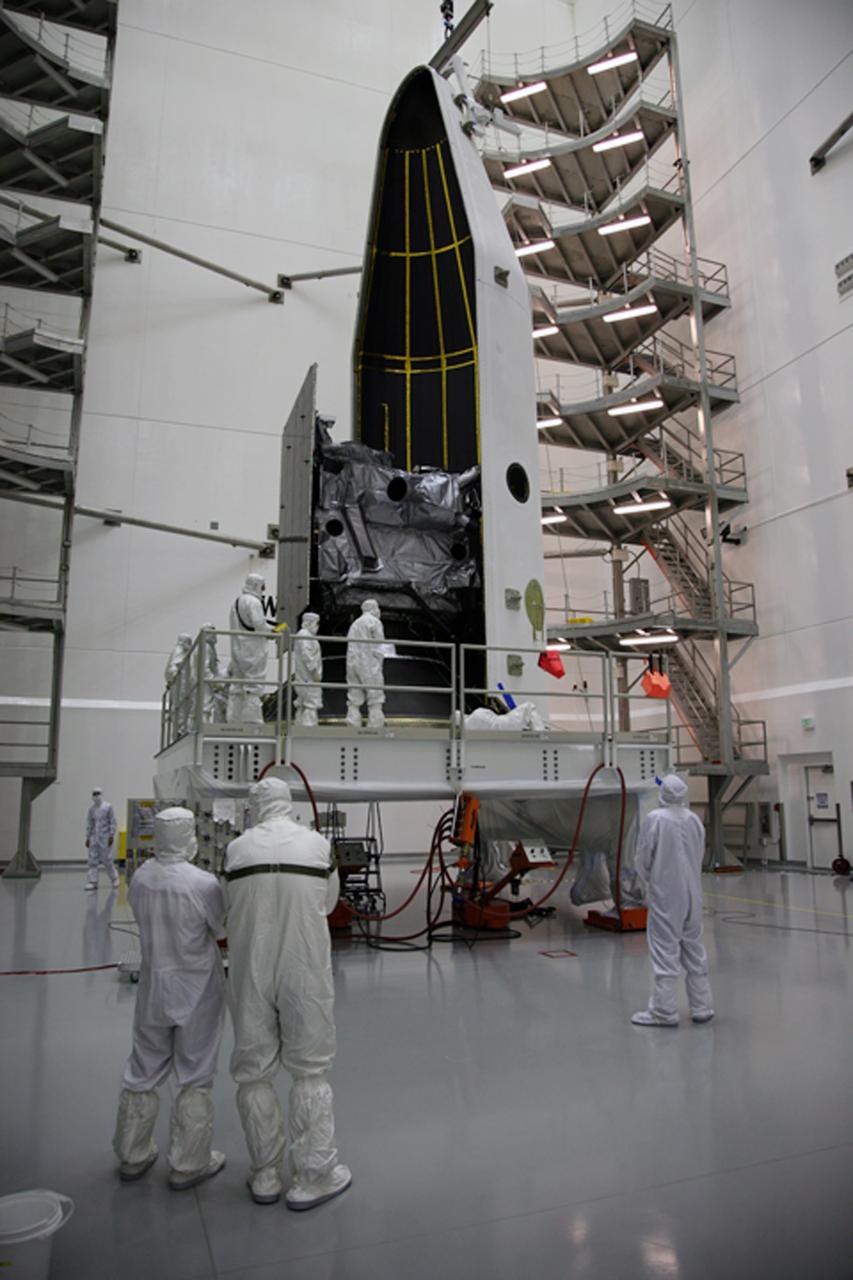
CAPE CANAVERAL, Fla. – In the Astrotech payload processing facility in Titusville, Fla., the first half of the payload fairing is moved around the GOES-O satellite. The fairing is a molded structure that fits flush with the outside surface of the rocket and forms an aerodynamically smooth nose cone, protecting the spacecraft during launch and ascent. The latest Geostationary Operational Environmental Satellite, GOES-O was developed by NASA for the National Oceanic and Atmospheric Administration, or NOAA. The GOES satellites continuously provide observations of 60 percent of the Earth including the continental United States, providing weather monitoring and forecast operations as well as a continuous and reliable stream of environmental information and severe weather warnings. Once in orbit, GOES-O will be designated GOES-14, and NASA will provide on-orbit checkout and then transfer operational responsibility to NOAA. The GOES-O satellite is targeted to launch from Cape Canaveral Air Force Station's Launch Complex 37 on April 28 onboard a United Launch Alliance Delta IV expendable launch vehicle. Photo credit: NASA/Dimitri Gerondidakis
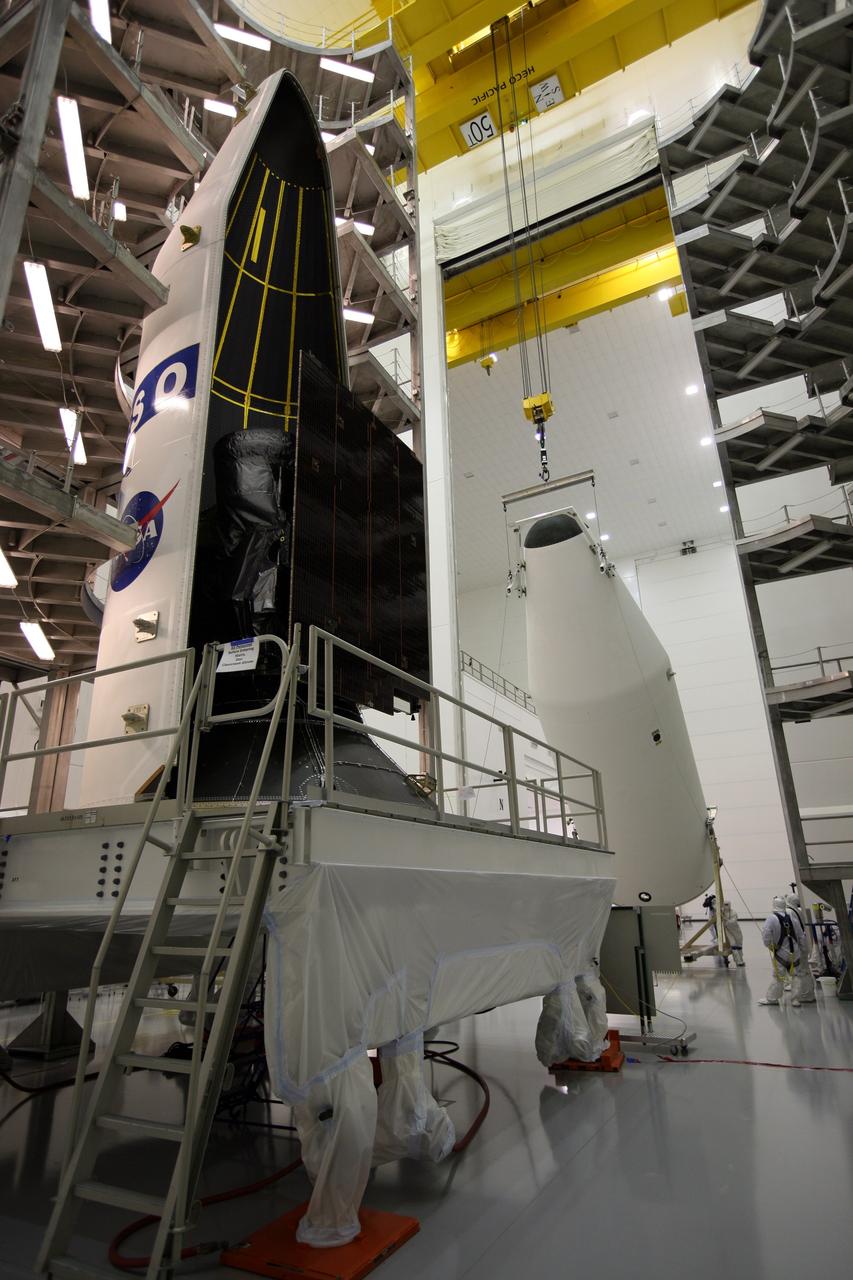
CAPE CANAVERAL, Fla. – In the Astrotech payload processing facility in Titusville, Fla., the first half of the payload fairing has been placed around the GOES-O satellite, at left. In the background, the second half is being lifted to vertical for its placement around GOES-O. The fairing is a molded structure that fits flush with the outside surface of the rocket and forms an aerodynamically smooth nose cone, protecting the spacecraft during launch and ascent. The latest Geostationary Operational Environmental Satellite, GOES-O was developed by NASA for the National Oceanic and Atmospheric Administration, or NOAA. The GOES satellites continuously provide observations of 60 percent of the Earth including the continental United States, providing weather monitoring and forecast operations as well as a continuous and reliable stream of environmental information and severe weather warnings. Once in orbit, GOES-O will be designated GOES-14, and NASA will provide on-orbit checkout and then transfer operational responsibility to NOAA. The GOES-O satellite is targeted to launch from Cape Canaveral Air Force Station's Launch Complex 37 on April 28 onboard a United Launch Alliance Delta IV expendable launch vehicle. Photo credit: NASA/Dimitri Gerondidakis
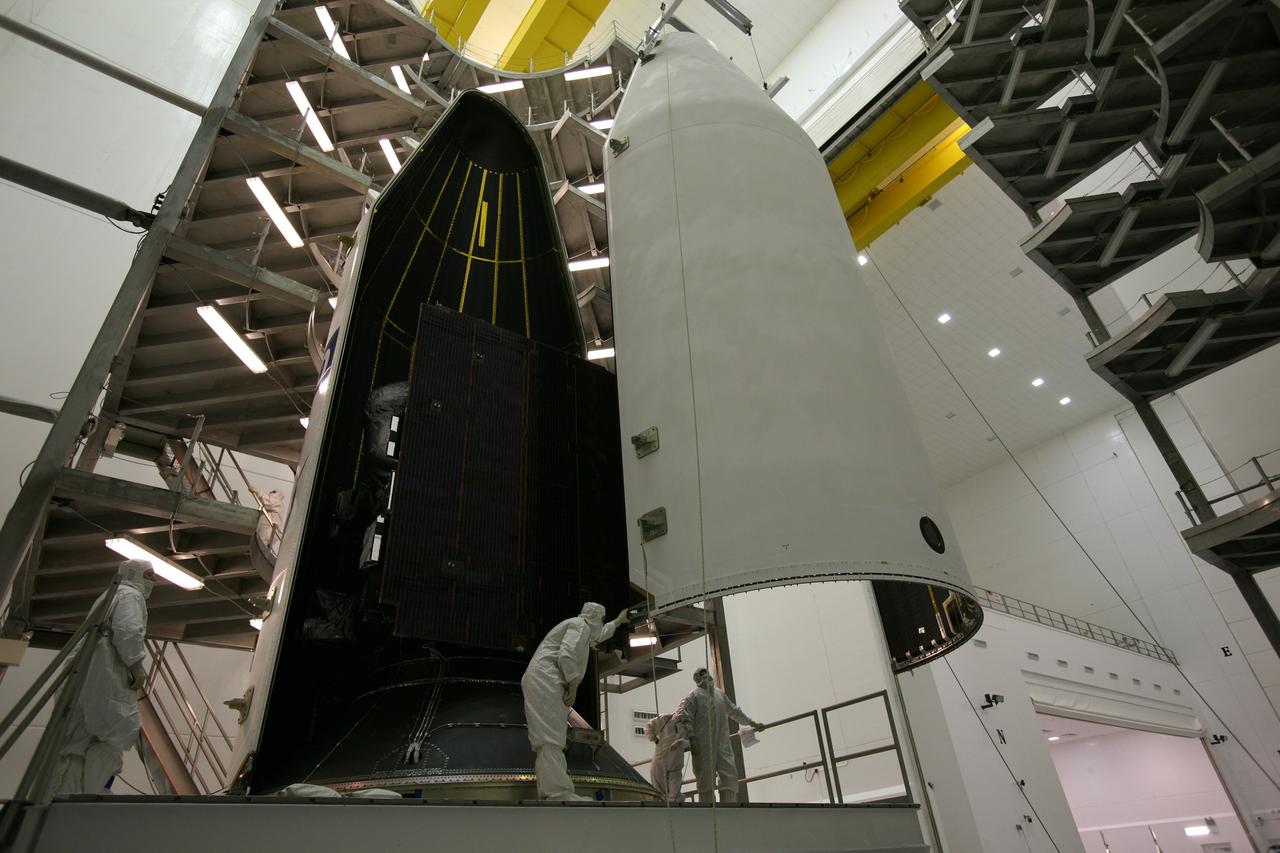
CAPE CANAVERAL, Fla. – In the Astrotech payload processing facility in Titusville, Fla., technicians monitor the second half of the payload fairing as it is moved toward the GOES-O satellite to complete encapsulation. The fairing is a molded structure that fits flush with the outside surface of the rocket and forms an aerodynamically smooth nose cone, protecting the spacecraft during launch and ascent. The latest Geostationary Operational Environmental Satellite, GOES-O was developed by NASA for the National Oceanic and Atmospheric Administration, or NOAA. The GOES satellites continuously provide observations of 60 percent of the Earth including the continental United States, providing weather monitoring and forecast operations as well as a continuous and reliable stream of environmental information and severe weather warnings. Once in orbit, GOES-O will be designated GOES-14, and NASA will provide on-orbit checkout and then transfer operational responsibility to NOAA. The GOES-O satellite is targeted to launch from Cape Canaveral Air Force Station's Launch Complex 37 on April 28 onboard a United Launch Alliance Delta IV expendable launch vehicle. Photo credit: NASA/Dimitri Gerondidakis
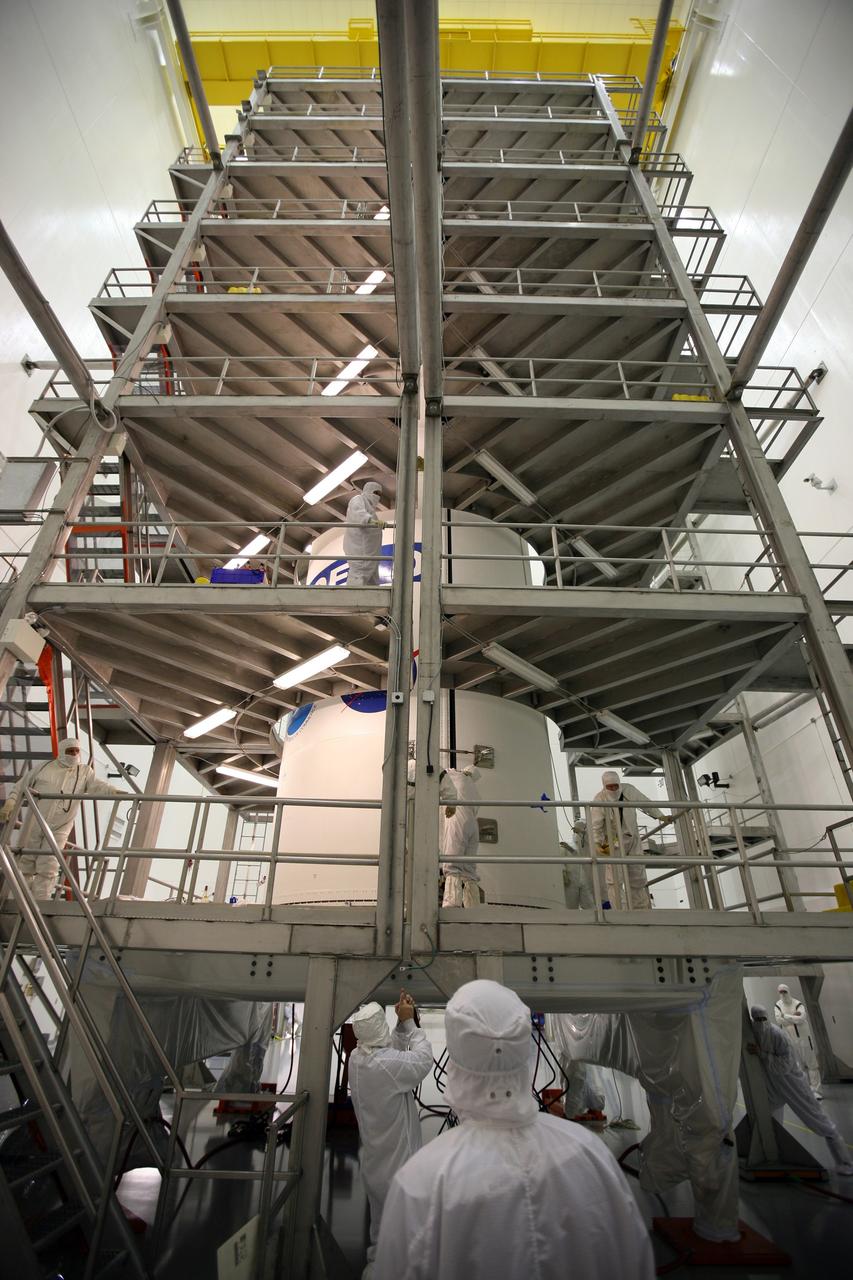
CAPE CANAVERAL, Fla. – In the Astrotech payload processing facility in Titusville, Fla., technicians complete the installation of the payload fairing around the GOES-O satellite. The fairing is a molded structure that fits flush with the outside surface of the rocket and forms an aerodynamically smooth nose cone, protecting the spacecraft during launch and ascent. The latest Geostationary Operational Environmental Satellite, GOES-O was developed by NASA for the National Oceanic and Atmospheric Administration, or NOAA. The GOES satellites continuously provide observations of 60 percent of the Earth including the continental United States, providing weather monitoring and forecast operations as well as a continuous and reliable stream of environmental information and severe weather warnings. Once in orbit, GOES-O will be designated GOES-14, and NASA will provide on-orbit checkout and then transfer operational responsibility to NOAA. The GOES-O satellite is targeted to launch from Cape Canaveral Air Force Station's Launch Complex 37 on April 28 onboard a United Launch Alliance Delta IV expendable launch vehicle. Photo credit: NASA/Dimitri Gerondidakis
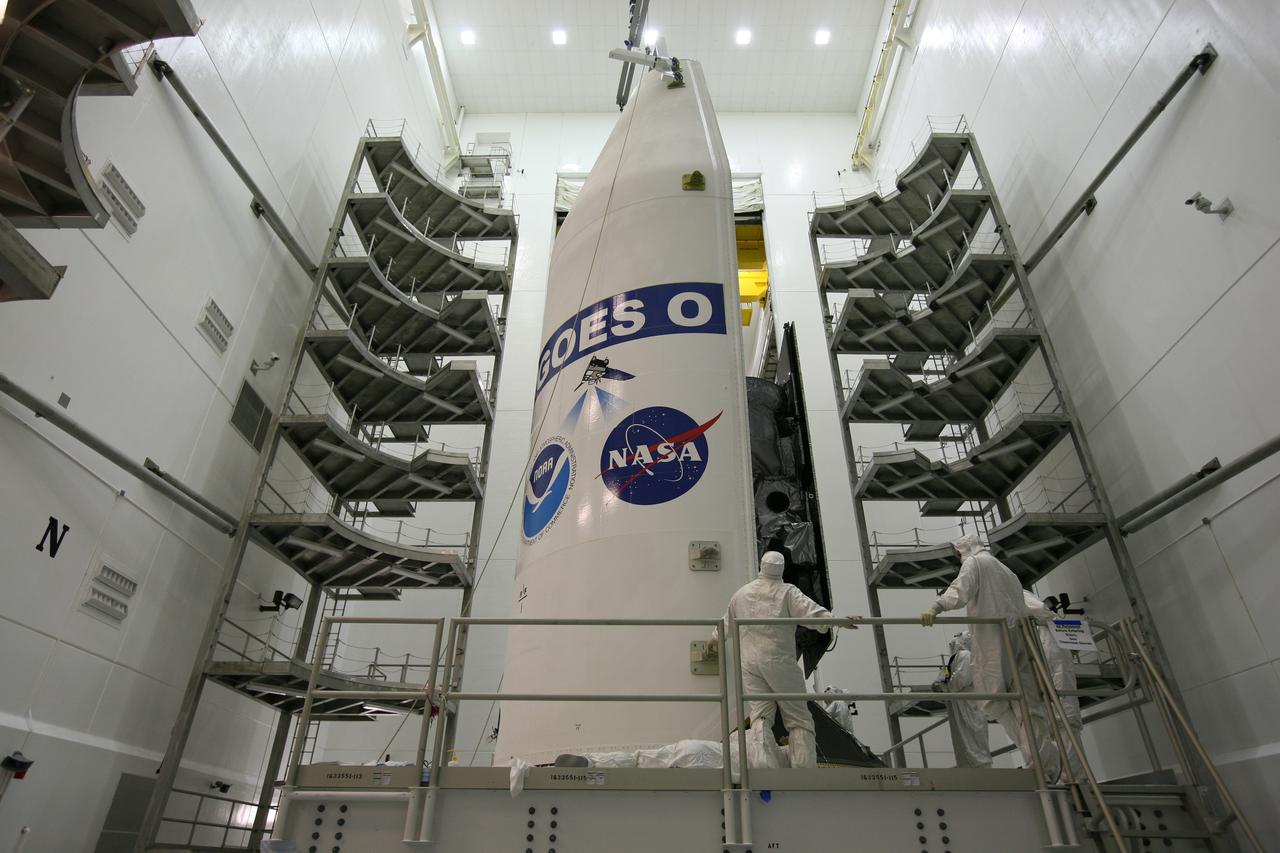
CAPE CANAVERAL, Fla. – In the Astrotech payload processing facility in Titusville, Fla., the first half of the payload fairing is moved around the GOES-O satellite. The fairing is a molded structure that fits flush with the outside surface of the rocket and forms an aerodynamically smooth nose cone, protecting the spacecraft during launch and ascent. The latest Geostationary Operational Environmental Satellite, GOES-O was developed by NASA for the National Oceanic and Atmospheric Administration, or NOAA. The GOES satellites continuously provide observations of 60 percent of the Earth including the continental United States, providing weather monitoring and forecast operations as well as a continuous and reliable stream of environmental information and severe weather warnings. Once in orbit, GOES-O will be designated GOES-14, and NASA will provide on-orbit checkout and then transfer operational responsibility to NOAA. The GOES-O satellite is targeted to launch from Cape Canaveral Air Force Station's Launch Complex 37 on April 28 onboard a United Launch Alliance Delta IV expendable launch vehicle. Photo credit: NASA/Dimitri Gerondidakis
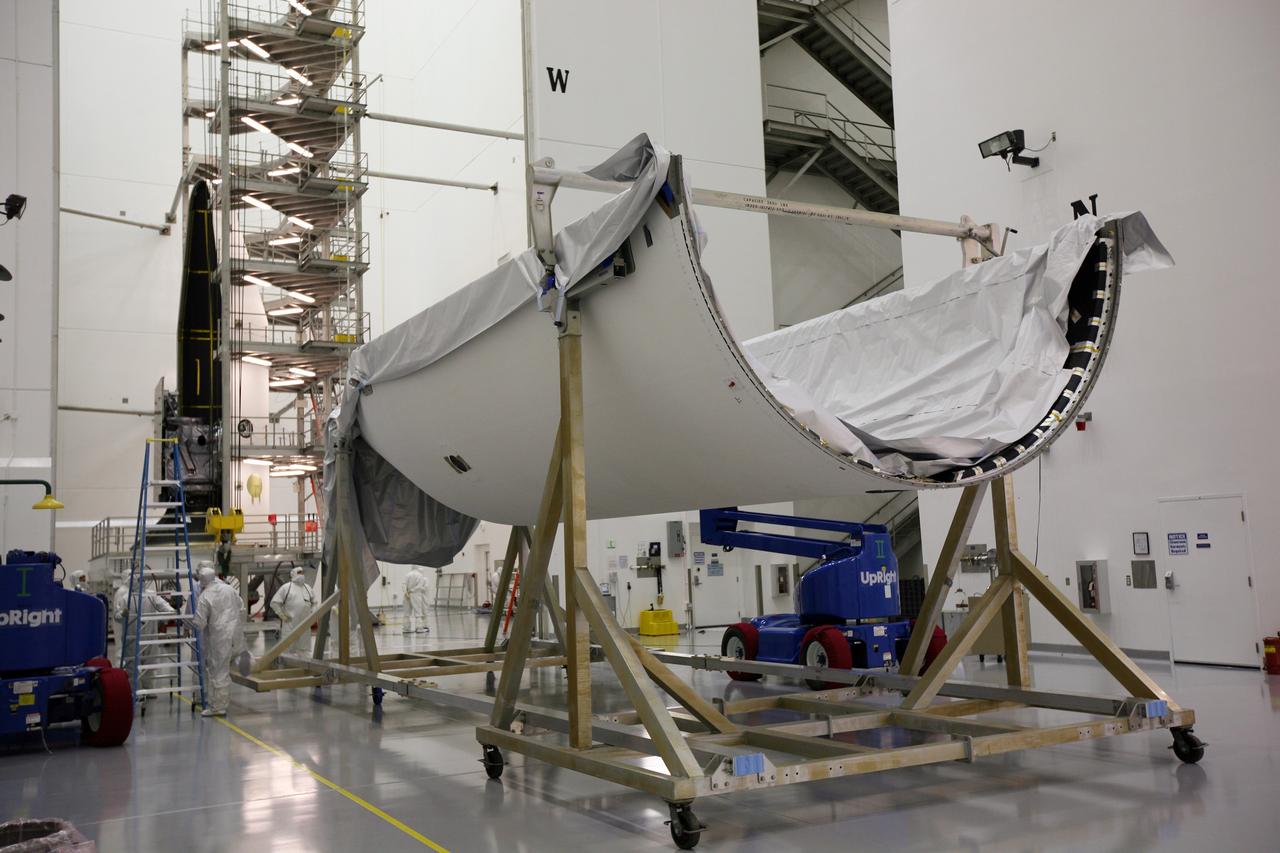
CAPE CANAVERAL, Fla. – In the Astrotech payload processing facility in Titusville, Fla., the second half of the payload fairing is ready to be lifted to vertical. It will be installed around the GOES-O satellite. The fairing is a molded structure that fits flush with the outside surface of the rocket and forms an aerodynamically smooth nose cone, protecting the spacecraft during launch and ascent. The latest Geostationary Operational Environmental Satellite, GOES-O was developed by NASA for the National Oceanic and Atmospheric Administration, or NOAA. The GOES satellites continuously provide observations of 60 percent of the Earth including the continental United States, providing weather monitoring and forecast operations as well as a continuous and reliable stream of environmental information and severe weather warnings. Once in orbit, GOES-O will be designated GOES-14, and NASA will provide on-orbit checkout and then transfer operational responsibility to NOAA. The GOES-O satellite is targeted to launch from Cape Canaveral Air Force Station's Launch Complex 37 on April 28 onboard a United Launch Alliance Delta IV expendable launch vehicle. Photo credit: NASA/Dimitri Gerondidakis
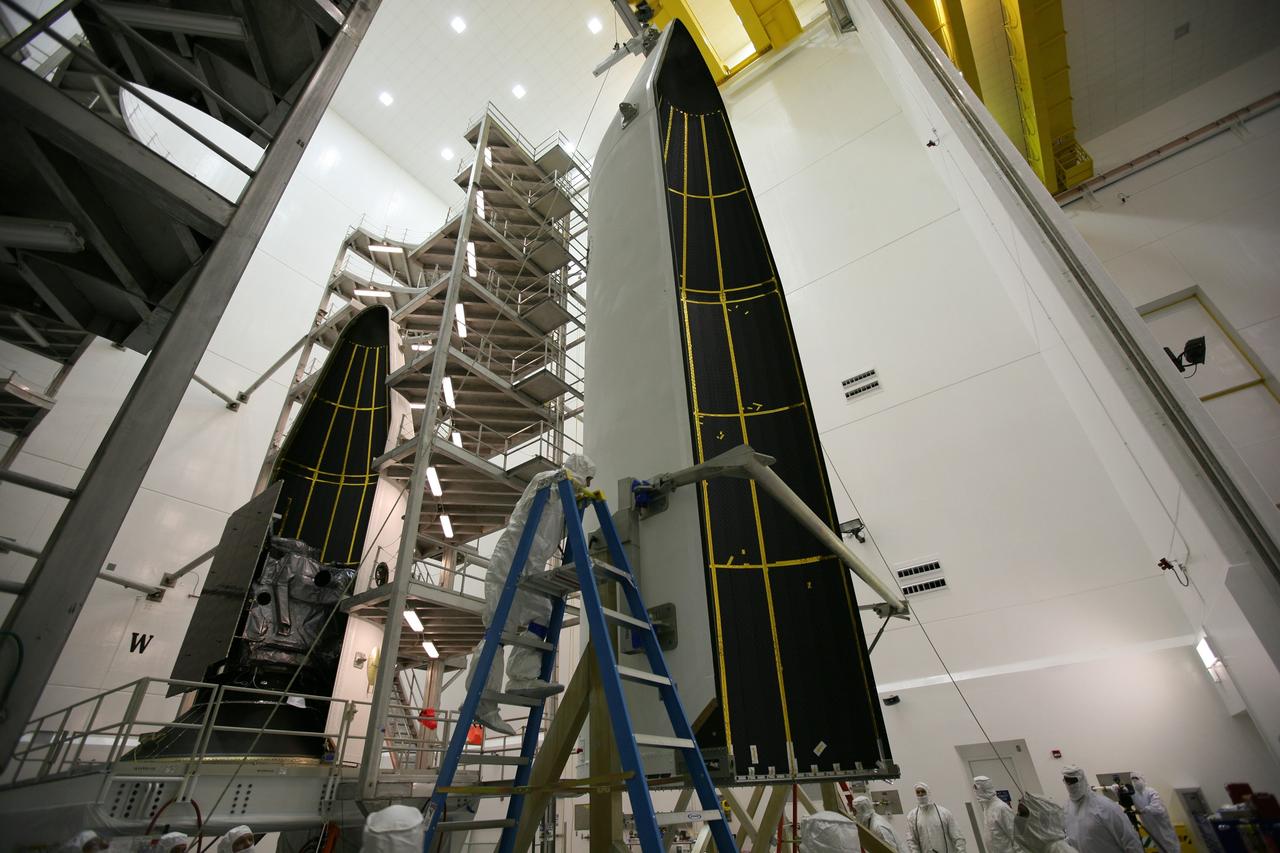
CAPE CANAVERAL, Fla. – In the Astrotech payload processing facility in Titusville, Fla., the first half of the payload fairing has been placed around the GOES-O satellite, at left. At right, the second half has been lifted to vertical for its placement around GOES-O to complete the encapsulation. The fairing is a molded structure that fits flush with the outside surface of the rocket and forms an aerodynamically smooth nose cone, protecting the spacecraft during launch and ascent. The latest Geostationary Operational Environmental Satellite, GOES-O was developed by NASA for the National Oceanic and Atmospheric Administration, or NOAA. The GOES satellites continuously provide observations of 60 percent of the Earth including the continental United States, providing weather monitoring and forecast operations as well as a continuous and reliable stream of environmental information and severe weather warnings. Once in orbit, GOES-O will be designated GOES-14, and NASA will provide on-orbit checkout and then transfer operational responsibility to NOAA. The GOES-O satellite is targeted to launch from Cape Canaveral Air Force Station's Launch Complex 37 on April 28 onboard a United Launch Alliance Delta IV expendable launch vehicle. Photo credit: NASA/Dimitri Gerondidakis
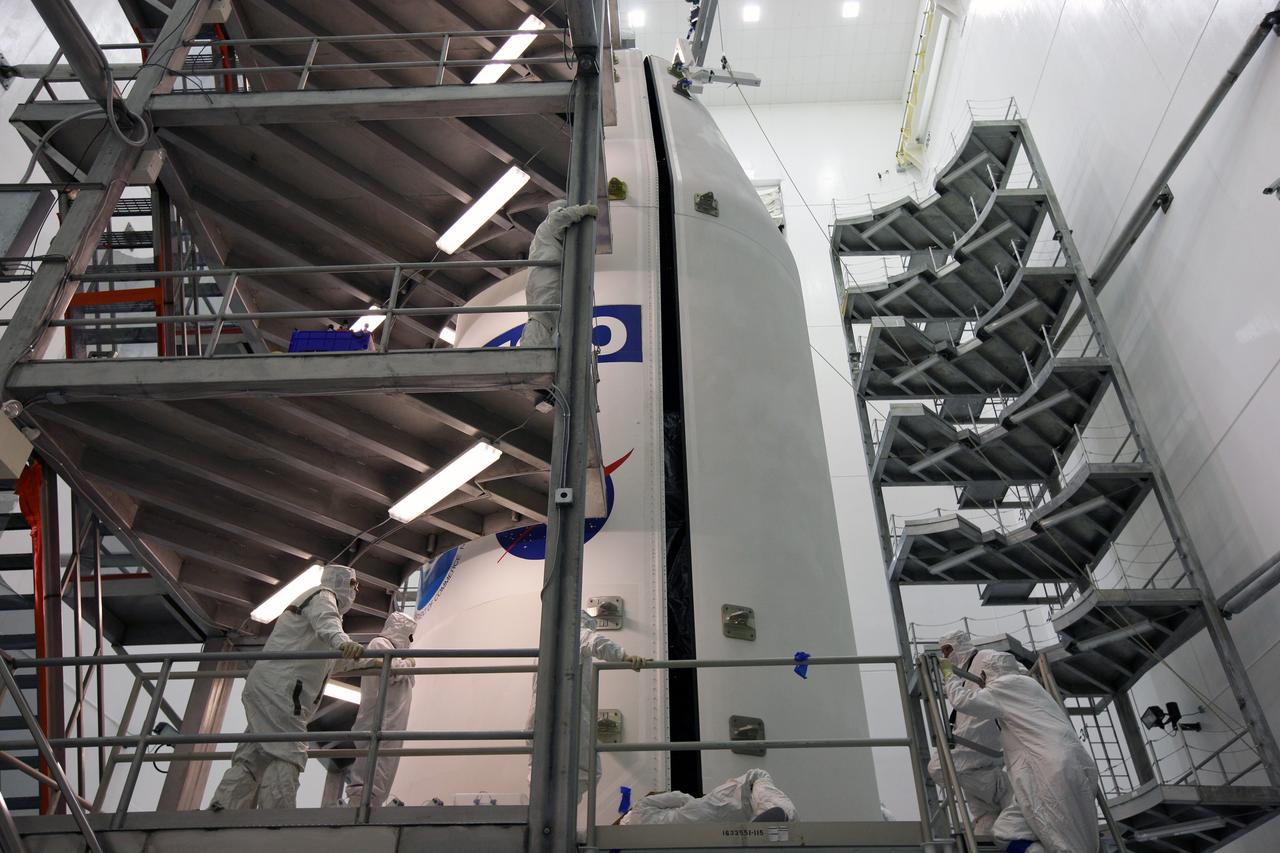
CAPE CANAVERAL, Fla. – In the Astrotech payload processing facility in Titusville, Fla., technicians monitor the closing of the two halves of the payload fairing around the GOES-O satellite. The fairing is a molded structure that fits flush with the outside surface of the rocket and forms an aerodynamically smooth nose cone, protecting the spacecraft during launch and ascent. The latest Geostationary Operational Environmental Satellite, GOES-O was developed by NASA for the National Oceanic and Atmospheric Administration, or NOAA. The GOES satellites continuously provide observations of 60 percent of the Earth including the continental United States, providing weather monitoring and forecast operations as well as a continuous and reliable stream of environmental information and severe weather warnings. Once in orbit, GOES-O will be designated GOES-14, and NASA will provide on-orbit checkout and then transfer operational responsibility to NOAA. The GOES-O satellite is targeted to launch from Cape Canaveral Air Force Station's Launch Complex 37 on April 28 onboard a United Launch Alliance Delta IV expendable launch vehicle. Photo credit: NASA/Dimitri Gerondidakis
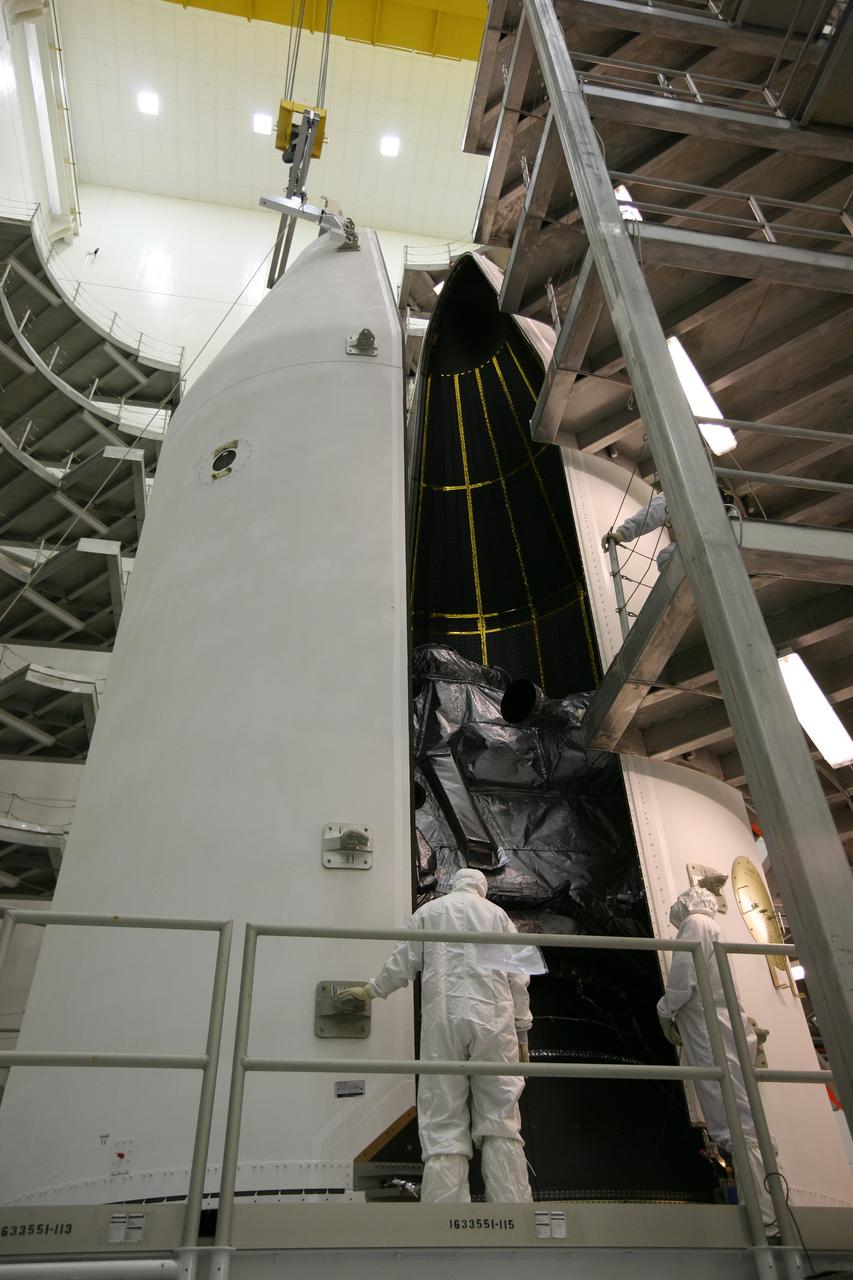
CAPE CANAVERAL, Fla. – In the Astrotech payload processing facility in Titusville, Fla., technicians monitor the second half of the payload fairing as it is moved closer to the GOES-O satellite to complete encapsulation. The fairing is a molded structure that fits flush with the outside surface of the rocket and forms an aerodynamically smooth nose cone, protecting the spacecraft during launch and ascent. The latest Geostationary Operational Environmental Satellite, GOES-O was developed by NASA for the National Oceanic and Atmospheric Administration, or NOAA. The GOES satellites continuously provide observations of 60 percent of the Earth including the continental United States, providing weather monitoring and forecast operations as well as a continuous and reliable stream of environmental information and severe weather warnings. Once in orbit, GOES-O will be designated GOES-14, and NASA will provide on-orbit checkout and then transfer operational responsibility to NOAA. The GOES-O satellite is targeted to launch from Cape Canaveral Air Force Station's Launch Complex 37 on April 28 onboard a United Launch Alliance Delta IV expendable launch vehicle. Photo credit: NASA/Dimitri Gerondidakis
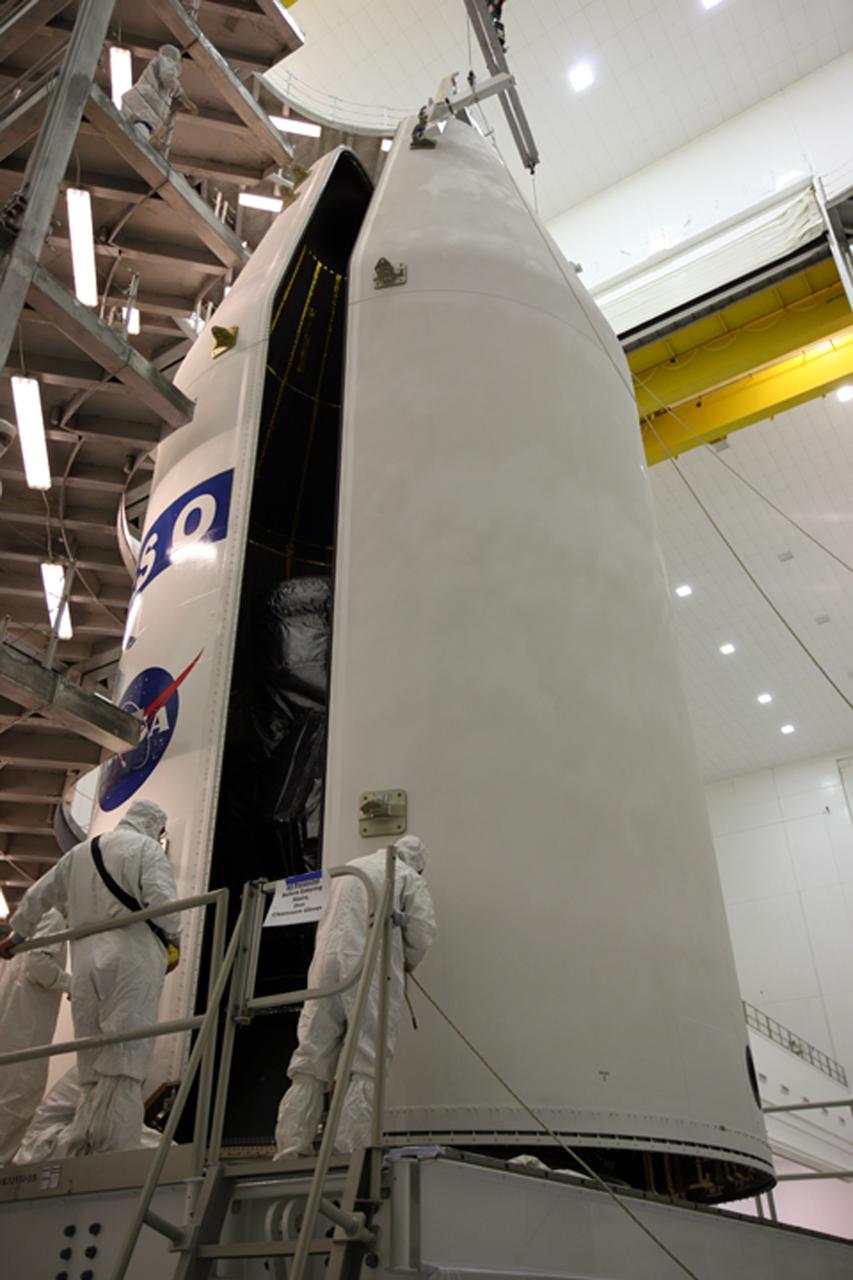
CAPE CANAVERAL, Fla. – In the Astrotech payload processing facility in Titusville, Fla., the two halves of the payload fairing move closer together to encapsulate the GOES-O satellite inside. The fairing is a molded structure that fits flush with the outside surface of the rocket and forms an aerodynamically smooth nose cone, protecting the spacecraft during launch and ascent. The latest Geostationary Operational Environmental Satellite, GOES-O was developed by NASA for the National Oceanic and Atmospheric Administration, or NOAA. The GOES satellites continuously provide observations of 60 percent of the Earth including the continental United States, providing weather monitoring and forecast operations as well as a continuous and reliable stream of environmental information and severe weather warnings. Once in orbit, GOES-O will be designated GOES-14, and NASA will provide on-orbit checkout and then transfer operational responsibility to NOAA. The GOES-O satellite is targeted to launch from Cape Canaveral Air Force Station's Launch Complex 37 on April 28 onboard a United Launch Alliance Delta IV expendable launch vehicle. Photo credit: NASA/Dimitri Gerondidakis
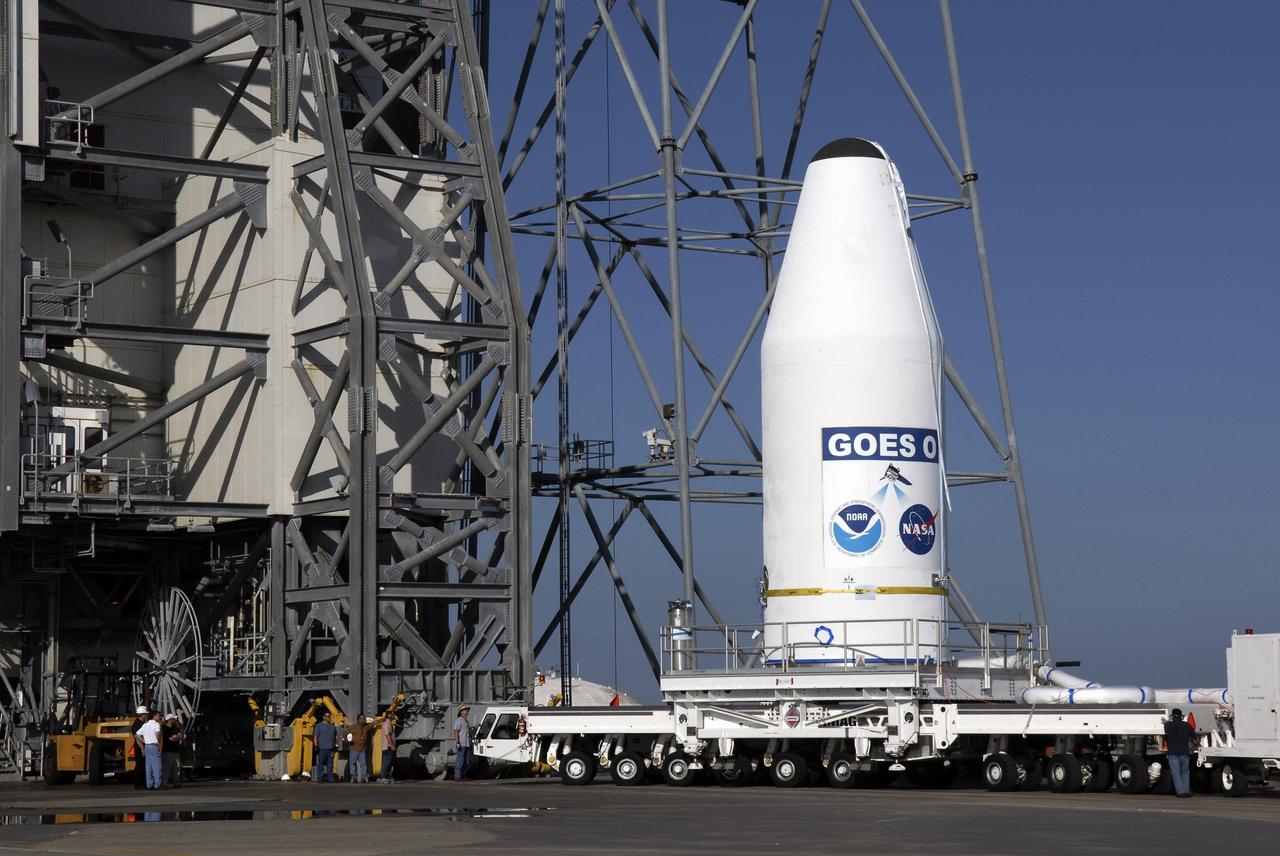
CAPE CANAVERAL, Fla. – At Cape Canaveral Air Force Station in Florida, the GOES-O satellite arrives at the mobile service tower on Launch Complex 37. It will be lifted into the tower and mated with the United Launch Alliance Delta IV expendable launch vehicle. The GOES-O satellite is targeted to launch no earlier than June 26. The latest Geostationary Operational Environmental Satellite, GOES-O was developed by NASA for the National Oceanic and Atmospheric Administration, or NOAA. The GOES satellites continuously provide observations of 60 percent of the Earth including the continental United States, providing weather monitoring and forecast operations as well as a continuous and reliable stream of environmental information and severe weather warnings. Once in orbit, GOES-O will be designated GOES-14, and NASA will provide on-orbit checkout and then transfer operational responsibility to NOAA. Photo credit: NASA/Kim Shiflett
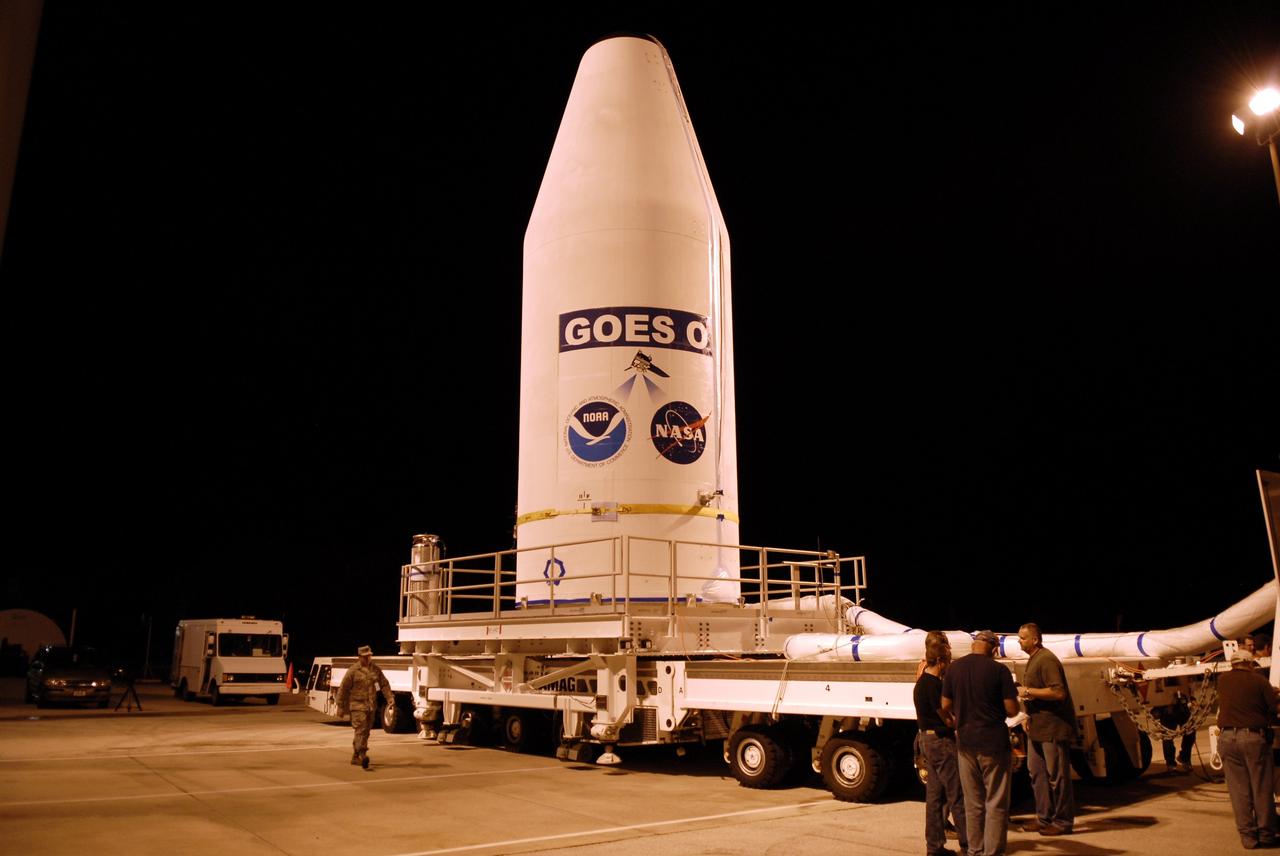
CAPE CANAVERAL, Fla. – At Cape Canaveral Air Force Station in Florida, the GOES-O satellite is being transported from the Astrotech payload processing facility in Titusville, Fla., to Launch Complex 37. There it will be lifted into the mobile service tower and mated with the United Launch Alliance Delta IV expendable launch vehicle. The GOES-O satellite is targeted to launch no earlier than June 26. The latest Geostationary Operational Environmental Satellite, GOES-O was developed by NASA for the National Oceanic and Atmospheric Administration, or NOAA. The GOES satellites continuously provide observations of 60 percent of the Earth including the continental United States, providing weather monitoring and forecast operations as well as a continuous and reliable stream of environmental information and severe weather warnings. Once in orbit, GOES-O will be designated GOES-14, and NASA will provide on-orbit checkout and then transfer operational responsibility to NOAA. Photo credit: NASA/Kim Shiflett
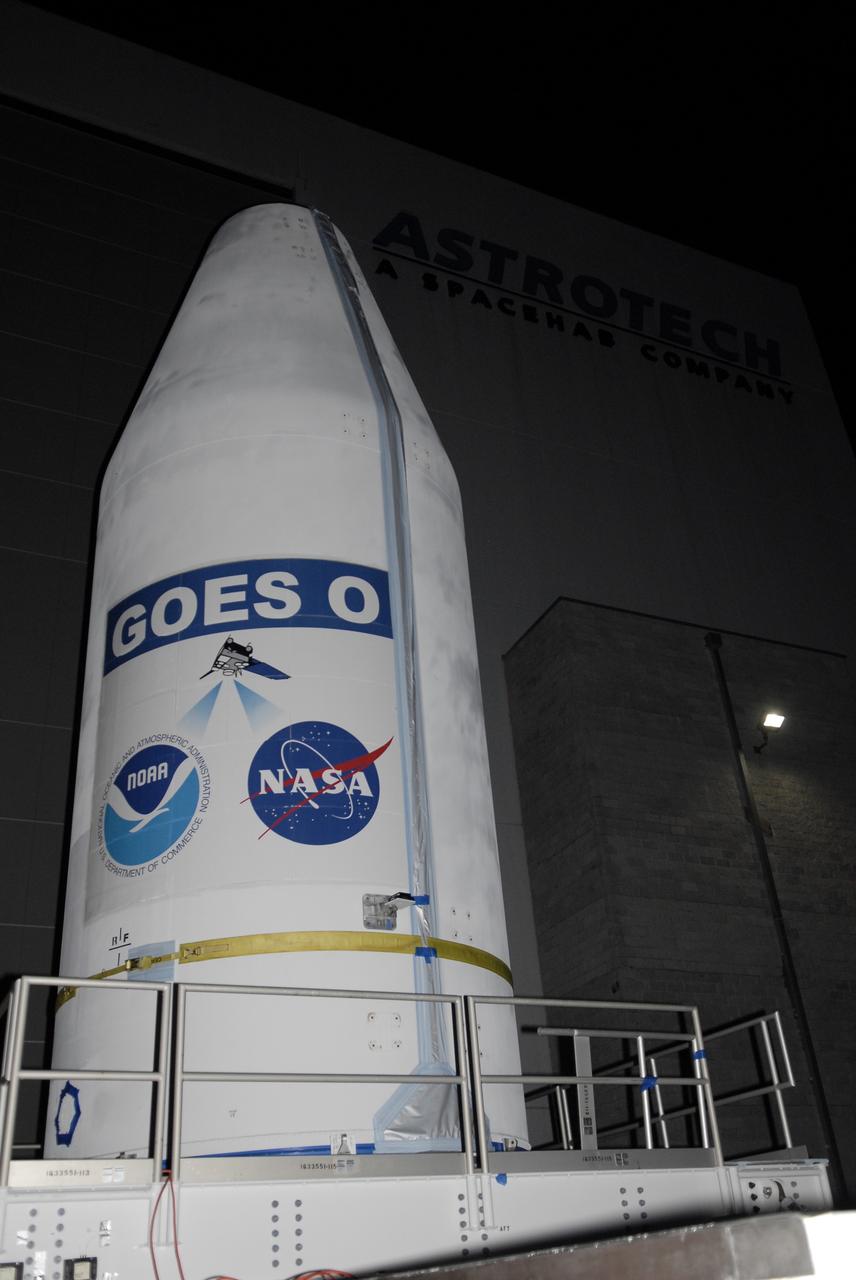
CAPE CANAVERAL, Fla. – At Cape Canaveral Air Force Station in Florida, the GOES-O satellite is ready to be transported from the Astrotech payload processing facility in Titusville, Fla., to Launch Complex 37. There it will be lifted into the mobile service tower and mated with the United Launch Alliance Delta IV expendable launch vehicle. The GOES-O satellite is targeted to launch no earlier than June 26. The latest Geostationary Operational Environmental Satellite, GOES-O was developed by NASA for the National Oceanic and Atmospheric Administration, or NOAA. The GOES satellites continuously provide observations of 60 percent of the Earth including the continental United States, providing weather monitoring and forecast operations as well as a continuous and reliable stream of environmental information and severe weather warnings. Once in orbit, GOES-O will be designated GOES-14, and NASA will provide on-orbit checkout and then transfer operational responsibility to NOAA. Photo credit: NASA/Kim Shiflett
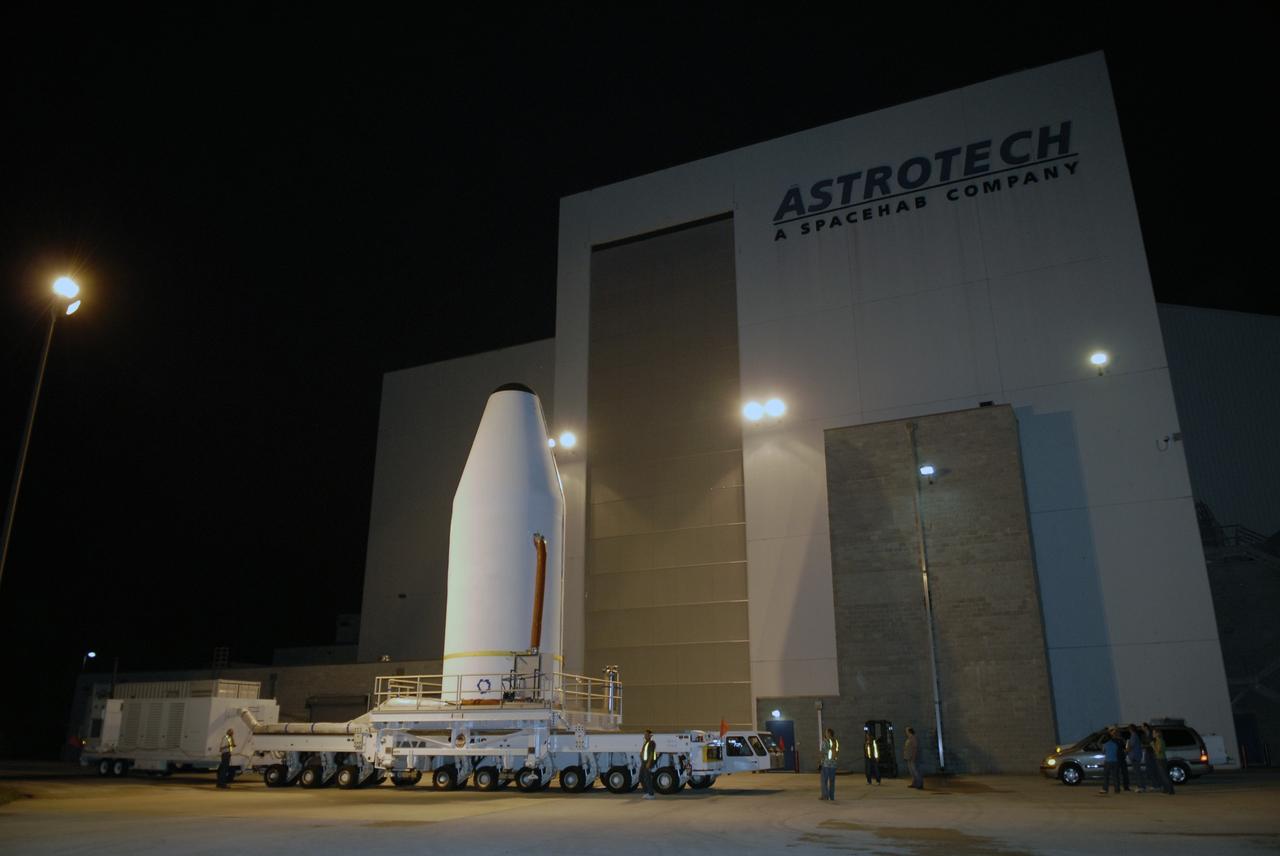
CAPE CANAVERAL, Fla. – At Cape Canaveral Air Force Station in Florida, the GOES-O satellite is being transported from the Astrotech payload processing facility in Titusville, Fla., to Launch Complex 37. There it will be lifted into the mobile service tower and mated with the United Launch Alliance Delta IV expendable launch vehicle. The GOES-O satellite is targeted to launch no earlier than June 26. The latest Geostationary Operational Environmental Satellite, GOES-O was developed by NASA for the National Oceanic and Atmospheric Administration, or NOAA. The GOES satellites continuously provide observations of 60 percent of the Earth including the continental United States, providing weather monitoring and forecast operations as well as a continuous and reliable stream of environmental information and severe weather warnings. Once in orbit, GOES-O will be designated GOES-14, and NASA will provide on-orbit checkout and then transfer operational responsibility to NOAA. Photo credit: NASA/Kim Shiflett
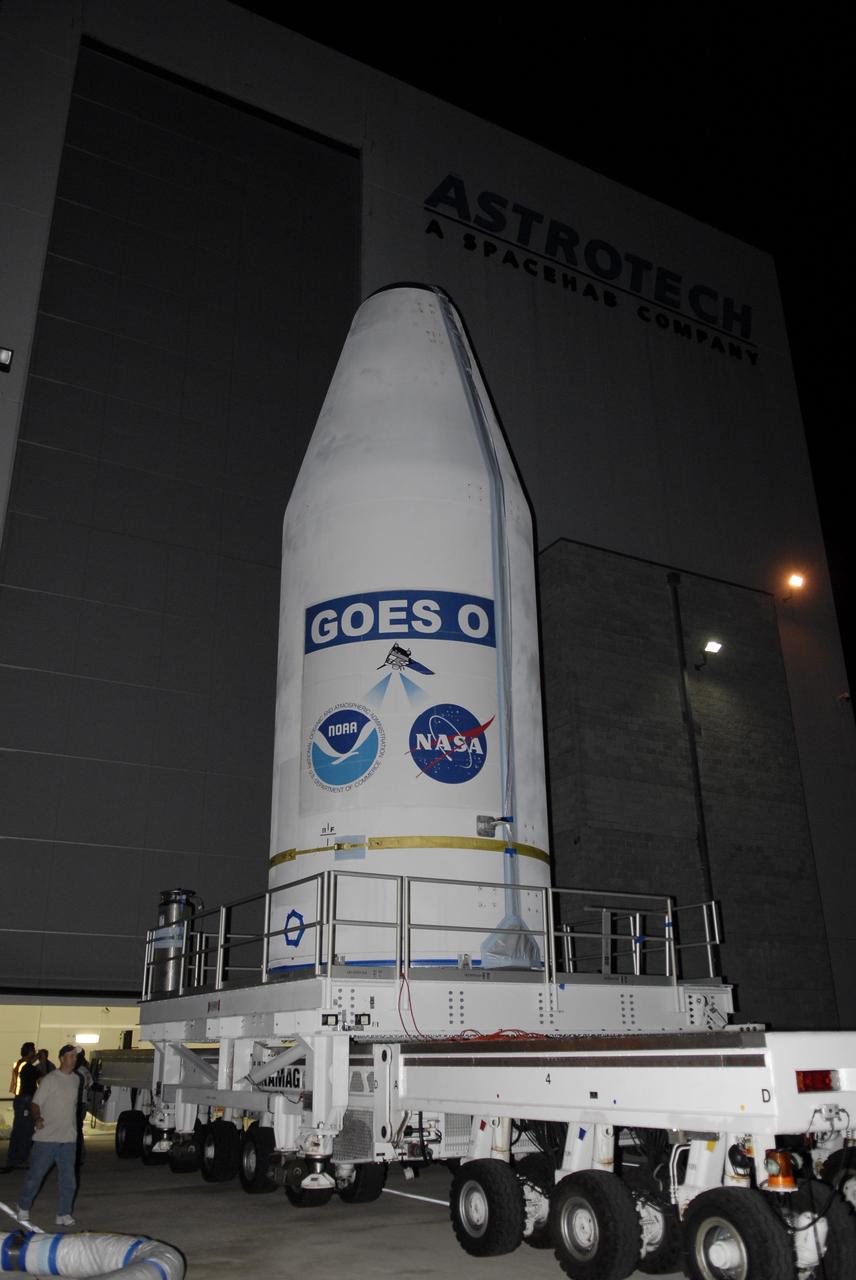
CAPE CANAVERAL, Fla. – At Cape Canaveral Air Force Station in Florida, the GOES-O satellite is being transported from the Astrotech payload processing facility in Titusville, Fla., to Launch Complex 37. There it will be lifted into the mobile service tower and mated with the United Launch Alliance Delta IV expendable launch vehicle. The GOES-O satellite is targeted to launch no earlier than June 26. The latest Geostationary Operational Environmental Satellite, GOES-O was developed by NASA for the National Oceanic and Atmospheric Administration, or NOAA. The GOES satellites continuously provide observations of 60 percent of the Earth including the continental United States, providing weather monitoring and forecast operations as well as a continuous and reliable stream of environmental information and severe weather warnings. Once in orbit, GOES-O will be designated GOES-14, and NASA will provide on-orbit checkout and then transfer operational responsibility to NOAA. Photo credit: NASA/Kim Shiflett
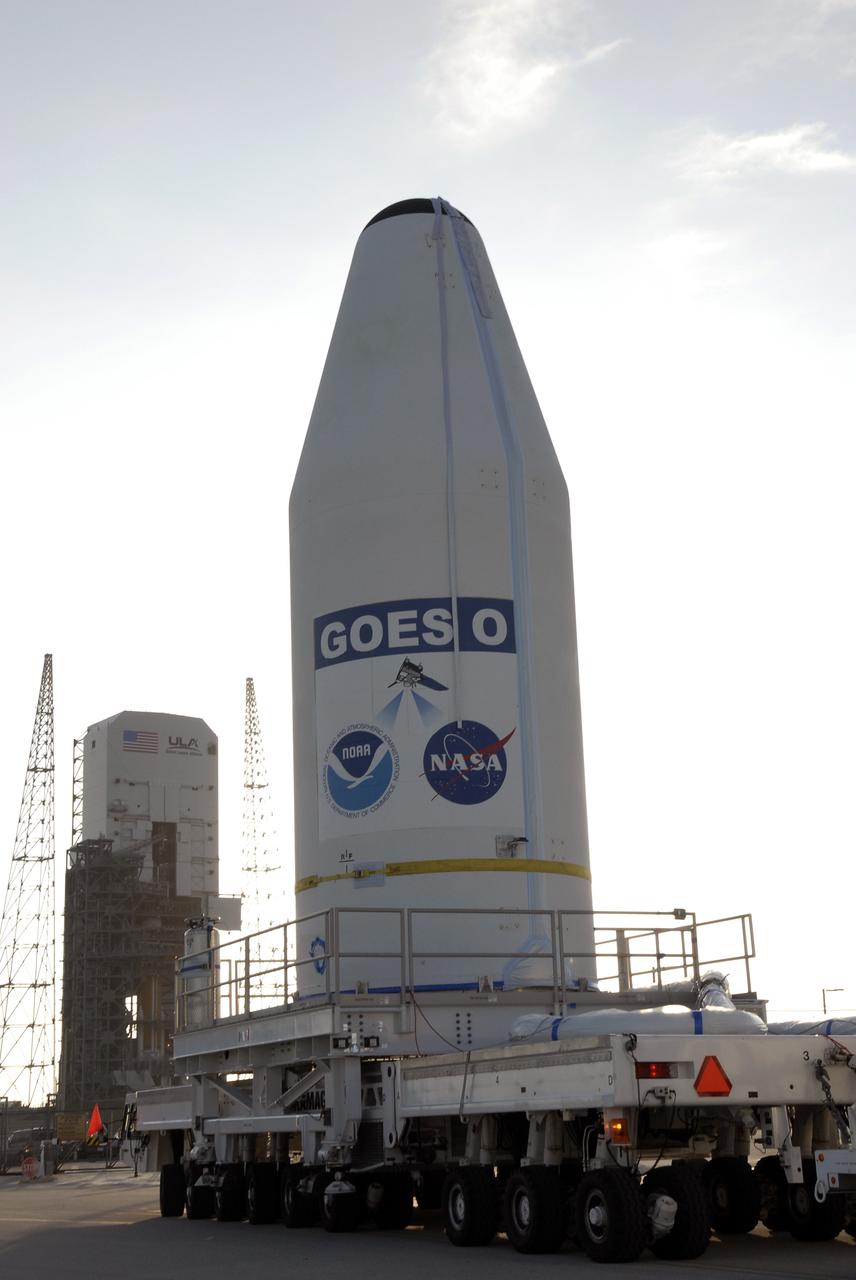
CAPE CANAVERAL, Fla. – At Cape Canaveral Air Force Station in Florida, the GOES-O satellite arrives at Launch Complex 37. There it will be lifted into the mobile service tower and mated with the United Launch Alliance Delta IV expendable launch vehicle. The GOES-O satellite is targeted to launch no earlier than June 26. The latest Geostationary Operational Environmental Satellite, GOES-O was developed by NASA for the National Oceanic and Atmospheric Administration, or NOAA. The GOES satellites continuously provide observations of 60 percent of the Earth including the continental United States, providing weather monitoring and forecast operations as well as a continuous and reliable stream of environmental information and severe weather warnings. Once in orbit, GOES-O will be designated GOES-14, and NASA will provide on-orbit checkout and then transfer operational responsibility to NOAA. Photo credit: NASA/Kim Shiflett
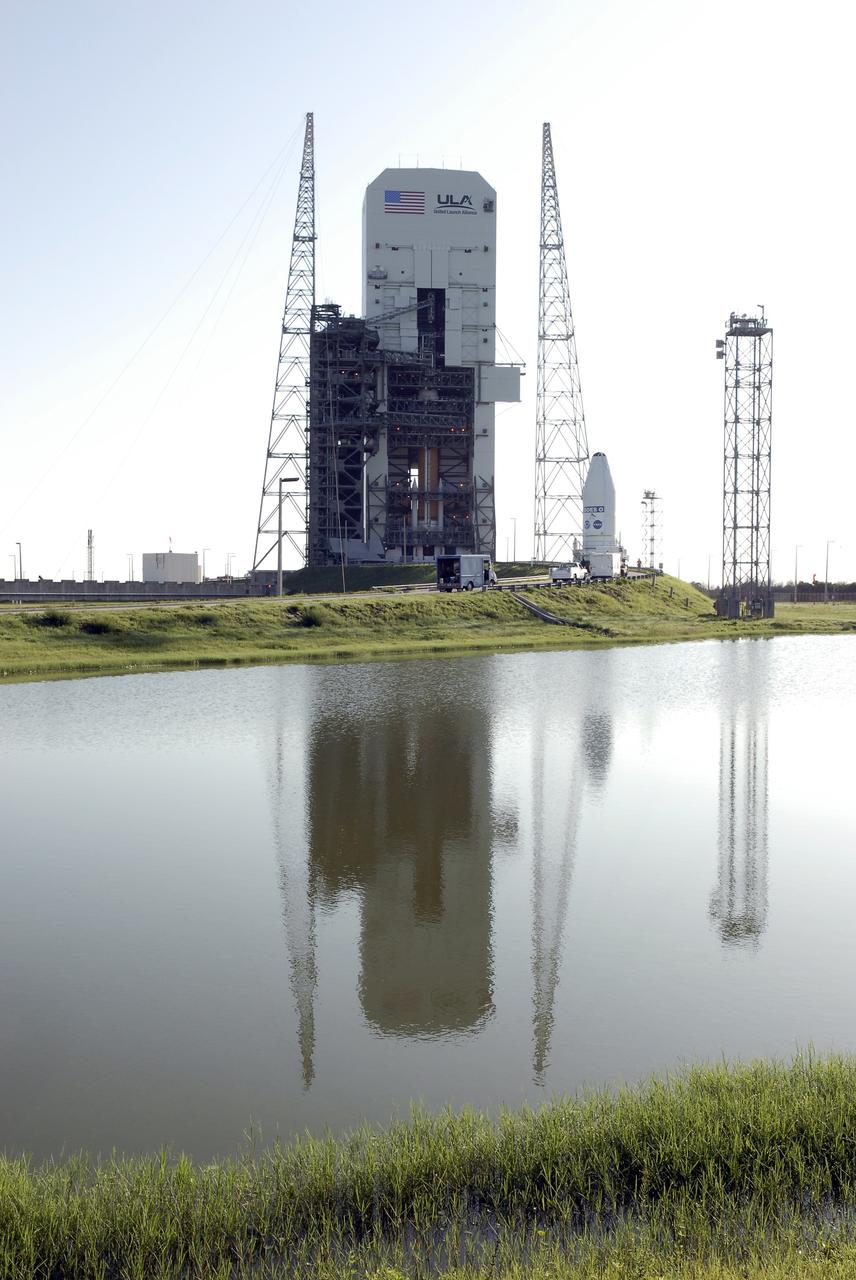
CAPE CANAVERAL, Fla. – Reflected in the pond at Cape Canaveral Air Force Station in Florida, the GOES-O satellite arrives at Launch Complex 37. There it will be lifted into the mobile service tower and mated with the United Launch Alliance Delta IV expendable launch vehicle. The GOES-O satellite is targeted to launch no earlier than June 26. The latest Geostationary Operational Environmental Satellite, GOES-O was developed by NASA for the National Oceanic and Atmospheric Administration, or NOAA. The GOES satellites continuously provide observations of 60 percent of the Earth including the continental United States, providing weather monitoring and forecast operations as well as a continuous and reliable stream of environmental information and severe weather warnings. Once in orbit, GOES-O will be designated GOES-14, and NASA will provide on-orbit checkout and then transfer operational responsibility to NOAA. Photo credit: NASA/Kim Shiflett
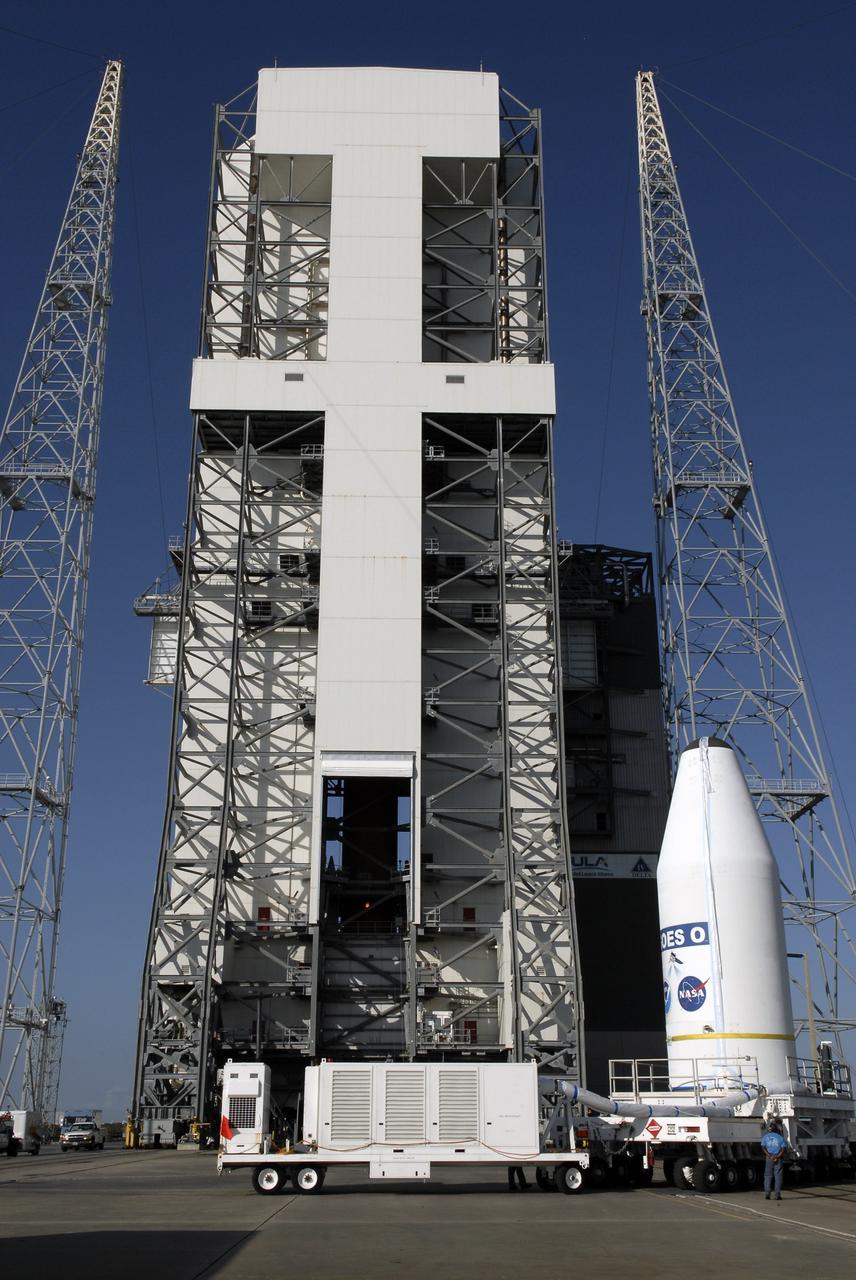
CAPE CANAVERAL, Fla. – At Cape Canaveral Air Force Station in Florida, the GOES-O satellite arrives at the mobile service tower on Launch Complex 37. It will be lifted into the tower and mated with the United Launch Alliance Delta IV expendable launch vehicle. The GOES-O satellite is targeted to launch no earlier than June 26. The latest Geostationary Operational Environmental Satellite, GOES-O was developed by NASA for the National Oceanic and Atmospheric Administration, or NOAA. The GOES satellites continuously provide observations of 60 percent of the Earth including the continental United States, providing weather monitoring and forecast operations as well as a continuous and reliable stream of environmental information and severe weather warnings. Once in orbit, GOES-O will be designated GOES-14, and NASA will provide on-orbit checkout and then transfer operational responsibility to NOAA. Photo credit: NASA/Kim Shiflett
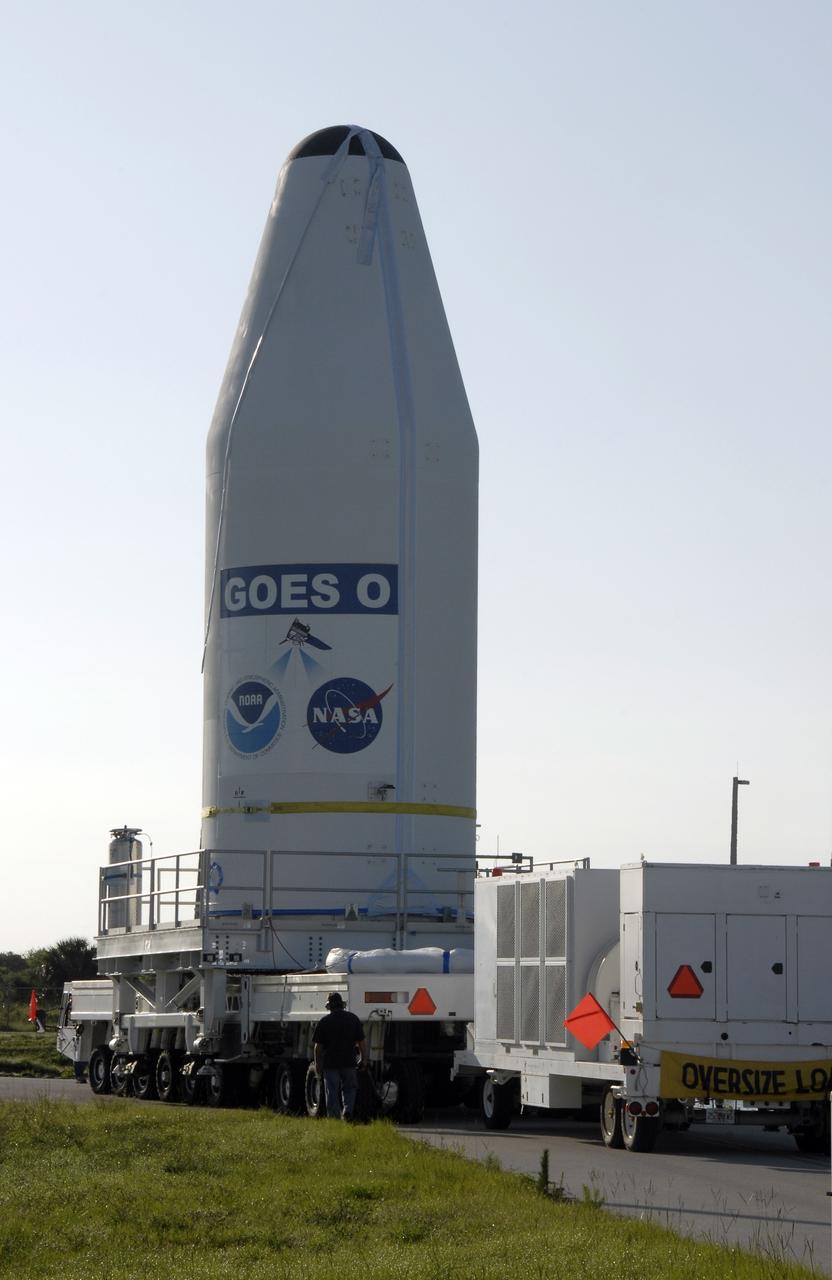
CAPE CANAVERAL, Fla. – At Cape Canaveral Air Force Station in Florida, the GOES-O satellite arrives at Launch Complex 37. There it will be lifted into the mobile service tower and mated with the United Launch Alliance Delta IV expendable launch vehicle. The GOES-O satellite is targeted to launch no earlier than June 26. The latest Geostationary Operational Environmental Satellite, GOES-O was developed by NASA for the National Oceanic and Atmospheric Administration, or NOAA. The GOES satellites continuously provide observations of 60 percent of the Earth including the continental United States, providing weather monitoring and forecast operations as well as a continuous and reliable stream of environmental information and severe weather warnings. Once in orbit, GOES-O will be designated GOES-14, and NASA will provide on-orbit checkout and then transfer operational responsibility to NOAA. Photo credit: NASA/Kim Shiflett
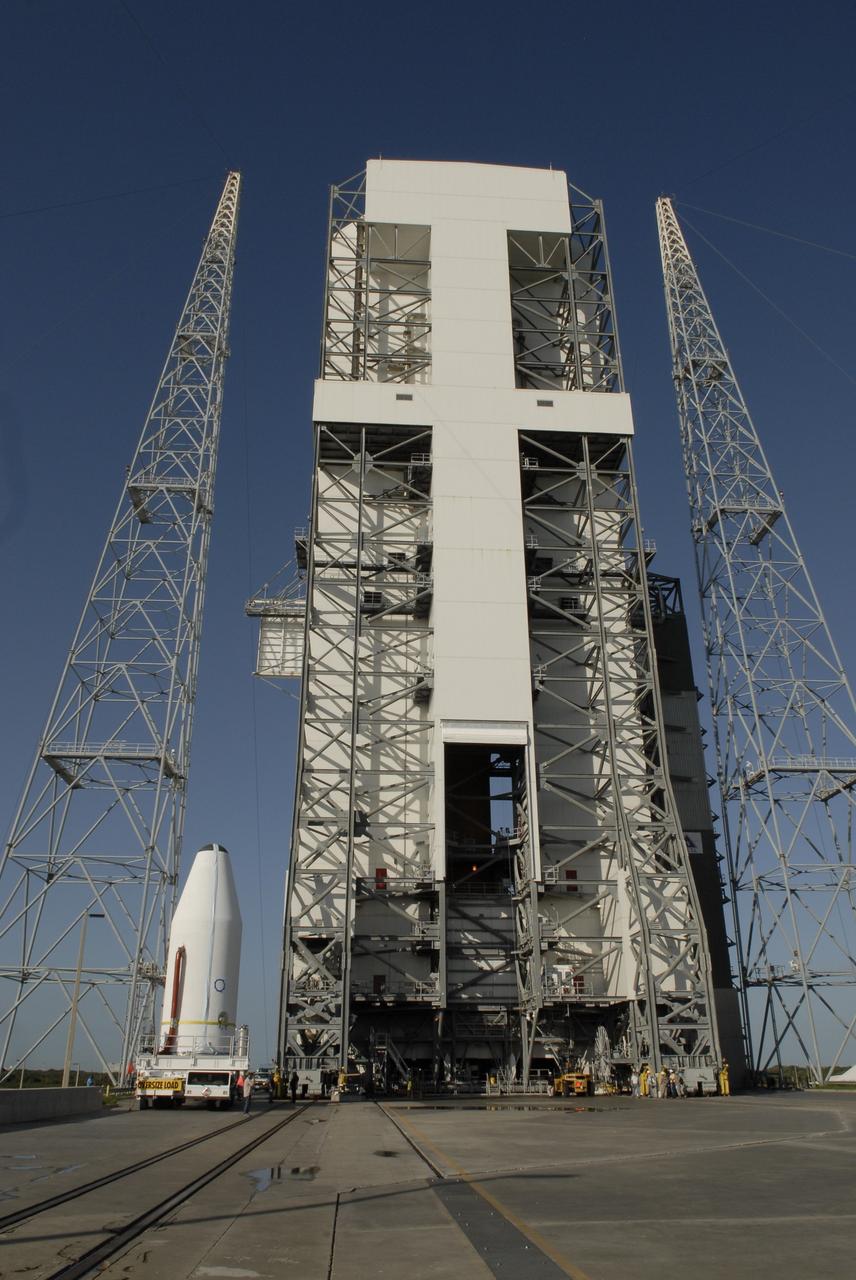
CAPE CANAVERAL, Fla. – At Cape Canaveral Air Force Station in Florida, the GOES-O satellite arrives at mobile service tower on Launch Complex 37. It will be lifted into the tower and mated with the United Launch Alliance Delta IV expendable launch vehicle. The GOES-O satellite is targeted to launch no earlier than June 26. The latest Geostationary Operational Environmental Satellite, GOES-O was developed by NASA for the National Oceanic and Atmospheric Administration, or NOAA. The GOES satellites continuously provide observations of 60 percent of the Earth including the continental United States, providing weather monitoring and forecast operations as well as a continuous and reliable stream of environmental information and severe weather warnings. Once in orbit, GOES-O will be designated GOES-14, and NASA will provide on-orbit checkout and then transfer operational responsibility to NOAA. Photo credit: NASA/Kim Shiflett
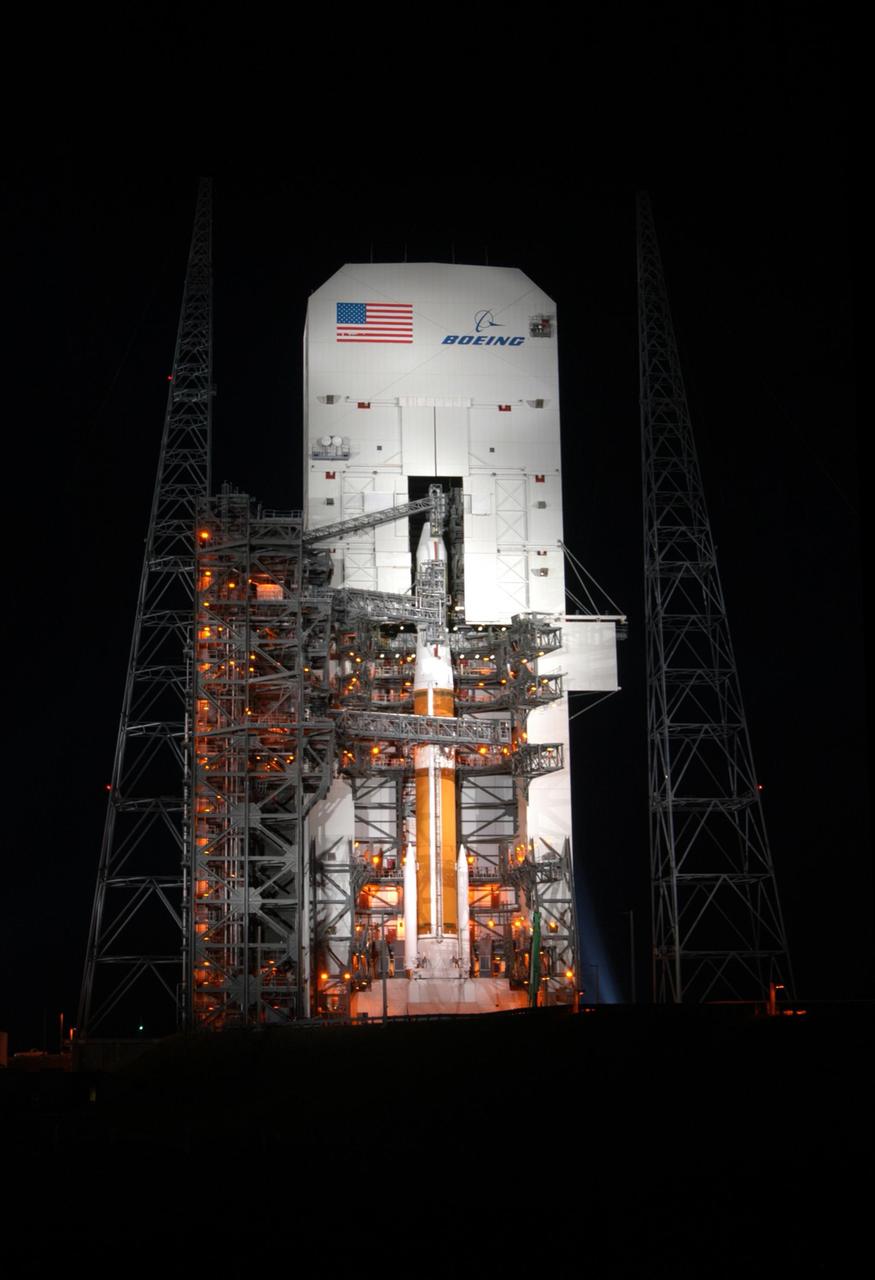
KENNEDY SPACE CENTER, FLA. - Before sunrise, a Boeing Delta IV rocket stands ready to launch the GOES-N satellite at Launch Complex 37 at Cape Canaveral Air Force Station. GOES-N is the latest in a series of Geostationary Operational Environmental Satellites for NOAA and NASA. A geostationary orbit is one in which a satellite remains in the same position with respect to the rotating Earth. Thus, the satellite hovers continuously over one position on the Earth's surface, appearing stationary. As a result, GOES provide a constant vigil for the atmospheric "triggers" for severe weather conditions such as tornadoes, flash floods, hail storms, and hurricanes. GOES-N is scheduled for launch May 24 in an hour-long window between 6:11 and 7:11 p.m. EDT. Photo credit: NASA/George Shelton
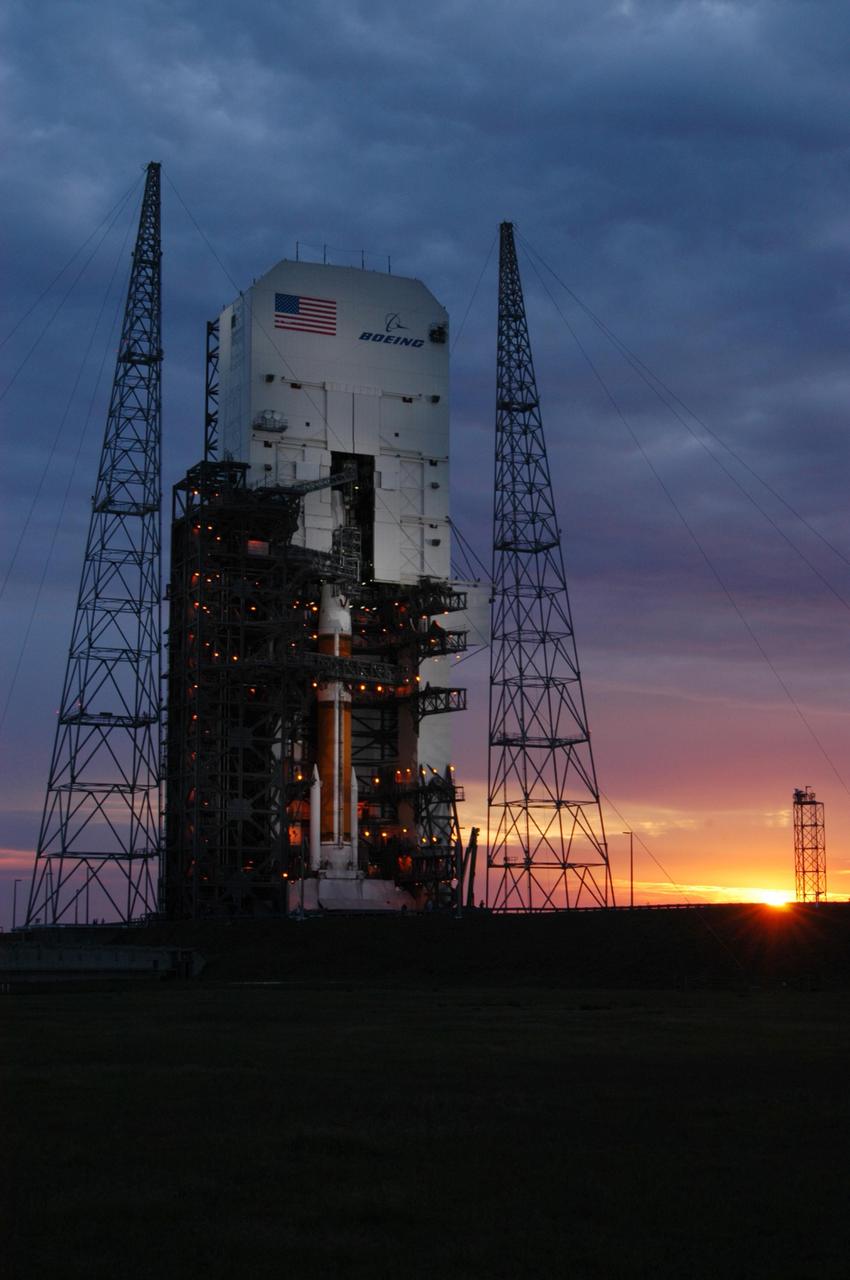
KENNEDY SPACE CENTER, FLA. - As the sun rises, a Boeing Delta IV rocket stands ready to launch the GOES-N satellite at Launch Complex 37 at Cape Canaveral Air Force Station. GOES-N is the latest in a series of Geostationary Operational Environmental Satellites for NOAA and NASA. A geostationary orbit is one in which a satellite remains in the same position with respect to the rotating Earth. Thus, the satellite hovers continuously over one position on the Earth's surface, appearing stationary. As a result, GOES provide a constant vigil for the atmospheric "triggers" for severe weather conditions such as tornadoes, flash floods, hail storms, and hurricanes. GOES-N is scheduled for launch May 24 in an hour-long window between 6:11 and 7:11 p.m. EDT. Photo credit: NASA/George Shelton
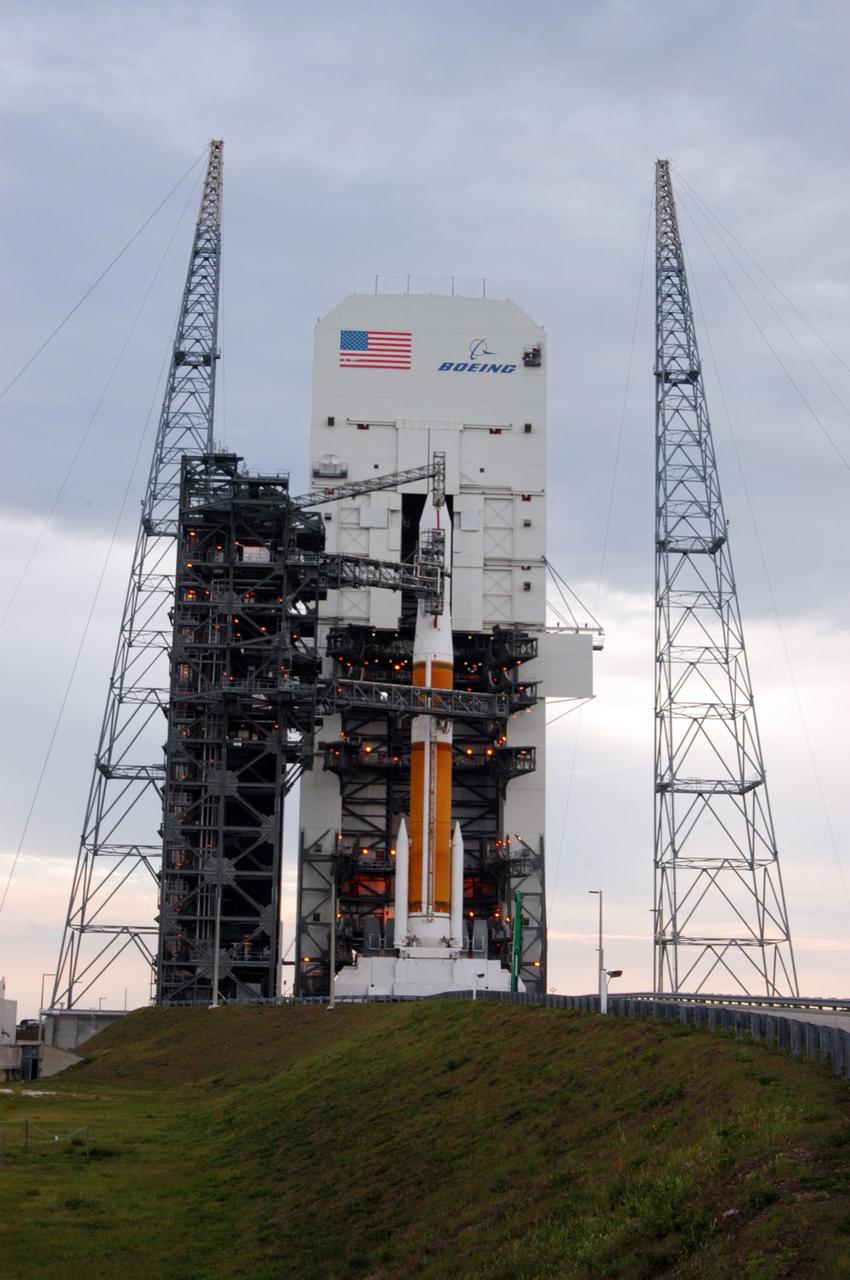
KENNEDY SPACE CENTER, FLA. - The mobile service tower on Launch Complex 37 at Cape Canaveral Air Force Station rolls back to reveal the Boeing Delta IV rocket that will launch the GOES-N satellite into orbit. GOES-N is the latest in a series of Geostationary Operational Environmental Satellites for NOAA and NASA. A geostationary orbit is one in which a satellite remains in the same position with respect to the rotating Earth. Thus, the satellite hovers continuously over one position on the Earth's surface, appearing stationary. As a result, GOES provide a constant vigil for the atmospheric "triggers" for severe weather conditions such as tornadoes, flash floods, hail storms, and hurricanes. GOES-N is scheduled for launch May 24 in an hour-long window between 6:11 and 7:11 p.m. EDT. Photo credit: NASA/George Shelton
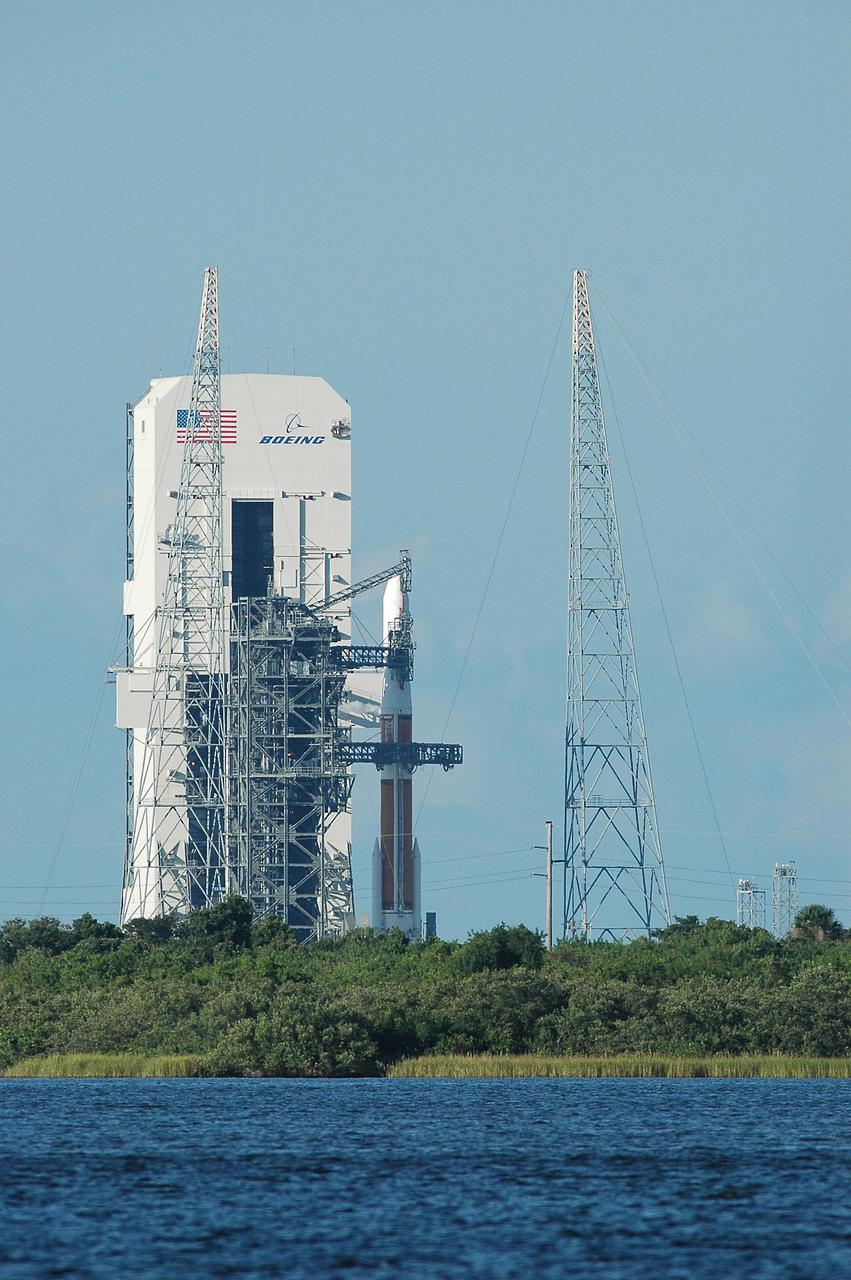
KENNEDY SPACE CENTER, FLA. - On Launch Complex 37 at Cape Canaveral Air Force Station in Florida, the Delta IV rocket and GOES-N satellite are being safed after the launch was scrubbed due to technical issues and postponed to a later date. GOES-N is the latest in a series of Geostationary Operational Environmental Satellites providing continuous monitoring necessary for intensive data analysis.
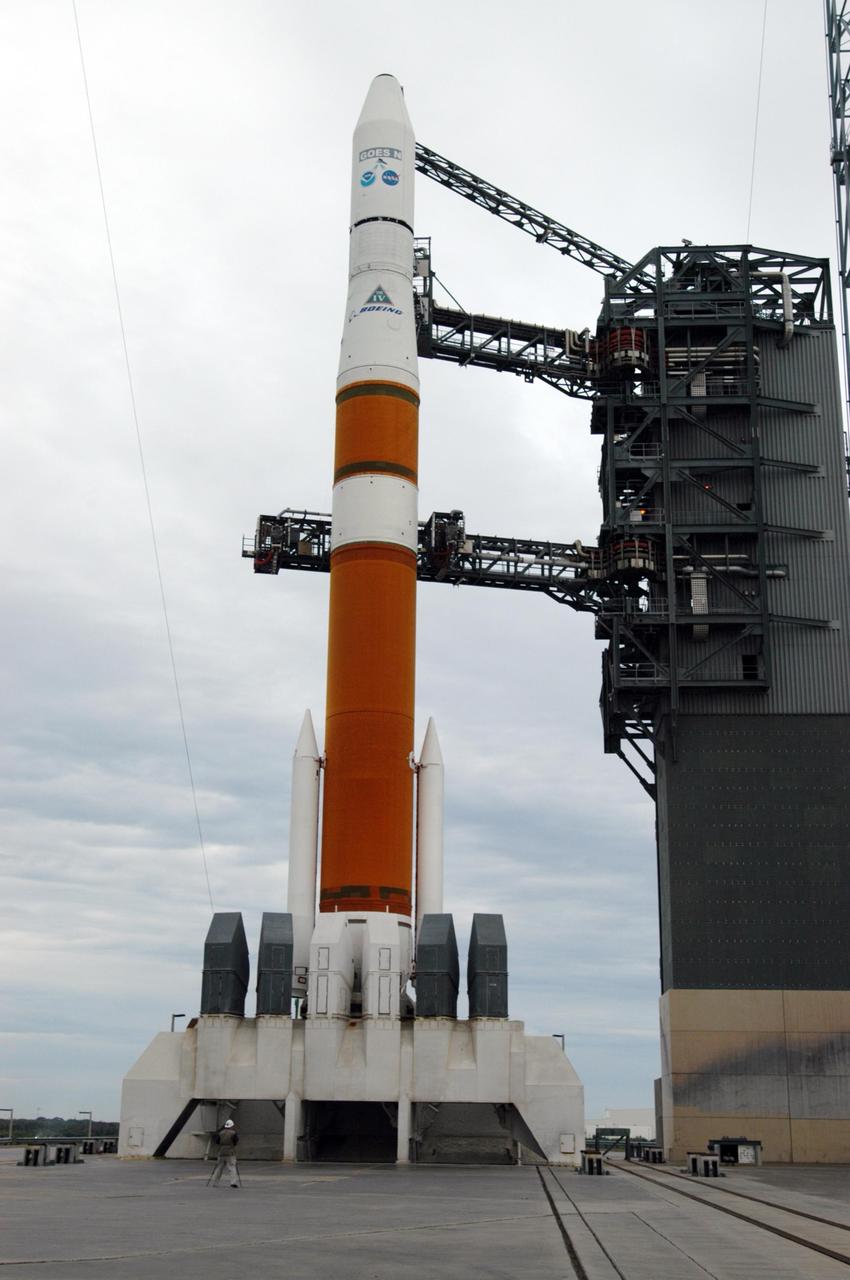
KENNEDY SPACE CENTER, FLA. - The mobile service tower on Launch Complex 37 at Cape Canaveral Air Force Station has been rolled back to reveal the Boeing Delta IV rocket that will launch the GOES-N satellite into orbit. GOES-N is the latest in a series of Geostationary Operational Environmental Satellites for NOAA and NASA. A geostationary orbit is one in which a satellite remains in the same position with respect to the rotating Earth. Thus, the satellite hovers continuously over one position on the Earth's surface, appearing stationary. As a result, GOES provide a constant vigil for the atmospheric "triggers" for severe weather conditions such as tornadoes, flash floods, hail storms, and hurricanes. GOES-N is scheduled for launch May 24 in an hour-long window between 6:11 and 7:11 p.m. EDT. Photo credit: NASA/George Shelton
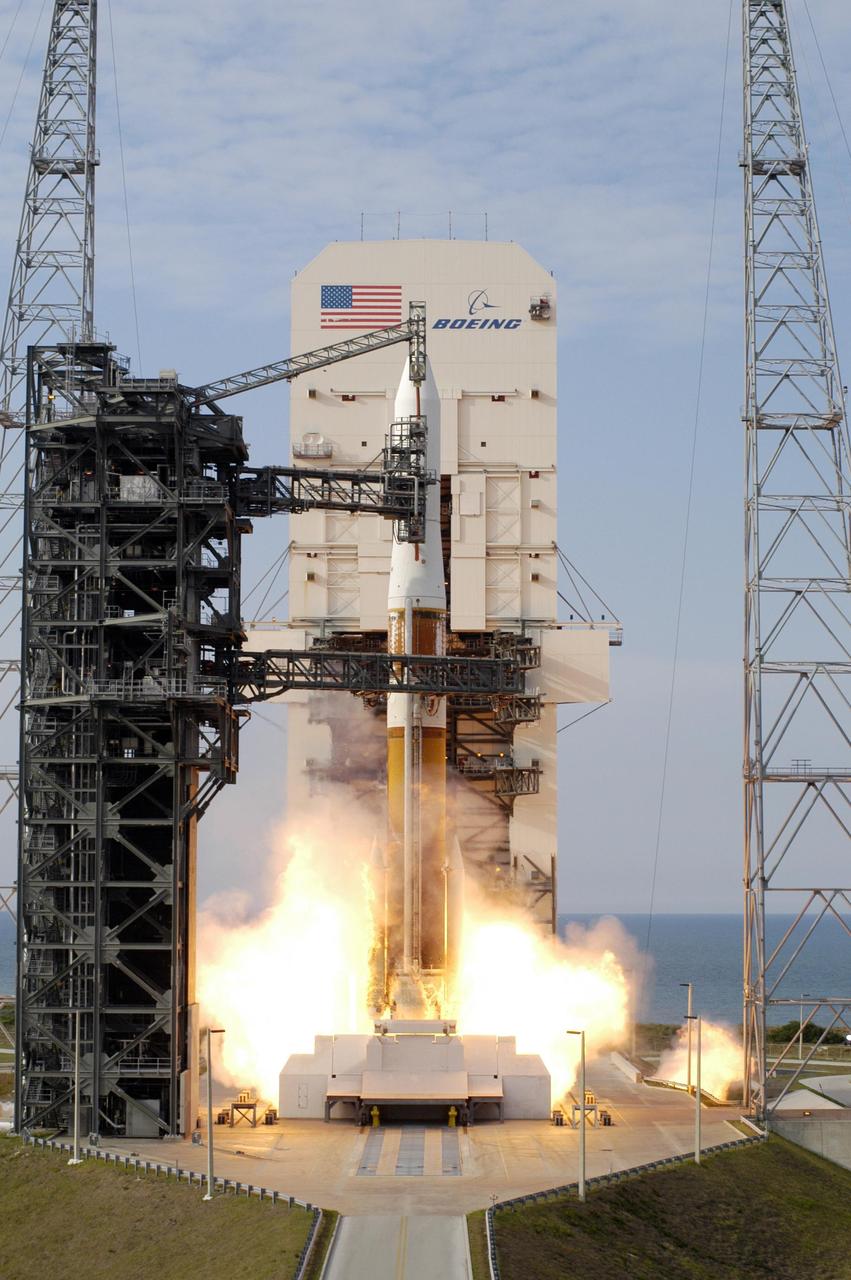
KENNEDY SPACE CENTER, FLA. - Flames spew from under the Boeing Delta IV rocket at liftoff, carrying the GOES-N satellite. Liftoff from Launch Complex 37 at Cape Canaveral Air Force Station was on time at 6:11 p.m. EDT. GOES-N is the latest in the Earth-monitoring series of Geostationary Operational Environmental Satellites developed by NASA and the National Oceanic and Atmospheric Administration. By maintaining a stationary orbit, hovering over one position on the Earth's surface, GOES will be able to provide a constant vigil for the atmospheric "triggers" for severe weather conditions such as tornadoes, flash floods, hail storms and hurricanes. Photo credit: NASA/Tim Terry
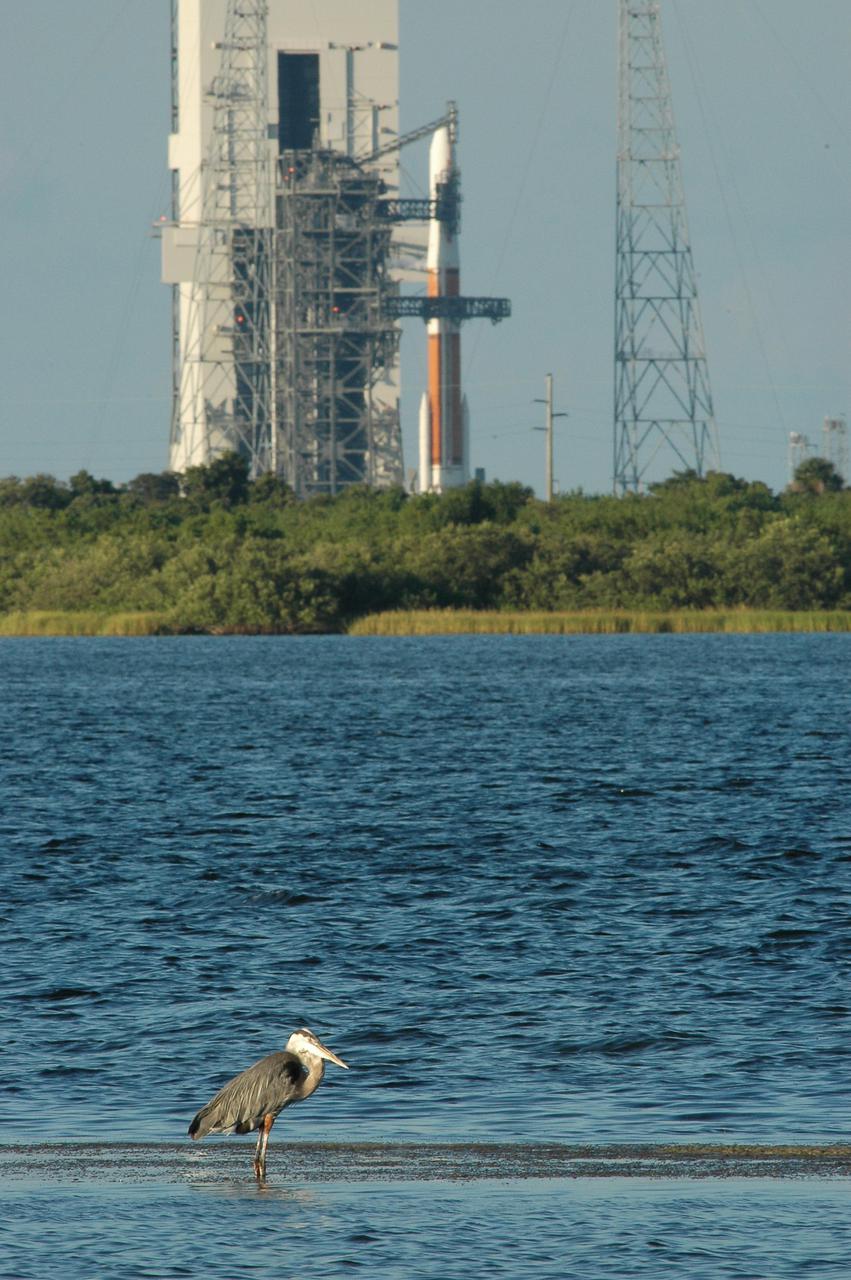
KENNEDY SPACE CENTER, FLA. - On Launch Complex 37 at Cape Canaveral Air Force Station in Florida, the Delta IV rocket and GOES-N satellite are being safed after the launch was scrubbed due to technical issues and postponed to a later date. In the foreground is a heron, wading in shallow water in the Indian River Lagoon. GOES-N is the latest in a series of Geostationary Operational Environmental Satellites providing continuous monitoring necessary for intensive data analysis.
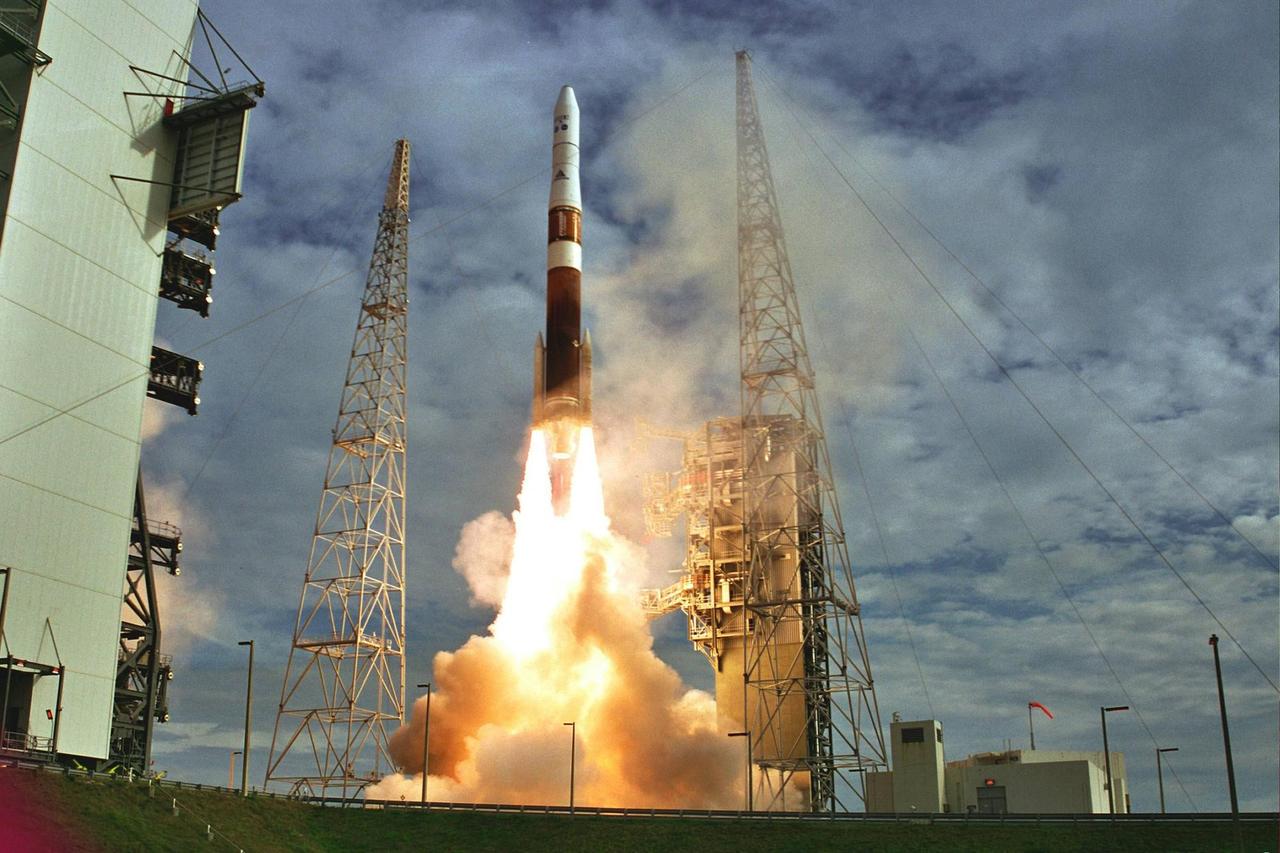
KENNEDY SPACE CENTER, FLA. - A Boeing Delta IV rocket roars off the launch pad to lift the GOES-N satellite on top into space. Liftoff from Launch Complex 37 at Cape Canaveral Air Force Station was on time at 6:11 p.m. EDT. GOES-N is the latest in the Earth-monitoring series of Geostationary Operational Environmental Satellites developed by NASA and the National Oceanic and Atmospheric Administration. By maintaining a stationary orbit, hovering over one position on the Earth's surface, GOES will be able to provide a constant vigil for the atmospheric "triggers" for severe weather conditions such as tornadoes, flash floods, hail storms and hurricanes. Photo by Carleton Bailie for Boeing
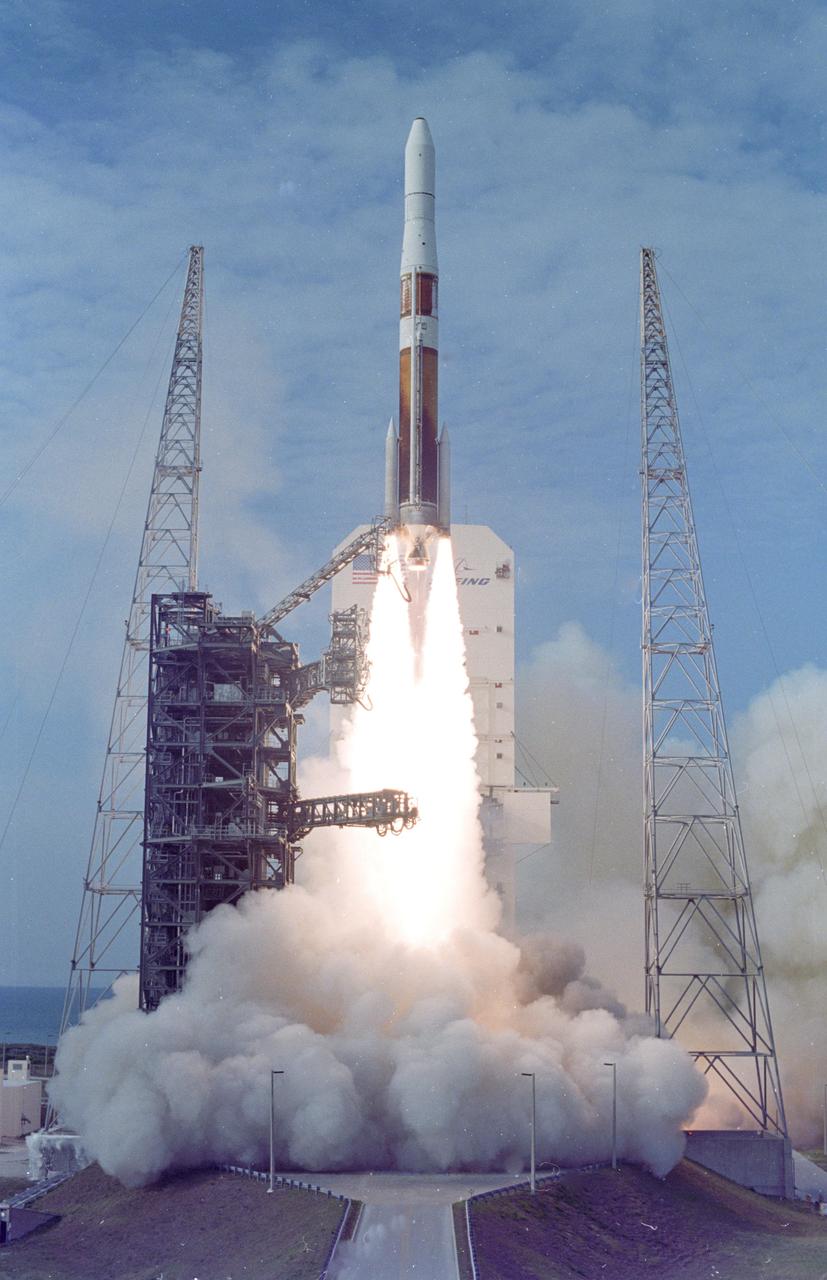
KENNEDY SPACE CENTER, FLA. - Flames and smoke billow out from under the Boeing Delta IV rocket at liftoff, carrying the GOES-N satellite. Liftoff from Launch Complex 37 at Cape Canaveral Air Force Station was on time at 6:11 p.m. EDT. GOES-N is the latest in the Earth-monitoring series of Geostationary Operational Environmental Satellites developed by NASA and the National Oceanic and Atmospheric Administration. By maintaining a stationary orbit, hovering over one position on the Earth's surface, GOES will be able to provide a constant vigil for the atmospheric "triggers" for severe weather conditions such as tornadoes, flash floods, hail storms and hurricanes. Photo credit: NASA/Tim Terry
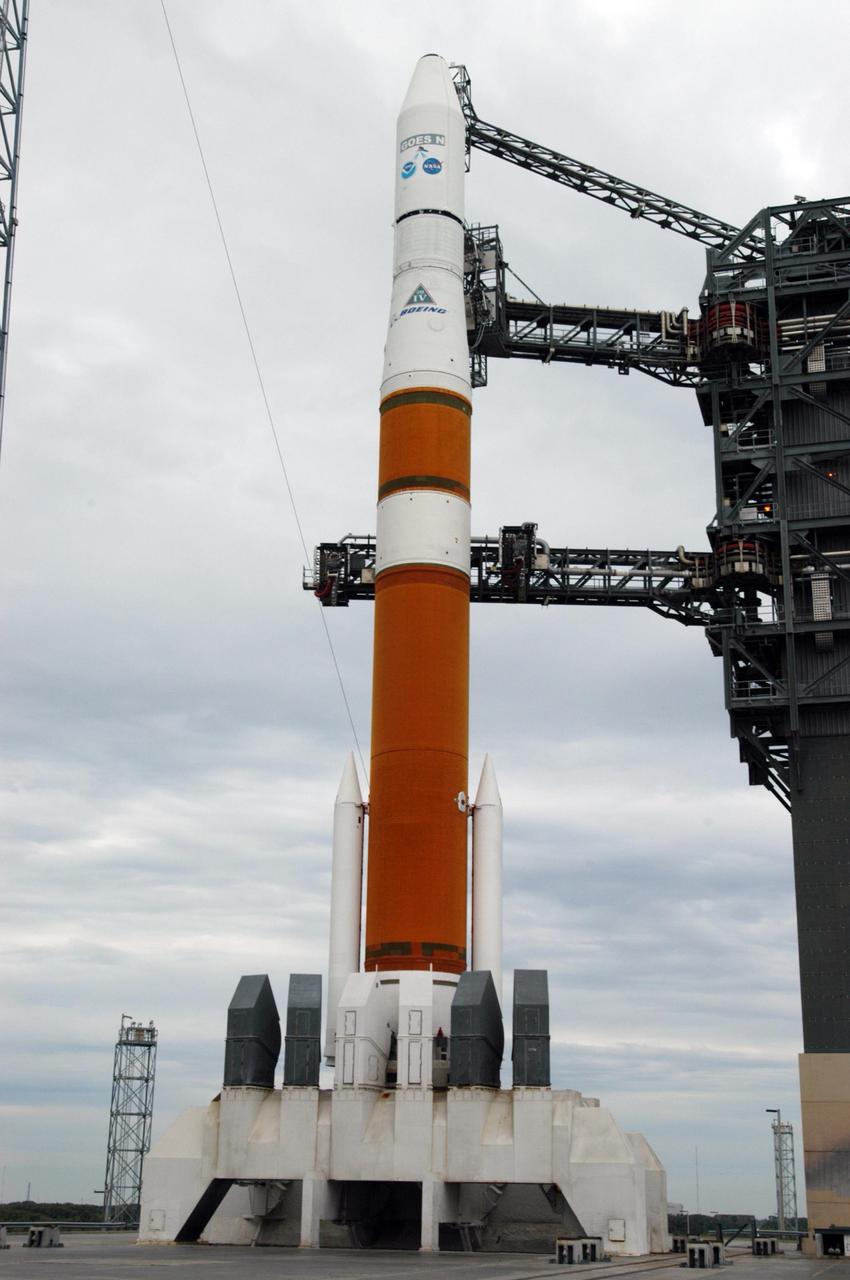
KENNEDY SPACE CENTER, FLA. - The mobile service tower on Launch Complex 37 at Cape Canaveral Air Force Station has been removed from around a Boeing Delta IV rocket as preparations continue to launch the GOES-N satellite. GOES-N is the latest in a series of Geostationary Operational Environmental Satellites for NOAA and NASA. A geostationary orbit is one in which a satellite remains in the same position with respect to the rotating Earth. Thus, the satellite hovers continuously over one position on the Earth's surface, appearing stationary. As a result, GOES provide a constant vigil for the atmospheric "triggers" for severe weather conditions such as tornadoes, flash floods, hail storms, and hurricanes. GOES-N is scheduled for launch May 24 in an hour-long window between 6:11 and 7:11 p.m. EDT. Photo credit: NASA/George Shelton
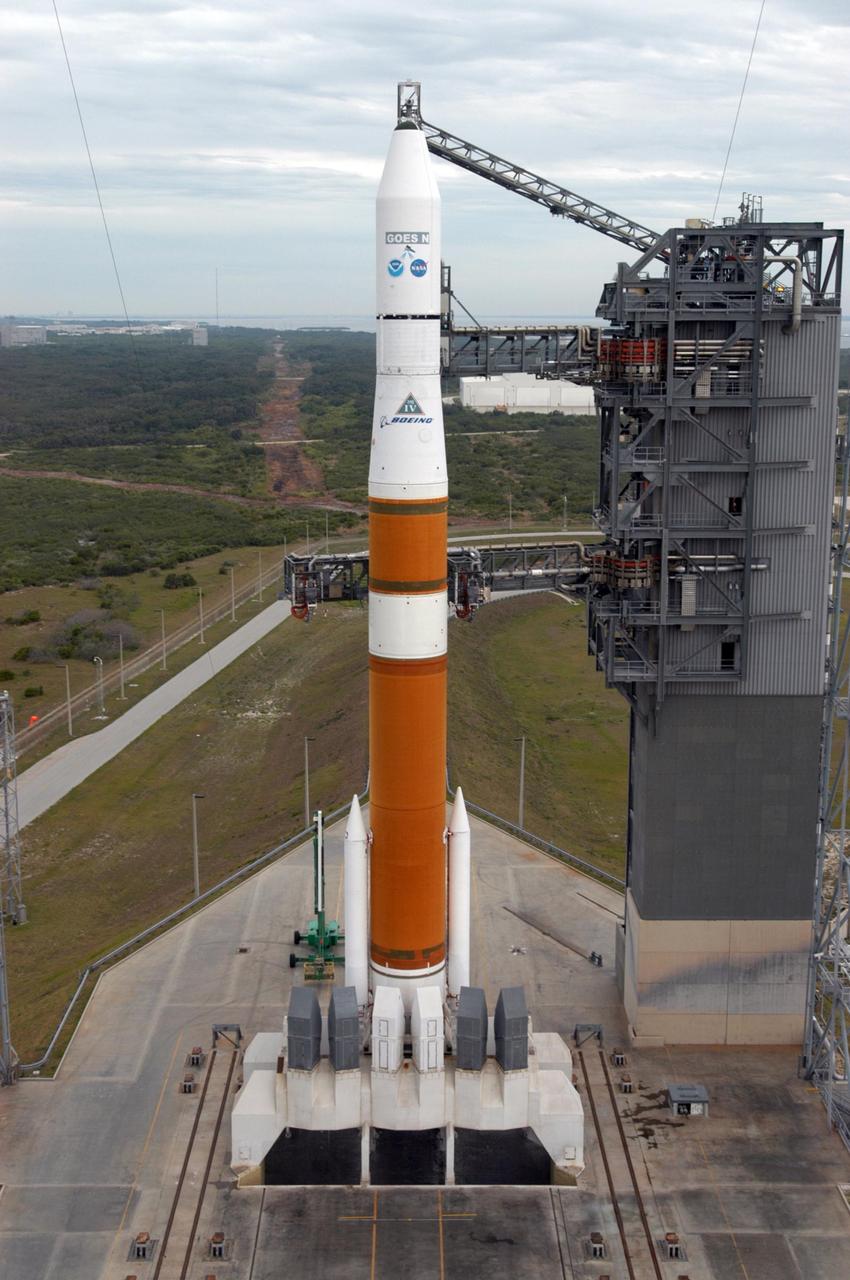
KENNEDY SPACE CENTER, FLA. - The mobile service tower on Launch Complex 37 at Cape Canaveral Air Force Station has been removed from around the Boeing Delta IV rocket that will launch the GOES-N satellite into orbit. GOES-N is the latest in a series of Geostationary Operational Environmental Satellites for NOAA and NASA. A geostationary orbit is one in which a satellite remains in the same position with respect to the rotating Earth. Thus, the satellite hovers continuously over one position on the Earth's surface, appearing stationary. As a result, GOES provide a constant vigil for the atmospheric "triggers" for severe weather conditions such as tornadoes, flash floods, hail storms, and hurricanes. GOES-N is scheduled for launch May 24 in an hour-long window between 6:11 and 7:11 p.m. EDT. Photo credit: NASA/George Shelton
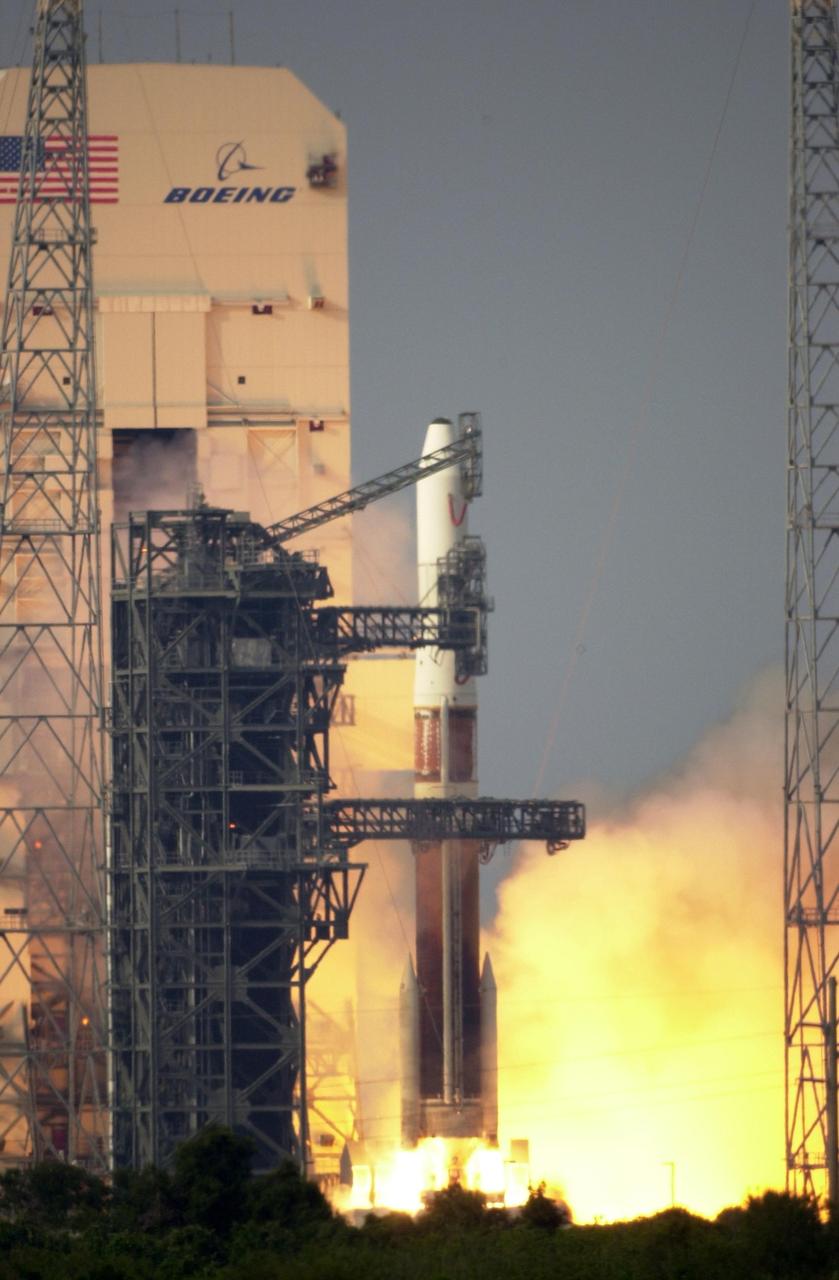
KENNEDY SPACE CENTER, FLA. - Amid fire and smoke, the Boeing Delta IV rocket roars into life after ignition to lift the GOES-N satellite on top into space. Liftoff from Launch Complex 37 at Cape Canaveral Air Force Station was on time at 6:11 p.m. EDT. GOES-N is the latest in the Earth-monitoring series of Geostationary Operational Environmental Satellites developed by NASA and the National Oceanic and Atmospheric Administration. By maintaining a stationary orbit, hovering over one position on the Earth's surface, GOES will be able to provide a constant vigil for the atmospheric "triggers" for severe weather conditions such as tornadoes, flash floods, hail storms and hurricanes. Photo credit: NASA/Ken Thornsley
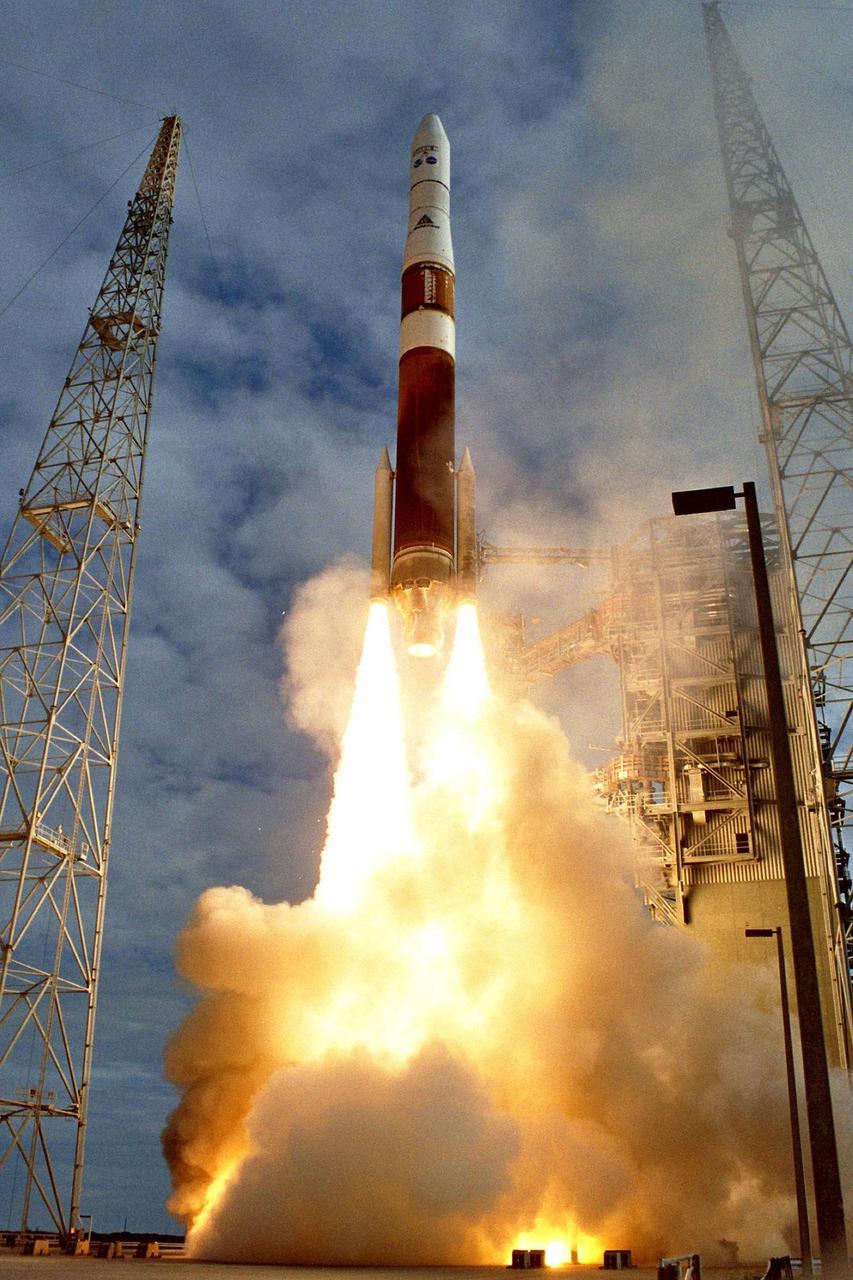
KENNEDY SPACE CENTER, FLA. - A Boeing Delta IV rocket roars off the launch pad to lift the GOES-N satellite on top into space. Liftoff from Launch Complex 37 at Cape Canaveral Air Force Station was on time at 6:11 p.m. EDT. GOES-N is the latest in the Earth-monitoring series of Geostationary Operational Environmental Satellites developed by NASA and the National Oceanic and Atmospheric Administration. By maintaining a stationary orbit, hovering over one position on the Earth's surface, GOES will be able to provide a constant vigil for the atmospheric "triggers" for severe weather conditions such as tornadoes, flash floods, hail storms and hurricanes. Photo by Carleton Bailie for Boeing
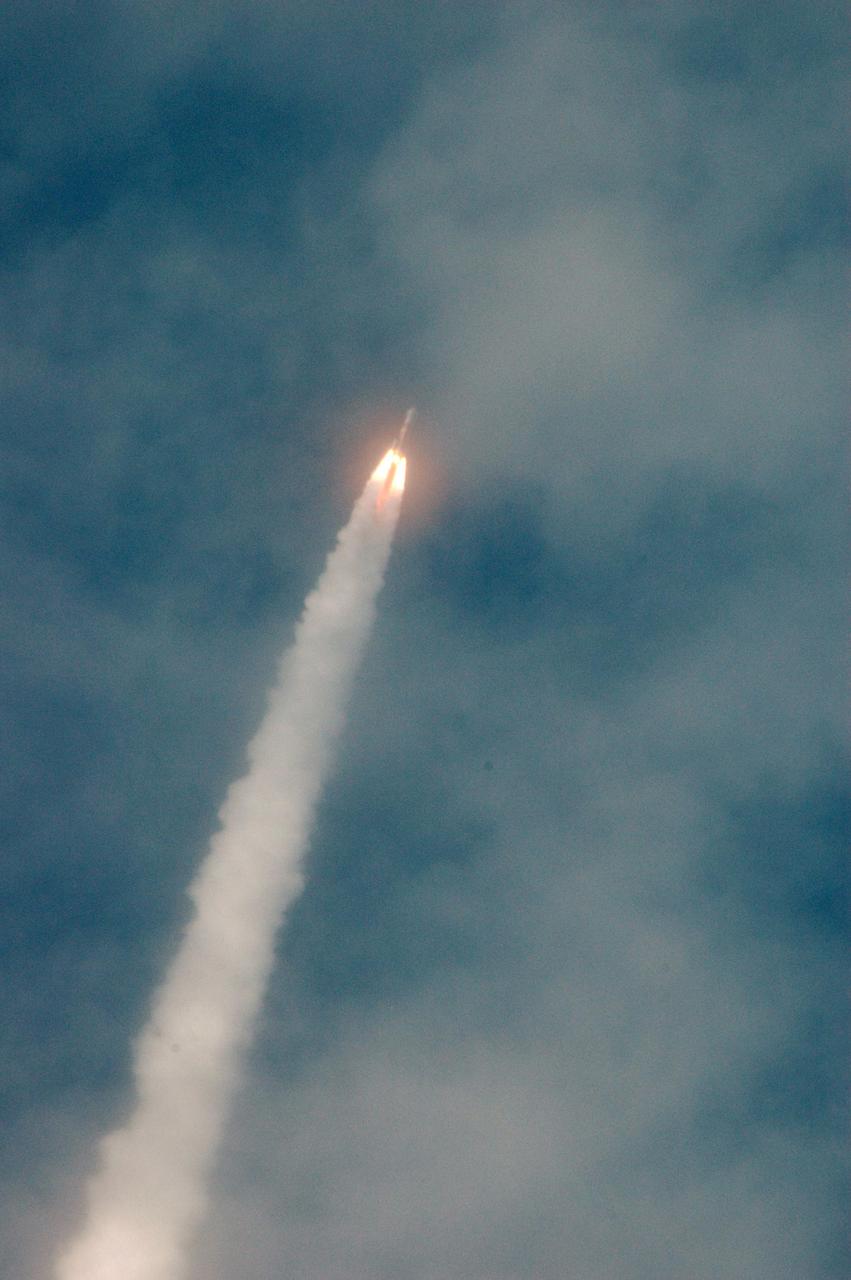
KENNEDY SPACE CENTER, FLA. - With flames close behind it, the Boeing Delta IV rocket trails a plume of smoke as it roars through the thin cloud cover, lifting the GOES-N satellite in to space. Liftoff from Launch Complex 37 at Cape Canaveral Air Force Station was on time at 6:11 p.m. EDT. GOES-N is the latest in the Earth-monitoring series of Geostationary Operational Environmental Satellites developed by NASA and the National Oceanic and Atmospheric Administration. By maintaining a stationary orbit, hovering over one position on the Earth's surface, GOES will be able to provide a constant vigil for the atmospheric "triggers" for severe weather conditions such as tornadoes, flash floods, hail storms and hurricanes. Photo credit: NASA/Ken Thornsley
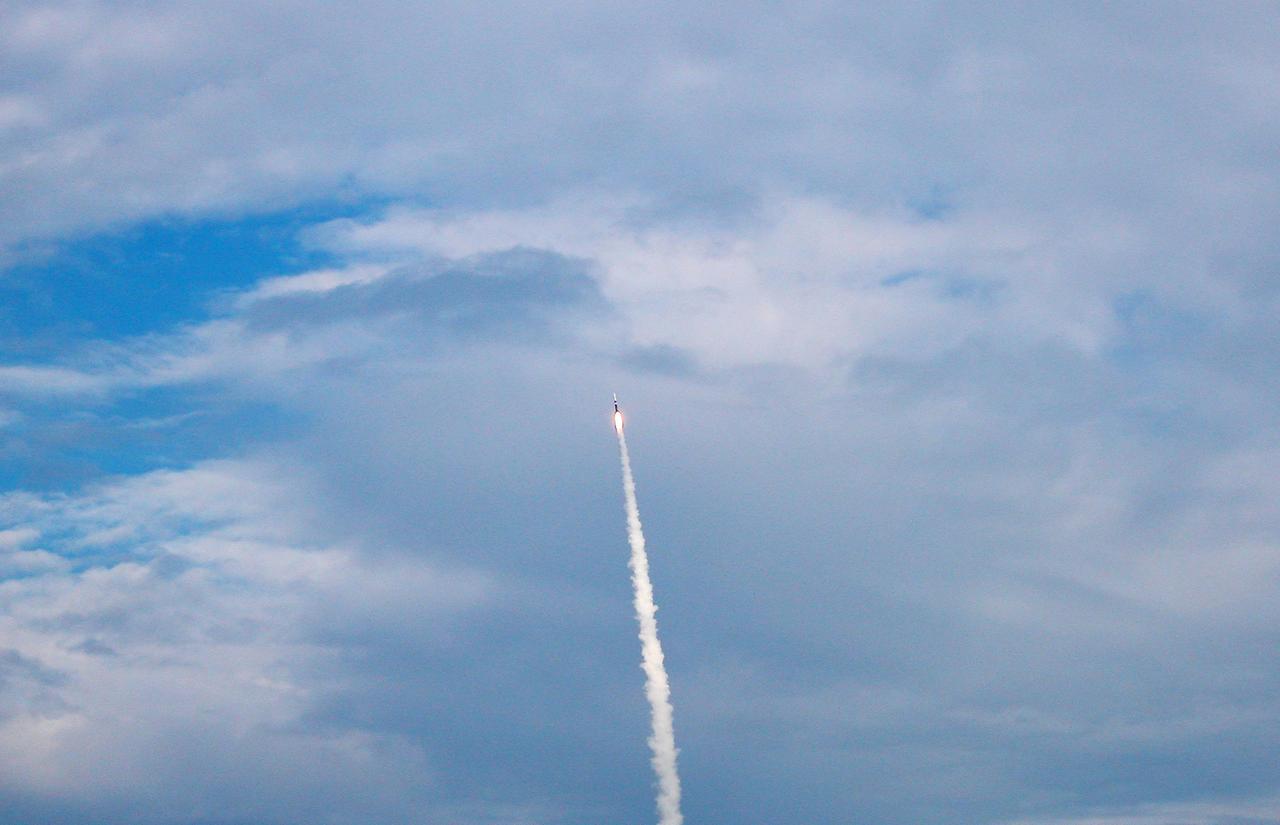
KENNEDY SPACE CENTER, FLA. - The GOES-N satellite roars through the thin cloud cover over the Space Coast atop a Boeing Delta IV rocket. Liftoff from Launch Complex 37 at Cape Canaveral Air Force Station was on time at 6:11 p.m. EDT. GOES-N is the latest in the Earth-monitoring series of Geostationary Operational Environmental Satellites developed by NASA and the National Oceanic and Atmospheric Administration. By maintaining a stationary orbit, hovering over one position on the Earth's surface, GOES will be able to provide a constant vigil for the atmospheric "triggers" for severe weather conditions such as tornadoes, flash floods, hail storms and hurricanes. Photo credit: NASA/Debbie Kiger
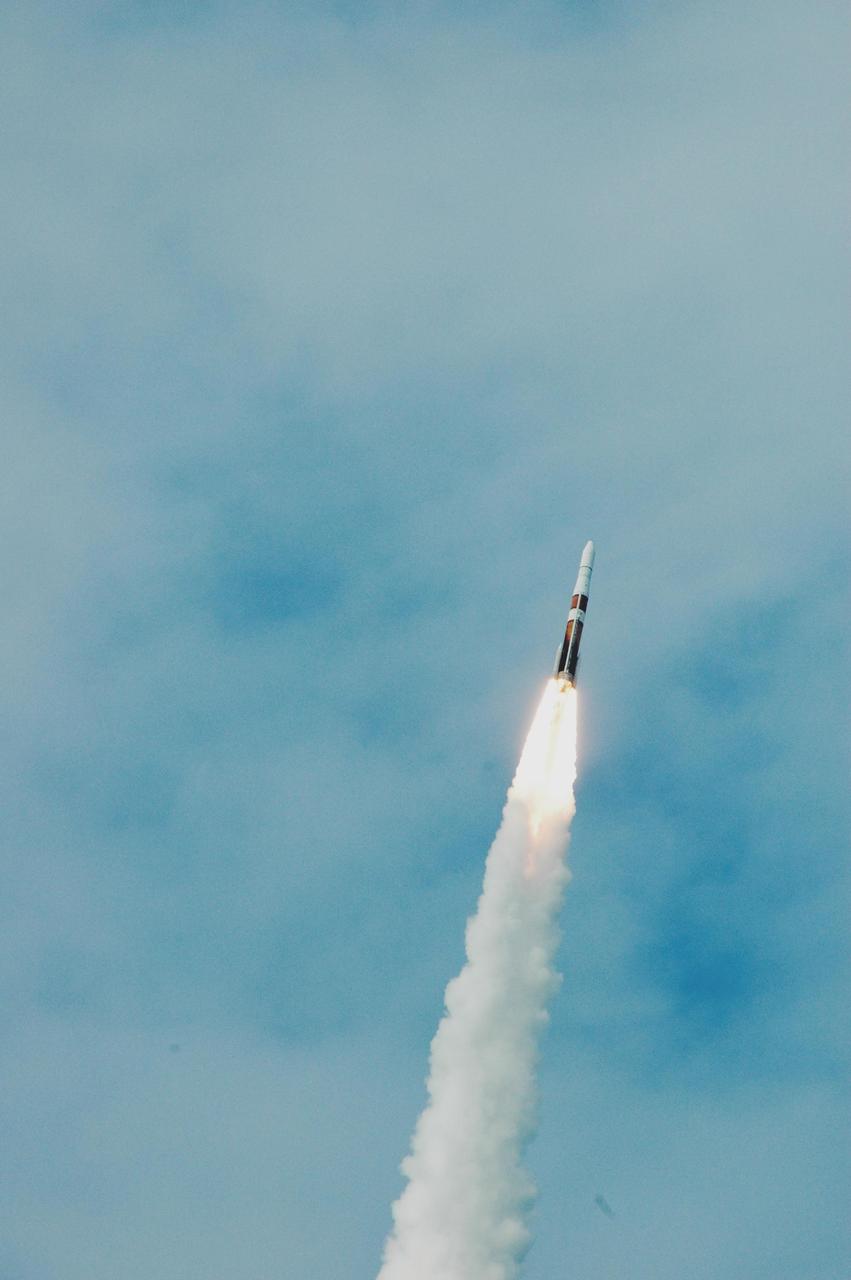
KENNEDY SPACE CENTER, FLA. - The GOES-N satellite roars through the thin cloud cover over the Space Coast atop a Boeing Delta IV rocket. Liftoff from Launch Complex 37 at Cape Canaveral Air Force Station was on time at 6:11 p.m. EDT. GOES-N is the latest in the Earth-monitoring series of Geostationary Operational Environmental Satellites developed by NASA and the National Oceanic and Atmospheric Administration. By maintaining a stationary orbit, hovering over one position on the Earth's surface, GOES will be able to provide a constant vigil for the atmospheric "triggers" for severe weather conditions such as tornadoes, flash floods, hail storms and hurricanes. Photo credit: NASA/Ken Thornsley
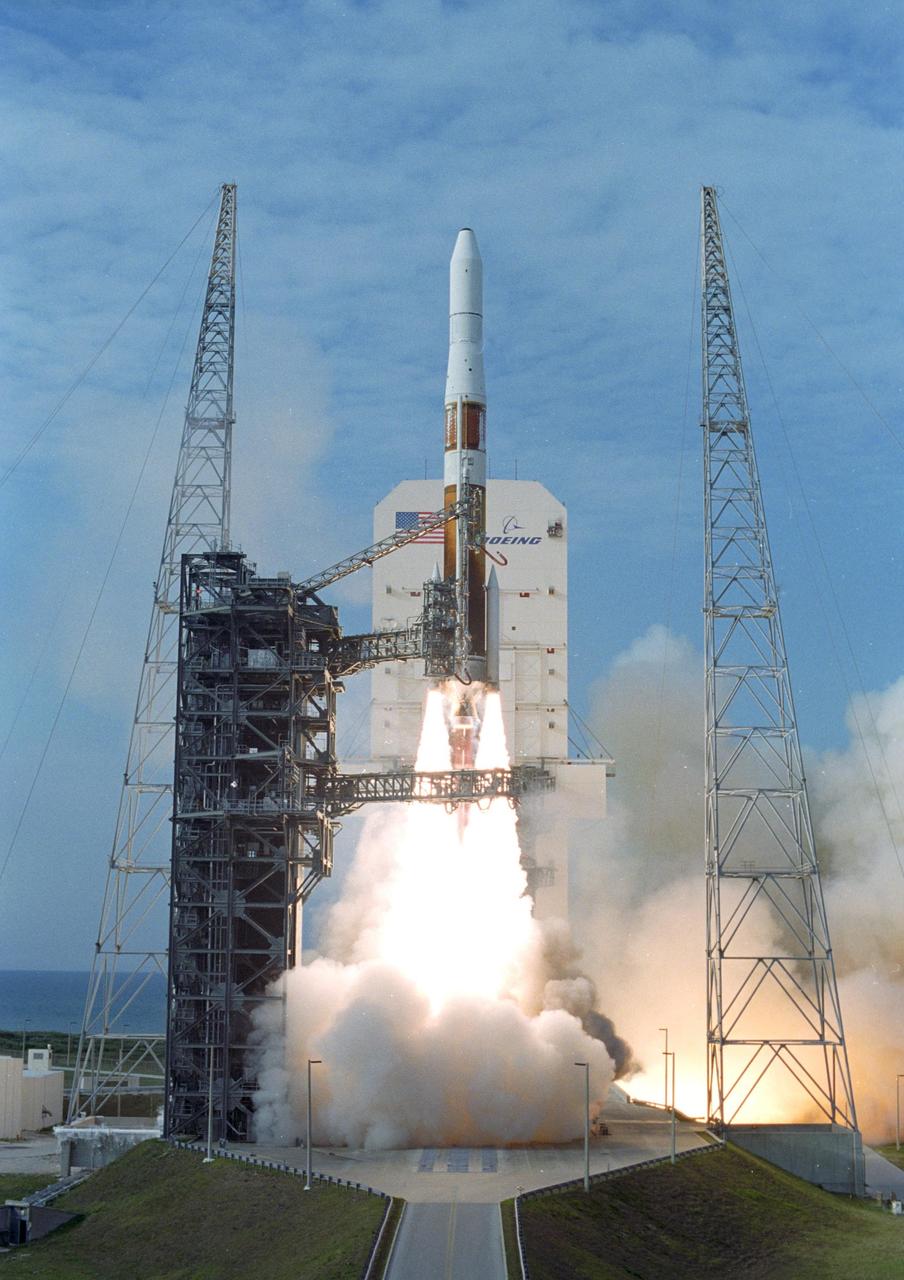
KENNEDY SPACE CENTER, FLA. - A Boeing Delta IV rocket roars off the launch pad to lift the GOES-N satellite on top into space. Liftoff from Launch Complex 37 at Cape Canaveral Air Force Station was on time at 6:11 p.m. EDT. GOES-N is the latest in the Earth-monitoring series of Geostationary Operational Environmental Satellites developed by NASA and the National Oceanic and Atmospheric Administration. By maintaining a stationary orbit, hovering over one position on the Earth's surface, GOES will be able to provide a constant vigil for the atmospheric "triggers" for severe weather conditions such as tornadoes, flash floods, hail storms and hurricanes. Photo by Carleton Bailie for Boeing
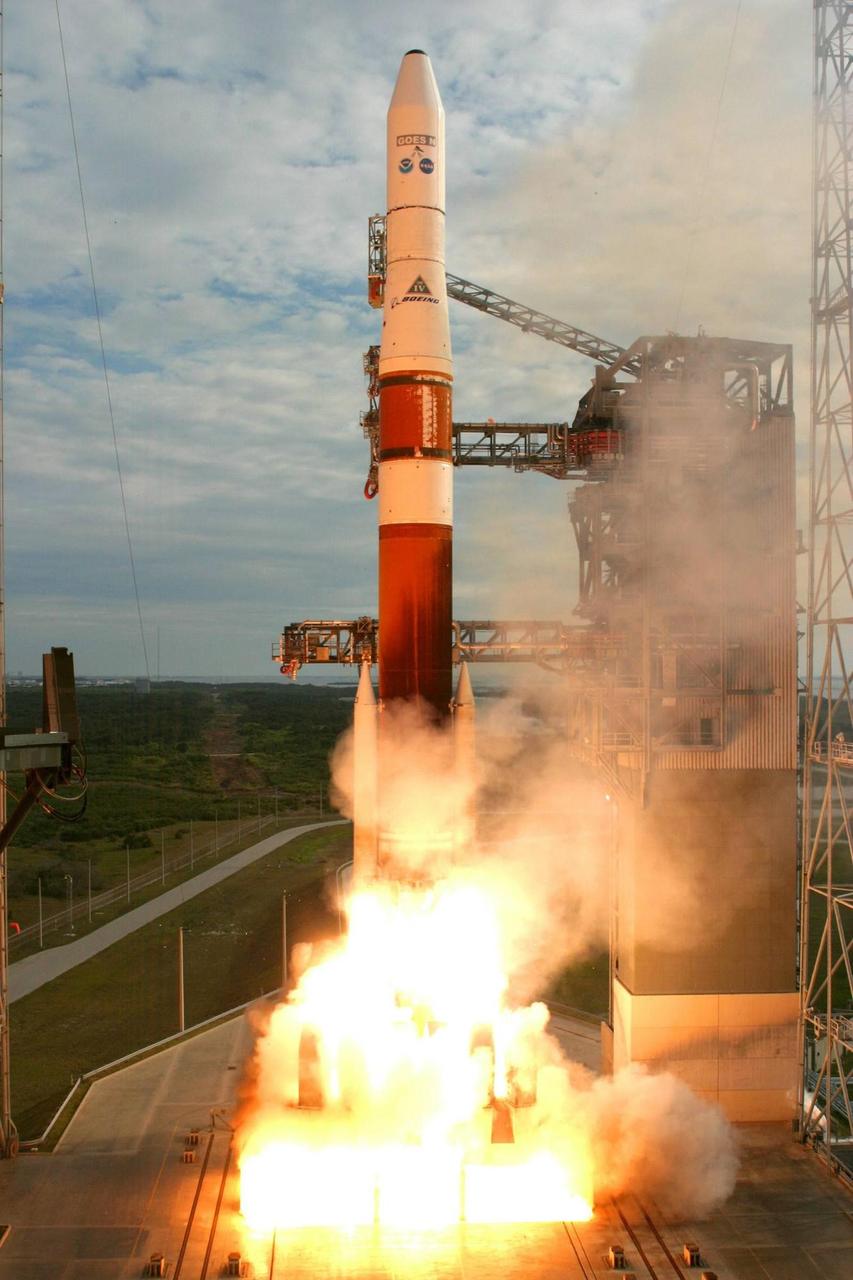
KENNEDY SPACE CENTER, FLA. - Flames and smoke billow out from under the Boeing Delta IV rocket at liftoff, carrying the GOES-N satellite. Liftoff from Launch Complex 37 at Cape Canaveral Air Force Station was on time at 6:11 p.m. EDT. GOES-N is the latest in the Earth-monitoring series of Geostationary Operational Environmental Satellites developed by NASA and the National Oceanic and Atmospheric Administration. By maintaining a stationary orbit, hovering over one position on the Earth's surface, GOES will be able to provide a constant vigil for the atmospheric "triggers" for severe weather conditions such as tornadoes, flash floods, hail storms and hurricanes. Photo credit: NASA/Tim Terry
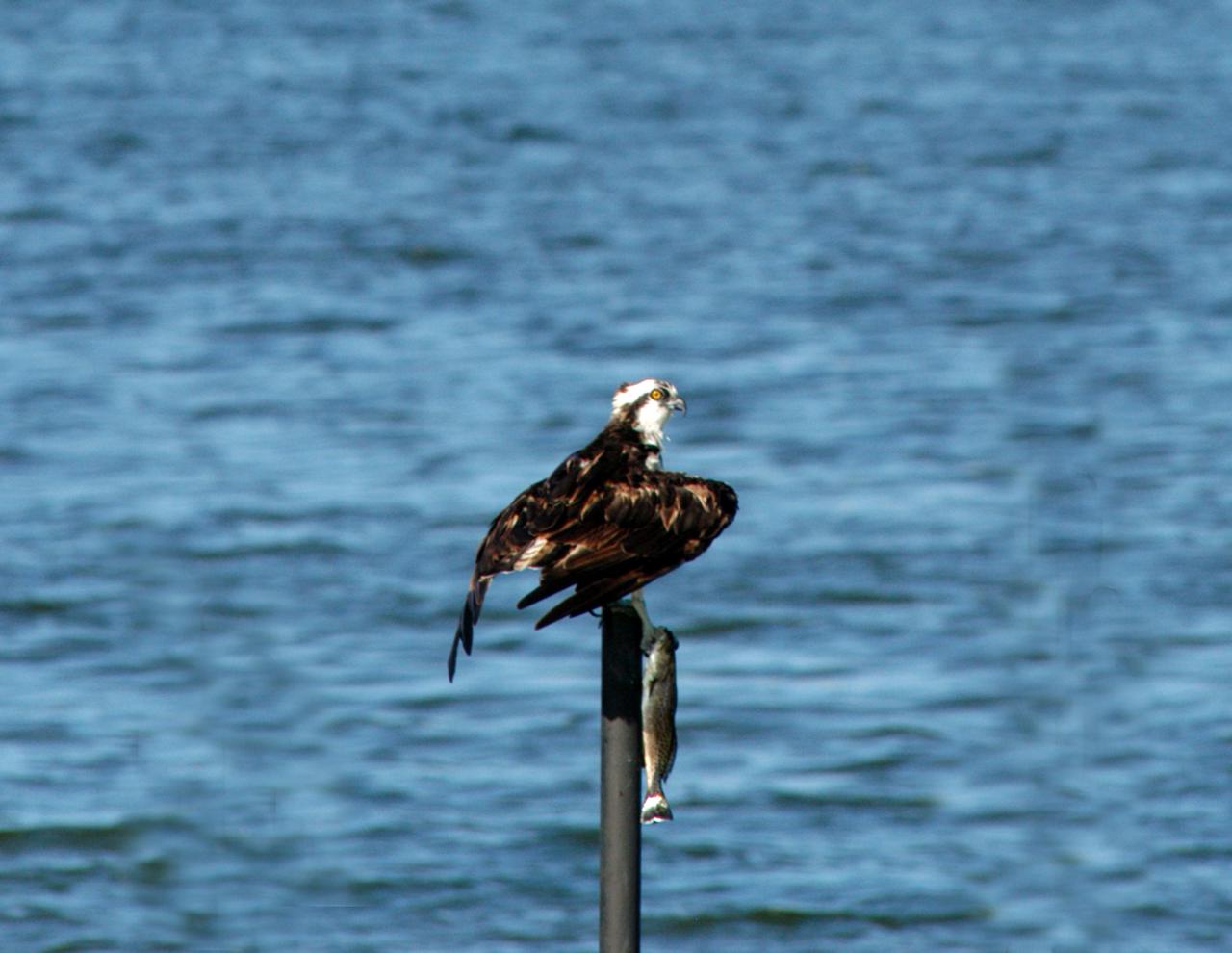
KENNEDY SPACE CENTER, FLA. - Perching on a pole in the Indian River Lagoon, an osprey clutches his most recent catch. The site is near Launch Complex 37 at Cape Canaveral Air Force Station in Florida, where the Delta IV rocket with the GOES-N satellite was poised for launch. The GOES-N is the latest in a series of Geostationary Operational Environmental Satellites providing continuous monitoring necessary for intensive data analysis. The GOES-N launch was delayed due to last minute technical issues and postponed to a later date.
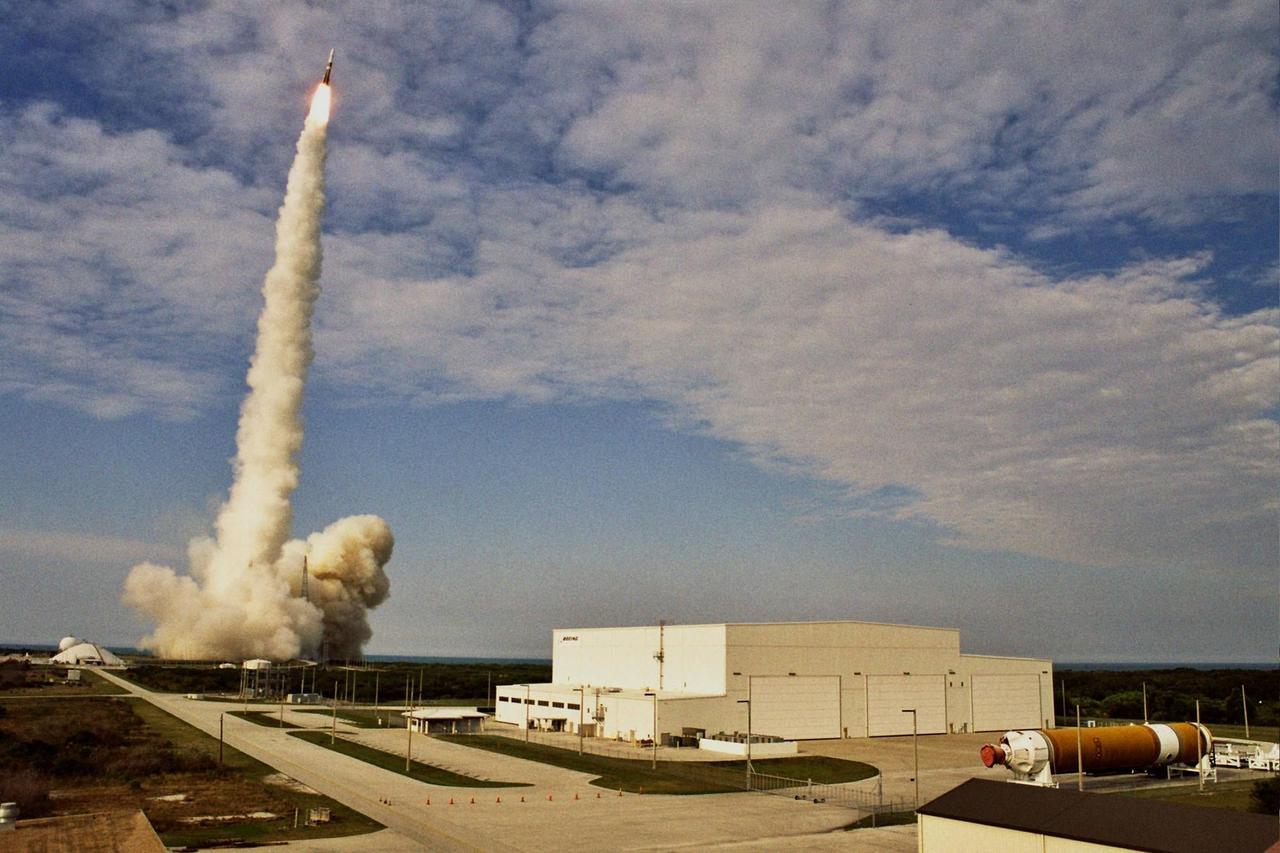
KENNEDY SPACE CENTER, FLA. - A Boeing Delta IV rocket roars off the launch pad to lift the GOES-N satellite on top into space. Liftoff from Launch Complex 37 at Cape Canaveral Air Force Station was on time at 6:11 p.m. EDT. GOES-N is the latest in the Earth-monitoring series of Geostationary Operational Environmental Satellites developed by NASA and the National Oceanic and Atmospheric Administration. By maintaining a stationary orbit, hovering over one position on the Earth's surface, GOES will be able to provide a constant vigil for the atmospheric "triggers" for severe weather conditions such as tornadoes, flash floods, hail storms and hurricanes. Photo by Carleton Bailie for Boeing
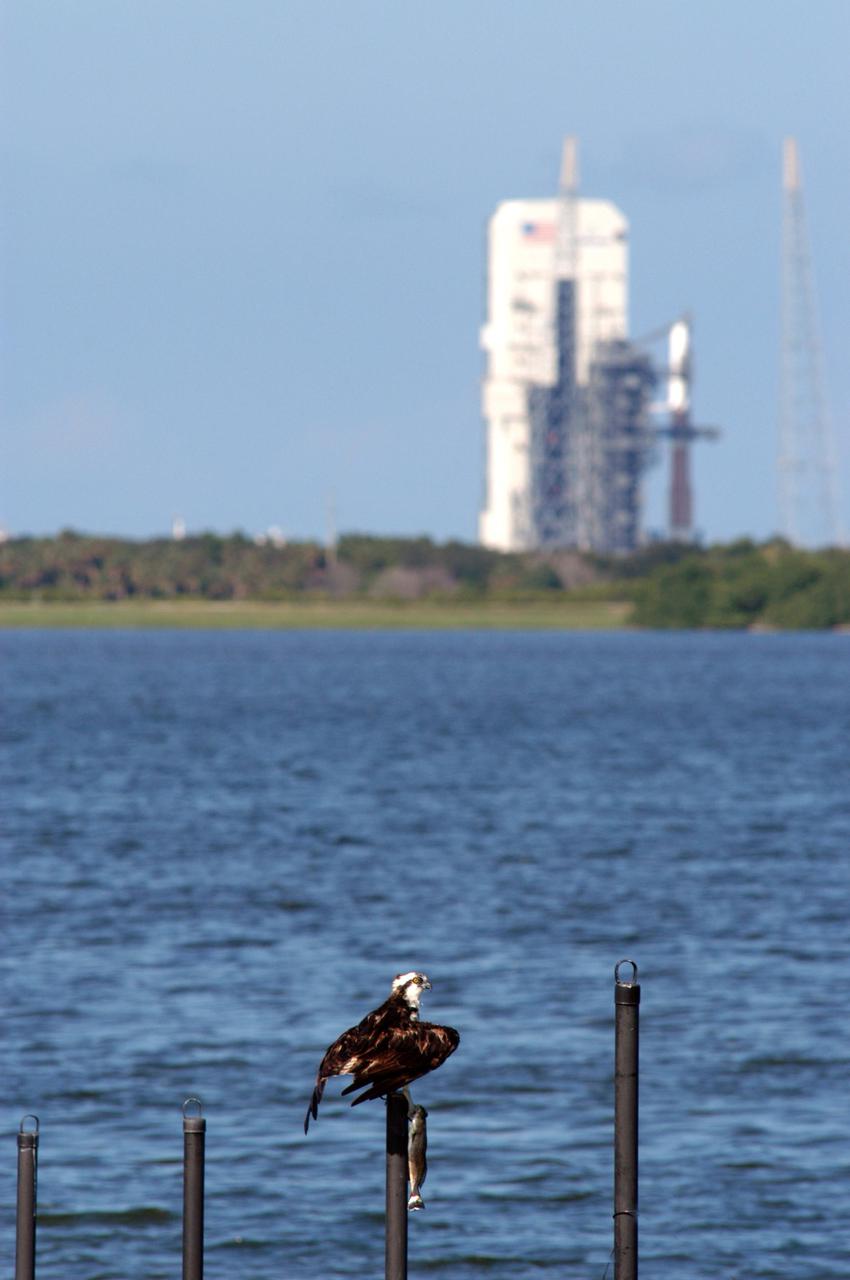
KENNEDY SPACE CENTER, FLA. - Perching on a pole in the Indian River Lagoon, an osprey clutches his most recent catch. In the background is Launch Complex 37 at Cape Canaveral Air Force Station in Florida, where the Delta IV rocket with the GOES-N satellite is poised for launch. The GOES-N is the latest in a series of Geostationary Operational Environmental Satellites providing continuous monitoring necessary for intensive data analysis. The GOES-N launch was delayed due to last minute technical issues and postponed to a later date.
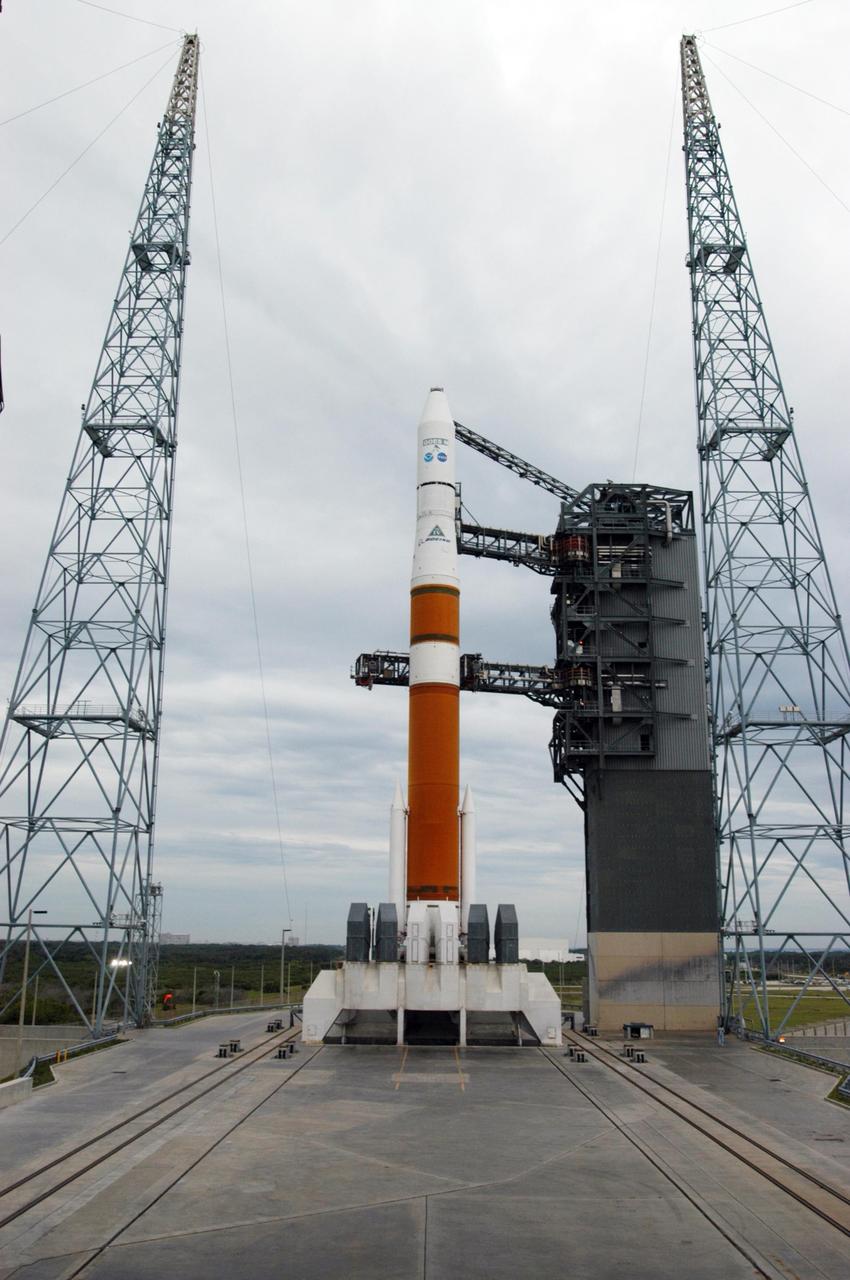
KENNEDY SPACE CENTER, FLA. - The mobile service tower on Launch Complex 37 at Cape Canaveral Air Force Station has been removed from around a Boeing Delta IV rocket as preparations continue to launch the GOES-N satellite. GOES-N is the latest in a series of Geostationary Operational Environmental Satellites for NOAA and NASA. A geostationary orbit is one in which a satellite remains in the same position with respect to the rotating Earth. Thus, the satellite hovers continuously over one position on the Earth's surface, appearing stationary. As a result, GOES provide a constant vigil for the atmospheric "triggers" for severe weather conditions such as tornadoes, flash floods, hail storms, and hurricanes. GOES-N is scheduled for launch May 24 in an hour-long window between 6:11 and 7:11 p.m. EDT. Photo credit: NASA/George Shelton
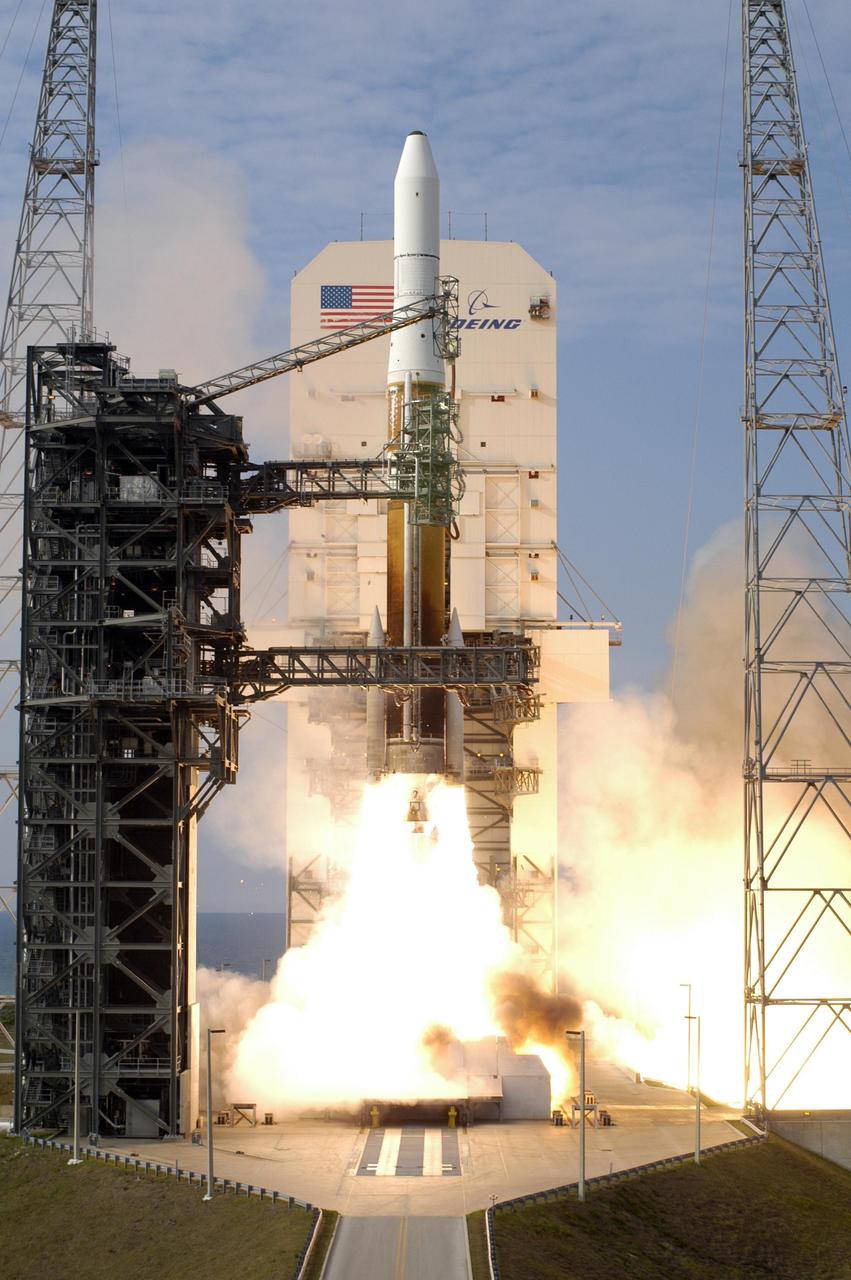
KENNEDY SPACE CENTER, FLA. - Flames and smoke billow out from under the Boeing Delta IV rocket at liftoff, carrying the GOES-N satellite. Liftoff from Launch Complex 37 at Cape Canaveral Air Force Station was on time at 6:11 p.m. EDT. GOES-N is the latest in the Earth-monitoring series of Geostationary Operational Environmental Satellites developed by NASA and the National Oceanic and Atmospheric Administration. By maintaining a stationary orbit, hovering over one position on the Earth's surface, GOES will be able to provide a constant vigil for the atmospheric "triggers" for severe weather conditions such as tornadoes, flash floods, hail storms and hurricanes. Photo credit: NASA/Tim Terry
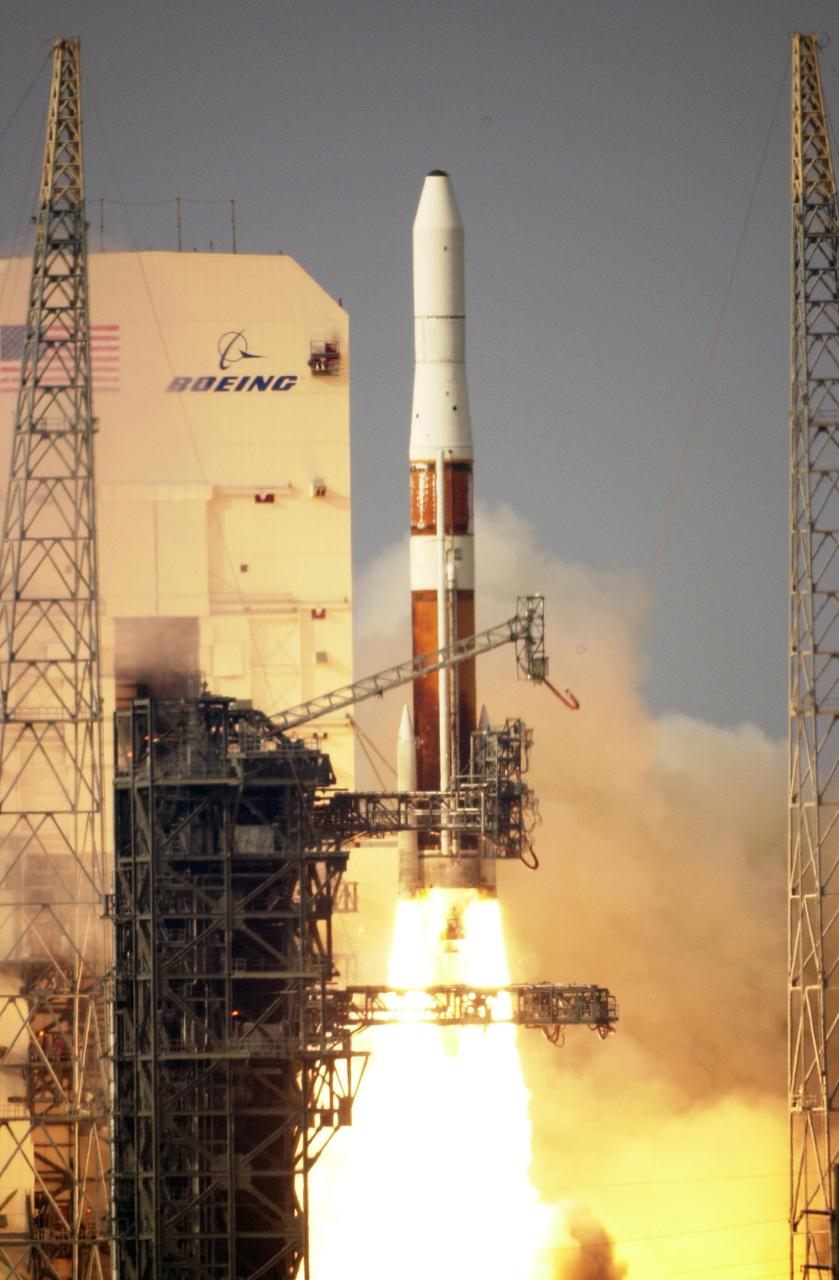
KENNEDY SPACE CENTER, FLA. - Spewing fire and smoke, the Boeing Delta IV rocket roars off the launch pad to lift the GOES-N satellite on top into space. Liftoff from Launch Complex 37 at Cape Canaveral Air Force Station was on time at 6:11 p.m. EDT. GOES-N is the latest in the Earth-monitoring series of Geostationary Operational Environmental Satellites developed by NASA and the National Oceanic and Atmospheric Administration. By maintaining a stationary orbit, hovering over one position on the Earth's surface, GOES will be able to provide a constant vigil for the atmospheric "triggers" for severe weather conditions such as tornadoes, flash floods, hail storms and hurricanes. Photo credit: NASA/Ken Thornsley
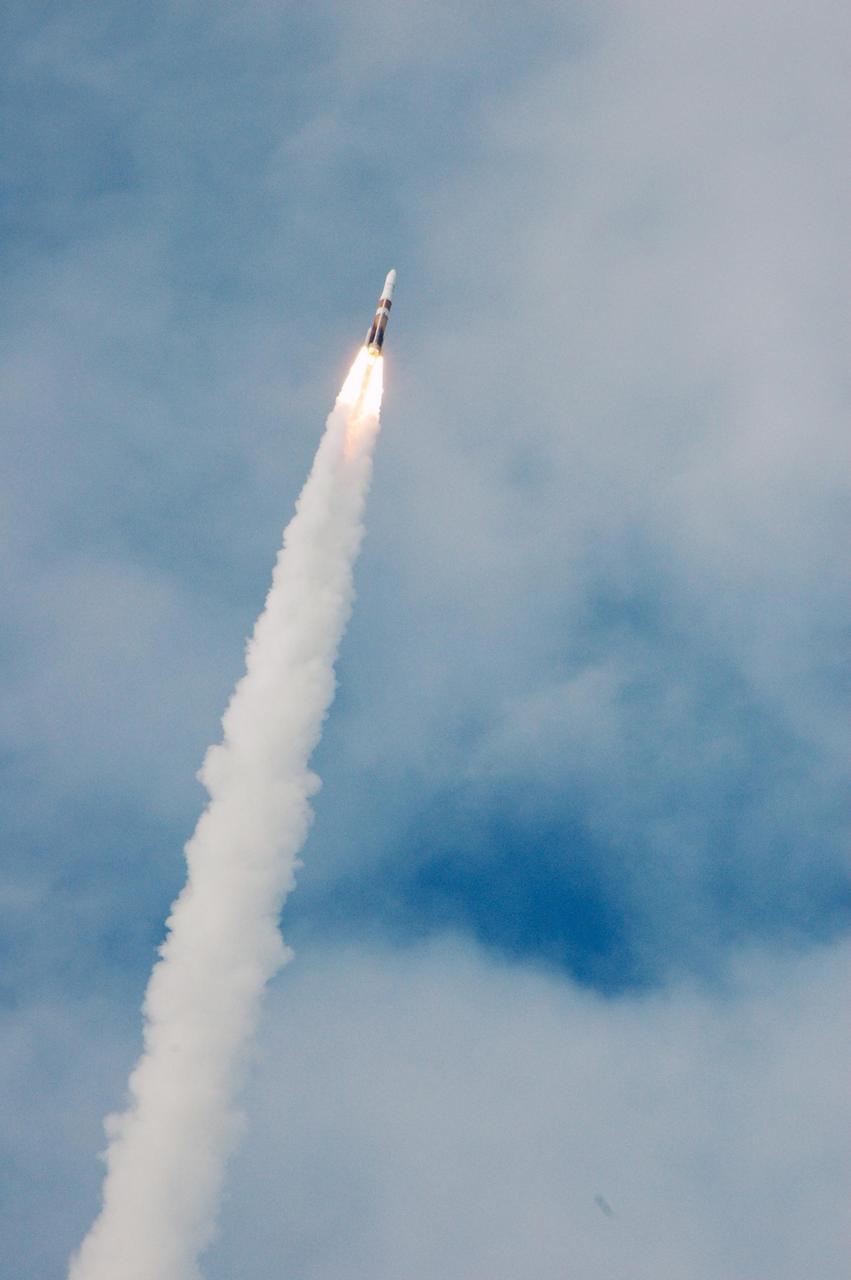
KENNEDY SPACE CENTER, FLA. - With flames close behind it, the Boeing Delta IV rocket roars through the thin cloud cover, lifting the GOES-N satellite in to space. Liftoff from Launch Complex 37 at Cape Canaveral Air Force Station was on time at 6:11 p.m. EDT. GOES-N is the latest in the Earth-monitoring series of Geostationary Operational Environmental Satellites developed by NASA and the National Oceanic and Atmospheric Administration. By maintaining a stationary orbit, hovering over one position on the Earth's surface, GOES will be able to provide a constant vigil for the atmospheric "triggers" for severe weather conditions such as tornadoes, flash floods, hail storms and hurricanes. Photo credit: NASA/Ken Thornsley