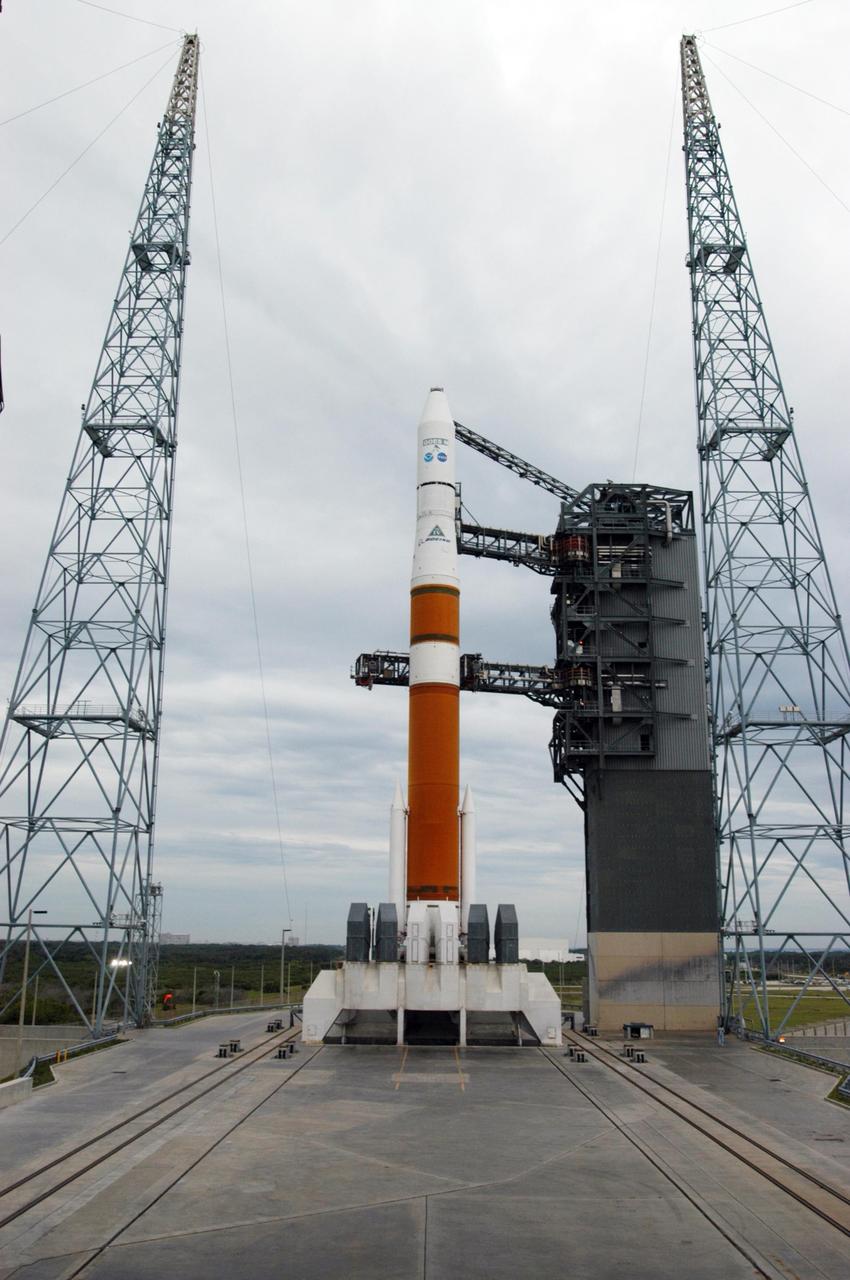
KENNEDY SPACE CENTER, FLA. - The mobile service tower on Launch Complex 37 at Cape Canaveral Air Force Station has been removed from around a Boeing Delta IV rocket as preparations continue to launch the GOES-N satellite. GOES-N is the latest in a series of Geostationary Operational Environmental Satellites for NOAA and NASA. A geostationary orbit is one in which a satellite remains in the same position with respect to the rotating Earth. Thus, the satellite hovers continuously over one position on the Earth's surface, appearing stationary. As a result, GOES provide a constant vigil for the atmospheric "triggers" for severe weather conditions such as tornadoes, flash floods, hail storms, and hurricanes. GOES-N is scheduled for launch May 24 in an hour-long window between 6:11 and 7:11 p.m. EDT. Photo credit: NASA/George Shelton
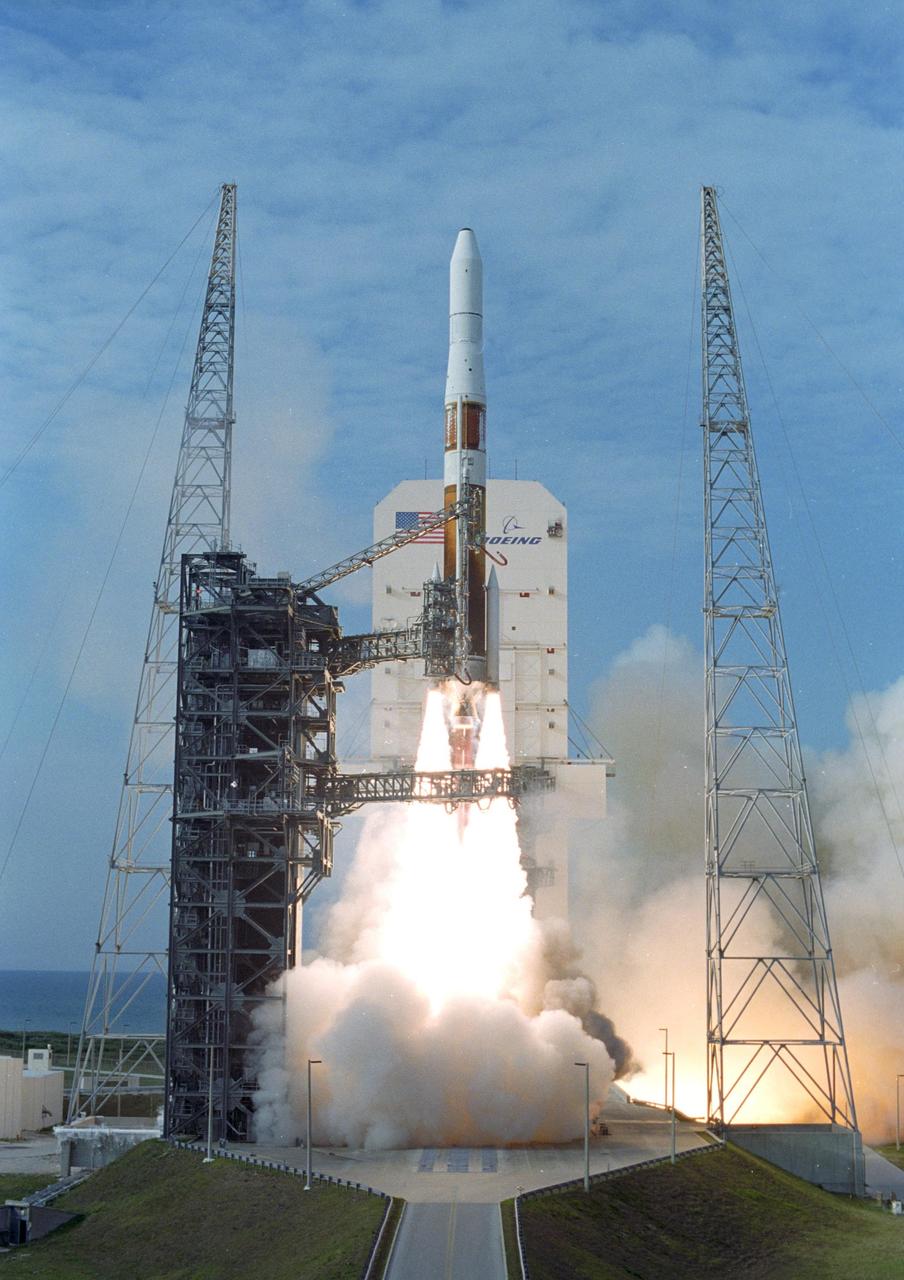
KENNEDY SPACE CENTER, FLA. - Flames and smoke billow out from under the Boeing Delta IV rocket at liftoff, carrying the GOES-N satellite. Liftoff from Launch Complex 37 at Cape Canaveral Air Force Station was on time at 6:11 p.m. EDT. GOES-N is the latest in the Earth-monitoring series of Geostationary Operational Environmental Satellites developed by NASA and the National Oceanic and Atmospheric Administration. By maintaining a stationary orbit, hovering over one position on the Earth's surface, GOES will be able to provide a constant vigil for the atmospheric "triggers" for severe weather conditions such as tornadoes, flash floods, hail storms and hurricanes. Photo credit: NASA/Tim Terry
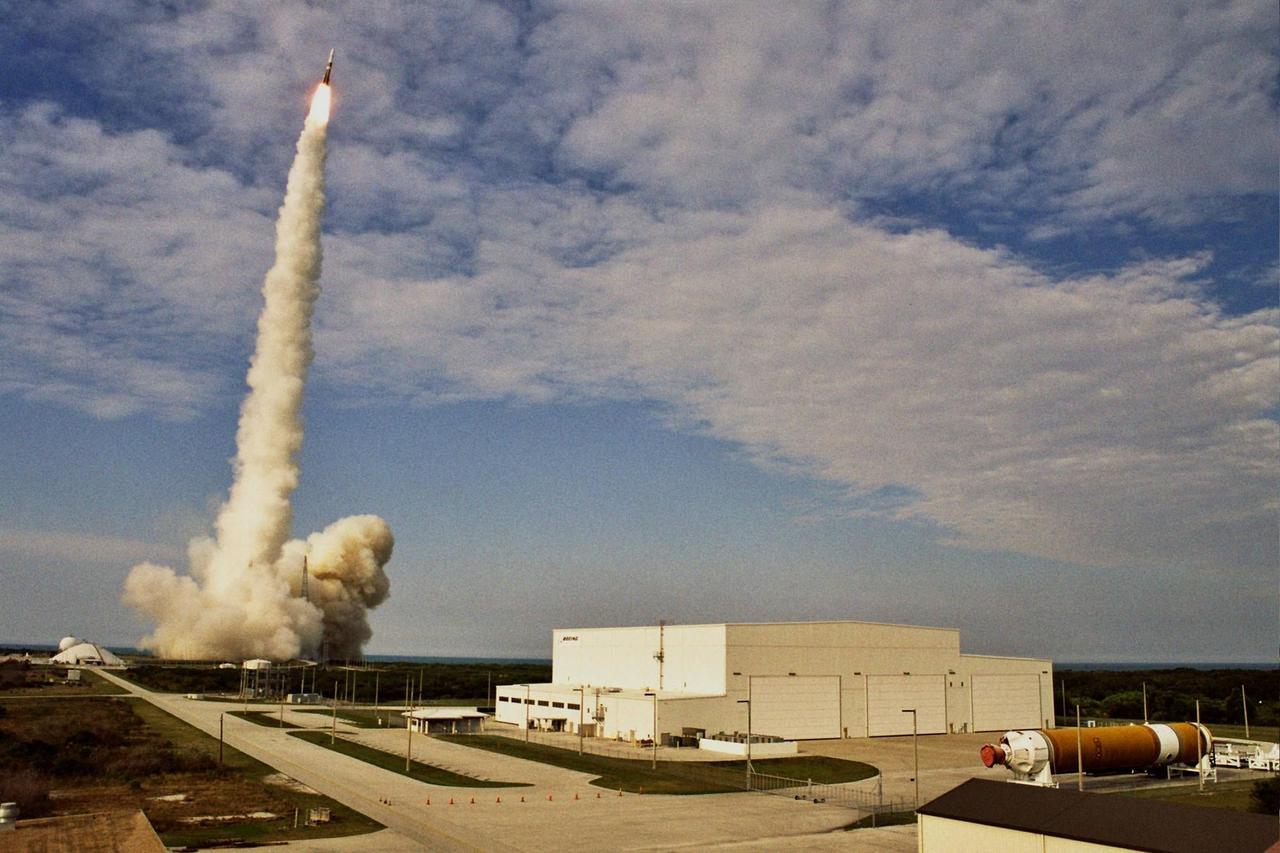
KENNEDY SPACE CENTER, FLA. - A Boeing Delta IV rocket roars off the launch pad to lift the GOES-N satellite on top into space. Liftoff from Launch Complex 37 at Cape Canaveral Air Force Station was on time at 6:11 p.m. EDT. GOES-N is the latest in the Earth-monitoring series of Geostationary Operational Environmental Satellites developed by NASA and the National Oceanic and Atmospheric Administration. By maintaining a stationary orbit, hovering over one position on the Earth's surface, GOES will be able to provide a constant vigil for the atmospheric "triggers" for severe weather conditions such as tornadoes, flash floods, hail storms and hurricanes. Photo by Carleton Bailie for Boeing
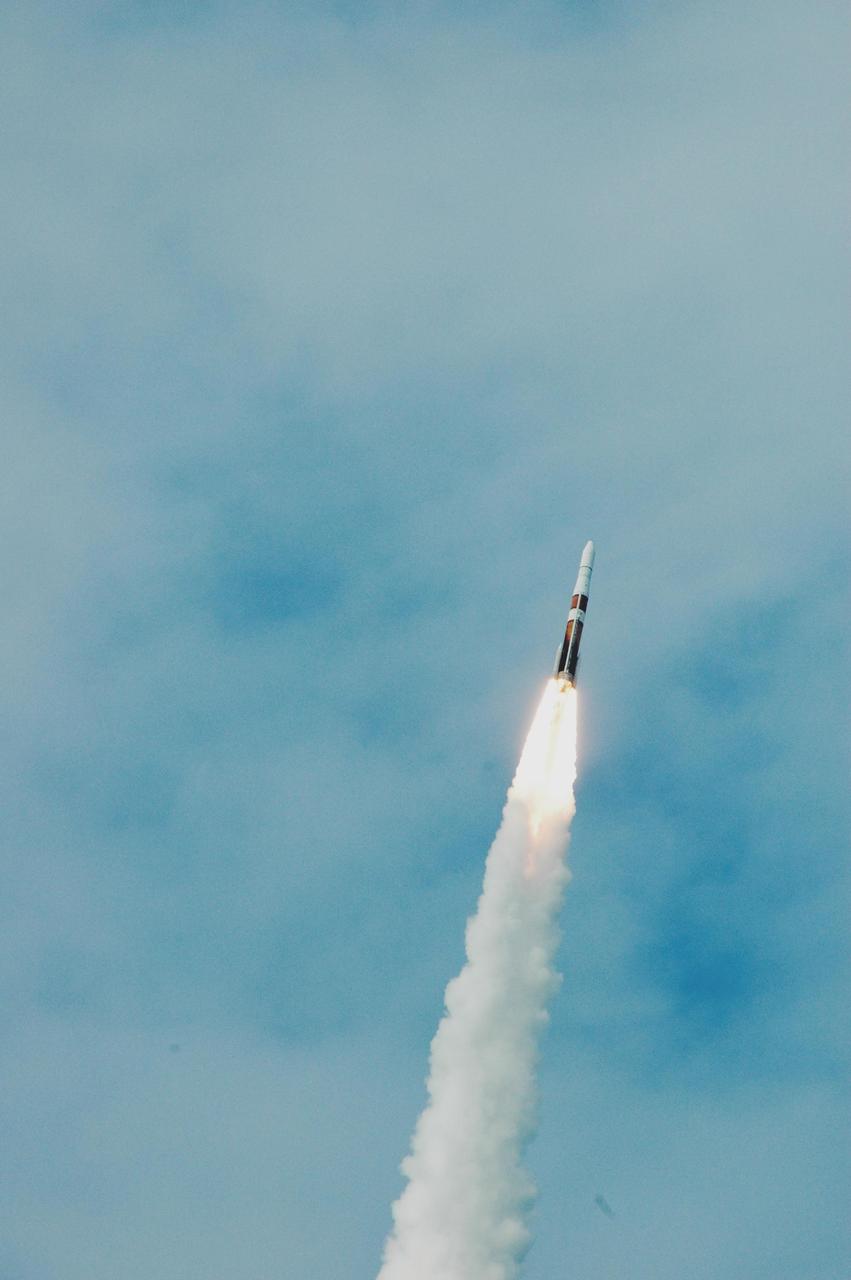
KENNEDY SPACE CENTER, FLA. - The GOES-N satellite roars through the thin cloud cover over the Space Coast atop a Boeing Delta IV rocket. Liftoff from Launch Complex 37 at Cape Canaveral Air Force Station was on time at 6:11 p.m. EDT. GOES-N is the latest in the Earth-monitoring series of Geostationary Operational Environmental Satellites developed by NASA and the National Oceanic and Atmospheric Administration. By maintaining a stationary orbit, hovering over one position on the Earth's surface, GOES will be able to provide a constant vigil for the atmospheric "triggers" for severe weather conditions such as tornadoes, flash floods, hail storms and hurricanes. Photo credit: NASA/Ken Thornsley
KENNEDY SPACE CENTER, FLA. - A Boeing Delta IV rocket roars off the launch pad to lift the GOES-N satellite on top into space. Liftoff from Launch Complex 37 at Cape Canaveral Air Force Station was on time at 6:11 p.m. EDT. GOES-N is the latest in the Earth-monitoring series of Geostationary Operational Environmental Satellites developed by NASA and the National Oceanic and Atmospheric Administration. By maintaining a stationary orbit, hovering over one position on the Earth's surface, GOES will be able to provide a constant vigil for the atmospheric "triggers" for severe weather conditions such as tornadoes, flash floods, hail storms and hurricanes. Photo by Carleton Bailie for Boeing
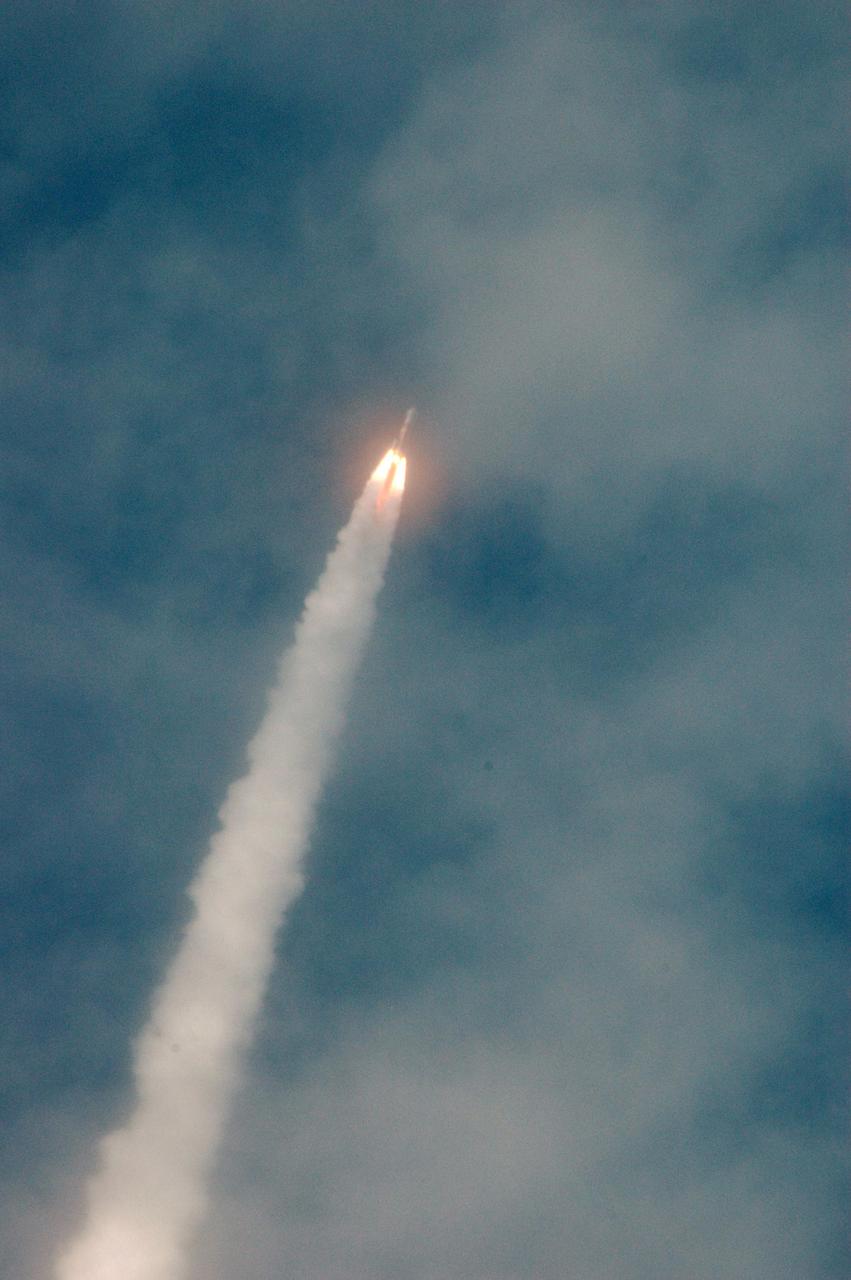
KENNEDY SPACE CENTER, FLA. - With flames close behind it, the Boeing Delta IV rocket trails a plume of smoke as it roars through the thin cloud cover, lifting the GOES-N satellite in to space. Liftoff from Launch Complex 37 at Cape Canaveral Air Force Station was on time at 6:11 p.m. EDT. GOES-N is the latest in the Earth-monitoring series of Geostationary Operational Environmental Satellites developed by NASA and the National Oceanic and Atmospheric Administration. By maintaining a stationary orbit, hovering over one position on the Earth's surface, GOES will be able to provide a constant vigil for the atmospheric "triggers" for severe weather conditions such as tornadoes, flash floods, hail storms and hurricanes. Photo credit: NASA/Ken Thornsley
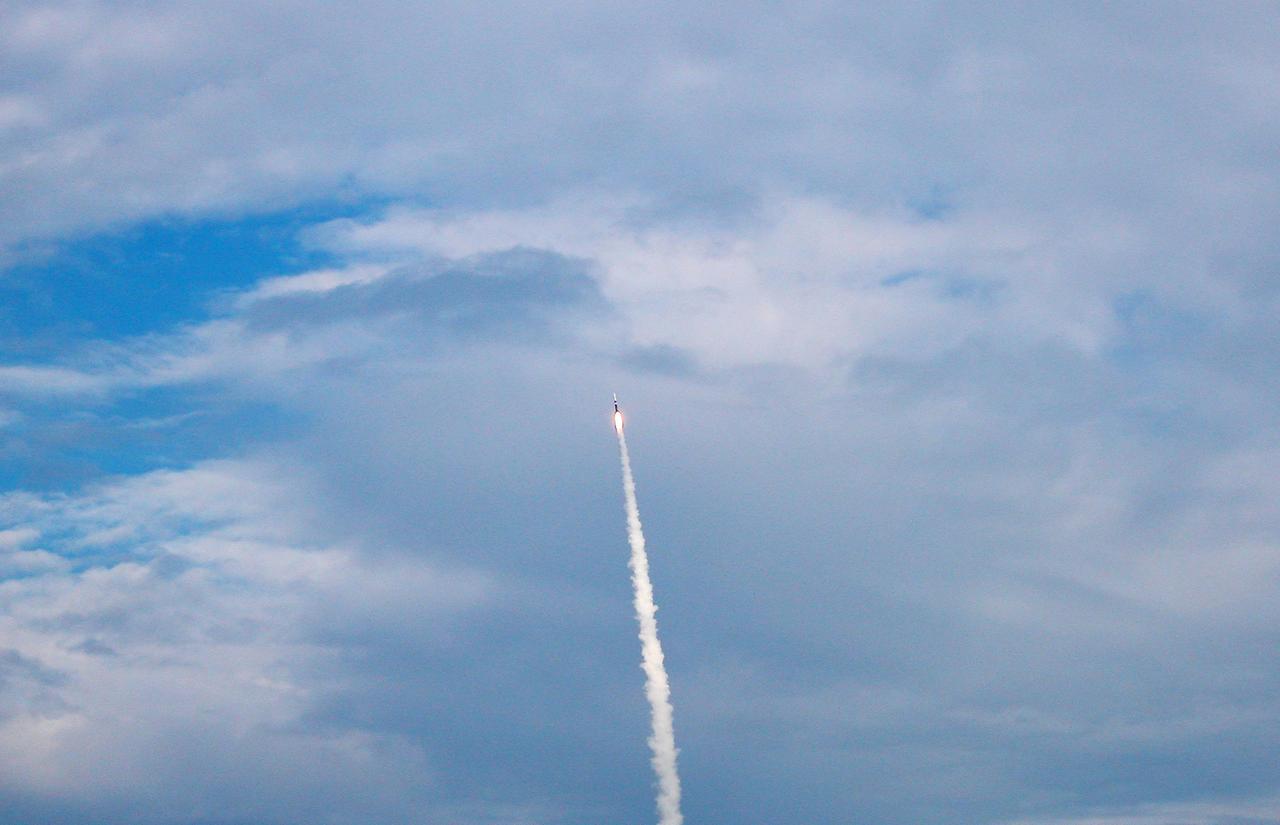
KENNEDY SPACE CENTER, FLA. - The GOES-N satellite roars through the thin cloud cover over the Space Coast atop a Boeing Delta IV rocket. Liftoff from Launch Complex 37 at Cape Canaveral Air Force Station was on time at 6:11 p.m. EDT. GOES-N is the latest in the Earth-monitoring series of Geostationary Operational Environmental Satellites developed by NASA and the National Oceanic and Atmospheric Administration. By maintaining a stationary orbit, hovering over one position on the Earth's surface, GOES will be able to provide a constant vigil for the atmospheric "triggers" for severe weather conditions such as tornadoes, flash floods, hail storms and hurricanes. Photo credit: NASA/Debbie Kiger
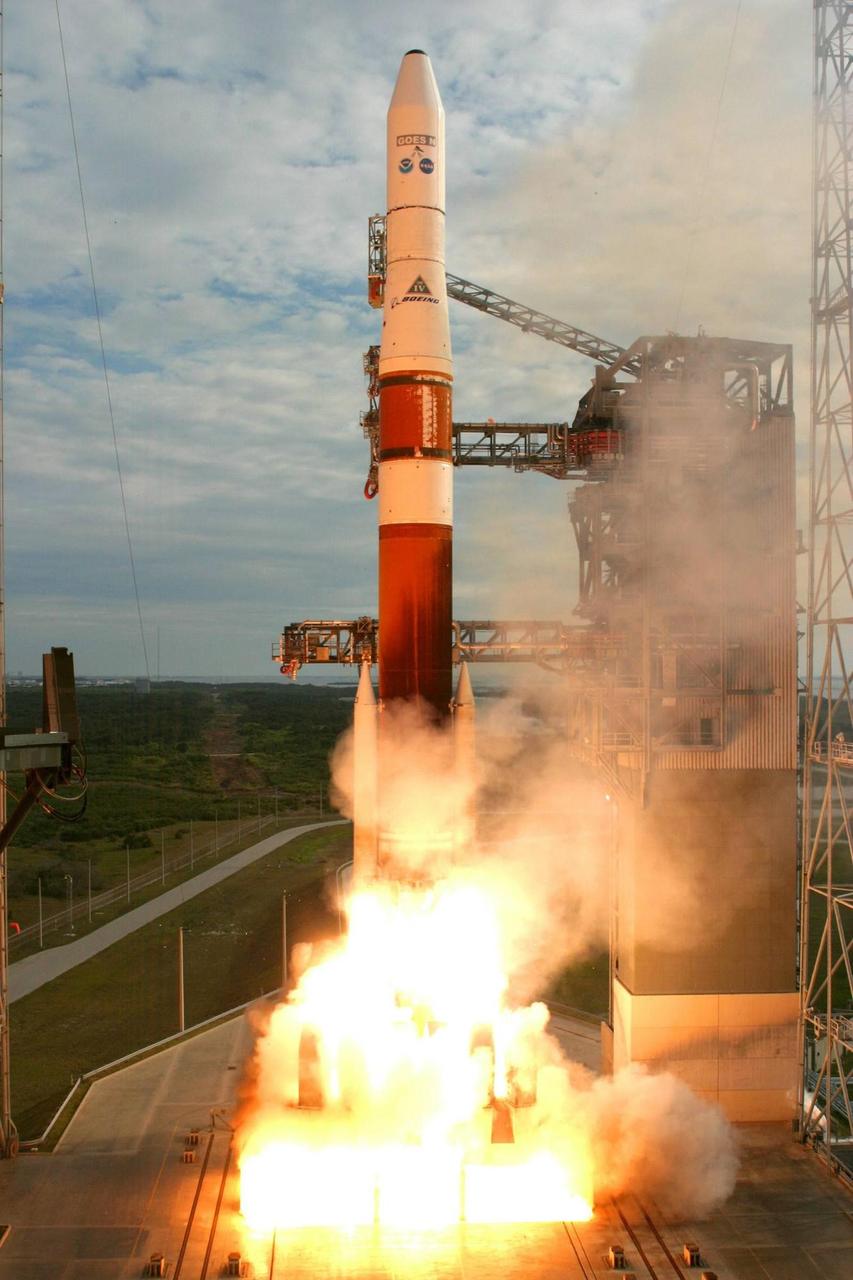
KENNEDY SPACE CENTER, FLA. - A Boeing Delta IV rocket roars off the launch pad to lift the GOES-N satellite on top into space. Liftoff from Launch Complex 37 at Cape Canaveral Air Force Station was on time at 6:11 p.m. EDT. GOES-N is the latest in the Earth-monitoring series of Geostationary Operational Environmental Satellites developed by NASA and the National Oceanic and Atmospheric Administration. By maintaining a stationary orbit, hovering over one position on the Earth's surface, GOES will be able to provide a constant vigil for the atmospheric "triggers" for severe weather conditions such as tornadoes, flash floods, hail storms and hurricanes. Photo by Carleton Bailie for Boeing
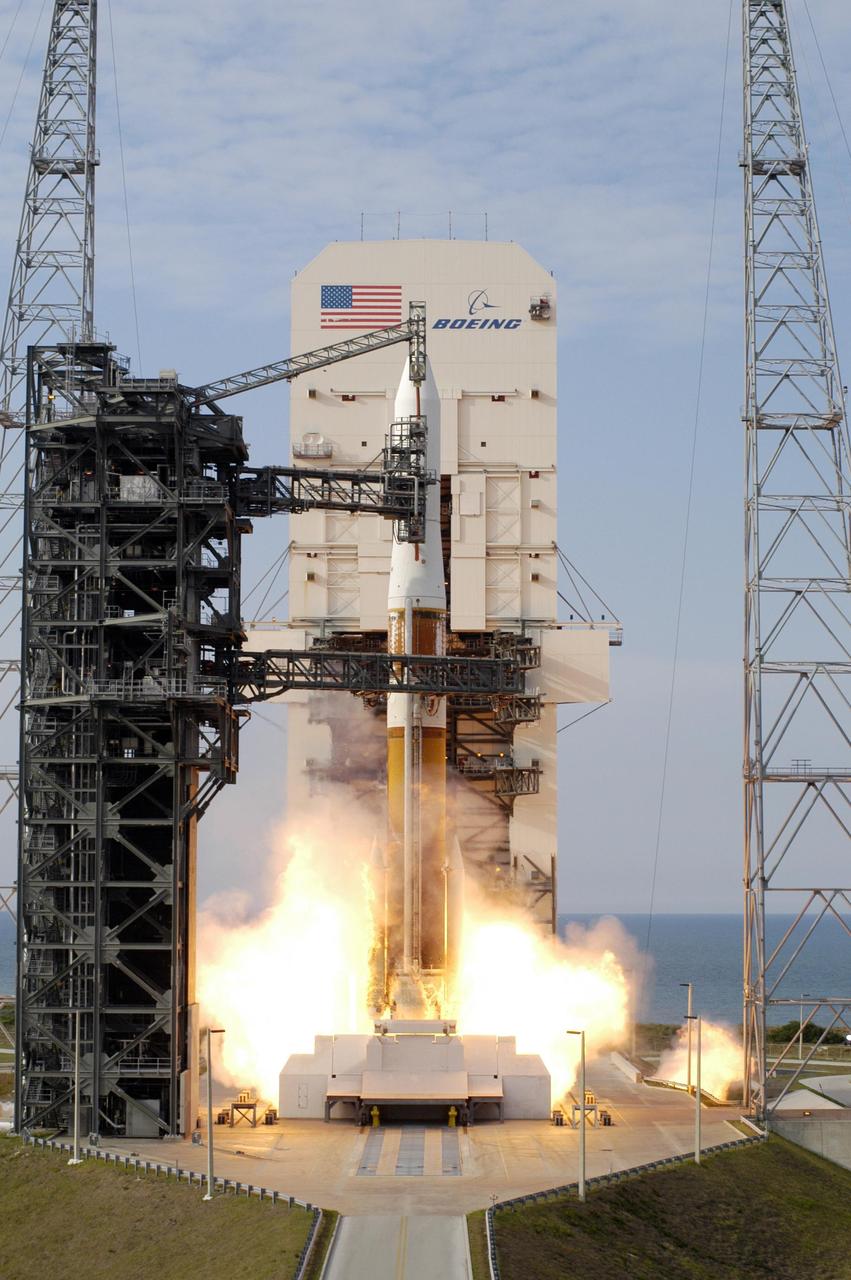
KENNEDY SPACE CENTER, FLA. - Flames spew from under the Boeing Delta IV rocket at liftoff, carrying the GOES-N satellite. Liftoff from Launch Complex 37 at Cape Canaveral Air Force Station was on time at 6:11 p.m. EDT. GOES-N is the latest in the Earth-monitoring series of Geostationary Operational Environmental Satellites developed by NASA and the National Oceanic and Atmospheric Administration. By maintaining a stationary orbit, hovering over one position on the Earth's surface, GOES will be able to provide a constant vigil for the atmospheric "triggers" for severe weather conditions such as tornadoes, flash floods, hail storms and hurricanes. Photo credit: NASA/Tim Terry
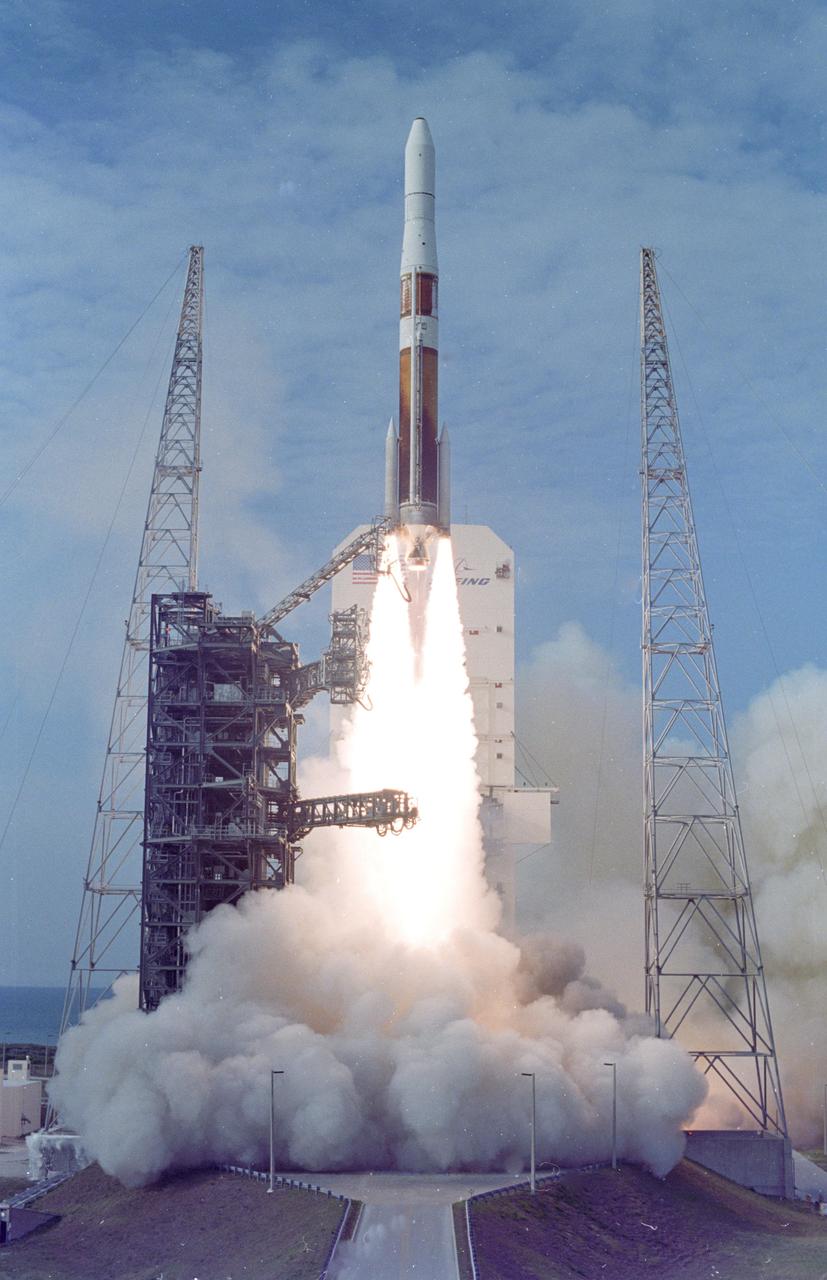
KENNEDY SPACE CENTER, FLA. - Flames and smoke billow out from under the Boeing Delta IV rocket at liftoff, carrying the GOES-N satellite. Liftoff from Launch Complex 37 at Cape Canaveral Air Force Station was on time at 6:11 p.m. EDT. GOES-N is the latest in the Earth-monitoring series of Geostationary Operational Environmental Satellites developed by NASA and the National Oceanic and Atmospheric Administration. By maintaining a stationary orbit, hovering over one position on the Earth's surface, GOES will be able to provide a constant vigil for the atmospheric "triggers" for severe weather conditions such as tornadoes, flash floods, hail storms and hurricanes. Photo credit: NASA/Tim Terry
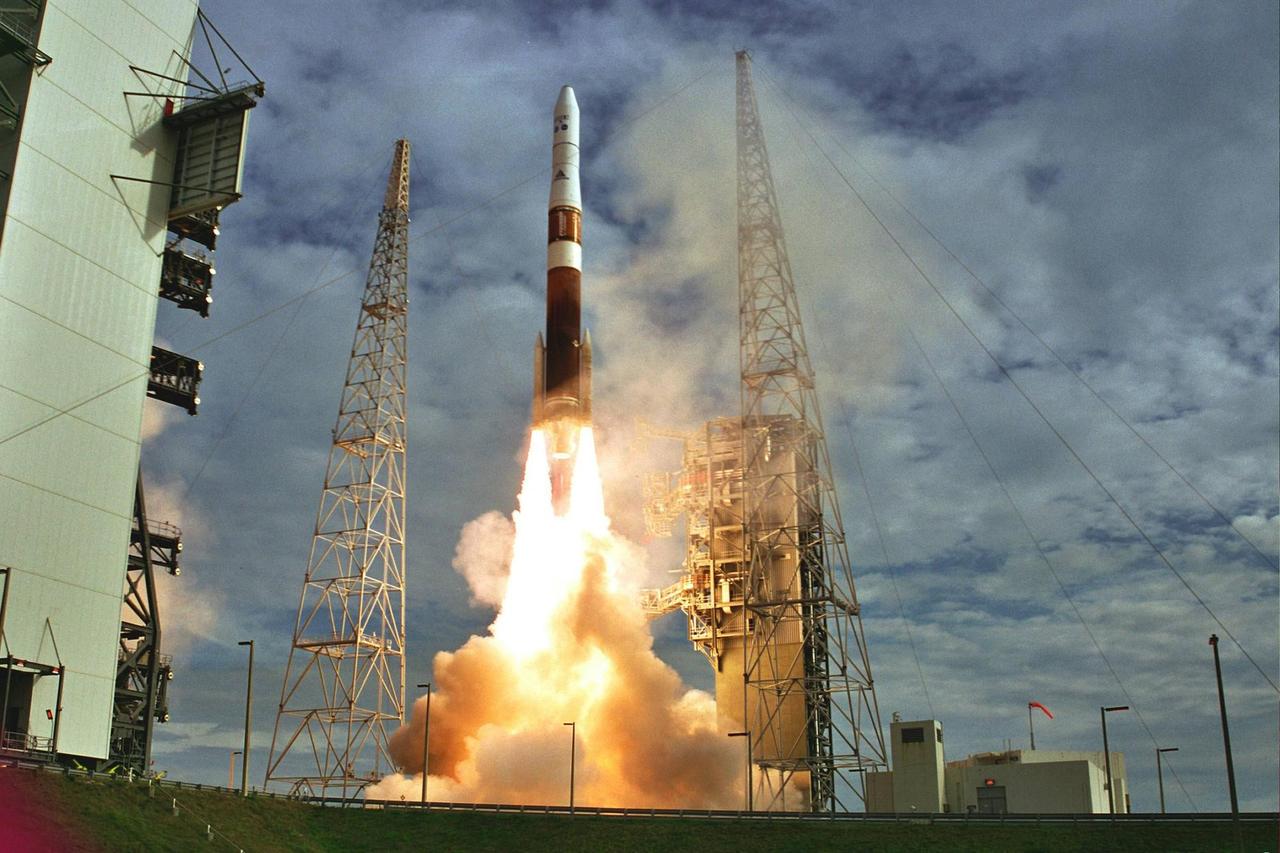
KENNEDY SPACE CENTER, FLA. - A Boeing Delta IV rocket roars off the launch pad to lift the GOES-N satellite on top into space. Liftoff from Launch Complex 37 at Cape Canaveral Air Force Station was on time at 6:11 p.m. EDT. GOES-N is the latest in the Earth-monitoring series of Geostationary Operational Environmental Satellites developed by NASA and the National Oceanic and Atmospheric Administration. By maintaining a stationary orbit, hovering over one position on the Earth's surface, GOES will be able to provide a constant vigil for the atmospheric "triggers" for severe weather conditions such as tornadoes, flash floods, hail storms and hurricanes. Photo by Carleton Bailie for Boeing
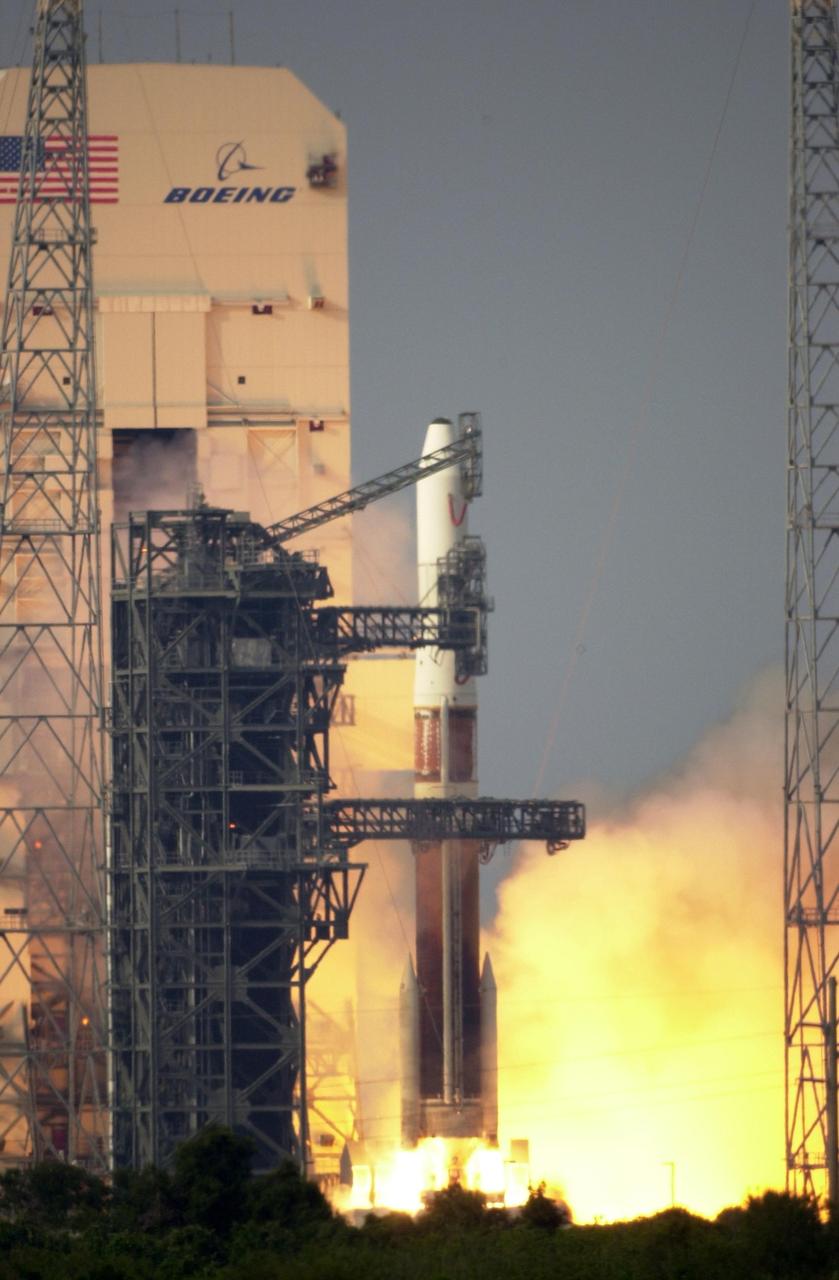
KENNEDY SPACE CENTER, FLA. - Amid fire and smoke, the Boeing Delta IV rocket roars into life after ignition to lift the GOES-N satellite on top into space. Liftoff from Launch Complex 37 at Cape Canaveral Air Force Station was on time at 6:11 p.m. EDT. GOES-N is the latest in the Earth-monitoring series of Geostationary Operational Environmental Satellites developed by NASA and the National Oceanic and Atmospheric Administration. By maintaining a stationary orbit, hovering over one position on the Earth's surface, GOES will be able to provide a constant vigil for the atmospheric "triggers" for severe weather conditions such as tornadoes, flash floods, hail storms and hurricanes. Photo credit: NASA/Ken Thornsley
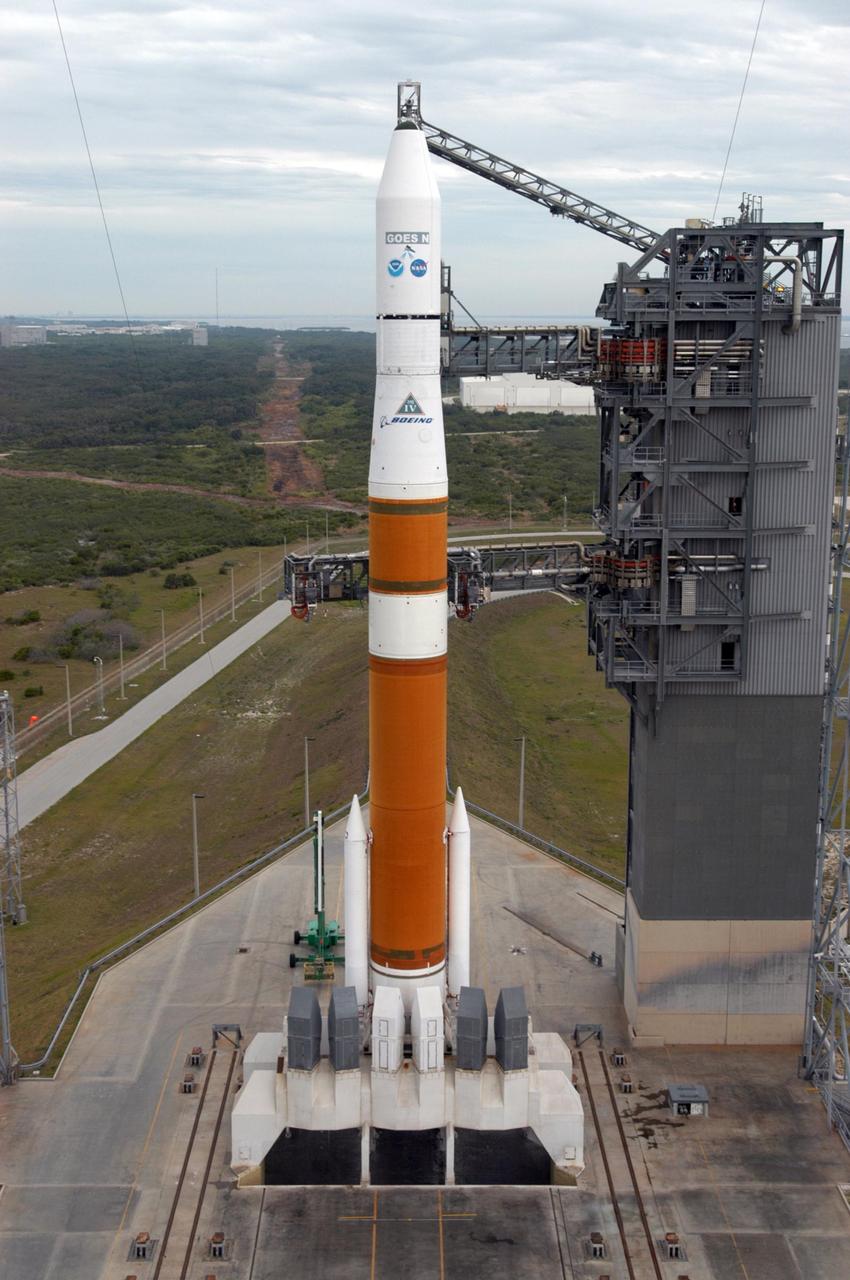
KENNEDY SPACE CENTER, FLA. - The mobile service tower on Launch Complex 37 at Cape Canaveral Air Force Station has been removed from around the Boeing Delta IV rocket that will launch the GOES-N satellite into orbit. GOES-N is the latest in a series of Geostationary Operational Environmental Satellites for NOAA and NASA. A geostationary orbit is one in which a satellite remains in the same position with respect to the rotating Earth. Thus, the satellite hovers continuously over one position on the Earth's surface, appearing stationary. As a result, GOES provide a constant vigil for the atmospheric "triggers" for severe weather conditions such as tornadoes, flash floods, hail storms, and hurricanes. GOES-N is scheduled for launch May 24 in an hour-long window between 6:11 and 7:11 p.m. EDT. Photo credit: NASA/George Shelton
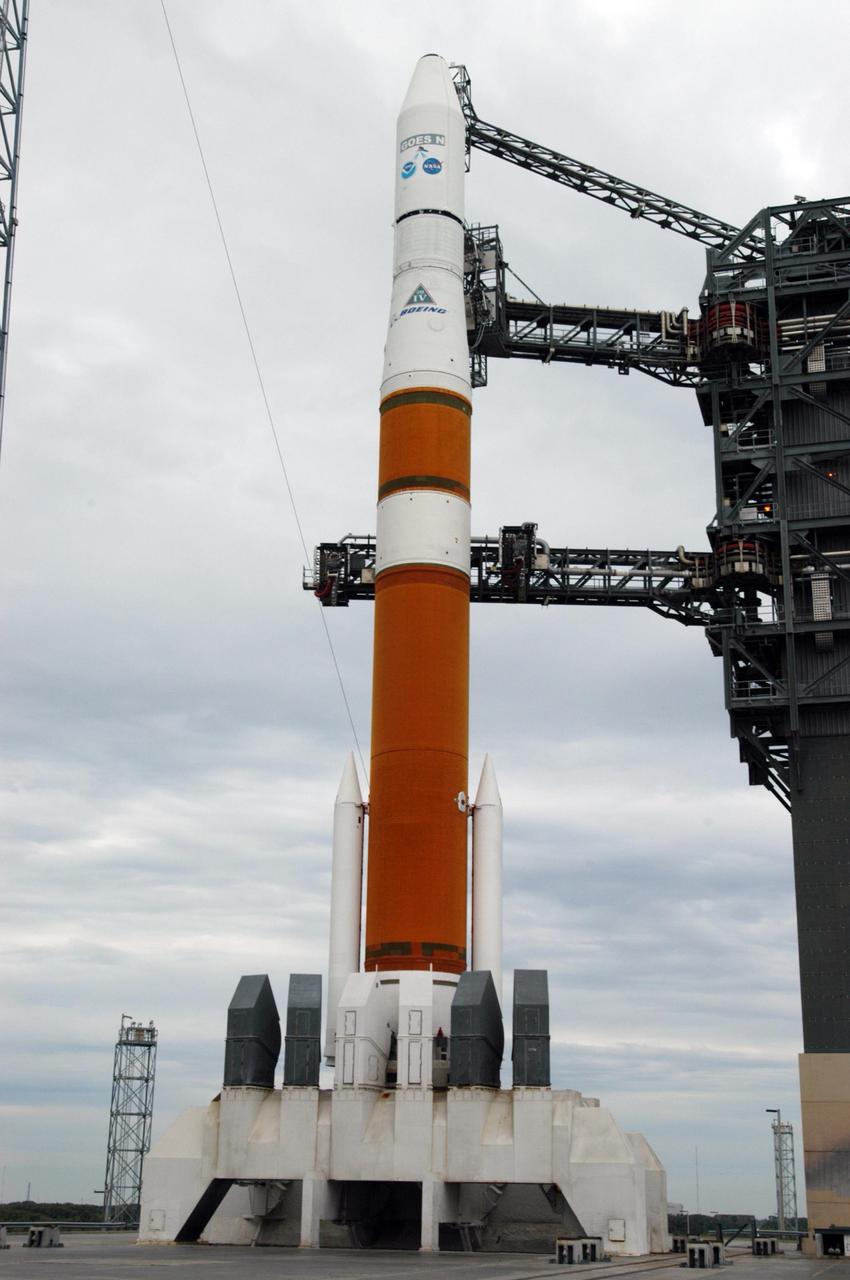
KENNEDY SPACE CENTER, FLA. - The mobile service tower on Launch Complex 37 at Cape Canaveral Air Force Station has been removed from around a Boeing Delta IV rocket as preparations continue to launch the GOES-N satellite. GOES-N is the latest in a series of Geostationary Operational Environmental Satellites for NOAA and NASA. A geostationary orbit is one in which a satellite remains in the same position with respect to the rotating Earth. Thus, the satellite hovers continuously over one position on the Earth's surface, appearing stationary. As a result, GOES provide a constant vigil for the atmospheric "triggers" for severe weather conditions such as tornadoes, flash floods, hail storms, and hurricanes. GOES-N is scheduled for launch May 24 in an hour-long window between 6:11 and 7:11 p.m. EDT. Photo credit: NASA/George Shelton
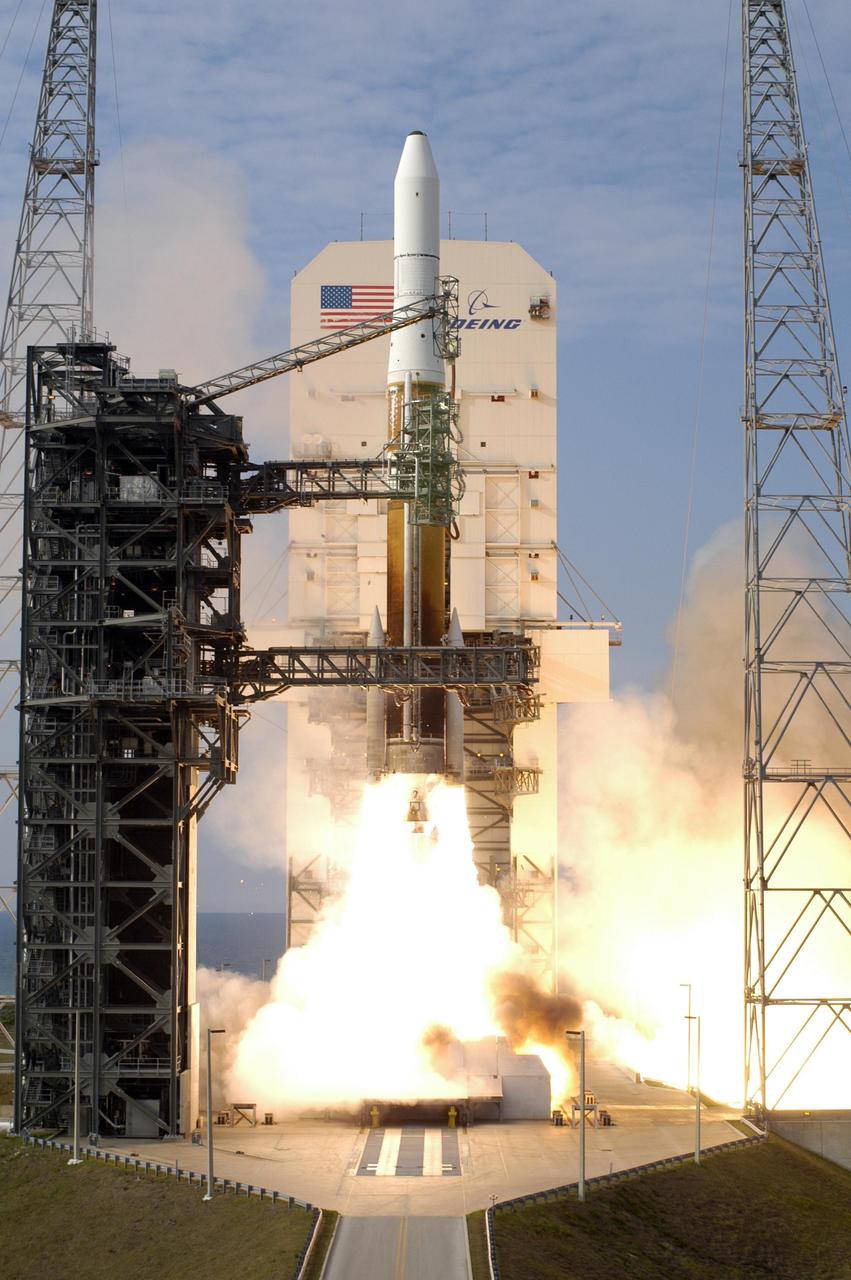
KENNEDY SPACE CENTER, FLA. - Flames and smoke billow out from under the Boeing Delta IV rocket at liftoff, carrying the GOES-N satellite. Liftoff from Launch Complex 37 at Cape Canaveral Air Force Station was on time at 6:11 p.m. EDT. GOES-N is the latest in the Earth-monitoring series of Geostationary Operational Environmental Satellites developed by NASA and the National Oceanic and Atmospheric Administration. By maintaining a stationary orbit, hovering over one position on the Earth's surface, GOES will be able to provide a constant vigil for the atmospheric "triggers" for severe weather conditions such as tornadoes, flash floods, hail storms and hurricanes. Photo credit: NASA/Tim Terry
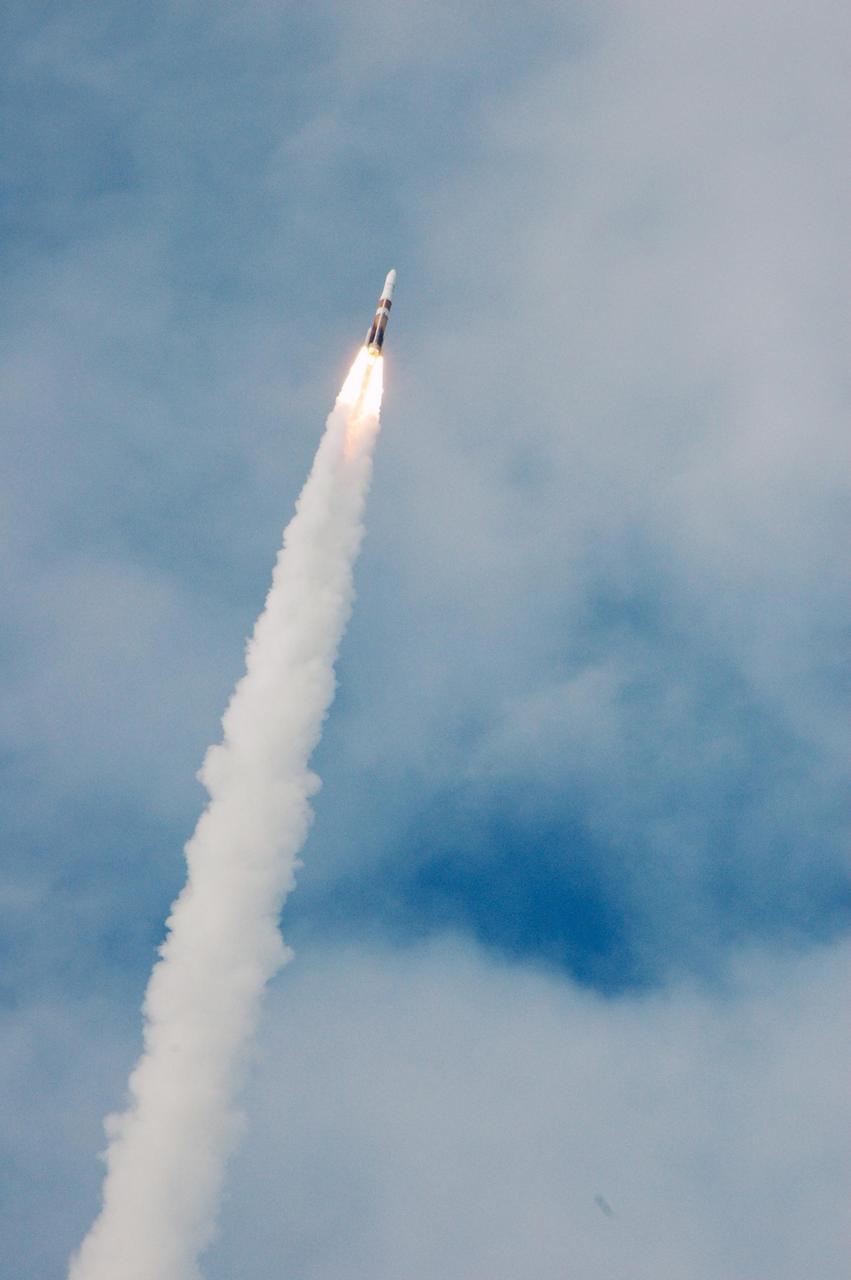
KENNEDY SPACE CENTER, FLA. - With flames close behind it, the Boeing Delta IV rocket roars through the thin cloud cover, lifting the GOES-N satellite in to space. Liftoff from Launch Complex 37 at Cape Canaveral Air Force Station was on time at 6:11 p.m. EDT. GOES-N is the latest in the Earth-monitoring series of Geostationary Operational Environmental Satellites developed by NASA and the National Oceanic and Atmospheric Administration. By maintaining a stationary orbit, hovering over one position on the Earth's surface, GOES will be able to provide a constant vigil for the atmospheric "triggers" for severe weather conditions such as tornadoes, flash floods, hail storms and hurricanes. Photo credit: NASA/Ken Thornsley
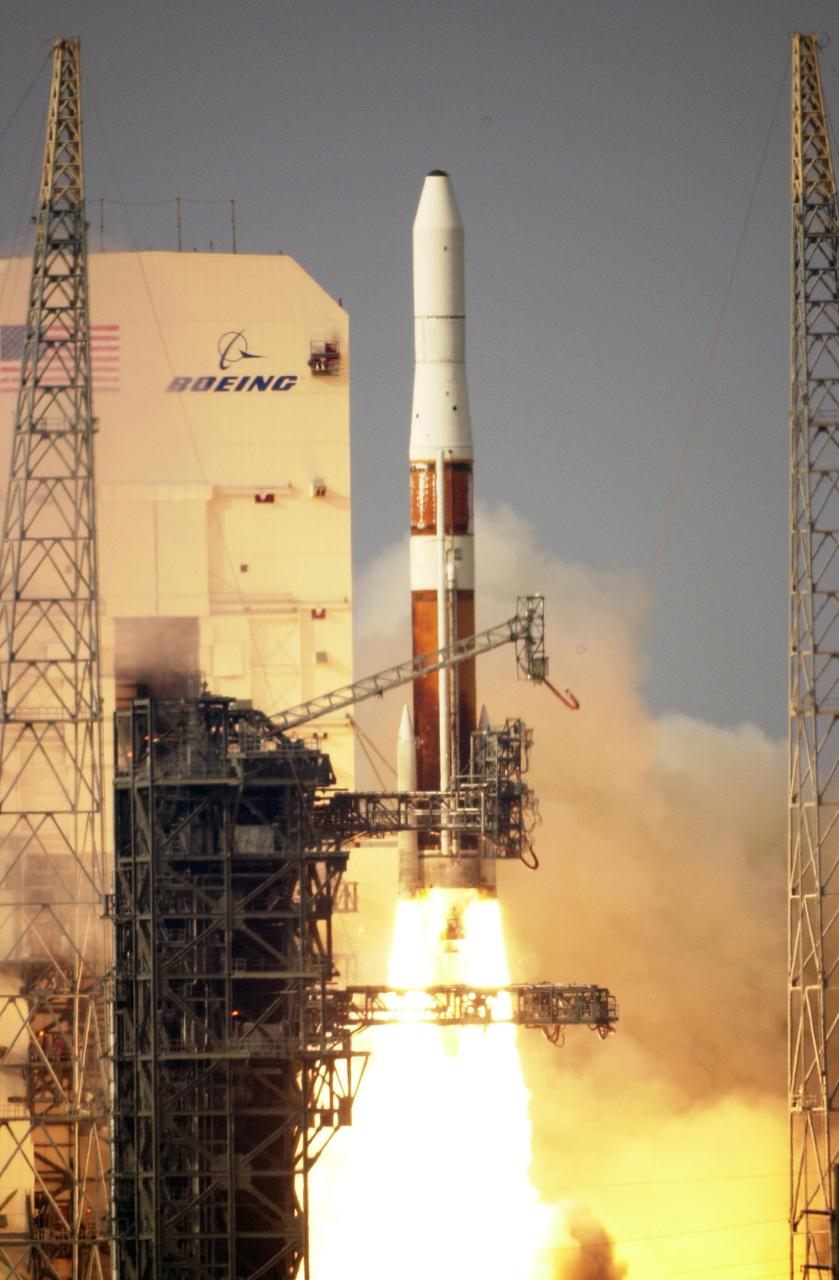
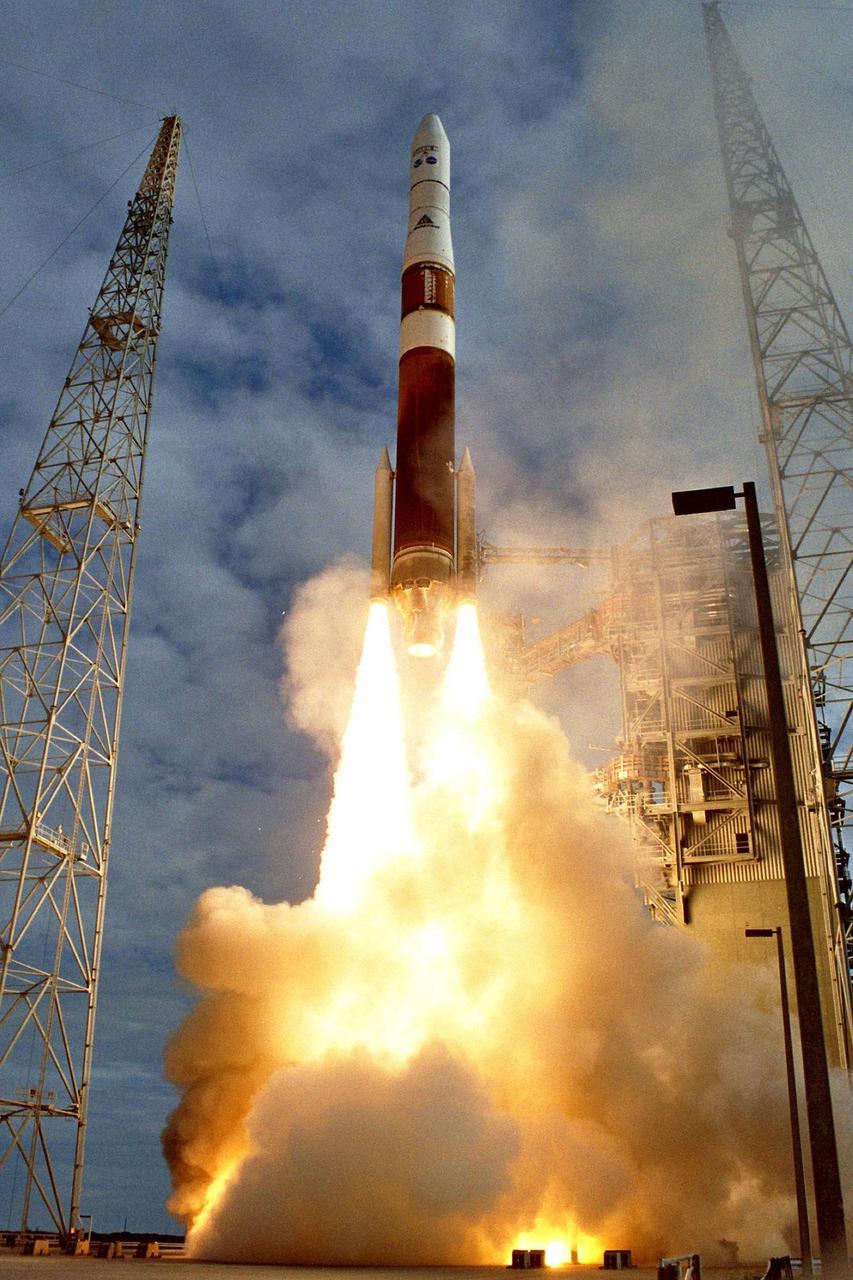
KENNEDY SPACE CENTER, FLA. - Spewing fire and smoke, the Boeing Delta IV rocket roars off the launch pad to lift the GOES-N satellite on top into space. Liftoff from Launch Complex 37 at Cape Canaveral Air Force Station was on time at 6:11 p.m. EDT. GOES-N is the latest in the Earth-monitoring series of Geostationary Operational Environmental Satellites developed by NASA and the National Oceanic and Atmospheric Administration. By maintaining a stationary orbit, hovering over one position on the Earth's surface, GOES will be able to provide a constant vigil for the atmospheric "triggers" for severe weather conditions such as tornadoes, flash floods, hail storms and hurricanes. Photo credit: NASA/Ken Thornsley