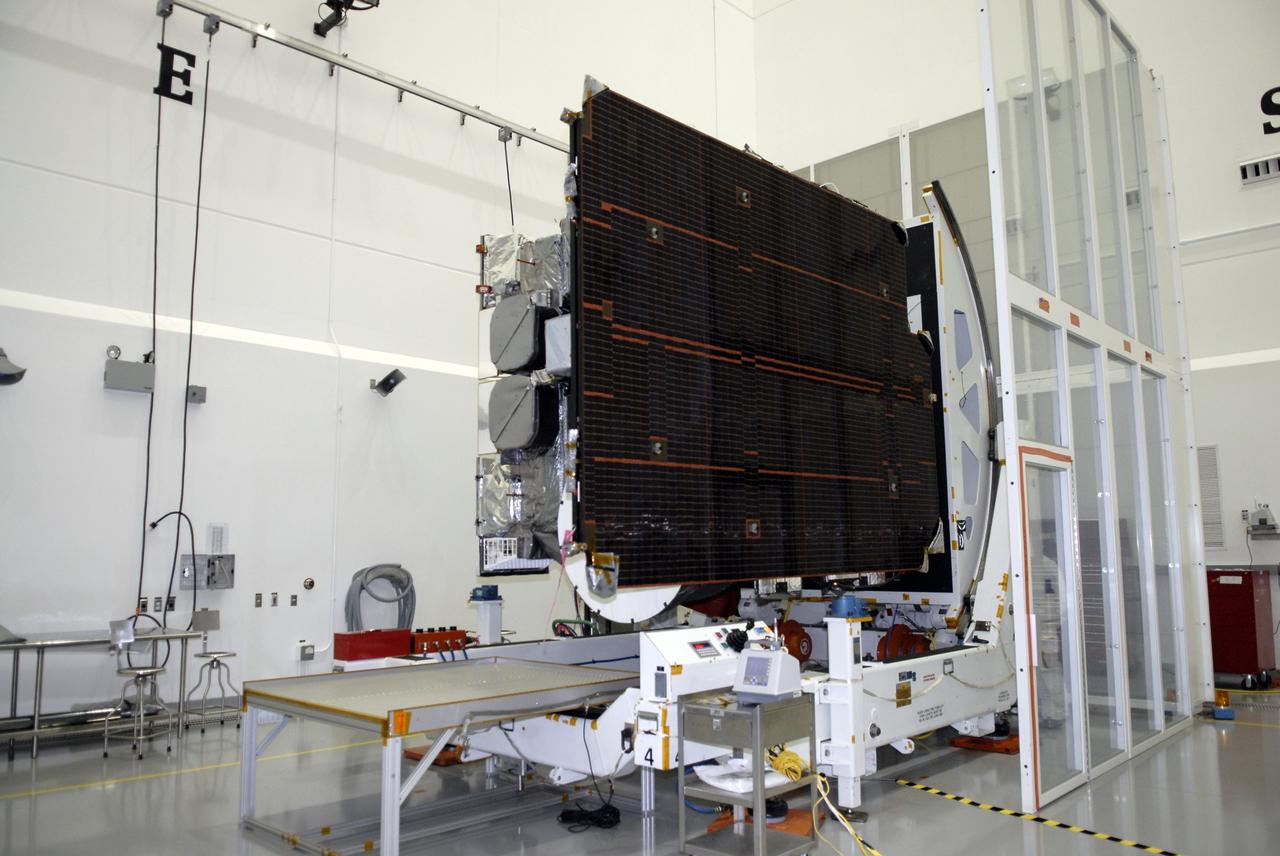
CAPE CANAVERAL, Fla. – At the Astrotech payload processing facility in Titusville, Fla., the GOES-O satellite is on a rotation stand. The latest Geostationary Operational Environmental Satellite, GOES-O was developed by NASA for the National Oceanic and Atmospheric Administration, or NOAA. Once in orbit, GOES-O will be designated GOES-14, and NASA will provide on-orbit checkout and then transfer operational responsibility to NOAA. The GOES-O satellite is targeted to launch April 28 onboard a United Launch Alliance Delta IV expendable launch vehicle. Photo credit: NASA/Kim Shiflett
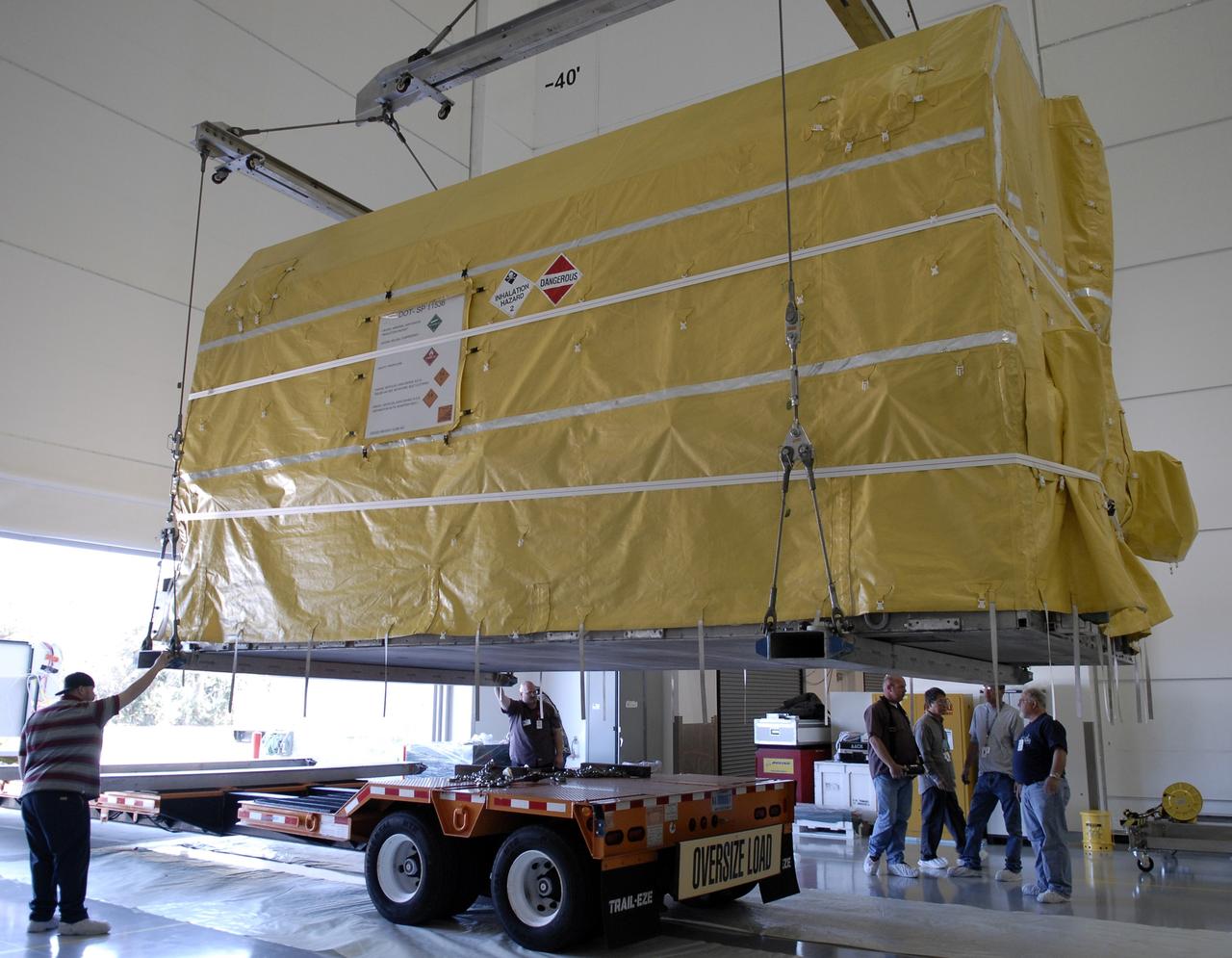
CAPE CANAVERAL, Fla. – The latest Geostationary Operational Environmental Satellite, or GOES, is lifted from the transporter and moved into the Astrotech payload processing facility in Titusville, Fla. Developed by NASA for the National Oceanic and Atmospheric Administration, or NOAA, the GOES-O satellite is targeted to launch April 28 onboard a United Launch Alliance Delta IV expendable launch vehicle. Once in orbit, GOES-O will be designated GOES-14, and NASA will provide on-orbit checkout and then transfer operational responsibility to NOAA. GOES-O will be placed in on-orbit storage as a replacement for an older GOES satellite. The satellite will undergo final testing of the imaging system, instrumentation, communications and power systems. Photo credit: NASA/Kim Shiflett
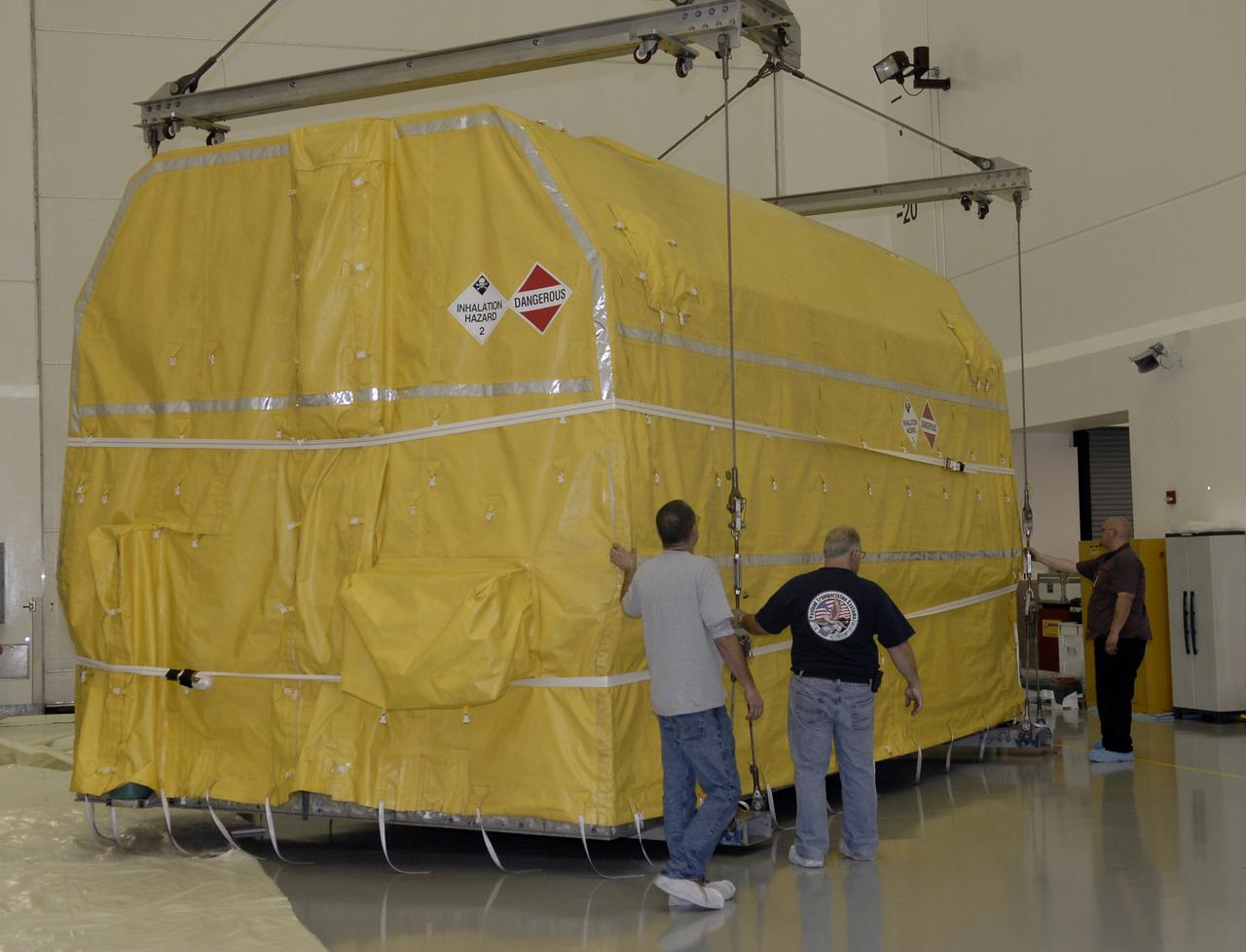
CAPE CANAVERAL, Fla. – In the Astrotech payload processing facility in Titusville, Fla., the latest Geostationary Operational Environmental Satellite, or GOES, is lowered onto the floor. Developed by NASA for the National Oceanic and Atmospheric Administration, or NOAA, the GOES-O satellite is targeted to launch April 28 onboard a United Launch Alliance Delta IV expendable launch vehicle. Once in orbit, GOES-O will be designated GOES-14, and NASA will provide on-orbit checkout and then transfer operational responsibility to NOAA. GOES-O will be placed in on-orbit storage as a replacement for an older GOES satellite. The satellite will undergo final testing of the imaging system, instrumentation, communications and power systems. Photo credit: NASA/Kim Shiflett
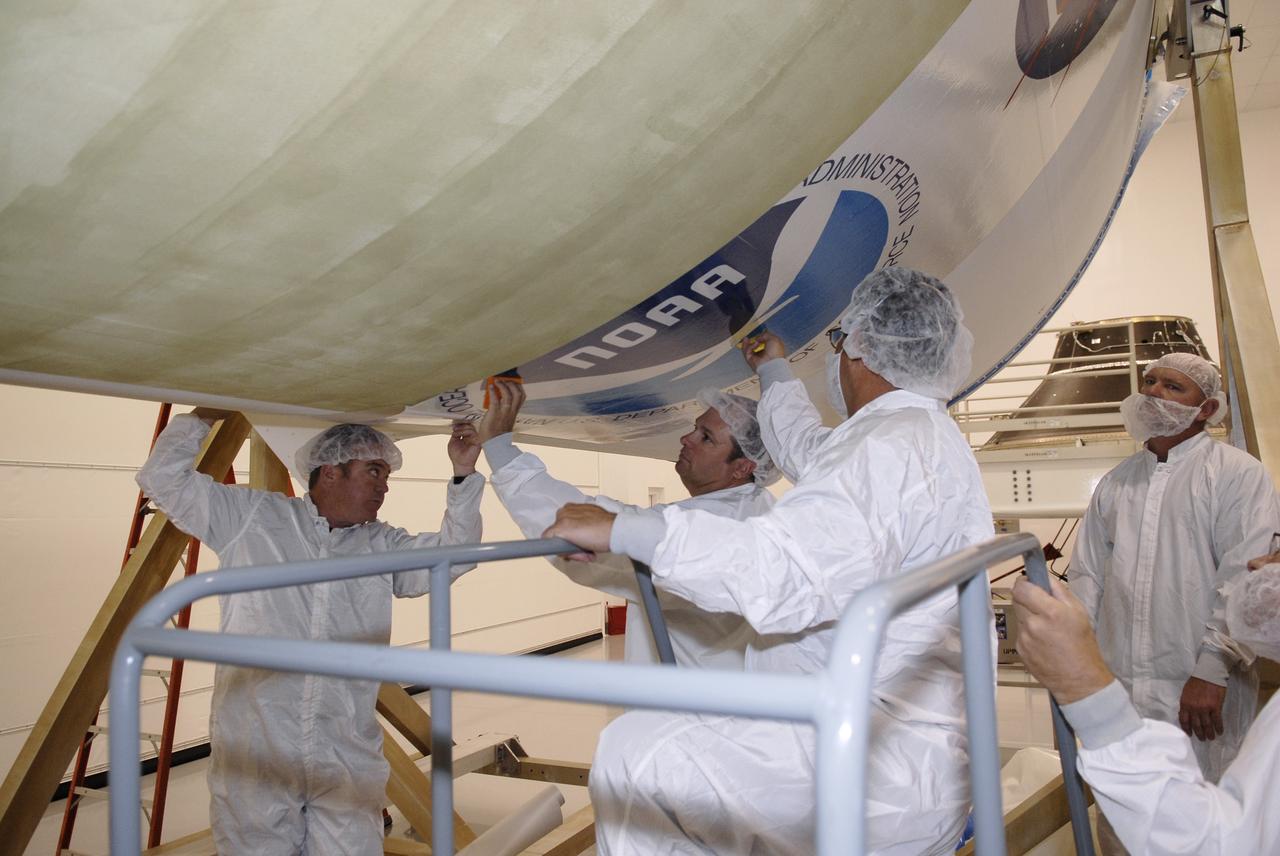
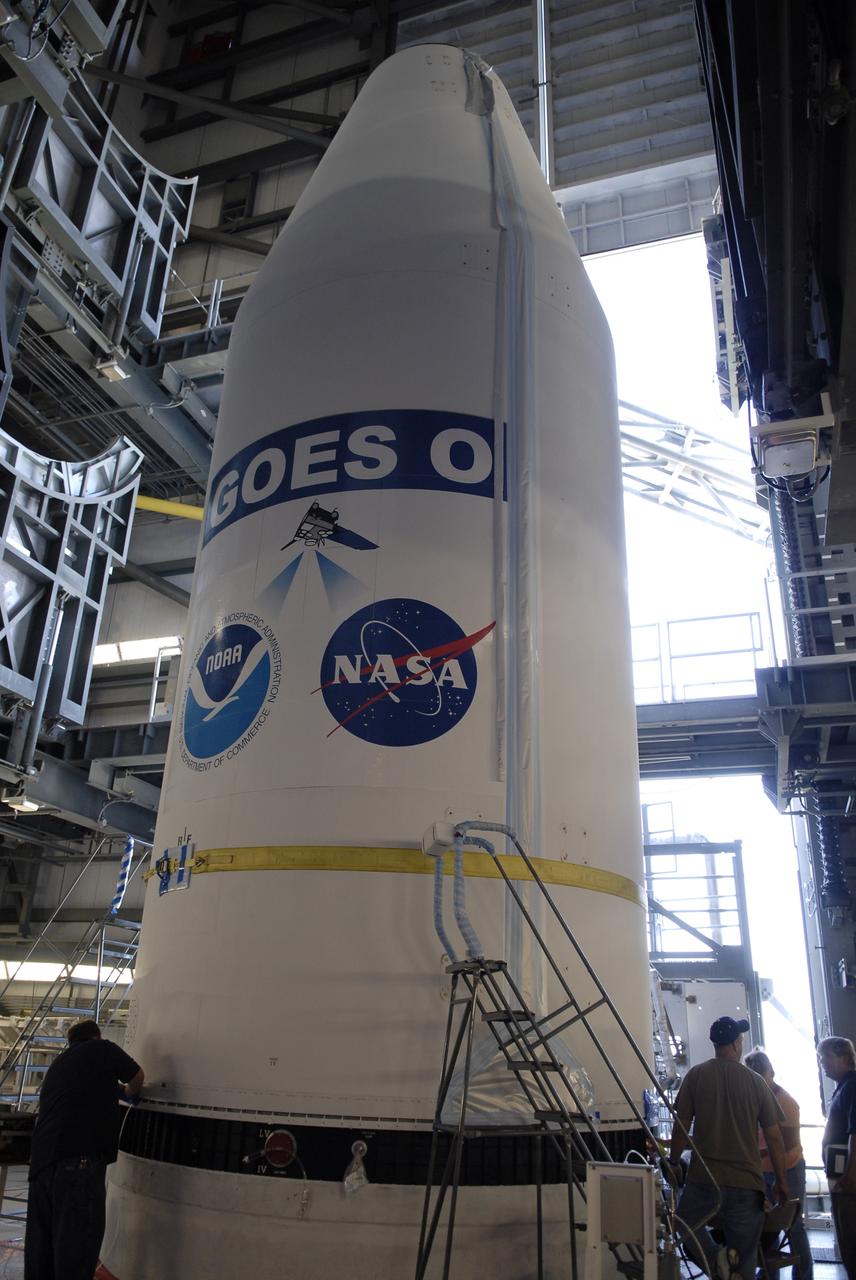
CAPE CANAVERAL, Fla. – At the Astrotech payload processing facility in Titusville, Fla., technicians apply the NOAA decal to the fairing that will encapsulate the GOES-O satellite during launch. The latest Geostationary Operational Environmental Satellite, GOES-O was developed by NASA for the National Oceanic and Atmospheric Administration, or NOAA. The GOES satellites continuously provide observations of 60 percent of the Earth including the continental United States, providing weather monitoring and forecast operations as well as a continuous and reliable stream of environmental information and severe weather warnings. Once in orbit, GOES-O will be designated GOES-14, and NASA will provide on-orbit checkout and then transfer operational responsibility to NOAA. The GOES-O satellite is targeted to launch April 28 onboard a United Launch Alliance Delta IV expendable launch vehicle. Photo credit: NASA/Kim Shiflett
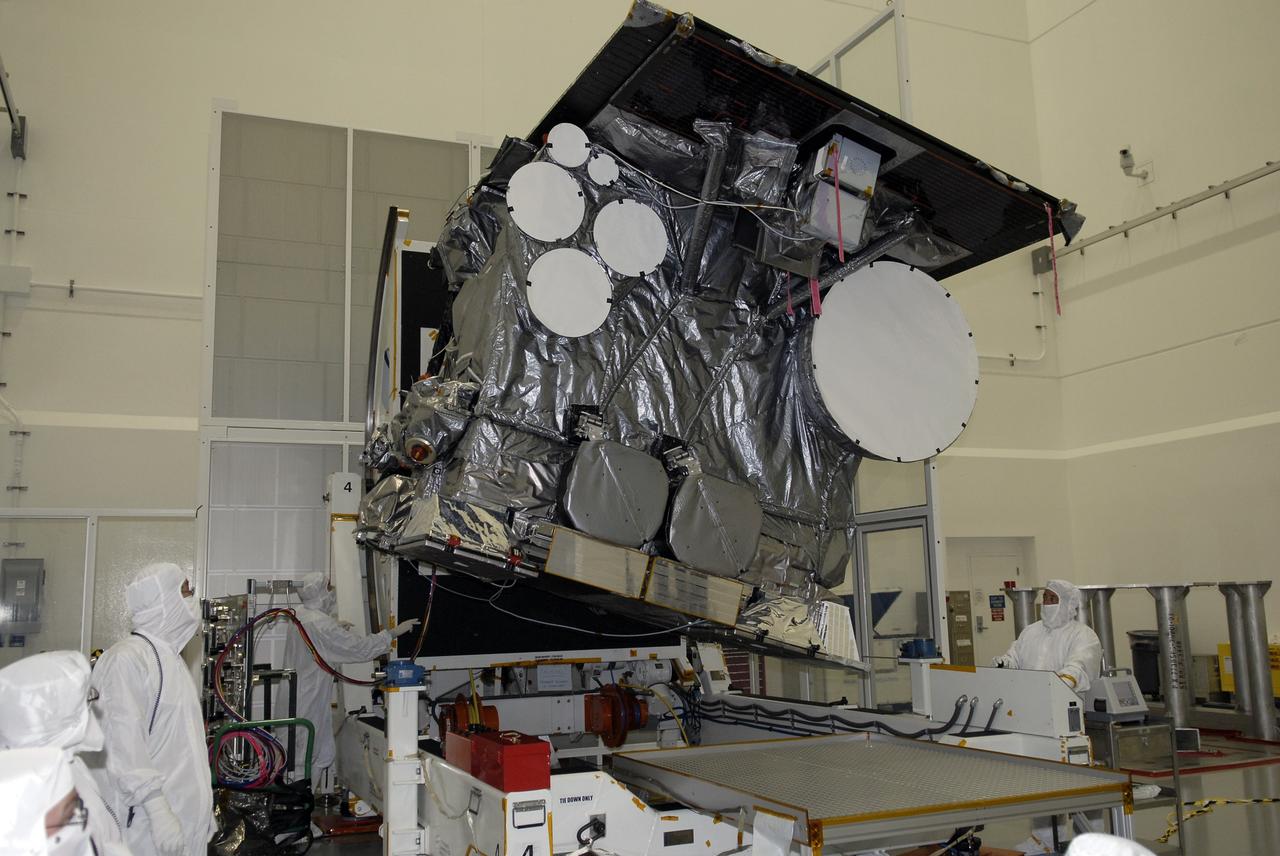
CAPE CANAVERAL, Fla. – At the Astrotech payload processing facility in Titusville, Fla., technicians at right and left examine the GOES-O satellite as it rotates on the stand. The latest Geostationary Operational Environmental Satellite, GOES-O was developed by NASA for the National Oceanic and Atmospheric Administration, or NOAA. Once in orbit, GOES-O will be designated GOES-14, and NASA will provide on-orbit checkout and then transfer operational responsibility to NOAA. The GOES-O satellite is targeted to launch April 28 onboard a United Launch Alliance Delta IV expendable launch vehicle. Photo credit: NASA/Kim Shiflett
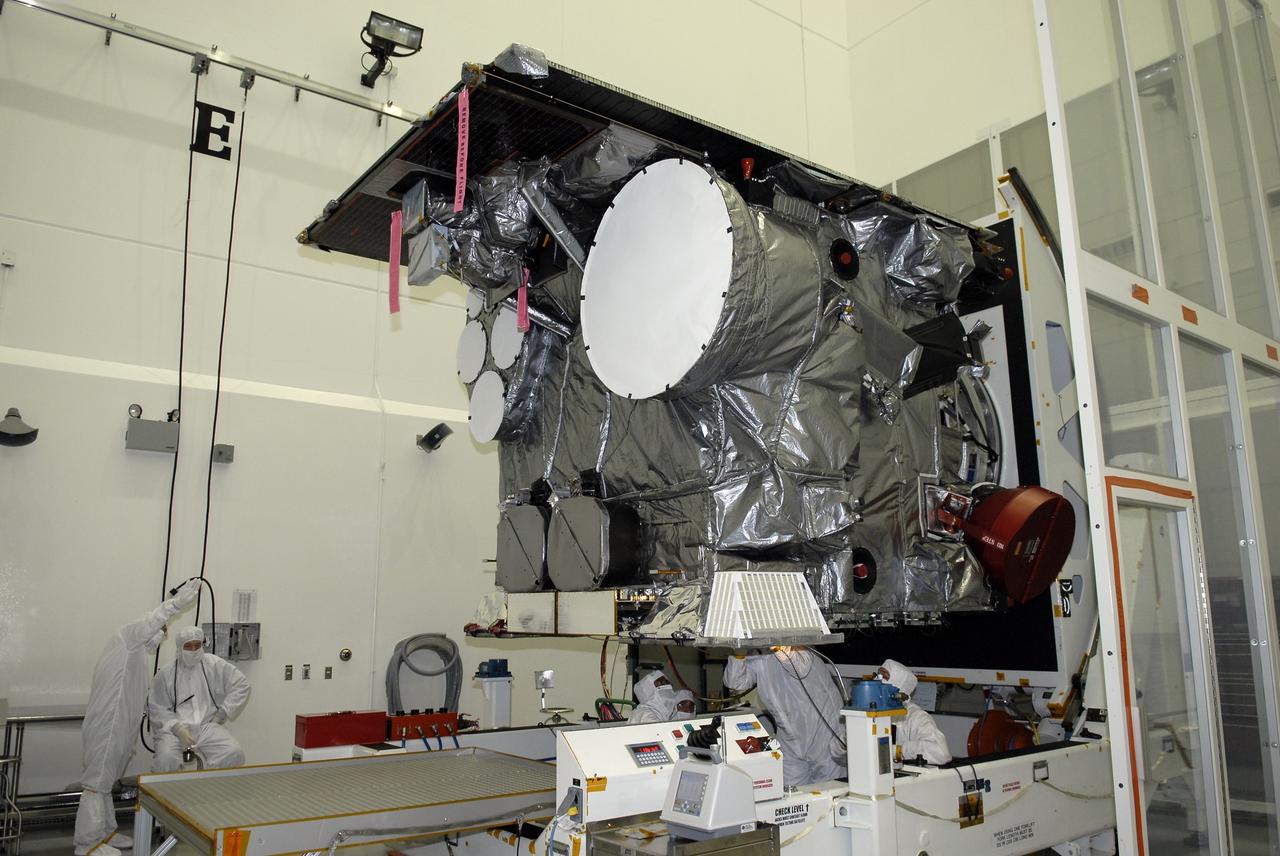
CAPE CANAVERAL, Fla. – At the Astrotech payload processing facility in Titusville, Fla., technicians complete the rotation of the GOES-O satellite on the stand. The latest Geostationary Operational Environmental Satellite, GOES-O was developed by NASA for the National Oceanic and Atmospheric Administration, or NOAA. Once in orbit, GOES-O will be designated GOES-14, and NASA will provide on-orbit checkout and then transfer operational responsibility to NOAA. The GOES-O satellite is targeted to launch April 28 onboard a United Launch Alliance Delta IV expendable launch vehicle. Photo credit: NASA/Kim Shiflett
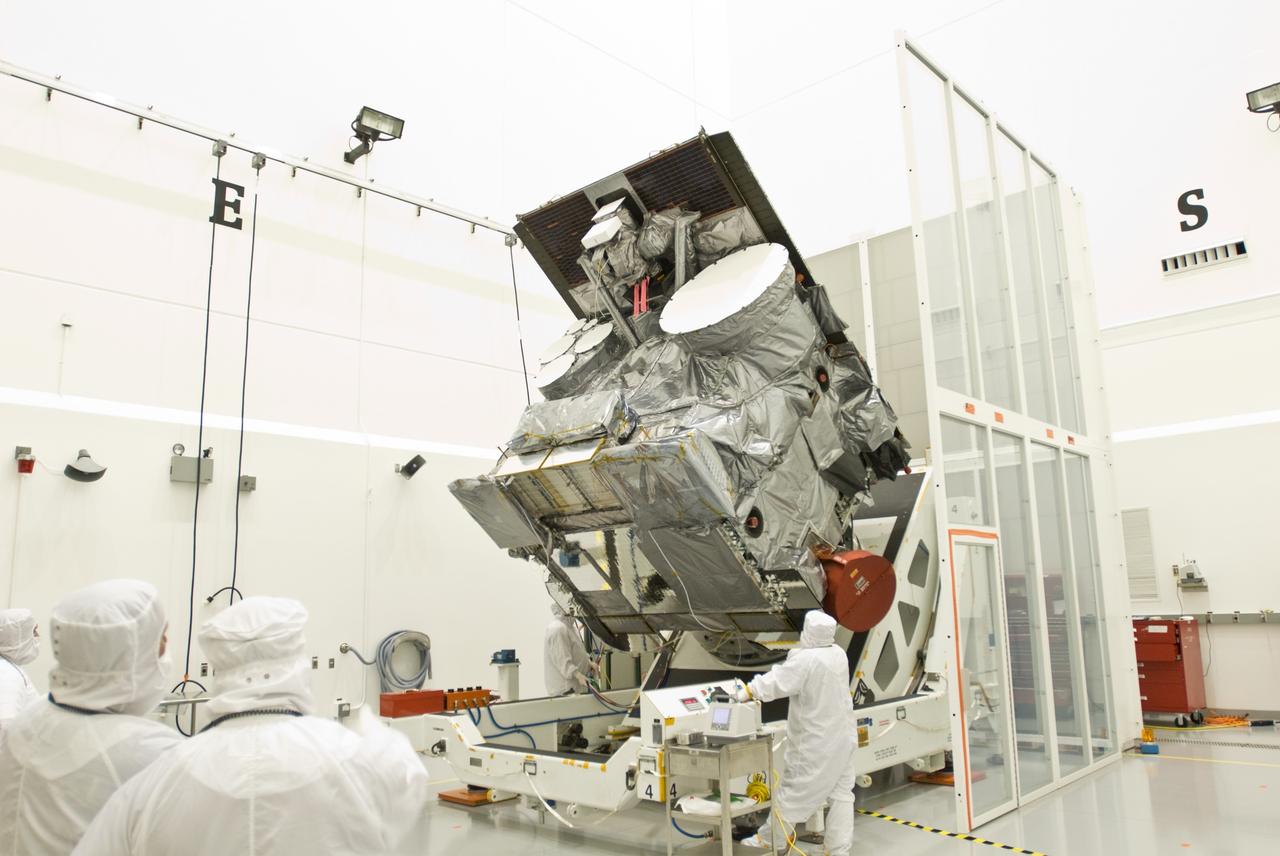
CAPE CANAVERAL, Fla. – In the Astrotech payload processing facility in Titusville, Fla., the GOES-O satellite is rotated on a stand toward a vertical position after blanket inspection. The latest Geostationary Operational Environmental Satellite, GOES-O was developed by NASA for the National Oceanic and Atmospheric Administration, or NOAA. Once in orbit, GOES-O will be designated GOES-14, and NASA will provide on-orbit checkout and then transfer operational responsibility to NOAA. The GOES-O satellite is targeted to launch April 28 onboard a United Launch Alliance Delta IV expendable launch vehicle. Photo credit: NASA/Jim Grossmann
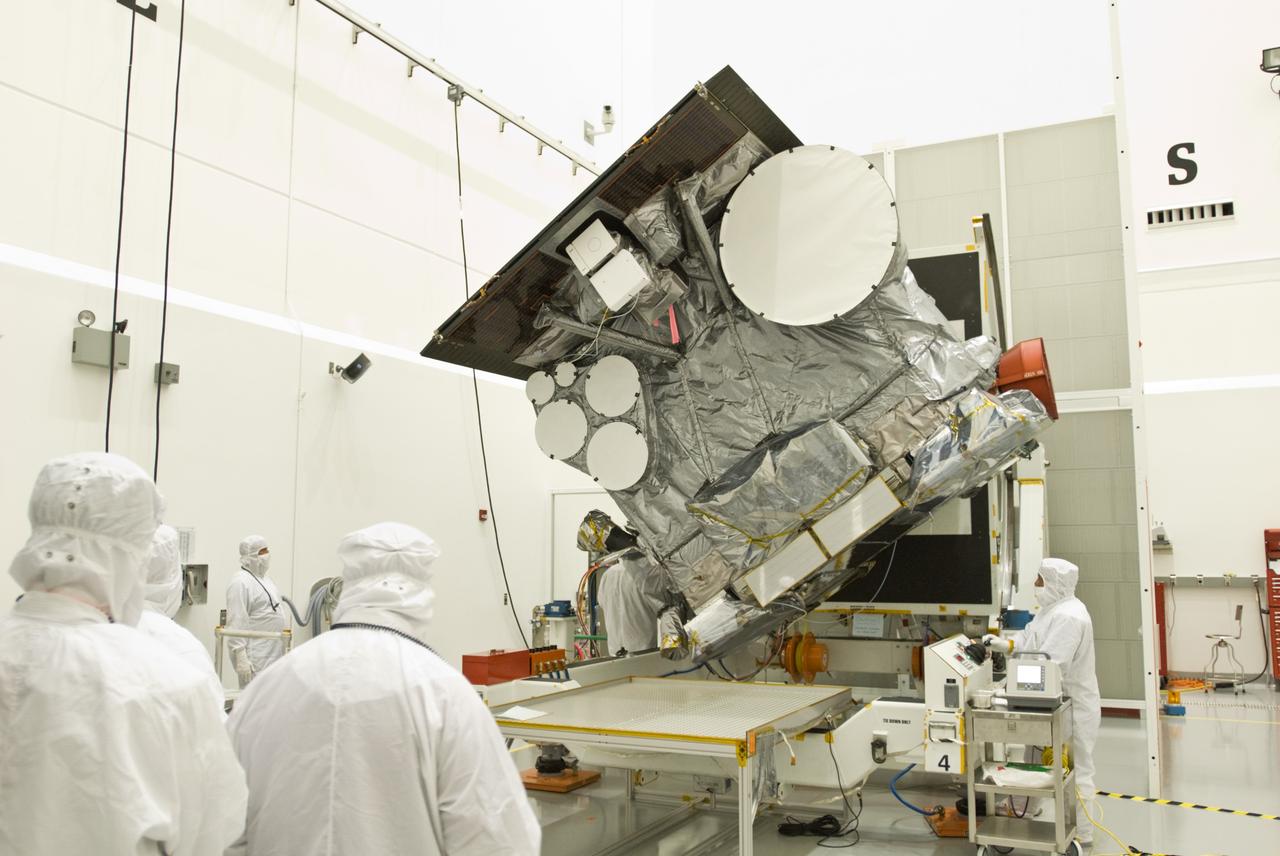
CAPE CANAVERAL, Fla. – In the Astrotech payload processing facility in Titusville, Fla., the GOES-O satellite is rotated on a stand for blanket inspection. The latest Geostationary Operational Environmental Satellite, GOES-O was developed by NASA for the National Oceanic and Atmospheric Administration, or NOAA. Once in orbit, GOES-O will be designated GOES-14, and NASA will provide on-orbit checkout and then transfer operational responsibility to NOAA. The GOES-O satellite is targeted to launch April 28 onboard a United Launch Alliance Delta IV expendable launch vehicle. Photo credit: NASA/Jim Grossmann
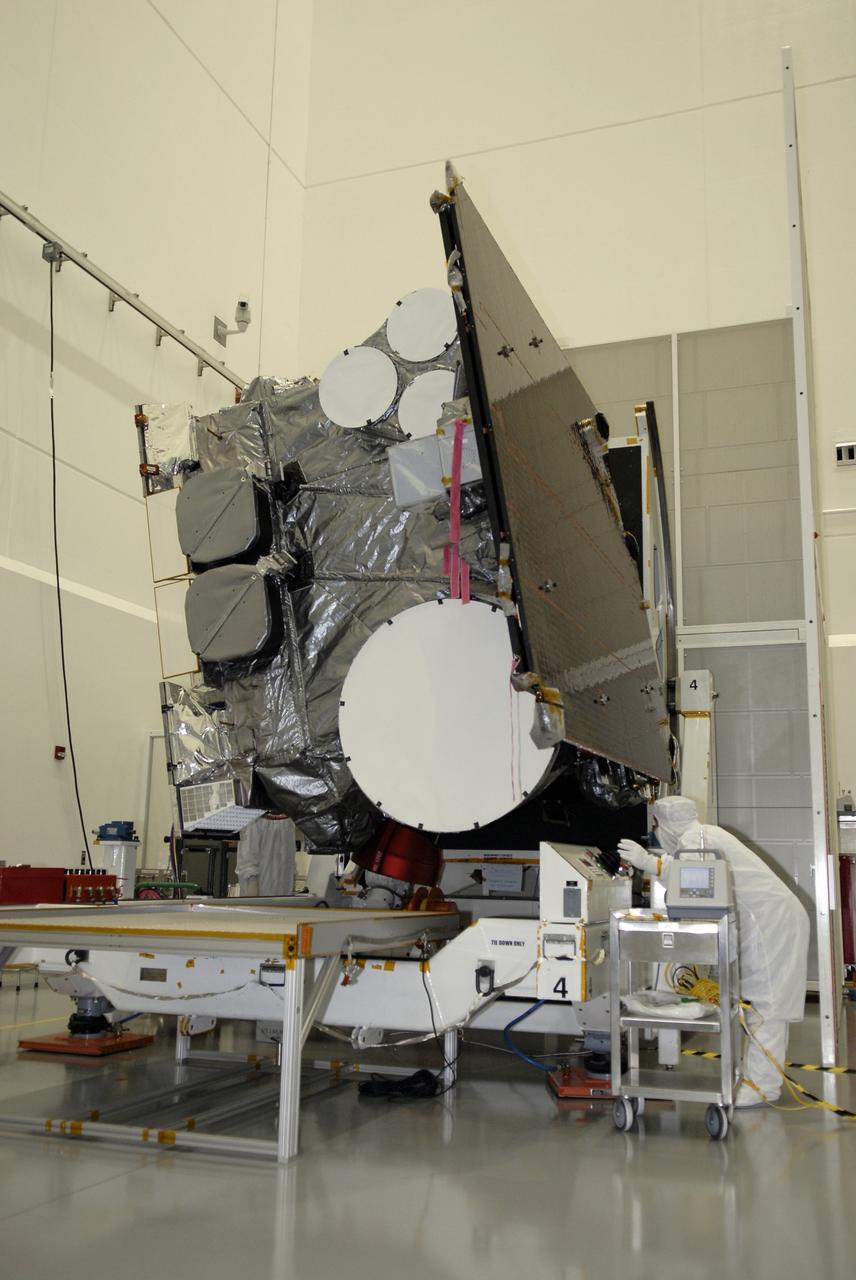
CAPE CANAVERAL, Fla. – At the Astrotech payload processing facility in Titusville, Fla., a technician checks the GOES-O satellite as it begins rotating on the stand. The latest Geostationary Operational Environmental Satellite, GOES-O was developed by NASA for the National Oceanic and Atmospheric Administration, or NOAA. Once in orbit, GOES-O will be designated GOES-14, and NASA will provide on-orbit checkout and then transfer operational responsibility to NOAA. The GOES-O satellite is targeted to launch April 28 onboard a United Launch Alliance Delta IV expendable launch vehicle. Photo credit: NASA/Kim Shiflett
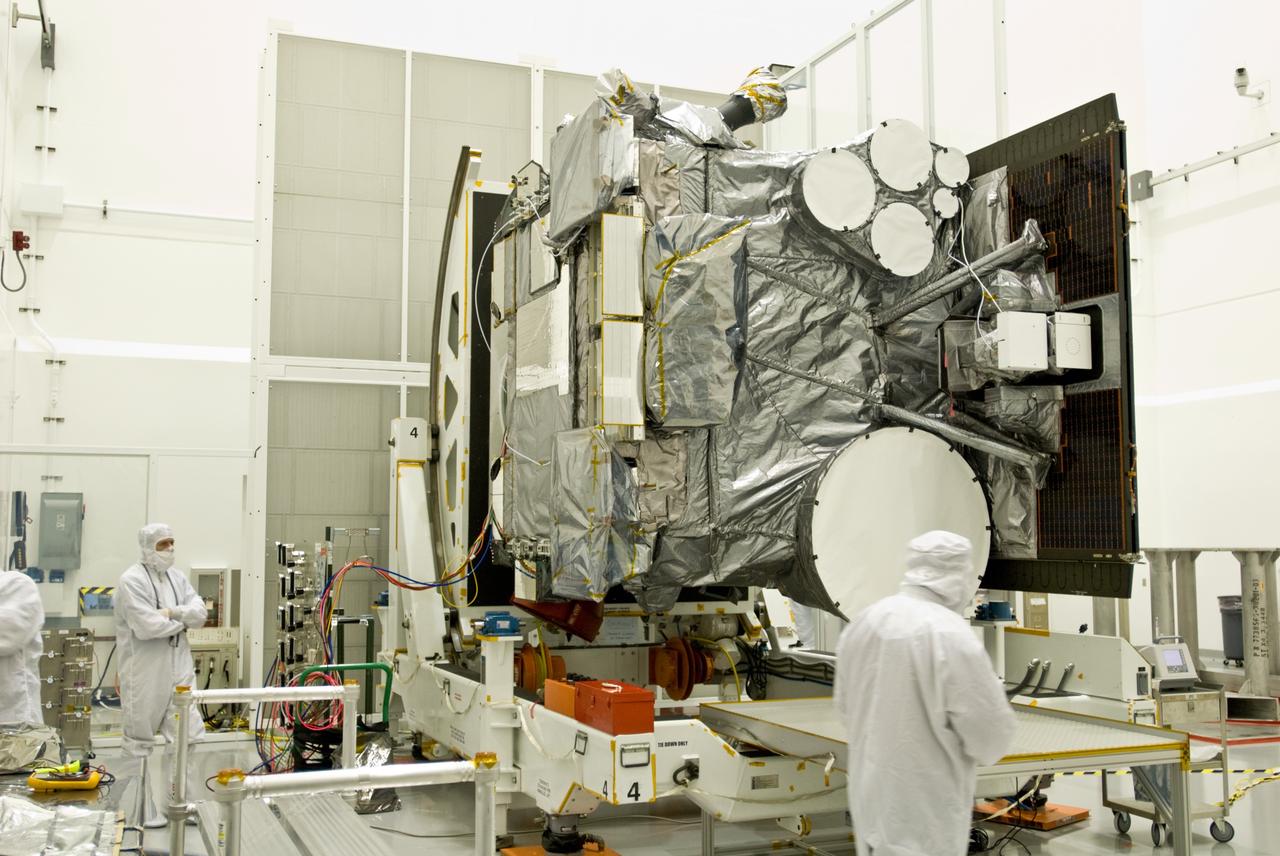
CAPE CANAVERAL, Fla. – In the Astrotech payload processing facility in Titusville, Fla., the GOES-O satellite is rotated on a stand for blanket inspection. The latest Geostationary Operational Environmental Satellite, GOES-O was developed by NASA for the National Oceanic and Atmospheric Administration, or NOAA. Once in orbit, GOES-O will be designated GOES-14, and NASA will provide on-orbit checkout and then transfer operational responsibility to NOAA. The GOES-O satellite is targeted to launch April 28 onboard a United Launch Alliance Delta IV expendable launch vehicle. Photo credit: NASA/Jim Grossmann
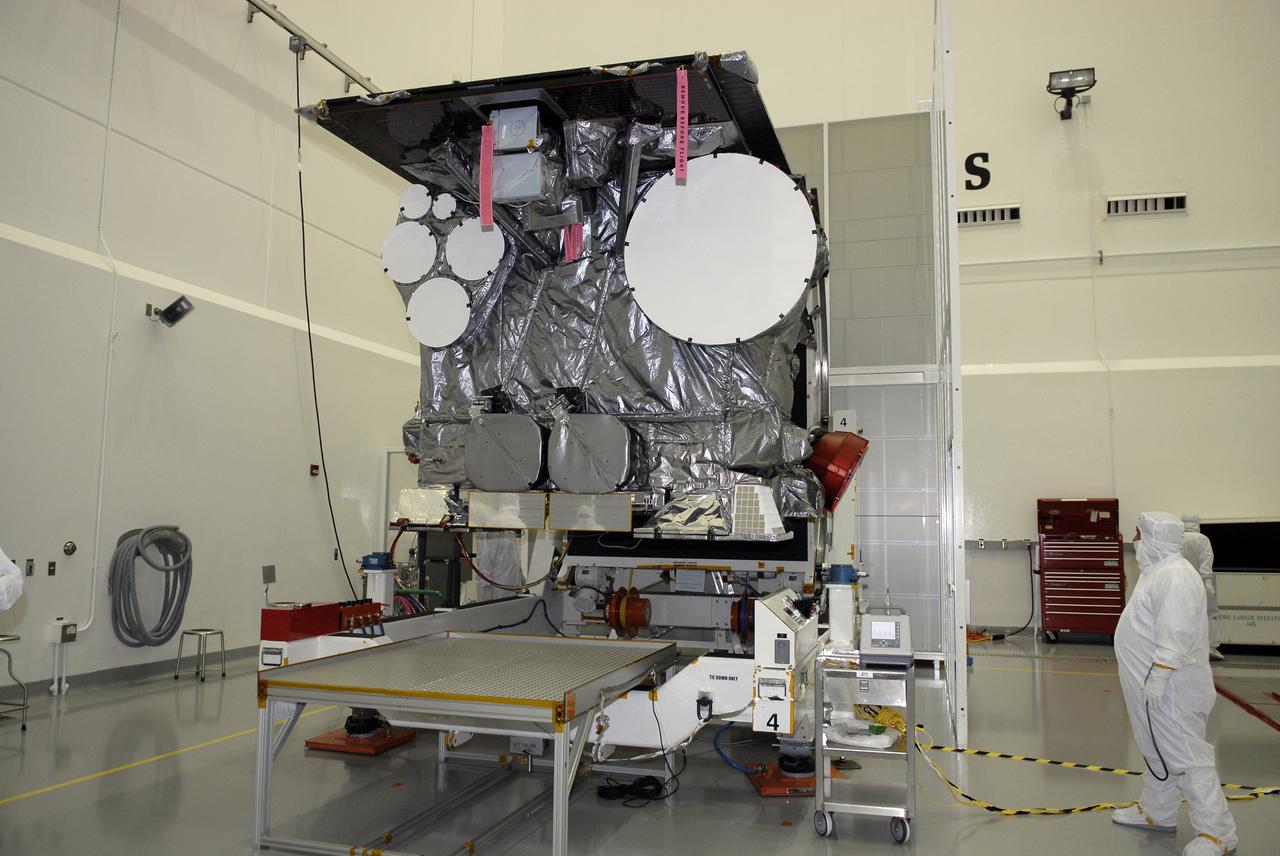
CAPE CANAVERAL, Fla. – At the Astrotech payload processing facility in Titusville, Fla., a technician examines the GOES-O satellite as it completes rotation on the stand. The latest Geostationary Operational Environmental Satellite, GOES-O was developed by NASA for the National Oceanic and Atmospheric Administration, or NOAA. Once in orbit, GOES-O will be designated GOES-14, and NASA will provide on-orbit checkout and then transfer operational responsibility to NOAA. The GOES-O satellite is targeted to launch April 28 onboard a United Launch Alliance Delta IV expendable launch vehicle. Photo credit: NASA_Kim Shiflett
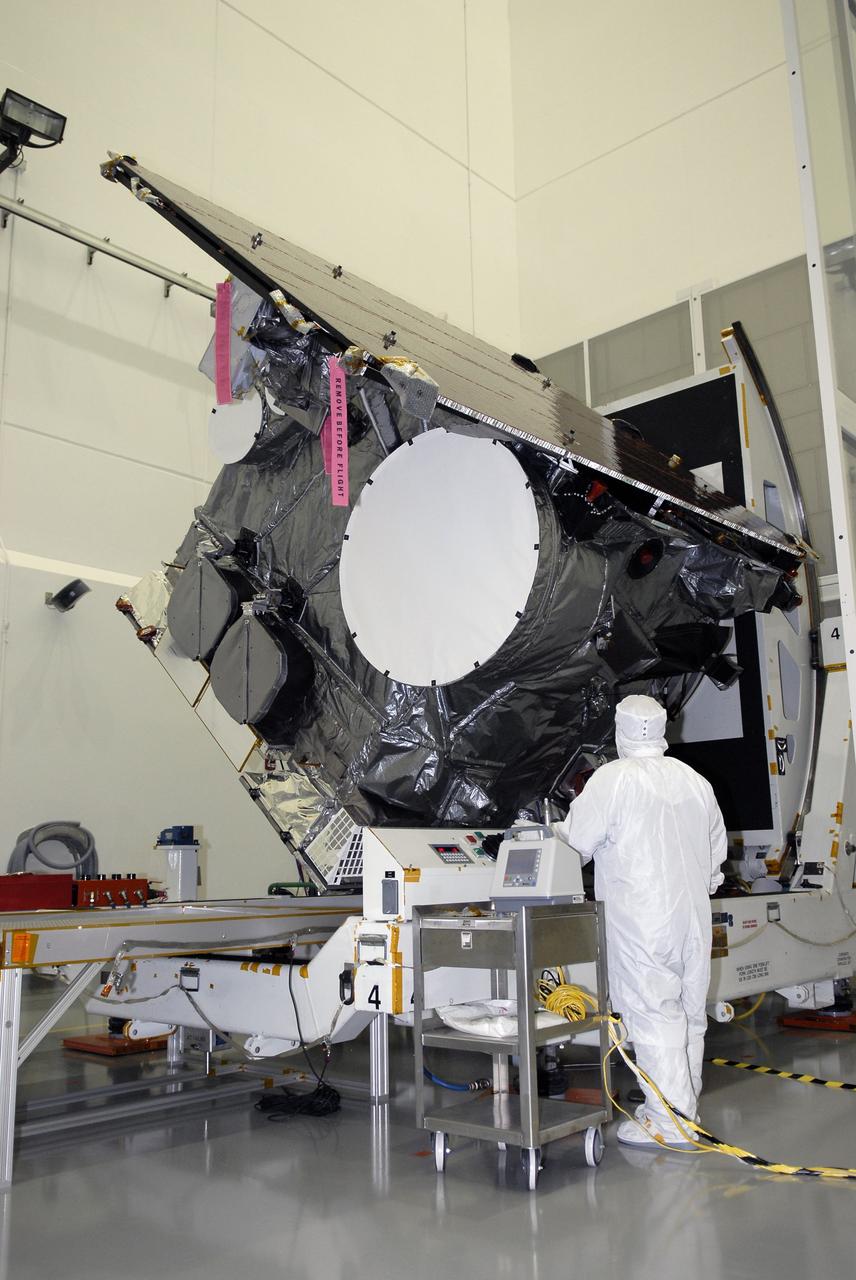
CAPE CANAVERAL, Fla. – At the Astrotech payload processing facility in Titusville, Fla., ., a technician checks the GOES-O satellite as it rotates on the stand. The latest Geostationary Operational Environmental Satellite, GOES-O was developed by NASA for the National Oceanic and Atmospheric Administration, or NOAA. Once in orbit, GOES-O will be designated GOES-14, and NASA will provide on-orbit checkout and then transfer operational responsibility to NOAA. The GOES-O satellite is targeted to launch April 28 onboard a United Launch Alliance Delta IV expendable launch vehicle. Photo credit: NASA/Kim Shiflett
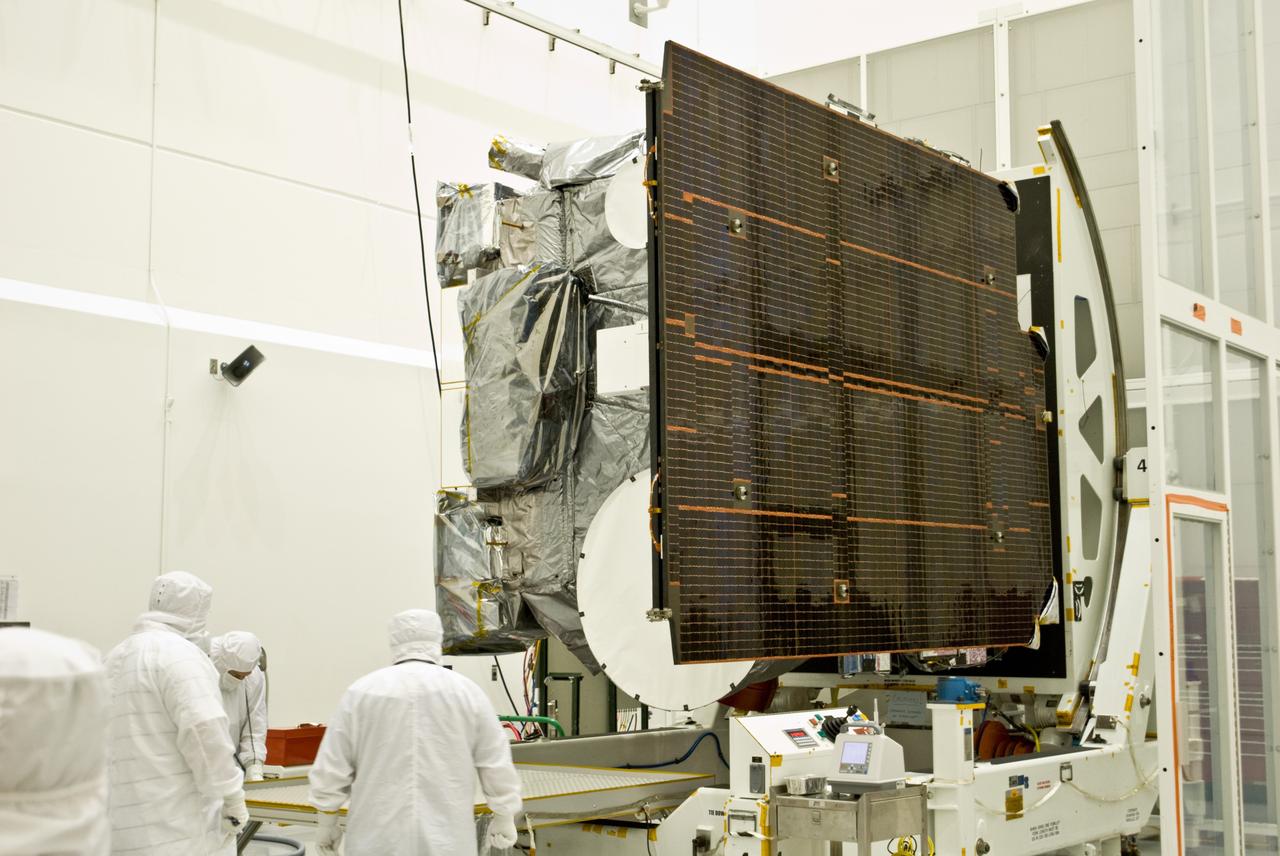
CAPE CANAVERAL, Fla. – In the Astrotech payload processing facility in Titusville, Fla., the GOES-O satellite is rotated on a stand for blanket inspection. The latest Geostationary Operational Environmental Satellite, GOES-O was developed by NASA for the National Oceanic and Atmospheric Administration, or NOAA. Once in orbit, GOES-O will be designated GOES-14, and NASA will provide on-orbit checkout and then transfer operational responsibility to NOAA. The GOES-O satellite is targeted to launch April 28 onboard a United Launch Alliance Delta IV expendable launch vehicle. Photo credit: NASA/Jim Grossmann
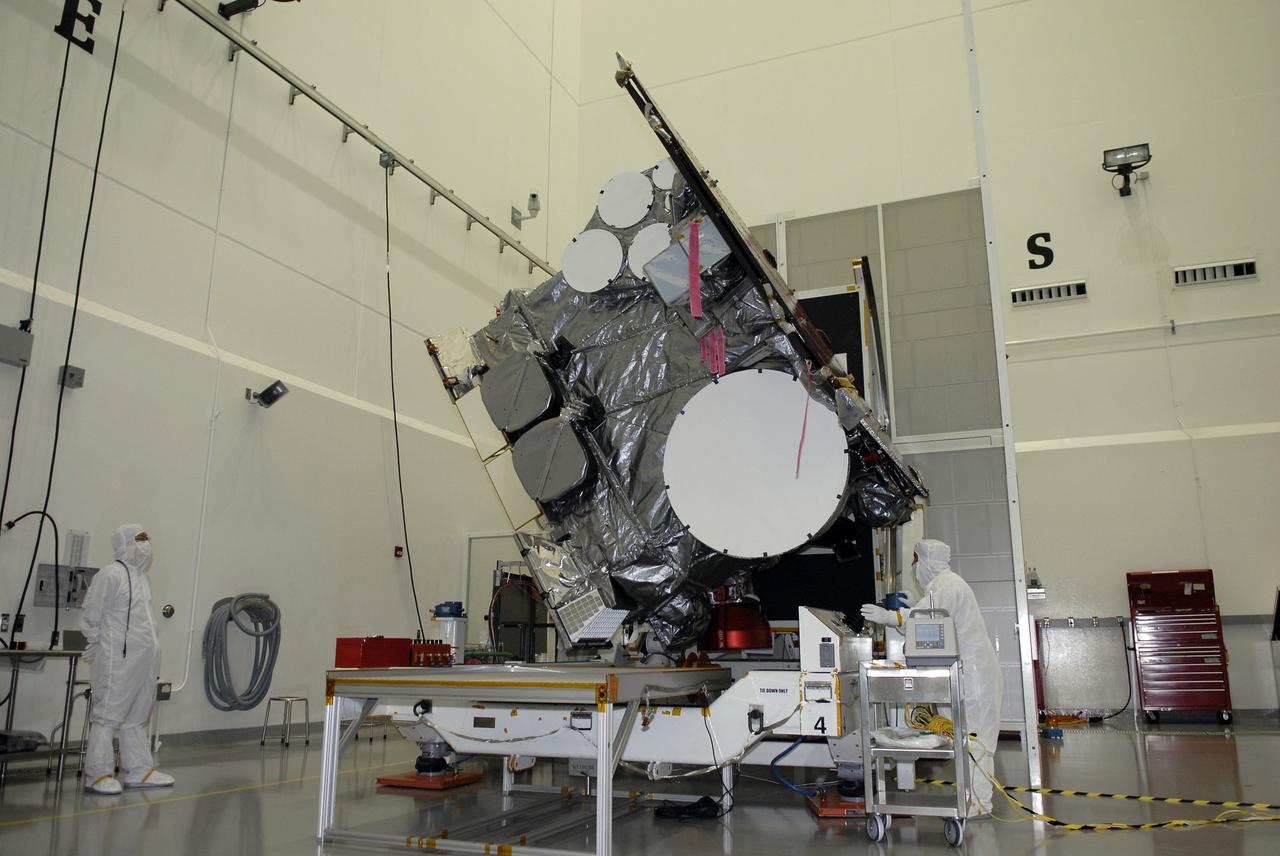
CAPE CANAVERAL, Fla. – At the Astrotech payload processing facility in Titusville, Fla., technicians examine the progress of the GOES-O satellite as it rotates on the stand. The latest Geostationary Operational Environmental Satellite, GOES-O was developed by NASA for the National Oceanic and Atmospheric Administration, or NOAA. Once in orbit, GOES-O will be designated GOES-14, and NASA will provide on-orbit checkout and then transfer operational responsibility to NOAA. The GOES-O satellite is targeted to launch April 28 onboard a United Launch Alliance Delta IV expendable launch vehicle. Photo credit: NASA/Kim Shiflett
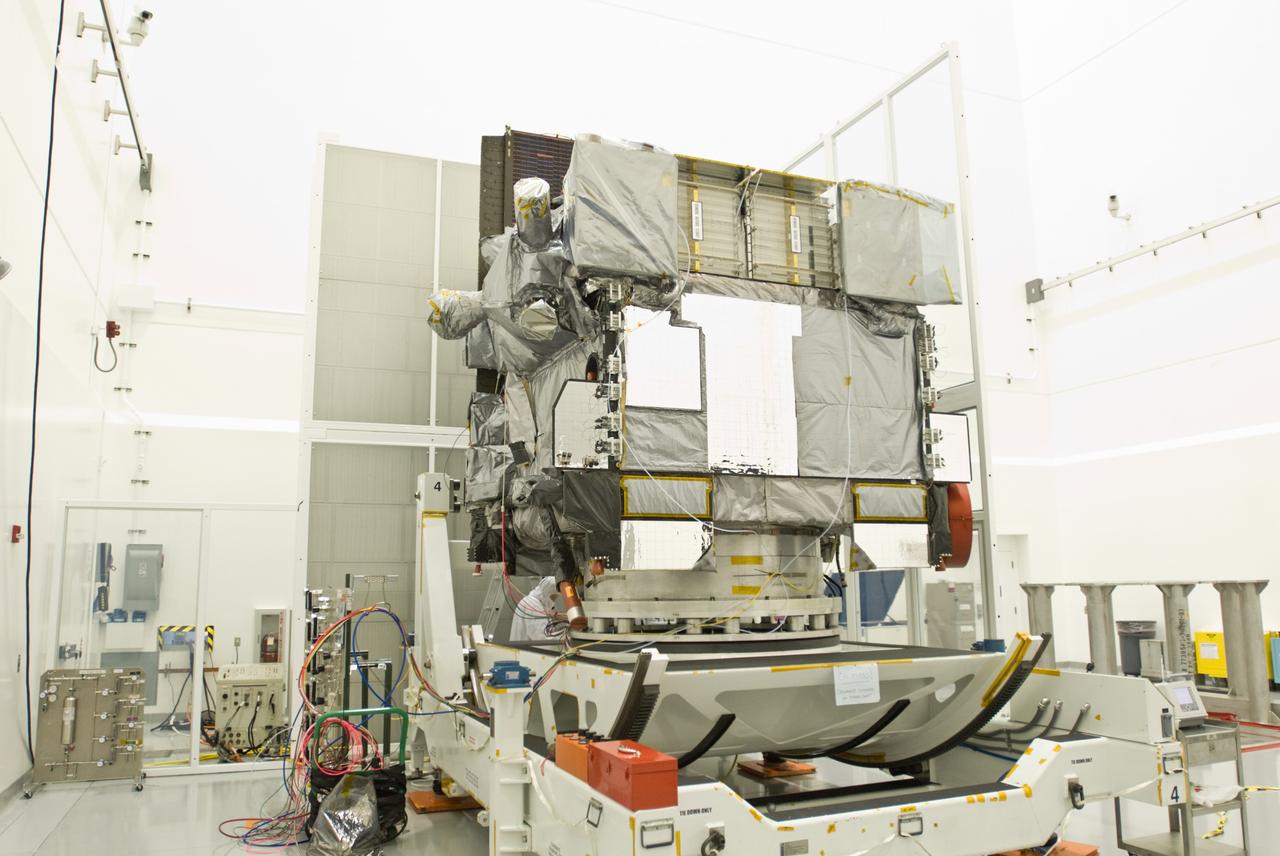
CAPE CANAVERAL, Fla. – In the Astrotech payload processing facility in Titusville, Fla., the GOES-O satellite has been rotated on its stand to a vertical position after blanket inspection. The latest Geostationary Operational Environmental Satellite, GOES-O was developed by NASA for the National Oceanic and Atmospheric Administration, or NOAA. Once in orbit, GOES-O will be designated GOES-14, and NASA will provide on-orbit checkout and then transfer operational responsibility to NOAA. The GOES-O satellite is targeted to launch April 28 onboard a United Launch Alliance Delta IV expendable launch vehicle. Photo credit: NASA/Jim Grossmann
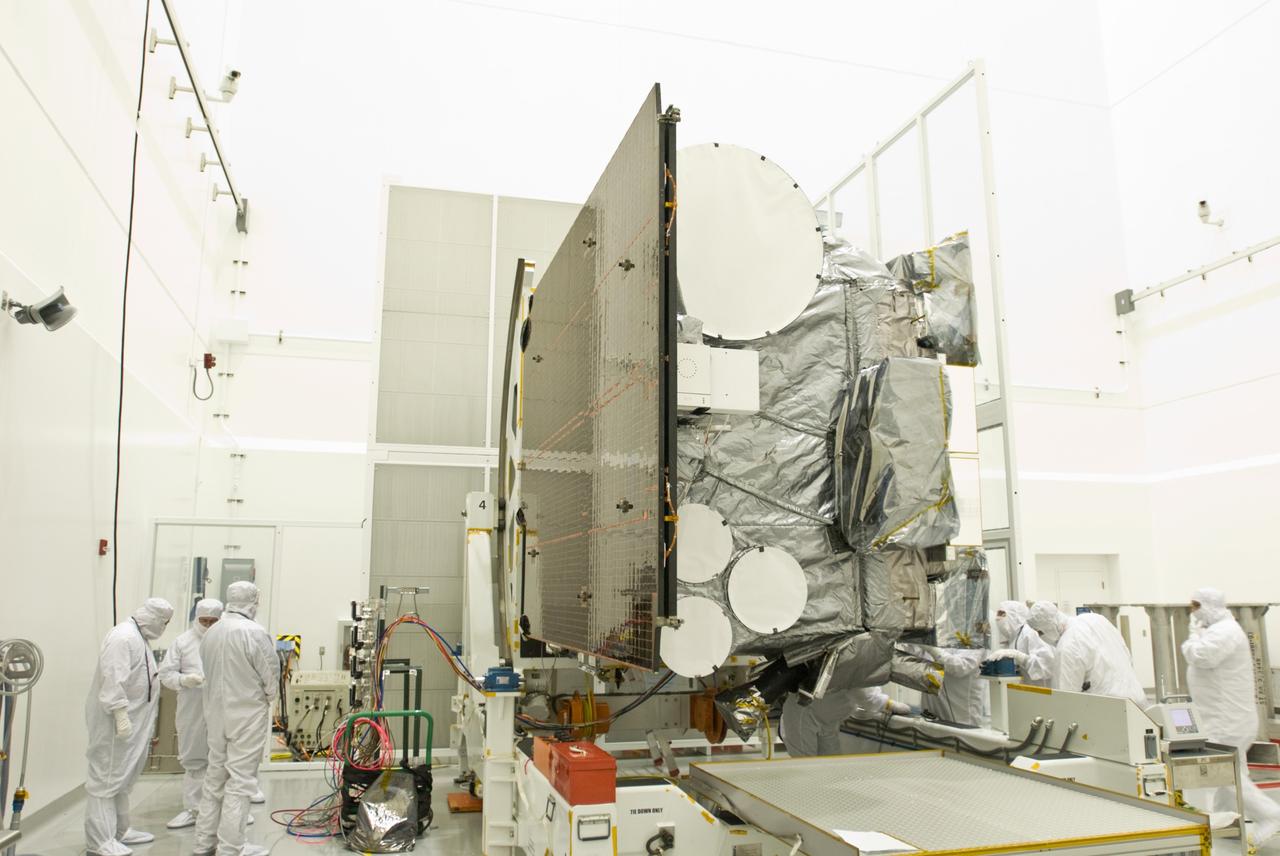
CAPE CANAVERAL, Fla. – In the Astrotech payload processing facility in Titusville, Fla., the GOES-O satellite is rotated on a stand for blanket inspection. The latest Geostationary Operational Environmental Satellite, GOES-O was developed by NASA for the National Oceanic and Atmospheric Administration, or NOAA. Once in orbit, GOES-O will be designated GOES-14, and NASA will provide on-orbit checkout and then transfer operational responsibility to NOAA. The GOES-O satellite is targeted to launch April 28 onboard a United Launch Alliance Delta IV expendable launch vehicle. Photo credit: NASA/Jim Grossmann
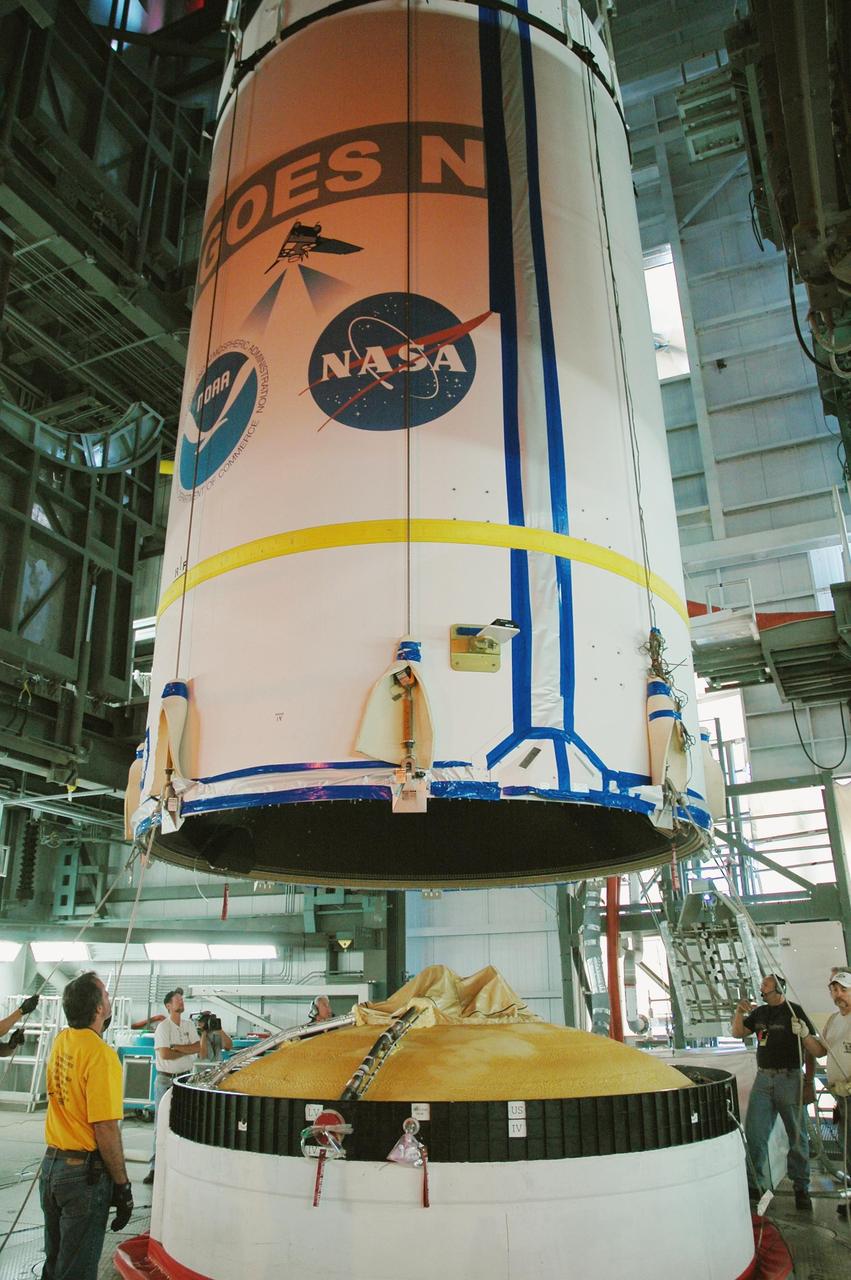
KENNEDY SPACE CENTER, FLA. - On Launch Complex 37 at Cape Canaveral Air Force Station in Florida, the GOES-N spacecraft is lowered toward the second stage of the Boeing Delta IV rocket for mating. GOES-N is the latest in a series of Geostationary Operational Environmental Satellites for NOAA and NASA, providing continuous monitoring necessary for intensive data analysis. GOES-N is scheduled to be launched May 18 in an hour-long window between 6:14 and 7:14 p.m. EDT. Photo credit: NASA/Charisse Nahser
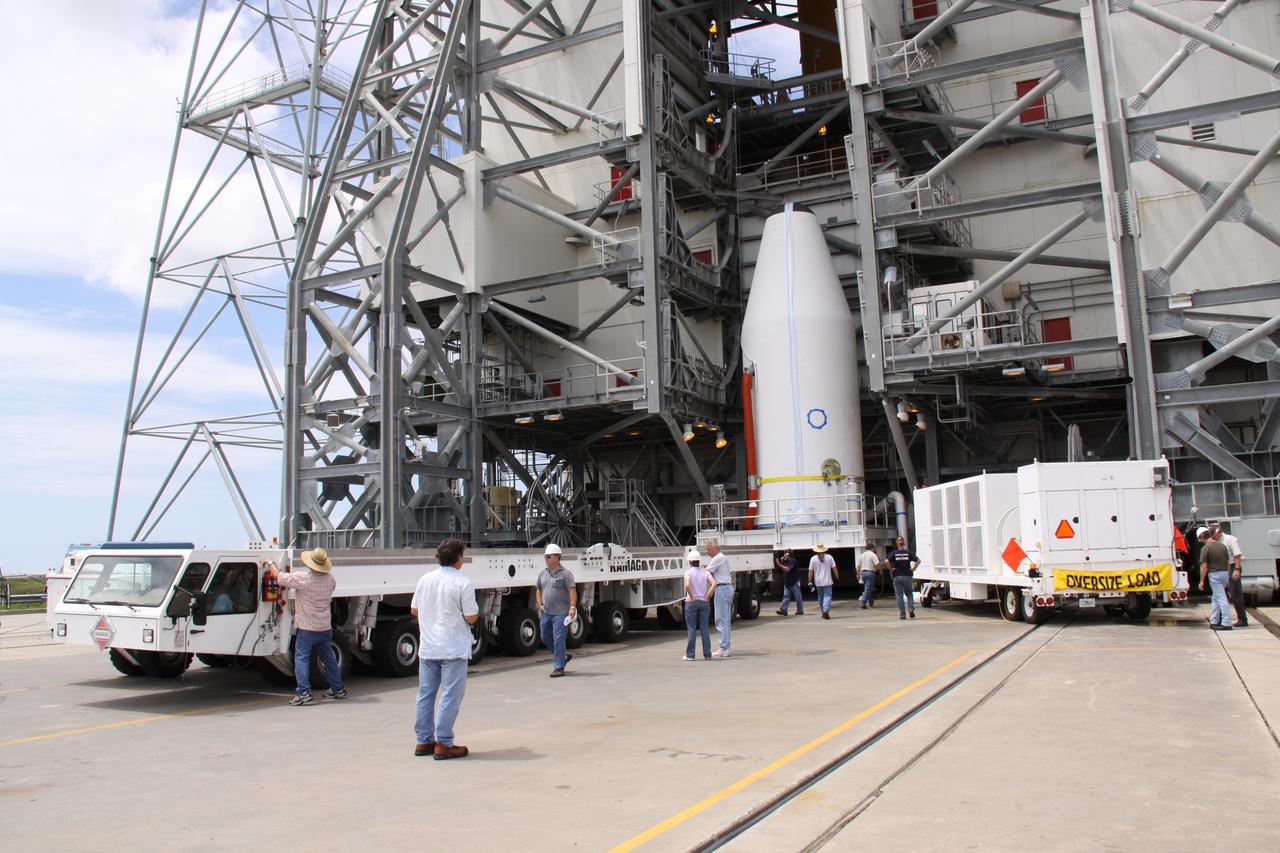
CAPE CANAVERAL, Fla. – On Launch Complex 37 at Cape Canaveral Air Force Station in Florida, the GOES-O satellite is being prepared for its lift into the mobile service tower where it will be mated with the United Launch Alliance Delta IV expendable launch vehicle. The GOES-O satellite is targeted to launch no earlier than June 26. The latest Geostationary Operational Environmental Satellite, GOES-O was developed by NASA for the National Oceanic and Atmospheric Administration, or NOAA. The GOES satellites continuously provide observations of 60 percent of the Earth including the continental United States, providing weather monitoring and forecast operations as well as a continuous and reliable stream of environmental information and severe weather warnings. Once in orbit, GOES-O will be designated GOES-14, and NASA will provide on-orbit checkout and then transfer operational responsibility to NOAA. Photo credit: NASA/Jack Pfaller
CAPE CANAVERAL, Fla. – On Launch Complex 37 at Cape Canaveral Air Force Station in Florida, the GOES-O satellite has been lifted into the mobile service tower. It has been mated with the United Launch Alliance Delta IV expendable launch vehicle. The GOES-O satellite is targeted to launch June 26. The latest Geostationary Operational Environmental Satellite, GOES-O was developed by NASA for the National Oceanic and Atmospheric Administration, or NOAA. The GOES satellites continuously provide observations of 60 percent of the Earth including the continental United States, providing weather monitoring and forecast operations as well as a continuous and reliable stream of environmental information and severe weather warnings. Once in orbit, GOES-O will be designated GOES-14, and NASA will provide on-orbit checkout and then transfer operational responsibility to NOAA. Photo credit: NASA/Kim Shiflett
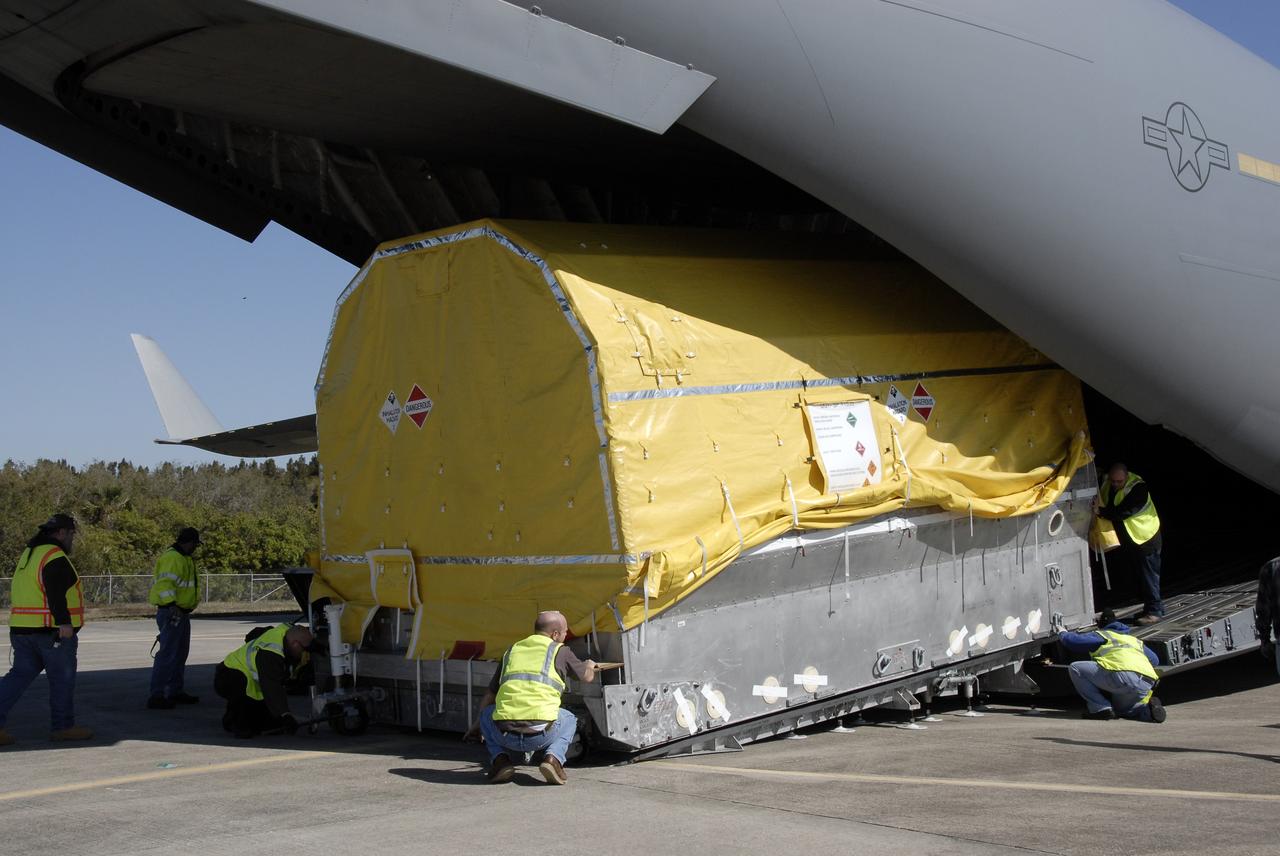
CAPE CANAVERAL, Fla. – At the Shuttle Landing Facility at NASA's Kennedy Space Center in Florida, workers check the latest Geostationary Operational Environmental Satellite, or GOES, as it moves out of the C-17 military cargo aircraft. Developed by NASA for the National Oceanic and Atmospheric Administration, or NOAA, the GOES-O satellite is targeted to launch April 28 onboard a United Launch Alliance Delta IV expendable launch vehicle. Once in orbit, GOES-O will be designated GOES-14, and NASA will provide on-orbit checkout and then transfer operational responsibility to NOAA. GOES-O will be placed in on-orbit storage as a replacement for an older GOES satellite. After arriving, the satellite was transported to Astrotech in Titusville, Fla., where final testing of the imaging system, instrumentation, communications and power systems will be performed. Photo credit: NASA/Kim Shiflett
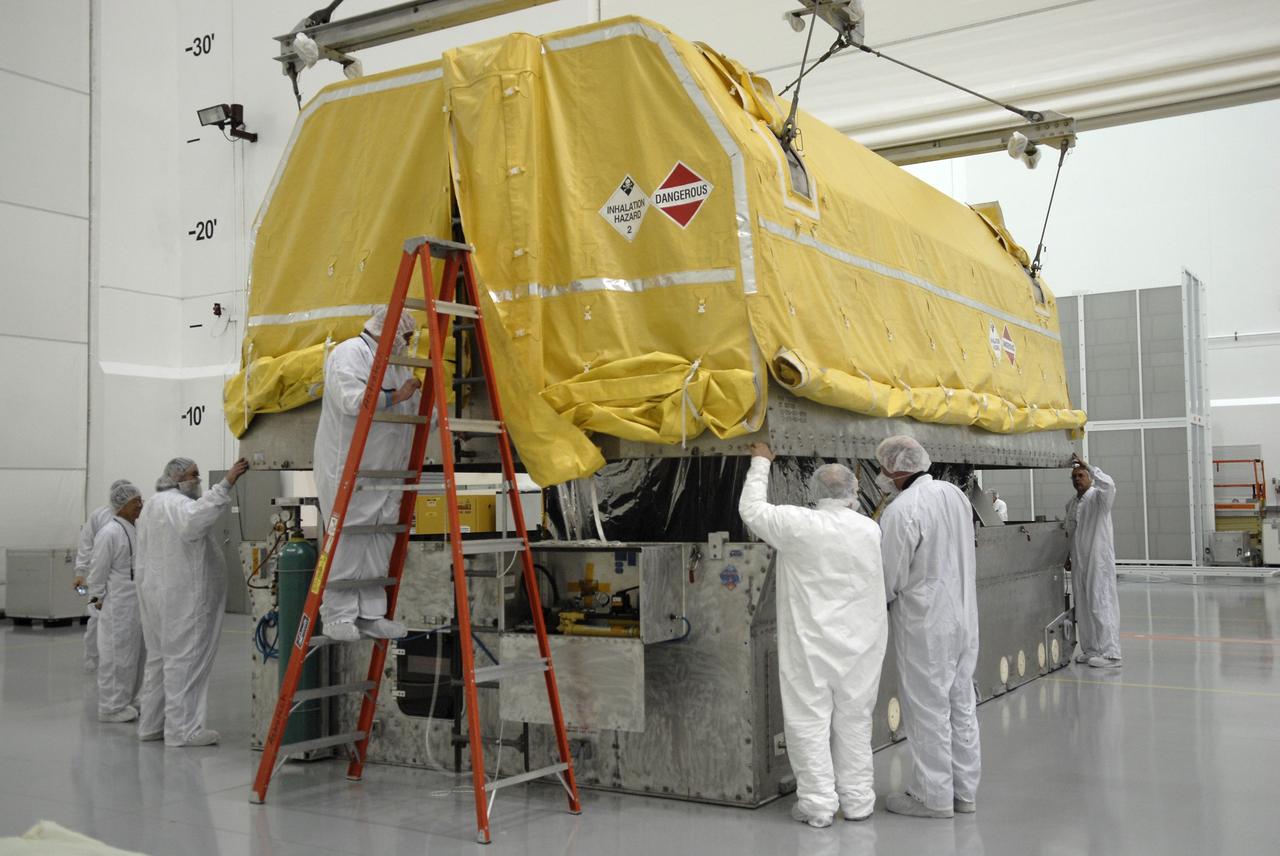
CAPE CANAVERAL, Fla. – In the Astrotech payload processing facility in Titusville, Fla., workers keep watch as the shipping container is lifted away from the Geostationary Operational Environmental Satellite, or GOES-O. The satellite will undergo final testing of the imaging system, instrumentation, communications and power systems. Developed by NASA for the National Oceanic and Atmospheric Administration, or NOAA, the GOES-O satellite is targeted to launch April 28 onboard a United Launch Alliance Delta IV expendable launch vehicle. Once in orbit, GOES-O will be designated GOES-14, and NASA will provide on-orbit checkout and then transfer operational responsibility to NOAA. GOES-O will be placed in on-orbit storage as a replacement for an older GOES satellite. Photo credit: NASA/Kim Shiflett
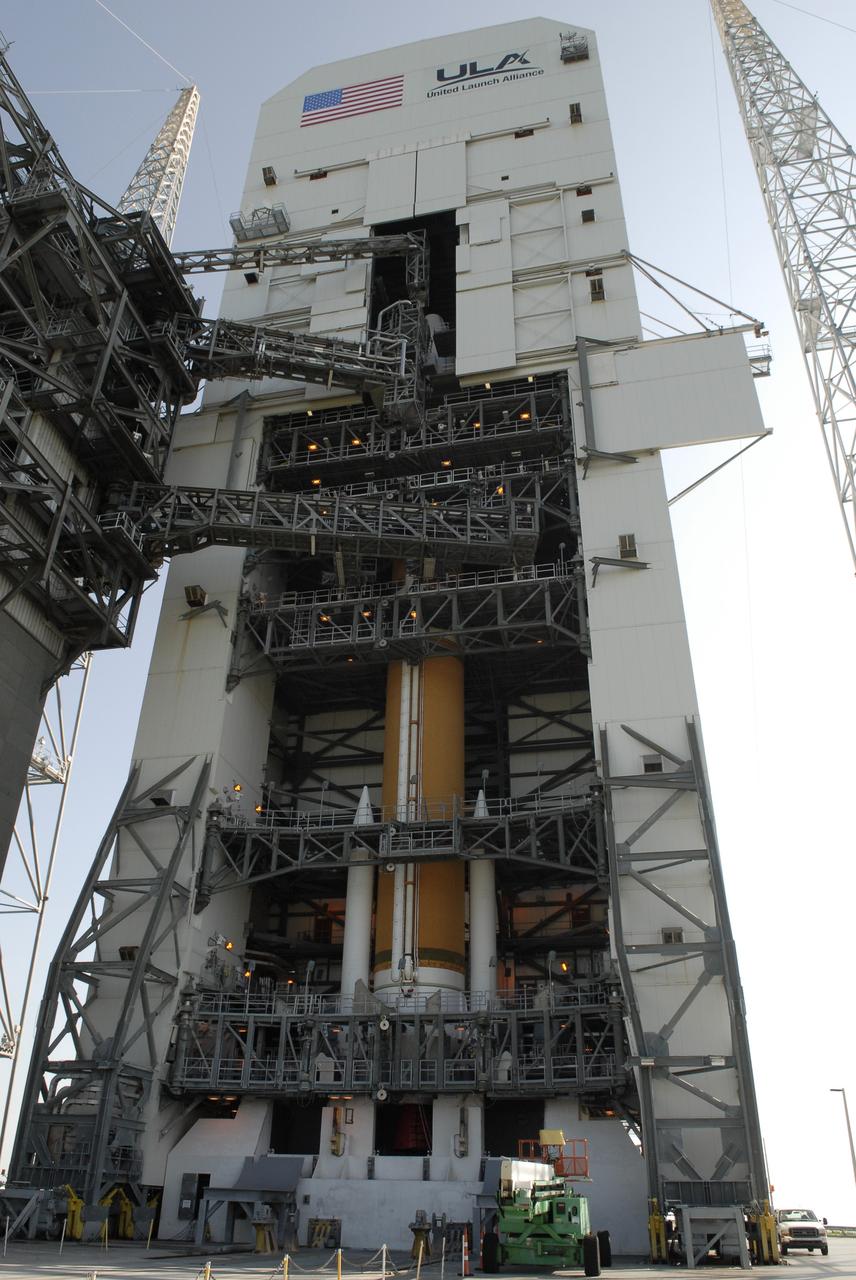
CAPE CANAVERAL, Fla. – On Launch Complex 37 at Cape Canaveral Air Force Station in Florida, the GOES-O satellite is seen in the top of the mobile service tower, where it has been mated with the United Launch Alliance Delta IV expendable launch vehicle below. The GOES-O satellite is targeted to launch June 26. The latest Geostationary Operational Environmental Satellite, GOES-O was developed by NASA for the National Oceanic and Atmospheric Administration, or NOAA. The GOES satellites continuously provide observations of 60 percent of the Earth including the continental United States, providing weather monitoring and forecast operations as well as a continuous and reliable stream of environmental information and severe weather warnings. Once in orbit, GOES-O will be designated GOES-14, and NASA will provide on-orbit checkout and then transfer operational responsibility to NOAA. Photo credit: NASA/Kim Shiflett
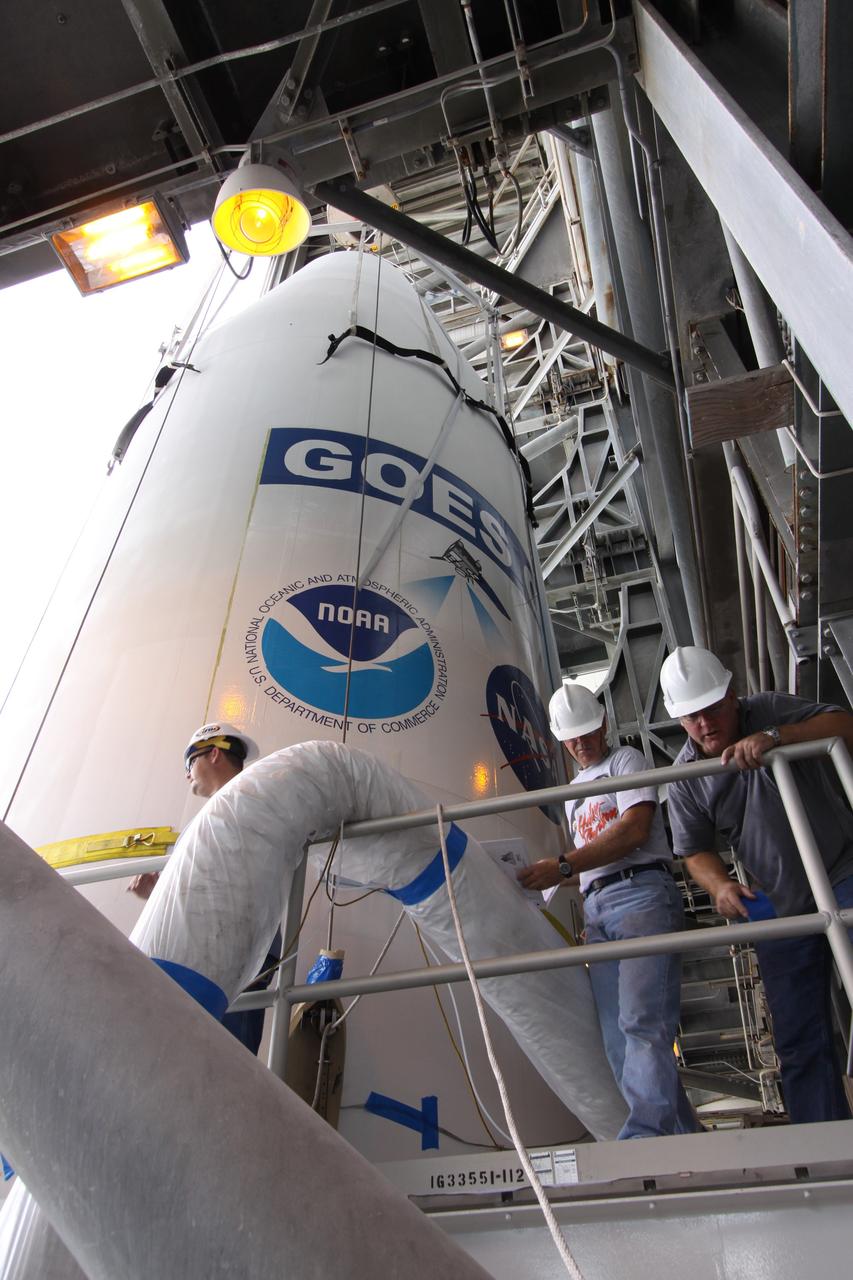
CAPE CANAVERAL, Fla. – On Launch Complex 37 at Cape Canaveral Air Force Station in Florida, the GOES-O satellite is fitted with a sling to lift it into the mobile service tower where it will be mated with the United Launch Alliance Delta IV expendable launch vehicle. The GOES-O satellite is targeted to launch no earlier than June 26. The latest Geostationary Operational Environmental Satellite, GOES-O was developed by NASA for the National Oceanic and Atmospheric Administration, or NOAA. The GOES satellites continuously provide observations of 60 percent of the Earth including the continental United States, providing weather monitoring and forecast operations as well as a continuous and reliable stream of environmental information and severe weather warnings. Once in orbit, GOES-O will be designated GOES-14, and NASA will provide on-orbit checkout and then transfer operational responsibility to NOAA. Photo credit: NASA/Jack Pfaller
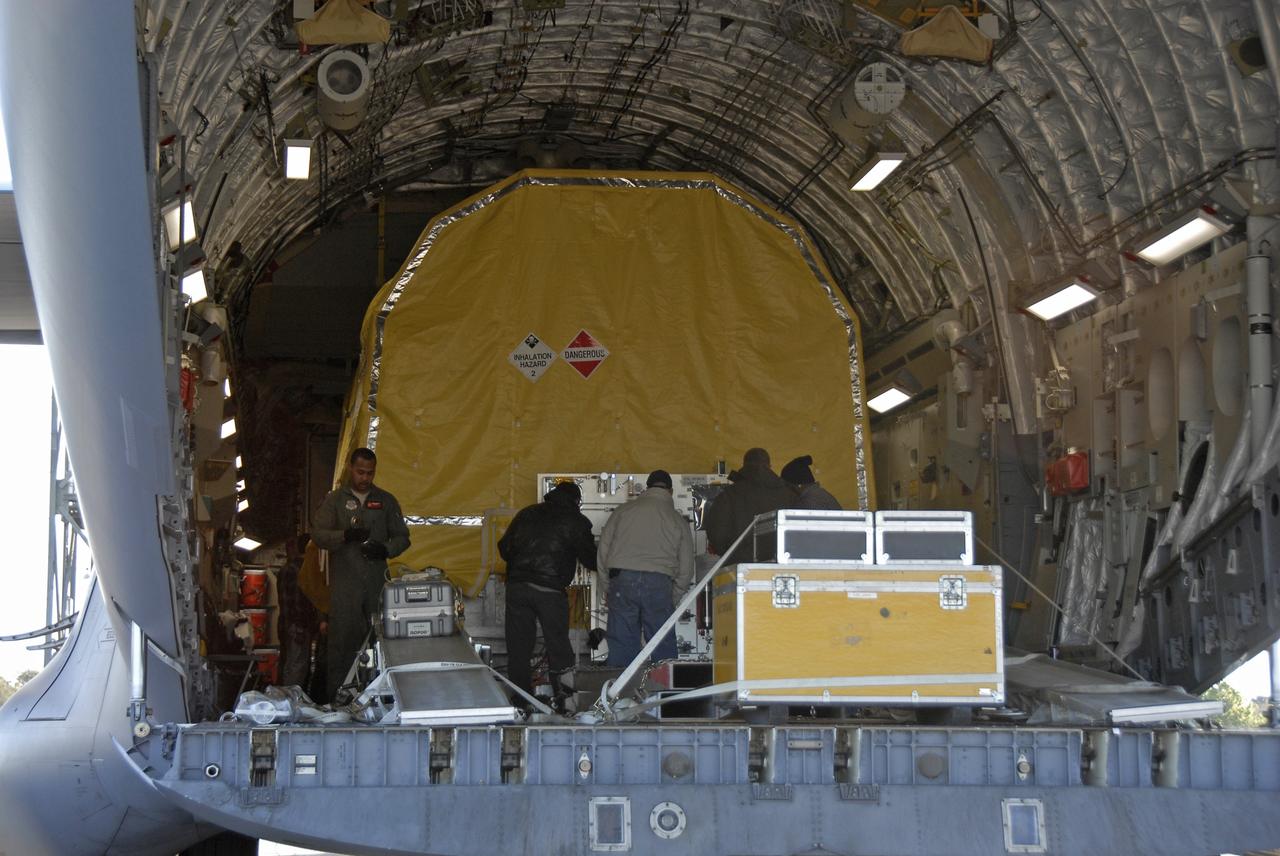
CAPE CANAVERAL, Fla. – The latest Geostationary Operational Environmental Satellite, or GOES, is prepared for offloading from the C-17 military cargo aircraft at the Shuttle Landing Facility at NASA's Kennedy Space Center in Florida. Developed by NASA for the National Oceanic and Atmospheric Administration, or NOAA, the GOES-O satellite is targeted to launch April 28 onboard a United Launch Alliance Delta IV expendable launch vehicle. Once in orbit, GOES-O will be designated GOES-14, and NASA will provide on-orbit checkout and then transfer operational responsibility to NOAA. GOES-O will be placed in on-orbit storage as a replacement for an older GOES satellite. After arriving, the satellite was transported to Astrotech in Titusville, Fla., where final testing of the imaging system, instrumentation, communications and power systems will be performed. Photo credit: NASA/Kim Shiflett
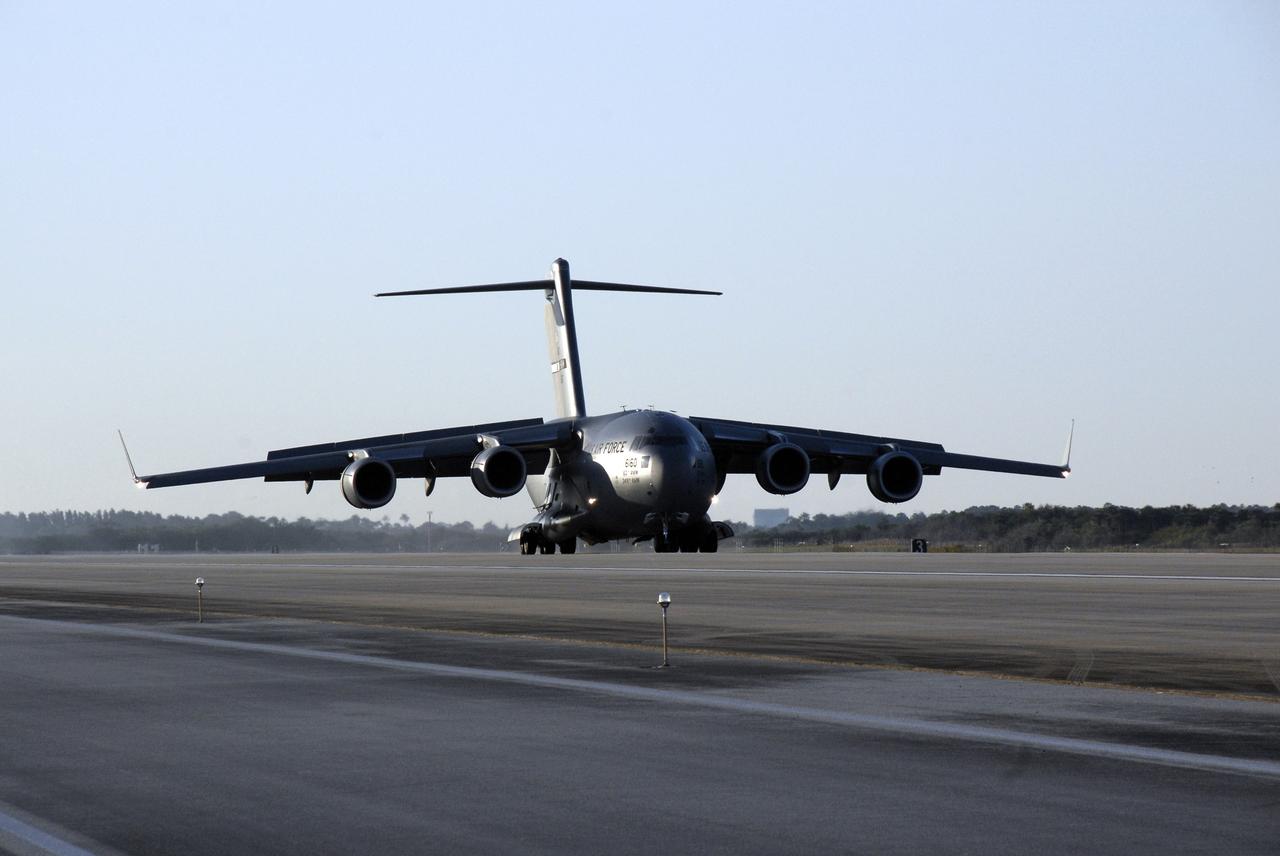
CAPE CANAVERAL, Fla. – The latest Geostationary Operational Environmental Satellite, or GOES, arrives on a C-17 military cargo aircraft at the Shuttle Landing Facility at NASA's Kennedy Space Center in Florida from its manufacturing plant in El Segundo, Calif. Developed by NASA for the National Oceanic and Atmospheric Administration, or NOAA, the GOES-O satellite is targeted to launch April 28 onboard a United Launch Alliance Delta IV expendable launch vehicle. Once in orbit, GOES-O will be designated GOES-14, and NASA will provide on-orbit checkout and then transfer operational responsibility to NOAA. GOES-O will be placed in on-orbit storage as a replacement for an older GOES satellite. After arriving, the satellite was transported to Astrotech in Titusville, Fla., where final testing of the imaging system, instrumentation, communications and power systems will be performed. Photo credit: NASA/Kim Shiflett
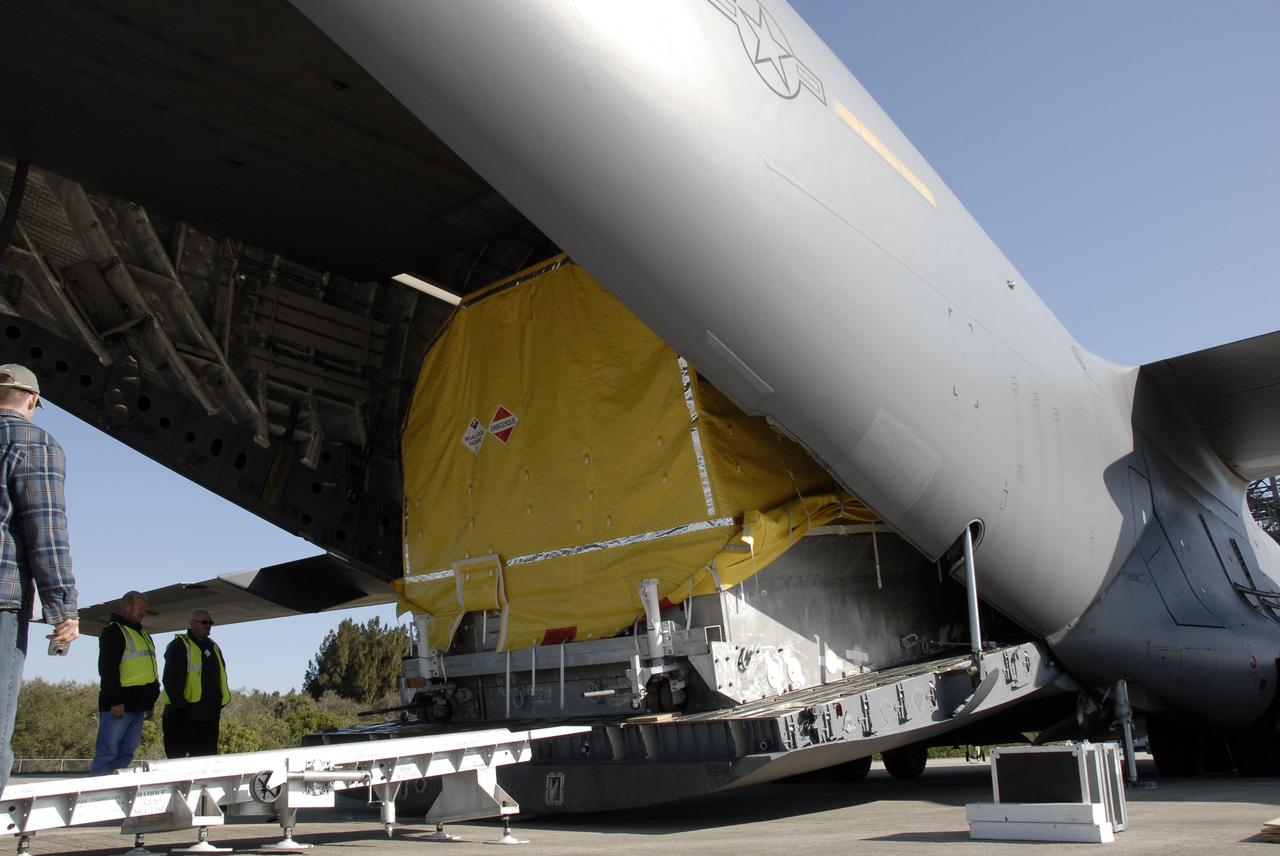
CAPE CANAVERAL, Fla. – The latest Geostationary Operational Environmental Satellite, or GOES, moves out of the C-17 military cargo aircraft at the Shuttle Landing Facility at NASA's Kennedy Space Center in Florida. Developed by NASA for the National Oceanic and Atmospheric Administration, or NOAA, the GOES-O satellite is targeted to launch April 28 onboard a United Launch Alliance Delta IV expendable launch vehicle. Once in orbit, GOES-O will be designated GOES-14, and NASA will provide on-orbit checkout and then transfer operational responsibility to NOAA. GOES-O will be placed in on-orbit storage as a replacement for an older GOES satellite. After arriving, the satellite was transported to Astrotech in Titusville, Fla., where final testing of the imaging system, instrumentation, communications and power systems will be performed. Photo credit: NASA/Kim Shiflett

CAPE CANAVERAL, Fla. – At the Astrotech payload processing facility in Titusville, Fla., technicians apply the NASA logo decal to the fairing that will encapsulate the GOES-O satellite during launch. The latest Geostationary Operational Environmental Satellite, GOES-O was developed by NASA for the National Oceanic and Atmospheric Administration, or NOAA. The GOES satellites continuously provide observations of 60 percent of the Earth including the continental United States, providing weather monitoring and forecast operations as well as a continuous and reliable stream of environmental information and severe weather warnings. Once in orbit, GOES-O will be designated GOES-14, and NASA will provide on-orbit checkout and then transfer operational responsibility to NOAA. The GOES-O satellite is targeted to launch April 28 onboard a United Launch Alliance Delta IV expendable launch vehicle. Photo credit: NASA/Kim Shiflett
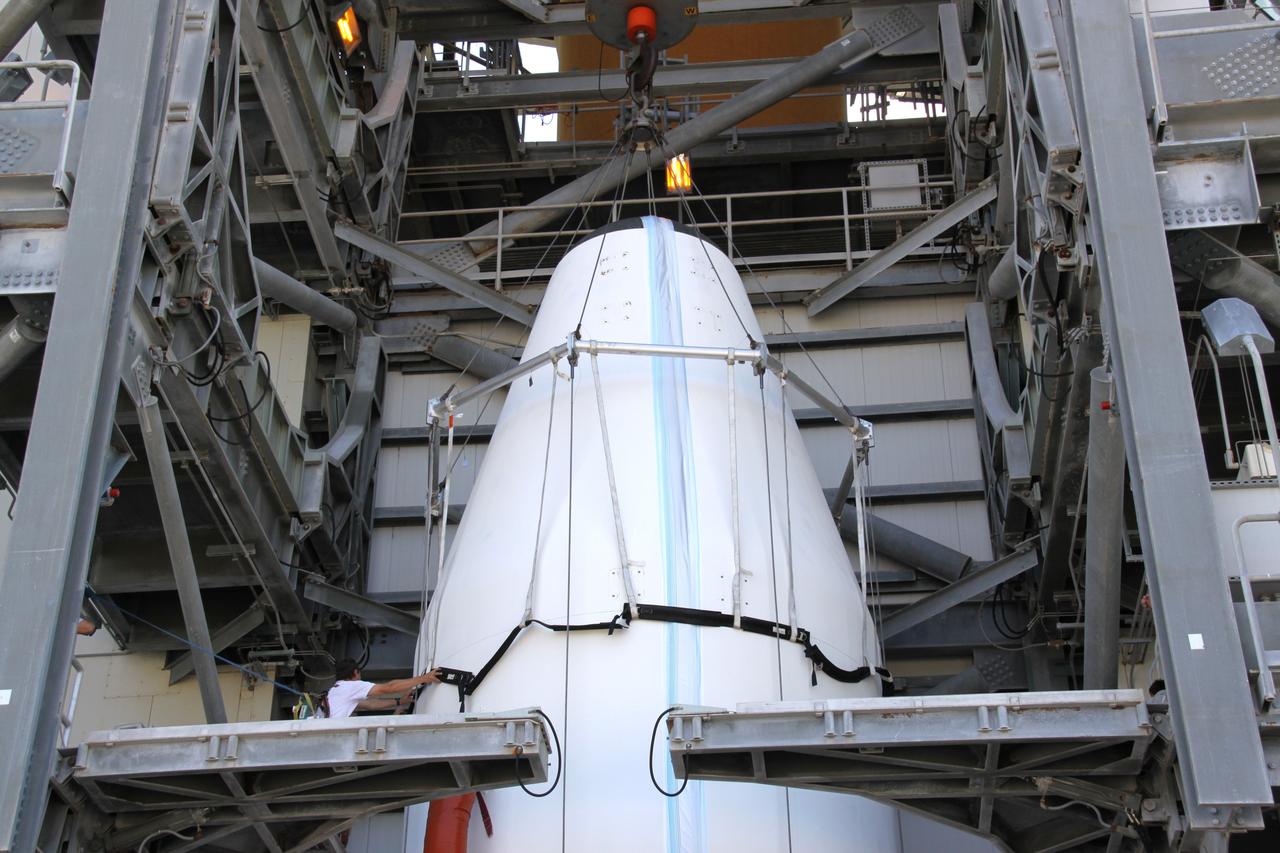
CAPE CANAVERAL, Fla. – On Launch Complex 37 at Cape Canaveral Air Force Station in Florida, workers finish attaching the sling on the GOES-O satellite that will to lift it into the mobile service tower where it will be mated with the United Launch Alliance Delta IV expendable launch vehicle. The GOES-O satellite is targeted to launch no earlier than June 26. The latest Geostationary Operational Environmental Satellite, GOES-O was developed by NASA for the National Oceanic and Atmospheric Administration, or NOAA. The GOES satellites continuously provide observations of 60 percent of the Earth including the continental United States, providing weather monitoring and forecast operations as well as a continuous and reliable stream of environmental information and severe weather warnings. Once in orbit, GOES-O will be designated GOES-14, and NASA will provide on-orbit checkout and then transfer operational responsibility to NOAA. Photo credit: NASA/Jack Pfaller
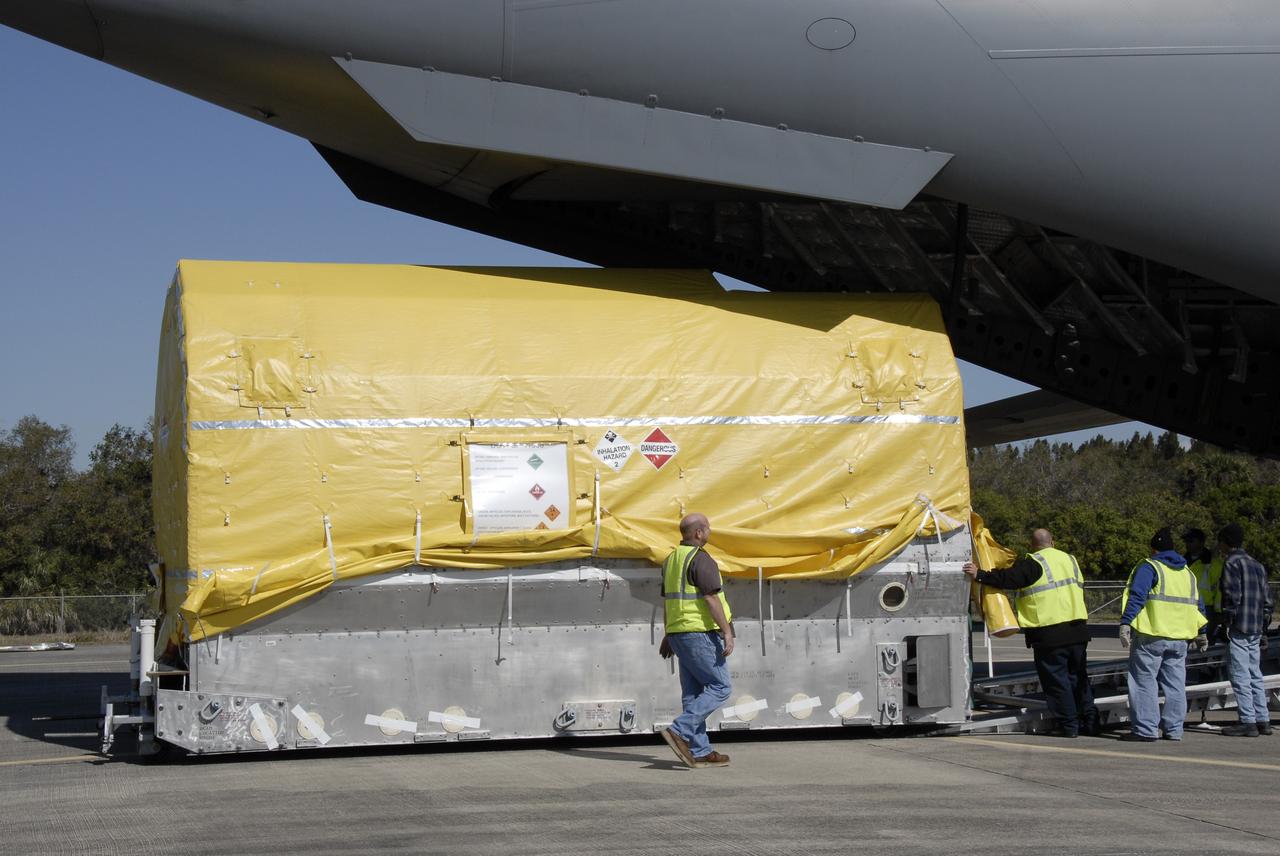
CAPE CANAVERAL, Fla. – At the Shuttle Landing Facility at NASA's Kennedy Space Center in Florida, workers check the latest Geostationary Operational Environmental Satellite, or GOES, as it moves out of the C-17 military cargo aircraft. Developed by NASA for the National Oceanic and Atmospheric Administration, or NOAA, the GOES-O satellite is targeted to launch April 28 onboard a United Launch Alliance Delta IV expendable launch vehicle. Once in orbit, GOES-O will be designated GOES-14, and NASA will provide on-orbit checkout and then transfer operational responsibility to NOAA. GOES-O will be placed in on-orbit storage as a replacement for an older GOES satellite. After arriving, the satellite was transported to Astrotech in Titusville, Fla., where final testing of the imaging system, instrumentation, communications and power systems will be performed. Photo credit: NASA/Kim Shiflett
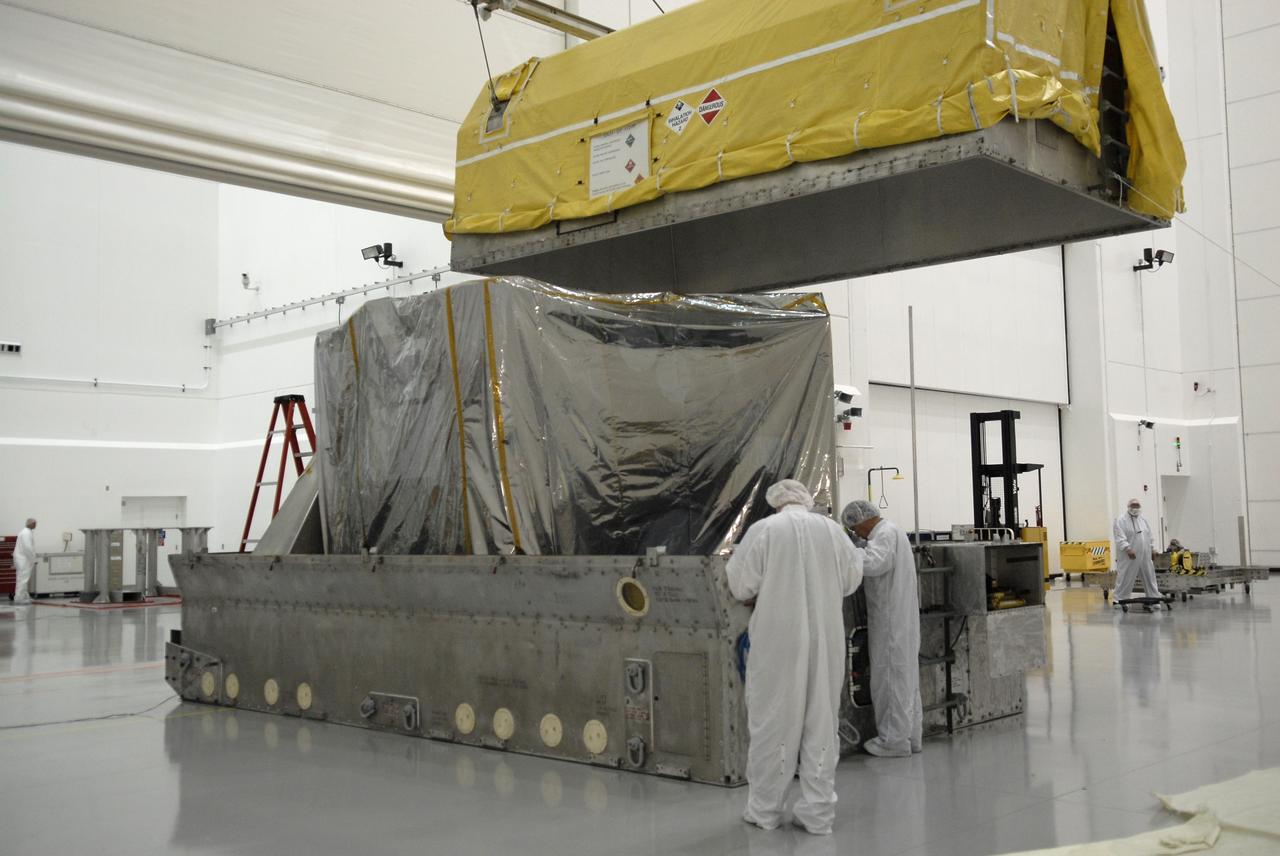
CAPE CANAVERAL, Fla. – In the Astrotech payload processing facility in Titusville, Fla., the top of the shipping container is moved away from the Geostationary Operational Environmental Satellite, or GOES-O, wrapped in a protective cover. The satellite will undergo final testing of the imaging system, instrumentation, communications and power systems. Developed by NASA for the National Oceanic and Atmospheric Administration, or NOAA, the GOES-O satellite is targeted to launch April 28 onboard a United Launch Alliance Delta IV expendable launch vehicle. Once in orbit, GOES-O will be designated GOES-14, and NASA will provide on-orbit checkout and then transfer operational responsibility to NOAA. GOES-O will be placed in on-orbit storage as a replacement for an older GOES satellite. Photo credit: NASA/Kim Shiflett
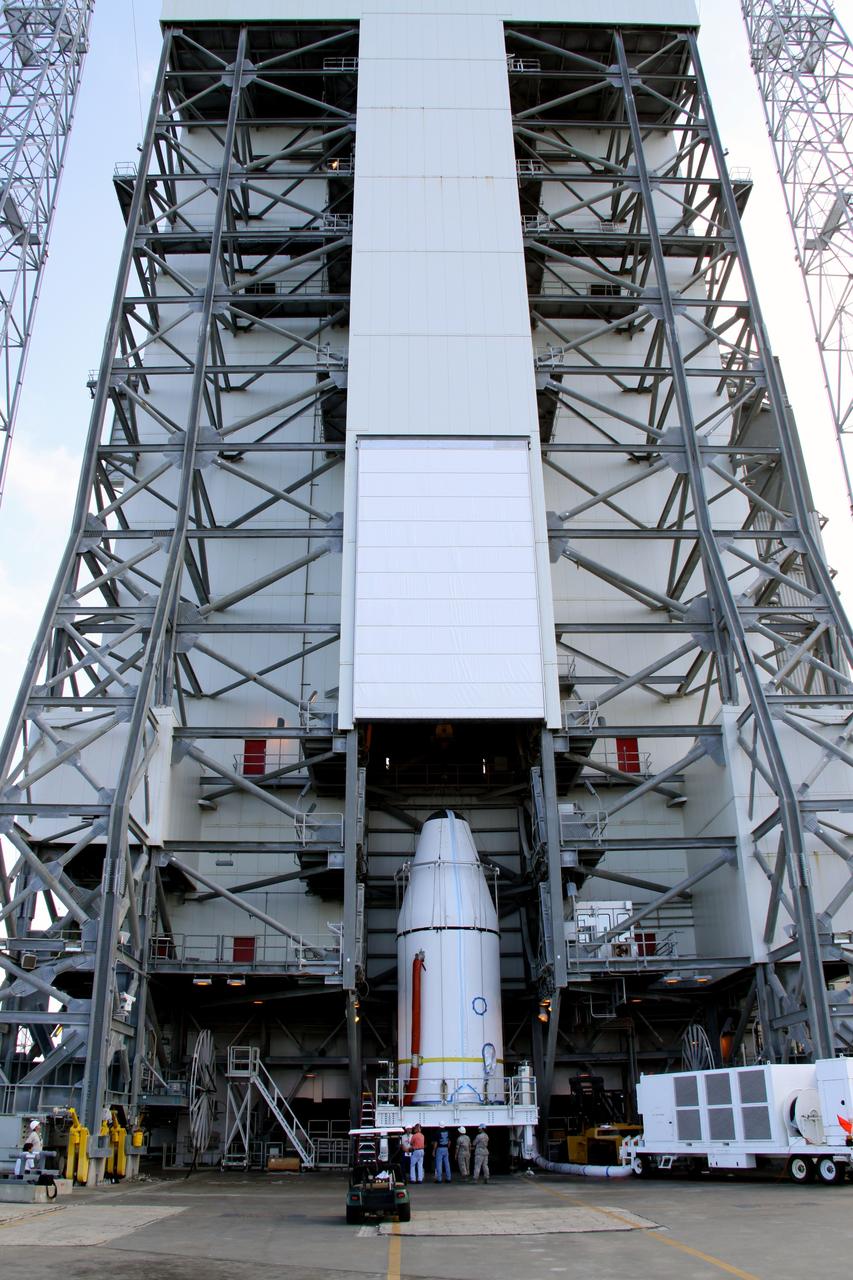
CAPE CANAVERAL, Fla. – On Launch Complex 37 at Cape Canaveral Air Force Station in Florida, preparations are complete to lift the GOES-O satellite into the mobile service tower where it will be mated with the United Launch Alliance Delta IV expendable launch vehicle. The GOES-O satellite is targeted to launch no earlier than June 26. The latest Geostationary Operational Environmental Satellite, GOES-O was developed by NASA for the National Oceanic and Atmospheric Administration, or NOAA. The GOES satellites continuously provide observations of 60 percent of the Earth including the continental United States, providing weather monitoring and forecast operations as well as a continuous and reliable stream of environmental information and severe weather warnings. Once in orbit, GOES-O will be designated GOES-14, and NASA will provide on-orbit checkout and then transfer operational responsibility to NOAA. Photo credit: NASA/Jack Pfaller
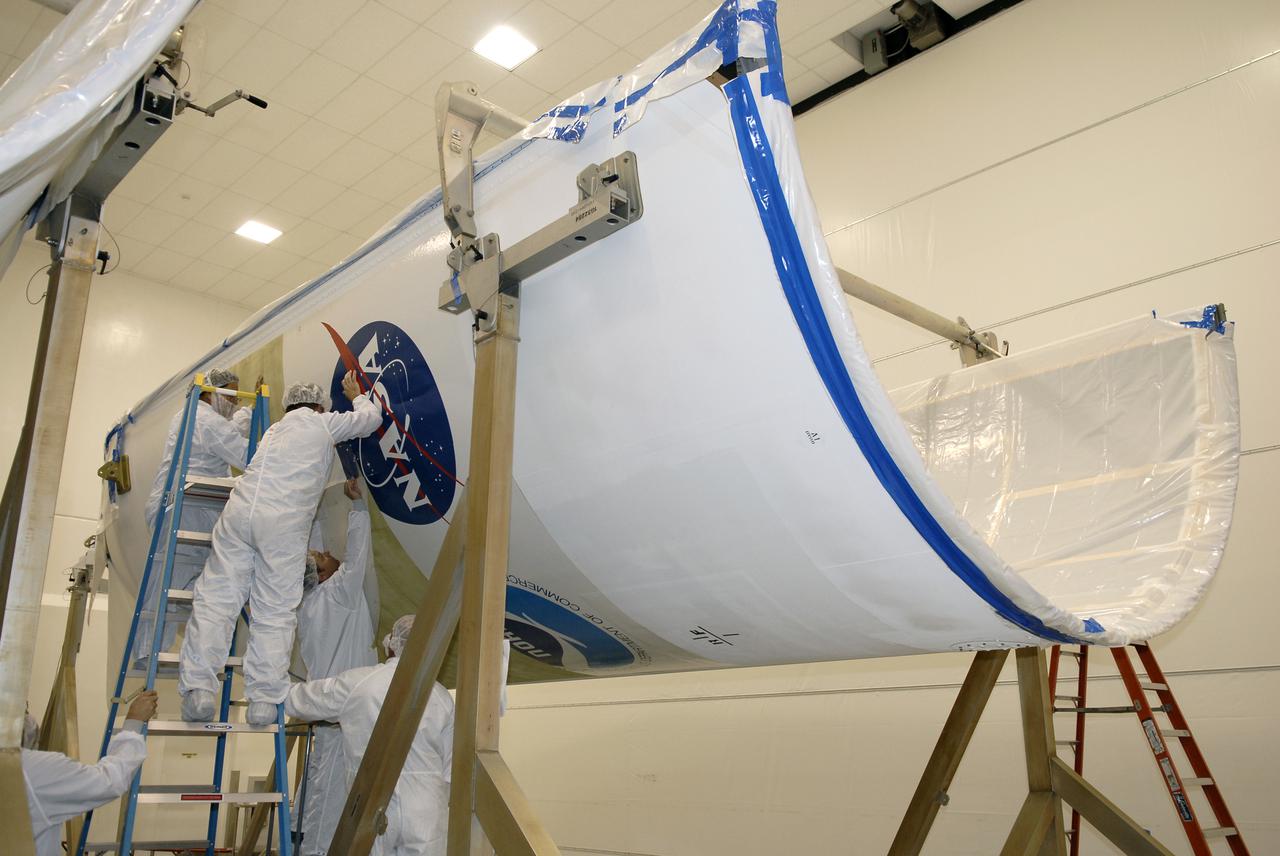
CAPE CANAVERAL, Fla. – At the Astrotech payload processing facility in Titusville, Fla., technicians apply the NASA logo decal to the fairing that will encapsulate the GOES-O satellite during launch. The latest Geostationary Operational Environmental Satellite, GOES-O was developed by NASA for the National Oceanic and Atmospheric Administration, or NOAA. The GOES satellites continuously provide observations of 60 percent of the Earth including the continental United States, providing weather monitoring and forecast operations as well as a continuous and reliable stream of environmental information and severe weather warnings. Once in orbit, GOES-O will be designated GOES-14, and NASA will provide on-orbit checkout and then transfer operational responsibility to NOAA. The GOES-O satellite is targeted to launch April 28 onboard a United Launch Alliance Delta IV expendable launch vehicle. Photo credit: NASA_Kim Shiflett
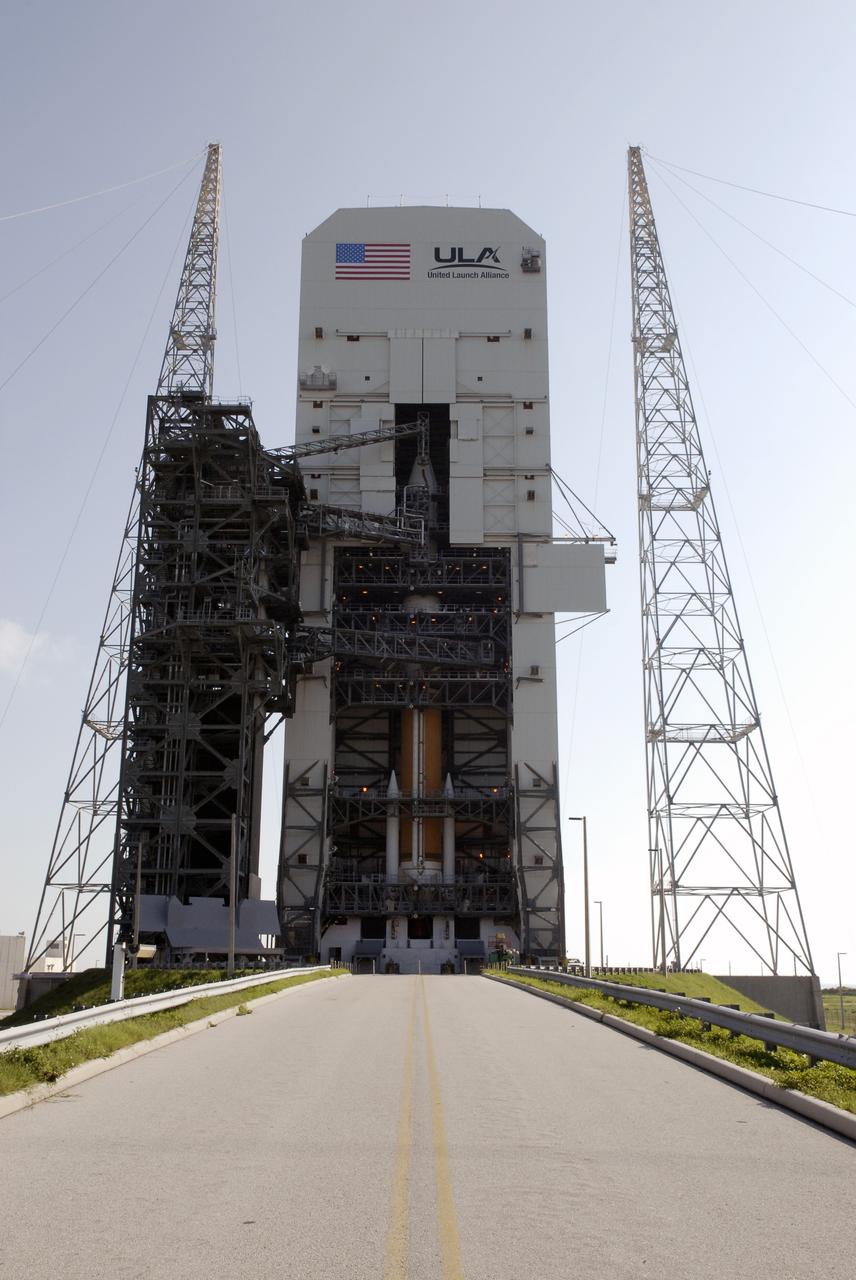
CAPE CANAVERAL, Fla. – On Launch Complex 37 at Cape Canaveral Air Force Station in Florida, the GOES-O satellite is seen in the top of the mobile service tower, where it has been mated with the United Launch Alliance Delta IV expendable launch vehicle below. The GOES-O satellite is targeted to launch June 26. The latest Geostationary Operational Environmental Satellite, GOES-O was developed by NASA for the National Oceanic and Atmospheric Administration, or NOAA. The GOES satellites continuously provide observations of 60 percent of the Earth including the continental United States, providing weather monitoring and forecast operations as well as a continuous and reliable stream of environmental information and severe weather warnings. Once in orbit, GOES-O will be designated GOES-14, and NASA will provide on-orbit checkout and then transfer operational responsibility to NOAA. Photo credit: NASA/Kim Shiflett
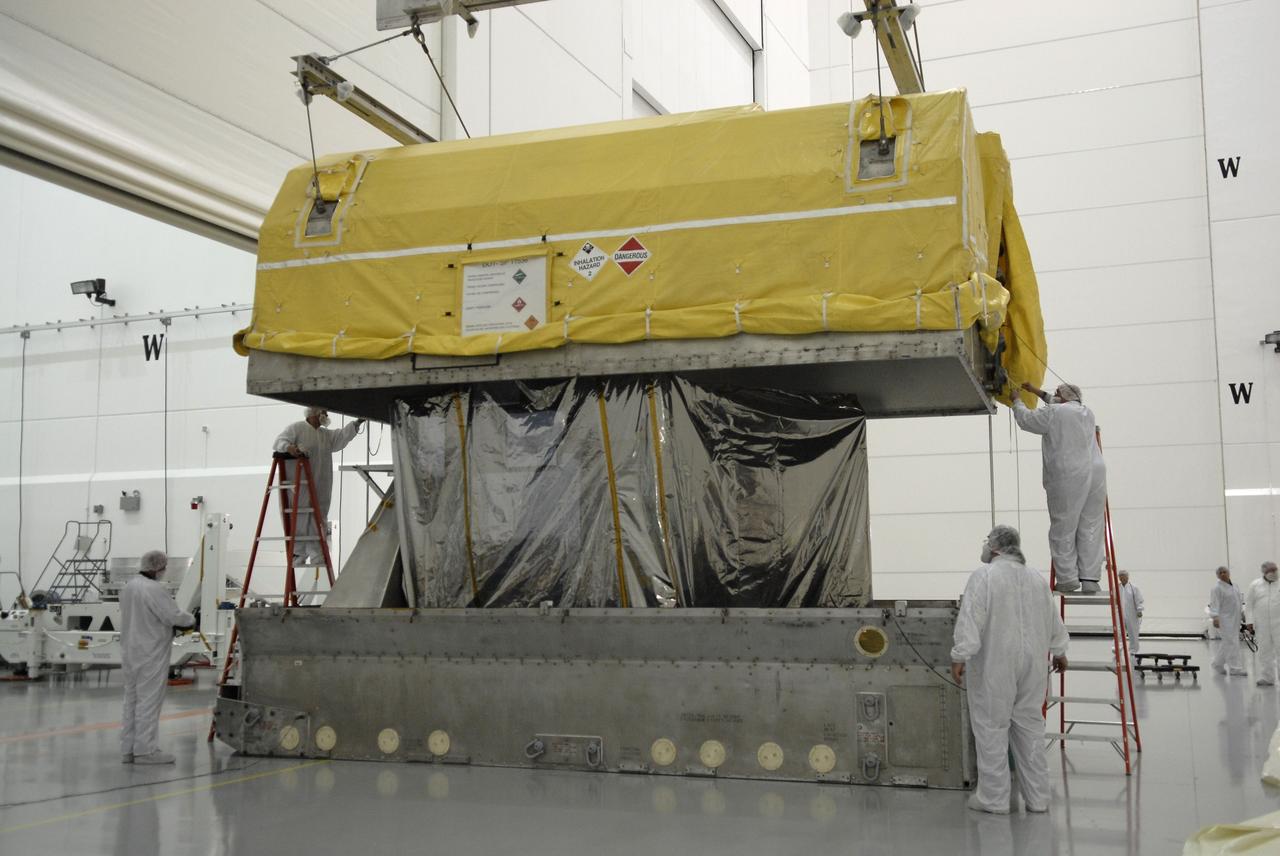
CAPE CANAVERAL, Fla. – In the Astrotech payload processing facility in Titusville, Fla., workers keep watch as the shipping container is lifted away from the Geostationary Operational Environmental Satellite, or GOES-O. The satellite will undergo final testing of the imaging system, instrumentation, communications and power systems. Developed by NASA for the National Oceanic and Atmospheric Administration, or NOAA, the GOES-O satellite is targeted to launch April 28 onboard a United Launch Alliance Delta IV expendable launch vehicle. Once in orbit, GOES-O will be designated GOES-14, and NASA will provide on-orbit checkout and then transfer operational responsibility to NOAA. GOES-O will be placed in on-orbit storage as a replacement for an older GOES satellite. Photo credit: NASA/Kim Shiflett
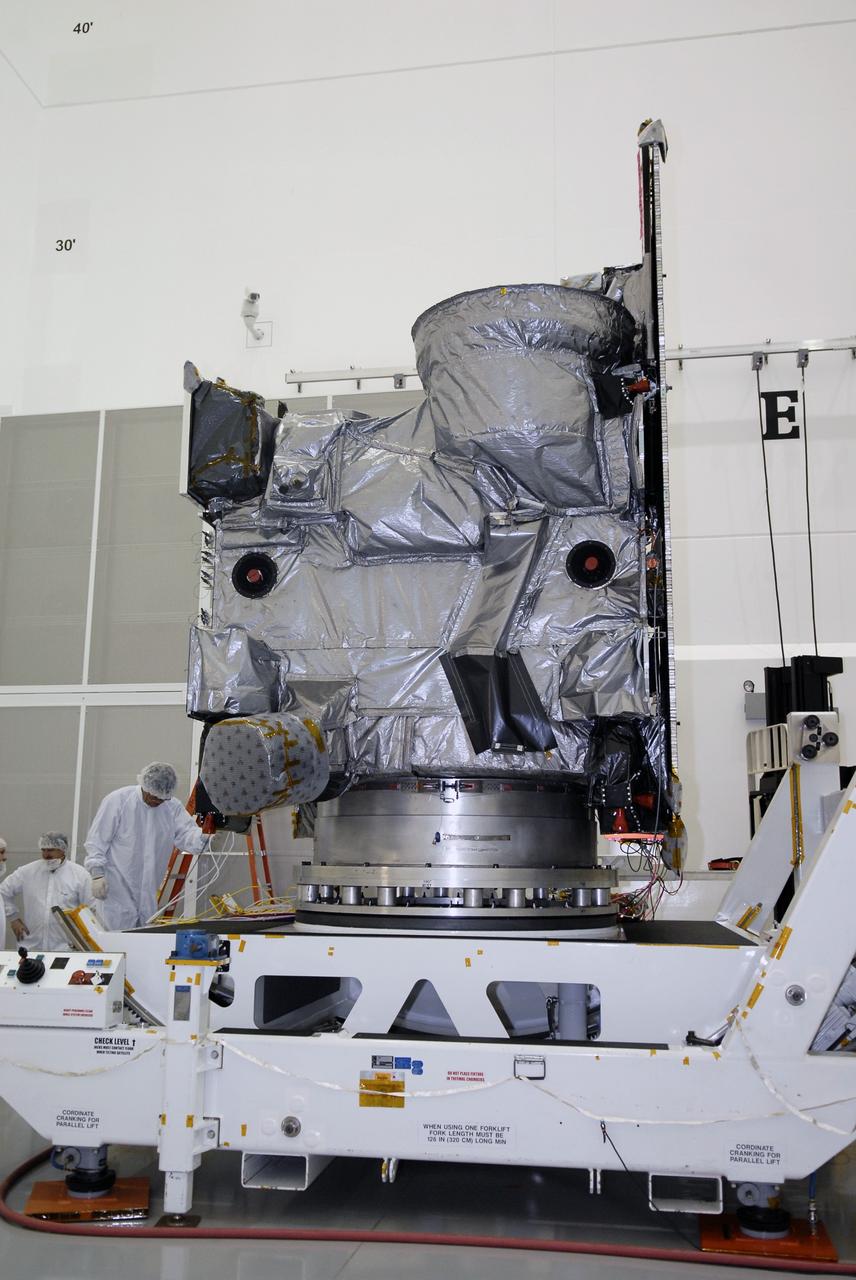
CAPE CANAVERAL, Fla. – At the Astrotech payload processing facility in Titusville, Fla., the protective shipping cover has been removed from the GOES-O satellite. GOES-O will undergo final testing of the imaging system, instrumentation, communications and power systems. The latest Geostationary Operational Environmental Satellite, GOES-O was developed by NASA for the National Oceanic and Atmospheric Administration, or NOAA. The GOES-O satellite is targeted to launch April 28 onboard a United Launch Alliance Delta IV expendable launch vehicle. Once in orbit, GOES-O will be designated GOES-14, and NASA will provide on-orbit checkout and then transfer operational responsibility to NOAA. GOES-O will be placed in on-orbit storage as a replacement for an older GOES satellite. GOES-O carries an advanced attitude control system using star trackers with spacecraft optical bench Imager and Sounder mountings that provide enhanced instrument pointing performance for improved image navigation and registration to better locate severe storms and other events important to the NOAA National Weather Service. Photo credit: NASA/Kim Shiflett
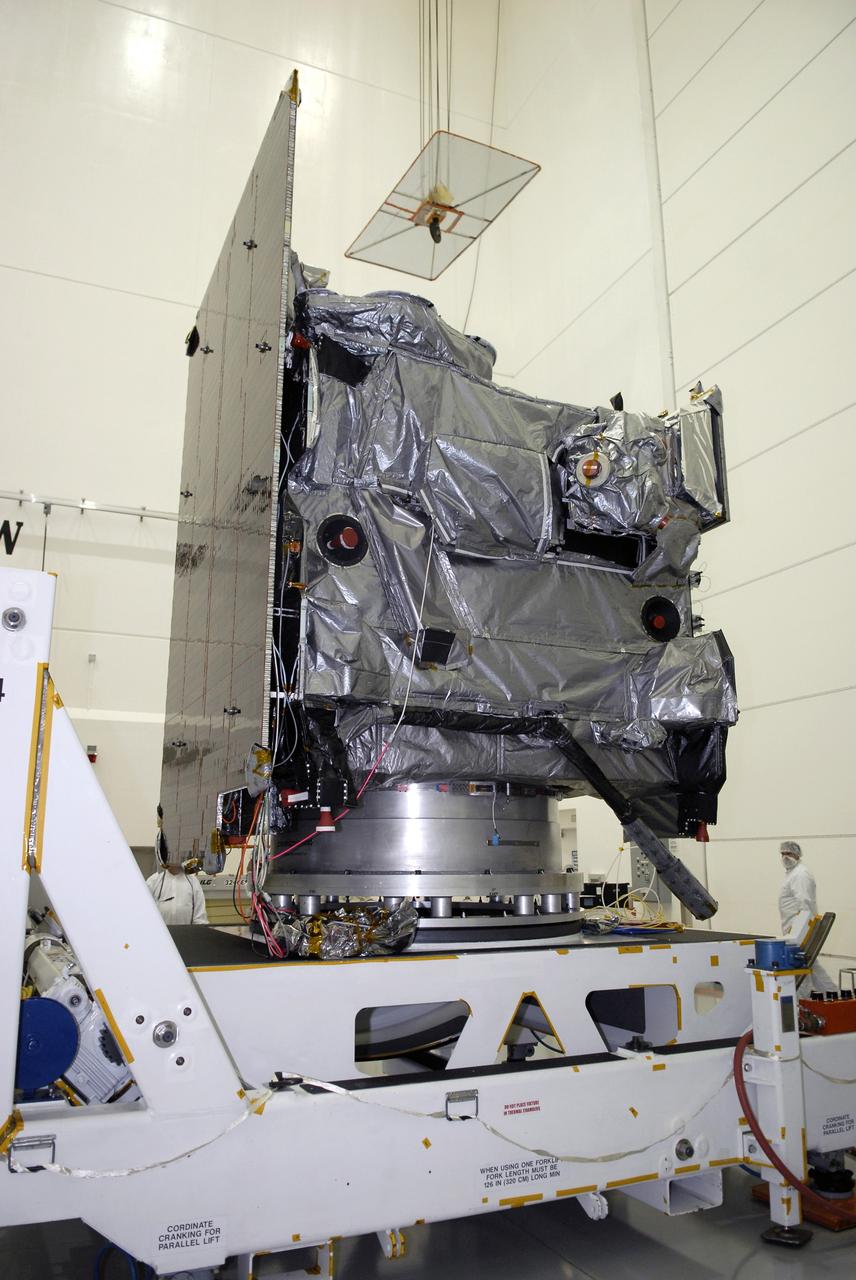
CAPE CANAVERAL, Fla. – At the Astrotech payload processing facility in Titusville, Fla., the solar arrays on the GOES-O satellite are revealed. GOES-O will undergo final testing of the imaging system, instrumentation, communications and power systems. The latest Geostationary Operational Environmental Satellite, GOES-O was developed by NASA for the National Oceanic and Atmospheric Administration, or NOAA. The GOES-O satellite is targeted to launch April 28 onboard a United Launch Alliance Delta IV expendable launch vehicle. Once in orbit, GOES-O will be designated GOES-14, and NASA will provide on-orbit checkout and then transfer operational responsibility to NOAA. GOES-O will be placed in on-orbit storage as a replacement for an older GOES satellite. GOES-O carries an advanced attitude control system using star trackers with spacecraft optical bench Imager and Sounder mountings that provide enhanced instrument pointing performance for improved image navigation and registration to better locate severe storms and other events important to the NOAA National Weather Service. Photo credit: NASA/Kim Shiflett
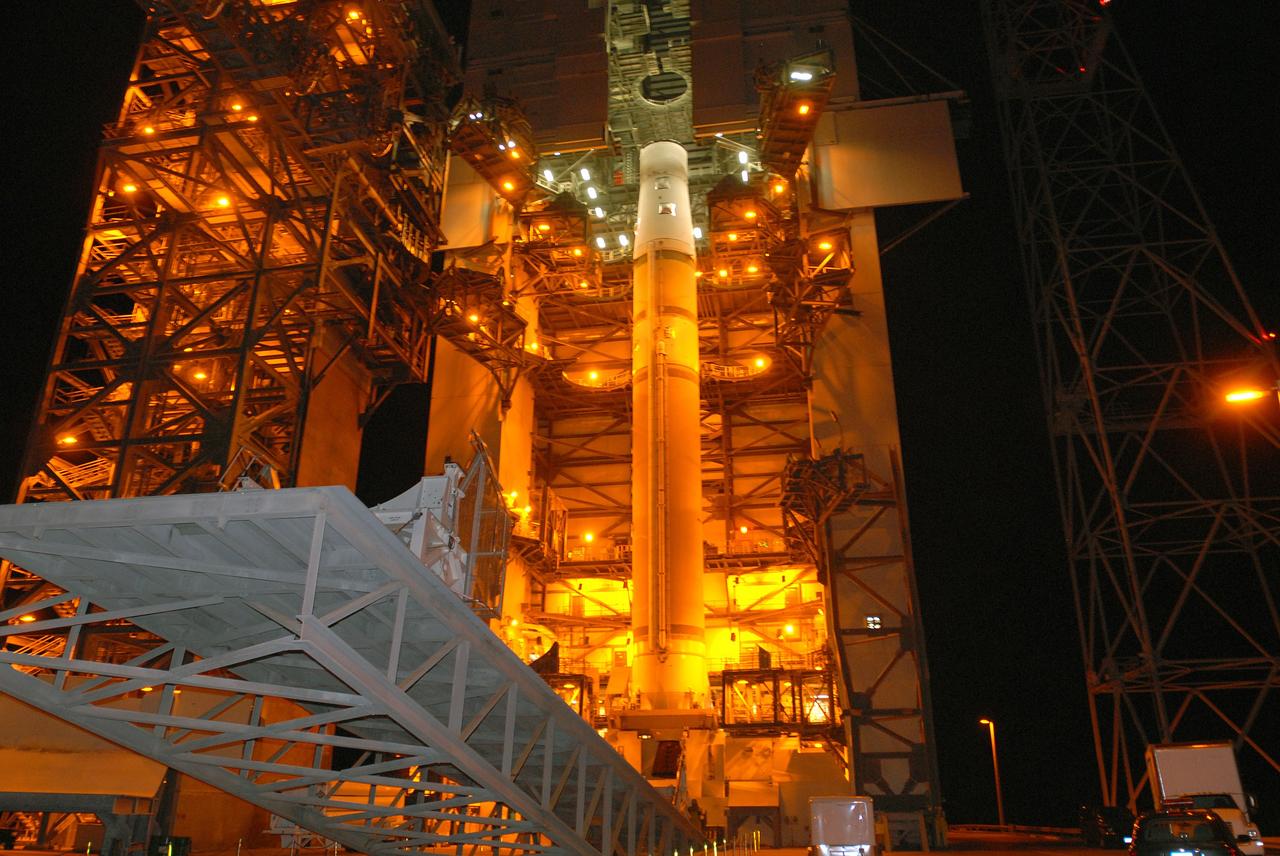
CAPE CANAVERAL, Fla. – On Launch Pad 37 at Cape Canaveral Air Force Station in Florida, the GOES-O and Delta IV upper stage stand erect in front of the mobile service tower after lowering of the lifting mechanism, at left. GOES–O is one of a series of Geostationary Operational Environmental Satellites. The multi-mission GOES series N-P will be a vital contributor to weather, solar and space operations and science. NASA and the National Oceanic and Atmospheric Administration, or NOAA, are actively engaged in a cooperative program to expand the existing GOES system with the launch of the GOES N-P satellites. Launch of the GOES-O is targeted for no earlier than April 2009. Photo credit: NASA/Jim Grossmann
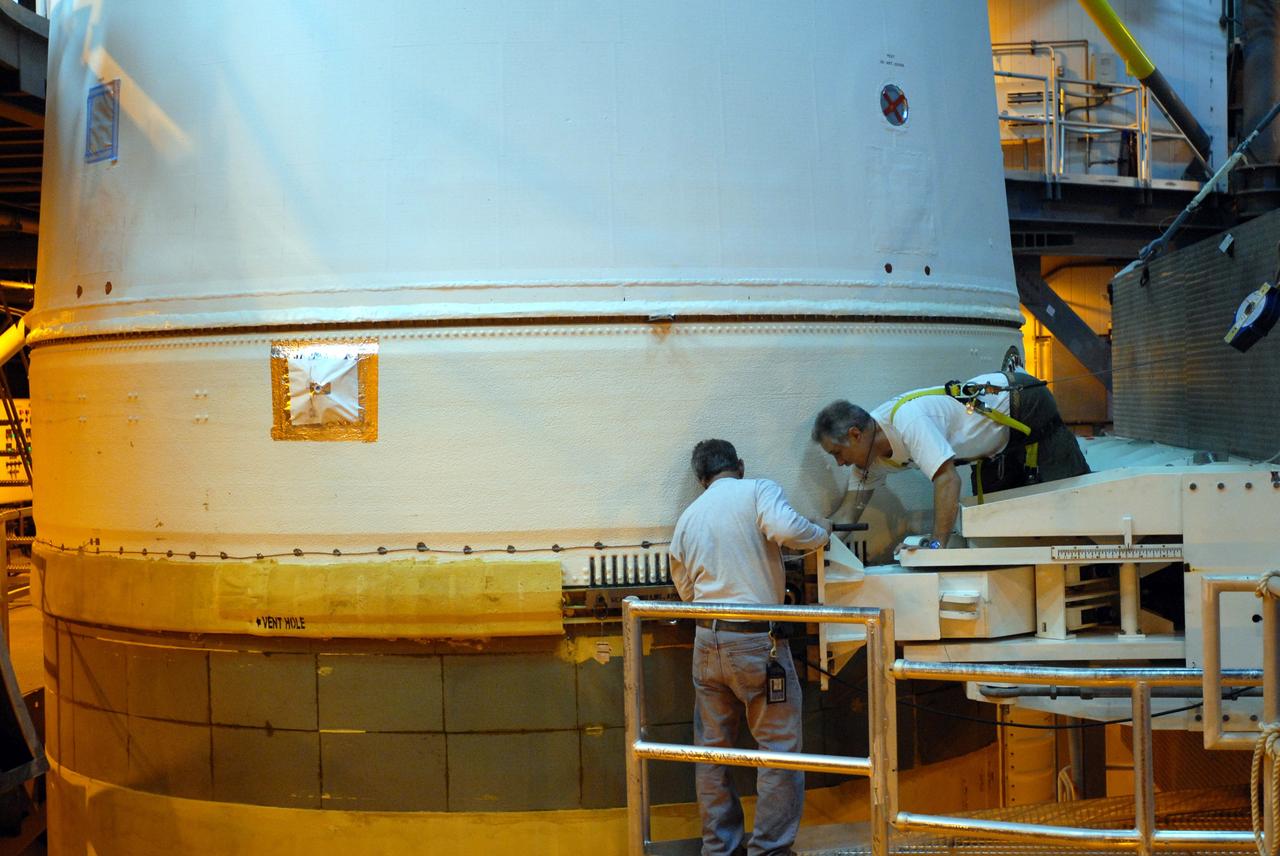
CAPE CANAVERAL, Fla. – On Launch Pad 37 at Cape Canaveral Air Force Station in Florida, workers begin detaching the lifting mechanism that raised the GOES-O and Delta IV upper stage to vertical. GOES–O is one of a series of Geostationary Operational Environmental Satellites. The multi-mission GOES series N-P will be a vital contributor to weather, solar and space operations and science. NASA and the National Oceanic and Atmospheric Administration, or NOAA, are actively engaged in a cooperative program to expand the existing GOES system with the launch of the GOES N-P satellites. Launch of the GOES-O is targeted for no earlier than April 2009. Photo credit: NASA/Jim Grossmann
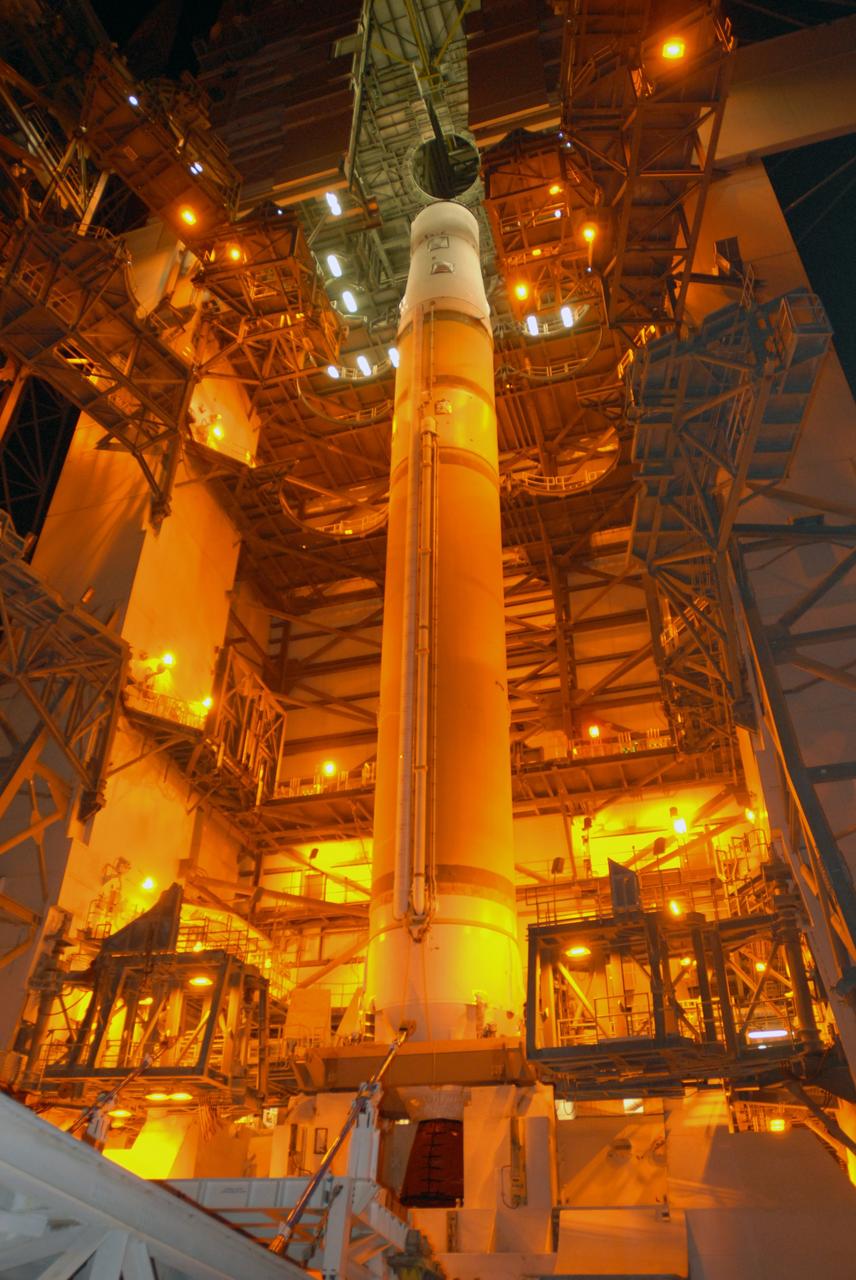
CAPE CANAVERAL, Fla. – On Launch Pad 37 at Cape Canaveral Air Force Station in Florida, the GOES-O and Delta IV upper stage stand erect after lowering of the lifting mechanism. GOES–O is one of a series of Geostationary Operational Environmental Satellites. The multi-mission GOES series N-P will be a vital contributor to weather, solar and space operations and science. NASA and the National Oceanic and Atmospheric Administration, or NOAA, are actively engaged in a cooperative program to expand the existing GOES system with the launch of the GOES N-P satellites. Launch of the GOES-O is targeted for no earlier than April 2009. Photo credit: NASA/Jim Grossmann
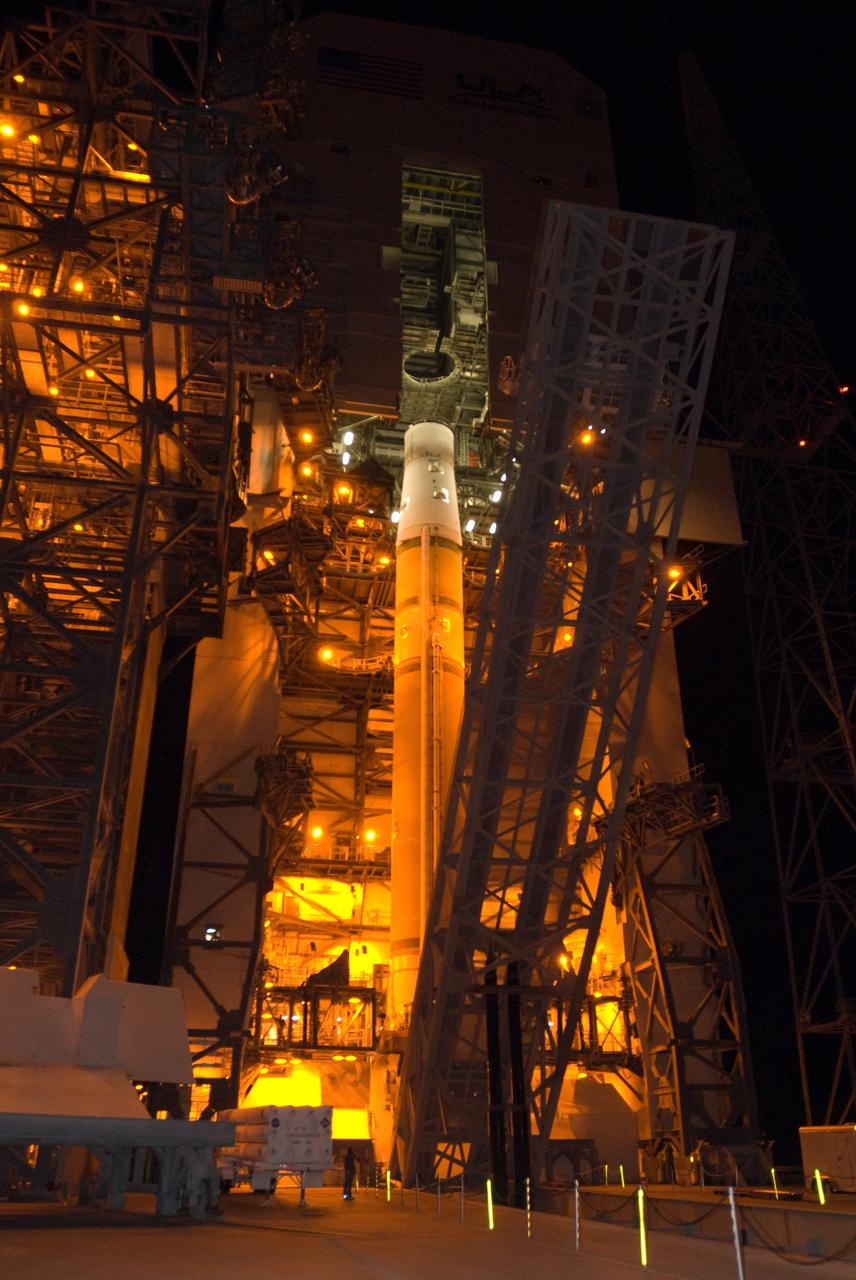
CAPE CANAVERAL, Fla. – On Launch Pad 37 at Cape Canaveral Air Force Station in Florida, the lifting mechanism that raised the GOES-O and Delta IV upper stage to vertical is lowered toward the ground. GOES–O is one of a series of Geostationary Operational Environmental Satellites. The multi-mission GOES series N-P will be a vital contributor to weather, solar and space operations and science. NASA and the National Oceanic and Atmospheric Administration, or NOAA, are actively engaged in a cooperative program to expand the existing GOES system with the launch of the GOES N-P satellites. Launch of the GOES-O is targeted for no earlier than April 2009. Photo credit: NASA/Jim Grossmann

CAPE CANAVERAL, Fla. – On Launch Pad 37 at Cape Canaveral Air Force Station in Florida, the lifting mechanism that raised the GOES-O and Delta IV upper stage to vertical is lowered toward the ground. GOES–O is one of a series of Geostationary Operational Environmental Satellites. The multi-mission GOES series N-P will be a vital contributor to weather, solar and space operations and science. NASA and the National Oceanic and Atmospheric Administration, or NOAA, are actively engaged in a cooperative program to expand the existing GOES system with the launch of the GOES N-P satellites. Launch of the GOES-O is targeted for no earlier than April 2009. Photo credit: NASA/Jim Grossmann
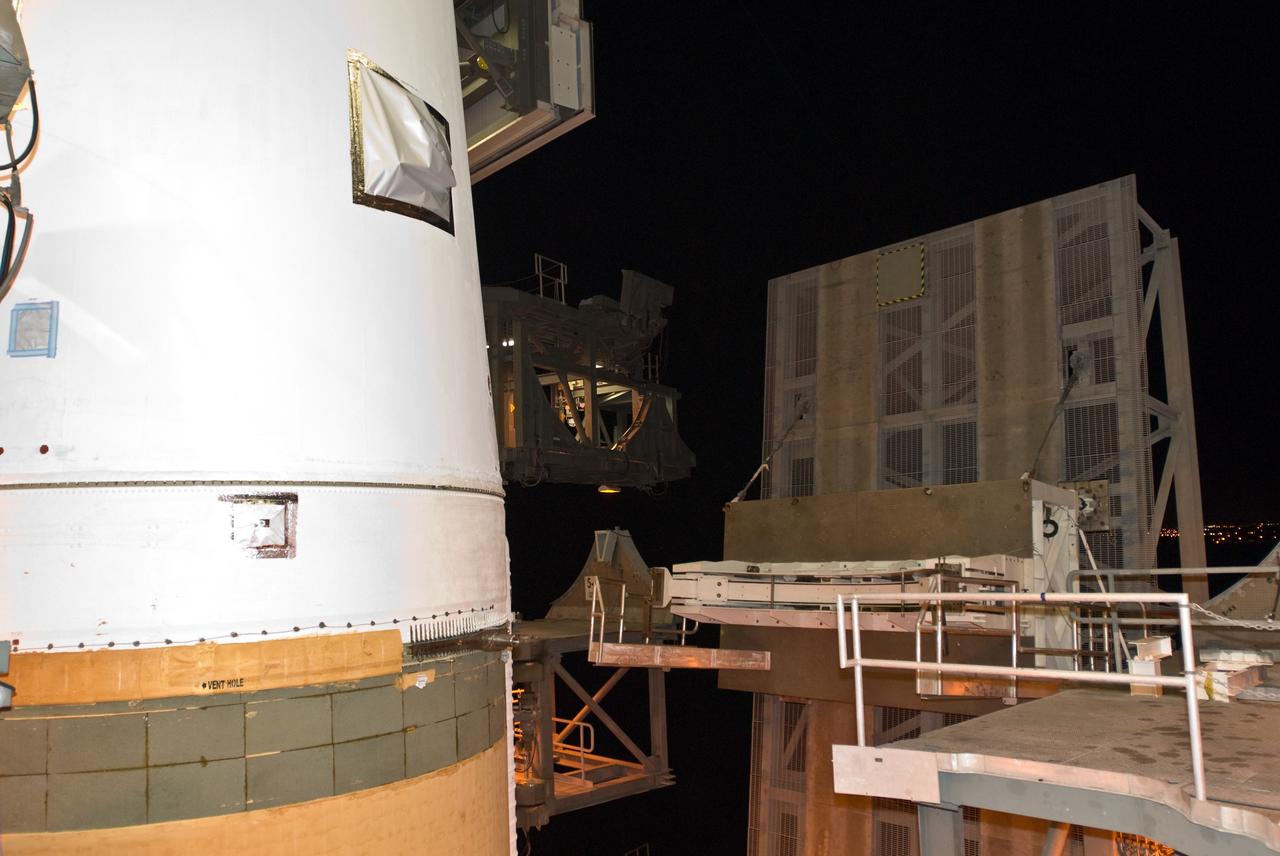
CAPE CANAVERAL, Fla. – On Launch Pad 37 at Cape Canaveral Air Force Station in Florida, the lifting mechanism that raised the GOES-O and Delta IV upper stage to vertical is being detached from the spacecraft-Delta stack. GOES–O is one of a series of Geostationary Operational Environmental Satellites. The multi-mission GOES series N-P will be a vital contributor to weather, solar and space operations and science. NASA and the National Oceanic and Atmospheric Administration, or NOAA, are actively engaged in a cooperative program to expand the existing GOES system with the launch of the GOES N-P satellites. Launch of the GOES-O is targeted for no earlier than April 2009. Photo credit: NASA/Jim Grossmann
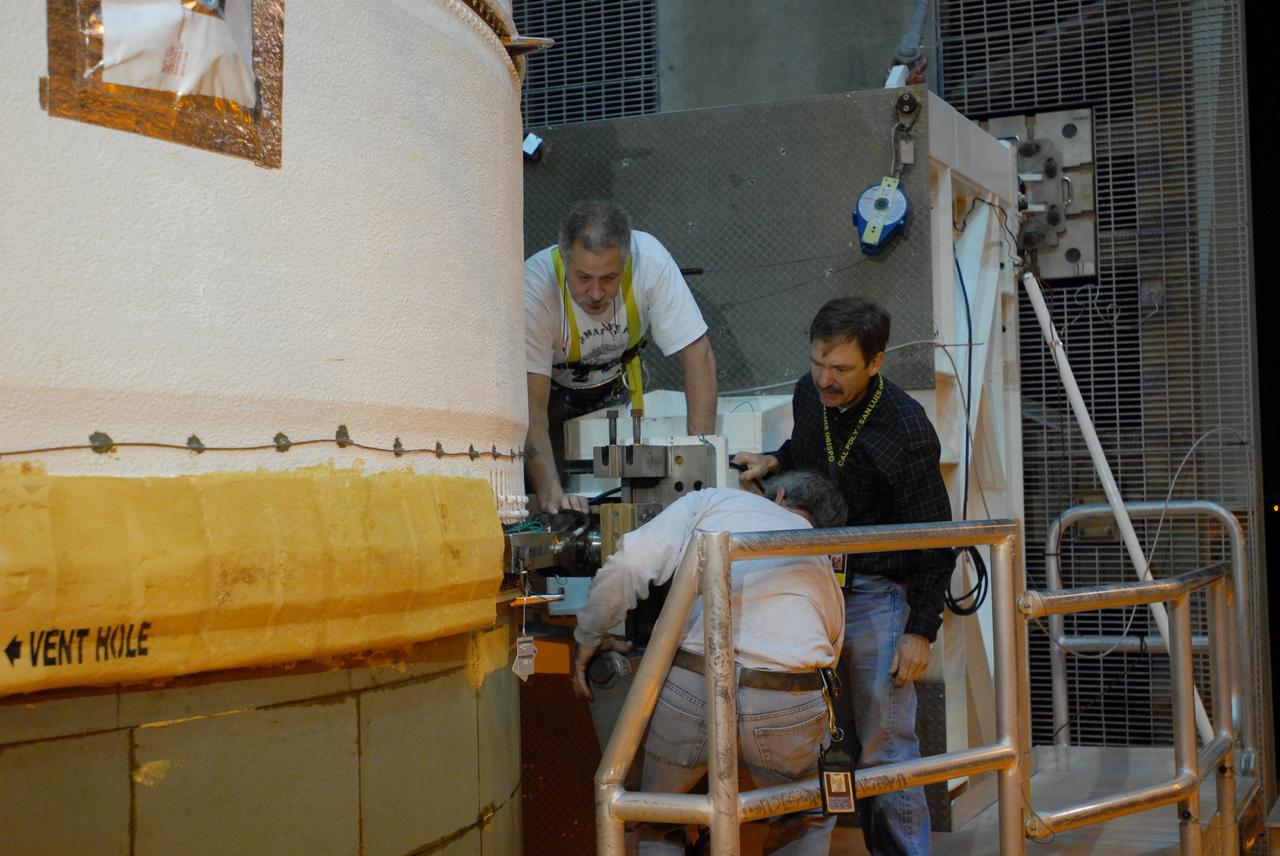
CAPE CANAVERAL, Fla. – On Launch Pad 37 at Cape Canaveral Air Force Station in Florida, workers begin detaching the lifting mechanism that raised the GOES-O and Delta IV upper stage to vertical. GOES–O is one of a series of Geostationary Operational Environmental Satellites. The multi-mission GOES series N-P will be a vital contributor to weather, solar and space operations and science. NASA and the National Oceanic and Atmospheric Administration, or NOAA, are actively engaged in a cooperative program to expand the existing GOES system with the launch of the GOES N-P satellites. Launch of the GOES-O is targeted for no earlier than April 2009. Photo credit: NASA/Jim Grossmann
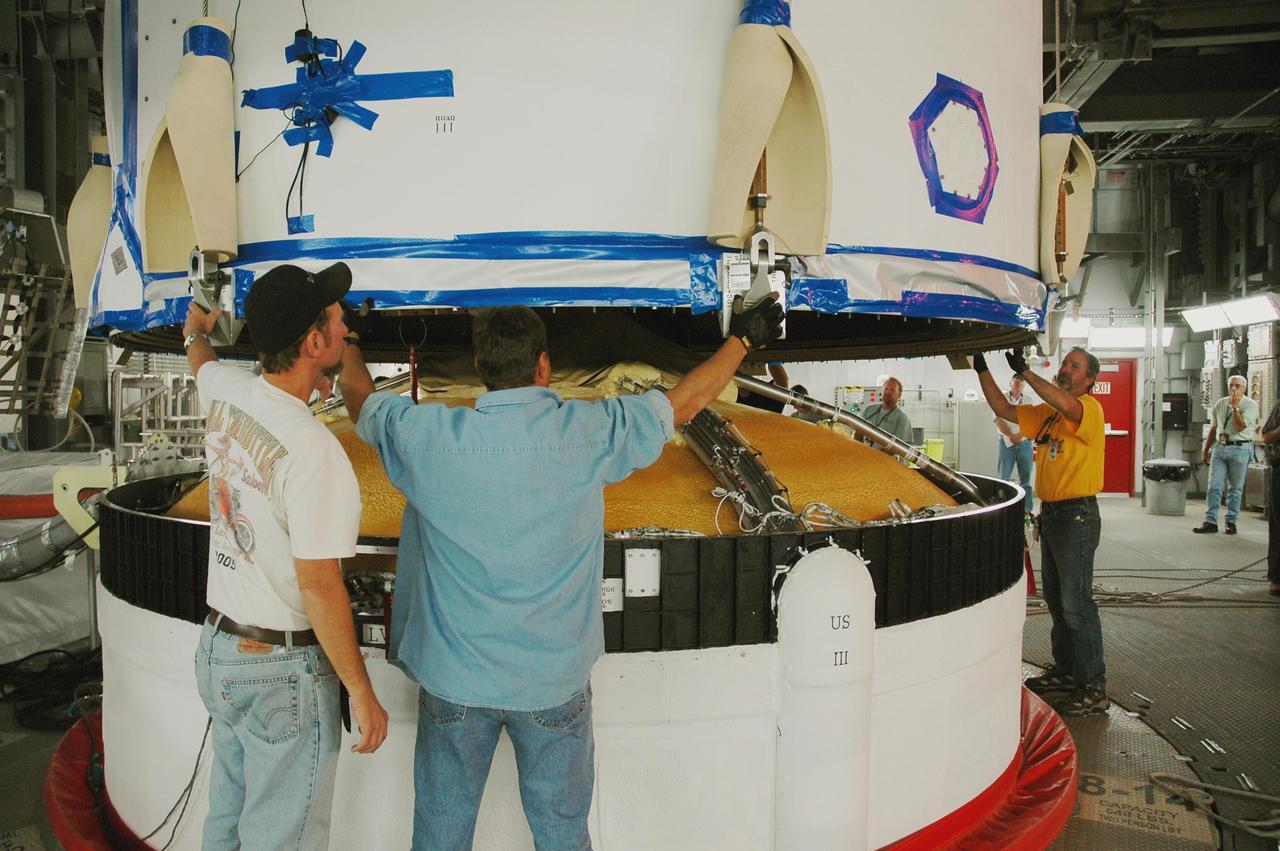
KENNEDY SPACE CENTER, FLA. - In the mobile service tower on Launch Complex 37 at Cape Canaveral Air Force Station in Florida, workers guide the GOES-N spacecraft toward the second stage of the Boeing Delta IV rocket for mating. GOES-N is the latest in a series of Geostationary Operational Environmental Satellites for NOAA and NASA, providing continuous monitoring necessary for intensive data analysis. GOES-N is scheduled to be launched May 18 in an hour-long window between 6:14 and 7:14 p.m. EDT. Photo credit: NASA/Charisse Nahser
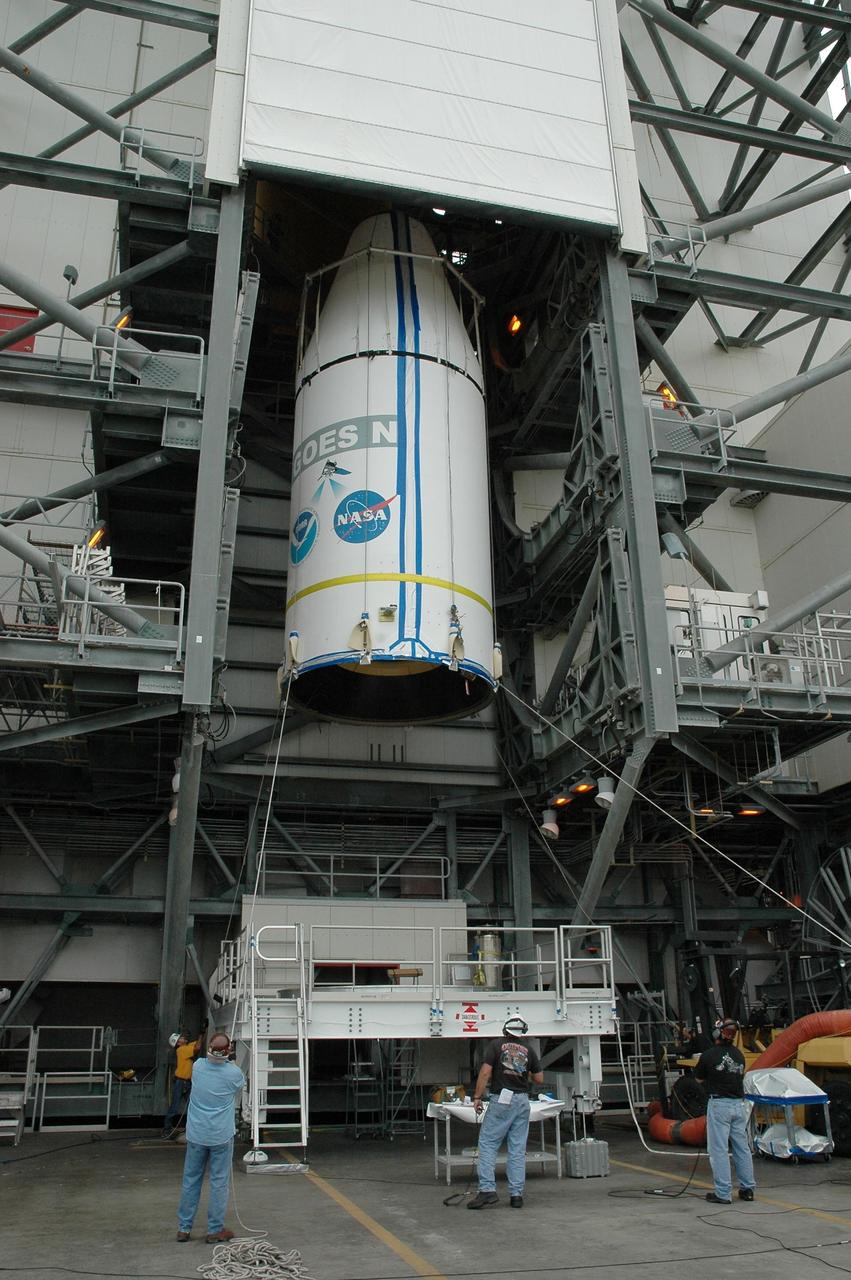
KENNEDY SPACE CENTER, FLA. - On Launch Complex 37 at Cape Canaveral Air Force Station in Florida, the GOES-N spacecraft is lifted into the mobile service tower. There it will be mated with the second stage of the Boeing Delta IV rocket. GOES-N is the latest in a series of Geostationary Operational Environmental Satellites for NOAA and NASA, providing continuous monitoring necessary for intensive data analysis. GOES-N is scheduled to be launched May 18 in an hour-long window between 6:14 and 7:14 p.m. EDT. Photo credit: NASA/Charisse Nahser
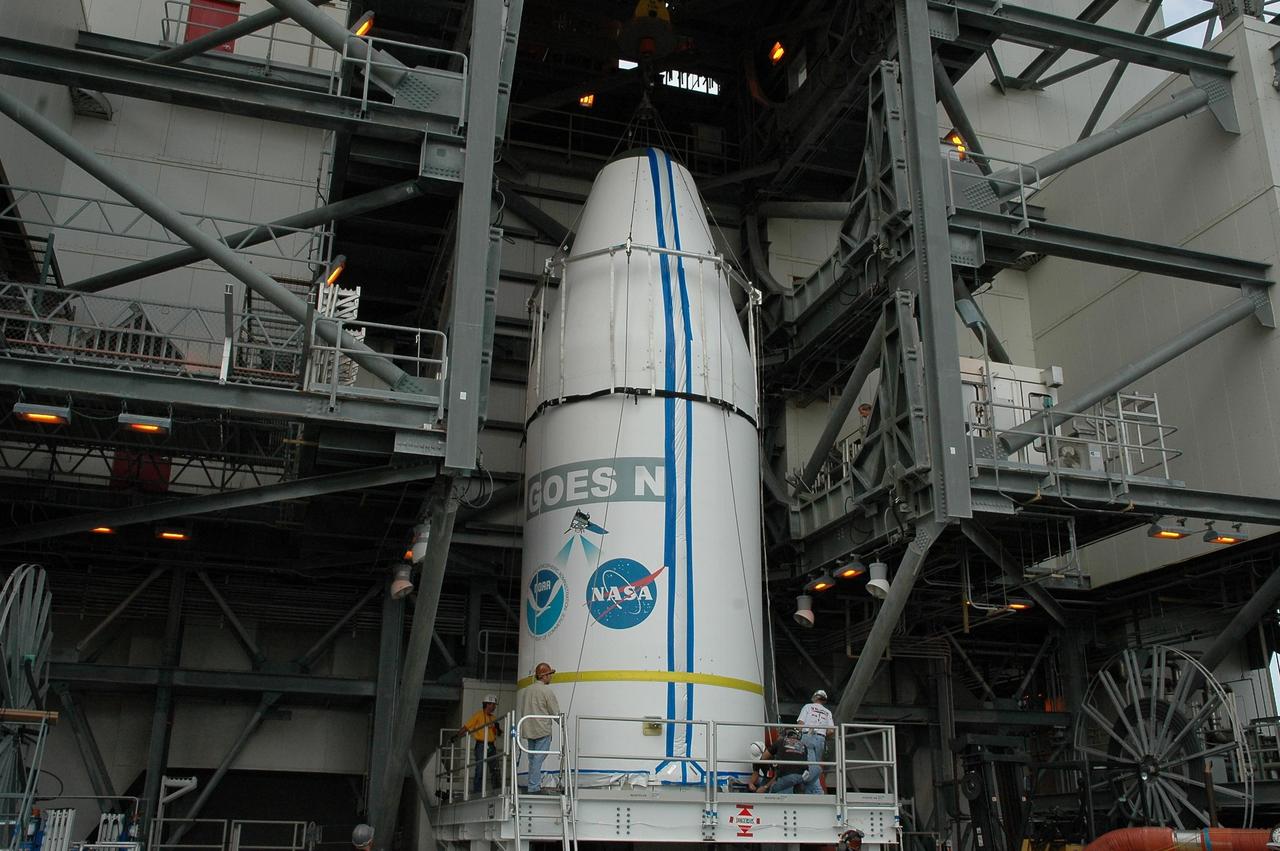
KENNEDY SPACE CENTER, FLA. - On Launch Complex 37 at Cape Canaveral Air Force Station in Florida, the GOES-N spacecraft is ready to be lifted into the mobile service tower. There it will be mated with the second stage of the Boeing Delta IV rocket. GOES-N is the latest in a series of Geostationary Operational Environmental Satellites for NOAA and NASA, providing continuous monitoring necessary for intensive data analysis. GOES-N is scheduled to be launched May 18 in an hour-long window between 6:14 and 7:14 p.m. EDT. Photo credit: NASA/Charisse Nahser
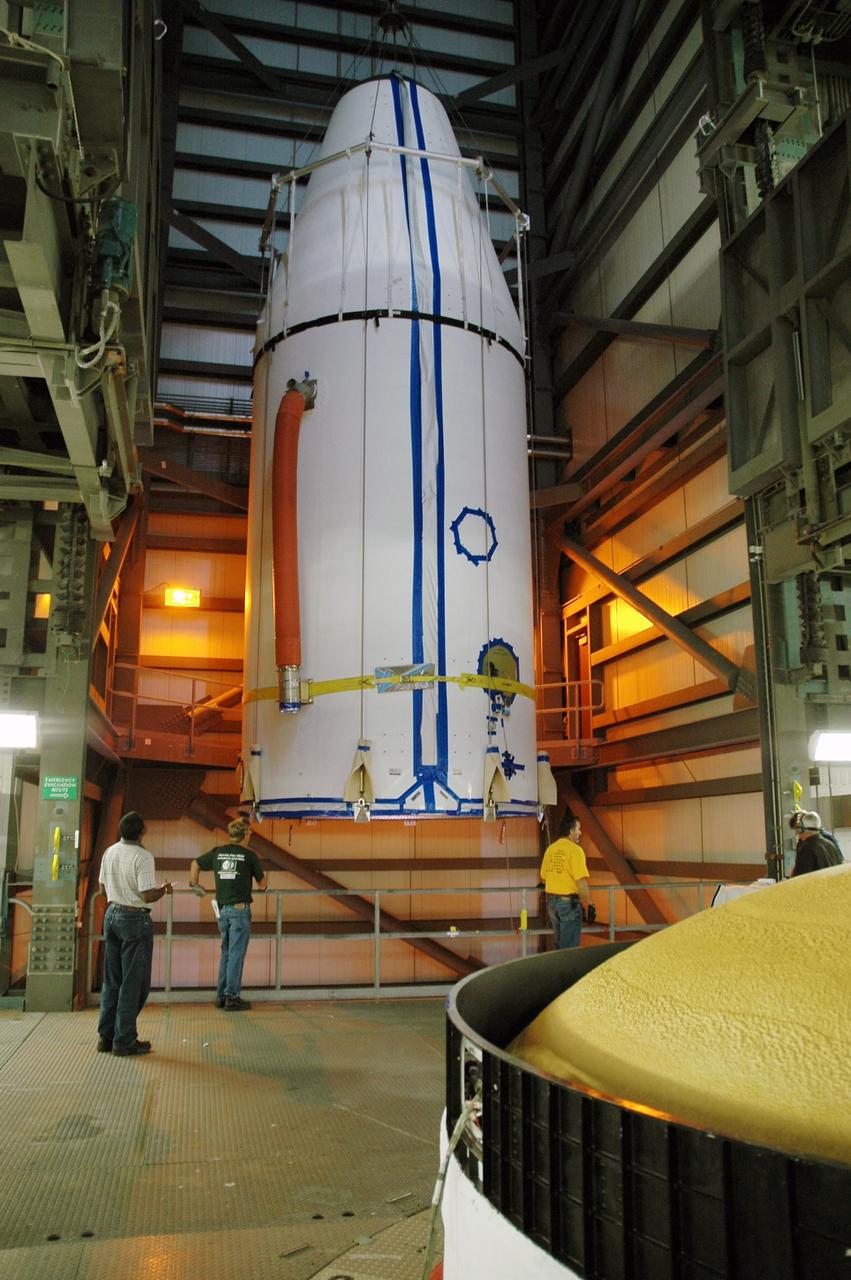
KENNEDY SPACE CENTER, FLA. - On Launch Complex 37 at Cape Canaveral Air Force Station in Florida, the GOES-N spacecraft arrives at the upper level of the mobile service tower and is moved toward the second stage of the Boeing Delta IV rocket (lower right). GOES-N is the latest in a series of Geostationary Operational Environmental Satellites for NOAA and NASA, providing continuous monitoring necessary for intensive data analysis. GOES-N is scheduled to be launched May 18 in an hour-long window between 6:14 and 7:14 p.m. EDT. Photo credit: NASA/Charisse Nahser
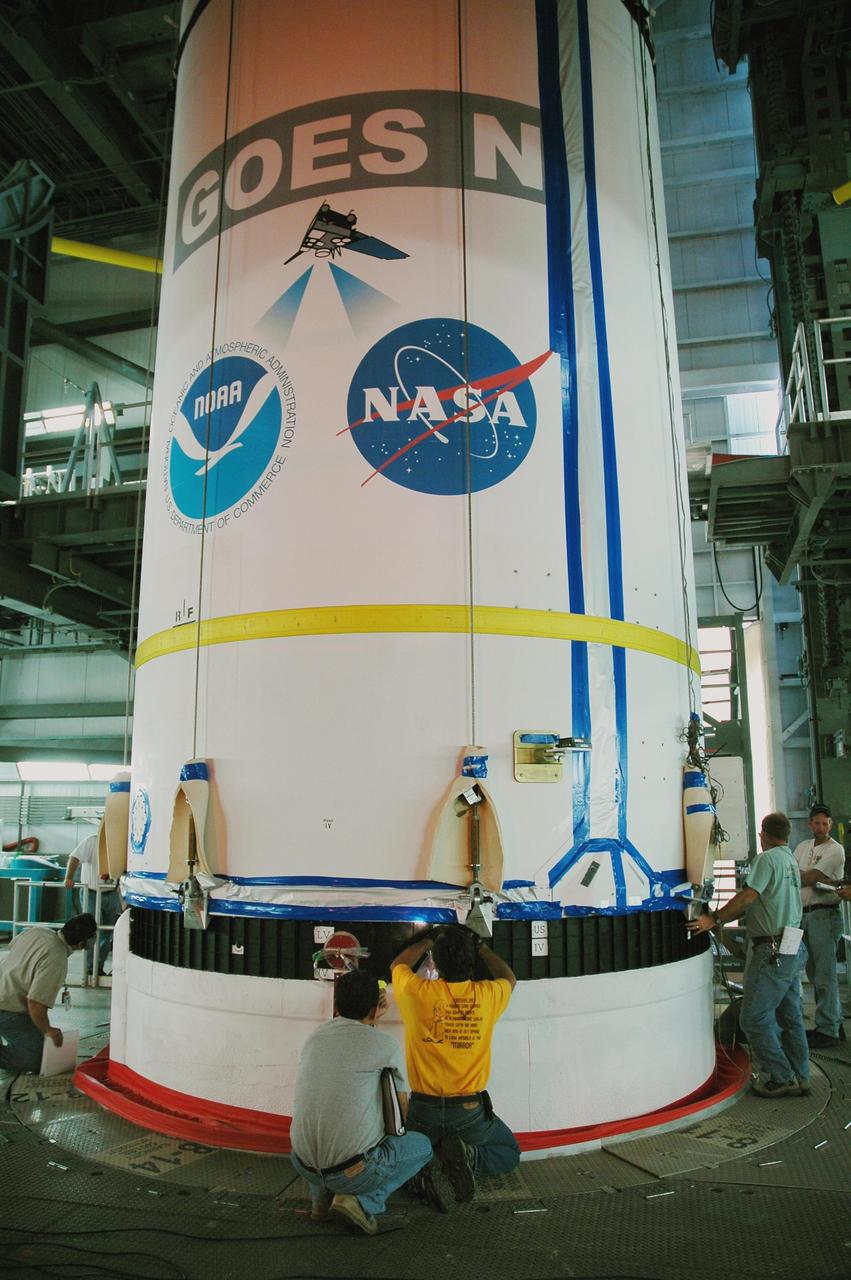
KENNEDY SPACE CENTER, FLA. - In the mobile service tower on Launch Complex 37 at Cape Canaveral Air Force Station in Florida, workers check the attach points on the GOES-N spacecraft and Boeing Delta IV rocket. GOES-N is the latest in a series of Geostationary Operational Environmental Satellites for NOAA and NASA, providing continuous monitoring necessary for intensive data analysis. GOES-N is scheduled to be launched May 18 in an hour-long window between 6:14 and 7:14 p.m. EDT. Photo credit: NASA/Charisse Nahser
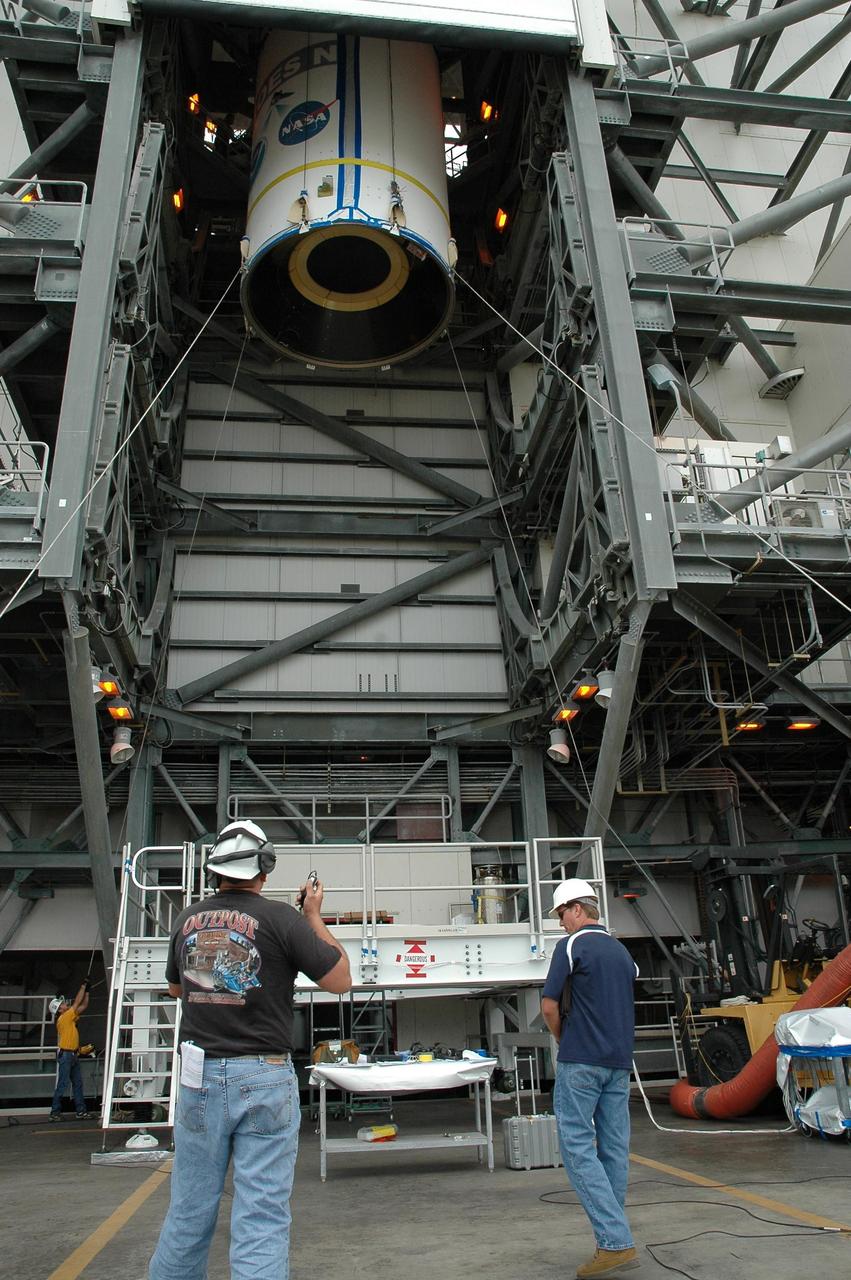
KENNEDY SPACE CENTER, FLA. - On Launch Complex 37 at Cape Canaveral Air Force Station in Florida, the GOES-N spacecraft disappears into the upper levels of the mobile service tower. There it will be mated with the second stage of the Boeing Delta IV rocket. GOES-N is the latest in a series of Geostationary Operational Environmental Satellites for NOAA and NASA, providing continuous monitoring necessary for intensive data analysis. GOES-N is scheduled to be launched May 18 in an hour-long window between 6:14 and 7:14 p.m. EDT. Photo credit: NASA/Charisse Nahser
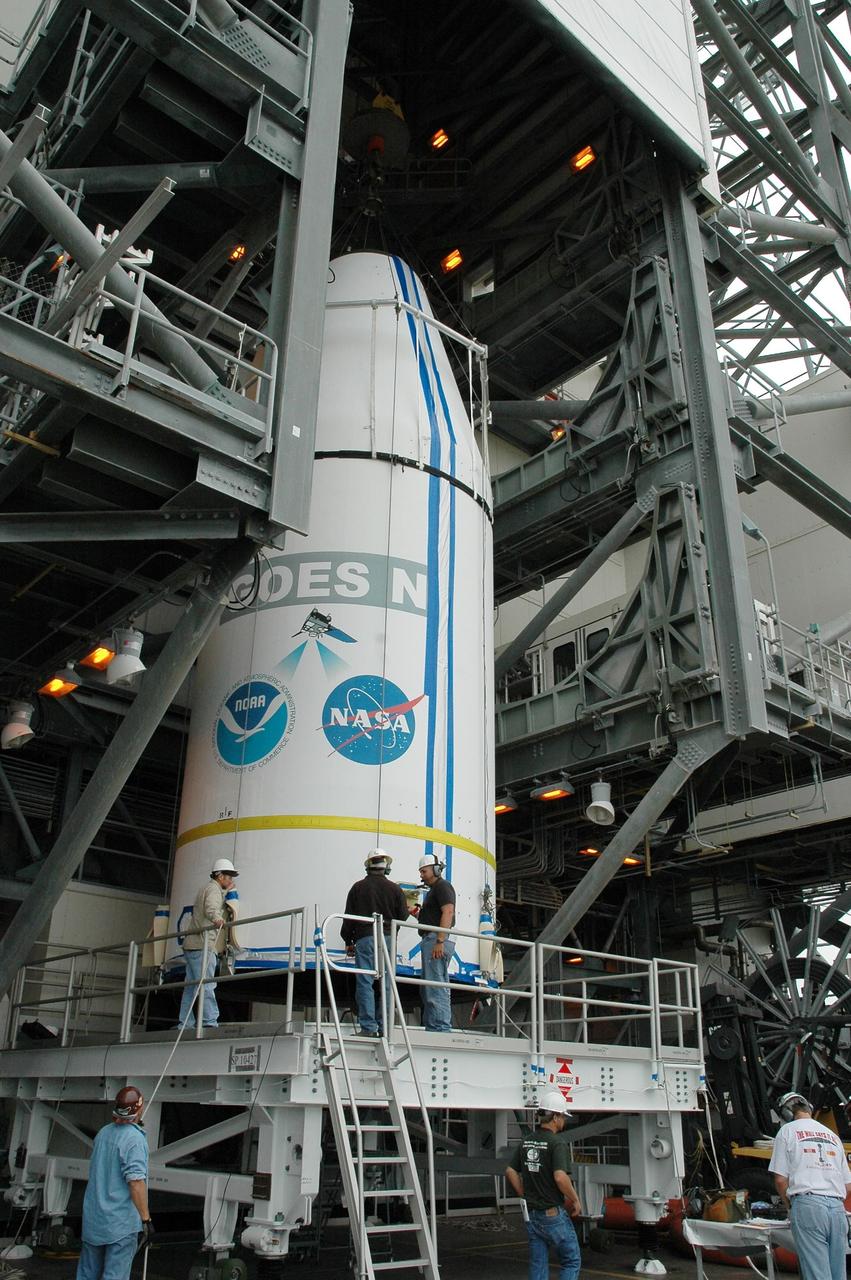
KENNEDY SPACE CENTER, FLA. - On Launch Complex 37 at Cape Canaveral Air Force Station in Florida, the GOES-N spacecraft is lifted off its transporter into the mobile service tower. There it will be mated with the second stage of the Boeing Delta IV rocket. GOES-N is the latest in a series of Geostationary Operational Environmental Satellites for NOAA and NASA, providing continuous monitoring necessary for intensive data analysis. GOES-N is scheduled to be launched May 18 in an hour-long window between 6:14 and 7:14 p.m. EDT. Photo credit: NASA/Charisse Nahser
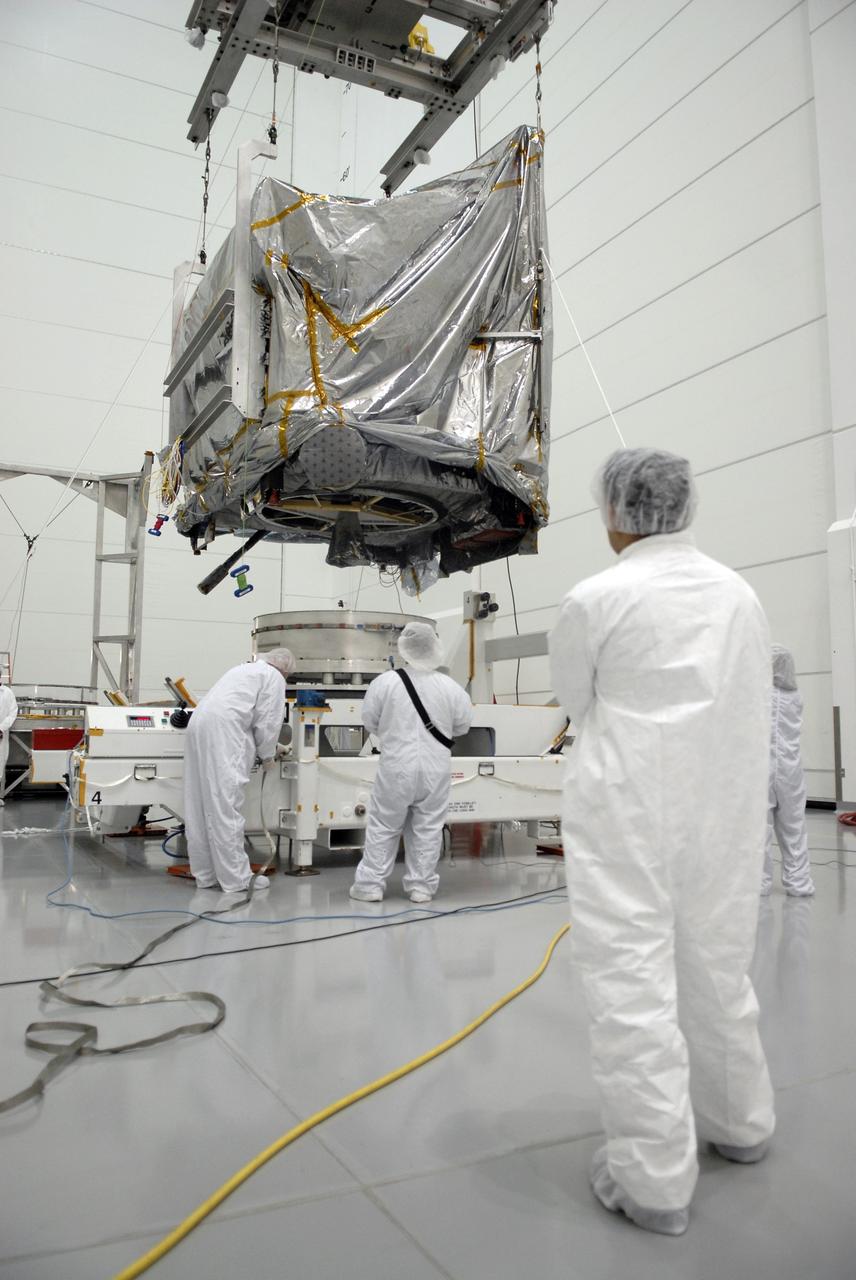
CAPE CANAVERAL, Fla. – At the Astrotech payload processing facility in Titusville, Fla., the GOES-O satellite is lowered toward a stand. The satellite will undergo final testing of the imaging system, instrumentation, communications and power systems. The latest Geostationary Operational Environmental Satellite, GOES-O was developed by NASA for the National Oceanic and Atmospheric Administration, or NOAA. The GOES-O satellite is targeted to launch April 28 onboard a United Launch Alliance Delta IV expendable launch vehicle. Once in orbit, GOES-O will be designated GOES-14, and NASA will provide on-orbit checkout and then transfer operational responsibility to NOAA. GOES-O will be placed in on-orbit storage as a replacement for an older GOES satellite. GOES-O carries an advanced attitude control system using star trackers with spacecraft optical bench Imager and Sounder mountings that provide enhanced instrument pointing performance for improved image navigation and registration to better locate severe storms and other events important to the NOAA National Weather Service. Photo credit: NASA/Kim Shiflett
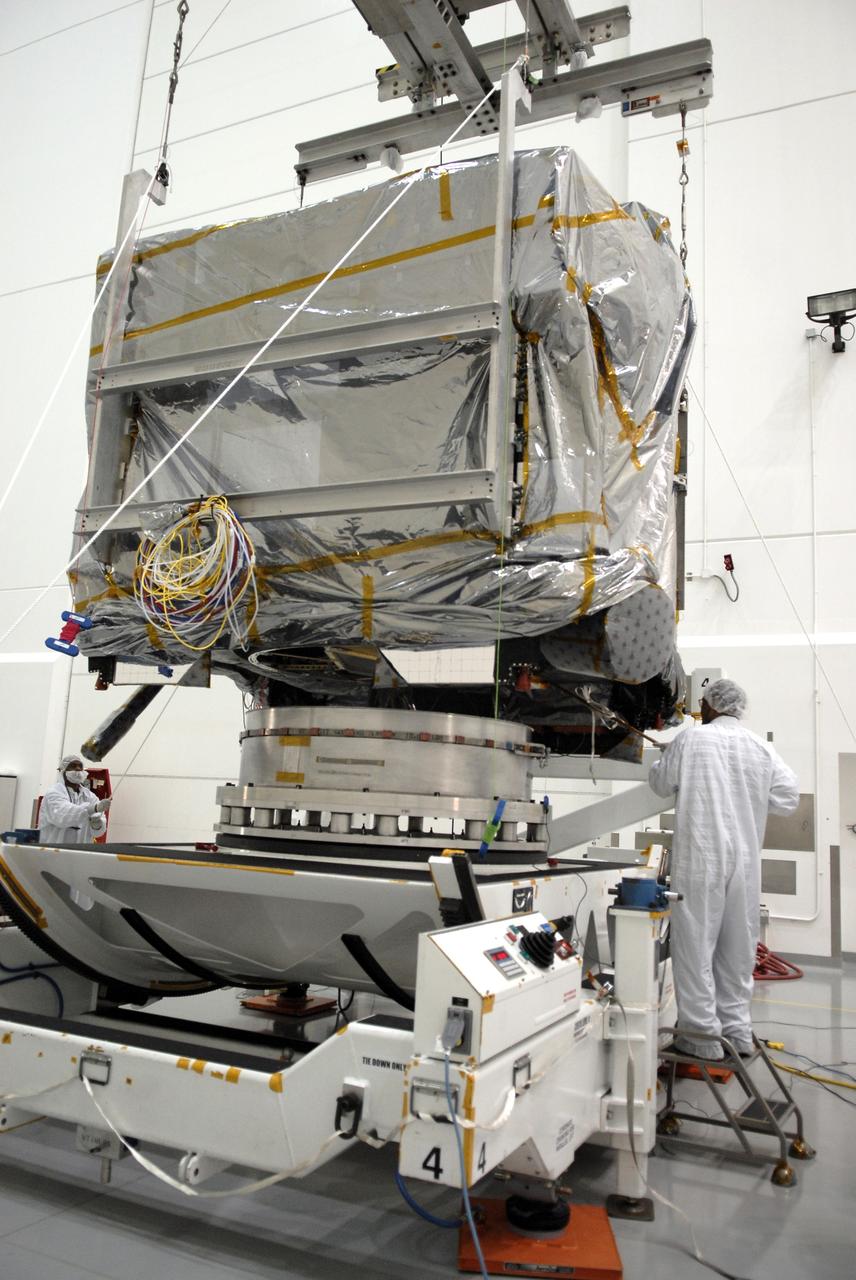
CAPE CANAVERAL, Fla. – At the Astrotech payload processing facility in Titusville, Fla., the GOES-O satellite is lowered toward a test stand. The satellite will undergo final testing of the imaging system, instrumentation, communications and power systems. The latest Geostationary Operational Environmental Satellite, GOES-O was developed by NASA for the National Oceanic and Atmospheric Administration, or NOAA. The GOES-O satellite is targeted to launch April 28 onboard a United Launch Alliance Delta IV expendable launch vehicle. Once in orbit, GOES-O will be designated GOES-14, and NASA will provide on-orbit checkout and then transfer operational responsibility to NOAA. GOES-O will be placed in on-orbit storage as a replacement for an older GOES satellite. GOES-O carries an advanced attitude control system using star trackers with spacecraft optical bench Imager and Sounder mountings that provide enhanced instrument pointing performance for improved image navigation and registration to better locate severe storms and other events important to the NOAA National Weather Service. Photo credit: NASA/Kim Shiflett
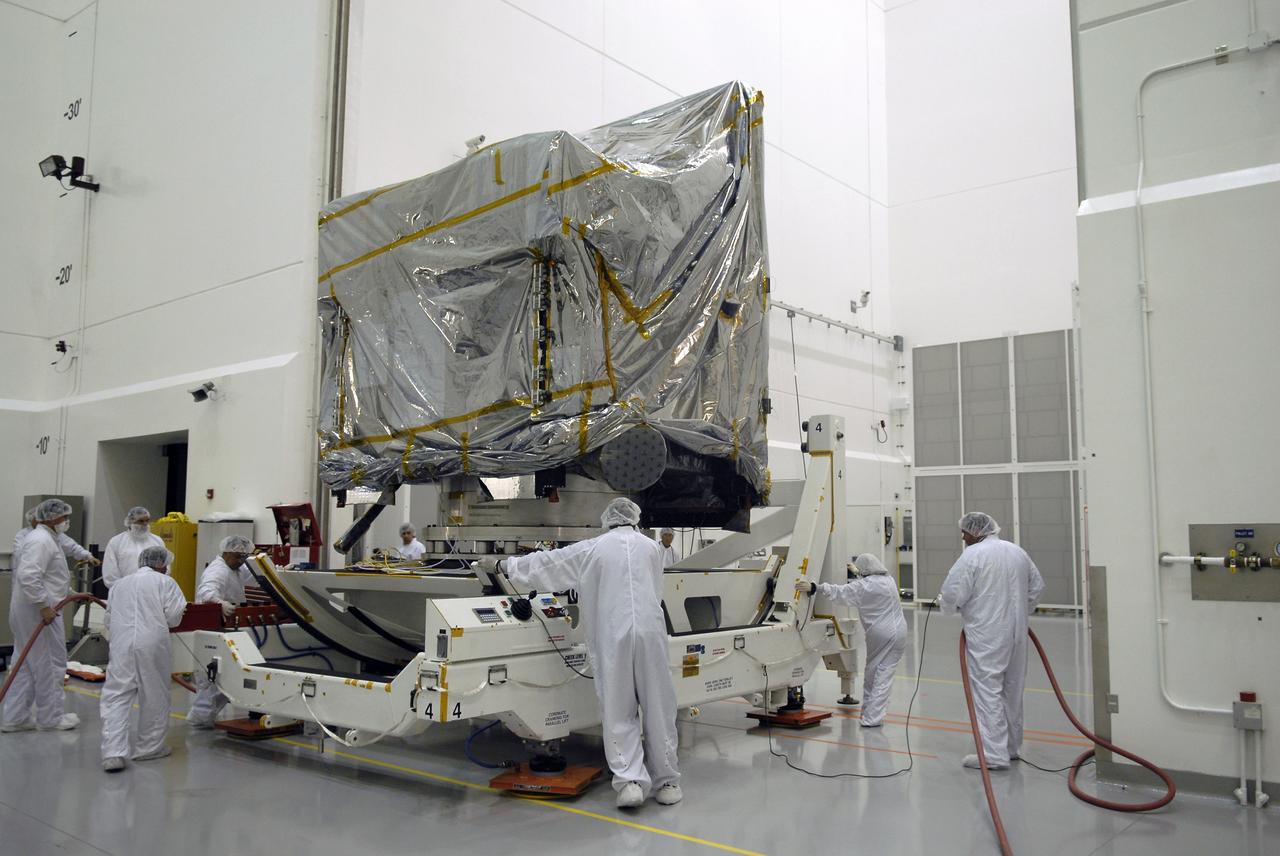
CAPE CANAVERAL, Fla. – At the Astrotech payload processing facility in Titusville, Fla., technicians move the test stand with the GOES-O satellite. The satellite will undergo final testing of the imaging system, instrumentation, communications and power systems. The latest Geostationary Operational Environmental Satellite, GOES-O was developed by NASA for the National Oceanic and Atmospheric Administration, or NOAA. The GOES-O satellite is targeted to launch April 28 onboard a United Launch Alliance Delta IV expendable launch vehicle. Once in orbit, GOES-O will be designated GOES-14, and NASA will provide on-orbit checkout and then transfer operational responsibility to NOAA. GOES-O will be placed in on-orbit storage as a replacement for an older GOES satellite. GOES-O carries an advanced attitude control system using star trackers with spacecraft optical bench Imager and Sounder mountings that provide enhanced instrument pointing performance for improved image navigation and registration to better locate severe storms and other events important to the NOAA National Weather Service. Photo credit: NASA/Kim Shiflett
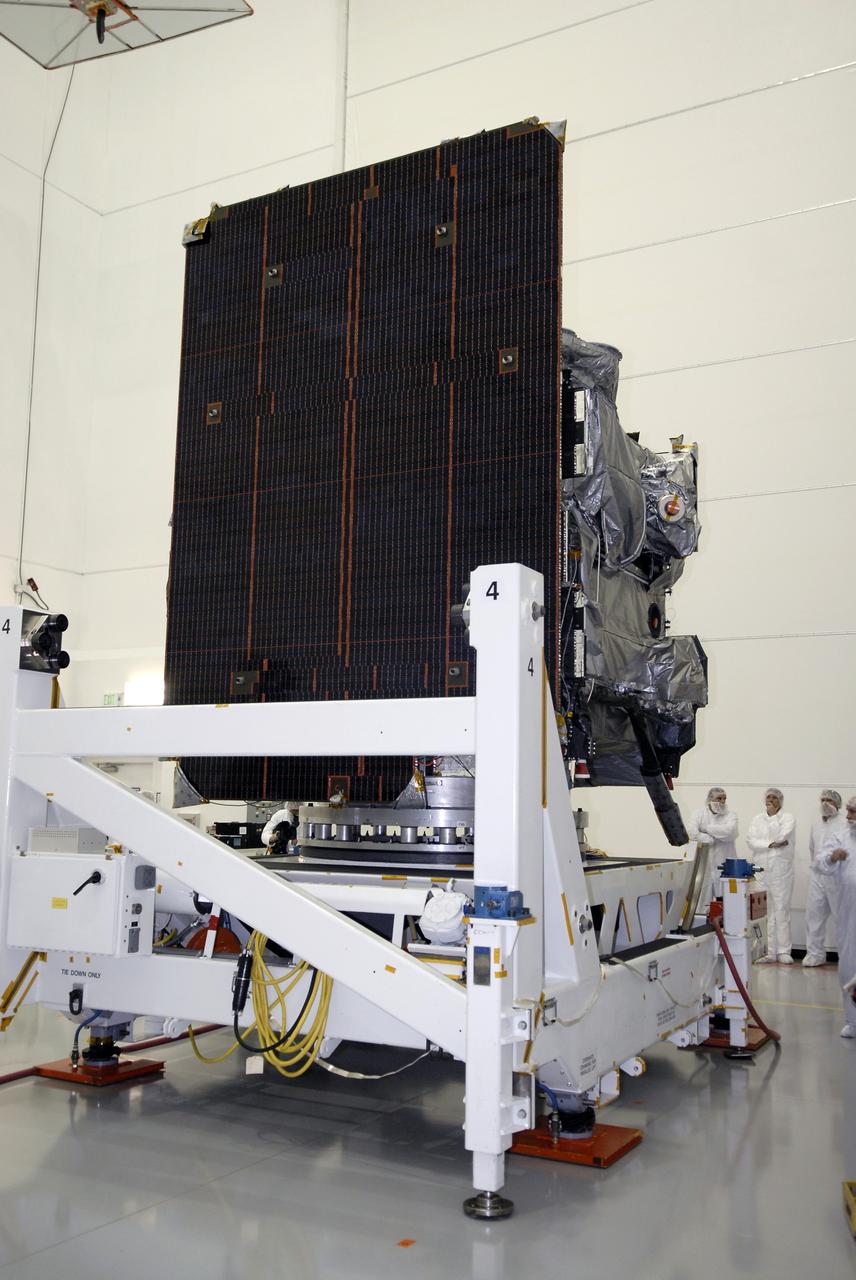
CAPE CANAVERAL, Fla. – At the Astrotech payload processing facility in Titusville, Fla., the GOES-O satellite will undergo final testing of the imaging system, instrumentation, communications and power systems. The latest Geostationary Operational Environmental Satellite, GOES-O was developed by NASA for the National Oceanic and Atmospheric Administration, or NOAA. The GOES-O satellite is targeted to launch April 28 onboard a United Launch Alliance Delta IV expendable launch vehicle. Once in orbit, GOES-O will be designated GOES-14, and NASA will provide on-orbit checkout and then transfer operational responsibility to NOAA. GOES-O will be placed in on-orbit storage as a replacement for an older GOES satellite. GOES-O carries an advanced attitude control system using star trackers with spacecraft optical bench Imager and Sounder mountings that provide enhanced instrument pointing performance for improved image navigation and registration to better locate severe storms and other events important to the NOAA National Weather Service. Photo credit: NASA/Kim Shiflett
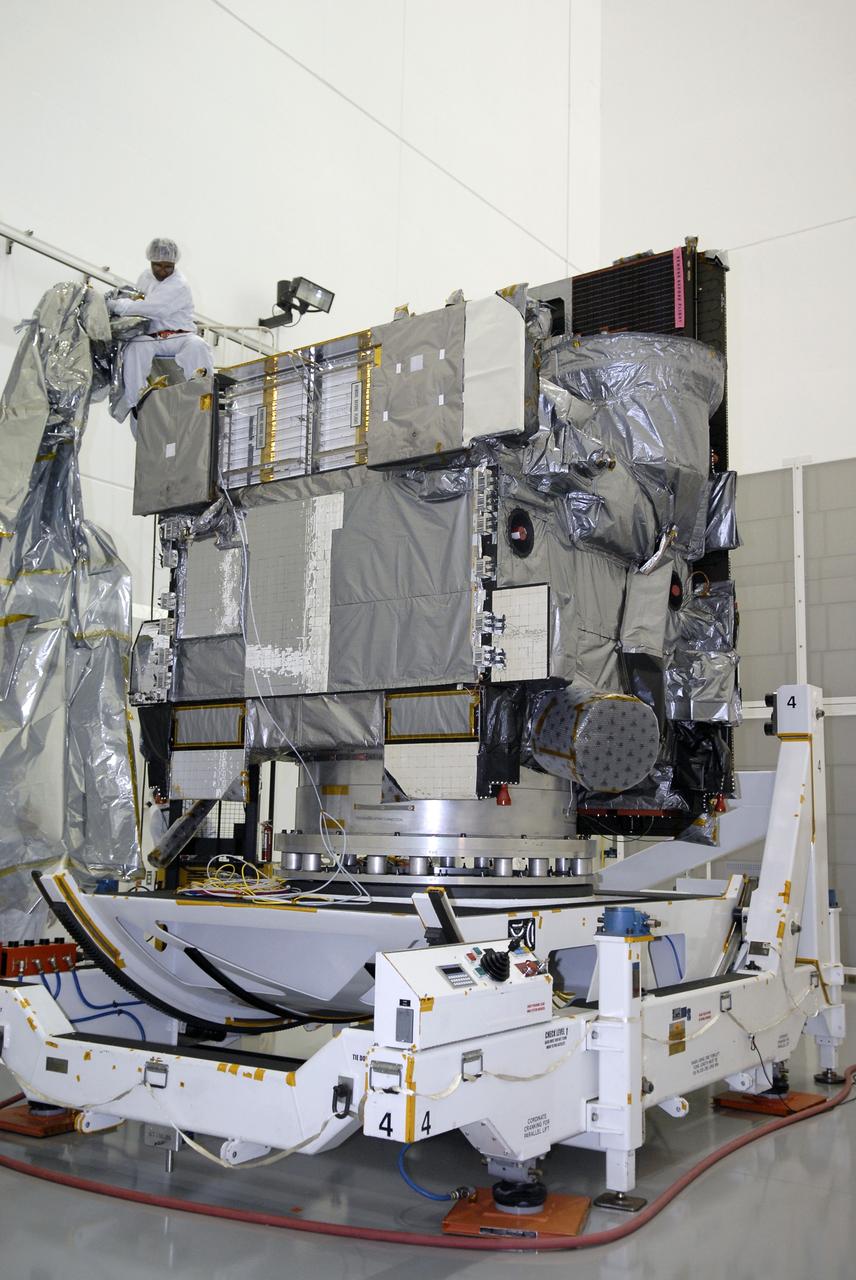
CAPE CANAVERAL, Fla. – At the Astrotech payload processing facility in Titusville, Fla., technicians remove the protective cover wrapped around the GOES-O satellite. The satellite will undergo final testing of the imaging system, instrumentation, communications and power systems. The latest Geostationary Operational Environmental Satellite, GOES-O was developed by NASA for the National Oceanic and Atmospheric Administration, or NOAA. The GOES-O satellite is targeted to launch April 28 onboard a United Launch Alliance Delta IV expendable launch vehicle. Once in orbit, GOES-O will be designated GOES-14, and NASA will provide on-orbit checkout and then transfer operational responsibility to NOAA. GOES-O will be placed in on-orbit storage as a replacement for an older GOES satellite. GOES-O carries an advanced attitude control system using star trackers with spacecraft optical bench Imager and Sounder mountings that provide enhanced instrument pointing performance for improved image navigation and registration to better locate severe storms and other events important to the NOAA National Weather Service. Photo credit: NASA/Kim Shiflett
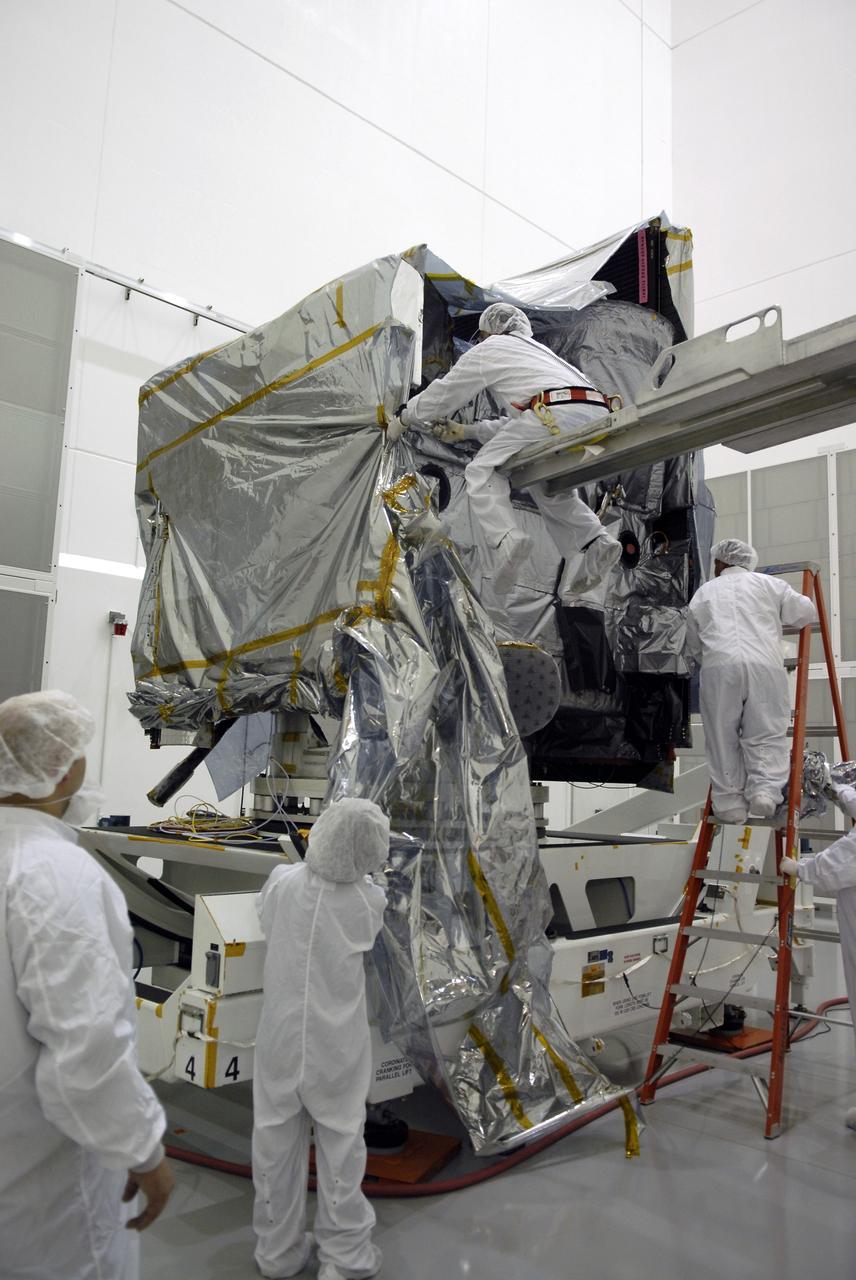
CAPE CANAVERAL, Fla. – At the Astrotech payload processing facility in Titusville, Fla., technicians remove the protective cover wrapped around the GOES-O satellite. The satellite will undergo final testing of the imaging system, instrumentation, communications and power systems. The latest Geostationary Operational Environmental Satellite, GOES-O was developed by NASA for the National Oceanic and Atmospheric Administration, or NOAA. The GOES-O satellite is targeted to launch April 28 onboard a United Launch Alliance Delta IV expendable launch vehicle. Once in orbit, GOES-O will be designated GOES-14, and NASA will provide on-orbit checkout and then transfer operational responsibility to NOAA. GOES-O will be placed in on-orbit storage as a replacement for an older GOES satellite. GOES-O carries an advanced attitude control system using star trackers with spacecraft optical bench Imager and Sounder mountings that provide enhanced instrument pointing performance for improved image navigation and registration to better locate severe storms and other events important to the NOAA National Weather Service. Photo credit: NASA/Kim Shiflett
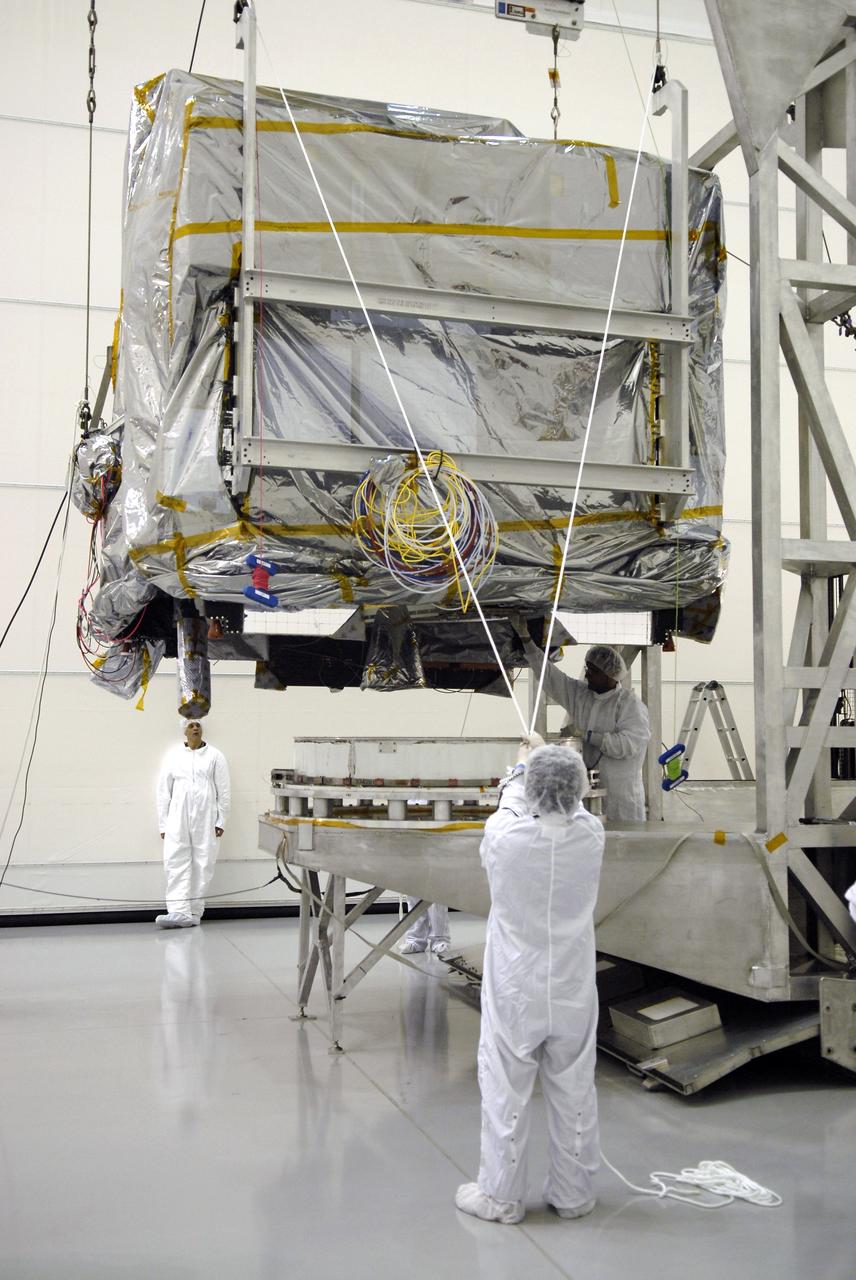
CAPE CANAVERAL, Fla. – At the Astrotech payload processing facility in Titusville, Fla., technicians help guide the cables lifting the GOES-O satellite away from its shipping container. The satellite will be placed on a stand for final testing of the imaging system, instrumentation, communications and power systems. The latest Geostationary Operational Environmental Satellite, GOES-O was developed by NASA for the National Oceanic and Atmospheric Administration, or NOAA. The GOES-O satellite is targeted to launch April 28 onboard a United Launch Alliance Delta IV expendable launch vehicle. Once in orbit, GOES-O will be designated GOES-14, and NASA will provide on-orbit checkout and then transfer operational responsibility to NOAA. GOES-O will be placed in on-orbit storage as a replacement for an older GOES satellite. GOES-O carries an advanced attitude control system using star trackers with spacecraft optical bench Imager and Sounder mountings that provide enhanced instrument pointing performance for improved image navigation and registration to better locate severe storms and other events important to the NOAA National Weather Service. Photo credit: NASA/Kim Shiflett
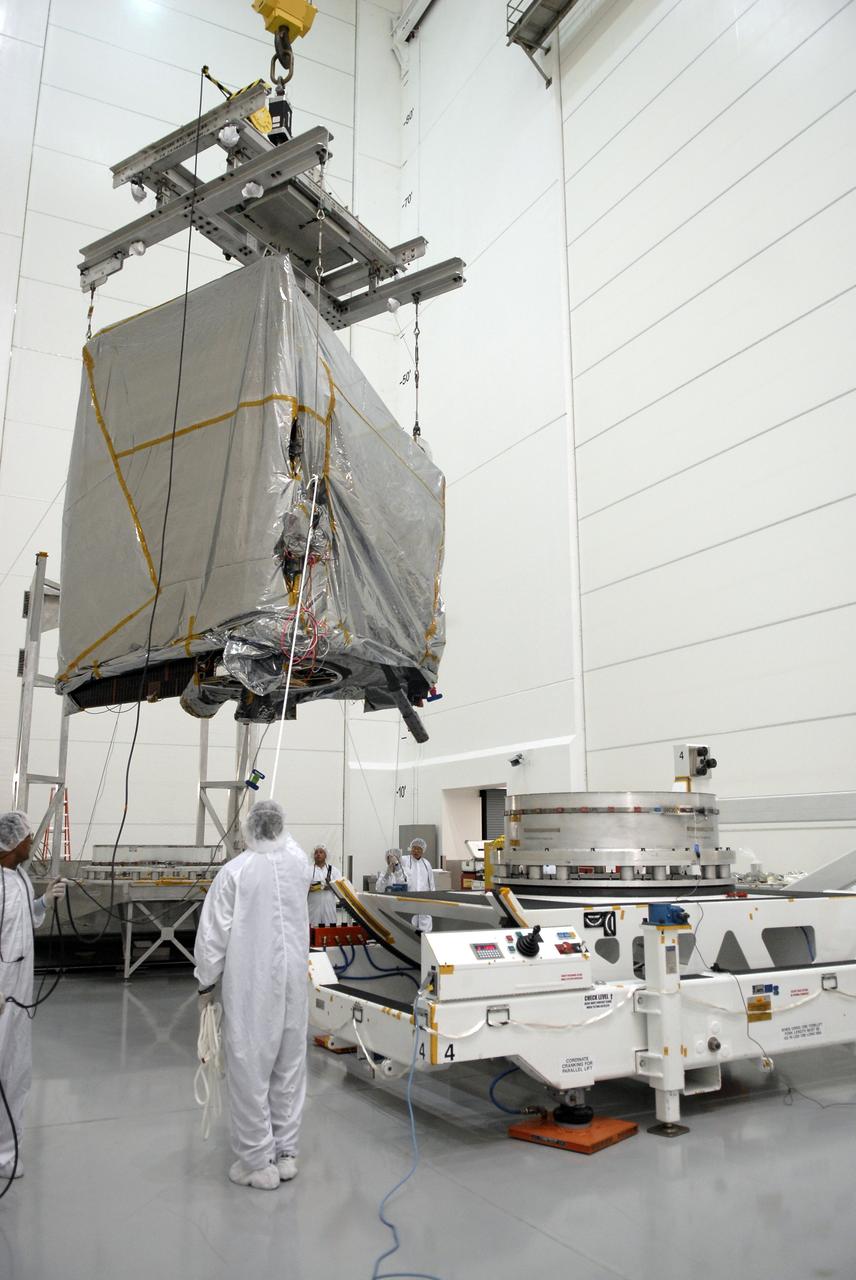
CAPE CANAVERAL, Fla. – At the Astrotech payload processing facility in Titusville, Fla., technicians help guide the cables lifting the GOES-O satellite toward the stand at right. The satellite will undergo final testing of the imaging system, instrumentation, communications and power systems. The latest Geostationary Operational Environmental Satellite, GOES-O was developed by NASA for the National Oceanic and Atmospheric Administration, or NOAA. The GOES-O satellite is targeted to launch April 28 onboard a United Launch Alliance Delta IV expendable launch vehicle. Once in orbit, GOES-O will be designated GOES-14, and NASA will provide on-orbit checkout and then transfer operational responsibility to NOAA. GOES-O will be placed in on-orbit storage as a replacement for an older GOES satellite. GOES-O carries an advanced attitude control system using star trackers with spacecraft optical bench Imager and Sounder mountings that provide enhanced instrument pointing performance for improved image navigation and registration to better locate severe storms and other events important to the NOAA National Weather Service. Photo credit: NASA/Kim Shiflett
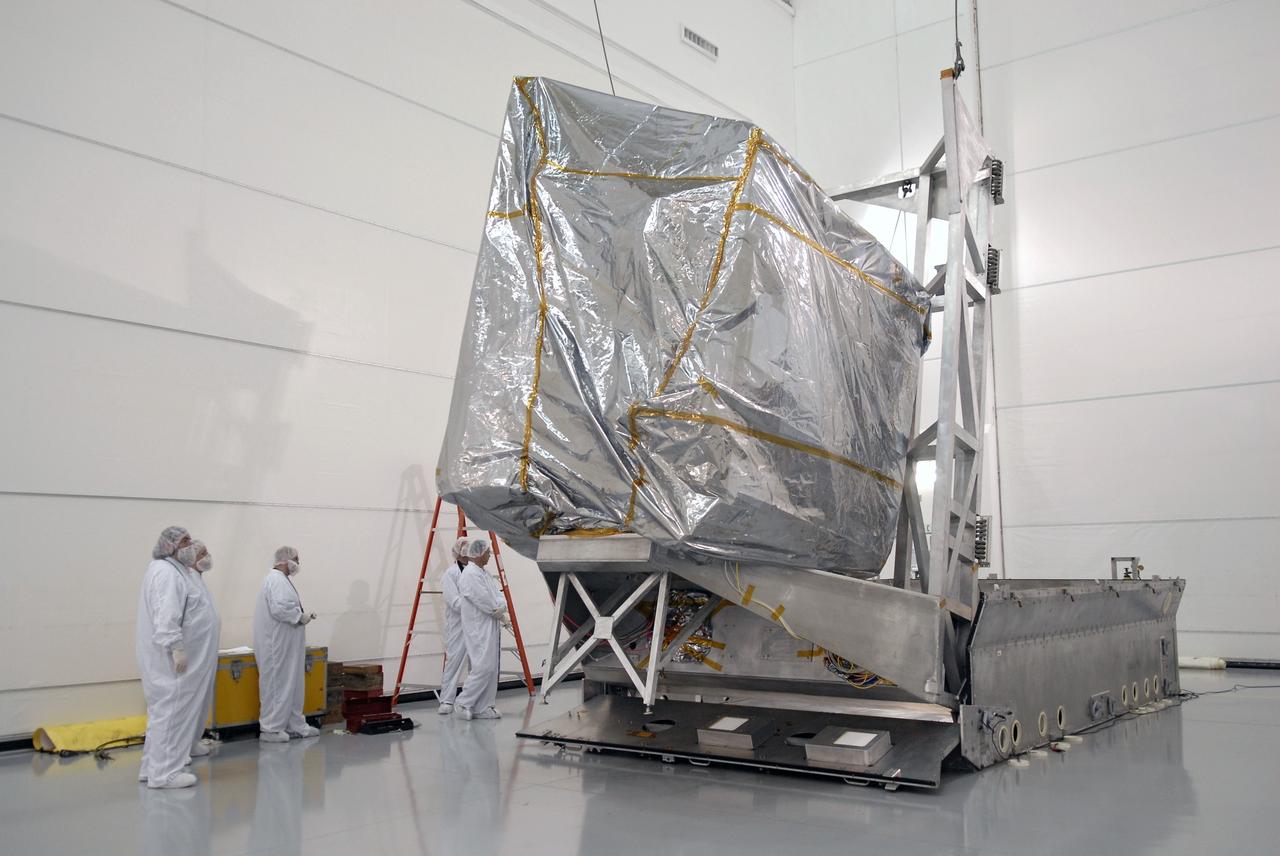
CAPE CANAVERAL, Fla. – At the Astrotech payload processing facility in Titusville, Fla., the GOES-O satellite is lifted out of its shipping container to a vertical position. It will be placed on a stand for final testing of the imaging system, instrumentation, communications and power systems. The latest Geostationary Operational Environmental Satellite, GOES-O was developed by NASA for the National Oceanic and Atmospheric Administration, or NOAA. The GOES-O satellite is targeted to launch April 28 onboard a United Launch Alliance Delta IV expendable launch vehicle. Once in orbit, GOES-O will be designated GOES-14, and NASA will provide on-orbit checkout and then transfer operational responsibility to NOAA. GOES-O will be placed in on-orbit storage as a replacement for an older GOES satellite. GOES-O carries an advanced attitude control system using star trackers with spacecraft optical bench Imager and Sounder mountings that provide enhanced instrument pointing performance for improved image navigation and registration to better locate severe storms and other events important to the NOAA National Weather Service. Photo credit: NASA/Kim Shiflett
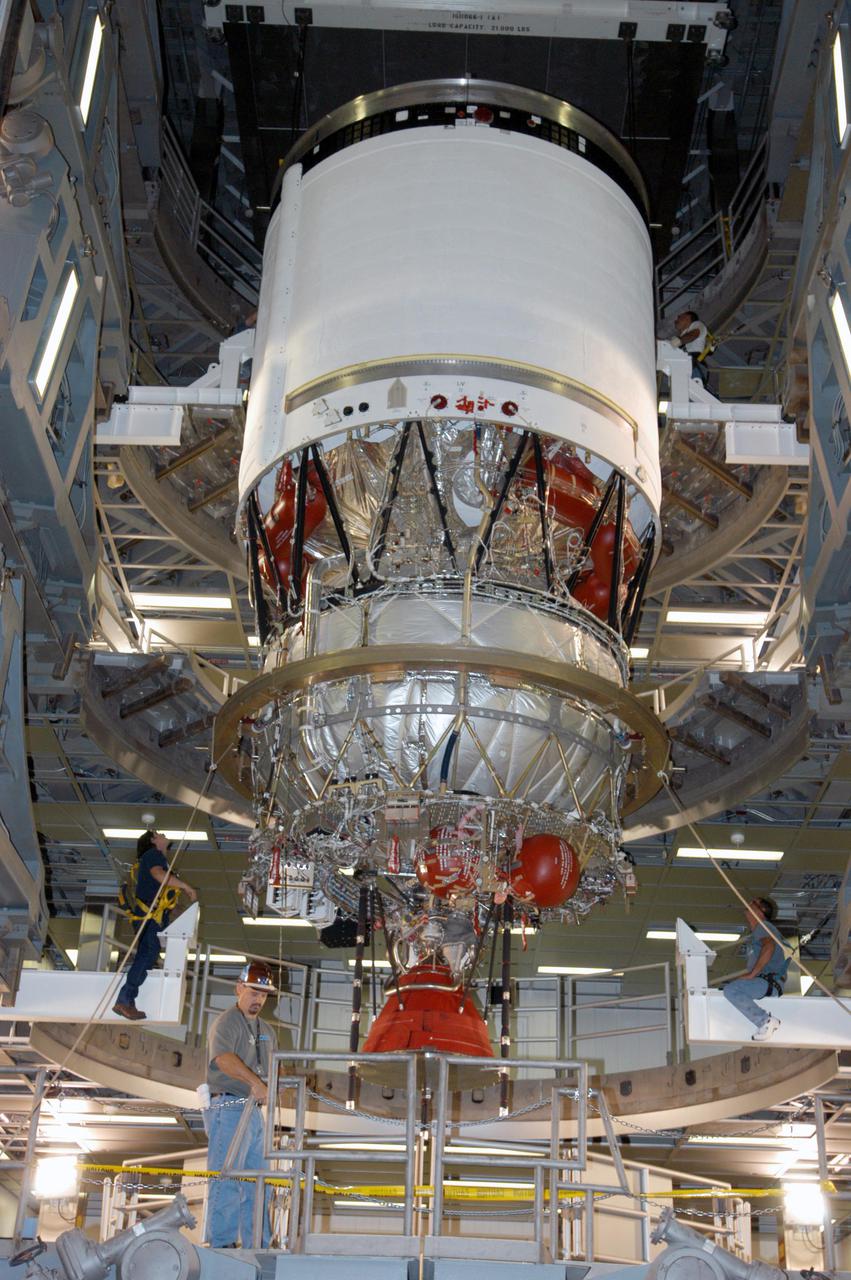
KENNEDY SPACE CENTER, FLA. - At the Boeing Delta Operations Center, the Delta IV second stage is lowered onto a test stand. Nozzles will be installed and a deployment test will follow. The Delta IV rocket will be used for the 2005 launching of the GOES-N weather satellite for NASA and NOAA (National Oceanic and Atmospheric Administration). The first in a series of three advanced weather satellites including GOES-O and GOES-P, the GOES-N will provide continuous monitoring necessary for intensive data analysis. It will provide a constant vigil for the atmospheric “triggers” of severe weather conditions such as tornadoes, flash floods, hail storms and hurricanes. When these conditions develop, GOES-N will be able to monitor storm development and track their movements.
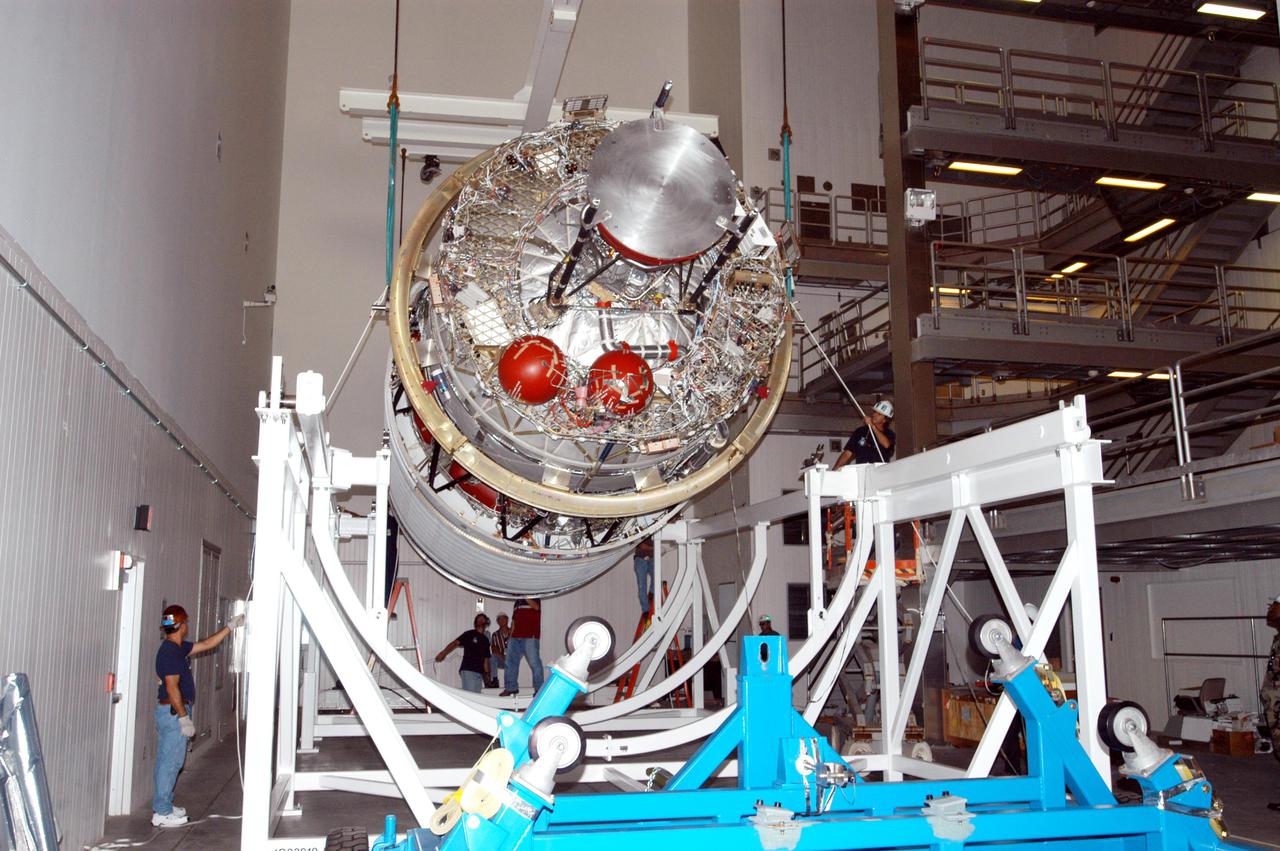
KENNEDY SPACE CENTER, FLA. - In the Boeing Delta Operations Center, the second stage of a Boeing Delta IV launch vehicle is lowered onto a work stand. The Delta IV rocket will be used for the 2005 launching of the GOES-N weather satellite for NASA and NOAA (National Oceanic and Atmospheric Administration). The first in a series of three advanced weather satellites including GOES-O and GOES-P, the GOES-N will provide continuous monitoring necessary for intensive data analysis. It will provide a constant vigil for the atmospheric “triggers” of severe weather conditions such as tornadoes, flash floods, hail storms and hurricanes. When these conditions develop, GOES-N will be able to monitor storm development and track their movements.
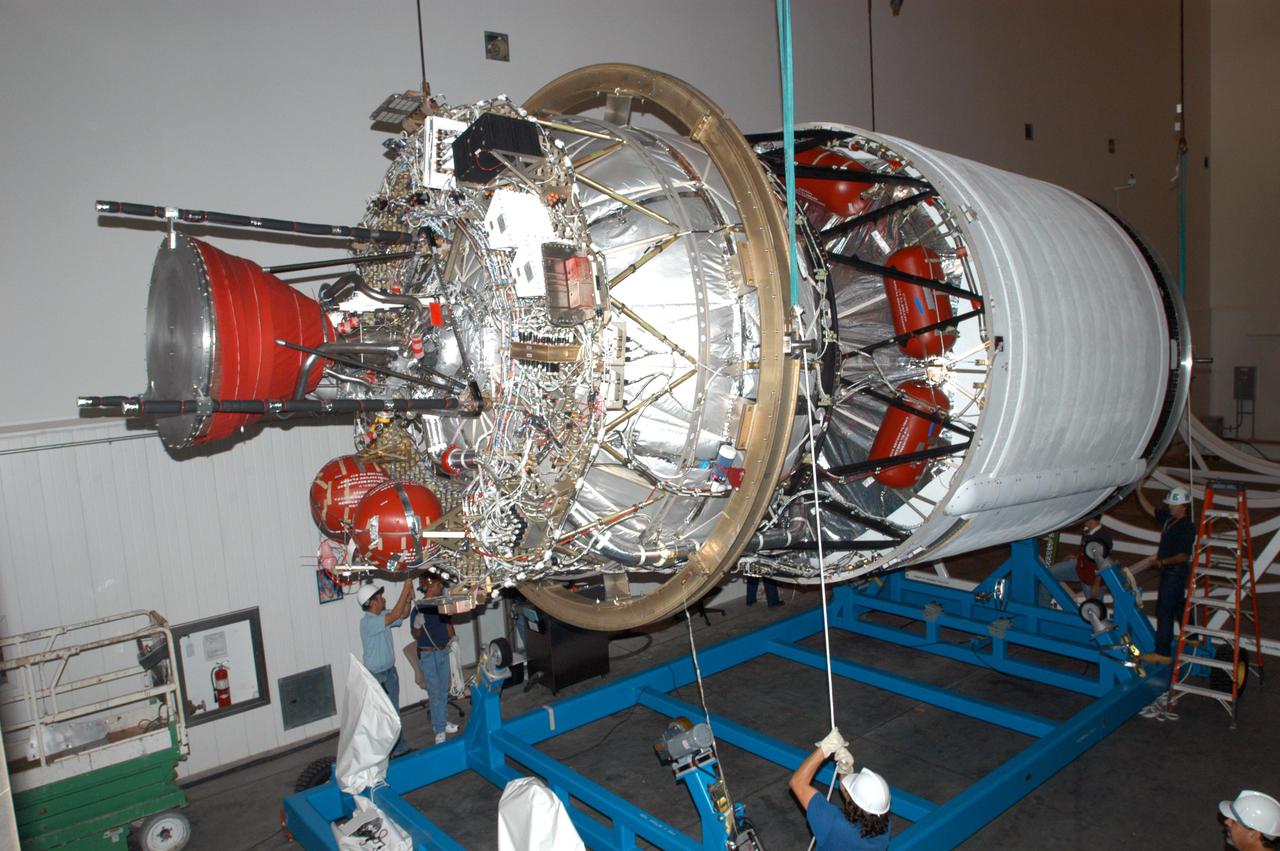
KENNEDY SPACE CENTER, FLA. - At the Boeing Delta Operations Center, the second stage of a Boeing Delta IV launch vehicle is lifted off its transporter for transfer to a work stand. The Delta IV rocket will be used for the 2005 launching of the GOES-N weather satellite for NASA and NOAA (National Oceanic and Atmospheric Administration). The first in a series of three advanced weather satellites including GOES-O and GOES-P, the GOES-N will provide continuous monitoring necessary for intensive data analysis. It will provide a constant vigil for the atmospheric “triggers” of severe weather conditions such as tornadoes, flash floods, hail storms and hurricanes. When these conditions develop, GOES-N will be able to monitor storm development and track their movements.
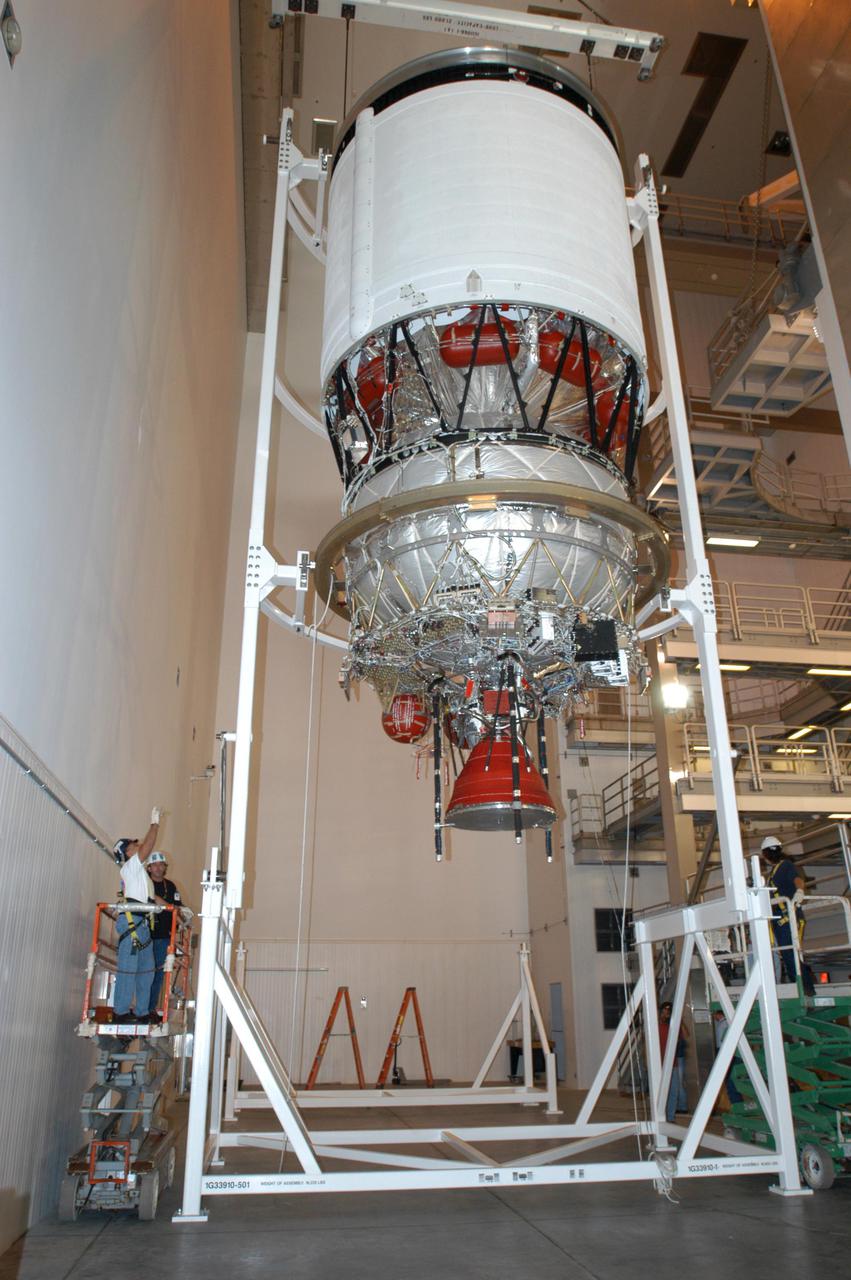
KENNEDY SPACE CENTER, FLA. - At the Boeing Delta Operations Center, the Delta IV second stage is rotated to a vertical position so that the nozzles can be installed. A deployment test will follow. The Delta IV rocket will be used for the 2005 launching of the GOES-N weather satellite for NASA and NOAA (National Oceanic and Atmospheric Administration). The first in a series of three advanced weather satellites including GOES-O and GOES-P, the GOES-N will provide continuous monitoring necessary for intensive data analysis. It will provide a constant vigil for the atmospheric “triggers” of severe weather conditions such as tornadoes, flash floods, hail storms and hurricanes. When these conditions develop, GOES-N will be able to monitor storm development and track their movements.
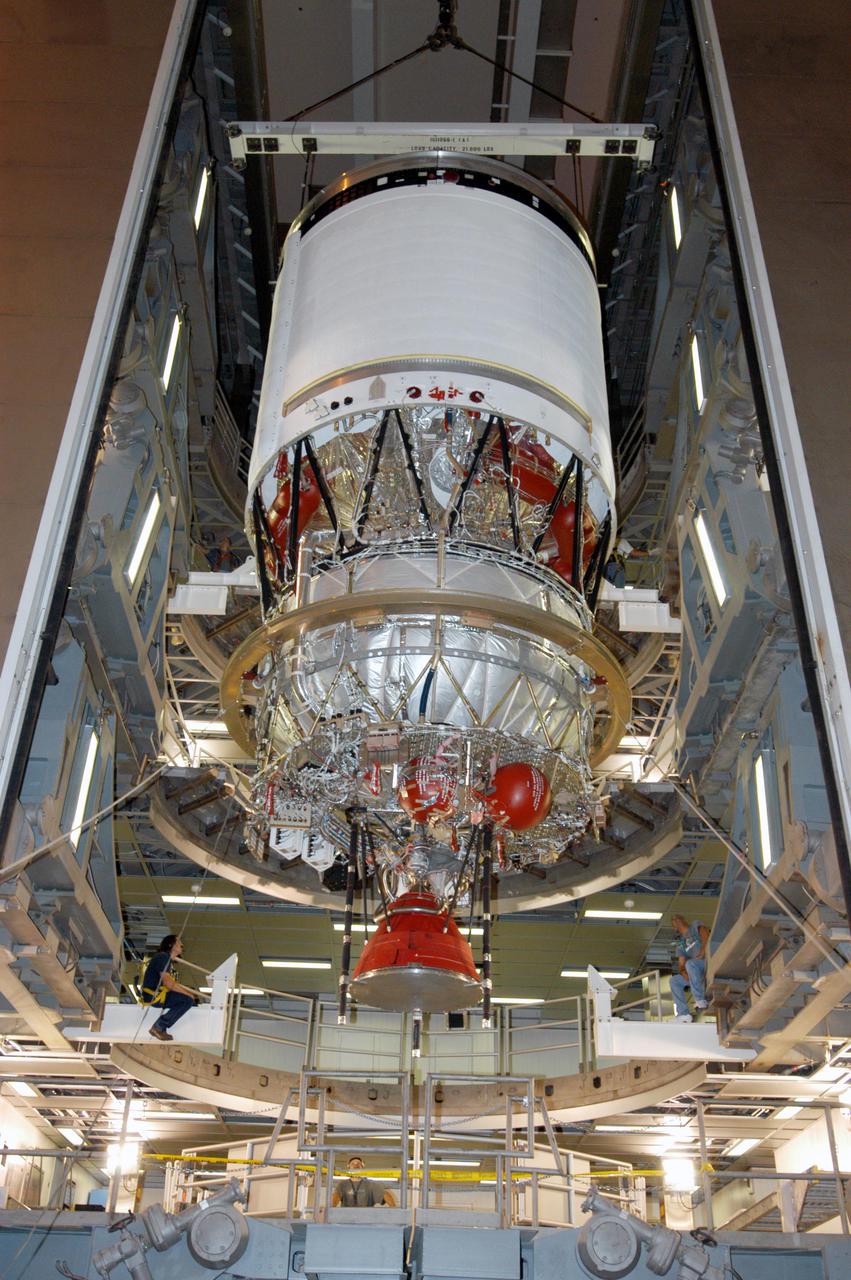
KENNEDY SPACE CENTER, FLA. - At the Boeing Delta Operations Center, the Delta IV second stage is moved to a test stand. Nozzles will be installed and a deployment test will follow. The Delta IV rocket will be used for the 2005 launching of the GOES-N weather satellite for NASA and NOAA (National Oceanic and Atmospheric Administration). The first in a series of three advanced weather satellites including GOES-O and GOES-P, the GOES-N will provide continuous monitoring necessary for intensive data analysis. It will provide a constant vigil for the atmospheric “triggers” of severe weather conditions such as tornadoes, flash floods, hail storms and hurricanes. When these conditions develop, GOES-N will be able to monitor storm development and track their movements.
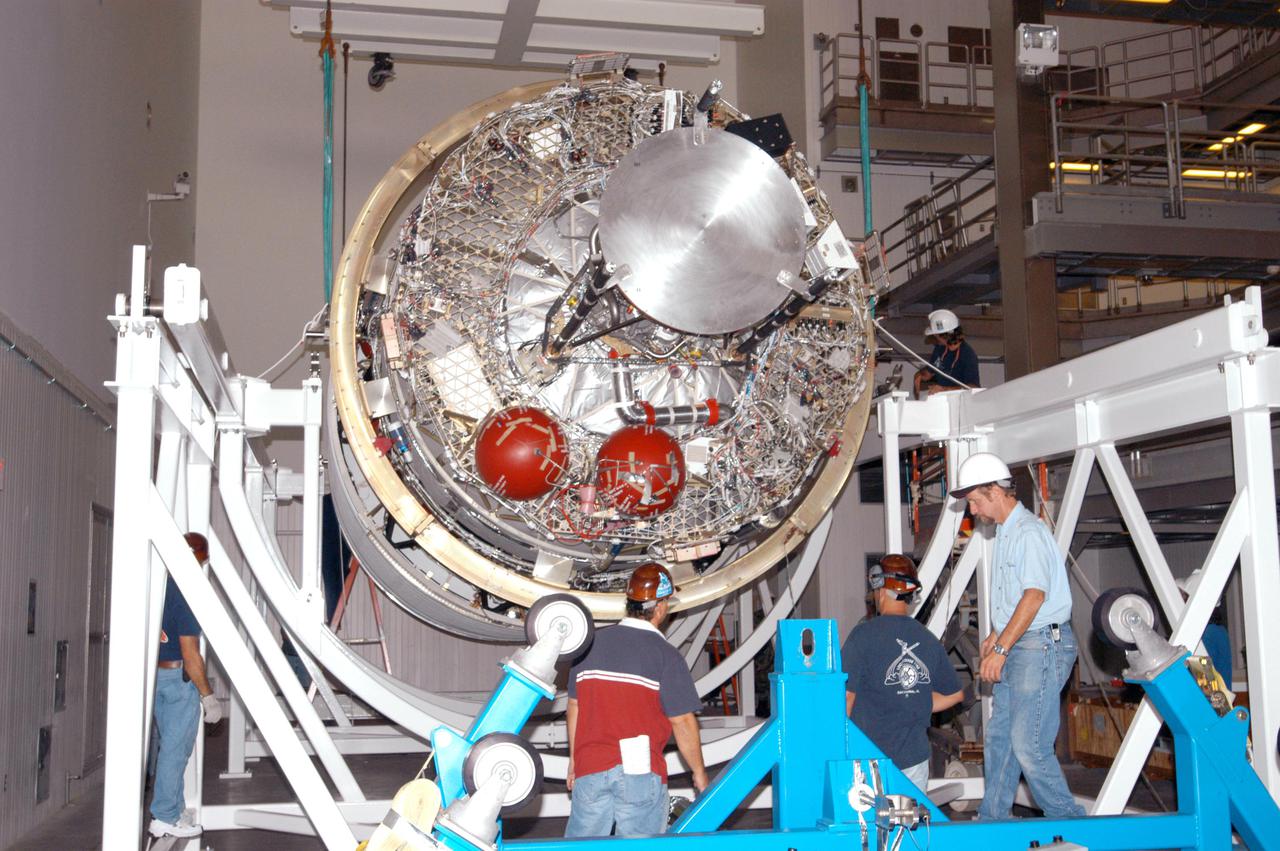
KENNEDY SPACE CENTER, FLA. - In the Boeing Delta Operations Center, the second stage of a Boeing Delta IV launch vehicle is lowered onto a work stand. The Delta IV rocket will be used for the 2005 launching of the GOES-N weather satellite for NASA and NOAA (National Oceanic and Atmospheric Administration). The first in a series of three advanced weather satellites including GOES-O and GOES-P, the GOES-N will provide continuous monitoring necessary for intensive data analysis. It will provide a constant vigil for the atmospheric “triggers” of severe weather conditions such as tornadoes, flash floods, hail storms and hurricanes. When these conditions develop, GOES-N will be able to monitor storm development and track their movements.
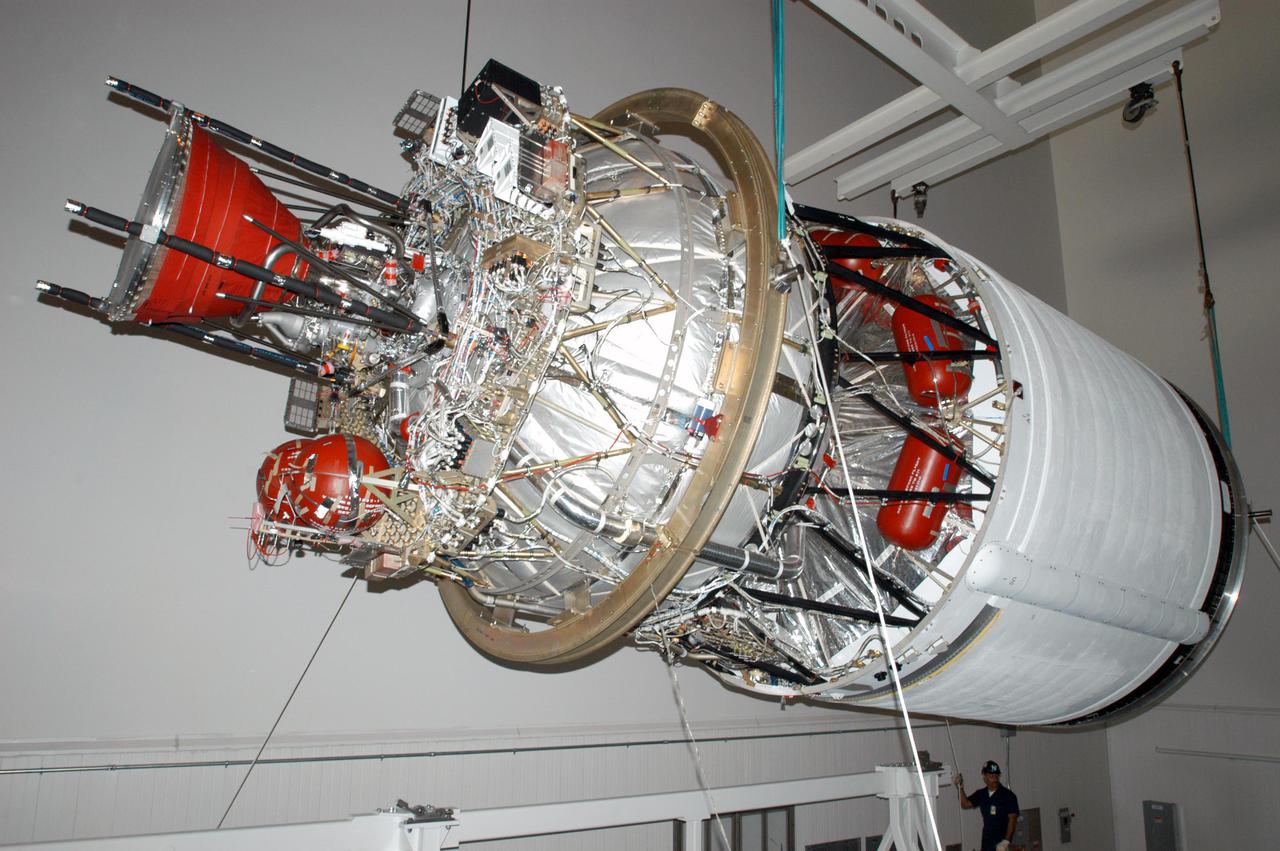
KENNEDY SPACE CENTER, FLA. - At the Boeing Delta Operations Center, the suspended second stage of a Boeing Delta IV launch vehicle is moved toward a work stand. The Delta IV rocket will be used for the 2005 launching of the GOES-N weather satellite for NASA and NOAA (National Oceanic and Atmospheric Administration). The first in a series of three advanced weather satellites including GOES-O and GOES-P, the GOES-N will provide continuous monitoring necessary for intensive data analysis. It will provide a constant vigil for the atmospheric “triggers” of severe weather conditions such as tornadoes, flash floods, hail storms and hurricanes. When these conditions develop, GOES-N will be able to monitor storm development and track their movements.
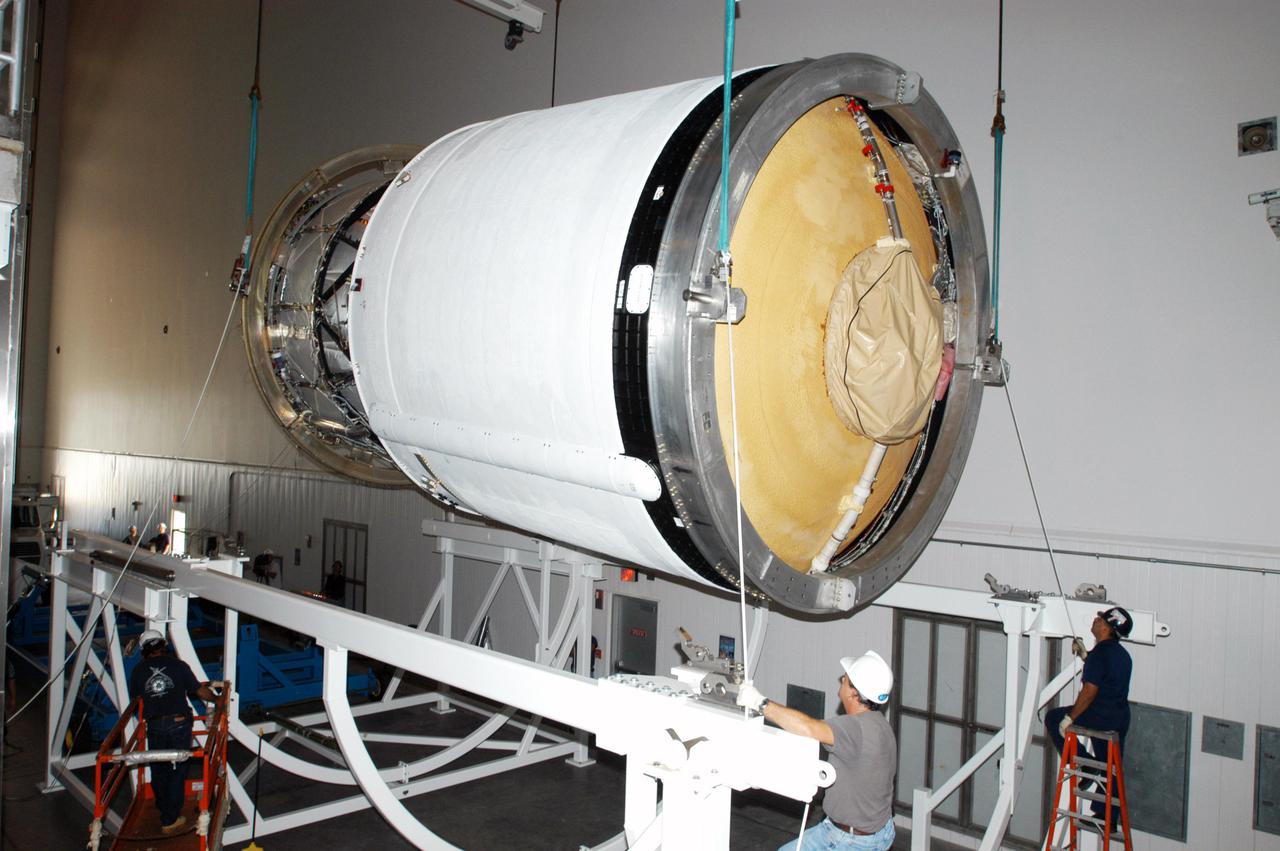
KENNEDY SPACE CENTER, FLA. - In the Boeing Delta Operations Center, workers carefully lower second stage of a Boeing Delta IV launch vehicle, suspended by a crane, onto a work stand. The Delta IV rocket will be used for the 2005 launching of the GOES-N weather satellite for NASA and NOAA (National Oceanic and Atmospheric Administration). The first in a series of three advanced weather satellites including GOES-O and GOES-P, the GOES-N will provide continuous monitoring necessary for intensive data analysis. It will provide a constant vigil for the atmospheric “triggers” of severe weather conditions such as tornadoes, flash floods, hail storms and hurricanes. When these conditions develop, GOES-N will be able to monitor storm development and track their movements.
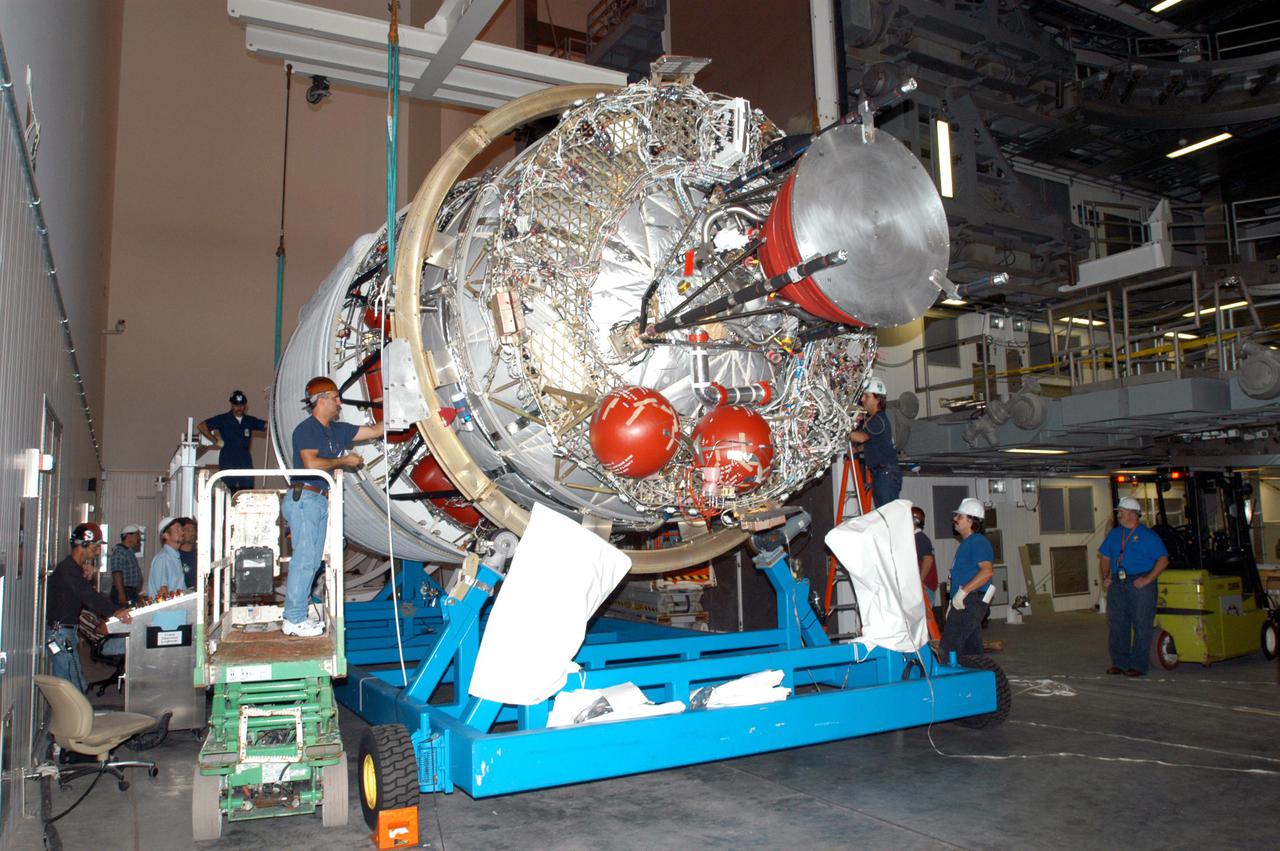
KENNEDY SPACE CENTER, FLA. - At the Boeing Delta Operations Center, workers prepare the second stage of a Boeing Delta IV launch vehicle for transfer from its transporter to a work stand. The Delta IV rocket will be used for the 2005 launching of the GOES-N weather satellite for NASA and NOAA (National Oceanic and Atmospheric Administration). The first in a series of three advanced weather satellites including GOES-O and GOES-P, the GOES-N will provide continuous monitoring necessary for intensive data analysis. It will provide a constant vigil for the atmospheric “triggers” of severe weather conditions such as tornadoes, flash floods, hail storms and hurricanes. When these conditions develop, GOES-N will be able to monitor storm development and track their movements.
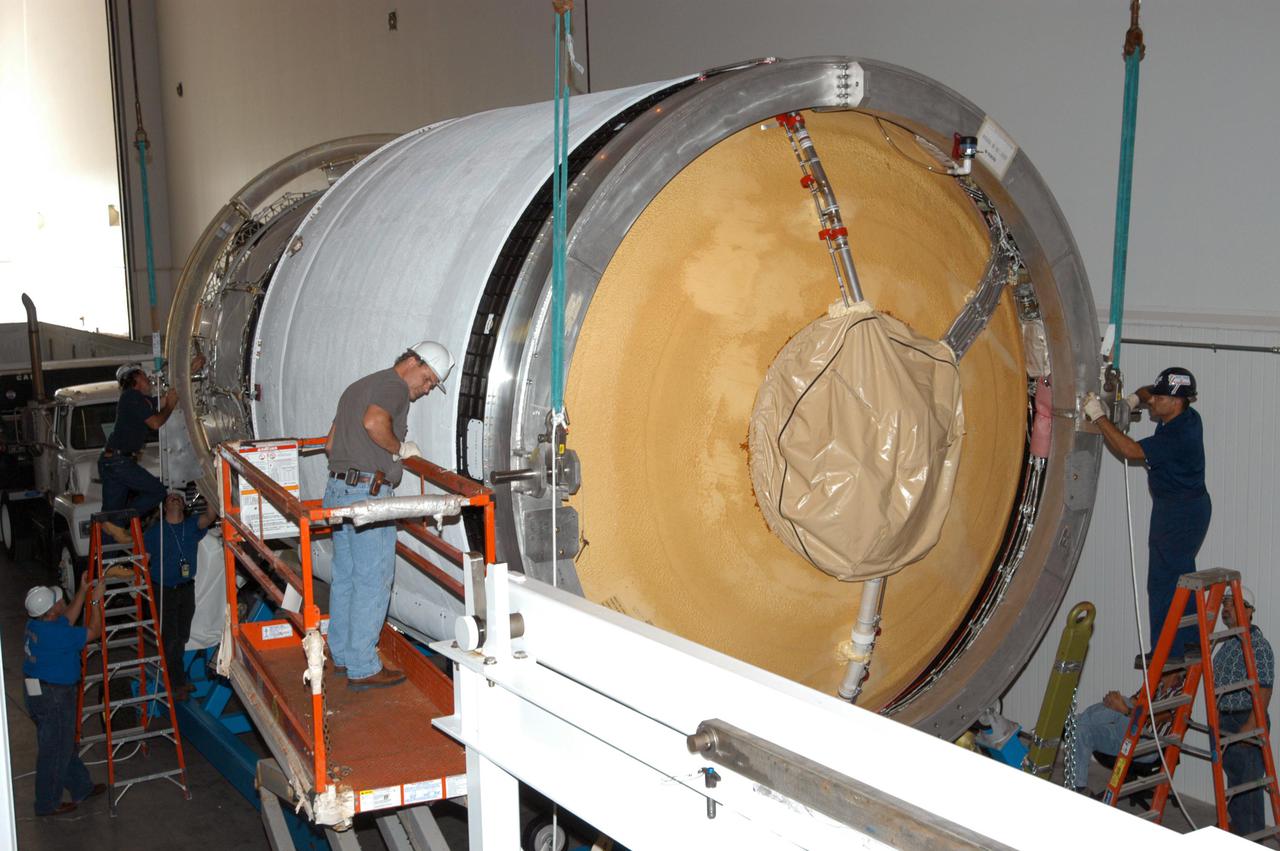
KENNEDY SPACE CENTER, FLA. - At the Boeing Delta Operations Center, workers attach a crane to the second stage of a Boeing Delta IV launch vehicle for transfer from its transporter to a work stand. The Delta IV rocket will be used for the 2005 launching of the GOES-N weather satellite for NASA and NOAA (National Oceanic and Atmospheric Administration). The first in a series of three advanced weather satellites including GOES-O and GOES-P, the GOES-N will provide continuous monitoring necessary for intensive data analysis. It will provide a constant vigil for the atmospheric “triggers” of severe weather conditions such as tornadoes, flash floods, hail storms and hurricanes. When these conditions develop, GOES-N will be able to monitor storm development and track their movements.
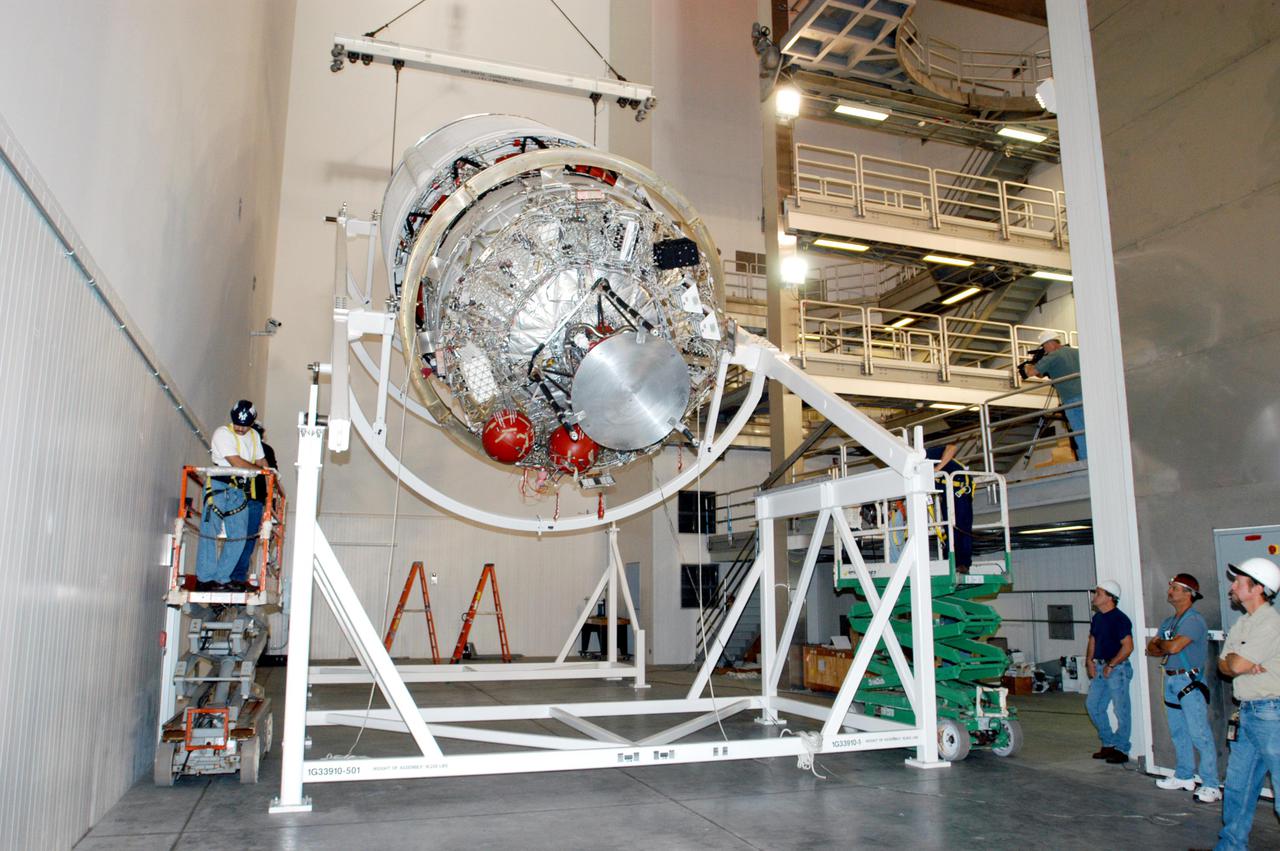
KENNEDY SPACE CENTER, FLA. - At the Boeing Delta Operations Center, the Delta IV second stage is lowered onto a rotation stand so that the nozzles can be installed. A deployment test will follow. The Delta IV rocket will be used for the 2005 launching of the GOES-N weather satellite for NASA and NOAA (National Oceanic and Atmospheric Administration). The first in a series of three advanced weather satellites including GOES-O and GOES-P, the GOES-N will provide continuous monitoring necessary for intensive data analysis. It will provide a constant vigil for the atmospheric “triggers” of severe weather conditions such as tornadoes, flash floods, hail storms and hurricanes. When these conditions develop, GOES-N will be able to monitor storm development and track their movements.
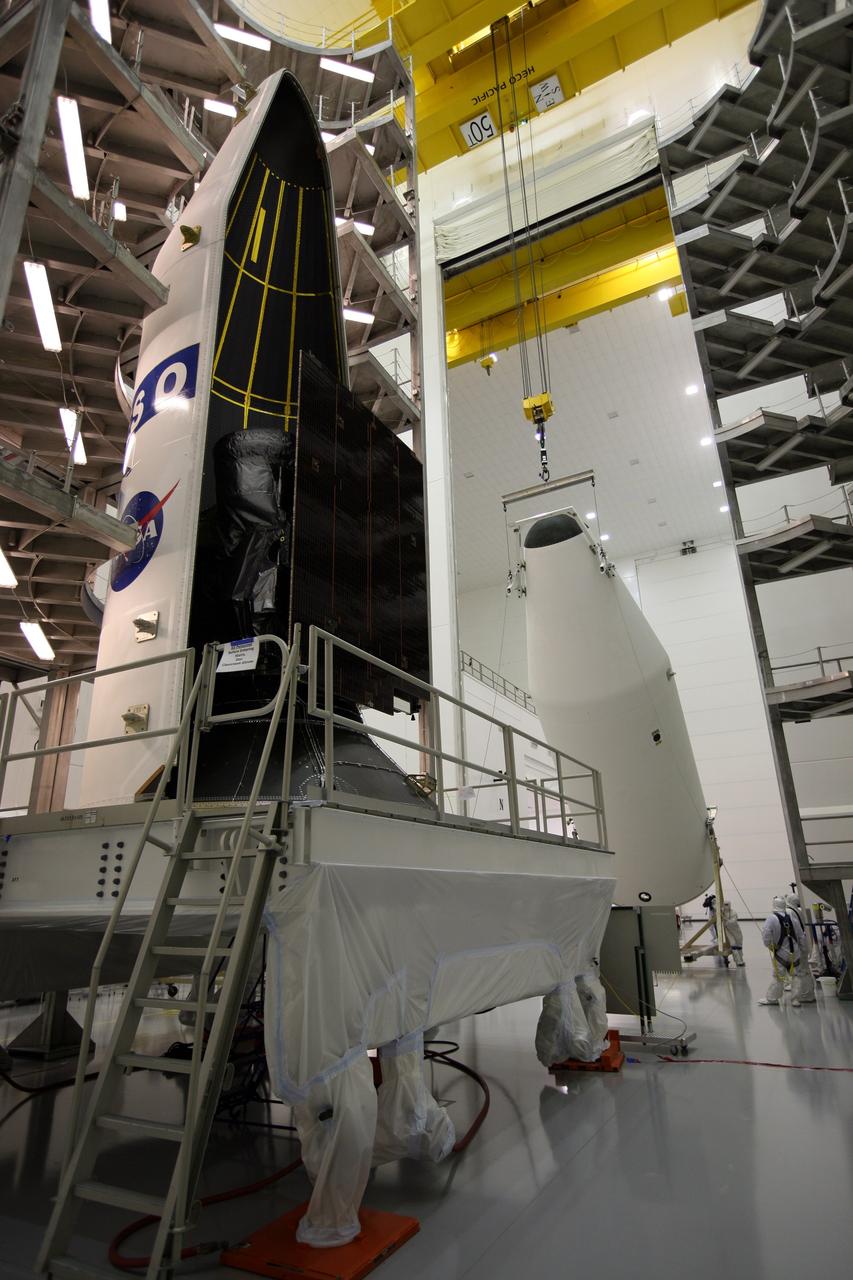
CAPE CANAVERAL, Fla. – In the Astrotech payload processing facility in Titusville, Fla., the first half of the payload fairing has been placed around the GOES-O satellite, at left. In the background, the second half is being lifted to vertical for its placement around GOES-O. The fairing is a molded structure that fits flush with the outside surface of the rocket and forms an aerodynamically smooth nose cone, protecting the spacecraft during launch and ascent. The latest Geostationary Operational Environmental Satellite, GOES-O was developed by NASA for the National Oceanic and Atmospheric Administration, or NOAA. The GOES satellites continuously provide observations of 60 percent of the Earth including the continental United States, providing weather monitoring and forecast operations as well as a continuous and reliable stream of environmental information and severe weather warnings. Once in orbit, GOES-O will be designated GOES-14, and NASA will provide on-orbit checkout and then transfer operational responsibility to NOAA. The GOES-O satellite is targeted to launch from Cape Canaveral Air Force Station's Launch Complex 37 on April 28 onboard a United Launch Alliance Delta IV expendable launch vehicle. Photo credit: NASA/Dimitri Gerondidakis
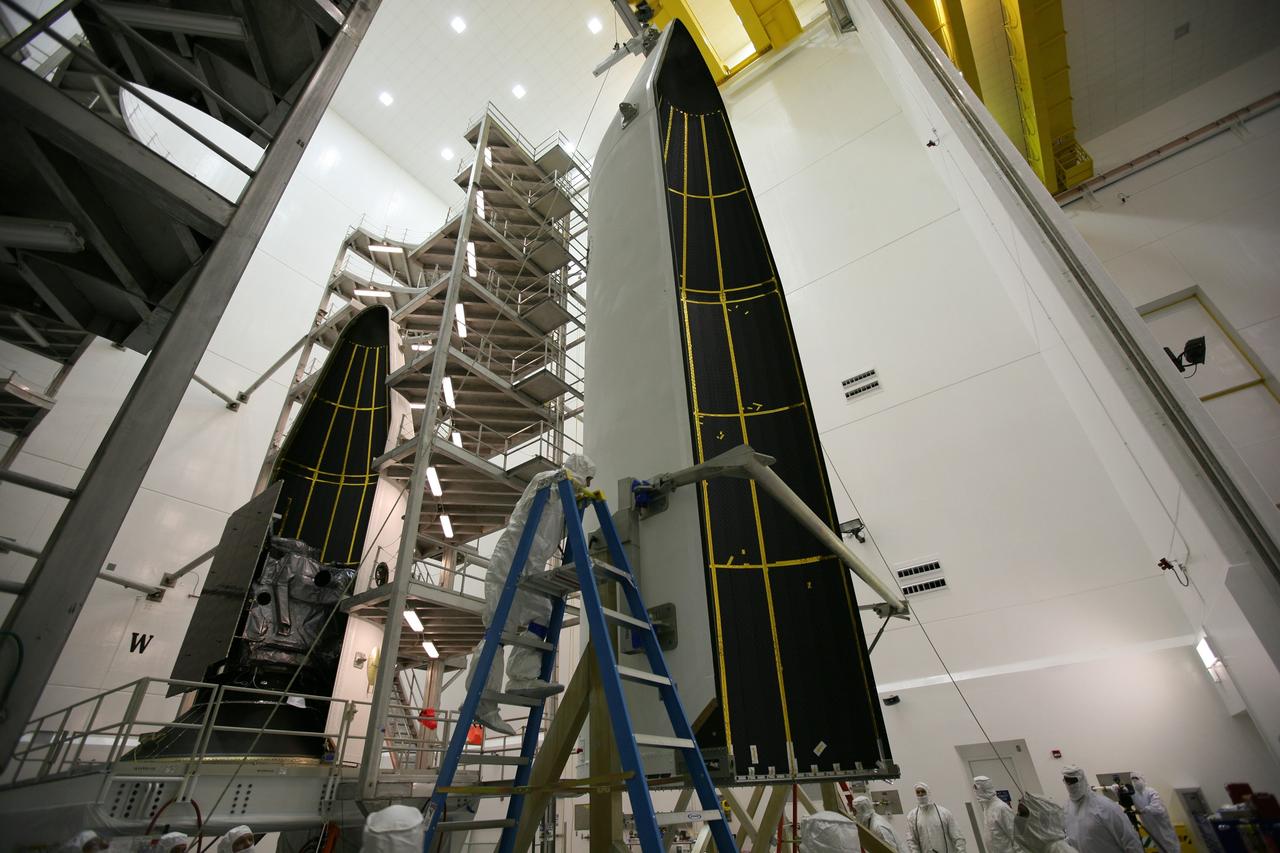
CAPE CANAVERAL, Fla. – In the Astrotech payload processing facility in Titusville, Fla., the first half of the payload fairing has been placed around the GOES-O satellite, at left. At right, the second half has been lifted to vertical for its placement around GOES-O to complete the encapsulation. The fairing is a molded structure that fits flush with the outside surface of the rocket and forms an aerodynamically smooth nose cone, protecting the spacecraft during launch and ascent. The latest Geostationary Operational Environmental Satellite, GOES-O was developed by NASA for the National Oceanic and Atmospheric Administration, or NOAA. The GOES satellites continuously provide observations of 60 percent of the Earth including the continental United States, providing weather monitoring and forecast operations as well as a continuous and reliable stream of environmental information and severe weather warnings. Once in orbit, GOES-O will be designated GOES-14, and NASA will provide on-orbit checkout and then transfer operational responsibility to NOAA. The GOES-O satellite is targeted to launch from Cape Canaveral Air Force Station's Launch Complex 37 on April 28 onboard a United Launch Alliance Delta IV expendable launch vehicle. Photo credit: NASA/Dimitri Gerondidakis
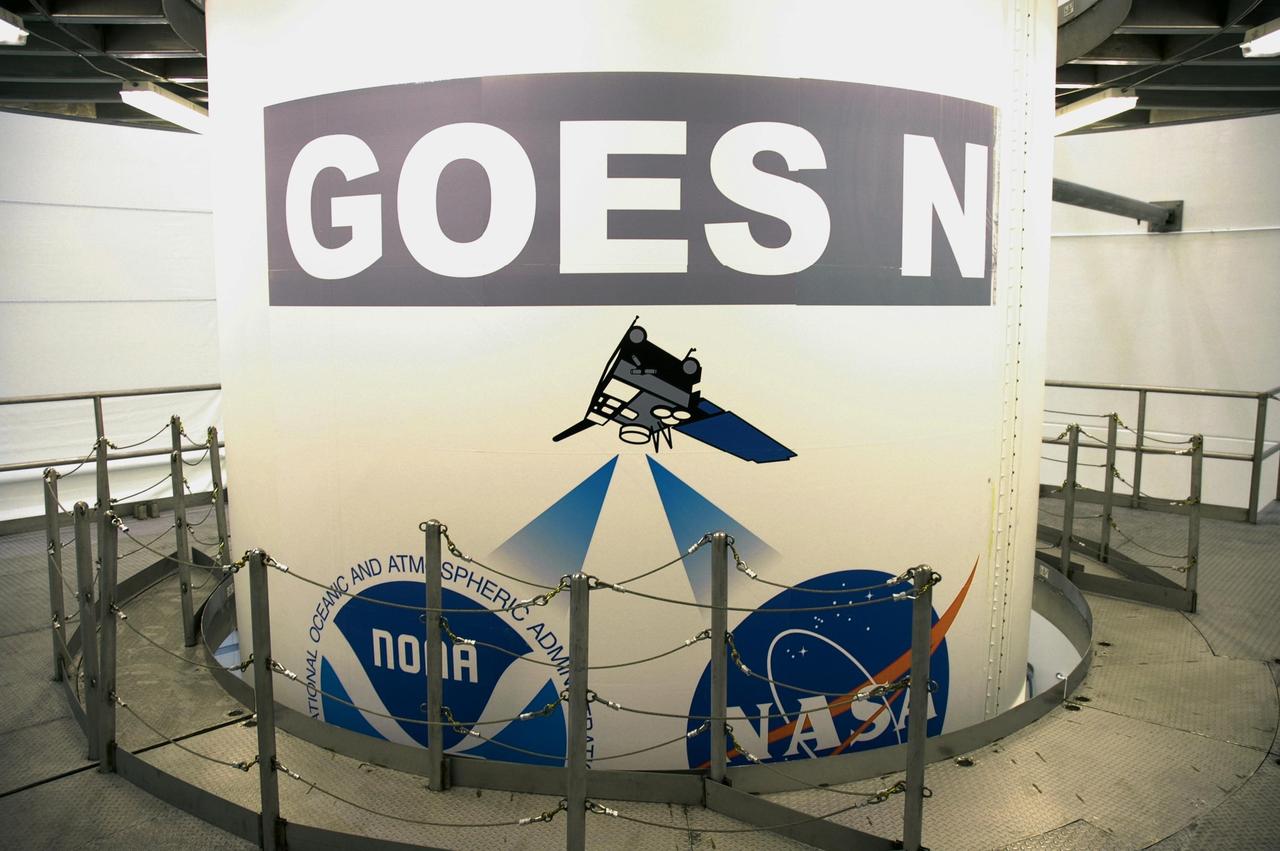
KENNEDY SPACE CENTER, FLA. - At Astrotech Space Operations payload processing facility in Titusville, Fla., the GOES-N spacecraft, secured inside a payload fairing, is surrounded by a work stand. Workers will use the stand to begin detaching the fairing from around the spacecraft. The fairing protects the spacecraft during launch and flight through the atmosphere. Once out of the atmosphere, the fairing is jettisoned. Removing the fairing will allow workers access to the spacecraft. GOES-N was demated from its Boeing Delta IV launch vehicle when the launch was postponed in August 2005 due to technical issues. Due to the extended length of time the spacecraft had been atop the Delta IV rocket without launching, the weather satellite was returned to Astrotech for some precautionary retesting and state of health checks. GOES-N is the latest in a series of Geostationary Operational Environmental Satellites for NOAA and NASA providing continuous monitoring necessary for intensive data analysis. Photo credit: NASA/Jim Grossmann
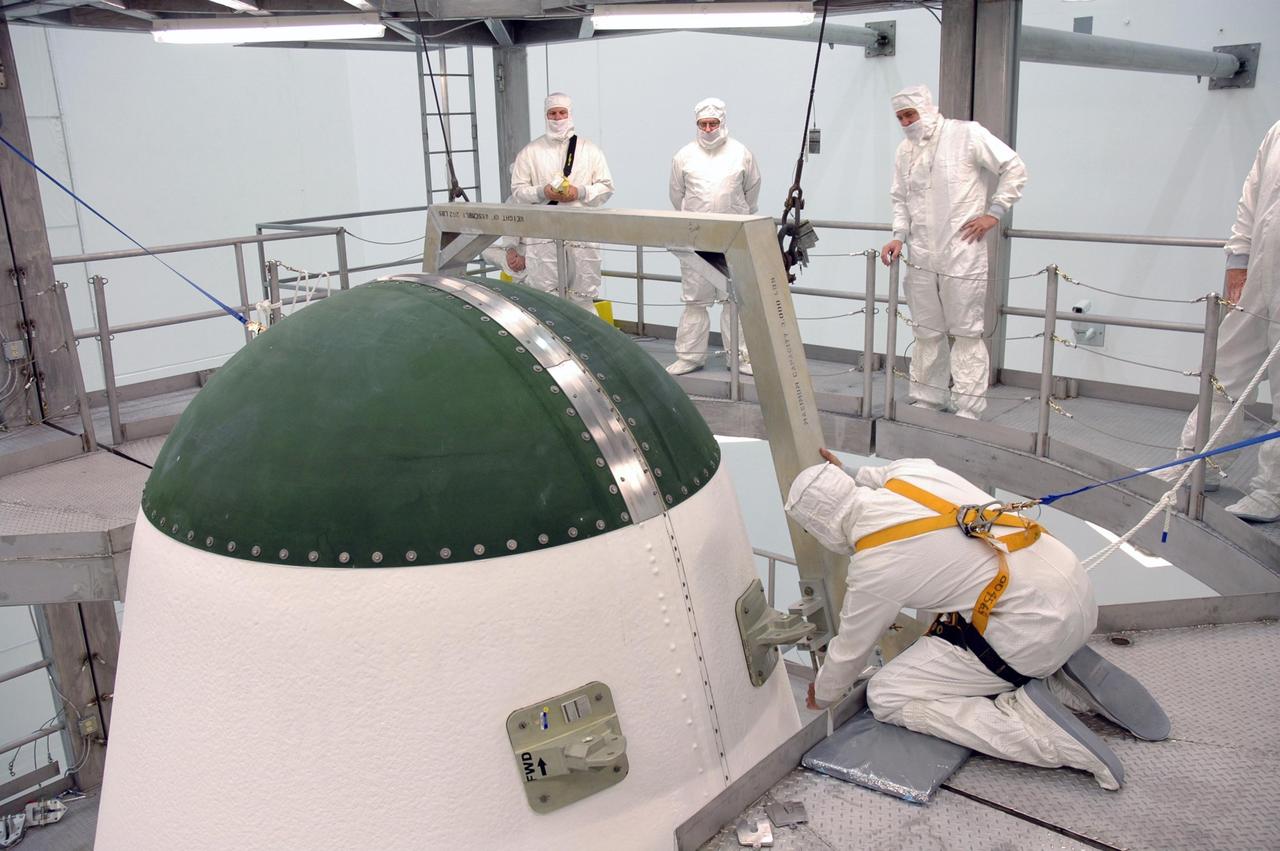
KENNEDY SPACE CENTER, FLA. - At Astrotech Space Operations payload processing facility in Titusville, Fla., workers begin detaching the fairing from around the GOES-N spacecraft. Workers will use the stand to begin detaching the fairing from around the spacecraft. The fairing protects the spacecraft during launch and flight through the atmosphere. Once out of the atmosphere, the fairing is jettisoned. Removing the fairing will allow workers access to the spacecraft. GOES-N was demated from its Boeing Delta IV launch vehicle when the launch was postponed in August 2005 due to technical issues. Due to the extended length of time the spacecraft had been atop the Delta IV rocket without launching, the weather satellite was returned to Astrotech for some precautionary retesting and state of health checks. GOES-N is the latest in a series of Geostationary Operational Environmental Satellites for NOAA and NASA providing continuous monitoring necessary for intensive data analysis. Photo credit: NASA/Jim Grossmann
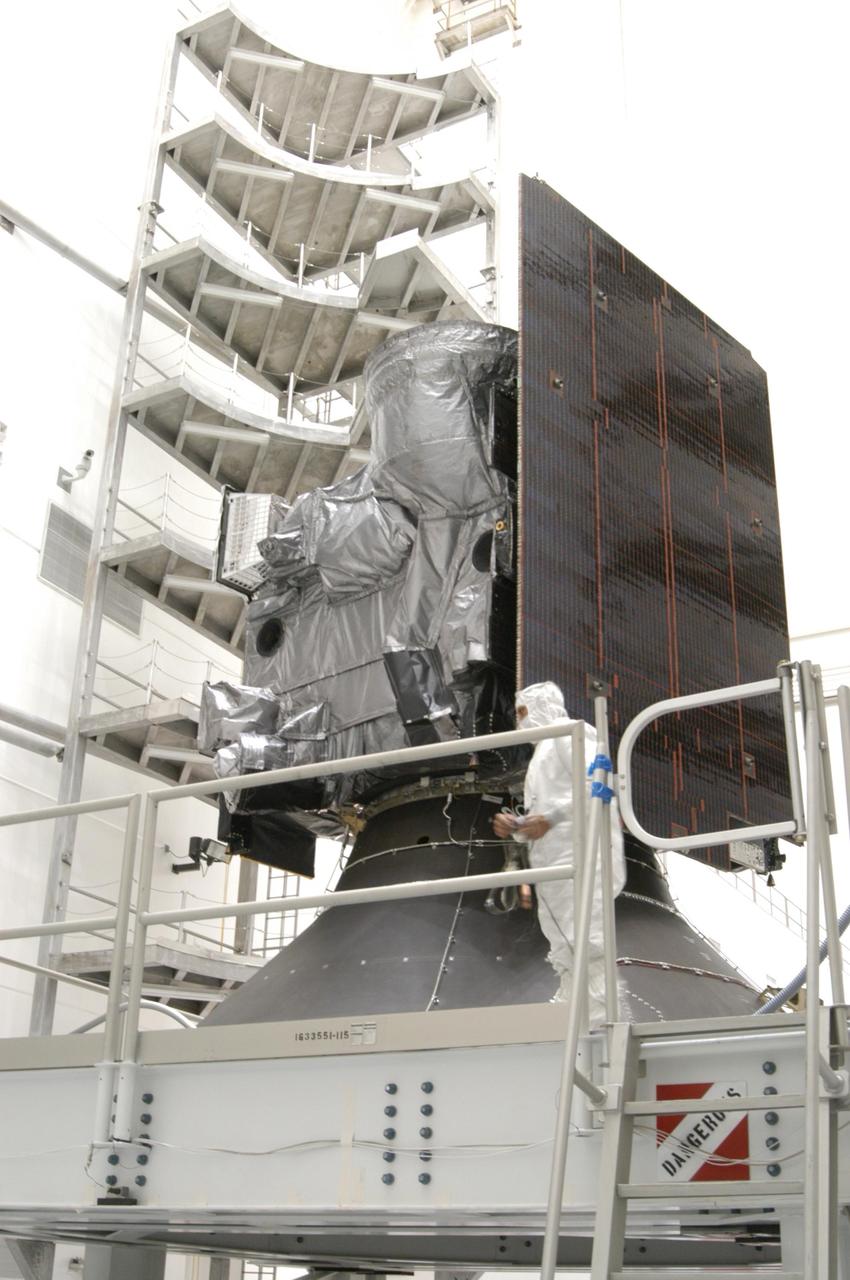
KENNEDY SPACE CENTER, FLA. - Inside a high bay at Astrotech Space Operations in Titusville, Fla., the GOES-N spacecraft is revealed after removal of the fairing to allow testing. GOES-N was demated from its Boeing Delta IV launch vehicle on Launch Complex 37 at Cape Canaveral Air Force Station. The launch was postponed in August 2005 due to technical issues. Due to the extended length of time the spacecraft had been atop the Delta IV without launching, the weather satellite will undergo some precautionary retesting and state of health checks. GOES-N is the latest in a series of Geostationary Operational Environmental Satellites for NOAA and NASA providing continuous monitoring necessary for intensive data analysis. Photo credit: NASA/George Shelton
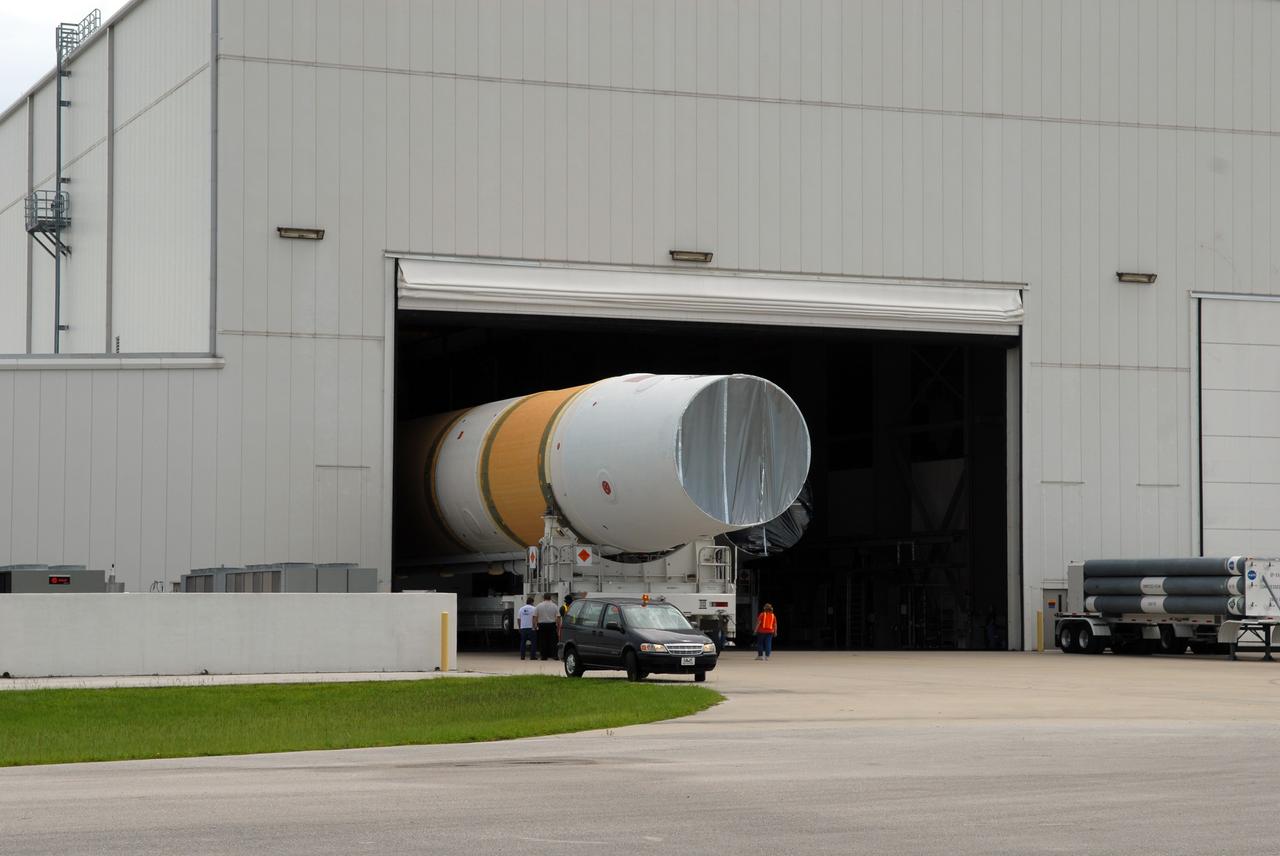
CAPE CANAVERAL, Fla. – The United Launch Alliance Delta IV first stage rolls into the Horizontal Integration Facility on Cape Canaveral Air Force Station's Launch Complex 37. The Delta IV is the launch vehicle for the latest Geostationary Operational Environmental Satellite, known as GOES-P, developed by NASA for the National Oceanic and Atmospheric Administration, or NOAA. Photo credit: NASA/Jim Grossmann
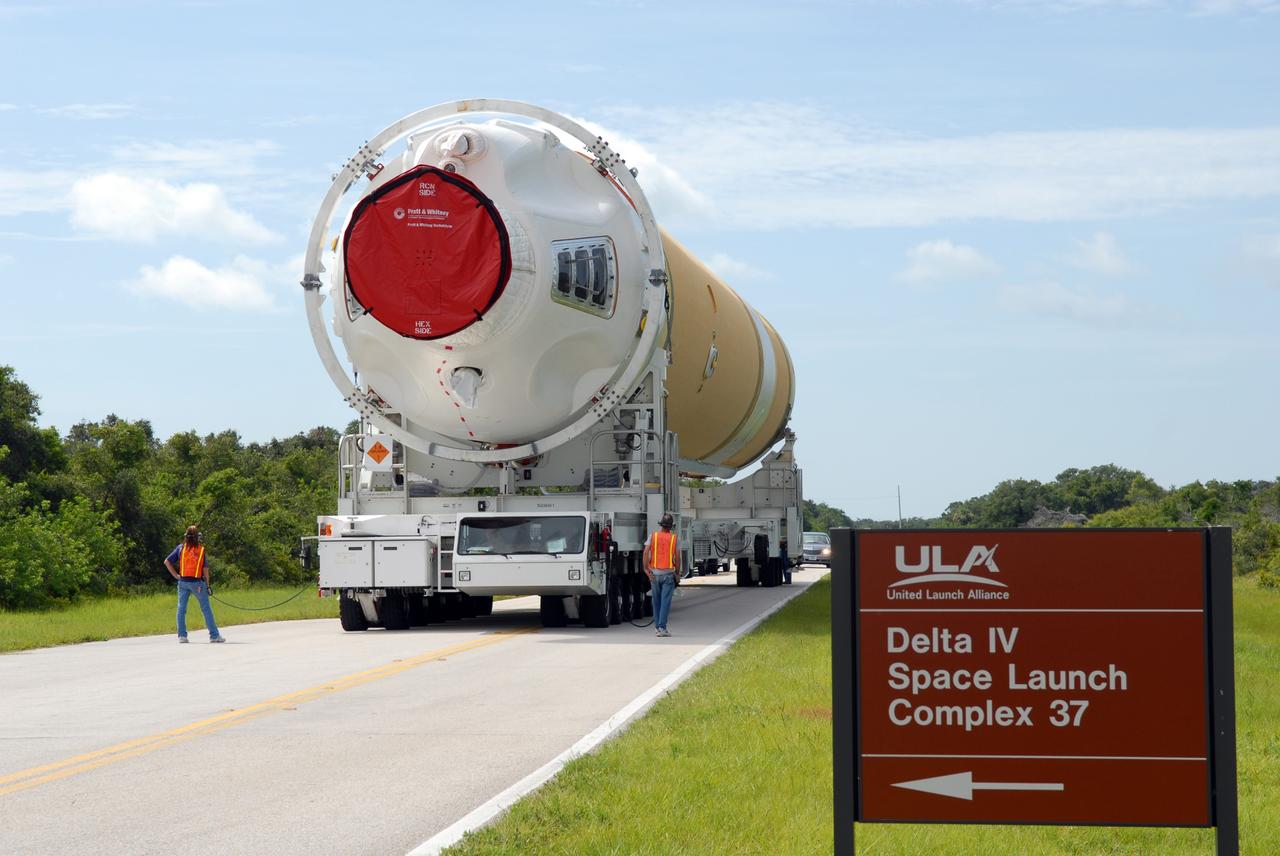
CAPE CANAVERAL, Fla. – The United Launch Alliance Delta IV first stage is being transported to the Horizontal Integration Facility on Cape Canaveral Air Force Station's Launch Complex 37. The Delta IV is the launch vehicle for the latest Geostationary Operational Environmental Satellite, known as GOES-P, developed by NASA for the National Oceanic and Atmospheric Administration, or NOAA. Photo credit: NASA/Jim Grossmann
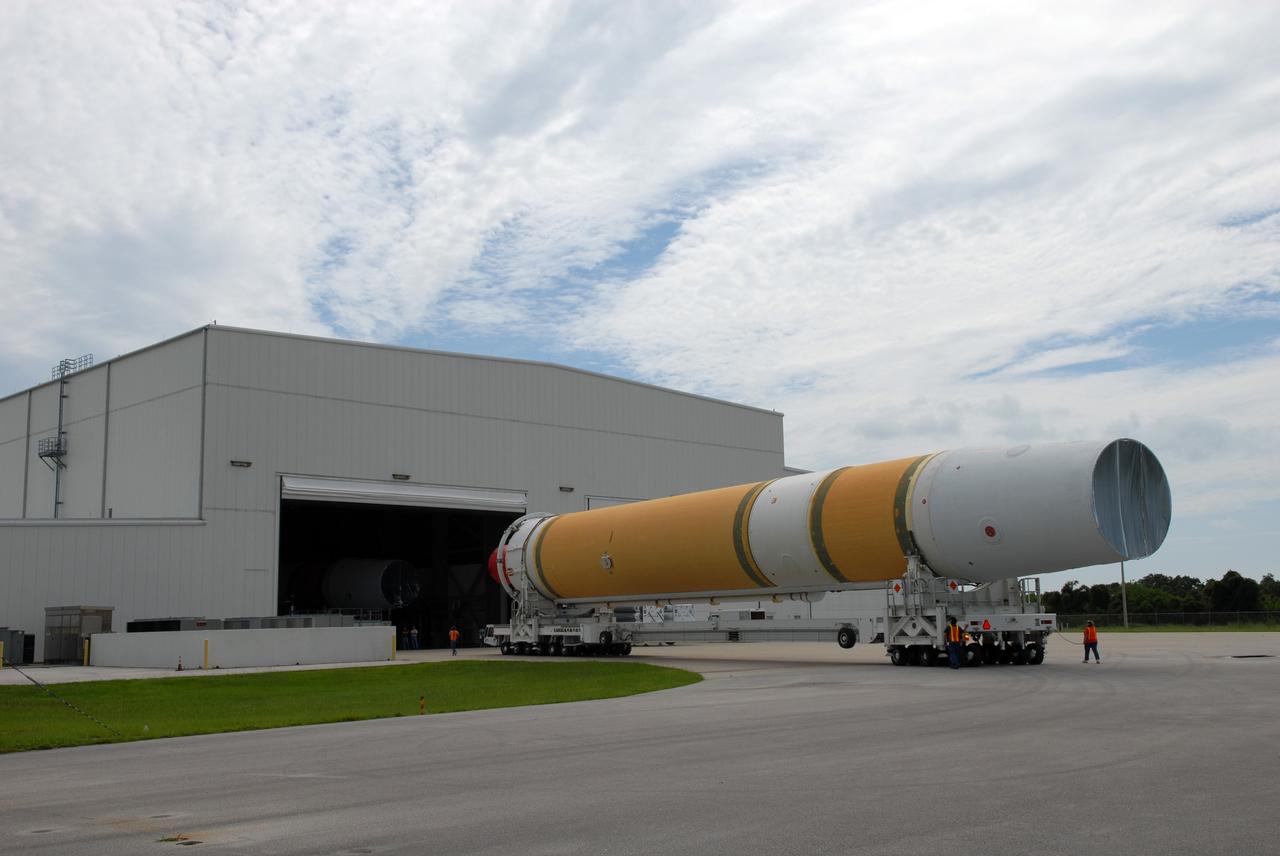
CAPE CANAVERAL, Fla. – The United Launch Alliance Delta IV first stage rolls toward the Horizontal Integration Facility on Cape Canaveral Air Force Station's Launch Complex 37. The Delta IV is the launch vehicle for the latest Geostationary Operational Environmental Satellite, known as GOES-P, developed by NASA for the National Oceanic and Atmospheric Administration, or NOAA. Photo credit: NASA/Jim Grossmann
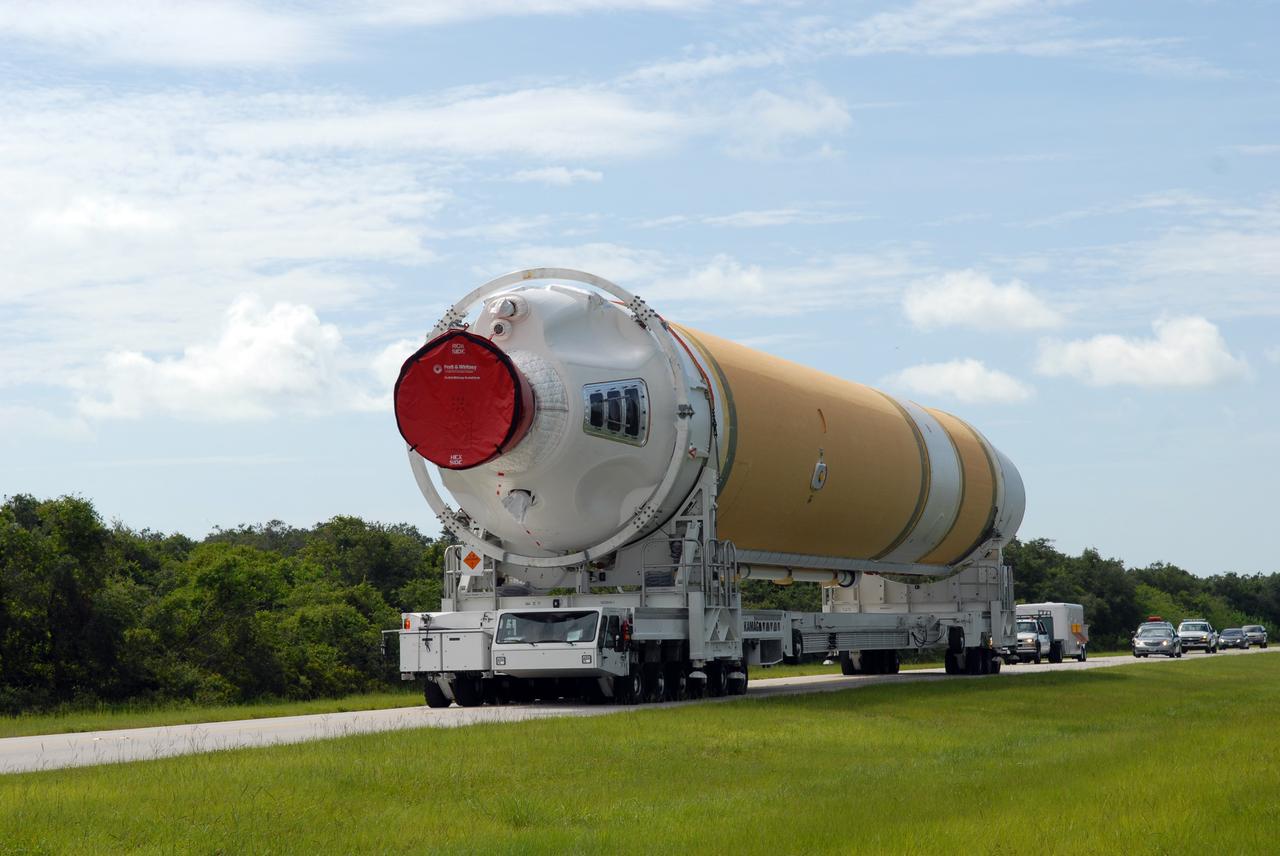
CAPE CANAVERAL, Fla. – The United Launch Alliance Delta IV first stage is being transported to the Horizontal Integration Facility on Cape Canaveral Air Force Station's Launch Complex 37. The Delta IV is the launch vehicle for the latest Geostationary Operational Environmental Satellite, known as GOES-P, developed by NASA for the National Oceanic and Atmospheric Administration, or NOAA. Photo credit: NASA/Jim Grossmann
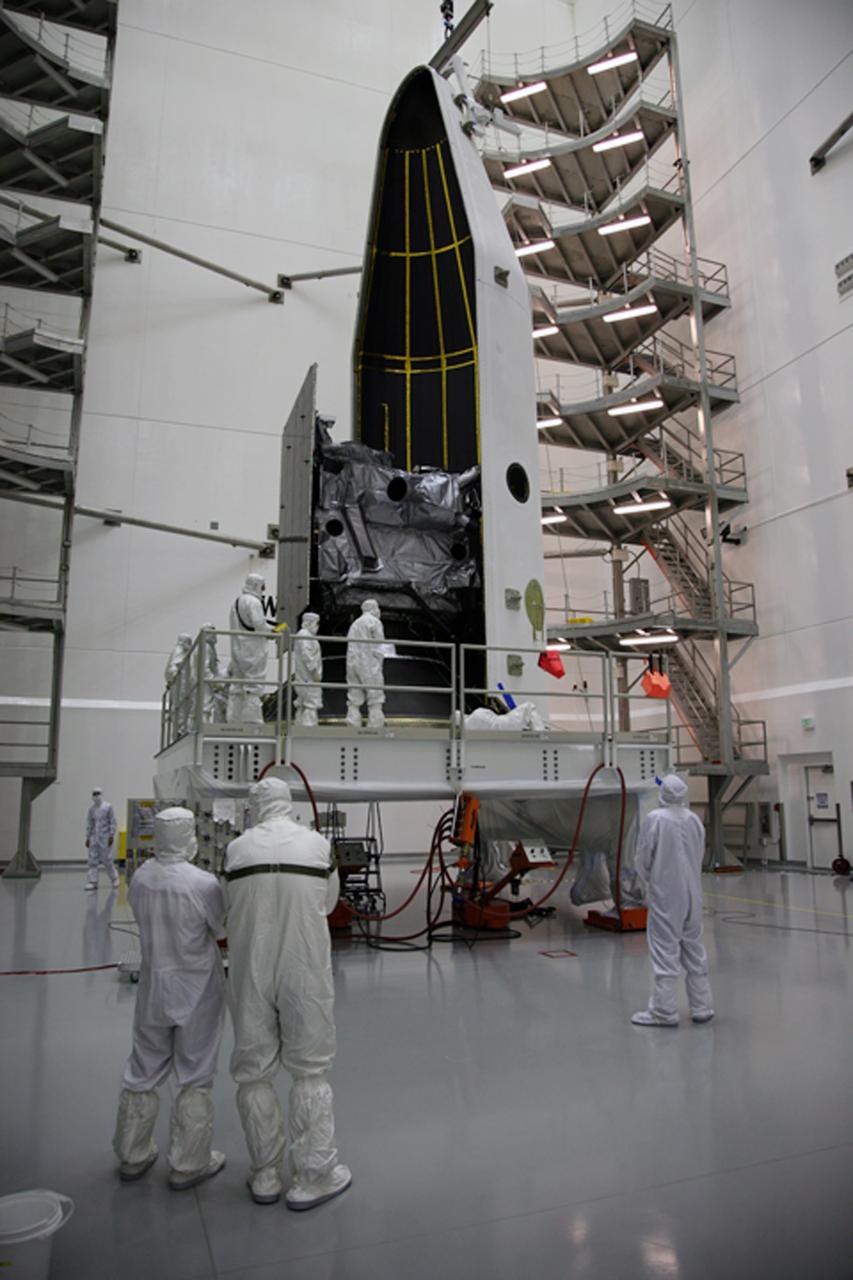
CAPE CANAVERAL, Fla. – In the Astrotech payload processing facility in Titusville, Fla., the first half of the payload fairing is moved around the GOES-O satellite. The fairing is a molded structure that fits flush with the outside surface of the rocket and forms an aerodynamically smooth nose cone, protecting the spacecraft during launch and ascent. The latest Geostationary Operational Environmental Satellite, GOES-O was developed by NASA for the National Oceanic and Atmospheric Administration, or NOAA. The GOES satellites continuously provide observations of 60 percent of the Earth including the continental United States, providing weather monitoring and forecast operations as well as a continuous and reliable stream of environmental information and severe weather warnings. Once in orbit, GOES-O will be designated GOES-14, and NASA will provide on-orbit checkout and then transfer operational responsibility to NOAA. The GOES-O satellite is targeted to launch from Cape Canaveral Air Force Station's Launch Complex 37 on April 28 onboard a United Launch Alliance Delta IV expendable launch vehicle. Photo credit: NASA/Dimitri Gerondidakis
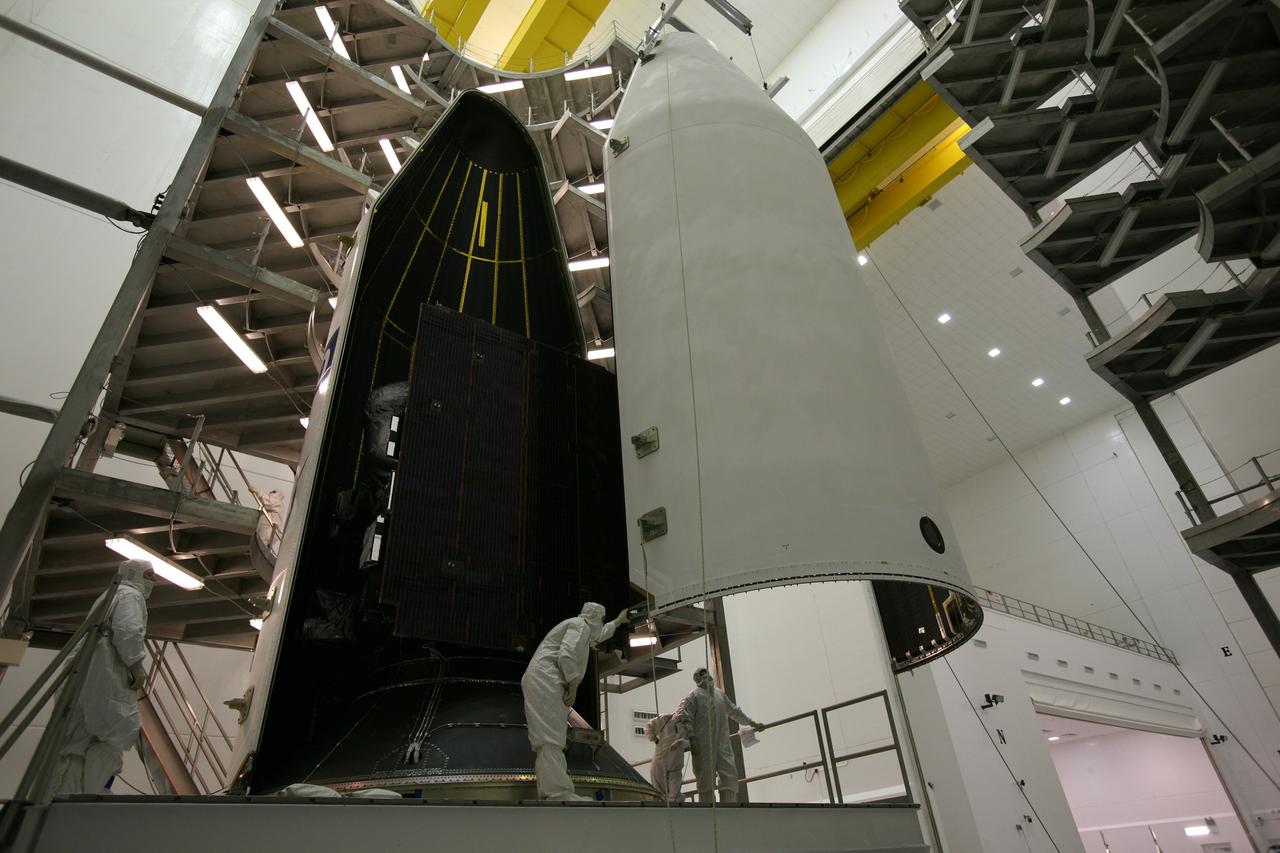
CAPE CANAVERAL, Fla. – In the Astrotech payload processing facility in Titusville, Fla., technicians monitor the second half of the payload fairing as it is moved toward the GOES-O satellite to complete encapsulation. The fairing is a molded structure that fits flush with the outside surface of the rocket and forms an aerodynamically smooth nose cone, protecting the spacecraft during launch and ascent. The latest Geostationary Operational Environmental Satellite, GOES-O was developed by NASA for the National Oceanic and Atmospheric Administration, or NOAA. The GOES satellites continuously provide observations of 60 percent of the Earth including the continental United States, providing weather monitoring and forecast operations as well as a continuous and reliable stream of environmental information and severe weather warnings. Once in orbit, GOES-O will be designated GOES-14, and NASA will provide on-orbit checkout and then transfer operational responsibility to NOAA. The GOES-O satellite is targeted to launch from Cape Canaveral Air Force Station's Launch Complex 37 on April 28 onboard a United Launch Alliance Delta IV expendable launch vehicle. Photo credit: NASA/Dimitri Gerondidakis
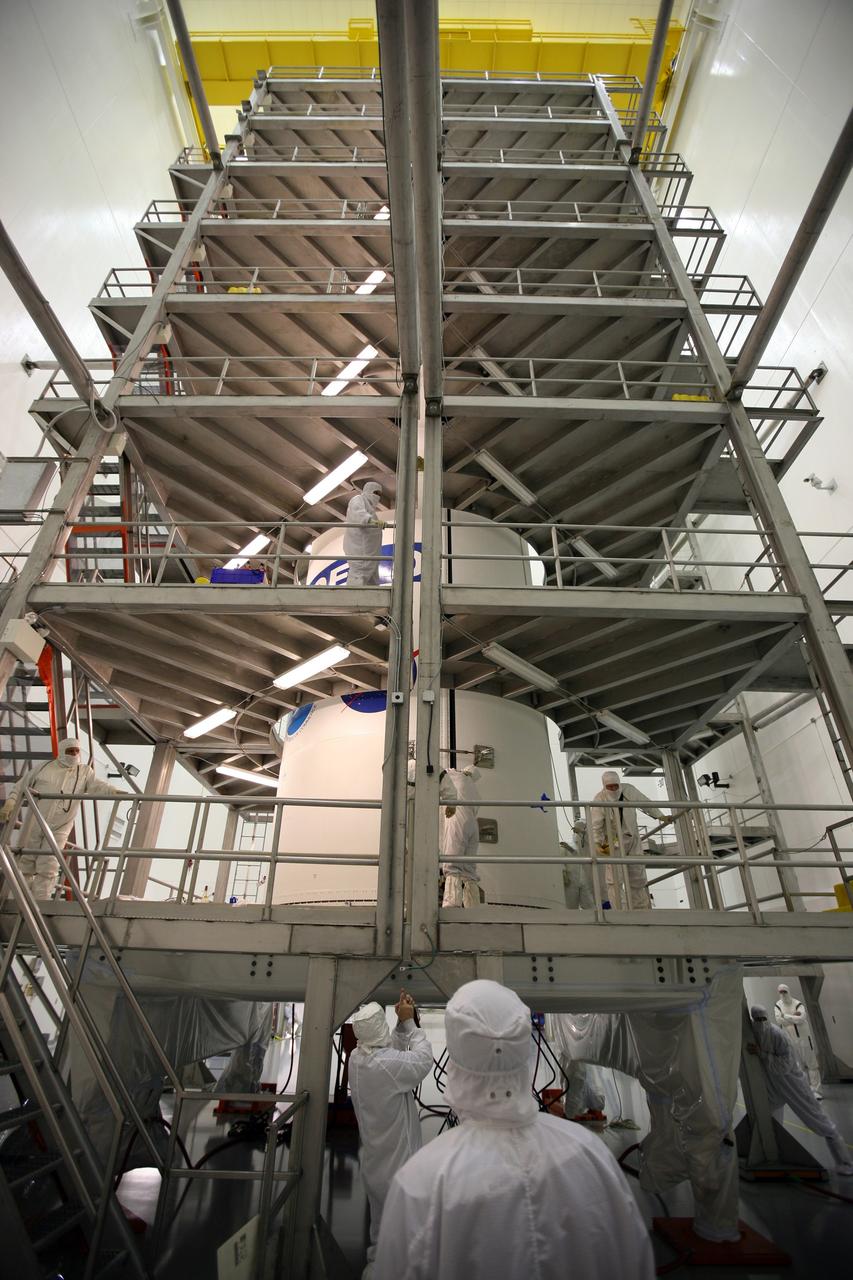
CAPE CANAVERAL, Fla. – In the Astrotech payload processing facility in Titusville, Fla., technicians complete the installation of the payload fairing around the GOES-O satellite. The fairing is a molded structure that fits flush with the outside surface of the rocket and forms an aerodynamically smooth nose cone, protecting the spacecraft during launch and ascent. The latest Geostationary Operational Environmental Satellite, GOES-O was developed by NASA for the National Oceanic and Atmospheric Administration, or NOAA. The GOES satellites continuously provide observations of 60 percent of the Earth including the continental United States, providing weather monitoring and forecast operations as well as a continuous and reliable stream of environmental information and severe weather warnings. Once in orbit, GOES-O will be designated GOES-14, and NASA will provide on-orbit checkout and then transfer operational responsibility to NOAA. The GOES-O satellite is targeted to launch from Cape Canaveral Air Force Station's Launch Complex 37 on April 28 onboard a United Launch Alliance Delta IV expendable launch vehicle. Photo credit: NASA/Dimitri Gerondidakis
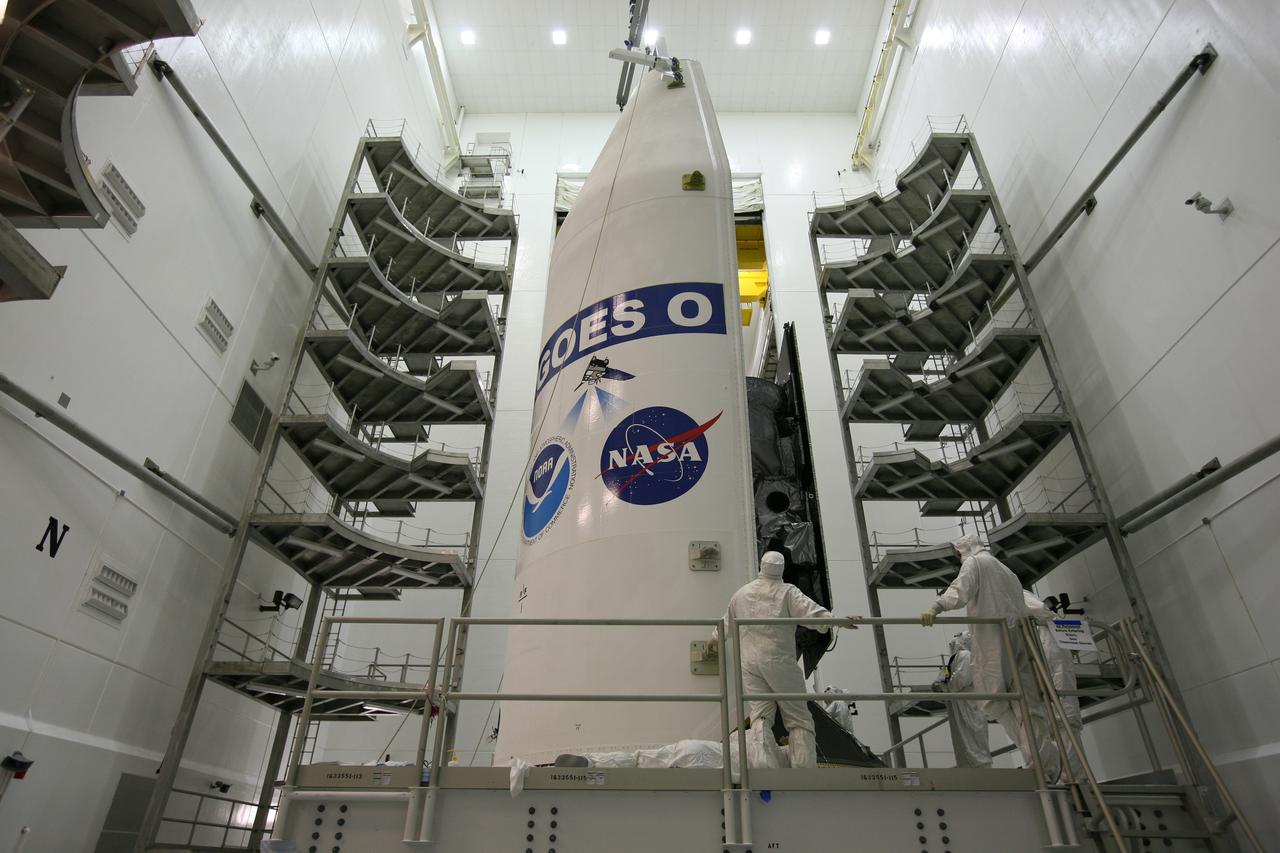
CAPE CANAVERAL, Fla. – In the Astrotech payload processing facility in Titusville, Fla., the first half of the payload fairing is moved around the GOES-O satellite. The fairing is a molded structure that fits flush with the outside surface of the rocket and forms an aerodynamically smooth nose cone, protecting the spacecraft during launch and ascent. The latest Geostationary Operational Environmental Satellite, GOES-O was developed by NASA for the National Oceanic and Atmospheric Administration, or NOAA. The GOES satellites continuously provide observations of 60 percent of the Earth including the continental United States, providing weather monitoring and forecast operations as well as a continuous and reliable stream of environmental information and severe weather warnings. Once in orbit, GOES-O will be designated GOES-14, and NASA will provide on-orbit checkout and then transfer operational responsibility to NOAA. The GOES-O satellite is targeted to launch from Cape Canaveral Air Force Station's Launch Complex 37 on April 28 onboard a United Launch Alliance Delta IV expendable launch vehicle. Photo credit: NASA/Dimitri Gerondidakis
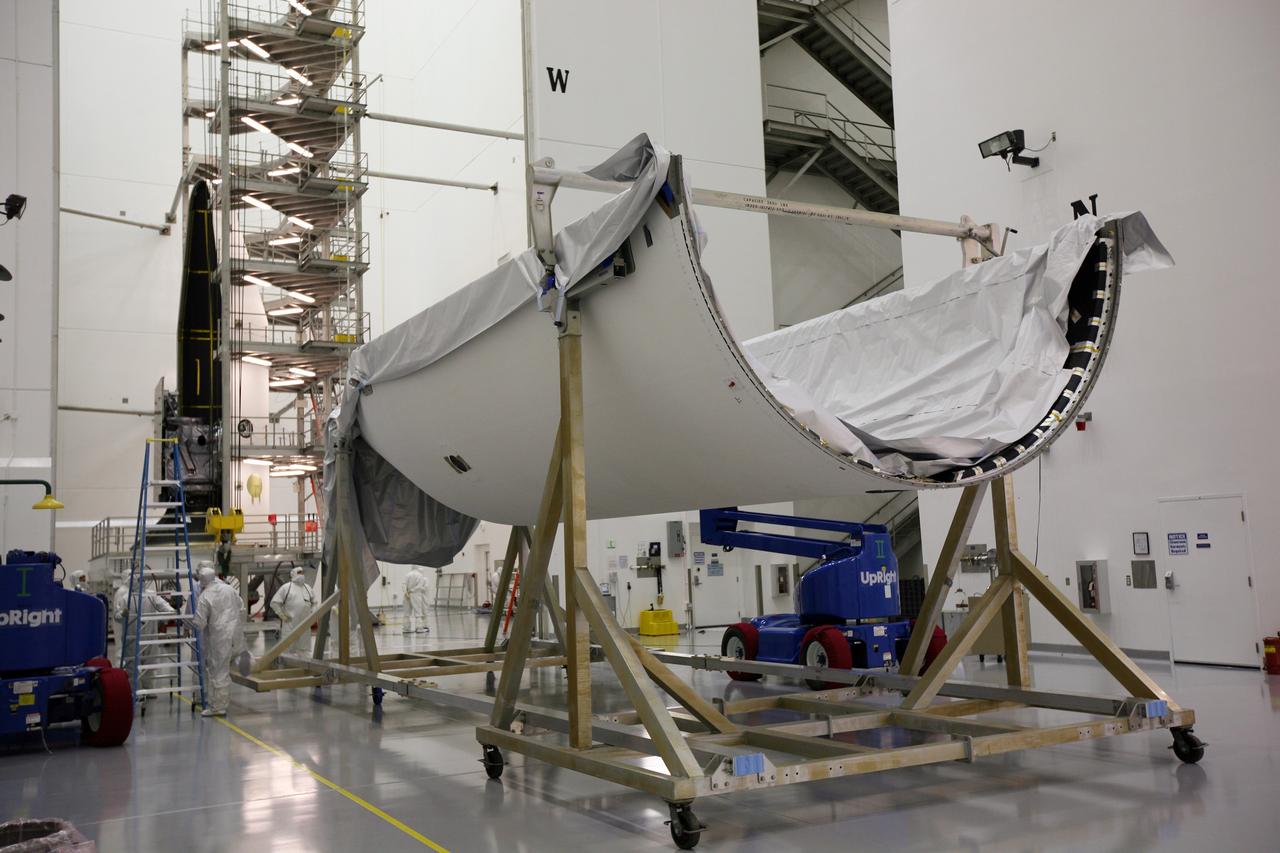
CAPE CANAVERAL, Fla. – In the Astrotech payload processing facility in Titusville, Fla., the second half of the payload fairing is ready to be lifted to vertical. It will be installed around the GOES-O satellite. The fairing is a molded structure that fits flush with the outside surface of the rocket and forms an aerodynamically smooth nose cone, protecting the spacecraft during launch and ascent. The latest Geostationary Operational Environmental Satellite, GOES-O was developed by NASA for the National Oceanic and Atmospheric Administration, or NOAA. The GOES satellites continuously provide observations of 60 percent of the Earth including the continental United States, providing weather monitoring and forecast operations as well as a continuous and reliable stream of environmental information and severe weather warnings. Once in orbit, GOES-O will be designated GOES-14, and NASA will provide on-orbit checkout and then transfer operational responsibility to NOAA. The GOES-O satellite is targeted to launch from Cape Canaveral Air Force Station's Launch Complex 37 on April 28 onboard a United Launch Alliance Delta IV expendable launch vehicle. Photo credit: NASA/Dimitri Gerondidakis
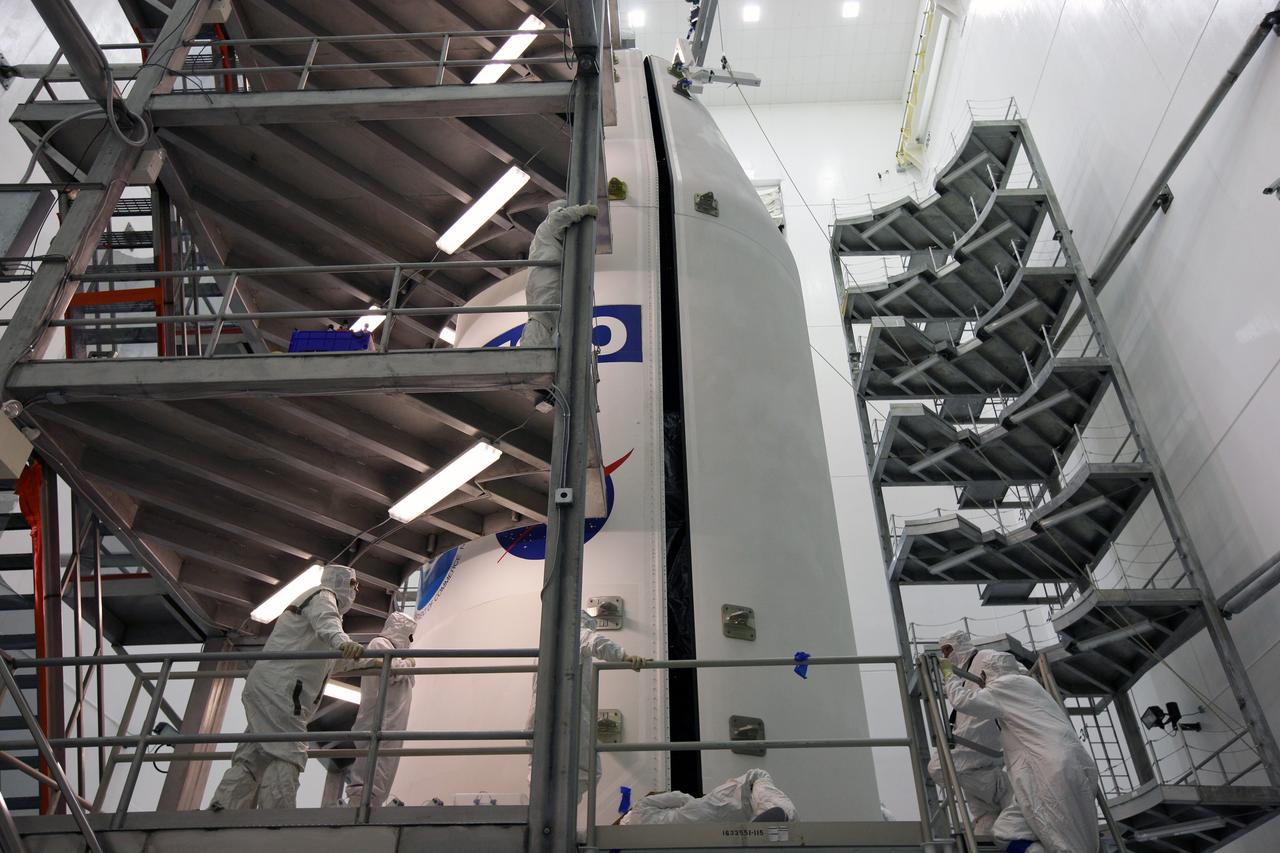
CAPE CANAVERAL, Fla. – In the Astrotech payload processing facility in Titusville, Fla., technicians monitor the closing of the two halves of the payload fairing around the GOES-O satellite. The fairing is a molded structure that fits flush with the outside surface of the rocket and forms an aerodynamically smooth nose cone, protecting the spacecraft during launch and ascent. The latest Geostationary Operational Environmental Satellite, GOES-O was developed by NASA for the National Oceanic and Atmospheric Administration, or NOAA. The GOES satellites continuously provide observations of 60 percent of the Earth including the continental United States, providing weather monitoring and forecast operations as well as a continuous and reliable stream of environmental information and severe weather warnings. Once in orbit, GOES-O will be designated GOES-14, and NASA will provide on-orbit checkout and then transfer operational responsibility to NOAA. The GOES-O satellite is targeted to launch from Cape Canaveral Air Force Station's Launch Complex 37 on April 28 onboard a United Launch Alliance Delta IV expendable launch vehicle. Photo credit: NASA/Dimitri Gerondidakis
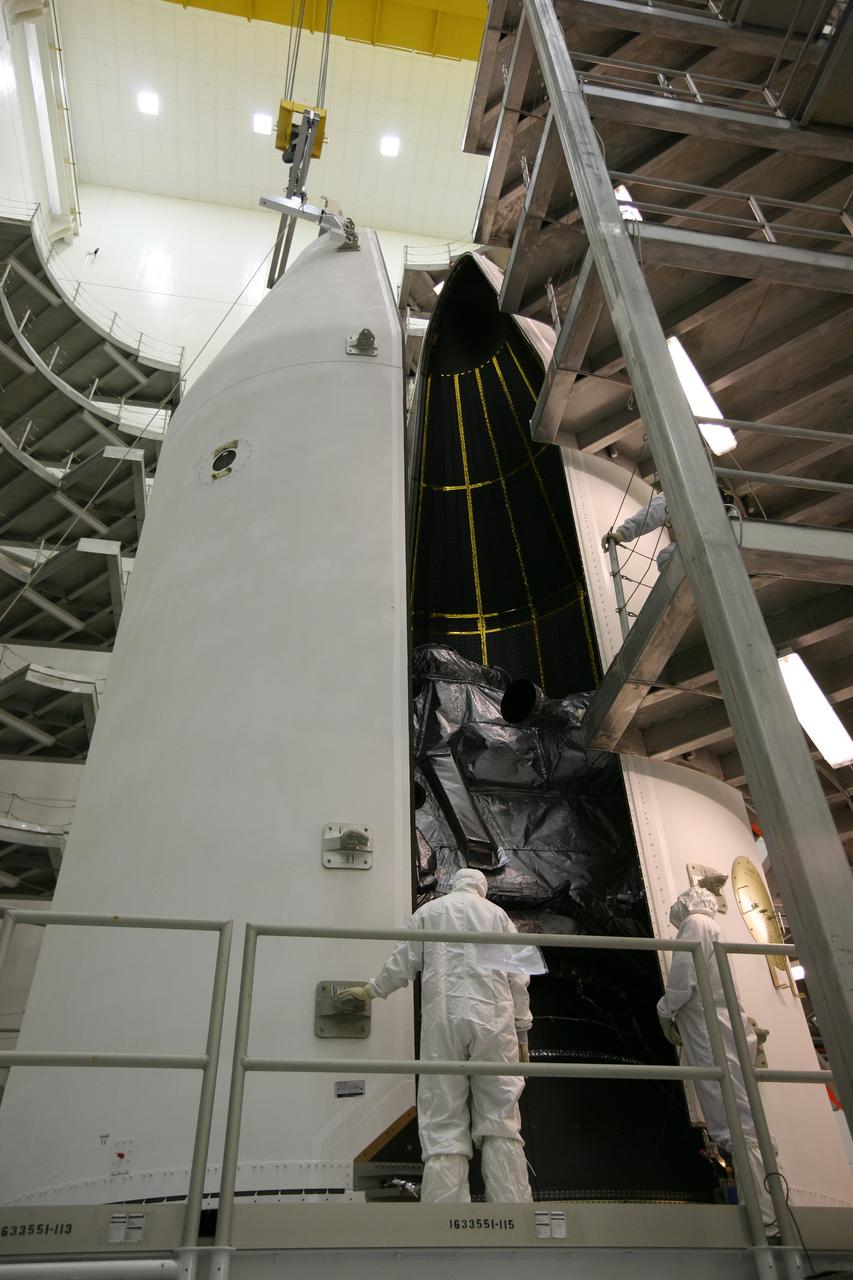
CAPE CANAVERAL, Fla. – In the Astrotech payload processing facility in Titusville, Fla., technicians monitor the second half of the payload fairing as it is moved closer to the GOES-O satellite to complete encapsulation. The fairing is a molded structure that fits flush with the outside surface of the rocket and forms an aerodynamically smooth nose cone, protecting the spacecraft during launch and ascent. The latest Geostationary Operational Environmental Satellite, GOES-O was developed by NASA for the National Oceanic and Atmospheric Administration, or NOAA. The GOES satellites continuously provide observations of 60 percent of the Earth including the continental United States, providing weather monitoring and forecast operations as well as a continuous and reliable stream of environmental information and severe weather warnings. Once in orbit, GOES-O will be designated GOES-14, and NASA will provide on-orbit checkout and then transfer operational responsibility to NOAA. The GOES-O satellite is targeted to launch from Cape Canaveral Air Force Station's Launch Complex 37 on April 28 onboard a United Launch Alliance Delta IV expendable launch vehicle. Photo credit: NASA/Dimitri Gerondidakis
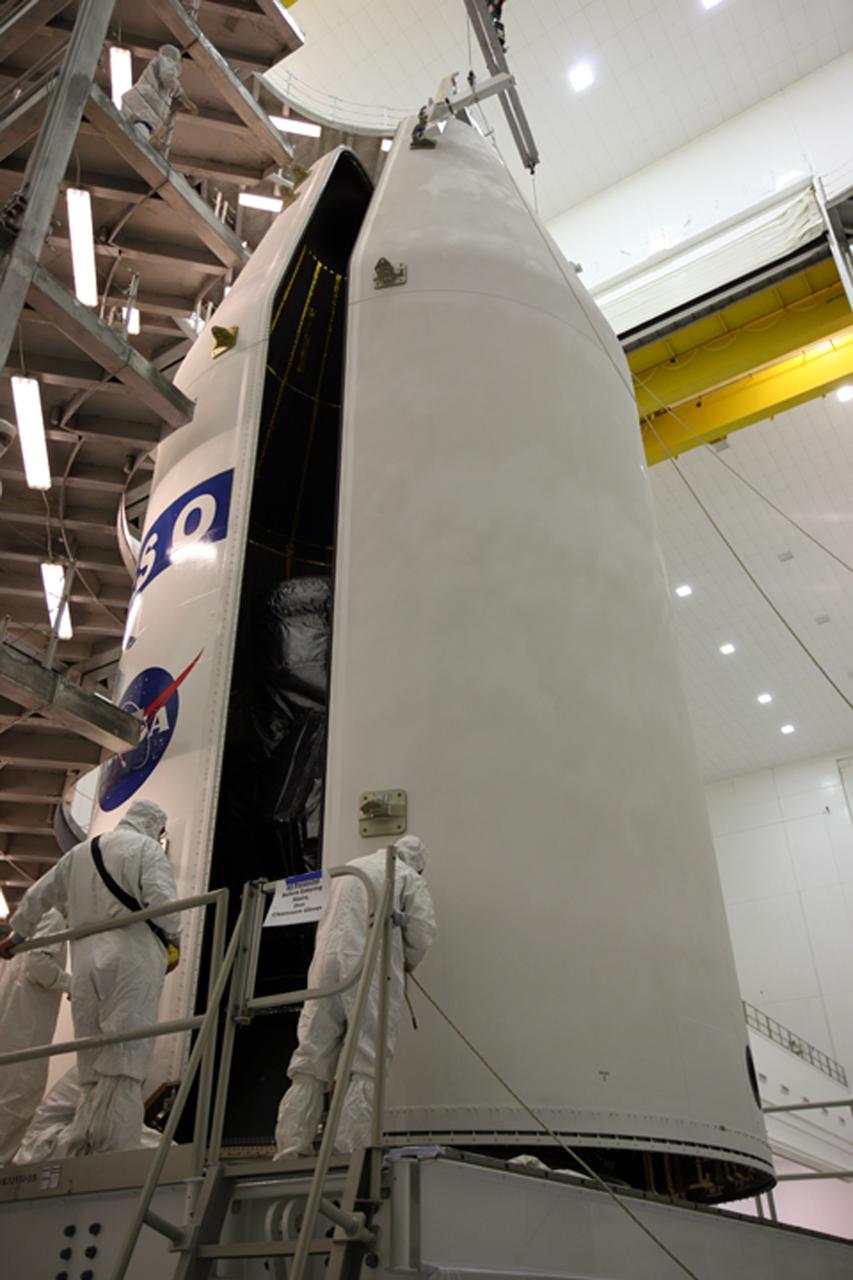
CAPE CANAVERAL, Fla. – In the Astrotech payload processing facility in Titusville, Fla., the two halves of the payload fairing move closer together to encapsulate the GOES-O satellite inside. The fairing is a molded structure that fits flush with the outside surface of the rocket and forms an aerodynamically smooth nose cone, protecting the spacecraft during launch and ascent. The latest Geostationary Operational Environmental Satellite, GOES-O was developed by NASA for the National Oceanic and Atmospheric Administration, or NOAA. The GOES satellites continuously provide observations of 60 percent of the Earth including the continental United States, providing weather monitoring and forecast operations as well as a continuous and reliable stream of environmental information and severe weather warnings. Once in orbit, GOES-O will be designated GOES-14, and NASA will provide on-orbit checkout and then transfer operational responsibility to NOAA. The GOES-O satellite is targeted to launch from Cape Canaveral Air Force Station's Launch Complex 37 on April 28 onboard a United Launch Alliance Delta IV expendable launch vehicle. Photo credit: NASA/Dimitri Gerondidakis
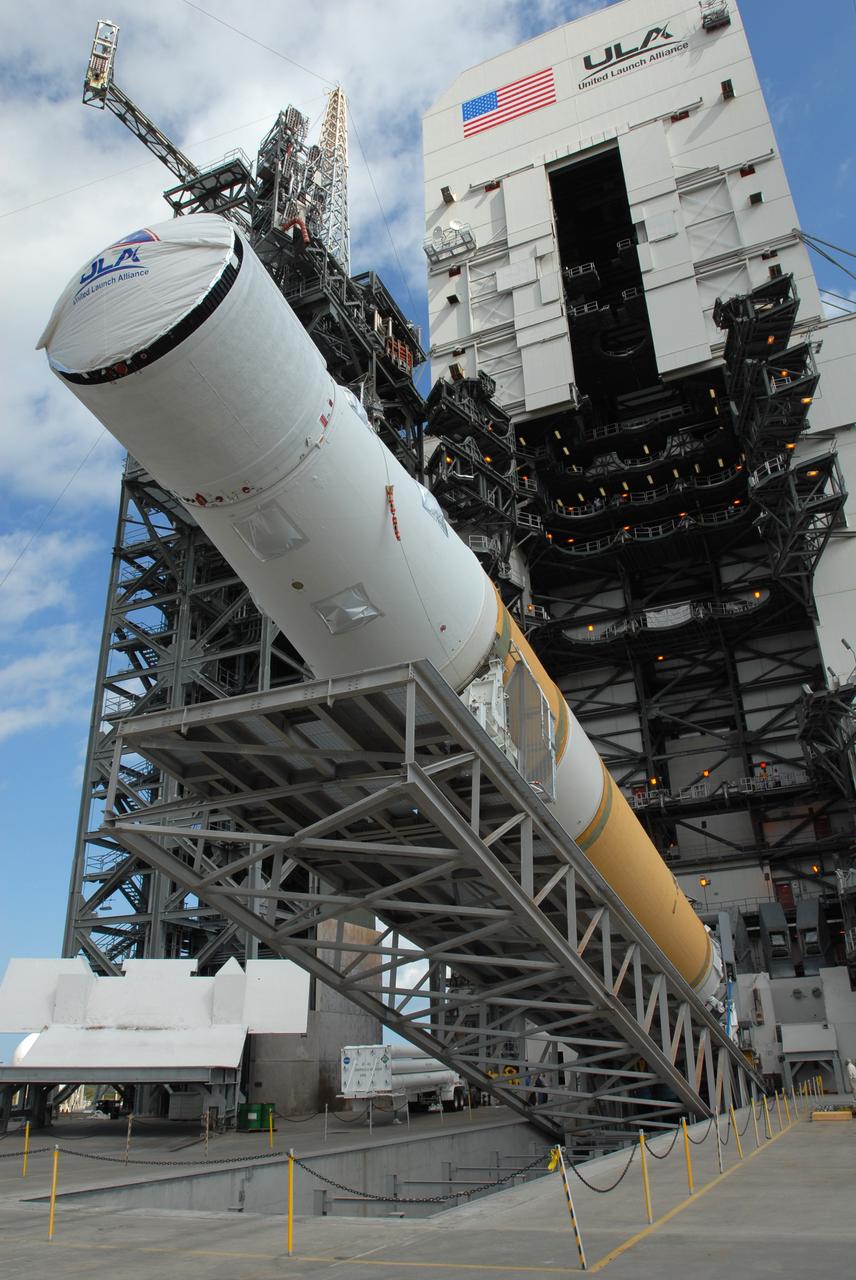
CAPE CANAVERAL, Fla. – On Launch Pad 37 at Cape Canaveral Air Force Station in Florida, the GOES-O and Delta IV upper stage are being raised to vertical. They will be moved into the mobile service tower for prelaunch preparations. GOES–O is one of a series of Geostationary Operational Environmental Satellites. The multi-mission GOES series N-P will be a vital contributor to weather, solar and space operations and science. NASA and the National Oceanic and Atmospheric Administration, or NOAA, are actively engaged in a cooperative program to expand the existing GOES system with the launch of the GOES N-P satellites. Launch of the GOES-O is targeted for no earlier than April 2009. Photo credit: NASA/Jim Grossmann
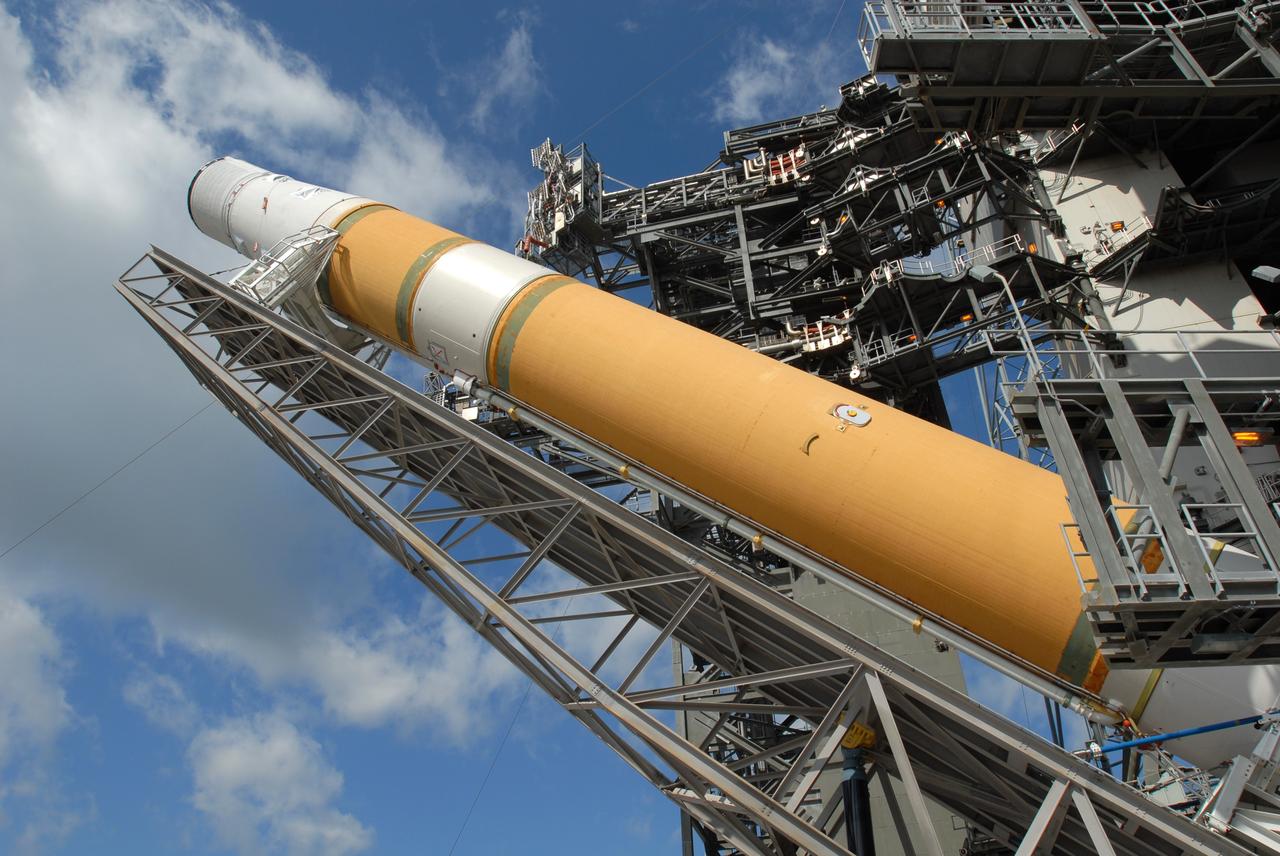
CAPE CANAVERAL, Fla. – On Launch Pad 37 at Cape Canaveral Air Force Station in Florida, the GOES-O and Delta IV upper stage are being raised to vertical. They will be moved into the mobile service tower for prelaunch preparations. GOES–O is one of a series of Geostationary Operational Environmental Satellites. The multi-mission GOES series N-P will be a vital contributor to weather, solar and space operations and science. NASA and the National Oceanic and Atmospheric Administration, or NOAA, are actively engaged in a cooperative program to expand the existing GOES system with the launch of the GOES N-P satellites. Launch of the GOES-O is targeted for no earlier than April 2009. Photo credit: NASA/Jim Grossmann
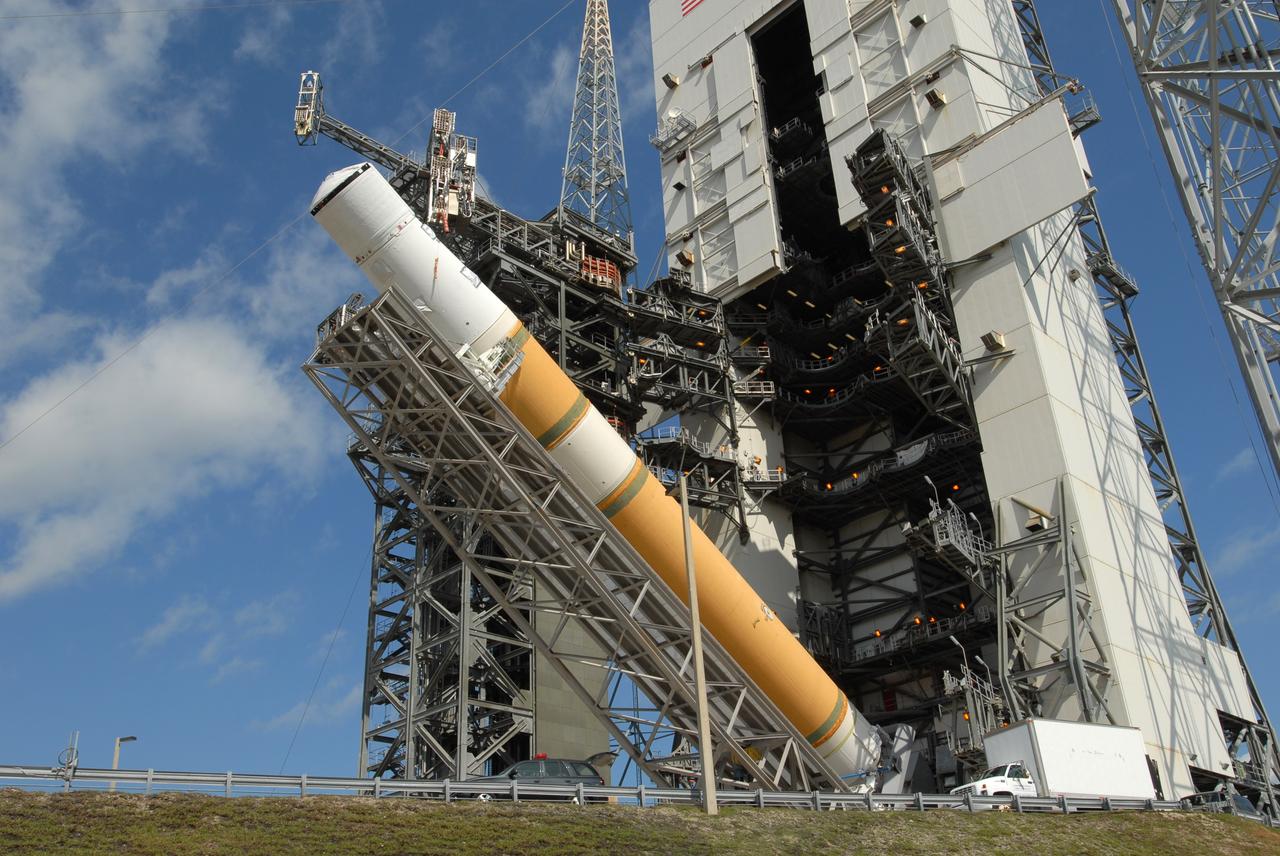
CAPE CANAVERAL, Fla. – On Launch Pad 37 at Cape Canaveral Air Force Station in Florida, the GOES-O and Delta IV upper stage are being raised to vertical. They will be moved into the mobile service tower for prelaunch preparations. GOES–O is one of a series of Geostationary Operational Environmental Satellites. The multi-mission GOES series N-P will be a vital contributor to weather, solar and space operations and science. NASA and the National Oceanic and Atmospheric Administration, or NOAA, are actively engaged in a cooperative program to expand the existing GOES system with the launch of the GOES N-P satellites. Launch of the GOES-O is targeted for no earlier than April 2009. Photo credit: NASA/Jim Grossmann
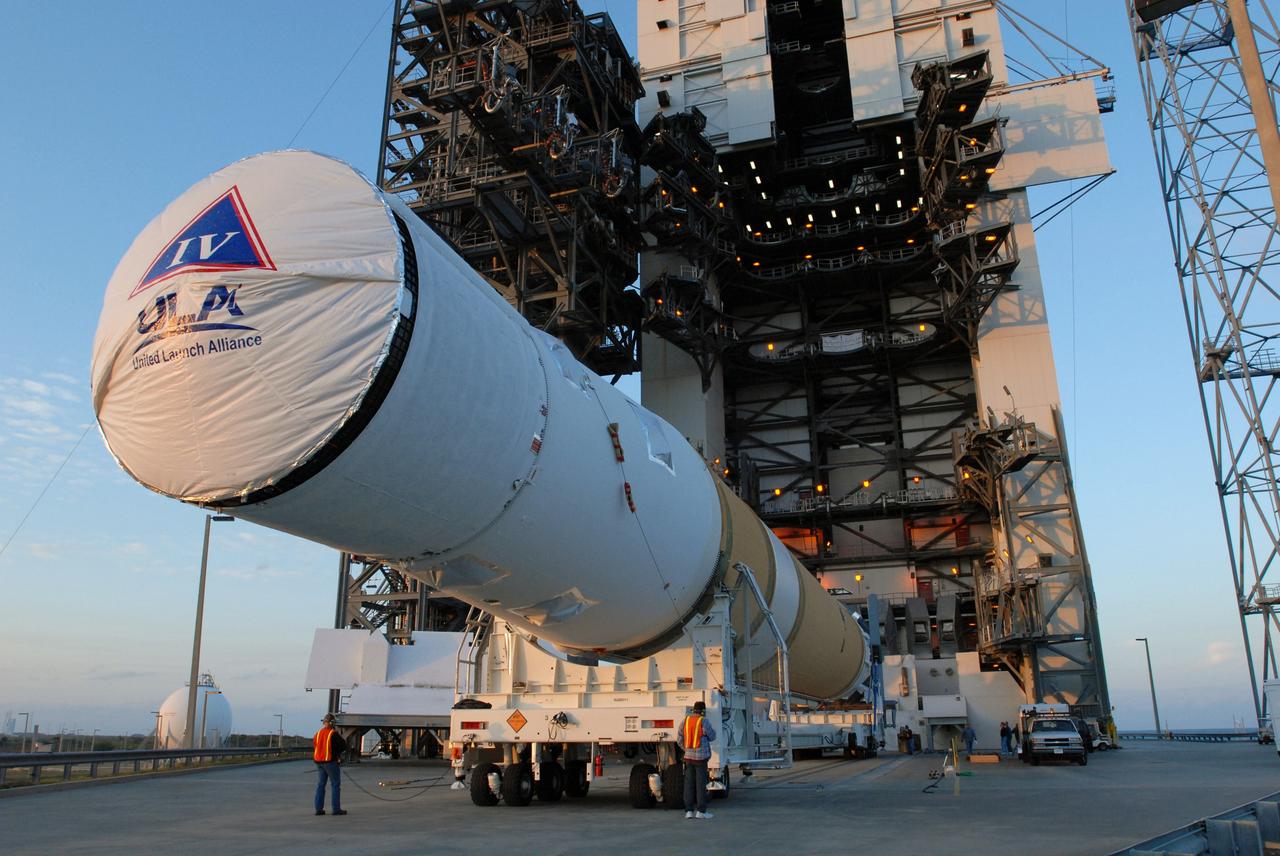
CAPE CANAVERAL, Fla. – At Cape Canaveral Air Force Station in Florida, the GOES-O and Delta IV second stage near the mobile service tower on Launch Pad 37. They will be raised to vertical and moved into the tower. GOES–O is one of a series of Geostationary Operational Environmental Satellites. The multi-mission GOES series N-P will be a vital contributor to weather, solar and space operations and science. NASA and the National Oceanic and Atmospheric Administration, or NOAA, are actively engaged in a cooperative program to expand the existing GOES system with the launch of the GOES N-P satellites. Launch of the GOES-O is targeted for no earlier than April 2009. Photo credit: NASA/Jim Grossmann
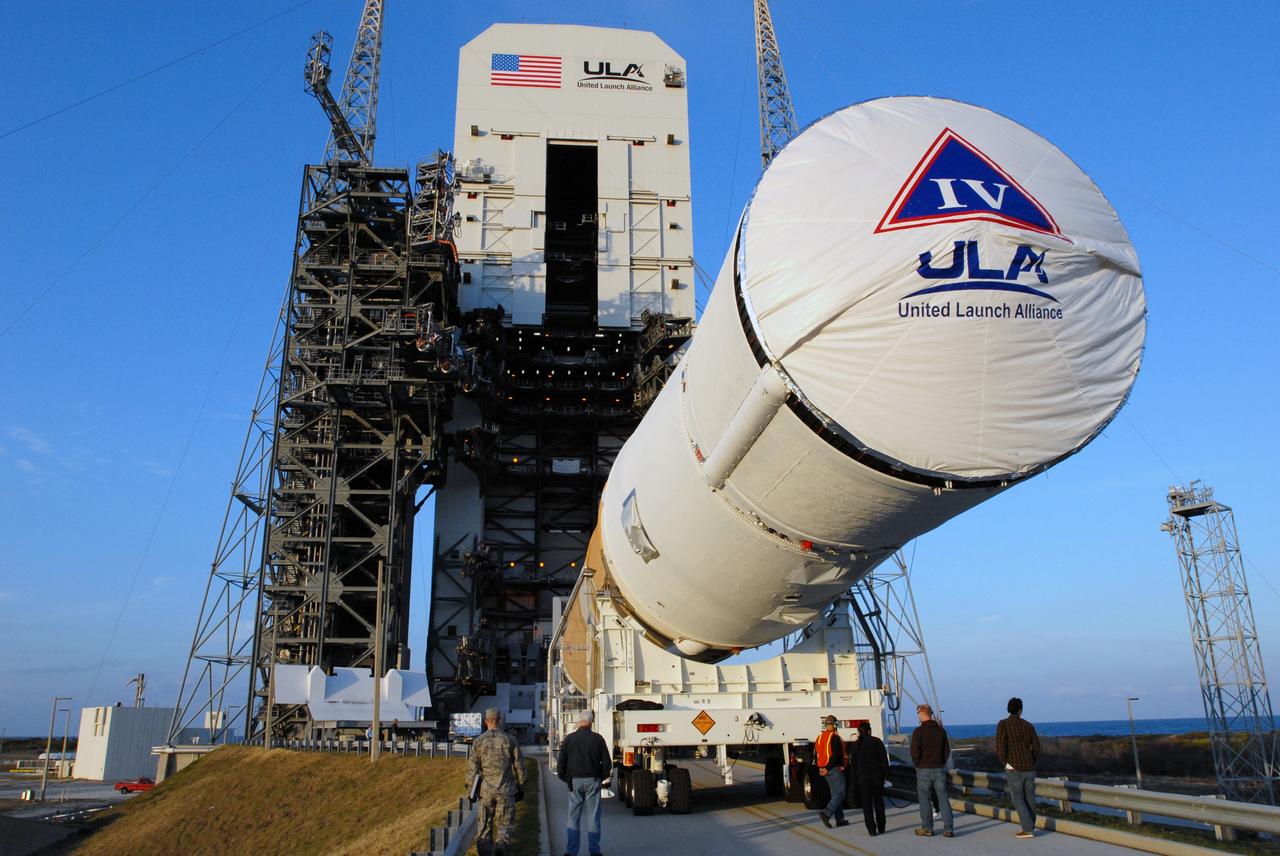
CAPE CANAVERAL, Fla. – At Cape Canaveral Air Force Station in Florida, the GOES-O and Delta IV second stage near the mobile service tower on Launch Pad 37. They will be raised to vertical and moved into the tower. GOES–O is one of a series of Geostationary Operational Environmental Satellites. The multi-mission GOES series N-P will be a vital contributor to weather, solar and space operations and science. NASA and the National Oceanic and Atmospheric Administration, or NOAA, are actively engaged in a cooperative program to expand the existing GOES system with the launch of the GOES N-P satellites. Launch of the GOES-O is targeted for no earlier than April 2009. Photo credit: NASA/Jim Grossmann
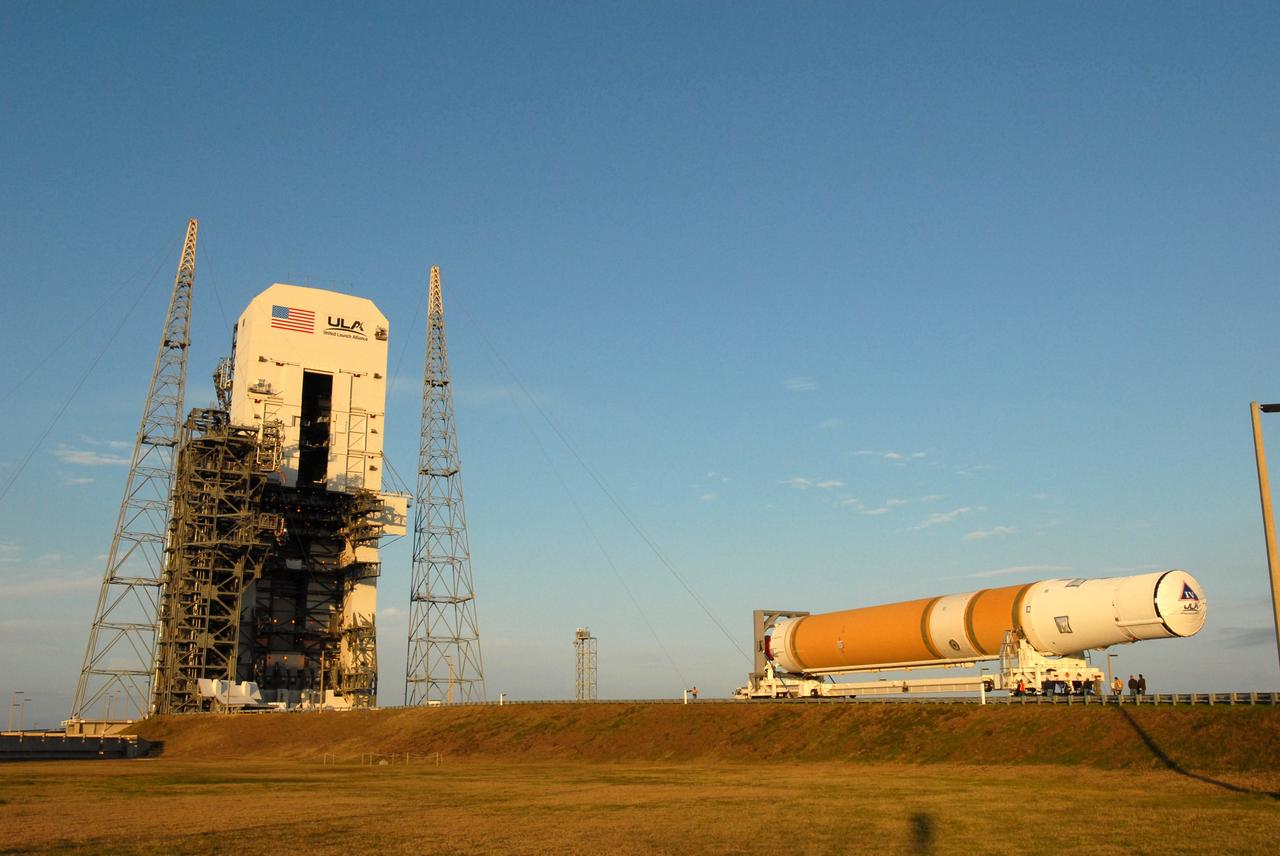
CAPE CANAVERAL, Fla. – At Cape Canaveral Air Force Station in Florida, the GOES-O and Delta IV second stage arrive on Launch Pad 37. They will be raised to vertical and moved into the mobile service tower. GOES–O is one of a series of Geostationary Operational Environmental Satellites. The multi-mission GOES series N-P will be a vital contributor to weather, solar and space operations and science. NASA and the National Oceanic and Atmospheric Administration, or NOAA, are actively engaged in a cooperative program to expand the existing GOES system with the launch of the GOES N-P satellites. Launch of the GOES-O is targeted for no earlier than April 2009. Photo credit: NASA/Jim Grossmann

CAPE CANAVERAL, Fla. – At Cape Canaveral Air Force Station in Florida, the GOES-O and Delta IV second stage roll toward Launch Pad 37. GOES–O is one of a series of Geostationary Operational Environmental Satellites. The multi-mission GOES series N-P will be a vital contributor to weather, solar and space operations and science. NASA and the National Oceanic and Atmospheric Administration, or NOAA, are actively engaged in a cooperative program to expand the existing GOES system with the launch of the GOES N-P satellites. Launch of the GOES-O is targeted for no earlier than April 2009. Photo credit: NASA/Jim Grossmann
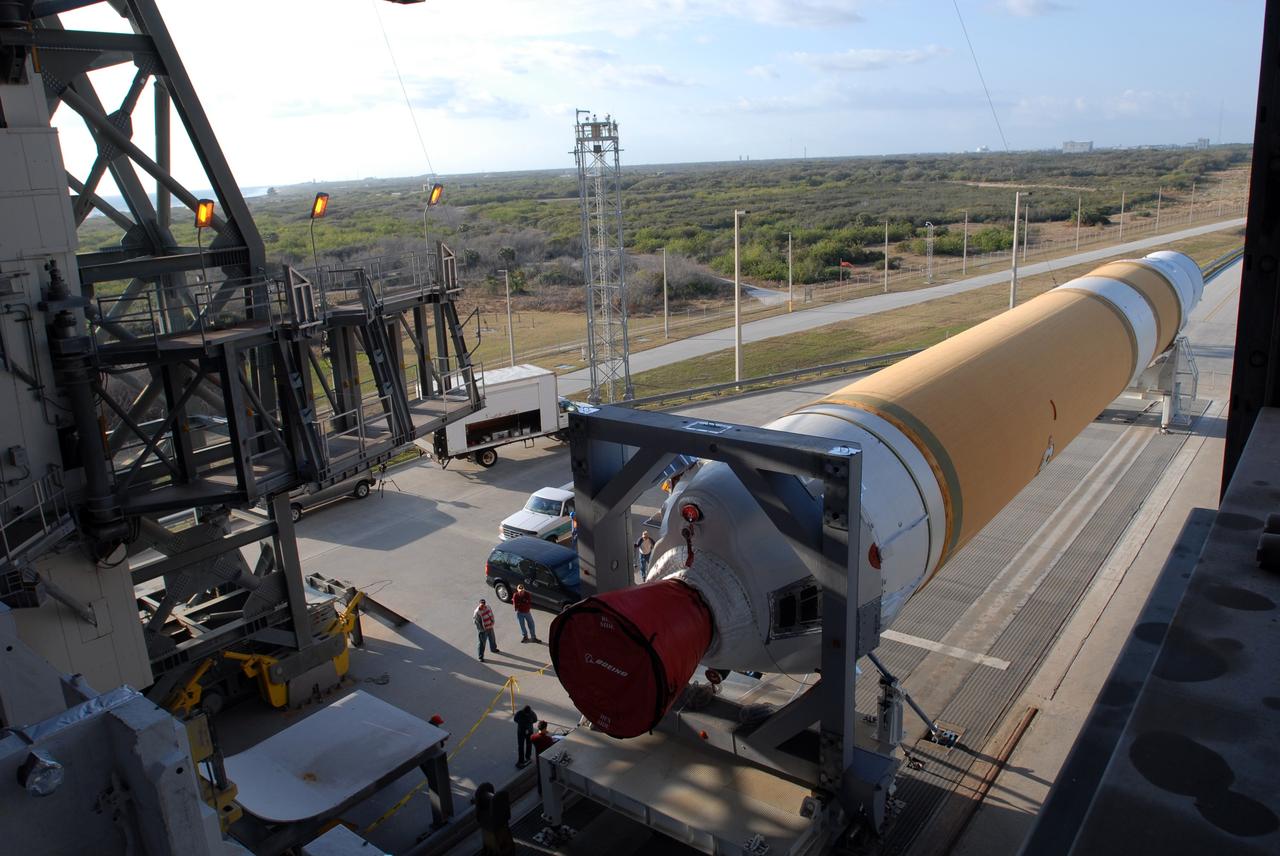
CAPE CANAVERAL, Fla. – On Launch Pad 37 at Cape Canaveral Air Force Station in Florida, the GOES-O and Delta IV upper stage are waiting to be raised to vertical. They will be moved into the mobile service tower for prelaunch preparations. GOES–O is one of a series of Geostationary Operational Environmental Satellites. The multi-mission GOES series N-P will be a vital contributor to weather, solar and space operations and science. NASA and the National Oceanic and Atmospheric Administration, or NOAA, are actively engaged in a cooperative program to expand the existing GOES system with the launch of the GOES N-P satellites. Launch of the GOES-O is targeted for no earlier than April 2009. Photo credit: NASA/Jim Grossmann
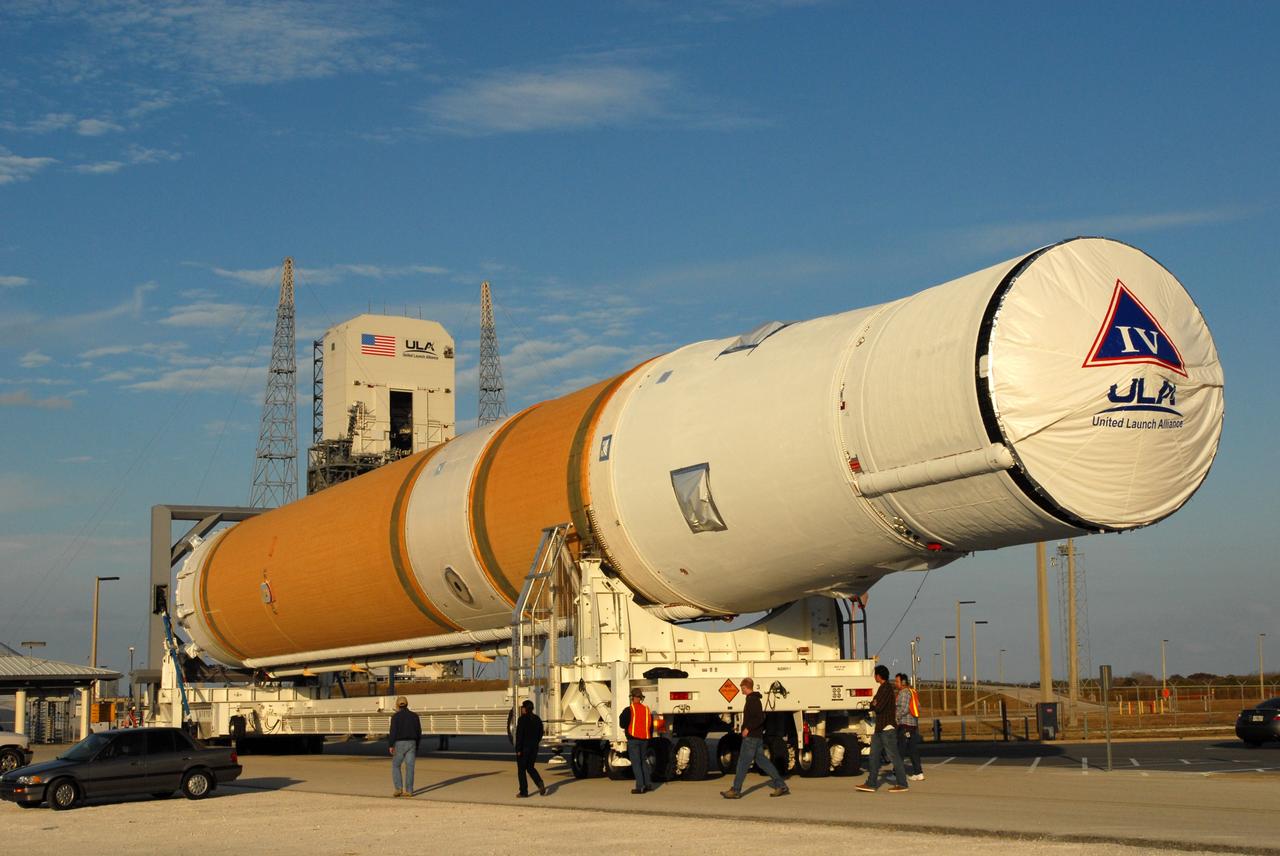
CAPE CANAVERAL, Fla. – At Cape Canaveral Air Force Station in Florida, the GOES-O and Delta IV second stage are transported to Launch Pad 37. GOES–O is one of a series of Geostationary Operational Environmental Satellites. The multi-mission GOES series N-P will be a vital contributor to weather, solar and space operations and science. NASA and the National Oceanic and Atmospheric Administration, or NOAA, are actively engaged in a cooperative program to expand the existing GOES system with the launch of the GOES N-P satellites. Launch of the GOES-O is targeted for no earlier than April 2009. Photo credit: NASA/Jim Grossmann

CAPE CANAVERAL, Fla. – At Cape Canaveral Air Force Station in Florida, the GOES-O and Delta IV second stage are transported to Launch Pad 37. GOES–O is one of a series of Geostationary Operational Environmental Satellites. The multi-mission GOES series N-P will be a vital contributor to weather, solar and space operations and science. NASA and the National Oceanic and Atmospheric Administration, or NOAA, are actively engaged in a cooperative program to expand the existing GOES system with the launch of the GOES N-P satellites. Launch of the GOES-O is targeted for no earlier than April 2009. Photo credit: NASA/Jim Grossmann
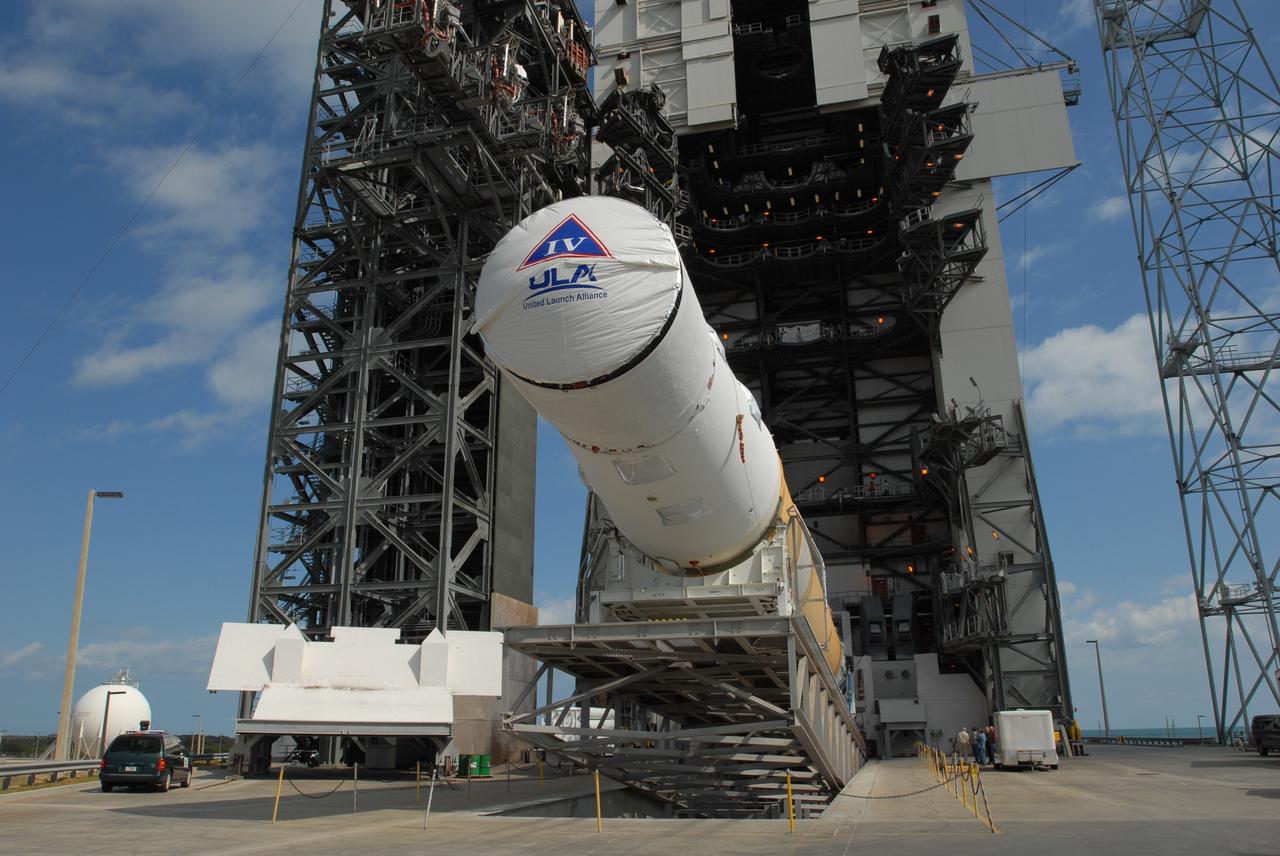
CAPE CANAVERAL, Fla. – On Launch Pad 37 at Cape Canaveral Air Force Station in Florida, the GOES-O and Delta IV upper stage are being raised to vertical. They will be moved into the mobile service tower for prelaunch preparations. GOES–O is one of a series of Geostationary Operational Environmental Satellites. The multi-mission GOES series N-P will be a vital contributor to weather, solar and space operations and science. NASA and the National Oceanic and Atmospheric Administration, or NOAA, are actively engaged in a cooperative program to expand the existing GOES system with the launch of the GOES N-P satellites. Launch of the GOES-O is targeted for no earlier than April 2009. Photo credit: NASA/Jim Grossmann
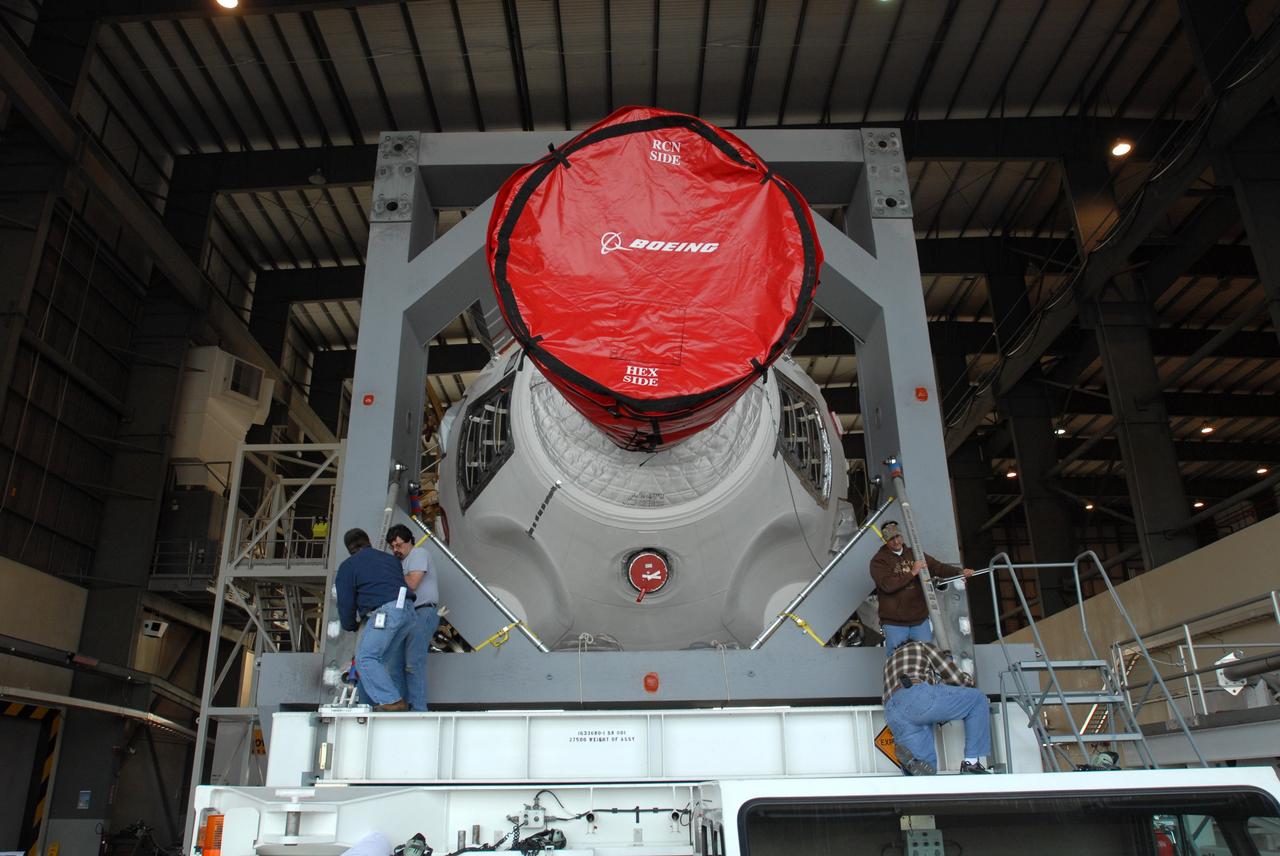
CAPE CANAVERAL, Fla. – On Complex 37 at Cape Canaveral Air Force Station in Florida, workers ensure the GOES-O and Delta IV second stage are ready to leave the Horizontal Integration Facility for the launch pad. GOES–O is one of a series of Geostationary Operational Environmental Satellites. The multi-mission GOES series N-P will be a vital contributor to weather, solar and space operations and science. NASA and the National Oceanic and Atmospheric Administration, or NOAA, are actively engaged in a cooperative program to expand the existing GOES system with the launch of the GOES N-P satellites. Launch of the GOES-O is targeted for no earlier than April 2009. Photo credit: NASA/Jim Grossmann
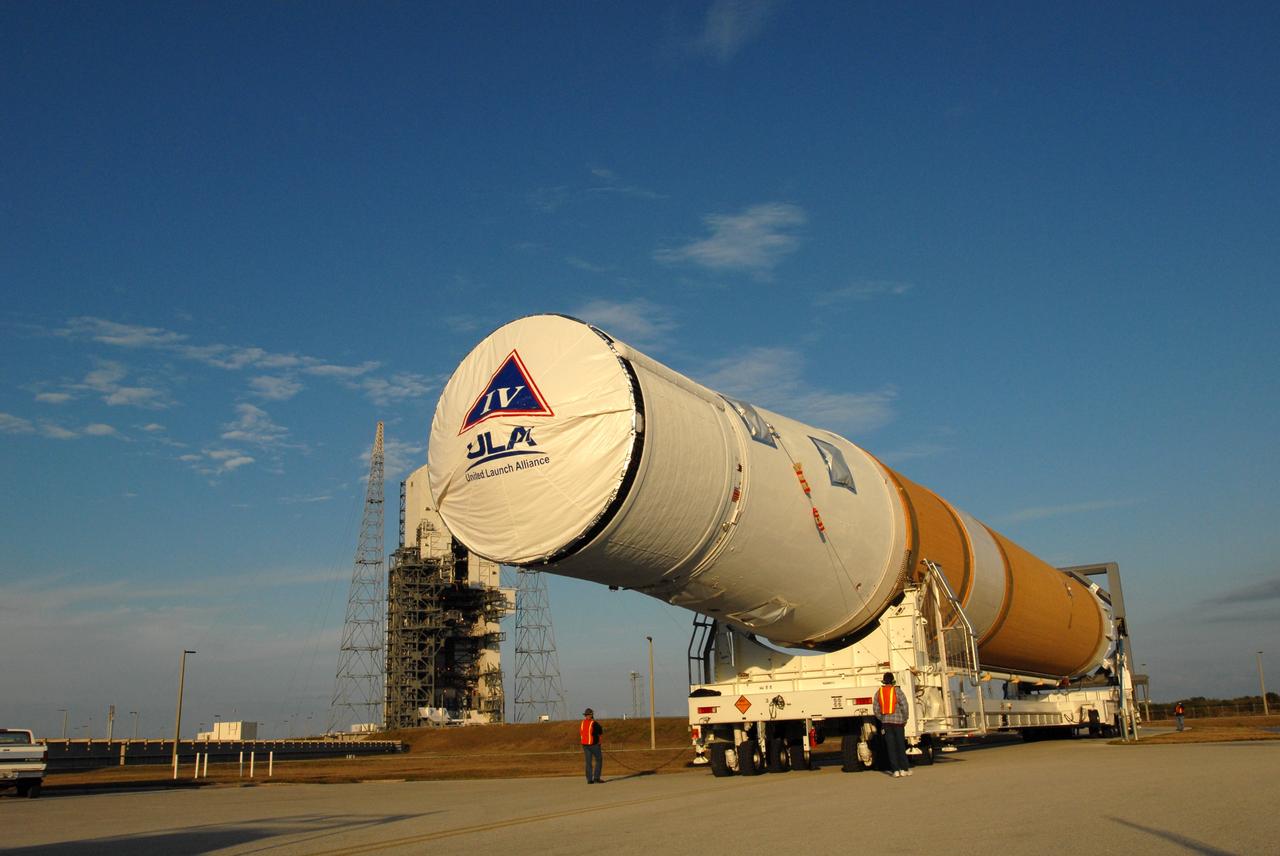
CAPE CANAVERAL, Fla. – At Cape Canaveral Air Force Station in Florida, the GOES-O and Delta IV second stage are transported to Launch Pad 37. GOES–O is one of a series of Geostationary Operational Environmental Satellites. The multi-mission GOES series N-P will be a vital contributor to weather, solar and space operations and science. NASA and the National Oceanic and Atmospheric Administration, or NOAA, are actively engaged in a cooperative program to expand the existing GOES system with the launch of the GOES N-P satellites. Launch of the GOES-O is targeted for no earlier than April 2009. Photo credit: NASA/Jim Grossmann