
KENNEDY SPACE CENTER, FLA. - At the Delta Operations Center on Cape Canaveral Air Force Station, Fla., Tibor Nagy, a Pratt and Whitney representative, Wendell Perez (back to camera) and Ed Wagner (right) prepare the Delta second stage nozzle for the Boeing Delta IV launch vehicle for installation. The Delta IV is scheduled to launch the GOES-N satellite in May 2005. Geostationary Operational Environmental Satellites are sponsored by the National Aeronautics and Space Administration (NASA) and the National Oceanic and Atmospheric Administration (NOAA). GOES-N is the first in the next series of GOES satellites, N-P. The multimission GOES series N-P will be a vital contributor to weather, solar and space operations and science. The GOES N-P series will aid activities ranging from severe storm warnings to resource management and advances in science.

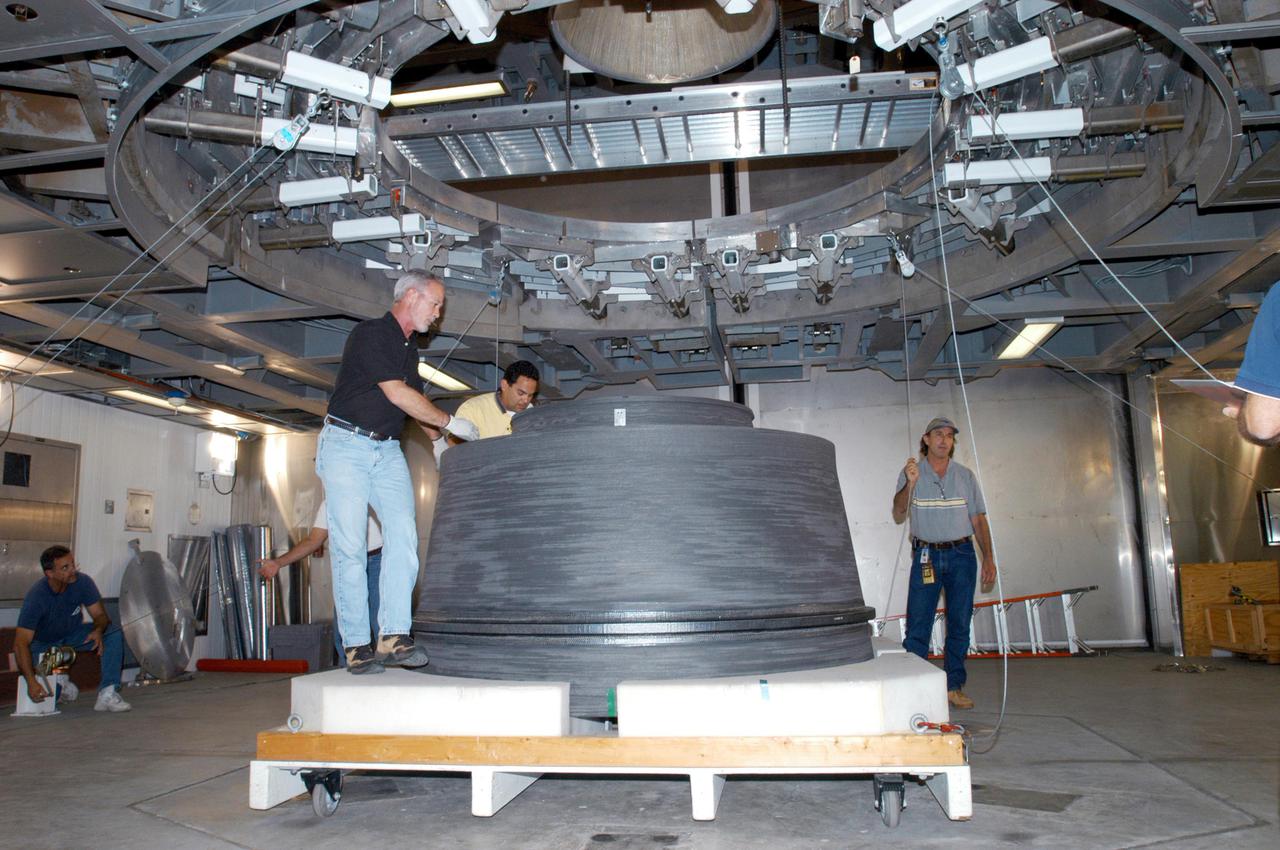
KENNEDY SPACE CENTER, FLA. - At the Delta Operations Center on Cape Canaveral Air Force Station, Fla., technicians Duane Miller (left) and Ed Wagner (right) help guide the Delta second stage nozzle for a Boeing Delta IV launch vehicle away from its shipping container. The nozzle is being moved to another site on the floor for inspection. The Delta IV is scheduled to launch the GOES-N satellite in May 2005. Geostationary Operational Environmental Satellites are sponsored by the National Aeronautics and Space Administration (NASA) and the National Oceanic and Atmospheric Administration (NOAA). GOES-N is the first in the next series of GOES satellites, N-P. The multimission GOES series N-P will be a vital contributor to weather, solar and space operations and science. The GOES N-P series will aid activities ranging from severe storm warnings to resource management and advances in science.

KENNEDY SPACE CENTER, FLA. - At the Delta Operations Center on Cape Canaveral Air Force Station, Fla., technicians Ed Wagner and Wendell Perez uncrate the Delta second stage nozzle for a Boeing Delta IV launch vehicle. The Delta IV is scheduled to launch the GOES-N satellite in May 2005. Geostationary Operational Environmental Satellites are sponsored by the National Aeronautics and Space Administration (NASA) and the National Oceanic and Atmospheric Administration (NOAA). GOES-N is the first in the next series of GOES satellites, N-P. The multimission GOES series N-P will be a vital contributor to weather, solar and space operations and science. The GOES N-P series will aid activities ranging from severe storm warnings to resource management and advances in science.

KENNEDY SPACE CENTER, FLA. - At the Delta Operations Center on Cape Canaveral Air Force Station, Fla., technicians Duane Miller (left) and Ed Wagner (right) help guide the Delta second stage nozzle for a Boeing Delta IV launch vehicle away from its shipping container. The nozzle is being moved to another site on the floor for inspection. The Delta IV is scheduled to launch the GOES-N satellite in May 2005. Geostationary Operational Environmental Satellites are sponsored by the National Aeronautics and Space Administration (NASA) and the National Oceanic and Atmospheric Administration (NOAA). GOES-N is the first in the next series of GOES satellites, N-P. The multimission GOES series N-P will be a vital contributor to weather, solar and space operations and science. The GOES N-P series will aid activities ranging from severe storm warnings to resource management and advances in science.

KENNEDY SPACE CENTER, FLA. - At the Delta Operations Center on Cape Canaveral Air Force Station, Fla., technician Ed Wagner inspects the Delta second stage nozzle for a Boeing Delta IV launch vehicle after it was uncrated. The Delta IV is scheduled to launch the GOES-N satellite in May 2005. Geostationary Operational Environmental Satellites are sponsored by the National Aeronautics and Space Administration (NASA) and the National Oceanic and Atmospheric Administration (NOAA). GOES-N is the first in the next series of GOES satellites, N-P. The multimission GOES series N-P will be a vital contributor to weather, solar and space operations and science. The GOES N-P series will aid activities ranging from severe storm warnings to resource management and advances in science.

KENNEDY SPACE CENTER, FLA. - At the Delta Operations Center on Cape Canaveral Air Force Station, Fla., Bob McMillan (left), Wendell Perez (back to camera) and Ed Wagner (right) help prepare Delta second stage the nozzle for the Boeing Delta IV launch vehicle for installation. The Delta IV is scheduled to launch the GOES-N satellite in May 2005. Geostationary Operational Environmental Satellites are sponsored by the National Aeronautics and Space Administration (NASA) and the National Oceanic and Atmospheric Administration (NOAA). GOES-N is the first in the next series of GOES satellites, N-P. The multimission GOES series N-P will be a vital contributor to weather, solar and space operations and science. The GOES N-P series will aid activities ranging from severe storm warnings to resource management and advances in science.

KENNEDY SPACE CENTER, FLA. - At the Delta Operations Center on Cape Canaveral Air Force Station, Fla., Tibor Nagy and Bob McMillan, at left, make the initial nozzle inspection of the Delta second stage nozzle for a Boeing Delta IV launch vehicle. The Delta IV is scheduled to launch the GOES-N satellite in May 2005. Geostationary Operational Environmental Satellites are sponsored by the National Aeronautics and Space Administration (NASA) and the National Oceanic and Atmospheric Administration (NOAA). GOES-N is the first in the next series of GOES satellites, N-P. The multimission GOES series N-P will be a vital contributor to weather, solar and space operations and science. The GOES N-P series will aid activities ranging from severe storm warnings to resource management and advances in science.

KENNEDY SPACE CENTER, FLA. - At the Delta Operations Center on Cape Canaveral Air Force Station, Fla., Wendell Perez checks an overhead crane being attached to the Delta second stage nozzle for a Boeing Delta IV launch vehicle. The nozzle is being lifted from its shipping container and moved to another site on the floor for inspection. The Delta IV is scheduled to launch the GOES-N satellite in May 2005. Geostationary Operational Environmental Satellites are sponsored by the National Aeronautics and Space Administration (NASA) and the National Oceanic and Atmospheric Administration (NOAA). GOES-N is the first in the next series of GOES satellites, N-P. The multimission GOES series N-P will be a vital contributor to weather, solar and space operations and science. The GOES N-P series will aid activities ranging from severe storm warnings to resource management and advances in science.

KENNEDY SPACE CENTER, FLA. - At the Delta Operations Center on Cape Canaveral Air Force Station, Fla., technicians Duane Miller (left) and Ed Wagner (right) release the crane from the Delta second stage nozzle for a Boeing Delta IV launch vehicle to prepare for installation. The Delta IV is scheduled to launch the GOES-N satellite in May 2005. Geostationary Operational Environmental Satellites are sponsored by the National Aeronautics and Space Administration (NASA) and the National Oceanic and Atmospheric Administration (NOAA). GOES-N is the first in the next series of GOES satellites, N-P. The multimission GOES series N-P will be a vital contributor to weather, solar and space operations and science. The GOES N-P series will aid activities ranging from severe storm warnings to resource management and advances in science.

KENNEDY SPACE CENTER, FLA. - At Astrotech Space Operations in Titusville, Fla., the two halves of the fairing come together around the GOES-N spacecraft. The fairing protects the spacecraft during launch. Geostationary Operational Environmental Satellites (GOES) are sponsored by NASA’s Goddard Space Flight Center and the National Oceanic and Atmospheric Administration. GOES-N is targeted to launch June 23 from Launch Complex 37 at Cape Canaveral Air Force Station in Florida.
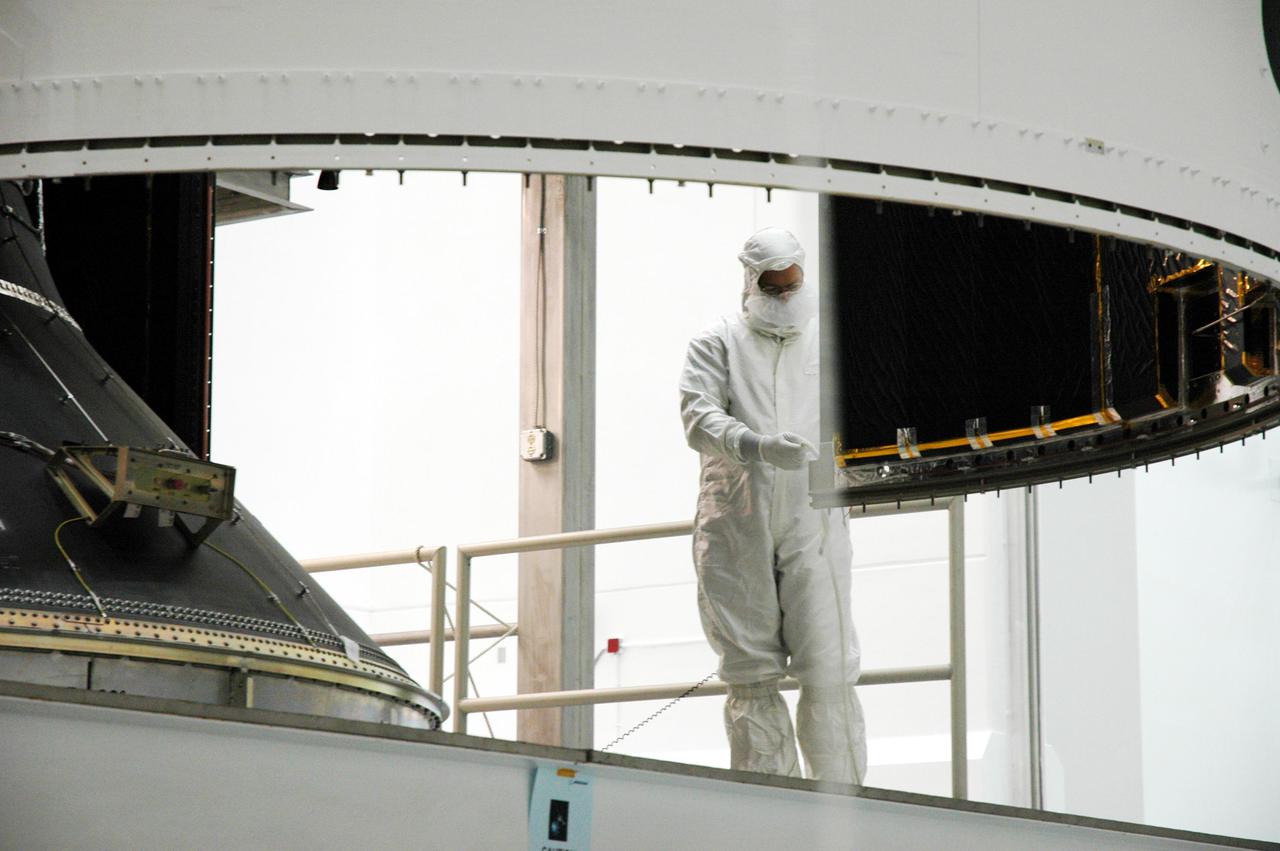
KENNEDY SPACE CENTER, FLA. - At Astrotech Space Operations in Titusville, Fla., a worker helps guide the second half of the fairing as it is moved into place around the GOES-N spacecraft. It will be attached to the first half already in place. The fairing protects the spacecraft during launch. Geostationary Operational Environmental Satellites (GOES) are sponsored by NASA’s Goddard Space Flight Center and the National Oceanic and Atmospheric Administration. GOES-N is targeted to launch June 23 from Launch Complex 37 at Cape Canaveral Air Force Station in Florida.

KENNEDY SPACE CENTER, FLA. - At Astrotech Space Operations in Titusville, Fla., the second half of the fairing is lifted in order to install it around the GOES-N spacecraft (center). The fairing protects the spacecraft during launch. Geostationary Operational Environmental Satellites (GOES) are sponsored by NASA’s Goddard Space Flight Center and the National Oceanic and Atmospheric Administration. GOES-N is targeted to launch June 23 from Launch Complex 37 at Cape Canaveral Air Force Station in Florida.
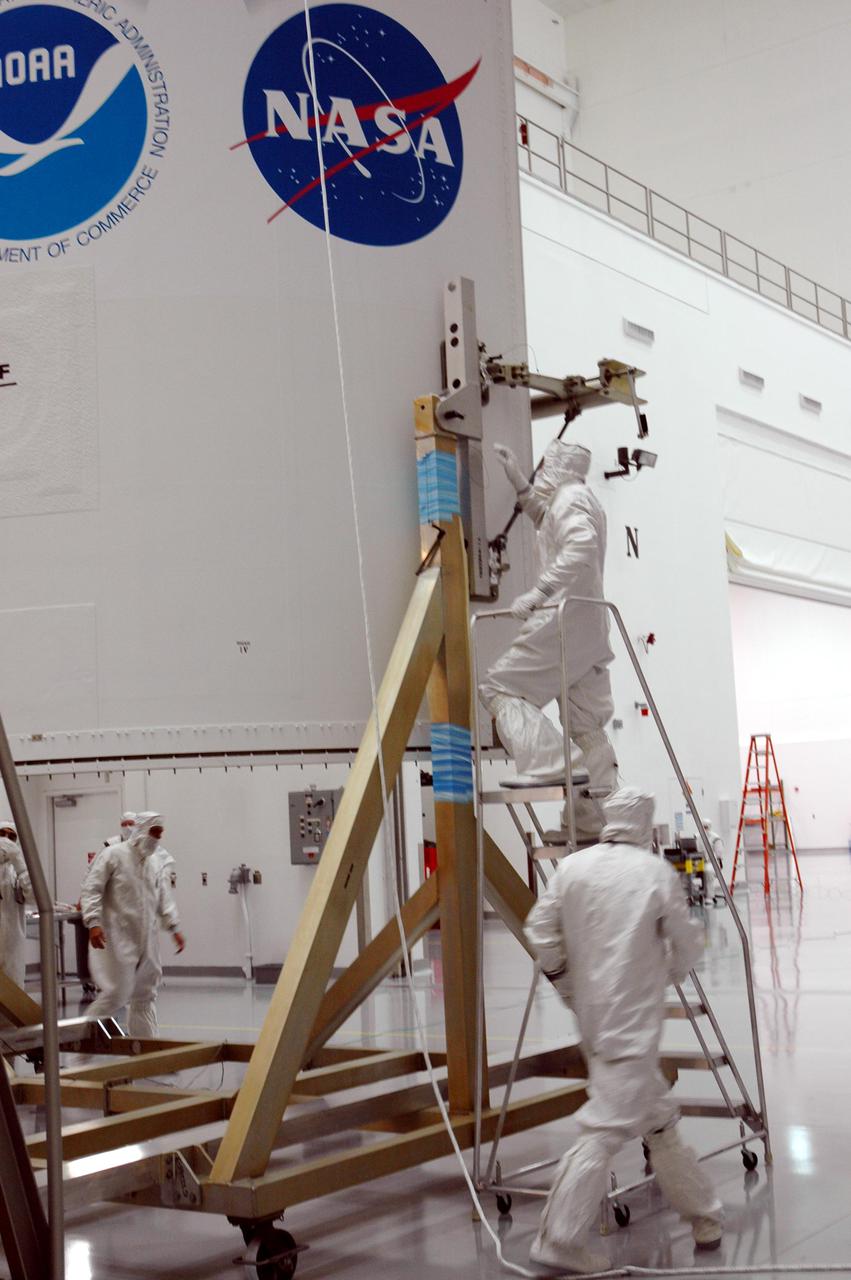
KENNEDY SPACE CENTER, FLA. - At Astrotech Space Operations in Titusville, Fla., workers help place the first half of the fairing around the GOES-N spacecraft. The fairing protects the spacecraft during launch. Geostationary Operational Environmental Satellites (GOES) are sponsored by NASA’s Goddard Space Flight Center and the National Oceanic and Atmospheric Administration. GOES-N is targeted to launch June 23 from Launch Complex 37 at Cape Canaveral Air Force Station in Florida.
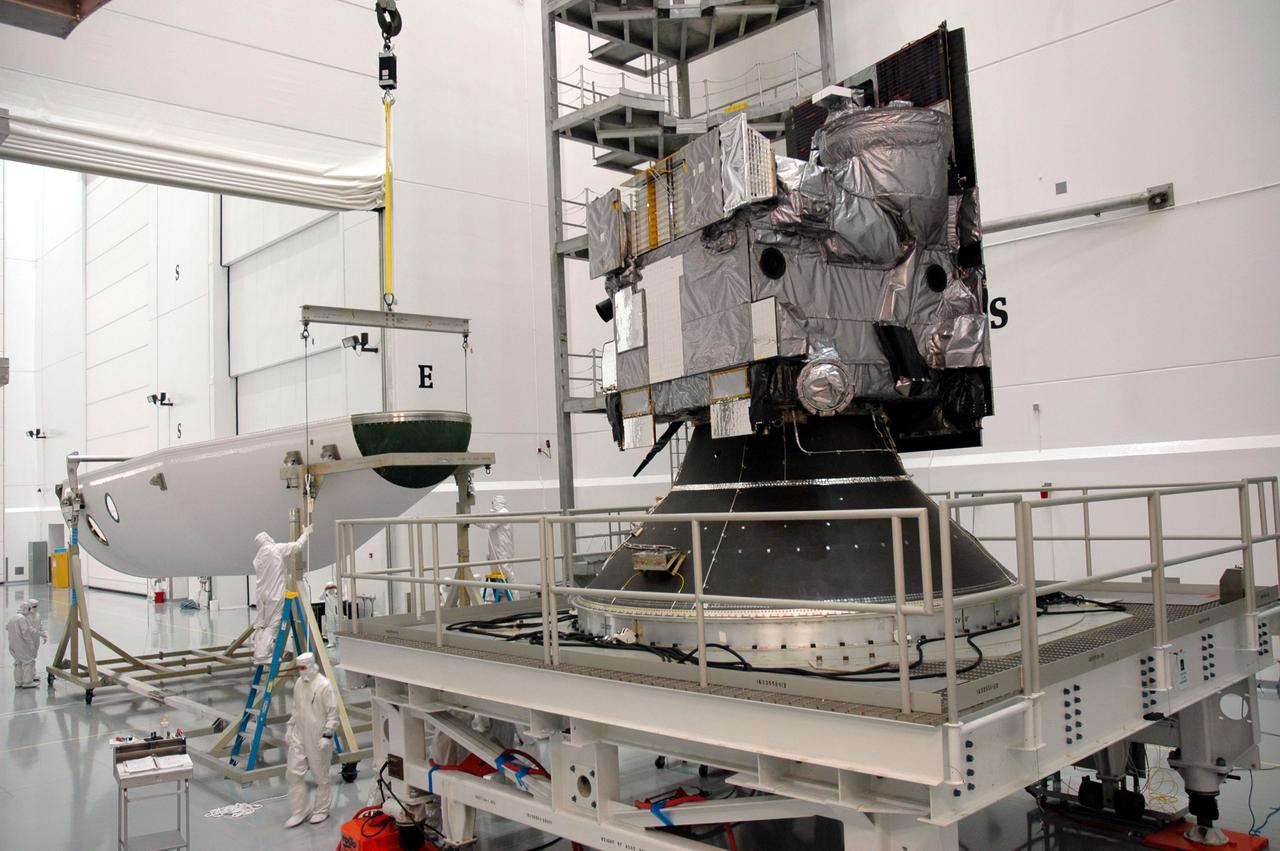
KENNEDY SPACE CENTER, FLA. - At Astrotech Space Operations in Titusville, Fla., workers at left prepare the first half of the fairing for its lift to vertical. The fairing will be placed around the GOES-N spacecraft at right to protect it during launch. Geostationary Operational Environmental Satellites (GOES) are sponsored by NASA’s Goddard Space Flight Center and the National Oceanic and Atmospheric Administration. GOES-N is targeted to launch June 23 from Launch Complex 37 at Cape Canaveral Air Force Station in Florida.
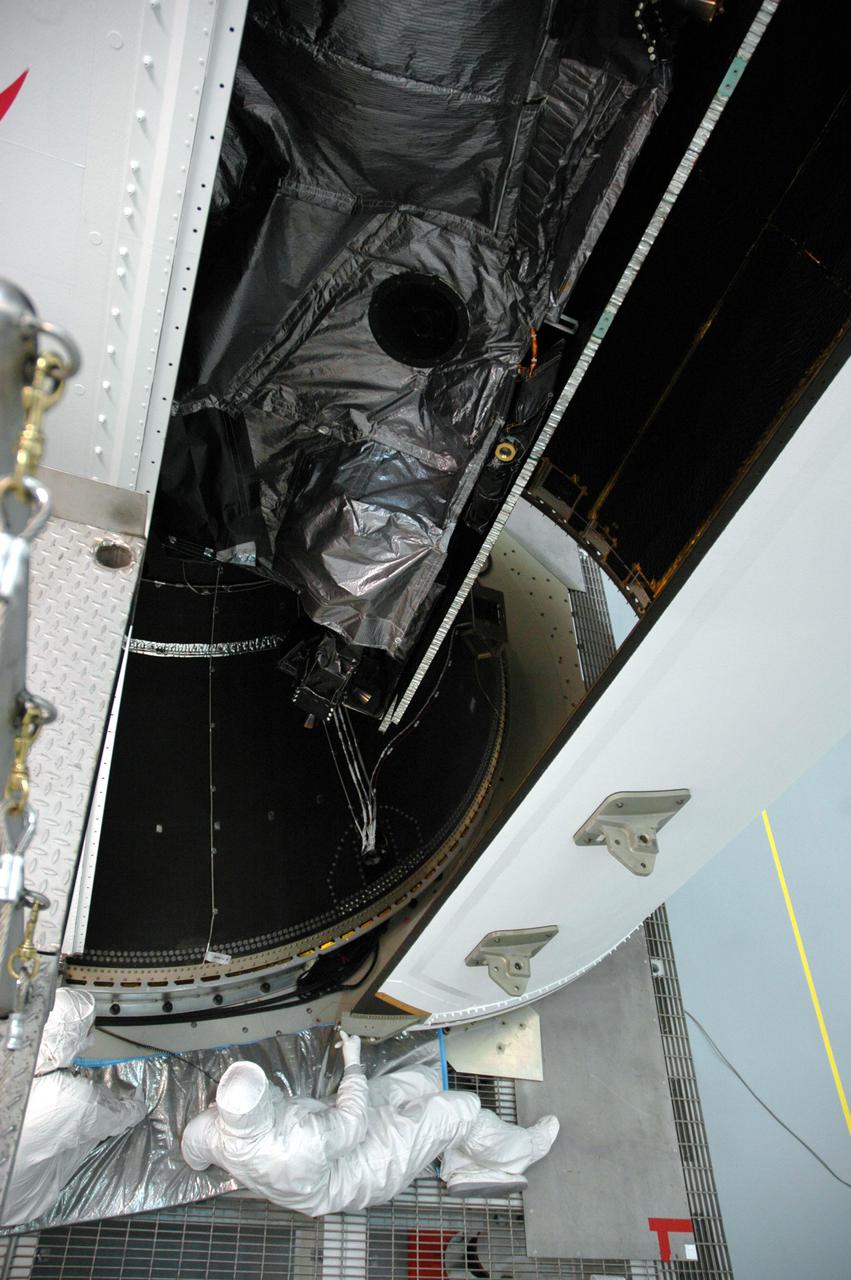
KENNEDY SPACE CENTER, FLA. - At Astrotech Space Operations in Titusville, Fla., a worker helps guide the second half of the fairing as it is moved into place around the GOES-N spacecraft. It will be attached to the first half already in place. The fairing protects the spacecraft during launch. Geostationary Operational Environmental Satellites (GOES) are sponsored by NASA’s Goddard Space Flight Center and the National Oceanic and Atmospheric Administration. GOES-N is targeted to launch June 23 from Launch Complex 37 at Cape Canaveral Air Force Station in Florida.
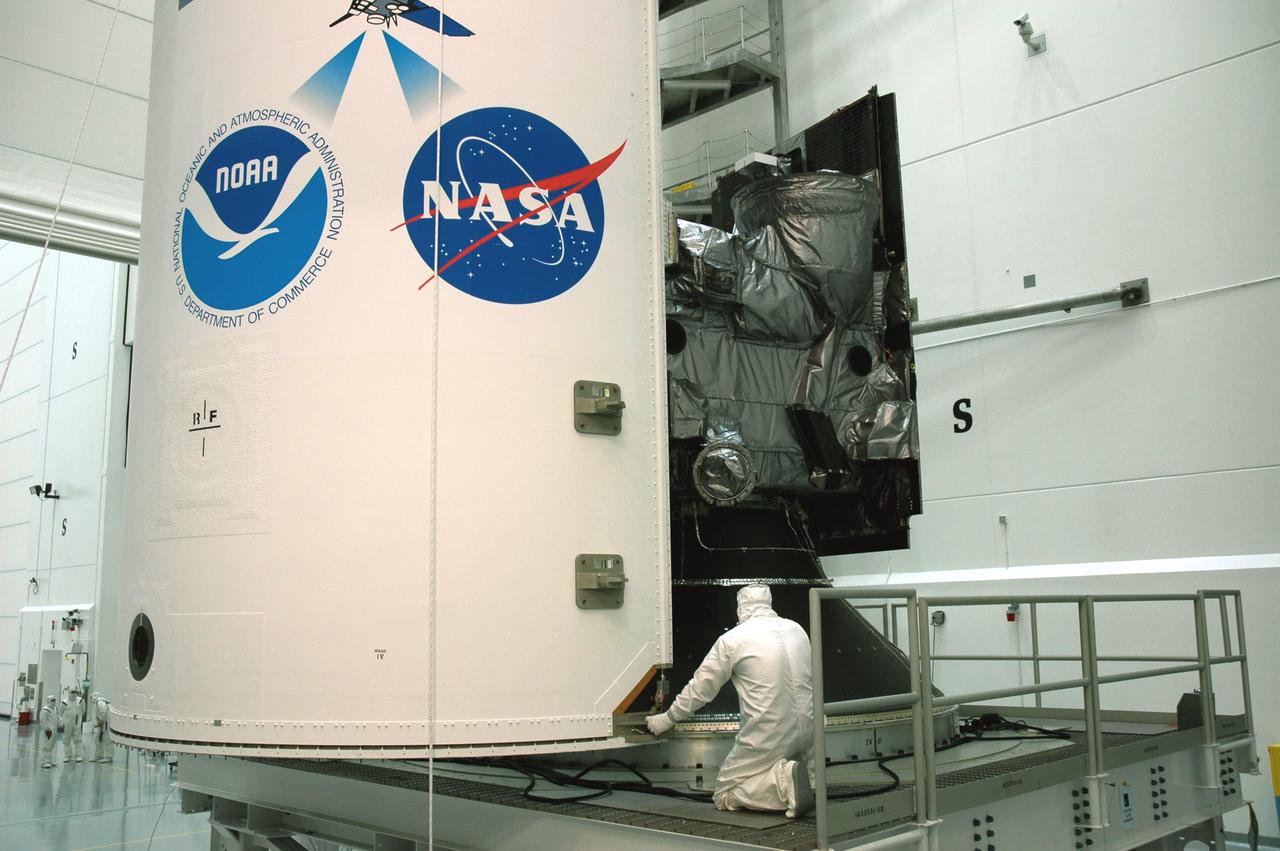
KENNEDY SPACE CENTER, FLA. - At Astrotech Space Operations in Titusville, Fla., workers help place the first half of the fairing around the GOES-N spacecraft. The fairing protects the spacecraft during launch. Geostationary Operational Environmental Satellites (GOES) are sponsored by NASA’s Goddard Space Flight Center and the National Oceanic and Atmospheric Administration. GOES-N is targeted to launch June 23 from Launch Complex 37 at Cape Canaveral Air Force Station in Florida.

KENNEDY SPACE CENTER, FLA. - At Astrotech Space Operations in Titusville, Fla., workers make adjustments to the fairing being installed around the GOES-N spacecraft. The fairing protects the spacecraft during launch. Geostationary Operational Environmental Satellites (GOES) are sponsored by NASA’s Goddard Space Flight Center and the National Oceanic and Atmospheric Administration. GOES-N is targeted to launch June 23 from Launch Complex 37 at Cape Canaveral Air Force Station in Florida.

KENNEDY SPACE CENTER, FLA. - At Astrotech Space Operations in Titusville, Fla., the second half of the fairing is being lifted toward the GOES-N spacecraft at left. It will be attached to the first half already in place. The fairing protects the spacecraft during launch. Geostationary Operational Environmental Satellites (GOES) are sponsored by NASA’s Goddard Space Flight Center and the National Oceanic and Atmospheric Administration. GOES-N is targeted to launch June 23 from Launch Complex 37 at Cape Canaveral Air Force Station in Florida.

KENNEDY SPACE CENTER, FLA. - At Astrotech Space Operations in Titusville, Fla., workers make adjustments to the fairing being installed around the GOES-N spacecraft. The fairing protects the spacecraft during launch. Geostationary Operational Environmental Satellites (GOES) are sponsored by NASA’s Goddard Space Flight Center and the National Oceanic and Atmospheric Administration. GOES-N is targeted to launch June 23 from Launch Complex 37 at Cape Canaveral Air Force Station in Florida.
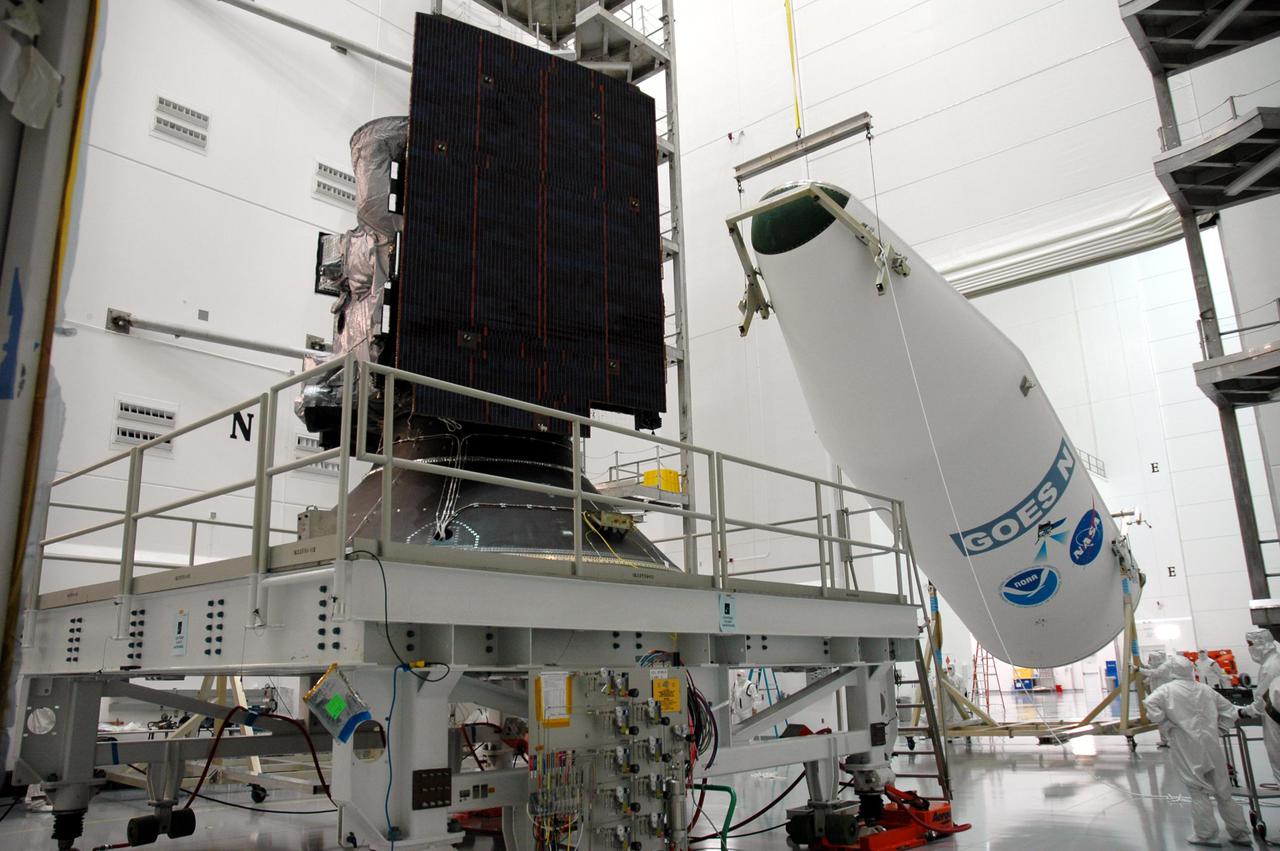
KENNEDY SPACE CENTER, FLA. - At Astrotech Space Operations in Titusville, Fla., one half of the fairing is lifted in order to install it around the GOES-N spacecraft (center). The fairing protects the spacecraft during launch. Geostationary Operational Environmental Satellites (GOES) are sponsored by NASA’s Goddard Space Flight Center and the National Oceanic and Atmospheric Administration. GOES-N is targeted to launch June 23 from Launch Complex 37 at Cape Canaveral Air Force Station in Florida.
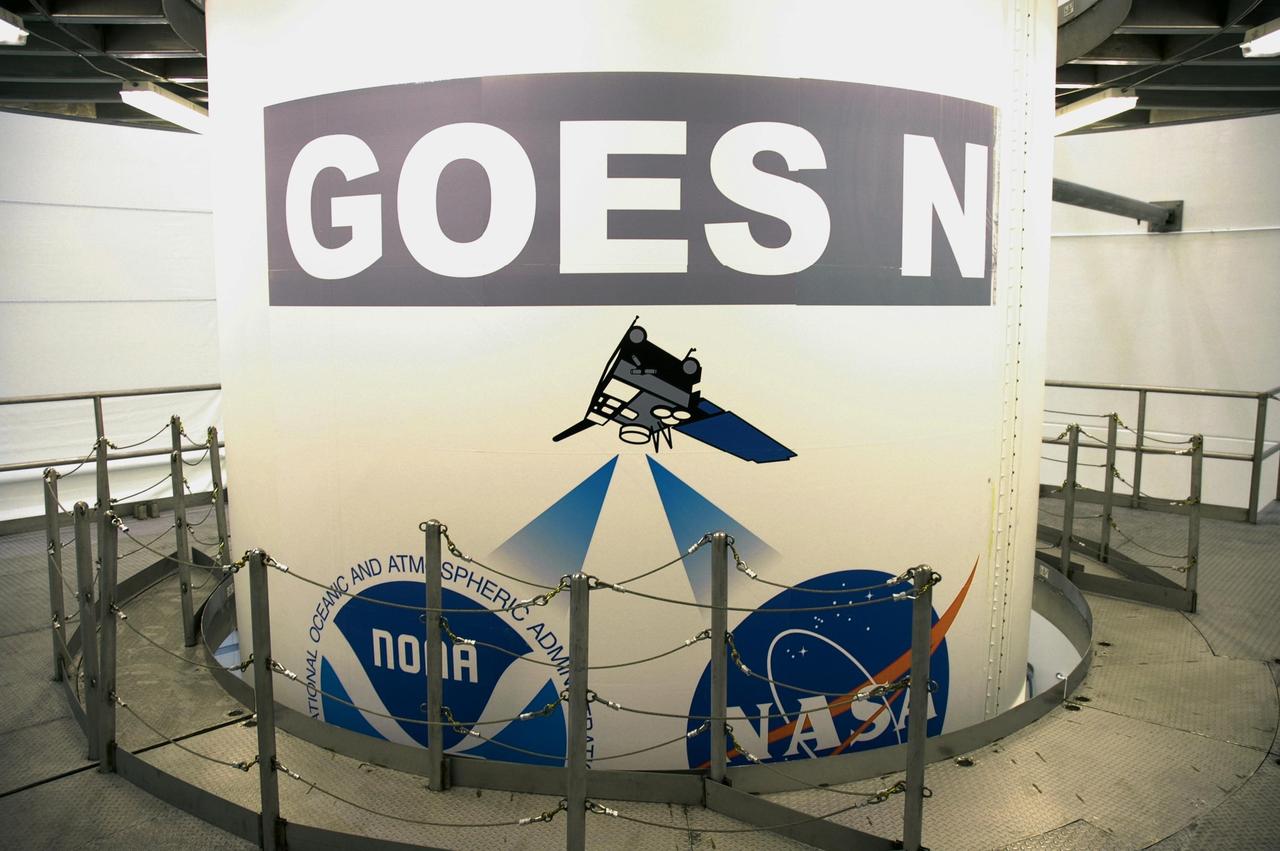
KENNEDY SPACE CENTER, FLA. - At Astrotech Space Operations payload processing facility in Titusville, Fla., the GOES-N spacecraft, secured inside a payload fairing, is surrounded by a work stand. Workers will use the stand to begin detaching the fairing from around the spacecraft. The fairing protects the spacecraft during launch and flight through the atmosphere. Once out of the atmosphere, the fairing is jettisoned. Removing the fairing will allow workers access to the spacecraft. GOES-N was demated from its Boeing Delta IV launch vehicle when the launch was postponed in August 2005 due to technical issues. Due to the extended length of time the spacecraft had been atop the Delta IV rocket without launching, the weather satellite was returned to Astrotech for some precautionary retesting and state of health checks. GOES-N is the latest in a series of Geostationary Operational Environmental Satellites for NOAA and NASA providing continuous monitoring necessary for intensive data analysis. Photo credit: NASA/Jim Grossmann
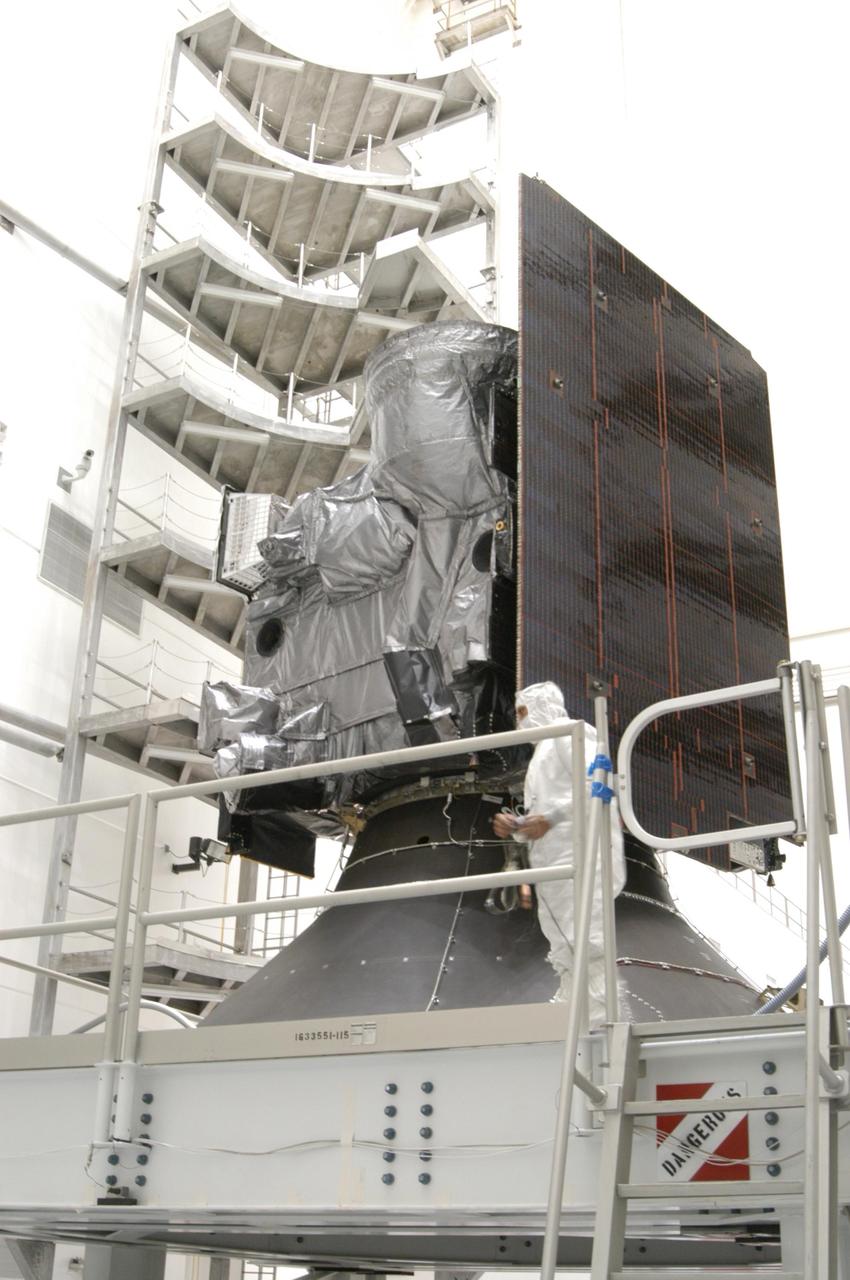
KENNEDY SPACE CENTER, FLA. - Inside a high bay at Astrotech Space Operations in Titusville, Fla., the GOES-N spacecraft is revealed after removal of the fairing to allow testing. GOES-N was demated from its Boeing Delta IV launch vehicle on Launch Complex 37 at Cape Canaveral Air Force Station. The launch was postponed in August 2005 due to technical issues. Due to the extended length of time the spacecraft had been atop the Delta IV without launching, the weather satellite will undergo some precautionary retesting and state of health checks. GOES-N is the latest in a series of Geostationary Operational Environmental Satellites for NOAA and NASA providing continuous monitoring necessary for intensive data analysis. Photo credit: NASA/George Shelton
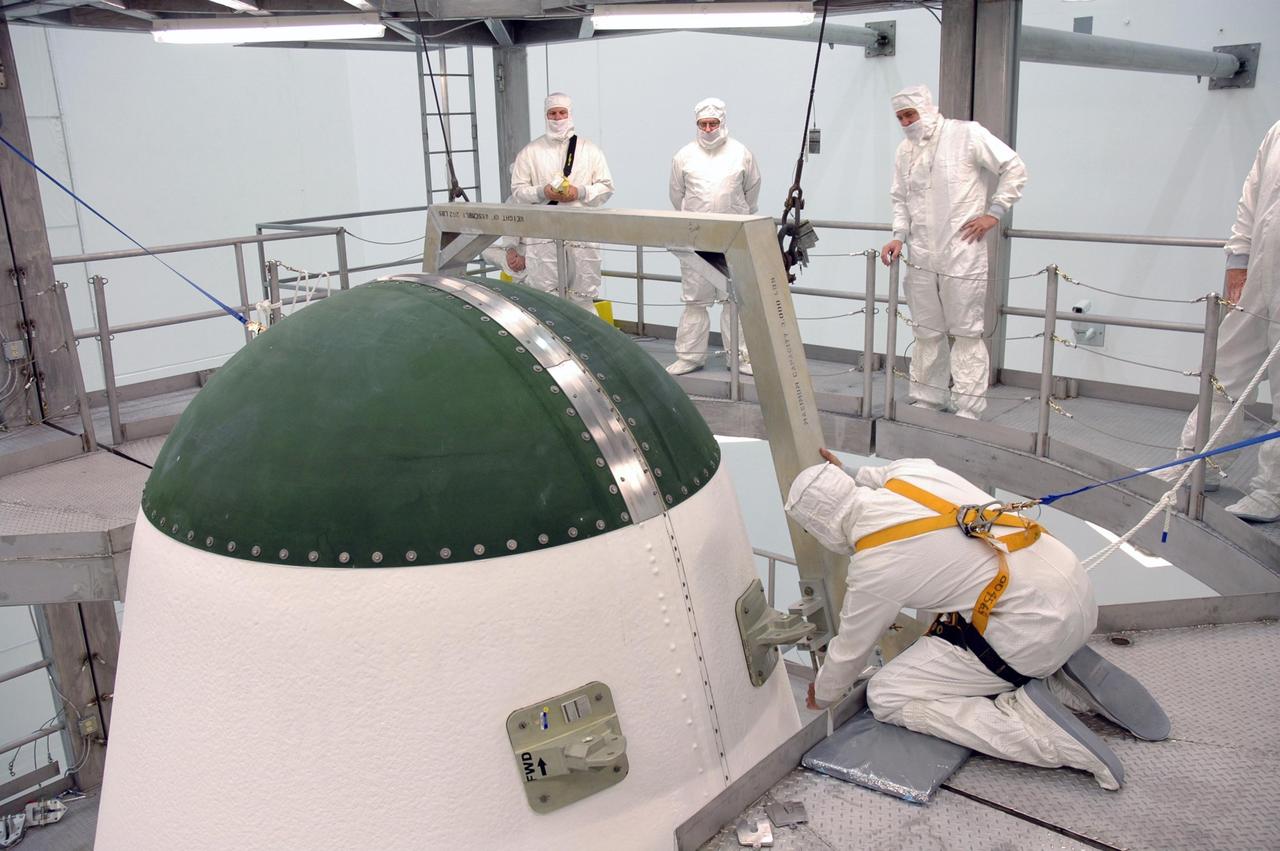
KENNEDY SPACE CENTER, FLA. - At Astrotech Space Operations payload processing facility in Titusville, Fla., workers begin detaching the fairing from around the GOES-N spacecraft. Workers will use the stand to begin detaching the fairing from around the spacecraft. The fairing protects the spacecraft during launch and flight through the atmosphere. Once out of the atmosphere, the fairing is jettisoned. Removing the fairing will allow workers access to the spacecraft. GOES-N was demated from its Boeing Delta IV launch vehicle when the launch was postponed in August 2005 due to technical issues. Due to the extended length of time the spacecraft had been atop the Delta IV rocket without launching, the weather satellite was returned to Astrotech for some precautionary retesting and state of health checks. GOES-N is the latest in a series of Geostationary Operational Environmental Satellites for NOAA and NASA providing continuous monitoring necessary for intensive data analysis. Photo credit: NASA/Jim Grossmann
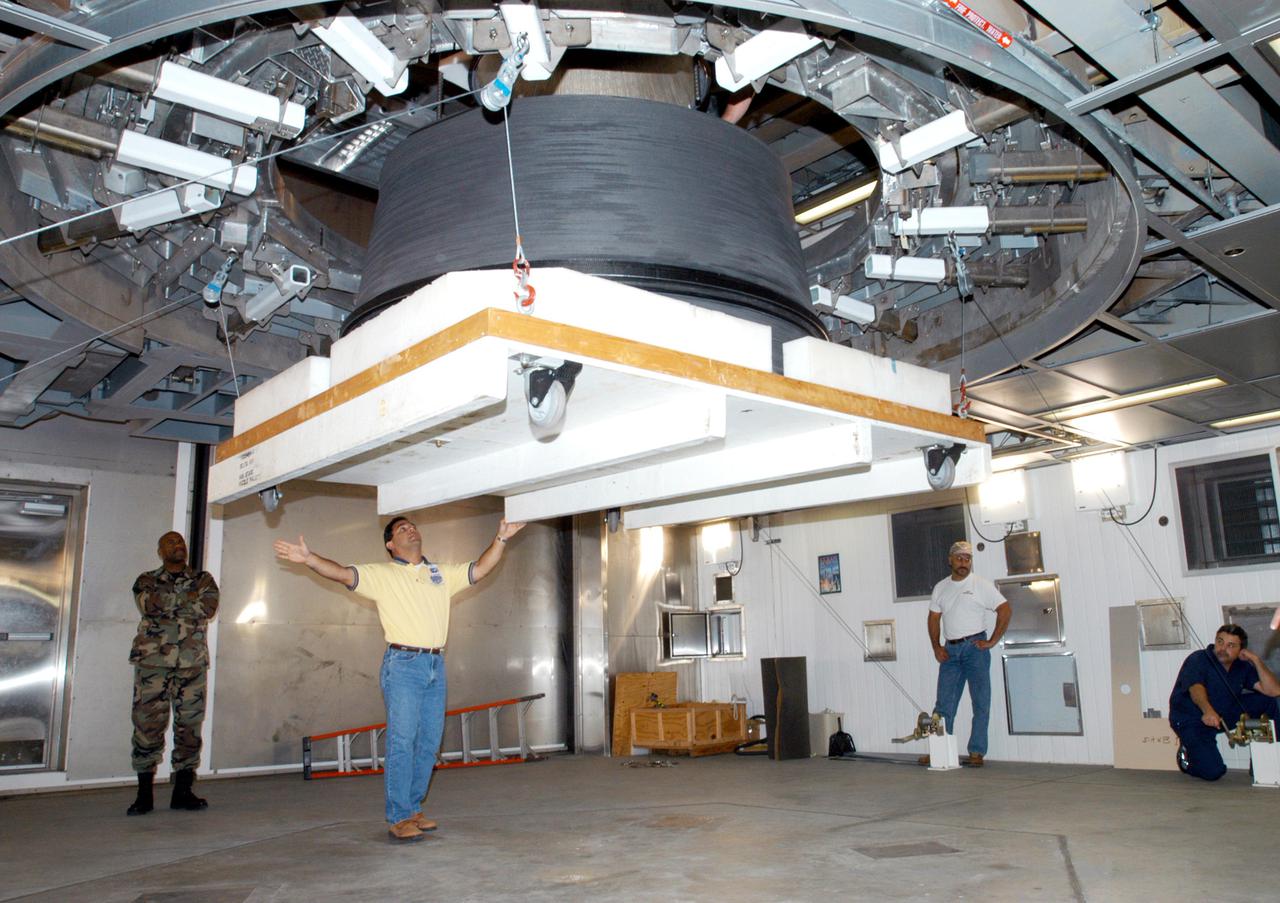
KENNEDY SPACE CENTER, FLA. - At the Delta Operations Center, Leslie Guzman (yellow shirt), with Pratt and Whitney, watches closely as the nozzle for the RL-10 engine is lifted into place on the second stage of the Boeing Delta IV rocket. The Delta IV is the launch vehicle for the Geostationary Operational Environmental Satellite (GOES-N), scheduled to launch in April 2005 from Cape Canaveral Air Force Station. GOES-N is a weather satellite for NASA and NOAA (National Oceanic and Atmospheric Administration). The first in a series of three advanced weather satellites including GOES-O and GOES-P, the GOES-N will provide continuous monitoring necessary for intensive data analysis. It will provide a constant vigil for the atmospheric “triggers” of severe weather conditions such as tornadoes, flash floods, hail storms and hurricanes. When these conditions develop, GOES-N will be able to monitor storm development and track their movements.
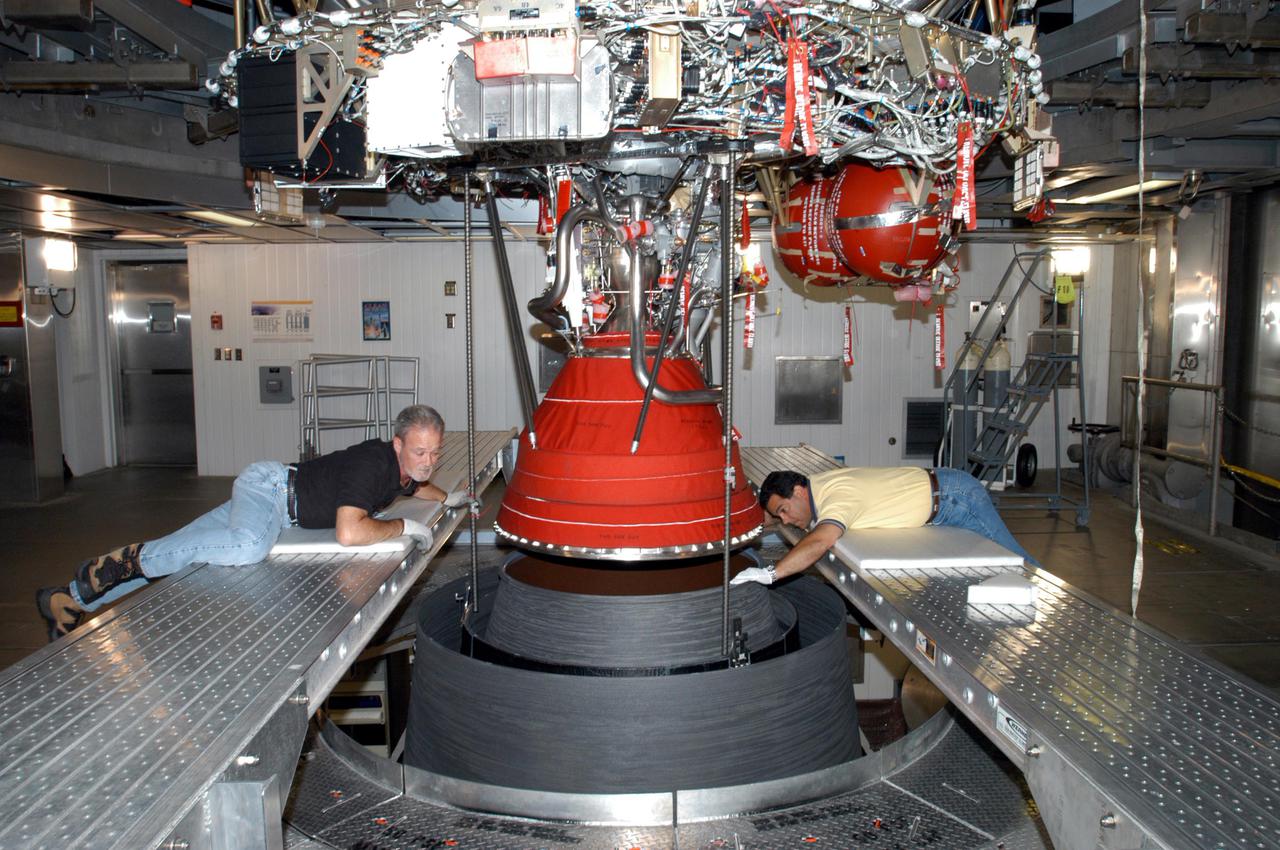
KENNEDY SPACE CENTER, FLA. - At the Delta Operations Center, Jack Reynolds and Leslie Guzman (left and right), with Pratt and Whitney, closely guide the nozzle for the RL-10 engine on the second stage of the Boeing Delta IV rocket. The Delta IV is the launch vehicle for the Geostationary Operational Environmental Satellite (GOES-N), scheduled to launch in April 2005 from Cape Canaveral Air Force Station. GOES-N is a weather satellite for NASA and NOAA (National Oceanic and Atmospheric Administration). The first in a series of three advanced weather satellites including GOES-O and GOES-P, the GOES-N will provide continuous monitoring necessary for intensive data analysis. It will provide a constant vigil for the atmospheric “triggers” of severe weather conditions such as tornadoes, flash floods, hail storms and hurricanes. When these conditions develop, GOES-N will be able to monitor storm development and track their movements.
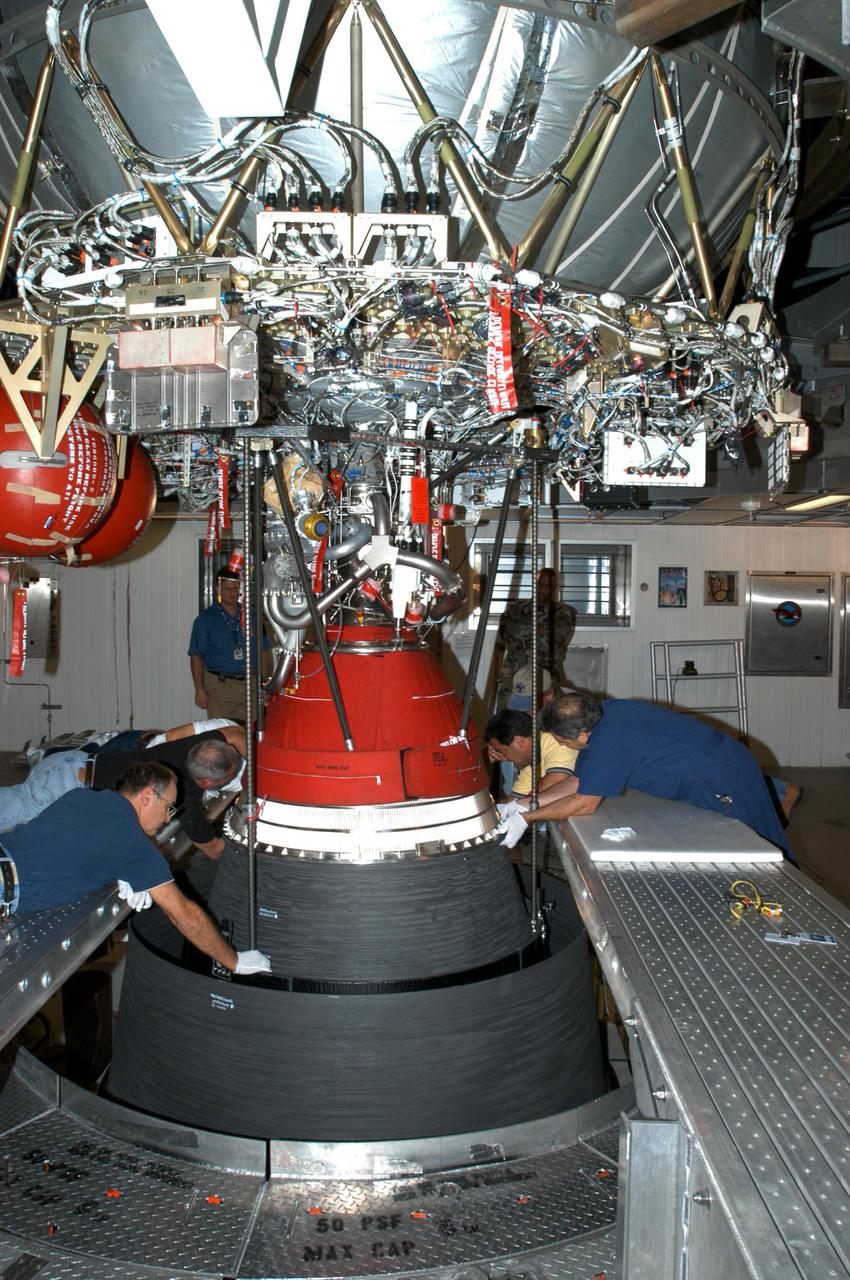
KENNEDY SPACE CENTER, FLA. - At the Delta Operations Center, Jack Reynolds and Leslie Guzman (background) and other workers attach the nozzle for the RL-10 engine to the second stage of the Boeing Delta IV rocket. The Delta IV is the launch vehicle for the Geostationary Operational Environmental Satellite (GOES-N), scheduled to launch in April 2005 from Cape Canaveral Air Force Station. GOES-N is a weather satellite for NASA and NOAA (National Oceanic and Atmospheric Administration). The first in a series of three advanced weather satellites including GOES-O and GOES-P, the GOES-N will provide continuous monitoring necessary for intensive data analysis. It will provide a constant vigil for the atmospheric “triggers” of severe weather conditions such as tornadoes, flash floods, hail storms and hurricanes. When these conditions develop, GOES-N will be able to monitor storm development and track their movements.
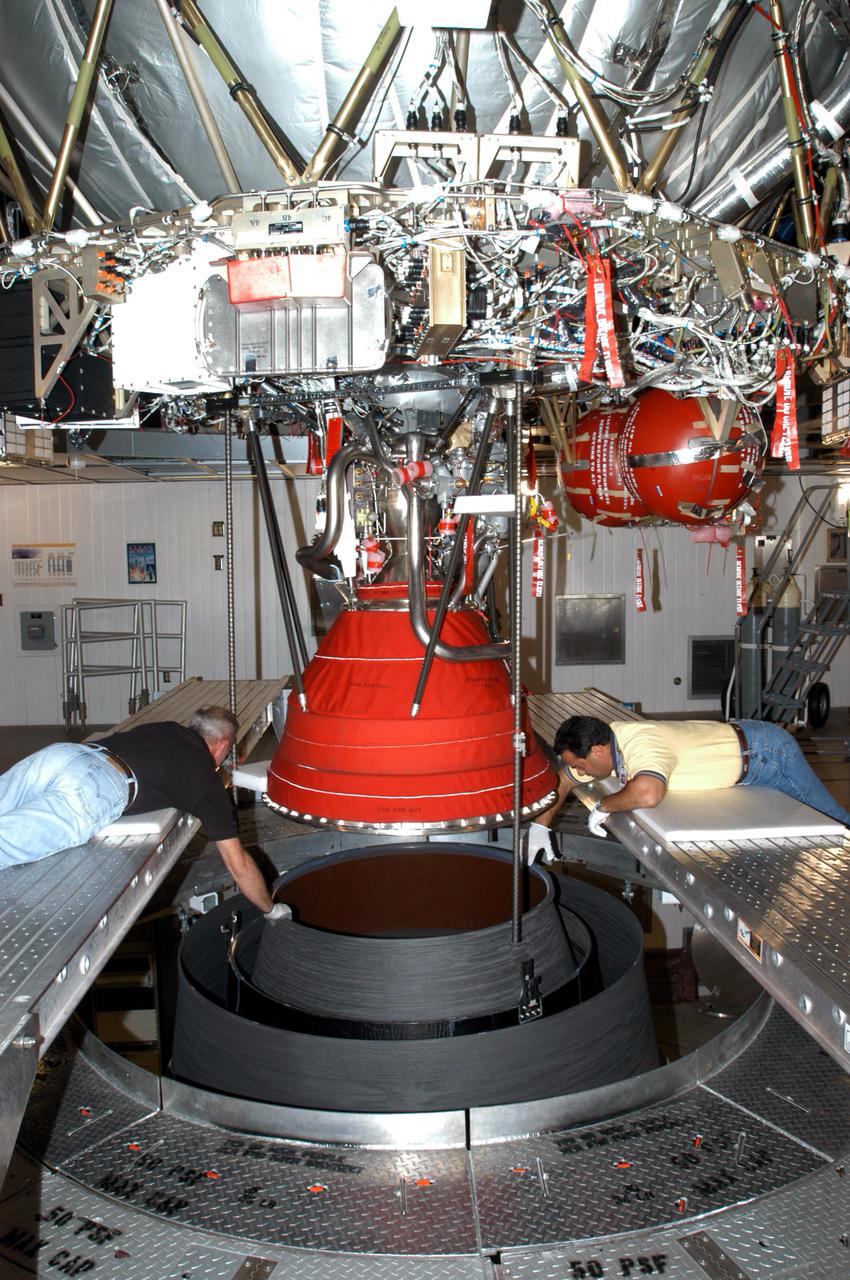
KENNEDY SPACE CENTER, FLA. - At the Delta Operations Center, Jack Reynolds and Leslie Guzman (left and right), with Pratt and Whitney, closely guide the nozzle for the RL-10 engine on the second stage of the Boeing Delta IV rocket. The Delta IV is the launch vehicle for the Geostationary Operational Environmental Satellite (GOES-N), scheduled to launch in April 2005 from Cape Canaveral Air Force Station. GOES-N is a weather satellite for NASA and NOAA (National Oceanic and Atmospheric Administration). The first in a series of three advanced weather satellites including GOES-O and GOES-P, the GOES-N will provide continuous monitoring necessary for intensive data analysis. It will provide a constant vigil for the atmospheric “triggers” of severe weather conditions such as tornadoes, flash floods, hail storms and hurricanes. When these conditions develop, GOES-N will be able to monitor storm development and track their movements.
KENNEDY SPACE CENTER, FLA. - At the Delta Operations Center, Jack Reynolds and Leslie Guzman (both at left), with Pratt and Whitney, prepare the nozzle for the RL-10 engine to be attached to the second stage of the Boeing Delta IV rocket. The Delta IV is the launch vehicle for the Geostationary Operational Environmental Satellite (GOES-N), scheduled to launch in April 2005 from Cape Canaveral Air Force Station. GOES-N is a weather satellite for NASA and NOAA (National Oceanic and Atmospheric Administration). The first in a series of three advanced weather satellites including GOES-O and GOES-P, the GOES-N will provide continuous monitoring necessary for intensive data analysis. It will provide a constant vigil for the atmospheric “triggers” of severe weather conditions such as tornadoes, flash floods, hail storms and hurricanes. When these conditions develop, GOES-N will be able to monitor storm development and track their movements.
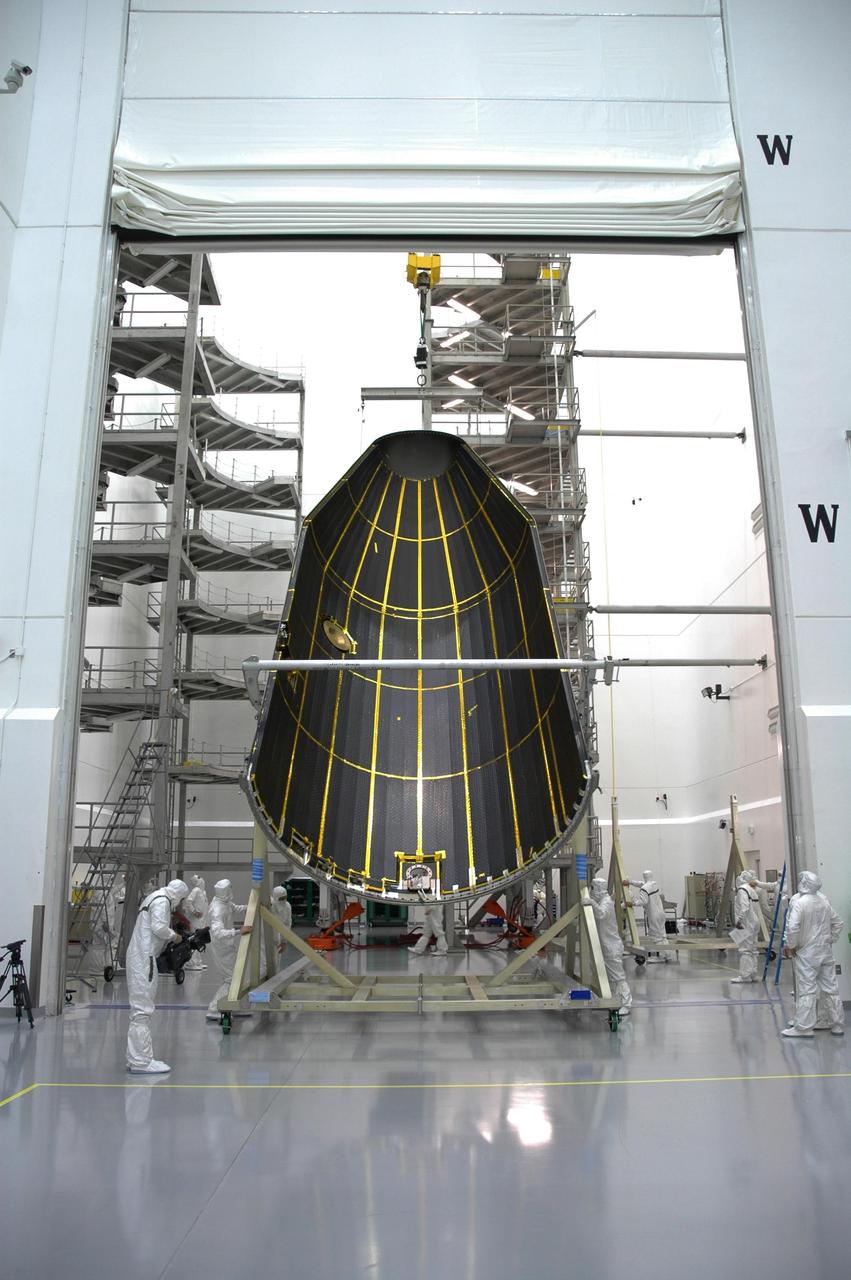
KENNEDY SPACE CENTER, FLA. - At Astrotech Space Operations payload processing facility in Titusville, Fla., one of the fairing halves removed from around the GOES-N spacecraft is being lowered onto a horizontal stand. Removing the fairing will allow workers access to the spacecraft. Workers are using the stand to detach the fairing from around the spacecraft. Workers will use the stand to begin detaching the fairing from around the spacecraft. The fairing protects the spacecraft during launch and flight through the atmosphere. Once out of the atmosphere, the fairing is jettisoned. Removing the fairing will allow workers access to the spacecraft. GOES-N was demated from its Boeing Delta IV launch vehicle when the launch was postponed in August 2005 due to technical issues. Due to the extended length of time the spacecraft had been atop the Delta IV rocket without launching, the weather satellite was returned to Astrotech for some precautionary retesting and state of health checks. GOES-N is the latest in a series of Geostationary Operational Environmental Satellites for NOAA and NASA providing continuous monitoring necessary for intensive data analysis. Photo credit: NASA/Jim Grossmann
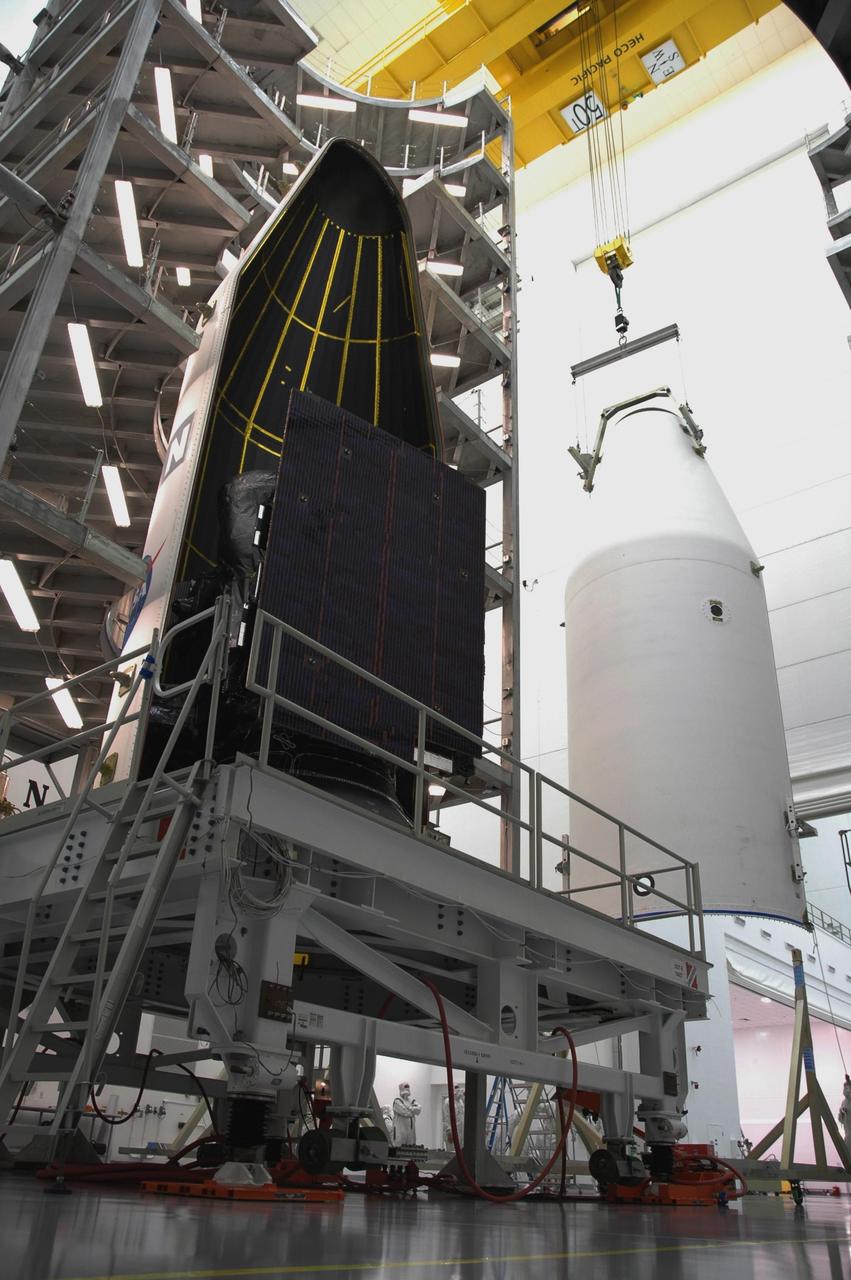
KENNEDY SPACE CENTER, FLA. - At Astrotech Space Operations payload processing facility in Titusville, Fla., the GOES-N spacecraft sits on the workstand after removal of the first half of the fairing, suspended at right. The second half remains behind it. Workers are using the stand to detach the fairing from around the spacecraft. Workers will use the stand to begin detaching the fairing from around the spacecraft. The fairing protects the spacecraft during launch and flight through the atmosphere. Once out of the atmosphere, the fairing is jettisoned. Removing the fairing will allow workers access to the spacecraft. GOES-N was demated from its Boeing Delta IV launch vehicle when the launch was postponed in August 2005 due to technical issues. Due to the extended length of time the spacecraft had been atop the Delta IV rocket without launching, the weather satellite was returned to Astrotech for some precautionary retesting and state of health checks. GOES-N is the latest in a series of Geostationary Operational Environmental Satellites for NOAA and NASA providing continuous monitoring necessary for intensive data analysis. Photo credit: NASA/Jim Grossmann
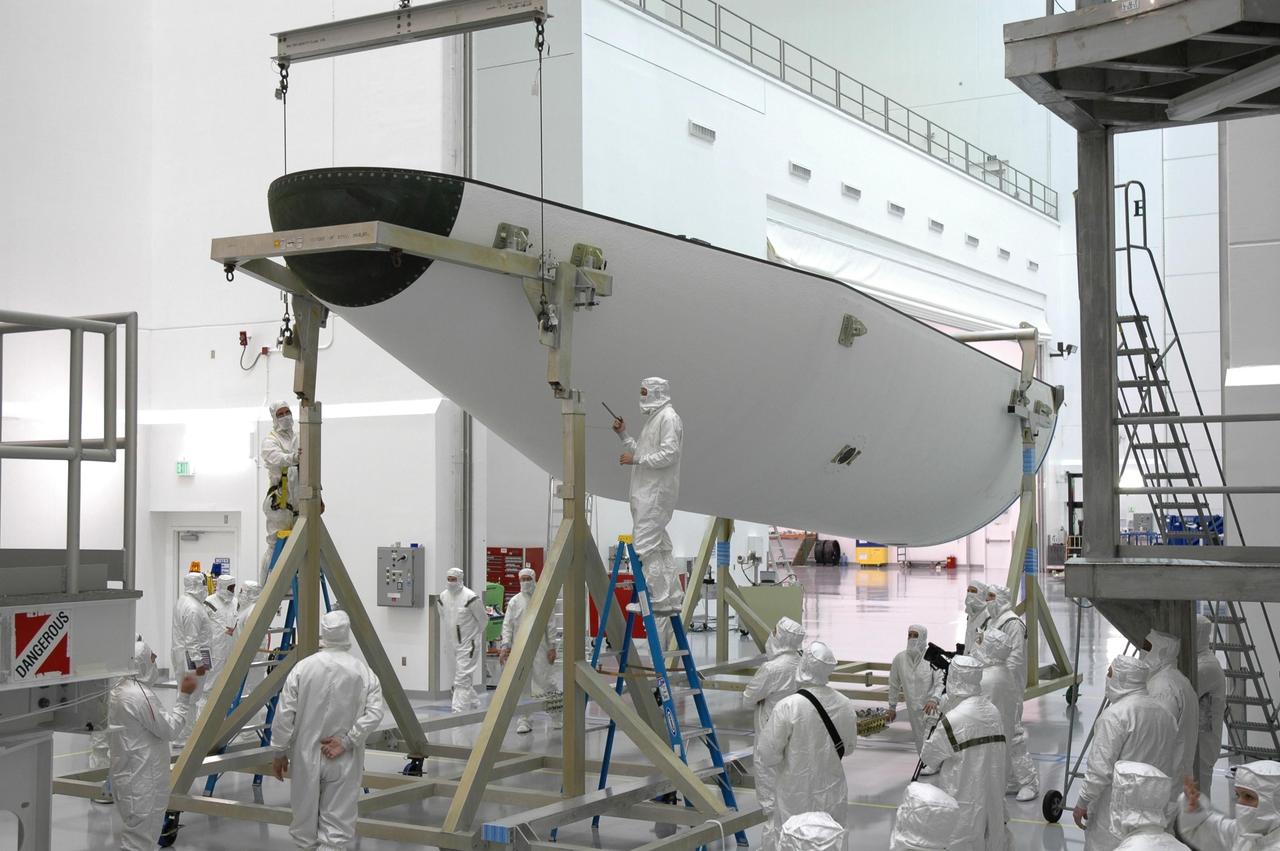
KENNEDY SPACE CENTER, FLA. - At Astrotech Space Operations payload processing facility in Titusville, Fla., workers secure one of the fairing halves removed from around the GOES-N spacecraft onto a horizontal stand. Workers are using the stand to detach the fairing from around the spacecraft. Workers will use the stand to begin detaching the fairing from around the spacecraft. The fairing protects the spacecraft during launch and flight through the atmosphere. Once out of the atmosphere, the fairing is jettisoned. Removing the fairing will allow workers access to the spacecraft. GOES-N was demated from its Boeing Delta IV launch vehicle when the launch was postponed in August 2005 due to technical issues. Due to the extended length of time the spacecraft had been atop the Delta IV rocket without launching, the weather satellite was returned to Astrotech for some precautionary retesting and state of health checks. GOES-N is the latest in a series of Geostationary Operational Environmental Satellites for NOAA and NASA providing continuous monitoring necessary for intensive data analysis. Photo credit: NASA/Jim Grossmann
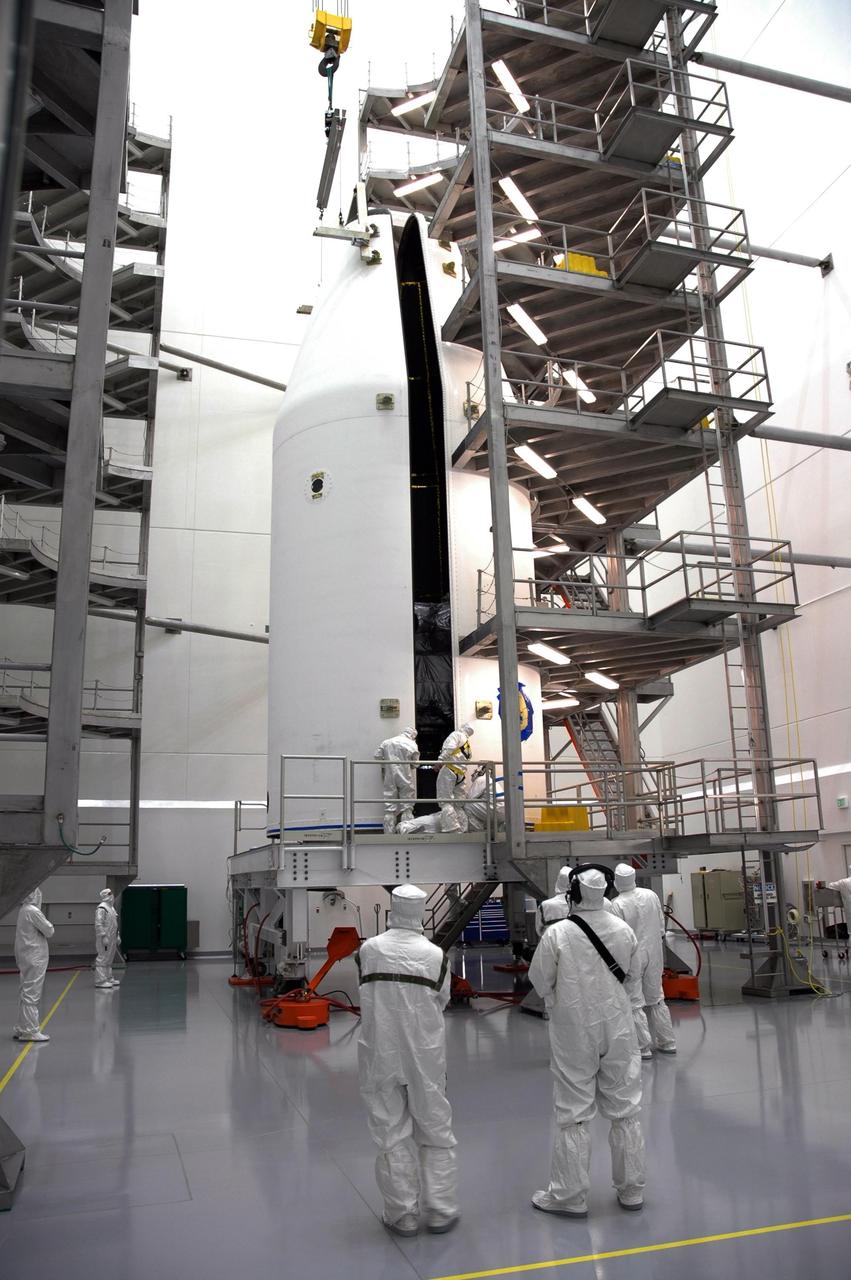
KENNEDY SPACE CENTER, FLA. - At Astrotech Space Operations payload processing facility in Titusville, Fla., workers watch closely as the fairing encapsulating the GOES-N spacecraft is opened. Workers are using the stand to detach the fairing from around the spacecraft. Workers will use the stand to begin detaching the fairing from around the spacecraft. The fairing protects the spacecraft during launch and flight through the atmosphere. Once out of the atmosphere, the fairing is jettisoned. Removing the fairing will allow workers access to the spacecraft. GOES-N was demated from its Boeing Delta IV launch vehicle when the launch was postponed in August 2005 due to technical issues. Due to the extended length of time the spacecraft had been atop the Delta IV rocket without launching, the weather satellite was returned to Astrotech for some precautionary retesting and state of health checks. GOES-N is the latest in a series of Geostationary Operational Environmental Satellites for NOAA and NASA providing continuous monitoring necessary for intensive data analysis. Photo credit: NASA/Jim Grossmann

KENNEDY SPACE CENTER, FLA. - At Astrotech Space Operations payload processing facility in Titusville, Fla., multi-level work stands surround the encapsulated GOES-N spacecraft. Workers are using the stand to detach the fairing from around the spacecraft. Workers will use the stand to begin detaching the fairing from around the spacecraft. The fairing protects the spacecraft during launch and flight through the atmosphere. Once out of the atmosphere, the fairing is jettisoned. Removing the fairing will allow workers access to the spacecraft. GOES-N was demated from its Boeing Delta IV launch vehicle when the launch was postponed in August 2005 due to technical issues. Due to the extended length of time the spacecraft had been atop the Delta IV rocket without launching, the weather satellite was returned to Astrotech for some precautionary retesting and state of health checks. GOES-N is the latest in a series of Geostationary Operational Environmental Satellites for NOAA and NASA providing continuous monitoring necessary for intensive data analysis. Photo credit: NASA/Jim Grossmann
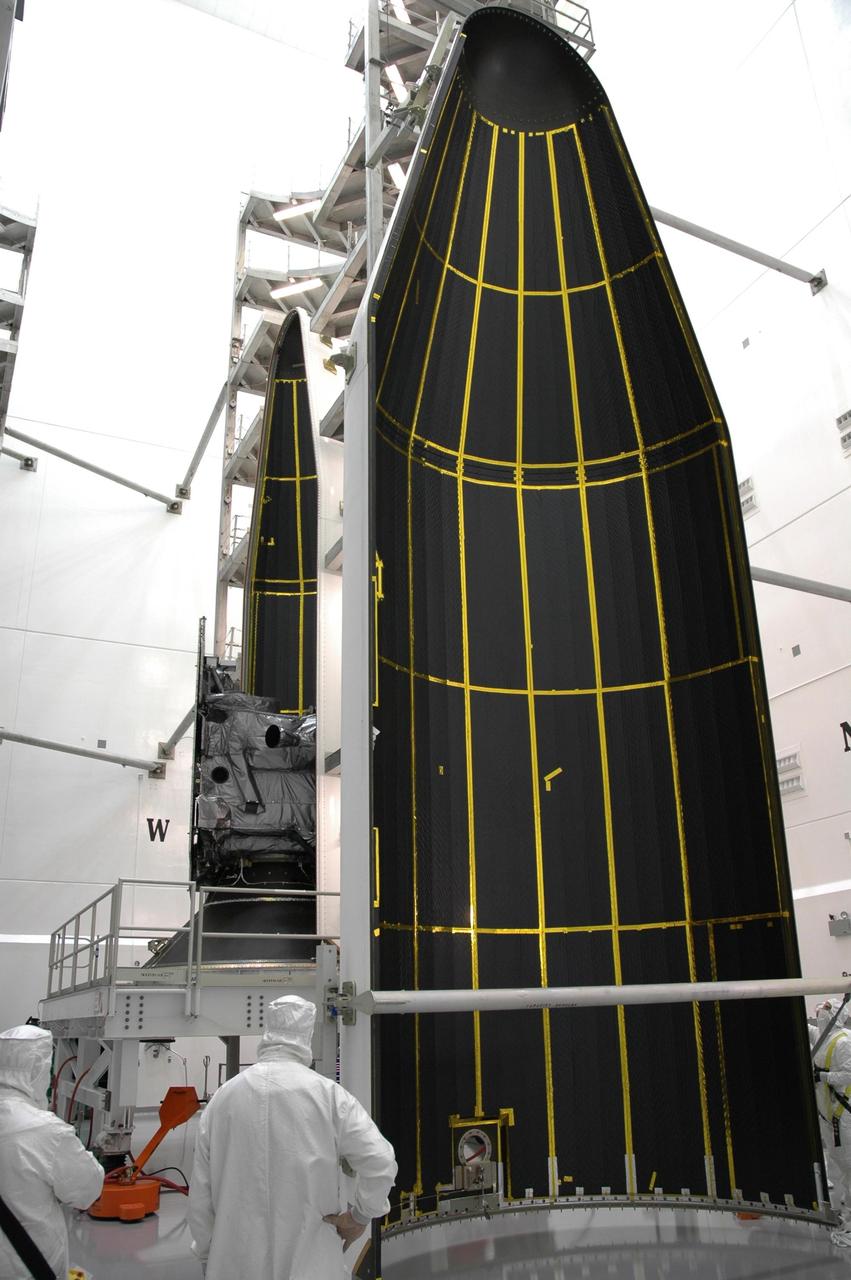
KENNEDY SPACE CENTER, FLA. - At Astrotech Space Operations payload processing facility in Titusville, Fla., the first half of the fairing (right) is moved away from the GOES-N spacecraft after being detached. The spacecraft and second half of the fairing are seen behind it. Workers are using the stand to detach the fairing from around the spacecraft. Workers will use the stand to begin detaching the fairing from around the spacecraft. The fairing protects the spacecraft during launch and flight through the atmosphere. Once out of the atmosphere, the fairing is jettisoned. Removing the fairing will allow workers access to the spacecraft. GOES-N was demated from its Boeing Delta IV launch vehicle when the launch was postponed in August 2005 due to technical issues. Due to the extended length of time the spacecraft had been atop the Delta IV rocket without launching, the weather satellite was returned to Astrotech for some precautionary retesting and state of health checks. GOES-N is the latest in a series of Geostationary Operational Environmental Satellites for NOAA and NASA providing continuous monitoring necessary for intensive data analysis. Photo credit: NASA/Jim Grossmann

KENNEDY SPACE CENTER, FLA. - At Astrotech Space Operations payload processing facility in Titusville, Fla., the first half of the fairing (left) is removed from around the GOES-N spacecraft. Workers are using the stand to detach the fairing from around the spacecraft. Workers will use the stand to begin detaching the fairing from around the spacecraft. The fairing protects the spacecraft during launch and flight through the atmosphere. Once out of the atmosphere, the fairing is jettisoned. Removing the fairing will allow workers access to the spacecraft. GOES-N was demated from its Boeing Delta IV launch vehicle when the launch was postponed in August 2005 due to technical issues. Due to the extended length of time the spacecraft had been atop the Delta IV rocket without launching, the weather satellite was returned to Astrotech for some precautionary retesting and state of health checks. GOES-N is the latest in a series of Geostationary Operational Environmental Satellites for NOAA and NASA providing continuous monitoring necessary for intensive data analysis. Photo credit: NASA/Jim Grossmann
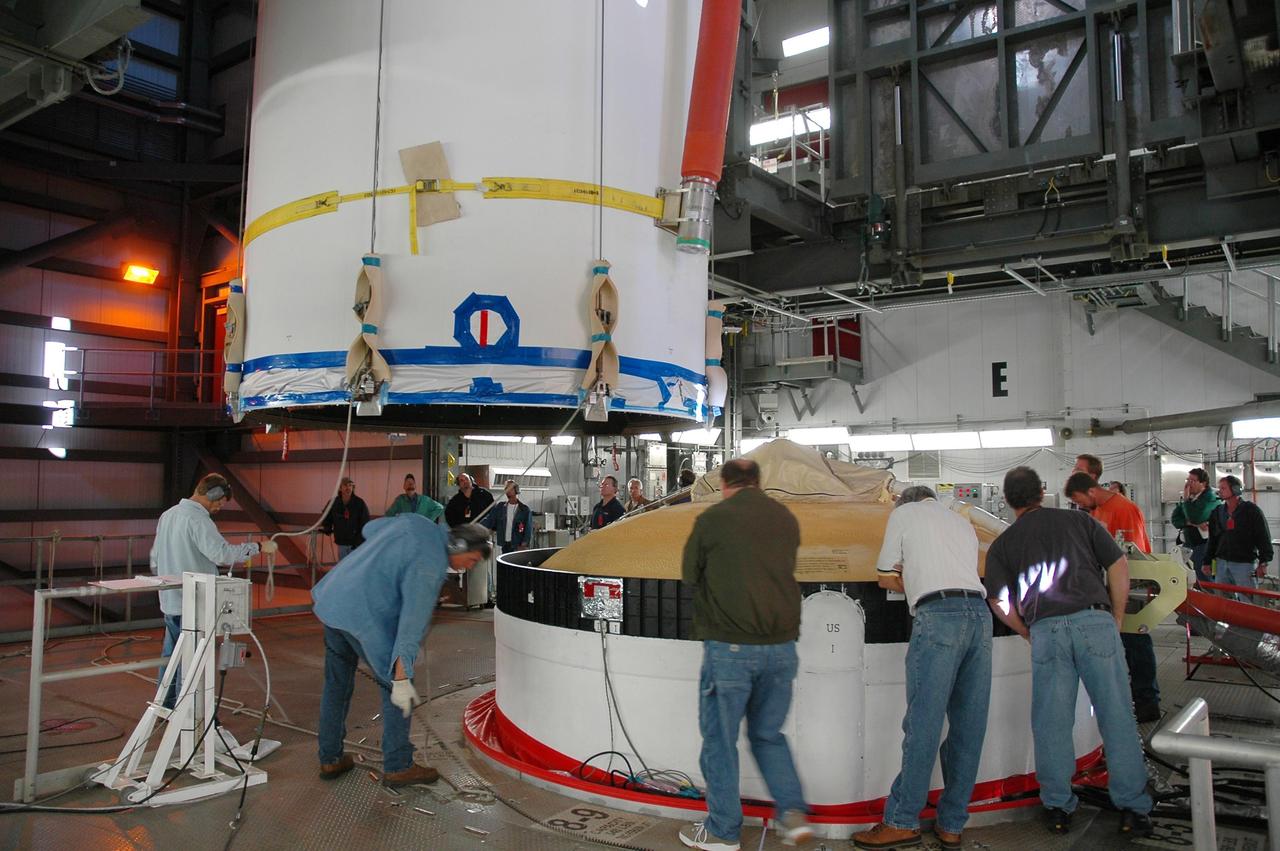
KENNEDY SPACE CENTER, FLA. - On Launch Complex 37 at Cape Canaveral Air Force Station in Florida, technicians demate the GOES-N satellite (upper left) from its Boeing Delta IV rocket (right). Launch of the satellite was postponed in August 2005 due to technical issues and postponed to a later date. Due to the extended length of time the spacecraft has been atop the rocket without launching, the weather satellite is being returned to the Astrotech Space Operations payload processing facility for some precautionary retesting and state-of-health checks. GOES-N is the latest in a series of Geostationary Operational Environmental Satellites for NOAA and NASA providing continuous monitoring necessary for intensive data analysis. Photo credit: NASA/Jack Pfaller
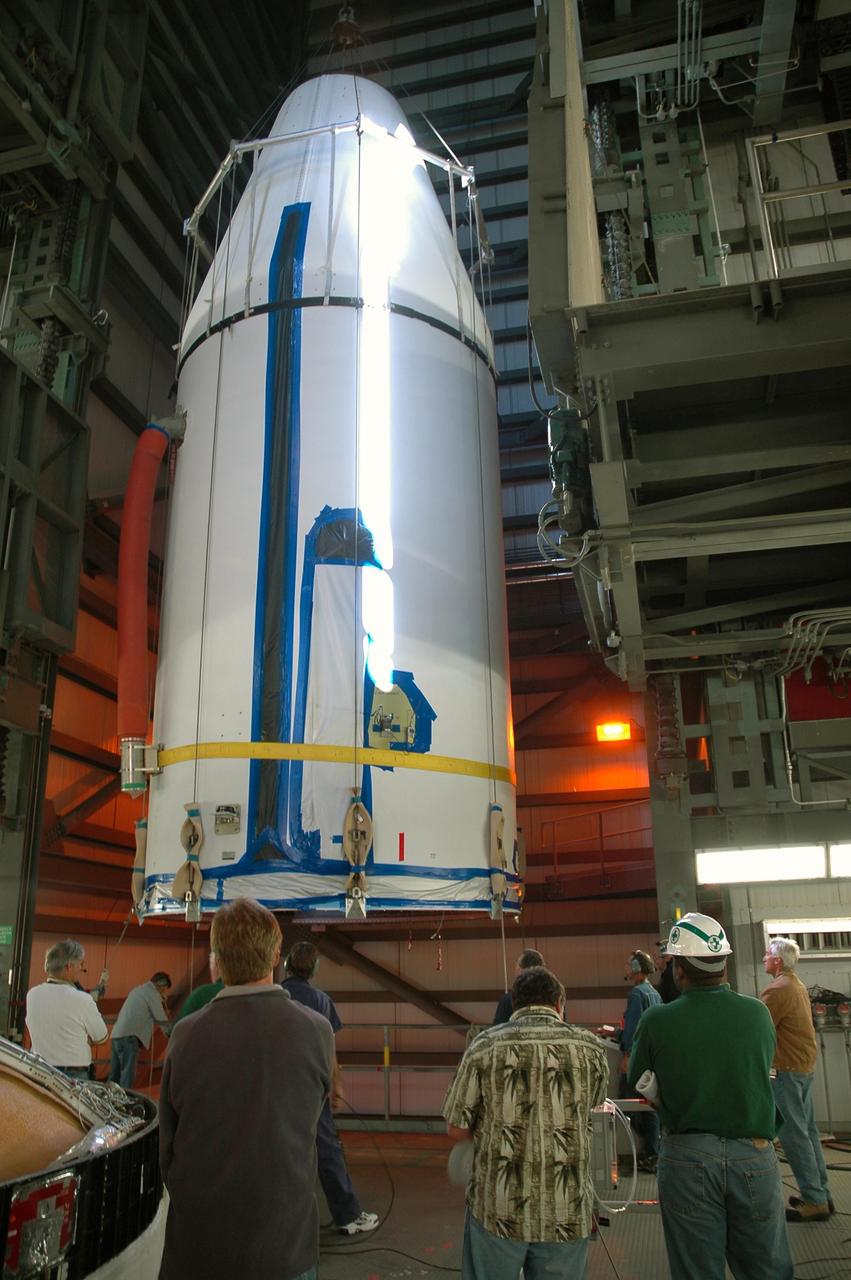
KENNEDY SPACE CENTER, FLA. - On Launch Complex 37 at Cape Canaveral Air Force Station in Florida, the GOES-N satellite is demated and lifted from its Boeing Delta IV rocket. Launch of the satellite was postponed in August 2005 due to technical issues and postponed to a later date. Due to the extended length of time the spacecraft has been atop the rocket without launching, the weather satellite is being returned to the Astrotech Space Operations payload processing facility for some precautionary retesting and state-of-health checks. GOES-N is the latest in a series of Geostationary Operational Environmental Satellites for NOAA and NASA providing continuous monitoring necessary for intensive data analysis. Photo credit: NASA/Jack Pfaller
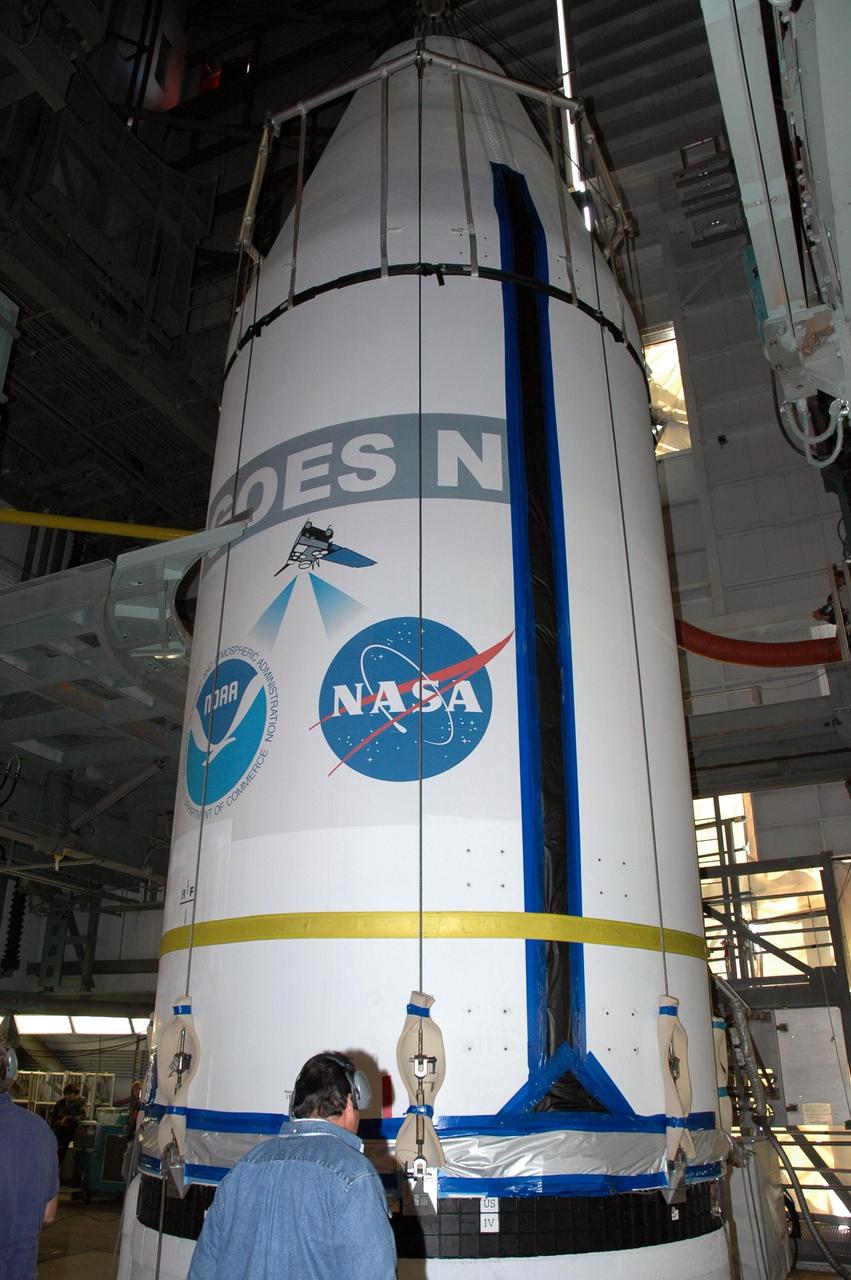
KENNEDY SPACE CENTER, FLA. - On Launch Complex 37 at Cape Canaveral Air Force Station in Florida, the GOES-N satellite is prepared for demating from its Boeing Delta IV rocket. Launch of the satellite was postponed in August 2005 due to technical issues and postponed to a later date. Due to the extended length of time the spacecraft has been atop the rocket without launching, the weather satellite is being returned to the Astrotech Space Operations payload processing facility for some precautionary retesting and state-of-health checks. GOES-N is the latest in a series of Geostationary Operational Environmental Satellites for NOAA and NASA providing continuous monitoring necessary for intensive data analysis. Photo credit: NASA/Jim Grossmann
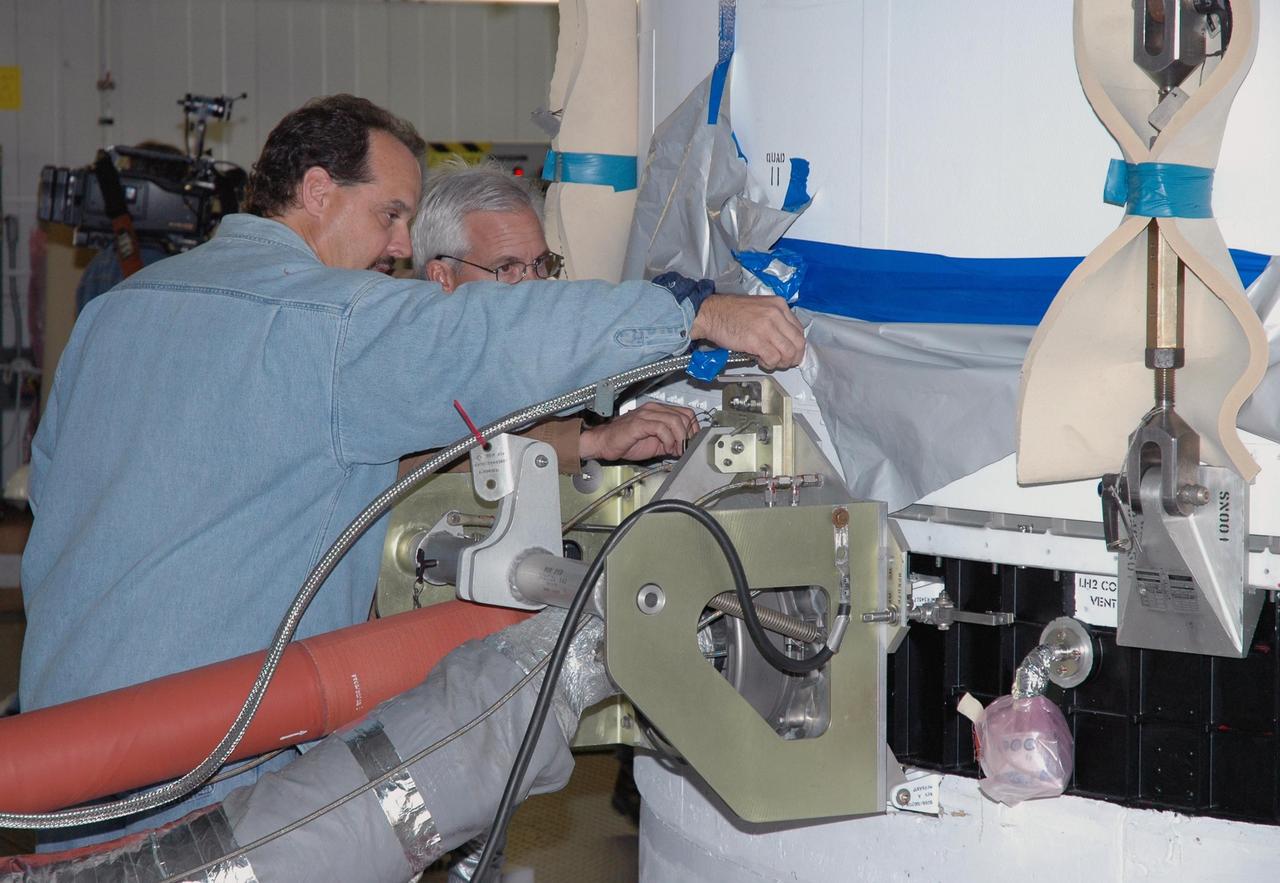
KENNEDY SPACE CENTER, FLA. - On Launch Complex 37 at Cape Canaveral Air Force Station in Florida, technicians disconnect fittings on the GOES-N satellite before it is demated from its Boeing Delta IV rocket. Launch of the satellite was postponed in August 2005 due to technical issues and postponed to a later date. Due to the extended length of time the spacecraft has been atop the rocket without launching, the weather satellite is being returned to the Astrotech Space Operations payload processing facility for some precautionary retesting and state-of-health checks. GOES-N is the latest in a series of Geostationary Operational Environmental Satellites for NOAA and NASA providing continuous monitoring necessary for intensive data analysis. Photo credit: NASA/Jim Grossmann
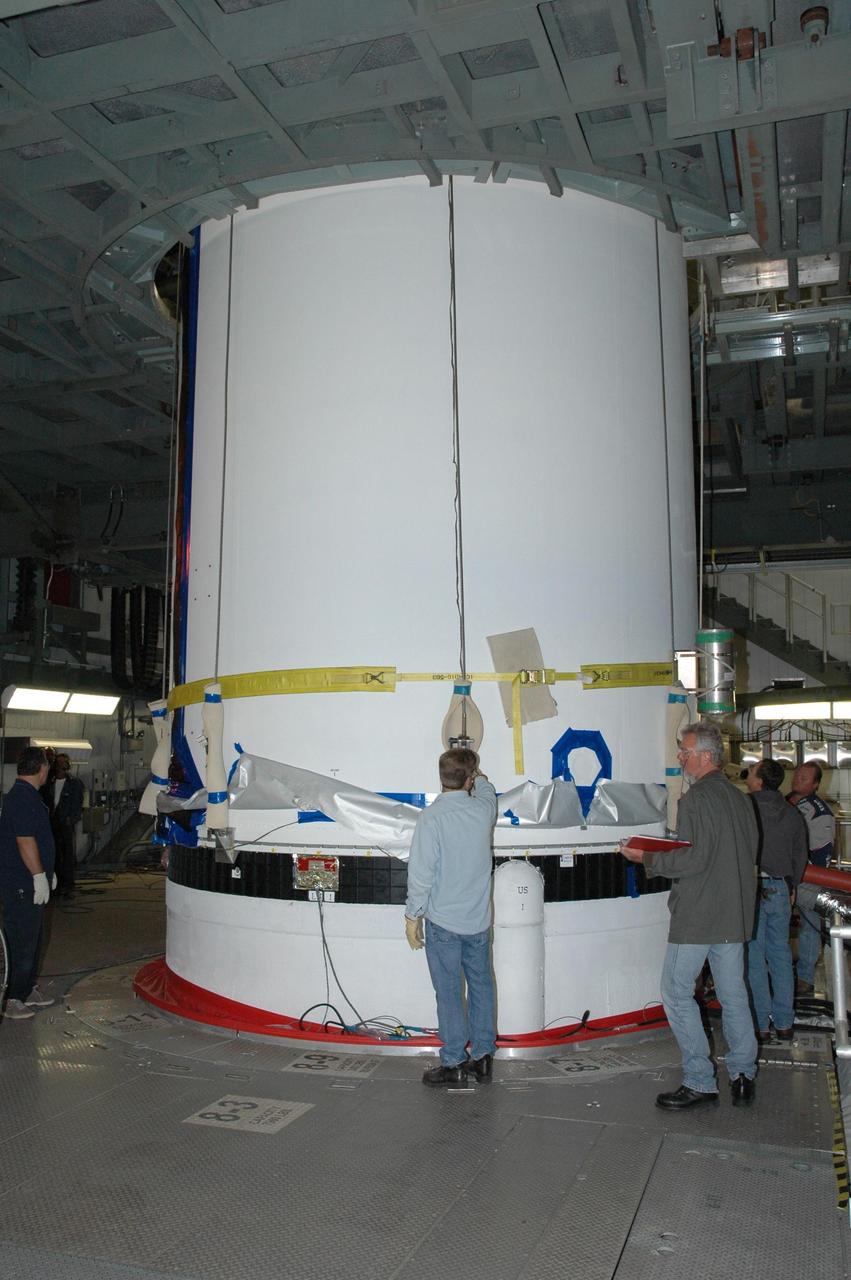
KENNEDY SPACE CENTER, FLA. - On Launch Complex 37 at Cape Canaveral Air Force Station in Florida, technicians demate the GOES-N satellite from its Boeing Delta IV rocket. Launch of the satellite was postponed in August 2005 due to technical issues and postponed to a later date. Due to the extended length of time the spacecraft has been atop the rocket without launching, the weather satellite is being returned to the Astrotech Space Operations payload processing facility for some precautionary retesting and state-of-health checks. GOES-N is the latest in a series of Geostationary Operational Environmental Satellites for NOAA and NASA providing continuous monitoring necessary for intensive data analysis. Photo credit: NASA/Jim Grossmann
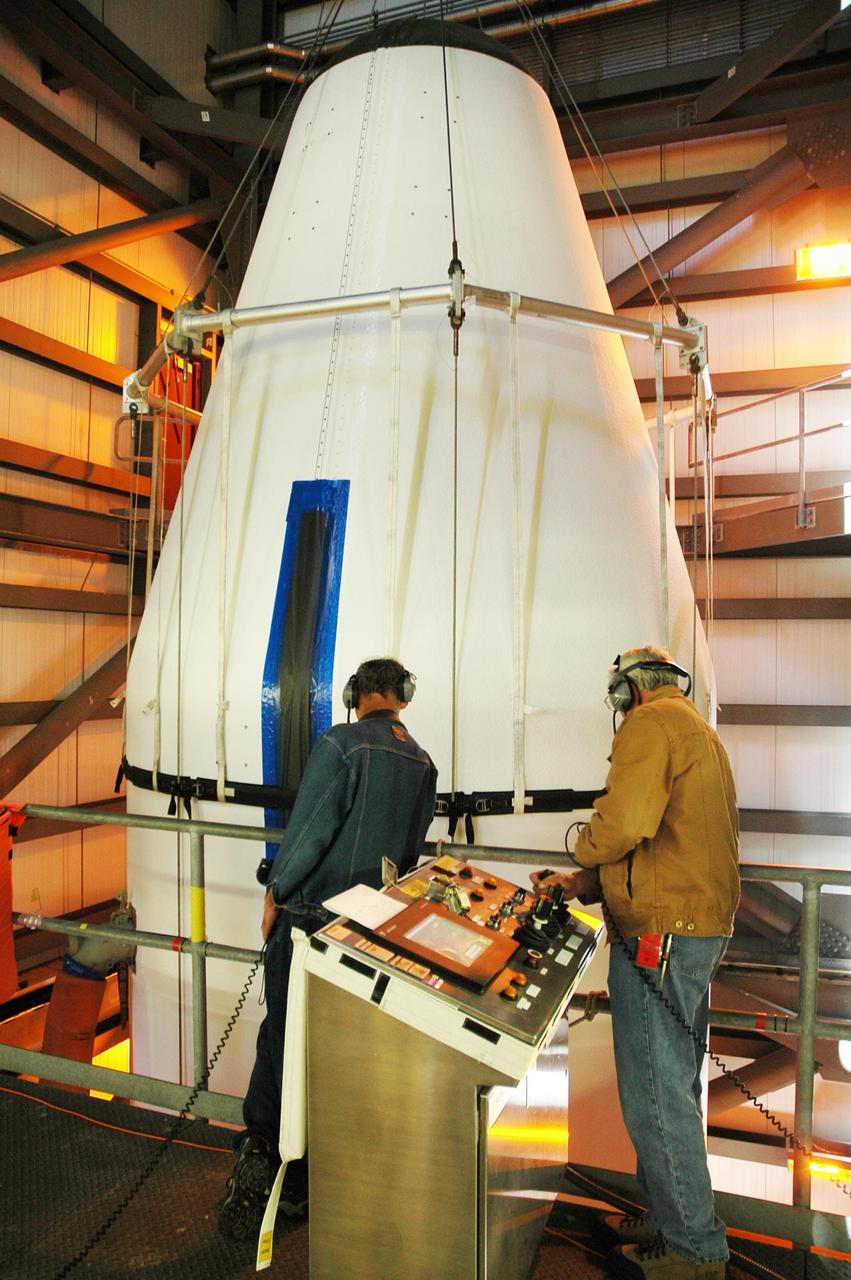
KENNEDY SPACE CENTER, FLA. - On Launch Complex 37 at Cape Canaveral Air Force Station in Florida, technicians monitor the GOES-N satellite as it is moved from atop its Boeing Delta IV rocket. Launch of the satellite was postponed in August 2005 due to technical issues and postponed to a later date. Due to the extended length of time the spacecraft has been atop the rocket without launching, the weather satellite is being returned to the Astrotech Space Operations payload processing facility for some precautionary retesting and state-of-health checks. GOES-N is the latest in a series of Geostationary Operational Environmental Satellites for NOAA and NASA providing continuous monitoring necessary for intensive data analysis. Photo credit: NASA/Jack Pfaller
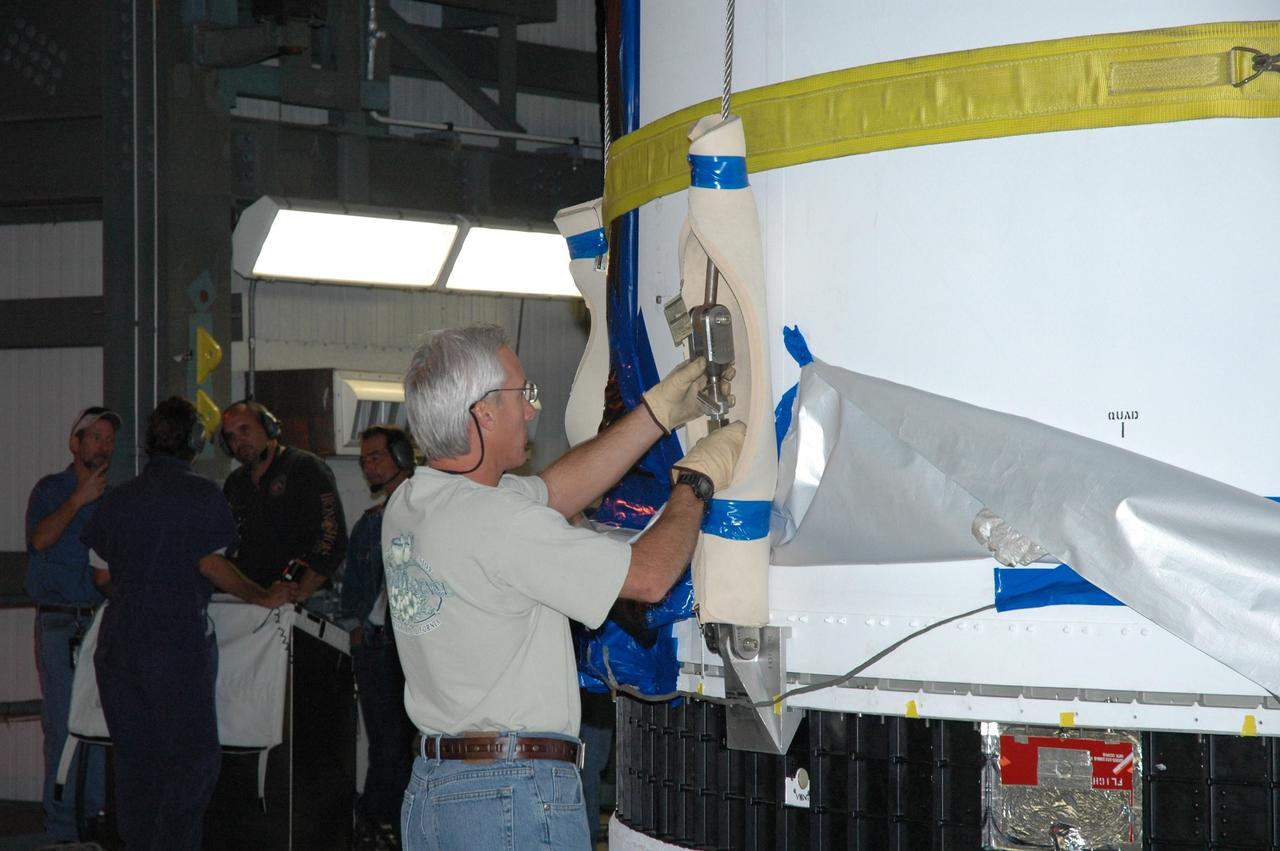
KENNEDY SPACE CENTER, FLA. - On Launch Complex 37 at Cape Canaveral Air Force Station in Florida, a technician demates the GOES-N satellite from its Boeing Delta IV rocket. Launch of the satellite was postponed in August 2005 due to technical issues and postponed to a later date. Due to the extended length of time the spacecraft has been atop the rocket without launching, the weather satellite is being returned to the Astrotech Space Operations payload processing facility for some precautionary retesting and state-of-health checks. GOES-N is the latest in a series of Geostationary Operational Environmental Satellites for NOAA and NASA providing continuous monitoring necessary for intensive data analysis. Photo credit: NASA/Jim Grossmann
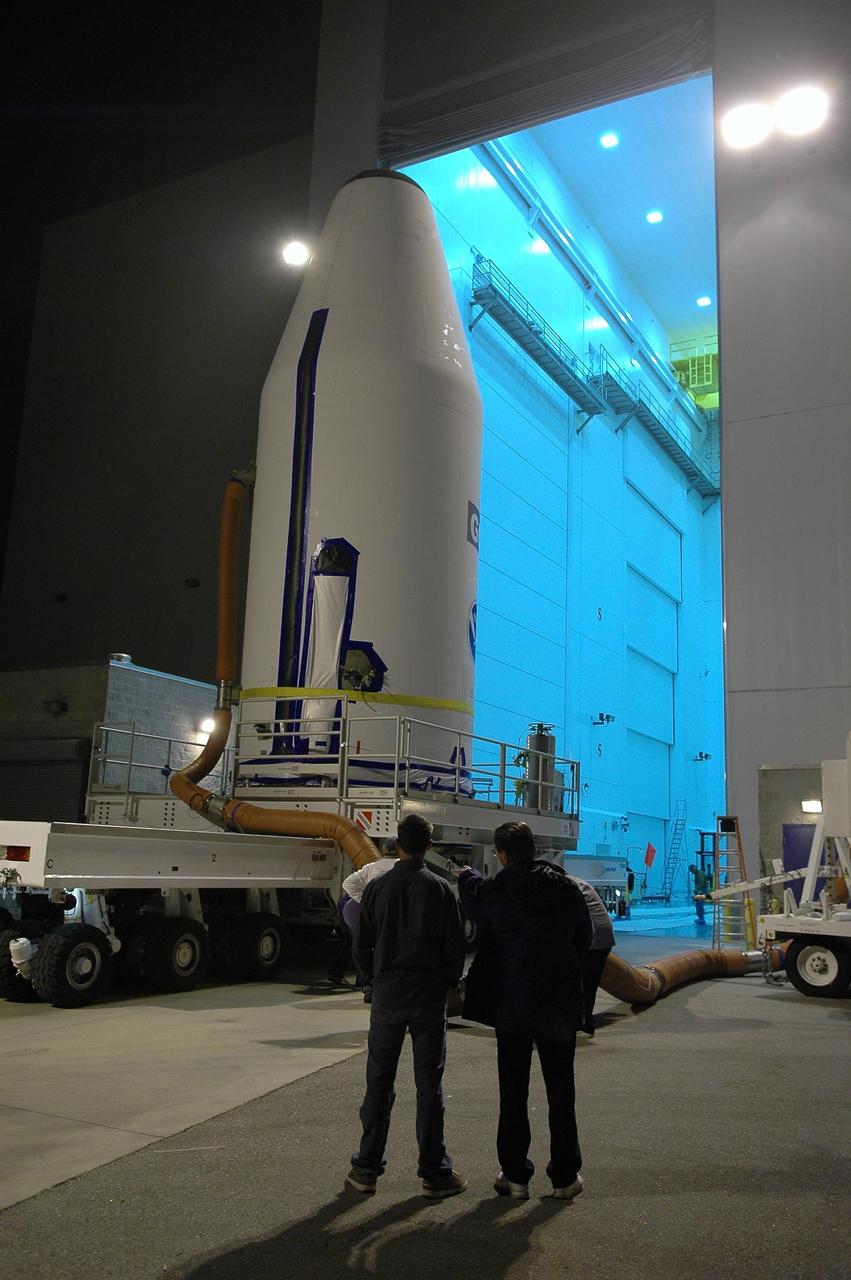
KENNEDY SPACE CENTER, FLA. - The GOES-N satellite, secured inside a payload fairing, is rolled into the clean room high bay at the Astrotech payload processing facility in Titusville, Fla. Liftoff of the satellite from Launch Complex 37 at Cape Canaveral Air Force Station in Florida was scrubbed in August 2005 due to technical issues and postponed to a later date. Due to the extended length of time the spacecraft had been atop its Delta IV rocket without launching, the weather satellite is being returned to Astrotech for some precautionary retesting and state of health checks. GOES-N is the latest in a series of Geostationary Operational Environmental Satellites for NOAA and NASA providing continuous monitoring necessary for intensive data analysis. Photo credit: NASA/Kim Shiflett
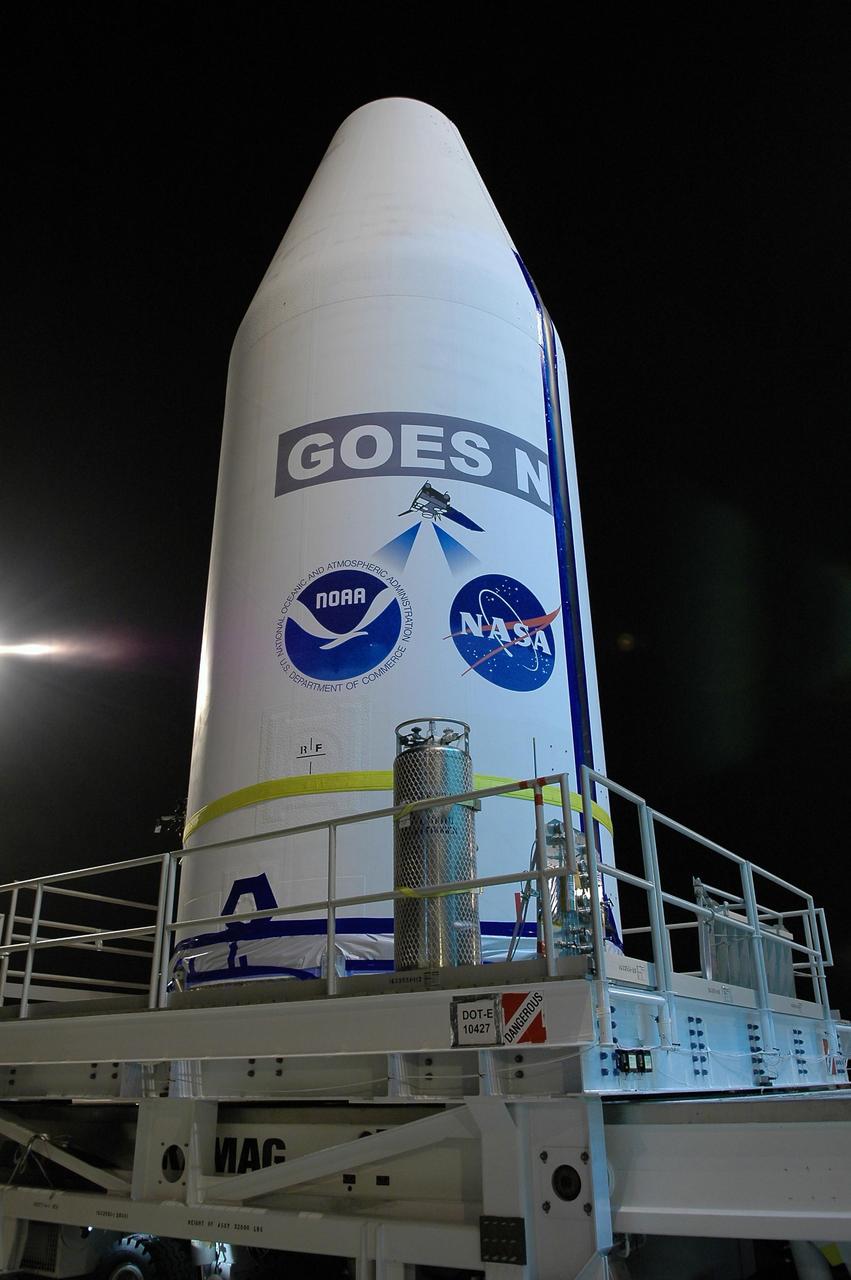
KENNEDY SPACE CENTER, FLA. - The GOES-N satellite, secured inside a payload fairing, enters the clean room high bay at the Astrotech payload processing facility in Titusville, Fla. Liftoff of the satellite from Launch Complex 37 at Cape Canaveral Air Force Station in Florida was scrubbed in August 2005 due to technical issues and postponed to a later date. Due to the extended length of time the spacecraft had been atop its Delta IV rocket without launching, the weather satellite is being returned to Astrotech for some precautionary retesting and state of health checks. GOES-N is the latest in a series of Geostationary Operational Environmental Satellites for NOAA and NASA providing continuous monitoring necessary for intensive data analysis. Photo credit: NASA/Kim Shiflett
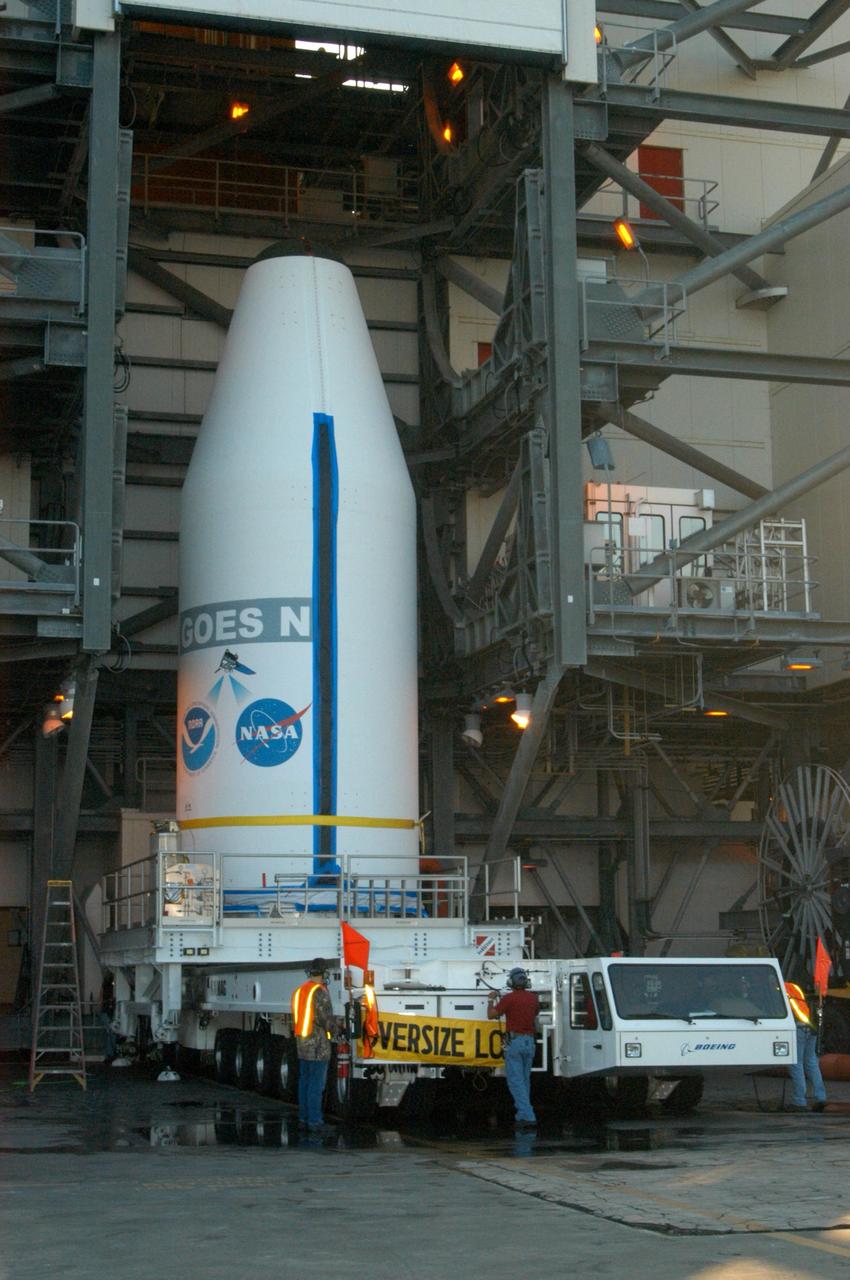
KENNEDY SPACE CENTER, FLA. - On Launch Complex 37 at Cape Canaveral Air Force Station in Florida, the GOES-N spacecraft is secured to a transporter for its transfer back to Astrotech Space Operations in Titusville, Fla., after being demated from the Boeing Delta IV launch vehicle. Launch of the satellite was scrubbed in August 2005 due to technical issues and postponed to a later date. Due to the extended length of time the spacecraft has been atop the rocket without launching, the weather satellite is being returned to the Astrotech payload processing facility for some precautionary retesting and state-of-health checks. GOES-N is the latest in a series of Geostationary Operational Environmental Satellites for NOAA and NASA providing continuous monitoring necessary for intensive data analysis. Photo credit: NASA/George Shelton
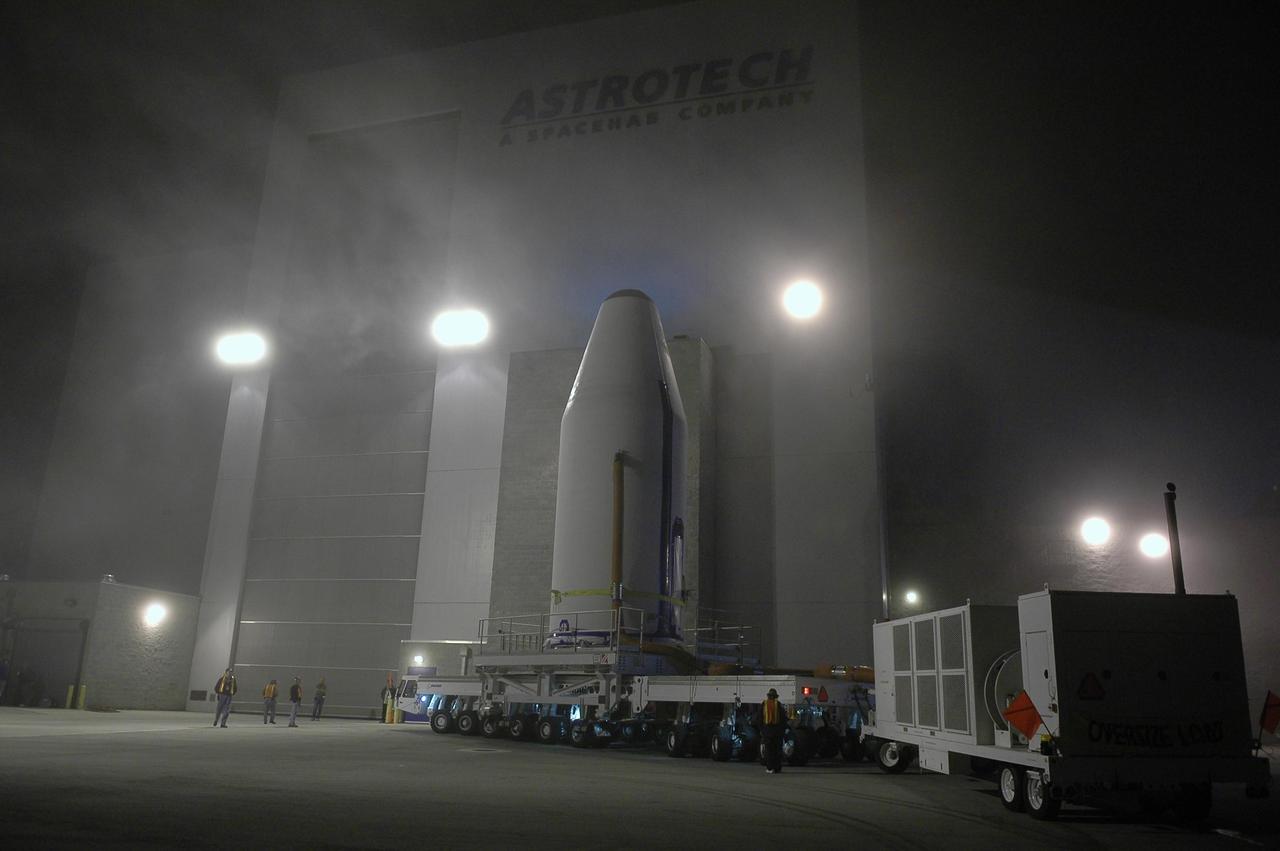
KENNEDY SPACE CENTER, FLA. - The GOES-N satellite, secured inside a payload fairing, arrives at the Astrotech payload processing facility in Titusville, Fla. Liftoff of the satellite from Launch Complex 37 at Cape Canaveral Air Force Station in Florida was scrubbed in August 2005 due to technical issues and postponed to a later date. Due to the extended length of time the spacecraft had been atop its Delta IV rocket without launching, the weather satellite is being returned to Astrotech for some precautionary retesting and state of health checks. GOES-N is the latest in a series of Geostationary Operational Environmental Satellites for NOAA and NASA providing continuous monitoring necessary for intensive data analysis. Photo credit: NASA/Kim Shiflett

KENNEDY SPACE CENTER, FLA. - On Launch Complex 37 at Cape Canaveral Air Force Station in Florida, a transporter is positioned under the GOES-N satellite, just demated from its Boeing Delta IV rocket. Launch of the satellite was postponed in August 2005 due to technical issues and postponed to a later date. Due to the extended length of time the spacecraft has been atop the rocket without launching, the weather satellite is being returned to the Astrotech Space Operations payload processing facility for some precautionary retesting and state-of-health checks. GOES-N is the latest in a series of Geostationary Operational Environmental Satellites for NOAA and NASA providing continuous monitoring necessary for intensive data analysis. Photo credit: NASA/Jack Pfaller

KENNEDY SPACE CENTER, FLA. - On Launch Complex 37 at Cape Canaveral Air Force Station in Florida, the GOES-N satellite is lowered from atop its Boeing Delta IV rocket. Launch of the satellite was postponed in August 2005 due to technical issues and postponed to a later date. Due to the extended length of time the spacecraft has been atop the rocket without launching, the weather satellite is being returned to the Astrotech Space Operations payload processing facility for some precautionary retesting and state-of-health checks. GOES-N is the latest in a series of Geostationary Operational Environmental Satellites for NOAA and NASA providing continuous monitoring necessary for intensive data analysis. Photo credit: NASA/Jack Pfaller

KENNEDY SPACE CENTER, FLA. - On Launch Complex 37 at Cape Canaveral Air Force Station in Florida, technicians prepare a transporter to move the GOES-N satellite, just demated from its Boeing Delta IV rocket. Launch of the satellite was postponed in August 2005 due to technical issues and postponed to a later date. Due to the extended length of time the spacecraft has been atop the rocket without launching, the weather satellite is being returned to the Astrotech Space Operations payload processing facility for some precautionary retesting and state-of-health checks. GOES-N is the latest in a series of Geostationary Operational Environmental Satellites for NOAA and NASA providing continuous monitoring necessary for intensive data analysis. Photo credit: NASA/Jack Pfaller

KENNEDY SPACE CENTER, FLA. - On Launch Complex 37 at Cape Canaveral Air Force Station in Florida, a transporter is positioned under the GOES-N satellite, just demated from its Boeing Delta IV rocket. Launch of the satellite was postponed in August 2005 due to technical issues and postponed to a later date. Due to the extended length of time the spacecraft has been atop the rocket without launching, the weather satellite is being returned to the Astrotech Space Operations payload processing facility for some precautionary retesting and state-of-health checks. GOES-N is the latest in a series of Geostationary Operational Environmental Satellites for NOAA and NASA providing continuous monitoring necessary for intensive data analysis. Photo credit: NASA/Jack Pfaller
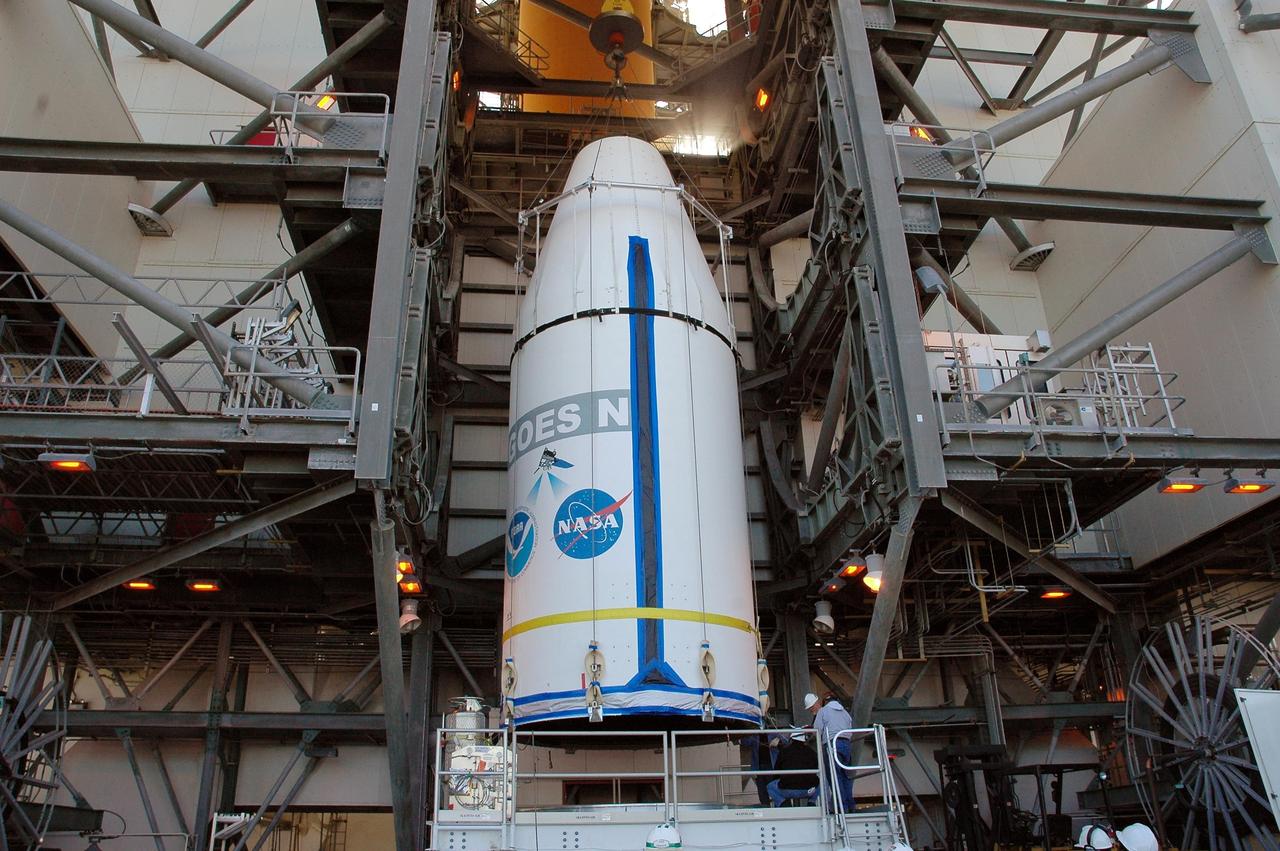
KENNEDY SPACE CENTER, FLA. - On Launch Complex 37 at Cape Canaveral Air Force Station in Florida, the GOES-N satellite is lowered from atop its Boeing Delta IV rocket. Launch of the satellite was postponed in August 2005 due to technical issues and postponed to a later date. Due to the extended length of time the spacecraft has been atop the rocket without launching, the weather satellite is being returned to the Astrotech Space Operations payload processing facility for some precautionary retesting and state-of-health checks. GOES-N is the latest in a series of Geostationary Operational Environmental Satellites for NOAA and NASA providing continuous monitoring necessary for intensive data analysis. Photo credit: NASA/Jack Pfaller
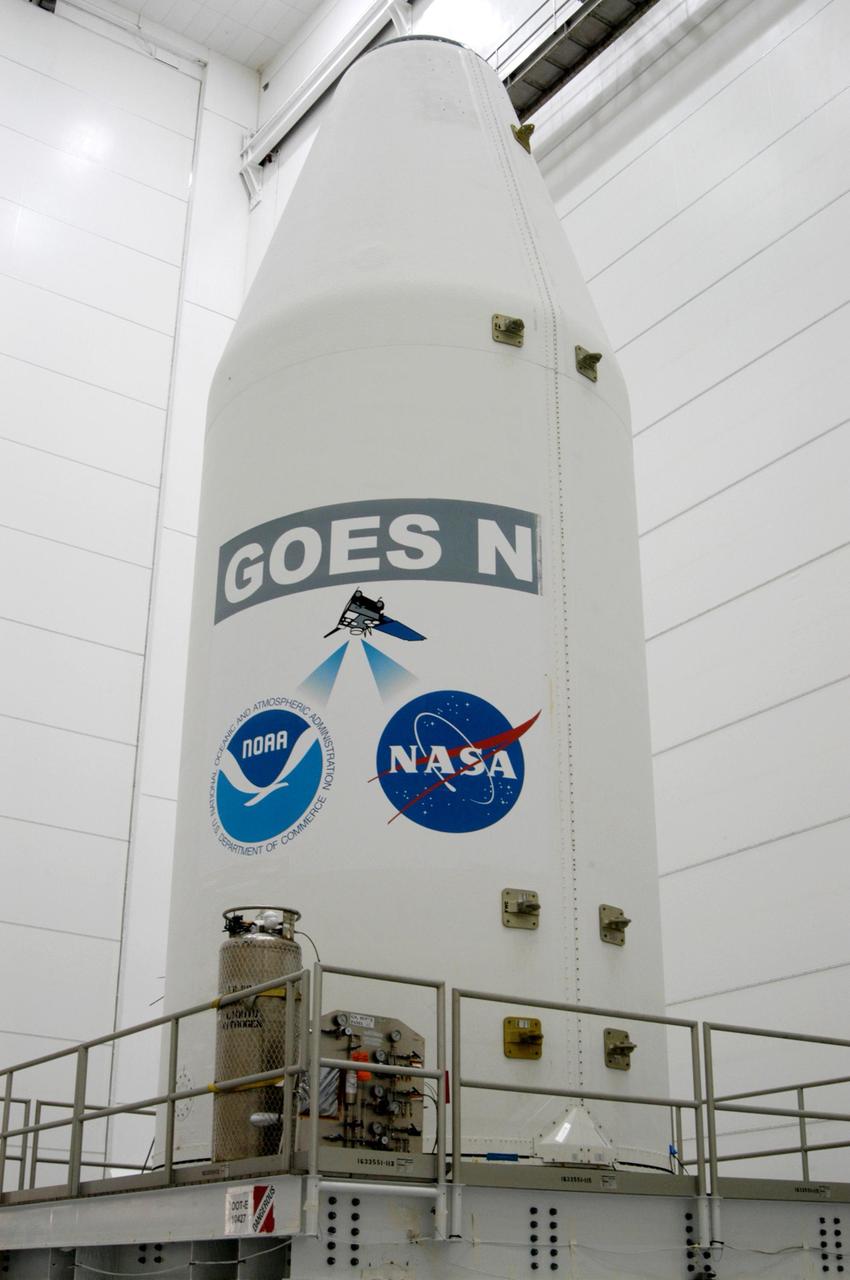
KENNEDY SPACE CENTER, FLA. - At the Astrotech Space Operations payload processing facility in Titusville, Fla., the GOES-N satellite, secured inside a payload fairing, waits inside the clean room high bay for transfer to another room and waiting work stands. Due to the extended length of time the spacecraft had been atop its Boeing Delta IV rocket without launching, the weather satellite has been returned to Astrotech for some precautionary retesting and state of health checks. Liftoff of the satellite from Launch Complex 37 at Cape Canaveral Air Force Station in Florida was scrubbed in August 2005 due to technical issues and postponed to a later date. GOES-N is the latest in a series of Geostationary Operational Environmental Satellites for NOAA and NASA providing continuous monitoring necessary for intensive data analysis. Photo credit: NASA/George Shelton
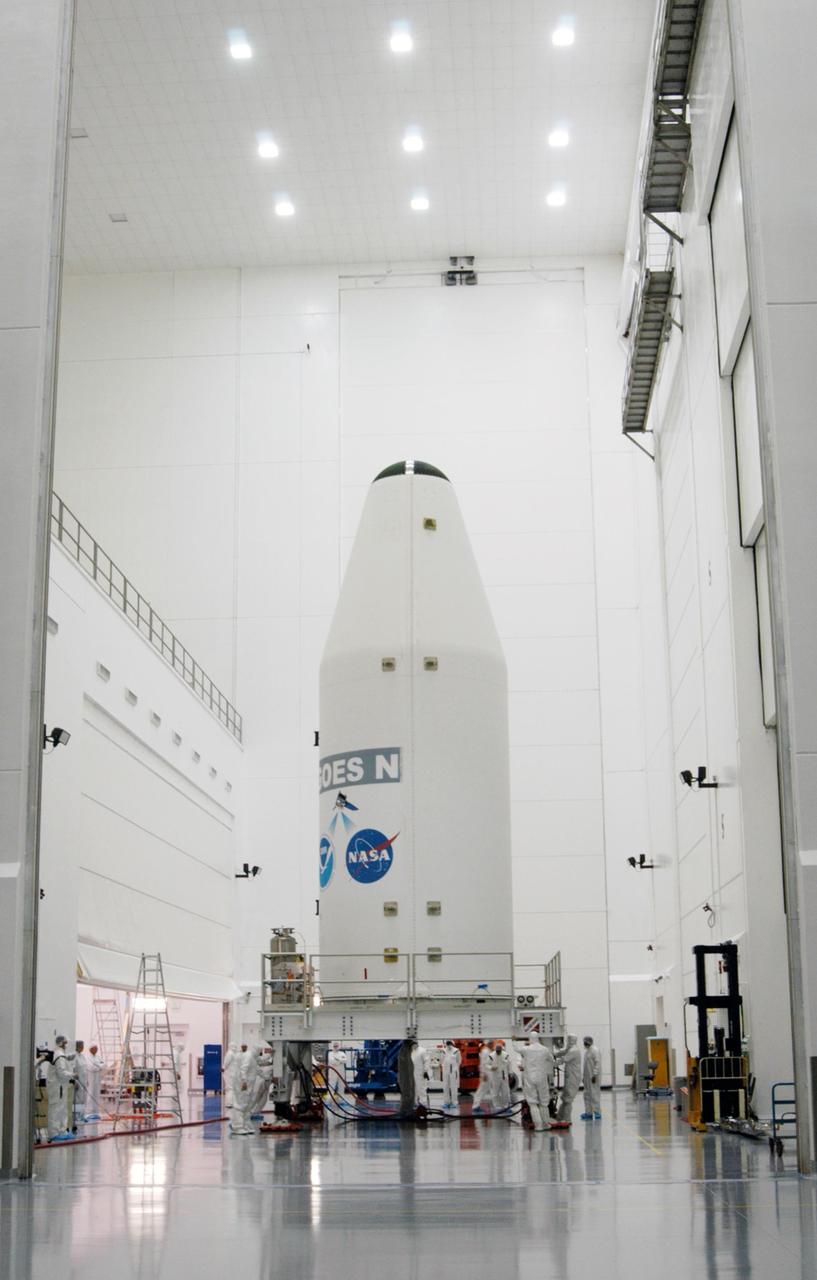
KENNEDY SPACE CENTER, FLA. - At the Astrotech Space Operations payload processing facility in Titusville, Fla., the GOES-N satellite, secured inside a payload fairing, is moved to another high bay area and waiting work stands. Due to the extended length of time the spacecraft had been atop its Boeing Delta IV rocket without launching, the weather satellite has been returned to Astrotech for some precautionary retesting and state of health checks. Liftoff of the satellite from Launch Complex 37 at Cape Canaveral Air Force Station in Florida was scrubbed in August 2005 due to technical issues and postponed to a later date. GOES-N is the latest in a series of Geostationary Operational Environmental Satellites for NOAA and NASA providing continuous monitoring necessary for intensive data analysis. Photo credit: NASA/George Shelton
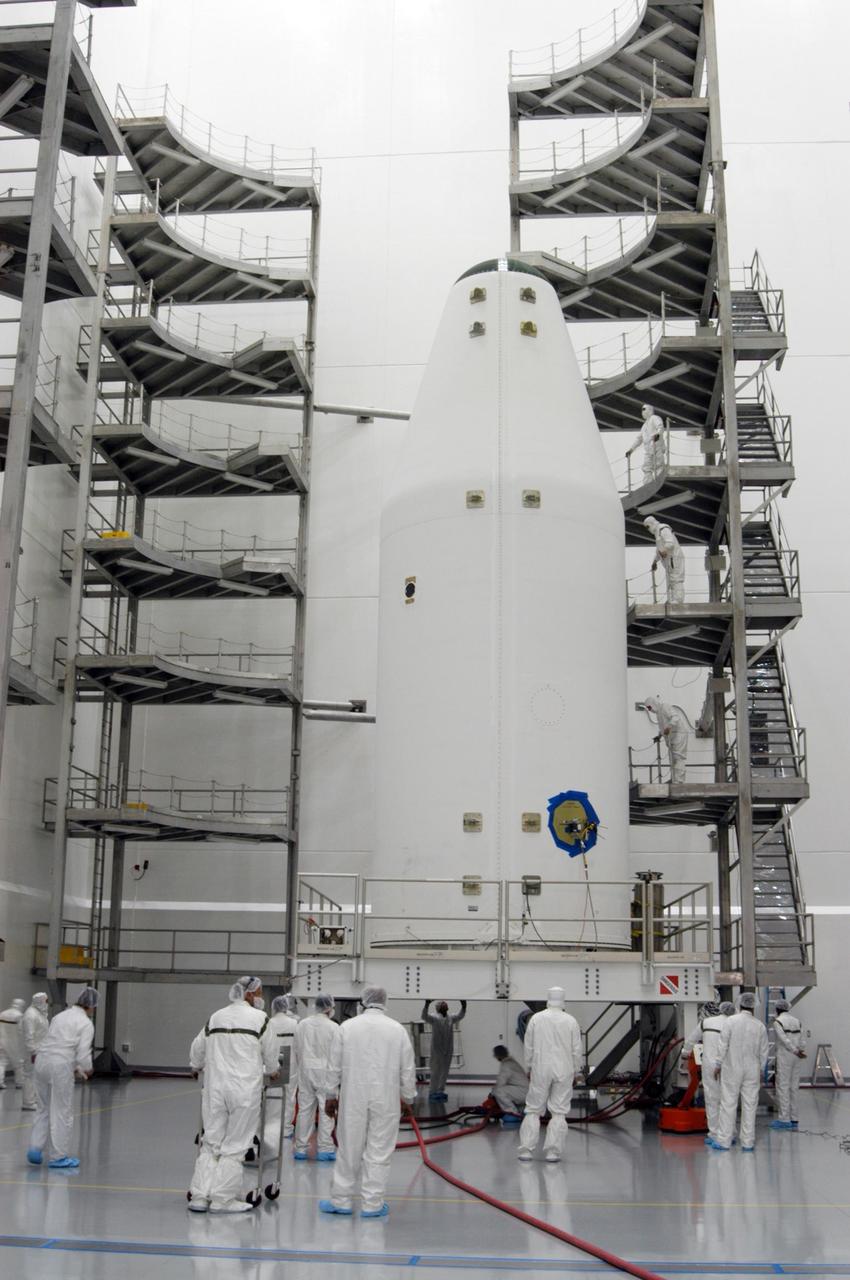
KENNEDY SPACE CENTER, FLA. - At the Astrotech Space Operations payload processing facility in Titusville, Fla., workers monitor the GOES-N satellite, secured inside a payload fairing, as it moves close to the work stands in a clean-room high bay area. Due to the extended length of time the spacecraft had been atop its Boeing Delta IV rocket without launching, the weather satellite has been returned to Astrotech for some precautionary retesting and state of health checks. Liftoff of the satellite from Launch Complex 37 at Cape Canaveral Air Force Station in Florida was scrubbed in August 2005 due to technical issues and postponed to a later date. GOES-N is the latest in a series of Geostationary Operational Environmental Satellites for NOAA and NASA providing continuous monitoring necessary for intensive data analysis. Photo credit: NASA/George Shelton
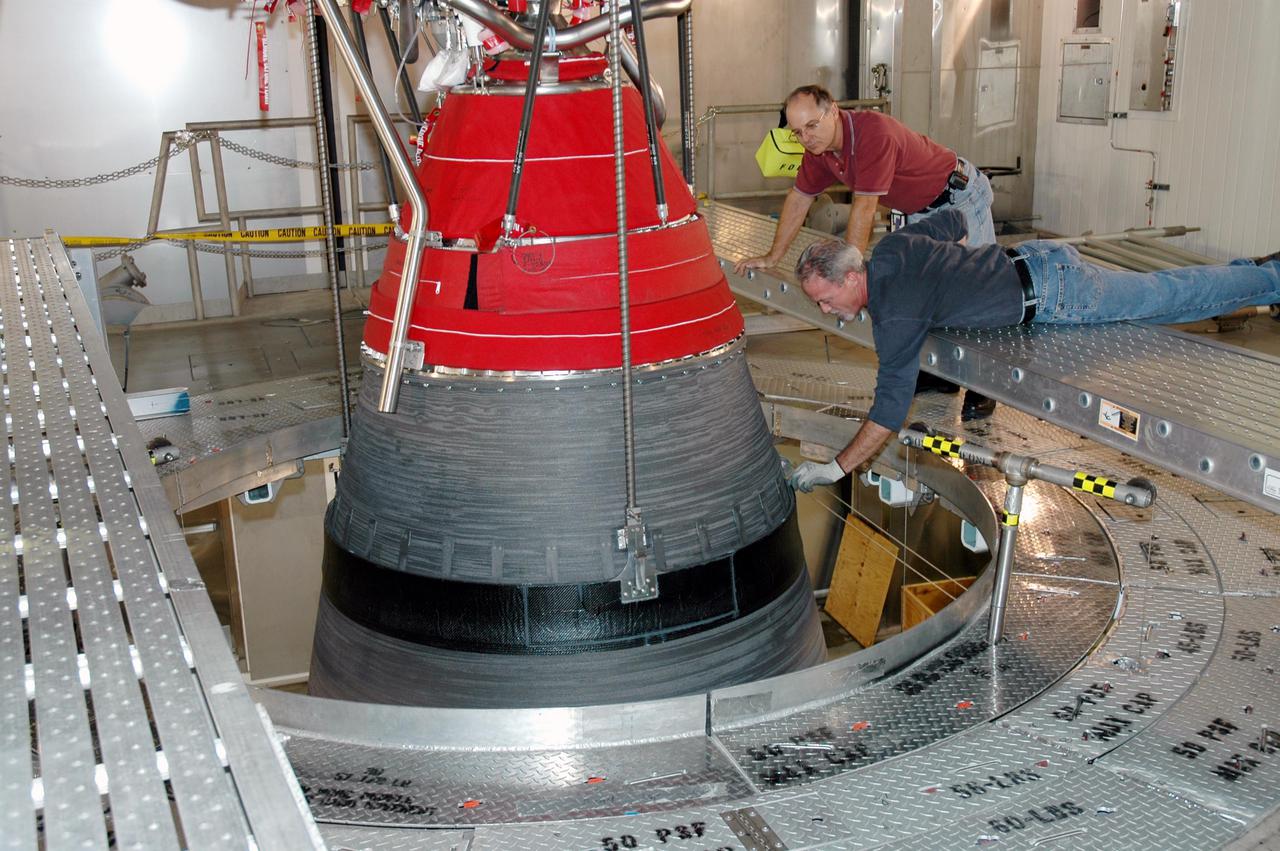
KENNEDY SPACE CENTER, FLA. - At the Delta Operations Center on Cape Canaveral Air Force Station, Fla., the Boeing Delta IV second stage nozzle extension is moved into place for testing. The Delta IV is the launch vehicle for the GOES-N satellite. The Delta IV is the launch vehicle for GOES-N satellite. Geostationary Operational Environmental Satellites (GOES) are sponsored by the National Aeronautics and Space Administration (NASA) and the National Oceanic and Atmospheric Administration (NOAA). GOES-N is the first in the next series of GOES satellites, N-P. The multi-mission GOES series N-P will be a vital contributor to weather, solar and space operations and science. The GOES N-P series will aid activities ranging from severe storm warnings to resource management and advances in science. GOES-N is scheduled to launch May 4 from Cape Canaveral Air Force Station, Fla.
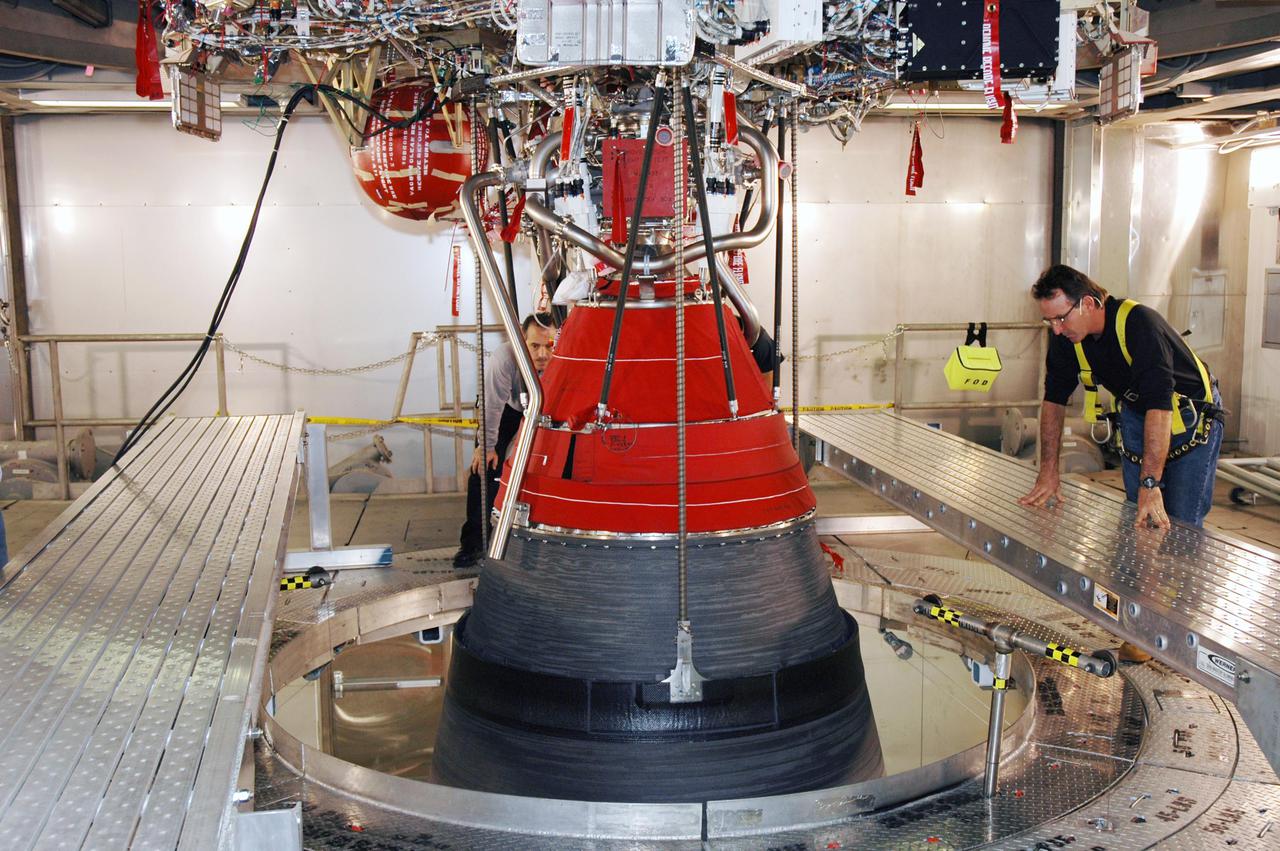
KENNEDY SPACE CENTER, FLA. - At the Delta Operations Center on Cape Canaveral Air Force Station, Fla., a technician monitors the Boeing Delta IV second stage nozzle extension during testing. The Delta IV is the launch vehicle for the GOES-N satellite. The Delta IV is the launch vehicle for GOES-N satellite. Geostationary Operational Environmental Satellites (GOES) are sponsored by the National Aeronautics and Space Administration (NASA) and the National Oceanic and Atmospheric Administration (NOAA). GOES-N is the first in the next series of GOES satellites, N-P. The multi-mission GOES series N-P will be a vital contributor to weather, solar and space operations and science. The GOES N-P series will aid activities ranging from severe storm warnings to resource management and advances in science. GOES-N is scheduled to launch May 4 from Cape Canaveral Air Force Station, Fla.
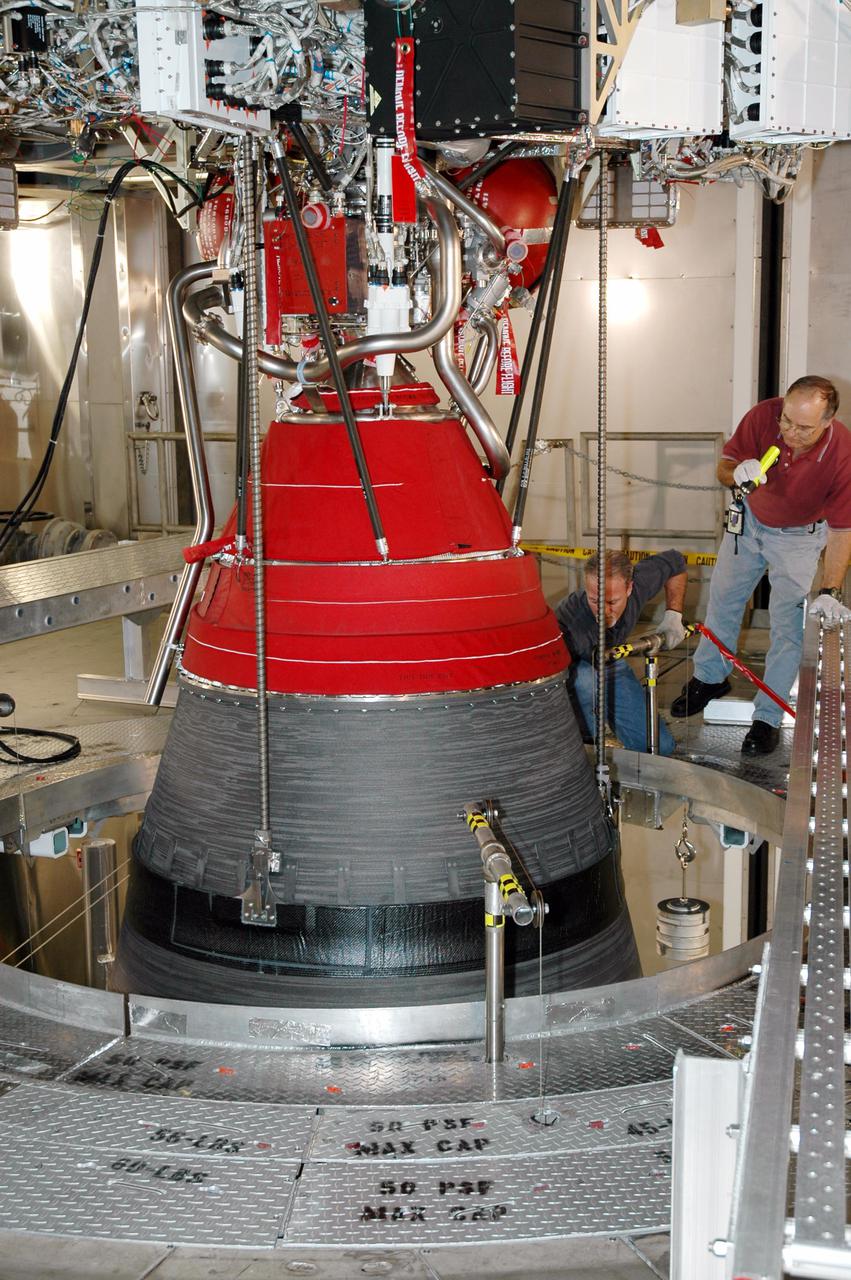
KENNEDY SPACE CENTER, FLA. - At the Delta Operations Center on Cape Canaveral Air Force Station, Fla., a technician monitors the Boeing Delta IV second stage nozzle extension during testing. The Delta IV is the launch vehicle for the GOES-N satellite. The Delta IV is the launch vehicle for GOES-N satellite. Geostationary Operational Environmental Satellites (GOES) are sponsored by the National Aeronautics and Space Administration (NASA) and the National Oceanic and Atmospheric Administration (NOAA). GOES-N is the first in the next series of GOES satellites, N-P. The multi-mission GOES series N-P will be a vital contributor to weather, solar and space operations and science. The GOES N-P series will aid activities ranging from severe storm warnings to resource management and advances in science. GOES-N is scheduled to launch May 4 from Cape Canaveral Air Force Station, Fla.
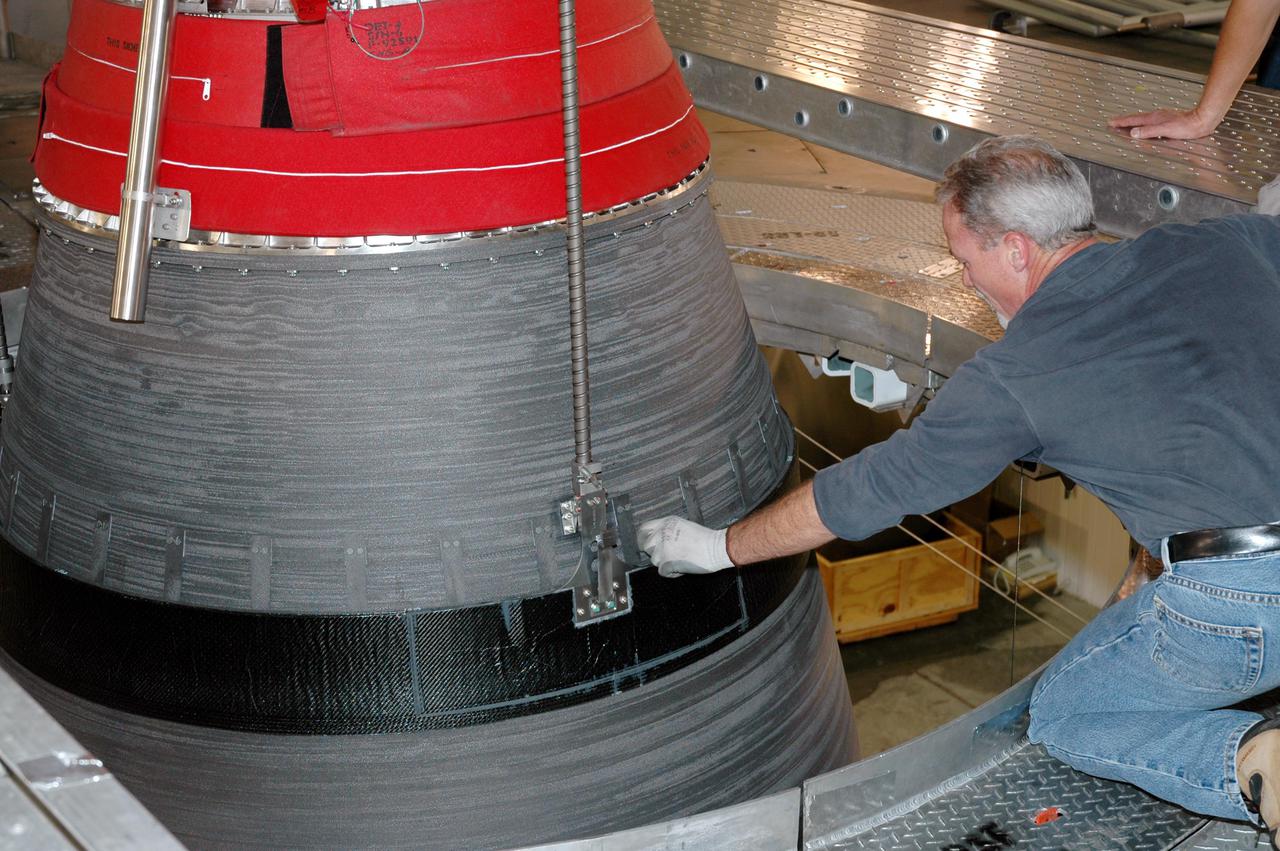
KENNEDY SPACE CENTER, FLA. - At the Delta Operations Center on Cape Canaveral Air Force Station, Fla., a technician closely checks the spacing as the Boeing Delta IV second stage nozzle extension is moved into place for testing. The Delta IV is the launch vehicle for the GOES-N satellite. The Delta IV is the launch vehicle for GOES-N satellite. Geostationary Operational Environmental Satellites (GOES) are sponsored by the National Aeronautics and Space Administration (NASA) and the National Oceanic and Atmospheric Administration (NOAA). GOES-N is the first in the next series of GOES satellites, N-P. The multi-mission GOES series N-P will be a vital contributor to weather, solar and space operations and science. The GOES N-P series will aid activities ranging from severe storm warnings to resource management and advances in science. GOES-N is scheduled to launch May 4 from Cape Canaveral Air Force Station, Fla.
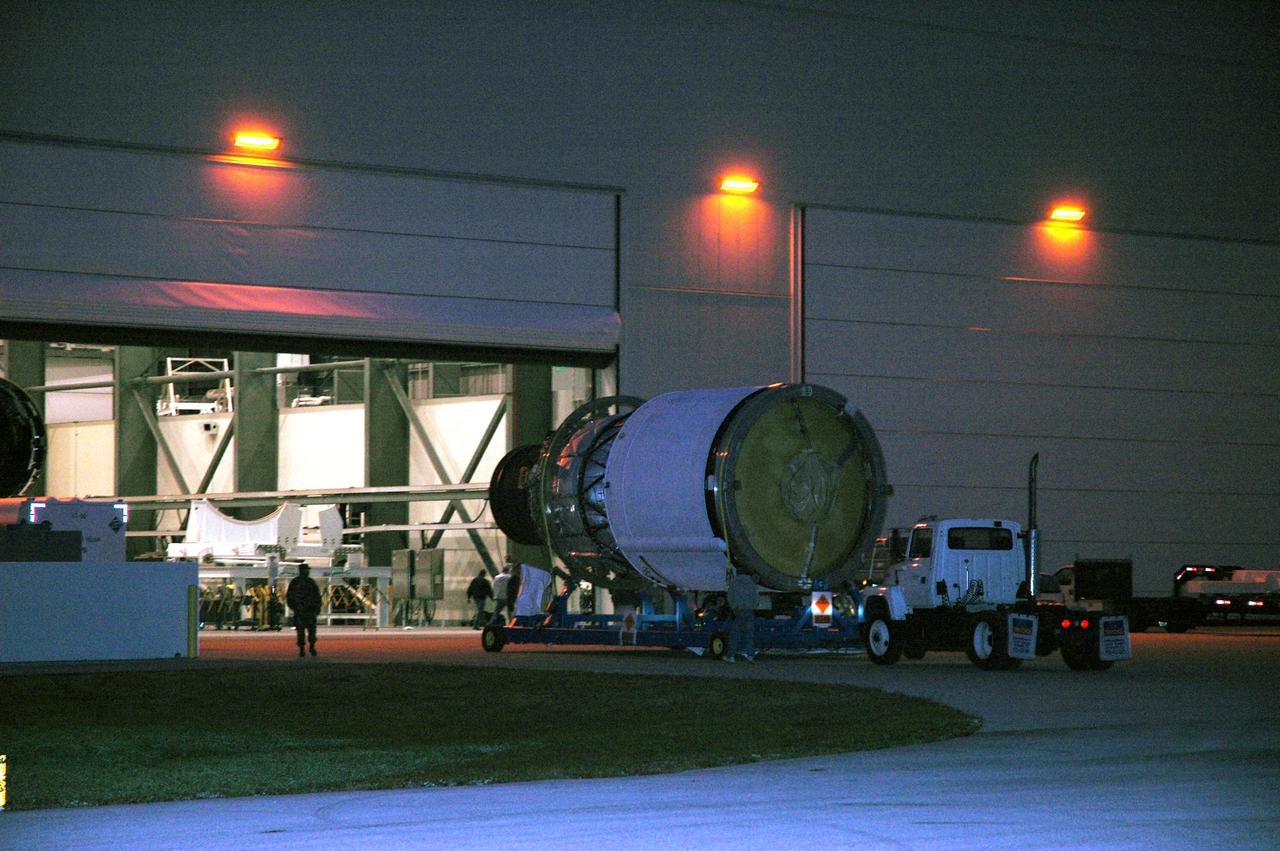
KENNEDY SPACE CENTER, FLA. - On its transporter, the Boeing Delta IV second stage is moved into the Horizontal Integration Facility (HIF) for further processing. It was transferred from the Delta Operations Center in Cape Canaveral, Fla. The Delta IV is the launch vehicle for the GOES-N satellite. Geostationary Operational Environmental Satellites (GOES) are sponsored by the National Aeronautics and Space Administration (NASA) and the National Oceanic and Atmospheric Administration (NOAA). GOES-N is the first in the next series of GOES satellites, N-P. The multi-mission GOES series N-P will be a vital contributor to weather, solar and space operations and science. The GOES N-P series will aid activities ranging from severe storm warnings to resource management and advances in science. GOES-N is scheduled to launch May 4 from Cape Canaveral Air Force Station, Fla.
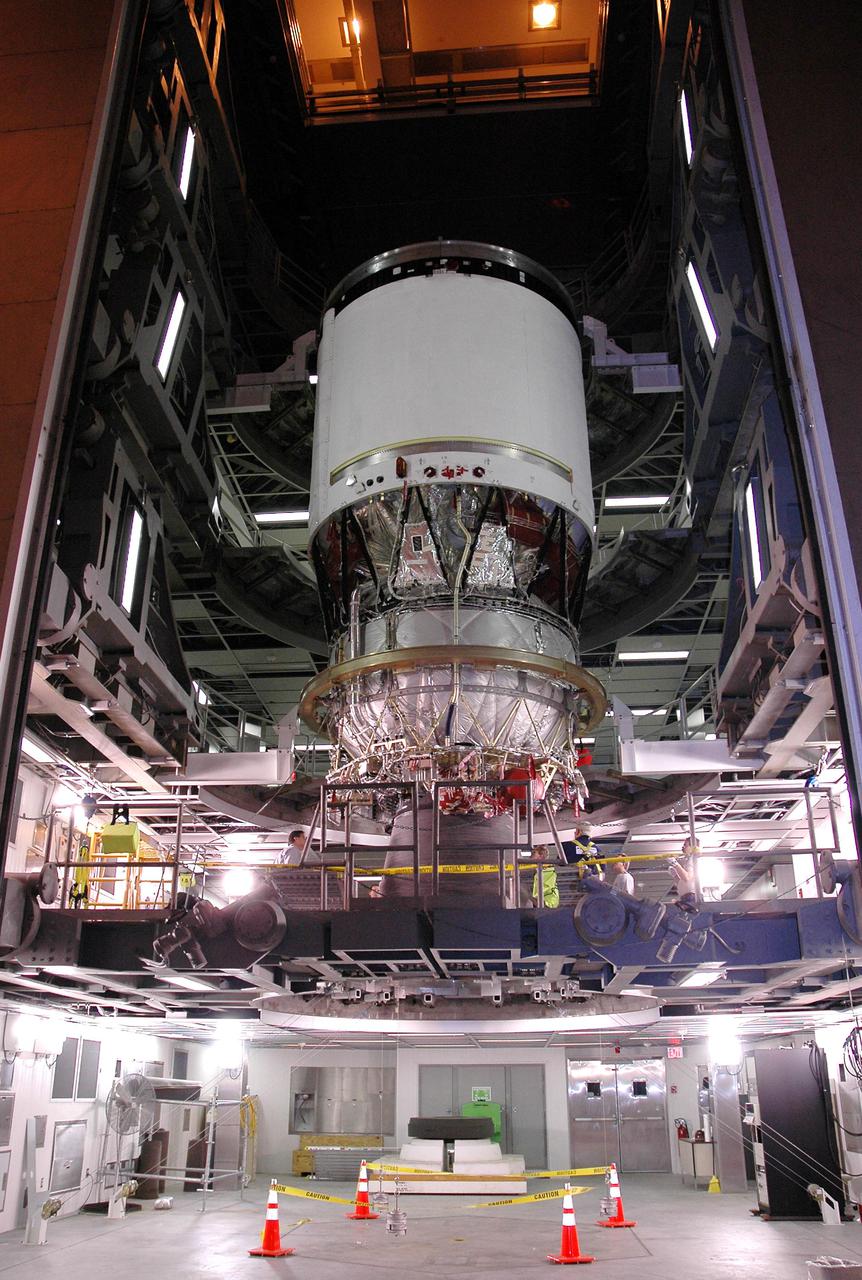
KENNEDY SPACE CENTER, FLA. - At the Delta Operations Center in Cape Canaveral, Fla., the Boeing Delta IV second stage is going to be prepared for a transfer to the Horizontal Integration Facility for further processing. The element is going to be transferred to the Horizontal Integration Facility for further processing. The Delta IV is the launch vehicle for the GOES-N satellite. Geostationary Operational Environmental Satellites (GOES) are sponsored by the National Aeronautics and Space Administration (NASA) and the National Oceanic and Atmospheric Administration (NOAA). GOES-N is the first in the next series of GOES satellites, N-P. The multi-mission GOES series N-P will be a vital contributor to weather, solar and space operations and science. The GOES N-P series will aid activities ranging from severe storm warnings to resource management and advances in science. GOES-N is scheduled to launch May 4 from Cape Canaveral Air Force Station, Fla.
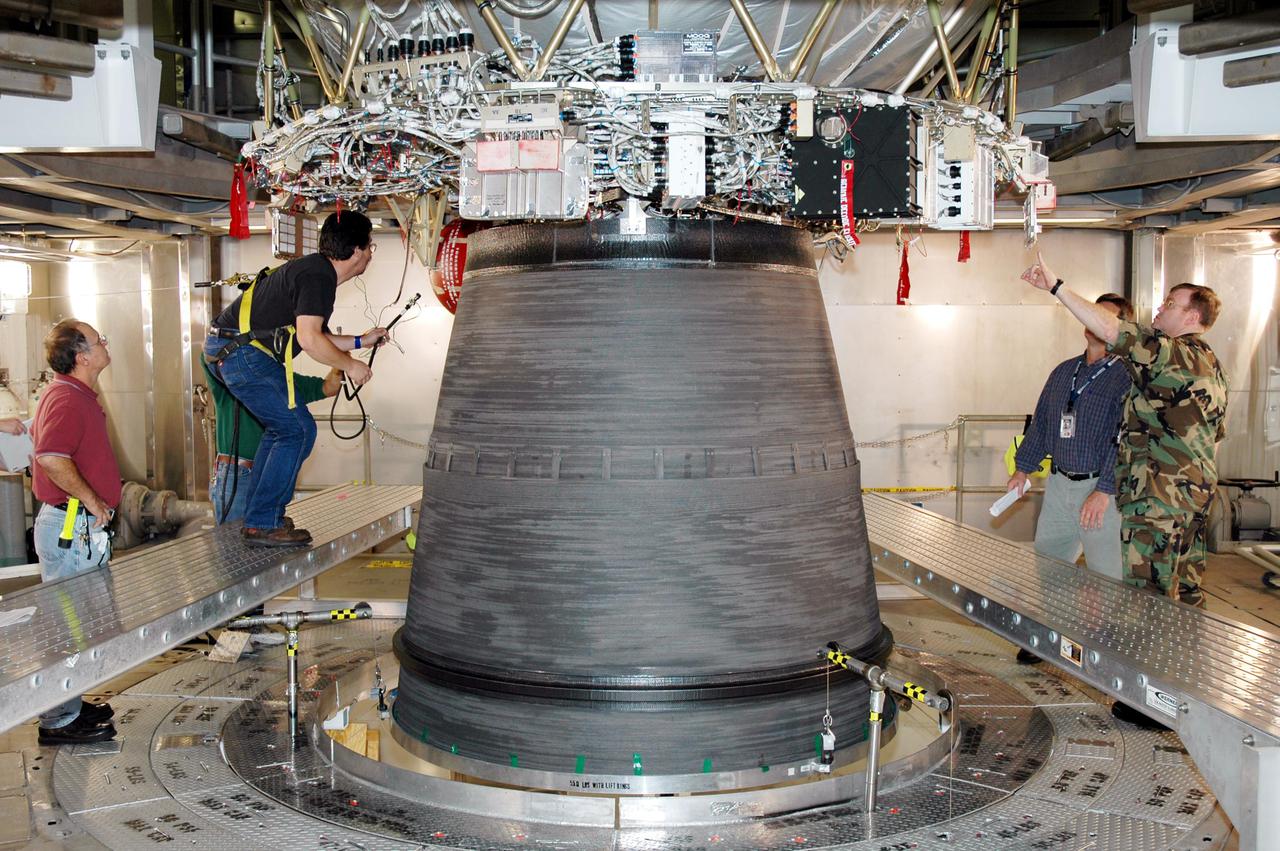
KENNEDY SPACE CENTER, FLA. - At the Delta Operations Center on Cape Canaveral Air Force Station, Fla., workers prepare for the Boeing Delta IV second stage nozzle extension test. The Delta IV is the launch vehicle for GOES-N satellite. Geostationary Operational Environmental Satellites (GOES) are sponsored by the National Aeronautics and Space Administration (NASA) and the National Oceanic and Atmospheric Administration (NOAA). GOES-N is the first in the next series of GOES satellites, N-P. The multi-mission GOES series N-P will be a vital contributor to weather, solar and space operations and science. The GOES N-P series will aid activities ranging from severe storm warnings to resource management and advances in science. GOES-N is scheduled to launch May 4 from Cape Canaveral Air Force Station, Fla.
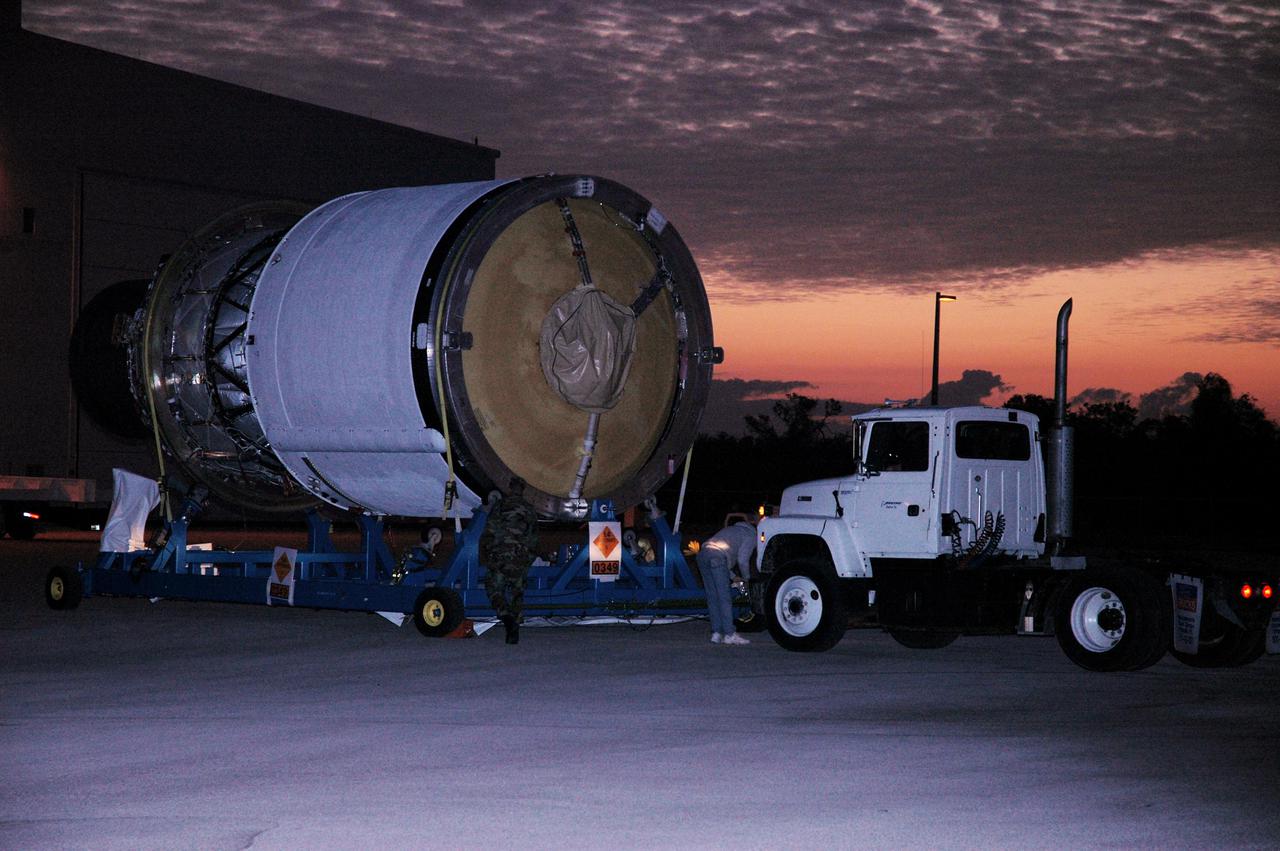
KENNEDY SPACE CENTER, FLA. - As dawn breaks, the Boeing Delta IV second stage arrives at the Horizontal Integration Facility (HIF) for further processing. It was moved from the Delta Operations Center in Cape Canaveral, Fla. The Delta IV is the launch vehicle for the GOES-N satellite. Geostationary Operational Environmental Satellites (GOES) are sponsored by the National Aeronautics and Space Administration (NASA) and the National Oceanic and Atmospheric Administration (NOAA). GOES-N is the first in the next series of GOES satellites, N-P. The multi-mission GOES series N-P will be a vital contributor to weather, solar and space operations and science. The GOES N-P series will aid activities ranging from severe storm warnings to resource management and advances in science. GOES-N is scheduled to launch May 4 from Cape Canaveral Air Force Station, Fla.
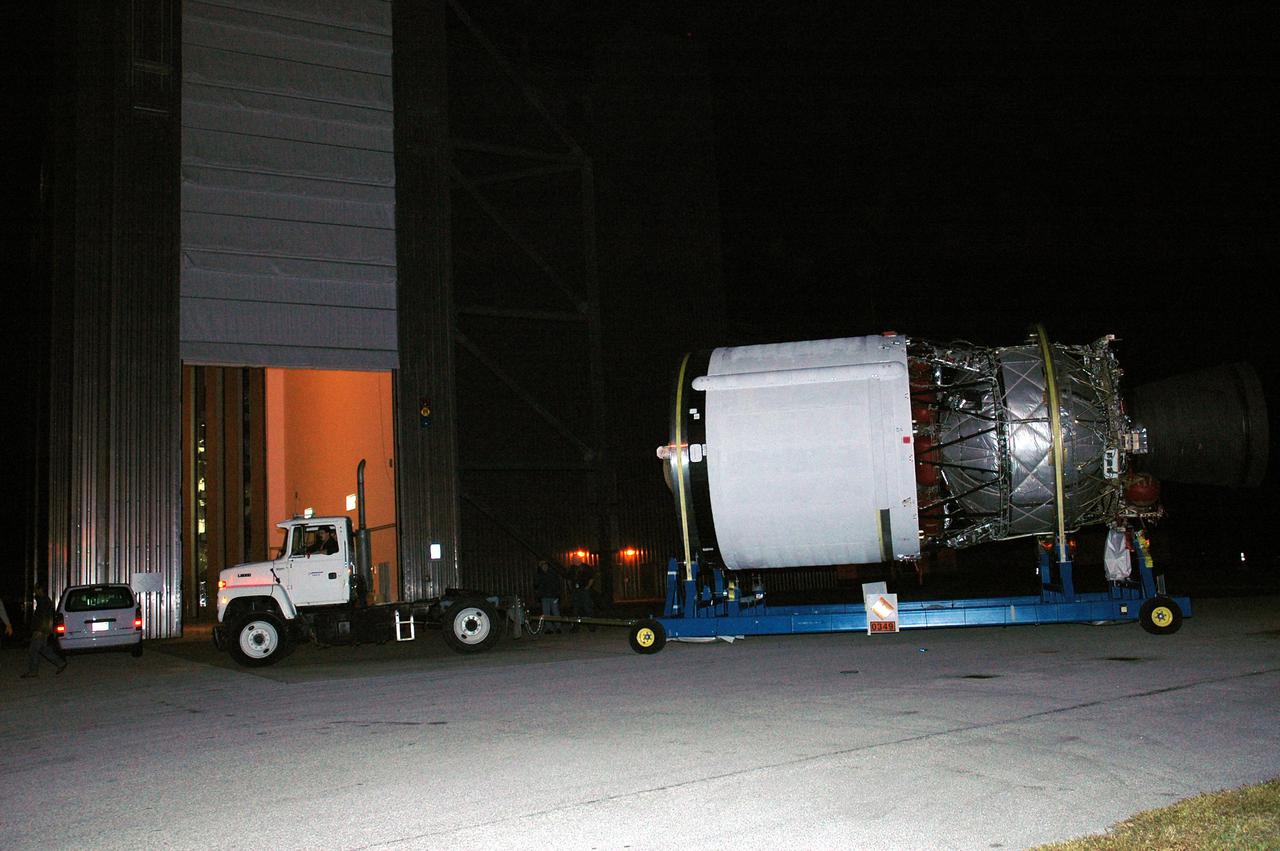
KENNEDY SPACE CENTER, FLA. - In the pre-dawn hours this morning, the Boeing Delta IV second stage leaves the Delta Operations Center in Cape Canaveral, Fla.. It is being moved to the Horizontal Integration Facility (HIF) for further processing. The Delta IV is the launch vehicle for the GOES-N satellite. Geostationary Operational Environmental Satellites (GOES) are sponsored by the National Aeronautics and Space Administration (NASA) and the National Oceanic and Atmospheric Administration (NOAA). GOES-N is the first in the next series of GOES satellites, N-P. The multi-mission GOES series N-P will be a vital contributor to weather, solar and space operations and science. The GOES N-P series will aid activities ranging from severe storm warnings to resource management and advances in science. GOES-N is scheduled to launch May 4 from Cape Canaveral Air Force Station, Fla.
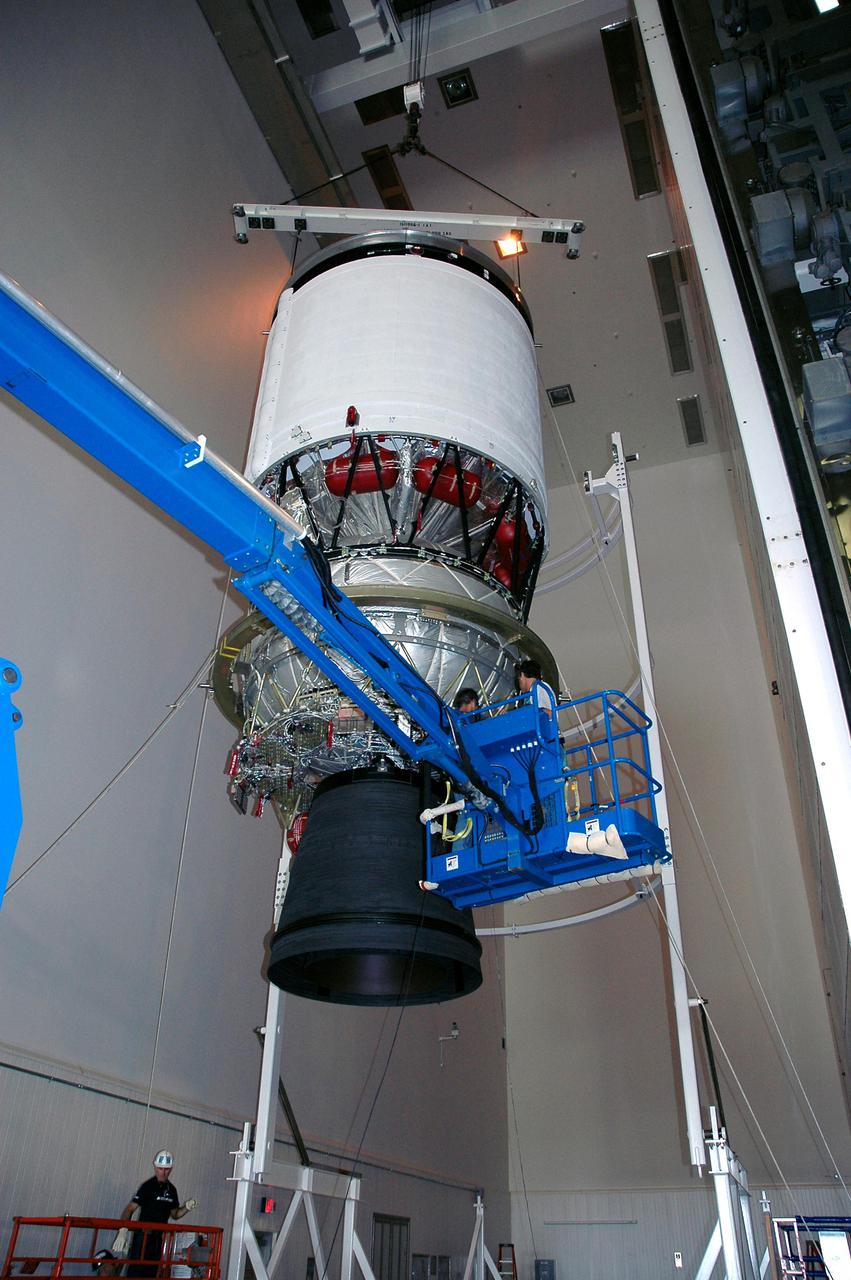
KENNEDY SPACE CENTER, FLA. - At the Delta Operations Center in Cape Canaveral, Fla., the Boeing Delta IV second stage is lifted by an overhead crane. The element is being moved to a transporter for transfer to the Horizontal Integration Facility for further processing. The Delta IV is the launch vehicle for the GOES-N satellite. Geostationary Operational Environmental Satellites (GOES) are sponsored by the National Aeronautics and Space Administration (NASA) and the National Oceanic and Atmospheric Administration (NOAA). GOES-N is the first in the next series of GOES satellites, N-P. The multi-mission GOES series N-P will be a vital contributor to weather, solar and space operations and science. The GOES N-P series will aid activities ranging from severe storm warnings to resource management and advances in science. GOES-N is scheduled to launch May 4 from Cape Canaveral Air Force Station, Fla.
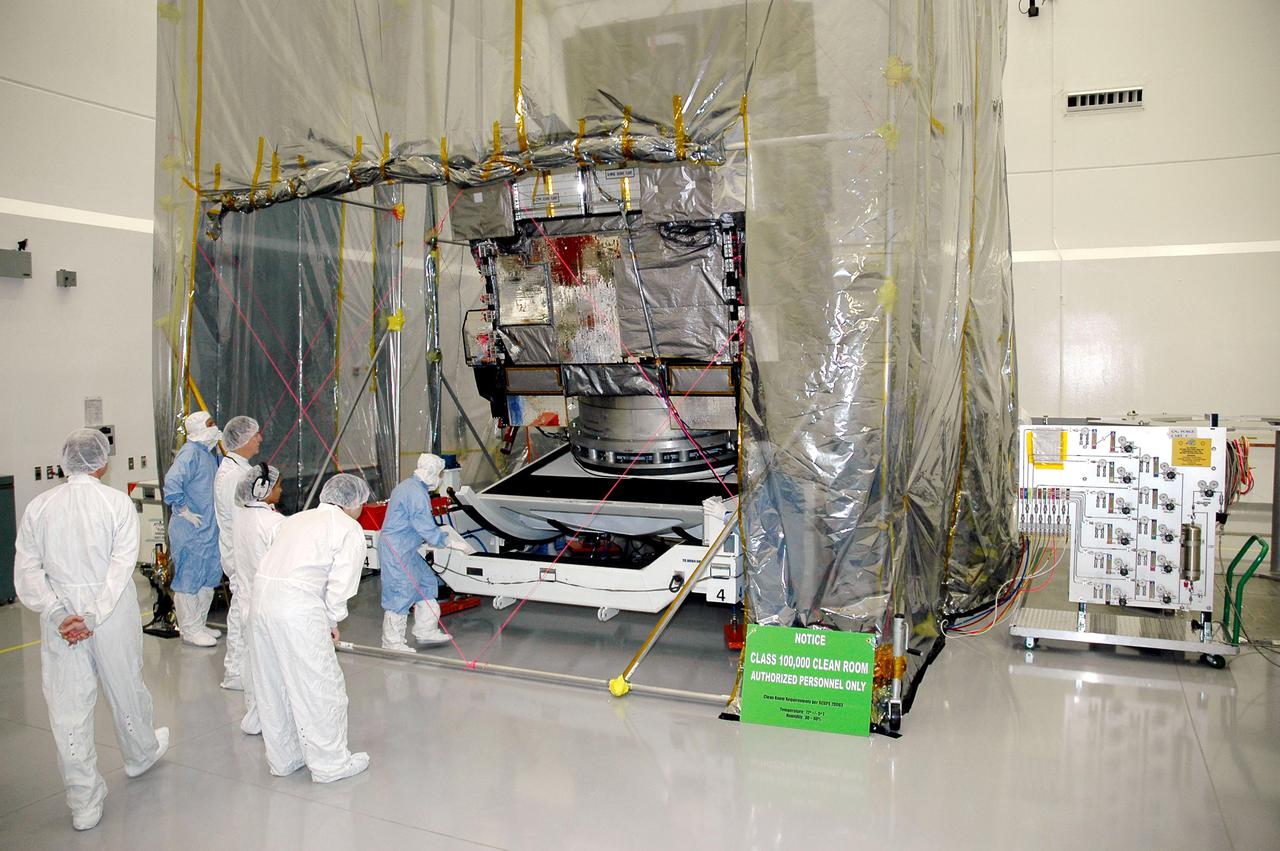
KENNEDY SPACE CENTER, FLA. - At Astrotech in Titusville, Fla., the GOES-N satellite begins rotation. Since its arrival on March 11, the satellite has been undergoing final testing by Boeing Satellite Systems of the imaging system, instrumentation, communications and power systems. Geostationary Operational Environmental Satellites (GOES) are sponsored by the NASA’s Goddard Space Flight Center and the National Oceanic and Atmospheric Administration. GOES-N is targeted to launch May 4 onboard a Boeing expendable launch vehicle Delta IV (4,2) with a 3-burn second stage operation. Once in orbit GOES-N will be designated GOES-13 and will complete checkout and be placed in on-orbit storage as a replacement for an older GOES satellite. GOES-N is the first in the next series of GOES satellites, N-P. The multi-mission GOES series N-P will be a vital contributor to weather, solar and space operations and science. The GOES N-P series will aid activities ranging from severe storm warnings to resource management and advances in science.
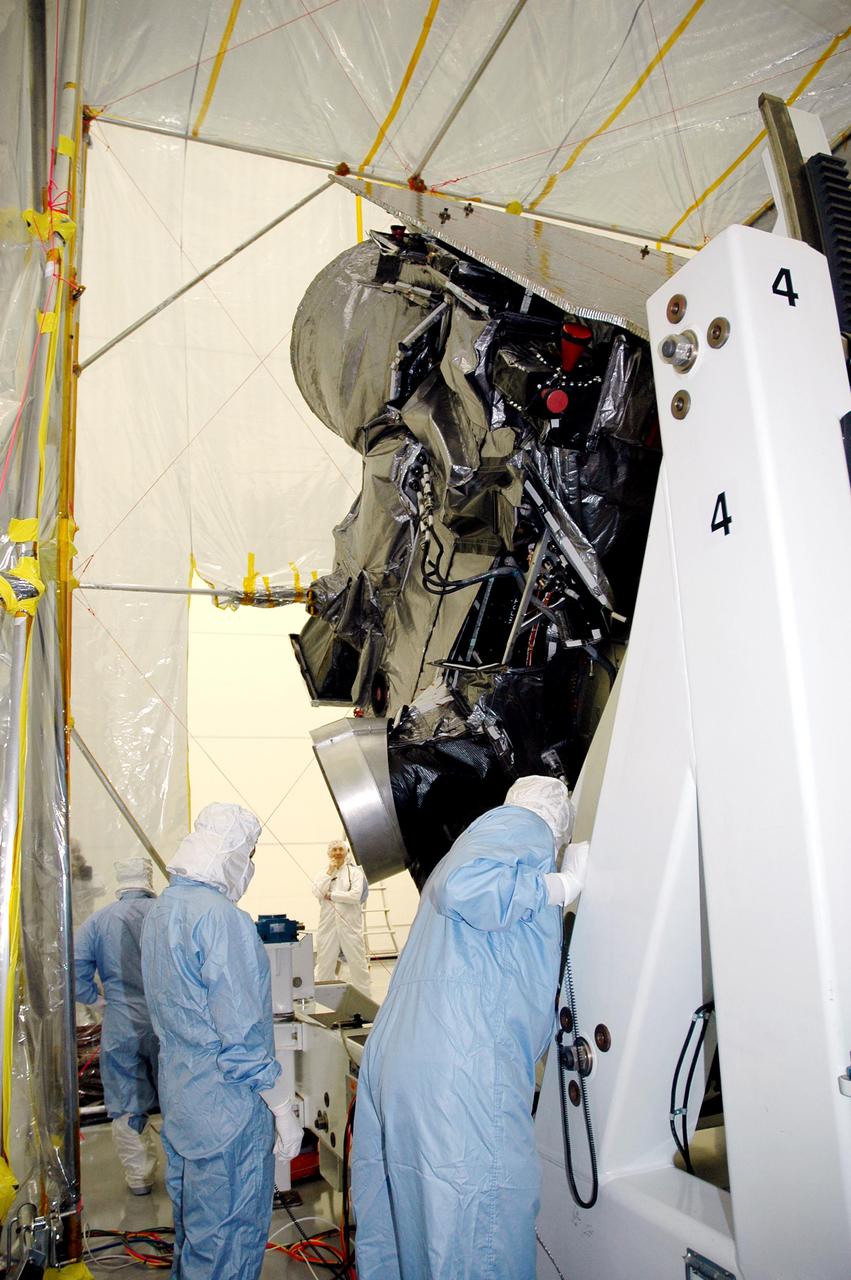
KENNEDY SPACE CENTER, FLA. - At Astrotech in Titusville, Fla., technicians closely check the progress of the rotation of the GOES-N satellite. Since its arrival on March 11, the satellite has been undergoing final testing by Boeing Satellite Systems of the imaging system, instrumentation, communications and power systems. Geostationary Operational Environmental Satellites (GOES) are sponsored by the NASA’s Goddard Space Flight Center and the National Oceanic and Atmospheric Administration. GOES-N is targeted to launch May 4 onboard a Boeing expendable launch vehicle Delta IV (4,2) with a 3-burn second stage operation. Once in orbit GOES-N will be designated GOES-13 and will complete checkout and be placed in on-orbit storage as a replacement for an older GOES satellite. GOES-N is the first in the next series of GOES satellites, N-P. The multi-mission GOES series N-P will be a vital contributor to weather, solar and space operations and science. The GOES N-P series will aid activities ranging from severe storm warnings to resource management and advances in science.
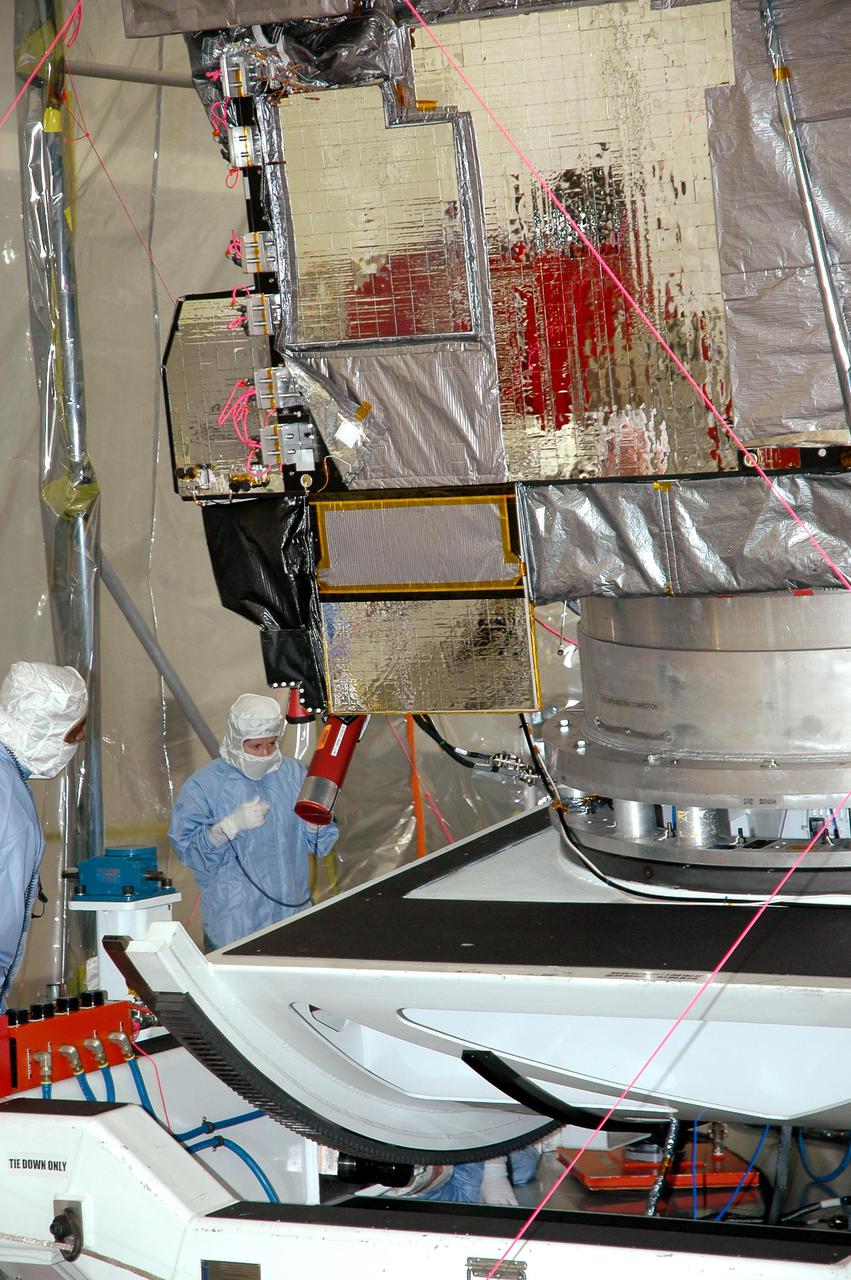
KENNEDY SPACE CENTER, FLA. - The GOES-N satellite is checked out on the rotation stand at Astrotech in Titusville, Fla. Since its arrival on March 11, the satellite has been undergoing final testing by Boeing Satellite Systems of the imaging system, instrumentation, communications and power systems. Geostationary Operational Environmental Satellites (GOES) are sponsored by the NASA’s Goddard Space Flight Center and the National Oceanic and Atmospheric Administration. GOES-N is targeted to launch May 4 onboard a Boeing expendable launch vehicle Delta IV (4,2) with a 3-burn second stage operation. Once in orbit GOES-N will be designated GOES-13 and will complete checkout and be placed in on-orbit storage as a replacement for an older GOES satellite. GOES-N is the first in the next series of GOES satellites, N-P. The multi-mission GOES series N-P will be a vital contributor to weather, solar and space operations and science. The GOES N-P series will aid activities ranging from severe storm warnings to resource management and advances in science.

KENNEDY SPACE CENTER, FLA. - At Astrotech in Titusville, Fla., the GOES-N satellite has completed rotation. Since its arrival on March 11, the satellite has been undergoing final testing by Boeing Satellite Systems of the imaging system, instrumentation, communications and power systems. Geostationary Operational Environmental Satellites (GOES) are sponsored by NASA’s Goddard Space Flight Center and the National Oceanic and Atmospheric Administration. GOES-N is targeted to launch May 4 onboard a Boeing expendable launch vehicle Delta IV (4,2) with a 3-burn second stage operation. Once in orbit GOES-N will be designated GOES-13 and will complete checkout and be placed in on-orbit storage as a replacement for an older GOES satellite. GOES-N is the first in the next series of GOES satellites, N-P. The multi-mission GOES series N-P will be a vital contributor to weather, solar and space operations and science. The GOES N-P series will aid activities ranging from severe storm warnings to resource management and advances in science.
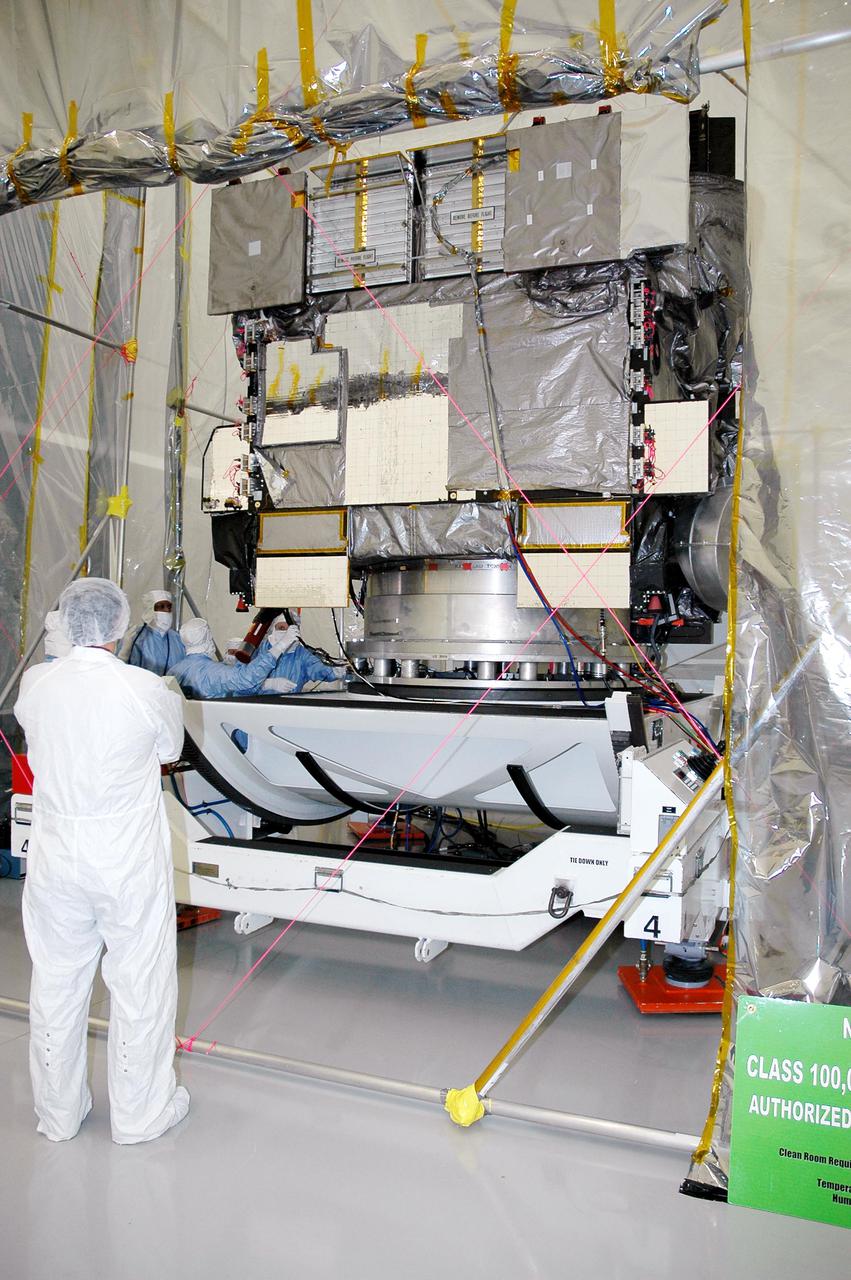
KENNEDY SPACE CENTER, FLA. - The GOES-N satellite is checked out on the rotation stand at Astrotech in Titusville, Fla. Since its arrival on March 11, the satellite has been undergoing final testing by Boeing Satellite Systems of the imaging system, instrumentation, communications and power systems. Geostationary Operational Environmental Satellites (GOES) are sponsored by the NASA’s Goddard Space Flight Center and the National Oceanic and Atmospheric Administration. GOES-N is targeted to launch May 4 onboard a Boeing expendable launch vehicle Delta IV (4,2) with a 3-burn second stage operation. Once in orbit GOES-N will be designated GOES-13 and will complete checkout and be placed in on-orbit storage as a replacement for an older GOES satellite. GOES-N is the first in the next series of GOES satellites, N-P. The multi-mission GOES series N-P will be a vital contributor to weather, solar and space operations and science. The GOES N-P series will aid activities ranging from severe storm warnings to resource management and advances in science.
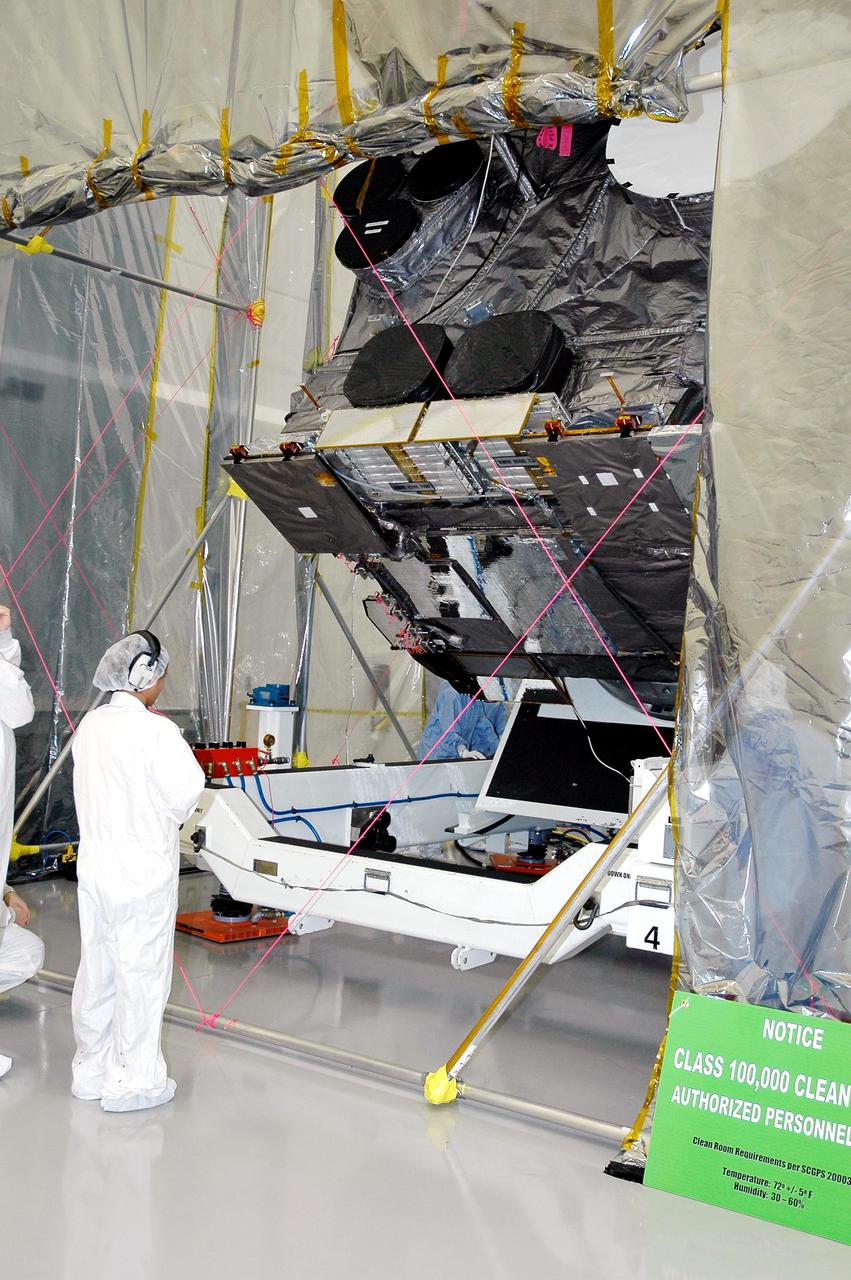
KENNEDY SPACE CENTER, FLA. - At Astrotech in Titusville, Fla., technicians closely check the progress of the rotation of the GOES-N satellite. Since its arrival on March 11, the satellite has been undergoing final testing by Boeing Satellite Systems of the imaging system, instrumentation, communications and power systems. Geostationary Operational Environmental Satellites (GOES) are sponsored by the NASA’s Goddard Space Flight Center and the National Oceanic and Atmospheric Administration. GOES-N is targeted to launch May 4 onboard a Boeing expendable launch vehicle Delta IV (4,2) with a 3-burn second stage operation. Once in orbit GOES-N will be designated GOES-13 and will complete checkout and be placed in on-orbit storage as a replacement for an older GOES satellite. GOES-N is the first in the next series of GOES satellites, N-P. The multi-mission GOES series N-P will be a vital contributor to weather, solar and space operations and science. The GOES N-P series will aid activities ranging from severe storm warnings to resource management and advances in science.
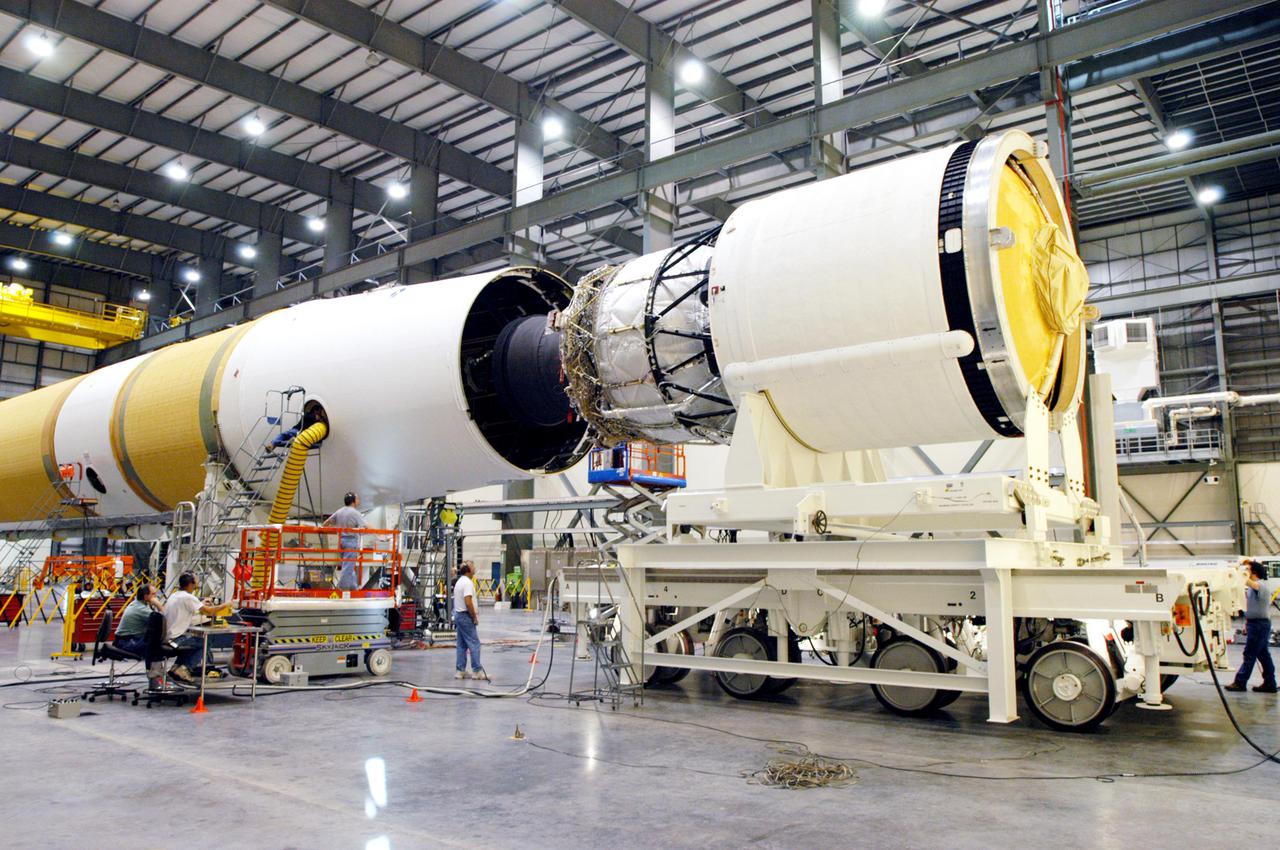
KENNEDY SPACE CENTER, FLA. - In the Horizontal Integration Facility, the GOES-N_Boeing Delta IV second stage (right) is being mated to the first stage. The Boeing Delta IV rocket will be used for the 2005 launching of the GOES-N weather satellite for NASA and NOAA (National Oceanic and Atmospheric Administration). The first in a series of three advanced weather satellites that include GOES-O and GOES-P, the GOES-N will provide continuous monitoring necessary for intensive data analysis. It will provide a constant vigil for the atmospheric “triggers” of severe weather conditions such as tornadoes, flash floods, hail storms and hurricanes. When these conditions develop, GOES-N will be able to monitor storm development and track their movements. Launch of GOES-N is scheduled for May 4 from Cape Canaveral Air Force Station.
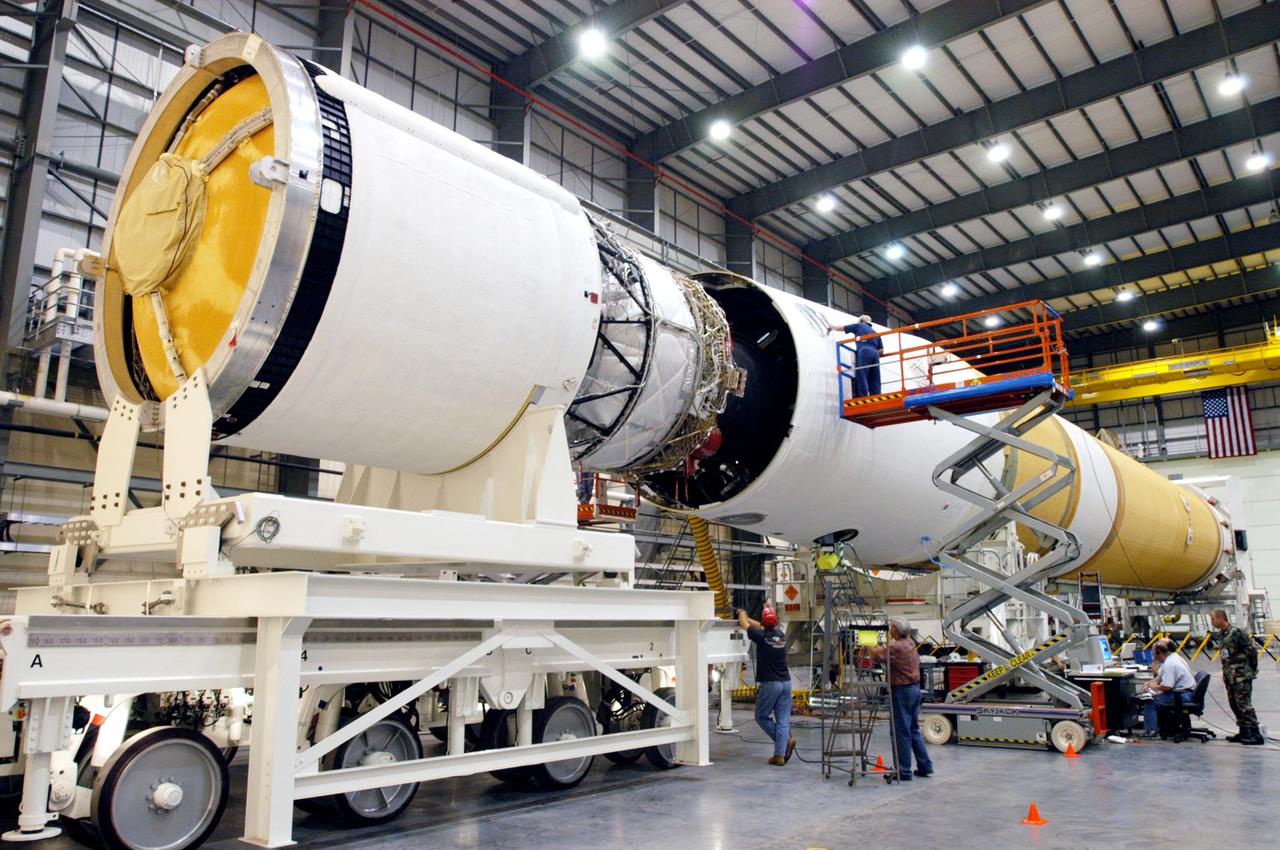
KENNEDY SPACE CENTER, FLA. - In the Horizontal Integration Facility, technicians watch closely as the GOES-N_Boeing Delta IV second stage (left) moves closer to the first stage to which it will be mated. The Boeing Delta IV rocket will be used for the 2005 launching of the GOES-N weather satellite for NASA and NOAA (National Oceanic and Atmospheric Administration). The first in a series of three advanced weather satellites that include GOES-O and GOES-P, the GOES-N will provide continuous monitoring necessary for intensive data analysis. It will provide a constant vigil for the atmospheric “triggers” of severe weather conditions such as tornadoes, flash floods, hail storms and hurricanes. When these conditions develop, GOES-N will be able to monitor storm development and track their movements. Launch of GOES-N is scheduled for May 4 from Cape Canaveral Air Force Station.
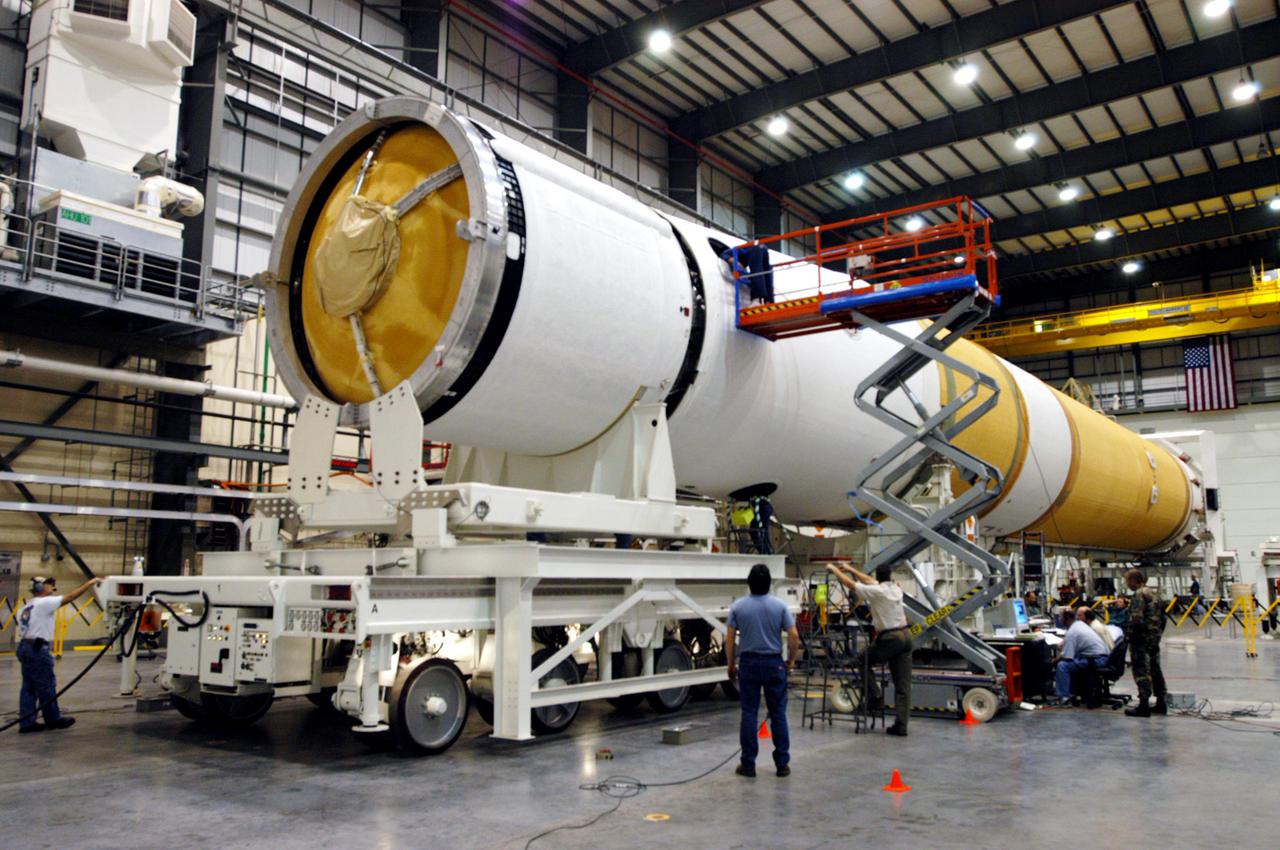
KENNEDY SPACE CENTER, FLA. -In the Horizontal Integration Facility, technicians complete the mating of the GOES-N_Boeing Delta IV second stage (left) to the first stage. The Boeing Delta IV rocket will be used for the 2005 launching of the GOES-N weather satellite for NASA and NOAA (National Oceanic and Atmospheric Administration). The first in a series of three advanced weather satellites that include GOES-O and GOES-P, the GOES-N will provide continuous monitoring necessary for intensive data analysis. It will provide a constant vigil for the atmospheric “triggers” of severe weather conditions such as tornadoes, flash floods, hail storms and hurricanes. When these conditions develop, GOES-N will be able to monitor storm development and track their movements. Launch of GOES-N is scheduled for May 4 from Cape Canaveral Air Force Station.
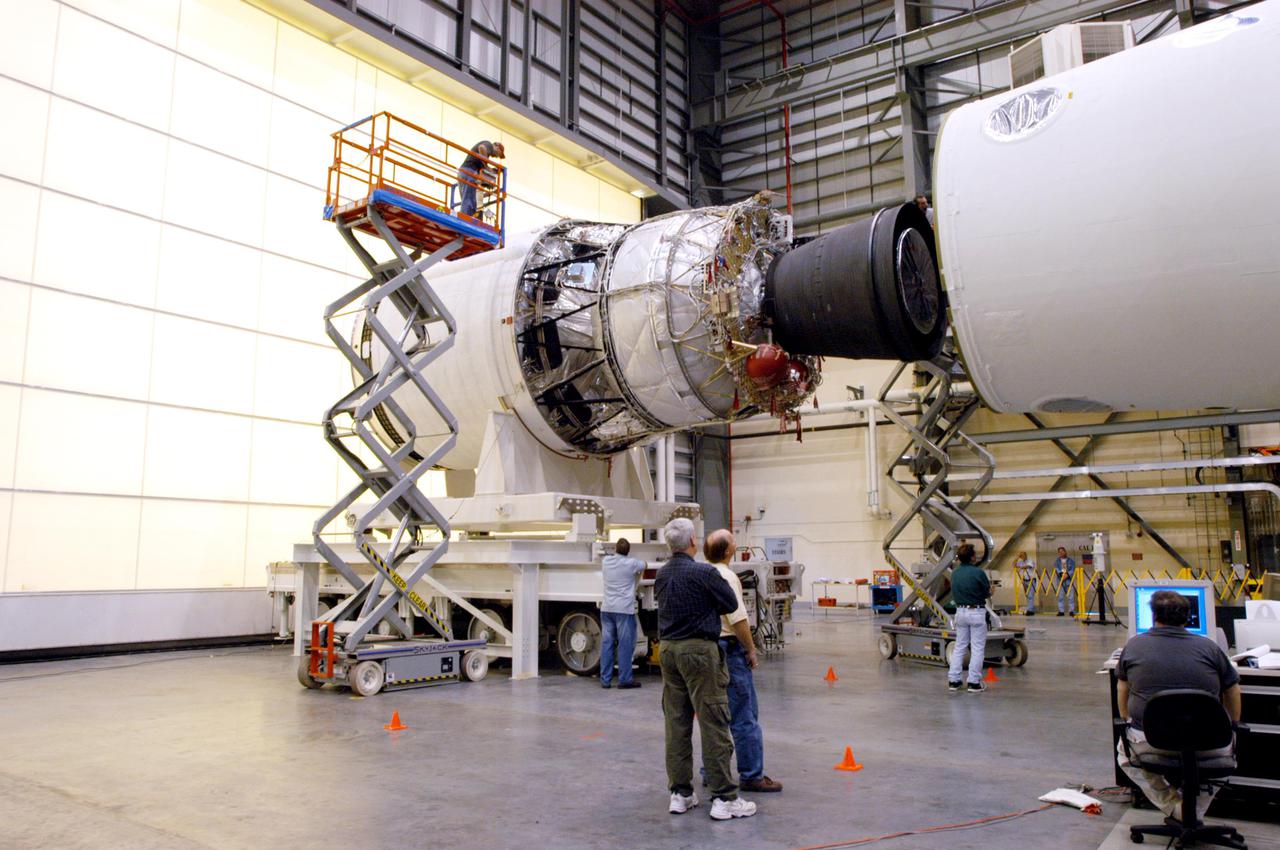
KENNEDY SPACE CENTER, FLA. - In the Horizontal Integration Facility, the GOES-N_Boeing Delta IV second stage (left) is being mated to the first stage. The Boeing Delta IV rocket will be used for the 2005 launching of the GOES-N weather satellite for NASA and NOAA (National Oceanic and Atmospheric Administration). The first in a series of three advanced weather satellites that include GOES-O and GOES-P, the GOES-N will provide continuous monitoring necessary for intensive data analysis. It will provide a constant vigil for the atmospheric “triggers” of severe weather conditions such as tornadoes, flash floods, hail storms and hurricanes. When these conditions develop, GOES-N will be able to monitor storm development and track their movements. Launch of GOES-N is scheduled for May 4 from Cape Canaveral Air Force Station.
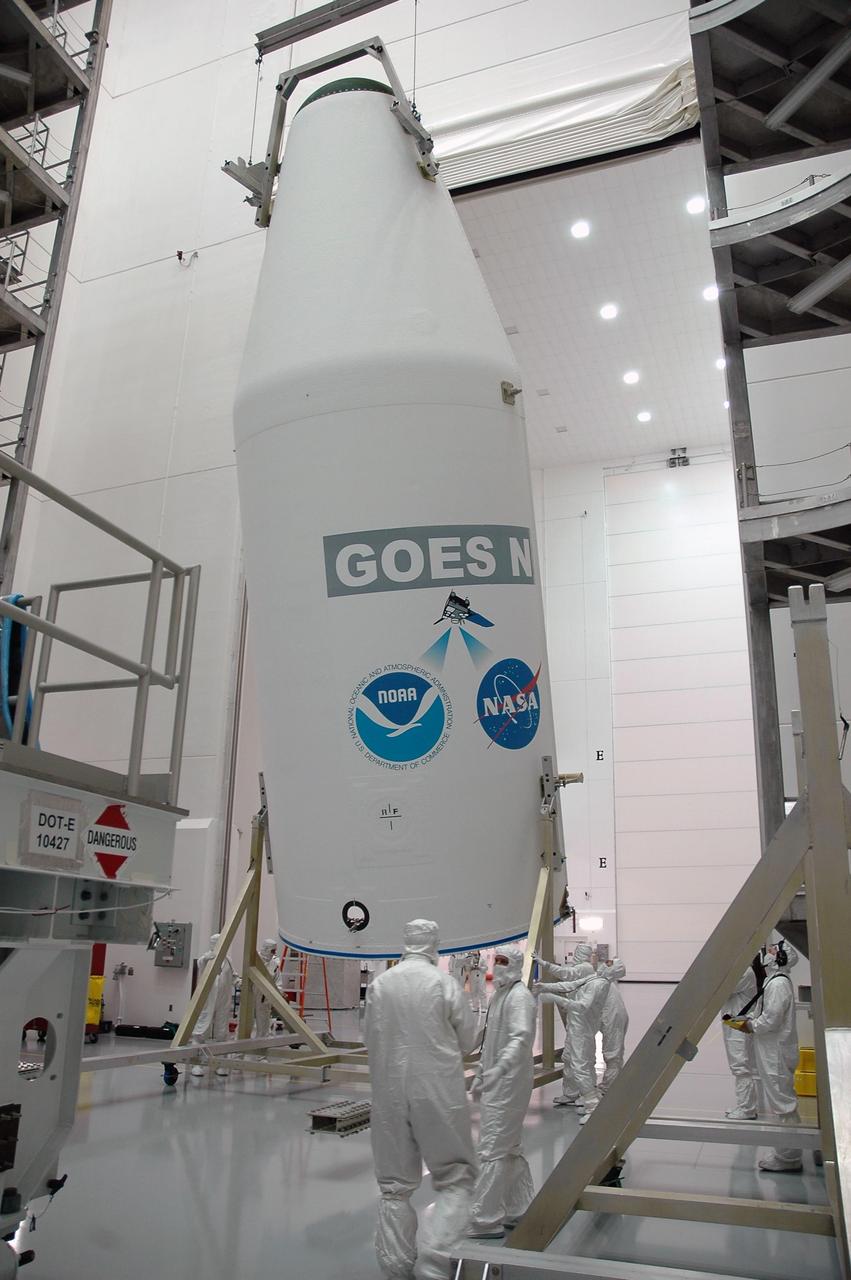
KENNEDY SPACE CENTER, FLA. - At Astrotech Space Operations in Titusville, Fla., the first half of the fairing for the GOES-N spacecraft is raised nearly upright. The fairing will be used to encapsulate, or enclose, the GOES-N satellite for launch. The fairing protects the spacecraft during launch and flight through the atmosphere. Once out of the atmosphere, the fairing is jettisoned. GOES-N is the latest in a series of Geostationary Operational Environmental Satellites for NOAA and NASA providing continuous monitoring necessary for intensive data analysis. GOES-N will be launched May 18 on a Boeing Delta IV rocket from Cape Canaveral Air Force Station in Florida. Photo credit: NASA/Jack Pfaller
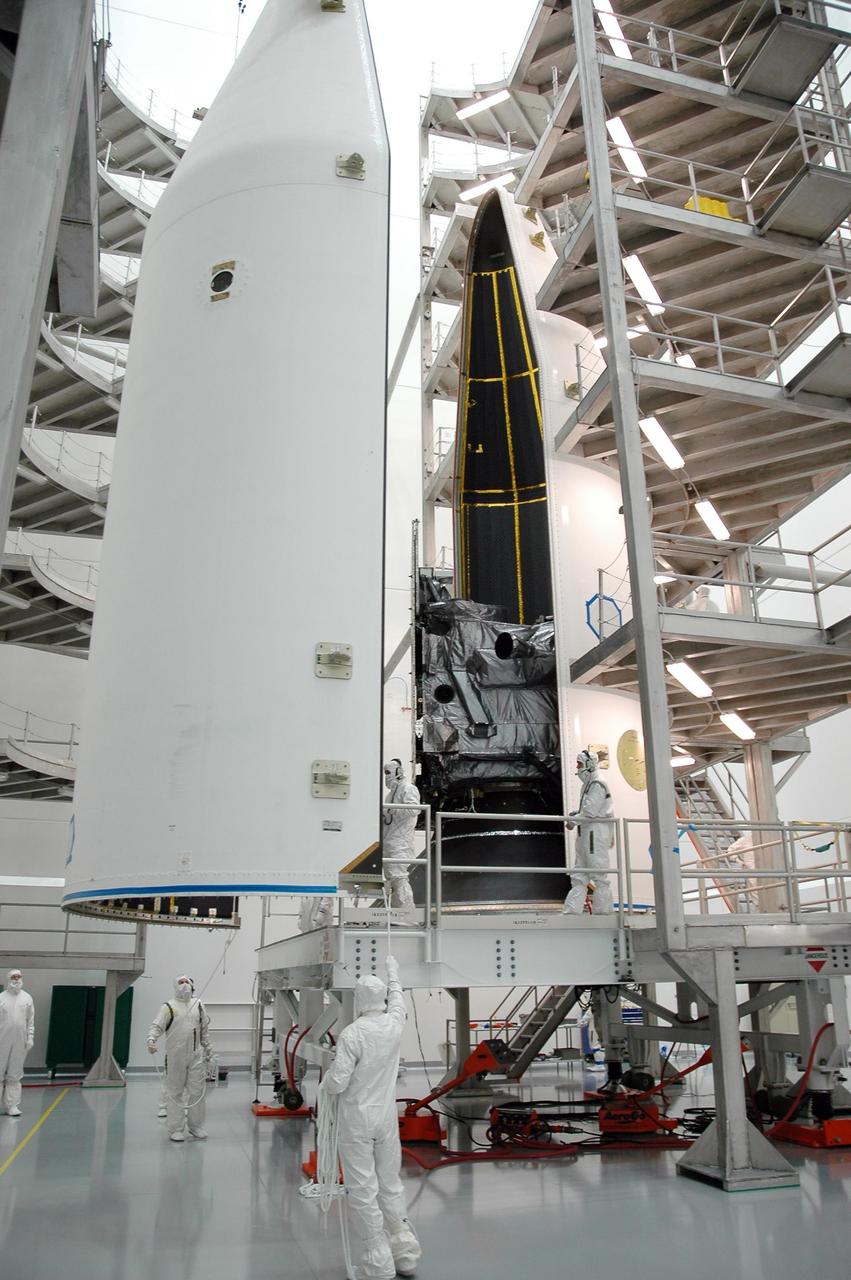
KENNEDY SPACE CENTER, FLA. - In the high bay at Astrotech Space Operations in Titusville, Fla., workers help guide the second half of the fairing toward the GOES-N spacecraft. When both halves are in place, they will encapsulate, or enclose, the GOES-N satellite for launch. The fairing protects the spacecraft during launch and flight through the atmosphere. Once out of the atmosphere, the fairing is jettisoned. GOES-N is the latest in a series of Geostationary Operational Environmental Satellites for NOAA and NASA providing continuous monitoring necessary for intensive data analysis. GOES-N will be launched May 18 on a Boeing Delta IV rocket from Cape Canaveral Air Force Station in Florida. Photo credit: NASA/Jack Pfaller
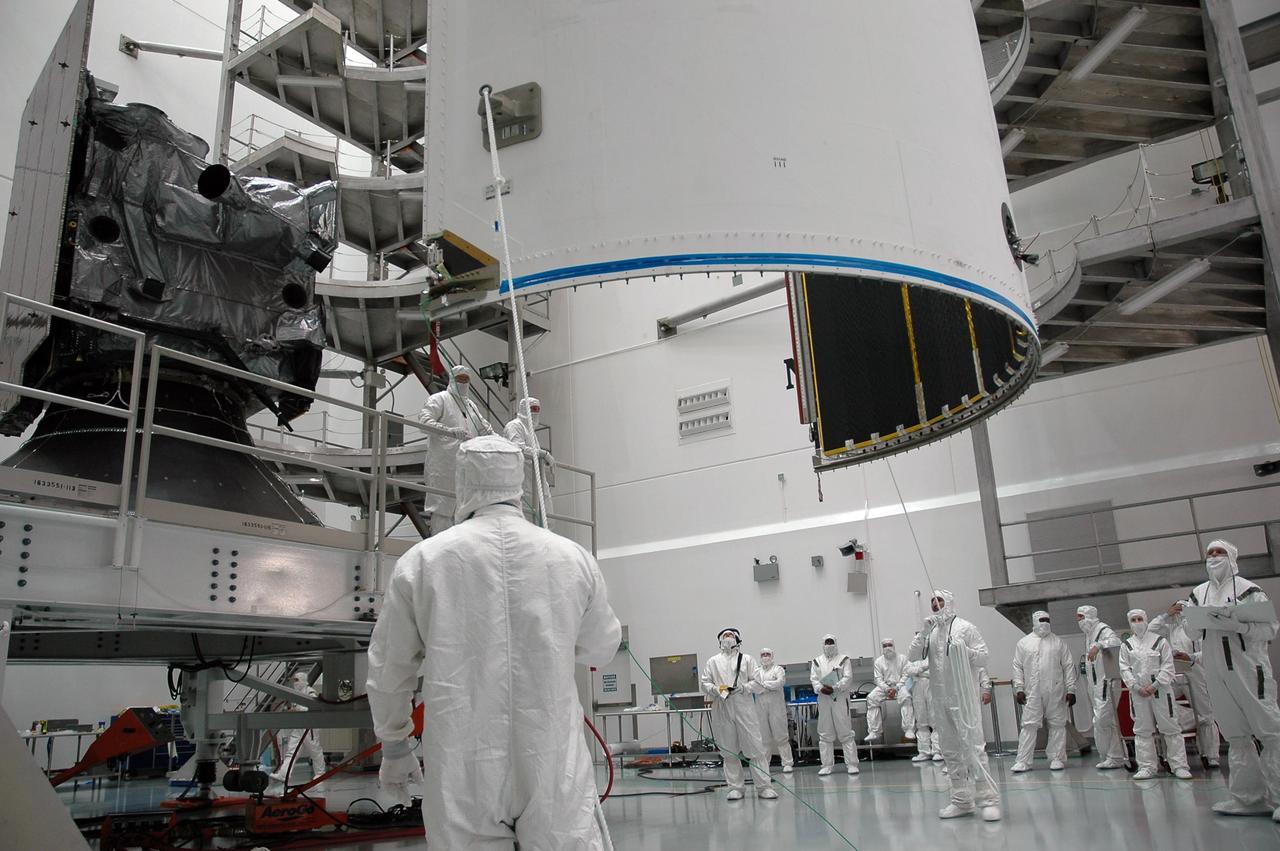
KENNEDY SPACE CENTER, FLA. - In the high bay at Astrotech Space Operations in Titusville, Fla., workers help guide the first half of the fairing toward the GOES-N spacecraft. The fairing will be used to encapsulate, or enclose, the GOES-N satellite for launch. The fairing protects the spacecraft during launch and flight through the atmosphere. Once out of the atmosphere, the fairing is jettisoned. GOES-N is the latest in a series of Geostationary Operational Environmental Satellites for NOAA and NASA providing continuous monitoring necessary for intensive data analysis. GOES-N will be launched May 18 on a Boeing Delta IV rocket from Cape Canaveral Air Force Station in Florida. Photo credit: NASA/Jack Pfaller

KENNEDY SPACE CENTER, FLA. - In the high bay at Astrotech Space Operations in Titusville, Fla., the first half of the fairing is moved into place around the GOES-N spacecraft. When both halves are in place, they will encapsulate, or enclose, the GOES-N satellite for launch. The fairing protects the spacecraft during launch and flight through the atmosphere. Once out of the atmosphere, the fairing is jettisoned. GOES-N is the latest in a series of Geostationary Operational Environmental Satellites for NOAA and NASA providing continuous monitoring necessary for intensive data analysis. GOES-N will be launched May 18 on a Boeing Delta IV rocket from Cape Canaveral Air Force Station in Florida. Photo credit: NASA/Jack Pfaller
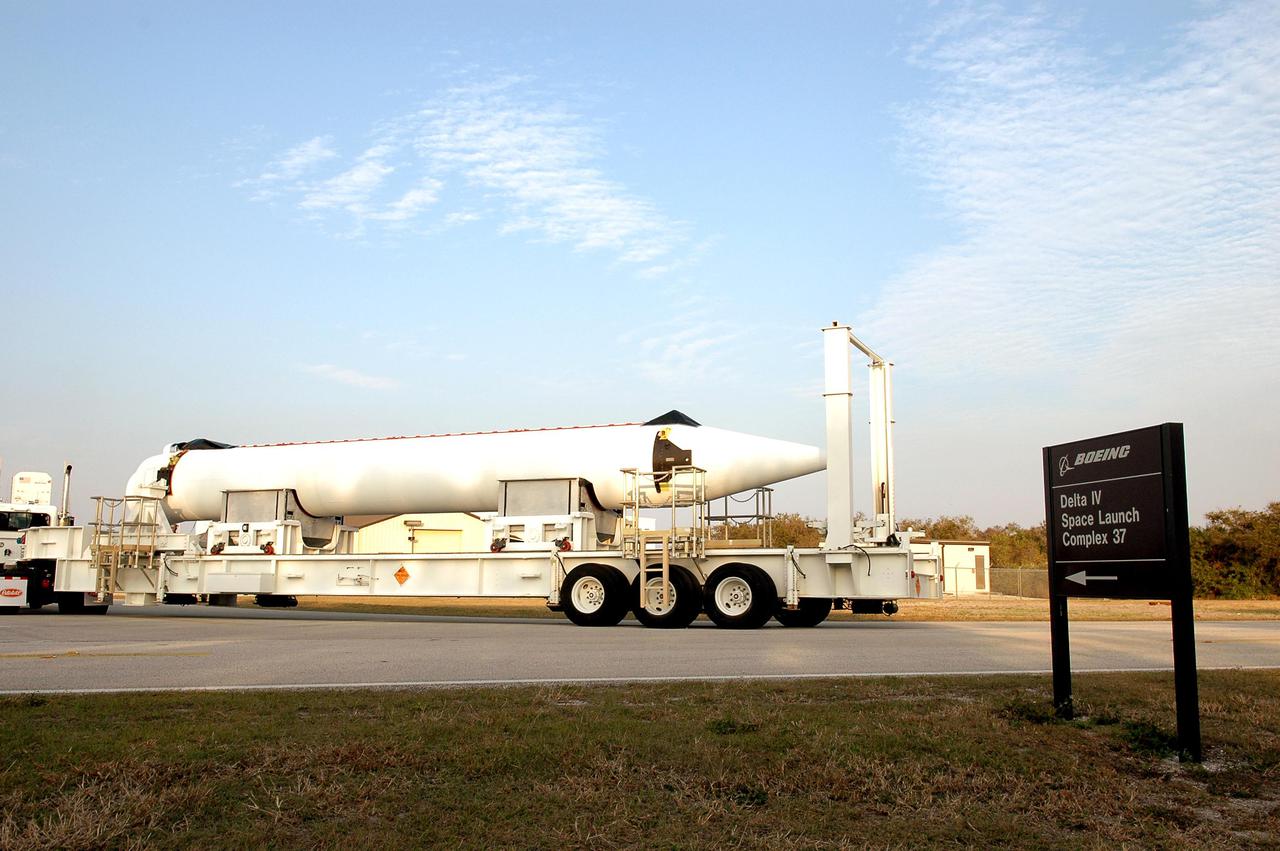
KENNEDY SPACE CENTER, FLA. - A Solid Rocket Booster destined for the GOES-N launch turns toward Launch Complex 37 at Cape Canaveral Air Force Station for attachment to the Boeing Delta IV rocket. The Delta IV is the launch vehicle for the GOES-N satellite, the first of three for the National Oceanic and Atmospheric Administration that will provide continuous monitoring necessary for intensive data analysis. GOES-N will provide a constant vigil for the atmospheric “triggers” of severe weather conditions such as tornadoes, flash floods, hail storms and hurricanes. When these conditions develop, GOES-N will be able to monitor storm development and track their movements. NASA’s Goddard Space Flight Center is responsible for development of the satellite and testing of the spacecraft and its instruments. GOES-N is scheduled for launch on May 4.

KENNEDY SPACE CENTER, FLA. - A Solid Rocket Booster destined for the GOES-N launch arrives on Launch Complex 37 at Cape Canaveral Air Force Station for attachment to the Boeing Delta IV rocket. The Delta IV is the launch vehicle for the GOES-N satellite, the first of three for the National Oceanic and Atmospheric Administration that will provide continuous monitoring necessary for intensive data analysis. GOES-N will provide a constant vigil for the atmospheric “triggers” of severe weather conditions such as tornadoes, flash floods, hail storms and hurricanes. When these conditions develop, GOES-N will be able to monitor storm development and track their movements. NASA’s Goddard Space Flight Center is responsible for development of the satellite and testing of the spacecraft and its instruments. GOES-N is scheduled for launch on May 4.
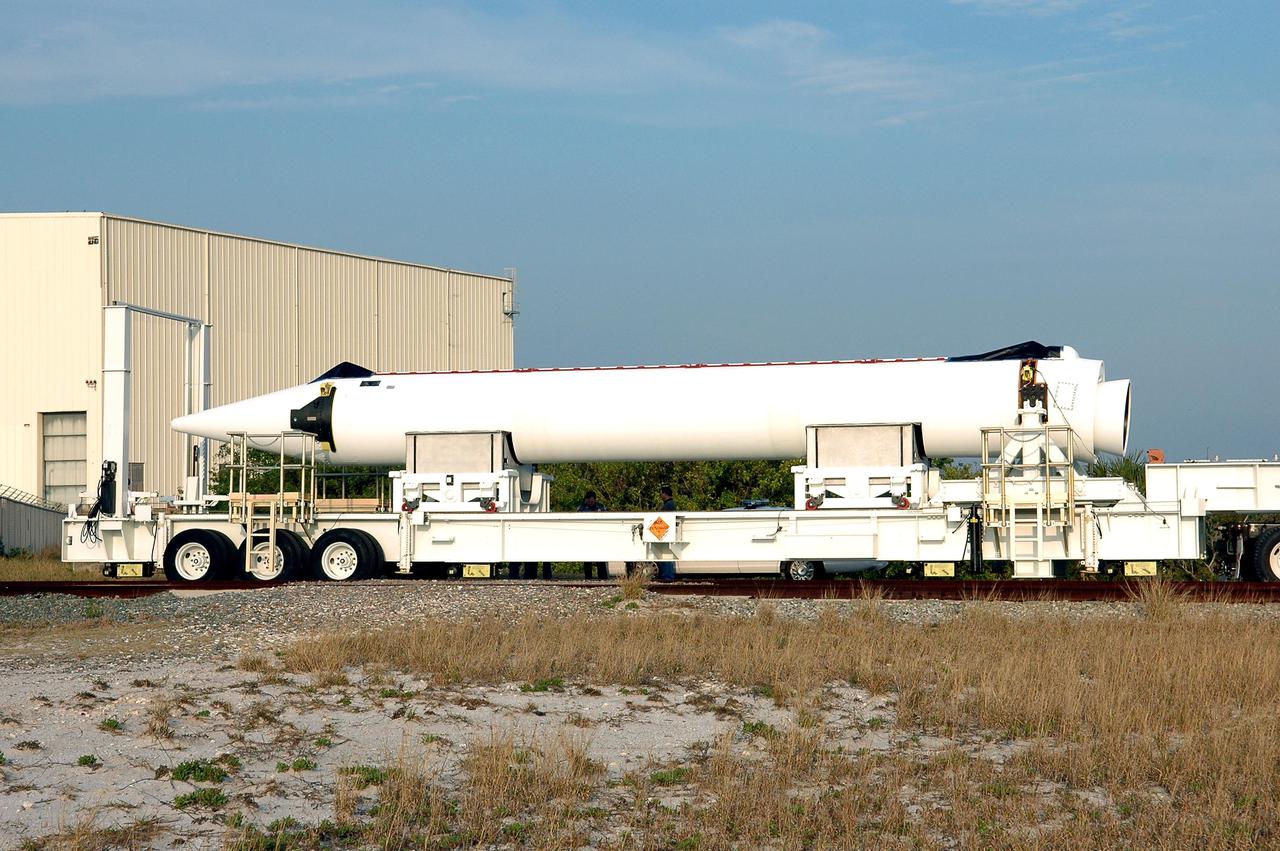
KENNEDY SPACE CENTER, FLA. - A Solid Rocket Booster destined for the GOES-N launch is moved away from the Receipt Inspection Storage building. It is being transported to Launch Complex 37 at Cape Canaveral Air Force Station for attachment to the Boeing Delta IV rocket. The Delta IV is the launch vehicle for the GOES-N satellite, the first of three for the National Oceanic and Atmospheric Administration that will provide continuous monitoring necessary for intensive data analysis. GOES-N will provide a constant vigil for the atmospheric “triggers” of severe weather conditions such as tornadoes, flash floods, hail storms and hurricanes. When these conditions develop, GOES-N will be able to monitor storm development and track their movements. NASA’s Goddard Space Flight Center is responsible for development of the satellite and testing of the spacecraft and its instruments. GOES-N is scheduled for launch on May 4.
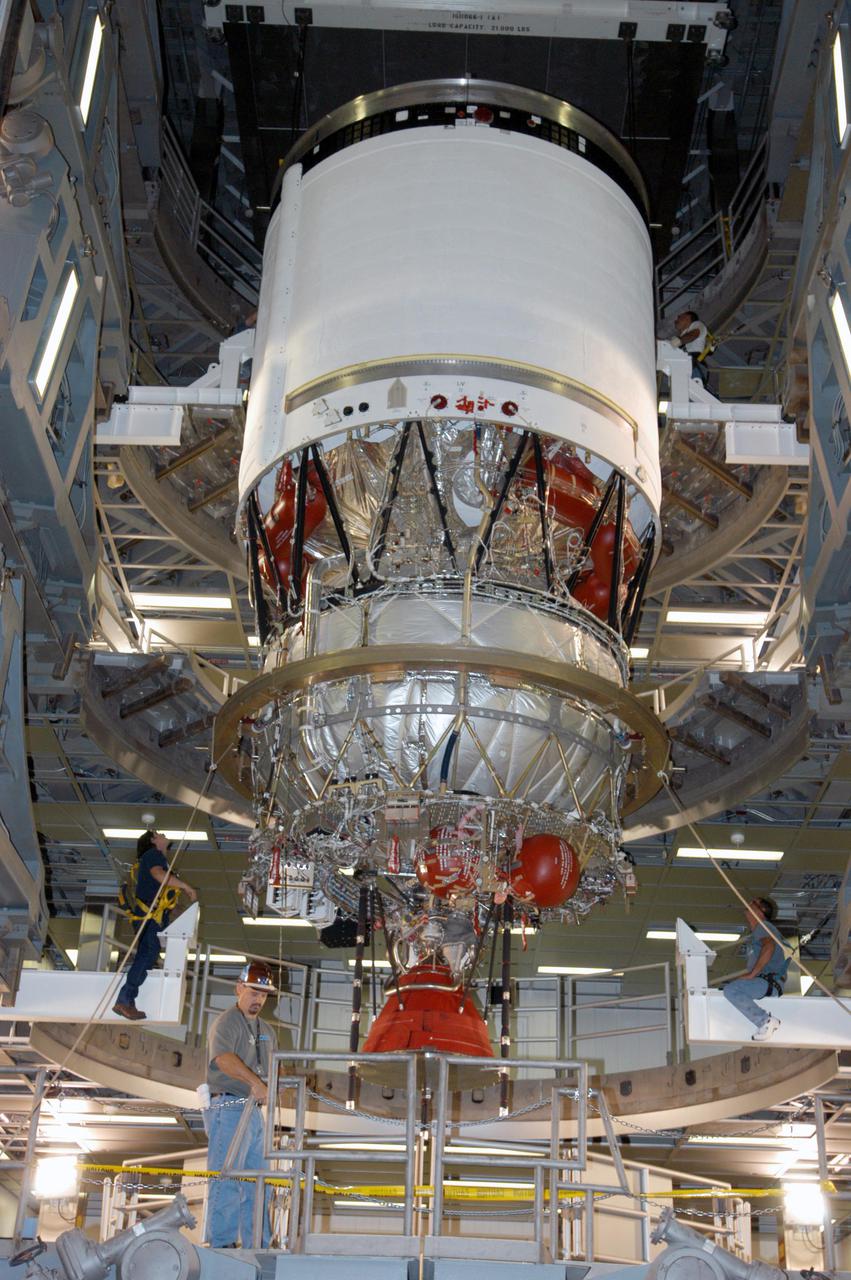
KENNEDY SPACE CENTER, FLA. - At the Boeing Delta Operations Center, the Delta IV second stage is lowered onto a test stand. Nozzles will be installed and a deployment test will follow. The Delta IV rocket will be used for the 2005 launching of the GOES-N weather satellite for NASA and NOAA (National Oceanic and Atmospheric Administration). The first in a series of three advanced weather satellites including GOES-O and GOES-P, the GOES-N will provide continuous monitoring necessary for intensive data analysis. It will provide a constant vigil for the atmospheric “triggers” of severe weather conditions such as tornadoes, flash floods, hail storms and hurricanes. When these conditions develop, GOES-N will be able to monitor storm development and track their movements.

KENNEDY SPACE CENTER, FLA. - Inside the Boeing Delta Operations Center, the newly arrived Delta IV second stage is lowered via overhead crane onto a transporter. The Delta IV rocket will be used for the 2005 launching of the GOES-N weather satellite for NASA and NOAA (National Oceanic and Atmospheric Administration). The first in a series of three advanced weather satellites including GOES-O and GOES-P, the GOES-N will provide continuous monitoring necessary for intensive data analysis. It will provide a constant vigil for the atmospheric “triggers” of severe weather conditions such as tornadoes, flash floods, hail storms and hurricanes. When these conditions develop, GOES-N will be able to monitor storm development and track their movements.
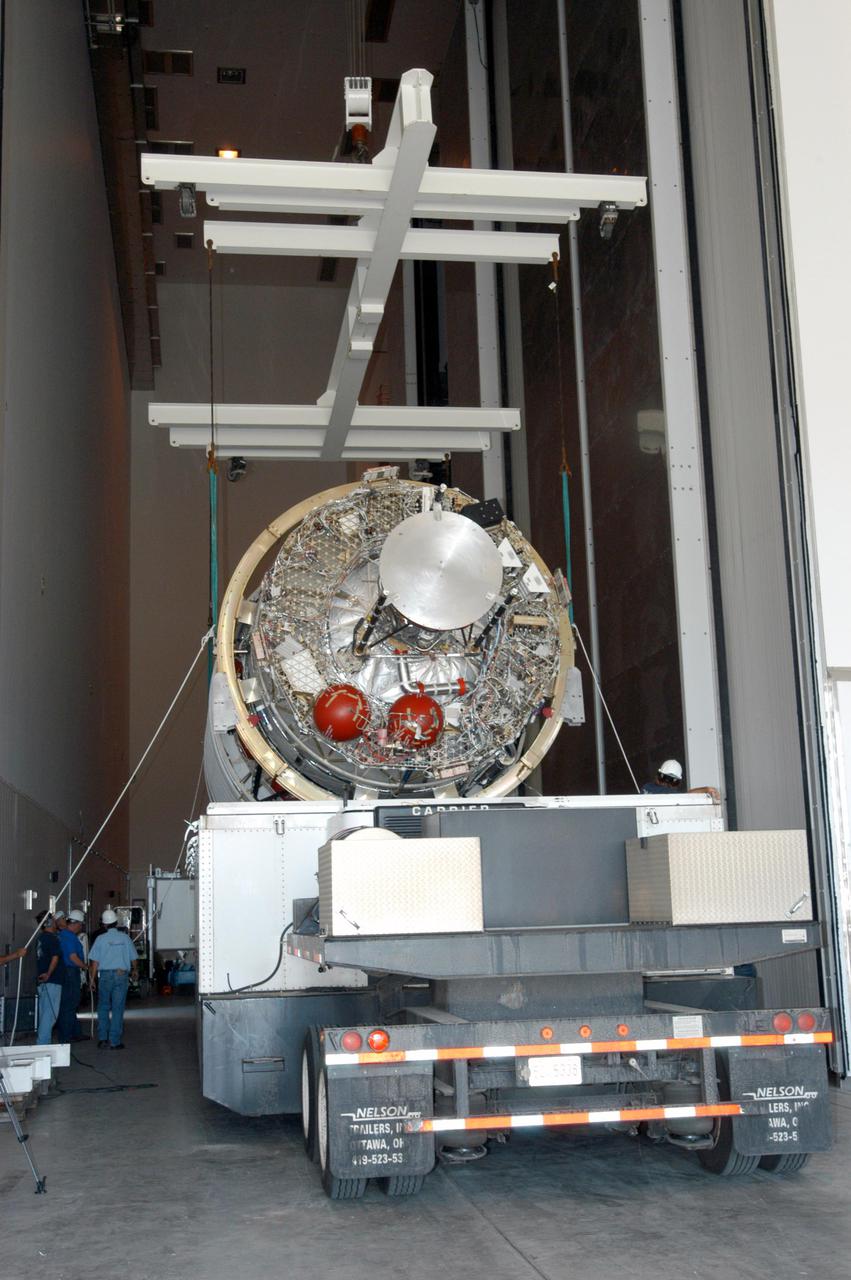
KENNEDY SPACE CENTER, FLA. - At the Boeing Delta Operations Center, the Boeing Delta IV second stage is rolled inside. The Delta IV rocket will be used for the 2005 launching of the GOES-N weather satellite for NASA and NOAA (National Oceanic and Atmospheric Administration). The first in a series of three advanced weather satellites including GOES-O and GOES-P, the GOES-N will provide continuous monitoring necessary for intensive data analysis. It will provide a constant vigil for the atmospheric “triggers” of severe weather conditions such as tornadoes, flash floods, hail storms and hurricanes. When these conditions develop, GOES-N will be able to monitor storm development and track their movements.
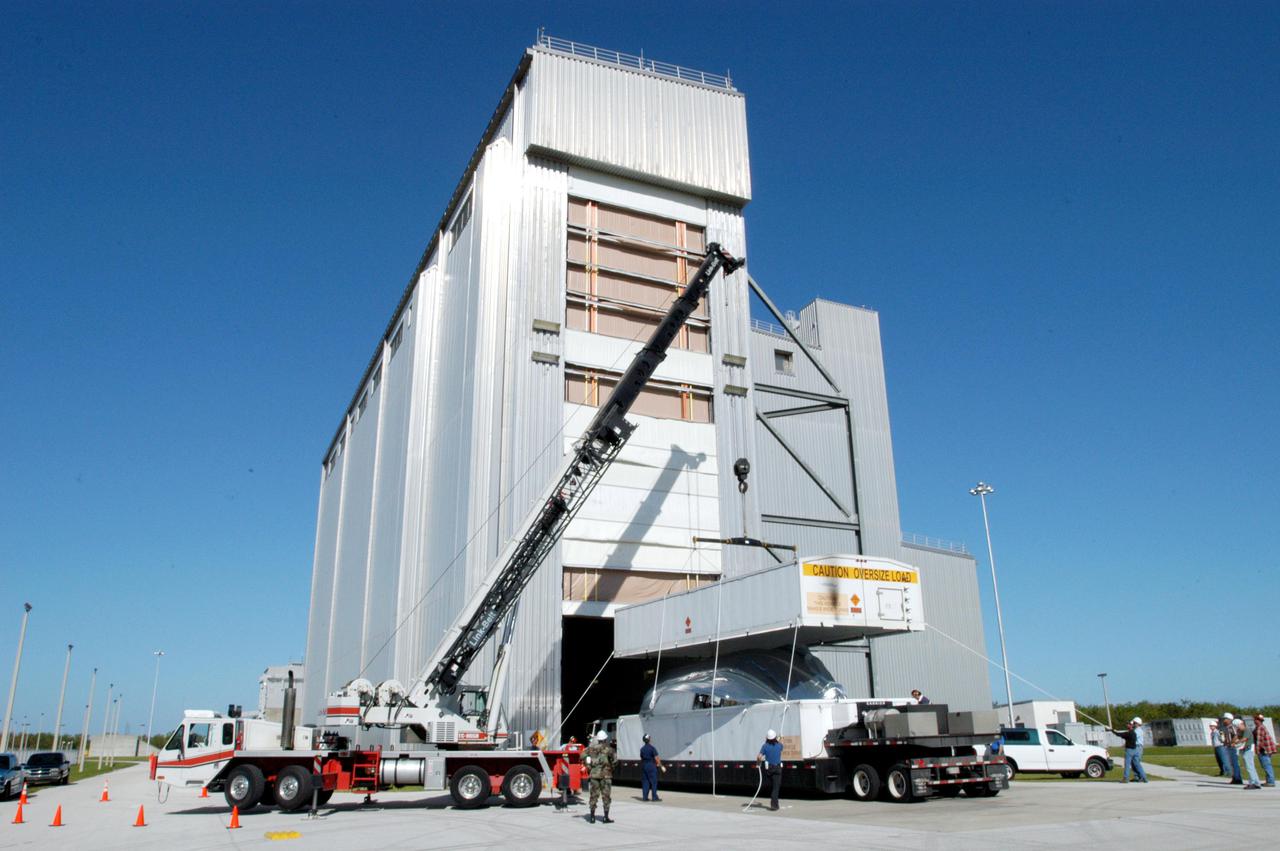
KENNEDY SPACE CENTER, FLA. - At the Boeing Delta Operations Center, a crane lifts the top off the shipping container with the Boeing Delta IV second stage inside. The Delta IV rocket will be used for the 2005 launching of the GOES-N weather satellite for NASA and NOAA (National Oceanic and Atmospheric Administration). The first in a series of three advanced weather satellites including GOES-O and GOES-P, the GOES-N will provide continuous monitoring necessary for intensive data analysis. It will provide a constant vigil for the atmospheric “triggers” of severe weather conditions such as tornadoes, flash floods, hail storms and hurricanes. When these conditions develop, GOES-N will be able to monitor storm development and track their movements.
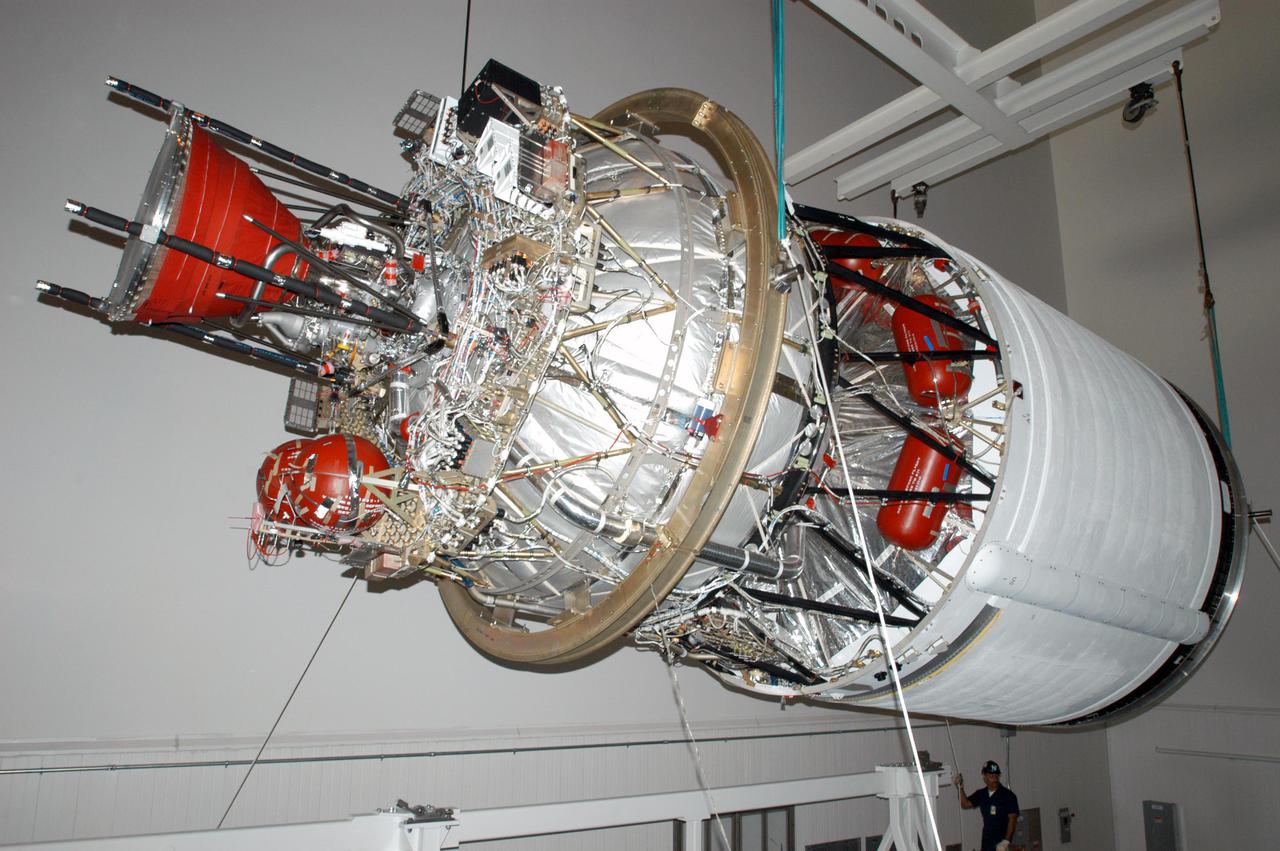
KENNEDY SPACE CENTER, FLA. - At the Boeing Delta Operations Center, the suspended second stage of a Boeing Delta IV launch vehicle is moved toward a work stand. The Delta IV rocket will be used for the 2005 launching of the GOES-N weather satellite for NASA and NOAA (National Oceanic and Atmospheric Administration). The first in a series of three advanced weather satellites including GOES-O and GOES-P, the GOES-N will provide continuous monitoring necessary for intensive data analysis. It will provide a constant vigil for the atmospheric “triggers” of severe weather conditions such as tornadoes, flash floods, hail storms and hurricanes. When these conditions develop, GOES-N will be able to monitor storm development and track their movements.
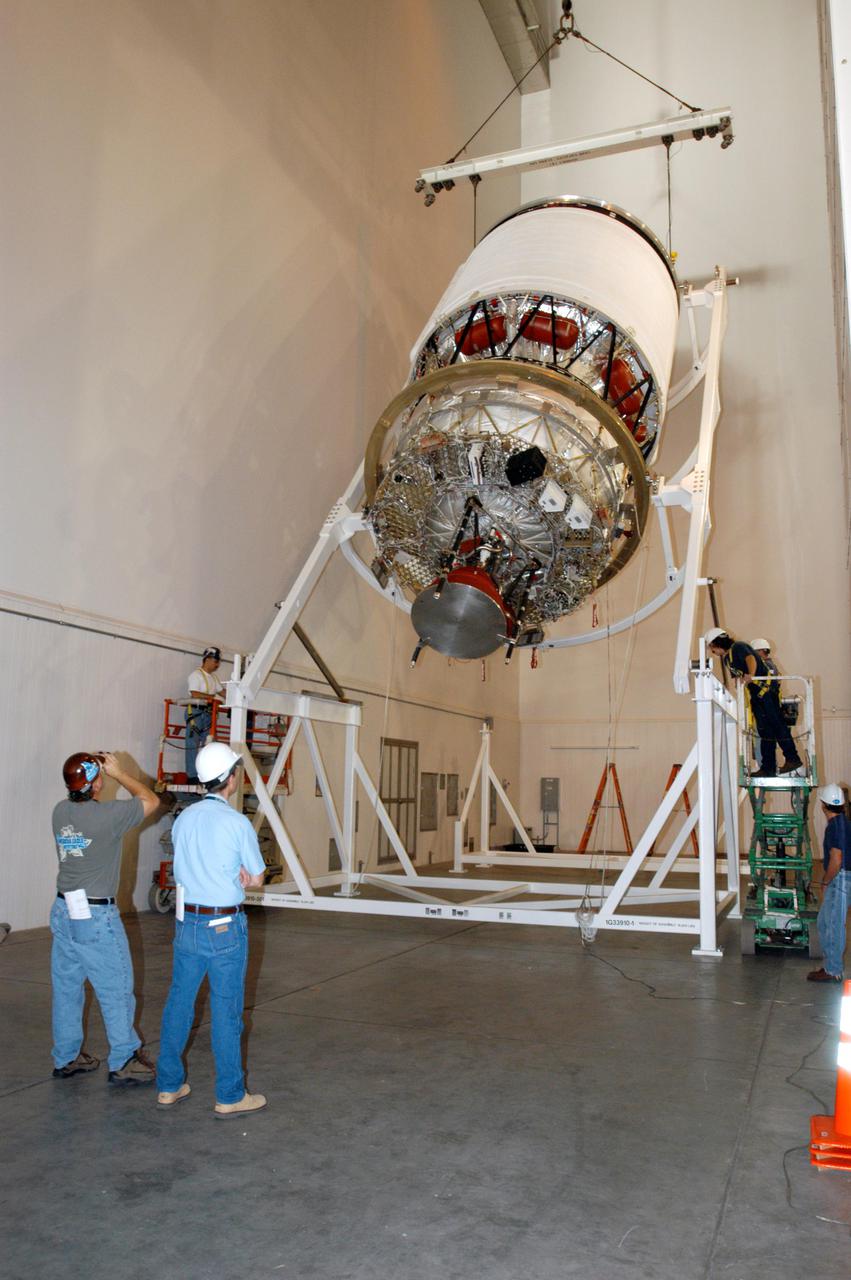
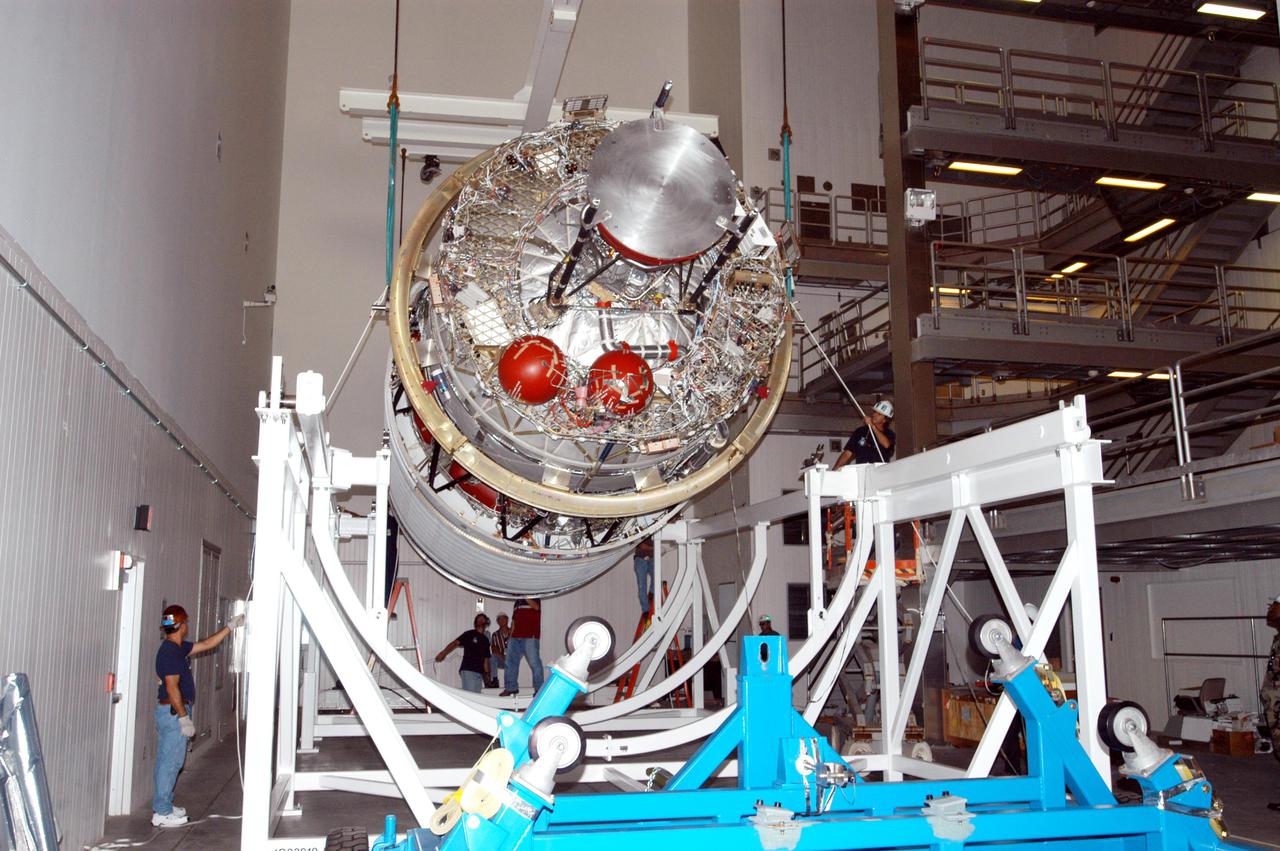
KENNEDY SPACE CENTER, FLA. - At the Boeing Delta Operations Center, the Delta IV second stage is rotated to a vertical position so that the nozzles can be installed. A deployment test will follow. The Delta IV rocket will be used for the 2005 launching of the GOES-N weather satellite for NASA and NOAA (National Oceanic and Atmospheric Administration). The first in a series of three advanced weather satellites including GOES-O and GOES-P, the GOES-N will provide continuous monitoring necessary for intensive data analysis. It will provide a constant vigil for the atmospheric “triggers” of severe weather conditions such as tornadoes, flash floods, hail storms and hurricanes. When these conditions develop, GOES-N will be able to monitor storm development and track their movements.
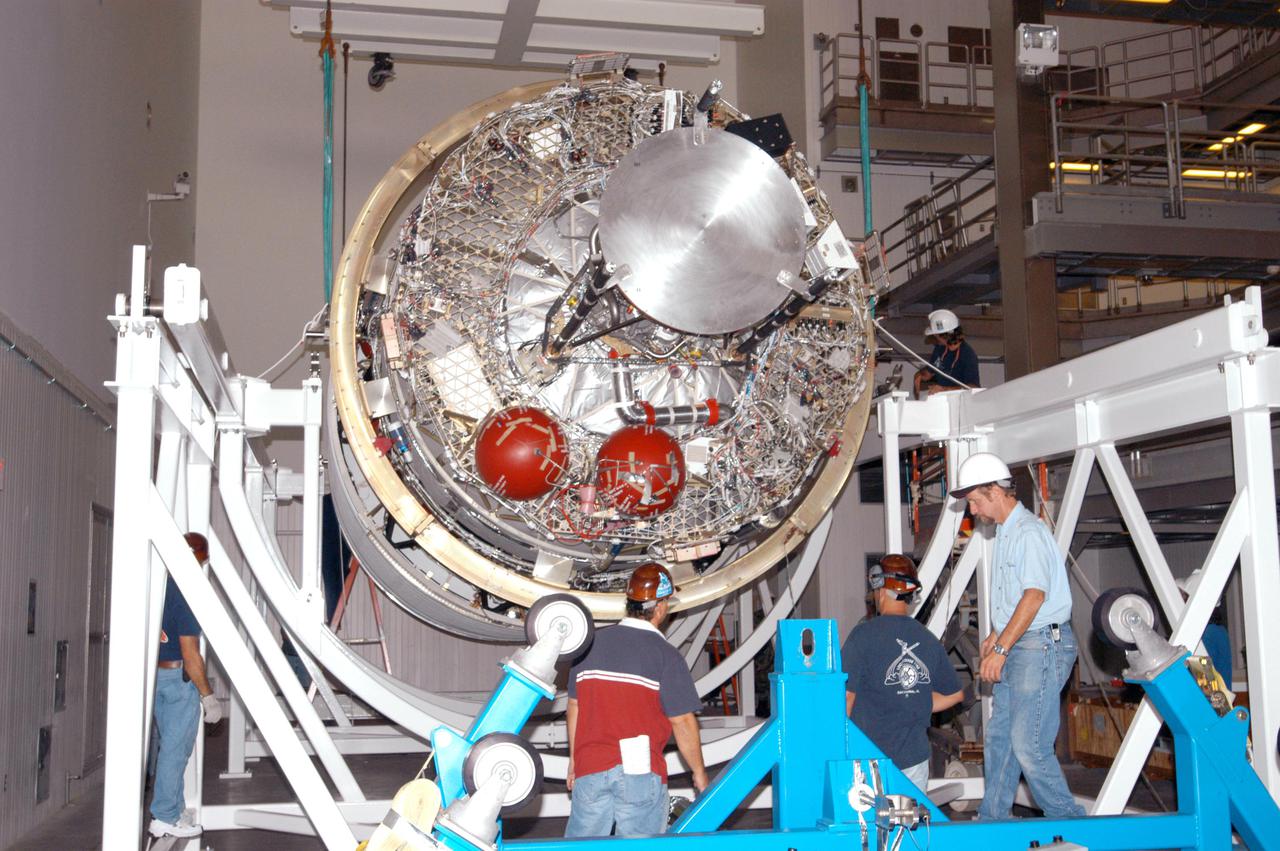
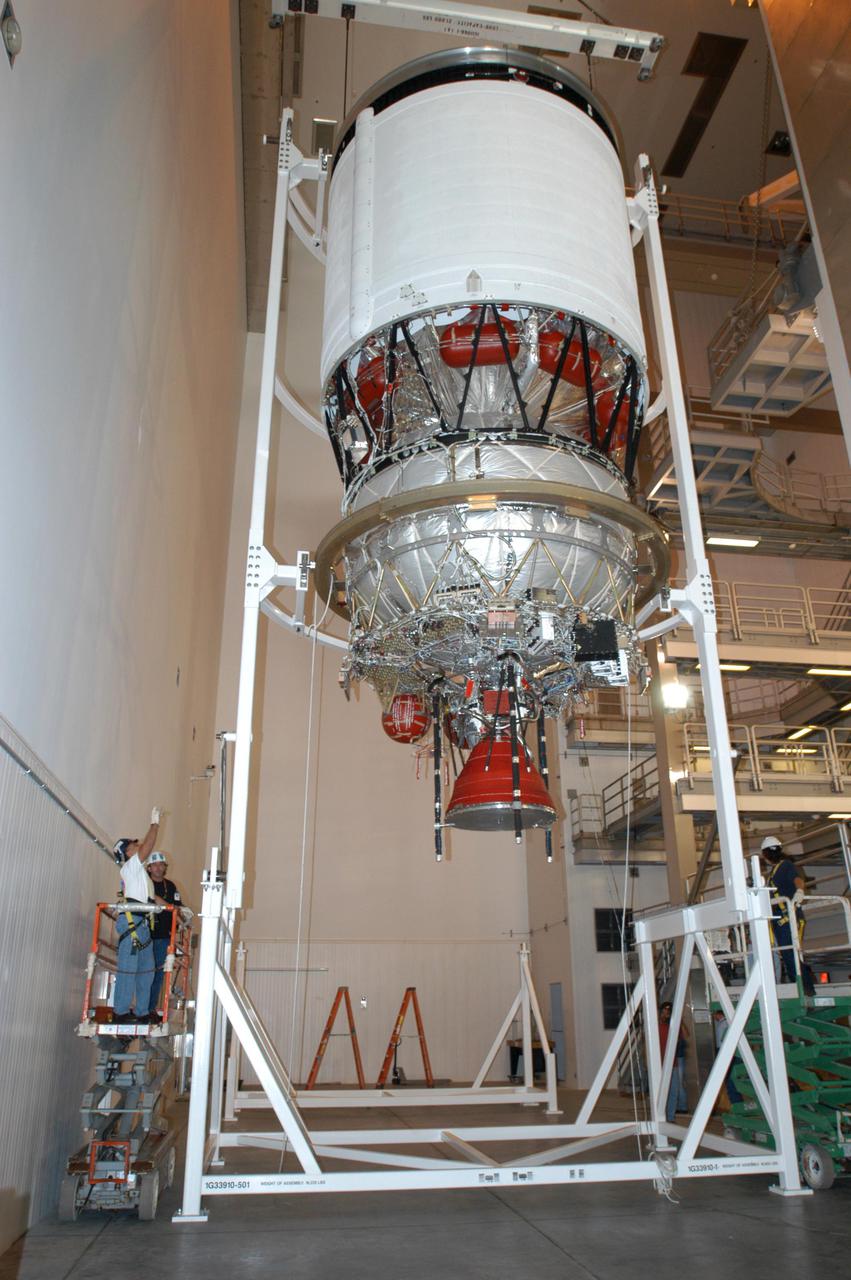
KENNEDY SPACE CENTER, FLA. - In the Boeing Delta Operations Center, the second stage of a Boeing Delta IV launch vehicle is lowered onto a work stand. The Delta IV rocket will be used for the 2005 launching of the GOES-N weather satellite for NASA and NOAA (National Oceanic and Atmospheric Administration). The first in a series of three advanced weather satellites including GOES-O and GOES-P, the GOES-N will provide continuous monitoring necessary for intensive data analysis. It will provide a constant vigil for the atmospheric “triggers” of severe weather conditions such as tornadoes, flash floods, hail storms and hurricanes. When these conditions develop, GOES-N will be able to monitor storm development and track their movements.
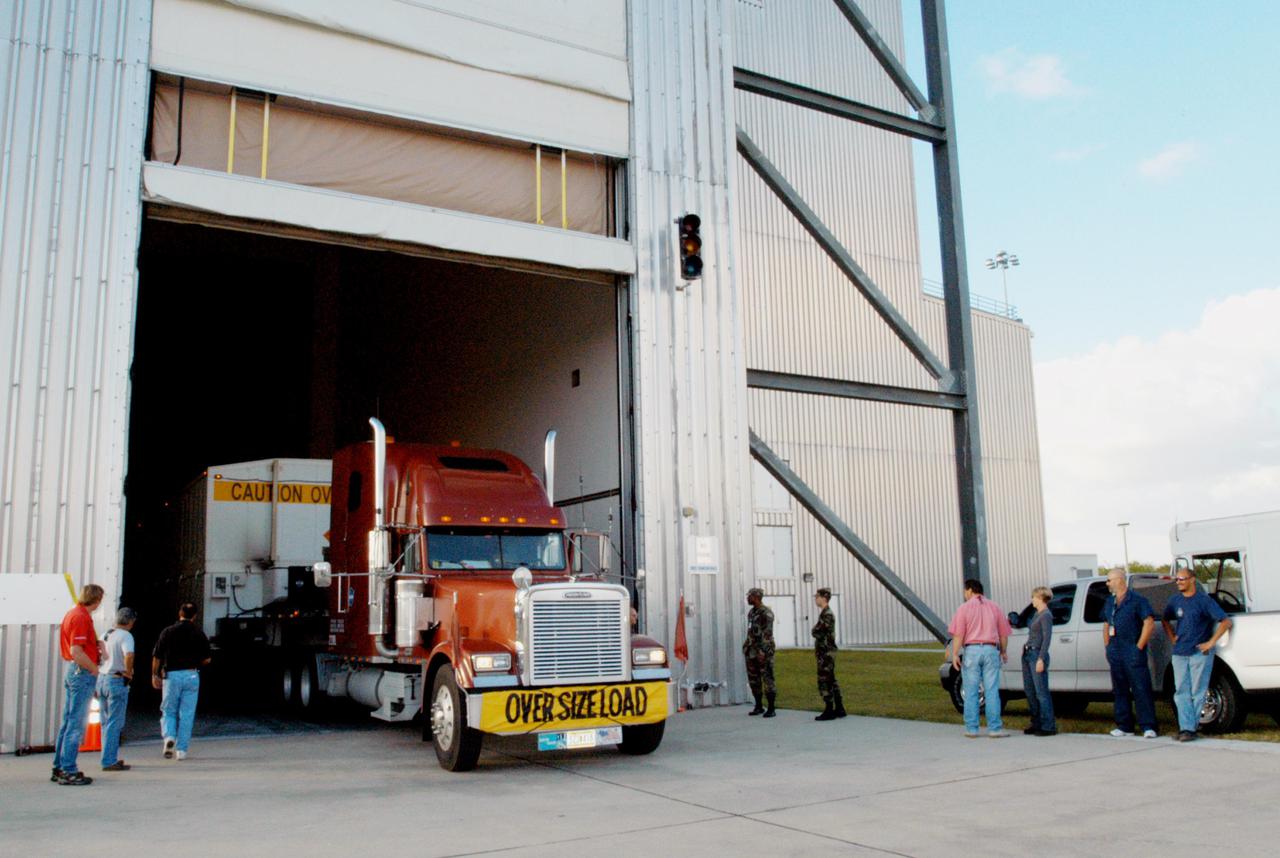
KENNEDY SPACE CENTER, FLA. - A truck carrying the second stage of a Boeing Delta IV launch vehicle delivers its cargo to the Boeing Delta Operations Center. The Delta IV rocket will be used for the 2005 launching of the GOES-N weather satellite for NASA and NOAA (National Oceanic and Atmospheric Administration). The first in a series of three advanced weather satellites including GOES-O and GOES-P, the GOES-N will provide continuous monitoring necessary for intensive data analysis. It will provide a constant vigil for the atmospheric “triggers” of severe weather conditions such as tornadoes, flash floods, hail storms and hurricanes. When these conditions develop, GOES-N will be able to monitor storm development and track their movements.
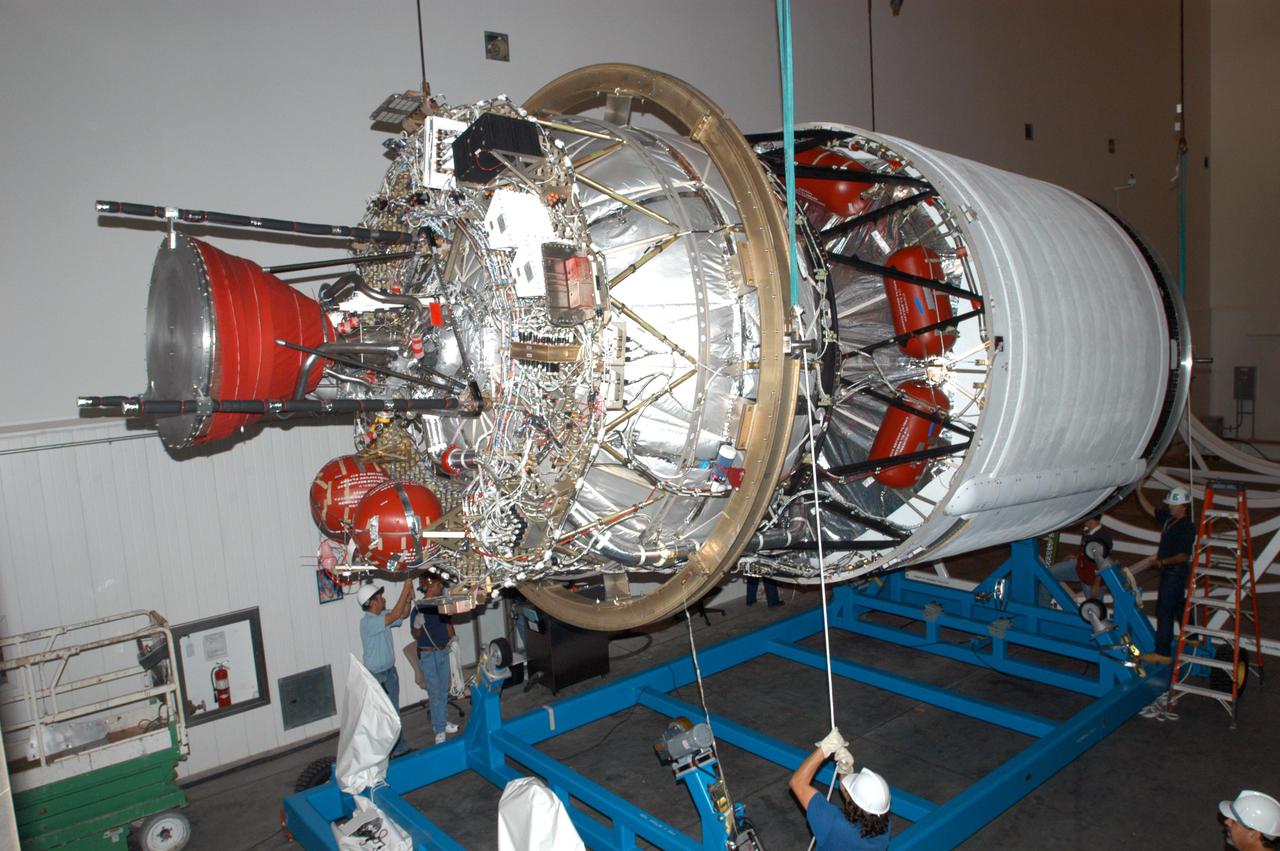
KENNEDY SPACE CENTER, FLA. - At the Boeing Delta Operations Center, the second stage of a Boeing Delta IV launch vehicle is lifted off its transporter for transfer to a work stand. The Delta IV rocket will be used for the 2005 launching of the GOES-N weather satellite for NASA and NOAA (National Oceanic and Atmospheric Administration). The first in a series of three advanced weather satellites including GOES-O and GOES-P, the GOES-N will provide continuous monitoring necessary for intensive data analysis. It will provide a constant vigil for the atmospheric “triggers” of severe weather conditions such as tornadoes, flash floods, hail storms and hurricanes. When these conditions develop, GOES-N will be able to monitor storm development and track their movements.
KENNEDY SPACE CENTER, FLA. - In the Boeing Delta Operations Center, the second stage of a Boeing Delta IV launch vehicle is lowered onto a work stand. The Delta IV rocket will be used for the 2005 launching of the GOES-N weather satellite for NASA and NOAA (National Oceanic and Atmospheric Administration). The first in a series of three advanced weather satellites including GOES-O and GOES-P, the GOES-N will provide continuous monitoring necessary for intensive data analysis. It will provide a constant vigil for the atmospheric “triggers” of severe weather conditions such as tornadoes, flash floods, hail storms and hurricanes. When these conditions develop, GOES-N will be able to monitor storm development and track their movements.
KENNEDY SPACE CENTER, FLA. - At the Boeing Delta Operations Center, the Delta IV second stage is rotated to a vertical position so that the nozzles can be installed. A deployment test will follow. The Delta IV rocket will be used for the 2005 launching of the GOES-N weather satellite for NASA and NOAA (National Oceanic and Atmospheric Administration). The first in a series of three advanced weather satellites including GOES-O and GOES-P, the GOES-N will provide continuous monitoring necessary for intensive data analysis. It will provide a constant vigil for the atmospheric “triggers” of severe weather conditions such as tornadoes, flash floods, hail storms and hurricanes. When these conditions develop, GOES-N will be able to monitor storm development and track their movements.
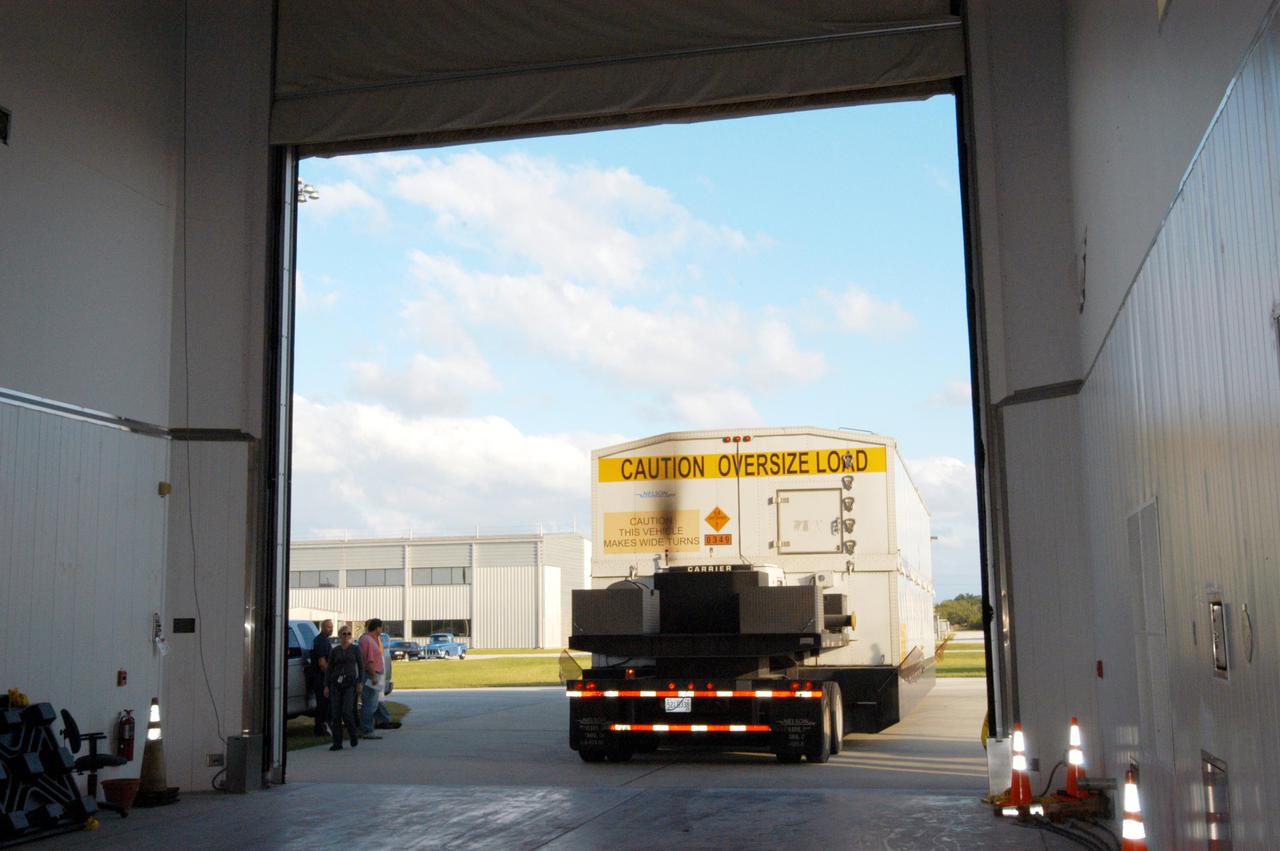
KENNEDY SPACE CENTER, FLA. - A truck carrying the second stage of a Boeing Delta IV launch vehicle arrives at the Boeing Delta Operations Center. The Delta IV rocket will be used for the 2005 launching of the GOES-N weather satellite for NASA and NOAA (National Oceanic and Atmospheric Administration). The first in a series of three advanced weather satellites including GOES-O and GOES-P, the GOES-N will provide continuous monitoring necessary for intensive data analysis. It will provide a constant vigil for the atmospheric “triggers” of severe weather conditions such as tornadoes, flash floods, hail storms and hurricanes. When these conditions develop, GOES-N will be able to monitor storm development and track their movements.
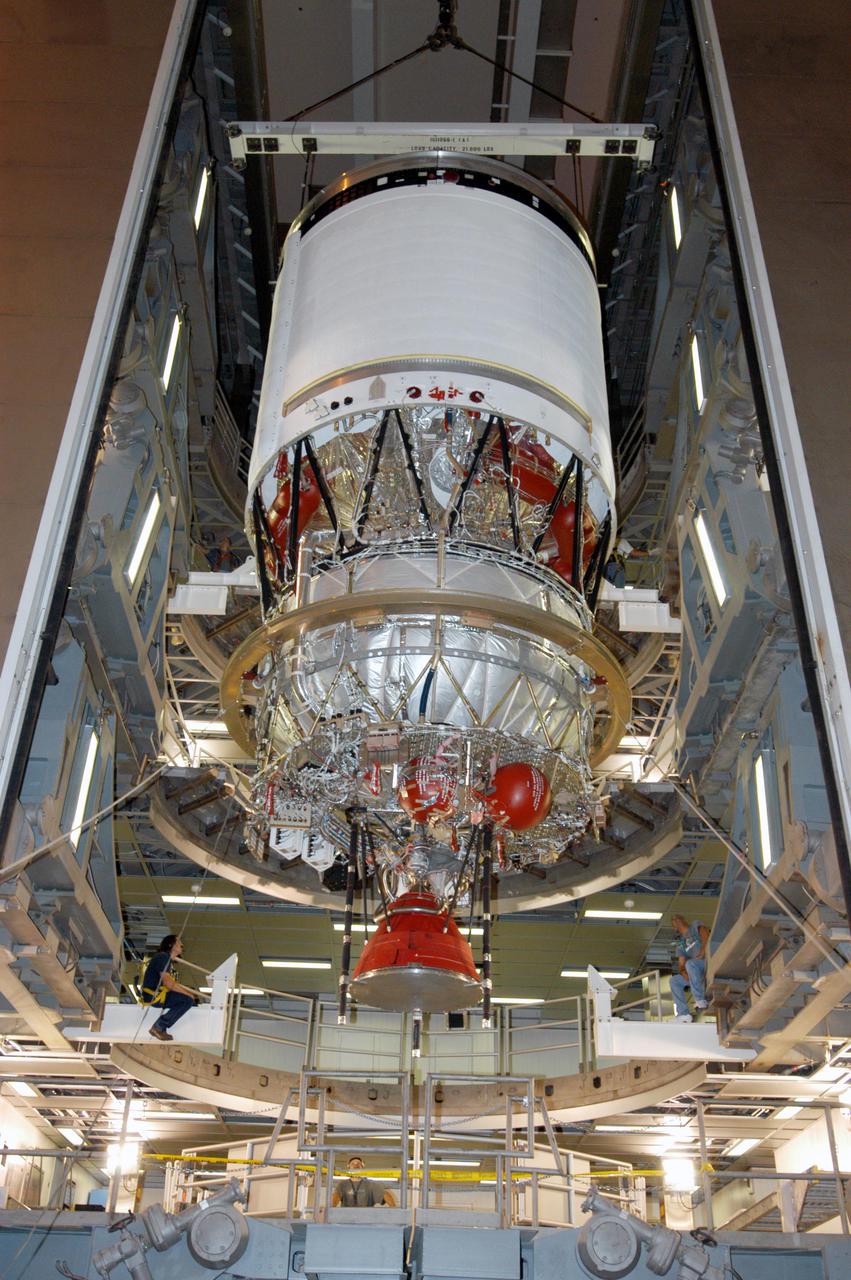
KENNEDY SPACE CENTER, FLA. - At the Boeing Delta Operations Center, the Delta IV second stage is moved to a test stand. Nozzles will be installed and a deployment test will follow. The Delta IV rocket will be used for the 2005 launching of the GOES-N weather satellite for NASA and NOAA (National Oceanic and Atmospheric Administration). The first in a series of three advanced weather satellites including GOES-O and GOES-P, the GOES-N will provide continuous monitoring necessary for intensive data analysis. It will provide a constant vigil for the atmospheric “triggers” of severe weather conditions such as tornadoes, flash floods, hail storms and hurricanes. When these conditions develop, GOES-N will be able to monitor storm development and track their movements.
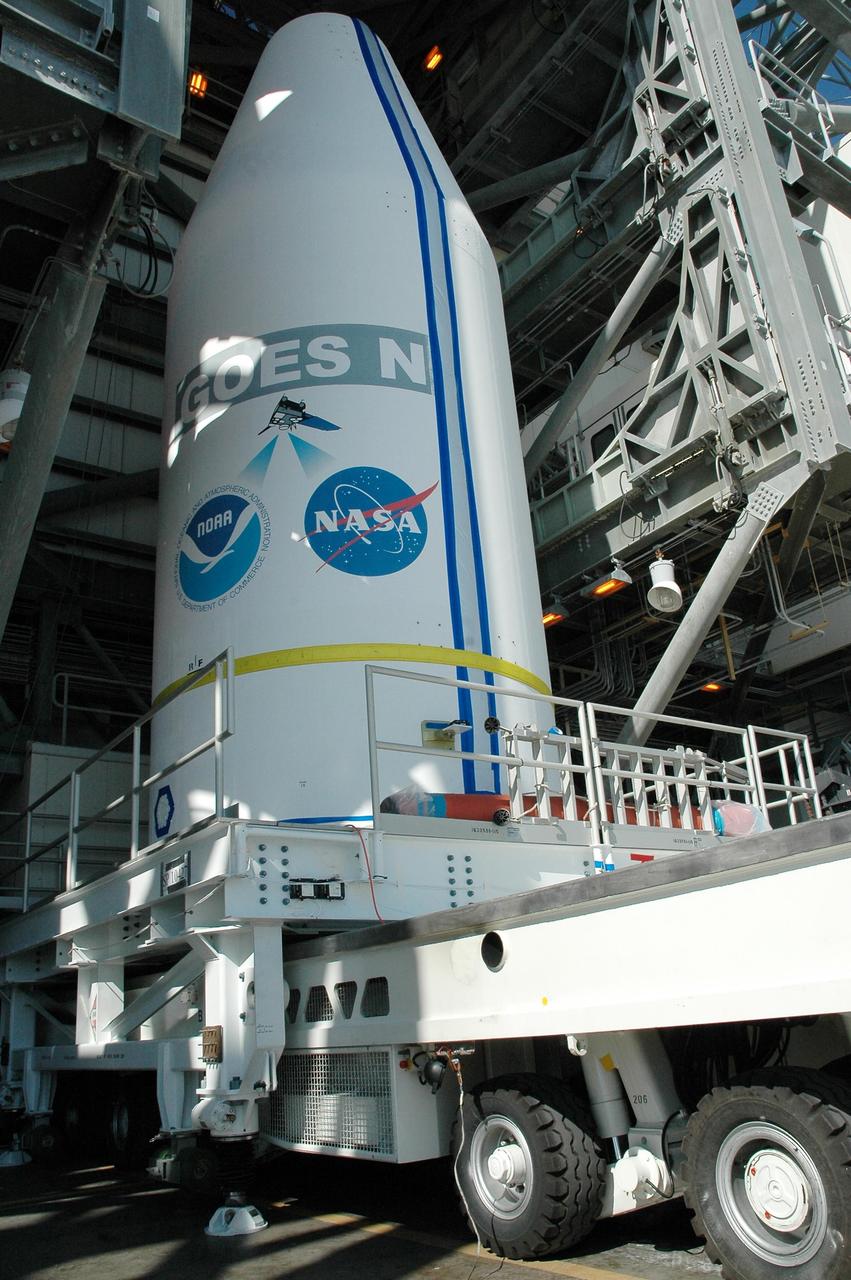
KENNEDY SPACE CENTER, FLA. - The encapsulated spacecraft GOES-N is ready to be lifted into the mobile service tower on Launch Complex 37 at Cape Canaveral Air Force Station in Florida. It will be mated with a Boeing Delta IV rocket for launch. GOES-N is the latest in a series of Geostationary Operational Environmental Satellites for NOAA and NASA providing continuous monitoring necessary for intensive data analysis. GOES-N is scheduled for launch May 18. Photo credit: NASA/Jack Pfaller
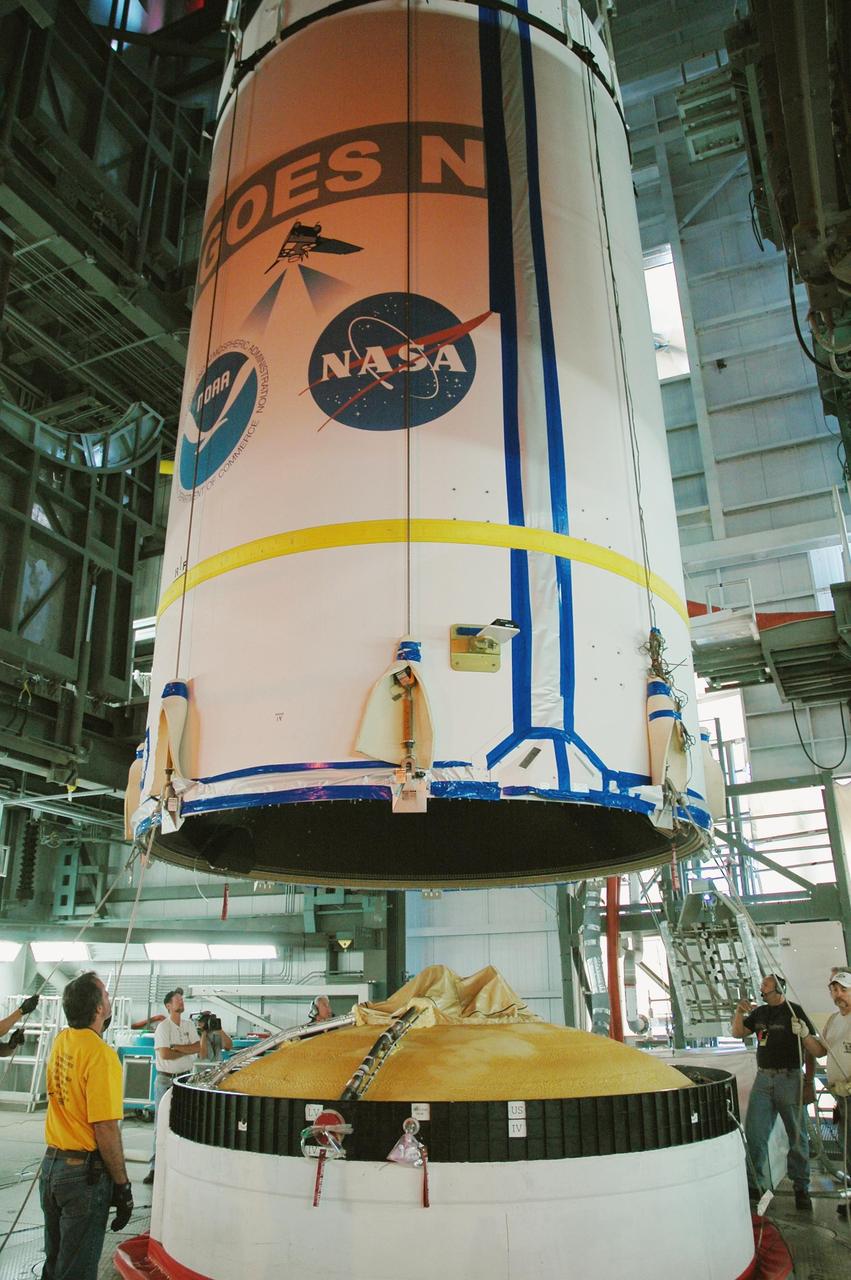
KENNEDY SPACE CENTER, FLA. - On Launch Complex 37 at Cape Canaveral Air Force Station in Florida, the GOES-N spacecraft is lowered toward the second stage of the Boeing Delta IV rocket for mating. GOES-N is the latest in a series of Geostationary Operational Environmental Satellites for NOAA and NASA, providing continuous monitoring necessary for intensive data analysis. GOES-N is scheduled to be launched May 18 in an hour-long window between 6:14 and 7:14 p.m. EDT. Photo credit: NASA/Charisse Nahser
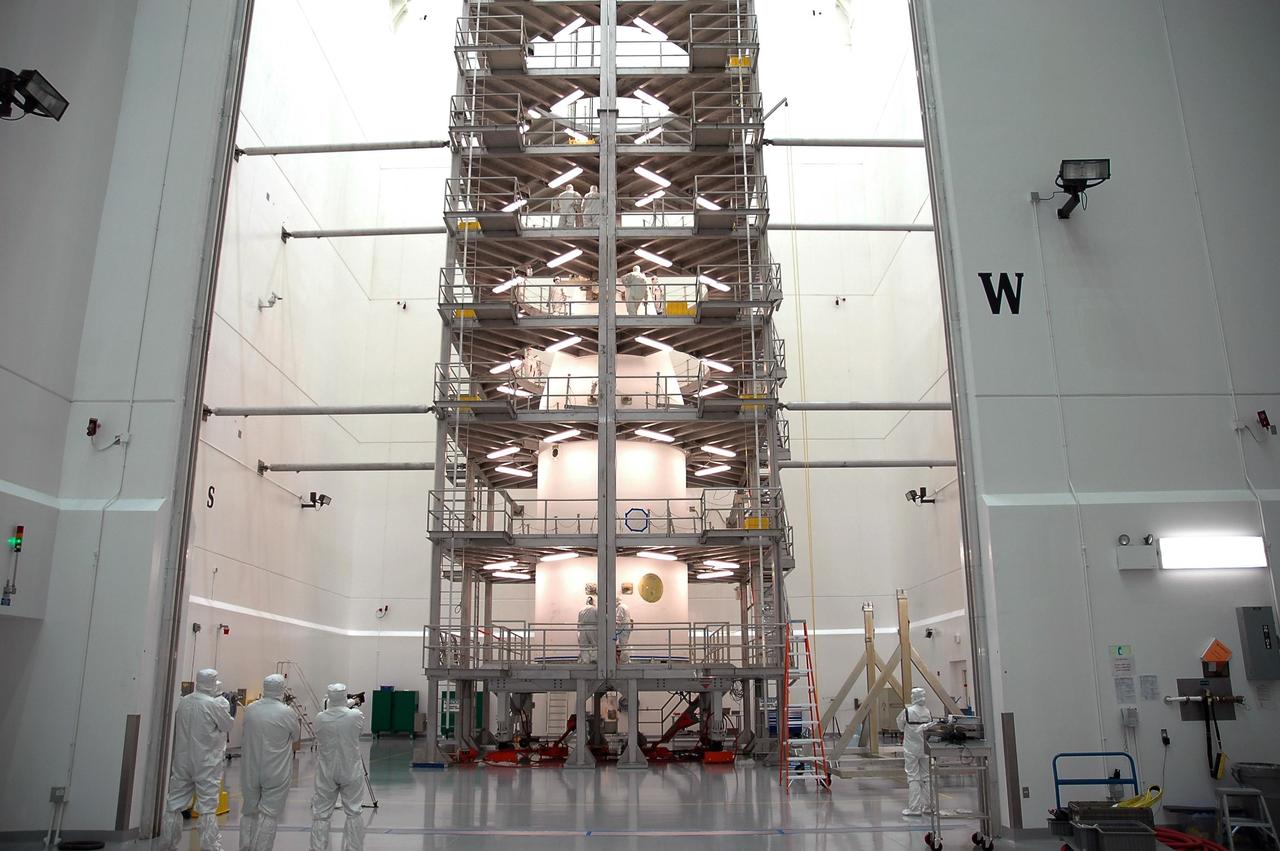
KENNEDY SPACE CENTER, FLA. - In the high bay at Astrotech Space Operations in Titusville, Fla., the encapsulated GOES-N satellite is surrounded by work platforms. GOES-N is the latest in a series of Geostationary Operational Environmental Satellites for NOAA and NASA providing continuous monitoring necessary for intensive data analysis. GOES-N will be launched May 18 on a Boeing Delta IV rocket from Cape Canaveral Air Force Station in Florida. Photo credit: NASA/Jack Pfaller
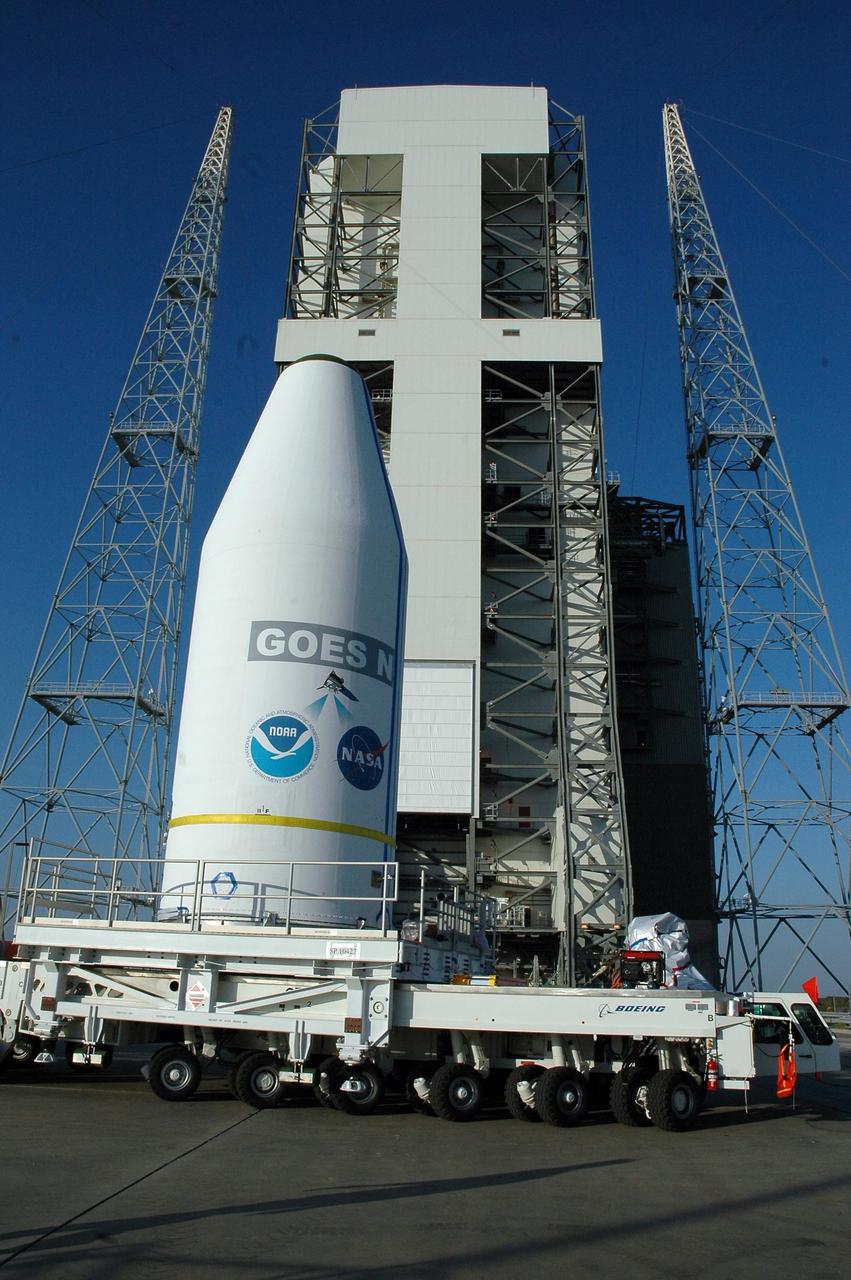
KENNEDY SPACE CENTER, FLA. - The encapsulated spacecraft GOES-N arrives aboard a transporter on Launch Complex 37 at Cape Canaveral Air Force Station in Florida. The spacecraft will be lifted up into the mobile service tower and mated with a Boeing Delta IV rocket for launch. GOES-N is the latest in a series of Geostationary Operational Environmental Satellites for NOAA and NASA providing continuous monitoring necessary for intensive data analysis. GOES-N is scheduled for launch May 18. Photo credit: NASA/Jack Pfaller
KENNEDY SPACE CENTER, FLA. - Perching on a pole in the Indian River Lagoon, an osprey clutches his most recent catch. The site is near Launch Complex 37 at Cape Canaveral Air Force Station in Florida, where the Delta IV rocket with the GOES-N satellite was poised for launch. The GOES-N is the latest in a series of Geostationary Operational Environmental Satellites providing continuous monitoring necessary for intensive data analysis. The GOES-N launch was delayed due to last minute technical issues and postponed to a later date.
KENNEDY SPACE CENTER, FLA. - Perching on a pole in the Indian River Lagoon, an osprey clutches his most recent catch. In the background is Launch Complex 37 at Cape Canaveral Air Force Station in Florida, where the Delta IV rocket with the GOES-N satellite is poised for launch. The GOES-N is the latest in a series of Geostationary Operational Environmental Satellites providing continuous monitoring necessary for intensive data analysis. The GOES-N launch was delayed due to last minute technical issues and postponed to a later date.