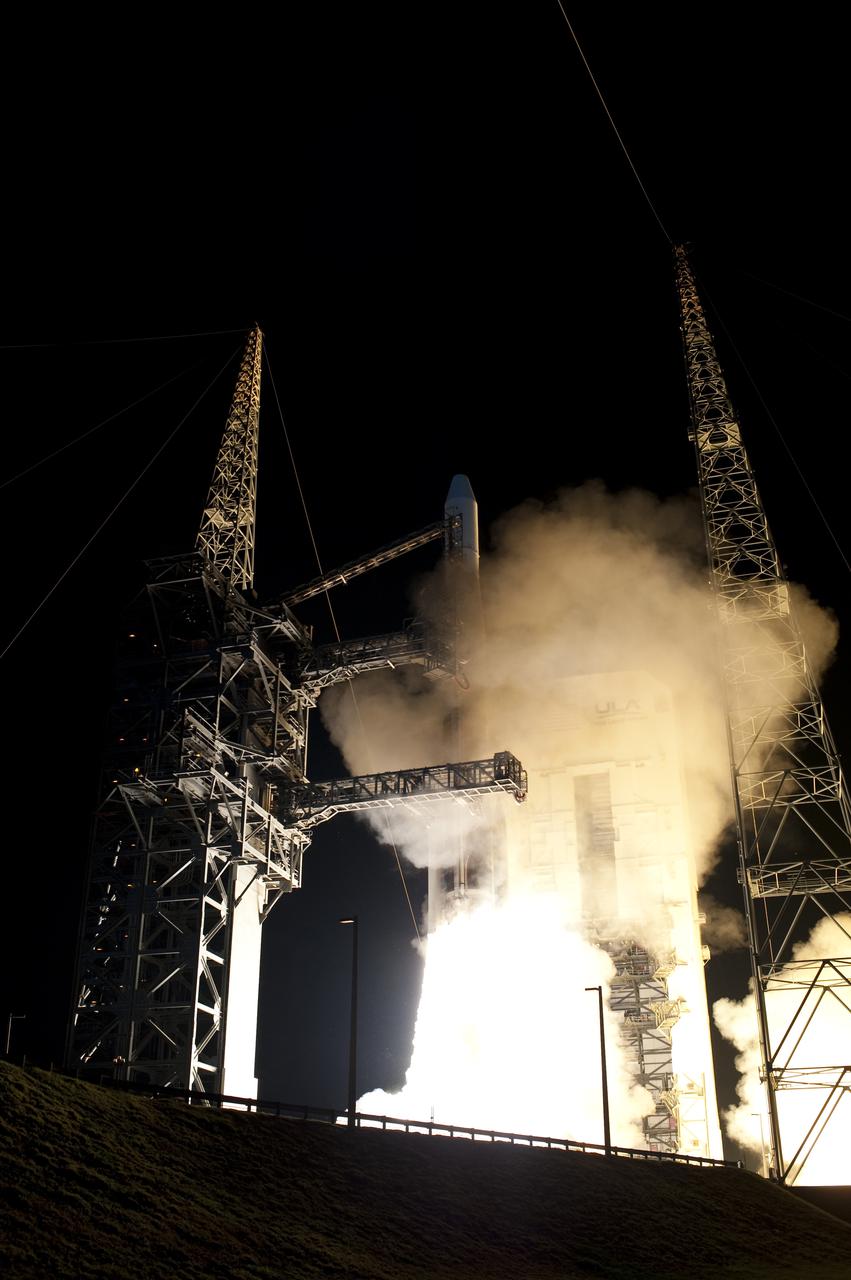
CAPE CANAVERAL, Fla. – A United Launch Alliance Delta IV rocket with the GOES-P satellite aboard roars to life after ignition and liftoff from Launch Complex 37 at Cape Canaveral Air Force Station in Florida at 6:57 p.m. EST. GOES-P, the latest Geostationary Operational Environmental Satellite, was developed by NASA for the National Oceanic and Atmospheric Administration, or NOAA. The GOES-P spacecraft will be placed in a 22,300-mile-high geosynchronous orbit where it will appear to hover over a single point on Earth. The spacecraft is outfitted with a complex suite of observation instruments and cameras so it can accurately report on weather and climate conditions on Earth. For information on GOES-P, visit http:__www.nasa.gov_mission_pages_GOES-P_main_index.html. Photo credit: NASA_Sandra Joseph and Tony Gray
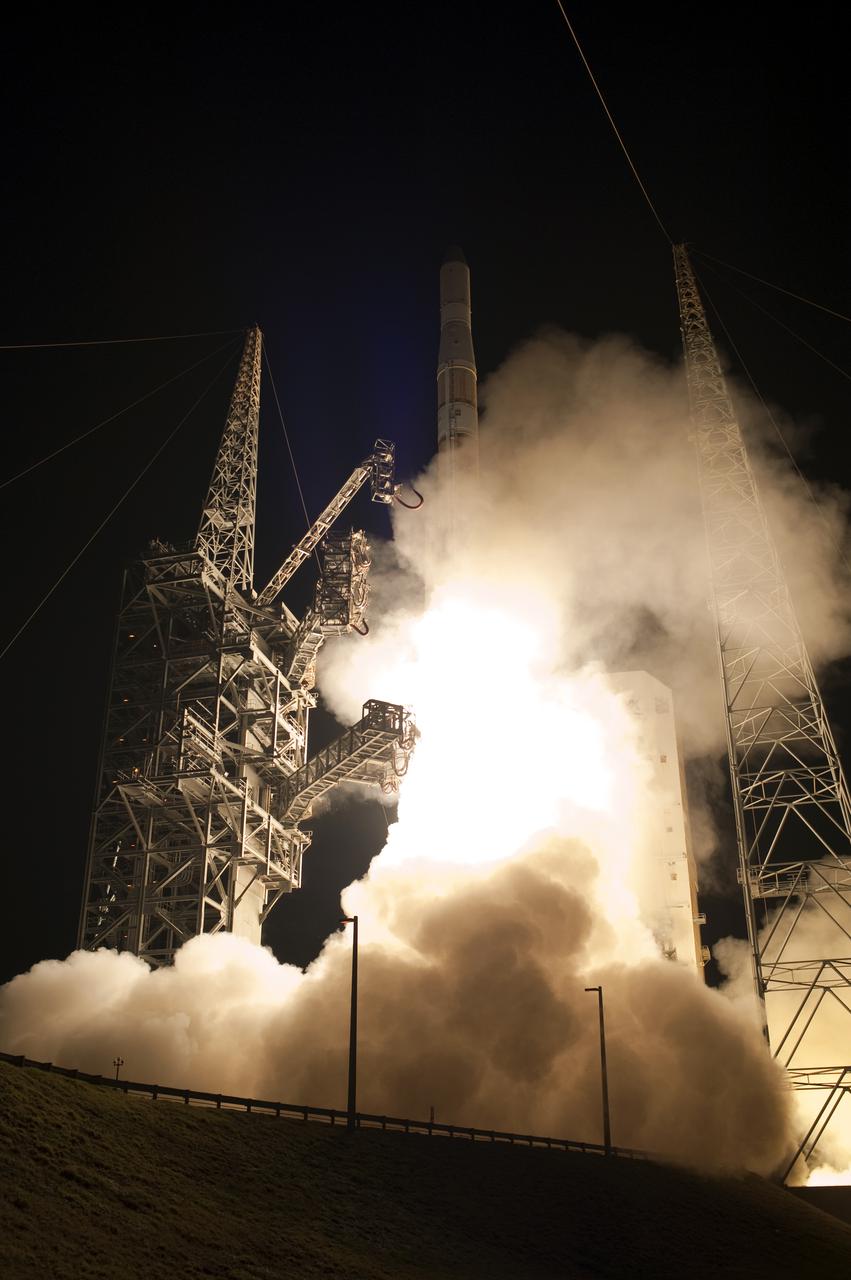
CAPE CANAVERAL, Fla. – The GOES-P spacecraft atop a United Launch Alliance Delta IV rocket begins its climb to orbit from Launch Complex 37 on Cape Canaveral Air Force Station at 6:57 p.m. EST. GOES-P, the latest Geostationary Operational Environmental Satellite, was developed by NASA for the National Oceanic and Atmospheric Administration, or NOAA. The GOES-P spacecraft will be placed in a 22,300-mile-high geosynchronous orbit where it will appear to hover over a single point on Earth. The spacecraft is outfitted with a complex suite of observation instruments and cameras so it can accurately report on weather and climate conditions on Earth. For information on GOES-P, visit http:__www.nasa.gov_mission_pages_GOES-P_main_index.html. Photo credit: NASA_Sandra Joseph and Tony Gray
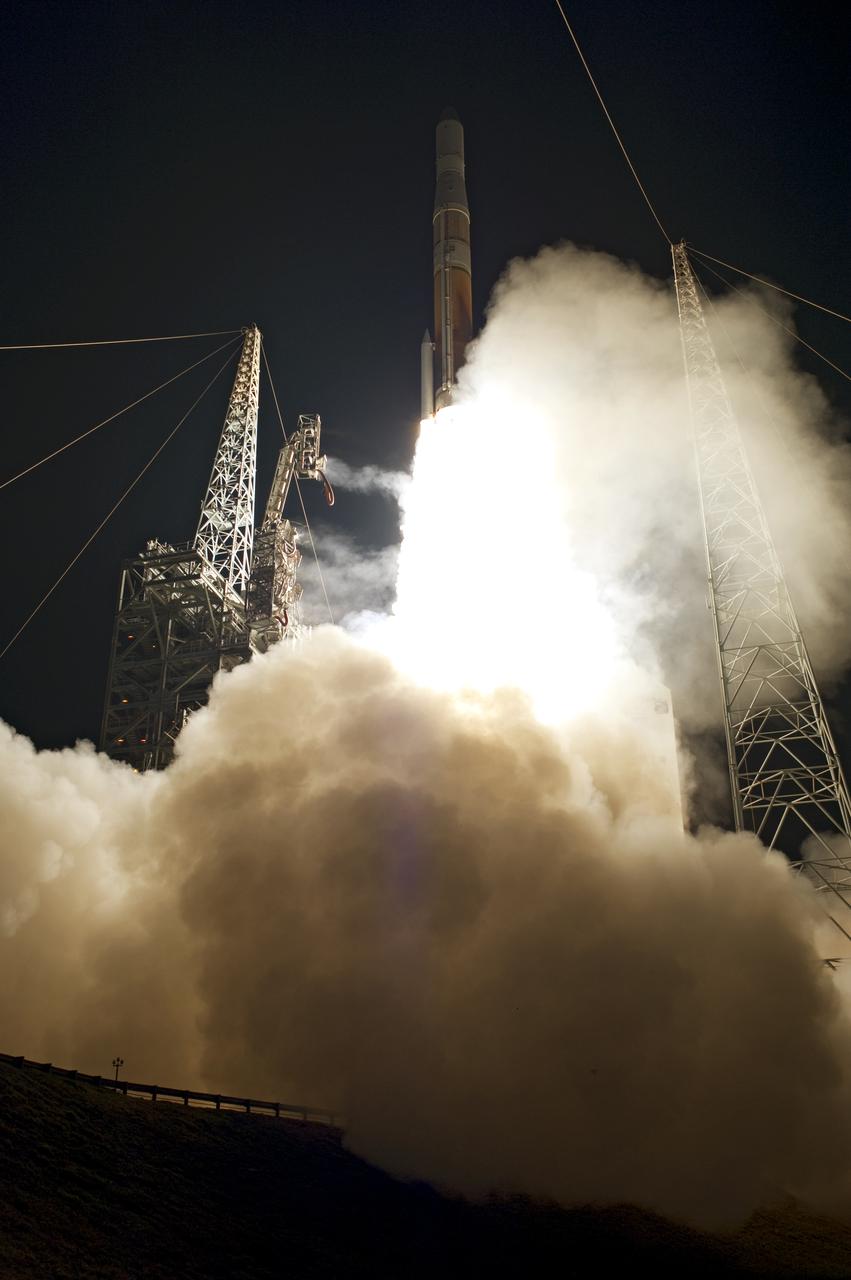
CAPE CANAVERAL, Fla. – A United Launch Alliance Delta IV rocket lifts off between the towers of the lightning protection system at Launch Complex 37 on Cape Canaveral Air Force Station at 6:57 p.m. EST carrying the GOES-P satellite to orbit. GOES-P, the latest Geostationary Operational Environmental Satellite, was developed by NASA for the National Oceanic and Atmospheric Administration, or NOAA. The GOES-P spacecraft will be placed in a 22,300-mile-high geosynchronous orbit where it will appear to hover over a single point on Earth. The spacecraft is outfitted with a complex suite of observation instruments and cameras so it can accurately report on weather and climate conditions on Earth. For information on GOES-P, visit http:__www.nasa.gov_mission_pages_GOES-P_main_index.html. Photo credit: NASA_Sandra Joseph and Tony Gray
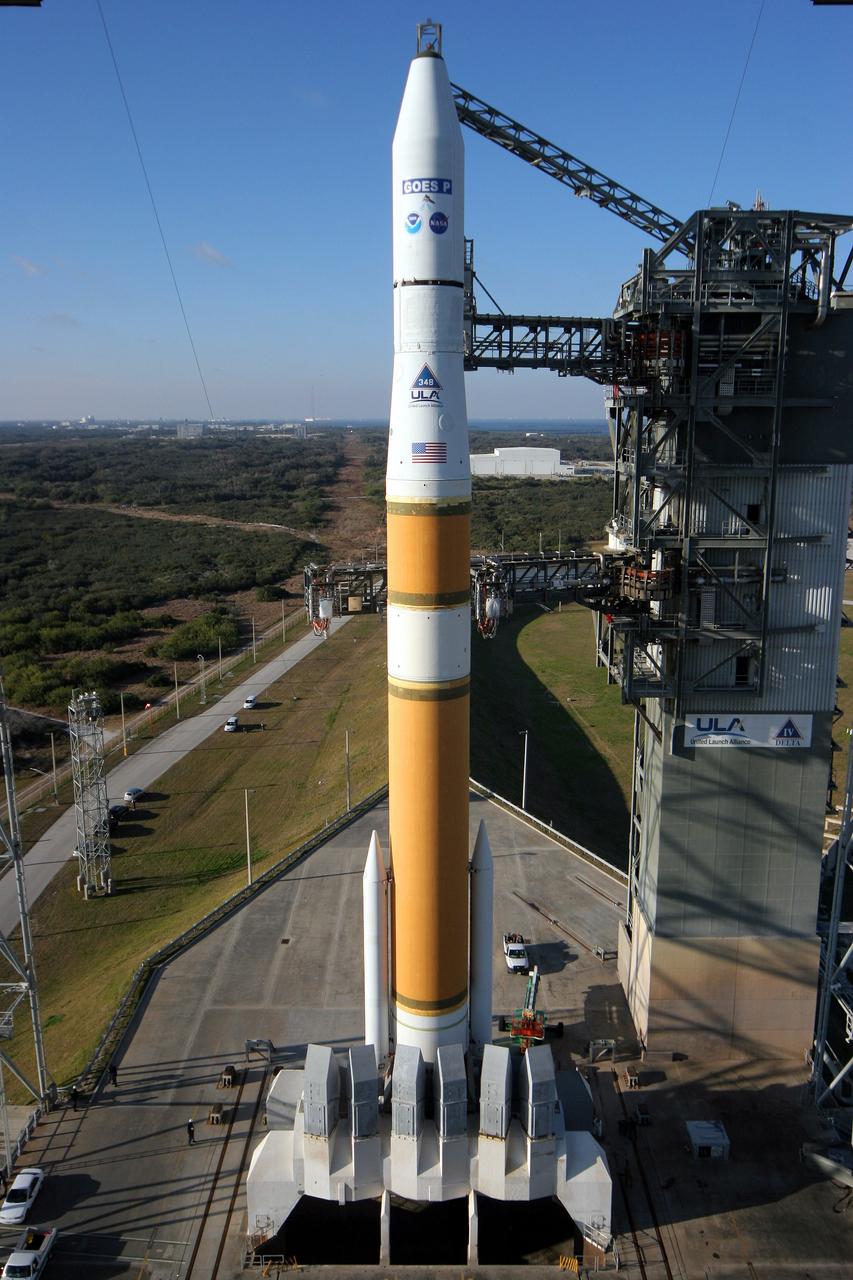
Cape Canaveral AFS, Fla. - A United Launch Alliance Delta IV rocket sits poised on its launch pad with the NASA/NOAA Geostationary Operational Environmental Satellite P (GOES P) at Space Launch Complex-37. GOES P will provide NOAA and NASA scientists with data to support weather, solar and space operations, and will enable future science improvements in weather prediction and remote sensing. Additionally, GOES-P will provide data on global climate changes and capability for search and rescue. Photo credit: Carleton Bailie, The Boeing Company
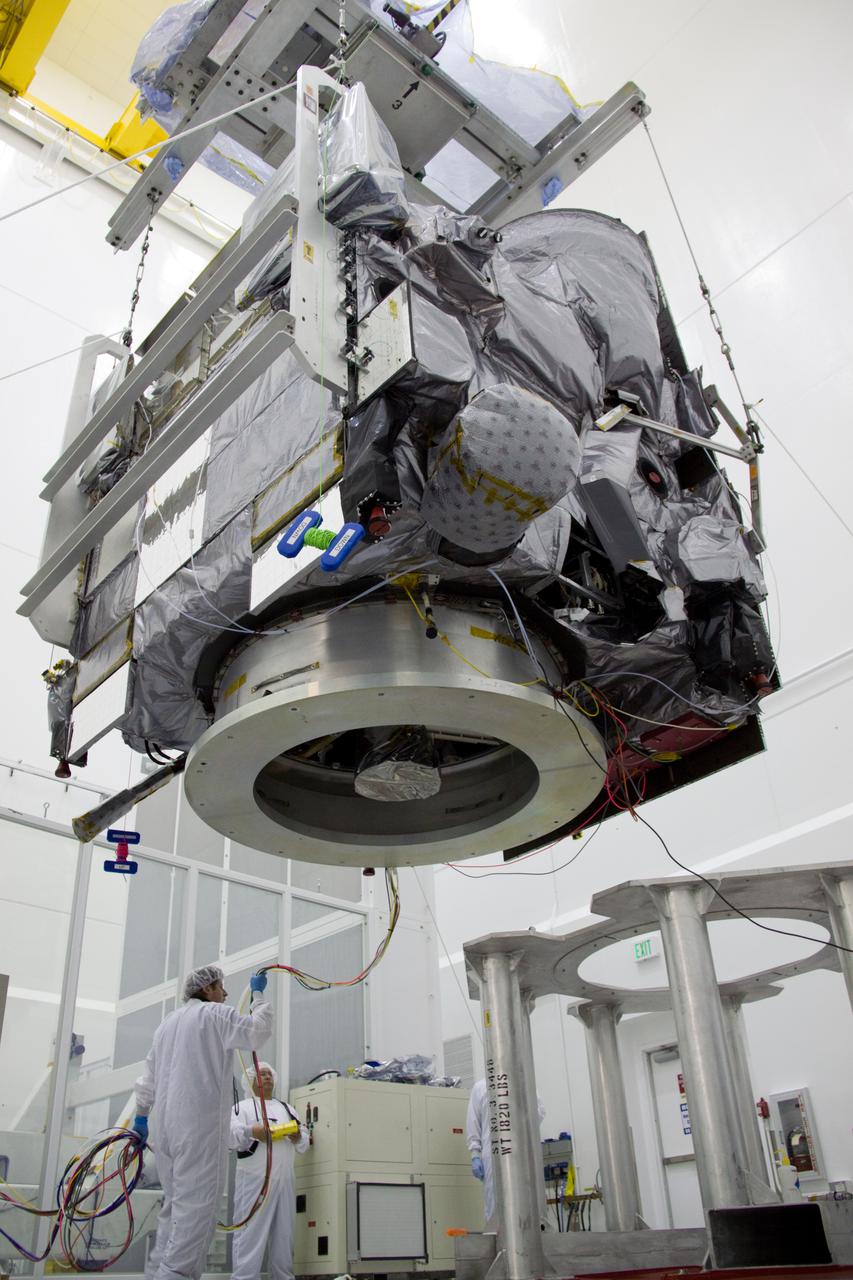
CAPE CANAVERAL, Fla. – At the Astrotech Space Operations facility in Titusville, Fla., NASA's GOES-P meteorological satellite is lifted toward a fueling stand. The spacecraft will be loaded with the propellant necessary for orbit maneuvers and the attitude control system. GOES-P, the latest Geostationary Operational Environmental Satellite, was developed by NASA for the National Oceanic and Atmospheric Administration, or NOAA. GOES-P is designed to watch for storm development and observed current weather conditions on Earth. Launch of GOES-P is targeted for March 1 from Launch Complex 37 aboard a United Launch Alliance Delta IV rocket. For information on GOES-P, visit http:__www.nasa.gov_mission_pages_GOES-P_main_index.html. Photo credit: NASA_Troy Cryder
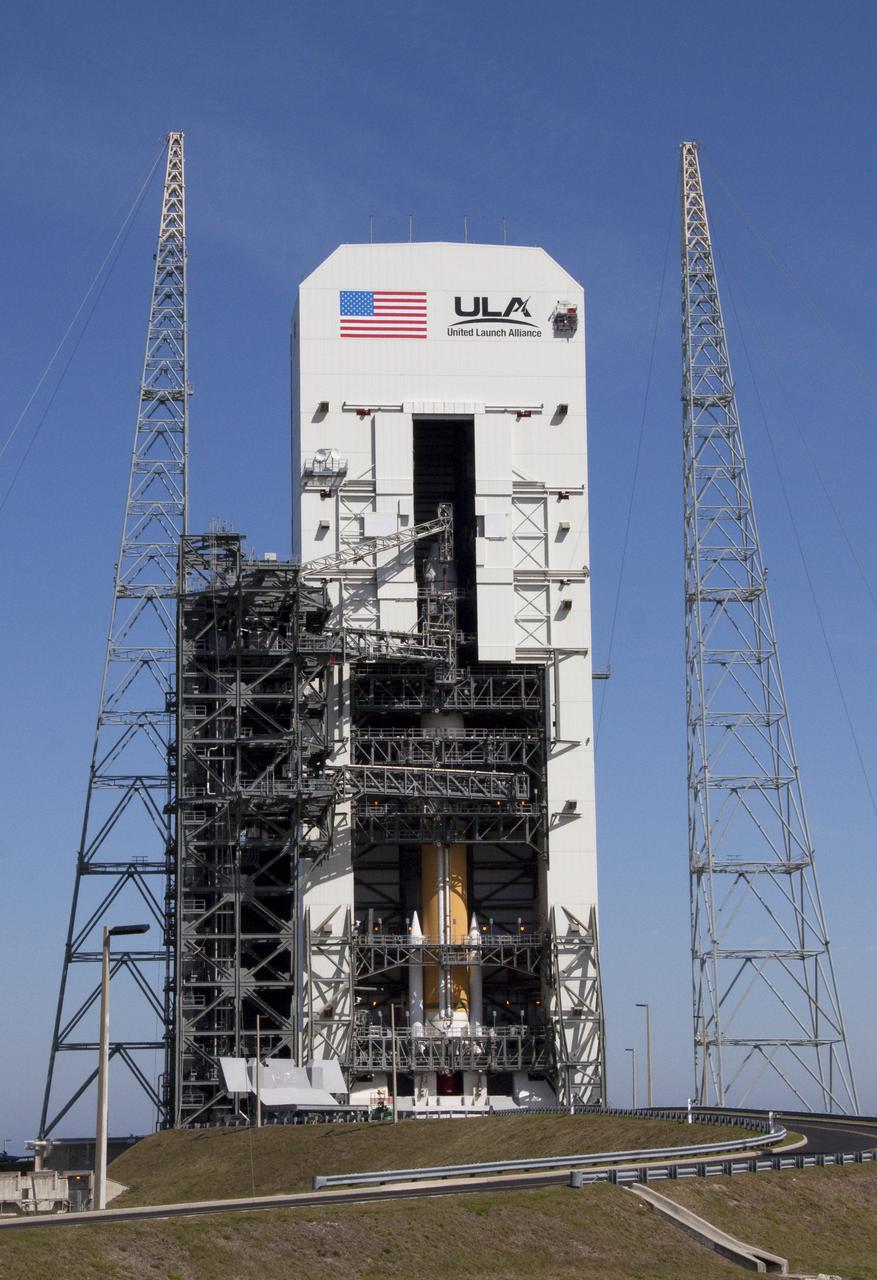
CAPE CANAVERAL, Fla. – NASA's GOES-P meteorological satellite has been installed onto the Delta IV rocket in the mobile service tower at Launch Complex 37 on Cape Canaveral Air Force Station. GOES-P, the latest Geostationary Operational Environmental Satellite, was developed by NASA for the National Oceanic and Atmospheric Administration, or NOAA. GOES-P is designed to watch for storm development and observed current weather conditions on Earth. Launch of GOES-P is targeted for early March aboard a United Launch Alliance Delta IV rocket. For information on GOES-P, visit http:__www.nasa.gov_mission_pages_GOES-P_main_index.html. Photo credit: NASA_Jack Pfaller
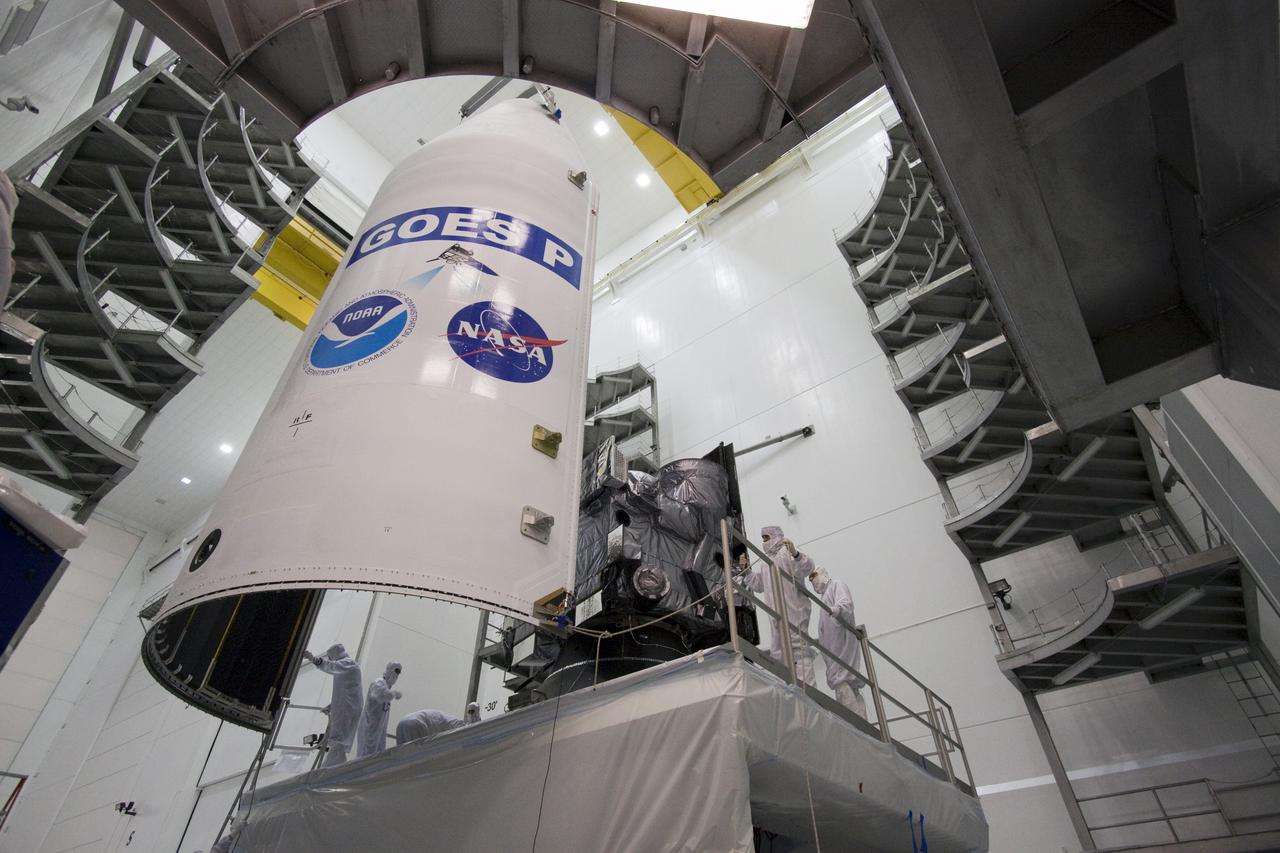
CAPE CANAVERAL, Fla. – At the Astrotech Space Operations facility in Titusville, Fla., spacecraft technicians guide one side of the Delta IV payload fairing that will enclose NASA's GOES-P meteorological satellite around the spacecraft. The fairing is a molded clamshell covering that fits flush with the outside surface of the rocket and forms an aerodynamic nose cone, protecting the spacecraft during launch and ascent. GOES-P, the latest Geostationary Operational Environmental Satellite, was developed by NASA for the National Oceanic and Atmospheric Administration, or NOAA. GOES-P is designed to watch for storm development and observed current weather conditions on Earth. Launch of GOES-P is targeted for March 1 from Launch Complex 37 aboard a United Launch Alliance Delta IV rocket. For information on GOES-P, visit http:__www.nasa.gov_mission_pages_GOES-P_main_index.html. Photo credit: NASA_Jack Pfaller
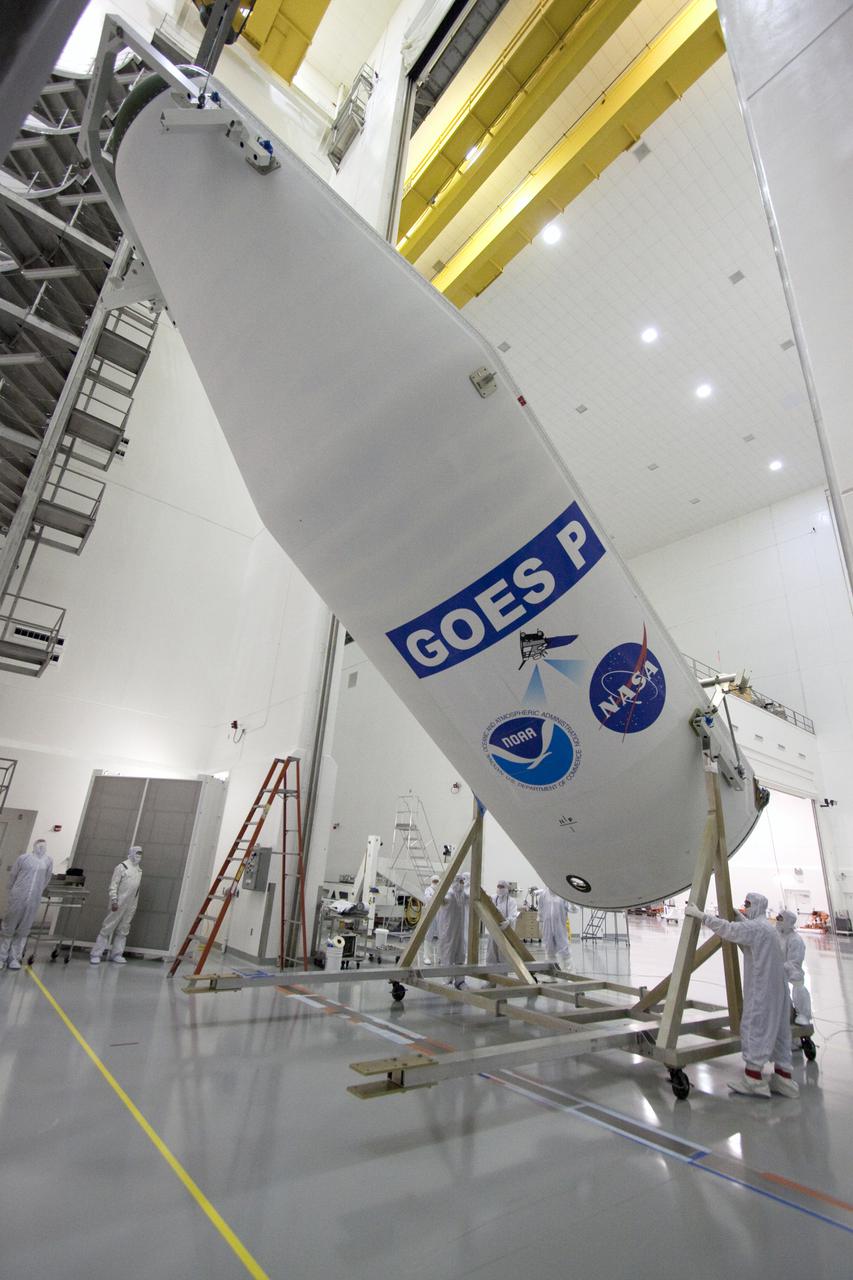
CAPE CANAVERAL, Fla. – At the Astrotech Space Operations facility in Titusville, Fla., one side of the Delta IV payload fairing that will enclose NASA's GOES-P meteorological satellite is raised into a vertical position. The fairing is a molded clamshell covering that fits flush with the outside surface of the rocket and forms an aerodynamic nose cone, protecting the spacecraft during launch and ascent. GOES-P, the latest Geostationary Operational Environmental Satellite, was developed by NASA for the National Oceanic and Atmospheric Administration, or NOAA. GOES-P is designed to watch for storm development and observed current weather conditions on Earth. Launch of GOES-P is targeted for March 1 from Launch Complex 37 aboard a United Launch Alliance Delta IV rocket. For information on GOES-P, visit http:__www.nasa.gov_mission_pages_GOES-P_main_index.html. Photo credit: NASA_Jack Pfaller
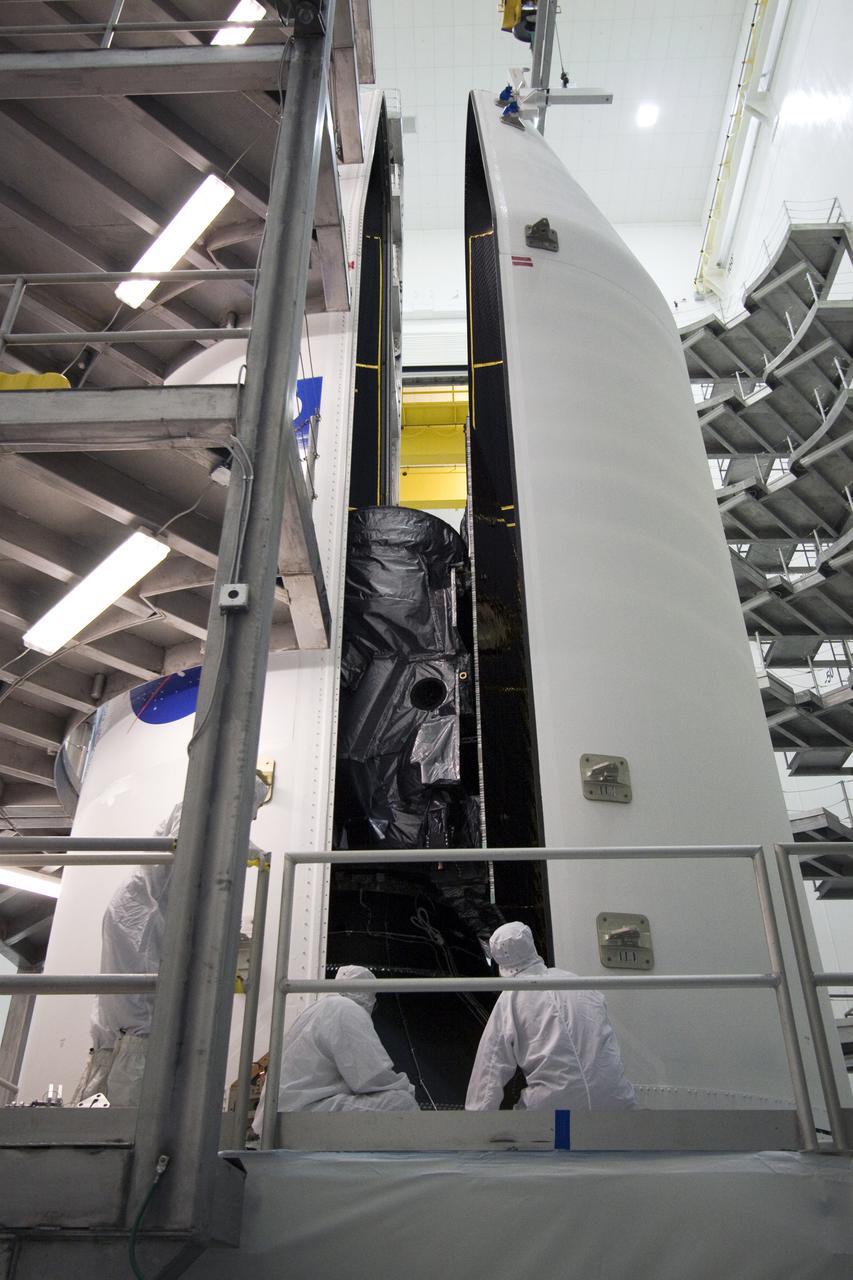
CAPE CANAVERAL, Fla. – At the Astrotech Space Operations facility in Titusville, Fla., spacecraft technicians guide the second half of the Delta IV payload fairing that will enclose NASA's GOES-P meteorological satellite around the spacecraft. The fairing is a molded clamshell covering that fits flush with the outside surface of the rocket and forms an aerodynamic nose cone, protecting the spacecraft during launch and ascent. GOES-P, the latest Geostationary Operational Environmental Satellite, was developed by NASA for the National Oceanic and Atmospheric Administration, or NOAA. GOES-P is designed to watch for storm development and observed current weather conditions on Earth. Launch of GOES-P is targeted for March 1 from Launch Complex 37 aboard a United Launch Alliance Delta IV rocket. For information on GOES-P, visit http:__www.nasa.gov_mission_pages_GOES-P_main_index.html. Photo credit: NASA_Jack Pfaller
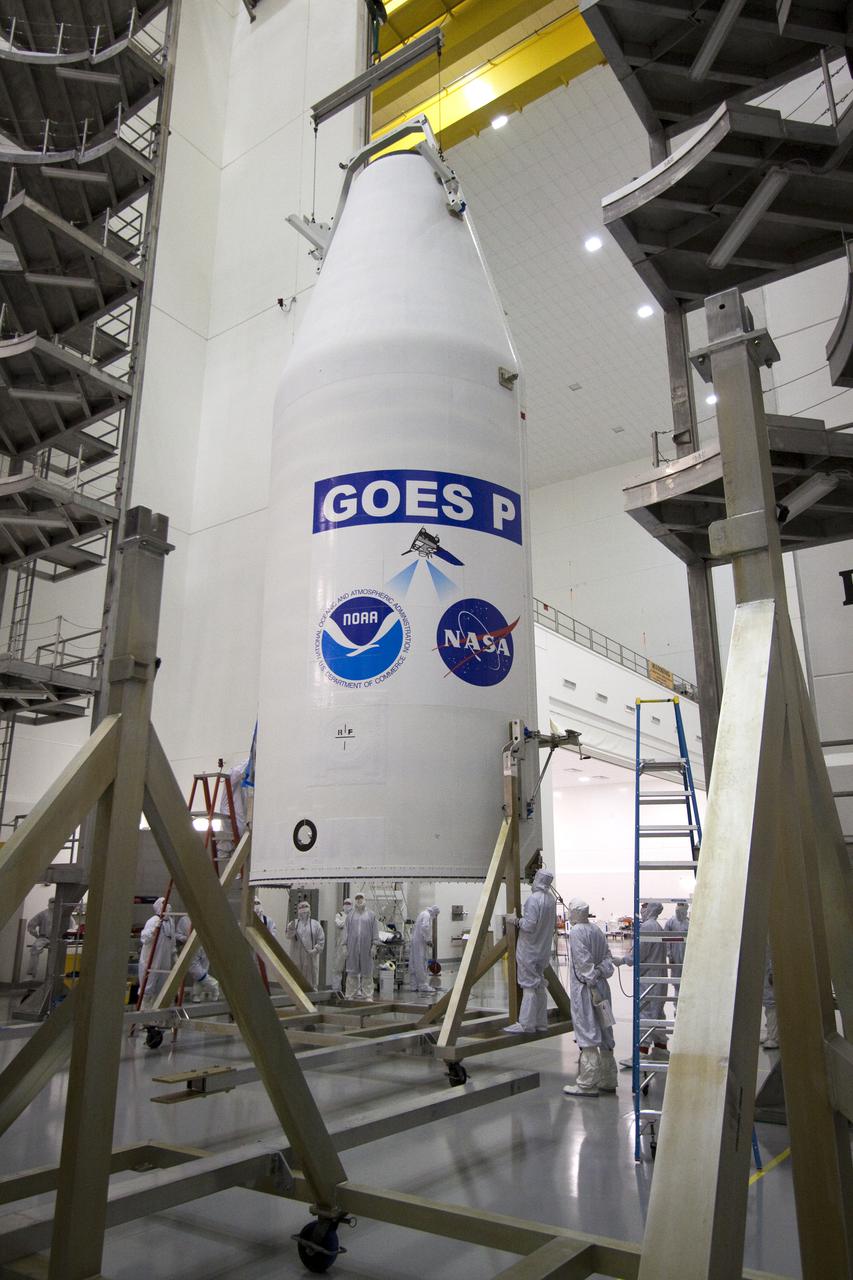
CAPE CANAVERAL, Fla. – At the Astrotech Space Operations facility in Titusville, Fla., preparations are under way to release one side of the Delta IV payload fairing that will enclose NASA's GOES-P meteorological satellite from its work stand. The fairing is a molded clamshell covering that fits flush with the outside surface of the rocket and forms an aerodynamic nose cone, protecting the spacecraft during launch and ascent. GOES-P, the latest Geostationary Operational Environmental Satellite, was developed by NASA for the National Oceanic and Atmospheric Administration, or NOAA. GOES-P is designed to watch for storm development and observed current weather conditions on Earth. Launch of GOES-P is targeted for March 1 from Launch Complex 37 aboard a United Launch Alliance Delta IV rocket. For information on GOES-P, visit http:__www.nasa.gov_mission_pages_GOES-P_main_index.html. Photo credit: NASA_Jack Pfaller
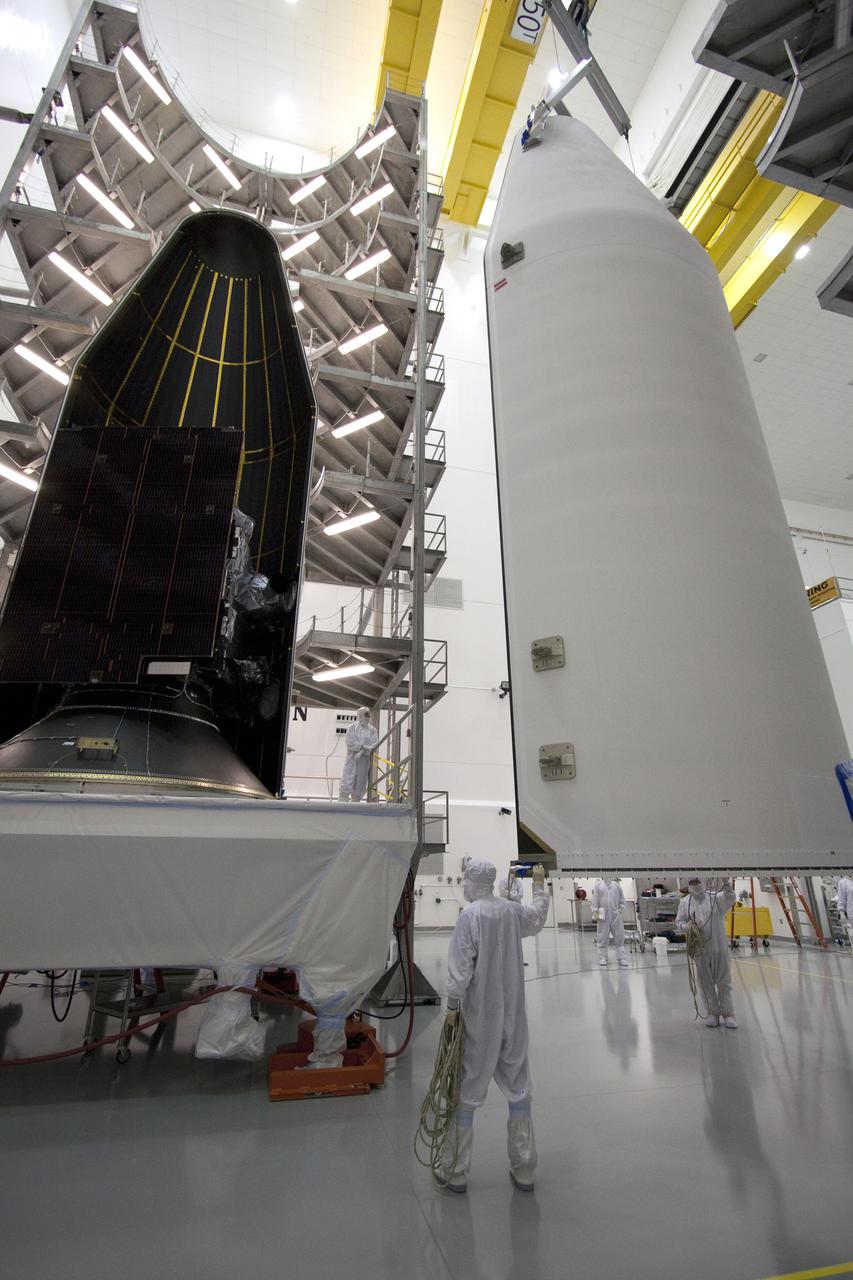
CAPE CANAVERAL, Fla. – At the Astrotech Space Operations facility in Titusville, Fla., the second half of the Delta IV payload fairing that will enclose NASA's GOES-P meteorological satellite is lifted toward the spacecraft. The fairing is a molded clamshell covering that fits flush with the outside surface of the rocket and forms an aerodynamic nose cone, protecting the spacecraft during launch and ascent. GOES-P, the latest Geostationary Operational Environmental Satellite, was developed by NASA for the National Oceanic and Atmospheric Administration, or NOAA. GOES-P is designed to watch for storm development and observed current weather conditions on Earth. Launch of GOES-P is targeted for March 1 from Launch Complex 37 aboard a United Launch Alliance Delta IV rocket. For information on GOES-P, visit http:__www.nasa.gov_mission_pages_GOES-P_main_index.html. Photo credit: NASA_Jack Pfaller
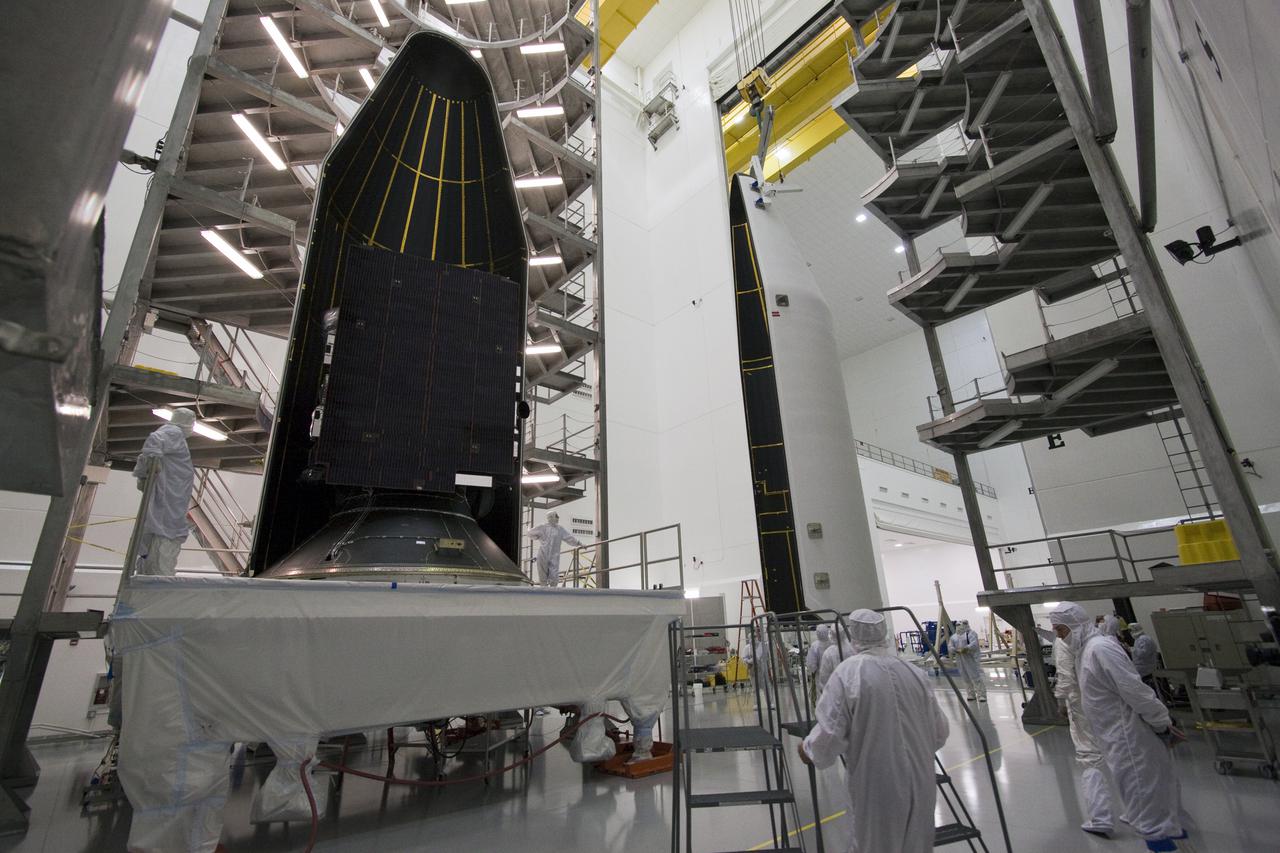
CAPE CANAVERAL, Fla. – At the Astrotech Space Operations facility in Titusville, Fla., preparations are under way to enclose NASA's GOES-P meteorological satellite into the second half of the Delta IV payload fairing. The fairing is a molded clamshell covering that fits flush with the outside surface of the rocket and forms an aerodynamic nose cone, protecting the spacecraft during launch and ascent. GOES-P, the latest Geostationary Operational Environmental Satellite, was developed by NASA for the National Oceanic and Atmospheric Administration, or NOAA. GOES-P is designed to watch for storm development and observed current weather conditions on Earth. Launch of GOES-P is targeted for March 1 from Launch Complex 37 aboard a United Launch Alliance Delta IV rocket. For information on GOES-P, visit http:__www.nasa.gov_mission_pages_GOES-P_main_index.html. Photo credit: NASA_Jack Pfaller
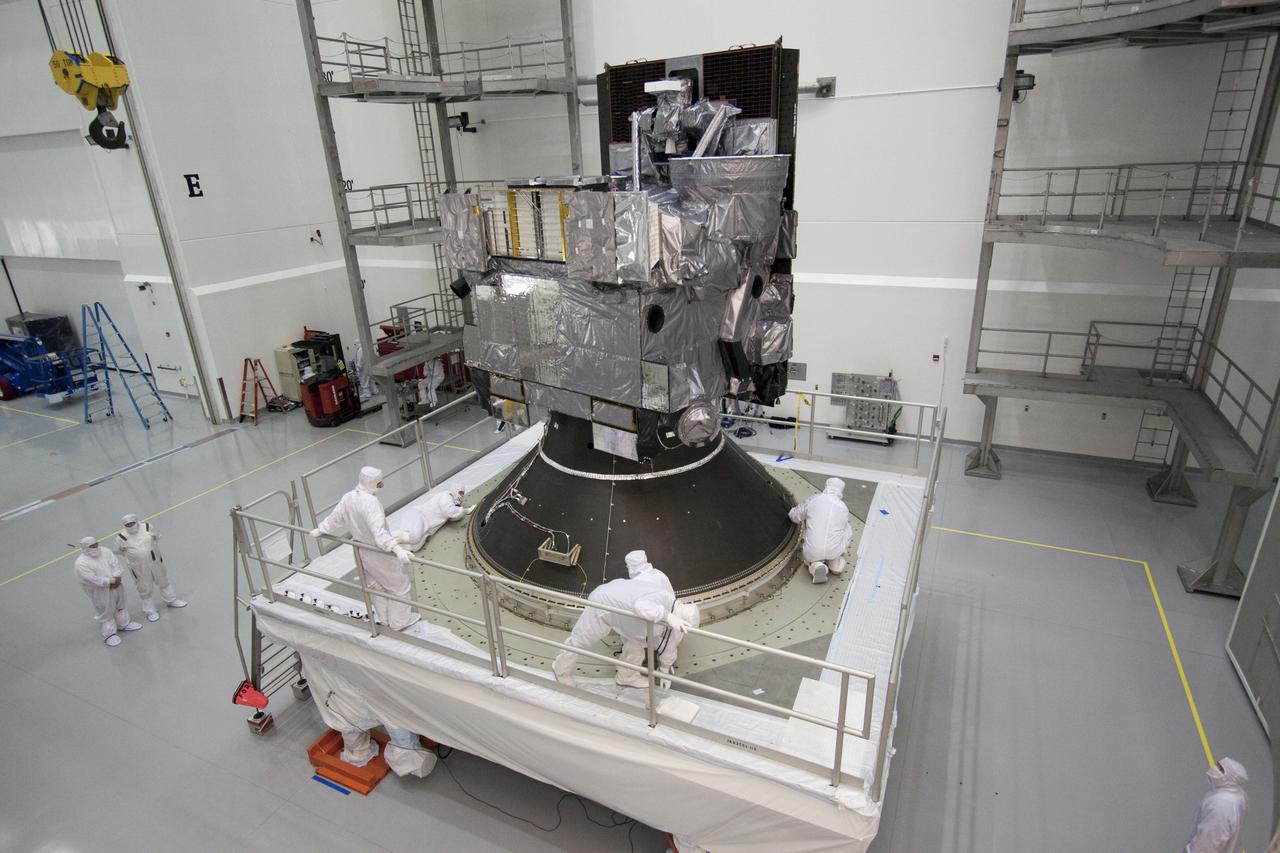
CAPE CANAVERAL, Fla. – At the Astrotech Space Operations facility in Titusville, Fla., preparations are under way to enclose NASA's GOES-P meteorological satellite in the Delta IV payload fairing. The fairing is a molded clamshell covering that fits flush with the outside surface of the rocket and forms an aerodynamic nose cone, protecting the spacecraft during launch and ascent. GOES-P, the latest Geostationary Operational Environmental Satellite, was developed by NASA for the National Oceanic and Atmospheric Administration, or NOAA. GOES-P is designed to watch for storm development and observed current weather conditions on Earth. Launch of GOES-P is targeted for March 1 from Launch Complex 37 aboard a United Launch Alliance Delta IV rocket. For information on GOES-P, visit http:__www.nasa.gov_mission_pages_GOES-P_main_index.html. Photo credit: NASA_Jack Pfaller
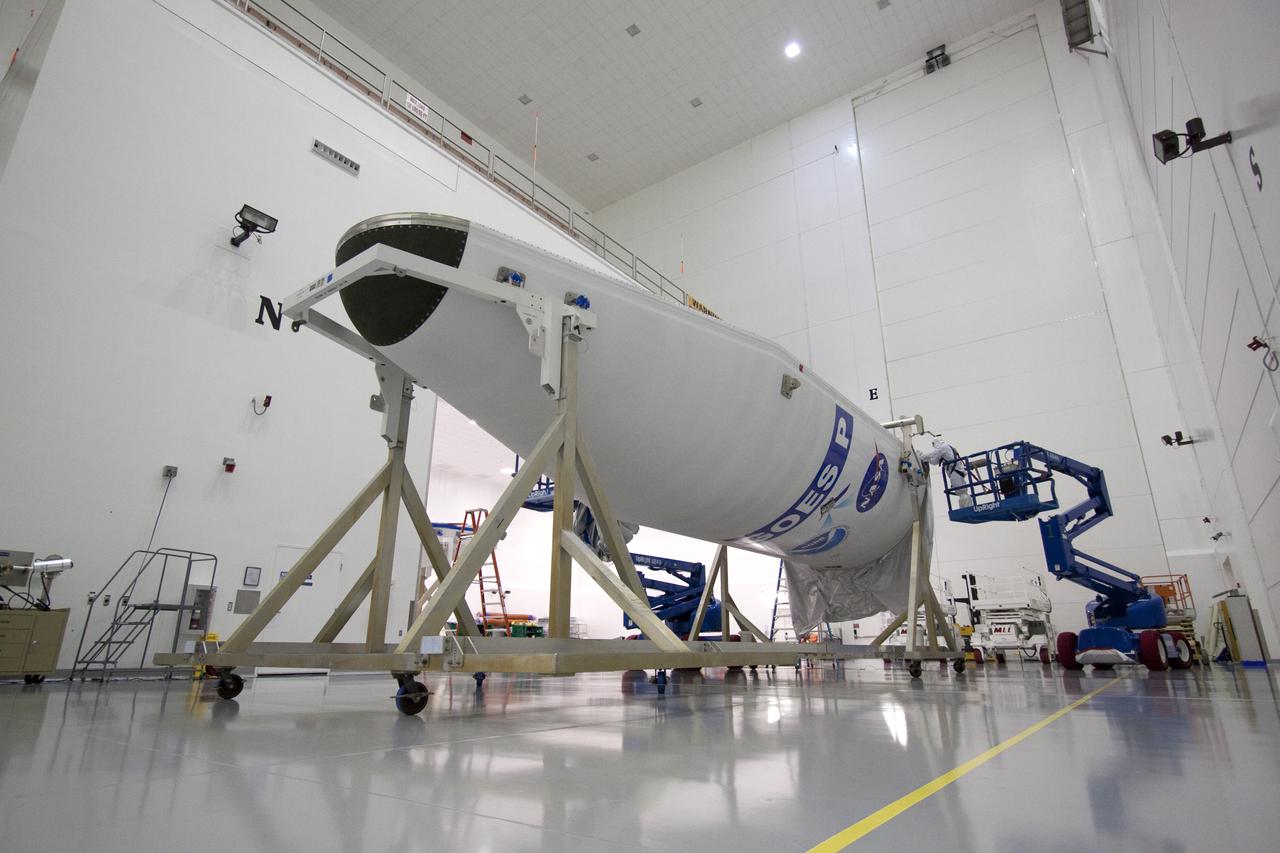
CAPE CANAVERAL, Fla. – At the Astrotech Space Operations facility in Titusville, Fla., the finishing touches are made to one side of the Delta IV payload fairing that will enclose NASA's GOES-P meteorological satellite. The fairing is a molded clamshell covering that fits flush with the outside surface of the rocket and forms an aerodynamic nose cone, protecting the spacecraft during launch and ascent. GOES-P, the latest Geostationary Operational Environmental Satellite, was developed by NASA for the National Oceanic and Atmospheric Administration, or NOAA. GOES-P is designed to watch for storm development and observed current weather conditions on Earth. Launch of GOES-P is targeted for March 1 from Launch Complex 37 aboard a United Launch Alliance Delta IV rocket. For information on GOES-P, visit http:__www.nasa.gov_mission_pages_GOES-P_main_index.html. Photo credit: NASA_Jack Pfaller
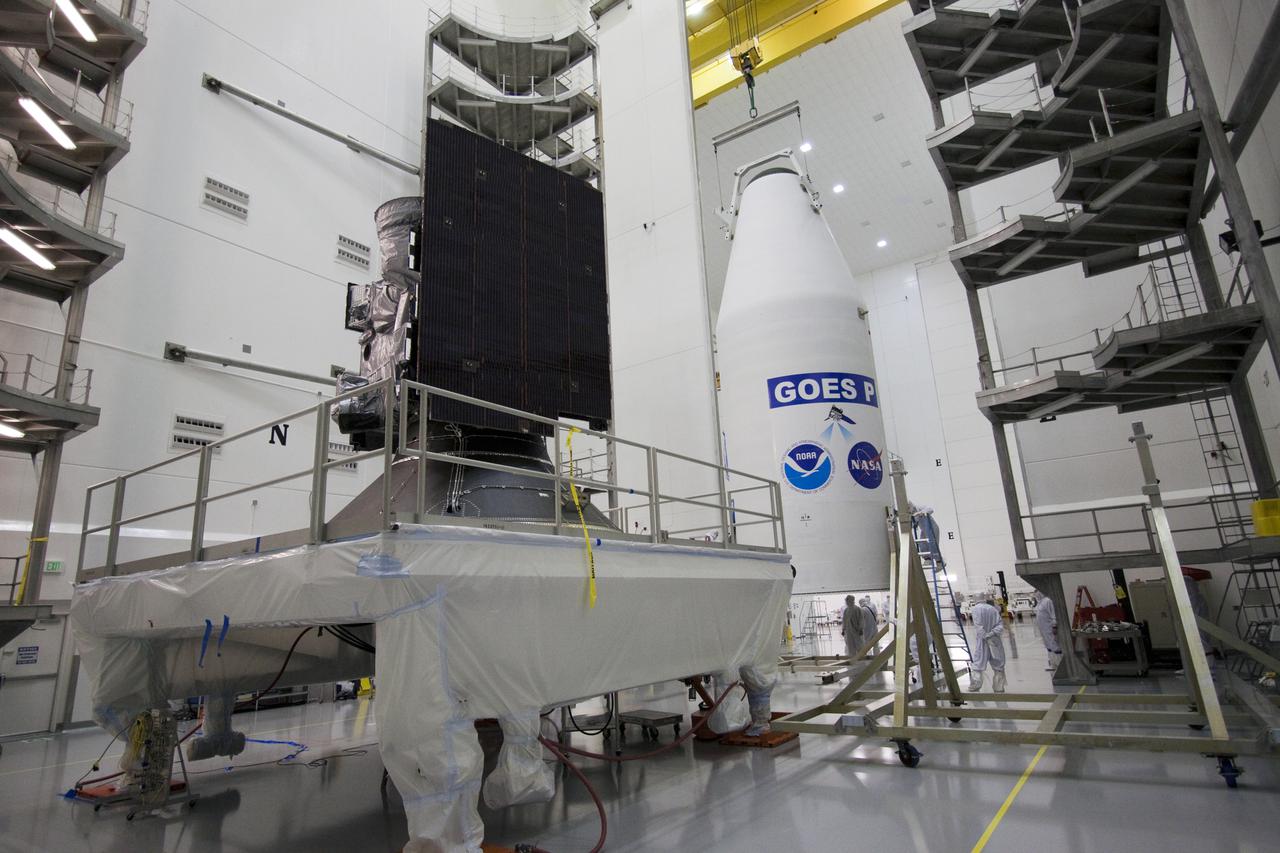
CAPE CANAVERAL, Fla. – At the Astrotech Space Operations facility in Titusville, Fla., NASA's GOES-P meteorological satellite is ready for encapsulation into one side of the Delta IV payload fairing. The fairing is a molded clamshell covering that fits flush with the outside surface of the rocket and forms an aerodynamic nose cone, protecting the spacecraft during launch and ascent. GOES-P, the latest Geostationary Operational Environmental Satellite, was developed by NASA for the National Oceanic and Atmospheric Administration, or NOAA. GOES-P is designed to watch for storm development and observed current weather conditions on Earth. Launch of GOES-P is targeted for March 1 from Launch Complex 37 aboard a United Launch Alliance Delta IV rocket. For information on GOES-P, visit http:__www.nasa.gov_mission_pages_GOES-P_main_index.html. Photo credit: NASA_Jack Pfaller
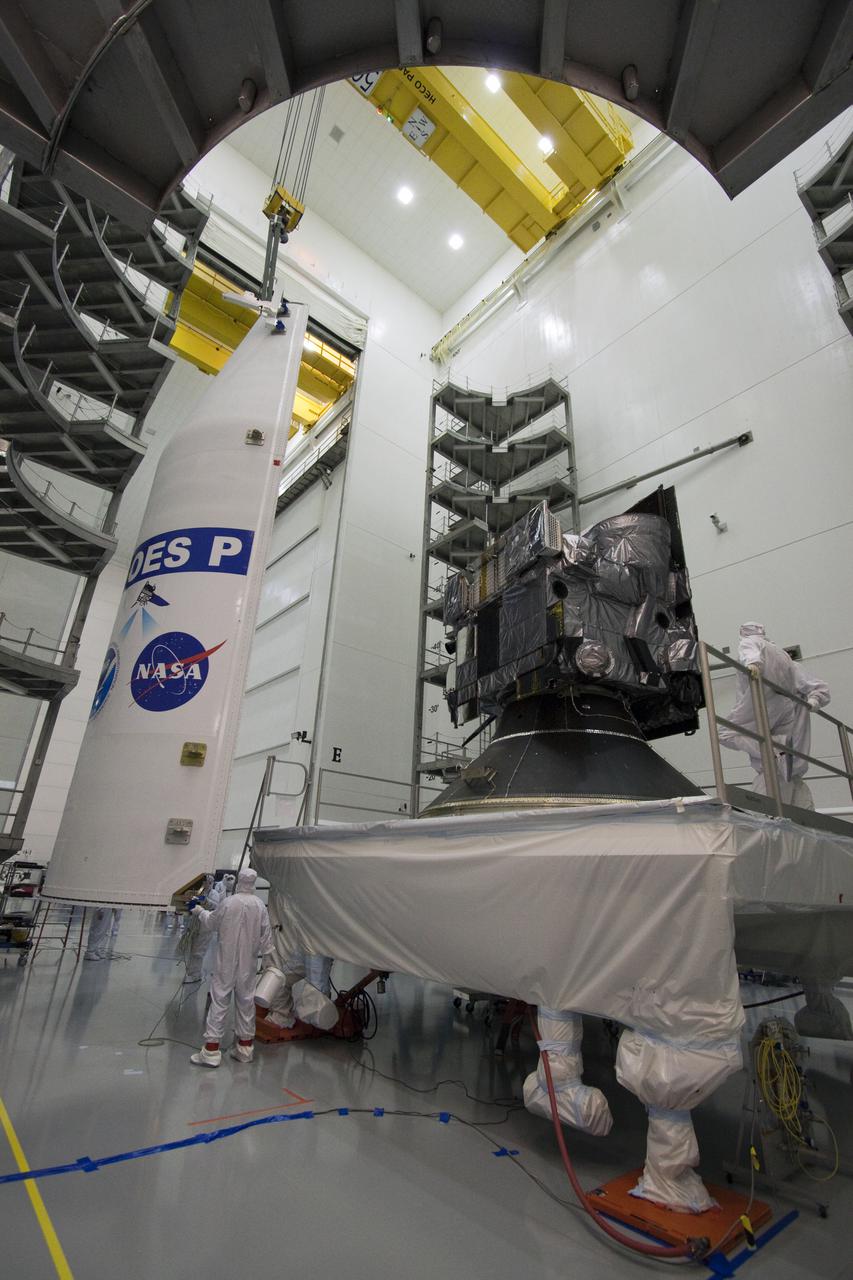
CAPE CANAVERAL, Fla. – At the Astrotech Space Operations facility in Titusville, Fla., one side of the Delta IV payload fairing that will enclose NASA's GOES-P meteorological satellite glides toward the spacecraft. The fairing is a molded clamshell covering that fits flush with the outside surface of the rocket and forms an aerodynamic nose cone, protecting the spacecraft during launch and ascent. GOES-P, the latest Geostationary Operational Environmental Satellite, was developed by NASA for the National Oceanic and Atmospheric Administration, or NOAA. GOES-P is designed to watch for storm development and observed current weather conditions on Earth. Launch of GOES-P is targeted for March 1 from Launch Complex 37 aboard a United Launch Alliance Delta IV rocket. For information on GOES-P, visit http:__www.nasa.gov_mission_pages_GOES-P_main_index.html. Photo credit: NASA_Jack Pfaller
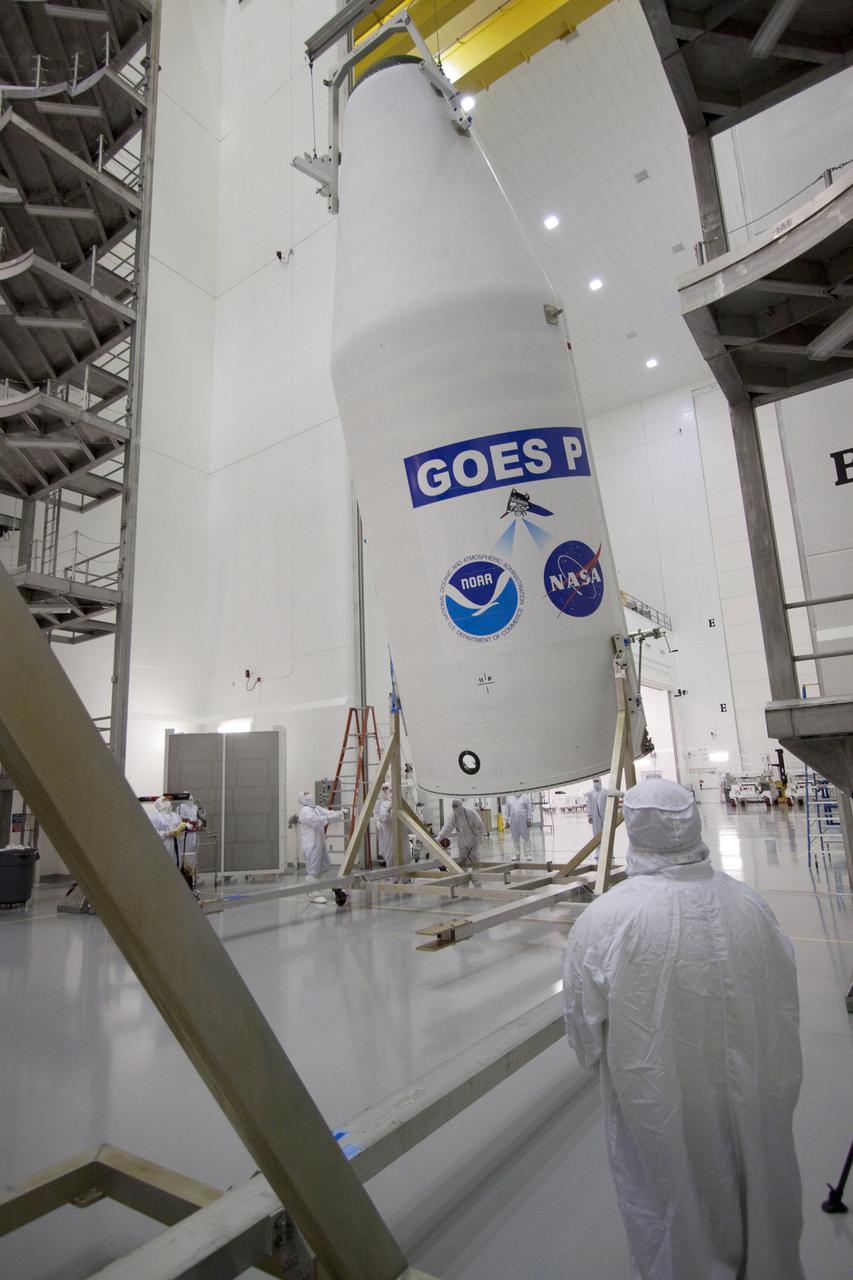
CAPE CANAVERAL, Fla. – At the Astrotech Space Operations facility in Titusville, Fla., one side of the Delta IV payload fairing that will enclose NASA's GOES-P meteorological satellite is lifted into an upright position. The fairing is a molded clamshell covering that fits flush with the outside surface of the rocket and forms an aerodynamic nose cone, protecting the spacecraft during launch and ascent. GOES-P, the latest Geostationary Operational Environmental Satellite, was developed by NASA for the National Oceanic and Atmospheric Administration, or NOAA. GOES-P is designed to watch for storm development and observed current weather conditions on Earth. Launch of GOES-P is targeted for March 1 from Launch Complex 37 aboard a United Launch Alliance Delta IV rocket. For information on GOES-P, visit http:__www.nasa.gov_mission_pages_GOES-P_main_index.html. Photo credit: NASA_Jack Pfaller
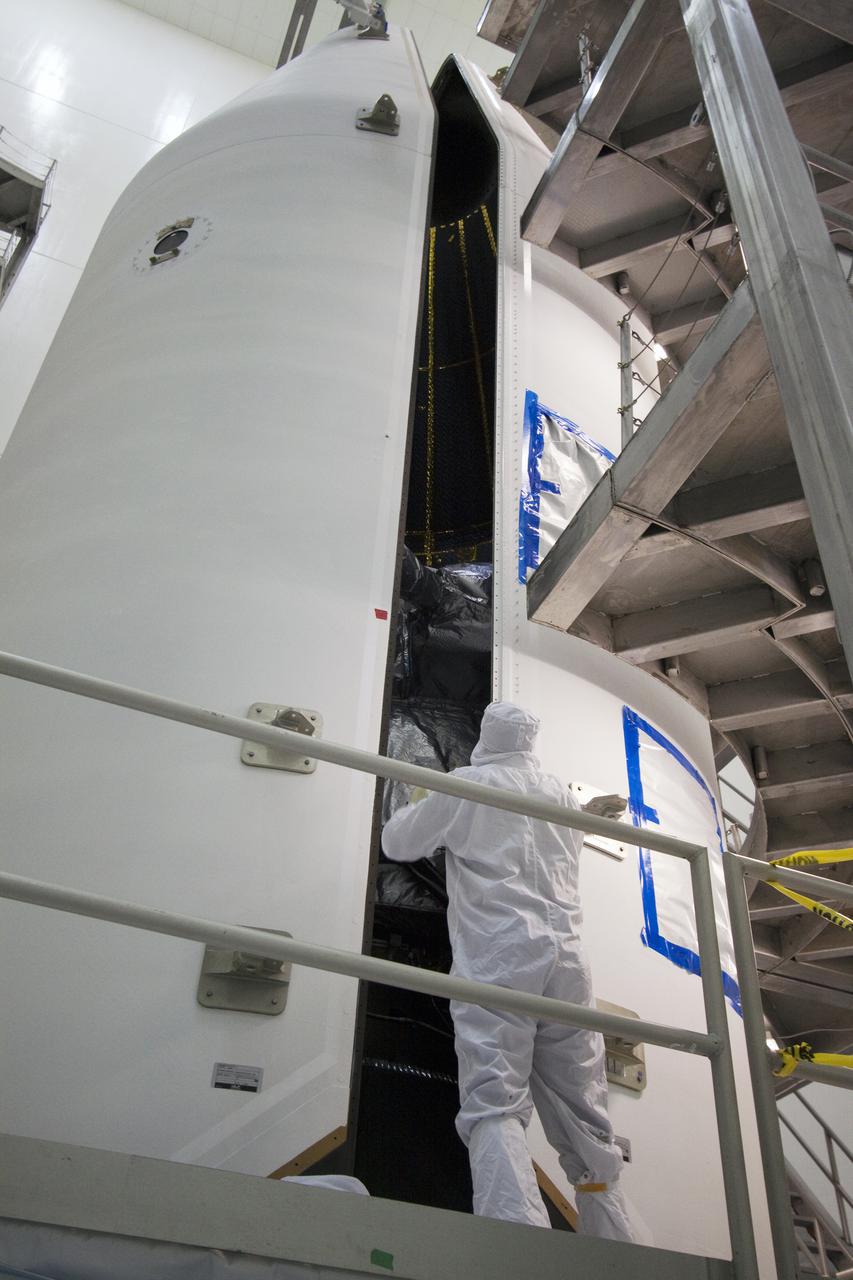
CAPE CANAVERAL, Fla. – At the Astrotech Space Operations facility in Titusville, Fla., spacecraft technicians close the second half of the Delta IV payload fairing around NASA's GOES-P meteorological satellite. The fairing is a molded clamshell covering that fits flush with the outside surface of the rocket and forms an aerodynamic nose cone, protecting the spacecraft during launch and ascent. GOES-P, the latest Geostationary Operational Environmental Satellite, was developed by NASA for the National Oceanic and Atmospheric Administration, or NOAA. GOES-P is designed to watch for storm development and observed current weather conditions on Earth. Launch of GOES-P is targeted for March 1 from Launch Complex 37 aboard a United Launch Alliance Delta IV rocket. For information on GOES-P, visit http:__www.nasa.gov_mission_pages_GOES-P_main_index.html. Photo credit: NASA_Jack Pfaller
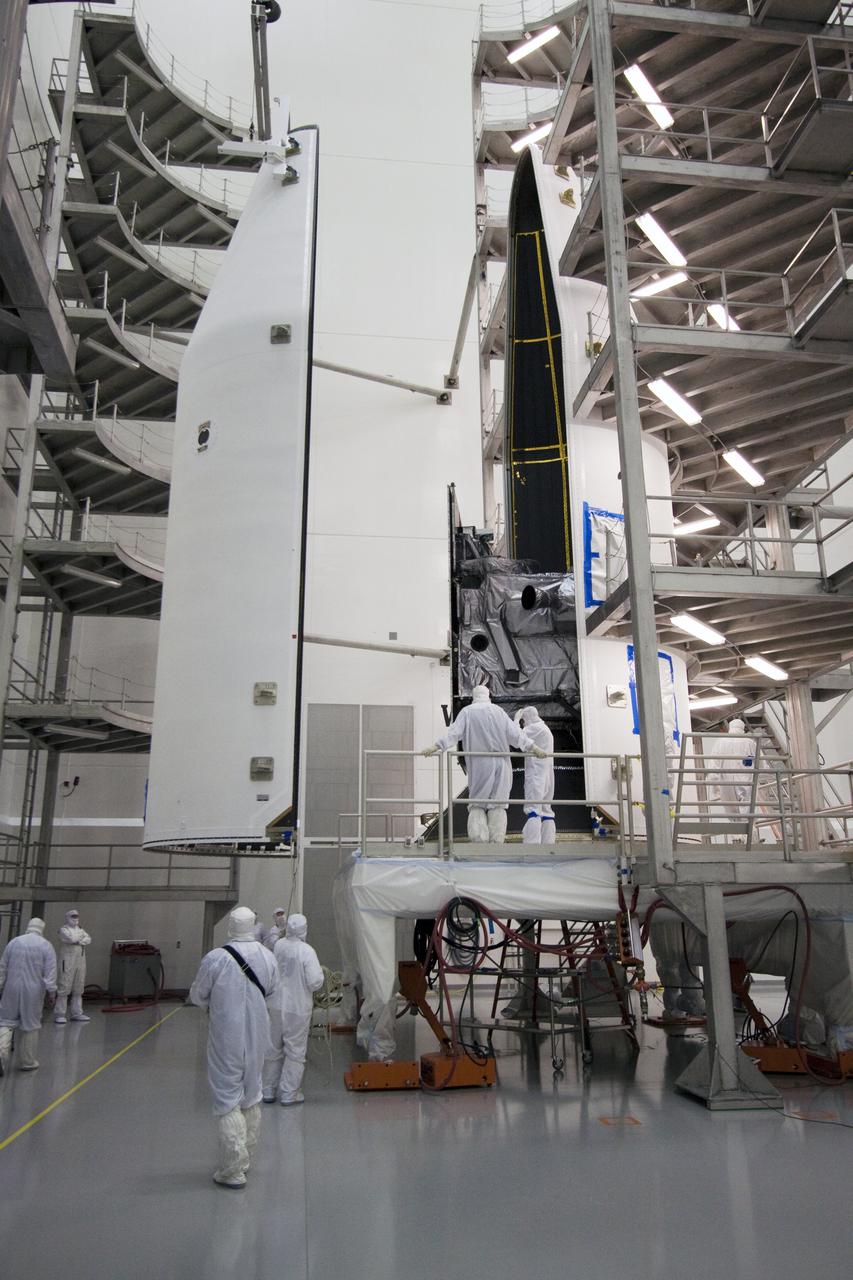
CAPE CANAVERAL, Fla. – At the Astrotech Space Operations facility in Titusville, Fla., the second half of the Delta IV payload fairing that will enclose NASA's GOES-P meteorological satellite glides toward the spacecraft. The fairing is a molded clamshell covering that fits flush with the outside surface of the rocket and forms an aerodynamic nose cone, protecting the spacecraft during launch and ascent. GOES-P, the latest Geostationary Operational Environmental Satellite, was developed by NASA for the National Oceanic and Atmospheric Administration, or NOAA. GOES-P is designed to watch for storm development and observed current weather conditions on Earth. Launch of GOES-P is targeted for March 1 from Launch Complex 37 aboard a United Launch Alliance Delta IV rocket. For information on GOES-P, visit http:__www.nasa.gov_mission_pages_GOES-P_main_index.html. Photo credit: NASA_Jack Pfaller
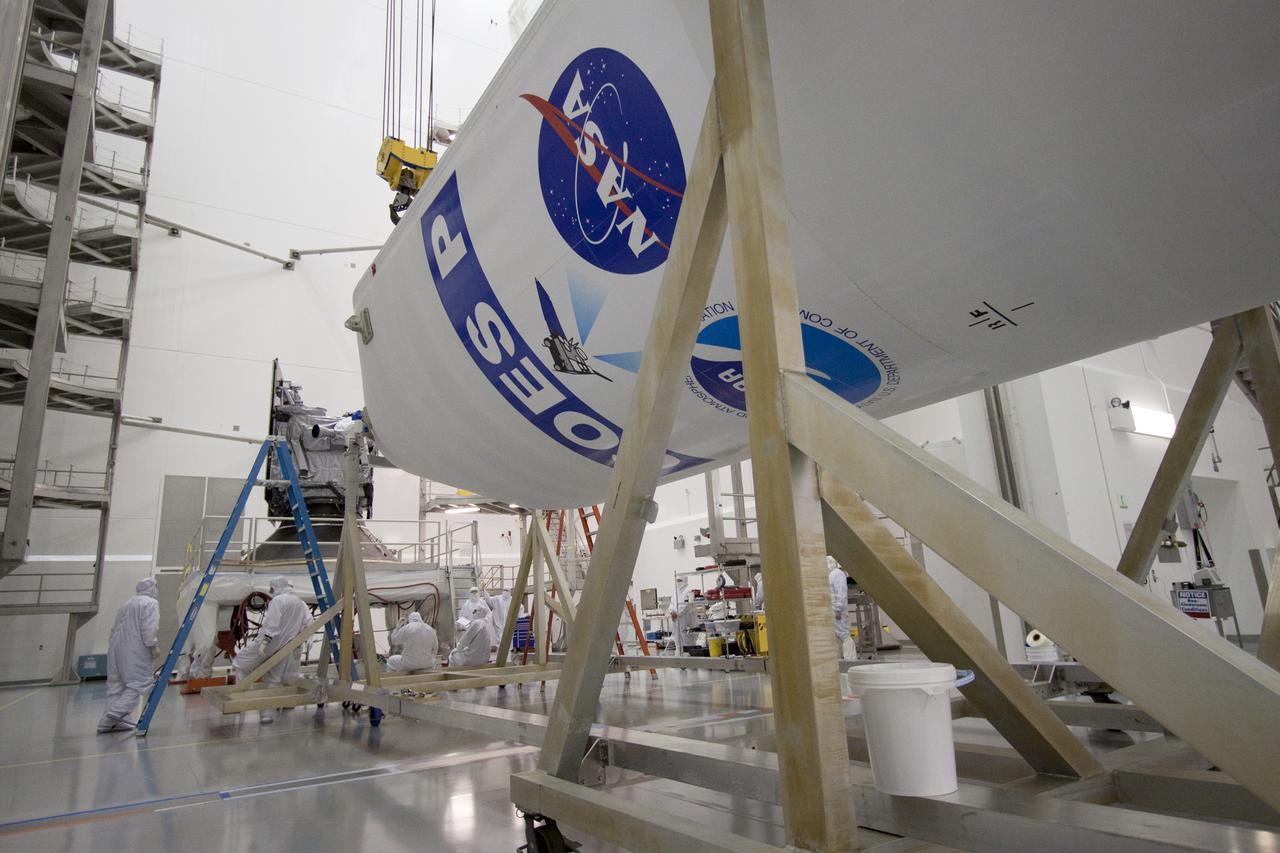
CAPE CANAVERAL, Fla. – At the Astrotech Space Operations facility in Titusville, Fla., spacecraft technicians prepare to attach half of the Delta IV payload fairing that will enclose NASA's GOES-P meteorological satellite to a lifting device. The fairing is a molded clamshell covering that fits flush with the outside surface of the rocket and forms an aerodynamic nose cone, protecting the spacecraft during launch and ascent. GOES-P, the latest Geostationary Operational Environmental Satellite, was developed by NASA for the National Oceanic and Atmospheric Administration, or NOAA. GOES-P is designed to watch for storm development and observed current weather conditions on Earth. Launch of GOES-P is targeted for March 1 from Launch Complex 37 aboard a United Launch Alliance Delta IV rocket. For information on GOES-P, visit http:__www.nasa.gov_mission_pages_GOES-P_main_index.html. Photo credit: NASA_Jack Pfaller
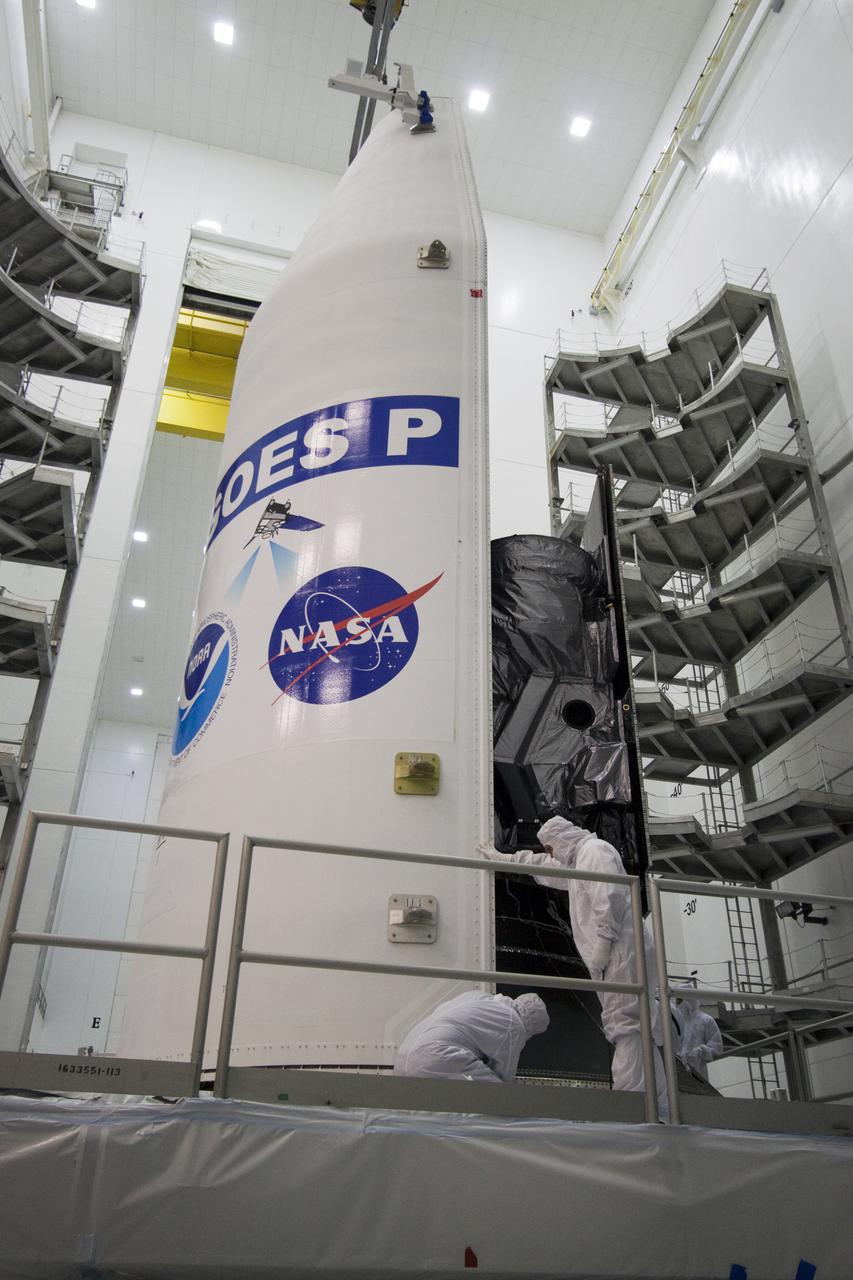
CAPE CANAVERAL, Fla. – At the Astrotech Space Operations facility in Titusville, Fla., spacecraft technicians secure one side of the Delta IV payload fairing around NASA's GOES-P meteorological satellite. The fairing is a molded clamshell covering that fits flush with the outside surface of the rocket and forms an aerodynamic nose cone, protecting the spacecraft during launch and ascent. GOES-P, the latest Geostationary Operational Environmental Satellite, was developed by NASA for the National Oceanic and Atmospheric Administration, or NOAA. GOES-P is designed to watch for storm development and observed current weather conditions on Earth. Launch of GOES-P is targeted for March 1 from Launch Complex 37 aboard a United Launch Alliance Delta IV rocket. For information on GOES-P, visit http:__www.nasa.gov_mission_pages_GOES-P_main_index.html. Photo credit: NASA_Jack Pfaller
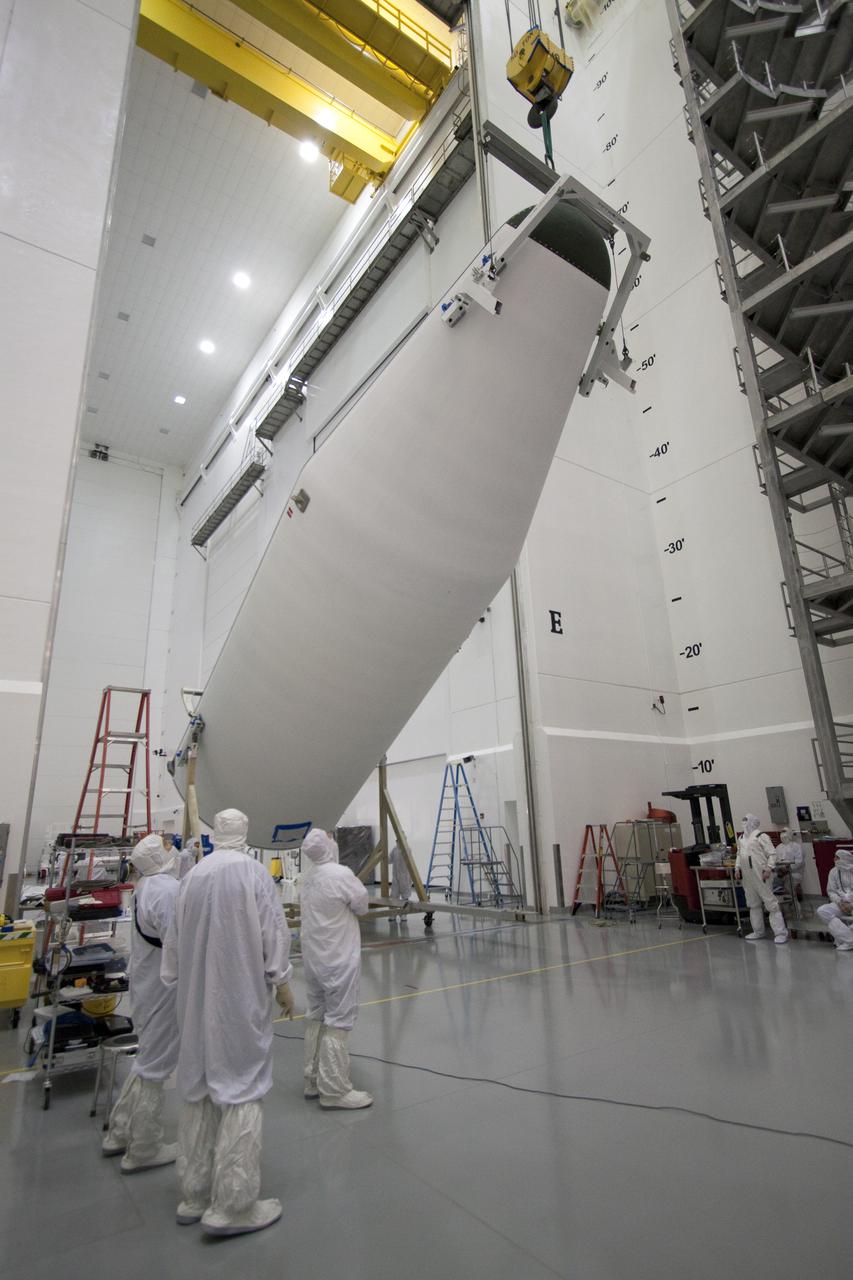
CAPE CANAVERAL, Fla. – At the Astrotech Space Operations facility in Titusville, Fla., the second half of the Delta IV payload fairing that will enclose NASA's GOES-P meteorological satellite is raised into a vertical position. The fairing is a molded clamshell covering that fits flush with the outside surface of the rocket and forms an aerodynamic nose cone, protecting the spacecraft during launch and ascent. GOES-P, the latest Geostationary Operational Environmental Satellite, was developed by NASA for the National Oceanic and Atmospheric Administration, or NOAA. GOES-P is designed to watch for storm development and observed current weather conditions on Earth. Launch of GOES-P is targeted for March 1 from Launch Complex 37 aboard a United Launch Alliance Delta IV rocket. For information on GOES-P, visit http:__www.nasa.gov_mission_pages_GOES-P_main_index.html. Photo credit: NASA_Jack Pfaller
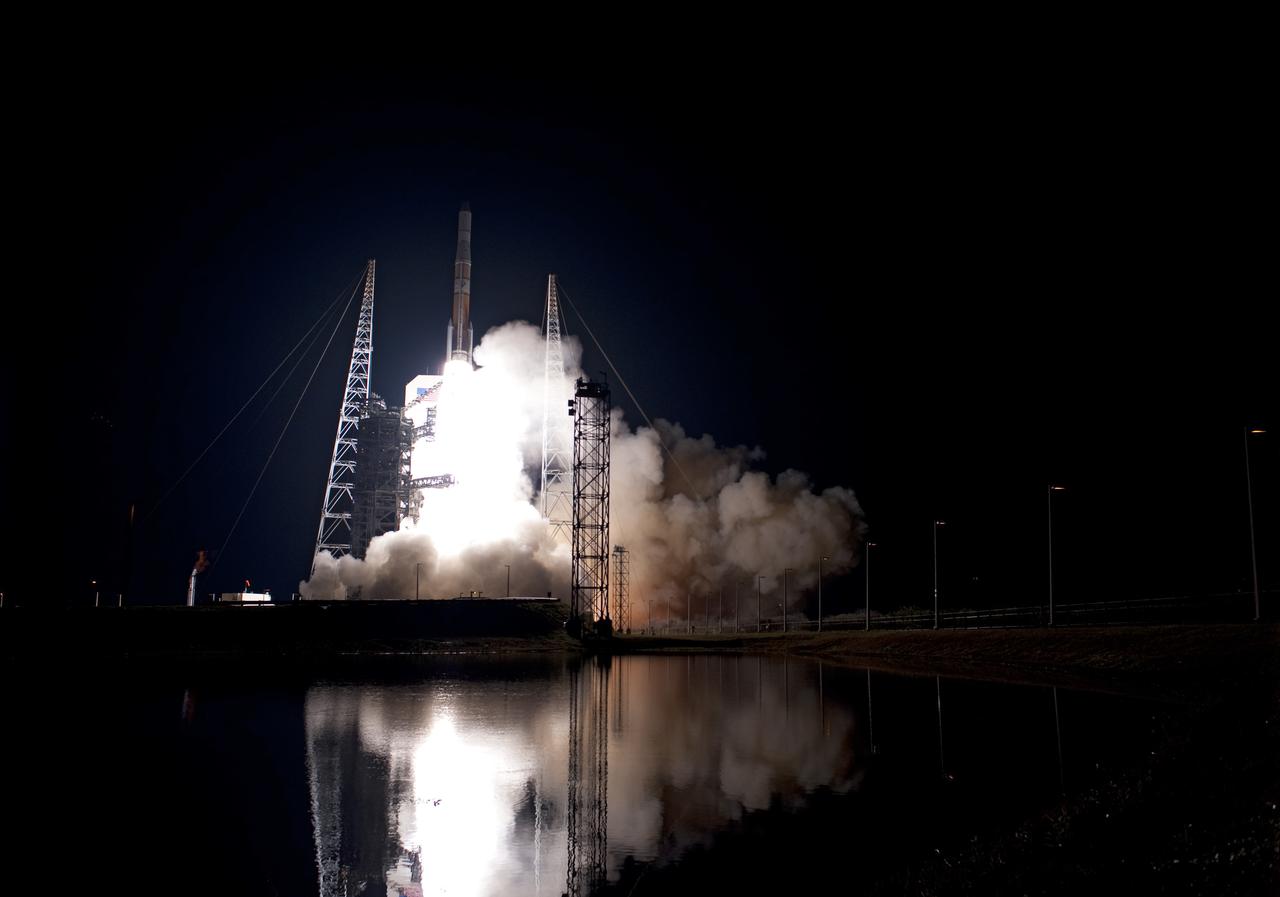
CAPE CANAVERAL, Fla. – Launch of the United Launch Alliance Delta IV rocket carrying NASA's GOES-P meteorological satellite is reflected in the water near Launch Complex 37 on Cape Canaveral Air Force Station in Florida. Liftoff was at 6:57 p.m. EST. GOES-P, the latest Geostationary Operational Environmental Satellite, was developed by NASA for the National Oceanic and Atmospheric Administration, or NOAA. The GOES-P spacecraft will be placed in a 22,300-mile-high geosynchronous orbit where it will appear to hover over a single point on Earth. The spacecraft is outfitted with a complex suite of observation instruments and cameras so it can accurately report on weather and climate conditions on Earth. For information on GOES-P, visit http:__www.nasa.gov_mission_pages_GOES-P_main_index.html. Photo credit: NASA_Sandra Joseph and Tony Gray
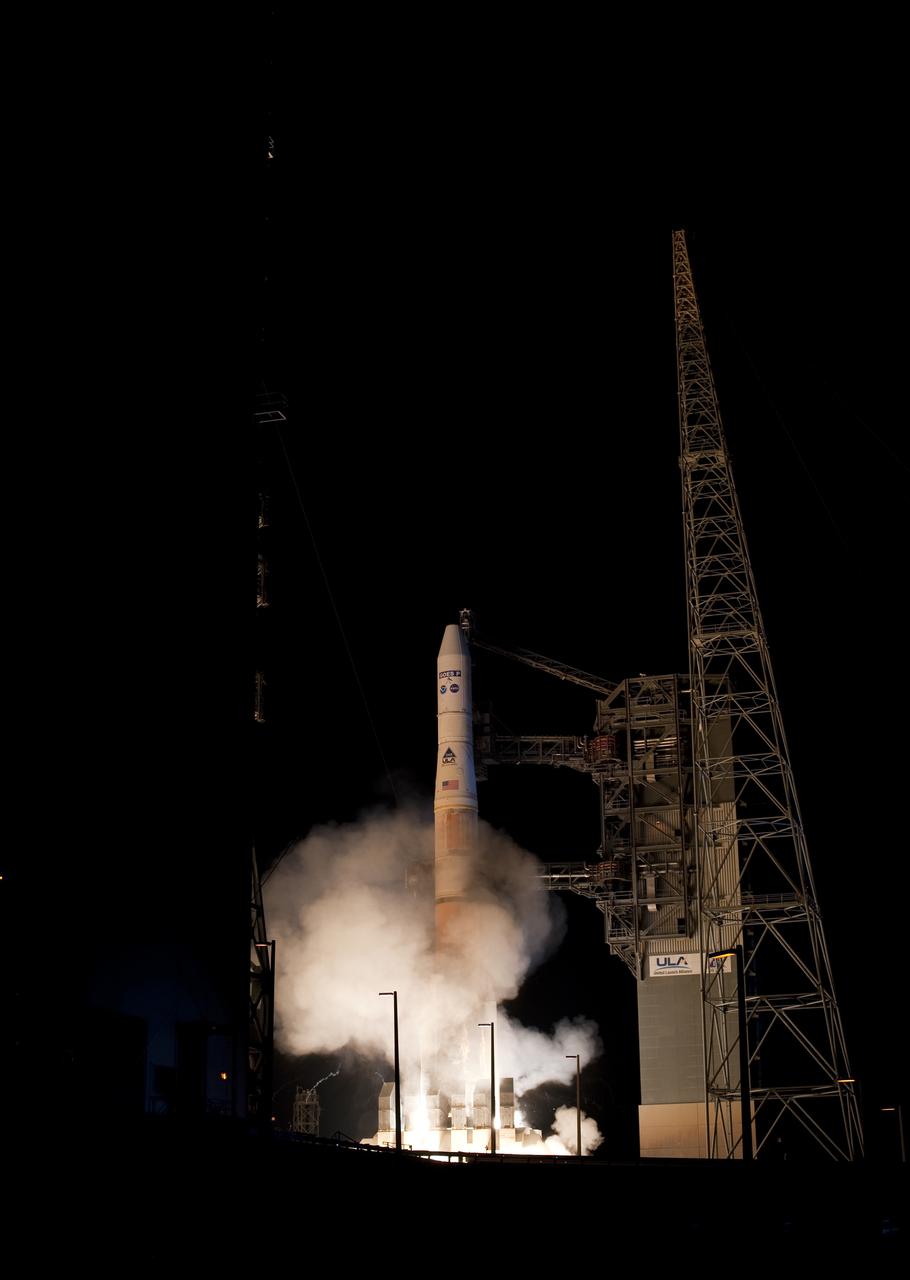
CAPE CANAVERAL, Fla. – The base of the United Launch Alliance Delta IV rocket carrying NASA's GOES-P meteorological satellite is engulfed in its exhaust cloud as it lifts off Launch Complex 37 on Cape Canaveral Air Force Station in Florida at 6:57 p.m. EST. GOES-P, the latest Geostationary Operational Environmental Satellite, was developed by NASA for the National Oceanic and Atmospheric Administration, or NOAA. The GOES-P spacecraft will be placed in a 22,300-mile-high geosynchronous orbit where it will appear to hover over a single point on Earth. The spacecraft is outfitted with a complex suite of observation instruments and cameras so it can accurately report on weather and climate conditions on Earth. For information on GOES-P, visit http:__www.nasa.gov_mission_pages_GOES-P_main_index.html. Photo credit: NASA_Sandra Joseph and Tony Gray
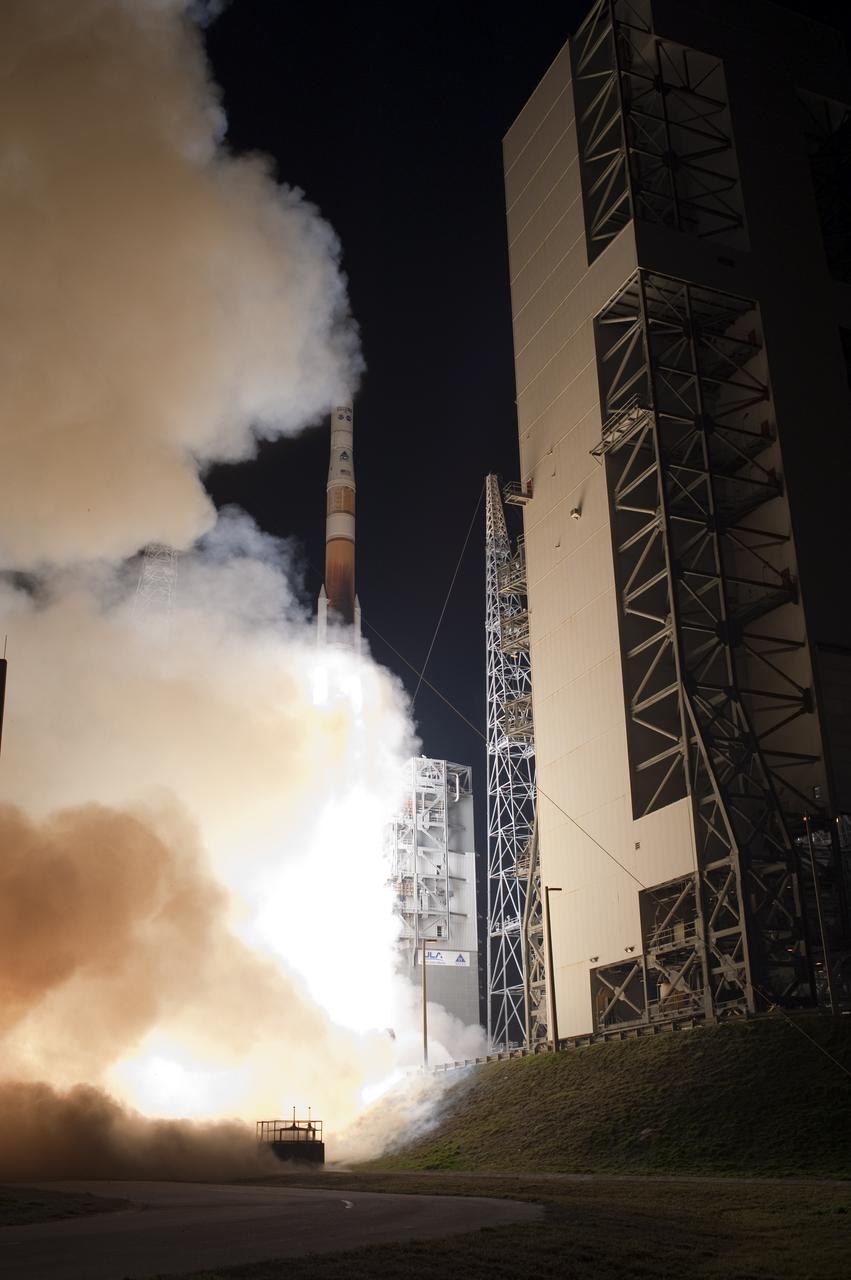
CAPE CANAVERAL, Fla. – An exhaust cloud building at Launch Complex 37 on Cape Canaveral Air Force Station in Florida obscures the United Launch Alliance Delta IV rocket carrying NASA's GOES-P meteorological satellite as it lifts off at 6:57 p.m. EST. GOES-P, the latest Geostationary Operational Environmental Satellite, was developed by NASA for the National Oceanic and Atmospheric Administration, or NOAA. The GOES-P spacecraft will be placed in a 22,300-mile-high geosynchronous orbit where it will appear to hover over a single point on Earth. The spacecraft is outfitted with a complex suite of observation instruments and cameras so it can accurately report on weather and climate conditions on Earth. For information on GOES-P, visit http:__www.nasa.gov_mission_pages_GOES-P_main_index.html. Photo credit: NASA_Sandra Joseph and Tony Gray
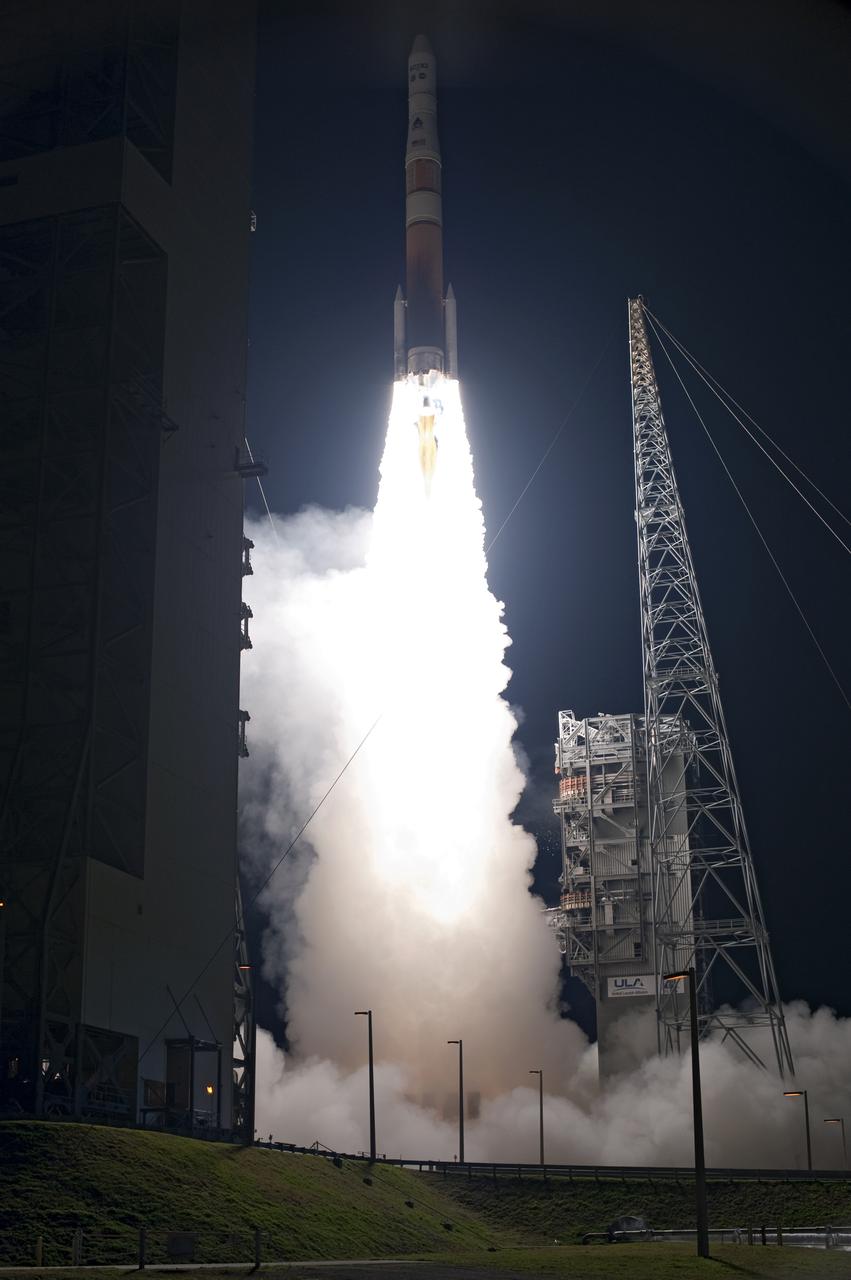
CAPE CANAVERAL, Fla. – The United Launch Alliance Delta IV rocket carrying NASA's GOES-P meteorological satellite rushes to orbit from Launch Complex 37 on Cape Canaveral Air Force Station in Florida. Liftoff was at 6:57 p.m. EST. GOES-P, the latest Geostationary Operational Environmental Satellite, was developed by NASA for the National Oceanic and Atmospheric Administration, or NOAA. The GOES-P spacecraft will be placed in a 22,300-mile-high geosynchronous orbit where it will appear to hover over a single point on Earth. The spacecraft is outfitted with a complex suite of observation instruments and cameras so it can accurately report on weather and climate conditions on Earth. For information on GOES-P, visit http:__www.nasa.gov_mission_pages_GOES-P_main_index.html. Photo credit: NASA_Sandra Joseph and Tony Gray

CAPE CANAVERAL, Fla. – An exhaust cloud forms at Launch Complex 37 on Cape Canaveral Air Force Station in Florida as the United Launch Alliance Delta IV rocket carrying NASA's GOES-P meteorological satellite lifts off at 6:57 p.m. EST. GOES-P, the latest Geostationary Operational Environmental Satellite, was developed by NASA for the National Oceanic and Atmospheric Administration, or NOAA. The GOES-P spacecraft will be placed in a 22,300-mile-high geosynchronous orbit where it will appear to hover over a single point on Earth. The spacecraft is outfitted with a complex suite of observation instruments and cameras so it can accurately report on weather and climate conditions on Earth. For information on GOES-P, visit http:__www.nasa.gov_mission_pages_GOES-P_main_index.html. Photo credit: NASA_Sandra Joseph and Tony Gray
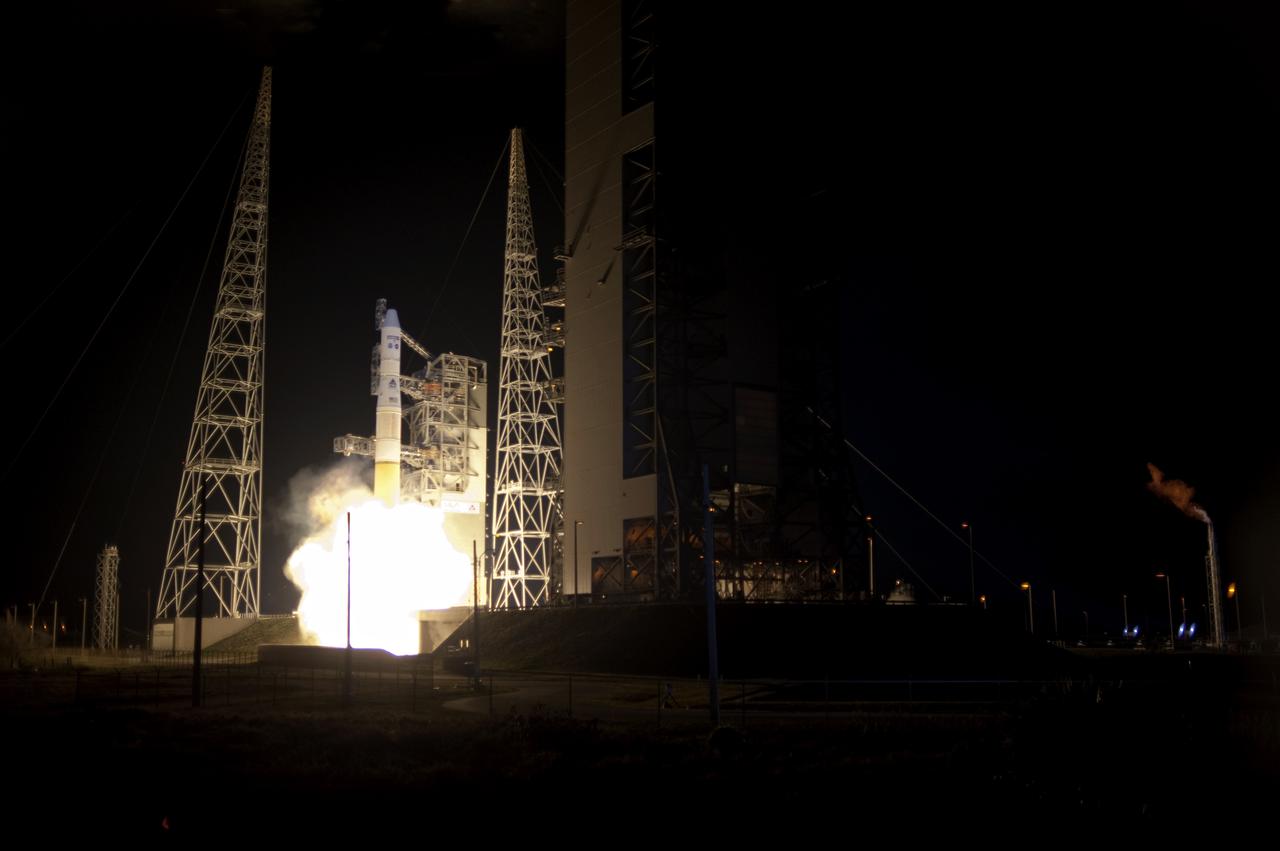
CAPE CANAVERAL, Fla. – Engine ignition on the United Launch Alliance Delta IV rocket carrying NASA's GOES-P meteorological satellite creates a flash of light on Launch Complex 37 on Cape Canaveral Air Force Station in Florida. Liftoff was at 6:57 p.m. EST. GOES-P, the latest Geostationary Operational Environmental Satellite, was developed by NASA for the National Oceanic and Atmospheric Administration, or NOAA. The GOES-P spacecraft will be placed in a 22,300-mile-high geosynchronous orbit where it will appear to hover over a single point on Earth. The spacecraft is outfitted with a complex suite of observation instruments and cameras so it can accurately report on weather and climate conditions on Earth. For information on GOES-P, visit http:__www.nasa.gov_mission_pages_GOES-P_main_index.html. Photo credit: NASA_Sandra Joseph and Tony Gray
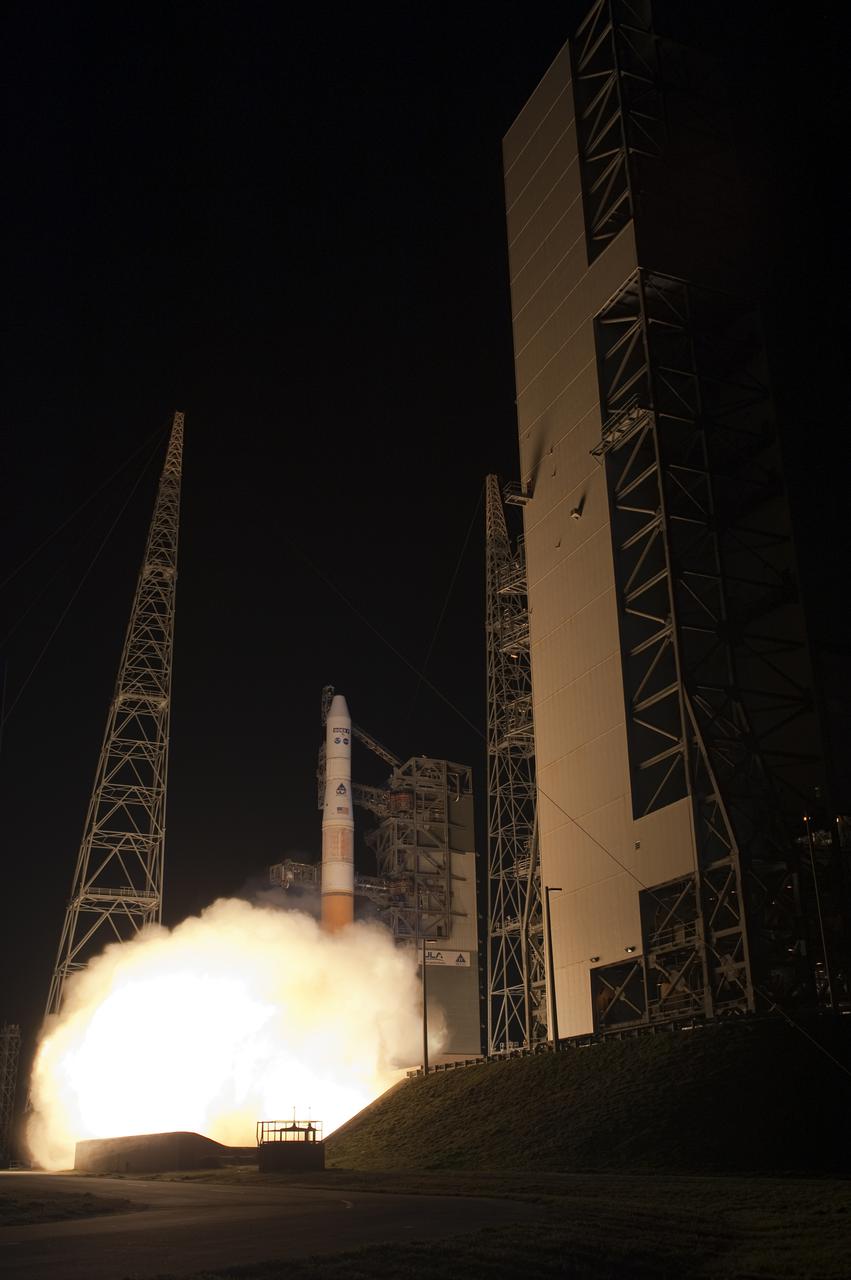
CAPE CANAVERAL, Fla. – In a flash of light, the United Launch Alliance Delta IV rocket carrying NASA's GOES-P meteorological satellite lifts off Launch Complex 37 on Cape Canaveral Air Force Station in Florida at 6:57 p.m. EST. GOES-P, the latest Geostationary Operational Environmental Satellite, was developed by NASA for the National Oceanic and Atmospheric Administration, or NOAA. The GOES-P spacecraft will be placed in a 22,300-mile-high geosynchronous orbit where it will appear to hover over a single point on Earth. The spacecraft is outfitted with a complex suite of observation instruments and cameras so it can accurately report on weather and climate conditions on Earth. For information on GOES-P, visit http:__www.nasa.gov_mission_pages_GOES-P_main_index.html. Photo credit: NASA_Sandra Joseph and Tony Gray
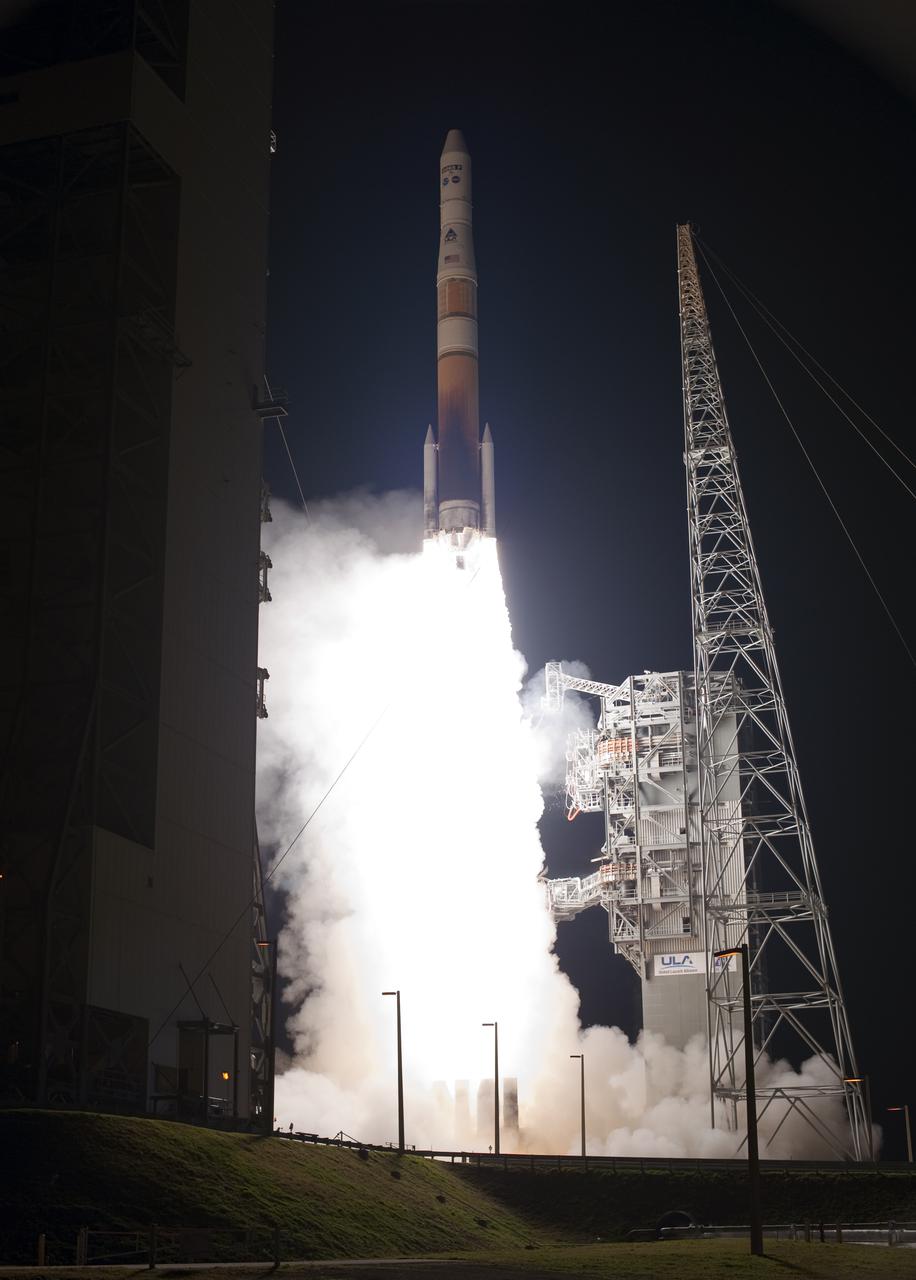
CAPE CANAVERAL, Fla. – The United Launch Alliance Delta IV rocket carrying NASA's GOES-P meteorological satellite begins to rise from Launch Complex 37 on Cape Canaveral Air Force Station in Florida. Liftoff was at 6:57 p.m. EST. GOES-P, the latest Geostationary Operational Environmental Satellite, was developed by NASA for the National Oceanic and Atmospheric Administration, or NOAA. The GOES-P spacecraft will be placed in a 22,300-mile-high geosynchronous orbit where it will appear to hover over a single point on Earth. The spacecraft is outfitted with a complex suite of observation instruments and cameras so it can accurately report on weather and climate conditions on Earth. For information on GOES-P, visit http:__www.nasa.gov_mission_pages_GOES-P_main_index.html. Photo credit: NASA_Sandra Joseph and Tony Gray
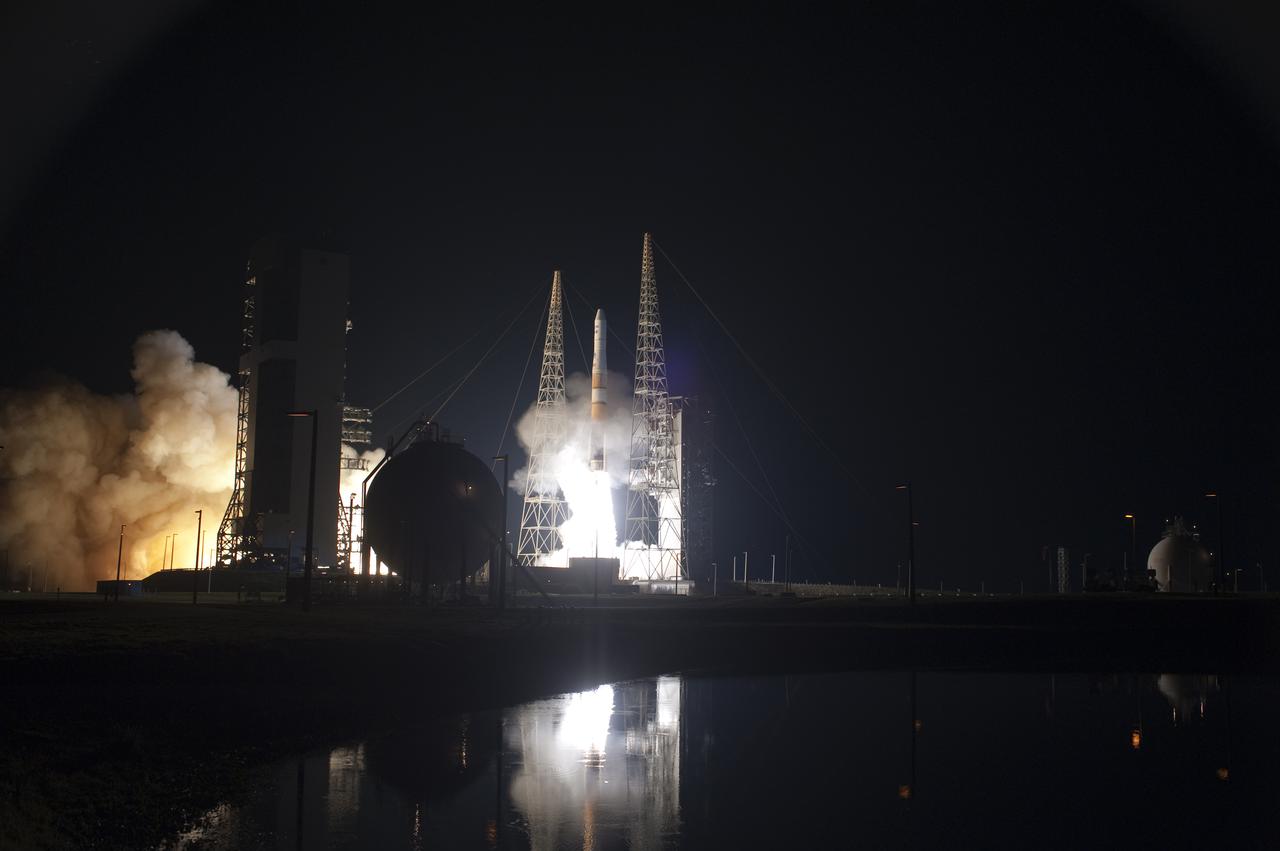
CAPE CANAVERAL, Fla. – The United Launch Alliance Delta IV rocket carrying NASA's GOES-P meteorological satellite begins to rise from Launch Complex 37 on Cape Canaveral Air Force Station in Florida. Liftoff was at 6:57 p.m. EST. GOES-P, the latest Geostationary Operational Environmental Satellite, was developed by NASA for the National Oceanic and Atmospheric Administration, or NOAA. The GOES-P spacecraft will be placed in a 22,300-mile-high geosynchronous orbit where it will appear to hover over a single point on Earth. The spacecraft is outfitted with a complex suite of observation instruments and cameras so it can accurately report on weather and climate conditions on Earth. For information on GOES-P, visit http:__www.nasa.gov_mission_pages_GOES-P_main_index.html. Photo credit: NASA_Sandra Joseph and Tony Gray
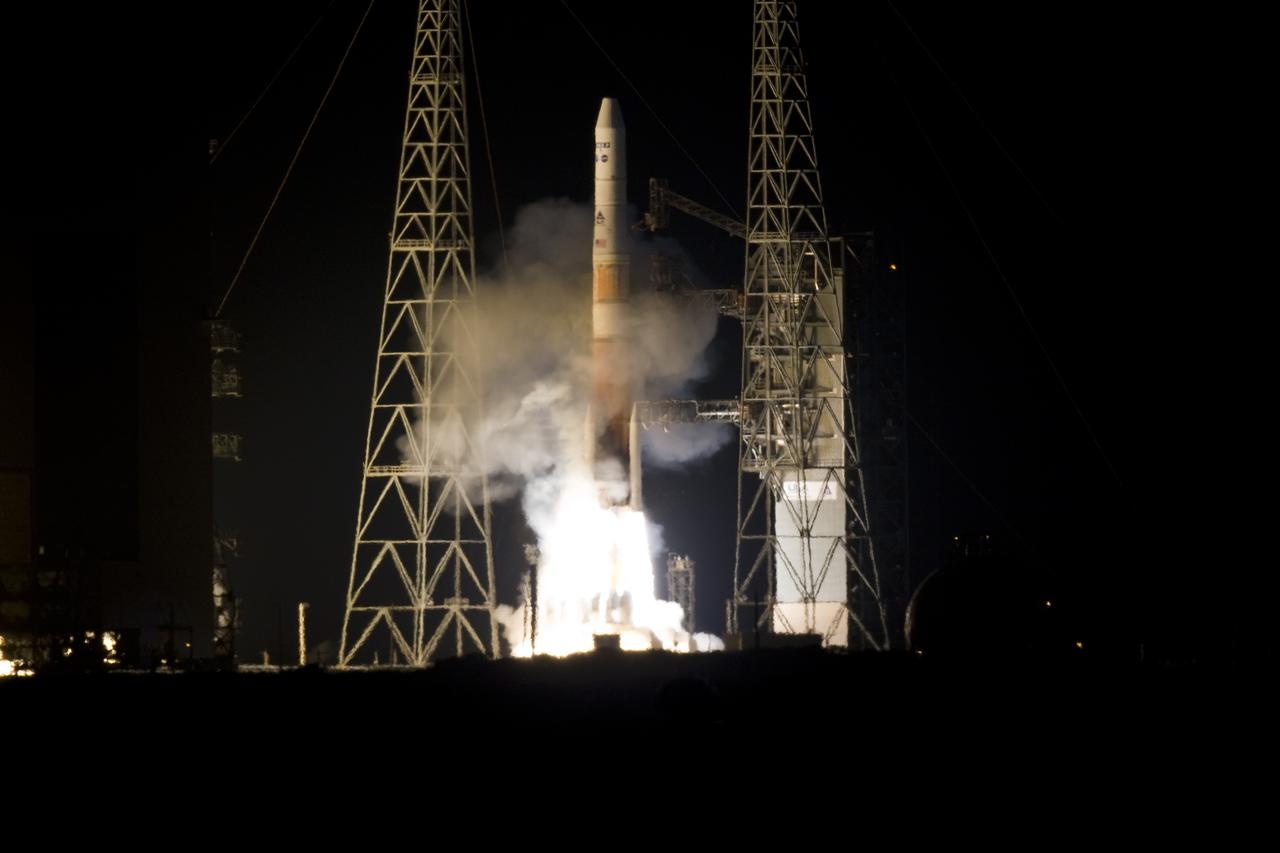
CAPE CANAVERAL, Fla. – NASA's GOES-P meteorological satellite launches aboard a United Launch Alliance Delta IV rocket at 6:57 p.m. EST from Launch Complex 37 on Cape Canaveral Air Force Station in Florida. GOES-P, the latest Geostationary Operational Environmental Satellite, was developed by NASA for the National Oceanic and Atmospheric Administration, or NOAA. The GOES-P spacecraft will be placed in a 22,300-mile-high geosynchronous orbit where it will appear to hover over a single point on Earth. The spacecraft is outfitted with a complex suite of observation instruments and cameras so it can accurately report on weather and climate conditions on Earth. For information on GOES-P, visit http:__www.nasa.gov_mission_pages_GOES-P_main_index.html. Photo credit: NASA_Kenny Allen

CAPE CANAVERAL, Fla. – An exhaust cloud builds at Launch Complex 37 on Cape Canaveral Air Force Station in Florida as the United Launch Alliance Delta IV rocket carrying NASA's GOES-P meteorological satellite lifts off at 6:57 p.m. EST. GOES-P, the latest Geostationary Operational Environmental Satellite, was developed by NASA for the National Oceanic and Atmospheric Administration, or NOAA. The GOES-P spacecraft will be placed in a 22,300-mile-high geosynchronous orbit where it will appear to hover over a single point on Earth. The spacecraft is outfitted with a complex suite of observation instruments and cameras so it can accurately report on weather and climate conditions on Earth. For information on GOES-P, visit http:__www.nasa.gov_mission_pages_GOES-P_main_index.html. Photo credit: NASA_Sandra Joseph and Tony Gray
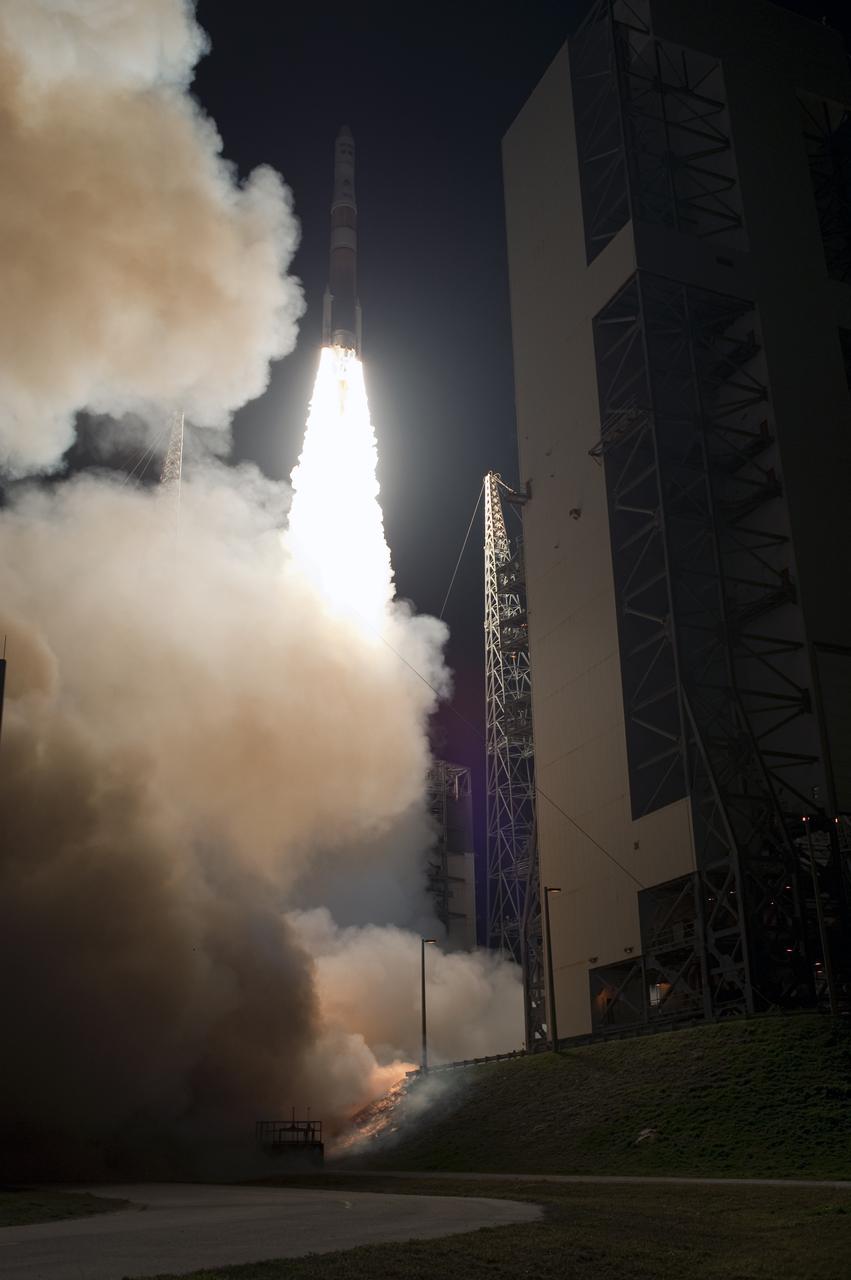
CAPE CANAVERAL, Fla. – The United Launch Alliance Delta IV rocket carrying NASA's GOES-P meteorological satellite races to orbit from Launch Complex 37 on Cape Canaveral Air Force Station in Florida. Liftoff was at 6:57 p.m. EST. GOES-P, the latest Geostationary Operational Environmental Satellite, was developed by NASA for the National Oceanic and Atmospheric Administration, or NOAA. The GOES-P spacecraft will be placed in a 22,300-mile-high geosynchronous orbit where it will appear to hover over a single point on Earth. The spacecraft is outfitted with a complex suite of observation instruments and cameras so it can accurately report on weather and climate conditions on Earth. For information on GOES-P, visit http:__www.nasa.gov_mission_pages_GOES-P_main_index.html. Photo credit: NASA_Sandra Joseph and Tony Gray

CAPE CANAVERAL, Fla. – Liftoff of the United Launch Alliance Delta IV rocket carrying NASA's GOES-P meteorological satellite is reflected in the water near Launch Complex 37 on Cape Canaveral Air Force Station in Florida. Launch was at 6:57 p.m. EST. GOES-P, the latest Geostationary Operational Environmental Satellite, was developed by NASA for the National Oceanic and Atmospheric Administration, or NOAA. The GOES-P spacecraft will be placed in a 22,300-mile-high geosynchronous orbit where it will appear to hover over a single point on Earth. The spacecraft is outfitted with a complex suite of observation instruments and cameras so it can accurately report on weather and climate conditions on Earth. For information on GOES-P, visit http:__www.nasa.gov_mission_pages_GOES-P_main_index.html. Photo credit: NASA_Sandra Joseph and Tony Gray
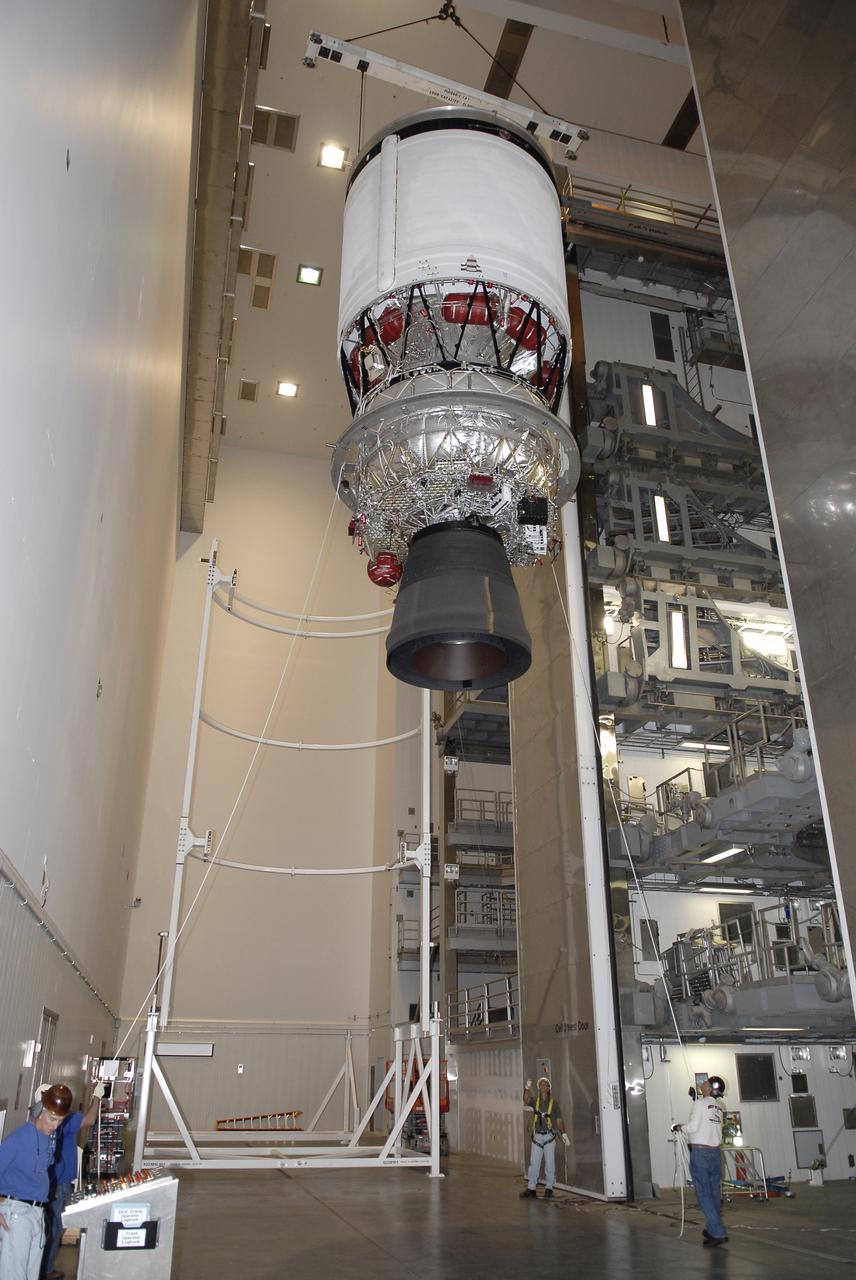
CAPE CANAVERAL, Fla. – Workers lower the second stage of a Delta IV rocket from a test cell in the hangar of the Delta Operations Center at Cape Canaveral Air Force Station in Florida toward a turnover stand following the completion of nozzle extension deployment system testing. The United Launch Alliance Delta IV rocket is slated to launch GOES-P, the latest Geostationary Operational Environmental Satellite developed by NASA for the National Oceanic and Atmospheric Administration, or NOAA. Next, the second stage will be transported to the Horizontal Integration Facility where it will be inspected and prepared for mating with the Delta IV rocket's first stage. GOES-P, a meteorological satellite, is designed to watch for storm development and observed current weather conditions on Earth. Launch of GOES-P is scheduled for no earlier than Feb. 25, 2010, from Launch Complex 37. For information on GOES-P, visit http:__goespoes.gsfc.nasa.gov_goes_spacecraft_n_p_spacecraft.html. Photo credit: NASA_Glenn Benson
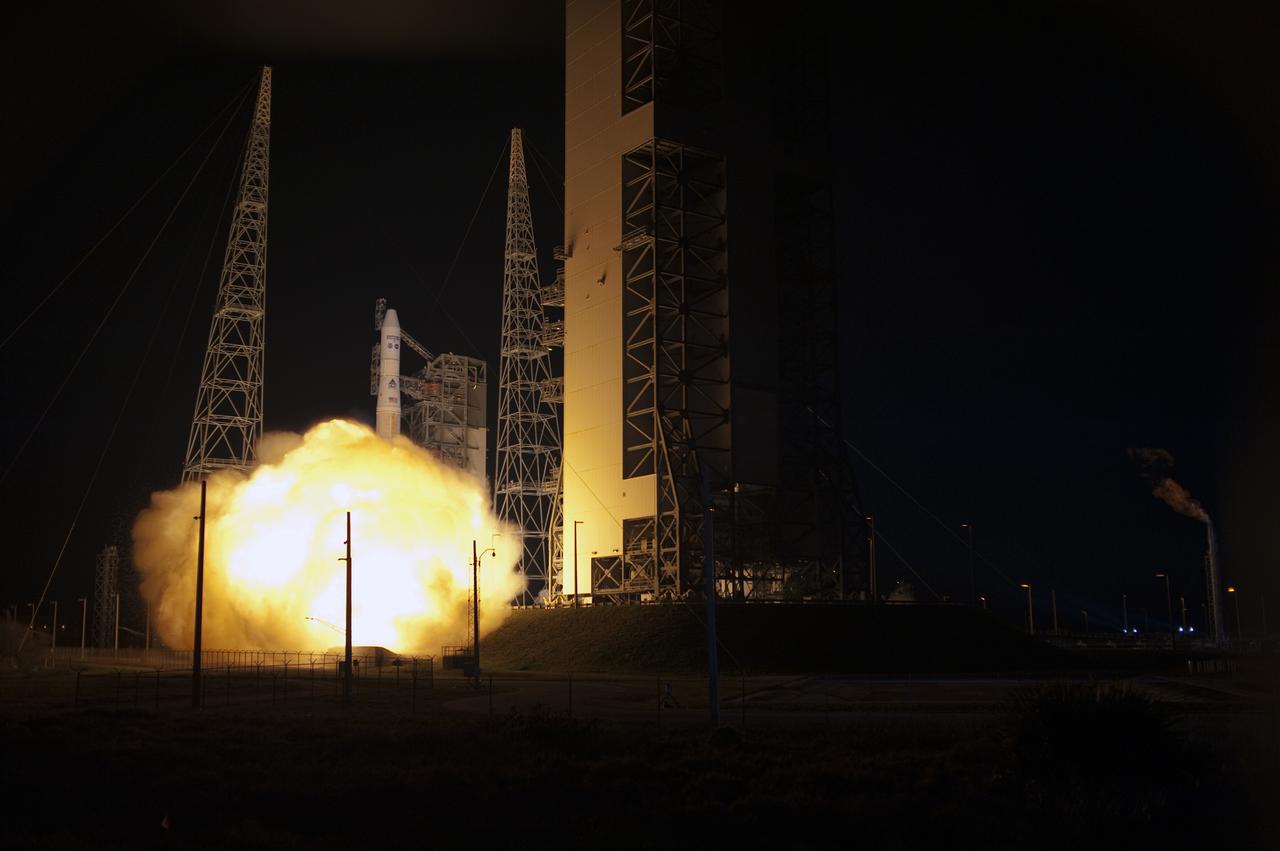
CAPE CANAVERAL, Fla. – The base of the United Launch Alliance Delta IV rocket carrying NASA's GOES-P meteorological satellite is engulfed in a brilliant exhaust cloud as it lifts off Launch Complex 37 on Cape Canaveral Air Force Station in Florida at 6:57 p.m. EST. GOES-P, the latest Geostationary Operational Environmental Satellite, was developed by NASA for the National Oceanic and Atmospheric Administration, or NOAA. The GOES-P spacecraft will be placed in a 22,300-mile-high geosynchronous orbit where it will appear to hover over a single point on Earth. The spacecraft is outfitted with a complex suite of observation instruments and cameras so it can accurately report on weather and climate conditions on Earth. For information on GOES-P, visit http:__www.nasa.gov_mission_pages_GOES-P_main_index.html. Photo credit: NASA_Sandra Joseph and Tony Gray
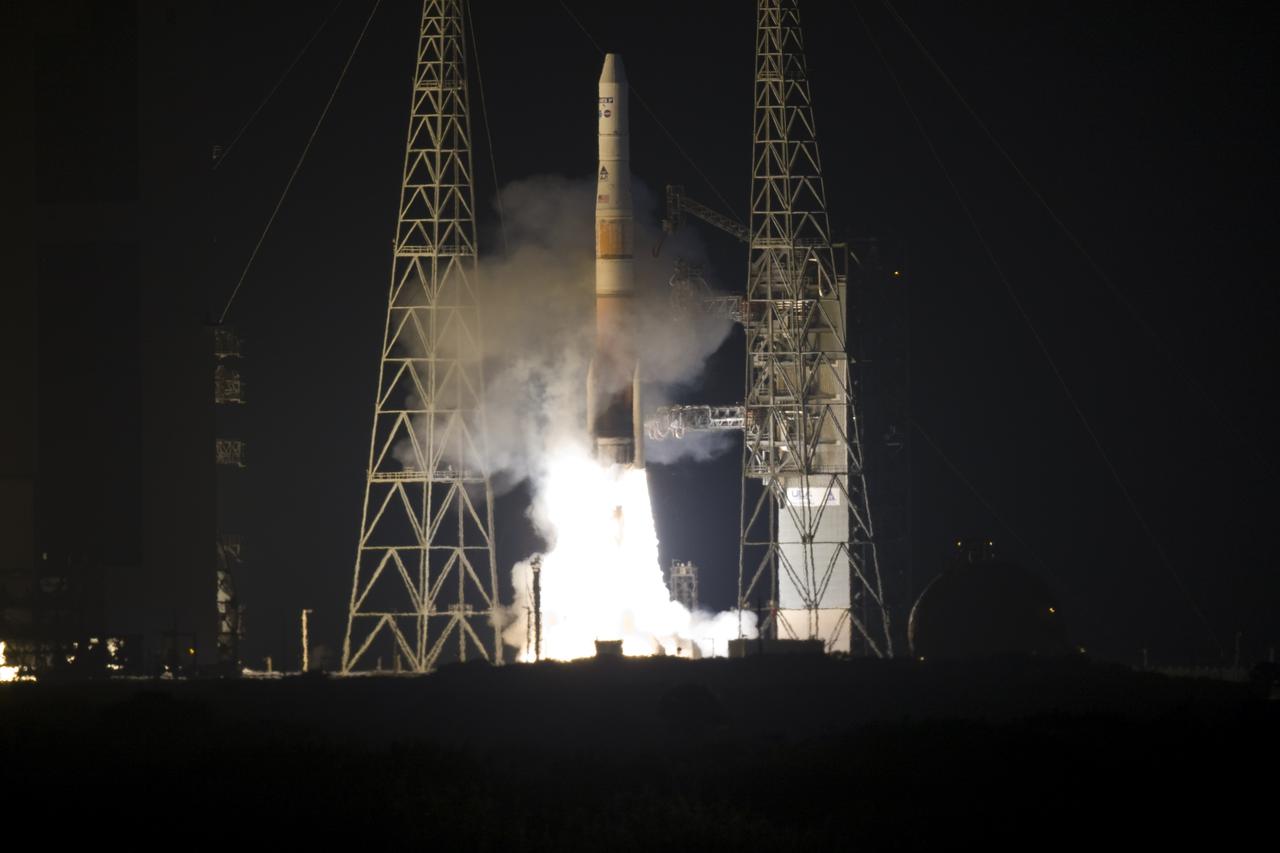
CAPE CANAVERAL, Fla. – At Launch Complex 37 on Cape Canaveral Air Force Station in Florida, a United Launch Alliance Delta IV rocket carrying NASA's GOES-P meteorological satellite lifts off at 6:57 p.m. EST. GOES-P, the latest Geostationary Operational Environmental Satellite, was developed by NASA for the National Oceanic and Atmospheric Administration, or NOAA. The GOES-P spacecraft will be placed in a 22,300-mile-high geosynchronous orbit where it will appear to hover over a single point on Earth. The spacecraft is outfitted with a complex suite of observation instruments and cameras so it can accurately report on weather and climate conditions on Earth. For information on GOES-P, visit http:__www.nasa.gov_mission_pages_GOES-P_main_index.html. Photo credit: NASA_Kenny Allen
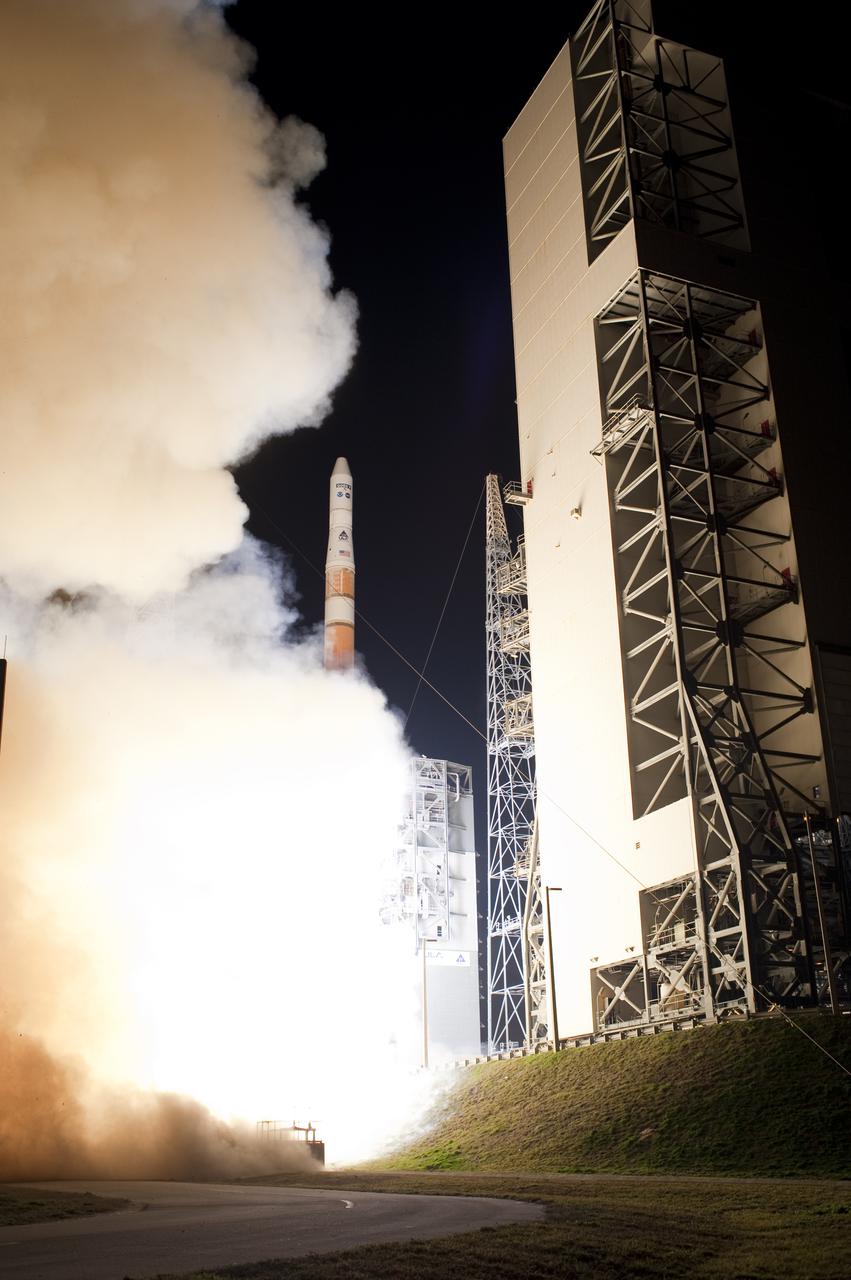
CAPE CANAVERAL, Fla. – An exhaust cloud builds at Launch Complex 37 on Cape Canaveral Air Force Station in Florida as the United Launch Alliance Delta IV rocket carrying NASA's GOES-P meteorological satellite lifts off at 6:57 p.m. EST. GOES-P, the latest Geostationary Operational Environmental Satellite, was developed by NASA for the National Oceanic and Atmospheric Administration, or NOAA. The GOES-P spacecraft will be placed in a 22,300-mile-high geosynchronous orbit where it will appear to hover over a single point on Earth. The spacecraft is outfitted with a complex suite of observation instruments and cameras so it can accurately report on weather and climate conditions on Earth. For information on GOES-P, visit http:__www.nasa.gov_mission_pages_GOES-P_main_index.html. Photo credit: NASA_Sandra Joseph and Tony Gray
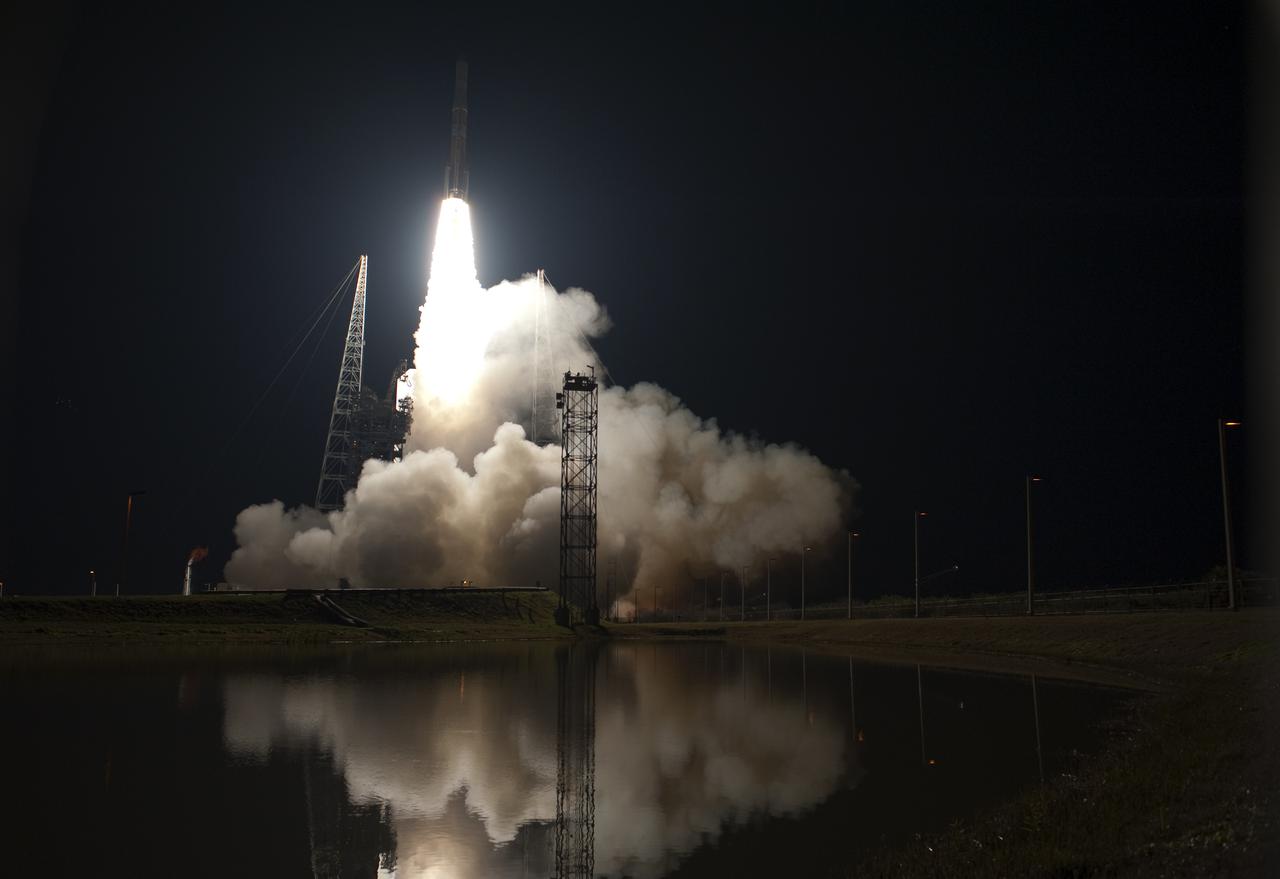
CAPE CANAVERAL, Fla. – The United Launch Alliance Delta IV rocket carrying NASA's GOES-P meteorological satellite clears the towers on Launch Complex 37 on Cape Canaveral Air Force Station in Florida. Liftoff was at 6:57 p.m. EST. GOES-P, the latest Geostationary Operational Environmental Satellite, was developed by NASA for the National Oceanic and Atmospheric Administration, or NOAA. The GOES-P spacecraft will be placed in a 22,300-mile-high geosynchronous orbit where it will appear to hover over a single point on Earth. The spacecraft is outfitted with a complex suite of observation instruments and cameras so it can accurately report on weather and climate conditions on Earth. For information on GOES-P, visit http:__www.nasa.gov_mission_pages_GOES-P_main_index.html. Photo credit: NASA_Sandra Joseph and Tony Gray
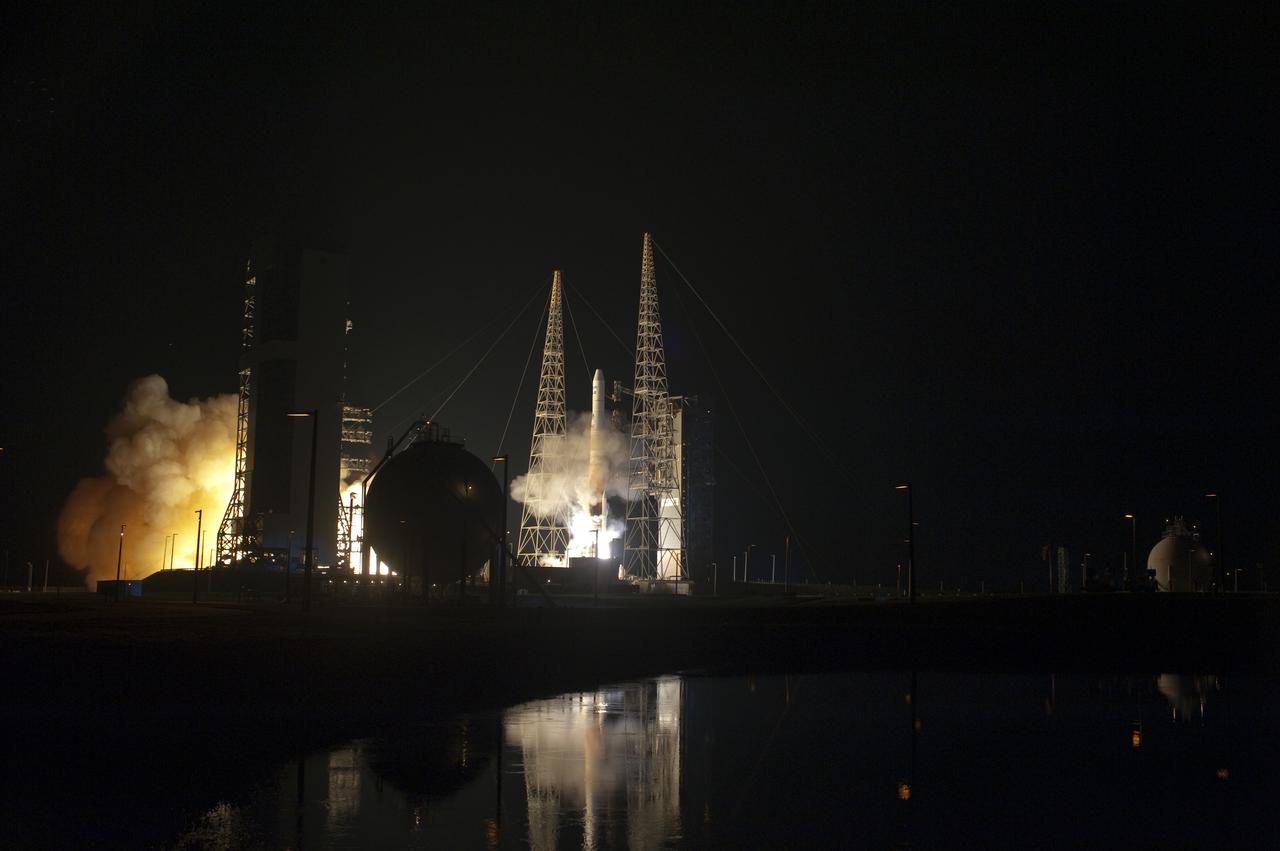
CAPE CANAVERAL, Fla. – On Launch Complex 37 on Cape Canaveral Air Force Station in Florida, the engines ignite on the United Launch Alliance Delta IV rocket carrying NASA's GOES-P meteorological satellite. Liftoff was at 6:57 p.m. EST. GOES-P, the latest Geostationary Operational Environmental Satellite, was developed by NASA for the National Oceanic and Atmospheric Administration, or NOAA. The GOES-P spacecraft will be placed in a 22,300-mile-high geosynchronous orbit where it will appear to hover over a single point on Earth. The spacecraft is outfitted with a complex suite of observation instruments and cameras so it can accurately report on weather and climate conditions on Earth. For information on GOES-P, visit http:__www.nasa.gov_mission_pages_GOES-P_main_index.html. Photo credit: NASA_Sandra Joseph and Tony Gray
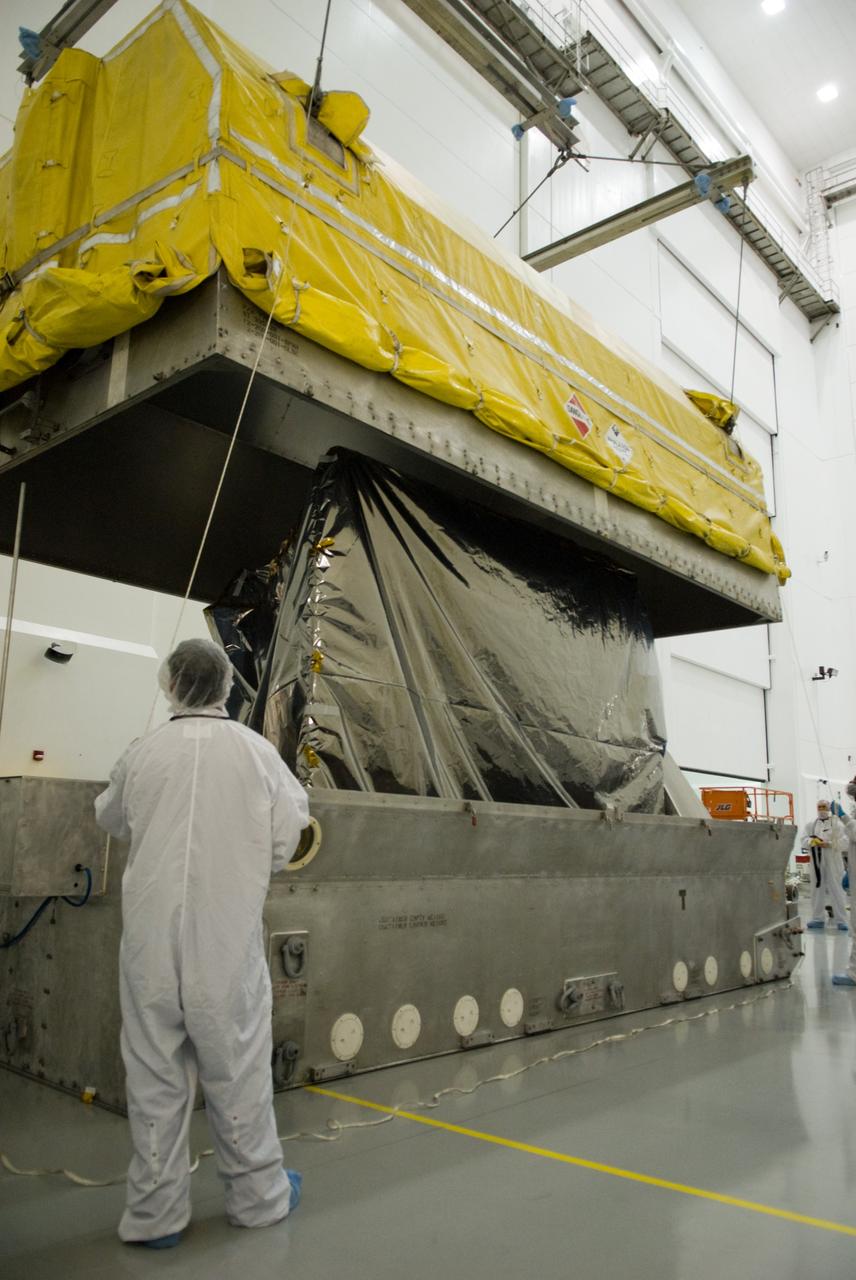
CAPE CANAVERAL, Fla. – At the Astrotech Space Operations facility in Titusville, Fla., workers uncrate NASA's newly arrived GOES-P meteorological satellite. GOES-P, the latest Geostationary Operational Environmental Satellite, was developed by NASA for the National Oceanic and Atmospheric Administration, or NOAA. GOES-P is designed to watch for storm development and observed current weather conditions on Earth. Launch of GOES-P is targeted for no earlier than Feb. 25, 2010, from Launch Complex 37 aboard a United Launch Alliance Delta IV rocket. For information on GOES-P, visit http://goespoes.gsfc.nasa.gov/goes/spacecraft/n_p_spacecraft.html. Photo credit: NASA/Glenn Benson
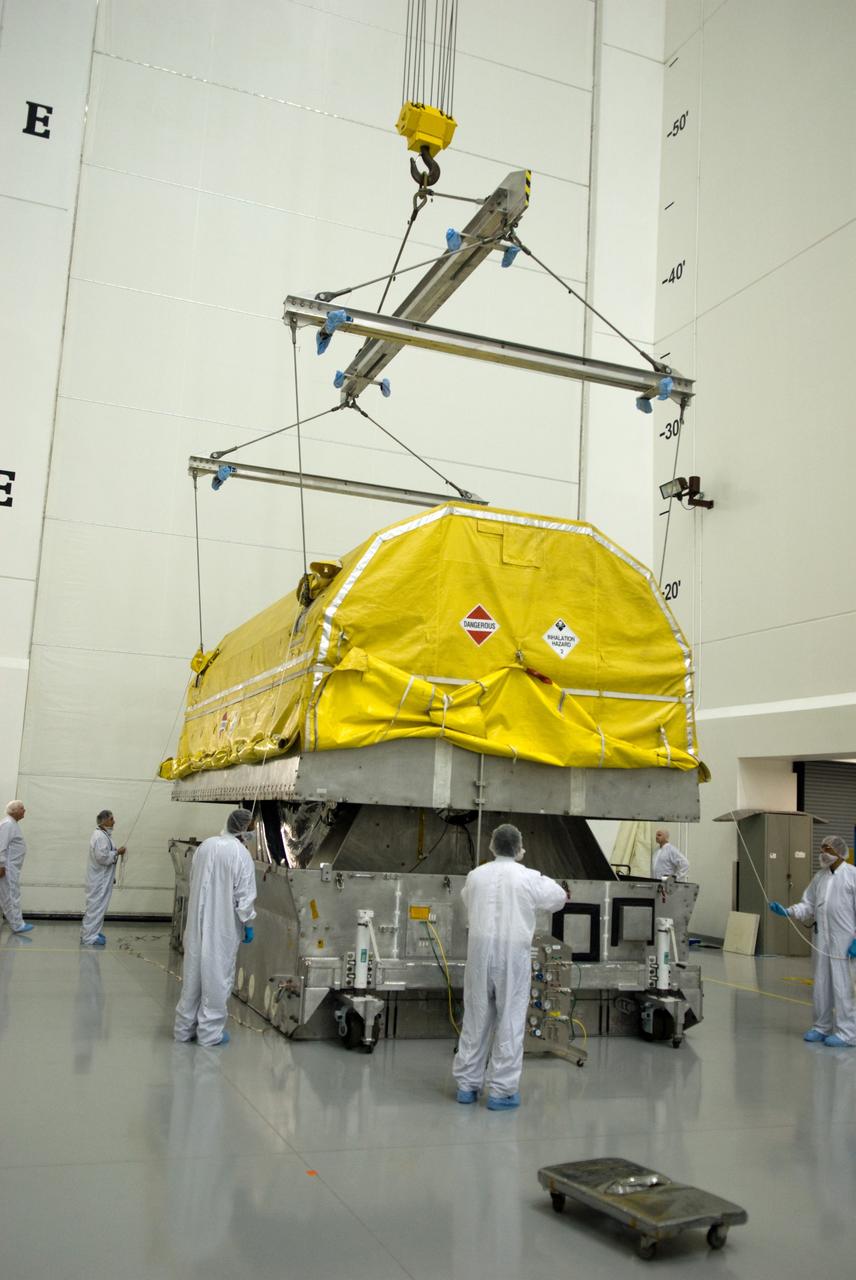
CAPE CANAVERAL, Fla. – At the Astrotech Space Operations facility in Titusville, Fla., workers lift the transportation cover from NASA's newly arrived GOES-P meteorological satellite. GOES-P, the latest Geostationary Operational Environmental Satellite, was developed by NASA for the National Oceanic and Atmospheric Administration, or NOAA. GOES-P is designed to watch for storm development and observed current weather conditions on Earth. Launch of GOES-P is targeted for no earlier than Feb. 25, 2010, from Launch Complex 37 aboard a United Launch Alliance Delta IV rocket. For information on GOES-P, visit http://goespoes.gsfc.nasa.gov/goes/spacecraft/n_p_spacecraft.html. Photo credit: NASA/Glenn Benson
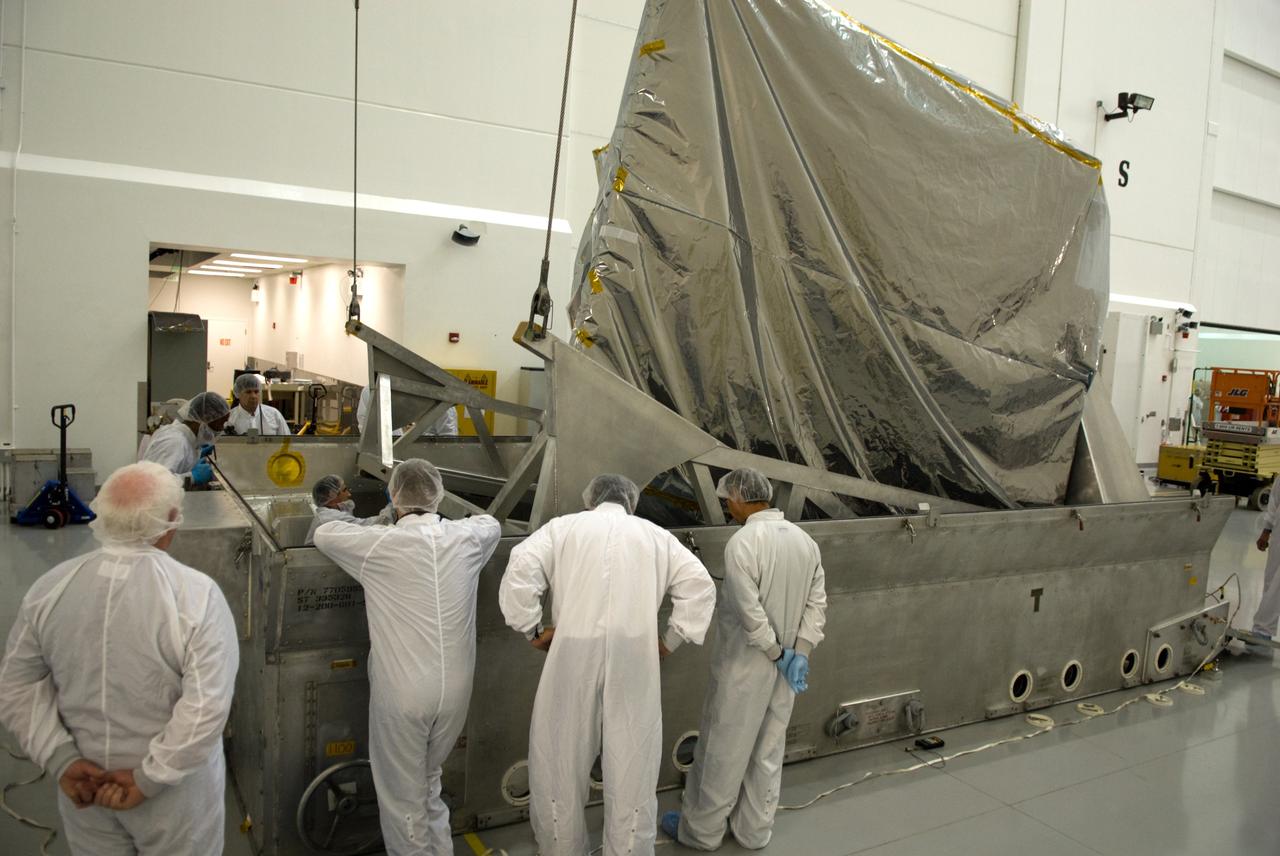
CAPE CANAVERAL, Fla. – At the Astrotech Space Operations facility in Titusville, Fla., workers prepare to lift NASA's newly arrived GOES-P meteorological satellite from its transportation case. GOES-P, the latest Geostationary Operational Environmental Satellite, was developed by NASA for the National Oceanic and Atmospheric Administration, or NOAA. GOES-P is designed to watch for storm development and observed current weather conditions on Earth. Launch of GOES-P is targeted for no earlier than Feb. 25, 2010, from Launch Complex 37 aboard a United Launch Alliance Delta IV rocket. For information on GOES-P, visit http://goespoes.gsfc.nasa.gov/goes/spacecraft/n_p_spacecraft.html. Photo credit: NASA/Glenn Benson
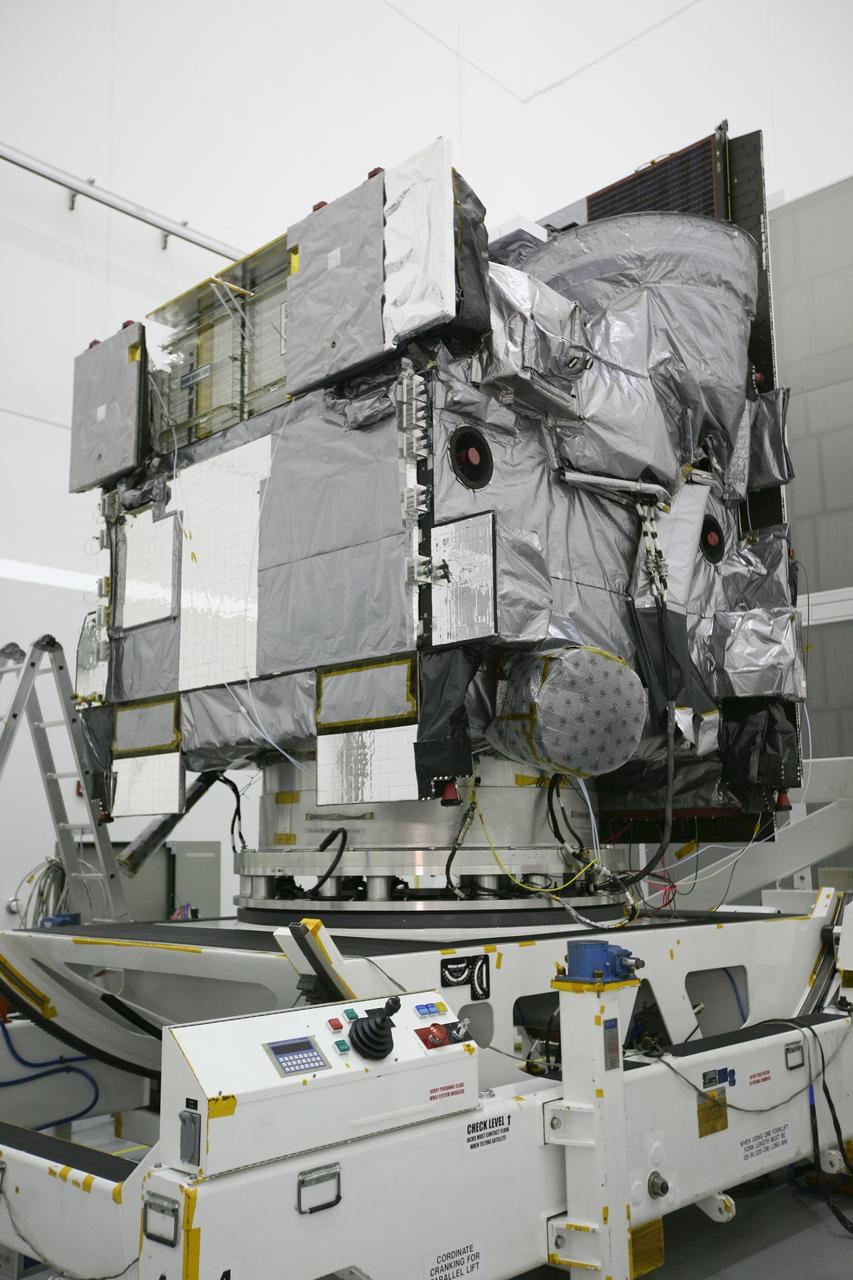
CAPE CANAVERAL, Fla. – At the Astrotech Space Operations facility in Titusville, Fla., the protective wrapping has been removed from NASA's GOES-P meteorological satellite. GOES-P, the latest Geostationary Operational Environmental Satellite, was developed by NASA for the National Oceanic and Atmospheric Administration, or NOAA. GOES-P is designed to watch for storm development and observed current weather conditions on Earth. Launch of GOES-P is targeted for no earlier than March 1 from Launch Complex 37 aboard a United Launch Alliance Delta IV rocket. For information on GOES-P, visit http://goespoes.gsfc.nasa.gov/goes/spacecraft/n_p_spacecraft.html. Photo credit: NASA/Amanda Diller
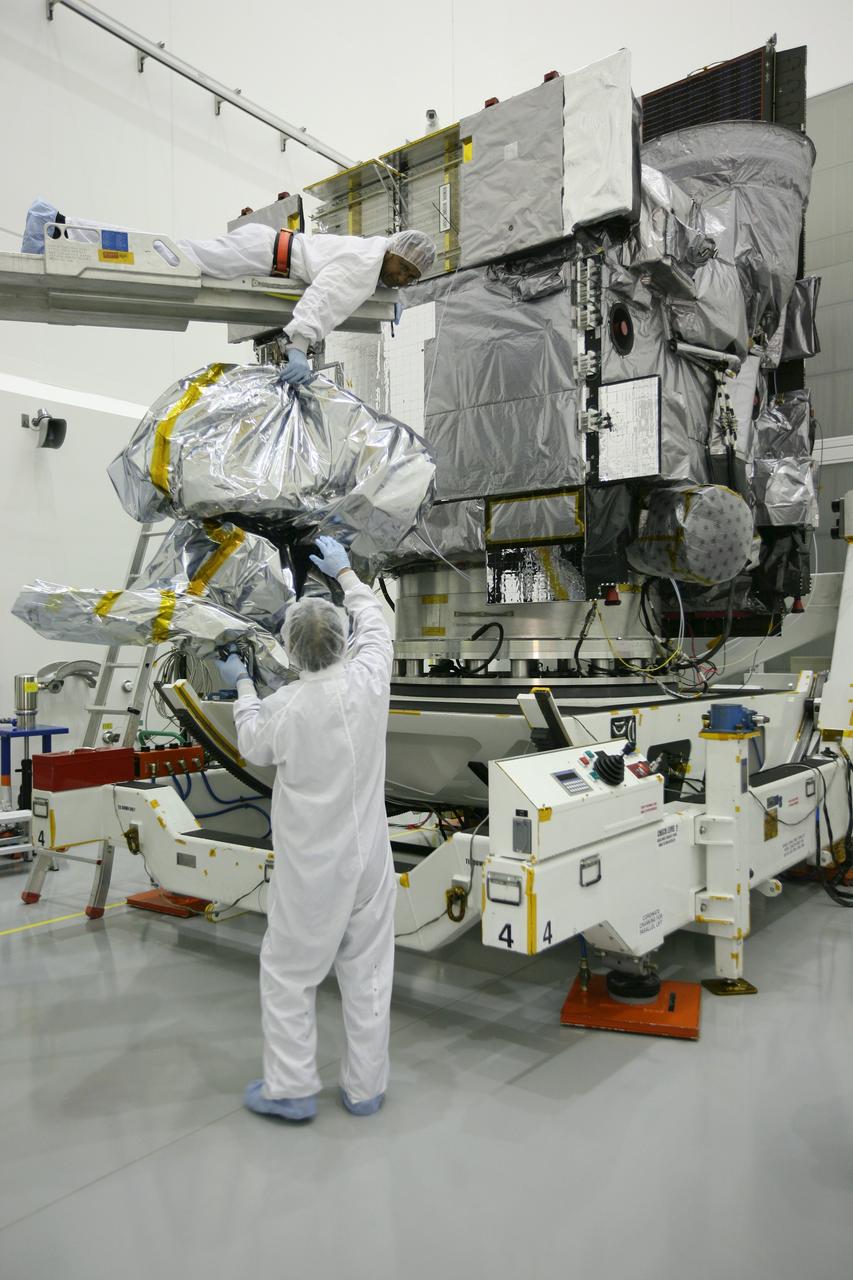
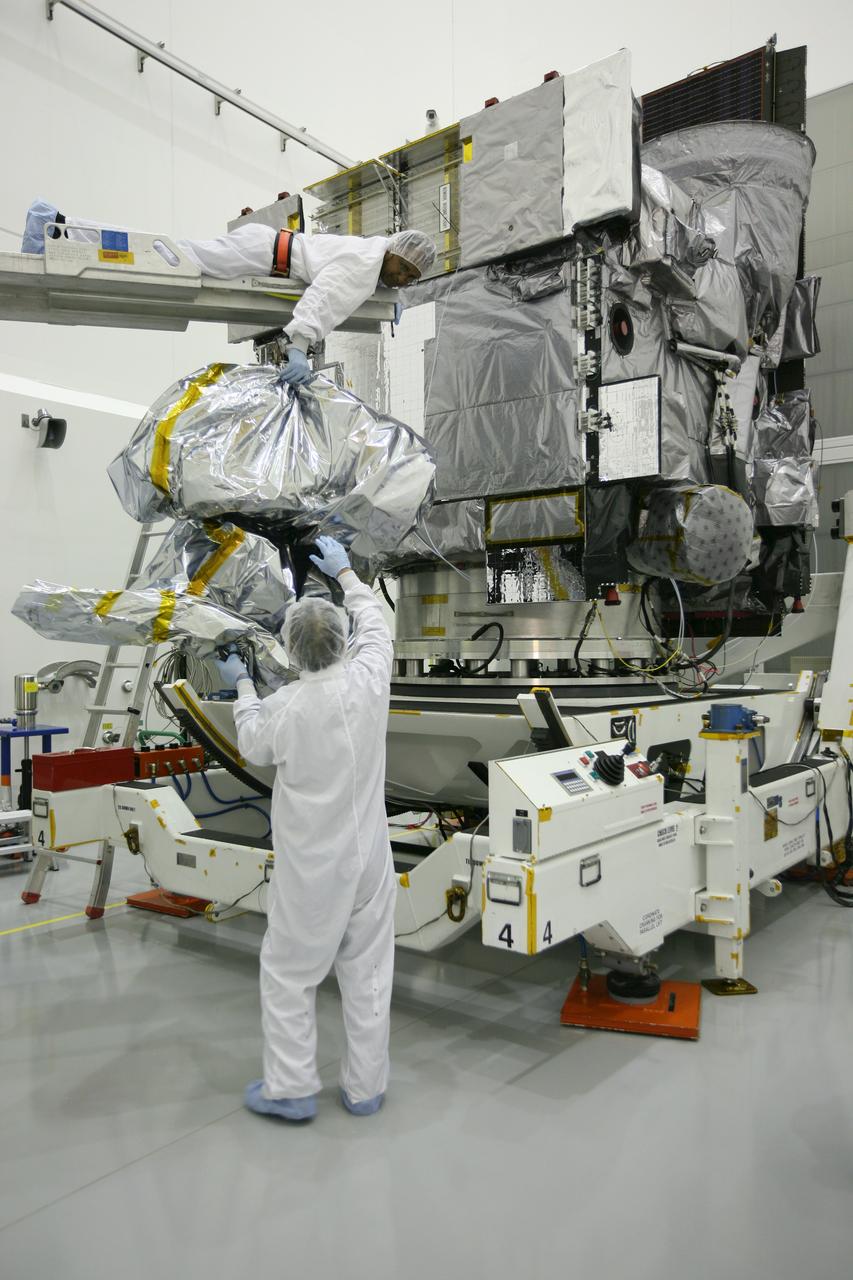
CAPE CANAVERAL, Fla. – At the Astrotech Space Operations facility in Titusville, Fla., it takes teamwork among the spacecraft technicians to unbag or remove the protective wrapping from NASA's GOES-P meteorological satellite. GOES-P, the latest Geostationary Operational Environmental Satellite, was developed by NASA for the National Oceanic and Atmospheric Administration, or NOAA. GOES-P is designed to watch for storm development and observed current weather conditions on Earth. Launch of GOES-P is targeted for no earlier than March 1 from Launch Complex 37 aboard a United Launch Alliance Delta IV rocket. For information on GOES-P, visit http://goespoes.gsfc.nasa.gov/goes/spacecraft/n_p_spacecraft.html. Photo credit: NASA/Amanda Diller
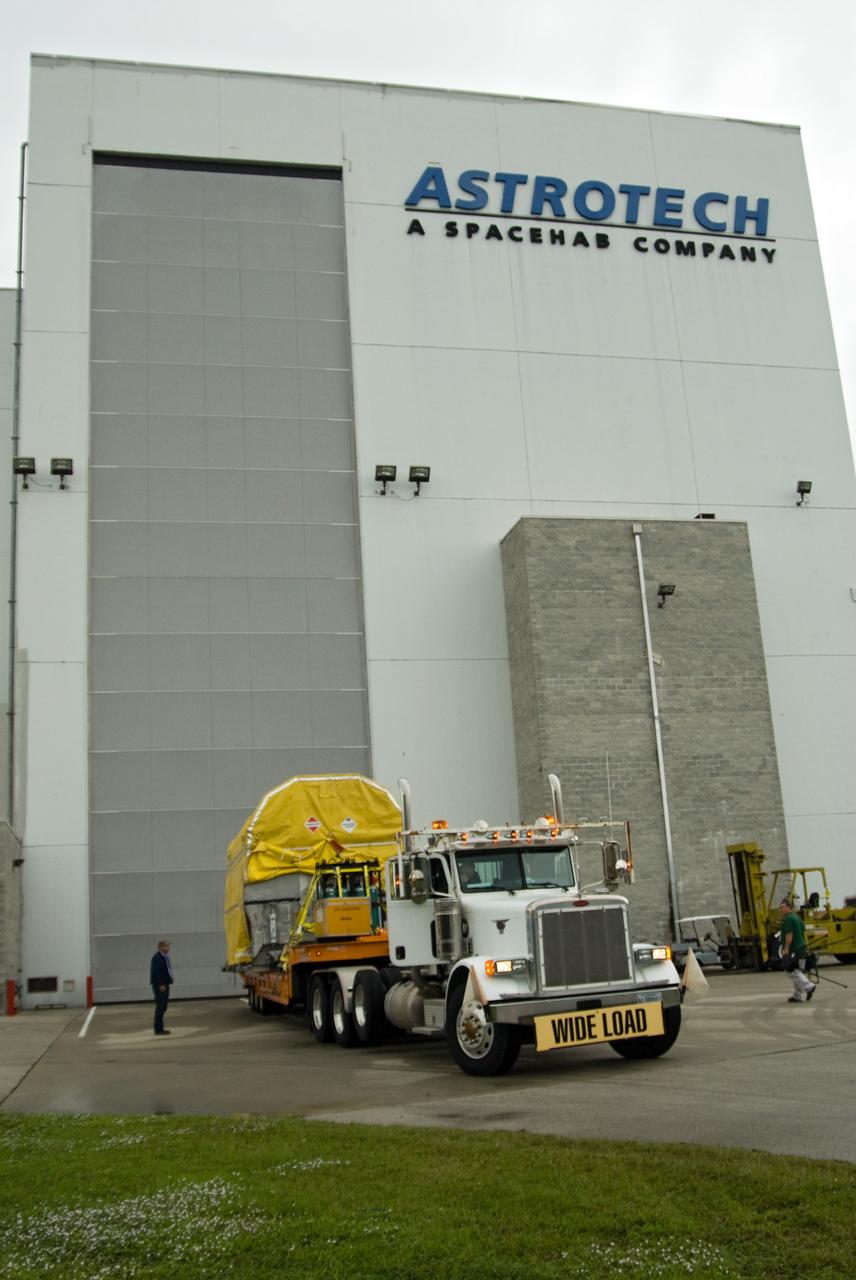
CAPE CANAVERAL, Fla. – At NASA's Kennedy Space Center in Florida, NASA's GOES-P meteorological satellite arrives at the Astrotech Space Operations facility in Titusville, Fla., for final processing before launch. GOES-P, the latest Geostationary Operational Environmental Satellite, was developed by NASA for the National Oceanic and Atmospheric Administration, or NOAA. GOES-P is designed to watch for storm development and observed current weather conditions on Earth. Launch of GOES-P is targeted for no earlier than Feb. 25, 2010, from Launch Complex 37 aboard a United Launch Alliance Delta IV rocket. For information on GOES-P, visit http://goespoes.gsfc.nasa.gov/goes/spacecraft/n_p_spacecraft.html. Photo credit: NASA/Amanda Diller
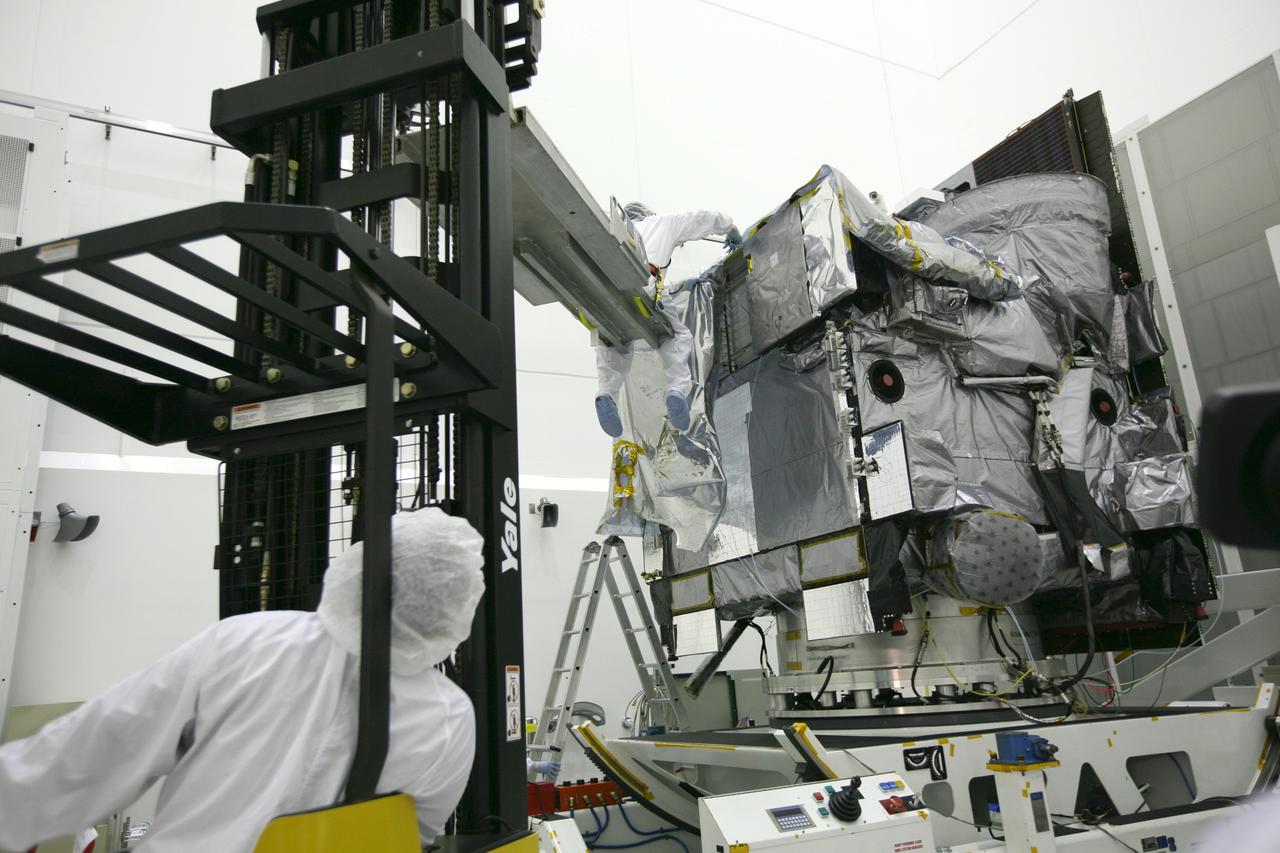
CAPE CANAVERAL, Fla. – At the Astrotech Space Operations facility in Titusville, Fla., the process to unbag or remove the protective wrapping from NASA's GOES-P meteorological satellite is under way. GOES-P, the latest Geostationary Operational Environmental Satellite, was developed by NASA for the National Oceanic and Atmospheric Administration, or NOAA. GOES-P is designed to watch for storm development and observed current weather conditions on Earth. Launch of GOES-P is targeted for no earlier than March 1 from Launch Complex 37 aboard a United Launch Alliance Delta IV rocket. For information on GOES-P, visit http://goespoes.gsfc.nasa.gov/goes/spacecraft/n_p_spacecraft.html. Photo credit: NASA/Amanda Diller
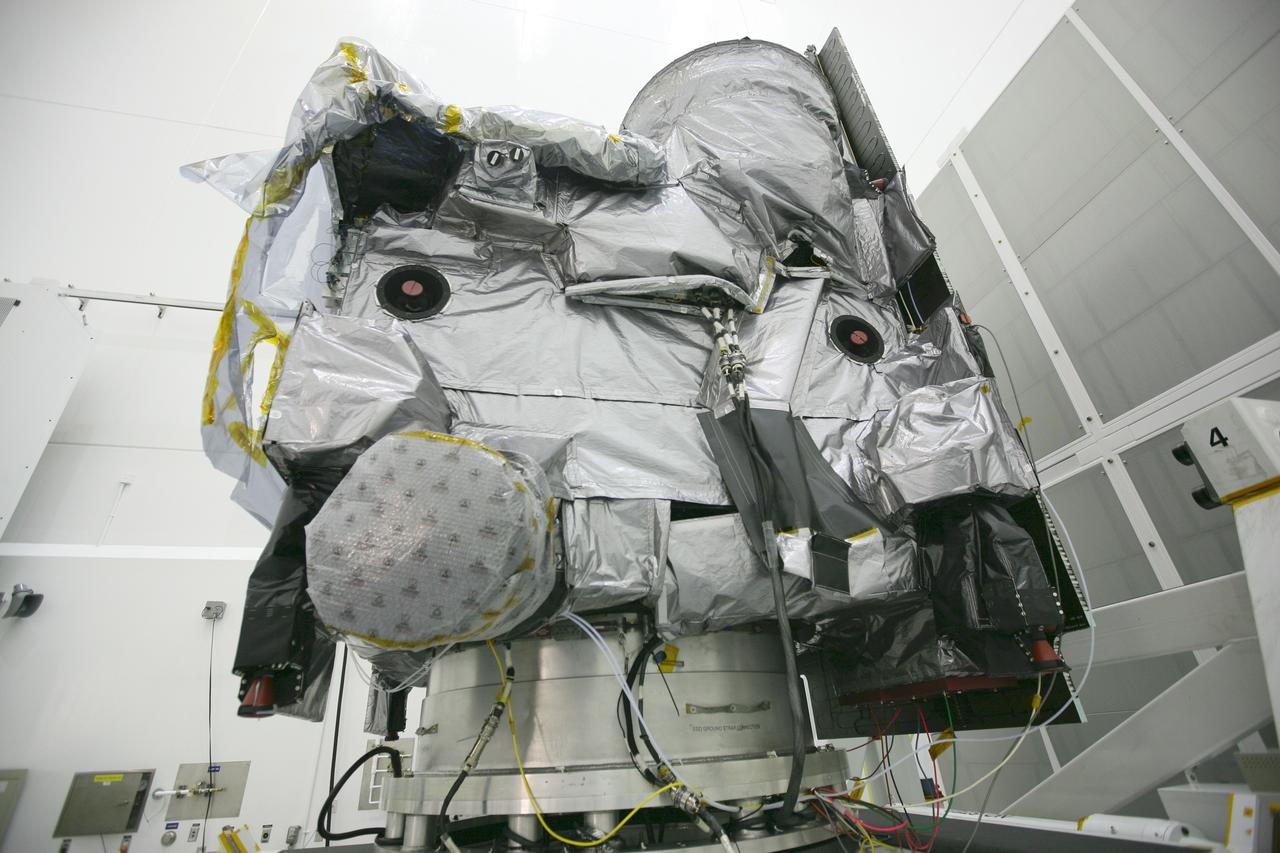
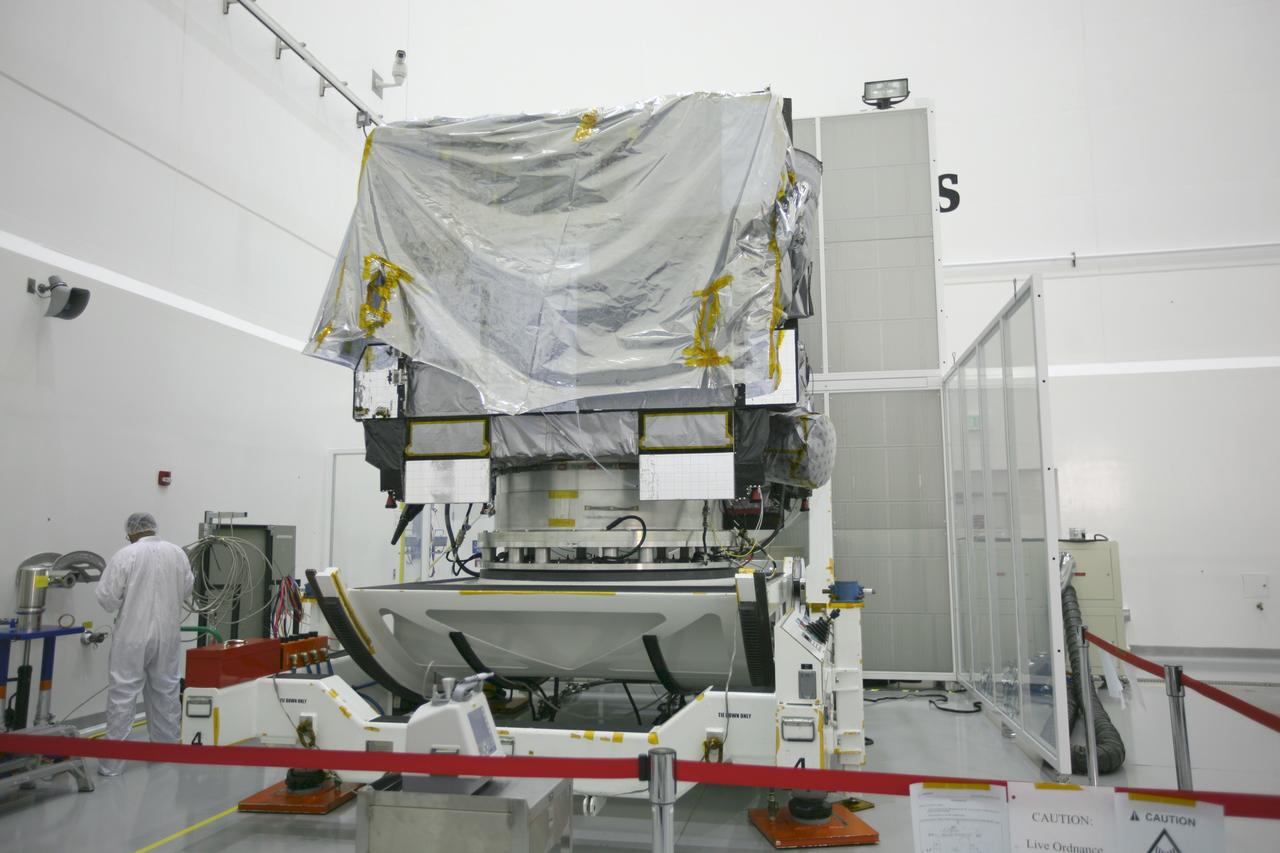
CAPE CANAVERAL, Fla. – At the Astrotech Space Operations facility in Titusville, Fla., NASA's GOES-P meteorological satellite is ready to be unbagged, or to have its protective wrapping removed. GOES-P, the latest Geostationary Operational Environmental Satellite, was developed by NASA for the National Oceanic and Atmospheric Administration, or NOAA. GOES-P is designed to watch for storm development and observed current weather conditions on Earth. Launch of GOES-P is targeted for no earlier than March 1 from Launch Complex 37 aboard a United Launch Alliance Delta IV rocket. For information on GOES-P, visit http://goespoes.gsfc.nasa.gov/goes/spacecraft/n_p_spacecraft.html. Photo credit: NASA/Amanda Diller
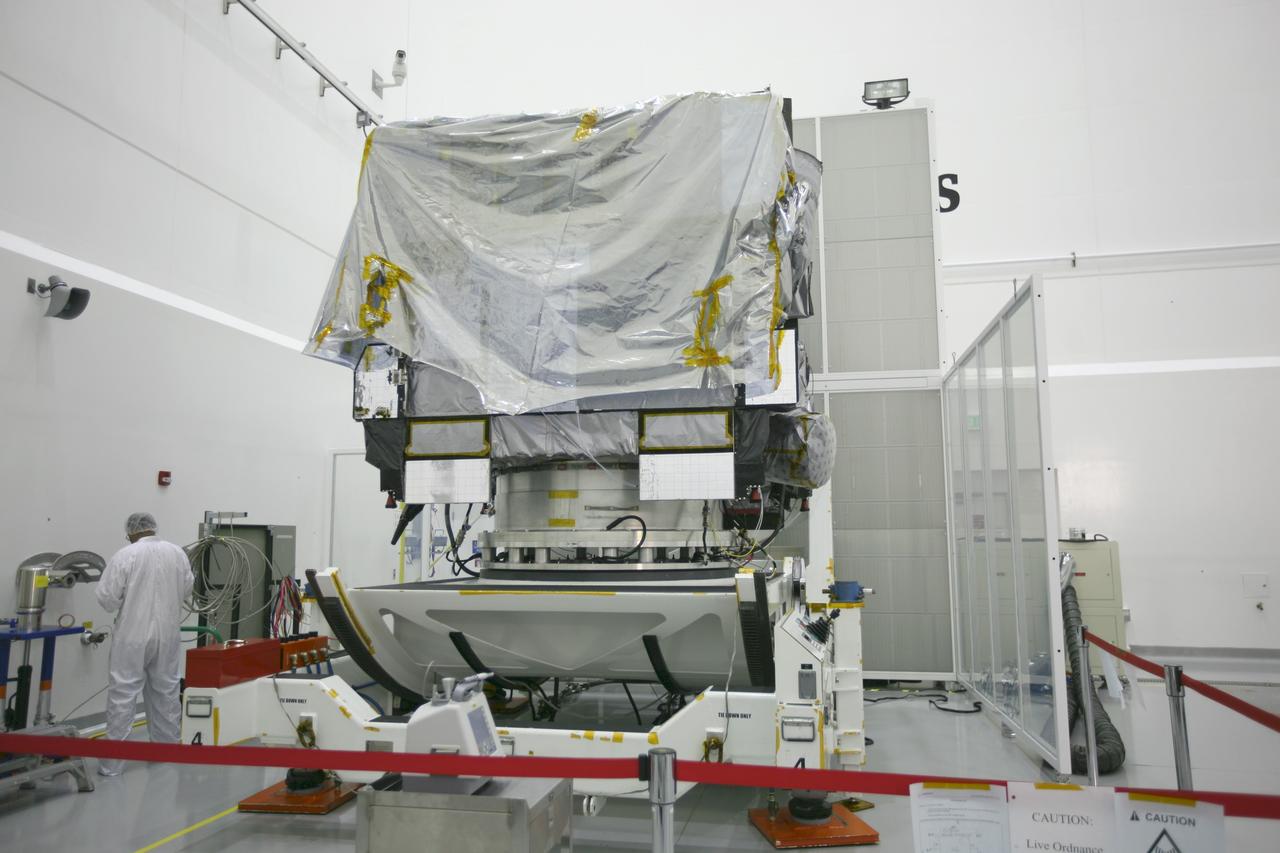
CAPE CANAVERAL, Fla. – At the Astrotech Space Operations facility in Titusville, Fla., preparations are under way to remove the protective wrapping from the NASA's GOES-P meteorological satellite, secured on a Ransome table. GOES-P, the latest Geostationary Operational Environmental Satellite, was developed by NASA for the National Oceanic and Atmospheric Administration, or NOAA. GOES-P is designed to watch for storm development and observed current weather conditions on Earth. Launch of GOES-P is targeted for no earlier than March 1 from Launch Complex 37 aboard a United Launch Alliance Delta IV rocket. For information on GOES-P, visit http://goespoes.gsfc.nasa.gov/goes/spacecraft/n_p_spacecraft.html. Photo credit: NASA/Amanda Diller
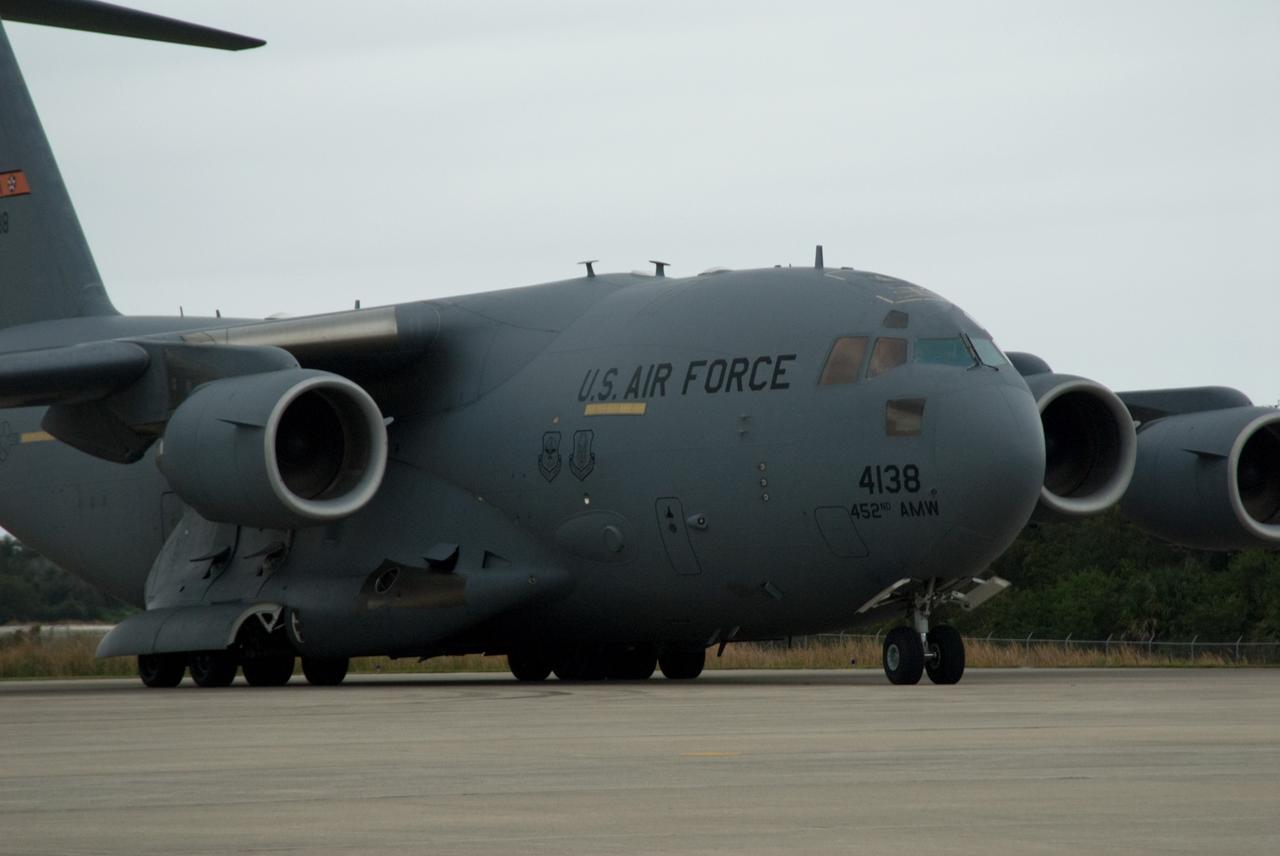
CAPE CANAVERAL, Fla. – NASA's GOES-P meteorological satellite is delivered to the Shuttle Landing Facility at NASA's Kennedy Space Center in Florida aboard a U.S. Air Force C-17 aircraft. GOES-P, the latest Geostationary Operational Environmental Satellite, was developed by NASA for the National Oceanic and Atmospheric Administration, or NOAA. GOES-P is designed to watch for storm development and observed current weather conditions on Earth. Launch of GOES-P is targeted for no earlier than Feb. 25, 2010, from Launch Complex 37 aboard a United Launch Alliance Delta IV rocket. For information on GOES-P, visit http://goespoes.gsfc.nasa.gov/goes/spacecraft/n_p_spacecraft.html. Photo credit: NASA/Amanda Diller
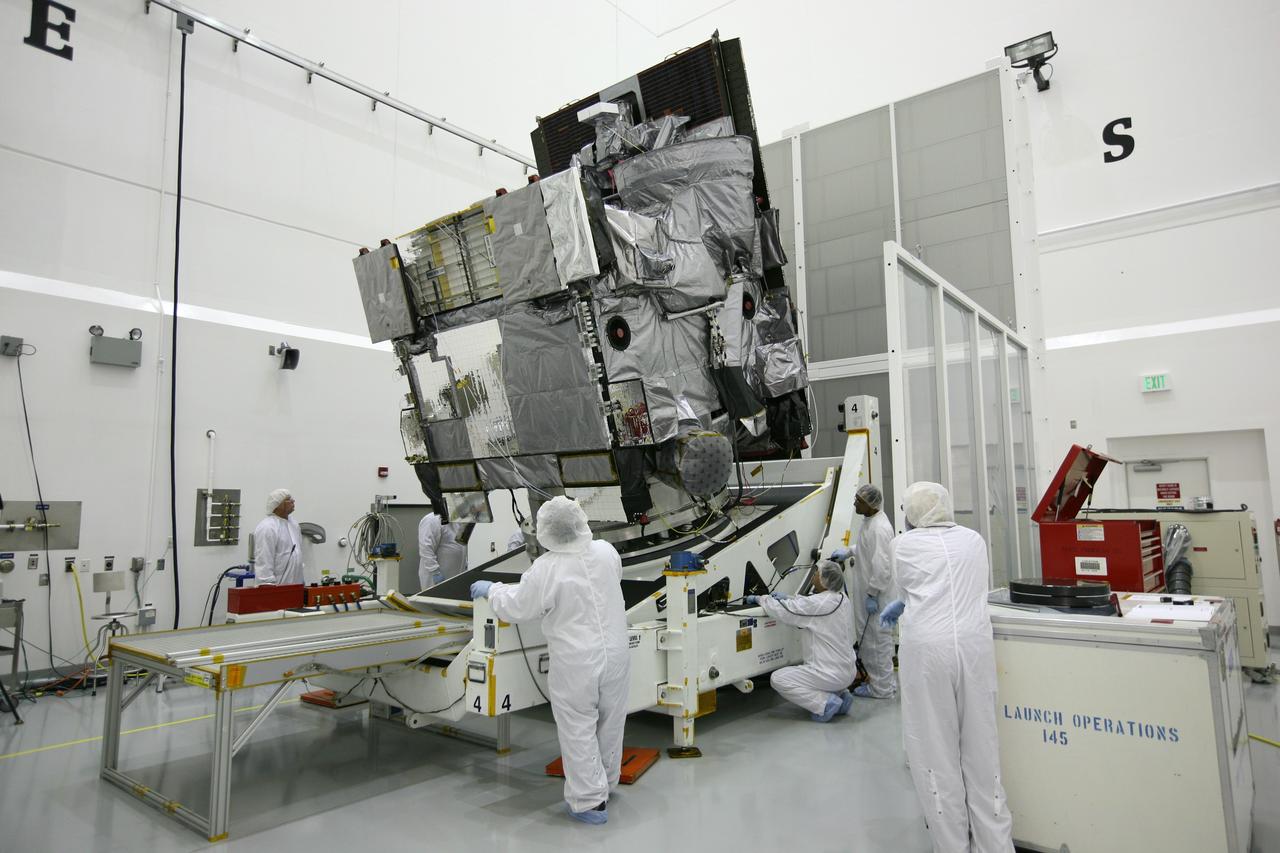
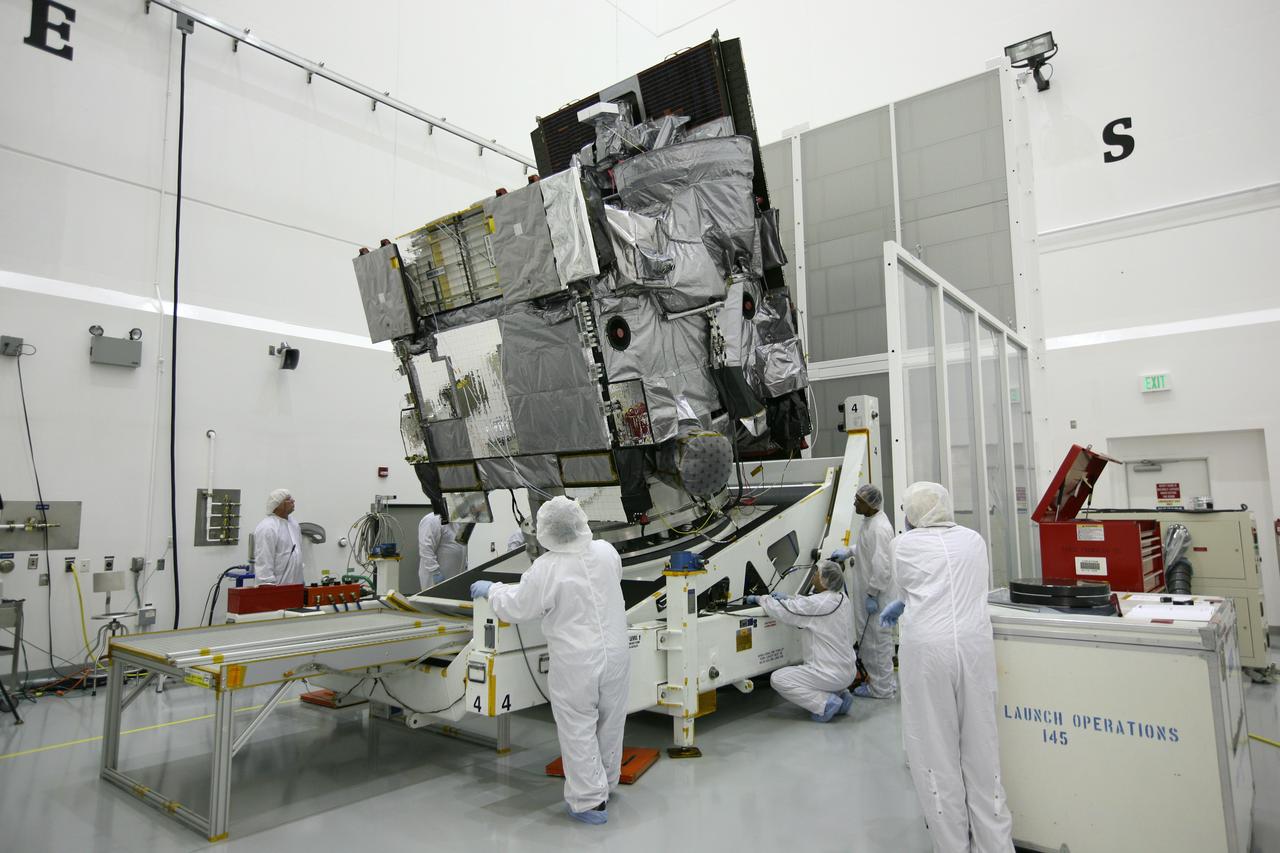
CAPE CANAVERAL, Fla. – At the Astrotech Space Operations facility in Titusville, Fla., spacecraft technicians rotate NASA's GOES-P meteorological satellite. GOES-P, the latest Geostationary Operational Environmental Satellite, was developed by NASA for the National Oceanic and Atmospheric Administration, or NOAA. GOES-P is designed to watch for storm development and observed current weather conditions on Earth. Launch of GOES-P is targeted for no earlier than March 1 from Launch Complex 37 aboard a United Launch Alliance Delta IV rocket. For information on GOES-P, visit http://goespoes.gsfc.nasa.gov/goes/spacecraft/n_p_spacecraft.html. Photo credit: NASA/Amanda Diller
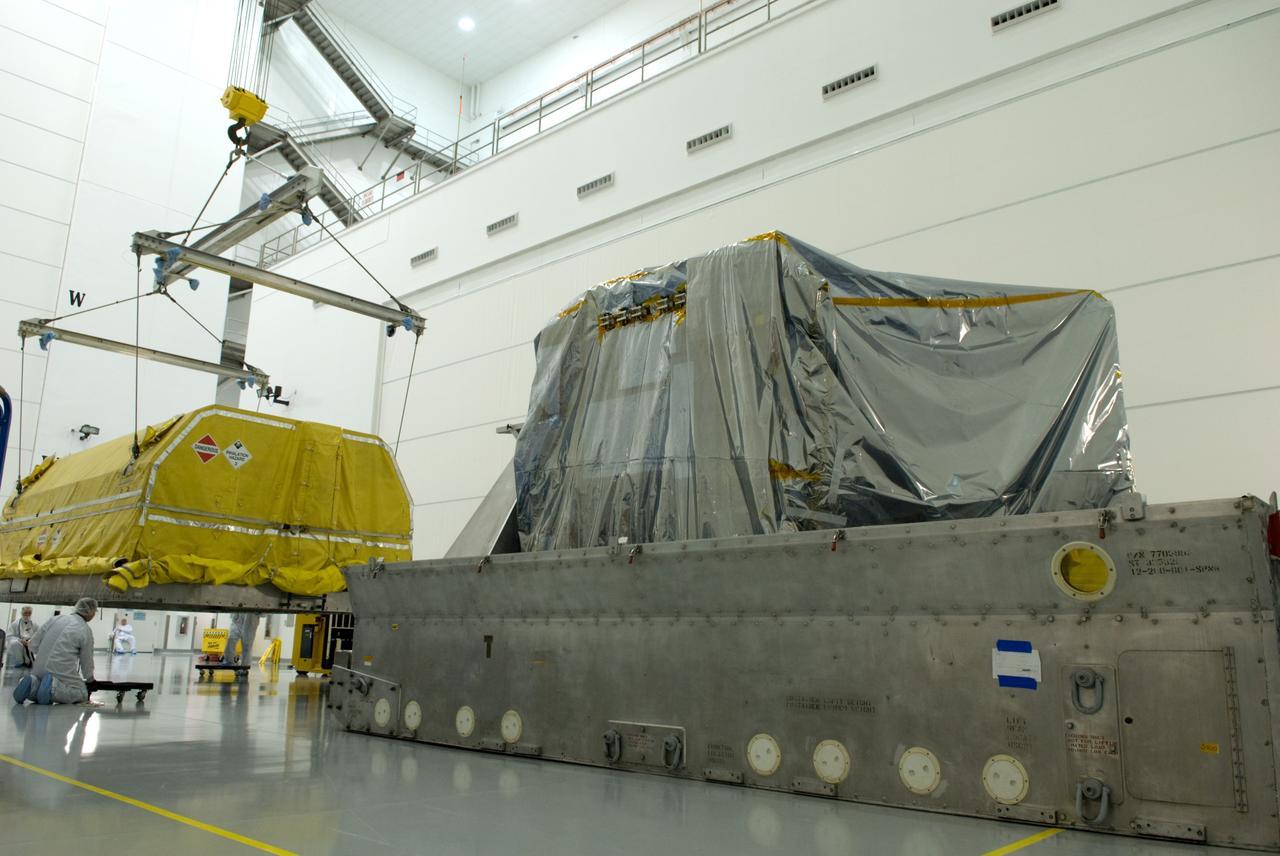
CAPE CANAVERAL, Fla. – At the Astrotech Space Operations facility in Titusville, Fla., workers remove the transportation cover from NASA's newly arrived GOES-P meteorological satellite. GOES-P, the latest Geostationary Operational Environmental Satellite, was developed by NASA for the National Oceanic and Atmospheric Administration, or NOAA. GOES-P is designed to watch for storm development and observed current weather conditions on Earth. Launch of GOES-P is targeted for no earlier than Feb. 25, 2010, from Launch Complex 37 aboard a United Launch Alliance Delta IV rocket. For information on GOES-P, visit http://goespoes.gsfc.nasa.gov/goes/spacecraft/n_p_spacecraft.html. Photo credit: NASA/Glenn Benson
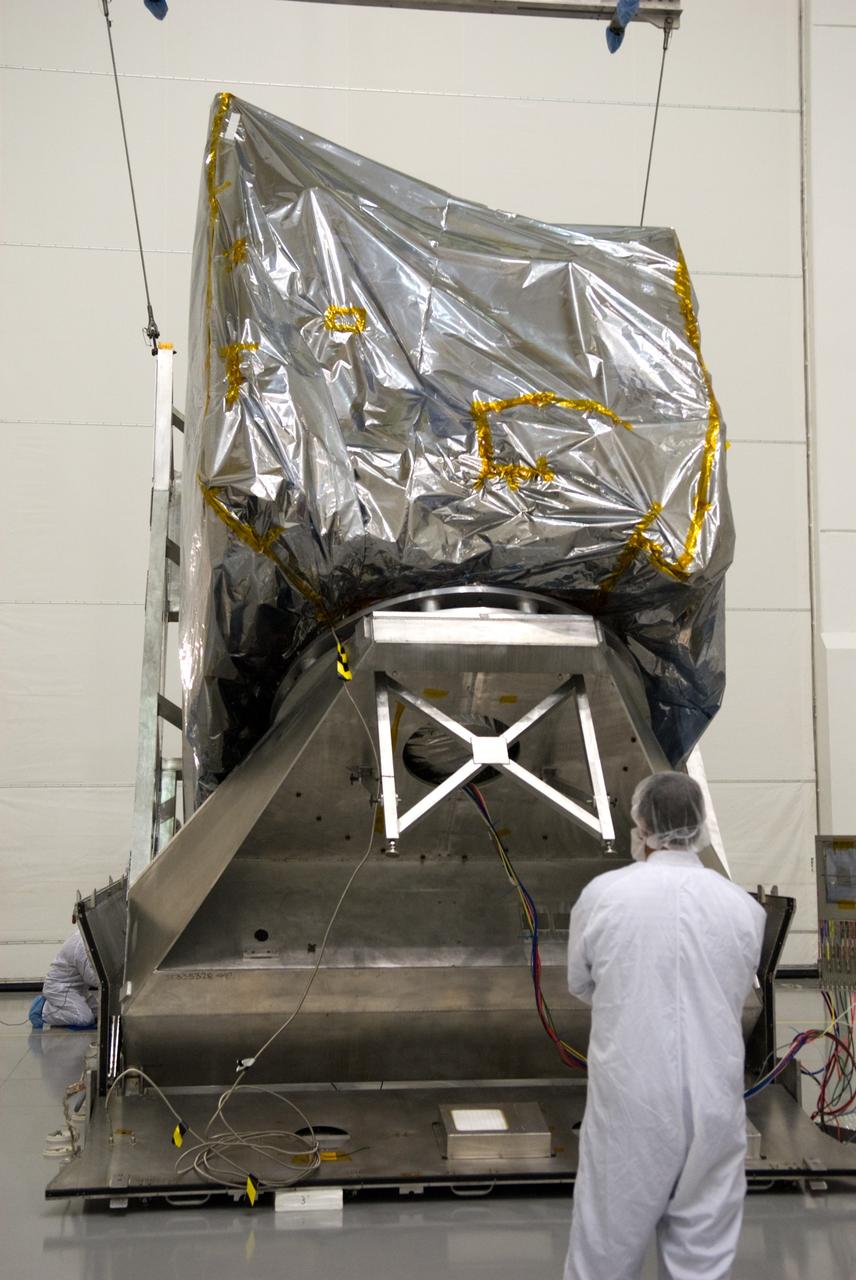
CAPE CANAVERAL, Fla. – At the Astrotech Space Operations facility in Titusville, Fla., NASA's newly arrived GOES-P meteorological satellite is lifted into a vertical position for removal from its transportation case. GOES-P, the latest Geostationary Operational Environmental Satellite, was developed by NASA for the National Oceanic and Atmospheric Administration, or NOAA. GOES-P is designed to watch for storm development and observed current weather conditions on Earth. Launch of GOES-P is targeted for no earlier than Feb. 25, 2010, from Launch Complex 37 aboard a United Launch Alliance Delta IV rocket. For information on GOES-P, visit http://goespoes.gsfc.nasa.gov/goes/spacecraft/n_p_spacecraft.html. Photo credit: NASA/Glenn Benson
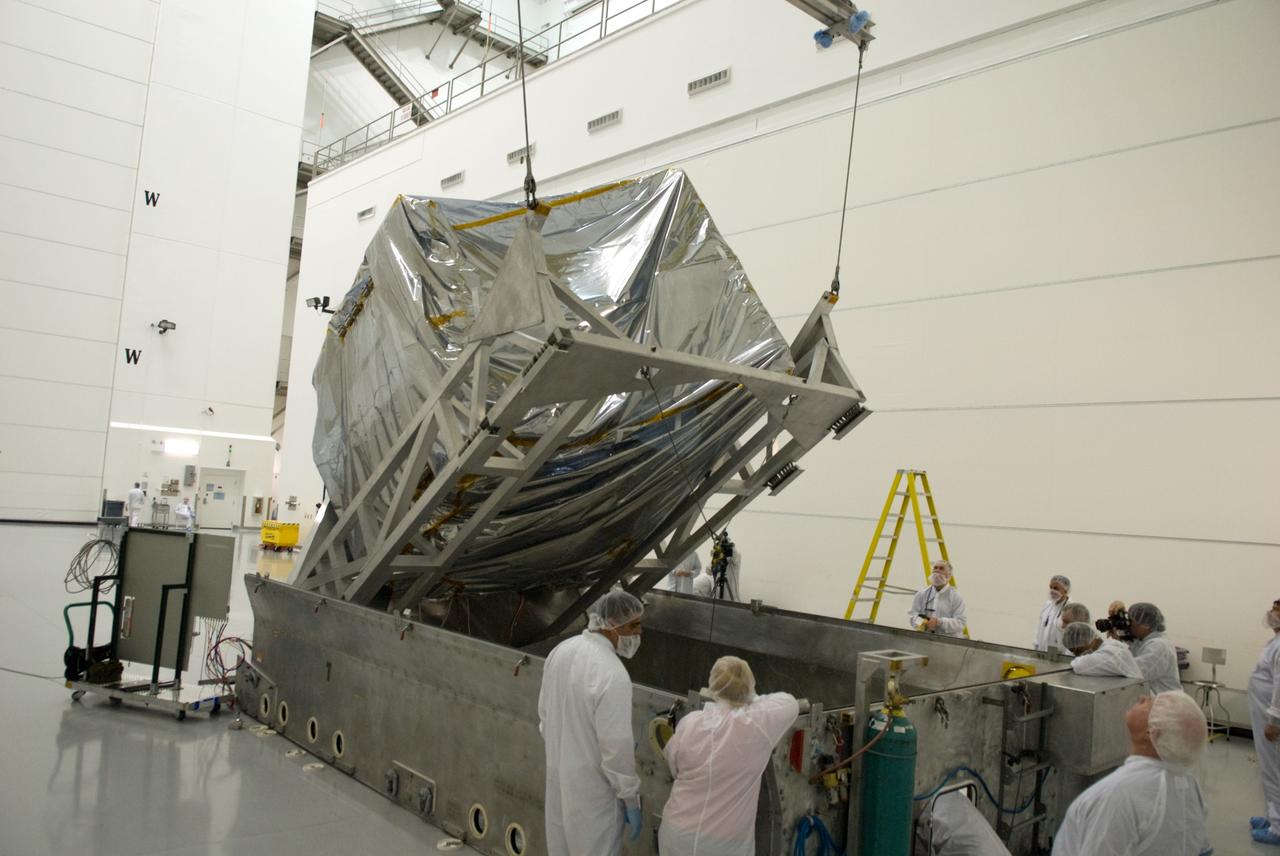
CAPE CANAVERAL, Fla. – At the Astrotech Space Operations facility in Titusville, Fla., NASA's newly arrived GOES-P meteorological satellite is lifted from its transportation case. GOES-P, the latest Geostationary Operational Environmental Satellite, was developed by NASA for the National Oceanic and Atmospheric Administration, or NOAA. GOES-P is designed to watch for storm development and observed current weather conditions on Earth. Launch of GOES-P is targeted for no earlier than Feb. 25, 2010, from Launch Complex 37 aboard a United Launch Alliance Delta IV rocket. For information on GOES-P, visit http://goespoes.gsfc.nasa.gov/goes/spacecraft/n_p_spacecraft.html. Photo credit: NASA/Glenn Benson
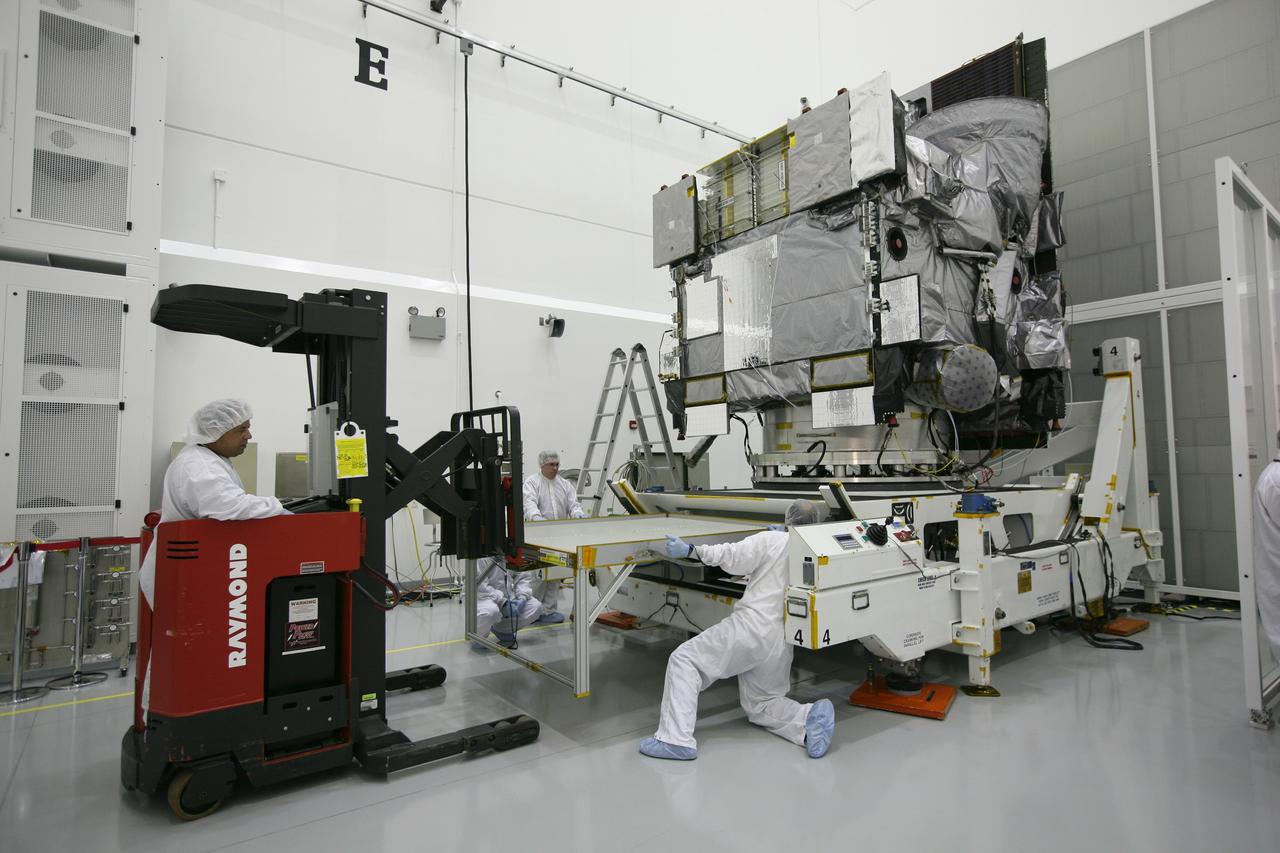
CAPE CANAVERAL, Fla. – At the Astrotech Space Operations facility in Titusville, Fla., spacecraft technicians prepare to rotate NASA's GOES-P meteorological satellite. GOES-P, the latest Geostationary Operational Environmental Satellite, was developed by NASA for the National Oceanic and Atmospheric Administration, or NOAA. GOES-P is designed to watch for storm development and observed current weather conditions on Earth. Launch of GOES-P is targeted for no earlier than March 1 from Launch Complex 37 aboard a United Launch Alliance Delta IV rocket. For information on GOES-P, visit http://goespoes.gsfc.nasa.gov/goes/spacecraft/n_p_spacecraft.html. Photo credit: NASA/Amanda Diller
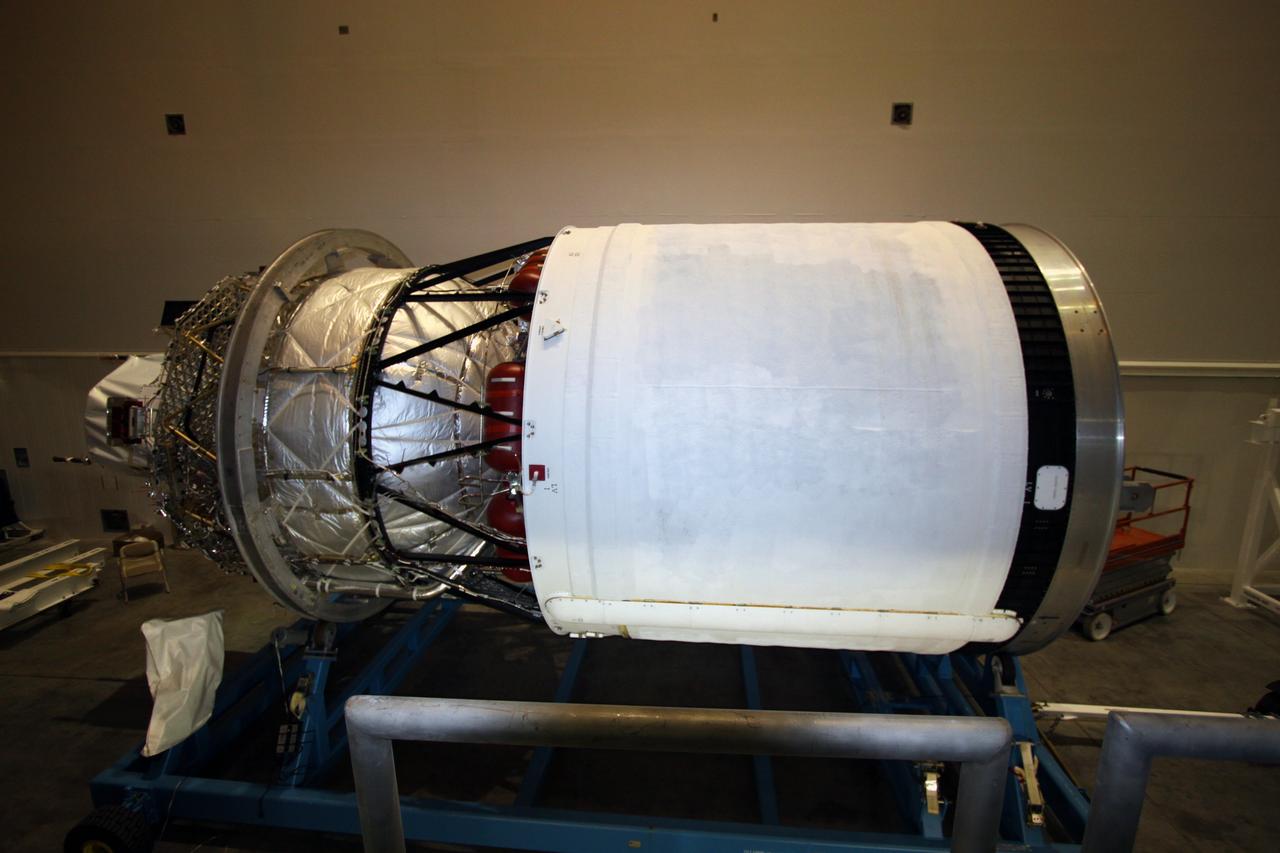
CAPE CANAVERAL, Fla. – The second stage of a Delta IV rocket awaits checkout in the hangar of the Delta Operations Center at Cape Canaveral Air Force Station in Florida. The United Launch Alliance Delta IV rocket is the vehicle slated to launch GOES-P, the latest Geostationary Operational Environmental Satellite developed by NASA for the National Oceanic and Atmospheric Administration, or NOAA. A meteorological satellite, GOES-P is designed to watch for storm development and observed current weather conditions on Earth. Launch of GOES-P is scheduled for no earlier than Feb. 25, 2010, from Launch Complex 37. For information on GOES-P, visit http://goespoes.gsfc.nasa.gov/goes/spacecraft/n_p_spacecraft.html. Photo credit: NASA/Troy Cryder
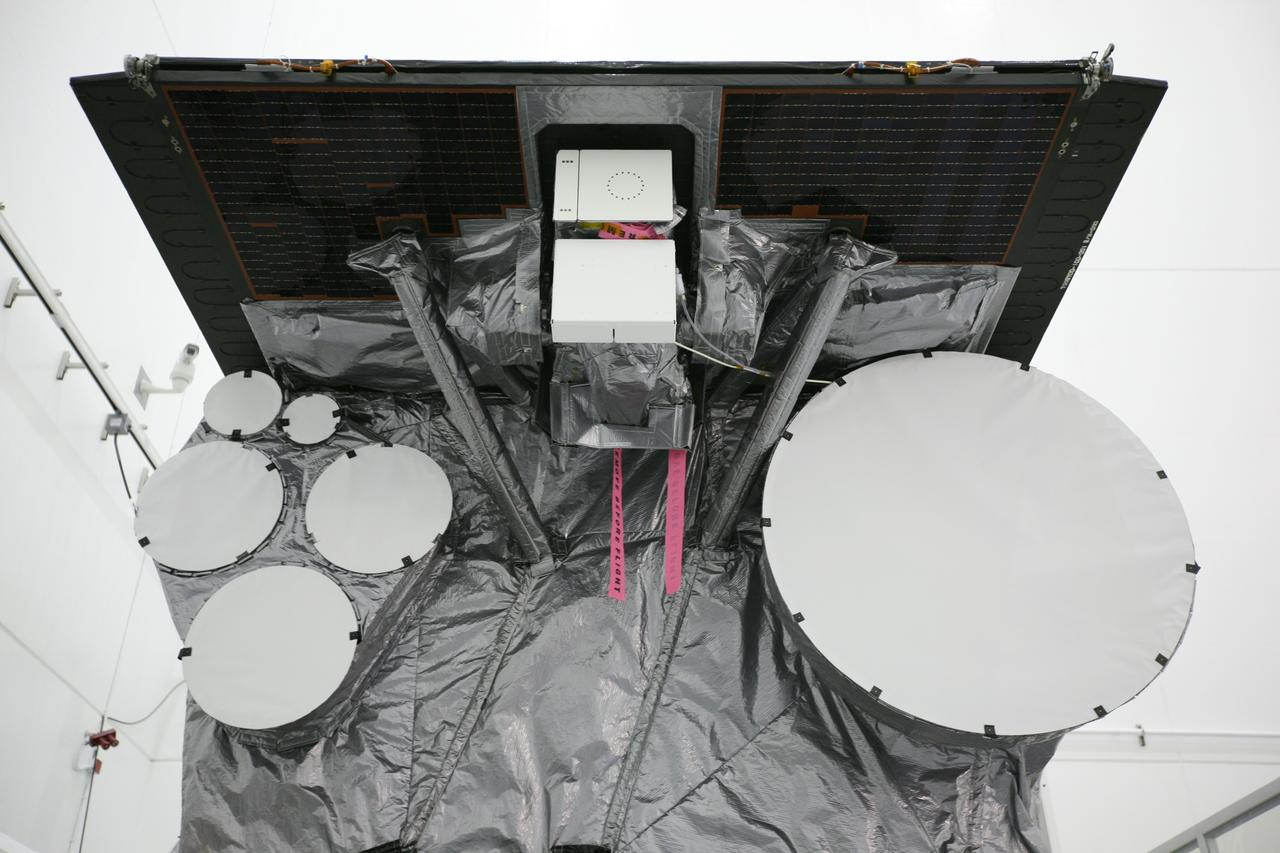
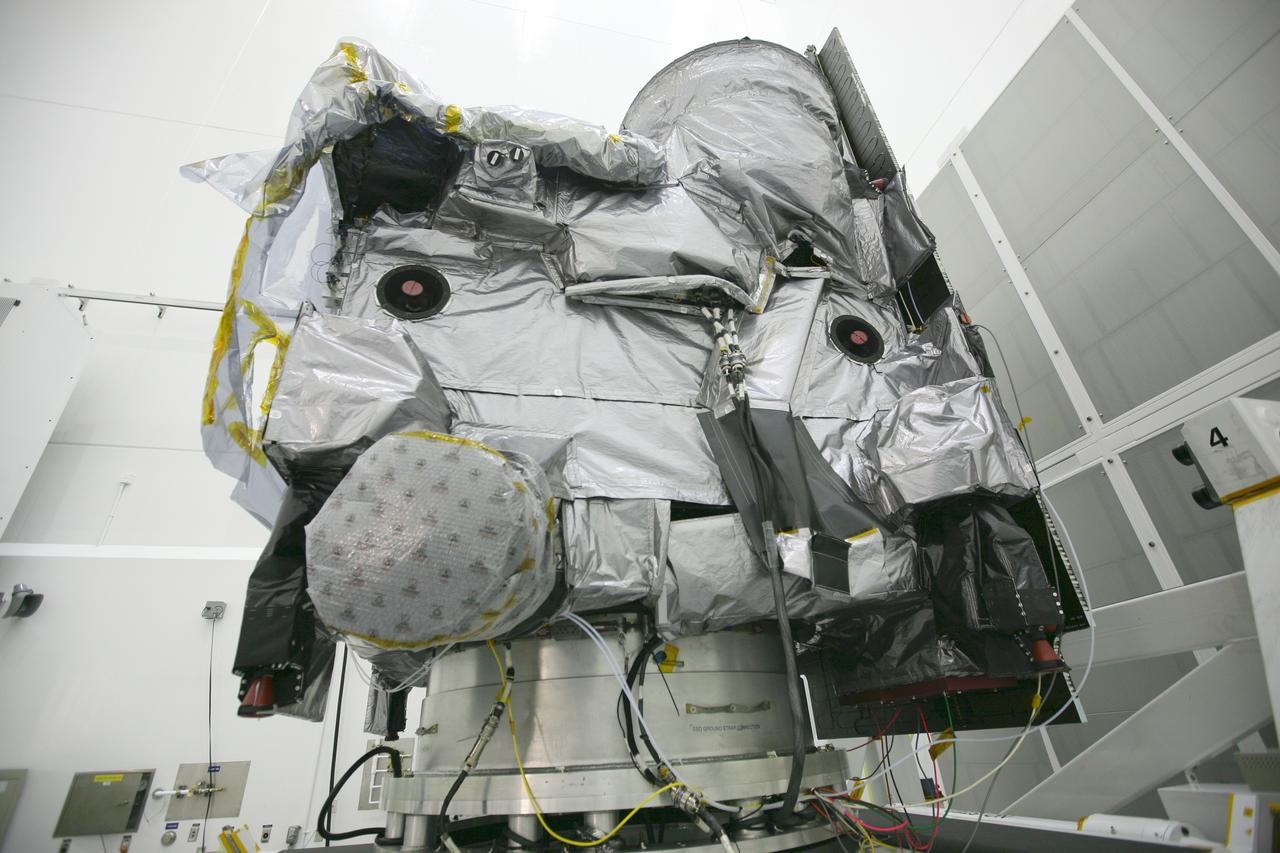
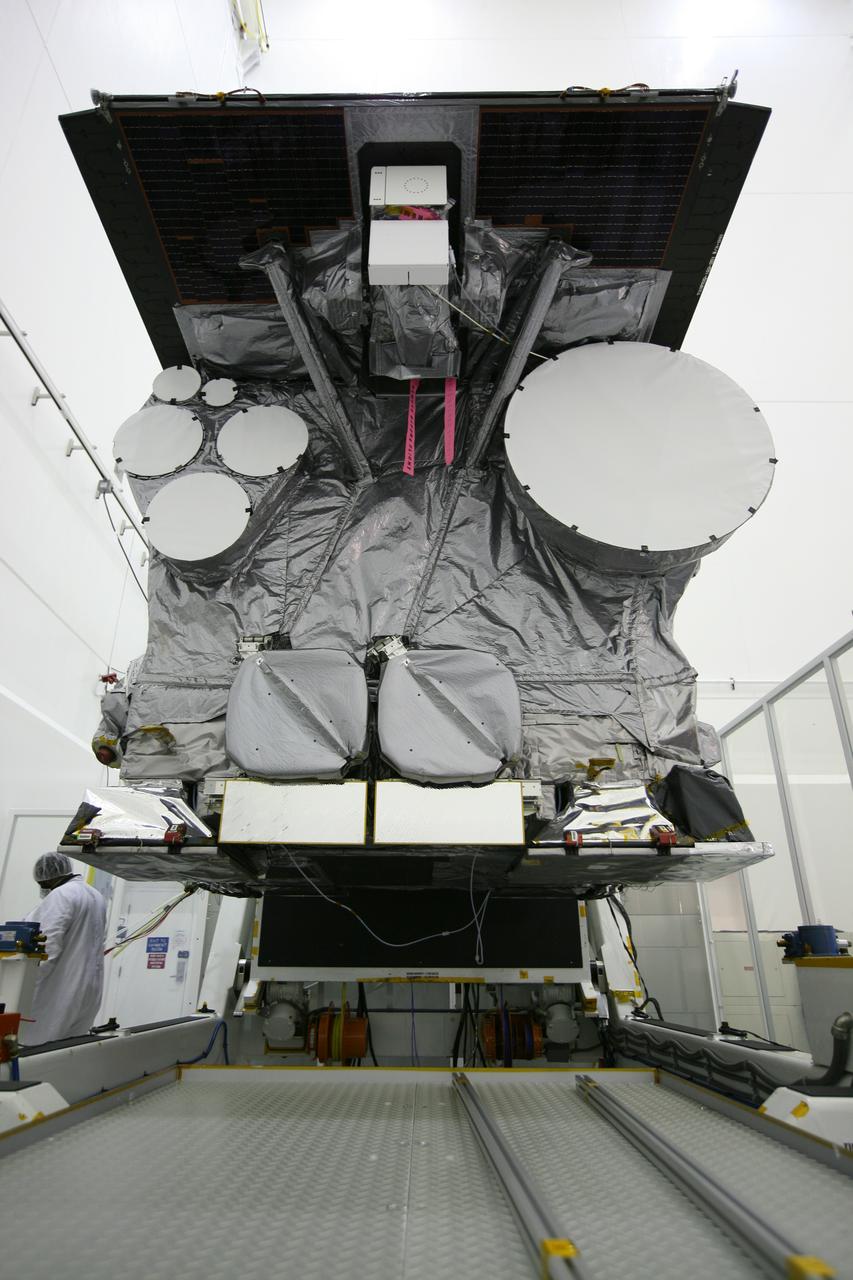
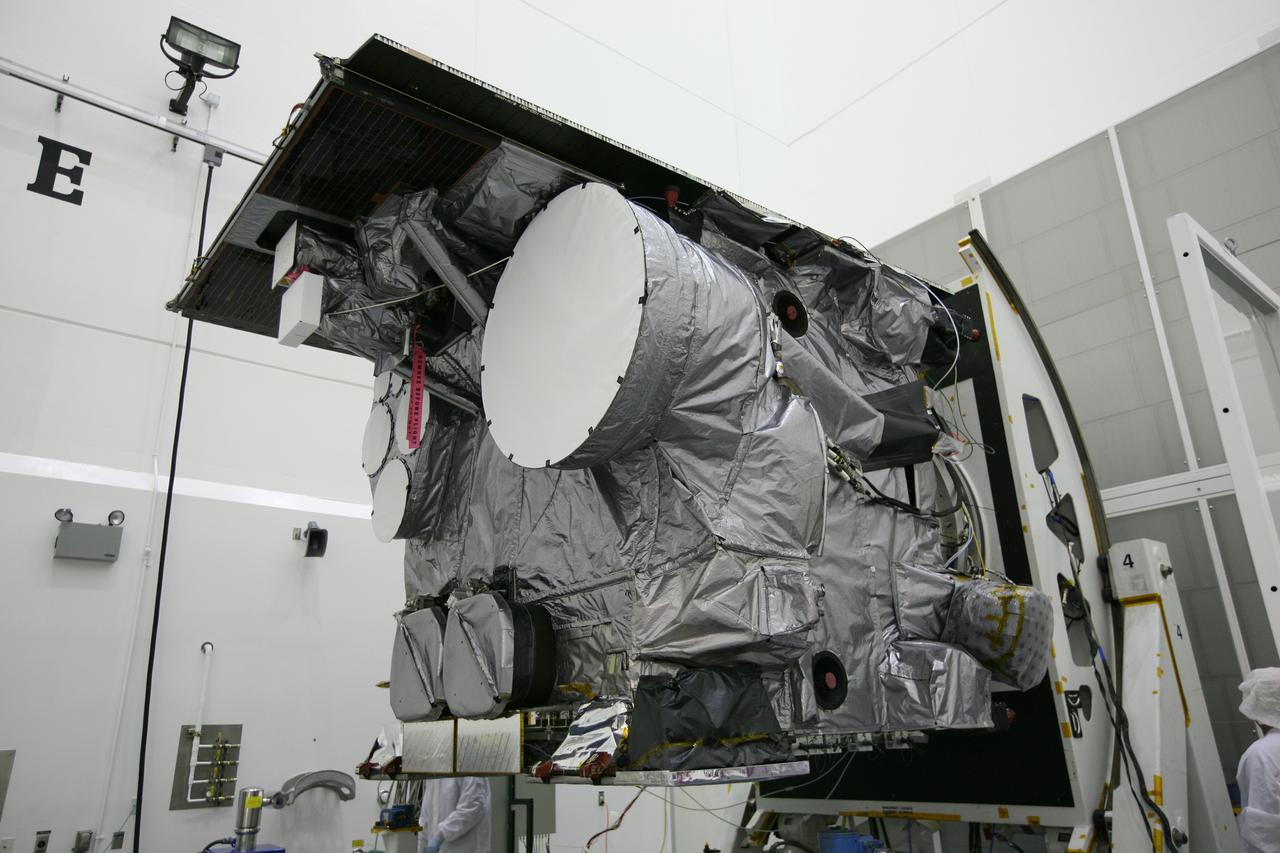
CAPE CANAVERAL, Fla. – At the Astrotech Space Operations facility in Titusville, Fla., the components of NASA's GOES-P meteorological satellite are in view following the spacecraft's unbagging. The cup-shaped objects on the left side of the spacecraft include the S-band and L-band antennas. The large cup-shaped object at right is the ultrahigh frequency, or UHF, antenna. GOES-P, the latest Geostationary Operational Environmental Satellite, was developed by NASA for the National Oceanic and Atmospheric Administration, or NOAA. GOES-P is designed to watch for storm development and observed current weather conditions on Earth. Launch of GOES-P is targeted for no earlier than March 1 from Launch Complex 37 aboard a United Launch Alliance Delta IV rocket. For information on GOES-P, visit http://goespoes.gsfc.nasa.gov/goes/spacecraft/n_p_spacecraft.html. Photo credit: NASA/Amanda Diller
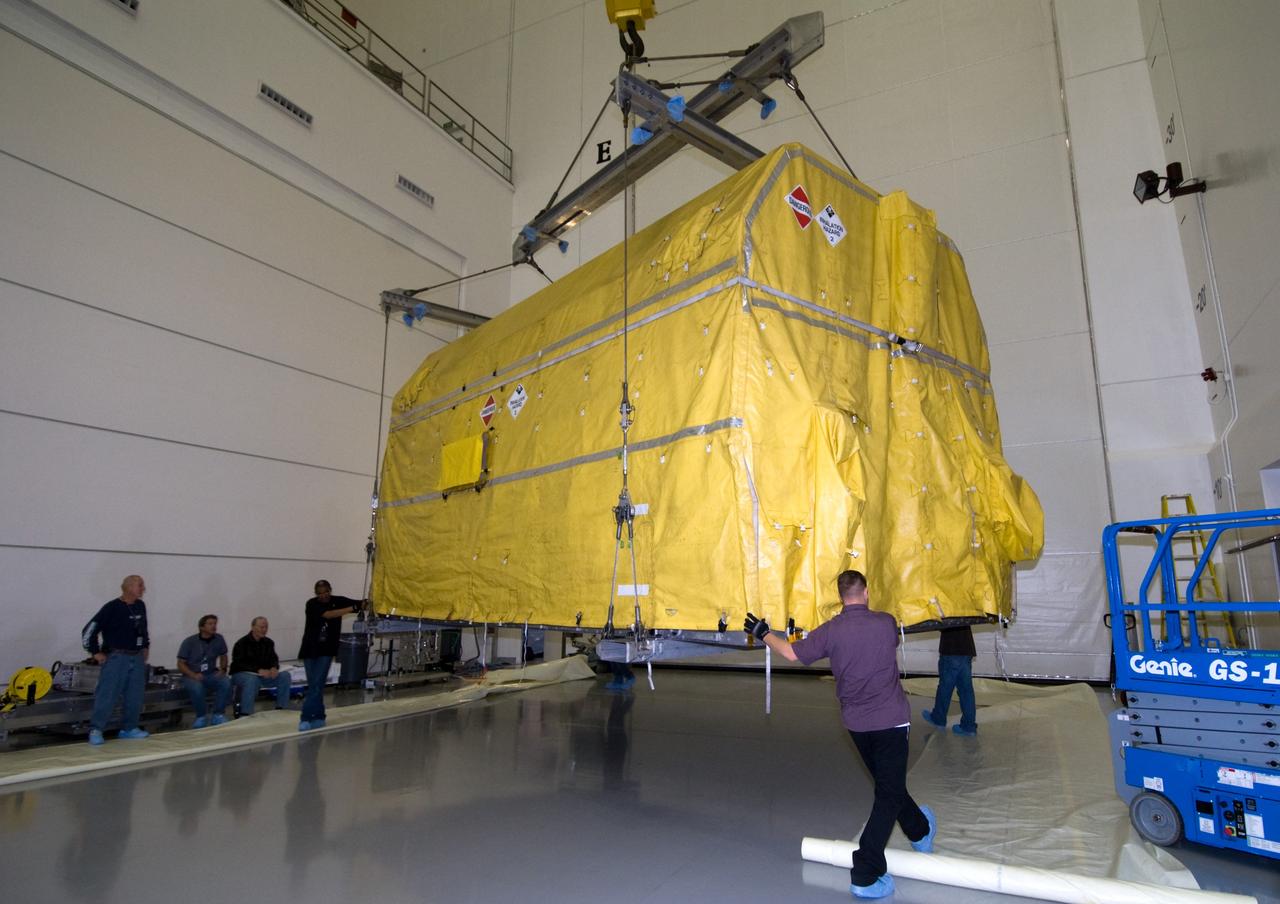
CAPE CANAVERAL, Fla. – At the Astrotech Space Operations facility in Titusville, Fla., workers lift NASA's GOES-P meteorological satellite from the transporter which delivered it from NASA Kennedy Space Center's Shuttle Landing Facility. GOES-P, the latest Geostationary Operational Environmental Satellite, was developed by NASA for the National Oceanic and Atmospheric Administration, or NOAA. GOES-P is designed to watch for storm development and observed current weather conditions on Earth. Launch of GOES-P is targeted for no earlier than Feb. 25, 2010, from Launch Complex 37 aboard a United Launch Alliance Delta IV rocket. For information on GOES-P, visit http://goespoes.gsfc.nasa.gov/goes/spacecraft/n_p_spacecraft.html. Photo credit: NASA/Amanda Diller
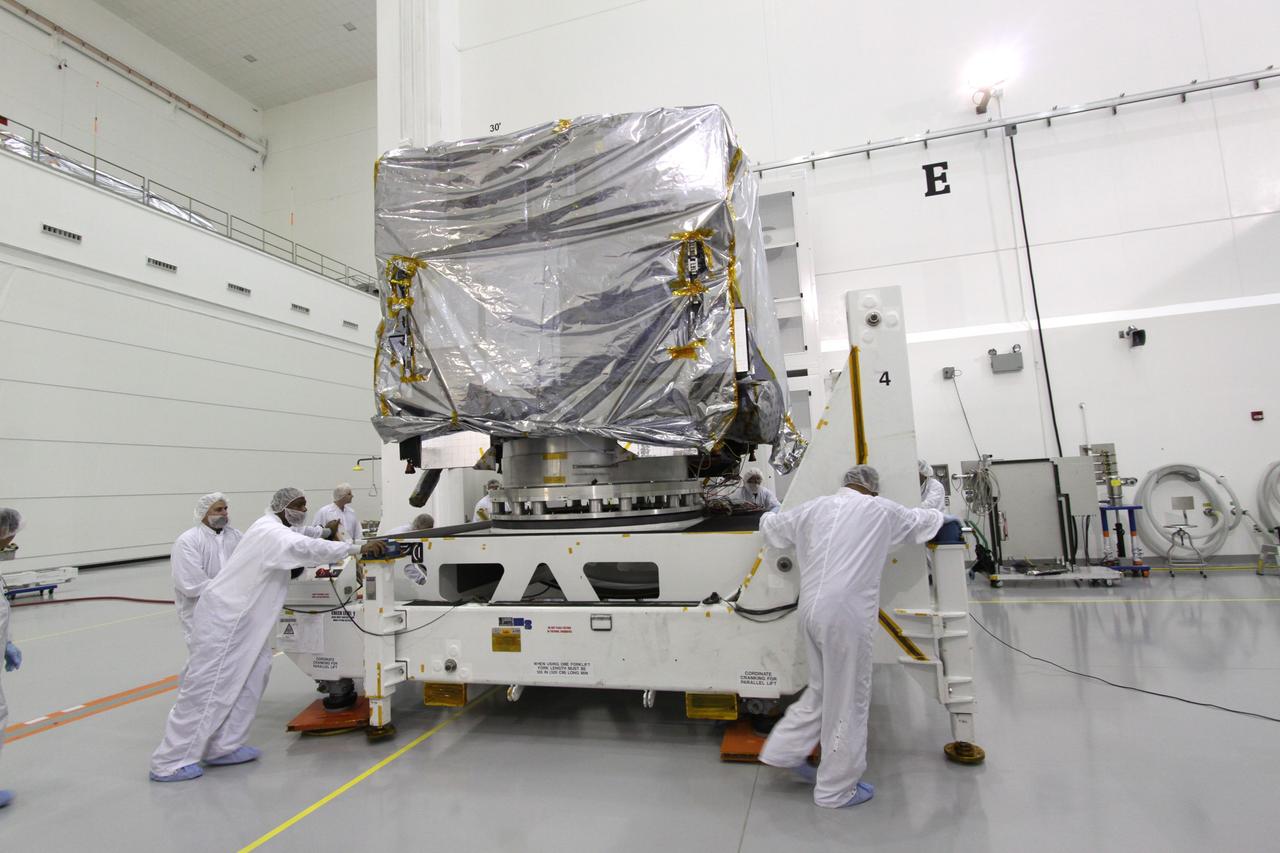
CAPE CANAVERAL, Fla. – At the Astrotech Space Operations facility in Titusville, Fla., workers move NASA's GOES-P meteorological satellite, covered in a protective bag and secured on a Ransome table, into position in a test cell where it will be rotated for further testing. GOES-P, the latest Geostationary Operational Environmental Satellite, was developed by NASA for the National Oceanic and Atmospheric Administration, or NOAA. GOES-P is designed to watch for storm development and observed current weather conditions on Earth. Launch of GOES-P is targeted for no earlier than Feb. 25, 2010, from Launch Complex 37 aboard a United Launch Alliance Delta IV rocket. For information on GOES-P, visit http://goespoes.gsfc.nasa.gov/goes/spacecraft/n_p_spacecraft.html. Photo credit: NASA/Jack Pfaller
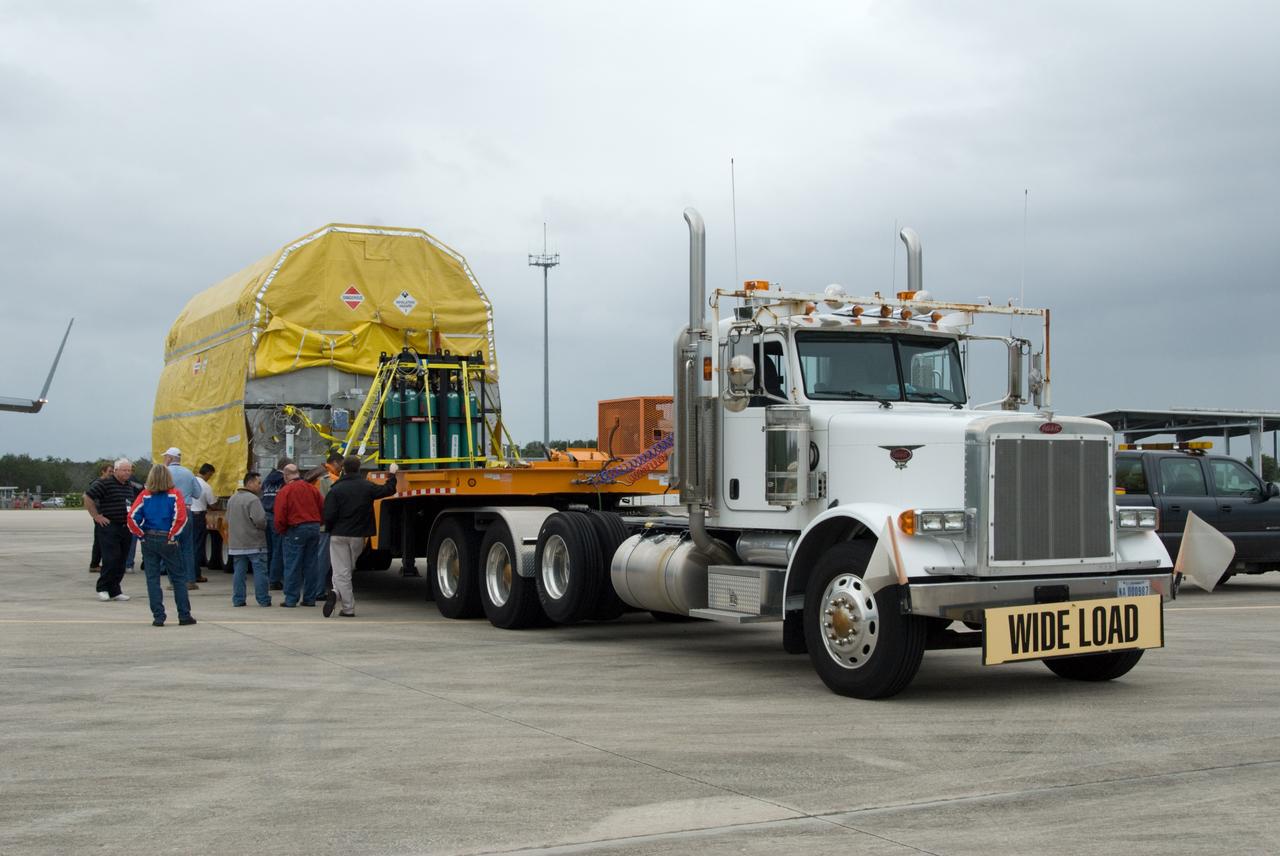
CAPE CANAVERAL, Fla. – At the Shuttle Landing Facility at NASA's Kennedy Space Center in Florida, NASA's GOES-P meteorological satellite has been lifted onto a transporter for its move to the Astrotech Space Operations facility in Titusville, Fla., for final processing before launch. GOES-P, the latest Geostationary Operational Environmental Satellite, was developed by NASA for the National Oceanic and Atmospheric Administration, or NOAA. GOES-P is designed to watch for storm development and observed current weather conditions on Earth. Launch of GOES-P is targeted for no earlier than Feb. 25, 2010, from Launch Complex 37 aboard a United Launch Alliance Delta IV rocket. For information on GOES-P, visit http://goespoes.gsfc.nasa.gov/goes/spacecraft/n_p_spacecraft.html. Photo credit: NASA/Amanda Diller
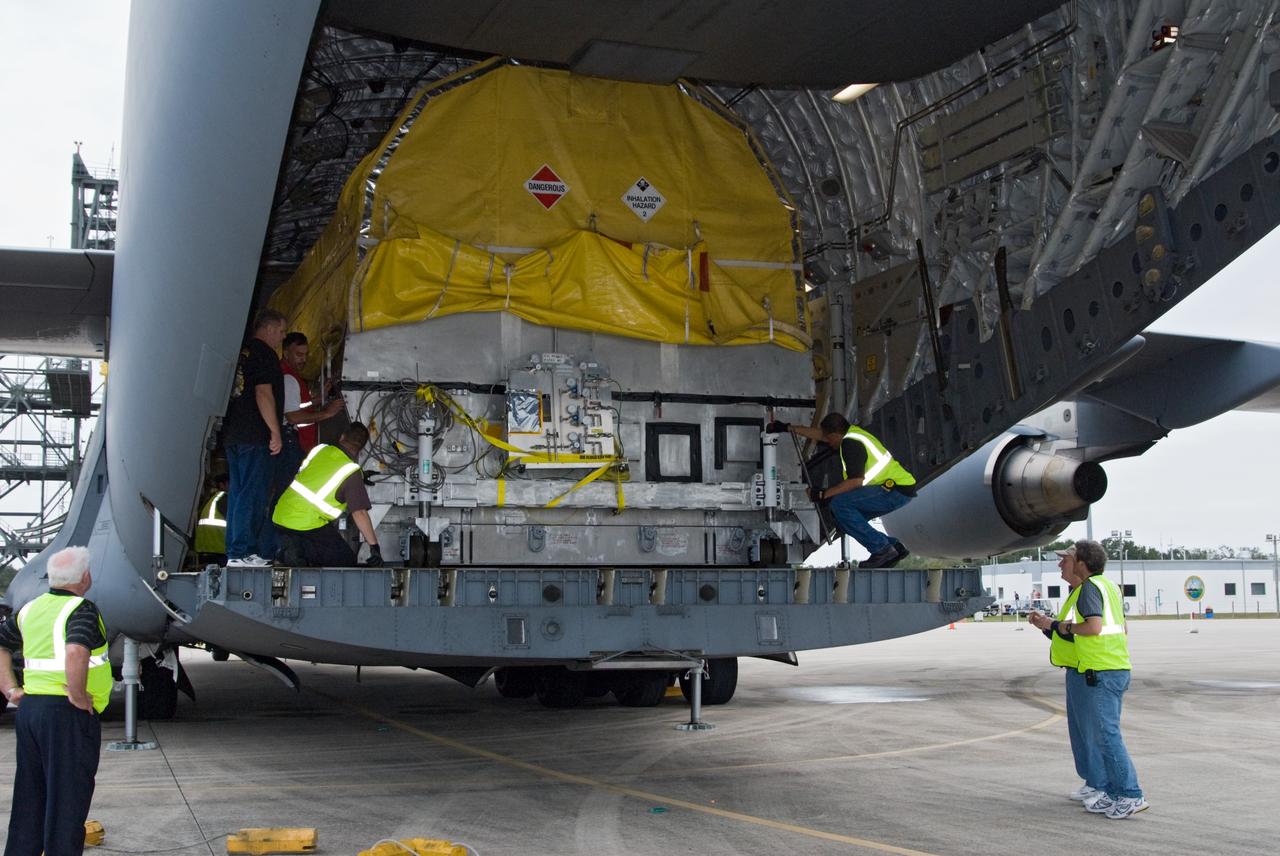
CAPE CANAVERAL, Fla. – At the Shuttle Landing Facility at NASA's Kennedy Space Center in Florida, NASA's GOES-P meteorological satellite is moved to the edge of the cargo bay of a U.S. Air Force C-17 aircraft for offloading. GOES-P, the latest Geostationary Operational Environmental Satellite, was developed by NASA for the National Oceanic and Atmospheric Administration, or NOAA. GOES-P is designed to watch for storm development and observed current weather conditions on Earth. Launch of GOES-P is targeted for no earlier than Feb. 25, 2010, from Launch Complex 37 aboard a United Launch Alliance Delta IV rocket. For information on GOES-P, visit http://goespoes.gsfc.nasa.gov/goes/spacecraft/n_p_spacecraft.html. Photo credit: NASA/Amanda Diller
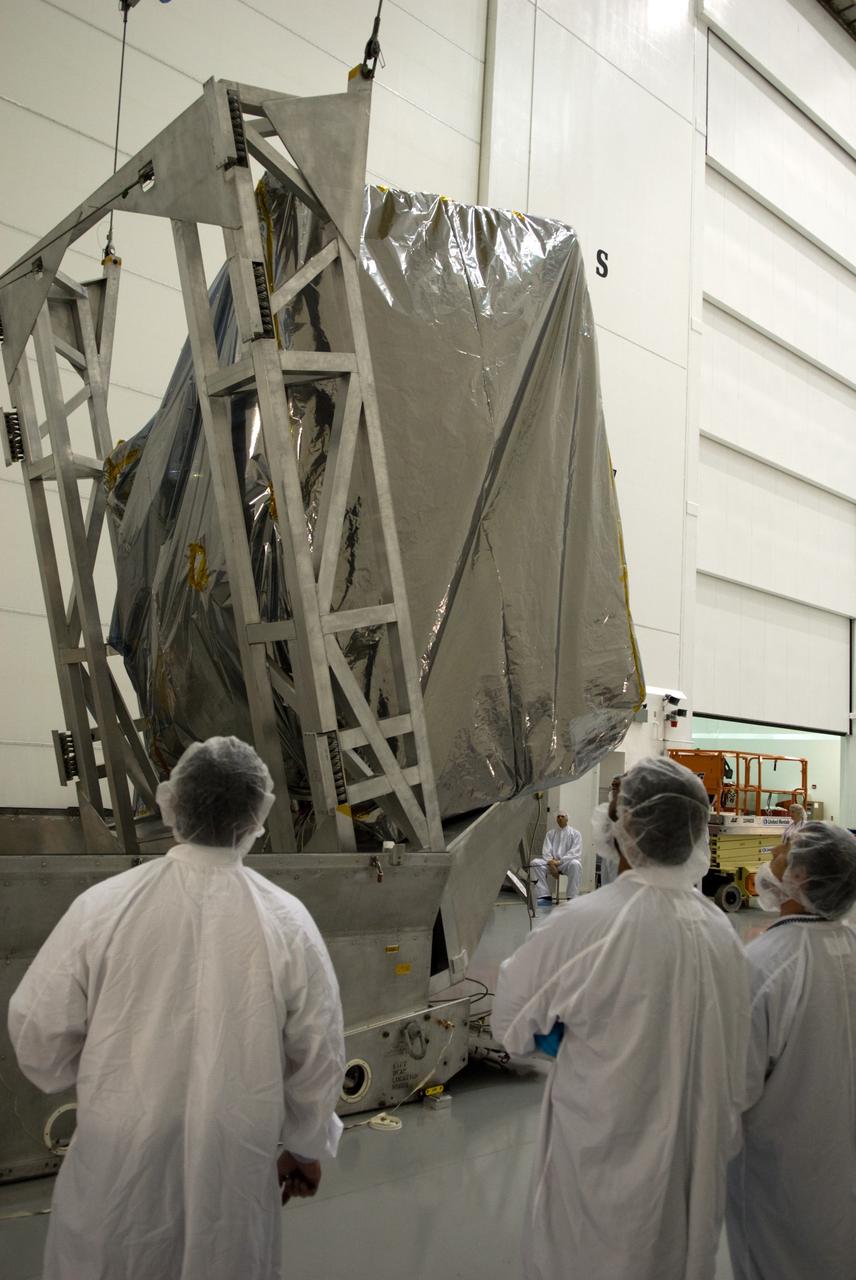
CAPE CANAVERAL, Fla. – At the Astrotech Space Operations facility in Titusville, Fla., workers monitor NASA's newly arrived GOES-P meteorological satellite as it is lifted into a vertical position for removal from its transportation case. GOES-P, the latest Geostationary Operational Environmental Satellite, was developed by NASA for the National Oceanic and Atmospheric Administration, or NOAA. GOES-P is designed to watch for storm development and observed current weather conditions on Earth. Launch of GOES-P is targeted for no earlier than Feb. 25, 2010, from Launch Complex 37 aboard a United Launch Alliance Delta IV rocket. For information on GOES-P, visit http://goespoes.gsfc.nasa.gov/goes/spacecraft/n_p_spacecraft.html. Photo credit: NASA/Glenn Benson
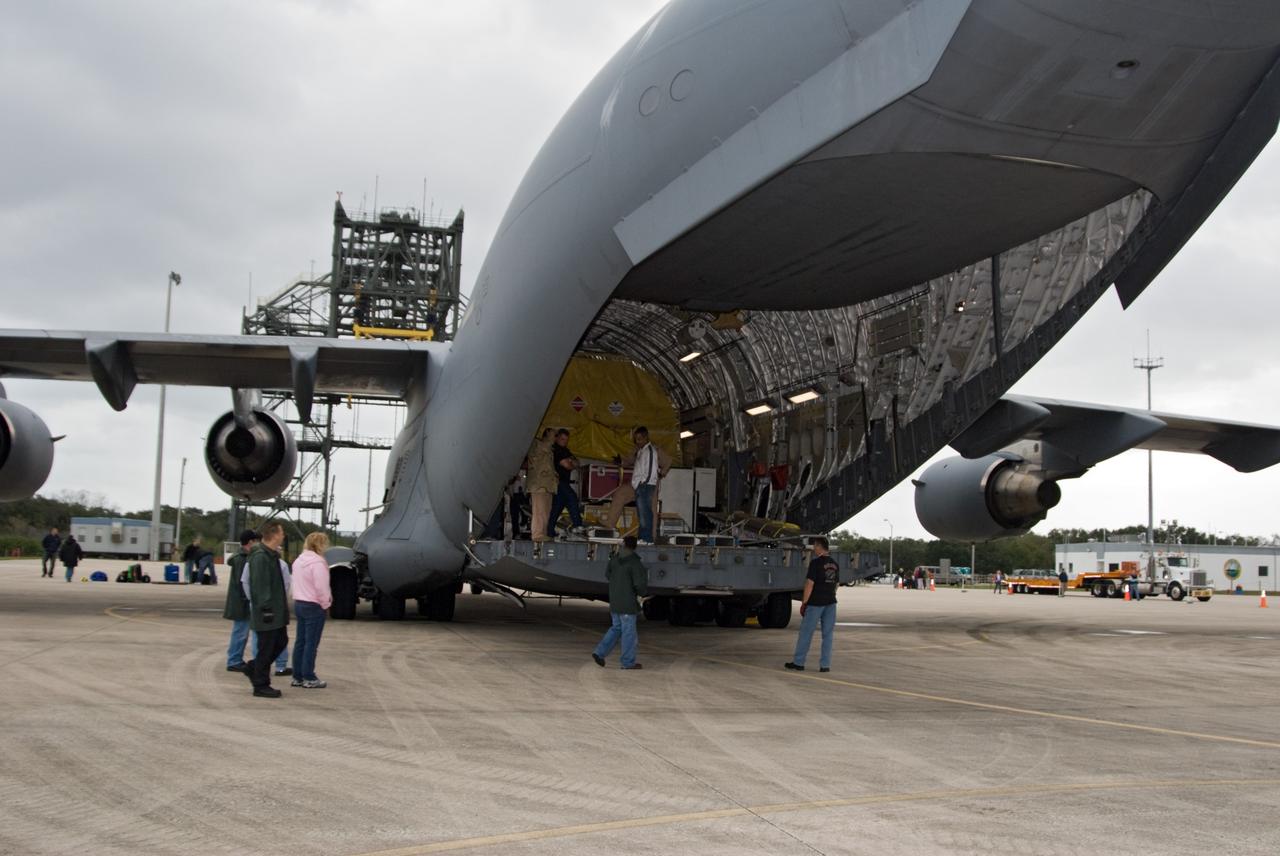
CAPE CANAVERAL, Fla. – Workers prepare to offload NASA's GOES-P meteorological satellite from a U.S. Air Force C-17 aircraft at the Shuttle Landing Facility at NASA's Kennedy Space Center in Florida. GOES-P, the latest Geostationary Operational Environmental Satellite, was developed by NASA for the National Oceanic and Atmospheric Administration, or NOAA. GOES-P is designed to watch for storm development and observed current weather conditions on Earth. Launch of GOES-P is targeted for no earlier than Feb. 25, 2010, from Launch Complex 37 aboard a United Launch Alliance Delta IV rocket. For information on GOES-P, visit http://goespoes.gsfc.nasa.gov/goes/spacecraft/n_p_spacecraft.html. Photo credit: NASA/Amanda Diller
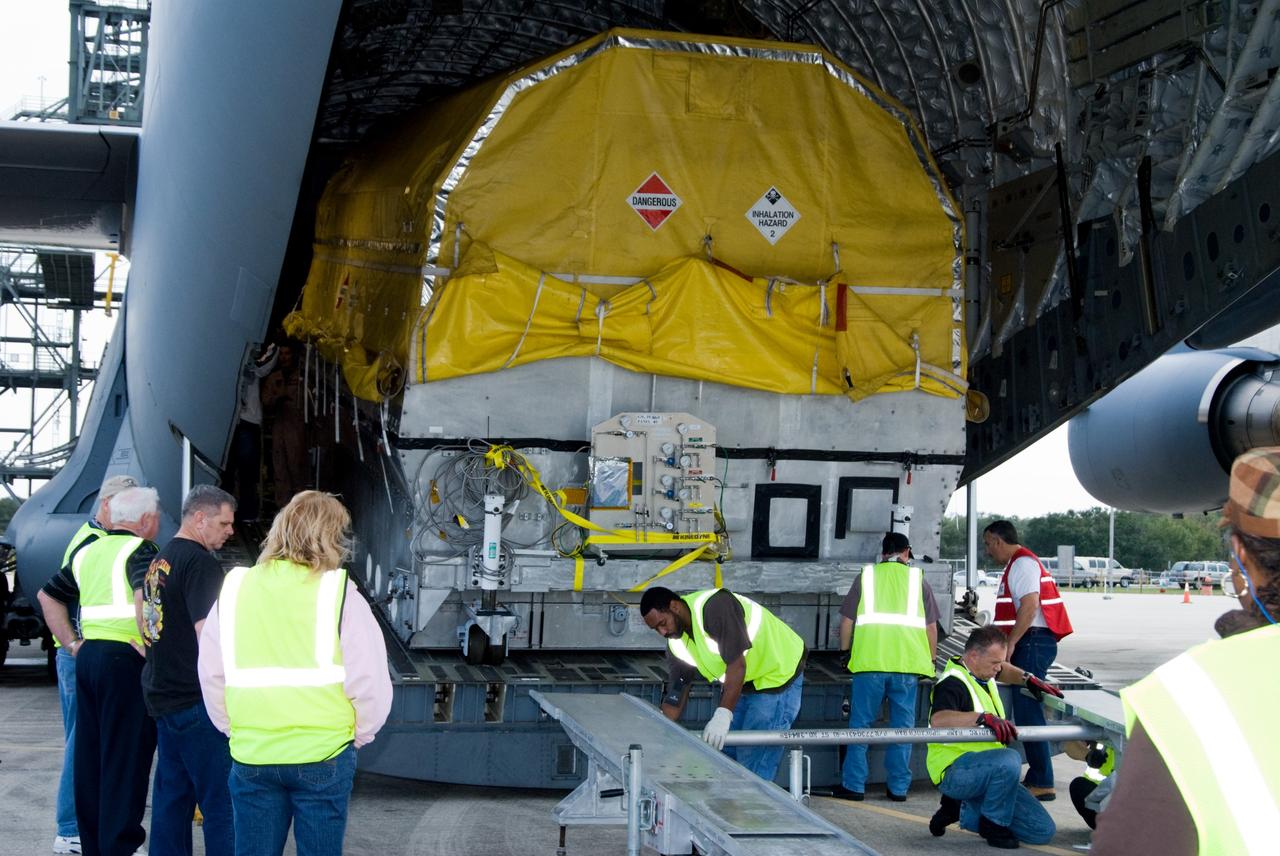
CAPE CANAVERAL, Fla. – At the Shuttle Landing Facility at NASA's Kennedy Space Center in Florida, workers set up a ramp to assist with the offloading of NASA's GOES-P meteorological satellite from the cargo bay of a U.S. Air Force C-17 aircraft. GOES-P, the latest Geostationary Operational Environmental Satellite, was developed by NASA for the National Oceanic and Atmospheric Administration, or NOAA. GOES-P is designed to watch for storm development and observed current weather conditions on Earth. Launch of GOES-P is targeted for no earlier than Feb. 25, 2010, from Launch Complex 37 aboard a United Launch Alliance Delta IV rocket. For information on GOES-P, visit http://goespoes.gsfc.nasa.gov/goes/spacecraft/n_p_spacecraft.html. Photo credit: NASA/Amanda Diller
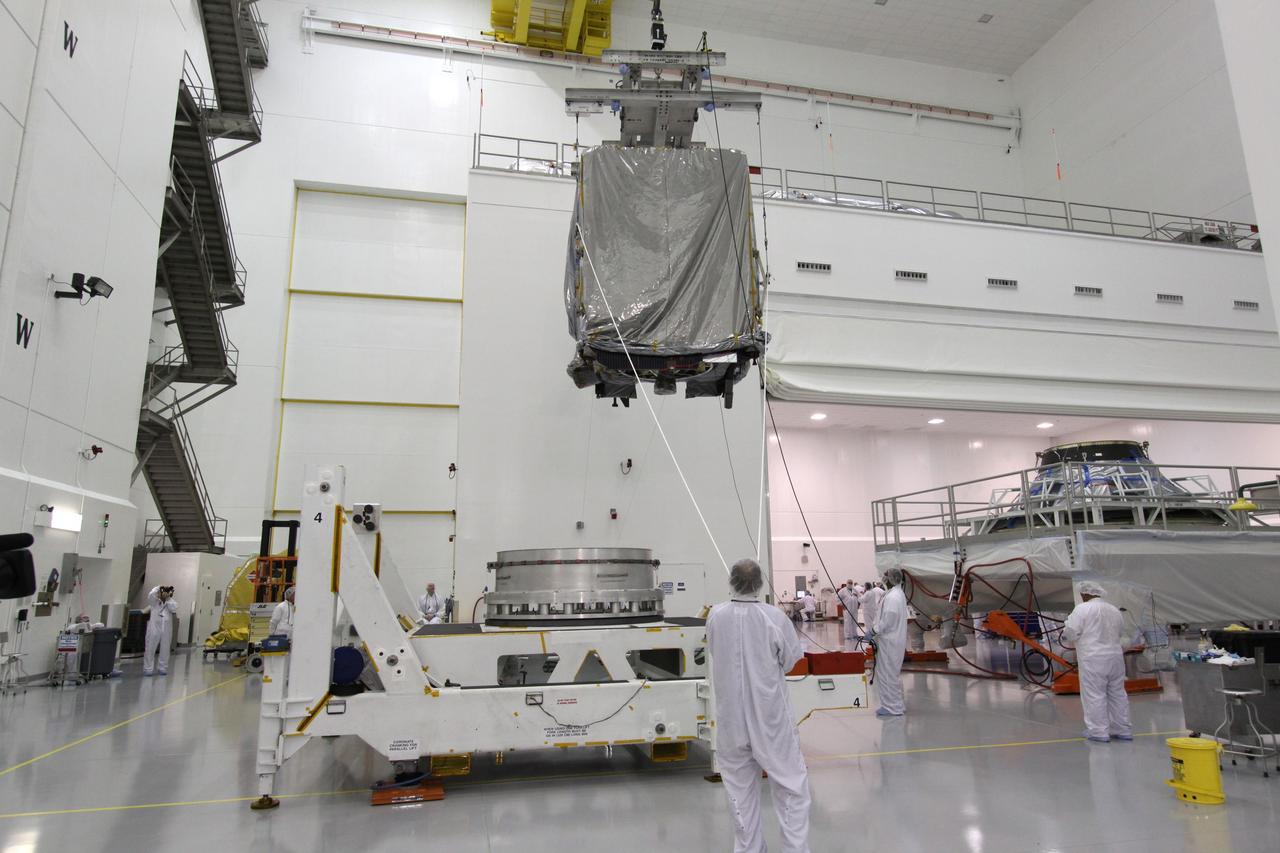
CAPE CANAVERAL, Fla. – At the Astrotech Space Operations facility in Titusville, Fla., workers guide NASA's GOES-P meteorological satellite, covered in a protective bag, toward a Ransome table on which it will be secured and rotated for further testing. GOES-P, the latest Geostationary Operational Environmental Satellite, was developed by NASA for the National Oceanic and Atmospheric Administration, or NOAA. GOES-P is designed to watch for storm development and observed current weather conditions on Earth. Launch of GOES-P is targeted for no earlier than Feb. 25, 2010, from Launch Complex 37 aboard a United Launch Alliance Delta IV rocket. For information on GOES-P, visit http://goespoes.gsfc.nasa.gov/goes/spacecraft/n_p_spacecraft.html. Photo credit: NASA/Jack Pfaller
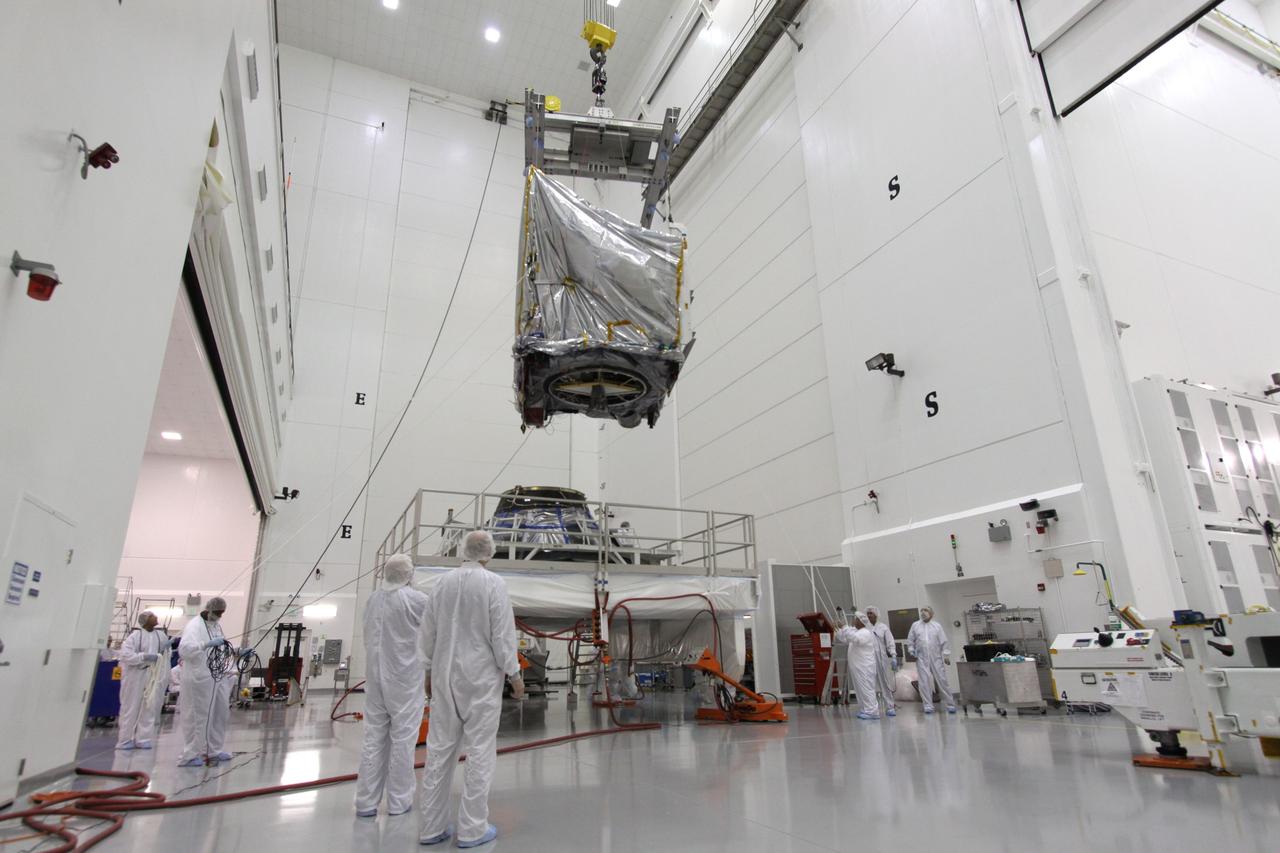
CAPE CANAVERAL, Fla. – At the Astrotech Space Operations facility in Titusville, Fla., NASA's GOES-P meteorological satellite, covered in a protective bag, is lowered toward a Ransome table on which it will be secured and rotated for further testing. GOES-P, the latest Geostationary Operational Environmental Satellite, was developed by NASA for the National Oceanic and Atmospheric Administration, or NOAA. GOES-P is designed to watch for storm development and observed current weather conditions on Earth. Launch of GOES-P is targeted for no earlier than Feb. 25, 2010, from Launch Complex 37 aboard a United Launch Alliance Delta IV rocket. For information on GOES-P, visit http://goespoes.gsfc.nasa.gov/goes/spacecraft/n_p_spacecraft.html. Photo credit: NASA/Jack Pfaller
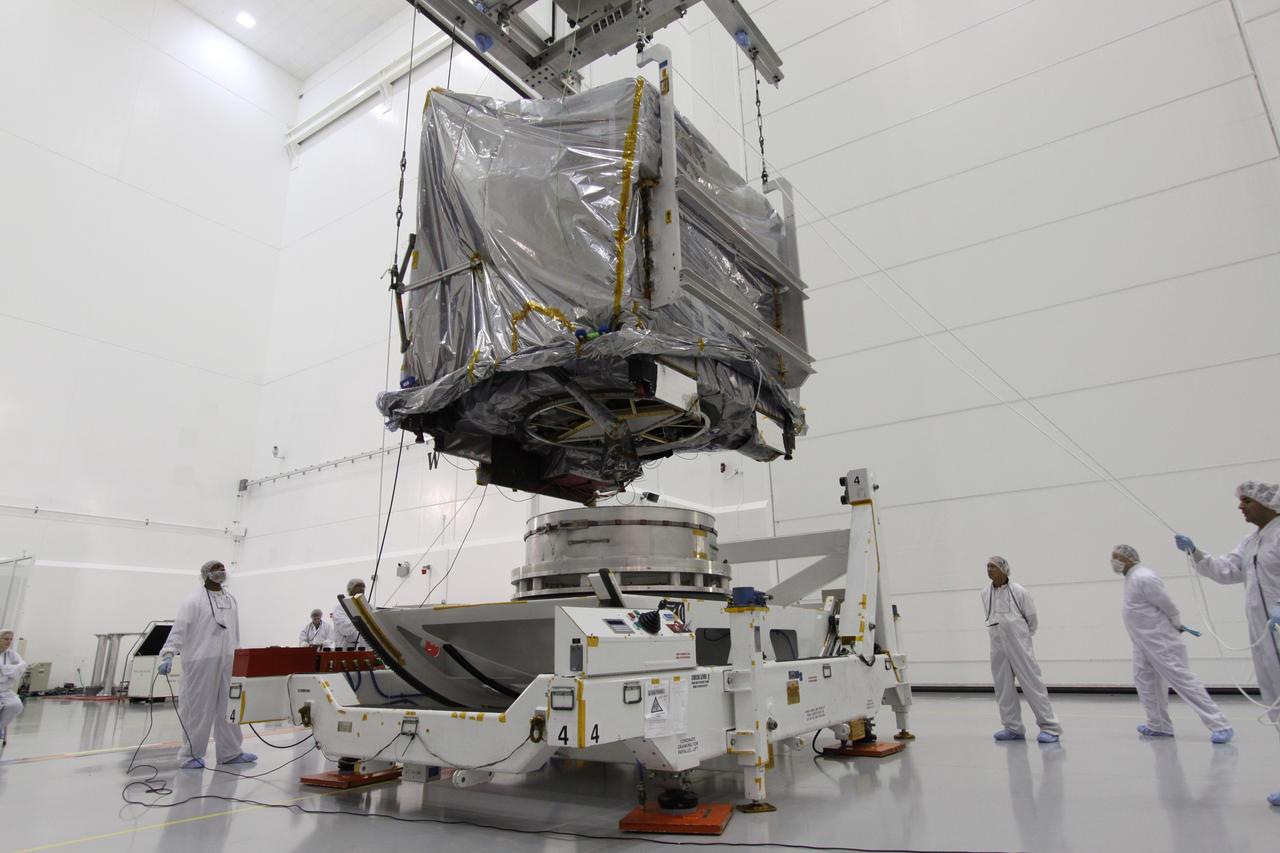
CAPE CANAVERAL, Fla. – At the Astrotech Space Operations facility in Titusville, Fla., NASA's GOES-P meteorological satellite, covered in a protective bag, is positioned over a Ransome table on which it will be secured and rotated for further testing. GOES-P, the latest Geostationary Operational Environmental Satellite, was developed by NASA for the National Oceanic and Atmospheric Administration, or NOAA. GOES-P is designed to watch for storm development and observed current weather conditions on Earth. Launch of GOES-P is targeted for no earlier than Feb. 25, 2010, from Launch Complex 37 aboard a United Launch Alliance Delta IV rocket. For information on GOES-P, visit http://goespoes.gsfc.nasa.gov/goes/spacecraft/n_p_spacecraft.html. Photo credit: NASA/Jack Pfaller
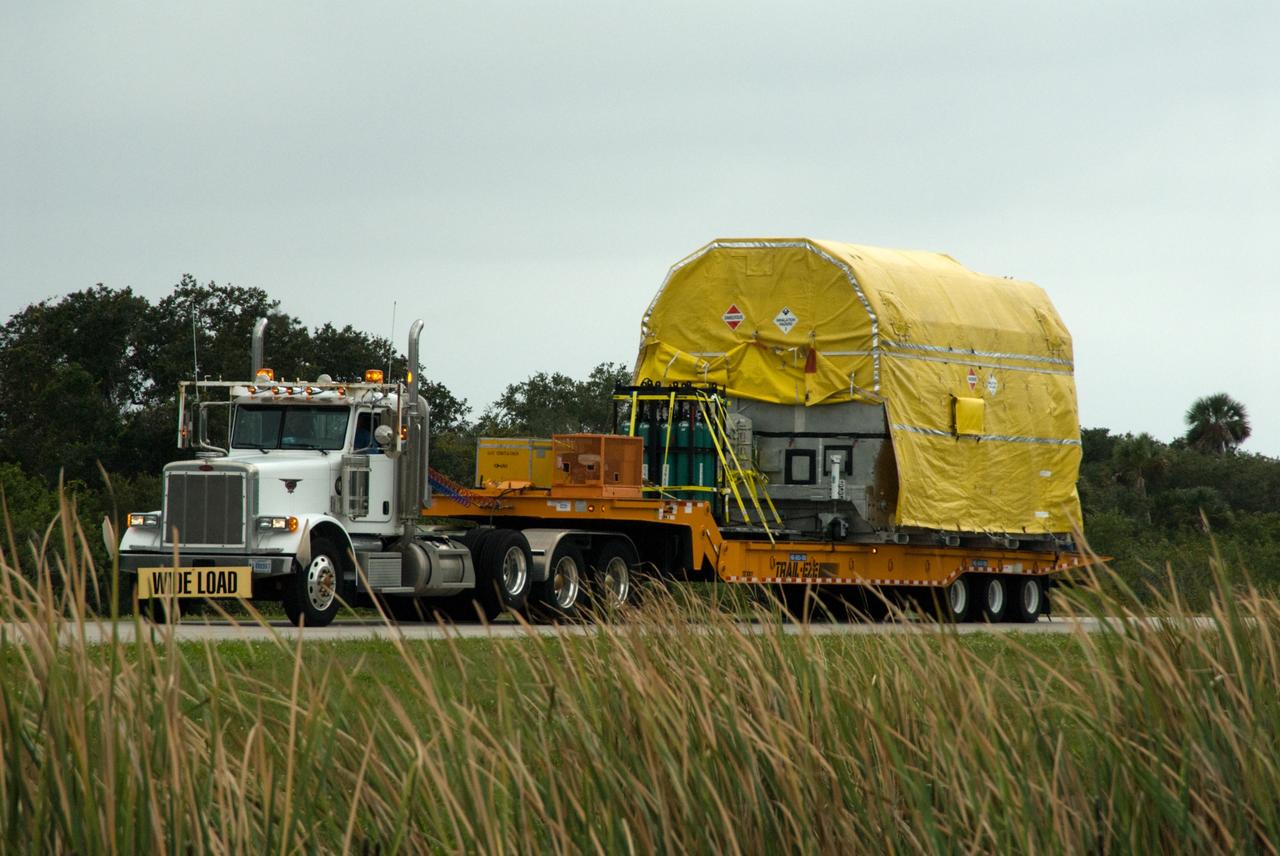
CAPE CANAVERAL, Fla. – At NASA's Kennedy Space Center in Florida, NASA's GOES-P meteorological satellite begins its move to the Astrotech Space Operations facility in Titusville, Fla., for final processing before launch. GOES-P, the latest Geostationary Operational Environmental Satellite, was developed by NASA for the National Oceanic and Atmospheric Administration, or NOAA. GOES-P is designed to watch for storm development and observed current weather conditions on Earth. Launch of GOES-P is targeted for no earlier than Feb. 25, 2010, from Launch Complex 37 aboard a United Launch Alliance Delta IV rocket. For information on GOES-P, visit http://goespoes.gsfc.nasa.gov/goes/spacecraft/n_p_spacecraft.html. Photo credit: NASA/Amanda Diller
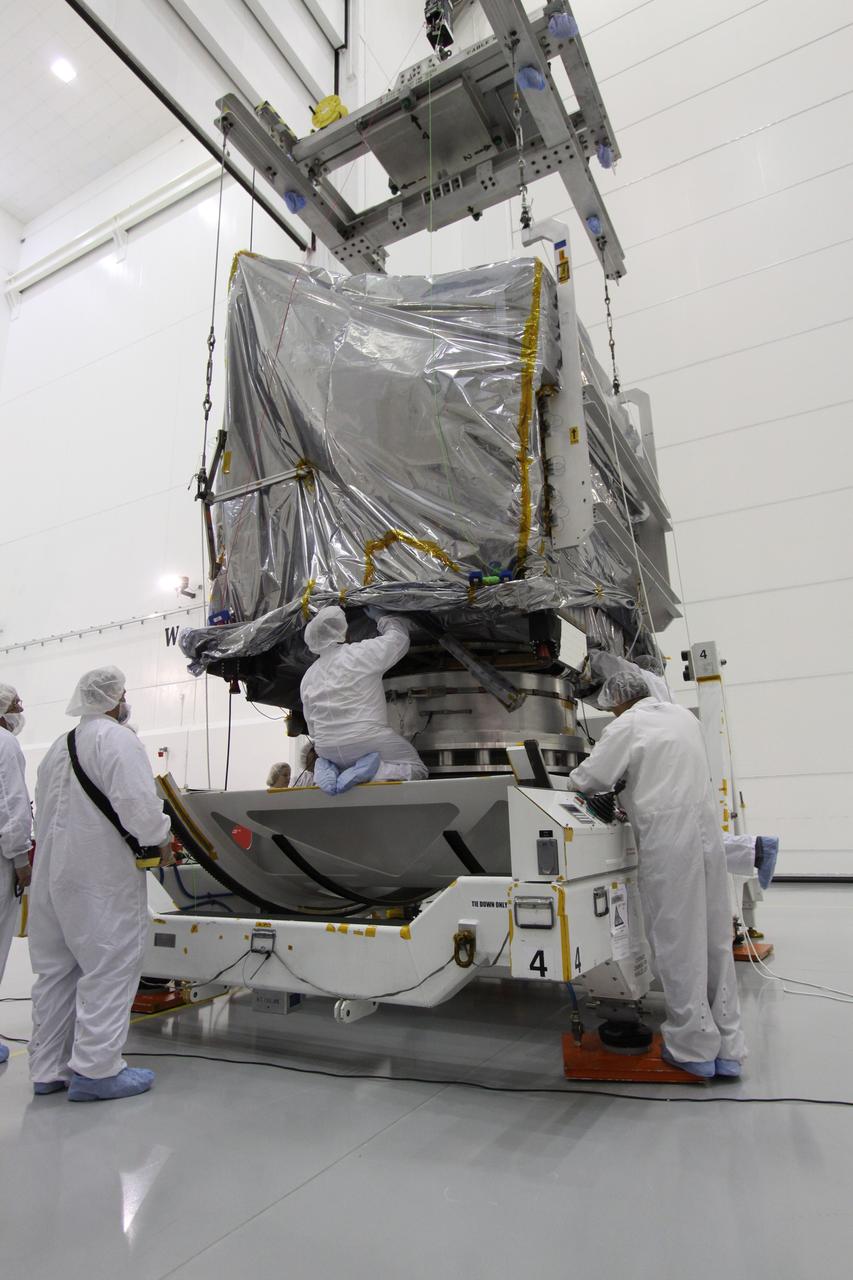
CAPE CANAVERAL, Fla. – At the Astrotech Space Operations facility in Titusville, Fla., workers secure NASA's GOES-P meteorological satellite, covered in a protective bag, on a Ransome table on which it will be rotated for further testing. GOES-P, the latest Geostationary Operational Environmental Satellite, was developed by NASA for the National Oceanic and Atmospheric Administration, or NOAA. GOES-P is designed to watch for storm development and observed current weather conditions on Earth. Launch of GOES-P is targeted for no earlier than Feb. 25, 2010, from Launch Complex 37 aboard a United Launch Alliance Delta IV rocket. For information on GOES-P, visit http://goespoes.gsfc.nasa.gov/goes/spacecraft/n_p_spacecraft.html. Photo credit: NASA/Jack Pfaller
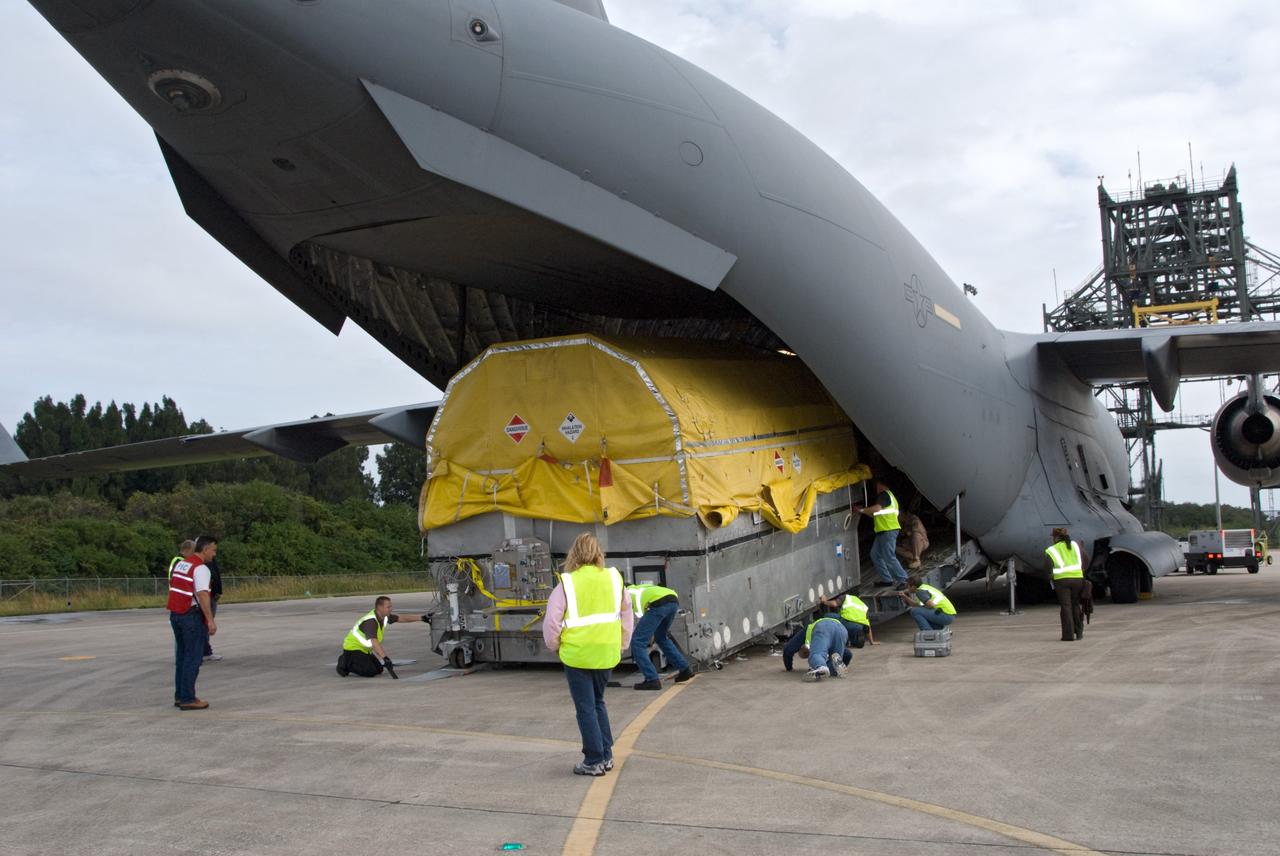
CAPE CANAVERAL, Fla. – At the Shuttle Landing Facility at NASA's Kennedy Space Center in Florida, workers roll NASA's GOES-P meteorological satellite from the cargo bay of a U.S. Air Force C-17 aircraft. GOES-P, the latest Geostationary Operational Environmental Satellite, was developed by NASA for the National Oceanic and Atmospheric Administration, or NOAA. GOES-P is designed to watch for storm development and observed current weather conditions on Earth. Launch of GOES-P is targeted for no earlier than Feb. 25, 2010, from Launch Complex 37 aboard a United Launch Alliance Delta IV rocket. For information on GOES-P, visit http://goespoes.gsfc.nasa.gov/goes/spacecraft/n_p_spacecraft.html. Photo credit: NASA/Amanda Diller
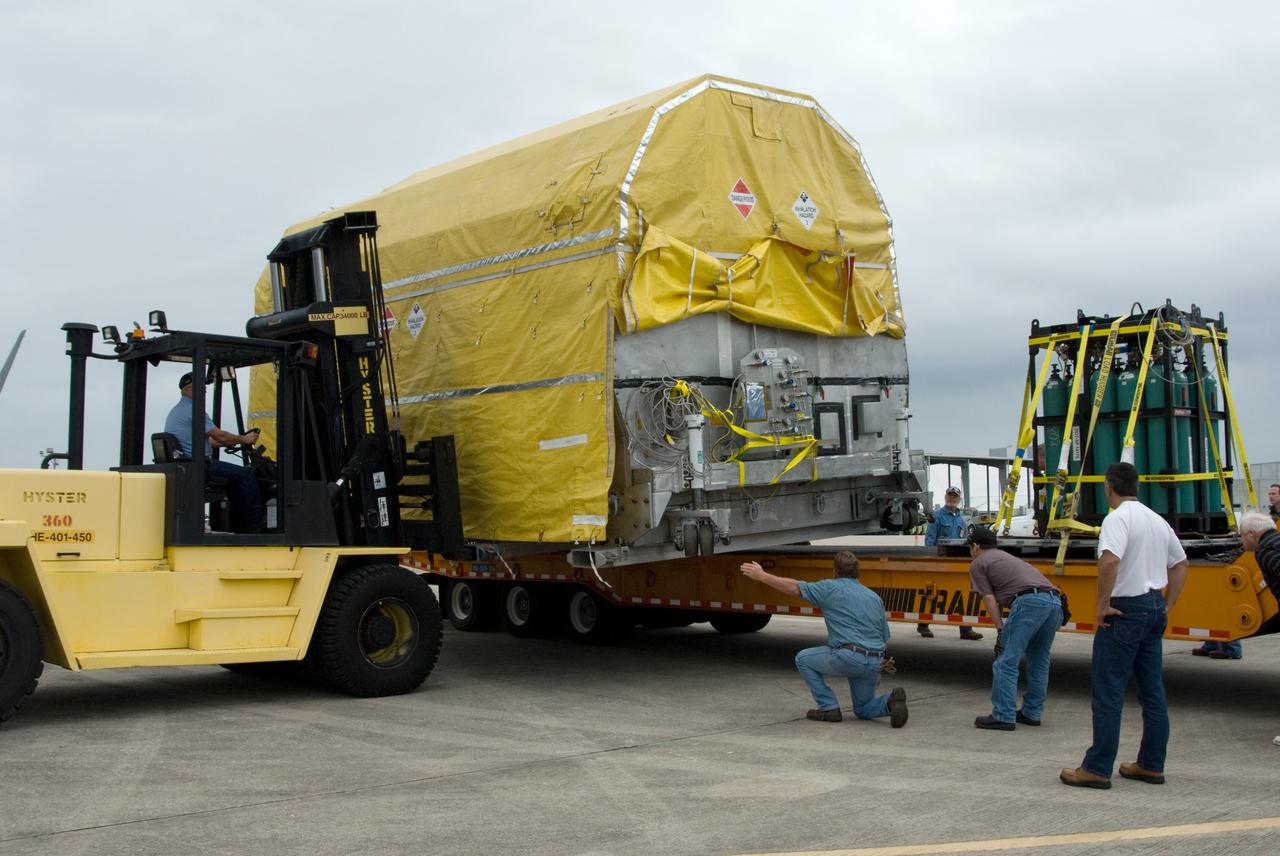
CAPE CANAVERAL, Fla. – At the Shuttle Landing Facility at NASA's Kennedy Space Center in Florida, workers lift NASA's GOES-P meteorological satellite onto a transporter for its move to the Astrotech Space Operations facility in Titusville, Fla., for final processing for launch. GOES-P, the latest Geostationary Operational Environmental Satellite, was developed by NASA for the National Oceanic and Atmospheric Administration, or NOAA. GOES-P is designed to watch for storm development and observed current weather conditions on Earth. Launch of GOES-P is targeted for no earlier than Feb. 25, 2010, from Launch Complex 37 aboard a United Launch Alliance Delta IV rocket. For information on GOES-P, visit http://goespoes.gsfc.nasa.gov/goes/spacecraft/n_p_spacecraft.html. Photo credit: NASA/Amanda Diller
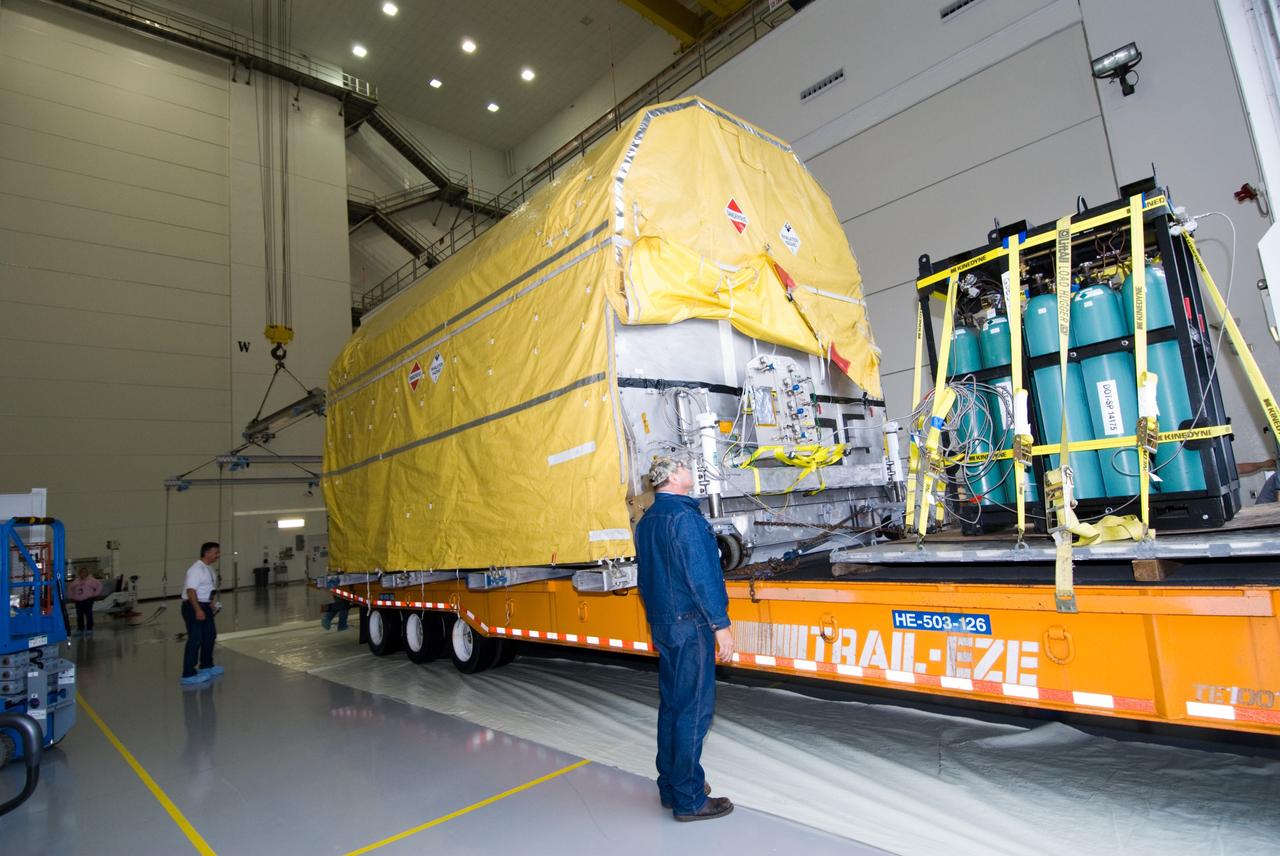
CAPE CANAVERAL, Fla. – At the Astrotech Space Operations facility in Titusville, Fla., preparations are under way to remove NASA's GOES-P meteorological satellite from the transporter which delivered it from NASA Kennedy Space Center's Shuttle Landing Facility. GOES-P, the latest Geostationary Operational Environmental Satellite, was developed by NASA for the National Oceanic and Atmospheric Administration, or NOAA. GOES-P is designed to watch for storm development and observed current weather conditions on Earth. Launch of GOES-P is targeted for no earlier than Feb. 25, 2010, from Launch Complex 37 aboard a United Launch Alliance Delta IV rocket. For information on GOES-P, visit http://goespoes.gsfc.nasa.gov/goes/spacecraft/n_p_spacecraft.html. Photo credit: NASA/Amanda Diller
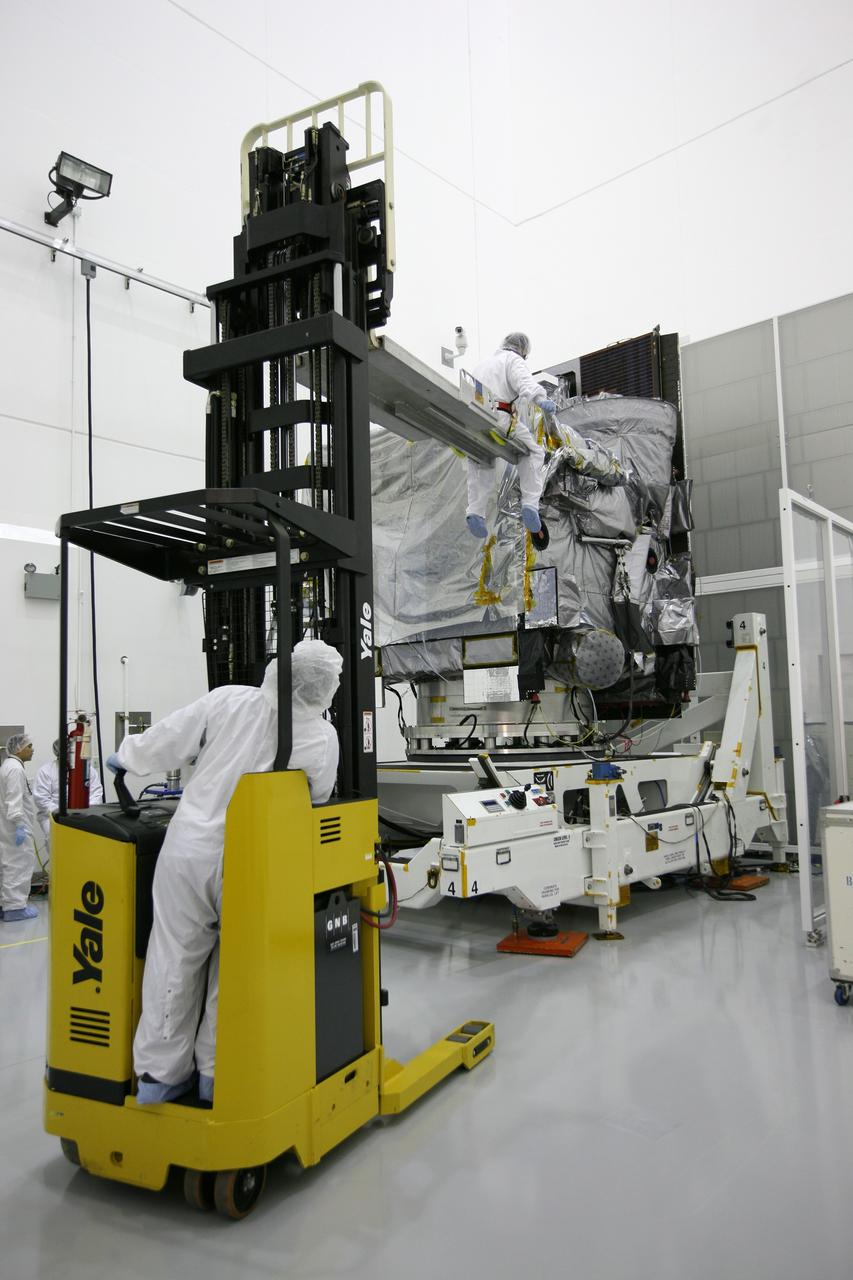
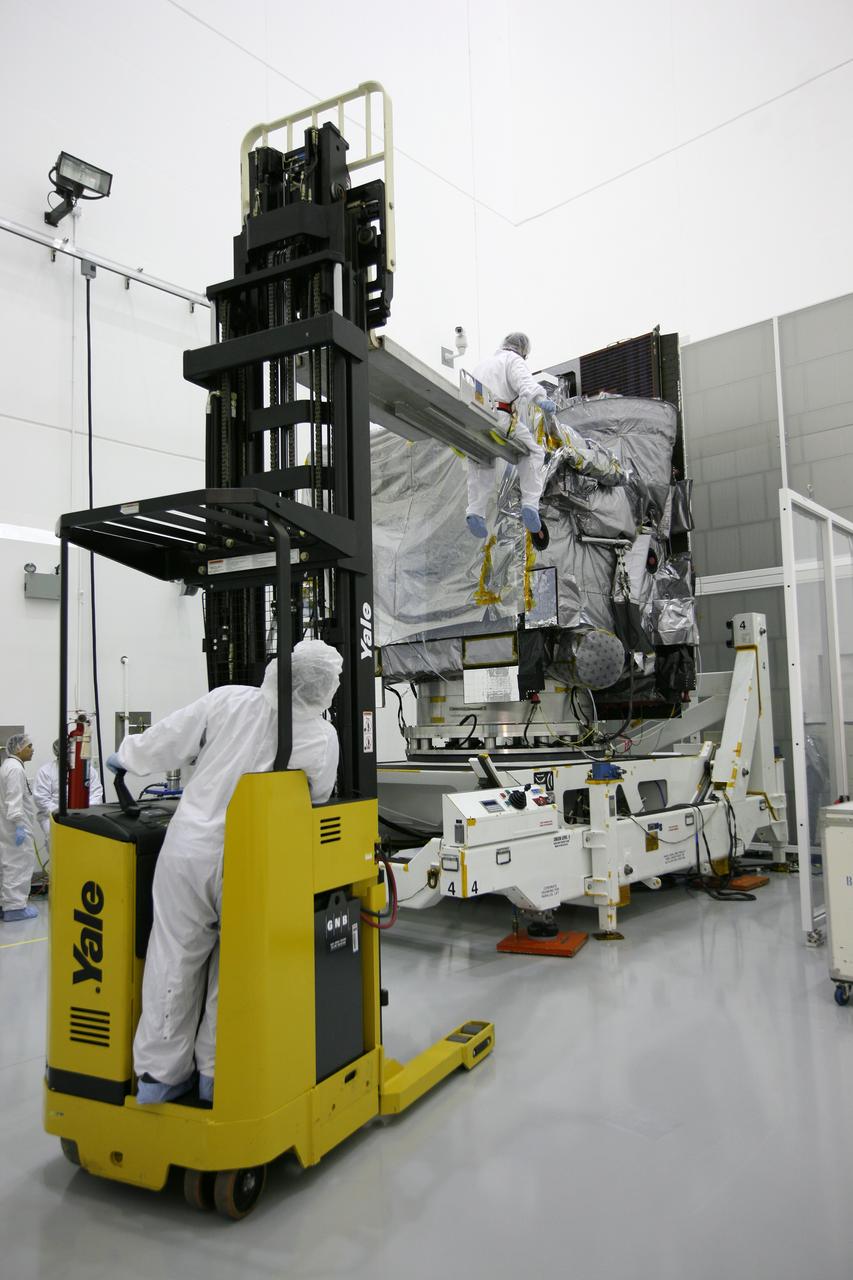
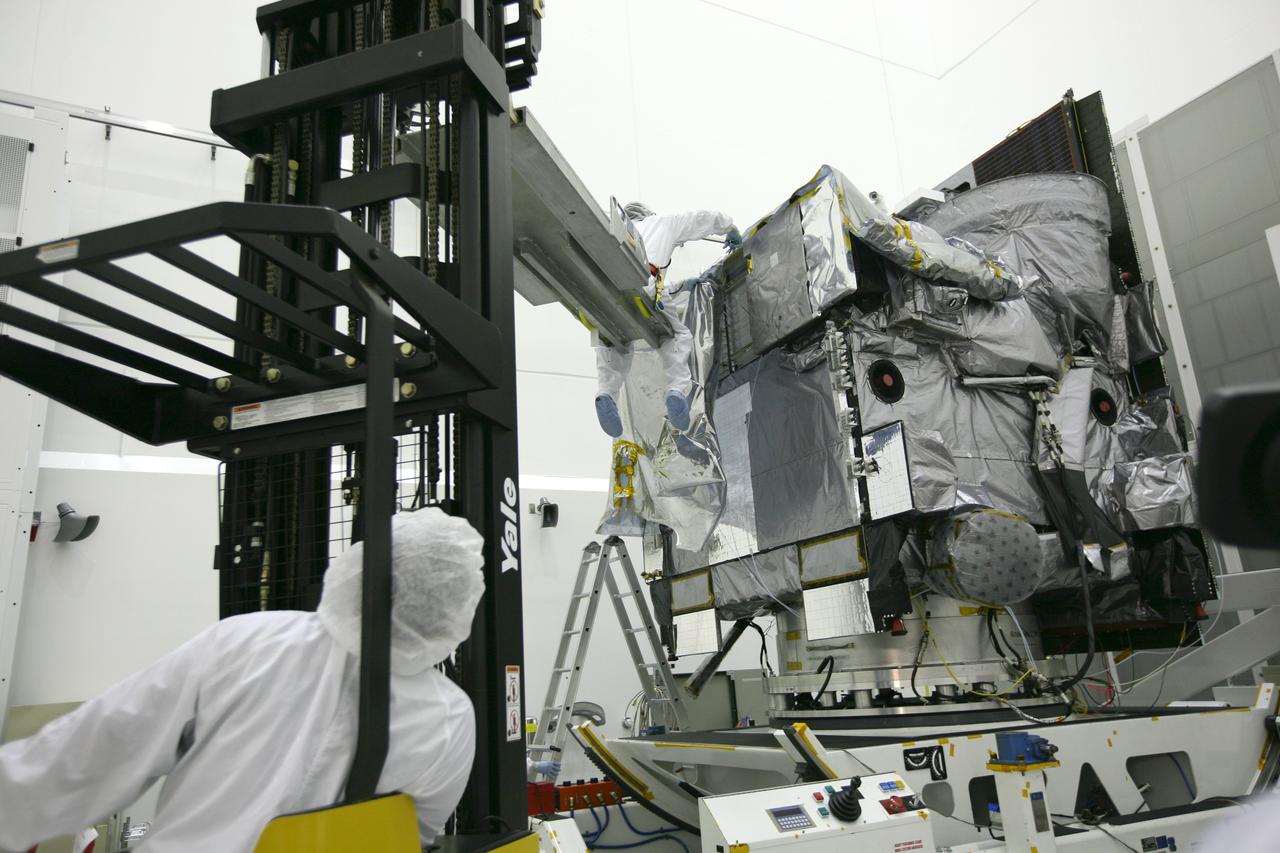
CAPE CANAVERAL, Fla. – At the Astrotech Space Operations facility in Titusville, Fla., a spacecraft technician gets a lift to the top of NASA's GOES-P meteorological satellite to begin the unbagging process, the removal of its protective wrapping. GOES-P, the latest Geostationary Operational Environmental Satellite, was developed by NASA for the National Oceanic and Atmospheric Administration, or NOAA. GOES-P is designed to watch for storm development and observed current weather conditions on Earth. Launch of GOES-P is targeted for no earlier than March 1 from Launch Complex 37 aboard a United Launch Alliance Delta IV rocket. For information on GOES-P, visit http://goespoes.gsfc.nasa.gov/goes/spacecraft/n_p_spacecraft.html. Photo credit: NASA/Amanda Diller

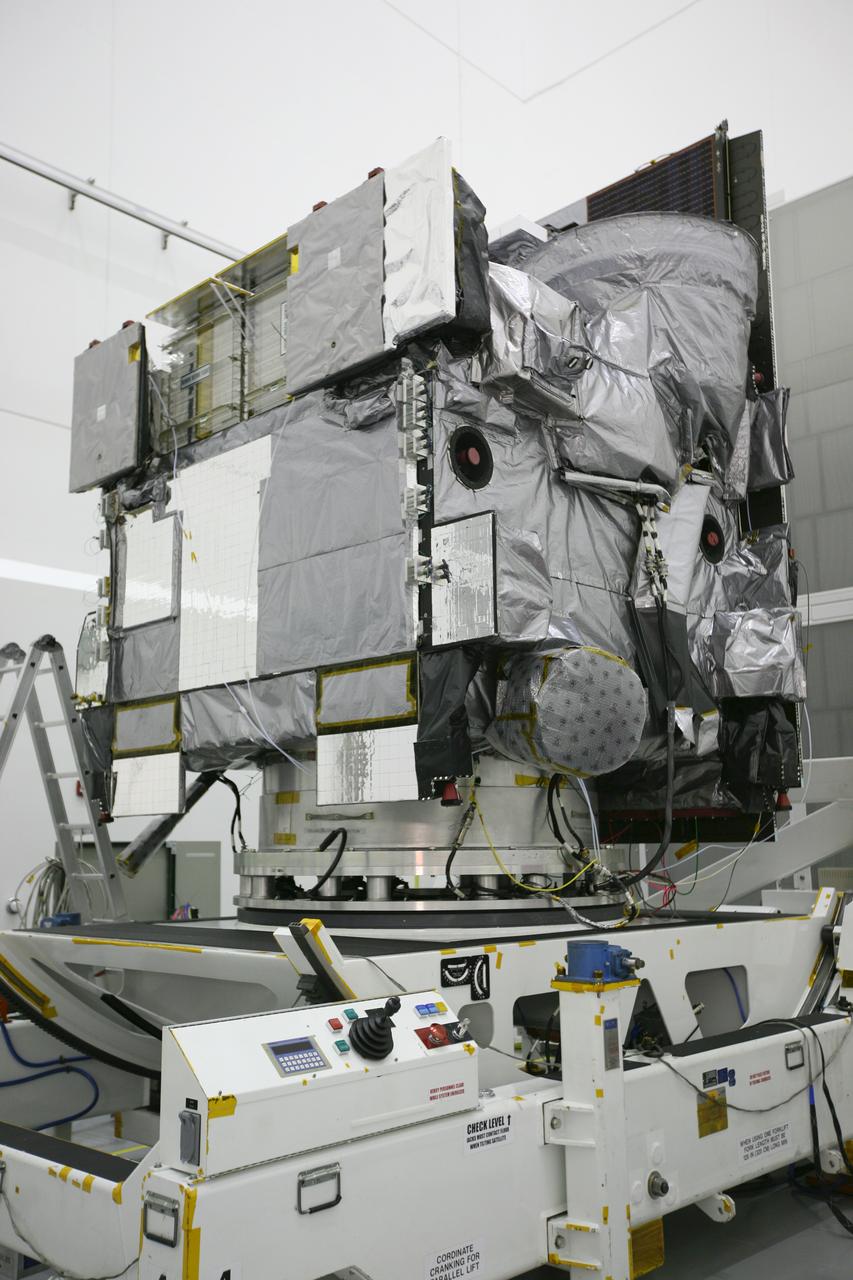
CAPE CANAVERAL, Fla. – At the Astrotech Space Operations facility in Titusville, Fla., NASA's GOES-P meteorological satellite has been unbagged and rotated. The large cup-shaped object on the right side of the spacecraft is the ultrahigh frequency, or UHF, antenna. GOES-P, the latest Geostationary Operational Environmental Satellite, was developed by NASA for the National Oceanic and Atmospheric Administration, or NOAA. GOES-P is designed to watch for storm development and observed current weather conditions on Earth. Launch of GOES-P is targeted for no earlier than March 1 from Launch Complex 37 aboard a United Launch Alliance Delta IV rocket. For information on GOES-P, visit http://goespoes.gsfc.nasa.gov/goes/spacecraft/n_p_spacecraft.html. Photo credit: NASA/Amanda Diller
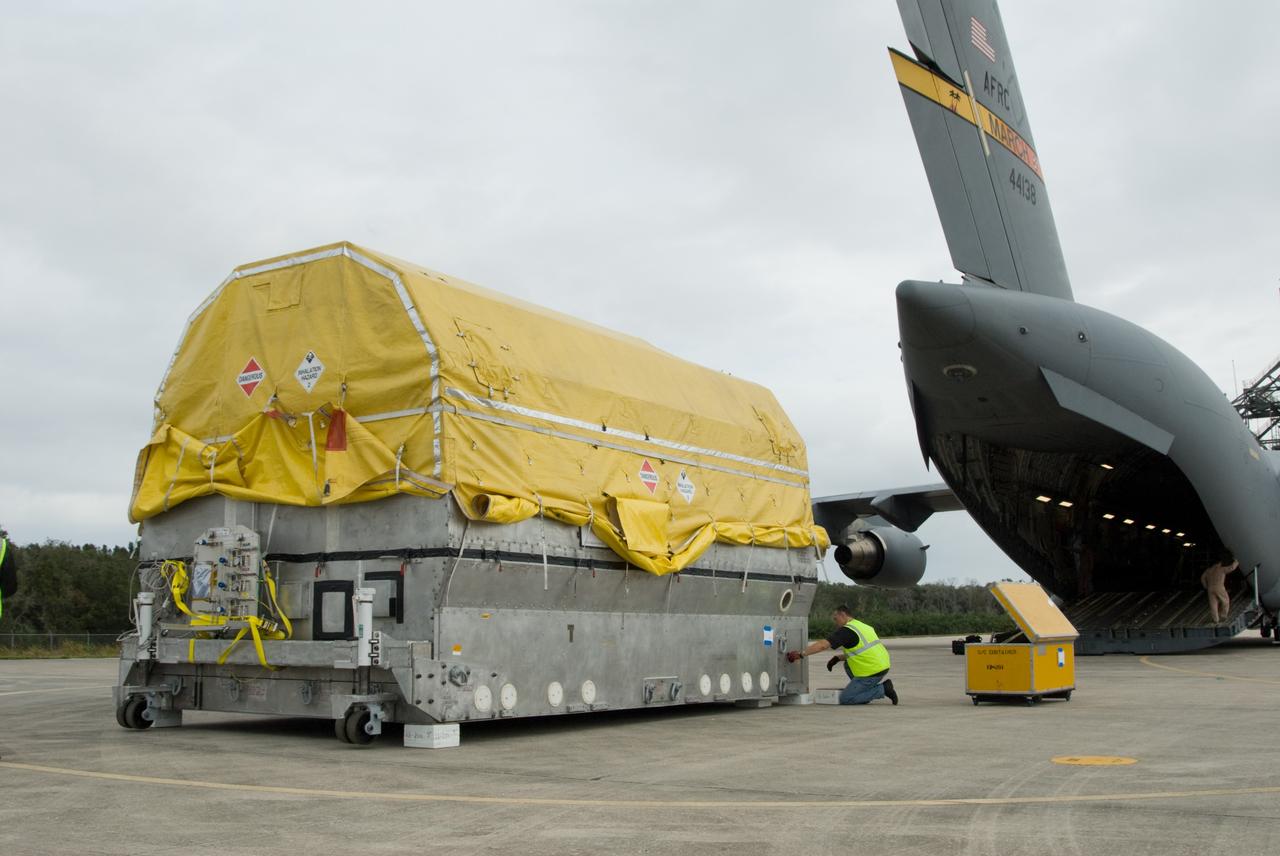
CAPE CANAVERAL, Fla. – At the Shuttle Landing Facility at NASA's Kennedy Space Center in Florida, NASA's GOES-P meteorological satellite has been offloaded from the U.S. Air Force C-17 aircraft on which it was delivered. GOES-P, the latest Geostationary Operational Environmental Satellite, was developed by NASA for the National Oceanic and Atmospheric Administration, or NOAA. GOES-P is designed to watch for storm development and observed current weather conditions on Earth. Launch of GOES-P is targeted for no earlier than Feb. 25, 2010, from Launch Complex 37 aboard a United Launch Alliance Delta IV rocket. For information on GOES-P, visit http://goespoes.gsfc.nasa.gov/goes/spacecraft/n_p_spacecraft.html. Photo credit: NASA/Amanda Diller
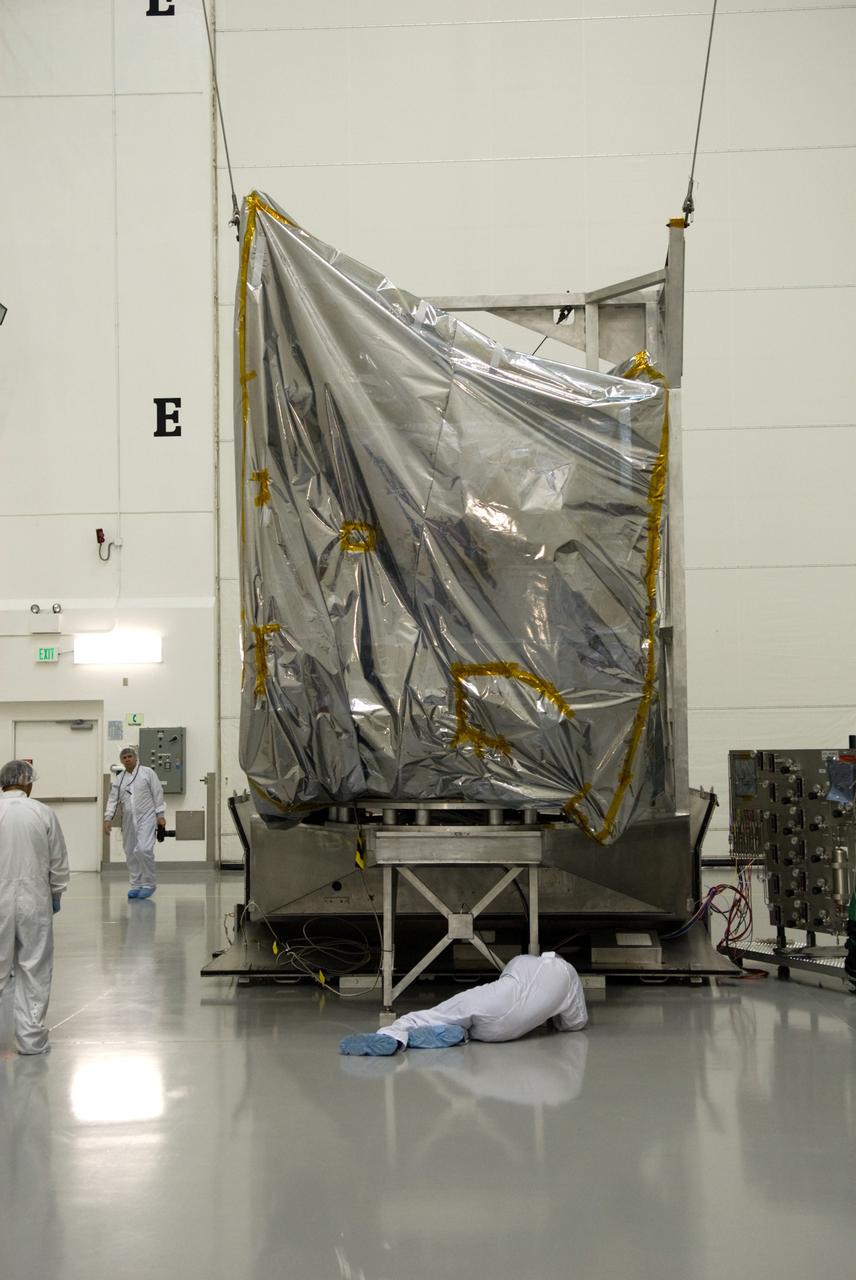
CAPE CANAVERAL, Fla. – At the Astrotech Space Operations facility in Titusville, Fla., NASA's newly arrived GOES-P meteorological satellite has been lifted into a vertical position and is ready for further processing for launch. GOES-P, the latest Geostationary Operational Environmental Satellite, was developed by NASA for the National Oceanic and Atmospheric Administration, or NOAA. GOES-P is designed to watch for storm development and observed current weather conditions on Earth. Launch of GOES-P is targeted for no earlier than Feb. 25, 2010, from Launch Complex 37 aboard a United Launch Alliance Delta IV rocket. For information on GOES-P, visit http://goespoes.gsfc.nasa.gov/goes/spacecraft/n_p_spacecraft.html. Photo credit: NASA/Glenn Benson
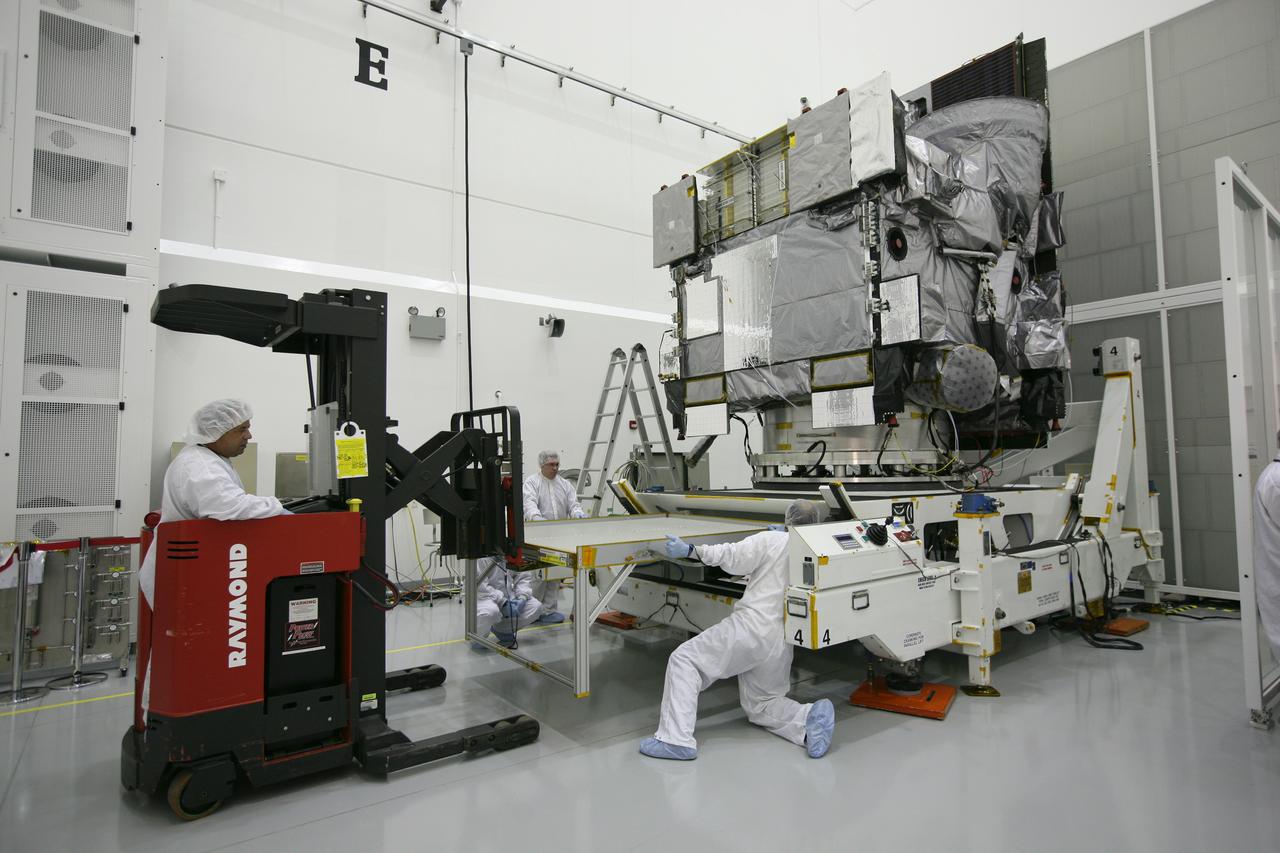
GOES-P UNBAGGING & ROTATION
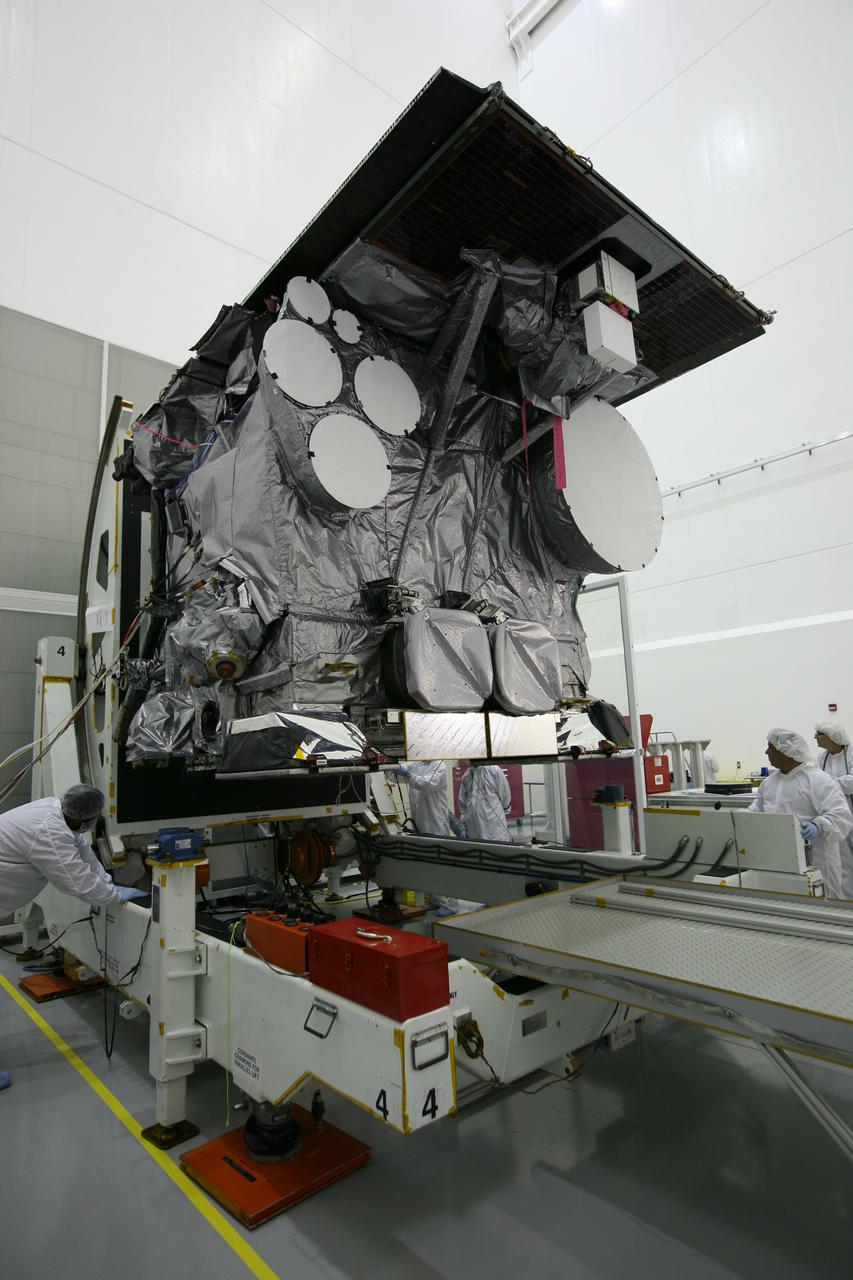
GOES-P UNBAGGING & ROTATION
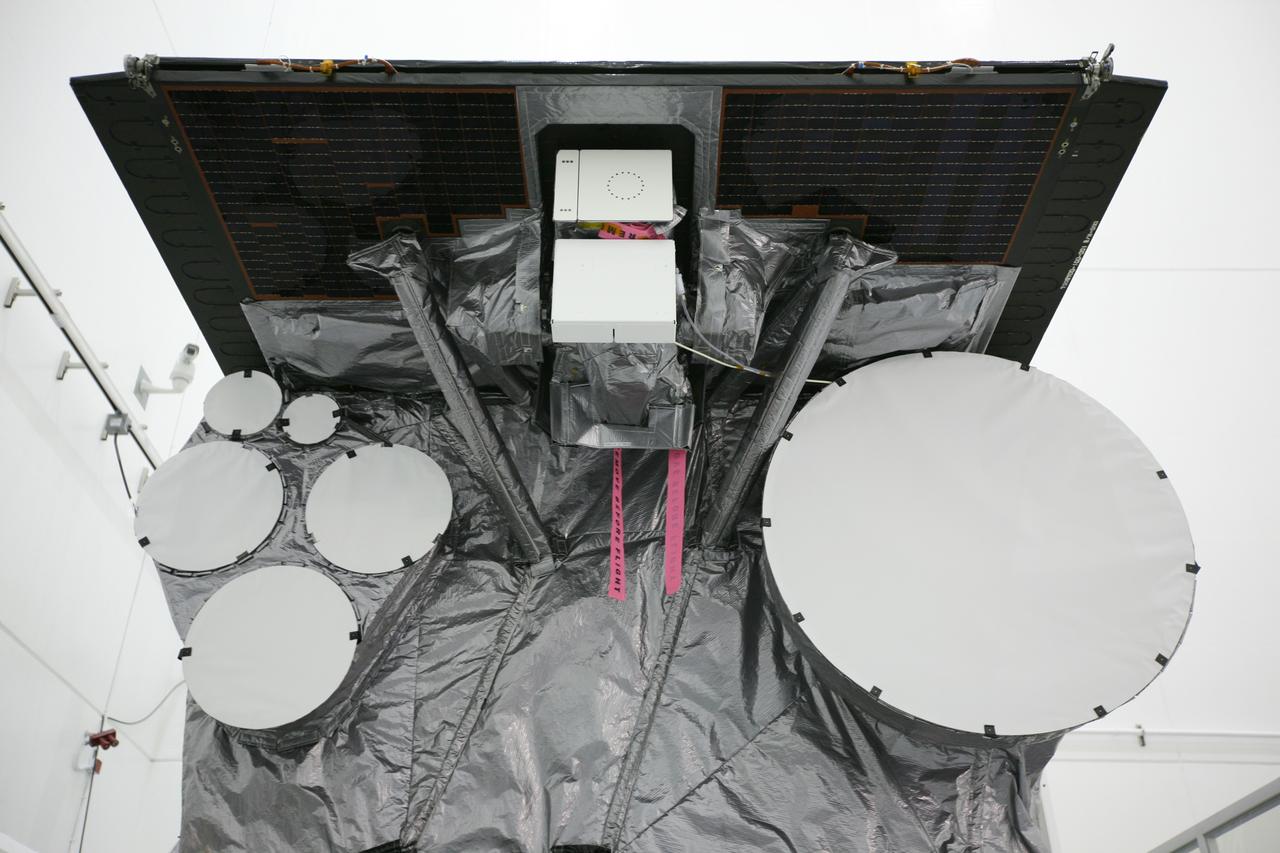
GOES-P UNBAGGING & ROTATION
GOES-P UNBAGGING & ROTATION
GOES-P UNBAGGING & ROTATION
GOES-P UNBAGGING & ROTATION
GOES-P UNBAGGING & ROTATION
GOES-P UNBAGGING & ROTATION
GOES-P UNBAGGING & ROTATION
GOES-P UNBAGGING & ROTATION
GOES-P UNBAGGING & ROTATION
GOES-P UNBAGGING & ROTATION
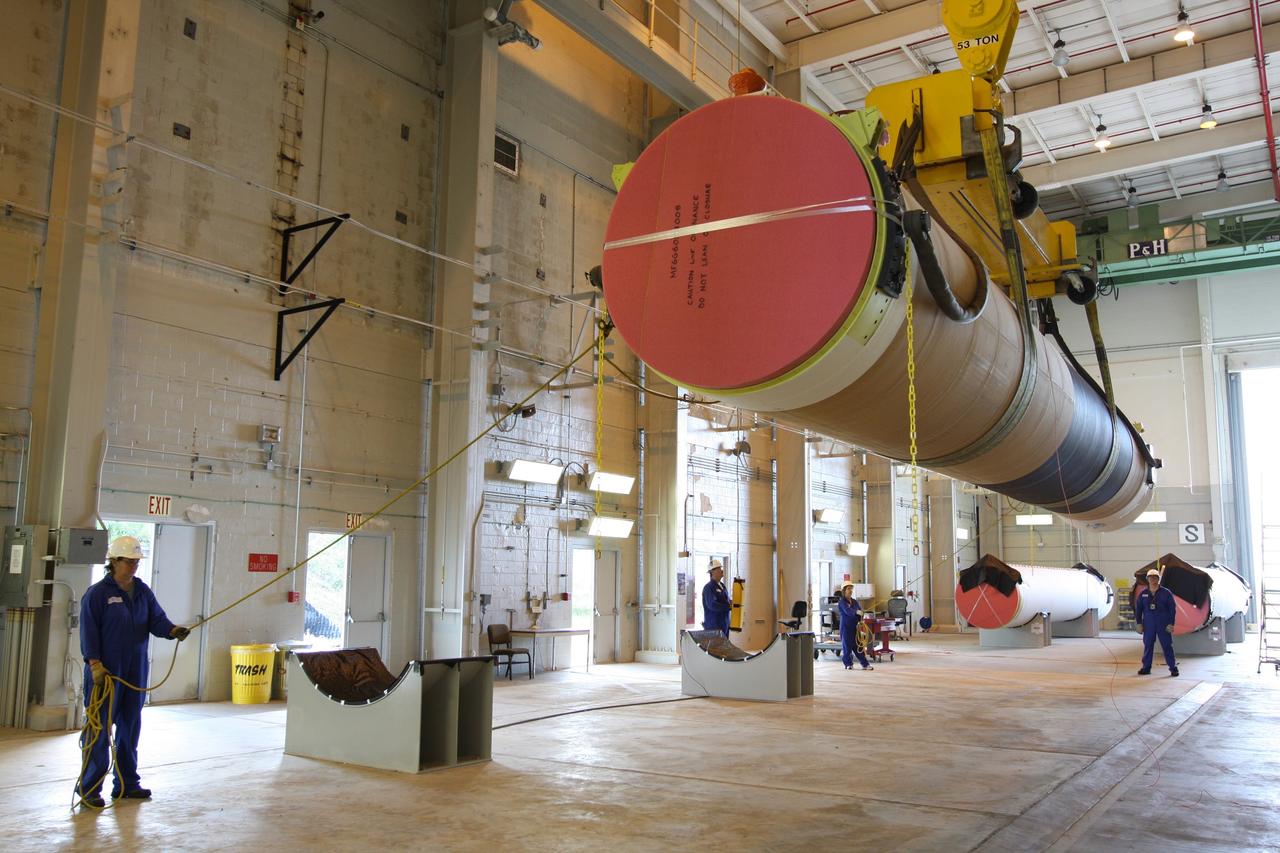
CAPE CANAVERAL, Fla. – At the Receipt Inspection Shop on Cape Canaveral Air Force Station in Florida, ATK Space Systems workers guide a 60-inch graphite epoxy motor, or GEM, slated for launch of the GOES-P spacecraft as it is lowered toward a work stand. The United Launch Alliance Delta IV is the launch vehicle for GOES-P, the latest Geostationary Operational Environmental Satellite developed by NASA for the National Oceanic and Atmospheric Administration, or NOAA. Launch is targeted for March 4, 2010, from Launch Complex 37. For information on GOES-P, visit http://nasascience.nasa.gov/missions/goes-n-o-p. Photo credit: NASA/Dimitri Gerondidakis
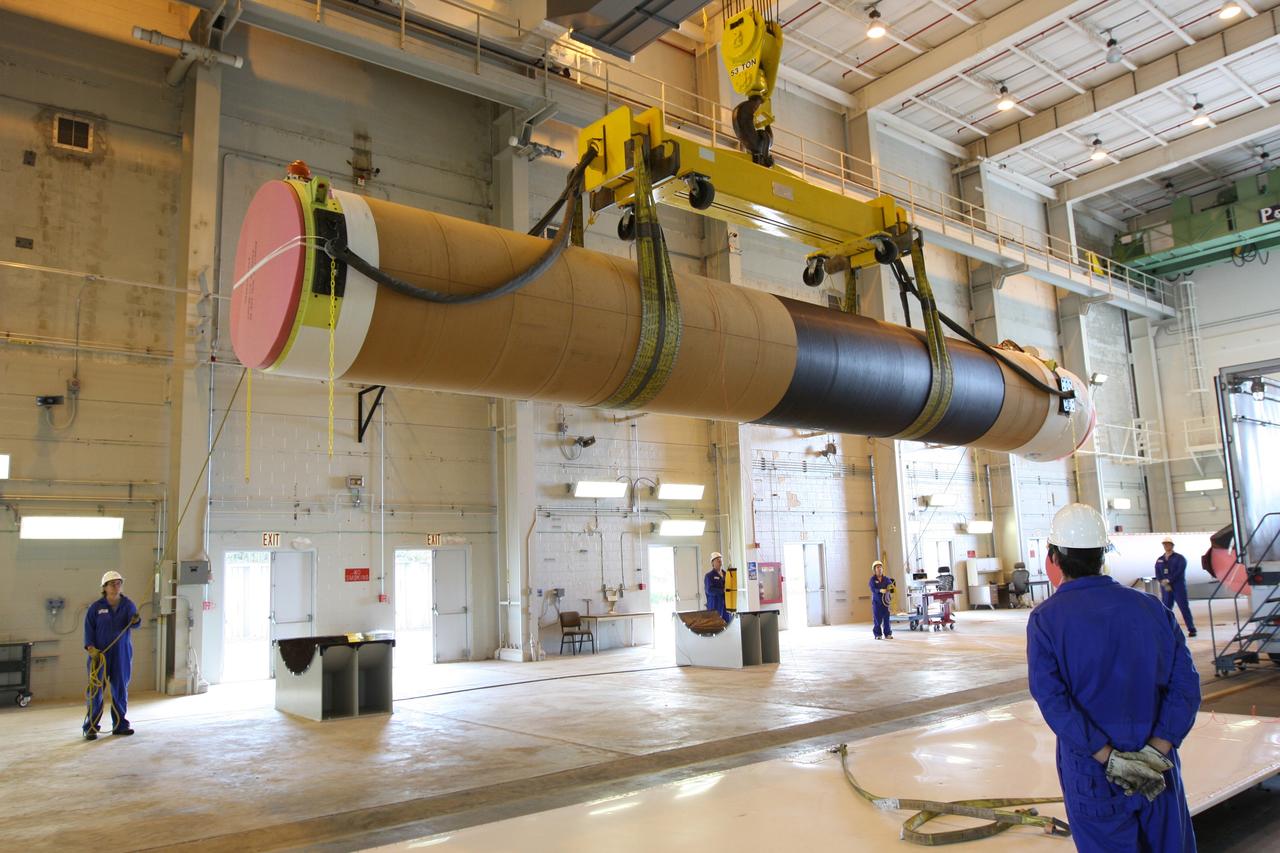
CAPE CANAVERAL, Fla. – At the Receipt Inspection Shop on Cape Canaveral Air Force Station in Florida, ATK Space Systems workers guide a 60-inch graphite epoxy motor, or GEM, slated for launch of the GOES-P spacecraft as it is moved toward a work stand. The United Launch Alliance Delta IV is the launch vehicle for GOES-P, the latest Geostationary Operational Environmental Satellite developed by NASA for the National Oceanic and Atmospheric Administration, or NOAA. Launch is targeted for March 4, 2010, from Launch Complex 37. For information on GOES-P, visit http://nasascience.nasa.gov/missions/goes-n-o-p. Photo credit: NASA/Dimitri Gerondidakis
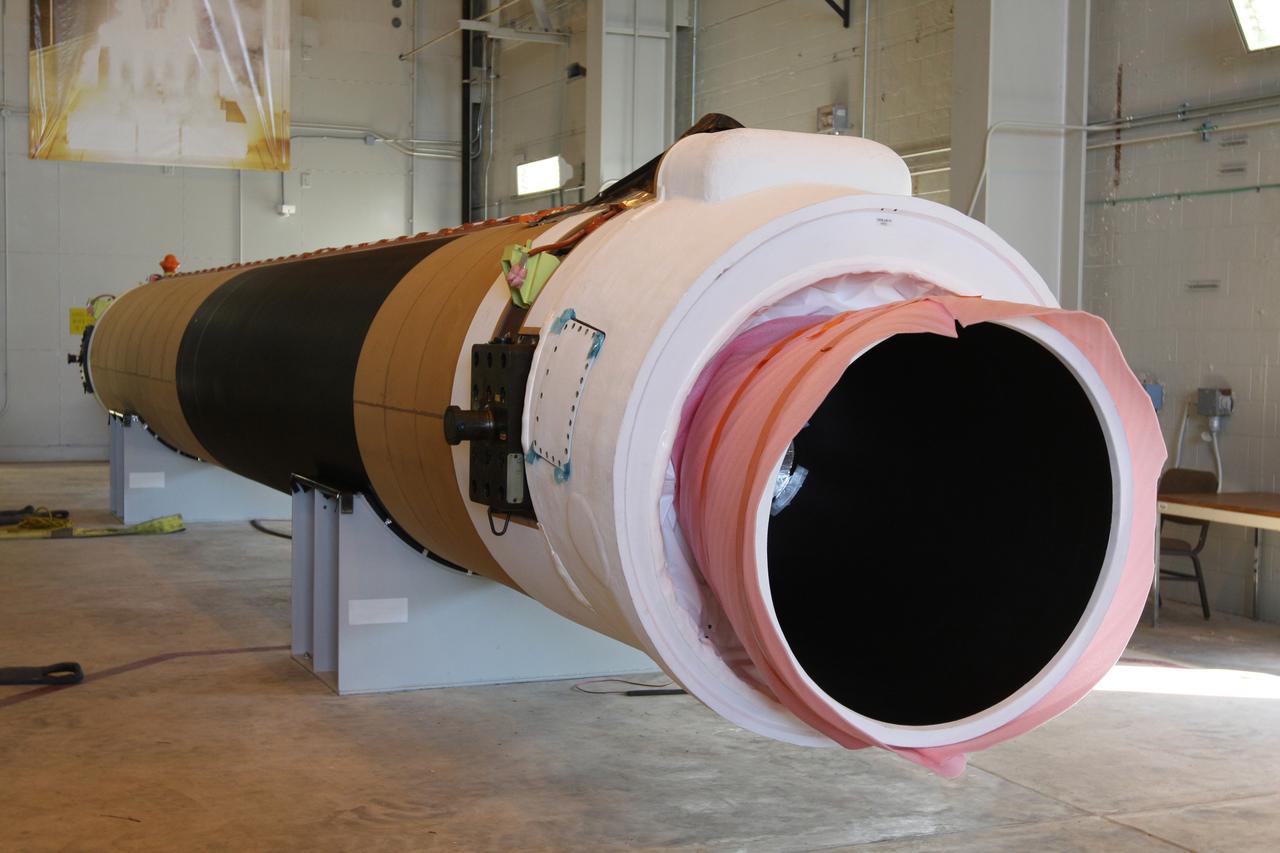
CAPE CANAVERAL, Fla. – At the Receipt Inspection Shop on Cape Canaveral Air Force Station in Florida, an ATK Space Systems' 60-inch graphite epoxy motor, or GEM, slated for launch of the GOES-P spacecraft rests on a work stand awaiting further processing. The United Launch Alliance Delta IV is the launch vehicle for GOES-P, the latest Geostationary Operational Environmental Satellite developed by NASA for the National Oceanic and Atmospheric Administration, or NOAA. Launch is targeted for March 4, 2010, from Launch Complex 37. For information on GOES-P, visit http://nasascience.nasa.gov/missions/goes-n-o-p. Photo credit: NASA/Dimitri Gerondidakis
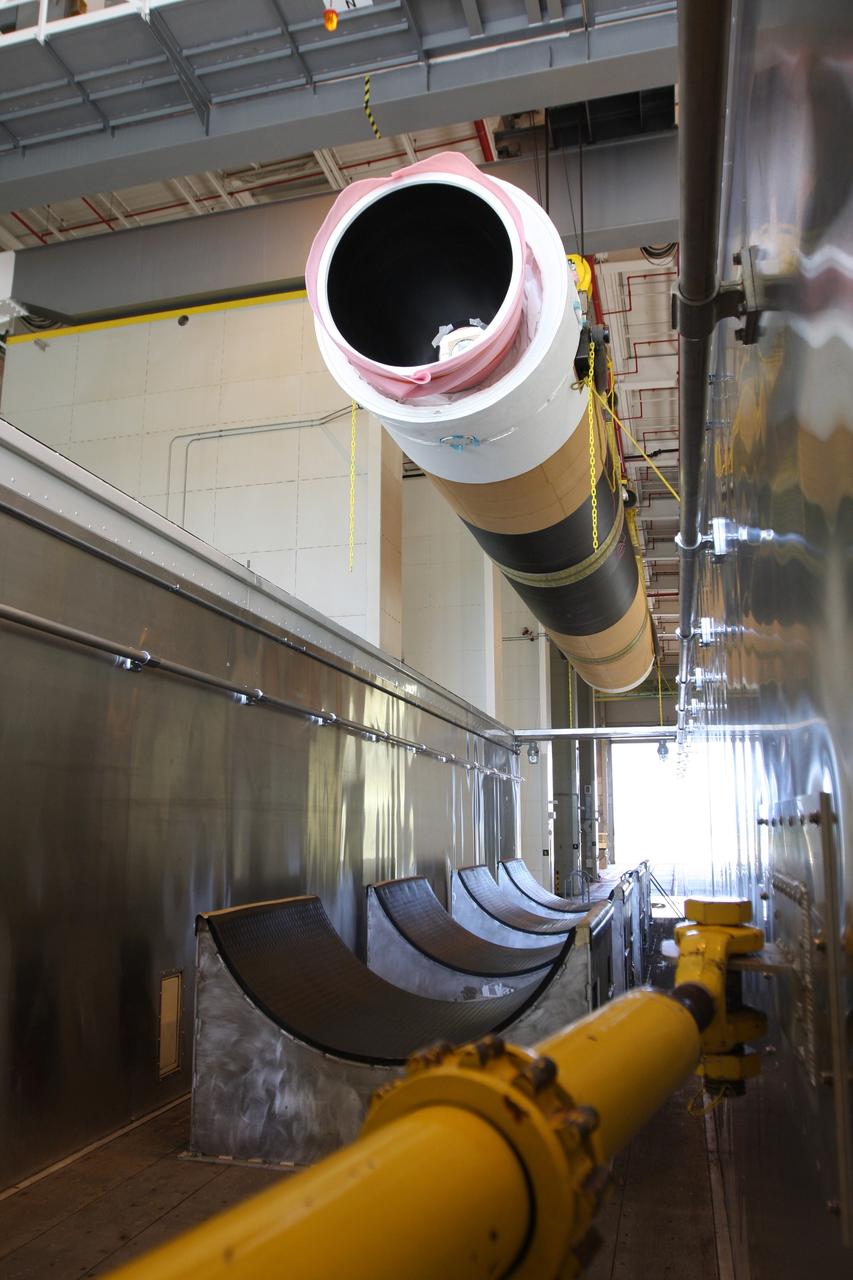
CAPE CANAVERAL, Fla. – At the Receipt Inspection Shop on Cape Canaveral Air Force Station in Florida, an ATK Space Systems' 60-inch graphite epoxy motor, or GEM, slated for launch of the GOES-P spacecraft is lifted from the tractor-trailer in which it was delivered. The United Launch Alliance Delta IV is the launch vehicle for GOES-P, the latest Geostationary Operational Environmental Satellite developed by NASA for the National Oceanic and Atmospheric Administration, or NOAA. Launch is targeted for March 4, 2010, from Launch Complex 37. For information on GOES-P, visit http://nasascience.nasa.gov/missions/goes-n-o-p. Photo credit: NASA/Dimitri Gerondidakis
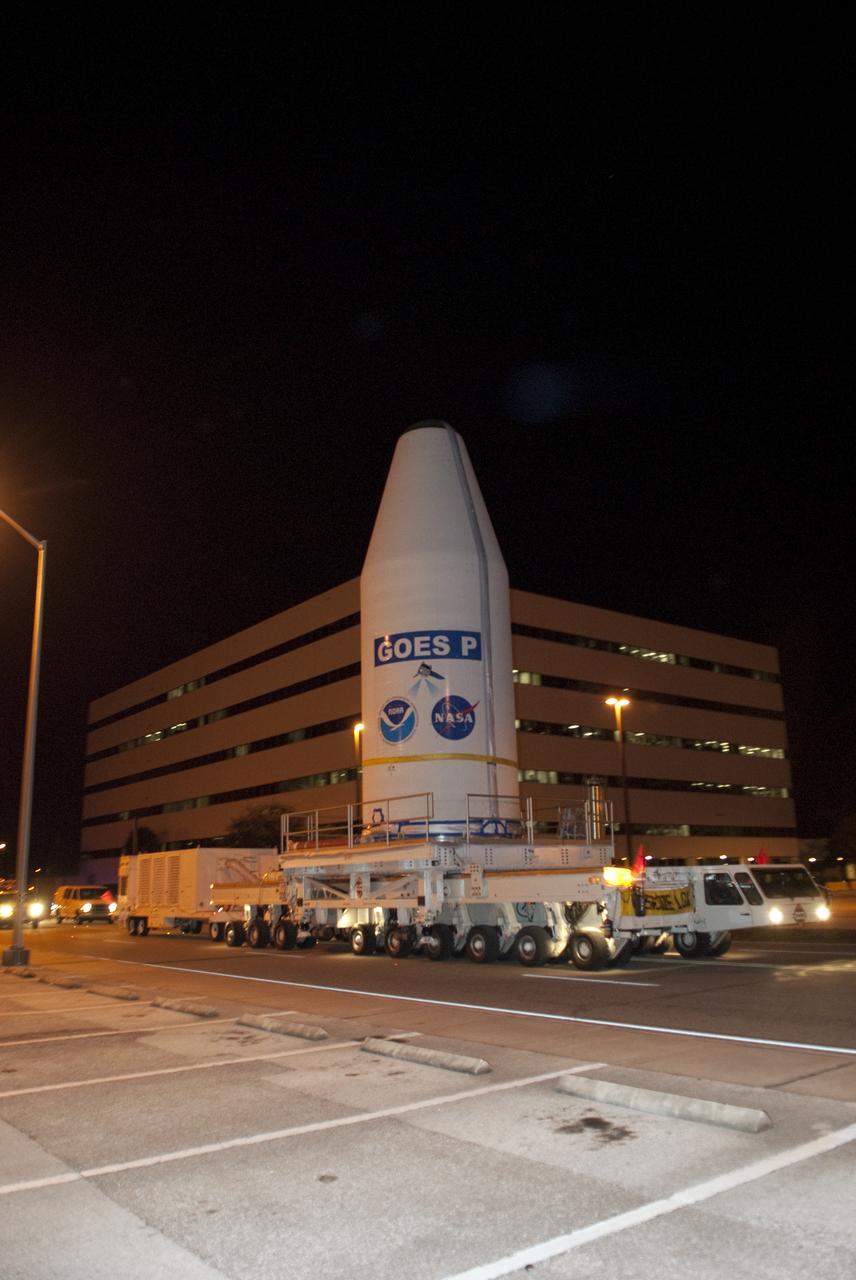
GOES-P XFER TO PAD 37
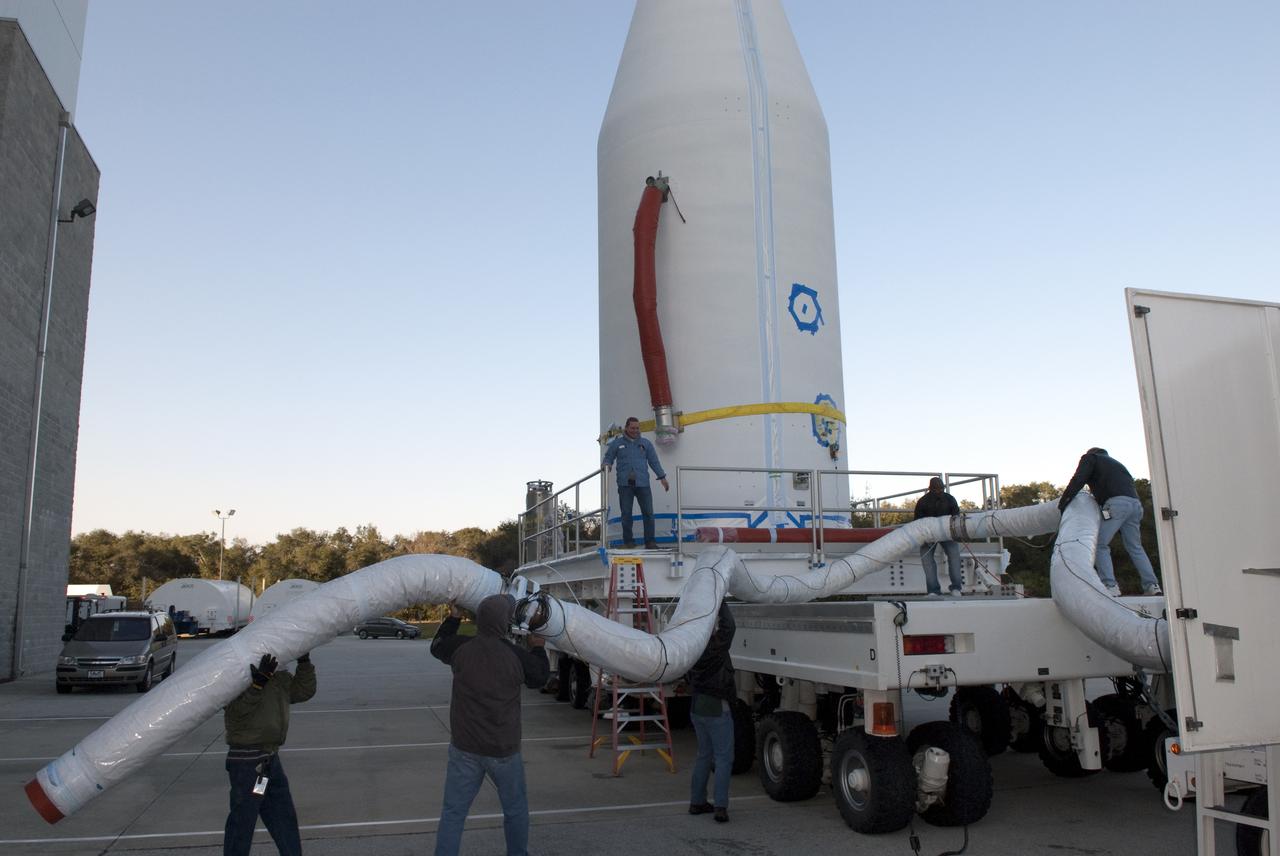
GOES-P XFER TO PAD 37
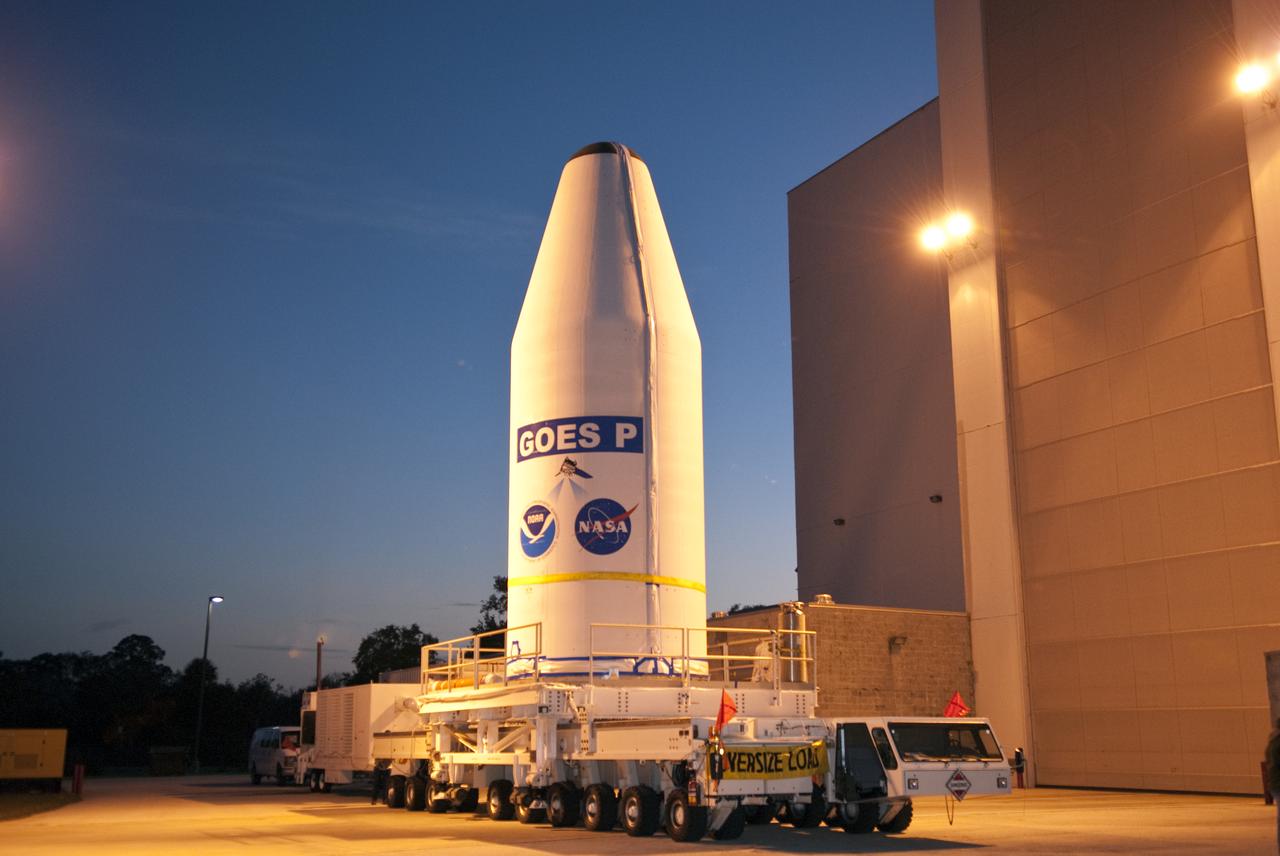
GOES-P XFER TO PAD 37
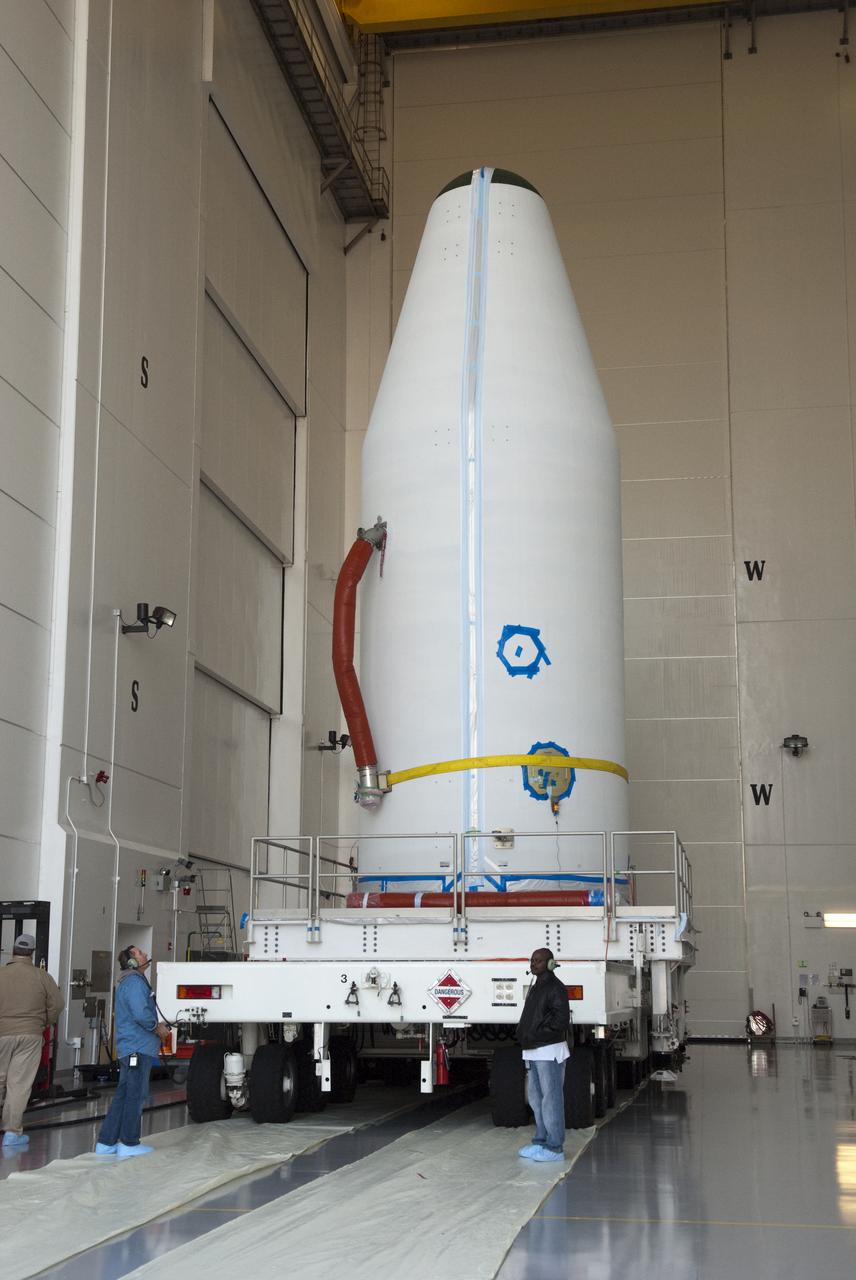
GOES-P XFER TO PAD 37
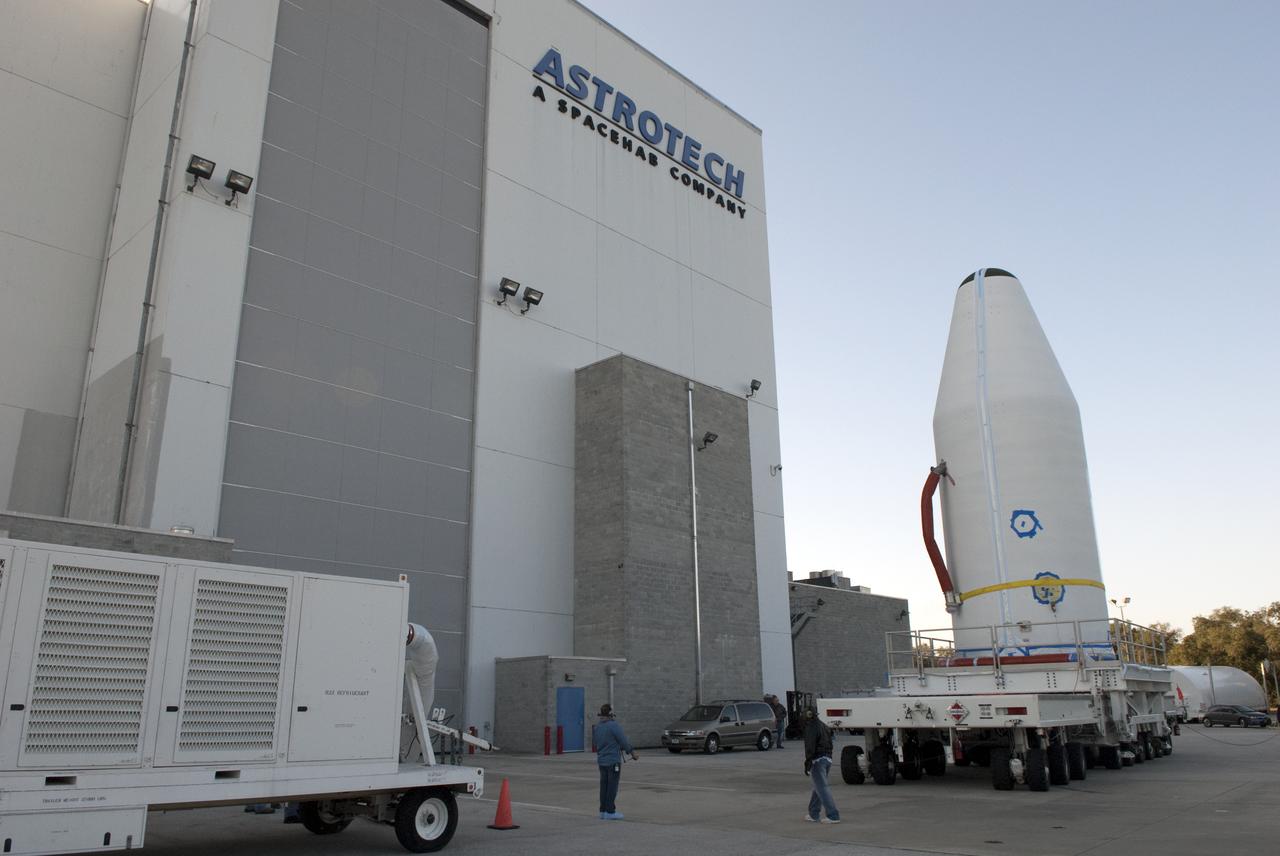
GOES-P XFER TO PAD 37
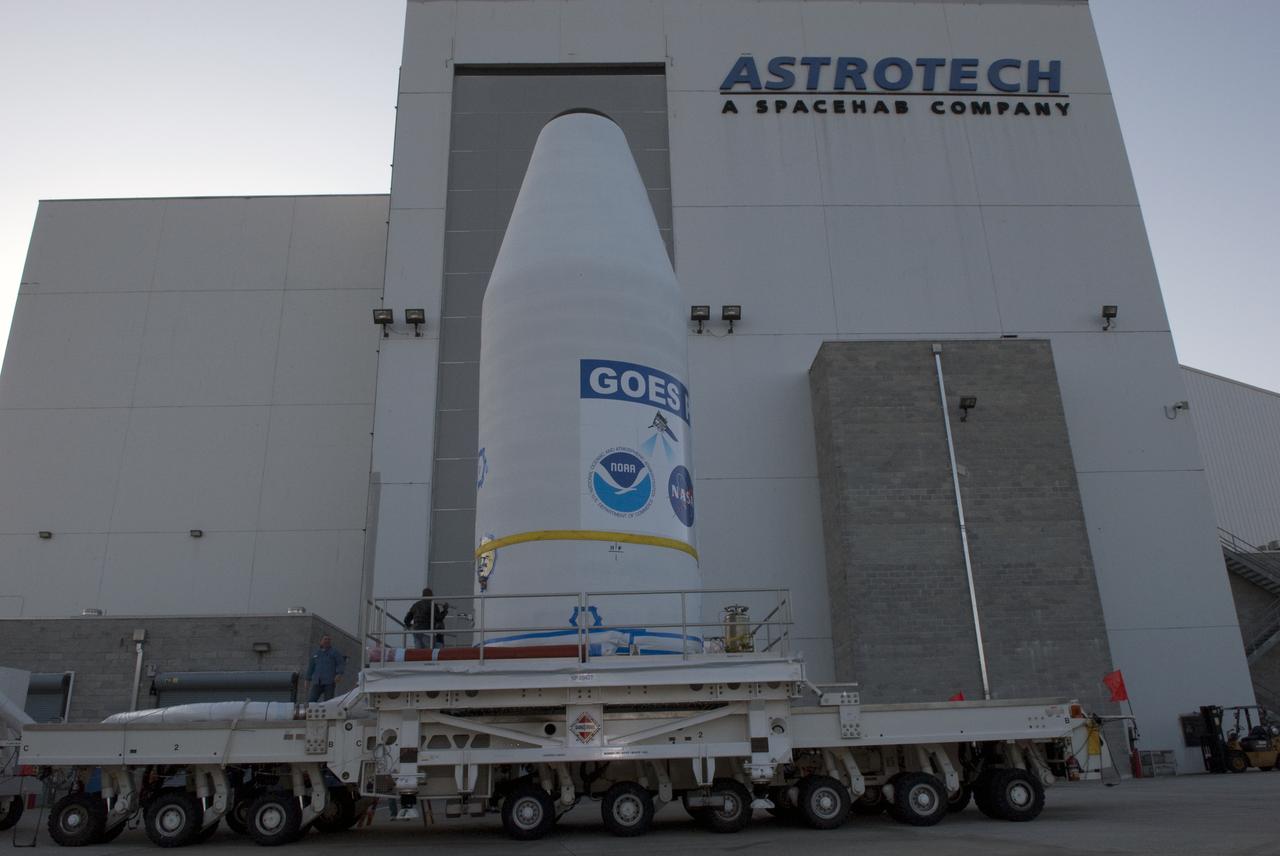
GOES-P XFER TO PAD 37
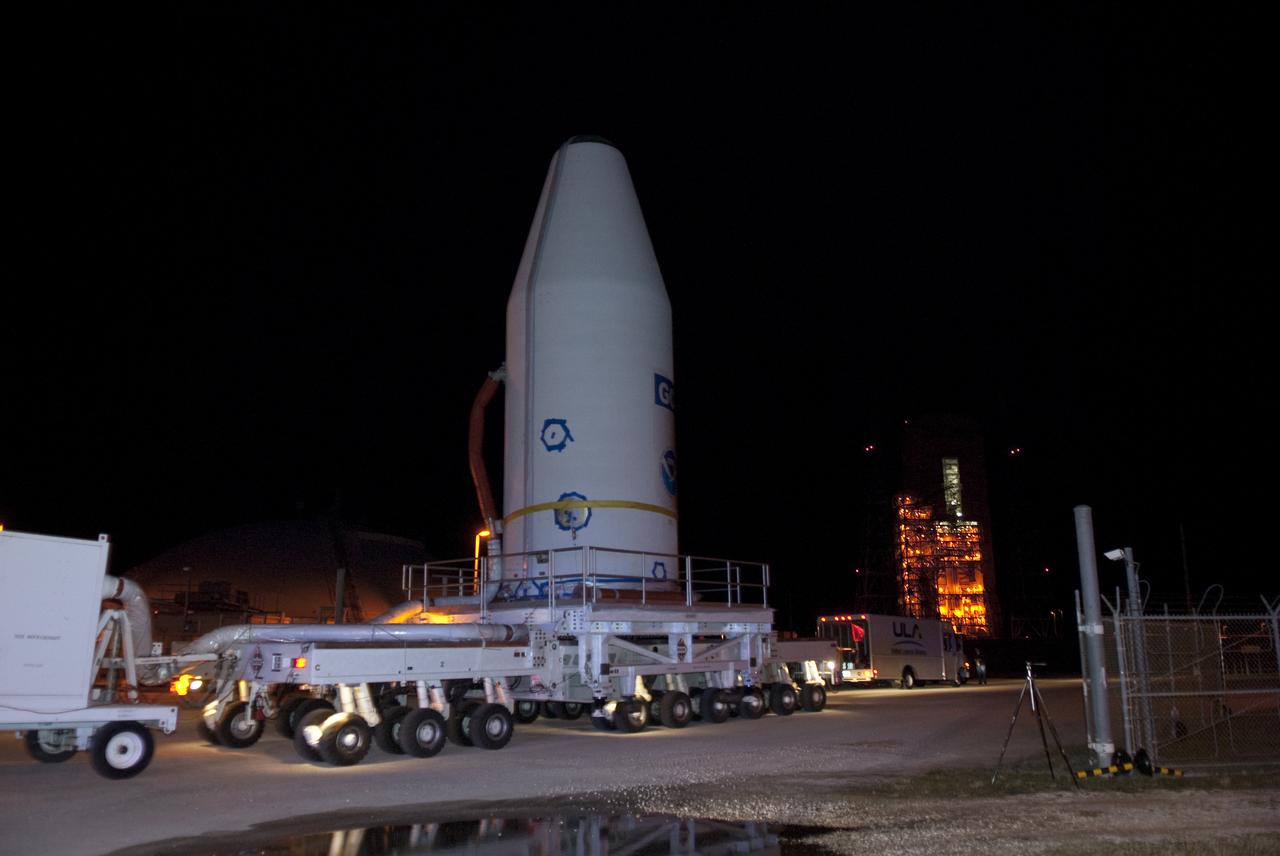
GOES-P XFER TO PAD 37