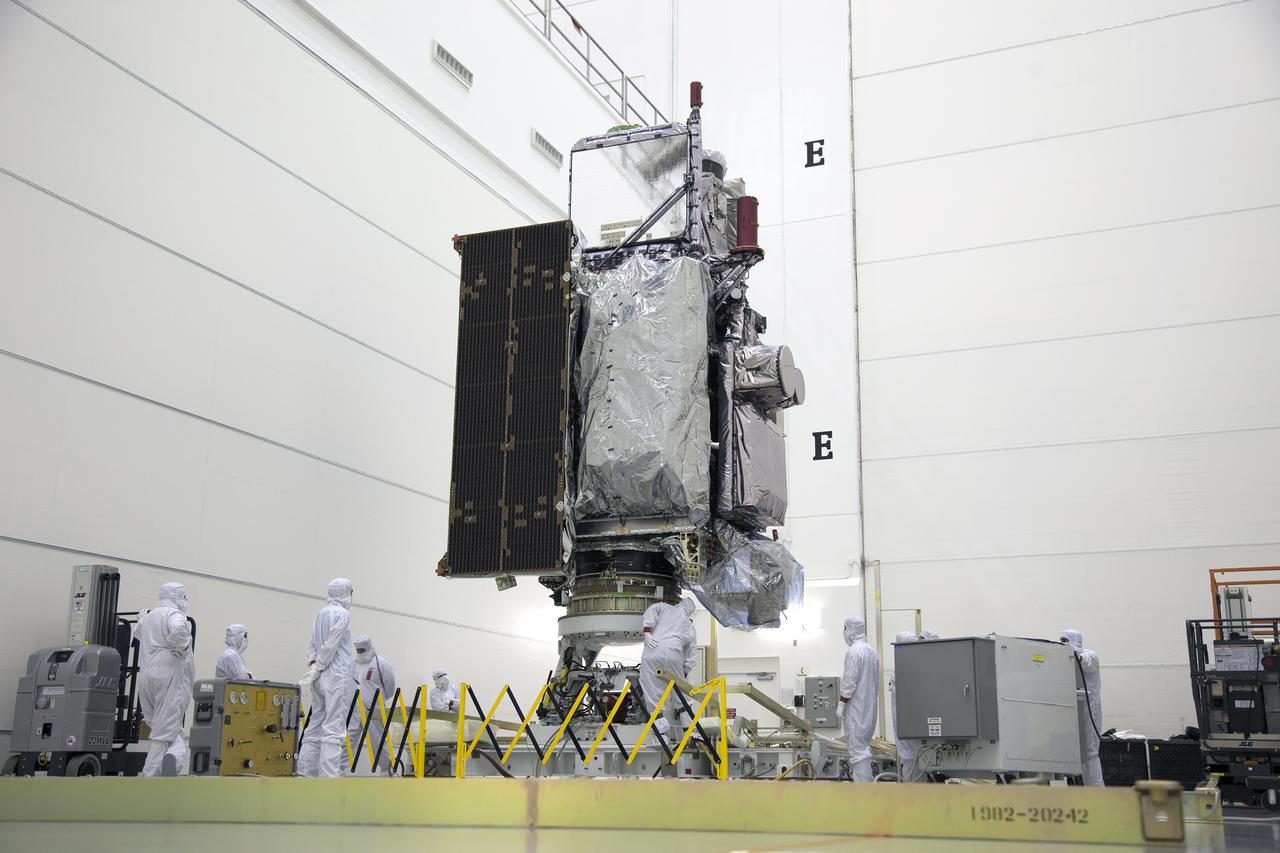
The GOES-R spacecraft stands vertically inside the Astrotech payload processing facility in Titusville, Florida near NASA’s Kennedy Space Center. GOES-R will be the first satellite in a series of next-generation NOAA Geostationary Operational Environmental Satellites. The spacecraft is to launch aboard a United Launch Alliance Atlas V rocket in November.
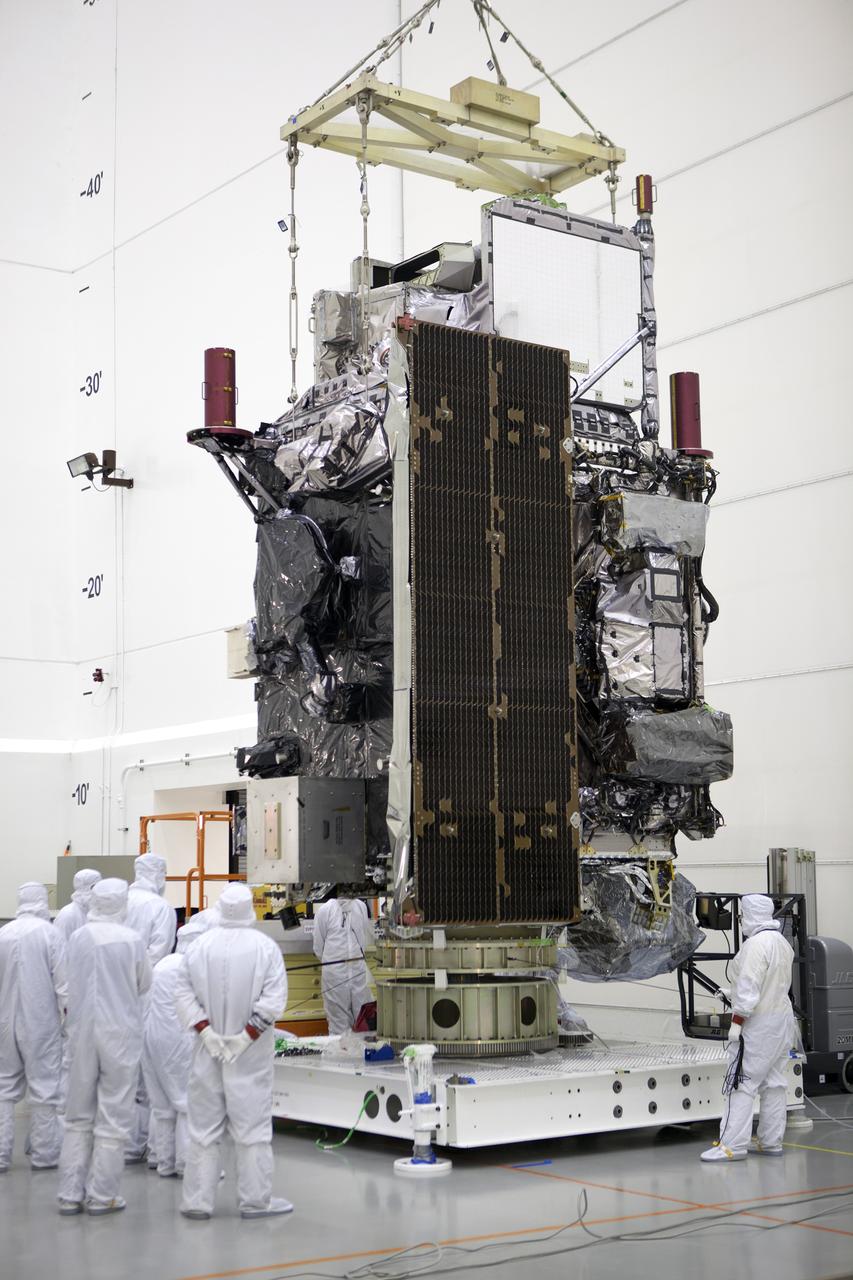
Team members monitor progress as an overhead crane lowers the GOES-R spacecraft into its work stand inside the Astrotech payload processing facility in Titusville, Florida near NASA’s Kennedy Space Center. GOES-R will be the first satellite in a series of next-generation NOAA Geostationary Operational Environmental Satellites. The spacecraft is to launch aboard a United Launch Alliance Atlas V rocket in November.
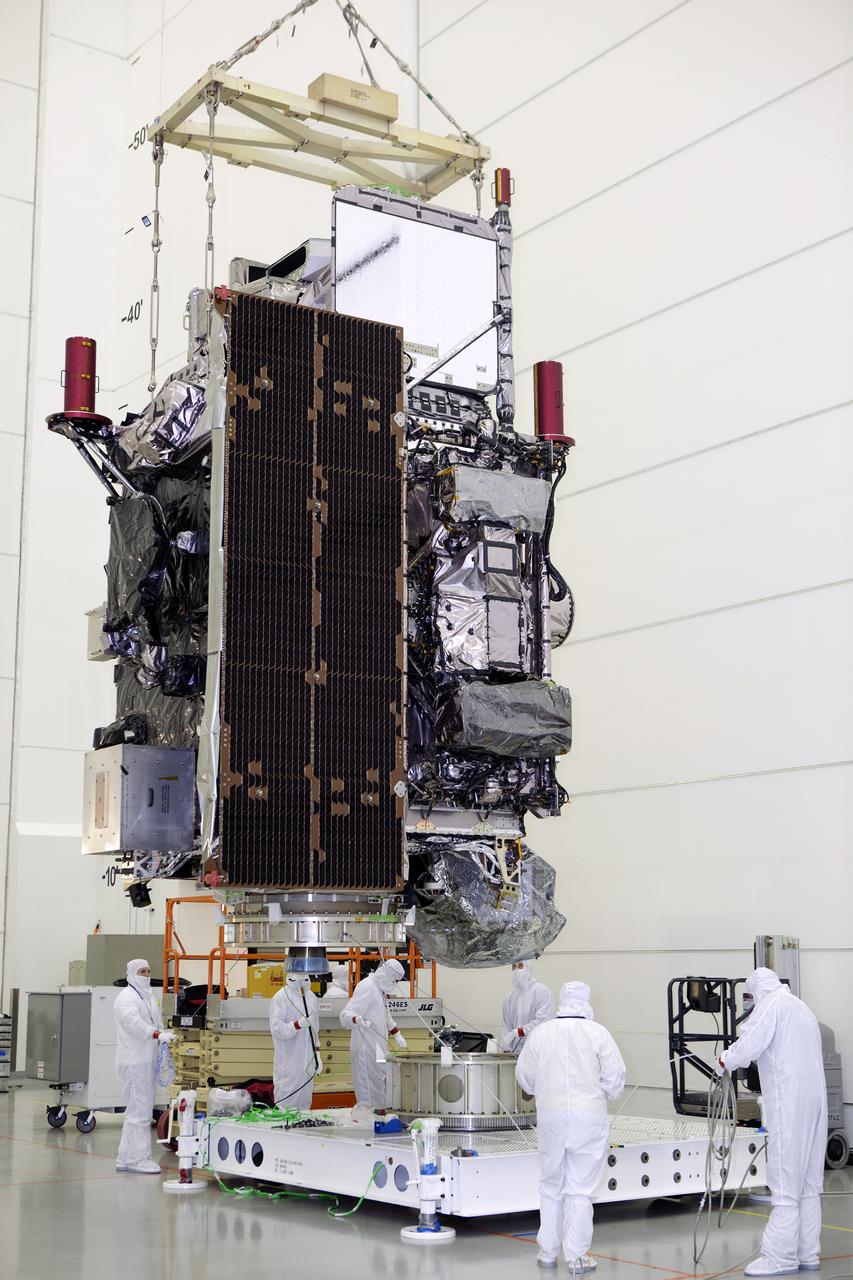
Team members monitor progress as an overhead crane lowers the GOES-R spacecraft toward its work stand inside the Astrotech payload processing facility in Titusville, Florida near NASA’s Kennedy Space Center. GOES-R will be the first satellite in a series of next-generation NOAA Geostationary Operational Environmental Satellites. The spacecraft is to launch aboard a United Launch Alliance Atlas V rocket in November.
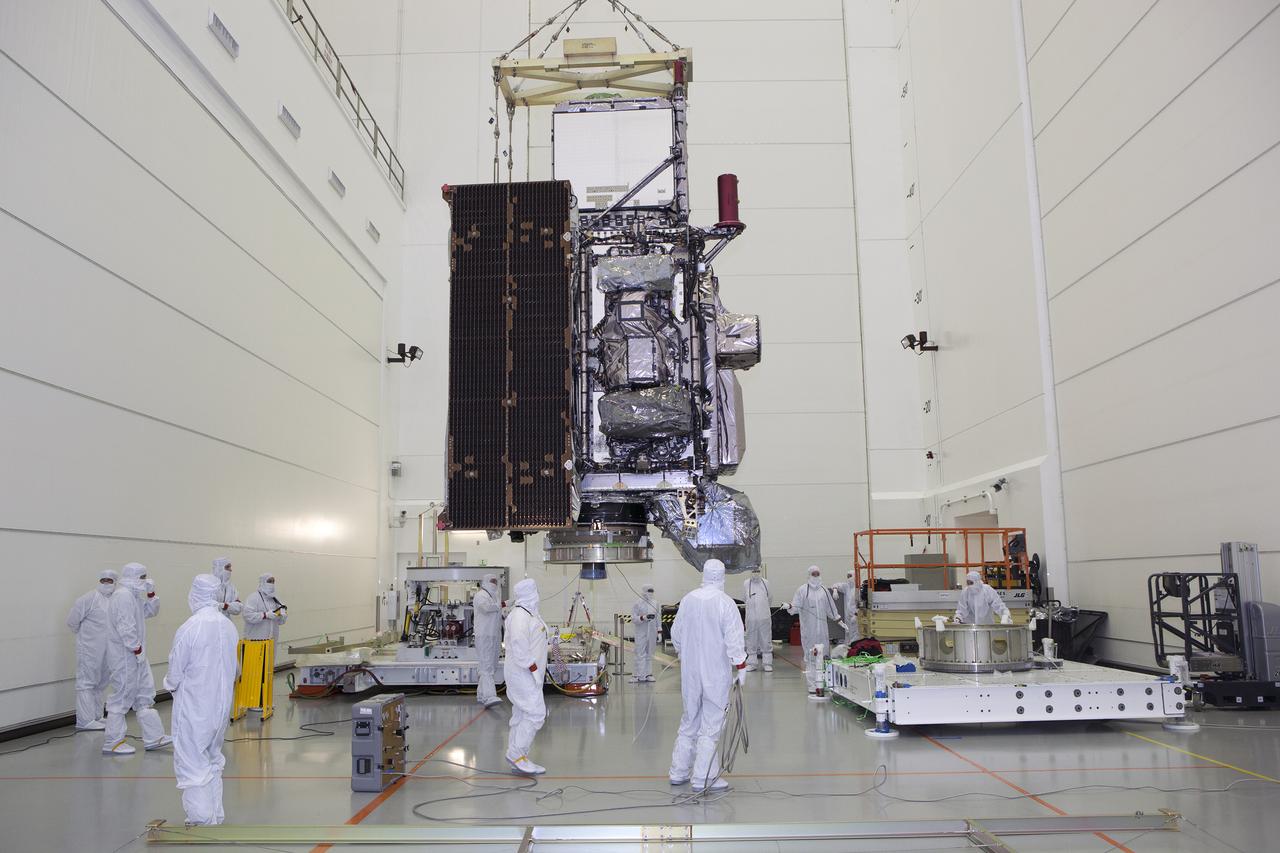
An overhead crane moves the GOES-R spacecraft toward its work stand inside the Astrotech payload processing facility in Titusville, Florida near NASA’s Kennedy Space Center. GOES-R will be the first satellite in a series of next-generation NOAA Geostationary Operational Environmental Satellites. The spacecraft is to launch aboard a United Launch Alliance Atlas V rocket in November.
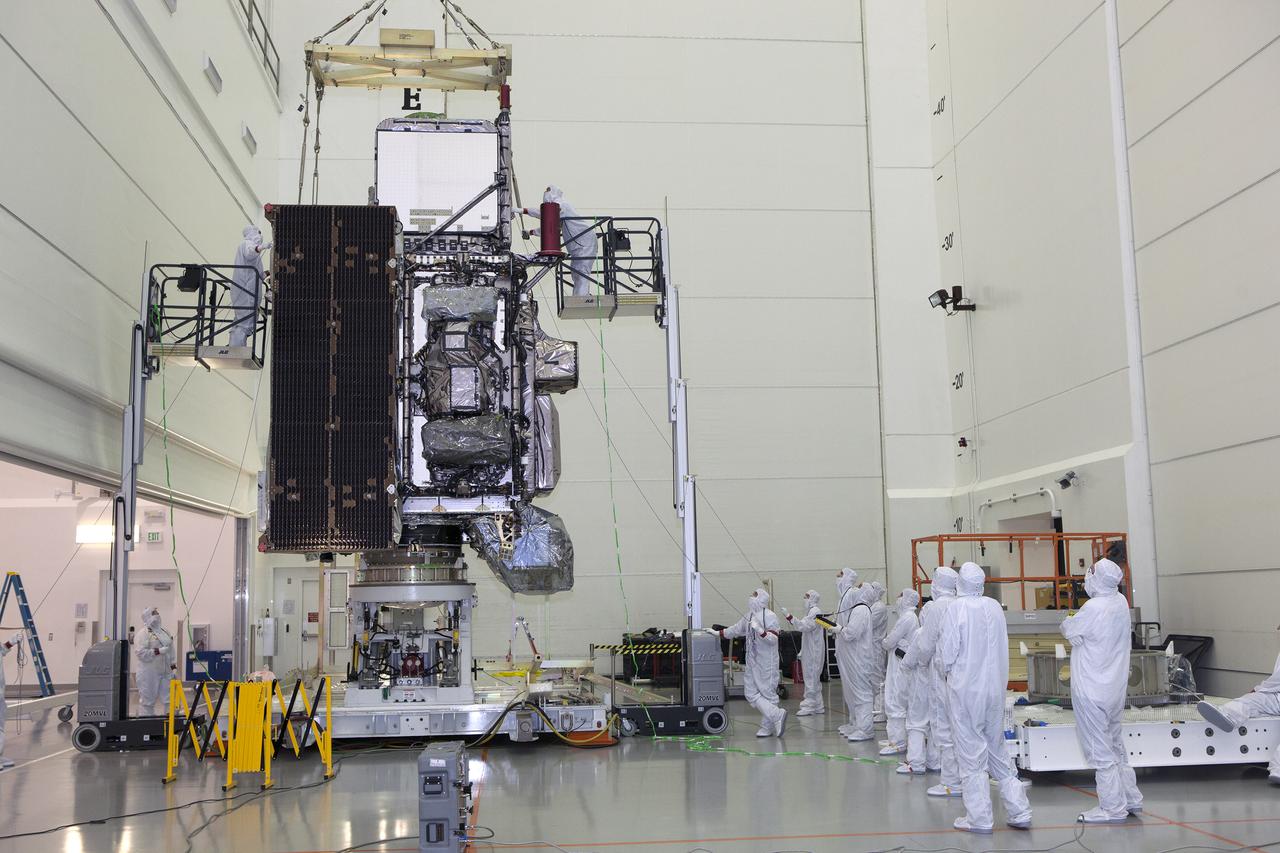
An overhead crane lifts the GOES-R spacecraft to move it into its work stand inside the Astrotech payload processing facility in Titusville, Florida near NASA’s Kennedy Space Center. GOES-R will be the first satellite in a series of next-generation NOAA Geostationary Operational Environmental Satellites. The spacecraft is to launch aboard a United Launch Alliance Atlas V rocket in November.
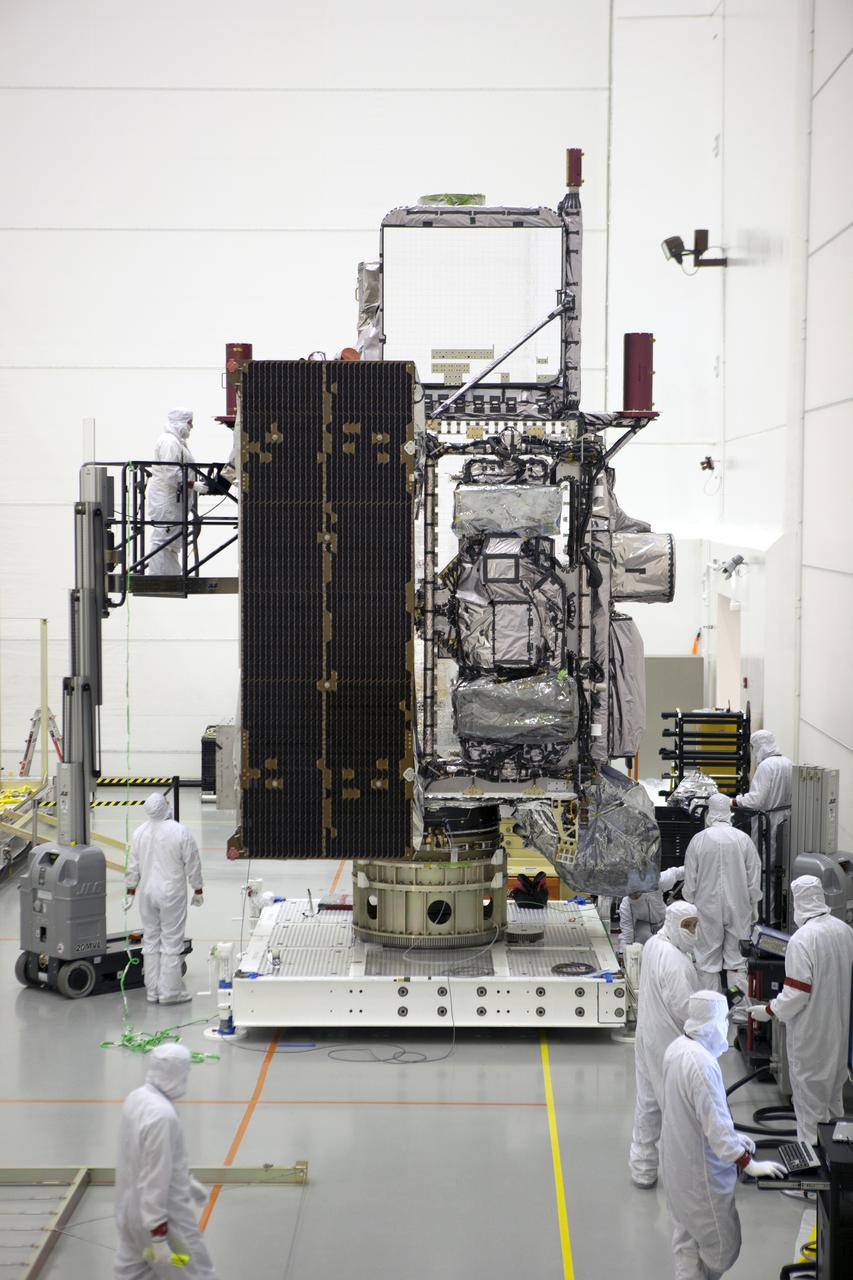
The GOES-R spacecraft is secured on its work stand inside the Astrotech payload processing facility in Titusville, Florida near NASA’s Kennedy Space Center. GOES-R will be the first satellite in a series of next-generation NOAA Geostationary Operational Environmental Satellites. The spacecraft is to launch aboard a United Launch Alliance Atlas V rocket in November.
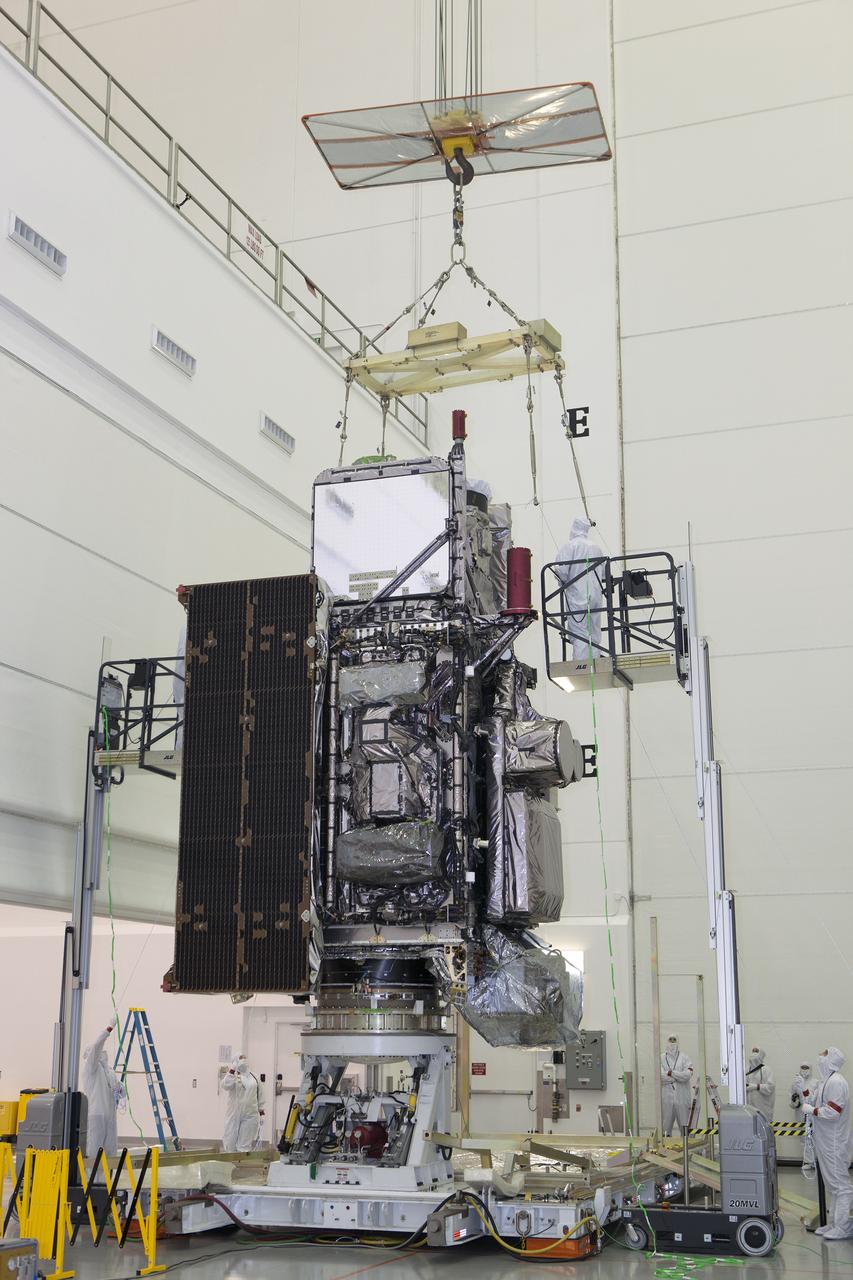
An overhead crane is positioned to move the GOES-R spacecraft into its work stand inside the Astrotech payload processing facility in Titusville, Florida near NASA’s Kennedy Space Center. GOES-R will be the first satellite in a series of next-generation NOAA Geostationary Operational Environmental Satellites. The spacecraft is to launch aboard a United Launch Alliance Atlas V rocket in November.
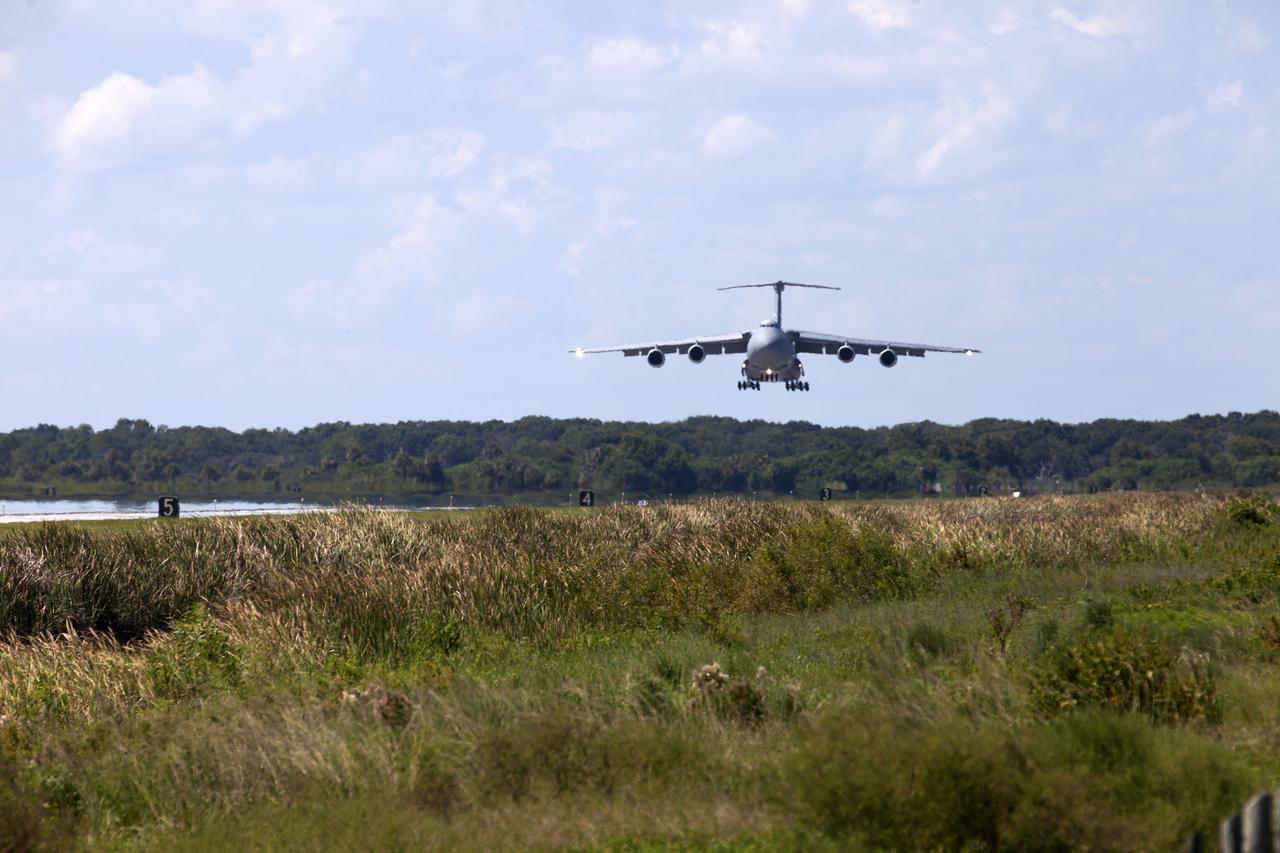
An Air Force C-5 Galaxy transport plane approaches the Shuttle Landing Facility at NASA's Kennedy Space Center in Florida to deliver the GOES-R spacecraft for launch processing. The GOES series are weather satellites operated by NOAA to enhance forecasts. The spacecraft is to launch aboard a United Launch Alliance Atlas V rocket in November.
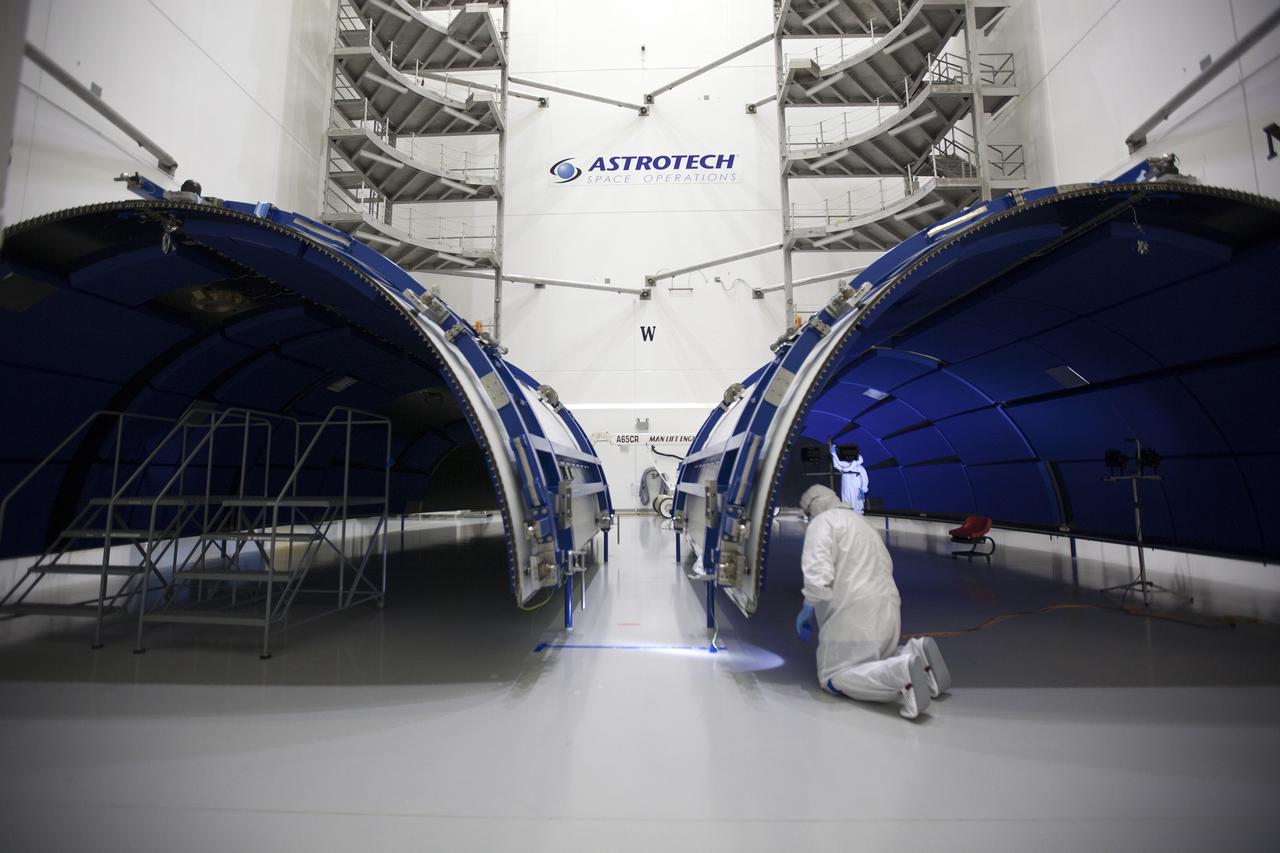
Team members with United Launch Alliance (ULA) inspect the first half of the fairing for the Geostationary Operational Environmental Satellite (GOES-R) inside the Astrotech payload processing facility in Titusville, Florida near NASA’s Kennedy Space Center. GOES-R will be the first satellite in a series of next-generation NOAA GOES Satellites. The spacecraft is to launch aboard a ULA Atlas V rocket in November.
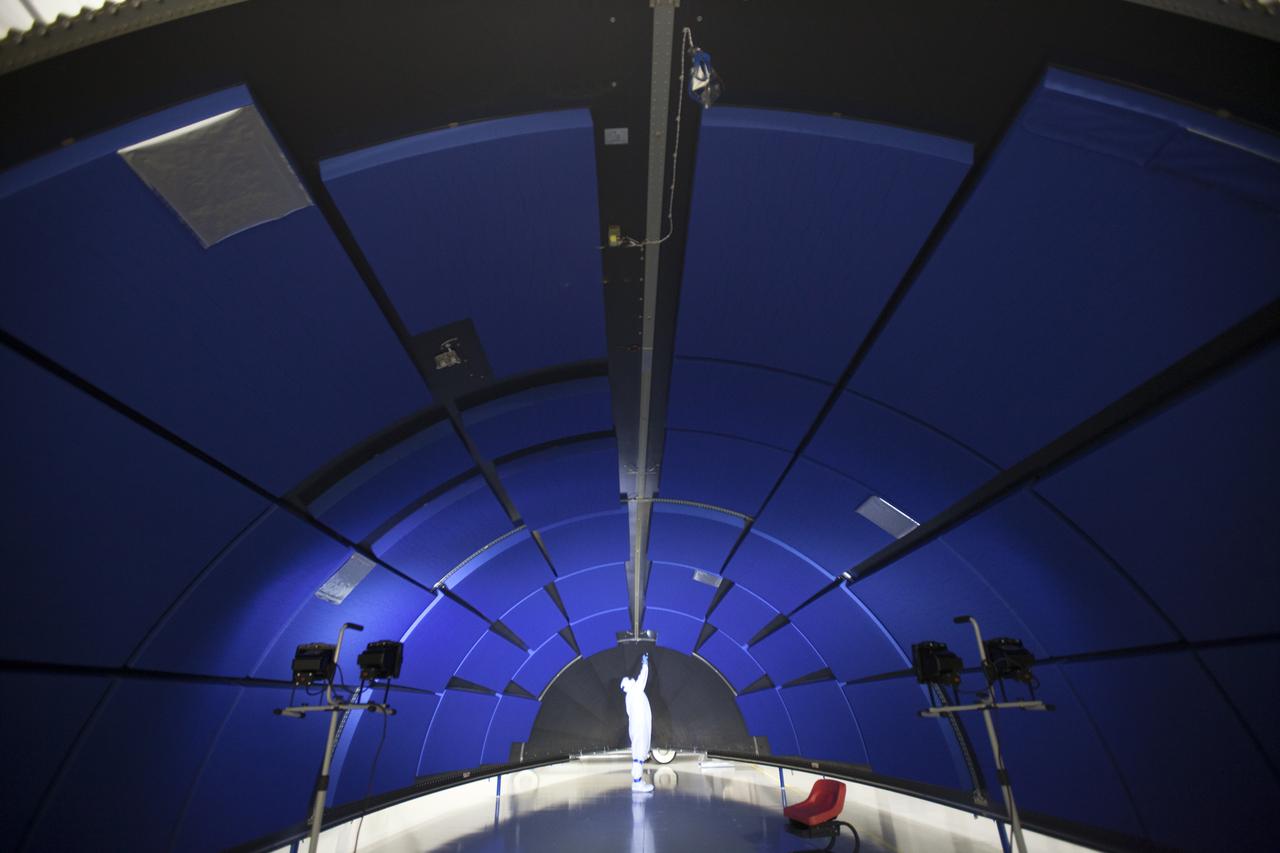
Team members with United Launch Alliance (ULA) inspect the first half of the fairing for the Geostationary Operational Environmental Satellite (GOES-R) inside the Astrotech payload processing facility in Titusville, Florida near NASA’s Kennedy Space Center. GOES-R will be the first satellite in a series of next-generation NOAA GOES Satellites. The spacecraft is to launch aboard a ULA Atlas V rocket in November.
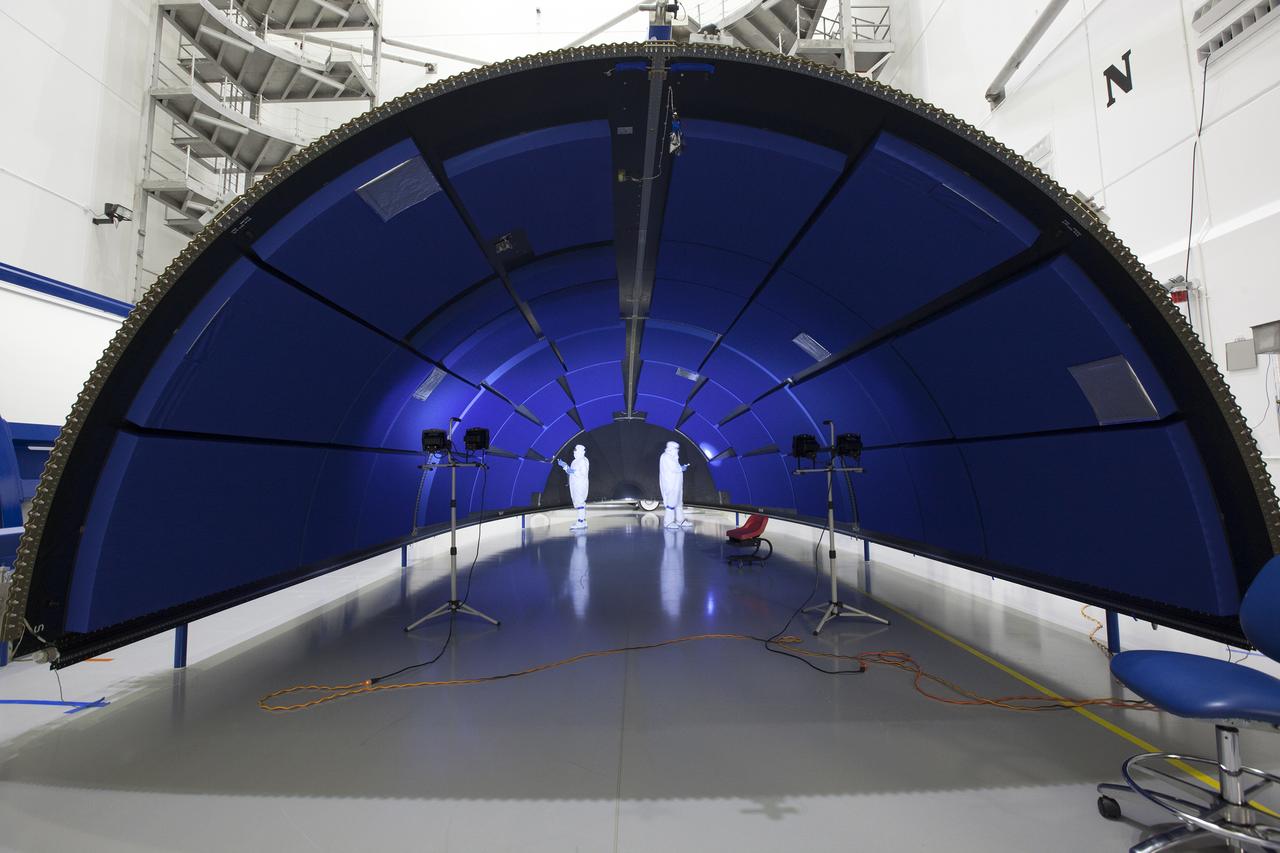
Team members with United Launch Alliance (ULA) inspect an clean the first half of the fairing for the Geostationary Operational Environmental Satellite (GOES-R) inside the Astrotech payload processing facility in Titusville, Florida near NASA’s Kennedy Space Center. GOES-R will be the first satellite in a series of next-generation NOAA GOES Satellites. The spacecraft is to launch aboard a ULA Atlas V rocket in November.
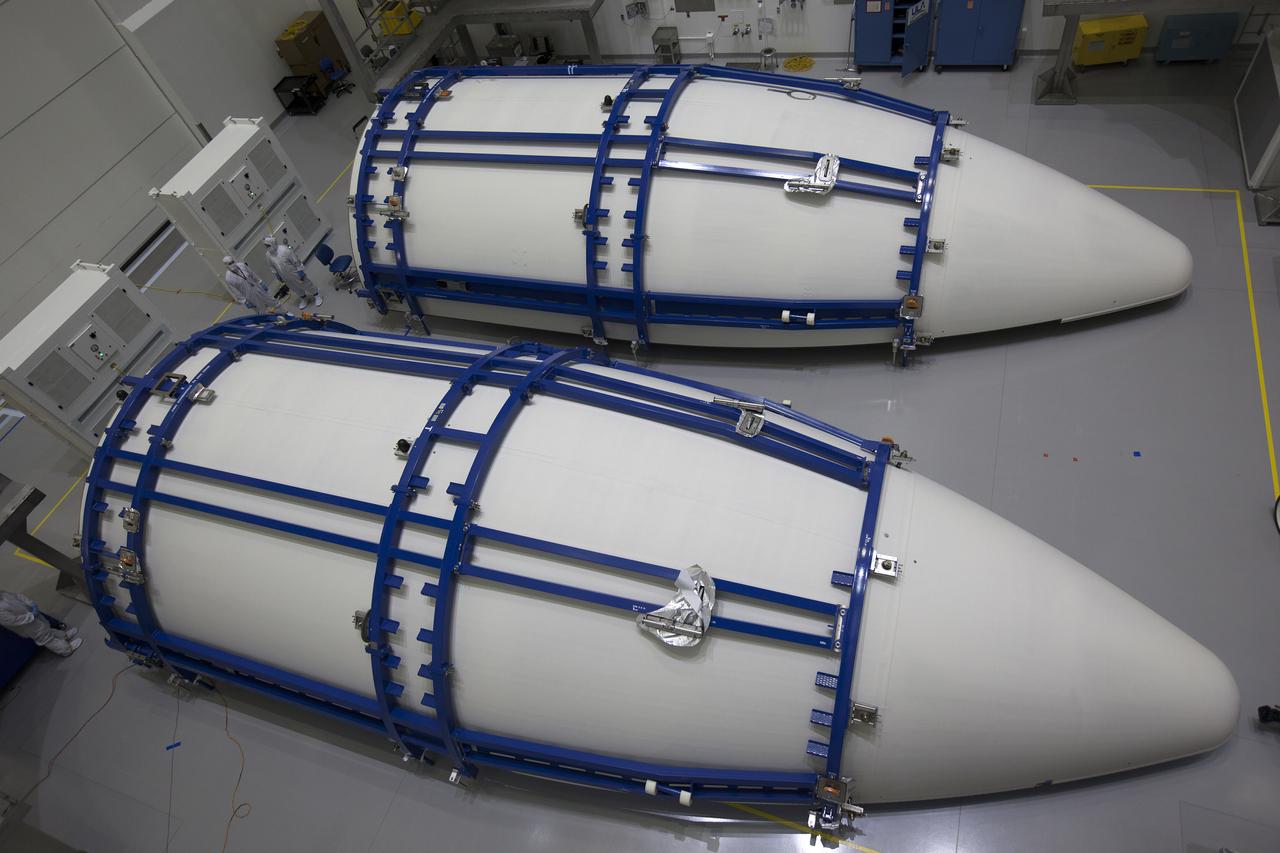
Both halves of the fairing for the Geostationary Operational Environmental Satellite (GOES-R) are being inspected and cleaned by United Launch Alliance (ULA) team members inside the Astrotech payload processing facility in Titusville, Florida near NASA’s Kennedy Space Center. GOES-R will be the first satellite in a series of next-generation NOAA GOES Satellites. The spacecraft is to launch aboard a ULA Atlas V rocket in November.
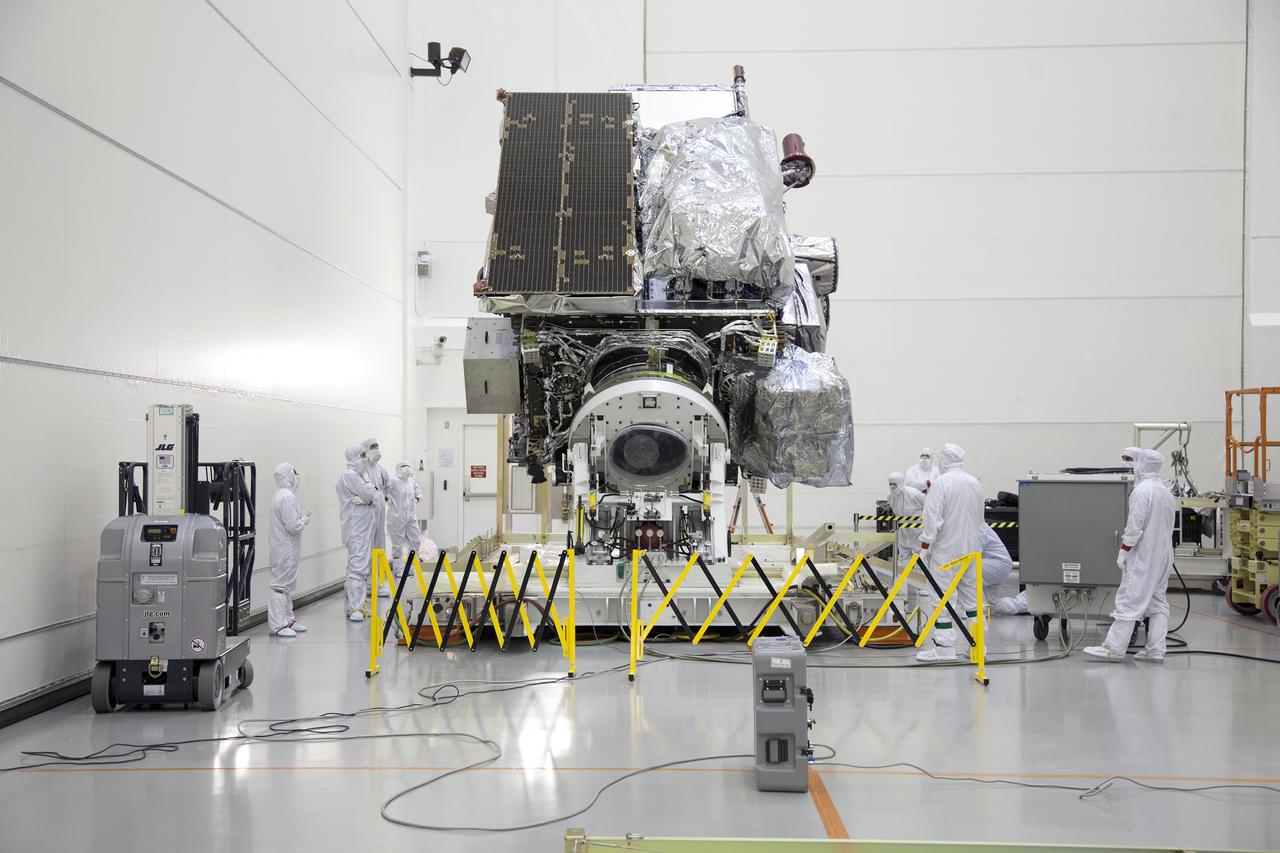
Team members monitor progress as the GOES-R spacecraft is lifted from horizontal to vertical inside the Astrotech payload processing facility in Titusville, Florida near NASA’s Kennedy Space Center. GOES-R will be the first satellite in a series of next-generation NOAA Geostationary Operational Environmental Satellites. The spacecraft is to launch aboard a United Launch Alliance Atlas V rocket in November.
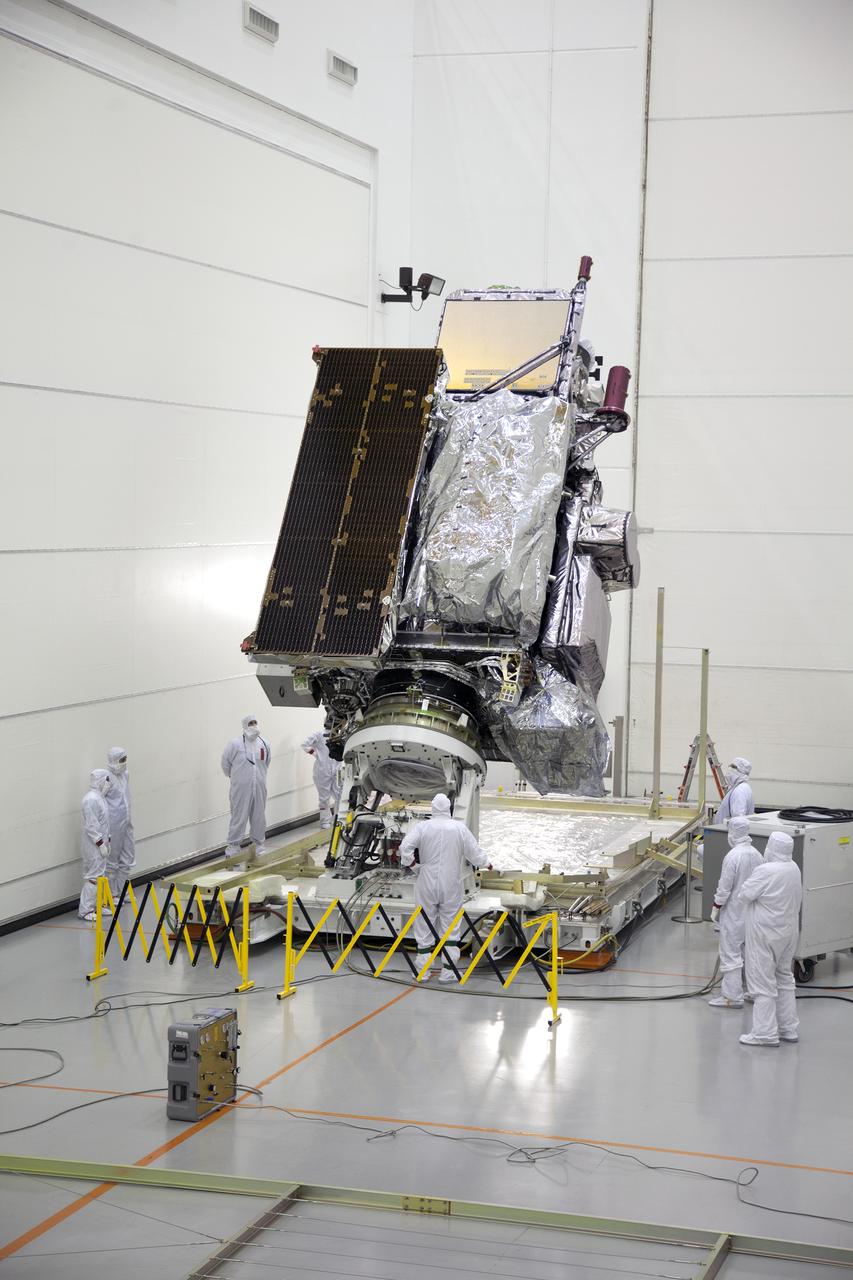
Team members monitor progress as the GOES-R spacecraft is raised to vertical inside the Astrotech payload processing facility in Titusville, Florida near NASA’s Kennedy Space Center. GOES-R will be the first satellite in a series of next-generation NOAA Geostationary Operational Environmental Satellites. The spacecraft is to launch aboard a United Launch Alliance Atlas V rocket in November.
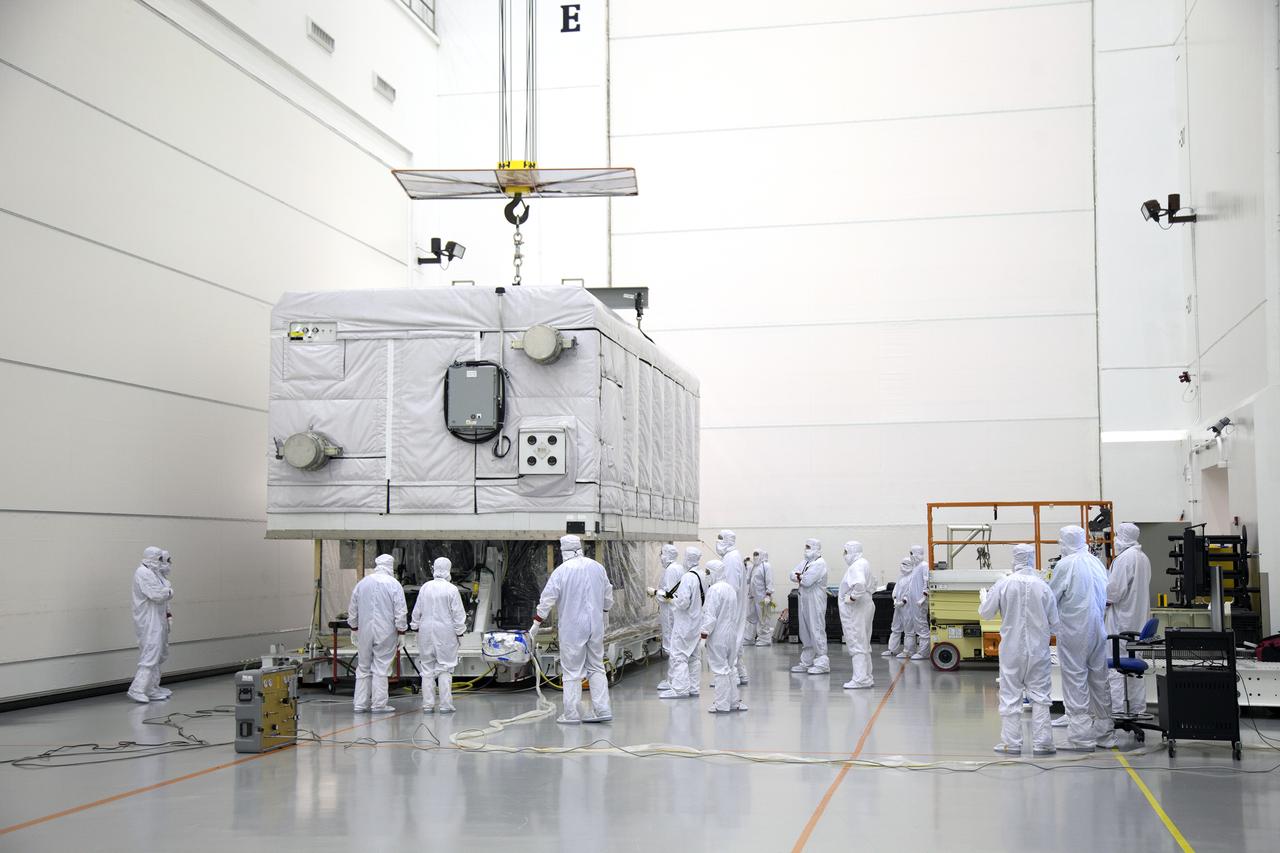
The shipping container is lifted off the GOES-R spacecraft inside the Astrotech payload processing facility in Titusville, Florida near NASA’s Kennedy Space Center. GOES-R will be the first satellite in a series of next-generation NOAA Geostationary Operational Environmental Satellites. The spacecraft is to launch aboard a United Launch Alliance Atlas V rocket in November.
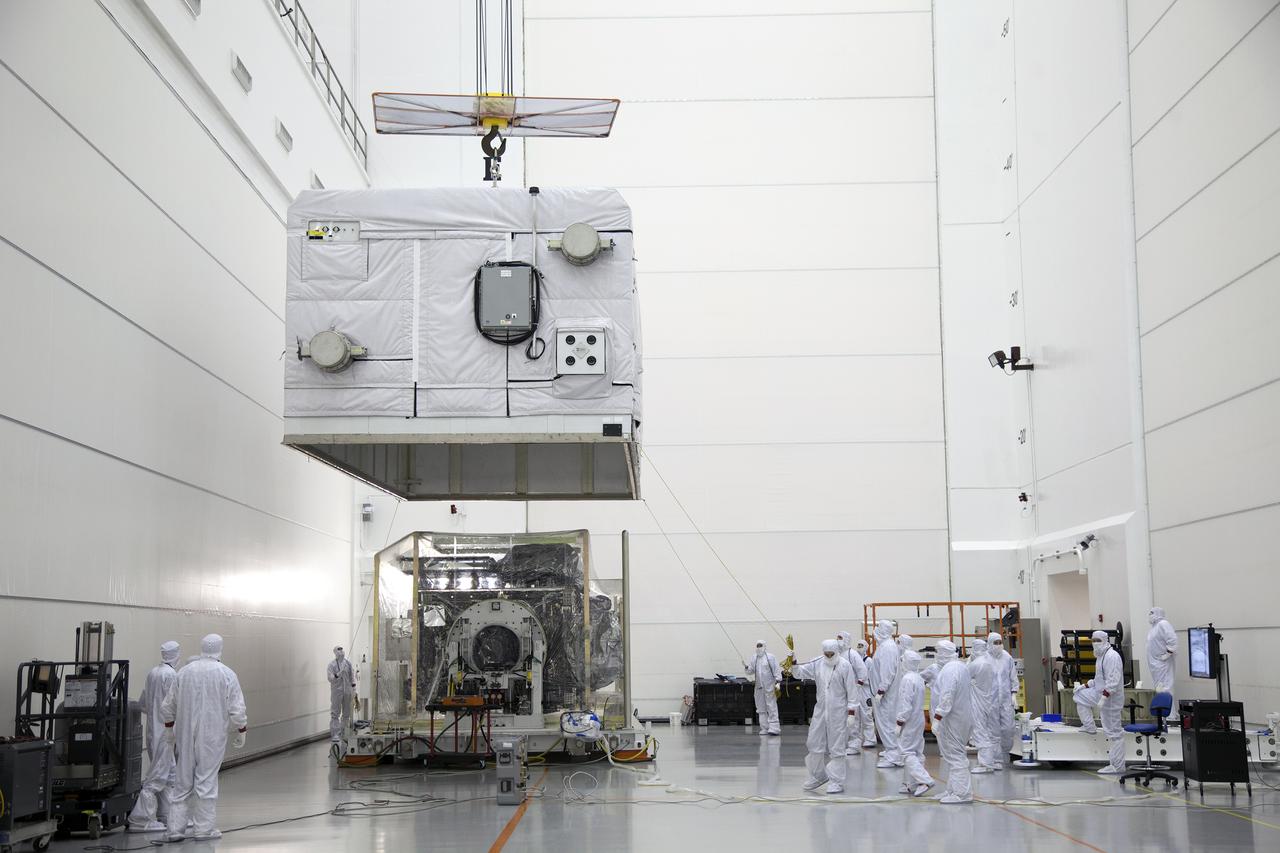
The shipping container is lifted off the GOES-R spacecraft inside the Astrotech payload processing facility in Titusville, Florida near NASA’s Kennedy Space Center. GOES-R will be the first satellite in a series of next-generation NOAA Geostationary Operational Environmental Satellites. The spacecraft is to launch aboard a United Launch Alliance Atlas V rocket in November.
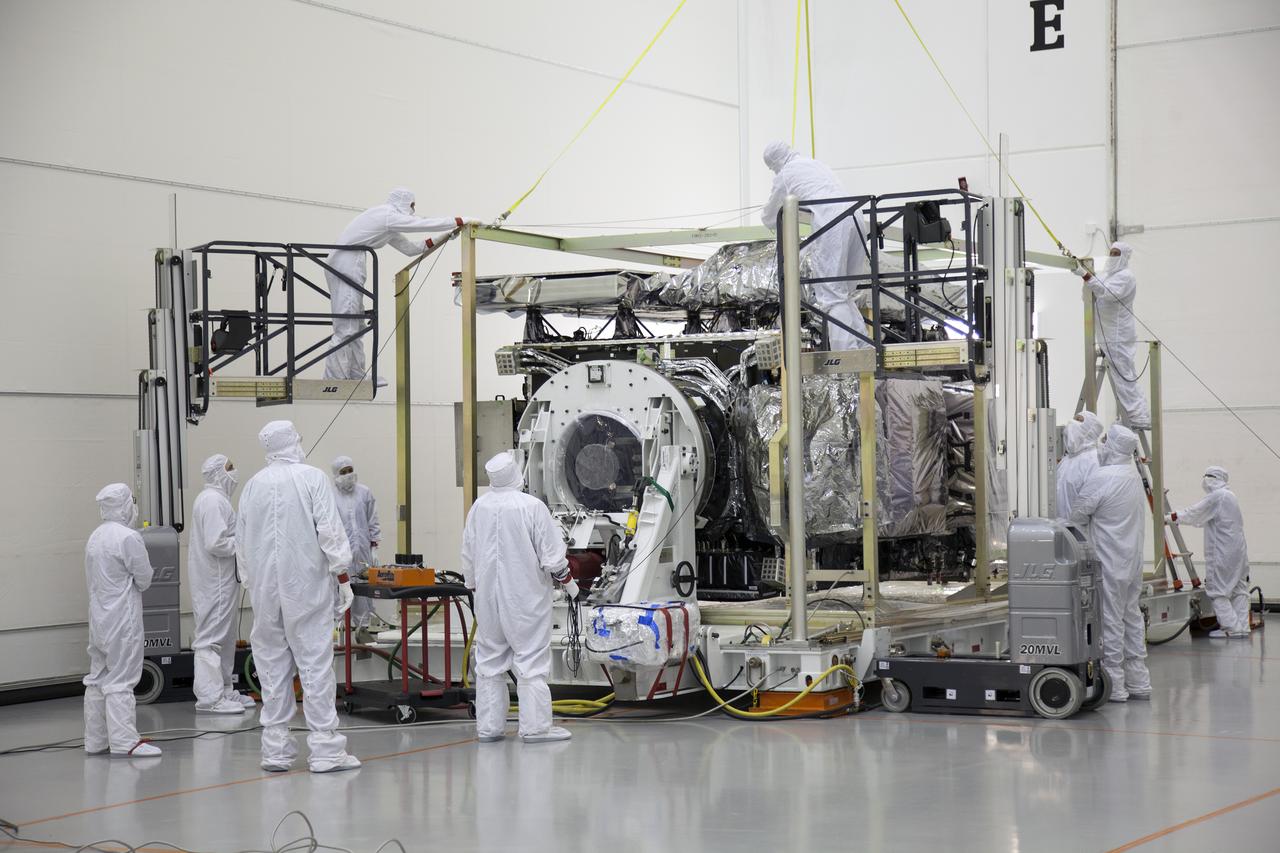
The GOES-R spacecraft is revealed following its uncrating inside the Astrotech payload processing facility in Titusville, Florida near NASA’s Kennedy Space Center. GOES-R will be the first satellite in a series of next-generation NOAA Geostationary Operational Environmental Satellites. The spacecraft is to launch aboard a United Launch Alliance Atlas V rocket in November.
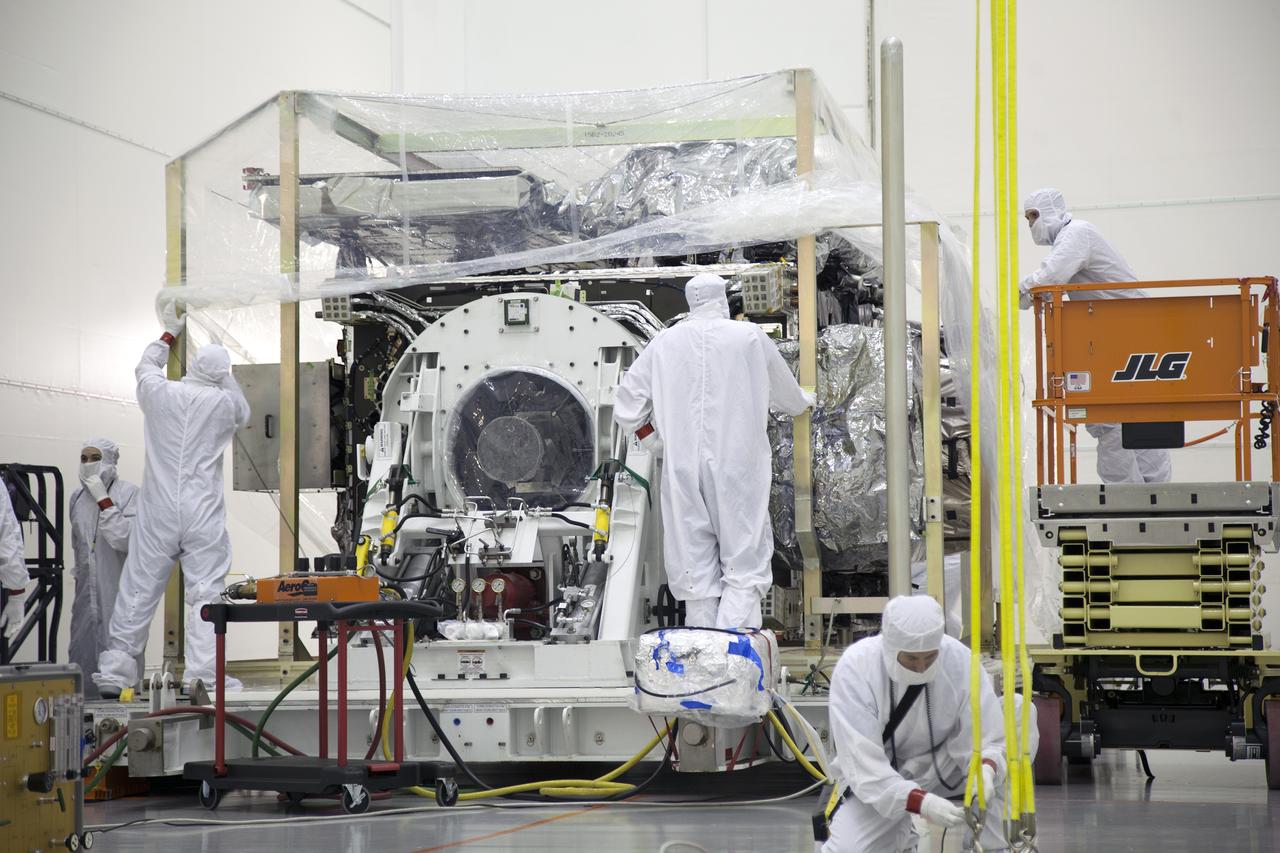
Team members remove a protective plastic covering from the GOES-R spacecraft inside the Astrotech payload processing facility in Titusville, Florida near NASA’s Kennedy Space Center. GOES-R will be the first satellite in a series of next-generation NOAA Geostationary Operational Environmental Satellites. The spacecraft is to launch aboard a United Launch Alliance Atlas V rocket in November.
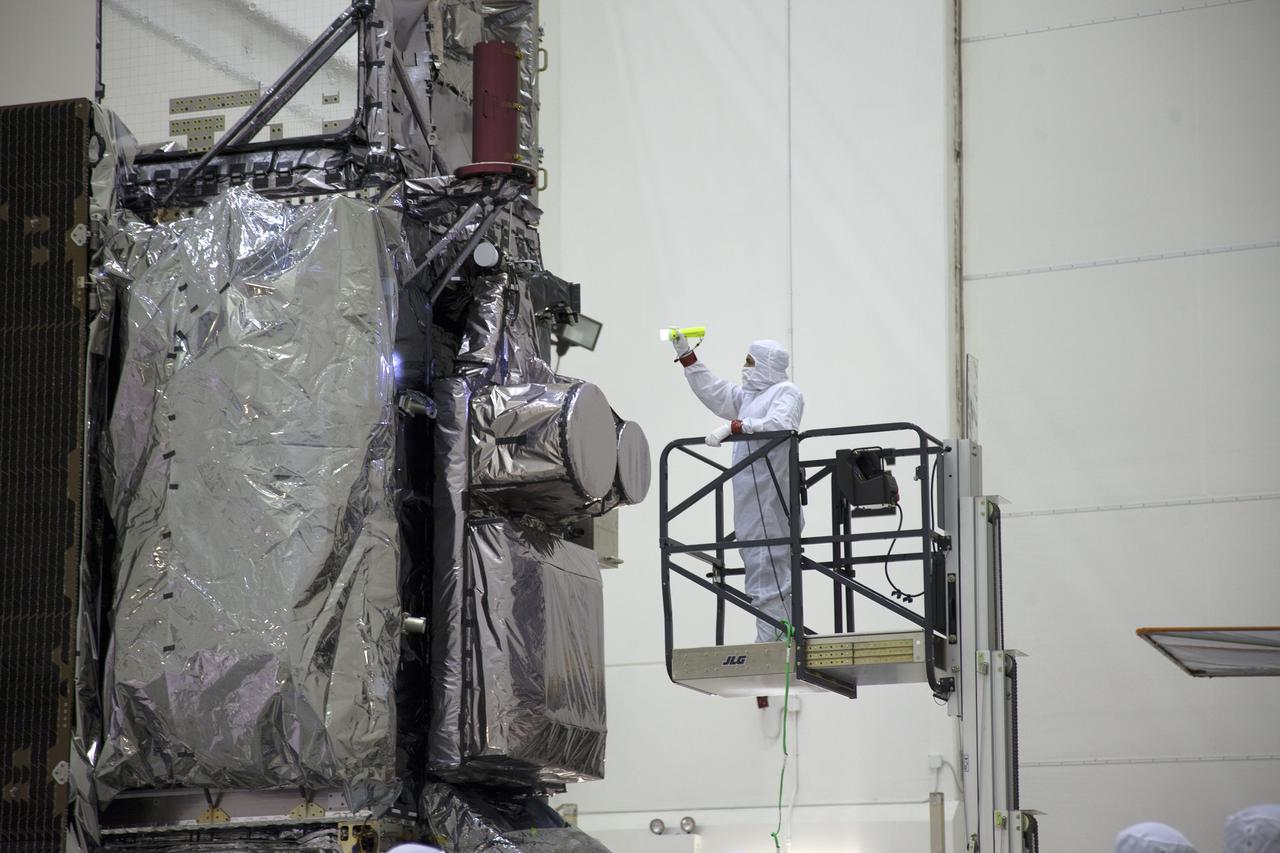
The GOES-R spacecraft is inspected after being uncrated and raised to vertical inside the Astrotech payload processing facility in Titusville, Florida near NASA’s Kennedy Space Center. GOES-R will be the first satellite in a series of next-generation NOAA Geostationary Operational Environmental Satellites. The spacecraft is to launch aboard a United Launch Alliance Atlas V rocket in November.
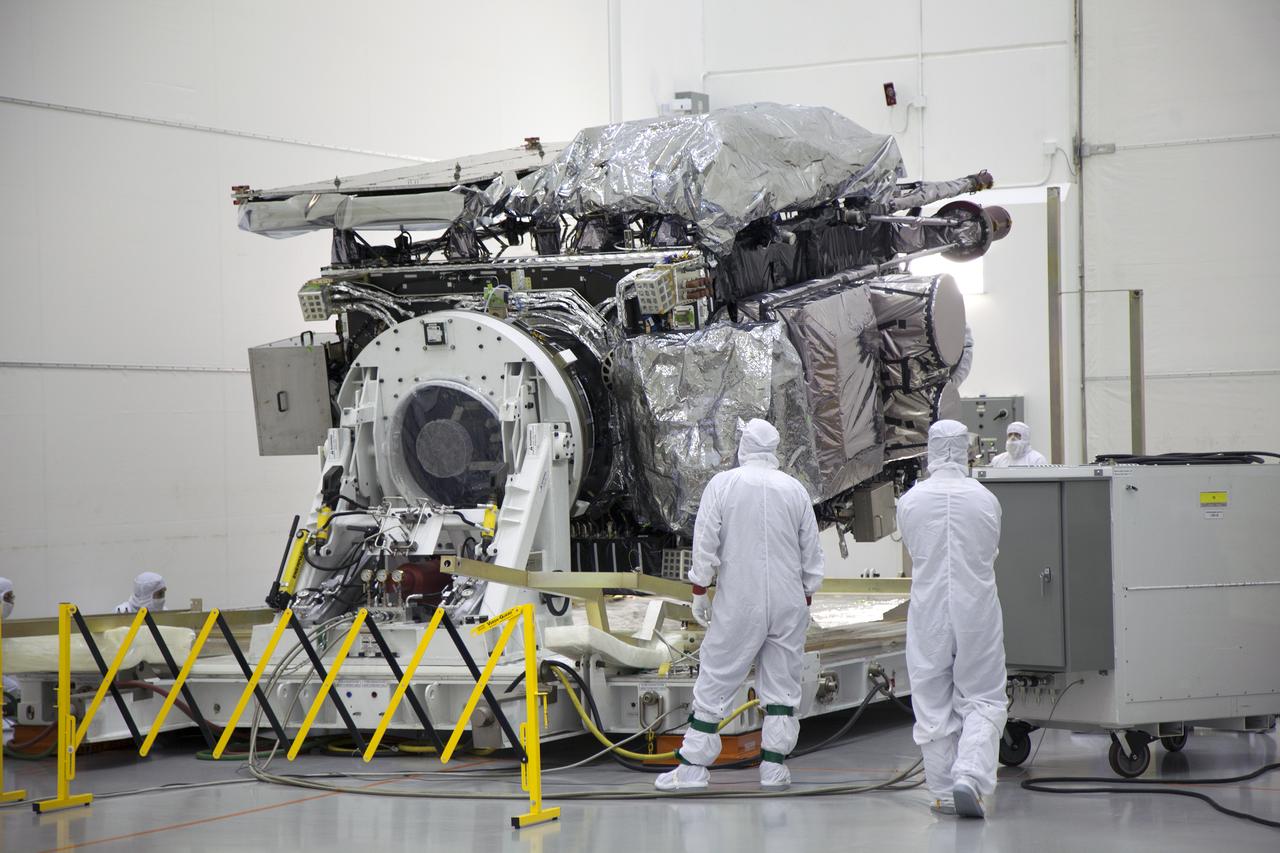
Team members monitor progress as the GOES-R spacecraft is lifted from horizontal to vertical inside the Astrotech payload processing facility in Titusville, Florida near NASA’s Kennedy Space Center. GOES-R will be the first satellite in a series of next-generation NOAA Geostationary Operational Environmental Satellites. The spacecraft is to launch aboard a United Launch Alliance Atlas V rocket in November.
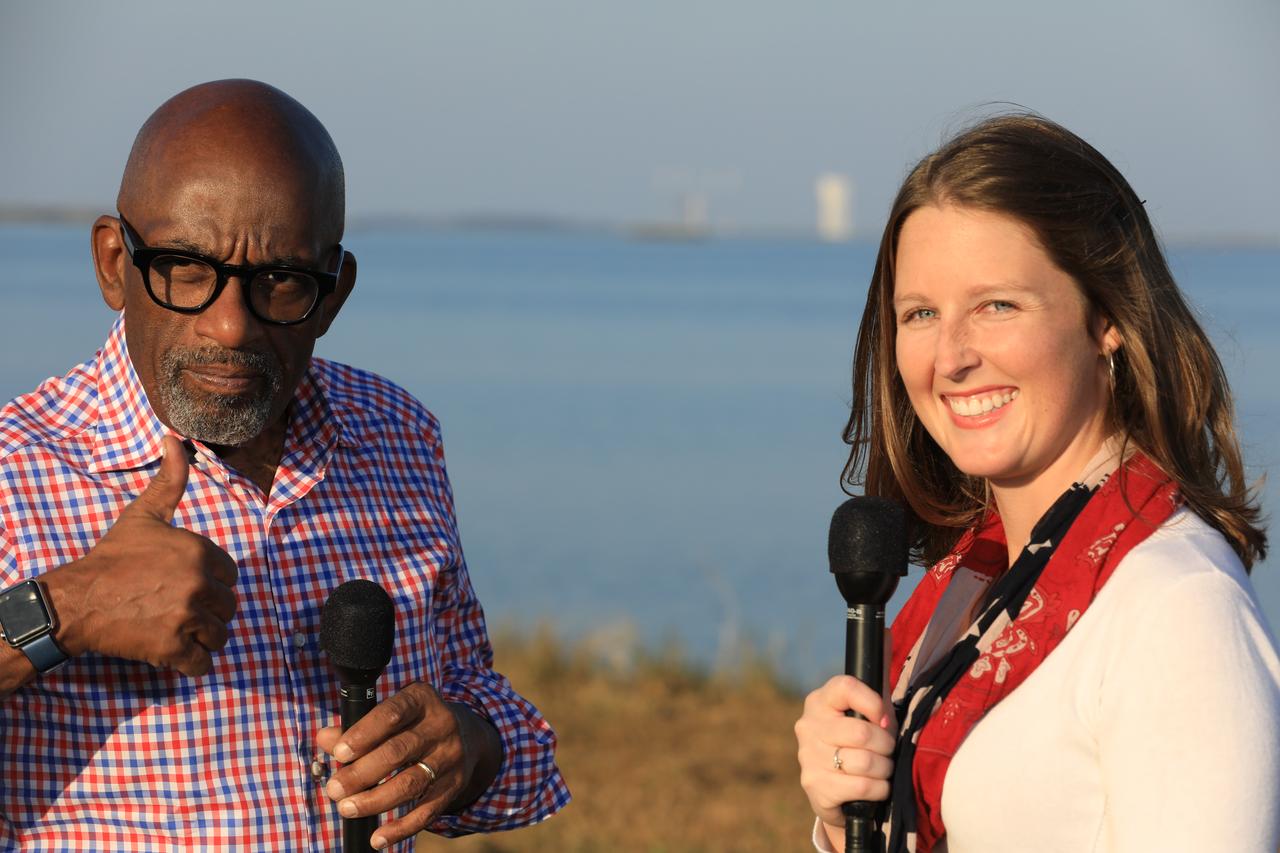
Al Roker Interview with NASA for GOES-R Mission.

A truck with a specialized transporter drives out of the cargo hold of an Air Force C-5 Galaxy transport plane at the Shuttle Landing Facility at NASA's Kennedy Space Center in Florida to deliver the GOES-R spacecraft for launch processing. The GOES series are weather satellites operated by NOAA to enhance forecasts. The spacecraft is to launch aboard a United Launch Alliance Atlas V rocket in November.
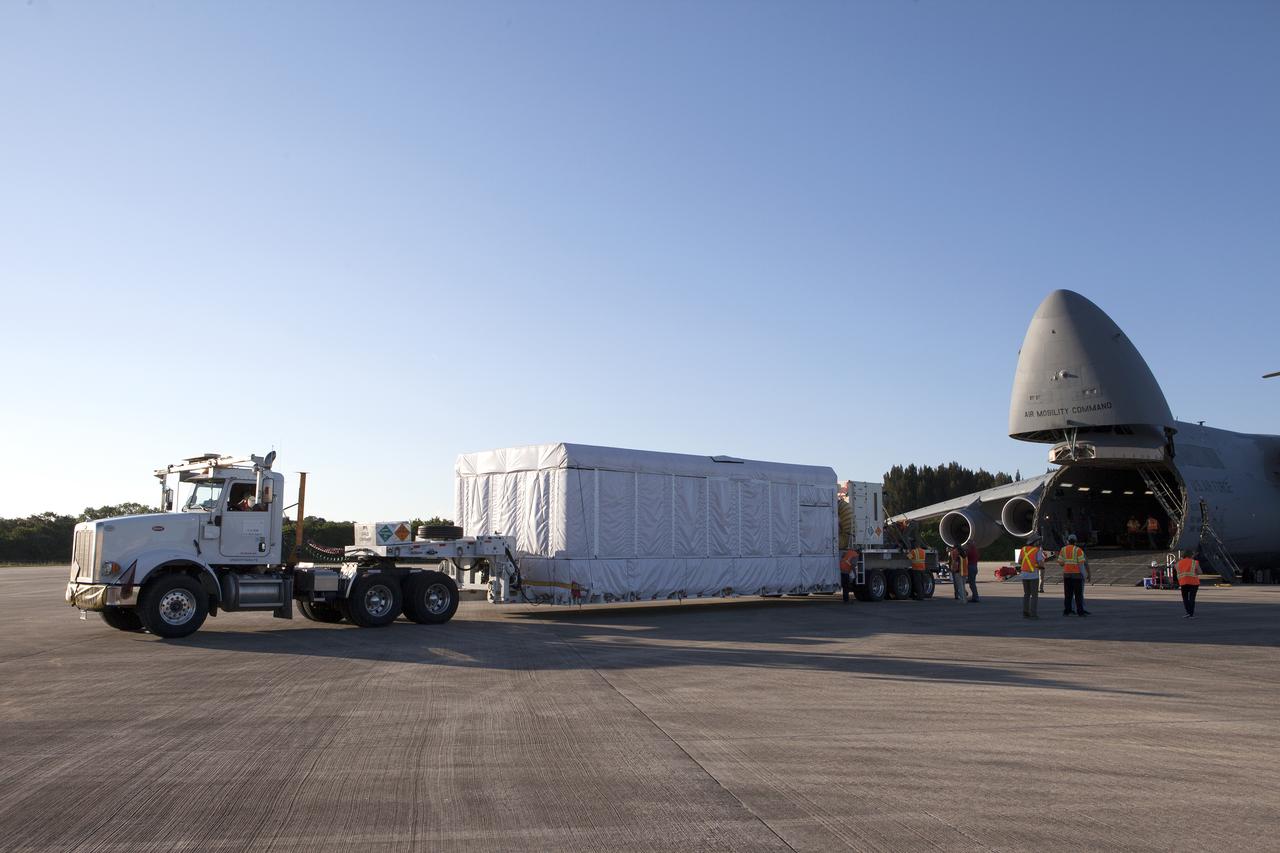
A truck with a specialized transporter drives away from an Air Force C-5 Galaxy transport plane at the Shuttle Landing Facility at NASA's Kennedy Space Center in Florida to deliver the GOES-R spacecraft for launch processing. The GOES series are weather satellites operated by NOAA to enhance forecasts. The spacecraft is to launch aboard a United Launch Alliance Atlas V rocket in November.
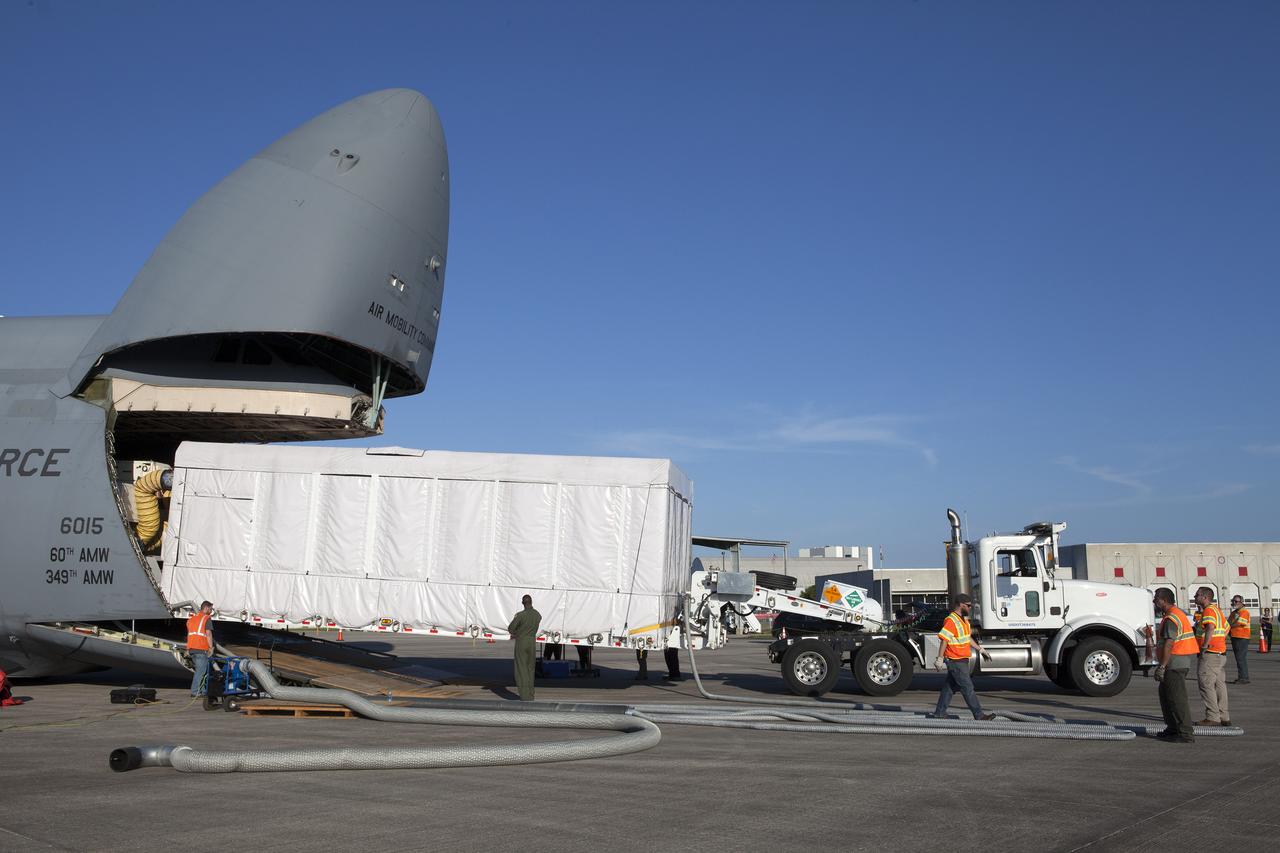
A truck with a specialized transporter drives out of the cargo hold of an Air Force C-5 Galaxy transport plane at the Shuttle Landing Facility at NASA's Kennedy Space Center in Florida to deliver the GOES-R spacecraft for launch processing. The GOES series are weather satellites operated by NOAA to enhance forecasts. The spacecraft is to launch aboard a United Launch Alliance Atlas V rocket in November.
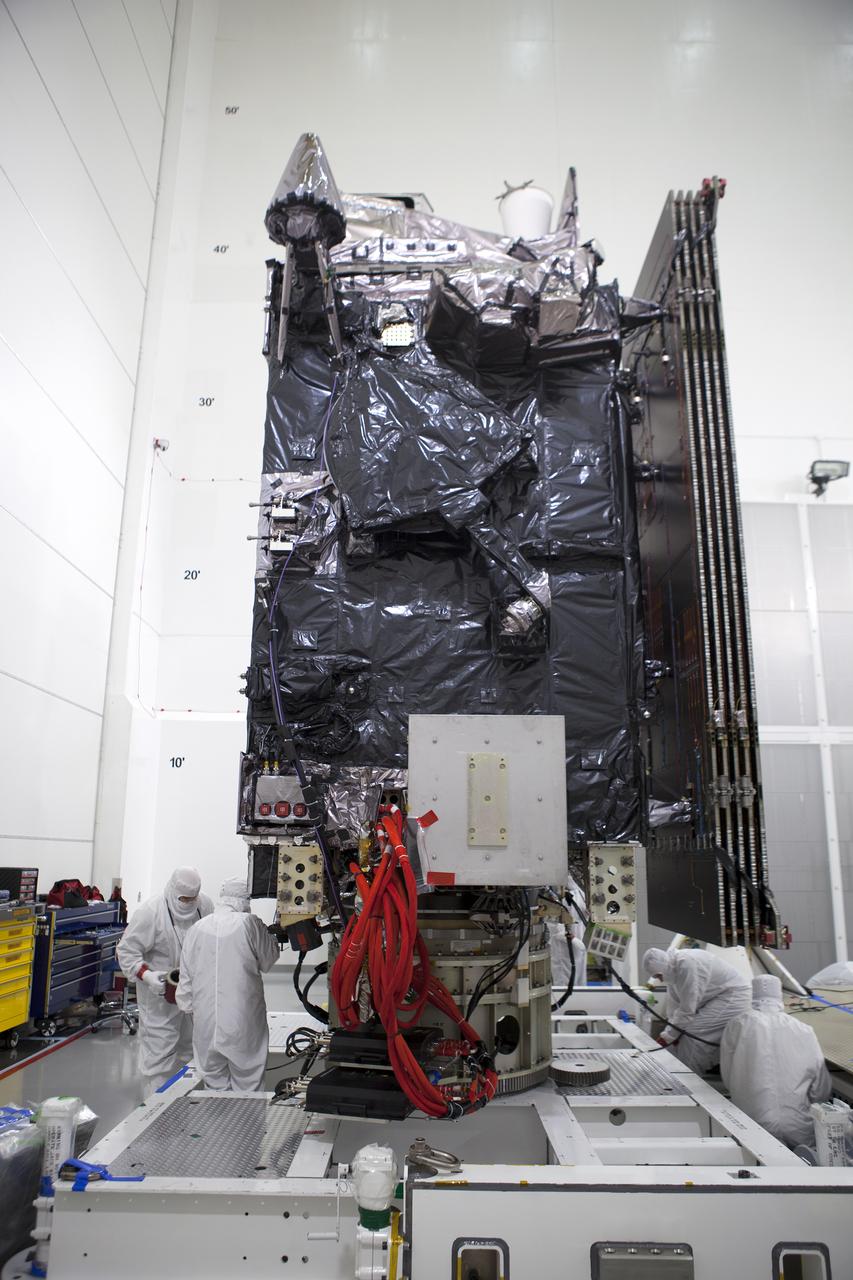
Team members check the Geostationary Operational Environmental Satellite (GOES-R) after it was lifted to the vertical position on an “up-ender” inside the Astrotech payload processing facility in Titusville, Florida near NASA’s Kennedy Space Center. GOES-R will be the first satellite in a series of next-generation NOAA GOES Satellites. The spacecraft is to launch aboard a United Launch Alliance Atlas V rocket in November.
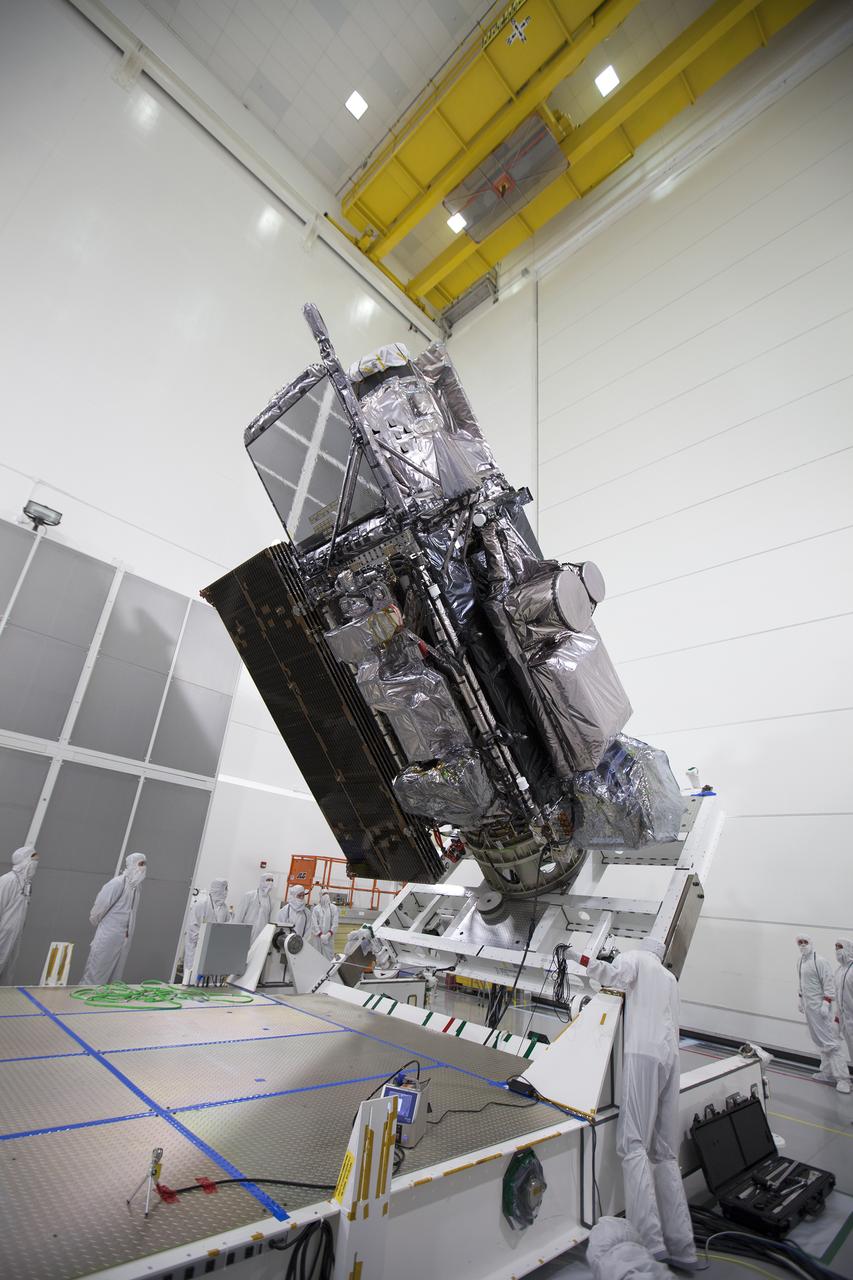
The Geostationary Operational Environmental Satellite (GOES-R) is raised to the vertical position on an “up-ender” inside the Astrotech payload processing facility in Titusville, Florida near NASA’s Kennedy Space Center. GOES-R will be the first satellite in a series of next-generation NOAA GOES Satellites. The spacecraft is to launch aboard a United Launch Alliance Atlas V rocket in November.
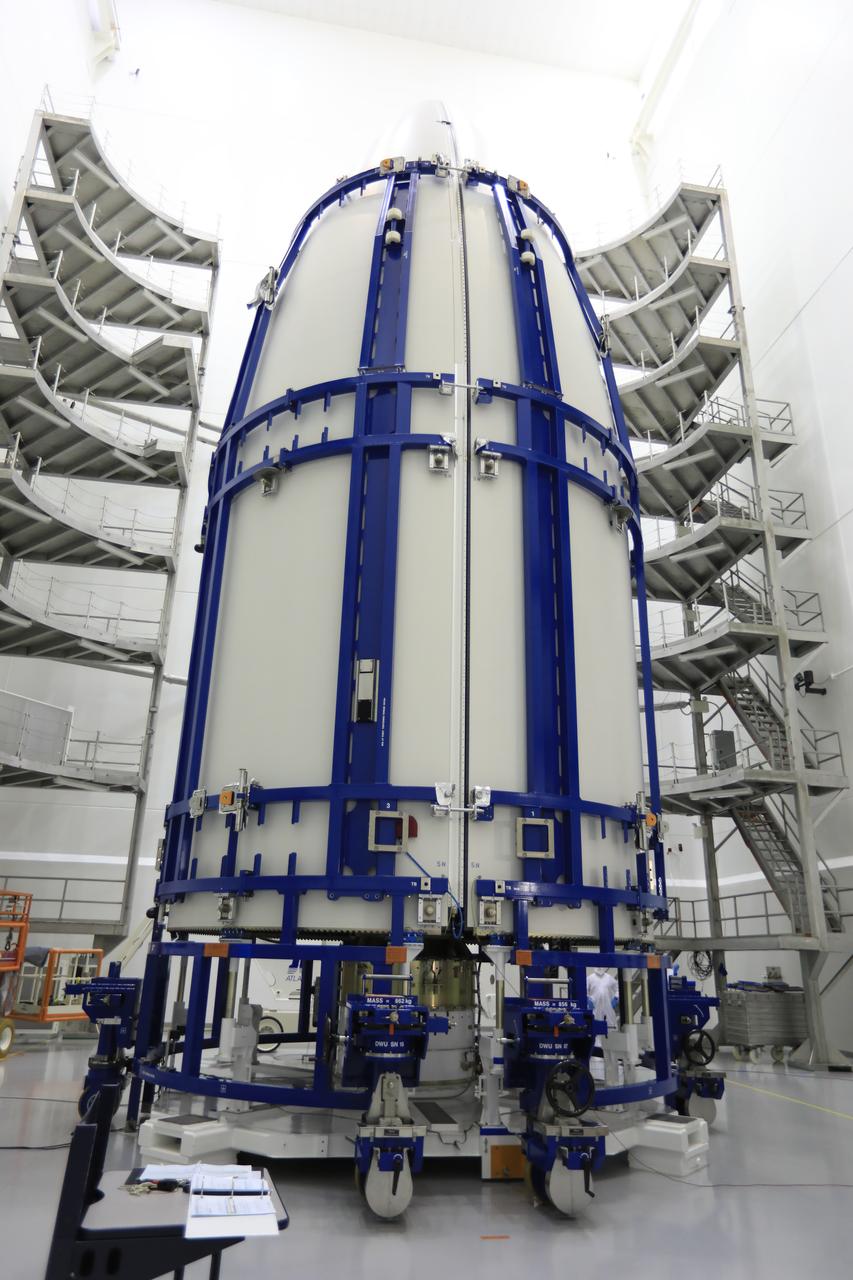
The two halves of the payload fairing are fully closed around the Geostationary Operational Environmental Satellite (GOES-R) inside the Astrotech payload processing facility in Titusville, Florida near NASA’s Kennedy Space Center. GOES-R will be the first satellite in a series of next-generation NOAA GOES Satellites. The spacecraft is to launch aboard a United Launch Alliance Atlas V rocket in November.
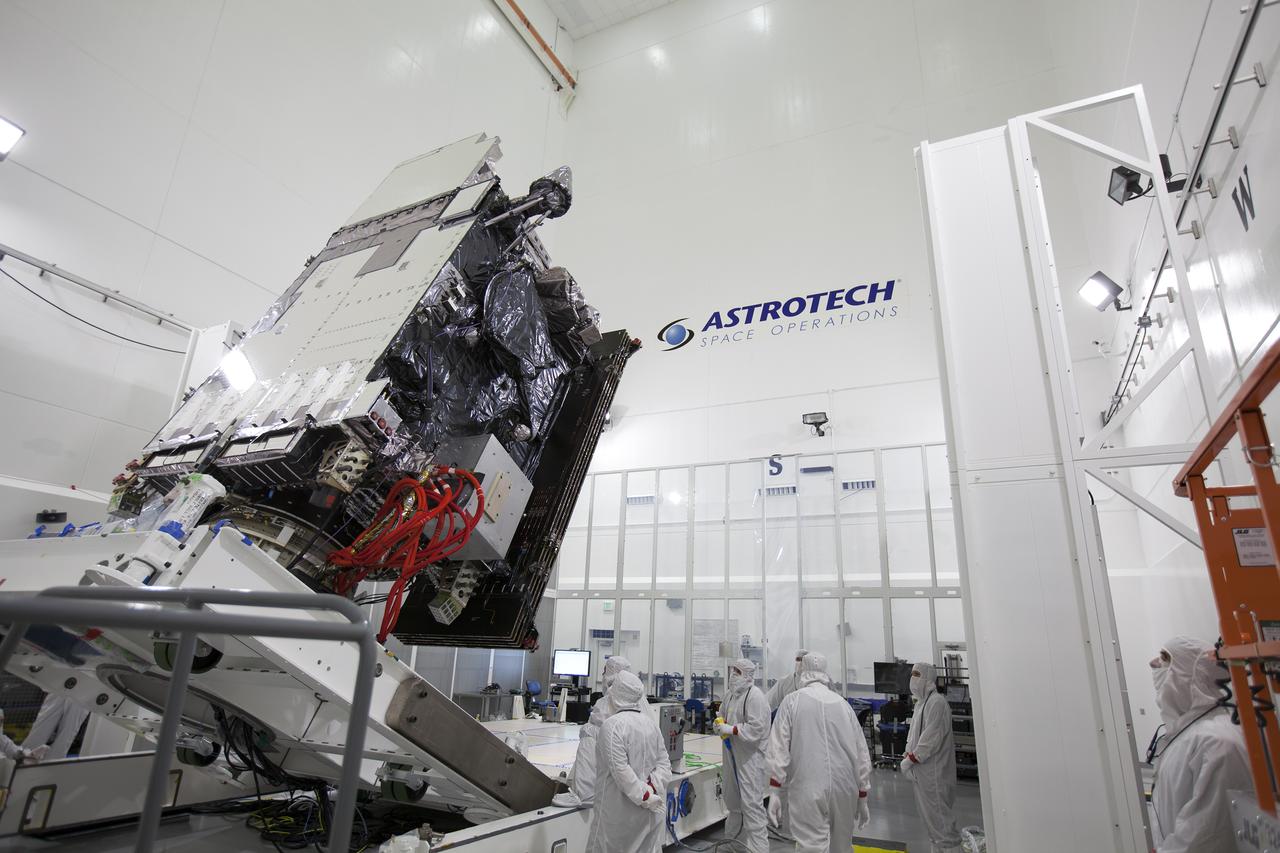
Team members monitor the progress as the Geostationary Operational Environmental Satellite (GOES-R) is lifted to the vertical position on an “up-ender” inside the Astrotech payload processing facility in Titusville, Florida near NASA’s Kennedy Space Center. GOES-R will be the first satellite in a series of next-generation NOAA GOES Satellites. The spacecraft is to launch aboard a United Launch Alliance Atlas V rocket in November.
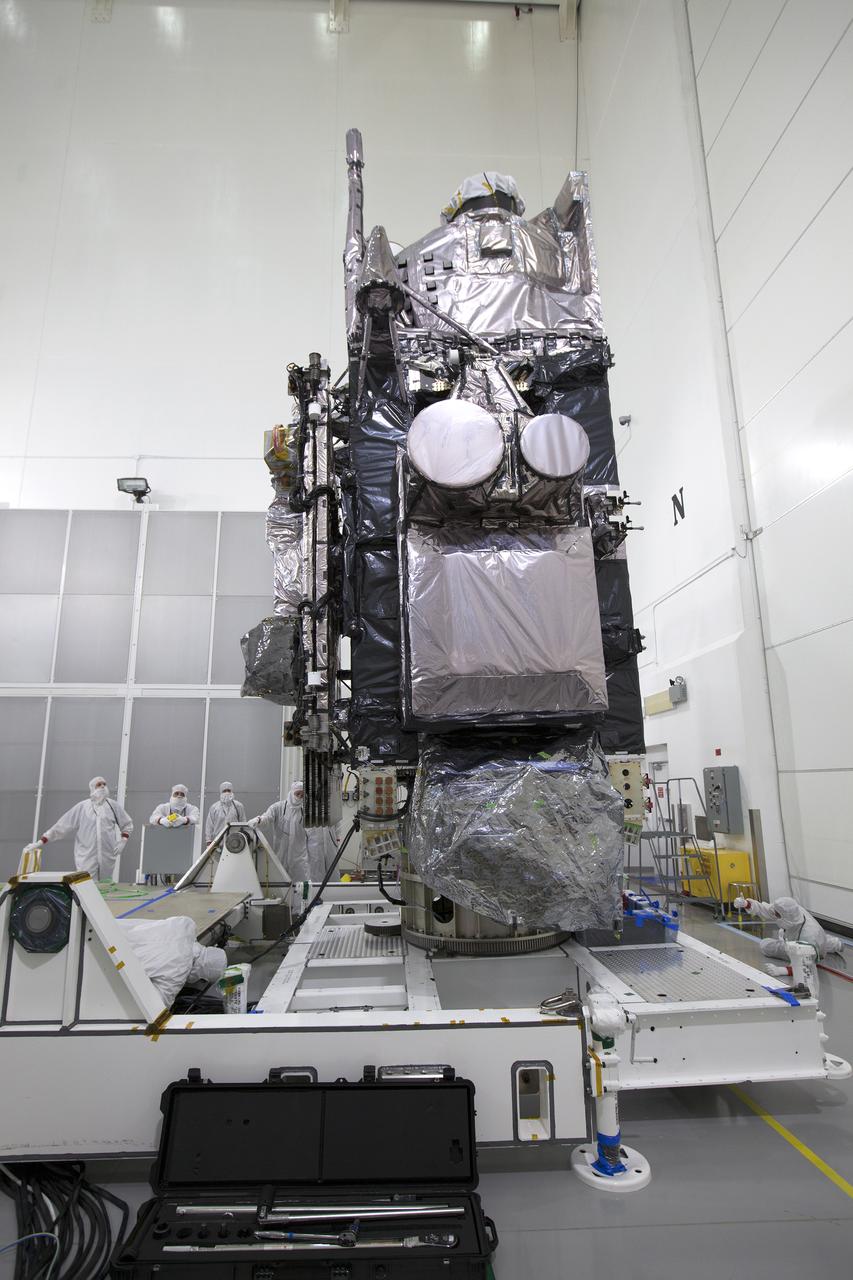
The Geostationary Operational Environmental Satellite (GOES-R) is lifted to the vertical position on an “up-ender” inside the Astrotech payload processing facility in Titusville, Florida near NASA’s Kennedy Space Center. GOES-R will be the first satellite in a series of next-generation NOAA GOES Satellites. The spacecraft is to launch aboard a United Launch Alliance Atlas V rocket in November.
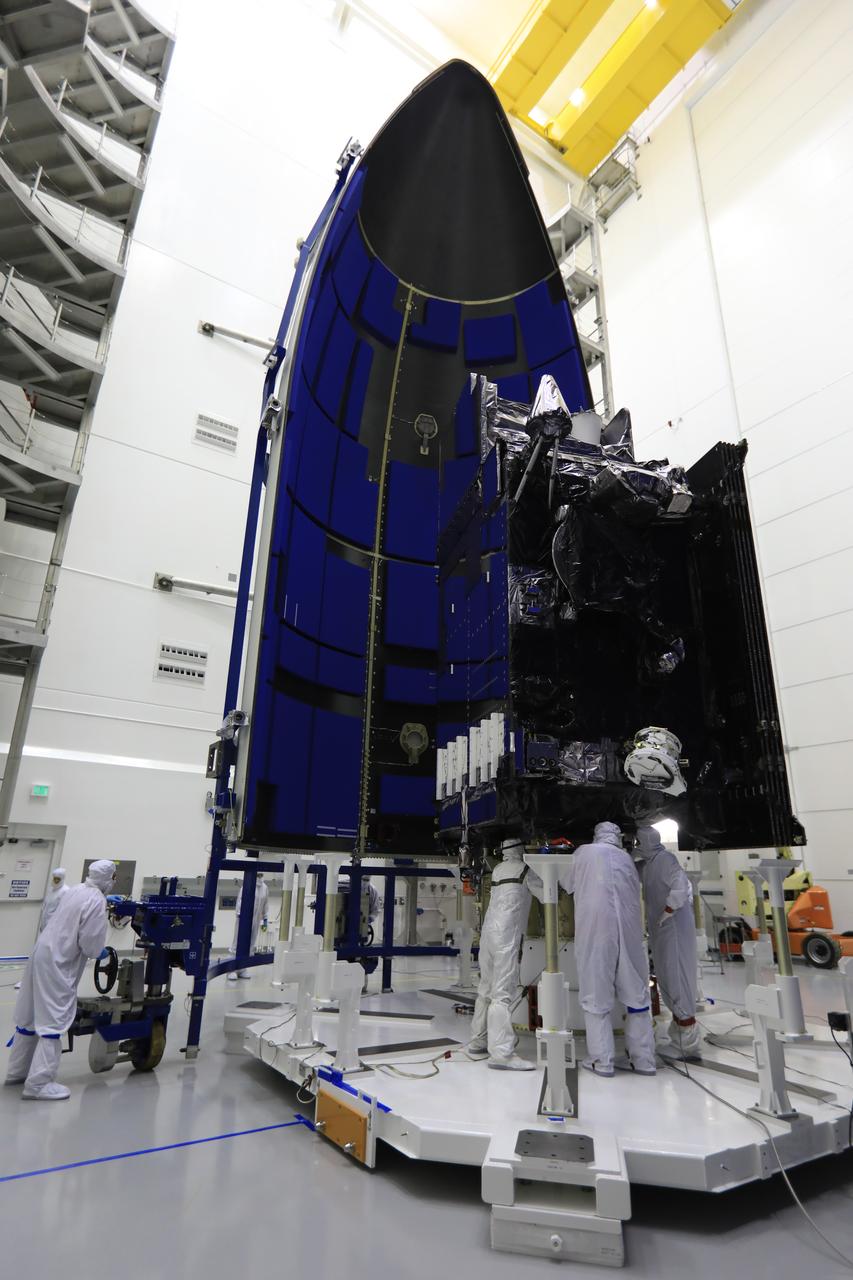
Team members with United Launch Alliance (ULA) prepare the Geostationary Operational Environmental Satellite (GOES-R) for encapsulation in the payload fairing inside the Astrotech payload processing facility in Titusville, Florida near NASA’s Kennedy Space Center. GOES-R will be the first satellite in a series of next-generation NOAA GOES Satellites. The spacecraft is to launch aboard a ULA Atlas V rocket in November.
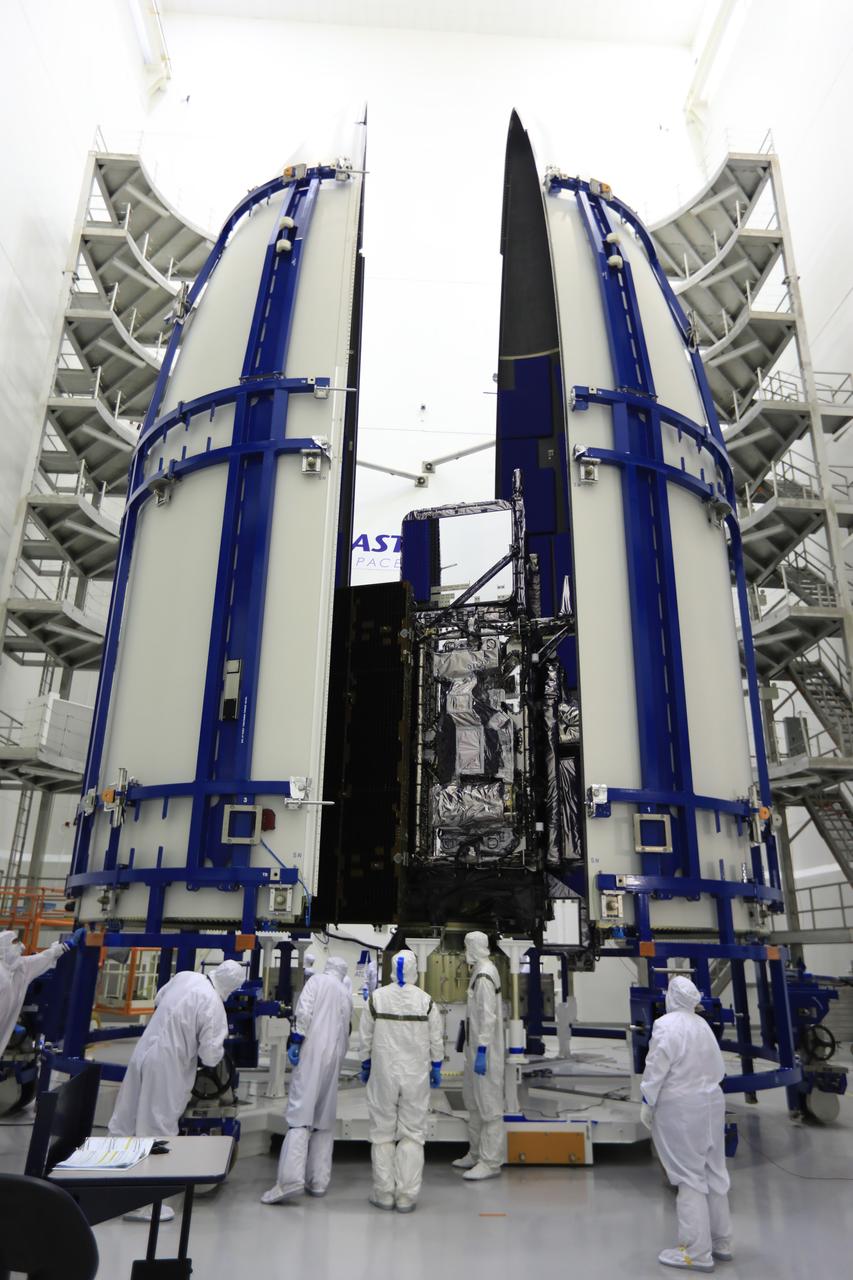
Team members with United Launch Alliance (ULA) monitor the progress as the two halves of the payload fairing begin to close around the Geostationary Operational Environmental Satellite (GOES-R) inside the Astrotech payload processing facility in Titusville, Florida near NASA’s Kennedy Space Center. GOES-R will be the first satellite in a series of next-generation NOAA GOES Satellites. The spacecraft is to launch aboard a ULA Atlas V rocket in November.

The Geostationary Operational Environmental Satellite (GOES-R) has been secured in the vertical position on an “up-ender” inside the Astrotech payload processing facility in Titusville, Florida near NASA’s Kennedy Space Center. GOES-R will be the first satellite in a series of next-generation NOAA GOES Satellites. The spacecraft is to launch aboard a United Launch Alliance Atlas V rocket in November.
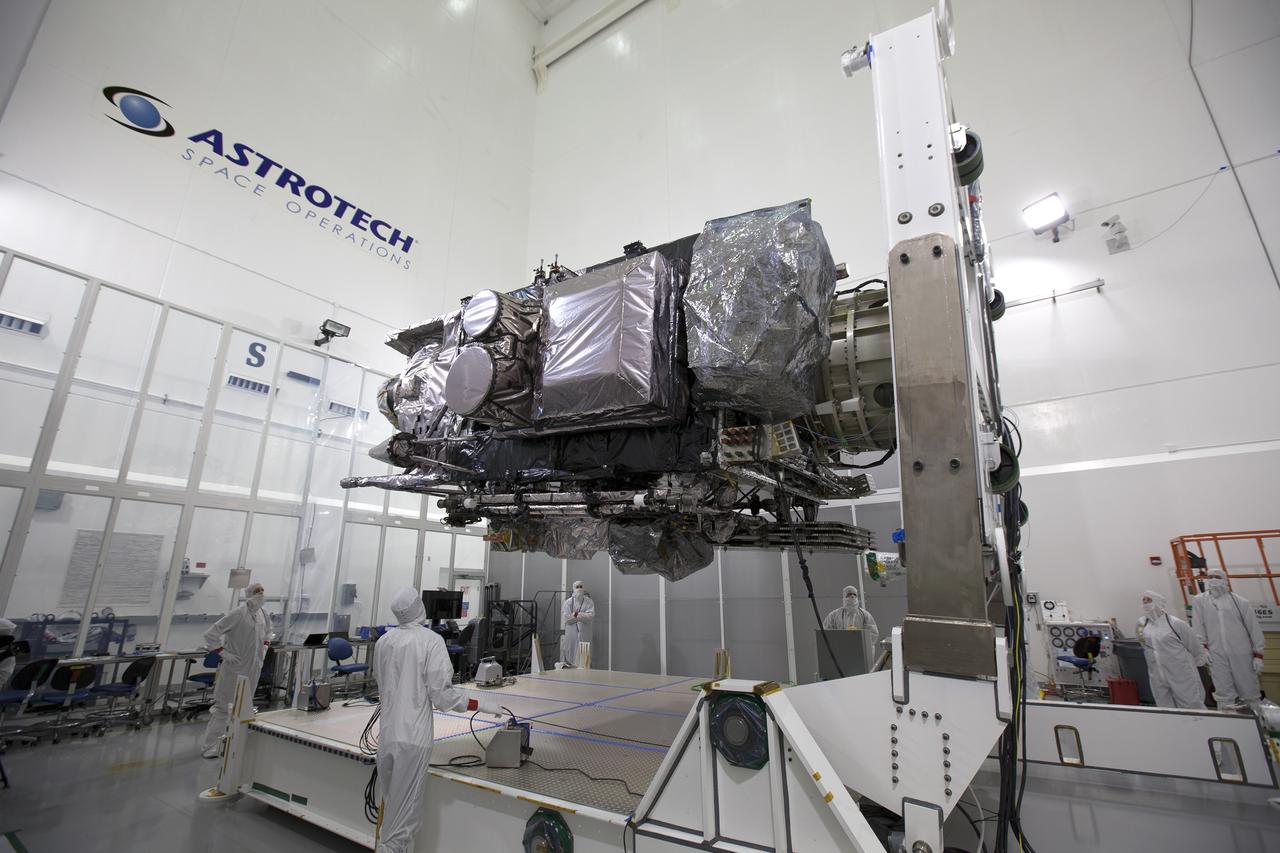
Team members assist as the Geostationary Operational Environmental Satellite (GOES-R) is raised and prepared for lifting to the vertical position on an “up-ender” inside the Astrotech payload processing facility in Titusville, Florida near NASA’s Kennedy Space Center. GOES-R will be the first satellite in a series of next-generation NOAA GOES Satellites. The spacecraft is to launch aboard a United Launch Alliance Atlas V rocket in November.

Team members assist as the Geostationary Operational Environmental Satellite (GOES-R) is raised and prepared for lifting to the vertical position on an “up-ender” inside the Astrotech payload processing facility in Titusville, Florida near NASA’s Kennedy Space Center. GOES-R will be the first satellite in a series of next-generation NOAA GOES Satellites. The spacecraft is to launch aboard a United Launch Alliance Atlas V rocket in November
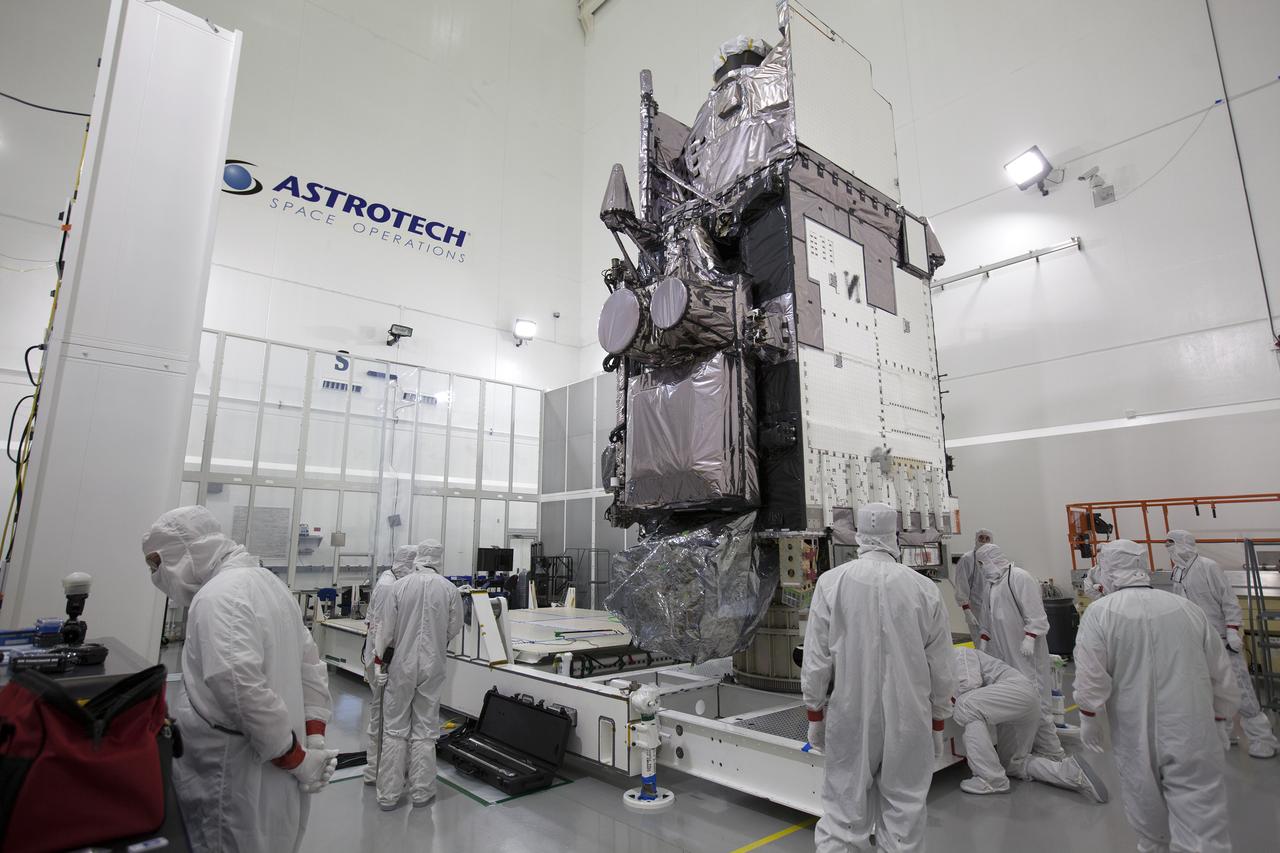
Team members are securing the Geostationary Operational Environmental Satellite (GOES-R) in the vertical position on an “up-ender” inside the Astrotech payload processing facility in Titusville, Florida near NASA’s Kennedy Space Center. GOES-R will be the first satellite in a series of next-generation NOAA GOES Satellites. The spacecraft is to launch aboard a United Launch Alliance Atlas V rocket in November.
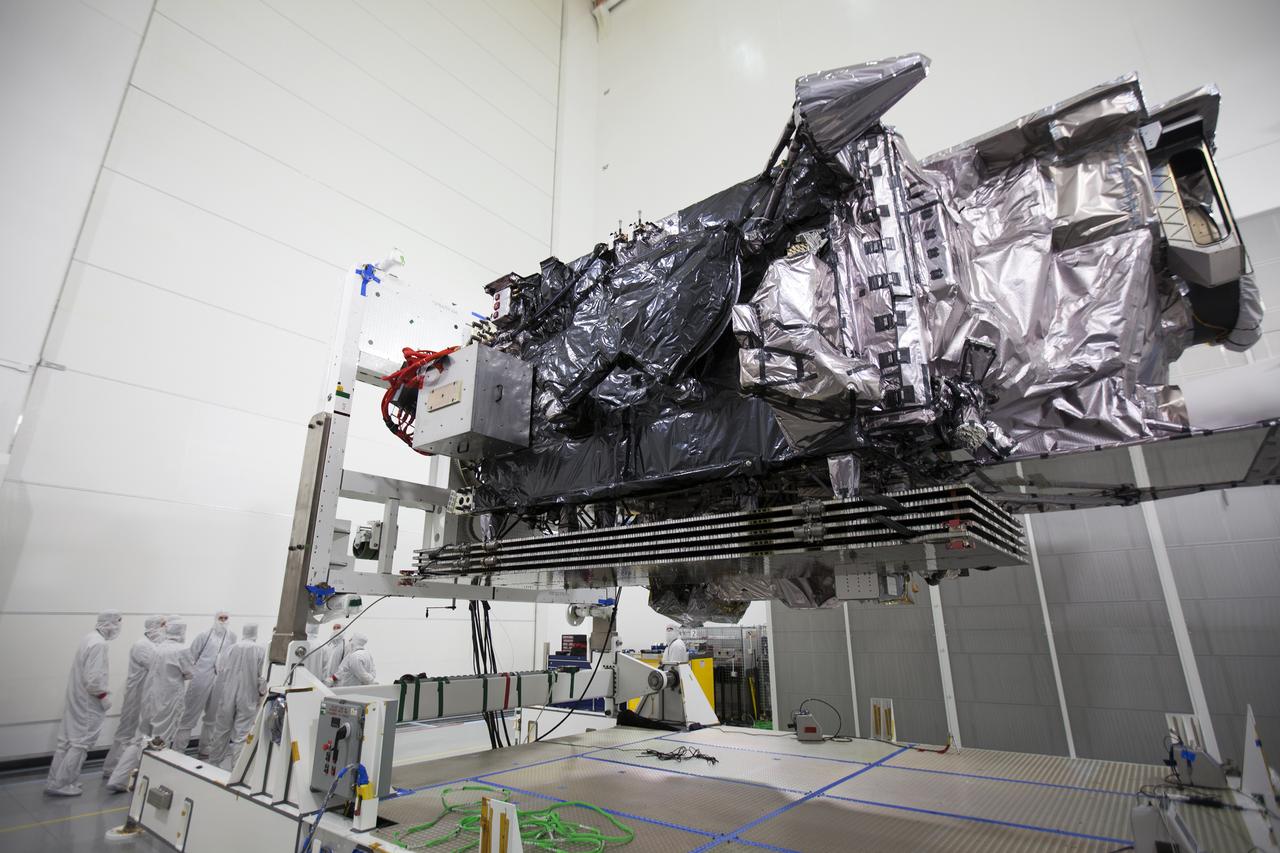
Team members assist as the Geostationary Operational Environmental Satellite (GOES-R) is prepared for lifting to the vertical position on an “up-ender” inside the Astrotech payload processing facility in Titusville, Florida near NASA’s Kennedy Space Center. GOES-R will be the first satellite in a series of next-generation NOAA GOES Satellites. The spacecraft is to launch aboard a United Launch Alliance Atlas V rocket in November.
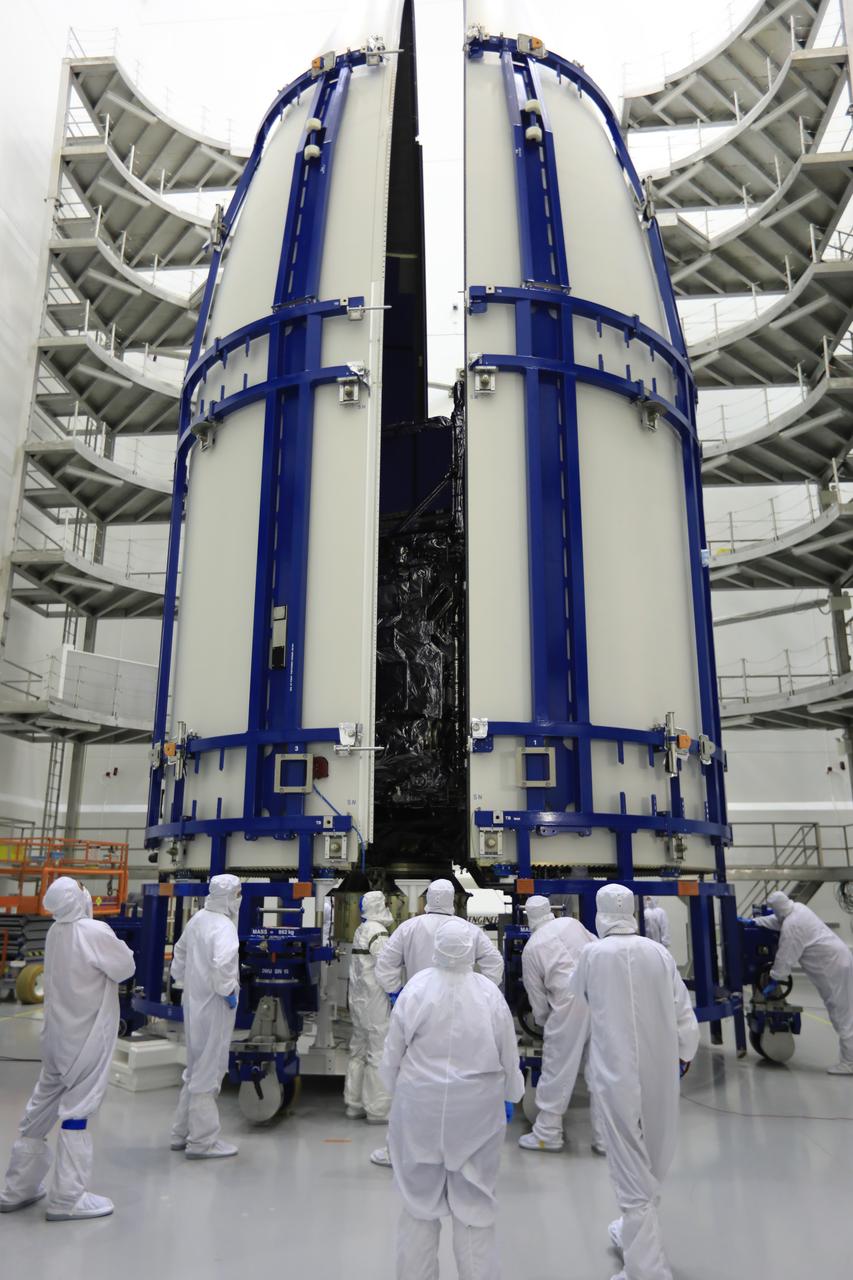
Team members with United Launch Alliance (ULA) monitor the progress as the two halves of the payload fairing close around the Geostationary Operational Environmental Satellite (GOES-R) inside the Astrotech payload processing facility in Titusville, Florida near NASA’s Kennedy Space Center. GOES-R will be the first satellite in a series of next-generation NOAA GOES Satellites. The spacecraft is to launch aboard a ULA Atlas V rocket in November.
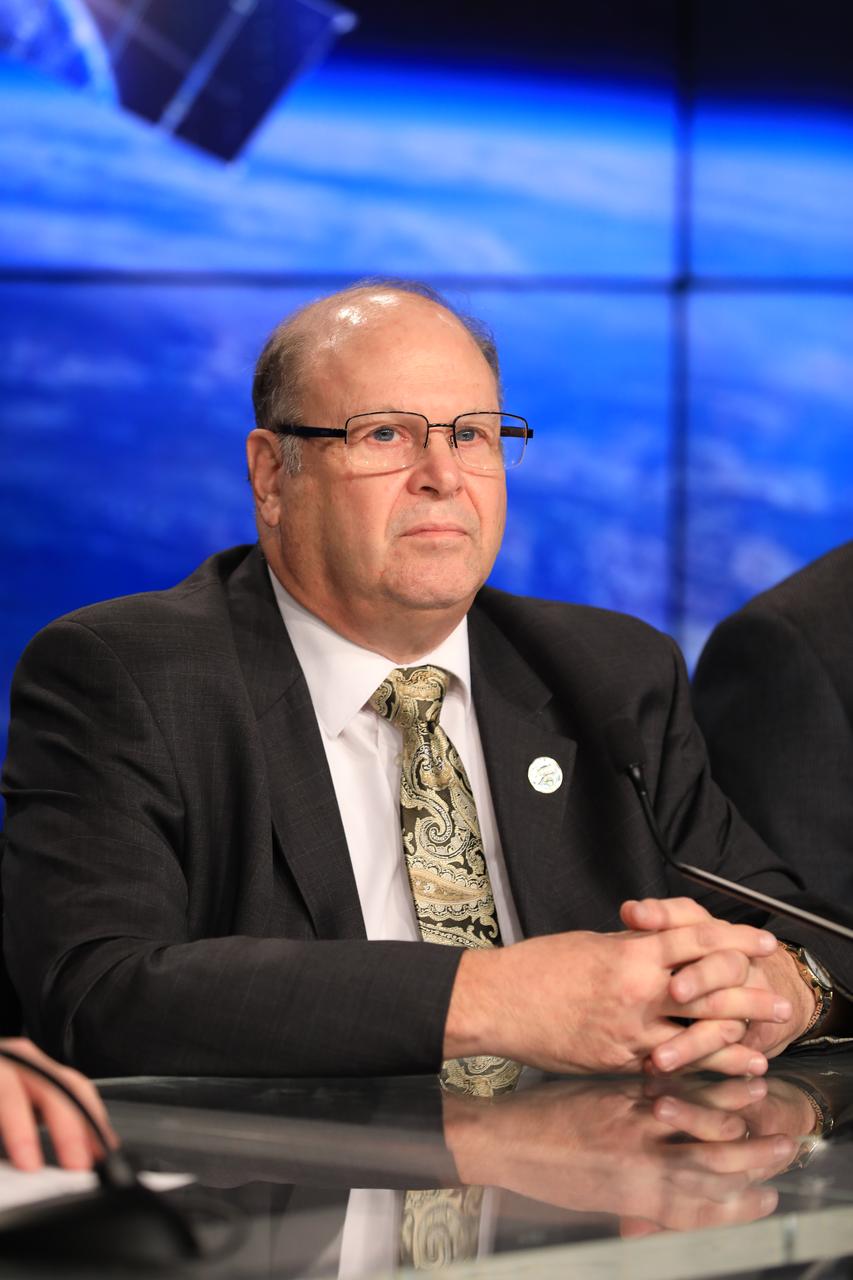
In the Kennedy Space Center's Press Site auditorium, Steven Goodman, NOAA's GOES-R program scientist, speaks to the media during a mission briefing on the Geostationary Operational Environmental Satellite (GOES-R). GOES-R is the first satellite in a series of next-generation GOES satellites for NOAA, the National Oceanographic and Atmospheric Administration. It will launch to a geostationary orbit over the western hemisphere to provide images of storms and help meteorologists predict severe weather conditionals and develop long-range forecasts.
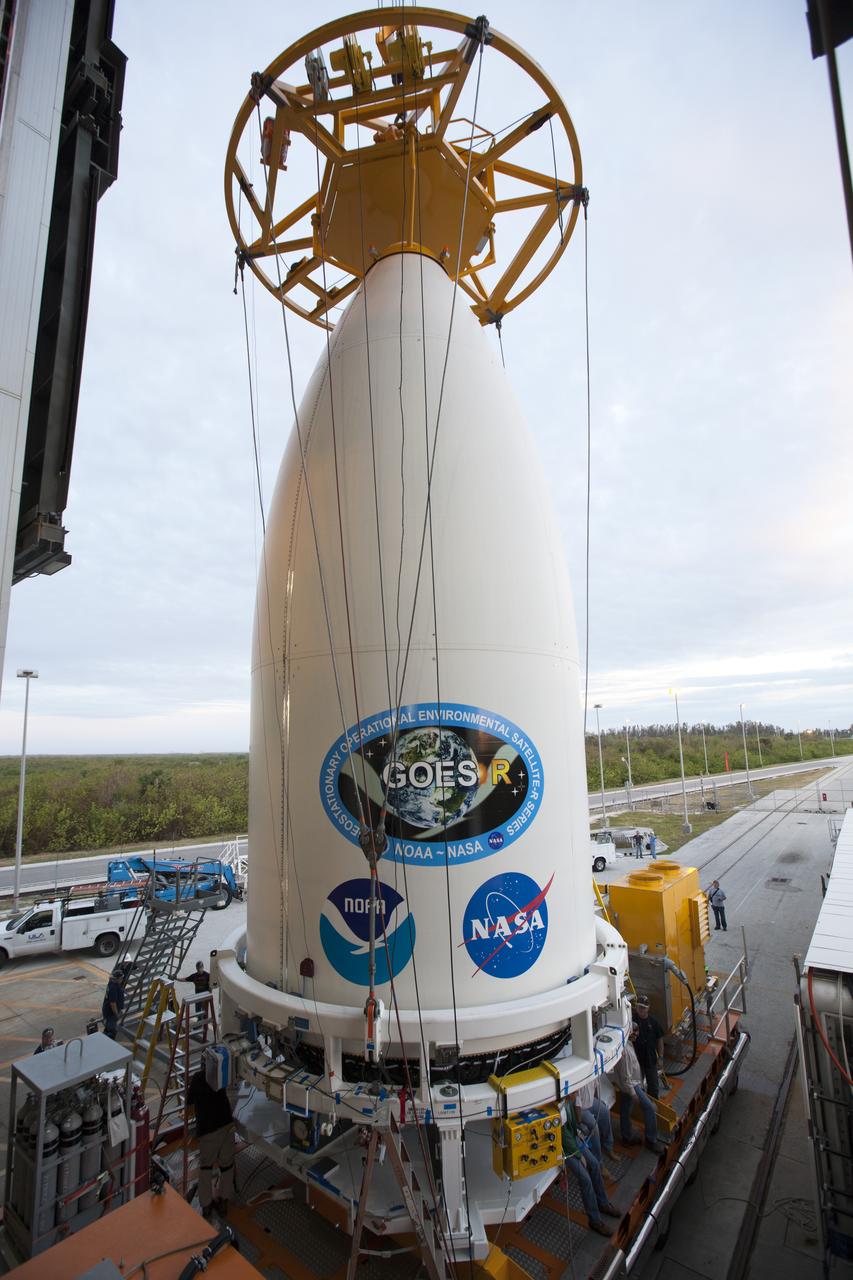
A crane has been attached to the payload fairing containing NOAA's Geostationary Operational Environmental Satellite (GOES-R) at the Vertical Integration Facility at Space Launch Complex 41 at Cape Canaveral Air Force Station in Florida. GOES-R will be mated to the United Launch Alliance Atlas V Centaur upper stage in preparation for launch in November. GOES-R is the first satellite in a series of next-generation NOAA GOES Satellites.
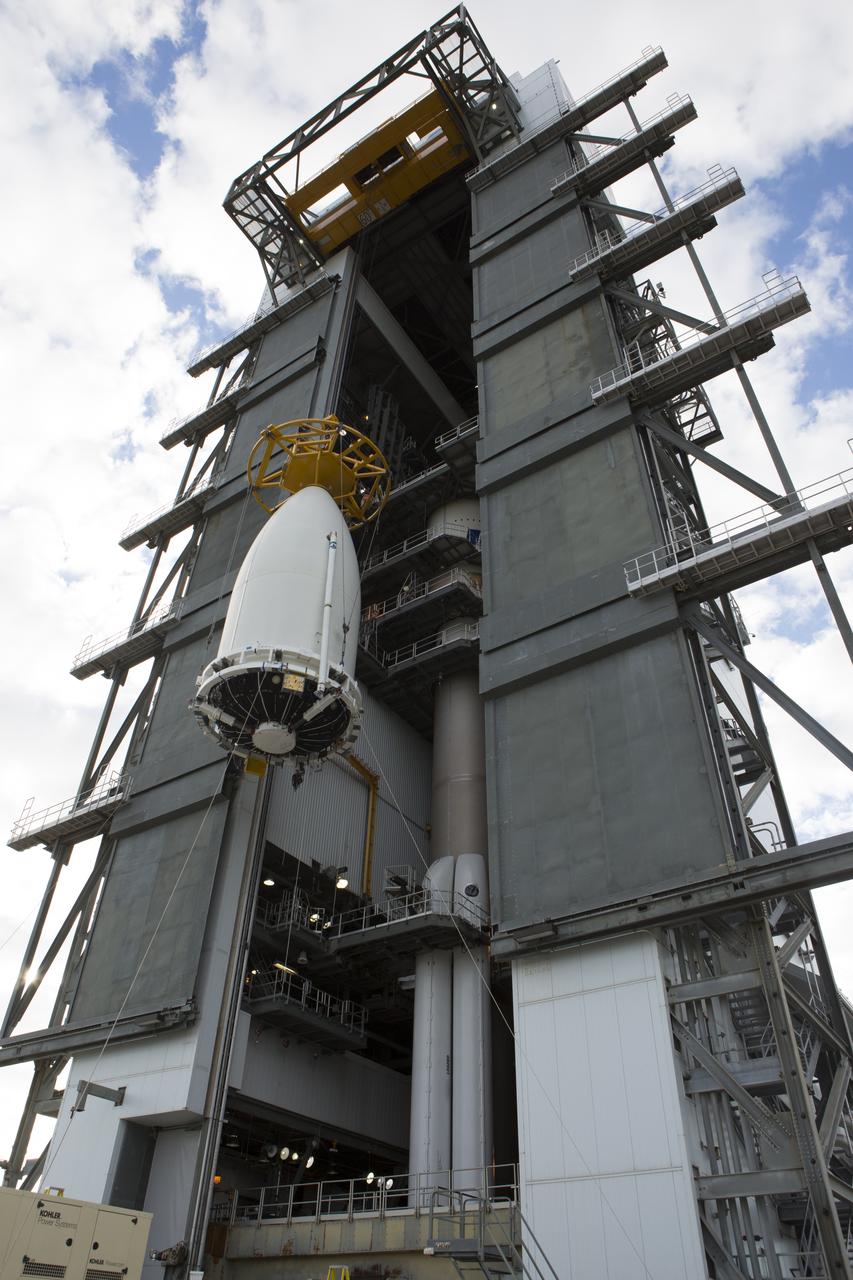
A crane is used to lift the payload fairing containing NOAA's Geostationary Operational Environmental Satellite (GOES-R) at the Vertical Integration Facility at Space Launch Complex 41 at Cape Canaveral Air Force Station in Florida. GOES-R will be mated to the United Launch Alliance Atlas V Centaur upper stage in preparation for launch in November. GOES-R is the first satellite in a series of next-generation NOAA GOES Satellites.
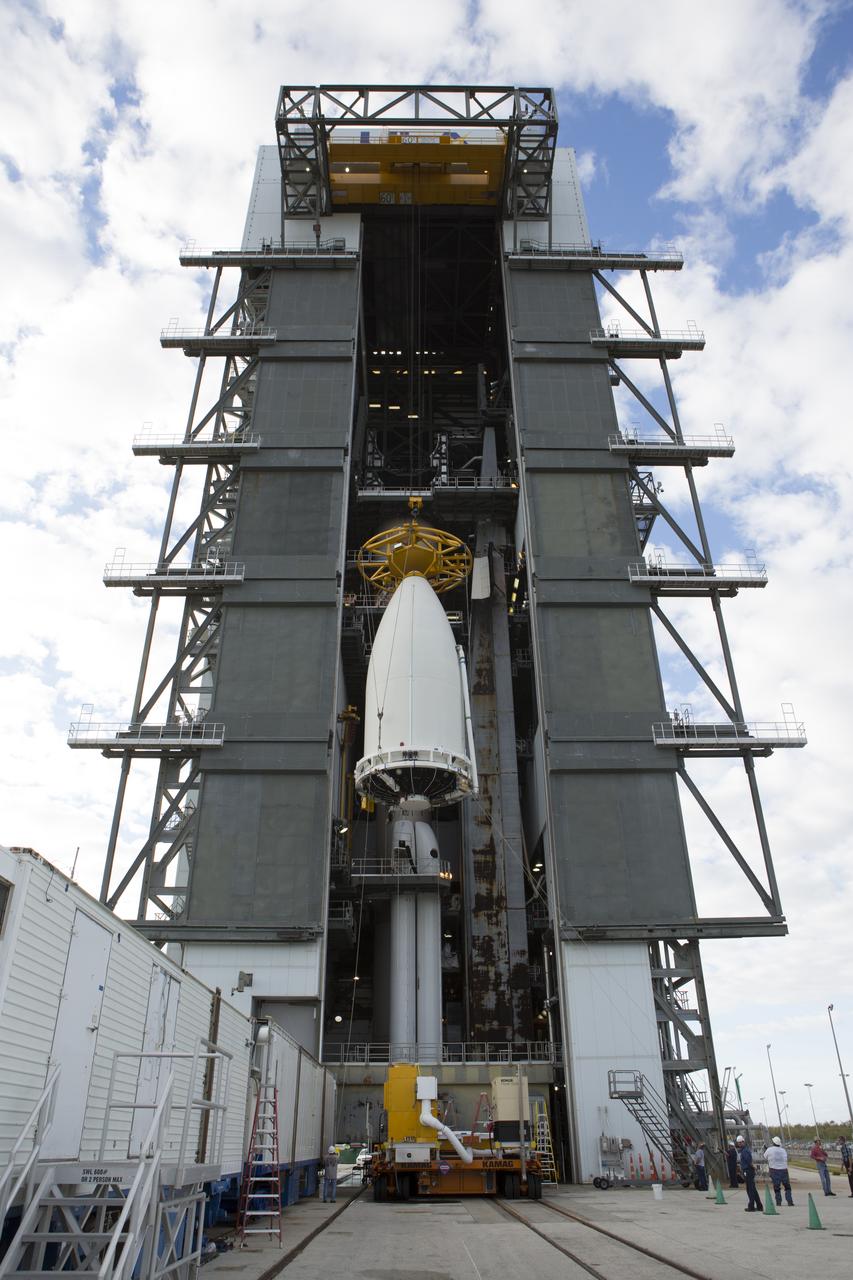
A crane is used to lift the payload fairing containing NOAA's Geostationary Operational Environmental Satellite (GOES-R) at the Vertical Integration Facility at Space Launch Complex 41 at Cape Canaveral Air Force Station in Florida. GOES-R will be mated to the United Launch Alliance Atlas V Centaur upper stage in preparation for launch in November. GOES-R is the first satellite in a series of next-generation NOAA GOES Satellites.
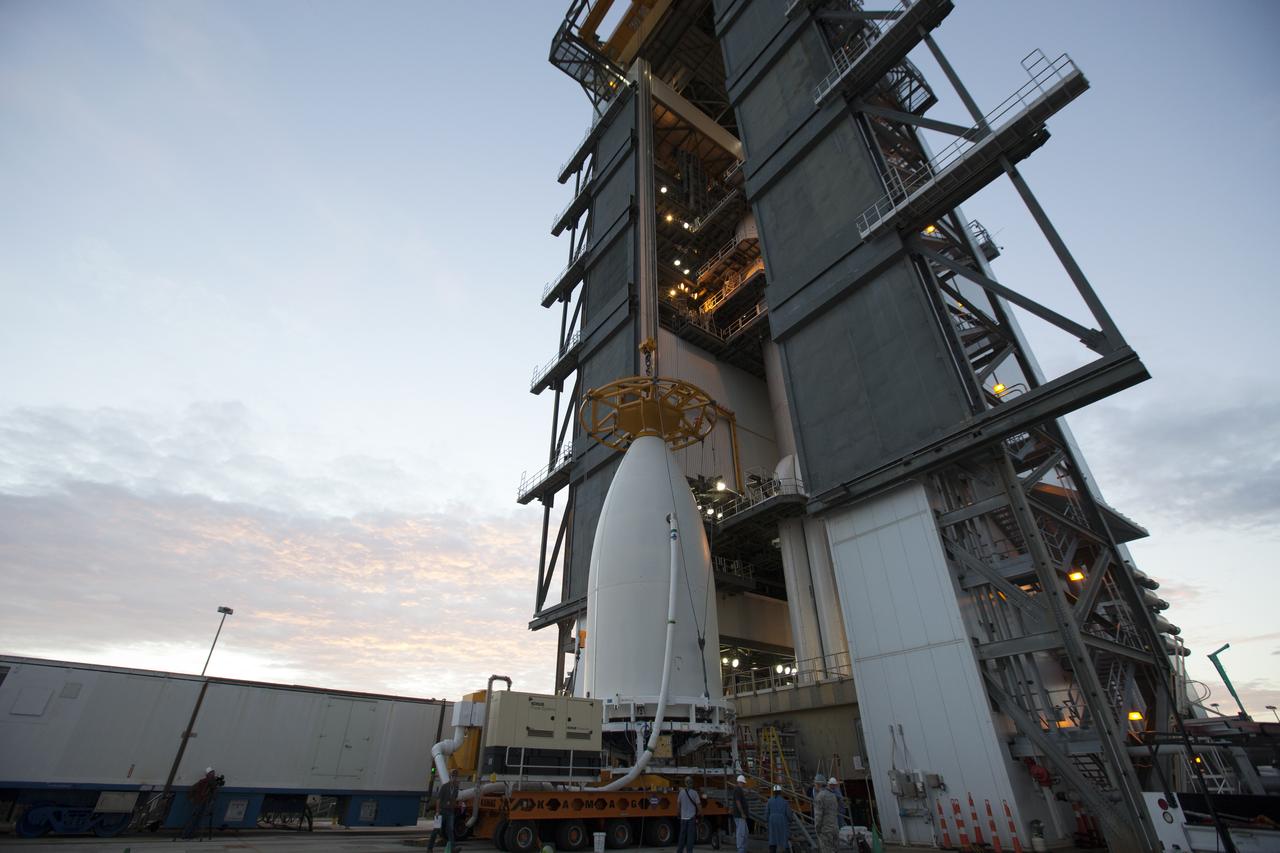
Preparations are underway to lift NOAA's Geostationary Operational Environmental Satellite (GOES-R), enclosed in its payload fairing at the Vertical Integration Facility at Space Launch Complex 41 at Cape Canaveral Air Force Station in Florida. GOES-R will be mated to the United Launch Alliance Atlas V Centaur upper stage in preparation for launch in November. GOES-R is the first satellite in a series of next-generation NOAA GOES Satellites.
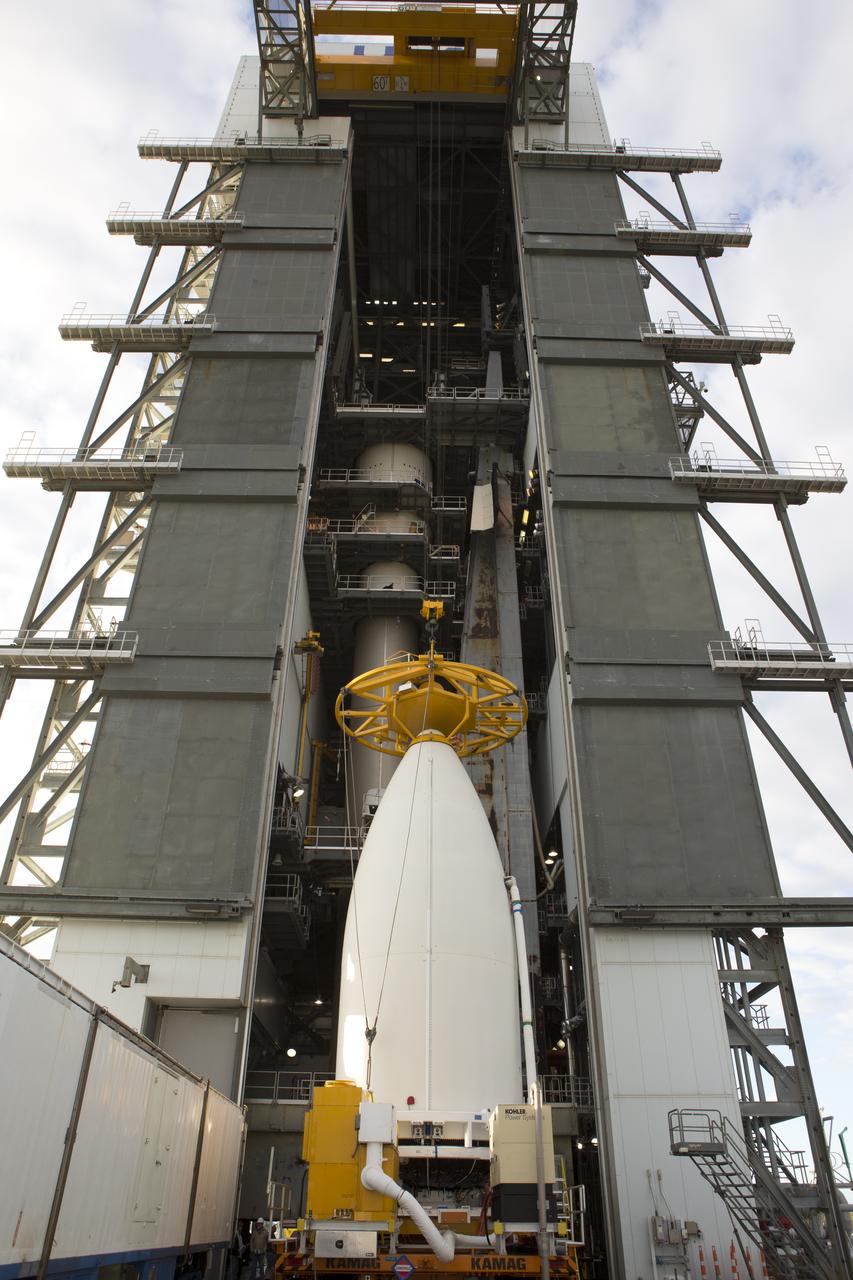
A crane begins to lift the payload fairing containing NOAA's Geostationary Operational Environmental Satellite (GOES-R) at the Vertical Integration Facility at Space Launch Complex 41 at Cape Canaveral Air Force Station in Florida. GOES-R will be mated to the United Launch Alliance Atlas V Centaur upper stage in preparation for launch in November. GOES-R is the first satellite in a series of next-generation NOAA GOES Satellites.
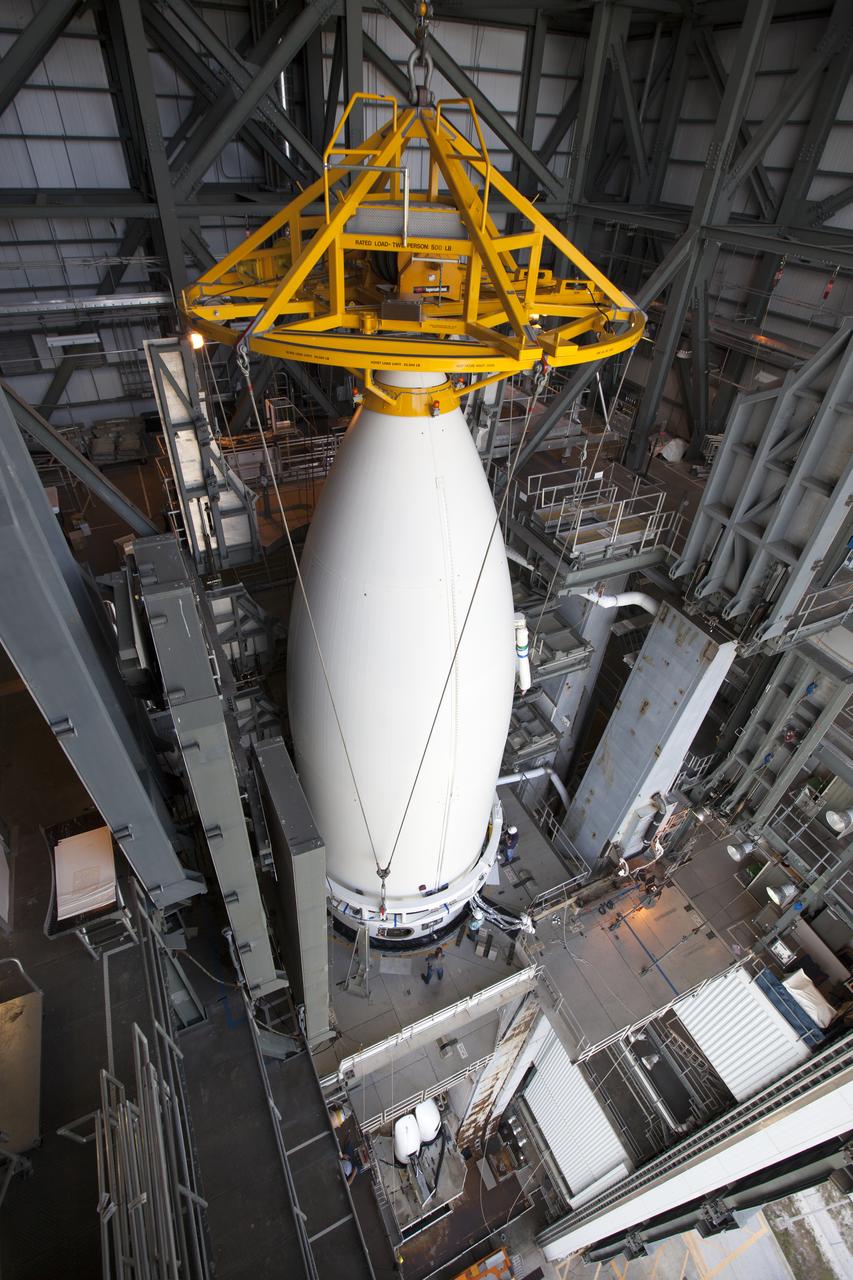
Enclosed in its payload fairing, NOAA's Geostationary Operational Environmental Satellite (GOES-R) is lifted into the Vertical Integration Facility at Space Launch Complex 41 at Cape Canaveral Air Force Station in Florida. GOES-R will be mated to the United Launch Alliance Atlas V Centaur upper stage in preparation for launch aboard the rocket in November. GOES-R is the first satellite in a series of next-generation NOAA GOES Satellites.
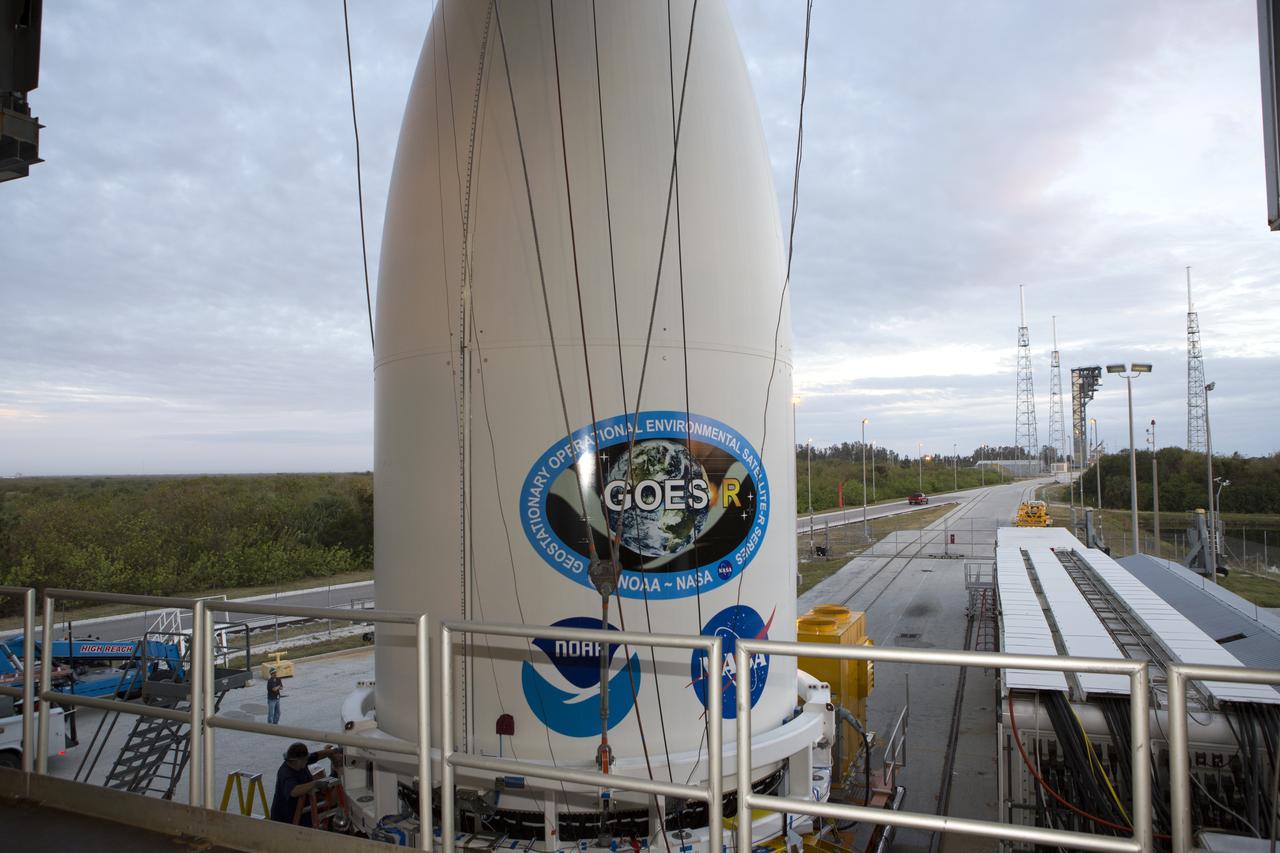
Preparations are underway to lift NOAA's Geostationary Operational Environmental Satellite (GOES-R), enclosed in its payload fairing at the Vertical Integration Facility at Space Launch Complex 41 at Cape Canaveral Air Force Station in Florida. GOES-R will be mated to the United Launch Alliance Atlas V Centaur upper stage in preparation for launch in November. GOES-R is the first satellite in a series of next-generation NOAA GOES Satellites.
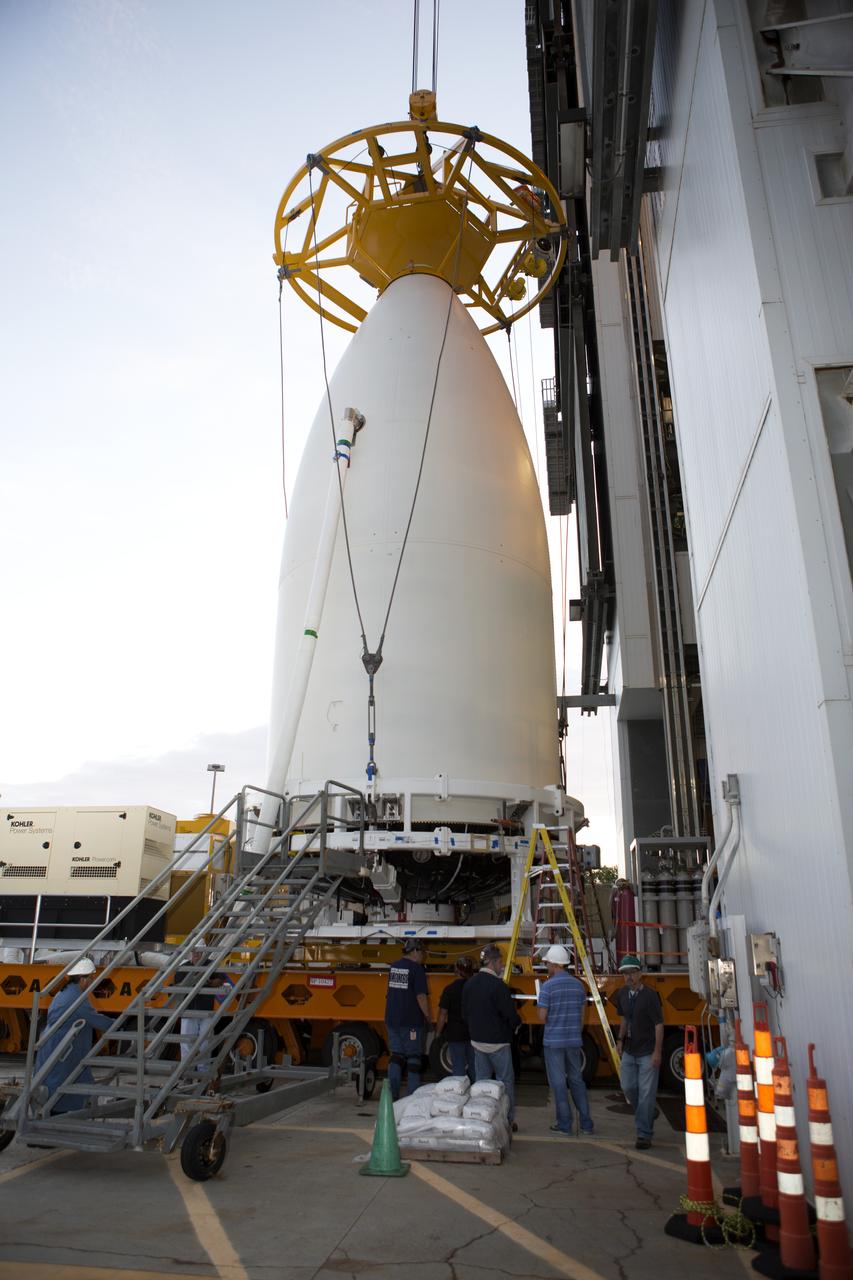
Preparations are underway to lift NOAA's Geostationary Operational Environmental Satellite (GOES-R), enclosed in its payload fairing at the Vertical Integration Facility at Space Launch Complex 41 at Cape Canaveral Air Force Station in Florida. GOES-R will be mated to the United Launch Alliance Atlas V Centaur upper stage in preparation for launch in November. GOES-R is the first satellite in a series of next-generation NOAA GOES Satellites.
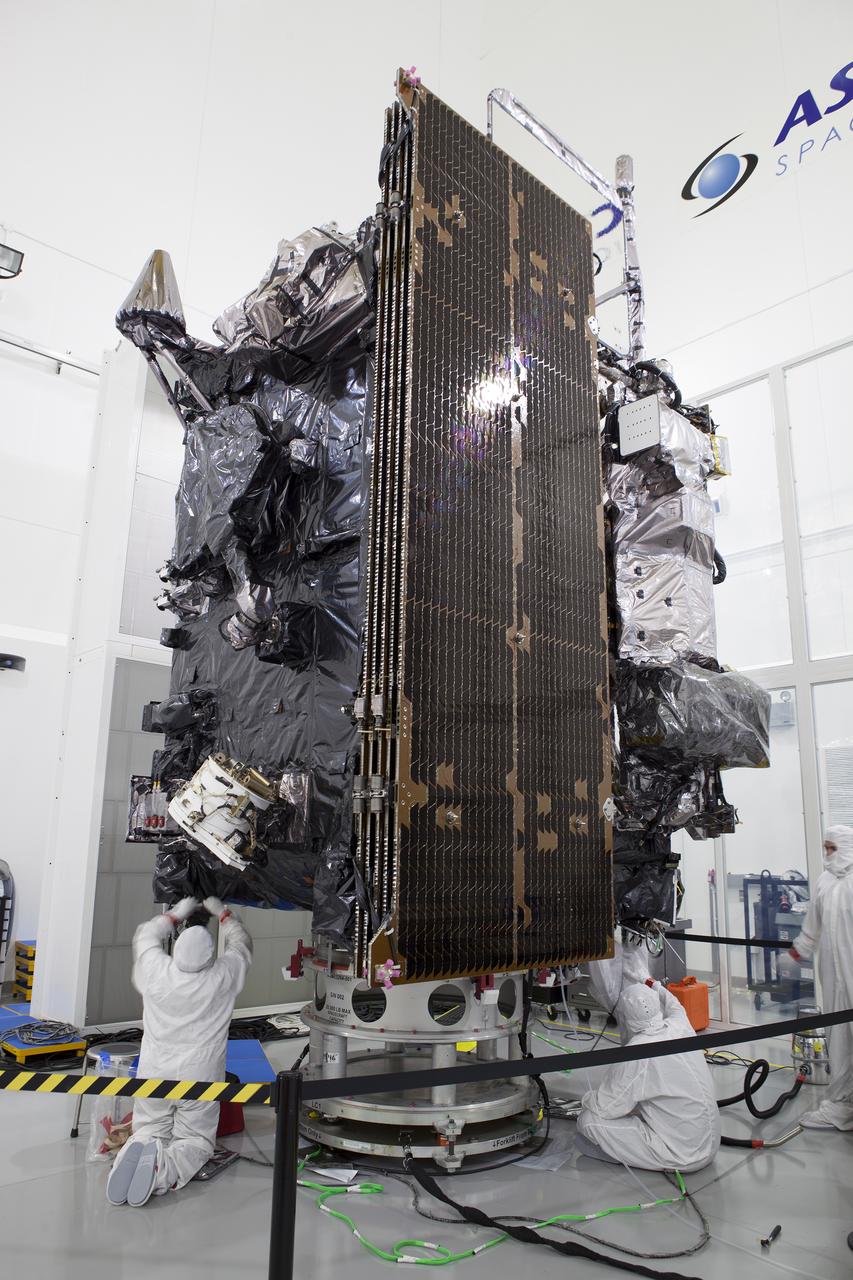
The Geostationary Operational Environmental Satellite (GOES-R) is undergoing final launch preparations prior to fueling inside the Astrotech payload processing facility in Titusville, Florida near NASA’s Kennedy Space Center. GOES-R will be the first satellite in a series of next-generation NOAA GOES Satellites. The spacecraft is to launch aboard a United Launch Alliance Atlas V rocket in November.
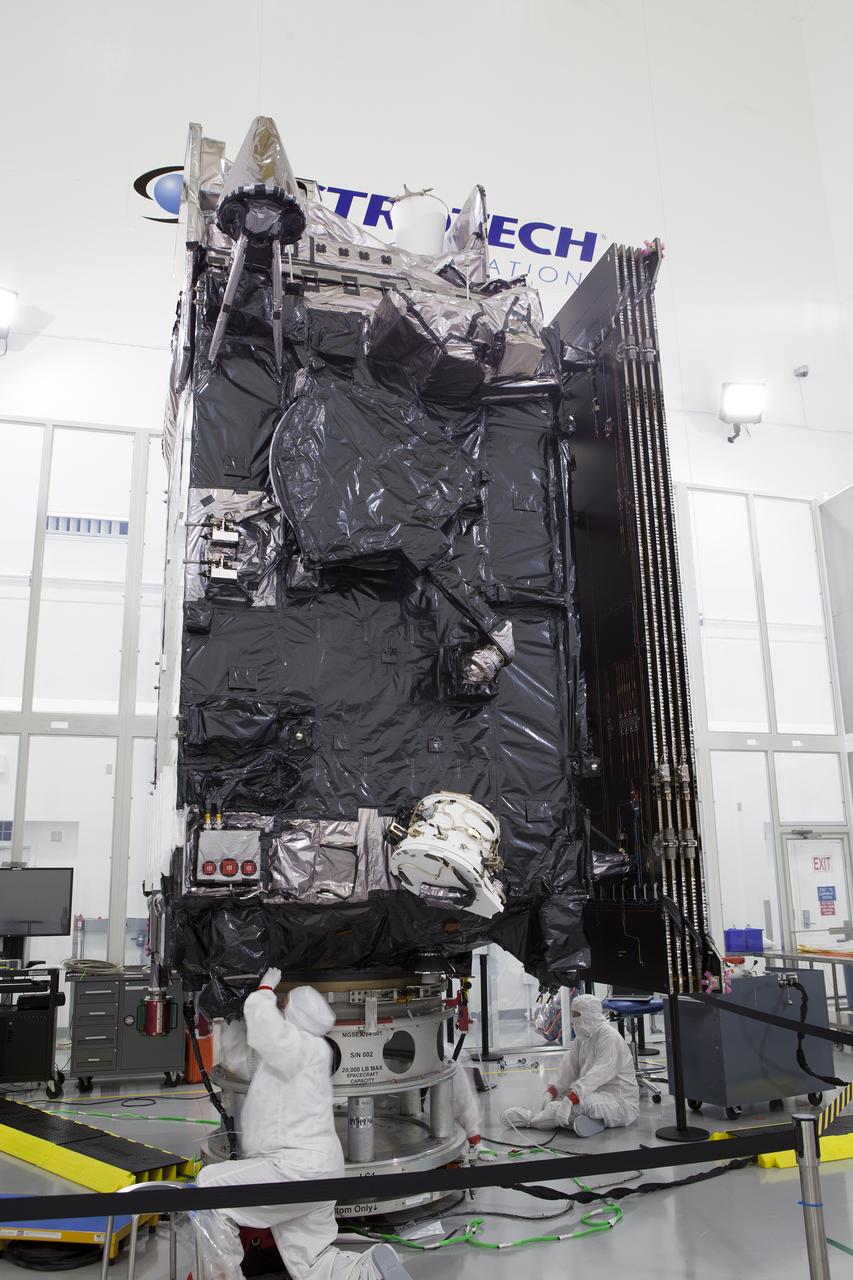
The Geostationary Operational Environmental Satellite (GOES-R) is undergoing final launch preparations prior to fueling inside the Astrotech payload processing facility in Titusville, Florida near NASA’s Kennedy Space Center. GOES-R will be the first satellite in a series of next-generation NOAA GOES Satellites. The spacecraft is to launch aboard a United Launch Alliance Atlas V rocket in November.
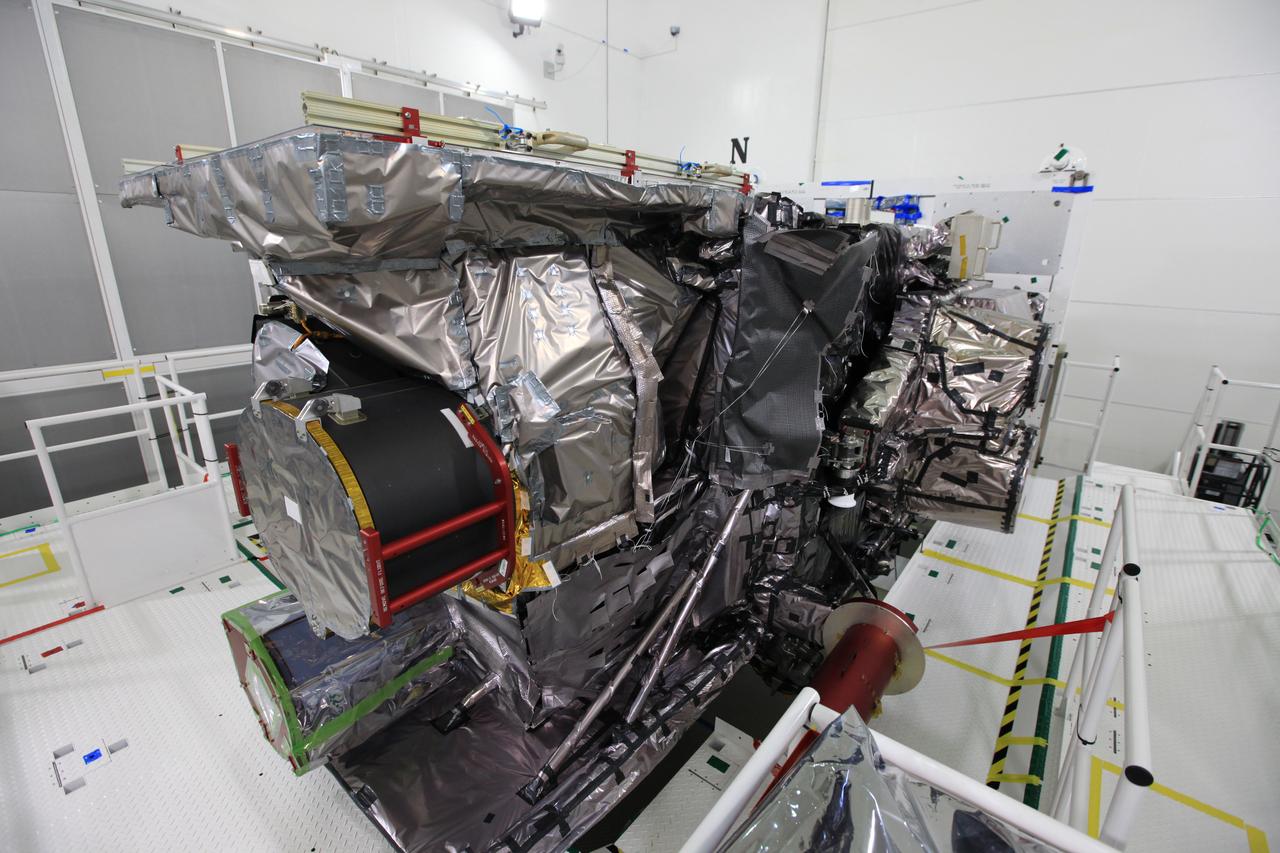
The Advanced Base Line Imager, the primary optical instrument, has been installed on the Geostationary Operational Environmental Satellite (GOES-R) inside the Astrotech payload processing facility in Titusville, Florida near NASA’s Kennedy Space Center. GOES-R will be the first satellite in a series of next-generation NOAA GOES Satellites. The spacecraft is to launch aboard a United Launch Alliance Atlas V rocket in November.
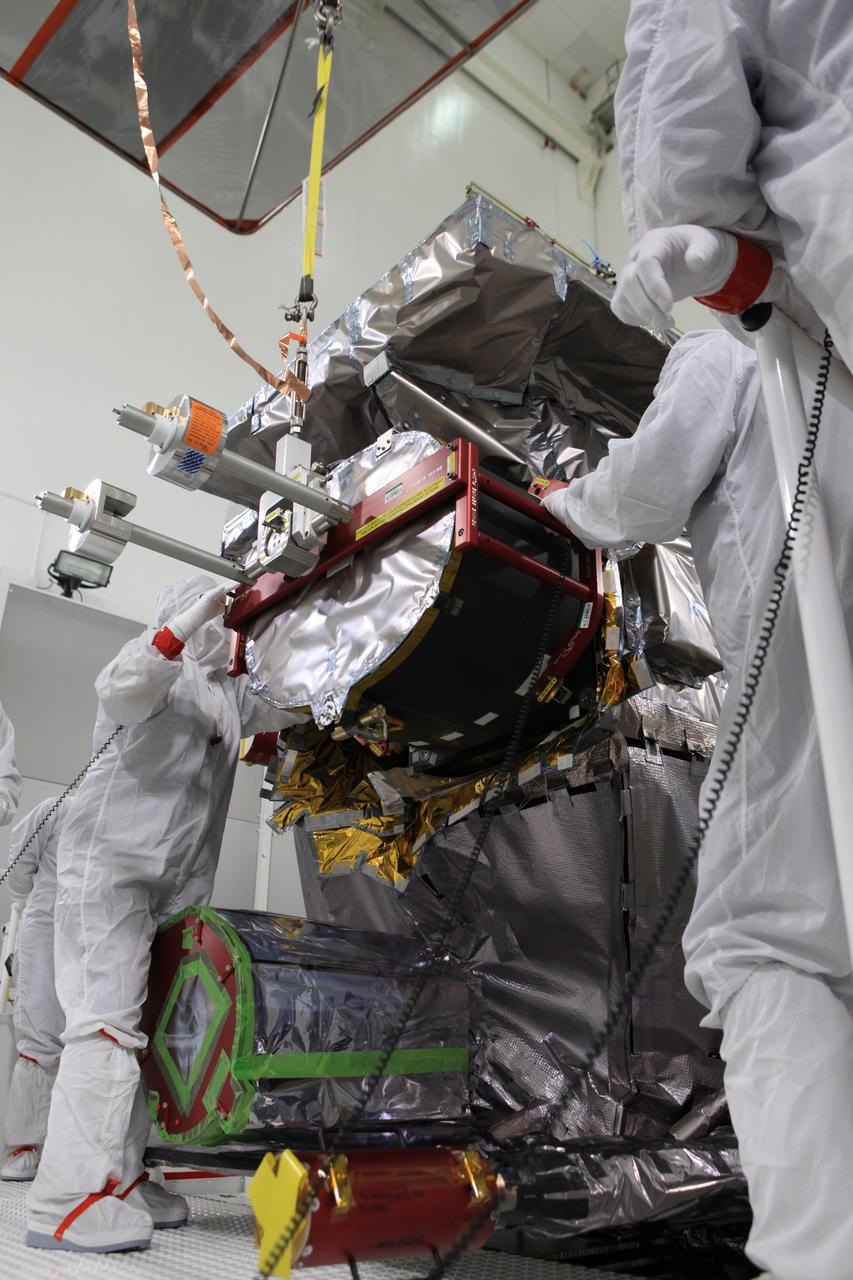
Team members install the Advanced Base Line Imager, the primary optical instrument, on the Geostationary Operational Environmental Satellite (GOES-R) inside the Astrotech payload processing facility in Titusville, Florida near NASA’s Kennedy Space Center. GOES-R will be the first satellite in a series of next-generation NOAA GOES Satellites. The spacecraft is to launch aboard a United Launch Alliance Atlas V rocket in November.
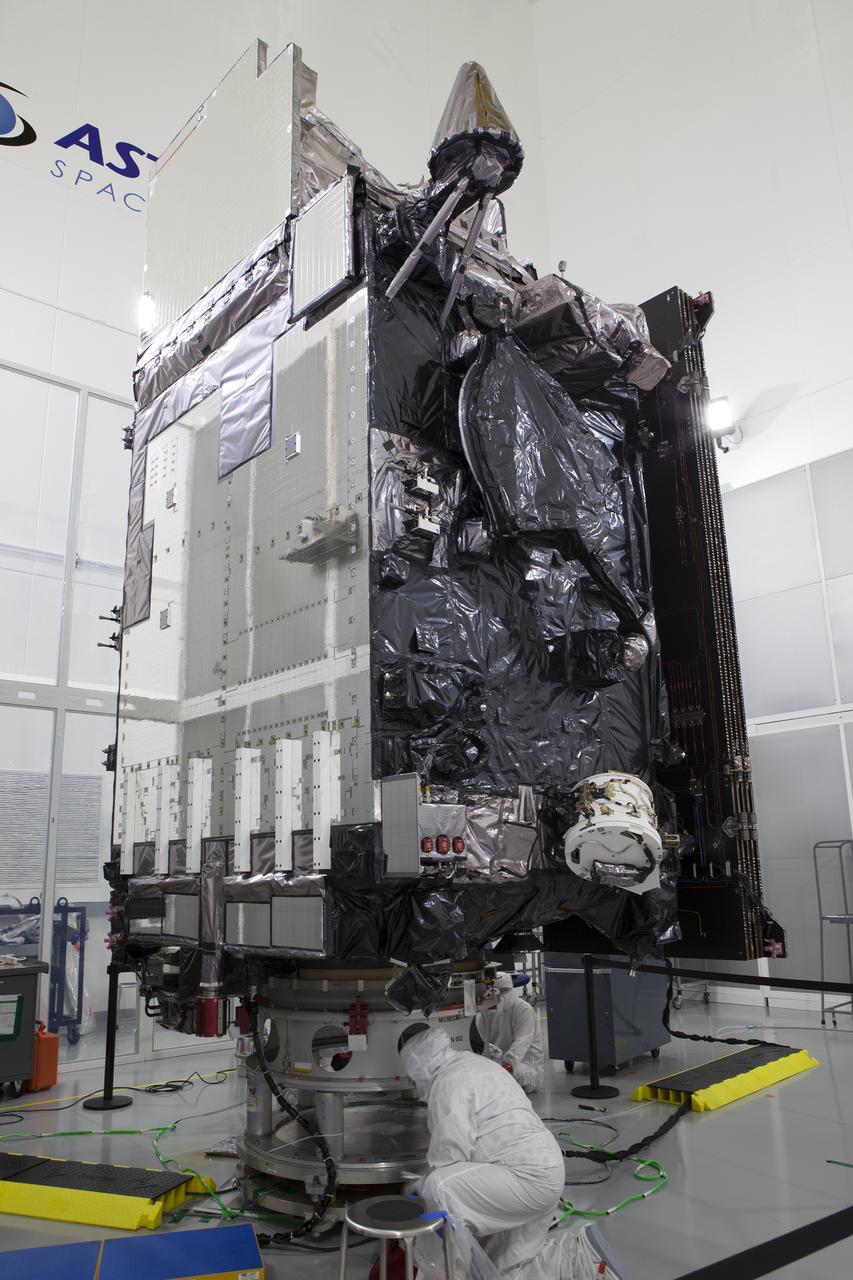
The Geostationary Operational Environmental Satellite (GOES-R) is undergoing final launch preparations prior to fueling inside the Astrotech payload processing facility in Titusville, Florida near NASA’s Kennedy Space Center. GOES-R will be the first satellite in a series of next-generation NOAA GOES Satellites. The spacecraft is to launch aboard a United Launch Alliance Atlas V rocket in November.
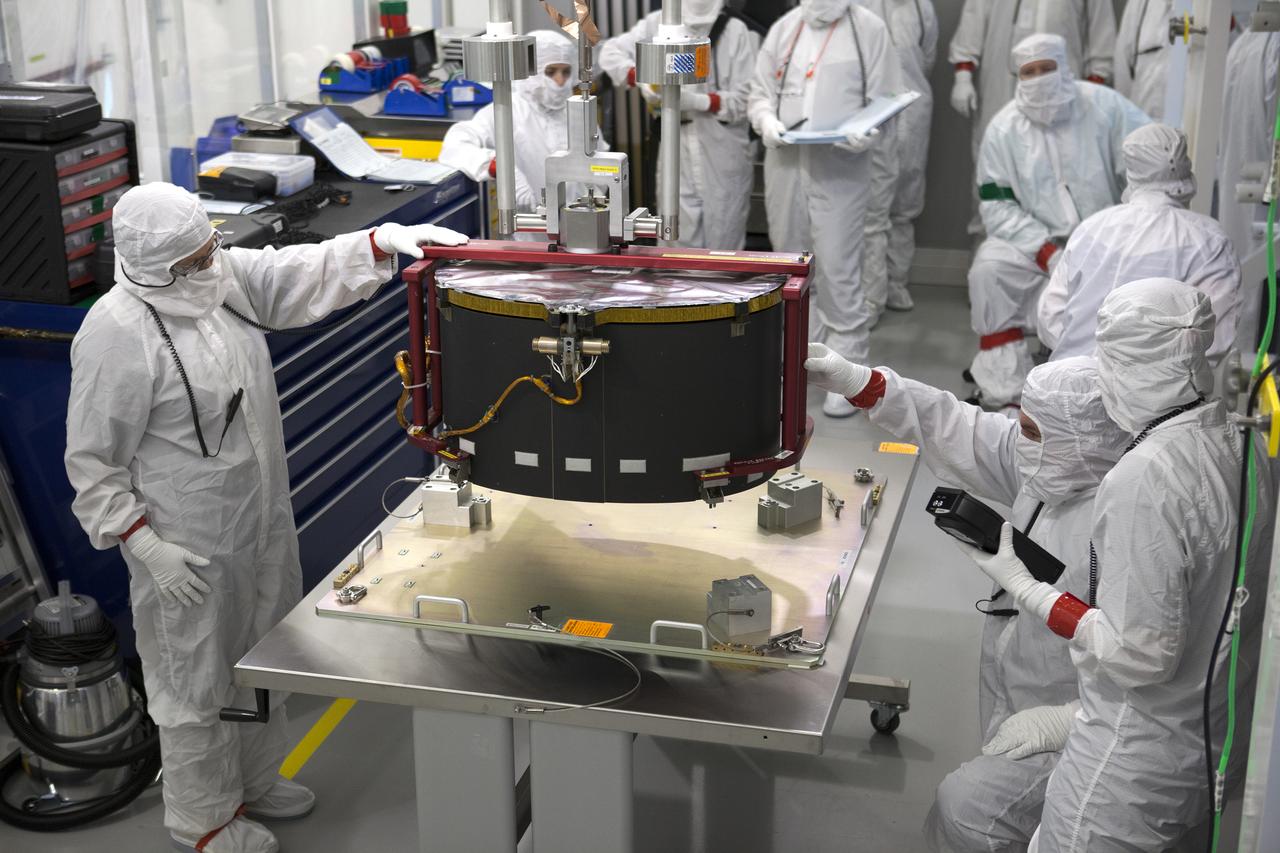
Team members prepare the Advanced Base Line Imager, the primary optical instrument, for installation on the Geostationary Operational Environmental Satellite (GOES-R) inside the Astrotech payload processing facility in Titusville, Florida near NASA’s Kennedy Space Center. GOES-R will be the first satellite in a series of next-generation NOAA GOES Satellites. The spacecraft is to launch aboard a United Launch Alliance Atlas V rocket in November.
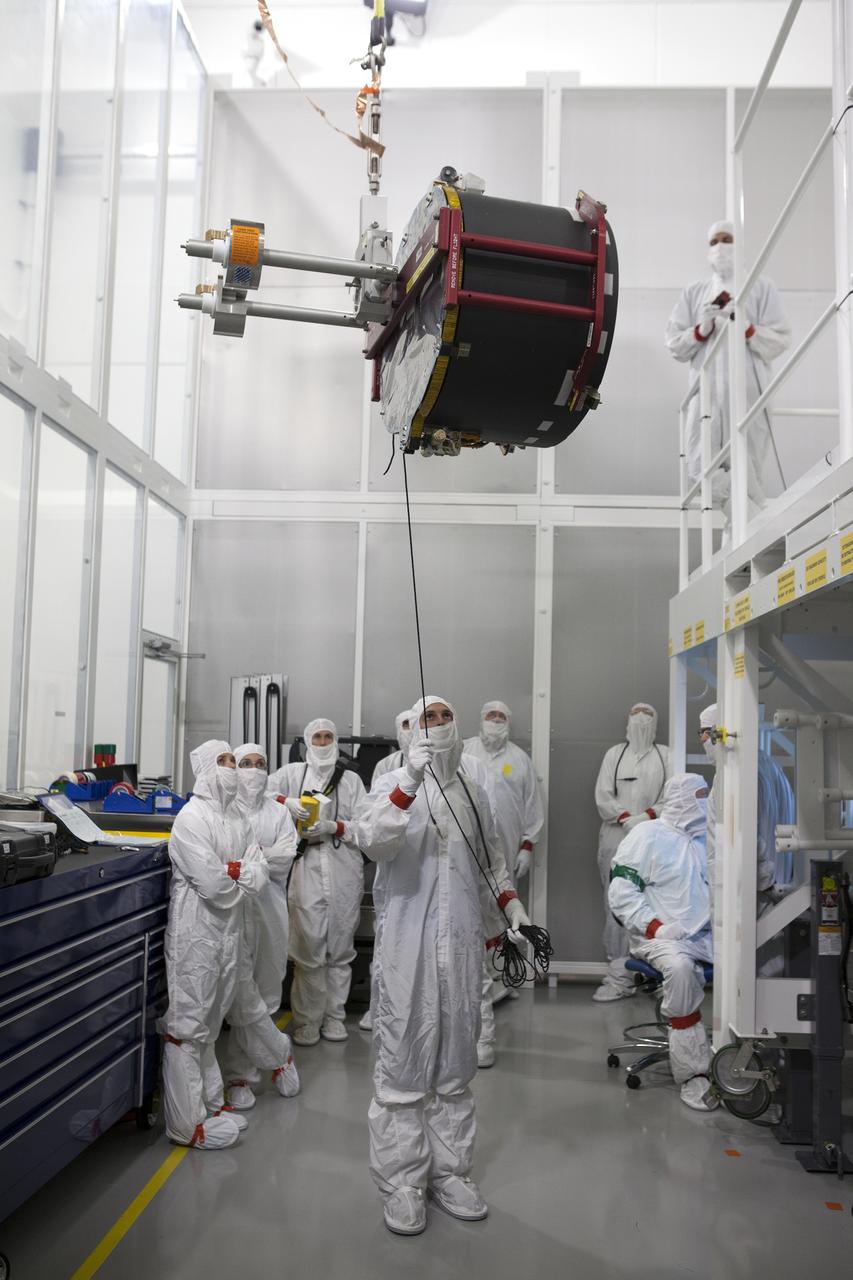
Team members assist as a crane lifts the Advanced Base Line Imager, the primary optical instrument, for installation on the Geostationary Operational Environmental Satellite (GOES-R) inside the Astrotech payload processing facility in Titusville, Florida near NASA’s Kennedy Space Center. GOES-R will be the first satellite in a series of next-generation NOAA GOES Satellites. The spacecraft is to launch aboard a United Launch Alliance Atlas V rocket in November.
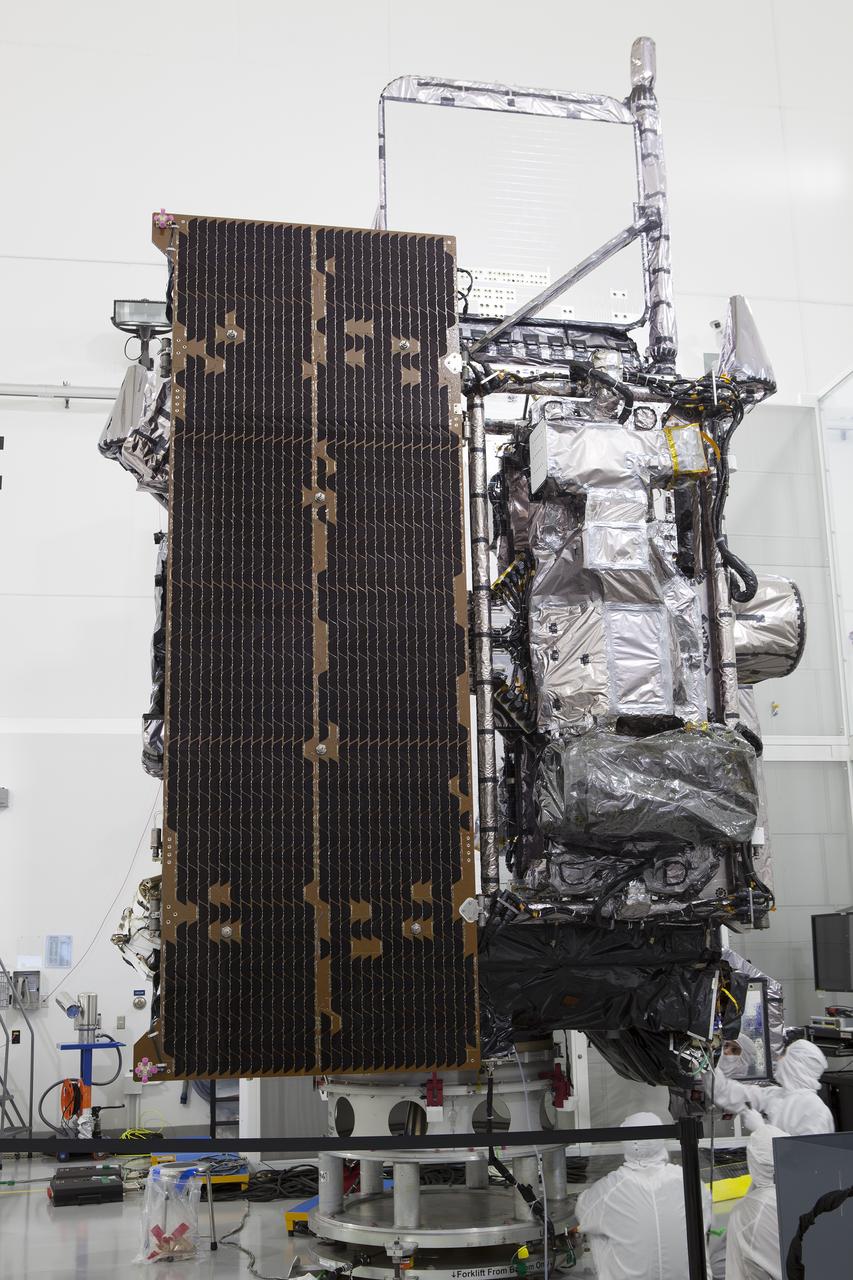
The Geostationary Operational Environmental Satellite (GOES-R) is undergoing final launch preparations prior to fueling inside the Astrotech payload processing facility in Titusville, Florida near NASA’s Kennedy Space Center. GOES-R will be the first satellite in a series of next-generation NOAA GOES Satellites. The spacecraft is to launch aboard a United Launch Alliance Atlas V rocket in November.
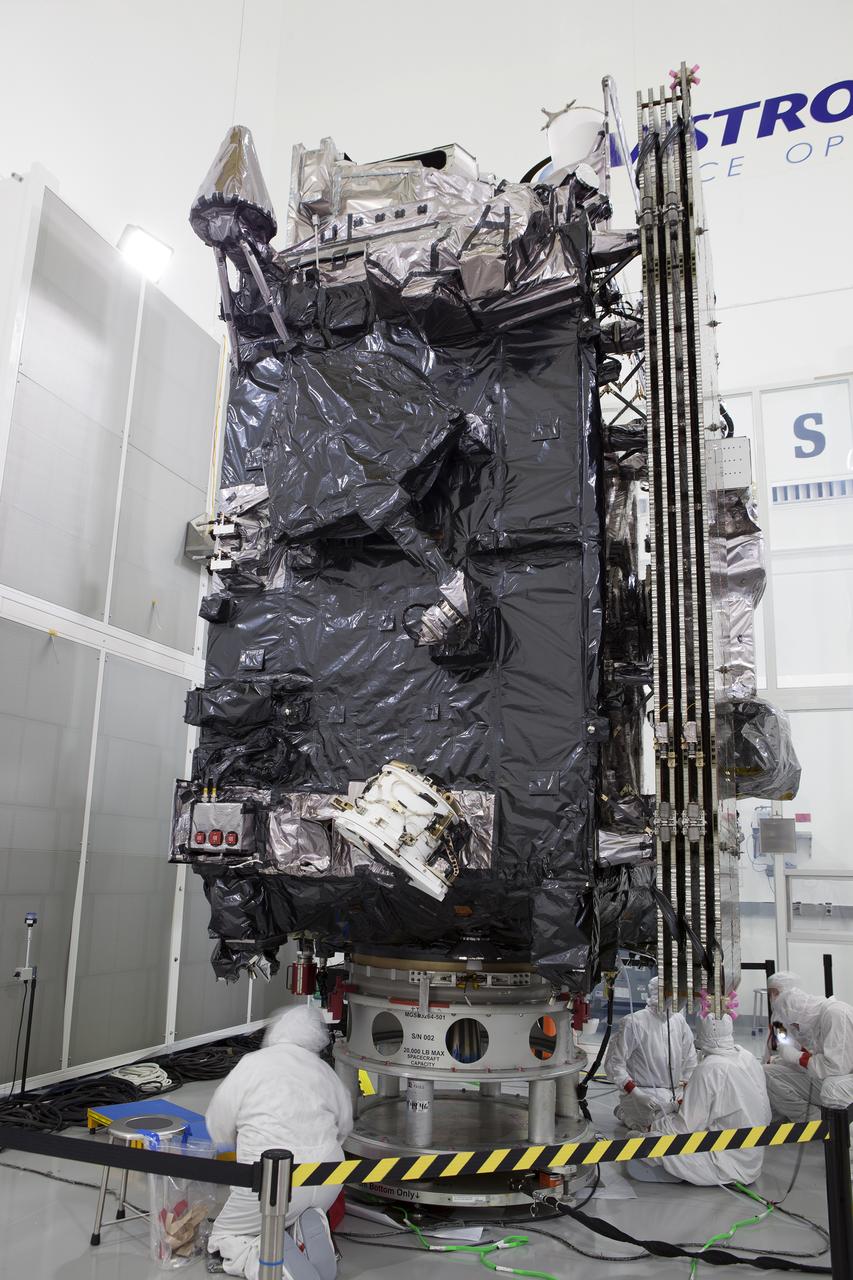
The Geostationary Operational Environmental Satellite (GOES-R) is undergoing final launch preparations prior to fueling inside the Astrotech payload processing facility in Titusville, Florida near NASA’s Kennedy Space Center. GOES-R will be the first satellite in a series of next-generation NOAA GOES Satellites. The spacecraft is to launch aboard a United Launch Alliance Atlas V rocket in November.
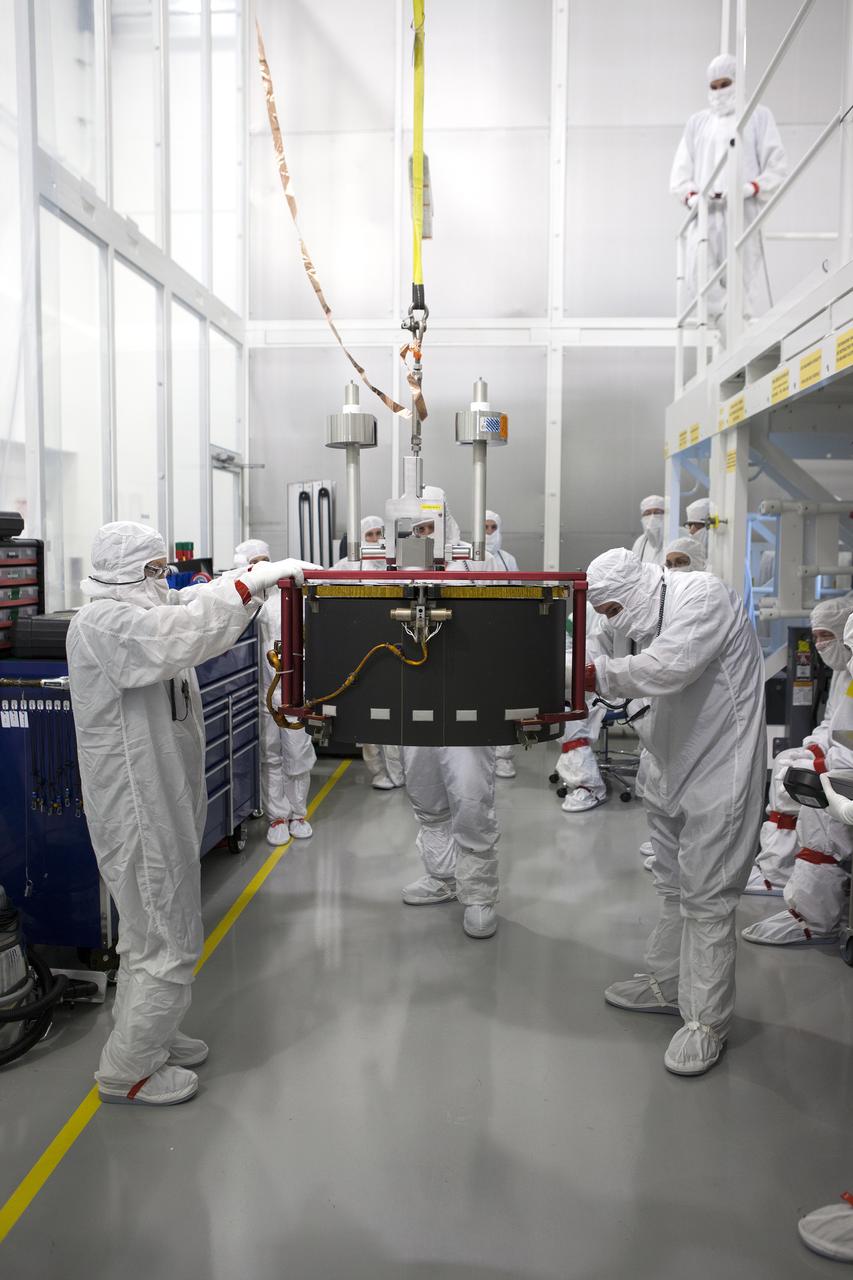
Team members assist as a crane moves the Advanced Base Line Imager, the primary optical instruments, for installation on the Geostationary Operational Environmental Satellite (GOES-R) inside the Astrotech payload processing facility in Titusville, Florida near NASA’s Kennedy Space Center. GOES-R will be the first satellite in a series of next-generation NOAA GOES Satellites. The spacecraft is to launch aboard a United Launch Alliance Atlas V rocket in November.
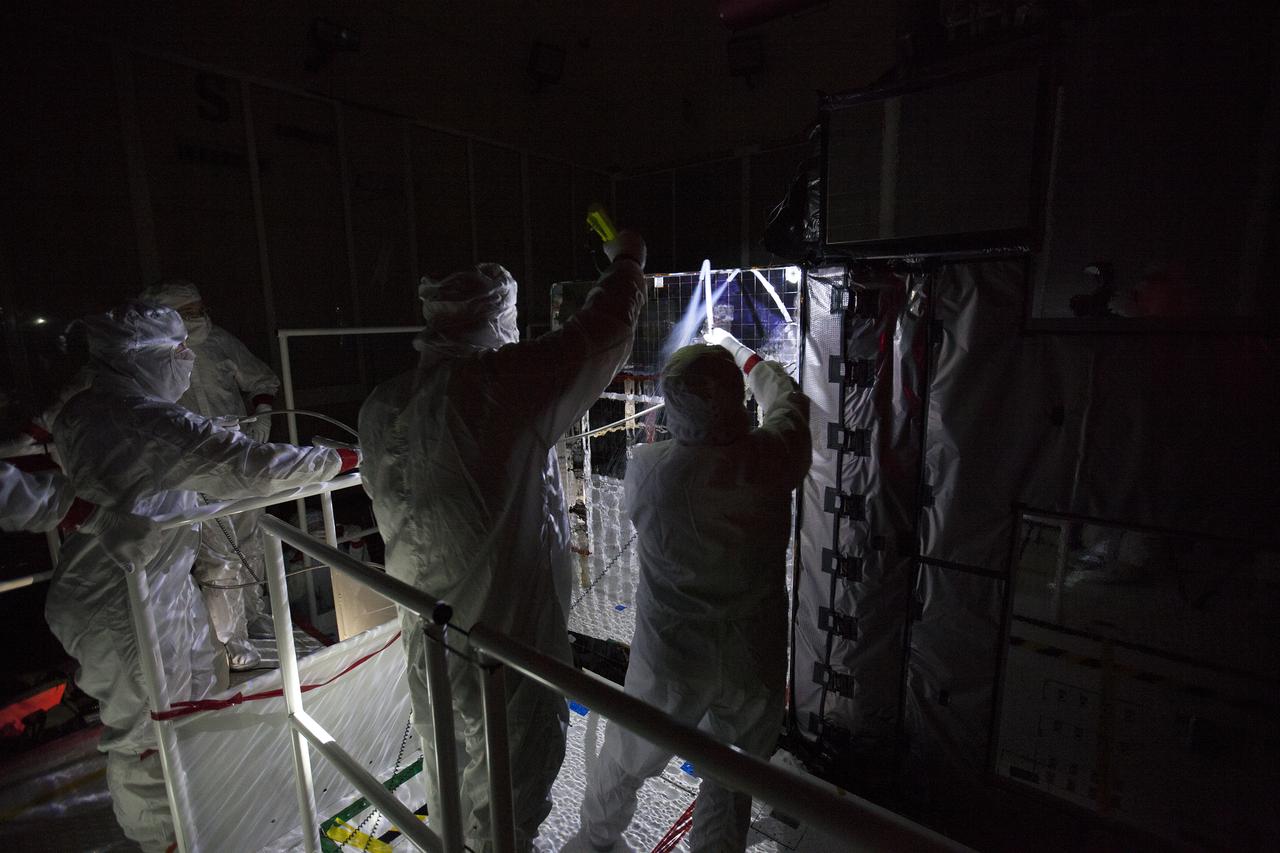
With the lights out, team members perform an optics test on the Advanced Baseline Imager, the primary optical instrument, on the Geostationary Operational Environmental Satellite (GOES-R) inside the Astrotech payload processing facility in Titusville, Florida near NASA’s Kennedy Space Center. Carbon dioxide is sprayed on the imager to clean it and test its sensitivity. GOES-R will be the first satellite in a series of next-generation NOAA GOES Satellites. The spacecraft is to launch aboard a United Launch Alliance Atlas V rocket in November.
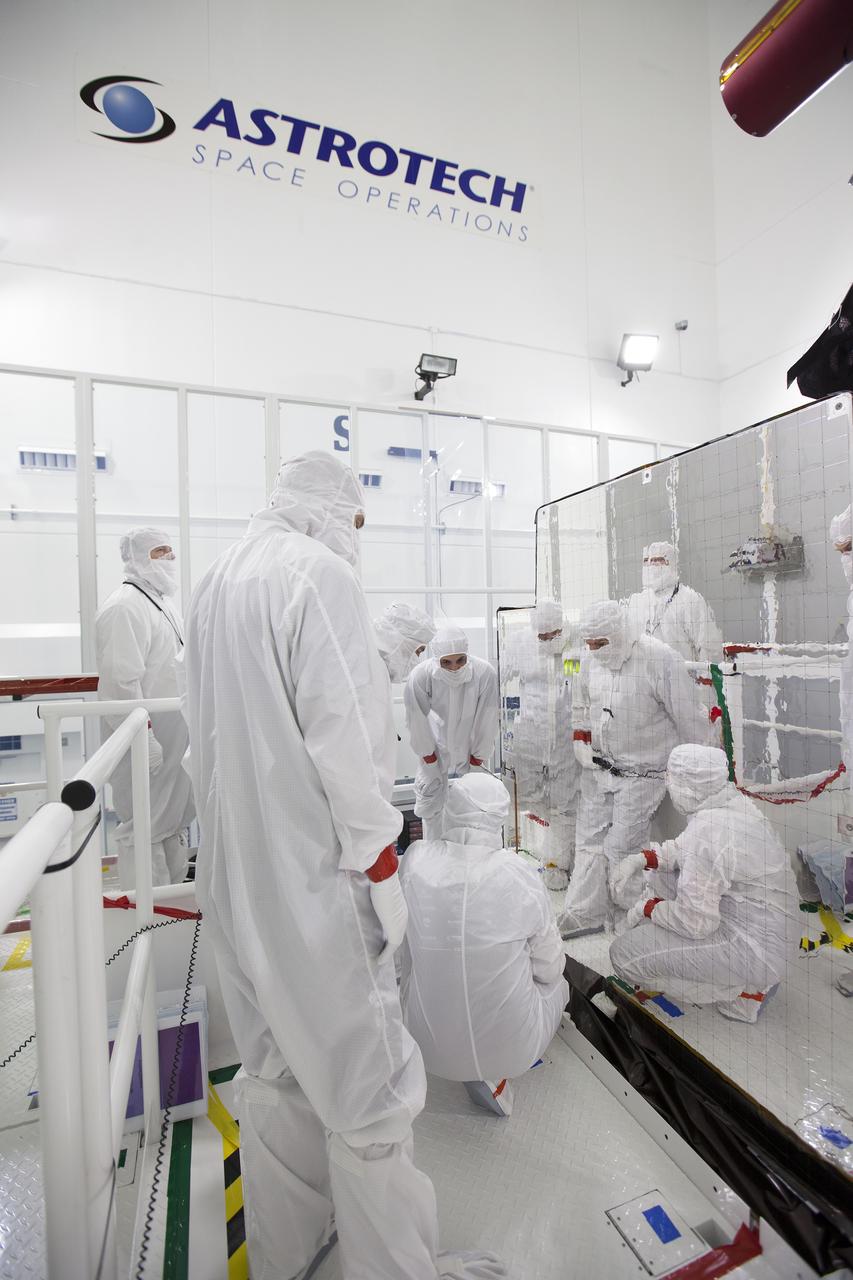
Team members prepare for an optics test on the Advanced Baseline Imager, the primary optical instrument, on the Geostationary Operational Environmental Satellite (GOES-R) inside the Astrotech payload processing facility in Titusville, Florida near NASA’s Kennedy Space Center. Carbon dioxide will be sprayed on the imager to clean it and test its sensitivity. GOES-R will be the first satellite in a series of next-generation NOAA GOES Satellites. The spacecraft is to launch aboard a United Launch Alliance Atlas V rocket in November.
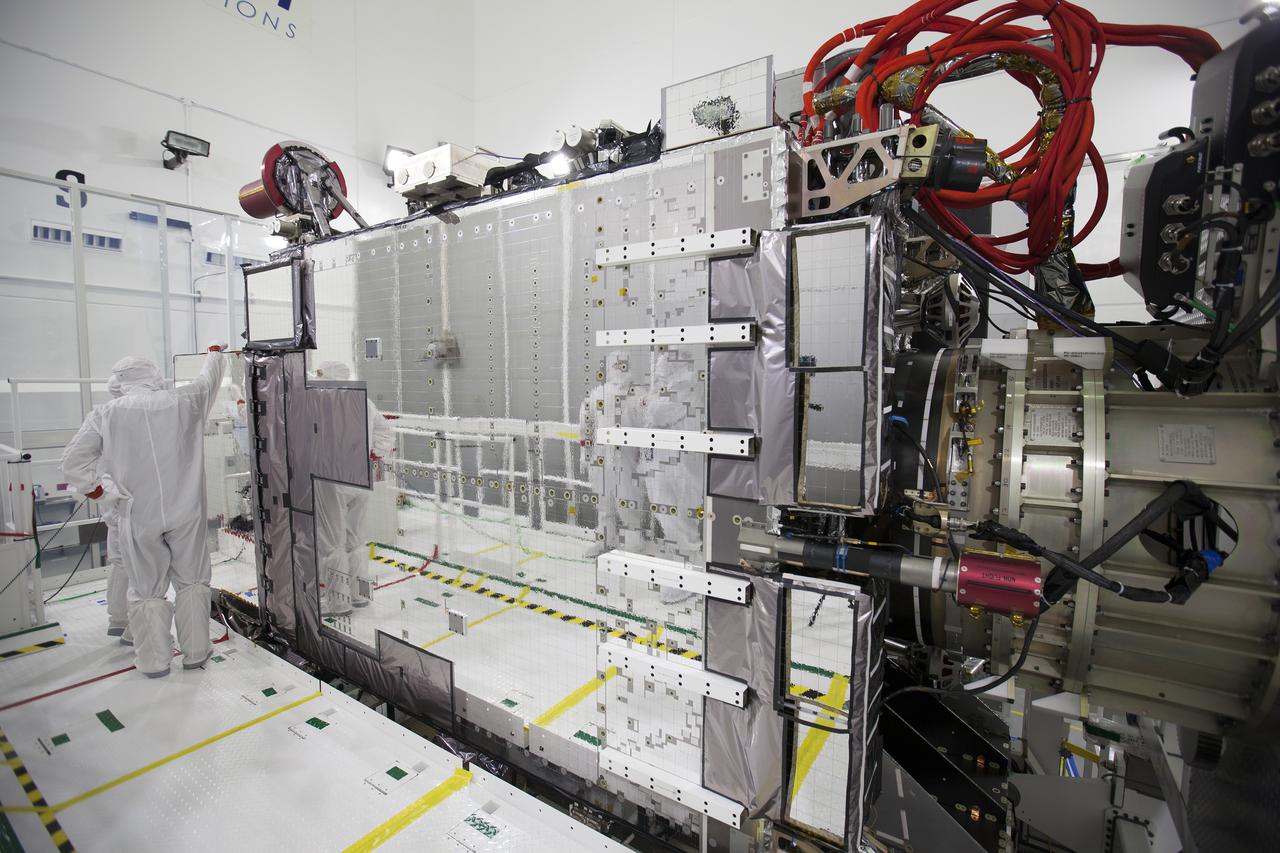
Team members prepare for an optics test on the Advanced Baseline Imager, the primary optical instrument, on the Geostationary Operational Environmental Satellite (GOES-R) inside the Astrotech payload processing facility in Titusville, Florida near NASA’s Kennedy Space Center. Carbon dioxide will be sprayed on the imager to clean it and test its sensitivity. GOES-R will be the first satellite in a series of next-generation NOAA GOES Satellites. The spacecraft is to launch aboard a United Launch Alliance Atlas V rocket in November.
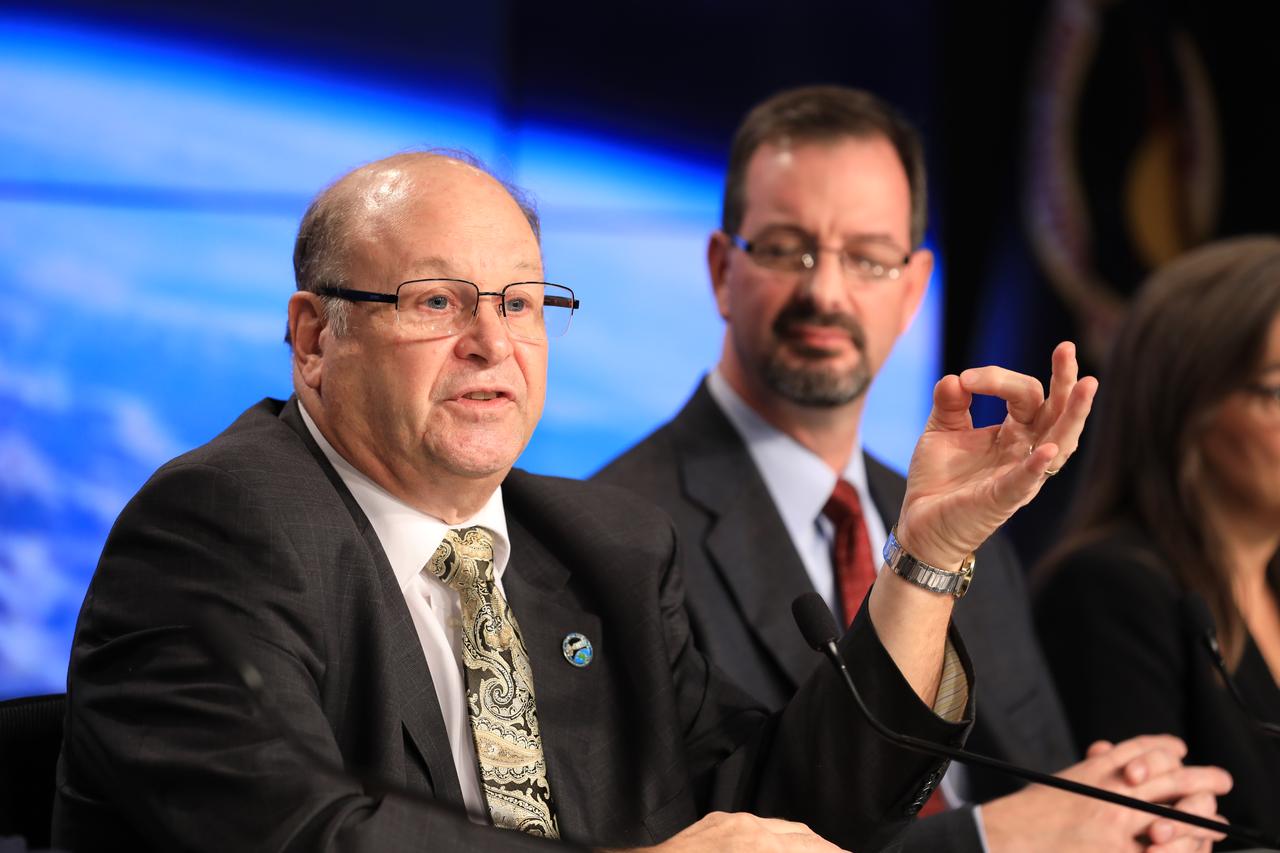
In the Kennedy Space Center's Press Site auditorium, members of the media participate in a mission briefing on the Geostationary Operational Environmental Satellite (GOES-R). Briefing participants included Steven Goodman, NOAA's GOES-R program scientist, and Joseph A. Pica, director of the National Weather Service Office of Observations. GOES-R is the first satellite in a series of next-generation GOES satellites for NOAA, the National Oceanographic and Atmospheric Administration. It will launch to a geostationary orbit over the western hemisphere to provide images of storms and help meteorologists predict severe weather conditionals and develop long-range forecasts.
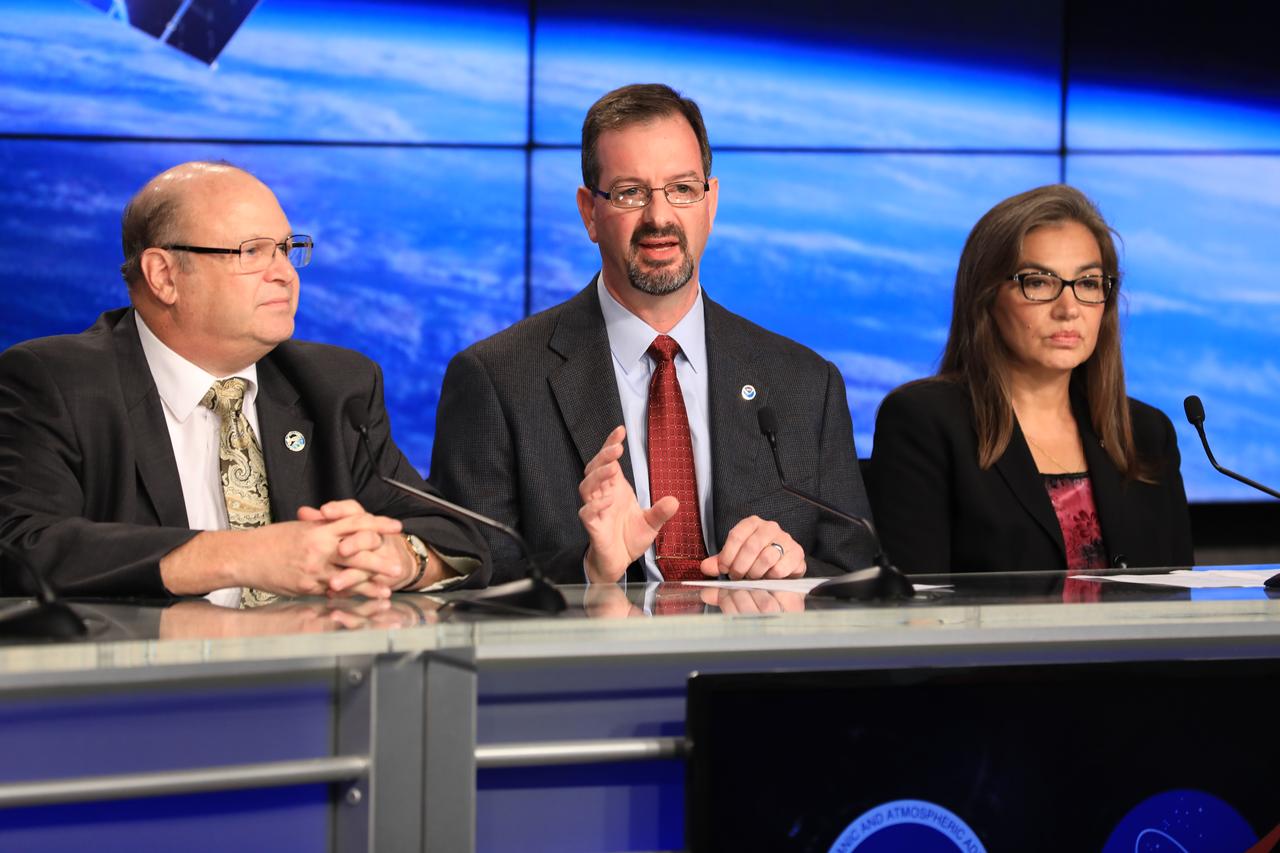
In the Kennedy Space Center's Press Site auditorium, members of the media participate in a mission briefing on the Geostationary Operational Environmental Satellite (GOES-R). Briefing participants from left are: Steven Goodman, NOAA's GOES-R program scientist; Joseph A. Pica, director of the National Weather Service Office of Observations; and Sandra Cauffman, deputy director of NASA's Earth Science Division. GOES-R is the first satellite in a series of next-generation GOES satellites for NOAA, the National Oceanographic and Atmospheric Administration. It will launch to a geostationary orbit over the western hemisphere to provide images of storms and help meteorologists predict severe weather conditionals and develop long-range forecasts.
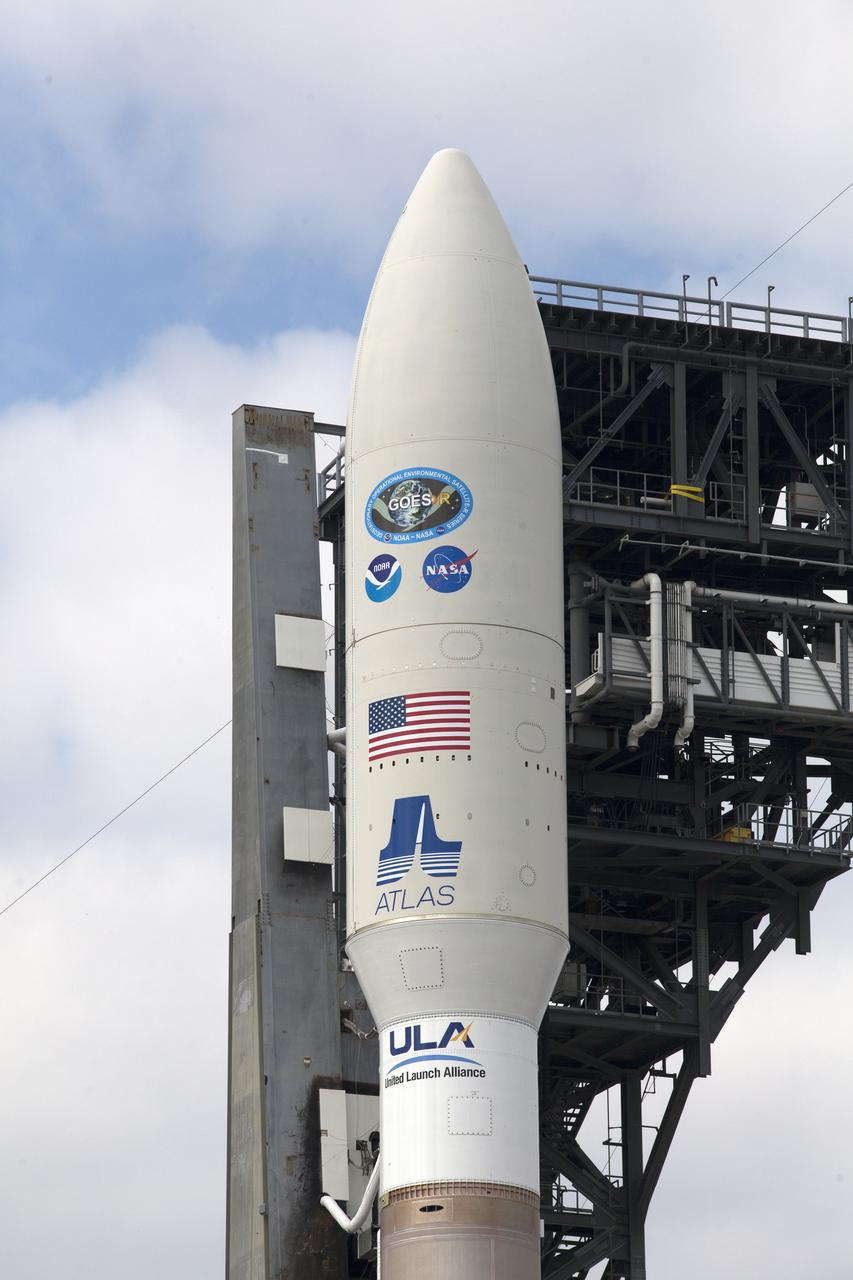
A United Launch Alliance Atlas V rocket arrives at Space Launch Complex 41 at Cape Canaveral Air Force Station in Florida. In view is the upper stage and payload fairing containing the Geostationary Operational Environmental Satellite (GOES-R). The launch vehicle will send GOES-R to a geostationary position over the U.S. GOES-R is the first satellite in a series of next-generation NOAA GOES satellites.
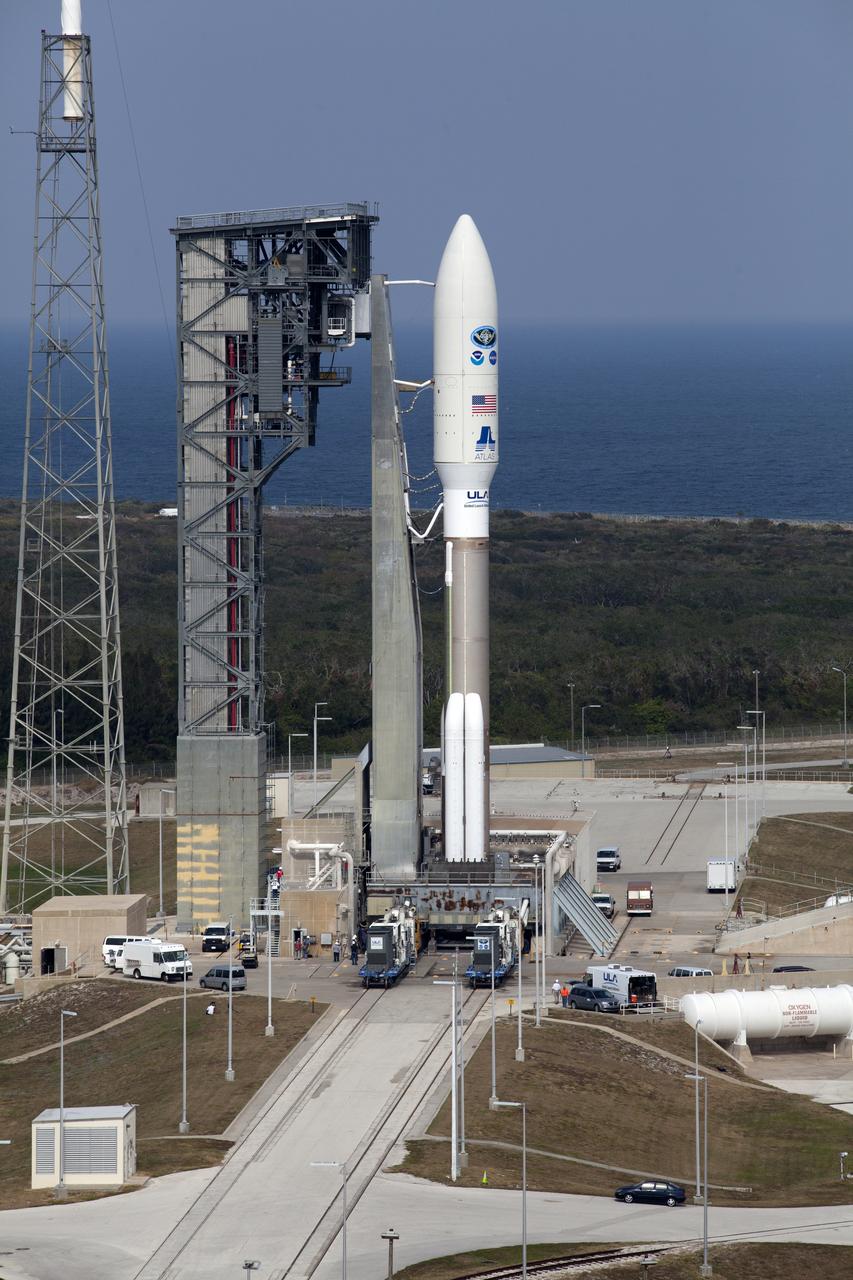
A United Launch Alliance Atlas V rocket arrives at Space Launch Complex 41 at Cape Canaveral Air Force Station in Florida. The launch vehicle will send the Geostationary Operational Environmental Satellite (GOES-R) to a geostationary position over the U.S. GOES-R is the first satellite in a series of next-generation NOAA GOES satellites.
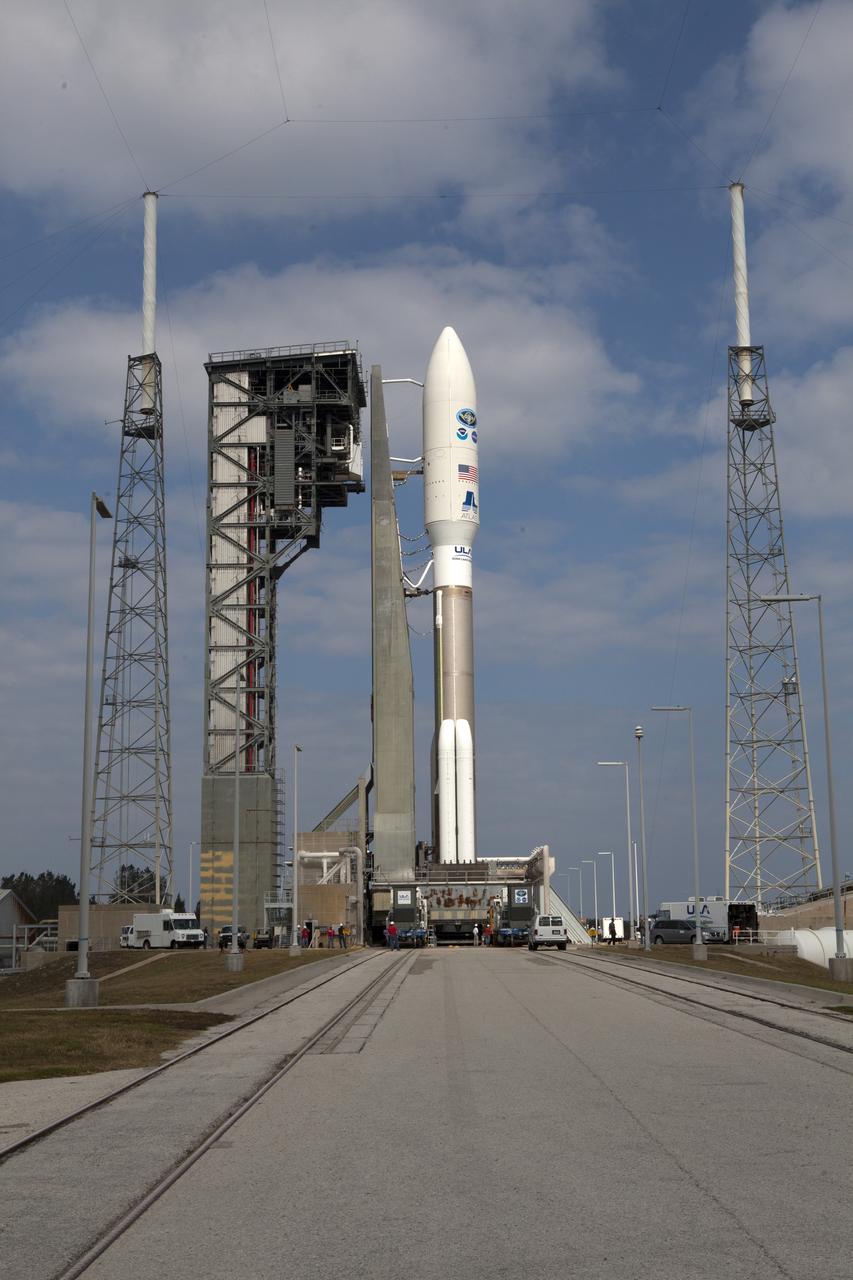
A United Launch Alliance Atlas V rocket arrives at Space Launch Complex 41 at Cape Canaveral Air Force Station in Florida. The launch vehicle will send the Geostationary Operational Environmental Satellite (GOES-R) to a geostationary position over the U.S. GOES-R is the first satellite in a series of next-generation NOAA GOES satellites.
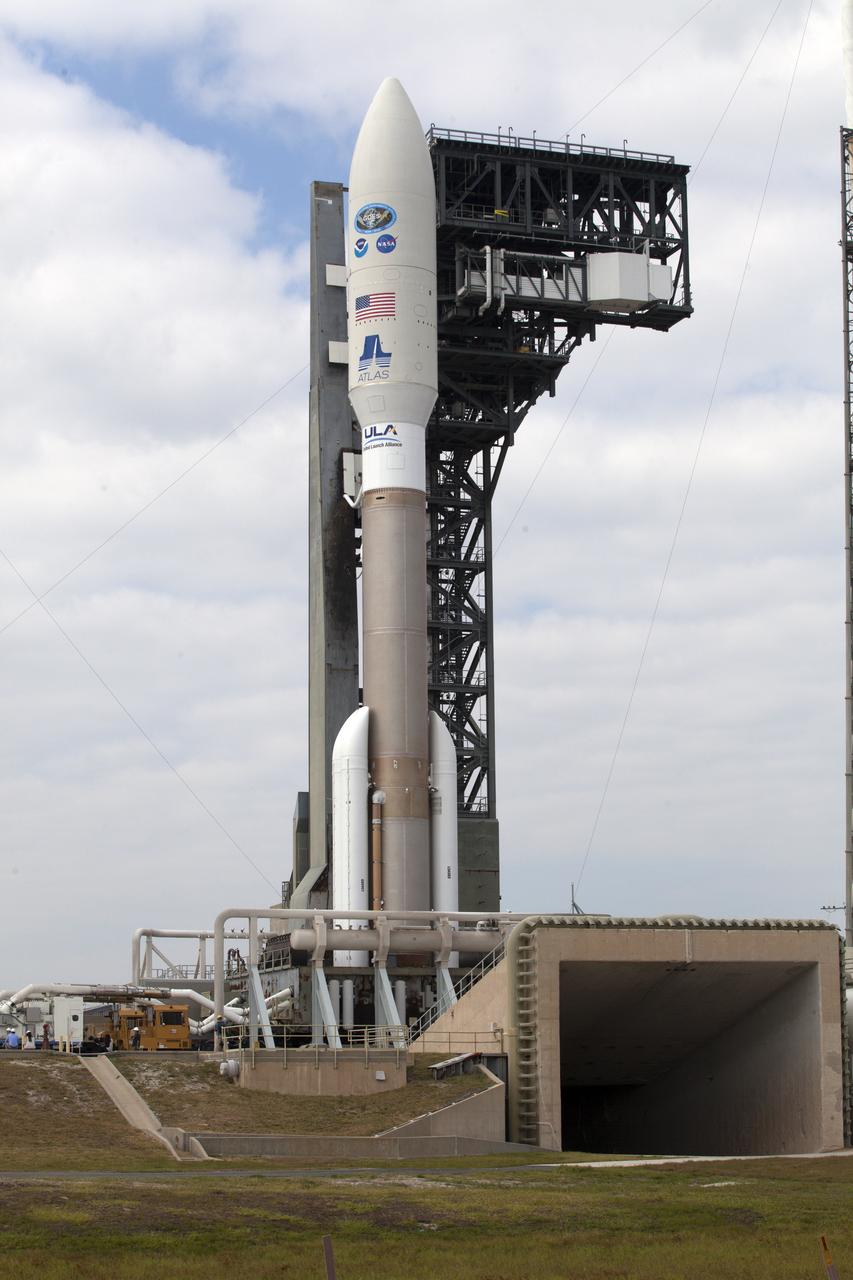
A United Launch Alliance Atlas V rocket arrives at Space Launch Complex 41 at Cape Canaveral Air Force Station in Florida. The launch vehicle will send the Geostationary Operational Environmental Satellite (GOES-R) to a geostationary position over the U.S. GOES-R is the first satellite in a series of next-generation NOAA GOES satellites.
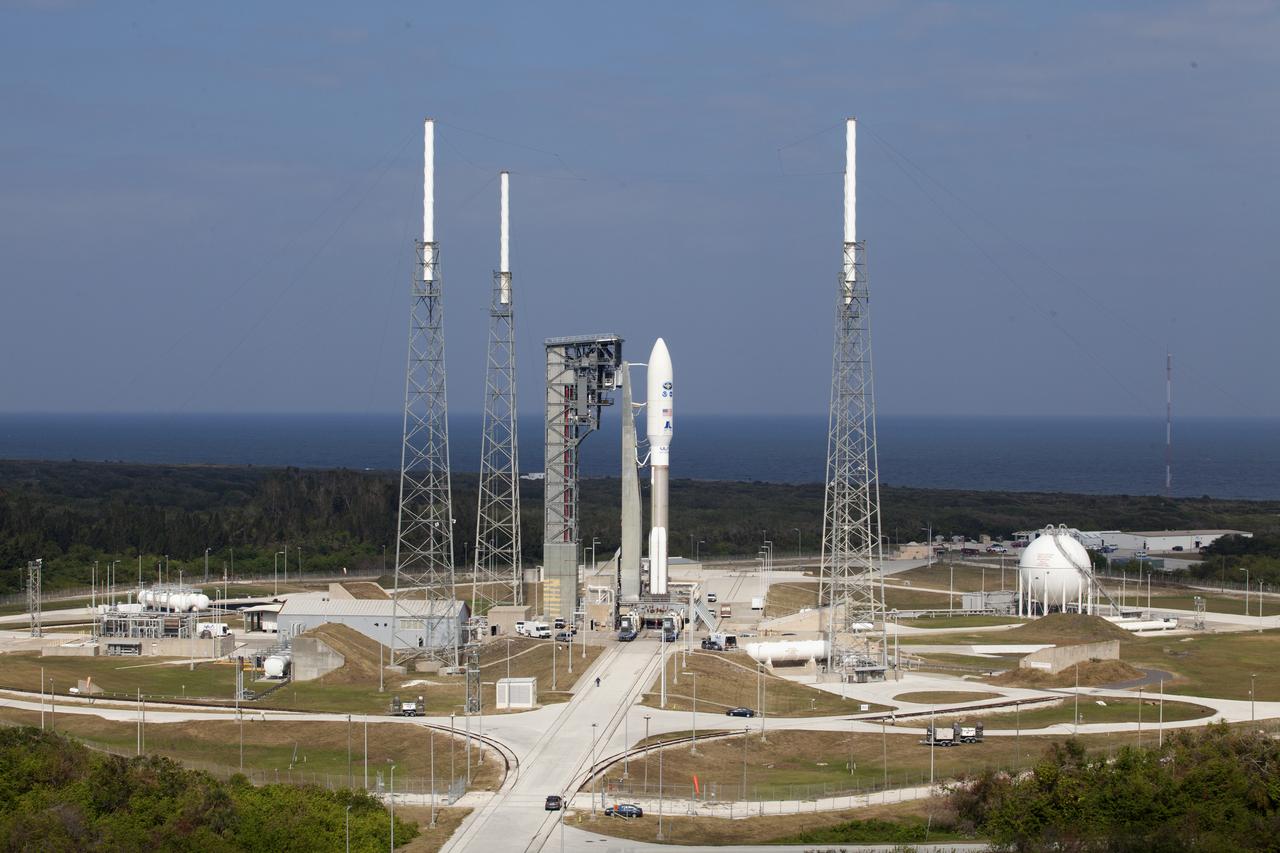
A United Launch Alliance Atlas V rocket arrives at Space Launch Complex 41 at Cape Canaveral Air Force Station in Florida. The launch vehicle will send the Geostationary Operational Environmental Satellite (GOES-R) to a geostationary position over the U.S. GOES-R is the first satellite in a series of next-generation NOAA GOES satellites.
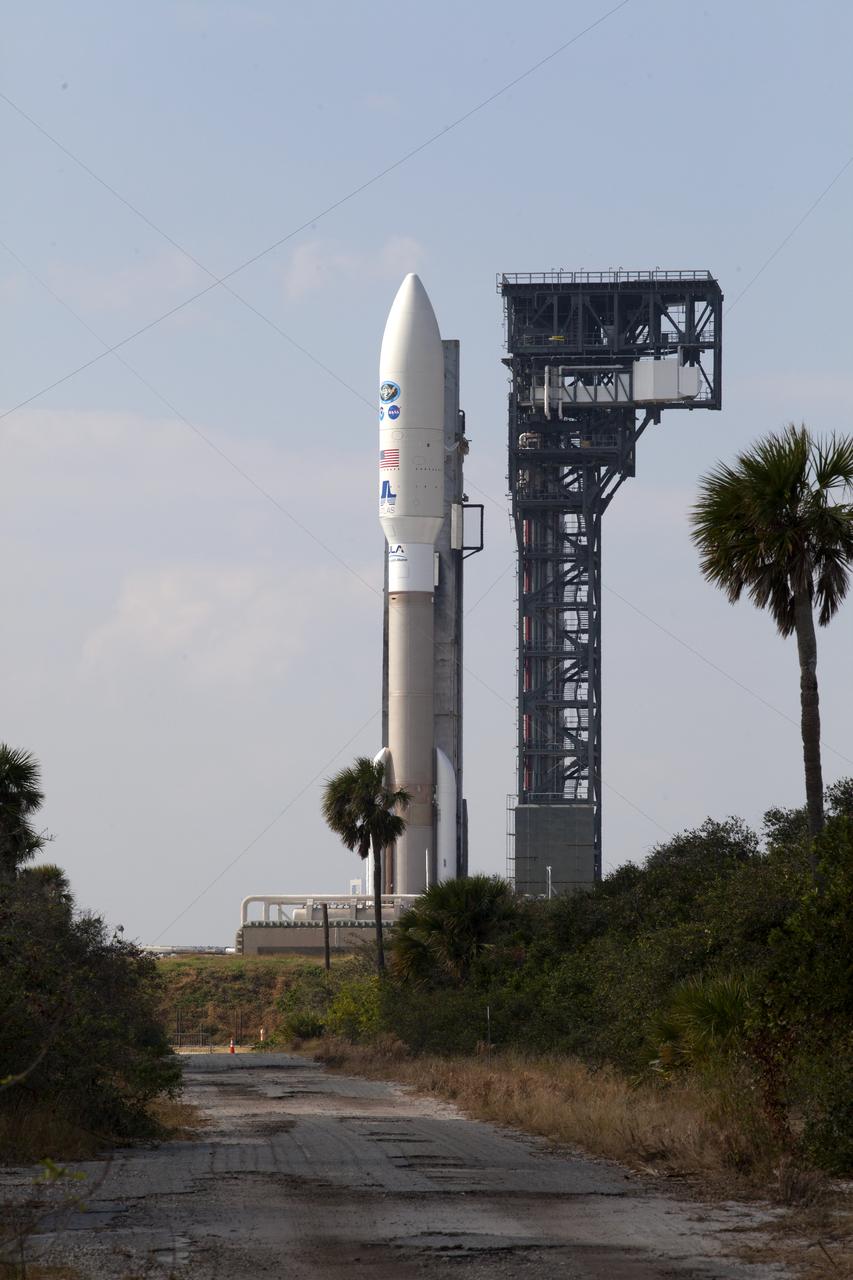
A United Launch Alliance Atlas V rocket arrives at Space Launch Complex 41 at Cape Canaveral Air Force Station in Florida. The launch vehicle will send the Geostationary Operational Environmental Satellite (GOES-R) to a geostationary position over the U.S. GOES-R is the first satellite in a series of next-generation NOAA GOES satellites.
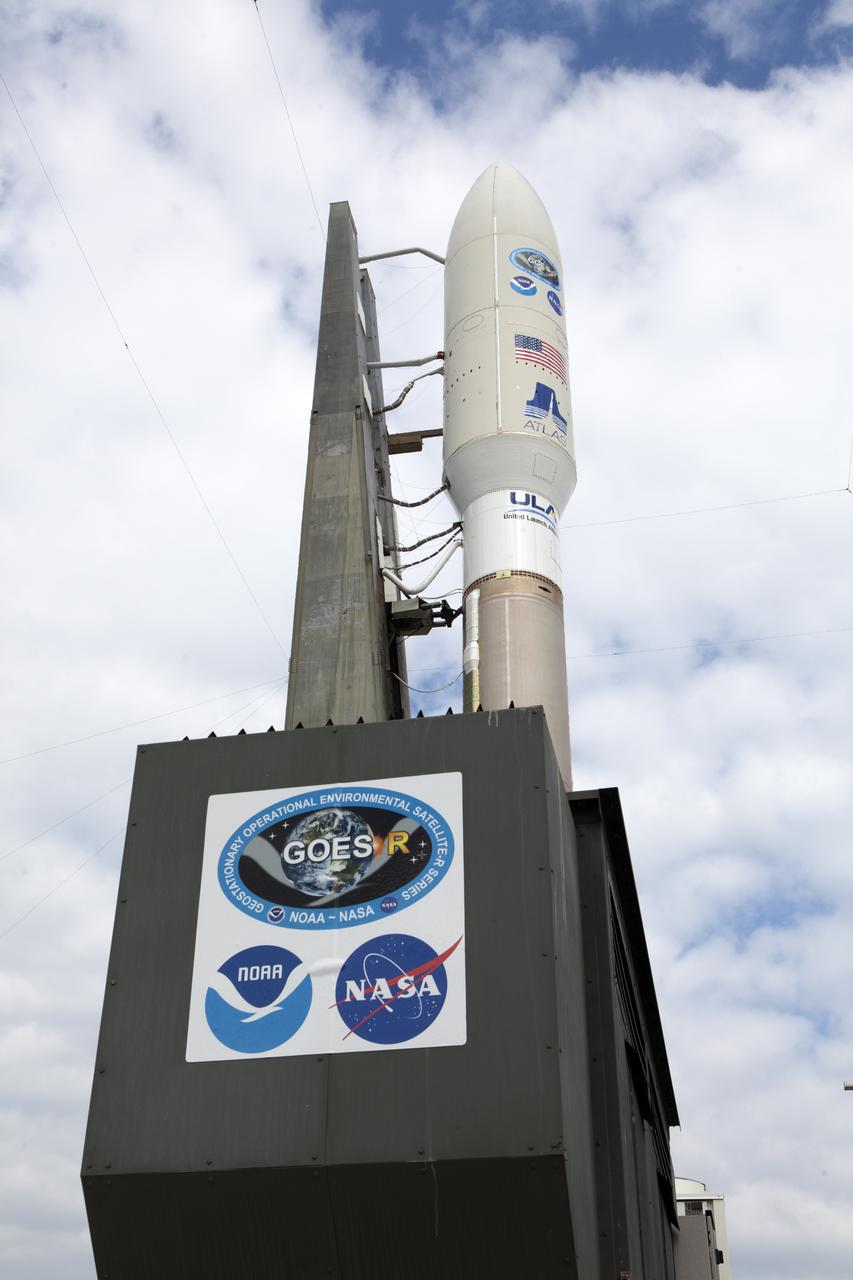
A United Launch Alliance Atlas V rocket arrives at Space Launch Complex 41 at Cape Canaveral Air Force Station in Florida. The launch vehicle will send the Geostationary Operational Environmental Satellite (GOES-R) to a geostationary position over the U.S. GOES-R is the first satellite in a series of next-generation NOAA GOES satellites.
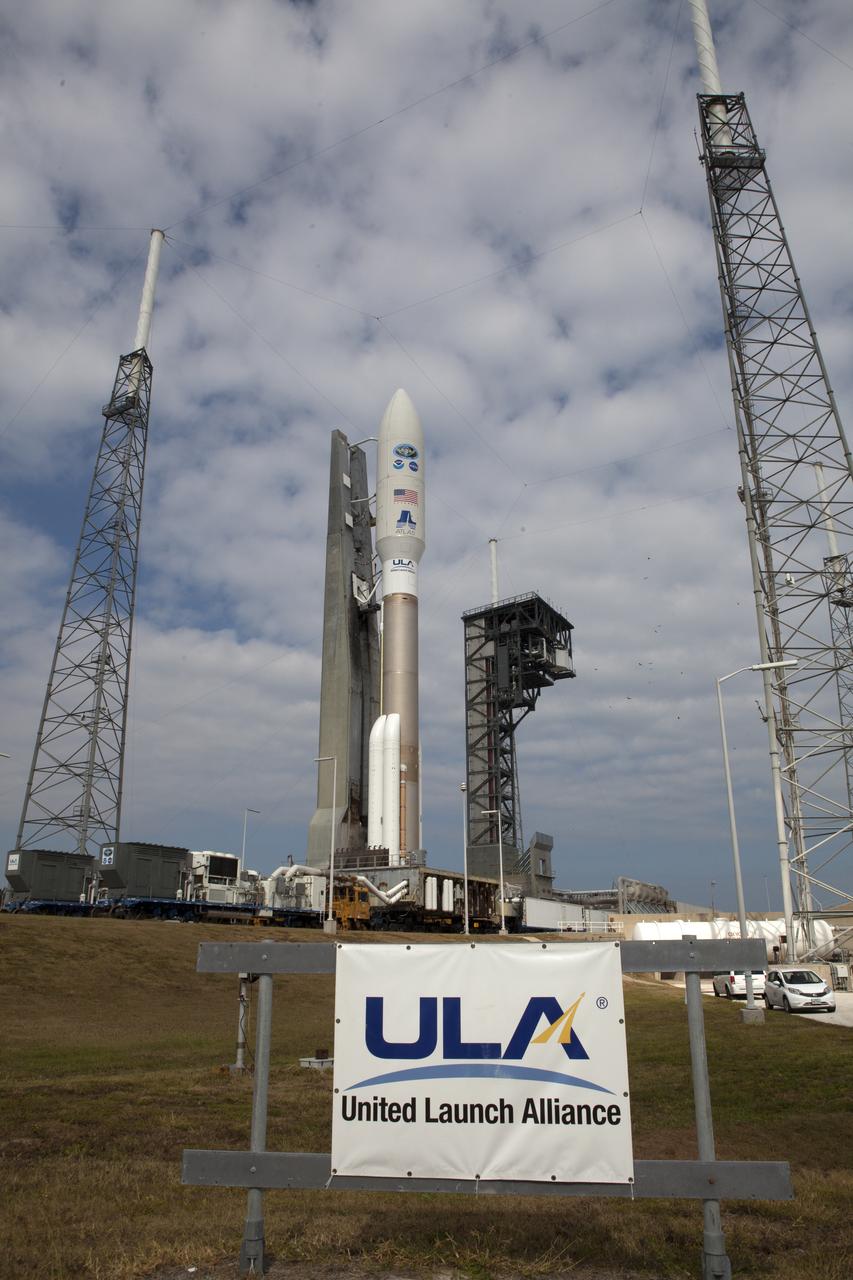
A United Launch Alliance Atlas V rocket arrives at Space Launch Complex 41 at Cape Canaveral Air Force Station in Florida. The launch vehicle will send the Geostationary Operational Environmental Satellite (GOES-R) to a geostationary position over the U.S. GOES-R is the first satellite in a series of next-generation NOAA GOES satellites.
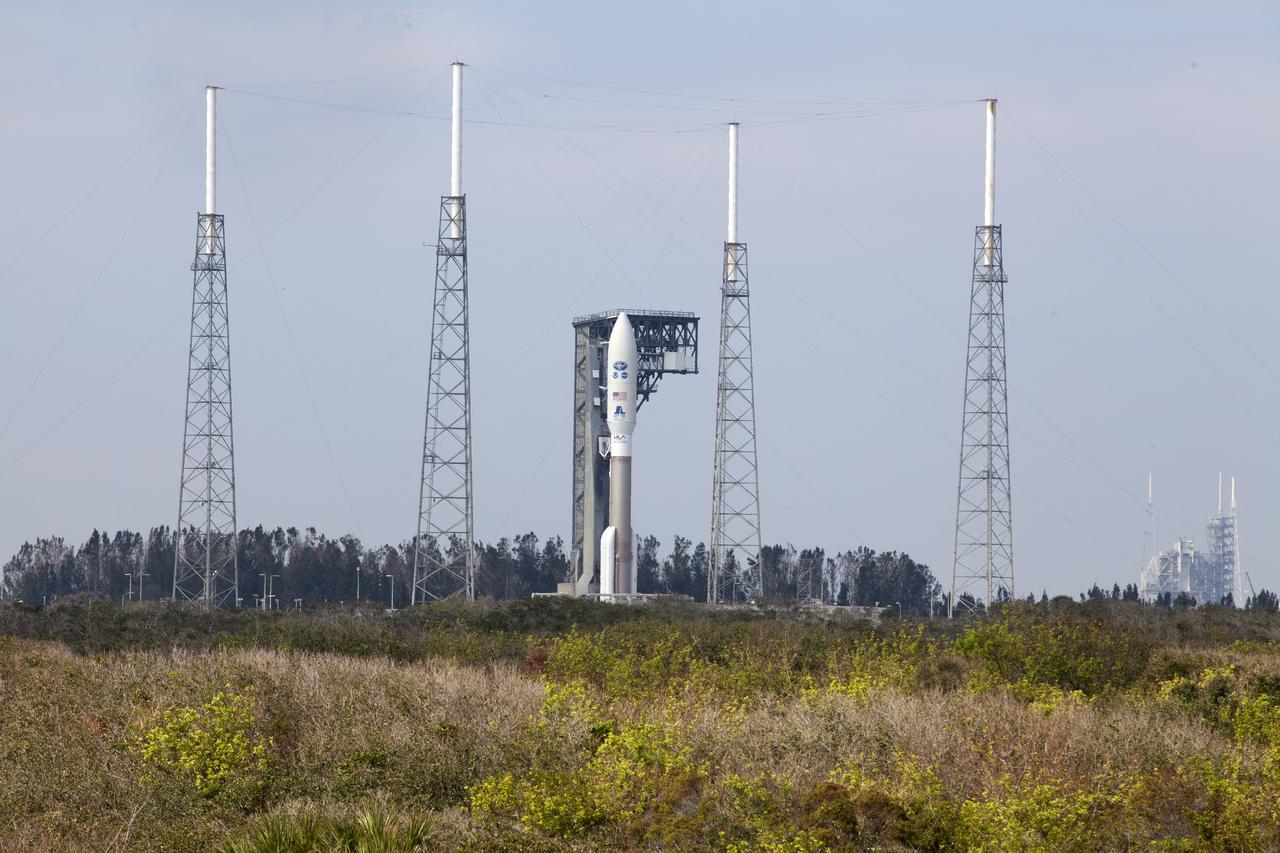
A United Launch Alliance Atlas V rocket arrives at Space Launch Complex 41 at Cape Canaveral Air Force Station in Florida. The launch vehicle will send the Geostationary Operational Environmental Satellite (GOES-R) to a geostationary position over the U.S. GOES-R is the first satellite in a series of next-generation NOAA GOES satellites.
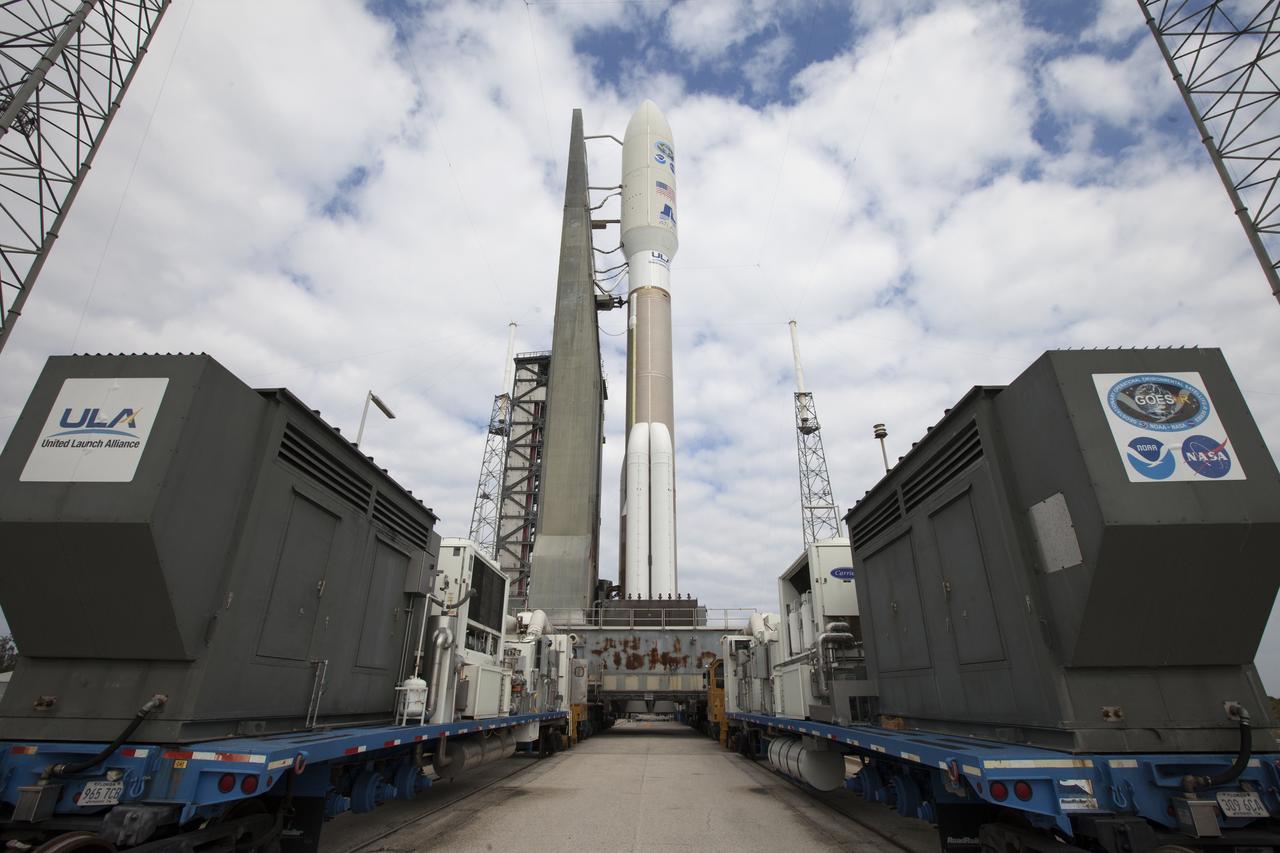
A United Launch Alliance Atlas V rocket arrives at Space Launch Complex 41 at Cape Canaveral Air Force Station in Florida. The launch vehicle will send the Geostationary Operational Environmental Satellite (GOES-R) to a geostationary position over the U.S. GOES-R is the first satellite in a series of next-generation NOAA GOES satellites.
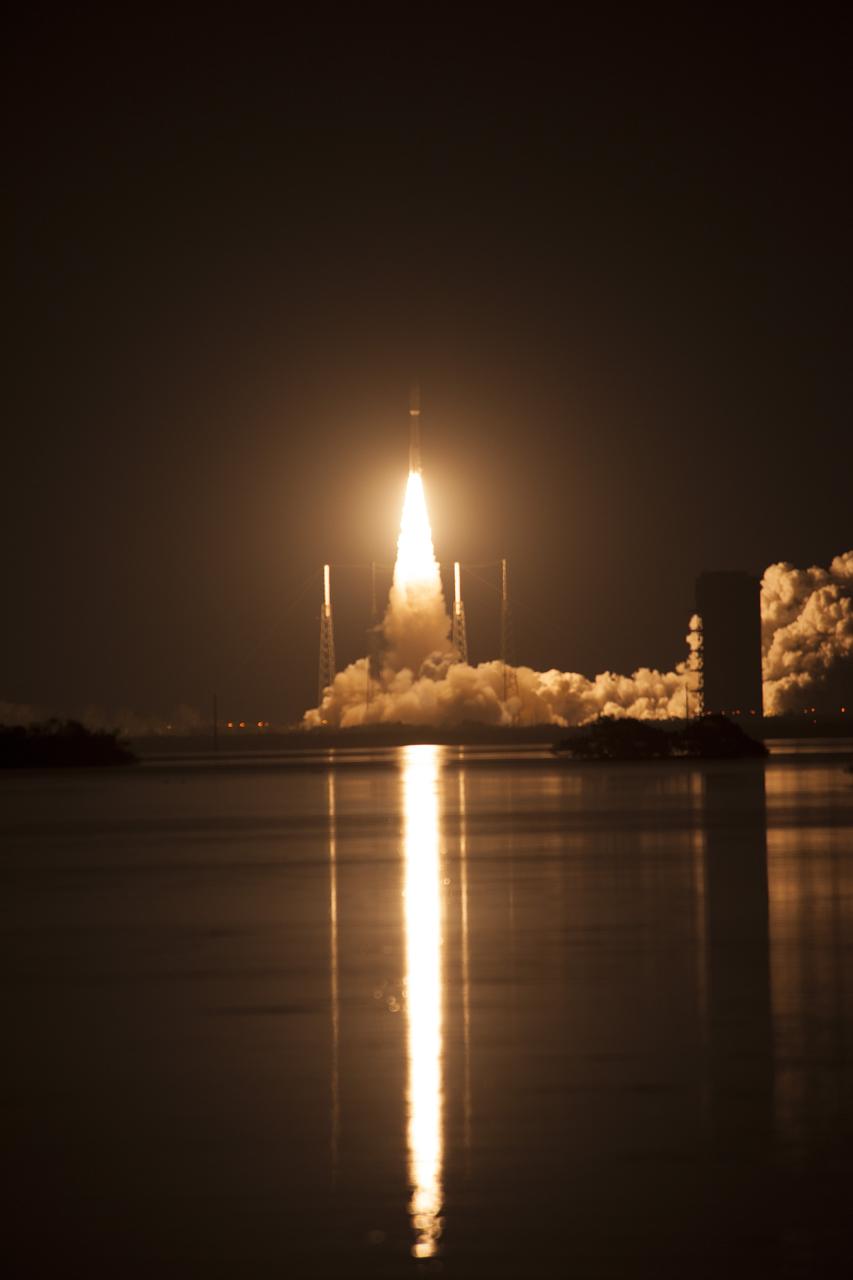
At Cape Canaveral Air Force Station's Space Launch Complex 41, an Atlas V rocket with NOAA's Geostationary Operational Environmental Satellite, or GOES-R, lifts off at 6:42 p.m. EST. GOES-R is the first satellite in a series of next-generation GOES satellites for NOAA, the National Oceanographic and Atmospheric Administration. It will launch to a geostationary orbit over the western hemisphere to provide images of storms and help meteorologists predict severe weather conditionals and develop long-range forecasts.
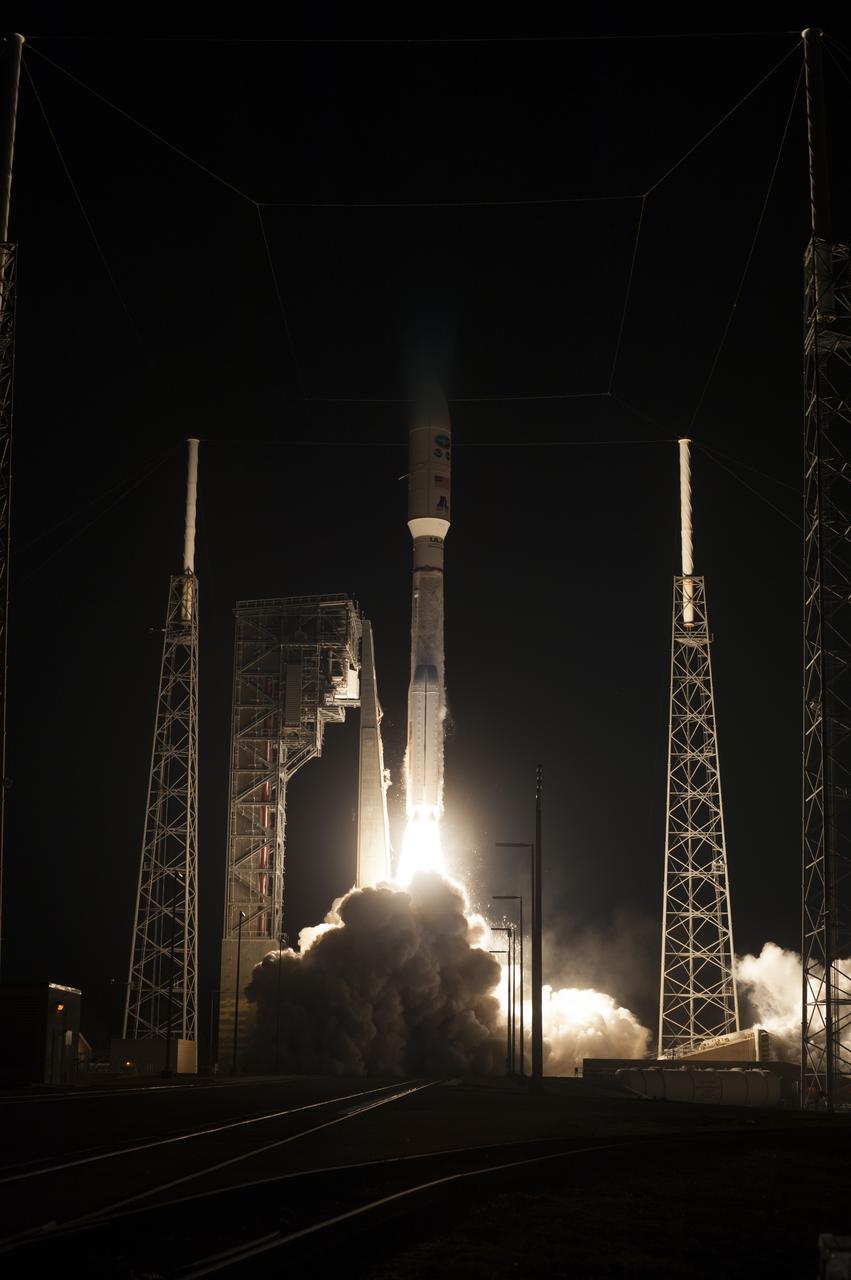
At Cape Canaveral Air Force Station's Space Launch Complex 41, an Atlas V rocket with NOAA's Geostationary Operational Environmental Satellite, or GOES-R, lifts off at 6:42 p.m. EST. GOES-R is the first satellite in a series of next-generation GOES satellites for NOAA, the National Oceanographic and Atmospheric Administration. It will launch to a geostationary orbit over the western hemisphere to provide images of storms and help meteorologists predict severe weather conditionals and develop long-range forecasts.
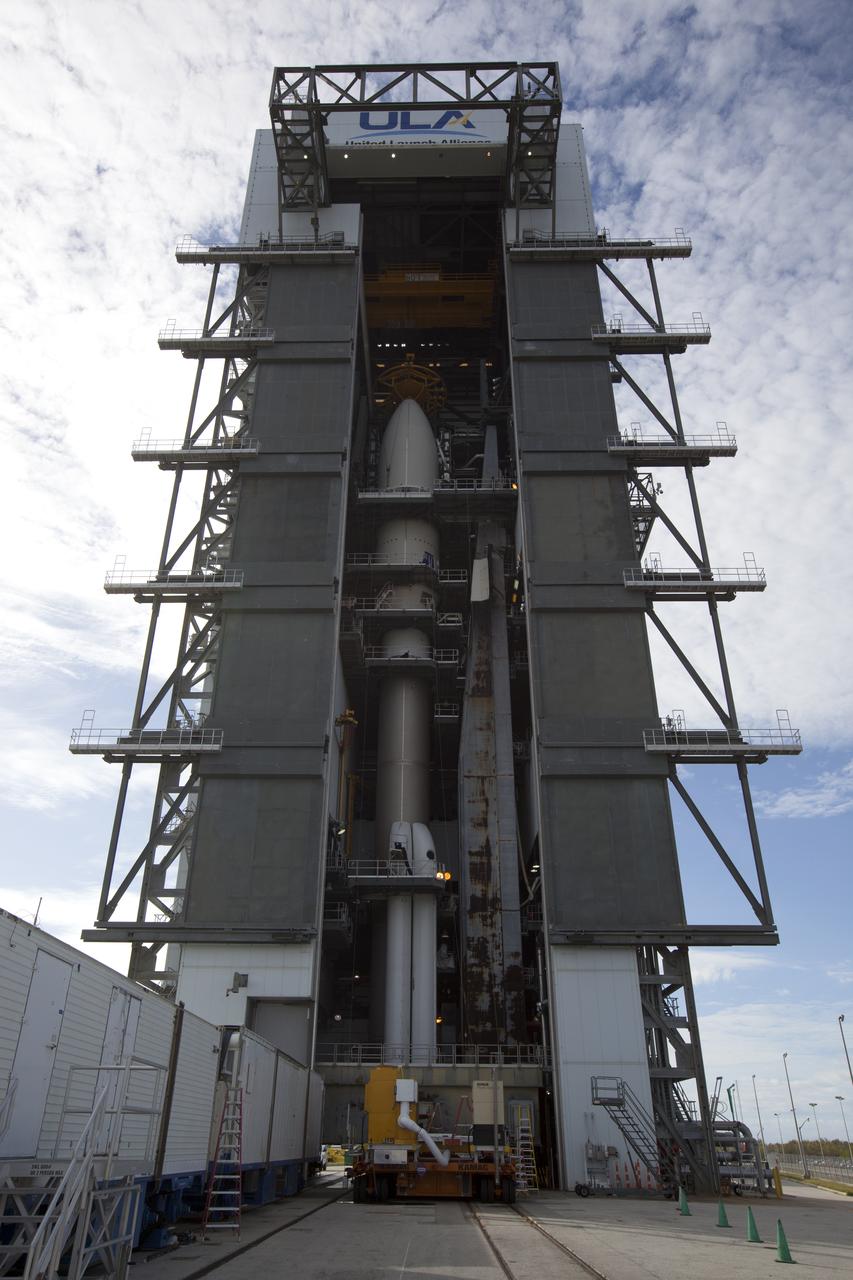
Enclosed in its payload fairing, NOAA's Geostationary Operational Environmental Satellite (GOES-R) is mated to the United Launch Alliance Atlas V Centaur upper stage in the Vertical Integration Facility at Space Launch Complex 41 at Cape Canaveral Air Force Station in Florida. The satellite will launch aboard the Atlas V rocket in November. GOES-R is the first satellite in a series of next-generation NOAA GOES Satellites.

At Cape Canaveral Air Force Station's Space Launch Complex 41, an Atlas V rocket with NOAA's Geostationary Operational Environmental Satellite, or GOES-R, lifts off at 6:42 p.m. EST. GOES-R is the first satellite in a series of next-generation GOES satellites for NOAA, the National Oceanographic and Atmospheric Administration. It will launch to a geostationary orbit over the western hemisphere to provide images of storms and help meteorologists predict severe weather conditionals and develop long-range forecasts.

In the Kennedy Space Center's Press Site auditorium, Sean Potter of NASA Communications, moderates a mission briefing on the Geostationary Operational Environmental Satellite (GOES-R). GOES-R is the first satellite in a series of next-generation GOES satellites for NOAA, the National Oceanographic and Atmospheric Administration. It will launch to a geostationary orbit over the western hemisphere to provide images of storms and help meteorologists predict severe weather conditionals and develop long-range forecasts.
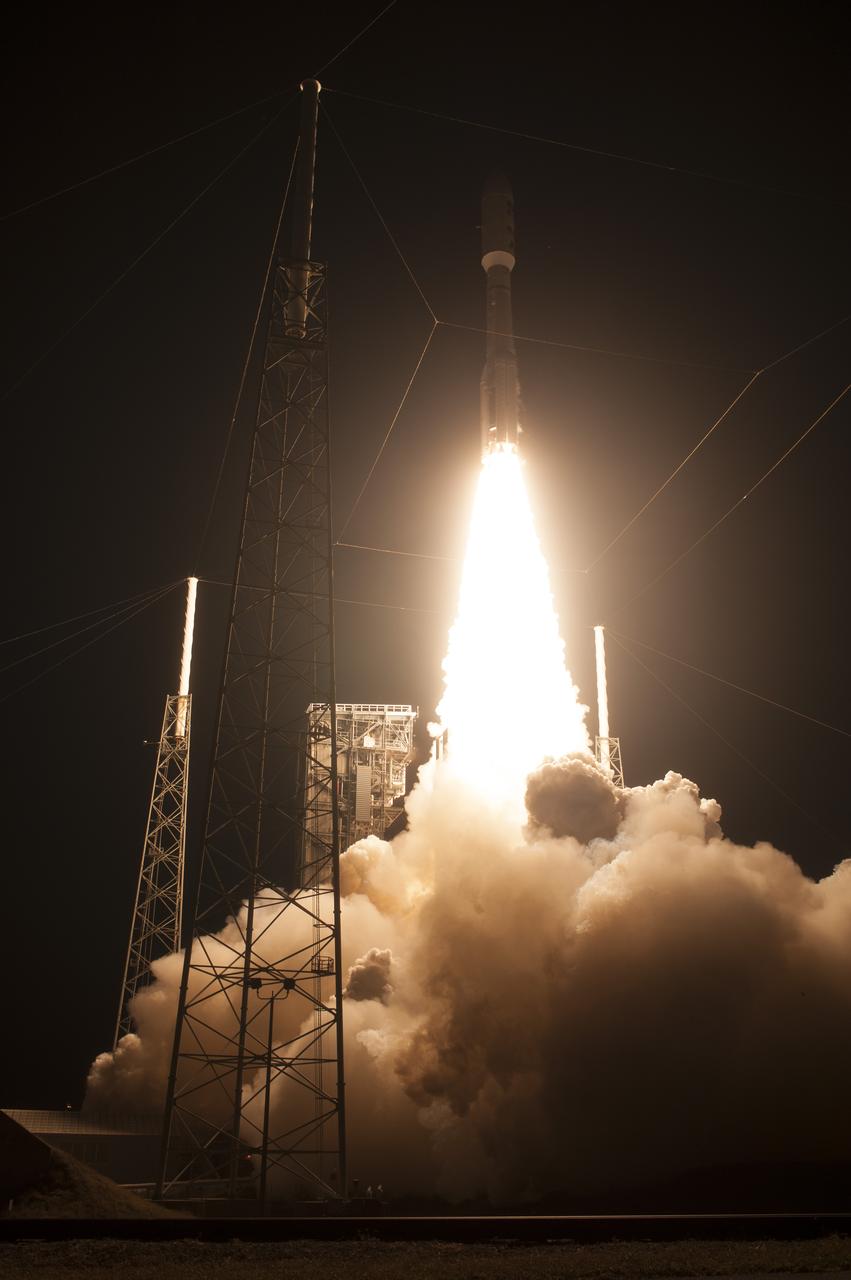
At Cape Canaveral Air Force Station's Space Launch Complex 41, an Atlas V rocket with NOAA's Geostationary Operational Environmental Satellite, or GOES-R, lifts off at 6:42 p.m. EST. GOES-R is the first satellite in a series of next-generation GOES satellites for NOAA, the National Oceanographic and Atmospheric Administration. It will launch to a geostationary orbit over the western hemisphere to provide images of storms and help meteorologists predict severe weather conditionals and develop long-range forecasts.
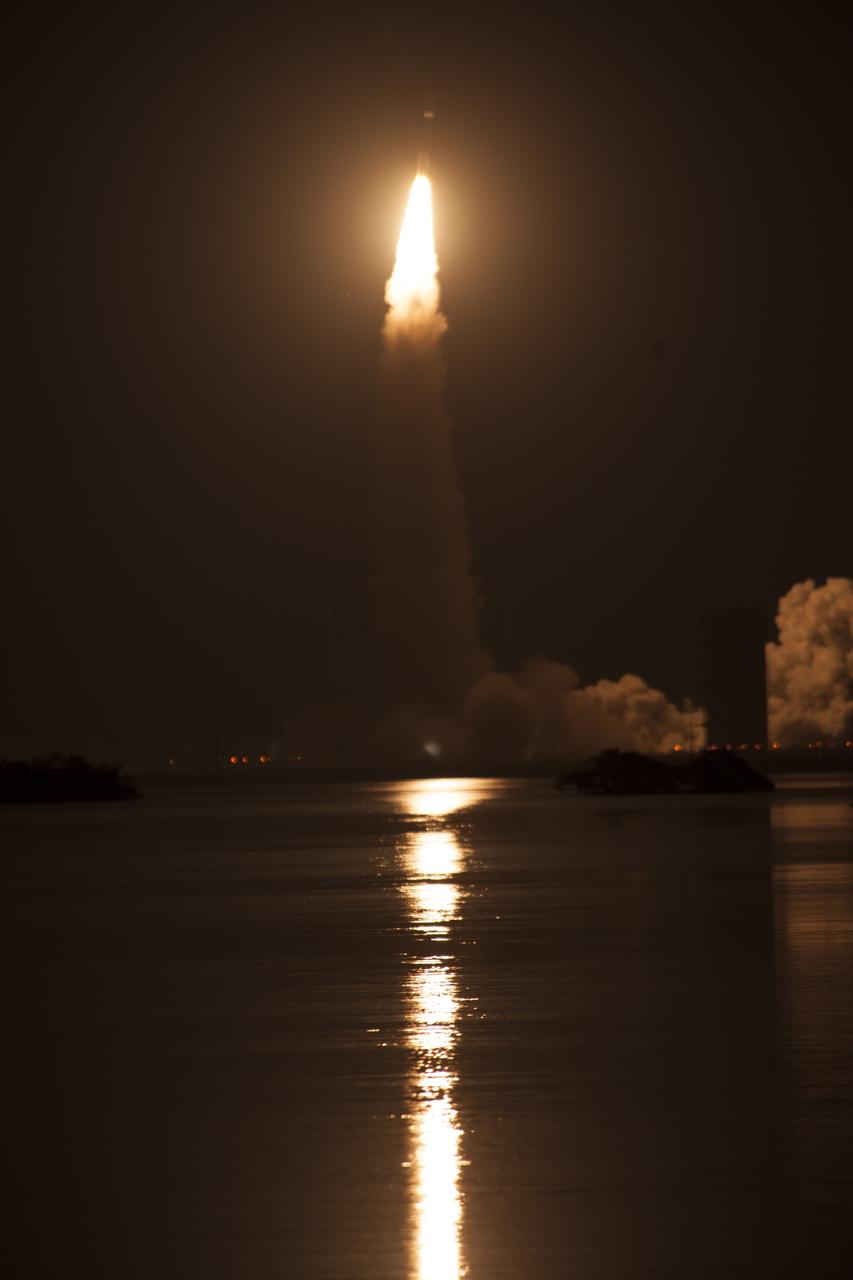
At Cape Canaveral Air Force Station's Space Launch Complex 41, an Atlas V rocket with NOAA's Geostationary Operational Environmental Satellite, or GOES-R, lifts off at 6:42 p.m. EST. GOES-R is the first satellite in a series of next-generation GOES satellites for NOAA, the National Oceanographic and Atmospheric Administration. It will launch to a geostationary orbit over the western hemisphere to provide images of storms and help meteorologists predict severe weather conditionals and develop long-range forecasts.

In the Kennedy Space Center's Press Site auditorium, Damon Penn, assistant administrator for response at the Federal Emergency Management Agency, speaks to the media during a mission briefing on the Geostationary Operational Environmental Satellite (GOES-R). GOES-R is the first satellite in a series of next-generation GOES satellites for NOAA, the National Oceanographic and Atmospheric Administration. It will launch to a geostationary orbit over the western hemisphere to provide images of storms and help meteorologists predict severe weather conditionals and develop long-range forecasts.
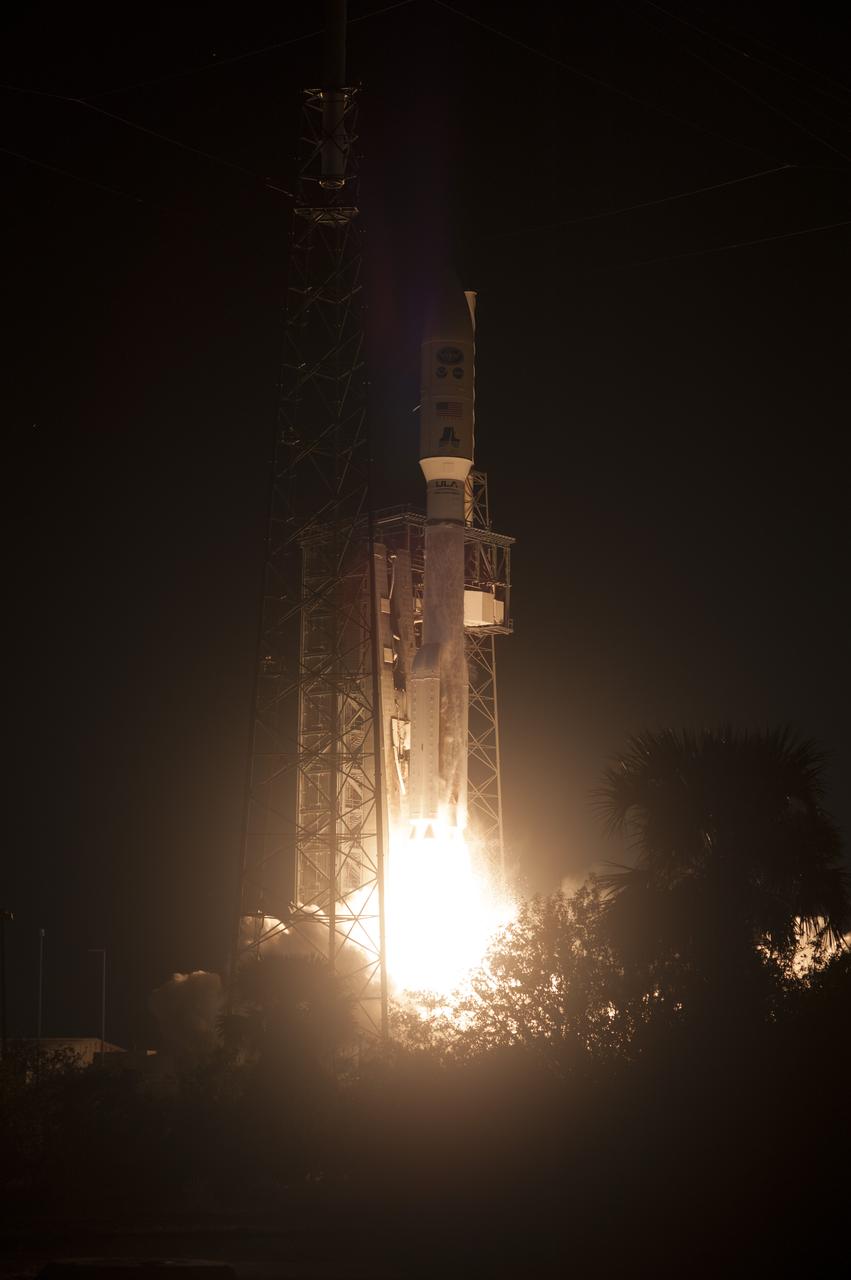
At Cape Canaveral Air Force Station's Space Launch Complex 41, an Atlas V rocket with NOAA's Geostationary Operational Environmental Satellite, or GOES-R, lifts off at 6:42 p.m. EST. GOES-R is the first satellite in a series of next-generation GOES satellites for NOAA, the National Oceanographic and Atmospheric Administration. It will launch to a geostationary orbit over the western hemisphere to provide images of storms and help meteorologists predict severe weather conditionals and develop long-range forecasts.

In the Kennedy Space Center's Press Site auditorium, Damon Penn, assistant administrator for response at the Federal Emergency Management Agency, speaks to the media during a mission briefing on the Geostationary Operational Environmental Satellite (GOES-R). GOES-R is the first satellite in a series of next-generation GOES satellites for NOAA, the National Oceanographic and Atmospheric Administration. It will launch to a geostationary orbit over the western hemisphere to provide images of storms and help meteorologists predict severe weather conditionals and develop long-range forecasts.

In the Kennedy Space Center's Press Site auditorium, Sandra Cauffman, deputy director of NASA's Earth Science Division, speaks to the media during a mission briefing on the Geostationary Operational Environmental Satellite (GOES-R). GOES-R is the first satellite in a series of next-generation GOES satellites for NOAA, the National Oceanographic and Atmospheric Administration. It will launch to a geostationary orbit over the western hemisphere to provide images of storms and help meteorologists predict severe weather conditionals and develop long-range forecasts.
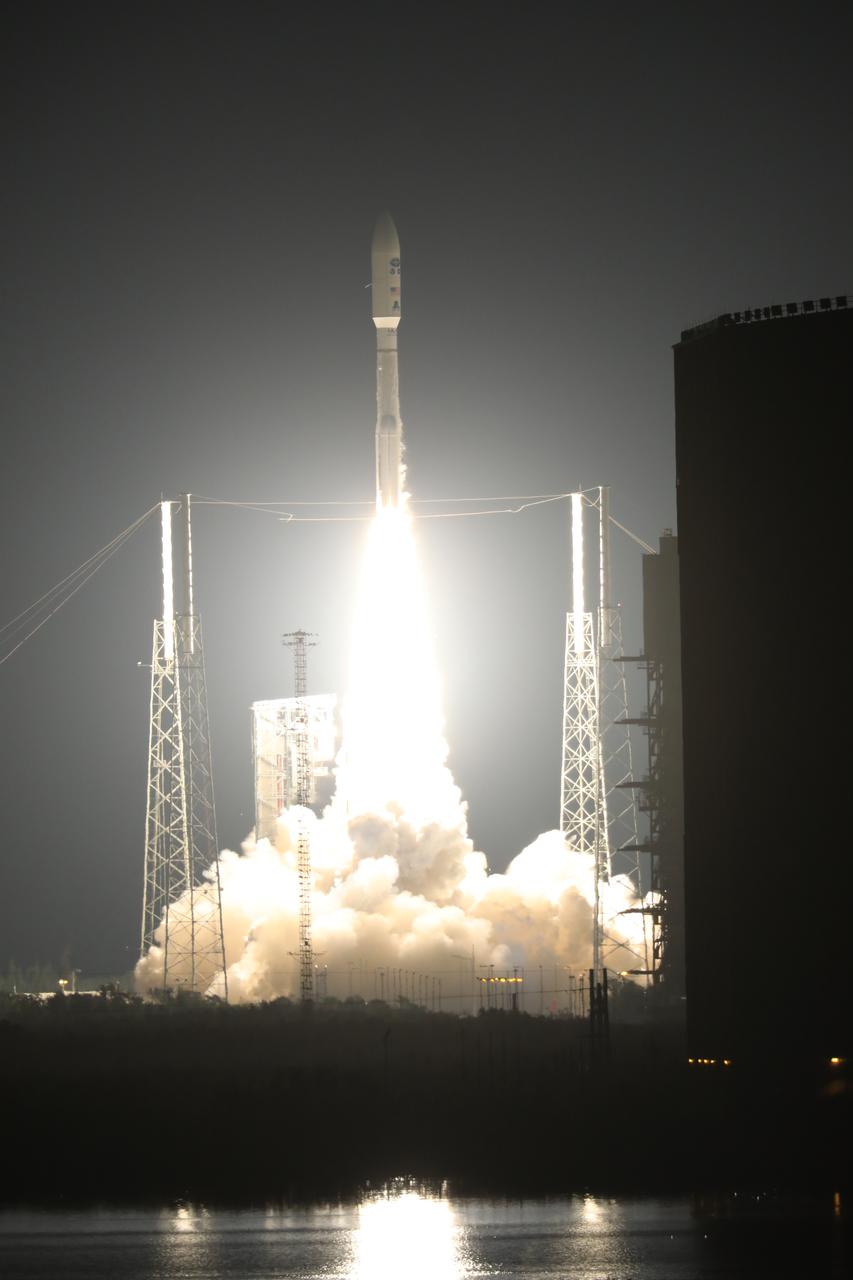
At Cape Canaveral Air Force Station's Space Launch Complex 41, an Atlas V rocket with NOAA's Geostationary Operational Environmental Satellite, or GOES-R, lifts off at 6:42 p.m. EST. GOES-R is the first satellite in a series of next-generation GOES satellites for NOAA, the National Oceanographic and Atmospheric Administration. It will launch to a geostationary orbit over the western hemisphere to provide images of storms and help meteorologists predict severe weather conditionals and develop long-range forecasts.
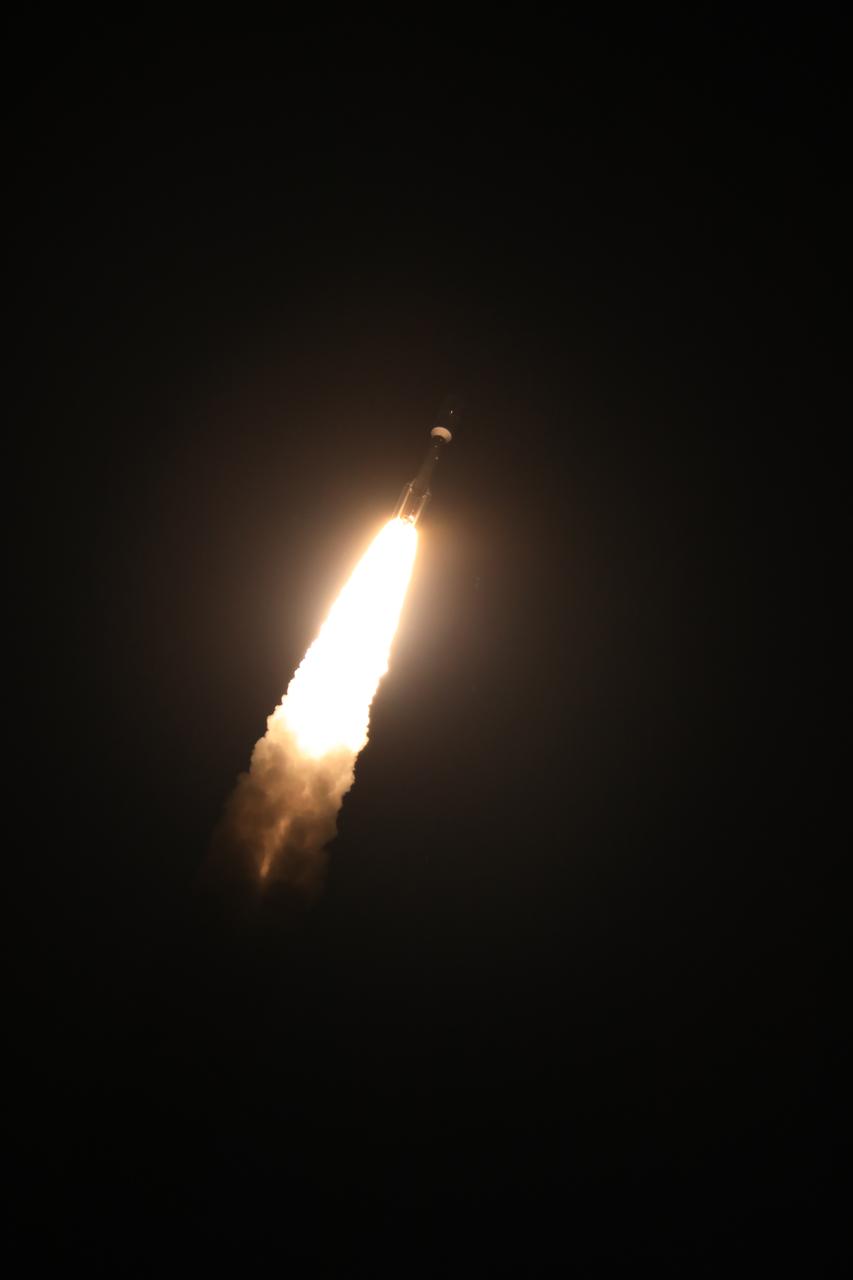
At Cape Canaveral Air Force Station's Space Launch Complex 41, an Atlas V rocket with NOAA's Geostationary Operational Environmental Satellite, or GOES-R, lifts off at 6:42 p.m. EST. GOES-R is the first satellite in a series of next-generation GOES satellites for NOAA, the National Oceanographic and Atmospheric Administration. It will launch to a geostationary orbit over the western hemisphere to provide images of storms and help meteorologists predict severe weather conditionals and develop long-range forecasts.
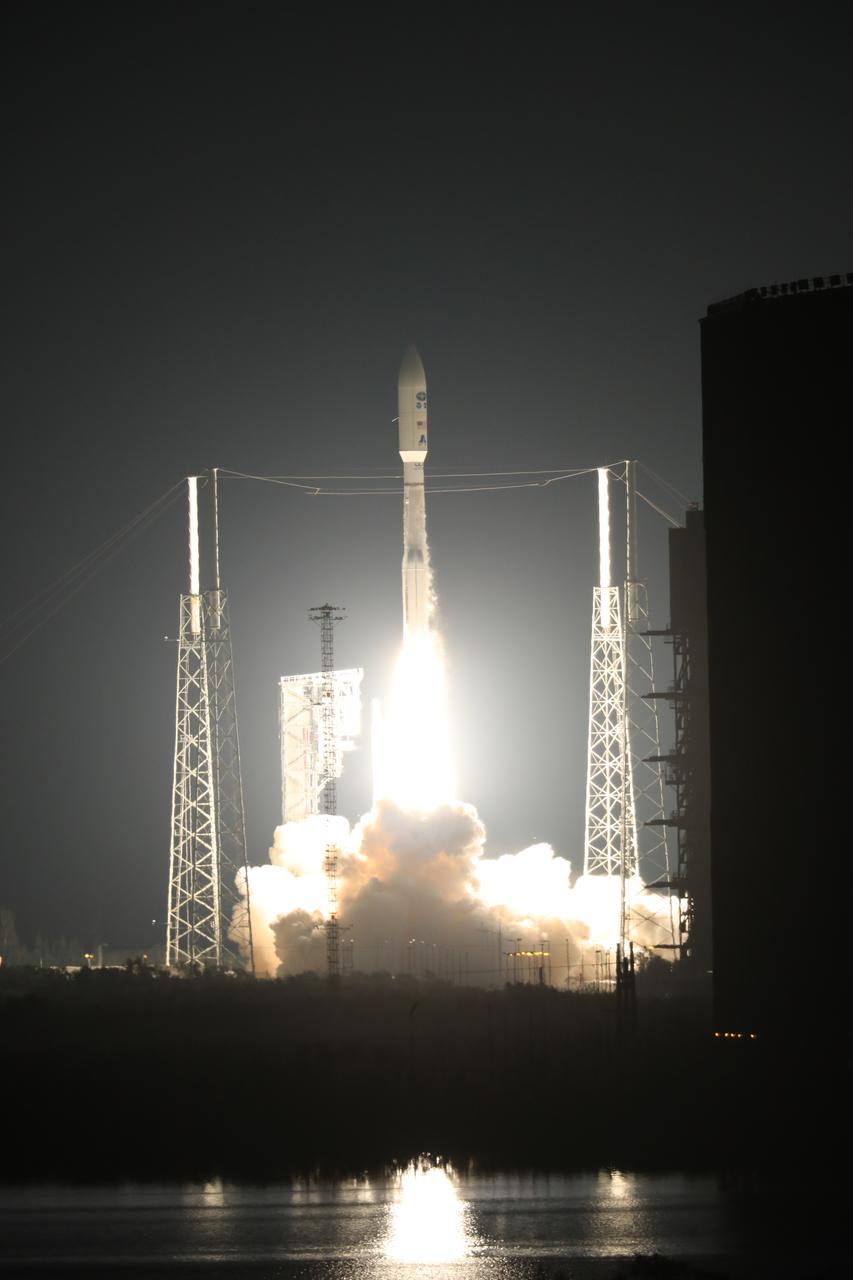
At Cape Canaveral Air Force Station's Space Launch Complex 41, an Atlas V rocket with NOAA's Geostationary Operational Environmental Satellite, or GOES-R, lifts off at 6:42 p.m. EST. GOES-R is the first satellite in a series of next-generation GOES satellites for NOAA, the National Oceanographic and Atmospheric Administration. It will launch to a geostationary orbit over the western hemisphere to provide images of storms and help meteorologists predict severe weather conditionals and develop long-range forecasts.
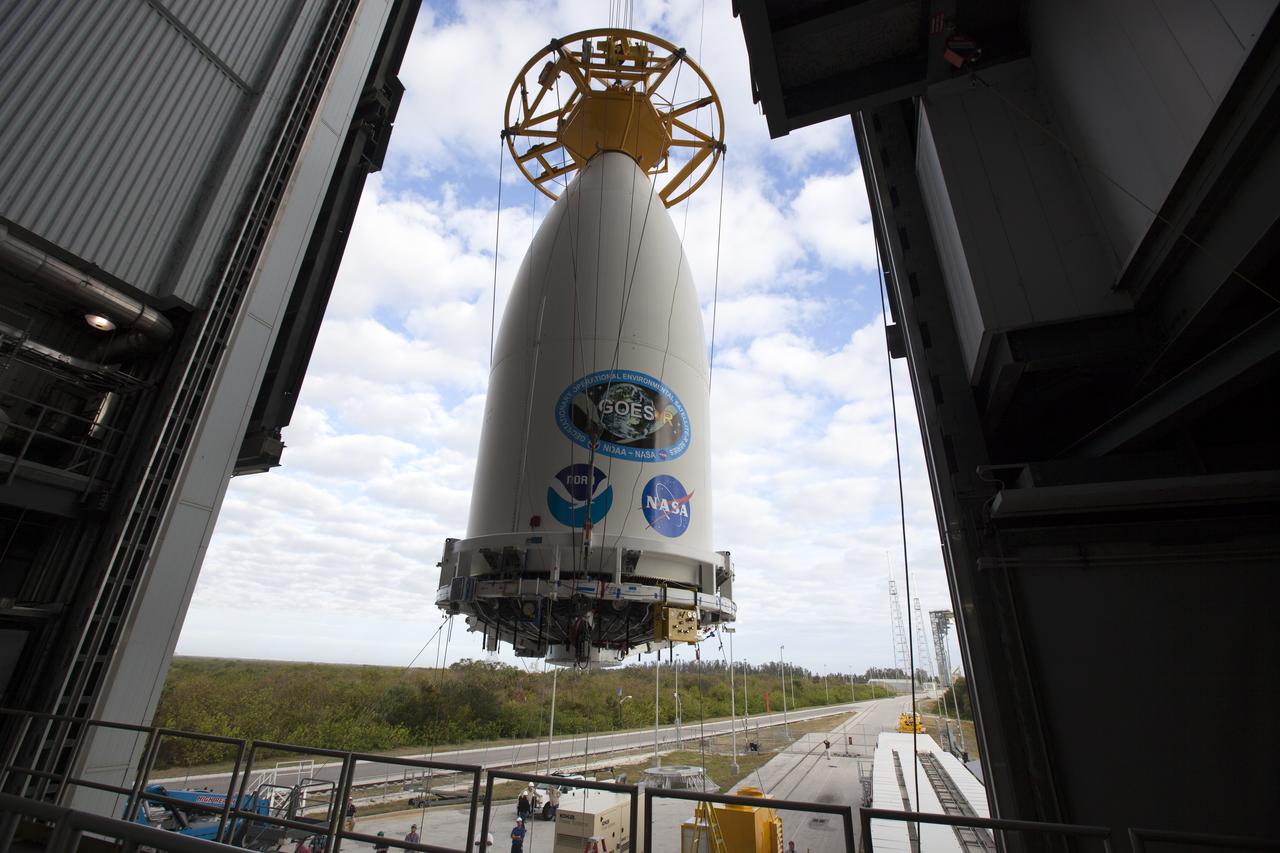
A view from high up inside the Vertical Integration Facility at Space Launch Complex 41 at Cape Canaveral Air Force Station in Florida. A crane lifts the payload fairing containing NOAA's Geostationary Operational Environmental Satellite (GOES-R) for mating to the United Launch Alliance Atlas V Centaur upper stage. The satellite will launch aboard the Atlas V rocket in November. GOES-R is the first satellite in a series of next-generation NOAA GOES Satellites.
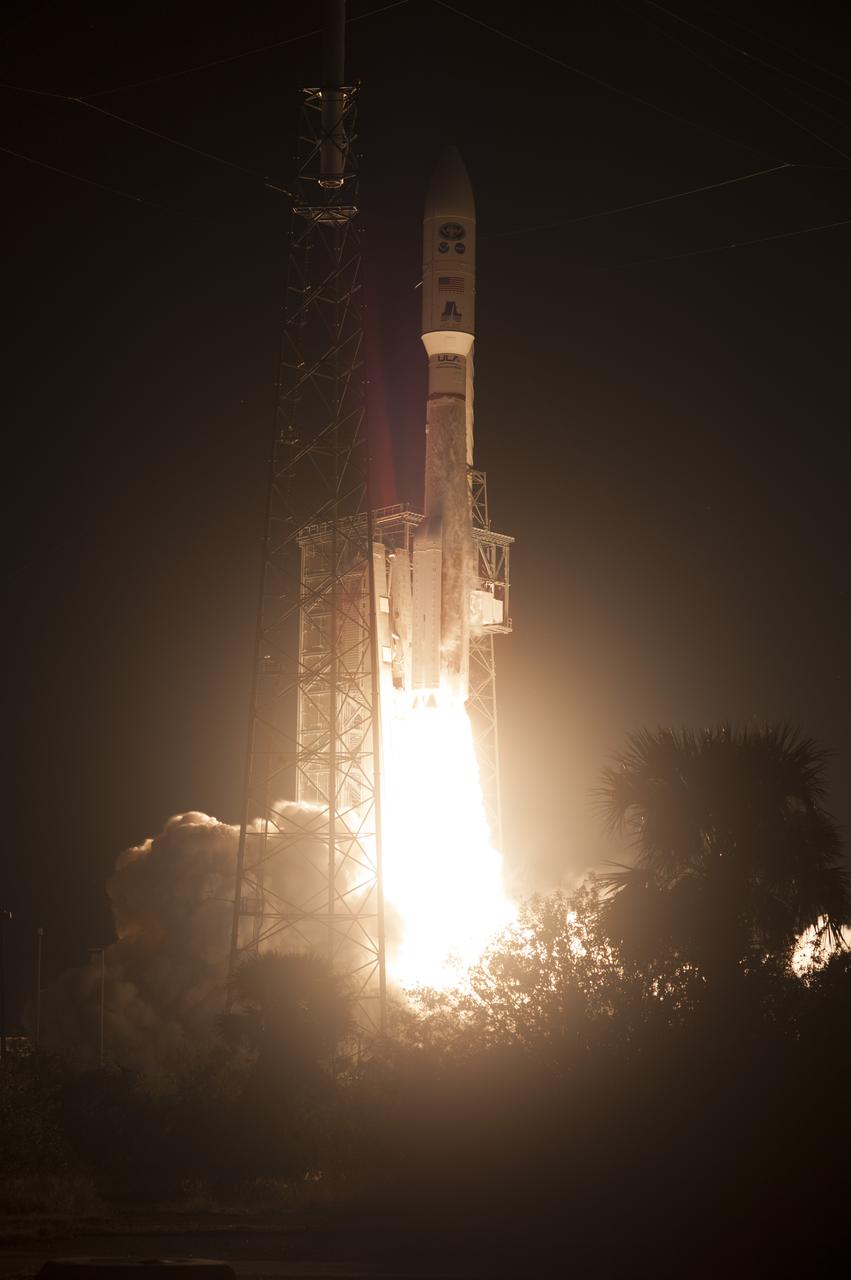
At Cape Canaveral Air Force Station's Space Launch Complex 41, an Atlas V rocket with NOAA's Geostationary Operational Environmental Satellite, or GOES-R, lifts off at 6:42 p.m. EST. GOES-R is the first satellite in a series of next-generation GOES satellites for NOAA, the National Oceanographic and Atmospheric Administration. It will launch to a geostationary orbit over the western hemisphere to provide images of storms and help meteorologists predict severe weather conditionals and develop long-range forecasts.
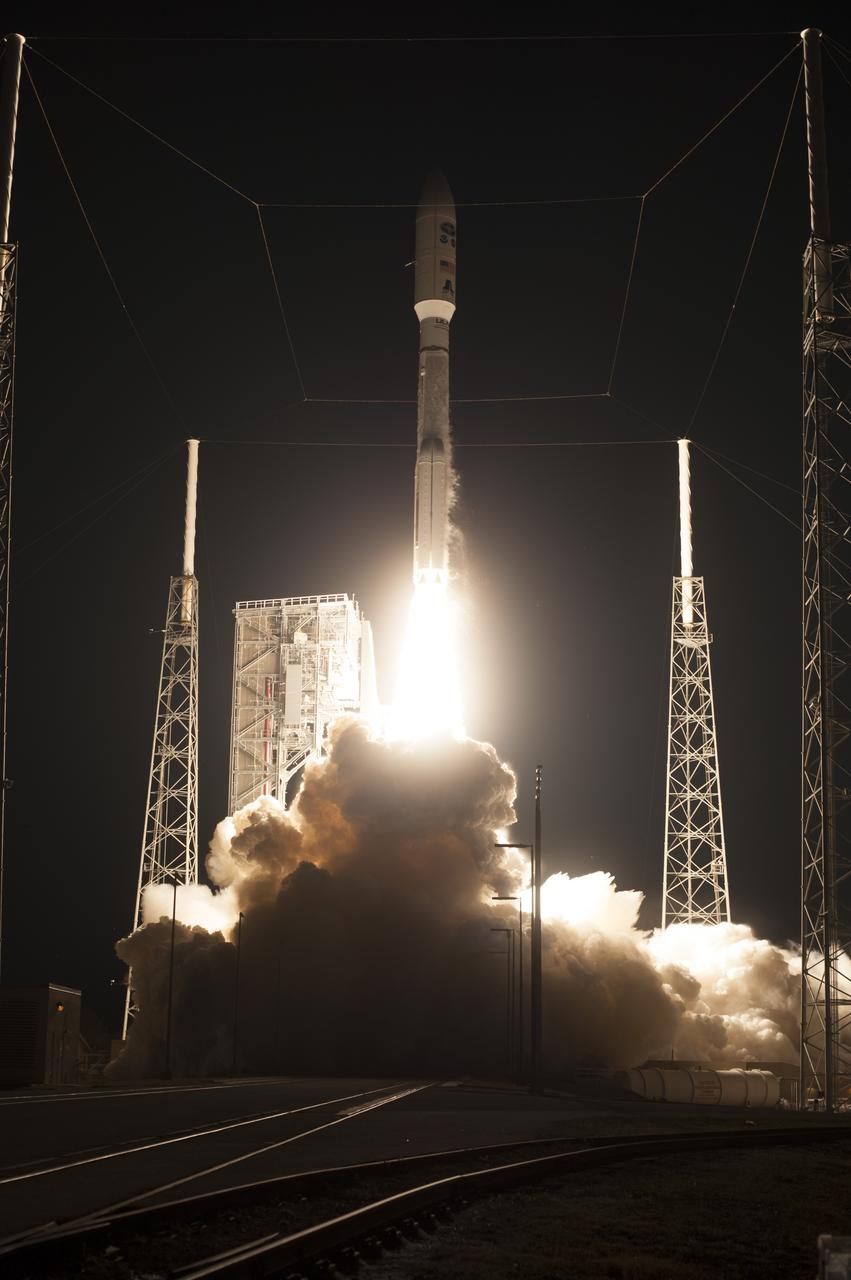
At Cape Canaveral Air Force Station's Space Launch Complex 41, an Atlas V rocket with NOAA's Geostationary Operational Environmental Satellite, or GOES-R, lifts off at 6:42 p.m. EST. GOES-R is the first satellite in a series of next-generation GOES satellites for NOAA, the National Oceanographic and Atmospheric Administration. It will launch to a geostationary orbit over the western hemisphere to provide images of storms and help meteorologists predict severe weather conditionals and develop long-range forecasts.
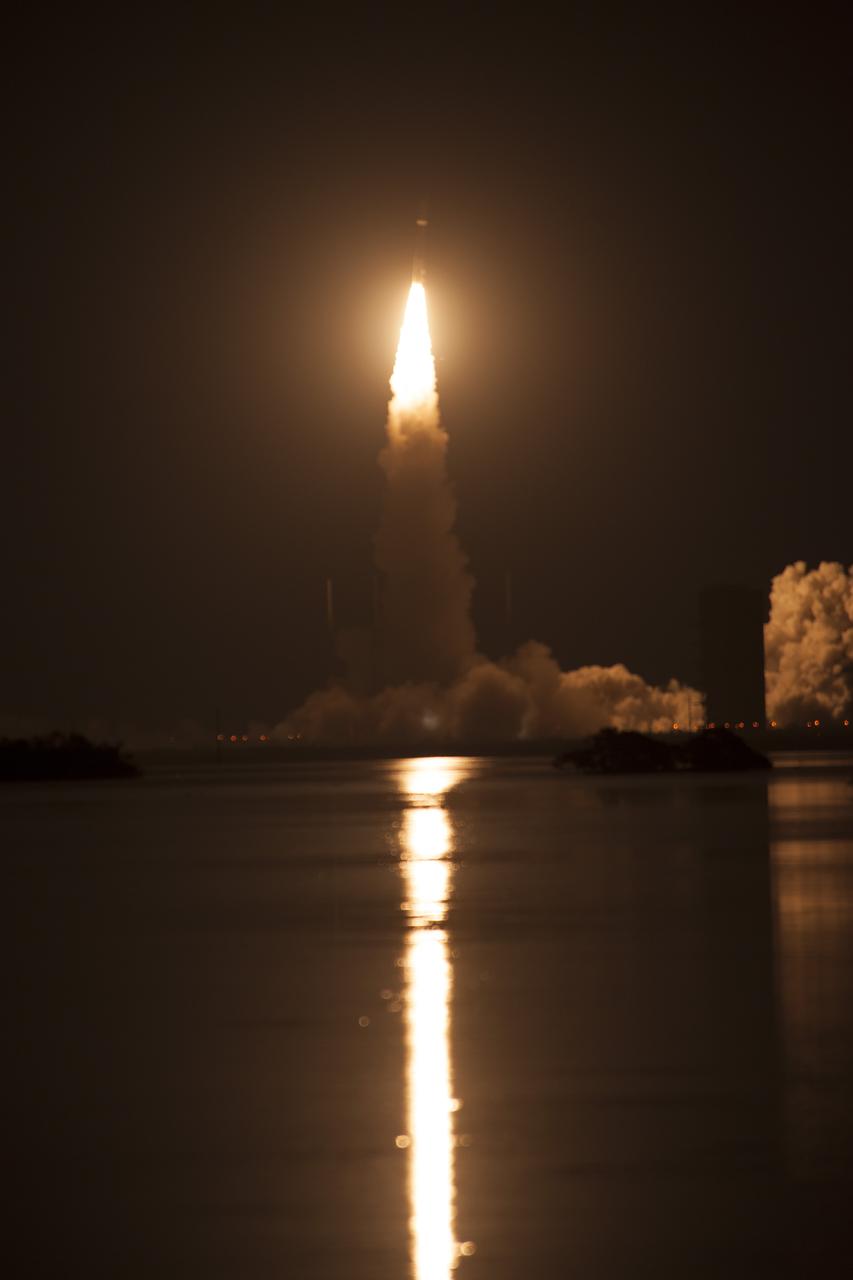
At Cape Canaveral Air Force Station's Space Launch Complex 41, an Atlas V rocket with NOAA's Geostationary Operational Environmental Satellite, or GOES-R, lifts off at 6:42 p.m. EST. GOES-R is the first satellite in a series of next-generation GOES satellites for NOAA, the National Oceanographic and Atmospheric Administration. It will launch to a geostationary orbit over the western hemisphere to provide images of storms and help meteorologists predict severe weather conditionals and develop long-range forecasts.
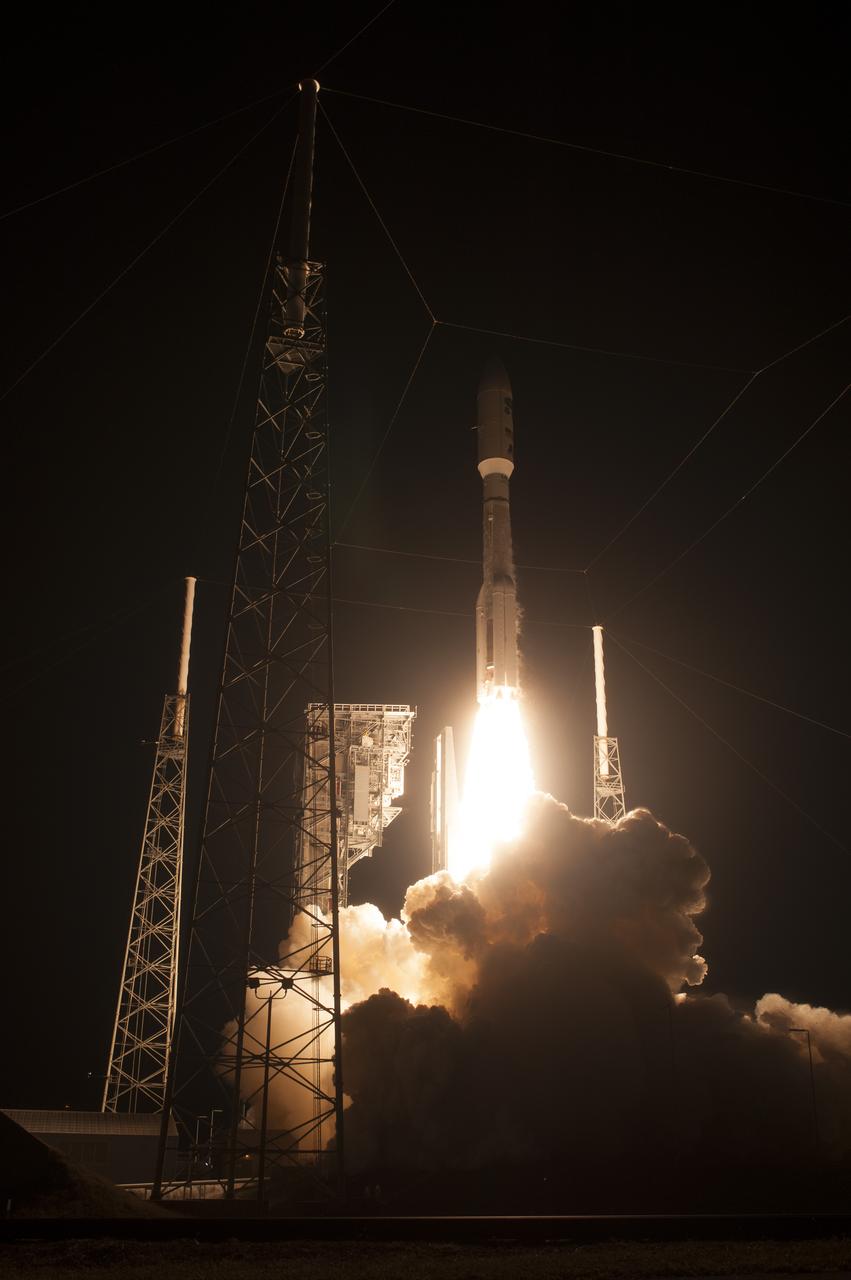
At Cape Canaveral Air Force Station's Space Launch Complex 41, an Atlas V rocket with NOAA's Geostationary Operational Environmental Satellite, or GOES-R, lifts off at 6:42 p.m. EST. GOES-R is the first satellite in a series of next-generation GOES satellites for NOAA, the National Oceanographic and Atmospheric Administration. It will launch to a geostationary orbit over the western hemisphere to provide images of storms and help meteorologists predict severe weather conditionals and develop long-range forecasts.
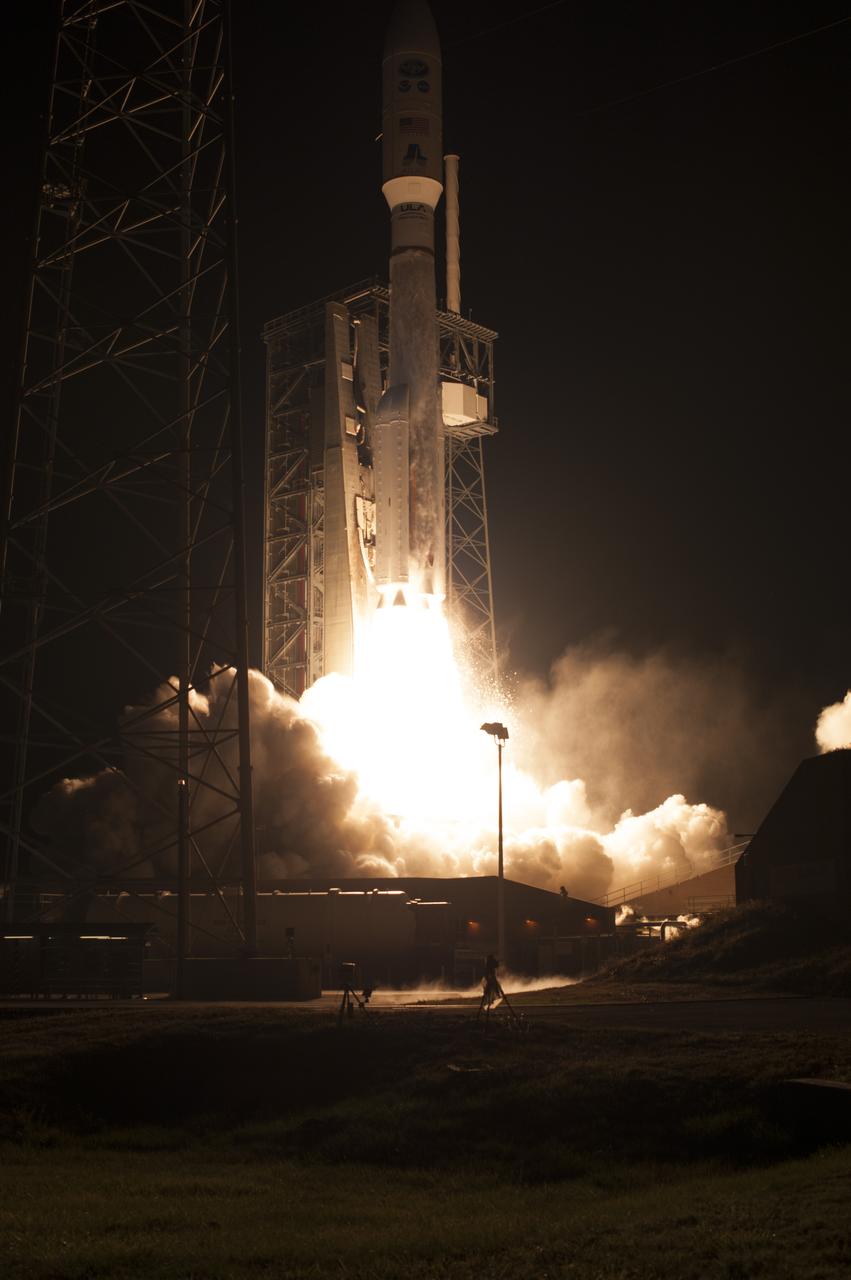
At Cape Canaveral Air Force Station's Space Launch Complex 41, an Atlas V rocket with NOAA's Geostationary Operational Environmental Satellite, or GOES-R, lifts off at 6:42 p.m. EST. GOES-R is the first satellite in a series of next-generation GOES satellites for NOAA, the National Oceanographic and Atmospheric Administration. It will launch to a geostationary orbit over the western hemisphere to provide images of storms and help meteorologists predict severe weather conditionals and develop long-range forecasts.
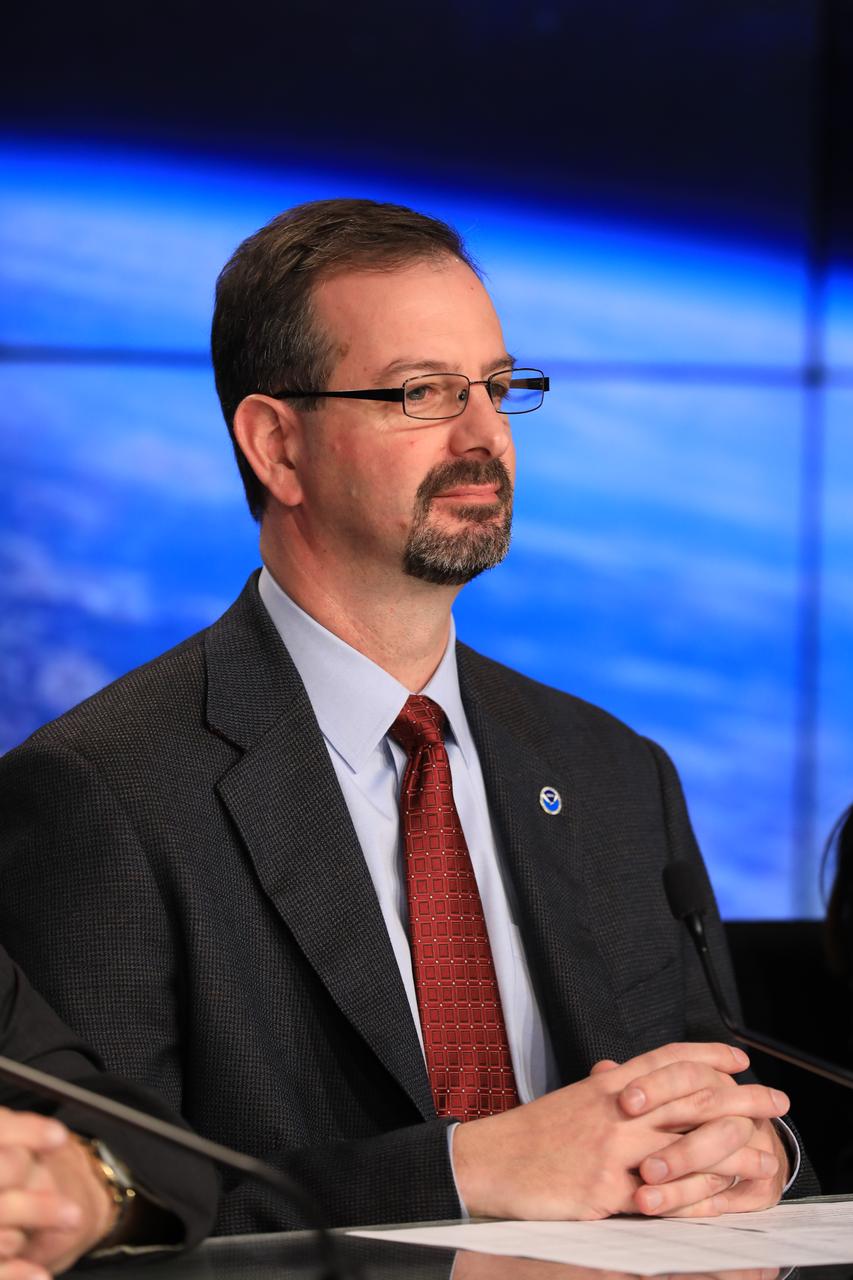
In the Kennedy Space Center's Press Site auditorium, Joseph A. Pica, director of the National Weather Service Office of Observations, speaks to the media during a mission briefing on the Geostationary Operational Environmental Satellite (GOES-R). GOES-R is the first satellite in a series of next-generation GOES satellites for NOAA, the National Oceanographic and Atmospheric Administration. It will launch to a geostationary orbit over the western hemisphere to provide images of storms and help meteorologists predict severe weather conditionals and develop long-range forecasts.
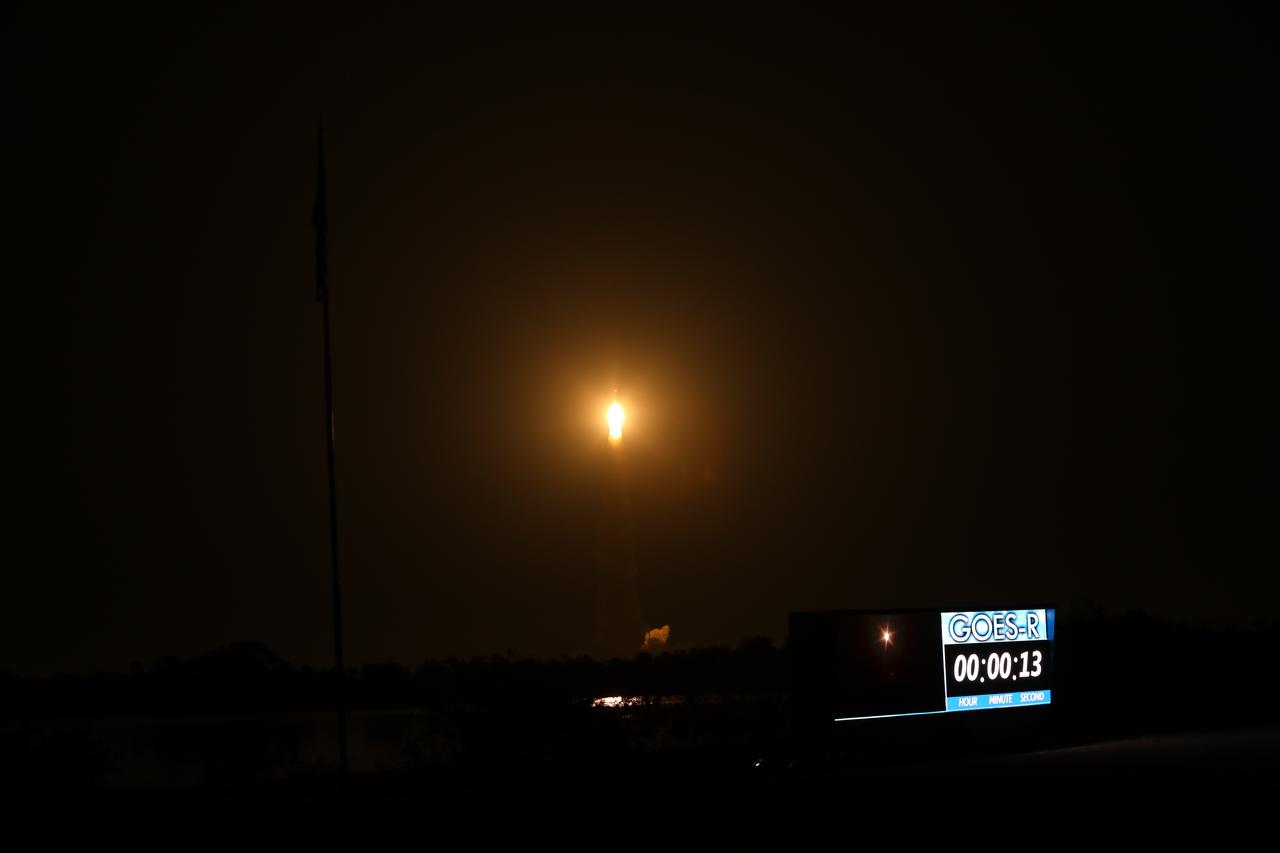
At Cape Canaveral Air Force Station's Space Launch Complex 41, an Atlas V rocket with NOAA's Geostationary Operational Environmental Satellite, or GOES-R, lifts off at 6:42 p.m. EST. GOES-R is the first satellite in a series of next-generation GOES satellites for NOAA, the National Oceanographic and Atmospheric Administration. It will launch to a geostationary orbit over the western hemisphere to provide images of storms and help meteorologists predict severe weather conditionals and develop long-range forecasts.
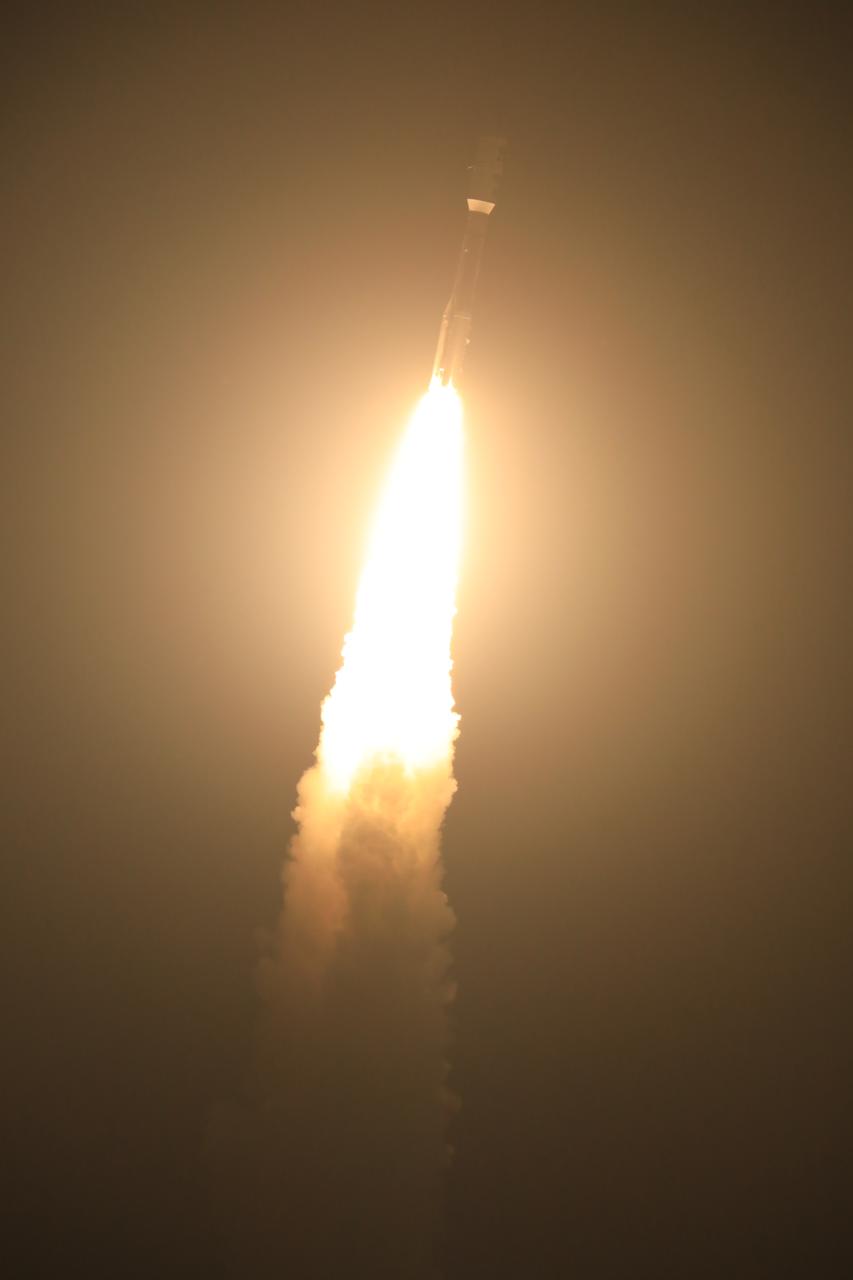
At Cape Canaveral Air Force Station's Space Launch Complex 41, an Atlas V rocket with NOAA's Geostationary Operational Environmental Satellite, or GOES-R, lifts off at 6:42 p.m. EST. GOES-R is the first satellite in a series of next-generation GOES satellites for NOAA, the National Oceanographic and Atmospheric Administration. It will launch to a geostationary orbit over the western hemisphere to provide images of storms and help meteorologists predict severe weather conditionals and develop long-range forecasts.
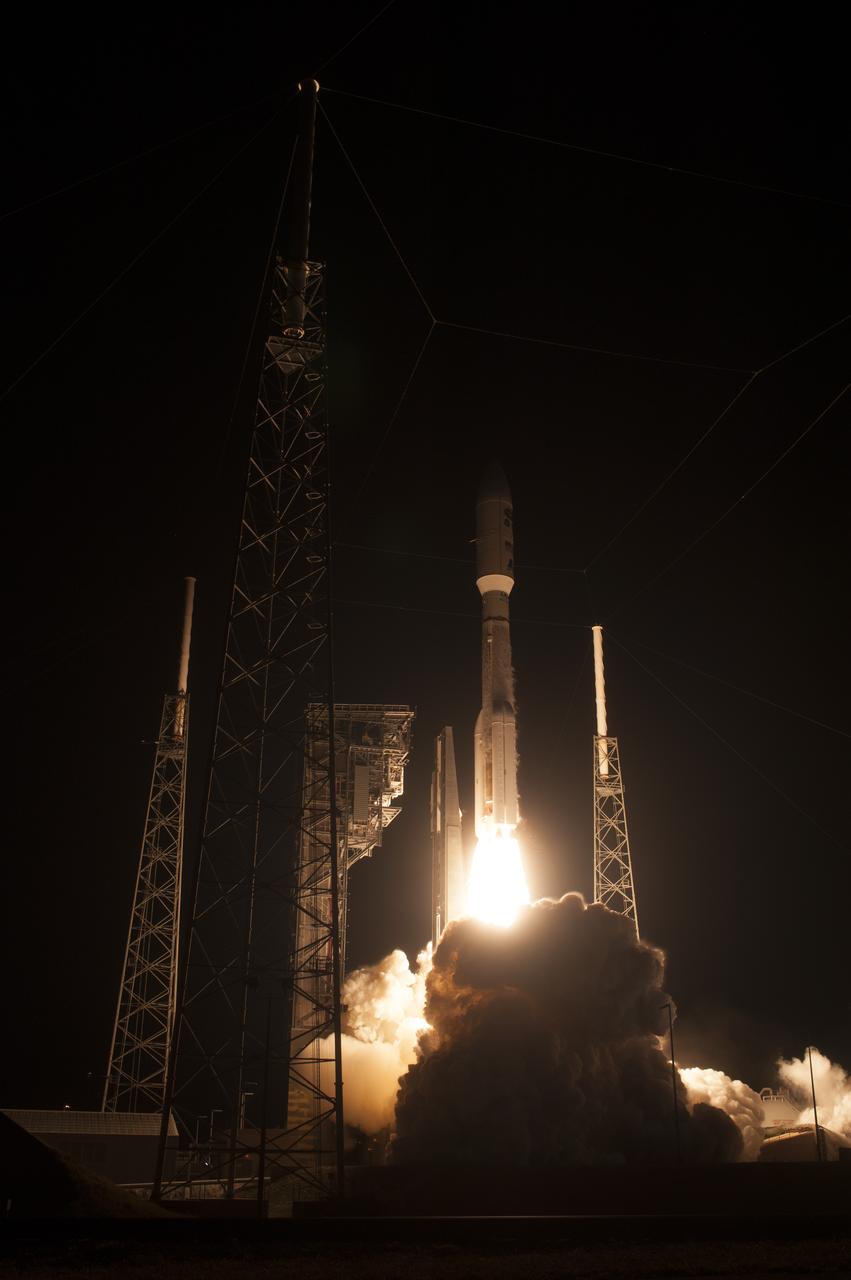
At Cape Canaveral Air Force Station's Space Launch Complex 41, an Atlas V rocket with NOAA's Geostationary Operational Environmental Satellite, or GOES-R, lifts off at 6:42 p.m. EST. GOES-R is the first satellite in a series of next-generation GOES satellites for NOAA, the National Oceanographic and Atmospheric Administration. It will launch to a geostationary orbit over the western hemisphere to provide images of storms and help meteorologists predict severe weather conditionals and develop long-range forecasts.
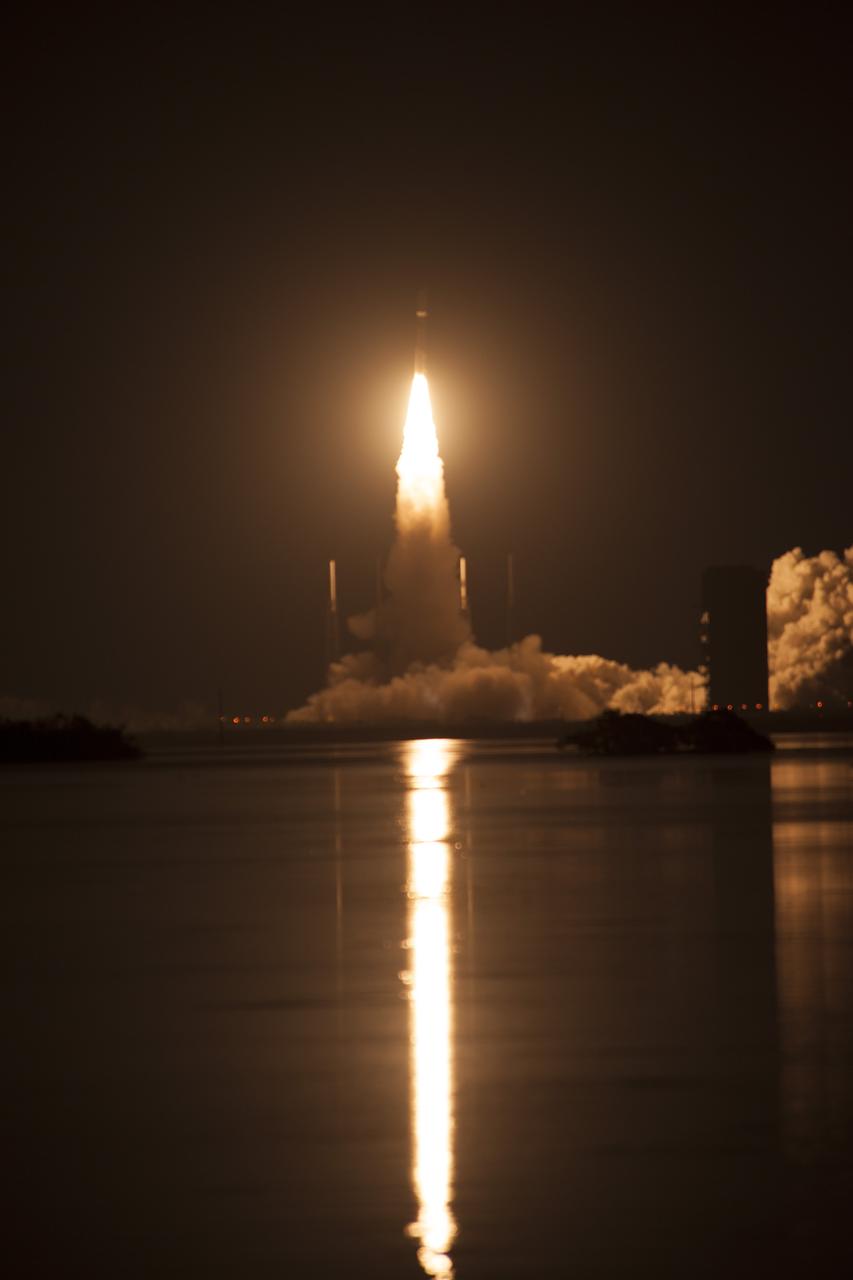
At Cape Canaveral Air Force Station's Space Launch Complex 41, an Atlas V rocket with NOAA's Geostationary Operational Environmental Satellite, or GOES-R, lifts off at 6:42 p.m. EST. GOES-R is the first satellite in a series of next-generation GOES satellites for NOAA, the National Oceanographic and Atmospheric Administration. It will launch to a geostationary orbit over the western hemisphere to provide images of storms and help meteorologists predict severe weather conditionals and develop long-range forecasts.
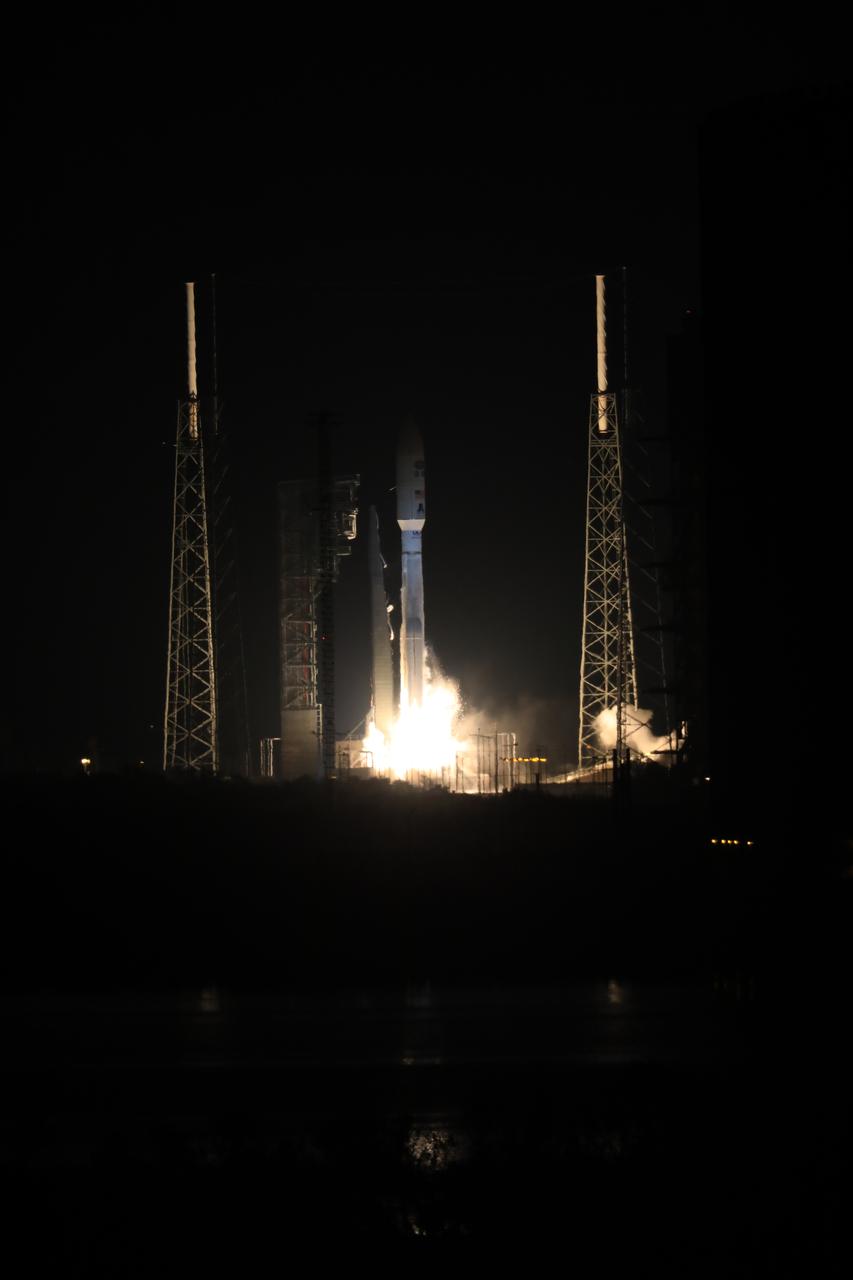
At Cape Canaveral Air Force Station's Space Launch Complex 41, an Atlas V rocket with NOAA's Geostationary Operational Environmental Satellite, or GOES-R, lifts off at 6:42 p.m. EST. GOES-R is the first satellite in a series of next-generation GOES satellites for NOAA, the National Oceanographic and Atmospheric Administration. It will launch to a geostationary orbit over the western hemisphere to provide images of storms and help meteorologists predict severe weather conditionals and develop long-range forecasts.
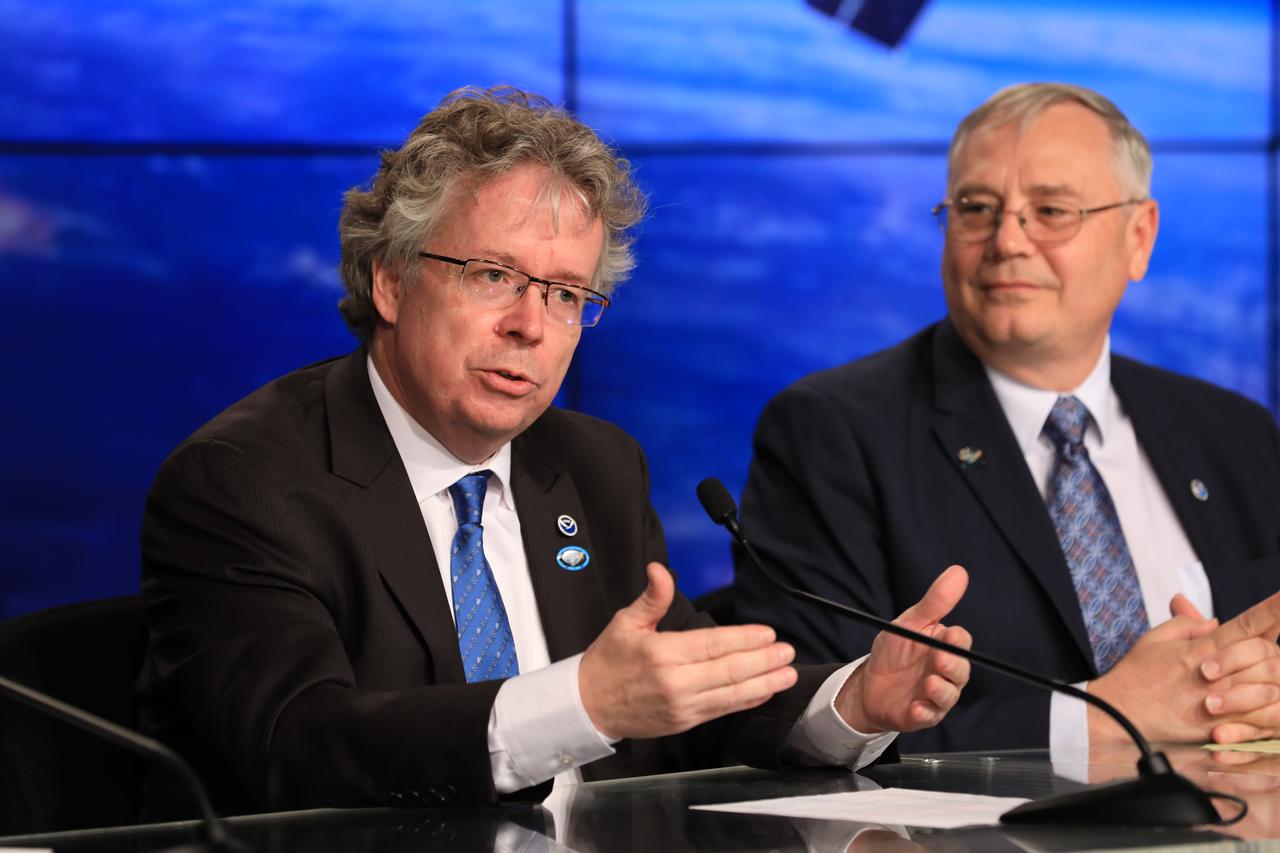
From left, Stephen Volz, assistant administrator for satellite and information services, National Oceanic and Atmospheric Administration (NOAA); and Greg Mandt, GOES-R system program director, NOAA, speak to members of the news media during a Geostationary Operational Environmental Satellite (GOES-R) prelaunch news conference in the Kennedy Space Center's Press Site auditorium.

From left, Stephen Volz, assistant administrator for satellite and information services, National Oceanic and Atmospheric Administration (NOAA); Greg Mandt, GOES-R system program director, NOAA; and Sandra Smalley, director, Joint Agency Satellite Division, NASA Headquarters, speak to members of the news media during a Geostationary Operational Environmental Satellite (GOES-R) prelaunch news conference in the Kennedy Space Center's Press Site auditorium.

In the Kennedy Space Center's Press Site auditorium, members of the media participate in a mission briefing on the Geostationary Operational Environmental Satellite (GOES-R). Briefing participants from left are: Steven Goodman, NOAA's GOES-R program scientist; Joseph A. Pica, director of the National Weather Service Office of Observations; Sandra Cauffman, deputy director of NASA's Earth Science Division; and Damon Penn, assistant administrator for response at the Federal Emergency Management Agency. GOES-R is the first satellite in a series of next-generation GOES satellites for NOAA, the National Oceanographic and Atmospheric Administration. It will launch to a geostationary orbit over the western hemisphere to provide images of storms and help meteorologists predict severe weather conditionals and develop long-range forecasts.