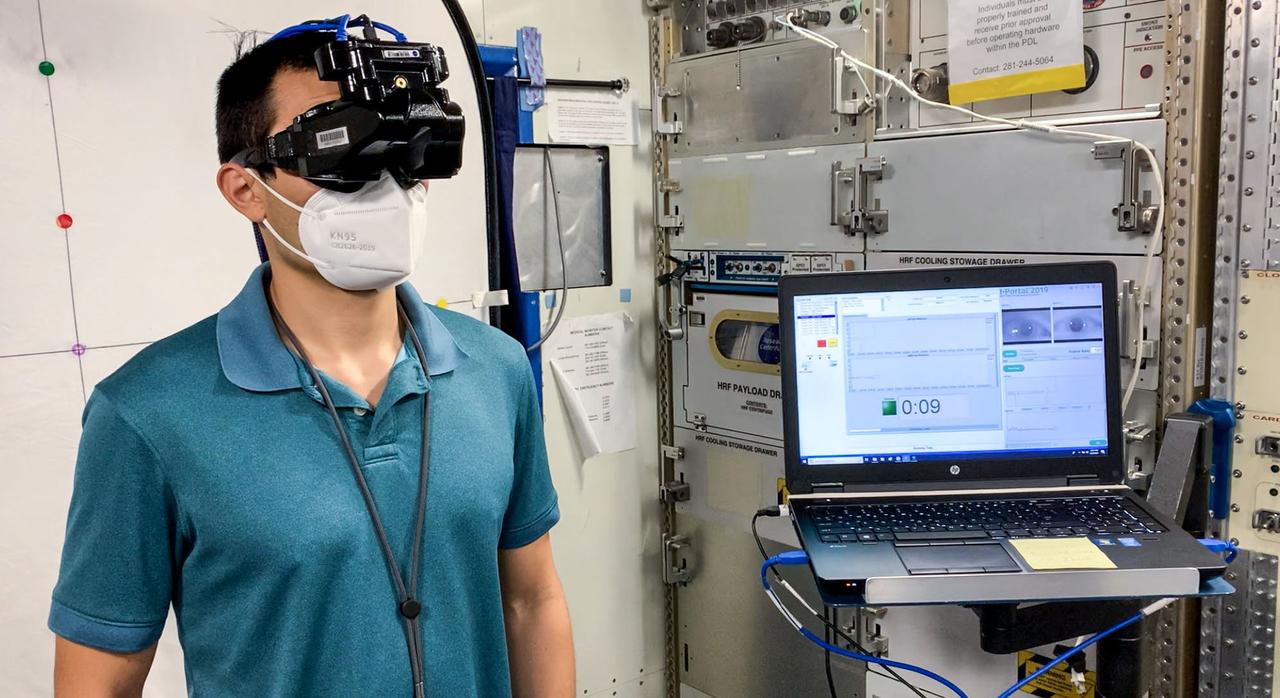
jsc2022e083571 (11/2/2022) --- The Falcon Goggles being worn as part of training development classes at NASA's Johnson Space Center. This image shows the configuration donned with the goggles cover. The Falcon Goggles, based on the Neurolign DX Falcon™, provide a system for capturing detailed high-speed video of the eyes to collect precise data on ocular alignment and crew balance. Image courtesy of NASA.

NIGHT VISION GOGGLES (TWO OPTICS) WITH LAWRENCE HINTZ. (SZOBOSZLAY FOR HELICOPTER NOE FLIGH)
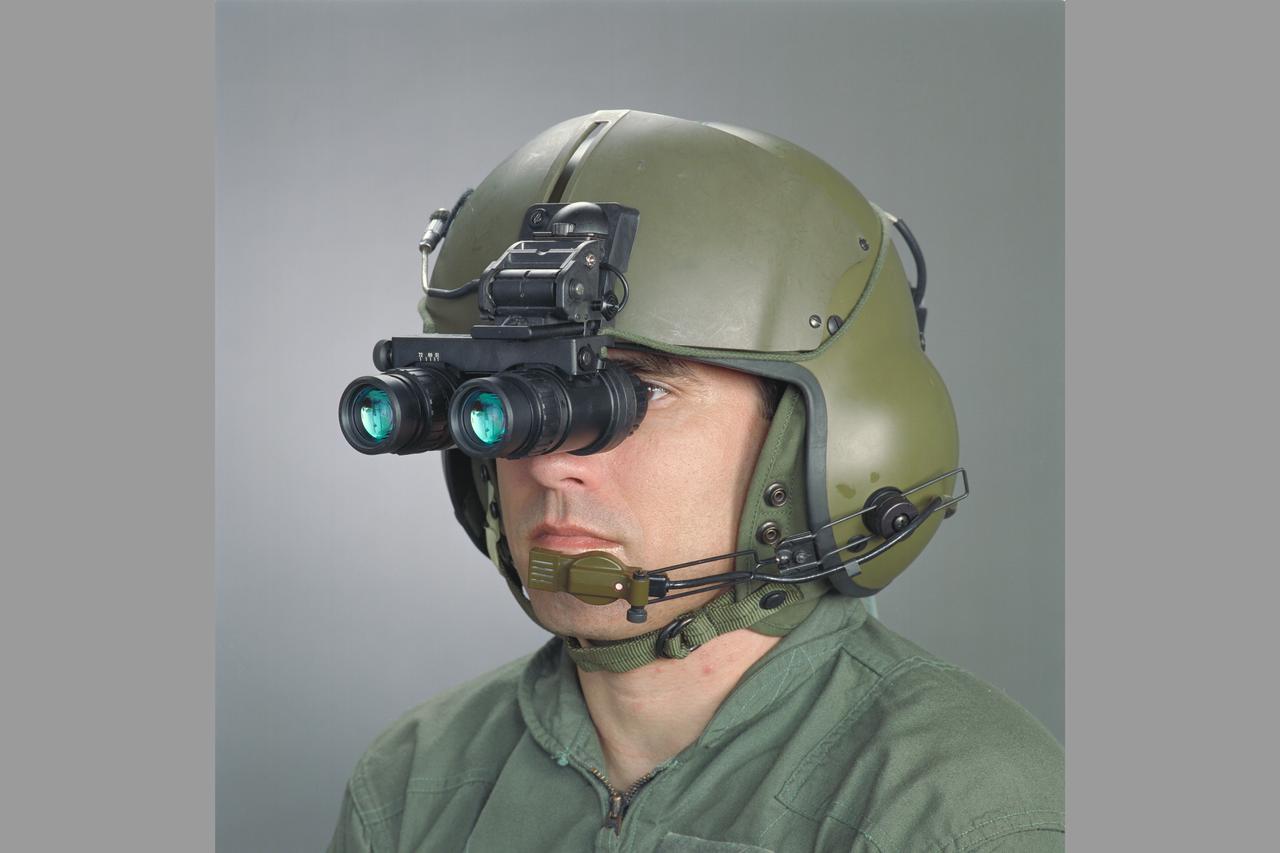
Night Vision Goggles (two optics) with Lawrence Hintz. (Szoboszlay) for helicopter NOE flight
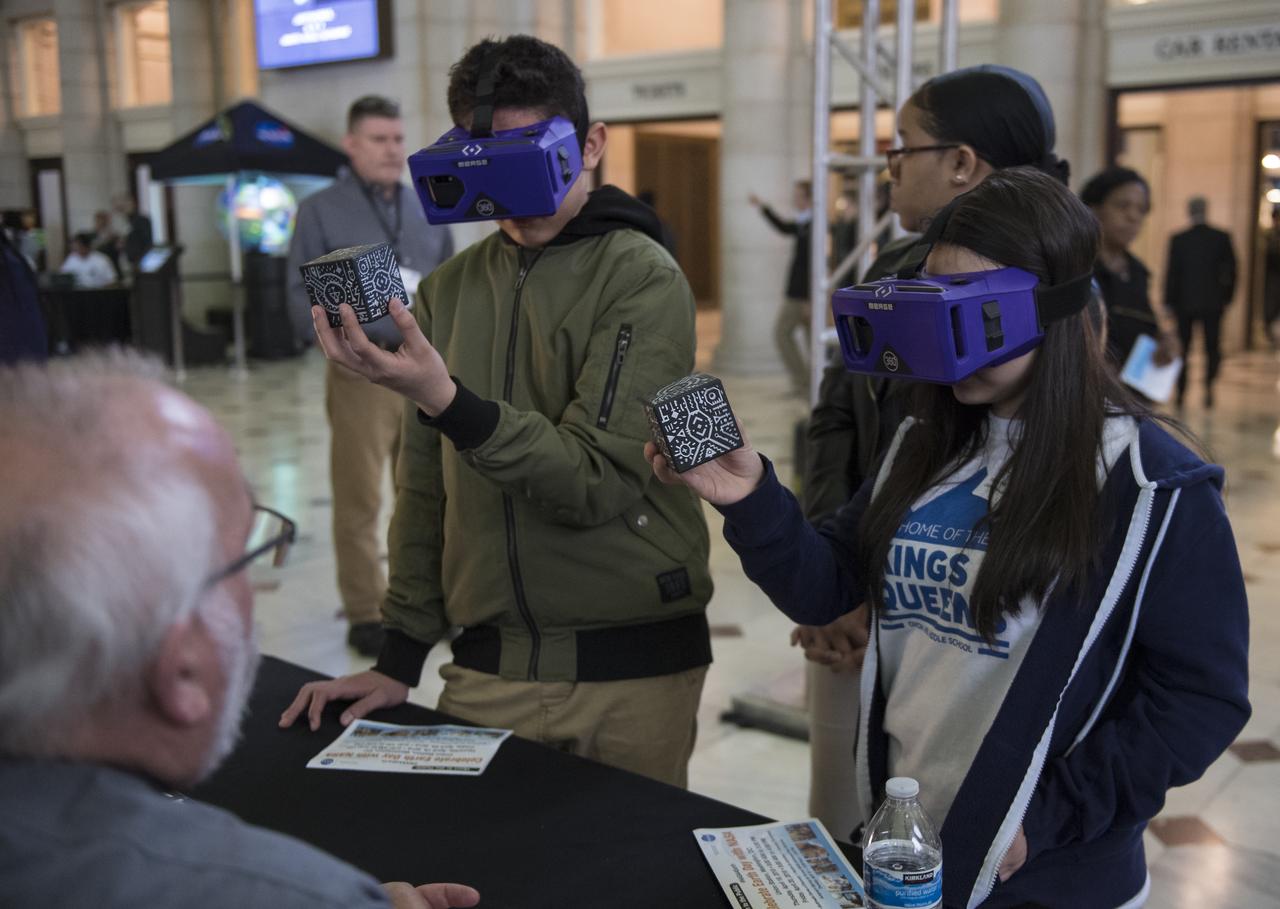
Visitors look through virtual reality goggles at one of NASA's exhibits at the Earth Day event on Thursday, April 19, 2018 at Union Station in Washington, D.C. Photo Credit: (NASA/Aubrey Gemignani)
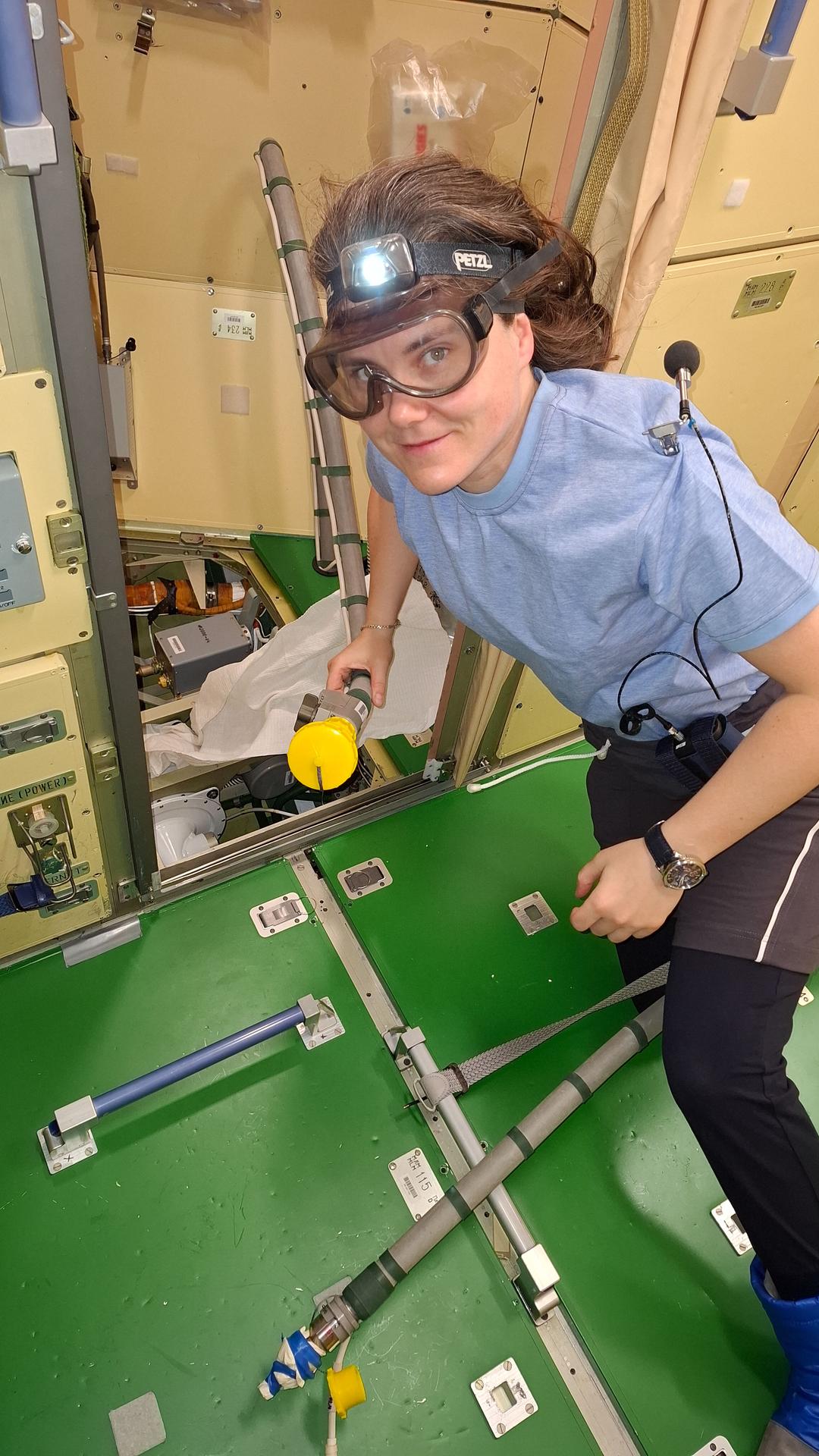
iss075e0011835 (Aug. 28, 2026) --- Roscosmos cosmonaut and Expedition 75 flight engineer Anna Kikina wears safety goggles while performing life support maintenance duties inside the International Space Station's Nauka science module. Credit: Roscosmos
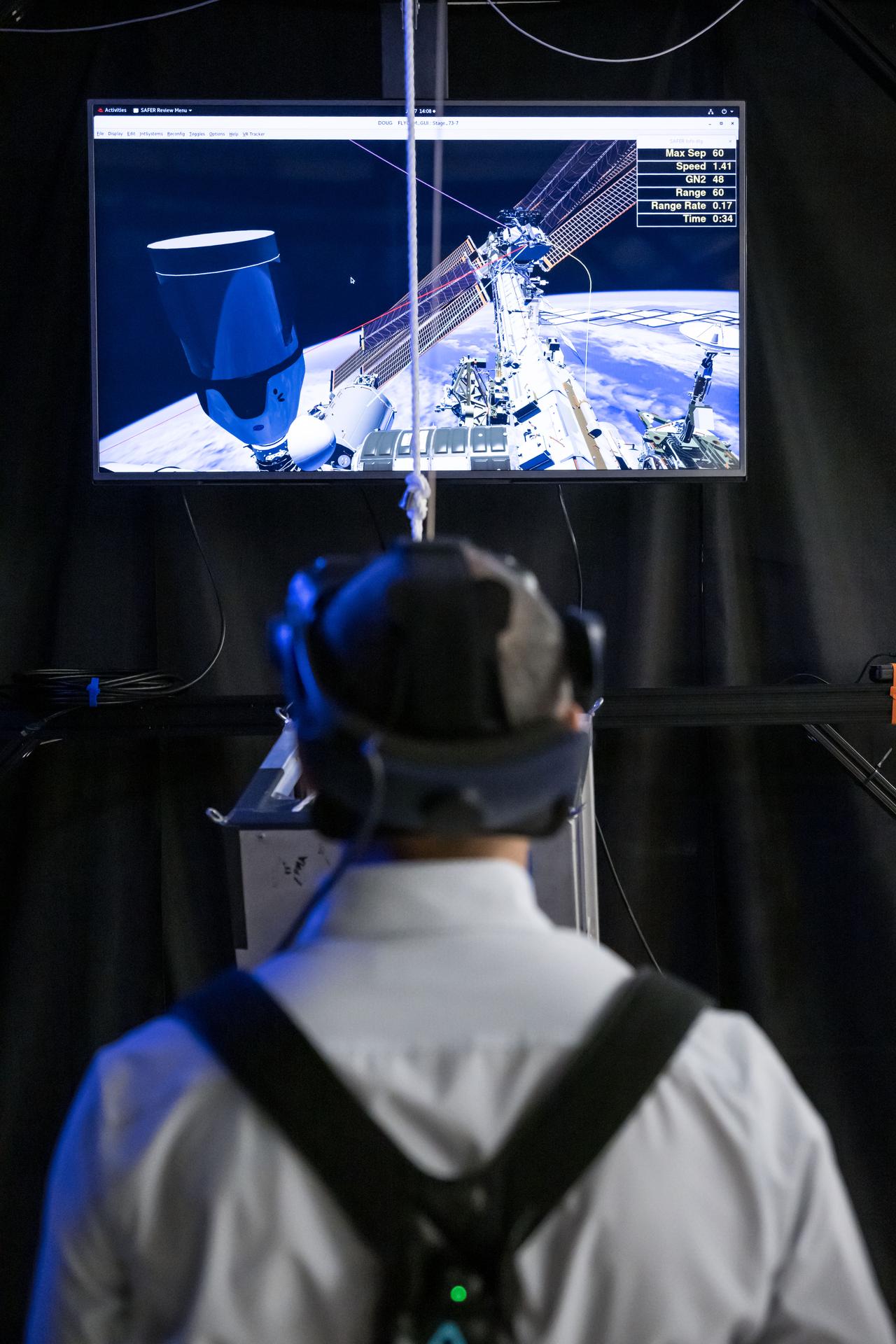
jsc2026e000427 (Jan. 7, 2026) --- NASA astronaut and Expedition 75 flight engineer Anil Menon participates in a spacewalk training session while wearing virtual reality goggles at Johnson Space Center in Houston, Texas, ahead of his upcoming mission to the International Space Station. Credit: NASA/David DeHoyos
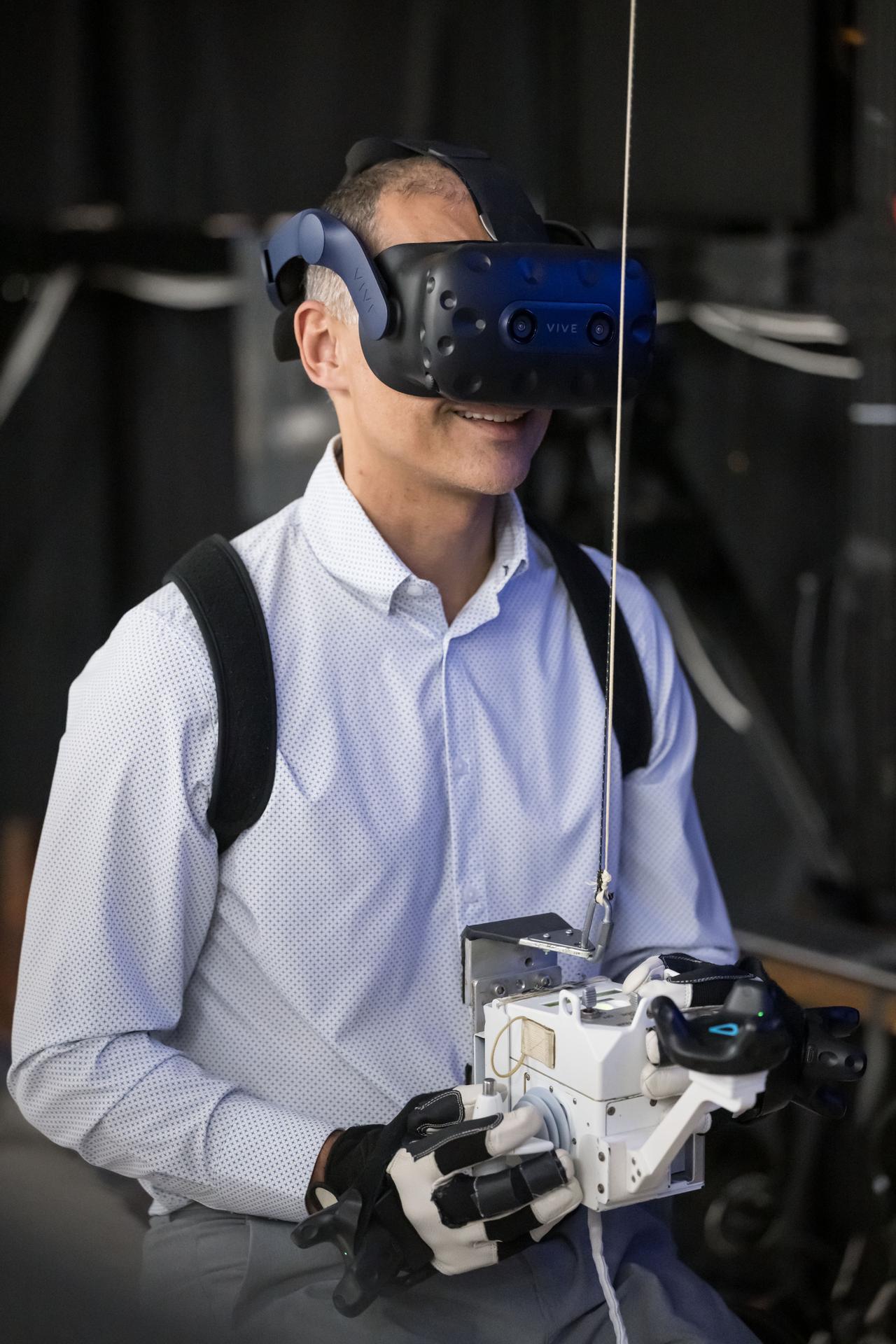
jsc2026e000421 (Jan. 7, 2026) --- NASA astronaut and Expedition 75 flight engineer Anil Menon participates in a spacewalk training session while wearing virtual reality goggles at Johnson Space Center in Houston, Texas, ahead of his upcoming mission to the International Space Station. Credit: NASA/David DeHoyos
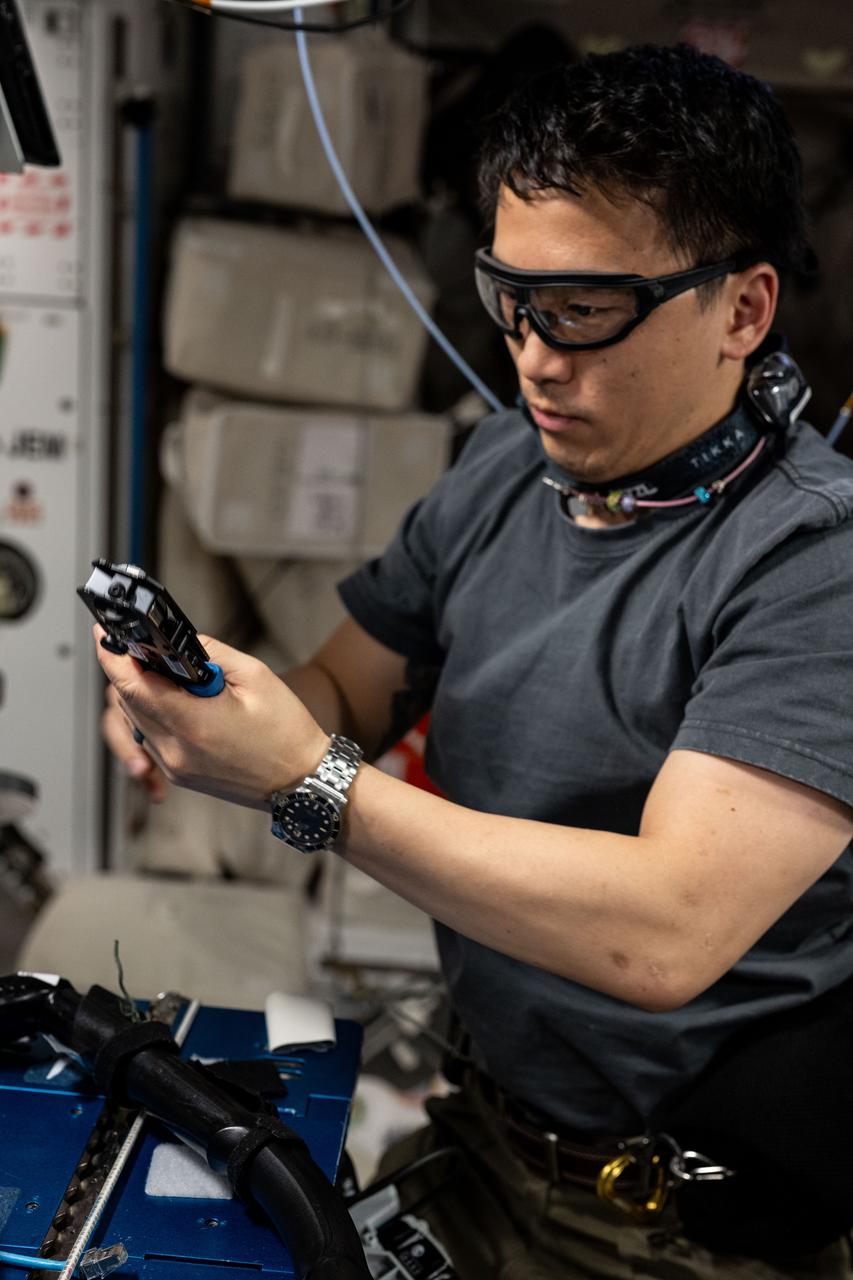
iss073e0072896 (May 20, 2025) --- NASA astronaut and Expedition 73 Flight Engineer Jonny Kim wears goggles while working on computer network maintenance aboard the International Space Station's Harmony module.
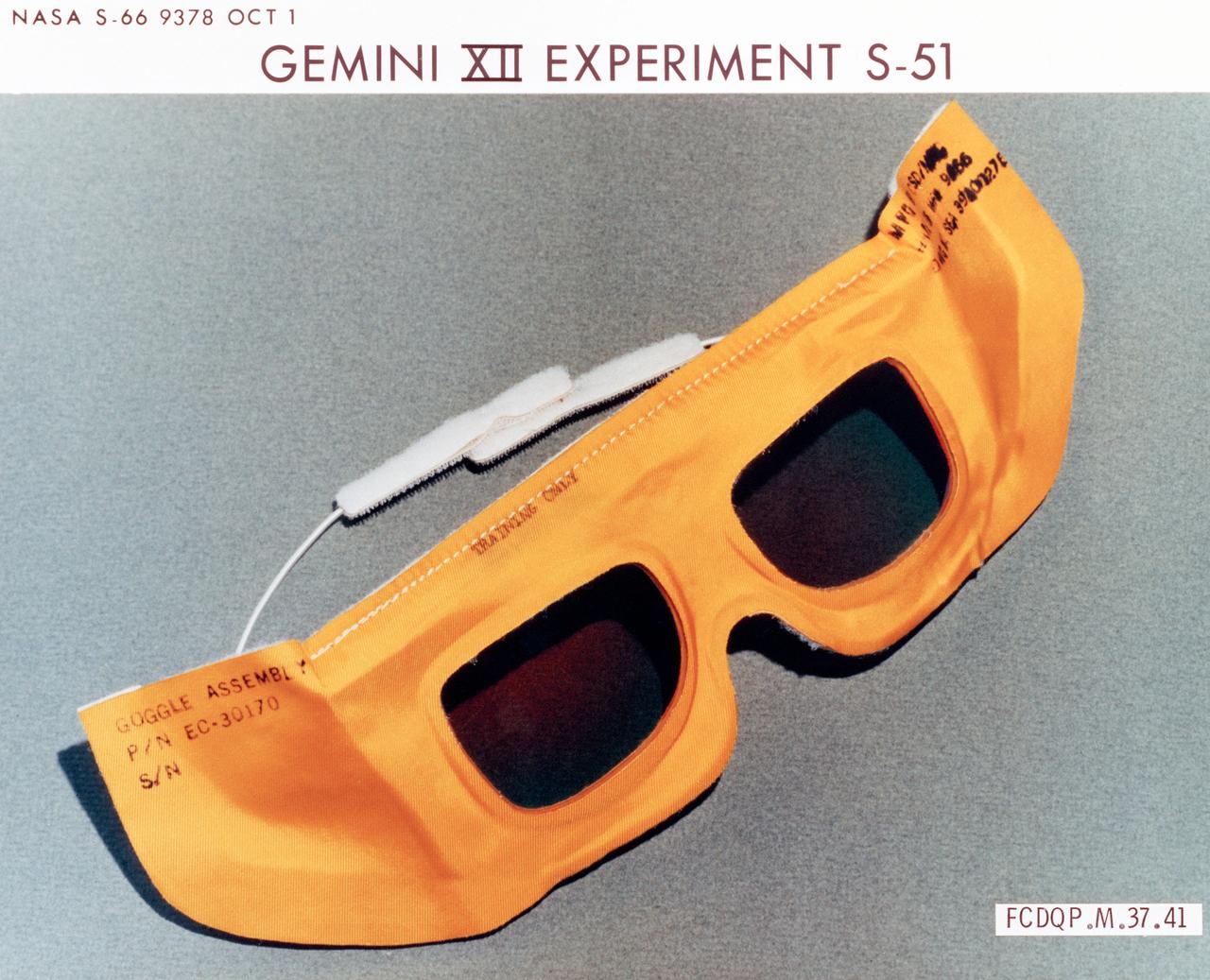
S66-09378 (1 Oct. 1966) --- Goggles which will be worn by Gemini-12 astronaut as he photographs sodium cloud ejected from French Centaure rocket launched from Hammaguir, Algeria. Photo credit: NASA
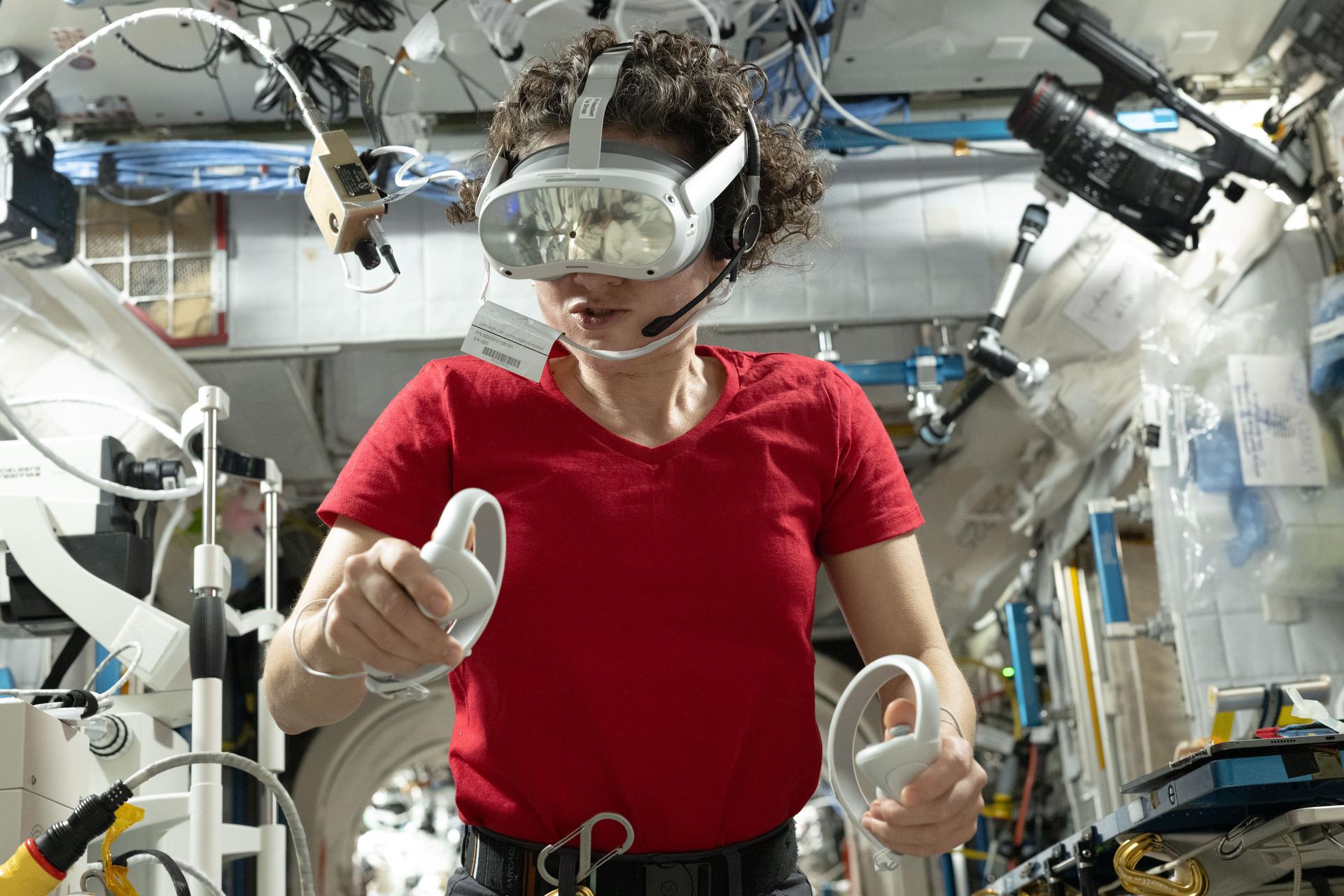
iss075e0000195 (July 29, 2026) --- NASA astronaut and Expedition 75 commander Jessica Meir wears a set of virtual reality goggles, also called the Nevada Screening Vision System, for a test that measures visual function using a series of vision screening apps testing visual acuity, contrast sensitivity, and more. Credit: NASA/Anil Menon
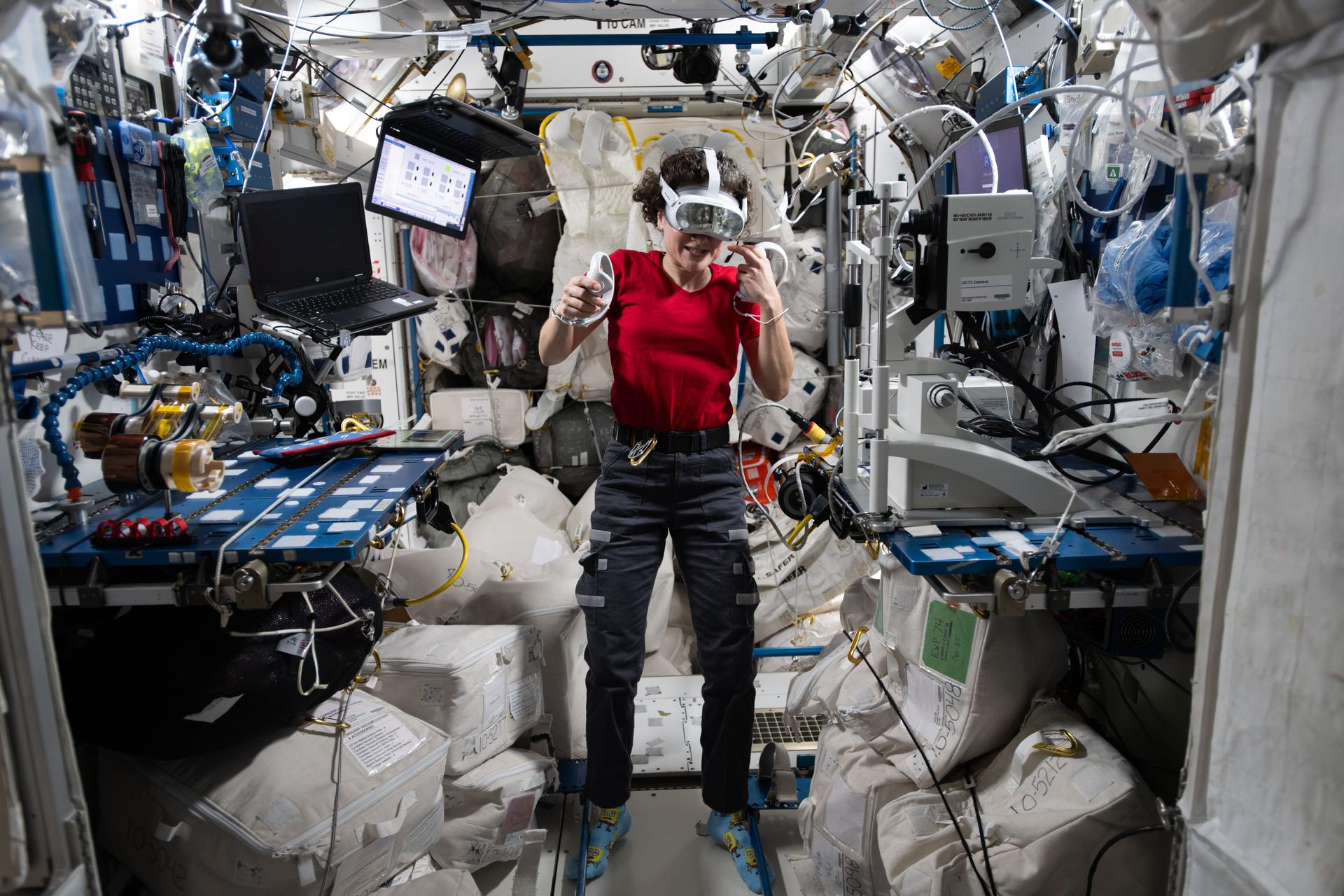
iss075e0000108 (July 29, 2026) --- NASA astronaut and Expedition 75 commander Jessica Meir wears a set of virtual reality goggles, also called the Nevada Screening Vision System, for a test that measures visual function using a series of vision screening apps testing visual acuity, contrast sensitivity, and more. Credit: NASA/Jack Hathaway
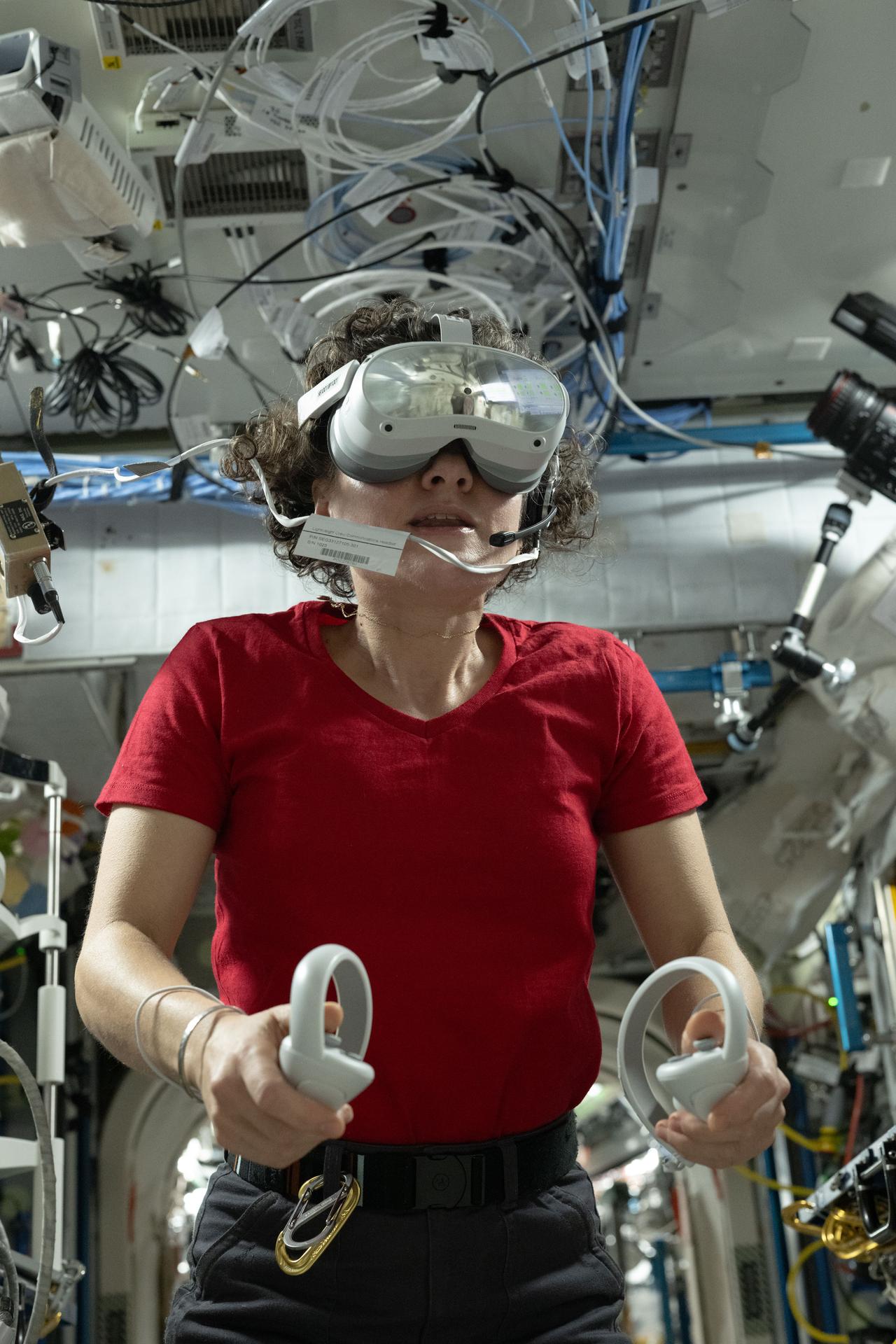
iss075e0000191 (July 29, 2026) --- NASA astronaut and Expedition 75 commander Jessica Meir wears a set of virtual reality goggles, also called the Nevada Screening Vision System, for a test that measures visual function using a series of vision screening apps testing visual acuity, contrast sensitivity, and more. Credit: NASA/Anil Menon
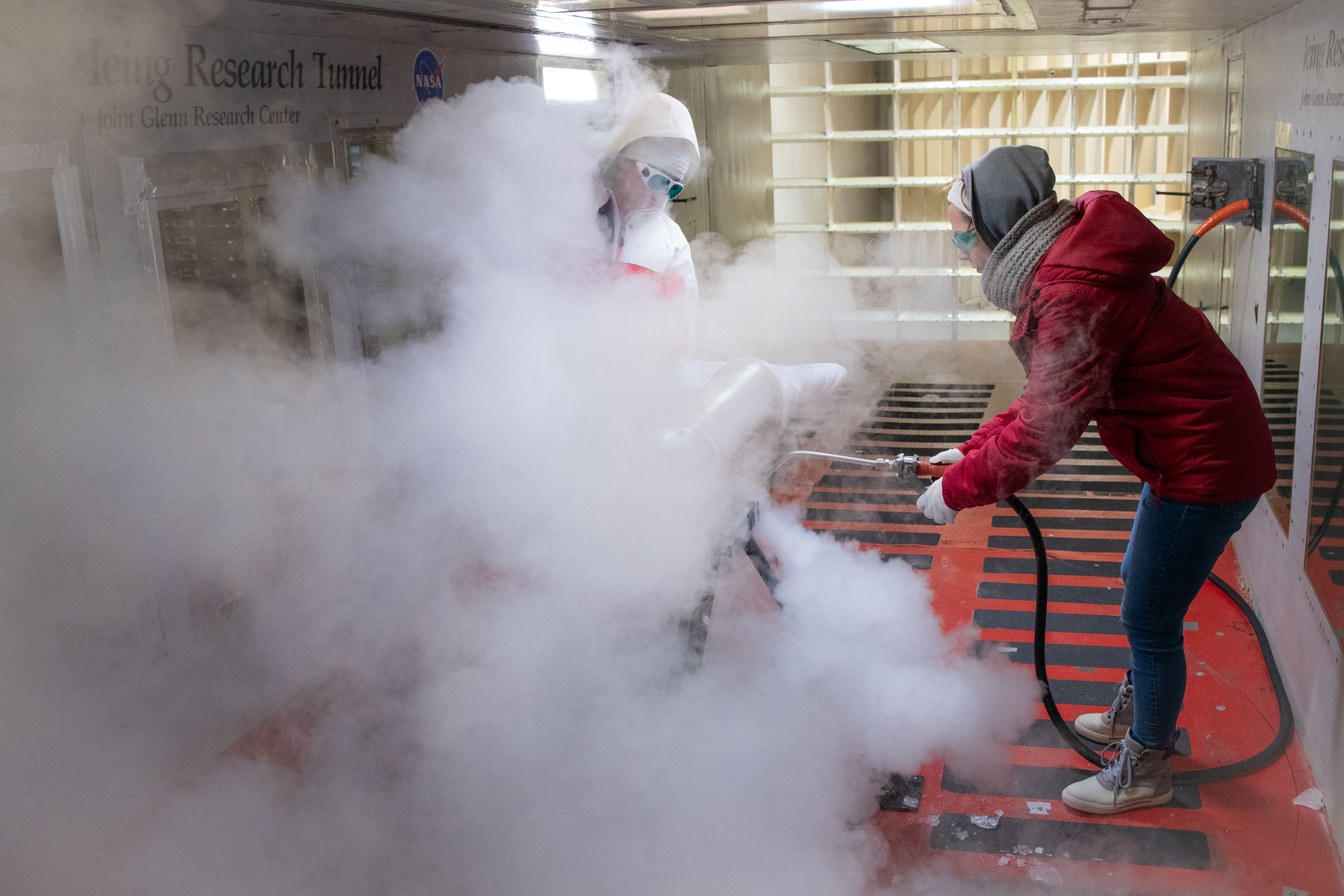
Test engineers clean the ice cloud detection probe in the Icing Research Tunnel in between test runs. Steam is used to melt the accumulated ice on the detection probe. The test engineers need to wear goggles to protect them from the laser light that the probe emits. The laser detects water content and ice particles in the cloud that the wind tunnel produces. This process is done to calibrate the tunnel for research by characterizing the cloud flow.
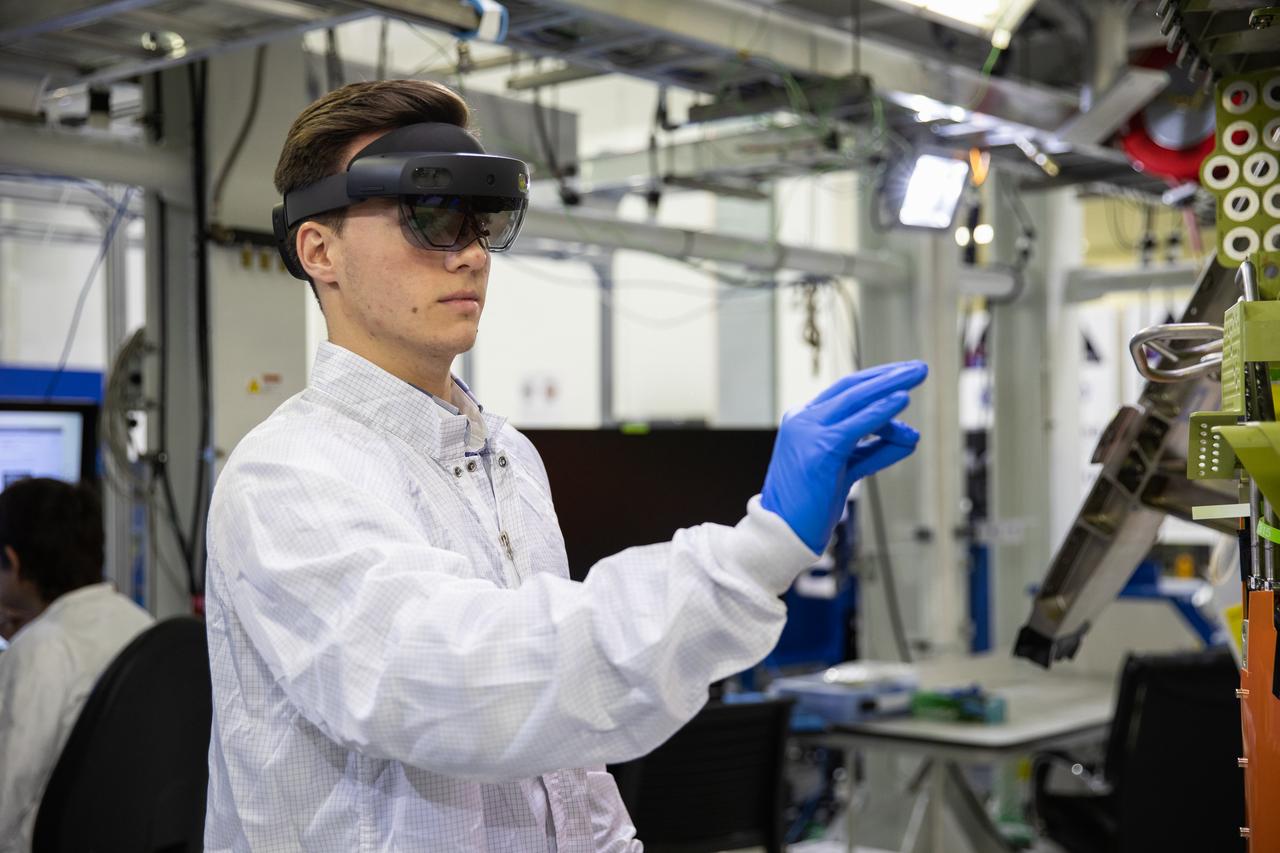
Michael Maxwell, with Lockheed Martin’s augmented reality team, wears a pair of augmented reality (AR) goggles to work on the crew module for NASA’s Artemis II mission inside the high bay of the Neil Armstrong Operations and Checkout Building at the agency’s Kennedy Space Center in Florida on March 18, 2020. Orion manufacturer Lockheed Martin provided the goggles to technicians to help place tapes where components will be installed on the crew module adapter for Artemis II, the first crewed mission aboard the spacecraft. Using the AR goggles saves significant labor and time to complete tasks. Manufactured by Microsoft, the goggles, called HoloLens2, are the second version used by Lockheed.
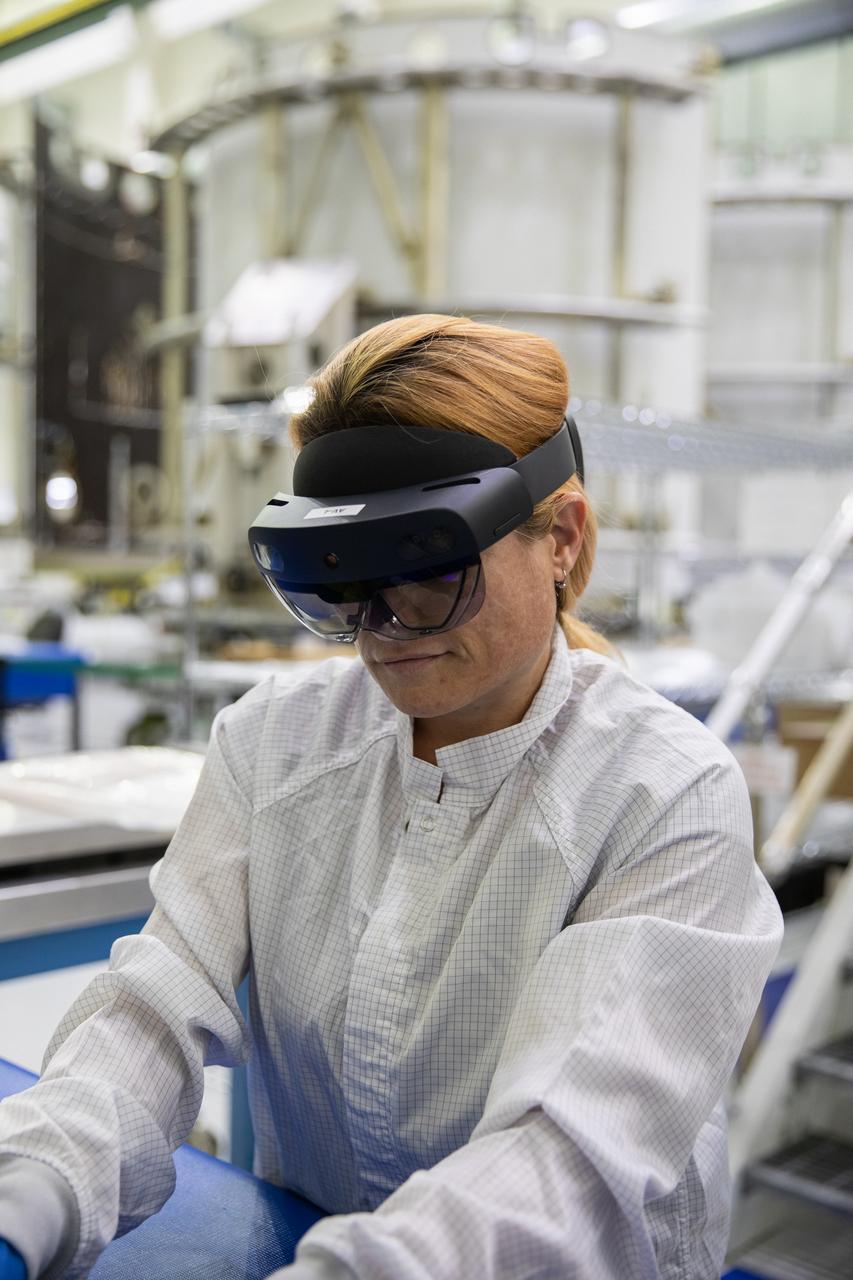
Jennifer Solano, with Lockheed Martin at Kennedy Space Center in Florida, wears a pair of augmented reality (AR) goggles to work on crew module hardware for NASA’s Artemis II mission inside the high bay of the Neil Armstrong Operations and Checkout Building at Kennedy on March 18, 2020. Orion manufacturer Lockheed Martin provided the goggles to technicians to help place tapes where components will be installed on Orion for Artemis II, the first crewed mission aboard the spacecraft. Using the AR goggles saves significant labor and time to complete tasks. Manufactured by Microsoft, the goggles, called HoloLens2, are the second version used by Lockheed.
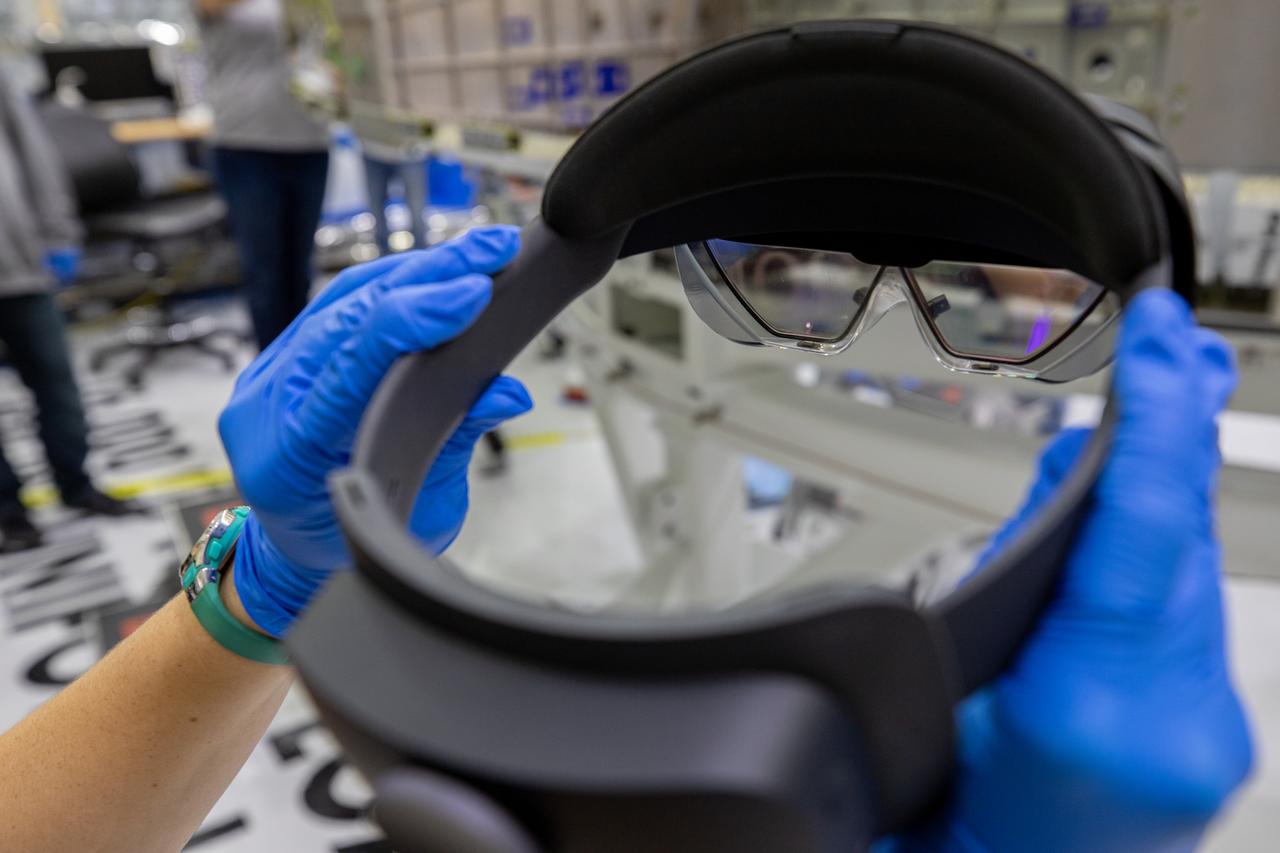
Mary Lakaszcyck, a technician with ASRC Federal Data Solutions, displays a pair of augmented reality (AR) goggles inside the high bay of the Neil Armstrong Operations and Checkout Building at NASA’s Kennedy Space Center in Florida on Jan. 16, 2020. Orion manufacturer Lockheed Martin provided the goggles to technicians to help place tapes where components will be installed on the Orion crew module adapter for NASA’s Artemis II mission, the first crewed mission aboard the spacecraft. Using the AR goggles saves significant labor and time to complete tasks. Manufactured by Microsoft, the goggles, called HoloLens2, are the second version used by Lockheed.
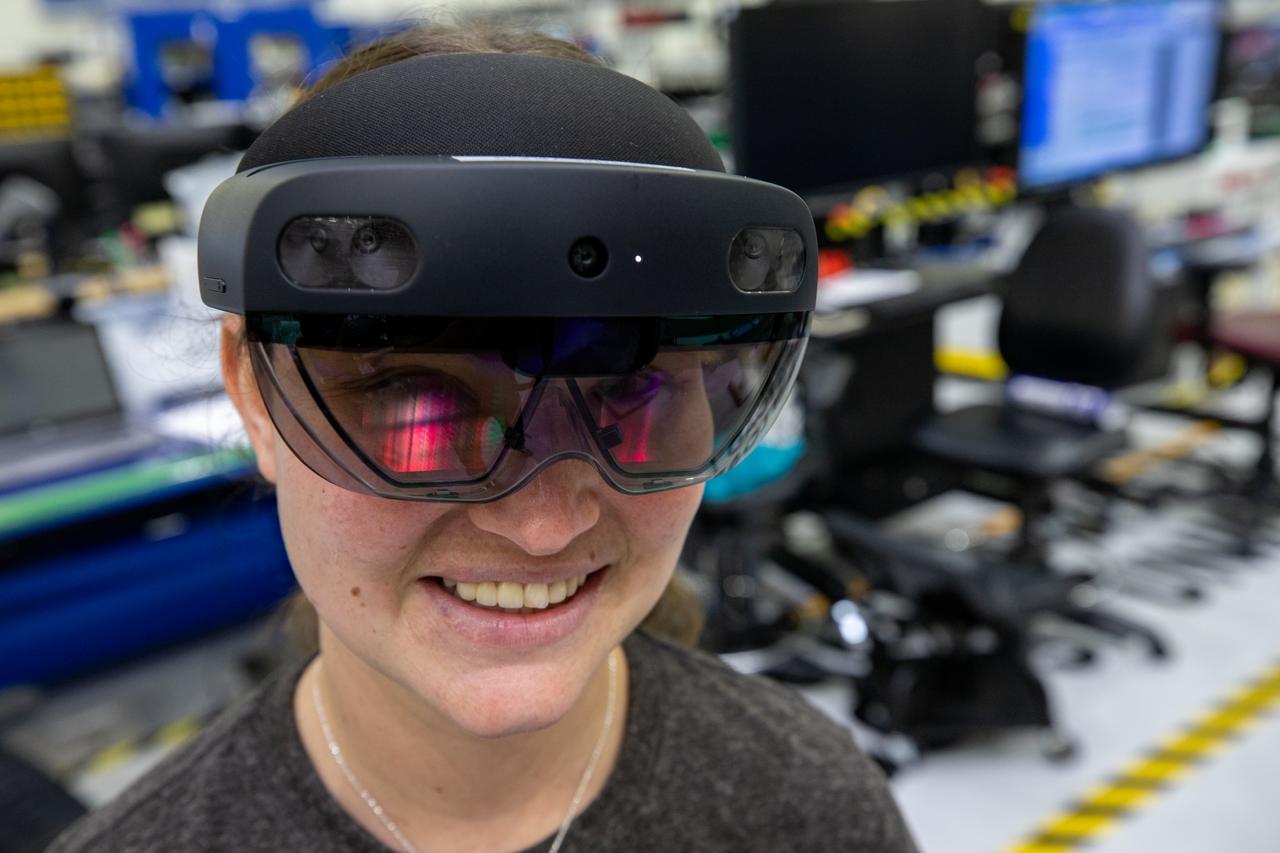
Mary Lakaszcyck, a technician with ASRC Federal Data Solutions, wears a pair of augmented reality (AR) goggles inside the high bay of the Neil Armstrong Operations and Checkout Building at NASA’s Kennedy Space Center in Florida on Jan. 16, 2020. Orion manufacturer Lockheed Martin provided the goggles to technicians to help place tapes where components will be installed on the Orion crew module adapter for NASA’s Artemis II mission, the first crewed mission aboard the spacecraft. Using the AR goggles saves significant labor and time to complete tasks. Manufactured by Microsoft, the goggles, called HoloLens2, are the second version used by Lockheed.
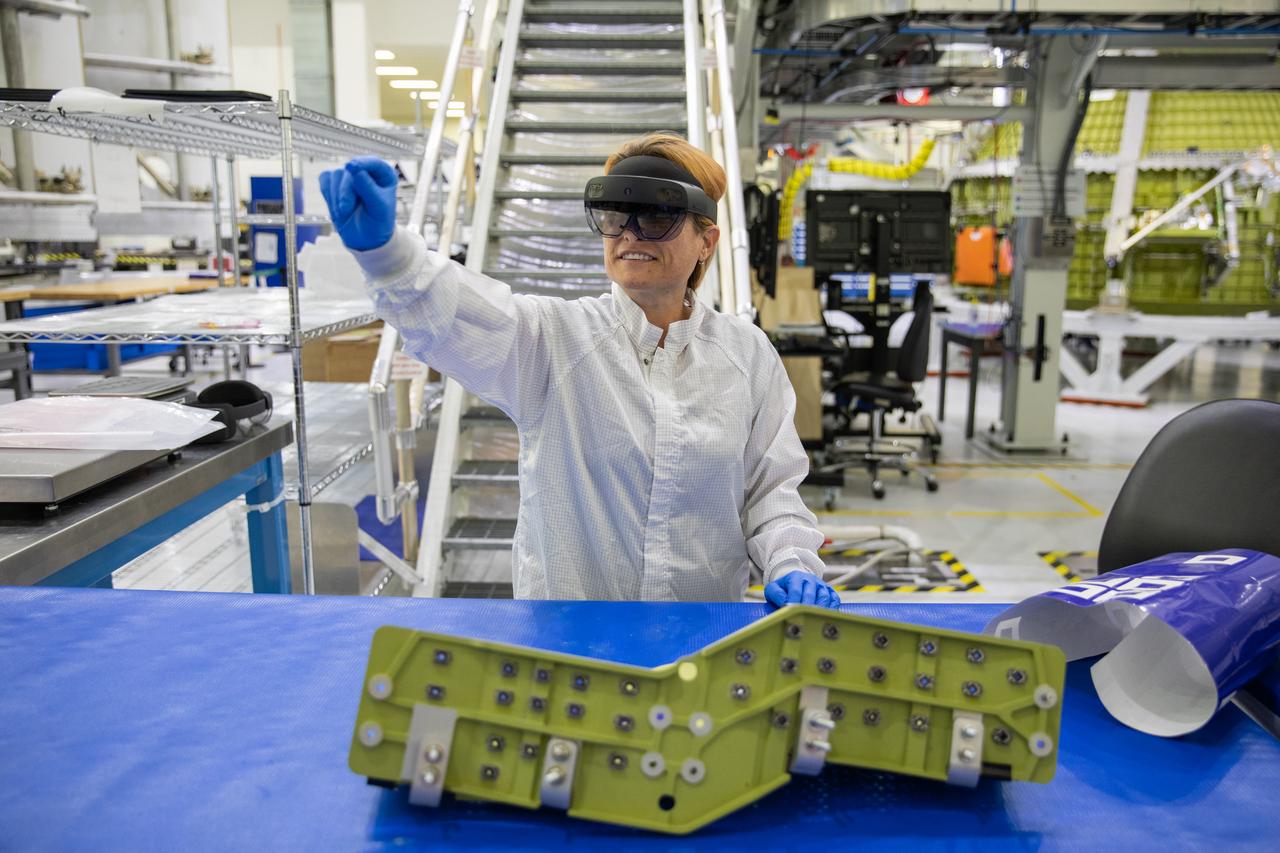
Jennifer Solano, with Lockheed Martin at NASA’s Kennedy Space Center in Florida, demonstrates a pair of augmented reality (AR) goggles as she works on crew module hardware for the agency’s Artemis II mission inside the high bay of the Neil Armstrong Operations and Checkout Building at Kennedy on March 18, 2020. Orion manufacturer Lockheed Martin provided the goggles to technicians to help place tapes where components will be installed on Orion for Artemis II, the first crewed mission aboard the spacecraft. Using the AR goggles saves significant labor and time to complete tasks. Manufactured by Microsoft, the goggles, called HoloLens2, are the second version used by Lockheed.
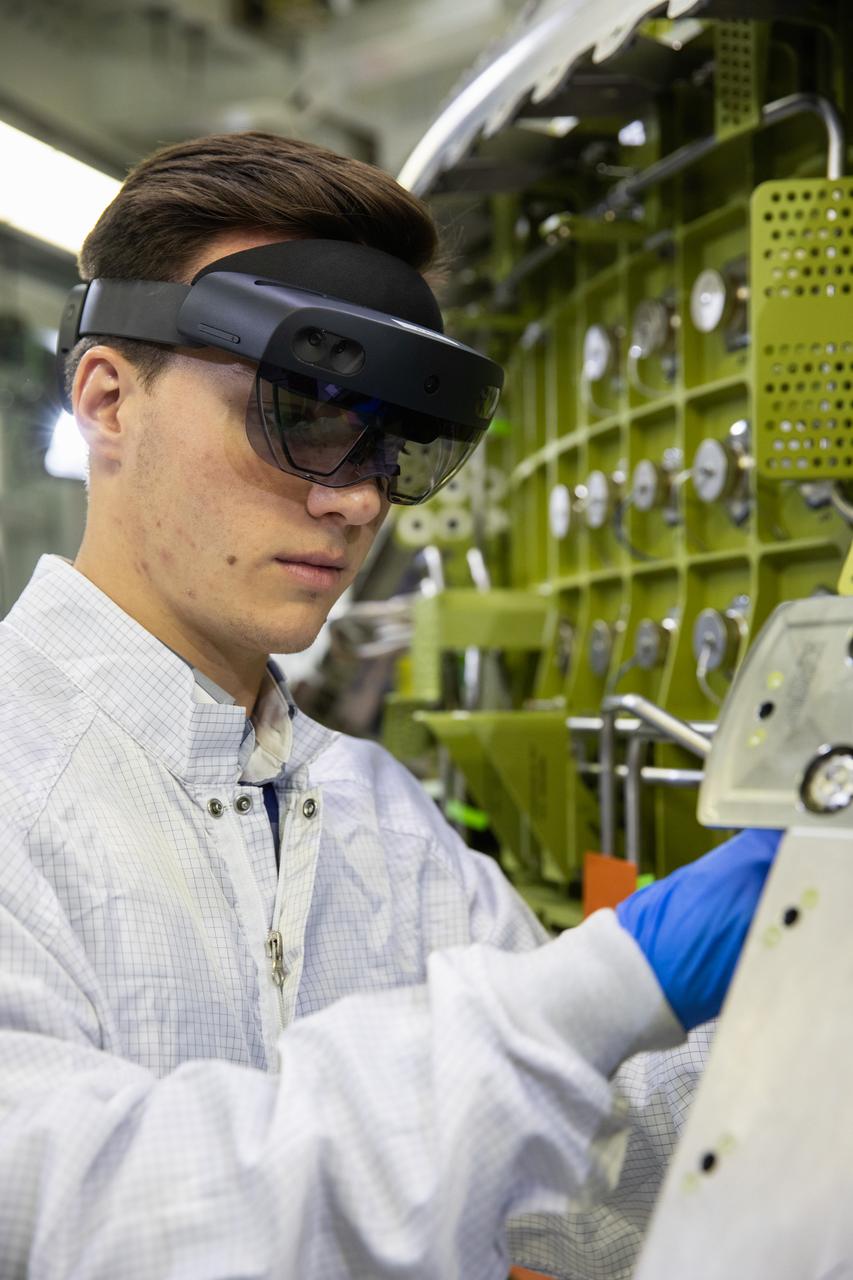
Michael Maxwell, with Lockheed Martin’s augmented reality team, wears a pair of augmented reality (AR) goggles to work on the crew module for NASA’s Artemis II mission inside the high bay of the Neil Armstrong Operations and Checkout Building at the agency’s Kennedy Space Center in Florida on March 18, 2020. Orion manufacturer Lockheed Martin provided the goggles to technicians to help place tapes where components will be installed on the crew module adapter for Artemis II, the first crewed mission aboard the spacecraft. Using the AR goggles saves significant labor and time to complete tasks. Manufactured by Microsoft, the goggles, called HoloLens2, are the second version used by Lockheed.
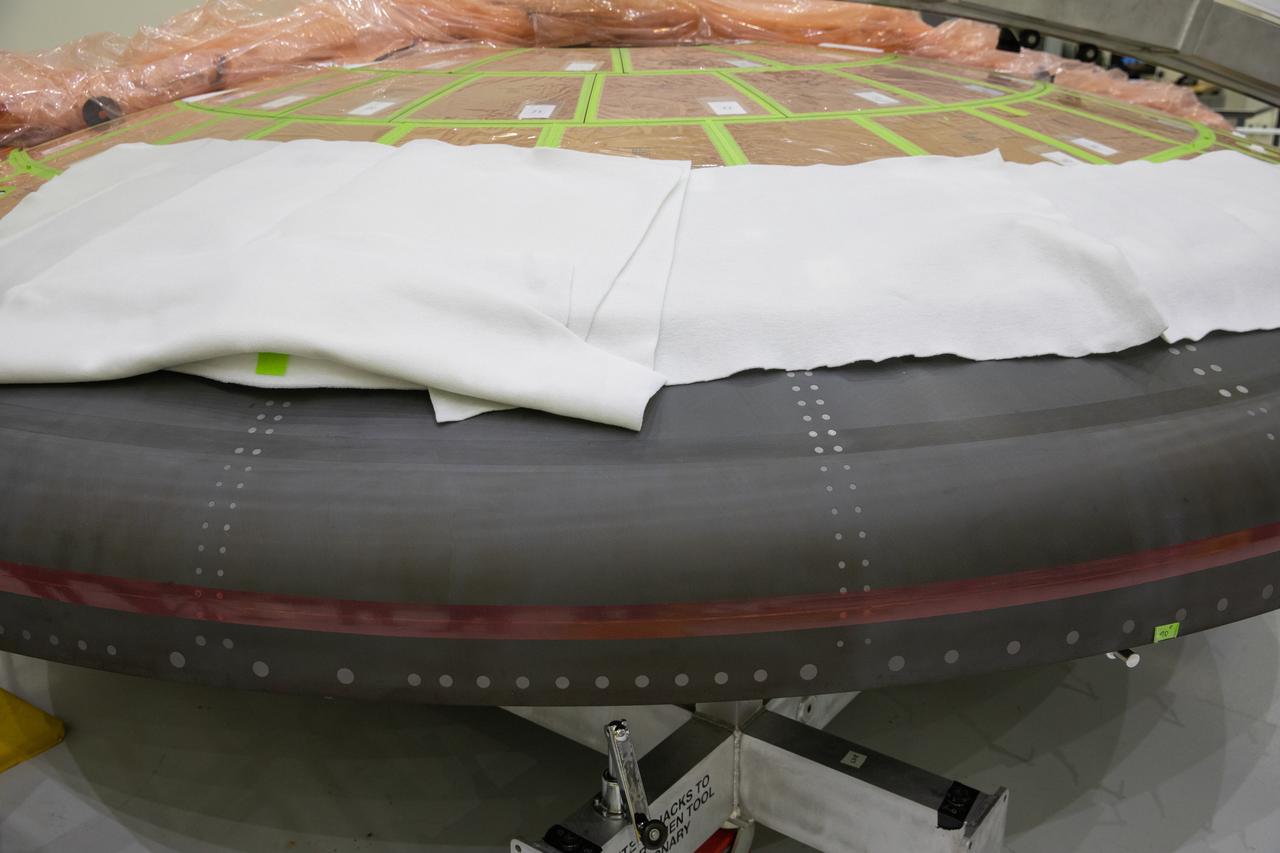
The heat shield for NASA’s Artemis II mission is in view inside the Neil Armstrong Operations and Checkout Building at the agency’s Kennedy Space Center in Florida on March 18, 2020. Using augmented reality (AR) goggles, technicians are completing the work on the heat shield. Orion manufacturer Lockheed Martin provided the goggles to technicians to help place tapes where components will be installed on the crew module, heat shield and other components for Artemis II, the first crewed mission aboard the spacecraft. Using the AR goggles saves significant labor and time to complete tasks. Manufactured by Microsoft, the goggles, called HoloLens2, are the second version used by Lockheed.
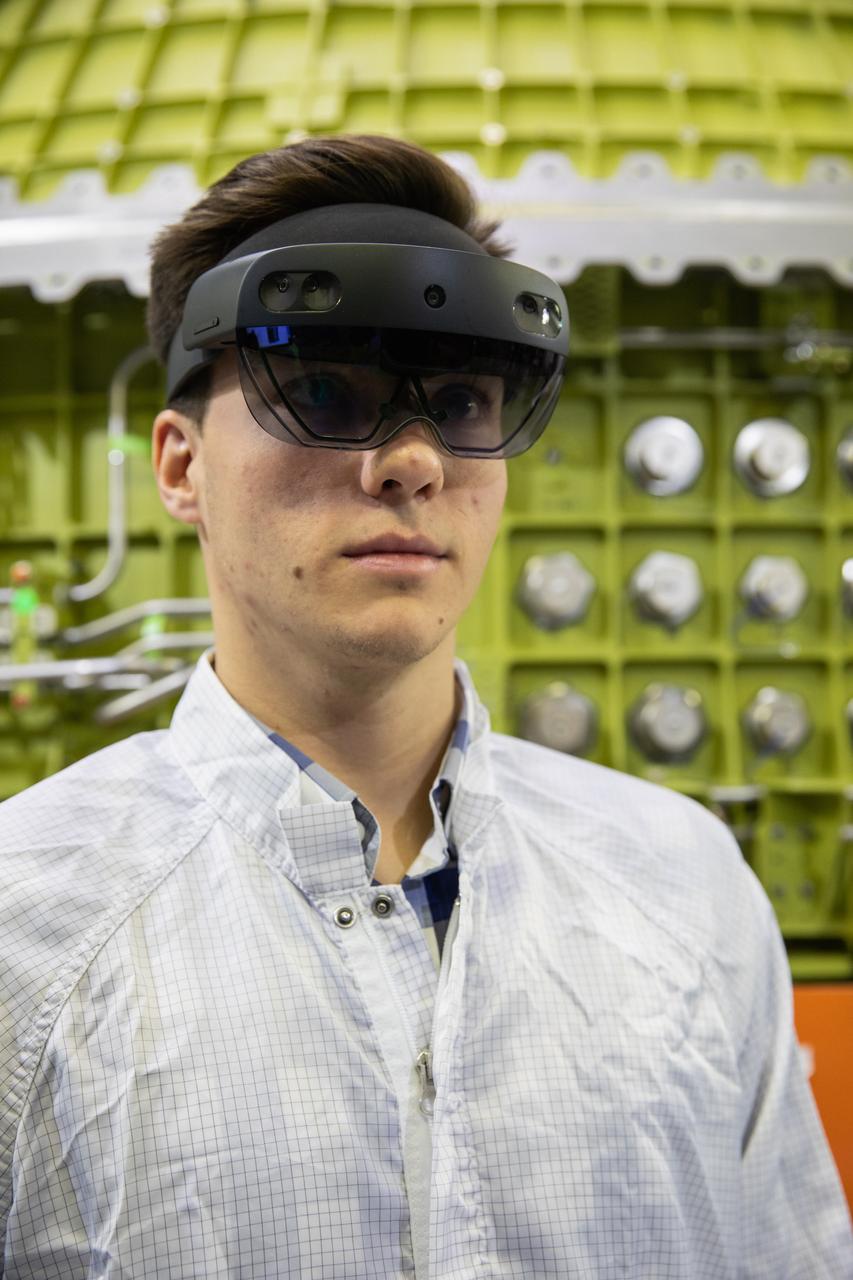
Michael Maxwell, with Lockheed Martin’s augmented reality team, wears a pair of augmented reality (AR) goggles to work on the crew module for NASA’s Artemis II mission inside the high bay of the Neil Armstrong Operations and Checkout Building at the agency’s Kennedy Space Center in Florida on March 18, 2020. Orion manufacturer Lockheed Martin provided the goggles to technicians to help place tapes where components will be installed on the crew module adapter for Artemis II, the first crewed mission aboard the spacecraft. Using the AR goggles saves significant labor and time to complete tasks. Manufactured by Microsoft, the goggles, called HoloLens2, are the second version used by Lockheed.
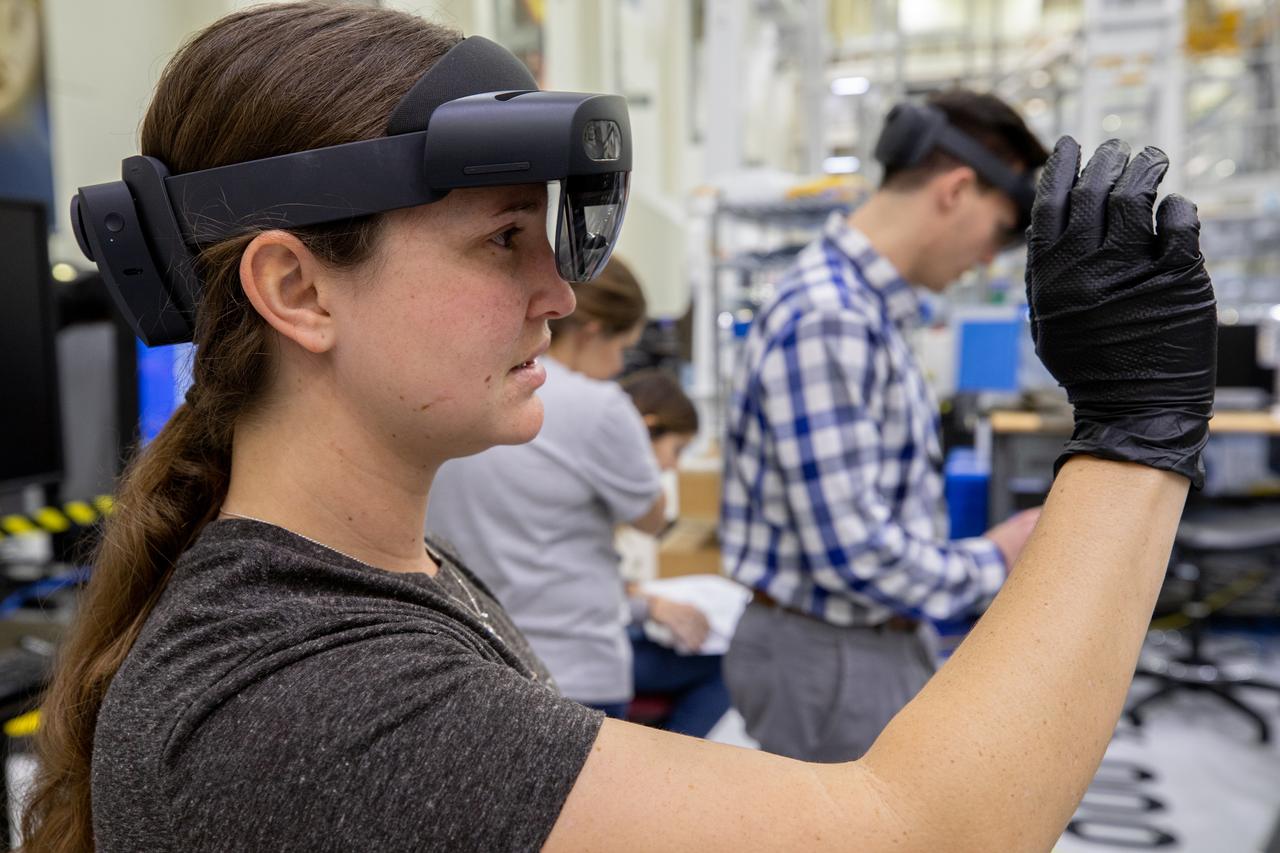
Mary Lakaszcyck, a technician with ASRC Federal Data Solutions, demonstrates a pair of augmented reality (AR) goggles inside the high bay of the Neil Armstrong Operations and Checkout Building at NASA’s Kennedy Space Center in Florida on Jan. 16, 2020. Orion manufacturer Lockheed Martin provided the goggles to technicians to help place tapes where components will be installed on the Orion crew module adapter for NASA’s Artemis II mission, the first crewed mission aboard the spacecraft. Using the AR goggles saves significant labor and time to complete tasks. Manufactured by Microsoft, the goggles, called HoloLens2, are the second version used by Lockheed.
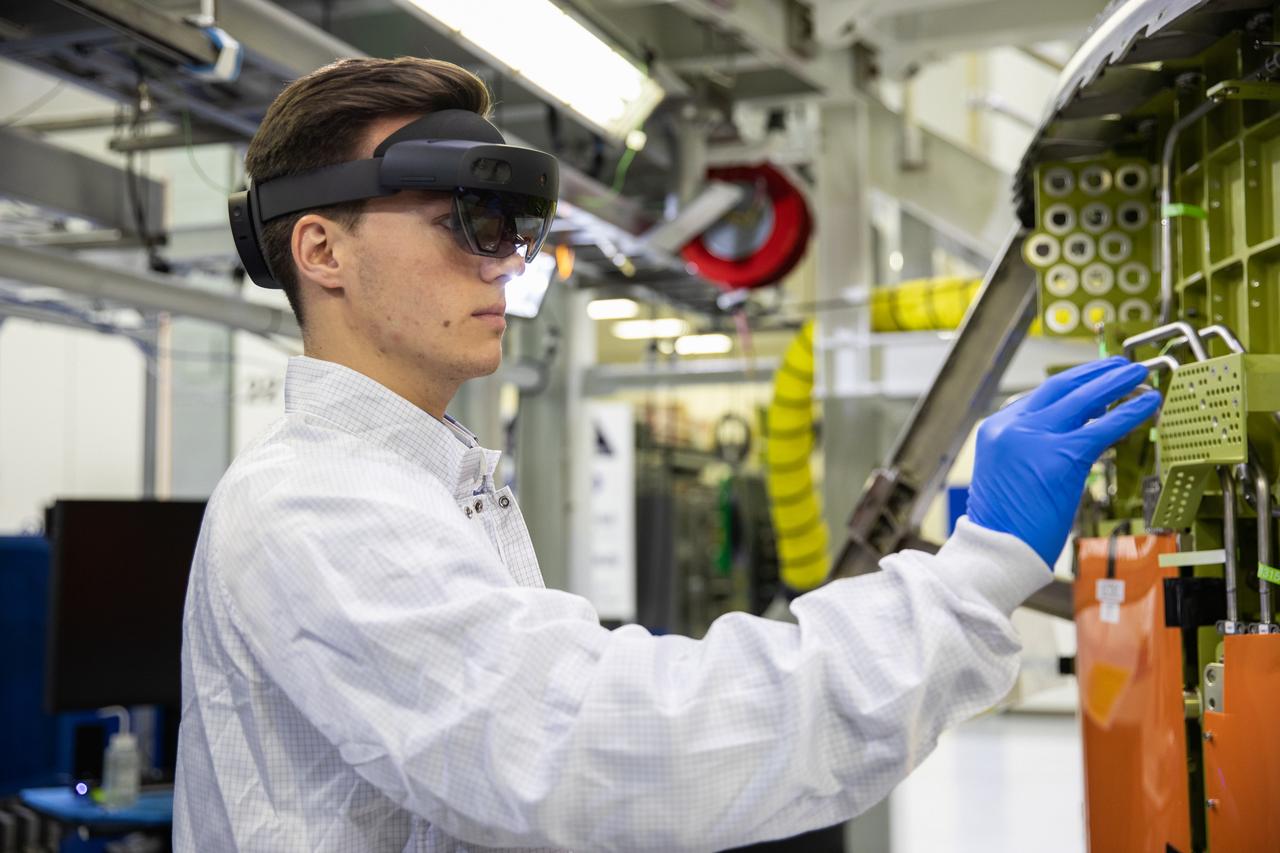
Michael Maxwell, with Lockheed Martin’s augmented reality team, wears a pair of augmented reality (AR) goggles to work on the crew module for NASA’s Artemis II mission inside the high bay of the Neil Armstrong Operations and Checkout Building at the agency’s Kennedy Space Center in Florida on March 18, 2020. Orion manufacturer Lockheed Martin provided the goggles to technicians to help place tapes where components will be installed on the crew module adapter for Artemis II, the first crewed mission aboard the spacecraft. Using the AR goggles saves significant labor and time to complete tasks. Manufactured by Microsoft, the goggles, called HoloLens2, are the second version used by Lockheed.
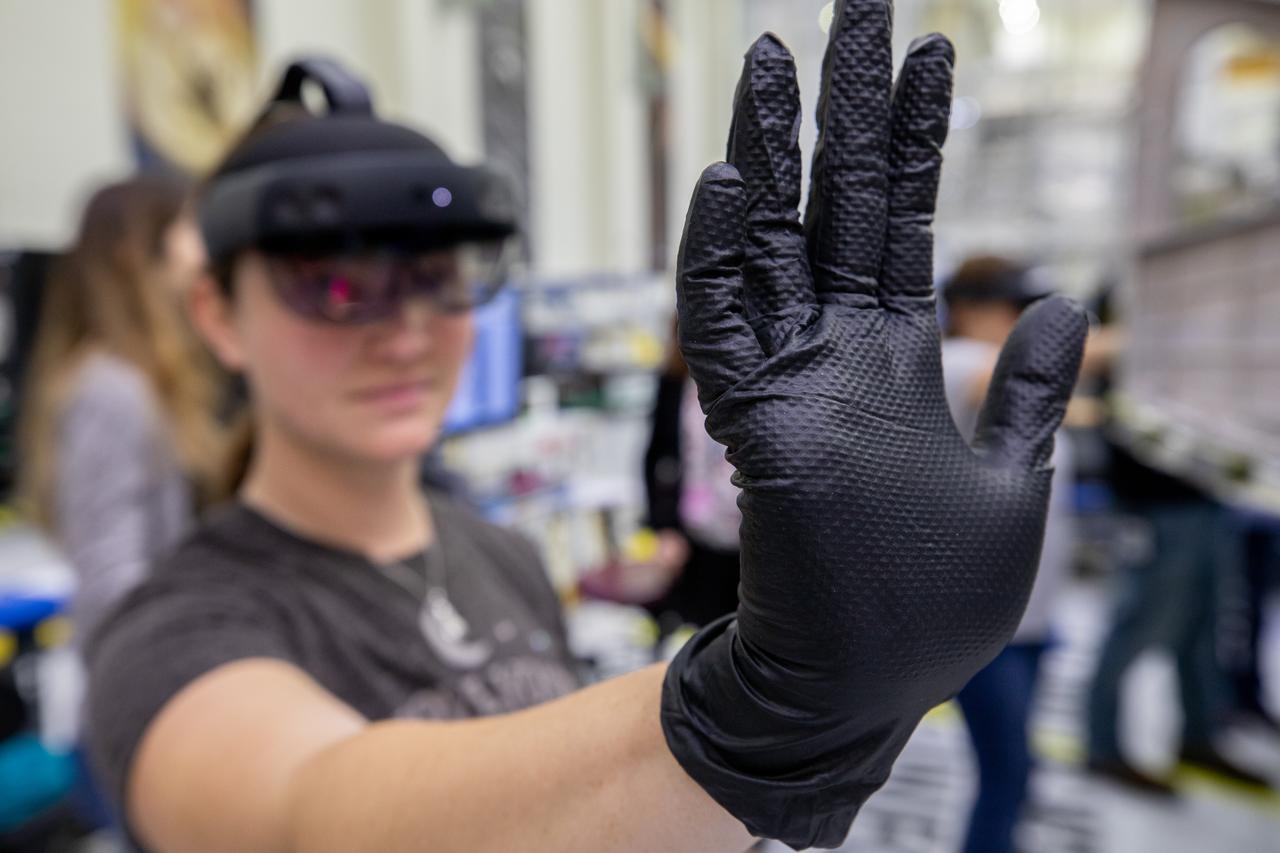
Mary Lakaszcyck, a technician with ASRC Federal Data Solutions, demonstrates a pair of augmented reality (AR) goggles inside the high bay of the Neil Armstrong Operations and Checkout Building at NASA’s Kennedy Space Center in Florida on Jan. 16, 2020. Orion manufacturer Lockheed Martin provided the goggles to technicians to help place tapes where components will be installed on the Orion crew module adapter for NASA’s Artemis II mission, the first crewed mission aboard the spacecraft. Using the AR goggles saves significant labor and time to complete tasks. Manufactured by Microsoft, the goggles, called HoloLens2, are the second version used by Lockheed.
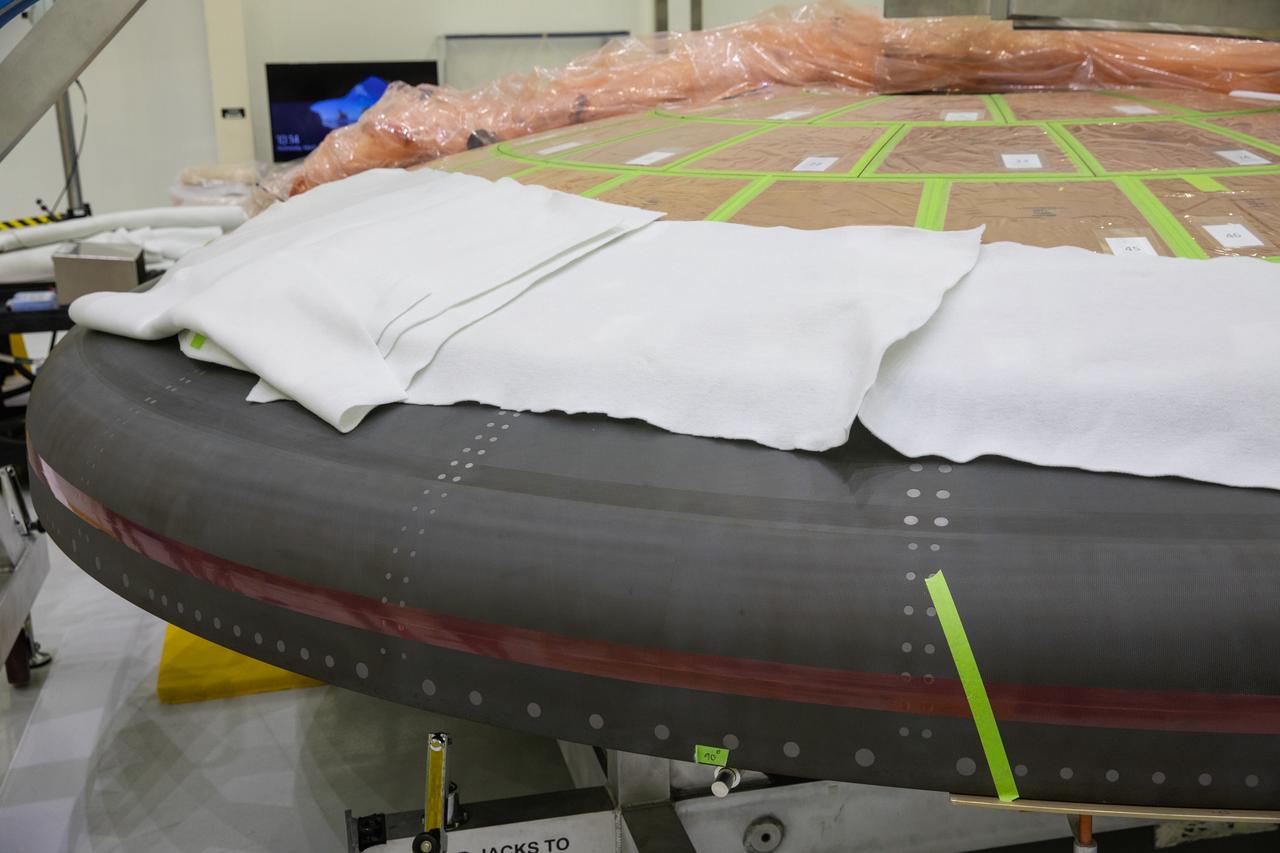
The heat shield for NASA’s Artemis II mission is in view inside the Neil Armstrong Operations and Checkout Building at the agency’s Kennedy Space Center in Florida on March 18, 2020. Using augmented reality (AR) goggles, technicians are completing the work on the heat shield. Orion manufacturer Lockheed Martin provided the goggles to technicians to help place tapes where components will be installed on the crew module, heat shield and other components for Artemis II, the first crewed mission aboard the spacecraft. Using the AR goggles saves significant labor and time to complete tasks. Manufactured by Microsoft, the goggles, called HoloLens2, are the second version used by Lockheed.
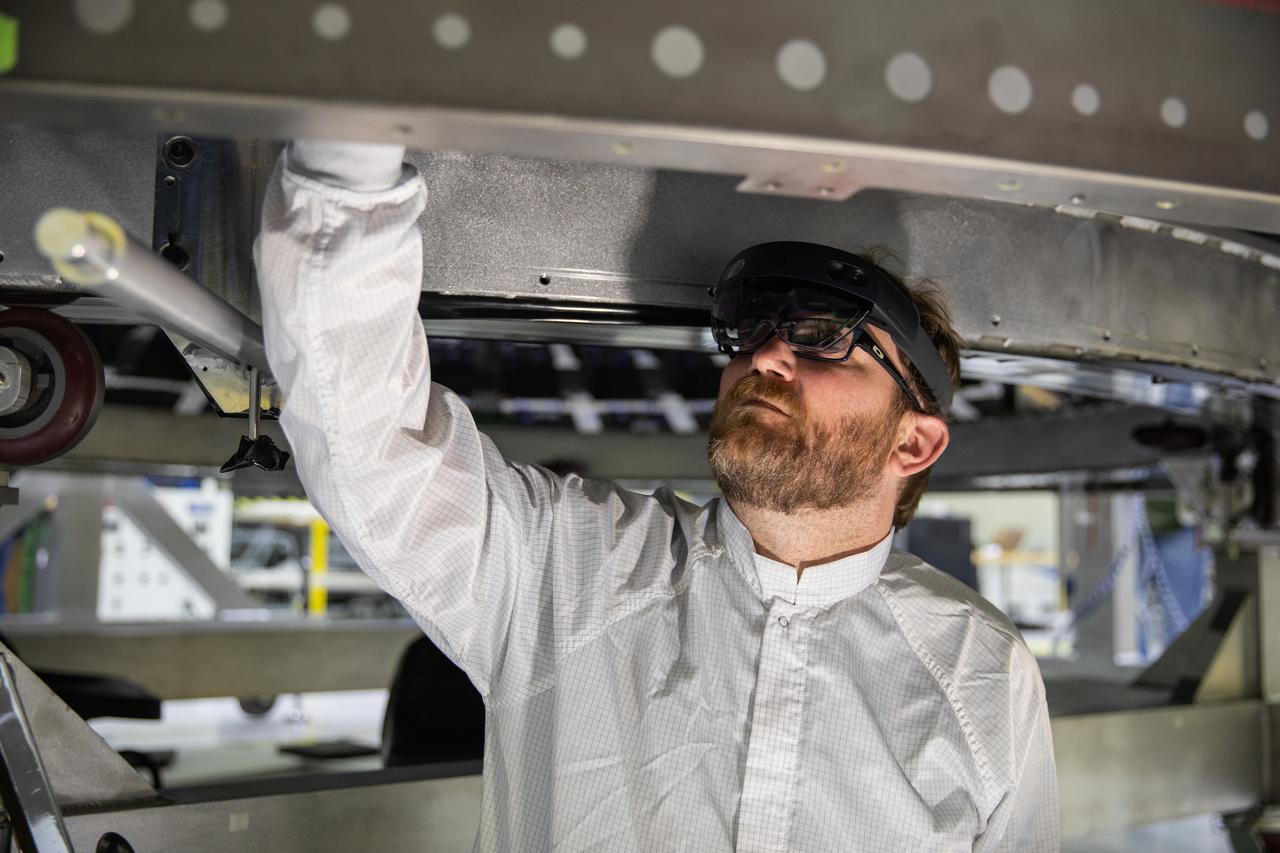
Eric Nolan, a technician with ASRC Federal Data Solutions, wears a pair of augmented reality (AR) goggles as he works on the heat shield for the crew module for NASA’s Artemis II mission inside the high bay of the Neil Armstrong Operations and Checkout Building at the agency’s Kennedy Space Center in Florida on March 18, 2020. Orion manufacturer Lockheed Martin provided the goggles to technicians to help place tapes where components will be installed on Orion for Artemis II, the first crewed mission aboard the spacecraft. Using the AR goggles saves significant labor and time to complete tasks. Manufactured by Microsoft, the goggles, called HoloLens2, are the second version used by Lockheed.
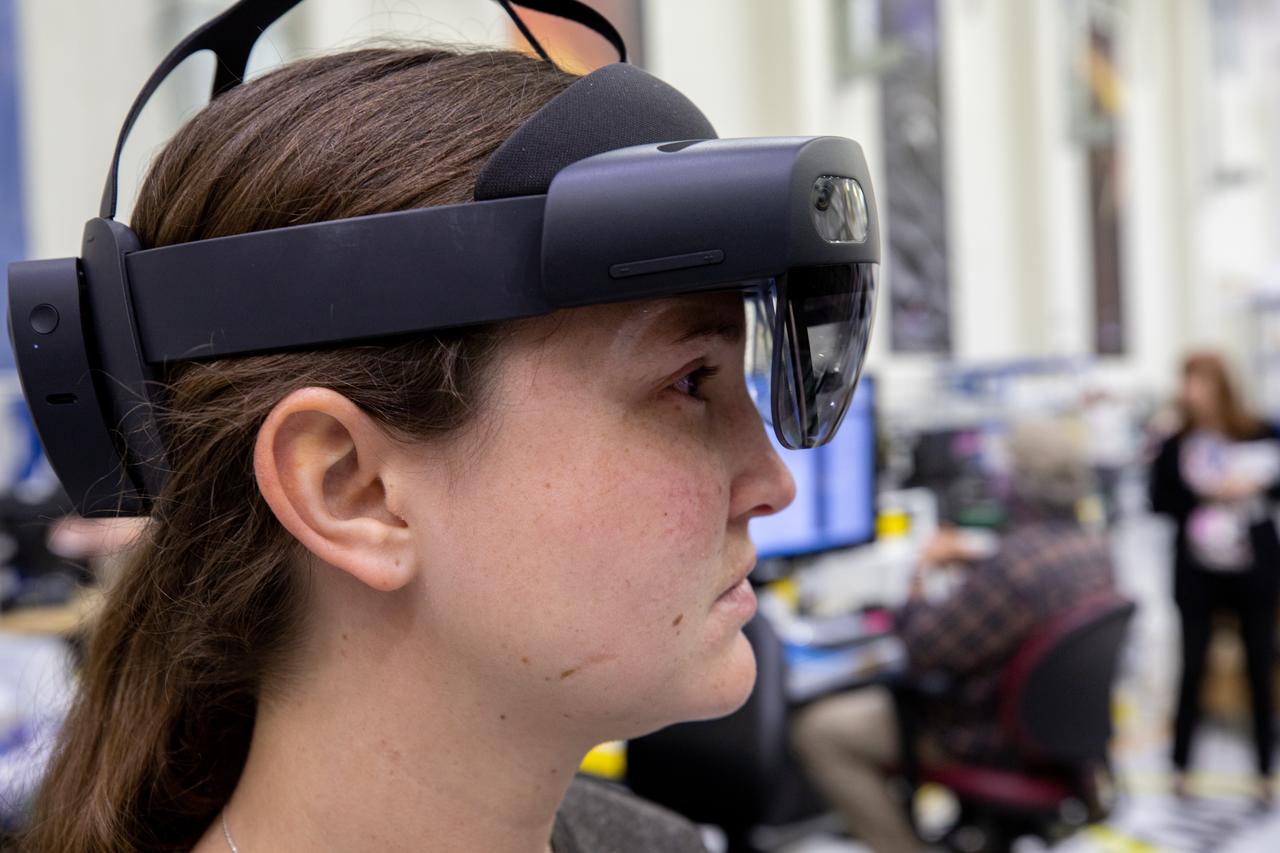
Mary Lakaszcyck, a technician with ASRC Federal Data Solutions, wears a pair of augmented reality (AR) goggles inside the high bay of the Neil Armstrong Operations and Checkout Building at NASA’s Kennedy Space Center in Florida on Jan. 16, 2020. Orion manufacturer Lockheed Martin provided the goggles to technicians to help place tapes where components will be installed on the Orion crew module adapter for NASA’s Artemis II mission, the first crewed mission aboard the spacecraft. Using the AR goggles saves significant labor and time to complete tasks. Manufactured by Microsoft, the goggles, called HoloLens2, are the second version used by Lockheed.
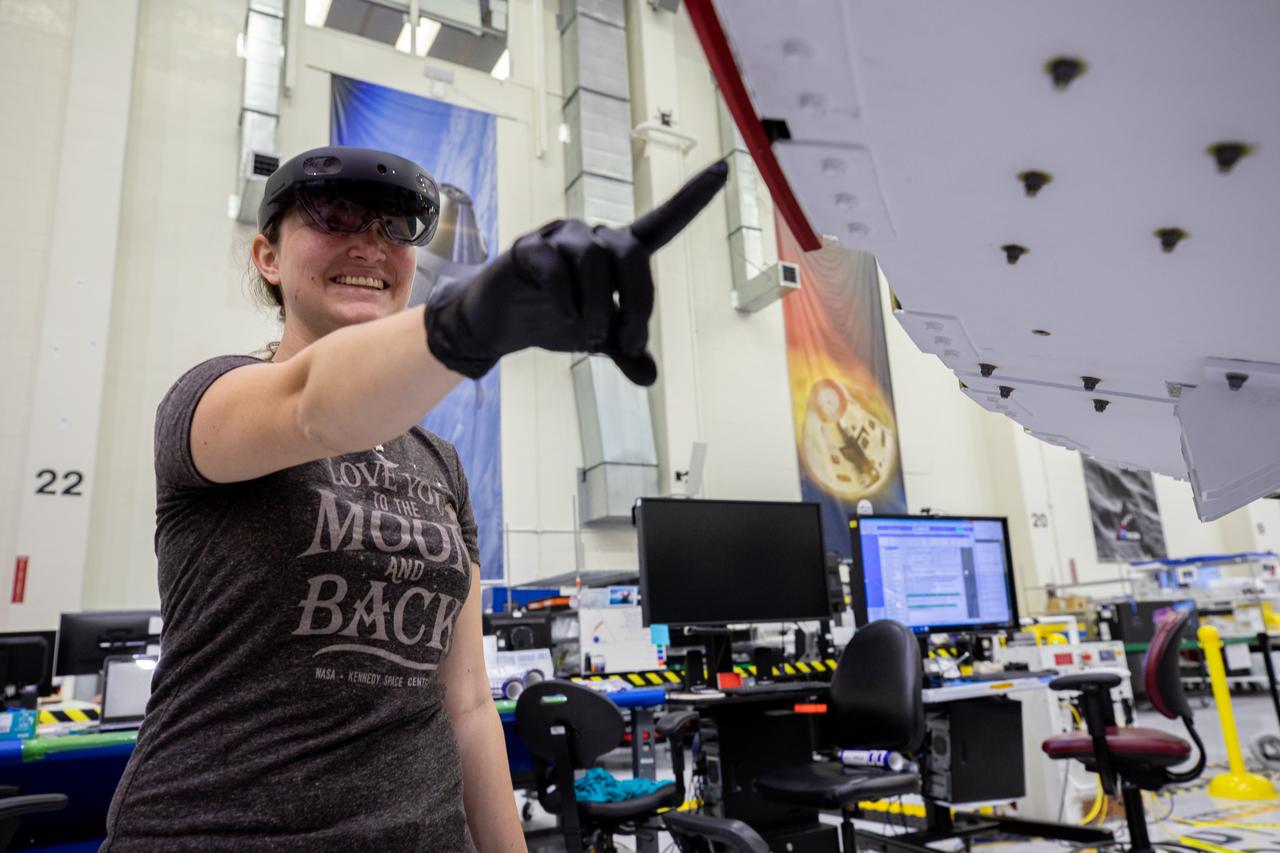
Mary Lakaszcyck, a technician with ASRC Federal Data Solutions, demonstrates a pair of augmented reality (AR) goggles inside the high bay of the Neil Armstrong Operations and Checkout Building at NASA’s Kennedy Space Center in Florida on Jan. 16, 2020. Orion manufacturer Lockheed Martin provided the goggles to technicians to help place tapes where components will be installed on the Orion crew module adapter for NASA’s Artemis II mission, the first crewed mission aboard the spacecraft. Using the AR goggles saves significant labor and time to complete tasks. Manufactured by Microsoft, the goggles, called HoloLens2, are the second version used by Lockheed.
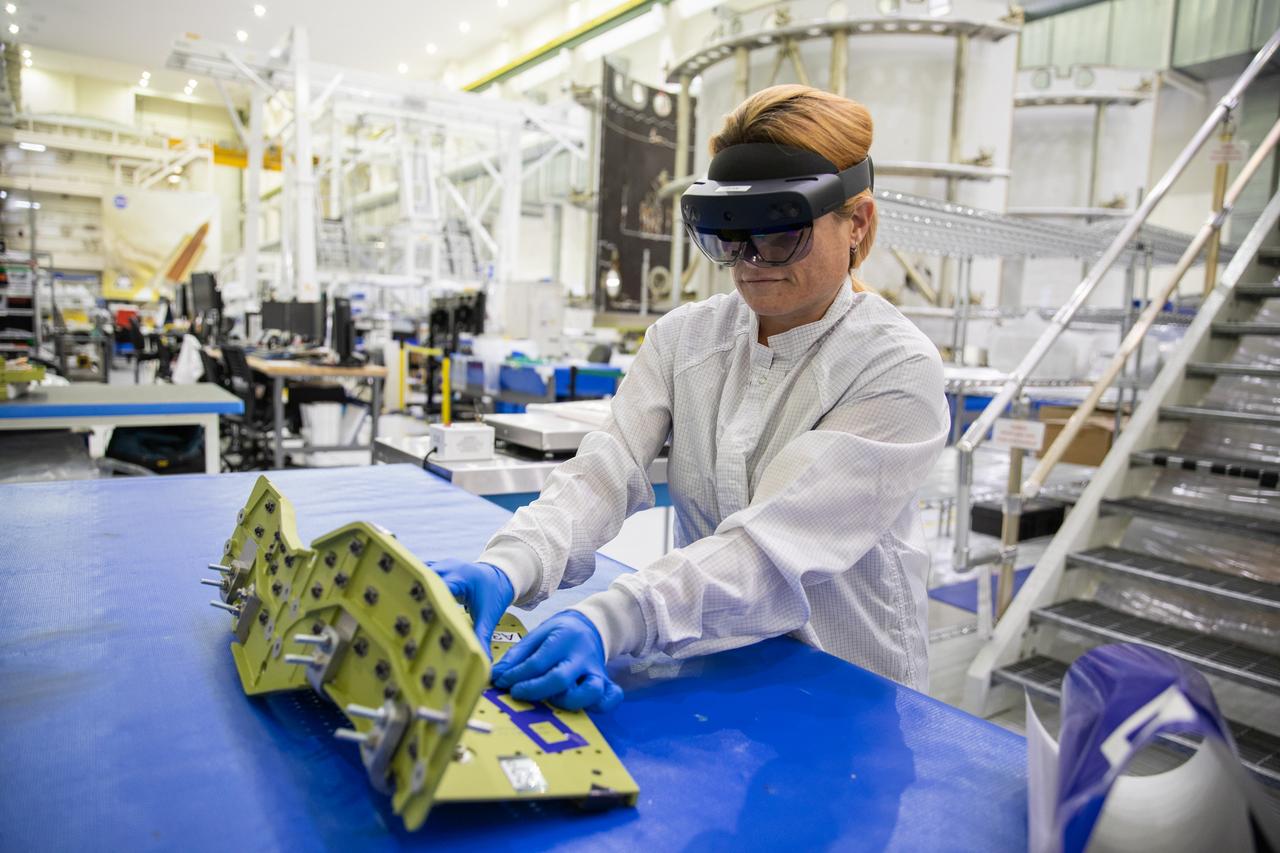
Jennifer Solano, with Lockheed Martin at Kennedy Space Center in Florida, wears a pair of augmented reality (AR) goggles to work on crew module hardware for NASA’s Artemis II mission inside the high bay of the Neil Armstrong Operations and Checkout Building at Kennedy on March 18, 2020. Orion manufacturer Lockheed Martin provided the goggles to technicians to help place tapes where components will be installed on Orion for Artemis II, the first crewed mission aboard the spacecraft. Using the AR goggles saves significant labor and time to complete tasks. Manufactured by Microsoft, the goggles, called HoloLens2, are the second version used by Lockheed.

Jennifer Solano, with Lockheed Martin at Kennedy Space Center in Florida, wears a pair of augmented reality (AR) goggles to work on crew module hardware for NASA’s Artemis II mission inside the high bay of the Neil Armstrong Operations and Checkout Building at Kennedy on March 18, 2020. Orion manufacturer Lockheed Martin provided the goggles to technicians to help place tapes where components will be installed on Orion for Artemis II, the first crewed mission aboard the spacecraft. Using the AR goggles saves significant labor and time to complete tasks. Manufactured by Microsoft, the goggles, called HoloLens2, are the second version used by Lockheed.
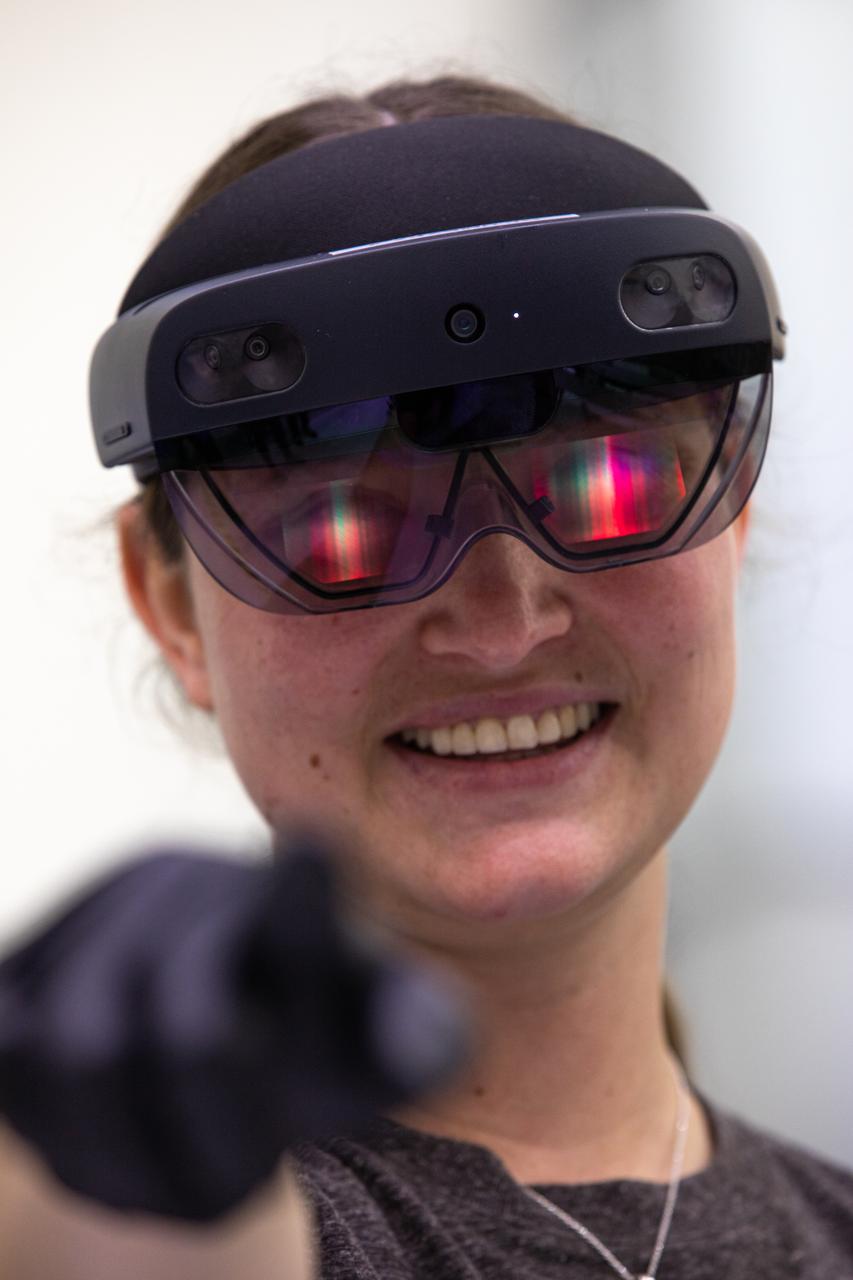
Mary Lakaszcyck, a technician with ASRC Federal Data Solutions, wears a pair of augmented reality (AR) goggles inside the high bay of the Neil Armstrong Operations and Checkout Building at NASA’s Kennedy Space Center in Florida on Jan. 16, 2020. Orion manufacturer Lockheed Martin provided the goggles to technicians to help place tapes where components will be installed on the Orion crew module adapter for NASA’s Artemis II mission, the first crewed mission aboard the spacecraft. Using the AR goggles saves significant labor and time to complete tasks. Manufactured by Microsoft, the goggles, called HoloLens2, are the second version used by Lockheed.
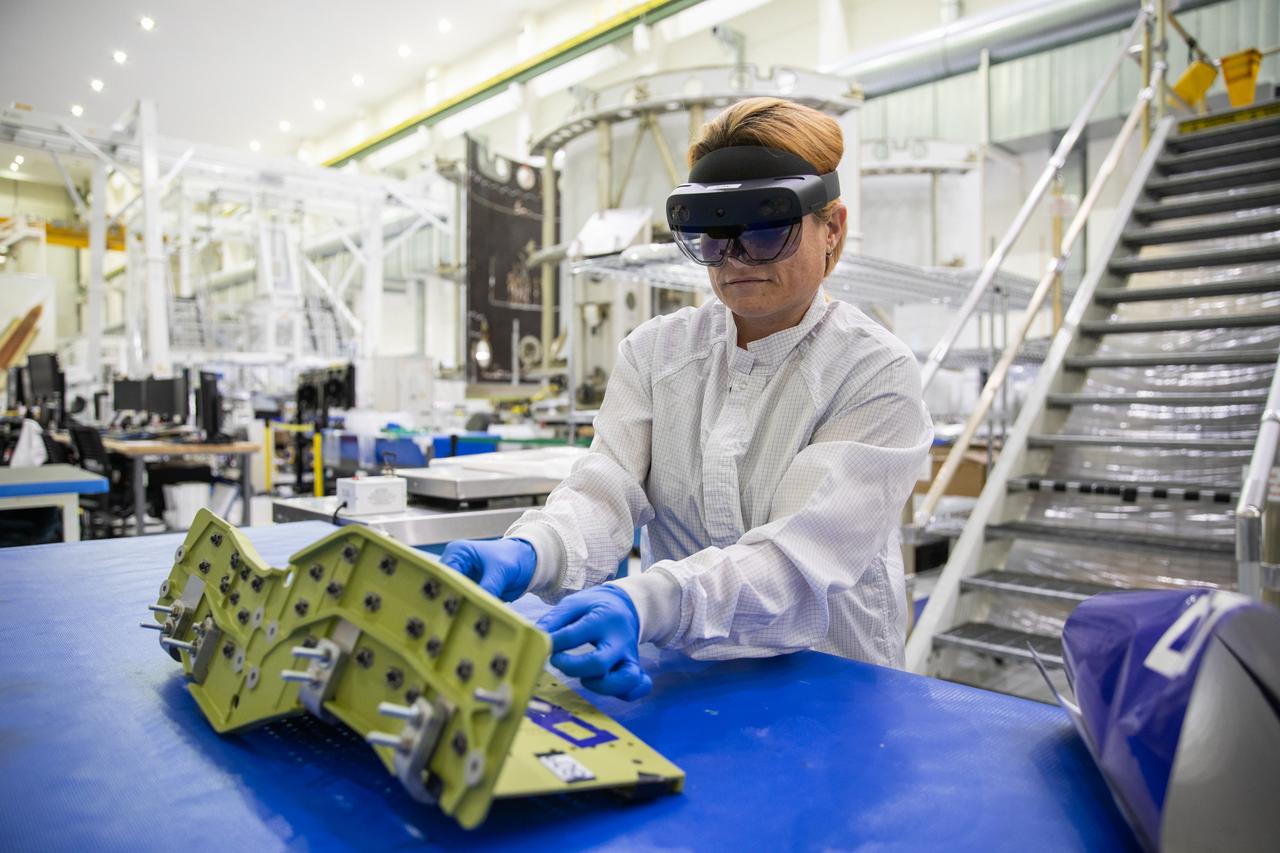
Jennifer Solano, with Lockheed Martin at Kennedy Space Center in Florida, wears a pair of augmented reality (AR) goggles to work on crew module hardware for NASA’s Artemis II mission inside the high bay of the Neil Armstrong Operations and Checkout Building at Kennedy on March 18, 2020. Orion manufacturer Lockheed Martin provided the goggles to technicians to help place tapes where components will be installed on Orion for Artemis II, the first crewed mission aboard the spacecraft. Using the AR goggles saves significant labor and time to complete tasks. Manufactured by Microsoft, the goggles, called HoloLens2, are the second version used by Lockheed.
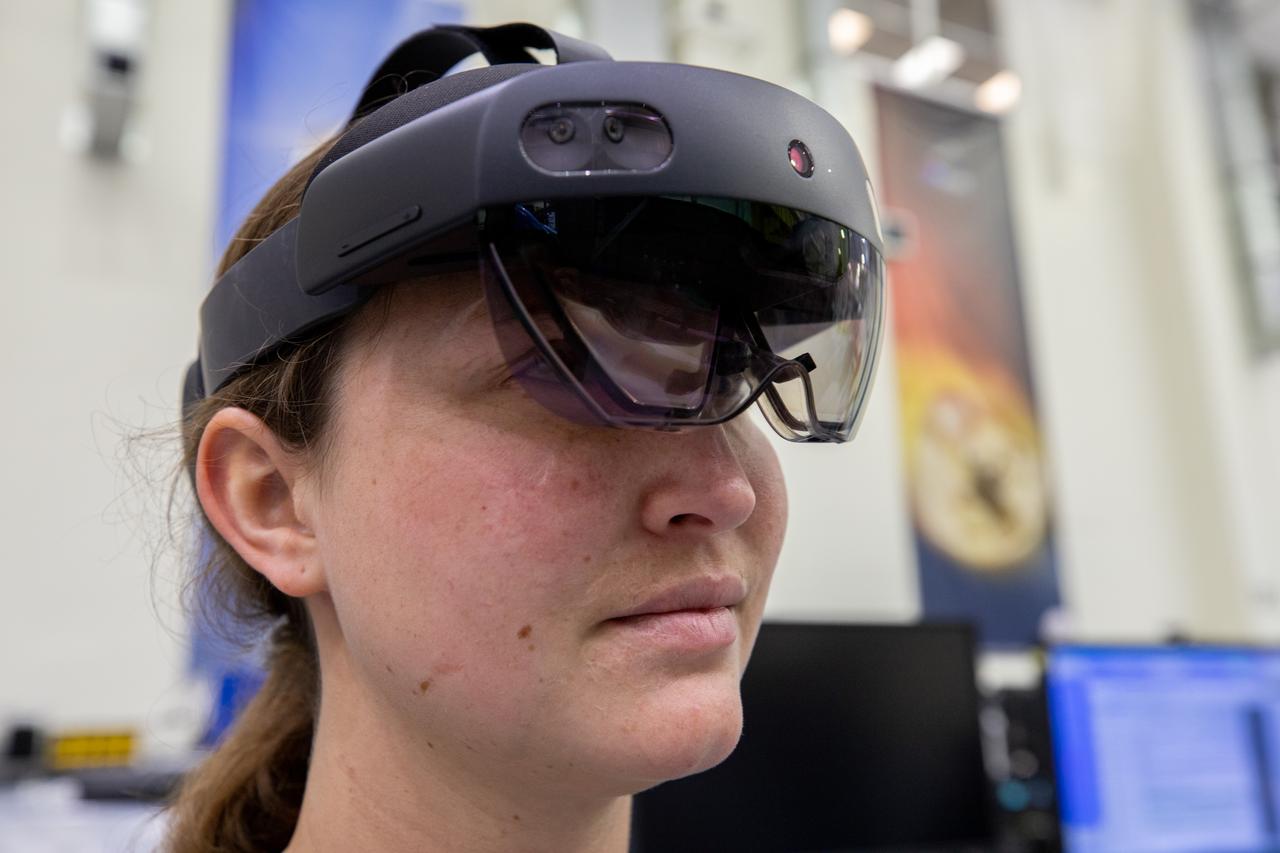
Mary Lakaszcyck, a technician with ASRC Federal Data Solutions, wears a pair of augmented reality (AR) goggles inside the high bay of the Neil Armstrong Operations and Checkout Building at NASA’s Kennedy Space Center in Florida on Jan. 16, 2020. Orion manufacturer Lockheed Martin provided the goggles to technicians to help place tapes where components will be installed on the Orion crew module adapter for NASA’s Artemis II mission, the first crewed mission aboard the spacecraft. Using the AR goggles saves significant labor and time to complete tasks. Manufactured by Microsoft, the goggles, called HoloLens2, are the second version used by Lockheed.
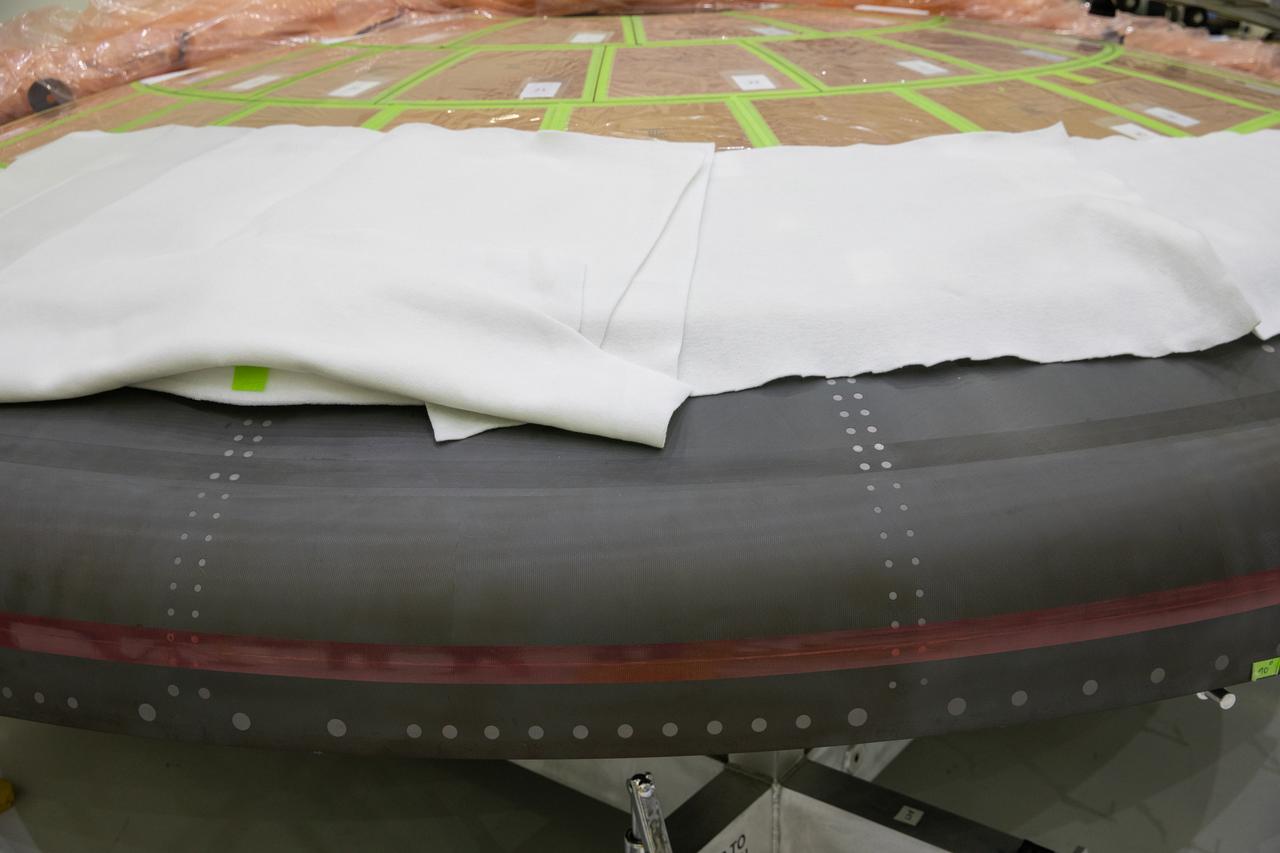
The heat shield for NASA’s Artemis II mission is in view inside the Neil Armstrong Operations and Checkout Building at the agency’s Kennedy Space Center in Florida on March 18, 2020. Using augmented reality (AR) goggles, technicians are completing the work on the heat shield. Orion manufacturer Lockheed Martin provided the goggles to technicians to help place tapes where components will be installed on the crew module, heat shield and other components for Artemis II, the first crewed mission aboard the spacecraft. Using the AR goggles saves significant labor and time to complete tasks. Manufactured by Microsoft, the goggles, called HoloLens2, are the second version used by Lockheed.
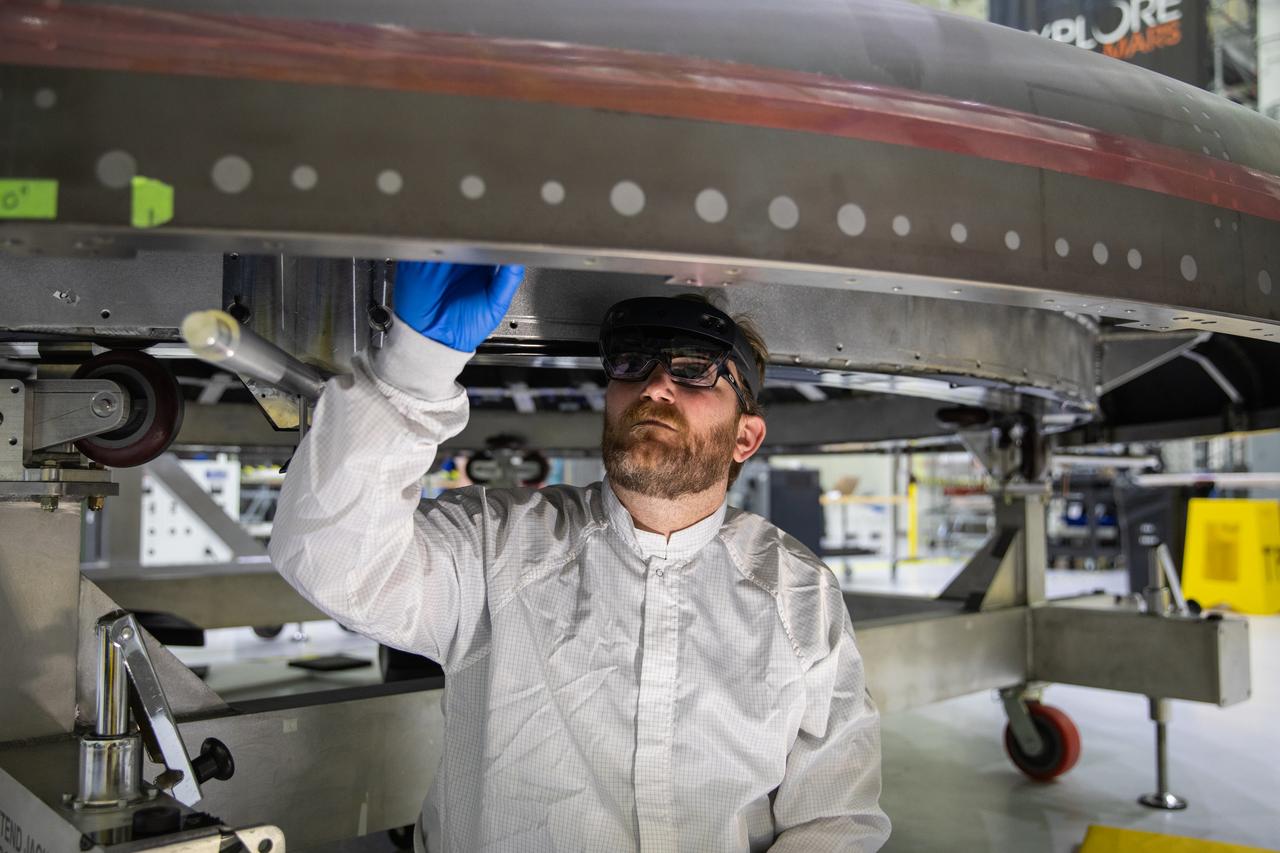
Eric Nolan, a technician with ASRC Federal Data Solutions, wears a pair of augmented reality (AR) goggles as he works on the heat shield for the crew module for NASA’s Artemis II mission inside the high bay of the Neil Armstrong Operations and Checkout Building at the agency’s Kennedy Space Center in Florida on March 18, 2020. Orion manufacturer Lockheed Martin provided the goggles to technicians to help place tapes where components will be installed on Orion for Artemis II, the first crewed mission aboard the spacecraft. Using the AR goggles saves significant labor and time to complete tasks. Manufactured by Microsoft, the goggles, called HoloLens2, are the second version used by Lockheed.
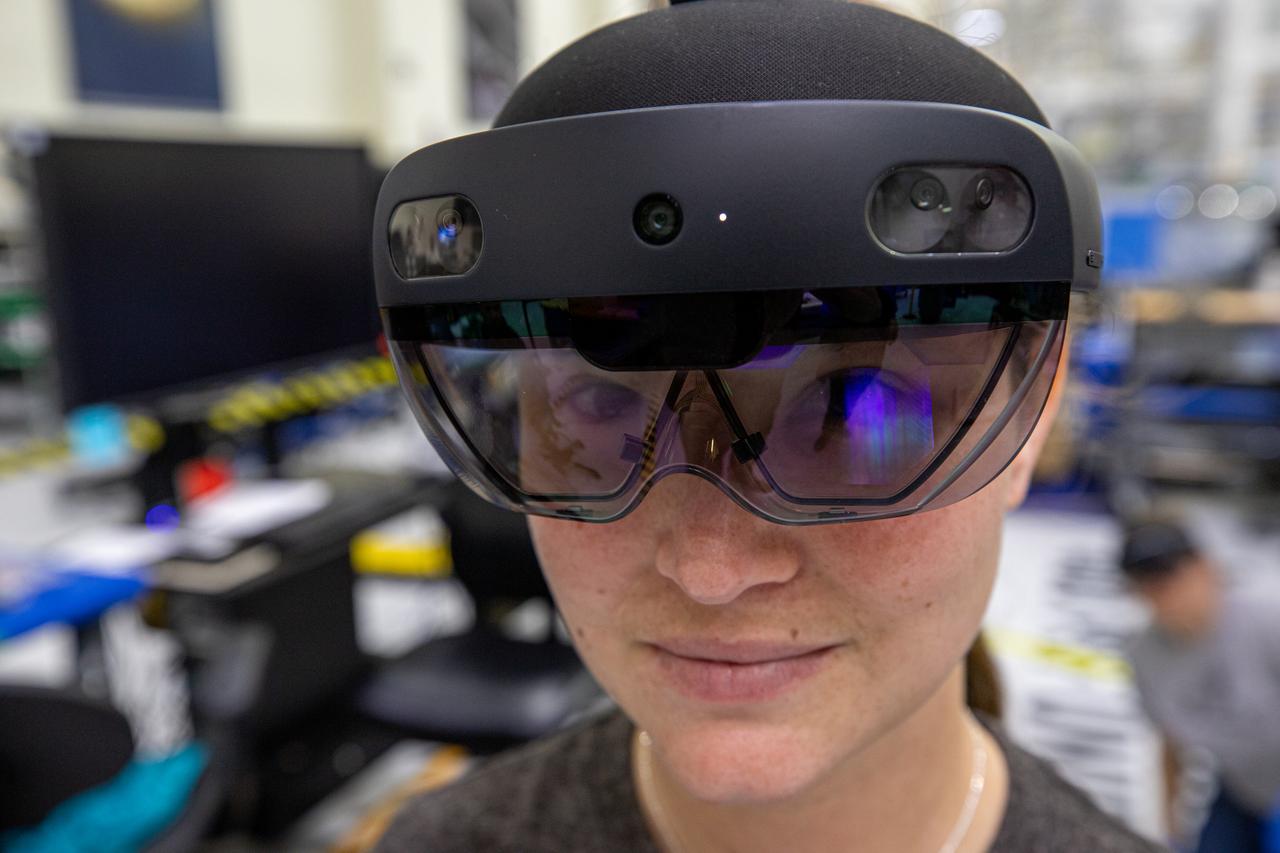
Mary Lakaszcyck, a technician with ASRC Federal Data Solutions, wears a pair of augmented reality (AR) goggles inside the high bay of the Neil Armstrong Operations and Checkout Building at NASA’s Kennedy Space Center in Florida on Jan. 16, 2020. Orion manufacturer Lockheed Martin provided the goggles to technicians to help place tapes where components will be installed on the Orion crew module adapter for NASA’s Artemis II mission, the first crewed mission aboard the spacecraft. Using the AR goggles saves significant labor and time to complete tasks. Manufactured by Microsoft, the goggles, called HoloLens2, are the second version used by Lockheed.
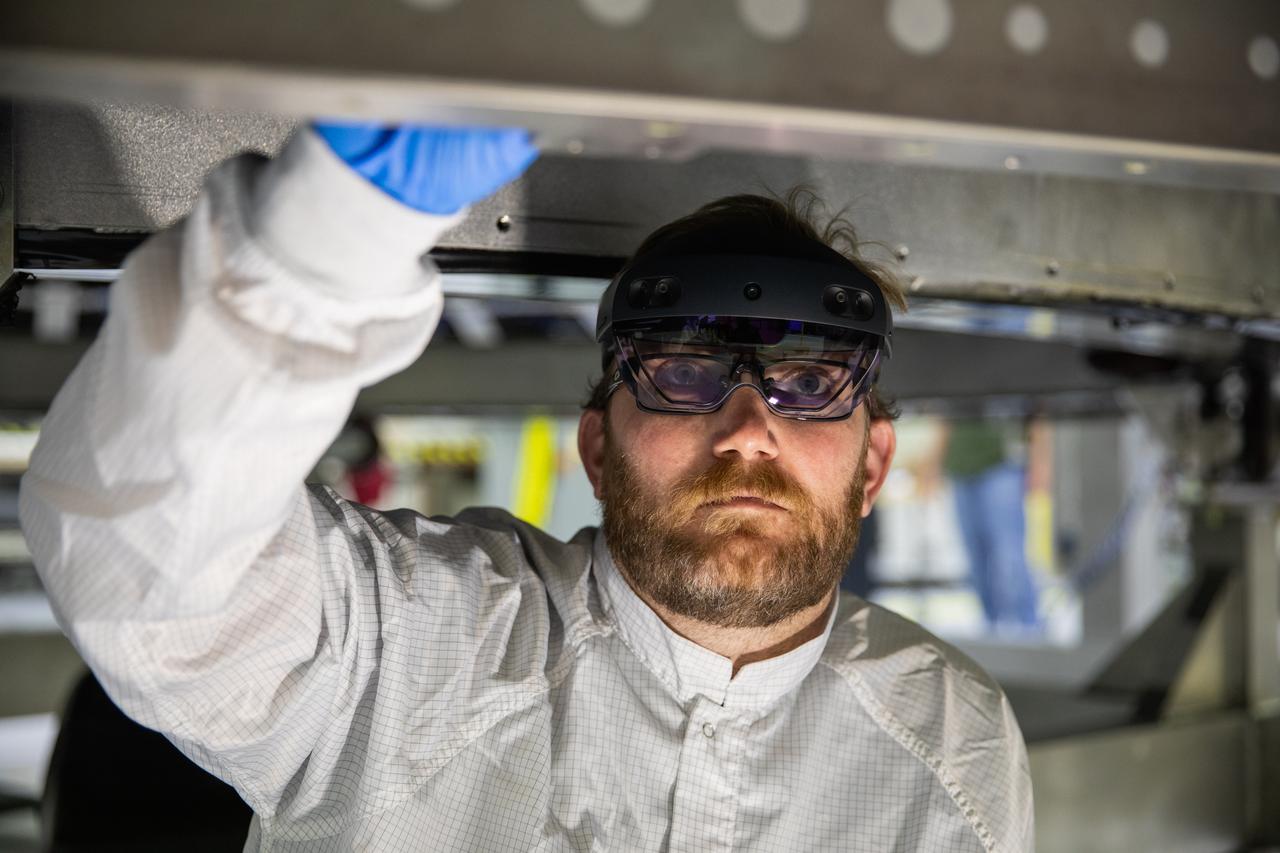
Eric Nolan, a technician with ASRC Federal Data Solutions, wears a pair of augmented reality (AR) goggles as he works on the heat shield for the crew module for NASA’s Artemis II mission inside the high bay of the Neil Armstrong Operations and Checkout Building at the agency’s Kennedy Space Center in Florida on March 18, 2020. Orion manufacturer Lockheed Martin provided the goggles to technicians to help place tapes where components will be installed on Orion for Artemis II, the first crewed mission aboard the spacecraft. Using the AR goggles saves significant labor and time to complete tasks. Manufactured by Microsoft, the goggles, called HoloLens2, are the second version used by Lockheed.
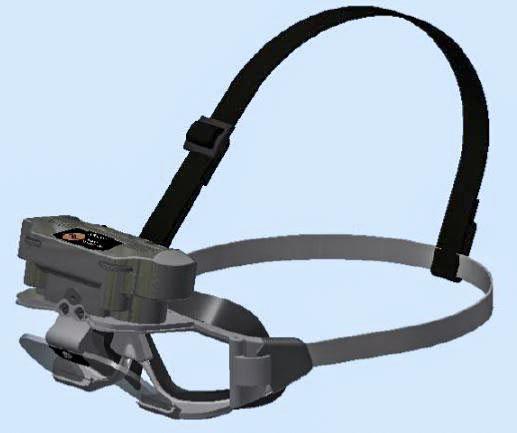
jsc2022e083572 (10/20/20220 --- A preflight image of a beating Engineered Heart Tissue (EHT) for the Engineered Heart Tissues-2 investigation. The tissue is fabricated between two posts, one flexible and one rigid. In the flexible post, you can see a square magnet. This magnet enables researchers to measure tissue function using an underlying magnetic sensor, giving real time tissue function data. Image courtesy of Johns Hopkins University.
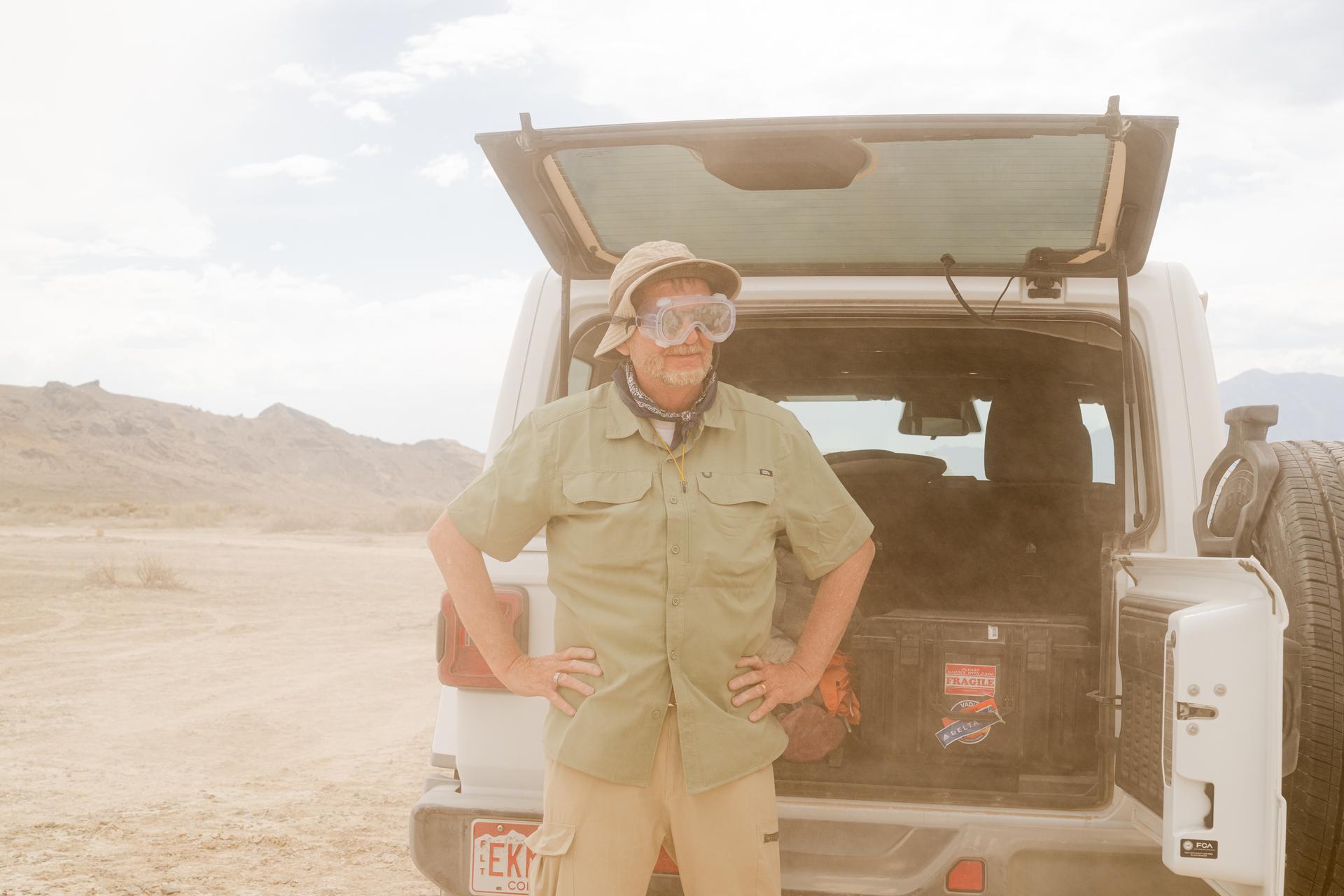
Bob Podgurski wears goggles during a dust event at the DAVINCI VADIX basecamp, Crater Island, Utah, June 24, 2026. This area was the site of a series of tests (June 23-25, 2026) of the camera system that will one day fly aboard NASA’s DAVINCI mission to Venus. NASA/Mike Guinto
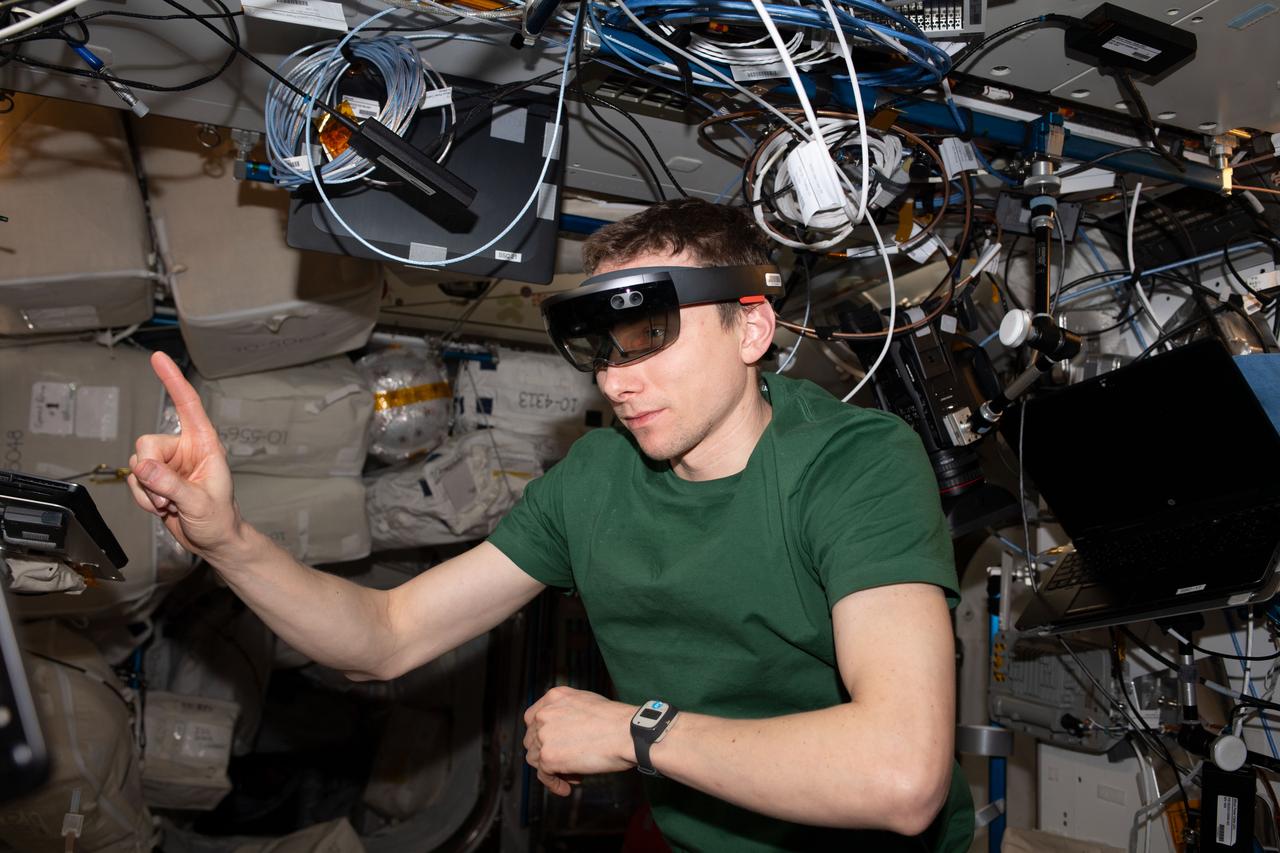
iss069e082115 (Aug. 18, 2023) --- NASA astronaut and Expedition 69 Flight Engineer Woody Hoburg tests the ability to use augmented reality goggles for maintenance aboard the International Space Station.
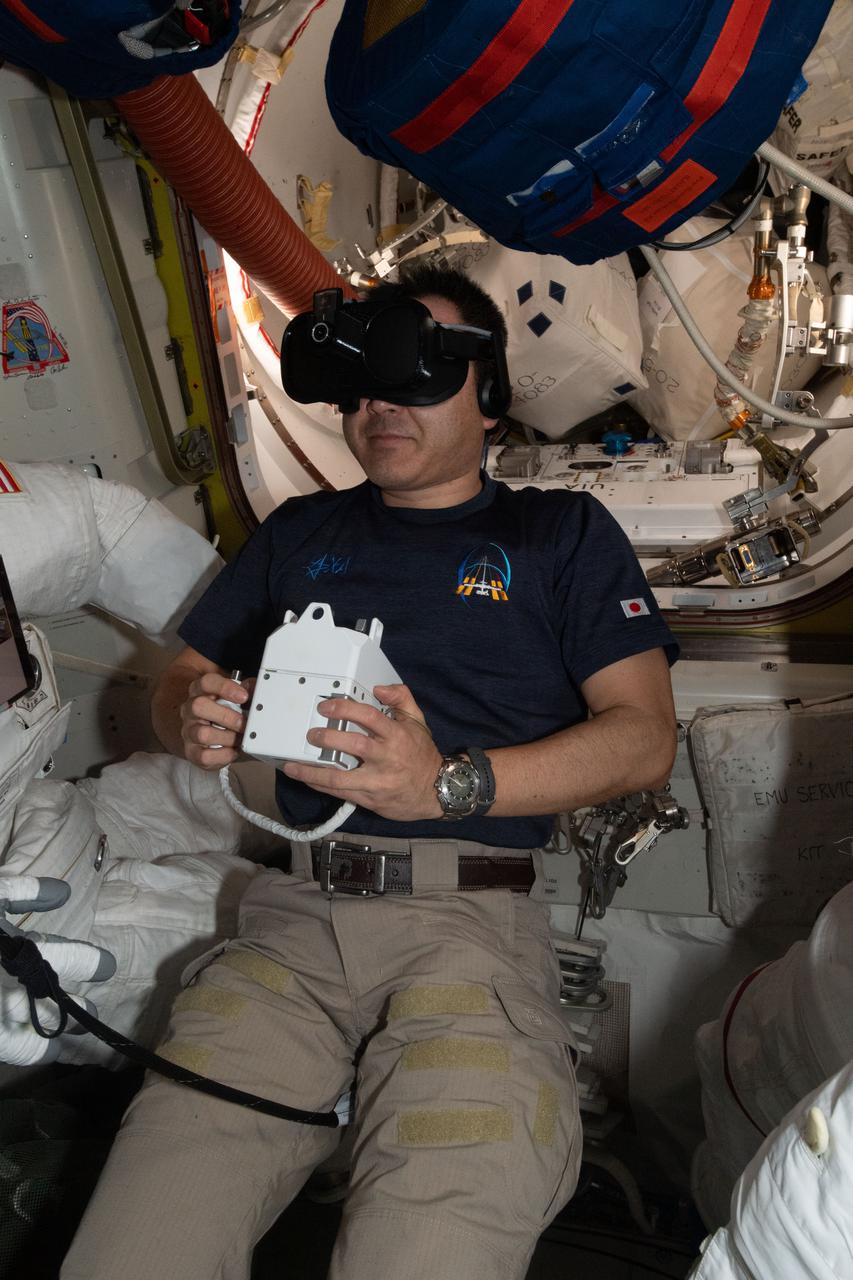
iss065e238467 (Aug. 11, 2021) --- Expedition 65 Commander Akihiko Hoshide of the Japan Aerospace Exploration Agency (JAXA) wears virtual reality goggles inside the U.S. Quest airlock to train for an upcoming spacewalk at the International Space Station.
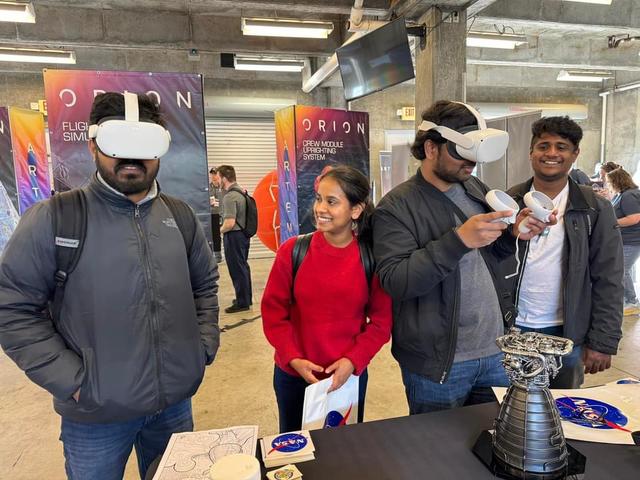
Visitors enjoy an RS-25 engine test using the virtual reality goggles at the NASA Stennis booth during solar eclipse activities at the Indianapolis Motor Speedway in Indiana on April 8.
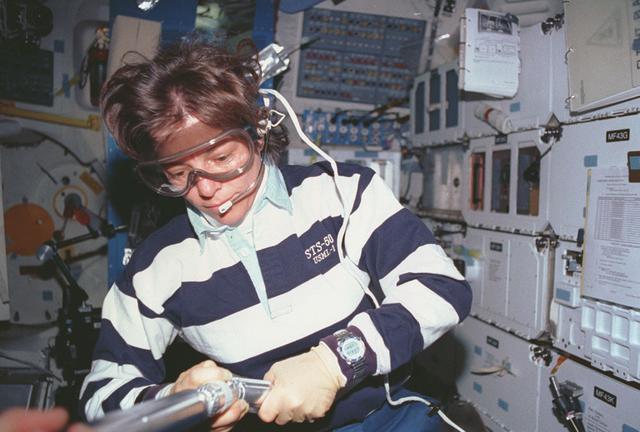
Space Shuttle Columbia (STS-50) astronaut Bornie Dunbar wears protective goggles to assemble a zeolite sample cartridge for the Crystal Growth Furnace (CGF) in the United States Microgravity Laboratory-1 (USML-1) science module.
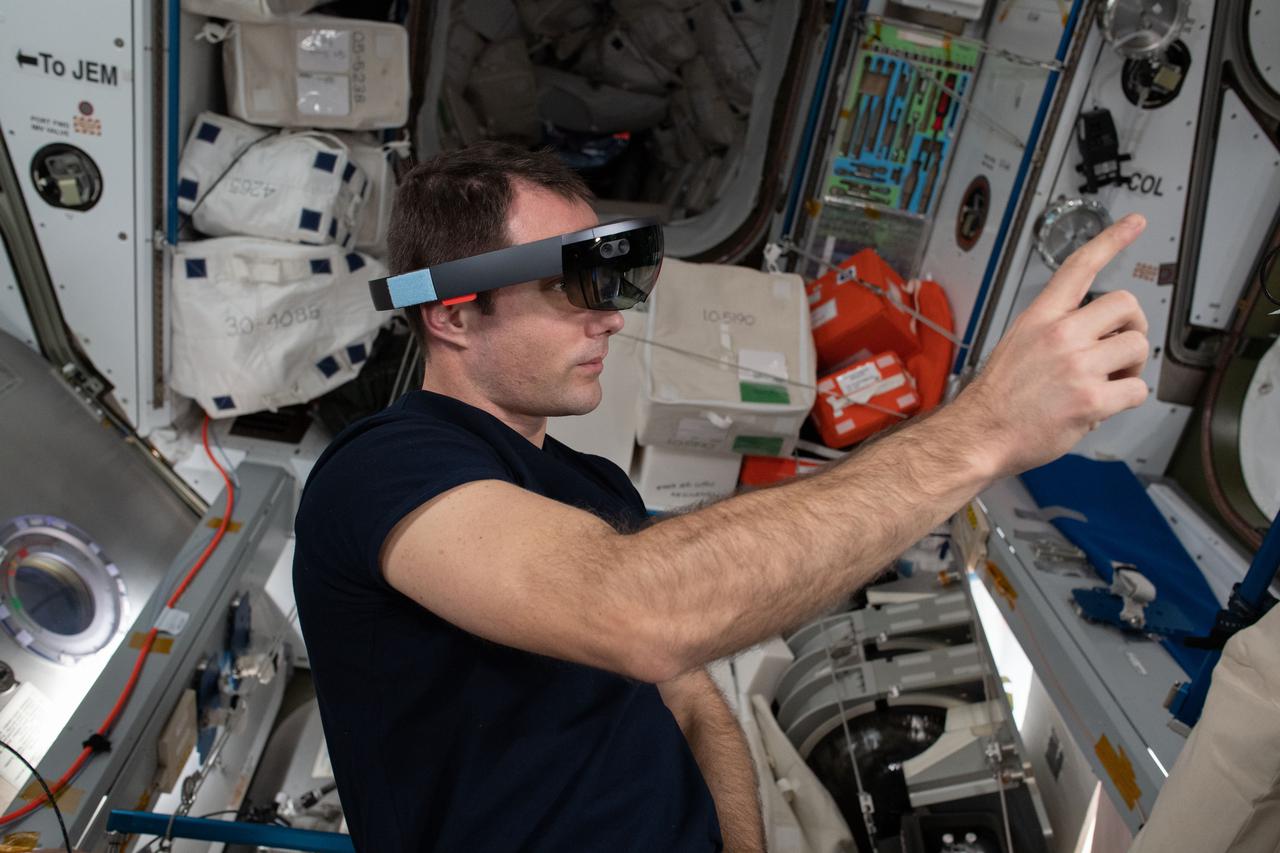
iss065e167797 (July 16, 2021) --- Expedition 65 Flight Engineer Thomas Pesquet of ESA (European Space Agency) wears Sidekick goggles to demonstrate using augmented reality while interacting with components aboard the International Space Station.
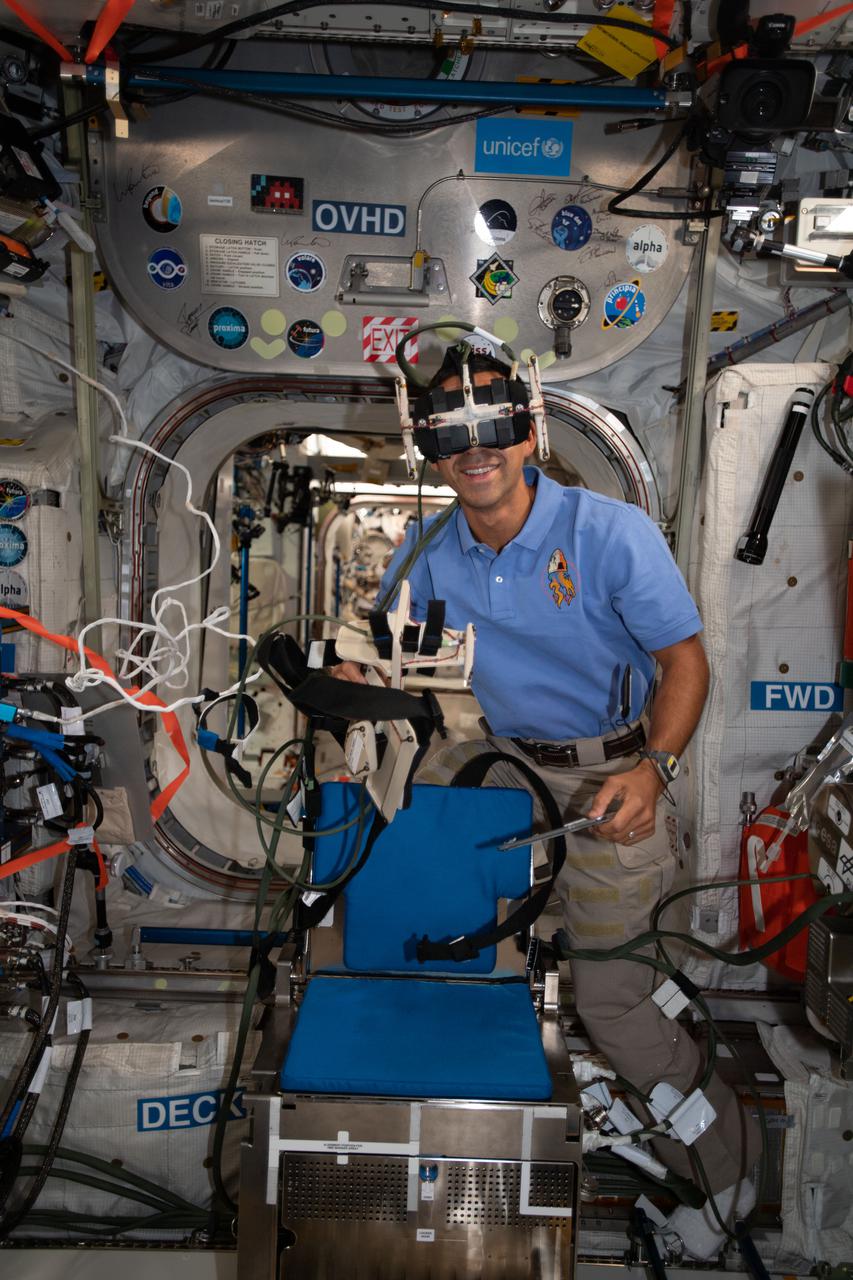
iss066e079006 (Nov. 22, 2021) --- NASA astronaut and Expedition 66 Flight Engineer Raja Chari wears virtual reality goggles inside the International Space Station's Columbus laboratory module. Chari was participating in the GRASP human research experiment that tests how astronauts perceive up and down movements and grip and manipulate objects in microgravity.
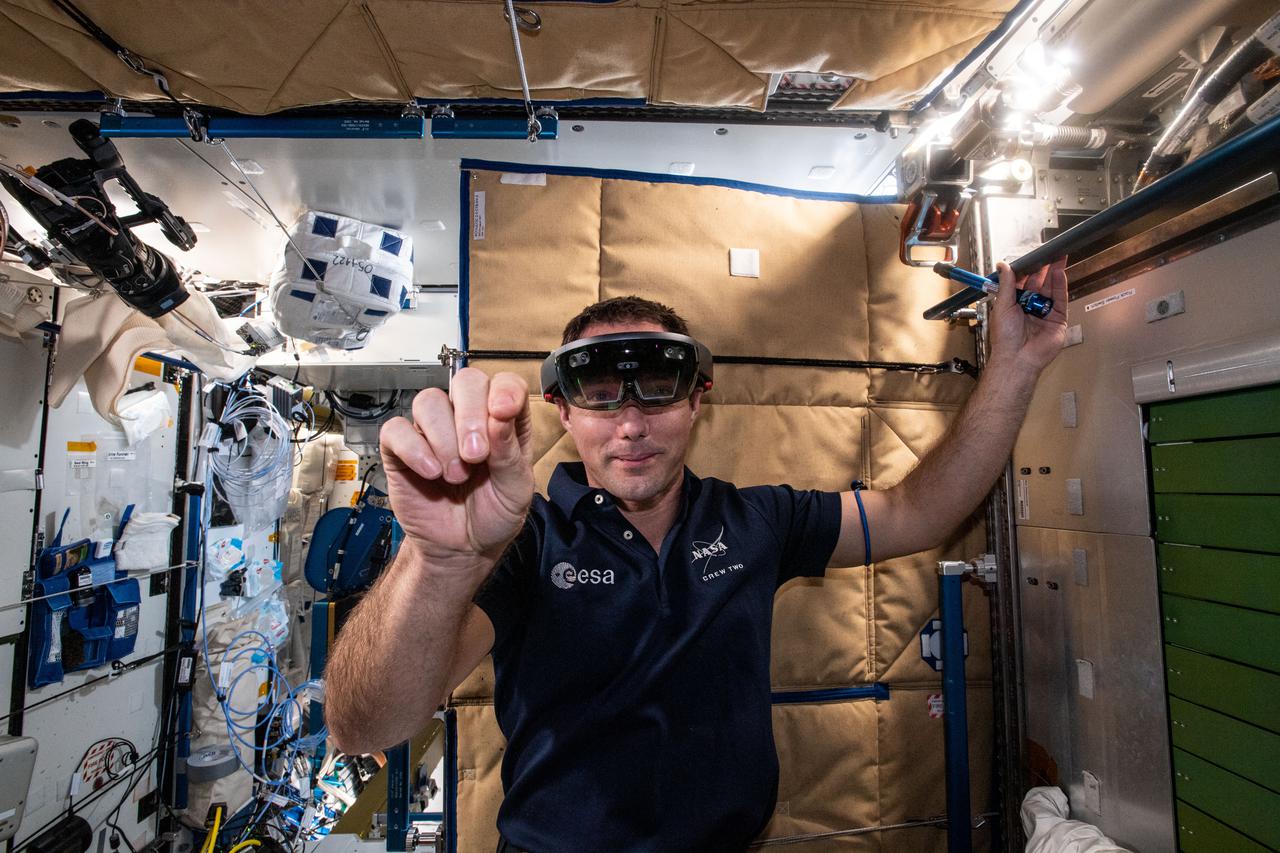
iss065e162496 (July 6, 2021) --- Expedition 65 Flight Engineer Thomas Pesquet of ESA (European Space Agency) wears the Sidekick augmented reality goggles that assist crew members during operations with science experiments and orbital maintenance tasks.
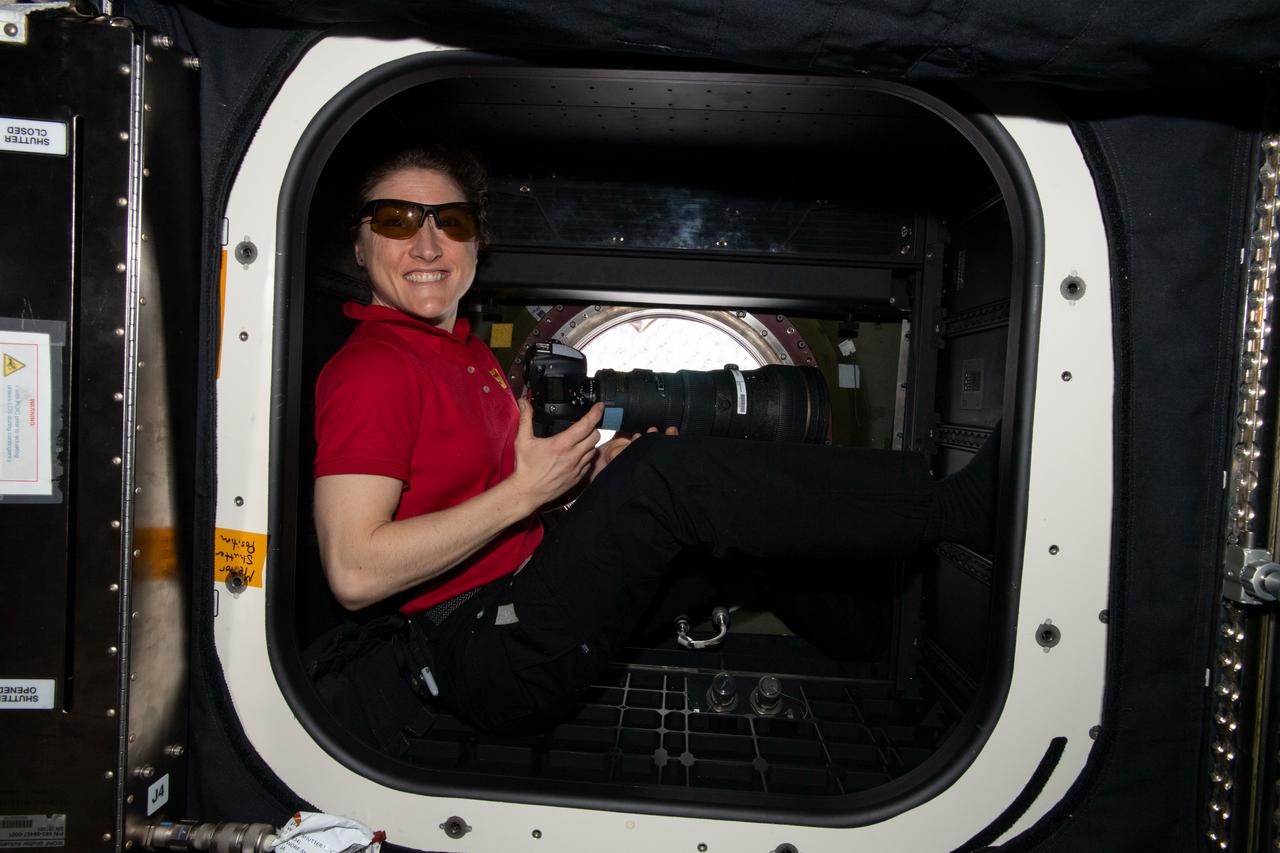
iss060e014992 (July 27, 2019) --- Expedition 60 Flight Engineer Christina Koch of NASA rests inside the U.S. Destiny laboratory module's Window Observation Research Facility (WORF). She is wearing specialized goggles to protect her eyes from the Sun's rays while photographing Earth landmarks from the International Space Station.
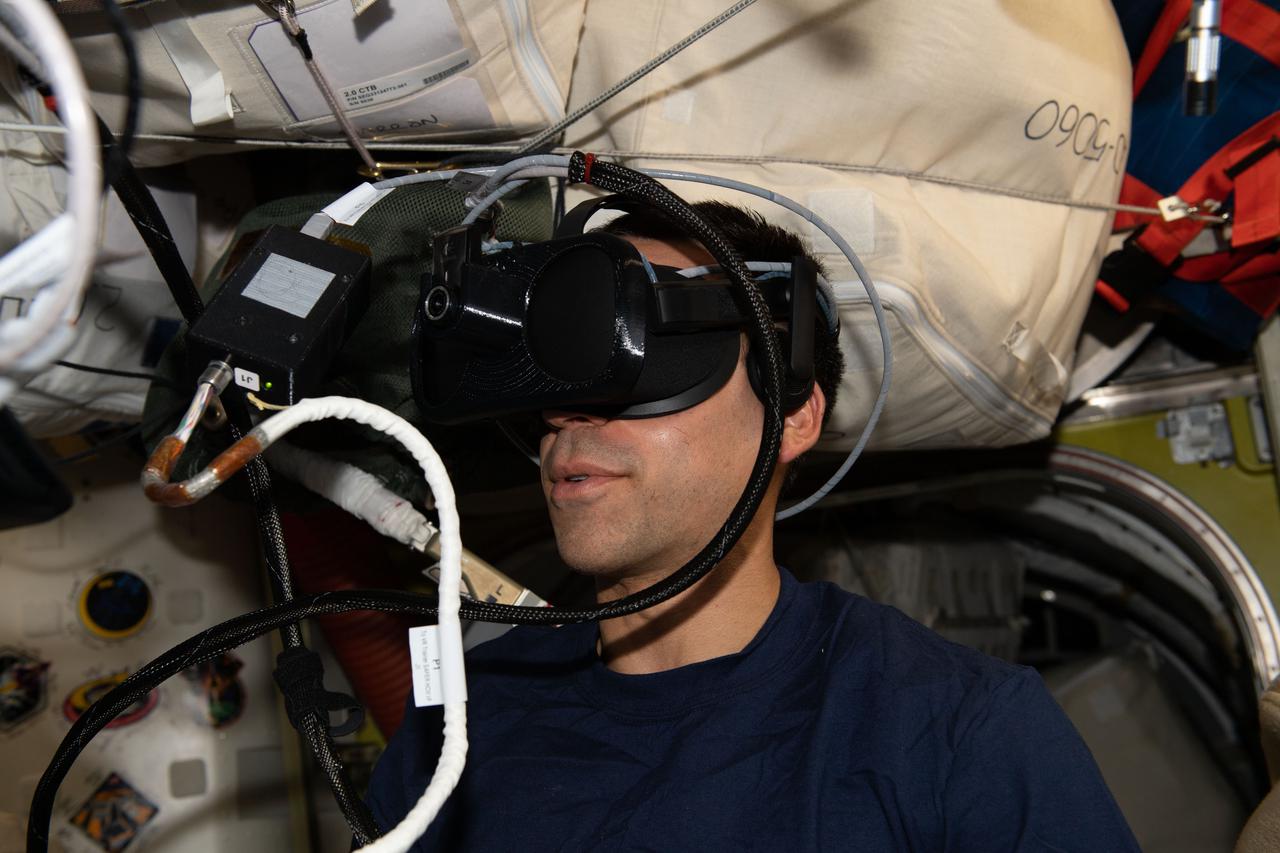
iss066e156067 (March 2, 2022) --- NASA astronaut and Expediiton 66 Flight Engineer Raja Chari wears virtual reality goggles to practice spacewalk rescue scenarios that would be used while maneuvering using the U.S. spacesuit's SAFER jet pack, also known as Simplified Aid For EVA Rescue.
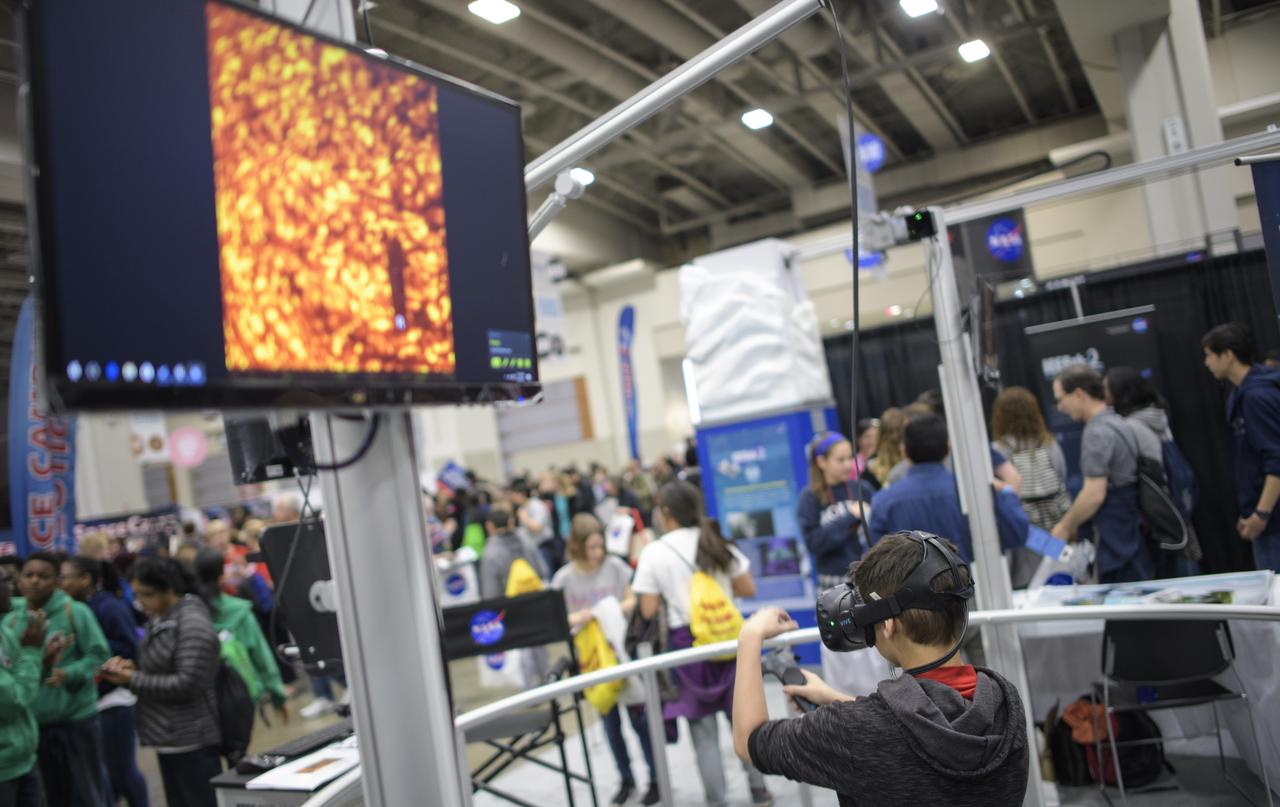
An attendee uses virtual reality goggles to view the Sun during Sneak Peek Friday at the USA Science and Engineering Festival, Friday, April 6, 2018 at the Walter E. Washington Convention Center in Washington, DC. The festival is open to the public April 7-8. Photo Credit: (NASA/Joel Kowsky)
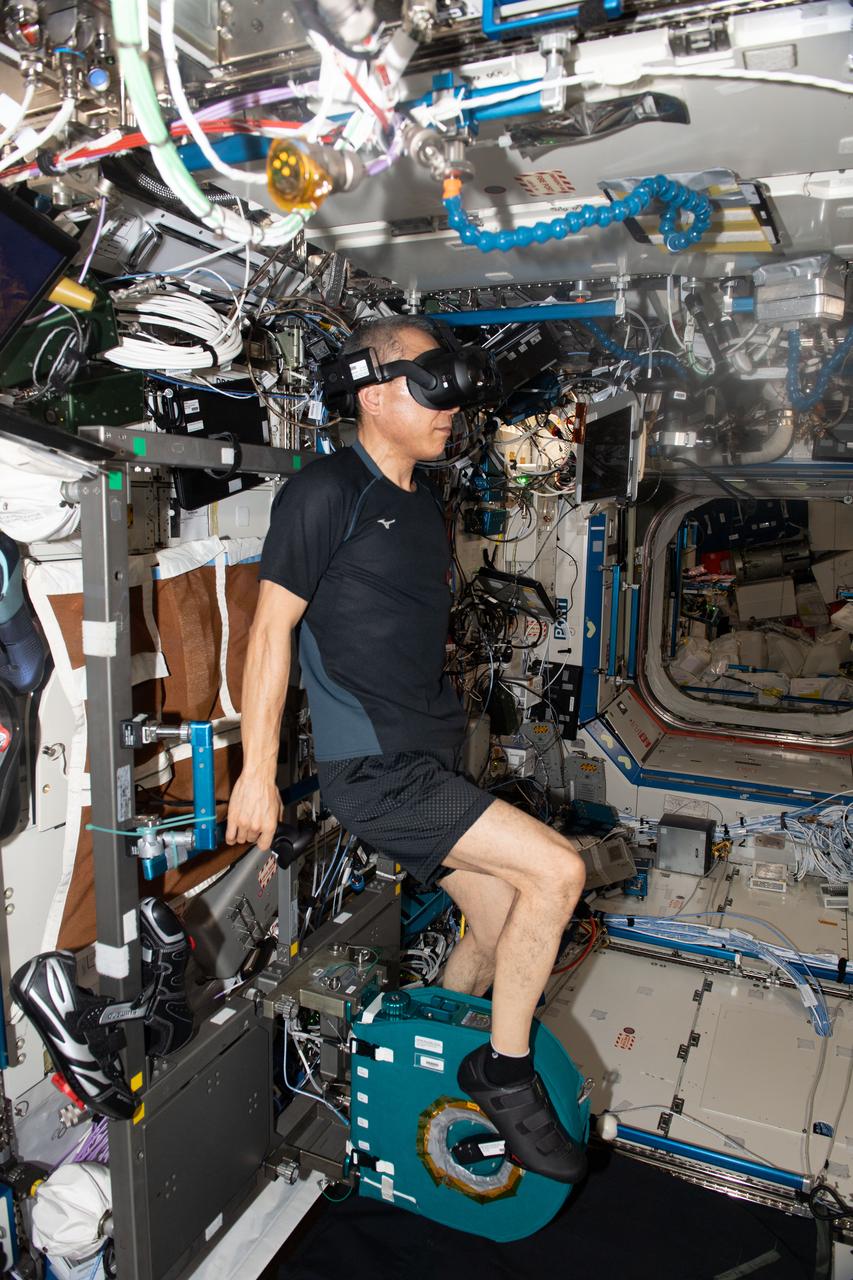
iss070e095280 (Feb. 18, 2024) --- JAXA (Japan Aerospace Exploration Agency) astronaut and Expedition 70 Flight Engineer Satoshi Furukawa pedals on an exercise cycle, also known as the Cycle Ergometer Vibration Isolation System (CEVIS), while watching a movie wearing virtual reality goggles.
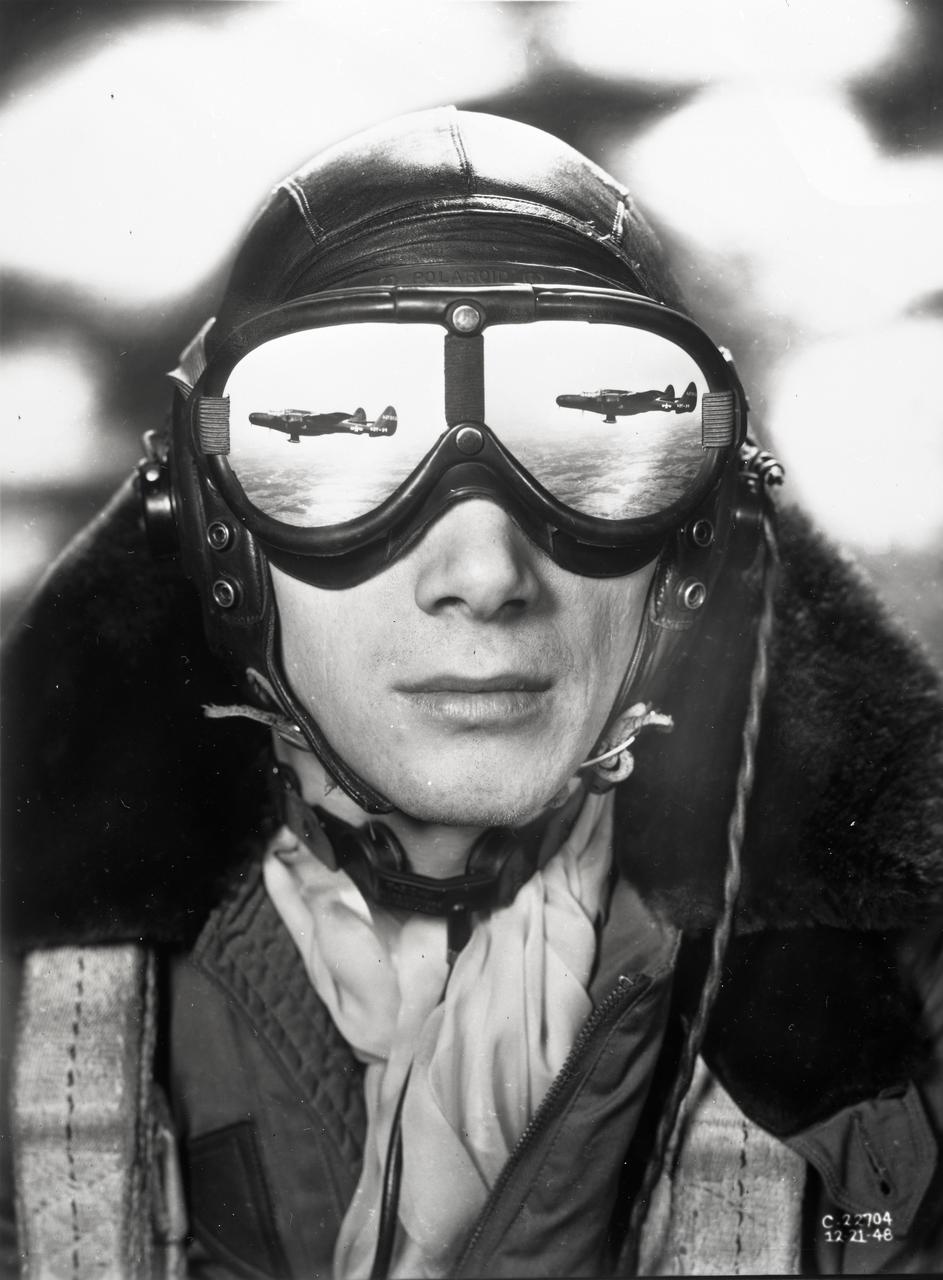
Flight engineer and photographer William Wynne (pictured) worked with photographer Arthur Laufman to execute a photo concept devised by Laufman. Wynne printed two copies of the F-61 aircraft in flight. The prints were made to the correct size that allowed them to be cut out and taped to the lenses of his goggles to simulate a reflection. The photo of Wynne was then taken with an out of focus background to simulate clouds.

iss074e0587453 (May 17, 2026) --- NASA astronauts Jessica Meir and Jack Hathaway, both Expedition 74 flight engineers, wear disposable gloves, dust masks, and safety goggles, as part of standard safety protocol, while unpacking temperature‑controlled scientific samples from a SpaceX Dragon cargo spacecraft and stowing them inside research facilities located aboard the International Space Station’s Kibo laboratory module. Credit: NASA/Chris Williams

iss074e0587456 (May 17, 2026) --- NASA astronauts Jessica Meir and Jack Hathaway, both Expedition 74 flight engineers, wear disposable gloves, dust masks, and safety goggles while unpacking temperature‑controlled scientific samples from a SpaceX Dragon cargo spacecraft and stowing them inside research facilities located aboard the International Space Station’s Kibo laboratory module. Credit: NASA/Chris Williams
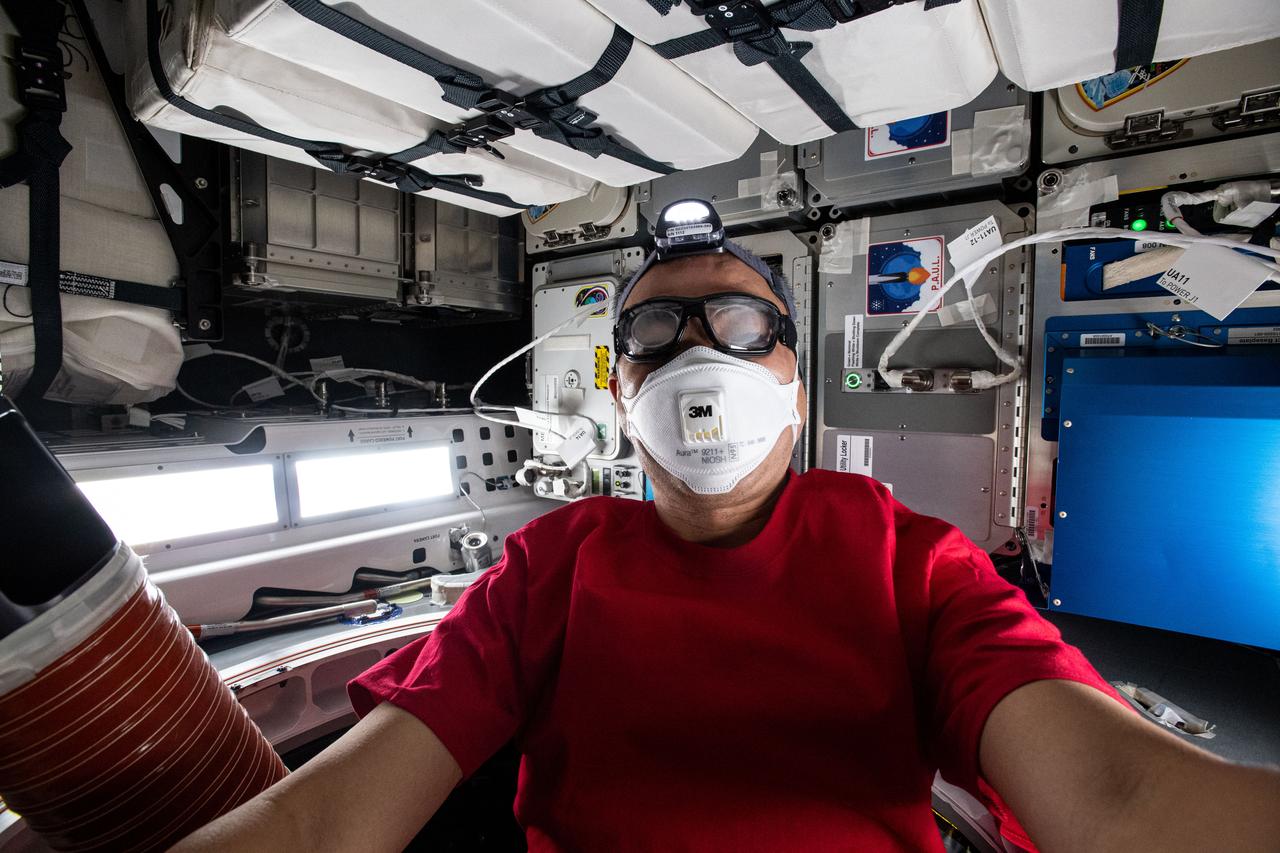
iss064e011228 (Dec. 7, 2020) --- JAXA astronaut Sochi Noguchi is pictured inside the newly arrived SpaceX Cargo Dragon vehicle wearing personal protective equipment. Safety goggles and masks are required when a crew member opens the hatch and enters a new spacecraft for the first time due to dust and debris that may have been dislodged during the ascent to space.
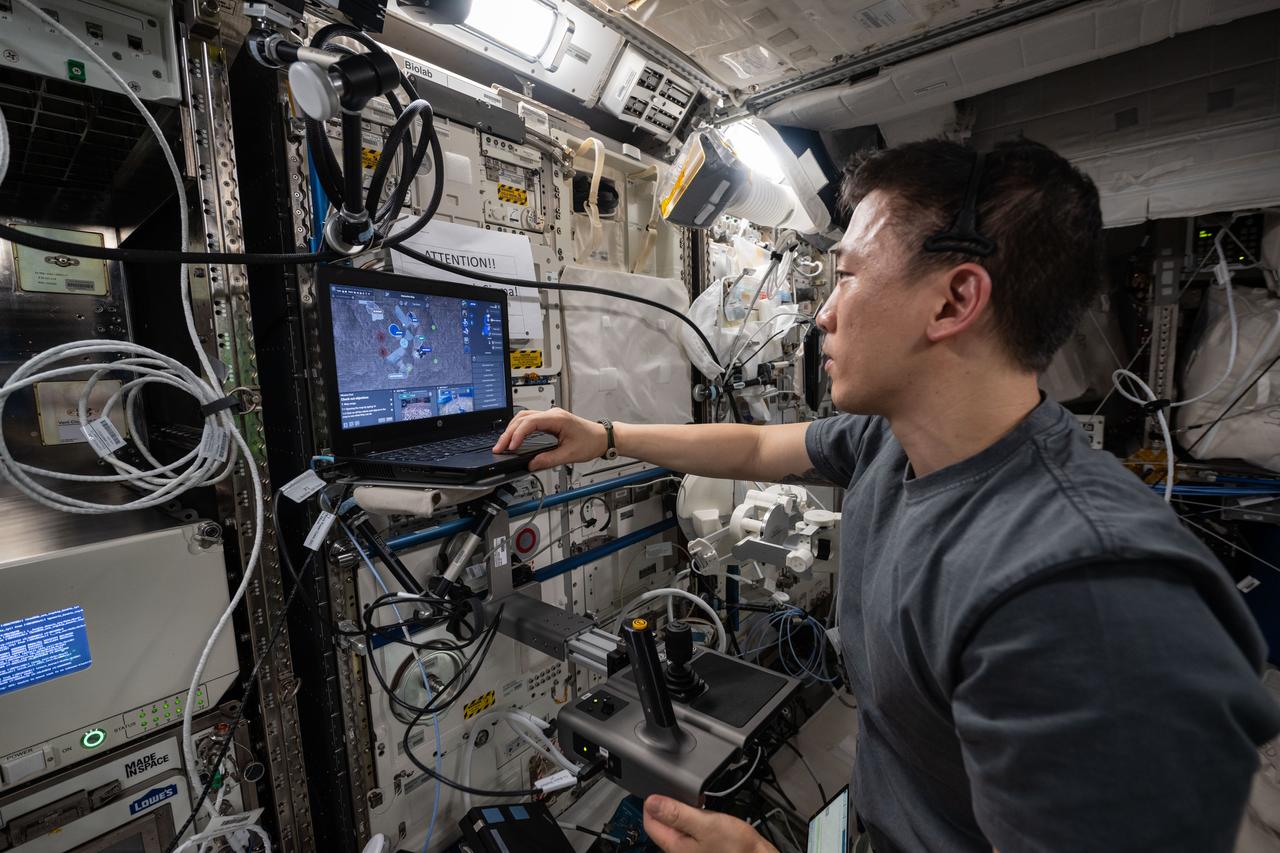
iss073e0416906 (July 21, 2025) --- NASA astronaut and Expedition 73 Flight Engineer Jonny Kim tests space-to-ground robotic controlling methods on a laptop computer inside the International Space Station's Columbus laboratory module. The Surface Avatar experiment explores ways to control robotic vehicles on a planetary surface from an orbiting spacecraft using a variety of technologies including consoles, touchscreens, haptics, and virtual reality goggles that may benefit future space exploration.
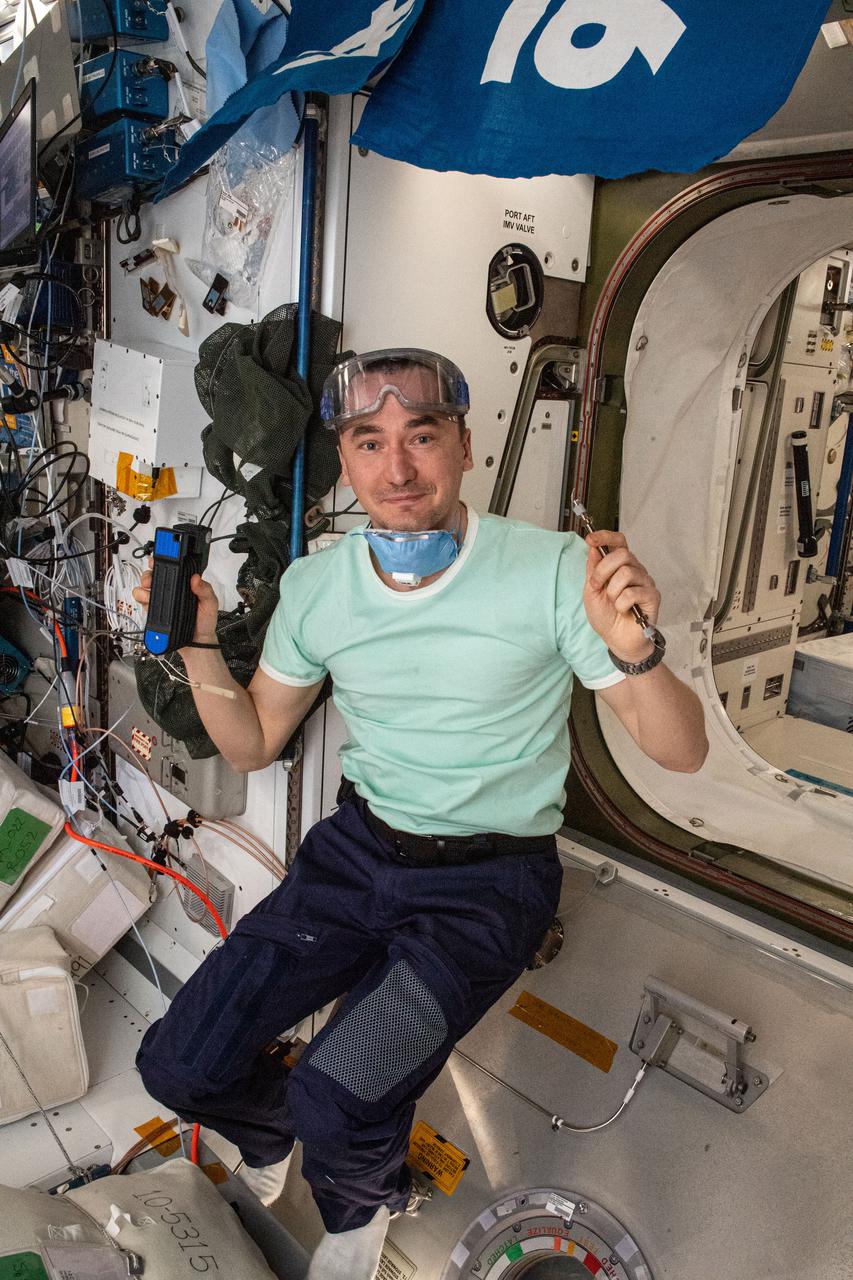
iss065e092395 (June 5, 2021) --- Roscosmos cosmonaut and Expedition 65 Flight Engineer Pyotr Dubrov is pictured inside the Harmony module wearing safety goggles and a mask during cargo operations shortly after the SpaceX Cargo Dragon resupply ship arrived. The Cargo Dragon had docked to Harmony's space-facing international docking adapter.
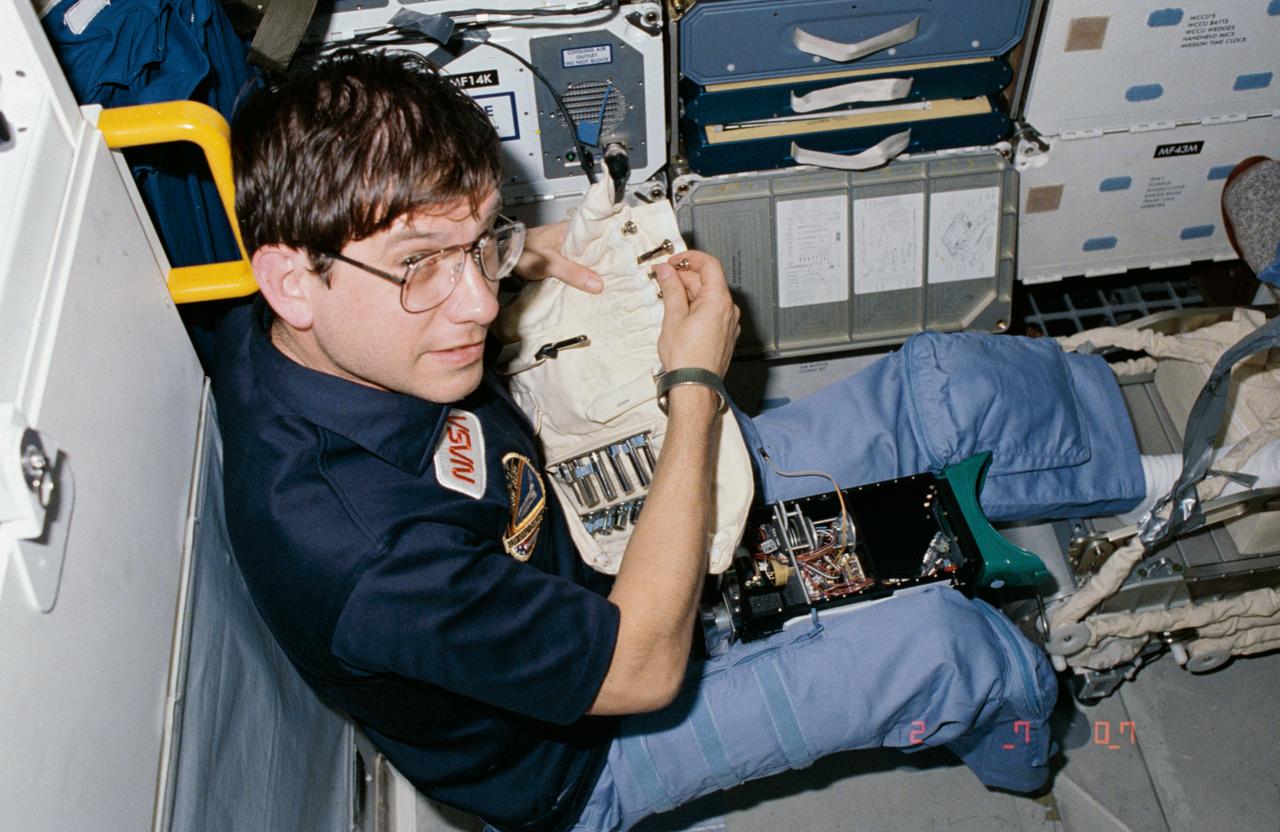
61C-05-035 (12-17 Jan 1986) --- Robert J. Cenker, 61-C payload specialist representing RCA, returns a tiny tool to its stowage position after adjusting the inner workings of a device used in one of a number of detailed supplementary objective (DSO) studies for NASA's Space Biomedical Research Institute. The device is a pair of ocular counter-rolling goggles used by U.S. Rep. Bill Nelson (D., Florida), 61-C's other payload specialist aboard the Columbia for this five-day flight.
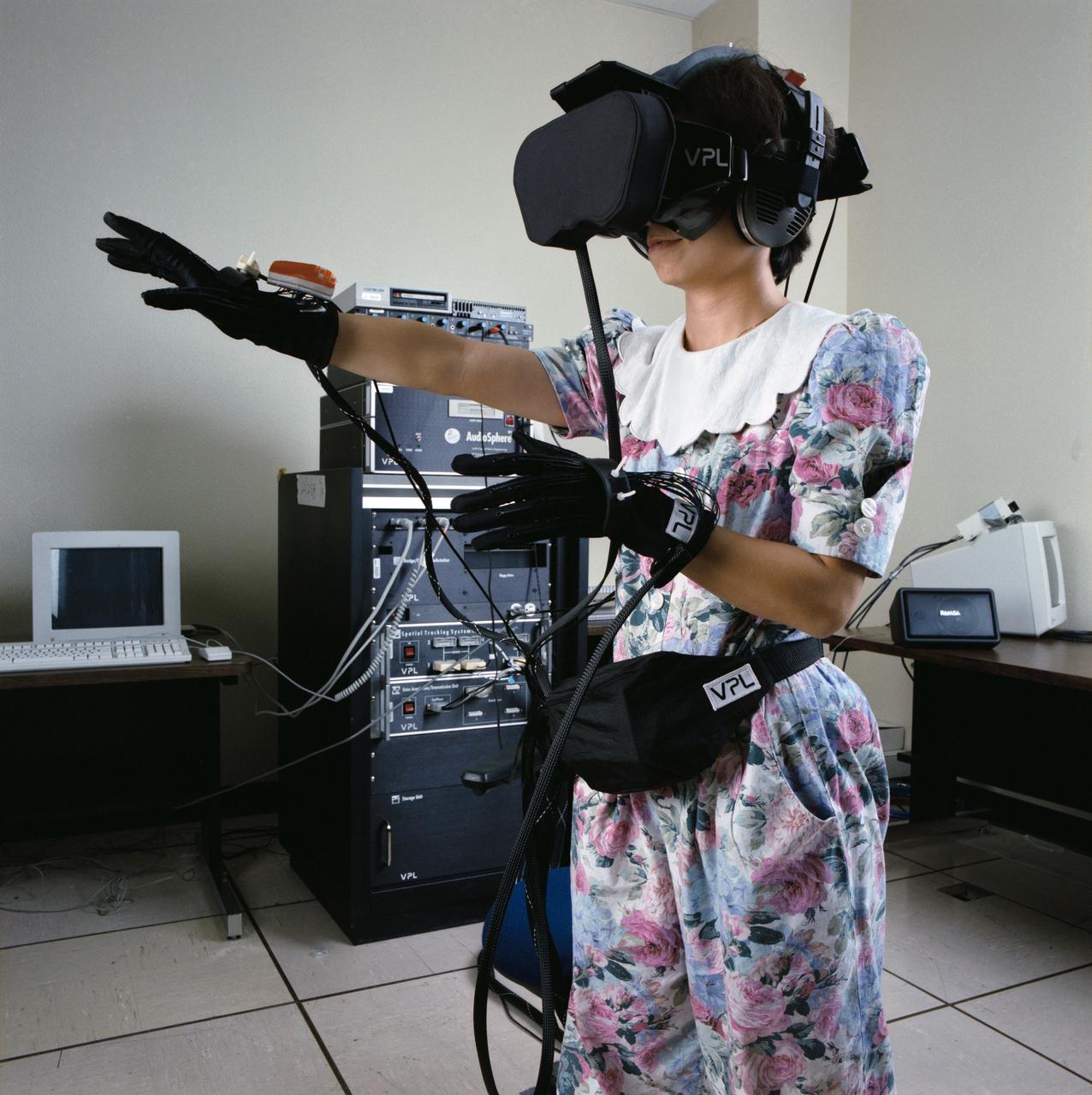
S91-50404 (1 Nov 1991) --- Bebe Ly of the Information Systems Directorate's (ISD) Software Technology Branch at the Johnson Space Center (JSC) gives virtual reality a try. The stereo video goggles and head[phones allow her to see and hear in a computer-generated world and the gloves allow her to move around and grasp objects. Ly is a member of the team that developed the C Language Integrated production System (CLIPS) which has been instrumental in developing several of the systems to be demonstrated in an upcoming Software Technology Exposition at JSC.
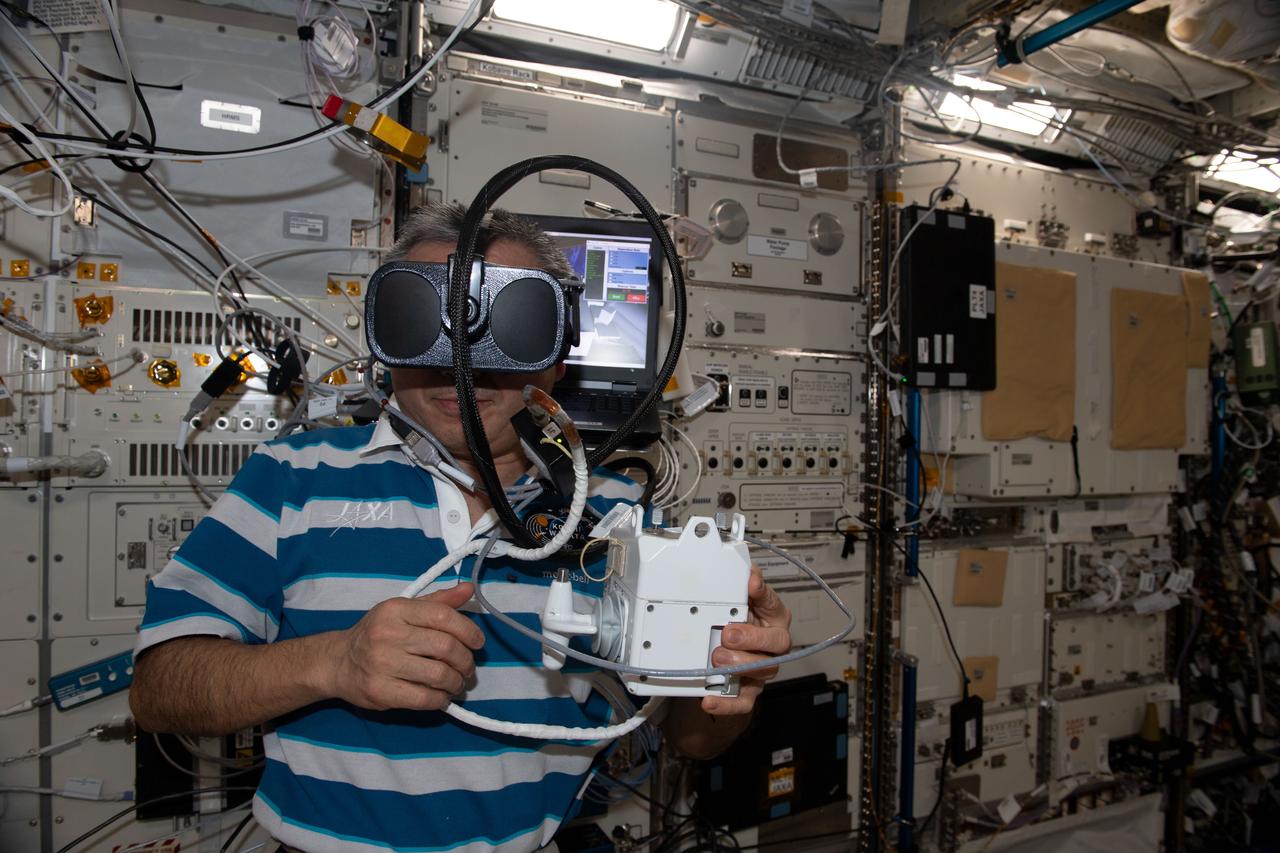
iss068e040441 (Jan. 13, 2023) --- Expedition 68 Flight Engineer Koichi Wakata of the Japan Aerospace Exploration Agency (JAXA) wears virtual reality goggles and practices for the unlikely emergency scenario of becoming untethered from the International Space Station during a spacewalk. The virtual training familiarizes astronauts with operating the jet pack attached to their Extravehicular Mobility Units, or spacesuits, to safely return to the orbiting lab in the event they become detached during a spacewalk. The jet pack is also known by its longer name Simplified Aid for EVA Rescue, or SAFER.
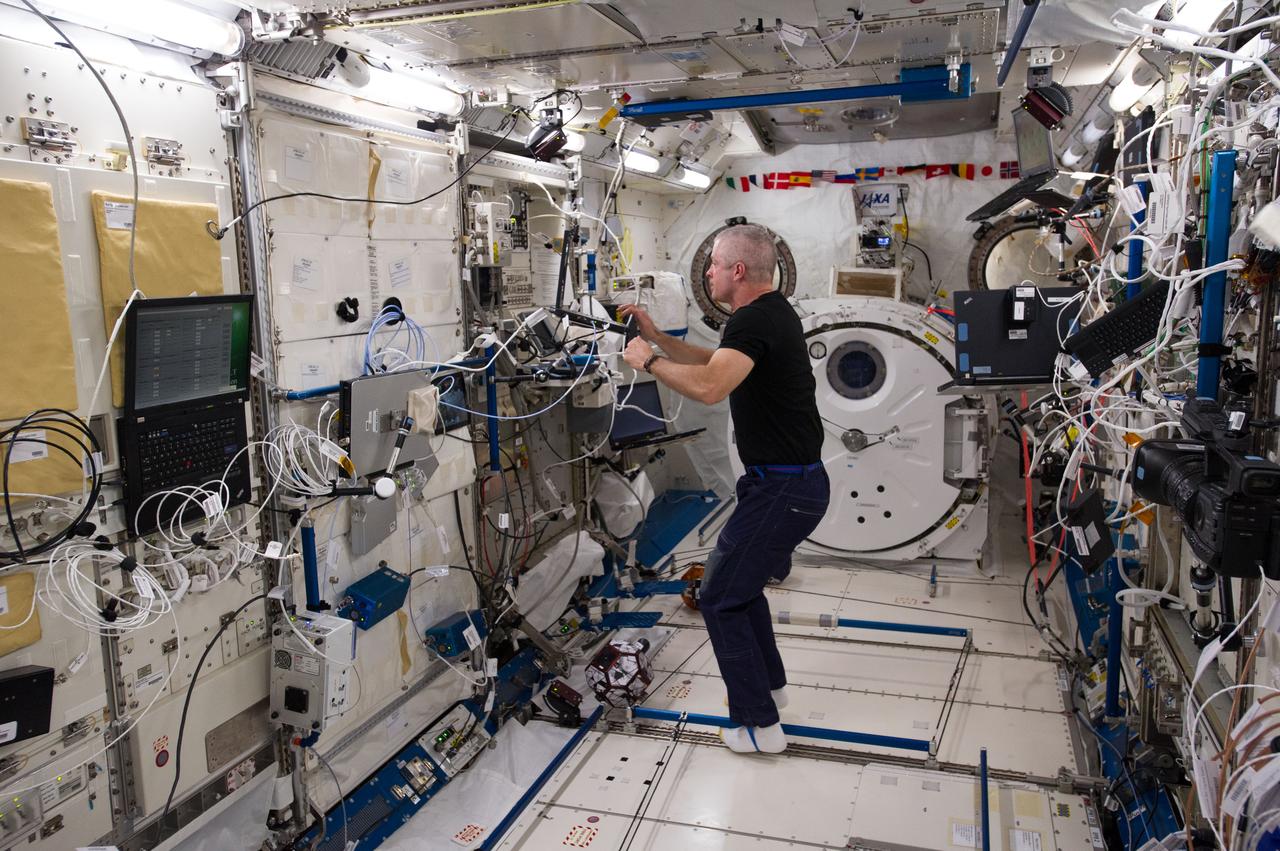
ISS040-E-079083 (25 July 2014) --- In the International Space Station?s Kibo laboratory, NASA astronaut Steve Swanson, Expedition 40 commander, enters data in a computer in preparation for a session with a trio of soccer-ball-sized robots known as the Synchronized Position Hold, Engage, Reorient, Experimental Satellites, or SPHERES. The free-flying robots were equipped with stereoscopic goggles called the Visual Estimation and Relative Tracking for Inspection of Generic Objects, or VERTIGO, to enable the SPHERES to perform relative navigation based on a 3D model of a target object.
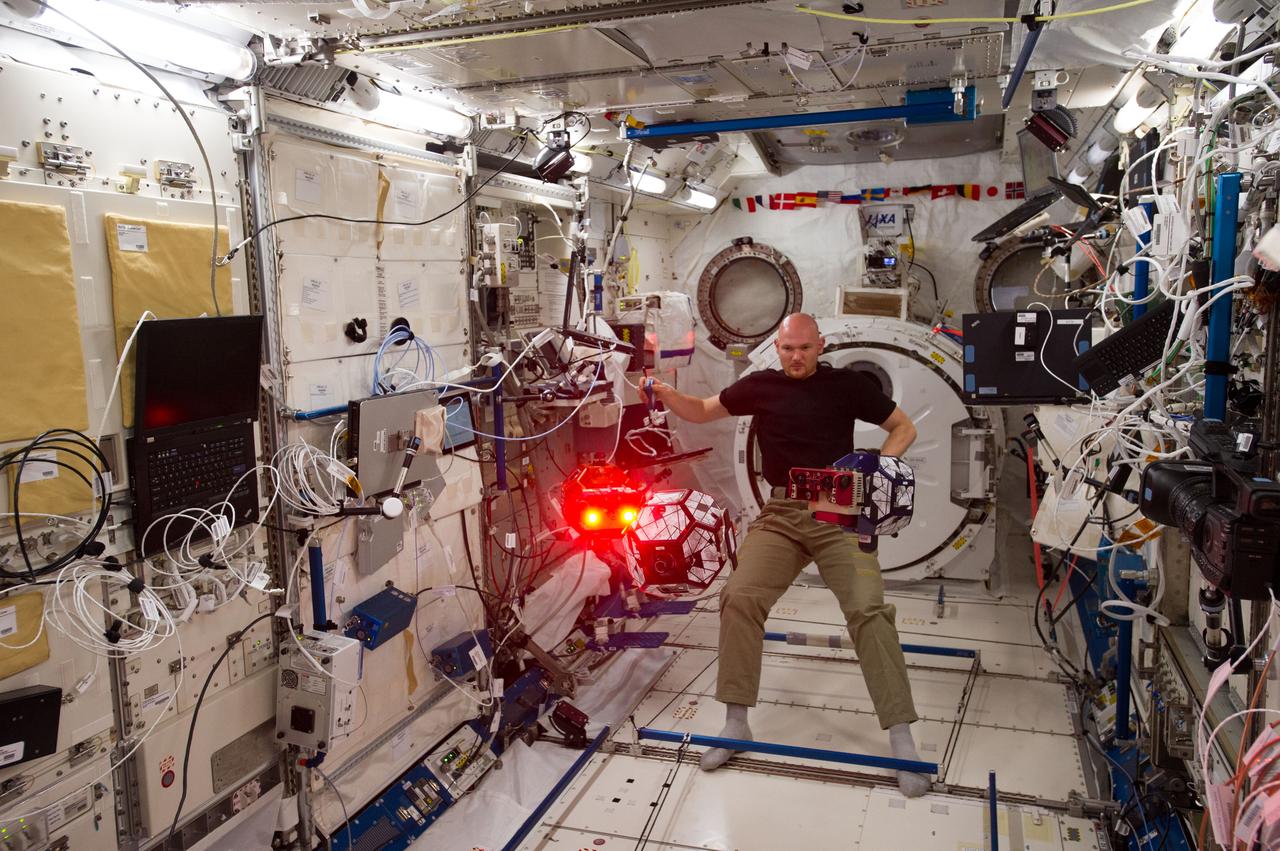
ISS040-E-080130 (25 July 2014) --- In the International Space Station?s Kibo laboratory, European Space Agency astronaut Alexander Gerst, Expedition 40 flight engineer, conducts a session with a trio of soccer-ball-sized robots known as the Synchronized Position Hold, Engage, Reorient, Experimental Satellites, or SPHERES. The free-flying robots were equipped with stereoscopic goggles called the Visual Estimation and Relative Tracking for Inspection of Generic Objects, or VERTIGO, to enable the SPHERES to perform relative navigation based on a 3D model of a target object.
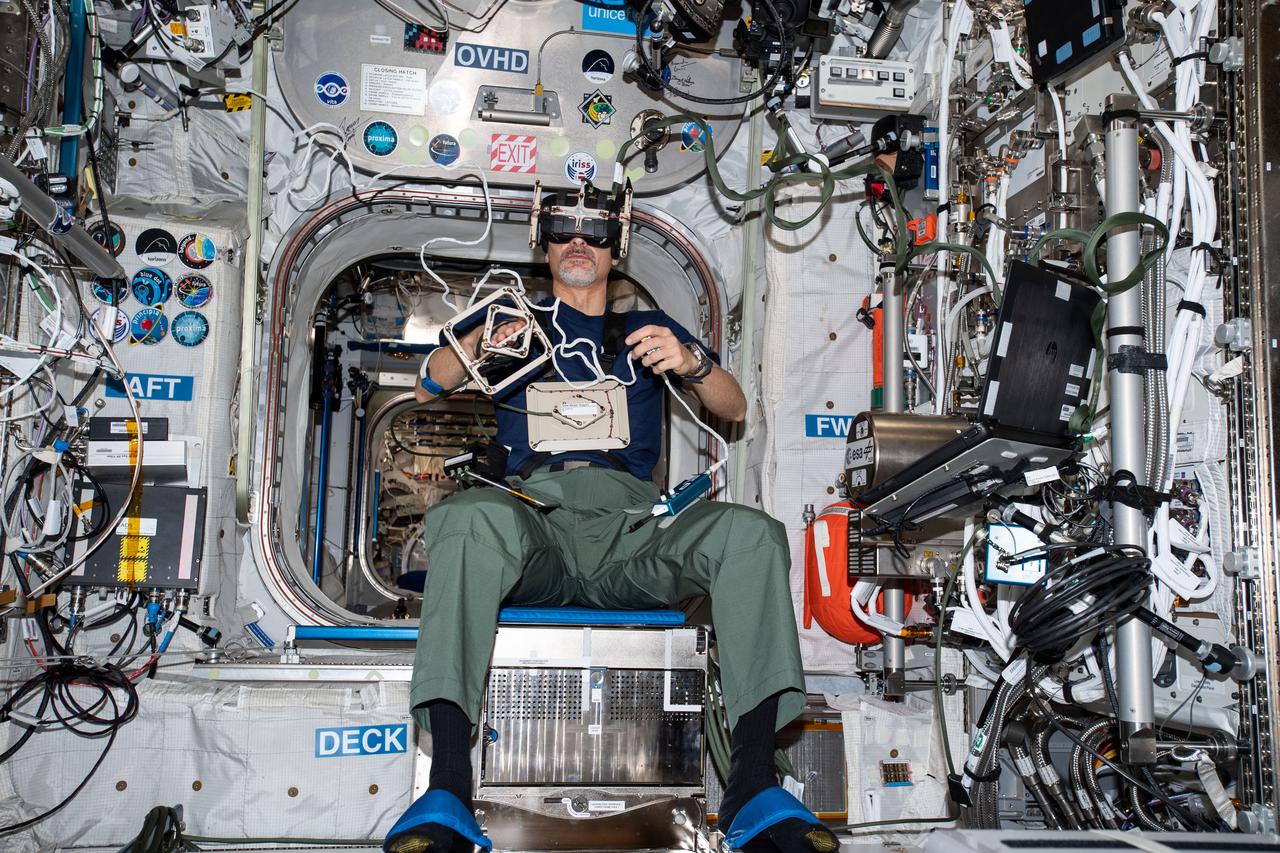
iss060e021138 (Aug. 1, 2019) --- Expedition 60 Flight Engineer Luca Parmitano of the European Space Agency (ESA) is seated inside ESA's Columbus laboratory module wearing virtual reality goggles exploring how microgravity affects an astronauts ability to grip and manipulate objects. The ESA GRIP study may inform the design of future spacecraft control devices and space system interfaces.
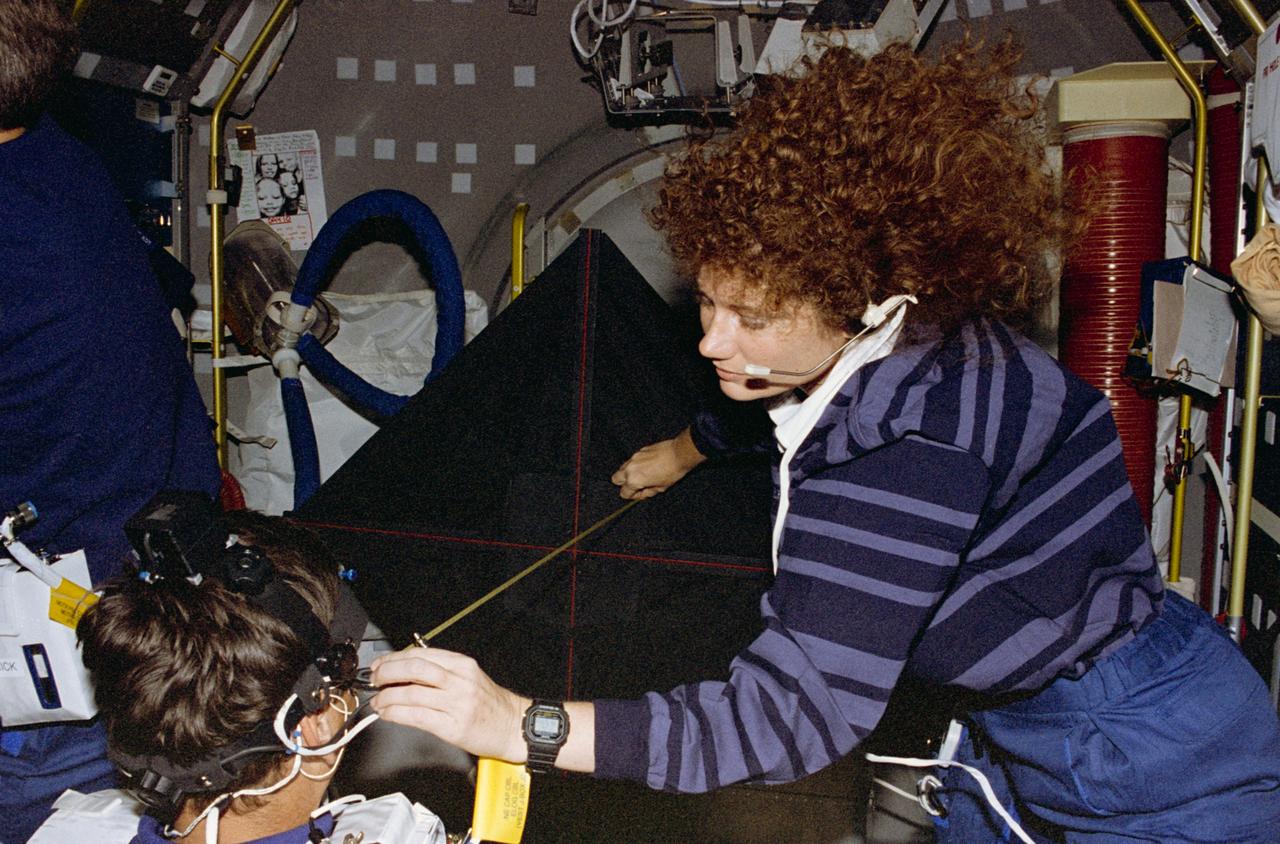
STS078-398-032 (20 June - 7 July 1996) --- Astronaut Susan J. Helms, payload commander, measures the distance between Jean-Jacques Favier’s head and the luminous torque, used for the Canal and Otolith Interaction Study (COIS) on the Life and Microgravity Spacelab (LMS-1) mission. Favier, representing the French Space Agency (CNES), is one of two international payload specialists on the almost-17-day flight. This view shows the Voluntary Head Movement (VHM) segment of the experiment. The VHM is meant to characterize how the coordination of head and eye movement changes as a result of spaceflight. Since most vestibular functions are influenced by gravity, the COIS experiment is meant to measure response differences in microgravity.
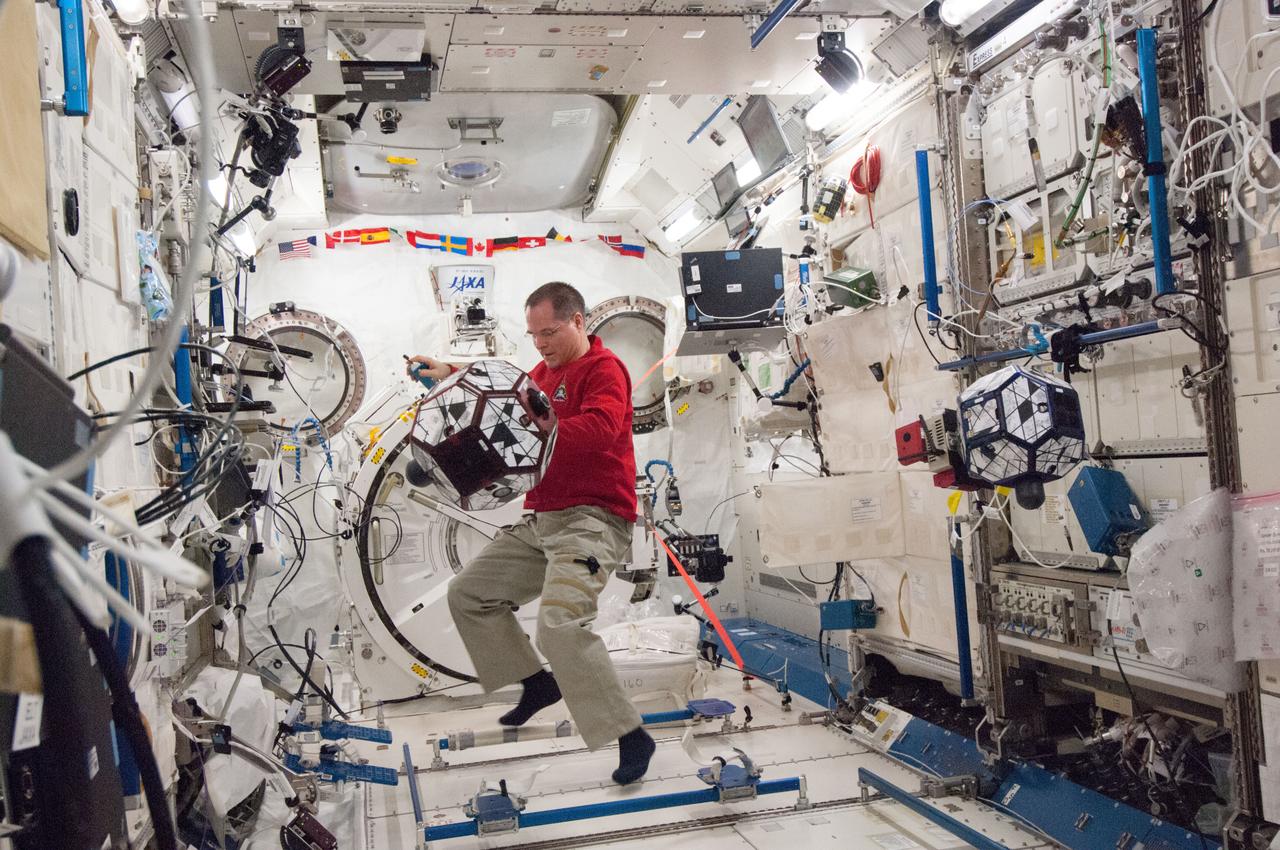
ISS034-E-067585 (12 March 2013) --- Inside the Japan Aerospace Exploration Agency's (JAXA) Kibo lab on the Earth-orbiting International Space Station, NASA astronaut Kevin Ford, Expedition 34 commander, conducts a session of the ongoing SPHERES-VERTIGO investigation. SPHERES stands for Synchronized Position Hold, Engage, Reorient Experimental Satellites. Each satellite is an 18-sided polyhedron that is 0.2 meter in diameter and weighs 3.5 kilograms. The prism-shaped device (called Goggles) which is easily seen hooked up to the polyhedron on the right in this picture is called Visual Estimation and Relative Tracking for Inspection of Generic Objects (VERTIGO).
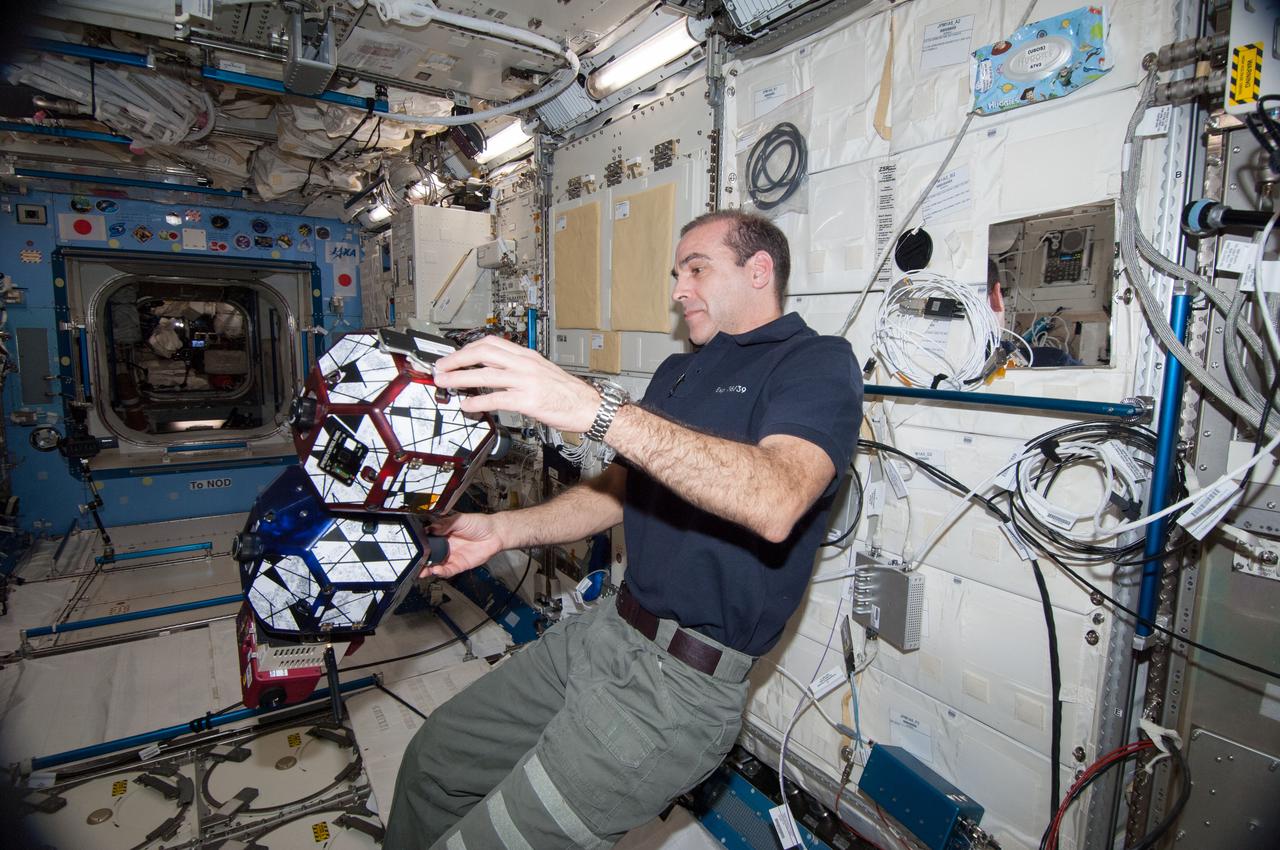
ISS038-E-035432 (23 Jan. 2014) --- NASA astronaut Rick Mastracchio, Expedition 38 flight engineer, works with a pair of basketball-sized, free-flying satellites known Synchronized Position Hold, Engage, Reorient, Experimental Satellites, or SPHERES, in the Kibo laboratory of the International Space Station. For this experiment session, the crew members equipped one of the two SPHERES with a pair of stereoscopic goggles dubbed the Visual Estimation and Relative Tracking for Inspection of Generic Objects, or VERTIGO. As the second SPHERES tumbled and spun, the VERTIGO-equipped robot attempted to map it and perform relative navigation around it.
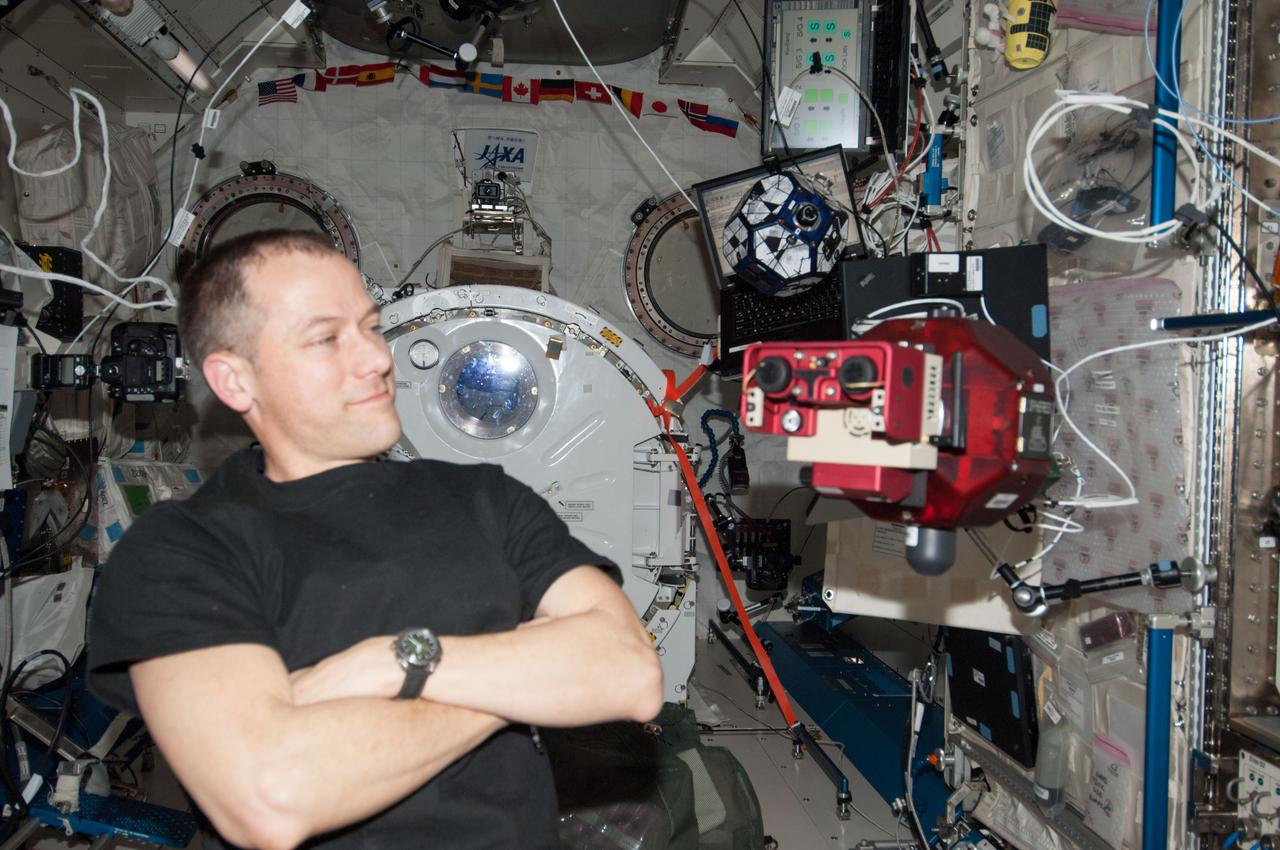
ISS034-E-056100 (26 Feb. 2013) --- Inside the Japan Aerospace Exploration Agency's (JAXA) Kibo lab on the Earth-orbiting International Space Station, NASA astronaut Tom Marshburn conducts a session of the ongoing SPHERES-VERTIGO investigation. SPHERES stands for Synchronized Position Hold, Engage, Reorient Experimental Satellites. Each satellite is an 18-sided polyhedron that is 0.2 meter in diameter and weighs 3.5 kilograms. The prism-shaped device (called Goggles) which is hooked up to the red or forward-most polyhedron in the picture is called Visual Estimation and Relative Tracking for Inspection of Generic Objects (VERTIGO).
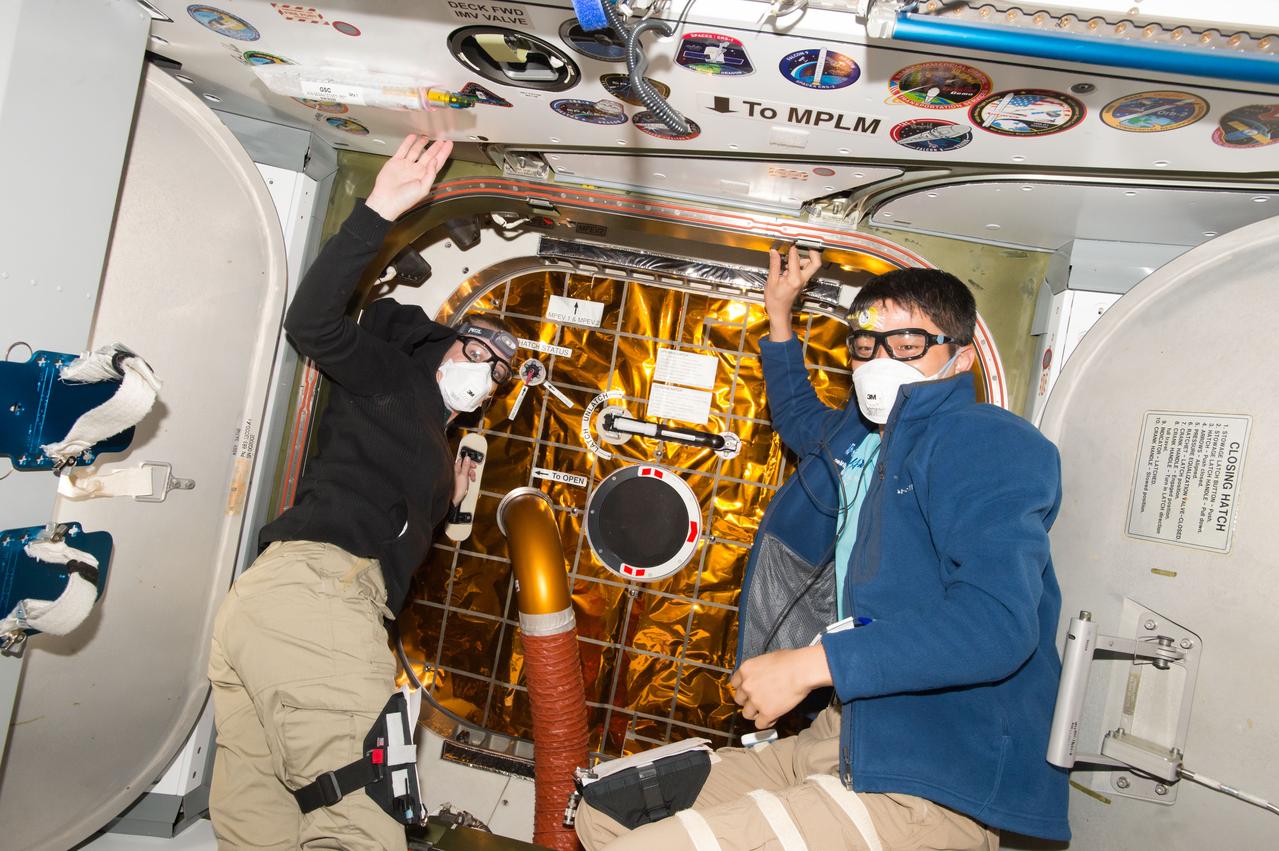
ISS048e042291 (07/20/2016) --- NASA astronaut Kate Rubins (left) and JAXA astronaut Takuya Onishi (right) prepare to open the hatch to SpaceX’s Dragon cargo spacecraft. The vehicle delivered nearly 5,000 pounds of supplies, hardware and experiments to the Expedition 48 crew. It is standard procedure for crew members to wear personal protective equipment, including masks, goggles and sometimes gloves, when entering recently arrived spacecraft. This protects them from any potential debris that may have been shaken loose during the launch and ascent phases of the flight to orbit.
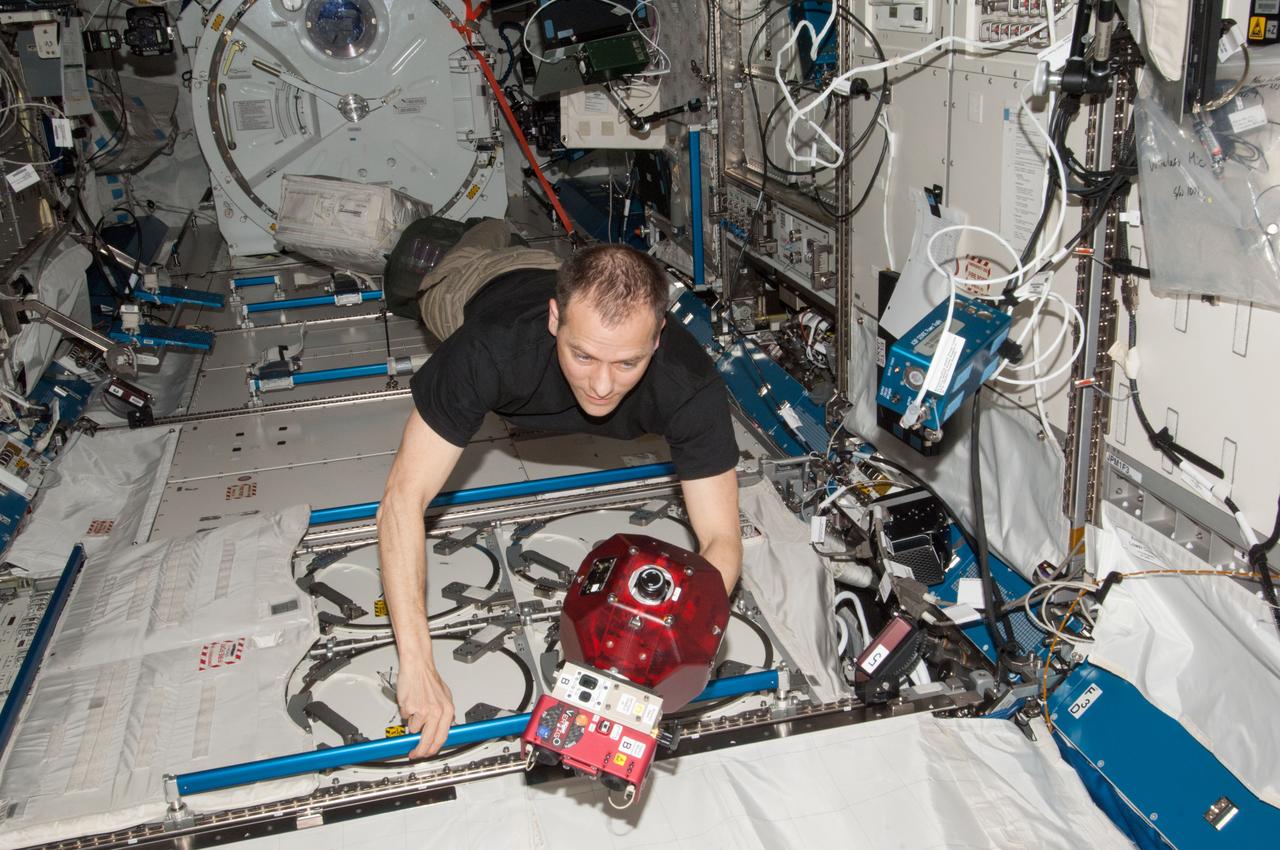
ISS034-E-056096 (26 Feb. 2013) --- Inside the Japan Aerospace Exploration Agency's (JAXA) Kibo lab on the Earth-orbiting International Space Station, NASA astronaut Tom Marshburn conducts a session of the ongoing SPHERES-VERTIGO investigation. SPHERES stands for Synchronized Position Hold, Engage, Reorient Experimental Satellites. Each satellite is an 18-sided polyhedron that is 0.2 meter in diameter and weighs 3.5 kilograms. The prism-shaped device (called Goggles) which is hooked up to the red or forward-most polyhedron in the picture is called Visual Estimation and Relative Tracking for Inspection of Generic Objects (VERTIGO).
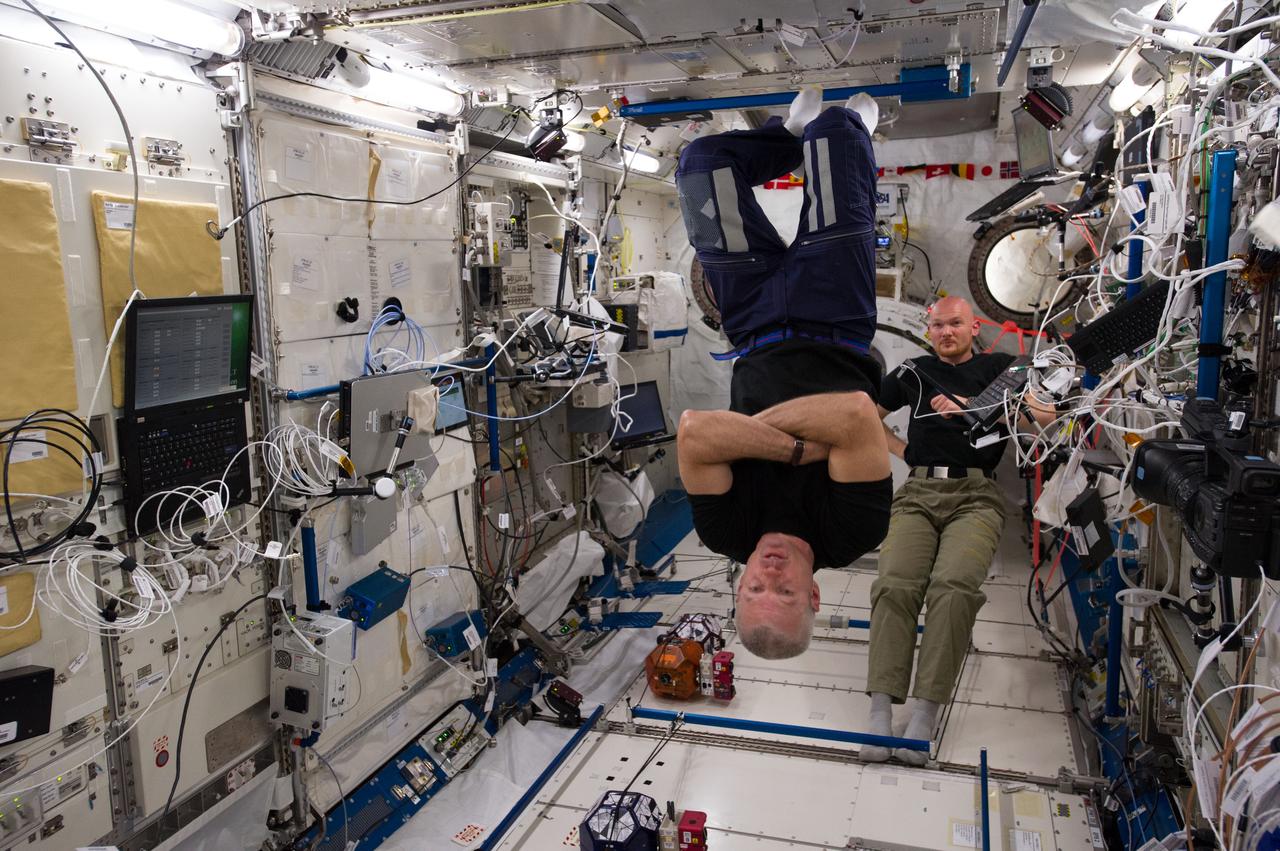
ISS040-E-079355 (25 July 2014) --- In the International Space Station?s Kibo laboratory, NASA astronaut Steve Swanson (foreground), Expedition 40 commander; and European Space Agency astronaut Alexander Gerst, flight engineer, conduct a session with a trio of soccer-ball-sized robots known as the Synchronized Position Hold, Engage, Reorient, Experimental Satellites, or SPHERES. The free-flying robots were equipped with stereoscopic goggles called the Visual Estimation and Relative Tracking for Inspection of Generic Objects, or VERTIGO, to enable the SPHERES to perform relative navigation based on a 3D model of a target object.
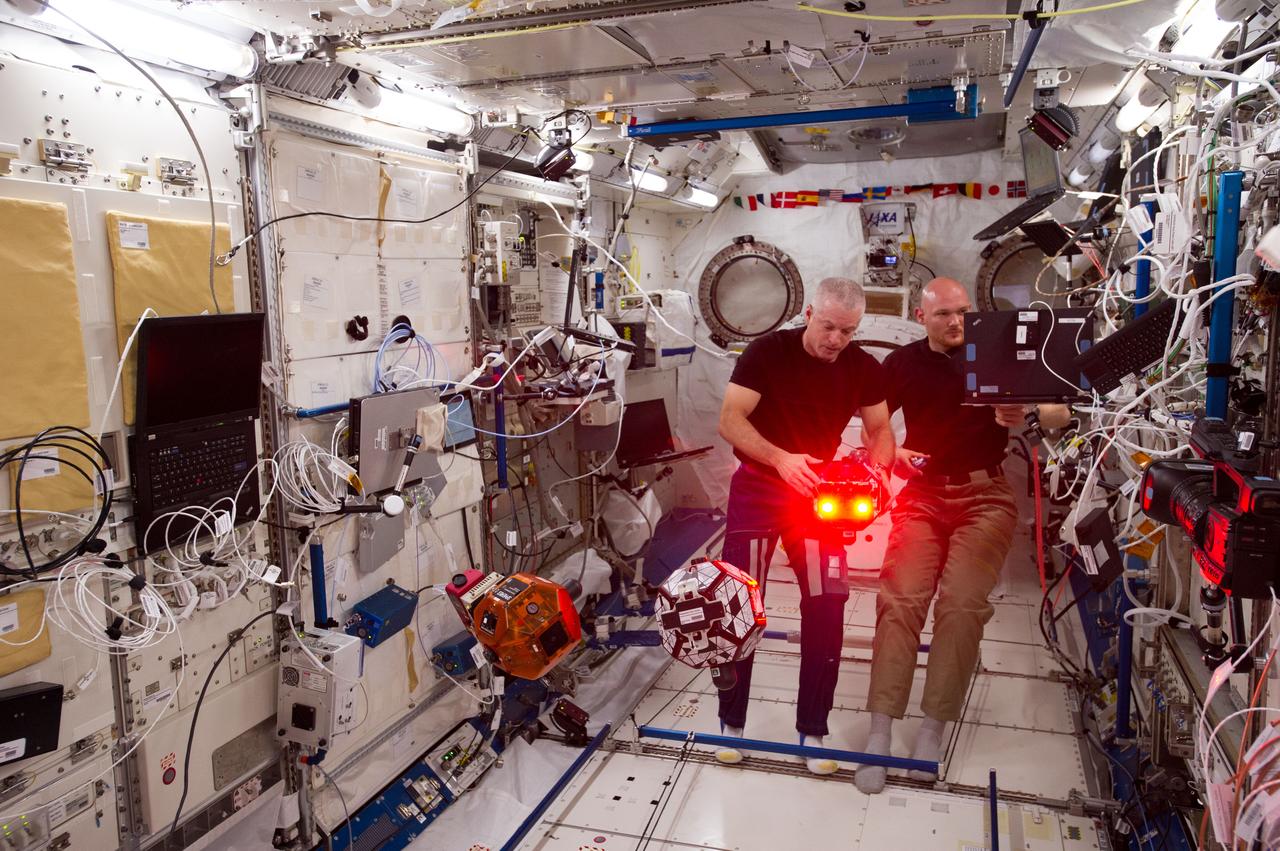
ISS040-E-079910 (25 July 2014) --- In the International Space Station?s Kibo laboratory, NASA astronaut Steve Swanson (left), Expedition 40 commander; and European Space Agency astronaut Alexander Gerst, flight engineer, conduct a session with a trio of soccer-ball-sized robots known as the Synchronized Position Hold, Engage, Reorient, Experimental Satellites, or SPHERES. The free-flying robots were equipped with stereoscopic goggles called the Visual Estimation and Relative Tracking for Inspection of Generic Objects, or VERTIGO, to enable the SPHERES to perform relative navigation based on a 3D model of a target object.
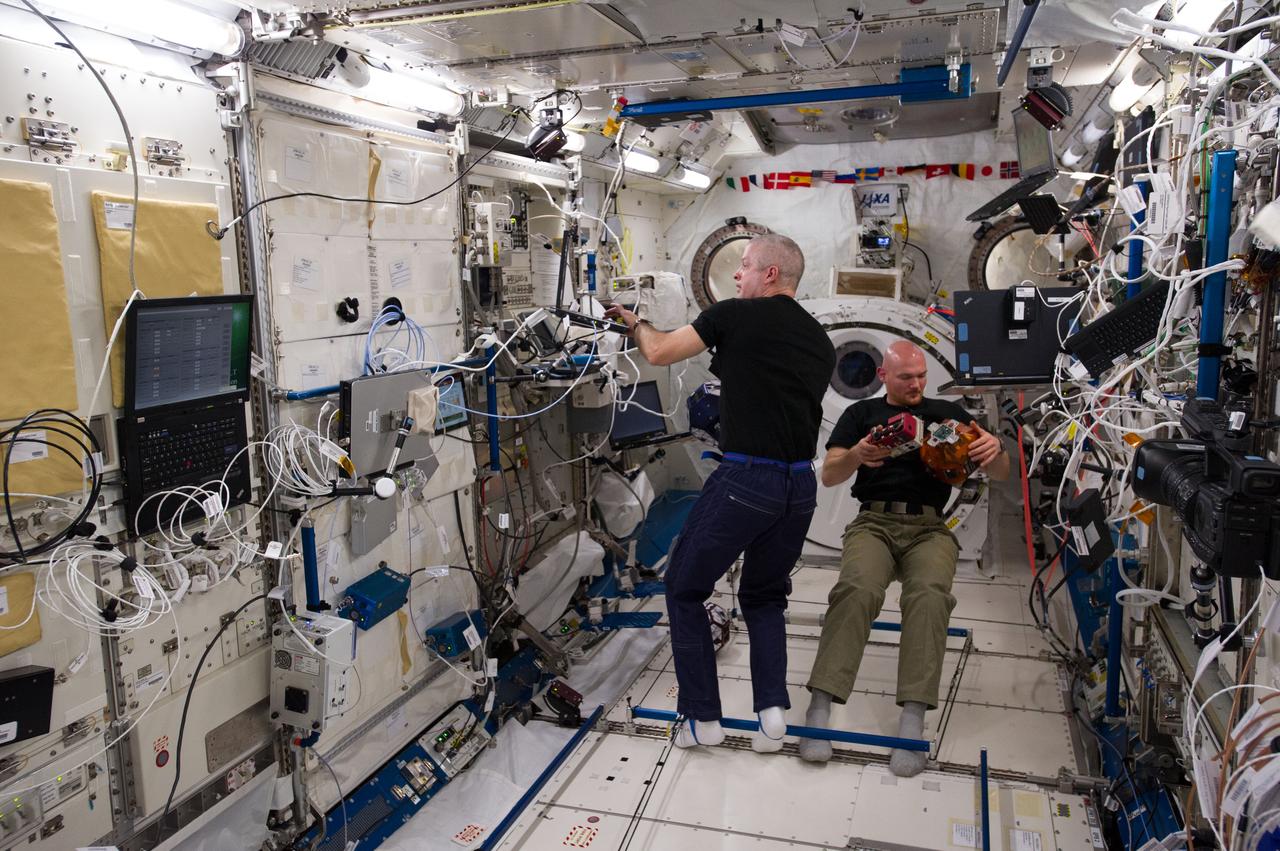
ISS040-E-079129 (25 July 2014) --- In the International Space Station?s Kibo laboratory, NASA astronaut Steve Swanson (left), Expedition 40 commander; and European Space Agency astronaut Alexander Gerst, flight engineer, conduct a session with a trio of soccer-ball-sized robots known as the Synchronized Position Hold, Engage, Reorient, Experimental Satellites, or SPHERES. The free-flying robots were equipped with stereoscopic goggles called the Visual Estimation and Relative Tracking for Inspection of Generic Objects, or VERTIGO, to enable the SPHERES to perform relative navigation based on a 3D model of a target object.
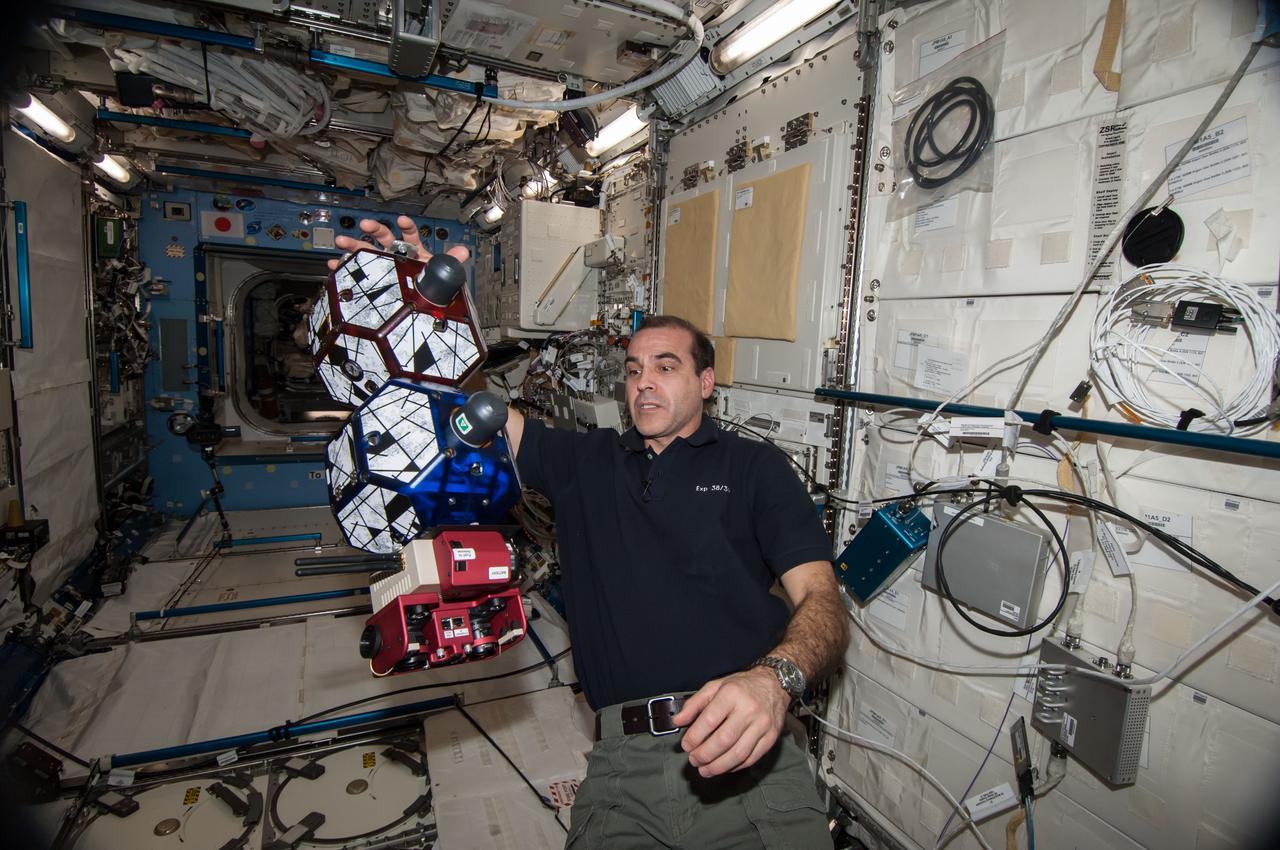
ISS038-E-035434 (23 Jan. 2014) --- NASA astronaut Rick Mastracchio, Expedition 38 flight engineer, works with a pair of basketball-sized, free-flying satellites known Synchronized Position Hold, Engage, Reorient, Experimental Satellites, or SPHERES, in the Kibo laboratory of the International Space Station. For this experiment session, the crew members equipped one of the two SPHERES with a pair of stereoscopic goggles dubbed the Visual Estimation and Relative Tracking for Inspection of Generic Objects, or VERTIGO. As the second SPHERES tumbled and spun, the VERTIGO-equipped robot attempted to map it and perform relative navigation around it.
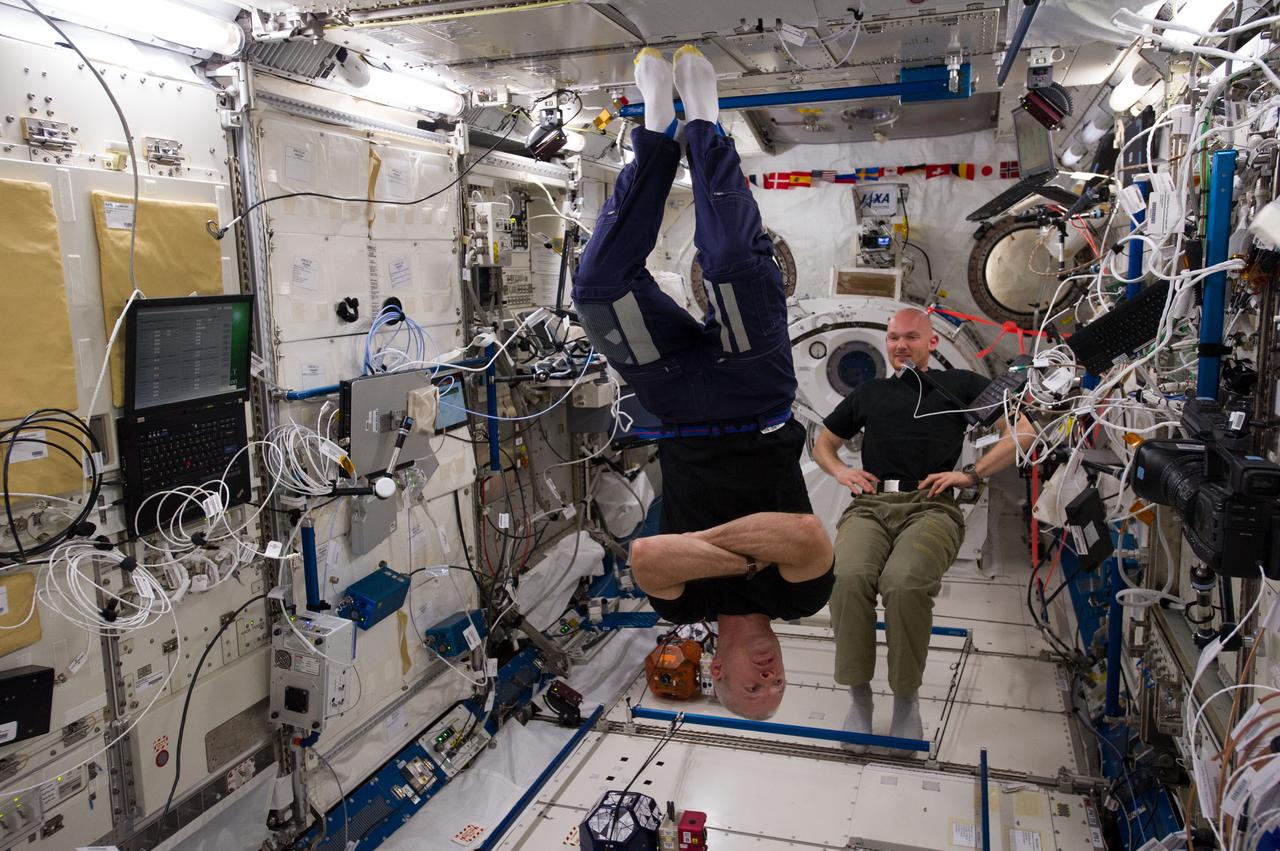
ISS040-E-079332 (25 July 2014) --- In the International Space Station?s Kibo laboratory, NASA astronaut Steve Swanson (foreground), Expedition 40 commander; and European Space Agency astronaut Alexander Gerst, flight engineer, conduct a session with a trio of soccer-ball-sized robots known as the Synchronized Position Hold, Engage, Reorient, Experimental Satellites, or SPHERES. The free-flying robots were equipped with stereoscopic goggles called the Visual Estimation and Relative Tracking for Inspection of Generic Objects, or VERTIGO, to enable the SPHERES to perform relative navigation based on a 3D model of a target object.
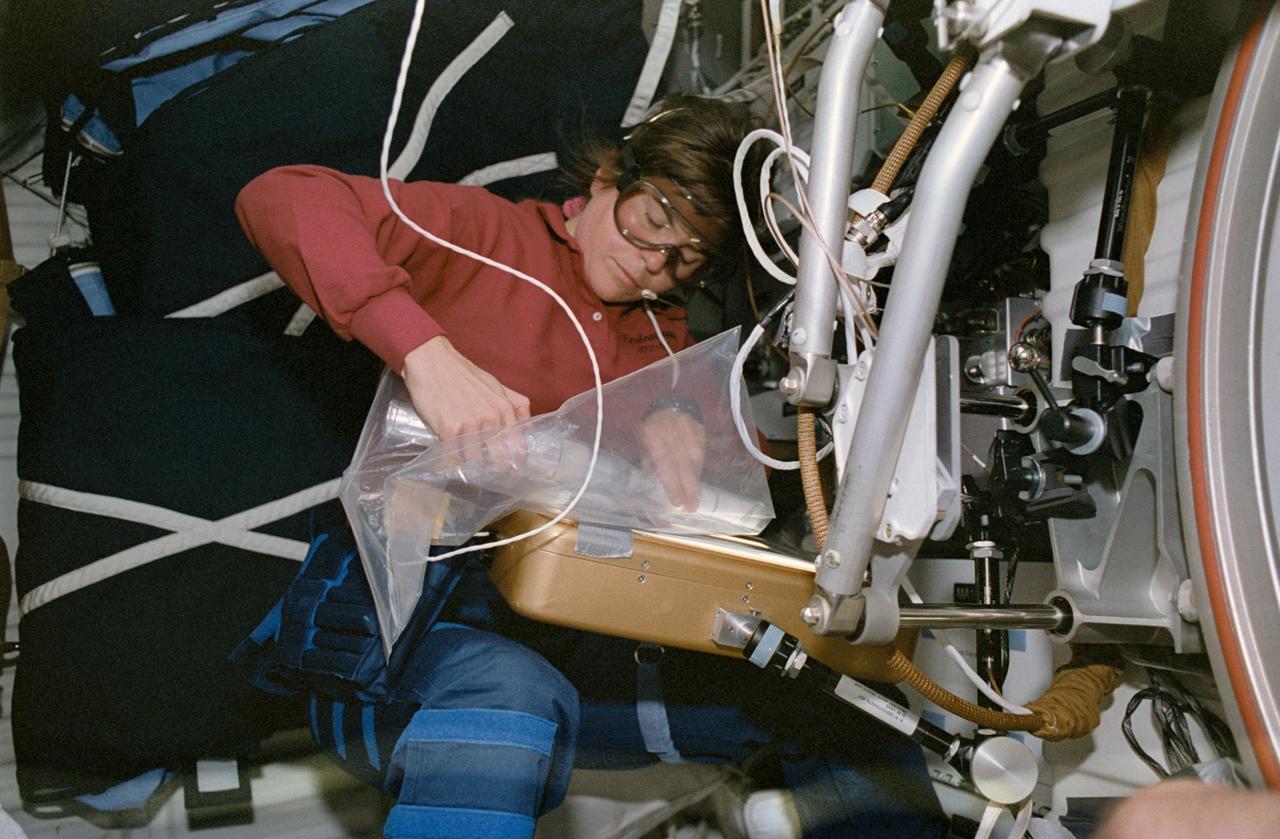
STS057-28-028 (21 June-1 July 1993) --- Astronaut Janice E. Voss works with the Support of Crystal Growth (SCG) experiment. Voss and five other NASA astronauts spent almost ten full days aboard the Space Shuttle Endeavour for the STS-57 mission.
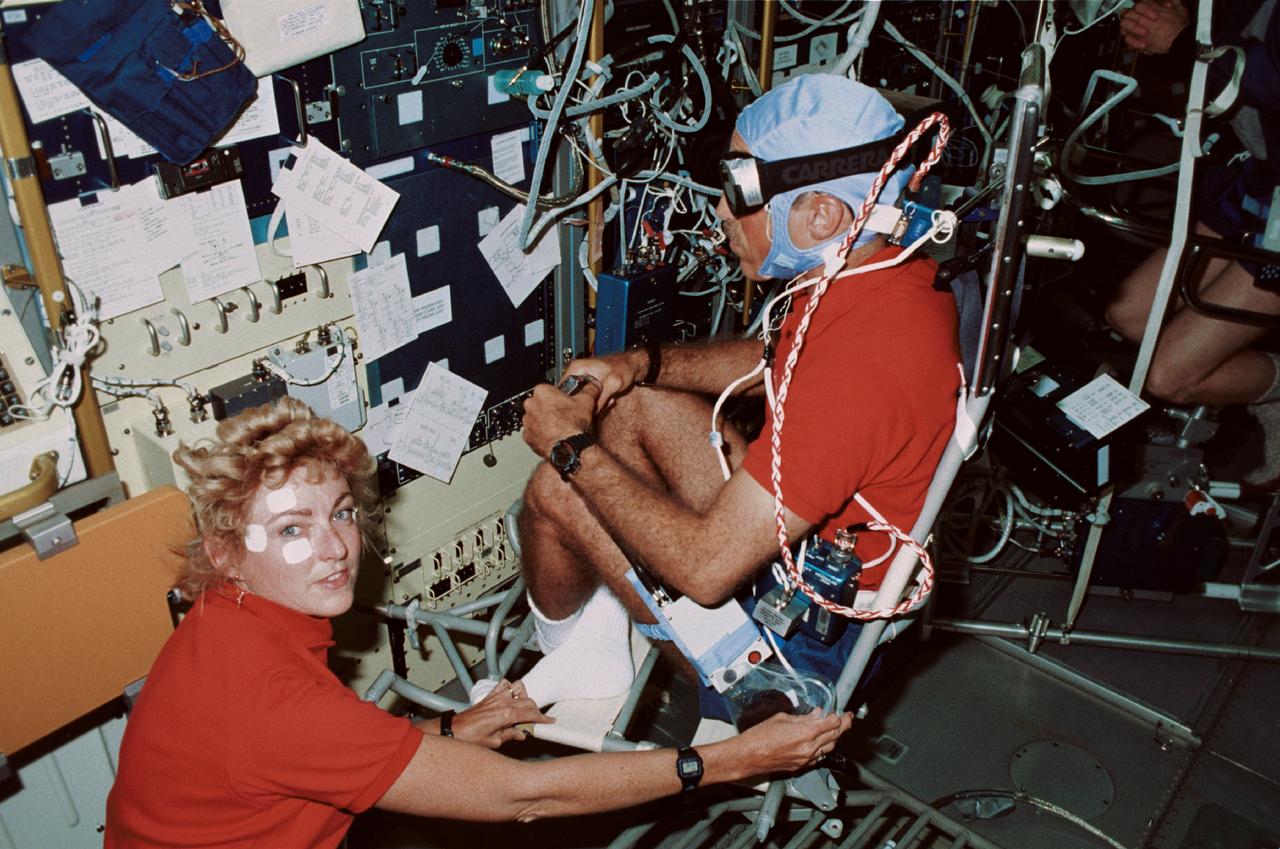
STS040-211-020 (5-14 June 1991) --- Vestibular experiment activities were captured onboard Columbia's Spacelab Life Sciences (SLS-1) module in this 35mm scene. Astronaut James P. Bagian, STS-40 mission specialist, is in a rotating chair while wearing an accelometer and electrodes to record head motion and horizontal and vertical eye movements during the rotations. Payload specialist Millie Hughes-Fulford, lower left, assists with the test.
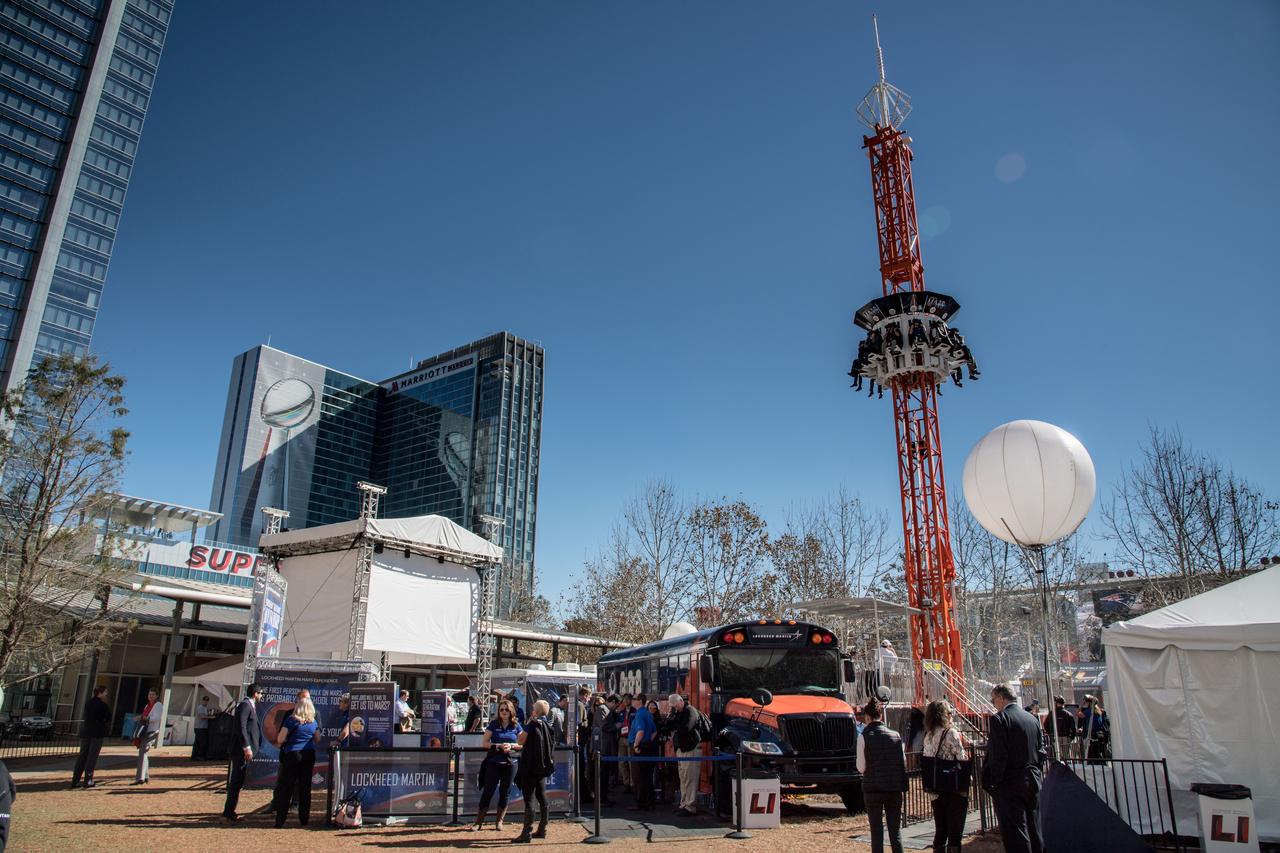
jsc2017e011393 (01/30/2017) --- Space exploration will feature prominently at Super Bowl LIVE, a nine-day fan festival running Jan. 28 through Feb. 5 on Discovery Green, Houston Texas where 100,000 visitors are expected each day. NASA is collaborating with the Houston Super Bowl Host Committee, which is the fan festival organizer, to share NASA’s contributions with the Houston community and to the nation. At NASA's Future Flight, the primary attraction at the free fan festival, riders will take a trip to Mars and back using virtual reality goggles on a 90-foot drop tower ride. Visitors also will get a chance to see several NASA assets that have been transported to downtown Houston for the activities. These assets include: the Orion mockup used for water recovery testing, Space Exploration Vehicle (SEV /Rover), the Driven to Explore mobile exhibit, Mars Science Laboratory – Curiosity Rover - replica, Robonaut 1 (Centaur configuration), EMU space suit presentation unit, Arctic meteorite and astromaterials display, and the Mark III advanced space suit photo-op. Several of NASA’s industry partners sponsoring Future Flight will also have assets on display, and a replica of the James Webb Space Telescope will be located near but not inside the activities on Discovery Green. NASA and industry partner volunteers will be staffing the Future Flight area. NASA PHOTOGRAPHER: Bill Stafford
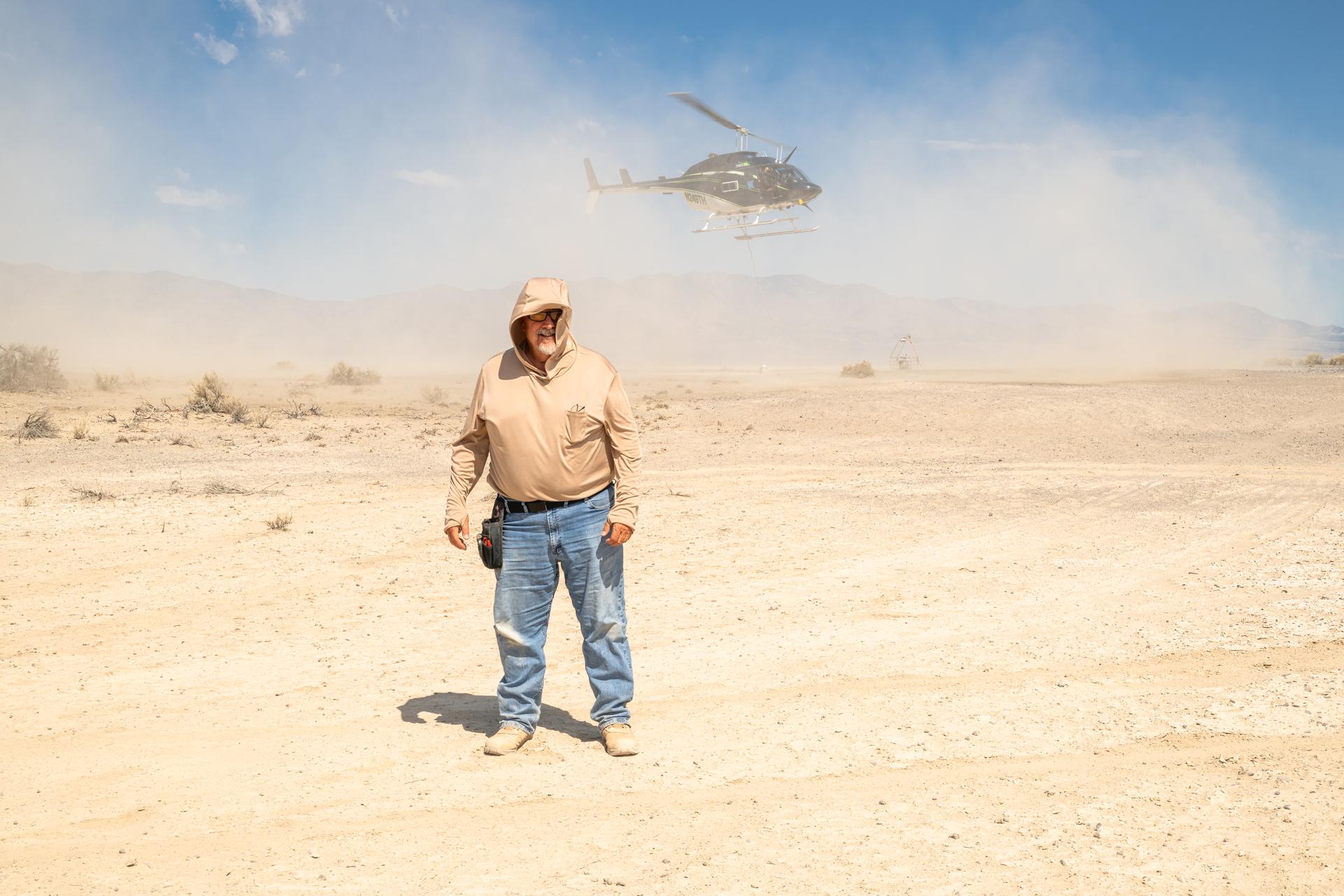
Mike Vitulio, a NASA mechanical integration engineering technician and machinist working on the DAVINCI project poses stands with his back to the helicopter as it takes off to shield himself from the roto-wash at Crater Island, Utah, June 25, 2026. NASA/Mike Guinto
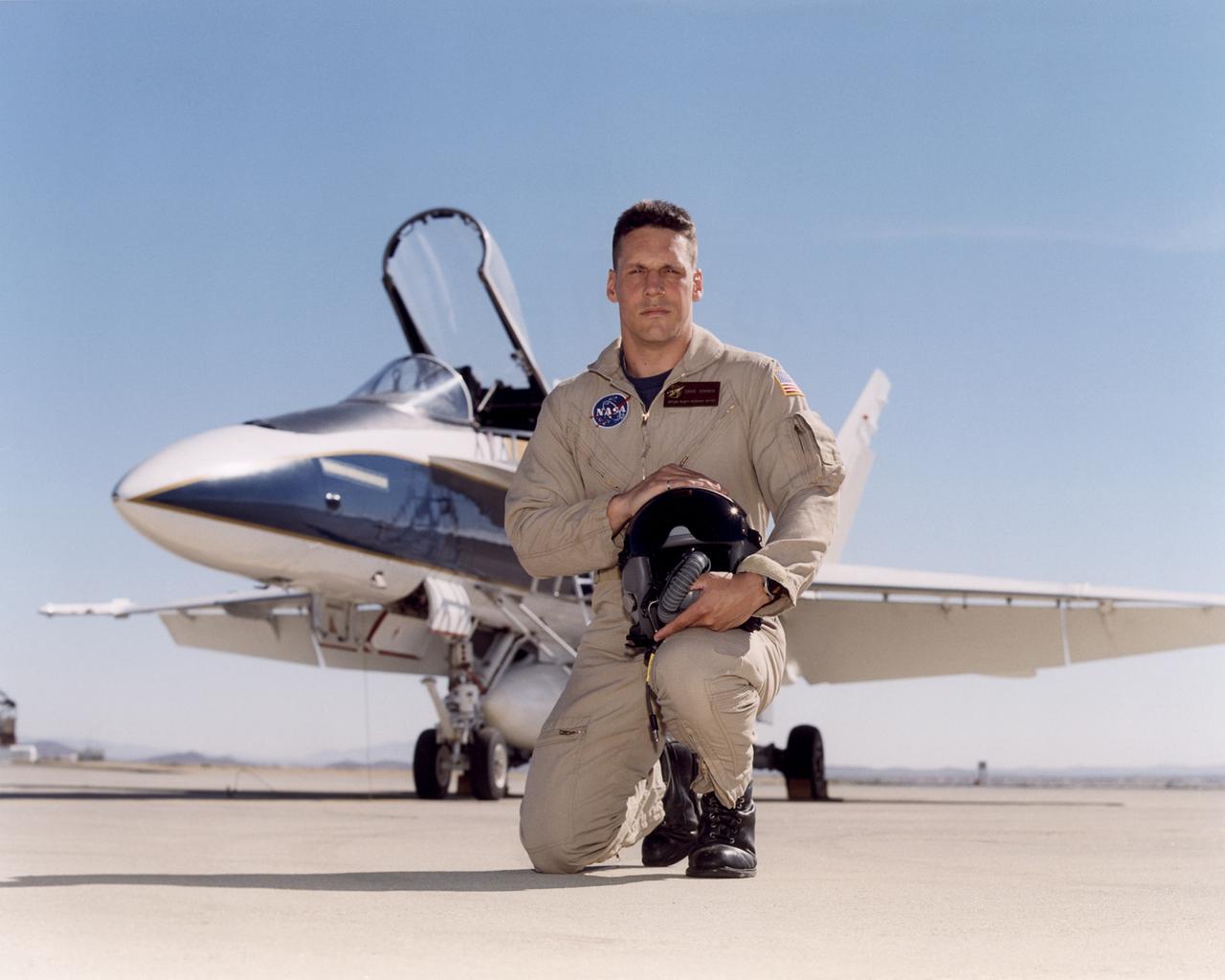
Craig R. Bomben became a pilot in the Flight Crew Branch of NASA's Dryden Flight Research Center, Edwards, Calif., in June 2001. His flying duties include a variety of research and support activities while piloting the F/A-18, DC-8, T-34C and King Air aircraft. He has more than 17 years and 3,800 hours of military and civilian flight experience in over 50 different aircraft types. Bomben came to NASA Dryden from a U.S. Navy assignment to the Personnel Exchange Program, Canada. He served as a test pilot in the Canadian Armed Forces located in Cold Lake, Alberta. He participated in numerous developmental programs to include CT-133 airborne ejection seat testing, F/A-18 weapons flutter testing and F/A-18 night vision goggles integration. Bomben performed U.S. Navy fleet service in 1995 as a strike-fighter department head. He completed two overseas deployments onboard the USS George Washington and USS Stennis. As a combat strike leader, he headed numerous multi-national missions over Iraq in support of Operation Southern Watch. Bomben graduated from the U.S. Naval Test Pilot School in 1992 and was subsequently assigned to the Naval Weapons Test Squadron at Pt. Mugu, Calif. During this tour he developed the F-14D bombsight and worked on various other F-14D and F/A-18 weapon systems developmental programs. Bomben is a 1985 graduate of Washington State University with a bachelor of science degree in electrical engineering. He graduated from naval flight training in 1987 and was recognized as a Commodore List graduate. His first assignment was to Naval Air Station Pensacola, Fla., where he was an instructor in the T-2B Buckeye. When selected to fly the F/A-18 in 1989, he joined a fleet squadron and deployed aboard the USS Forrestal. Bomben is married to the former Aissa Asuncion. They live in Lancaster, Calif., with their 3 children.
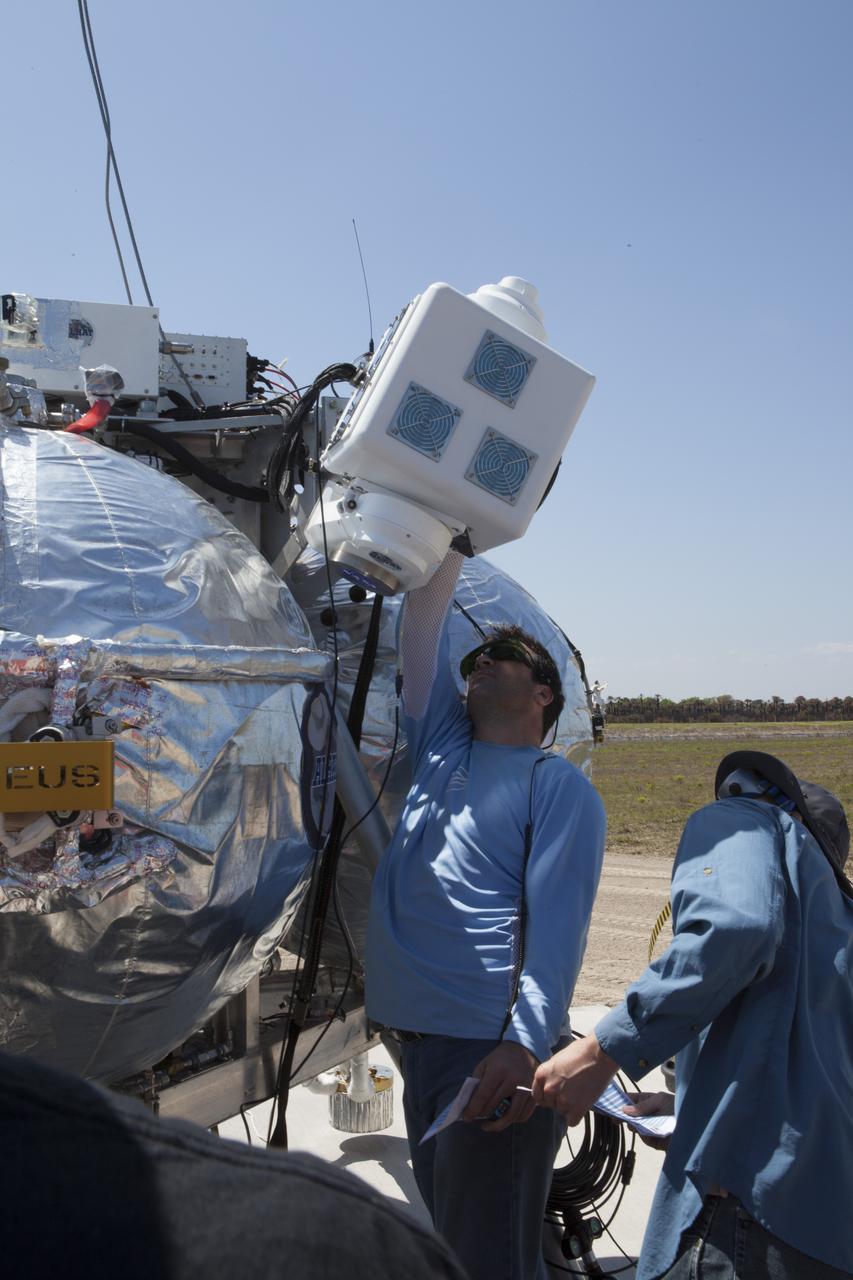
CAPE CANAVERAL, Fla. – Engineers and technicians wearing safety goggles, prepare the Project Morpheus prototype lander for an automated landing and hazard avoidance technology, or ALHAT, and laser test at a new launch site at the north end of the Shuttle Landing Facility at NASA’s Kennedy Space Center in Florida. The launch pad was moved to a different location at the landing facility to support the next phase of flight testing. The seventh free flight test of Morpheus occurred on March 11. The 83-second test began at 3:41 p.m. EDT with the Morpheus lander launching from the ground over a flame trench and ascending to 580 feet. Morpheus then flew its fastest downrange trek at 30 mph, travelling farther than before, 837 feet. The lander performed a 42-foot divert to emulate a hazard avoidance maneuver before descending and touching down on Landing Site 2, at the northern landing pad inside the ALHAT hazard field. Morpheus landed within one foot of its intended target. Project Morpheus tests NASA’s ALHAT and an engine that runs on liquid oxygen and methane, or green propellants, into a fully-operational lander that could deliver cargo to other planetary surfaces. The landing facility provides the lander with the kind of field necessary for realistic testing, complete with rocks, craters and hazards to avoid. Morpheus’ ALHAT payload allows it to navigate to clear landing sites amidst rocks, craters and other hazards during its descent. Project Morpheus is being managed under the Advanced Exploration Systems, or AES, Division in NASA’s Human Exploration and Operations Mission Directorate. The efforts in AES pioneer new approaches for rapidly developing prototype systems, demonstrating key capabilities and validating operational concepts for future human missions beyond Earth orbit. For more information on Project Morpheus, visit http://morpheuslander.jsc.nasa.gov/. Photo credit: NASA/Kim Shiflett
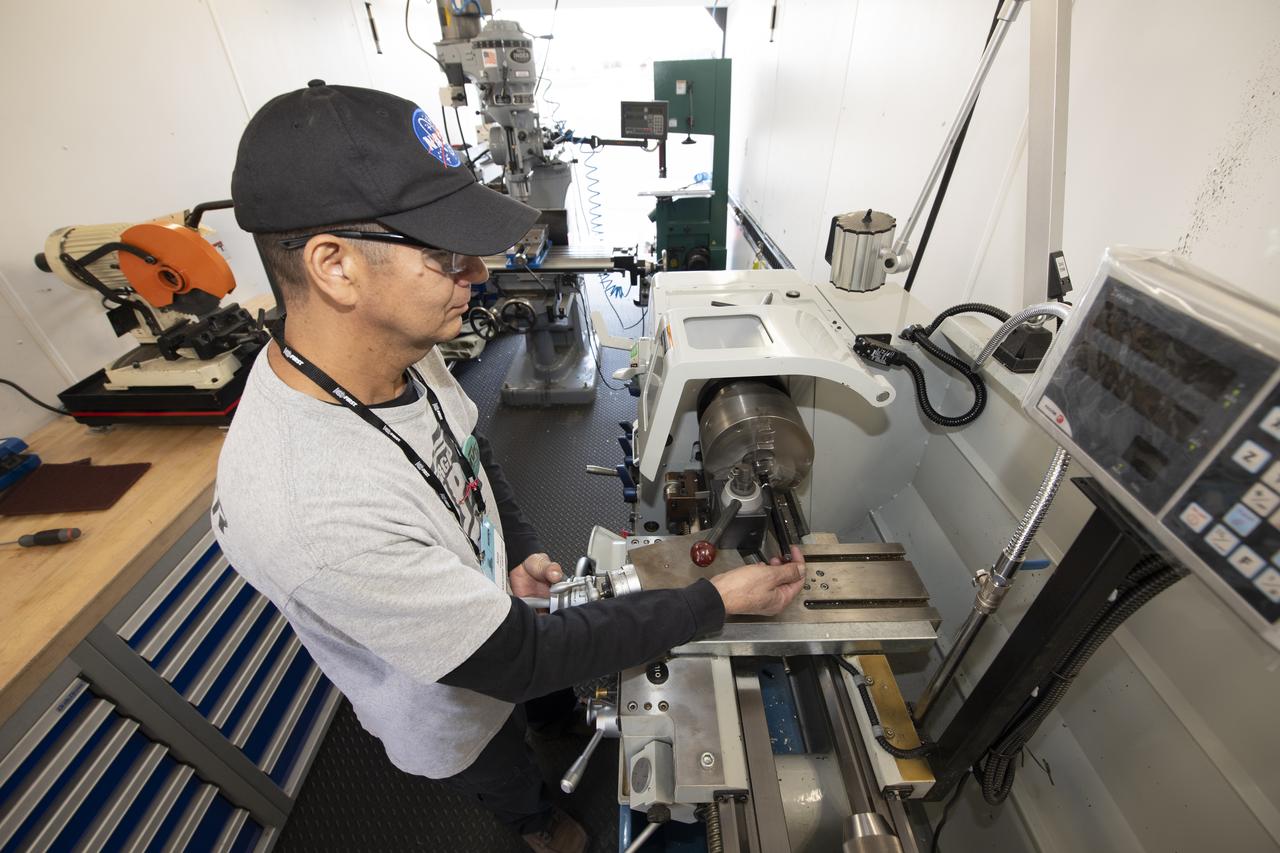
Jose Vasquez, engineering technician at NASA’s Armstrong Flight Research Center at Edwards, California, machines parts for a robot inside NASA’s mobile machine shop at the 2025 Aerospace Valley FIRST Robotics Competition in Lancaster, California, on April 3, 2025.
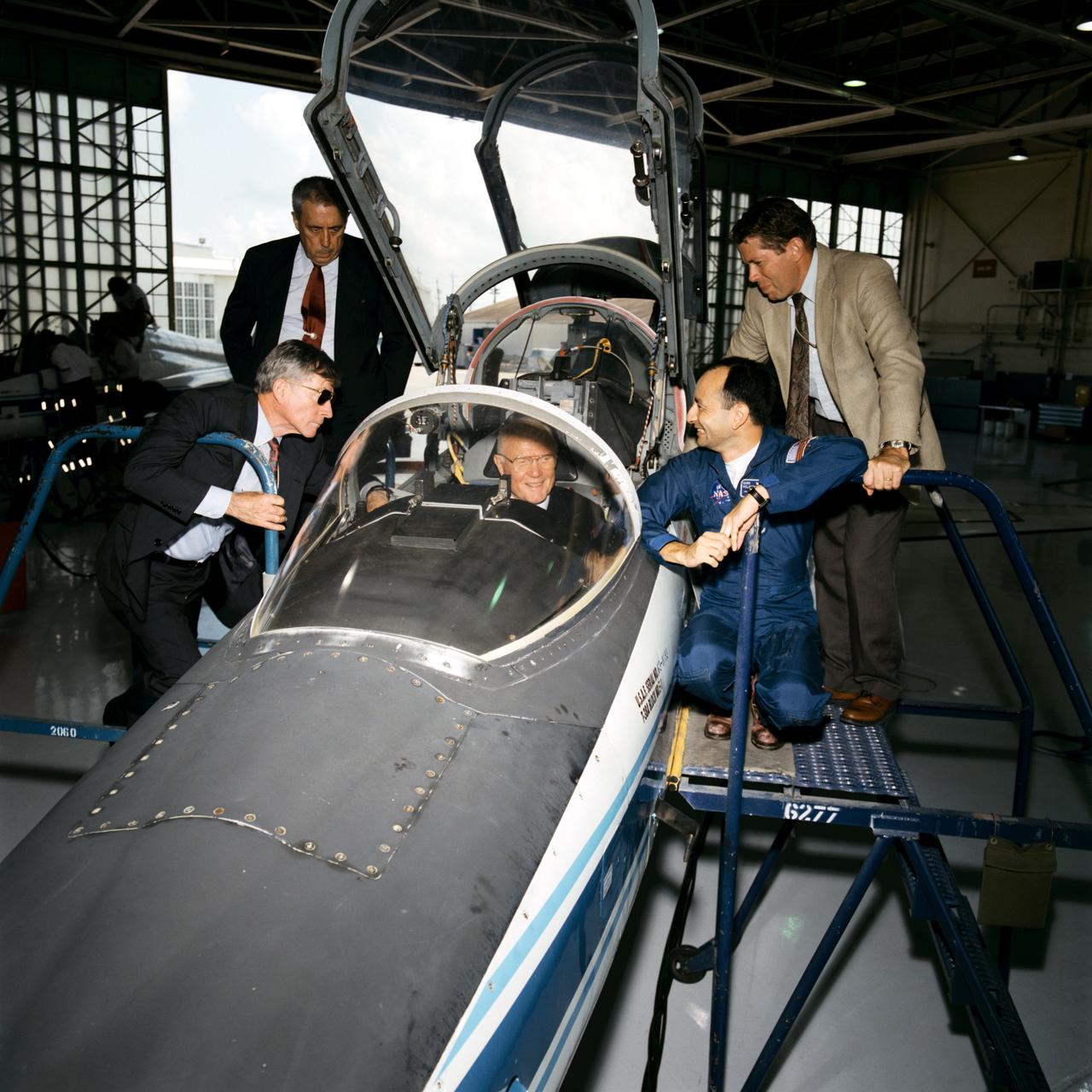
Senator John Glenn visit to Johnson Space Center (JSC). Views of Glenn sitting in cockpit of T-38 in Hangar 276 with John Young, George Abbey, David Leestma and Mark Polansky observing (11150). An engineer explains SPIFEX experiment hardware to Abby, Young and Glenn in Bldg 13 (11151, 11153). Glenn talks with astronaut Terrence T. Henricks and employees in Bldg 9C, Virtual reality lab (11152). Lunch in Bldg 17 Flight Crew support division with Dr. Ellen Baker, Robert "Hoot" Gibson and John Glenn (11154). Linda Godwin, Robert Cabana, Abbey, Young, Baker, Gibson and Glenn at lunch (11155). Astronaut Mark Lee shows Glenn and his aide how to use the virtural reality helmets (11156-7). Glenn shakes the hand of Franklin Chang-Diaz with his plasma rocket in the background in the Sonny Carter Training Facility (SCTF) (11158). Glenn in the Manipulator Development Facility (MDF) Remote Manipulator System (RMS) station mock-up in Bldg 9A with Abbey, Young and aide (11159, 11186). Glenn signs a book for Thomas D. Jones as Frederick Sturckow and Linda Godwin look on (11160). Glenn inside visual-vestibular trainer in Bldg 9B (11161). In conference room meeting with astronaut corps in Bldg 4S, Glenn shakes Robert Cabana's hand (11162). John Glenn and John Young pose for a group shot with Bldg 17 Food lab personnel (11163). Glenn thanks the food lab personnel (11164). Glenn visits Bldg 5 Fixed Base (FB) middeck simulator with astronauts Terrence Henricks and Mary Ellen Weber (11165). Glenn with Charles T. Bourland (11166). STS-70 crew Donald Thomas, Terrence Henricks, Mary Ellen Weber, Nancy Currie and Kevin Kregel with Glenn's advisor (11167). STS-70 crew Thomas, Henricks, Weber, Currie and Kregel with John Glenn (11175). Glenn with Thomas, Kregel, Weber, Henricks and trainer (11176-7). David J. Homan assists Glenn's aide with virtual reality goggles (11168) and Glenn (11174). John Young in Bldg 9C equilibrium trainer (11169). Glenn with Carl Walz in flight deck mock-up of MDF in Bldg 9NE (11170, 11187). Young, Abbey, aides, Glenn and Walz examine helium balloon in MDF (11171-2). Chang-Diaz shows Glenn's tour group the plasma rocket (11173). Glenn's presentation to astronaut corps (11178-81, 11184-5). Glenn is presented with framed picture of Sonny Carter Training Facility (SCTF) (11182) and framed picture of space station (11183).

NASA’s flight systems engineer, Kassidy Mclaughlin conducts environmental testing on an instrumentation pallet. The pallet was used during NASA’s National Campaign project in 2020 at NASA’s Armstrong Flight Research Center in Edwards, California.
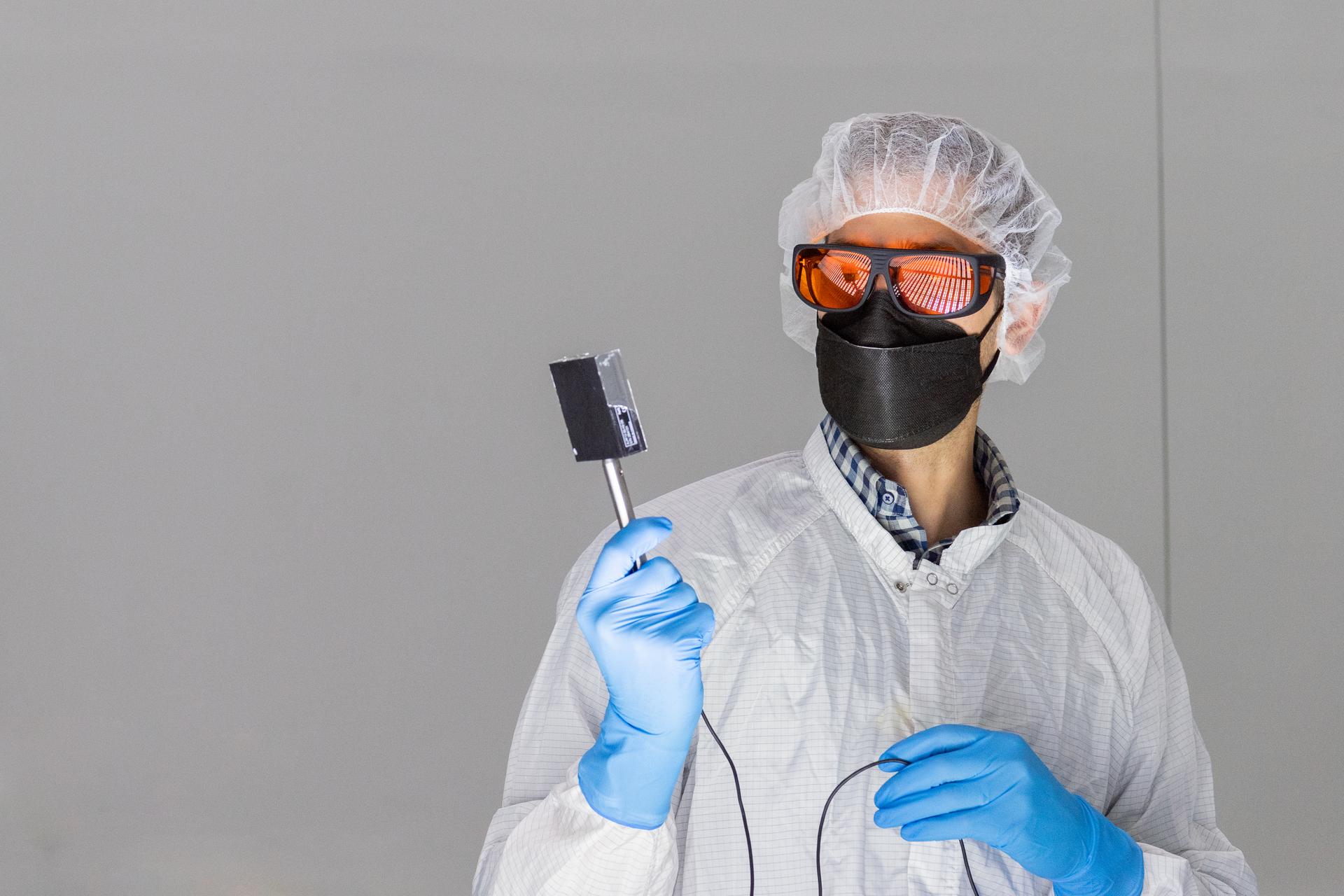
Tucker Ryan Thomas with G2V takes calibration readings from the OSAM-1 solar simulators during their commissioning tests inside a cleanroom at Goddard Space Flight Center, Greenbelt Md., Oct 3, 2022. This photo has been cleared for public release. NASA/Mike Guinto
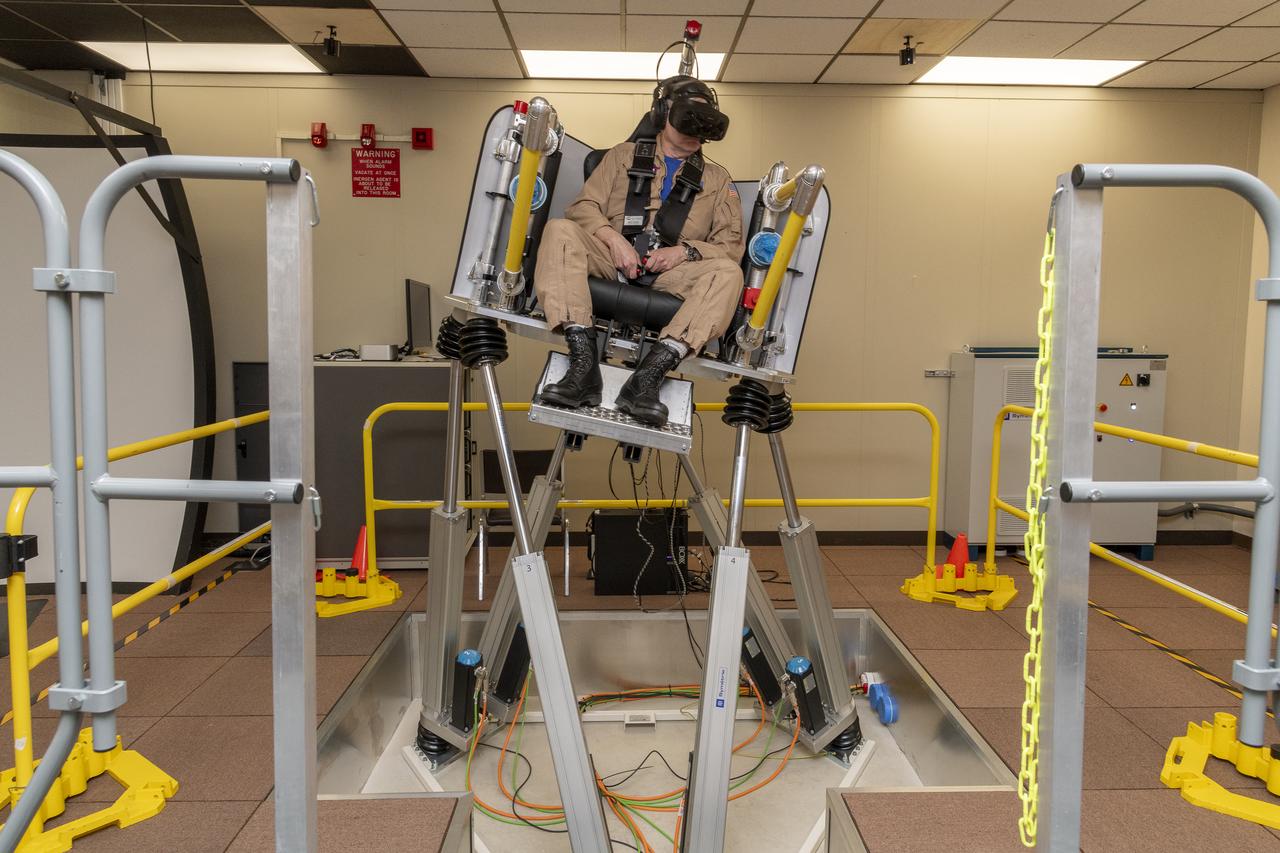
NASA test pilot Wayne Ringelberg sits in the air taxi virtual reality flight simulator during a test at NASA’s Armstrong Flight Research Center in Edwards, California in March 2024.
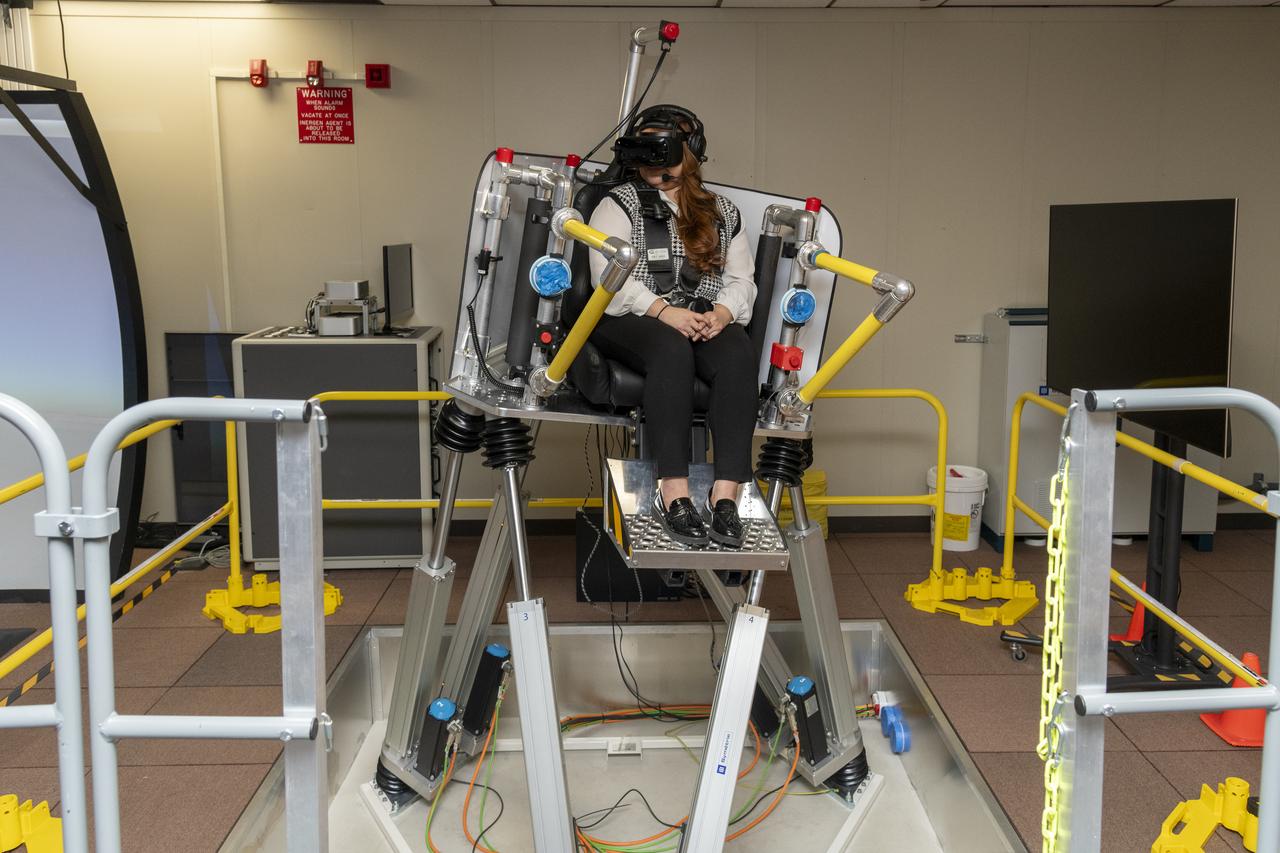
NASA employee Naomi Torres sits inside the air taxi passenger ride quality simulator at NASA’s Armstrong Flight Research Center in Edwards, California, during a study on Oct. 23, 2024. Research continues to better understand how humans may interact with these new types of aircraft.
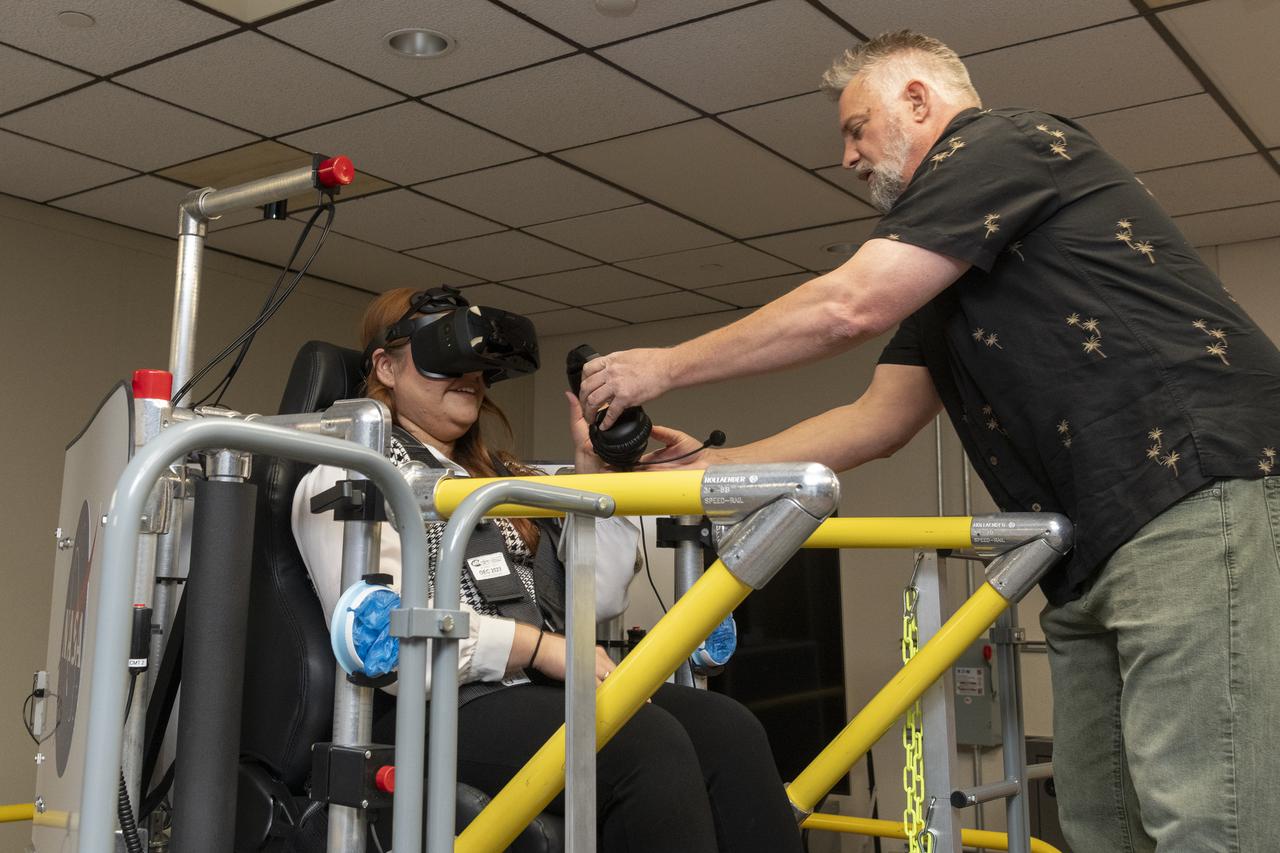
NASA employee Naomi Torres sits inside the air taxi passenger ride quality simulator at NASA’s Armstrong Flight Research Center in Edwards, California, as Curt Hanson, senior flight controls researcher for the Revolutionary Vertical Lift Technology project, sets up her equipment on Oct. 23, 2024. Studies continue in this lab to better understand passenger comfort for future air taxi rides.

NASA employee Naomi Torres sits inside the air taxi passenger ride quality simulator at NASA’s Armstrong Flight Research Center in Edwards, California, as the simulator moves during a study on Oct. 23, 2024. Research continues to better understand how humans may interact with these new types of aircraft.
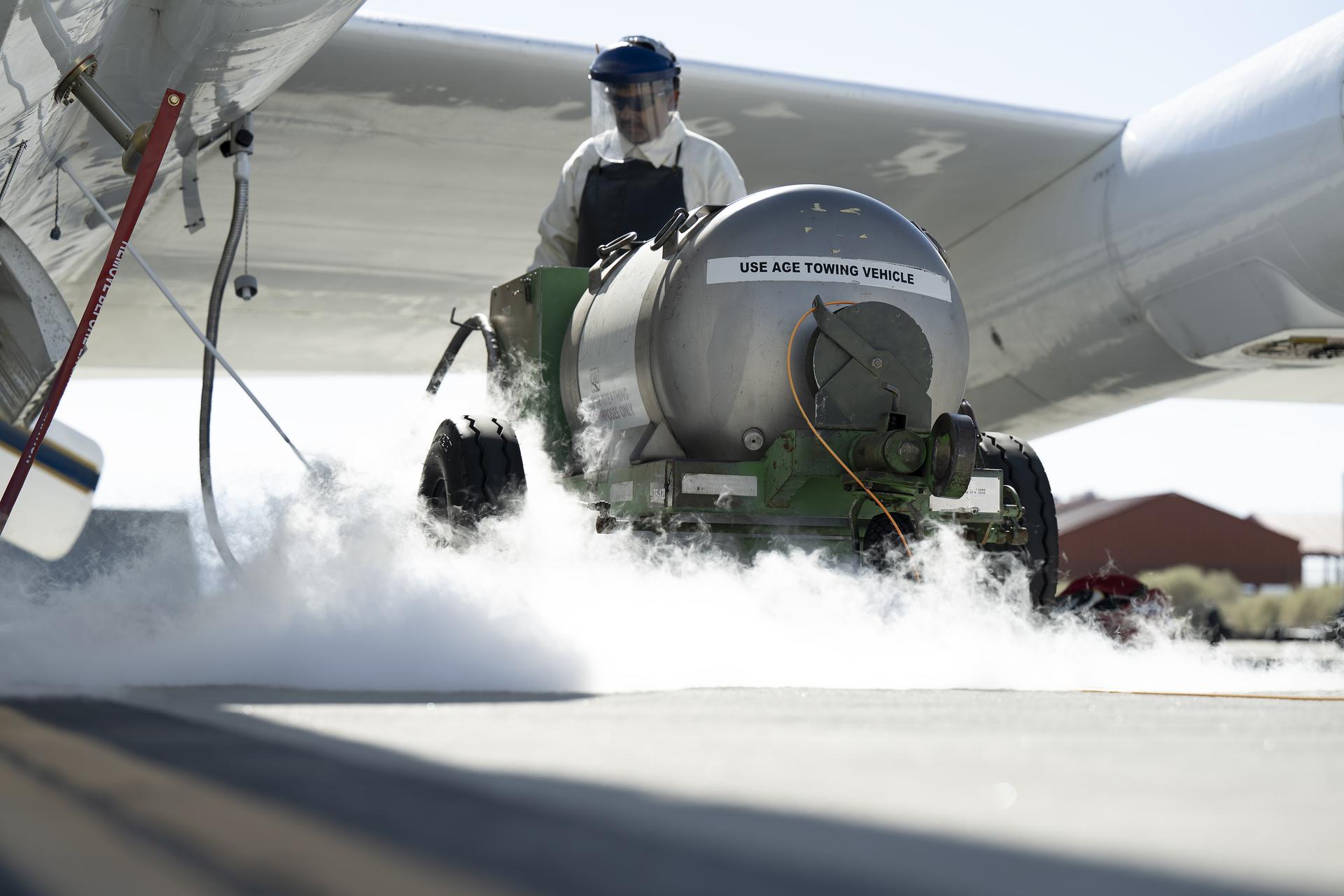
NASA engineer technician Francisco Rodriguez gives a NASA ER-2 aircraft a liquid oxygen refill (LOX) in preparation for the INjected Smoke and PYRocumulonimbus Experiment (INSPYRE) at NASA’s Armstrong Flight Research Center in Edwards, California, on Wednesday, July 15, 2026. This Earth science campaign studies wildfire‑generated thunderstorms, and researchers are seeking to better understand how these storms form, how high the storms send smoke, where this smoke travels, and the effects after the smoke reaches upper layers of the atmosphere.