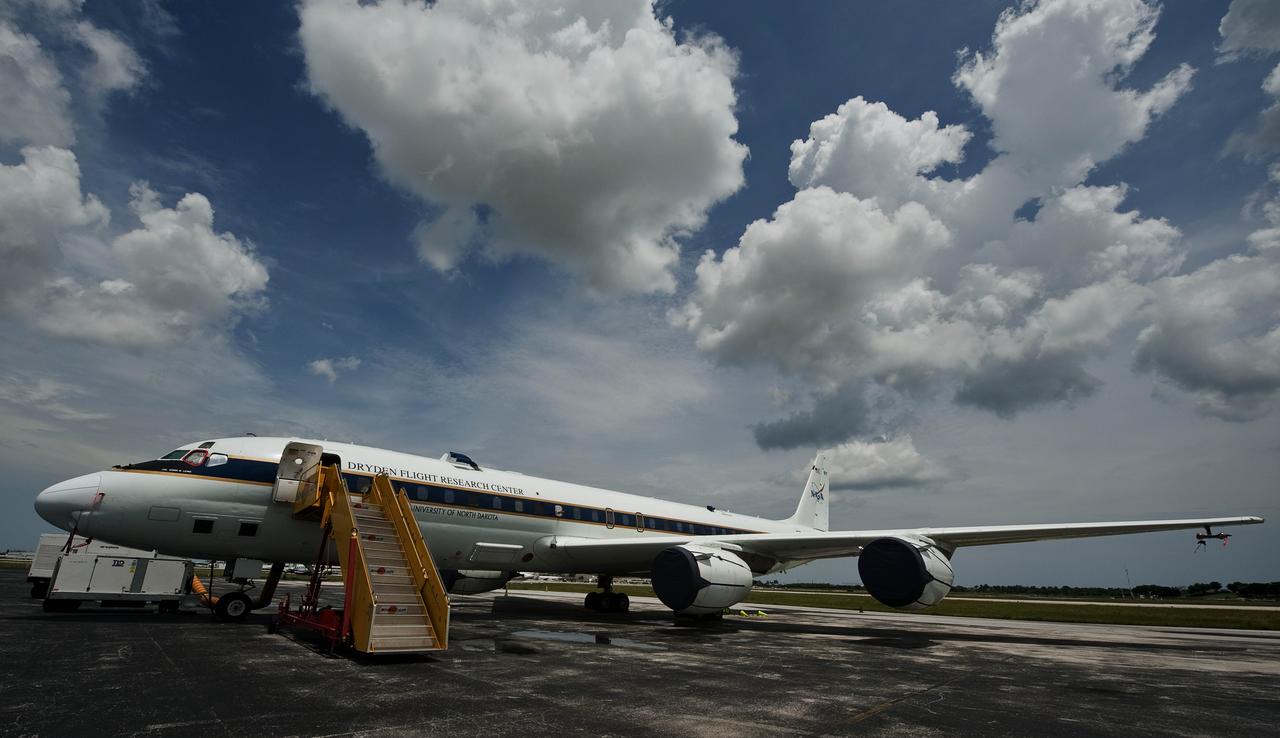
The NASA DC-8 airplane sits on the tarmac, Sunday, Aug. 15, 2010, at Fort Lauderdale International Airport in Fort Lauderdale, Fla. , as preparations continue for its part in the GRIP experiment. The Genesis and Rapid Intensification Processes (GRIP) experiment is a NASA Earth science field experiment in 2010 that is being conducted to better understand how tropical storms form and develop into major hurricanes. Credit: NASA/Paul E. Alers To read more about the GRIP Mission go <b><a href="http://www.nasa.gov/mission_pages/hurricanes/missions/grip/news/grip-quest.html" rel="nofollow"> here</a></b> or <b><a href="http://www.nasa.gov/externalflash/GRIP/" rel="nofollow"> here</a></b> for an interactive feature <b><a href="http://www.nasa.gov/centers/goddard/home/index.html" rel="nofollow">NASA Goddard Space Flight Center</a></b> is home to the nation's largest organization of combined scientists, engineers and technologists that build spacecraft, instruments and new technology to study the Earth, the sun, our solar system, and the universe. <b>Follow us on <a href="http://twitter.com/NASA_GoddardPix" rel="nofollow">Twitter</a></b> <b>Join us on <a href="http://www.facebook.com/pages/Greenbelt-MD/NASA-Goddard/395013845897?ref=tsd" rel="nofollow">Facebook</a><b></b></b>
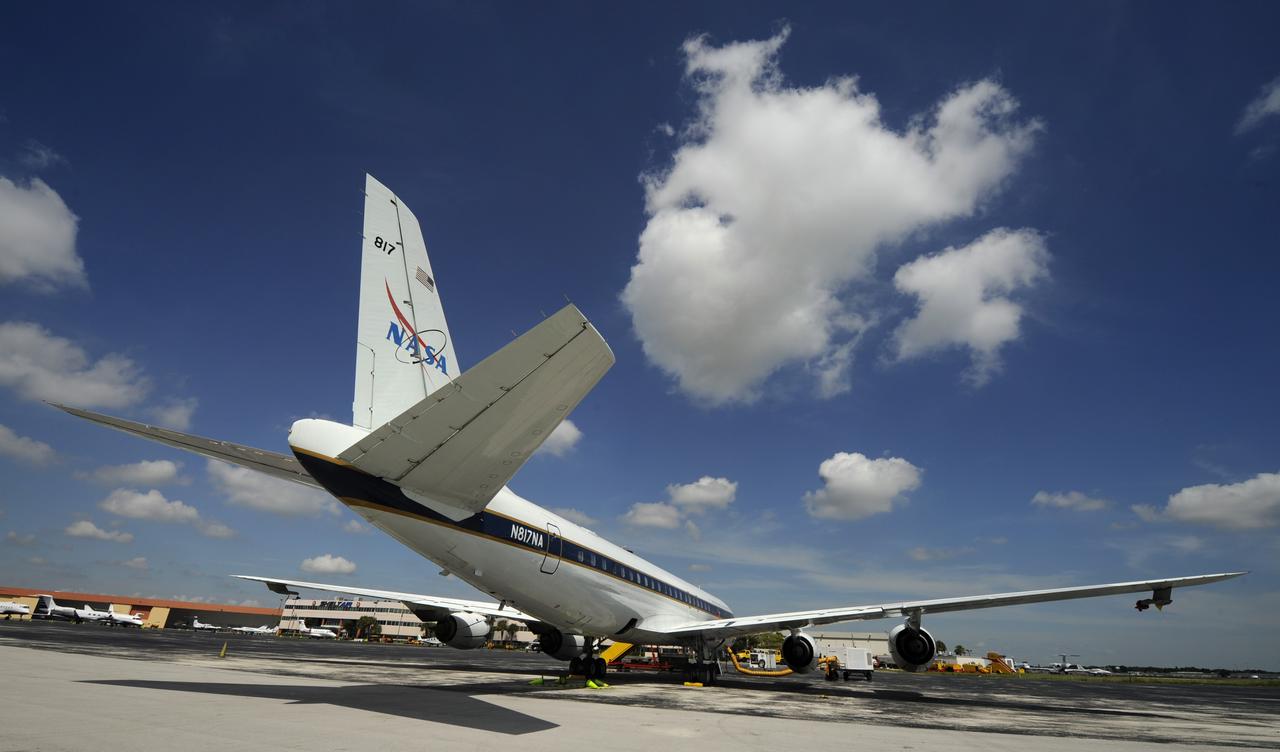
The NASA DC-8 airplane sits on the tarmac, Monday, Aug. 16, 2010, at Fort Lauderdale Hollywood International Airport in Fort Lauderdale, Fla. , as preparations continue for its part in the GRIP experiment. The Genesis and Rapid Intensification Processes (GRIP) experiment is a NASA Earth science field experiment in 2010 that is being conducted to better understand how tropical storms form and develop into major hurricanes. Photo Credit: (NASA/Paul E. Alers)
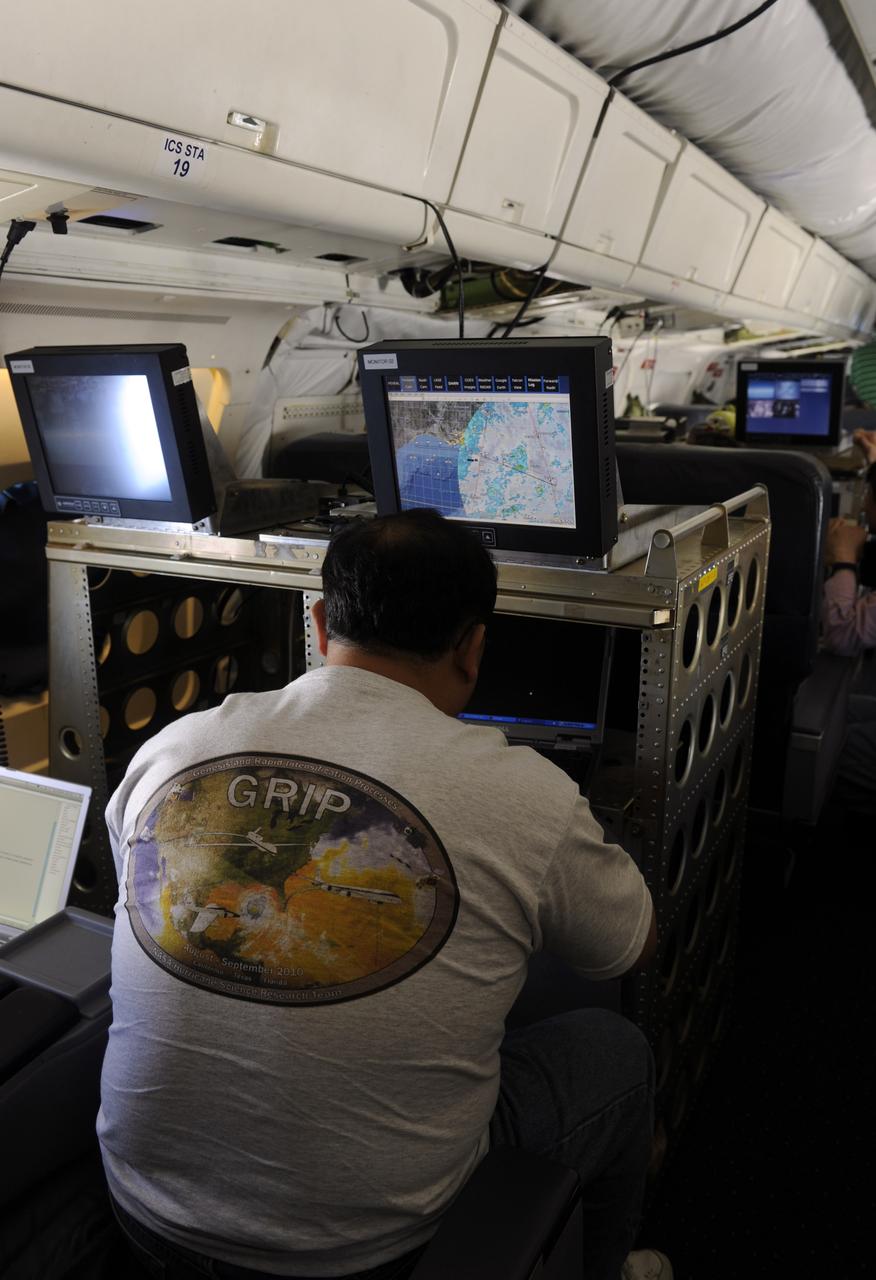
A researcher with the Genesis and Rapid Intensification Processes (GRIP) experiment works aboard the NASA DC-8 during a flight over the Gulf of Mexico, Tuesday, Aug. 17, 2010. GRIP is a NASA Earth science field experiment in 2010 that is being conducted to better understand how tropical storms form and develop into major hurricanes. Photo Credit: (NASA/Paul E. Alers)
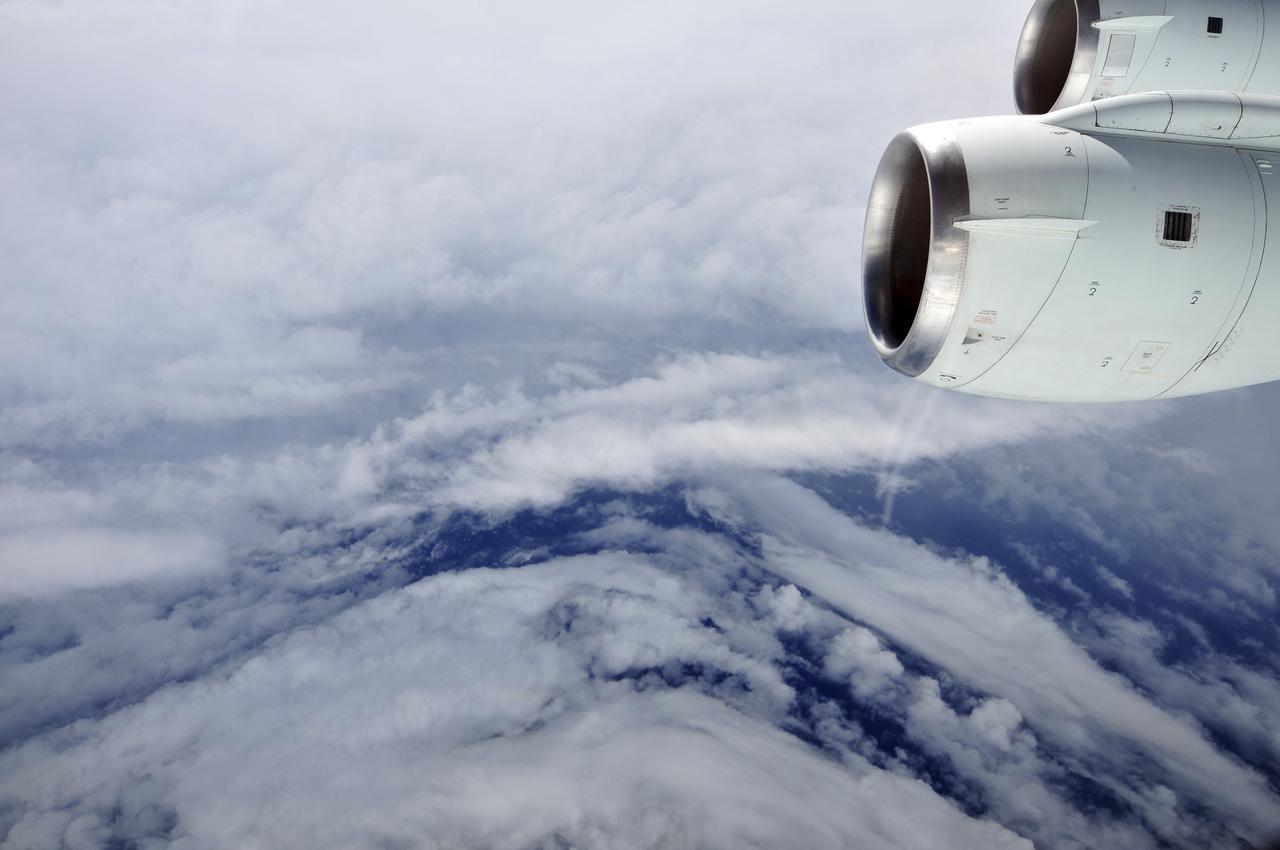
The eye of Hurricane Earl in the Atlantic Ocean is seen from NASA’s DC-8 research aircraft, Monday, Aug. 30, 2010. This flight through the eyewall caught Earl just as it was intensifying from a Category 2 to a Category 4 hurricane. The flights are part of the Genesis and Rapid Intensification Processes (GRIP) experiment, a NASA Earth science field experiment being conducted to better understand how tropical storms form and develop into major hurricanes. (NASA/Jane Peterson)
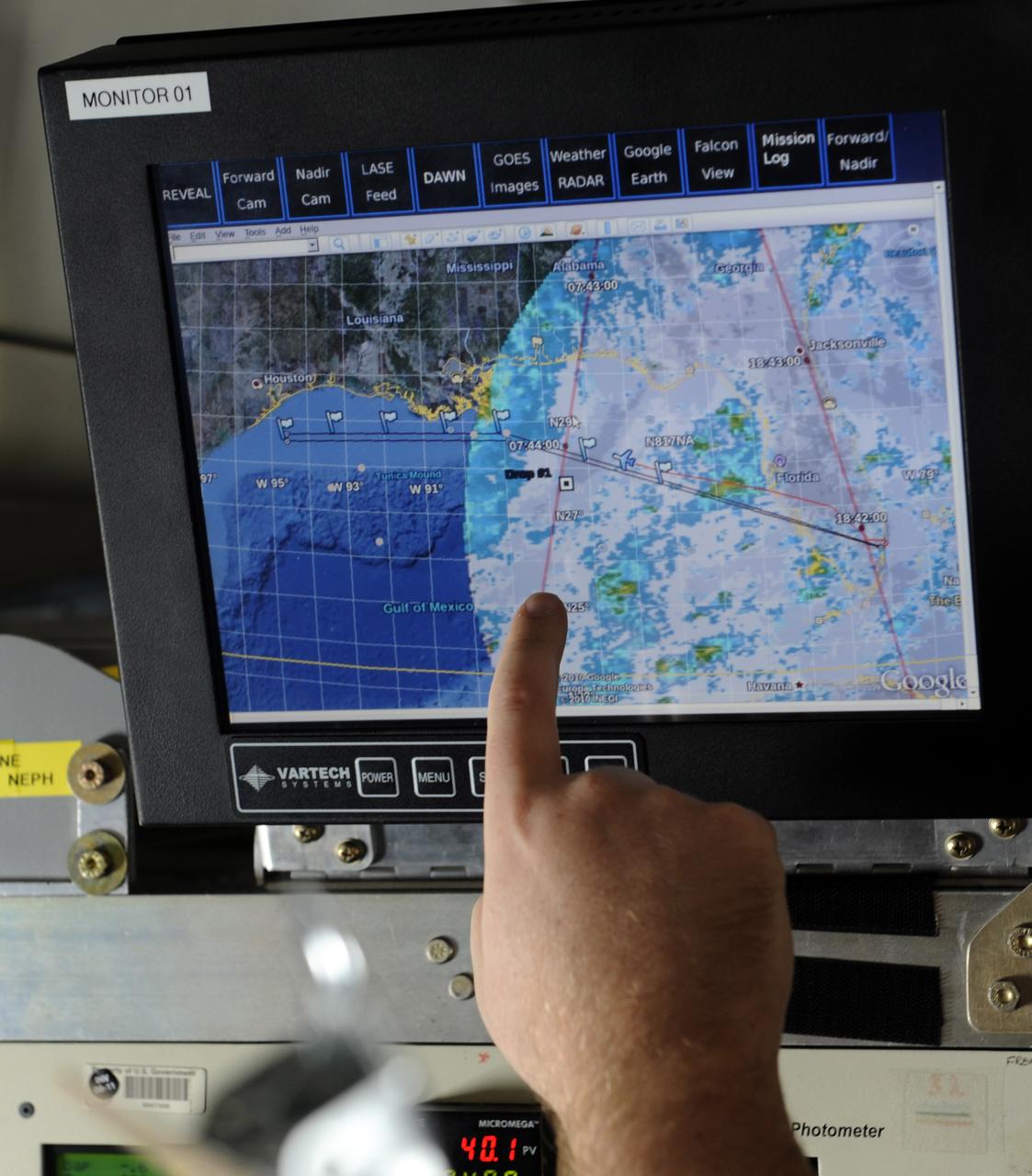
A researcher points out the trajectory of a weather pattern on a computer monitor during a flight aboard the NASA DC-8 aircraft, Tuesday, Aug. 17, 2010, over the Gulf of Mexico. Sceintists and researchers flew Tuesday to study weather as part of the Genesis and Rapid Intensification Processes (GRIP) experiment is a NASA Earth science field experiment in 2010 that is being conducted to better understand how tropical storms form and develop into major hurricanes. Photo Credit: (NASA/Paul E. Alers)
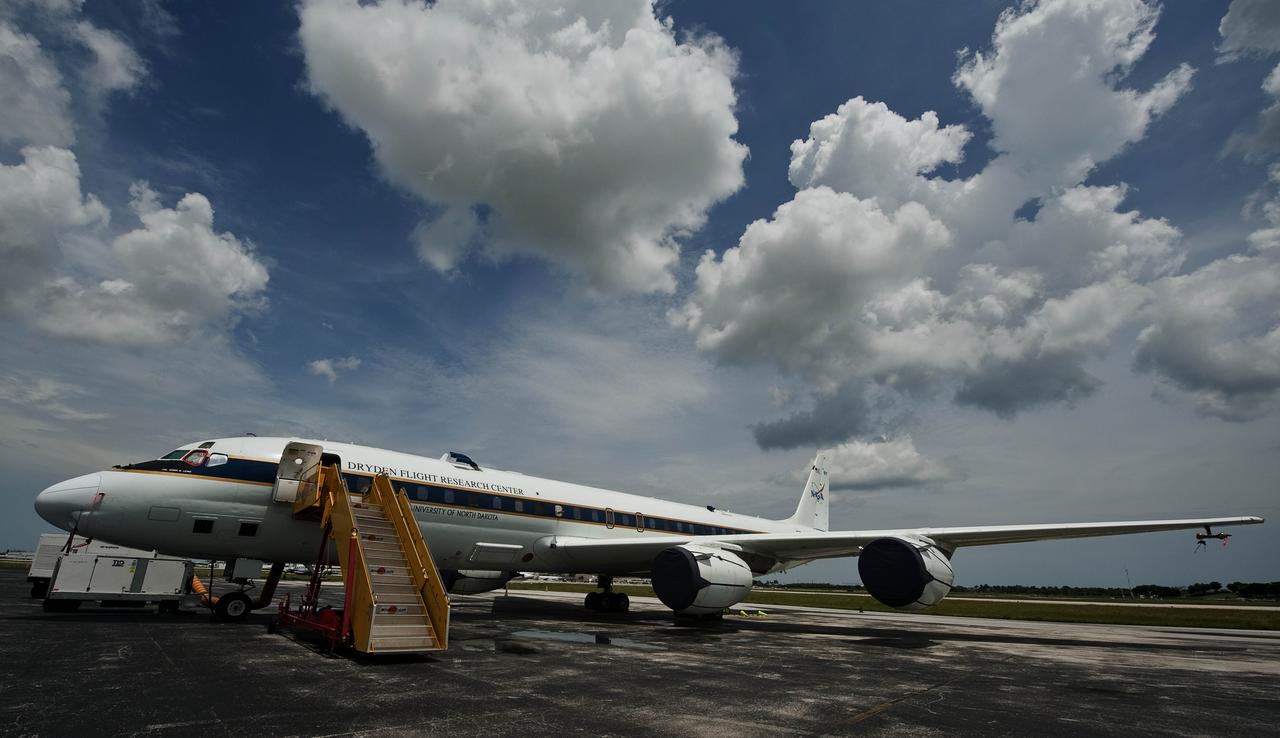
The NASA DC-8 airplane sits on the tarmac, Sunday, Aug. 15, 2010, at Fort Lauderdale International Airport in Fort Lauderdale, Fla. , as preparations continue for its part in the GRIP experiment. The Genesis and Rapid Intensification Processes (GRIP) experiment is a NASA Earth science field experiment in 2010 that is being conducted to better understand how tropical storms form and develop into major hurricanes. Photo Credit: (NASA/Paul E. Alers)
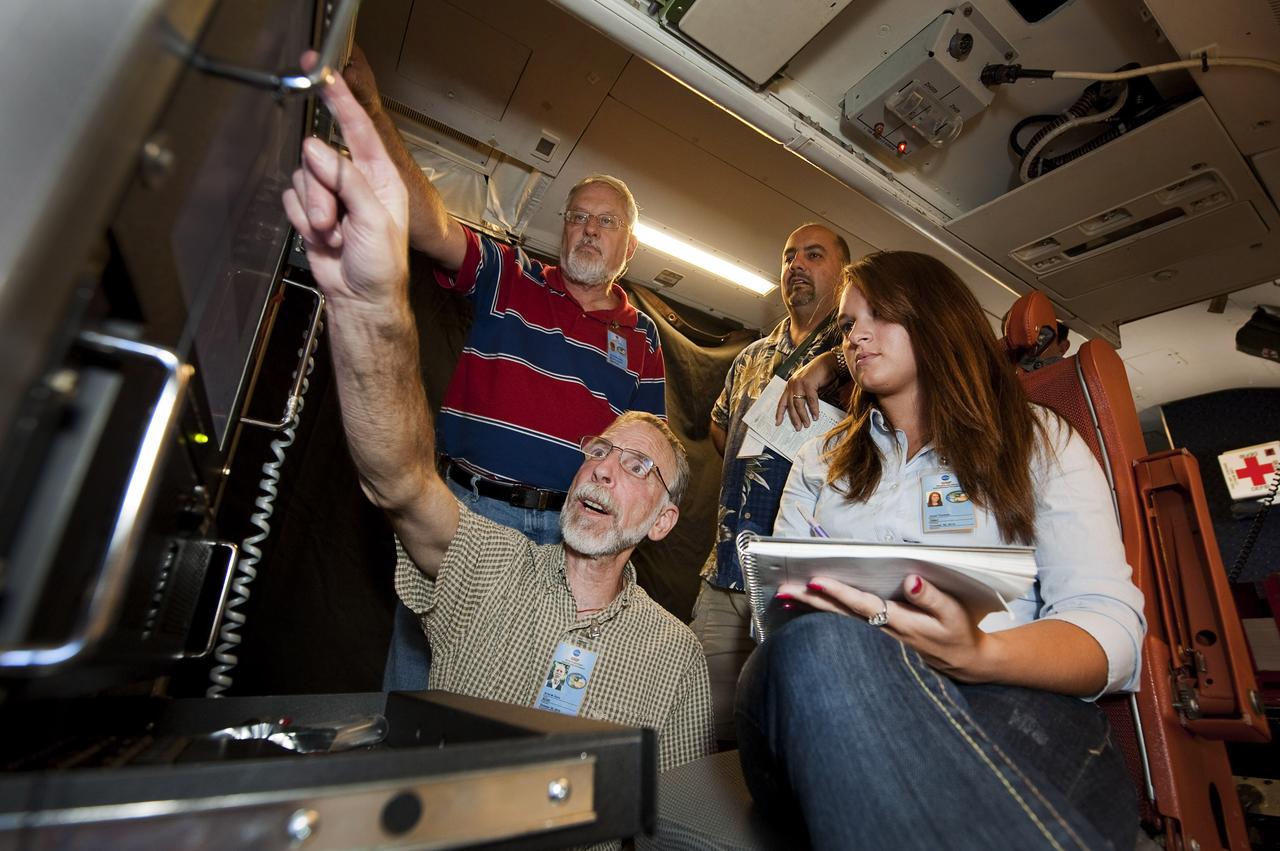
Errol Korn, lower left, explains the dropsonde experiment to Janel Thomas, a University of Maryland Baltimore County (UMBC) graduate student, seated, as Bob Pasken, standing left, and Jeff Halverson, a GRIP project scientist from UMBC, look on inside NASA's DC-8 airplane, at Fort Lauderdale International Airport in Fort Lauderdale, Fla., Sunday, Aug. 15, 2010. The Genesis and Rapid Intensification Processes (GRIP) experiment is a NASA Earth science field experiment in 2010 that is being conducted to better understand how tropical storms form and develop into major hurricanes. Credit: NASA/Paul E. Alers To read more about the GRIP Mission go <b><a href="http://www.nasa.gov/mission_pages/hurricanes/missions/grip/news/grip-quest.html" rel="nofollow"> here</a></b> or <b><a href="http://www.nasa.gov/externalflash/GRIP/" rel="nofollow"> here</a></b> for an interactive feature <b><a href="http://www.nasa.gov/centers/goddard/home/index.html" rel="nofollow">NASA Goddard Space Flight Center</a></b> is home to the nation's largest organization of combined scientists, engineers and technologists that build spacecraft, instruments and new technology to study the Earth, the sun, our solar system, and the universe. <b>Follow us on <a href="http://twitter.com/NASA_GoddardPix" rel="nofollow">Twitter</a></b> <b>Join us on <a href="http://www.facebook.com/pages/Greenbelt-MD/NASA-Goddard/395013845897?ref=tsd" rel="nofollow">Facebook</a><b></b></b>
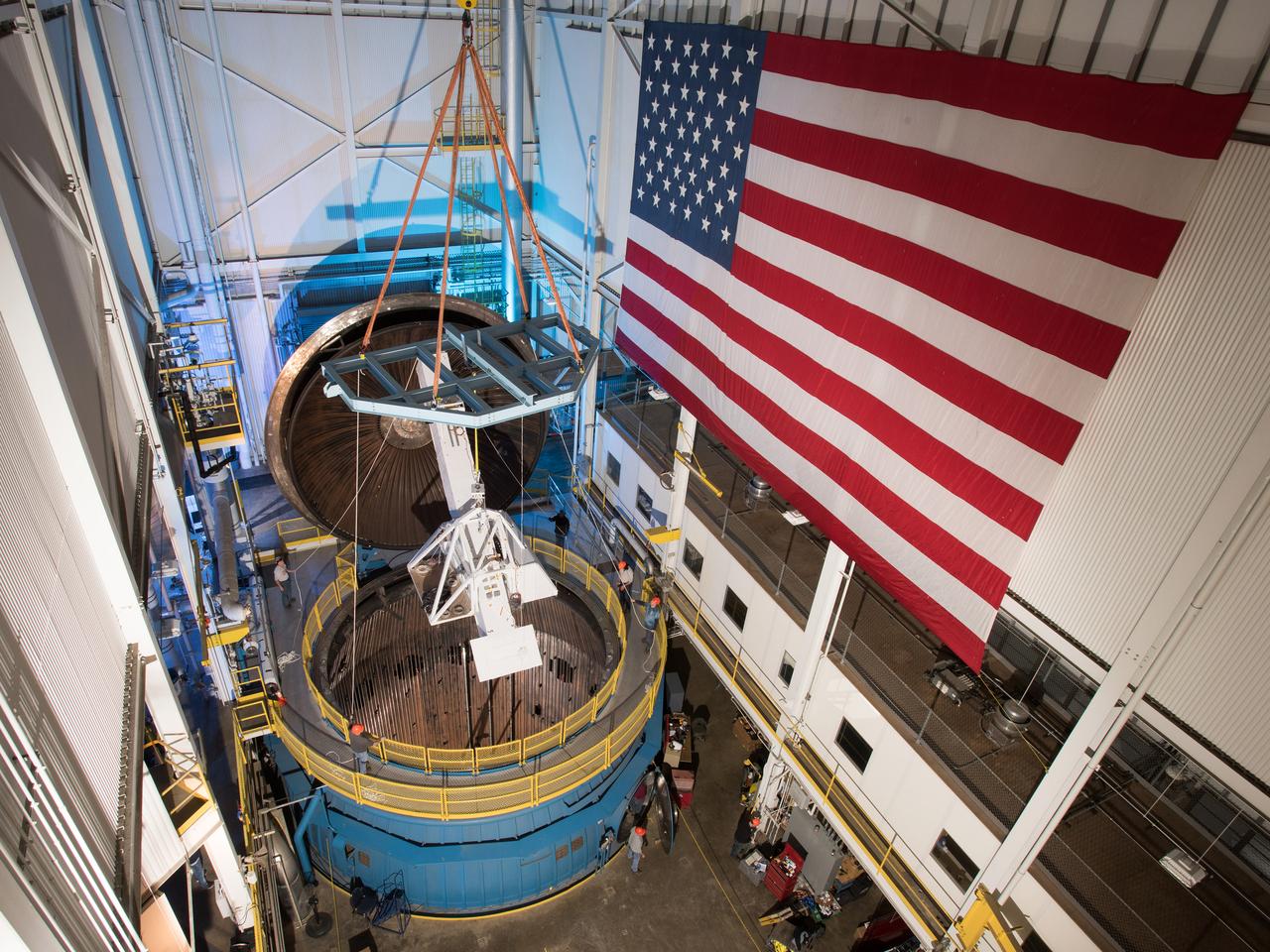
The Gamma-Ray Imager/Polarimeter for Solar flares (GRIPS) instrument is installed in the B-2 vacuum chamber for a full-instrument thermal-vacuum test in 2015. The GRIPS telescope was launched via balloon in January 2016 on a high-altitude flight over Antarctica to study the acceleration and transport of solar flare particles.
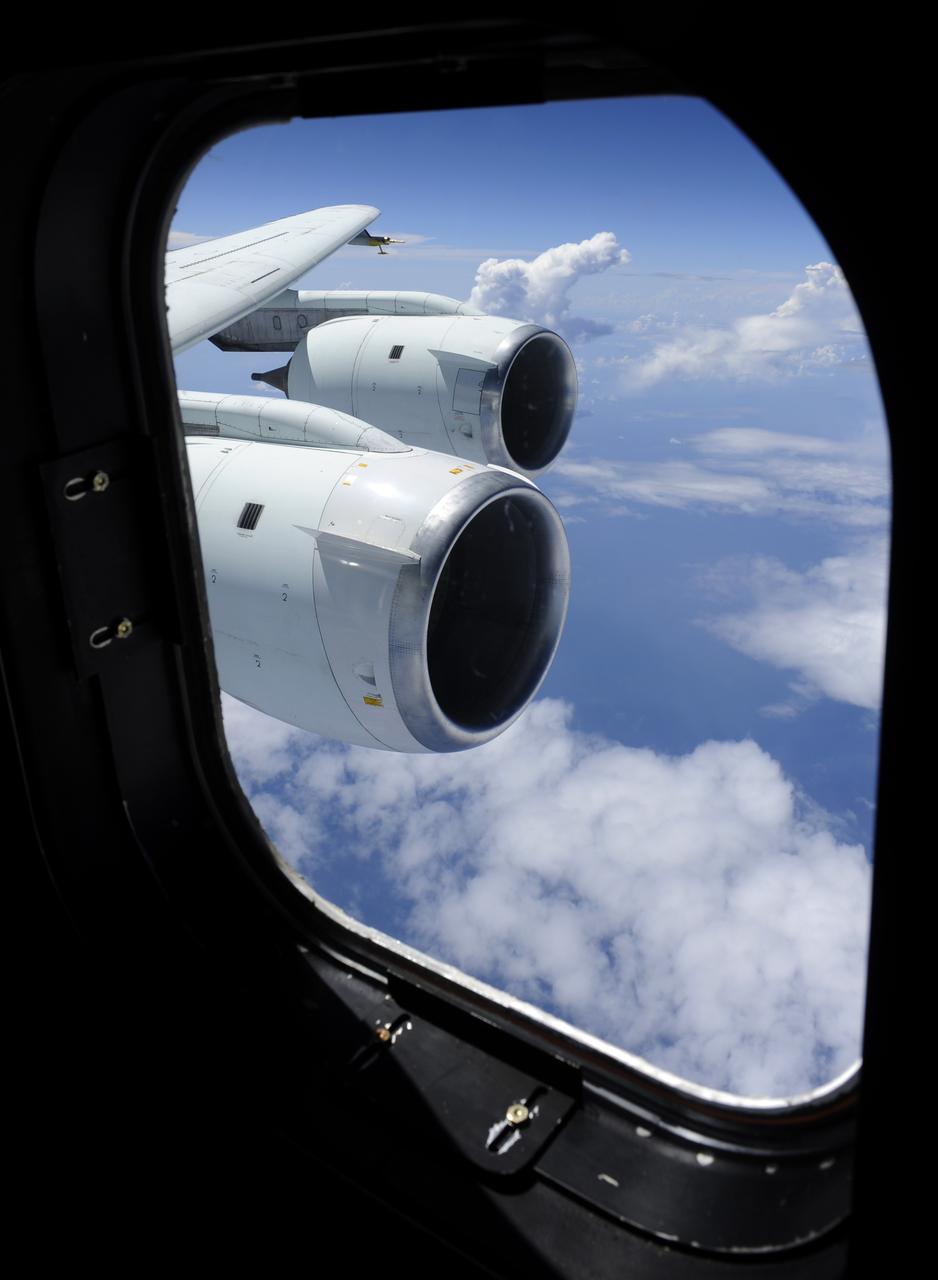
Cloud formations are seen through the window of NASA DC-8 aircraft during a flight, Tuesday, Aug. 17, 2010, over the Gulf of Mexico where researchers were studying weather patterns as part of trhe Genesis and Rapid Intensification Processes (GRIP) experiment, a NASA Earth science field experiment in 2010 that is being conducted to better understand how tropical storms form and develop into major hurricanes. Photo Credit: (NASA/Paul E. Alers)
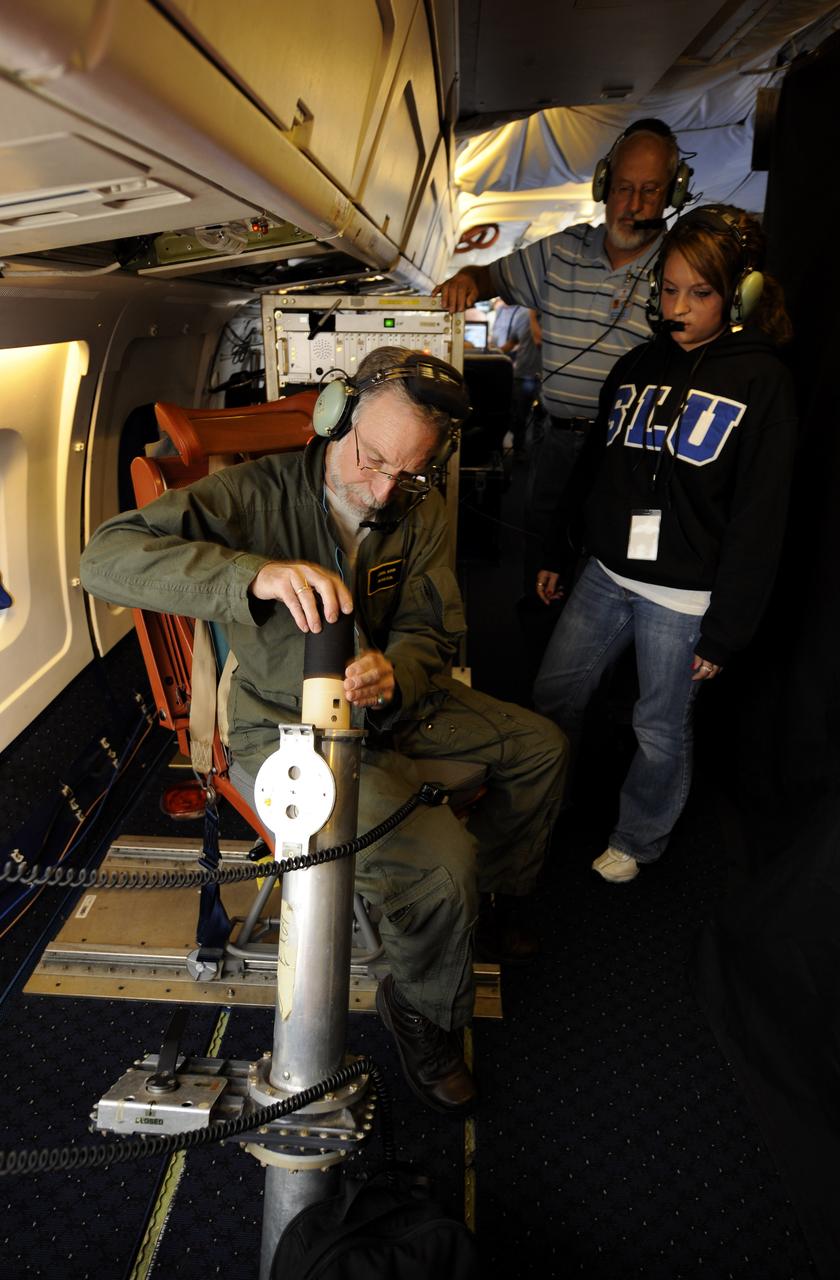
Errol Korn, seated left, deploys a dropsonde experiment over the Gulf of Mexico during a flight aboard the NASA DC-8 as Janel Thomas, a University of Maryland Baltimore County (UMBC) graduate student, and Bob Pasken, look on , Tuesday, Aug. 17, 2010. The Genesis and Rapid Intensification Processes (GRIP) experiment is a NASA Earth science field experiment in 2010 that is being conducted to better understand how tropical storms form and develop into major hurricanes. Photo Credit: (NASA/Paul E. Alers)
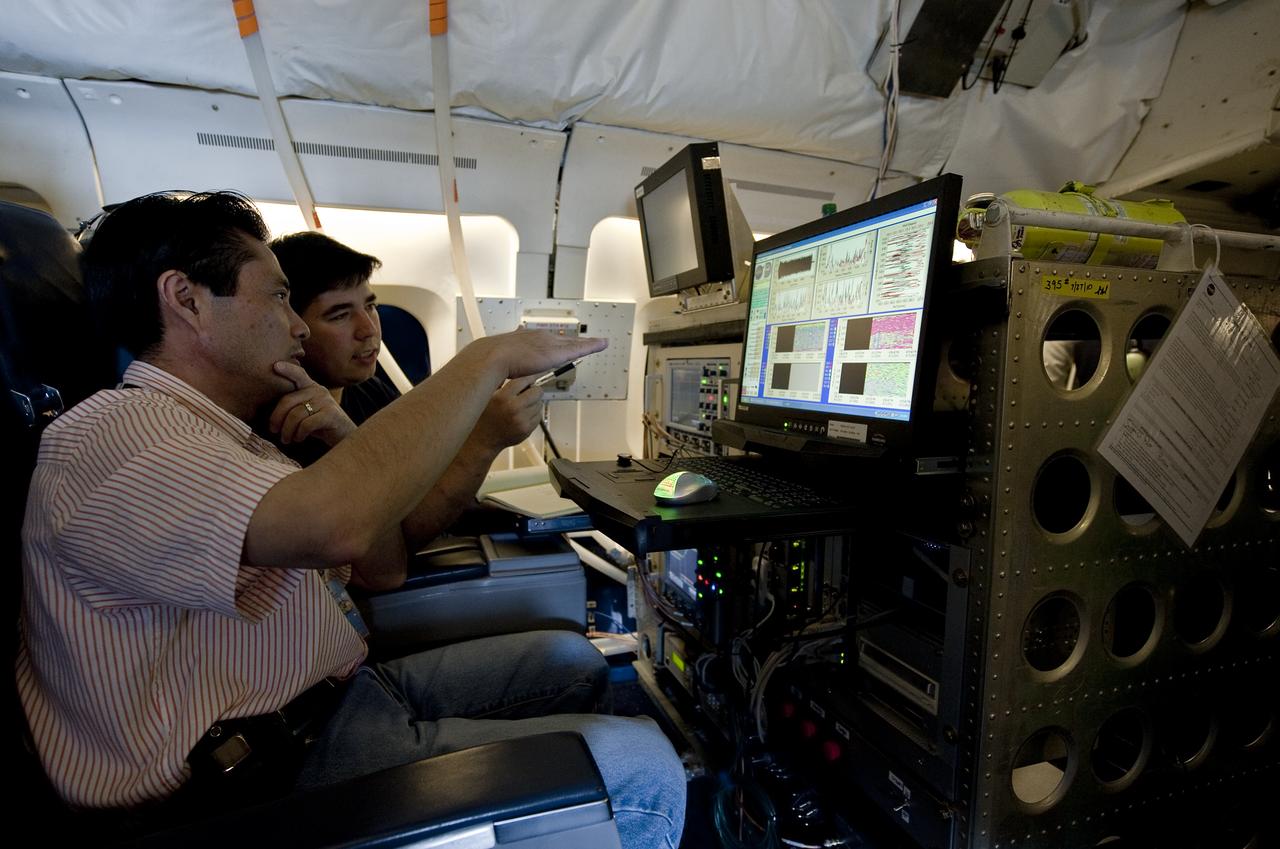
Jeffrey Beyon, left, and Paul Joseph Petzar, right, from NASA's Langley Research Center, work with DAWN Air Data Acquisition and Processing software aboard NASA's DC-8 research aircraft, Sunday, Aug. 15, 2010, in support of the GRIP experiment at Fort Lauderdale International Airport in Fort Lauderdale, Fla. The Genesis and Rapid Intensification Processes (GRIP) experiment is a NASA Earth science field experiment in 2010 that is being conducted to better understand how tropical storms form and develop into major hurricanes. Photo Credit: (NASA/Paul E. Alers)
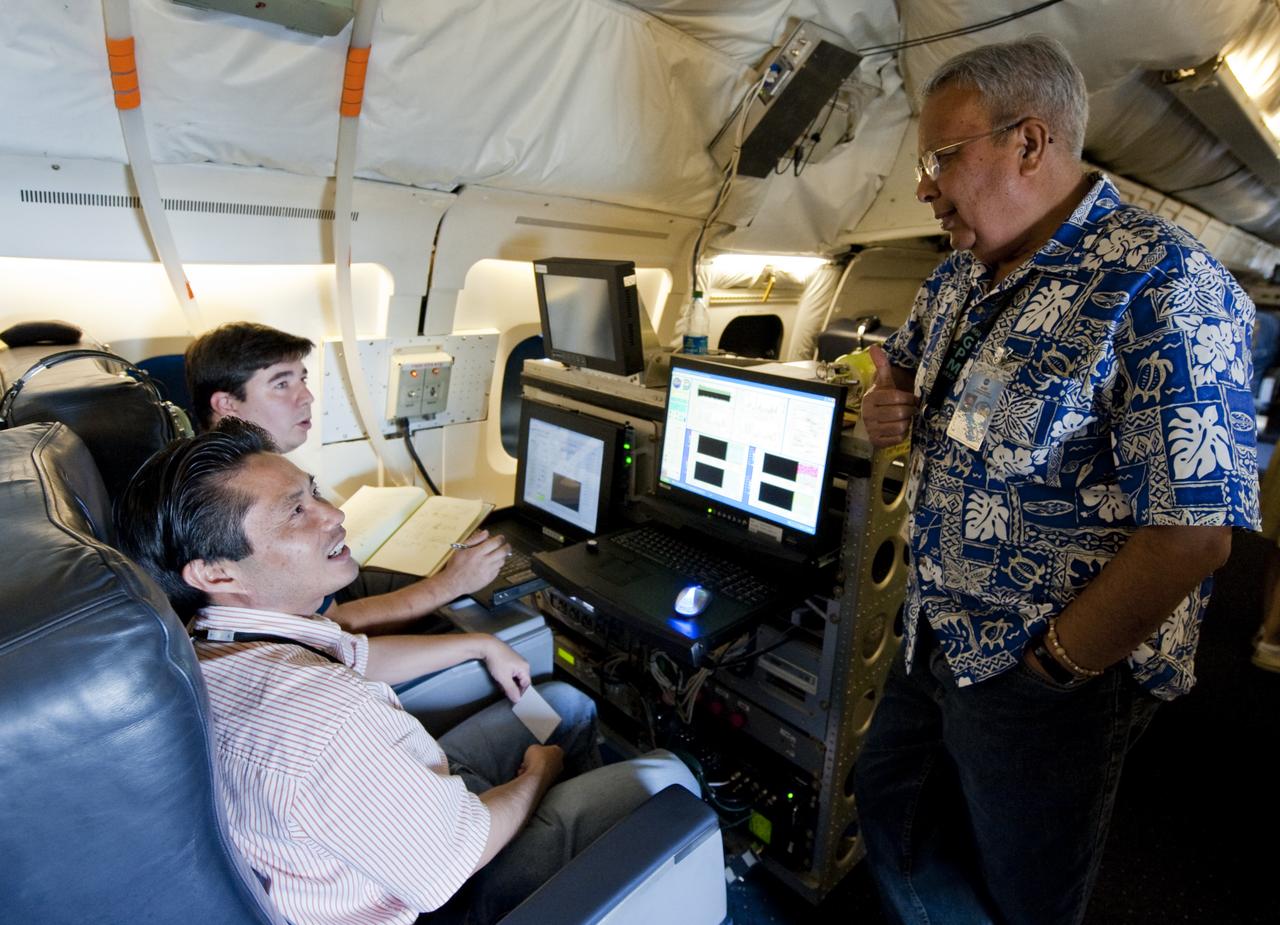
Jeffrey Beyon, lower right, and Paul Joseph Petzar, right, researchers from NASA's Langley Research Center, speak with Ramesh Kakar right, of the NASA Earth Science Division as they work with DAWN Air Data Acquisition and Processing software aboard NASA's DC-8 research aircraft, Sunday, Aug. 15, 2010, in support of the GRIP experiment at Fort Lauderdale International Airport in Fort Lauderdale, Fla. The Genesis and Rapid Intensification Processes (GRIP) experiment is a NASA Earth science field experiment in 2010 that is being conducted to better understand how tropical storms form and develop into major hurricanes. Photo Credit: (NASA/Paul E. Alers)
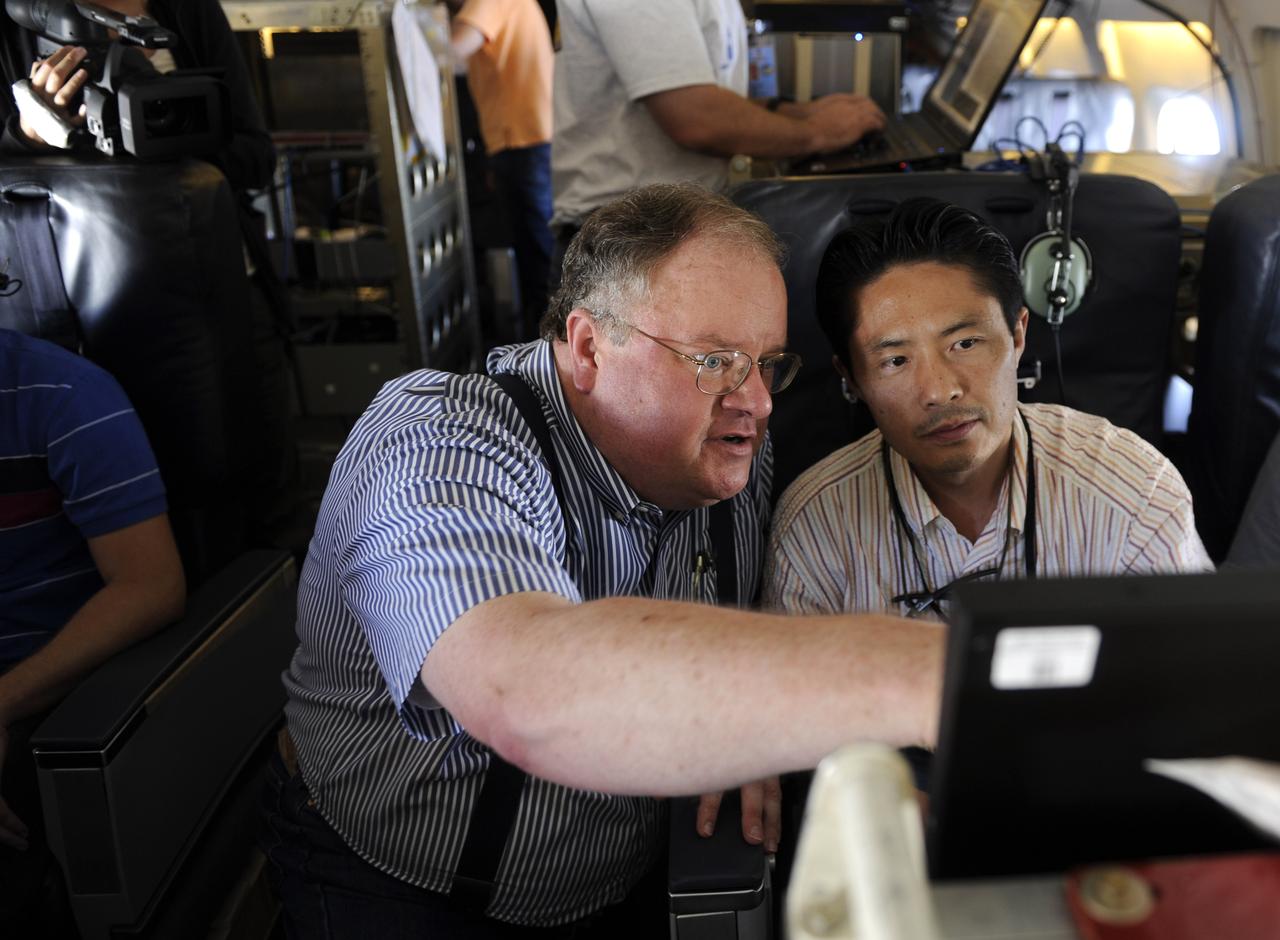
Michael Kavaya, of the NASA Langley Research Center, a Principal Investigator for the DAWN experiment, looks over data with Jeffrey Beyon during a flight of the NASA DC-8, Tuesday, Aug. 17, 2010, in the Gulf of Mexico. The DAWN experiment, also known as the Doppler Aerosol Wind Lidar, is one of many experiments supporting the Genesis and Rapid Intensification Processes (GRIP) experiment, a NASA Earth science field experiment in 2010 that is being conducted to better understand how tropical storms form and develop into major hurricanes. Photo Credit: (NASA/Paul E. Alers)
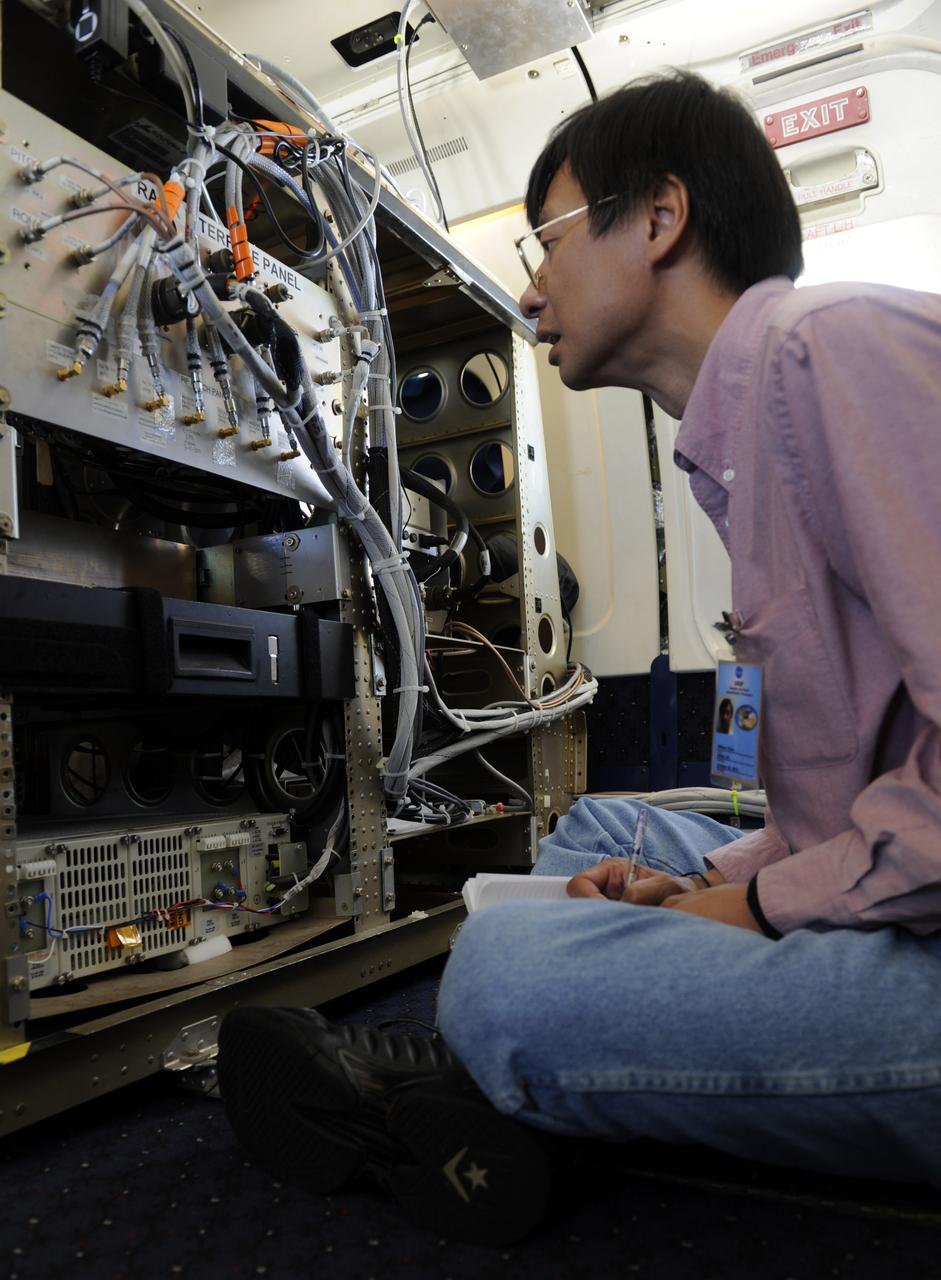
An unidentified researcher looks over the wiring connecting the Airbrorne Precipitation Radar (APR-2) during a flight aboard the NASA DC-8 aircraft, Tuesday, Aug. 17, 2010, over the Gulf of Mexico. Scientists taking part in the Genesis and Rapid Intensification Processes (GRIP) experiment, a NASA Earth science field experiment in 2010 that is being conducted to better understand how tropical storms form and develop into major hurricanes, flew out over a weather pattern Tuesday to begin their research. Photo Credit: (NASA/Paul E. Alers)
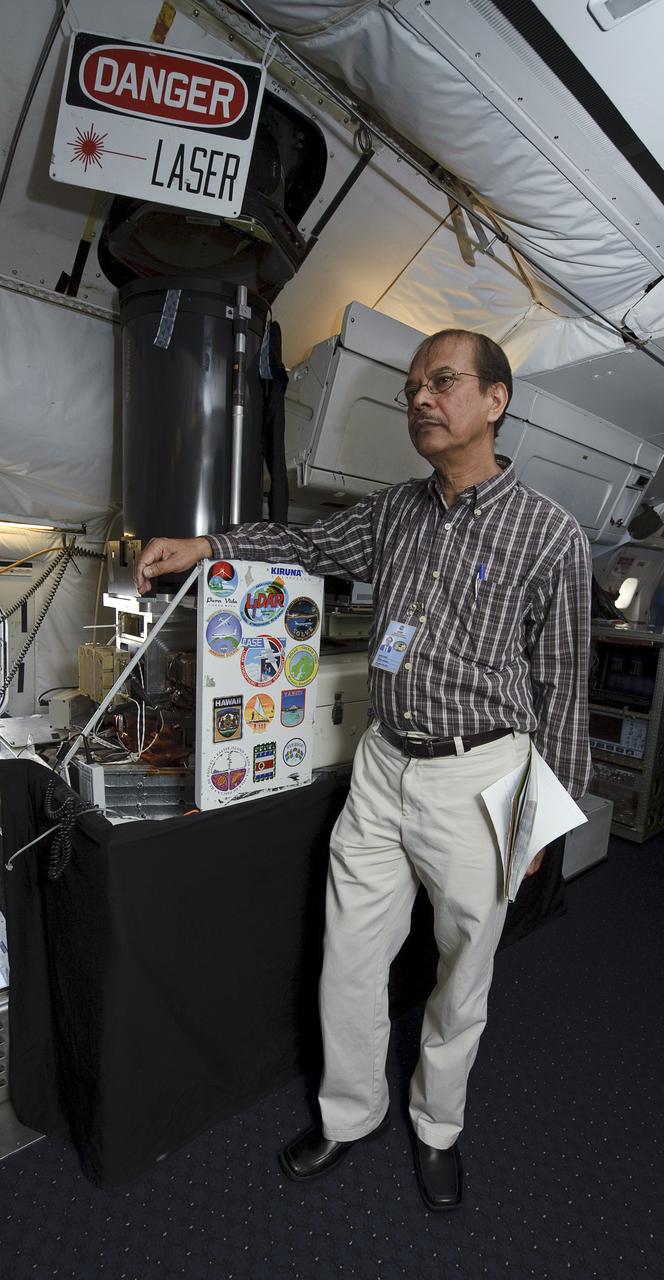
Syed Ismail, from the Langley Research Center, principal investigator for the Lidar Atmospheric Sensing Experiment (LASE) is seen aboard the NASA DC-8 aircraft, Monday, August 16, 2010, at Fort Lauderdale Hollywood International Airport in Fort Lauderdale, Fla. The Genesis and Rapid Intensification Processes (GRIP) experiment is a NASA Earth science field experiment in 2010 that is being conducted to better understand how tropical storms form and develop into major hurricanes. Photo Credit: (NASA/Paul E. Alers)

Gripped in the claw of the constellation Scorpius sits the reflection nebula DG 129, a cloud of gas and dust that reflects light from nearby, bright stars. This infrared view of the nebula was captured by NASA Wide-field Infrared Survey Explorer.
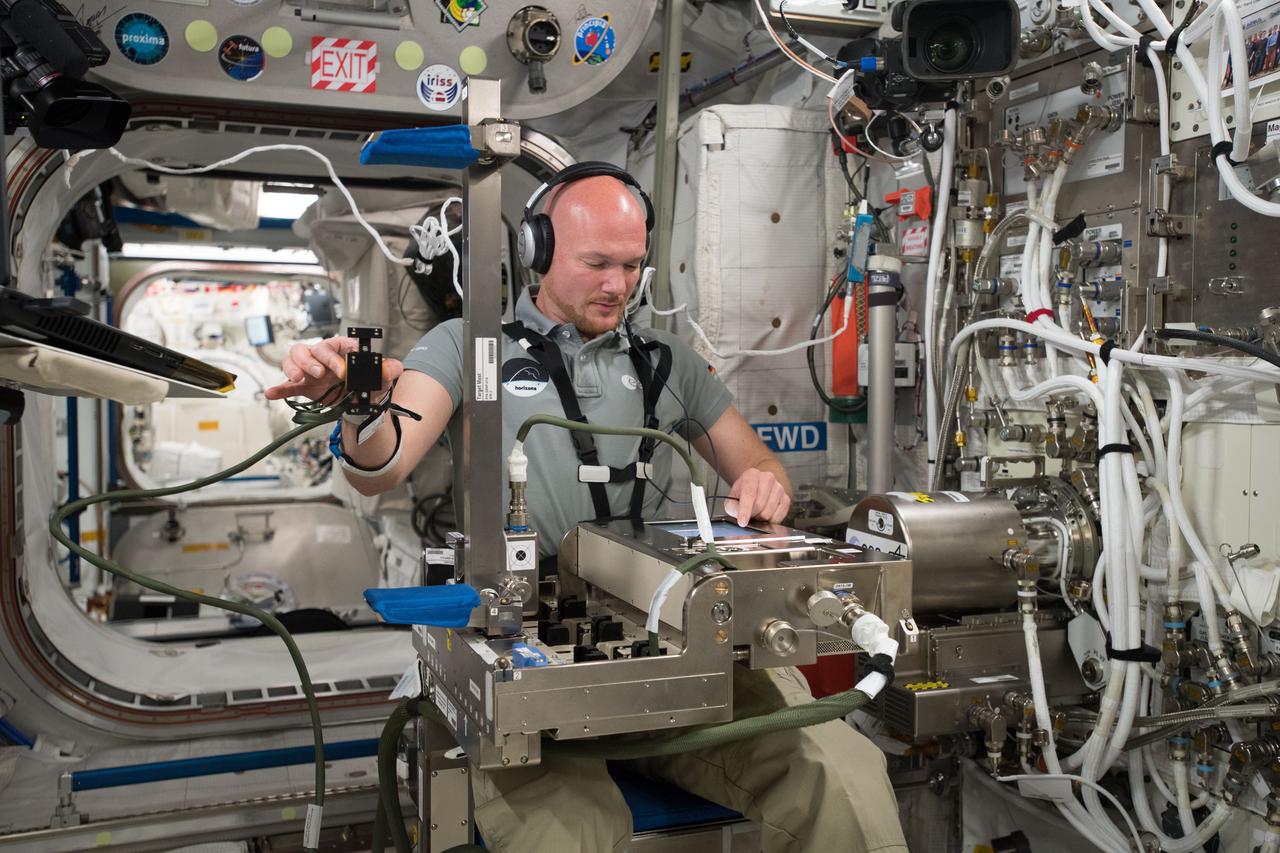
iss056e009783 (June 11, 2018) --- Expedition 56 Flight Engineer Alexander Gerst of the European Space Agency (ESA) is seated in the Columbus laboratory module participating in the Grip study. Grip is an ESA-sponsored experiment that is researching how the nervous system adapts to microgravity. Observations may improve the design of safer space habitats and help patients on Earth with neurological diseases.
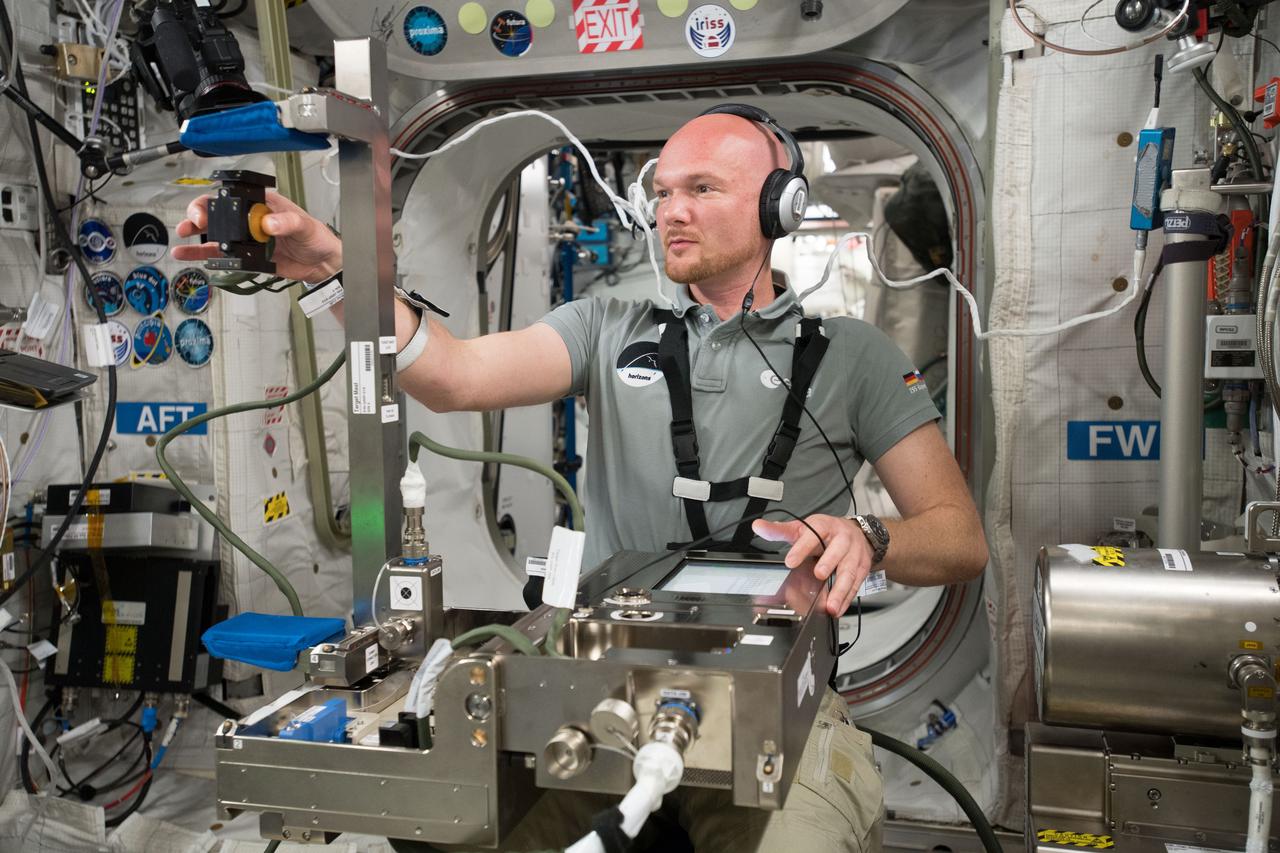
iss056e009784 (June 11, 2018) --- Expedition 56 Flight Engineer Alexander Gerst of the European Space Agency (ESA) is seated in the Columbus laboratory module participating in the Grip study. Grip is an ESA-sponsored experiment that is researching how the nervous system adapts to microgravity. Observations may improve the design of safer space habitats and help patients on Earth with neurological diseases.
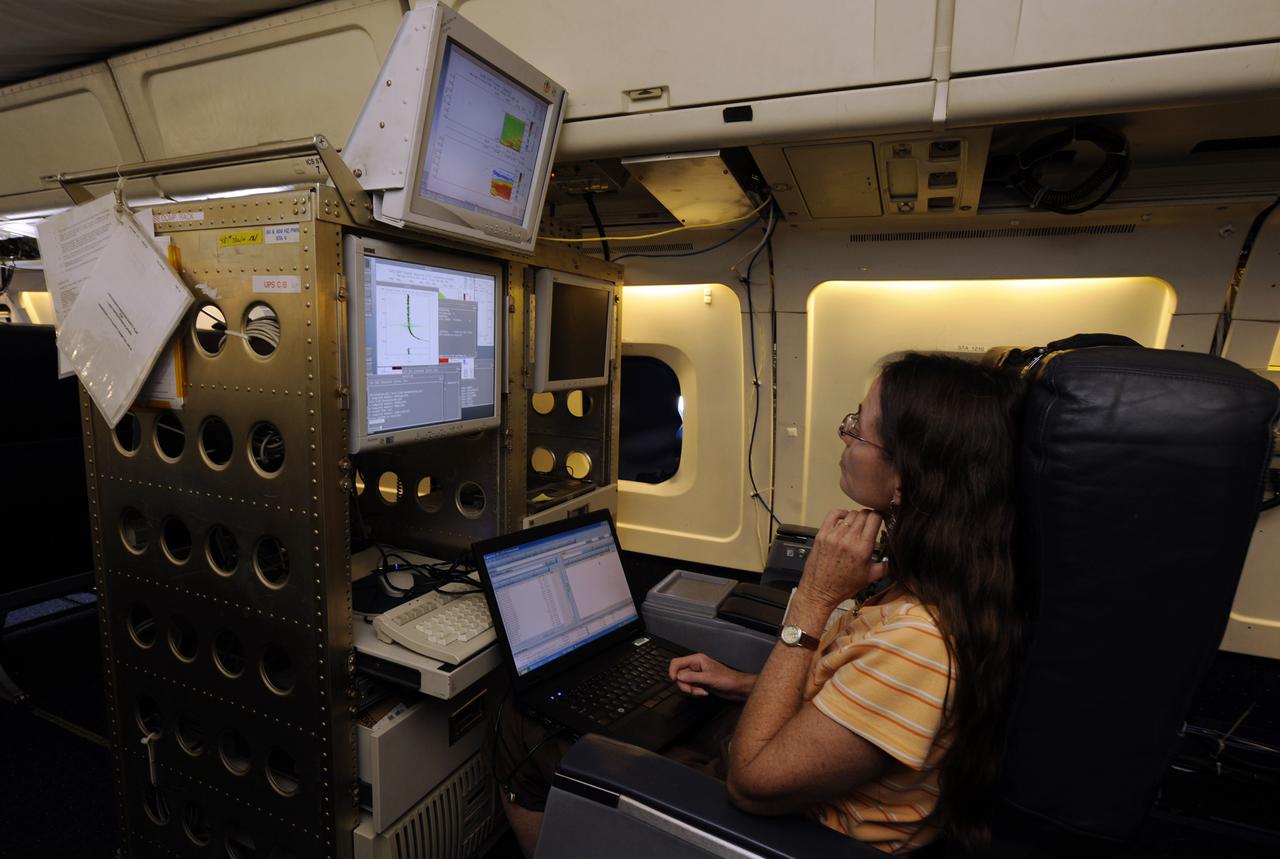
Susan Kool, a researcher from the Langley Research Center, works on monitoring the Lidar Atmospheric Sensing Experiment (LASE) aboard the NASA DC-8 aircraft, Monday, Aug. 16, 2010, at Fort Lauderdale Hollywood International Airport in Fort Lauderdale, Fla. LASE probes the atmosphere using lasers and is part of the Genesis and Rapid Intensification Processes (GRIP) experiment is a NASA Earth science field experiment in 2010 that is being conducted to better understand how tropical storms form and develop into major hurricanes. Photo Credit: (NASA/Paul E. Alers)

Simone Tanelli, a researcher from the Jet Propulsion Laboratory, talks about the Airbrorne Precipitation Radar (APR-2) aboard the NASA DC-8 aircraft, Monday, Aug.16, 2010, at Fort Lauderdale Hollywood International Airport in Fort Lauderdale, Fla. The APR-2, a dual frequency weather radar, is just one of the experiments supporting the Genesis and Rapid Intensification Processes (GRIP) mission, a NASA Earth science field experiment that is being conducted to better understand how tropical storms form and develop into major hurricanes. Photo Credit: (NASA/Paul E. Alers)
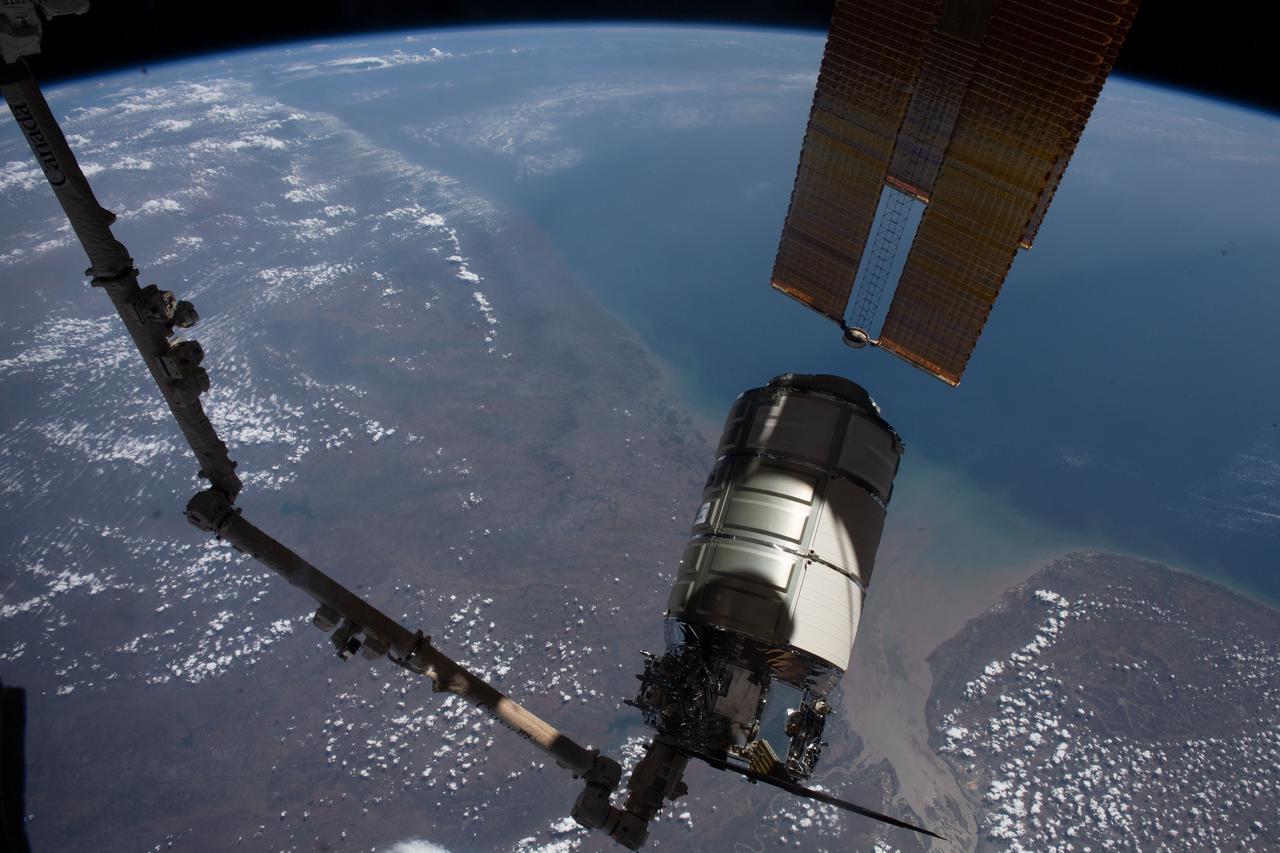
iss069e004909 (April 21, 2023) --- The Cygnus space freighter from Northrop Grumman is pictured in the grips of the Canadarm2 robotic arm as the International Space Station orbited 258 miles above the Arabian Sea coast of India.
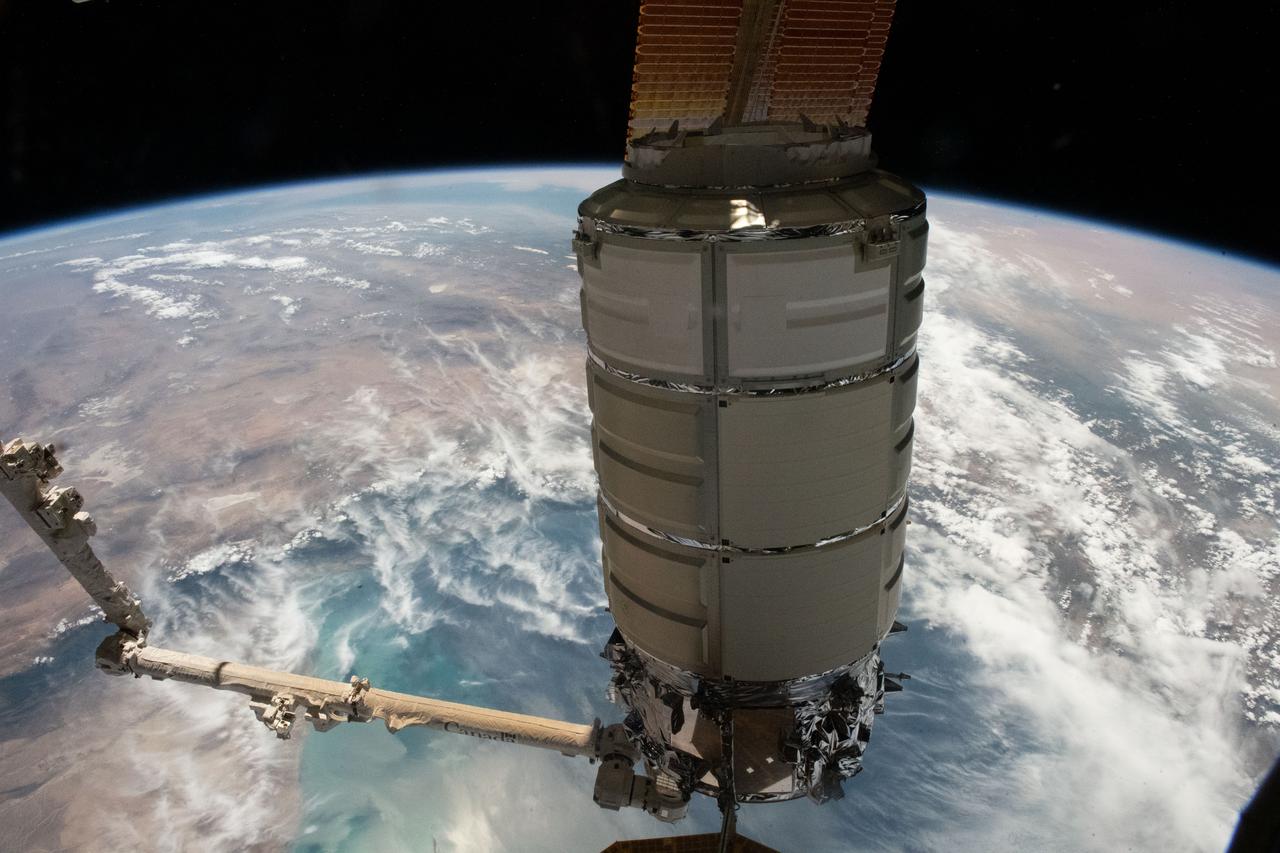
iss069e004895 (April 21, 2023) --- The Cygnus space freighter from Northrop Grumman is pictured in the grips of the Canadarm2 robotic arm as the International Space Station orbited 261 miles above the Caspian Sea off the coast of Turkmenistan.
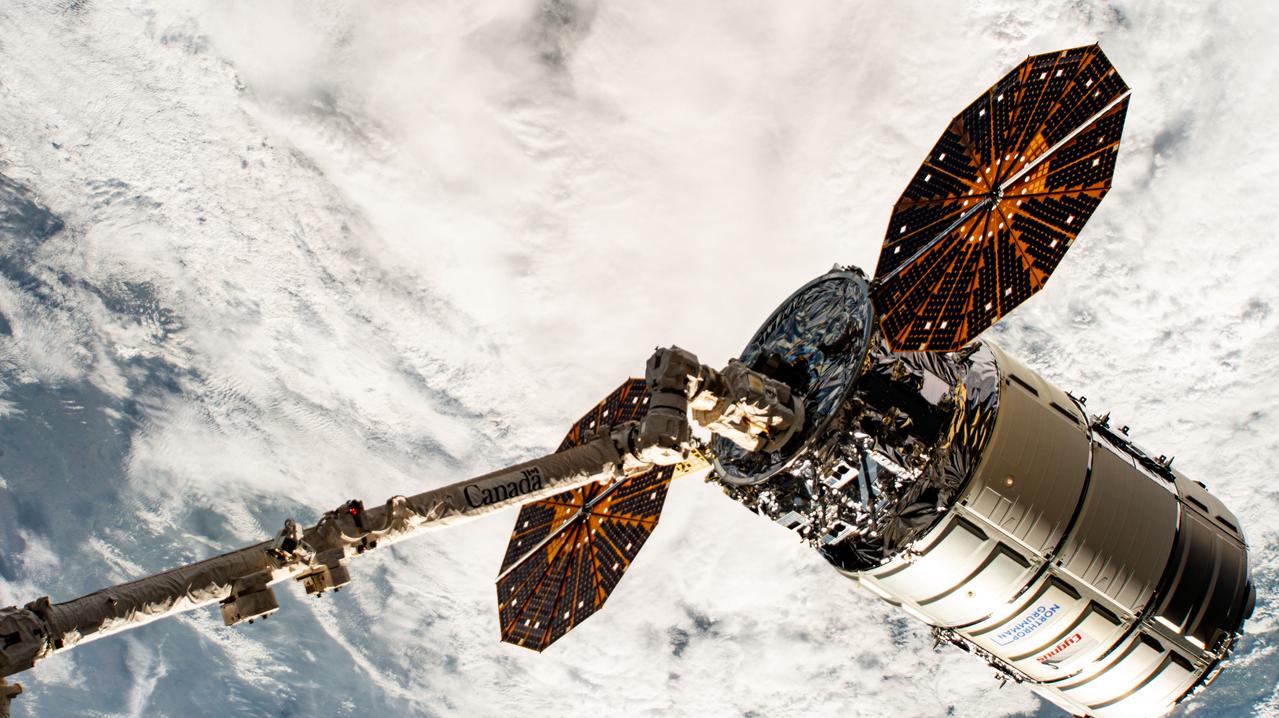
iss071e418235 (Aug. 6, 2024) --- Northrop Grumman's Cygnus cargo craft, with its prominent cymbal-shaped UltraFlex solar arrays, is pictured in the grips of the Canadarm2 robotic arm shortly after its capture was commanded by Expedition 71 Flight Engineer Matthew Dominick of NASA. The maneuver marked the 50th free-flying capture for the Canadarm2 robotic arm.
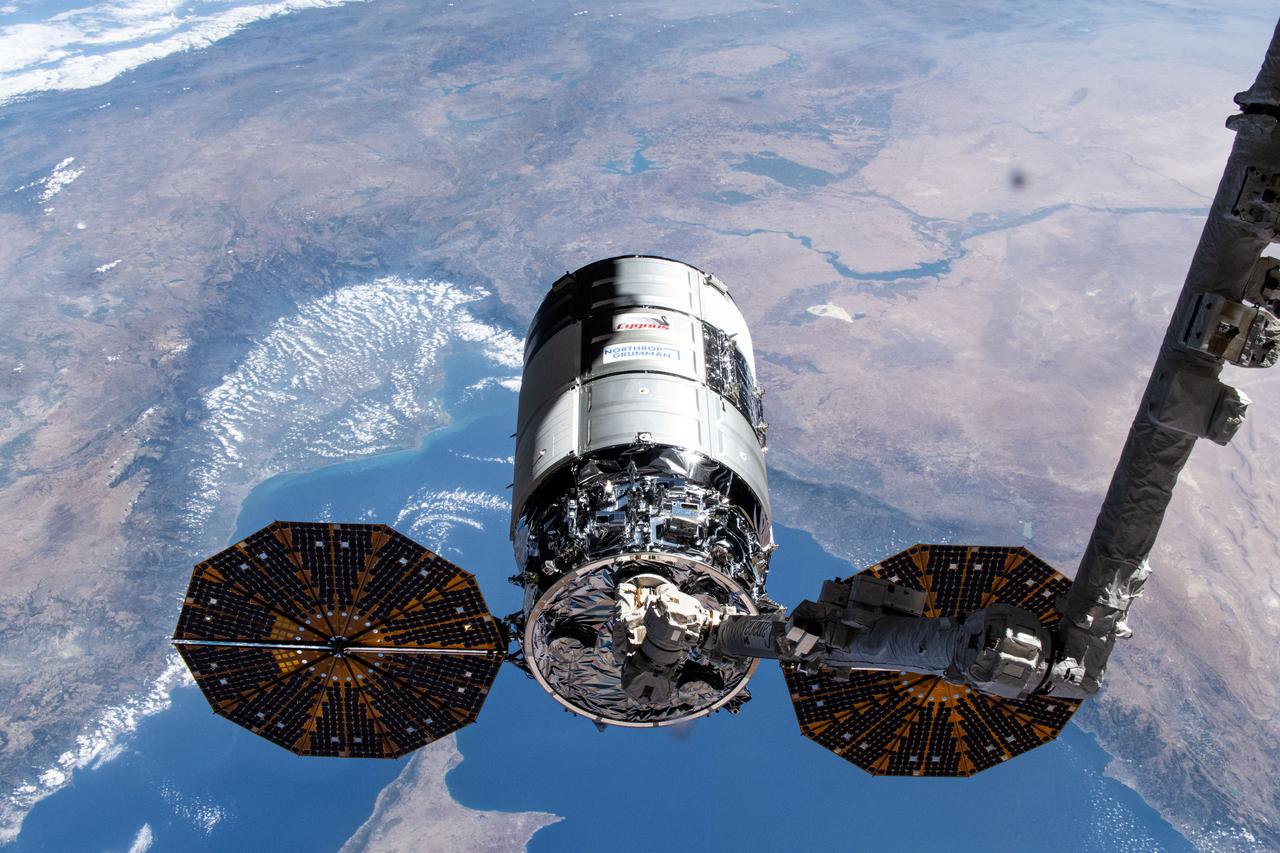
iss071e417237 (Aug. 6, 2024) --- Northrop Grumman's Cygnus cargo craft, with its prominent cymbal-shaped UltraFlex solar arrays, is pictured in the grips of the Canadarm2 robotic arm shortly after its capture was commanded by Expedition 71 Flight Engineer Matthew Dominick of NASA. The maneuver marked the 50th free-flying capture for the Canadarm2 robotic arm. The International Space Station was orbiting 262 miles above the Mediterranean Sea at the time of this photograph.

iss069e004683 (April 20, 2023) --- The Northrup Grumman Cygnus space freighter is pictured in the grip of the Canadarm2 robotic arm while attached to the Unity module's Earth-facing port. The International Space Station was soaring into an orbital sunset 266 miles above the Indian Ocean in between South Africa and Antarctica at the time of this photograph.
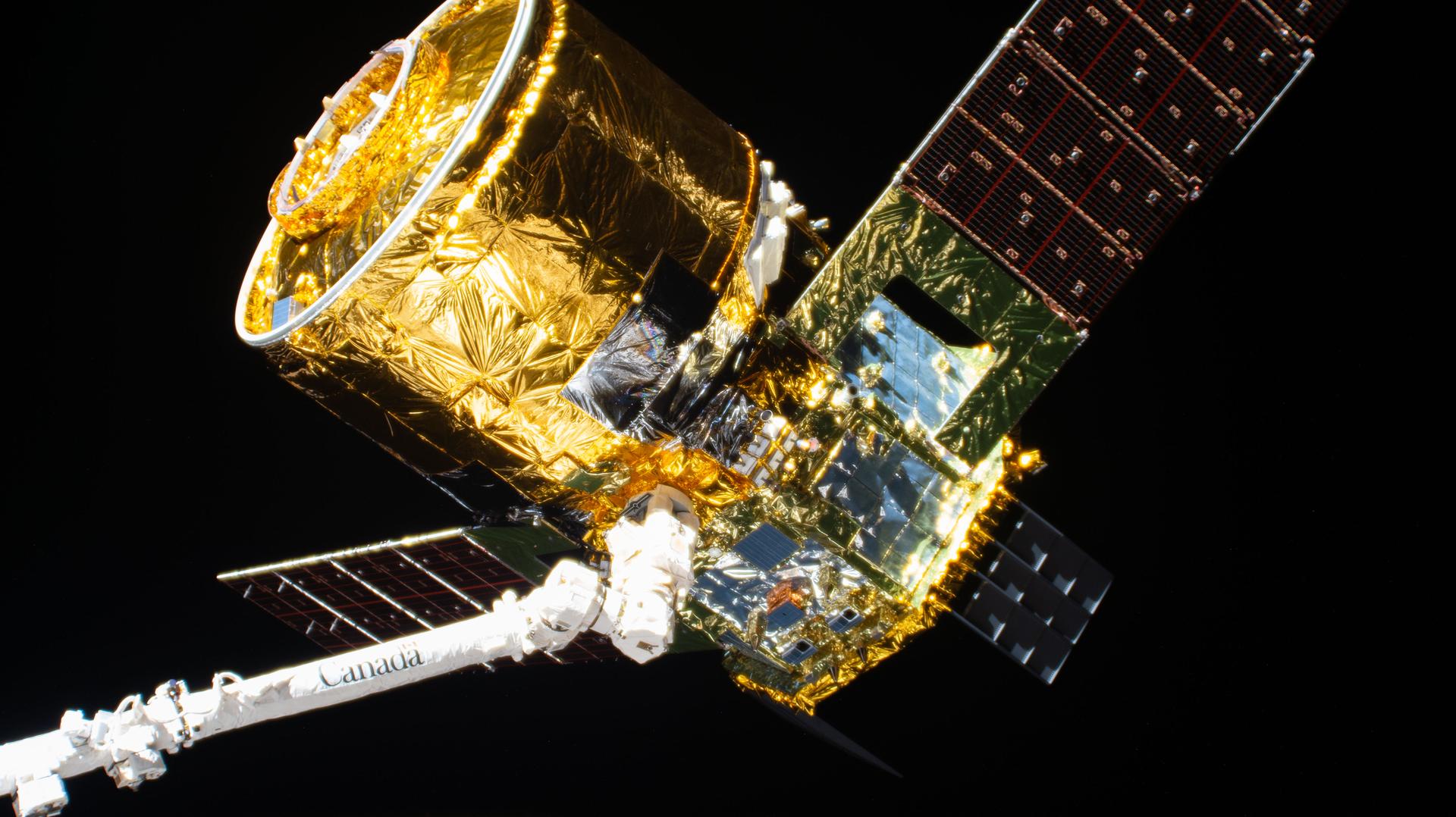
iss073e0988464 (Oct. 29, 2025) --- The new HTV-X1 cargo spacecraft from JAXA (Japan Aerospace Exploration Agency), carrying about 12,800 pounds of science, supplies, and hardware for the Expedition 73 crew, is pictured in the grip of the Canadarm2 robotic arm. JAXA astronaut and Expedition 73 Flight Engineer Kimiya Yui (not pictured) commanded Canadarm2 to gently reach out and capture HTV-X1 when the spacecraft reached a point about 10 meters away from the International Space Station.
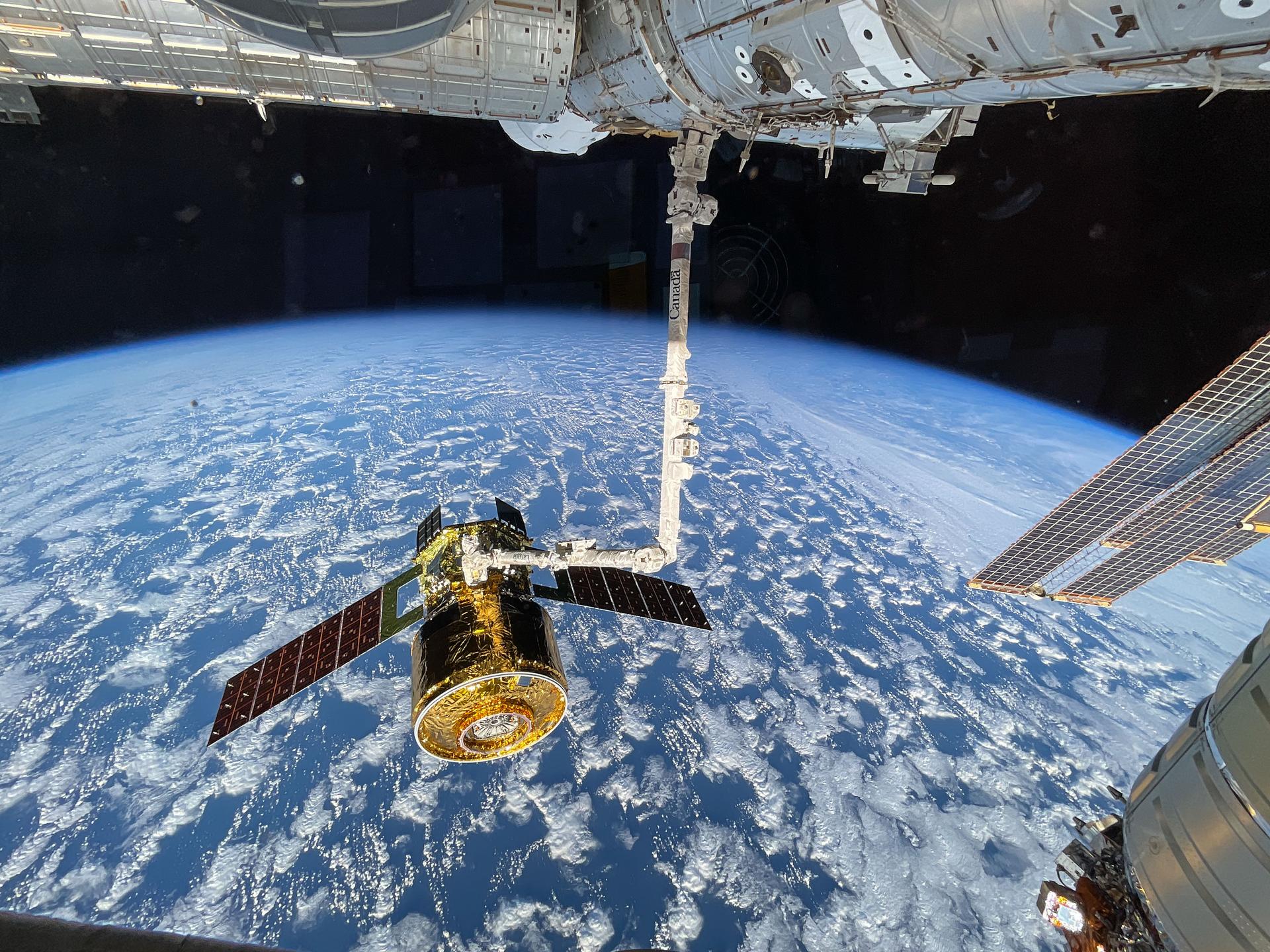
iss073e1046014 (Oct. 29, 2025) --- The new HTV-X1 cargo spacecraft from JAXA (Japan Aerospace Exploration Agency) is pictured in the grips of the Canadarm2 robotic arm after completing its arrival at the International Space Station. The spacecraft launched four days earlier from the Tanegashima Space Center in Japan carrying approximately 12,800 pounds of science, supplies, and hardware for the Expedition 73 crew.
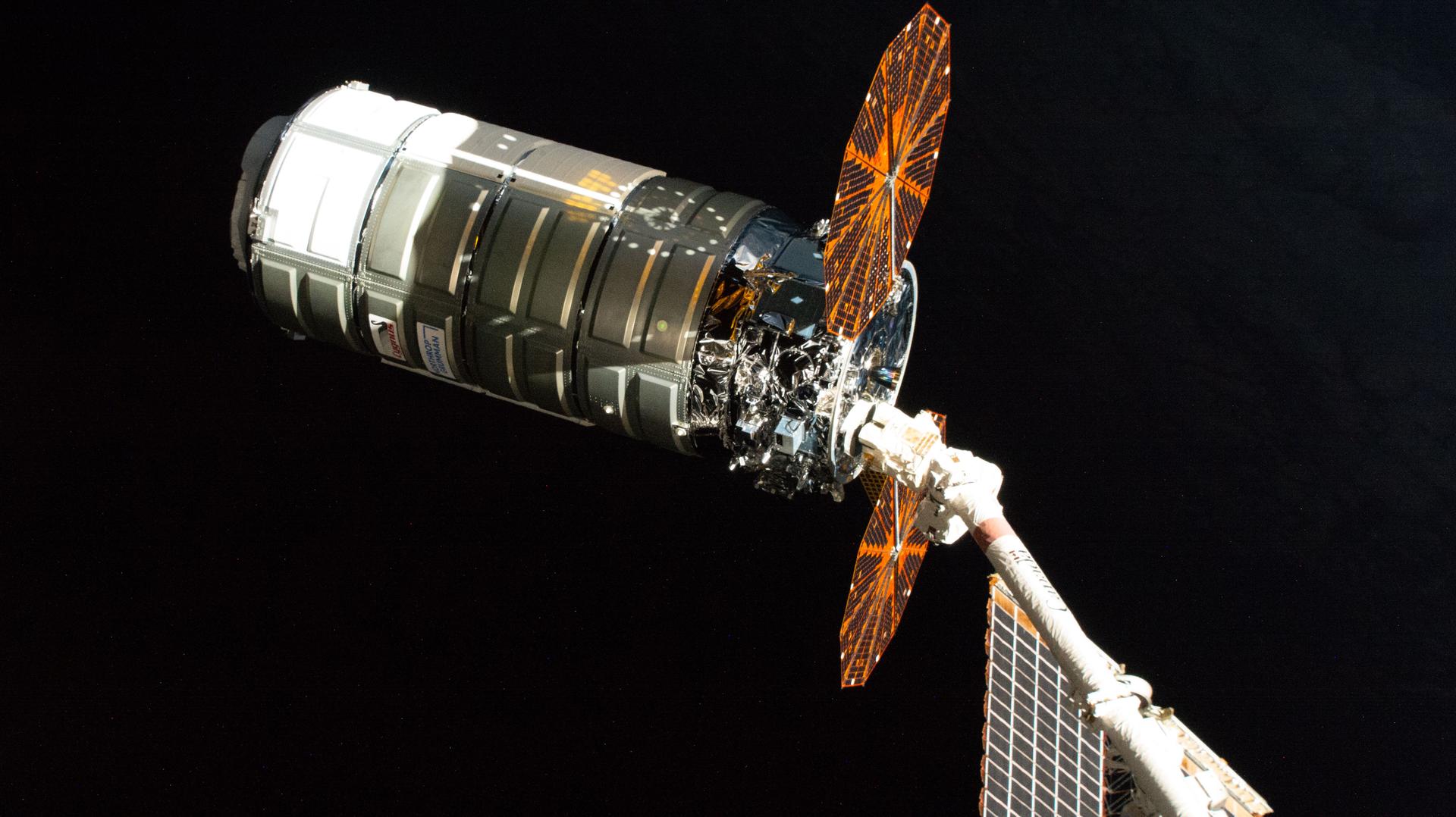
iss074e0458279 (April 13, 2026) --- Northrop Grumman's Cygnus XL cargo spacecraft, carrying over 11,000 pounds of new science experiments, lab hardware, and crew supplies, is pictured in the grips of the Canadarm2 robotic arm following its capture at the International Space Station. Credit: NASA
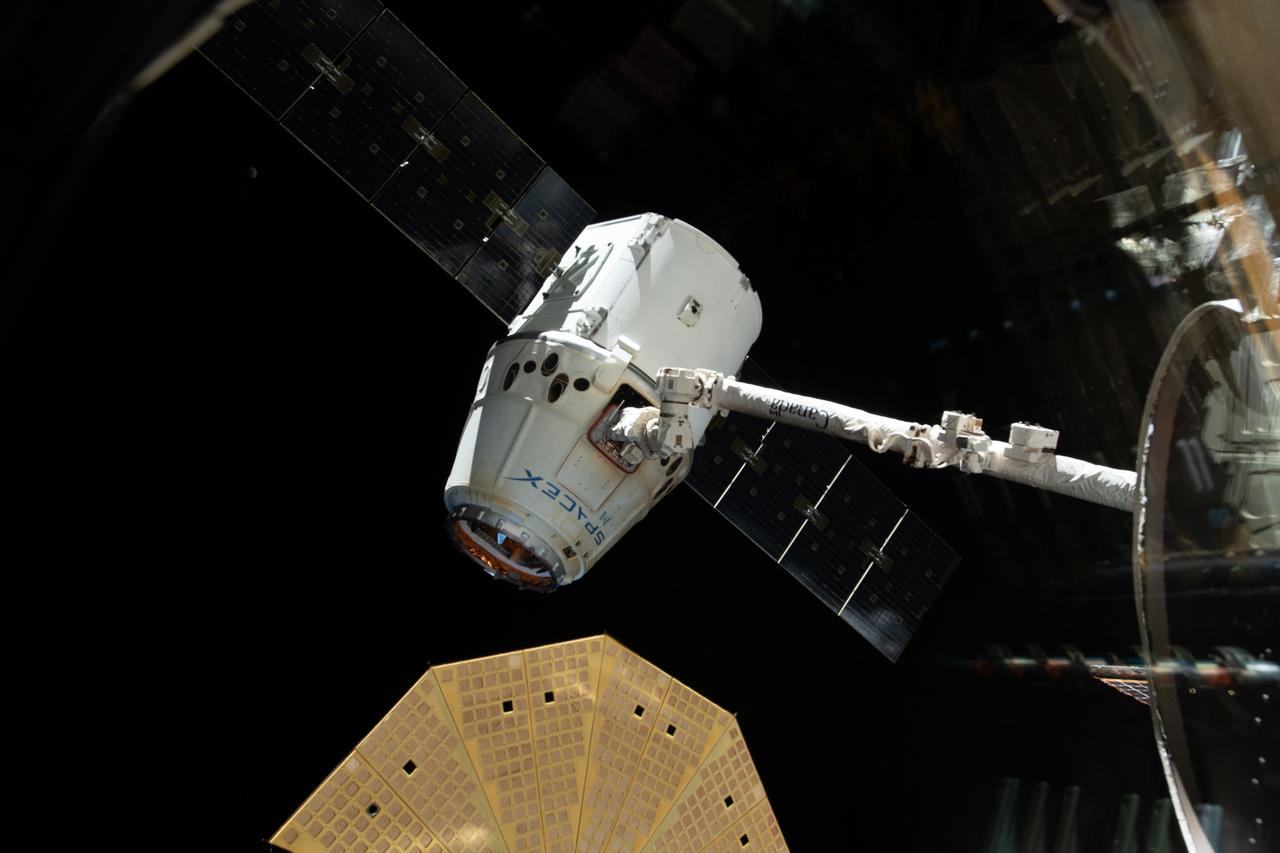
iss058e002666 (Jan. 13, 2019) --- The SpaceX Dragon cargo craft is pictured in the grips of the Canadarm2 robotic arm before its release and departure from the International Space Station. Featured prominently in the lower foreground is one of two cymbal-shaped UltraFlex solar arrays attached to the Northrop Grumman Cygnus resupply ship. The orbital complex was orbiting 254 miles above East Asia at the time this photograph was taken.
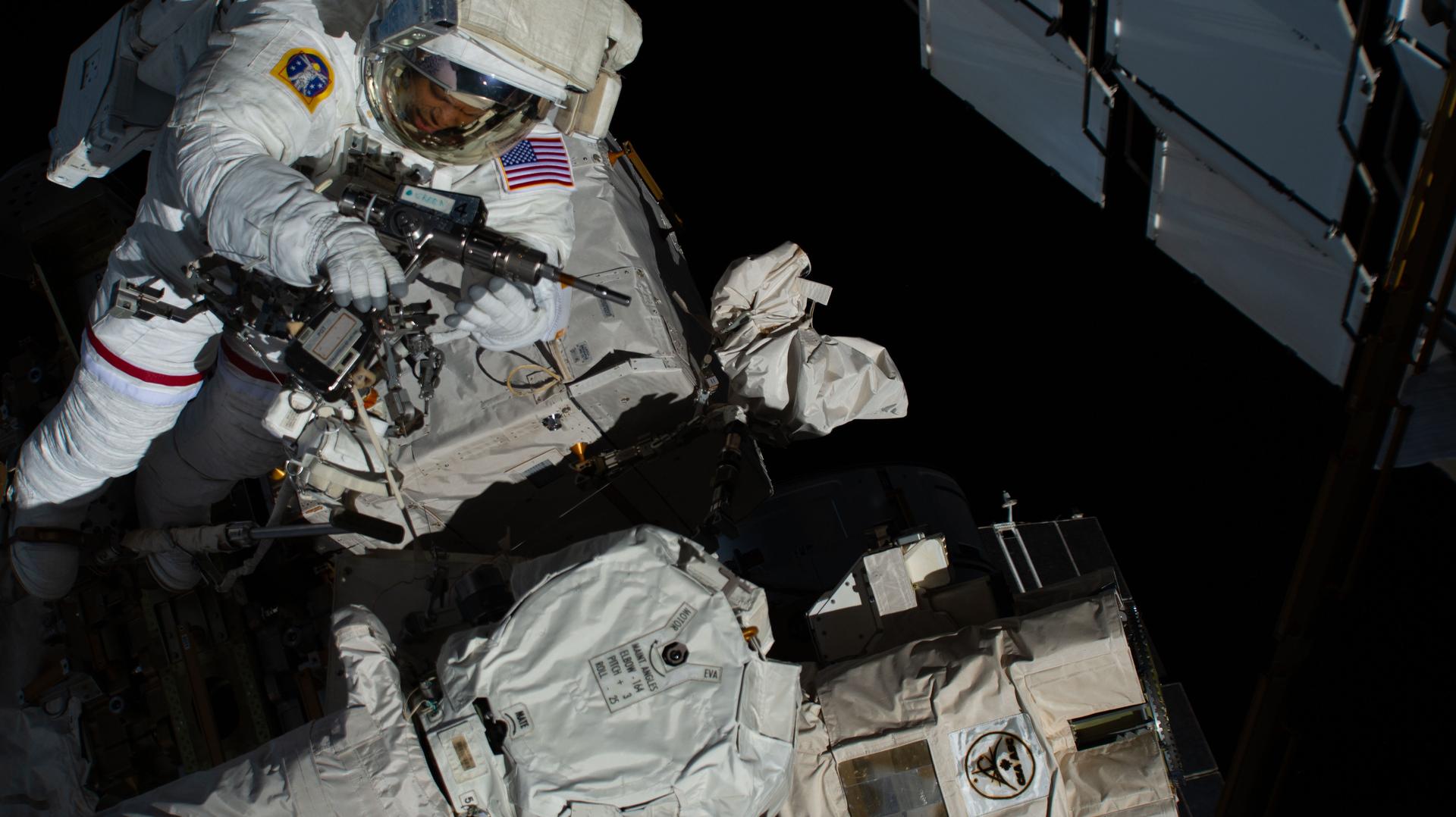
iss074e0788304 (June 30, 2026) --- NASA astronaut and Expedition 74 flight engineer Chris Williams uses a pistol grip tool during a spacewalk to repair the malfunctioning wrist joint on the International Space Station's Canadarm2 robotic arm. Williams, along with NASA astronaut and Expedition 74 flight engineer Jessica Meir (out of frame), spent seven hours and 20 minutes in the vacuum of space during the maintenance spacewalk. Credit: NASA
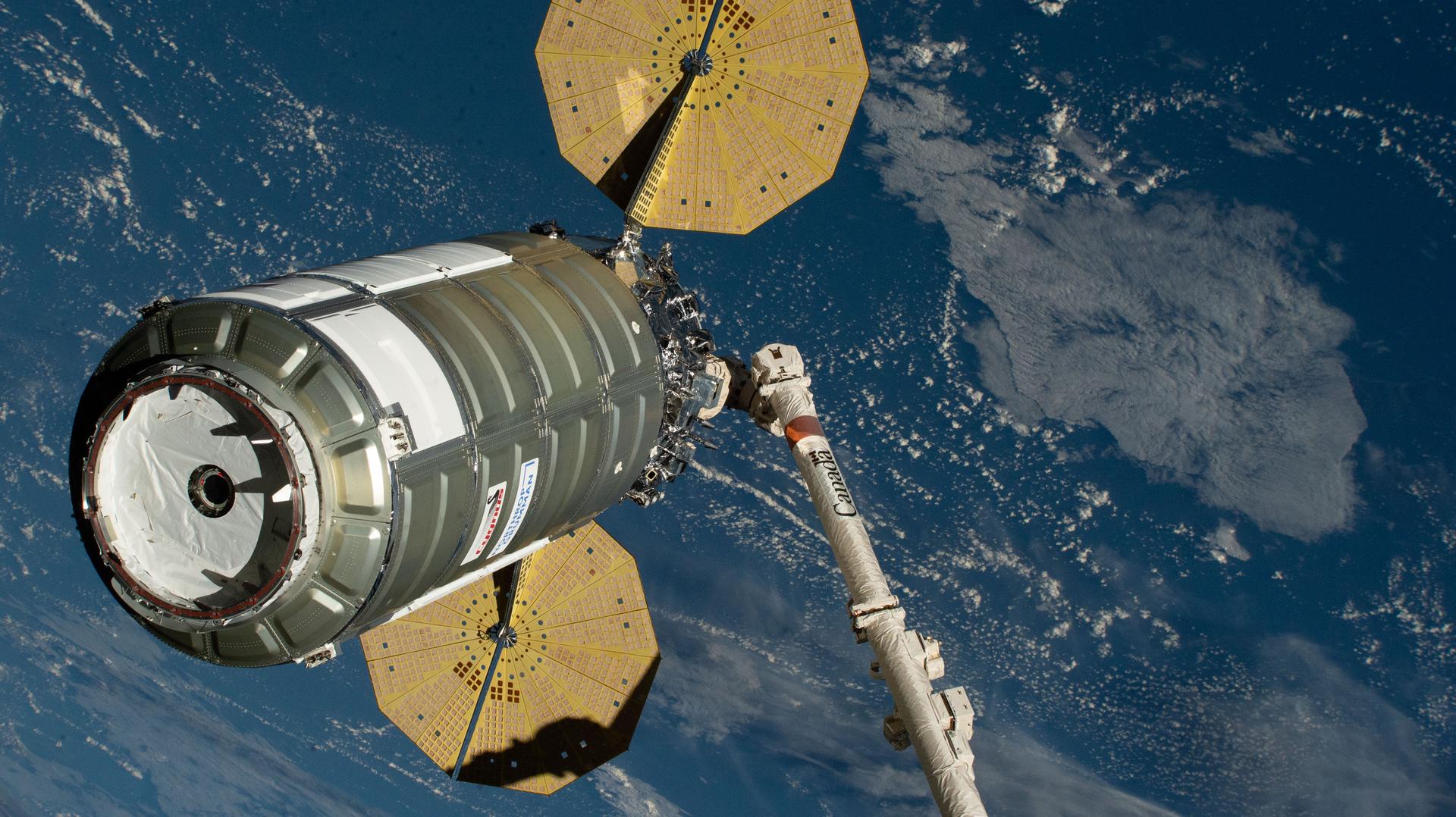
iss074e0459130 (April 13, 2026) --- Northrop Grumman's Cygnus XL cargo spacecraft is held in the grips of the Canadarm2 robotic arm as it is maneuvered toward the International Space Station’s Unity module for installation. Cygnus XL delivered more than 11,000 pounds of new science experiments, lab hardware, and crew supplies for the Expedition 74 crew. Credit: NASA
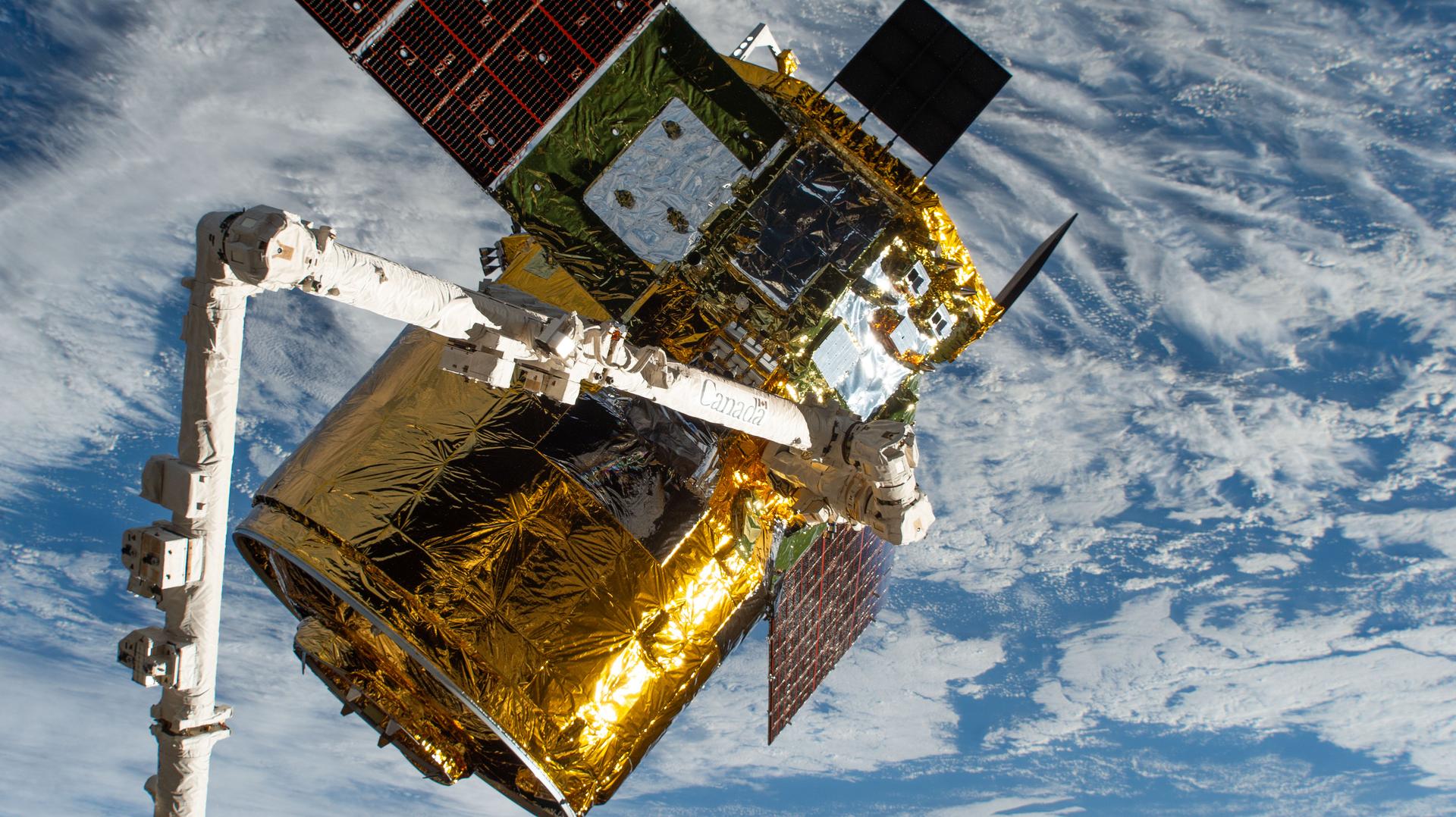
iss073e0988465 (Oct. 29, 2025) --- The new HTV-X1 cargo spacecraft from JAXA (Japan Aerospace Exploration Agency), carrying about 12,800 pounds of science, supplies, and hardware for the Expedition 73 crew, is pictured in the grip of the Canadarm2 robotic arm. JAXA astronaut and Expedition 73 Flight Engineer Kimiya Yui (not pictured) commanded Canadarm2 to gently reach out and capture HTV-X1 when the spacecraft reached a point about 10 meters away from the International Space Station.
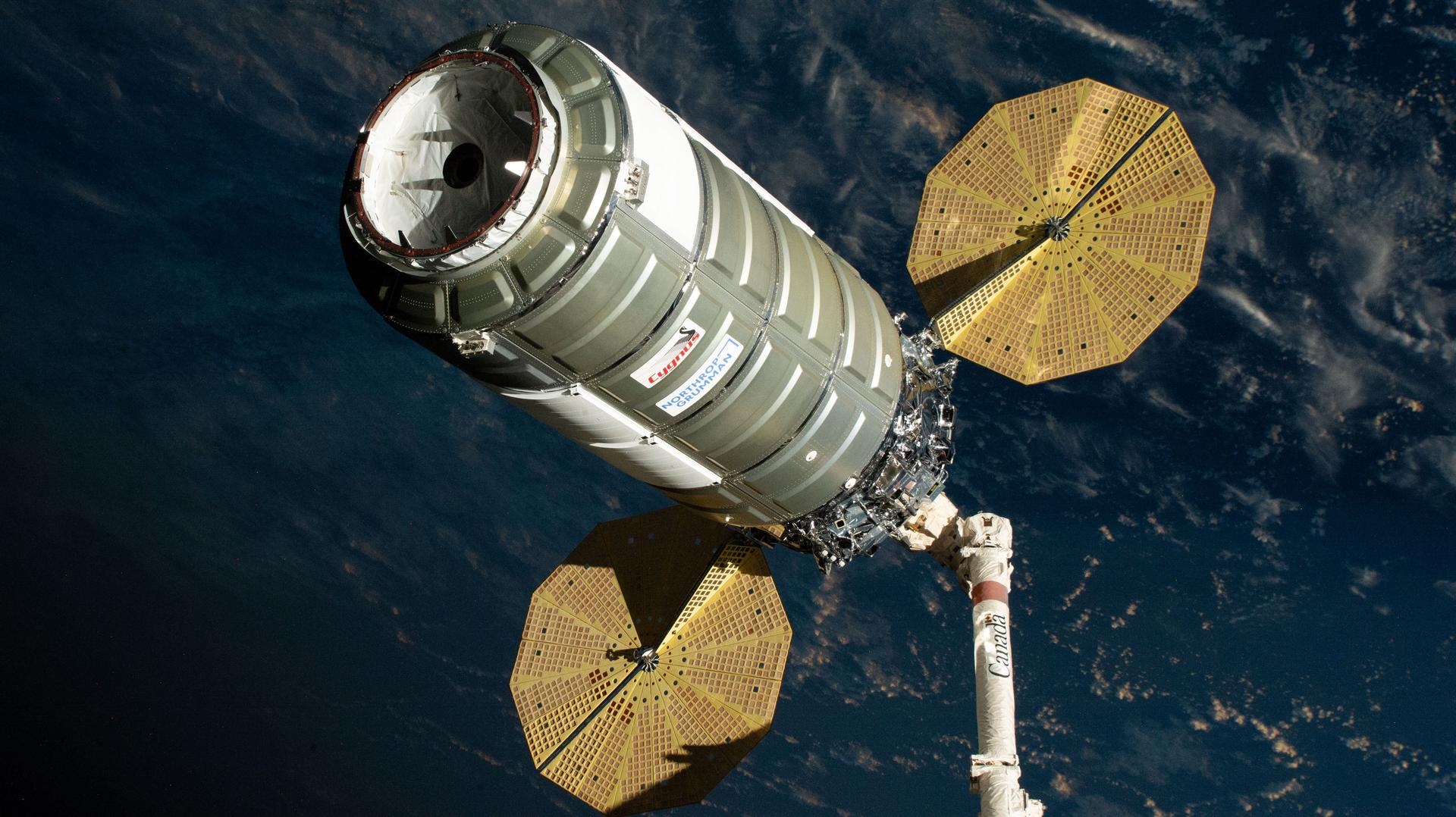
iss074e0459132 (April 13, 2026) --- Northrop Grumman's Cygnus XL cargo spacecraft is held in the grips of the Canadarm2 robotic arm as it is maneuvered toward the International Space Station’s Unity module for installation. Cygnus XL delivered more than 11,000 pounds of new science experiments, lab hardware, and crew supplies for the Expedition 74 crew. Credit: NASA/Jessica Meir
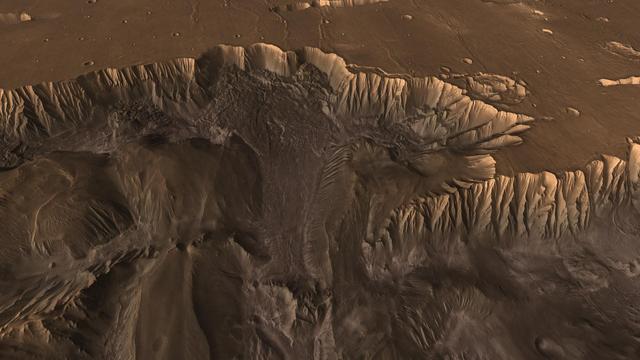
Flying through the canyons and over the ridges of Valles Marineris, viewers can experience some of the thrills that gripped explorers who pushed into unknown regions on Earth
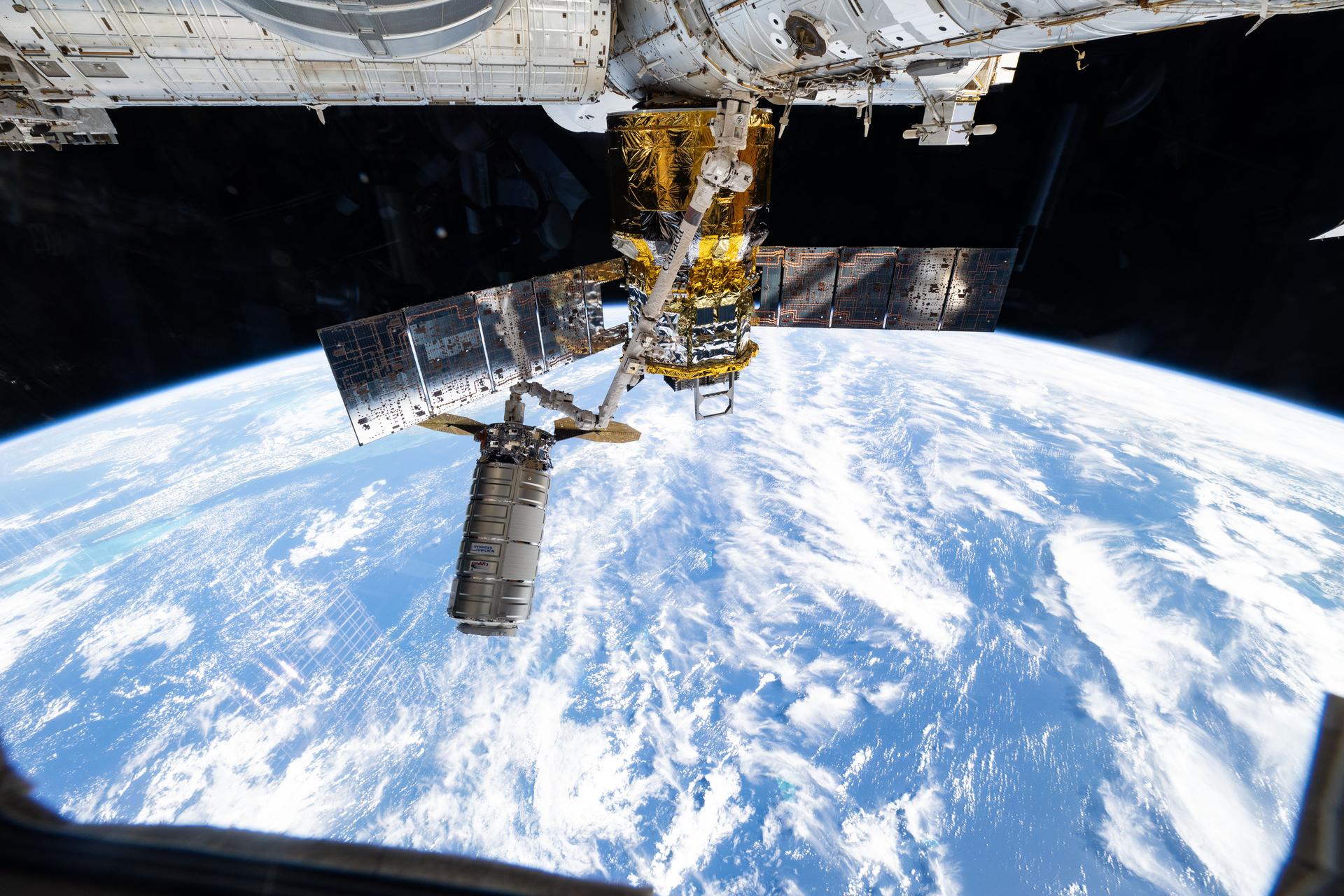
iss073e1196882 (Nov. 25, 2025) --- Northrop Grumman's Cygnus XL cargo craft is pictured in the grips of the International Space Station Canadarm2 robotic arm. Cygnus XL had been temporarily released from its Earth-facing port on the Unity module to make room for the Soyuz MS-28 crew spacecraft, which was scheduled to arrive the next day and dock to the Rassvet module. JAXA's (Japan Aerospace Exploration Agency) HTV-X1 cargo craft, with its solar arrays deployed, is seen berthed to the Earth-facing port of the Harmony module. The orbital outpost was soaring 262 miles above the Caribbean Sea east of the Yucatan Peninsula.
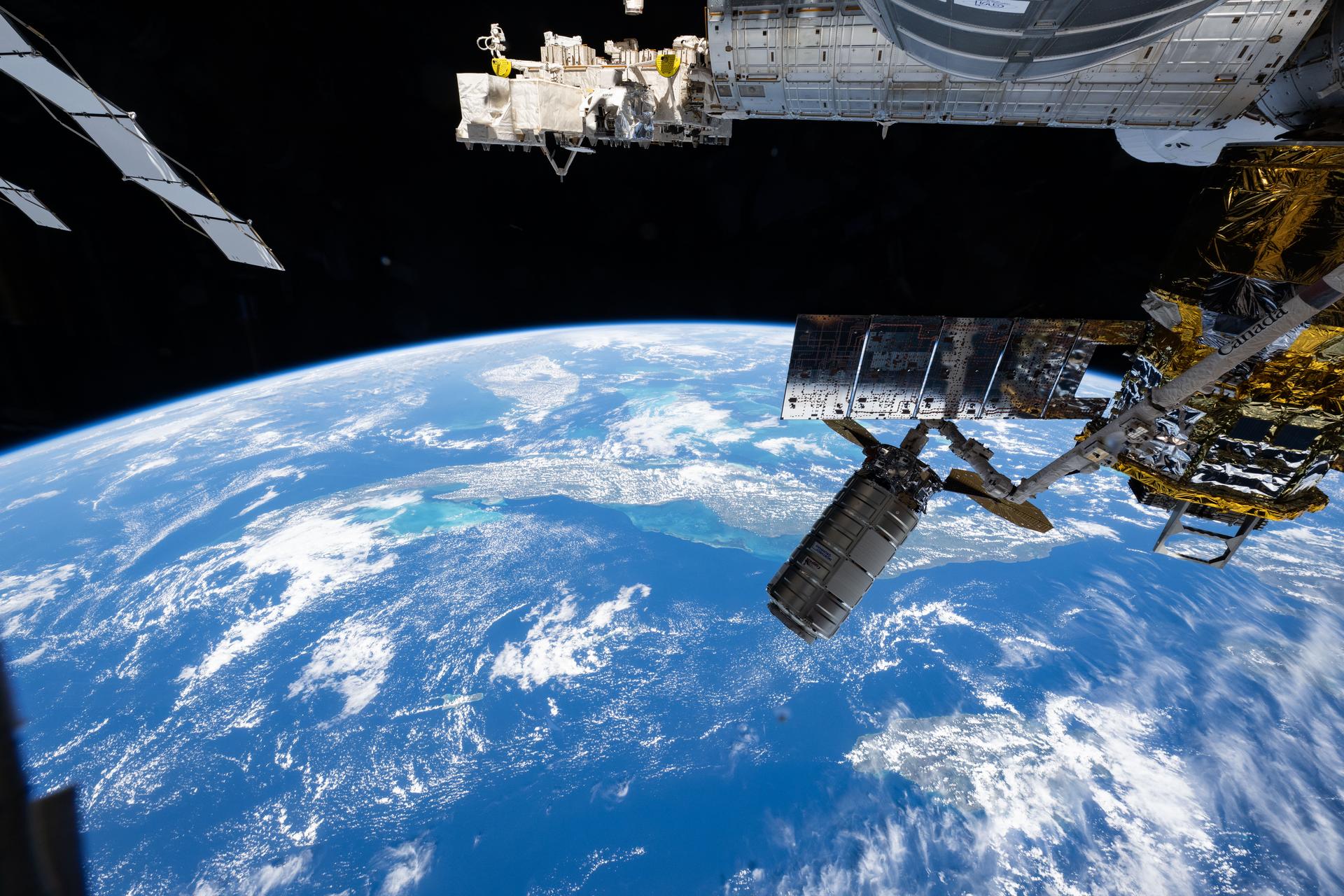
iss073e1196921 (Nov. 25, 2025) --- Northrop Grumman's Cygnus XL cargo craft is pictured in the grips of the International Space Station Canadarm2 robotic arm. Cygnus XL had been temporarily released from its Earth-facing port on the Unity module to make room for the Soyuz MS-28 crew spacecraft, which was scheduled to arrive the next day and dock to the Rassvet module. JAXA's (Japan Aerospace Exploration Agency) HTV-X1 cargo craft, with its solar arrays deployed, is seen berthed to the Earth-facing port of the Harmony module. The orbital outpost was soaring 262 miles above the Caribbean Sea south of Cuba at the time of this photograph.
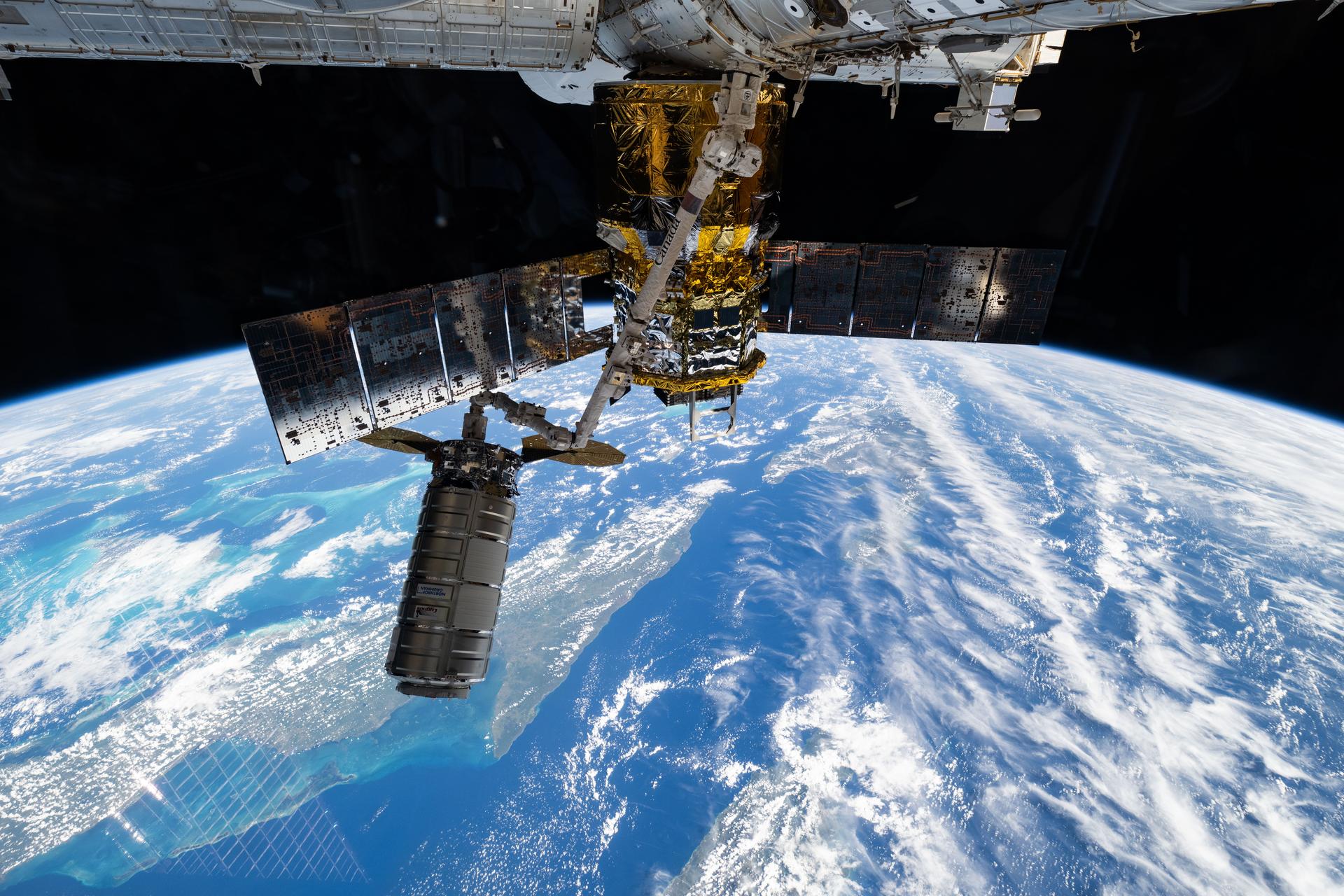
iss073e1196940 (Nov. 25, 2025) --- Northrop Grumman's Cygnus XL cargo craft is pictured in the grips of the International Space Station Canadarm2 robotic arm. Cygnus XL had been temporarily released from its Earth-facing port on the Unity module to make room for the Soyuz MS-28 crew spacecraft, which was scheduled to arrive the next day and dock to the Rassvet module. JAXA's (Japan Aerospace Exploration Agency) HTV-X1 cargo craft, with its solar arrays deployed, is seen berthed to the Earth-facing port of the Harmony module. The orbital outpost was soaring 261 miles above the Caribbean Sea south of Cuba at the time of this photograph.
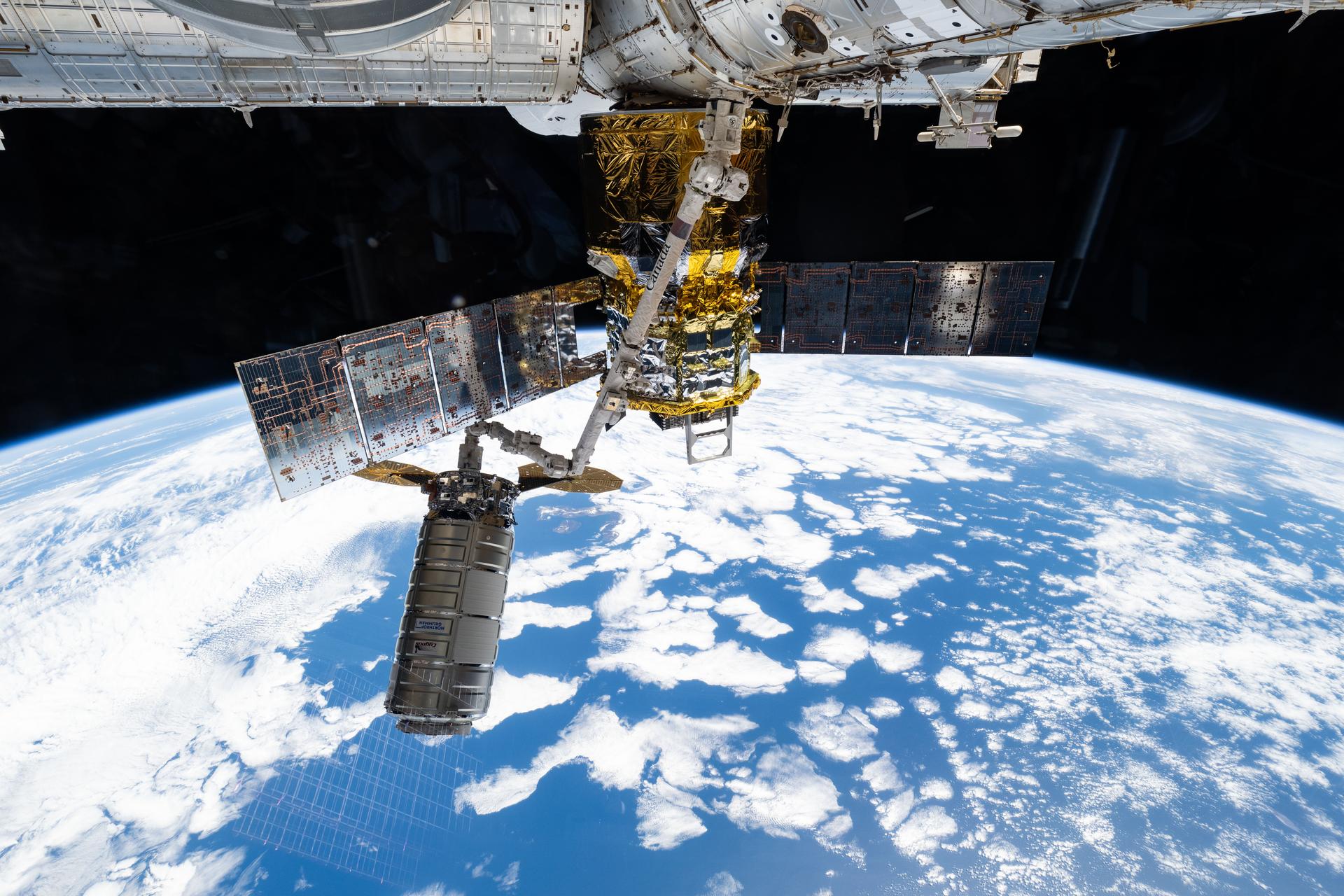
iss073e1196791 (Nov. 25, 2025) --- Northrop Grumman's Cygnus XL cargo craft is pictured in the grips of the International Space Station Canadarm2 robotic arm. Cygnus XL had been temporarily released from its Earth-facing port on the Unity module to make room for the Soyuz MS-28 crew spacecraft, which was scheduled to arrive the next day and dock to the Rassvet module. JAXA's (Japan Aerospace Exploration Agency) HTV-X1 cargo craft, with its solar arrays deployed, is seen berthed to the Earth-facing port of the Harmony module. The orbital outpost was soaring 263 miles above the Pacific Ocean southwest of Galapagos Islands at the time of this photograph.
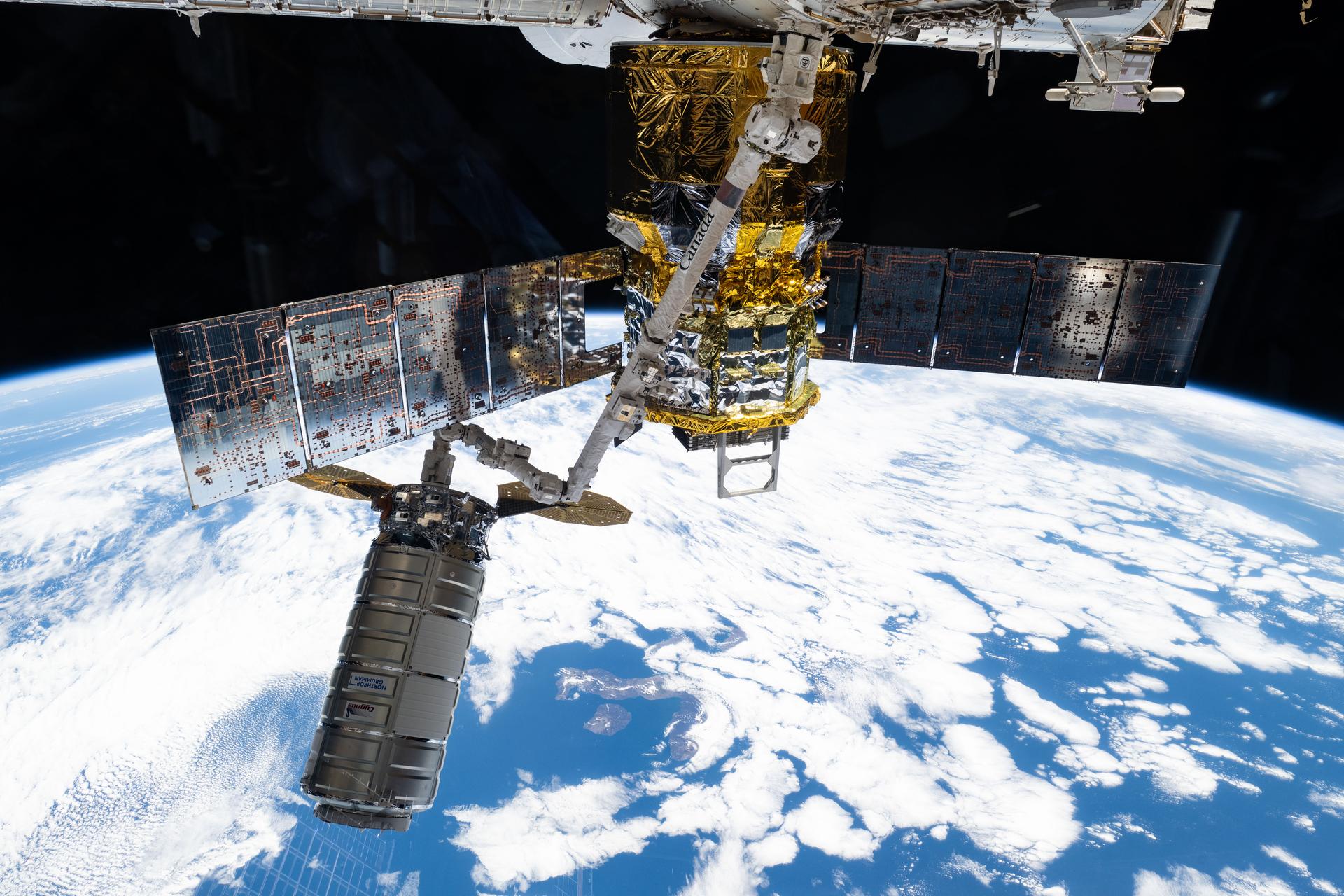
iss073e1196807 (Nov. 25, 2025) --- Northrop Grumman's Cygnus XL cargo craft is pictured in the grips of the International Space Station Canadarm2 robotic arm. Cygnus XL had been temporarily released from its Earth-facing port on the Unity module to make room for the Soyuz MS-28 crew spacecraft, which was scheduled to arrive the next day and dock to the Rassvet module. JAXA's (Japan Aerospace Exploration Agency) HTV-X1 cargo craft, with its solar arrays deployed, is seen berthed to the Earth-facing port of the Harmony module. The orbital outpost was soaring 263 miles above the Pacific Ocean southwest of Galapagos Islands at the time of this photograph.
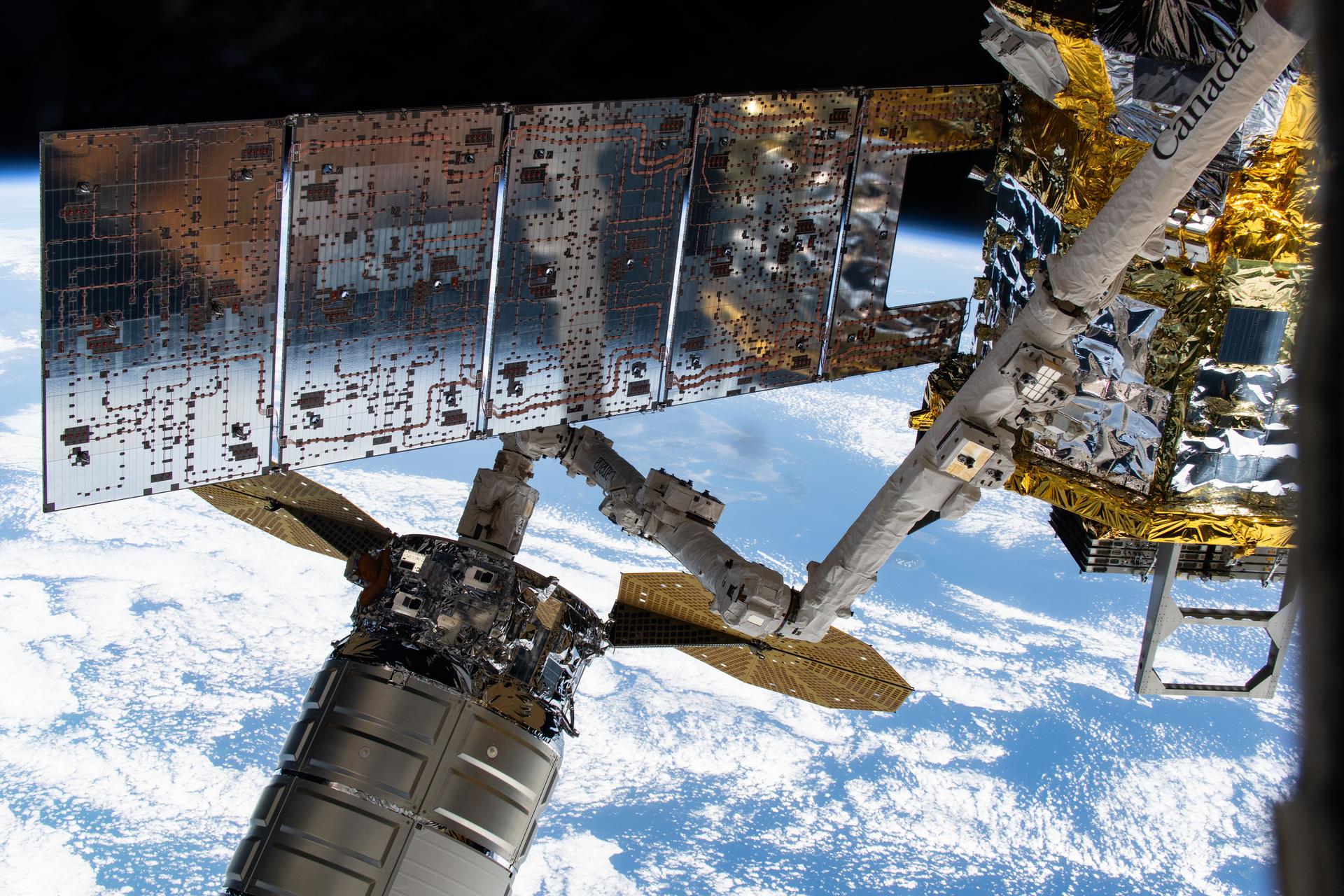
iss073e1197220 (Nov. 26, 2025) --- This close-up view from a window on the International Space Station's cupola shows Northrop Grumman's Cygnus XL cargo craft in the grips of the Canadarm2 robotic arm. Cygnus XL had been temporarily released from its Earth-facing port on the Unity module to make room for the Soyuz MS-28 crew spacecraft, which was scheduled to arrive the next day and dock to the Rassvet module. A solar array belonging to JAXA's (Japan Aerospace Exploration Agency) HTV-X1 cargo craft extends across the frame.
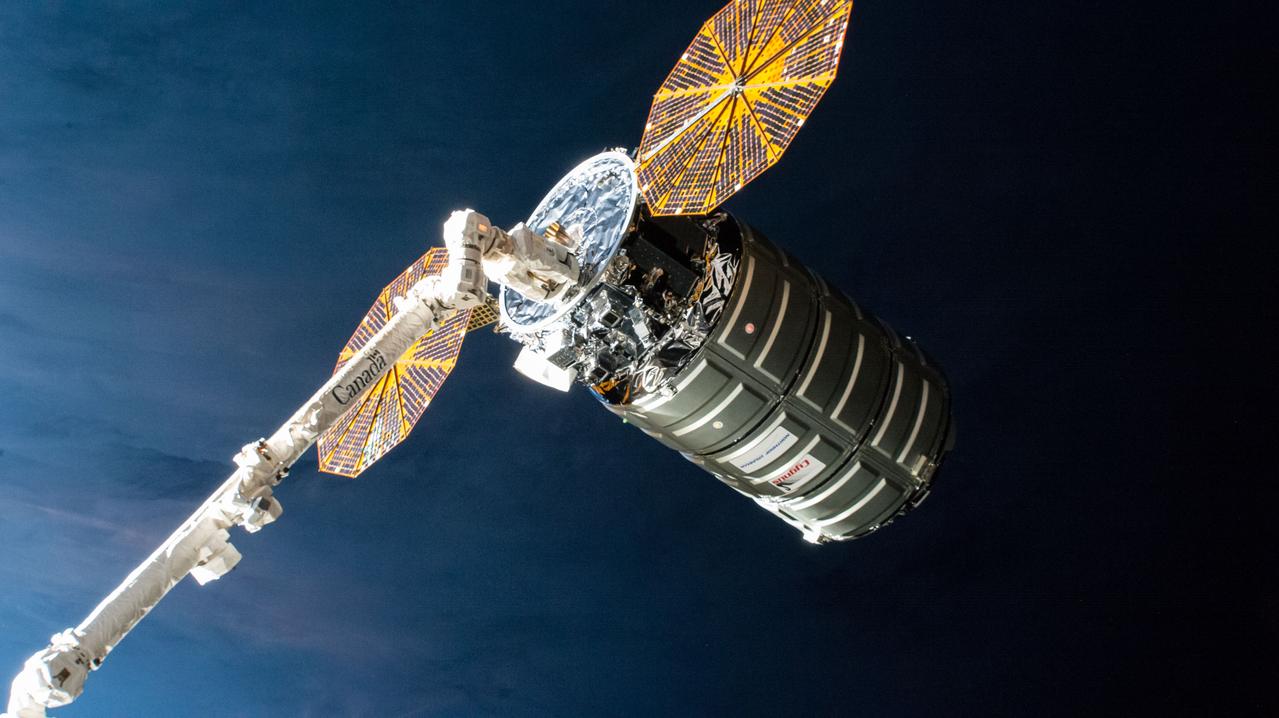
iss058e011396 (Feb. 8, 2019) --- The Cygnus cargo craft from Northrop Grumman is pictured firmly in the grips of the Canadarm2 robotic arm just before its release from the International Space Station.
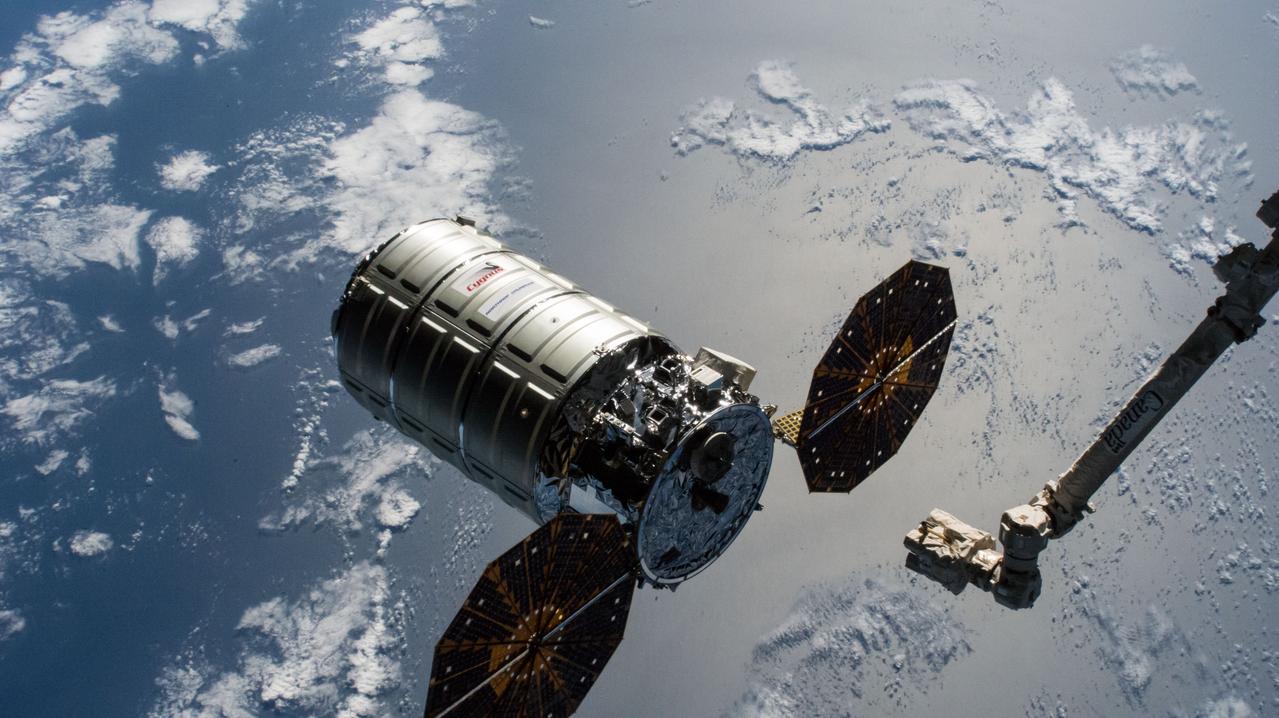
iss058e011814 (Feb. 8, 2019) --- The Cygnus cargo craft from Northrop Grumman is released from the grips of the Canadarm2 robotic arm as the International Space Station was orbiting over the Pacific Ocean off the coast of Peru.
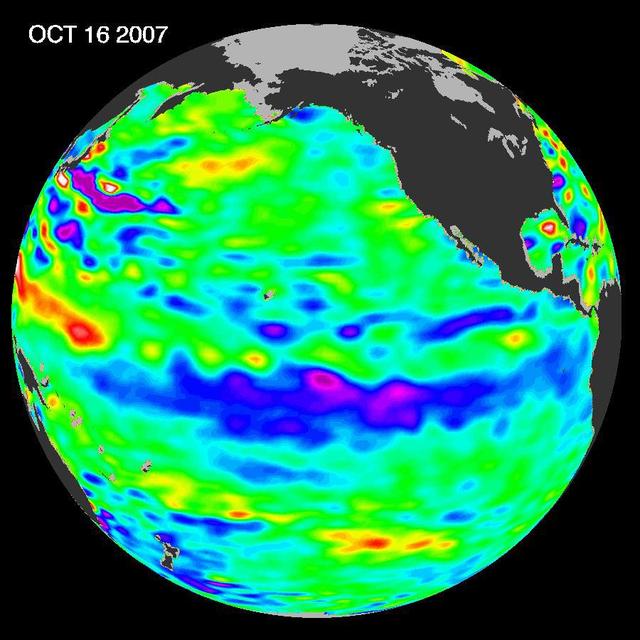
The tropical Pacific Ocean remains in the grips of a cool La Niña, as shown by new data of sea-level heights from mid-October of 2007, collected by NASA U.S-French Jason altimetric satellite.

iss058e011813 (Feb. 8, 2019) --- The Cygnus cargo craft from Northrop Grumman is pictured in the grips of the Canadarm2 robotic arm moments before its release as the International Space Station was orbiting over the Pacific Ocean.
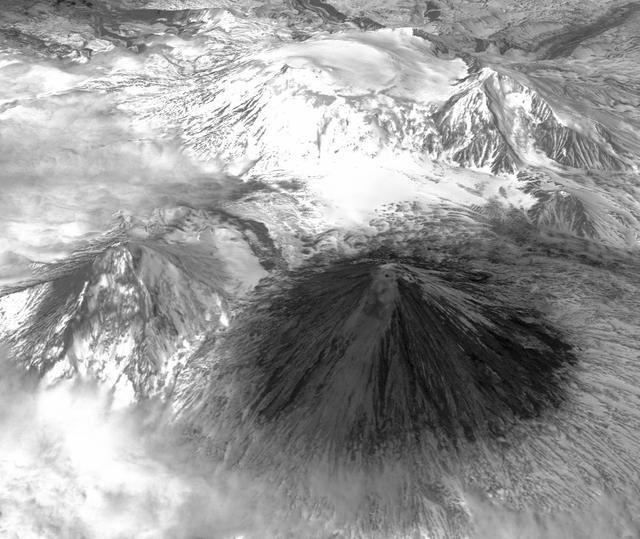
Winter still grips the volcanoes on Russia Kamchatka peninsula. NASA Terra spacecraft acquired this image showing the mantle of white, disturbed by dark ash entirely covering Sheveluch volcano from recent eruptions.
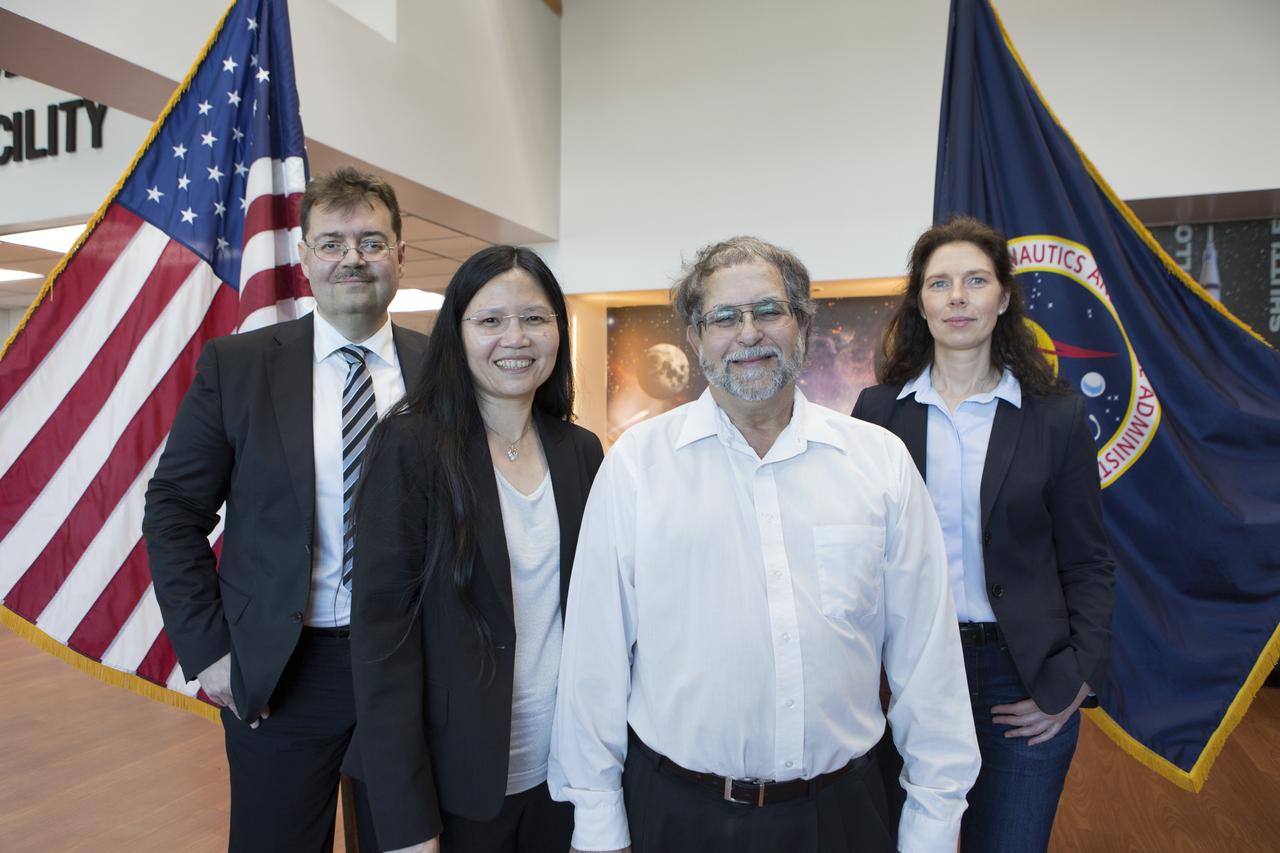
From left to right: Dr. Oliver Ullrich from the University of Zurich, Dr. Ye Zhang and Dr. Howard Levine of NASA's Kennedy Space Center, and Dr. Cora Thiel of the University of Zurich stood in the Space Station Processing Facility on Dec. 18, 2018. NASA recently signed a Space Act Agreement with the university, which is located in Switzerland, to collaborate on biological research. The team is studying gene expression in altered gravity.
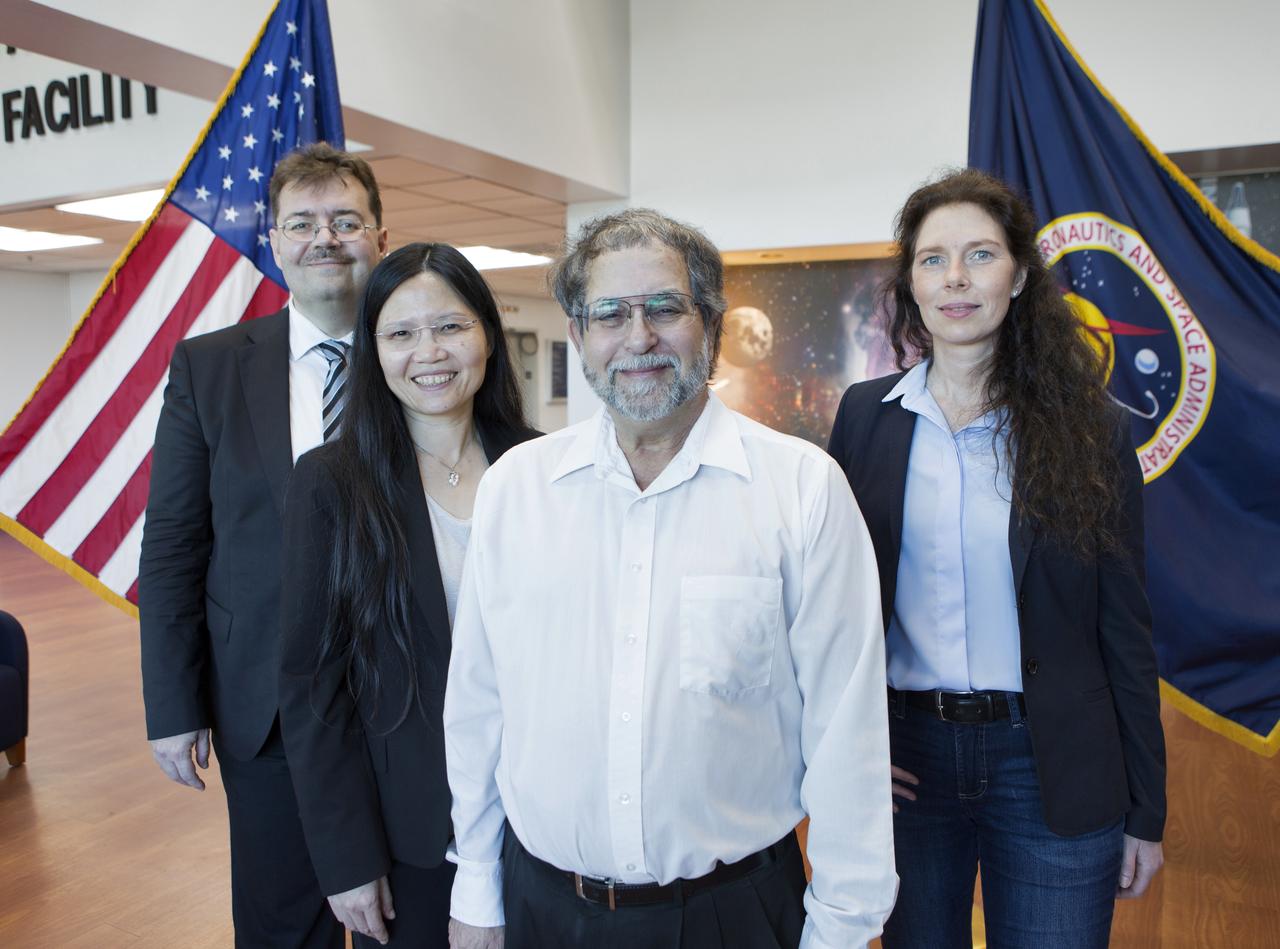
From left to right: Dr. Oliver Ullrich from the University of Zurich, Dr. Ye Zhang and Dr. Howard Levine of NASA's Kennedy Space Center, and Dr. Cora Thiel of the University of Zurich stood in the Space Station Processing Facility on Dec. 18, 2018. NASA recently signed a Space Act Agreement with the university, which is located in Switzerland, to collaborate on biological research. The team is studying gene expression in altered gravity.
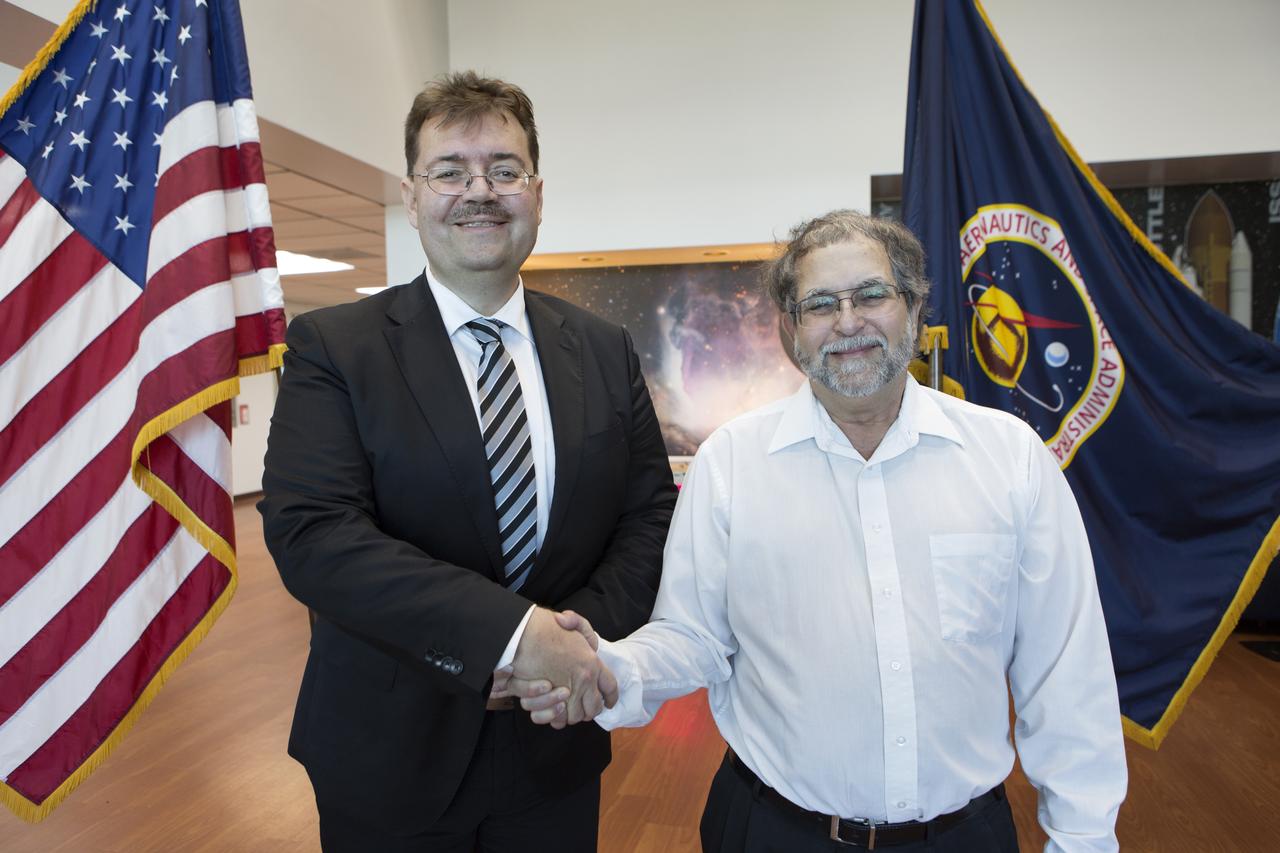
Dr. Oliver Ullrich (left) from the University of Zurich and Dr. Howard Levine of NASA's Kennedy Space Center stood in the Space Station Processing Facility on Dec. 18, 2018. NASA recently signed a Space Act Agreement with the university, which is located in Switzerland, to collaborate on biological research. The team is studying gene expression in altered gravity.
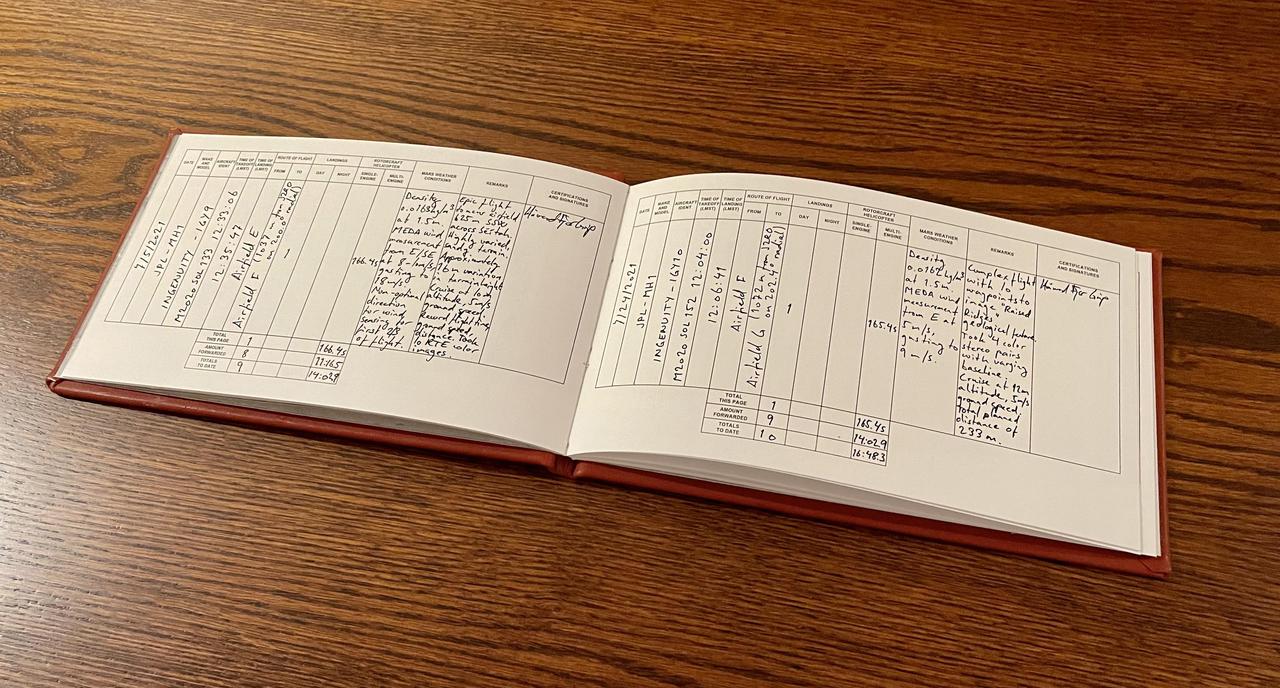
Havard Grip, chief pilot of NASA's Ingenuity Mars Helicopter, documents the details of each flight in the mission's logbook, The Nominal Pilot's Logbook for Planets and Moons, after each flight. Entries for Flights 9 and 10 are seen here. https://photojournal.jpl.nasa.gov/catalog/PIA24794
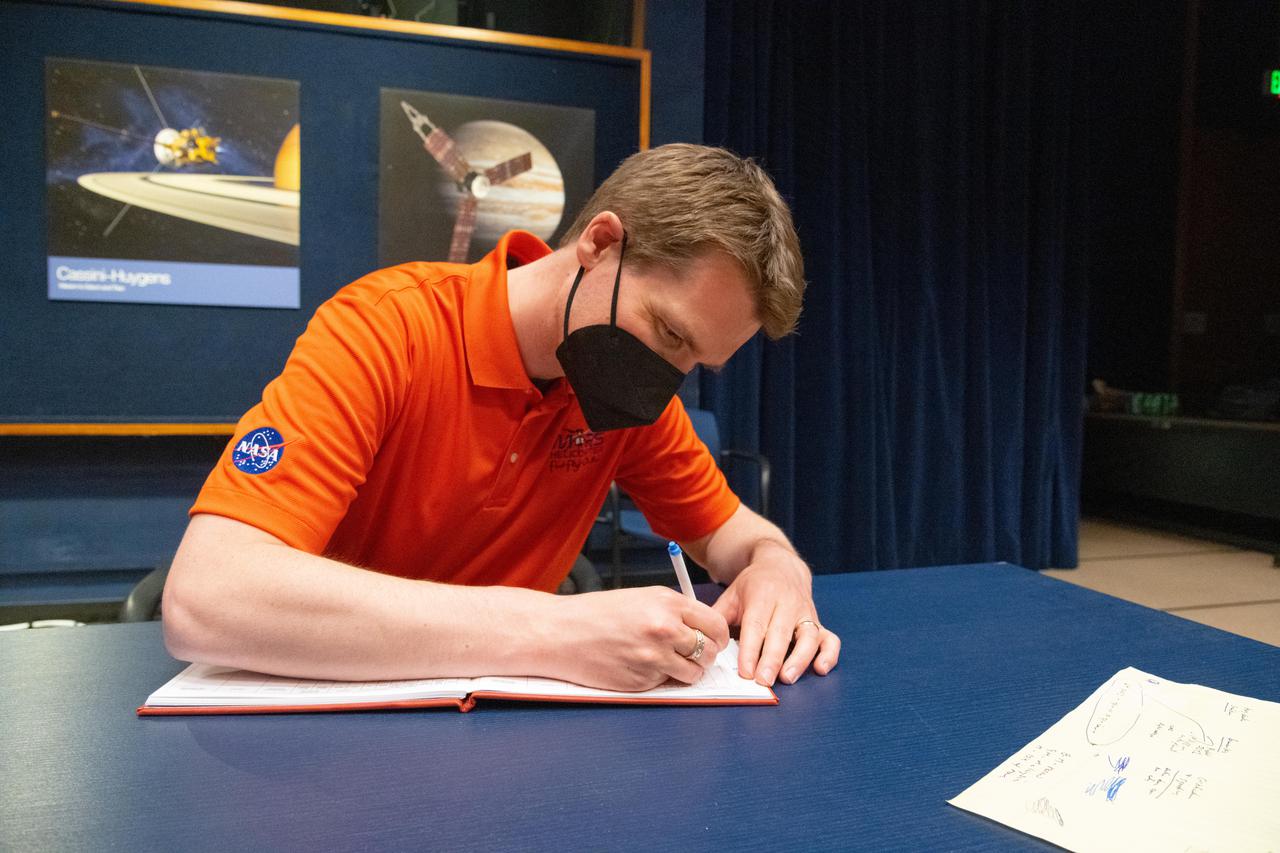
Ingenuity Mars chief pilot Håvard Grip records data of the first flight of the Ingenuity Mars Helicopter into the official pilot's logbook for the project — the "Nominal Pilot's Logbook for Planets and Moons." The image was taken at NASA's Jet Propulsion Laboratory in Southern California on April 19, 2021. Pilot logbooks are used by aviators to provide a record of their flights, including current and accumulated flight time, number and locations of takeoffs and landings, as well as unique operating conditions and certifications. https://photojournal.jpl.nasa.gov/catalog/PIA24591
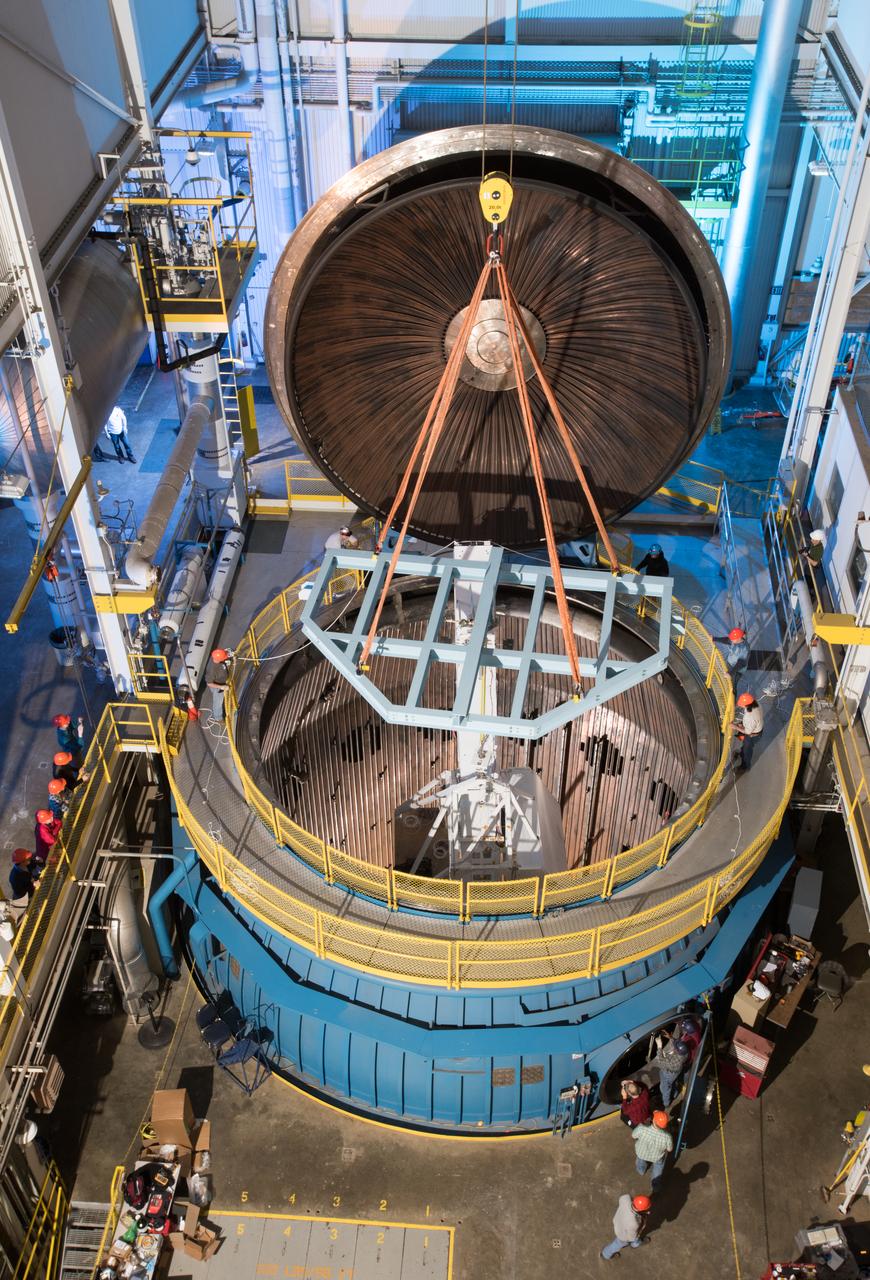
Documentation and PR photographs of Gamma-Ray Imager/Polarimeter for Solar Flares (GRIPS) test hardware at Plum Brook B-2 Faciity (Bldg. 3211)
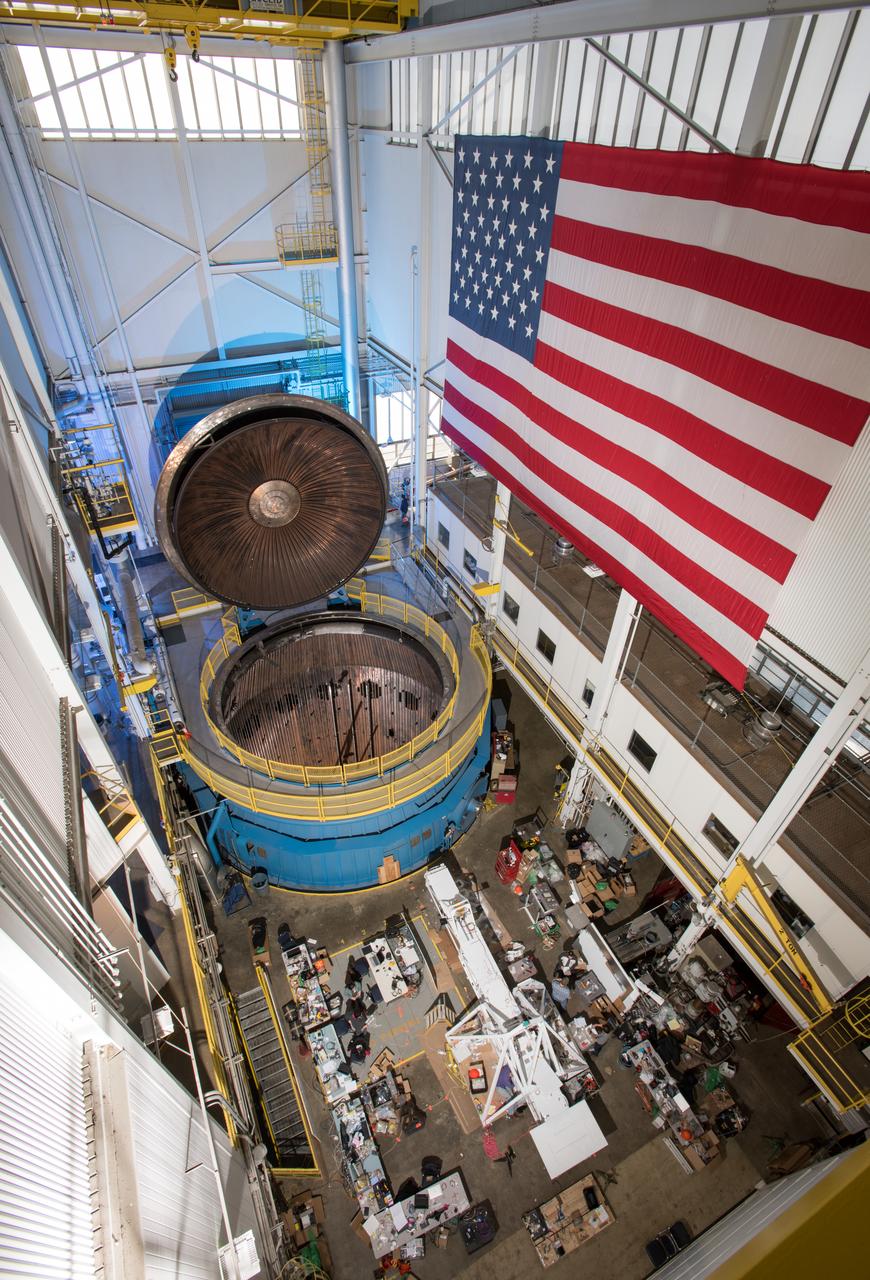
Documentation and PR photographs of Gamma-Ray Imager/Polarimeter for Solar Flares (GRIPS) test hardware at Plum Brook B-2 Faciity (Bldg. 3211)
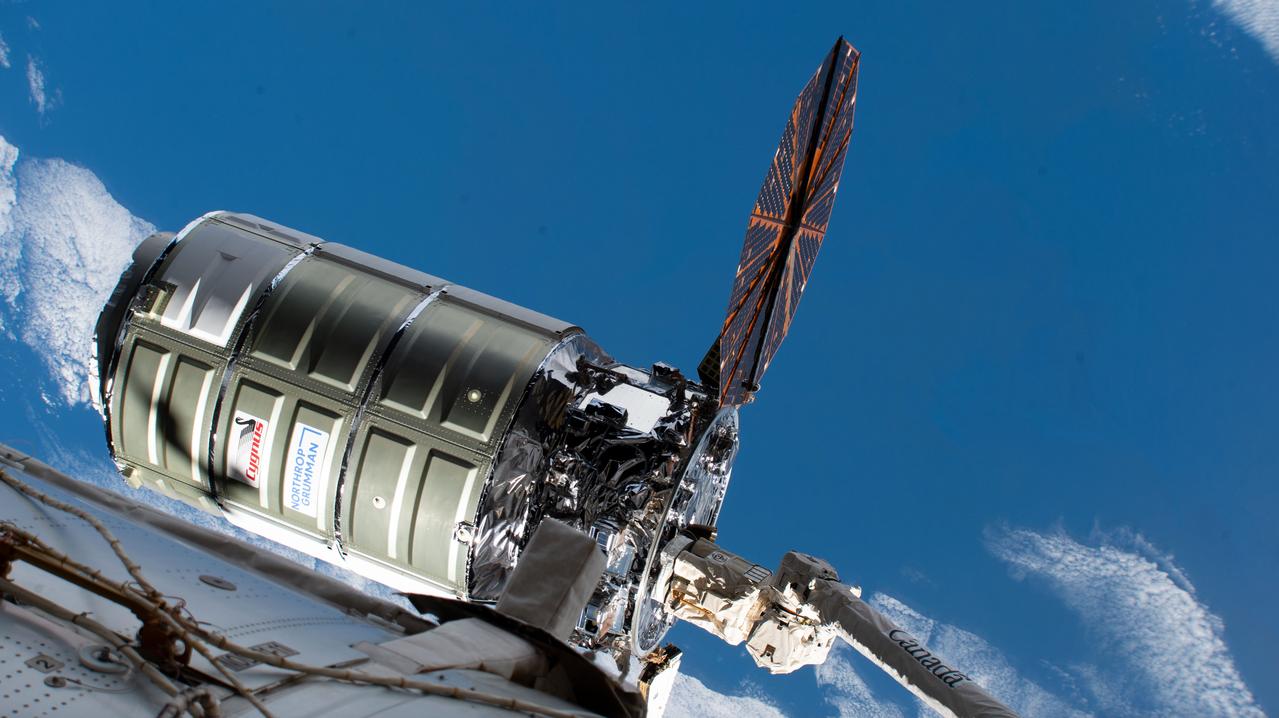
iss068e021345 (Nov. 9, 2022) --- The Northrop Grumman Cygnus space freighter is pictured in the grip of the Canadarm2 robotic arm shortly after arriving at the International Space Station.
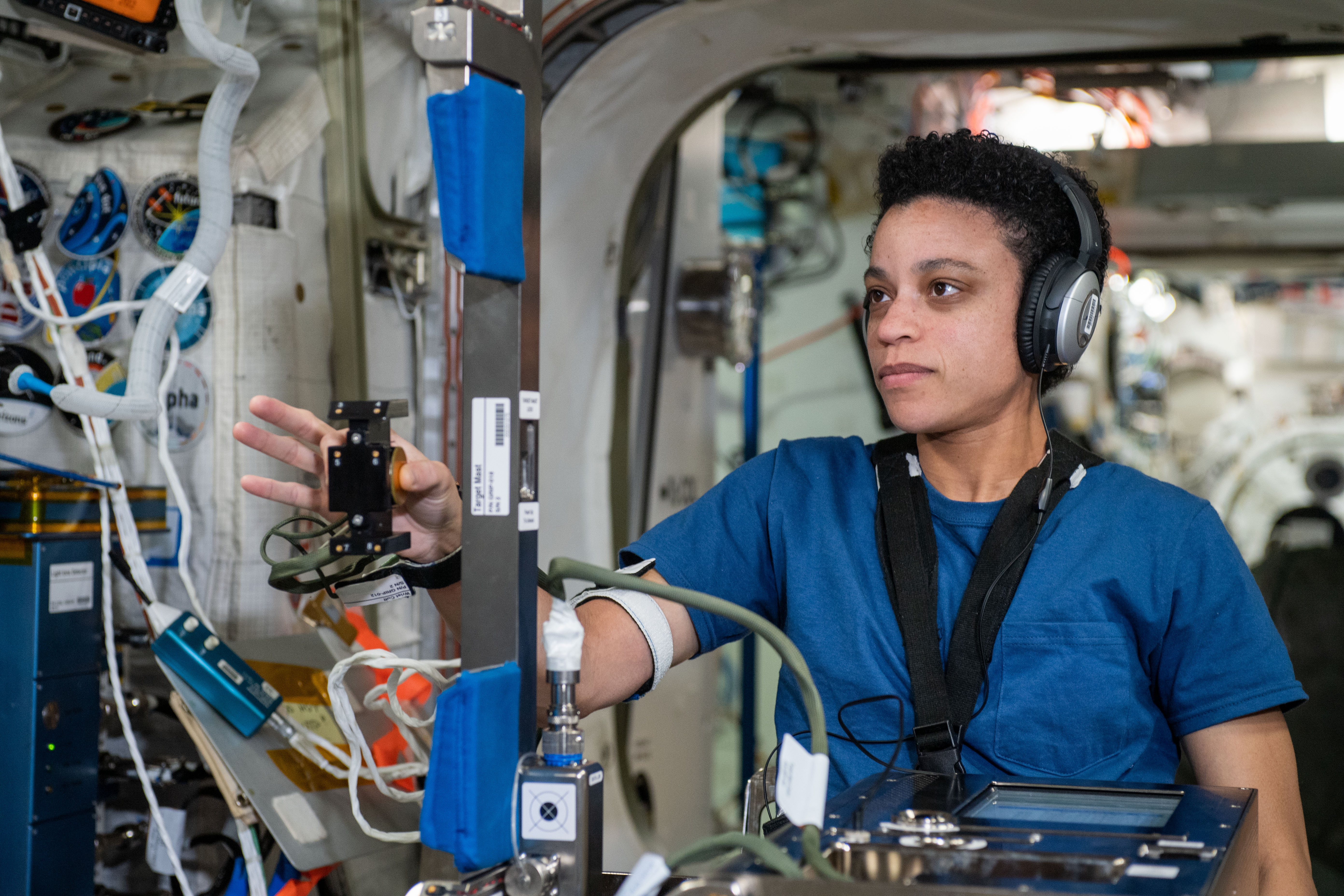
iss067e360645 (July 6, 2022) --- NASA astronaut and Expedition 67 Flight Engineer Jessica Watkins is seated inside the Columbus laboratory module participating in the GRIP experiment. The investigation explores how astronauts grip and maneuver a specialized device in response to pre-programmed stimuli so scientists can gain insights into a crew member’s cognition and perception during spaceflight.
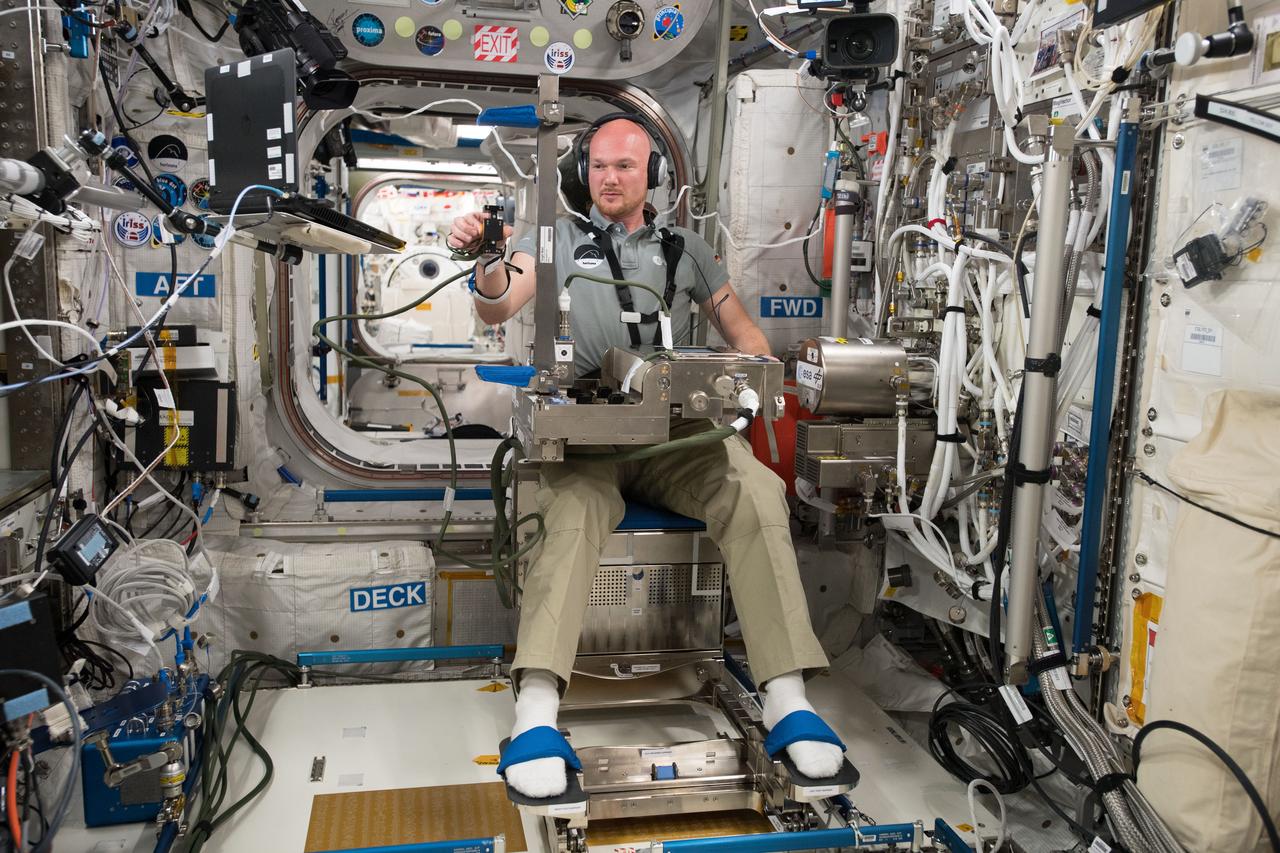
iss056e009782 (June 11, 2018) --- Expedition 56 Flight Engineer Alexander Gerst of the European Space Agency (ESA) is seated in the Columbus laboratory module participating in the Grip study. Grip is an ESA-sponsored experiment that is researching how the nervous system adapts to microgravity. Observations may improve the design of safer space habitats and help patients on Earth with neurological diseases.
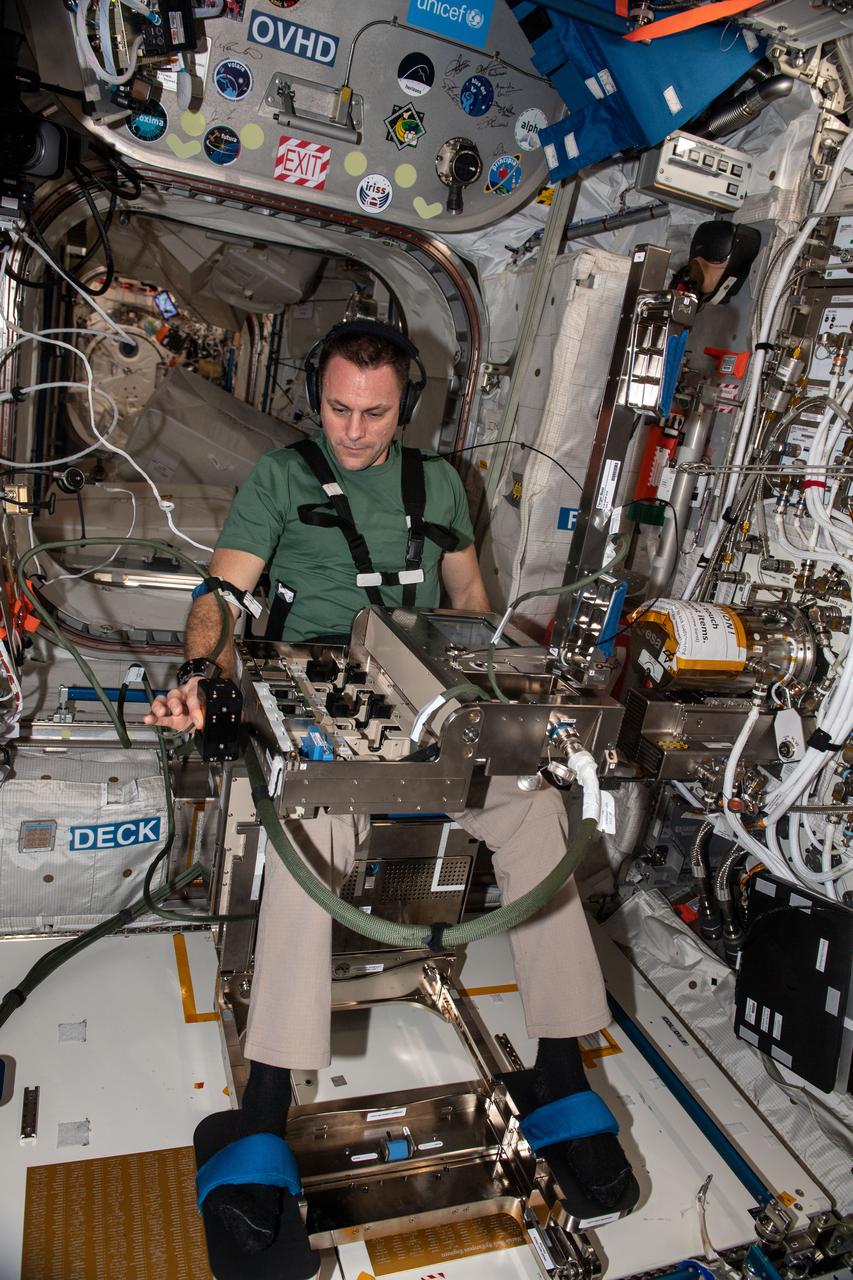
iss068e054122 (Feb. 14, 2023) --- Expedition 68 Flight Engineer Josh Cassada of NASA is seated in a specialized chair in the International Space Station's Columbus laboratory module for the GRIP human research experiment. The study investigates how astronauts regulate their grip force and move their arms when manipulating objects in microgravity in response to pre-programmed stimuli as a computer and video cameras record the responses.
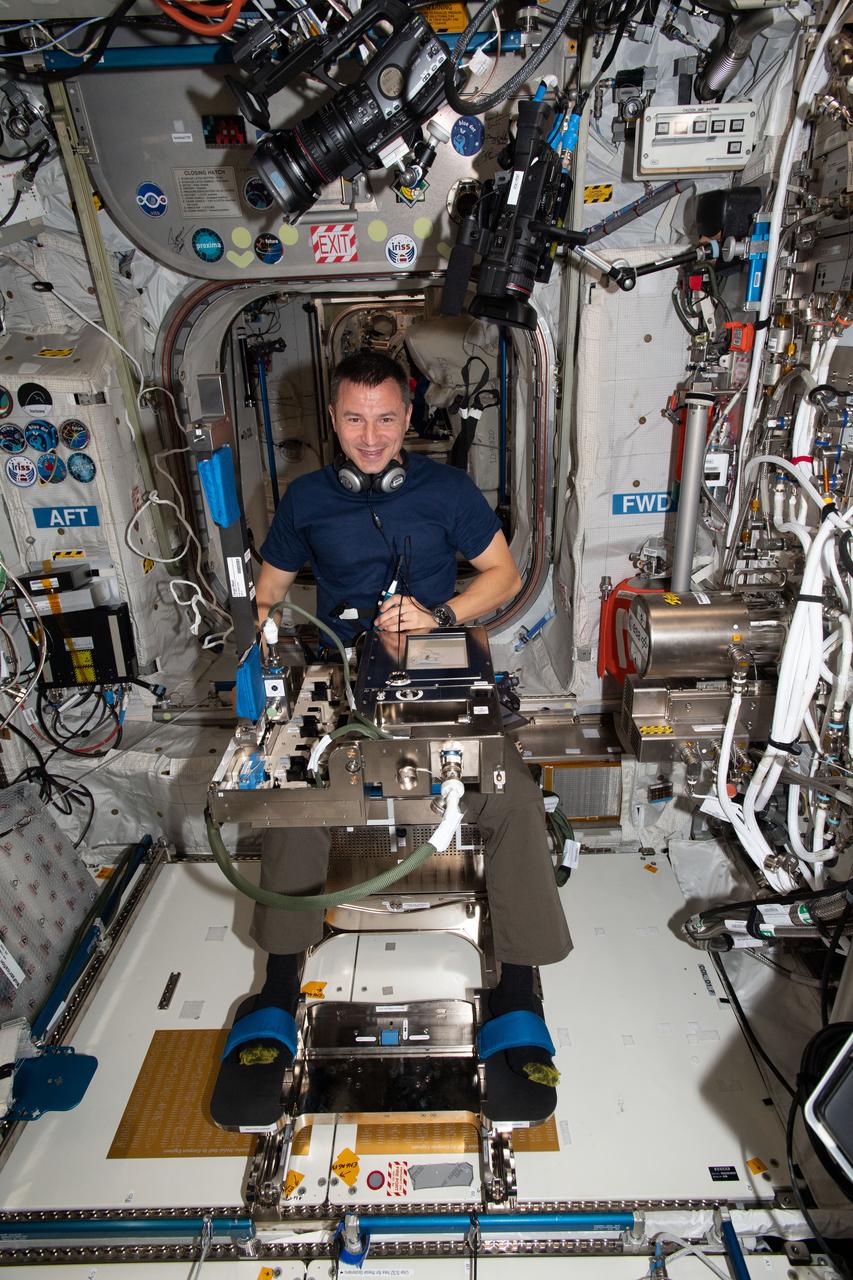
iss060e015011 (July 29, 2019) --- Expedition 60 Flight Engineer Andrew Morgan of NASA is in a seated configuration participating in the GRIP study. The experiment sponsored by the European Space Agency (ESA) observes how microgravity affects the abilities of astronauts to regulate grip force and upper limb trajectories when manipulating objects during a variety of movements. Morgan is conducting the scientific operations inside ESA's Columbus laboratory module.
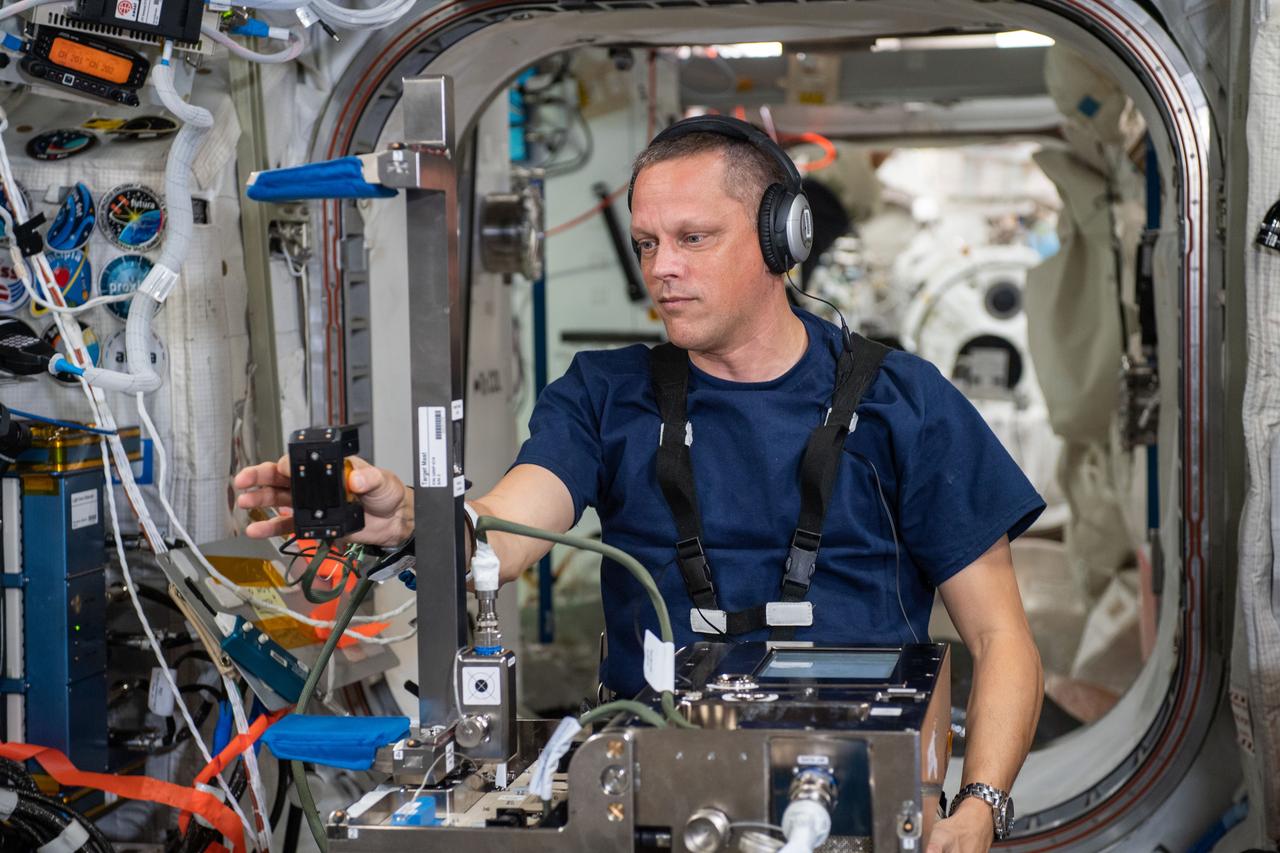
iss067e360648 (July 6, 2022) --- NASA astronaut and Expedition 67 Flight Engineer Bob Hines is seated inside the Columbus laboratory module participating in the GRIP experiment. The investigation explores how astronauts grip and maneuver a specialized device in response to pre-programmed stimuli so scientists can gain insights into a crew member’s cognition and perception during spaceflight.
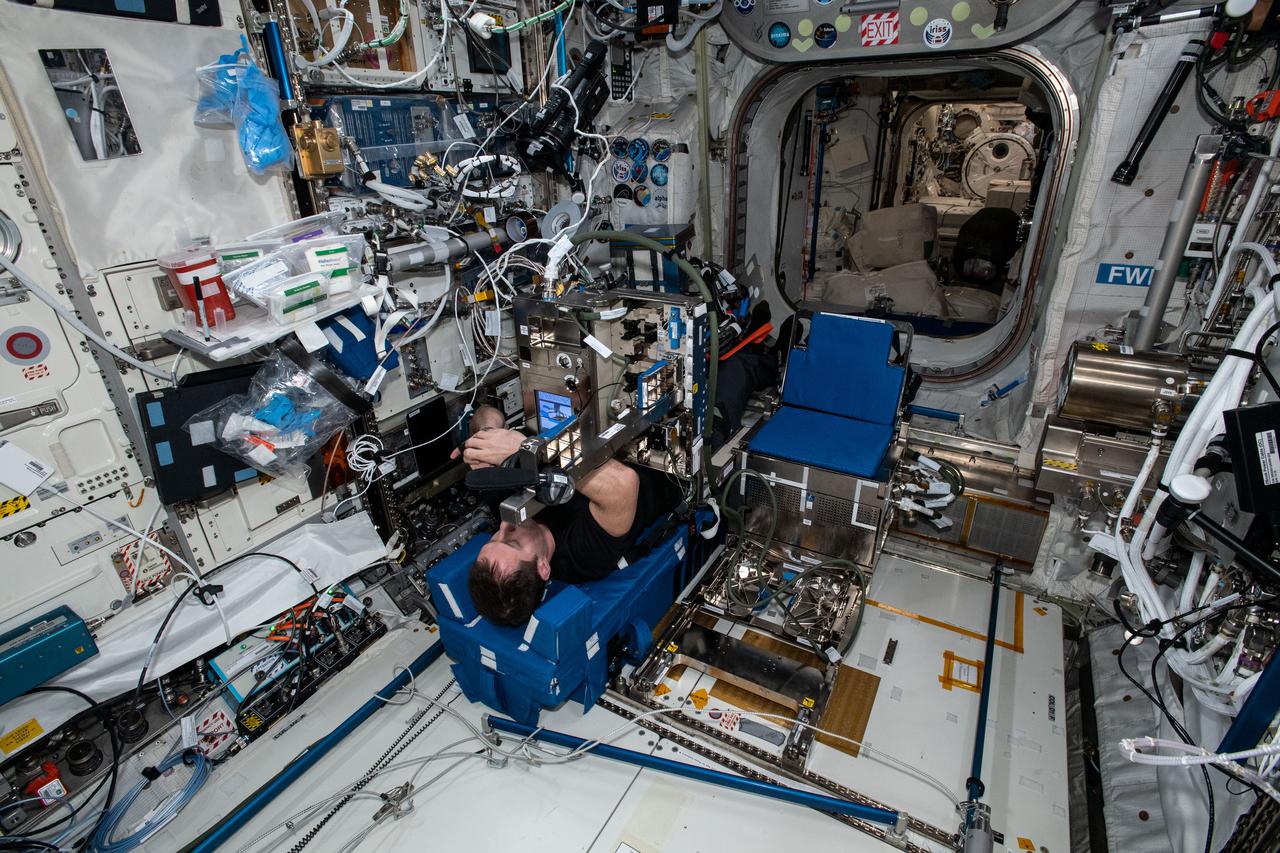
iss065e358682 (Sept. 8, 2021) --- Expedition 65 Flight Engineer Thomas Pesquet of ESA (European Space Agency) is seated in a specialized chair set up inside the International Space Station's Columbus laboratory module for the GRIP human research experiment. By observing how astronauts grip objects and move their arms in microgravity, the experiment may lead to insights for the design and control of spacecraft interfaces of future human missions to the Moon, Mars and beyond.
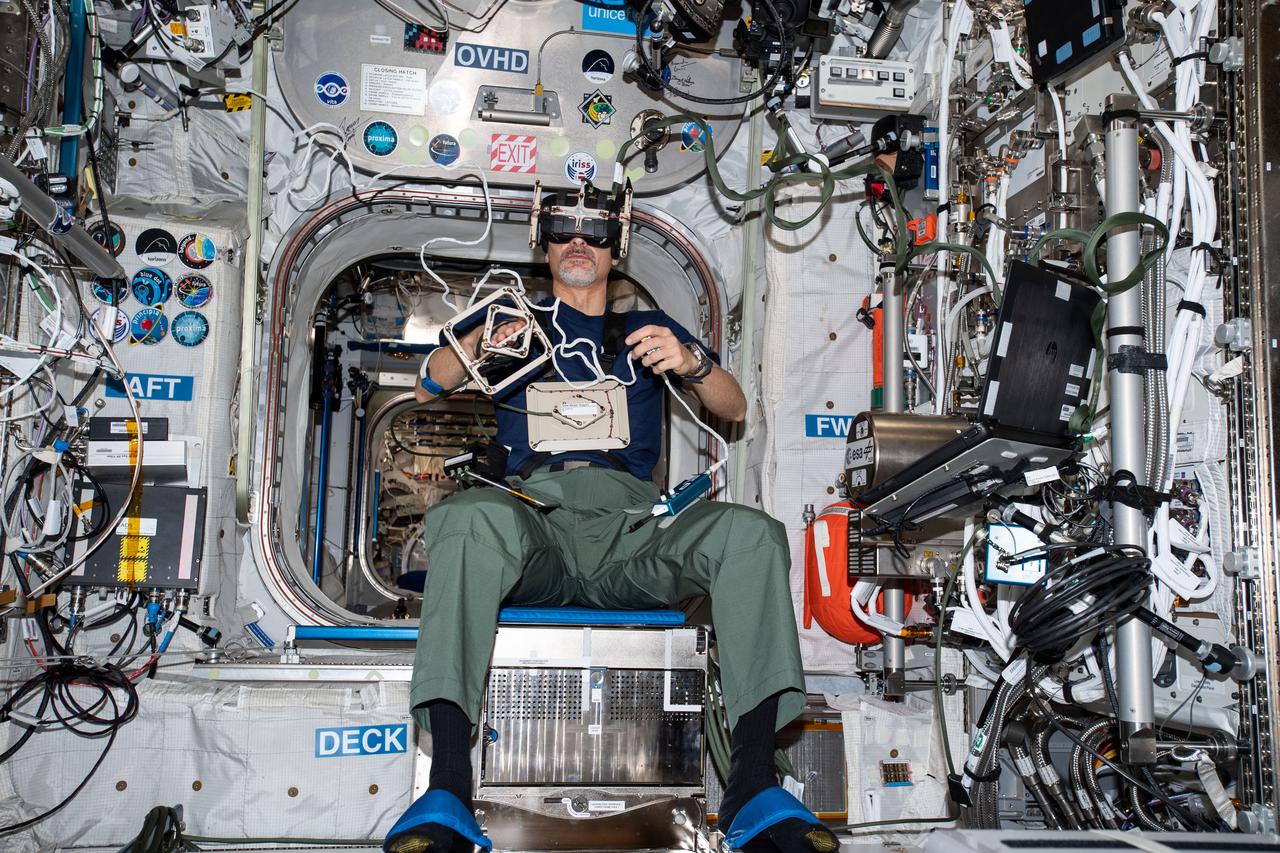
iss060e021138 (Aug. 1, 2019) --- Expedition 60 Flight Engineer Luca Parmitano of the European Space Agency (ESA) is seated inside ESA's Columbus laboratory module wearing virtual reality goggles exploring how microgravity affects an astronauts ability to grip and manipulate objects. The ESA GRIP study may inform the design of future spacecraft control devices and space system interfaces.
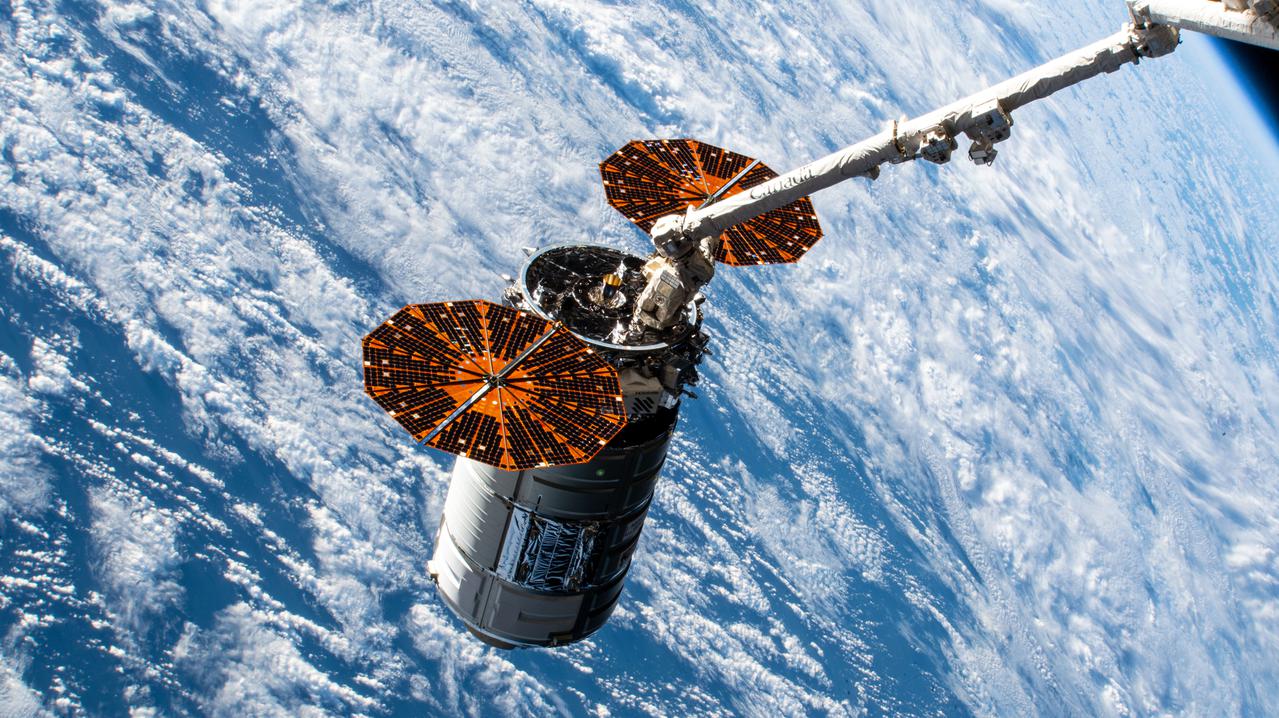
iss065e154237 (June 29, 2021) --- The Cygnus space freighter from Northrop Grumman is pictured in the grip of the Canadarm2 robotic arm moments before its release completing a four-month cargo mission at the International Space Station.
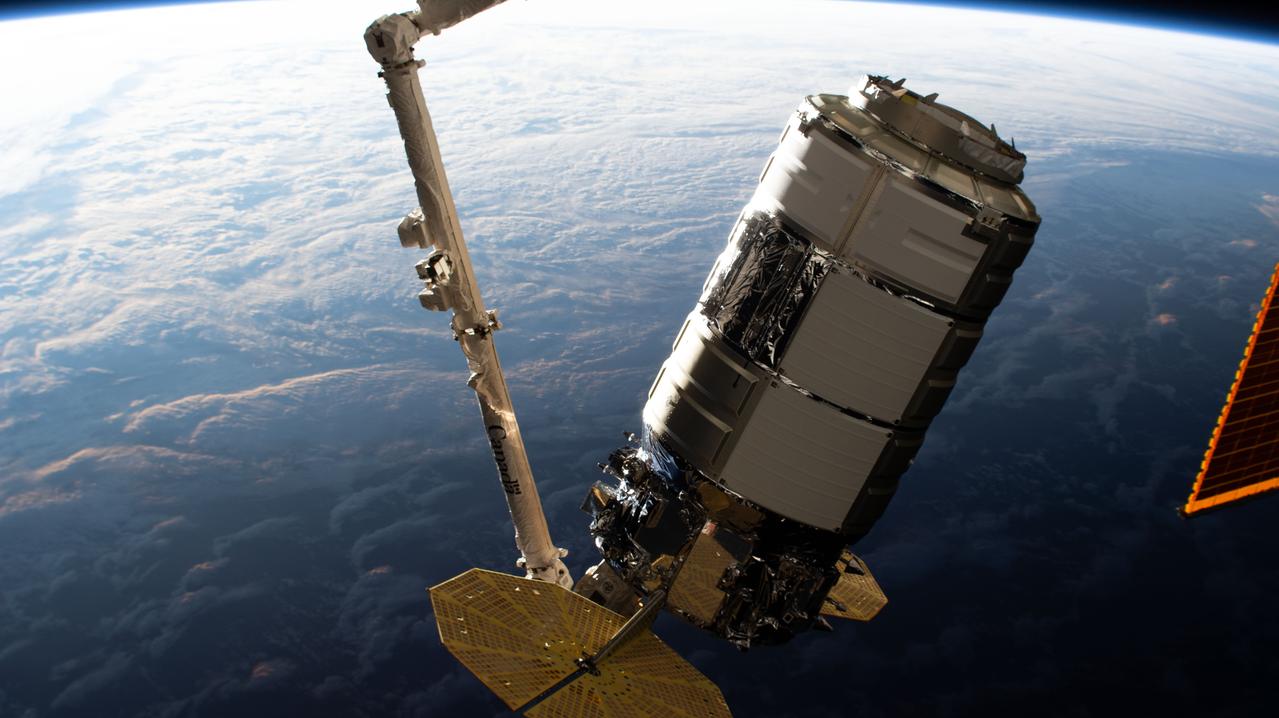
iss063e101638 (Oct. 5, 2020) --- The Northrop Grumman Cygnus space freighter is pictured in the grips of the Canadarm2 robotic arm as mission controllers remotely guide the cargo vehicle to its installation point on the International Space Station's Unity module.
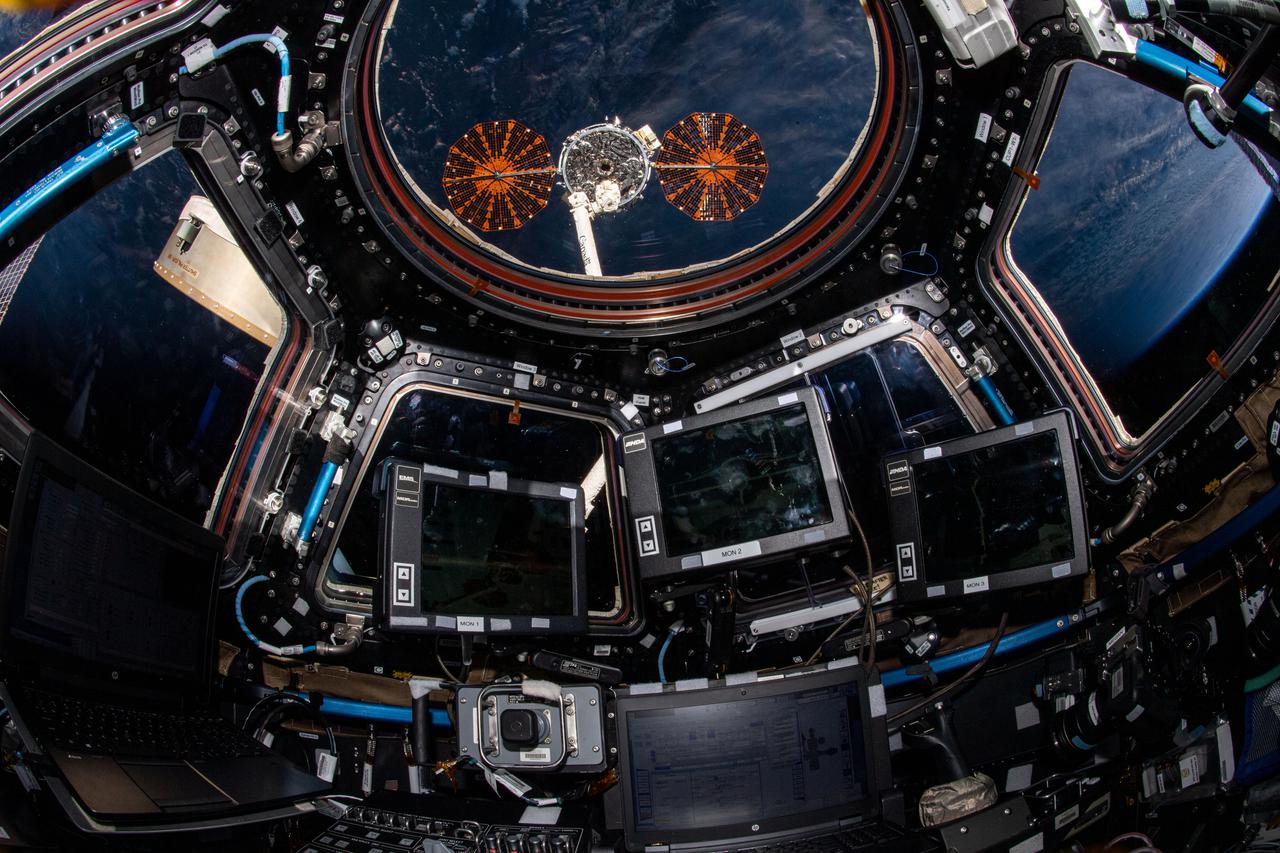
iss065e154254 (June 29, 2021) --- The Cygnus space freighter from Northrop Grumman is pictured in the grip of the Canadarm2 robotic arm outside the cupola, the International Space Station's "window to the world."
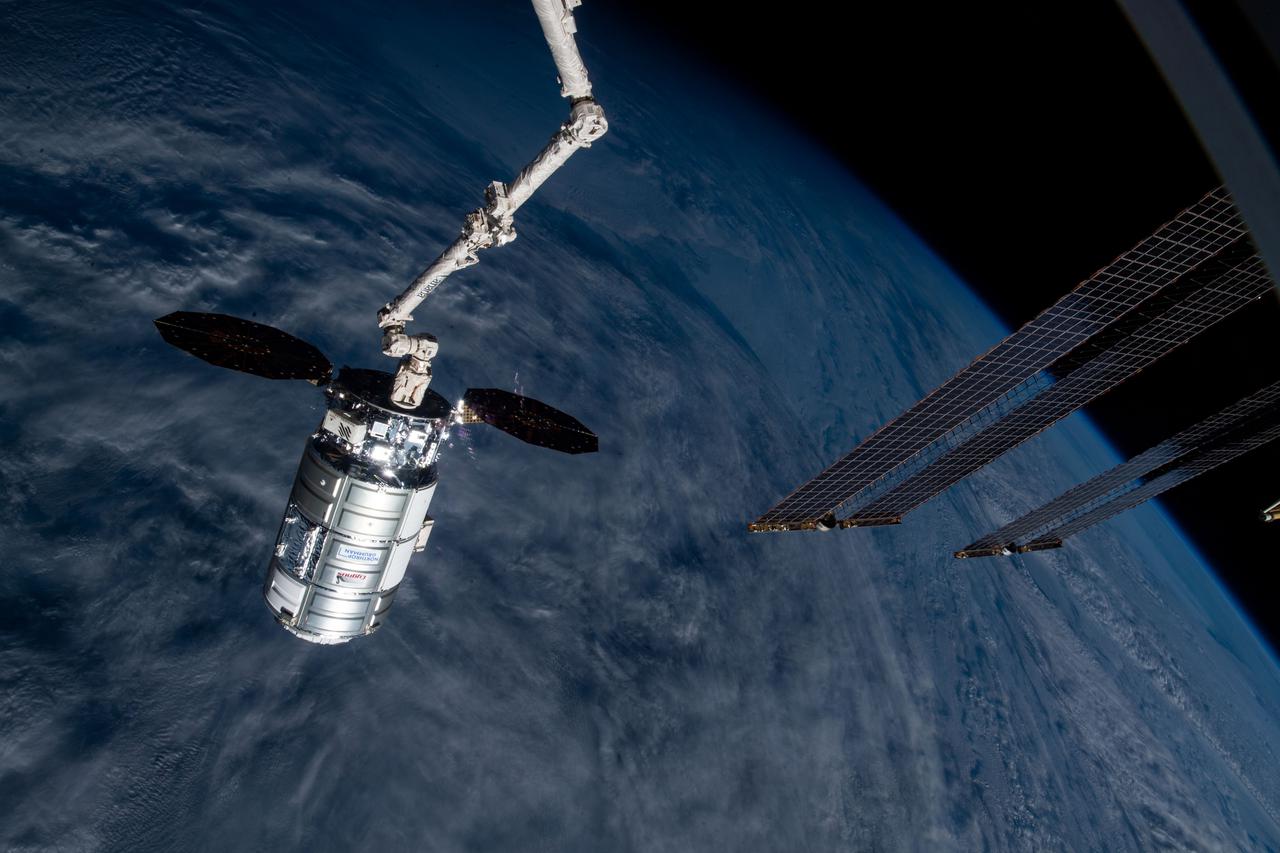
iss065e154183 (June 29, 2021) --- The Cygnus space freighter from Northrop Grumman is pictured in the grip of the Canadarm2 robotic arm moments before its release completing a four-month cargo mission at the International Space Station.
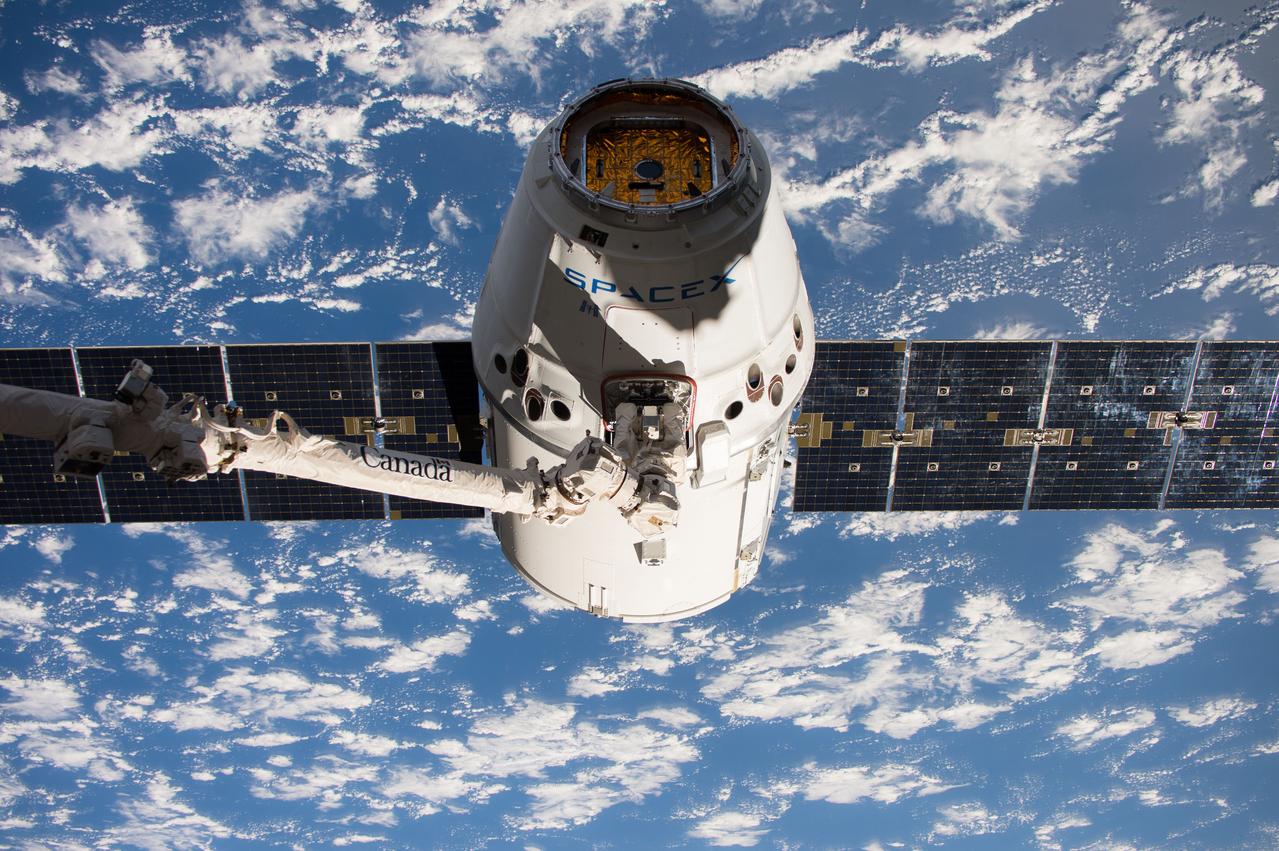
iss052e000436 (June 5, 2017) --- The SpaceX Dragon cargo craft is pictured in the grips of the Canadarm2 robotic arm moments after it was captured early Monday June 5, 2017.
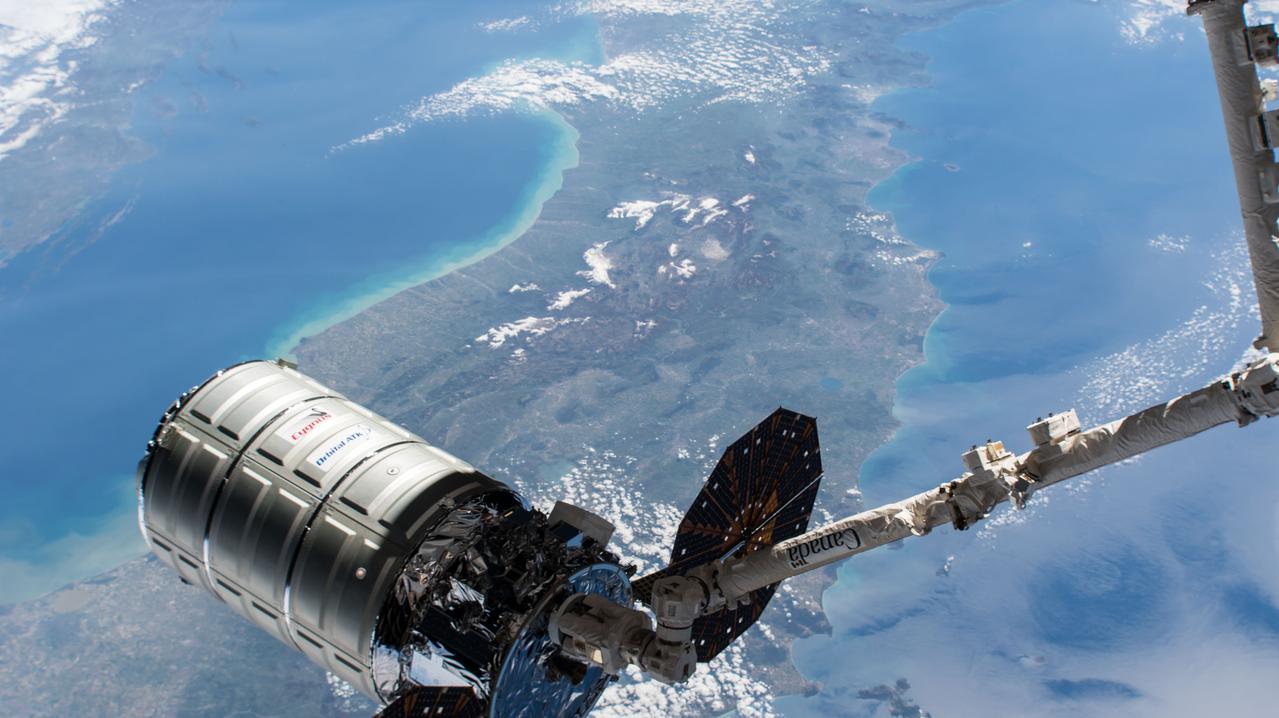
iss051e020059 (April 22, 2017) --- The Cygnus resupply ship from Orbital ATK is in the grips of the Canadarm2 robotic arm prior to its installation to the Unity module as the International Space Station orbited above Italy on April 22, 2017.
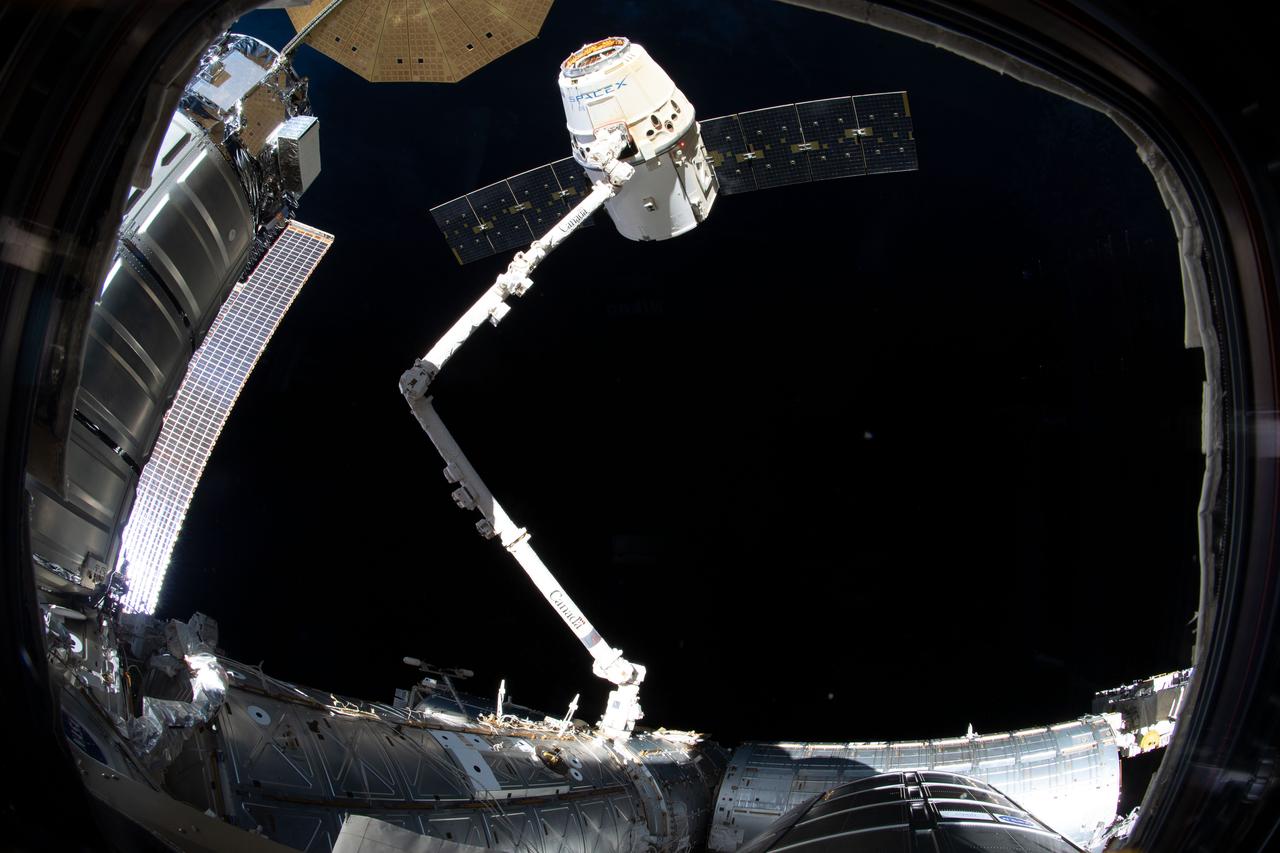
iss059e089342 (June 3, 2019) --- The SpaceX Dragon cargo craft on its 17th contracted mission to resupply mission to the International Space Station is in the grips of the Canadarm2 robotic arm moments before being released.
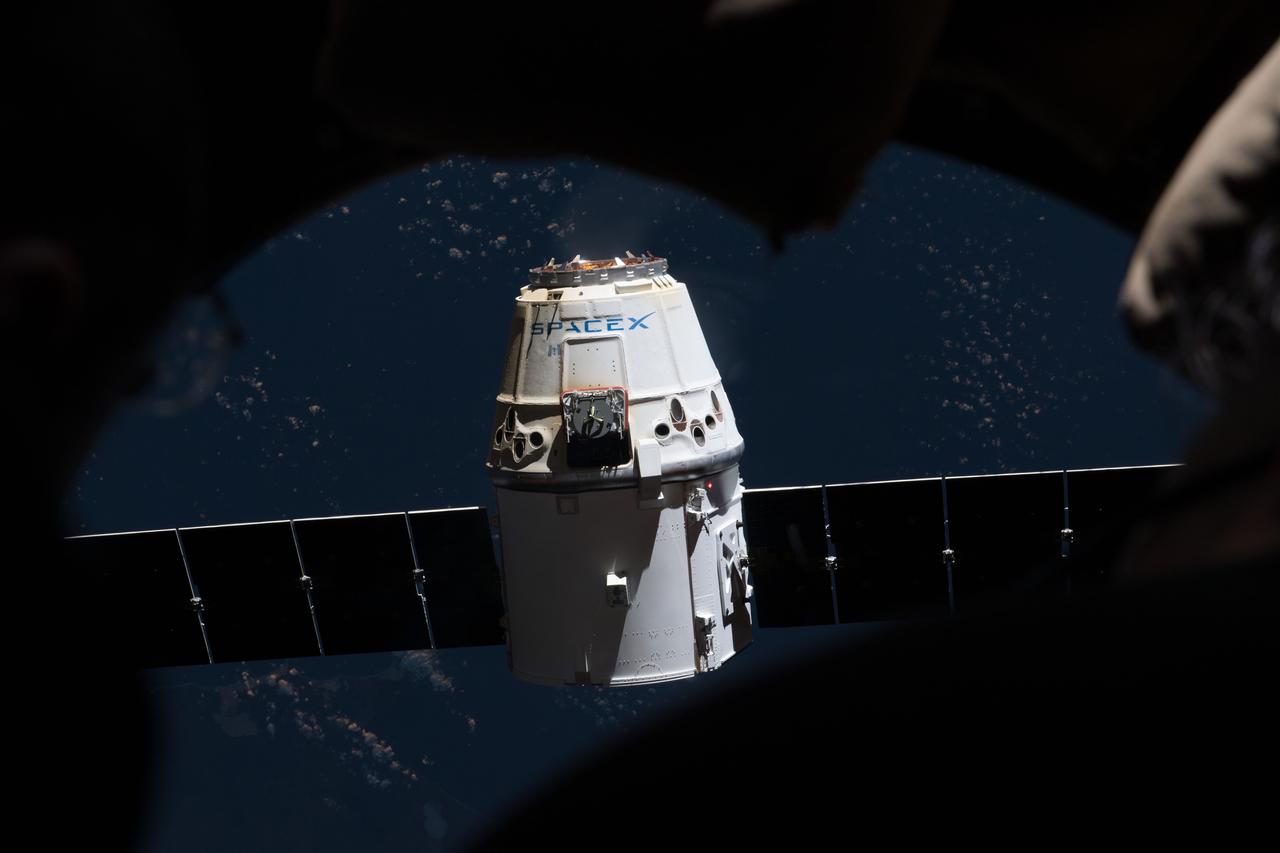
iss054e022063 (Jan. 13, 2018) ---The SpaceX Dragon is pictured from inside the seven-windowed cupola moments after ground controllers remotely commanded the Canadarm2 to release it from its grips.
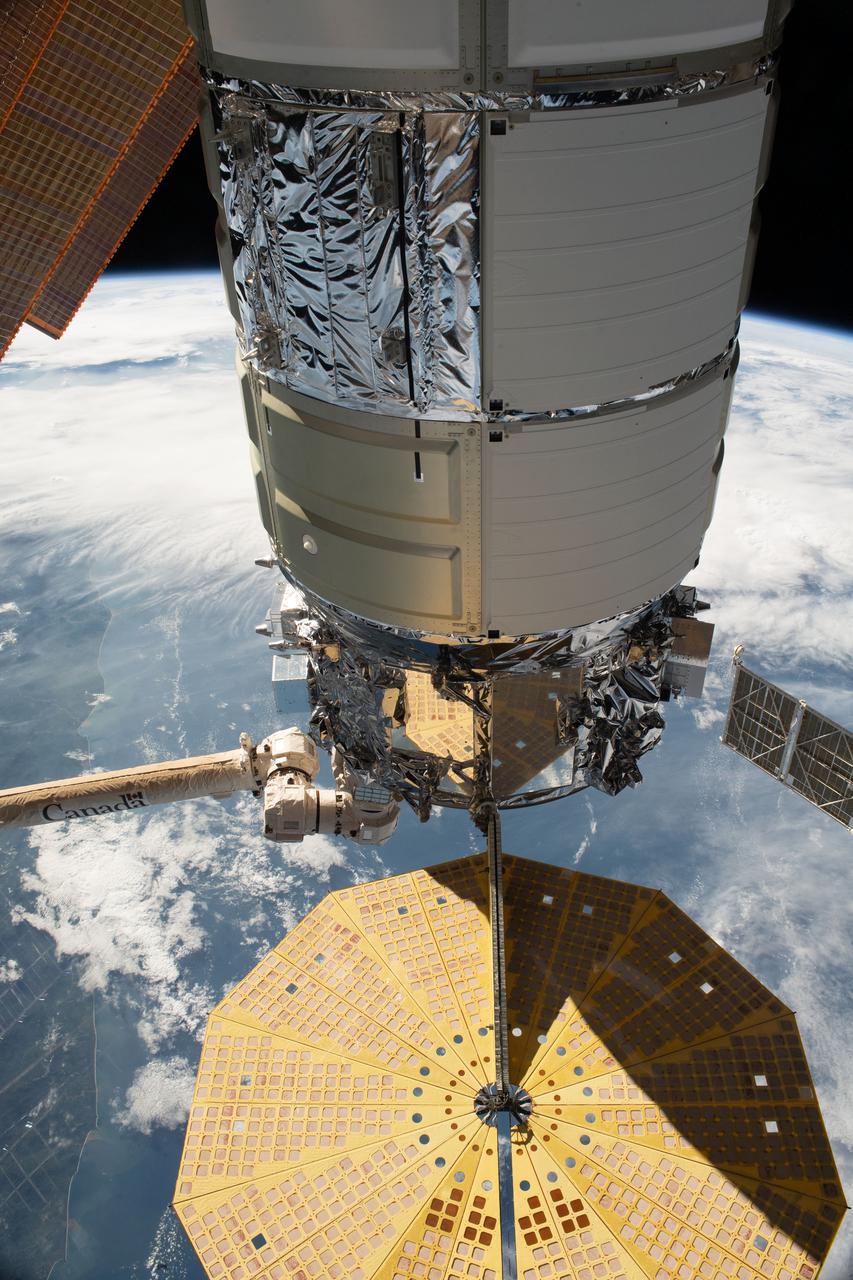
iss065e243281 (Aug. 12, 2021) --- The Northrop Grumman Cygnus space freighter is pictured in the grips of the Canadarm2 robotic arm after it was installed on the Unity module's Earth-facing port.
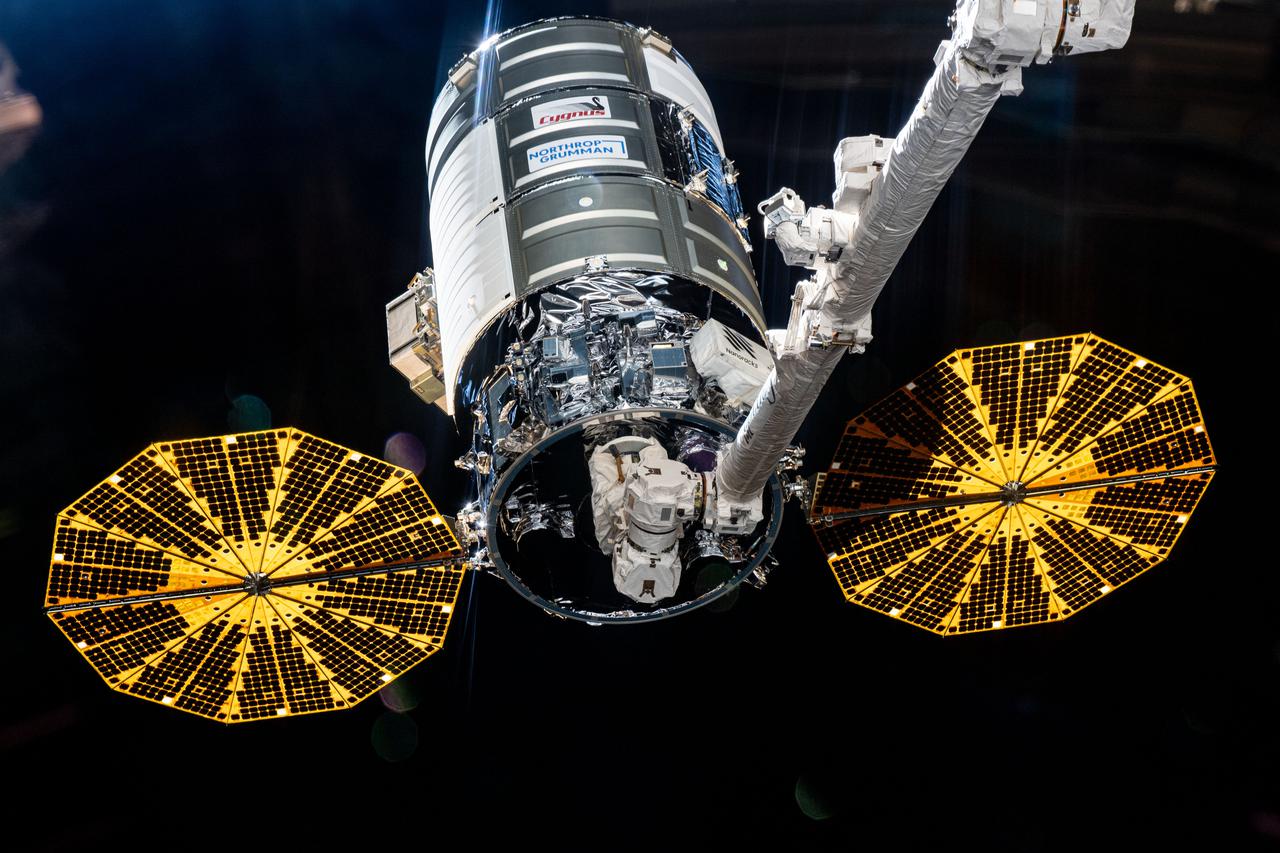
iss065e154213 (June 29, 2021) --- The Cygnus space freighter from Northrop Grumman is pictured in the grip of the Canadarm2 robotic arm moments before its release completing a four-month cargo mission at the International Space Station.
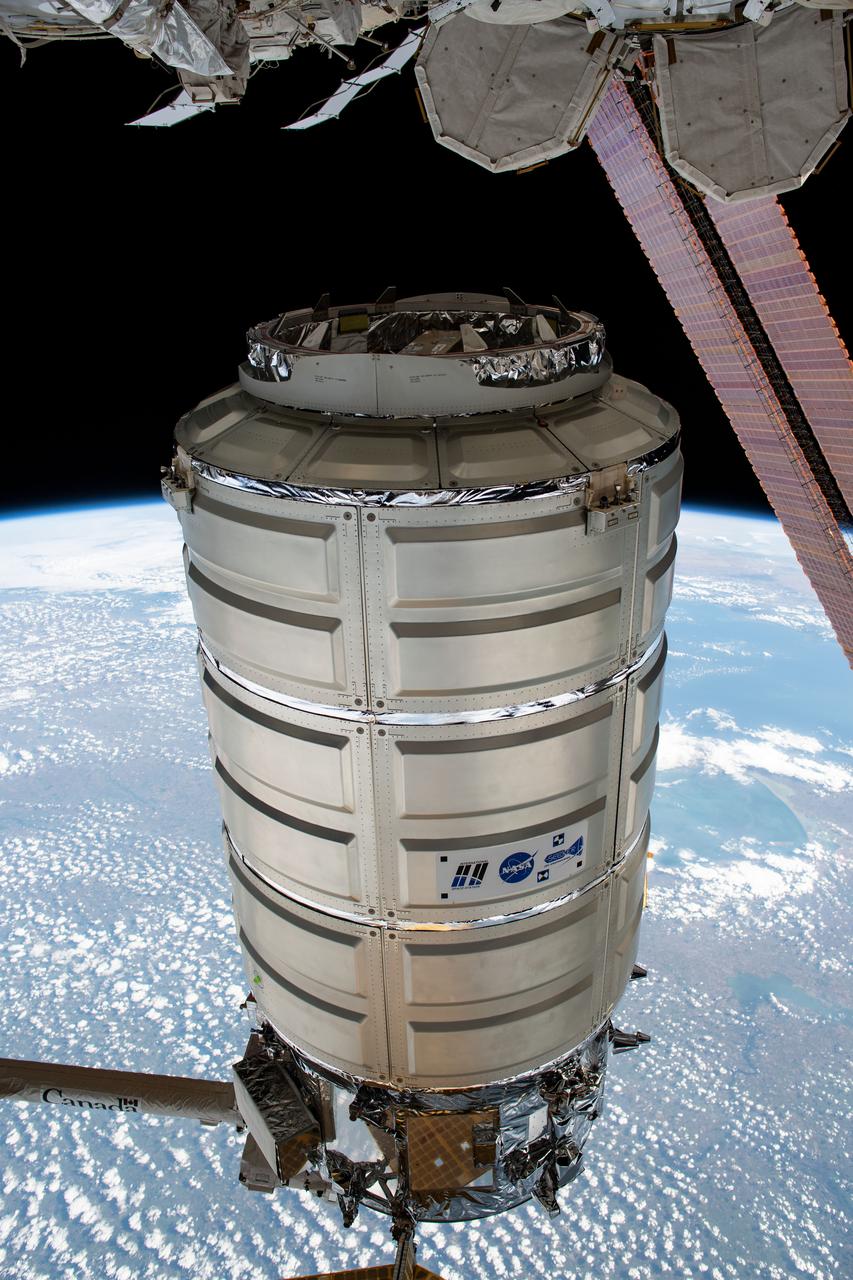
iss060e022965 (Aug. 6, 2019) --- The Cygnus space freighter from Northrop Grumman is in the grips of the Canadarm2 robotic arm following its detachment from the Unity module where it was installed for 109 days of cargo transfer operations.
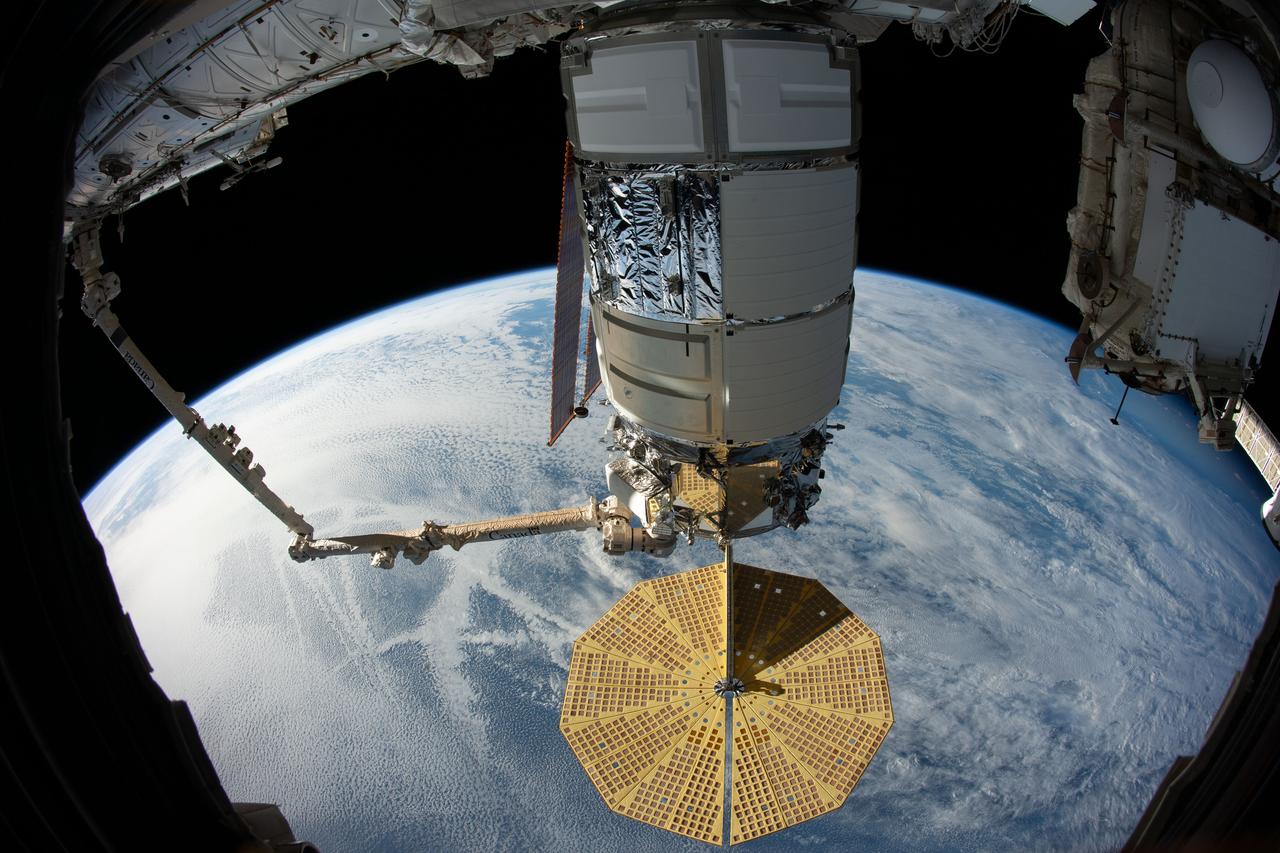
iss061e028414 (Nov. 4, 2019) --- The U.S. Cygnus space freighter from Northrop Grumman is pictured in the grips of the Canadarm2 robotic arm as it was installed to the Unity module for 70 days of cargo transfers.
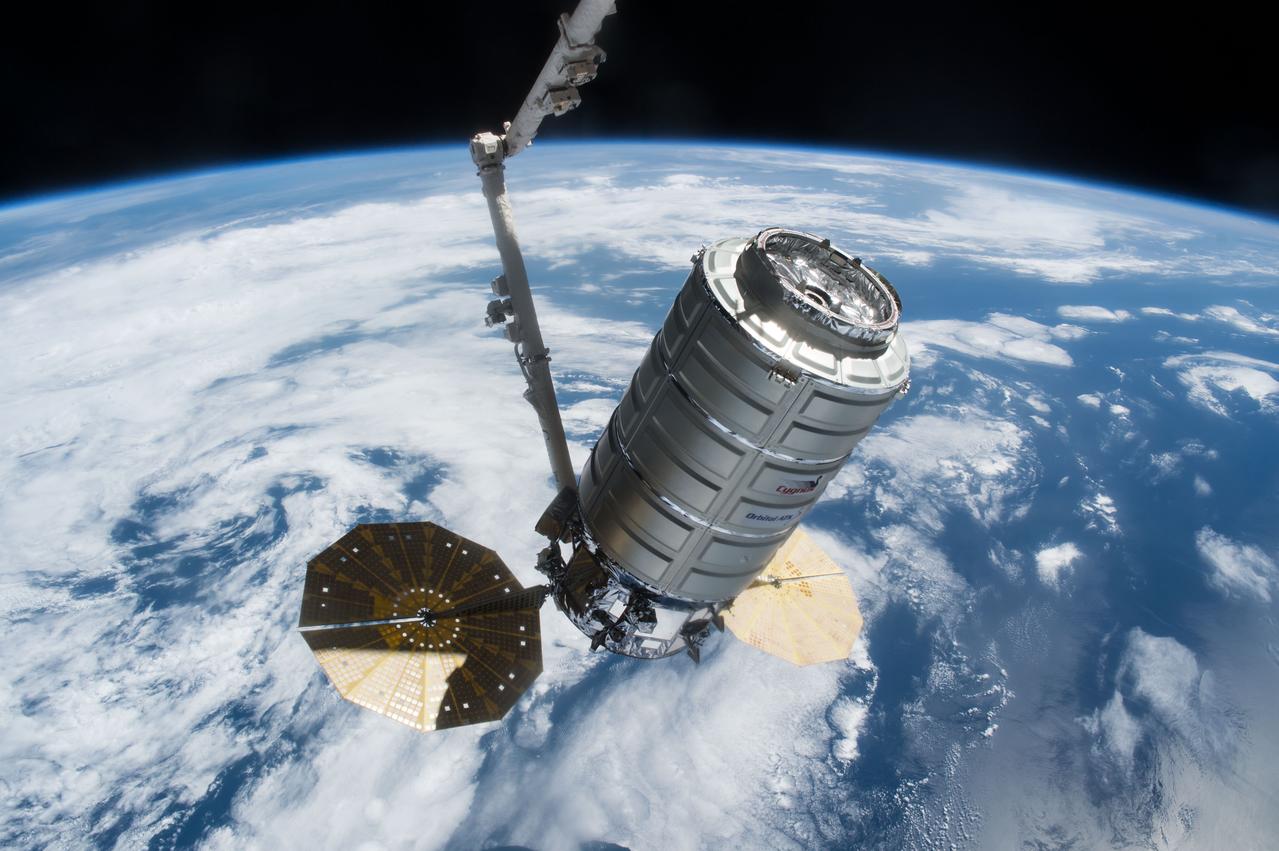
iss051e020824 (April 22, 2018) --- The Orbital ATK Cygnus resupply ship is pictured in the grips of the Canadarm2 robotic arm shortly after its capture in April of 2017 during Expedition 51.
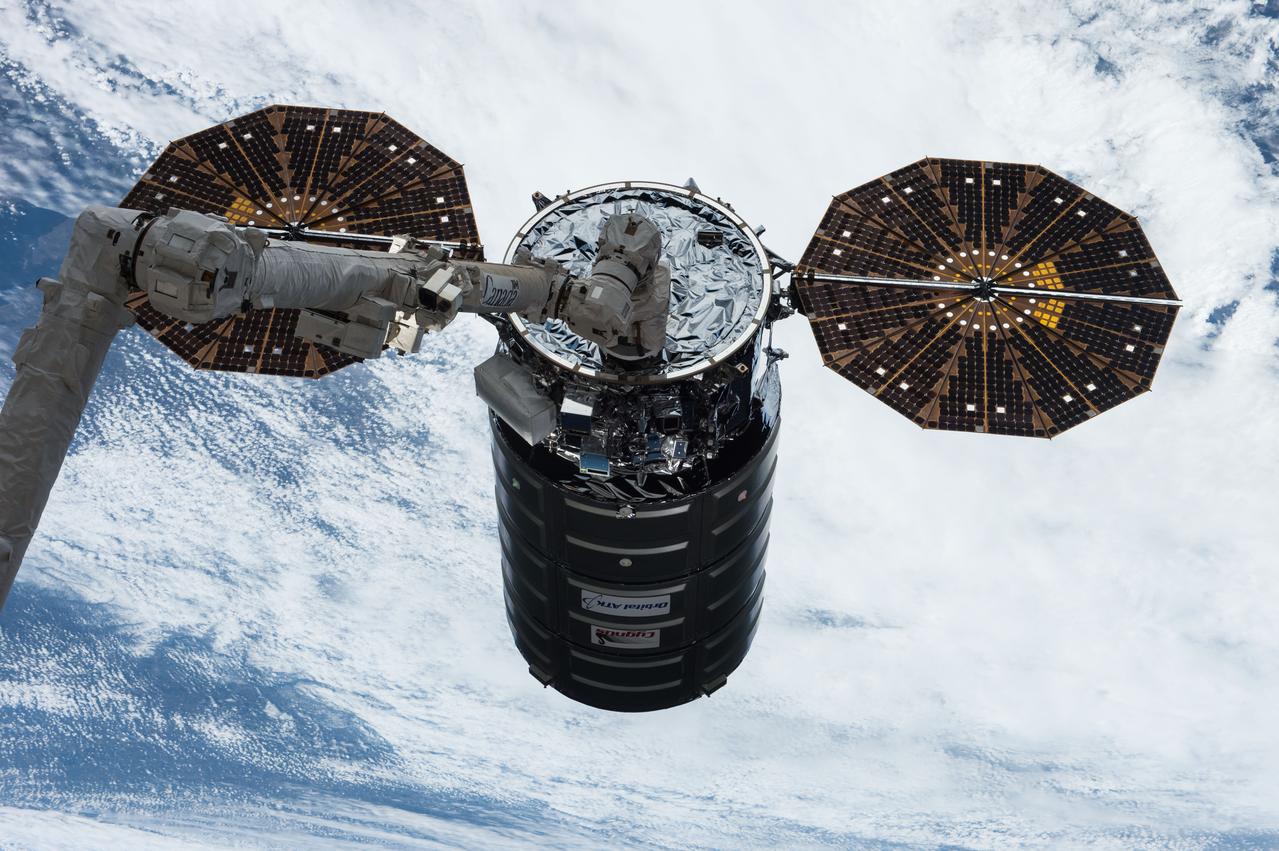
iss051e020754 (April 22, 2017) --- The Cygnus resupply ship from Orbital ATK is in the grips of the Canadarm2 robotic arm prior to its installation on the Unity module at the International Space Station on April 22, 2017.
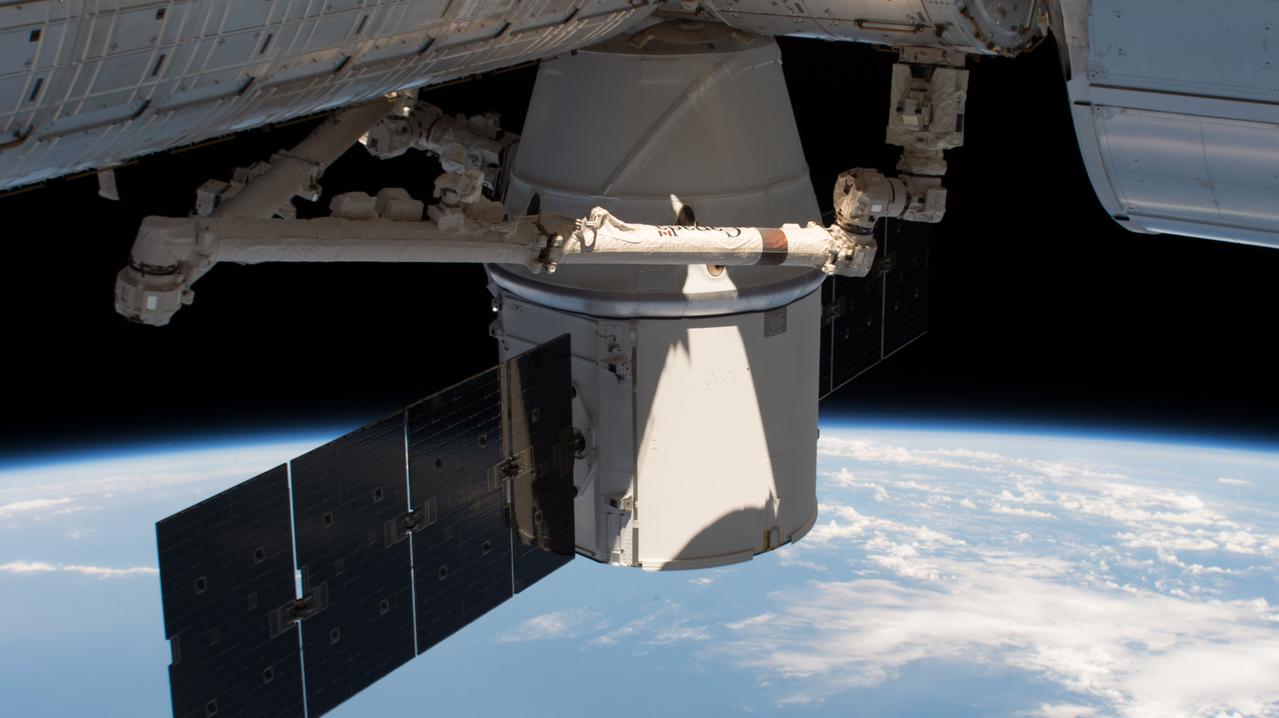
iss055e010724 (April 4, 2018) --- The SpaceX Dragon resupply ship, held firmly in the grip of the Canadarm2 robotic arm, is pictured shortly after it was installed to the Harmony module's Earth-facing port.
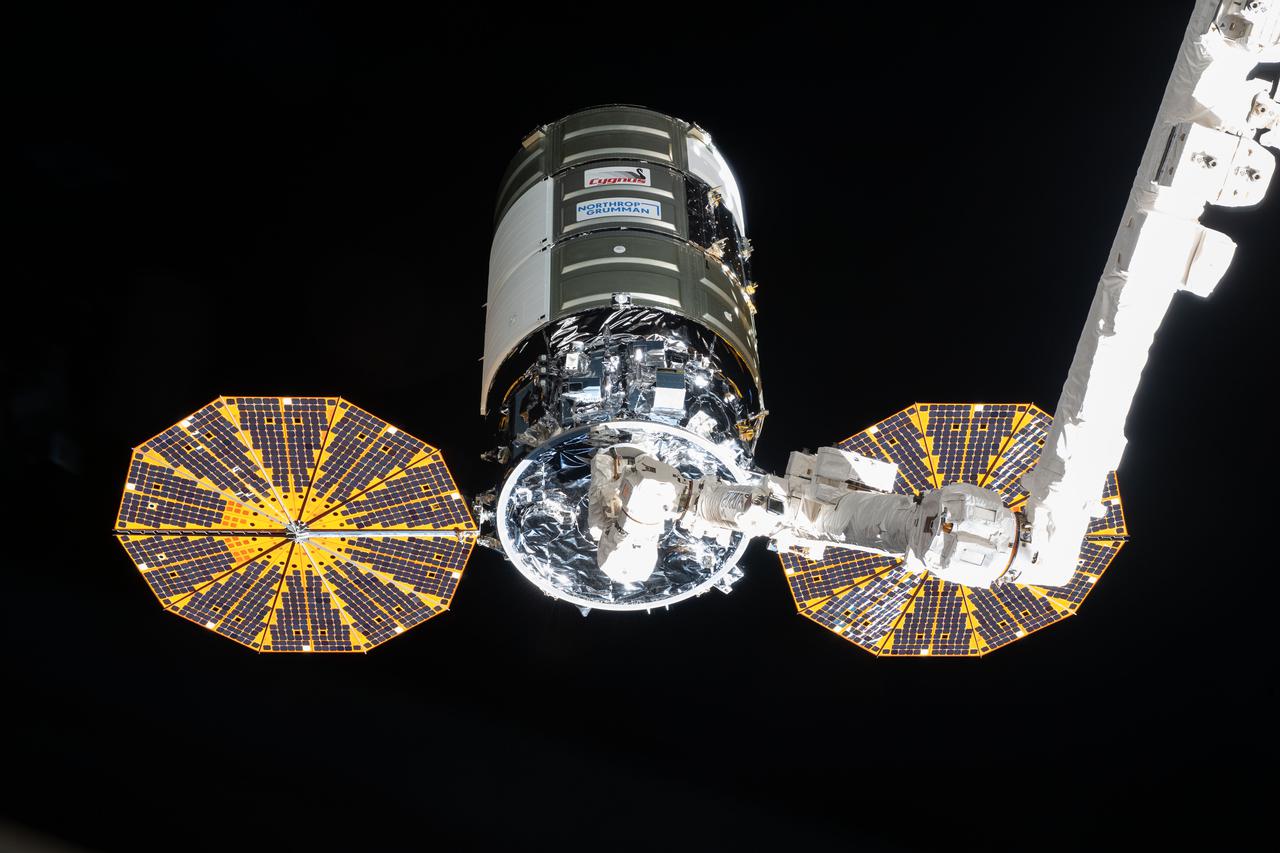
iss065e241432 (Aug. 12, 2021) --- Northrop Grumman's Cygnus space freighter is pictured shortly after it was captured in the grips of the Canadarm2 robotic arm operated NASA Flight Engineer Megan McArthur.
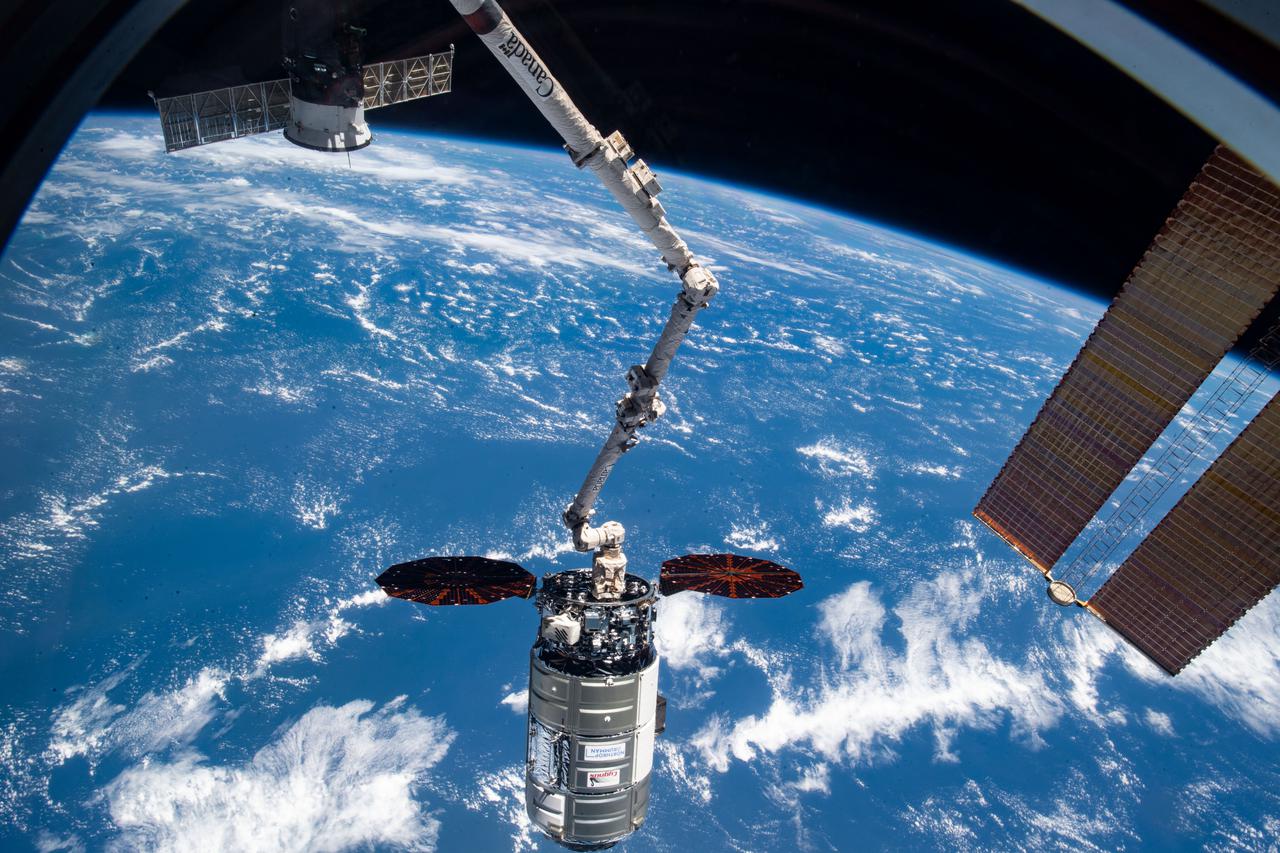
iss065e154164 (June 29, 2021) --- The Cygnus space freighter from Northrop Grumman is pictured in the grip of the Canadarm2 robotic arm moments before its release completing a four-month cargo mission at the International Space Station.
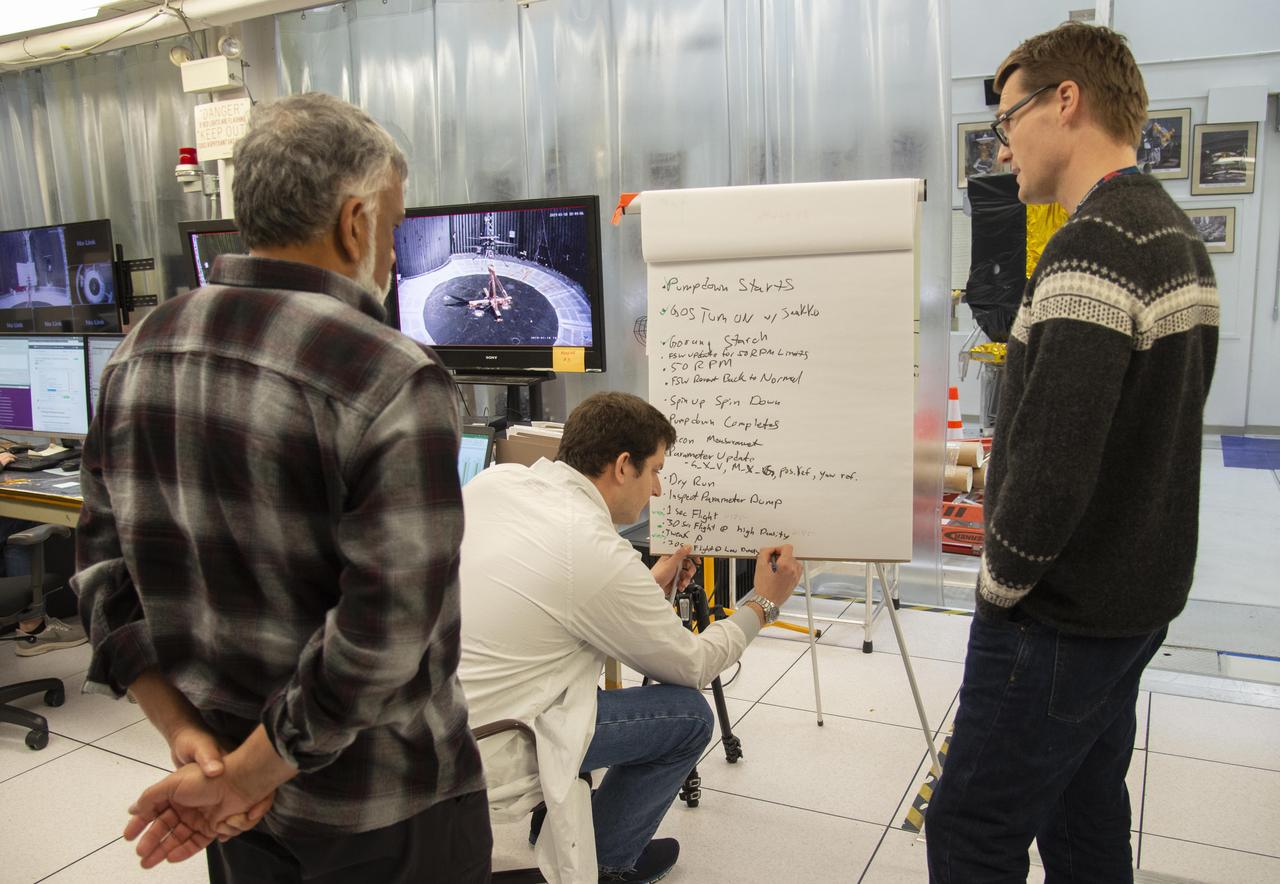
Bob Balaram, Teddy Tzanetos and Havard Grip from the NASA Mars Helicopter project discuss the sequence of events for the day's flight testing. The image was taken Jan. 18, 2019. https://photojournal.jpl.nasa.gov/catalog/PIA23162
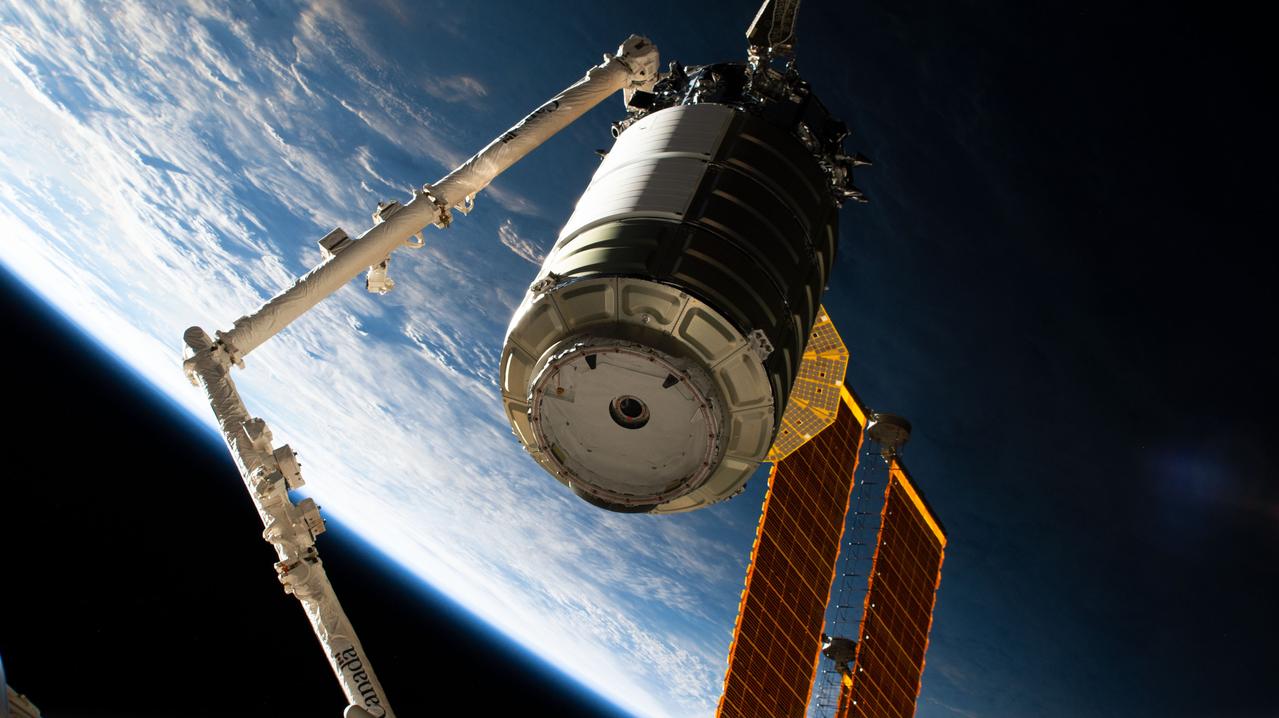
iss068e021319 (Nov. 9, 2022) --- The Northrop Grumman Cygnus space freighter is pictured in the grip of the Canadarm2 robotic arm and being maneuvered toward the International Space Station's Unity module for installation.
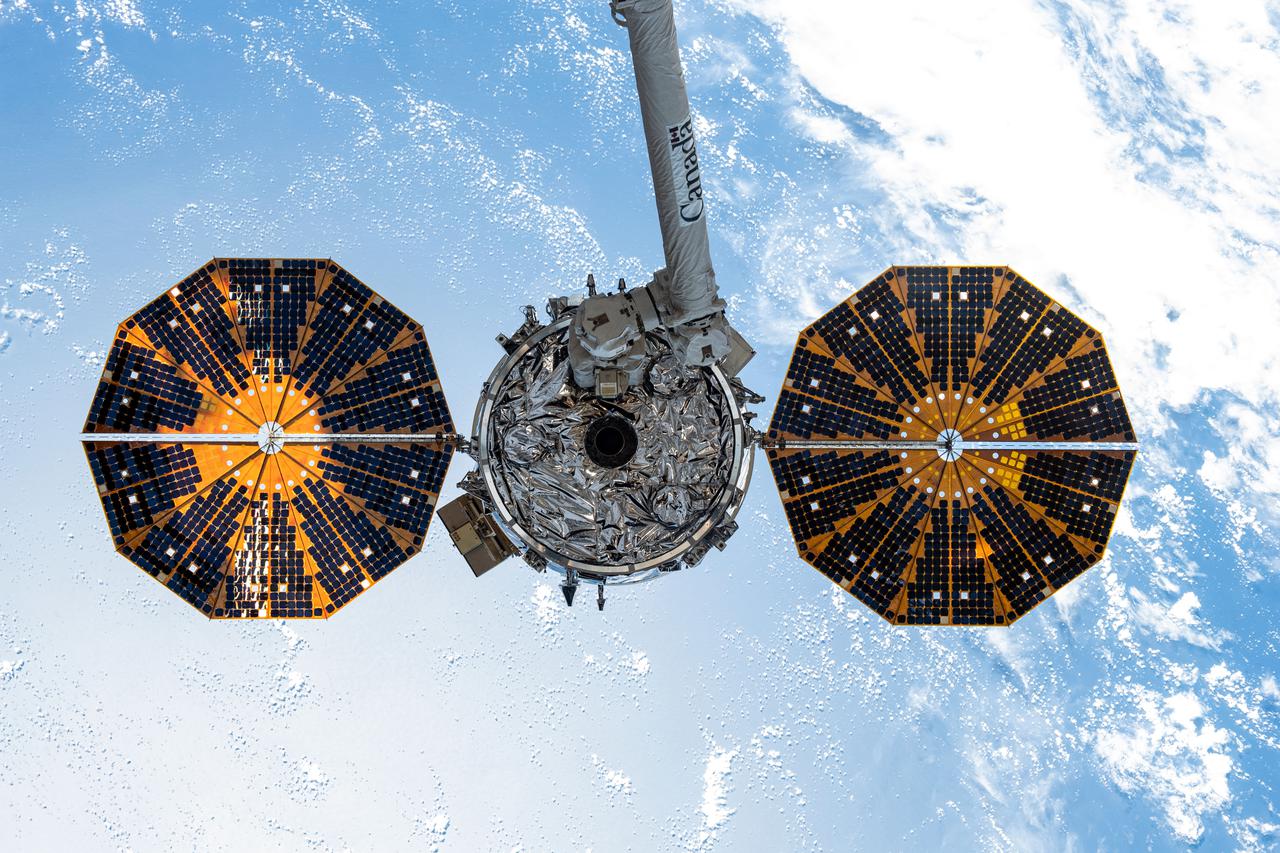
iss065e154219 (June 29, 2021) --- The Cygnus space freighter from Northrop Grumman is pictured in the grip of the Canadarm2 robotic arm moments before its release completing a four-month cargo mission at the International Space Station.
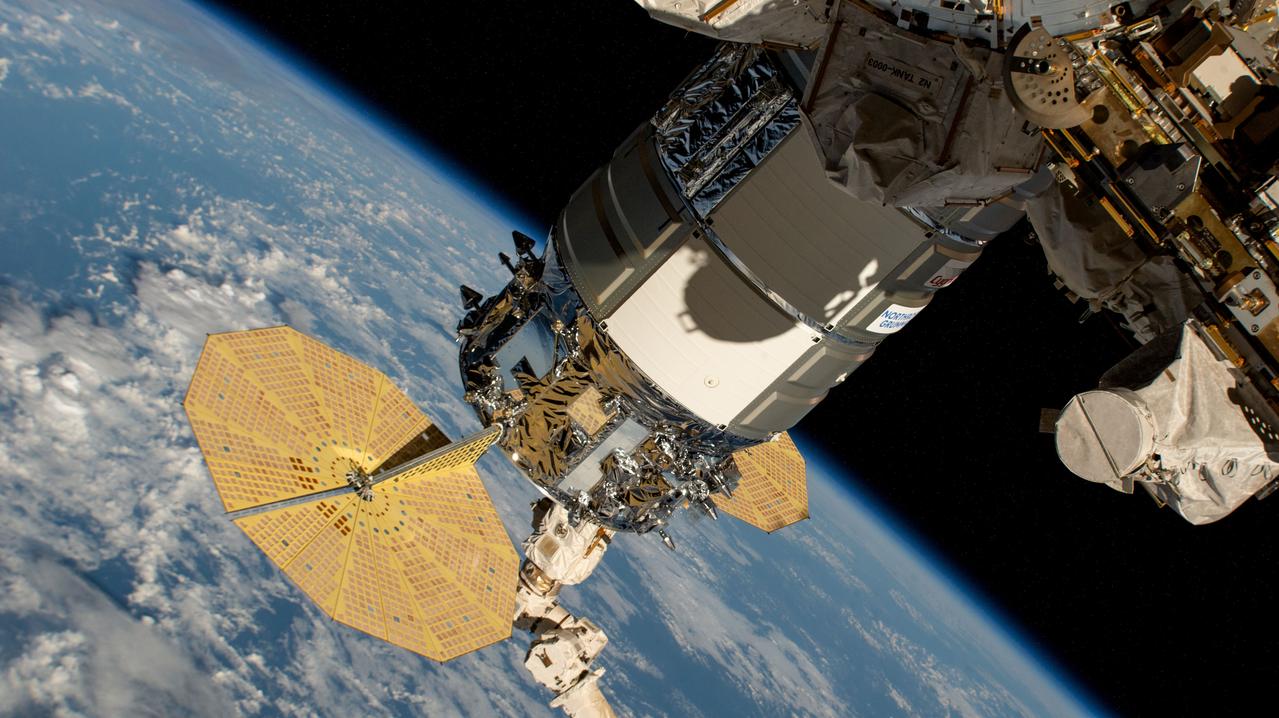
iss071e439629 (Aug. 6, 2024) --- Still in the grips of the Canadarm2 robotic arm, the Northrop Grumman Cygnus space freighter is pictured attached to the Unity module's Earth-facing port. The International Space Station was orbiting 262 miles above a cloudy Pacific Ocean halfway between the U.S. island of Hawaii and the island nation of the Republic of Kiribati at the time of this photograph.
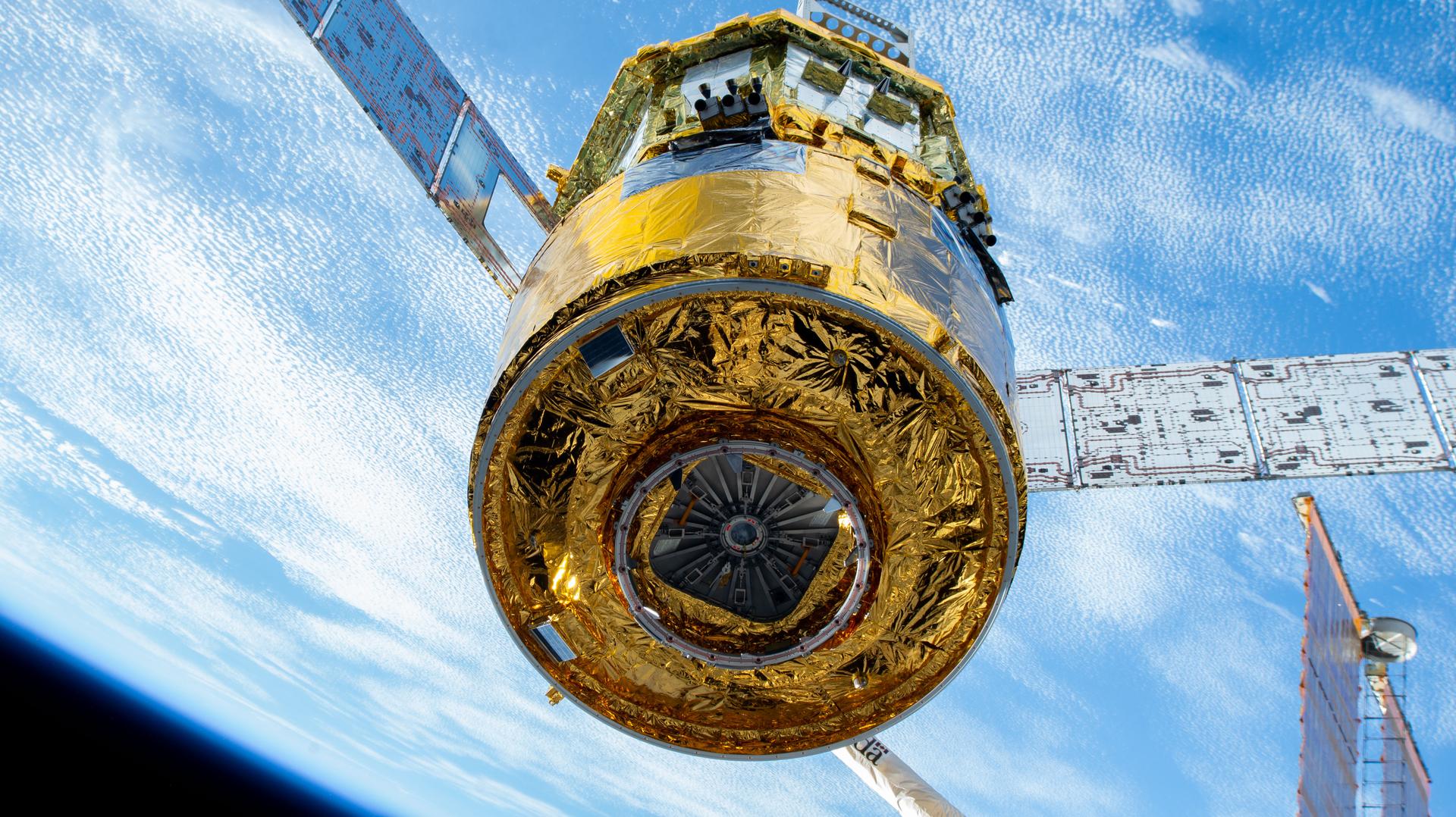
iss073e0988452 (Oct. 29, 2025) --- The new HTV-X1 cargo spacecraft from JAXA (Japan Aerospace Exploration Agency), carrying approximately 12,800 pounds of science, supplies, and hardware for the Expedition 73 crew, is pictured after being captured by the Canadarm2 robotic arm. The Common Berthing Mechanism, located at the base of HTV-X1, is visible and serves as the interface that attaches the spacecraft to the Earth-facing port on the International Space Station’s Harmony module, enabling crew access to the cargo inside.
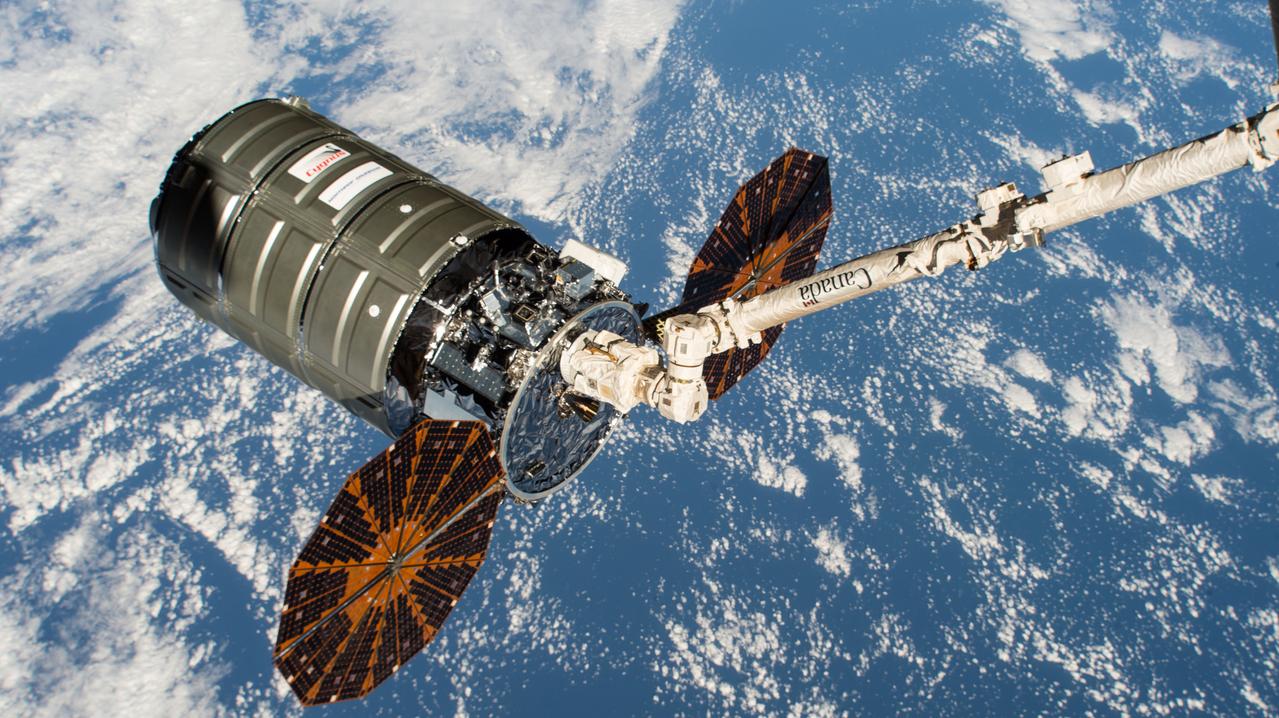
iss057e103652 (Nov. 19, 2018) --- Northrop Grumman's Cygnus space freighter with its prominent cymbal-shaped UltraFlex solar arrays is pictured in the grips of the Canadarm2 robotic arm after it was captured by Expedition 57 Flight Engineer Serena Auñón-Chancellor and ESA (European Space Agency) astronaut Alexander Gerst.
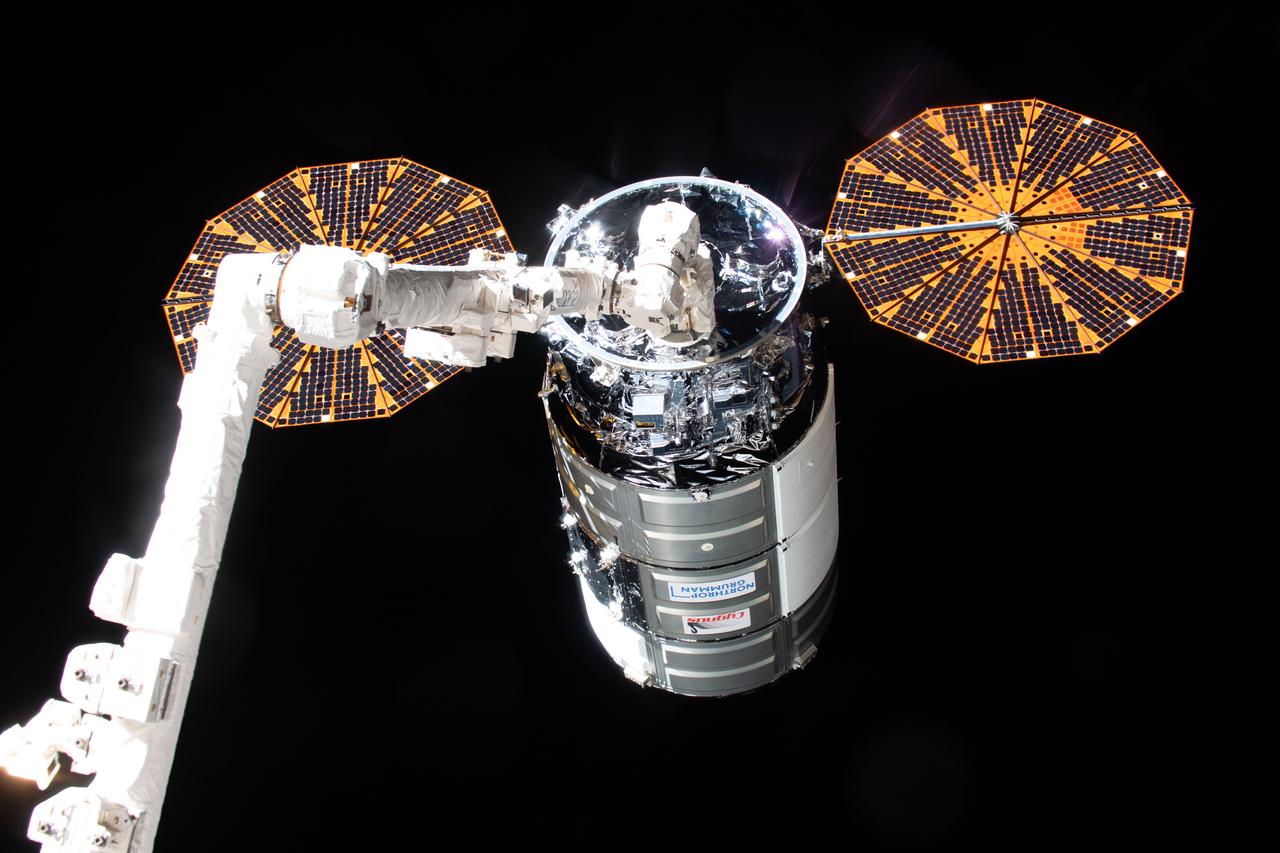
iss070e085725 (Feb. 1, 2024) --- Northrop Grumman's Cygnus space freighter, packed with more than 8,200 pounds of science experiments, crew supplies, and station hardware, is pictured in the grips of the Canadarm2 robotic arm after its capture. Featured prominently on Cygnus, are its two cymbal-shaped UltraFlex solar arrays.
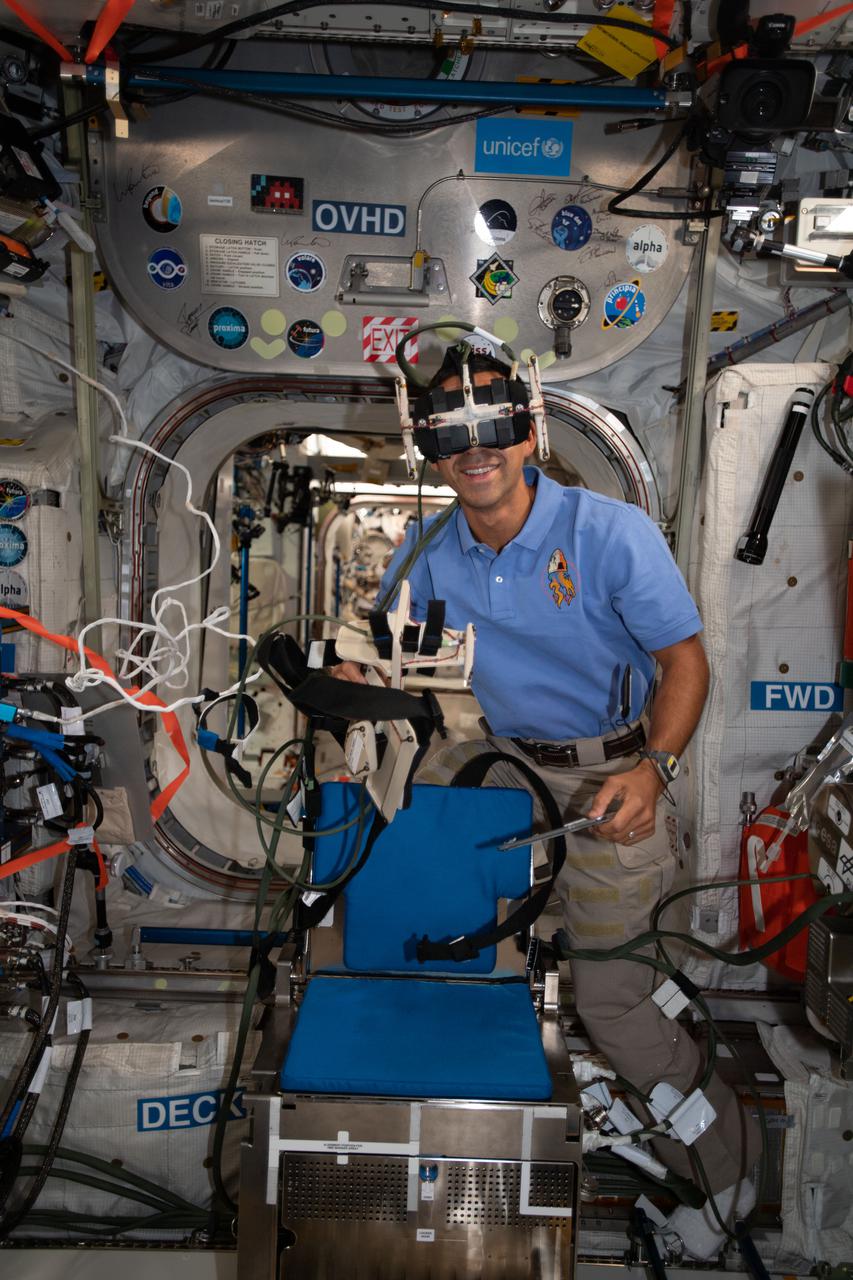
iss066e079006 (Nov. 22, 2021) --- NASA astronaut and Expedition 66 Flight Engineer Raja Chari wears virtual reality goggles inside the International Space Station's Columbus laboratory module. Chari was participating in the GRASP human research experiment that tests how astronauts perceive up and down movements and grip and manipulate objects in microgravity.

iss032e028722 (Sept. 12, 2012) --- Japan’s third resupply ship, the H-II Transfer Vehicle-3 (HTV-3), also known as the Kounotori, is pictured in September of 2012 attached to the International Space Station’s Harmony module and in the grips of the Canadarm2 robotic arm.
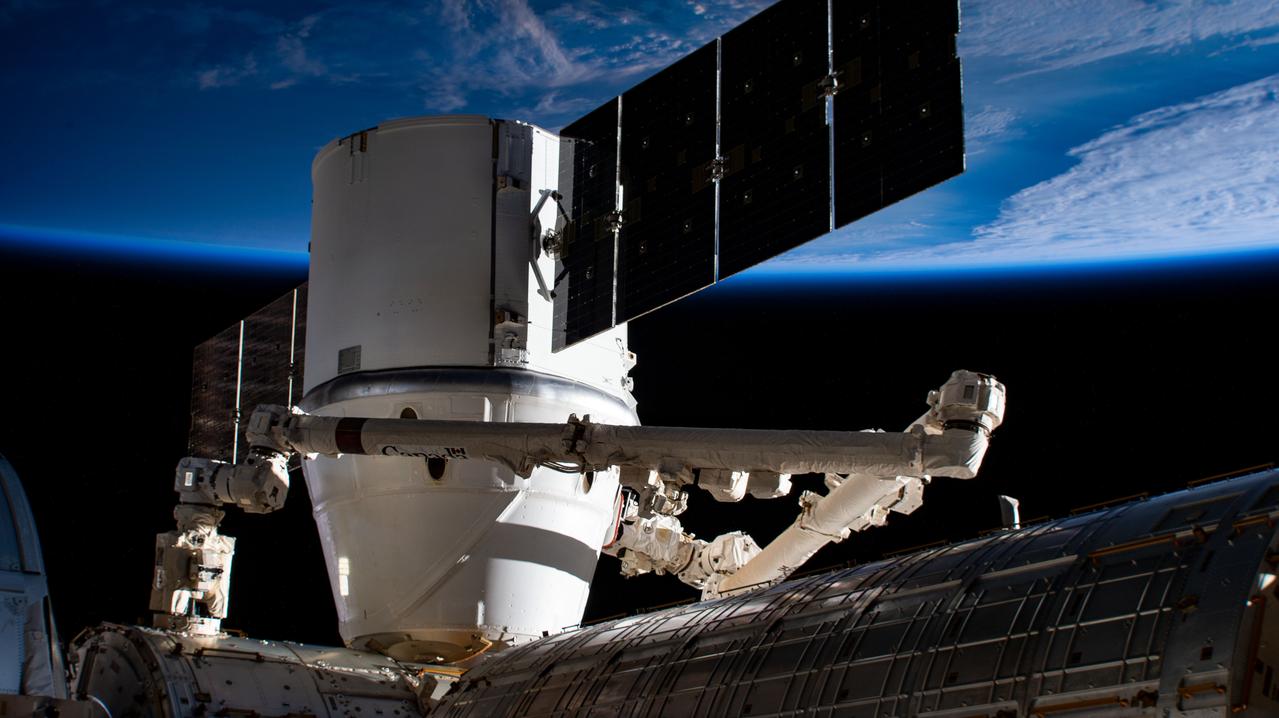
iss059e051356 (May 6, 2019) --- The SpaceX Dragon resupply ship is pictured berthed to the Harmony module as the International Space Station orbited 258 miles above east Asia. Dragon was still in the grips of the Canadarm2 robotic arm shortly after it was installed on Harmony.

iss055e010994 (April 5, 2018) --- The SpaceX Dragon resupply ship, held firmly in the grip of the Canadarm2 robotic arm, is pictured being remotely maneuvered very slowly by robotics engineers on the ground before it was installed to the Harmony module's Earth-facing port.
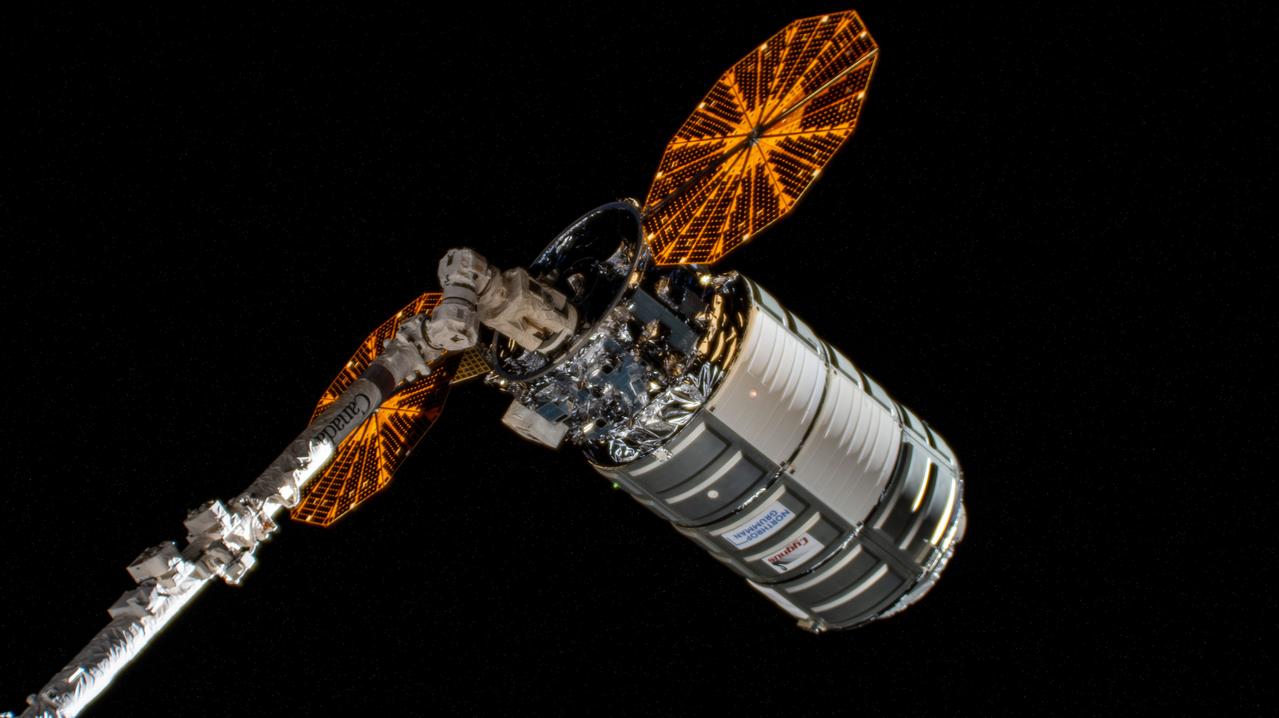
iss067e156136 (July 28, 2022) --- Northrop Grumman's Cygnus space freighter is positioned away from the International Space Station in the grips of the Canadarm2 robotic arm prior to its release ending a four-month stay attached to the orbiting lab's Unity module.
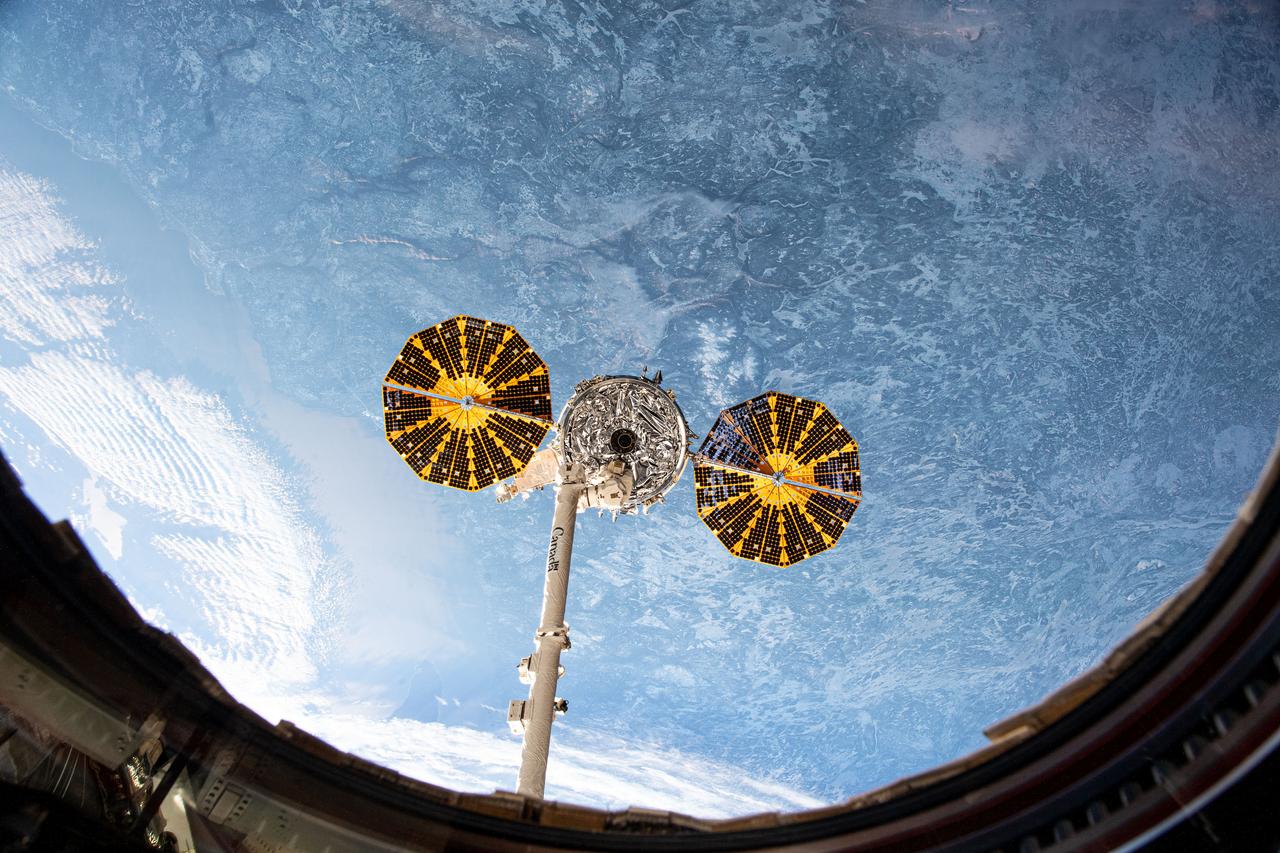
iss070e044080 (Dec. 22, 2023) --- This view from the main window on the International Space Station's cupola shows Northrop Grumman's Cygnus space freighter in the grip of the Canadarm2 robotic arm moments before its release. The orbital complex was soaring 261 miles above the icy landscape of Quebec, Canada at the time of this photograph.
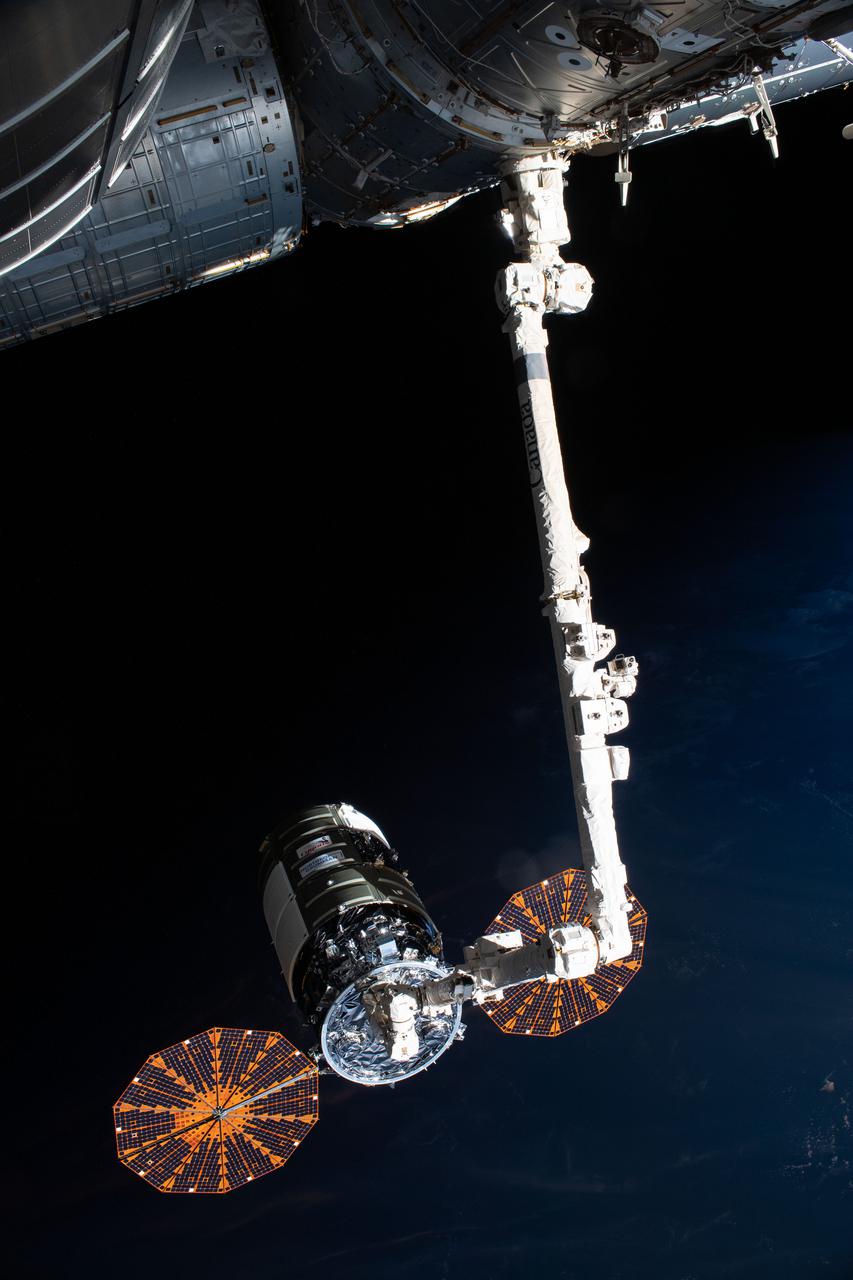
iss065e241403 (Aug. 12, 2021) --- Northrop Grumman's Cygnus space freighter, in the grips of the Canadarm2 robotic arm operated, is remotely maneuvered by ground controllers toward the International Space Station's Unity module where it was installed for three months of cargo operations.
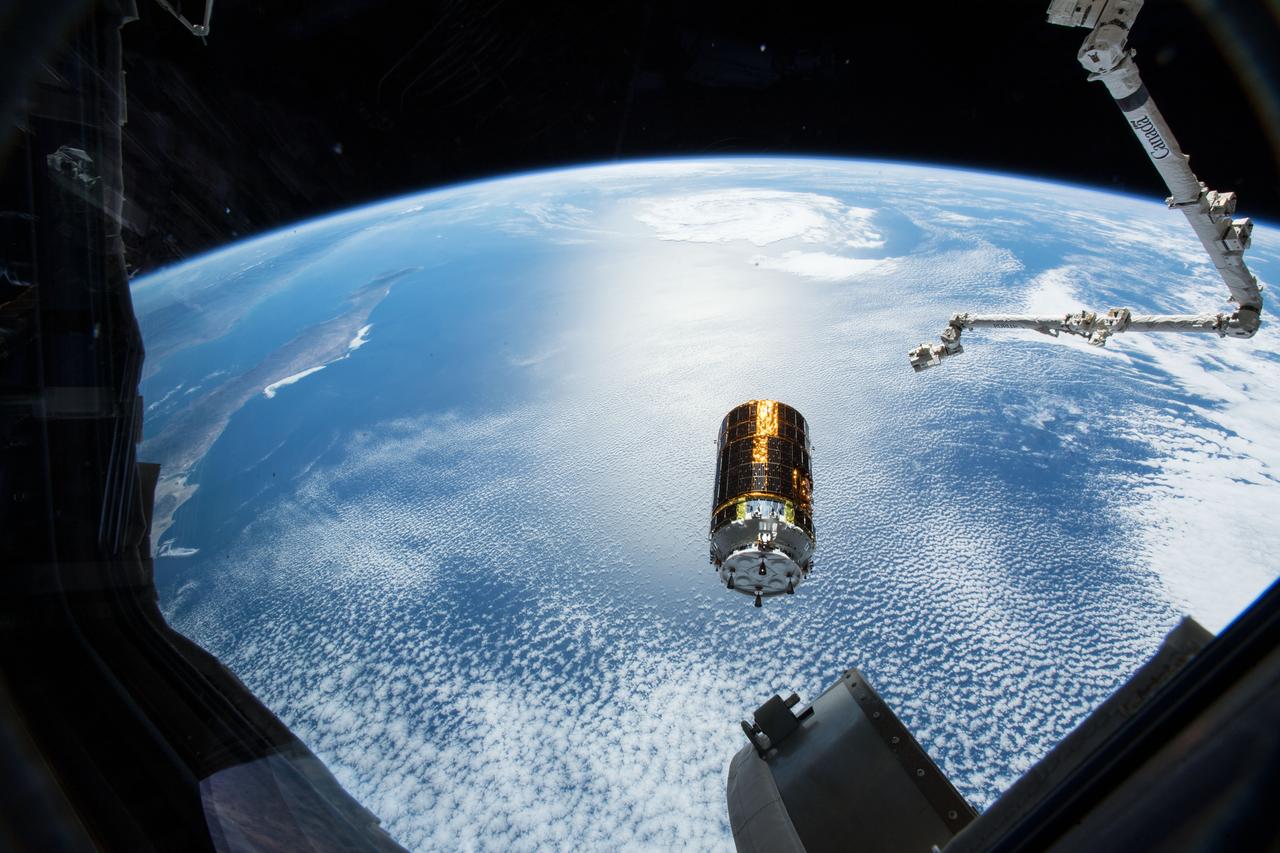
iss057e065889 (Nov. 7, 2018) --- Japan's HTV-7 resupply ship is pictured after it was released from the grips of the Canadarm2 robotic arm. Both the HTV-7 and the International Space Station were orbiting about 254 miles above the Pacific Ocean and about 311 miles west of Baja California.
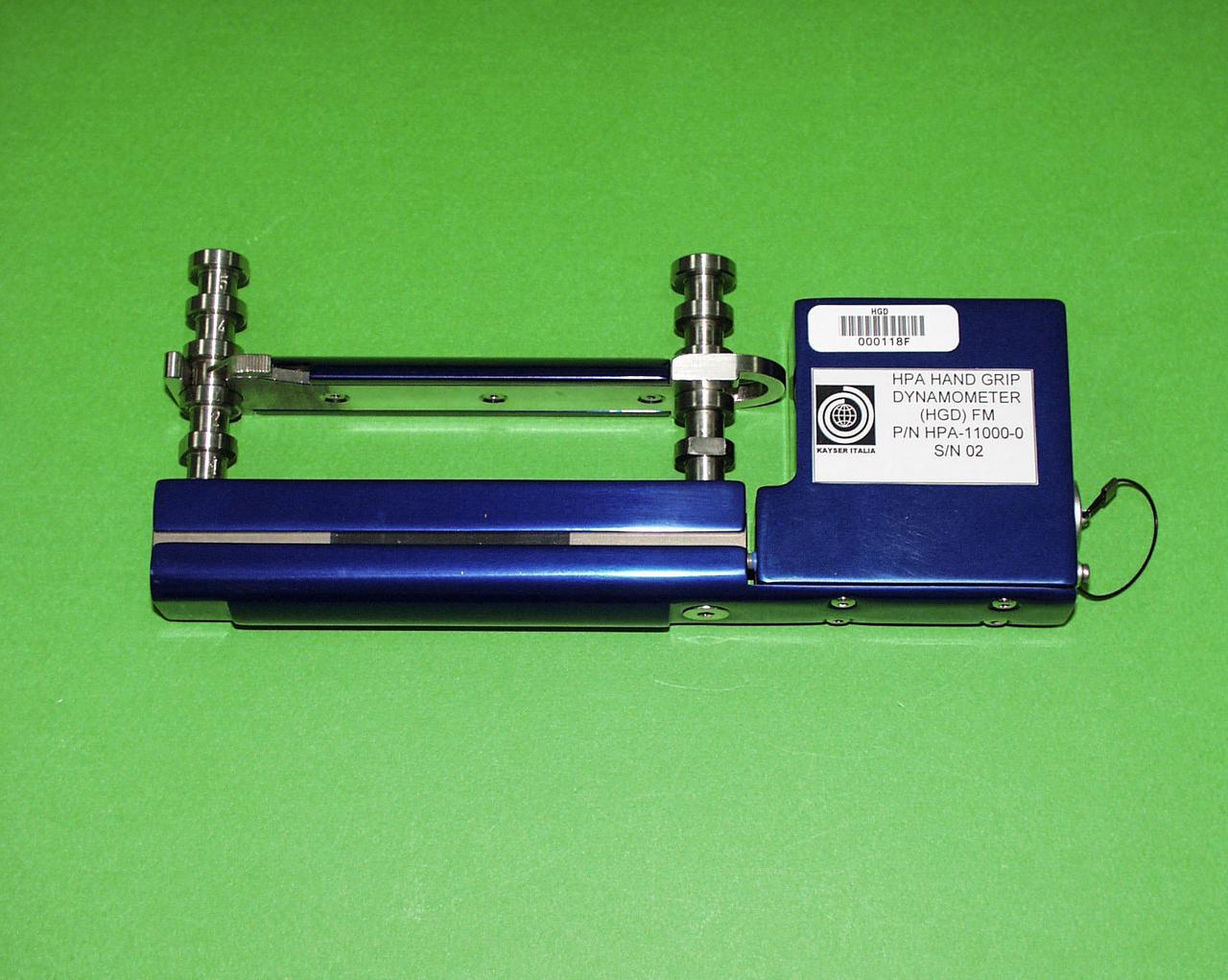
jsc2021e009414 (8/12/20020 --- A preflight view of theHand Posture Analyzer (HPA) Hand Grip Dynamometer (HGD). The Hand Posture Analyzer (HPA) facility helps to examine the way hand and arm muscles are used differently aboard the International Space Station (ISS). Image courtesy of the Italian Space Agency (ASI).
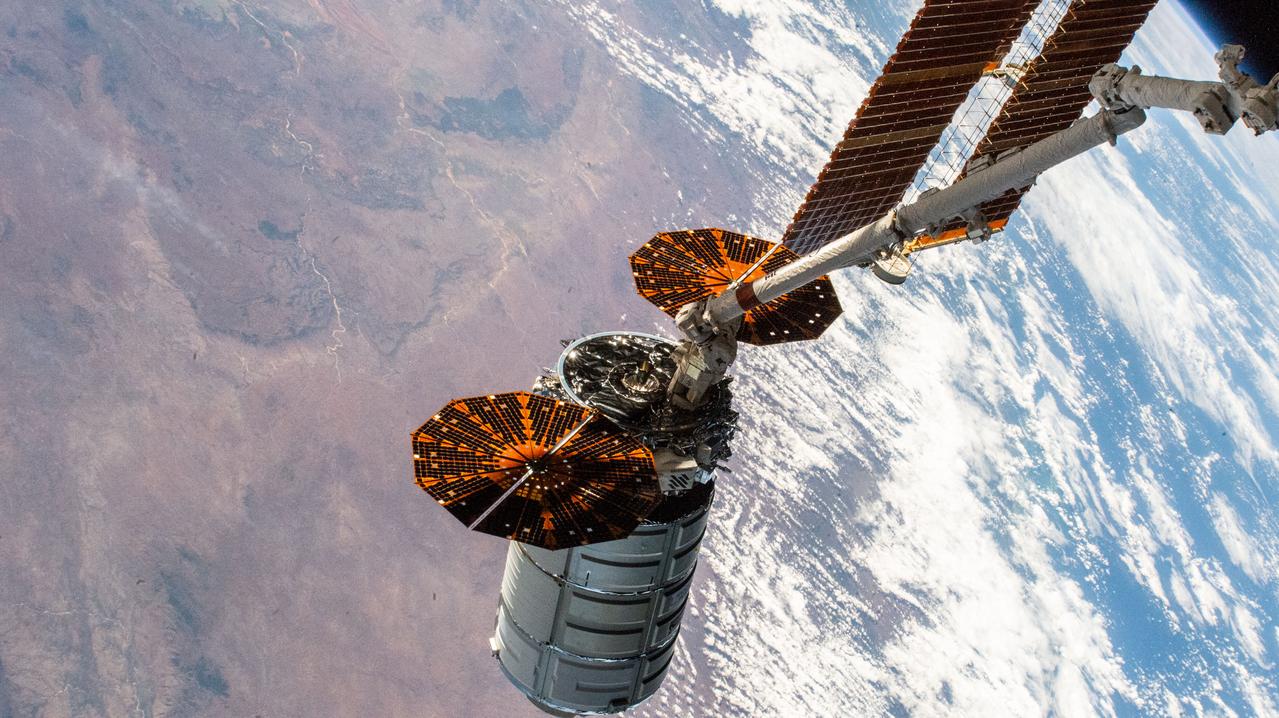
iss067e156217 (June 28, 2022) --- Northrop Grumman's Cygnus space freighter is positioned away from the International Space Station in the grips of the Canadarm2 robotic arm prior to its release ending a four-month stay attached to the orbiting lab's Unity module. The orbiting complex was flying 263 miles above Madagascar at the time of this photograph.
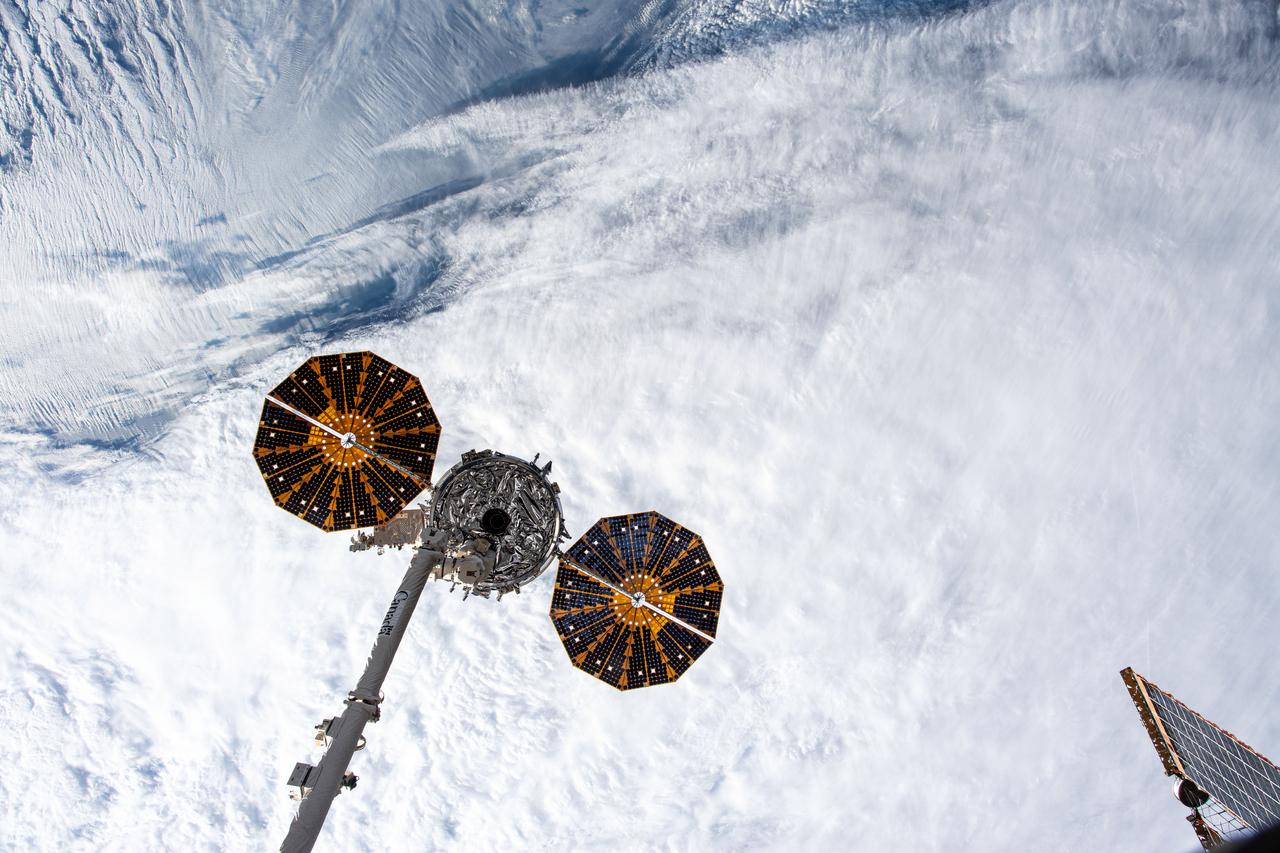
iss070e044091 (Dec. 22, 2023) --- This view from the main window on the International Space Station's cupola shows Northrop Grumman's Cygnus space freighter in the grip of the Canadarm2 robotic arm moments before its release. The orbital complex was soaring 260 miles above the Atlantic Ocean off the Canadian island of Newfoundland at the time of this photograph.
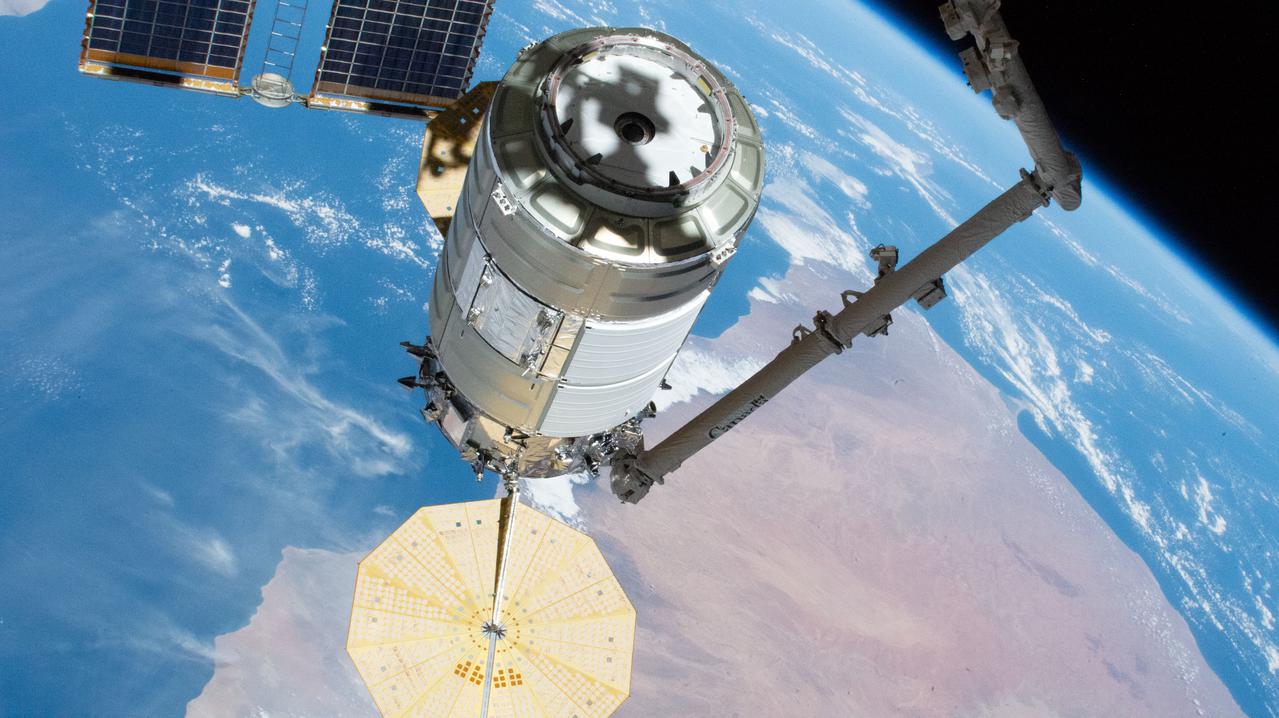
iss064e035920 (Feb. 22, 2021) --- The Cygnus space freighter from Northrop Grumman is maneuvered in the grip of the Canadarm2 robotic arm toward its port on the Unity module where it will stay until late May. The International Space Station was orbiting 262 miles above Ethiopia at the time this photograph was taken.
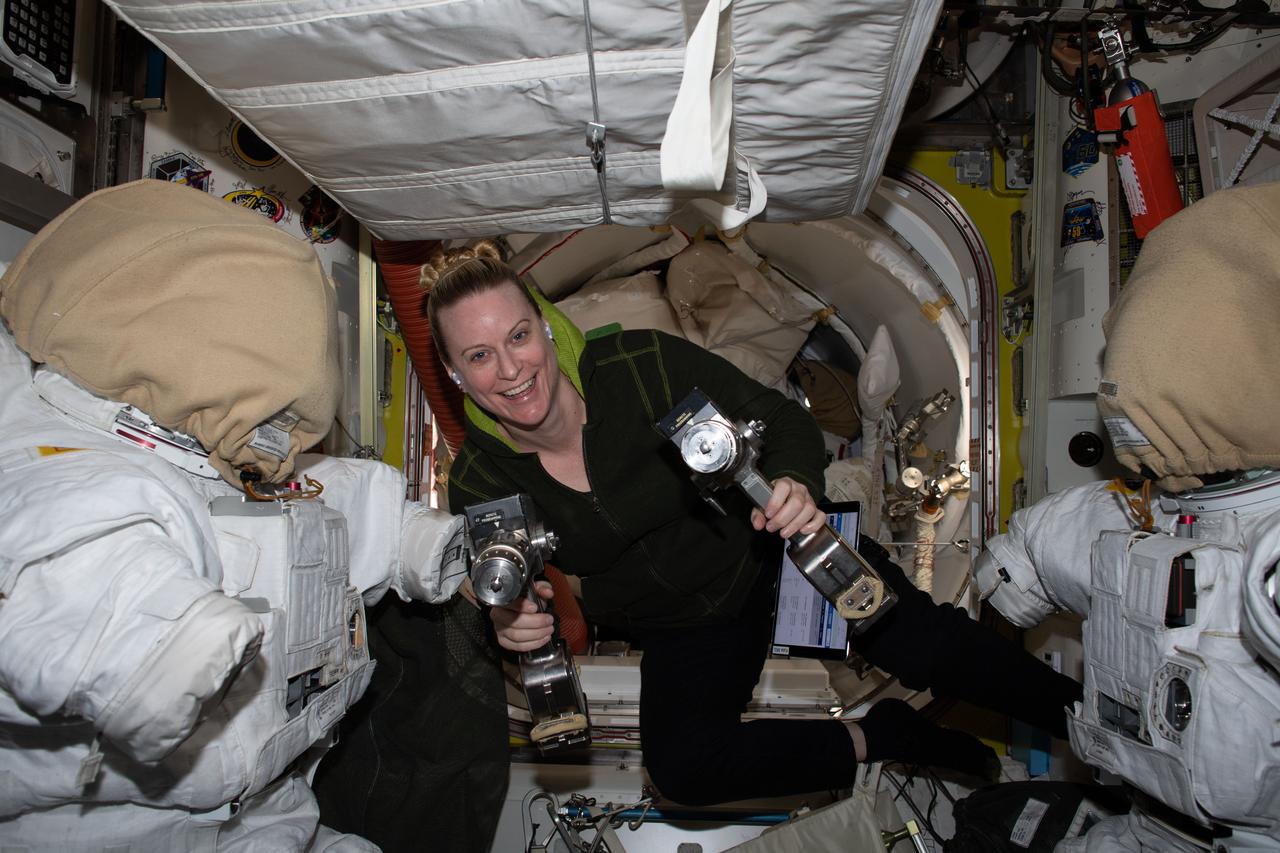
iss064e013381 (Dec. 18, 2020) --- NASA astronaut and Expedition 64 Flight Engineer Kate Rubins is pictured inside the U.S. Quest airlock carrying a pair of pistol grip tools used for maintenance work during spacewalks. Rubins is flanked by a pair of U.S. spacesuits with the arm segments unattached and the helmets covered for protection.
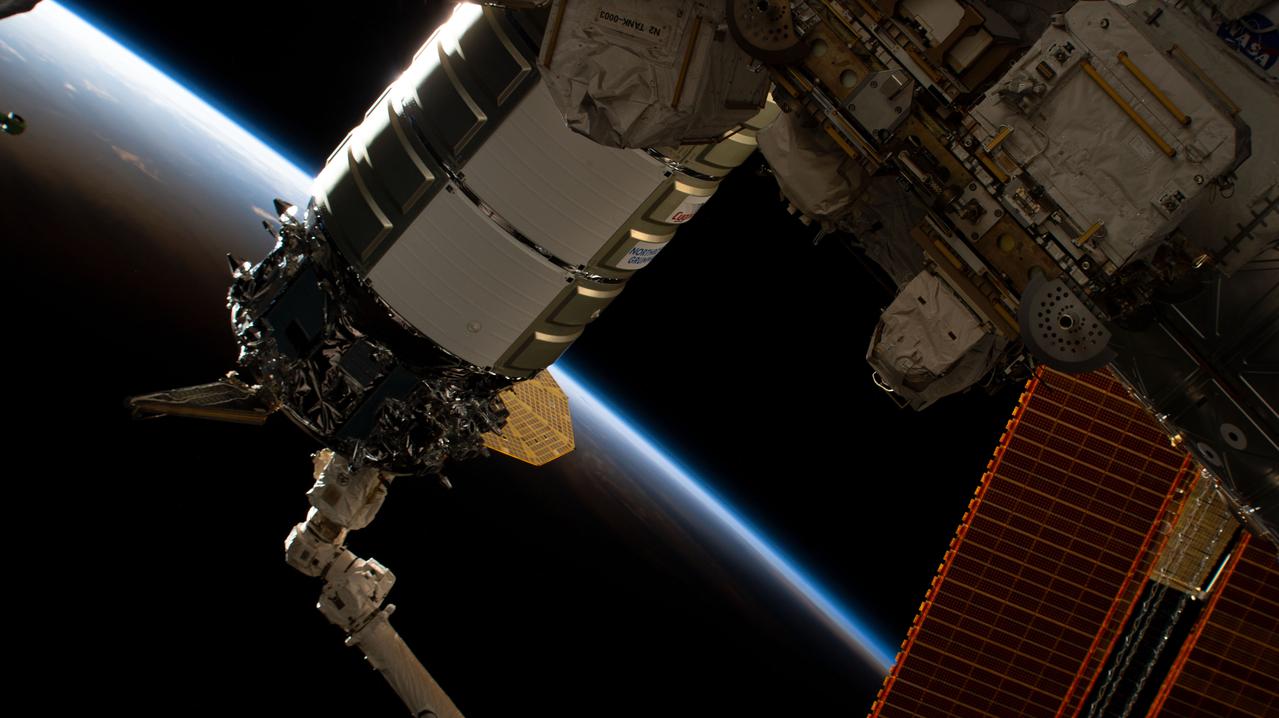
iss068e021452 (Nov. 9, 2022) --- The Northrop Grumman Cygnus space freighter is pictured in the grip of the Canadarm2 robotic arm as ground controllers remotely install the cargo craft to the International Space Station's Unity module. The space station was orbiting into a sunset 257 miles above the Indian Ocean off the coast of the African nation of Tanzania.
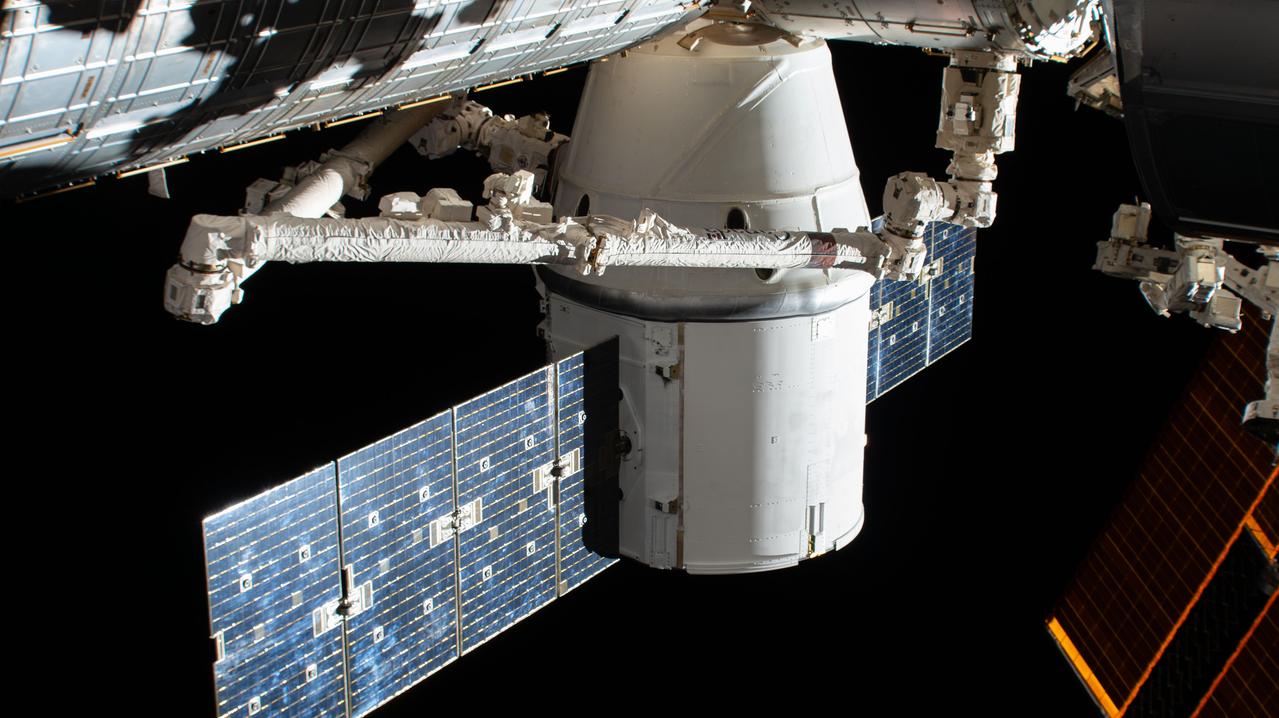
iss061e067992 (Dec. 8, 2019) --- The SpaceX Dragon resupply ship is pictured in the grip of the Canadarm2 robotic arm after it was installed to the Harmony module. The International Space Station was orbiting 262 miles above the North Pacific Ocean when this photograph was taken by an external high definition camera.
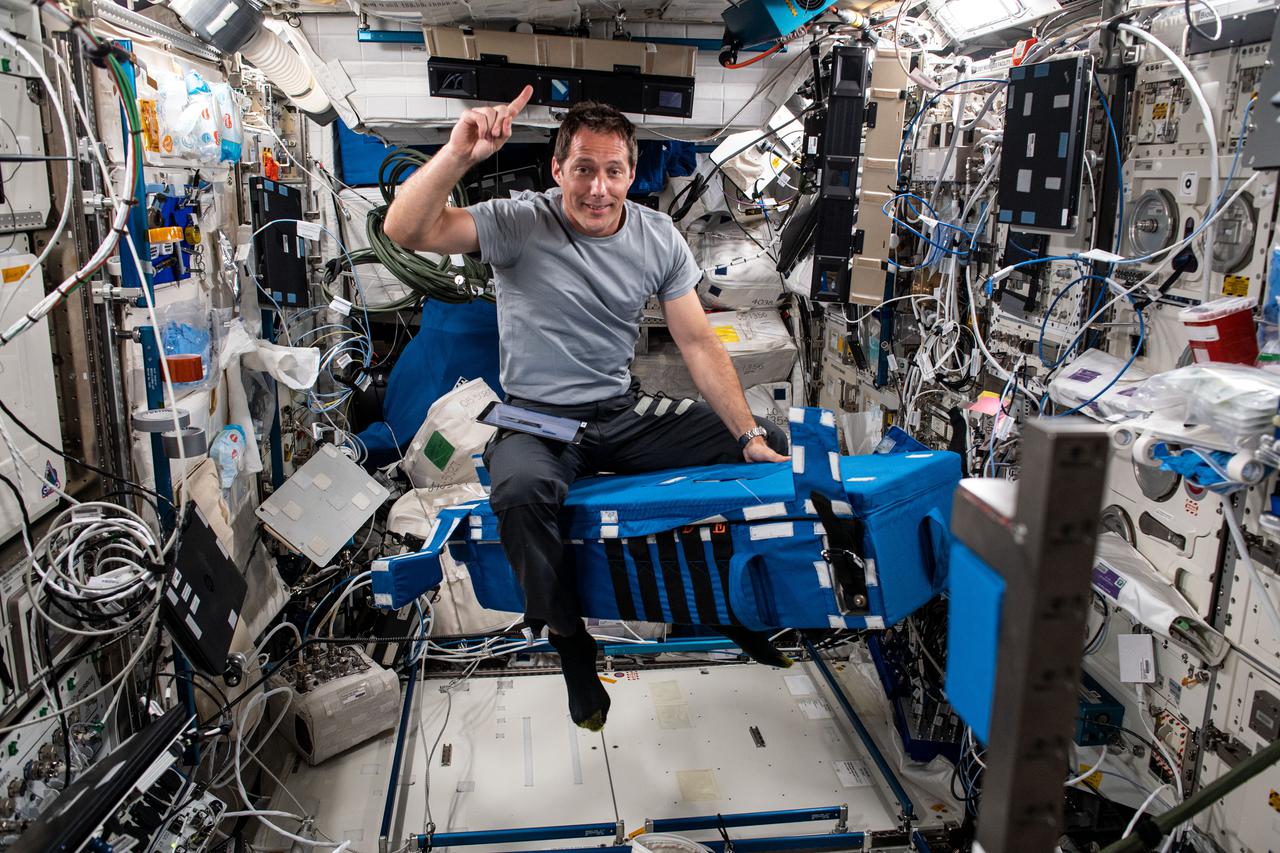
iss065e006534 (April 26, 2021) --- Expedition 65 Flight Engineer Thomas Pesquet of the European Space Agency is pictured inside the Columbus laboratory module setting up hardware for the Grip experiment. The motion study is composed of a series of dexterous manipulation tasks that may lead to improved spacecraft interfaces and deeper insights into human cognition in space.