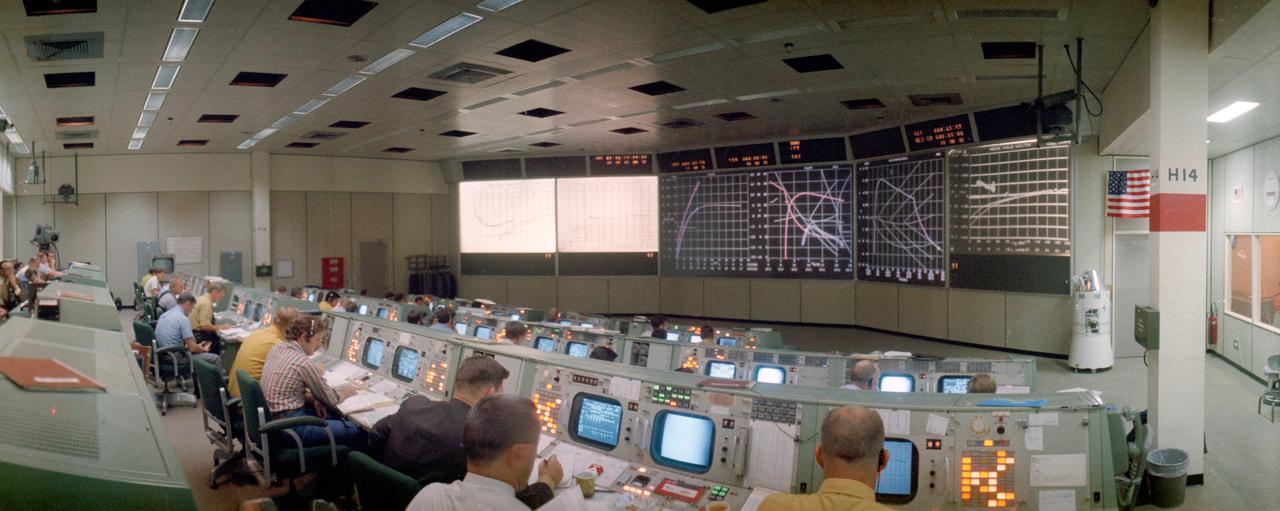
S71-41357 (26 July 1971) --- An overall, wide-angle lens view of activity in the Mission Operations Control Room in the Mission Control Center minutes after the launch of the Apollo 15 lunar landing mission. Ground elapsed time was 45 minutes and 42 seconds when this photograph was taken.
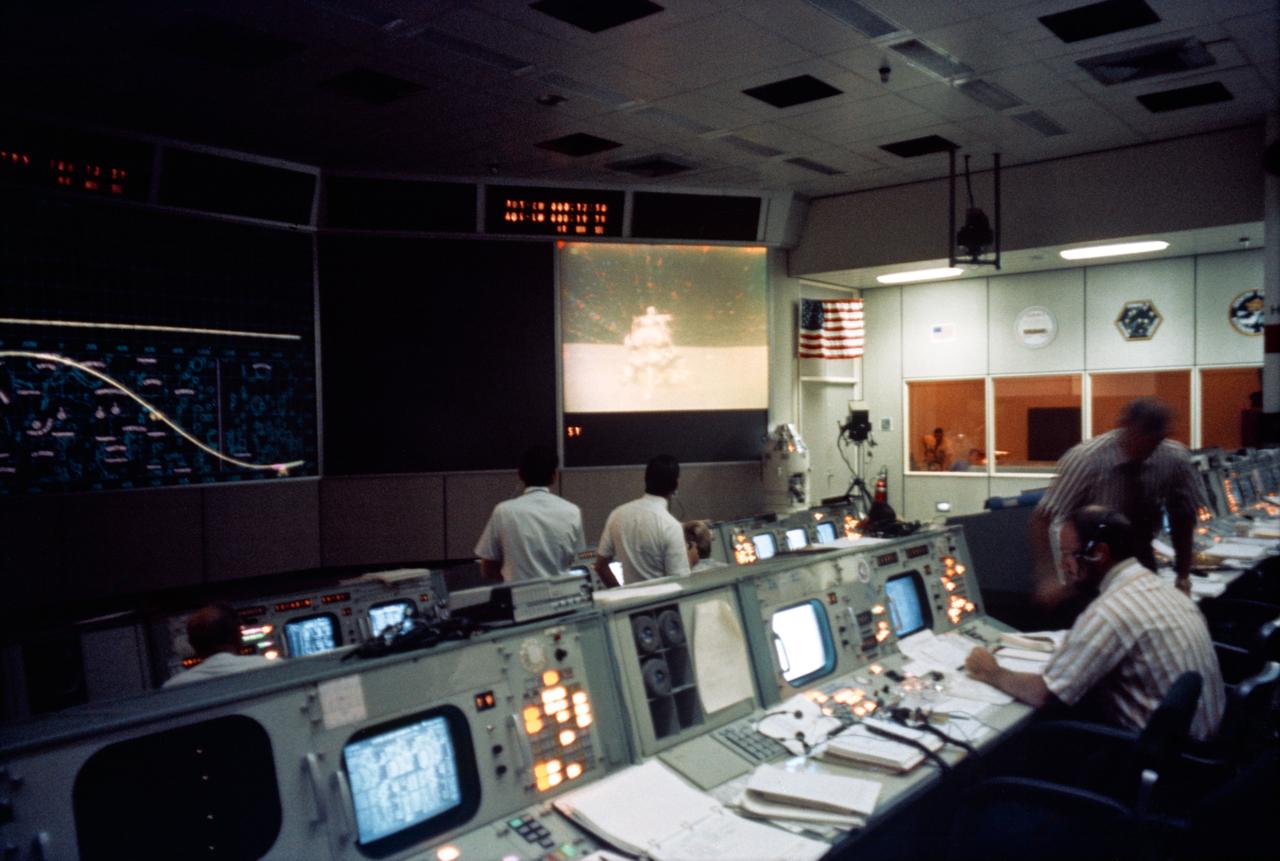
S71-41759 (2 Aug. 1971) --- A partial view of activity in the Mission Operations Control Room in the Mission Control Center during the liftoff of the Apollo 15 Lunar Module "Falcon" ascent stage from the lunar surface. An RCA color television camera mounted on the Lunar Roving Vehicle made it possible for people on Earth to watch the LM's spectacular launch from the moon. The LM liftoff was at 171:37 ground elapsed time. The LRV was parked about 300 feet east of the LM. The TV camera was remotely controlled from a console in the MOCR. Seated in the right foreground is astronaut Edgar D. Mitchell, a spacecraft communicator. Mitchell was lunar module pilot of the Apollo 14 lunar landing mission. Note liftoff on the television monitor in the center background.
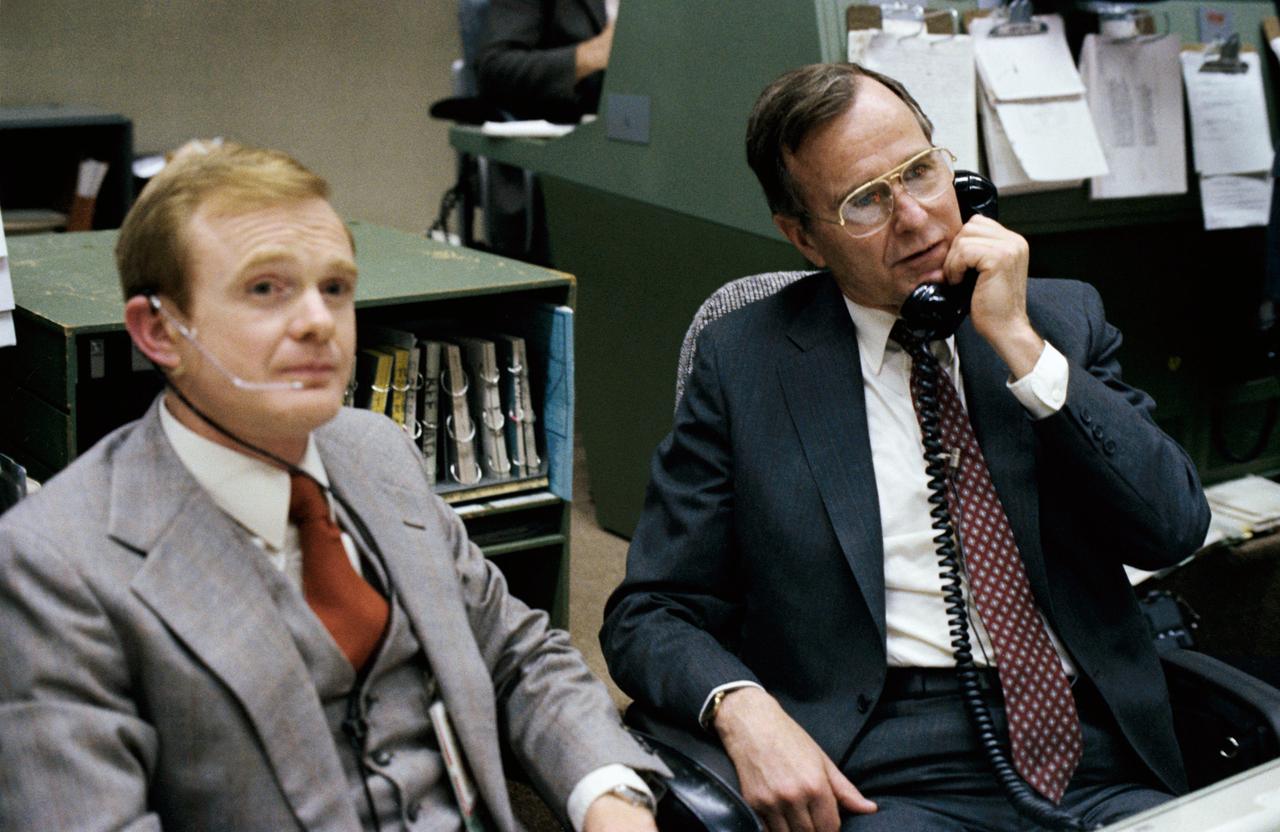
S83-30190 (8 April 1983) --- Vice President George Bush talks to the Earth-orbiting STS-6 astronauts from the spacecraft communicators; (CAPCOM) console in the mission operations control room (MOCR) of the Johnson Space Center?s mission control center. Astronaut Roy D. Bridges, left, is one of the CAPCOM personnel on duty.
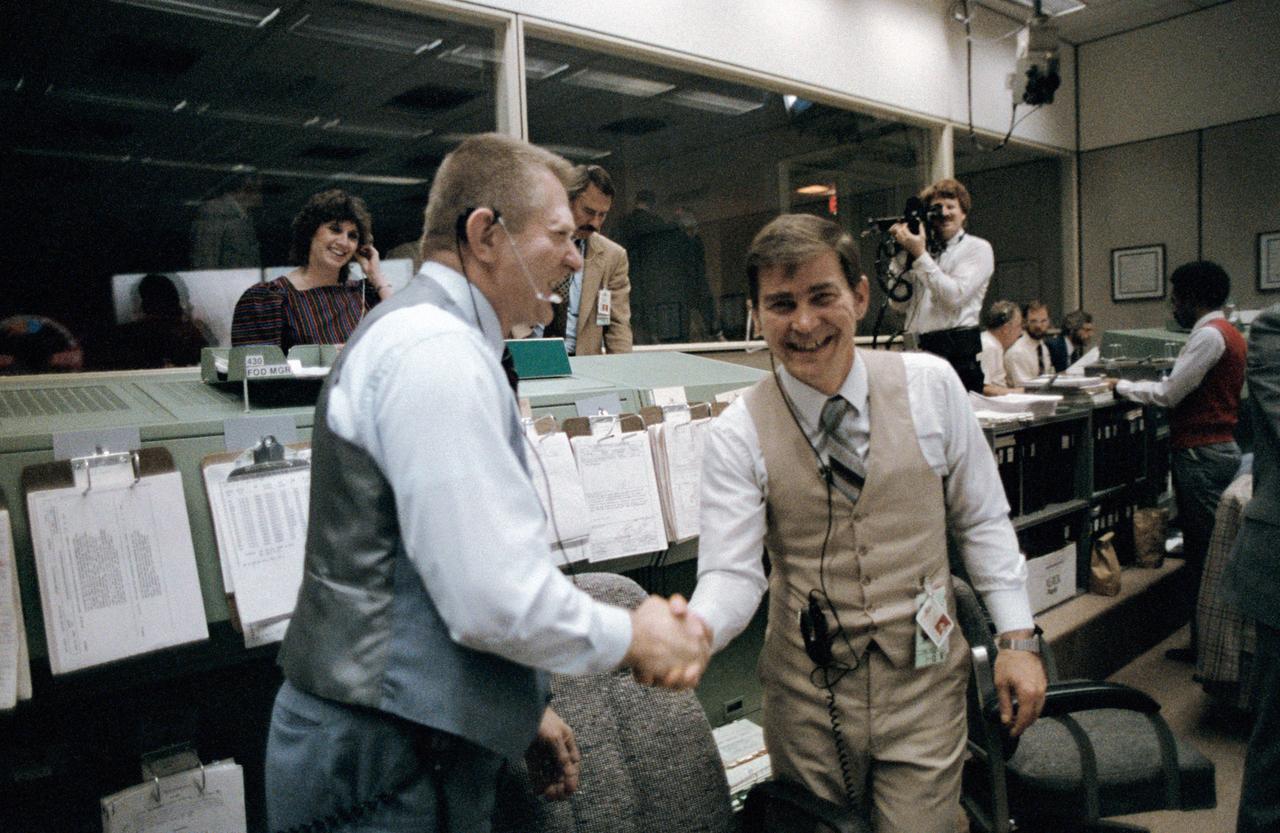
Various views of STS-6 MOCR activities during Day-5 with Vice-Pres. George Bush, Cap Communicator Bridges, JSC Director Gerald Griffin, Eugene F. Kranz, NASA Admin. James M. Beggs, Cap Com Astronaut O'Connor, Flight Directors Jay H. Greene, Gary E. Coen, and Harold Draughon. 1. BUSH, GEORGE, VICE-PRES. - STS-6 MOCR 2. DIR. GRIFFIN, GERALD D. - STS-6 MOCR 3. ADMIN. BEGGS, JAMES M. - STS-6 MOCR 4. FLT. DIRECTORS - STS-6 JSC, HOUSTON, TX Also available in 35 CN
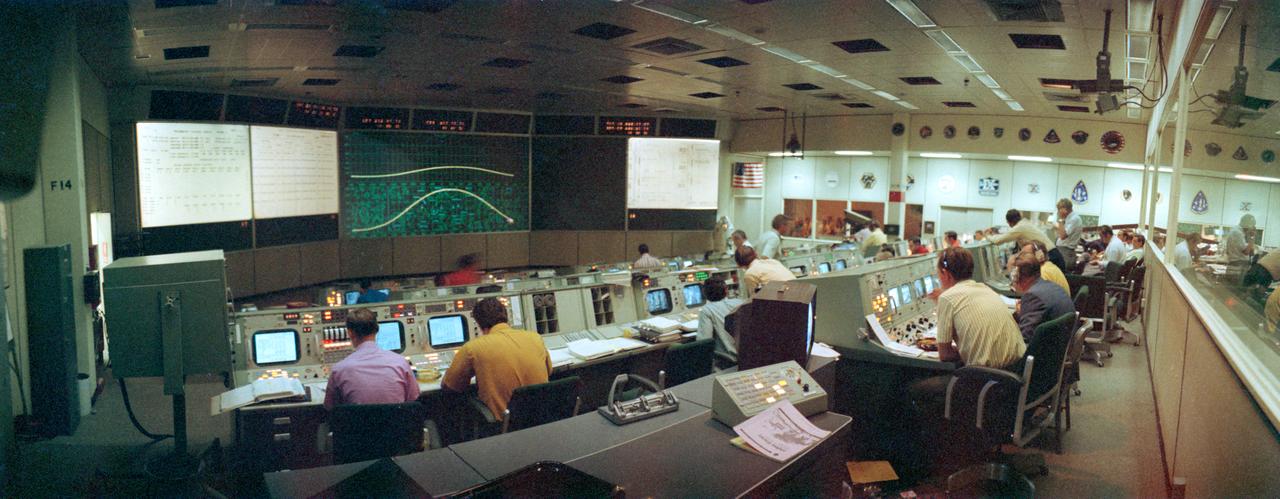
Overall wide-angle view of the MOCR in the Mission Control Center (MCC) during the touchdown of the Apollo XV LM at the Hadley-Apennine Moon site. MSC, Houston, TX
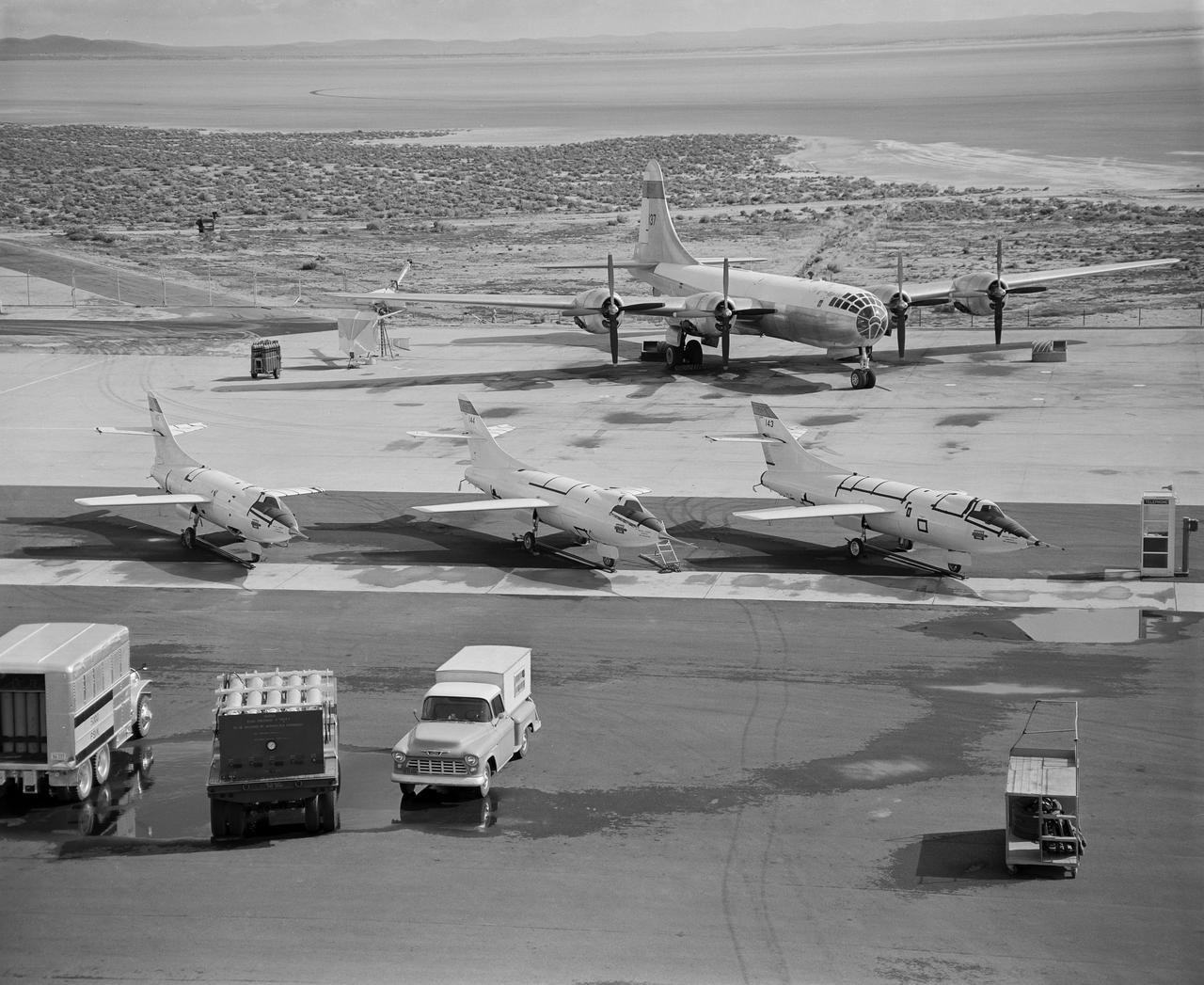
Behind three Douglas D-558-IIs is the B-29 launch aircraft. Under its right wing is the world’s first ground-based reaction control system motion simulator.
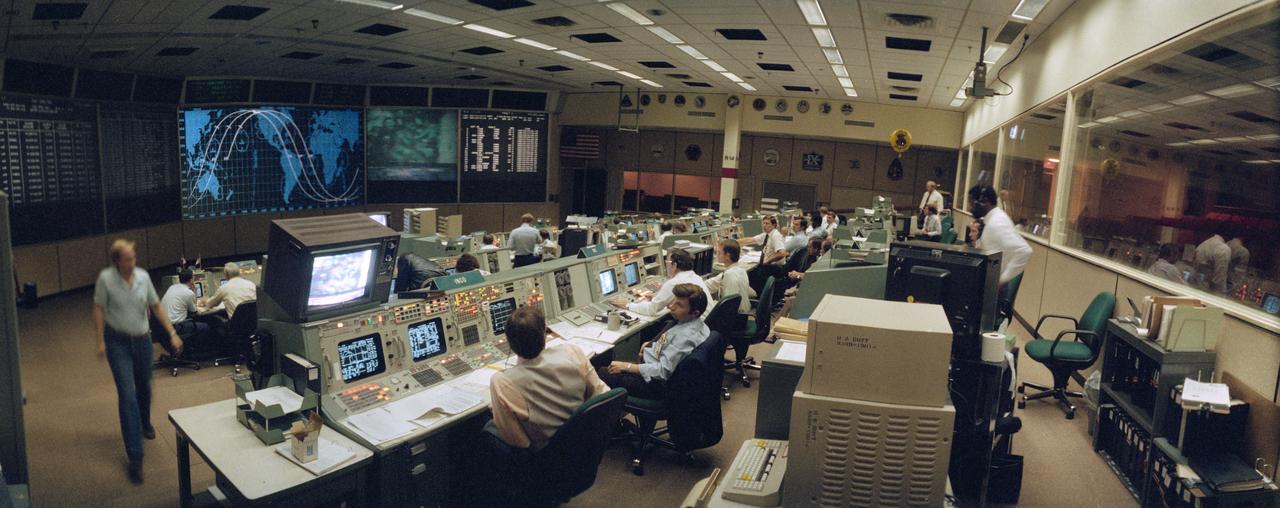
Wide angle view of the flight control room (FCR) of the Mission Control Center (MCC). Some of the STS 41-G crew can be seen on a large screen at the front of the MCC along with a map tracking the progress of the orbiter.
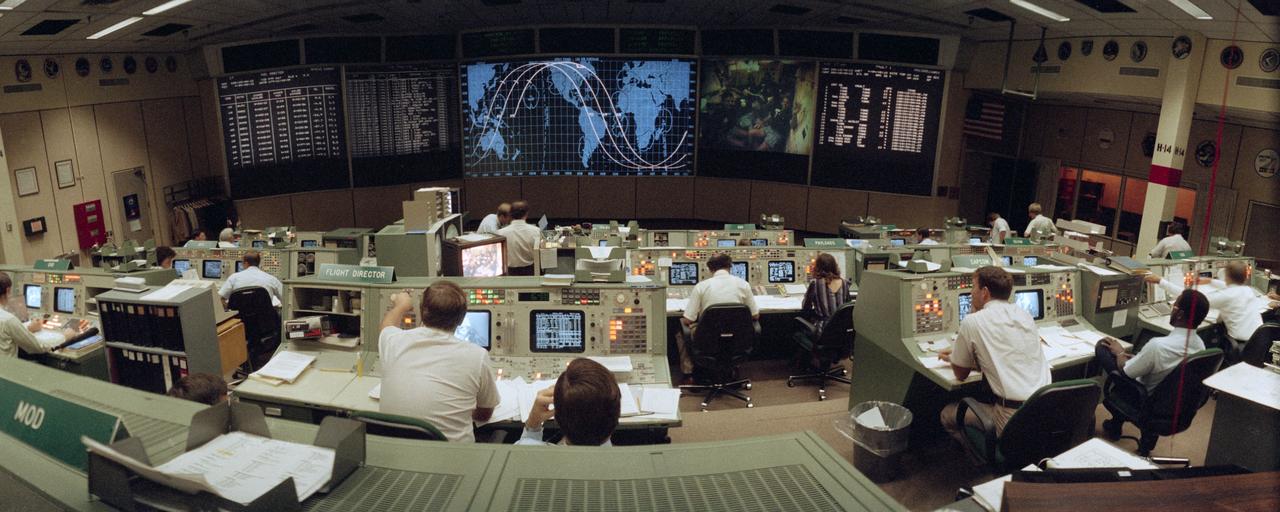
Fisheye view from the back of the Flight Control Room (FCR) of the Mission Control Center (MCC). Visible are the Flight Directors console (left front), the CAPCOM console (right front) and the Payloads console. Some of the STS 41-G crew can be seen on a large screen at the front of the MCC along with a map tracking the progress of the orbiter.
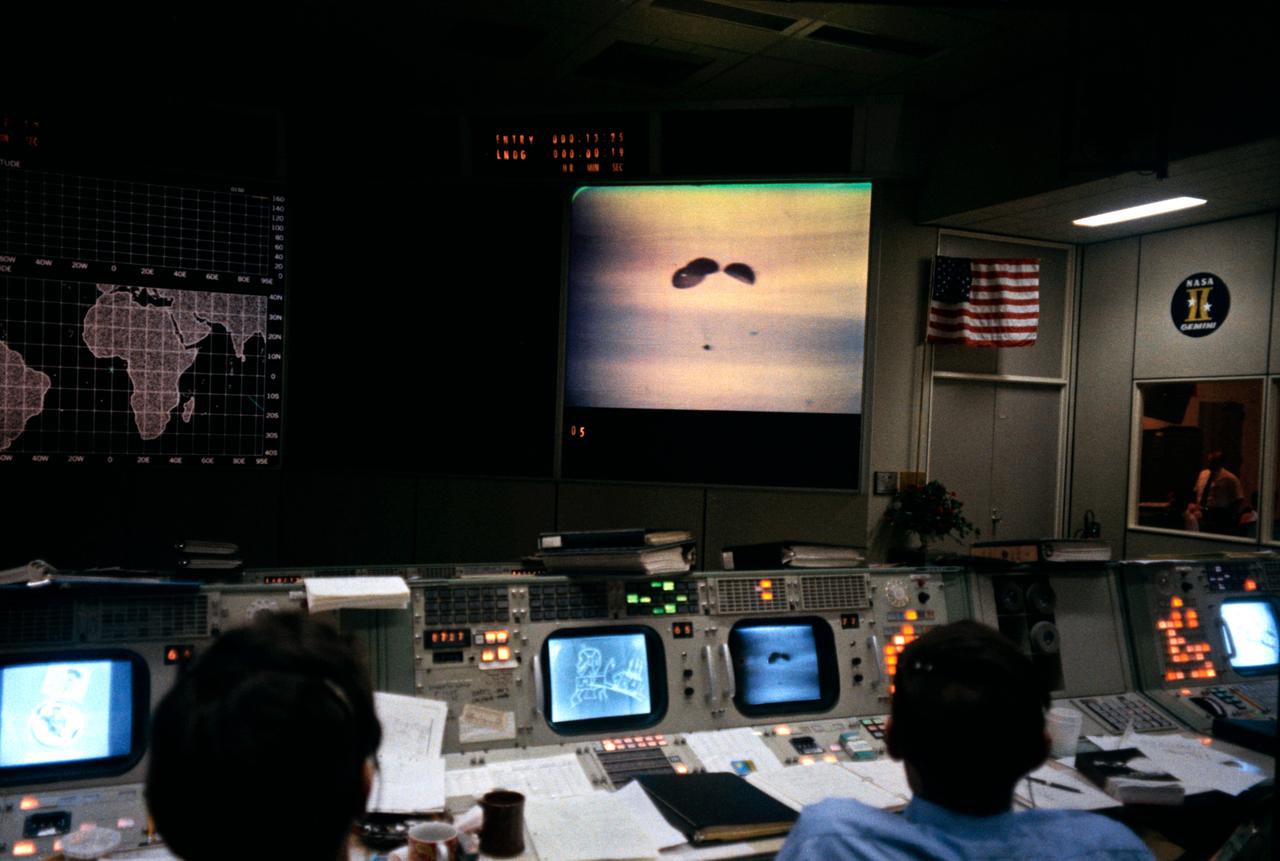
S70-35471 (17 April 1970) --- Two flight controllers man consoles in the Missions Operations Control Room (MOCR) of the Mission Control Center (MCC) at the Manned Spacecraft Center (MSC), Houston, Texas, just before splashdown occurred in the south Pacific Ocean. Though the MOCR does not appear to be crowded in this photo, there was a very large crowd of persons on hand for the splashdown and recovery operations coverage. Most of the group crowded around in the rear of the room. Apollo 13 splashdown occurred at 12:07:44 p.m. (CST), April 17, 1970.
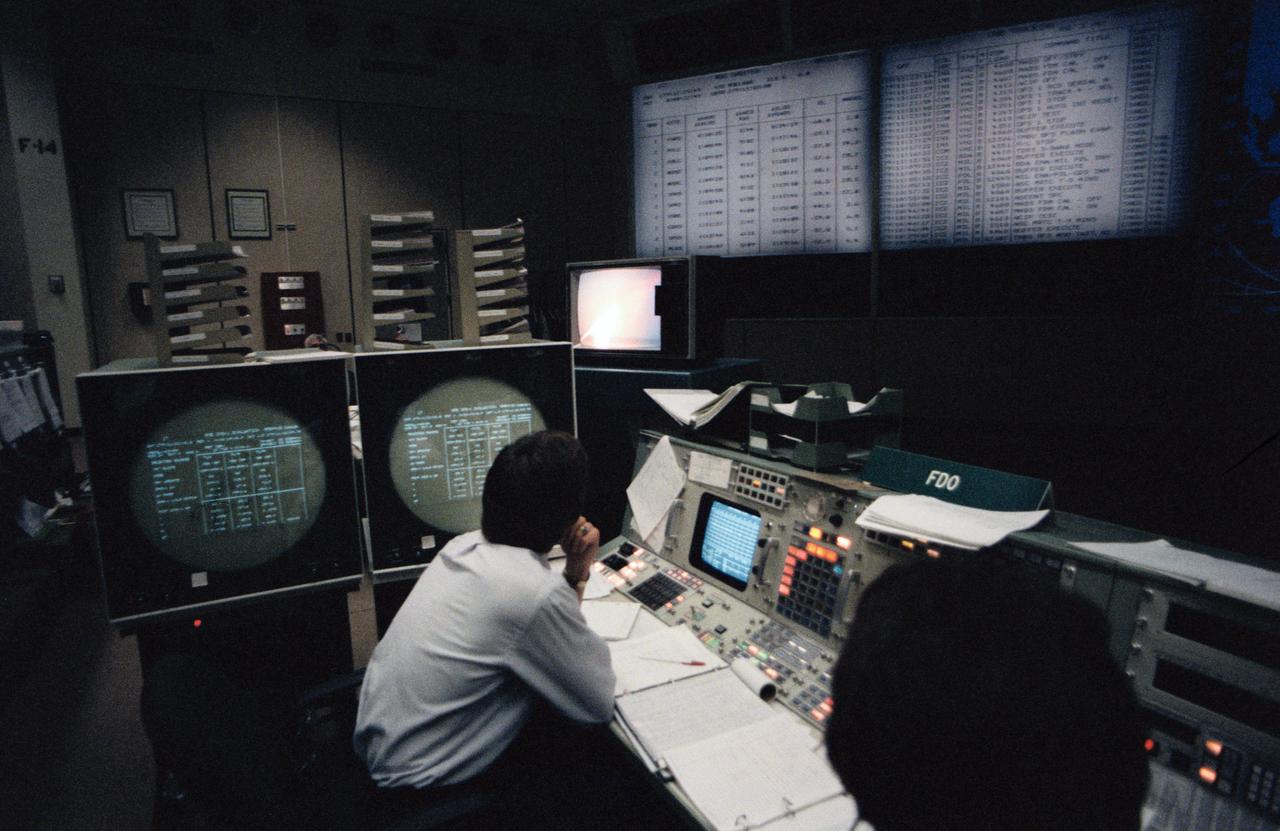
View of the Flight Dynamics Officer (FDO) console in the Mission Control Center (MCC) during the flight of STS41-G. The officer at the FDO console appears to be examining the large screens in front of him which are displaying lists of data.
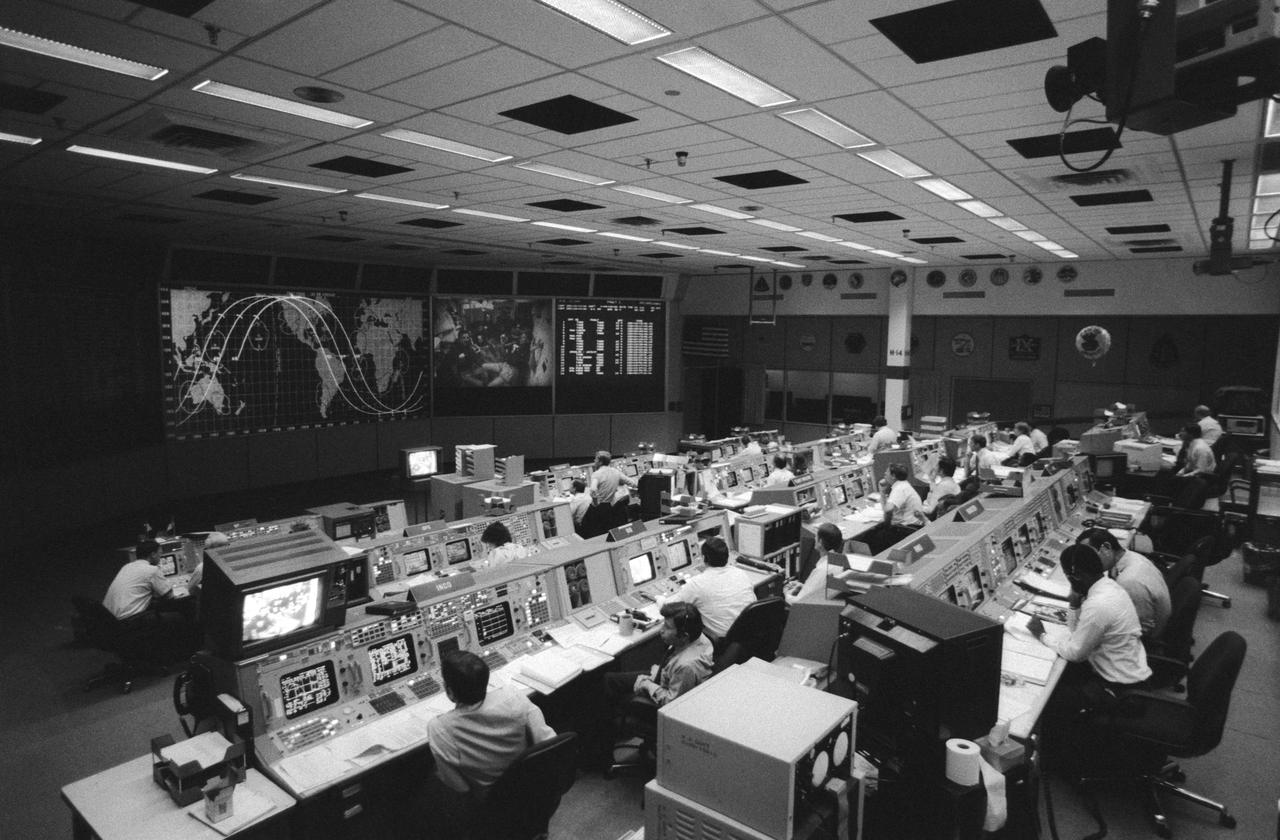
Wide angle view of the flight control room (FCR) of the Mission Control Center (MCC). Some of the STS 41-G crew can be seen on a large screen at the front of the MCC along with a map tracking the progress of the orbiter.
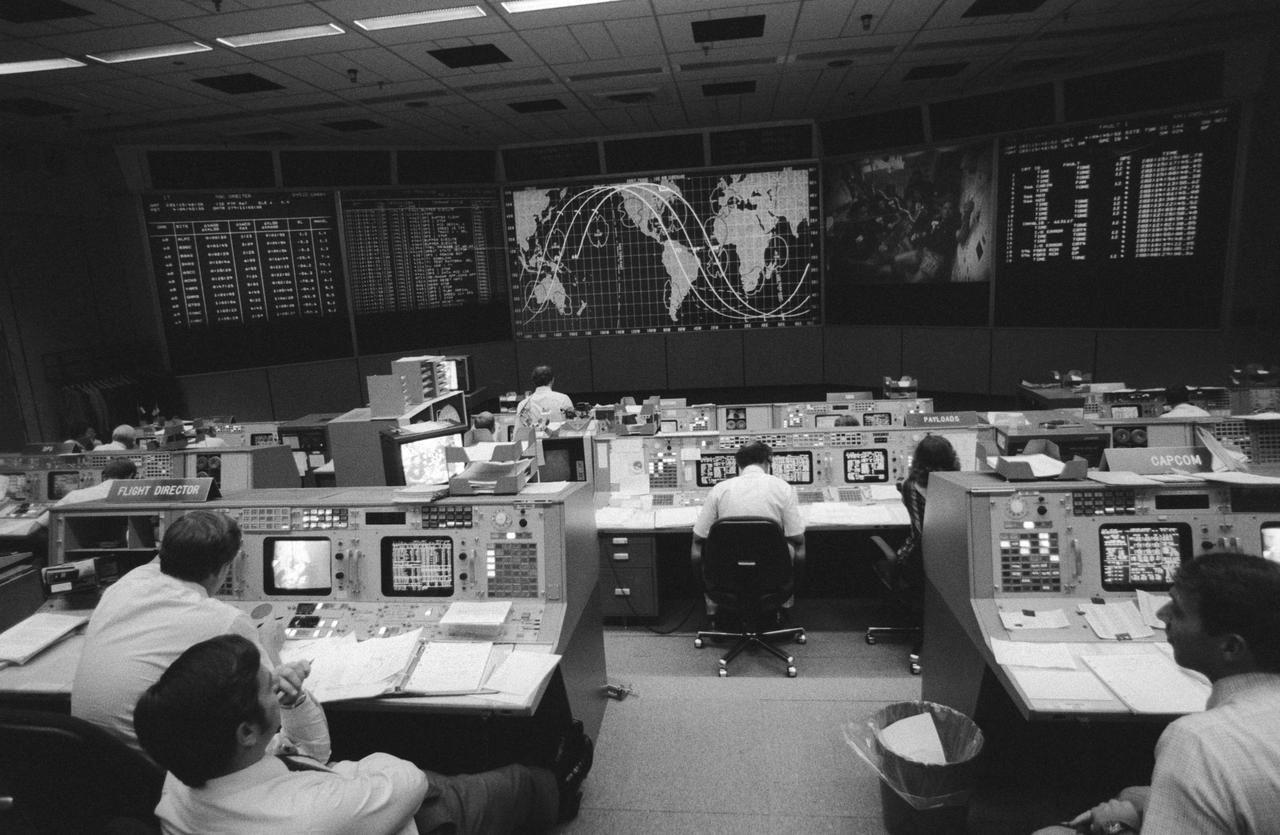
View from the back of the Mission Control Center (MCC). Visible are the Flight Directors console (left front), the CAPCOM console (right front) and the Payloads console. Some of the STS 41-G crew can be seen on a large screen at the front of the MCC along with a map tracking the progress of the orbiter.
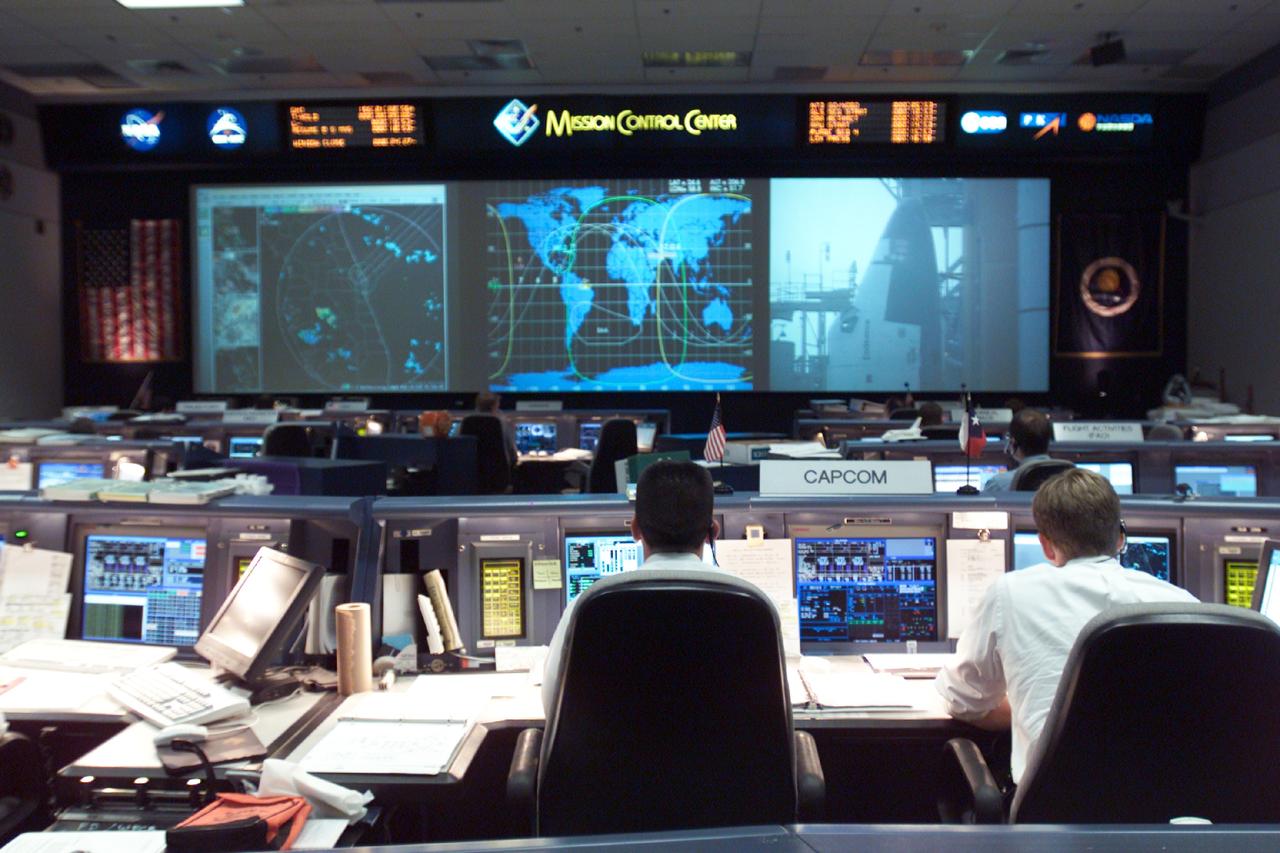
JSC2002-E-23113 (5 June 2002) --- The Space Shuttle Endeavour is shown on the big screen in this overall view of the shuttle flight control room (WFCR) in Houston’s Mission Control Center (MCC) as it is on the launch pad at Kennedy Space Center, Florida. Endeavour launched at 4:23 p.m. (CDT) on June 5, 2002. Once the vehicle cleared the tower in Florida, the Houston-based team of flight controllers took over the ground control of the flight.
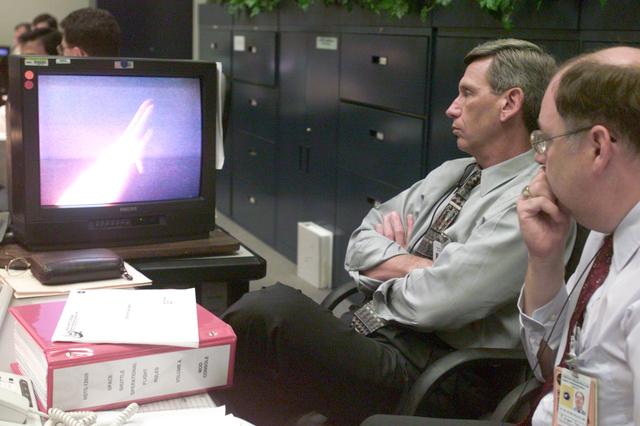
JSC2001-E-24999 (10 August 2001) --- Lawrence Bourgeois (left) and Wayne Hale watch the launch of the Space Shuttle Discovery at the Mission Operations Directorate (MOD) console in the shuttle flight control room (WFCR) in Houston's Mission Control Center (MCC). As soon as the vehicle cleared the tower in Florida, the Houston-based team of flight controllers took over the ground control of the flight.

JSC2002-E-41161 (7 October 2002) --- Flight director John Shannon monitors data at his console in the shuttle flight control room (WFCR) in Houston’s Mission Control Center (MCC). At the time this photo was taken the Space Shuttle Atlantis was about to launch from the Kennedy Space Center, Florida. Atlantis lifted off at 2:46 p.m. (CDT) on October 7, 2002. Once the vehicle cleared the tower in Florida, the Houston-based team of flight controllers took over the ground control of the flight.
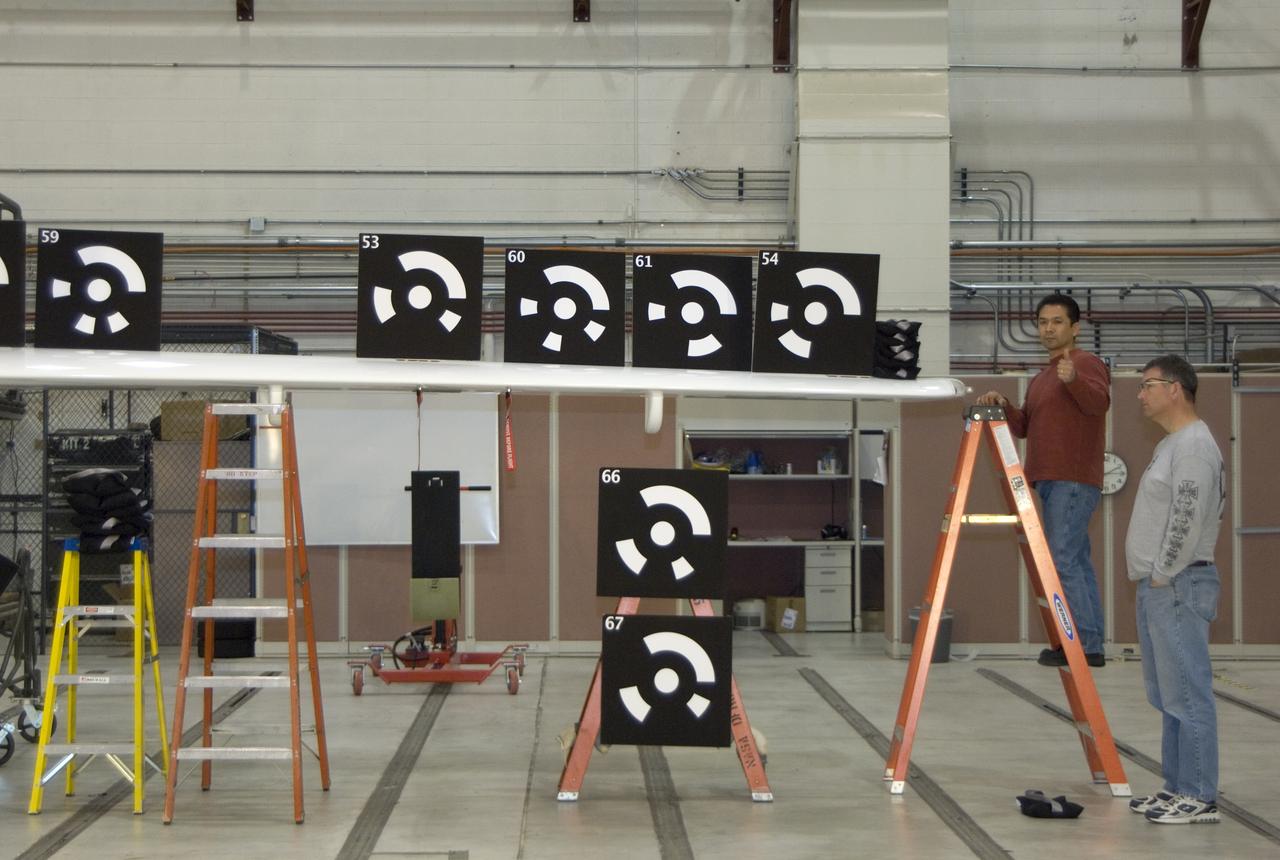
NASA engineer Larry Hudson and Ikhana ground crew member James Smith work on a ground validation test with new fiber optic sensors that led to validation flights on the Ikhana aircraft. NASA Dryden Flight Research Center is evaluating an advanced fiber optic-based sensing technology installed on the wings of NASA's Ikhana aircraft. The fiber optic system measures and displays the shape of the aircraft's wings in flight. There are other potential safety applications for the technology, such as vehicle structural health monitoring. If an aircraft structure can be monitored with sensors and a computer can manipulate flight control surfaces to compensate for stresses on the wings, structural control can be established to prevent situations that might otherwise result in a loss of control.
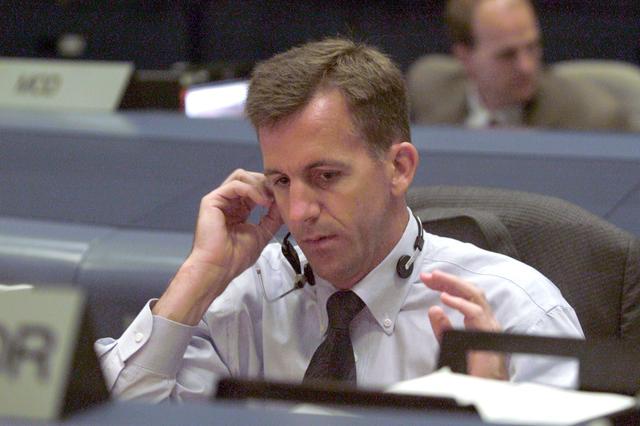
JSC2001-E-21328 (12 July 2001) --- Flight director LeRoy Cain directs his attention to data related to the Space Shuttle Atlantis and its impending launch from the Kennedy Space Center (KSC) several hundred miles away from this Houston setting at the Johnson Space Center's Mission Control Center (MCC). As soon as the vehicle cleared the tower in Florida, the Houston-based team of flight controllers took over the ground control of the flight.
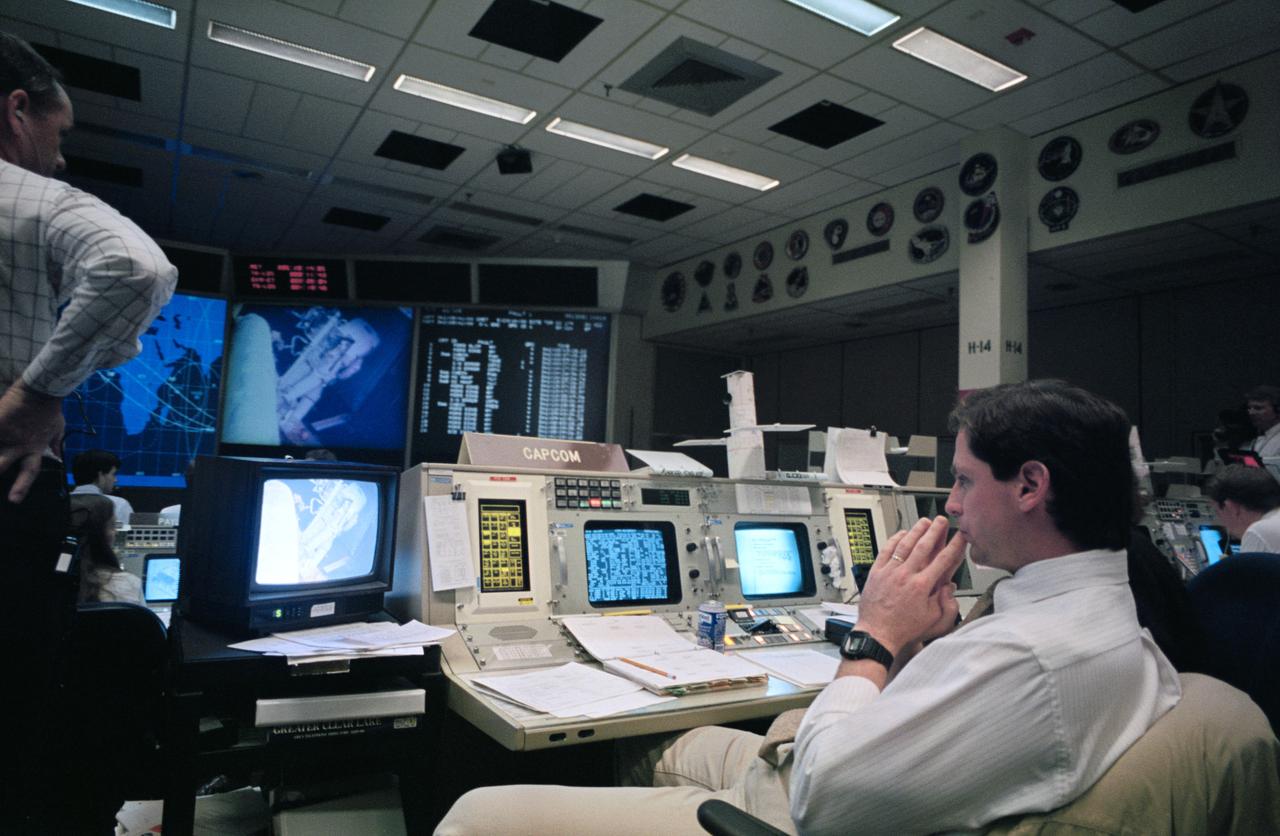
STS61-S-101 (8 Dec 1993) --- Astronaut Gregory J. Harbaugh, spacecraft communicator (CAPCOM), observes as two astronauts work through a lengthy period of extravehicular activity (EVA) in the cargo bay of the Earth-orbiting Space Shuttle Endeavour. Seen on the screen in the front of the flight control room, preparing to work with the Hubble Space Telescope's (HST) magnetometers, are astronauts F. Story Musgrave and Jeffrey A. Hoffman. Harbaugh stayed busy passing up flight controllers suggestions and directions during the record-breaking battery of in-space servicing sessions. Lead flight director Milt Heflin is partially visible at left edge of frame.
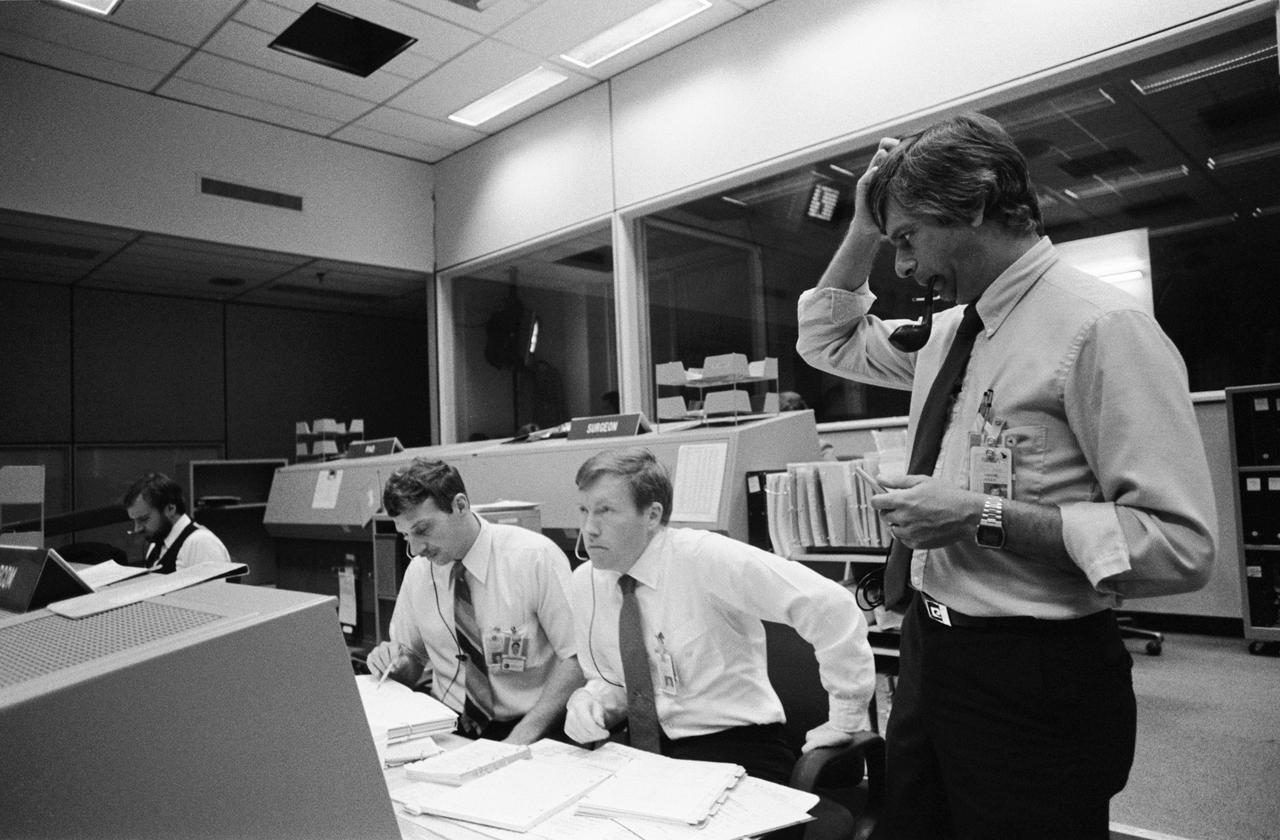
Jay H. Greene, right, ascent flight director for STS 51-A, monitors pre-launch activity at the Kennedy Space Center (KSC) via a screen at the spacecraft communicators console in the second floor flight control room (FCR) of JSC's mission control center. Astronauts David C. Hilmers, left, and Richard N. Richards are the on-duty spacecraft communicators.
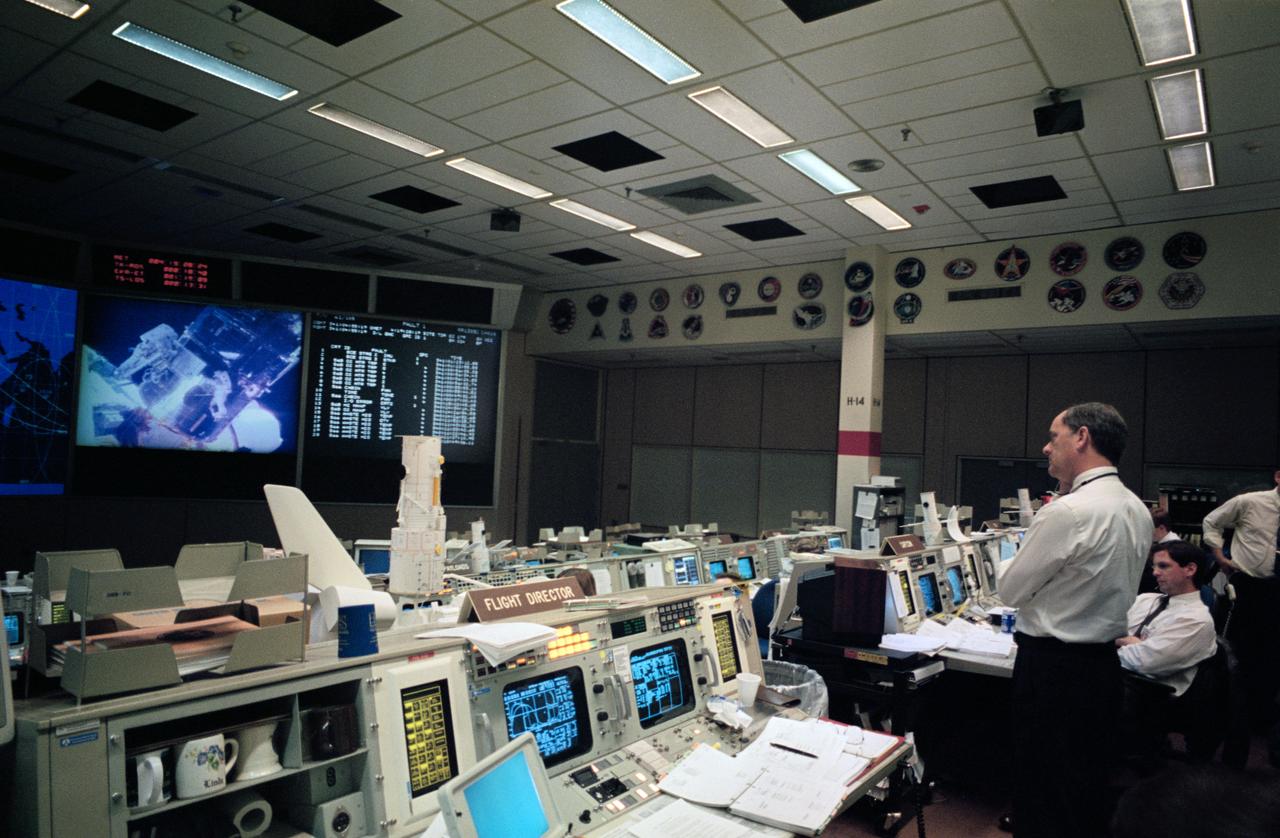
STS61-S-098 (6 DEC 1993) --- Flight director Milton Heflin monitors two space walkers as they change out the Wife Field/Planetary Camera (WFPC) on the Hubble Space Telescope (HST), temporarily berthed in the Space Shuttle Endeavour's cargo bay. Astronaut Gregory J. Harbaugh, spacecraft communicator (CAPCOM), is at right edge. Astronauts F. Story Musgrave and Jeffrey A. Hoffman can be seen with the large camera on the screen in the front of the flight control room.
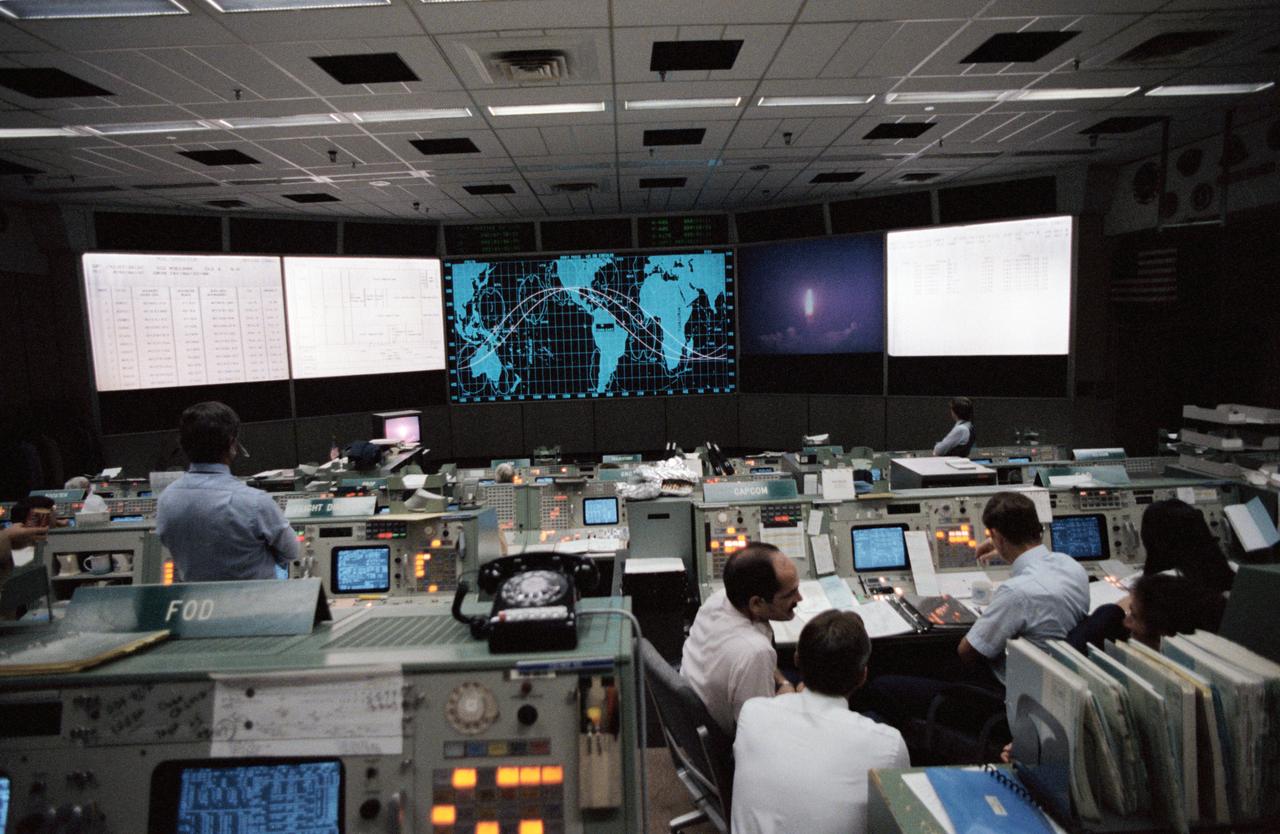
Serving as spacecraft communicators (CAPCOM) are Astronauts Guy S. Gardner (left), William F. Fisher (center), Bryan D. O'Connor (seated facing console), and Jeffrey A. Hoffman. Cheevon B. Lau is seated at the flight activities officer (FAO) console to the right of the CAPCOM console. The scene on the large screen in the mission operations control room (MOCR) is a replay of the launch of the Challenger (39264); Flight Director Jay H. Greene, left, watches a replay of the STS-8 launch on the large screen in the MOCR. He is joined by O'Connor, Jeffrey A. Hoffman, Gardner and Fisher. Lau works at the FAO console near the CAPCOM console (39265); Harold Black, integrated communications officer (INCO) for STS-8 mans the INCO console during the first TV downlink from the Challengers flight. The payload bay can be seen on the screen in the front of the MOCR (39266).
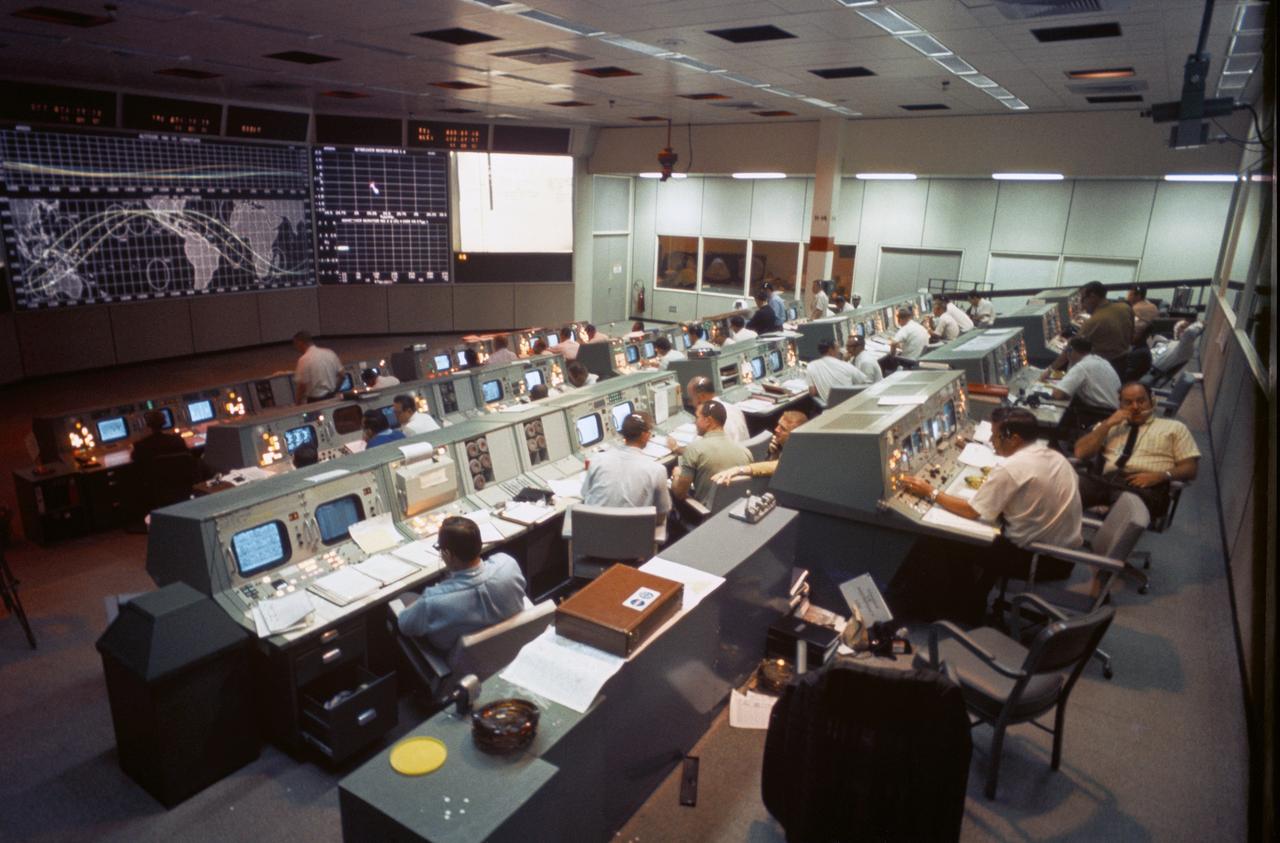
Overall view of activity in the Mission Operations Control Room in the Mission Control Center, Bldg 30, on the first day of the Apollo 7 space mission.
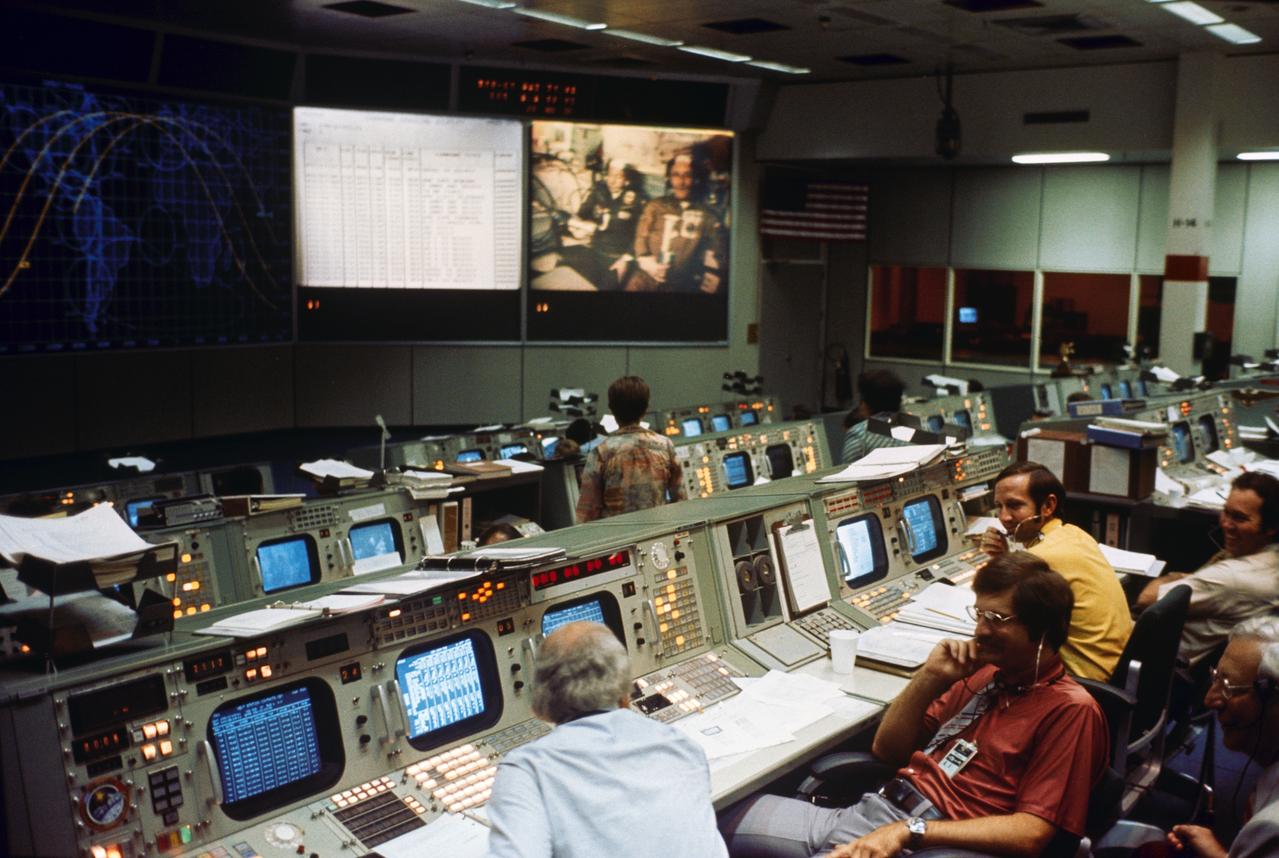
S75-28685 (17 July 1975) --- An overall view of activity in the Mission Operations Control Room in the Mission Control Center during joint U.S.-USSR Apollo Soyuz Test Project (ASTP) docking mission in Earth orbit. The large television monitor shows an interior view of the Soyuz Orbital Module with astronaut Thomas P. Stafford (in front) visiting with cosmonaut Aleksey A. Leonov. Neil B. Hutchinson (right hand to chin) is the flight director for this shift.
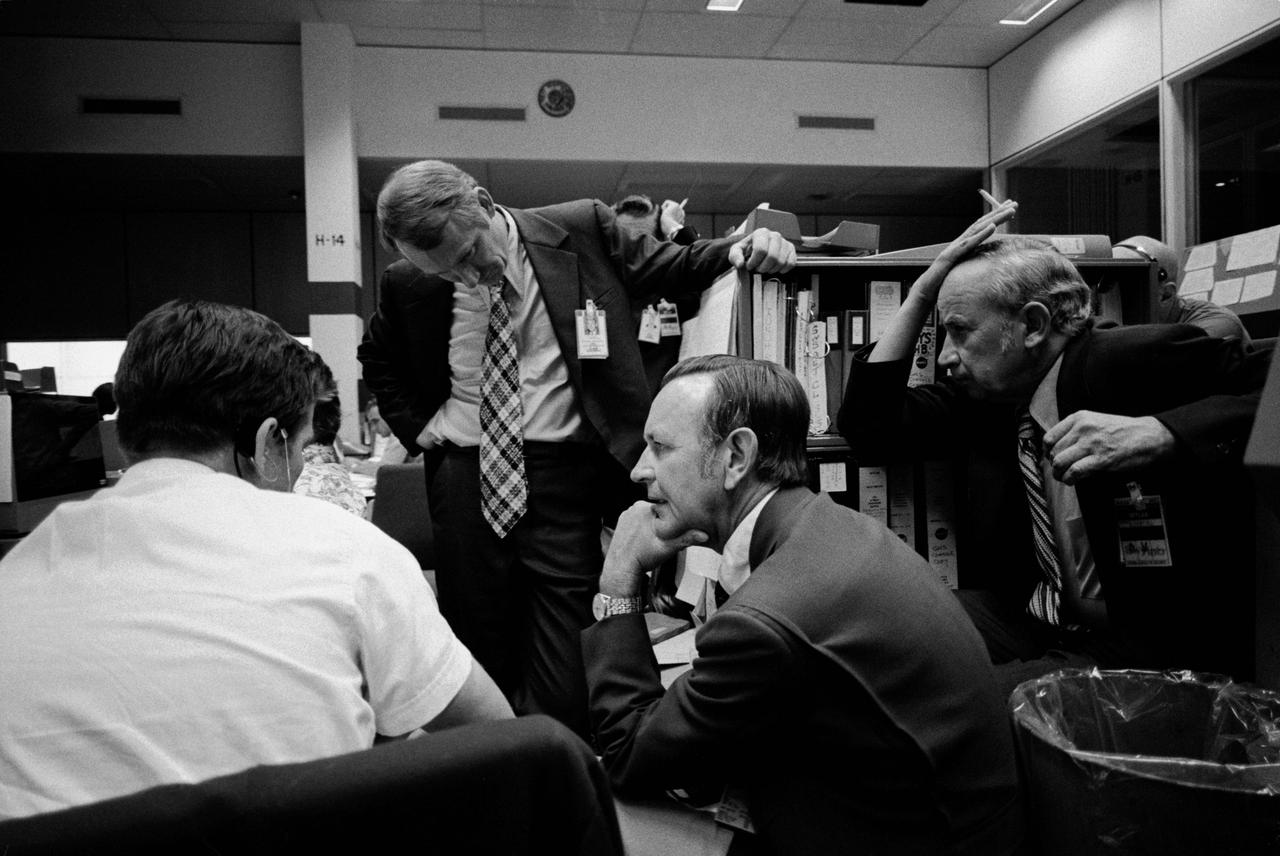
S73-31875 (2 Aug. 1973) --- After learning of a problem in the Command/Service Module which was used to transport the Skylab 3 crew to the orbiting Skylab space station cluster, NASA officials held various meetings to discuss the problem. Here, four men monitor the current status of the problem in the Mission Operations Control Room (MOCR) of the Mission Control Center (MCC) at the Johnson Space Center (JSC). From the left are Gary E. Coen, Guidance and Navigation System flight controller; Howard W. Tindall Jr., Director of Flight Operations at JSC; Dr. Christopher C. Kraft Jr., JSC Director; and Sigurd A. Sjoberg, JSC Deputy Director. Photo credit: NASA
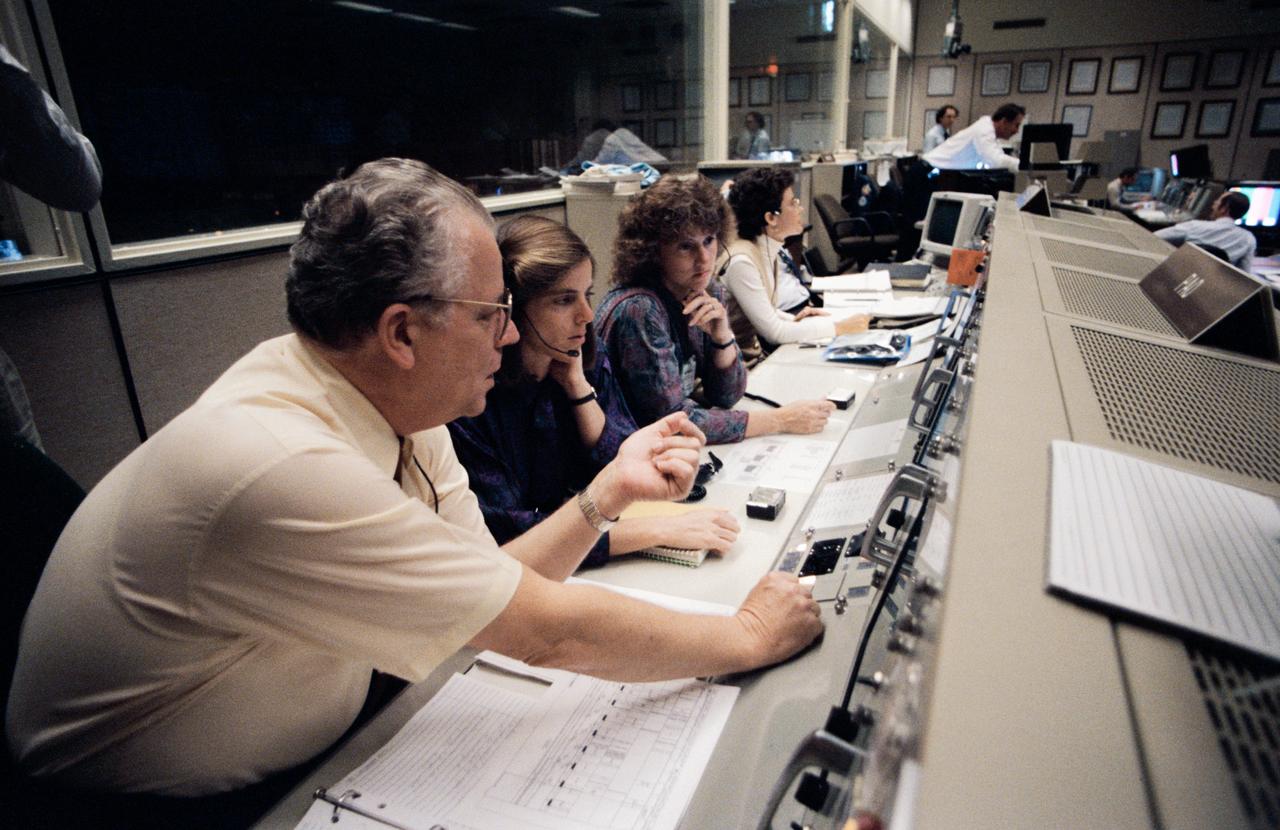
61A-S-135 (5 Nov 1985) --- Two school teachers in training at the Johnson Space Center got their first ?real time? exposure to a Space Shuttle mission as they monitor activity aboard the Spacelab D-1 science module from the mission control center. Sharon Christa McAuliffe (frame center) and Barbara R. Morgan are briefed by Terry White at the Public Affairs console during a television downlink from the Earth-orbiting Space Shuttle Challenger. McAuliffe is scheduled to fly as teacher/citizen observer on the STS 51-L mission early next year; and Morgan is in training as her backup.
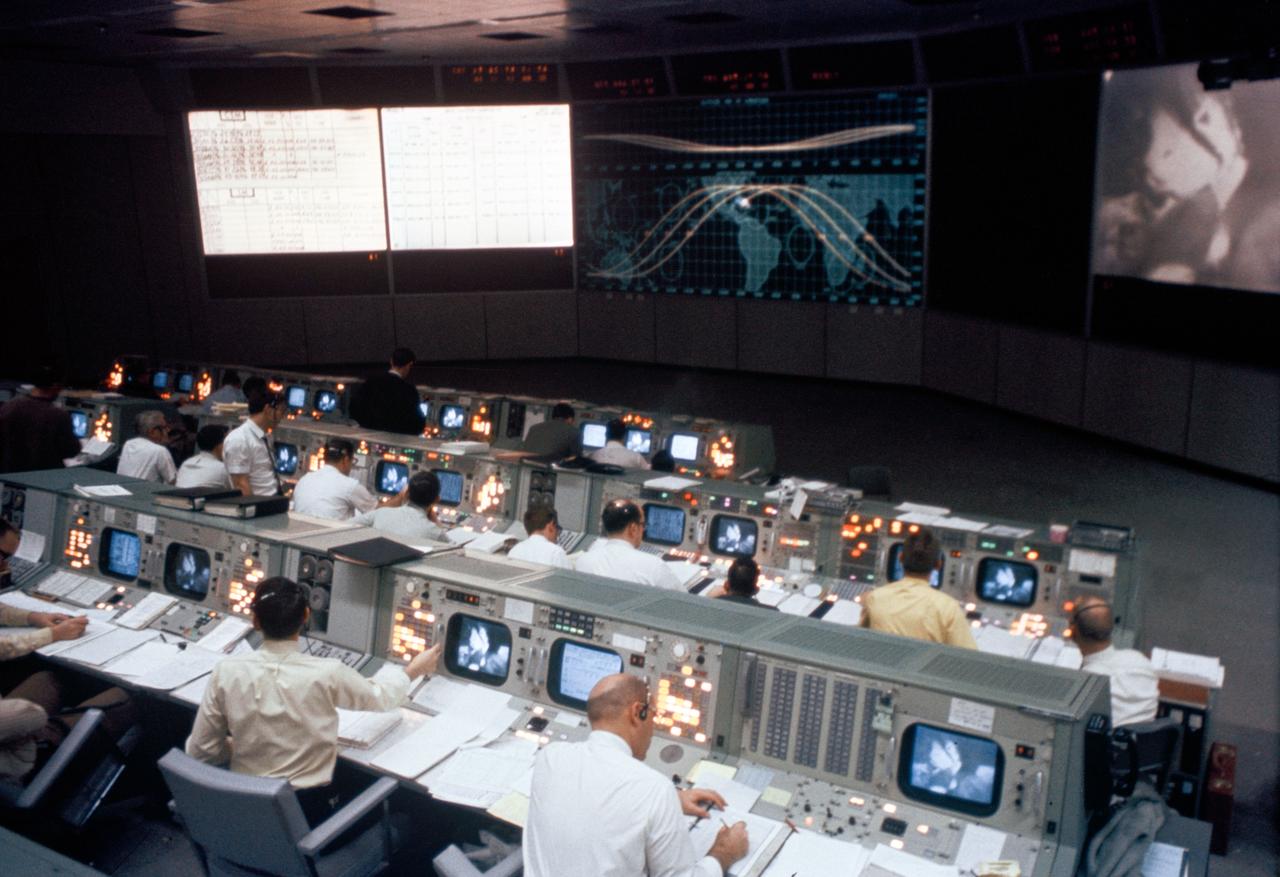
S69-26301 (March 1969) --- Overall view of the Mission Operations Control Room in the Mission Control Center, Building 30, during the Apollo 9 Earth-orbital mission. When this photograph was taken a live television transmission was being received from Apollo 9 as it orbited Earth.
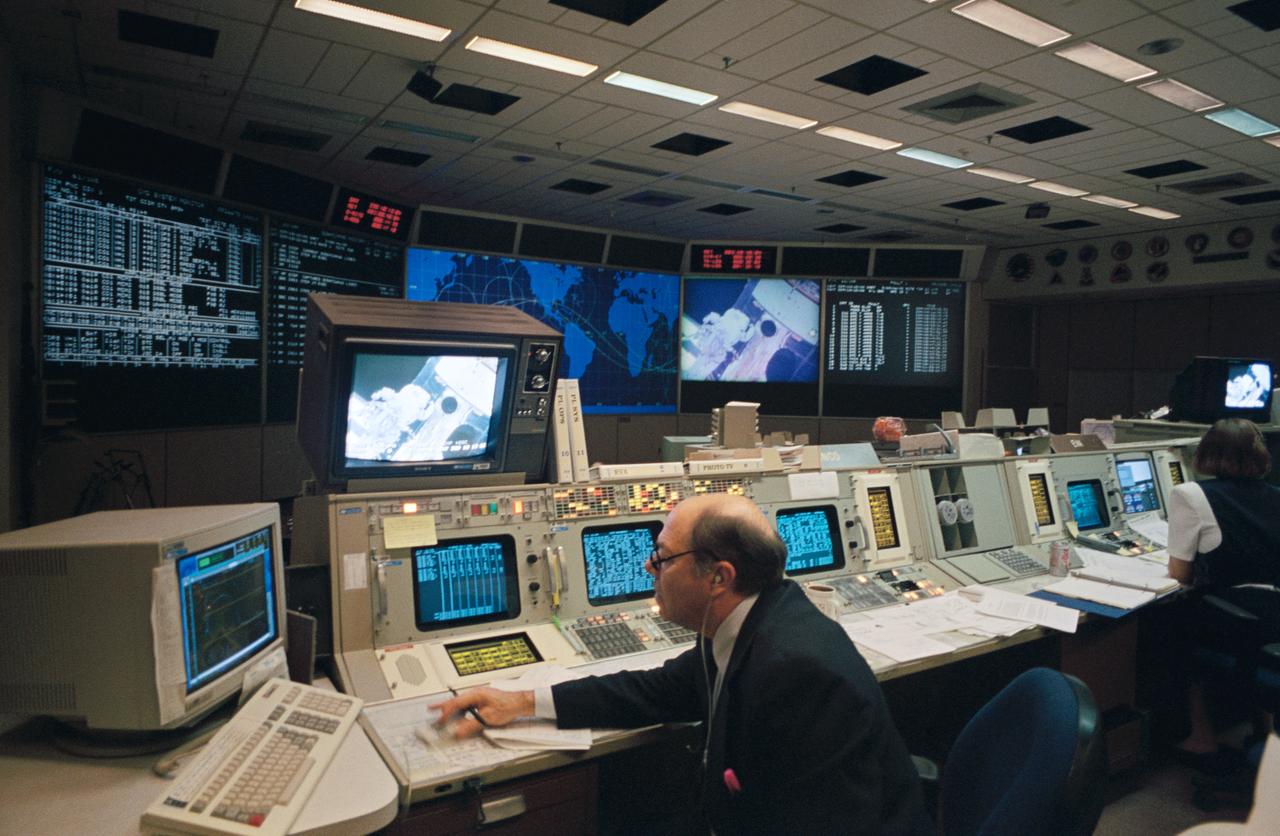
Joseph Fanelli, at the Integrated Communications Officer console, monitors the televised activity of Astronauts Story Musgrave and Jeffrey A. Hoffman. The vetern astronauts were performing the first extravehicular activity (EVA-1) of the STS-61 Hubble Space Telescope (HST) servicing mission.
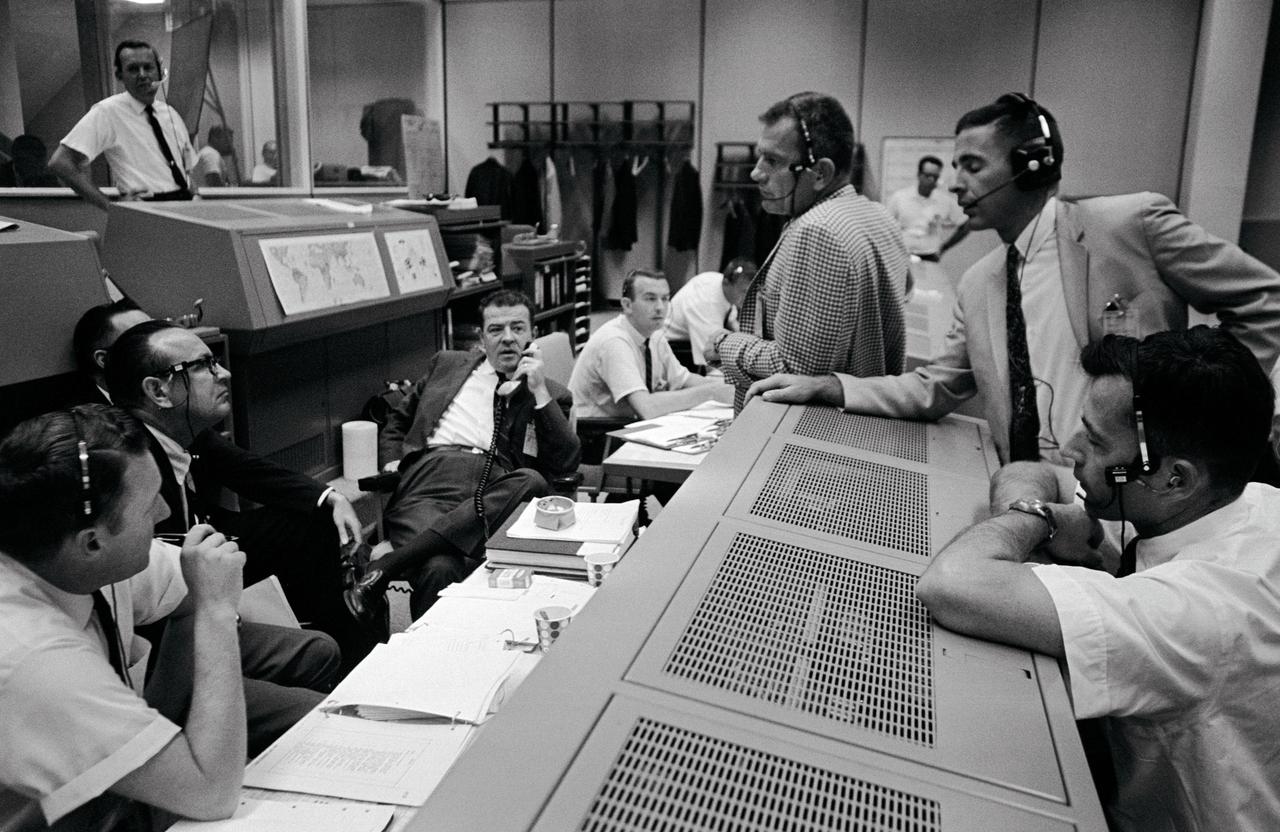
S66-52157 (12 Sept. 1966) --- Discussing the Gemini-11 spaceflight in the Mission Control Center are: (left to right) Christopher C. Kraft Jr., (wearing glasses), Director of Flight Operations; Charles W. Mathews (holding phone), Manager, Gemini Program Office; Dr. Donald K. Slayton (center, checked coat), Director of Flight Crew Operations; astronaut William A. Anders, and astronaut John W. Young. Photo credit: NASA
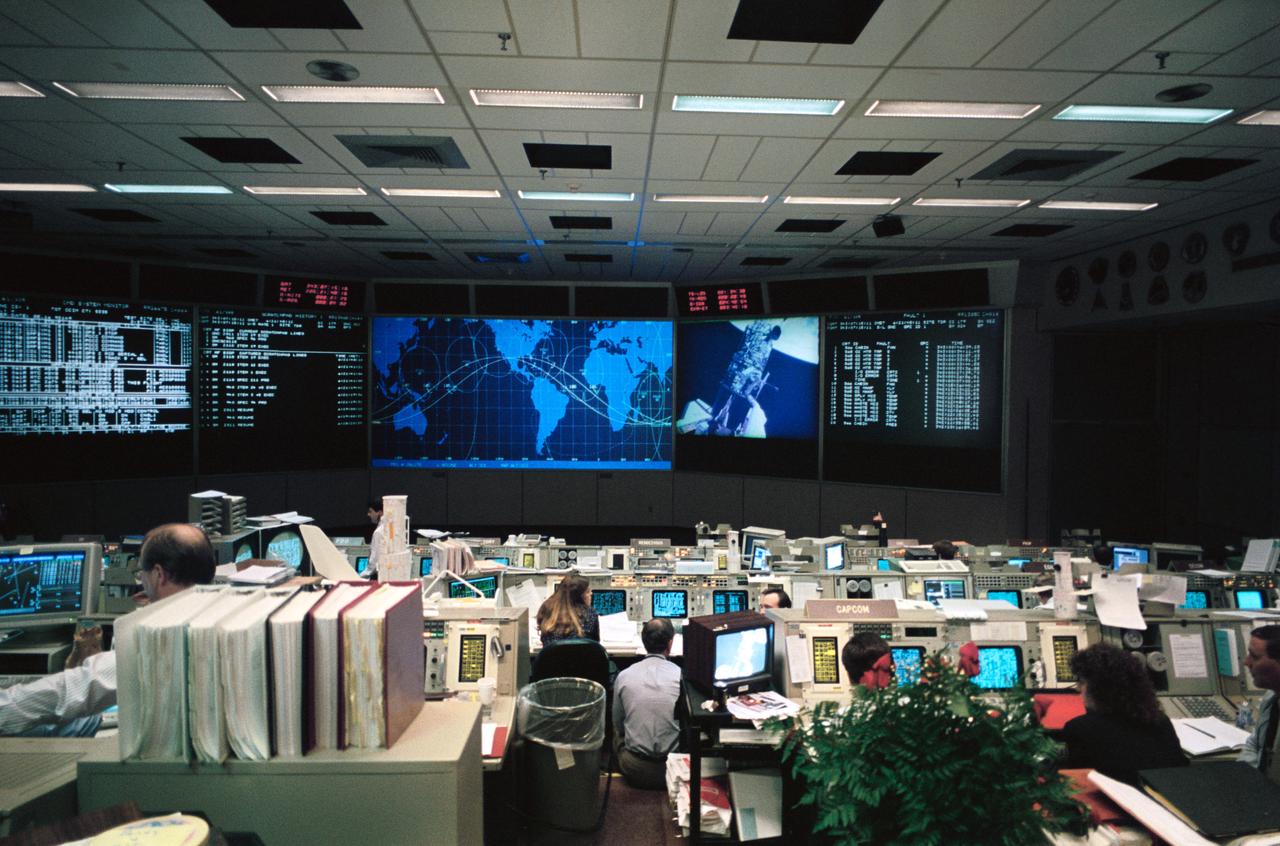
STS061-S-104 (2-13 DEC 1993) --- An overall view in the Johnson Space Center's (JSC) Mission Control Center (MCC) during one of the five space walks performed to service the Hubble Space Telescope (HST) temporarily berthed in the Space Shuttle Endeavour's cargo bay. STS-61 lead flight director Milt Heflin is at right edge of frame.
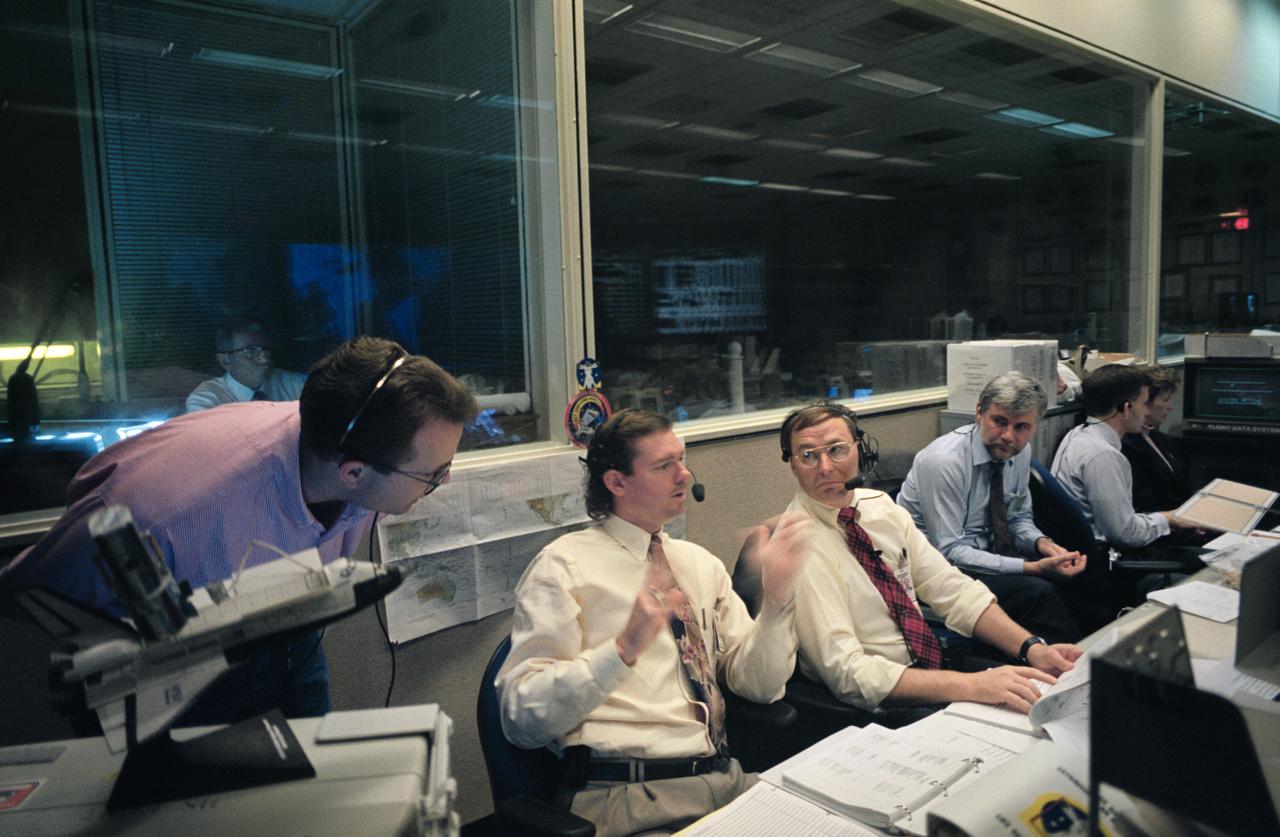
STS61-S-094 (5 Dec 1993) --- Kyle Herring, second left, illustrates a point during mission commentary for the second Extravehicular Activity (EVA-2) of the STS-61 Hubble Space Telescope (HST) servicing mission. Astronaut Jerry L. Ross (center), a space walker on two previous NASA shuttle missions, amplified Herring's explanations. At the flight surgeon's console is Dr. Klaus Lohn (third right) of the Institute for Flight Medicine in Koln, Germany.
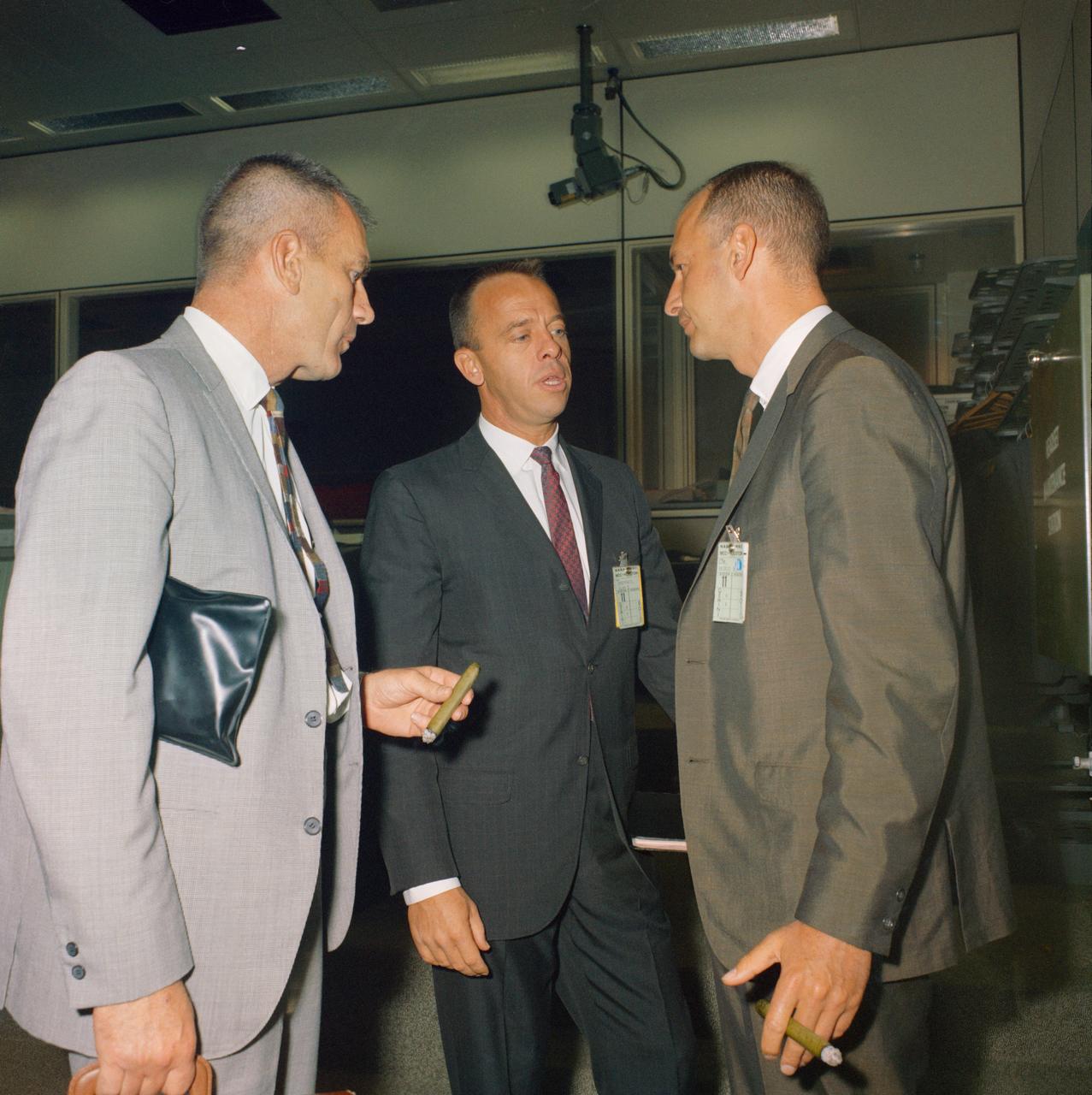
S66-52754 (12 Sept. 1966) --- Three key Manned Spacecraft Center (MSC) officials hold discussion in the Mission Control room during Gemini-11 activity. Left to right, are Donald K. Slayton, MSC Director of Flight Crew Operations; astronaut Alan B. Shepard Jr., Chief, MSC Astronaut Office; and George M. Low, MSC Deputy Director. Photo credit: NASA
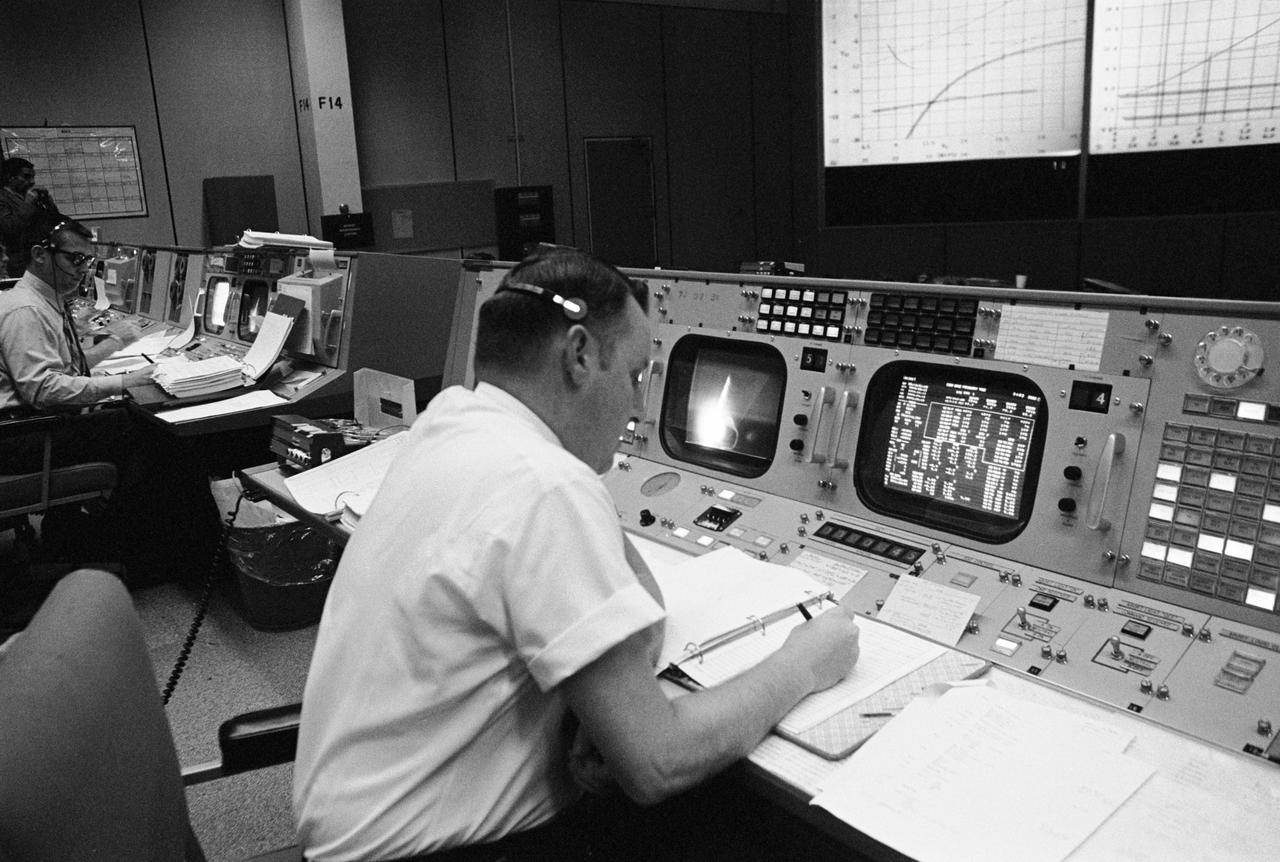
S68-55742 (21 Dec. 1968) --- Clifford E. Charlesworth, Apollo 8 "Green Team" flight director, is seated at his console in the Mission Operations Control Room in the Mission Control Center, Building 30, during the launch of the Apollo 8 (Spacecraft 103/Saturn 503) manned lunar orbit space mission.
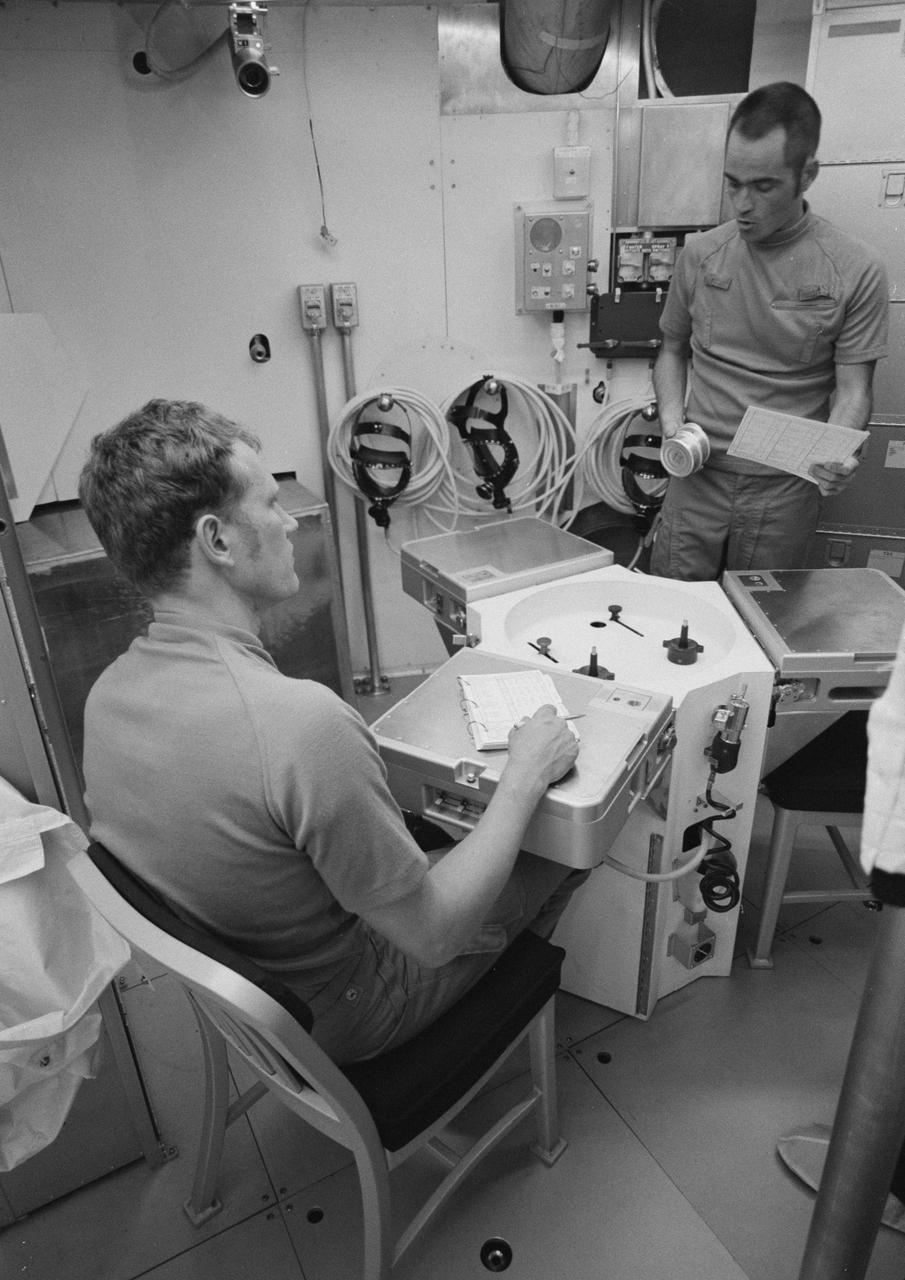
S72-41853 (15 June 1972) --- Two members of the three-man Skylab Medical Experiment Altitude Test (SMEAT) crew, that will spend up to 56 days in the Crew Systems Division's 20-foot altitude chamber at the Manned Spacecraft Center (MSC) beginning in mid-July, go over a menu in the food preparation area. Seated at the simulated wardroom food table is astronaut Karol J. Bobko, SMEAT pilot, and standing is astronaut Robert L. Crippen, SMEAT commander. Dr. William E. Thornton, SMEAT science pilot, the third crew member is not shown in this view. Photo credit: NASA
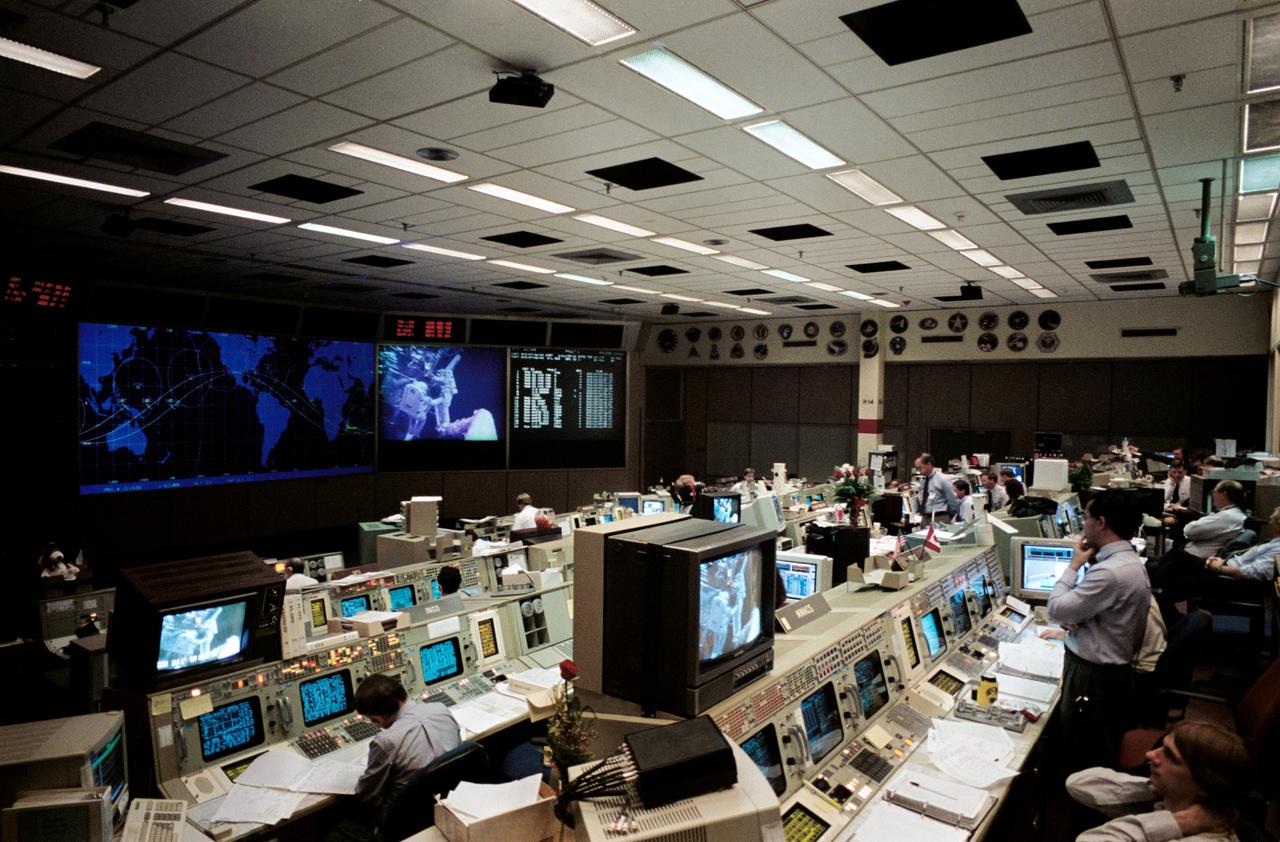
STS061-S-102 (5 Dec. 1993) --- Flight controllers Harry Black (left foreground) and Kevin McCluney (right foreground) monitor the televised activity of two space walkers during the first STS-61 extravehicular activity (EVA). Astronauts F. Story Musgrave and Jeffrey A. Hoffman were performing a variety of equipment replacements. At the Integrated Communications Officer Console (INCO) Black plays a roill in controlling the TV while McLuney's duties deal with maintenance, mechanical, arm and crew systems, meaning that they and their colleagues will be busy for the next five days. Four astronauts in alternating pairs will perform a variety of tasks on the giant telescope during that period.
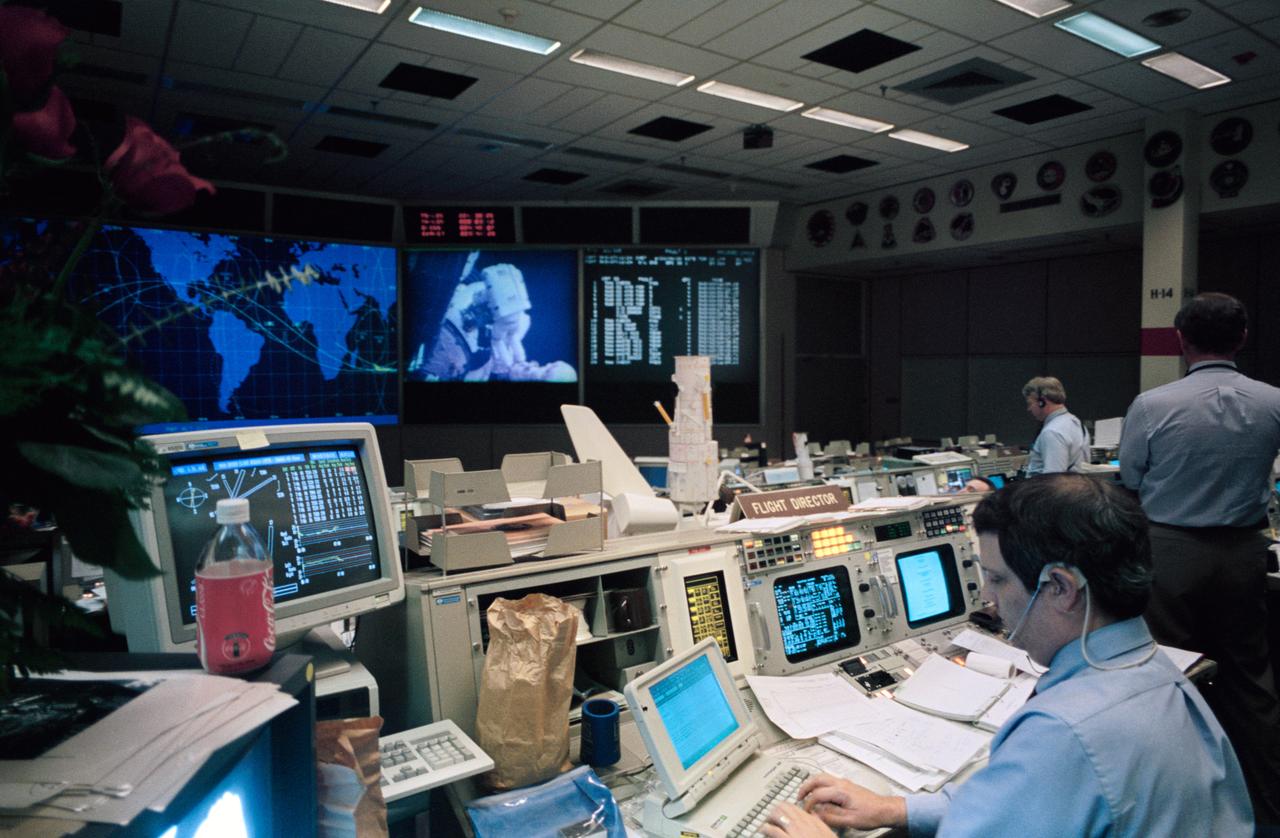
STS061-S-103 (2-13 DEC 1993) --- Flight director Robert E. Castle uses a lap top computer to aid his busy tasks during one of the five space walks performed to service the Hubble Space Telescope (HST) temporarily berthed in the Space Shuttle Endeavour's cargo bay. STS-61 lead flight director Milt Heflin is at right edge of frame.
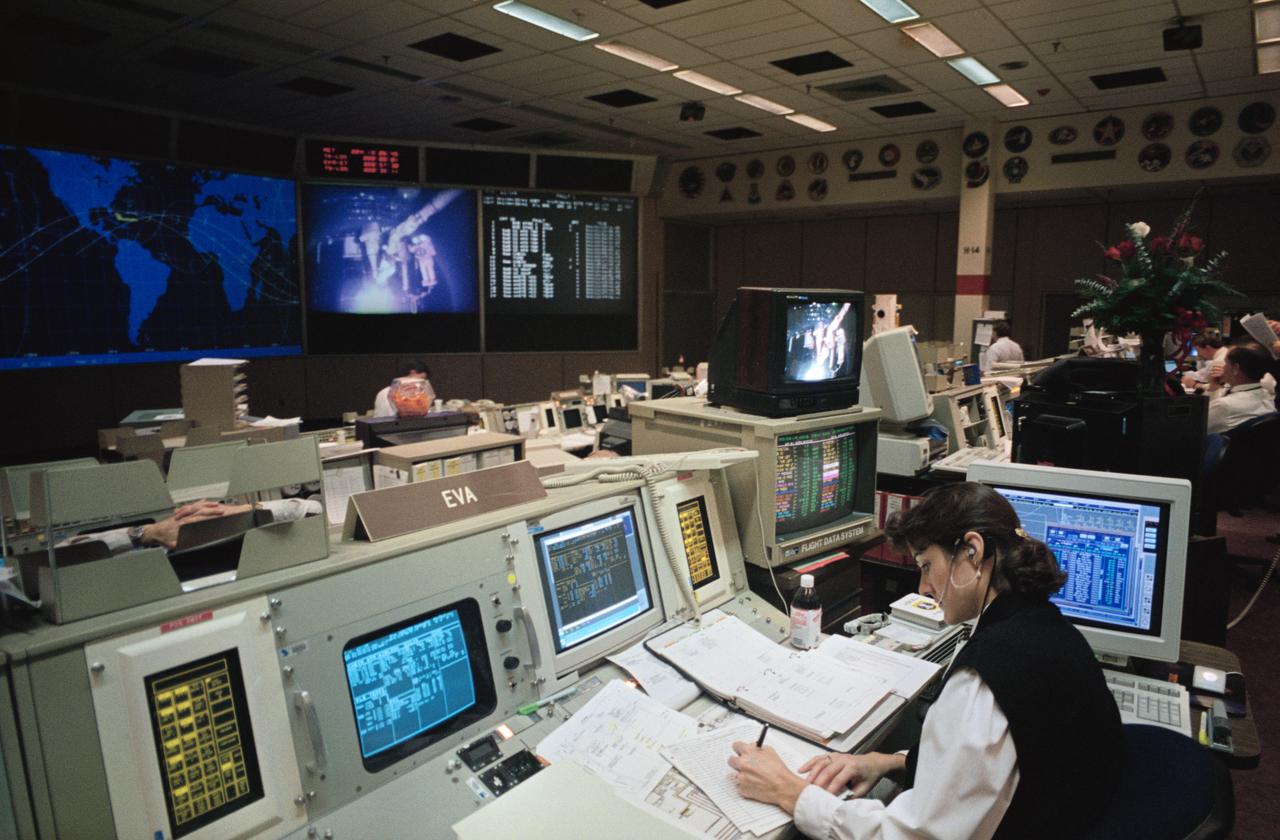
Flight controller Susan P. Rainwater observes as two astronauts work through a lengthy period of extravehicular activity (EVA) in the cargo bay of the Earth-looking Space Shuttle Endeavour. Rainwater's EVA console was one of Mission Control's busiest during this eleven-day Hubble Space Telescope (HST) servicing mission in Earth orbit.
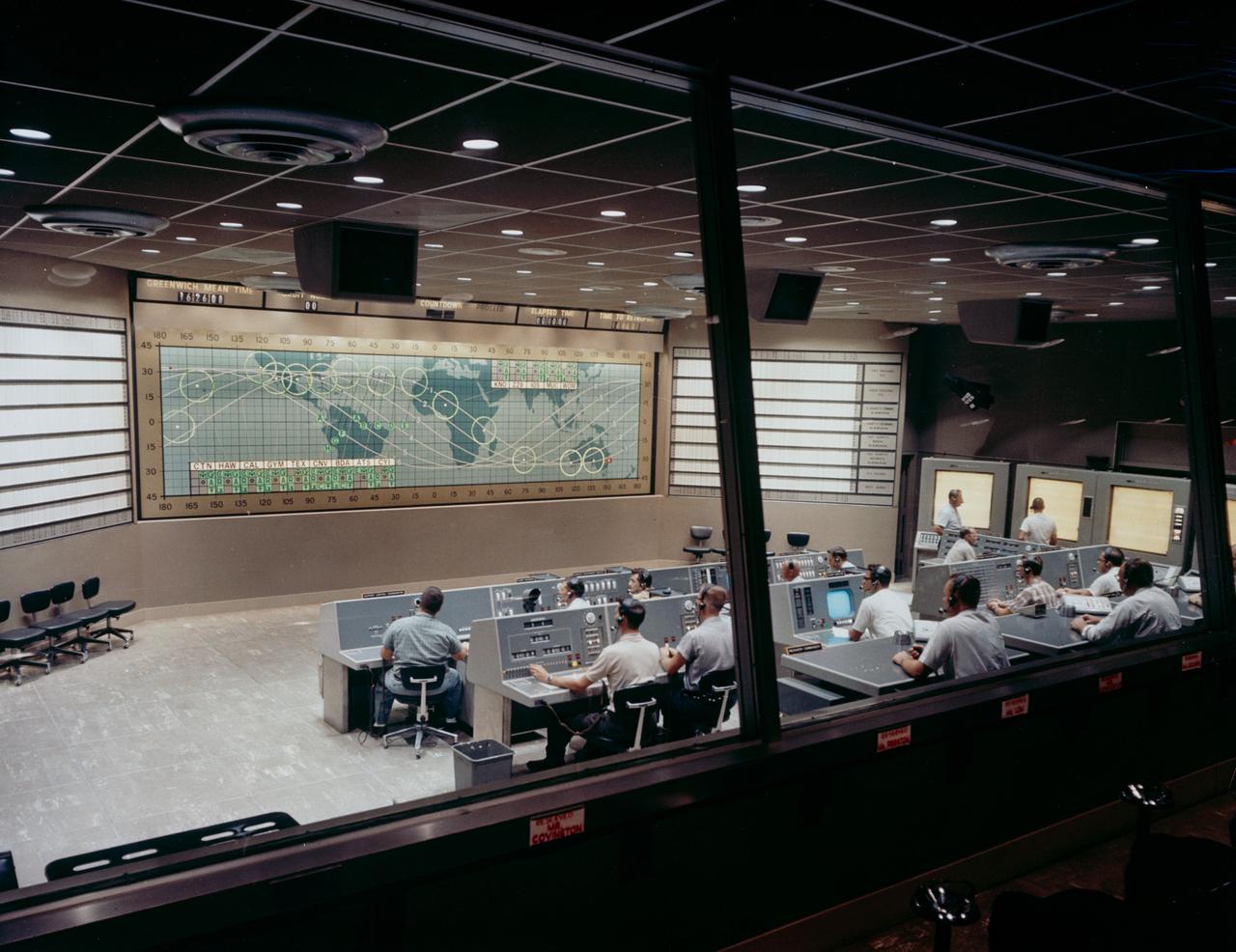
S62-05139 (1962) --- View of Mercury Control Center prior to the Mercury-Atlas 8 (MA-8) flight of the Sigma 7. Photo credit: NASA
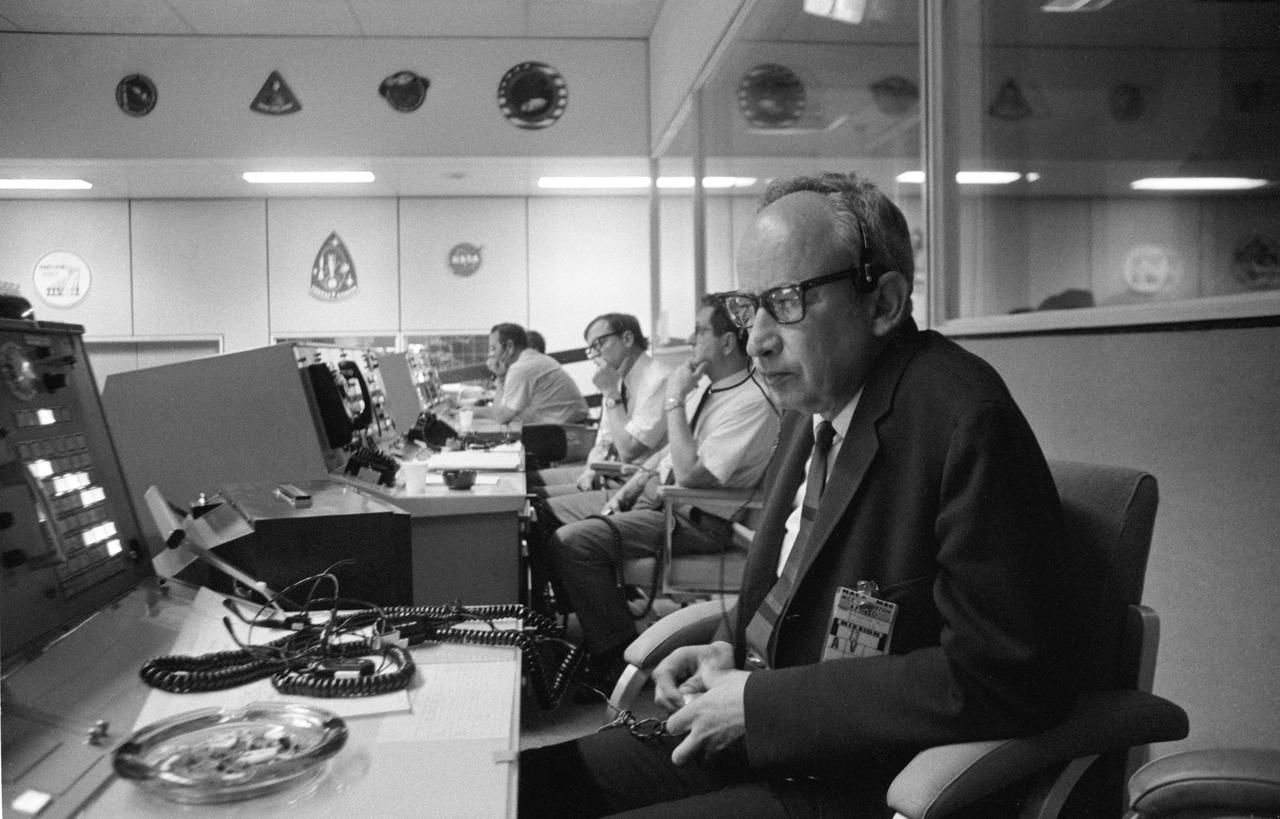
S70-34627 (11 April 1970) --- Sigurd A. Sjoberg, director of flight operations, at the Manned Spacecraft Center (MSC), views the Apollo 13 liftoff from a console in the MSC Mission Control Center (MCC), Building 30. Apollo 13 lifted off at 1:13 p.m. (CST) April 11, 1970. Photo credit: NASA
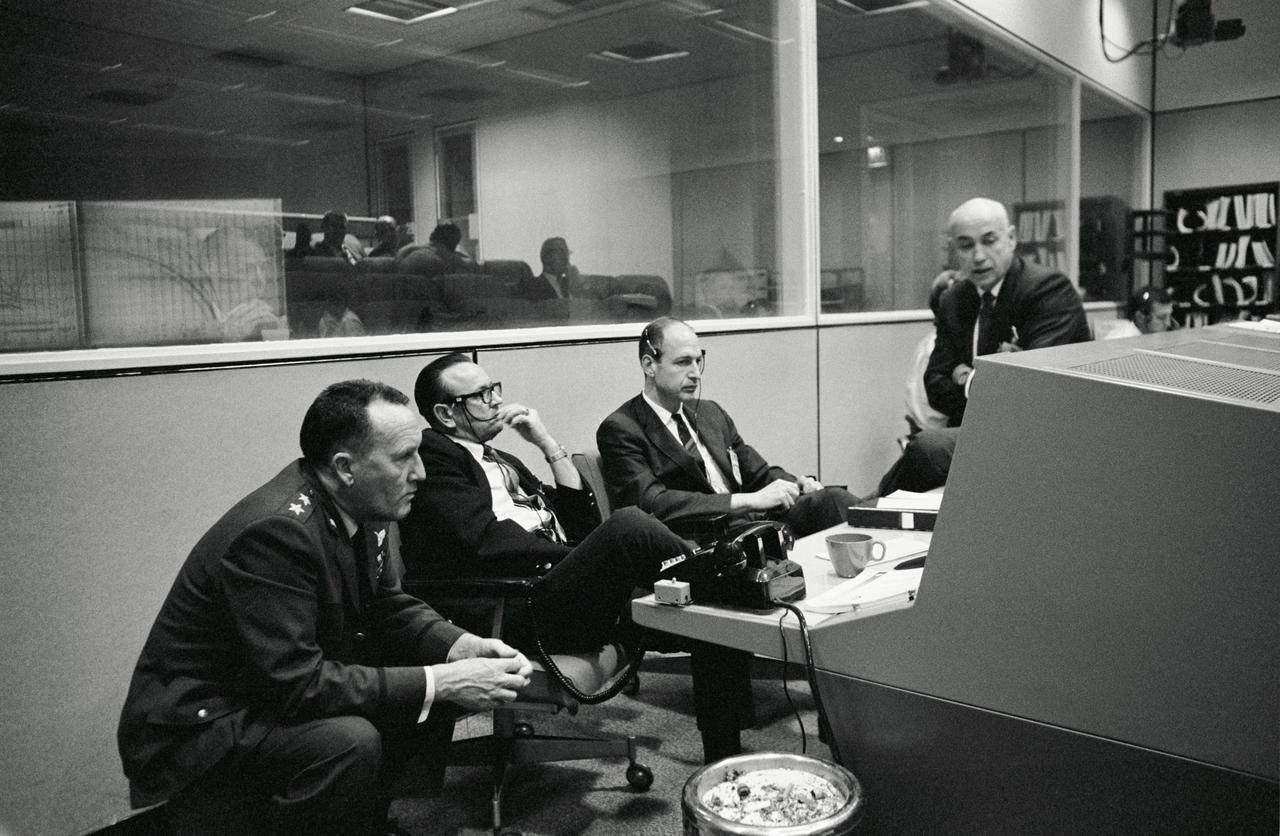
S68-20986 (4 April 1968) --- Scene at the flight operations director's console in the Mission Control Center, Building 30, during the Apollo 6 (Spacecraft 020/Saturn 520) unmanned space flight. Left to right, are Air Force Maj. Gen. Vincent G. Huston, DOD Manager, Manned Space Flight Operations, Andrews Air Force Base, Washington, D.C.; Dr. Christopher C. Kraft Jr., MSC director of flight operations; George M. Low, manager, MSC Apollo Spacecraft Program Office; and Dr. Robert R. Gilruth, MSC Director.
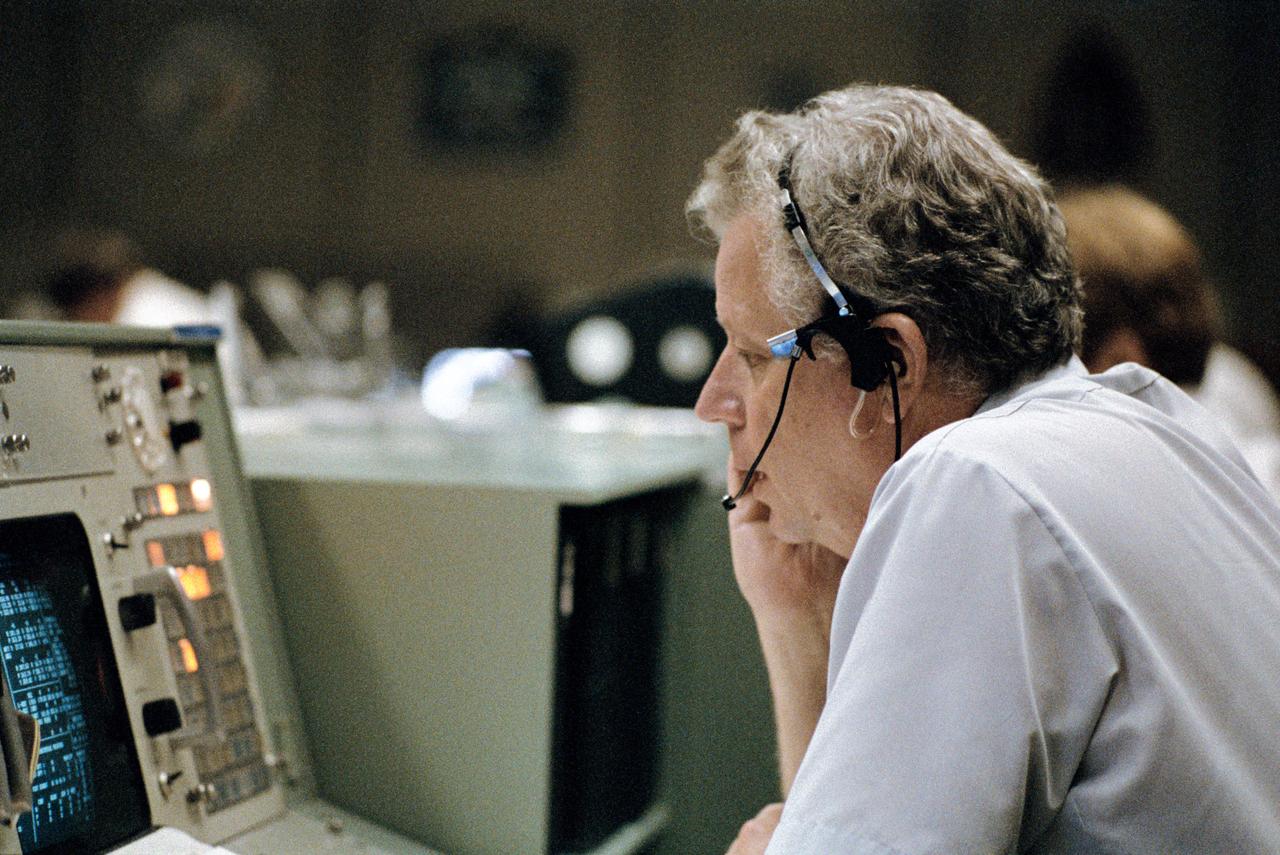
Terry White, serving as public affairs office commentator in the mission operations control room (MOCR) of JSC's mission control center, reads a status report on the STS-8 mission.
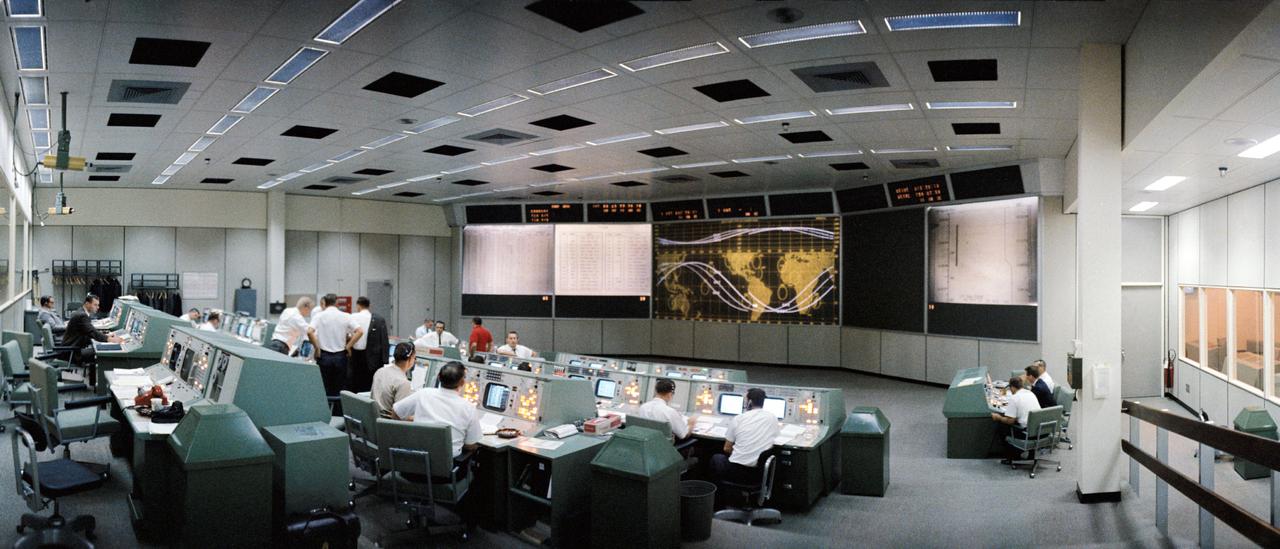
S65-45280 (21-29 Aug. 1965) --- Overall view of the Mission Control Center (MCC), Houston, Texas, during the Gemini-5 flight. Note the screen at the front of the MCC which is used to track the progress of the Gemini spacecraft.
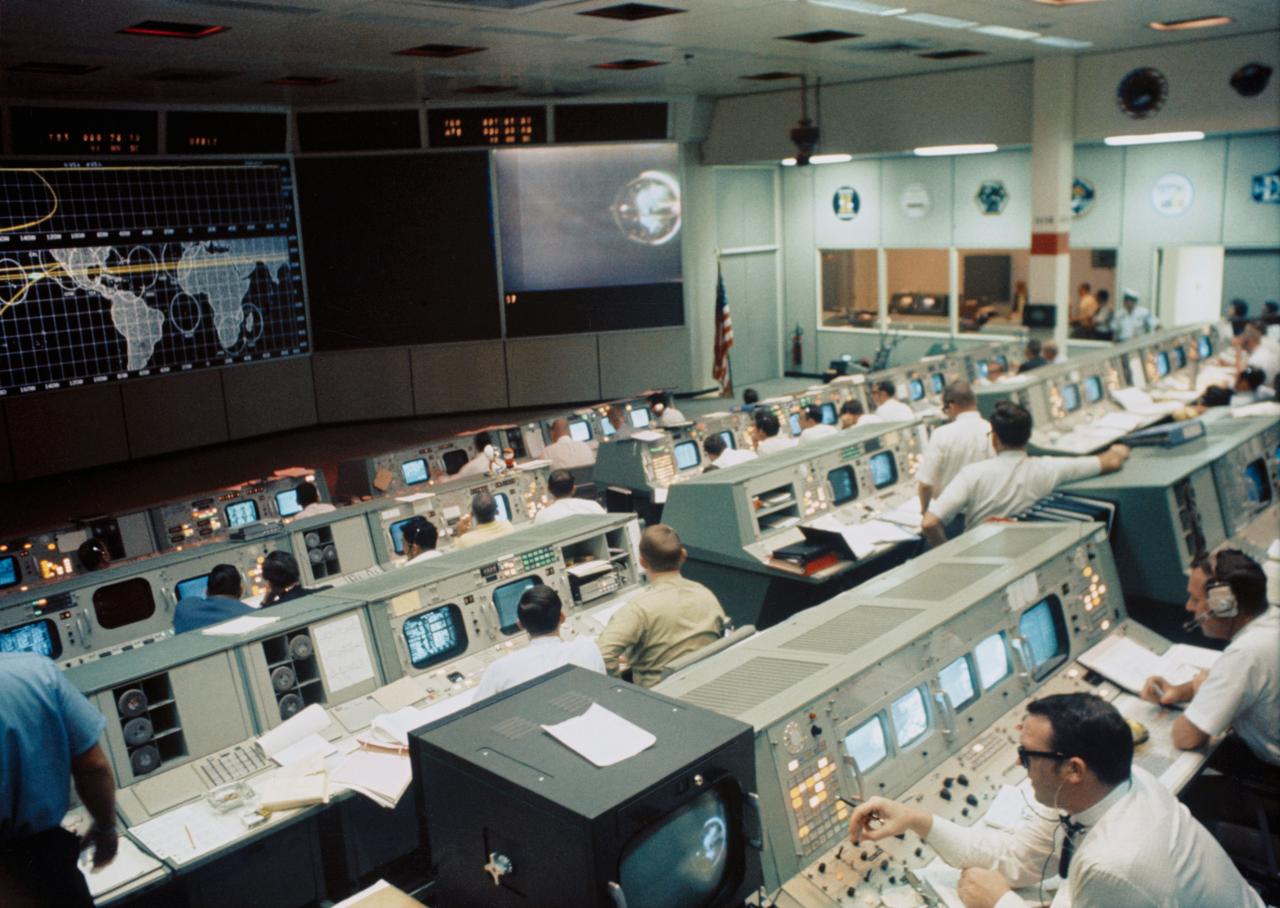
S69-34316 (18 May 1969) --- Overall view of the Mission Operations Control Room in the Mission Control Center, Building 30, on the first day of the Apollo 10 lunar orbit mission. A color television transmission was being received from Apollo 10. This picture was made following Command and Service Module/Lunar Module/Saturn IVB (CSM/LM-S-IVB) separation and prior to LM extraction from the S-IVB. The CSM were making the docking approach to the LM/S-IVB.
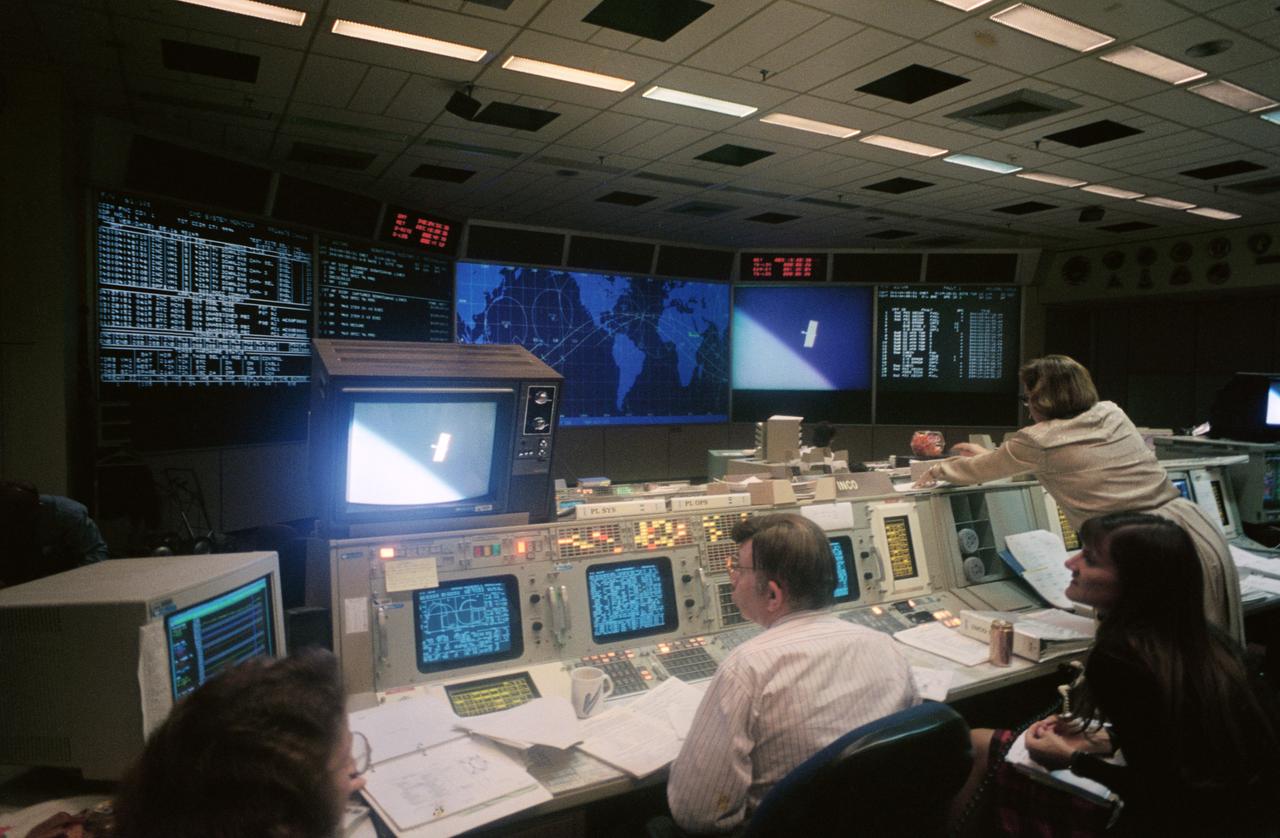
Harry Black, at the Integrated Communications Officer's console in the Mission Control Center (MCC), monitors the second extravehicular activity (EVA-2) of the STS-61 Hubble Space Telescope (HST) servicing mission. Others pictured, left to right, are Judy Alexander, Kathy Morrison and Linda Thomas. Note monitor scene of one of HST's original solar array panels floating in space moments after being tossed away by Astronaut Kathryn C. Thornton.
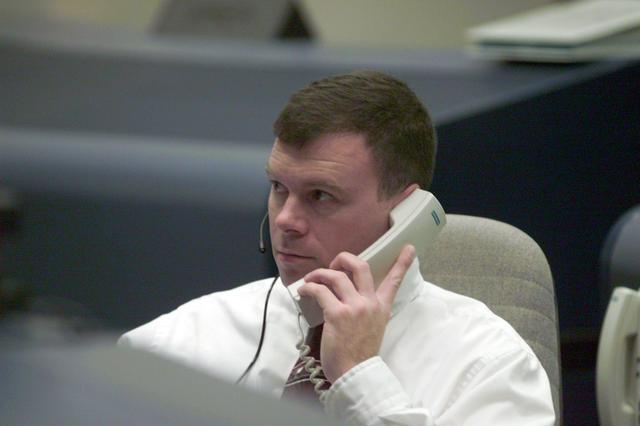
JSC2001-E-24995 (10 August 2001) --- Astronaut James M. Kelly, STS-105 spacecraft communicator (CAPCOM) for weather issues, monitors pre-flight data at his console in the shuttle flight control room (WFCR) in Houston's Mission Control Center (MCC). Several hundred miles away in Florida, the STS-105 and Expedition Three crew members were awaiting countdown in the crew cabin of the Space Shuttle Discovery on the launch pad at the Kennedy Space Center (KSC). As soon as the vehicle cleared the tower in Florida, the Houston-based team of flight controllers took over the ground control of the flight.
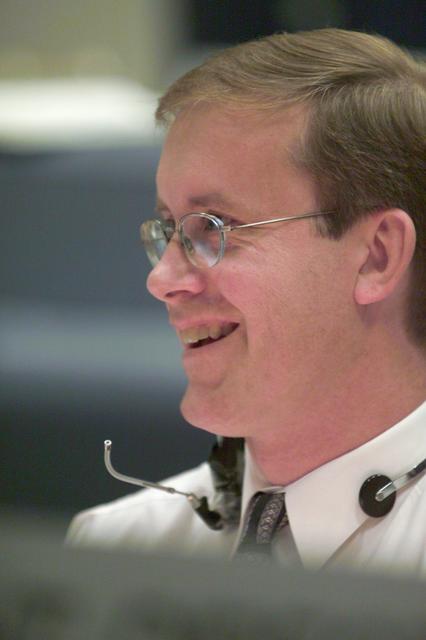
JSC2001-E-24994 (10 August 2001) --- Flight director John Shannon finds a moment of levity while working at his console in the shuttle flight control room (WFCR) in Houston's Mission Control Center (MCC). Several hundred miles away in Florida, the STS-105 and Expedition Three crew members were awaiting countdown in the crew cabin of the Space Shuttle Discovery on the launch pad at the Kennedy Space Center (KSC). As soon as the vehicle cleared the tower in Florida, the Houston-based team of flight controllers took over the ground control of the flight.
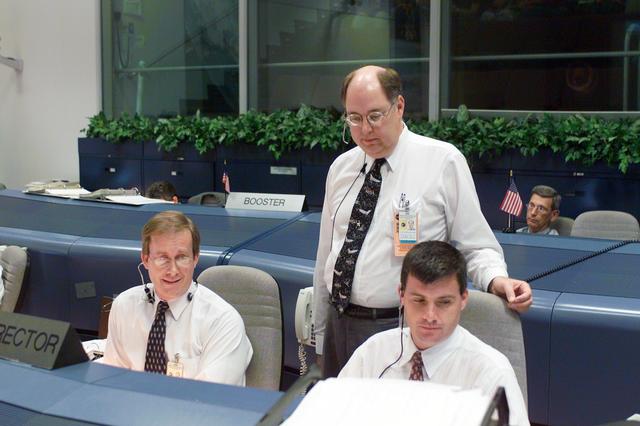
JSC2002-E-41150 (7 October 2002) --- Flight directors John Shannon (left) and Steve Stich monitor data at their consoles in the shuttle flight control room (WFCR) in Houston’s Mission Control Center (MCC). Wayne Hale (standing) of the Mission Operations Directorate (MOD) looks on. At the time this photo was taken the Space Shuttle Atlantis was about to launch from the Kennedy Space Center, Florida. Atlantis lifted off at 2:46 p.m. (CDT) on October 7, 2002. Once the vehicle cleared the tower in Florida, the Houston-based team of flight controllers took over the ground control of the flight.
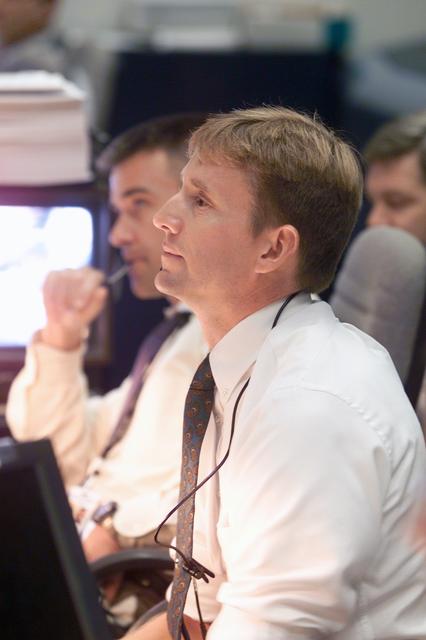
JSC2002-E-41160 (7 October 2002) --- Astronauts Kenneth T. Ham (foreground) and Duane G. Carey, spacecraft communicators (CAPCOM), watch the large screens from their consoles in the shuttle flight control room (WFCR) in Houston’s Mission Control Center (MCC). At the time this photo was taken the Space Shuttle Atlantis was about to launch from the Kennedy Space Center, Florida. Atlantis lifted off at 2:46 p.m. (CDT) on October 7, 2002. Once the vehicle cleared the tower in Florida, the Houston-based team of flight controllers took over the ground control of the flight.
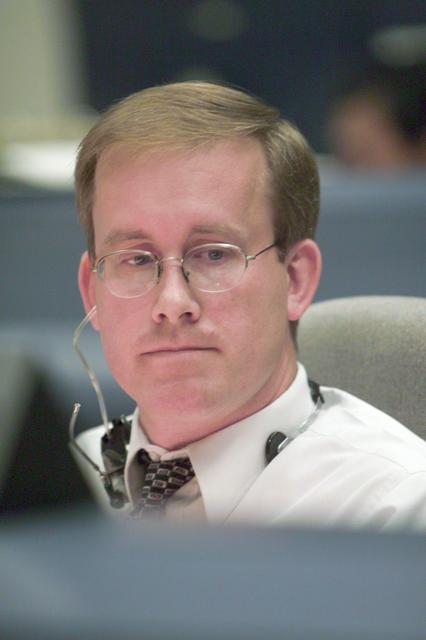
JSC2001-E-24998 (10 August 2001) --- Flight director John Shannon studies pre-flight data at his console in the shuttle flight control room (WFCR) in Houston's Mission Control Center (MCC) prior to the launch of Space Shuttle Discovery. Several hundred miles away in Florida, the STS-105 and Expedition Three crew members were awaiting countdown in the crew cabin of the Space Shuttle Discovery on the launch pad at the Kennedy Space Center (KSC). As soon as the vehicle cleared the tower in Florida, the Houston-based team of flight controllers took over the ground control of the flight.
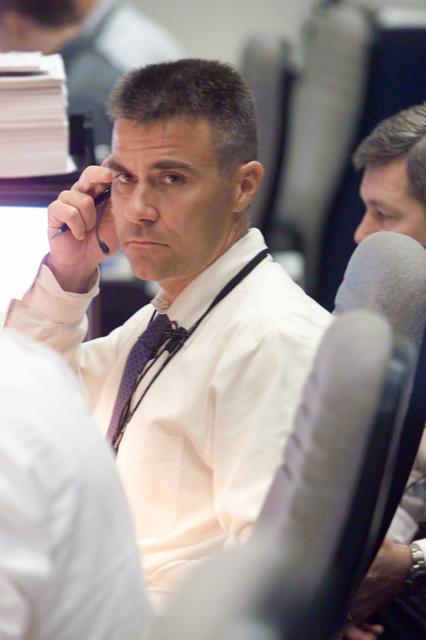
JSC2002-E-41164 (7 October 2002) --- Astronaut Duane G. Carey, spacecraft communicator (CAPCOM), is pictured at his console in the shuttle flight control room (WFCR) in Houston’s Mission Control Center (MCC). At the time this photo was taken the Space Shuttle Atlantis was about to launch from the Kennedy Space Center, Florida. Atlantis lifted off at 2:46 p.m. (CDT) on October 7, 2002. Once the vehicle cleared the tower in Florida, the Houston-based team of flight controllers took over the ground control of the flight.
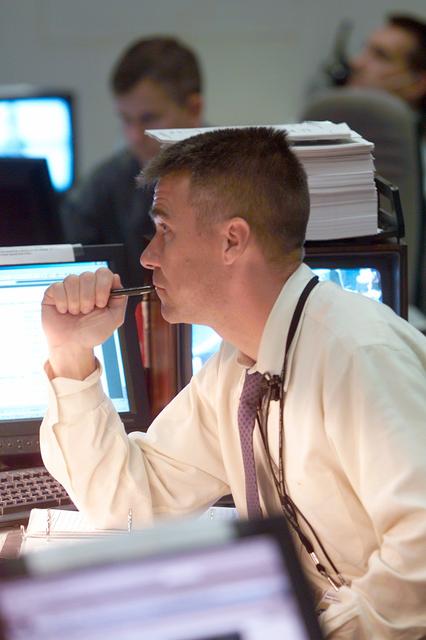
JSC2002-E-41151 (7 October 2002) --- Astronaut Duane G. Carey, spacecraft communicator (CAPCOM), watches the large screens from his console in the shuttle flight control room (WFCR) in Houston’s Mission Control Center (MCC). At the time this photo was taken the Space Shuttle Atlantis was about to launch from the Kennedy Space Center, Florida. Atlantis lifted off at 2:46 p.m. (CDT) on October 7, 2002. Once the vehicle cleared the tower in Florida, the Houston-based team of flight controllers took over the ground control of the flight.
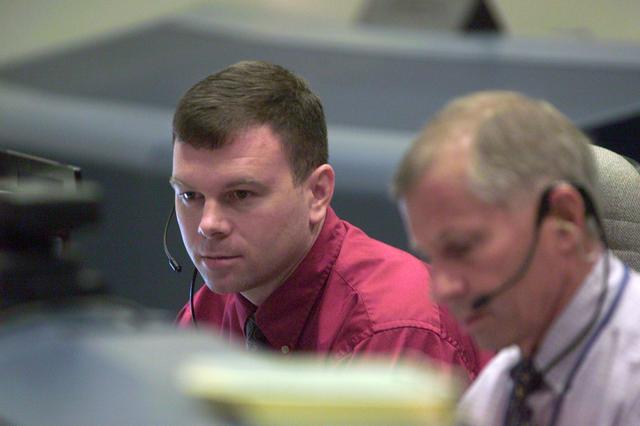
JSC2001-E-24997 (10 August 2001) --- Astronaut James M. Kelly, STS-105 spacecraft communicator (CAPCOM) for weather issues, monitors pre-flight data at his console in the shuttle flight control room (WFCR) in Houston's Mission Control Center (MCC). Several hundred miles away in Florida, the STS-105 and Expedition Three crew members were awaiting countdown in the crew cabin of the Space Shuttle Discovery on the launch pad at the Kennedy Space Center (KSC). As soon as the vehicle cleared the tower in Florida, the Houston-based team of flight controllers took over the ground control of the flight.
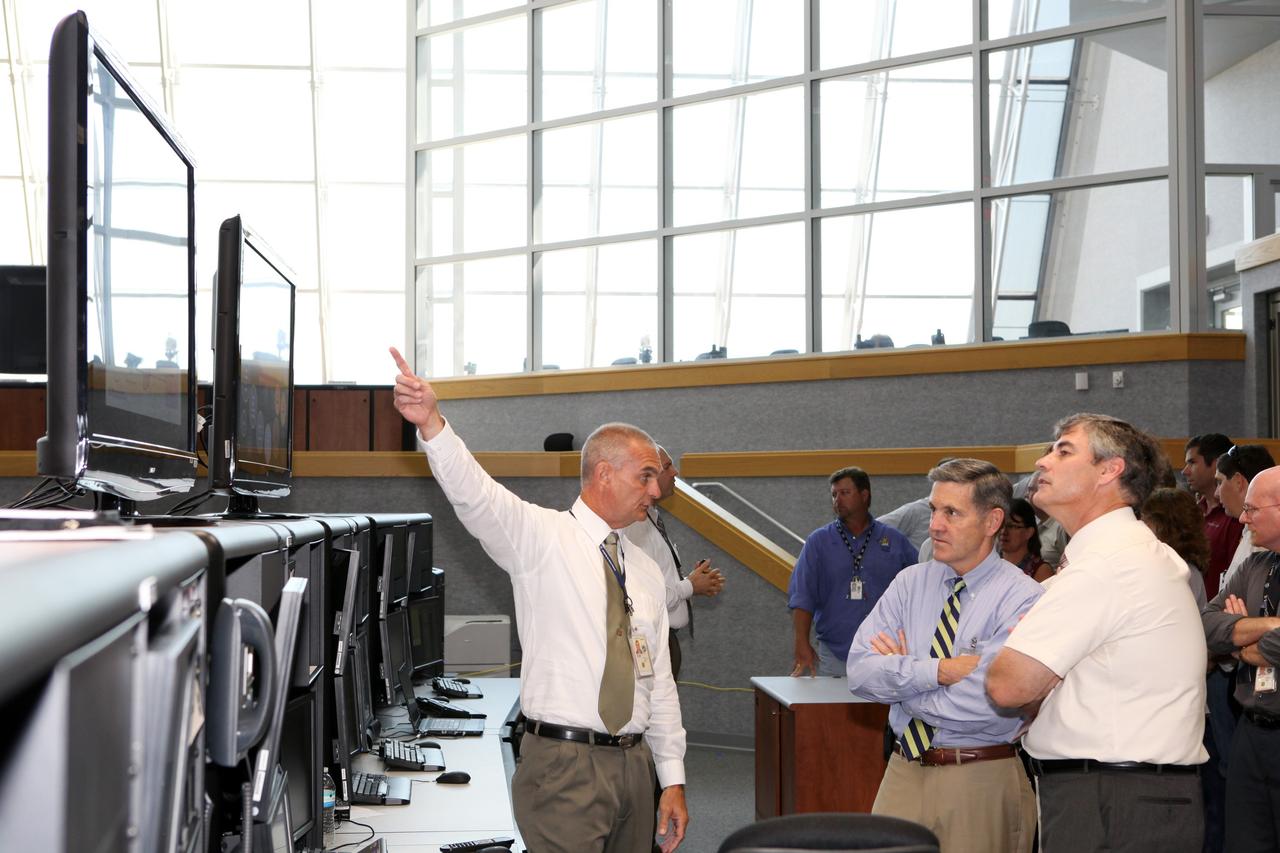
CAPE CANAVERAL, Fla. – Robert Cabana, director of NASA's Kennedy Space Center and a former astronaut, watches a demonstration of new systems installed in the Young-Crippen Firing Room, also known as Firing Room 1, inside the Launch Control Center. The renovation has been led by the Ground Systems Development and Operations Program based at Kennedy. The new systems are designed to be flexible so controllers can process and launch multiple types of rockets and spacecraft, whether they are government or commercial models. Photo credit: NASA/Dmitri Gerondidakis
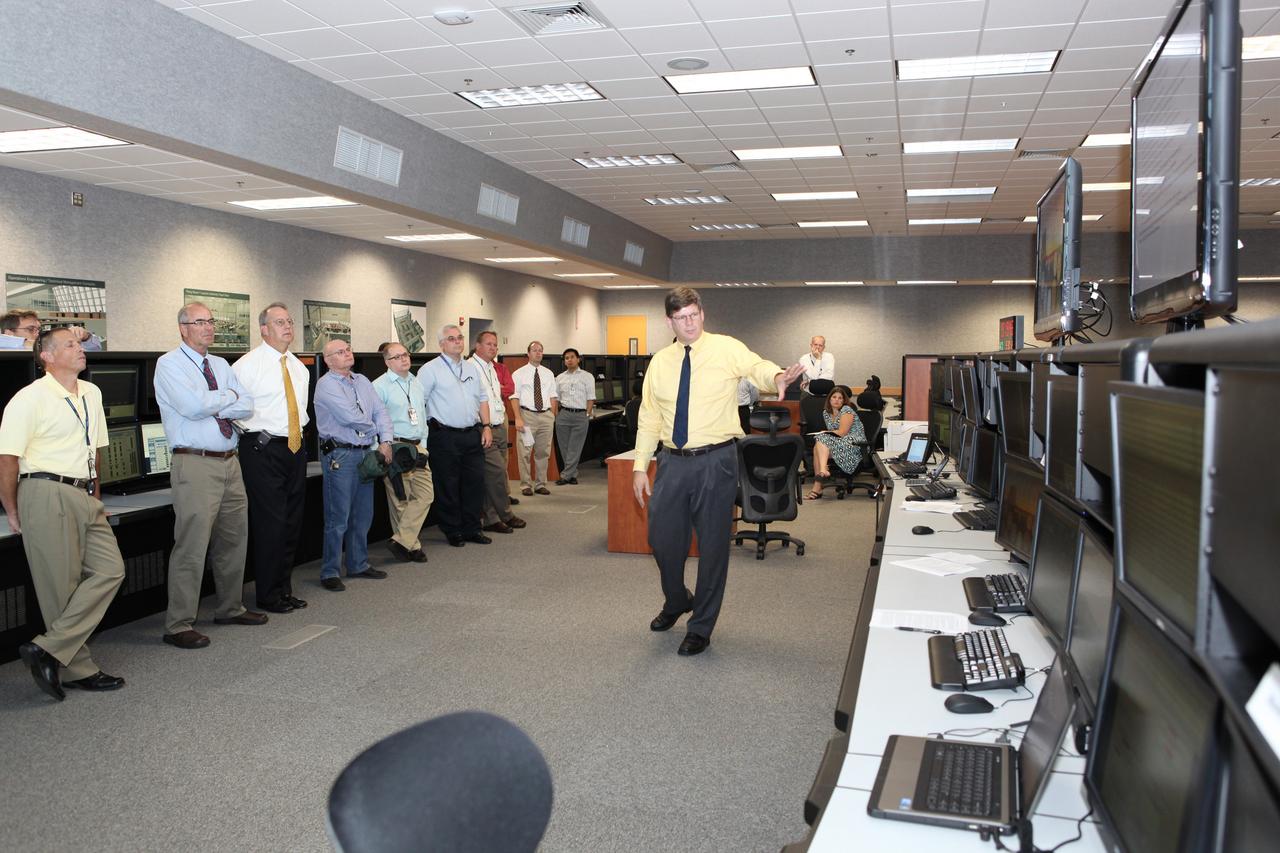
CAPE CANAVERAL, Fla. – Workers at NASA's Kennedy Space Center watch a demonstration of new systems installed in the Young-Crippen Firing Room, also known as Firing Room 1, inside the Launch Control Center. The renovation has been led by the Ground Systems Development and Operations Program based at Kennedy. The new systems are designed to be flexible so controllers can process and launch multiple types of rockets and spacecraft, whether they are government or commercial models. Photo credit: NASA/Dmitri Gerondidakis
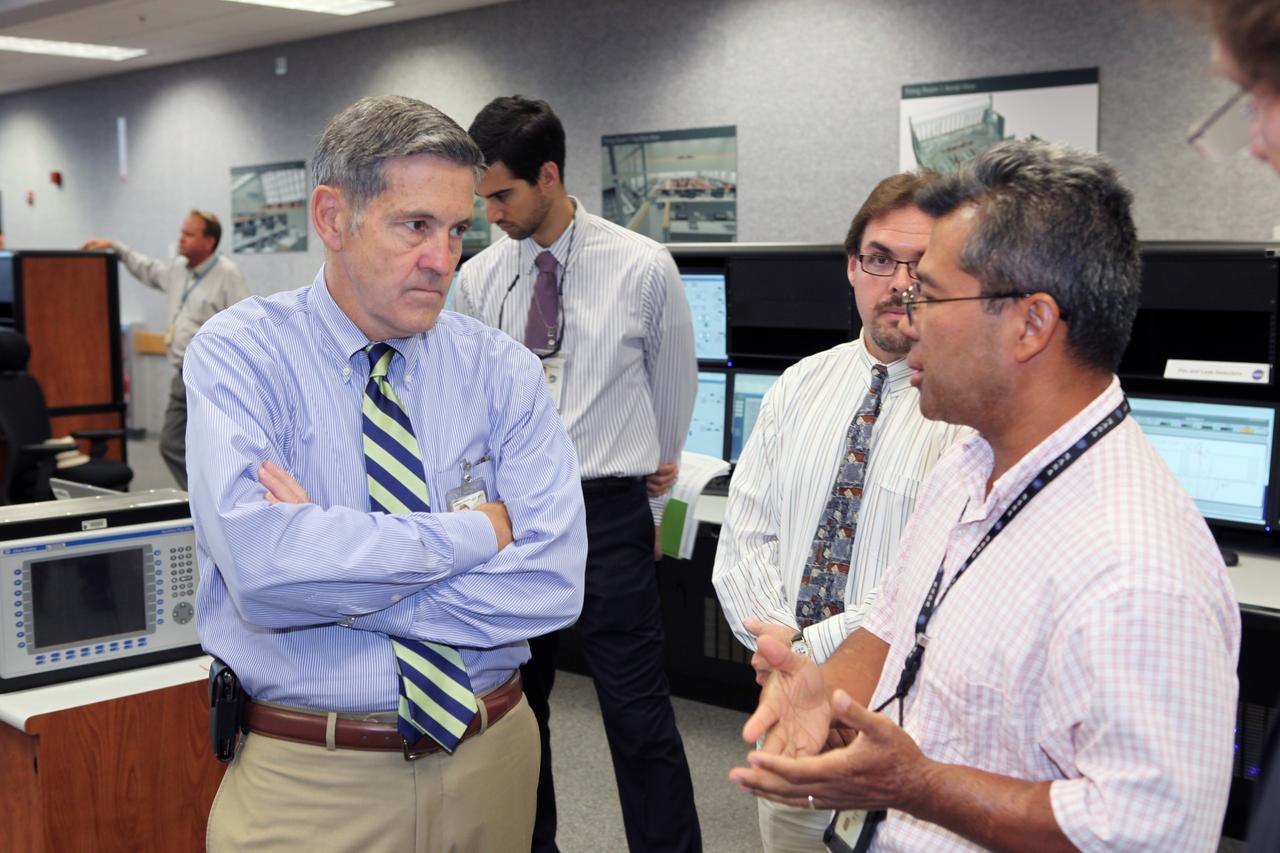
CAPE CANAVERAL, Fla. – Robert Cabana, director of NASA's Kennedy Space Center and a former astronaut, listens to a presentation of new systems installed in the Young-Crippen Firing Room, also known as Firing Room 1, inside the Launch Control Center. The renovation has been led by the Ground Systems Development and Operations Program based at Kennedy. The new systems are designed to be flexible so controllers can process and launch multiple types of rockets and spacecraft, whether they are government or commercial models. Photo credit: NASA/Dmitri Gerondidakis

CAPE CANAVERAL, Fla. – Robert Cabana, director of NASA's Kennedy Space Center and a former astronaut, takes a look inside new systems installed in the Young-Crippen Firing Room, also known as Firing Room 1, inside the Launch Control Center. The renovation has been led by the Ground Systems Development and Operations Program based at Kennedy. The new systems are designed to be flexible so controllers can process and launch multiple types of rockets and spacecraft, whether they are government or commercial models. Photo credit: NASA/Dmitri Gerondidakis
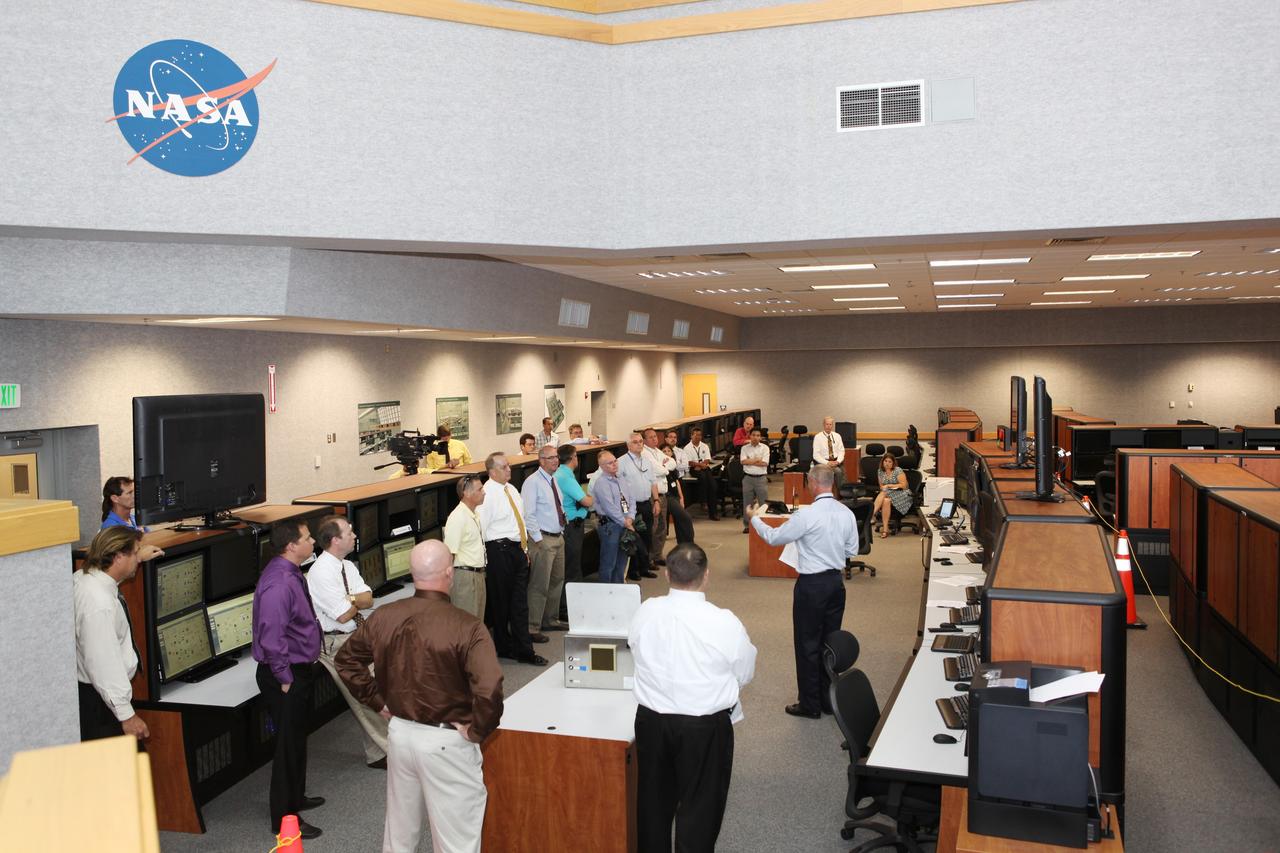
CAPE CANAVERAL, Fla. – Workers at NASA's Kennedy Space Center watch a demonstration of new systems installed in the Young-Crippen Firing Room, also known as Firing Room 1, inside the Launch Control Center. The renovation has been led by the Ground Systems Development and Operations Program based at Kennedy. The new systems are designed to be flexible so controllers can process and launch multiple types of rockets and spacecraft, whether they are government or commercial models. Photo credit: NASA/Dmitri Gerondidakis
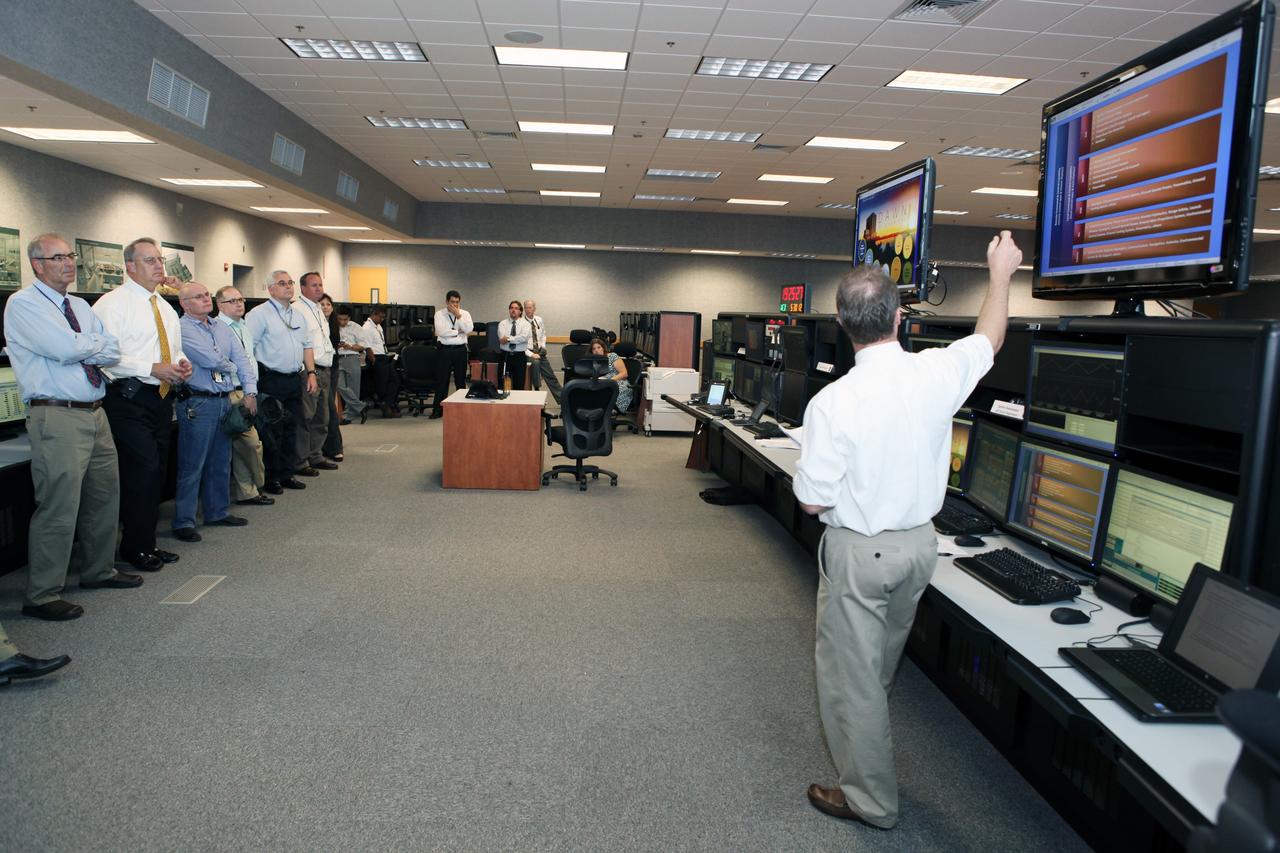
CAPE CANAVERAL, Fla. – Workers at NASA's Kennedy Space Center watch a demonstration of new systems installed in the Young-Crippen Firing Room, also known as Firing Room 1, inside the Launch Control Center. The renovation has been led by the Ground Systems Development and Operations Program based at Kennedy. The new systems are designed to be flexible so controllers can process and launch multiple types of rockets and spacecraft, whether they are government or commercial models. Photo credit: NASA/Dmitri Gerondidakis
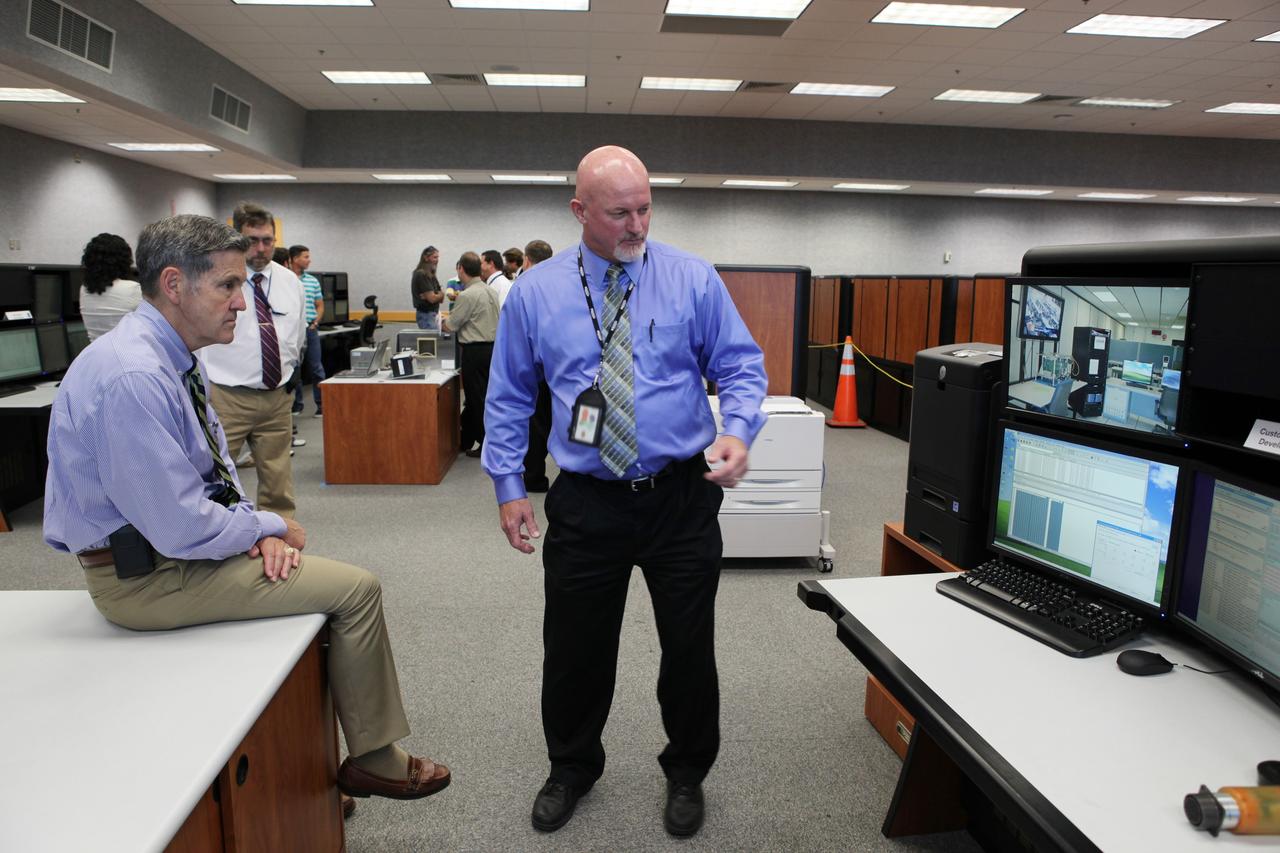
CAPE CANAVERAL, Fla. – Robert Cabana, director of NASA's Kennedy Space Center and a former astronaut, watches a demonstration of new systems installed in the Young-Crippen Firing Room, also known as Firing Room 1, inside the Launch Control Center. The renovation has been led by the Ground Systems Development and Operations Program based at Kennedy. The new systems are designed to be flexible so controllers can process and launch multiple types of rockets and spacecraft, whether they are government or commercial models. Photo credit: NASA/Dmitri Gerondidakis
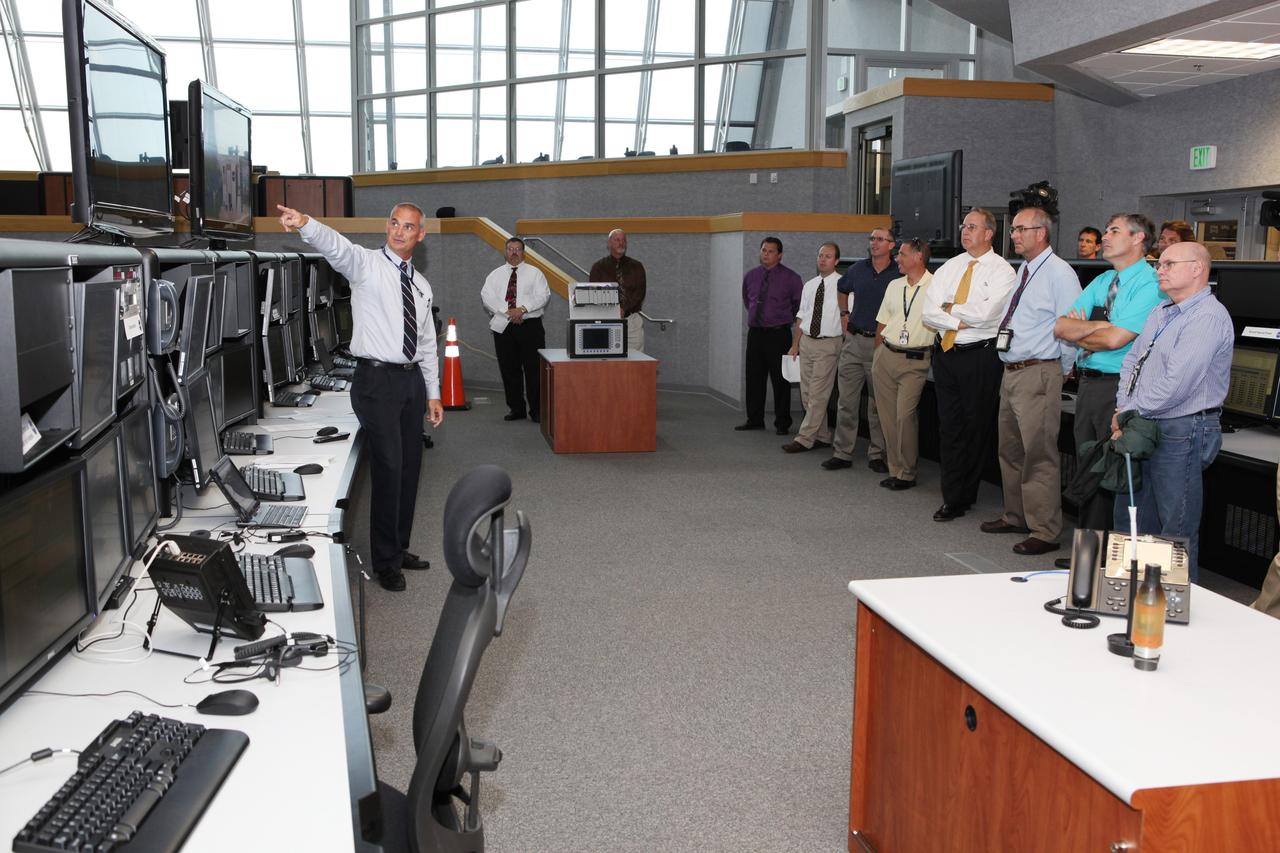
CAPE CANAVERAL, Fla. – Workers at NASA's Kennedy Space Center watch a demonstration of new systems installed in the Young-Crippen Firing Room, also known as Firing Room 1, inside the Launch Control Center. The renovation has been led by the Ground Systems Development and Operations Program based at Kennedy. The new systems are designed to be flexible so controllers can process and launch multiple types of rockets and spacecraft, whether they are government or commercial models. Photo credit: NASA/Dmitri Gerondidakis
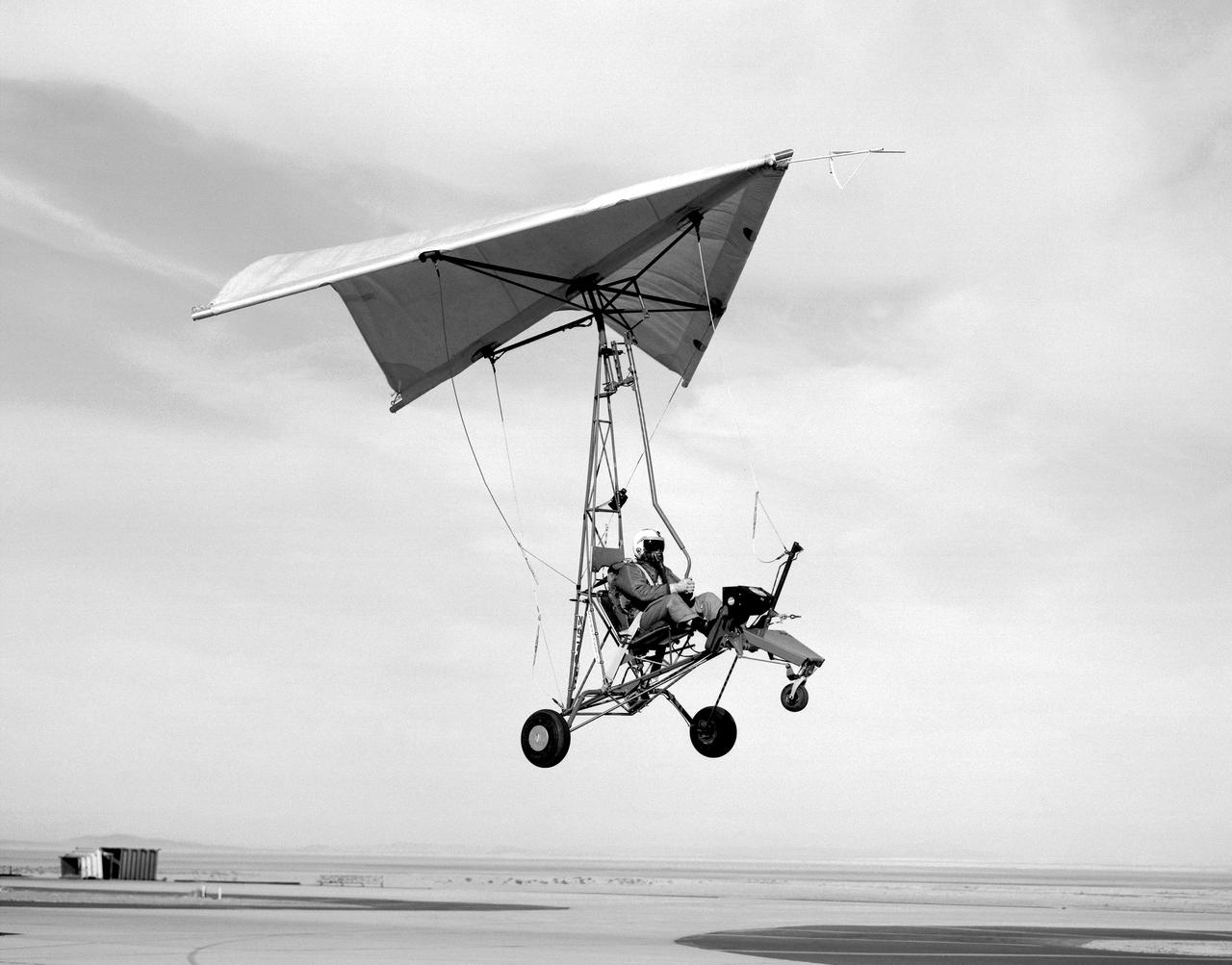
Pilot and Paresev 1 preparing for a landing on the Rogers dry lakebed in 1962 at Edwards Air Force Base, California. The flight program began with ground tow tests. Several tows were made before liftoff was attempted to check the control rigging and to familiarize the pilot with the vehicle’s ground stability. As the pilot’s confidence and experience increased, tow speeds were also increased until liftoff was attained. Liftoff was at about 40 knots indicated airspeed (kias).
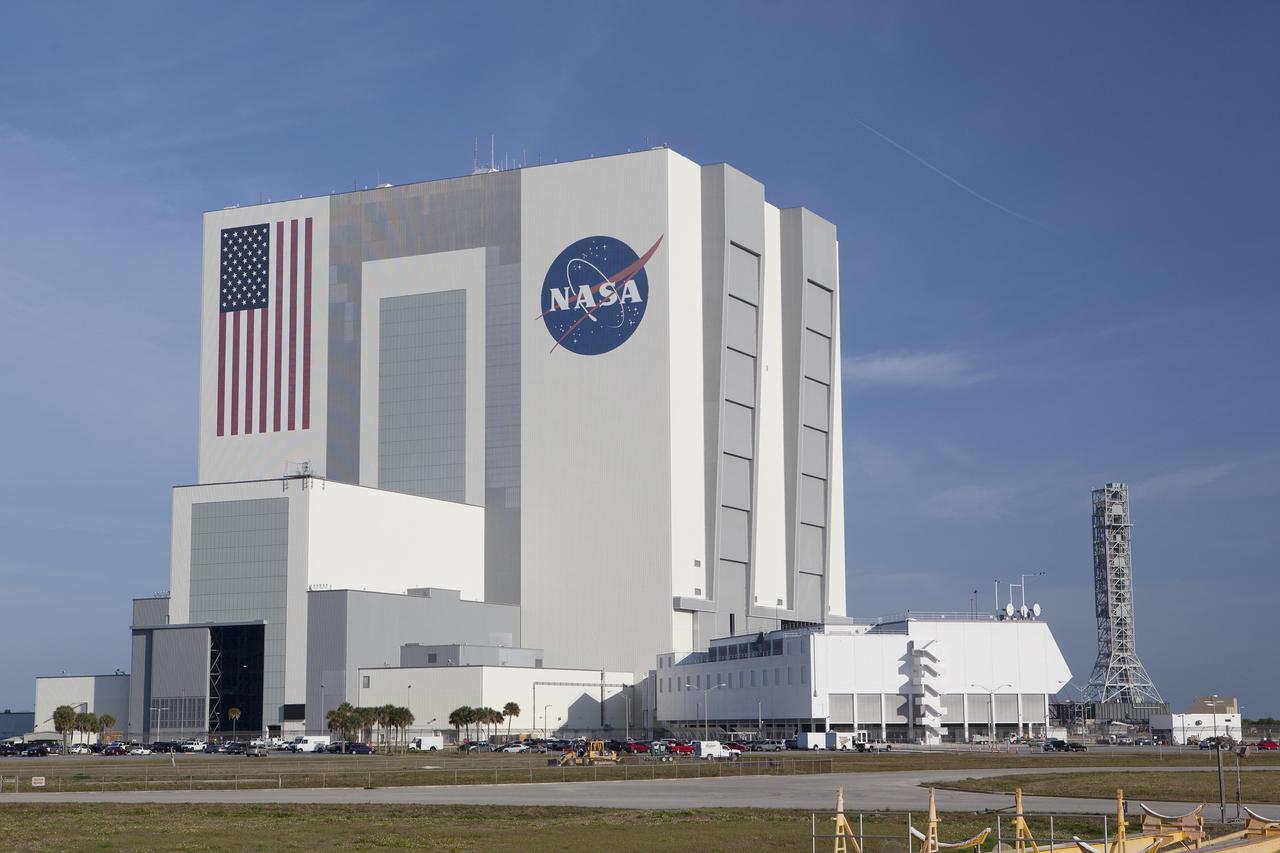
CAPE CANAVERAL, Fla. – The Vehicle Assembly Building, Launch Control Center and Mobile Launcher are in this view of the Launch Complex 39 area at NASA's Kennedy Space Center in Florida. Inside the Launch Control Center, the Ground Systems Development and Operations Program is overseeing efforts to create a new firing room based on a multi-user concept in Firing Room 4. The design of Firing Room 4 will incorporate five control room areas that are flexible to meet current and future NASA and commercial user requirements. The equipment and most of the consoles from Firing Room 4 were moved to Firing Room 2 for possible future reuse. Photo credit: NASA/Ben Smegelsky
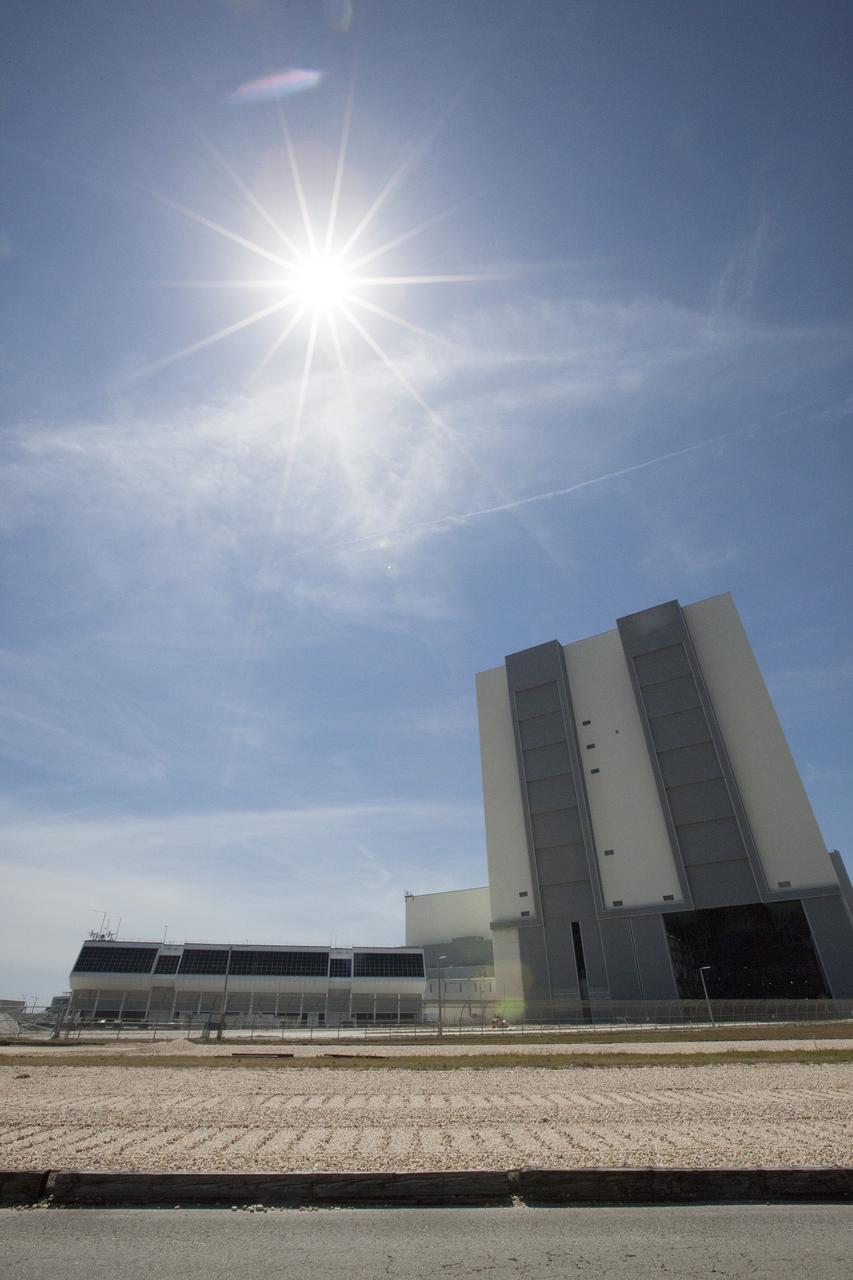
CAPE CANAVERAL, Fla. – A portion of the crawlerway, the Vehicle Assembly Building and the Launch Control Center are illuminated by a bright sun in this view looking west at NASA's Kennedy Space Center in Florida. Inside Firing Room 4 in the Launch Control Center, the Ground Systems Development and Operations Program is overseeing efforts to create a new firing room based on a multi-user concept. The design of Firing Room 4 will incorporate five control room areas that are flexible to meet current and future NASA and commercial user requirements. The equipment and most of the consoles from Firing Room 4 were moved to Firing Room 2 for possible future reuse. Photo credit: NASA/Ben Smegelsky

S68-18733 (22 Jan. 1968) --- Dr. Robert R. Gilruth (right), MSC Director, sits with Dr. Christopher C. Kraft Jr., MSC director of flight operations, at his flight operations director console in the Mission Control Center, Building 30, during the Apollo 5 (LM-1/Saturn 204) unmanned space mission.
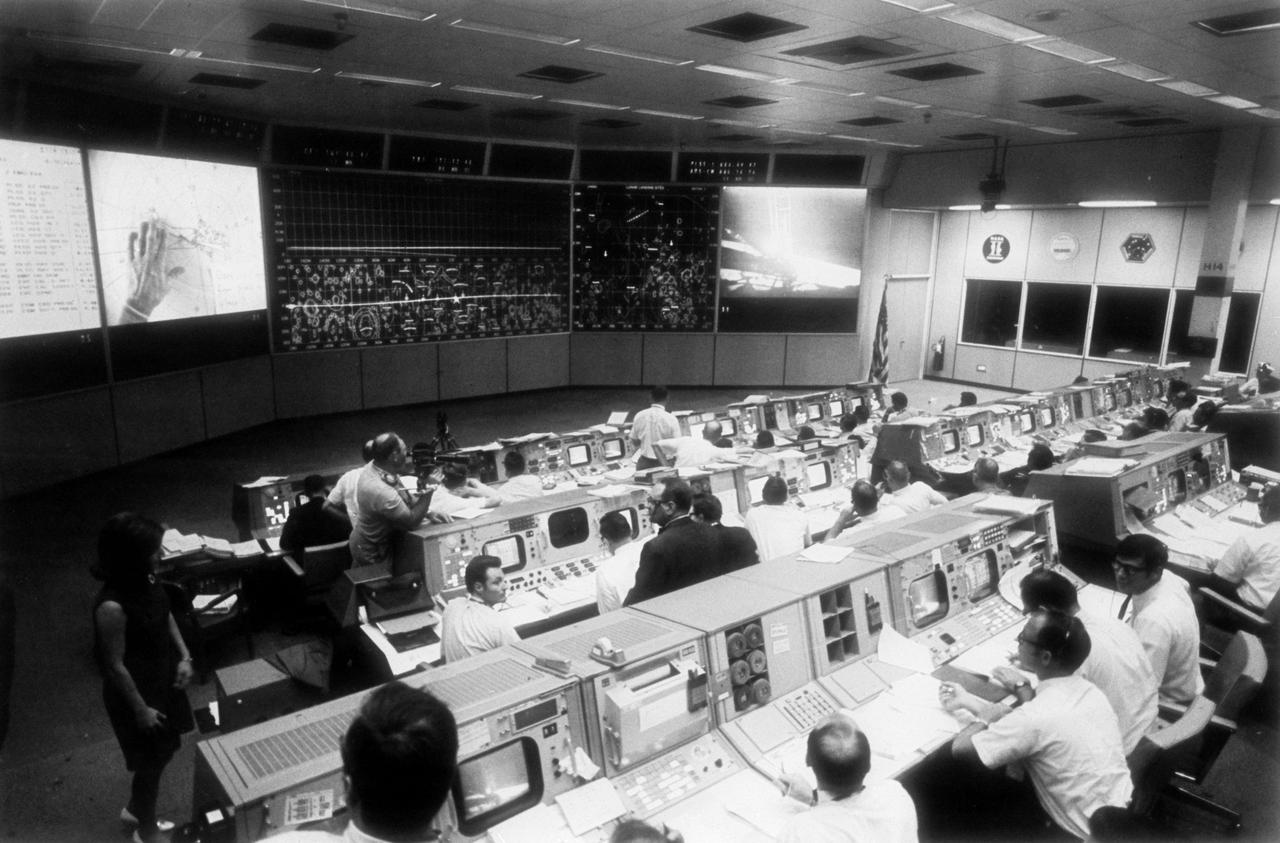
Overall view of the Mission Operations Control Room in the Mission Control Center, bldg 30, during the lunar surface extravehicular activity (EVA) of Apollo 11 Astronauts Neil A. Armstrong and Edwin E. Aldrin Jr.
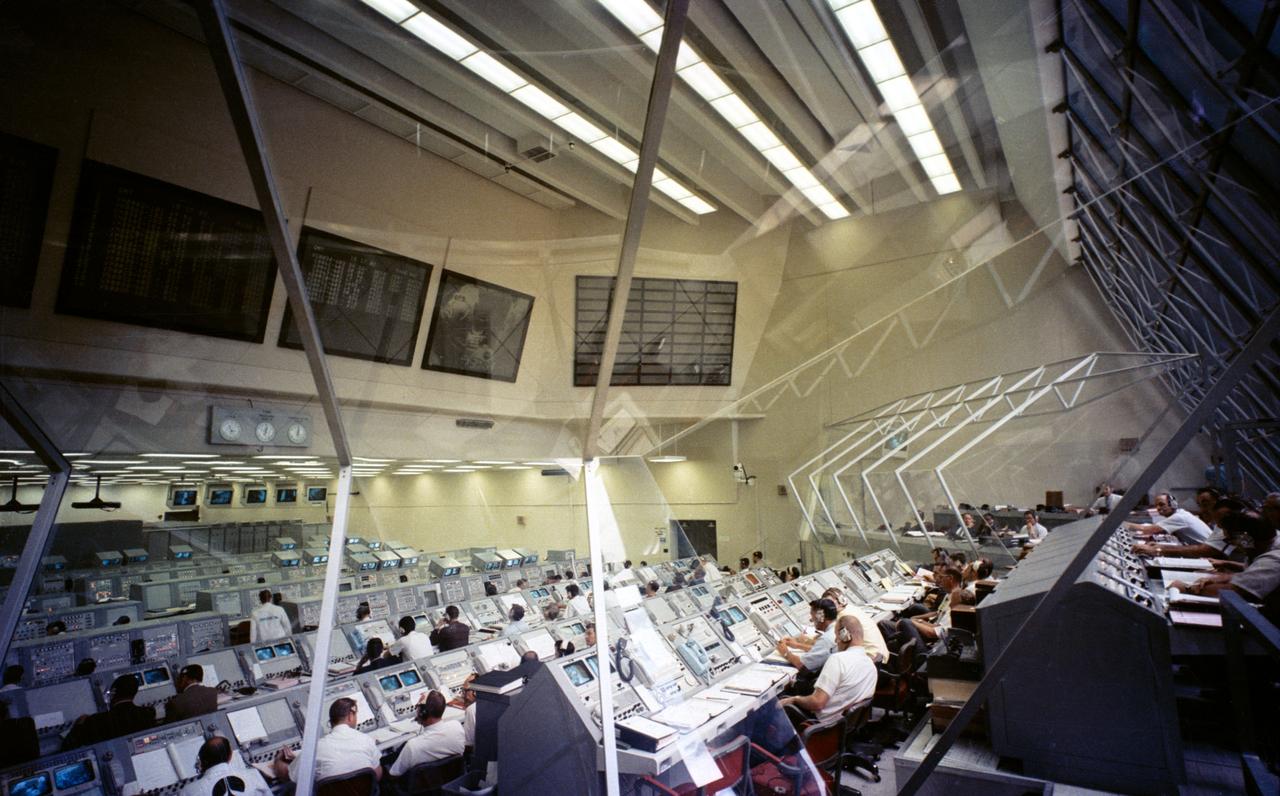
S69-34332 (13 May 1969) --- Overall view of Firing Room 3 of the Launch Control Center, Launch Complex 39, Kennedy Space Center, Florida, during an Apollo 10 Countdown Demonstration Test. The crew of the scheduled Apollo 10 lunar orbit mission will be astronauts Thomas P. Stafford, commander; John W. Young, command module pilot; and Eugene A. Cernan, lunar module pilot. The Launch Control Center is at the Vehicle Assembly Building. The Apollo 10 space vehicle will be launched from Pad 39B.
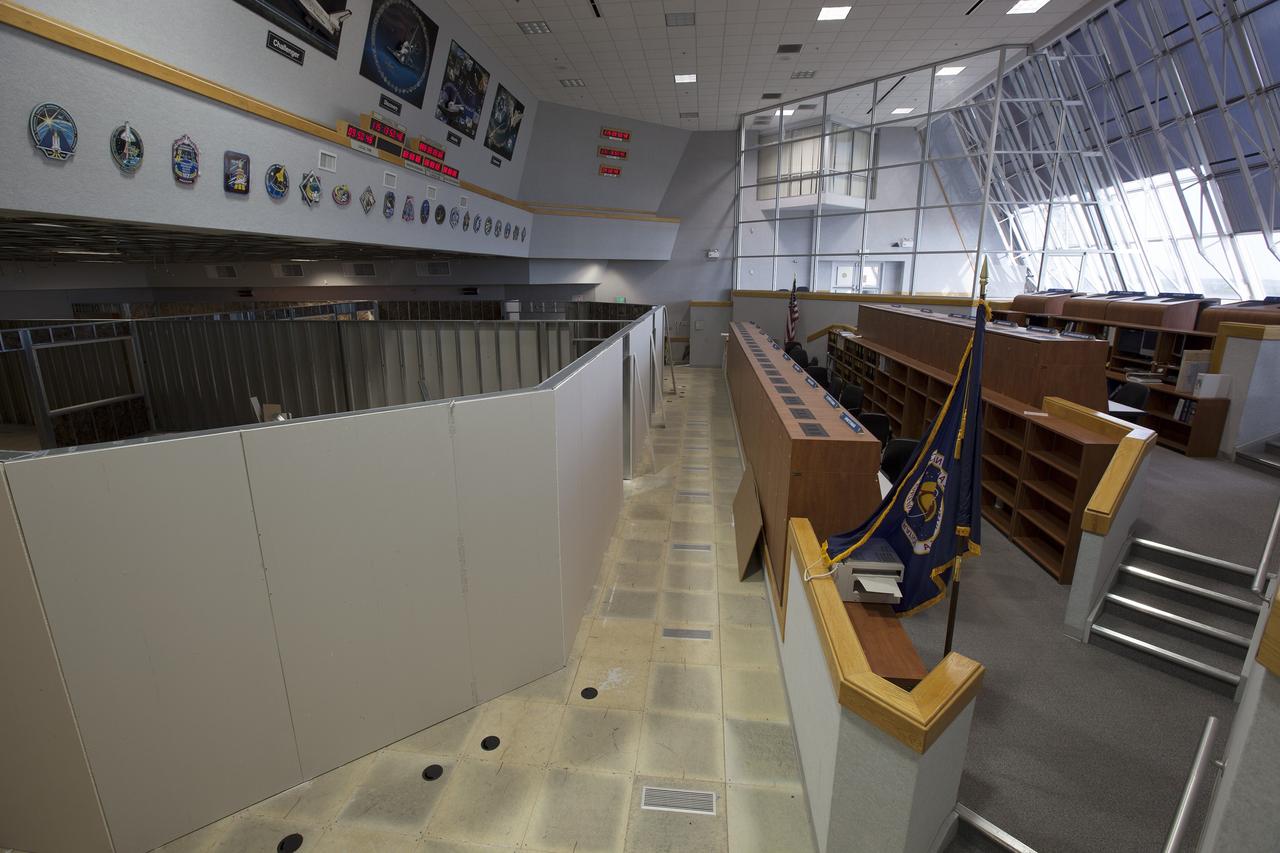
CAPE CANAVERAL, Fla. – Construction workers have installed the framing and some of the inner walls inside Firing Room 4 in the Launch Control Center at NASA's Kennedy Space Center in Florida. Three rows of upper level management consoles remain. The Ground Systems Development and Operations Program is overseeing efforts to create a new firing room based on a multi-user concept. The design of Firing Room 4 will incorporate five control room areas that are flexible to meet current and future NASA and commercial user requirements. The equipment and most of the consoles from Firing Room 4 were moved to Firing Room 2 for possible future reuse. Photo credit: NASA/Dimitri Gerondidakis
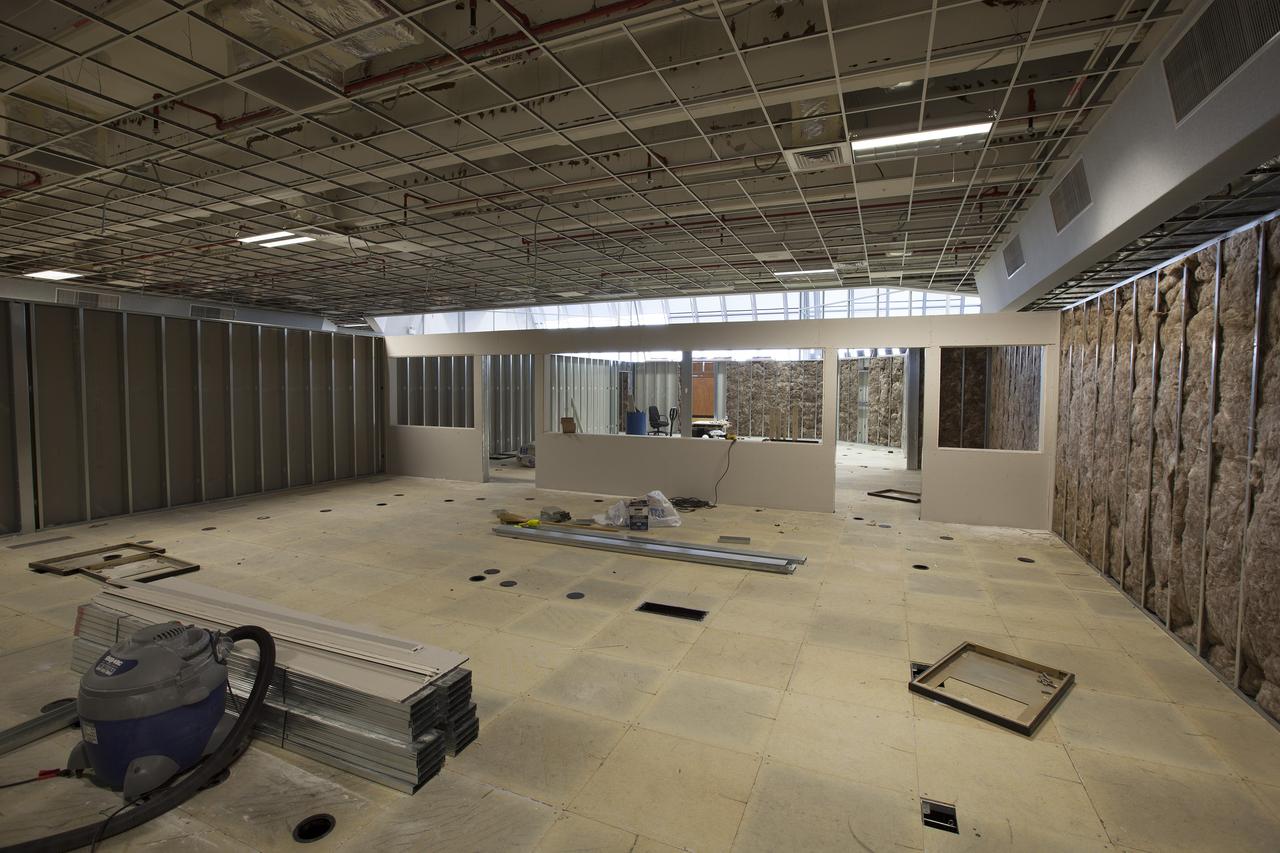
CAPE CANAVERAL, Fla. – Modifications to Firing Room 4 in the Launch Control Center at NASA's Kennedy Space Center in Florida continue to take shape. Construction workers have installed the framing and some of the insulation and inner walls. The Ground Systems Development and Operations Program is overseeing efforts to create a new firing room based on a multi-user concept. The design of Firing Room 4 will incorporate five control room areas that are flexible to meet current and future NASA and commercial user requirements. The equipment and most of the consoles from Firing Room 4 were moved to Firing Room 2 for possible future reuse. Photo credit: NASA/Dimitri Gerondidakis
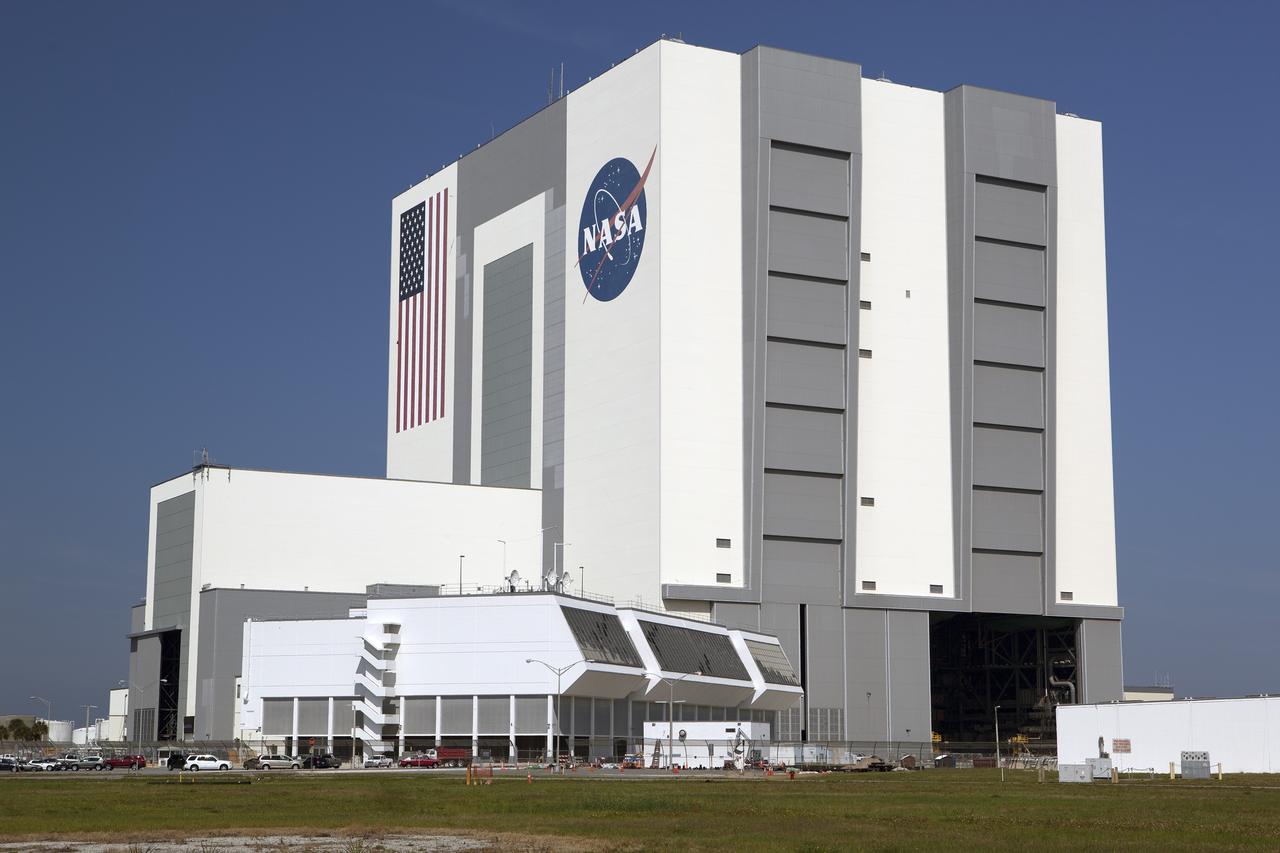
CAPE CANAVERAL, Fla. – The Vehicle Assembly Building and Launch Control Center are contrasted against a blue sky at NASA's Kennedy Space Center in Florida. Inside Firing Room 4, the Ground Systems Development and Operations Program is overseeing efforts to create a new firing room based on a multi-user concept. Construction workers have installed the framing and some of the insulation and inner walls. The design of Firing Room 4 will incorporate five control room areas that are flexible to meet current and future NASA and commercial user requirements. The equipment and most of the consoles from Firing Room 4 were moved to Firing Room 2 for possible future reuse. Photo credit: NASA/Dimitri Gerondidakis
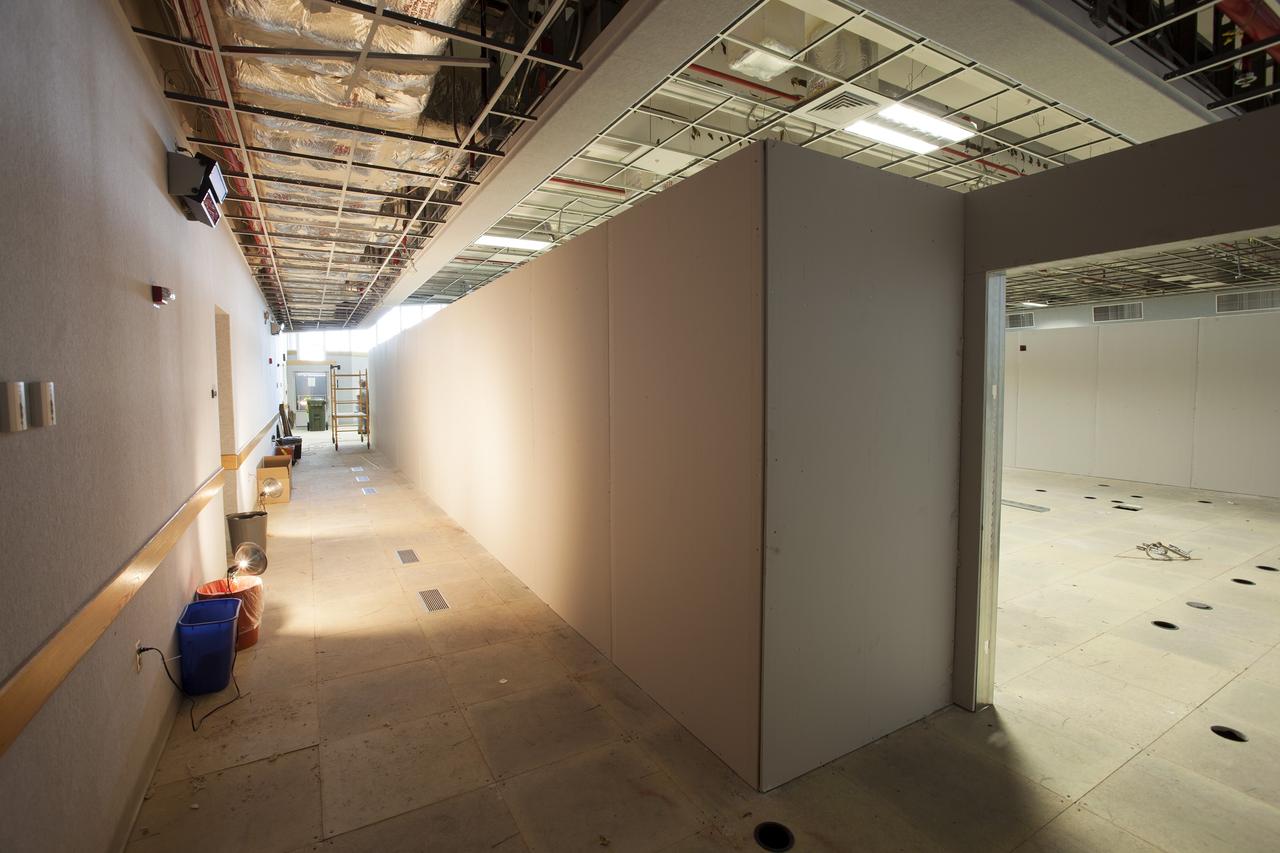
CAPE CANAVERAL, Fla. – Modifications to Firing Room 4 in the Launch Control Center at NASA's Kennedy Space Center in Florida continue to take shape. Construction workers have installed the framing and some of the inner walls. The Ground Systems Development and Operations Program is overseeing efforts to create a new firing room based on a multi-user concept. The design of Firing Room 4 will incorporate five control room areas that are flexible to meet current and future NASA and commercial user requirements. The equipment and most of the consoles from Firing Room 4 were moved to Firing Room 2 for possible future reuse. Photo credit: NASA/Dimitri Gerondidakis
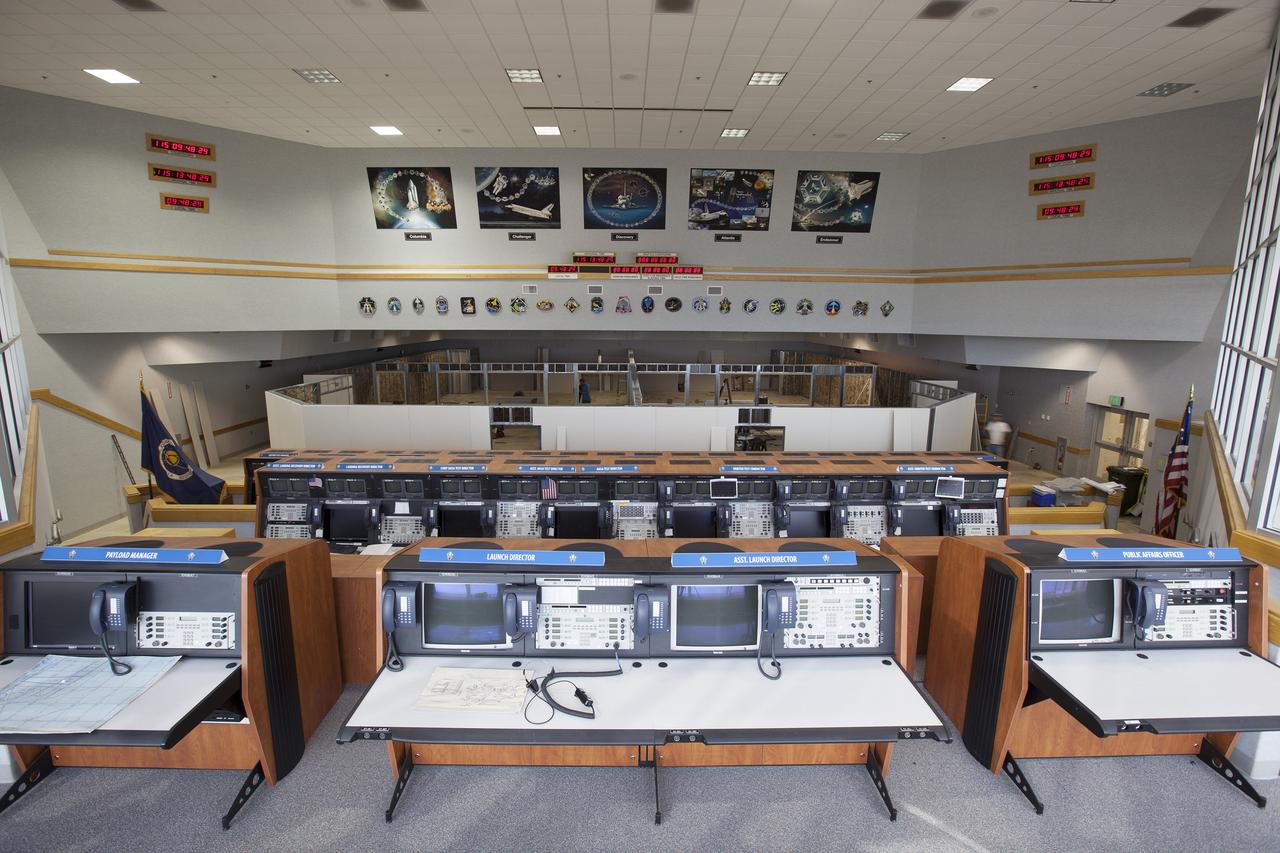
CAPE CANAVERAL, Fla. – Construction workers have installed the framing and some of the inner walls inside Firing Room 4 in the Launch Control Center at NASA's Kennedy Space Center in Florida. Three rows of upper level management consoles remain. The Ground Systems Development and Operations Program is overseeing efforts to create a new firing room based on a multi-user concept. The design of Firing Room 4 will incorporate five control room areas that are flexible to meet current and future NASA and commercial user requirements. The equipment and most of the consoles from Firing Room 4 were moved to Firing Room 2 for possible future reuse. Photo credit: NASA/Dimitri Gerondidakis
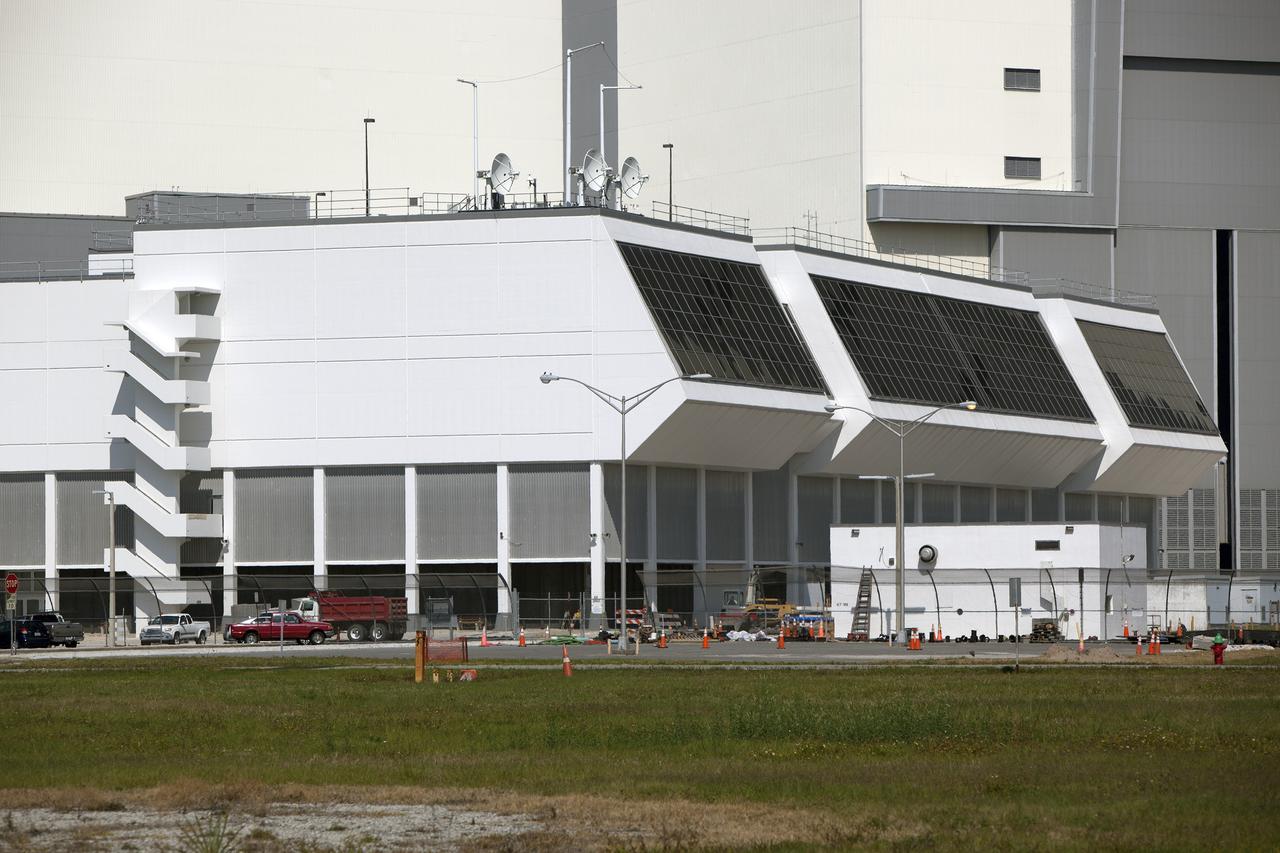
CAPE CANAVERAL, Fla. – An exterior view of the Launch Control Center at NASA's Kennedy Space Center in Florida. Inside Firing Room 4, the Ground Systems Development and Operations Program is overseeing efforts to create a new firing room based on a multi-user concept. Construction workers have installed the framing and some of the insulation and inner walls. The design of Firing Room 4 will incorporate five control room areas that are flexible to meet current and future NASA and commercial user requirements. The equipment and most of the consoles from Firing Room 4 were moved to Firing Room 2 for possible future reuse. Photo credit: NASA/Dimitri Gerondidakis
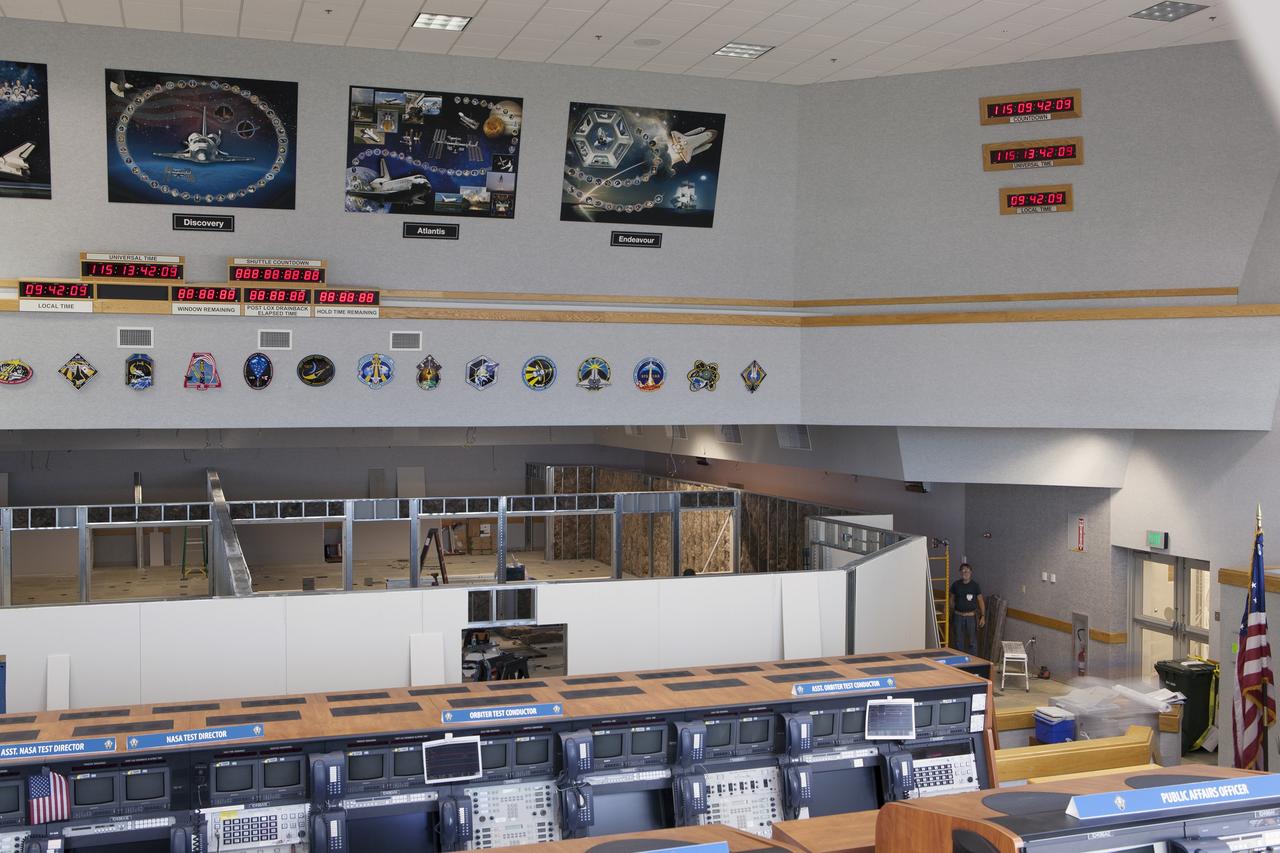
CAPE CANAVERAL, Fla. – Construction workers have installed the framing and some of the inner walls inside Firing Room 4 in the Launch Control Center at NASA's Kennedy Space Center in Florida. Three rows of upper level management consoles remain. The Ground Systems Development and Operations Program is overseeing efforts to create a new firing room based on a multi-user concept. The design of Firing Room 4 will incorporate five control room areas that are flexible to meet current and future NASA and commercial user requirements. The equipment and most of the consoles from Firing Room 4 were moved to Firing Room 2 for possible future reuse. Photo credit: NASA/Dimitri Gerondidakis
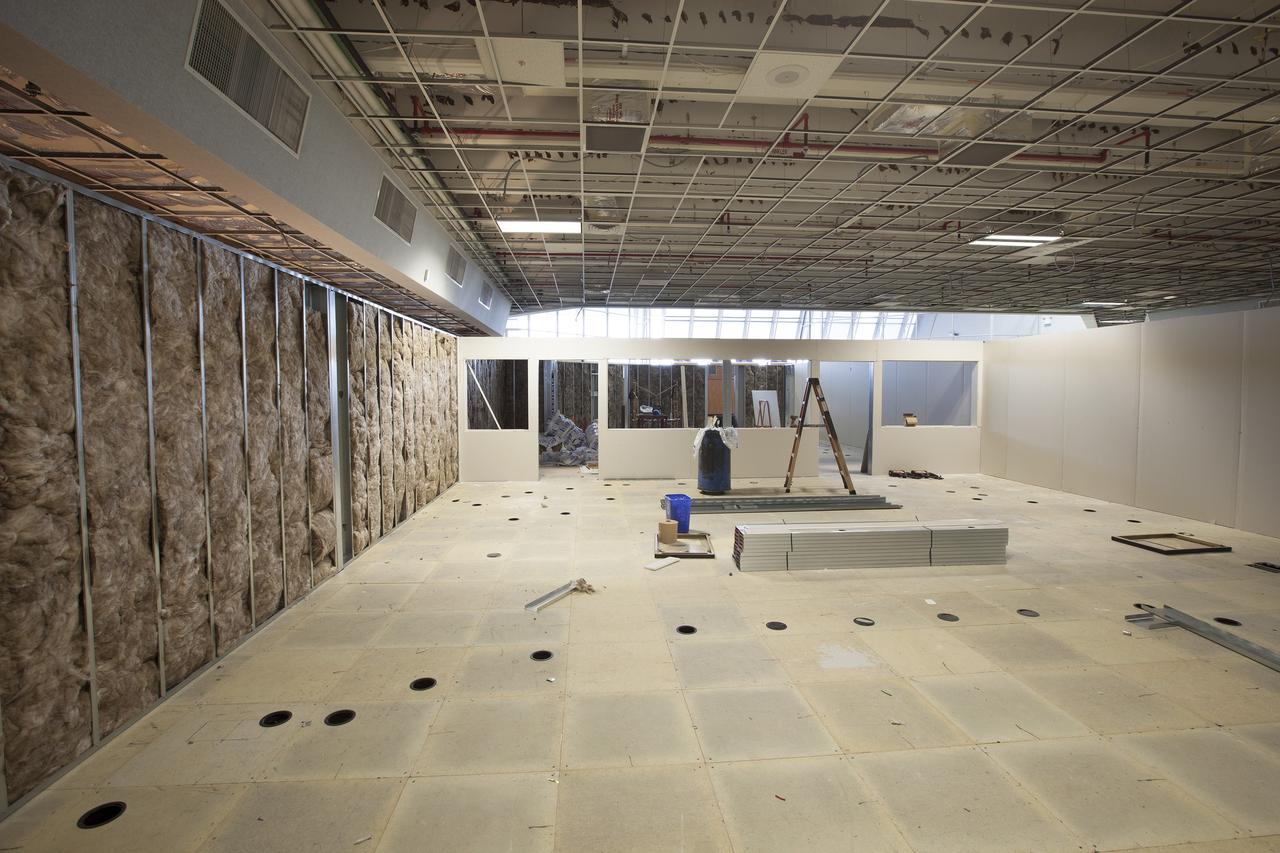
CAPE CANAVERAL, Fla. – Modifications to Firing Room 4 in the Launch Control Center at NASA's Kennedy Space Center in Florida continue to take shape. Construction workers have installed the framing and some of the insulation and inner walls. The Ground Systems Development and Operations Program is overseeing efforts to create a new firing room based on a multi-user concept. The design of Firing Room 4 will incorporate five control room areas that are flexible to meet current and future NASA and commercial user requirements. The equipment and most of the consoles from Firing Room 4 were moved to Firing Room 2 for possible future reuse. Photo credit: NASA/Dimitri Gerondidakis
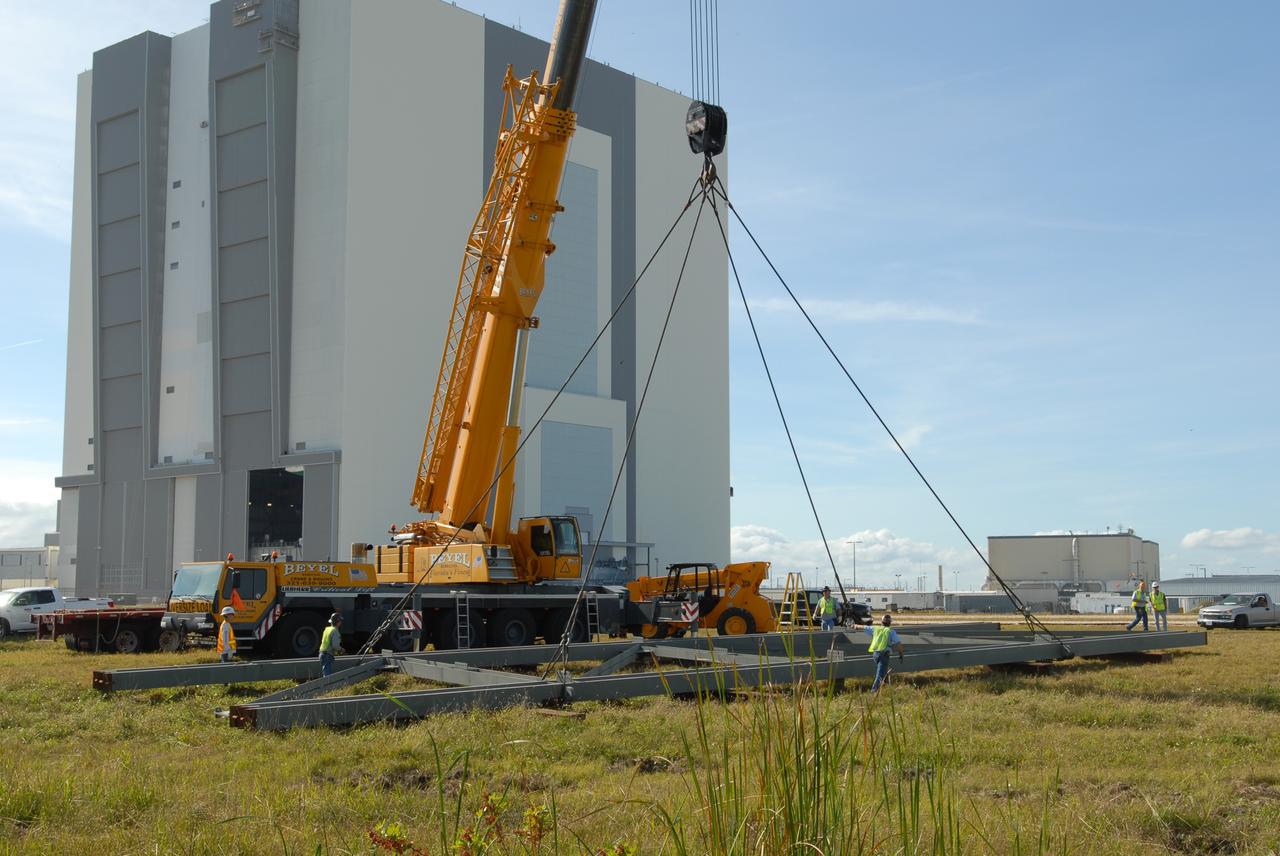
CAPE CANAVERAL, Fla. -- Near the Vehicle Assembly Building at NASA's Kennedy Space Center in Florida, a crane places on the ground one of the trusses, T4, to build the new mobile launcher for the Constellation Program. The new mobile launcher will be the base for the Ares rockets to launch the Orion crew exploration vehicle and the cargo vehicle. The base is being made lighter than space shuttle mobile launcher platforms so the crawler-transporter can pick up the added load of the 345-foot tower and taller rocket. When the structural portion of the new mobile launcher is complete, umbilicals, access arms, communications equipment and command/control equipment will be installed. Photo credit: NASA/Jim Grossmann
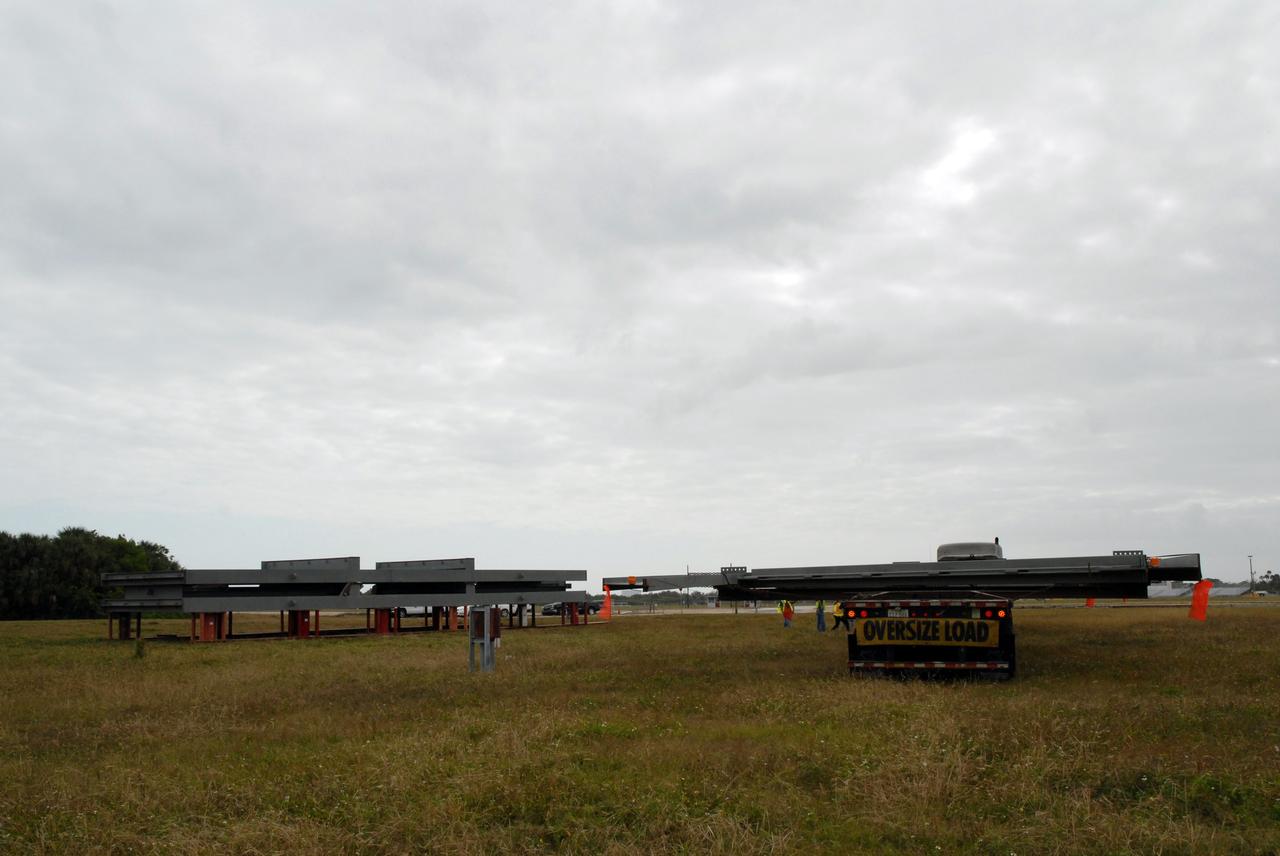
CAPE CANAVERAL, Fla. -- At NASA's Kennedy Space Center in Florida, the Mobile Launcher truss, T4, has been offloaded from its truck on grounds near the mobile launcher parking area. The new mobile launcher will be the base for the Ares rockets to launch the Orion crew exploration vehicle and the cargo vehicle. The base is being made lighter than space shuttle mobile launcher platforms so the crawler-transporter can pick up the added load of the 345-foot tower and taller rocket. When the structural portion of the new mobile launcher is complete, umbilicals, access arms, communications equipment and command/control equipment will be installed. Photo credit: NASA/Jack Pfaller
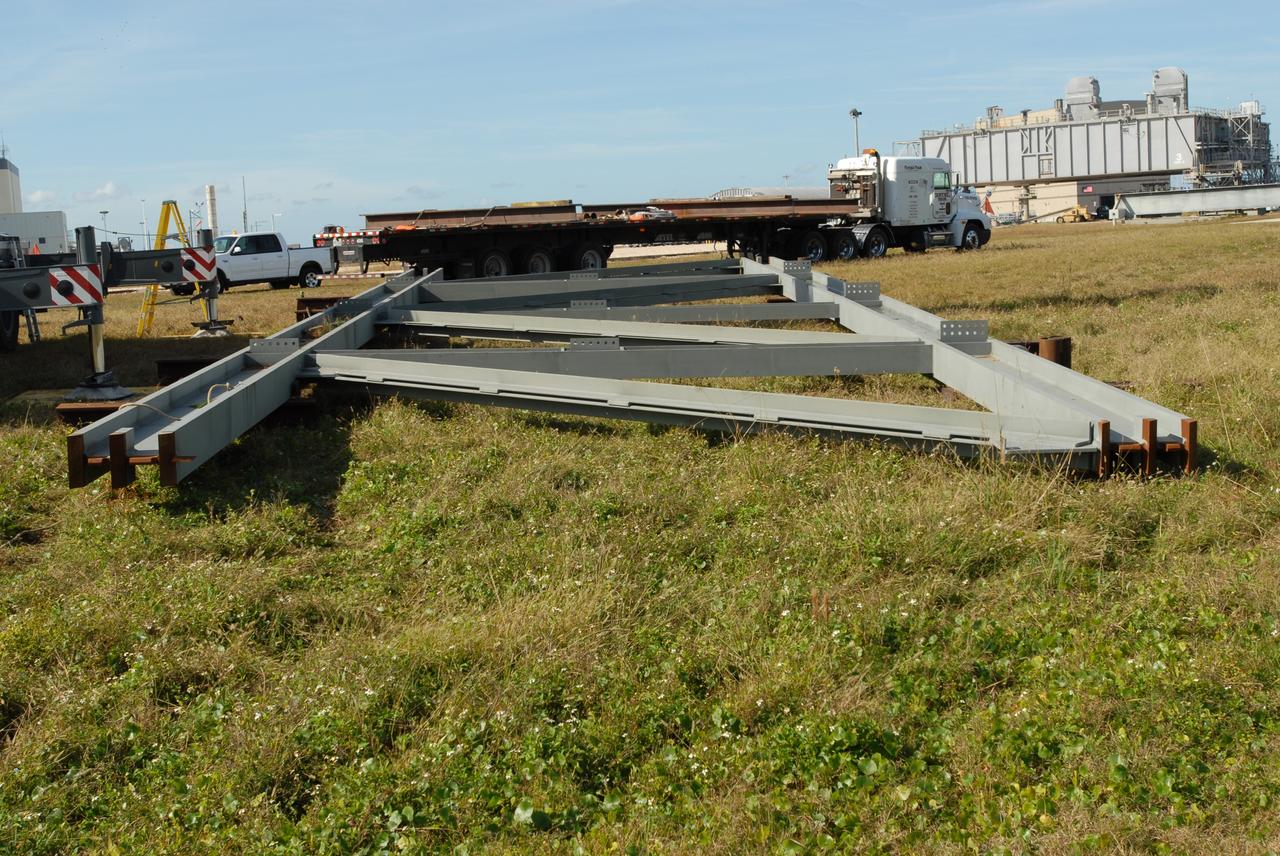
CAPE CANAVERAL, Fla. -- Near the Vehicle Assembly Building at NASA's Kennedy Space Center in Florida, one of the trusses, T4, for the new mobile launcher lies on the ground. The launcher will be built for the Constellation Program. The new mobile launcher will be the base for the Ares rockets to launch the Orion crew exploration vehicle and the cargo vehicle. The base is being made lighter than space shuttle mobile launcher platforms so the crawler-transporter can pick up the added load of the 345-foot tower and taller rocket. When the structural portion of the new mobile launcher is complete, umbilicals, access arms, communications equipment and command/control equipment will be installed. Photo credit: NASA/Jim Grossmann
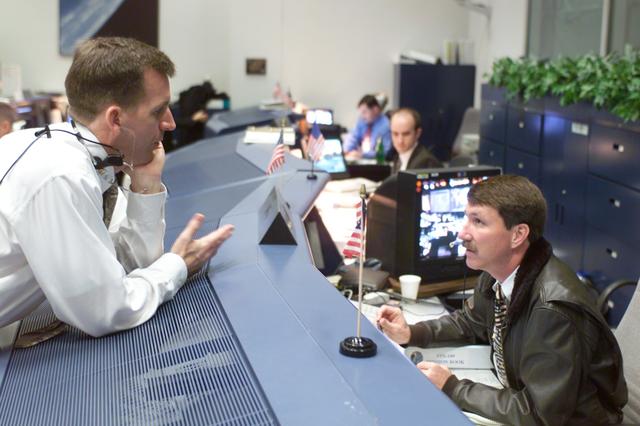
JSC2002-E-08157 (1 March 2002) --- Astronaut Kent V. Rominger (seated), and LeRoy Cain are photographed at the Mission Operation Directorate (MOD) console in the shuttle flight control room (WFCR) in Houston's Mission Control Center (MCC). Several hundred miles away in Florida, the STS-109 crewmembers were awaiting countdown in the crew cabin of the Space Shuttle Columbia on the launch pad at the Kennedy Space Center (KSC). As soon as the vehicle cleared the tower in Florida, the Houston-based team of flight controllers took over the ground control of the mission. Rominger is the Deputy Director of the Flight Crew Operations Directorate (FCOD) and was the STS-109 FCOD management representative in the MCC. Cain was the Weather Flight Director for the mission’s ascent phase, coordinating weather issues for lead Ascent Flight Director John Shannon (out of frame).
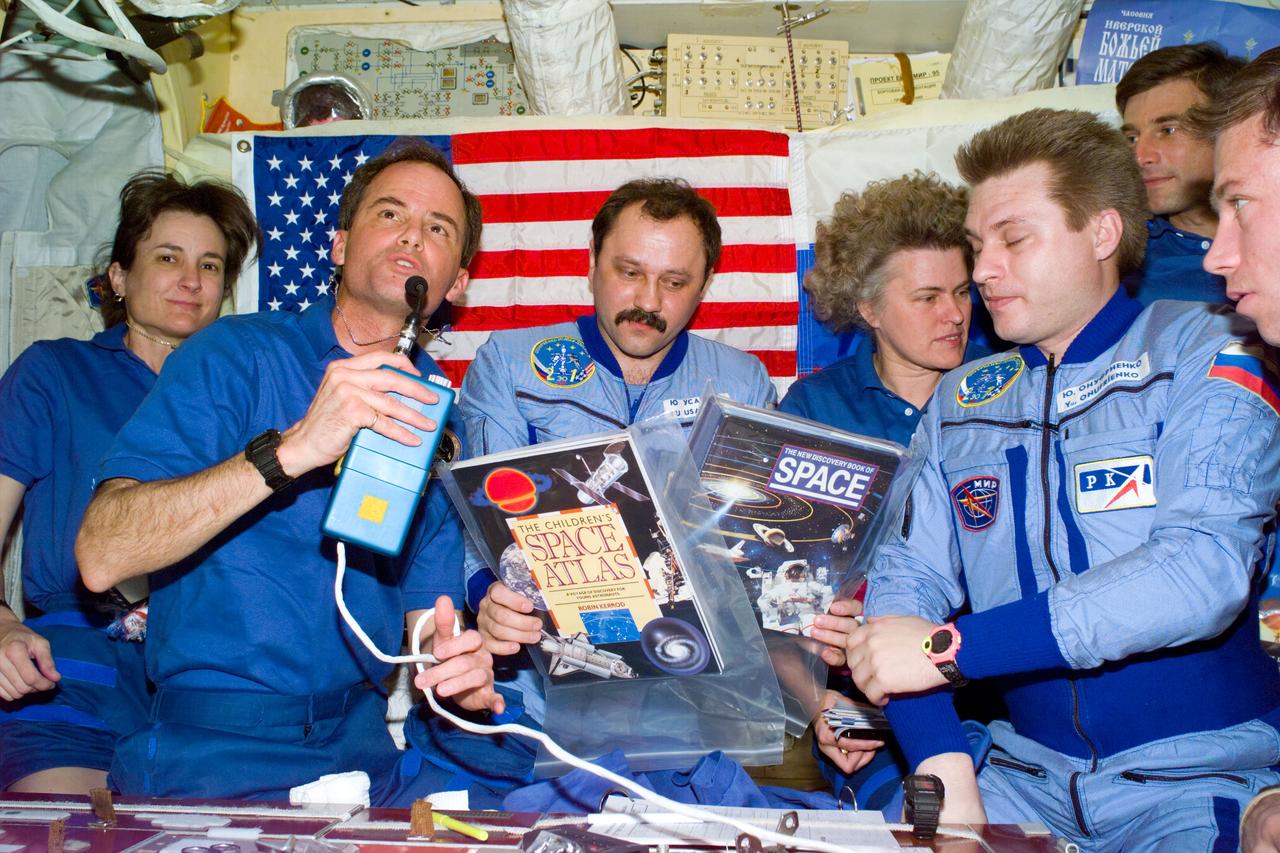
S76-E-5157 (24 March 1996) --- Two Russian cosmonauts and five of six NASA astronauts exchange gifts soon after reuniting in the Base Block Module of Russia's Mir Space Station. From the left are Linda M. Godwin, Kevin P. Chilton, Yury V. Usachev, Shannon W. Lucid, Yury I. Onufrienko, Ronald M. Sega and Richard A. Searfoss. Not pictured is astronaut Michael R. (Rich) Clifford. In a light moment around this time, ground controllers informed Chilton, the STS-76 mission commander, that Lucid, who will spend several months onboard Mir as a cosmonaut guest researcher, should now be considered a Mir-21 crew member, along with Onufrienko and Usachev, Mir-21 flight engineer. The image was recorded with a 35mm Electronic Still Camera (ESC) and downlinked at a later time to ground controllers in Houston, Texas.
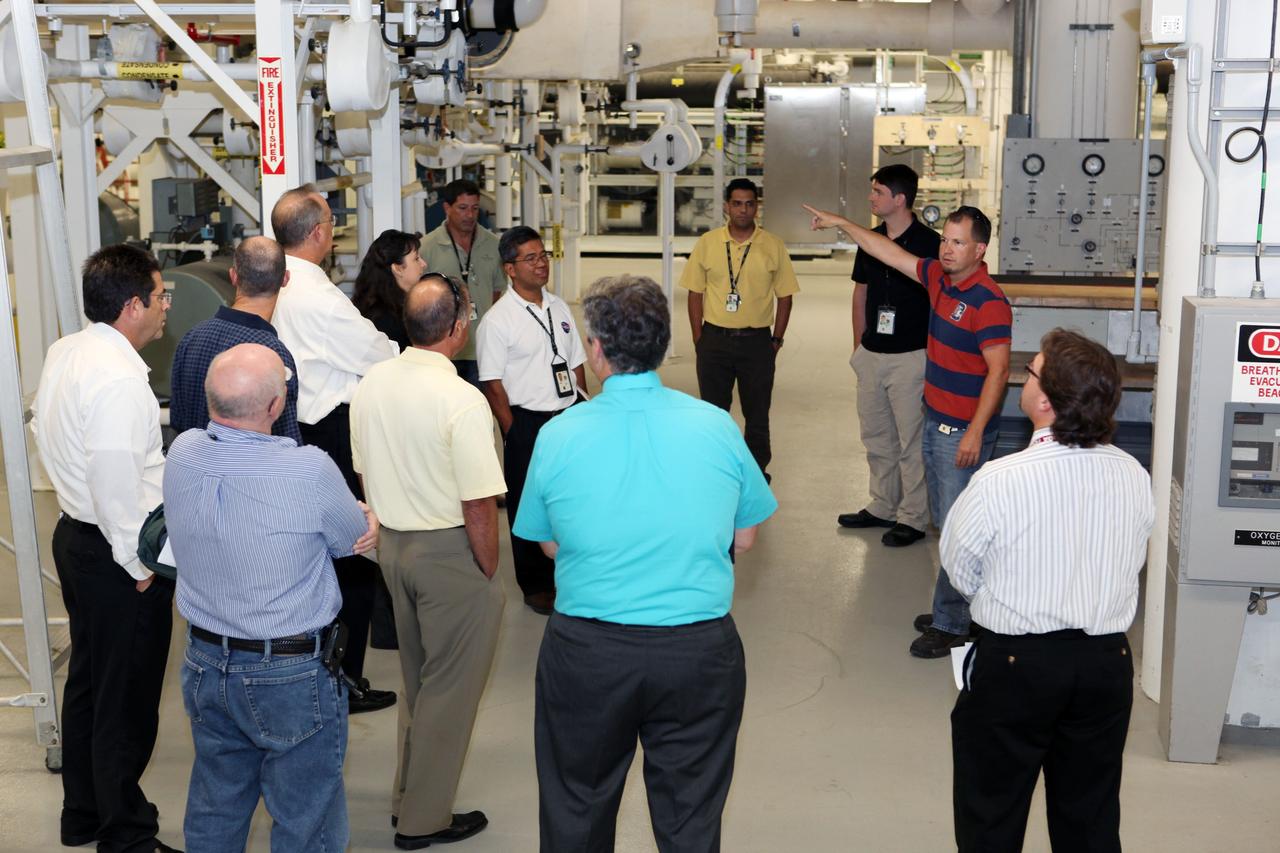
CAPE CANAVERAL, Fla. – Workers at NASA's Kennedy Space Center watch a demonstration of new systems installed in Launch Pad 39B. The renovation has been led by the Ground Systems Development and Operations Program based at Kennedy. The new systems are designed to be flexible so controllers can process and launch multiple types of rockets and spacecraft, whether they are government or commercial models. Photo credit: NASA/Dmitri Gerondidakis
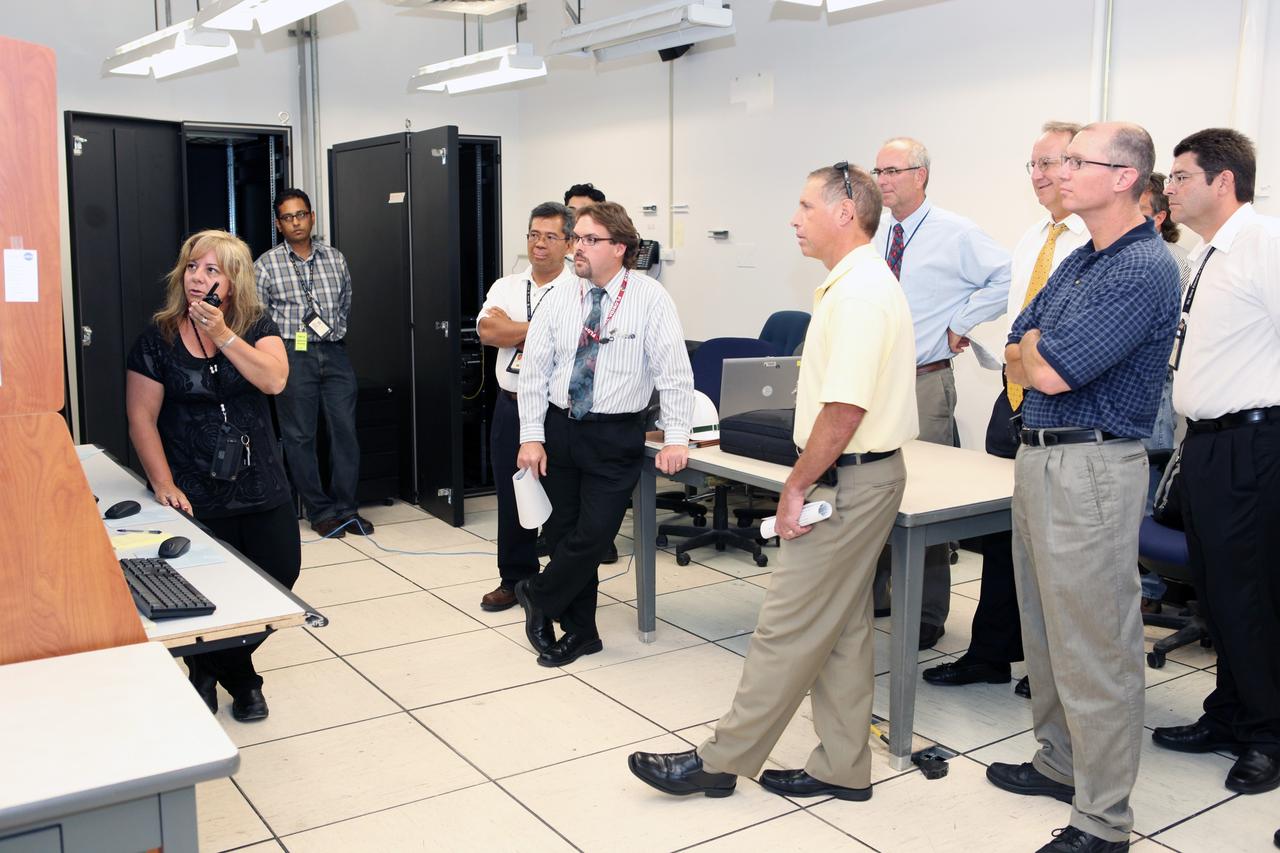
CAPE CANAVERAL, Fla. – Workers at NASA's Kennedy Space Center watch a demonstration of new systems installed in Launch Pad 39B. The renovation has been led by the Ground Systems Development and Operations Program based at Kennedy. The new systems are designed to be flexible so controllers can process and launch multiple types of rockets and spacecraft, whether they are government or commercial models. Photo credit: NASA/Dmitri Gerondidakis
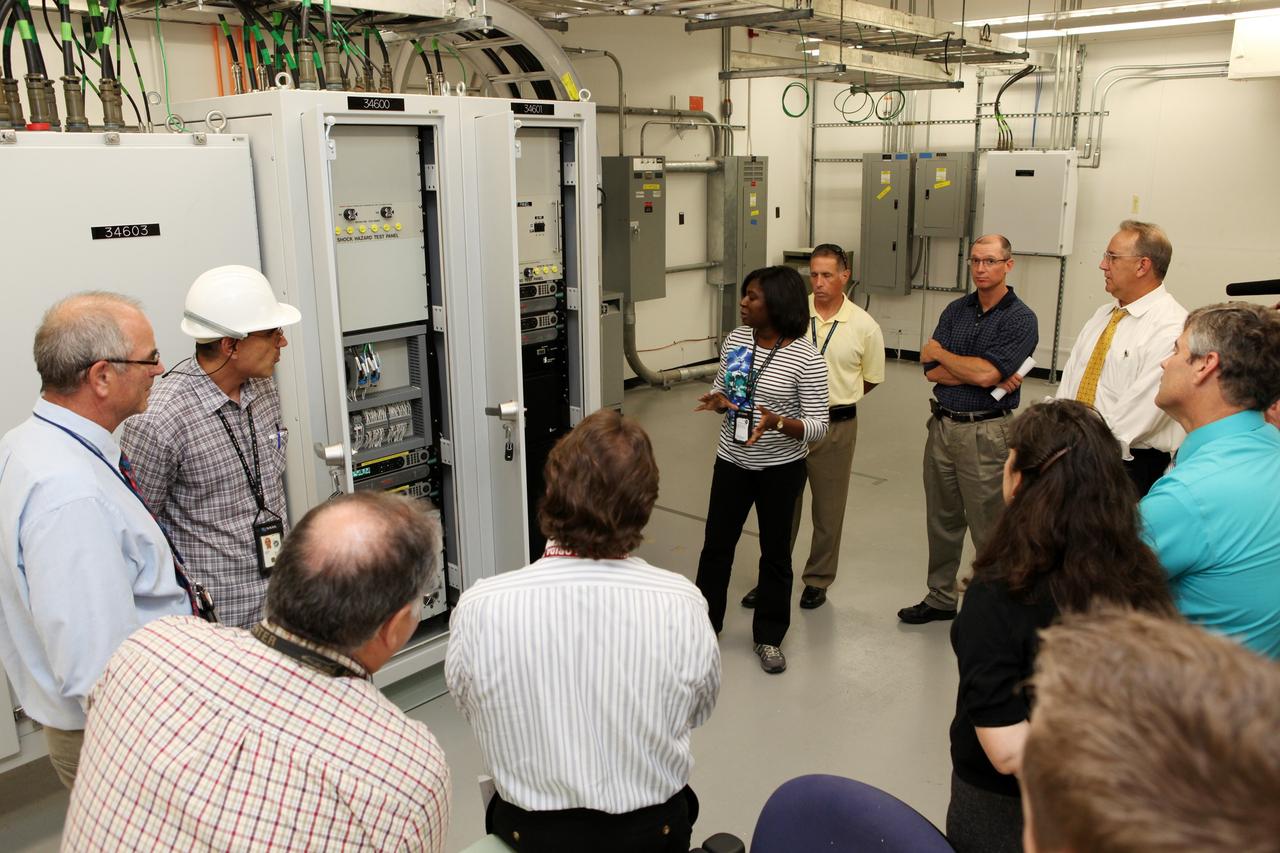
CAPE CANAVERAL, Fla. – Workers at NASA's Kennedy Space Center watch a demonstration of new systems installed in Launch Pad 39B. The renovation has been led by the Ground Systems Development and Operations Program based at Kennedy. The new systems are designed to be flexible so controllers can process and launch multiple types of rockets and spacecraft, whether they are government or commercial models. Photo credit: NASA/Dmitri Gerondidakis
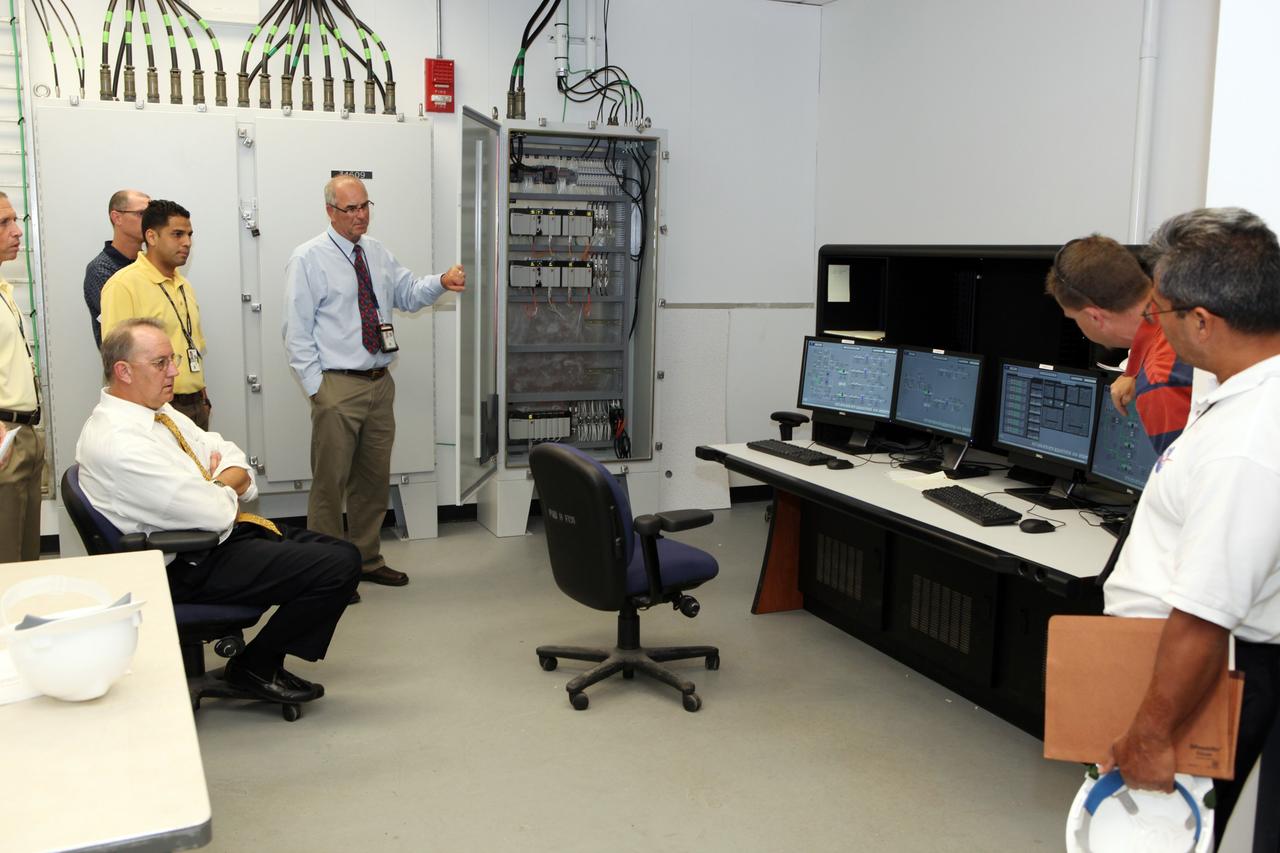
CAPE CANAVERAL, Fla. – Workers at NASA's Kennedy Space Center watch a demonstration of new systems installed in Launch Pad 39B. The renovation has been led by the Ground Systems Development and Operations Program based at Kennedy. The new systems are designed to be flexible so controllers can process and launch multiple types of rockets and spacecraft, whether they are government or commercial models. Photo credit: NASA/Dmitri Gerondidakis
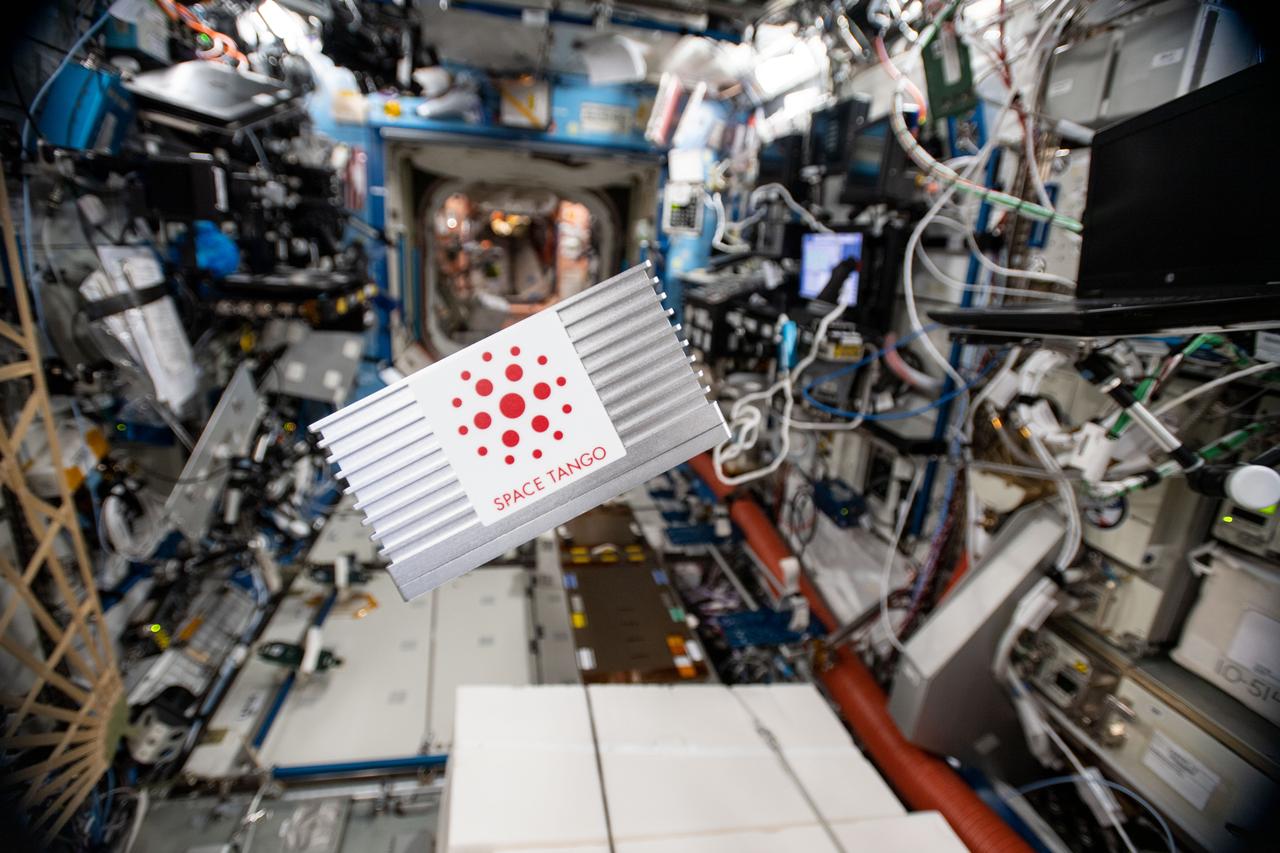
iss059e063757 (5/17/2019) --- Photo documentation of the Cell Culture Module Fluid Behavior investigation in the Destiny module onboard the International Space Station (ISS). The Cell Culture Module Fluid Behavior Demonstration investigation verifies the functionality of a common 96-well plate. A series of fluid experiments assesses how the capillary action of the plate performs in a microgravity environment in comparison to ground-based control.
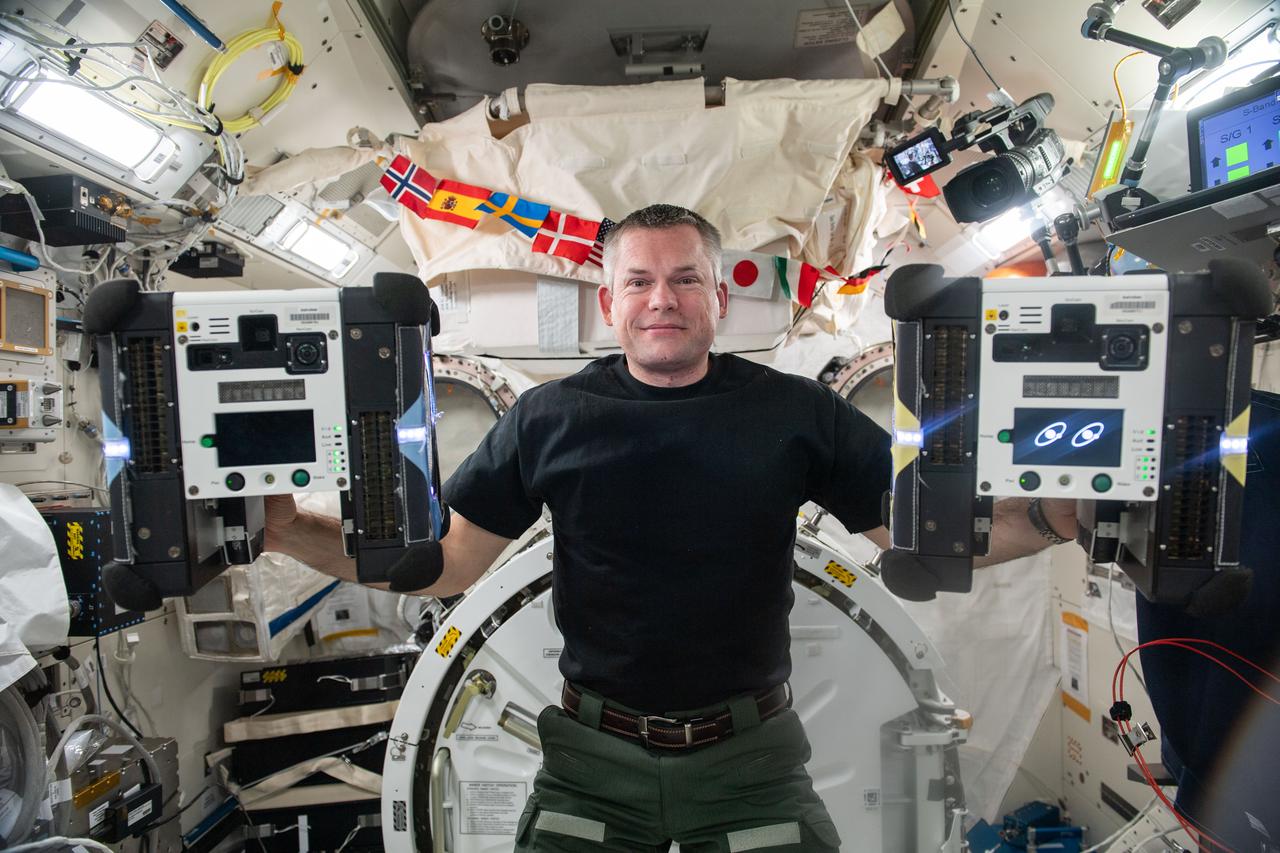
iss070e088587 (Feb. 8, 2024) --- ESA (European Space Agency) astronaut and Expedition 70 Commander Andreas Mogensen shows off a pair of cube-shaped Astrobee robotic free flyers inside the International Space Station's Kibo laboratory module. The autonomous robots are powered by fans and vision-based navigation and are demonstrating their ability to assist astronauts with routine chores and provide remote monitoring abilities for mission controllers on the ground.
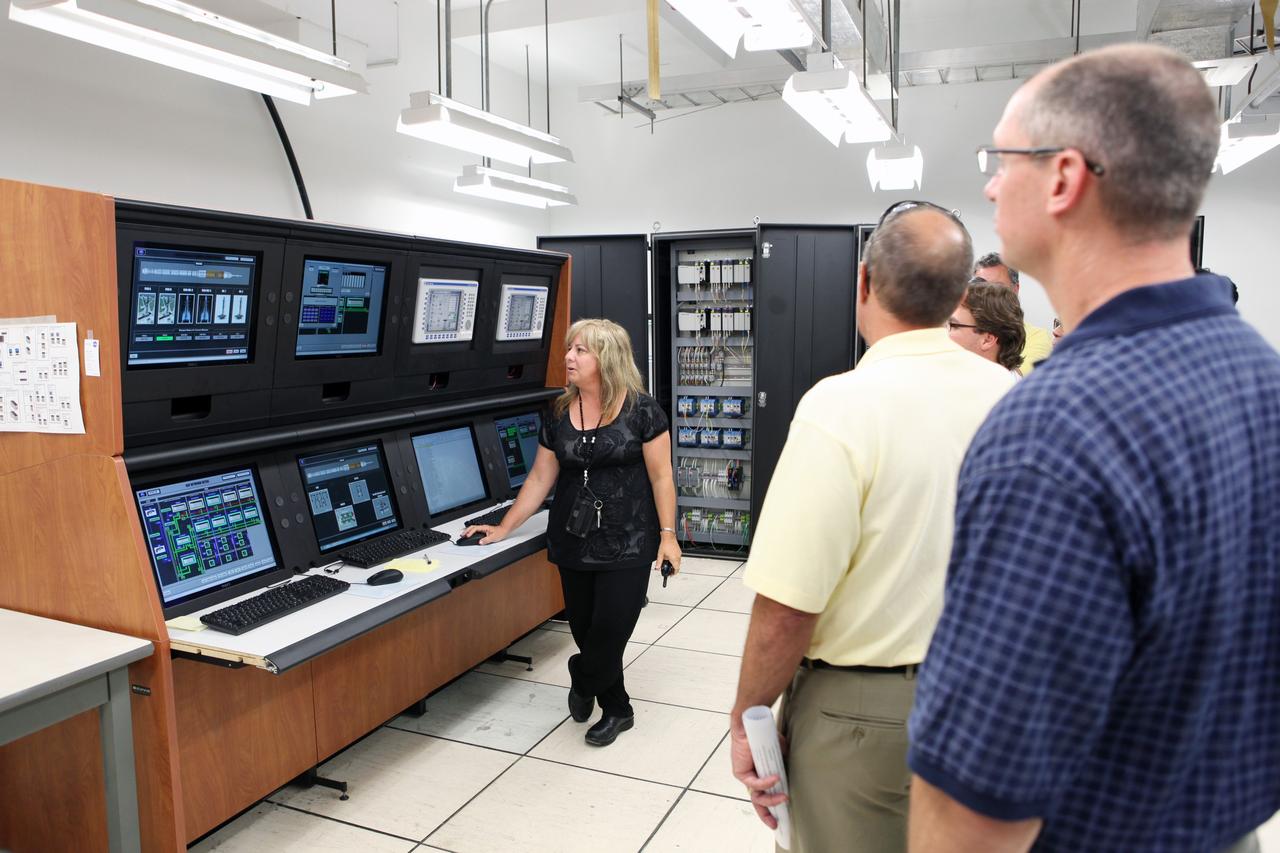
CAPE CANAVERAL, Fla. – Workers at NASA's Kennedy Space Center watch a demonstration of new systems installed in Launch Pad 39B. The renovation has been led by the Ground Systems Development and Operations Program based at Kennedy. The new systems are designed to be flexible so controllers can process and launch multiple types of rockets and spacecraft, whether they are government or commercial models. Photo credit: NASA/Dmitri Gerondidakis
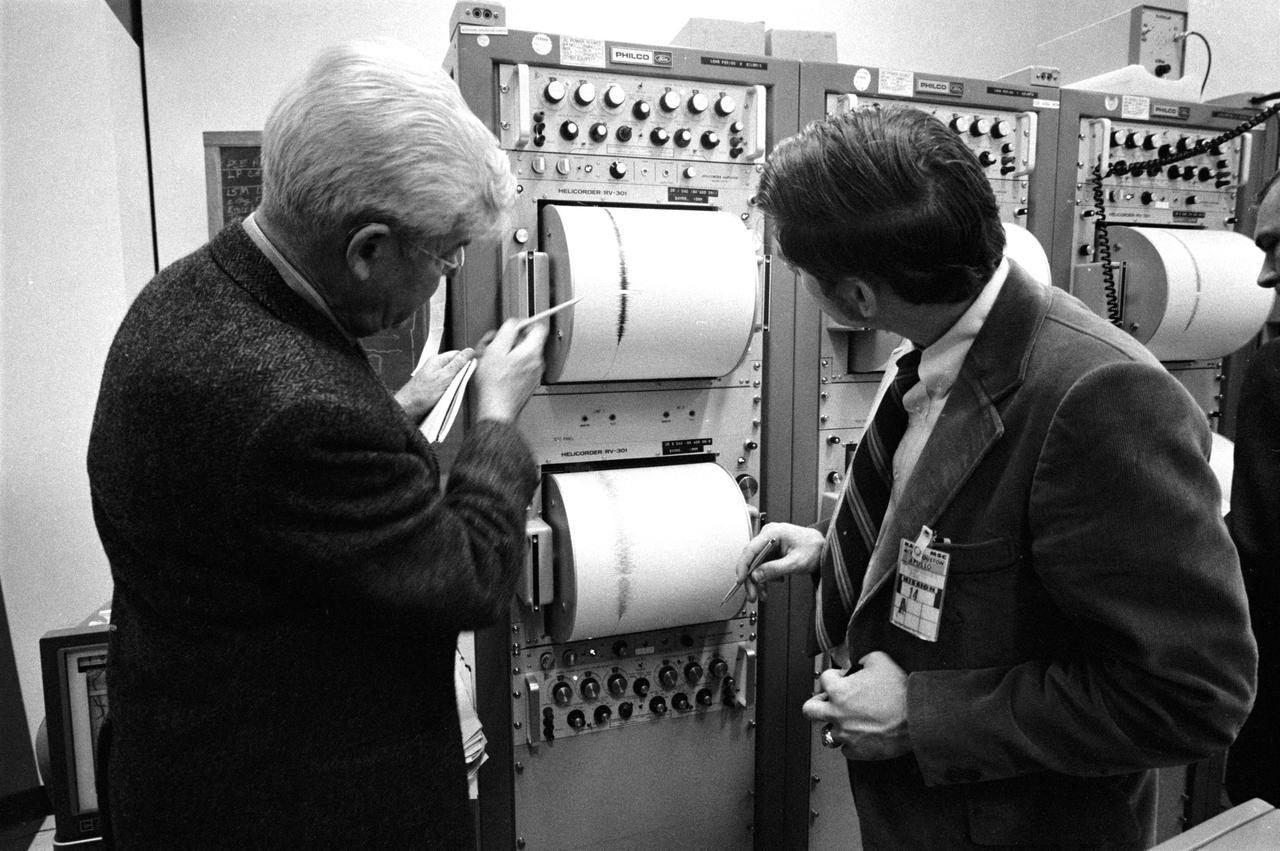
S71-17609 (4 Feb. 1971) --- These two individuals are examining a seismic reading in the Mission Control Center's ALSEP Room during the Apollo 14 S-IVB impact on the moon. Dr. Maurice Ewing (left) is the director of the Lamont-Doherty Geological Observatory at Columbia University. David Lammlein, a Columbia graduate student, is on the right. The Apollo 14 Saturn IVB stage impacted on the lunar surface at 1:40:54 a.m. (CST), Feb. 4, 1971, about 90 nautical miles south-southwest of the Apollo 12 passive seismometer. The energy release was comparable to 11 tons of TNT. Dr. Gary Latham of the Lamont-Doherty Geological Observatory is the principal investigator for the Passive Seismic Experiment, a component of the Apollo Lunar Surface Experiments Package.
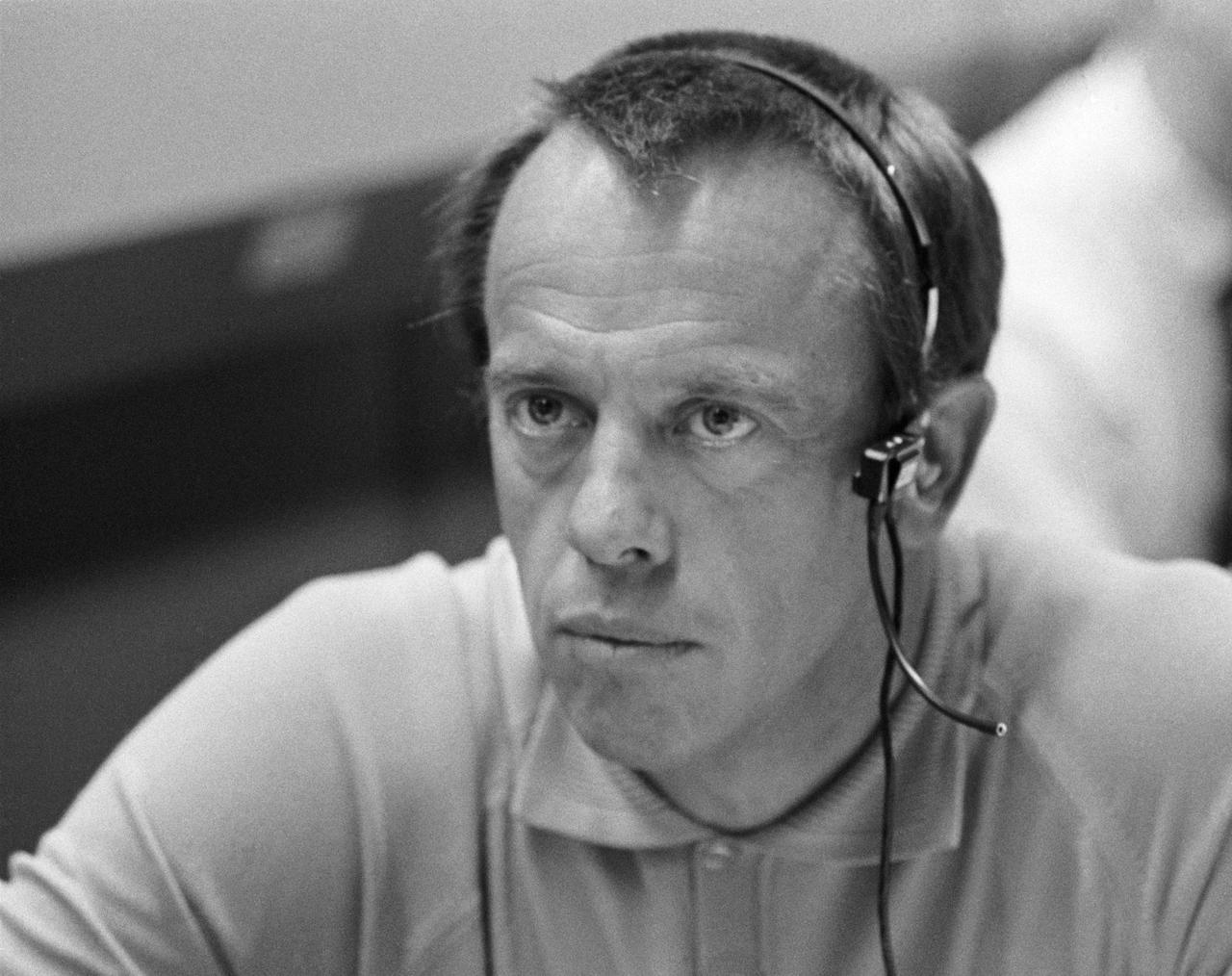
S70-34904 (14 April 1970) --- Astronaut Alan B. Shepard Jr., prime crew commander of the Apollo 14 mission, monitors communications between the Apollo 13 spacecraft and Mission Control Center. He is seated at a console in the Mission Operations Control Room of the MCC, Manned Spacecraft Center. The main concern of the moment was action taken by the three Apollo 13 crewmen - astronauts James A. Lovell Jr., John L. Swigert Jr. and Fred W. Haise Jr. - to make corrections inside the spacecraft following discovery of an oxygen cell failure several hours earlier.
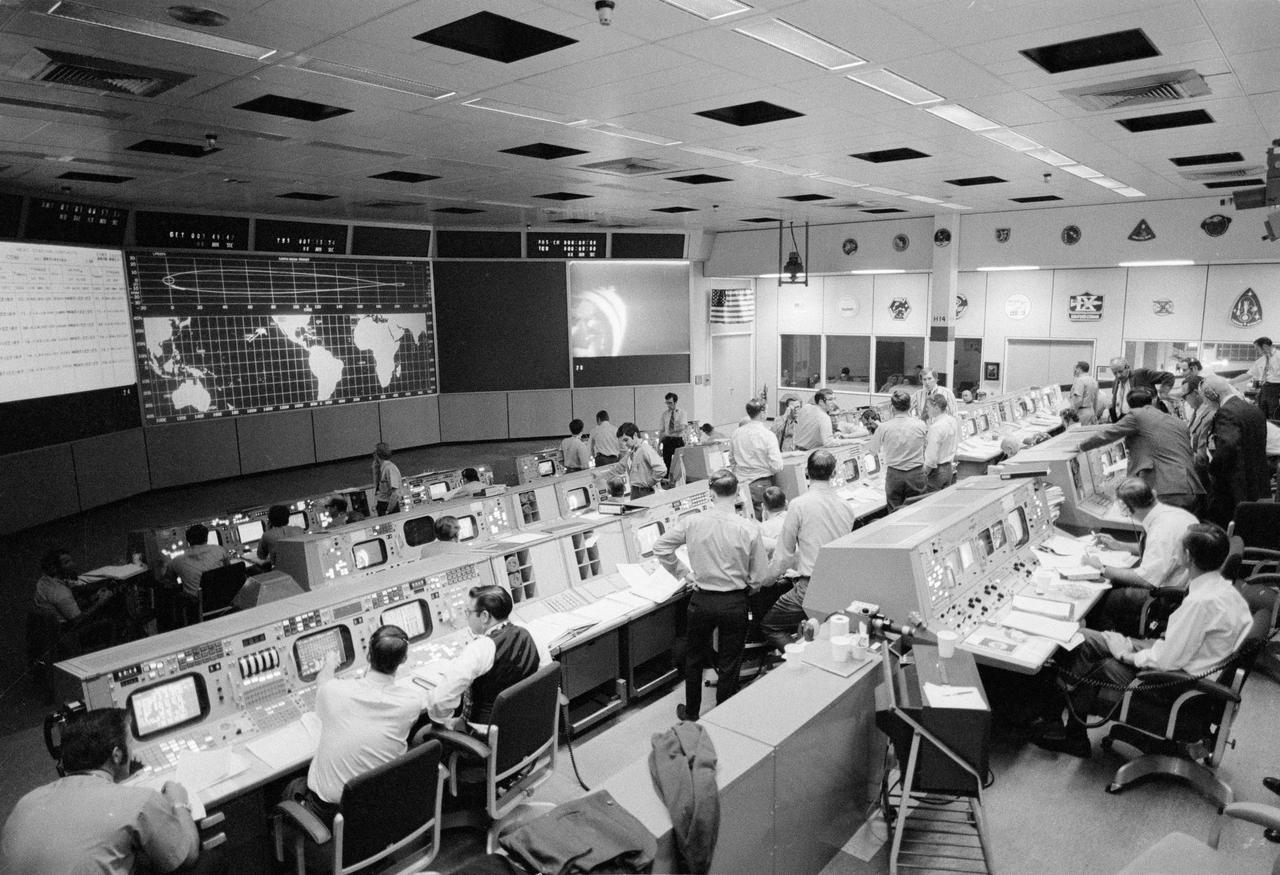
S71-16879 (31 Jan. 1971) --- Overall view of activity in the Mission Operations Control Room in the Mission Control Center during the Apollo 14 transposition and docking maneuvers. The Apollo 14 Lunar Module, still attached to the Saturn IVB stage, can be seen on the large television monitor. Due to difficulty with the docking mechanism six attempts were made before a successful "hard dock" of the Command Module with the Lunar Module was accomplished. Aboard the Command Module were astronauts Alan B. Shepard Jr., Stuart A. Roosa, and Edgar D. Mitchell.
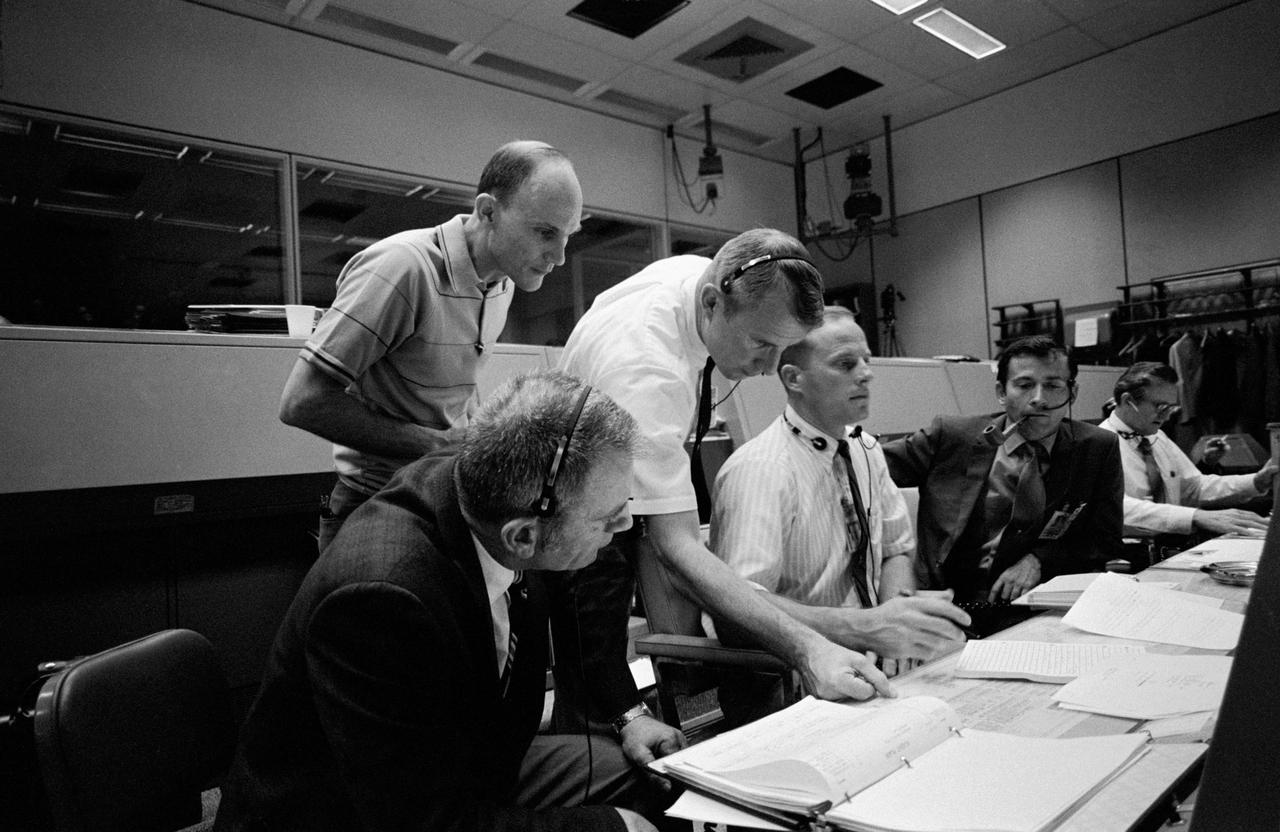
S70-34902 (14 April 1970) --- Several persons important to the Apollo 13 mission, at consoles in the Mission Operations Control Room (MOCR) of the Mission Control Center (MCC). Seated at consoles, from left to right, are astronauts Donald K. Slayton, director of flight crew operations; astronaut Jack R. Lousma, Shift 3 spacecraft communicator; and astronaut John W. Young, commander of the Apollo 13 backup crew. Standing, left to right, are astronaut Tom K. Mattingly II, who was replaced as Apollo 13 command module pilot after it was learned he may come down with measles, and astronaut Vance D. Brand, Shift 2 spacecraft communicator. Several hours earlier, in the late evening hours of April 13, crew members of the Apollo 13 mission reported to MCC that trouble had developed with an oxygen cell on their spacecraft.
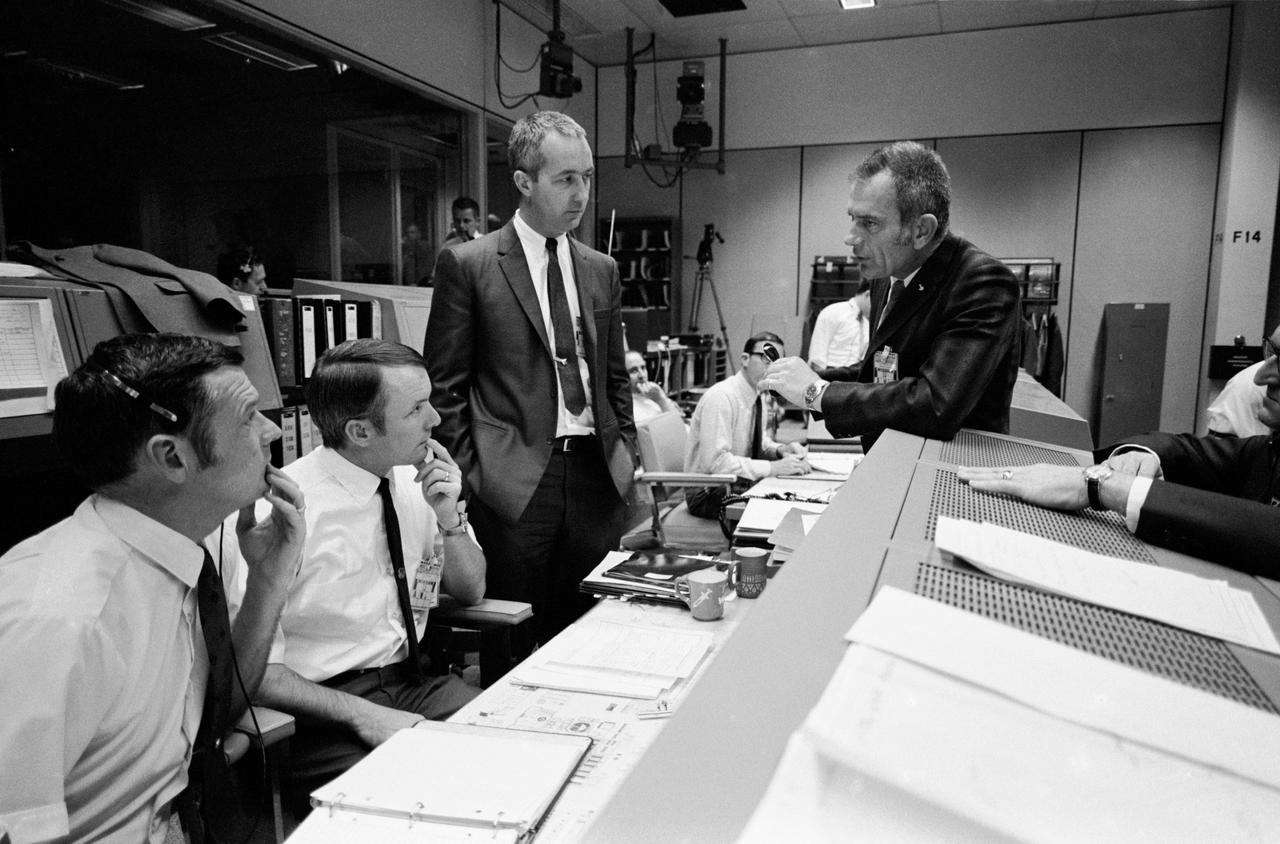
S70-35369 (16 April 1970) --- Discussion in the Mission Operations Control Room (MOCR) dealing with the Apollo 13 crewmen during their final day in space. From left to right are Glynn S. Lunney, Shift 4 flight director; Gerald D. Griffin, Shift 2 flight director; astronaut James A. McDivitt, manager, Apollo Spacecraft Program, MSC; Dr. Donald K. Slayton, director of Flight Crew Operations, MSC; and Dr. Willard R. Hawkins, M.D., Shift 1 flight surgeon.
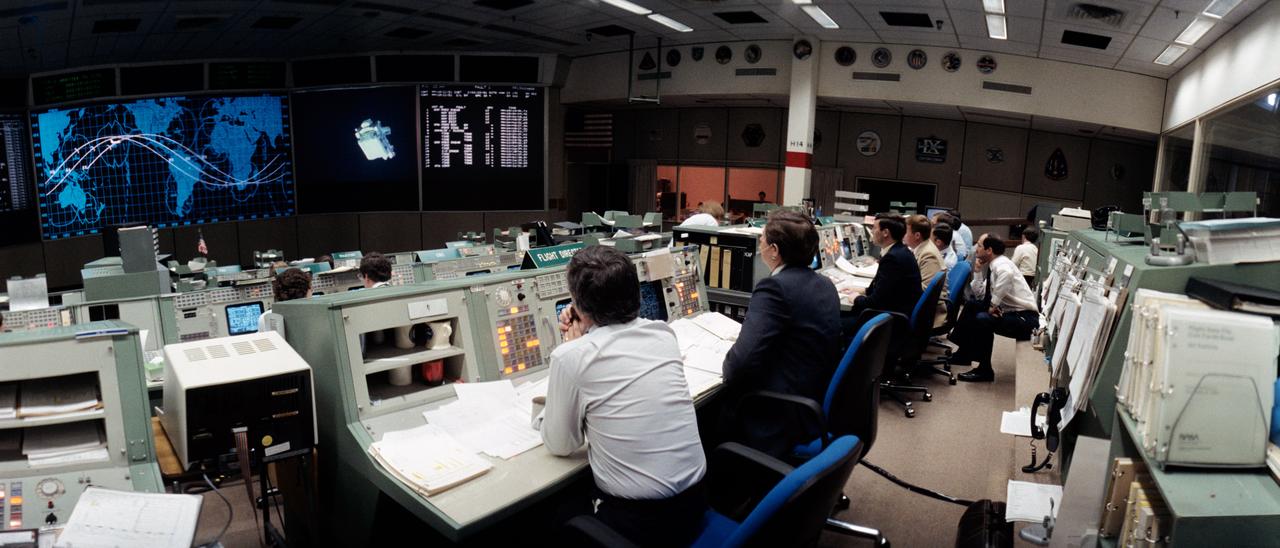
Astronaut George D. Nelson (see monitor at front of room) is viewed by flight controllers in the Mission Operations Control Room (MOCR) of JSC's Mission Control Center during 41-C extravehicular activity (EVA). In the foreground are Flight Directors Jay H. Greene and John T. Cox. Astronauts Jerry L. Ross and Richard H. Richards are seated at the CAPCOM or spacecraft communicators console at right background. Astronaut Guy S. Gardner is perched just behind them.
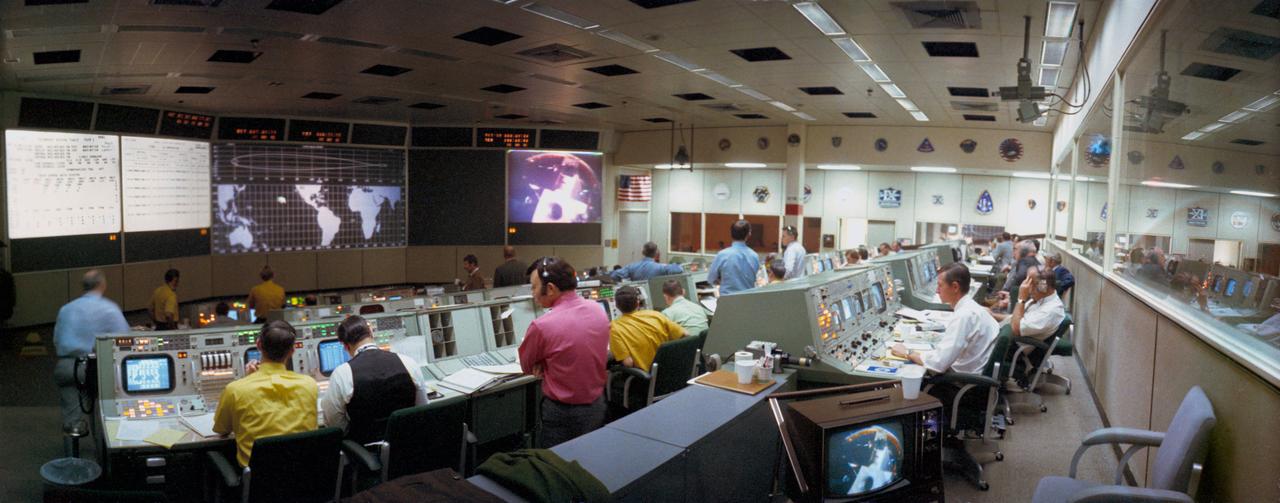
S71-17122 (31 Jan. 1971) --- A wide angle overall view of the Mission Operations Control Room (MOCR) in the Mission Control Center at the Manned spacecraft Center. This view was photographed during the first color television transmission from the Apollo 14 Command Module. Projected on the large screen at the right front of the MOCR is a view of the Apollo 14 Lunar Module, still attached to the Saturn IVB stage. The Command and Service Modules were approaching the LM/S-IVB during transposition and docking maneuvers.
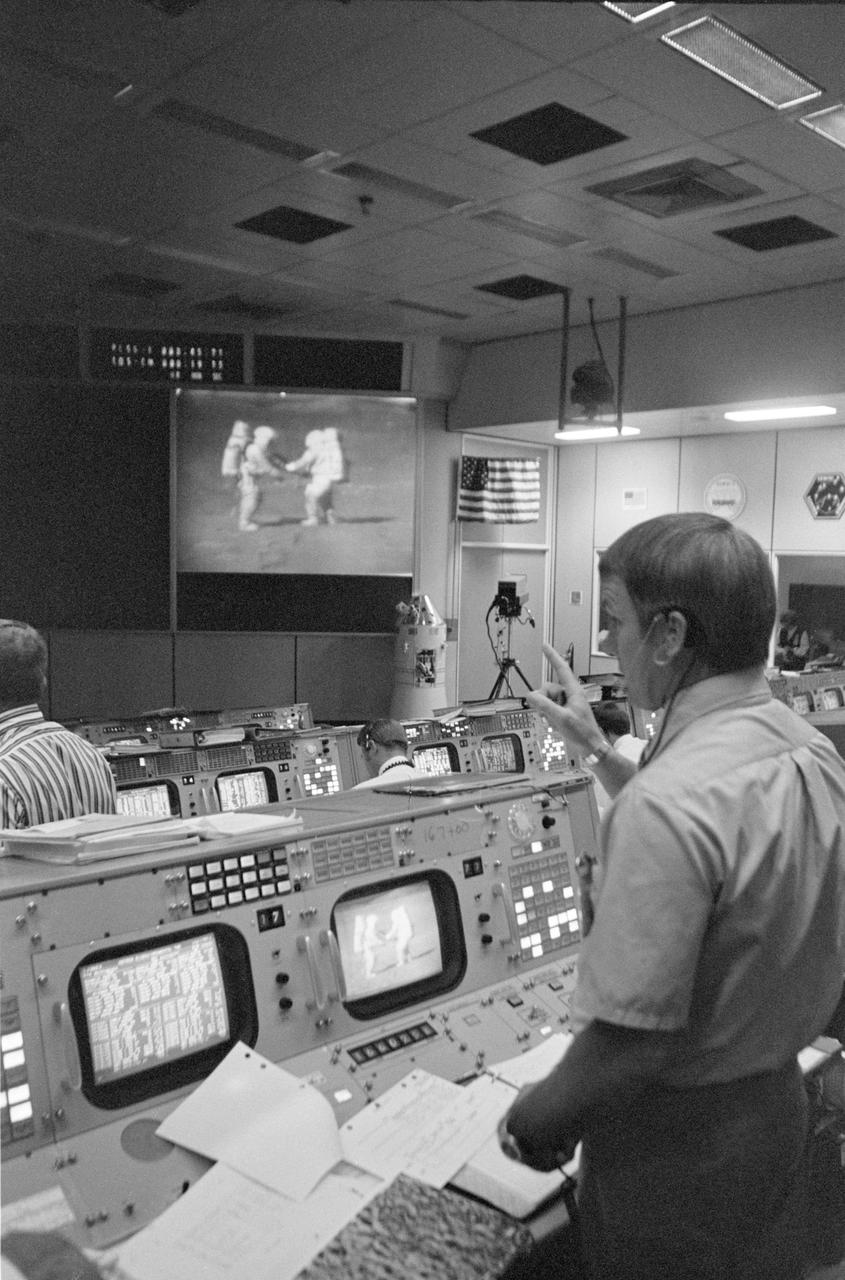
S71-41852 (2 Aug. 1971) --- Gerald D. Griffin, foreground, stands near his console in the Mission Operations Control Room (MOCR) during Apollo 15's third extravehicular activity (EVA) on the lunar surface. Griffin is Gold Team (Shift 1) flight director for the Apollo 15 mission. Astronauts David R. Scott and James B. Irwin can be seen on the large screen at the front of the MOCR as they participate in sample-gathering on the lunar surface.
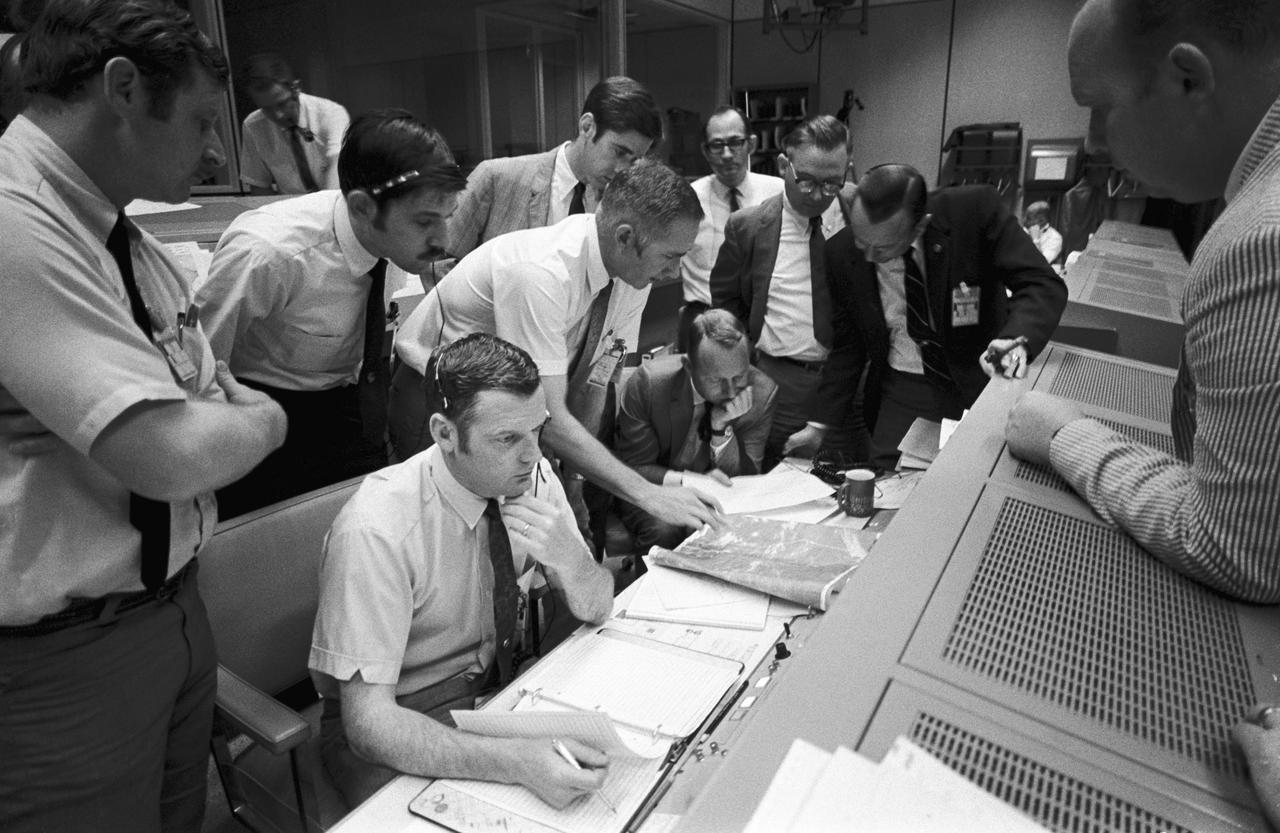
S70-35014 (15 April 1970) --- A group of flight controllers gathers around the console of Glenn S. Lunney (seated, nearest camera), Shift 4 flight director, in the Mission Operations Control Room (MOCR) of Mission Control Center (MCC), located in Building 30 at the Manned Spacecraft Center (MSC). Their attention is drawn to a weather map of the proposed landing site in the South Pacific Ocean. Among those looking on is Dr. Christopher C. Kraft, deputy director, MSC, standing in black suit, on right. When this photograph was taken, the Apollo 13 lunar landing mission had been canceled, and the problem-plagued Apollo 13 crew members were in trans-Earth trajectory attempting to bring their crippled spacecraft back home.
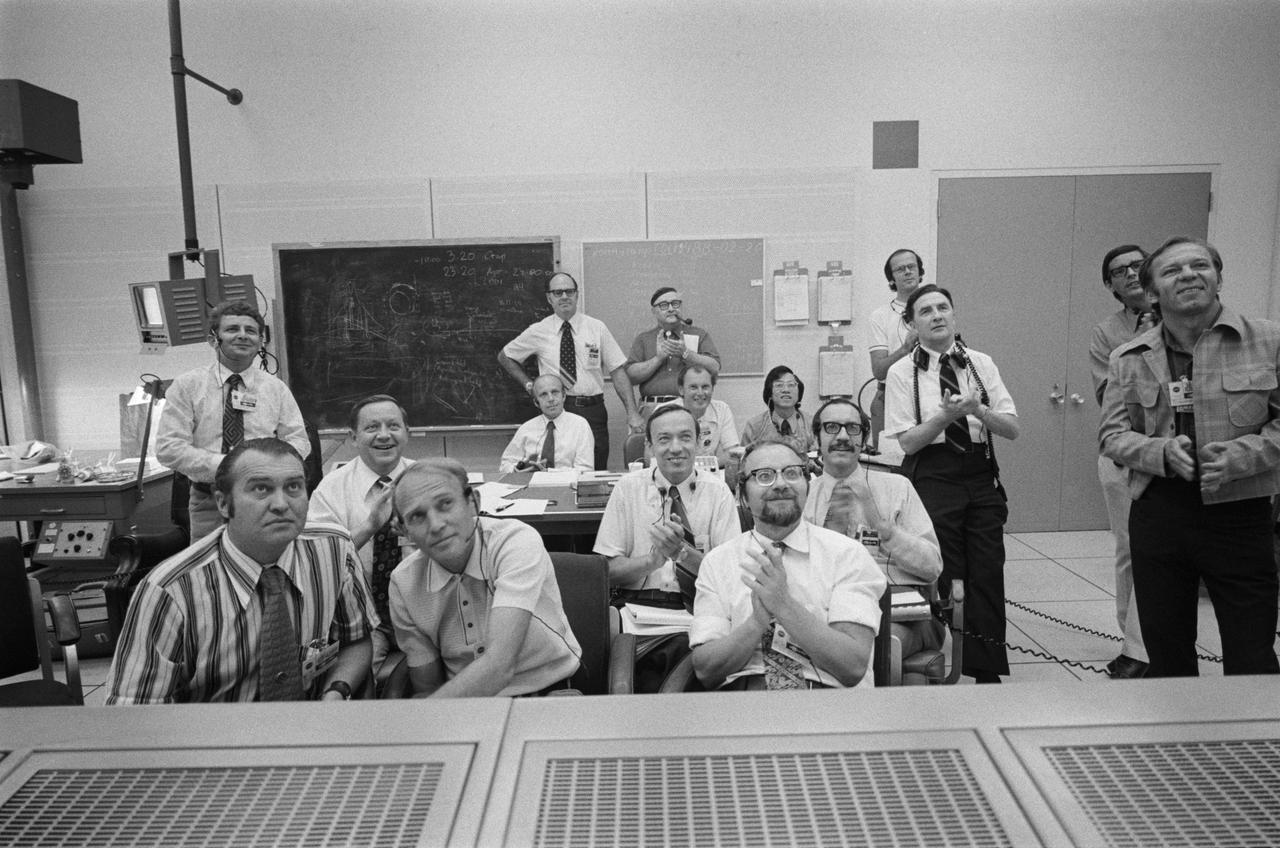
S75-28659 (21 July 1975) --- An overall view of the group of Soviet Union flight controllers who served at the Mission Control Center during the joint U.S.-USSR Apollo-Soyuz Test Project docking mission in Earth orbit. They are applauding the successful touchdown of the Soyuz spacecraft in Central Asia. The television monitor had just shown the land landing of the Soyuz descent vehicle.
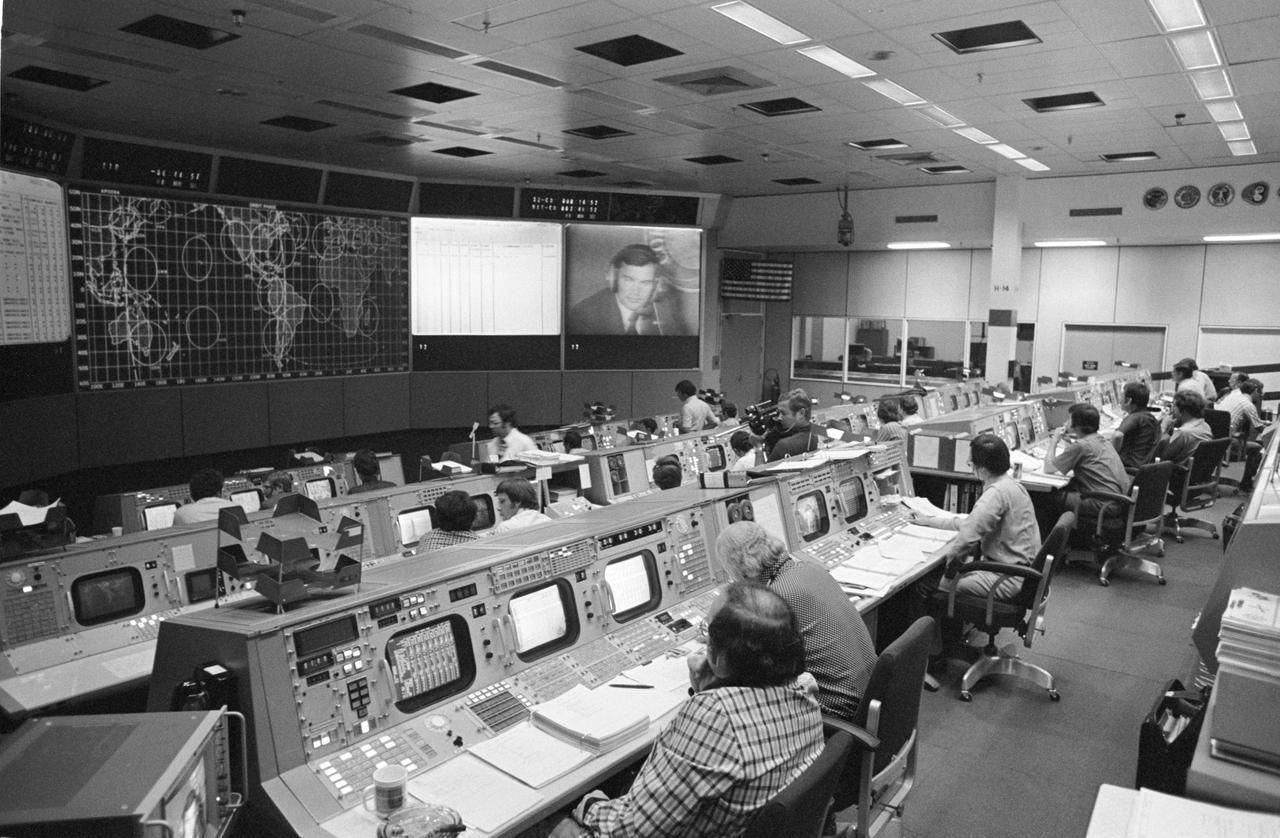
S75-28483 (15 July 1975) --- An overall view of the Mission Operations Control Room in the Mission Control Center on the first day of the Apollo-Soyuz Test Project docking mission in Earth orbit. The American ASTP flight controllers at NASA's Johnson Space Center were monitoring the progress of the Soviet ASTP launch when this photograph was taken. The television monitor shows cosmonaut Yuri V. Romanenko at his spacecraft communicator?s console in the ASTP mission control center in the Soviet Union. The American ASTP liftoff followed the Soviet ASTP launch by seven and one-half hours.
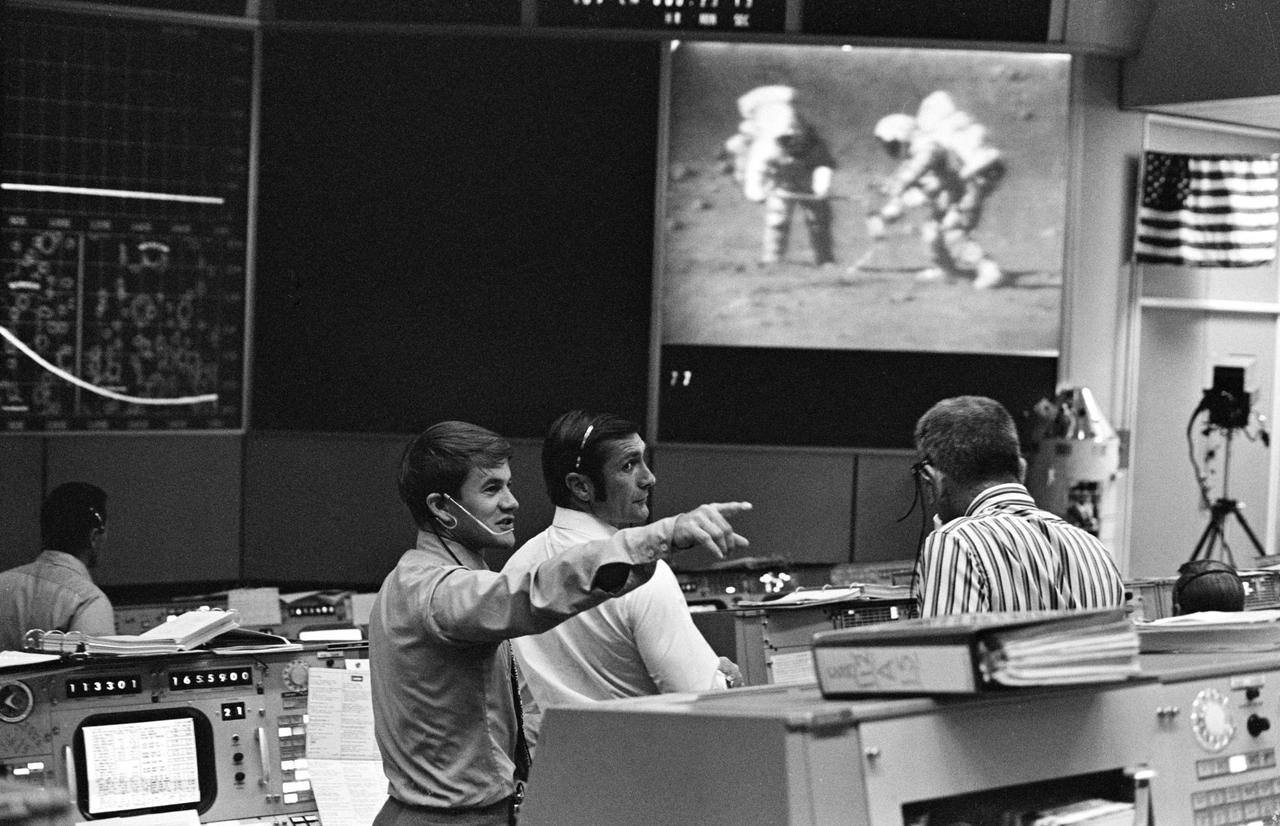
S71-41836 (2 Aug. 1971) --- Scientist-astronaut Joseph P. Allen, left, directs the attention of astronaut Richard F. Gordon Jr., to an occurrence out of view at right in the Mission Control Center's (MCC) Mission Operations Control Room (MOCR), while Dr. Donald K. (Deke) Slayton, on right with back to camera, views activity of Apollo 15 on a large screen at the front of the MOCR. Astronauts David R. Scott and James B. Irwin are seen on the screen performing tasks of the mission's third extravehicular activity (EVA), on Aug. 2, 1971. Dr. Slayton is director of Flight Crew Operations, NASA-MSC; Gordon is Apollo 15 backup commander; and Dr. Allen is an Apollo 15 spacecraft communicator.
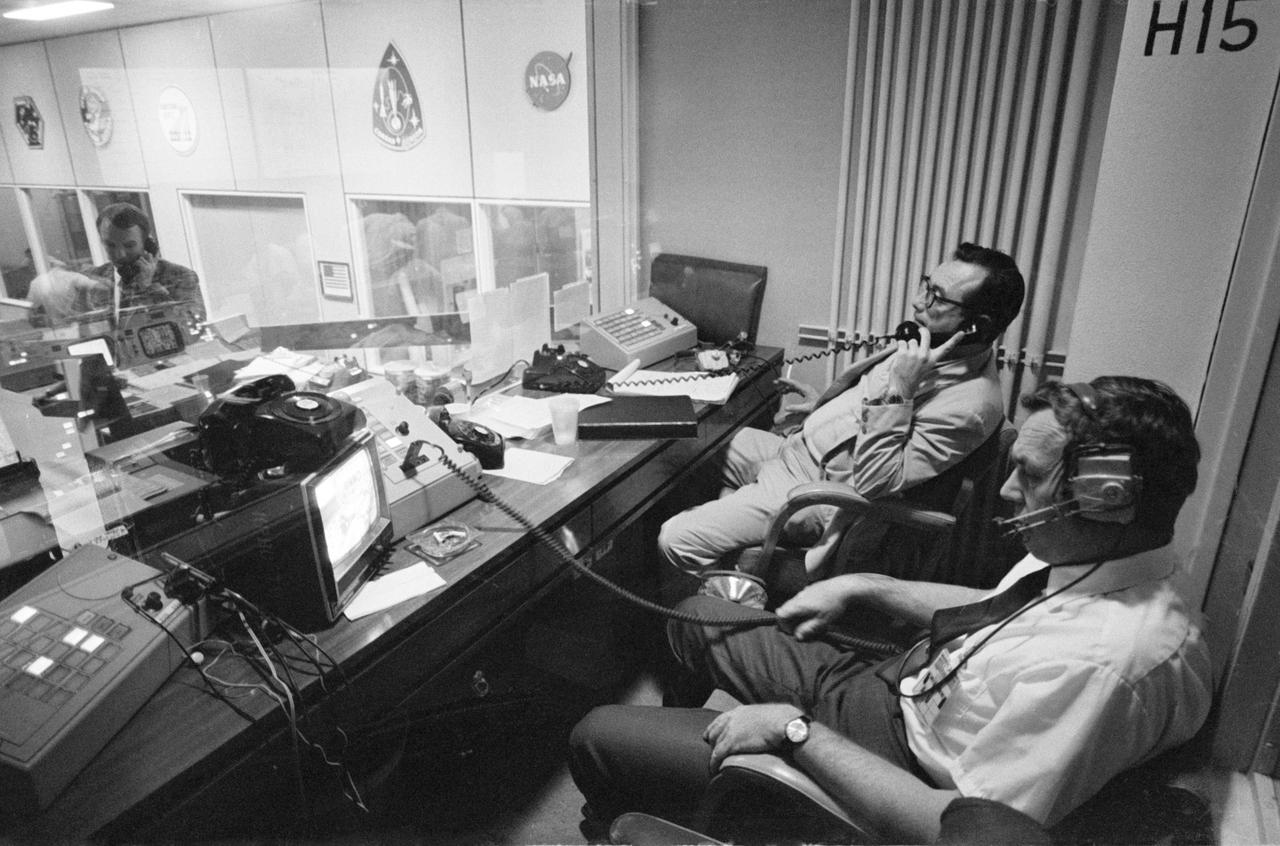
S70-35012 (15 April 1970) --- Two phases of busy activity during critical moments of the Apollo 13 mission are reflected in this view in the Mission Control Center, Building 30, Manned Spacecraft Center. In the foreground, Henry Simmons (left) of Newsweek magazine and John E. Riley, public information specialist, Public Affairs Office, MSC, man their positions in the Press Room. At extreme left of photo, Gerald D. Griffin, Shift 2 flight director, talks on telephone in Mission Operations Control Room. When this photograph was taken, the Apollo 13 lunar landing had been canceled, and the problem-plagued Apollo 13 crewmen were in trans-Earth trajectory attempting to bring their crippled spacecraft back home.

S70-35368 (16 April 1970) --- Overall view showing some of the feverish activity in the Mission Operations Control Room (MOCR) of the Mission Control Center (MCC) during the final 24 hours of the problem-plagued Apollo 13 mission. Here, flight controllers and several NASA/MSC officials confer at the flight director's console. When this picture was made, the Apollo 13 lunar landing had already been canceled, and the Apollo 13 crewmembers were in trans-Earth trajectory attempting to bring their crippled spacecraft back home.
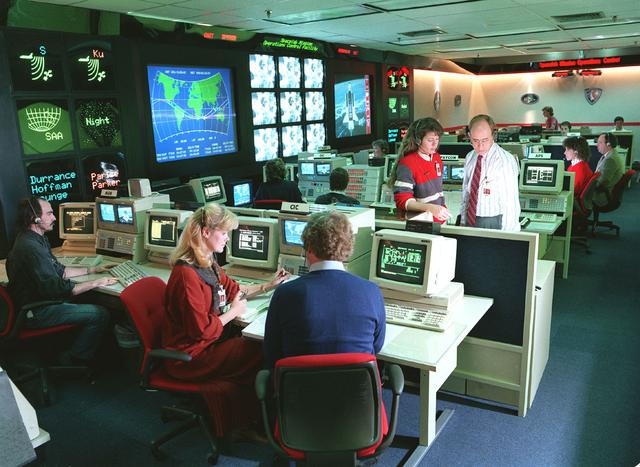
Activities in the Spacelab Mission Operations Control facility at the Marshall Space Flight Center (MSFC) are shown in this photograph. All NASA Spacelab science missions were controlled from and the science astronauts were supported by this facility during the missions. Teams of flight controllers and researchers at the MSFC Space Mission Operations Control Center directed all NASA science operations, sent commands directly to the crew of Spacelab, and received and analyzed data from experiments on board the Spacelab. The facility used the air/ground communications charnels between the astronauts and ground control teams during the Spacelab missions. Spacelab science operations were a cooperative effort between the science astronaut crew in orbit and their colleagues in the Space Mission Operations Control Center. Though the crew and the instrument science teams were separated by many miles, they interacted with one another to evaluate observations and solve problems in much the same way as they would when working side by side in a ground-based laboratory. Most of the action was centered in two work areas: The payload control area from which the overall payload was monitored and controlled and the science operations area where teams of scientists monitored their instruments and direct experiment activities. This facility is no longer operational since the last Spacelab mission, U.S. Microgravity Payload-4 in December 1997, and has become one of the historical sites at MSFC. The facility was reopened as the International Space Station Payload Operations Center in March 2001.