CAPE CANAVERAL, Fla. – The Ground Systems Development and Operations, or GSDO, Program completed its preliminary design review which allows development of the ground systems to proceed to detailed design. Representatives from NASA, its contractor partners and experts from across the aerospace industry met in the Mission Briefing Room inside the Operations and Checkout Building at NASA’s Kennedy Space Center in Florida to conclude the initial design and technology development phase. Completion of this review has validated that the baseline architecture is sound and aligns with the agency's exploration objectives. NASA is developing the Space Launch System and Orion spacecraft to provide an entirely new capability for human exploration beyond low-Earth orbit, with the flexibility to launch spacecraft for crew and cargo missions, including to an asteroid and Mars. Orion’s first unpiloted test flight is scheduled to launch later this year atop a Delta IV rocket. A second uncrewed flight test is scheduled for fiscal year 2018 on the Space Launch System rocket. For more information, visit http://www.nasa.gov/orion. Photo credit: NASA/Cory Huston
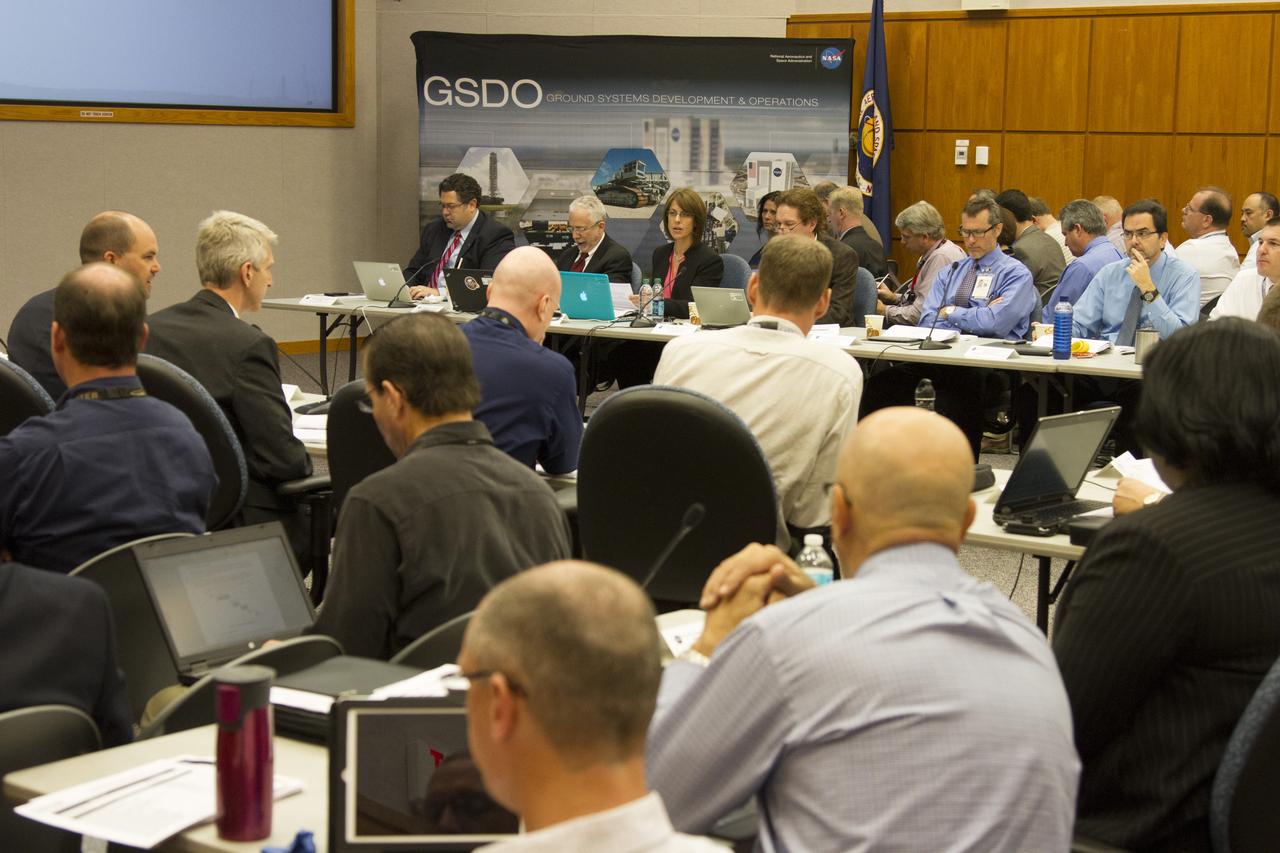
CAPE CANAVERAL, Fla. – The Ground Systems Development and Operations, or GSDO, Program completed its preliminary design review which allows development of the ground systems to proceed to detailed design. Representatives from NASA, its contractor partners and experts from across the aerospace industry met in the Mission Briefing Room inside the Operations and Checkout Building at NASA’s Kennedy Space Center in Florida to conclude the initial design and technology development phase. Completion of this review has validated that the baseline architecture is sound and aligns with the agency's exploration objectives. NASA is developing the Space Launch System and Orion spacecraft to provide an entirely new capability for human exploration beyond low-Earth orbit, with the flexibility to launch spacecraft for crew and cargo missions, including to an asteroid and Mars. Orion’s first unpiloted test flight is scheduled to launch later this year atop a Delta IV rocket. A second uncrewed flight test is scheduled for fiscal year 2018 on the Space Launch System rocket. For more information, visit http://www.nasa.gov/orion. Photo credit: NASA/Cory Huston

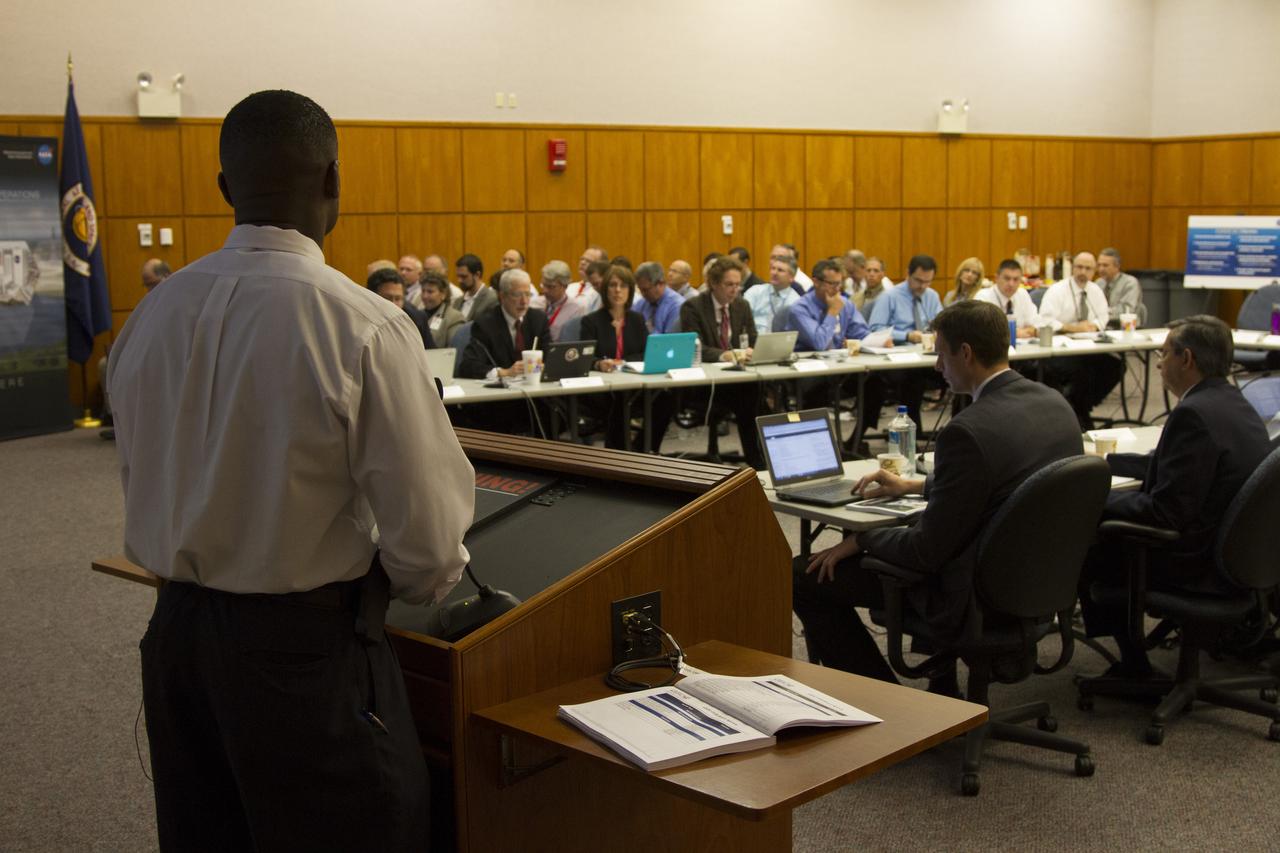
CAPE CANAVERAL, Fla. – Mike Bolger, program manager for the Ground Systems Development and Operations, or GSDO, Program speaks to participants during completion of the preliminary design review in the Mission Briefing Room inside the Operations and Checkout Building at NASA’s Kennedy Space Center in Florida. Representatives from NASA, its contractor partners and experts from across the aerospace industry met in the Mission Briefing Room inside the Operations and Checkout Building at NASA’s Kennedy Space Center in Florida to conclude the initial design and technology development phase. Completion of this review has validated that the baseline architecture is sound and aligns with the agency's exploration objectives. NASA is developing the Space Launch System and Orion spacecraft to provide an entirely new capability for human exploration beyond low-Earth orbit, with the flexibility to launch spacecraft for crew and cargo missions, including to an asteroid and Mars. Orion’s first unpiloted test flight is scheduled to launch later this year atop a Delta IV rocket. A second uncrewed flight test is scheduled for fiscal year 2018 on the Space Launch System rocket. For more information, visit http://www.nasa.gov/orion. Photo credit: NASA/Cory Huston
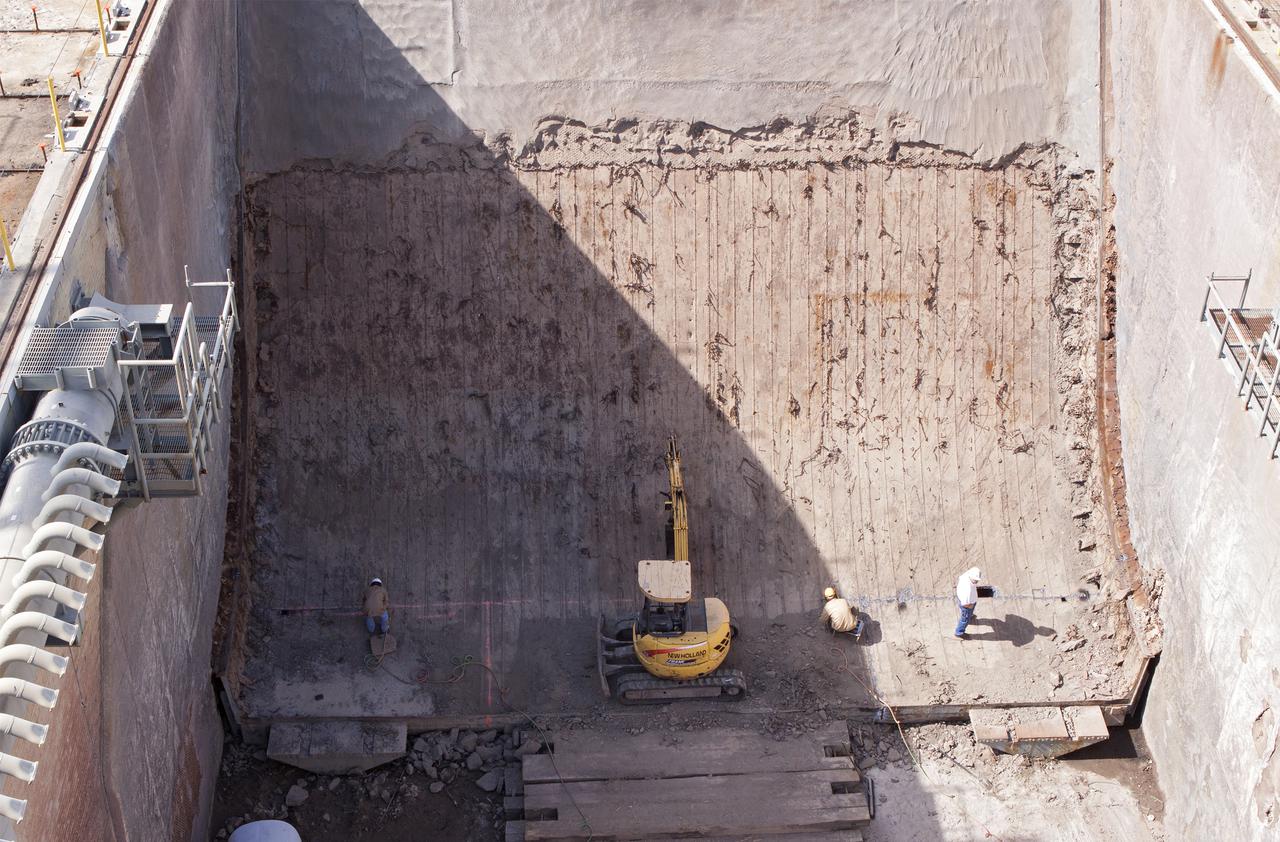
CAPE CANAVERAL, Fla. -- At Launch Pad 39B at NASA’s Kennedy Space Center in Florida, workers are removing the flame trench deflector that sits below and between the left and right crawler track panels. Launch Pad 39B is being refurbished to support NASA’s Space Launch System and other launch vehicles. The Ground Systems Development and Operations, or GSDO, Program office at Kennedy is leading the center’s transformation to safely handle a variety of rockets and spacecraft. For more information about GSDO, visit: http:__go.nasa.gov_groundsystems. Photo credit: NASA_Jim Grossman
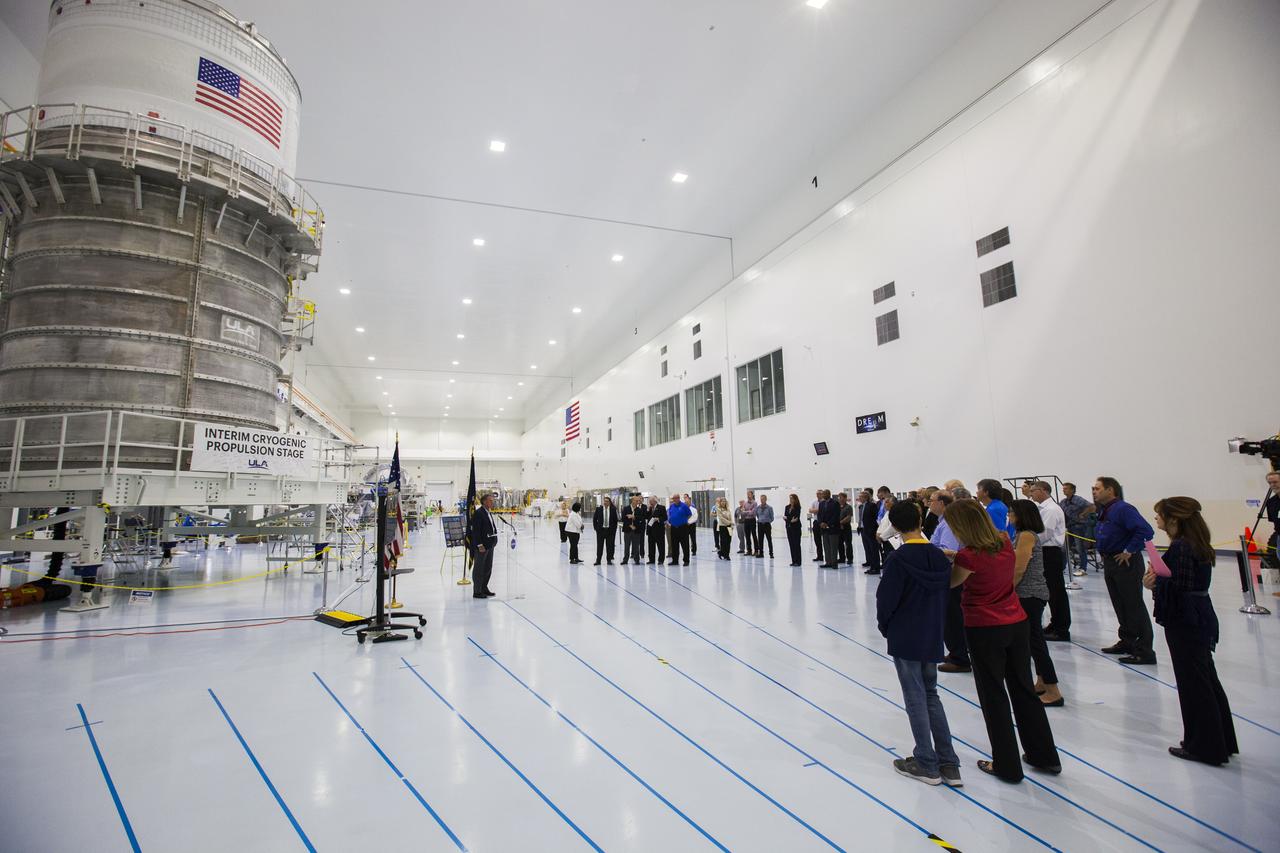
In the Space Station Processing Facility at NASA's Kennedy Space Center in Florida, a ceremony is underway marking the agency's Spacecraft/Payload Integration and Evolution (SPIE) organization formally turning over processing of the Space Launch System (SLS) rocket's Interim Cryogenic Propulsion Stage (ICPS), to the center's Ground Systems Development and Operations (GSDO) Directorate. The ICPS is seen on the left in its shipping container and is the first integrated piece of flight hardware to arrive in preparation for the uncrewed Exploration Mission-1. With the Orion attached, the ICPS sits atop the SLS rocket and will provide the spacecraft with the additional thrust needed to travel tens of thousands of miles beyond the Moon.
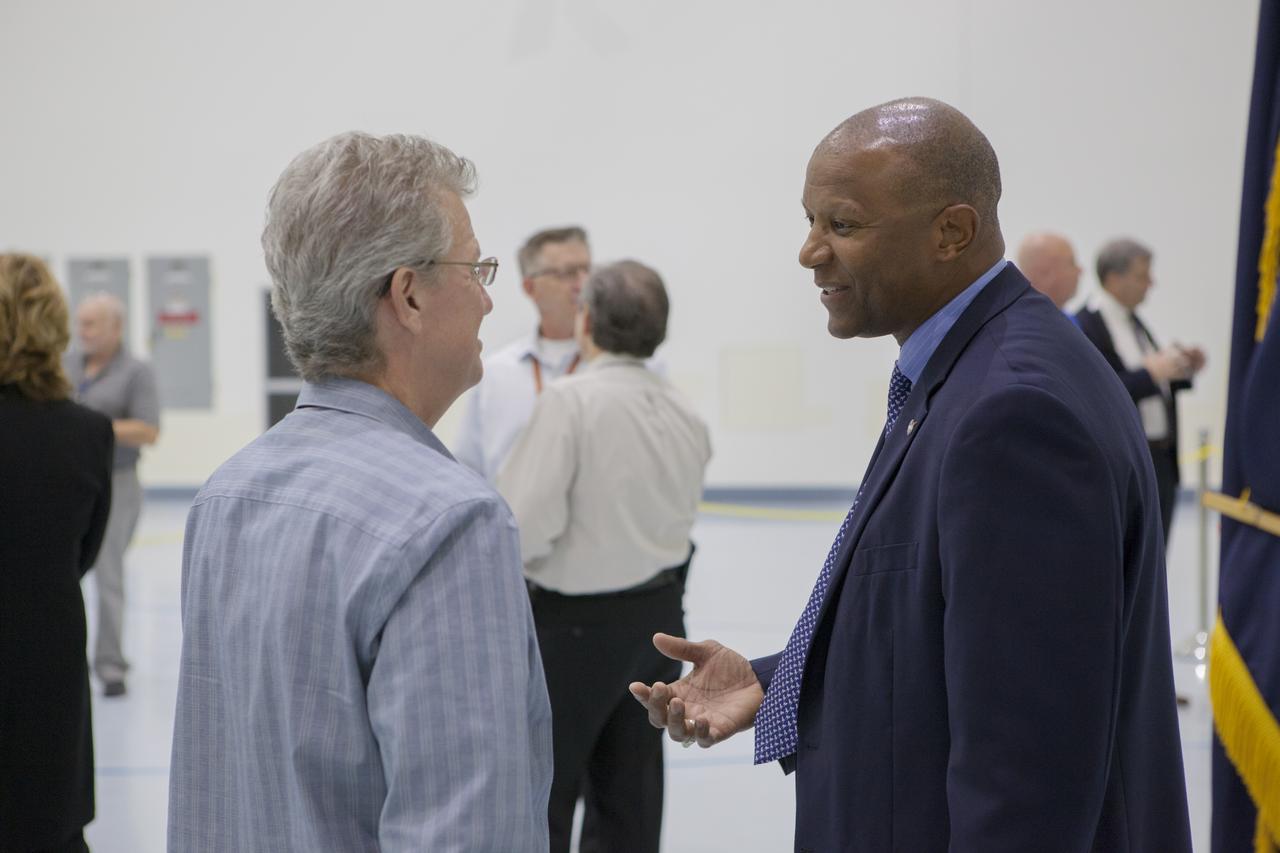
Kennedy Space Center Associate Director Kelvin Manning, right, speaks with a guest during a ceremony marking NASA's Spacecraft/Payload Integration and Evolution (SPIE) organization formally turning over processing of the Space Launch System (SLS) rocket's Interim Cryogenic Propulsion Stage (ICPS) to the center's Ground Systems Development and Operations (GSDO) Directorate. The ICPS is the first integrated piece of flight hardware to arrive in preparation for the uncrewed Exploration Mission-1. With the Orion attached, the ICPS sits atop the SLS rocket and will provide the spacecraft with the additional thrust needed to travel tens of thousands of miles beyond the Moon.
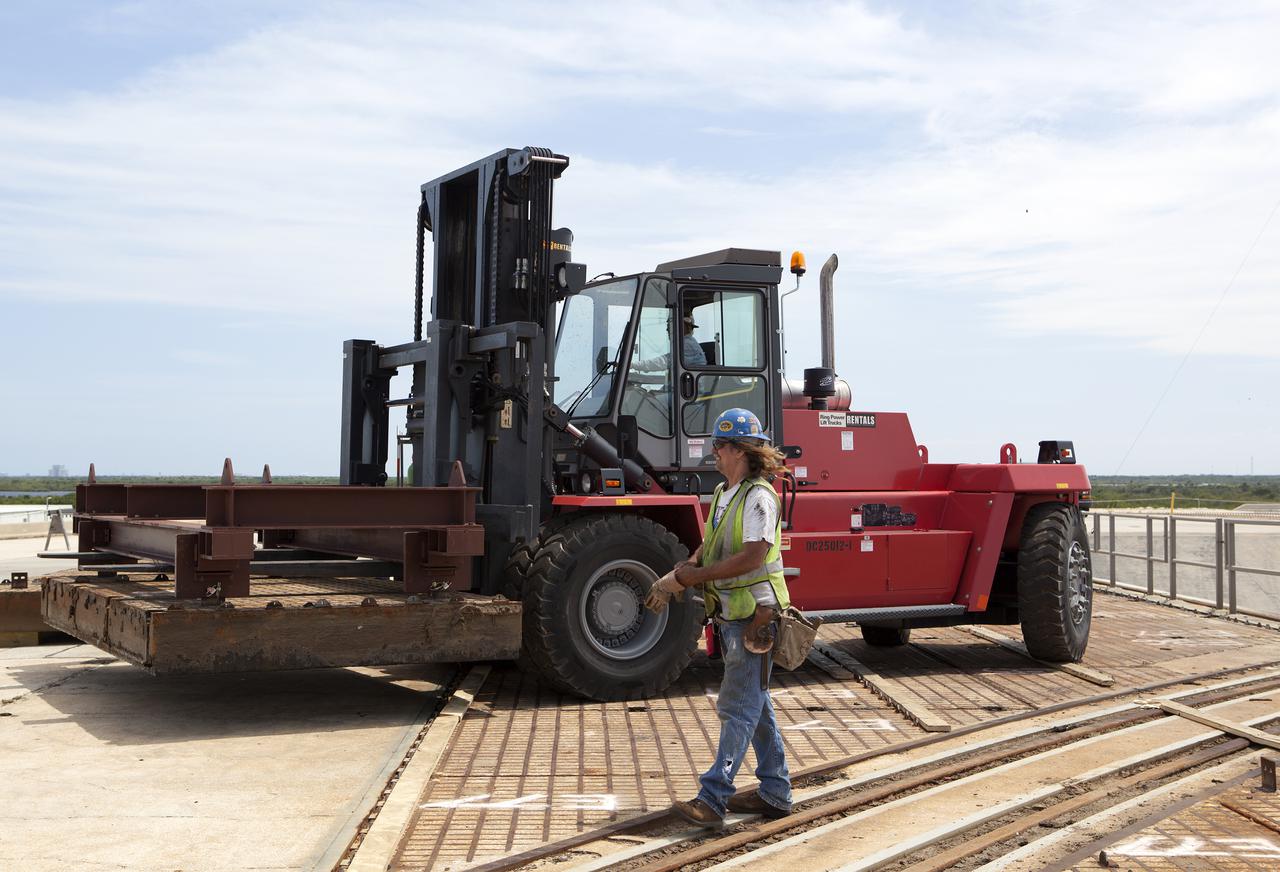
CAPE CANAVERAL, Fla. – At Launch Pad 39B at NASA’s Kennedy Space Center in Florida, removal of the crawler track panels on the pad’s surface is underway. The concrete surface beneath the panels and the catacomb roof below will be inspected for water damage and repaired. There are 176 panels, each weighing about 30,000 pounds that will be removed. Launch Pad 39B is being refurbished to support NASA’s Space Launch System and other launch vehicles. The Ground Systems Development and Operations, or GSDO, Program office at Kennedy is leading the center’s transformation to safely handle a variety of rockets and spacecraft. For more information about GSDO, visit: http:__go.nasa.gov_groundsystems. Photo credit: NASA_Dimitri Gerondidakis
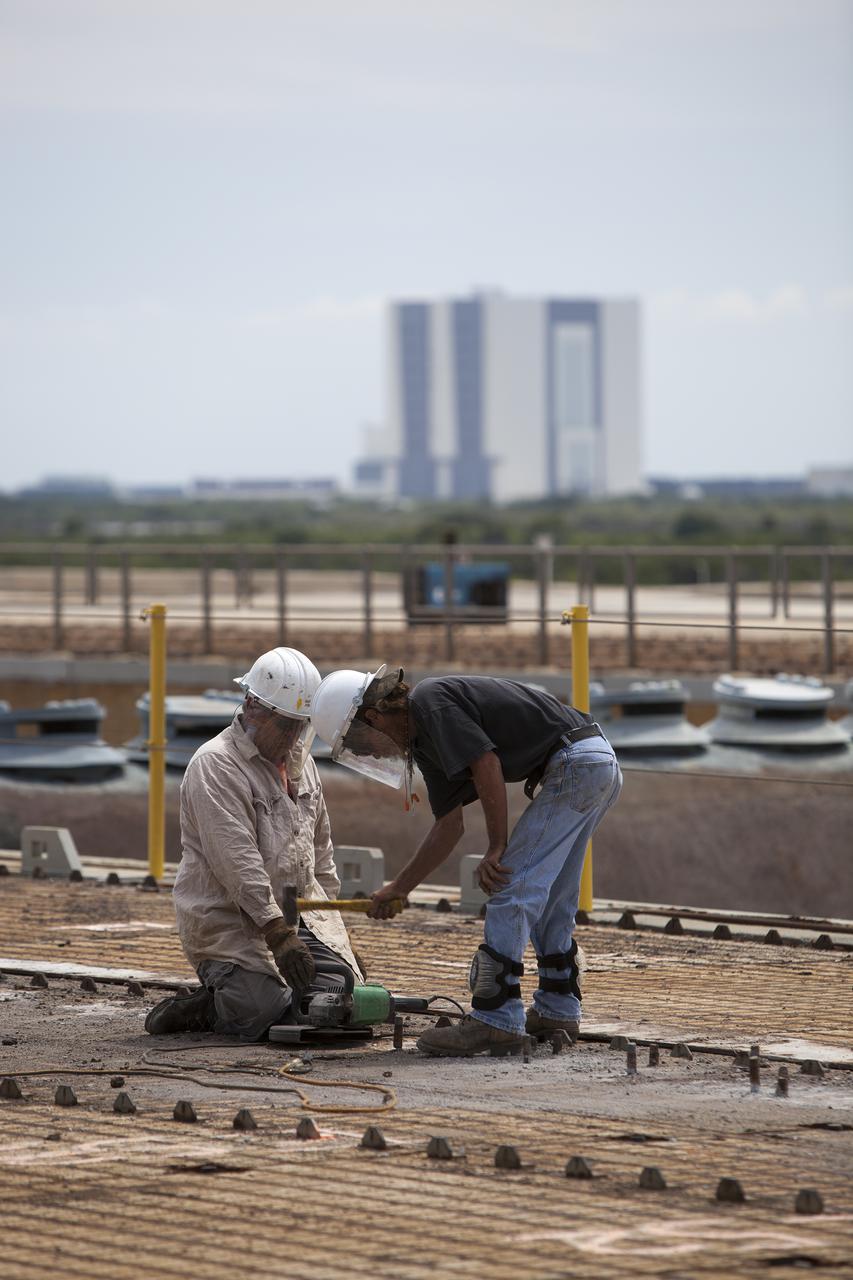
CAPE CANAVERAL, Fla. – At Launch Pad 39B at NASA’s Kennedy Space Center in Florida, construction workers prepare a crawler track panel on the pad’s surface for removal. The concrete surface beneath the panels and the catacomb roof below will be inspected for water damage and repaired. There are 176 panels, each weighing about 30,000 pounds that will be removed. Launch Pad 39B is being refurbished to support NASA’s Space Launch System and other launch vehicles. The Ground Systems Development and Operations, or GSDO, Program office at Kennedy is leading the center’s transformation to safely handle a variety of rockets and spacecraft. For more information about GSDO, visit: http:__go.nasa.gov_groundsystems. Photo credit: NASA_Dimitri Gerondidakis
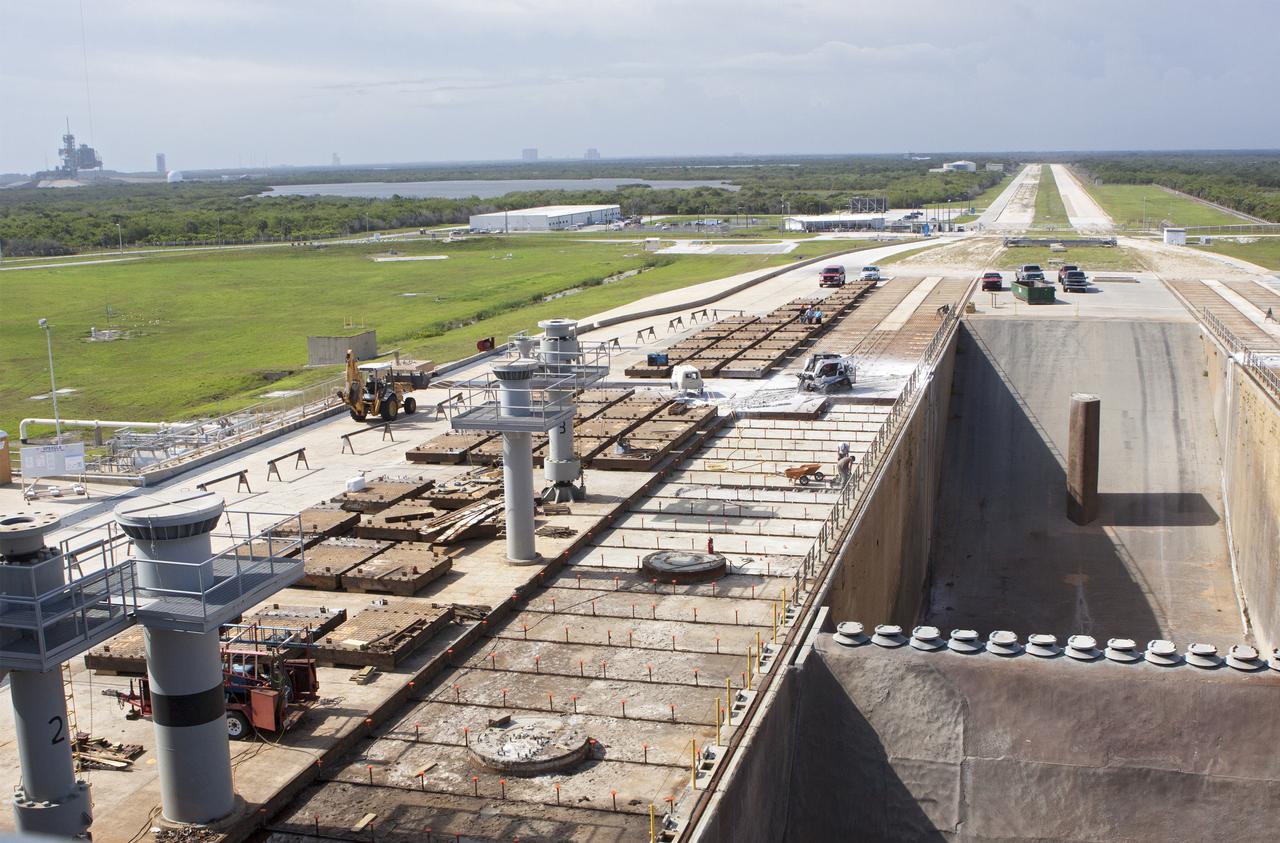
CAPE CANAVERAL, Fla. -- At Launch Pad 39B at NASA’s Kennedy Space Center in Florida, nearly all of the crawler track panels on the pad’s surface have been removed. The concrete surface beneath the panels and the catacomb roof below will be inspected for water damage and repaired. There are 176 panels, each weighing about 30,000 pounds that will be removed. Launch Pad 39B is being refurbished to support NASA’s Space Launch System and other launch vehicles. The Ground Systems Development and Operations, or GSDO, Program office at Kennedy is leading the center’s transformation to safely handle a variety of rockets and spacecraft. For more information about GSDO, visit: http:__go.nasa.gov_groundsystems. Photo credit: NASA_Jim Grossman
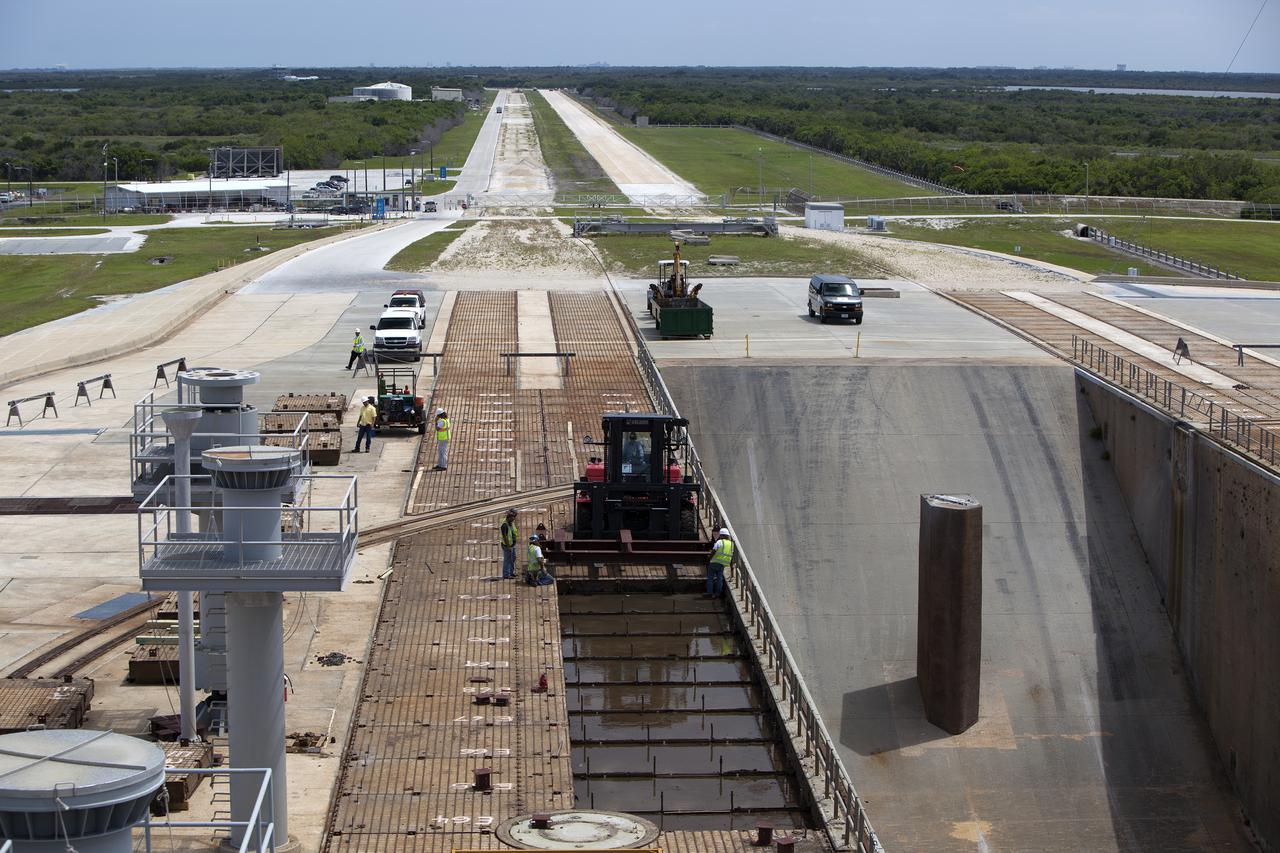
CAPE CANAVERAL, Fla. – At Launch Pad 39B at NASA’s Kennedy Space Center in Florida, an aerial view shows the progress as construction workers remove crawler track panels from the pad’s surface. The concrete surface beneath the panels and the catacomb roof below will be inspected for water damage and repaired. There are 176 panels, each weighing about 30,000 pounds that will be removed. Launch Pad 39B is being refurbished to support NASA’s Space Launch System and other launch vehicles. The Ground Systems Development and Operations, or GSDO, Program office at Kennedy is leading the center’s transformation to safely handle a variety of rockets and spacecraft. For more information about GSDO, visit: http:__go.nasa.gov_groundsystems. Photo credit: NASA_Dimitri Gerondidakis
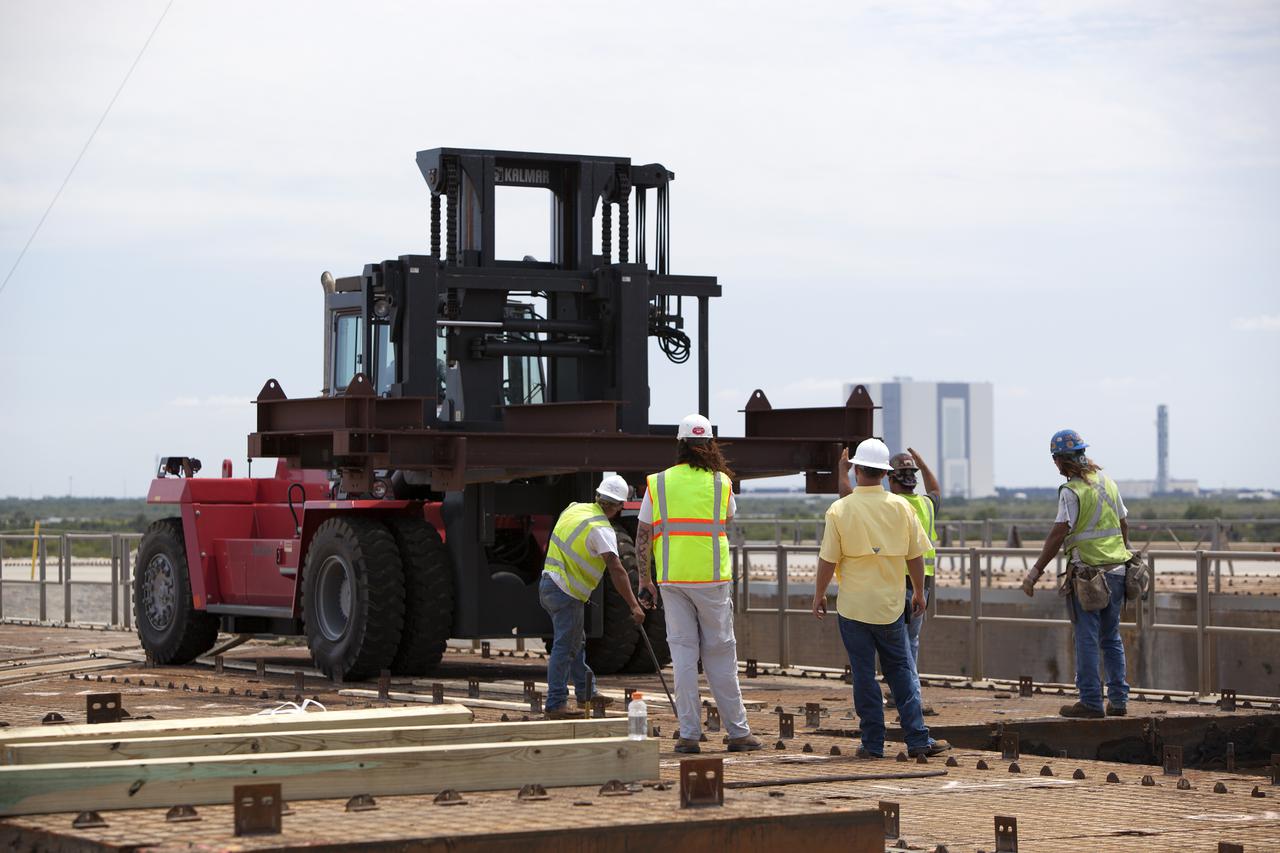
CAPE CANAVERAL, Fla. – At Launch Pad 39B at NASA’s Kennedy Space Center in Florida, removal of the crawler track panels on the pad’s surface is underway. The concrete surface beneath the panels and the catacomb roof below will be inspected for water damage and repaired. There are 176 panels, each weighing about 30,000 pounds that will be removed. Launch Pad 39B is being refurbished to support NASA’s Space Launch System and other launch vehicles. The Ground Systems Development and Operations, or GSDO, Program office at Kennedy is leading the center’s transformation to safely handle a variety of rockets and spacecraft. For more information about GSDO, visit: http:__go.nasa.gov_groundsystems. Photo credit: NASA_Dimitri Gerondidakis
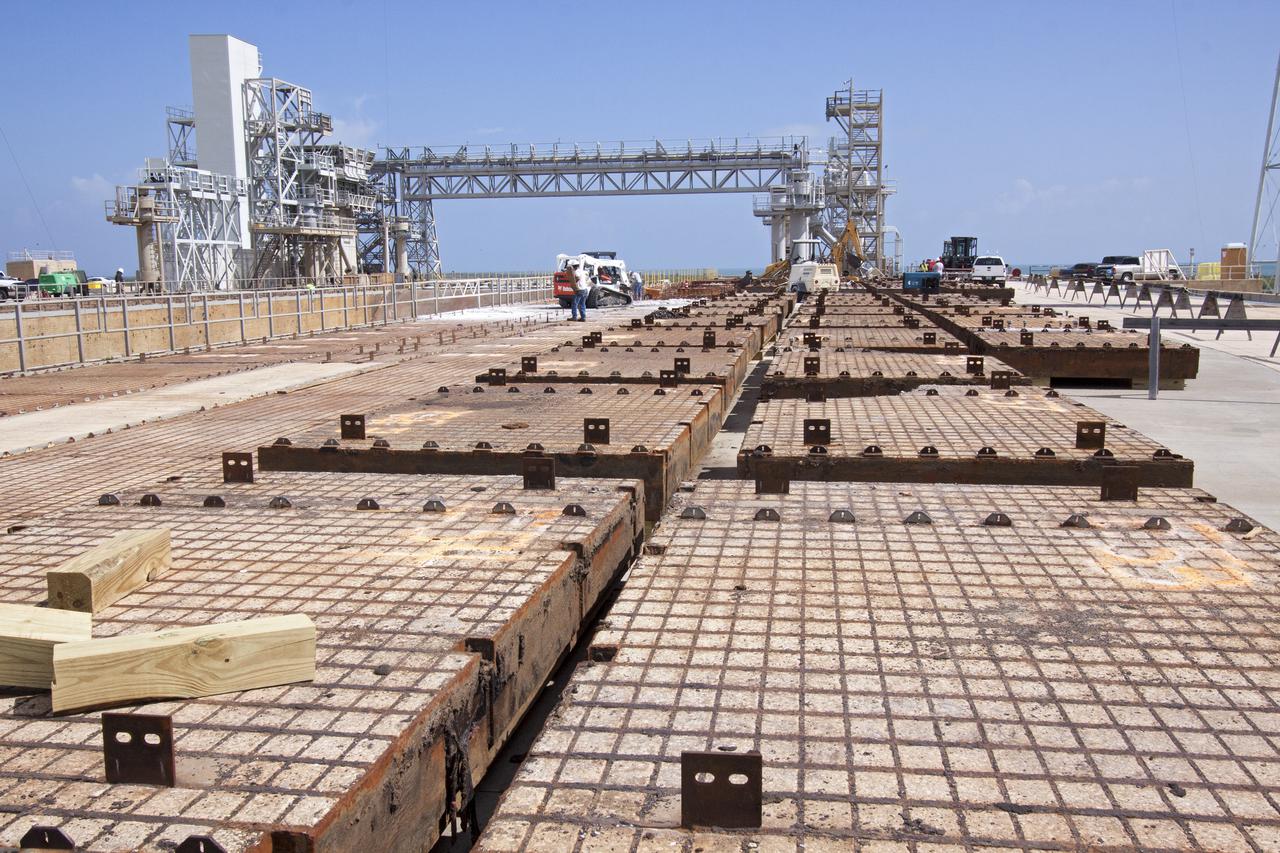
CAPE CANAVERAL, Fla. -- At Launch Pad 39B at NASA’s Kennedy Space Center in Florida, removal of the crawler track panels on the pad’s surface is underway. The concrete surface beneath the panels and the catacomb roof below will be inspected for water damage and repaired. There are 176 panels, each weighing about 30,000 pounds that will be removed. Launch Pad 39B is being refurbished to support NASA’s Space Launch System and other launch vehicles. The Ground Systems Development and Operations, or GSDO, Program office at Kennedy is leading the center’s transformation to safely handle a variety of rockets and spacecraft. For more information about GSDO, visit: http:__go.nasa.gov_groundsystems. Photo credit: NASA_Jim Grossman
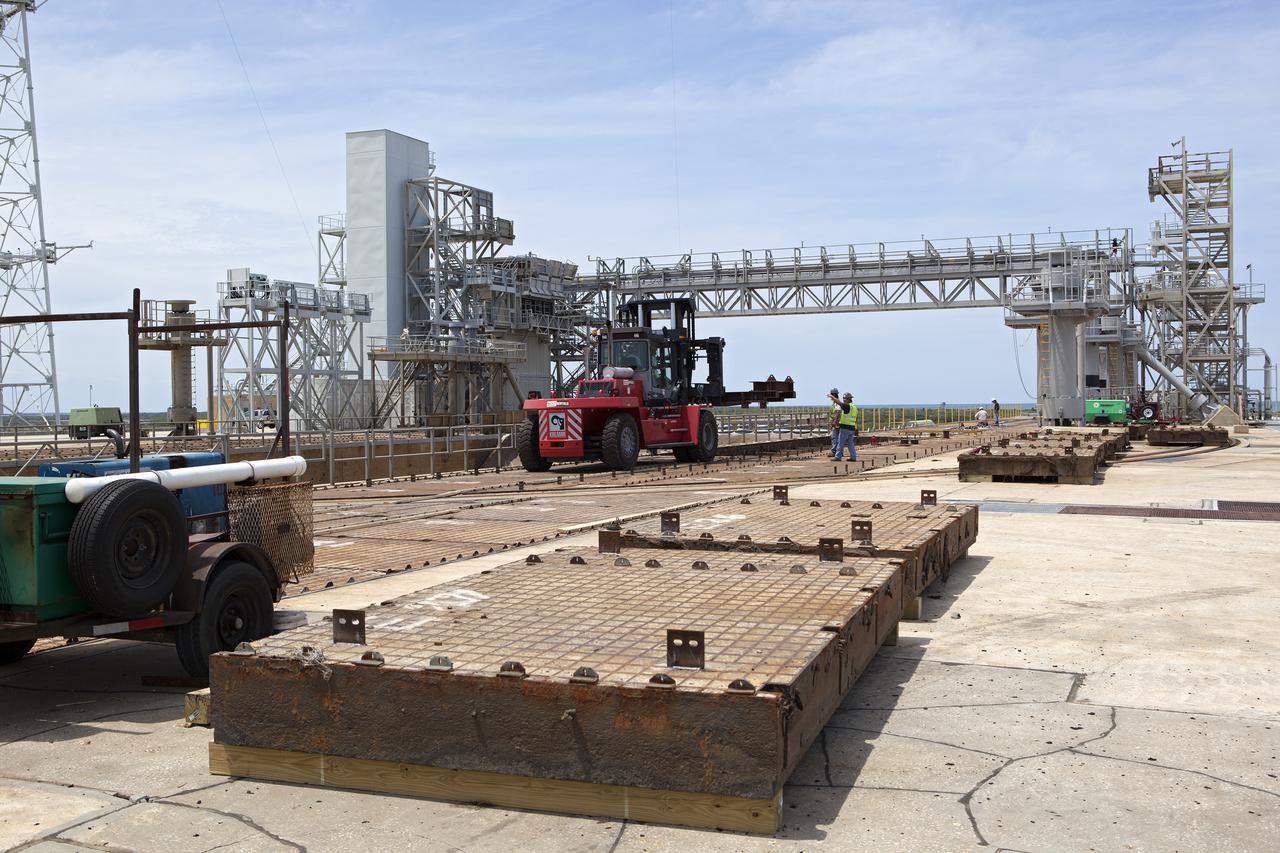
CAPE CANAVERAL, Fla. – At Launch Pad 39B at NASA’s Kennedy Space Center in Florida, removal of the crawler track panels on the pad’s surface is underway. The concrete surface beneath the panels and the catacomb roof below will be inspected for water damage and repaired. There are 176 panels, each weighing about 30,000 pounds that will be removed. Launch Pad 39B is being refurbished to support NASA’s Space Launch System and other launch vehicles. The Ground Systems Development and Operations, or GSDO, Program office at Kennedy is leading the center’s transformation to safely handle a variety of rockets and spacecraft. For more information about GSDO, visit: http:__go.nasa.gov_groundsystems. Photo credit: NASA_Dimitri Gerondidakis
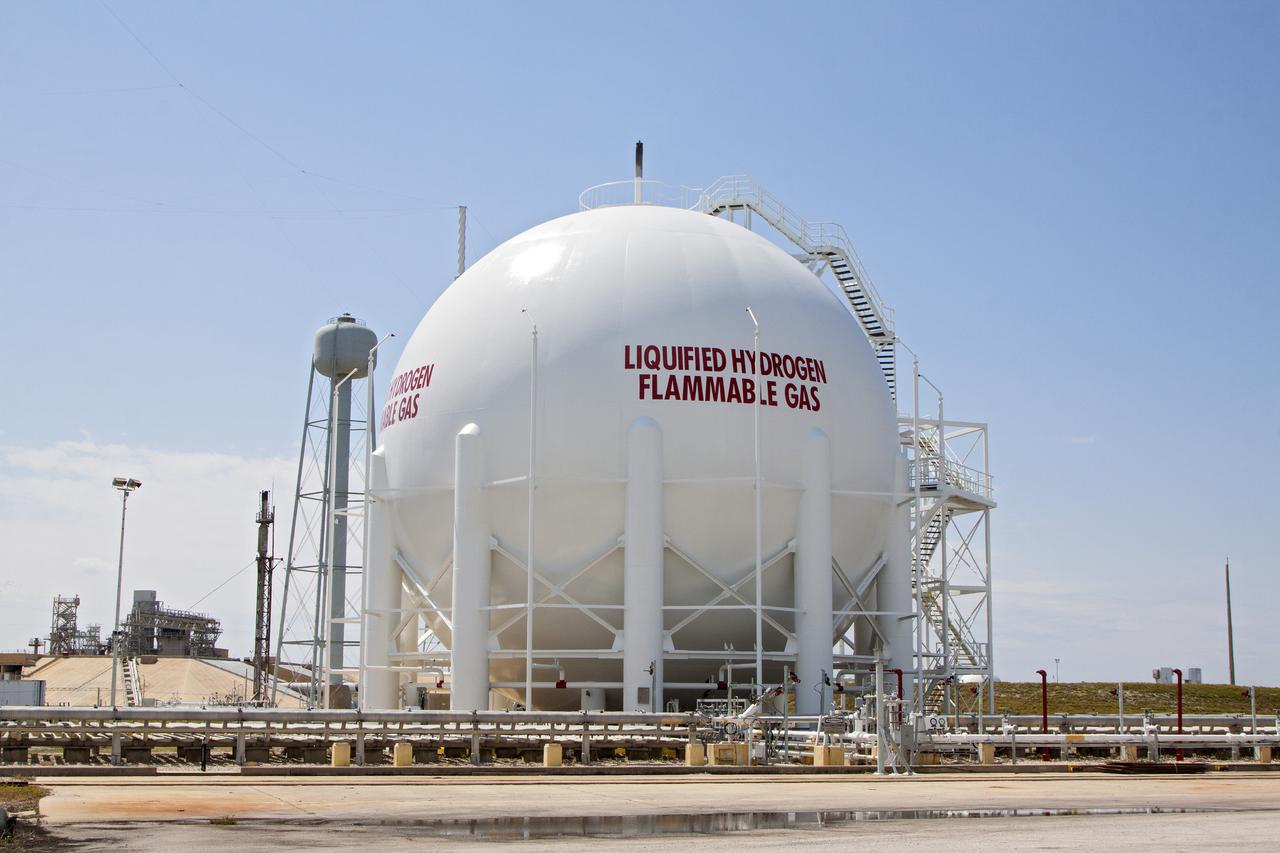
CAPE CANAVERAL, Fla. – At Launch Pad 39B at NASA’s Kennedy Space Center in Florida, the liquid oxygen, or LOX, and liquid hydrogen, or LH2, tanks that supported space shuttle launches for 30 years have been sandblasted, repaired and repainted. The two tanks, designed to store super-cooled LOX and LH2, were refurbished to prepare them to support the launch of NASA’s Space Launch System and other launch vehicles. The Ground Systems Development and Operations, or GSDO, Program office at Kennedy is leading the center’s transformation to safely handle a variety of rockets and spacecraft. For more information about GSDO, visit: http:__go.nasa.gov_groundsystems. Photo credit: NASA_Kim Shiflett
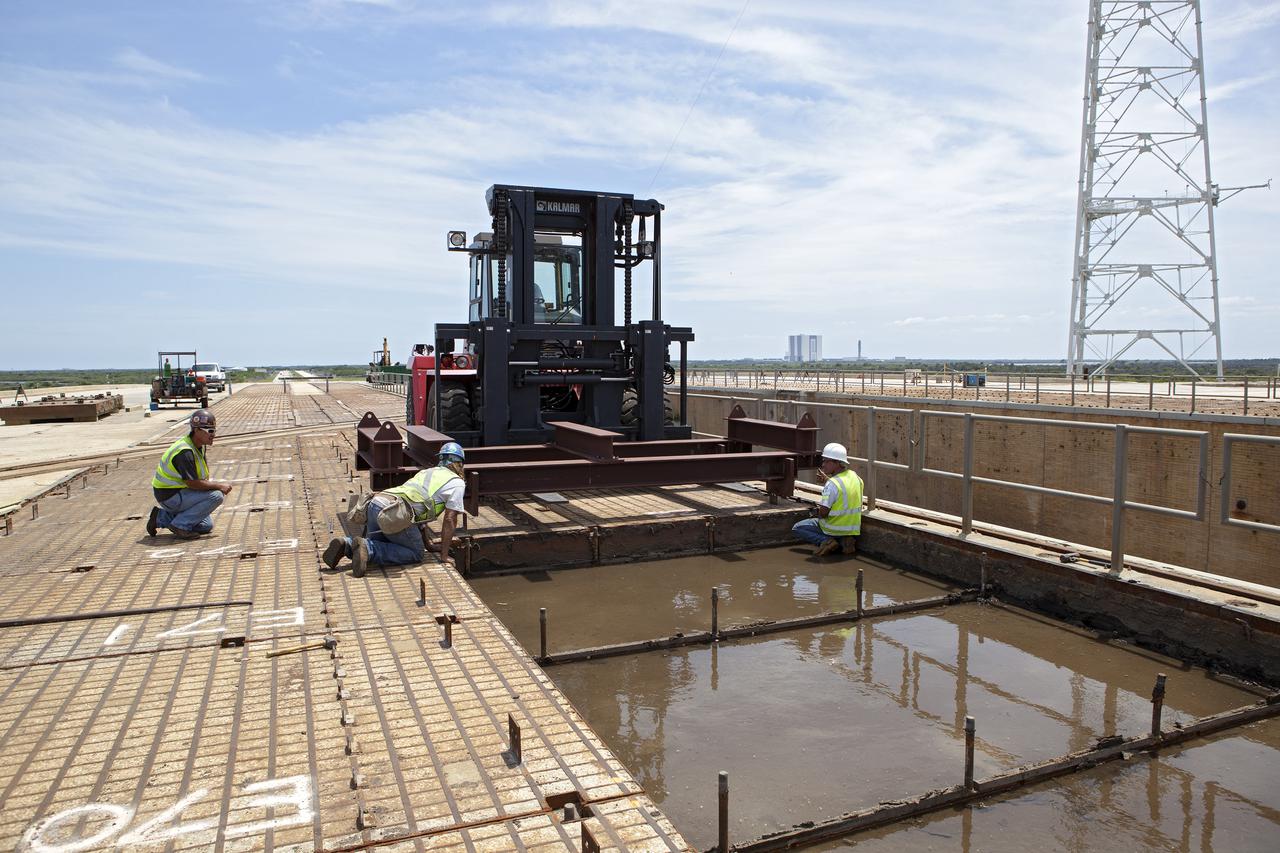
CAPE CANAVERAL, Fla. – At Launch Pad 39B at NASA’s Kennedy Space Center in Florida, removal of the crawler track panels on the pad’s surface is underway. The concrete surface beneath the panels and the catacomb roof below will be inspected for water damage and repaired. There are 176 panels, each weighing about 30,000 pounds that will be removed. Launch Pad 39B is being refurbished to support NASA’s Space Launch System and other launch vehicles. The Ground Systems Development and Operations, or GSDO, Program office at Kennedy is leading the center’s transformation to safely handle a variety of rockets and spacecraft. For more information about GSDO, visit: http:__go.nasa.gov_groundsystems. Photo credit: NASA_Dimitri Gerondidakis
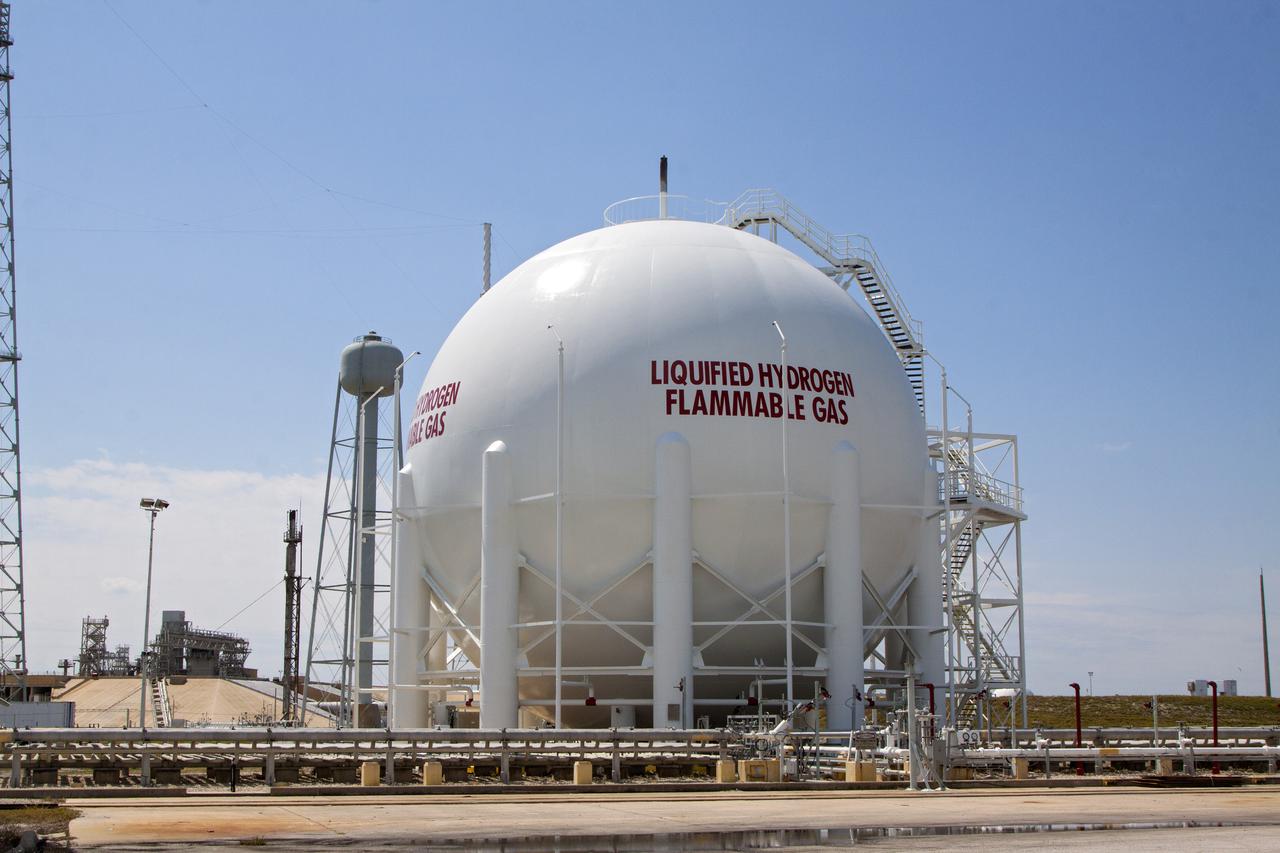
CAPE CANAVERAL, Fla. – At Launch Pad 39B at NASA’s Kennedy Space Center in Florida, the liquid oxygen, or LOX, and liquid hydrogen, or LH2, tanks that supported space shuttle launches for 30 years have been sandblasted, repaired and repainted. The two tanks, designed to store super-cooled LOX and LH2, were refurbished to prepare them to support the launch of NASA’s Space Launch System and other launch vehicles. The Ground Systems Development and Operations, or GSDO, Program office at Kennedy is leading the center’s transformation to safely handle a variety of rockets and spacecraft. For more information about GSDO, visit: http:__go.nasa.gov_groundsystems. Photo credit: NASA_Kim Shiflett
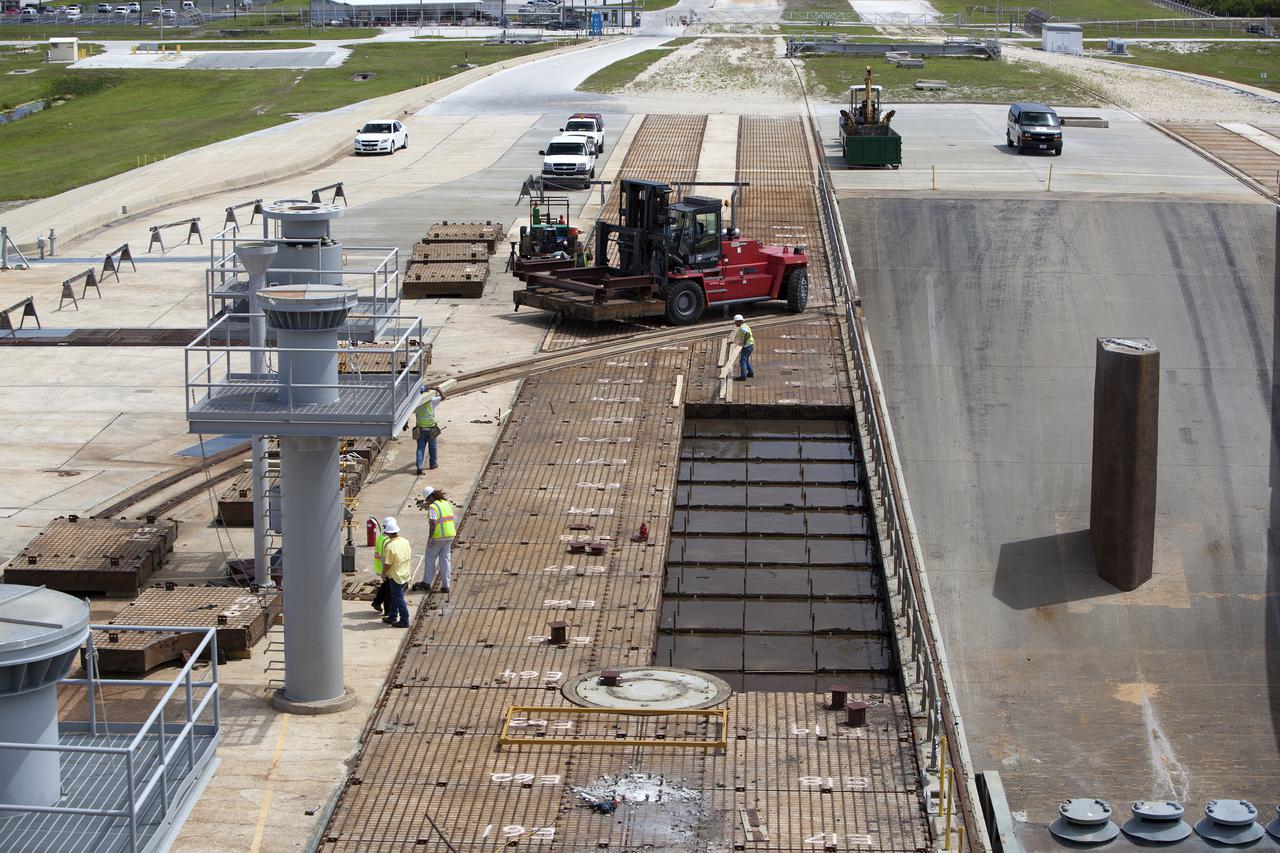
CAPE CANAVERAL, Fla. – At Launch Pad 39B at NASA’s Kennedy Space Center in Florida, an aerial view shows the progress as construction workers remove crawler track panels from the pad’s surface. The concrete surface beneath the panels and the catacomb roof below will be inspected for water damage and repaired. There are 176 panels, each weighing about 30,000 pounds that will be removed. Launch Pad 39B is being refurbished to support NASA’s Space Launch System and other launch vehicles. The Ground Systems Development and Operations, or GSDO, Program office at Kennedy is leading the center’s transformation to safely handle a variety of rockets and spacecraft. For more information about GSDO, visit: http:__go.nasa.gov_groundsystems. Photo credit: NASA_Dimitri Gerondidakis
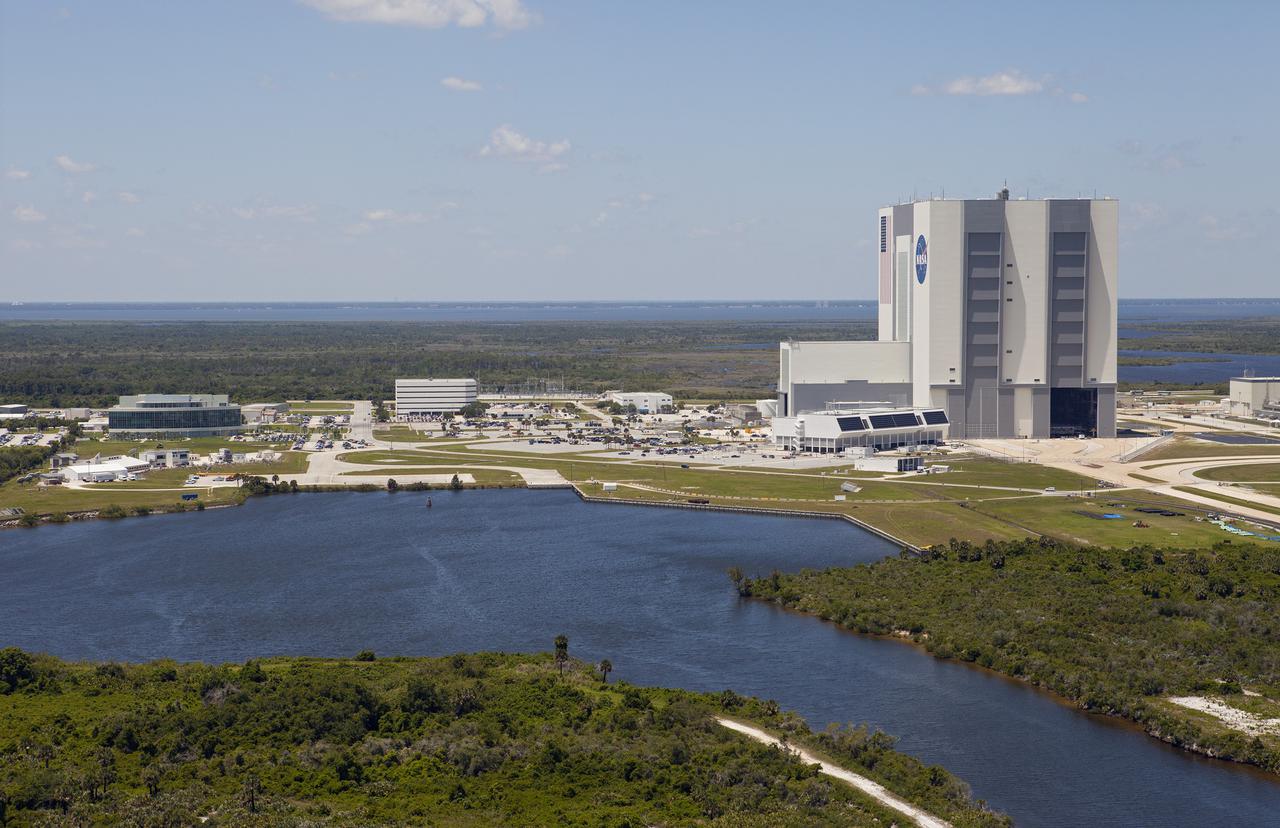
CAPE CANAVERAL, Fla. – An up close aerial view of the Vehicle Assembly Building and other facilities in the Launch Complex 39 area at NASA’s Kennedy Space Center in Florida. In front of the VAB is the Launch Control Center. To the left are the Operations Support Buildings I and II. Upgrades are underway at Pad B and other facilities in the Launch Complex 39 area. The Ground Systems Development and Operations, or GSDO, Program office at Kennedy is leading the center’s transformation from a historically government-only launch complex to a spaceport that can safely handle a variety of rockets and spacecraft, including NASA’s Space Launch System. For more information about GSDO, visit: http:__go.nasa.gov_groundsystems. Photo credit: NASA_Kim Shiflett
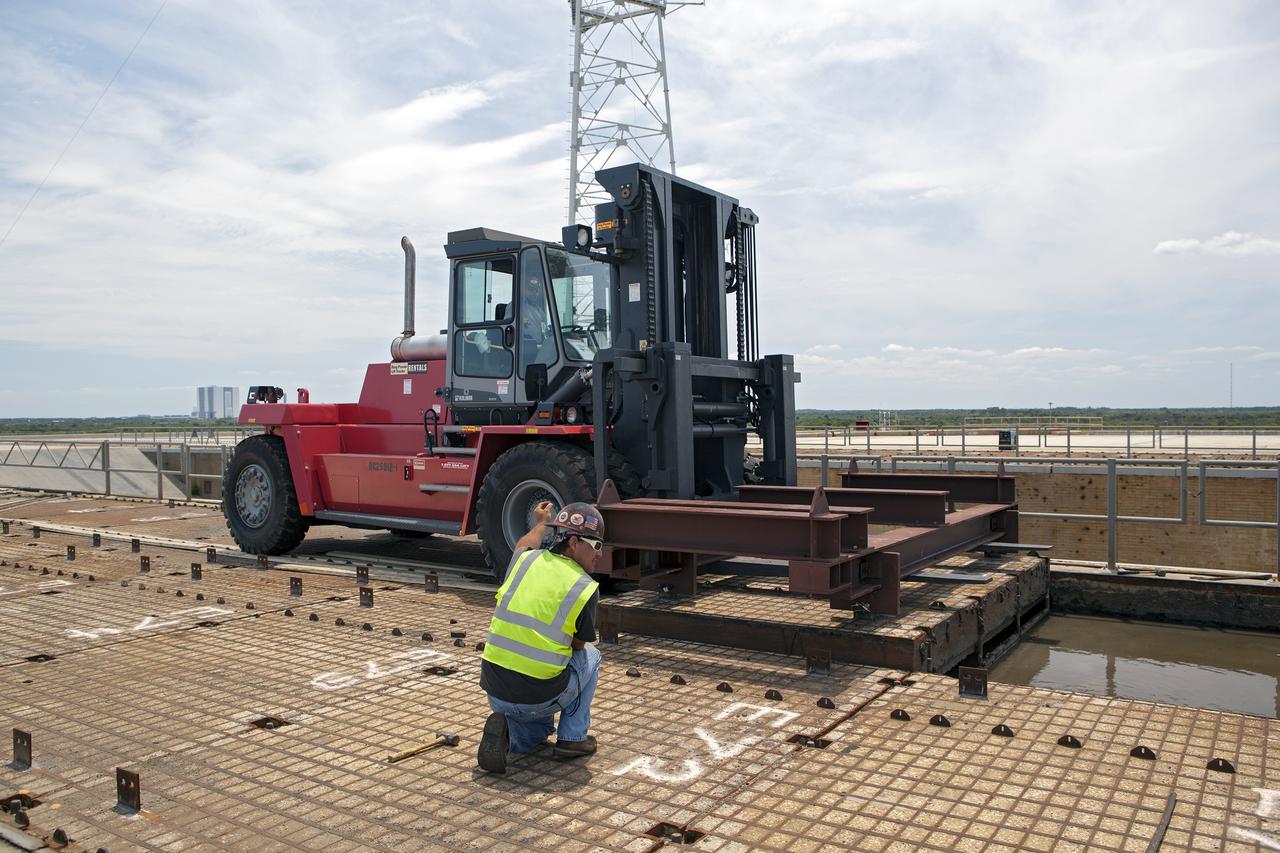
CAPE CANAVERAL, Fla. – At Launch Pad 39B at NASA’s Kennedy Space Center in Florida, a construction worker prepares a crawler track panel on the pad’s surface for removal. The concrete surface beneath the panels and the catacomb roof below will be inspected for water damage and repaired. There are 176 panels, each weighing about 30,000 pounds that will be removed. Launch Pad 39B is being refurbished to support NASA’s Space Launch System and other launch vehicles. The Ground Systems Development and Operations, or GSDO, Program office at Kennedy is leading the center’s transformation to safely handle a variety of rockets and spacecraft. For more information about GSDO, visit: http:__go.nasa.gov_groundsystems. Photo credit: NASA_Dimitri Gerondidakis
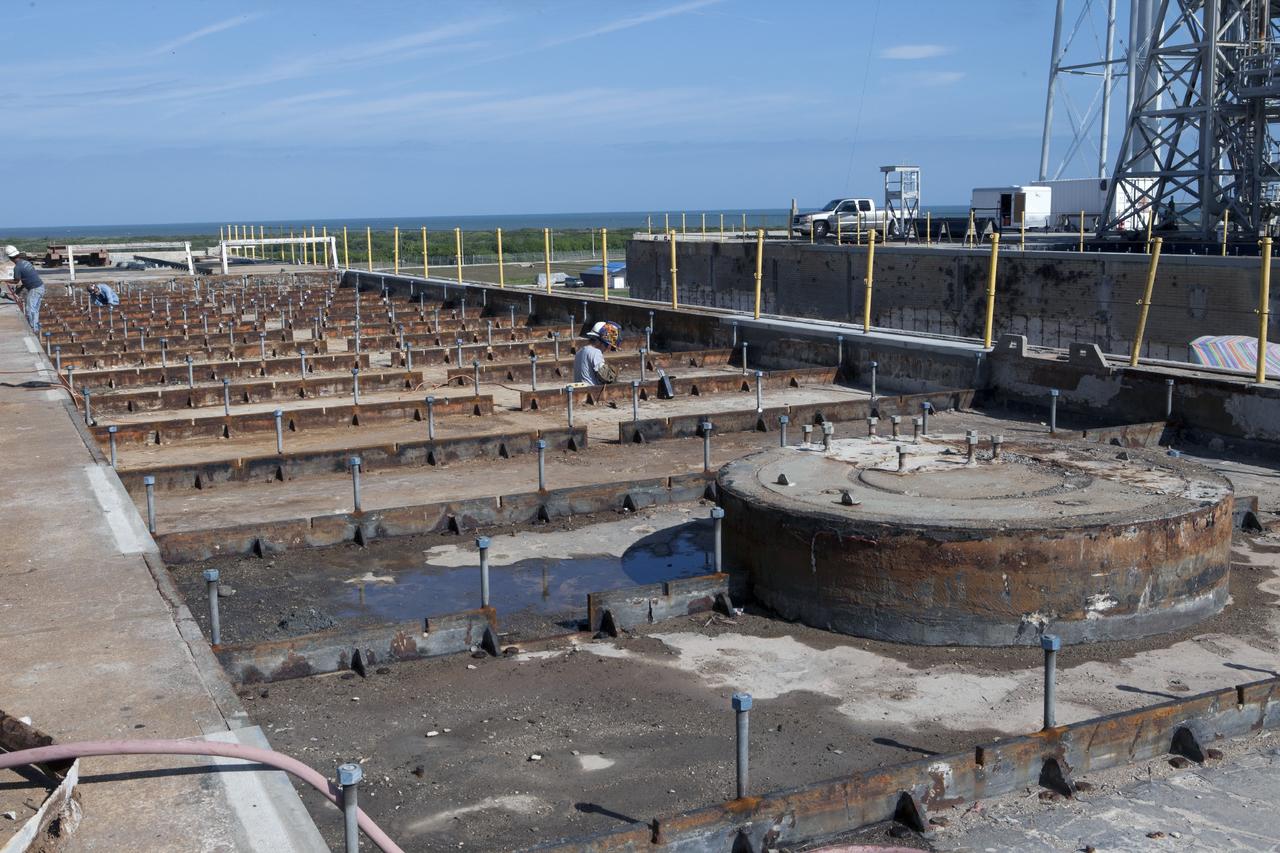
CAPE CANAVERAL, Fla. -- At Launch Pad 39B at NASA’s Kennedy Space Center in Florida, all of the old crawler track panels have been removed from the surface and construction workers are repairing the concrete surface and catacomb roof below. New crawler track panels will be installed. Launch Pad 39B is being refurbished to support NASA’s Space Launch System and other launch vehicles. The Ground Systems Development and Operations, or GSDO, Program office at Kennedy is leading the center’s transformation to safely handle a variety of rockets and spacecraft. For more information about GSDO, visit: http://go.nasa.gov/groundsystems. Photo credit: NASA/Kim Shiflett
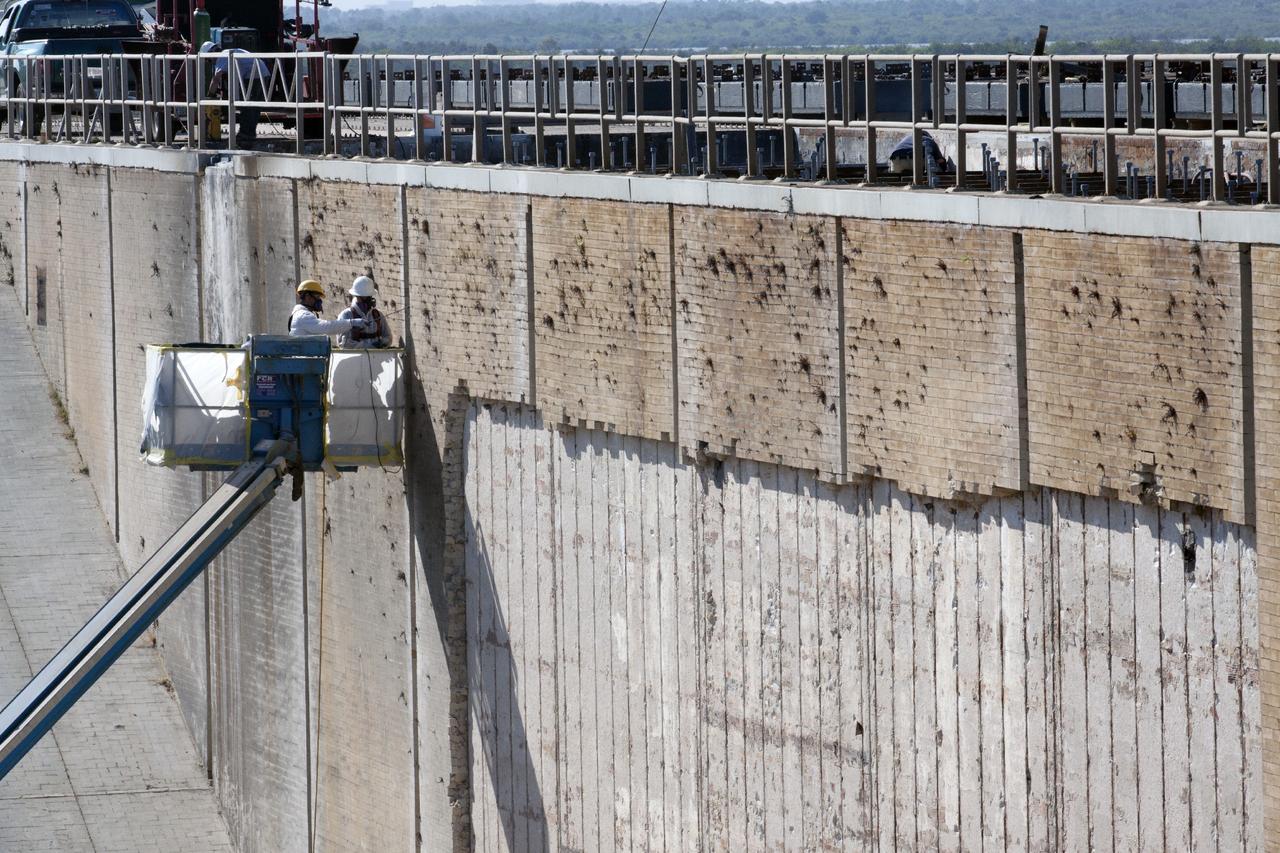
CAPE CANAVERAL, Fla. -- At Launch Pad 39B at NASA’s Kennedy Space Center in Florida, construction workers continue to remove the bricks from the flame trench walls that are below and between the left and right crawlerway tracks. The space shuttle-era flame trench deflector has been completely removed. Launch Pad 39B is being refurbished to support NASA’s Space Launch System and other launch vehicles. The Ground Systems Development and Operations, or GSDO, Program office at Kennedy is leading the center’s transformation to safely handle a variety of rockets and spacecraft. For more information about GSDO, visit: http://go.nasa.gov/groundsystems. Photo credit: NASA/Kim Shiflett
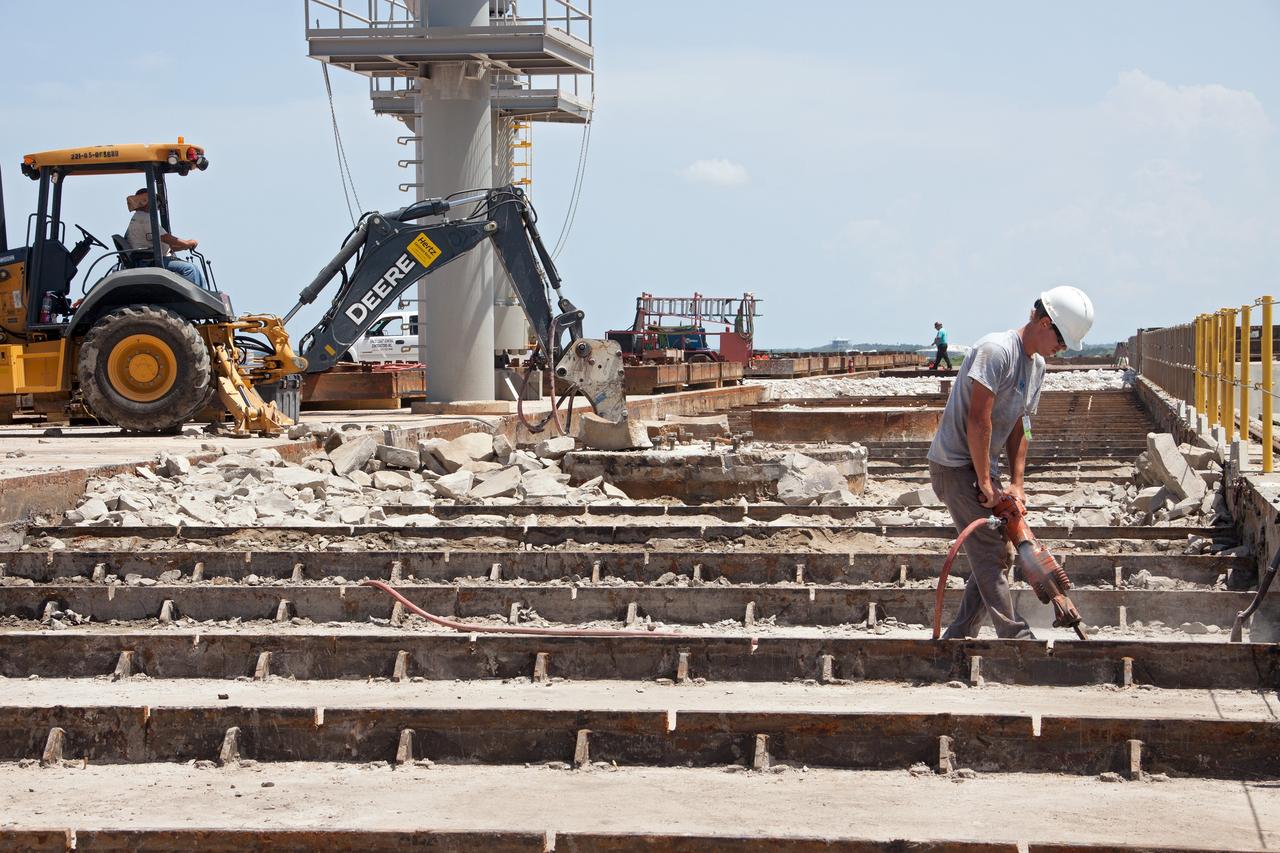
CAPE CANAVERAL, Fla. -- At Launch Pad 39B at NASA’s Kennedy Space Center in Florida, all of the old crawler track panels have been removed from the surface and construction workers are repairing the concrete surface and catacomb roof below. Framing for the new crawler track panels is being installed in repaired areas of the pad surface. Launch Pad 39B is being refurbished to support NASA’s Space Launch System and other launch vehicles. The Ground Systems Development and Operations, or GSDO, Program office at Kennedy is leading the center’s transformation to safely handle a variety of rockets and spacecraft. For more information about GSDO, visit: http://go.nasa.gov/groundsystems. Photo credit: NASA/Kim Shiflett
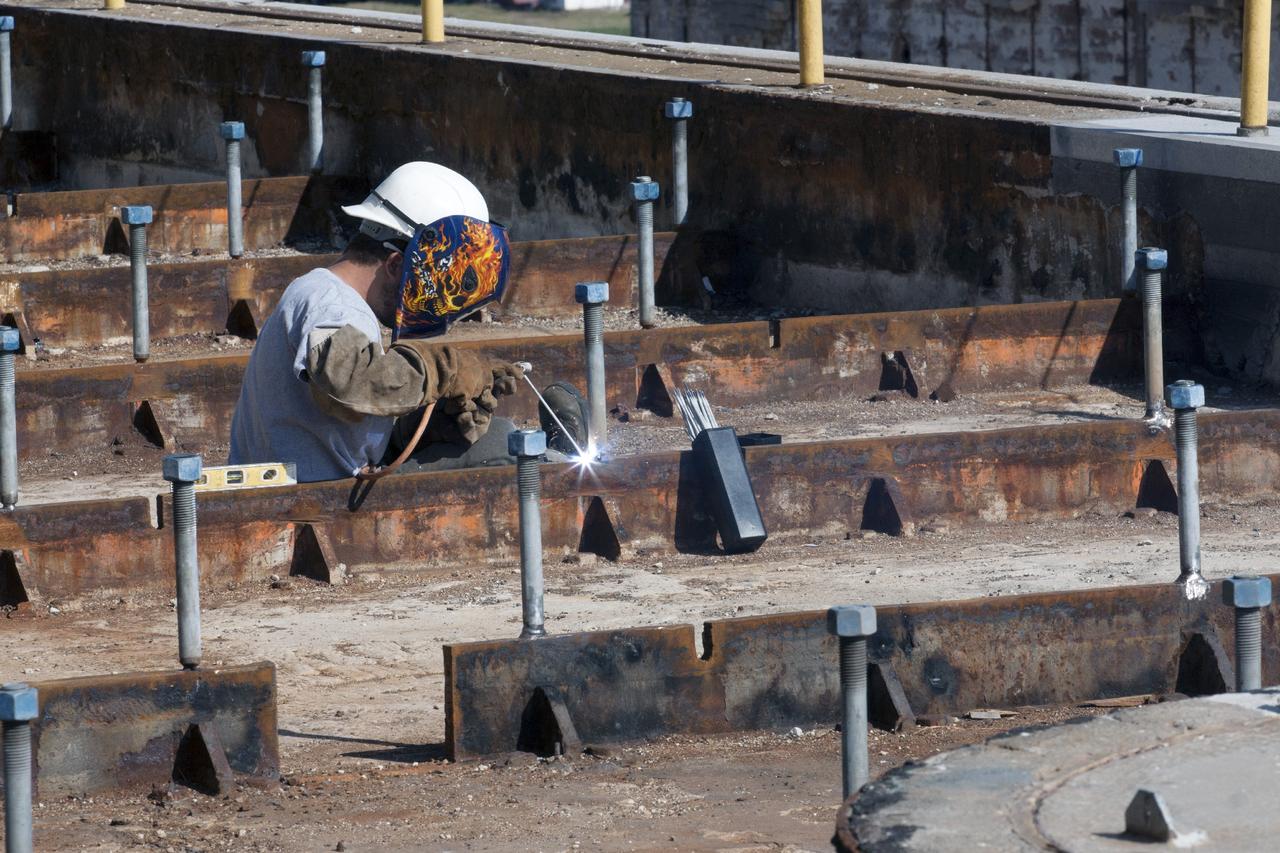
CAPE CANAVERAL, Fla. – At Launch Pad 39B at NASA’s Kennedy Space Center in Florida, crawler track panels have been removed from the surface and construction workers are repairing the concrete surface and catacomb roof below. Launch Pad 39B is being refurbished to support NASA’s Space Launch System and other launch vehicles. The Ground Systems Development and Operations, or GSDO, Program office at Kennedy is leading the center’s transformation to safely handle a variety of rockets and spacecraft. For more information about GSDO, visit: http://go.nasa.gov/groundsystems. Photo credit: NASA/Jim Grossman
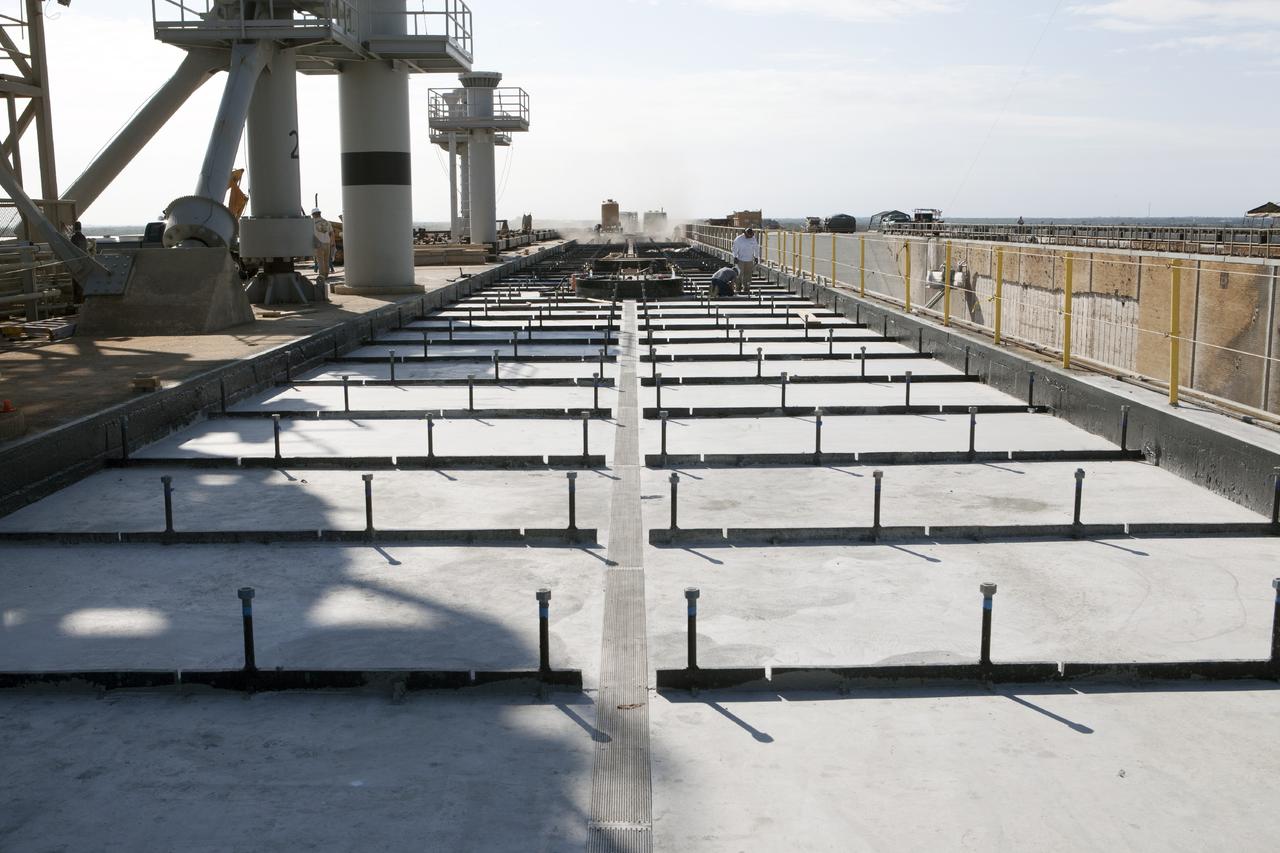
CAPE CANAVERAL, Fla. -- At Launch Pad 39B at NASA’s Kennedy Space Center in Florida, all of the old crawler track panels have been removed from the surface and construction workers are repairing the concrete surface and catacomb roof below. New crawler track panels will be installed. Launch Pad 39B is being refurbished to support NASA’s Space Launch System and other launch vehicles. The Ground Systems Development and Operations, or GSDO, Program office at Kennedy is leading the center’s transformation to safely handle a variety of rockets and spacecraft. For more information about GSDO, visit: http://go.nasa.gov/groundsystems. Photo credit: NASA/Kim Shiflett

CAPE CANAVERAL, Fla. -- At Launch Pad 39B at NASA’s Kennedy Space Center in Florida, construction workers continue to remove the bricks from the flame trench walls that are below and between the left and right crawlerway tracks. New crawler track panels will be installed. The space shuttle-era flame trench deflector has been completely removed. Launch Pad 39B is being refurbished to support NASA’s Space Launch System and other launch vehicles. The Ground Systems Development and Operations, or GSDO, Program office at Kennedy is leading the center’s transformation to safely handle a variety of rockets and spacecraft. For more information about GSDO, visit: http://go.nasa.gov/groundsystems. Photo credit: NASA/Kim Shiflett
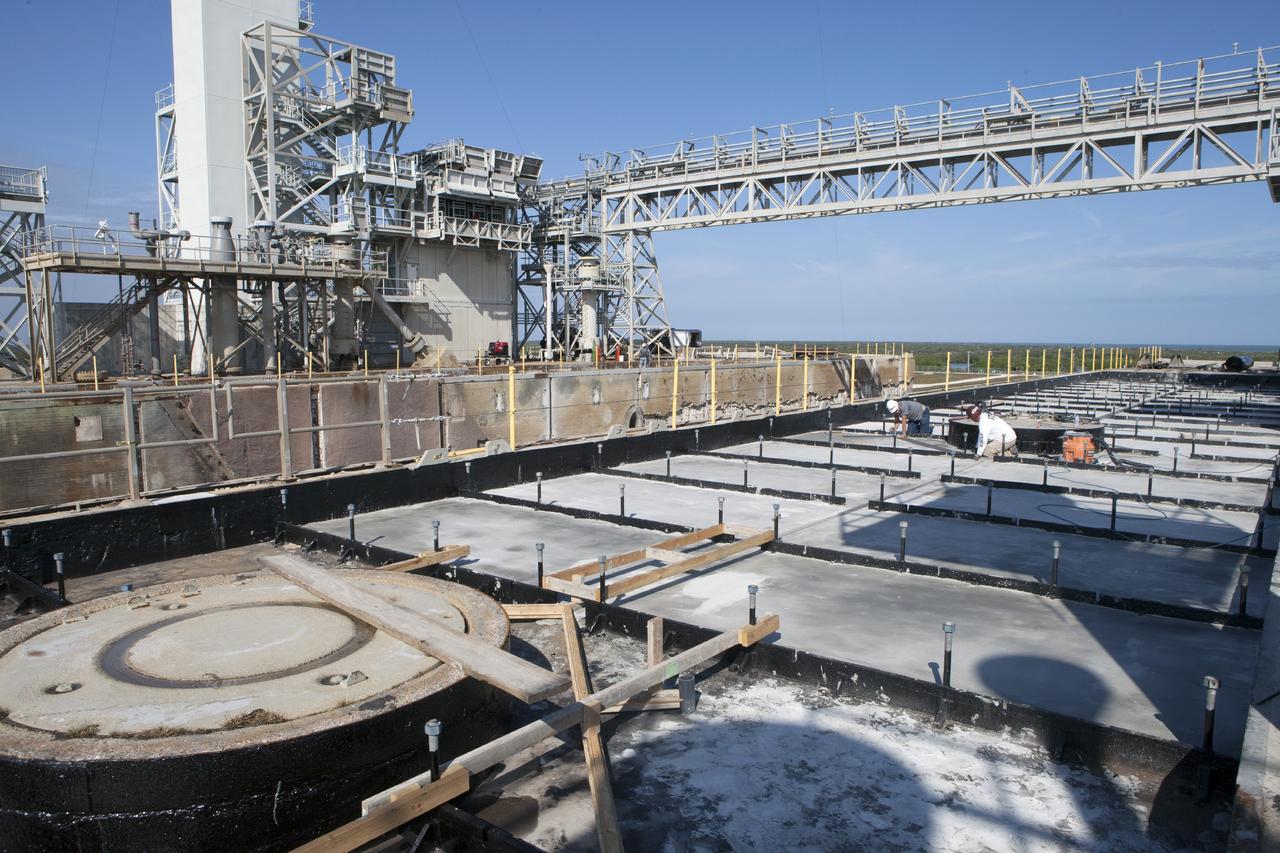
CAPE CANAVERAL, Fla. -- At Launch Pad 39B at NASA’s Kennedy Space Center in Florida, all of the old crawler track panels have been removed from the surface and construction workers are repairing the concrete surface and catacomb roof below. At far left is the recently-constructed pad elevator. Launch Pad 39B is being refurbished to support NASA’s Space Launch System and other launch vehicles. The Ground Systems Development and Operations, or GSDO, Program office at Kennedy is leading the center’s transformation to safely handle a variety of rockets and spacecraft. For more information about GSDO, visit: http://go.nasa.gov/groundsystems. Photo credit: NASA/Kim Shiflett
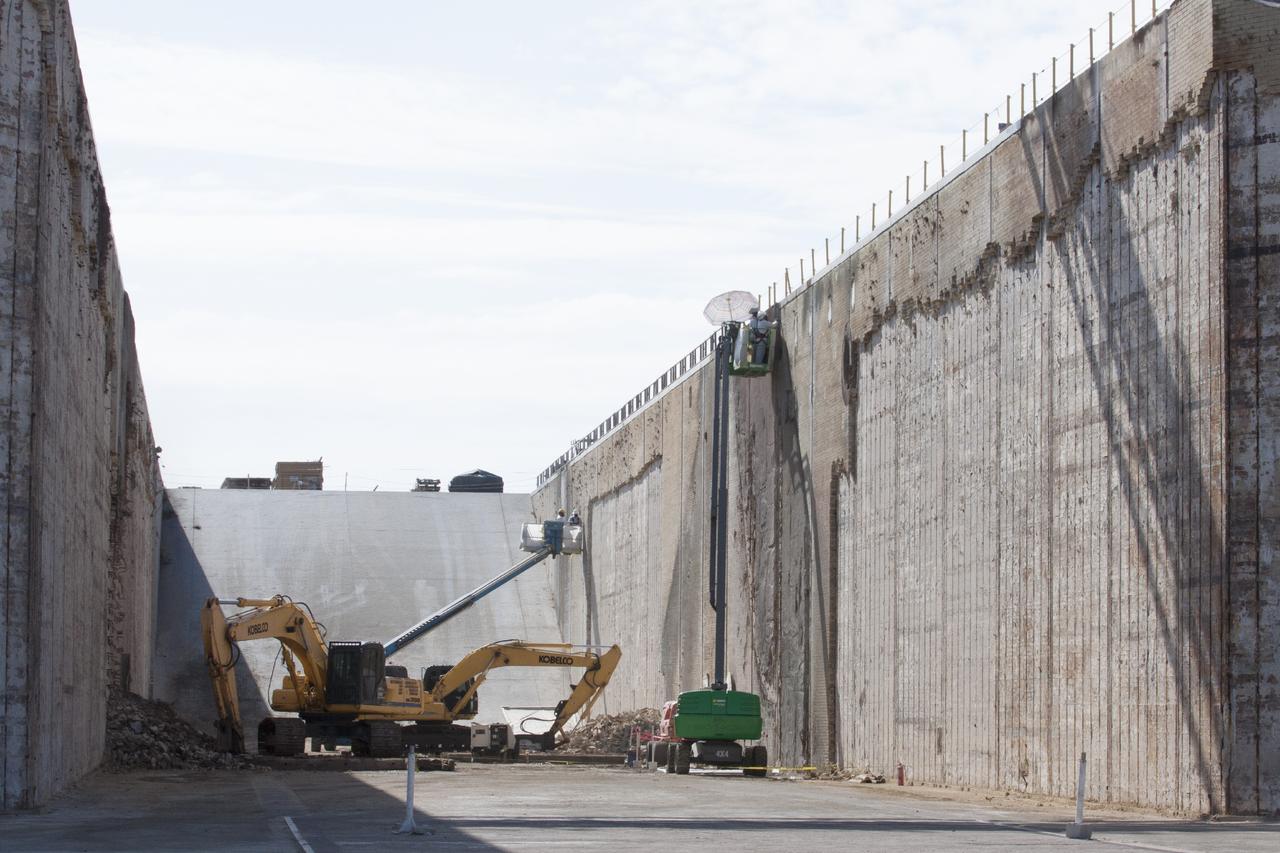
CAPE CANAVERAL, Fla. -- At Launch Pad 39B at NASA’s Kennedy Space Center in Florida, construction workers continue to remove the bricks from the flame trench walls that are below and between the left and right crawlerway tracks. The space shuttle-era flame trench deflector has been completely removed. Launch Pad 39B is being refurbished to support NASA’s Space Launch System and other launch vehicles. The Ground Systems Development and Operations, or GSDO, Program office at Kennedy is leading the center’s transformation to safely handle a variety of rockets and spacecraft. For more information about GSDO, visit: http://go.nasa.gov/groundsystems. Photo credit: NASA/Kim Shiflett
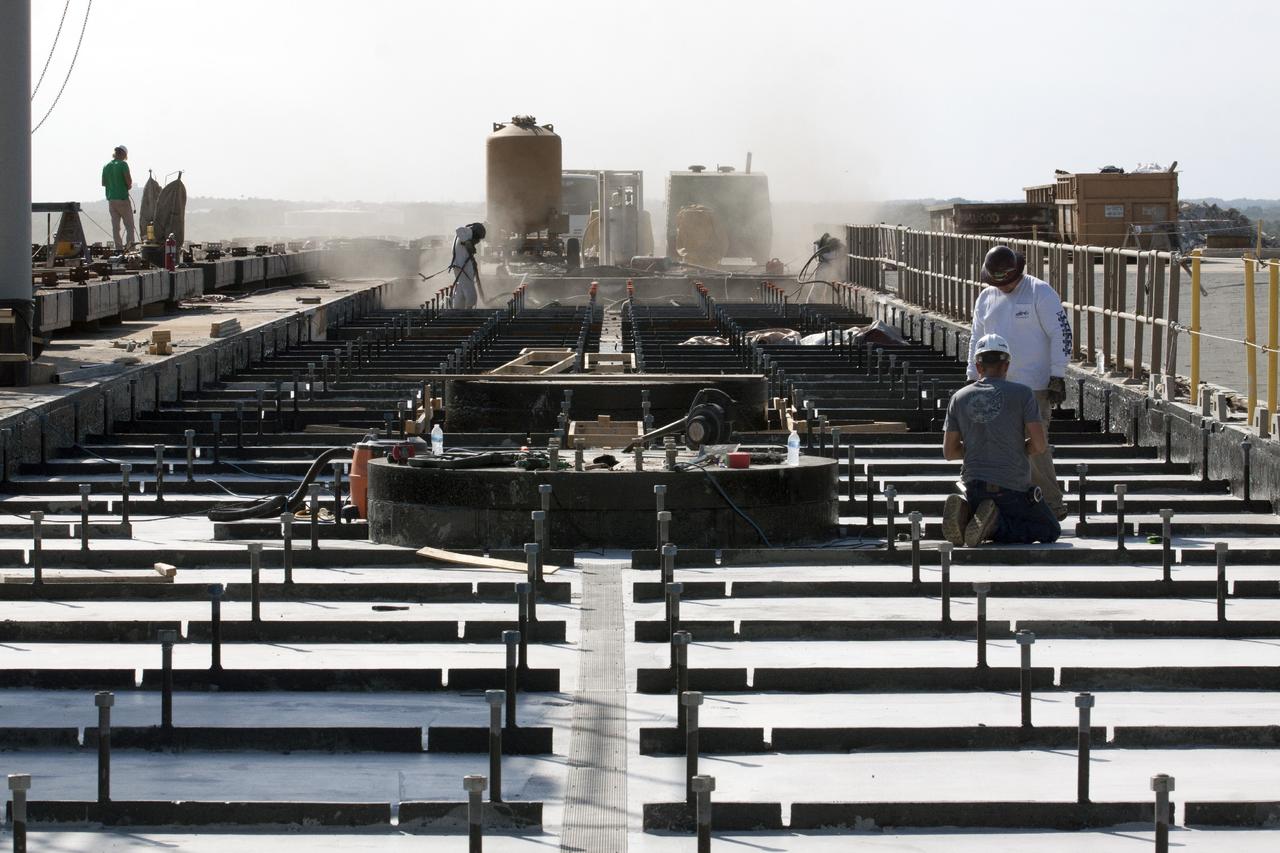
CAPE CANAVERAL, Fla. -- At Launch Pad 39B at NASA’s Kennedy Space Center in Florida, all of the old crawler track panels have been removed from the surface and construction workers are repairing the concrete surface and catacomb roof below. Framing for the new crawler track panels is being installed in repaired areas of the pad surface. Launch Pad 39B is being refurbished to support NASA’s Space Launch System and other launch vehicles. The Ground Systems Development and Operations, or GSDO, Program office at Kennedy is leading the center’s transformation to safely handle a variety of rockets and spacecraft. For more information about GSDO, visit: http://go.nasa.gov/groundsystems. Photo credit: NASA/Kim Shiflett
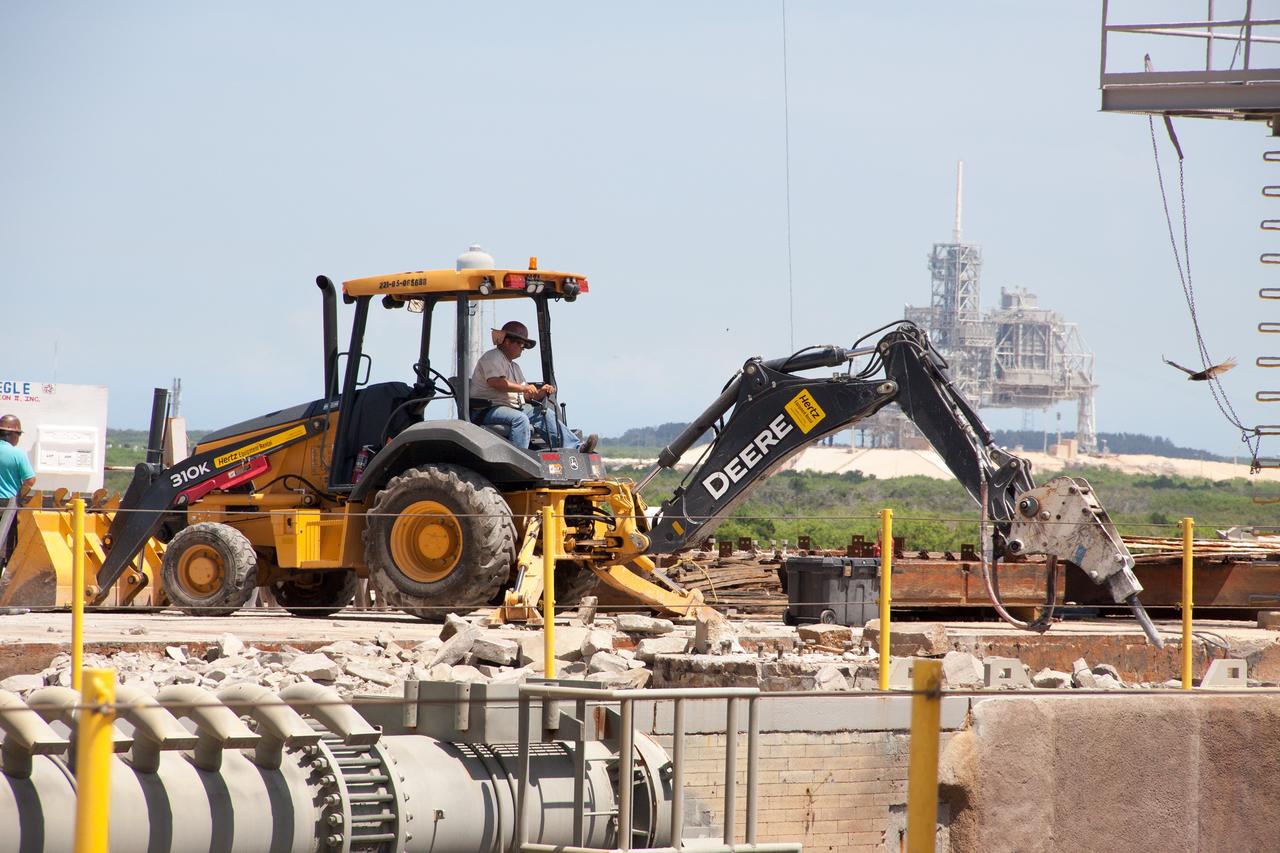
CAPE CANAVERAL, Fla. – At Launch Pad 39B at NASA’s Kennedy Space Center in Florida, crawler track panels have been removed from the surface and construction workers are repairing the concrete surface and catacomb roof below. Launch Pad 39B is being refurbished to support NASA’s Space Launch System and other launch vehicles. The Ground Systems Development and Operations, or GSDO, Program office at Kennedy is leading the center’s transformation to safely handle a variety of rockets and spacecraft. For more information about GSDO, visit: http://go.nasa.gov/groundsystems. Photo credit: NASA/Jim Grossman
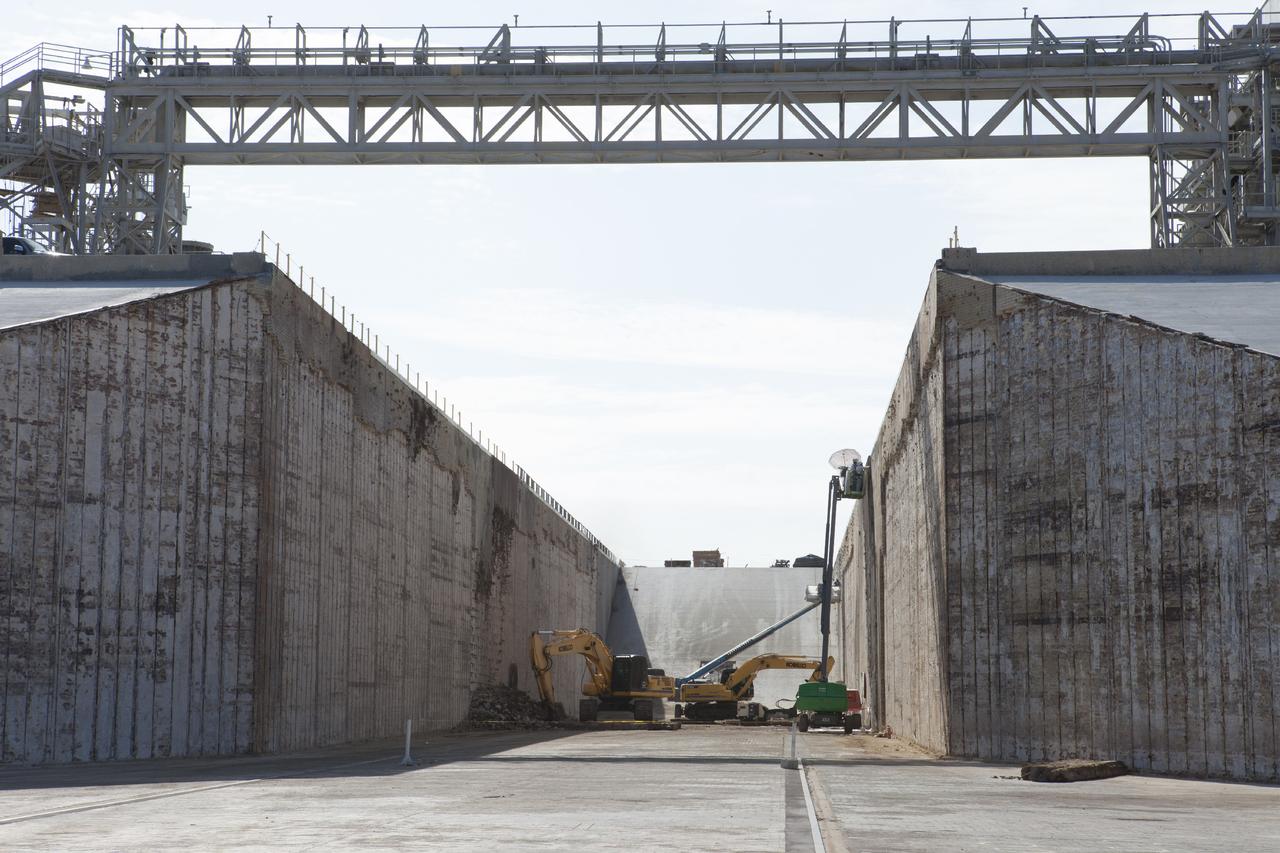
CAPE CANAVERAL, Fla. -- At Launch Pad 39B at NASA’s Kennedy Space Center in Florida, construction workers continue to remove the bricks from the flame trench walls that are below and between the left and right crawlerway tracks. The space shuttle-era flame trench deflector has been completely removed. Launch Pad 39B is being refurbished to support NASA’s Space Launch System and other launch vehicles. The Ground Systems Development and Operations, or GSDO, Program office at Kennedy is leading the center’s transformation to safely handle a variety of rockets and spacecraft. For more information about GSDO, visit: http://go.nasa.gov/groundsystems. Photo credit: NASA/Kim Shiflett
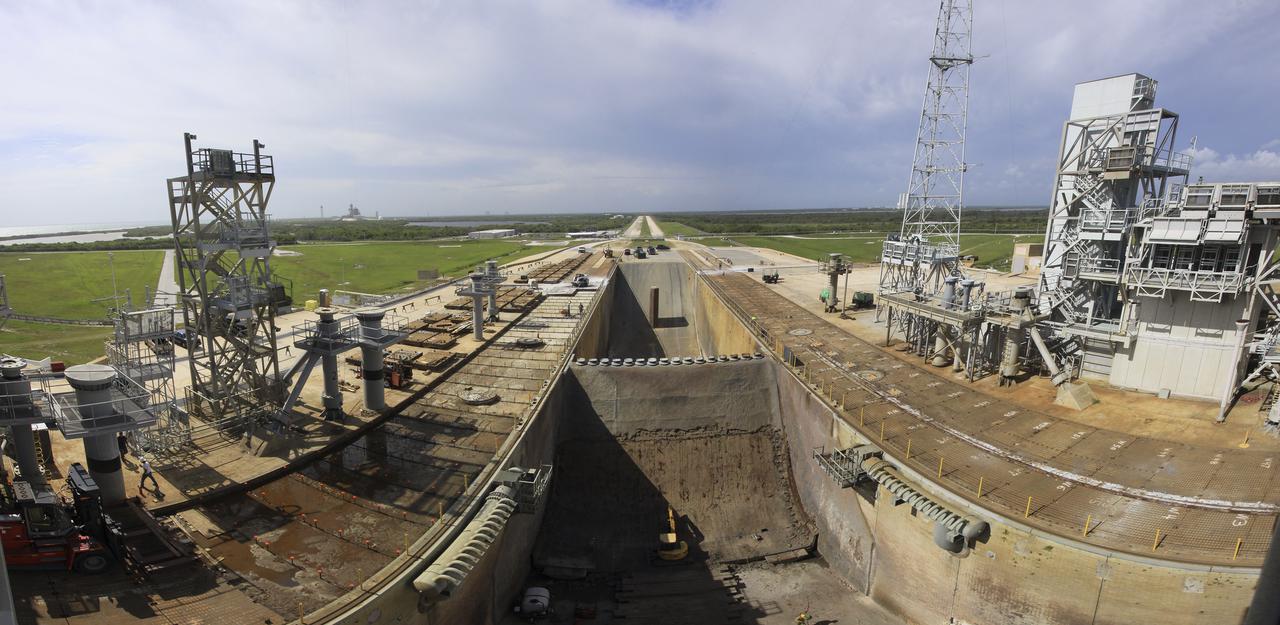
CAPE CANAVERAL, Fla. -- At Launch Pad 39B at NASA’s Kennedy Space Center in Florida, the view from a fisheye lens reveals nearly all of the crawler track panels on the pad’s surface have been removed. The concrete surface beneath the panels and the catacomb roof below will be inspected for water damage and repaired. Work also is underway to remove the flame trench deflector that sits below and between the left and right crawler track panels. There are 176 panels, each weighing about 30,000 pounds that will be removed. Launch Pad 39B is being refurbished to support NASA’s Space Launch System and other launch vehicles. The Ground Systems Development and Operations, or GSDO, Program office at Kennedy is leading the center’s transformation to safely handle a variety of rockets and spacecraft. For more information about GSDO, visit: http:__go.nasa.gov_groundsystems. Photo credit: NASA_Jim Grossman
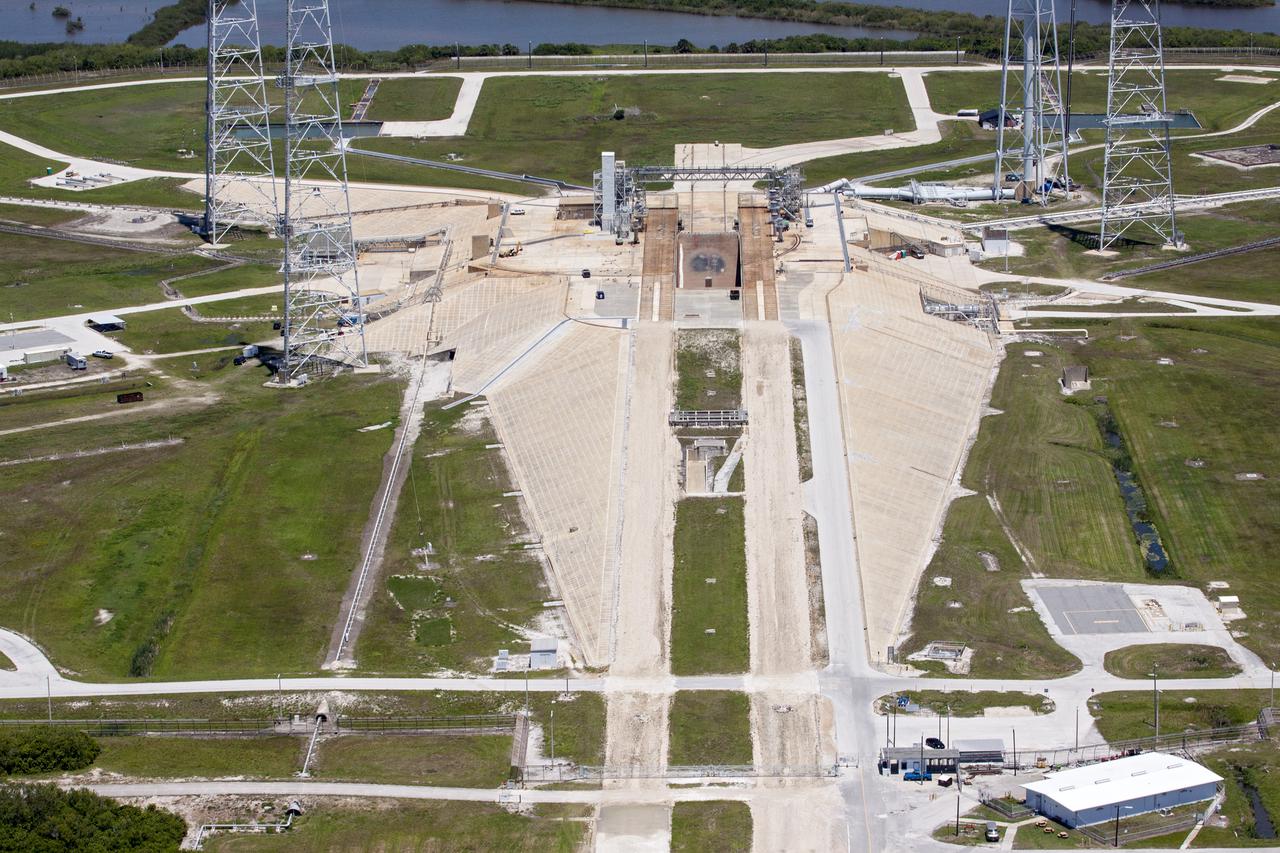
CAPE CANAVERAL, Fla. – An aerial view shows construction progress at Launch Pad 39B at NASA’s Kennedy Space Center in Florida. A new elevator has been constructed on the surface of the pad and the crawlerway leading up to the surface is being repaired. Repairs also are being made to the crawler track panels and catacomb roof below on either side of the flame trench. Also in view are portions of the water tower and the three tall lightning towers that surround the pad. Upgrades are underway at Pad B and other facilities in the Launch Complex 39 area. The Ground Systems Development and Operations, or GSDO, Program office at Kennedy is leading the center’s transformation from a historically government-only launch complex to a spaceport that can safely handle a variety of rockets and spacecraft, including NASA’s Space Launch System. For more information about GSDO, visit: http:__go.nasa.gov_groundsystems. Photo credit: NASA_Kim Shiflett
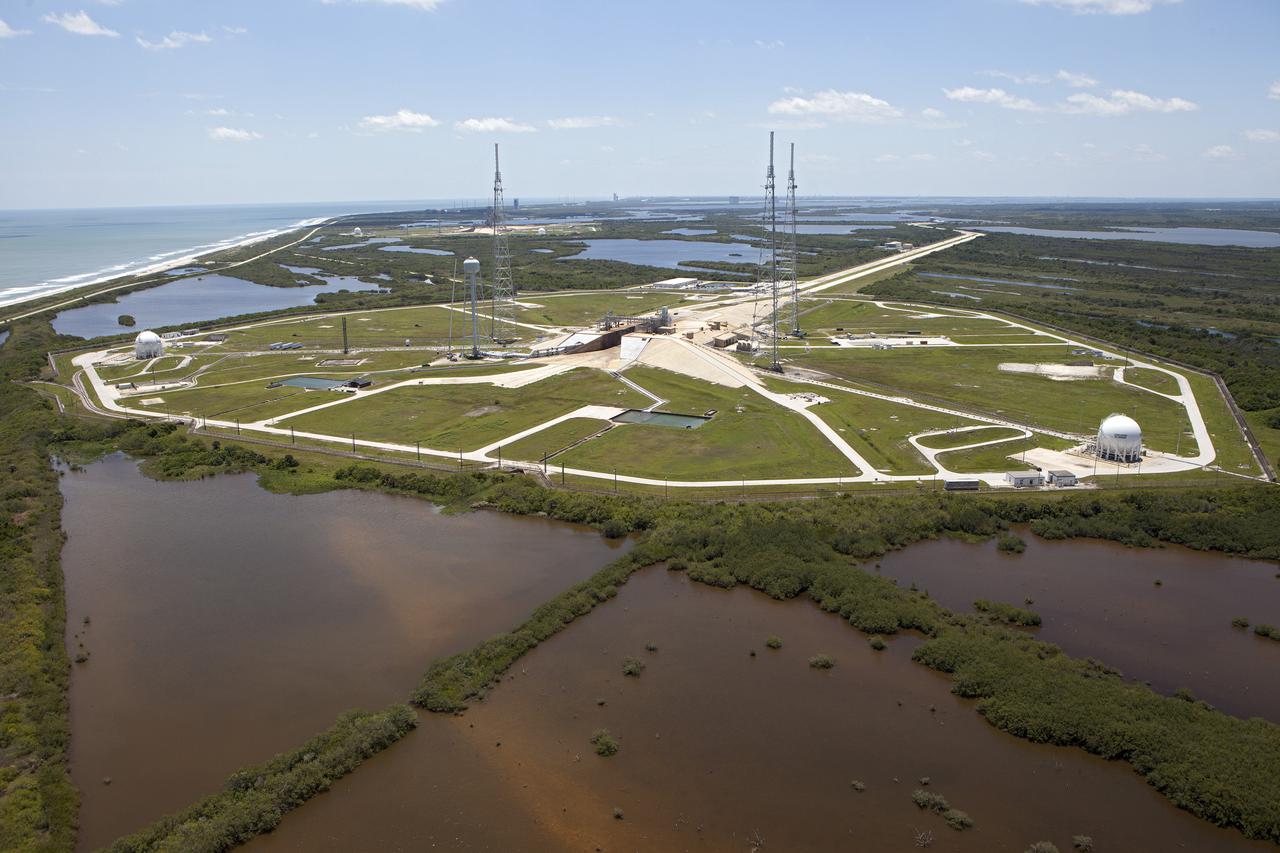
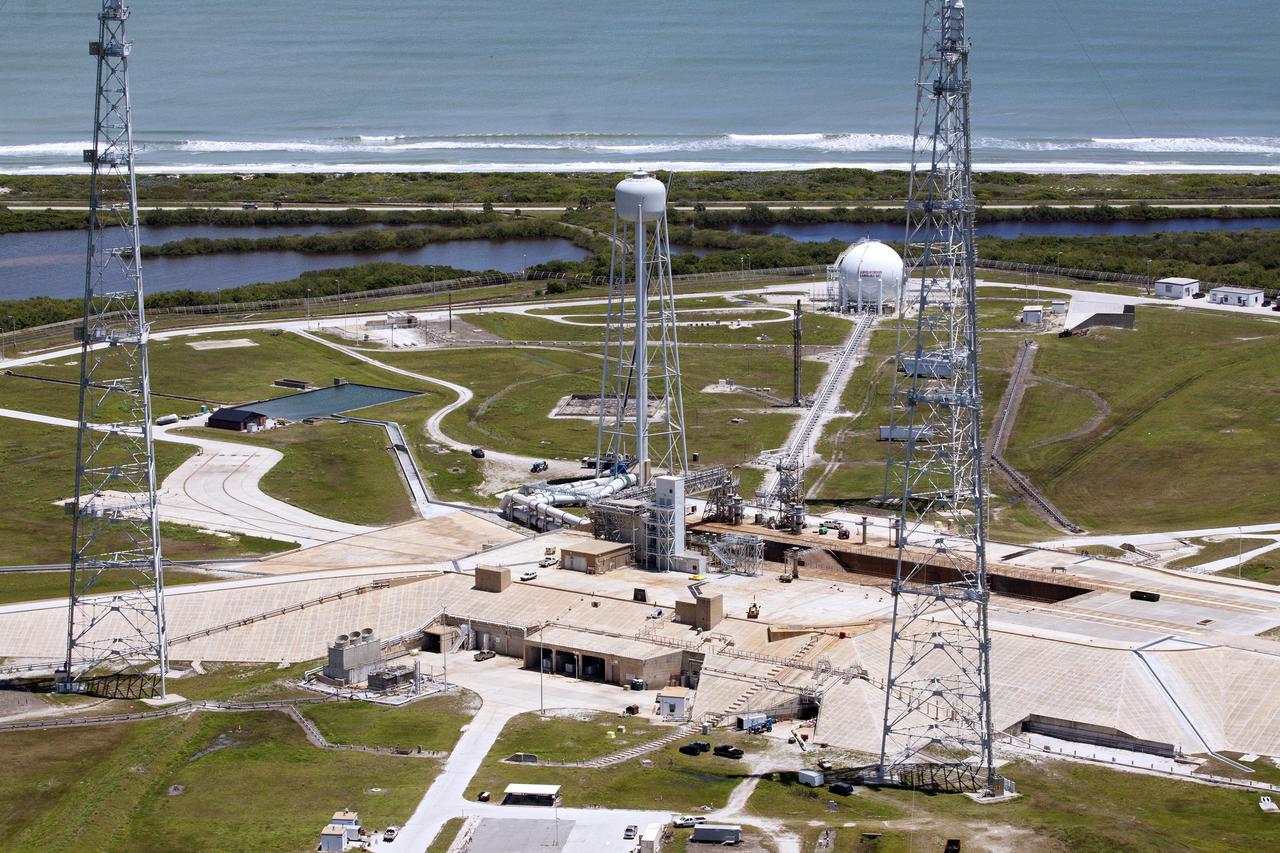
CAPE CANAVERAL, Fla. – An aerial view, from the west looking toward the east, shows the entire Launch Pad 39B area at NASA’s Kennedy Space Center in Florida. A new elevator has been constructed on the surface of the pad and the crawlerway leading up to the surface is being repaired. Repairs also are being made to the crawler track panels and catacomb roof below on either side of the flame trench. Also in view are the water tower and the three tall lightning towers that surround the pad. To the east is the Atlantic Ocean. Upgrades are underway at Pad B and other facilities in the Launch Complex 39 area. The Ground Systems Development and Operations, or GSDO, Program office at Kennedy is leading the center’s transformation from a historically government-only launch complex to a spaceport that can safely handle a variety of rockets and spacecraft, including NASA’s Space Launch System. For more information about GSDO, visit: http:__go.nasa.gov_groundsystems. Photo credit: NASA_Kim Shiflett
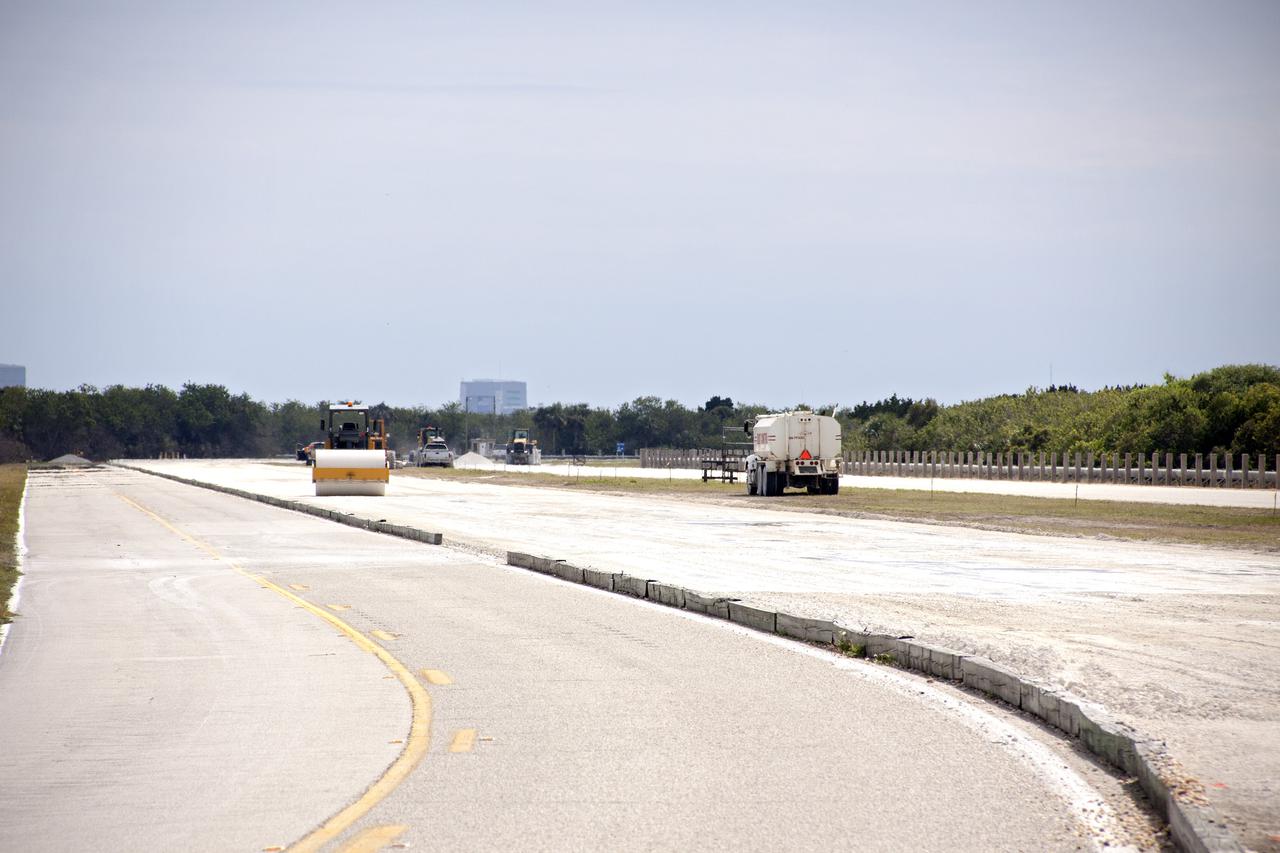
CAPE CANAVERAL, Fla. --Workers from Canaveral Construction in Mims, Fla., continue to re-grade the lime rock on the crawlerway near Launch Pad 39B at NASA’s Kennedy Space Center in Florida. The crawlerway is being upgraded to improve the foundation and prepare it to support the weight of NASA’s Space Launch System, or SLS, and mobile launcher on the crawler-transporter during rollout. Workers are removing the original Alabama river rock and restoring the layer of lime rock below to its original depth. Then new river rock will be added on top. The Ground Systems Development and Operations, or GSDO, Program office at Kennedy is leading the center’s transformation to safely handle a variety of rockets and spacecraft. For more information about GSDO, visit: http:__go.nasa.gov_groundsystems. Photo credit: NASA_Jim Grossmann
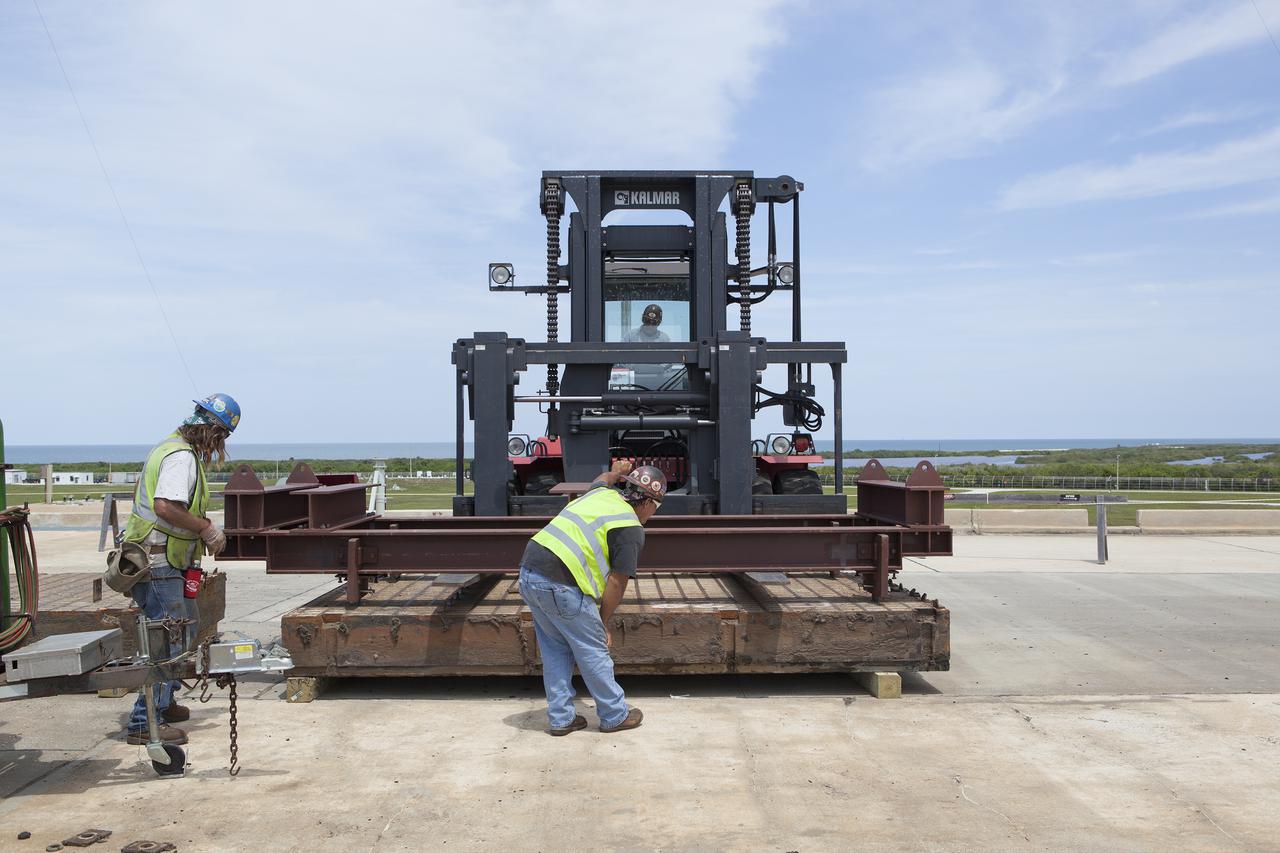
CAPE CANAVERAL, Fla. – At Launch Pad 39B at NASA’s Kennedy Space Center in Florida, a crawler track panel has been removed from the pad’s surface and is being stored in an area away from the construction work. The concrete surface beneath the panels and the catacomb roof below will be inspected for water damage and repaired. There are 176 panels, each weighing about 30,000 pounds that will be removed. Launch Pad 39B is being refurbished to support NASA’s Space Launch System and other launch vehicles. The Ground Systems Development and Operations, or GSDO, Program office at Kennedy is leading the center’s transformation to safely handle a variety of rockets and spacecraft. For more information about GSDO, visit: http:__go.nasa.gov_groundsystems. Photo credit: NASA_Dimitri Gerondidakis
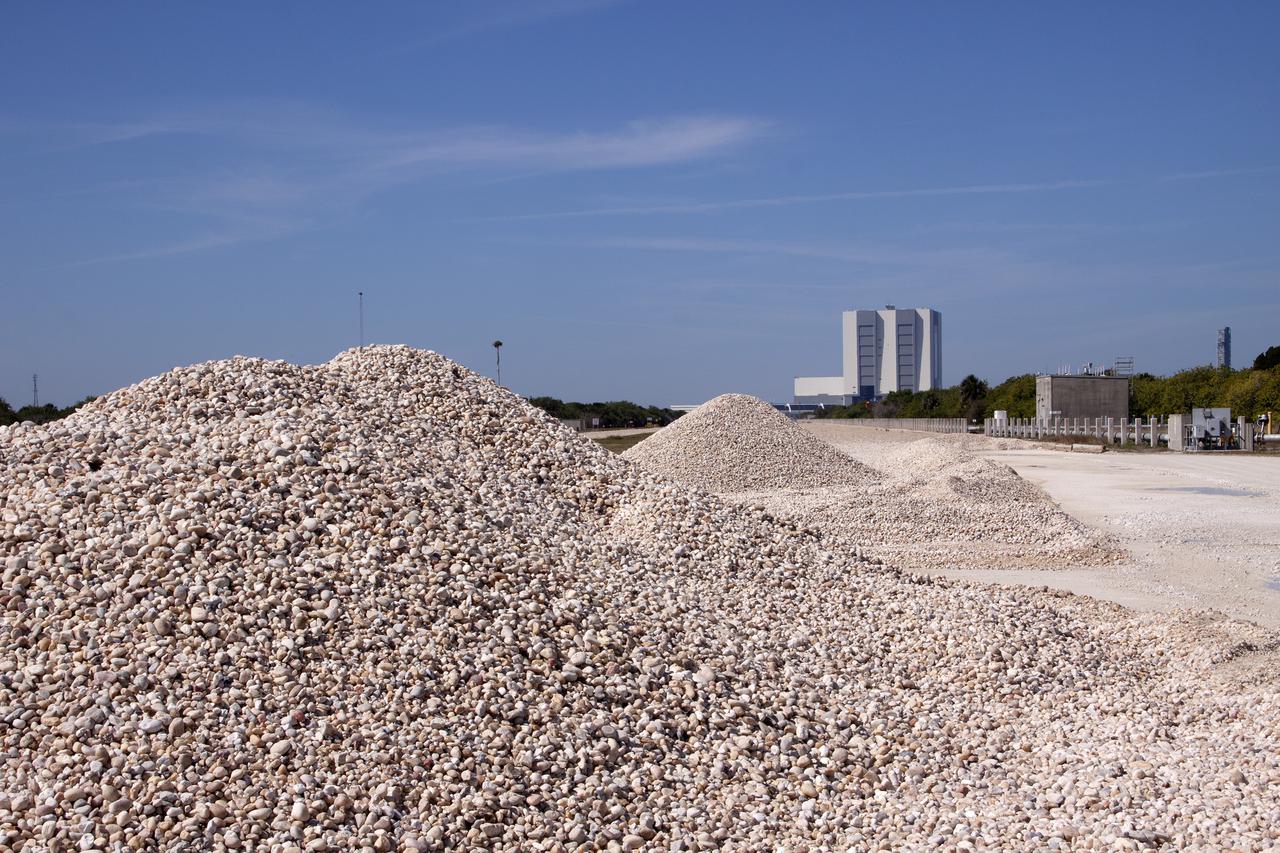
CAPE CANAVERAL, Fla. -- On the crawlerway leading to Launch Pad 39B at NASA’s Kennedy Space Center in Florida, workers from Canaveral Construction in Mims, Fla., continue to remove sections of the Alabama river rock in order to re-grade the lime rock below. The crawlerway is being upgraded to improve the foundation and prepare it to support the weight of NASA’s Space Launch System, or SLS, and mobile launcher on the crawler-transporter during rollout. Workers are removing the original Alabama river rock and restoring the layer of lime rock below to its original depth. Then new river rock will be added on top. The Ground Systems Development and Operations, or GSDO, Program office at Kennedy is leading the center’s transformation to safely handle a variety of rockets and spacecraft. For more information about GSDO, visit: http:__go.nasa.gov_groundsystems. Photo credit: NASA_Jim Grossmann
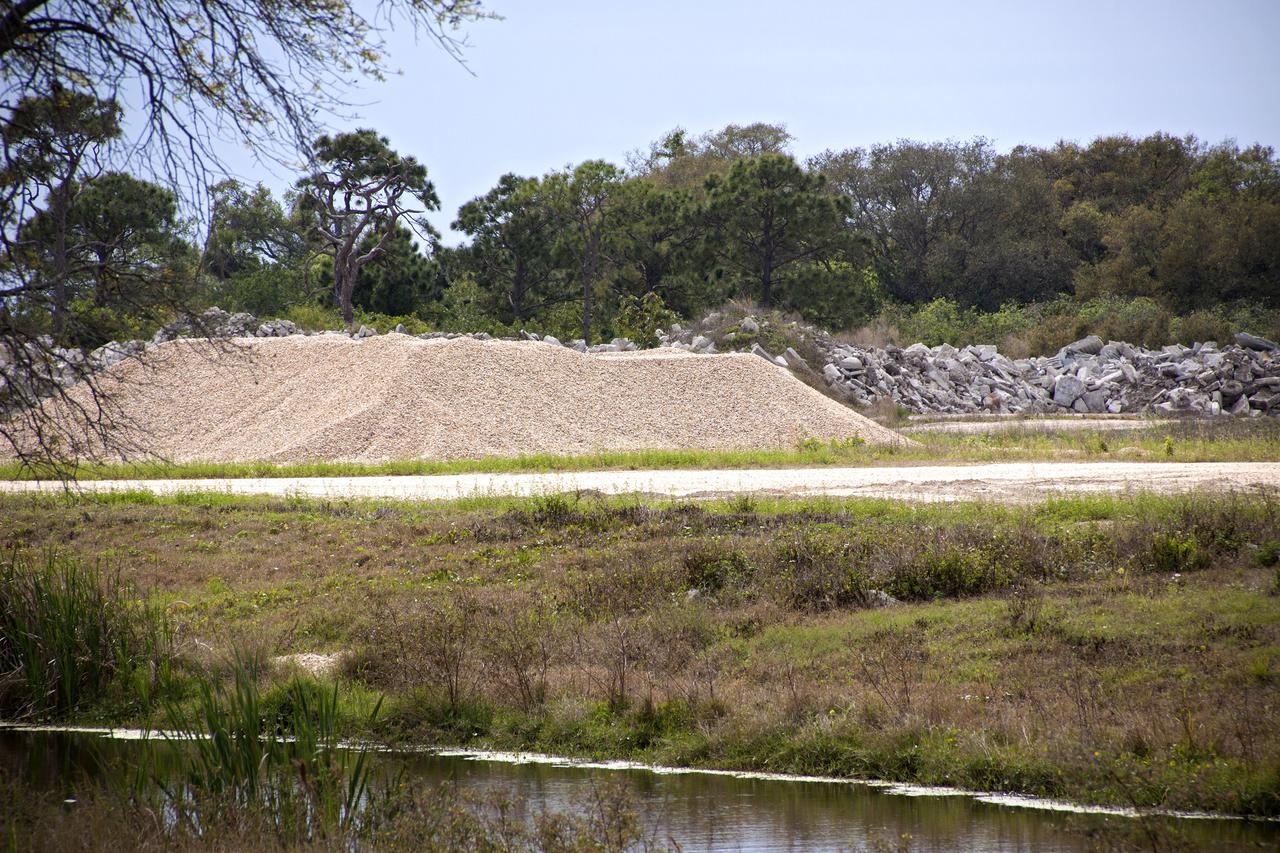
CAPE CANAVERAL, Fla. -- At NASA’s Kennedy Space Center in Florida, workers from Canaveral Construction in Mims, Fla., removed the Alabama river rock from sections of the crawlerway near Launch Pad 39B and transported it to the landfill. The crawlerway is being upgraded to improve the foundation and prepare it to support the weight of NASA’s Space Launch System, or SLS, and mobile launcher on the crawler-transporter during rollout. Workers are removing the original Alabama river rock and restoring the layer of lime rock below to its original depth. Then new river rock will be added on top. The Ground Systems Development and Operations, or GSDO, Program office at Kennedy is leading the center’s transformation to safely handle a variety of rockets and spacecraft. For more information about GSDO, visit: http:__go.nasa.gov_groundsystems. Photo credit: NASA_Jim Grossmann
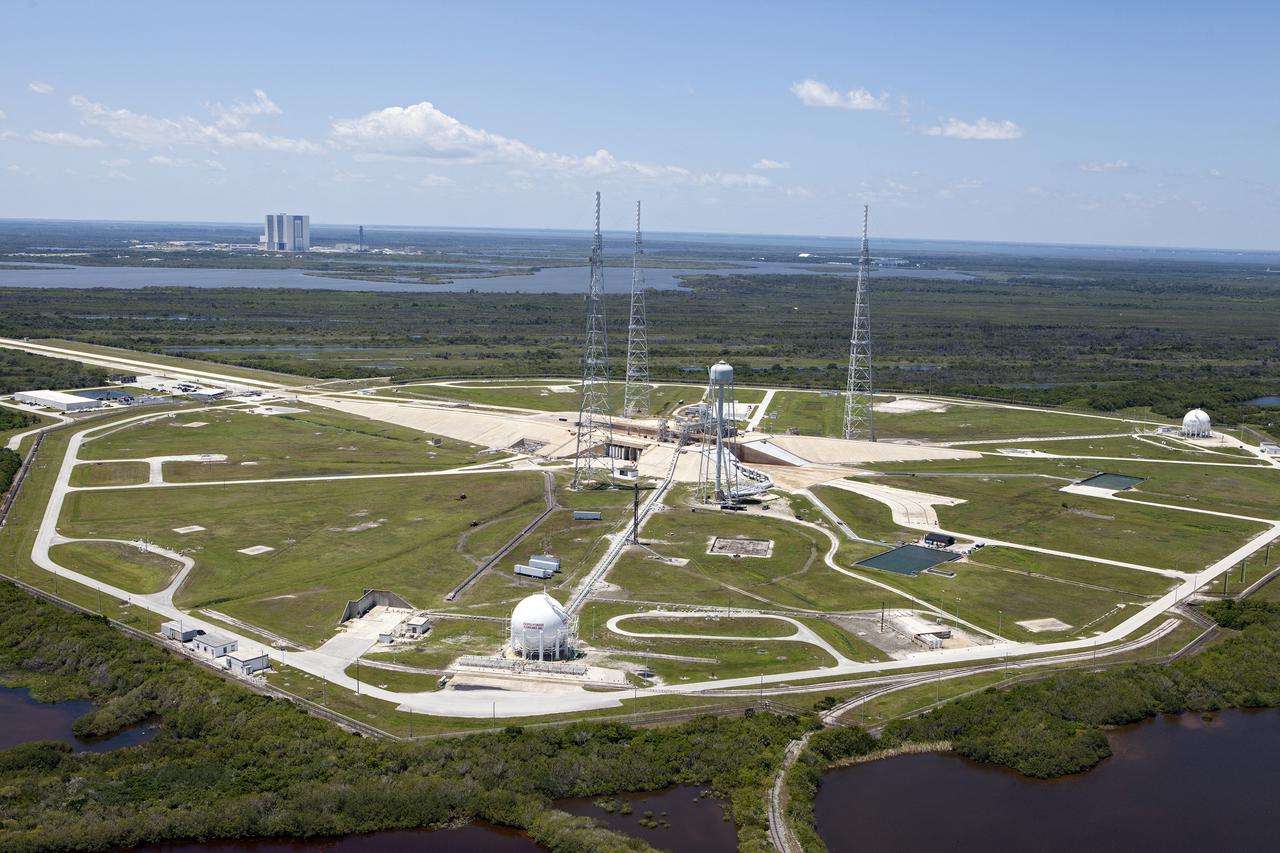
CAPE CANAVERAL, Fla. – An aerial view shows Launch Pad 39B at NASA’s Kennedy Space Center in Florida. A new elevator has been constructed on the surface of the pad and the crawlerway leading up to the surface is being repaired. Repairs also are being made to the crawler track panels and catacomb roof below on either side of the flame trench. Also in view are the water tower and the three tall lightning towers that surround the pad. To the left, in the background is the Vehicle Assembly Building. Upgrades are underway at Pad B and other facilities in the Launch Complex 39 area. The Ground Systems Development and Operations, or GSDO, Program office at Kennedy is leading the center’s transformation from a historically government-only launch complex to a spaceport that can safely handle a variety of rockets and spacecraft, including NASA’s Space Launch System. For more information about GSDO, visit: http:__go.nasa.gov_groundsystems. Photo credit: NASA_Kim Shiflett
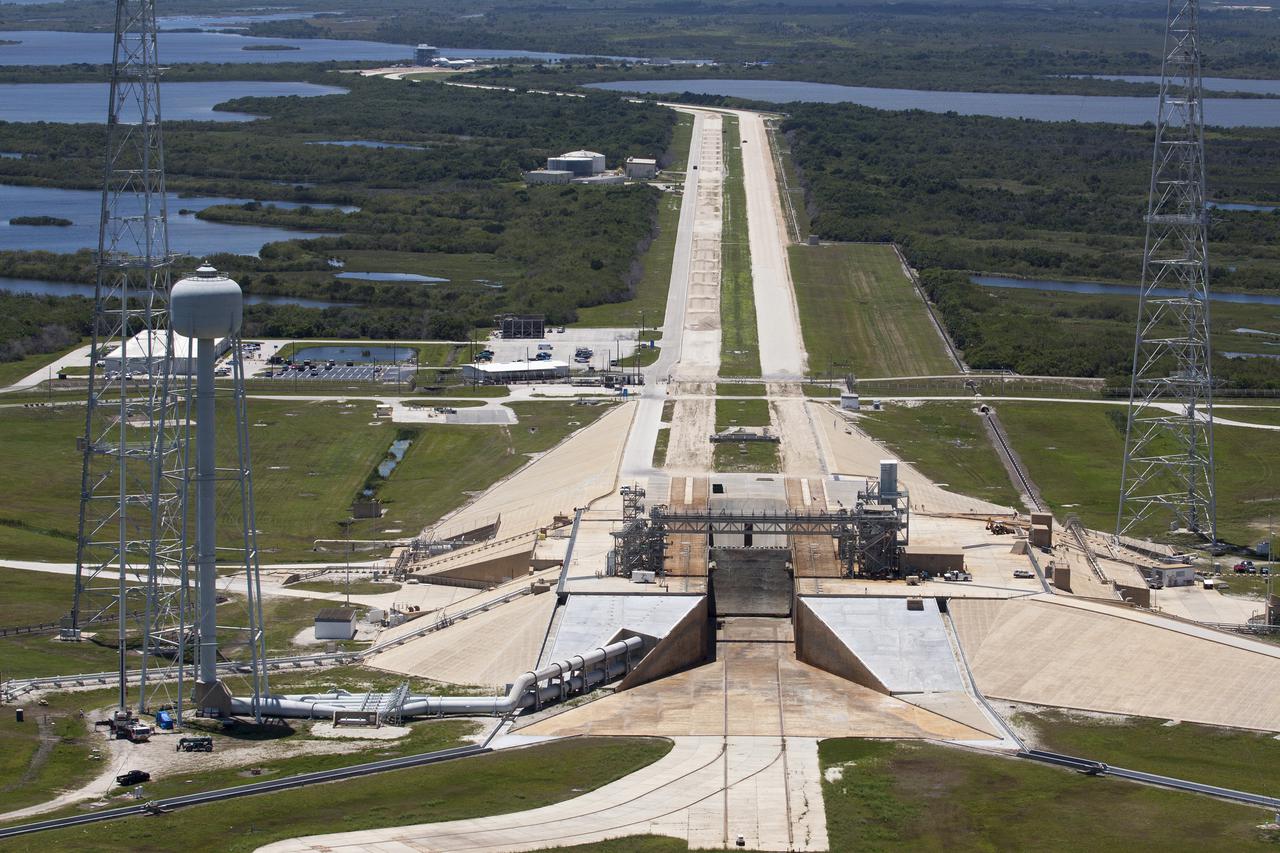
CAPE CANAVERAL, Fla. – An aerial view shows construction progress at Launch Pad 39B at NASA’s Kennedy Space Center in Florida. A new elevator has been constructed on the surface of the pad and the crawlerway leading up to the surface is being repaired. Repairs also are being made to the crawler track panels and catacomb roof below on either side of the flame trench. Also in view are the water tower and two of the three tall lightning towers that surround the pad. Upgrades are underway at Pad B and other facilities in the Launch Complex 39 area. The Ground Systems Development and Operations, or GSDO, Program office at Kennedy is leading the center’s transformation from a historically government-only launch complex to a spaceport that can safely handle a variety of rockets and spacecraft, including NASA’s Space Launch System. For more information about GSDO, visit: http:__go.nasa.gov_groundsystems. Photo credit: NASA_Kim Shiflett
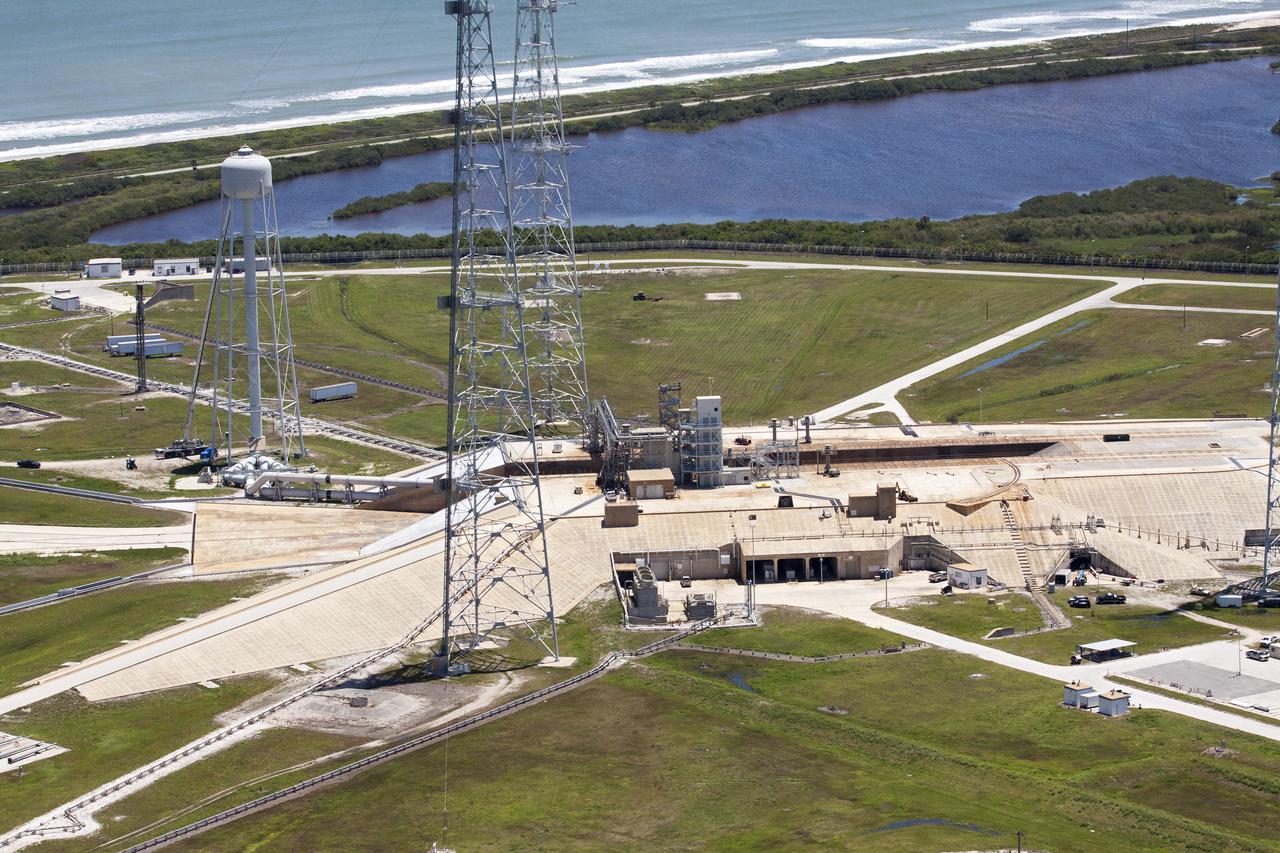
CAPE CANAVERAL, Fla. – An aerial view shows construction progress at Launch Pad 39B at NASA’s Kennedy Space Center in Florida. A new elevator has been constructed on the surface of the pad and the crawlerway leading up to the surface is being repaired. Repairs also are being made to the crawler track panels and catacomb roof below on either side of the flame trench. Also in view are the water tower and two of the three tall lightning towers that surround the pad. Upgrades are underway at Pad B and other facilities in the Launch Complex 39 area. The Ground Systems Development and Operations, or GSDO, Program office at Kennedy is leading the center’s transformation from a historically government-only launch complex to a spaceport that can safely handle a variety of rockets and spacecraft, including NASA’s Space Launch System. For more information about GSDO, visit: http:__go.nasa.gov_groundsystems. Photo credit: NASA_Kim Shiflett
CAPE CANAVERAL, Fla. – An aerial view shows construction progress at Launch Pad 39B at NASA’s Kennedy Space Center in Florida. A new elevator has been constructed on the surface of the pad and the crawlerway leading up to the surface is being repaired. Repairs also are being made to the crawler track panels and catacomb roof below on either side of the flame trench. Also in view are the water tower and two of the three tall lightning towers that surround the pad. Upgrades are underway at Pad B and other facilities in the Launch Complex 39 area. The Ground Systems Development and Operations, or GSDO, Program office at Kennedy is leading the center’s transformation from a historically government-only launch complex to a spaceport that can safely handle a variety of rockets and spacecraft, including NASA’s Space Launch System. For more information about GSDO, visit: http:__go.nasa.gov_groundsystems. Photo credit: NASA_Kim Shiflett
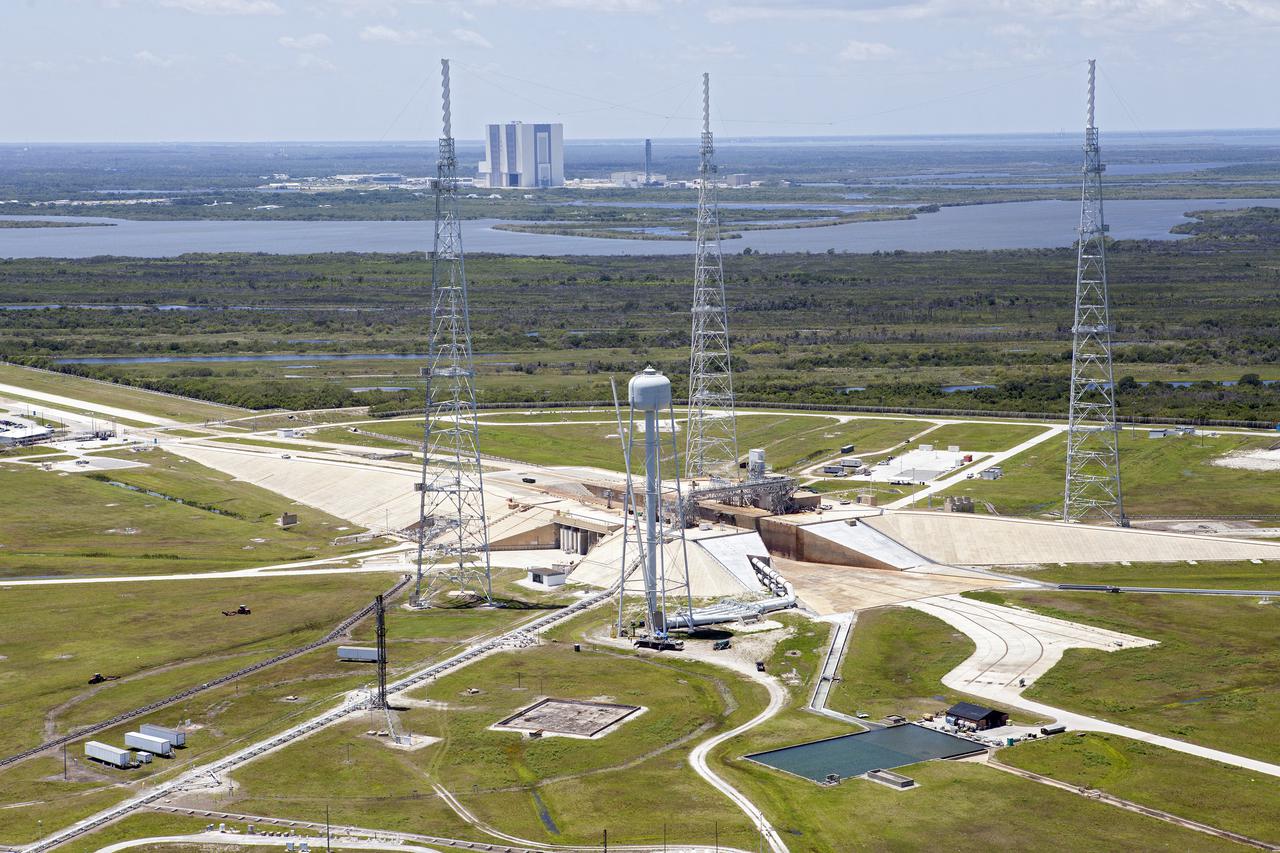
CAPE CANAVERAL, Fla. – An aerial view shows construction progress at Launch Pad 39B at NASA’s Kennedy Space Center in Florida. A new elevator has been constructed on the surface of the pad and the crawlerway leading up to the surface is being repaired. Repairs also are being made to the crawler track panels and catacomb roof below on either side of the flame trench. Also in view are the water tower and the three tall lightning towers that surround the pad. In the background is the Vehicle Assembly Building. Upgrades are underway at Pad B and other facilities in the Launch Complex 39 area. The Ground Systems Development and Operations, or GSDO, Program office at Kennedy is leading the center’s transformation from a historically government-only launch complex to a spaceport that can safely handle a variety of rockets and spacecraft, including NASA’s Space Launch System. For more information about GSDO, visit: http:__go.nasa.gov_groundsystems. Photo credit: NASA_Kim Shiflett
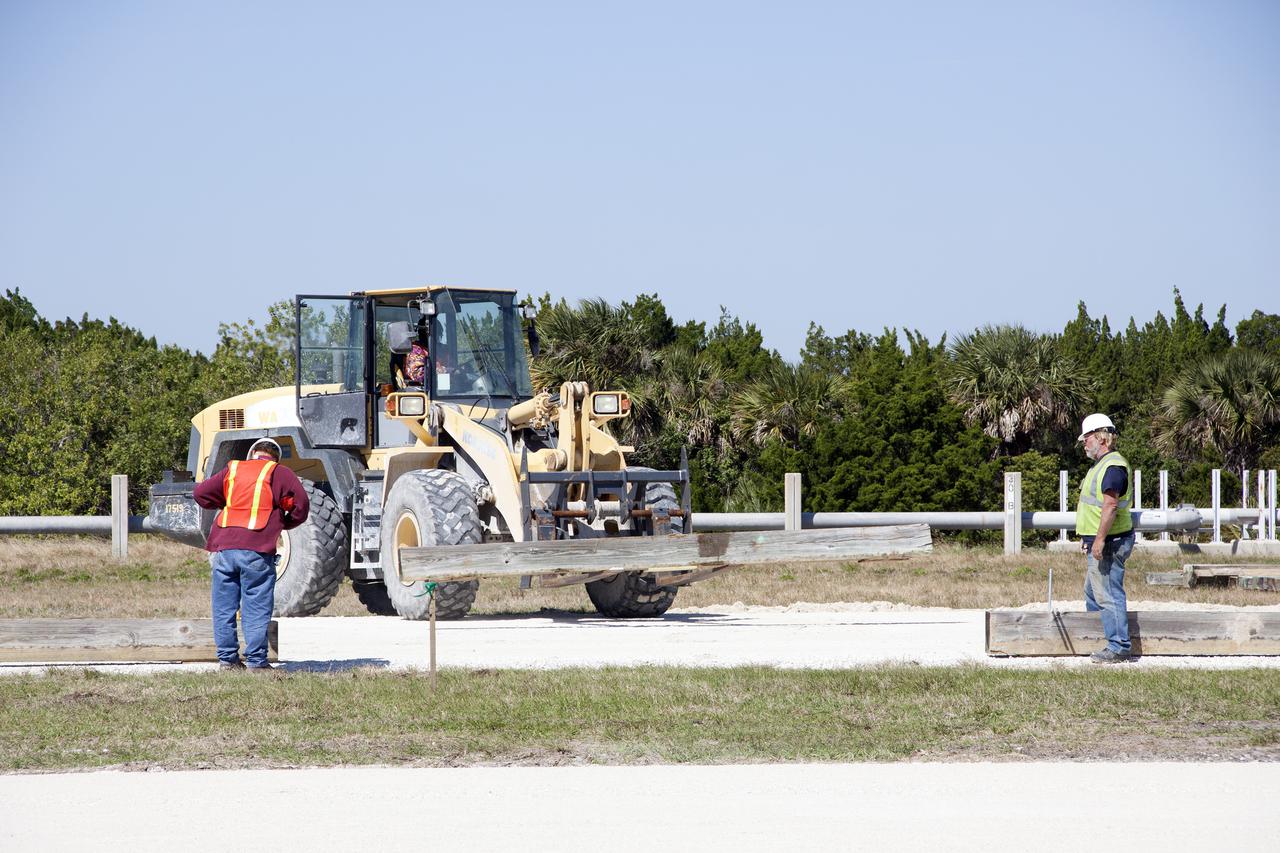
CAPE CANAVERAL, Fla. -- At NASA’s Kennedy Space Center in Florida, workers from Canaveral Construction in Mims, Fla., continue to re-grade the lime rock in sections of the crawlerway leading to Launch Pad 39B. The crawlerway is being upgraded to improve the foundation and prepare it to support the weight of NASA’s Space Launch System, or SLS, and mobile launcher on the crawler-transporter during rollout. Workers are removing the original Alabama river rock and restoring the layer of lime rock below to its original depth. Then new river rock will be added on top. The Ground Systems Development and Operations, or GSDO, Program office at Kennedy is leading the center’s transformation to safely handle a variety of rockets and spacecraft. For more information about GSDO, visit: http:__go.nasa.gov_groundsystems. Photo credit: NASA_Jim Grossmann
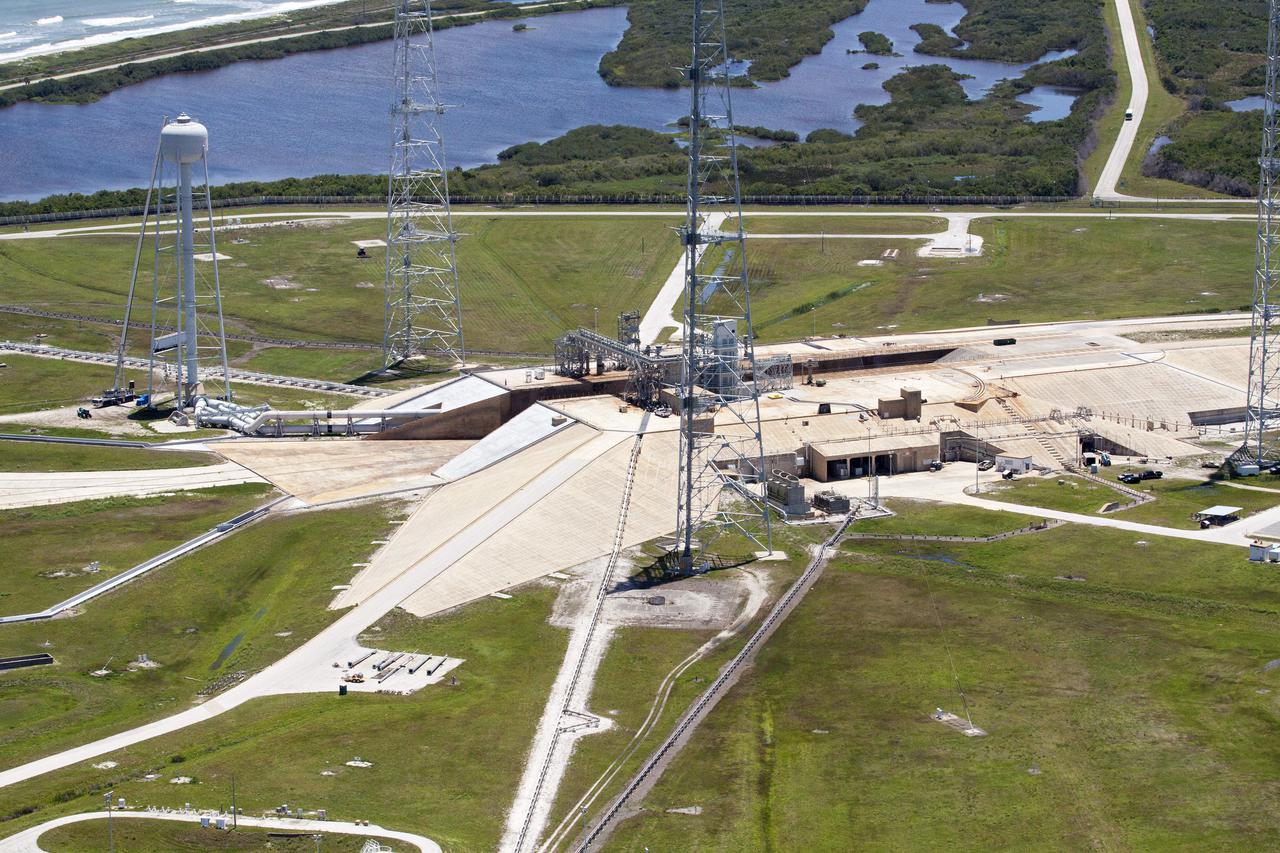
CAPE CANAVERAL, Fla. – An aerial view shows construction progress at Launch Pad 39B at NASA’s Kennedy Space Center in Florida. A new elevator has been constructed on the surface of the pad and the crawlerway leading up to the surface is being repaired. Repairs also are being made to the crawler track panels and catacomb roof below on either side of the flame trench. Also in view are the water tower and two of the three tall lightning towers that surround the pad. Upgrades are underway at Pad B and other facilities in the Launch Complex 39 area. The Ground Systems Development and Operations, or GSDO, Program office at Kennedy is leading the center’s transformation from a historically government-only launch complex to a spaceport that can safely handle a variety of rockets and spacecraft, including NASA’s Space Launch System. For more information about GSDO, visit: http:__go.nasa.gov_groundsystems. Photo credit: NASA_Kim Shiflett
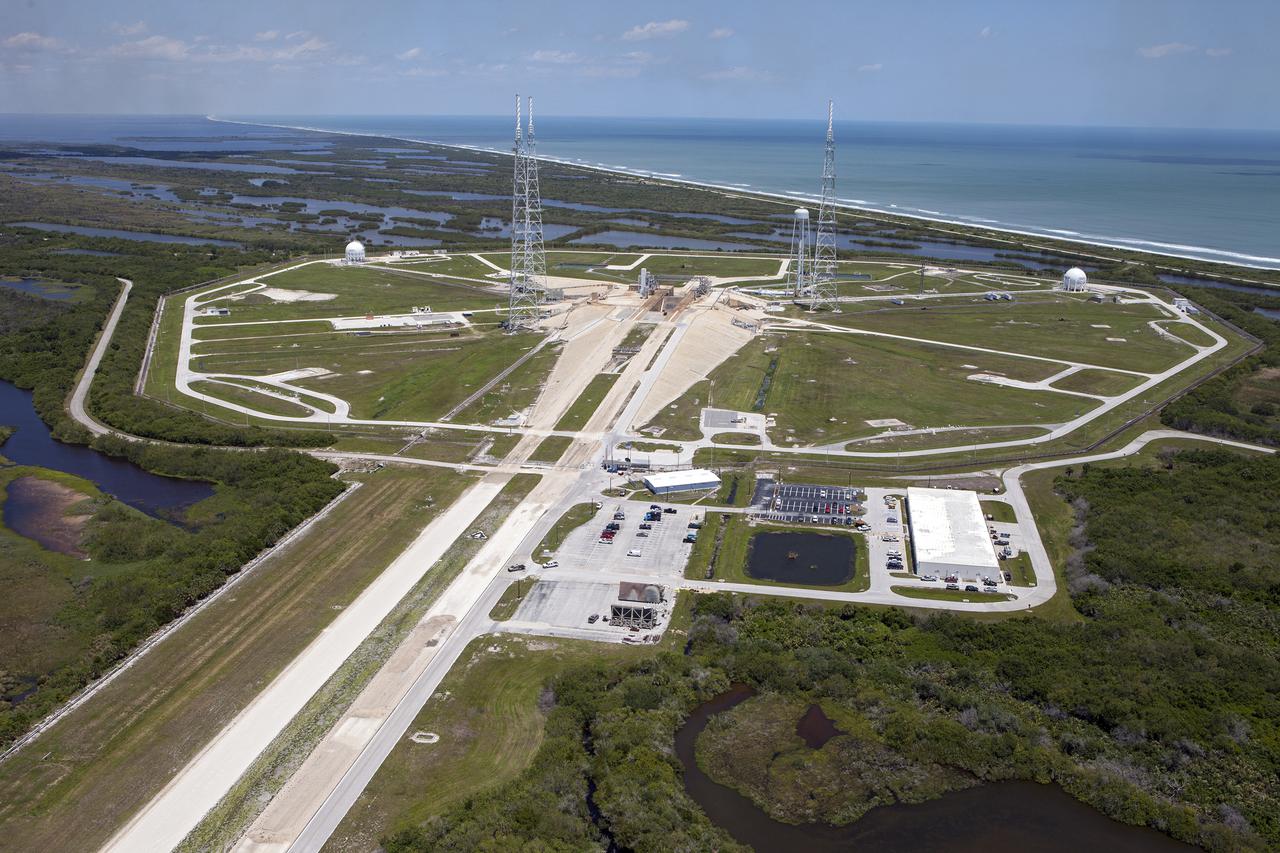
CAPE CANAVERAL, Fla. – An aerial view, from the southwest looking toward the northeast, shows the entire Launch Pad 39B area at NASA’s Kennedy Space Center in Florida with the Atlantic Ocean in the background. A new elevator has been constructed on the surface of the pad and the crawlerway leading up to the surface is being repaired. Repairs also are being made to the crawler track panels and catacomb roof below on either side of the flame trench. Also in view are the water tower and the three tall lightning towers that surround the pad. Upgrades are underway at Pad B and other facilities in the Launch Complex 39 area. The Ground Systems Development and Operations, or GSDO, Program office at Kennedy is leading the center’s transformation from a historically government-only launch complex to a spaceport that can safely handle a variety of rockets and spacecraft, including NASA’s Space Launch System. For more information about GSDO, visit: http:__go.nasa.gov_groundsystems. Photo credit: NASA_Kim Shiflett
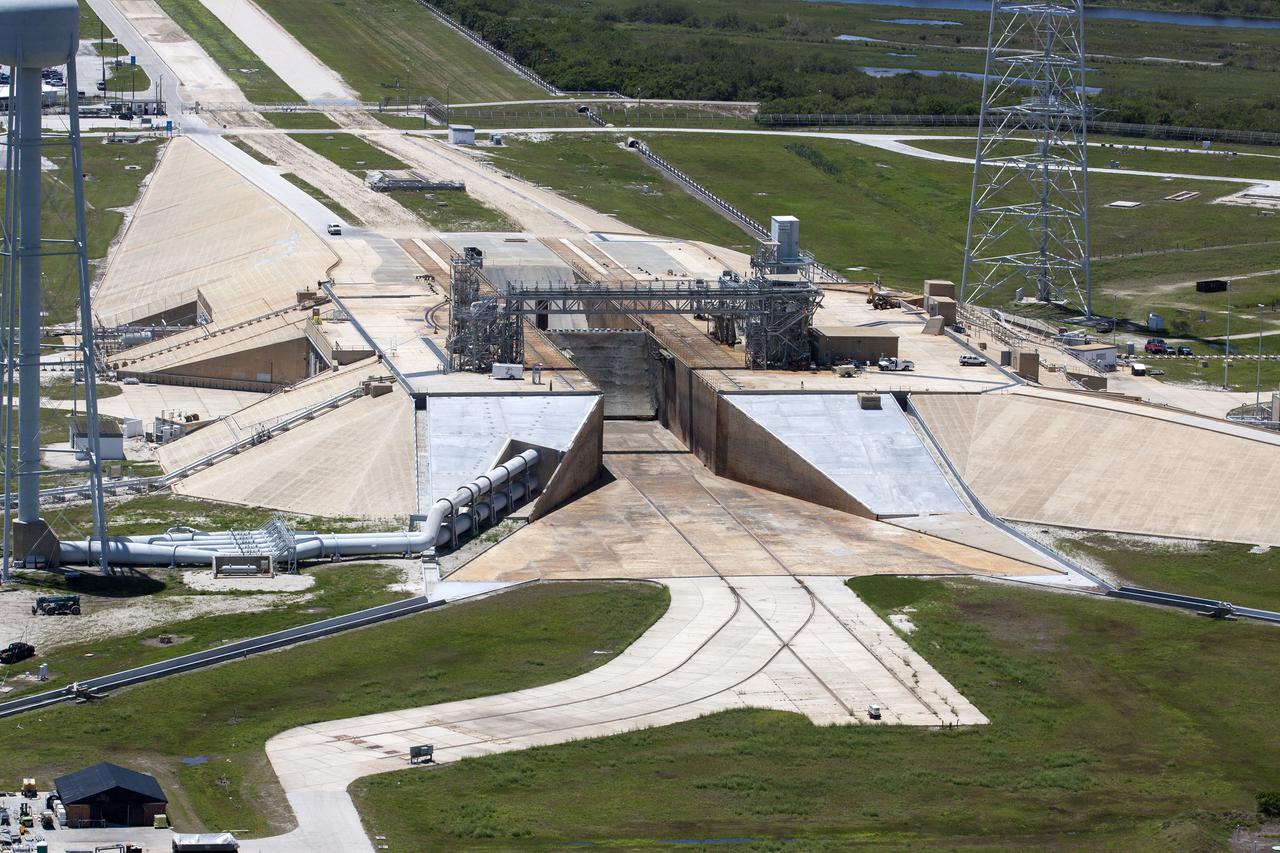
CAPE CANAVERAL, Fla. – An aerial view shows construction progress at Launch Pad 39B at NASA’s Kennedy Space Center in Florida. A new elevator has been constructed on the surface of the pad and the crawlerway leading up to the surface is being repaired. Repairs also are being made to the crawler track panels and catacomb roof below on either side of the flame trench. To the right is one of three tall lightning towers. Upgrades are underway at Pad B and other facilities in the Launch Complex 39 area. The Ground Systems Development and Operations, or GSDO, Program office at Kennedy is leading the center’s transformation from a historically government-only launch complex to a spaceport that can safely handle a variety of rockets and spacecraft, including NASA’s Space Launch System. For more information about GSDO, visit: http:__go.nasa.gov_groundsystems. Photo credit: NASA_Kim Shiflett
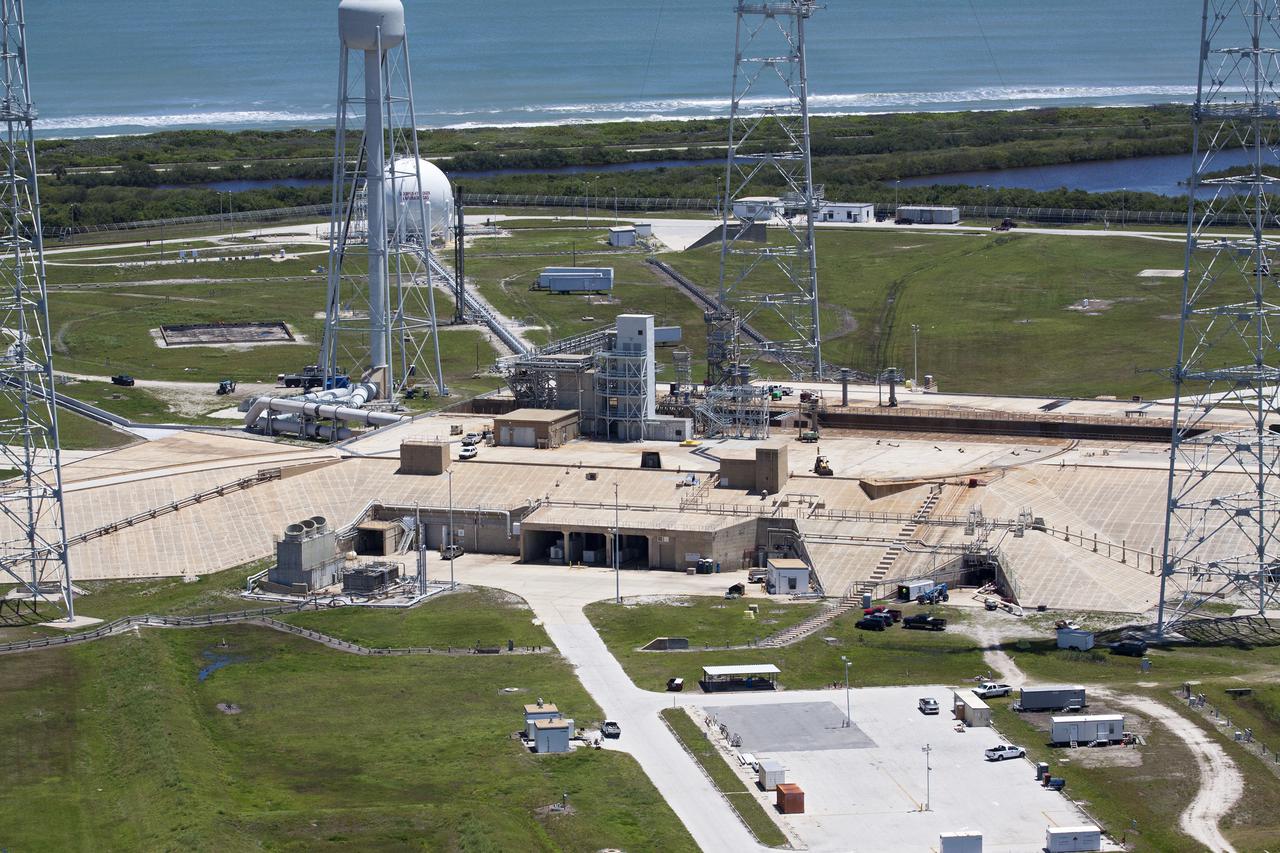
CAPE CANAVERAL, Fla. – An aerial view shows construction progress at Launch Pad 39B at NASA’s Kennedy Space Center in Florida. A new elevator has been constructed on the surface of the pad and the crawlerway leading up to the surface is being repaired. Repairs also are being made to the crawler track panels and catacomb roof below on either side of the flame trench. Also in view are the water tower and the three tall lightning towers that surround the pad. Upgrades are underway at Pad B and other facilities in the Launch Complex 39 area. The Ground Systems Development and Operations, or GSDO, Program office at Kennedy is leading the center’s transformation from a historically government-only launch complex to a spaceport that can safely handle a variety of rockets and spacecraft, including NASA’s Space Launch System. For more information about GSDO, visit: http:__go.nasa.gov_groundsystems. Photo credit: NASA_Kim Shiflett
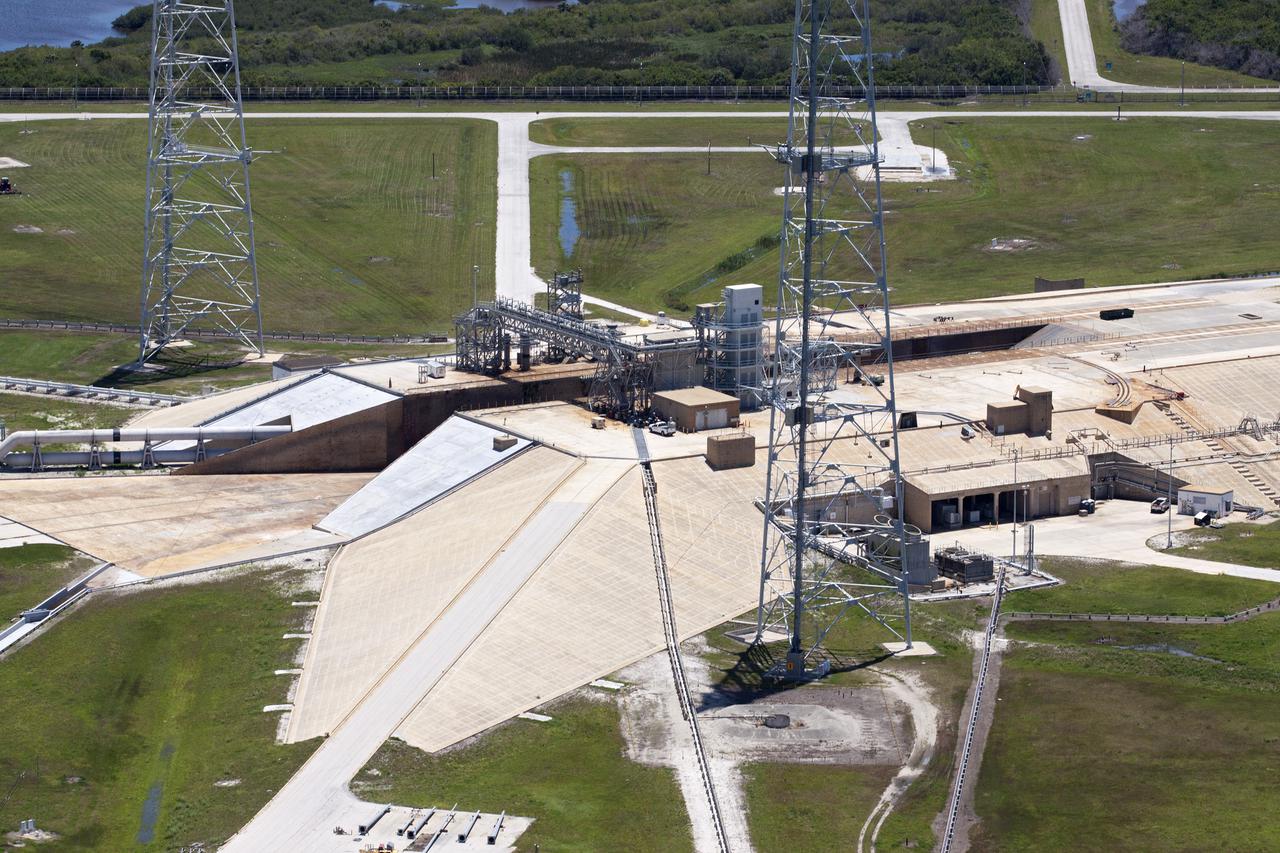
CAPE CANAVERAL, Fla. – An aerial view shows construction progress at Launch Pad 39B at NASA’s Kennedy Space Center in Florida. A new elevator has been constructed on the surface of the pad and the crawlerway leading up to the surface is being repaired. Repairs also are being made to the crawler track panels and catacomb roof below on either side of the flame trench. Also in view are two of the three tall lightning towers that surround the pad. Upgrades are underway at Pad B and other facilities in the Launch Complex 39 area. The Ground Systems Development and Operations, or GSDO, Program office at Kennedy is leading the center’s transformation from a historically government-only launch complex to a spaceport that can safely handle a variety of rockets and spacecraft, including NASA’s Space Launch System. For more information about GSDO, visit: http:__go.nasa.gov_groundsystems. Photo credit: NASA_Kim Shiflett
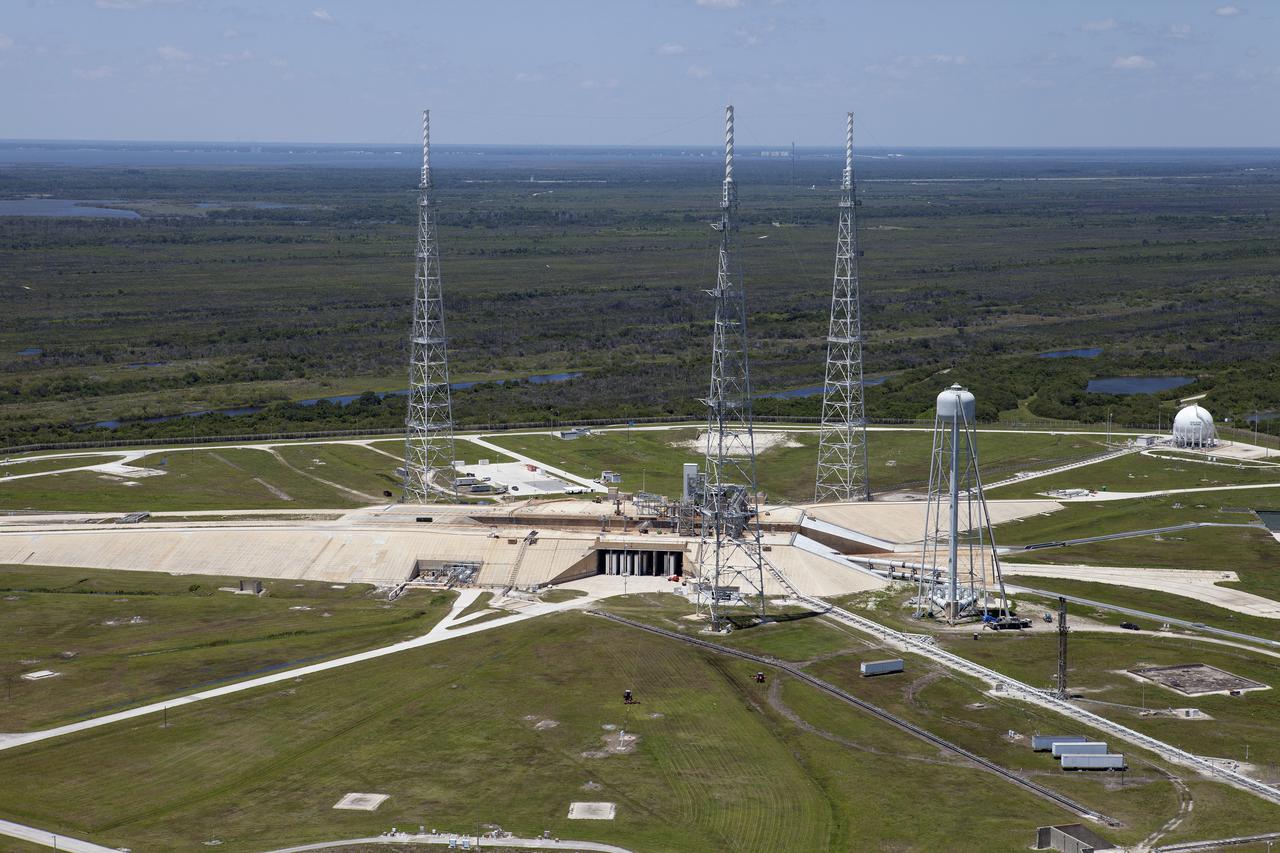
CAPE CANAVERAL, Fla. – An aerial view shows construction progress at Launch Pad 39B at NASA’s Kennedy Space Center in Florida. A new elevator has been constructed on the surface of the pad and the crawlerway leading up to the surface is being repaired. Repairs also are being made to the crawler track panels and catacomb roof below on either side of the flame trench. Also in view are the water tower and the three tall lightning towers that surround the pad. Upgrades are underway at Pad B and other facilities in the Launch Complex 39 area. The Ground Systems Development and Operations, or GSDO, Program office at Kennedy is leading the center’s transformation from a historically government-only launch complex to a spaceport that can safely handle a variety of rockets and spacecraft, including NASA’s Space Launch System. For more information about GSDO, visit: http:__go.nasa.gov_groundsystems. Photo credit: NASA_Kim Shiflett
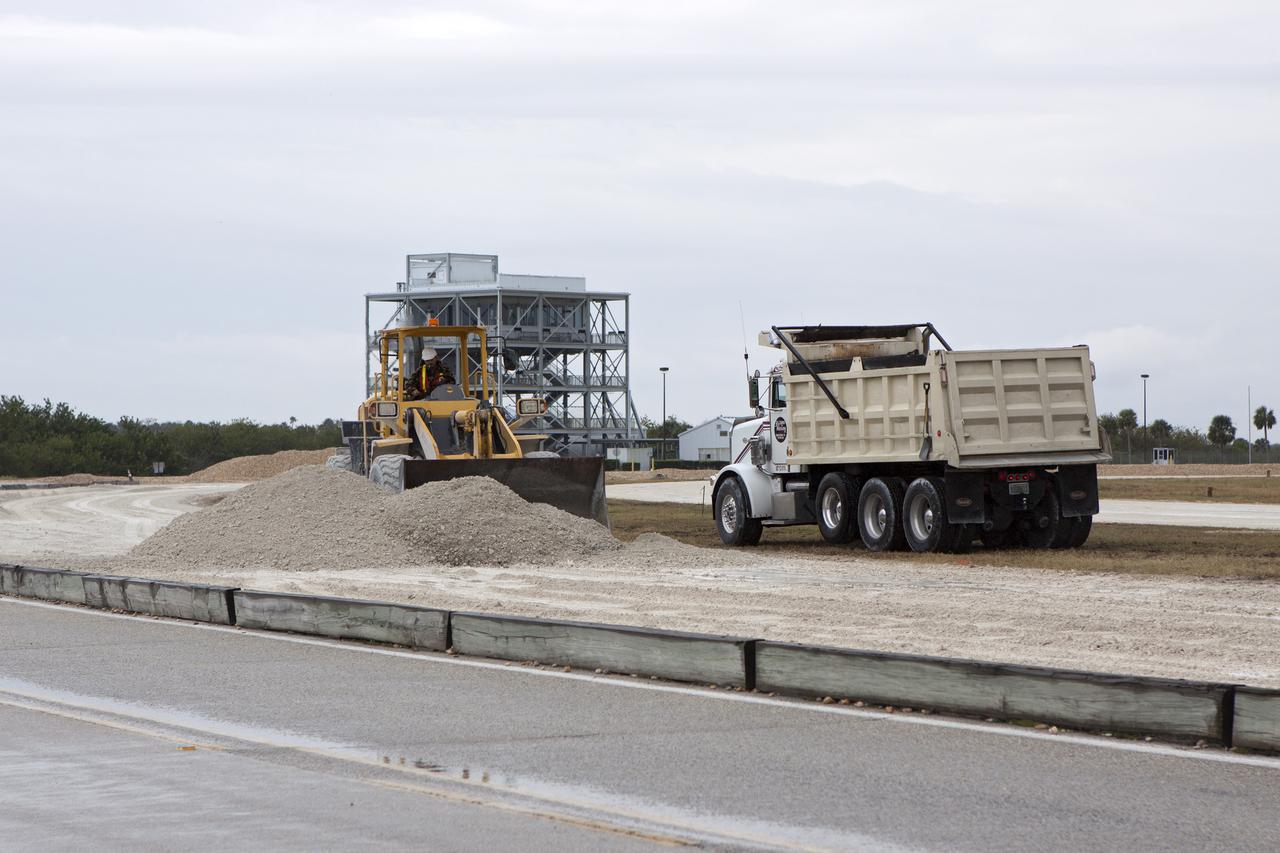
CAPE CANAVERAL, Fla. – Workers from Canaveral Construction in Mims, Fla., remove the Alabama river rock from the crawlerway near the turn off to Launch Pad 39B at NASA’s Kennedy Space Center in Florida. In the background is the Launch Viewing Gantry that is a Kennedy Space Center Visitor Complex tour stop. The crawlerway is being upgraded to improve the foundation and prepare it to support the weight of NASA’s Space Launch System, or SLS, and mobile launcher on the crawler-transporter during rollout. Workers are removing the original Alabama river rock and restoring the layer of lime rock below to its original depth. Then new river rock will be added on top. The Ground Systems Development and Operations, or GSDO, Program office at Kennedy is leading the center’s transformation to safely handle a variety of rockets and spacecraft. For more information about GSDO, visit: http:__go.nasa.gov_groundsystems. Photo credit: NASA_Jim Grossmann
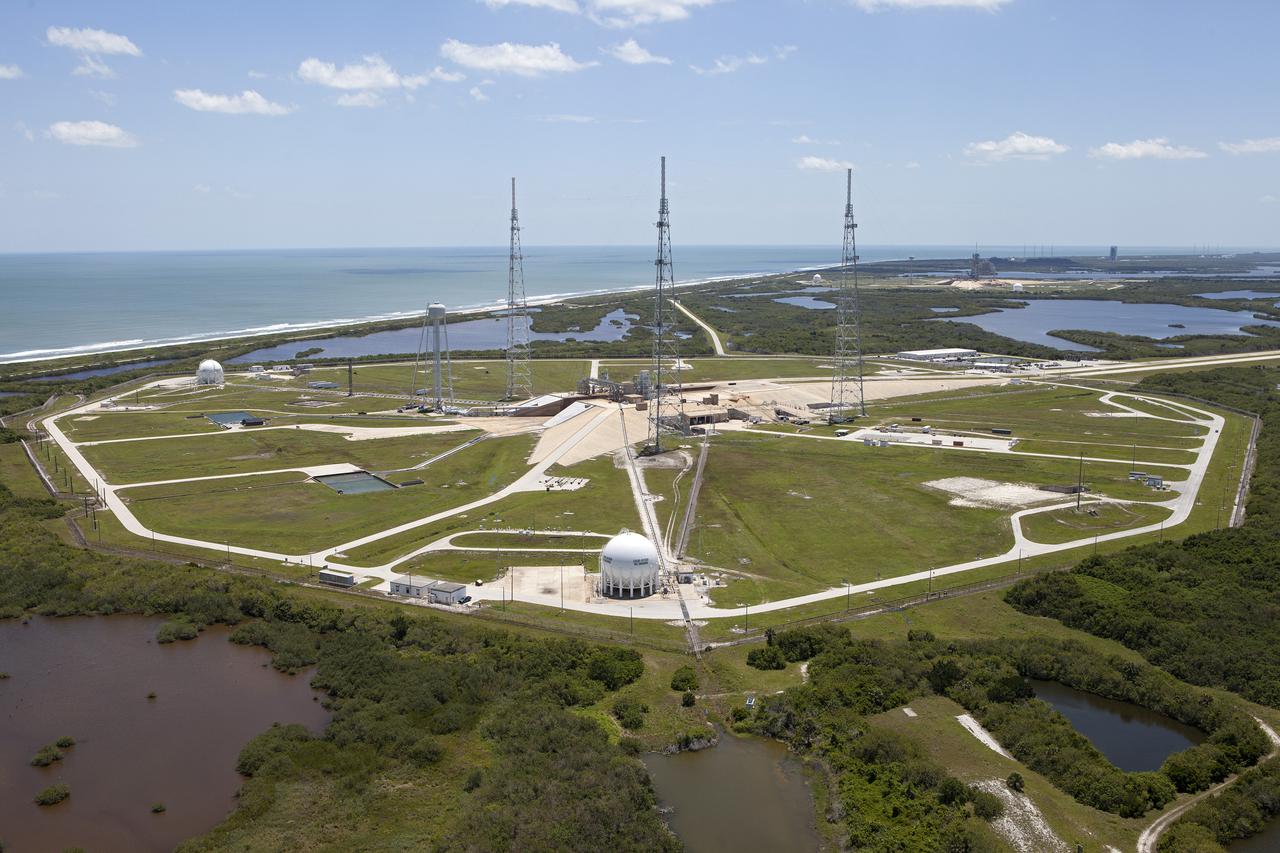
CAPE CANAVERAL, Fla. – An aerial view, from the west looking toward the east, shows the entire Launch Pad 39B area at NASA’s Kennedy Space Center in Florida. A new elevator has been constructed on the surface of the pad and the crawlerway leading up to the surface is being repaired. Repairs also are being made to the crawler track panels and catacomb roof below on either side of the flame trench. Also in view are the water tower and the three tall lightning towers that surround the pad. To the east is the Atlantic Ocean. Upgrades are underway at Pad B and other facilities in the Launch Complex 39 area. The Ground Systems Development and Operations, or GSDO, Program office at Kennedy is leading the center’s transformation from a historically government-only launch complex to a spaceport that can safely handle a variety of rockets and spacecraft, including NASA’s Space Launch System. For more information about GSDO, visit: http:__go.nasa.gov_groundsystems. Photo credit: NASA_Kim Shiflett
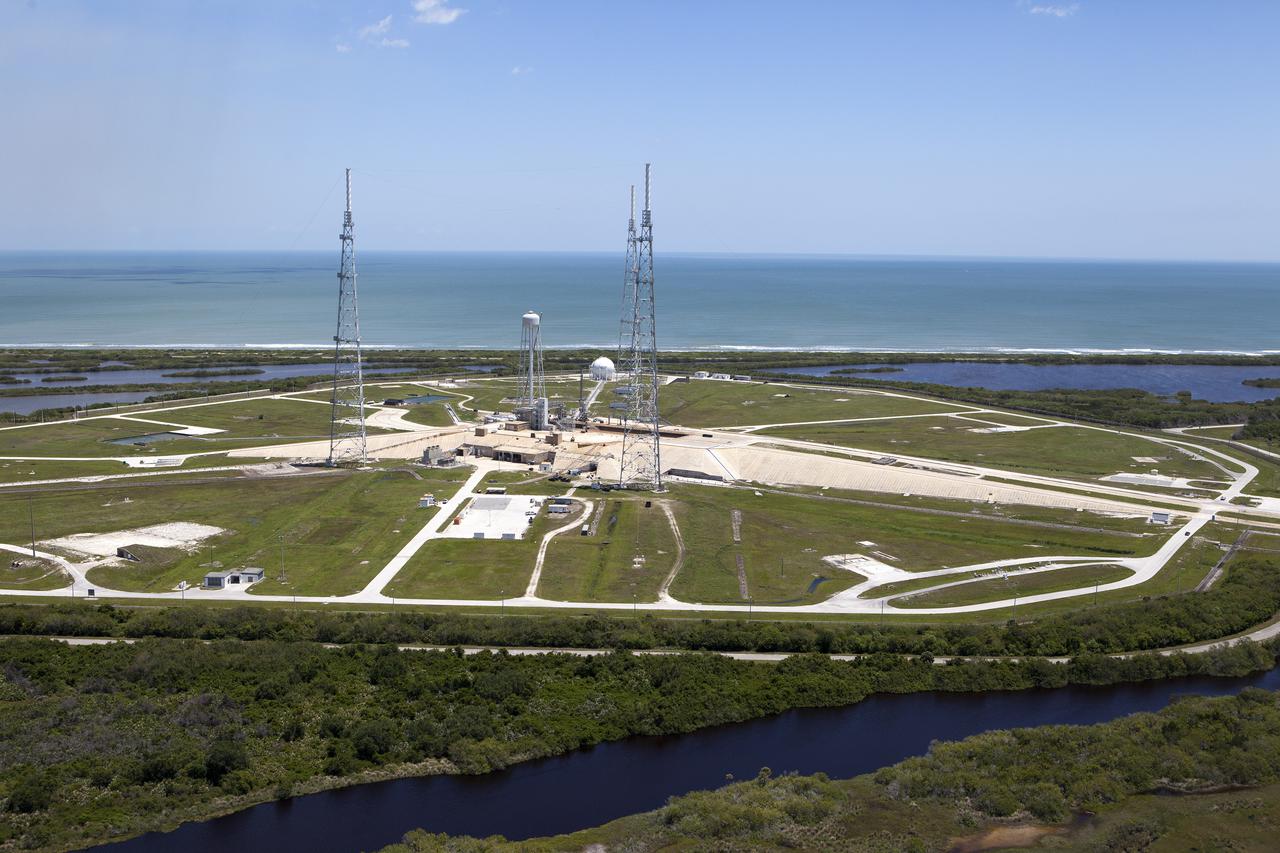
CAPE CANAVERAL, Fla. – An aerial view, from the west looking toward the east, shows the Launch Pad 39B area at NASA’s Kennedy Space Center in Florida. A new elevator has been constructed on the surface of the pad and the crawlerway leading up to the surface is being repaired. Repairs also are being made to the crawler track panels and catacomb roof below on either side of the flame trench. Also in view are the water tower and the three tall lightning towers that surround the pad. To the east is the Atlantic Ocean. Upgrades are underway at Pad B and other facilities in the Launch Complex 39 area. The Ground Systems Development and Operations, or GSDO, Program office at Kennedy is leading the center’s transformation from a historically government-only launch complex to a spaceport that can safely handle a variety of rockets and spacecraft, including NASA’s Space Launch System. For more information about GSDO, visit: http:__go.nasa.gov_groundsystems. Photo credit: NASA_Kim Shiflett
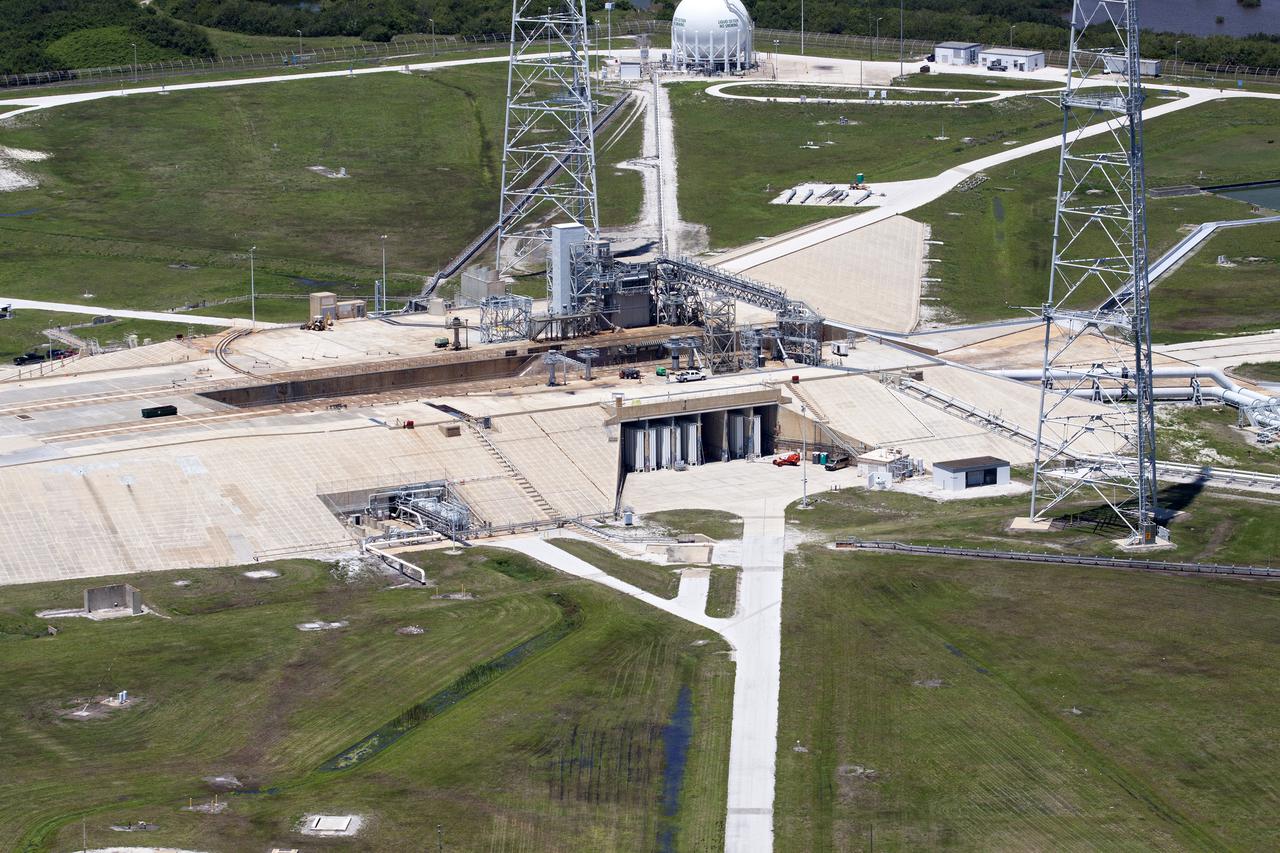
CAPE CANAVERAL, Fla. – An aerial view shows construction progress at Launch Pad 39B at NASA’s Kennedy Space Center in Florida. A new elevator has been constructed on the surface of the pad and the crawlerway leading up to the surface is being repaired. Repairs also are being made to the crawler track panels and catacomb roof below on either side of the flame trench. Also in view are two of the three tall lightning towers that surround the pad. Upgrades are underway at Pad B and other facilities in the Launch Complex 39 area. The Ground Systems Development and Operations, or GSDO, Program office at Kennedy is leading the center’s transformation from a historically government-only launch complex to a spaceport that can safely handle a variety of rockets and spacecraft, including NASA’s Space Launch System. For more information about GSDO, visit: http:__go.nasa.gov_groundsystems. Photo credit: NASA_Kim Shiflett
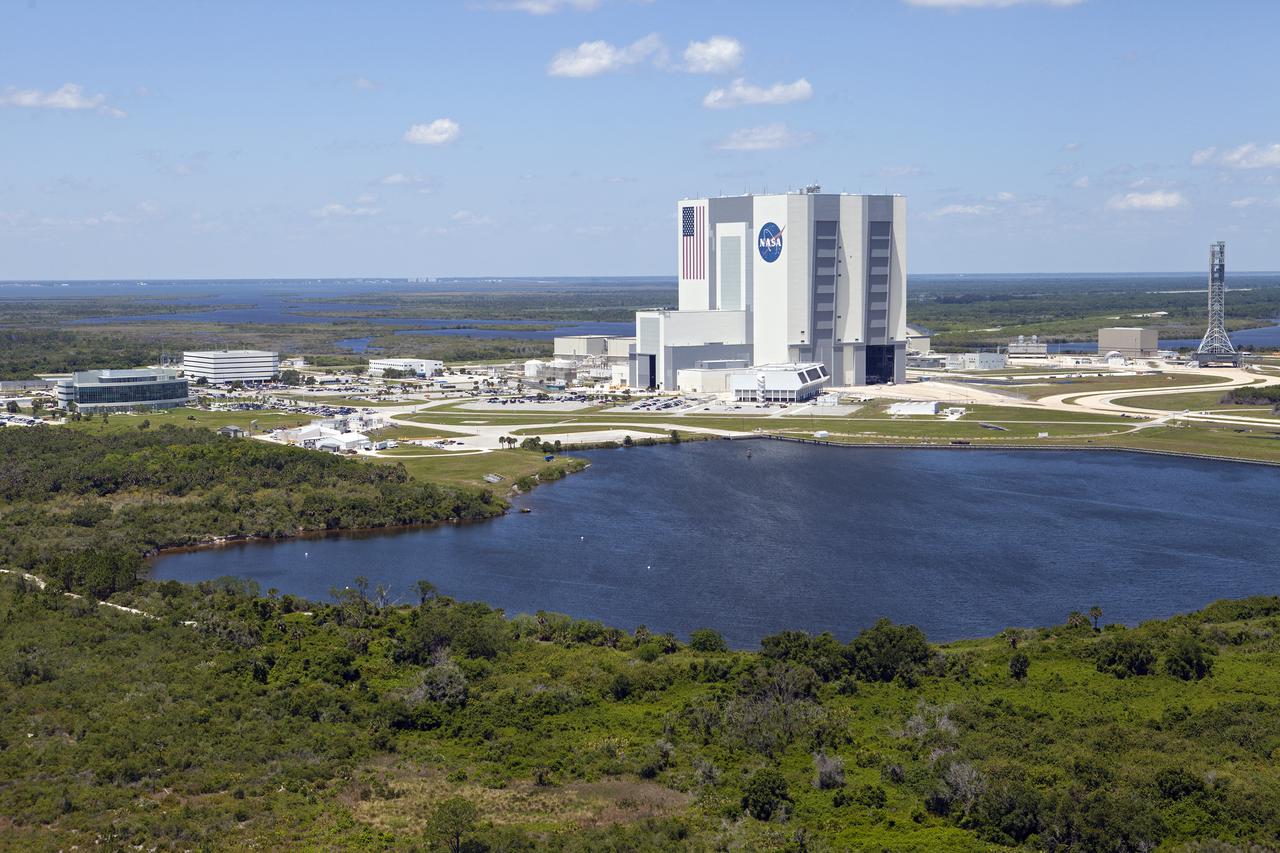
CAPE CANAVERAL, Fla. – An aerial view of the Vehicle Assembly Building, or VAB, and other buildings in the Launch Complex 39 area at NASA’s Kennedy Space Center in Florida. The Launch Control Center is in front of the VAB. To the right is the mobile launcher that will be used to transport NASA’s Space Launch System rocket and the Orion crew capsule to Launch Pad 39B. Upgrades are underway at Pad B and other facilities in the Launch Complex 39 area. The Ground Systems Development and Operations, or GSDO, Program office at Kennedy is leading the center’s transformation from a historically government-only launch complex to a spaceport that can safely handle a variety of rockets and spacecraft, including NASA’s Space Launch System. For more information about GSDO, visit: http:__go.nasa.gov_groundsystems. Photo credit: NASA_Kim Shiflett
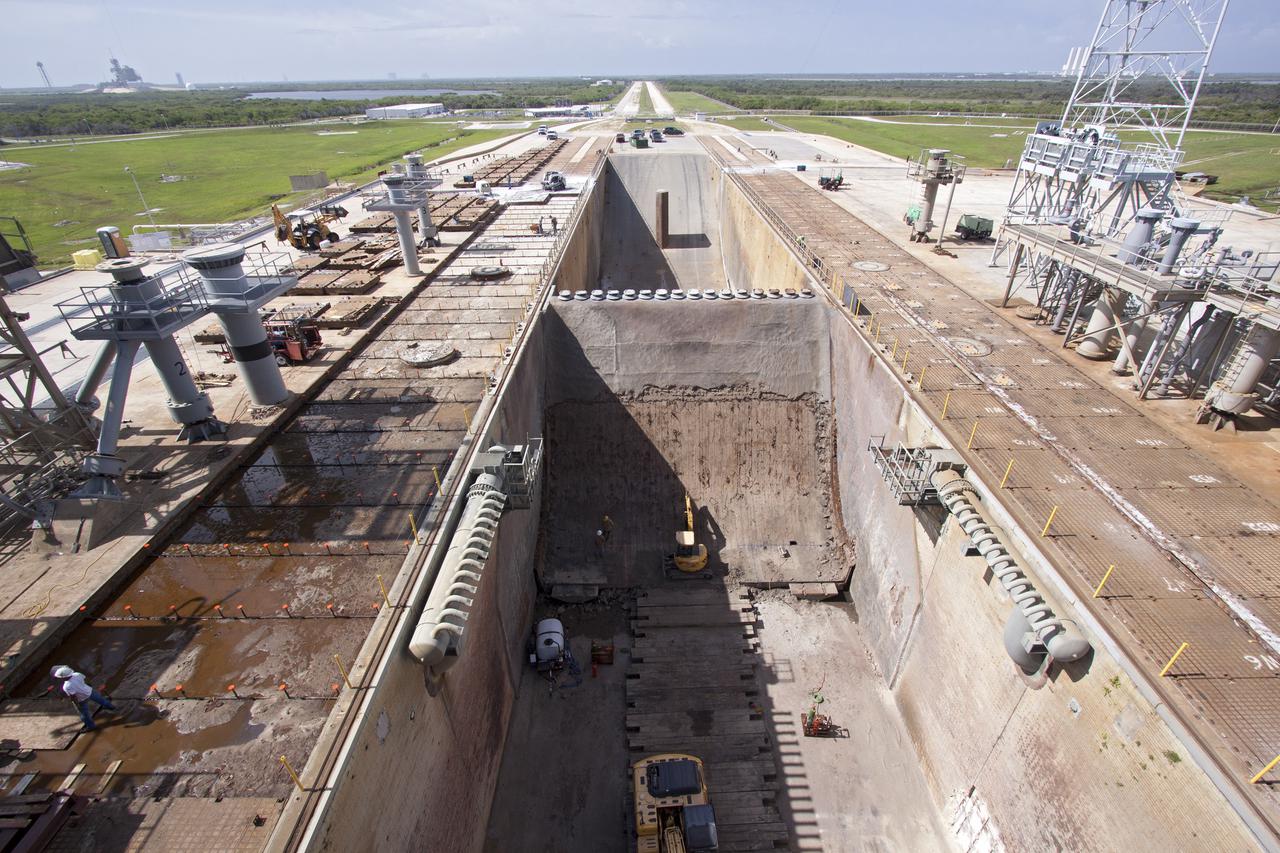
CAPE CANAVERAL, Fla. -- At Launch Pad 39B at NASA’s Kennedy Space Center in Florida, construction workers have removed nearly all of the crawler track panels on the pad’s surface. Workers also are removing the flame trench deflector that sits below and between the left and right crawler track panels. The concrete surface beneath the panels and the catacomb roof below will be inspected for water damage and repaired. There are 176 panels, each weighing about 30,000 pounds that will be removed. Launch Pad 39B is being refurbished to support NASA’s Space Launch System and other launch vehicles. The Ground Systems Development and Operations, or GSDO, Program office at Kennedy is leading the center’s transformation to safely handle a variety of rockets and spacecraft. For more information about GSDO, visit: http:__go.nasa.gov_groundsystems. Photo credit: NASA_Jim Grossman
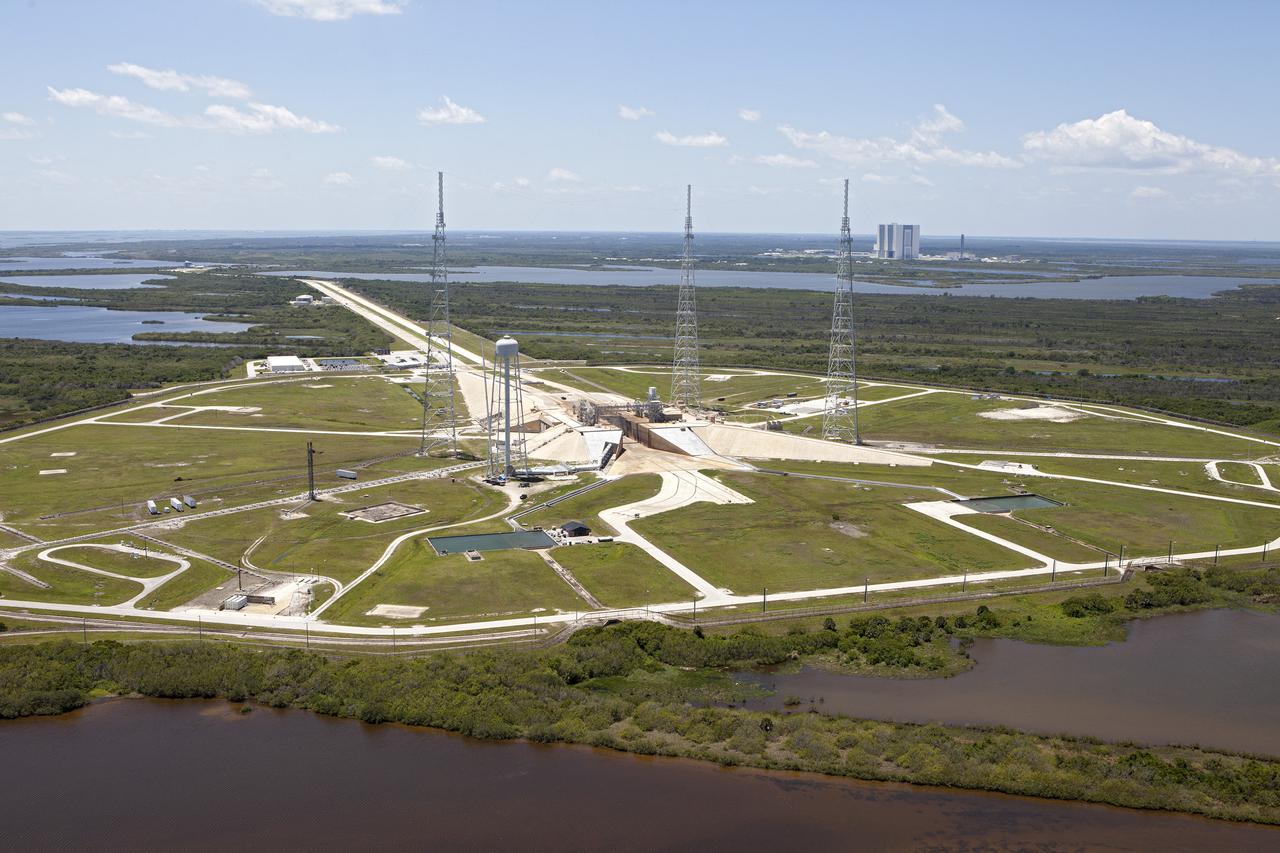
CAPE CANAVERAL, Fla. – An aerial view shows construction progress at Launch Pad 39B at NASA’s Kennedy Space Center in Florida. A new elevator has been constructed on the surface of the pad and the crawlerway leading up to the surface is being repaired. Repairs also are being made to the crawler track panels and catacomb roof below on either side of the flame trench. Also in view are the water tower and the three tall lightning towers that surround the pad. To the right, in the background is the Vehicle Assembly Building. Upgrades are underway at Pad B and other facilities in the Launch Complex 39 area. The Ground Systems Development and Operations, or GSDO, Program office at Kennedy is leading the center’s transformation from a historically government-only launch complex to a spaceport that can safely handle a variety of rockets and spacecraft, including NASA’s Space Launch System. For more information about GSDO, visit: http:__go.nasa.gov_groundsystems. Photo credit: NASA_Kim Shiflett
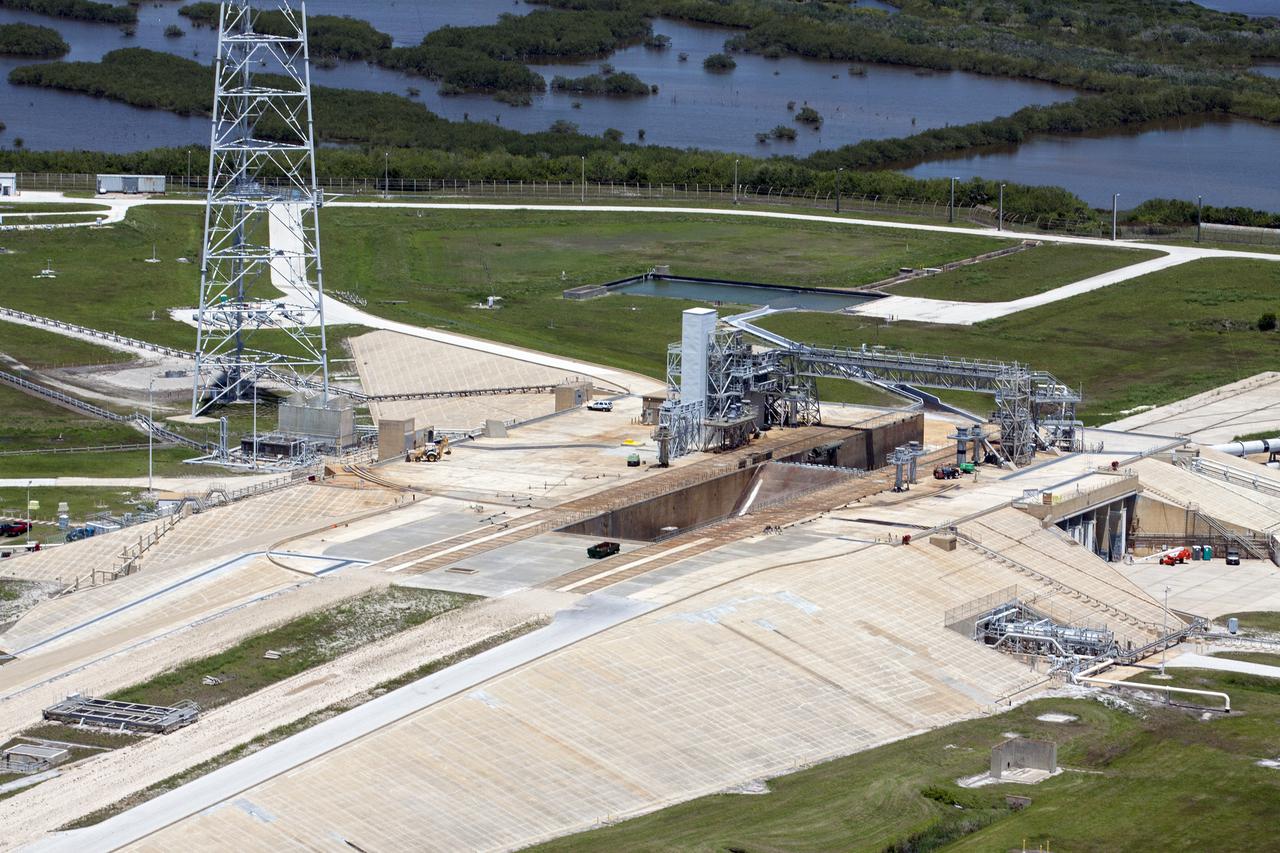
CAPE CANAVERAL, Fla. – An aerial view shows construction progress at Launch Pad 39B at NASA’s Kennedy Space Center in Florida. A new elevator has been constructed on the surface of the pad and the crawlerway leading up to the surface is being repaired. To the left is one of three tall lightning towers. Upgrades are underway at Pad B and other facilities in the Launch Complex 39 area. The Ground Systems Development and Operations, or GSDO, Program office at Kennedy is leading the center’s transformation from a historically government-only launch complex to a spaceport that can safely handle a variety of rockets and spacecraft, including NASA’s Space Launch System. For more information about GSDO, visit: http:__go.nasa.gov_groundsystems. Photo credit: NASA_Kim Shiflett
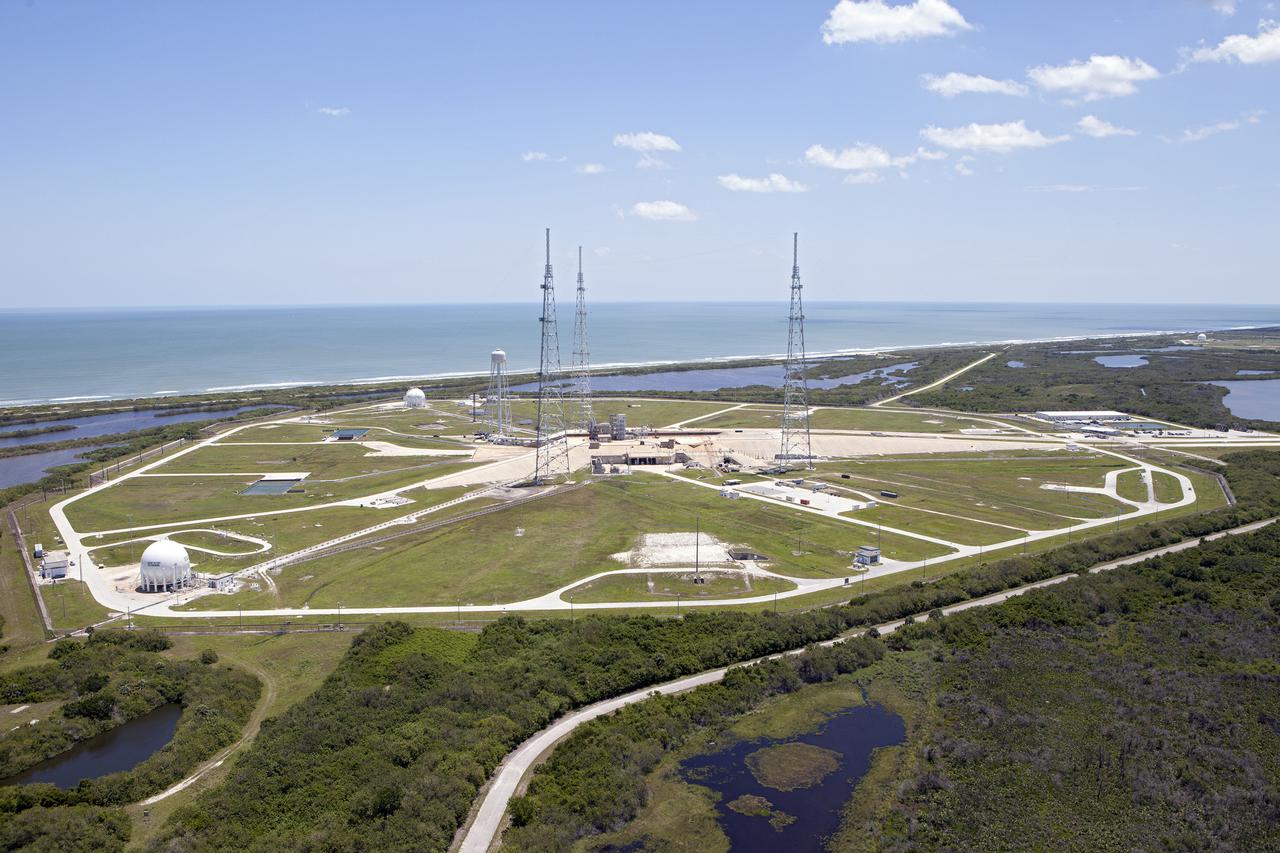
CAPE CANAVERAL, Fla. – An aerial view, from the west looking toward the east, shows the entire Launch Pad 39B area at NASA’s Kennedy Space Center in Florida. A new elevator has been constructed on the surface of the pad and the crawlerway leading up to the surface is being repaired. Repairs also are being made to the crawler track panels and catacomb roof below on either side of the flame trench. Also in view are the water tower and the three tall lightning towers that surround the pad. To the east is the Atlantic Ocean. Upgrades are underway at Pad B and other facilities in the Launch Complex 39 area. The Ground Systems Development and Operations, or GSDO, Program office at Kennedy is leading the center’s transformation from a historically government-only launch complex to a spaceport that can safely handle a variety of rockets and spacecraft, including NASA’s Space Launch System. For more information about GSDO, visit: http:__go.nasa.gov_groundsystems. Photo credit: NASA_Kim Shiflett
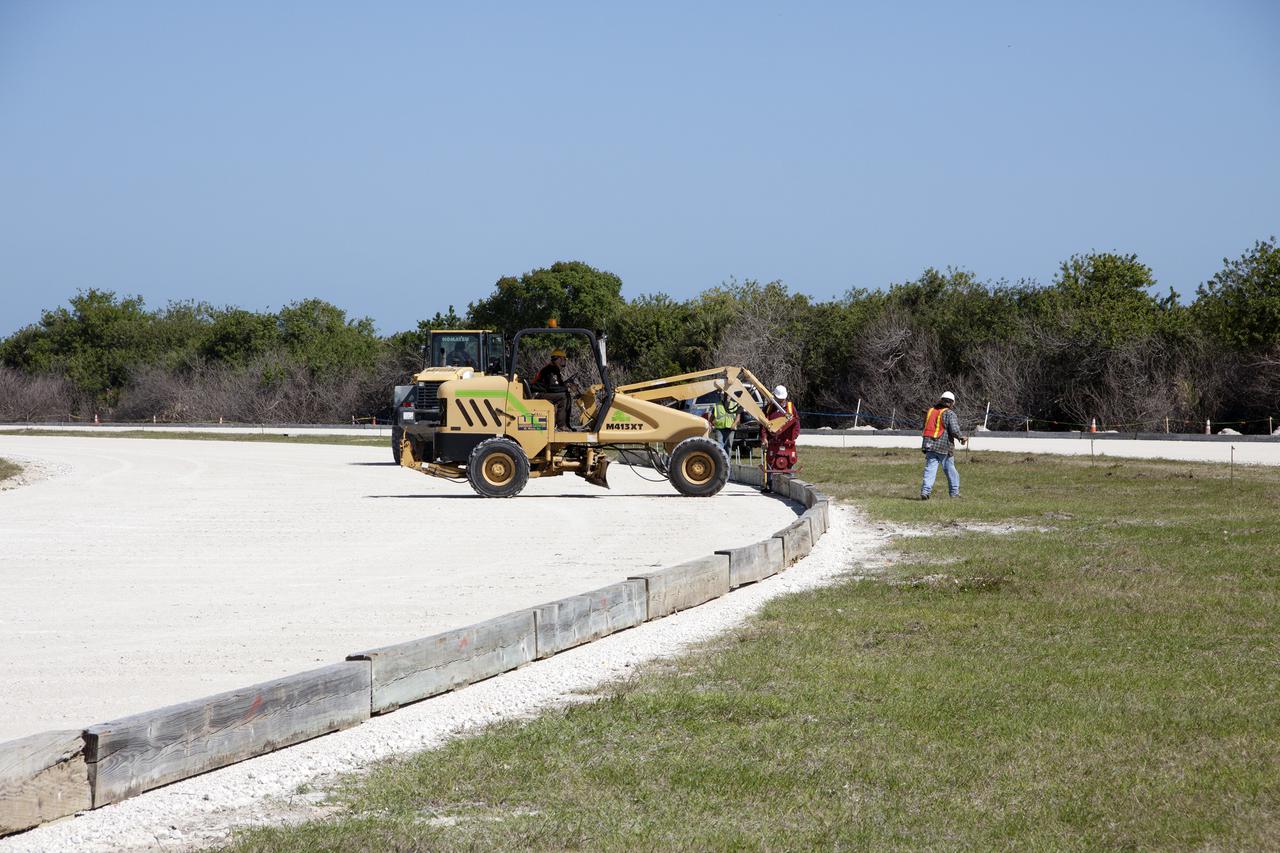
CAPE CANAVERAL, Fla. -- At NASA’s Kennedy Space Center in Florida, workers from Canaveral Construction in Mims, Fla., continue to re-grade the lime rock in sections of the crawlerway leading to Launch Pad 39B. The crawlerway is being upgraded to improve the foundation and prepare it to support the weight of NASA’s Space Launch System, or SLS, and mobile launcher on the crawler-transporter during rollout. Workers are removing the original Alabama river rock and restoring the layer of lime rock below to its original depth. Then new river rock will be added on top. The Ground Systems Development and Operations, or GSDO, Program office at Kennedy is leading the center’s transformation to safely handle a variety of rockets and spacecraft. For more information about GSDO, visit: http:__go.nasa.gov_groundsystems. Photo credit: NASA_Jim Grossmann
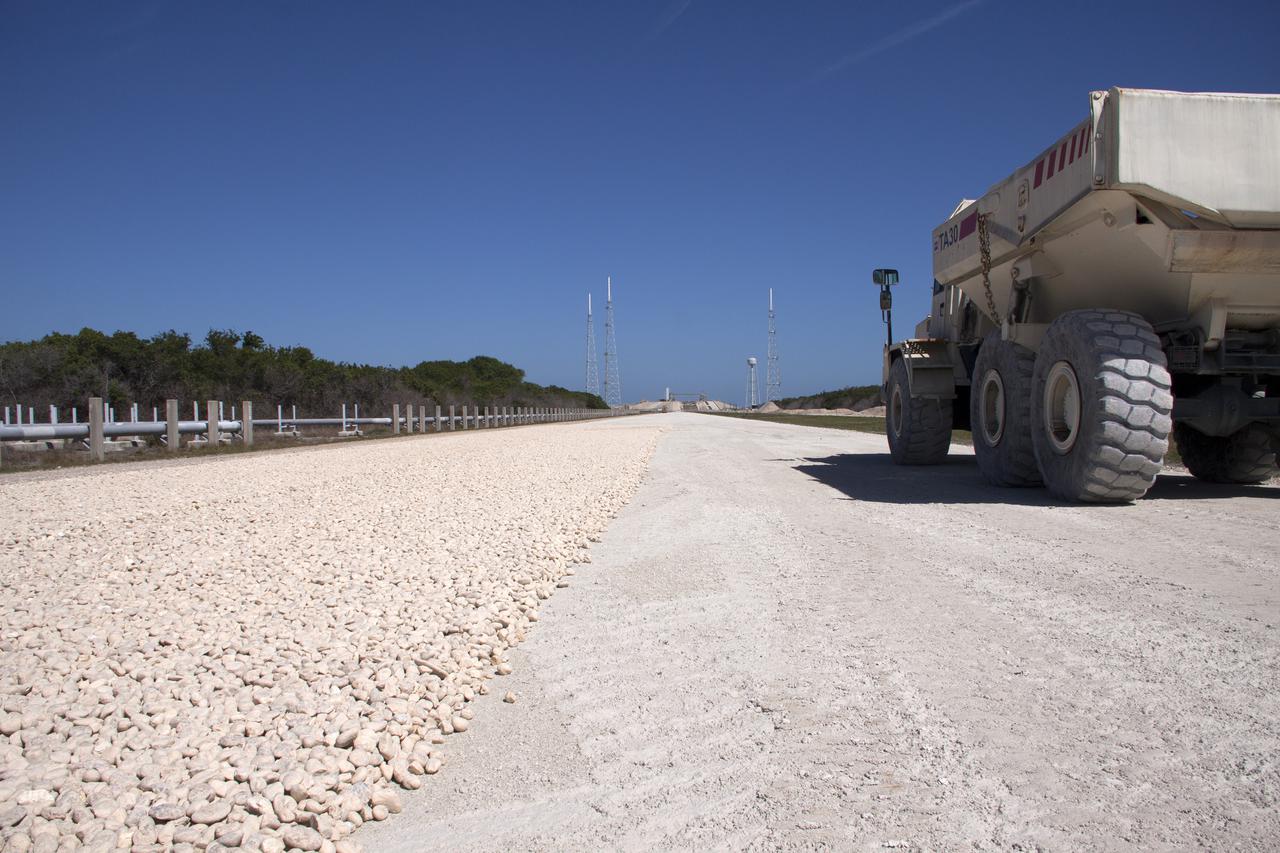
CAPE CANAVERAL, Fla. -- At NASA’s Kennedy Space Center in Florida, workers from Canaveral Construction in Mims, Fla., continue to re-grade the lime rock in sections of the crawlerway leading to Launch Pad 39B. The crawlerway is being upgraded to improve the foundation and prepare it to support the weight of NASA’s Space Launch System, or SLS, and mobile launcher on the crawler-transporter during rollout. Workers are removing the original Alabama river rock and restoring the layer of lime rock below to its original depth. Then new river rock will be added on top. The Ground Systems Development and Operations, or GSDO, Program office at Kennedy is leading the center’s transformation to safely handle a variety of rockets and spacecraft. For more information about GSDO, visit: http:__go.nasa.gov_groundsystems. Photo credit: NASA_Jim Grossmann
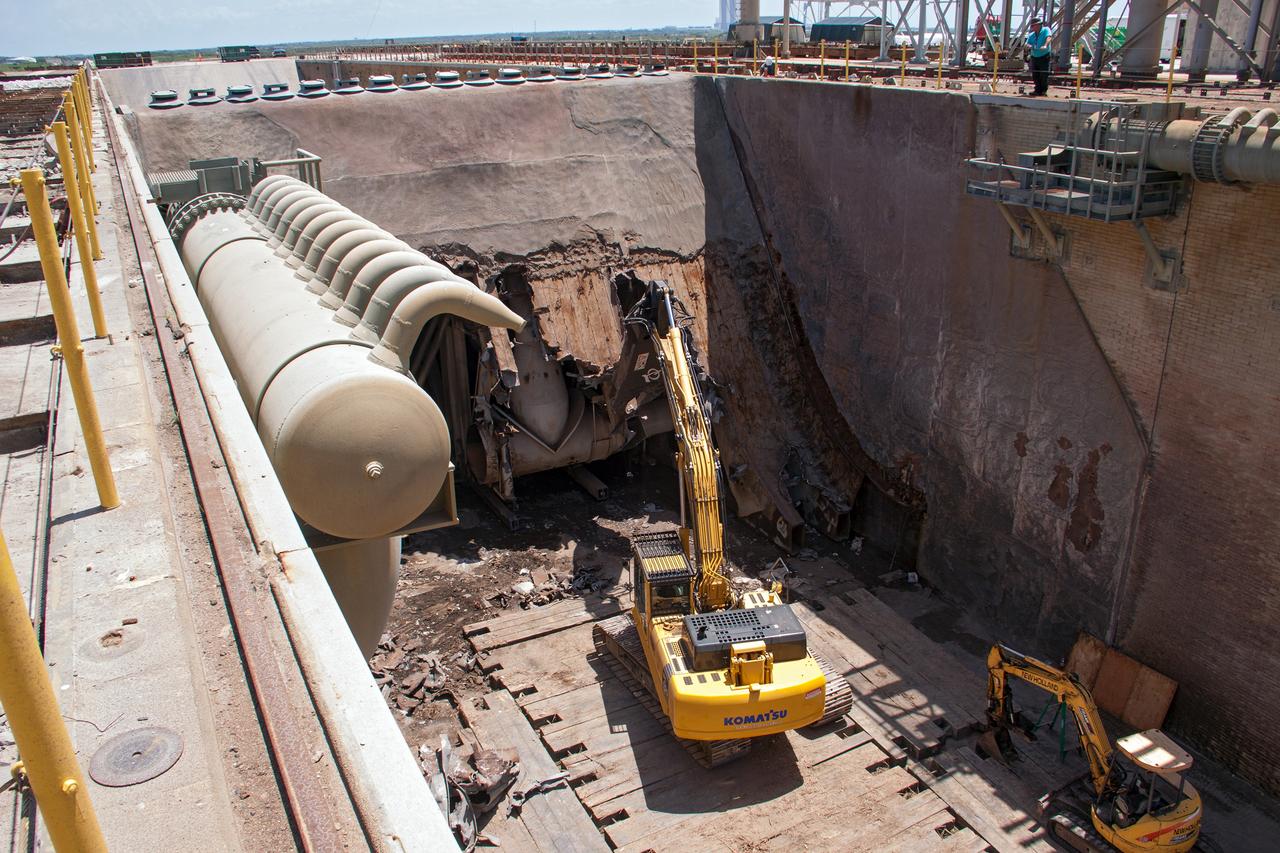
CAPE CANAVERAL, Fla. – At Launch Pad 39B at NASA’s Kennedy Space Center in Florida, construction workers continue to remove the flame trench deflector that sits below and between the left and right crawlerway tracks. Launch Pad 39B is being refurbished to support NASA’s Space Launch System and other launch vehicles. The Ground Systems Development and Operations, or GSDO, Program office at Kennedy is leading the center’s transformation to safely handle a variety of rockets and spacecraft. For more information about GSDO, visit: http://go.nasa.gov/groundsystems. Photo credit: NASA/Jim Grossman
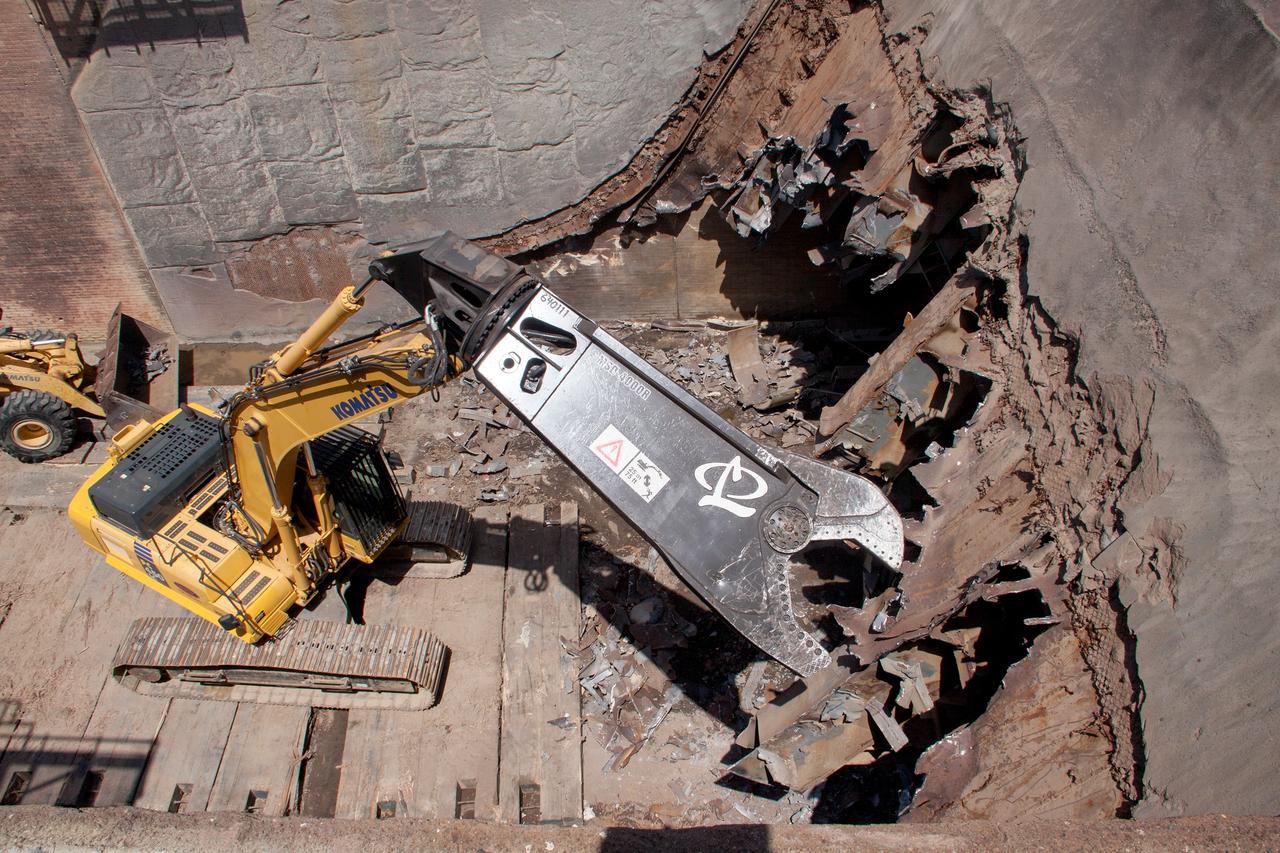
CAPE CANAVERAL, Fla. – At Launch Pad 39B at NASA’s Kennedy Space Center in Florida, construction workers continue to remove the flame trench deflector that sits below and between the left and right crawlerway tracks. Launch Pad 39B is being refurbished to support NASA’s Space Launch System and other launch vehicles. The Ground Systems Development and Operations, or GSDO, Program office at Kennedy is leading the center’s transformation to safely handle a variety of rockets and spacecraft. For more information about GSDO, visit: http://go.nasa.gov/groundsystems. Photo credit: NASA/Jim Grossman
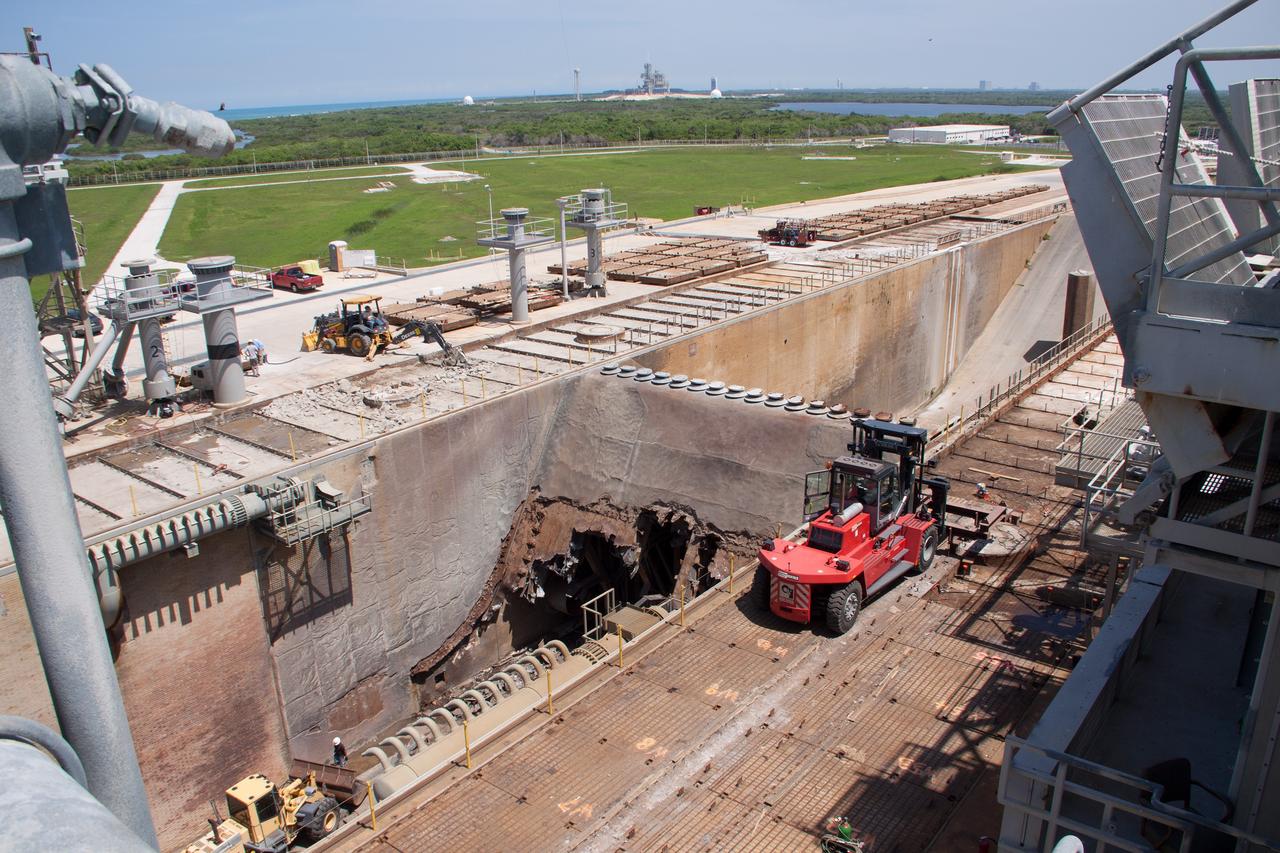
CAPE CANAVERAL, Fla. – At Launch Pad 39B at NASA’s Kennedy Space Center in Florida, crawler track panels have been removed from the surface and construction workers are repairing the concrete surface and catacomb roof below. Launch Pad 39B is being refurbished to support NASA’s Space Launch System and other launch vehicles. The Ground Systems Development and Operations, or GSDO, Program office at Kennedy is leading the center’s transformation to safely handle a variety of rockets and spacecraft. For more information about GSDO, visit: http://go.nasa.gov/groundsystems. Photo credit: NASA/Jim Grossman
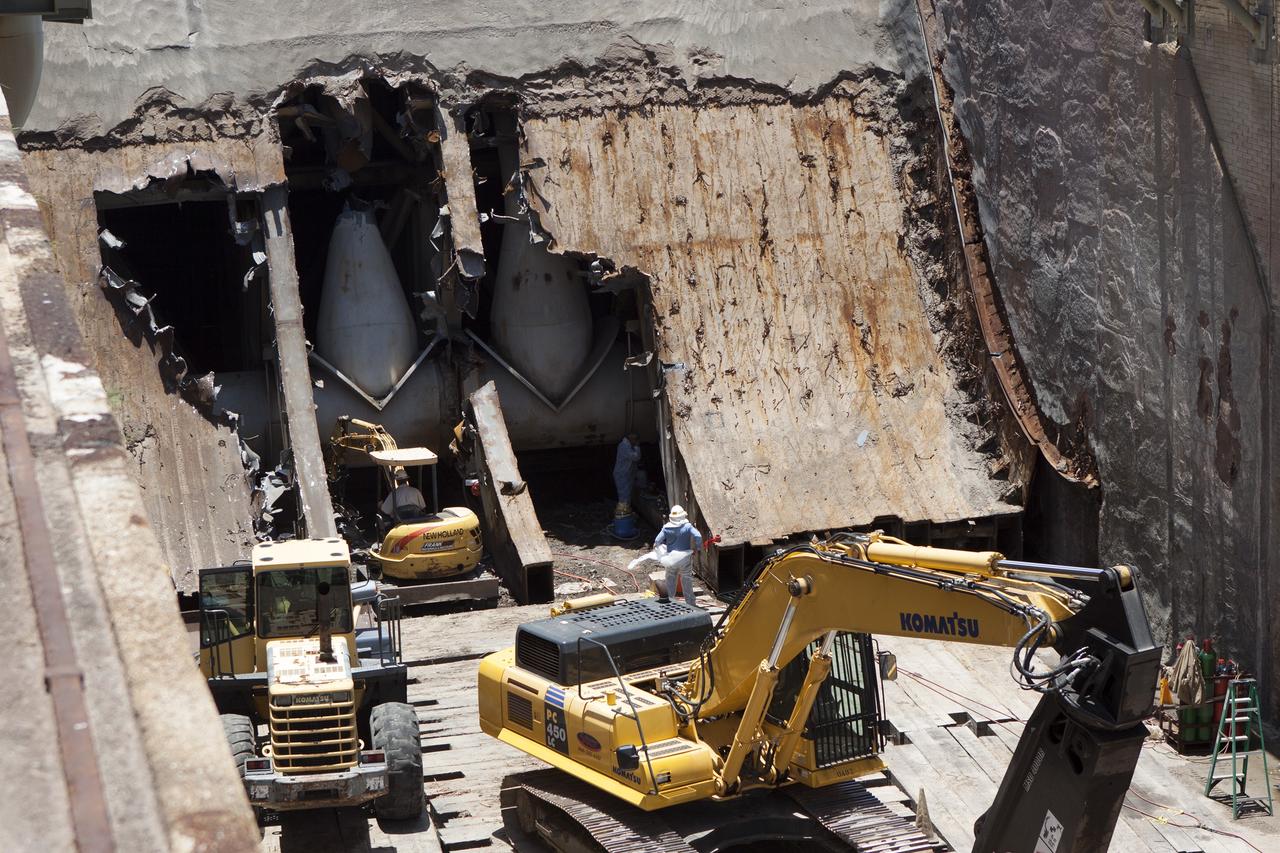
CAPE CANAVERAL, Fla. – At Launch Pad 39B at NASA’s Kennedy Space Center in Florida, workers are removing the flame trench deflector that sits below and between the left and right crawler track panels. Launch Pad 39B is being refurbished to support NASA’s Space Launch System and other launch vehicles. The Ground Systems Development and Operations, or GSDO, Program office at Kennedy is leading the center’s transformation to safely handle a variety of rockets and spacecraft. For more information about GSDO, visit: http://go.nasa.gov/groundsystems. Photo credit: NASA/Jim Grossman
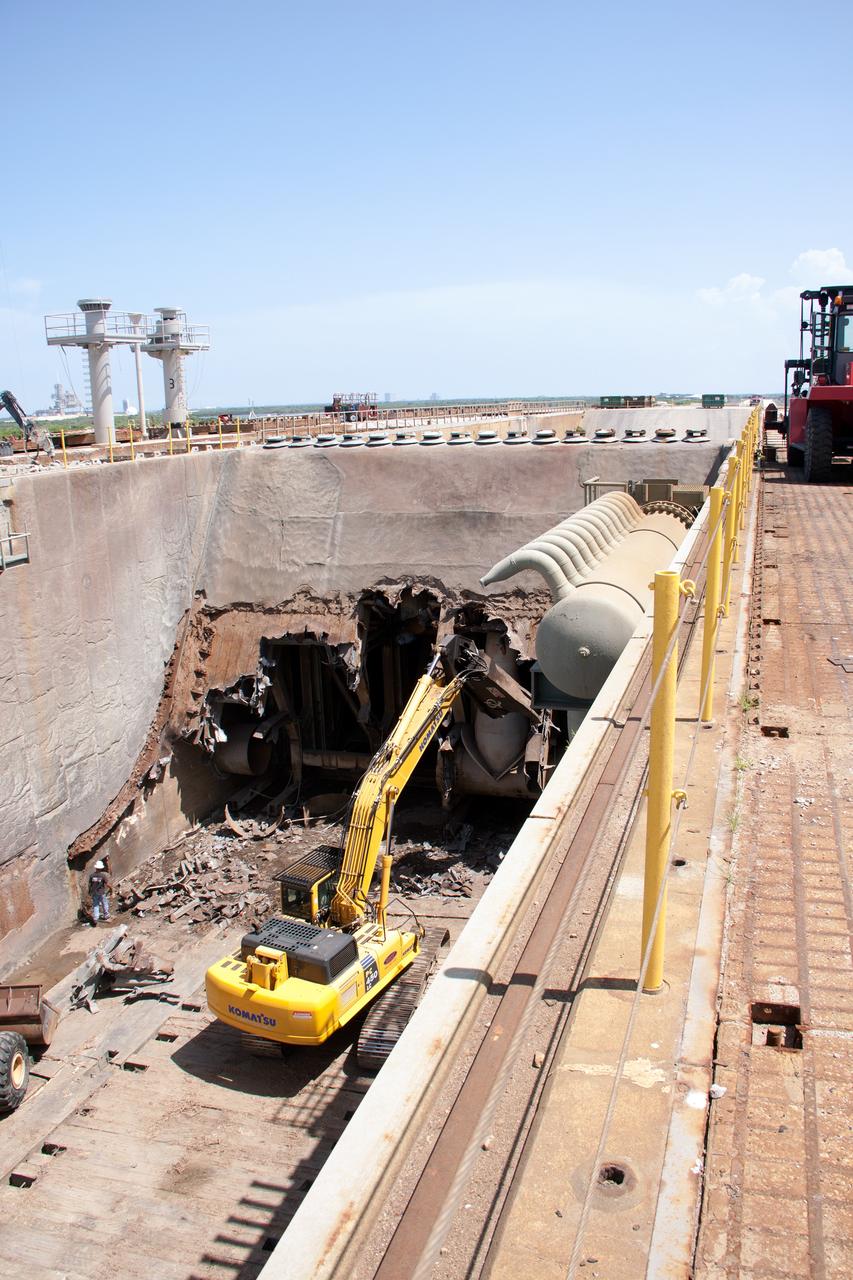
CAPE CANAVERAL, Fla. – At Launch Pad 39B at NASA’s Kennedy Space Center in Florida, construction workers continue to remove the flame trench deflector that sits below and between the left and right crawlerway tracks. Launch Pad 39B is being refurbished to support NASA’s Space Launch System and other launch vehicles. The Ground Systems Development and Operations, or GSDO, Program office at Kennedy is leading the center’s transformation to safely handle a variety of rockets and spacecraft. For more information about GSDO, visit: http://go.nasa.gov/groundsystems. Photo credit: NASA/Jim Grossman
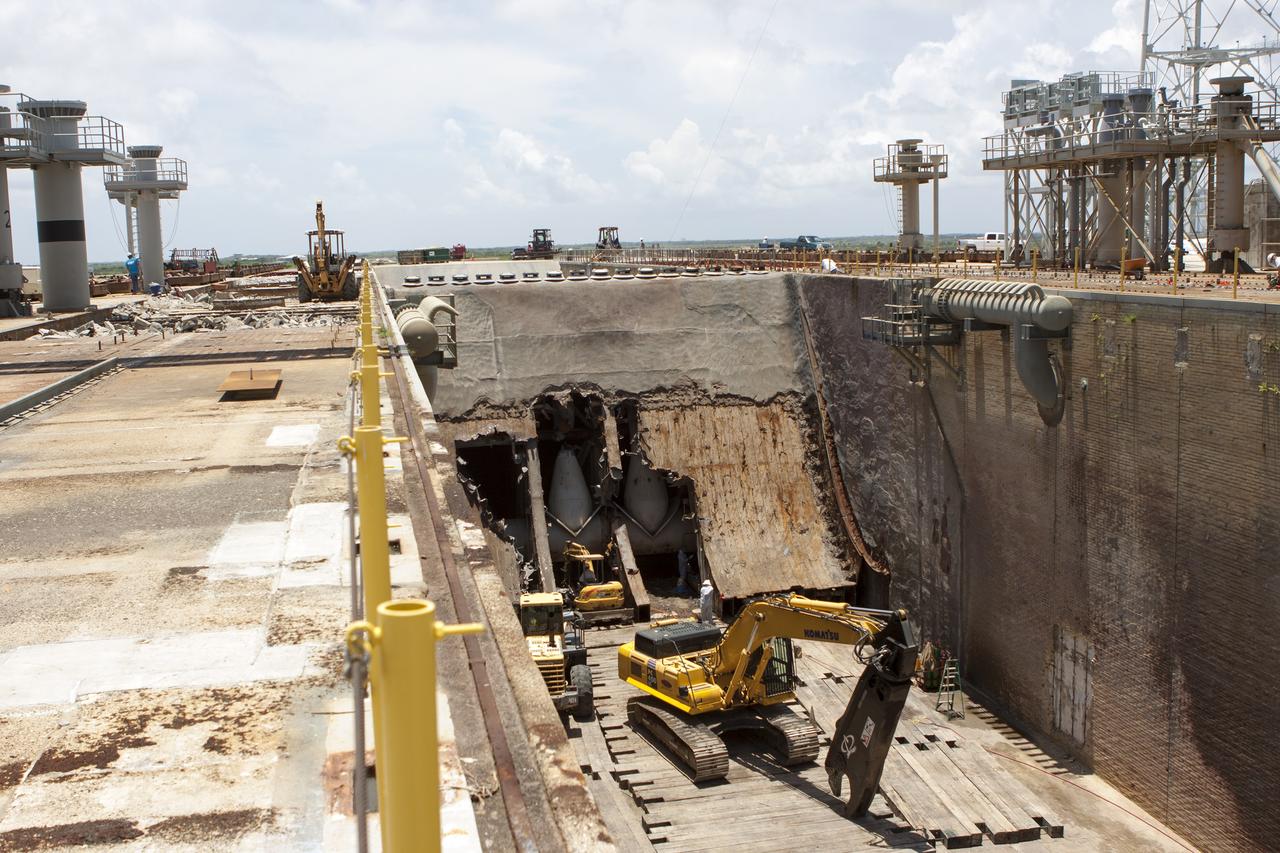
CAPE CANAVERAL, Fla. – At Launch Pad 39B at NASA’s Kennedy Space Center in Florida, workers are removing the flame trench deflector that sits below and between the left and right crawler track panels. Launch Pad 39B is being refurbished to support NASA’s Space Launch System and other launch vehicles. The Ground Systems Development and Operations, or GSDO, Program office at Kennedy is leading the center’s transformation to safely handle a variety of rockets and spacecraft. For more information about GSDO, visit: http://go.nasa.gov/groundsystems. Photo credit: NASA/Jim Grossman
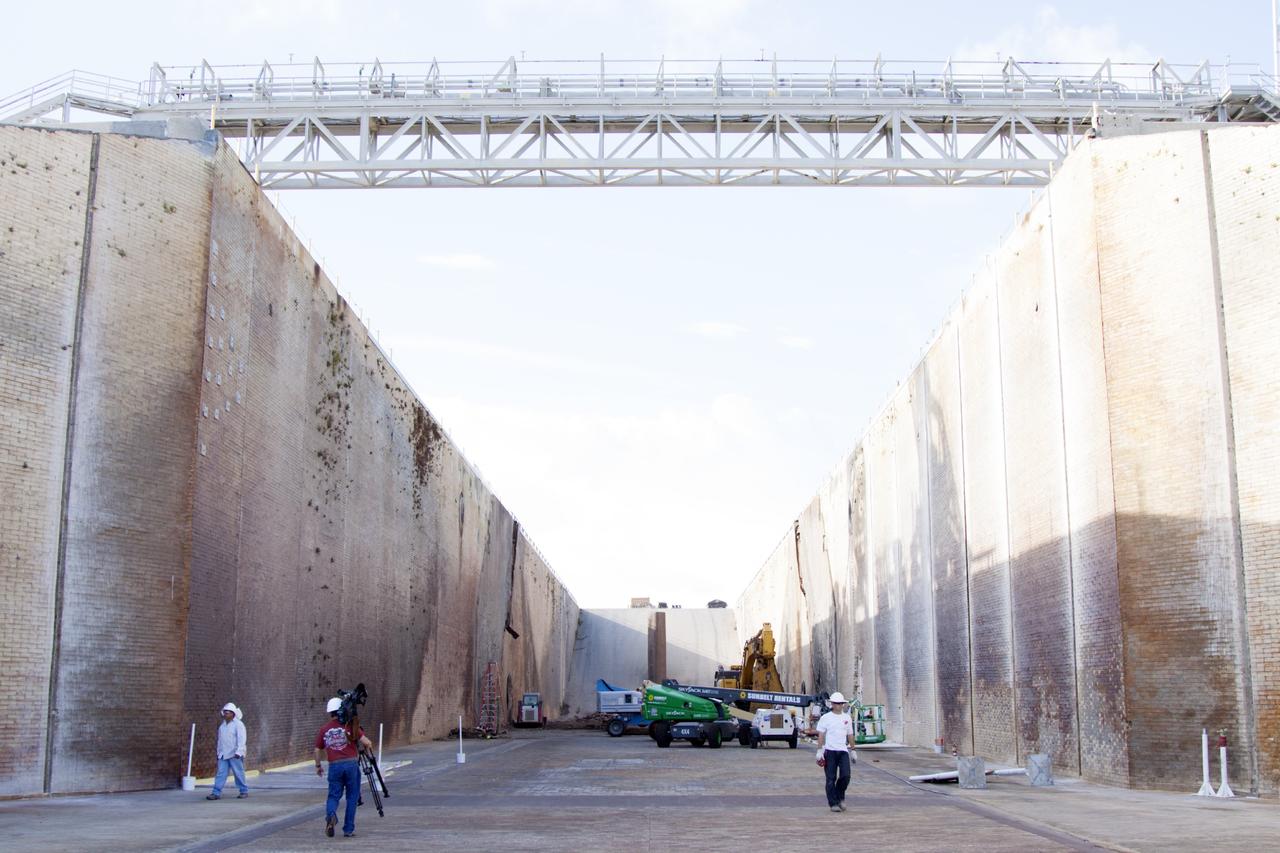
CAPE CANAVERAL, Fla. – At Launch Pad 39B at NASA’s Kennedy Space Center in Florida, the flame trench deflector that was located below and between the left and right crawlerway tracks has been removed. Pad B is being refurbished to support NASA’s Space Launch System and other launch vehicles. The Ground Systems Development and Operations, or GSDO, Program at Kennedy is leading the center’s transformation to safely handle a variety of rockets and spacecraft. For more information about GSDO, visit: http://go.nasa.gov/groundsystems. Photo credit: NASA/Jim Grossman
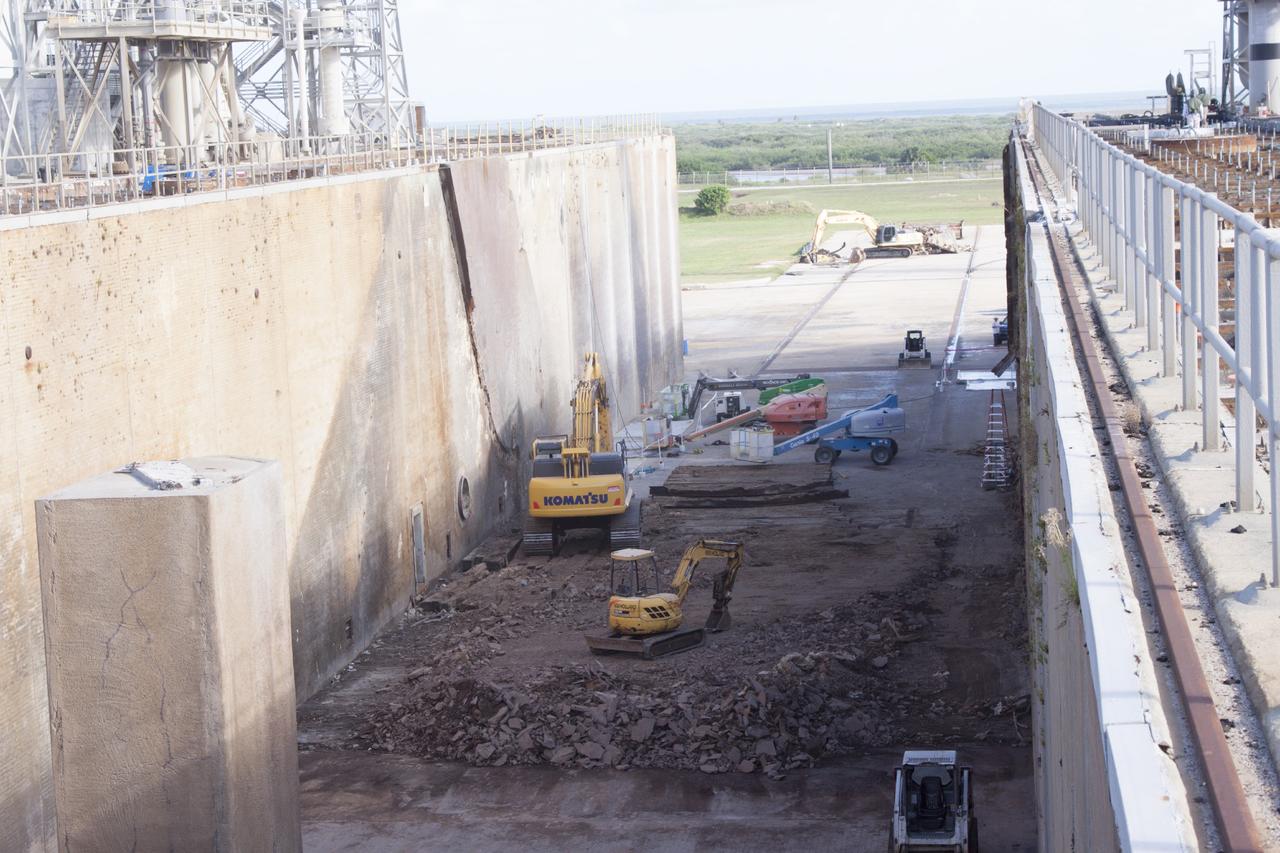
CAPE CANAVERAL, Fla. – At Launch Pad 39B at NASA’s Kennedy Space Center in Florida, the flame trench deflector that was located below and between the left and right crawlerway tracks has been removed. Pad B is being refurbished to support NASA’s Space Launch System and other launch vehicles. The Ground Systems Development and Operations, or GSDO, Program at Kennedy is leading the center’s transformation to safely handle a variety of rockets and spacecraft. For more information about GSDO, visit: http://go.nasa.gov/groundsystems. Photo credit: NASA/Jim Grossman
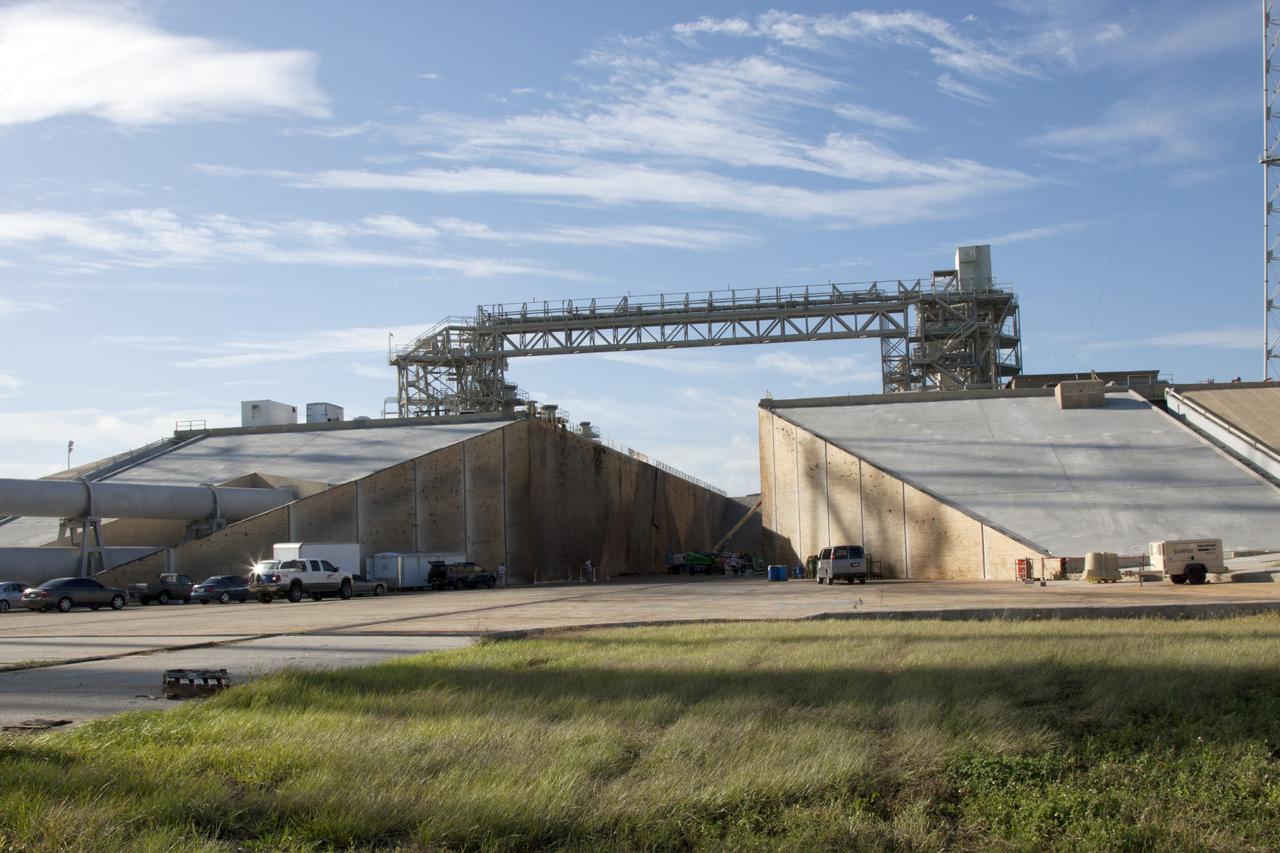
CAPE CANAVERAL, Fla. – At Launch Pad 39B at NASA’s Kennedy Space Center in Florida, the flame trench deflector located below and between the left and right crawlerway tracks has been removed. Pad B is being refurbished to support NASA’s Space Launch System and other launch vehicles. The Ground Systems Development and Operations, or GSDO, Program at Kennedy is leading the center’s transformation to safely handle a variety of rockets and spacecraft. For more information about GSDO, visit: http://go.nasa.gov/groundsystems. Photo credit: NASA/Jim Grossman
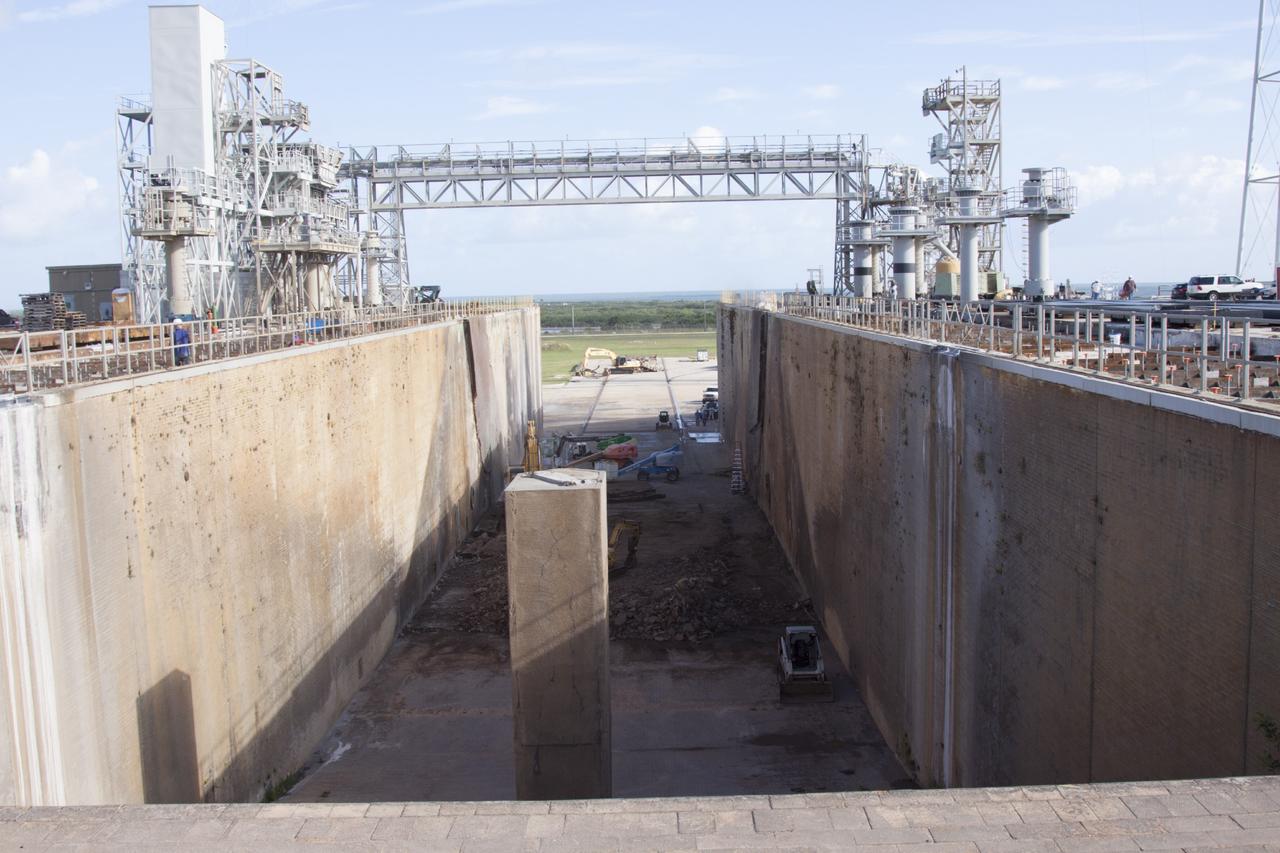
CAPE CANAVERAL, Fla. – At Launch Pad 39B at NASA’s Kennedy Space Center in Florida, the flame trench deflector that was located below and between the left and right crawlerway tracks has been removed. Pad B is being refurbished to support NASA’s Space Launch System and other launch vehicles. The Ground Systems Development and Operations, or GSDO, Program at Kennedy is leading the center’s transformation to safely handle a variety of rockets and spacecraft. For more information about GSDO, visit: http://go.nasa.gov/groundsystems. Photo credit: NASA/Jim Grossman
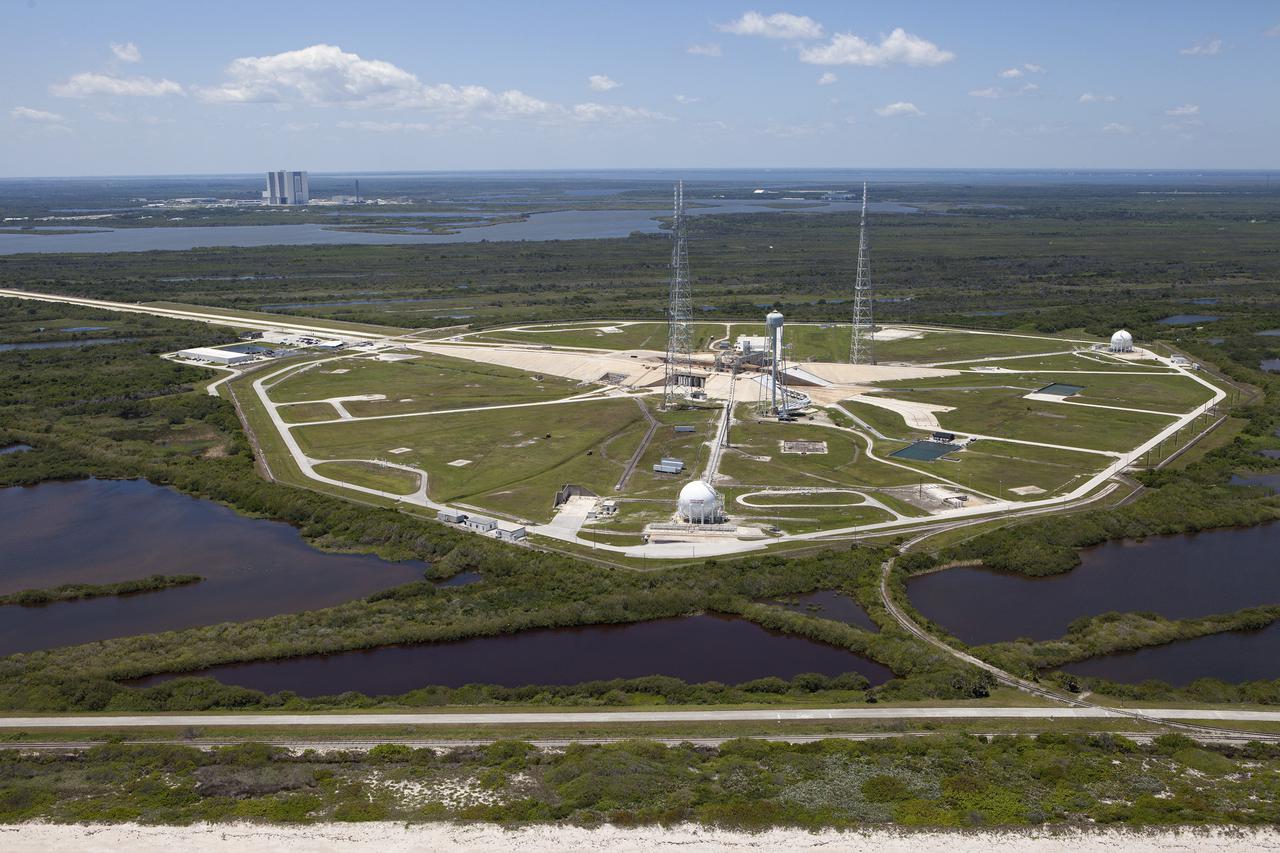
CAPE CANAVERAL, Fla. – An aerial view, from the east looking toward the west, shows the entire Launch Pad 39B area at NASA’s Kennedy Space Center in Florida. A new elevator has been constructed on the surface of the pad and the crawlerway leading up to the surface is being repaired. Repairs also are being made to the crawler track panels and catacomb roof below on either side of the flame trench. Also in view are the water tower and the three tall lightning towers that surround the pad. To the left, in the background is the Vehicle Assembly Building. Upgrades are underway at Pad B and other facilities in the Launch Complex 39 area. The Ground Systems Development and Operations, or GSDO, Program office at Kennedy is leading the center’s transformation from a historically government-only launch complex to a spaceport that can safely handle a variety of rockets and spacecraft, including NASA’s Space Launch System. For more information about GSDO, visit: http:__go.nasa.gov_groundsystems. Photo credit: NASA_Kim Shiflett
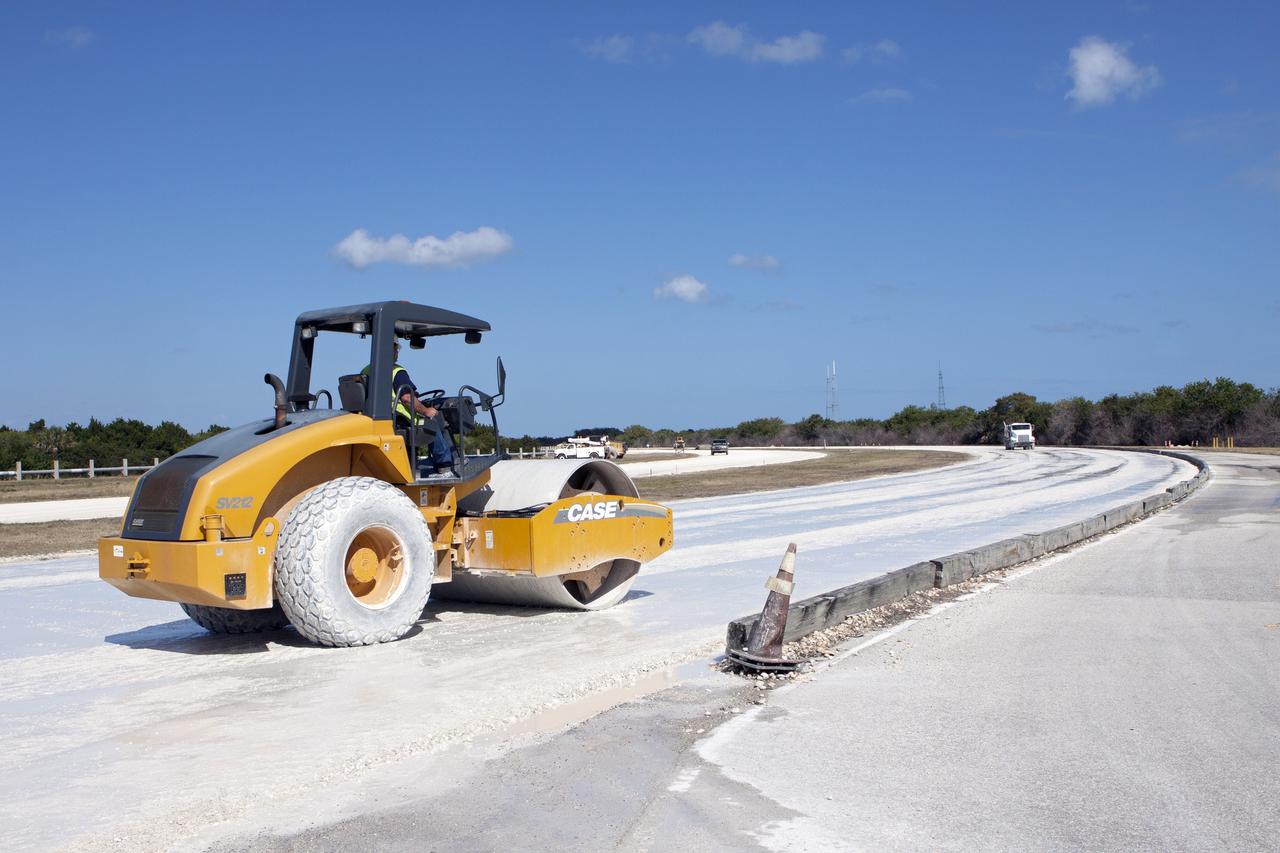
CAPE CANAVERAL, Fla. – A worker from Canaveral Construction in Mims, Fla., re-grades a section of the lime rock on the crawlerway near Launch Pad 39B at NASA’s Kennedy Space Center in Florida. The crawlerway is being upgraded to improve the foundation and prepare it to support the weight of NASA’s Space Launch System, or SLS, and mobile launcher on the crawler-transporter during rollout. Workers are removing the original Alabama river rock and restoring the layer of lime rock below to its original depth. Then new river rock will be added on top. The Ground Systems Development and Operations, or GSDO, Program office at Kennedy is leading the center’s transformation to safely handle a variety of rockets and spacecraft. For more information about GSDO, visit: http://go.nasa.gov/groundsystems. Photo credit: NASA/Jim Grossmann
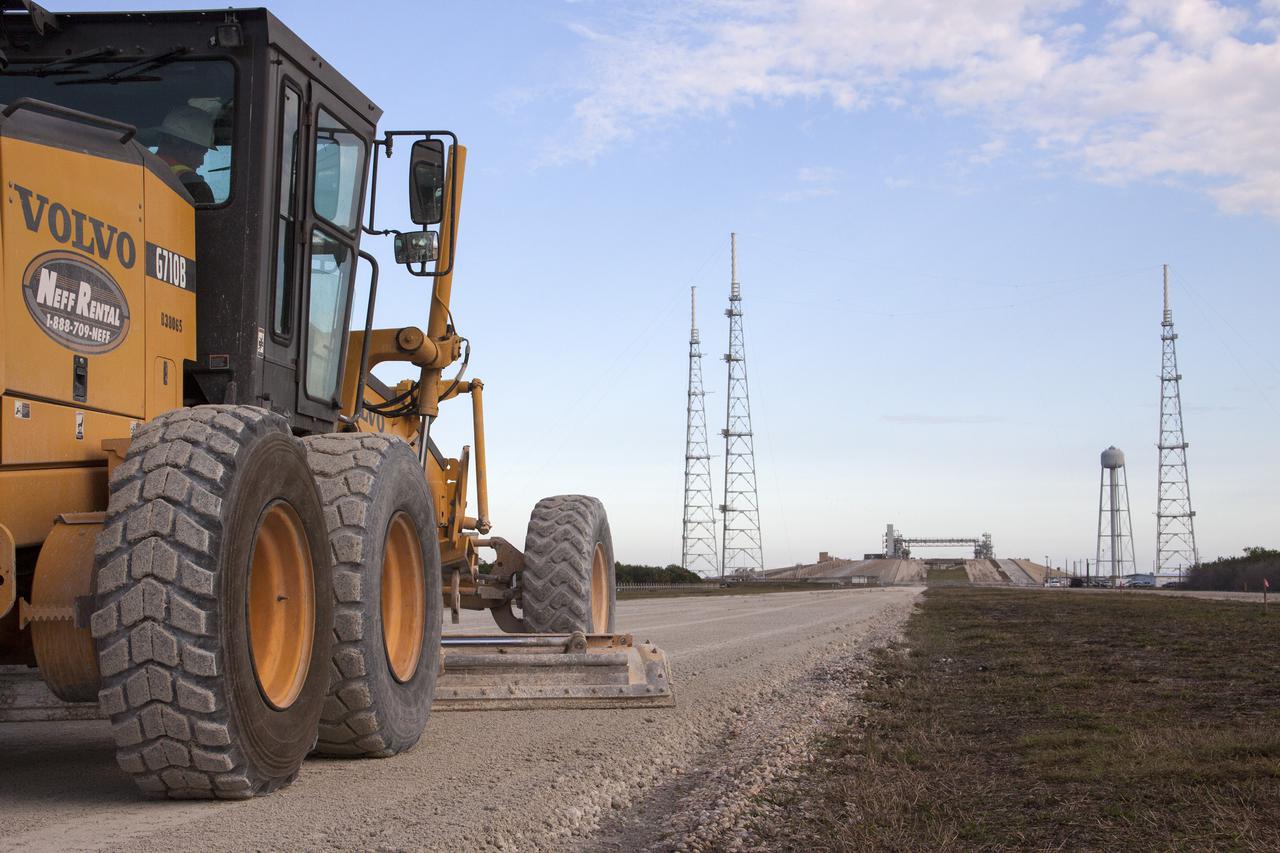
CAPE CANAVERAL, Fla. – A worker from Canaveral Construction in Mims, Fla., re-grades a section of the crawlerway near Launch Pad 39B at NASA’s Kennedy Space Center in Florida. The crawlerway is being upgraded to improve the foundation and prepare it to support the weight of NASA’s Space Launch System, or SLS, and mobile launcher on the crawler-transporter during rollout. Workers are removing the original Alabama river rock and restoring the layer of lime rock below to its original depth of three feet. Then new river rock will be added on top. The Ground Systems Development and Operations, or GSDO, Program office at Kennedy is leading the center’s transformation to safely handle a variety of rockets and spacecraft. For more information about GSDO, visit: http:__go.nasa.gov_groundsystems. Photo credit: NASA_Jim Grossmann
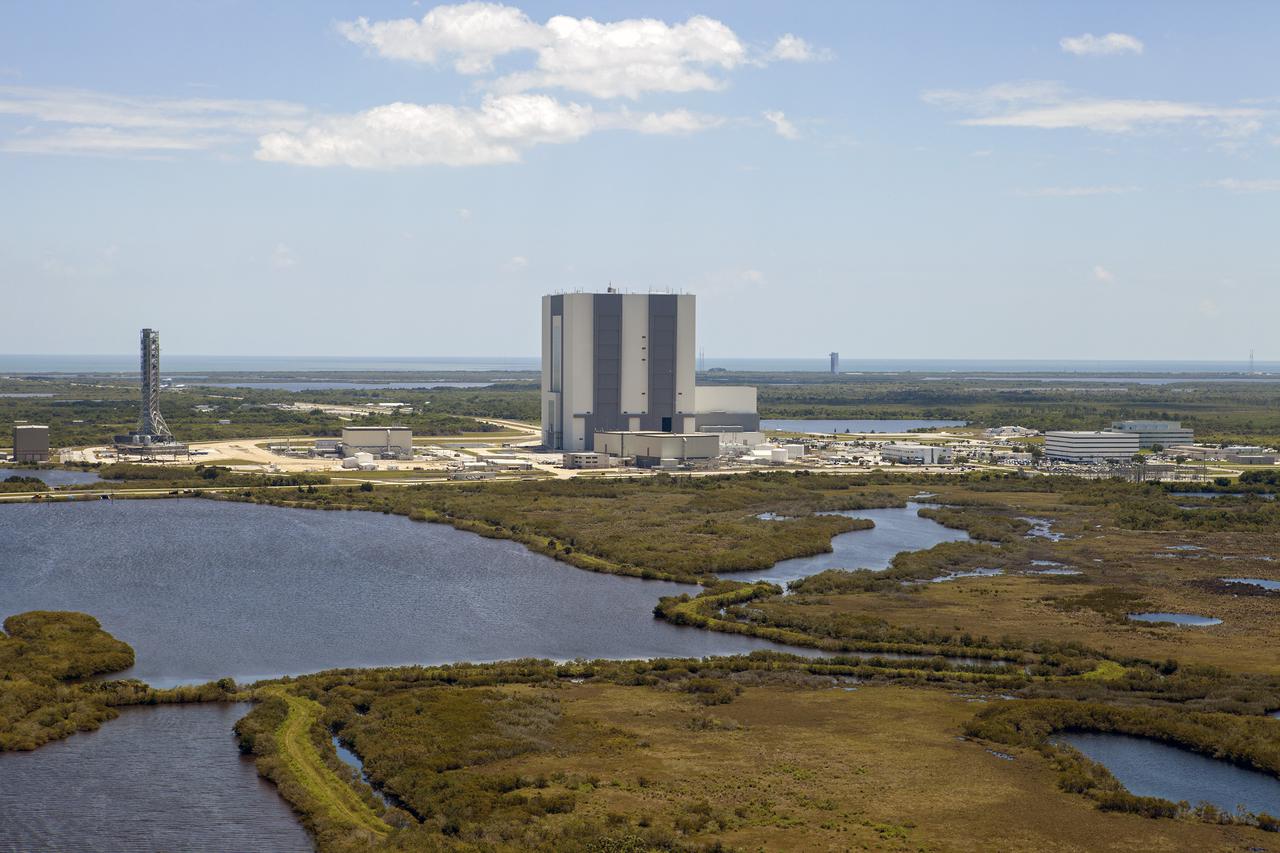
CAPE CANAVERAL, Fla. – An aerial view of the Vehicle Assembly Building and other buildings in the Launch Complex 39 area at NASA’s Kennedy Space Center in Florida. To the left is the mobile launcher that will be used to transport NASA’s Space Launch System rocket and the Orion crew capsule to Launch Pad 39B. Upgrades are underway at Pad B and other facilities in the Launch Complex 39 area. The Ground Systems Development and Operations, or GSDO, Program office at Kennedy is leading the center’s transformation from a historically government-only launch complex to a spaceport that can safely handle a variety of rockets and spacecraft, including NASA’s Space Launch System. For more information about GSDO, visit: http:__go.nasa.gov_groundsystems. Photo credit: NASA_Kim Shiflett
CAPE CANAVERAL, Fla. – A worker from Canaveral Construction in Mims, Fla., re-grades a section of the crawlerway near Launch Pad 39B at NASA’s Kennedy Space Center in Florida. The crawlerway is being upgraded to improve the foundation and prepare it to support the weight of NASA’s Space Launch System, or SLS, and mobile launcher on the crawler-transporter during rollout. Workers are removing the original Alabama river rock and restoring the layer of lime rock below to its original depth of three feet. Then new river rock will be added on top. The Ground Systems Development and Operations, or GSDO, Program office at Kennedy is leading the center’s transformation to safely handle a variety of rockets and spacecraft. For more information about GSDO, visit: http:__go.nasa.gov_groundsystems. Photo credit: NASA_Jim Grossmann
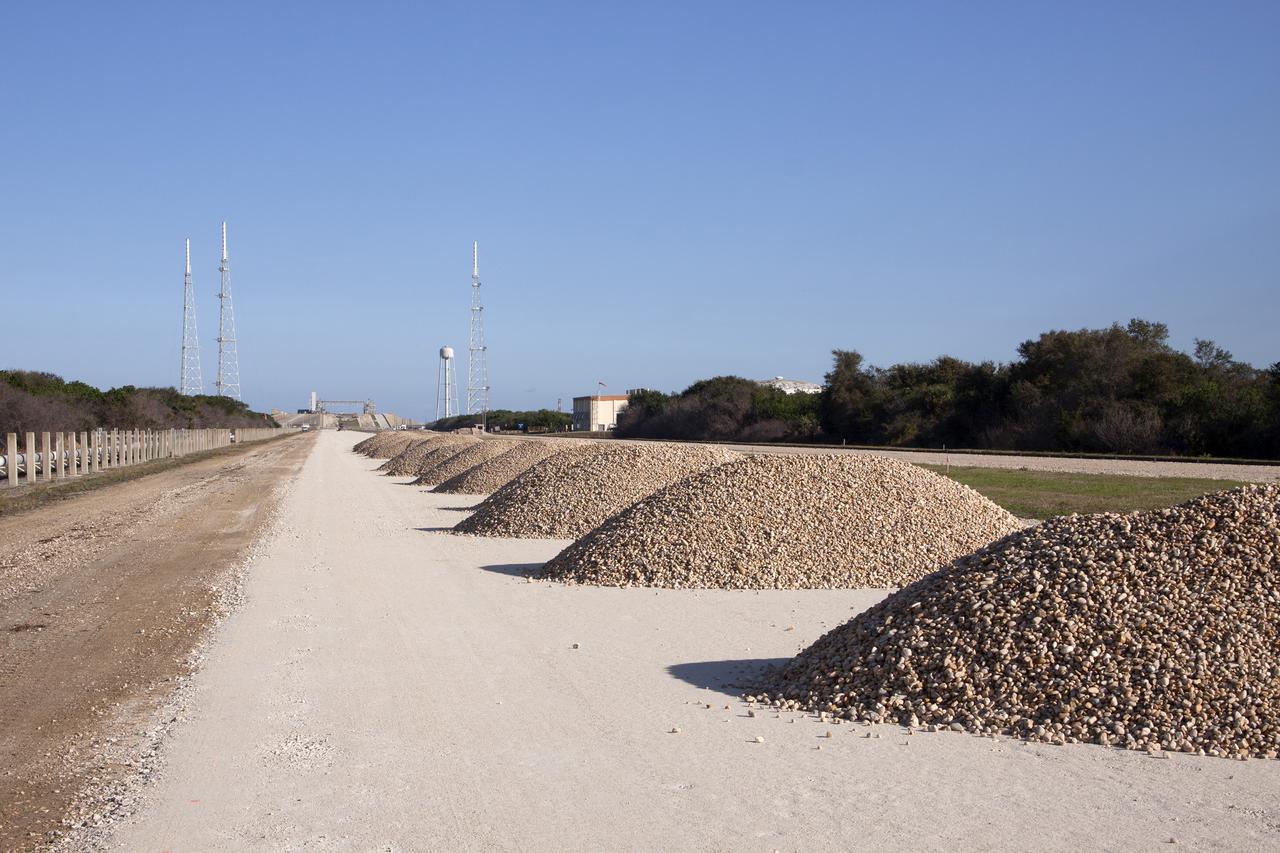
CAPE CANAVERAL, Fla. – Workers from Canaveral Construction in Mims, Fla., have removed the Alabama river rock from one side of the crawlerway near Launch Pad 39B at NASA’s Kennedy Space Center in Florida. The crawlerway is being upgraded to improve the foundation and prepare it to support the weight of NASA’s Space Launch System, or SLS, and mobile launcher on the crawler-transporter during rollout. Workers are removing the original Alabama river rock and restoring the layer of lime rock below to its original depth of three feet. Then new river rock will be added on top. The Ground Systems Development and Operations, or GSDO, Program office at Kennedy is leading the center’s transformation to safely handle a variety of rockets and spacecraft. For more information about GSDO, visit: http:__go.nasa.gov_groundsystems. Photo credit: NASA_Jim Grossmann
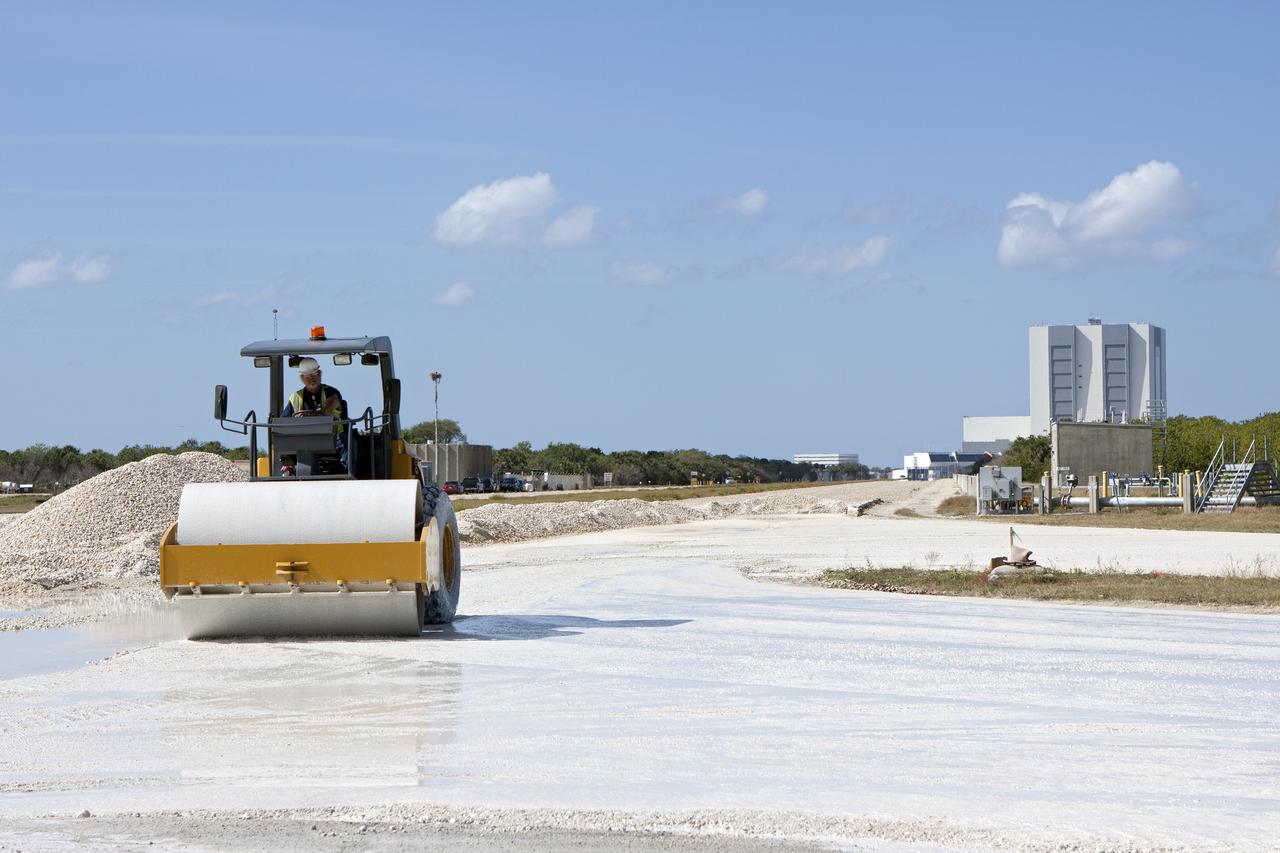
CAPE CANAVERAL, Fla. – A worker from Canaveral Construction in Mims, Fla., re-grades a section of the lime rock on the crawlerway near Launch Pad 39B at NASA’s Kennedy Space Center in Florida. The crawlerway is being upgraded to improve the foundation and prepare it to support the weight of NASA’s Space Launch System, or SLS, and mobile launcher on the crawler-transporter during rollout. Workers are removing the original Alabama river rock and restoring the layer of lime rock below to its original depth. Then new river rock will be added on top. The Ground Systems Development and Operations, or GSDO, Program office at Kennedy is leading the center’s transformation to safely handle a variety of rockets and spacecraft. For more information about GSDO, visit: http://go.nasa.gov/groundsystems. Photo credit: NASA/Jim Grossmann
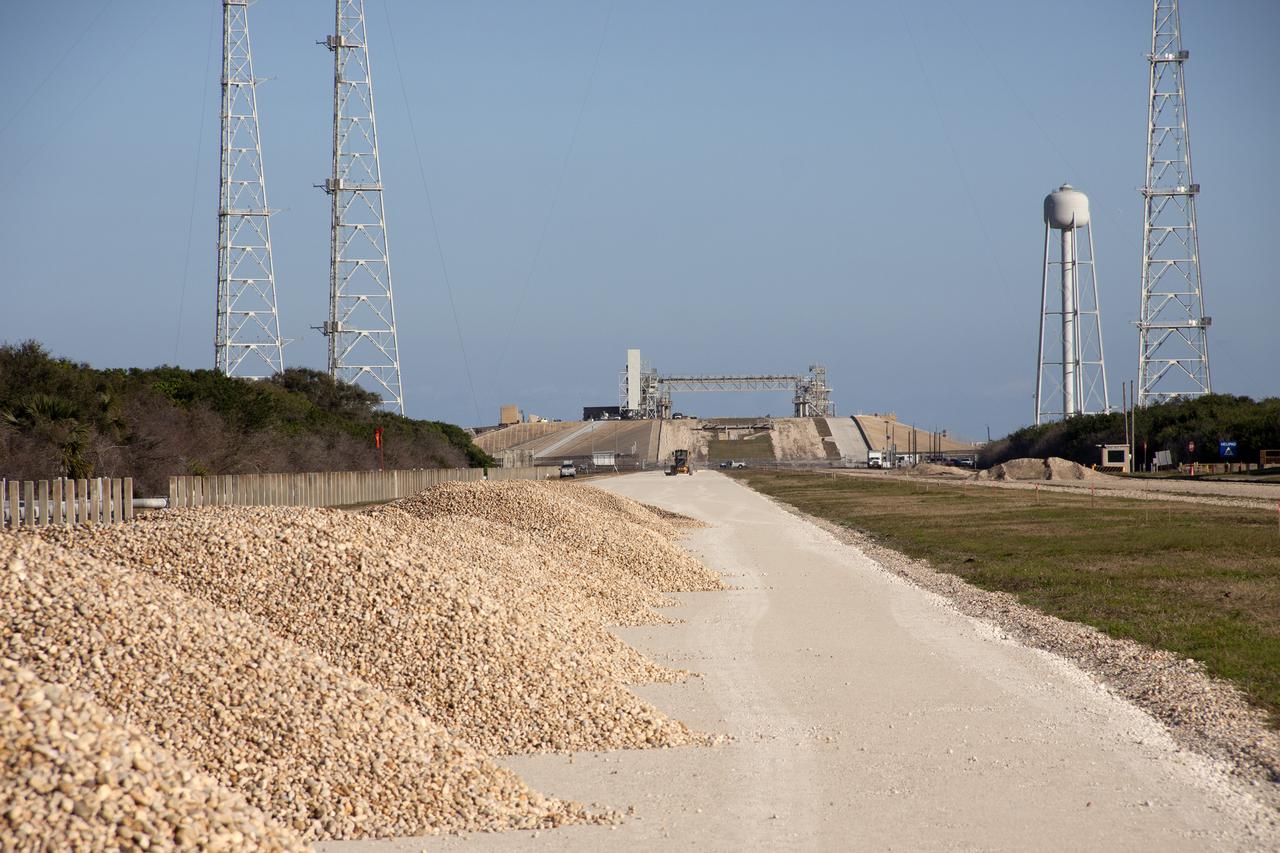
CAPE CANAVERAL, Fla. – Workers from Canaveral Construction in Mims, Fla., have removed the Alabama river rock from one side of the crawlerway near Launch Pad 39B at NASA’s Kennedy Space Center in Florida. The crawlerway is being upgraded to improve the foundation and prepare it to support the weight of NASA’s Space Launch System, or SLS, and mobile launcher on the crawler-transporter during rollout. Workers are removing the original Alabama river rock and restoring the layer of lime rock below to its original depth of three feet. Then new river rock will be added on top. The Ground Systems Development and Operations, or GSDO, Program office at Kennedy is leading the center’s transformation to safely handle a variety of rockets and spacecraft. For more information about GSDO, visit: http:__go.nasa.gov_groundsystems. Photo credit: NASA_Jim Grossmann
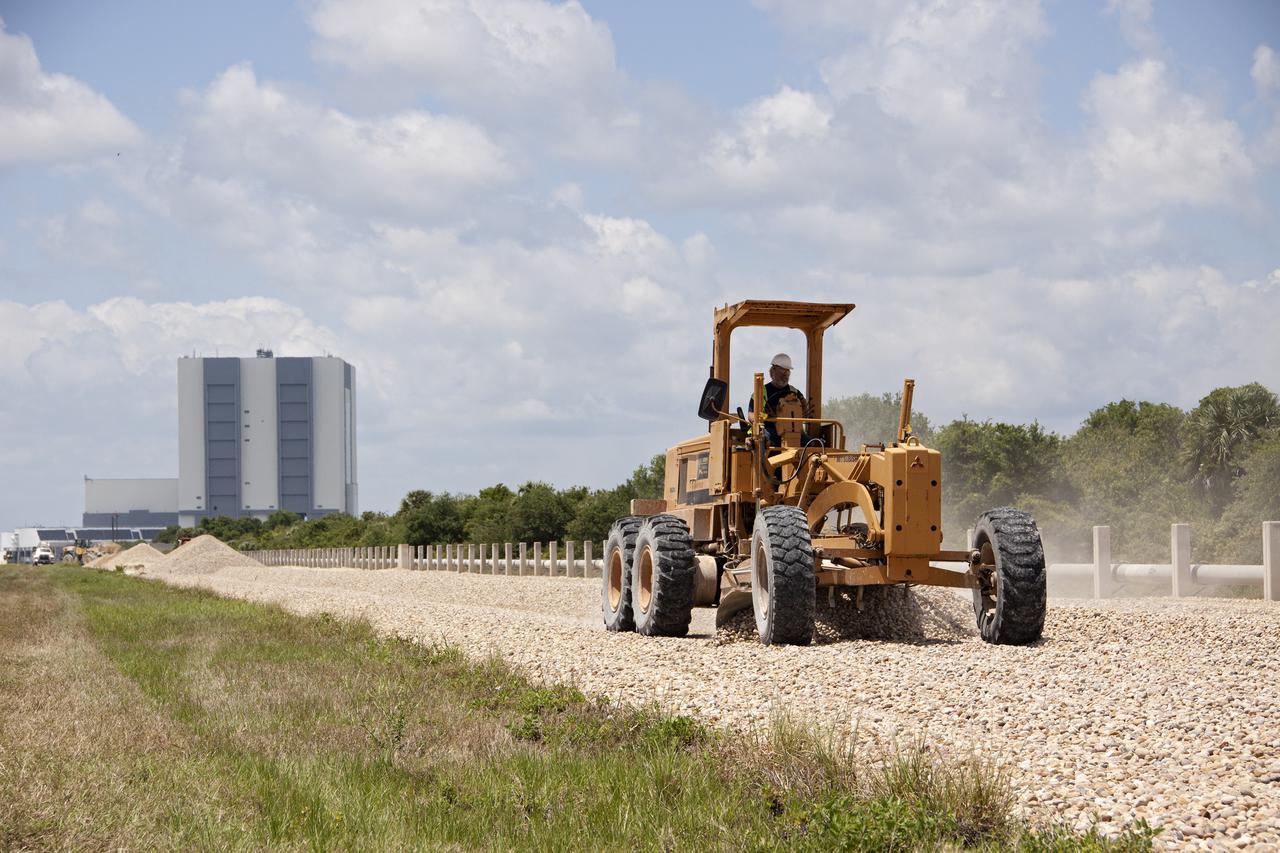
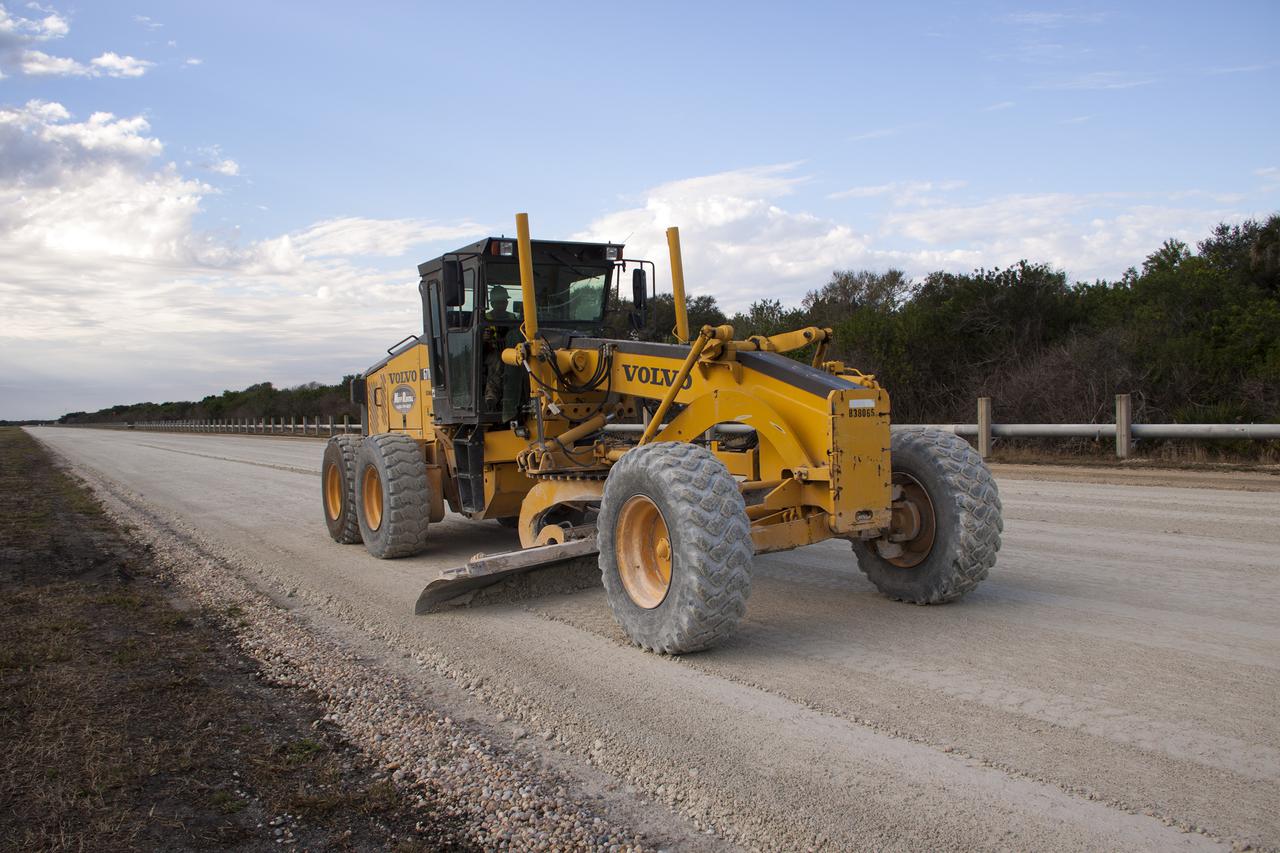
CAPE CANAVERAL, Fla. – At NASA’s Kennedy Space Center in Florida, a road-grader resurfaces a section of the crawlerway leading from the Vehicle Assembly Building VAB to the launch pads. The Ground Systems Development and Operations GSDO Program office at Kennedy is working to upgrade the two 40-foot-wide pathways the crawler-transporter will travel as it transports launch vehicles such as NASA's Space Launch System SLS rocket from the VAB to the launch pad. For more: http:__www.nasa.gov_exploration_systems_ground_crawlerway_upgrades.html Photo credit: NASA_Jim Grossman
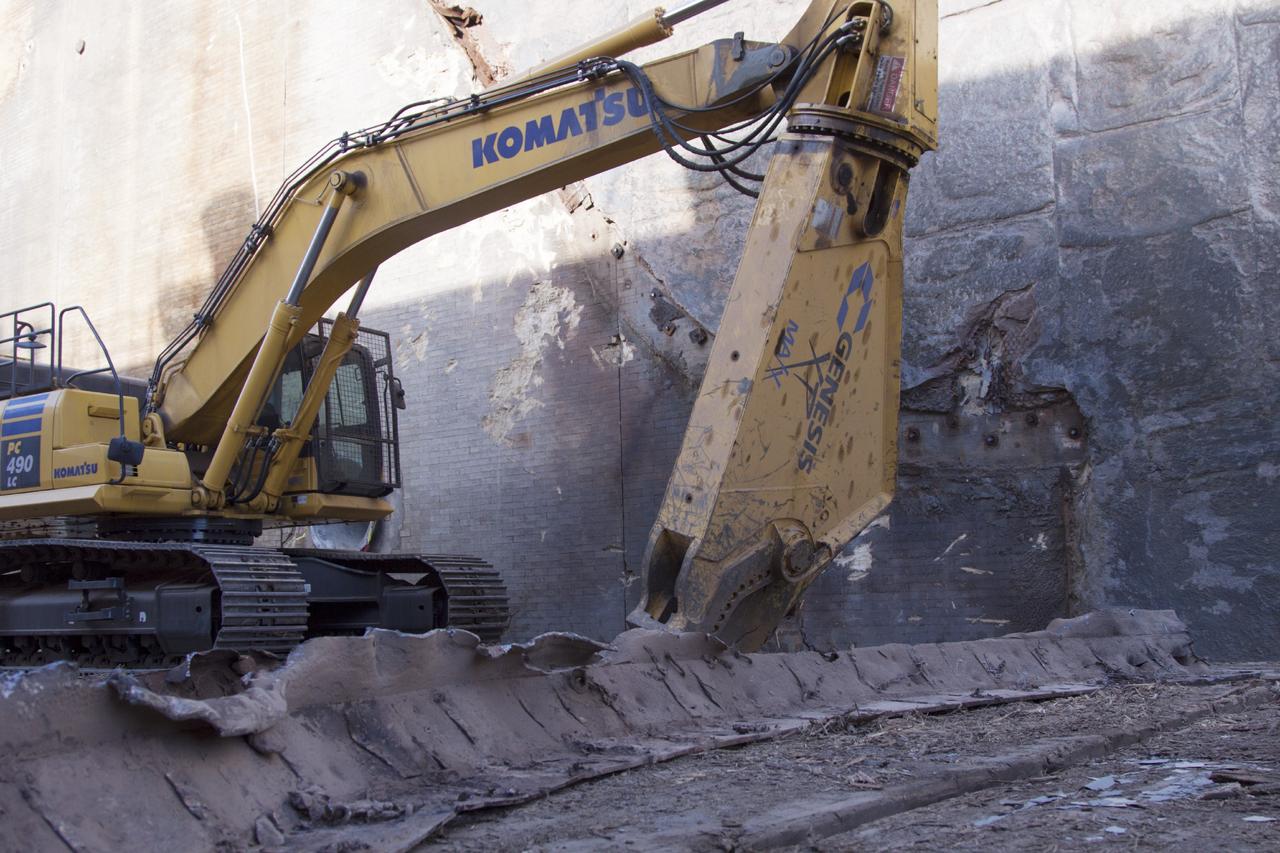
CAPE CANAVERAL, Fla. – At Launch Pad 39B at NASA’s Kennedy Space Center in Florida, a large bulldozer is used to remove the remaining portions of the flame trench deflector that was located below and between the left and right crawlerway tracks. Pad B is being refurbished to support NASA’s Space Launch System and other launch vehicles. The Ground Systems Development and Operations, or GSDO, Program at Kennedy is leading the center’s transformation to safely handle a variety of rockets and spacecraft. For more information about GSDO, visit: http://go.nasa.gov/groundsystems. Photo credit: NASA/Jim Grossman
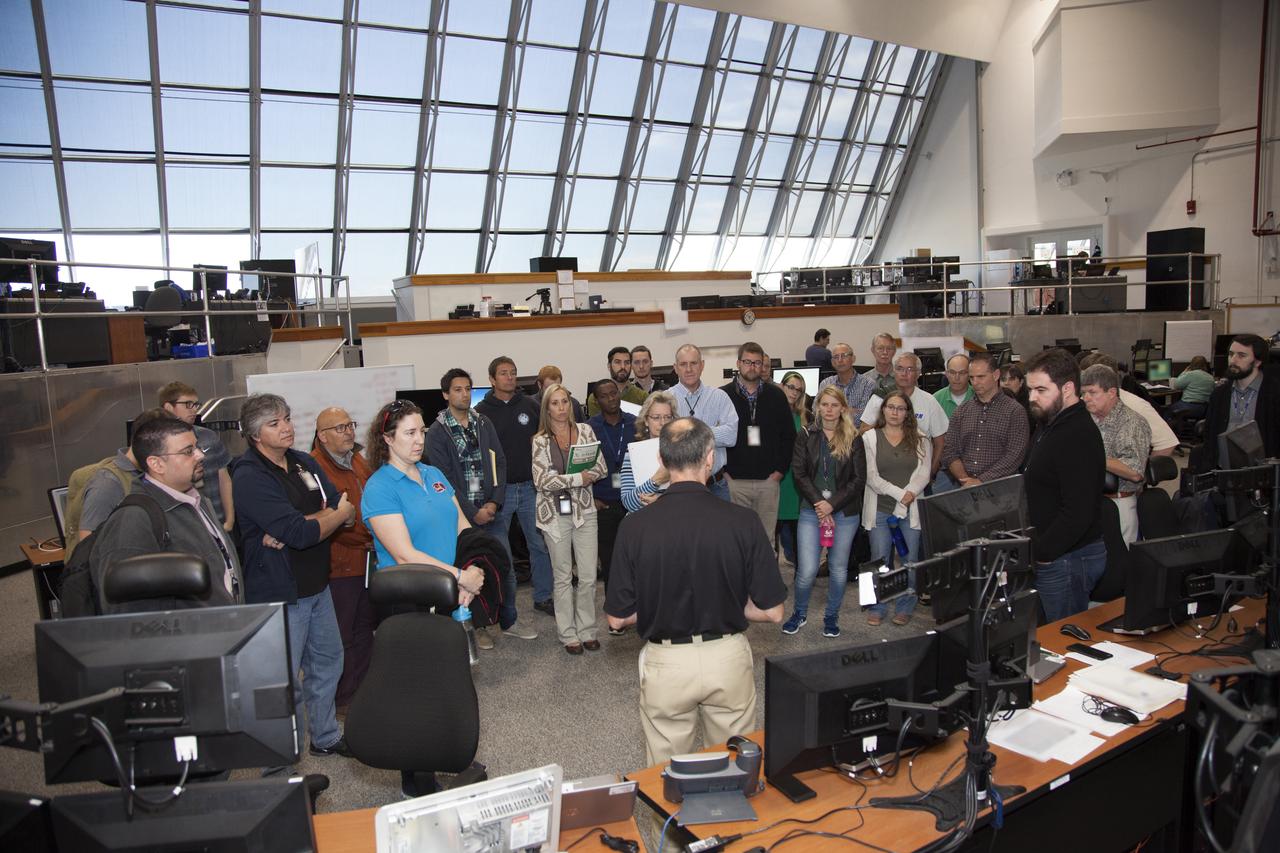
NASA engineers and test directors gather in Firing Room 3 in the Launch Control Center at NASA's Kennedy Space Center in Florida, to watch a demonstration of the automated command and control software for the agency's Space Launch System (SLS) and Orion spacecraft. The software is called the Ground Launch Sequencer. It will be responsible for nearly all of the launch commit criteria during the final phases of launch countdowns. The Ground and Flight Application Software Team (GFAST) demonstrated the software. It was developed by the Command, Control and Communications team in the Ground Systems Development and Operations (GSDO) Program. GSDO is helping to prepare the center for the first test flight of Orion atop the SLS on Exploration Mission 1.
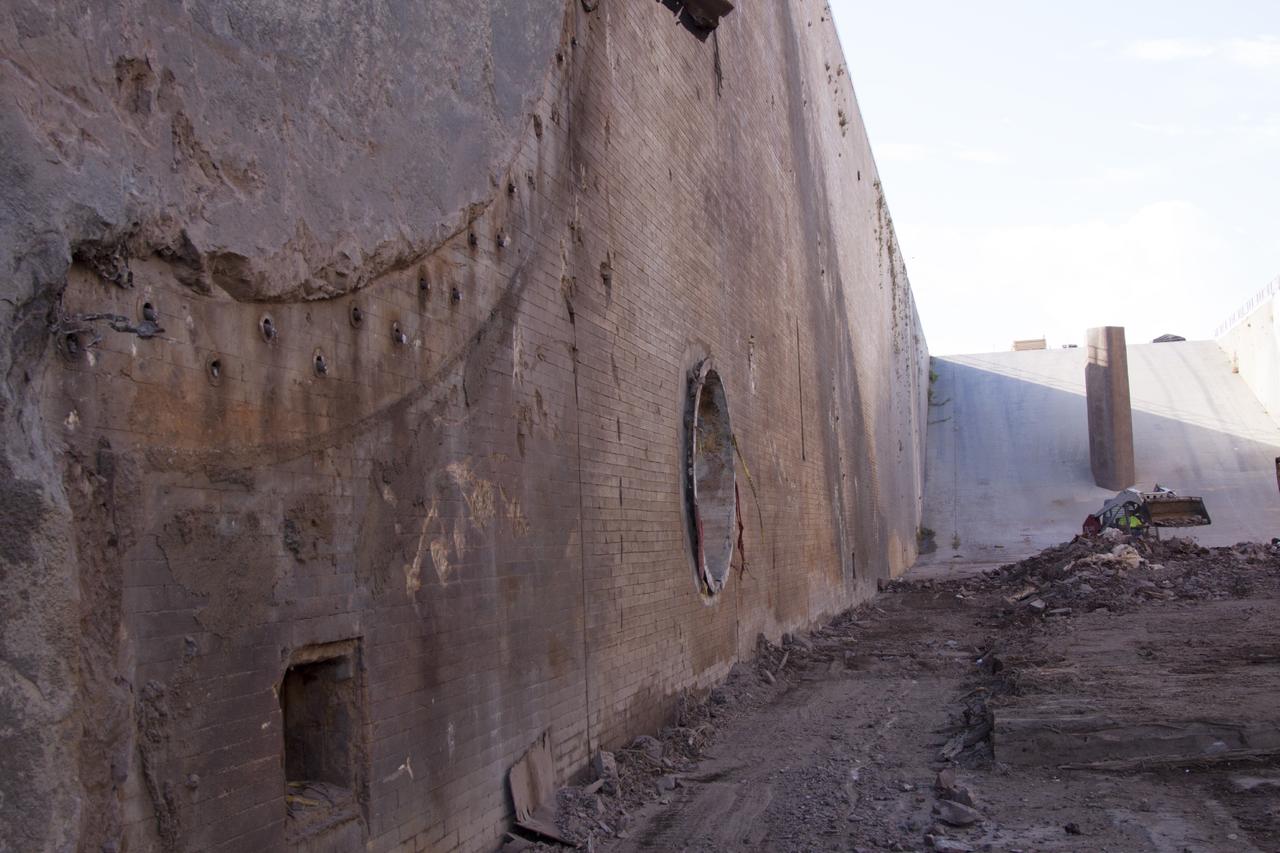
CAPE CANAVERAL, Fla. – At Launch Pad 39B at NASA’s Kennedy Space Center in Florida, the flame trench deflector that was located below and between the left and right crawlerway tracks has been removed. Work will continue to repair or replace the bricks on the walls. Pad B is being refurbished to support NASA’s Space Launch System and other launch vehicles. The Ground Systems Development and Operations, or GSDO, Program at Kennedy is leading the center’s transformation to safely handle a variety of rockets and spacecraft. For more information about GSDO, visit: http://go.nasa.gov/groundsystems. Photo credit: NASA/Jim Grossman
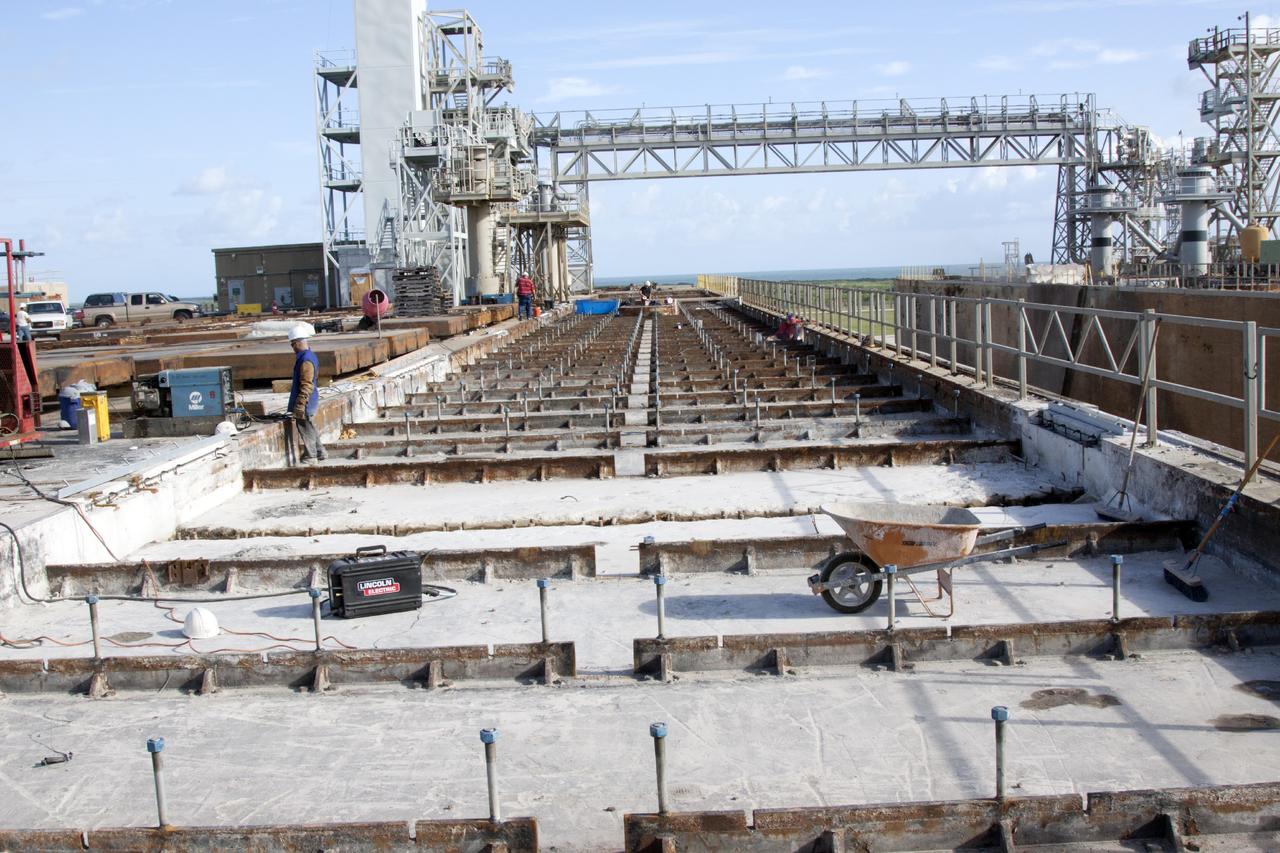
CAPE CANAVERAL, Fla. – At Launch Pad 39B at NASA’s Kennedy Space Center in Florida, the crawler track panels have been removed and construction workers continue to repair the concrete on the surface of the pad. The flame trench deflector that was located below and between the left and right crawlerway tracks has been removed. Pad B is being refurbished to support NASA’s Space Launch System and other launch vehicles. The Ground Systems Development and Operations, or GSDO, Program at Kennedy is leading the center’s transformation to safely handle a variety of rockets and spacecraft. For more information about GSDO, visit: http://go.nasa.gov/groundsystems. Photo credit: NASA/Jim Grossman
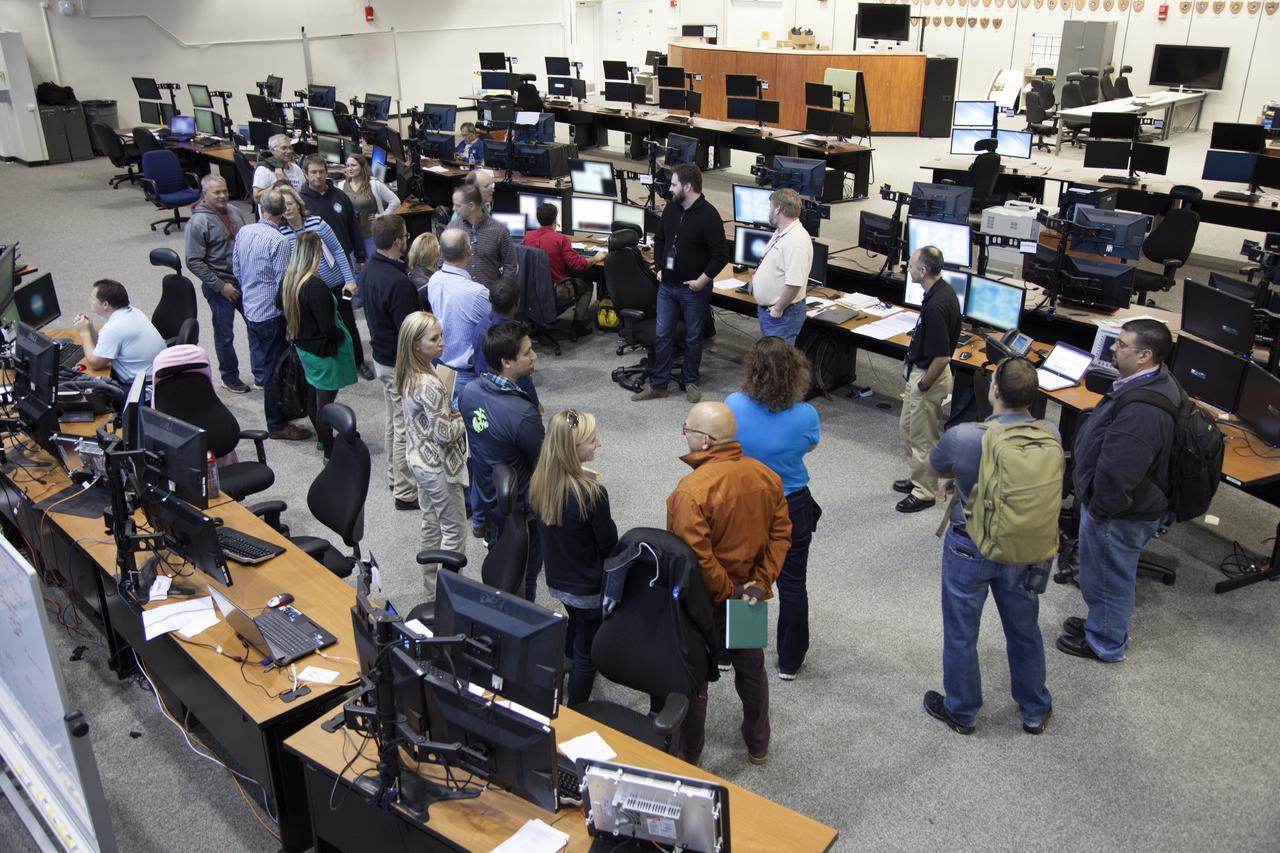
NASA engineers and test directors gather in Firing Room 3 in the Launch Control Center at NASA's Kennedy Space Center in Florida, to watch a demonstration of the automated command and control software for the agency's Space Launch System (SLS) and Orion spacecraft. The software is called the Ground Launch Sequencer. It will be responsible for nearly all of the launch commit criteria during the final phases of launch countdowns. The Ground and Flight Application Software Team (GFAST) demonstrated the software. It was developed by the Command, Control and Communications team in the Ground Systems Development and Operations (GSDO) Program. GSDO is helping to prepare the center for the first test flight of Orion atop the SLS on Exploration Mission 1.
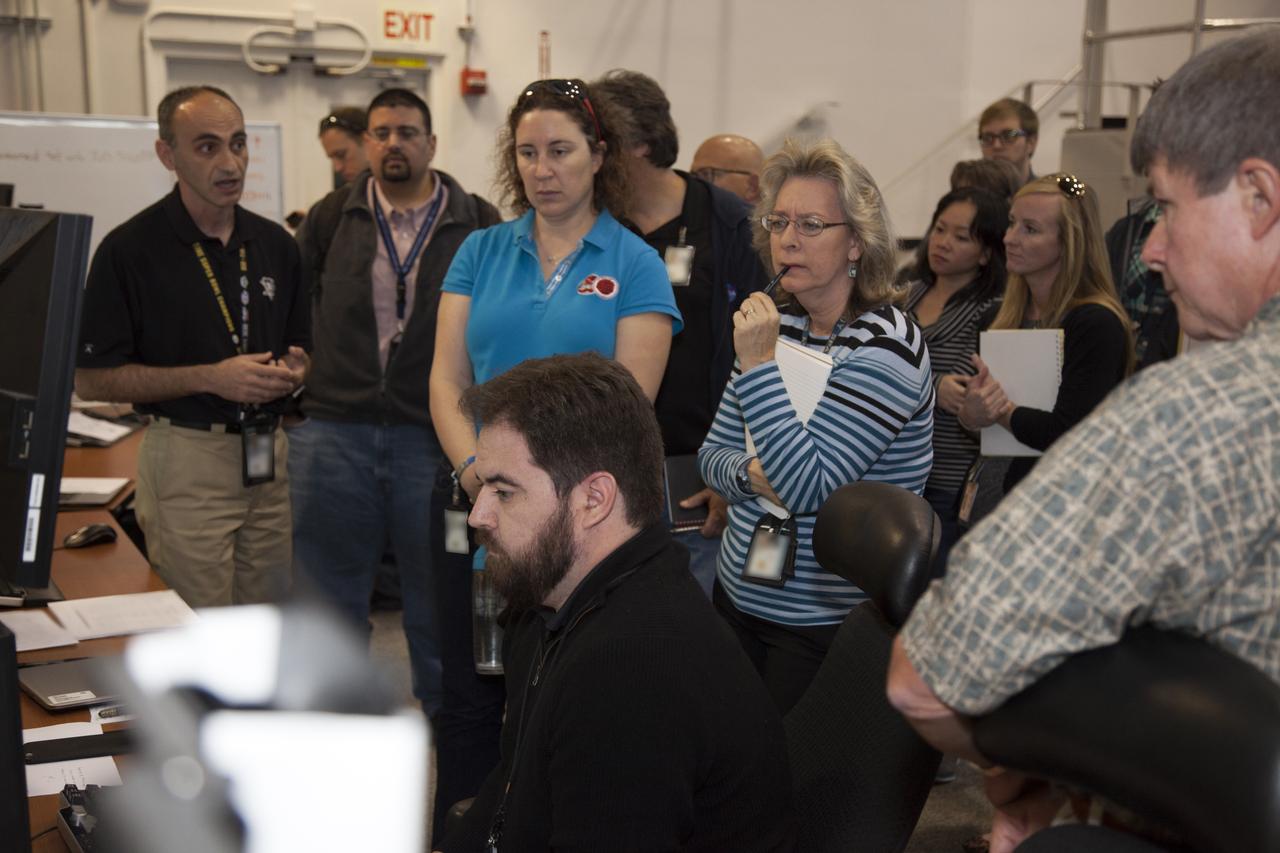
NASA engineers and test directors gather in Firing Room 3 in the Launch Control Center at NASA's Kennedy Space Center in Florida, to watch a demonstration of the automated command and control software for the agency's Space Launch System (SLS) and Orion spacecraft. The software is called the Ground Launch Sequencer. It will be responsible for nearly all of the launch commit criteria during the final phases of launch countdowns. The Ground and Flight Application Software Team (GFAST) demonstrated the software. It was developed by the Command, Control and Communications team in the Ground Systems Development and Operations (GSDO) Program. GSDO is helping to prepare the center for the first test flight of Orion atop the SLS on Exploration Mission 1.
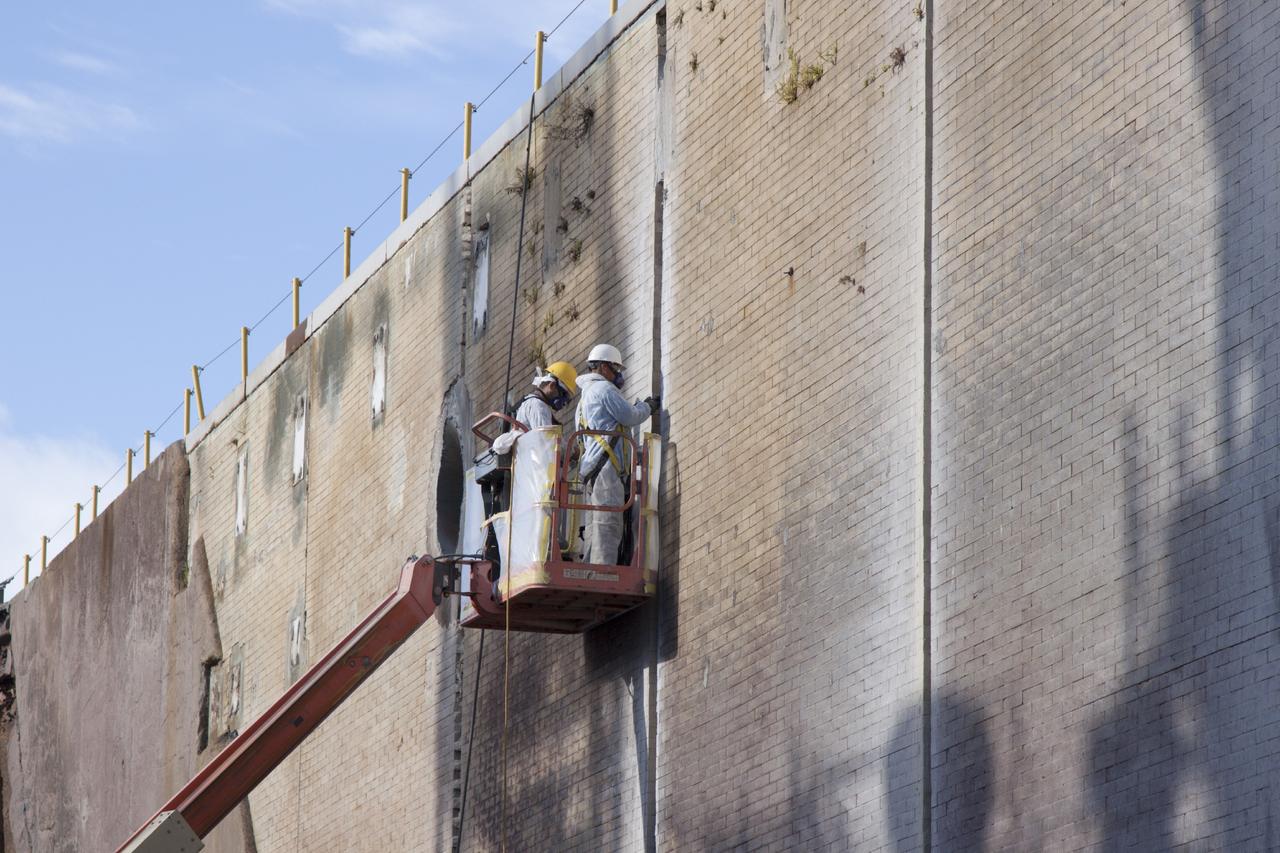
CAPE CANAVERAL, Fla. – At Launch Pad 39B at NASA’s Kennedy Space Center in Florida, construction workers inspect the brick walls of the flame trench area that is located below and between the left and right crawlerway tracks. Pad B is being refurbished to support NASA’s Space Launch System and other launch vehicles. The Ground Systems Development and Operations, or GSDO, Program at Kennedy is leading the center’s transformation to safely handle a variety of rockets and spacecraft. For more information about GSDO, visit: http://go.nasa.gov/groundsystems. Photo credit: NASA/Jim Grossman
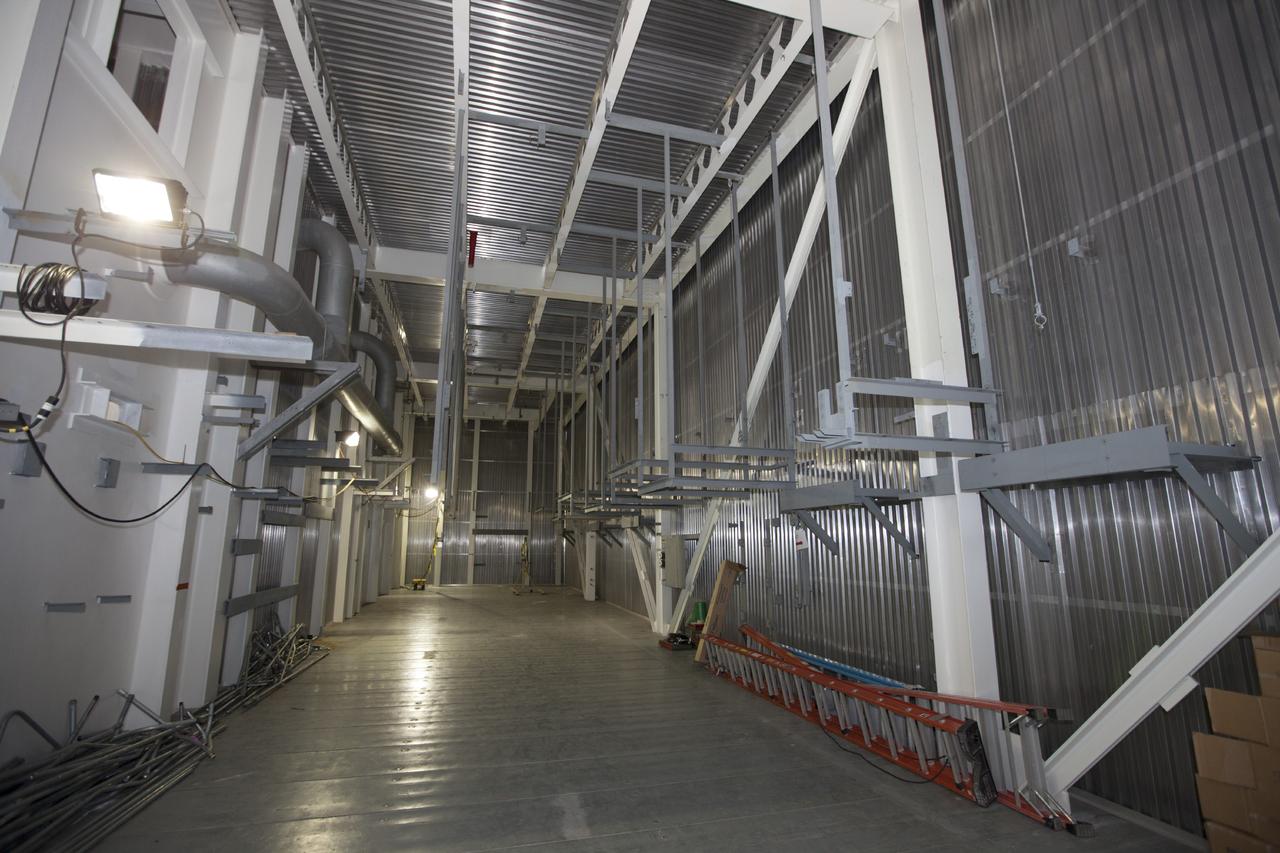
CAPE CANAVERAL, Fla. -- All is quiet and orderly inside the mobile launcher, or ML, at the park site adjacent to the Vehicle Assembly Building, or VAB, at NASA's Kennedy Space Center in Florida. Preparations are underway for modifications to begin to the outside of the 355-foot-tall ML structure this fall. NASA’s Ground Systems Development and Operations Program, or GSDO, is preparing the ML to support NASA’s Space Launch System, the heavy-lift rocket that will launch astronauts into deep space on future exploration missions. For more information, visit http://www.nasa.gov/exploration/systems/ground/index.html. Photo credit: NASA/Kim Shiflett
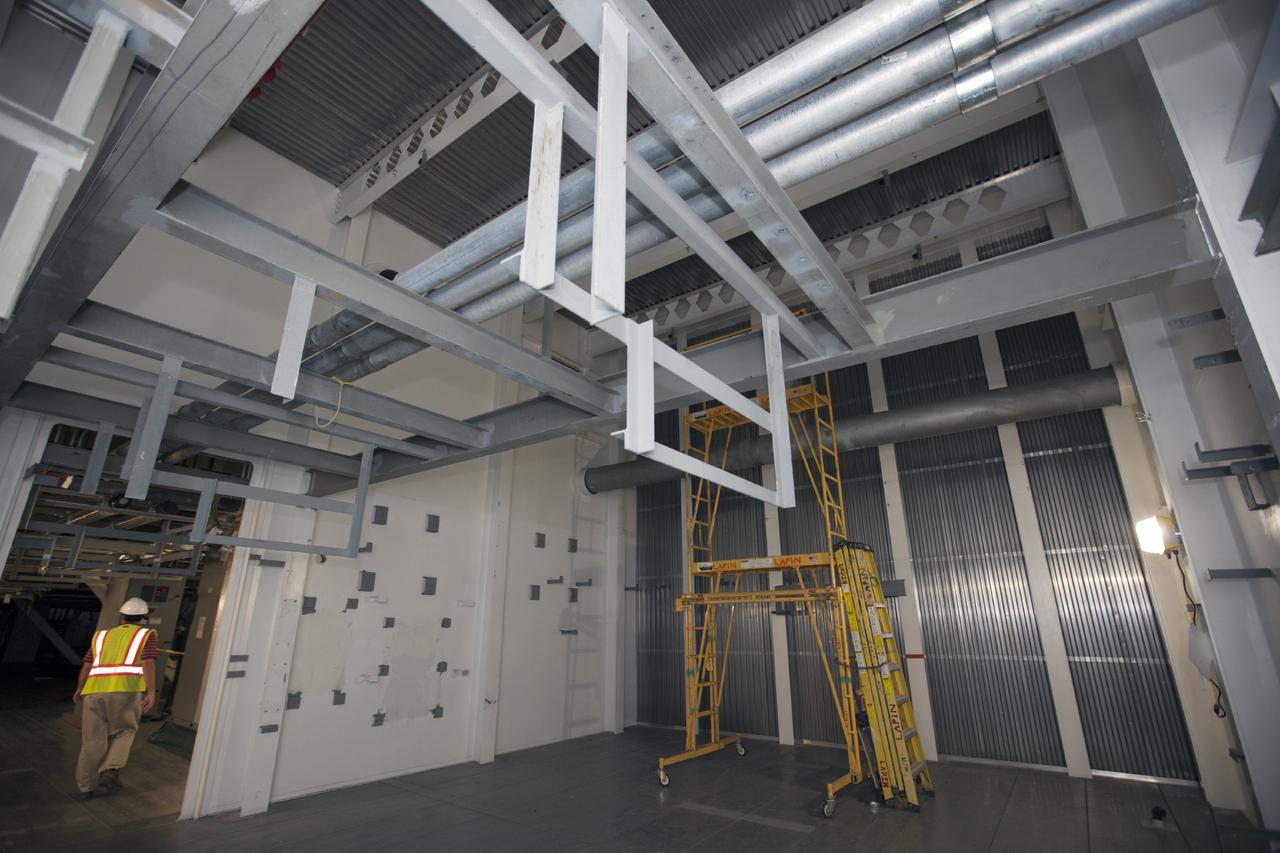
CAPE CANAVERAL, Fla. -- A worker inspects the interior of the mobile launcher, or ML, at the park site adjacent to the Vehicle Assembly Building, or VAB, at NASA's Kennedy Space Center in Florida. Preparations are underway for modifications to begin to the outside of the 355-foot-tall ML structure this fall. NASA’s Ground Systems Development and Operations Program, or GSDO, is preparing the ML to support NASA’s Space Launch System, the heavy-lift rocket that will launch astronauts into deep space on future exploration missions. For more information, visit http://www.nasa.gov/exploration/systems/ground/index.html. Photo credit: NASA/Kim Shiflett
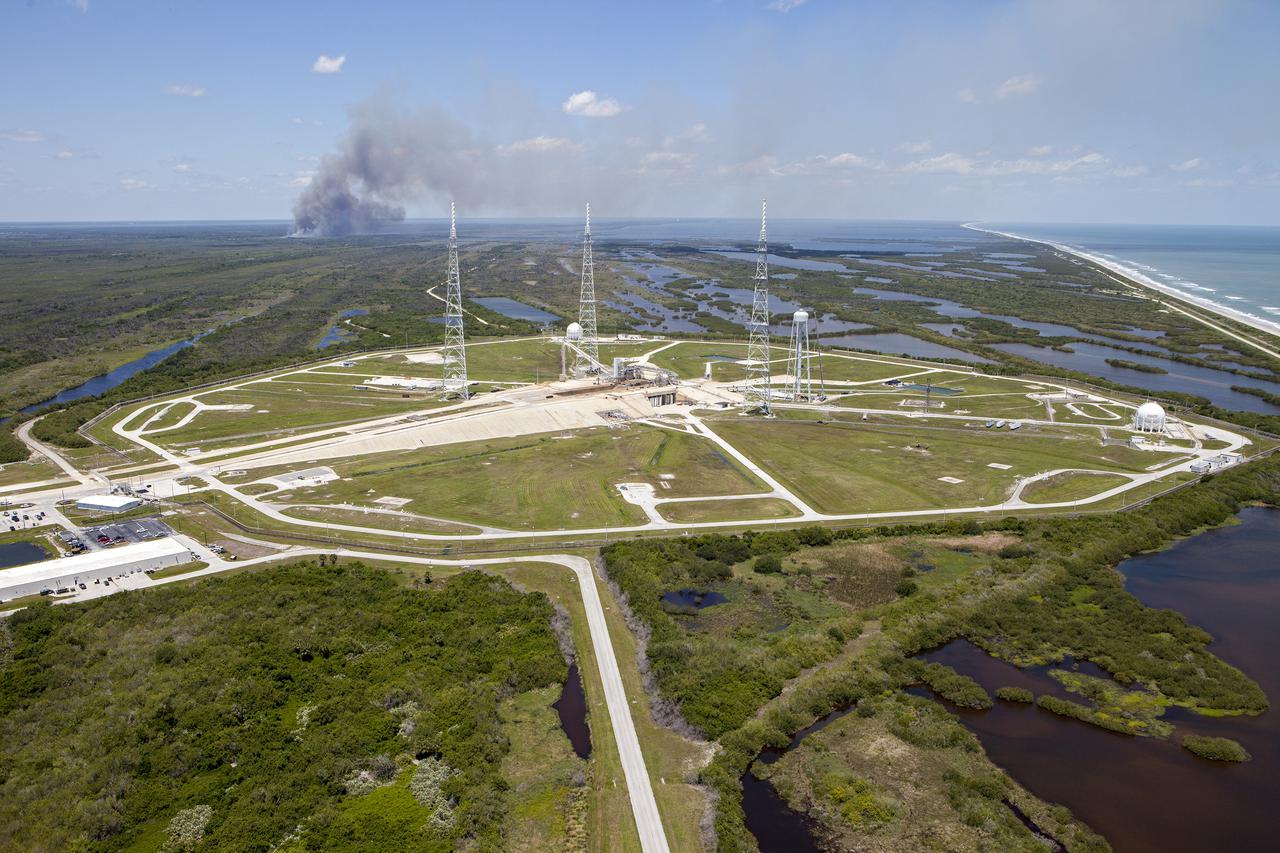
CAPE CANAVERAL, Fla. – An aerial view shows the Launch Pad 39B area at NASA’s Kennedy Space Center in Florida with the Atlantic Ocean to the right in the background. A new elevator has been constructed on the surface of the pad and the crawlerway leading up to the surface is being repaired. Repairs also are being made to the crawler track panels and catacomb roof below on either side of the flame trench. Also in view are the water tower and the three tall lightning towers that surround the pad. To the north of the pad, smoke can be seen from a small fire burning in the Merritt Island National Wildlife Refuge. Upgrades are underway at Pad B and other facilities in the Launch Complex 39 area. The Ground Systems Development and Operations, or GSDO, Program office at Kennedy is leading the center’s transformation from a historically government-only launch complex to a spaceport that can safely handle a variety of rockets and spacecraft, including NASA’s Space Launch System. For more information about GSDO, visit: http:__go.nasa.gov_groundsystems. Photo credit: NASA_Kim Shiflett
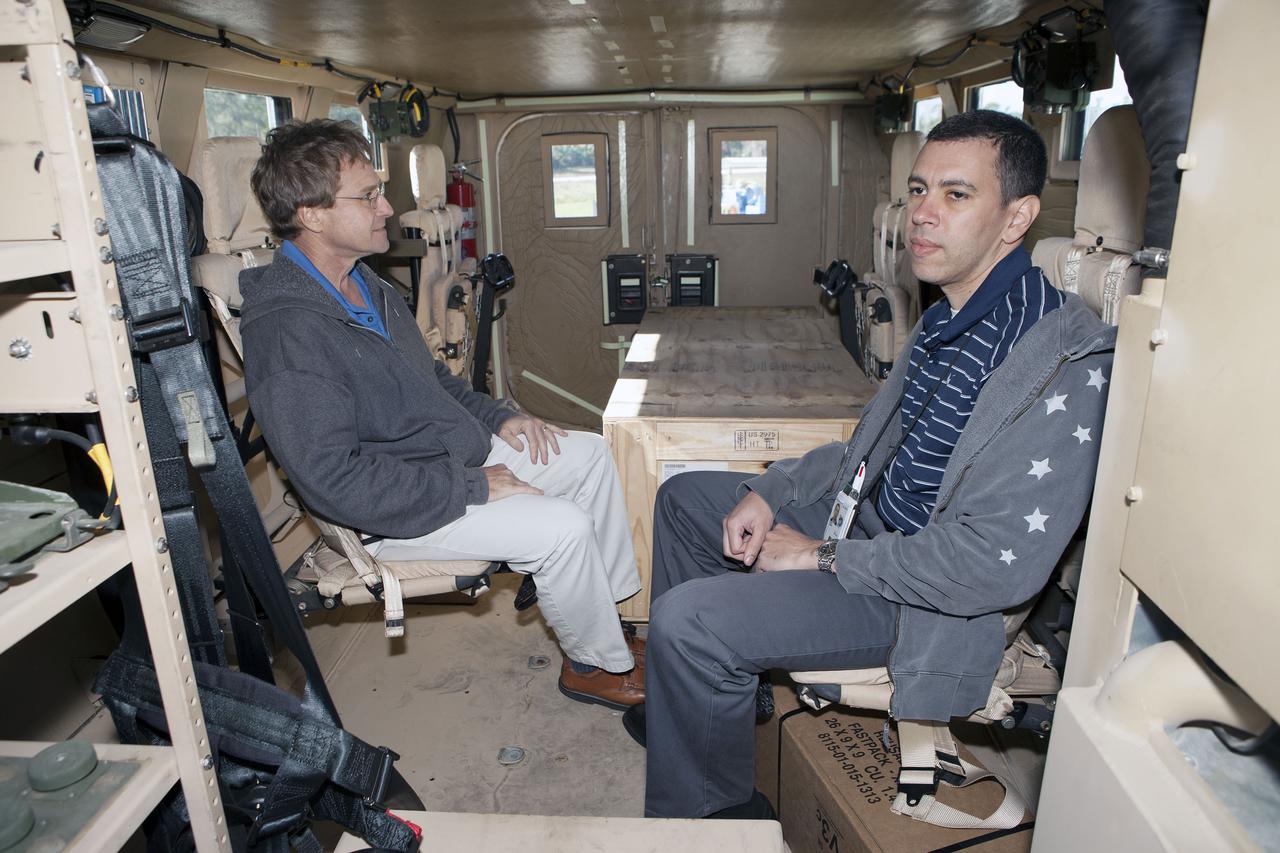
CAPE CANAVERAL, Fla. – Tom Hoffmann, left, and Danny Zeno, both Ground Systems Development and Operations, or GSDO, integration engineers, sit inside one of four new emergency egress vehicles, called Mine-Resistant Ambush-Protected, or MRAP, vehicles at the Maintenance and Operations Facility at NASA’s Kennedy Space Center in Florida. The MRAPs arrived from the U.S. Army Red River Depot in Texarkana, Texas in December 2013. The vehicles were processed in and then transported to the Rotation, Processing and Surge Facility near the Vehicle Assembly Building for temporary storage. The GSDO Program at Kennedy led the efforts to an emergency egress vehicle that future astronauts could quickly use to leave the Launch Complex 39 area in case of an emergency. During crewed launches of NASA’s Space Launch System and Orion spacecraft, the MRAP will be stationed by the slidewire termination area at the pad. In case of an emergency, the crew will ride a slidewire to the ground and immediately board the MRAP for safe egress from the pad. The new vehicles replace the M-113 vehicles that were used during the Space Shuttle Program. Photo credit: NASA_Kim Shiflett
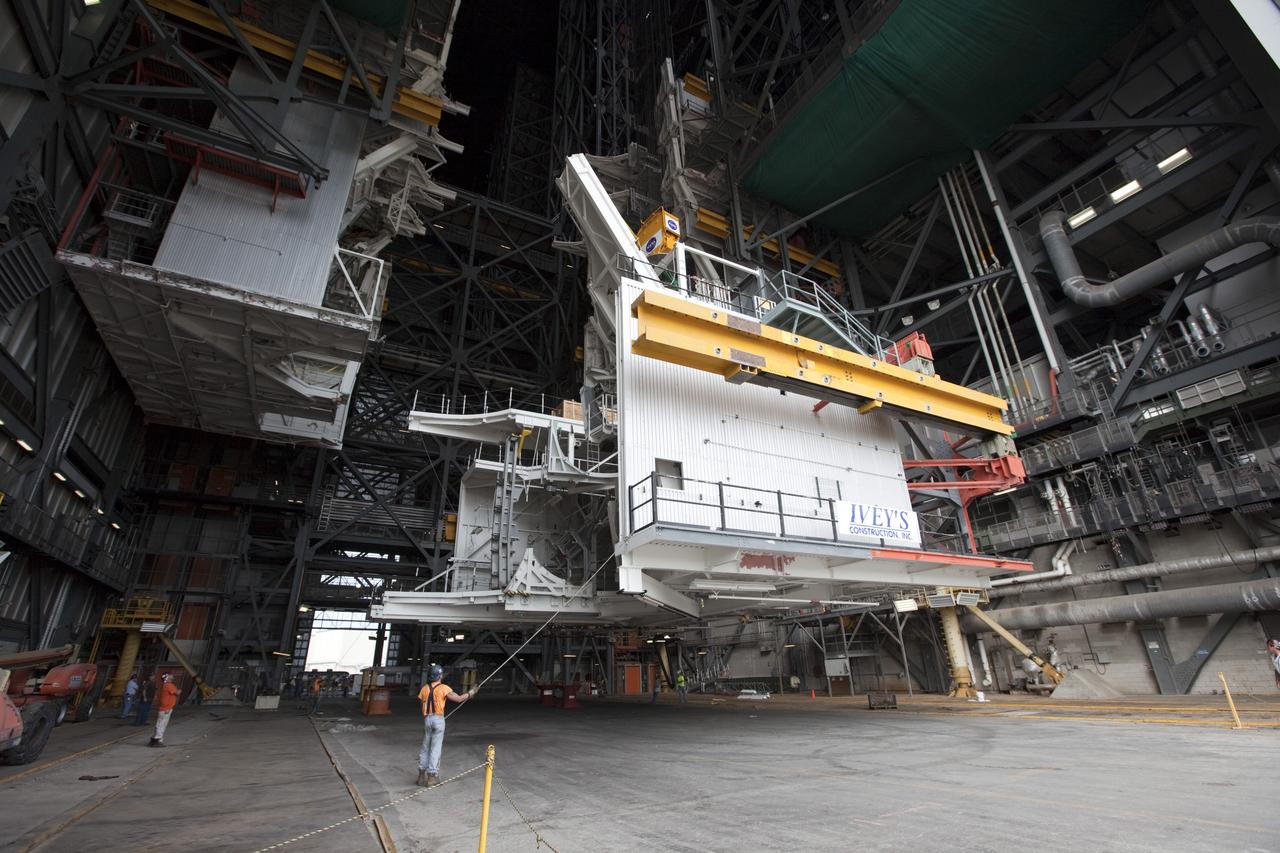
CAPE CANAVERAL, Fla. -- At NASA’s Kennedy Space Center in Florida, construction workers lower the large space shuttle-era Level E north work platform from high bay 3 inside the Vehicle Assembly Building, or VAB. The platform will be moved to the VAB north parking area for temporary storage. The work is part of a center-wide refurbishment initiative under the Ground Systems Development and Operations, or GSDO, Program. High bay 3 is being refurbished to accommodate NASA’s Space Launch System and a variety of other spacecraft. For more information, visit http://www.nasa.gov/exploration/systems/ground/index.html. Photo credit: NASA/Kim Shiflett
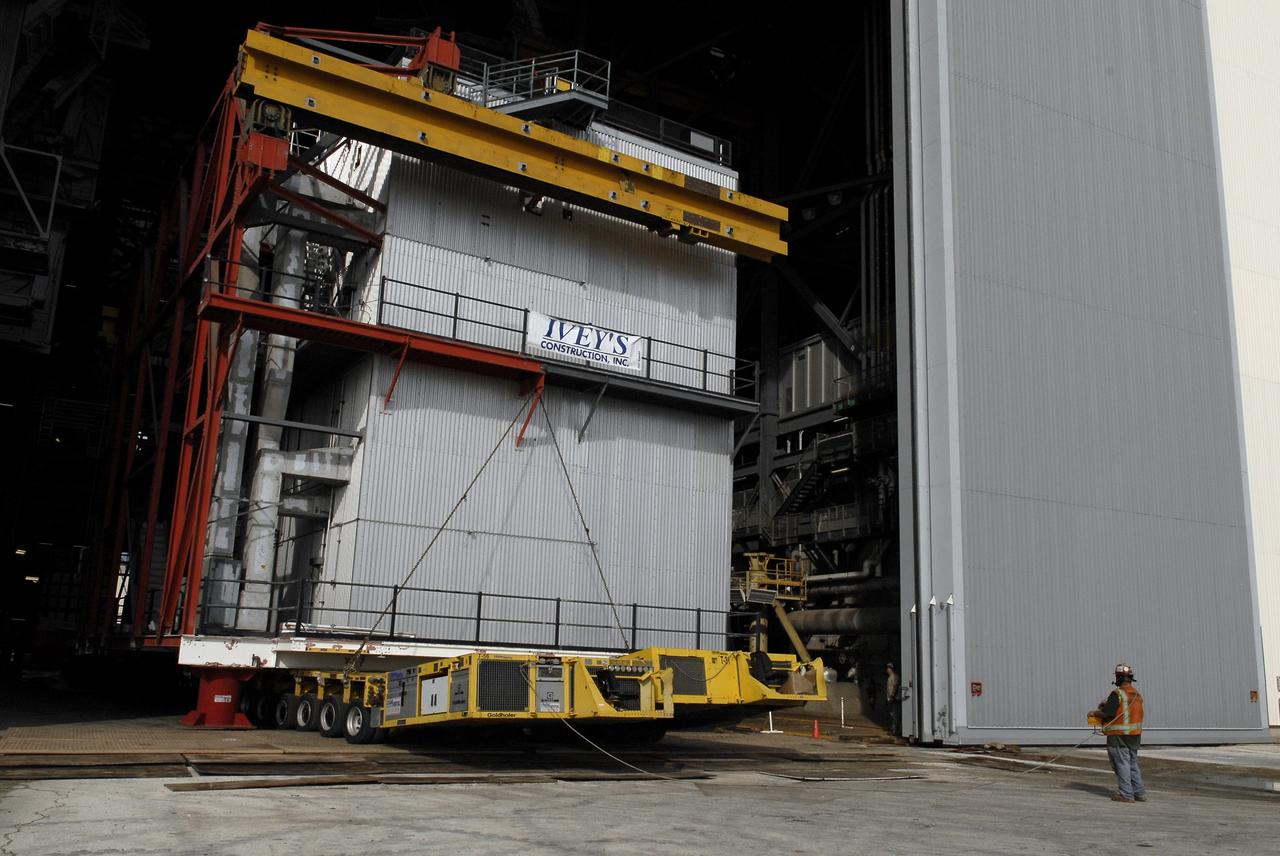
CAPE CANAVERAL, Fla. – At NASA’s Kennedy Space Center in Florida, construction workers remove a large space shuttle-era work platform from high bay 3 inside the Vehicle Assembly Building, or VAB. The platform will be moved to the VAB north parking area for temporary storage. The work is part of a centerwide refurbishment initiative under the Ground Systems Development and Operations, or GSDO, Program. High bay 3 is being refurbished to accommodate NASA’s Space Launch System and a variety of other spacecraft. For more information, visit http://www.nasa.gov/exploration/systems/ground/index.html. Photo credit: NASA/Charisse Nahser
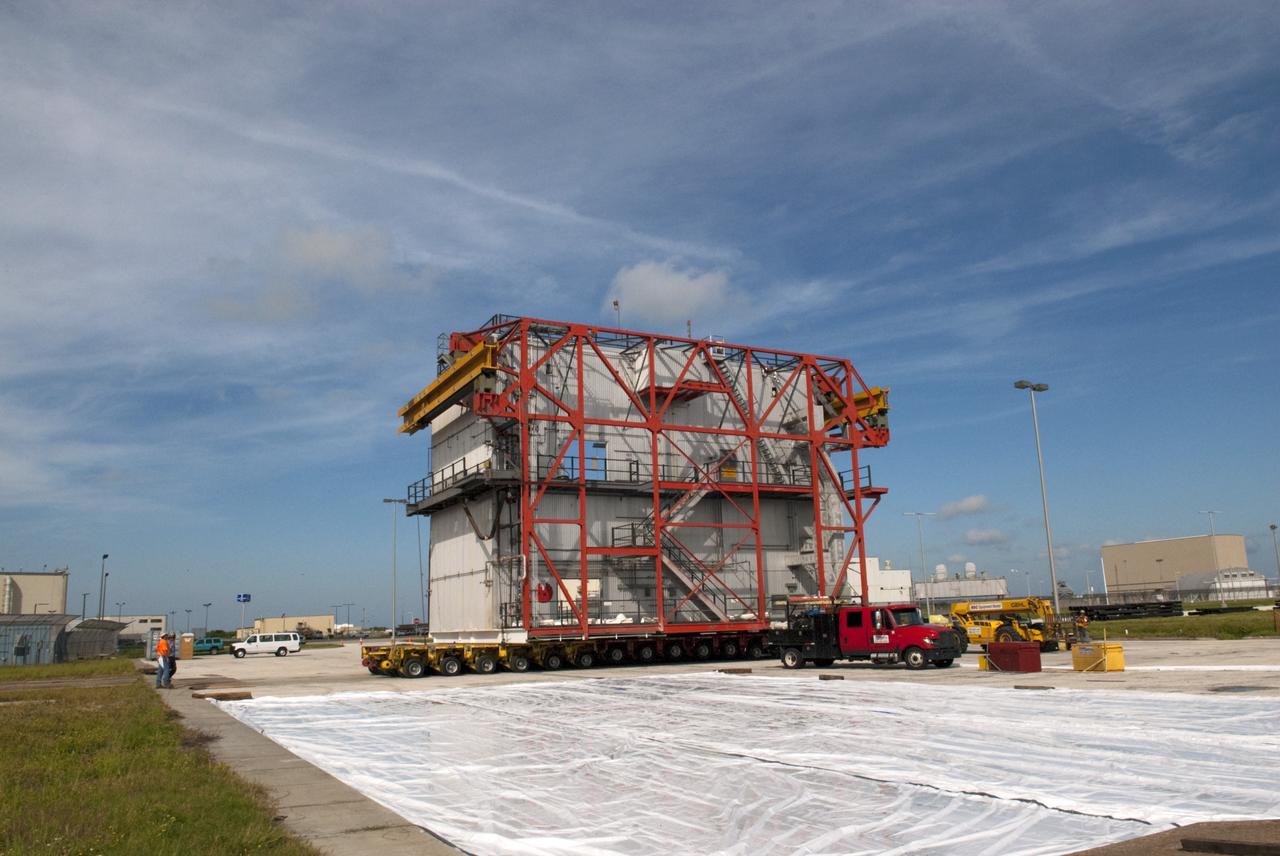
CAPE CANAVERAL, Fla. – At NASA’s Kennedy Space Center in Florida, construction workers have removed a space shuttle-era work platform from high bay 3 inside the Vehicle Assembly Building, or VAB. The platform has been moved to the VAB north parking area for temporary storage. The work is part of a centerwide refurbishment initiative under the Ground Systems Development and Operations, or GSDO, Program. High bay 3 is being refurbished to accommodate NASA’s Space Launch System and a variety of other spacecraft. For more information, visit http://www.nasa.gov/exploration/systems/ground/index.html. Photo credit: NASA/Charisse Nahser
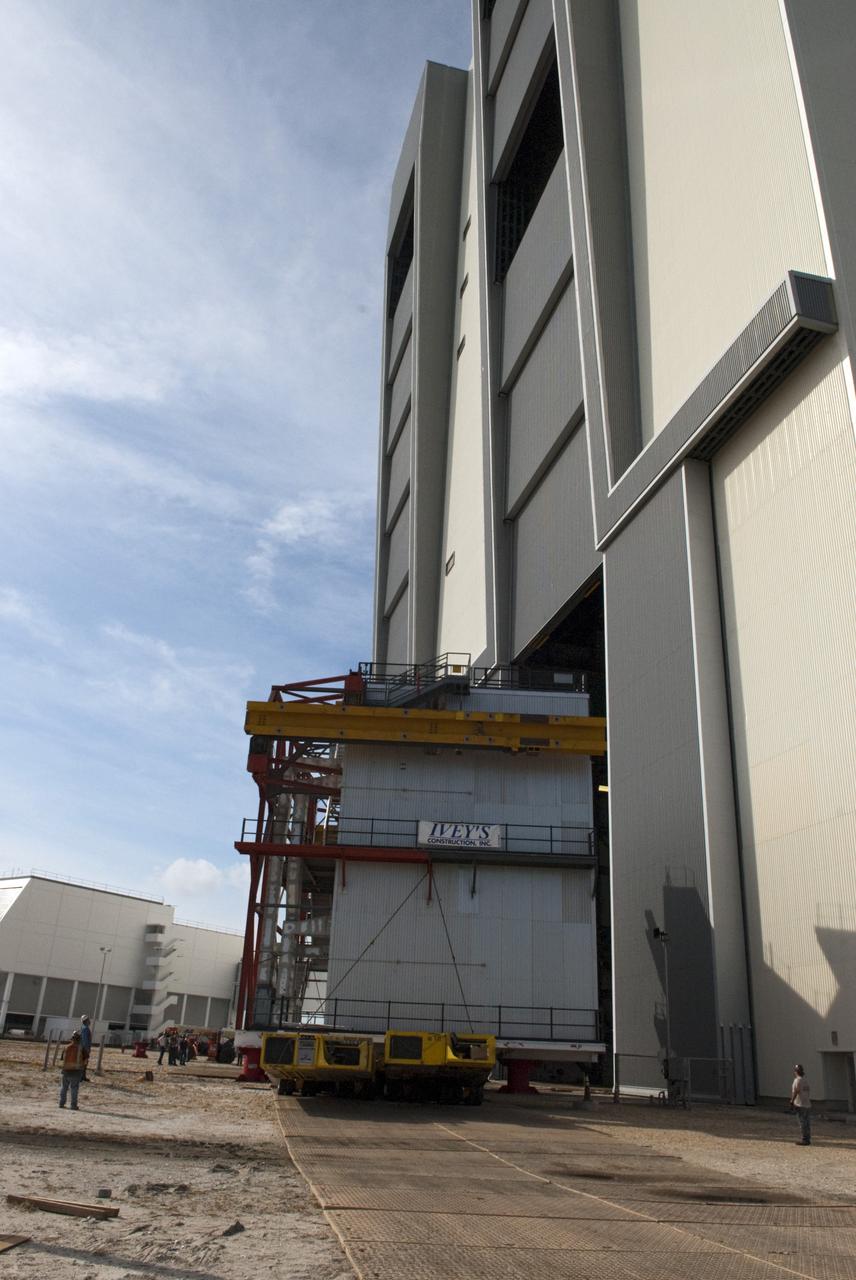
CAPE CANAVERAL, Fla. – At NASA’s Kennedy Space Center in Florida, construction workers have removed a space shuttle-era work platform from high bay 3 inside the Vehicle Assembly Building, or VAB. The platform will be moved to the VAB north parking area for temporary storage. The work is part of a centerwide refurbishment initiative under the Ground Systems Development and Operations, or GSDO, Program. High bay 3 is being refurbished to accommodate NASA’s Space Launch System and a variety of other spacecraft. For more information, visit http://www.nasa.gov/exploration/systems/ground/index.html. Photo credit: NASA/Charisse Nahser
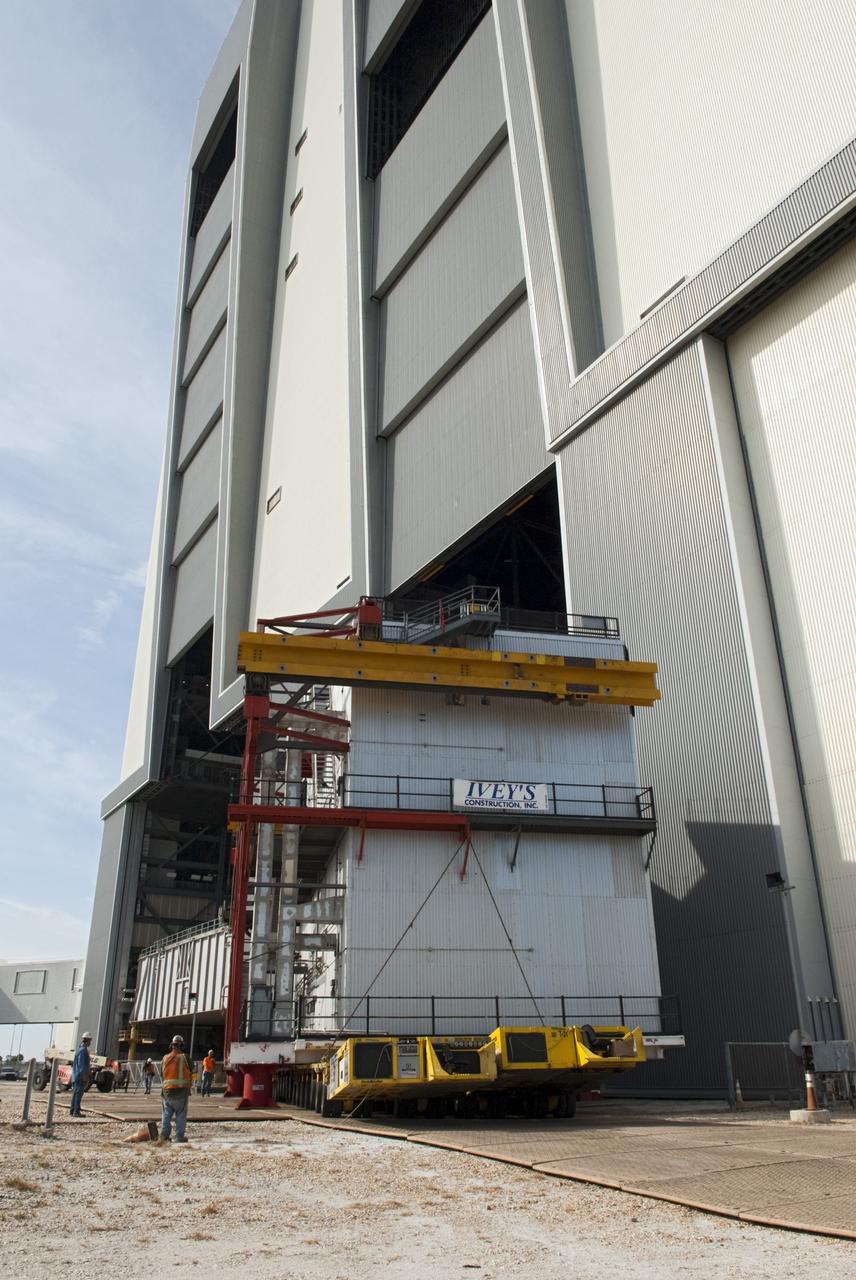
CAPE CANAVERAL, Fla. – At NASA’s Kennedy Space Center in Florida, construction workers have removed a space shuttle-era work platform from high bay 3 inside the Vehicle Assembly Building, or VAB. The platform will be moved to the VAB north parking area for temporary storage. The work is part of a centerwide refurbishment initiative under the Ground Systems Development and Operations, or GSDO, Program. High bay 3 is being refurbished to accommodate NASA’s Space Launch System and a variety of other spacecraft. For more information, visit http://www.nasa.gov/exploration/systems/ground/index.html. Photo credit: NASA/Charisse Nahser
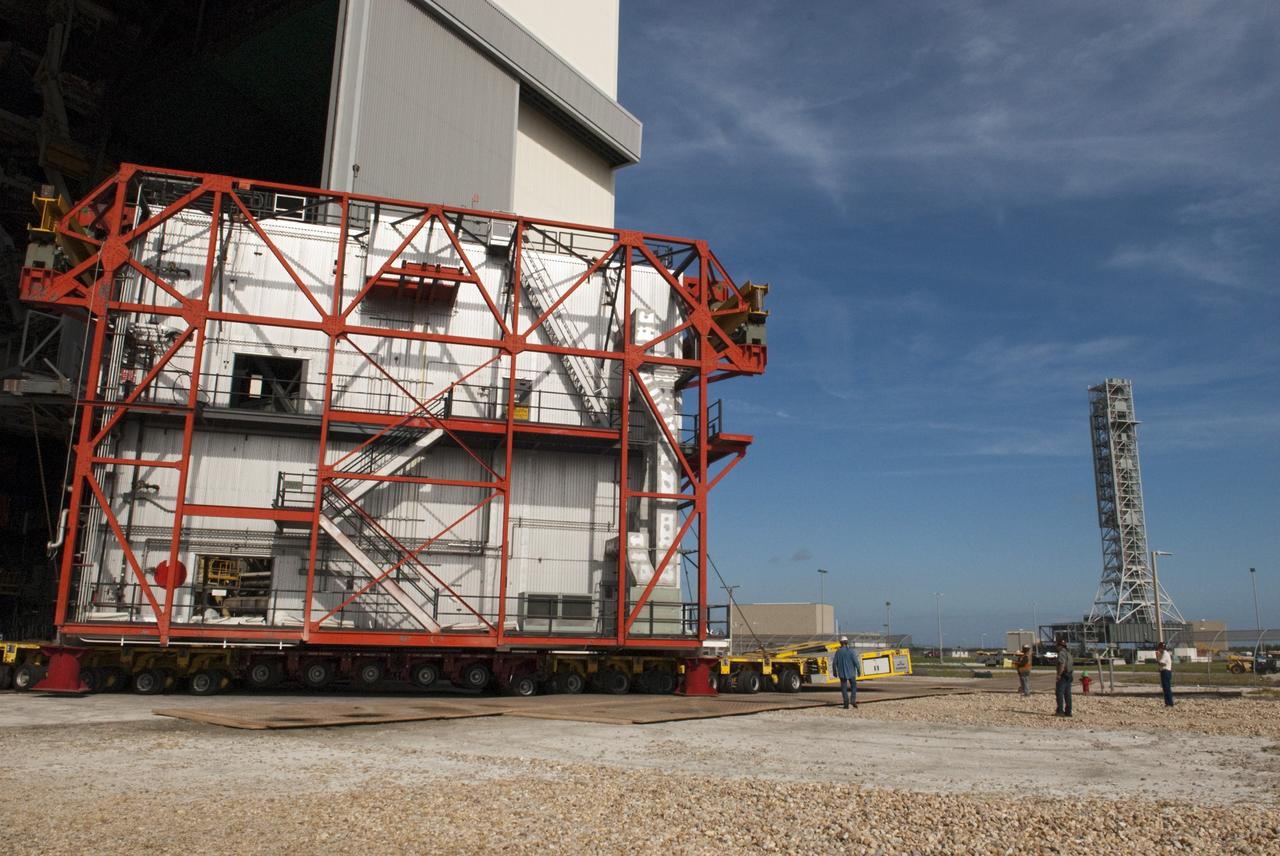
CAPE CANAVERAL, Fla. – At NASA’s Kennedy Space Center in Florida, construction workers have removed a space shuttle-era work platform from high bay 3 inside the Vehicle Assembly Building, or VAB. The platform will be moved to the VAB north parking area for temporary storage. The work is part of a centerwide refurbishment initiative under the Ground Systems Development and Operations, or GSDO, Program. High bay 3 is being refurbished to accommodate NASA’s Space Launch System and a variety of other spacecraft. For more information, visit http://www.nasa.gov/exploration/systems/ground/index.html. Photo credit: NASA/Charisse Nahser
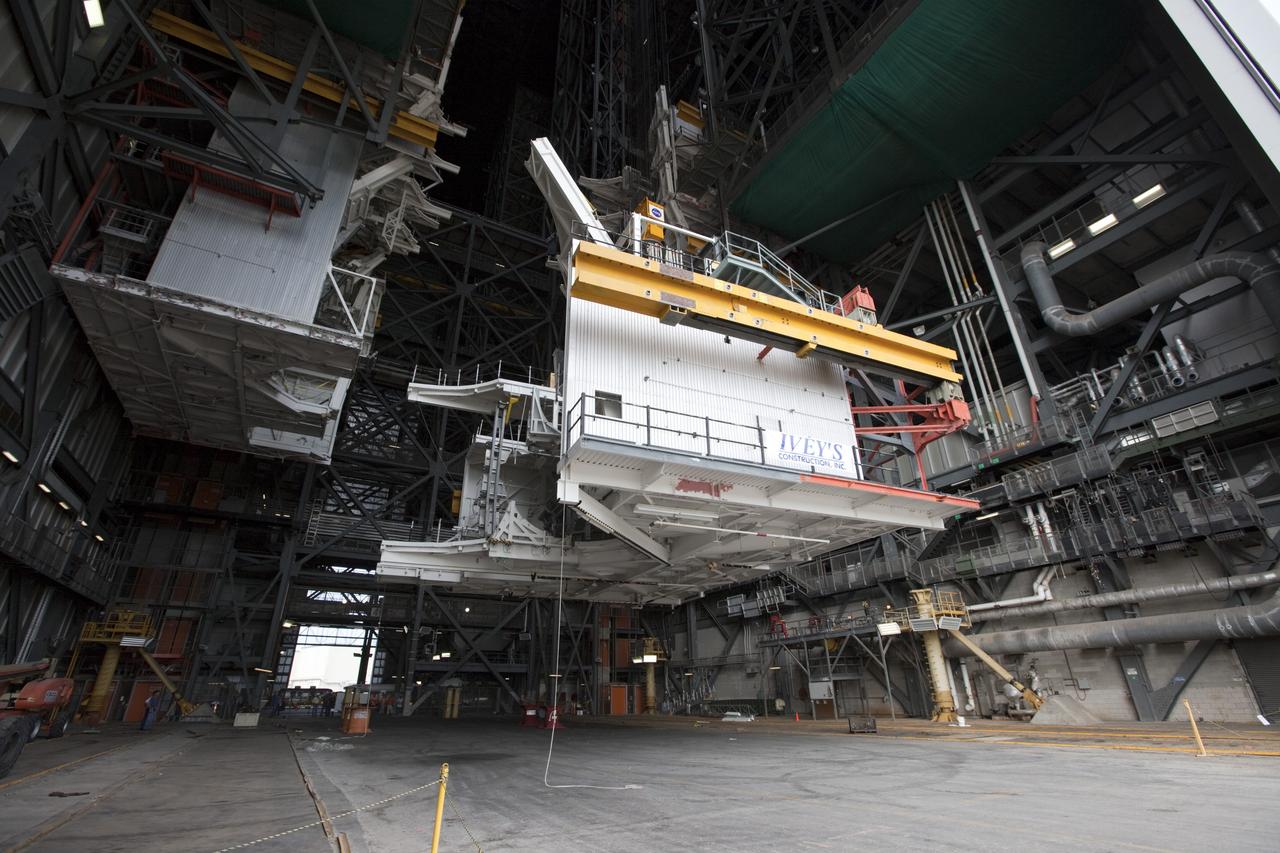
CAPE CANAVERAL, Fla. -- At NASA’s Kennedy Space Center in Florida, construction workers lower the large space shuttle-era Level E north work platform from high bay 3 inside the Vehicle Assembly Building, or VAB. The platform will be moved to the VAB north parking area for temporary storage. The work is part of a center-wide refurbishment initiative under the Ground Systems Development and Operations, or GSDO, Program. High bay 3 is being refurbished to accommodate NASA’s Space Launch System and a variety of other spacecraft. For more information, visit http://www.nasa.gov/exploration/systems/ground/index.html. Photo credit: NASA/Kim Shiflett
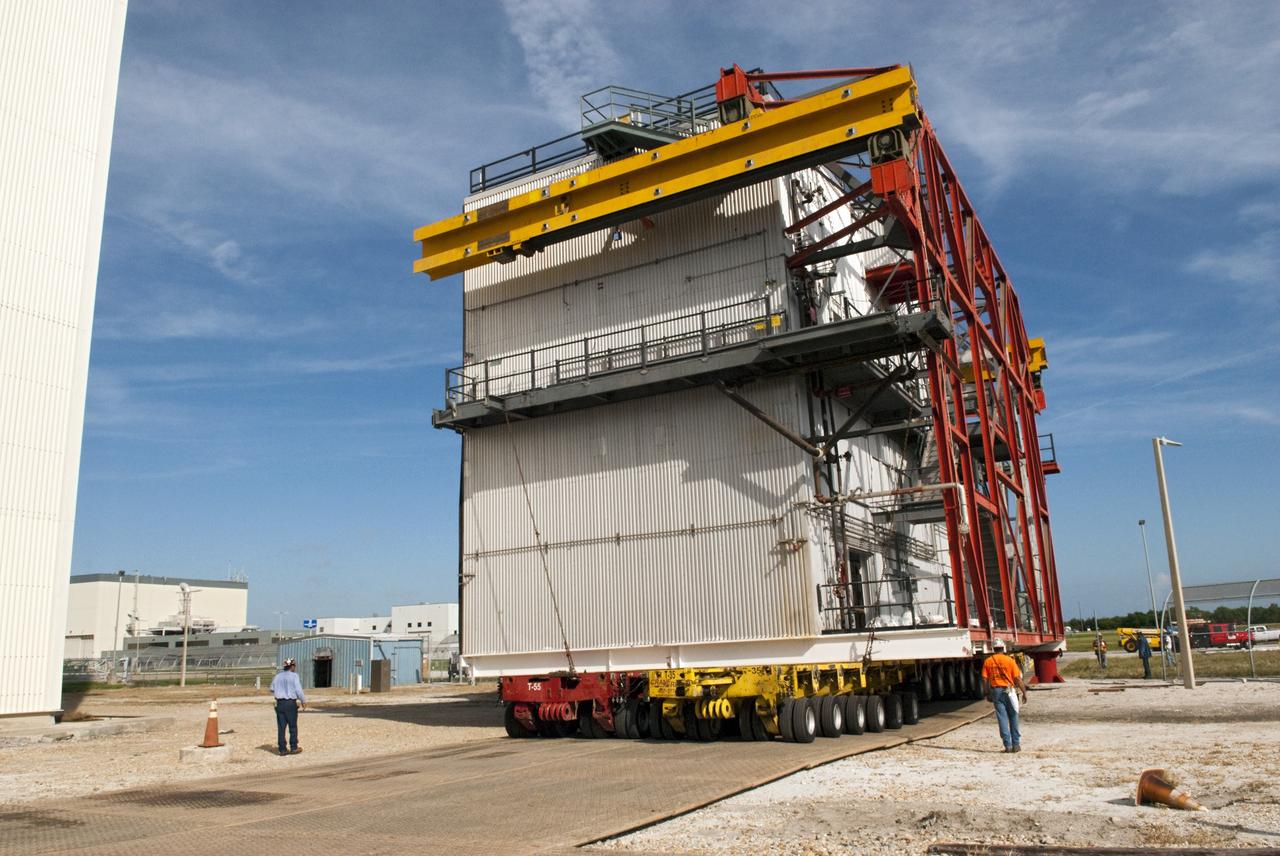
CAPE CANAVERAL, Fla. – At NASA’s Kennedy Space Center in Florida, construction workers have removed a space shuttle-era work platform from high bay 3 inside the Vehicle Assembly Building, or VAB. Using a large transporter, the platform will be moved to the VAB north parking area for temporary storage. The work is part of a centerwide refurbishment initiative under the Ground Systems Development and Operations, or GSDO, Program. High bay 3 is being refurbished to accommodate NASA’s Space Launch System and a variety of other spacecraft. For more information, visit http://www.nasa.gov/exploration/systems/ground/index.html. Photo credit: NASA/Charisse Nahser
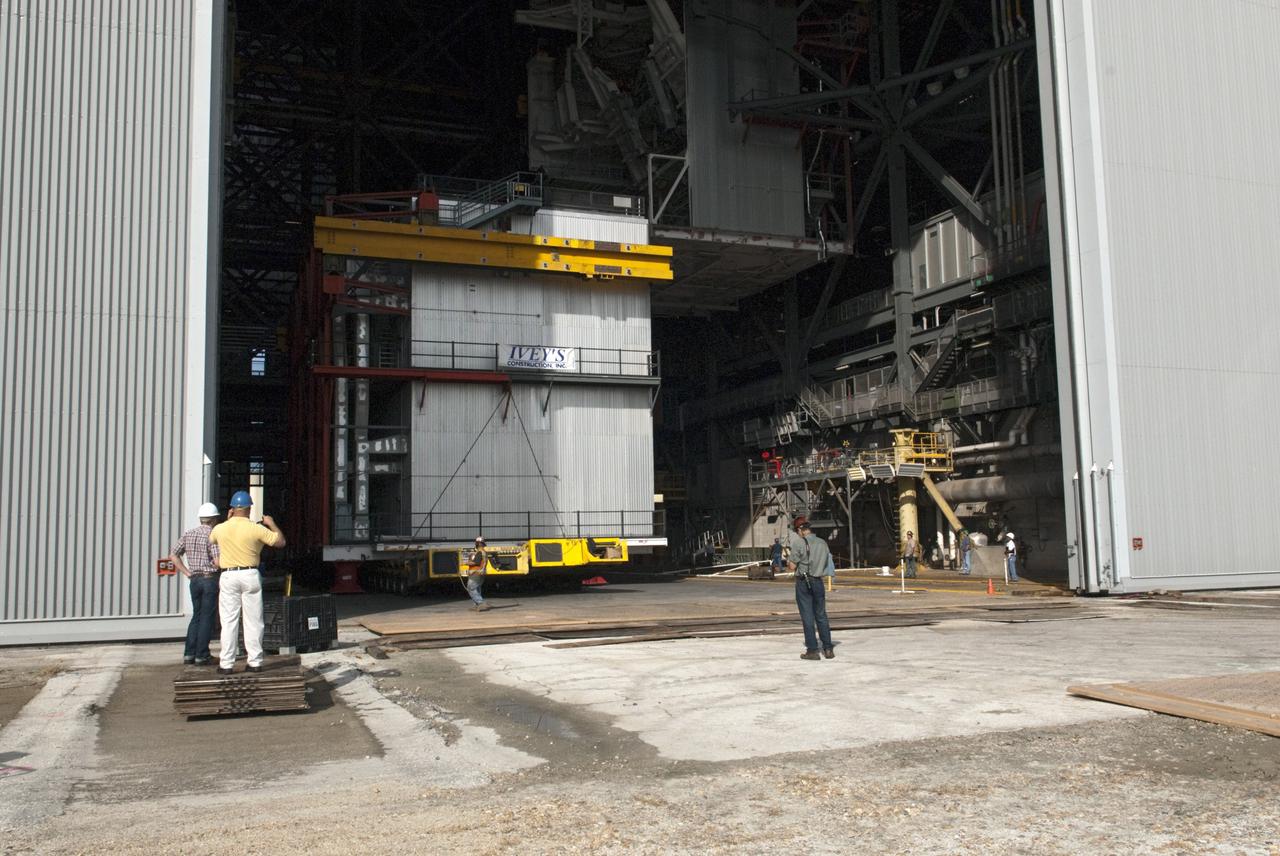
CAPE CANAVERAL, Fla. – At NASA’s Kennedy Space Center in Florida, construction workers remove a large space shuttle-era work platform from high bay 3 inside the Vehicle Assembly Building, or VAB. The platform will be moved to the VAB north parking area for temporary storage. The work is part of a centerwide refurbishment initiative under the Ground Systems Development and Operations, or GSDO, Program. High bay 3 is being refurbished to accommodate NASA’s Space Launch System and a variety of other spacecraft. For more information, visit http://www.nasa.gov/exploration/systems/ground/index.html. Photo credit: NASA/Charisse Nahser
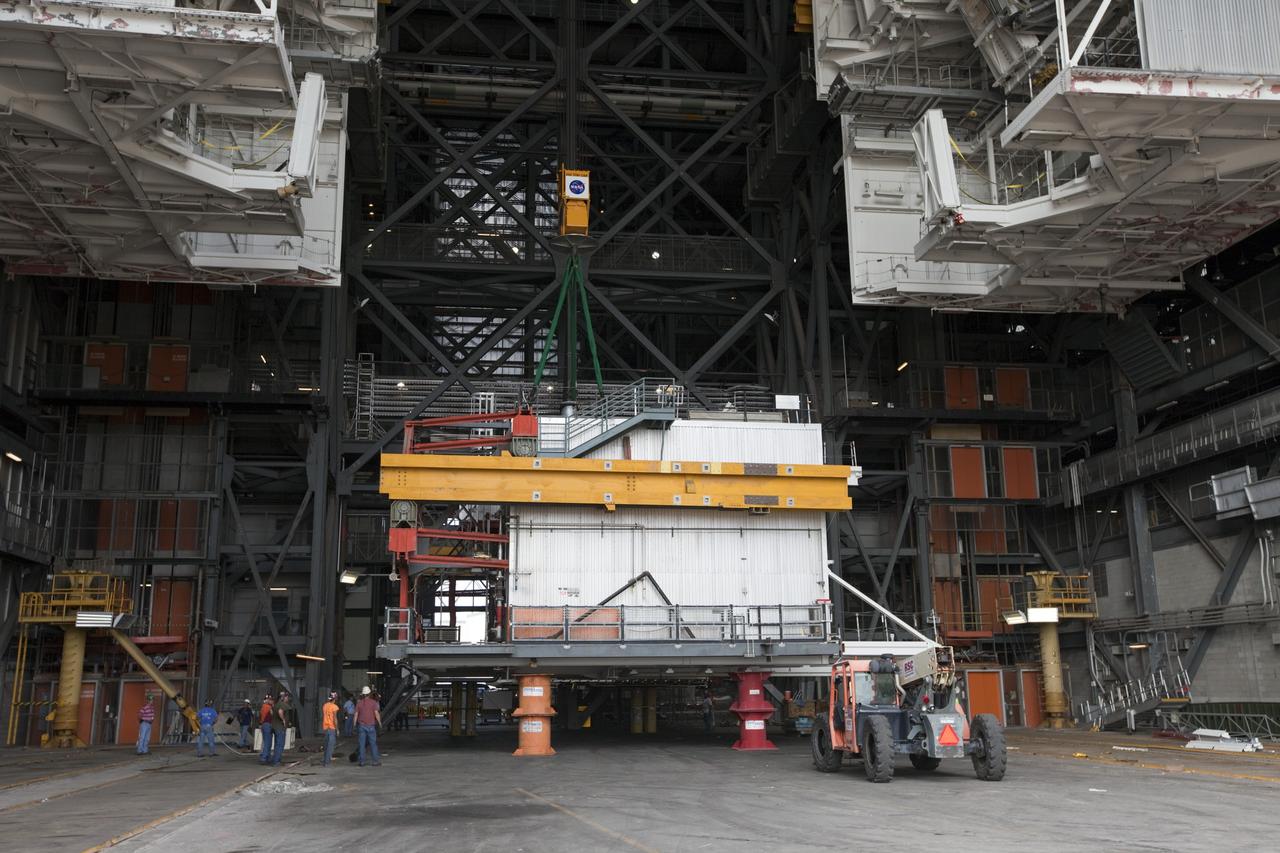
CAPE CANAVERAL, Fla. -- At NASA’s Kennedy Space Center in Florida, construction workers lower the large space shuttle-era Level E north work platform from high bay 3 inside the Vehicle Assembly Building, or VAB. The platform will be moved to the VAB north parking area for temporary storage. The work is part of a center-wide refurbishment initiative under the Ground Systems Development and Operations, or GSDO, Program. High bay 3 is being refurbished to accommodate NASA’s Space Launch System and a variety of other spacecraft. For more information, visit http://www.nasa.gov/exploration/systems/ground/index.html. Photo credit: NASA/Kim Shiflett