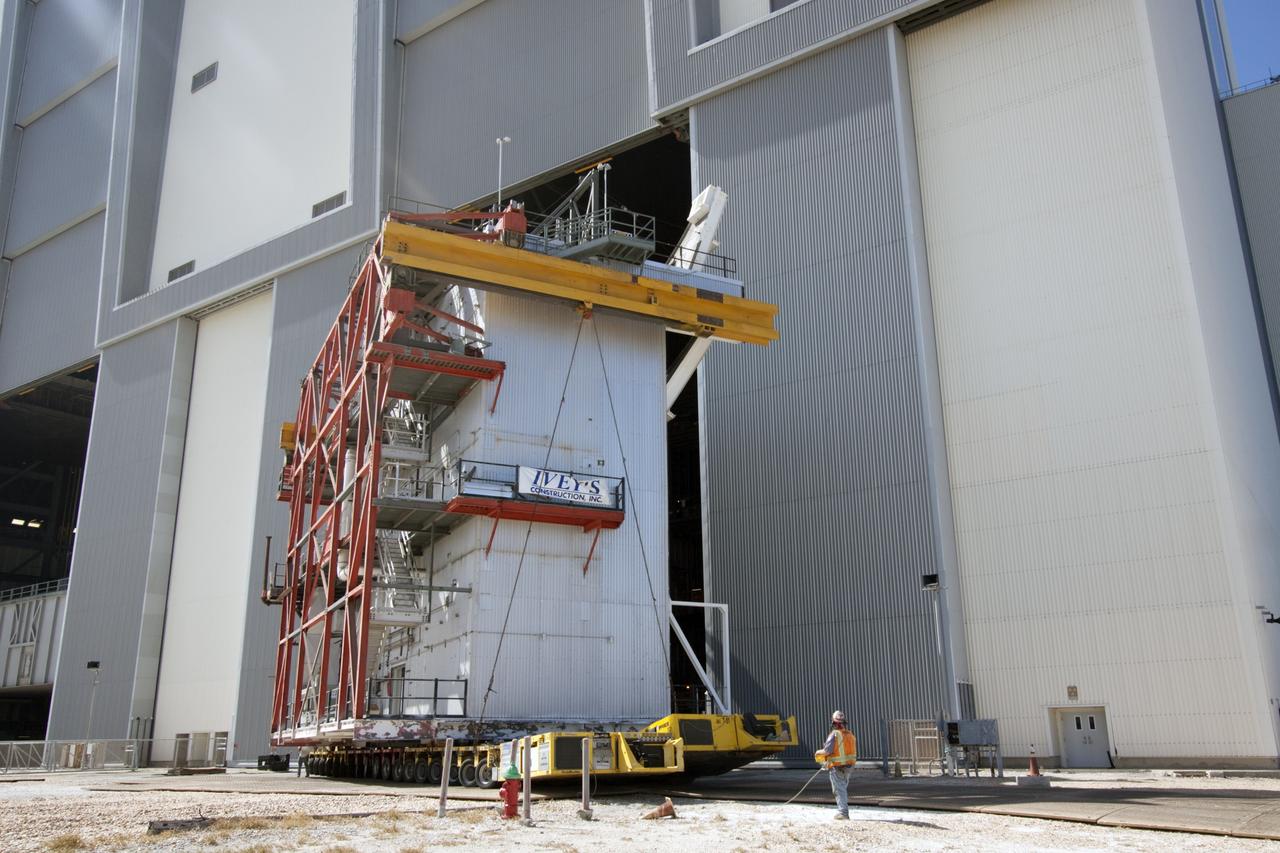
CAPE CANAVERAL, Fla. – As part of NASA's Ground Systems Development and Operations Program at the Kennedy Space Center in Florida, a large space shuttle-era work platform has been removed from high bay 3 of the Vehicle Assembly Building, or VAB. The work is part of a center-wide modernization and refurbishment initiative to accommodate NASA’s Space Launch System and a variety of other spacecraft instead of the whole building supporting one design. The Ground Systems Development and Operations Program is developing the necessary ground systems, infrastructure and operational approaches required to safely process, assemble, transport and launch the next generation of rockets and spacecraft in support of NASA’s exploration objectives. Future work also will replace the antiquated communications, power and vehicle access resources with modern efficient systems. Some of the utilities and systems slated for replacement have been used since the VAB opened in 1965. For more information, visit http://www.nasa.gov/exploration/systems/ground/index.html Photo credit: NASA/Jim Grossmann
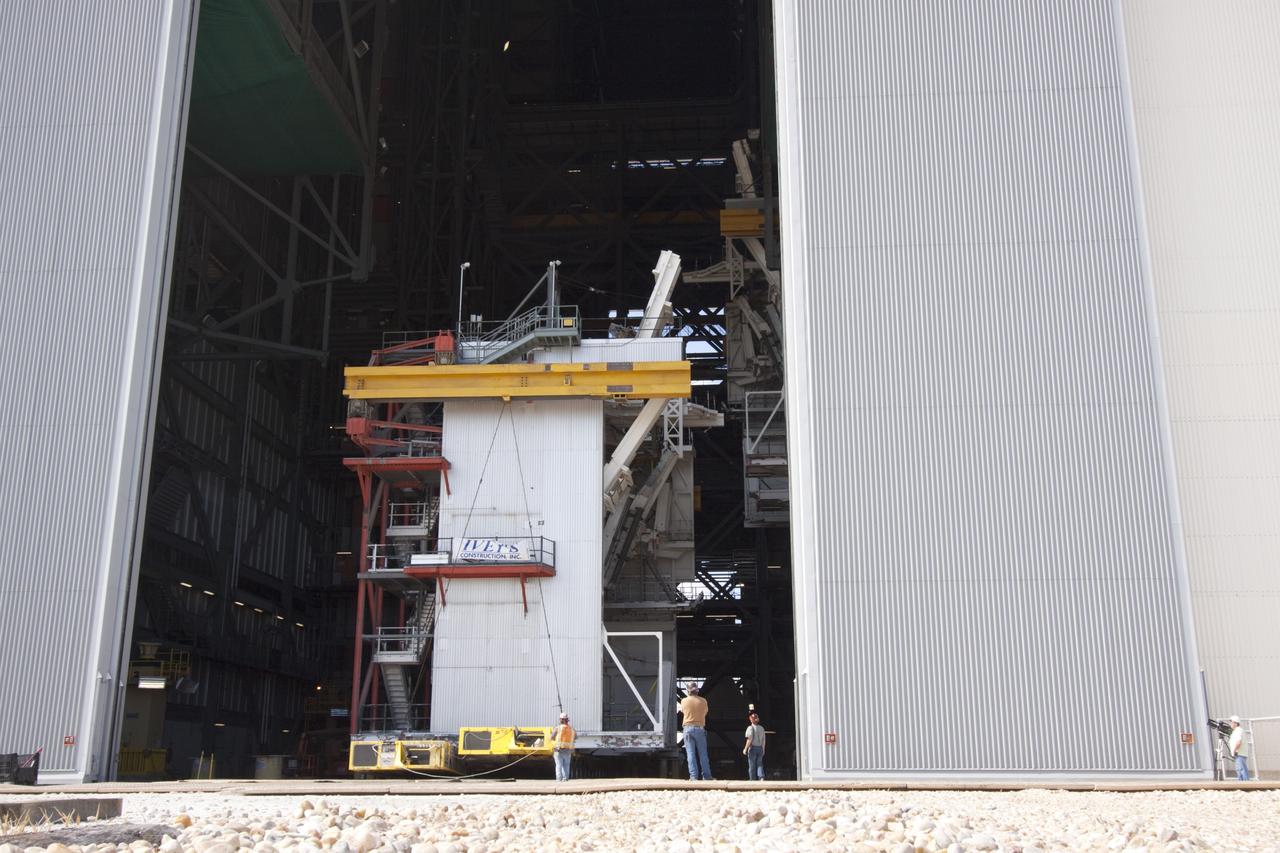
CAPE CANAVERAL, Fla. – As part of NASA's Ground Systems Development and Operations Program at the Kennedy Space Center in Florida, a large space shuttle-era work platform has been removed from high bay 3 of the Vehicle Assembly Building, or VAB. The work is part of a center-wide modernization and refurbishment initiative to accommodate NASA’s Space Launch System and a variety of other spacecraft instead of the whole building supporting one design. The Ground Systems Development and Operations Program is developing the necessary ground systems, infrastructure and operational approaches required to safely process, assemble, transport and launch the next generation of rockets and spacecraft in support of NASA’s exploration objectives. Future work also will replace the antiquated communications, power and vehicle access resources with modern efficient systems. Some of the utilities and systems slated for replacement have been used since the VAB opened in 1965. For more information, visit http://www.nasa.gov/exploration/systems/ground/index.html Photo credit: NASA/Jim Grossmann
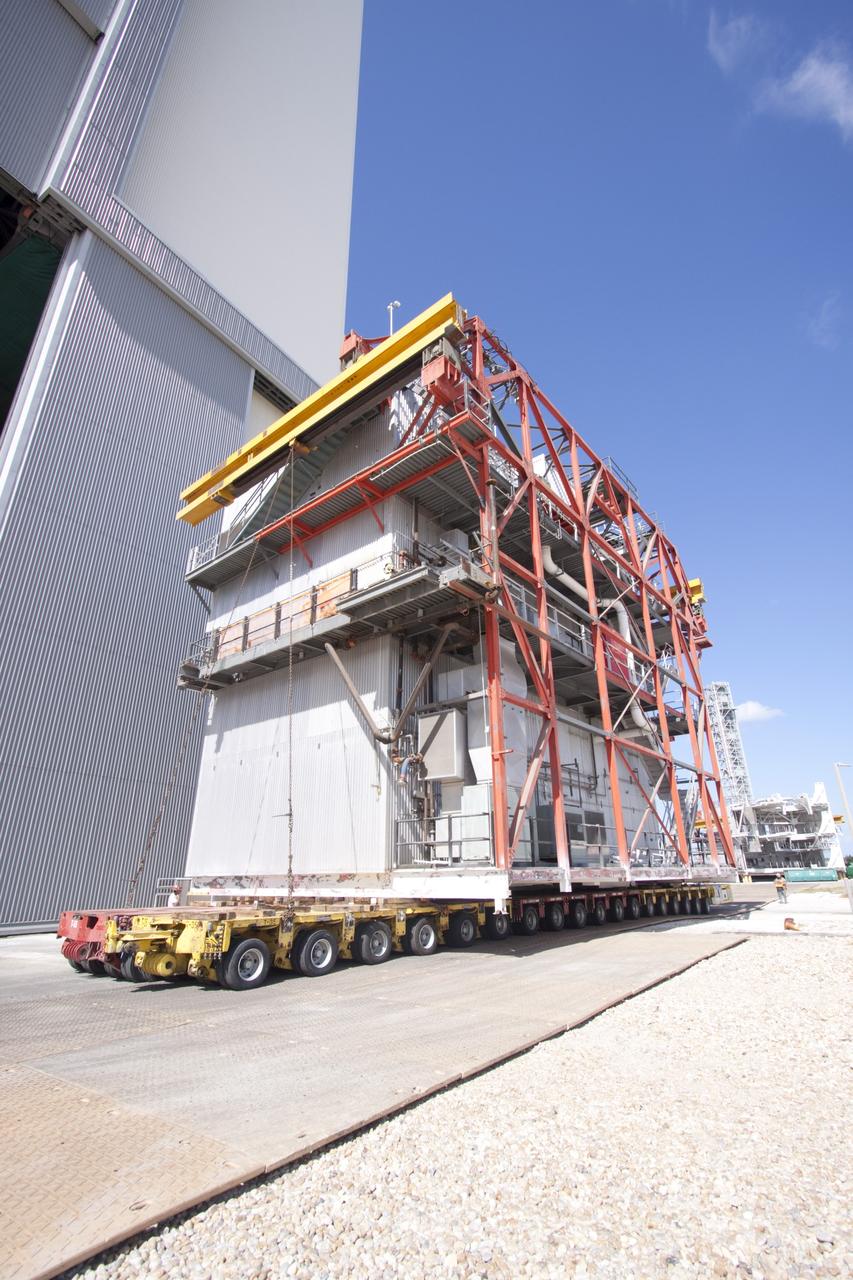
CAPE CANAVERAL, Fla. – As part of NASA's Ground Systems Development and Operations Program at the Kennedy Space Center in Florida, a large space shuttle-era work platform has been removed from high bay 3 of the Vehicle Assembly Building, or VAB. The work is part of a center-wide modernization and refurbishment initiative to accommodate NASA’s Space Launch System and a variety of other spacecraft instead of the whole building supporting one design. The Ground Systems Development and Operations Program is developing the necessary ground systems, infrastructure and operational approaches required to safely process, assemble, transport and launch the next generation of rockets and spacecraft in support of NASA’s exploration objectives. Future work also will replace the antiquated communications, power and vehicle access resources with modern efficient systems. Some of the utilities and systems slated for replacement have been used since the VAB opened in 1965. For more information, visit http://www.nasa.gov/exploration/systems/ground/index.html Photo credit: NASA/Jim Grossmann
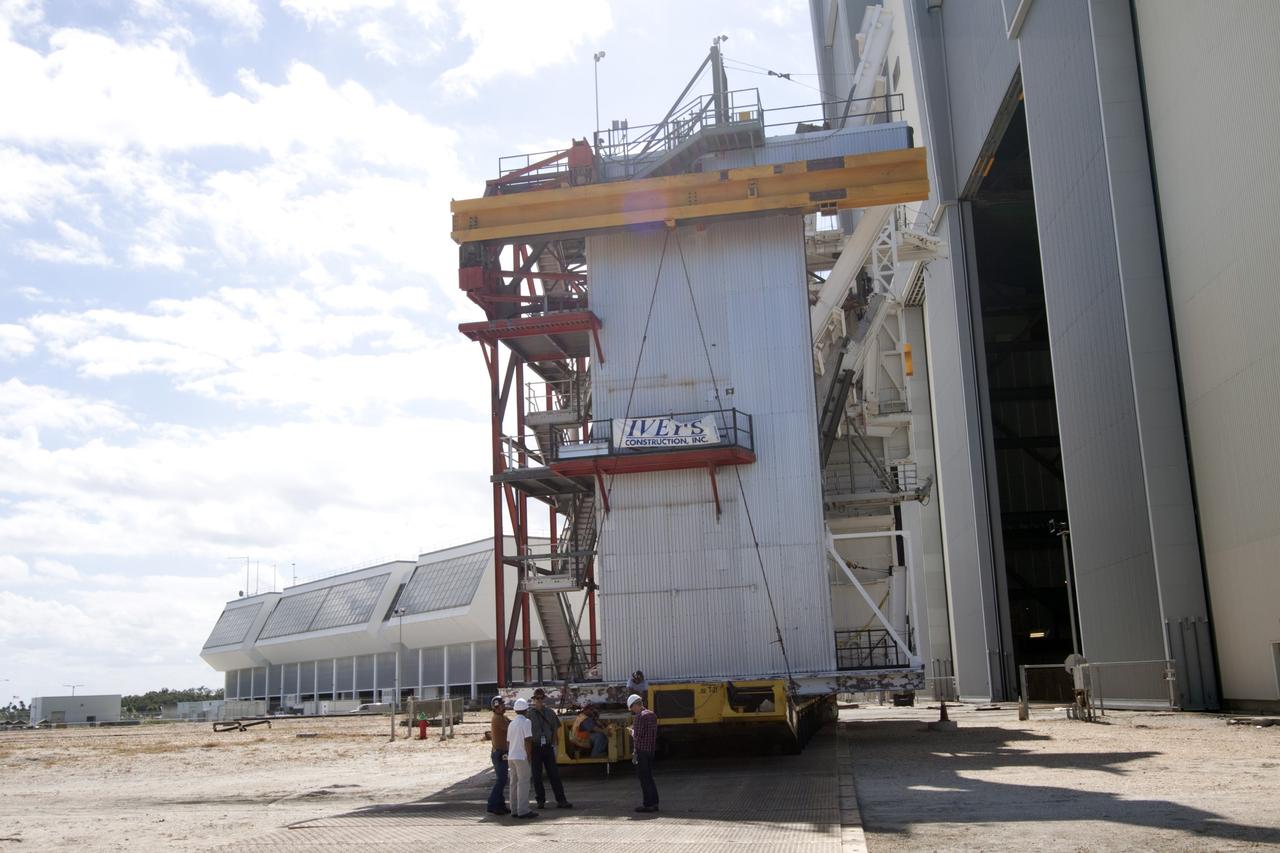
CAPE CANAVERAL, Fla. – As part of NASA's Ground Systems Development and Operations Program at the Kennedy Space Center in Florida, a large space shuttle-era work platform has been removed from high bay 3 of the Vehicle Assembly Building, or VAB. The work is part of a center-wide modernization and refurbishment initiative to accommodate NASA’s Space Launch System and a variety of other spacecraft instead of the whole building supporting one design. The Ground Systems Development and Operations Program is developing the necessary ground systems, infrastructure and operational approaches required to safely process, assemble, transport and launch the next generation of rockets and spacecraft in support of NASA’s exploration objectives. Future work also will replace the antiquated communications, power and vehicle access resources with modern efficient systems. Some of the utilities and systems slated for replacement have been used since the VAB opened in 1965. For more information, visit http://www.nasa.gov/exploration/systems/ground/index.html Photo credit: NASA/Jim Grossmann
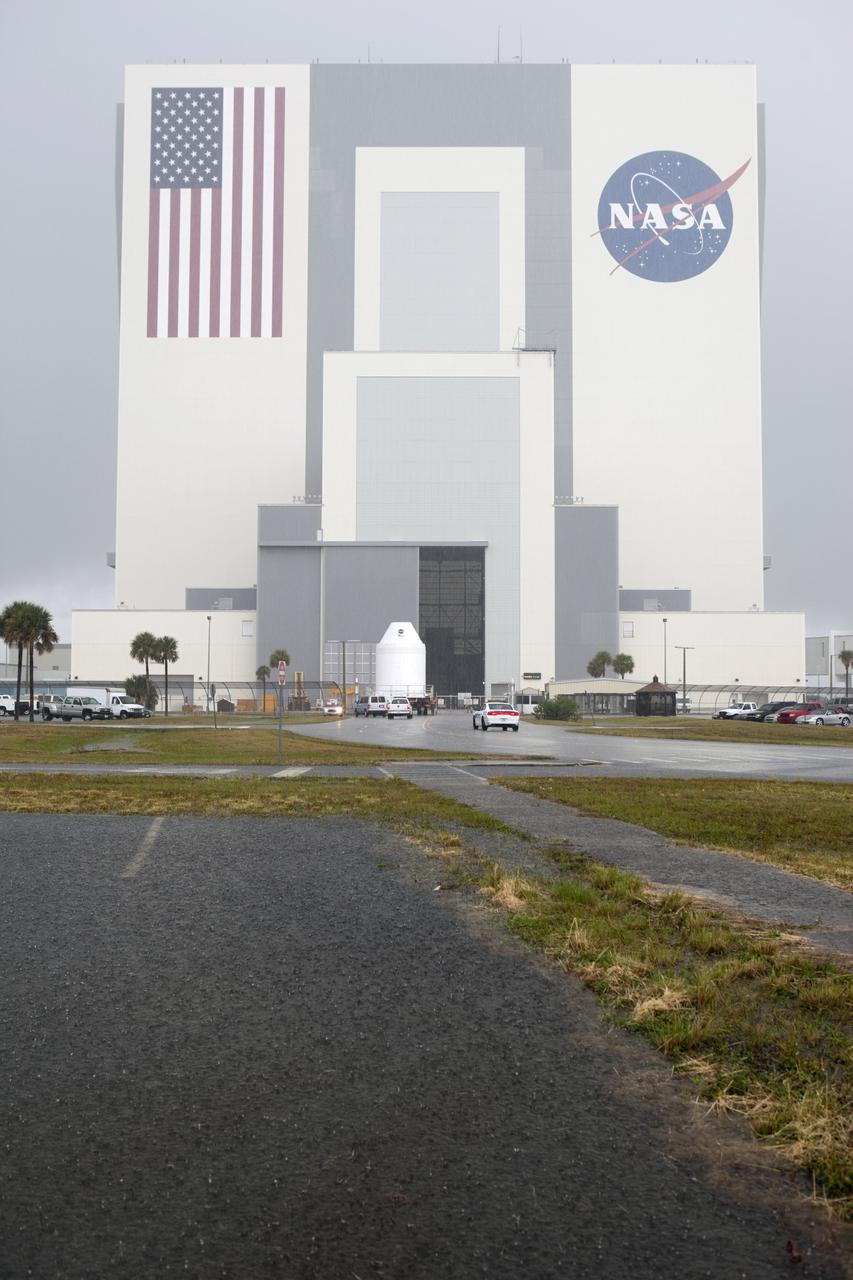
CAPE CANAVERAL, Fla. – A full-size test mock-up of the Orion spacecraft arrives at the Vehicle Assembly Building at NASA's Kennedy Space Center in Florida to test the path flight hardware will take during future launch processing. Orion is the exploration spacecraft designed to carry crews to space beyond low Earth orbit. It will provide emergency abort capability, sustain the crew during the space travel and provide safe re-entry from deep space return velocities. The first unpiloted test flight of the Orion is scheduled to launch in 2014 atop a Delta IV rocket and in 2017 on a Space Launch System rocket. For more information, visit http://www.nasa.gov/orion Photo credit: NASA/Dimitri Gerondidakis
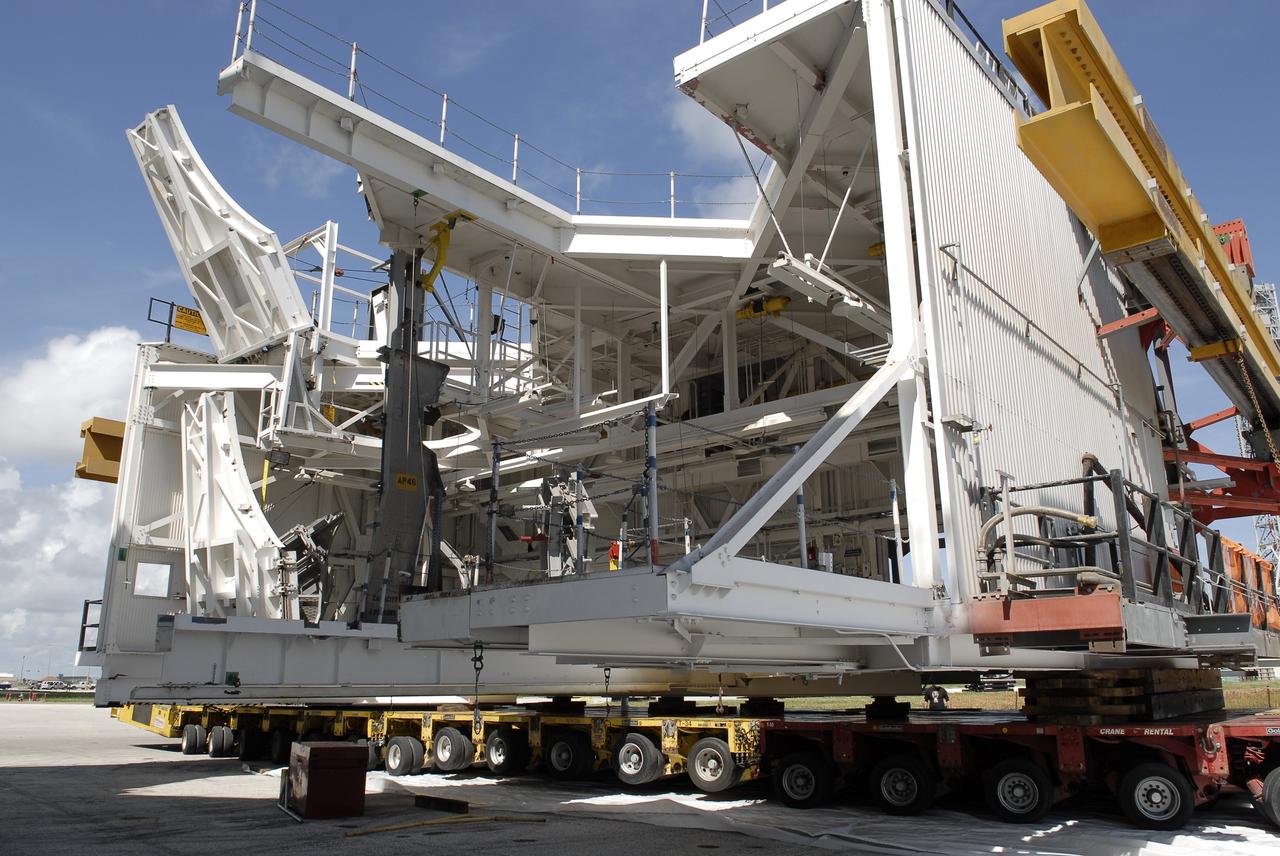
CAPE CANAVERAL, Fla. – As part of NASA's Ground Systems Development and Operations Program at the Kennedy Space Center in Florida, a large space shuttle-era work platform being removed from the Vehicle Assembly Building, or VAB. The work is part of a center-wide modernization and refurbishment initiative to accommodate NASA’s Space Launch System and a variety of other spacecraft instead of the whole building supporting one design. The Ground Systems Development and Operations Program is developing the necessary ground systems, infrastructure and operational approaches required to safely process, assemble, transport and launch the next generation of rockets and spacecraft in support of NASA’s exploration objectives. Future work also will replace the antiquated communications, power and vehicle access resources with modern efficient systems. Some of the utilities and systems slated for replacement have been used since the VAB opened in 1965. For more information, visit http://www.nasa.gov/exploration/systems/ground/index.html Photo credit: NASA/ Charisse Nahser
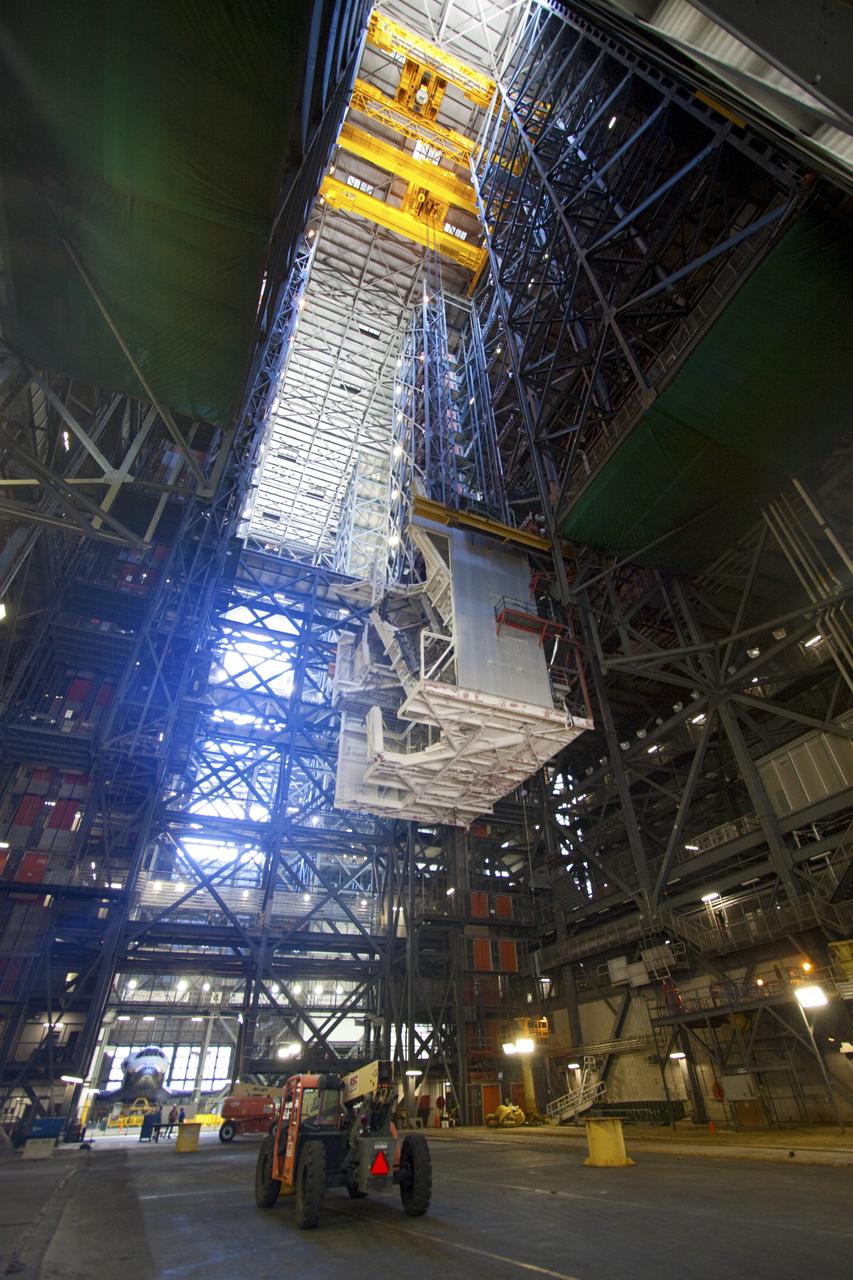
CAPE CANAVERAL, Fla. – As part of NASA's Ground Systems Development and Operations Program at the Kennedy Space Center in Florida, a large space shuttle-era work platform is being removed from high bay 3 of the Vehicle Assembly Building, or VAB. The work is part of a center-wide modernization and refurbishment initiative to accommodate NASA’s Space Launch System and a variety of other spacecraft instead of the whole building supporting one design. Visible in the background on the lower left is the space shuttle Atlantis being readied for its move to the Kennedy Space Center Visitor Complex. The Ground Systems Development and Operations Program is developing the necessary ground systems, infrastructure and operational approaches required to safely process, assemble, transport and launch the next generation of rockets and spacecraft in support of NASA’s exploration objectives. Future work also will replace the antiquated communications, power and vehicle access resources with modern efficient systems. Some of the utilities and systems slated for replacement have been used since the VAB opened in 1965. For more information, visit http://www.nasa.gov/exploration/systems/ground/index.html Photo credit: NASA/Jim Grossmann
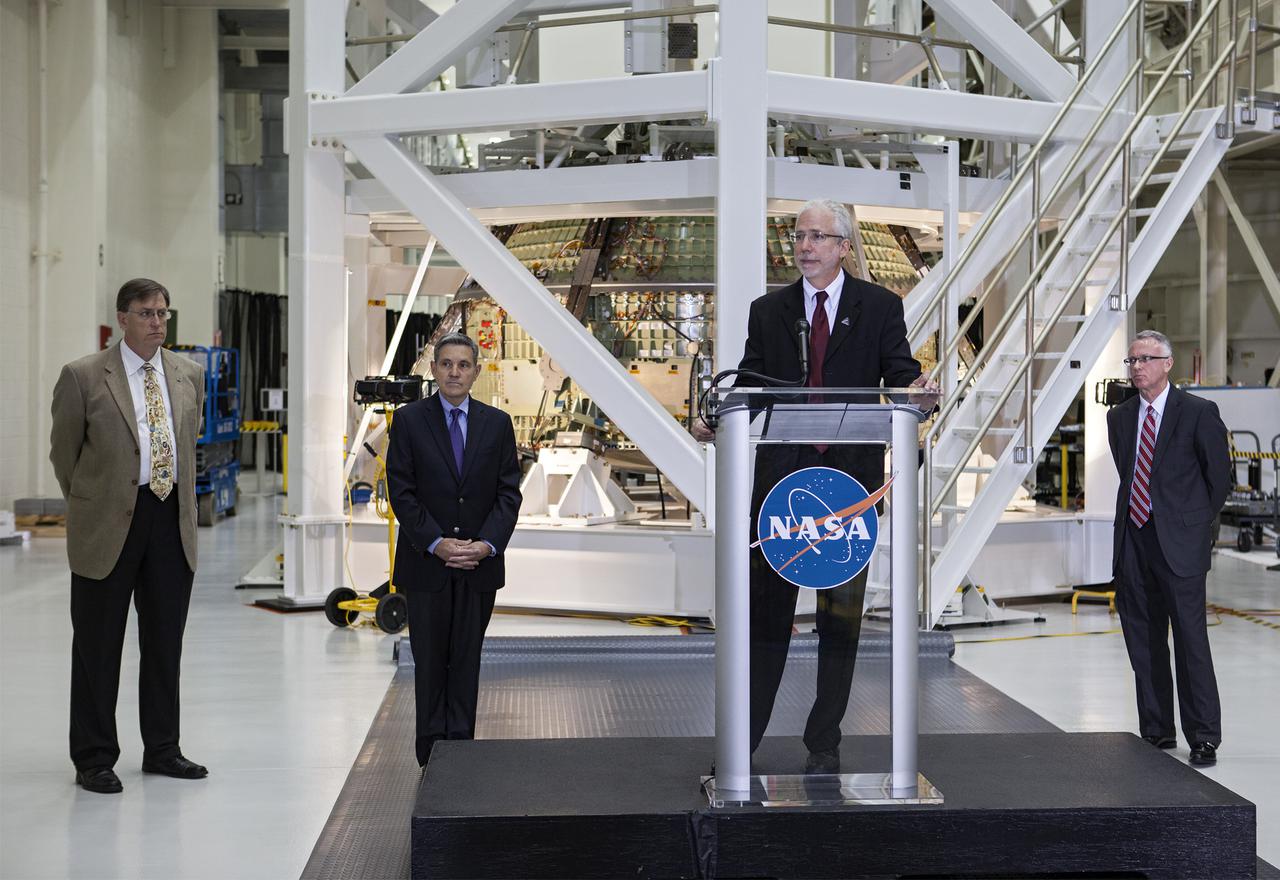
CAPE CANAVERAL, Fla. – In the Operations and Checkout Building OandC at the Kennedy Space Center in Florida, Mark Geyer, NASA's Orion program manager, speaks to news media representatives updating progress on preparing the Orion spacecraft for its first uncrewed mission, Exploration Flight Test-1 EFT-1 in 2014. The crew module is seen behind Geyer in its test stand. Launched atop NASA's heavy-lift Space Launch System rocket, Orion is now targeted to take astronauts in a sample return mission to an asteroid as early as 2021. On the third anniversary of President Barack Obama issuing his challenge to NASA to send astronauts to an asteroid, news media representatives were given an opportunity to see up-close the Orion spacecraft which could take astronauts on such a flight. They also heard from key leaders of that effort in Kennedy's OandC where Orion's assembly is taking place. Photo credit: NASA_Kim Shiflett
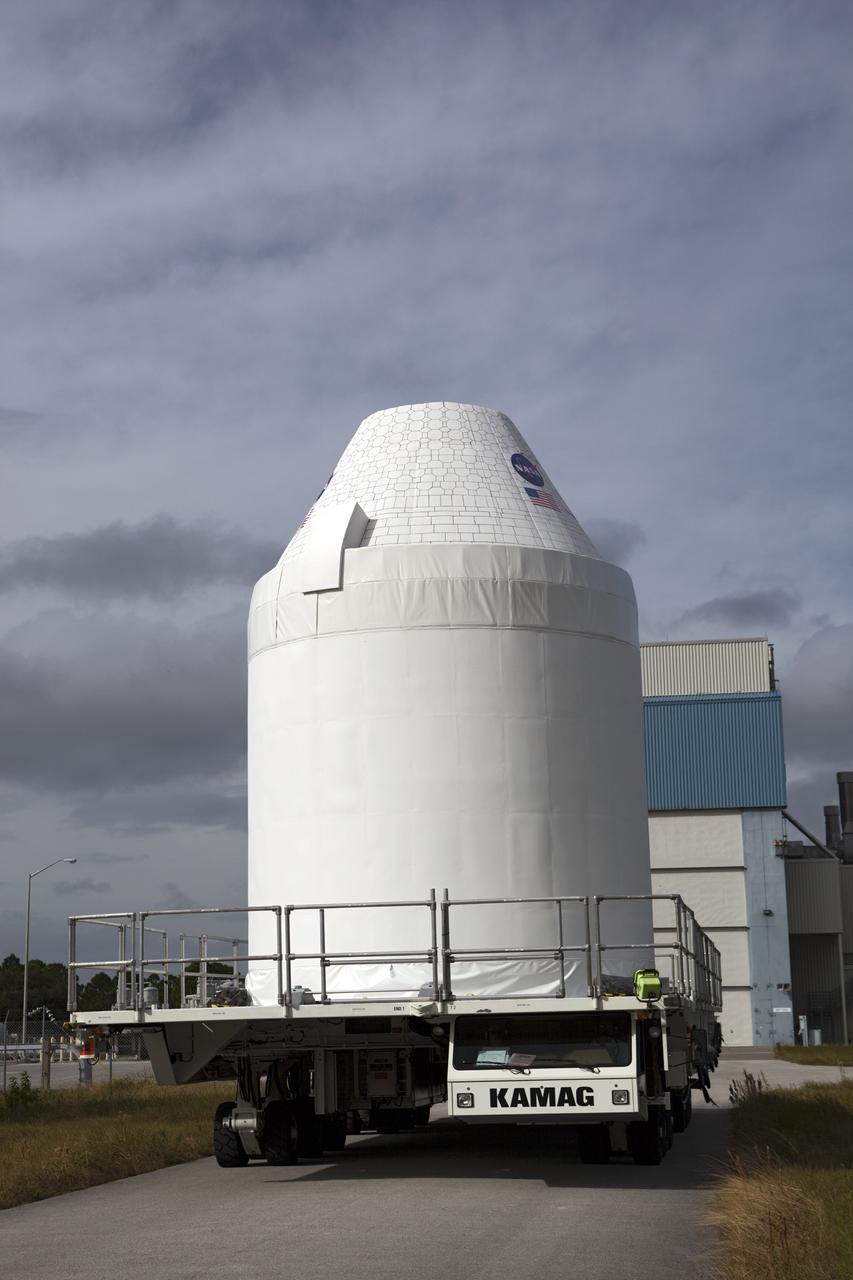
CAPE CANAVERAL, Fla. – A full-size test mock-up of the Orion spacecraft moves out of the Multi-Payload Processing Facility, or MPPF, at NASA's Kennedy Space Center in Florida to test the path flight hardware will take during future launch processing. Orion is the exploration spacecraft designed to carry crews to space beyond low Earth orbit. It will provide emergency abort capability, sustain the crew during the space travel and provide safe re-entry from deep space return velocities. The first unpiloted test flight of the Orion is scheduled to launch in 2014 atop a Delta IV rocket and in 2017 on a Space Launch System rocket. For more information, visit http://www.nasa.gov/orion Photo credit: NASA/Dimitri Gerondidakis
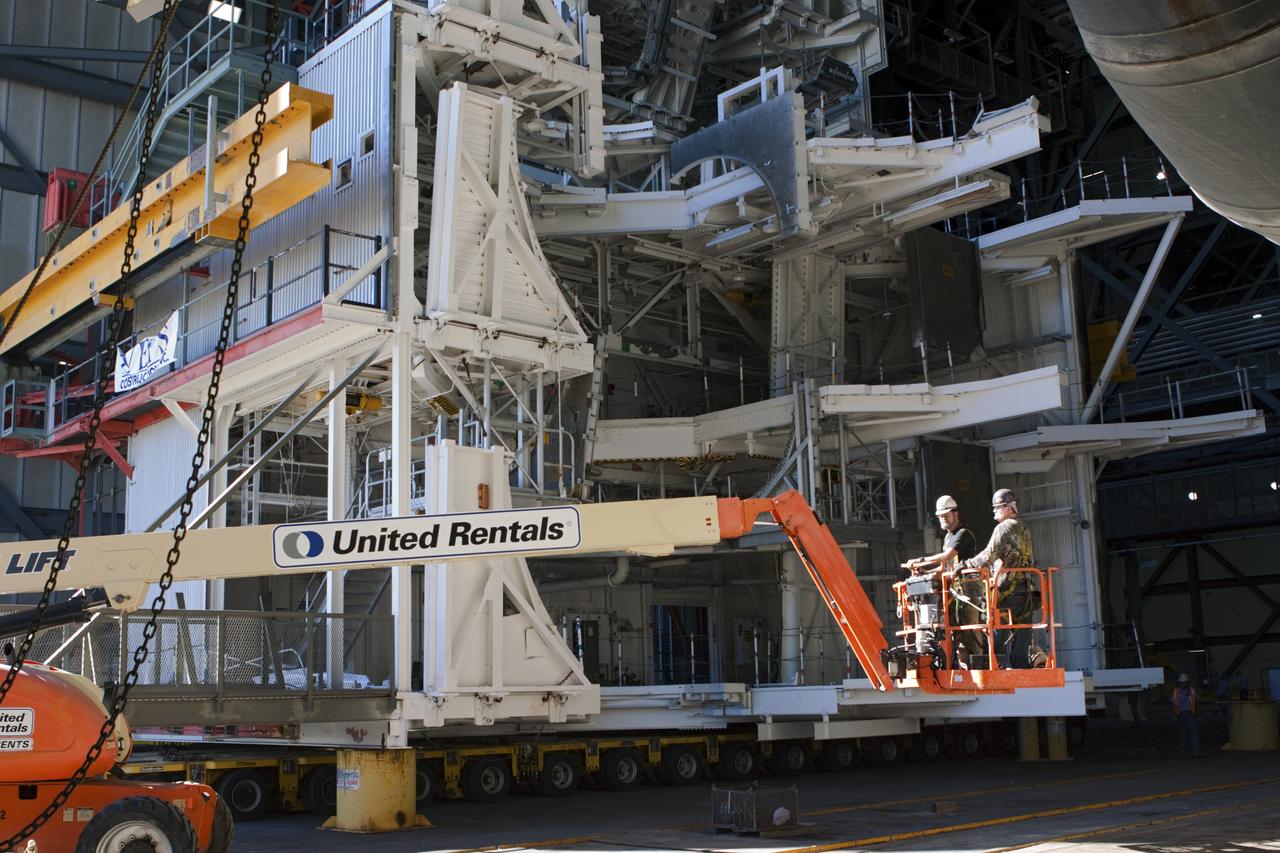
CAPE CANAVERAL, Fla. – As part of NASA's Ground Systems Development and Operations Program at the Kennedy Space Center in Florida, a large space shuttle-era work platform is being inspected prior to removal from high bay 3 of the Vehicle Assembly Building, or VAB. The work is part of a center-wide modernization and refurbishment initiative to accommodate NASA’s Space Launch System and a variety of other spacecraft instead of the whole building supporting one design. The Ground Systems Development and Operations Program is developing the necessary ground systems, infrastructure and operational approaches required to safely process, assemble, transport and launch the next generation of rockets and spacecraft in support of NASA’s exploration objectives. Future work also will replace the antiquated communications, power and vehicle access resources with modern efficient systems. Some of the utilities and systems slated for replacement have been used since the VAB opened in 1965. For more information, visit http://www.nasa.gov/exploration/systems/ground/index.html Photo credit: NASA/Jim Grossmann
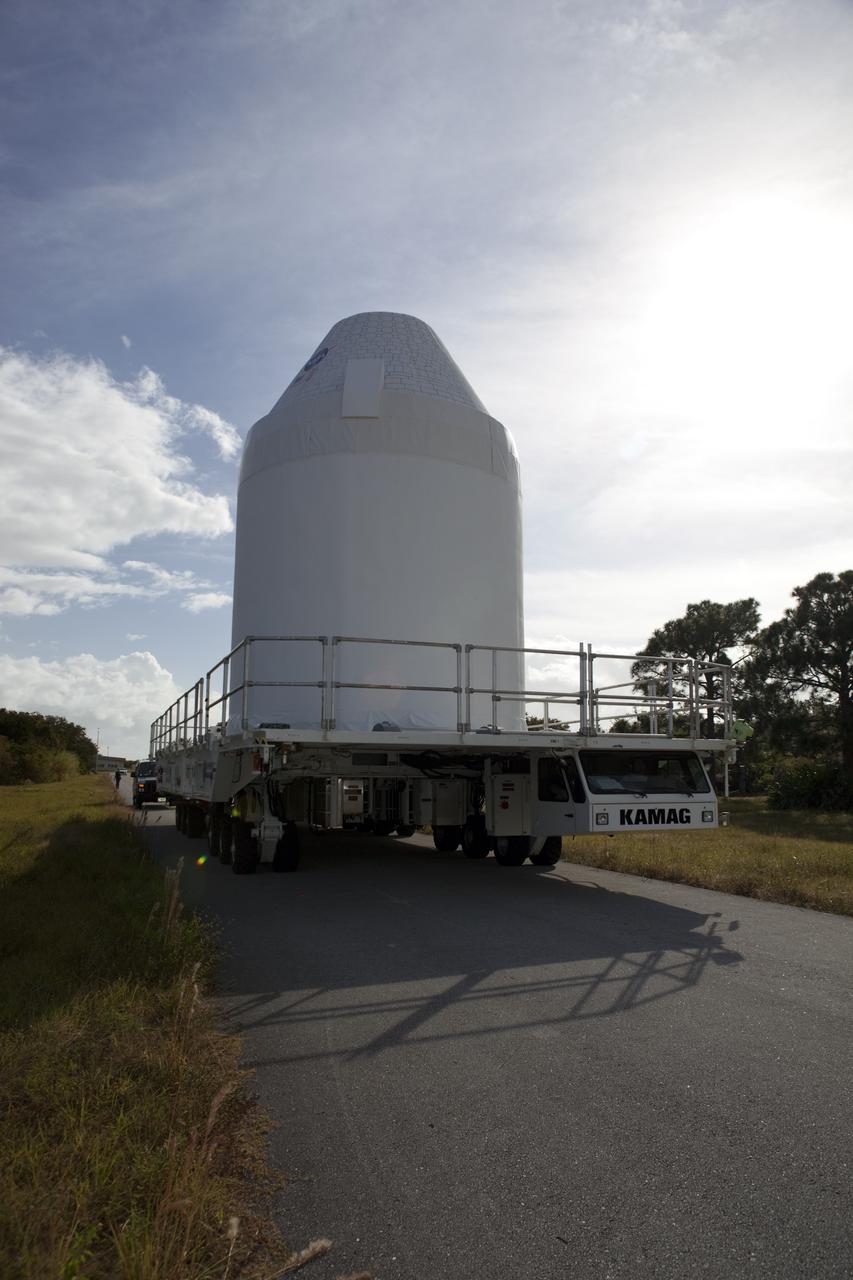
CAPE CANAVERAL, Fla. – A full-size test mock-up of the spacecraft is being transferred to the Multi-Payload Processing Facility, or MPPF, at NASA's Kennedy Space Center in Florida to test the path flight hardware will take during future launch processing. Orion is the exploration spacecraft designed to carry crews to space beyond low Earth orbit. It will provide emergency abort capability, sustain the crew during the space travel and provide safe re-entry from deep space return velocities. The first unpiloted test flight of the Orion is scheduled to launch in 2014 atop a Delta IV rocket and in 2017 on a Space Launch System rocket. For more information, visit http://www.nasa.gov/orion Photo credit: NASA/Dimitri Gerondidakis
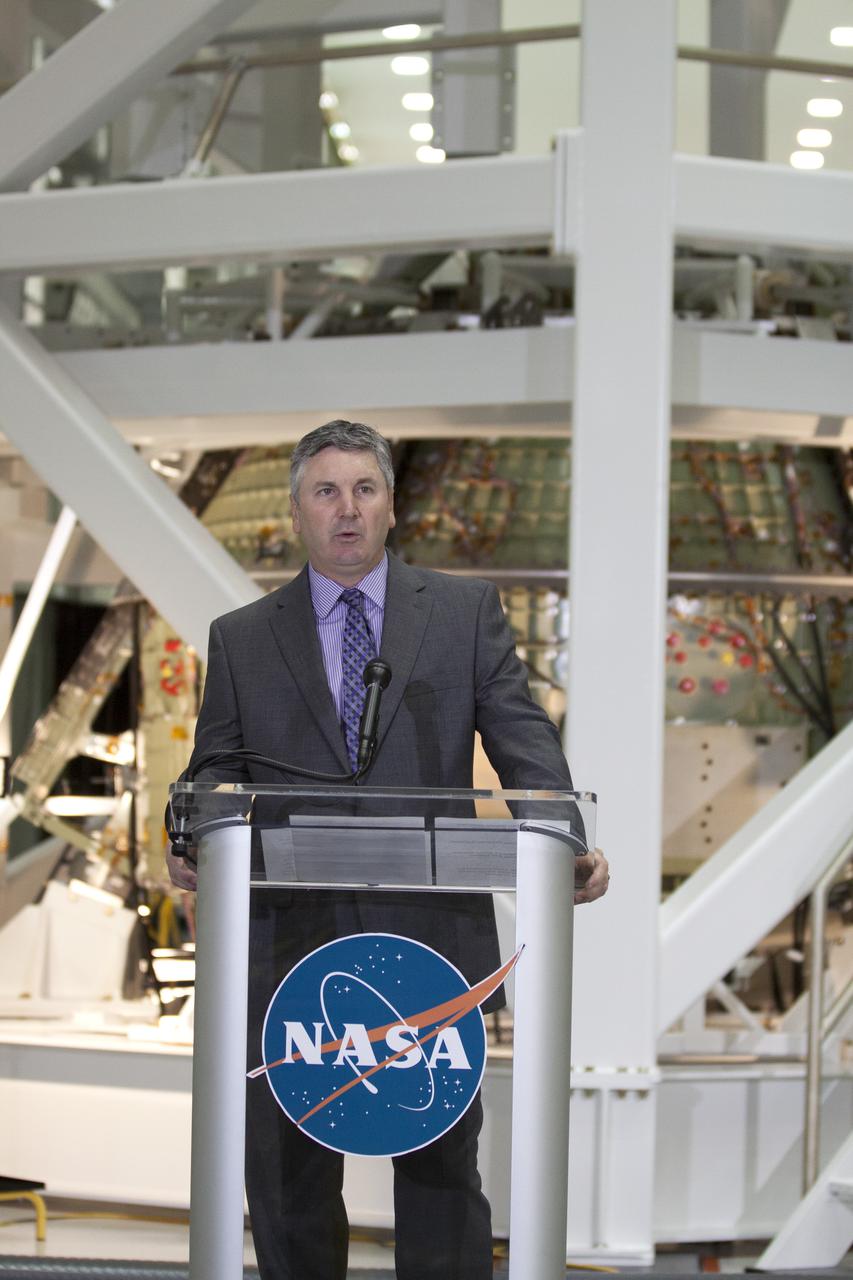
CAPE CANAVERAL, Fla. – In the Operations and Checkout Building OandC at the Kennedy Space Center in Florida, Scott Colloredo, chief architect for the Ground Systems Development and Operations Program, speaks to news media representatives updating progress on preparing the Orion spacecraft for its first uncrewed mission, Exploration Flight Test-1 EFT-1 in 2014. The crew module is seen behind Hefner in its test stand. Launched atop NASA's heavy-lift Space Launch System rocket, Orion is now targeted to take astronauts in a sample return mission to an asteroid as early as 2021. On the third anniversary of President Barack Obama issuing his challenge to NASA to send astronauts to an asteroid, news media representatives were given an opportunity to see up-close the Orion spacecraft which could take astronauts on such a flight. They also heard from key leaders of that effort in Kennedy's OandC where Orion's assembly is taking place. Photo credit: NASA_Kim Shiflett
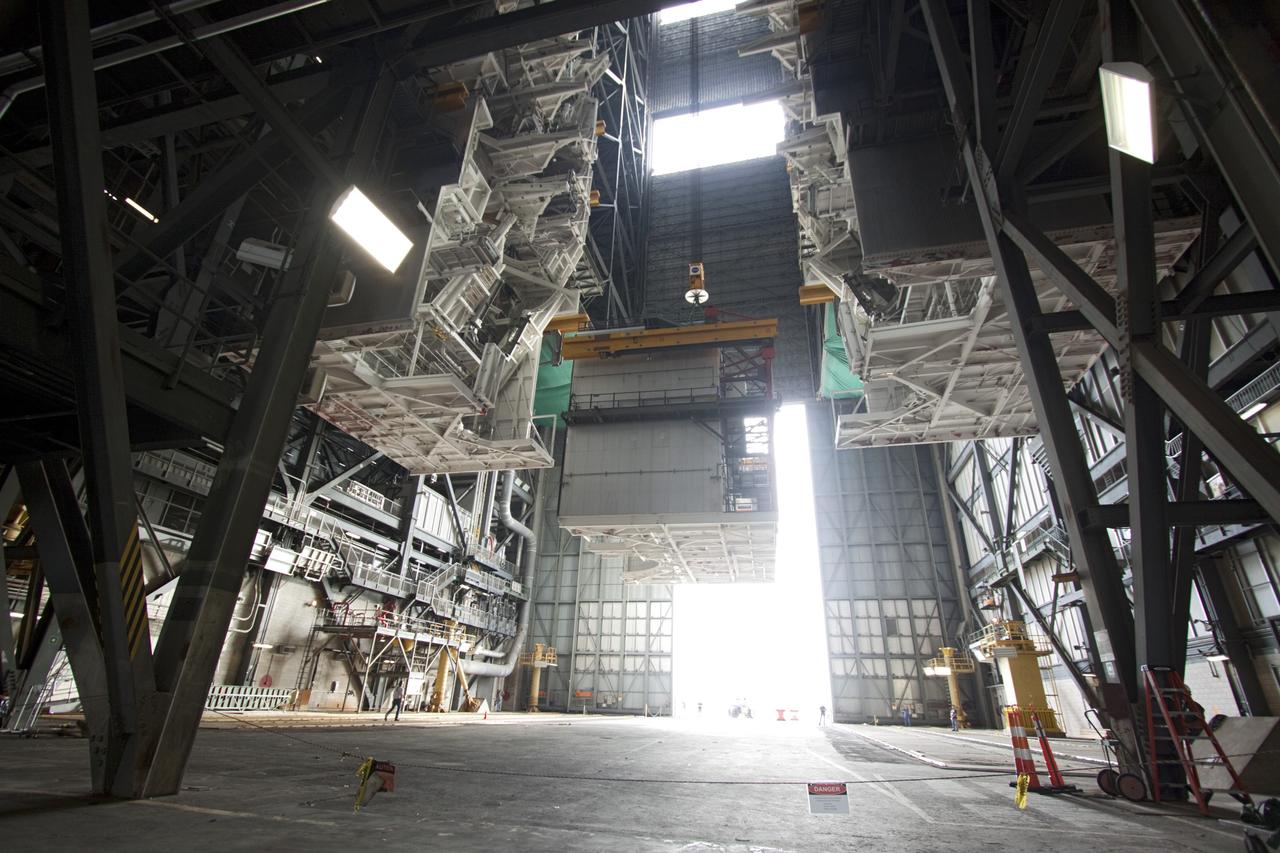
CAPE CANAVERAL, Fla. – As part of NASA's Ground Systems Development and Operations Program at the Kennedy Space Center in Florida, a large work platform is being removed from the Vehicle Assembly Building, or VAB. As part of a modernization effort, flexible settings are being designed for multiple launch vehicles instead of the whole building supporting one design. The Ground Systems Development and Operations Program is developing the necessary ground systems, infrastructure and operational approaches required to safely process, assemble, transport and launch the next generation of rockets and spacecraft in support of NASA’s exploration objectives. Future work also will replace the antiquated communications, power and vehicle access resources with modern efficient systems. Some of the utilities and systems slated for replacement have been used since the VAB opened in 1965. For more information, visit http://www.nasa.gov/exploration/systems/ground/index.html Photo credit: NASA/Jim Grossmann
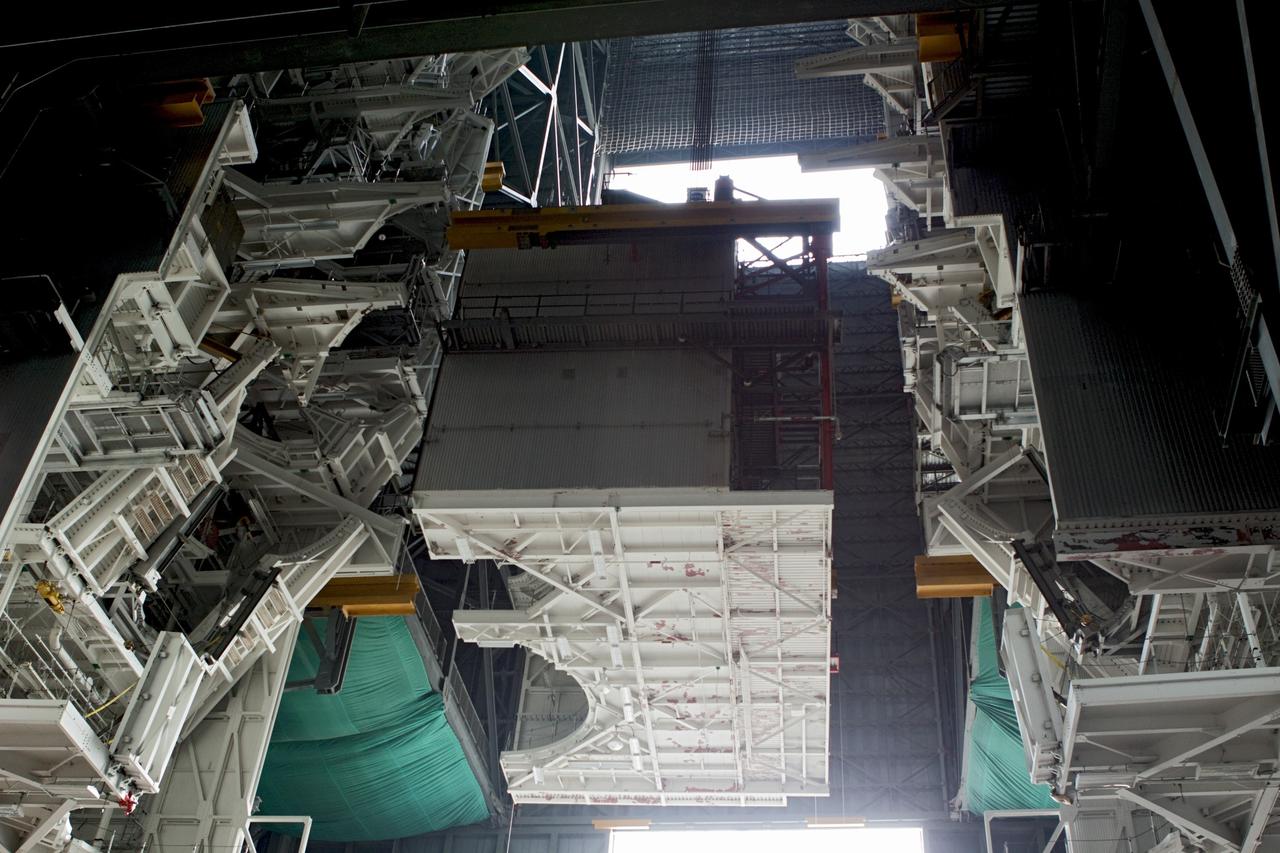
CAPE CANAVERAL, Fla. – As part of NASA's Ground Systems Development and Operations Program at the Kennedy Space Center in Florida, a large work platform is being removed from the Vehicle Assembly Building, or VAB. As part of a modernization effort, flexible settings are being designed for multiple launch vehicles instead of the whole building supporting one design. The Ground Systems Development and Operations Program is developing the necessary ground systems, infrastructure and operational approaches required to safely process, assemble, transport and launch the next generation of rockets and spacecraft in support of NASA’s exploration objectives. Future work also will replace the antiquated communications, power and vehicle access resources with modern efficient systems. Some of the utilities and systems slated for replacement have been used since the VAB opened in 1965. For more information, visit http://www.nasa.gov/exploration/systems/ground/index.html Photo credit: NASA/Jim Grossmann
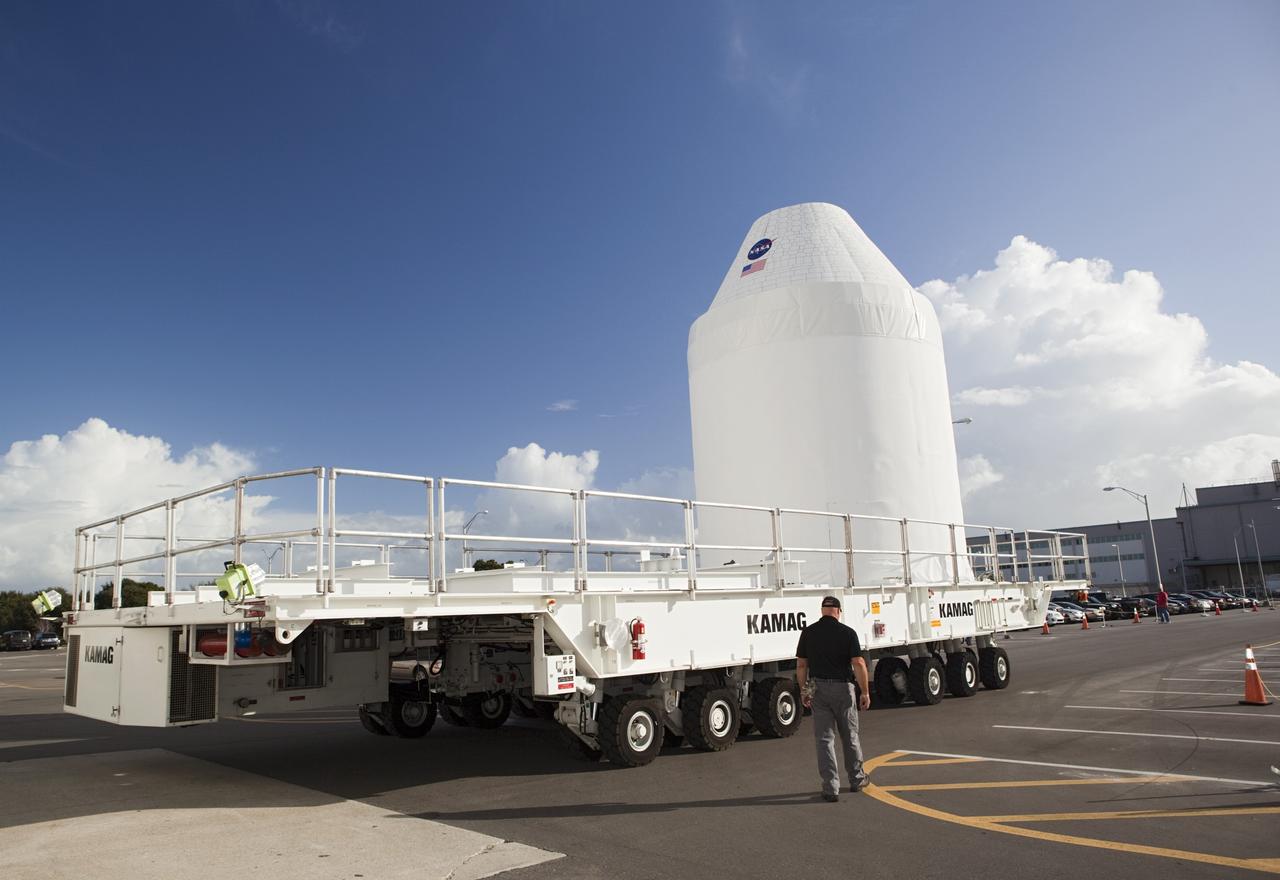
CAPE CANAVERAL, Fla. – A full-size test mock-up of the Orion spacecraft from of the Operations and Checkout Building at NASA's Kennedy Space Center in Florida. The test article is on its way to the Multi-Payload Processing Facility, or MPPF, to test the path flight hardware will take during future launch processing. Orion is the exploration spacecraft designed to carry crews to space beyond low Earth orbit. It will provide emergency abort capability, sustain the crew during the space travel and provide safe re-entry from deep space return velocities. The first unpiloted test flight of the Orion is scheduled to launch in 2014 atop a Delta IV rocket and in 2017 on a Space Launch System rocket. For more information, visit http://www.nasa.gov/orion Photo credit: NASA/Dimitri Gerondidakis
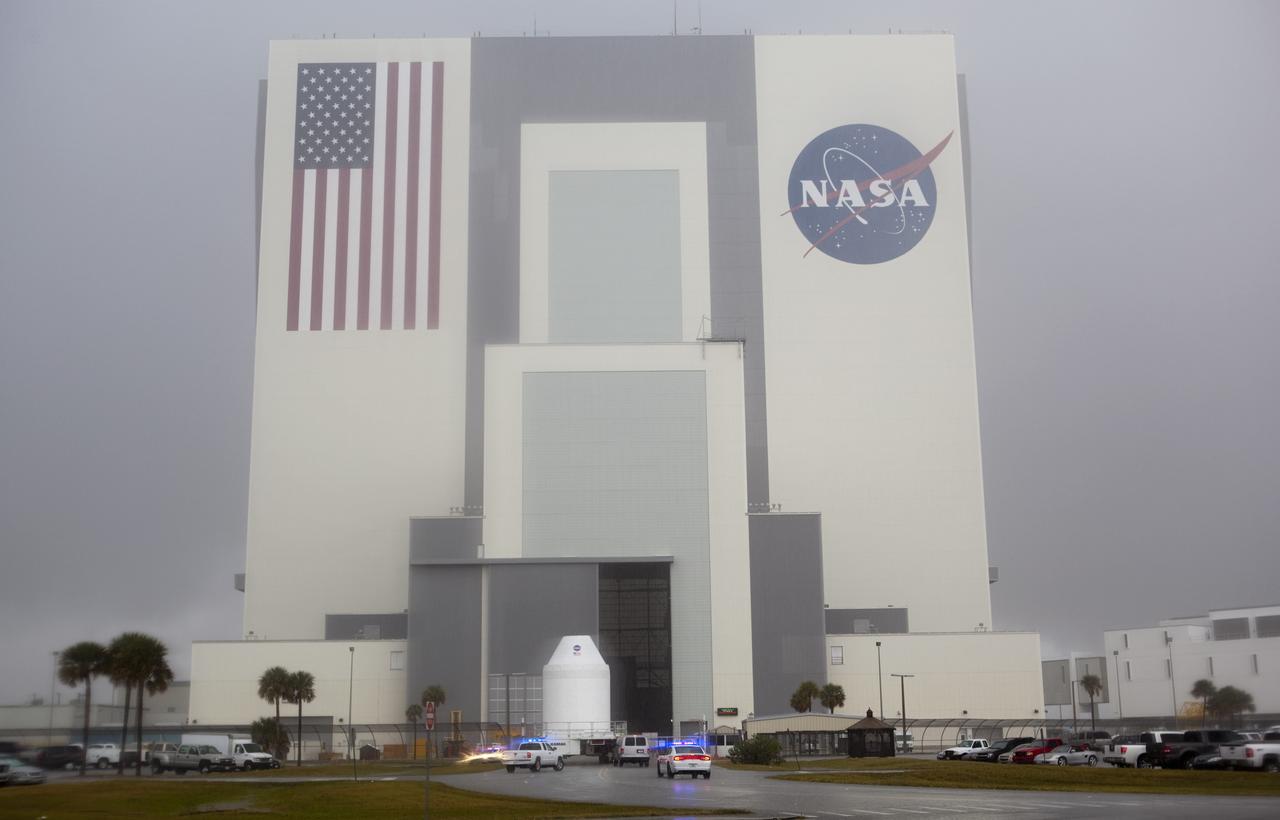
CAPE CANAVERAL, Fla. – A full-size test mock-up of the Orion spacecraft arrives at the Vehicle Assembly Building at NASA's Kennedy Space Center in Florida to test the path flight hardware will take during future launch processing. Orion is the exploration spacecraft designed to carry crews to space beyond low Earth orbit. It will provide emergency abort capability, sustain the crew during the space travel and provide safe re-entry from deep space return velocities. The first unpiloted test flight of the Orion is scheduled to launch in 2014 atop a Delta IV rocket and in 2017 on a Space Launch System rocket. For more information, visit http://www.nasa.gov/orion Photo credit: NASA/Dimitri Gerondidakis
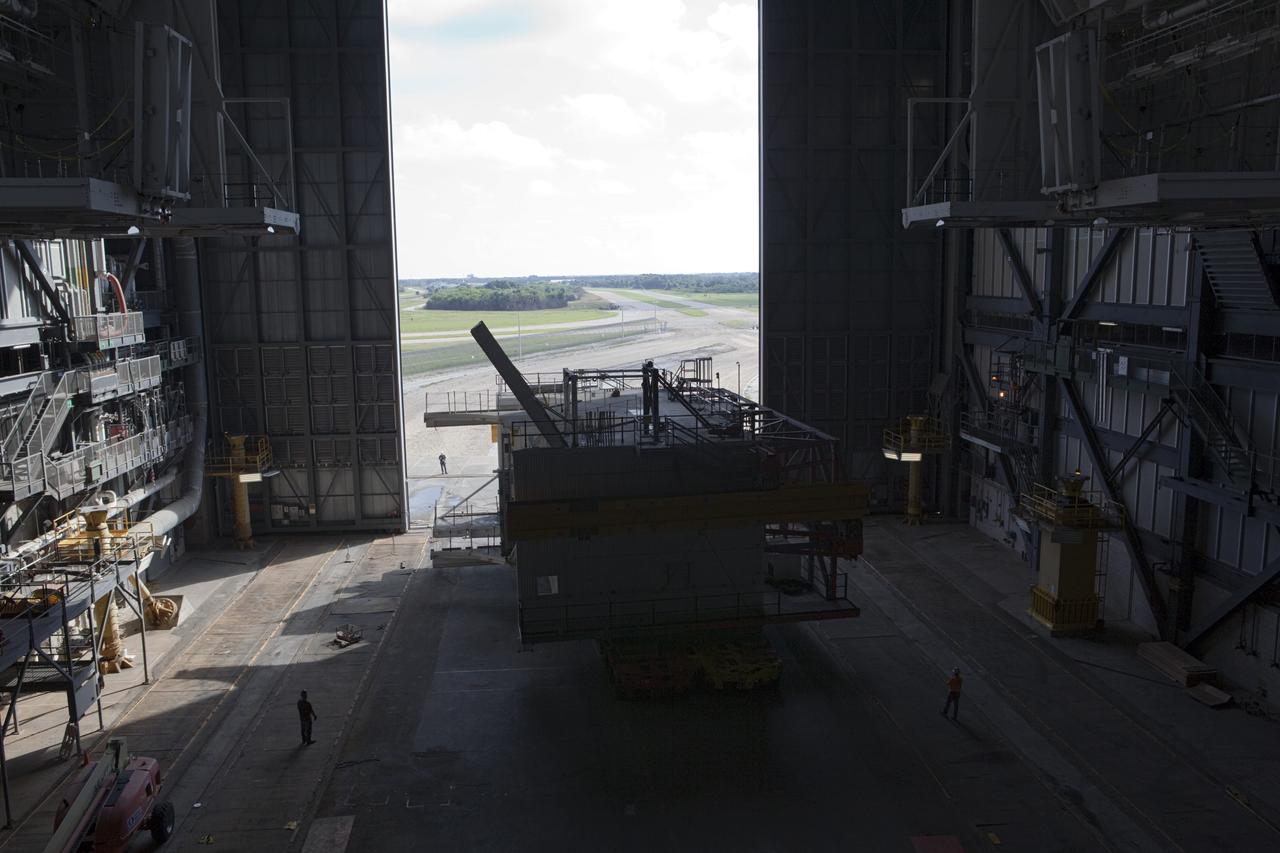
CAPE CANAVERAL, Fla. – As part of NASA's Ground Systems Development and Operations Program at the Kennedy Space Center in Florida, a large space shuttle-era work platform is being removed from high bay 3 of the Vehicle Assembly Building, or VAB. The work is part of a center-wide modernization and refurbishment initiative to accommodate NASA’s Space Launch System and a variety of other spacecraft instead of the whole building supporting one design. The Ground Systems Development and Operations Program is developing the necessary ground systems, infrastructure and operational approaches required to safely process, assemble, transport and launch the next generation of rockets and spacecraft in support of NASA’s exploration objectives. Future work also will replace the antiquated communications, power and vehicle access resources with modern efficient systems. Some of the utilities and systems slated for replacement have been used since the VAB opened in 1965. For more information, visit http://www.nasa.gov/exploration/systems/ground/index.html Photo credit: NASA/Dimitri Gerondidakis
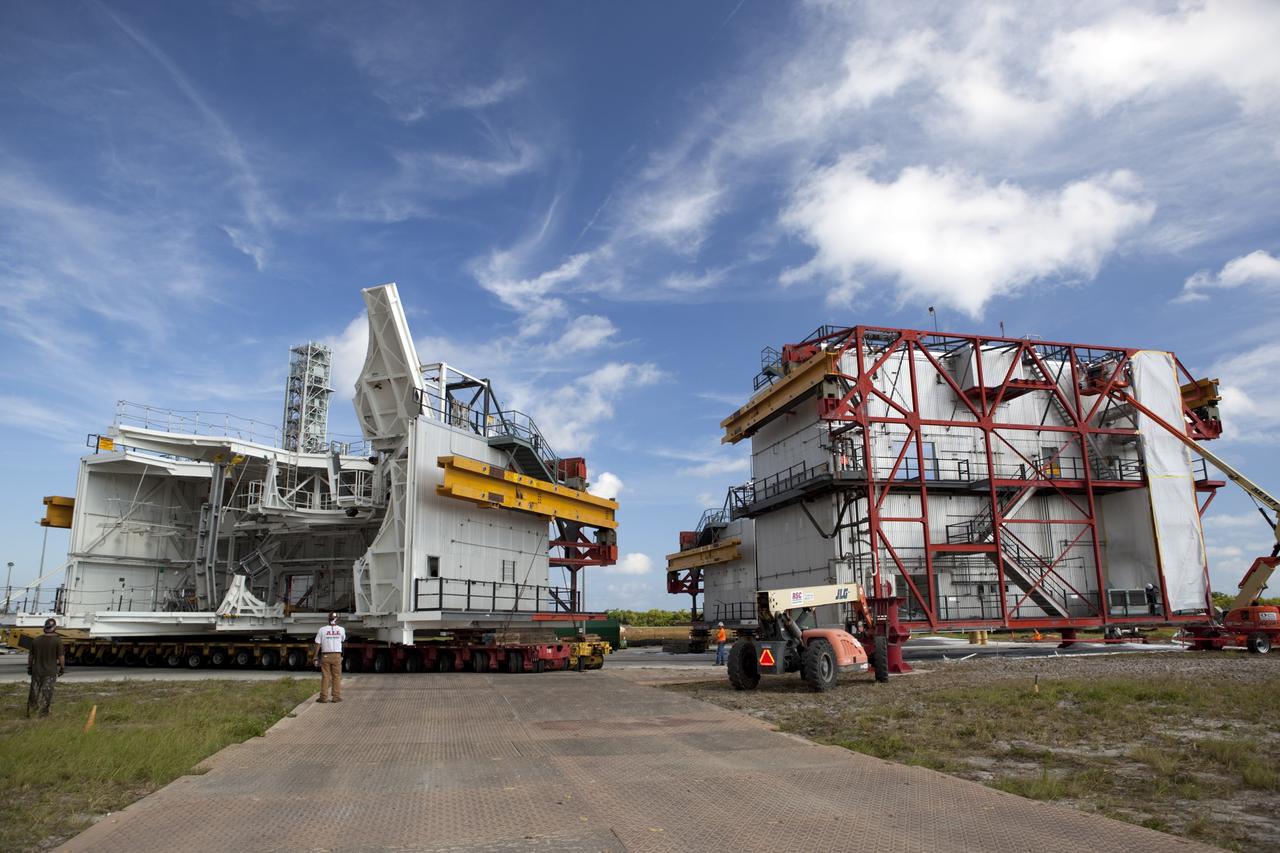
CAPE CANAVERAL, Fla. – As part of NASA's Ground Systems Development and Operations Program at the Kennedy Space Center in Florida, a technician oversees a large space shuttle-era work platform being removed by transporter from high bay 3 of the Vehicle Assembly Building, or VAB. The work is part of a center-wide modernization and refurbishment initiative to accommodate NASA’s Space Launch System and a variety of other spacecraft instead of the whole building supporting one design. The Ground Systems Development and Operations Program is developing the necessary ground systems, infrastructure and operational approaches required to safely process, assemble, transport and launch the next generation of rockets and spacecraft in support of NASA’s exploration objectives. Future work also will replace the antiquated communications, power and vehicle access resources with modern efficient systems. Some of the utilities and systems slated for replacement have been used since the VAB opened in 1965. For more information, visit http://www.nasa.gov/exploration/systems/ground/index.html Photo credit: NASA/Dimitri Gerondidakis
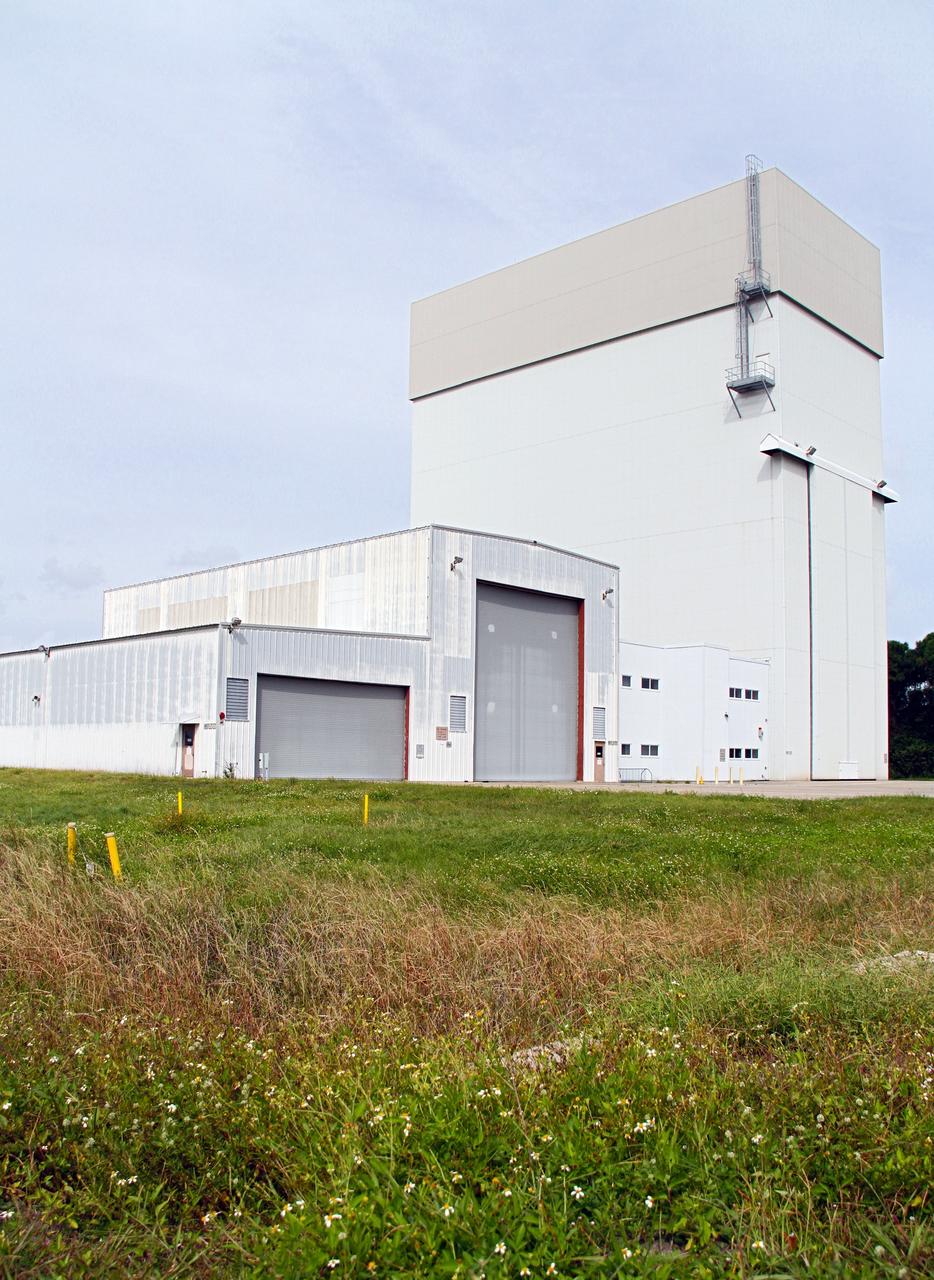
CAPE CANAVERAL, Fla. –The Launch Abort System Facility, or LASF, formerly known as the Canister Rotation Facility, is being outfitted and prepared for use by NASA's Orion Program to process the Launch Abort System, a multi-story rocket that will be positioned atop an Orion capsule to provide an escape system for astronauts during countdown and launch into orbit. The structure, the industrial area of NASA's Kennedy Space Center in Florida, served the Space Shuttle Program by standing the payload canister up so it could be taken to the launch pad and its contents transferred into the shuttle's cargo bay. Photo credit: NASA/Cory Huston
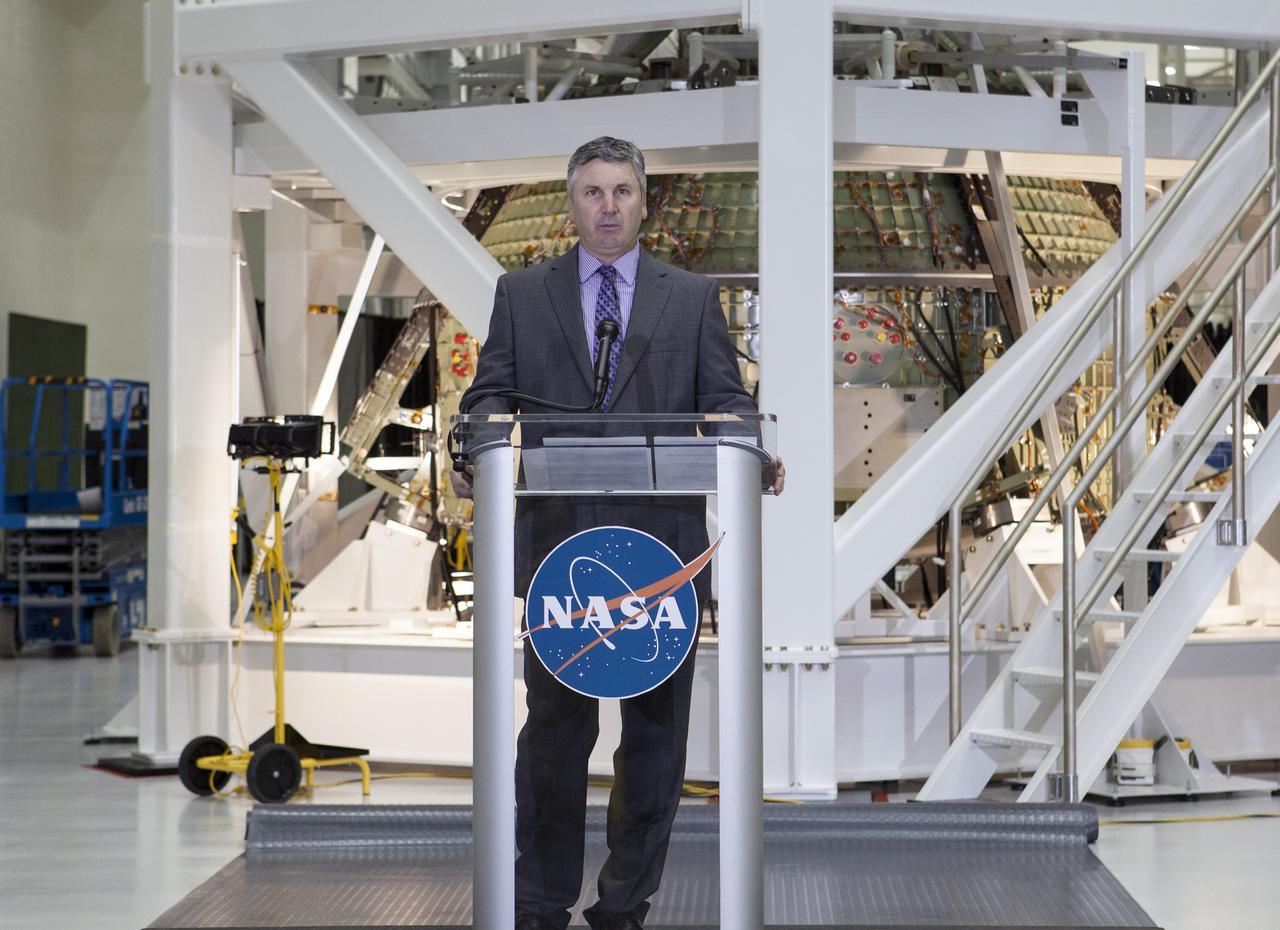
CAPE CANAVERAL, Fla. – In the Operations and Checkout Building OandC at the Kennedy Space Center in Florida, Scott Colloredo, chief architect for the Ground Systems Development and Operations Program, speaks to news media representatives updating progress on preparing the Orion spacecraft for its first uncrewed mission, Exploration Flight Test-1 EFT-1 in 2014. The crew module is seen behind Colloredo in its test stand. Launched atop NASA's heavy-lift Space Launch System rocket, Orion is now targeted to take astronauts in a sample return mission to an asteroid as early as 2021. On the third anniversary of President Barack Obama issuing his challenge to NASA to send astronauts to an asteroid, news media representatives were given an opportunity to see up-close the Orion spacecraft which could take astronauts on such a flight. They also heard from key leaders of that effort in Kennedy's OandC where Orion's assembly is taking place. Photo credit: NASA_Kim Shiflett
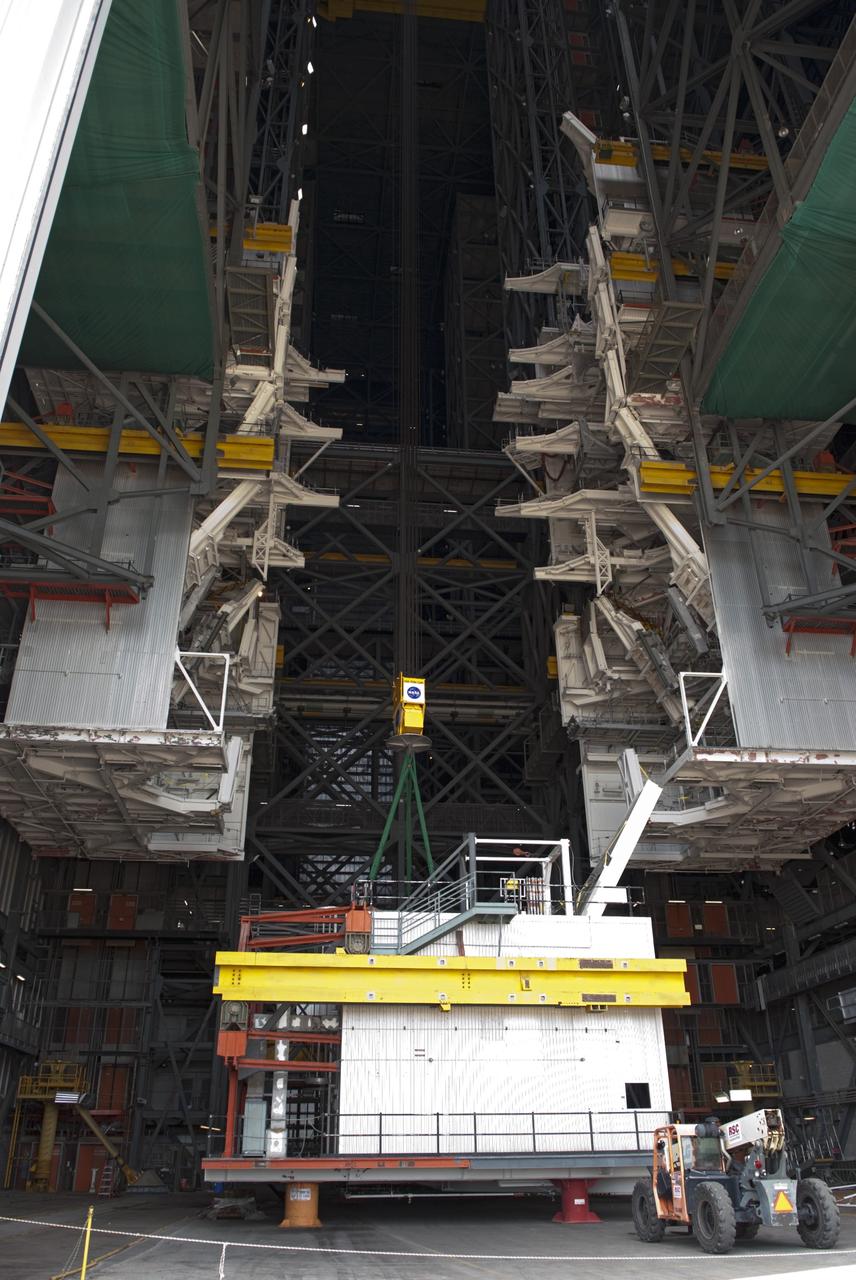
CAPE CANAVERAL, Fla. – As part of NASA's Ground Systems Development and Operations Program at the Kennedy Space Center in Florida, a large space shuttle-era work platform is being removed from high bay 3 of the Vehicle Assembly Building, or VAB. The work is part of a center-wide modernization and refurbishment initiative to accommodate NASA’s Space Launch System and a variety of other spacecraft instead of the whole building supporting one design. The Ground Systems Development and Operations Program is developing the necessary ground systems, infrastructure and operational approaches required to safely process, assemble, transport and launch the next generation of rockets and spacecraft in support of NASA’s exploration objectives. Future work also will replace the antiquated communications, power and vehicle access resources with modern efficient systems. Some of the utilities and systems slated for replacement have been used since the VAB opened in 1965. For more information, visit http://www.nasa.gov/exploration/systems/ground/index.html Photo credit: NASA/ Charisse Nahser
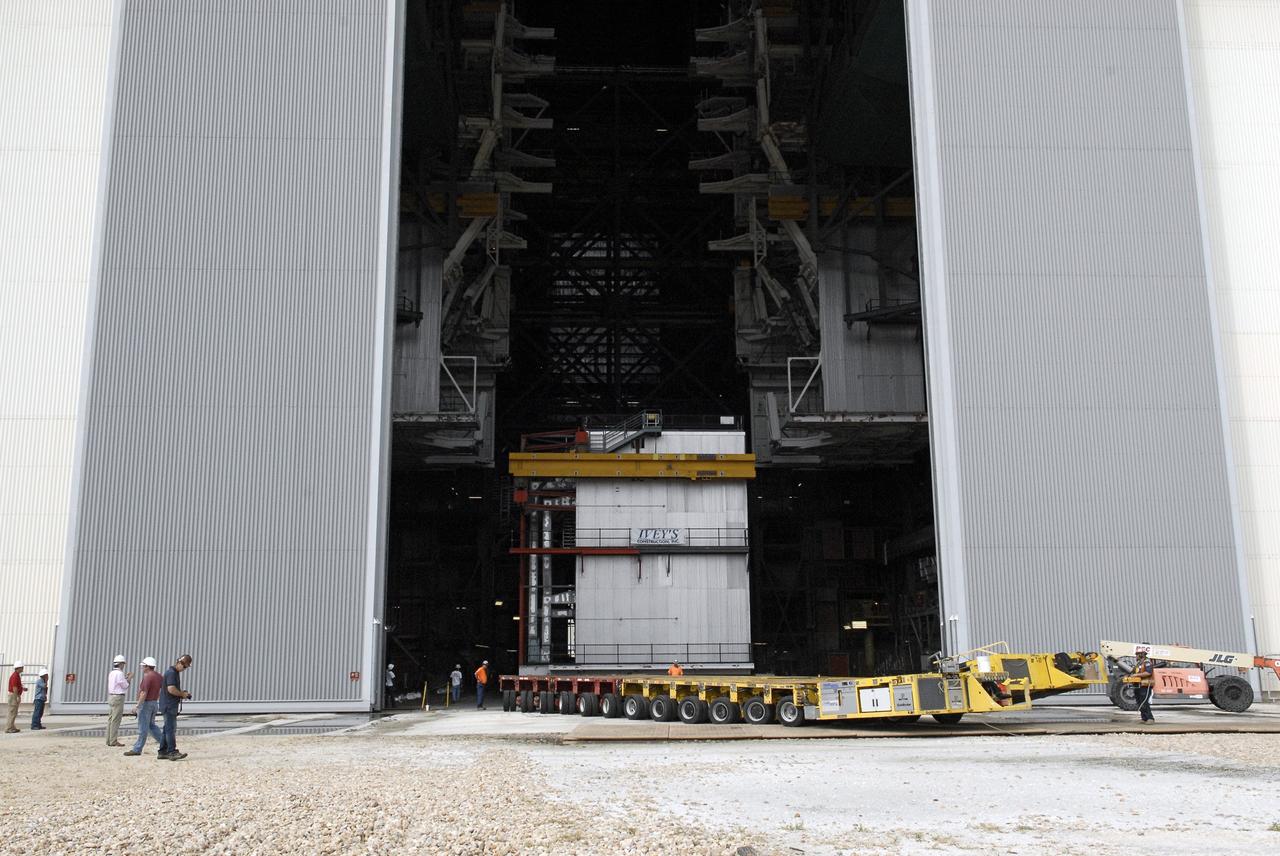
CAPE CANAVERAL, Fla. – As part of NASA's Ground Systems Development and Operations Program at the Kennedy Space Center in Florida, a work platform is lowered onto a transporter for removal from the Vehicle Assembly Building, or VAB. As part of a modernization effort, flexible settings area being designed for multiple launch vehicles instead of the whole building supporting one design. The Ground Systems Development and Operations Program is developing the necessary ground systems, infrastructure and operational approaches required to safely process, assemble, transport and launch the next generation of rockets and spacecraft in support of NASA’s exploration objectives. Future work also will replace the antiquated communications, power and vehicle access resources with modern efficient systems. Some of the utilities and systems slated for replacement have been used since the VAB opened in 1965. For more information, visit http://www.nasa.gov/exploration/systems/ground/index.html Photo credit: NASA/Charisse Nahser
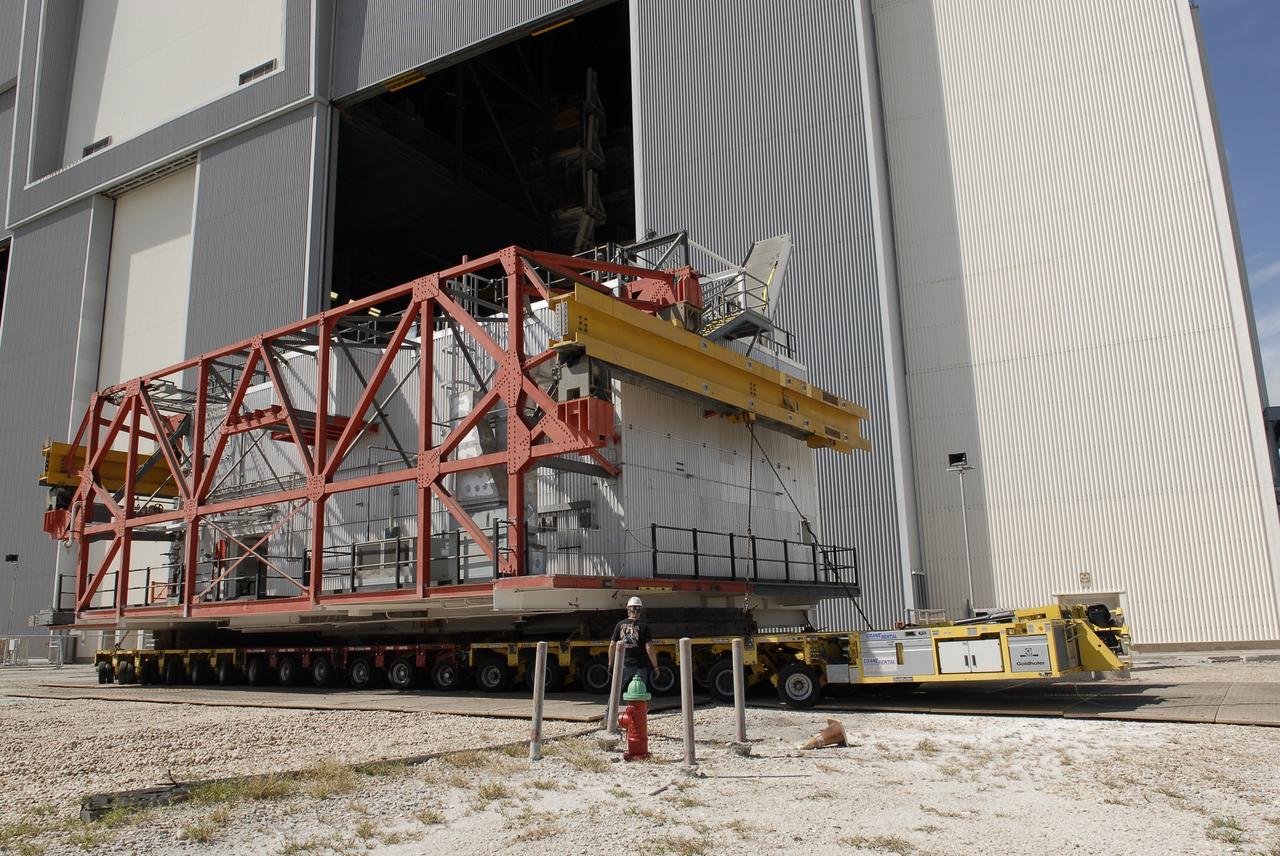
CAPE CANAVERAL, Fla. – As part of NASA's Ground Systems Development and Operations Program at the Kennedy Space Center in Florida, a large space shuttle-era work platform being removed from high bay 3 of the Vehicle Assembly Building, or VAB. The work is part of a center-wide modernization and refurbishment initiative to accommodate NASA’s Space Launch System and a variety of other spacecraft instead of the whole building supporting one design. The Ground Systems Development and Operations Program is developing the necessary ground systems, infrastructure and operational approaches required to safely process, assemble, transport and launch the next generation of rockets and spacecraft in support of NASA’s exploration objectives. Future work also will replace the antiquated communications, power and vehicle access resources with modern efficient systems. Some of the utilities and systems slated for replacement have been used since the VAB opened in 1965. For more information, visit http://www.nasa.gov/exploration/systems/ground/index.html Photo credit: NASA/ Charisse Nahser
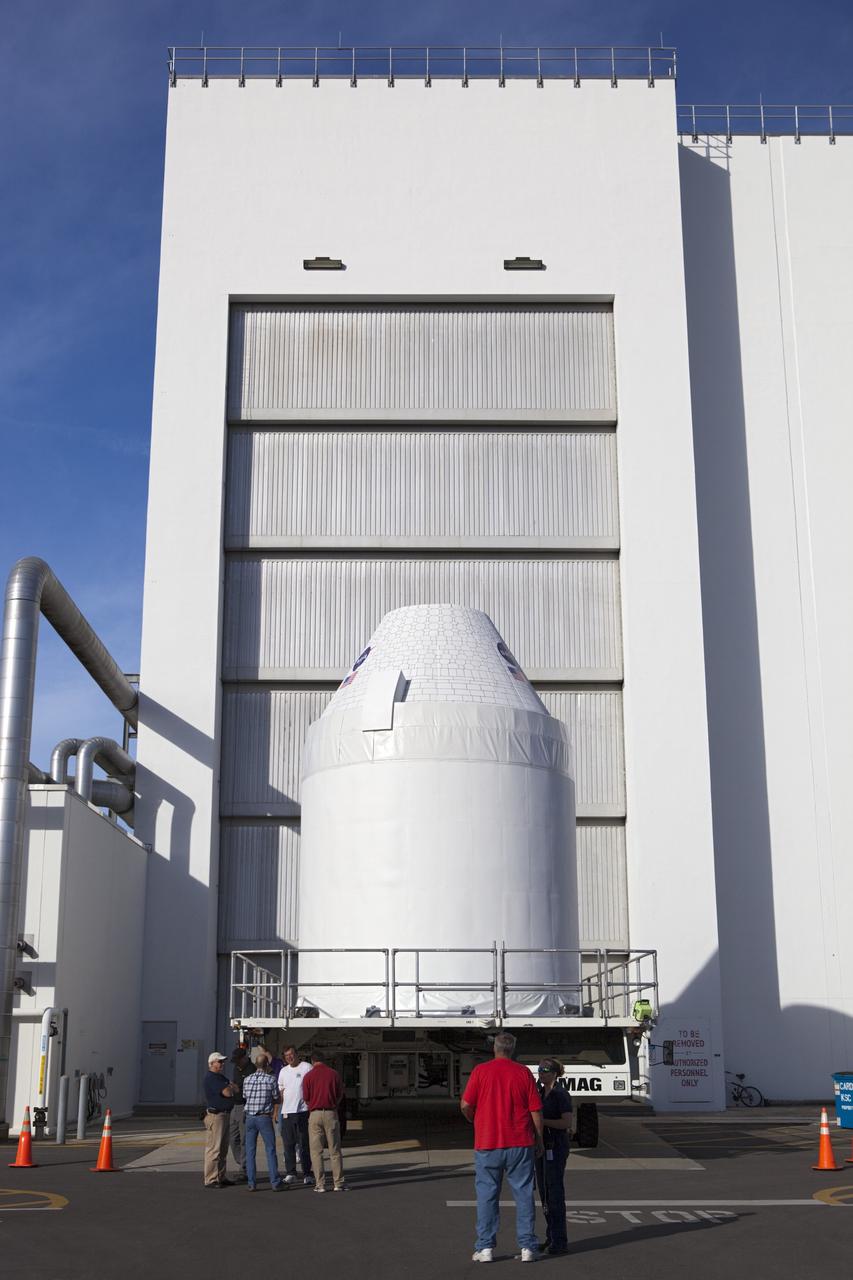
CAPE CANAVERAL, Fla. – A full-size test mock-up of the Orion spacecraft moves from the Operations and Checkout Building at NASA's Kennedy Space Center in Florida. The test article is on its way to the Multi-Payload Processing Facility, or MPPF, to test the path flight hardware will take during future launch processing. Orion is the exploration spacecraft designed to carry crews to space beyond low Earth orbit. It will provide emergency abort capability, sustain the crew during the space travel and provide safe re-entry from deep space return velocities. The first unpiloted test flight of the Orion is scheduled to launch in 2014 atop a Delta IV rocket and in 2017 on a Space Launch System rocket. For more information, visit http://www.nasa.gov/orion Photo credit: NASA/Dimitri Gerondidakis
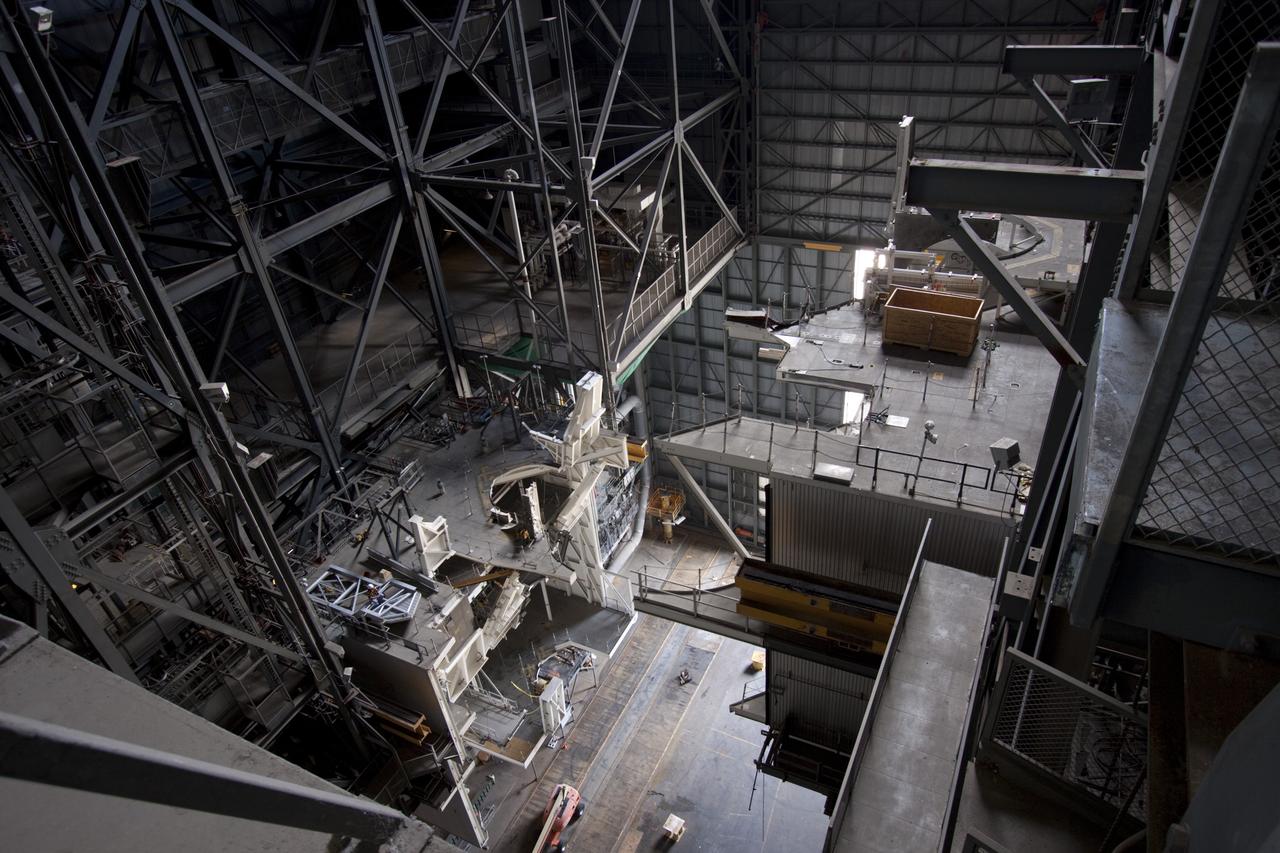
CAPE CANAVERAL, Fla. – As part of NASA's Ground Systems Development and Operations Program at the Kennedy Space Center in Florida, a large space shuttle-era work platform is being removed from high bay 3 of the Vehicle Assembly Building, or VAB. The work is part of a center-wide modernization and refurbishment initiative to accommodate NASA’s Space Launch System and a variety of other spacecraft instead of the whole building supporting one design. The Ground Systems Development and Operations Program is developing the necessary ground systems, infrastructure and operational approaches required to safely process, assemble, transport and launch the next generation of rockets and spacecraft in support of NASA’s exploration objectives. Future work also will replace the antiquated communications, power and vehicle access resources with modern efficient systems. Some of the utilities and systems slated for replacement have been used since the VAB opened in 1965. For more information, visit http://www.nasa.gov/exploration/systems/ground/index.html Photo credit: NASA/Jim Grossmann
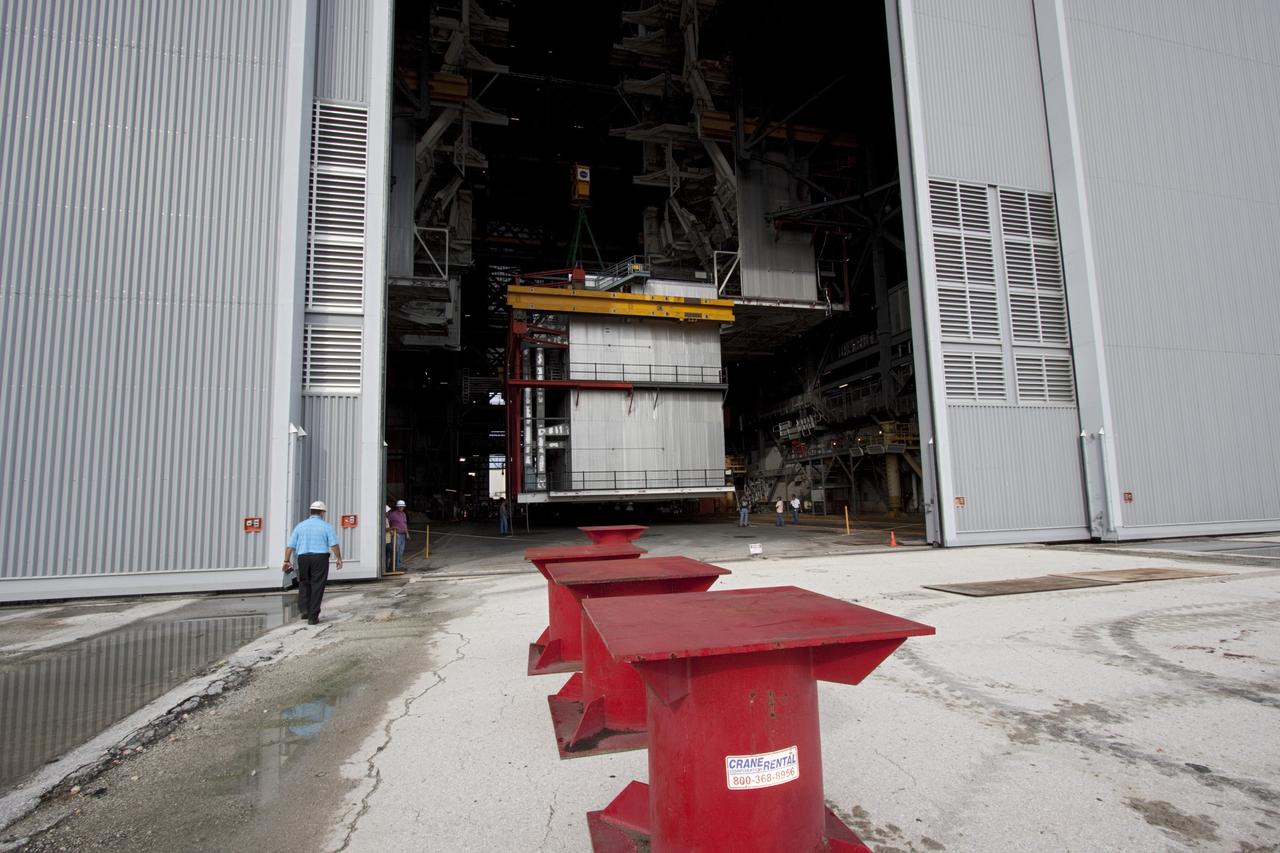
CAPE CANAVERAL, Fla. – As part of NASA's Ground Systems Development and Operations Program at the Kennedy Space Center in Florida, a large work platform is being removed from the Vehicle Assembly Building, or VAB. As part of a modernization effort, flexible settings are being designed for multiple launch vehicles instead of the whole building supporting one design. The Ground Systems Development and Operations Program is developing the necessary ground systems, infrastructure and operational approaches required to safely process, assemble, transport and launch the next generation of rockets and spacecraft in support of NASA’s exploration objectives. Future work also will replace the antiquated communications, power and vehicle access resources with modern efficient systems. Some of the utilities and systems slated for replacement have been used since the VAB opened in 1965. For more information, visit http://www.nasa.gov/exploration/systems/ground/index.html Photo credit: NASA/Jim Grossmann
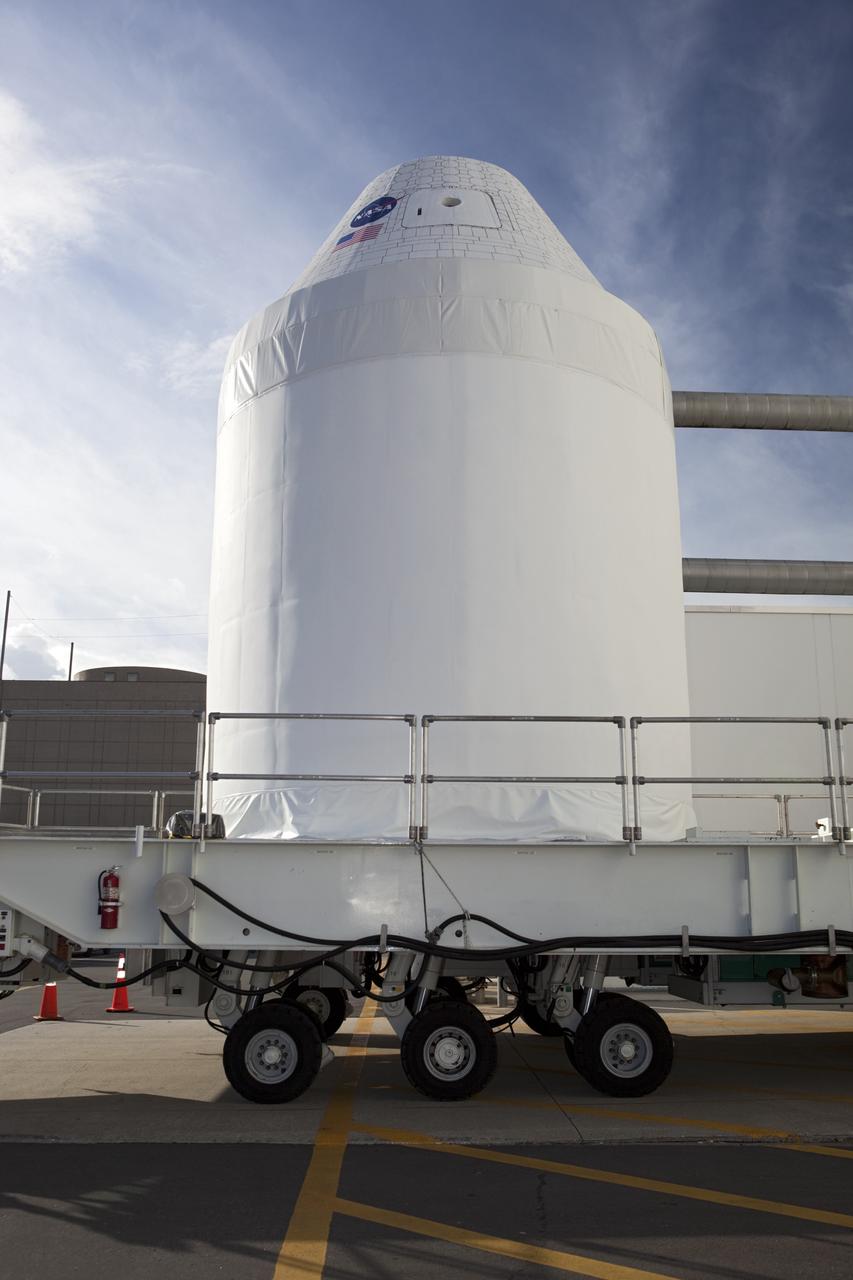
CAPE CANAVERAL, Fla. – A full-size test mock-up of the Orion spacecraft moves from the Operations and Checkout Building at NASA's Kennedy Space Center in Florida. The test article is on its way to the Multi-Payload Processing Facility, or MPPF, to test the path flight hardware will take during future launch processing. Orion is the exploration spacecraft designed to carry crews to space beyond low Earth orbit. It will provide emergency abort capability, sustain the crew during the space travel and provide safe re-entry from deep space return velocities. The first unpiloted test flight of the Orion is scheduled to launch in 2014 atop a Delta IV rocket and in 2017 on a Space Launch System rocket. For more information, visit http://www.nasa.gov/orion Photo credit: NASA/Dimitri Gerondidakis
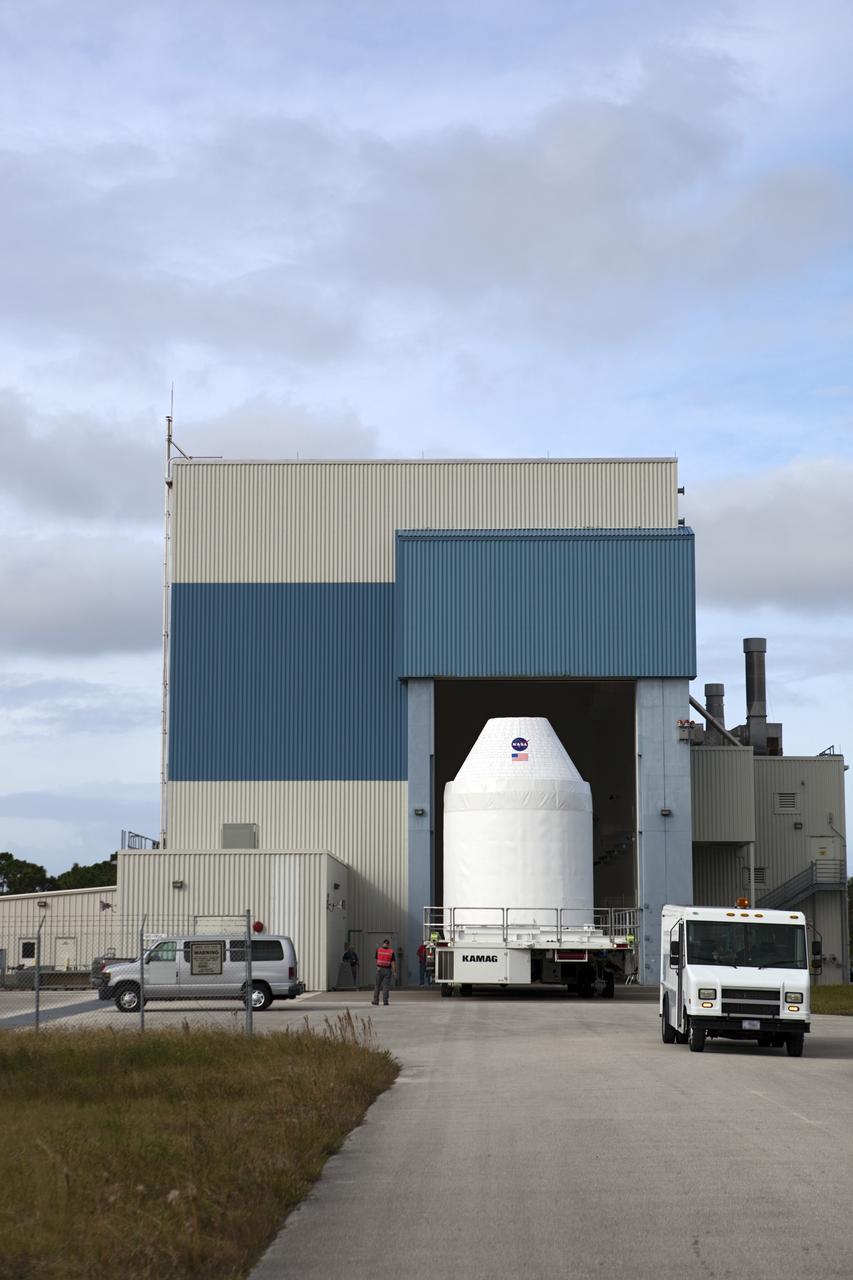
CAPE CANAVERAL, Fla. – A full-size test mock-up of the Orion spacecraft moves out of the Multi-Payload Processing Facility, or MPPF, at NASA's Kennedy Space Center in Florida to test the path flight hardware will take during future launch processing. Orion is the exploration spacecraft designed to carry crews to space beyond low Earth orbit. It will provide emergency abort capability, sustain the crew during the space travel and provide safe re-entry from deep space return velocities. The first unpiloted test flight of the Orion is scheduled to launch in 2014 atop a Delta IV rocket and in 2017 on a Space Launch System rocket. For more information, visit http://www.nasa.gov/orion Photo credit: NASA/Dimitri Gerondidakis
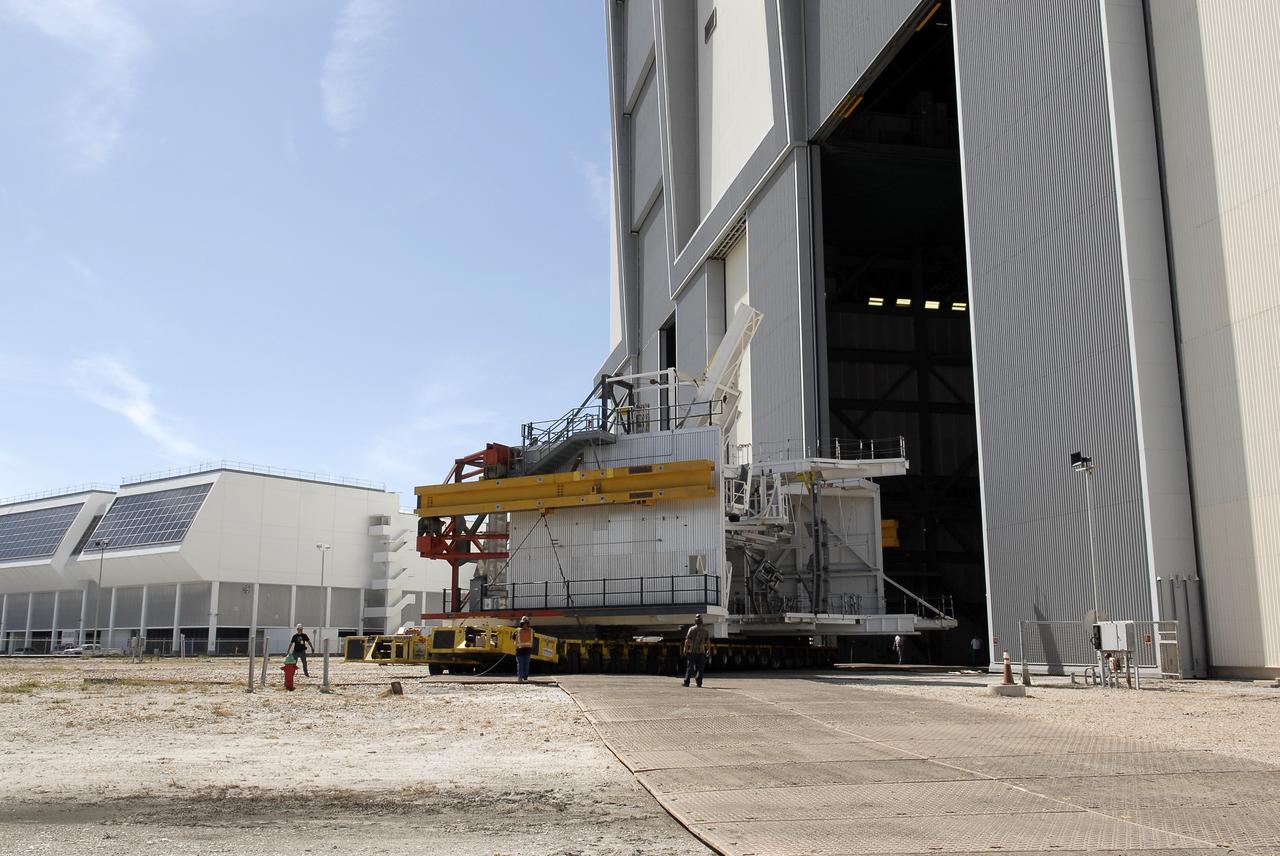
CAPE CANAVERAL, Fla. – As part of NASA's Ground Systems Development and Operations Program at the Kennedy Space Center in Florida, technicians oversee a large space shuttle-era work platform being removed from high bay 3 of the Vehicle Assembly Building, or VAB. The work is part of a center-wide modernization and refurbishment initiative to accommodate NASA’s Space Launch System and a variety of other spacecraft instead of the whole building supporting one design. The Ground Systems Development and Operations Program is developing the necessary ground systems, infrastructure and operational approaches required to safely process, assemble, transport and launch the next generation of rockets and spacecraft in support of NASA’s exploration objectives. Future work also will replace the antiquated communications, power and vehicle access resources with modern efficient systems. Some of the utilities and systems slated for replacement have been used since the VAB opened in 1965. For more information, visit http://www.nasa.gov/exploration/systems/ground/index.html Photo credit: NASA/ Charisse Nahser
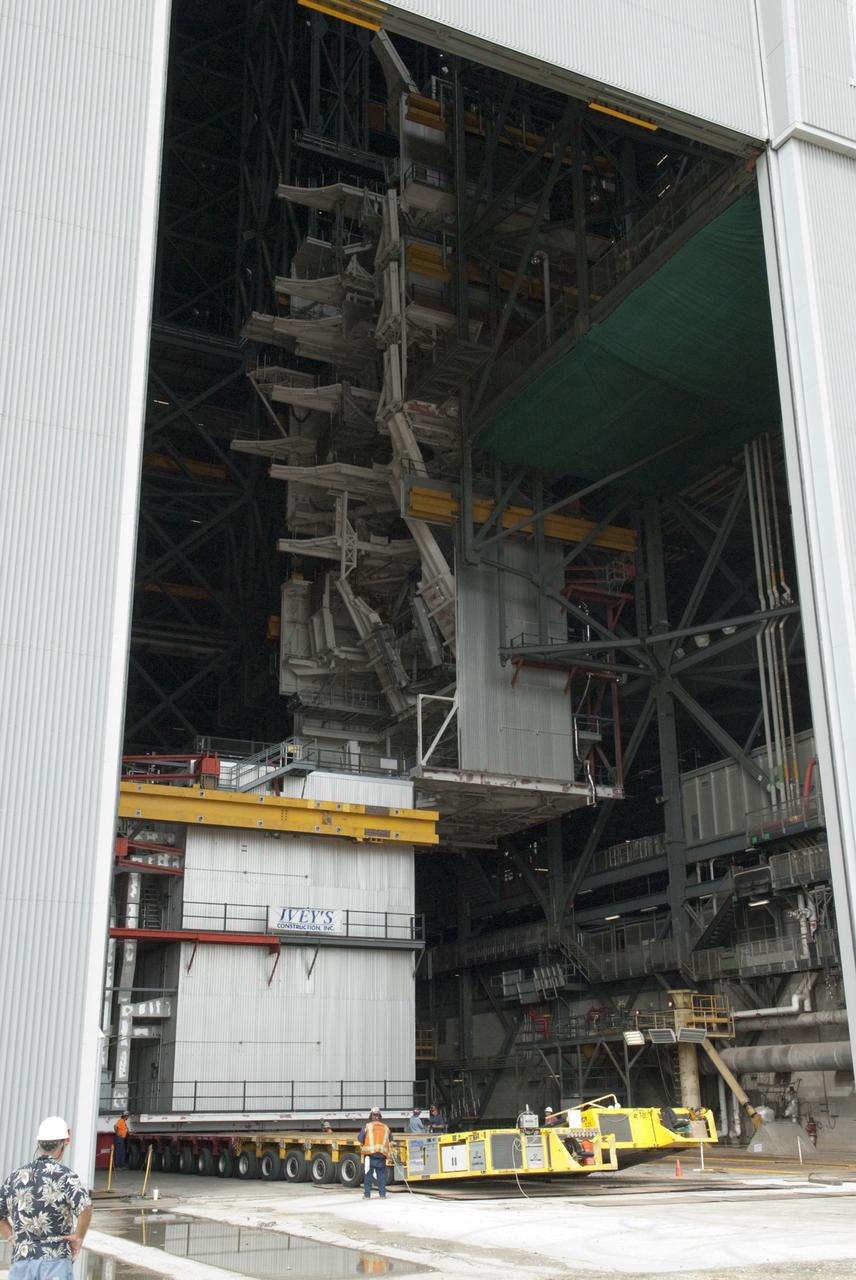
CAPE CANAVERAL, Fla. – As part of NASA's Ground Systems Development and Operations Program at the Kennedy Space Center in Florida, a work platform is lowered onto a transporter for removal from the Vehicle Assembly Building, or VAB. As part of a modernization effort, flexible settings area being designed for multiple launch vehicles instead of the whole building supporting one design. The Ground Systems Development and Operations Program is developing the necessary ground systems, infrastructure and operational approaches required to safely process, assemble, transport and launch the next generation of rockets and spacecraft in support of NASA’s exploration objectives. Future work also will replace the antiquated communications, power and vehicle access resources with modern efficient systems. Some of the utilities and systems slated for replacement have been used since the VAB opened in 1965. For more information, visit http://www.nasa.gov/exploration/systems/ground/index.html Photo credit: NASA/Charisse Nahser
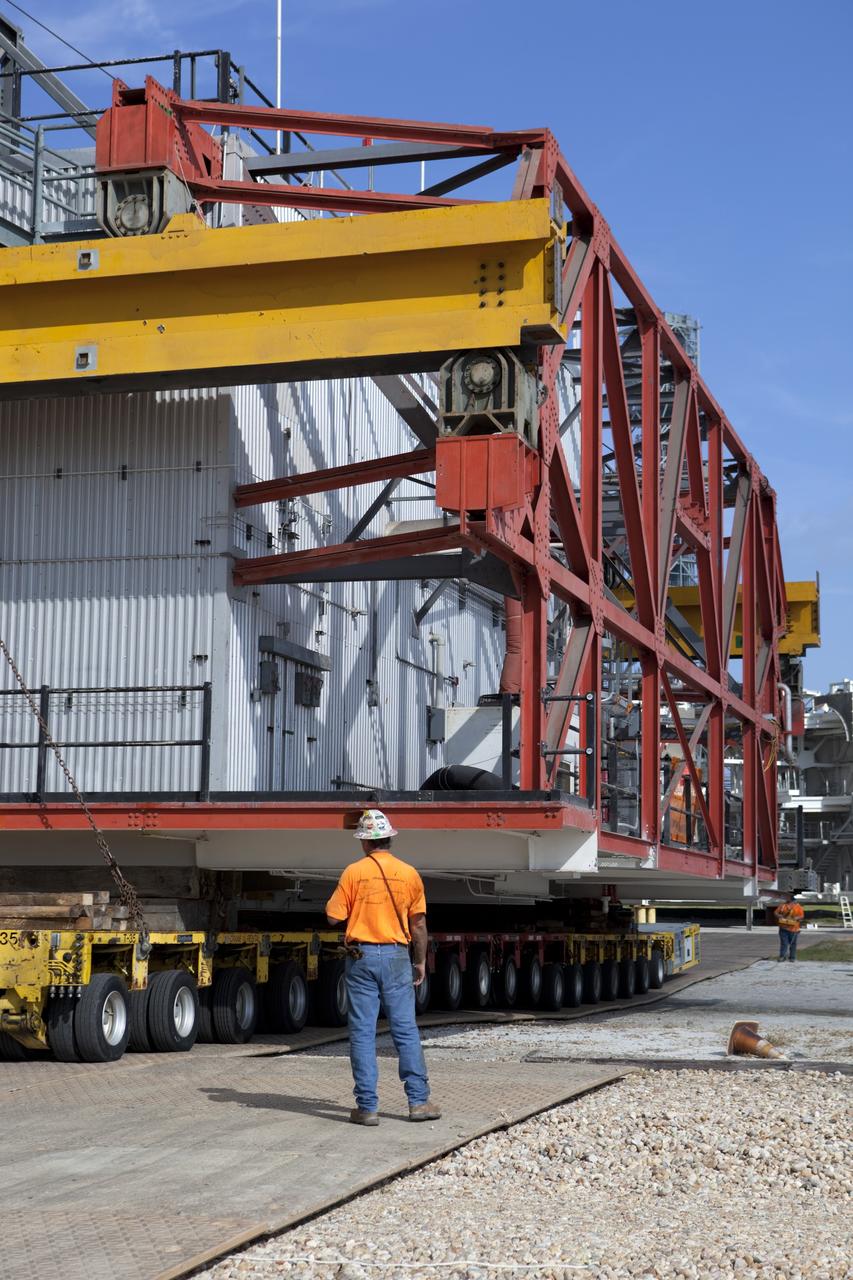
CAPE CANAVERAL, Fla. – As part of NASA's Ground Systems Development and Operations Program at the Kennedy Space Center in Florida, a technician oversees a large space shuttle-era work platform being removed by transporter from high bay 3 of the Vehicle Assembly Building, or VAB. The work is part of a center-wide modernization and refurbishment initiative to accommodate NASA’s Space Launch System and a variety of other spacecraft instead of the whole building supporting one design. The Ground Systems Development and Operations Program is developing the necessary ground systems, infrastructure and operational approaches required to safely process, assemble, transport and launch the next generation of rockets and spacecraft in support of NASA’s exploration objectives. Future work also will replace the antiquated communications, power and vehicle access resources with modern efficient systems. Some of the utilities and systems slated for replacement have been used since the VAB opened in 1965. For more information, visit http://www.nasa.gov/exploration/systems/ground/index.html Photo credit: NASA/Dimitri Gerondidakis
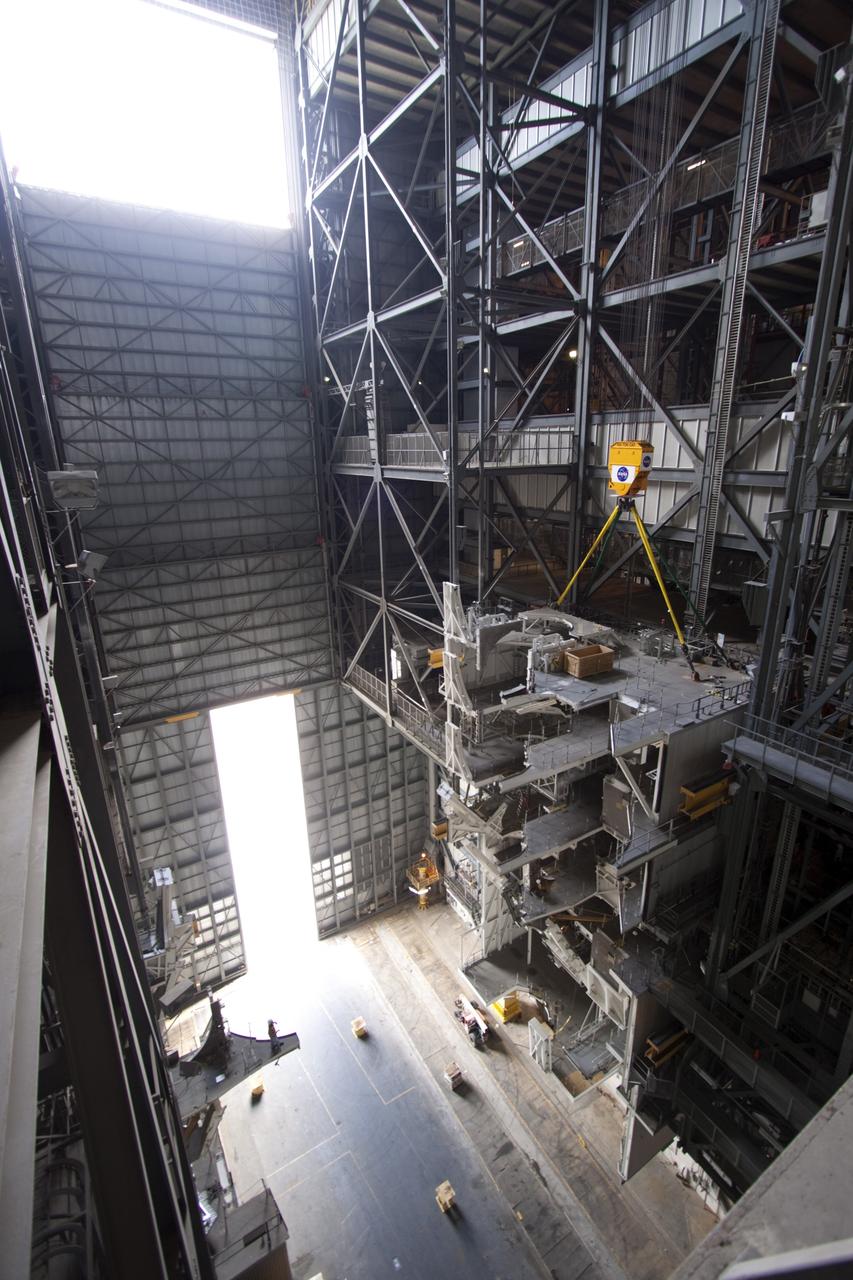
CAPE CANAVERAL, Fla. – As part of NASA's Ground Systems Development and Operations Program at the Kennedy Space Center in Florida, a large space shuttle-era work platform is being removed from high bay 3 of the Vehicle Assembly Building, or VAB. The work is part of a center-wide modernization and refurbishment initiative to accommodate NASA’s Space Launch System and a variety of other spacecraft instead of the whole building supporting one design. The Ground Systems Development and Operations Program is developing the necessary ground systems, infrastructure and operational approaches required to safely process, assemble, transport and launch the next generation of rockets and spacecraft in support of NASA’s exploration objectives. Future work also will replace the antiquated communications, power and vehicle access resources with modern efficient systems. Some of the utilities and systems slated for replacement have been used since the VAB opened in 1965. For more information, visit http://www.nasa.gov/exploration/systems/ground/index.html Photo credit: NASA/Jim Grossmann
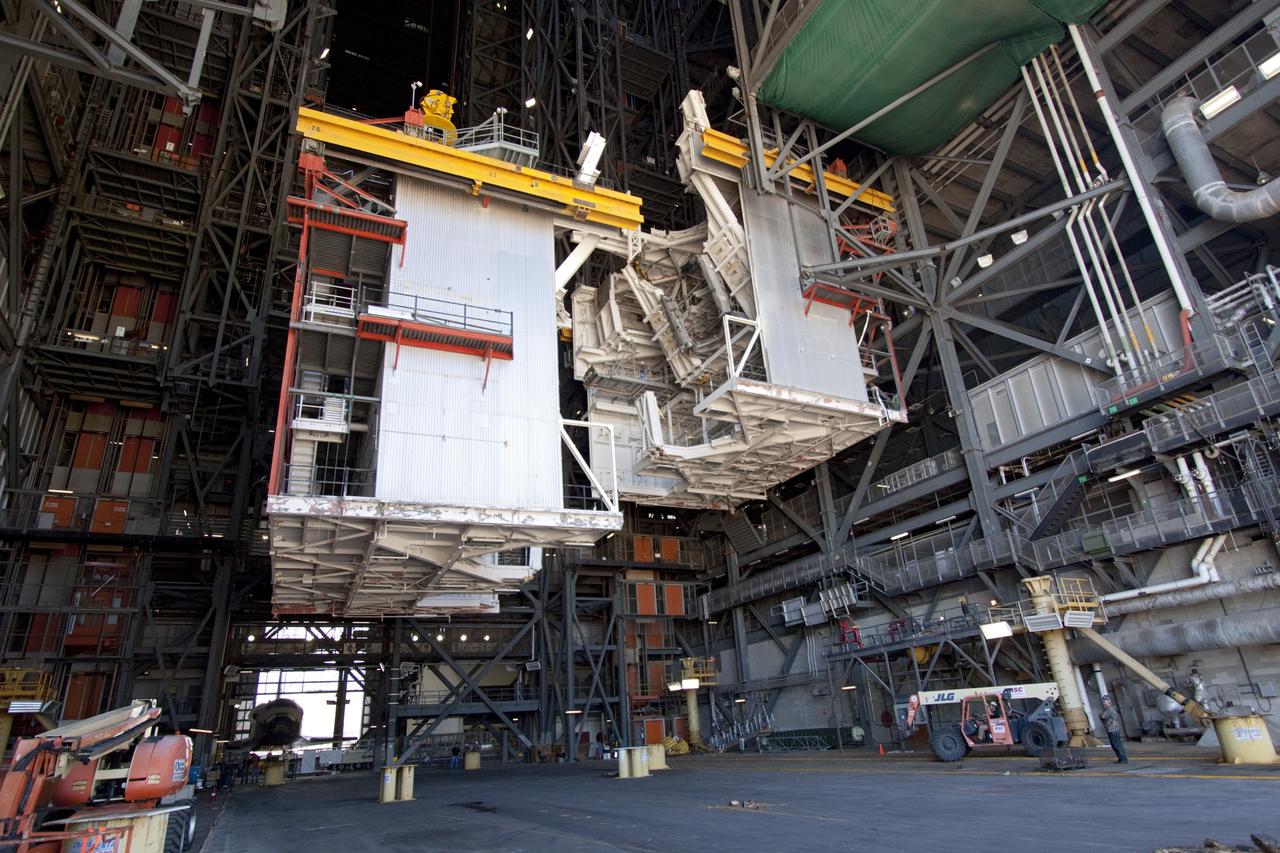
CAPE CANAVERAL, Fla. – As part of NASA's Ground Systems Development and Operations Program at the Kennedy Space Center in Florida, a large space shuttle-era work platform is being removed from high bay 3 of the Vehicle Assembly Building, or VAB. The work is part of a center-wide modernization and refurbishment initiative to accommodate NASA’s Space Launch System and a variety of other spacecraft instead of the whole building supporting one design. Visible in the lower-left background is the space shuttle Atlantis being readied for its move to the Kennedy Space Center Visitor Complex. The Ground Systems Development and Operations Program is developing the necessary ground systems, infrastructure and operational approaches required to safely process, assemble, transport and launch the next generation of rockets and spacecraft in support of NASA’s exploration objectives. Future work also will replace the antiquated communications, power and vehicle access resources with modern efficient systems. Some of the utilities and systems slated for replacement have been used since the VAB opened in 1965. For more information, visit http://www.nasa.gov/exploration/systems/ground/index.html Photo credit: NASA/Jim Grossmann
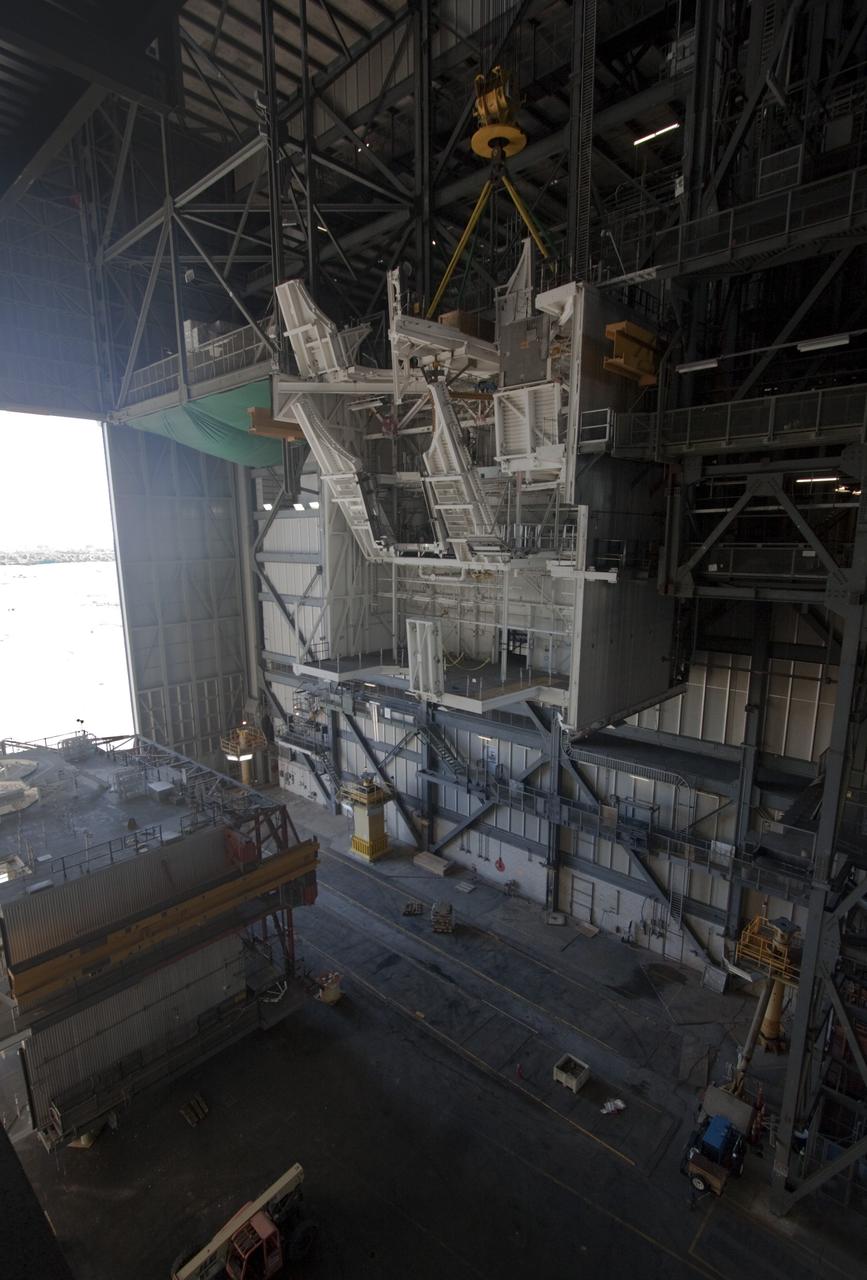
CAPE CANAVERAL, Fla. – As part of NASA's Ground Systems Development and Operations Program at the Kennedy Space Center in Florida, a large space shuttle-era work platform is being removed from high bay 3 of the Vehicle Assembly Building, or VAB. The work is part of a center-wide modernization and refurbishment initiative to accommodate NASA’s Space Launch System and a variety of other spacecraft instead of the whole building supporting one design. The Ground Systems Development and Operations Program is developing the necessary ground systems, infrastructure and operational approaches required to safely process, assemble, transport and launch the next generation of rockets and spacecraft in support of NASA’s exploration objectives. Future work also will replace the antiquated communications, power and vehicle access resources with modern efficient systems. Some of the utilities and systems slated for replacement have been used since the VAB opened in 1965. For more information, visit http://www.nasa.gov/exploration/systems/ground/index.html Photo credit: NASA/Jim Grossmann
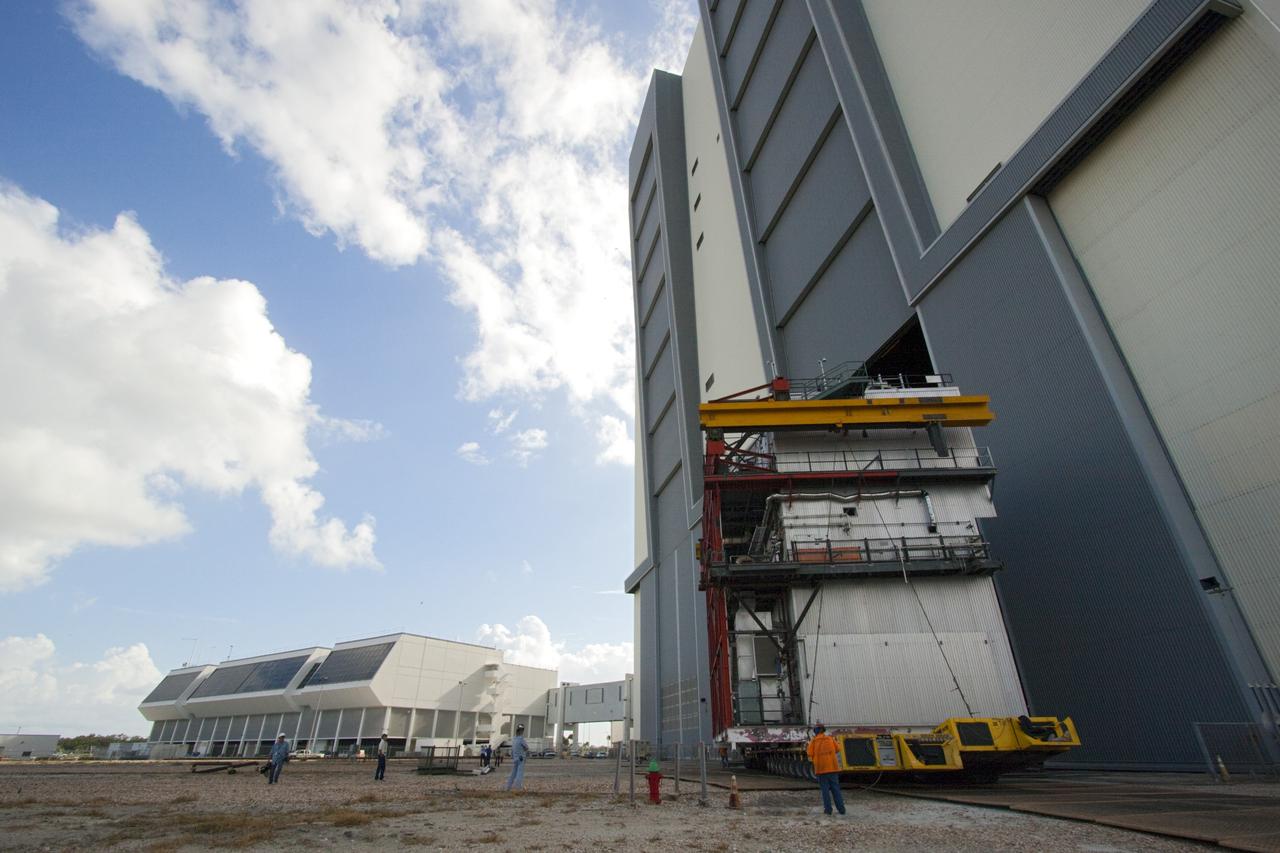
CAPE CANAVERAL, Fla. – As part of NASA's Ground Systems Development and Operations Program at the Kennedy Space Center in Florida, a large space shuttle-era work platform has been removed from high bay 3 of the Vehicle Assembly Building, or VAB. The work is part of a center-wide modernization and refurbishment initiative to accommodate NASA’s Space Launch System and a variety of other spacecraft instead of the whole building supporting one design. The Ground Systems Development and Operations Program is developing the necessary ground systems, infrastructure and operational approaches required to safely process, assemble, transport and launch the next generation of rockets and spacecraft in support of NASA’s exploration objectives. Future work also will replace the antiquated communications, power and vehicle access resources with modern efficient systems. Some of the utilities and systems slated for replacement have been used since the VAB opened in 1965. For more information, visit http://www.nasa.gov/exploration/systems/ground/index.html Photo credit: NASA/Jim Grossmann
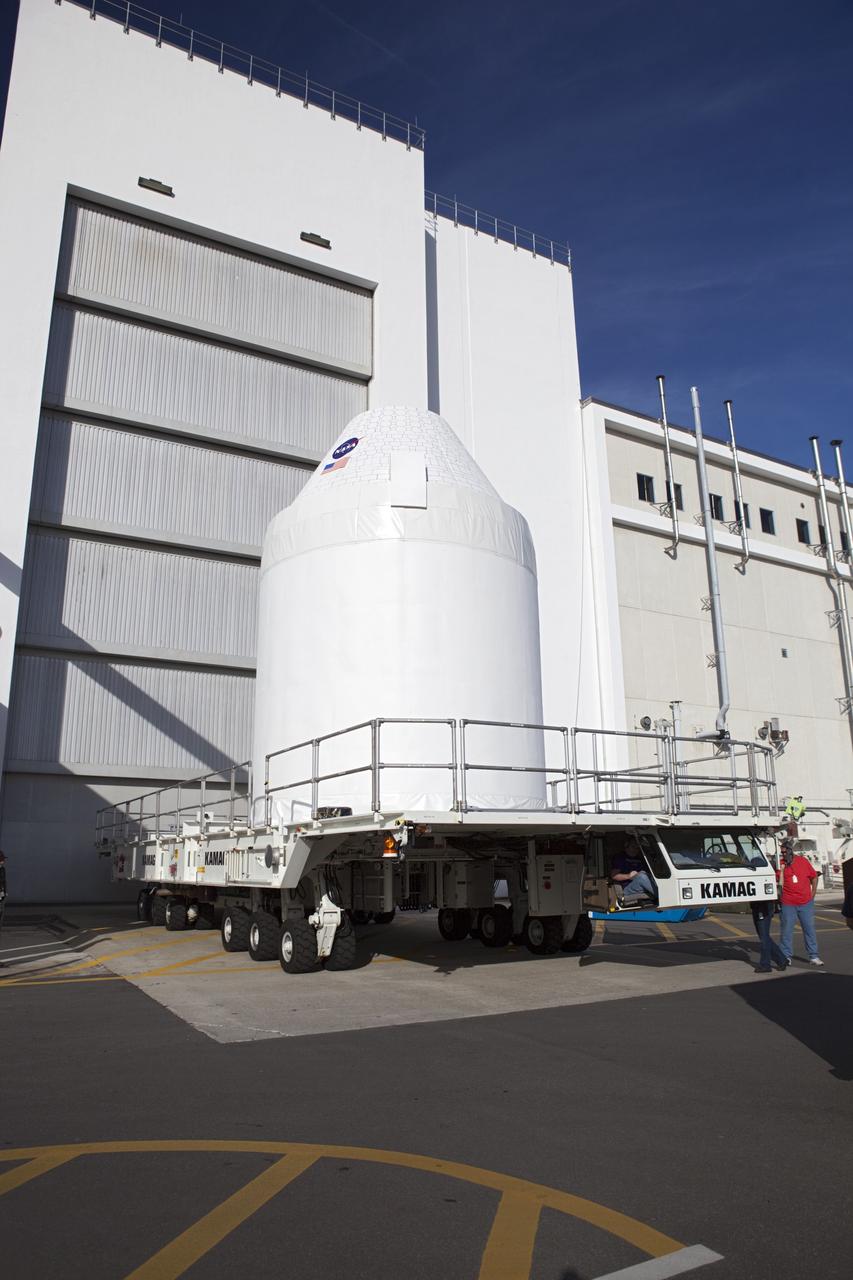
CAPE CANAVERAL, Fla. – A full-size test mock-up of the Orion crew exploration vehicle from of the Operations and Checkout Building at NASA's Kennedy Space Center in Florida. The test article is on its way to the Multi-Payload Processing Facility, or MPPF, to test the path flight hardware will take during future launch processing. Orion is the exploration spacecraft designed to carry crews to space beyond low Earth orbit. It will provide emergency abort capability, sustain the crew during the space travel and provide safe re-entry from deep space return velocities. The first unpiloted test flight of the Orion is scheduled to launch in 2014 atop a Delta IV rocket and in 2017 on a Space Launch System rocket. For more information, visit http://www.nasa.gov/orion Photo credit: NASA/Dimitri Gerondidakis
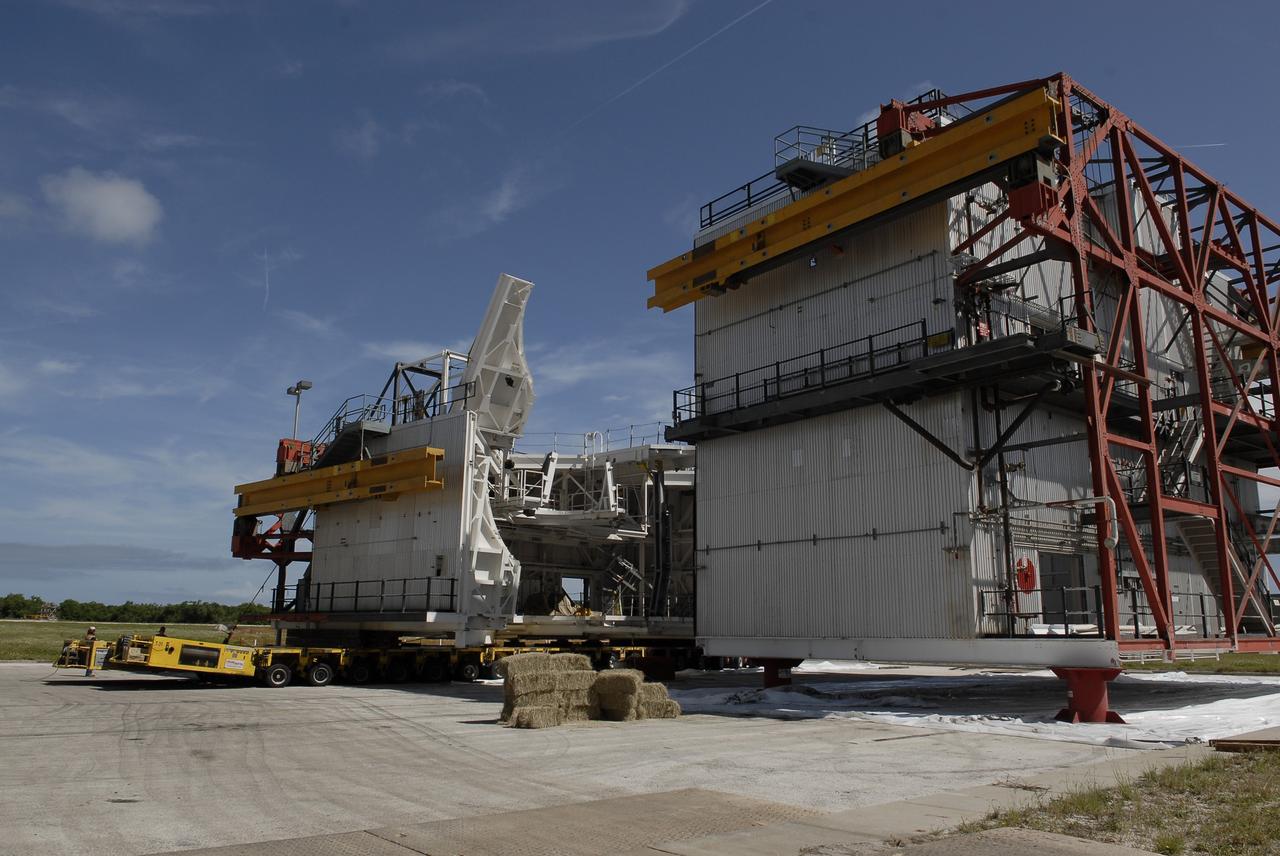
CAPE CANAVERAL, Fla. – As part of NASA's Ground Systems Development and Operations Program at the Kennedy Space Center in Florida, a large space shuttle-era work platform has been removed from the Vehicle Assembly Building, or VAB. The work is part of a center-wide modernization and refurbishment initiative to accommodate NASA’s Space Launch System and a variety of other spacecraft instead of the whole building supporting one design. The Ground Systems Development and Operations Program is developing the necessary ground systems, infrastructure and operational approaches required to safely process, assemble, transport and launch the next generation of rockets and spacecraft in support of NASA’s exploration objectives. Future work also will replace the antiquated communications, power and vehicle access resources with modern efficient systems. Some of the utilities and systems slated for replacement have been used since the VAB opened in 1965. For more information, visit http://www.nasa.gov/exploration/systems/ground/index.html Photo credit: NASA/ Charisse Nahser

CAPE CANAVERAL, Fla. – As part of NASA's Ground Systems Development and Operations Program at the Kennedy Space Center in Florida, space shuttle-era work platforms have been removed from high bay 3 of the Vehicle Assembly Building, or VAB. The work is part of a center-wide modernization and refurbishment initiative to accommodate NASA’s Space Launch System and a variety of other spacecraft instead of the whole building supporting one design. The Ground Systems Development and Operations Program is developing the necessary ground systems, infrastructure and operational approaches required to safely process, assemble, transport and launch the next generation of rockets and spacecraft in support of NASA’s exploration objectives. Future work also will replace the antiquated communications, power and vehicle access resources with modern efficient systems. Some of the utilities and systems slated for replacement have been used since the VAB opened in 1965. For more information, visit http://www.nasa.gov/exploration/systems/ground/index.html Photo credit: NASA/Kim Shiflett
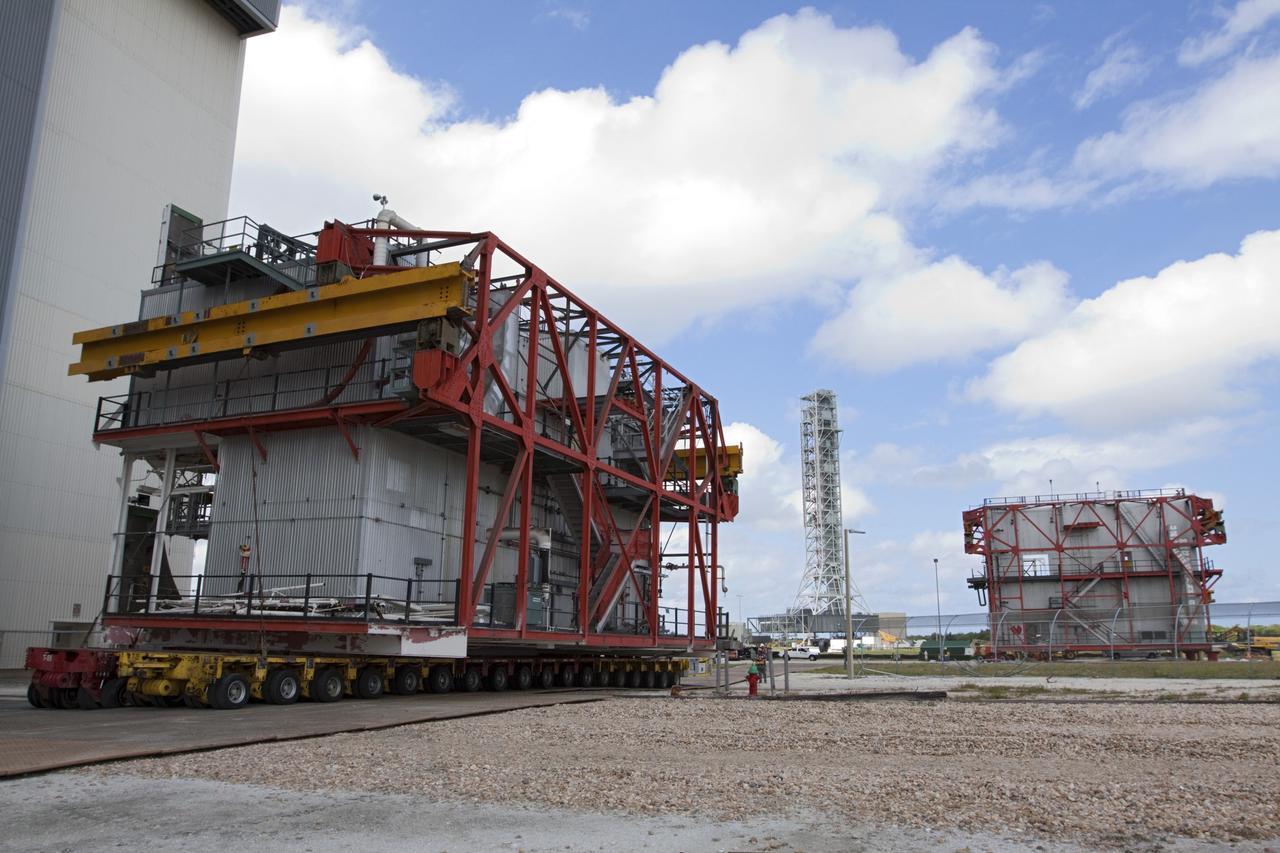
CAPE CANAVERAL, Fla. – As part of NASA's Ground Systems Development and Operations Program at the Kennedy Space Center in Florida, a large space shuttle-era work platform is being removed from high bay 3 of the Vehicle Assembly Building, or VAB, and placed on a transporter for removal. The work is part of a center-wide modernization and refurbishment initiative to accommodate NASA’s Space Launch System and a variety of other spacecraft instead of the whole building supporting one design. The Ground Systems Development and Operations Program is developing the necessary ground systems, infrastructure and operational approaches required to safely process, assemble, transport and launch the next generation of rockets and spacecraft in support of NASA’s exploration objectives. Future work also will replace the antiquated communications, power and vehicle access resources with modern efficient systems. Some of the utilities and systems slated for replacement have been used since the VAB opened in 1965. For more information, visit http://www.nasa.gov/exploration/systems/ground/index.html Photo credit: NASA/Kim Shiflett
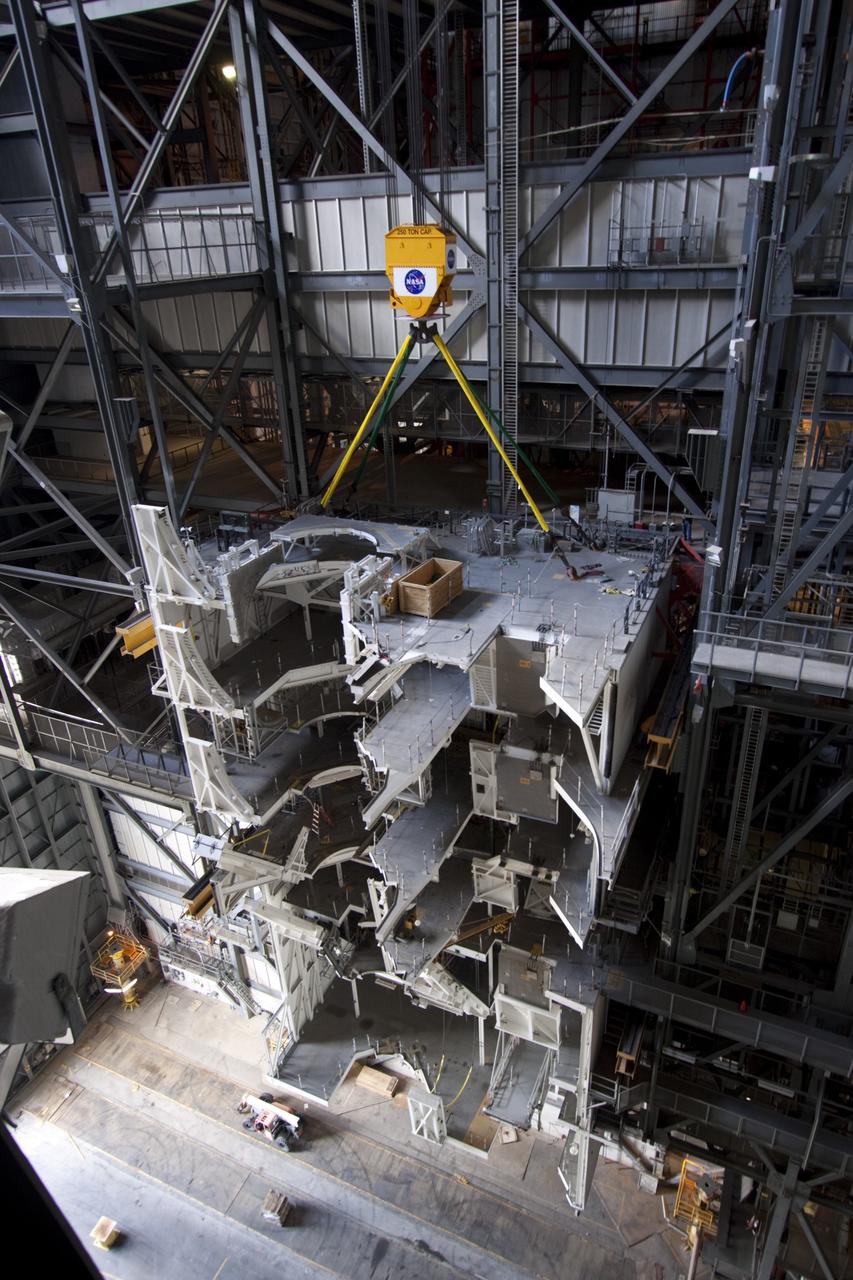
CAPE CANAVERAL, Fla. – As part of NASA's Ground Systems Development and Operations Program at the Kennedy Space Center in Florida, a large space shuttle-era work platform is being removed from high bay 3 of the Vehicle Assembly Building, or VAB. The work is part of a center-wide modernization and refurbishment initiative to accommodate NASA’s Space Launch System and a variety of other spacecraft instead of the whole building supporting one design. The Ground Systems Development and Operations Program is developing the necessary ground systems, infrastructure and operational approaches required to safely process, assemble, transport and launch the next generation of rockets and spacecraft in support of NASA’s exploration objectives. Future work also will replace the antiquated communications, power and vehicle access resources with modern efficient systems. Some of the utilities and systems slated for replacement have been used since the VAB opened in 1965. For more information, visit http://www.nasa.gov/exploration/systems/ground/index.html Photo credit: NASA/Jim Grossmann
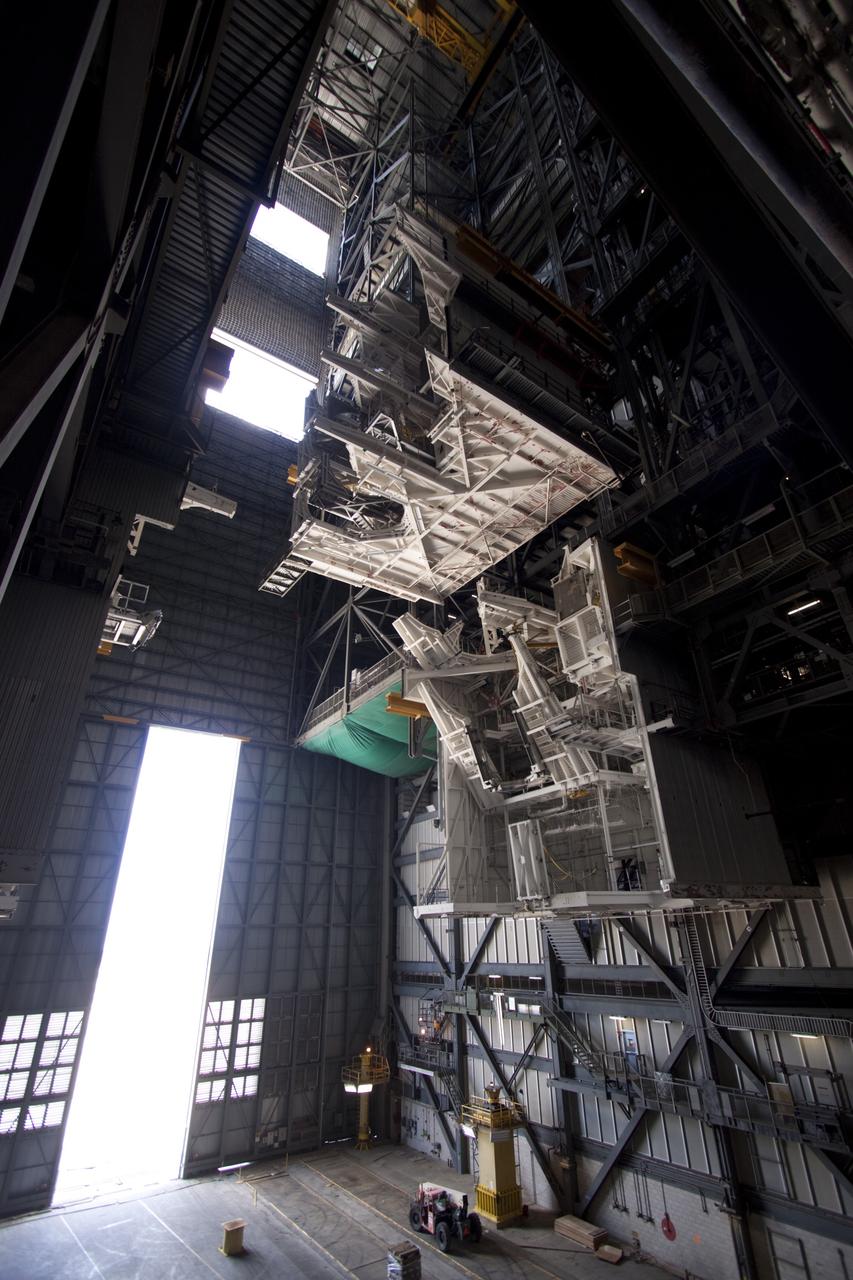
CAPE CANAVERAL, Fla. – As part of NASA's Ground Systems Development and Operations Program at the Kennedy Space Center in Florida, a large space shuttle-era work platform is being removed from high bay 3 of the Vehicle Assembly Building, or VAB. The work is part of a center-wide modernization and refurbishment initiative to accommodate NASA’s Space Launch System and a variety of other spacecraft instead of the whole building supporting one design. The Ground Systems Development and Operations Program is developing the necessary ground systems, infrastructure and operational approaches required to safely process, assemble, transport and launch the next generation of rockets and spacecraft in support of NASA’s exploration objectives. Future work also will replace the antiquated communications, power and vehicle access resources with modern efficient systems. Some of the utilities and systems slated for replacement have been used since the VAB opened in 1965. For more information, visit http://www.nasa.gov/exploration/systems/ground/index.html Photo credit: NASA/Jim Grossmann

CAPE CANAVERAL, Fla. – As part of NASA's Ground Systems Development and Operations Program at the Kennedy Space Center in Florida, space shuttle-era work platforms have been removed from high bay 3 of the Vehicle Assembly Building, or VAB. The work is part of a center-wide modernization and refurbishment initiative to accommodate NASA’s Space Launch System and a variety of other spacecraft instead of the whole building supporting one design. Visible in the lower background is the space shuttle Atlantis being readied for its move to the Kennedy Space Center Visitor Complex. The Ground Systems Development and Operations Program is developing the necessary ground systems, infrastructure and operational approaches required to safely process, assemble, transport and launch the next generation of rockets and spacecraft in support of NASA’s exploration objectives. Future work also will replace the antiquated communications, power and vehicle access resources with modern efficient systems. Some of the utilities and systems slated for replacement have been used since the VAB opened in 1965. For more information, visit http://www.nasa.gov/exploration/systems/ground/index.html Photo credit: NASA/Kim Shiflett
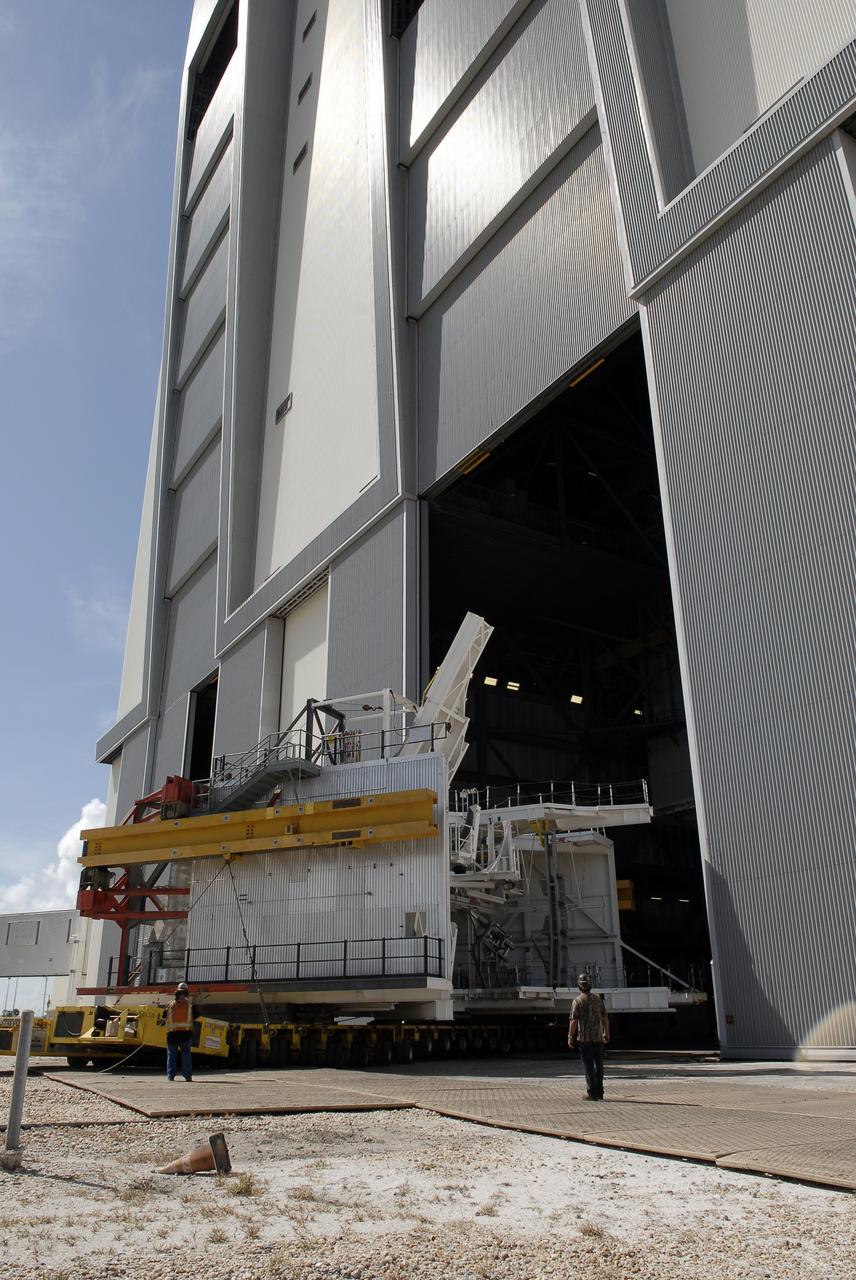
CAPE CANAVERAL, Fla. – As part of NASA's Ground Systems Development and Operations Program at the Kennedy Space Center in Florida, technicians oversee a large space shuttle-era work platform being removed from high bay 3 of the Vehicle Assembly Building, or VAB. The work is part of a center-wide modernization and refurbishment initiative to accommodate NASA’s Space Launch System and a variety of other spacecraft instead of the whole building supporting one design. The Ground Systems Development and Operations Program is developing the necessary ground systems, infrastructure and operational approaches required to safely process, assemble, transport and launch the next generation of rockets and spacecraft in support of NASA’s exploration objectives. Future work also will replace the antiquated communications, power and vehicle access resources with modern efficient systems. Some of the utilities and systems slated for replacement have been used since the VAB opened in 1965. For more information, visit http://www.nasa.gov/exploration/systems/ground/index.html Photo credit: NASA/ Charisse Nahser
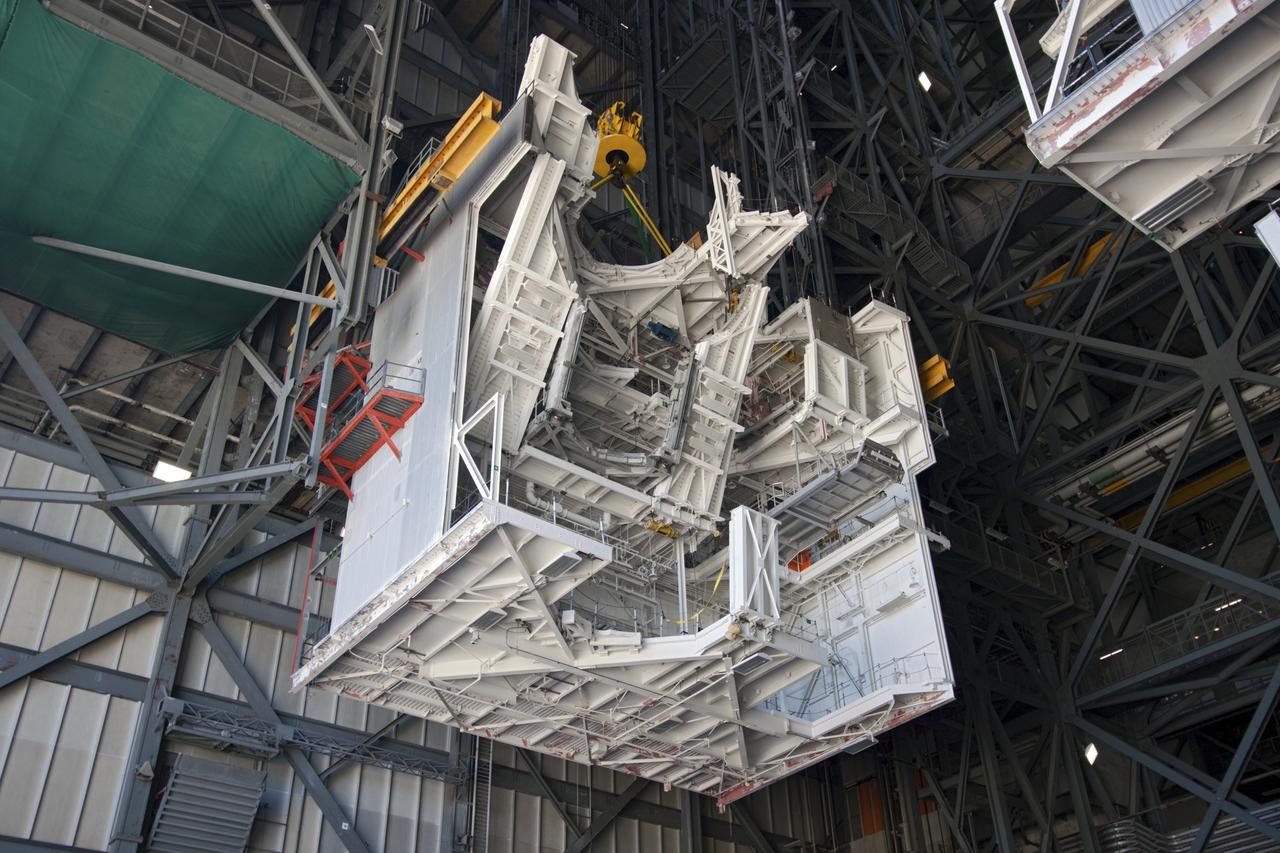
CAPE CANAVERAL, Fla. – As part of NASA's Ground Systems Development and Operations Program at the Kennedy Space Center in Florida, a large space shuttle-era work platform is being removed from high bay 3 of the Vehicle Assembly Building, or VAB. The work is part of a center-wide modernization and refurbishment initiative to accommodate NASA’s Space Launch System and a variety of other spacecraft instead of the whole building supporting one design. The Ground Systems Development and Operations Program is developing the necessary ground systems, infrastructure and operational approaches required to safely process, assemble, transport and launch the next generation of rockets and spacecraft in support of NASA’s exploration objectives. Future work also will replace the antiquated communications, power and vehicle access resources with modern efficient systems. Some of the utilities and systems slated for replacement have been used since the VAB opened in 1965. For more information, visit http://www.nasa.gov/exploration/systems/ground/index.html Photo credit: NASA/Jim Grossmann
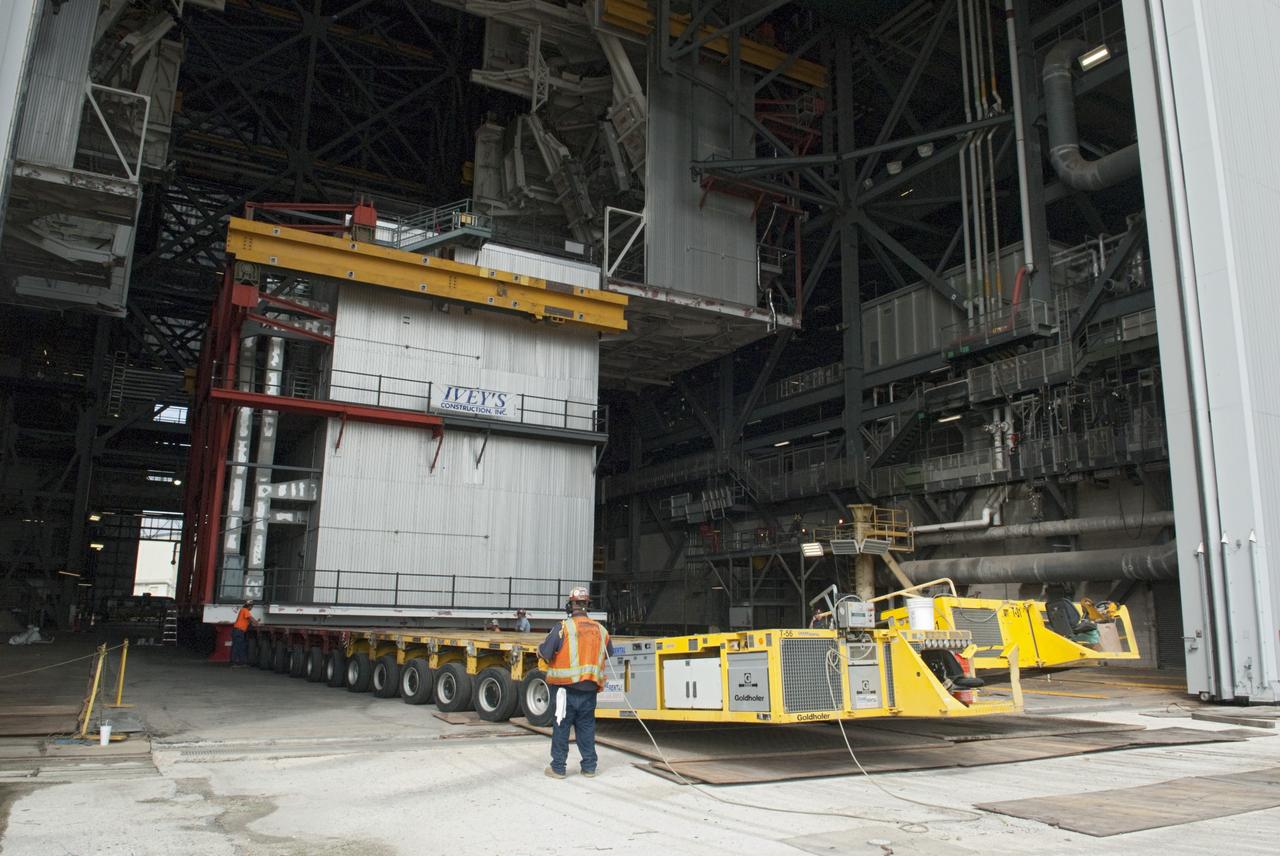
CAPE CANAVERAL, Fla. – As part of NASA's Ground Systems Development and Operations Program at the Kennedy Space Center in Florida, a work platform is lowered onto a transporter for removal from the Vehicle Assembly Building, or VAB. As part of a modernization effort, flexible settings area being designed for multiple launch vehicles instead of the whole building supporting one design. The Ground Systems Development and Operations Program is developing the necessary ground systems, infrastructure and operational approaches required to safely process, assemble, transport and launch the next generation of rockets and spacecraft in support of NASA’s exploration objectives. Future work also will replace the antiquated communications, power and vehicle access resources with modern efficient systems. Some of the utilities and systems slated for replacement have been used since the VAB opened in 1965. For more information, visit http://www.nasa.gov/exploration/systems/ground/index.html Photo credit: NASA/Charisse Nahser
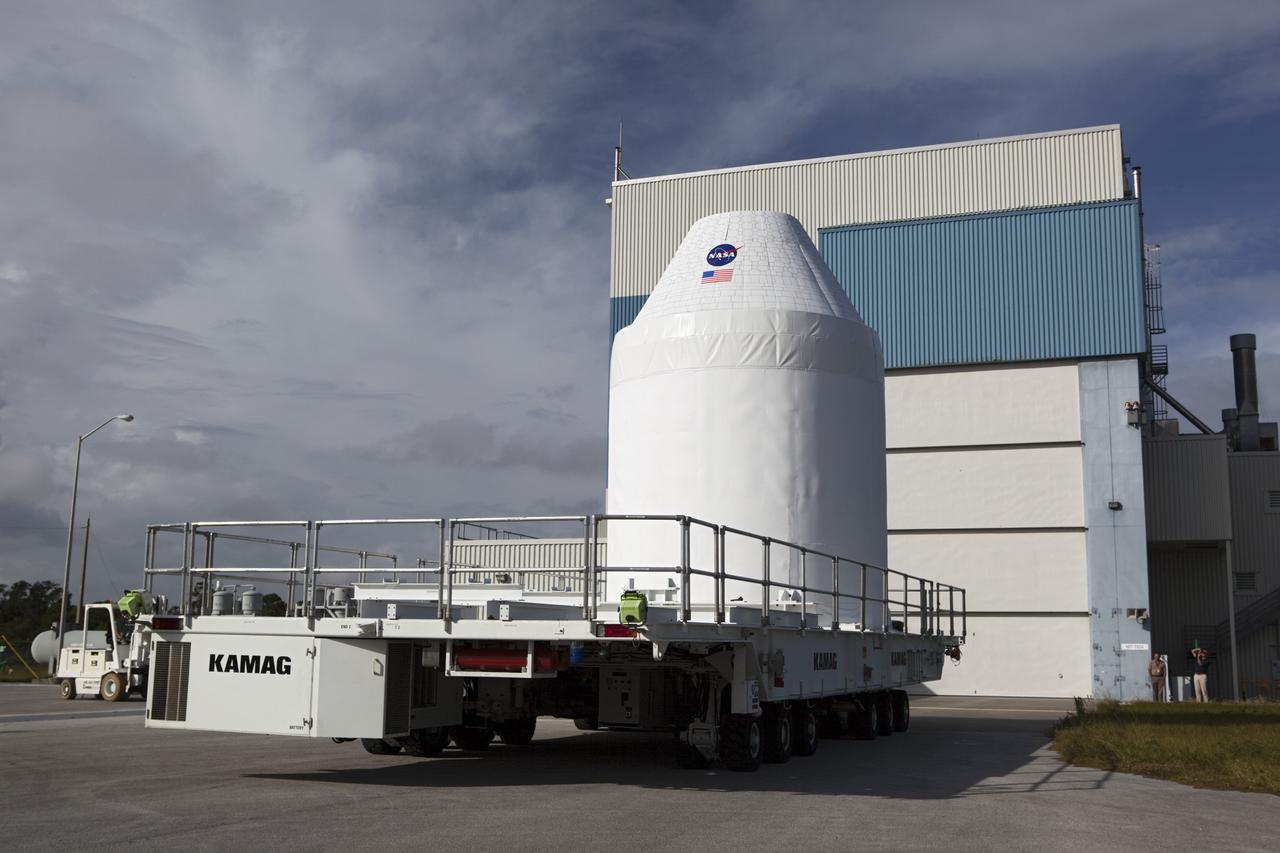
CAPE CANAVERAL, Fla. – A full-size test mock-up of the Orion spacecraft arrives at the Multi-Payload Processing Facility, or MPPF, at NASA's Kennedy Space Center in Florida to test the path flight hardware will take during future launch processing. Orion is the exploration spacecraft designed to carry crews to space beyond low Earth orbit. It will provide emergency abort capability, sustain the crew during the space travel and provide safe re-entry from deep space return velocities. The first unpiloted test flight of the Orion is scheduled to launch in 2014 atop a Delta IV rocket and in 2017 on a Space Launch System rocket. For more information, visit http://www.nasa.gov/orion Photo credit: NASA/Dimitri Gerondidakis
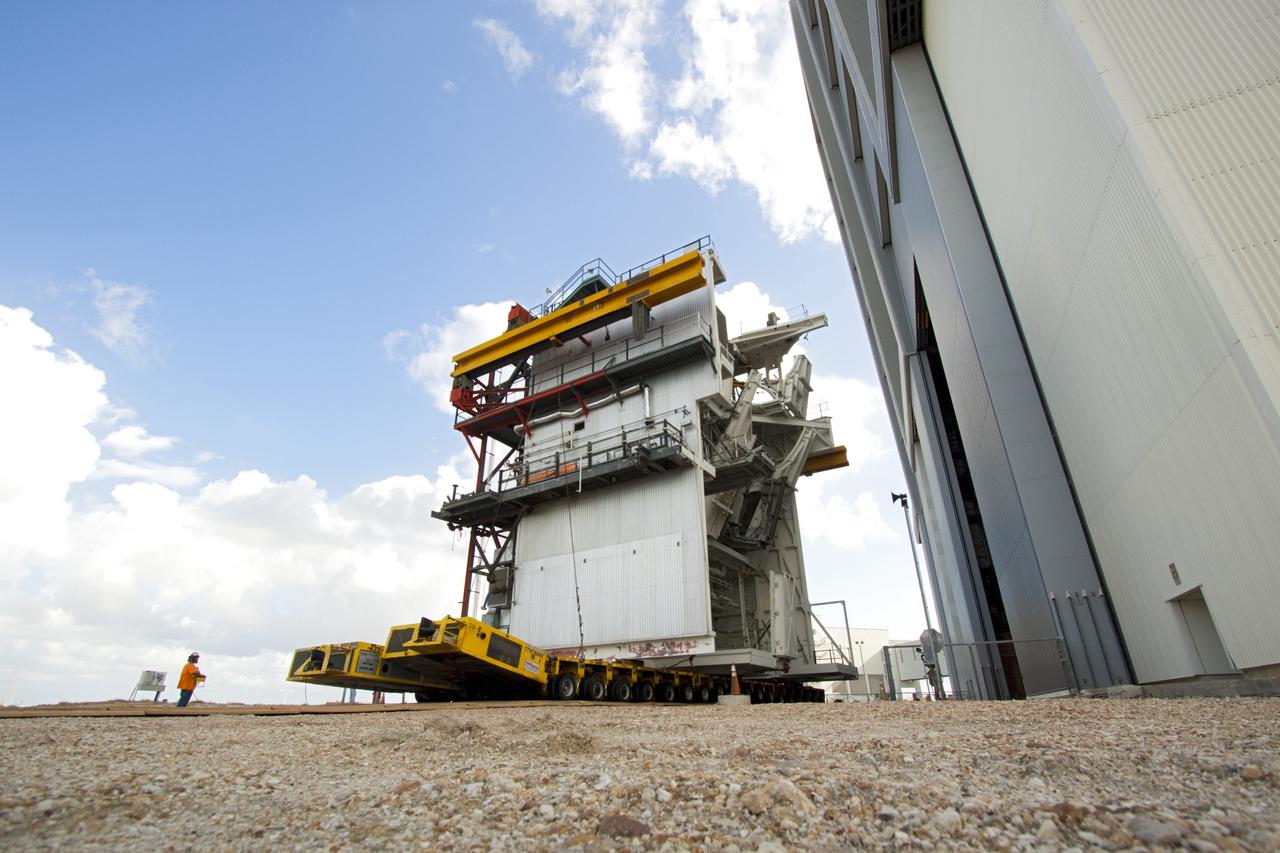
CAPE CANAVERAL, Fla. – As part of NASA's Ground Systems Development and Operations Program at the Kennedy Space Center in Florida, a large space shuttle-era work platform is being removed by transporter from high bay 3 of the Vehicle Assembly Building, or VAB. The work is part of a center-wide modernization and refurbishment initiative to accommodate NASA’s Space Launch System and a variety of other spacecraft instead of the whole building supporting one design. The Ground Systems Development and Operations Program is developing the necessary ground systems, infrastructure and operational approaches required to safely process, assemble, transport and launch the next generation of rockets and spacecraft in support of NASA’s exploration objectives. Future work also will replace the antiquated communications, power and vehicle access resources with modern efficient systems. Some of the utilities and systems slated for replacement have been used since the VAB opened in 1965. For more information, visit http://www.nasa.gov/exploration/systems/ground/index.html Photo credit: NASA/Dimitri Gerondidakis
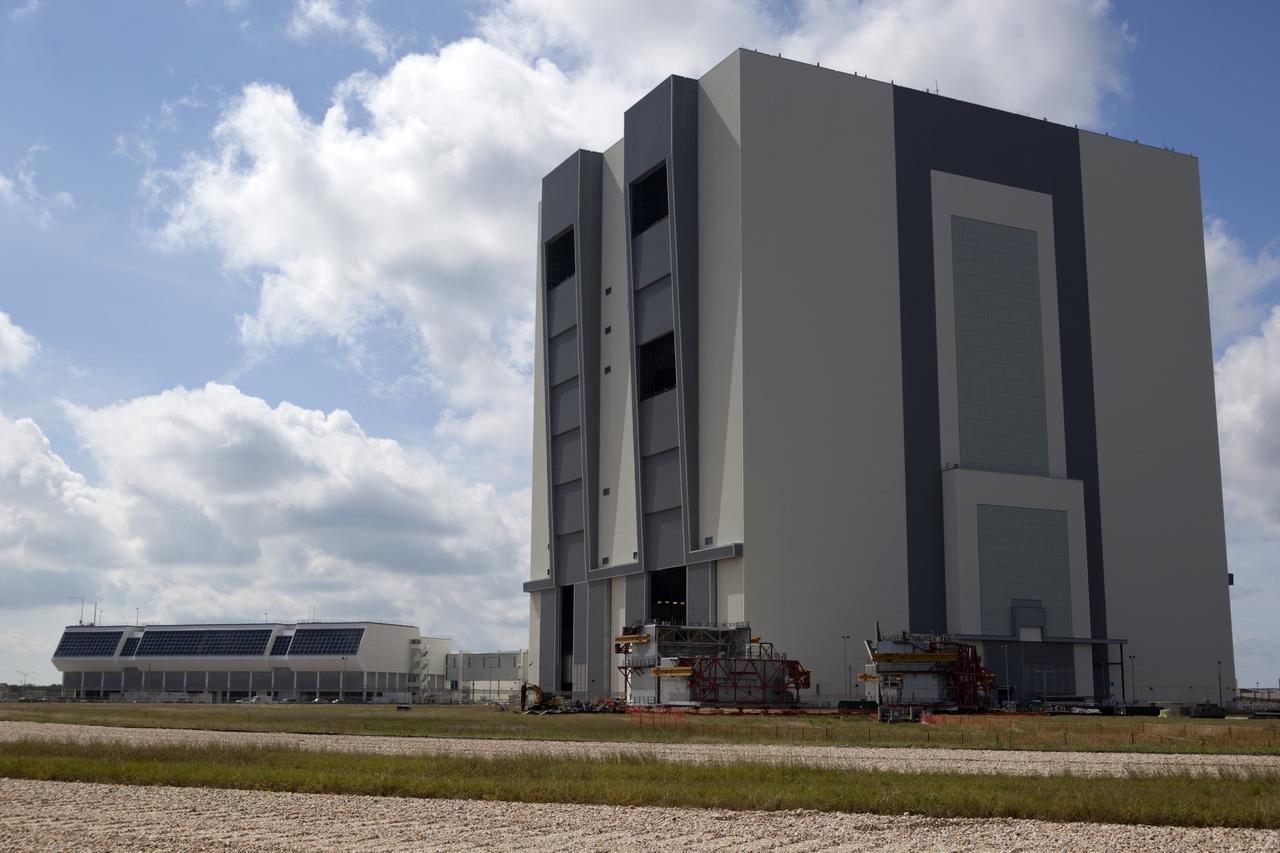
CAPE CANAVERAL, Fla. – As part of NASA's Ground Systems Development and Operations Program at the Kennedy Space Center in Florida, a large space shuttle-era work platform has been removed from high bay 3 of the Vehicle Assembly Building, or VAB. The work is part of a center-wide modernization and refurbishment initiative to accommodate NASA’s Space Launch System and a variety of other spacecraft instead of the whole building supporting one design. The Ground Systems Development and Operations Program is developing the necessary ground systems, infrastructure and operational approaches required to safely process, assemble, transport and launch the next generation of rockets and spacecraft in support of NASA’s exploration objectives. Future work also will replace the antiquated communications, power and vehicle access resources with modern efficient systems. Some of the utilities and systems slated for replacement have been used since the VAB opened in 1965. For more information, visit http://www.nasa.gov/exploration/systems/ground/index.html Photo credit: NASA/Jim Grossmann
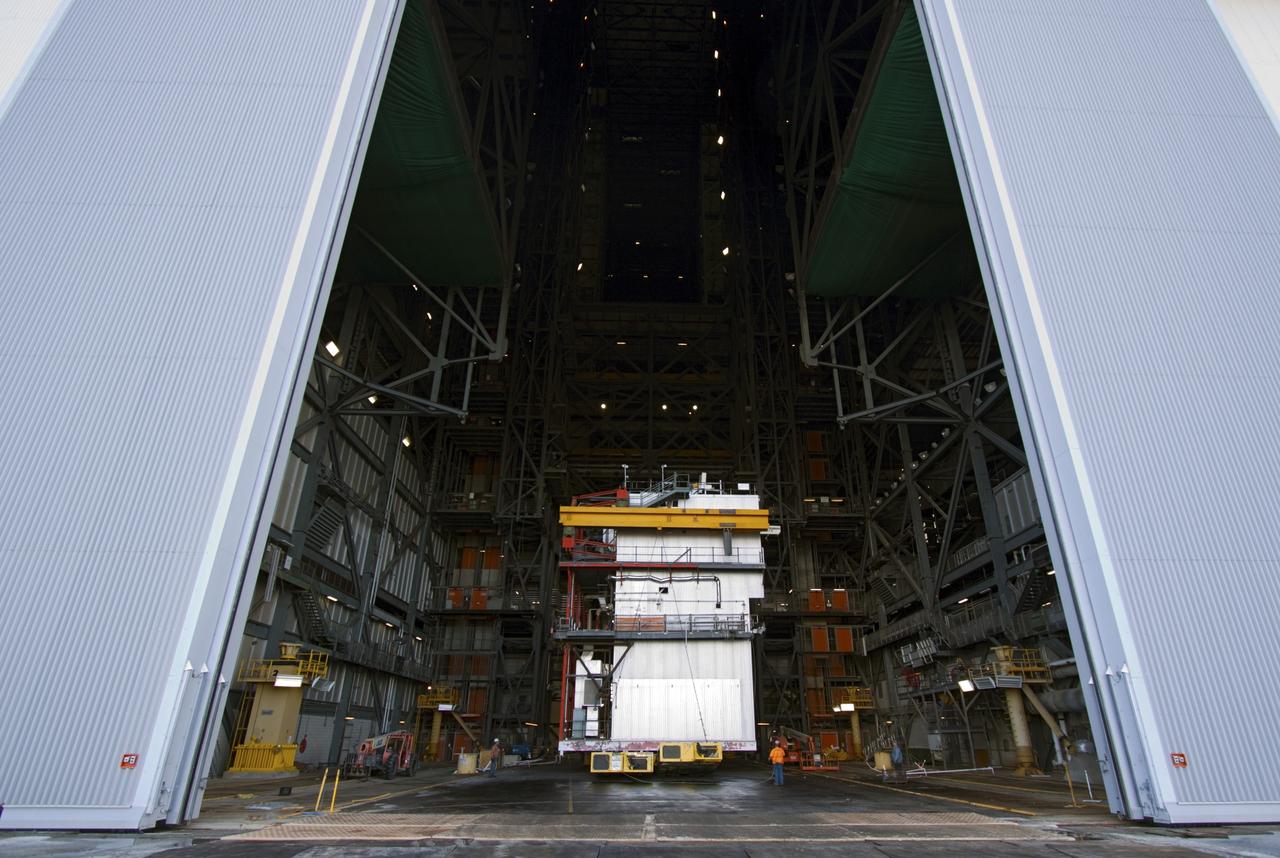
CAPE CANAVERAL, Fla. – As part of NASA's Ground Systems Development and Operations Program at the Kennedy Space Center in Florida, a large space shuttle-era work platform has been removed from high bay 3 of the Vehicle Assembly Building, or VAB. The work is part of a center-wide modernization and refurbishment initiative to accommodate NASA’s Space Launch System and a variety of other spacecraft instead of the whole building supporting one design. The Ground Systems Development and Operations Program is developing the necessary ground systems, infrastructure and operational approaches required to safely process, assemble, transport and launch the next generation of rockets and spacecraft in support of NASA’s exploration objectives. Future work also will replace the antiquated communications, power and vehicle access resources with modern efficient systems. Some of the utilities and systems slated for replacement have been used since the VAB opened in 1965. For more information, visit http://www.nasa.gov/exploration/systems/ground/index.html Photo credit: NASA/Jim Grossmann
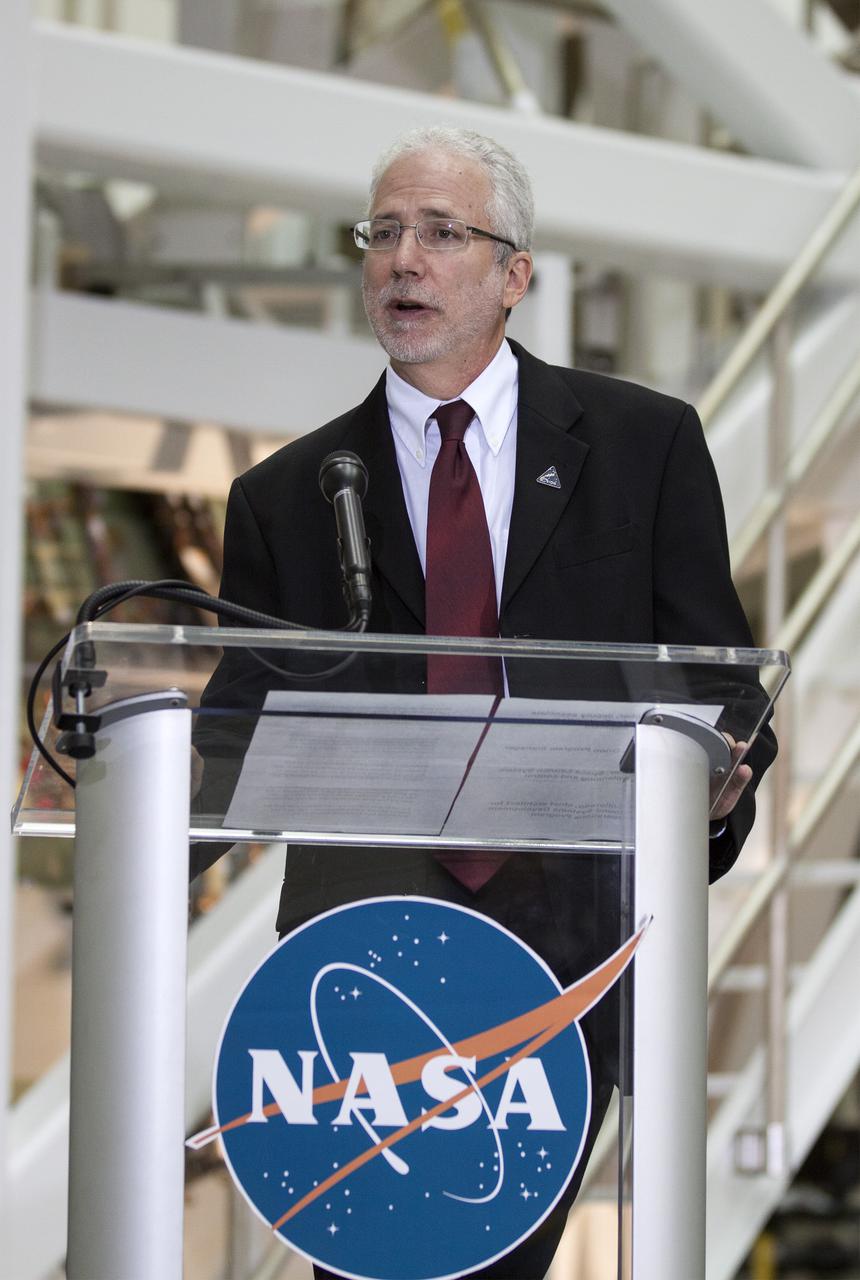
CAPE CANAVERAL, Fla. – In the Operations and Checkout Building OandC at the Kennedy Space Center in Florida, Mark Geyer, NASA's Orion program manager, speaks to news media representatives updating progress on preparing the Orion spacecraft for its first uncrewed mission, Exploration Flight Test-1 EFT-1 in 2014. Launched atop NASA's heavy-lift Space Launch System rocket, Orion is now targeted to take astronauts in a sample return mission to an asteroid as early as 2021. On the third anniversary of President Barack Obama issuing his challenge to NASA to send astronauts to an asteroid, news media representatives were given an opportunity to see up-close the Orion spacecraft which could take astronauts on such a flight. They also heard from key leaders of that effort in Kennedy's OandC where Orion's assembly is taking place. Photo credit: NASA_Kim Shiflett
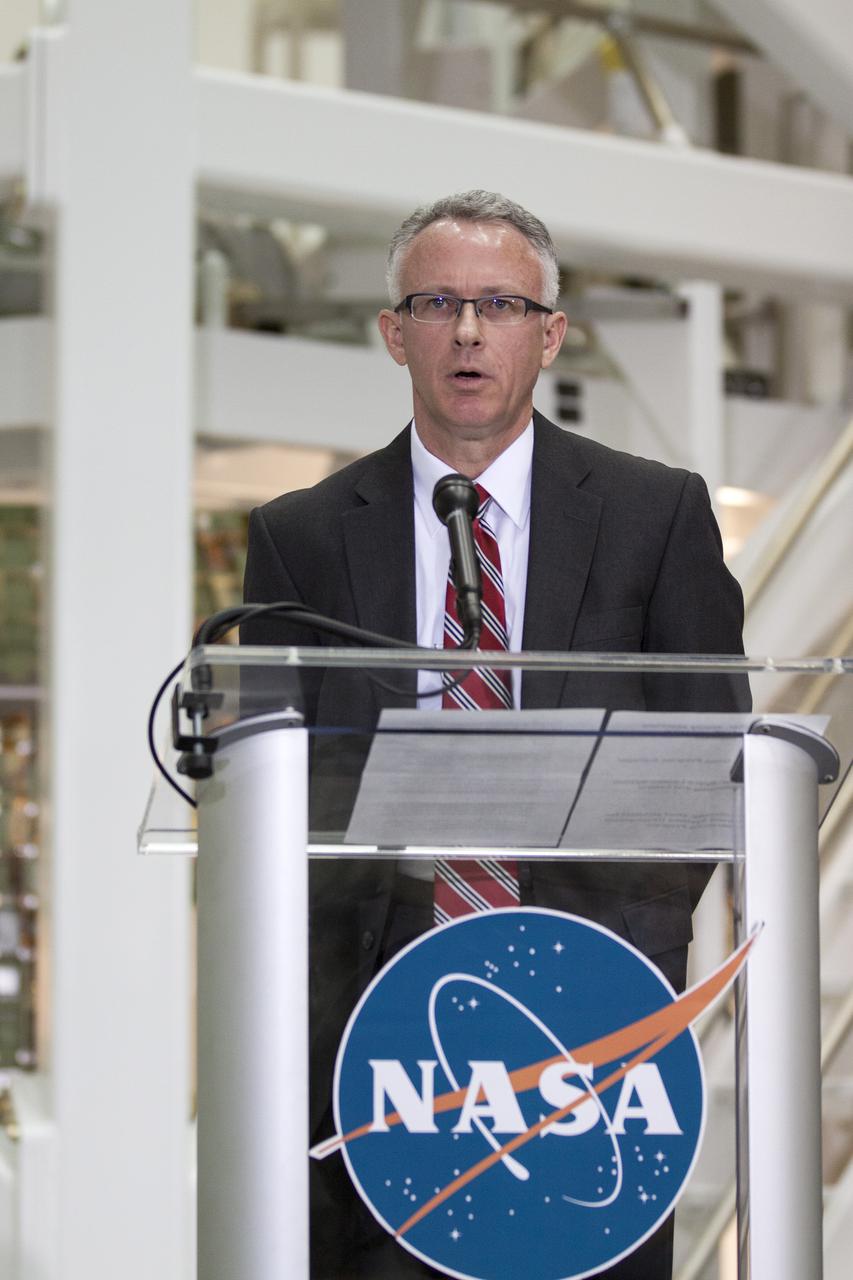
CAPE CANAVERAL, Fla. – In the Operations and Checkout Building OandC at the Kennedy Space Center in Florida, Keith Hefner, NASA's Space Launch System program planning and control manager, speaks to news media representatives updating progress on preparing the Orion spacecraft for its first uncrewed mission, Exploration Flight Test-1 EFT-1 in 2014. Launched atop NASA's heavy-lift Space Launch System rocket, Orion is now targeted to take astronauts in a sample return mission to an asteroid as early as 2021. On the third anniversary of President Barack Obama issuing his challenge to NASA to send astronauts to an asteroid, news media representatives were given an opportunity to see up-close the Orion spacecraft which could take astronauts on such a flight. They also heard from key leaders of that effort in Kennedy's OandC where Orion's assembly is taking place. Photo credit: NASA_Kim Shiflett

CAPE CANAVERAL, Fla. – As part of NASA's Ground Systems Development and Operations Program at the Kennedy Space Center in Florida, a large space shuttle-era work platform is being removed from high bay 3 of the Vehicle Assembly Building, or VAB. The work is part of a center-wide modernization and refurbishment initiative to accommodate NASA’s Space Launch System and a variety of other spacecraft instead of the whole building supporting one design. The Ground Systems Development and Operations Program is developing the necessary ground systems, infrastructure and operational approaches required to safely process, assemble, transport and launch the next generation of rockets and spacecraft in support of NASA’s exploration objectives. Future work also will replace the antiquated communications, power and vehicle access resources with modern efficient systems. Some of the utilities and systems slated for replacement have been used since the VAB opened in 1965. For more information, visit http://www.nasa.gov/exploration/systems/ground/index.html Photo credit: NASA/Jim Grossmann
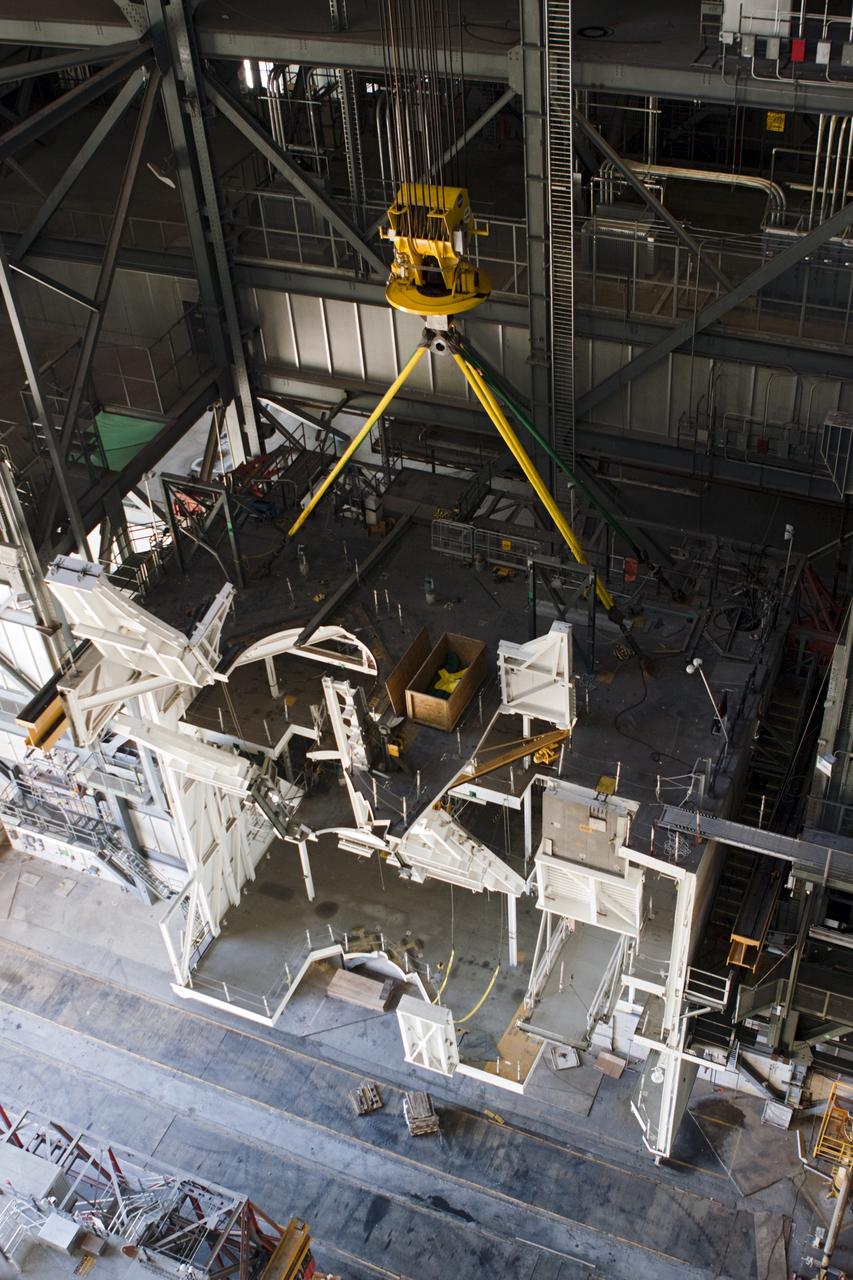
CAPE CANAVERAL, Fla. – As part of NASA's Ground Systems Development and Operations Program at the Kennedy Space Center in Florida, a large space shuttle-era work platform is being removed from high bay 3 of the Vehicle Assembly Building, or VAB. The work is part of a center-wide modernization and refurbishment initiative to accommodate NASA’s Space Launch System and a variety of other spacecraft instead of the whole building supporting one design. The Ground Systems Development and Operations Program is developing the necessary ground systems, infrastructure and operational approaches required to safely process, assemble, transport and launch the next generation of rockets and spacecraft in support of NASA’s exploration objectives. Future work also will replace the antiquated communications, power and vehicle access resources with modern efficient systems. Some of the utilities and systems slated for replacement have been used since the VAB opened in 1965. For more information, visit http://www.nasa.gov/exploration/systems/ground/index.html Photo credit: NASA/Jim Grossmann
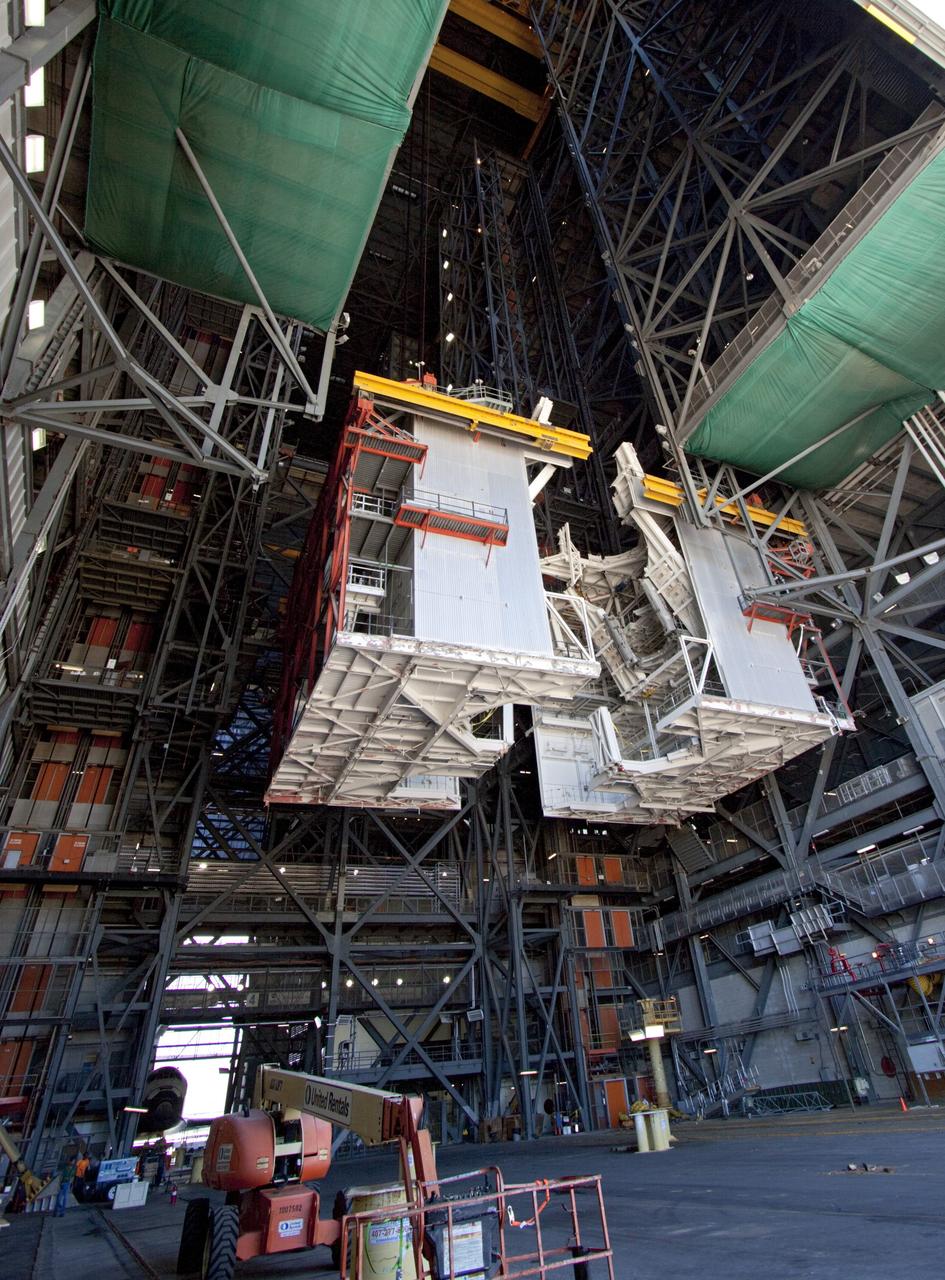
CAPE CANAVERAL, Fla. – As part of NASA's Ground Systems Development and Operations Program at the Kennedy Space Center in Florida, a large space shuttle-era work platform is being removed from high bay 3 of the Vehicle Assembly Building, or VAB. The work is part of a center-wide modernization and refurbishment initiative to accommodate NASA’s Space Launch System and a variety of other spacecraft instead of the whole building supporting one design. Visible in the lower-left background is the space shuttle Atlantis being readied for its move to the Kennedy Space Center Visitor Complex. The Ground Systems Development and Operations Program is developing the necessary ground systems, infrastructure and operational approaches required to safely process, assemble, transport and launch the next generation of rockets and spacecraft in support of NASA’s exploration objectives. Future work also will replace the antiquated communications, power and vehicle access resources with modern efficient systems. Some of the utilities and systems slated for replacement have been used since the VAB opened in 1965. For more information, visit http://www.nasa.gov/exploration/systems/ground/index.html Photo credit: NASA/Jim Grossmann
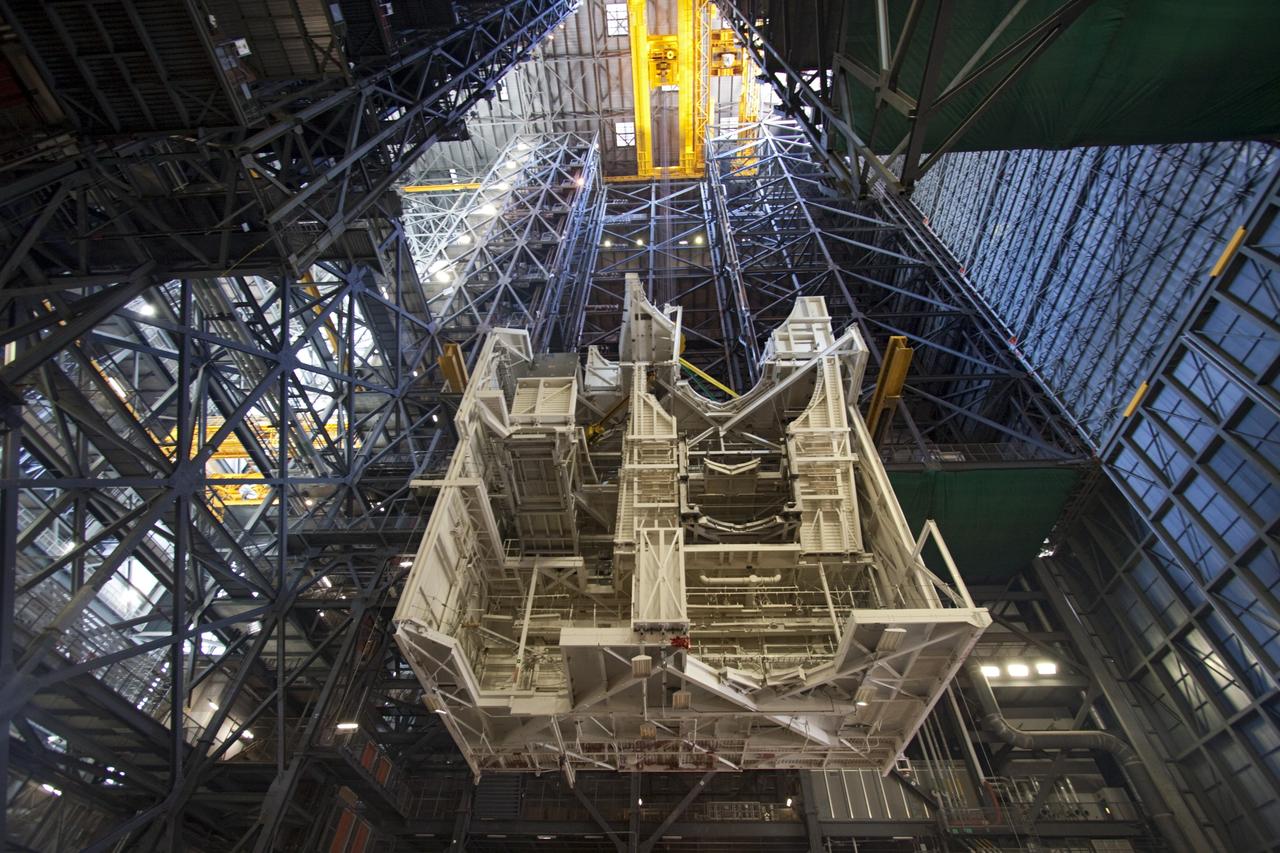
CAPE CANAVERAL, Fla. – As part of NASA's Ground Systems Development and Operations Program at the Kennedy Space Center in Florida, a large space shuttle-era work platform is being lowered and removed from high bay 3 of the Vehicle Assembly Building, or VAB. The work is part of a center-wide modernization and refurbishment initiative to accommodate NASA’s Space Launch System and a variety of other spacecraft instead of the whole building supporting one design. The Ground Systems Development and Operations Program is developing the necessary ground systems, infrastructure and operational approaches required to safely process, assemble, transport and launch the next generation of rockets and spacecraft in support of NASA’s exploration objectives. Future work also will replace the antiquated communications, power and vehicle access resources with modern efficient systems. Some of the utilities and systems slated for replacement have been used since the VAB opened in 1965. For more information, visit http://www.nasa.gov/exploration/systems/ground/index.html Photo credit: NASA/Jim Grossmann
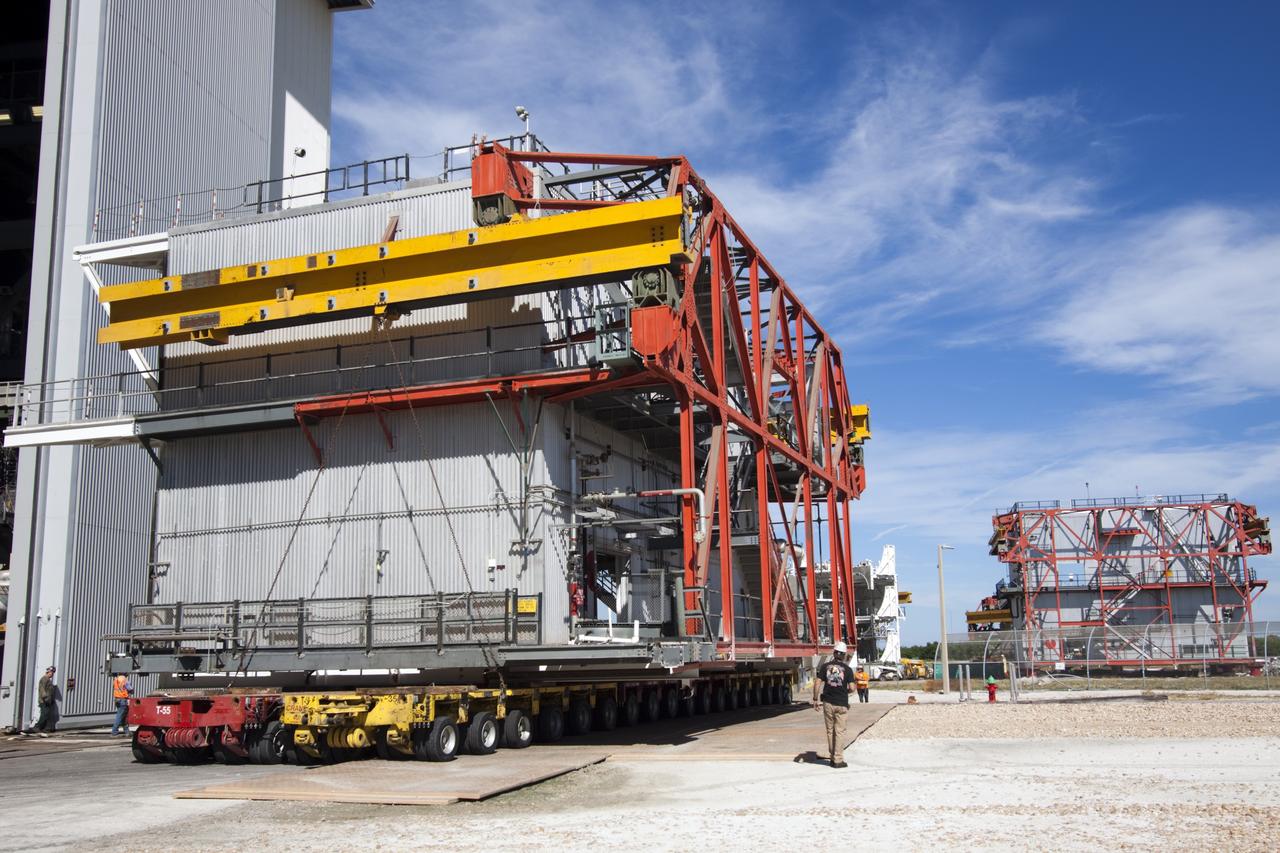
CAPE CANAVERAL, Fla. – As part of NASA's Ground Systems Development and Operations Program at the Kennedy Space Center in Florida, a large space shuttle-era work platform is being removed from high bay 3 of the Vehicle Assembly Building, or VAB. The work is part of a center-wide modernization and refurbishment initiative to accommodate NASA’s Space Launch System and a variety of other spacecraft instead of the whole building supporting one design. The Ground Systems Development and Operations Program is developing the necessary ground systems, infrastructure and operational approaches required to safely process, assemble, transport and launch the next generation of rockets and spacecraft in support of NASA’s exploration objectives. Future work also will replace the antiquated communications, power and vehicle access resources with modern efficient systems. Some of the utilities and systems slated for replacement have been used since the VAB opened in 1965. For more information, visit http://www.nasa.gov/exploration/systems/ground/index.html Photo credit: NASA/Jim Grossmann
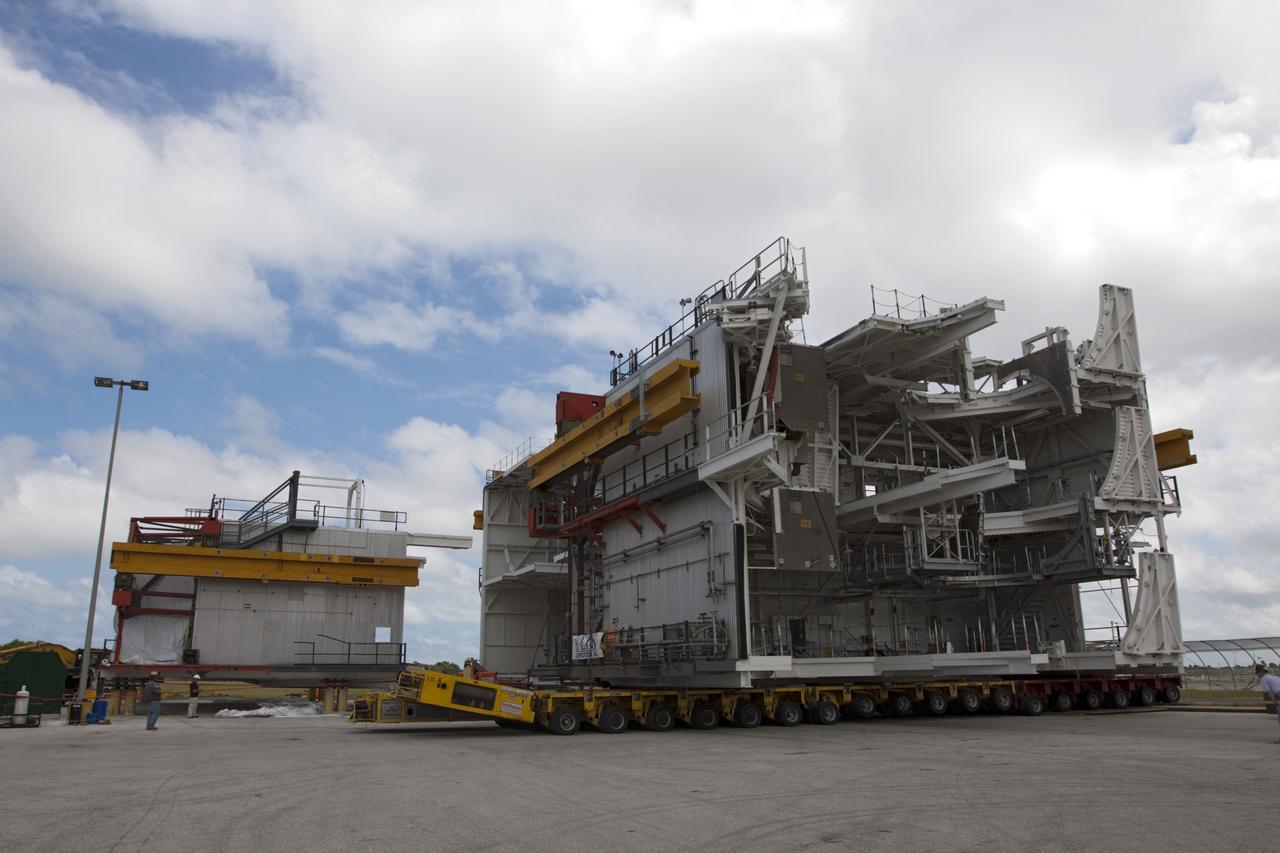
CAPE CANAVERAL, Fla. – As part of NASA's Ground Systems Development and Operations Program at the Kennedy Space Center in Florida, a large space shuttle-era work platform is being removed from high bay 3 of the Vehicle Assembly Building, or VAB, and placed on a transporter for removal. The work is part of a center-wide modernization and refurbishment initiative to accommodate NASA’s Space Launch System and a variety of other spacecraft instead of the whole building supporting one design. The Ground Systems Development and Operations Program is developing the necessary ground systems, infrastructure and operational approaches required to safely process, assemble, transport and launch the next generation of rockets and spacecraft in support of NASA’s exploration objectives. Future work also will replace the antiquated communications, power and vehicle access resources with modern efficient systems. Some of the utilities and systems slated for replacement have been used since the VAB opened in 1965. For more information, visit http://www.nasa.gov/exploration/systems/ground/index.html Photo credit: NASA/Kim Shiflett
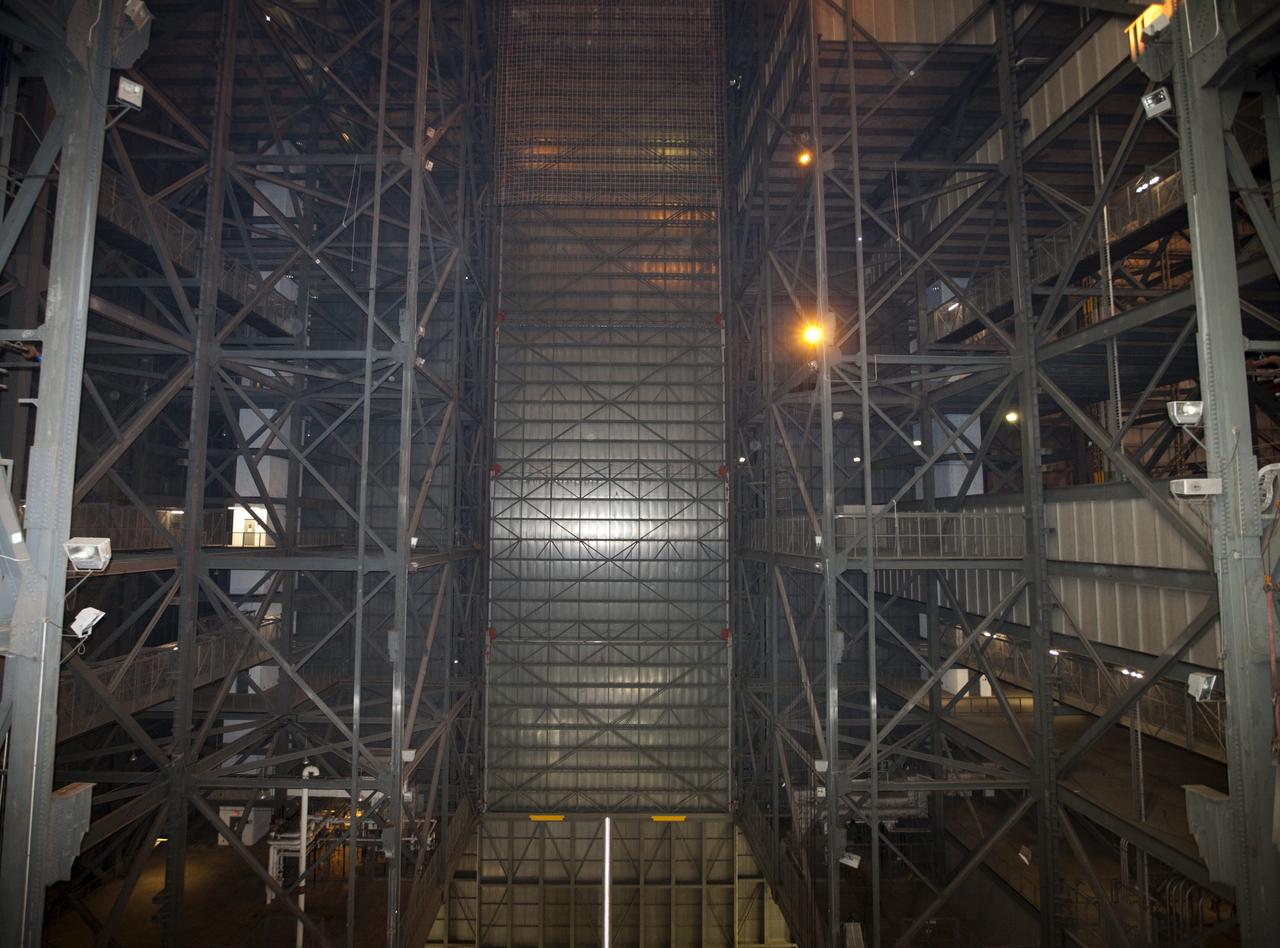
CAPE CANAVERAL, Fla. – As part of NASA's Ground Systems Development and Operations Program at the Kennedy Space Center in Florida, space shuttle-era work platforms have been removed from high bay 3 of the Vehicle Assembly Building, or VAB. The work is part of a center-wide modernization and refurbishment initiative to accommodate NASA’s Space Launch System and a variety of other spacecraft instead of the whole building supporting one design. The Ground Systems Development and Operations Program is developing the necessary ground systems, infrastructure and operational approaches required to safely process, assemble, transport and launch the next generation of rockets and spacecraft in support of NASA’s exploration objectives. Future work also will replace the antiquated communications, power and vehicle access resources with modern efficient systems. Some of the utilities and systems slated for replacement have been used since the VAB opened in 1965. For more information, visit http://www.nasa.gov/exploration/systems/ground/index.html Photo credit: NASA/Kim Shiflett
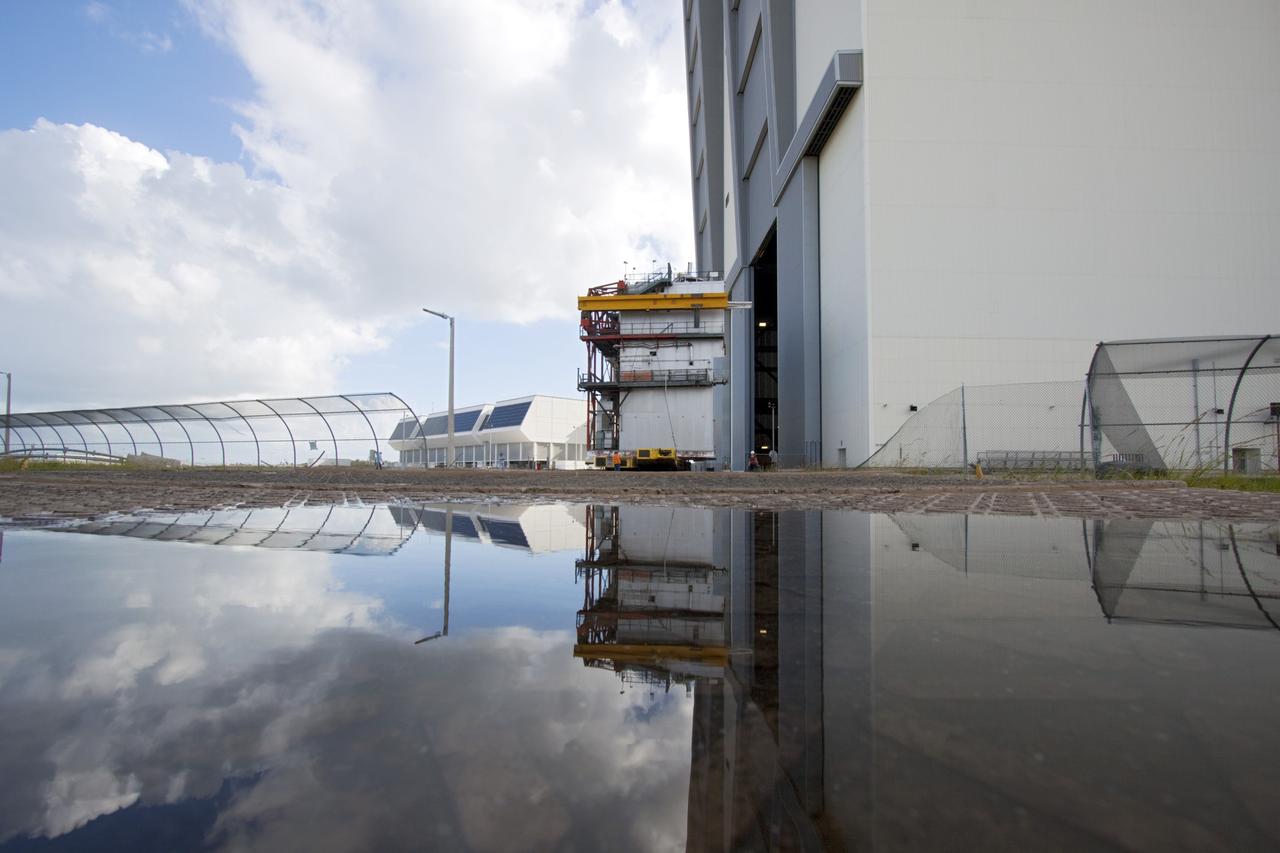
CAPE CANAVERAL, Fla. – As part of NASA's Ground Systems Development and Operations Program at the Kennedy Space Center in Florida, a large space shuttle-era work platform has been removed from high bay 3 of the Vehicle Assembly Building, or VAB. The work is part of a center-wide modernization and refurbishment initiative to accommodate NASA’s Space Launch System and a variety of other spacecraft instead of the whole building supporting one design. The Ground Systems Development and Operations Program is developing the necessary ground systems, infrastructure and operational approaches required to safely process, assemble, transport and launch the next generation of rockets and spacecraft in support of NASA’s exploration objectives. Future work also will replace the antiquated communications, power and vehicle access resources with modern efficient systems. Some of the utilities and systems slated for replacement have been used since the VAB opened in 1965. For more information, visit http://www.nasa.gov/exploration/systems/ground/index.html Photo credit: NASA/Jim Grossmann
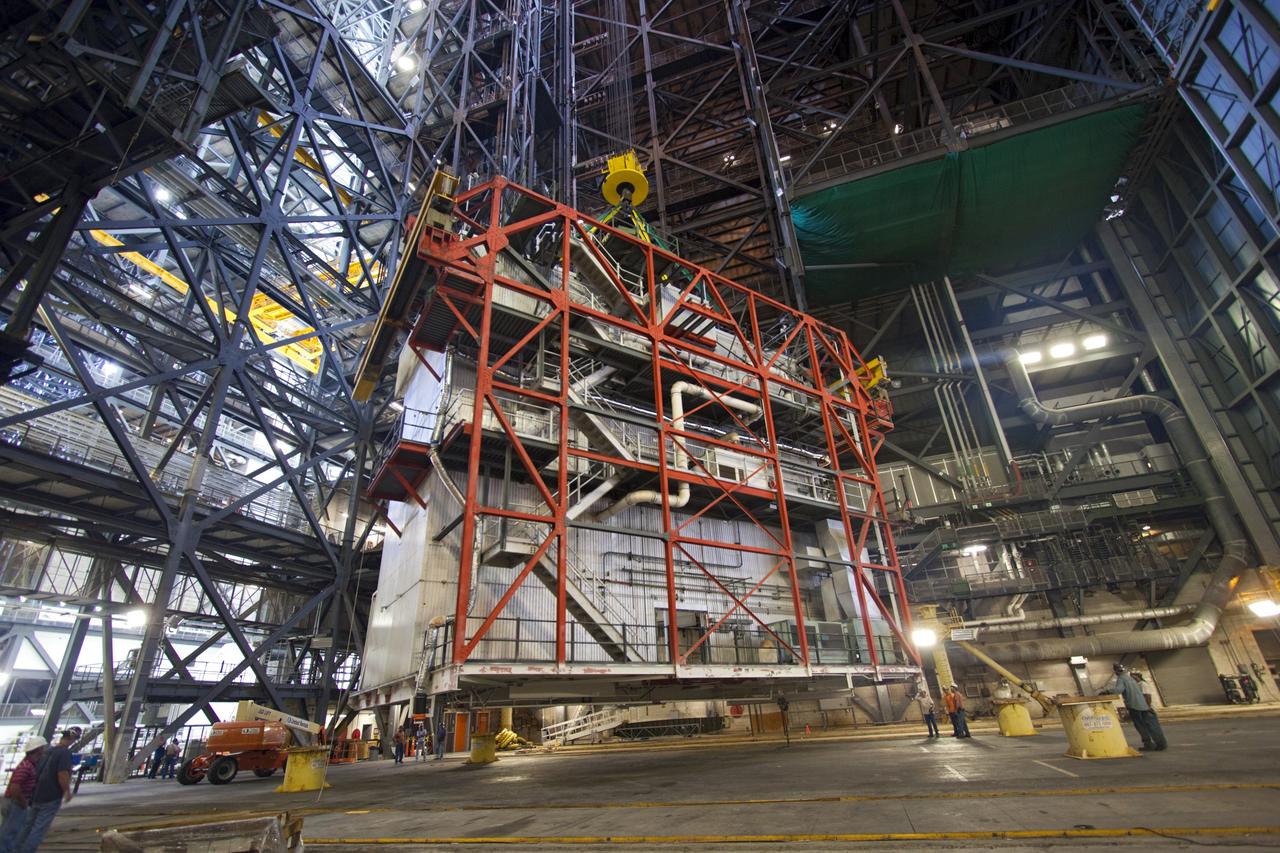
CAPE CANAVERAL, Fla. – As part of NASA's Ground Systems Development and Operations Program at the Kennedy Space Center in Florida, a large space shuttle-era work platform is being lowered and removed from high bay 3 of the Vehicle Assembly Building, or VAB. The work is part of a center-wide modernization and refurbishment initiative to accommodate NASA’s Space Launch System and a variety of other spacecraft instead of the whole building supporting one design. The Ground Systems Development and Operations Program is developing the necessary ground systems, infrastructure and operational approaches required to safely process, assemble, transport and launch the next generation of rockets and spacecraft in support of NASA’s exploration objectives. Future work also will replace the antiquated communications, power and vehicle access resources with modern efficient systems. Some of the utilities and systems slated for replacement have been used since the VAB opened in 1965. For more information, visit http://www.nasa.gov/exploration/systems/ground/index.html Photo credit: NASA/Jim Grossmann
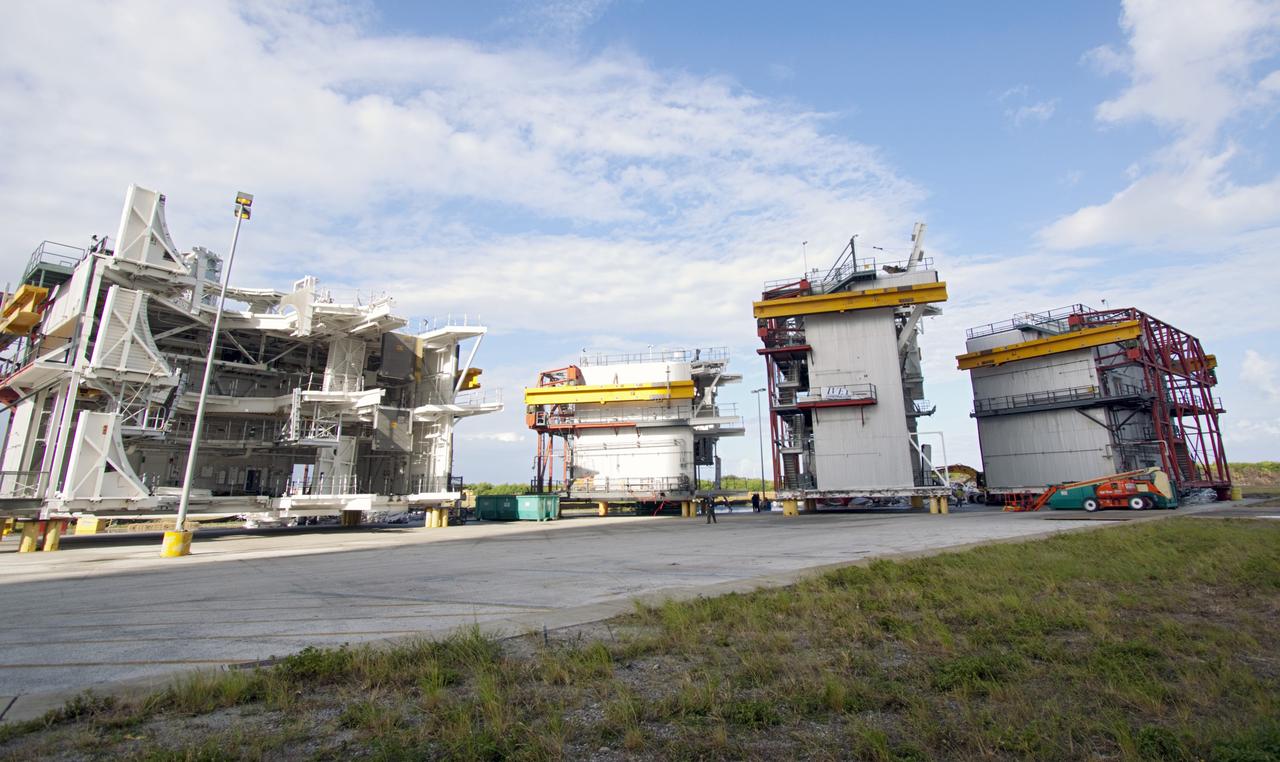
CAPE CANAVERAL, Fla. – As part of NASA's Ground Systems Development and Operations Program at the Kennedy Space Center in Florida, several large space shuttle-era work platforms have been removed from high bay 3 of the Vehicle Assembly Building, or VAB. The work is part of a center-wide modernization and refurbishment initiative to accommodate NASA’s Space Launch System and a variety of other spacecraft instead of the whole building supporting one design. The Ground Systems Development and Operations Program is developing the necessary ground systems, infrastructure and operational approaches required to safely process, assemble, transport and launch the next generation of rockets and spacecraft in support of NASA’s exploration objectives. Future work also will replace the antiquated communications, power and vehicle access resources with modern efficient systems. Some of the utilities and systems slated for replacement have been used since the VAB opened in 1965. For more information, visit http://www.nasa.gov/exploration/systems/ground/index.html Photo credit: NASA/Jim Grossmann
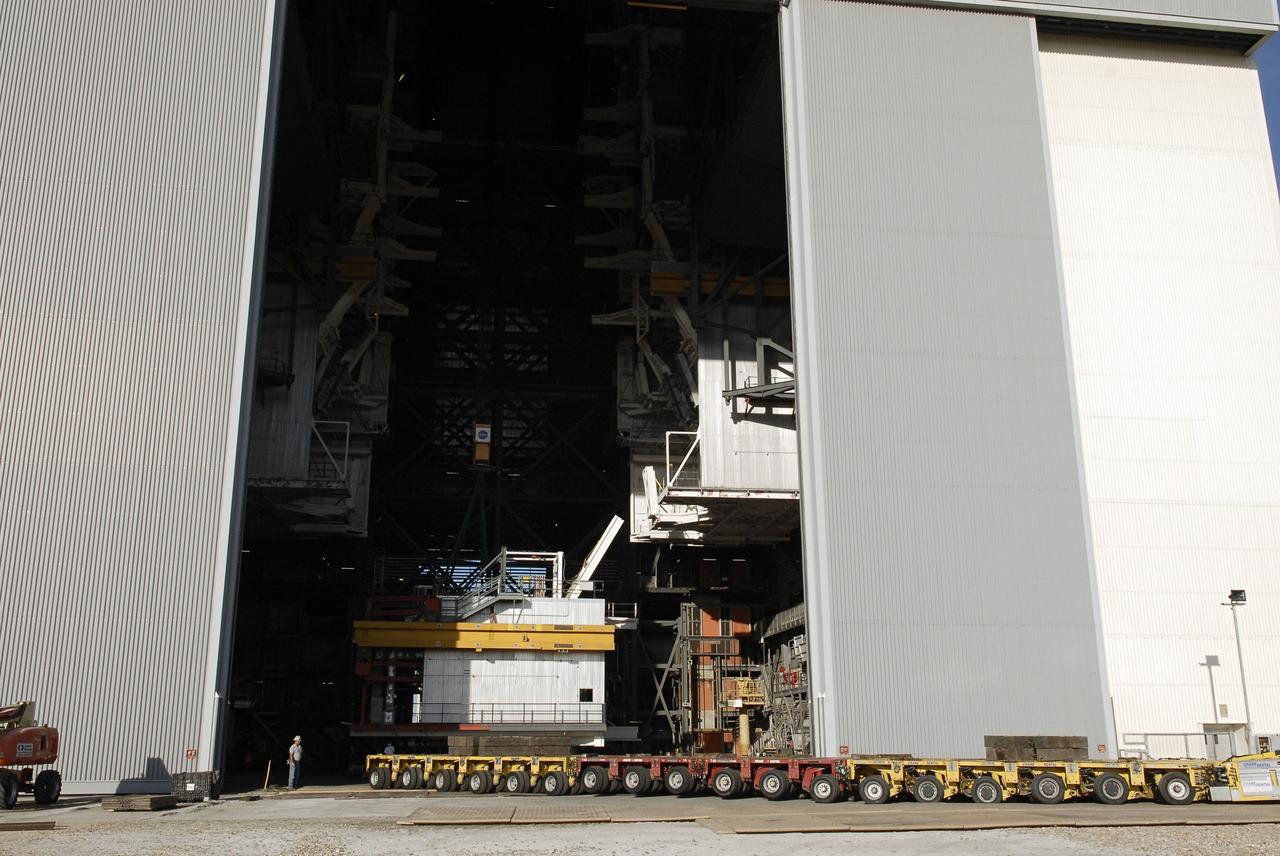
CAPE CANAVERAL, Fla. – As part of NASA's Ground Systems Development and Operations Program at the Kennedy Space Center in Florida, a large space shuttle-era work platform is being removed from high bay 3 of the Vehicle Assembly Building, or VAB, and placed on a transporter for removal. The work is part of a center-wide modernization and refurbishment initiative to accommodate NASA’s Space Launch System and a variety of other spacecraft instead of the whole building supporting one design. The Ground Systems Development and Operations Program is developing the necessary ground systems, infrastructure and operational approaches required to safely process, assemble, transport and launch the next generation of rockets and spacecraft in support of NASA’s exploration objectives. Future work also will replace the antiquated communications, power and vehicle access resources with modern efficient systems. Some of the utilities and systems slated for replacement have been used since the VAB opened in 1965. For more information, visit http://www.nasa.gov/exploration/systems/ground/index.html Photo credit: NASA/ Charisse Nahser
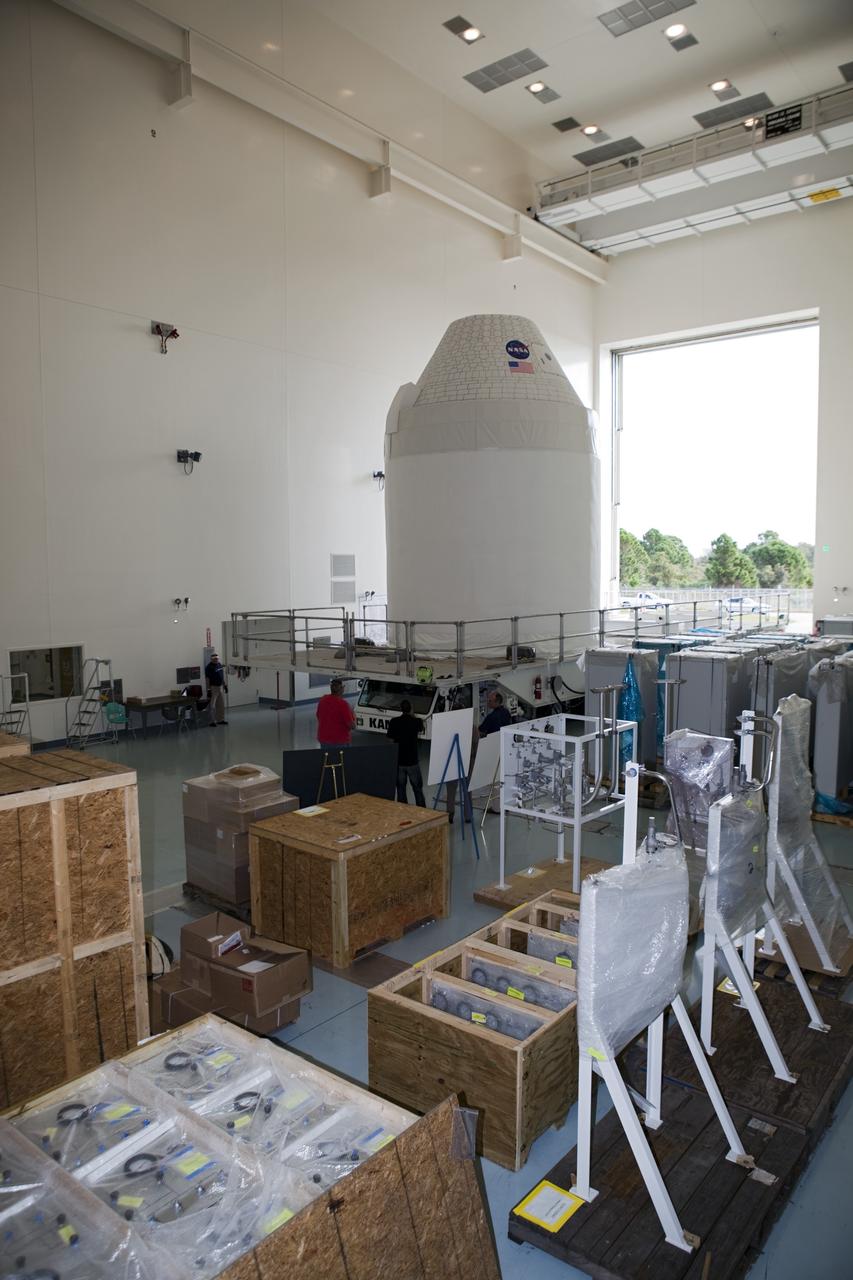
CAPE CANAVERAL, Fla. – A full-size test mock-up of the Orion spacecraft moves inside the Multi-Payload Processing Facility, or MPPF, at NASA's Kennedy Space Center in Florida to test the path flight hardware will take during future launch processing. Orion is the exploration spacecraft designed to carry crews to space beyond low Earth orbit. It will provide emergency abort capability, sustain the crew during the space travel and provide safe re-entry from deep space return velocities. The first unpiloted test flight of the Orion is scheduled to launch in 2014 atop a Delta IV rocket and in 2017 on a Space Launch System rocket. For more information, visit http://www.nasa.gov/orion Photo credit: NASA/Dimitri Gerondidakis
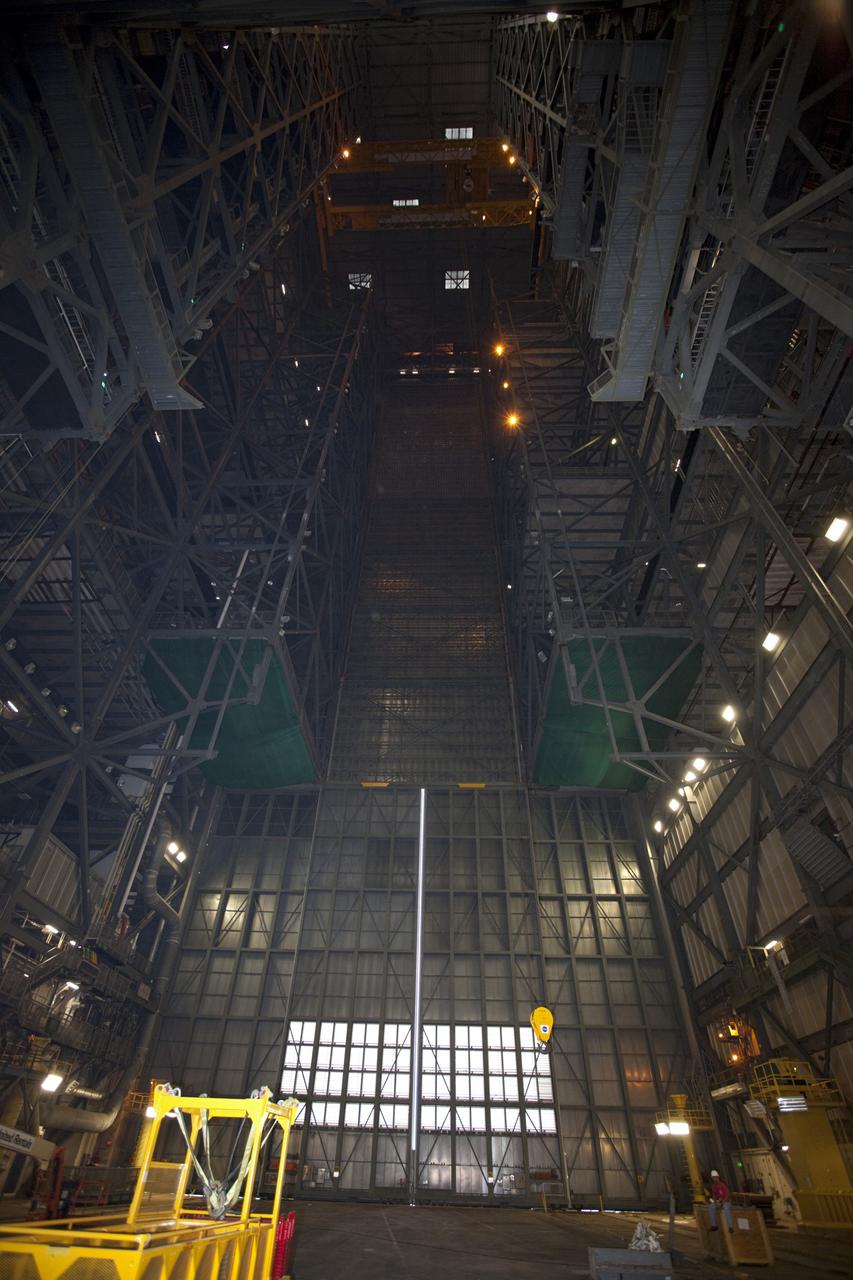
CAPE CANAVERAL, Fla. – As part of NASA's Ground Systems Development and Operations Program at the Kennedy Space Center in Florida, space shuttle-era work platforms have been removed from high bay 3 of the Vehicle Assembly Building, or VAB. The work is part of a center-wide modernization and refurbishment initiative to accommodate NASA’s Space Launch System and a variety of other spacecraft instead of the whole building supporting one design. The Ground Systems Development and Operations Program is developing the necessary ground systems, infrastructure and operational approaches required to safely process, assemble, transport and launch the next generation of rockets and spacecraft in support of NASA’s exploration objectives. Future work also will replace the antiquated communications, power and vehicle access resources with modern efficient systems. Some of the utilities and systems slated for replacement have been used since the VAB opened in 1965. For more information, visit http://www.nasa.gov/exploration/systems/ground/index.html Photo credit: NASA/Kim Shiflett

CAPE CANAVERAL, Fla. – As part of NASA's Ground Systems Development and Operations Program at the Kennedy Space Center in Florida, a large space shuttle-era work platform is being removed from high bay 3 of the Vehicle Assembly Building, or VAB. The work is part of a center-wide modernization and refurbishment initiative to accommodate NASA’s Space Launch System and a variety of other spacecraft instead of the whole building supporting one design. The Ground Systems Development and Operations Program is developing the necessary ground systems, infrastructure and operational approaches required to safely process, assemble, transport and launch the next generation of rockets and spacecraft in support of NASA’s exploration objectives. Future work also will replace the antiquated communications, power and vehicle access resources with modern efficient systems. Some of the utilities and systems slated for replacement have been used since the VAB opened in 1965. For more information, visit http://www.nasa.gov/exploration/systems/ground/index.html Photo credit: NASA/ Charisse Nahser

CAPE CANAVERAL, Fla. – As part of NASA's Ground Systems Development and Operations Program at the Kennedy Space Center in Florida, a large space shuttle-era work platform is being removed from high bay 3 of the Vehicle Assembly Building, or VAB. The work is part of a center-wide modernization and refurbishment initiative to accommodate NASA’s Space Launch System and a variety of other spacecraft instead of the whole building supporting one design. The Ground Systems Development and Operations Program is developing the necessary ground systems, infrastructure and operational approaches required to safely process, assemble, transport and launch the next generation of rockets and spacecraft in support of NASA’s exploration objectives. Future work also will replace the antiquated communications, power and vehicle access resources with modern efficient systems. Some of the utilities and systems slated for replacement have been used since the VAB opened in 1965. For more information, visit http://www.nasa.gov/exploration/systems/ground/index.html Photo credit: NASA/Jim Grossmann
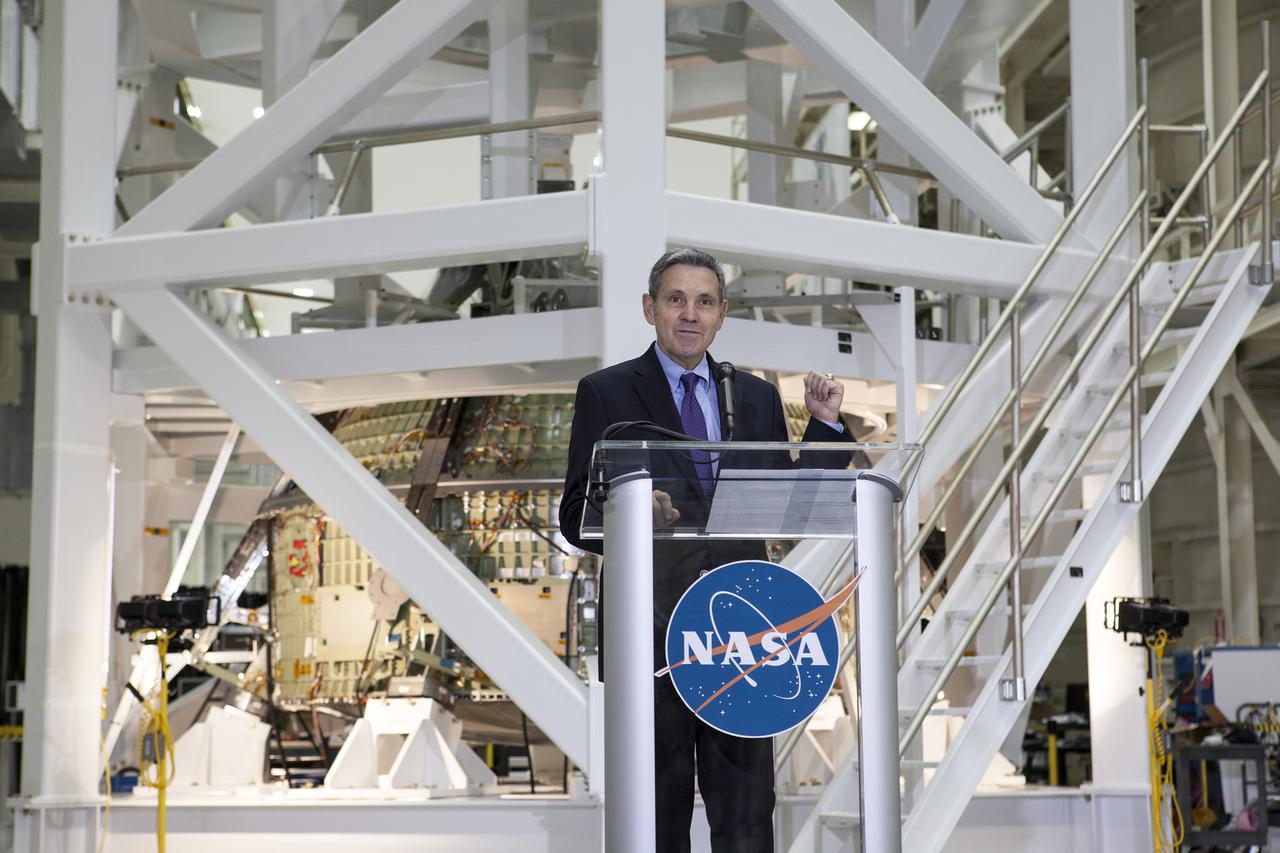
CAPE CANAVERAL, Fla. – In the Operations and Checkout Building OandC at the Kennedy Space Center in Florida, Kennedy Director Bob Cabana speaks to news media representatives updating progress on preparing the Orion spacecraft for its first uncrewed mission, Exploration Flight Test-1 EFT-1 in 2014. The crew module is seen behind Cabana in its test stand. Launched atop NASA's heavy-lift Space Launch System rocket, Orion is now targeted to take astronauts in a sample return mission to an asteroid as early as 2021. On the third anniversary of President Barack Obama issuing his challenge to NASA to send astronauts to an asteroid, news media representatives were given an opportunity to see up-close the Orion spacecraft which could take astronauts on such a flight. They also heard from key leaders of that effort in Kennedy's OandC where Orion's assembly is taking place. Photo credit: NASA_Kim Shiflett
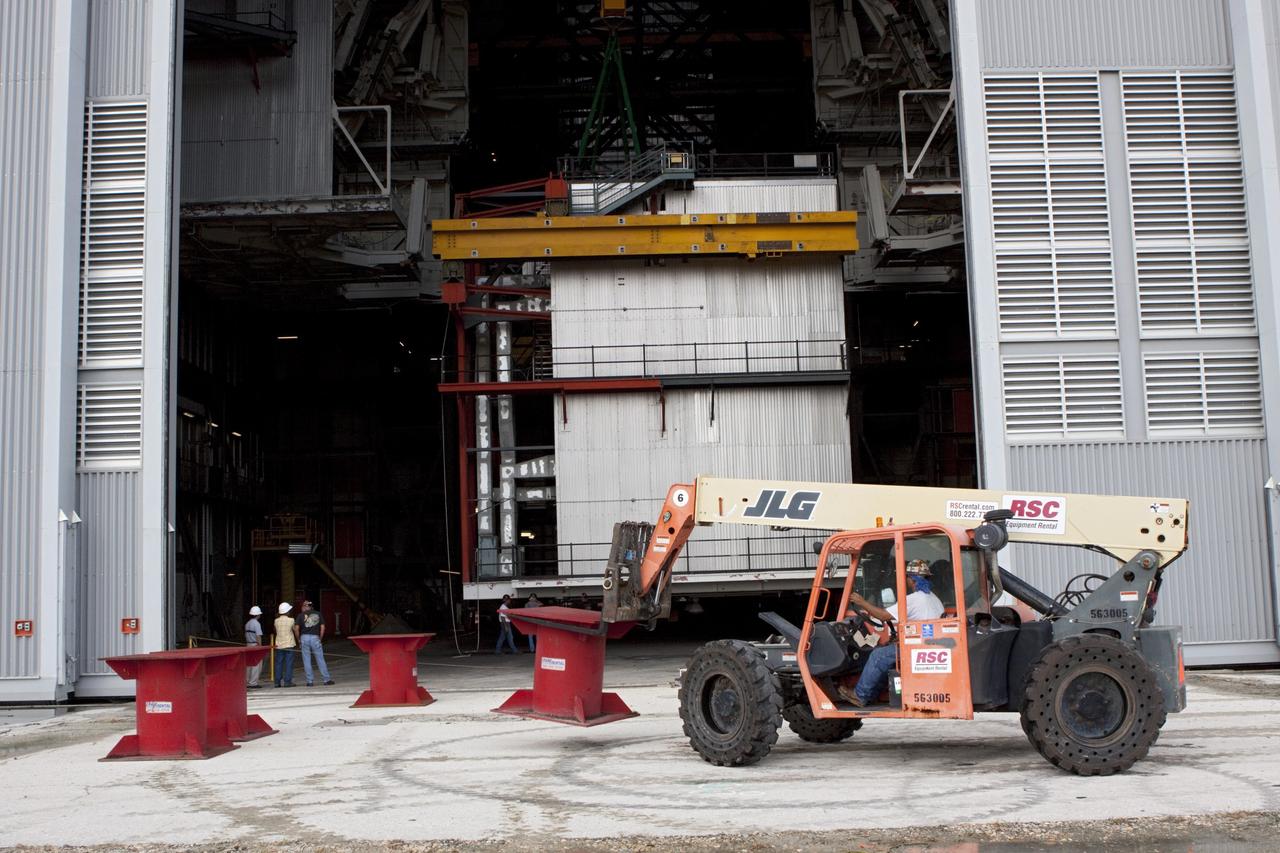
CAPE CANAVERAL, Fla. – As part of NASA's Ground Systems Development and Operations Program at the Kennedy Space Center in Florida, support pedestals are moved into position just outside the doors of the Vehicle Assembly Building, or VAB. Inside, a large work platform is being removed from an upper level to the ground. The effort is part of modernization plans including flexible settings for multiple launch vehicles instead of the whole building supporting one design. The Ground Systems Development and Operations Program is developing the necessary ground systems, infrastructure and operational approaches required to safely process, assemble, transport and launch the next generation of rockets and spacecraft in support of NASA’s exploration objectives. Future work also will replace the antiquated communications, power and vehicle access resources with modern efficient systems. Some of the utilities and systems slated for replacement have been used since the VAB opened in 1965. For more information, visit http://www.nasa.gov/exploration/systems/ground/index.html Photo credit: NASA/Jim Grossmann
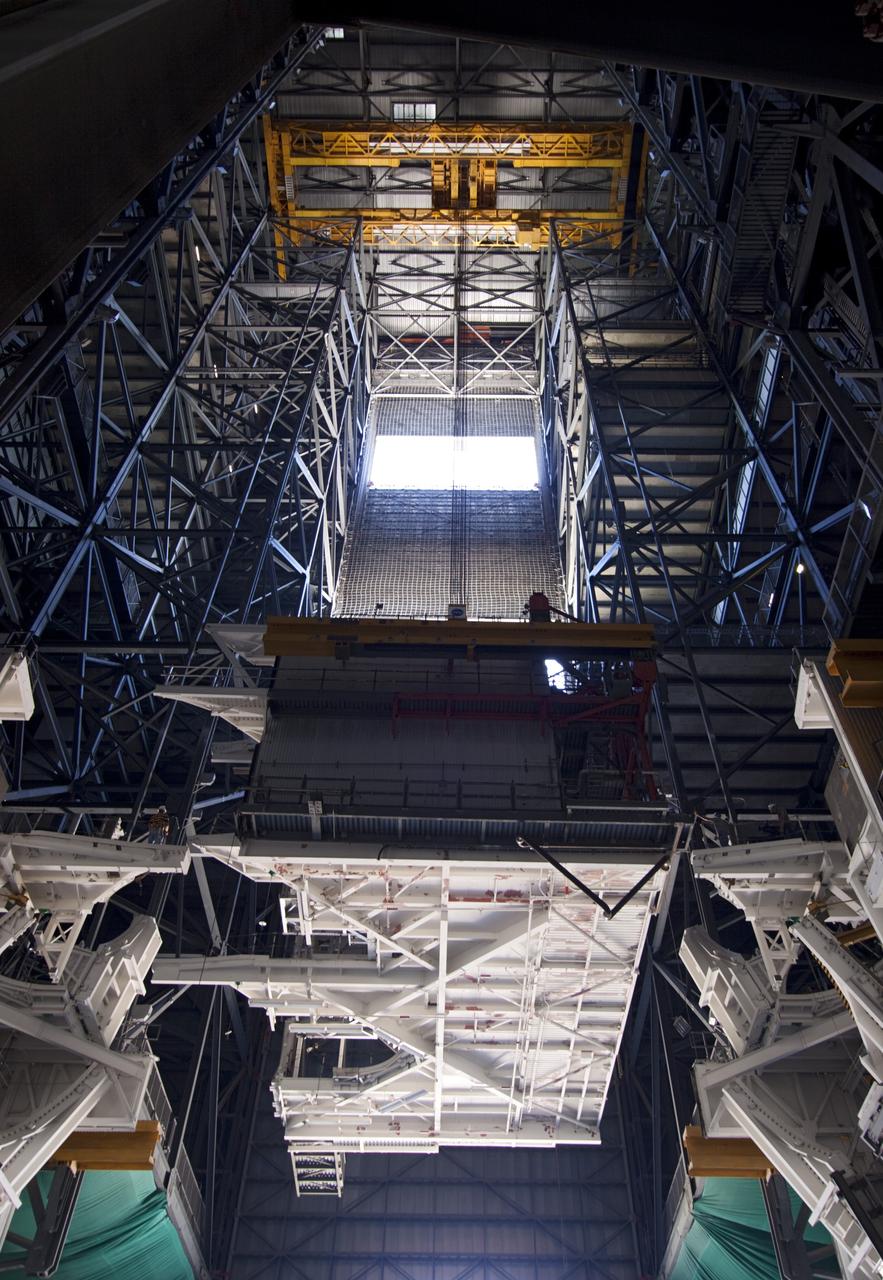
CAPE CANAVERAL, Fla. – As part of NASA's Ground Systems Development and Operations Program at the Kennedy Space Center in Florida, a large space shuttle-era work platform is being removed from high bay 3 of the Vehicle Assembly Building, or VAB. The work is part of a center-wide modernization and refurbishment initiative to accommodate NASA’s Space Launch System and a variety of other spacecraft instead of the whole building supporting one design. The Ground Systems Development and Operations Program is developing the necessary ground systems, infrastructure and operational approaches required to safely process, assemble, transport and launch the next generation of rockets and spacecraft in support of NASA’s exploration objectives. Future work also will replace the antiquated communications, power and vehicle access resources with modern efficient systems. Some of the utilities and systems slated for replacement have been used since the VAB opened in 1965. For more information, visit http://www.nasa.gov/exploration/systems/ground/index.html Photo credit: NASA/Jim Grossmann
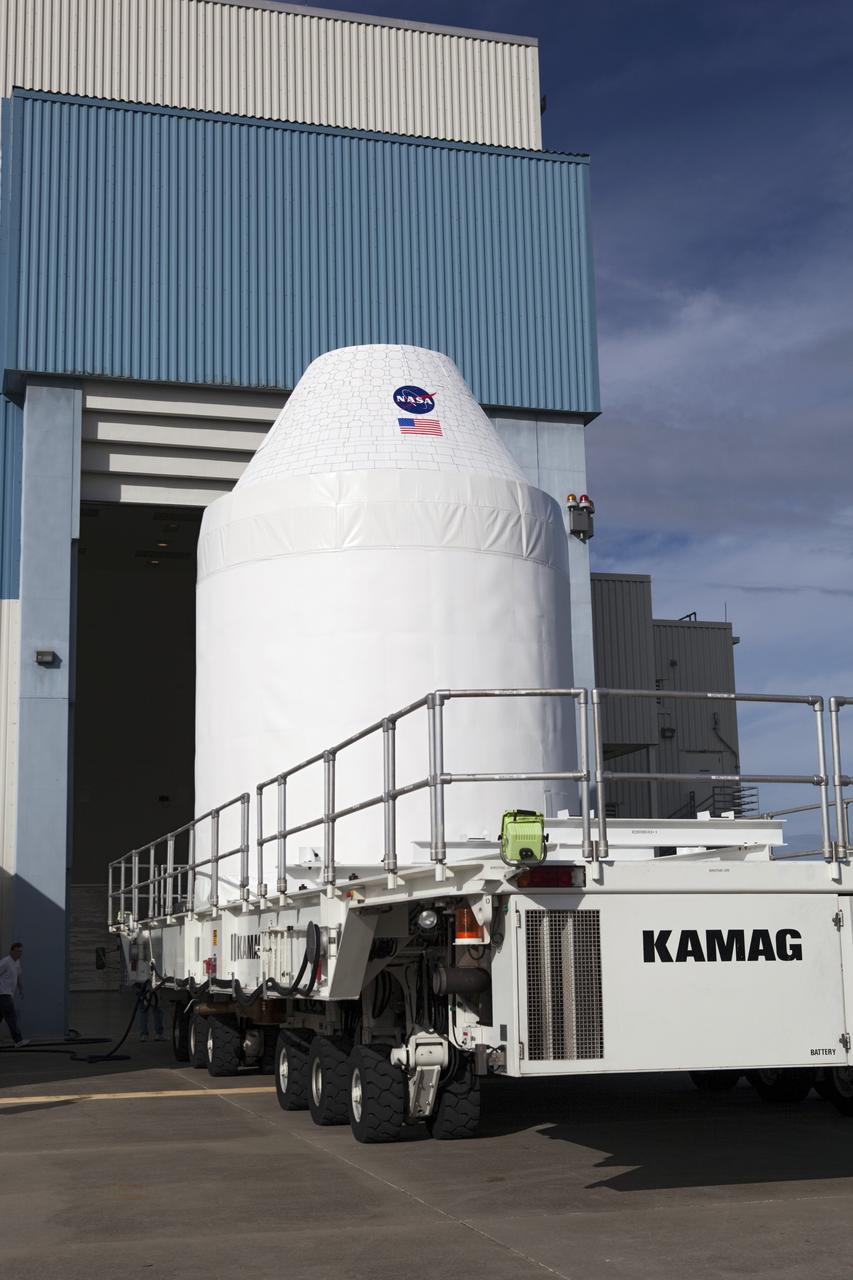
CAPE CANAVERAL, Fla. – A full-size test mock-up of the Orion crew exploration vehicle arrives at the Multi-Payload Processing Facility, or MPPF, at NASA's Kennedy Space Center in Florida to test the path flight hardware will take during future launch processing. Orion is the exploration spacecraft designed to carry crews to space beyond low Earth orbit. It will provide emergency abort capability, sustain the crew during the space travel and provide safe re-entry from deep space return velocities. The first unpiloted test flight of the Orion is scheduled to launch in 2014 atop a Delta IV rocket and in 2017 on a Space Launch System rocket. For more information, visit http://www.nasa.gov/orion Photo credit: NASA/Dimitri Gerondidakis
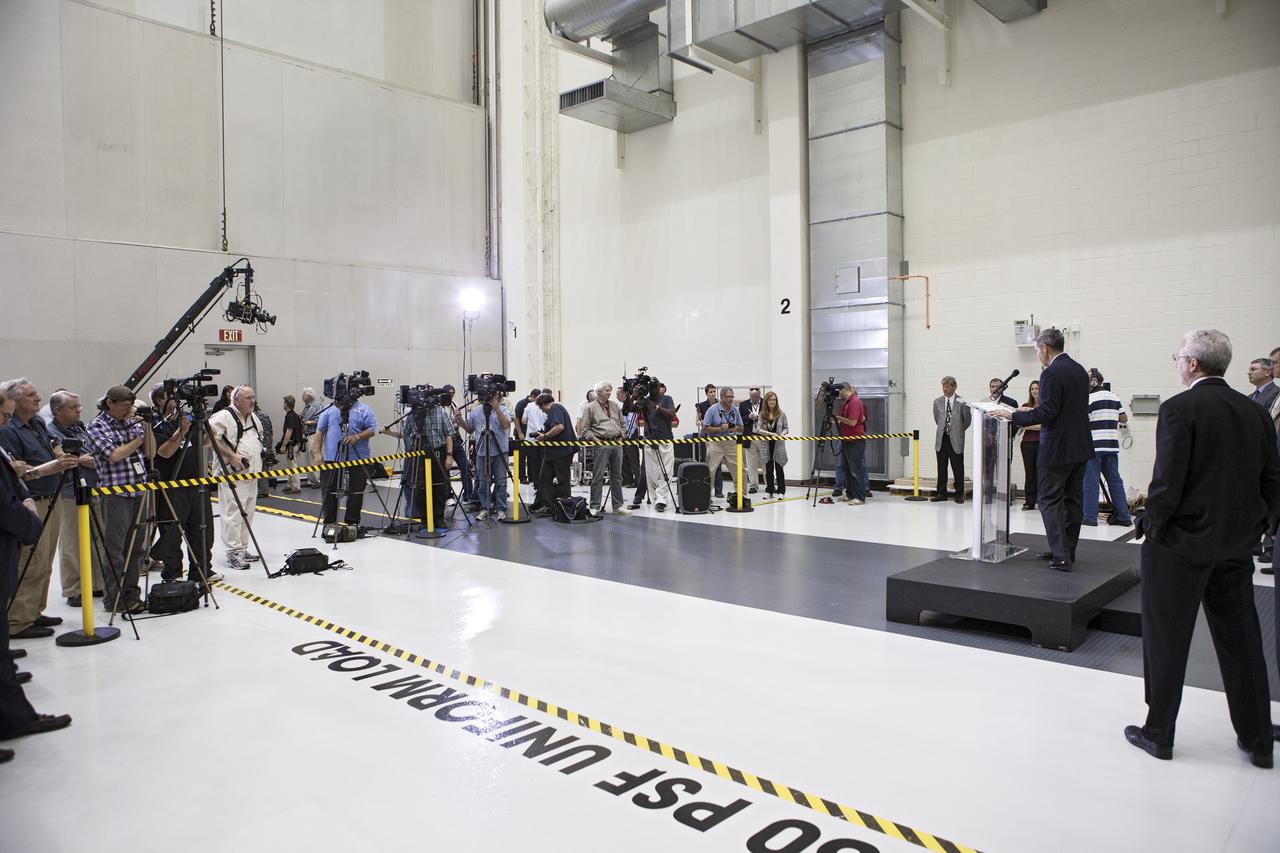
CAPE CANAVERAL, Fla. – In the Operations and Checkout Building OandC at the Kennedy Space Center in Florida, Kennedy Director Bob Cabana on the podium to the right speaks to news media representatives updating progress on preparing the Orion spacecraft for its first uncrewed mission, Exploration Flight Test-1 EFT-1 in 2014. Launched atop NASA's heavy-lift Space Launch System rocket, Orion is now targeted to take astronauts in a sample return mission to an asteroid as early as 2021. On the third anniversary of President Barack Obama issuing his challenge to NASA to send astronauts to an asteroid, news media representatives were given an opportunity to see up-close the Orion spacecraft which could take astronauts on such a flight. They also heard from key leaders of that effort in Kennedy's OandC where Orion's assembly is taking place. Photo credit: NASA_Kim Shiflett
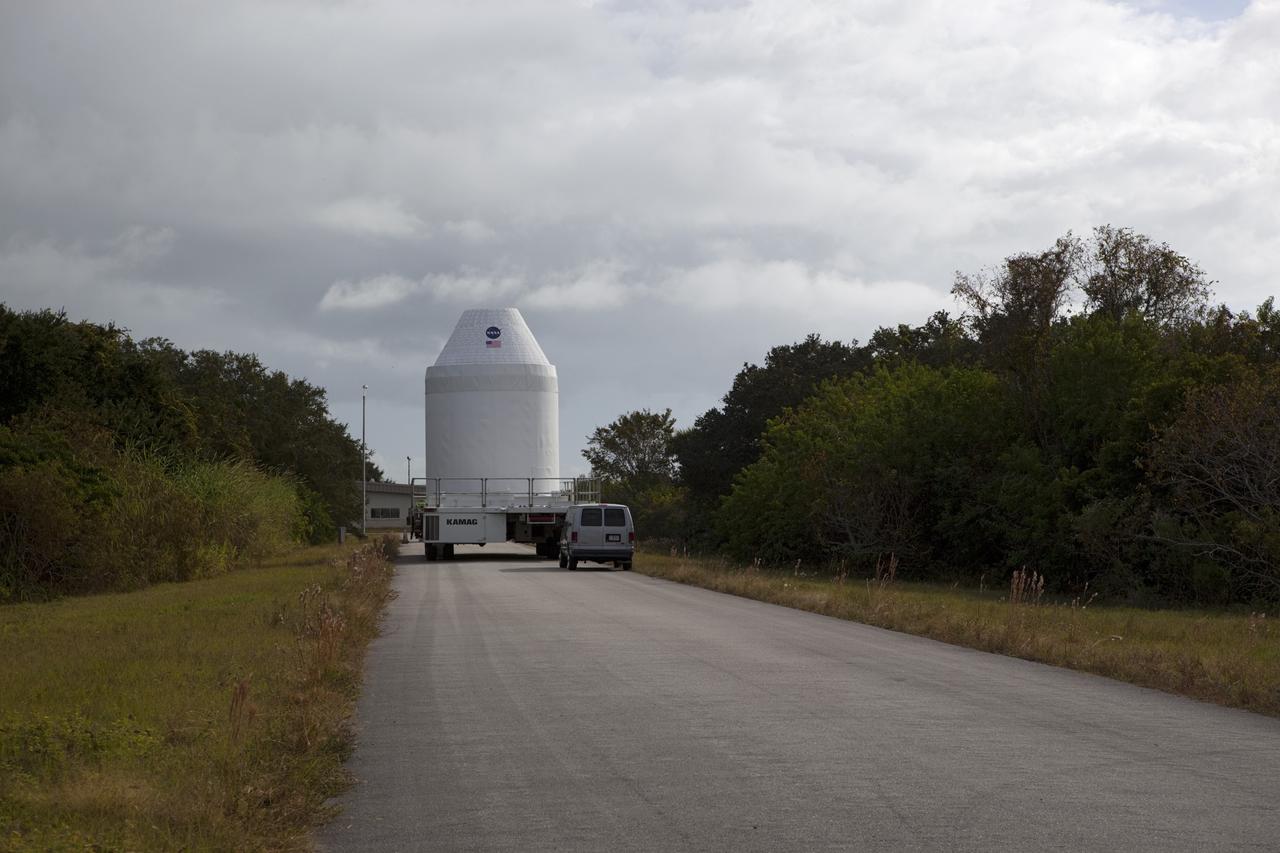
CAPE CANAVERAL, Fla. – A full-size test mock-up of the Orion spacecraft is being transferred to the Vehicle Assembly Building at NASA's Kennedy Space Center in Florida to test the path flight hardware will take during future launch processing. Orion is the exploration spacecraft designed to carry crews to space beyond low Earth orbit. It will provide emergency abort capability, sustain the crew during the space travel and provide safe re-entry from deep space return velocities. The first unpiloted test flight of the Orion is scheduled to launch in 2014 atop a Delta IV rocket and in 2017 on a Space Launch System rocket. For more information, visit http://www.nasa.gov/orion Photo credit: NASA/Dimitri Gerondidakis
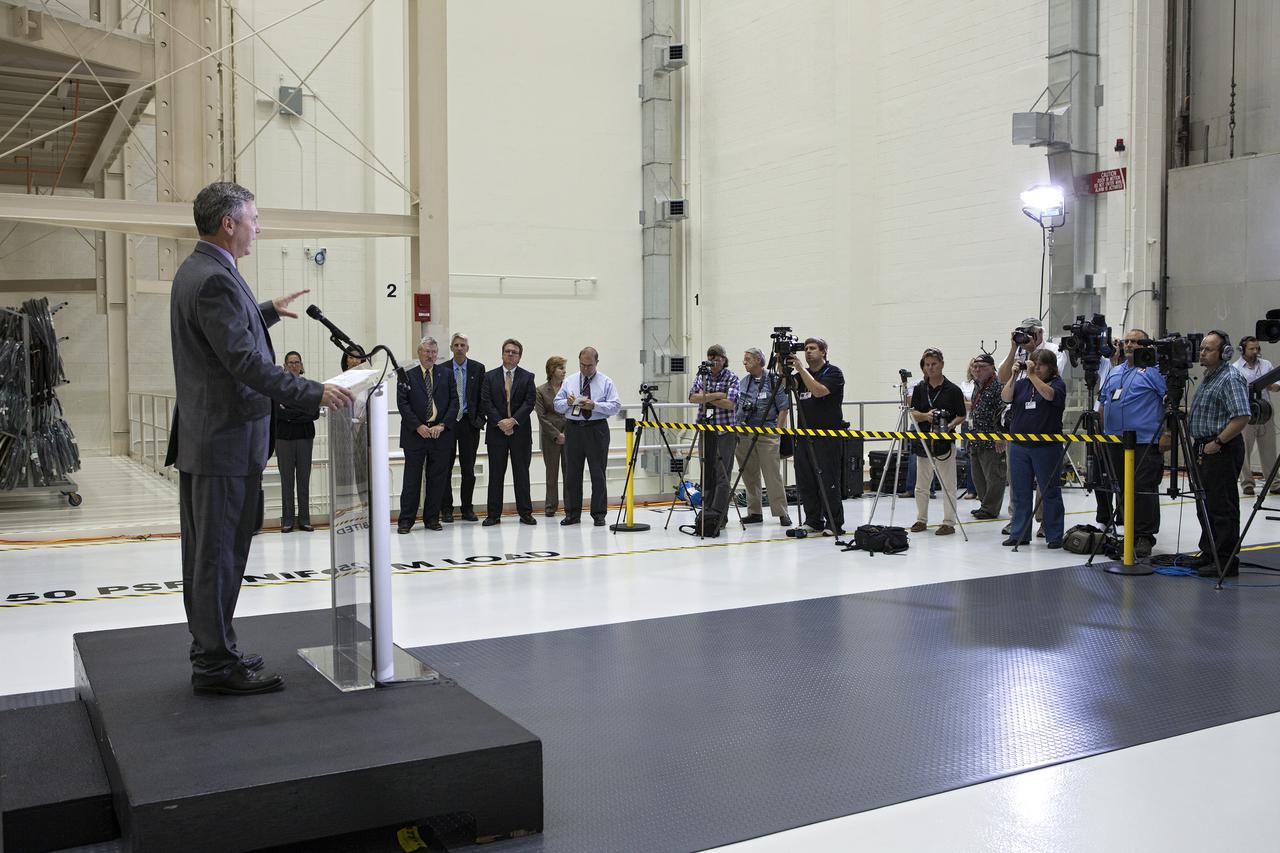
CAPE CANAVERAL, Fla. – In the Operations and Checkout Building OandC at the Kennedy Space Center in Florida, Scott Colloredo, chief architect for the Ground Systems Development and Operations Program, speaks to news media representatives updating progress on preparing the Orion spacecraft for its first uncrewed mission, Exploration Flight Test-1 EFT-1 in 2014. The crew module is seen behind Hefner in its test stand. Launched atop NASA's heavy-lift Space Launch System rocket, Orion is now targeted to take astronauts in a sample return mission to an asteroid as early as 2021. On the third anniversary of President Barack Obama issuing his challenge to NASA to send astronauts to an asteroid, news media representatives were given an opportunity to see up-close the Orion spacecraft which could take astronauts on such a flight. They also heard from key leaders of that effort in Kennedy's OandC where Orion's assembly is taking place. Photo credit: NASA_Kim Shiflett
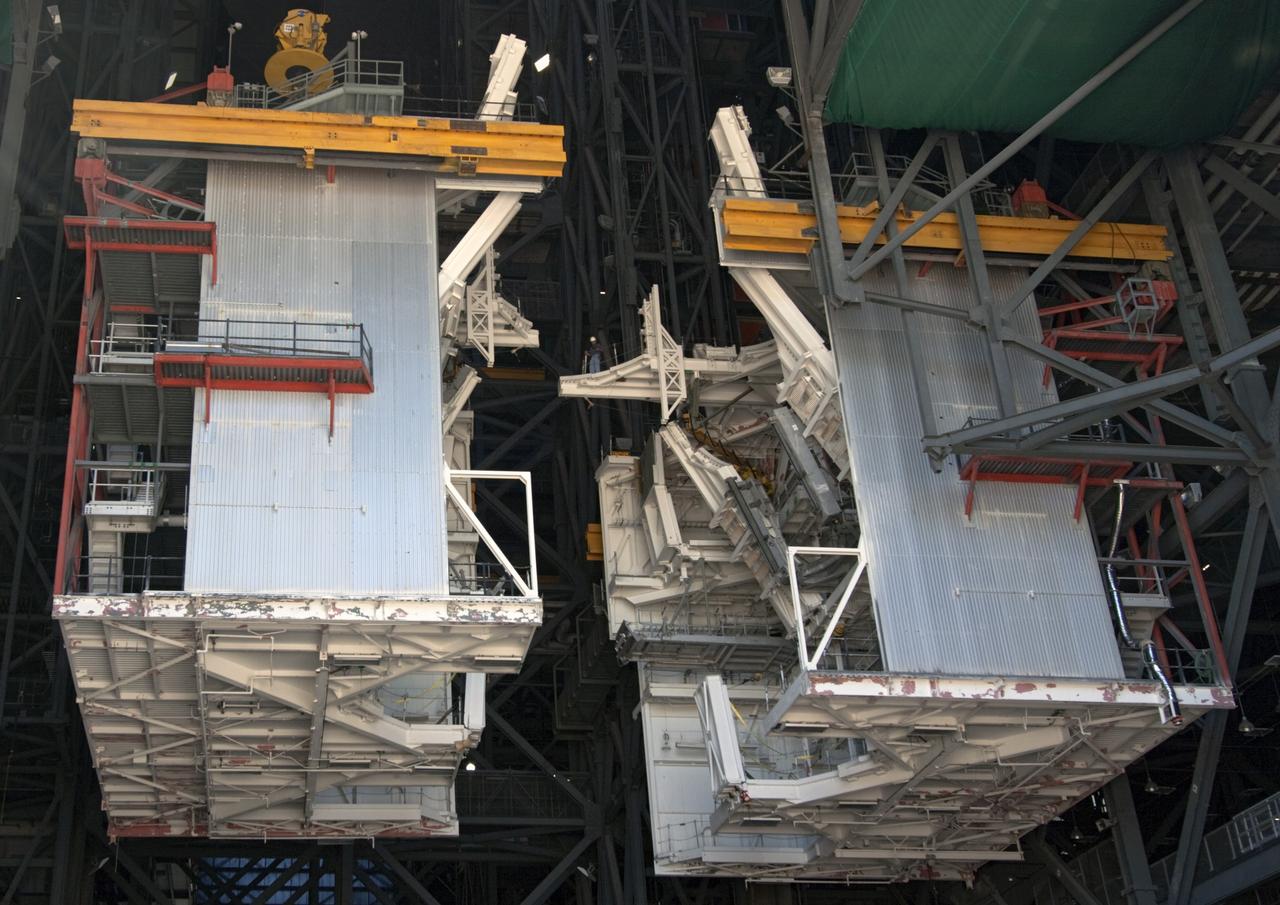
CAPE CANAVERAL, Fla. – As part of NASA's Ground Systems Development and Operations Program at the Kennedy Space Center in Florida, a large space shuttle-era work platform is being removed from high bay 3 of the Vehicle Assembly Building, or VAB. The work is part of a center-wide modernization and refurbishment initiative to accommodate NASA’s Space Launch System and a variety of other spacecraft instead of the whole building supporting one design. The Ground Systems Development and Operations Program is developing the necessary ground systems, infrastructure and operational approaches required to safely process, assemble, transport and launch the next generation of rockets and spacecraft in support of NASA’s exploration objectives. Future work also will replace the antiquated communications, power and vehicle access resources with modern efficient systems. Some of the utilities and systems slated for replacement have been used since the VAB opened in 1965. For more information, visit http://www.nasa.gov/exploration/systems/ground/index.html Photo credit: NASA/Jim Grossmann
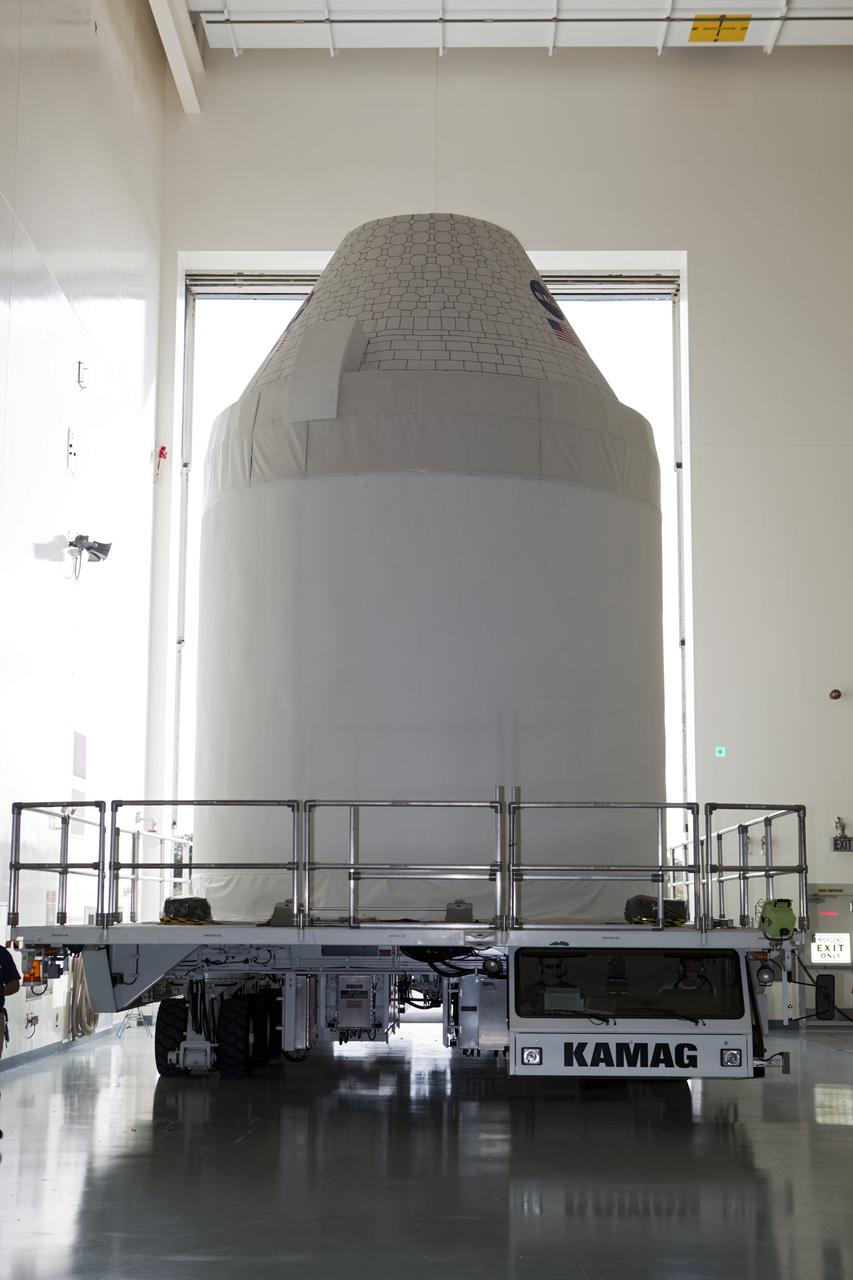
CAPE CANAVERAL, Fla. – A full-size test mock-up of the Orion spacecraft moves inside the Multi-Payload Processing Facility, or MPPF, at NASA's Kennedy Space Center in Florida to test the path flight hardware will take during future launch processing. Orion is the exploration spacecraft designed to carry crews to space beyond low Earth orbit. It will provide emergency abort capability, sustain the crew during the space travel and provide safe re-entry from deep space return velocities. The first unpiloted test flight of the Orion is scheduled to launch in 2014 atop a Delta IV rocket and in 2017 on a Space Launch System rocket. For more information, visit http://www.nasa.gov/orion Photo credit: NASA/Dimitri Gerondidakis
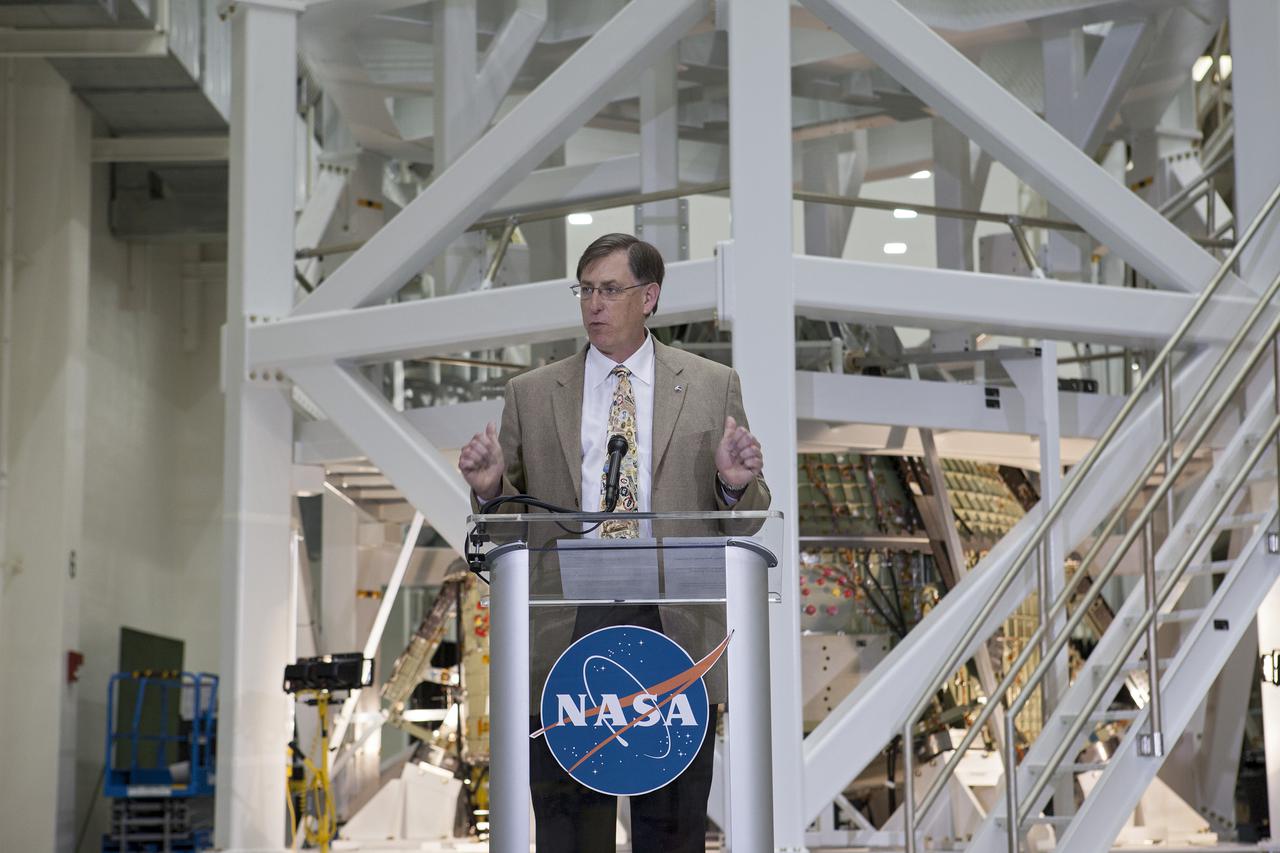
CAPE CANAVERAL, Fla. – In the Operations and Checkout Building OandC at the Kennedy Space Center in Florida, Dan Dumbacher, NASA's deputy associate administrator for Exploration Systems Development, speaks to news media representatives updating progress on preparing the Orion spacecraft for its first uncrewed mission, Exploration Flight Test-1 EFT-1 in 2014. The crew module is seen behind Dumbacher in its test stand. Launched atop NASA's heavy-lift Space Launch System rocket, Orion is now targeted to take astronauts in a sample return mission to an asteroid as early as 2021. On the third anniversary of President Barack Obama issuing his challenge to NASA to send astronauts to an asteroid, news media representatives were given an opportunity to see up-close the Orion spacecraft which could take astronauts on such a flight. They also heard from key leaders of that effort in Kennedy's OandC where Orion's assembly is taking place. Photo credit: NASA_Kim Shiflett
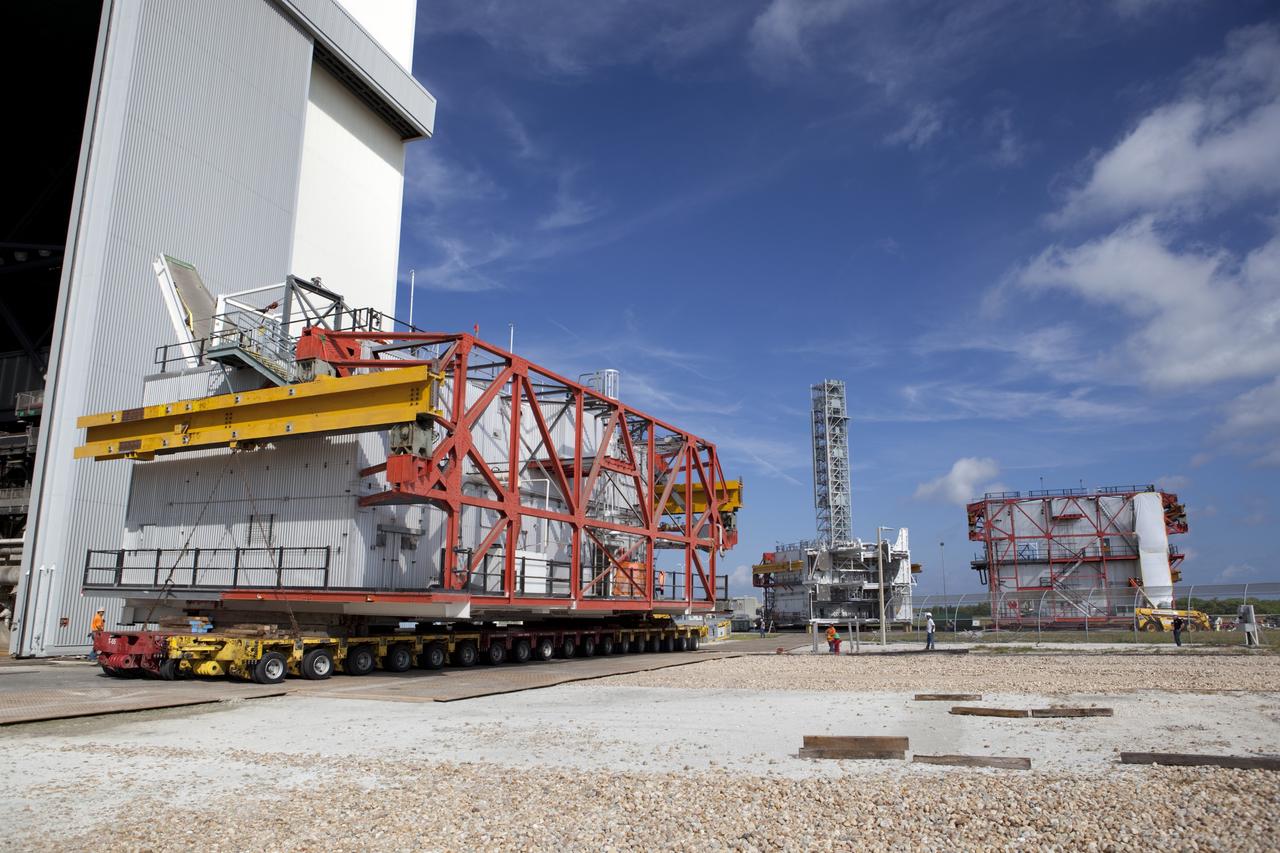
CAPE CANAVERAL, Fla. – As part of NASA's Ground Systems Development and Operations Program at the Kennedy Space Center in Florida, a large space shuttle-era work platform is being removed by transporter from high bay 3 of the Vehicle Assembly Building, or VAB. The work is part of a center-wide modernization and refurbishment initiative to accommodate NASA’s Space Launch System and a variety of other spacecraft instead of the whole building supporting one design. The Ground Systems Development and Operations Program is developing the necessary ground systems, infrastructure and operational approaches required to safely process, assemble, transport and launch the next generation of rockets and spacecraft in support of NASA’s exploration objectives. Future work also will replace the antiquated communications, power and vehicle access resources with modern efficient systems. Some of the utilities and systems slated for replacement have been used since the VAB opened in 1965. For more information, visit http://www.nasa.gov/exploration/systems/ground/index.html Photo credit: NASA/Dimitri Gerondidakis
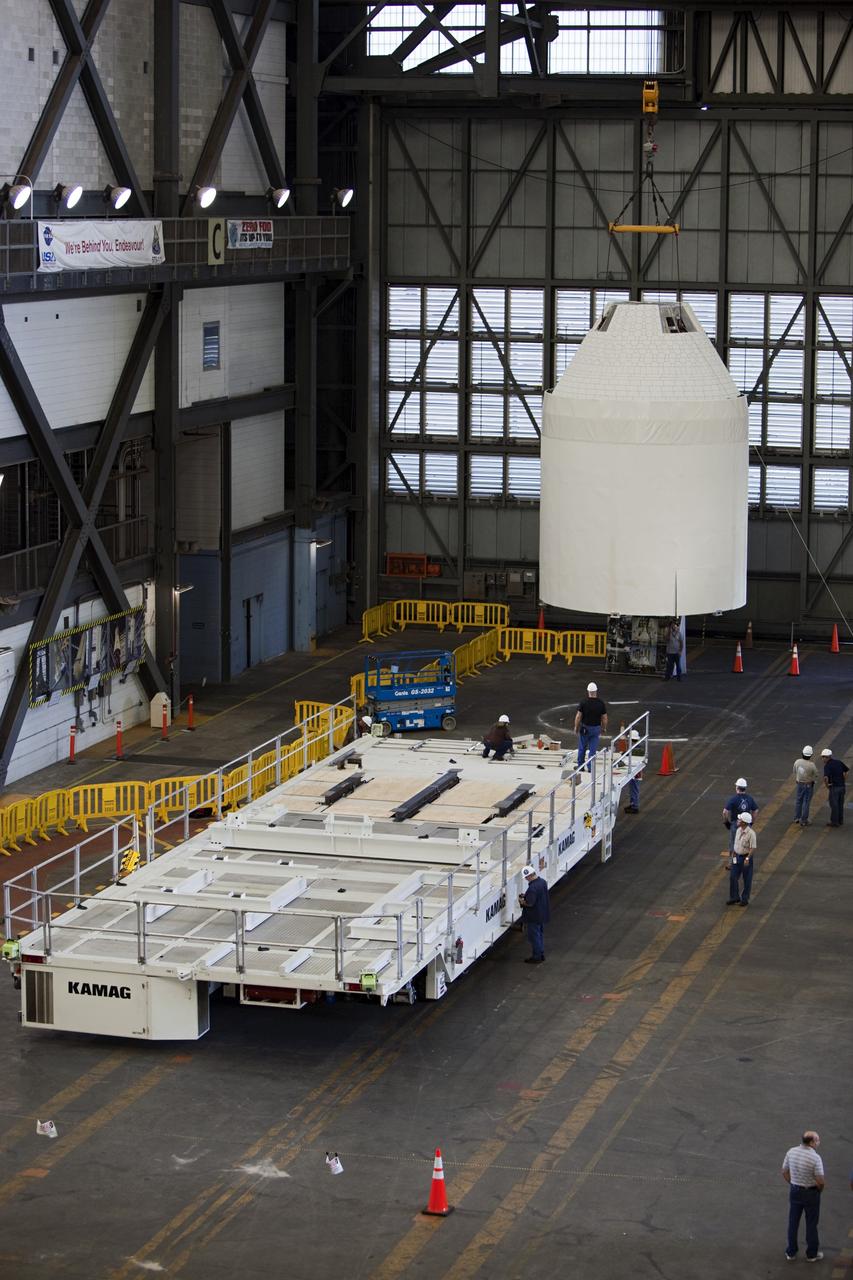
CAPE CANAVERAL, Fla. – An Orion mockup spacecraft atop its service module simulator is lifted in the transfer aisle of the Vehicle Assembly Building, or VAB, at NASA's Kennedy Space Center in Florida. The Orion mockup is exact in details on the outside, but mostly empty on the inside. The work in the VAB is crucial to making sure the designs are accurate. Orion is the exploration spacecraft designed to carry crews to space beyond low Earth orbit. It will provide emergency abort capability, sustain the crew during the space travel and provide safe re-entry from deep space return velocities. The first unpiloted test flight of the Orion is scheduled to launch in 2014 atop a Delta IV rocket and in 2017 on a Space Launch System rocket. For more information, visit http://www.nasa.gov/orion Photo credit: NASA/ Dmitri Gerondidakis
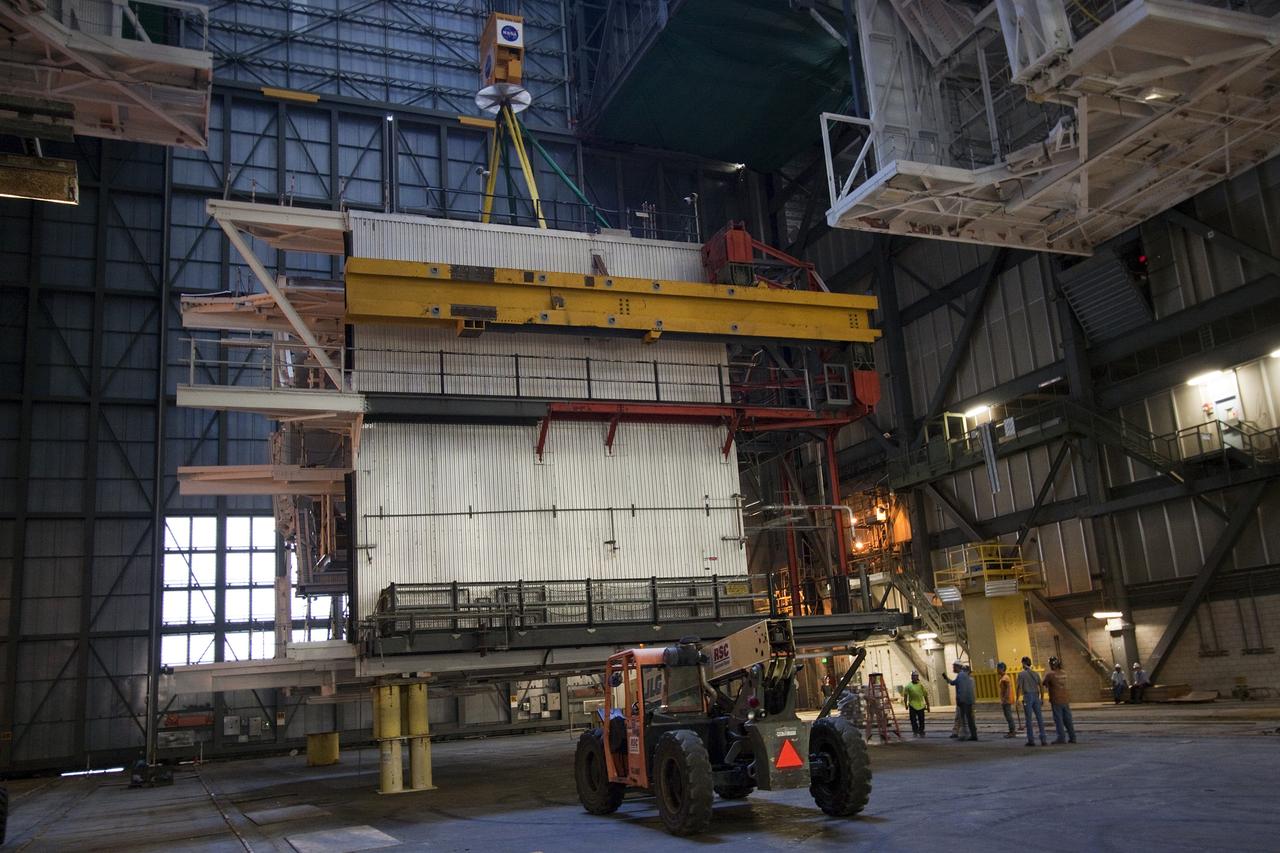
CAPE CANAVERAL, Fla. – As part of NASA's Ground Systems Development and Operations Program at the Kennedy Space Center in Florida, a large space shuttle-era work platform is being removed from high bay 3 of the Vehicle Assembly Building, or VAB. The work is part of a center-wide modernization and refurbishment initiative to accommodate NASA’s Space Launch System and a variety of other spacecraft instead of the whole building supporting one design. The Ground Systems Development and Operations Program is developing the necessary ground systems, infrastructure and operational approaches required to safely process, assemble, transport and launch the next generation of rockets and spacecraft in support of NASA’s exploration objectives. Future work also will replace the antiquated communications, power and vehicle access resources with modern efficient systems. Some of the utilities and systems slated for replacement have been used since the VAB opened in 1965. For more information, visit http://www.nasa.gov/exploration/systems/ground/index.html Photo credit: NASA/Jim Grossmann
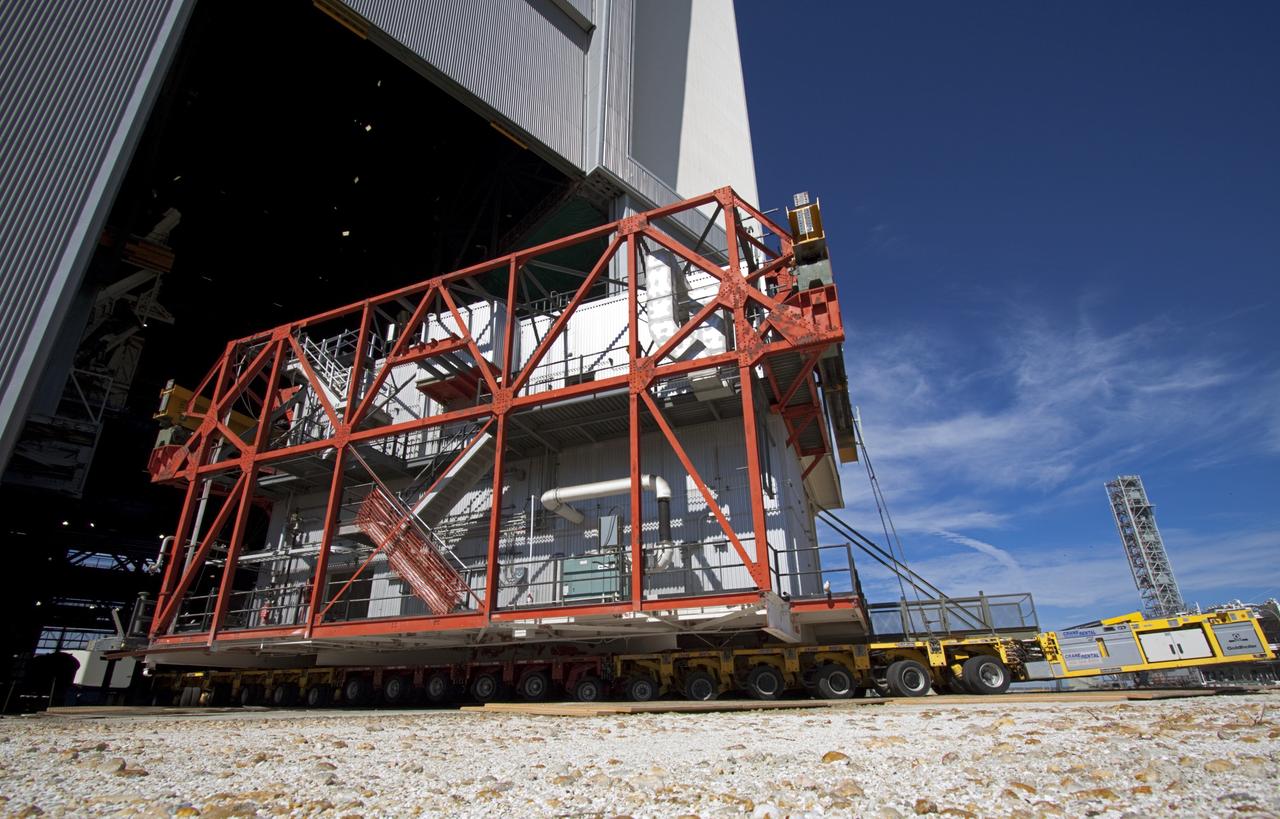
CAPE CANAVERAL, Fla. – As part of NASA's Ground Systems Development and Operations Program at the Kennedy Space Center in Florida, a large space shuttle-era work platform is being removed from high bay 3 of the Vehicle Assembly Building, or VAB. The work is part of a center-wide modernization and refurbishment initiative to accommodate NASA’s Space Launch System and a variety of other spacecraft instead of the whole building supporting one design. The Ground Systems Development and Operations Program is developing the necessary ground systems, infrastructure and operational approaches required to safely process, assemble, transport and launch the next generation of rockets and spacecraft in support of NASA’s exploration objectives. Future work also will replace the antiquated communications, power and vehicle access resources with modern efficient systems. Some of the utilities and systems slated for replacement have been used since the VAB opened in 1965. For more information, visit http://www.nasa.gov/exploration/systems/ground/index.html Photo credit: NASA/Jim Grossmann
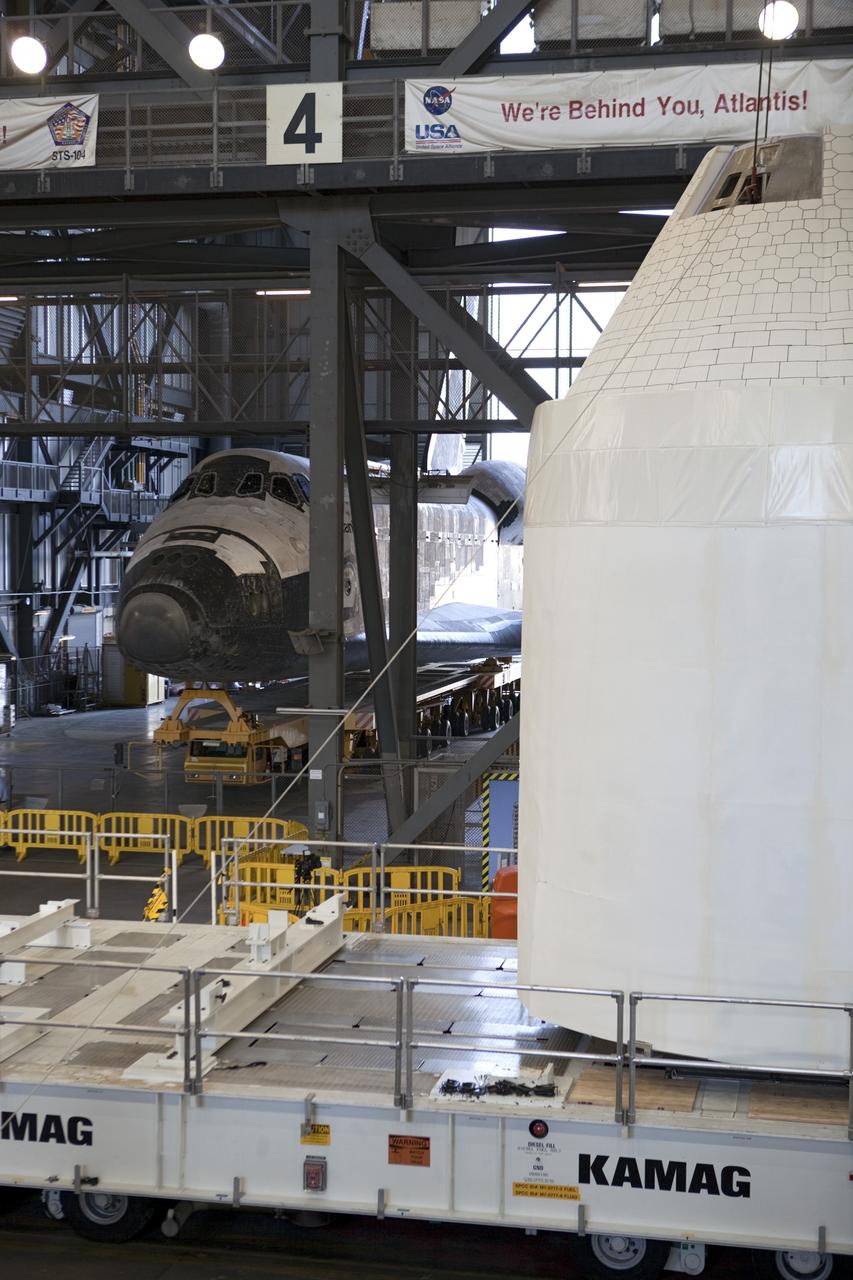
CAPE CANAVERAL, Fla. – An Orion mockup spacecraft atop its service module simulator is lowered onto a transporter in the transfer aisle of the Vehicle Assembly Building, or VAB, at NASA's Kennedy Space Center in Florida. The Orion mockup is exact in details on the outside, but mostly empty on the inside. The work in the VAB is crucial to making sure the designs are accurate. Visible in the background on the left is the space shuttle Atlantis being readied for its move to the Kennedy Space Center Visitor Complex. Orion is the exploration spacecraft designed to carry crews to space beyond low Earth orbit. It will provide emergency abort capability, sustain the crew during the space travel and provide safe re-entry from deep space return velocities. The first unpiloted test flight of the Orion is scheduled to launch in 2014 atop a Delta IV rocket and in 2017 on a Space Launch System rocket. For more information, visit http://www.nasa.gov/orion Photo credit: NASA/ Dmitri Gerondidakis
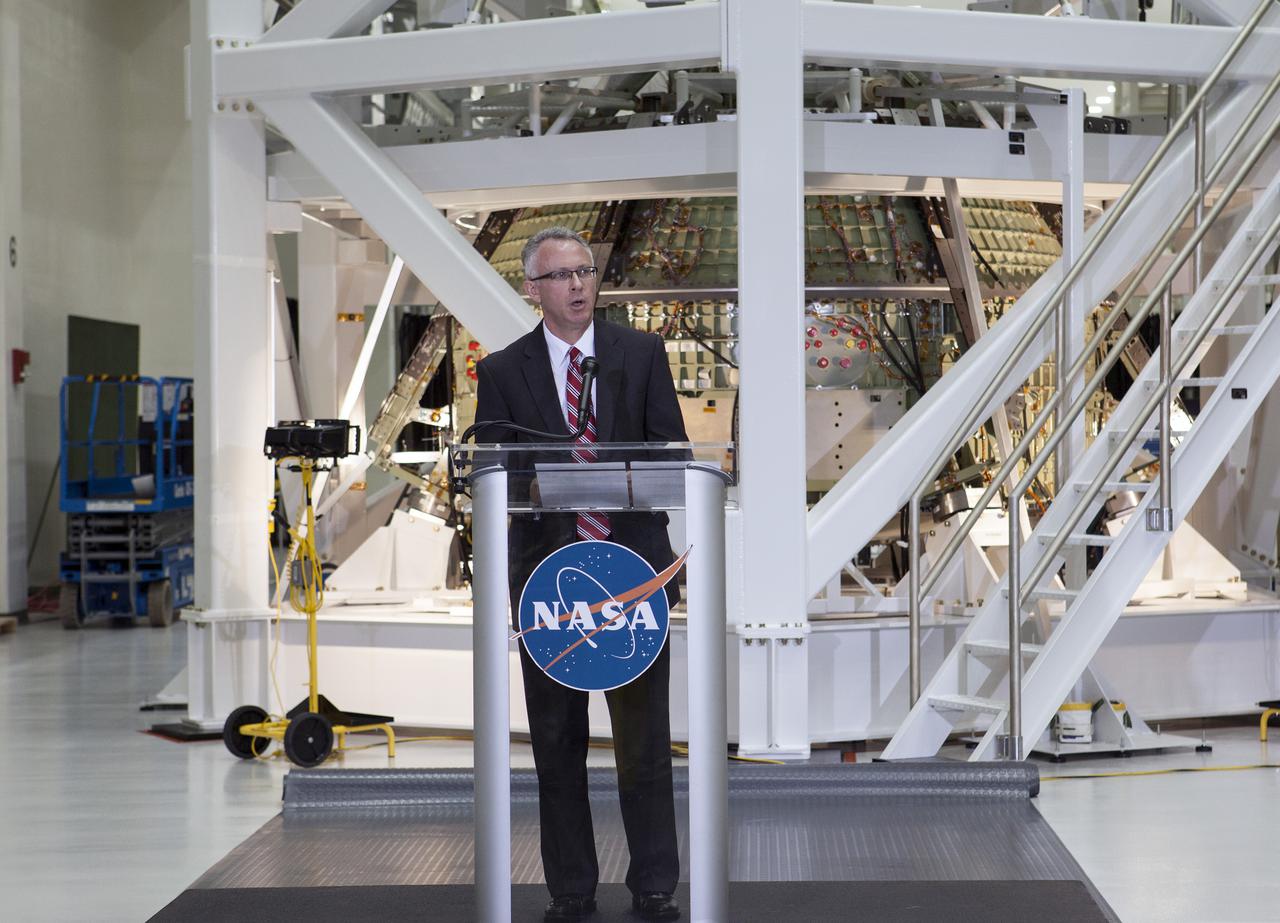
CAPE CANAVERAL, Fla. – In the Operations and Checkout Building OandC at the Kennedy Space Center in Florida, Keith Hefner, NASA's Space Launch System program planning and control manager, speaks to news media representatives updating progress on preparing the Orion spacecraft for its first uncrewed mission, Exploration Flight Test-1 EFT-1 in 2014. The crew module is seen behind Hefner in its test stand. Launched atop NASA's heavy-lift Space Launch System rocket, Orion is now targeted to take astronauts in a sample return mission to an asteroid as early as 2021. On the third anniversary of President Barack Obama issuing his challenge to NASA to send astronauts to an asteroid, news media representatives were given an opportunity to see up-close the Orion spacecraft which could take astronauts on such a flight. They also heard from key leaders of that effort in Kennedy's OandC where Orion's assembly is taking place. Photo credit: NASA_Kim Shiflett

CAPE CANAVERAL, Fla. – As part of NASA's Ground Systems Development and Operations Program at the Kennedy Space Center in Florida, a large space shuttle-era work platform is being removed from high bay 3 of the Vehicle Assembly Building, or VAB. The work is part of a center-wide modernization and refurbishment initiative to accommodate NASA’s Space Launch System and a variety of other spacecraft instead of the whole building supporting one design. The Ground Systems Development and Operations Program is developing the necessary ground systems, infrastructure and operational approaches required to safely process, assemble, transport and launch the next generation of rockets and spacecraft in support of NASA’s exploration objectives. Future work also will replace the antiquated communications, power and vehicle access resources with modern efficient systems. Some of the utilities and systems slated for replacement have been used since the VAB opened in 1965. For more information, visit http://www.nasa.gov/exploration/systems/ground/index.html Photo credit: NASA/Jim Grossmann
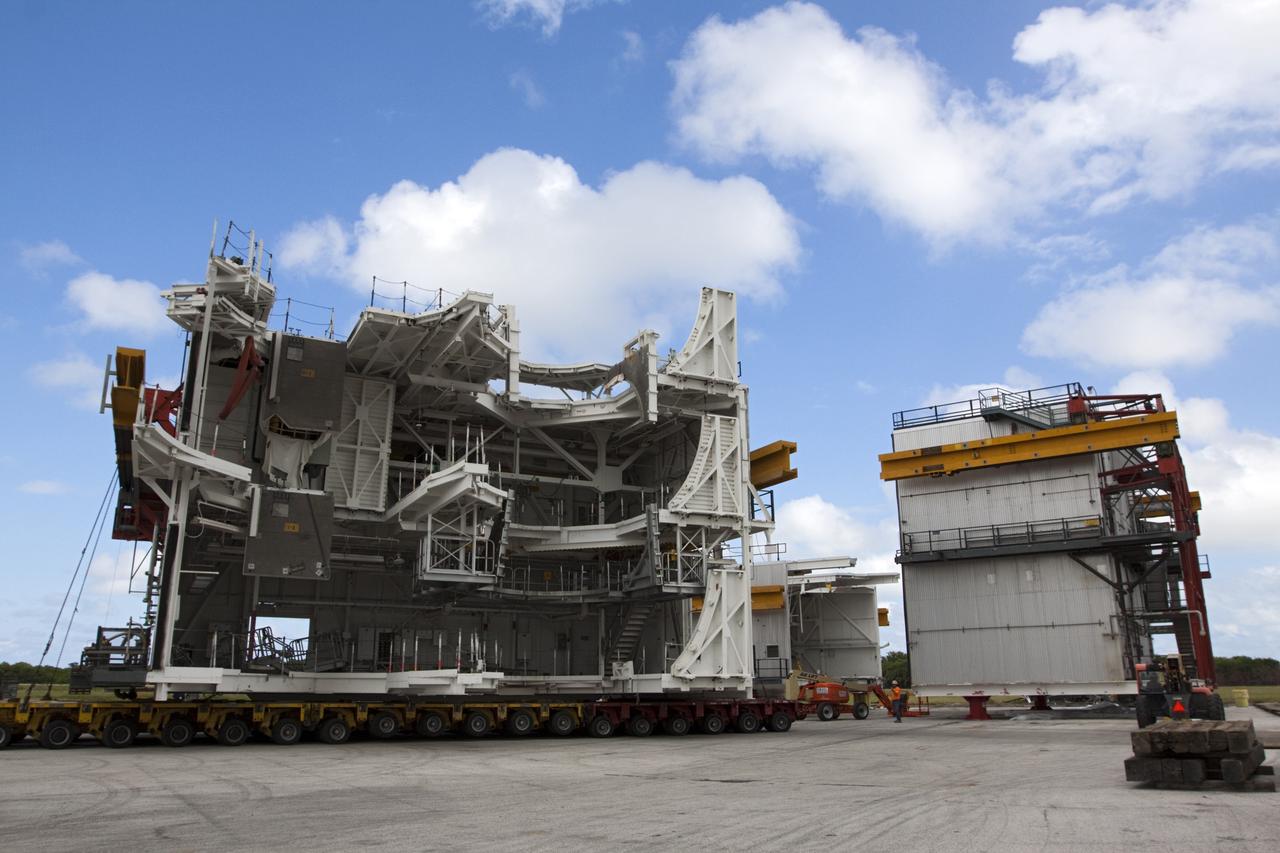
CAPE CANAVERAL, Fla. – As part of NASA's Ground Systems Development and Operations Program at the Kennedy Space Center in Florida, a large space shuttle-era work platform is being removed from high bay 3 of the Vehicle Assembly Building, or VAB, and placed on a transporter for removal. The work is part of a center-wide modernization and refurbishment initiative to accommodate NASA’s Space Launch System and a variety of other spacecraft instead of the whole building supporting one design. The Ground Systems Development and Operations Program is developing the necessary ground systems, infrastructure and operational approaches required to safely process, assemble, transport and launch the next generation of rockets and spacecraft in support of NASA’s exploration objectives. Future work also will replace the antiquated communications, power and vehicle access resources with modern efficient systems. Some of the utilities and systems slated for replacement have been used since the VAB opened in 1965. For more information, visit http://www.nasa.gov/exploration/systems/ground/index.html Photo credit: NASA/Kim Shiflett
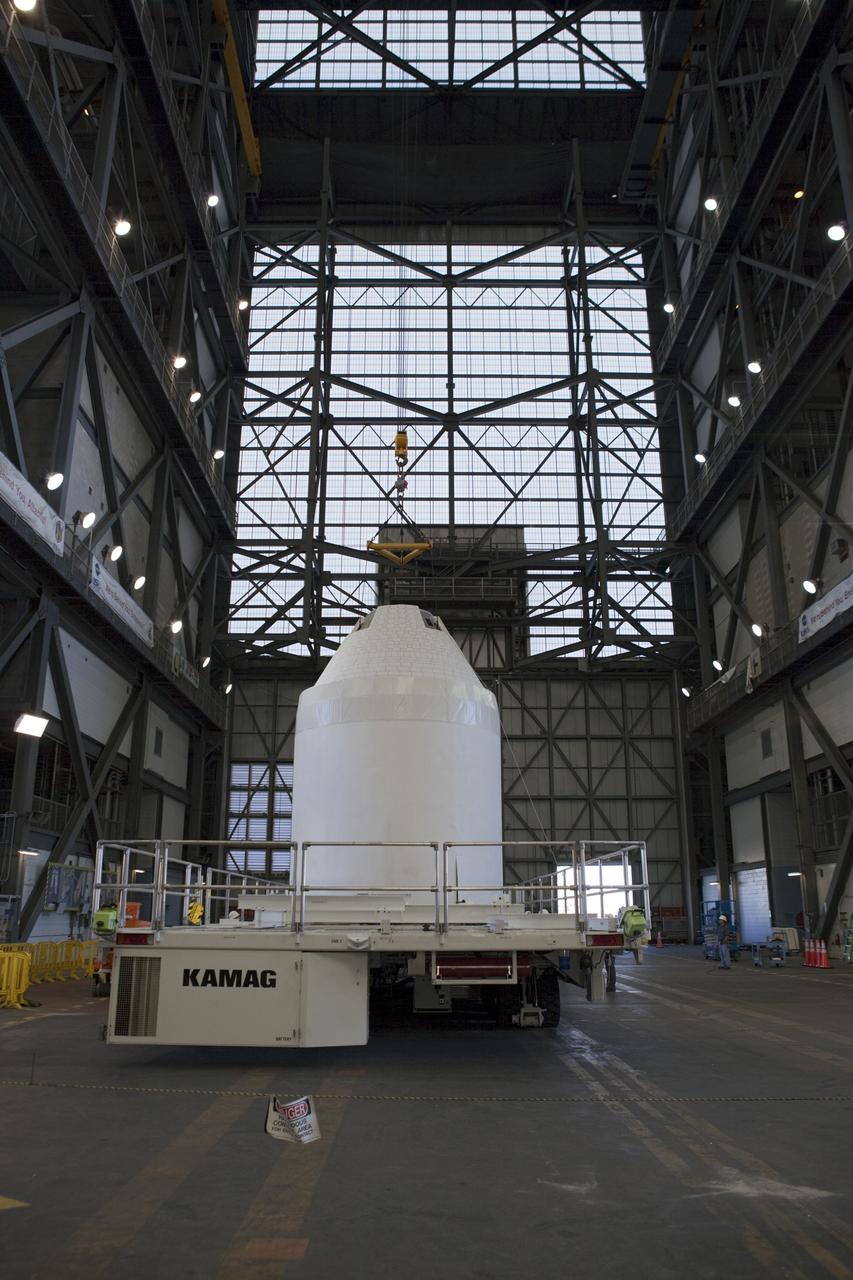
CAPE CANAVERAL, Fla. – An Orion mockup spacecraft atop its service module simulator is lowered onto a transporter in the transfer aisle of the Vehicle Assembly Building, or VAB, at NASA's Kennedy Space Center in Florida. The Orion mockup is exact in details on the outside, but mostly empty on the inside. The work in the VAB is crucial to making sure the designs are accurate. Orion is the exploration spacecraft designed to carry crews to space beyond low Earth orbit. It will provide emergency abort capability, sustain the crew during the space travel and provide safe re-entry from deep space return velocities. The first unpiloted test flight of the Orion is scheduled to launch in 2014 atop a Delta IV rocket and in 2017 on a Space Launch System rocket. For more information, visit http://www.nasa.gov/orion Photo credit: NASA/ Dmitri Gerondidakis
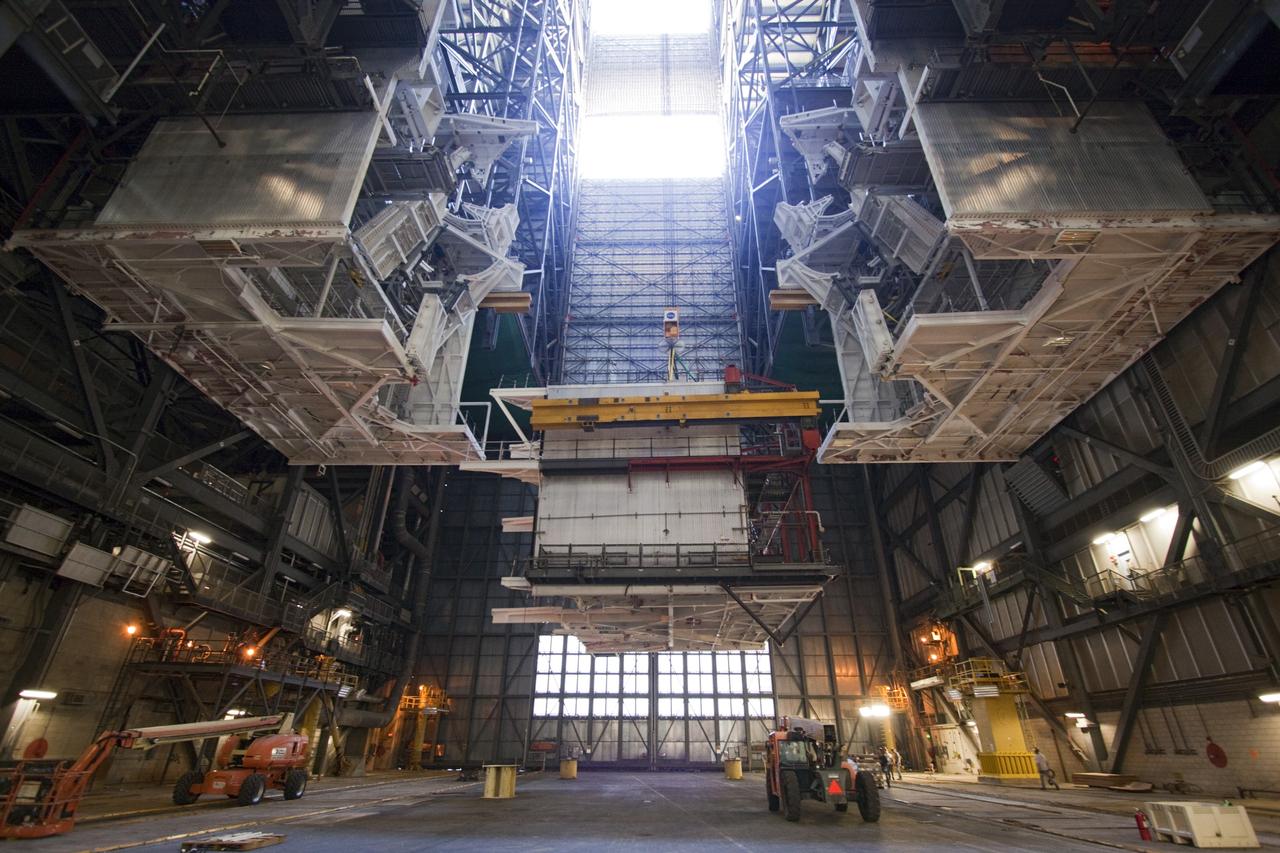
CAPE CANAVERAL, Fla. – As part of NASA's Ground Systems Development and Operations Program at the Kennedy Space Center in Florida, a large space shuttle-era work platform is being removed from high bay 3 of the Vehicle Assembly Building, or VAB. The work is part of a center-wide modernization and refurbishment initiative to accommodate NASA’s Space Launch System and a variety of other spacecraft instead of the whole building supporting one design. The Ground Systems Development and Operations Program is developing the necessary ground systems, infrastructure and operational approaches required to safely process, assemble, transport and launch the next generation of rockets and spacecraft in support of NASA’s exploration objectives. Future work also will replace the antiquated communications, power and vehicle access resources with modern efficient systems. Some of the utilities and systems slated for replacement have been used since the VAB opened in 1965. For more information, visit http://www.nasa.gov/exploration/systems/ground/index.html Photo credit: NASA/Jim Grossmann
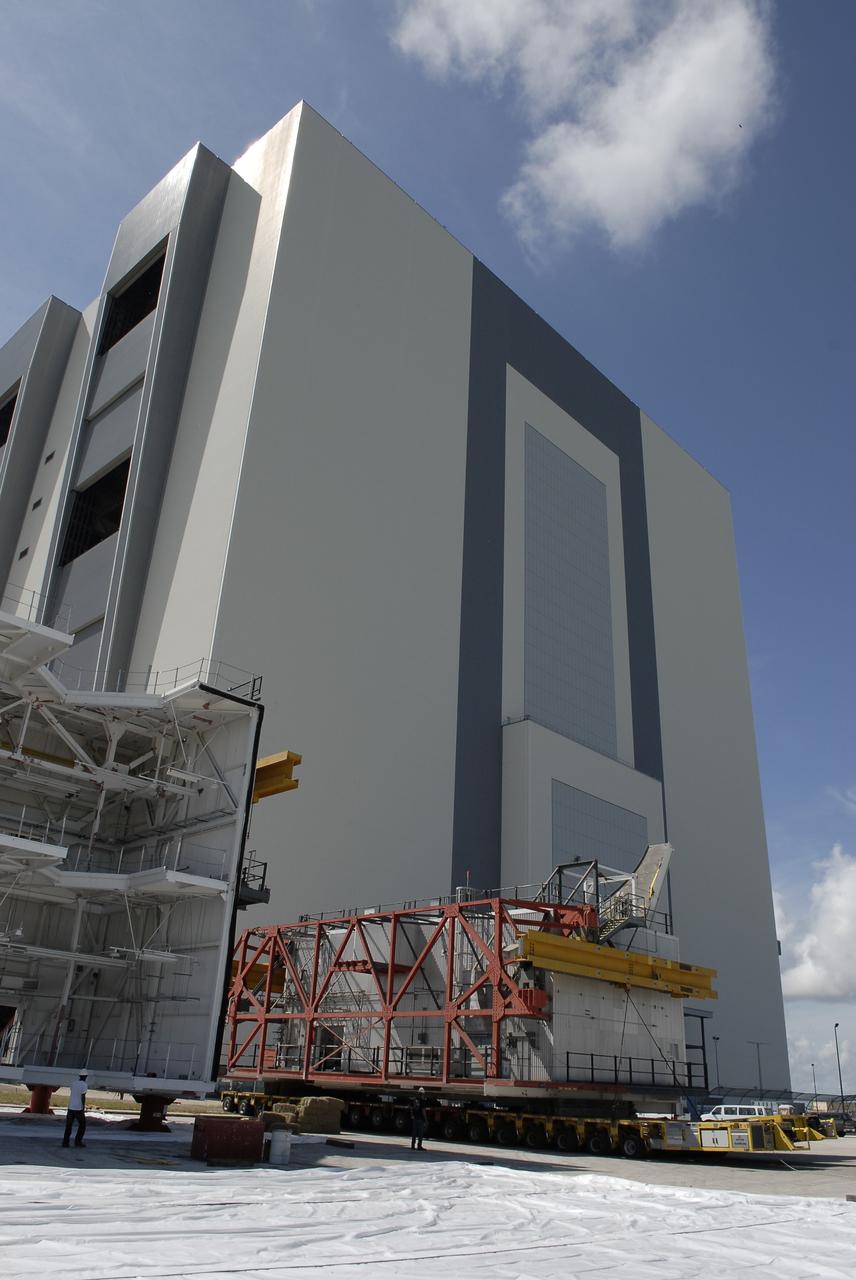
CAPE CANAVERAL, Fla. – As part of NASA's Ground Systems Development and Operations Program at the Kennedy Space Center in Florida, a large space shuttle-era work platform being removed from high bay 3 of the Vehicle Assembly Building, or VAB. The work is part of a center-wide modernization and refurbishment initiative to accommodate NASA’s Space Launch System and a variety of other spacecraft instead of the whole building supporting one design. The Ground Systems Development and Operations Program is developing the necessary ground systems, infrastructure and operational approaches required to safely process, assemble, transport and launch the next generation of rockets and spacecraft in support of NASA’s exploration objectives. Future work also will replace the antiquated communications, power and vehicle access resources with modern efficient systems. Some of the utilities and systems slated for replacement have been used since the VAB opened in 1965. For more information, visit http://www.nasa.gov/exploration/systems/ground/index.html Photo credit: NASA/ Charisse Nahser
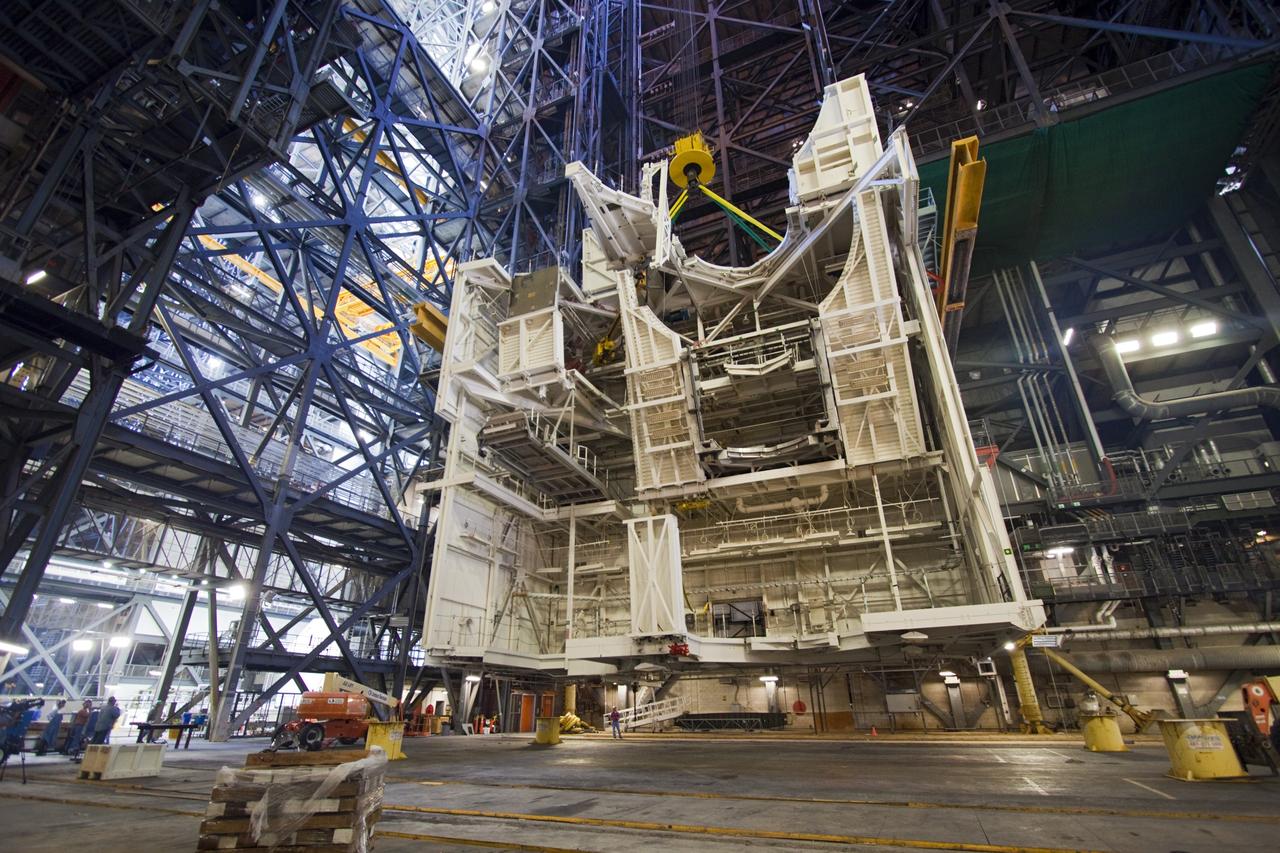
CAPE CANAVERAL, Fla. – As part of NASA's Ground Systems Development and Operations Program at the Kennedy Space Center in Florida, a large space shuttle-era work platform is being lowered and removed from high bay 3 of the Vehicle Assembly Building, or VAB. The work is part of a center-wide modernization and refurbishment initiative to accommodate NASA’s Space Launch System and a variety of other spacecraft instead of the whole building supporting one design. The Ground Systems Development and Operations Program is developing the necessary ground systems, infrastructure and operational approaches required to safely process, assemble, transport and launch the next generation of rockets and spacecraft in support of NASA’s exploration objectives. Future work also will replace the antiquated communications, power and vehicle access resources with modern efficient systems. Some of the utilities and systems slated for replacement have been used since the VAB opened in 1965. For more information, visit http://www.nasa.gov/exploration/systems/ground/index.html Photo credit: NASA/Jim Grossmann
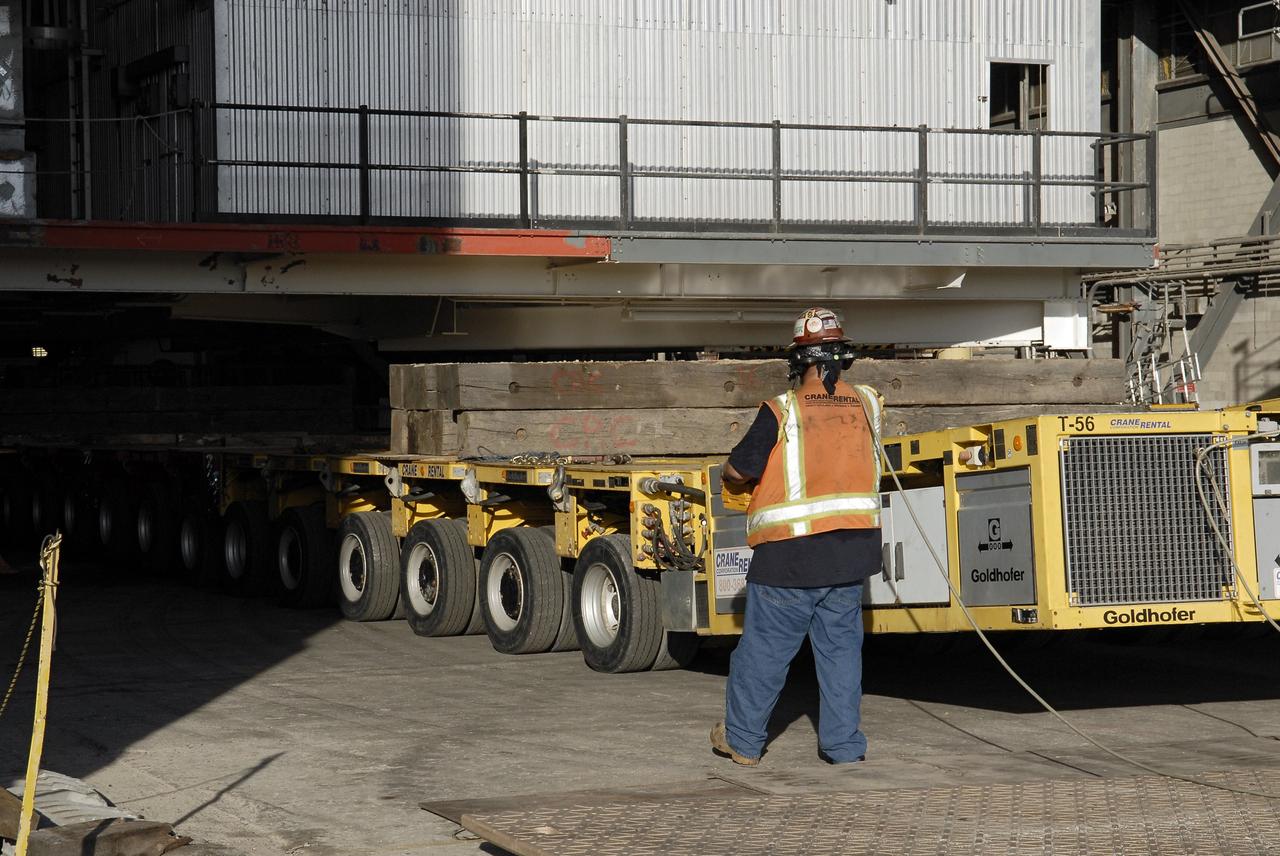
CAPE CANAVERAL, Fla. – As part of NASA's Ground Systems Development and Operations Program at the Kennedy Space Center in Florida, a technician oversees a large space shuttle-era work platform being removed from high bay 3 of the Vehicle Assembly Building, or VAB, and placed on a transporter for removal. The work is part of a center-wide modernization and refurbishment initiative to accommodate NASA’s Space Launch System and a variety of other spacecraft instead of the whole building supporting one design. The Ground Systems Development and Operations Program is developing the necessary ground systems, infrastructure and operational approaches required to safely process, assemble, transport and launch the next generation of rockets and spacecraft in support of NASA’s exploration objectives. Future work also will replace the antiquated communications, power and vehicle access resources with modern efficient systems. Some of the utilities and systems slated for replacement have been used since the VAB opened in 1965. For more information, visit http://www.nasa.gov/exploration/systems/ground/index.html Photo credit: NASA/ Charisse Nahser
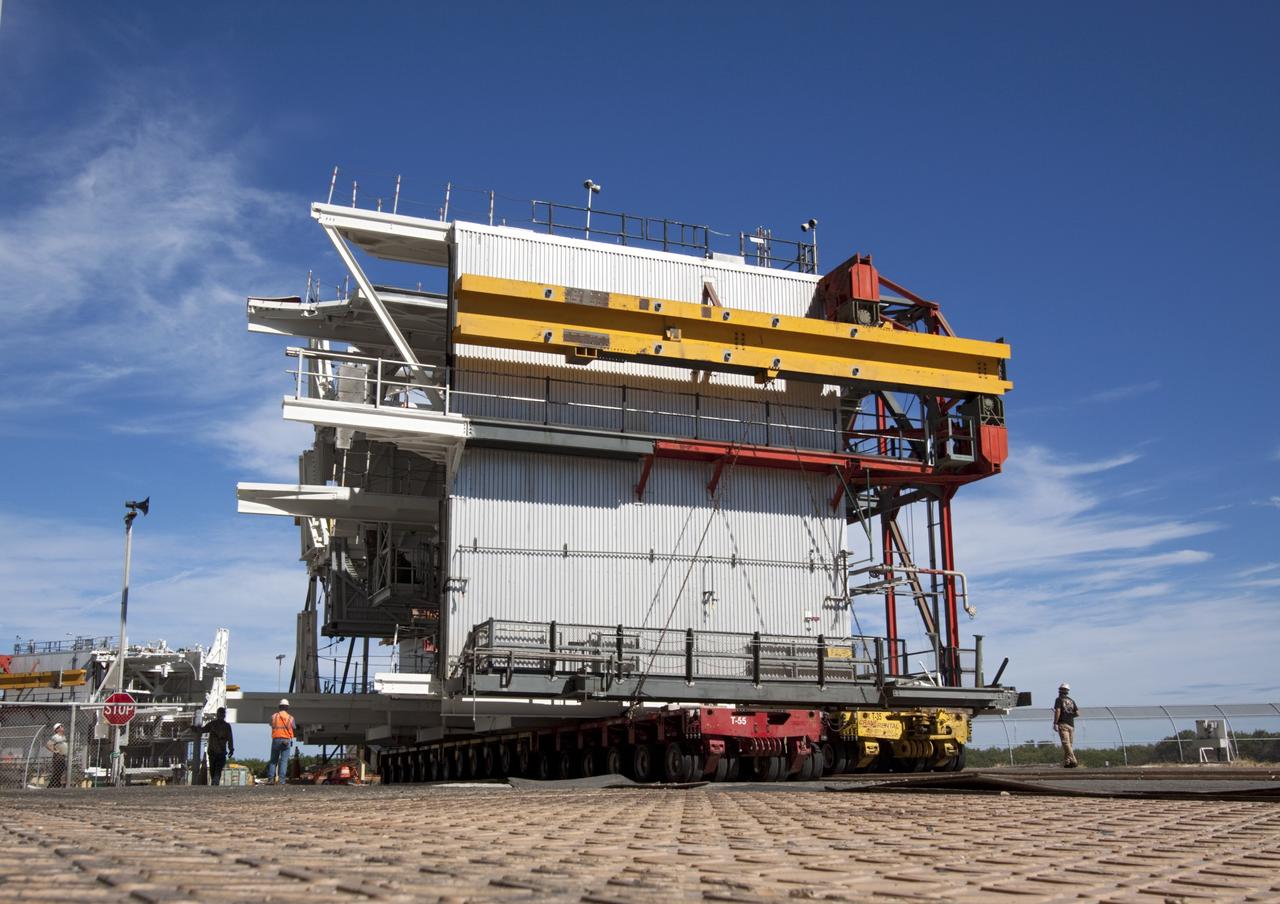
CAPE CANAVERAL, Fla. – As part of NASA's Ground Systems Development and Operations Program at the Kennedy Space Center in Florida, a large space shuttle-era work platform has been removed from high bay 3 of the Vehicle Assembly Building, or VAB. The work is part of a center-wide modernization and refurbishment initiative to accommodate NASA’s Space Launch System and a variety of other spacecraft instead of the whole building supporting one design. The Ground Systems Development and Operations Program is developing the necessary ground systems, infrastructure and operational approaches required to safely process, assemble, transport and launch the next generation of rockets and spacecraft in support of NASA’s exploration objectives. Future work also will replace the antiquated communications, power and vehicle access resources with modern efficient systems. Some of the utilities and systems slated for replacement have been used since the VAB opened in 1965. For more information, visit http://www.nasa.gov/exploration/systems/ground/index.html Photo credit: NASA/Jim Grossmann
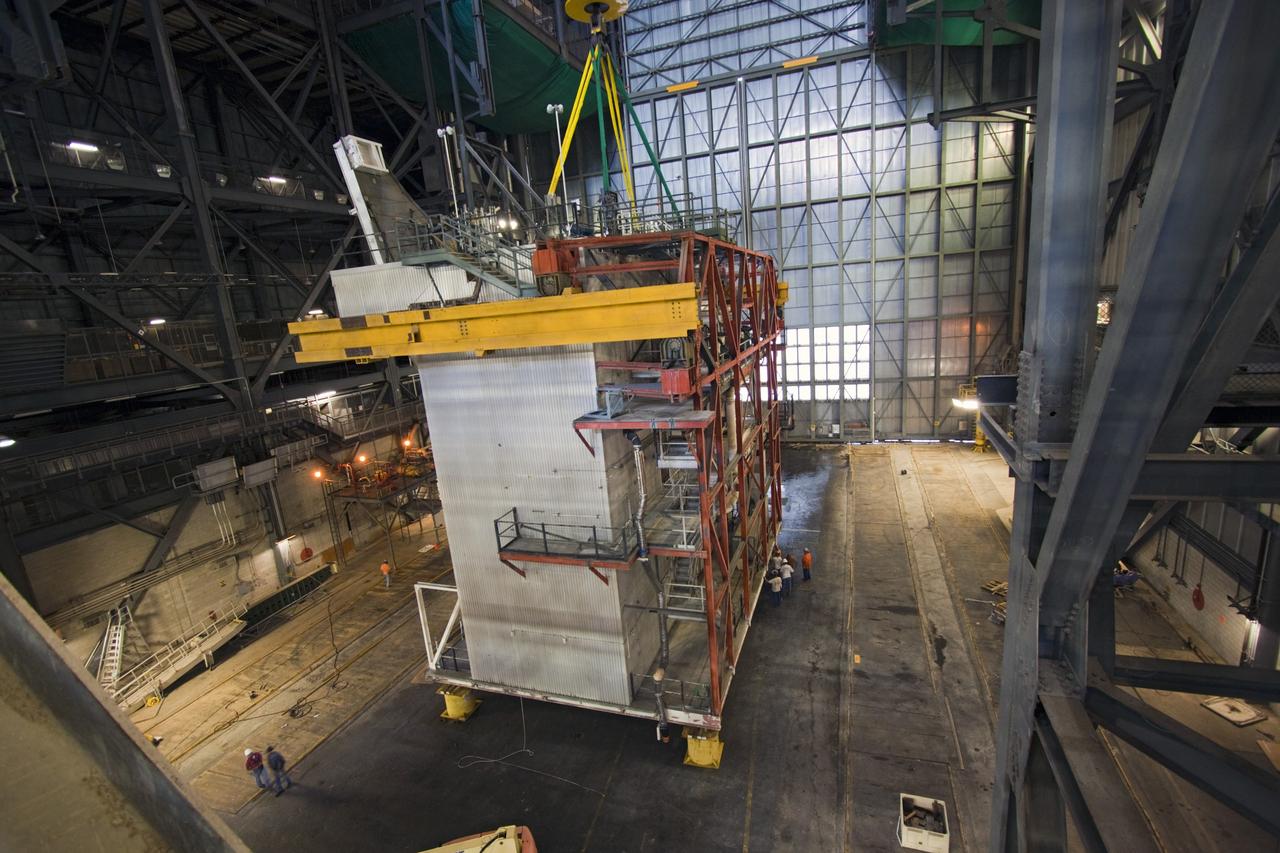
CAPE CANAVERAL, Fla. – As part of NASA's Ground Systems Development and Operations Program at the Kennedy Space Center in Florida, a large space shuttle-era work platform is being removed from high bay 3 of the Vehicle Assembly Building, or VAB. The work is part of a center-wide modernization and refurbishment initiative to accommodate NASA’s Space Launch System and a variety of other spacecraft instead of the whole building supporting one design. The Ground Systems Development and Operations Program is developing the necessary ground systems, infrastructure and operational approaches required to safely process, assemble, transport and launch the next generation of rockets and spacecraft in support of NASA’s exploration objectives. Future work also will replace the antiquated communications, power and vehicle access resources with modern efficient systems. Some of the utilities and systems slated for replacement have been used since the VAB opened in 1965. For more information, visit http://www.nasa.gov/exploration/systems/ground/index.html Photo credit: NASA/Jim Grossmann
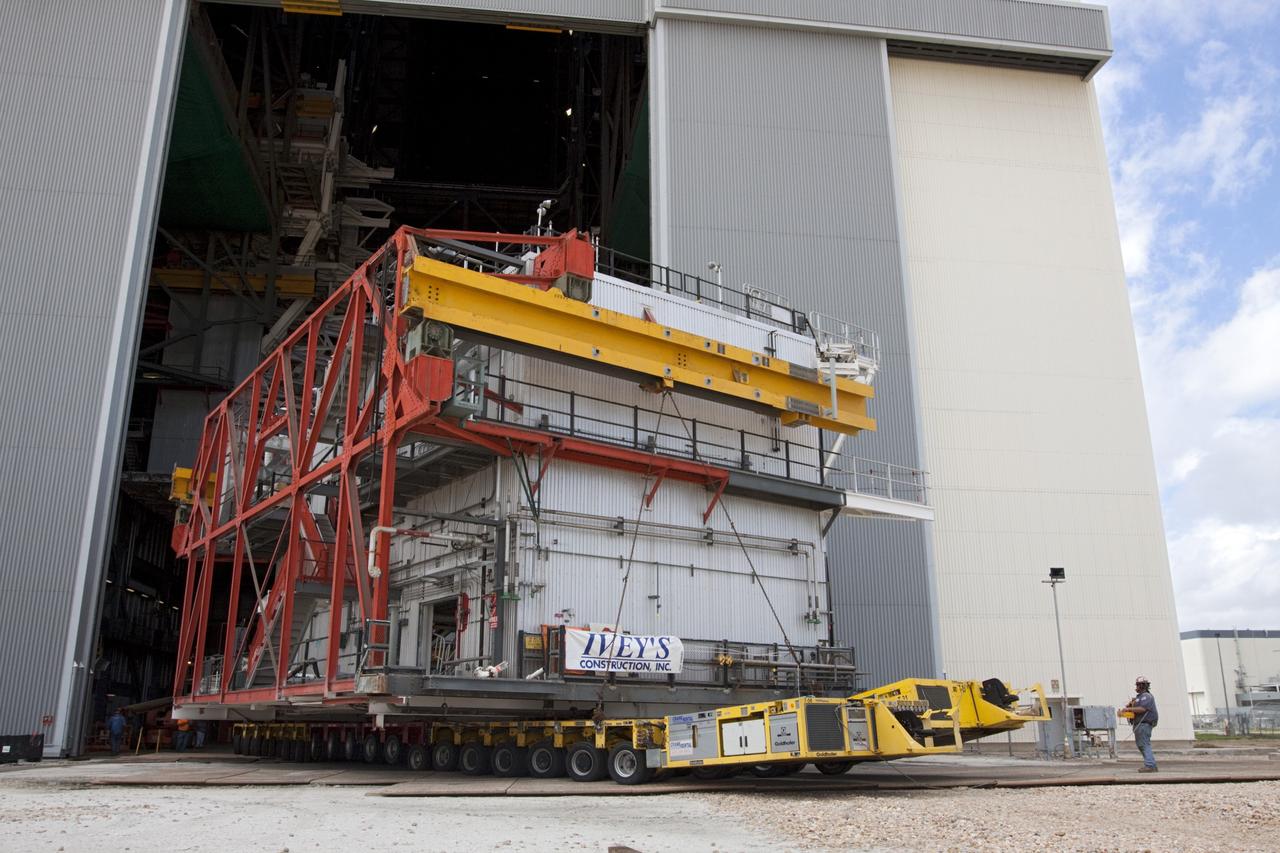
CAPE CANAVERAL, Fla. – As part of NASA's Ground Systems Development and Operations Program at the Kennedy Space Center in Florida, a large space shuttle-era work platform is being removed from high bay 3 of the Vehicle Assembly Building, or VAB. The work is part of a center-wide modernization and refurbishment initiative to accommodate NASA’s Space Launch System and a variety of other spacecraft instead of the whole building supporting one design. The Ground Systems Development and Operations Program is developing the necessary ground systems, infrastructure and operational approaches required to safely process, assemble, transport and launch the next generation of rockets and spacecraft in support of NASA’s exploration objectives. Future work also will replace the antiquated communications, power and vehicle access resources with modern efficient systems. Some of the utilities and systems slated for replacement have been used since the VAB opened in 1965. For more information, visit http://www.nasa.gov/exploration/systems/ground/index.html Photo credit: NASA/Kim Shiflett
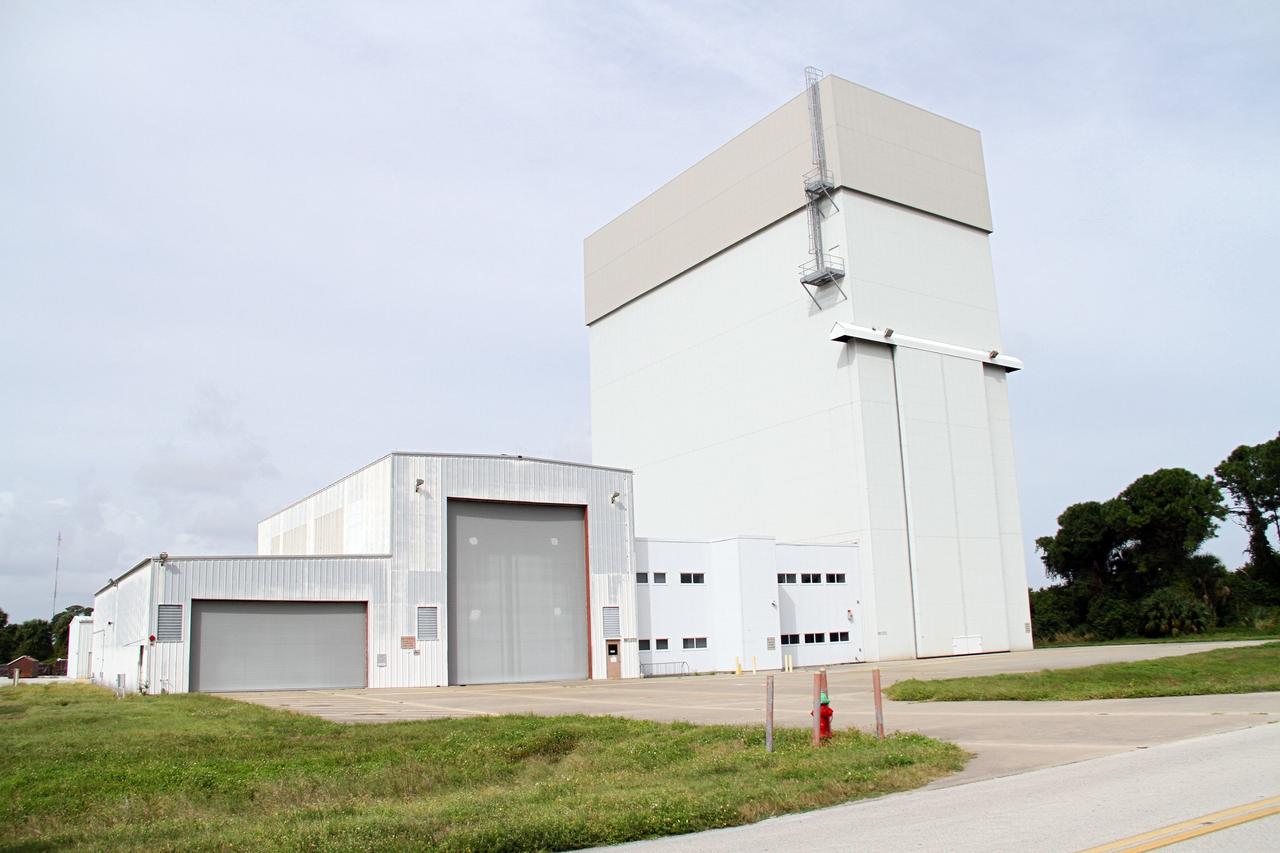
CAPE CANAVERAL, Fla. –The Launch Abort System Facility, or LASF, formerly known as the Canister Rotation Facility, is being outfitted and prepared for use by NASA's Orion Program to process the Launch Abort System, a multi-story rocket that will be positioned atop an Orion capsule to provide an escape system for astronauts during countdown and launch into orbit. The structure, the industrial area of NASA's Kennedy Space Center in Florida, served the Space Shuttle Program by standing the payload canister up so it could be taken to the launch pad and its contents transferred into the shuttle's cargo bay. Photo credit: NASA/Cory Huston
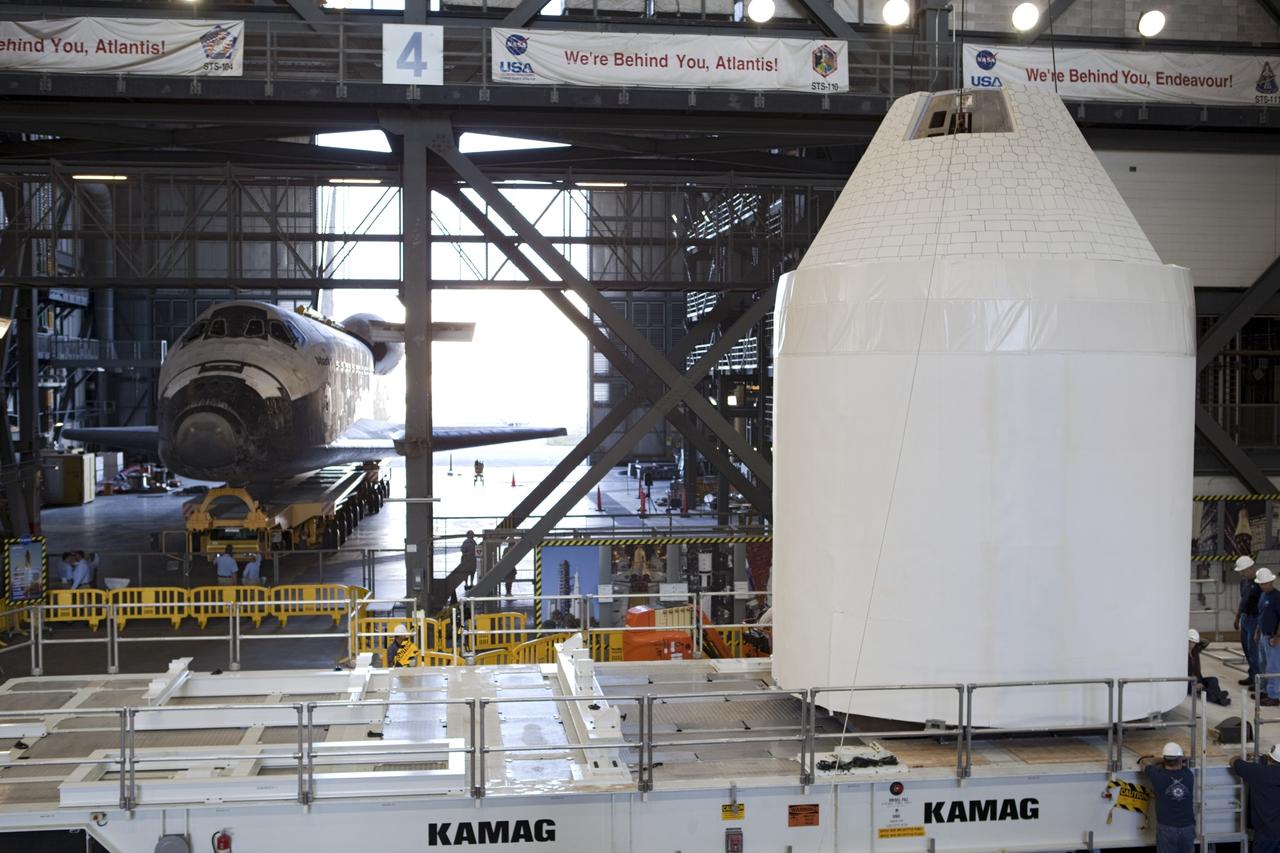
CAPE CANAVERAL, Fla. – An Orion mockup spacecraft atop its service module simulator is lowered onto a transporter in the transfer aisle of the Vehicle Assembly Building, or VAB, at NASA's Kennedy Space Center in Florida. The Orion mockup is exact in details on the outside, but mostly empty on the inside. The work in the VAB is crucial to making sure the designs are accurate. Visible in the background on the left is the space shuttle Atlantis being readied for its move to the Kennedy Space Center Visitor Complex. Orion is the exploration spacecraft designed to carry crews to space beyond low Earth orbit. It will provide emergency abort capability, sustain the crew during the space travel and provide safe re-entry from deep space return velocities. The first unpiloted test flight of the Orion is scheduled to launch in 2014 atop a Delta IV rocket and in 2017 on a Space Launch System rocket. For more information, visit http://www.nasa.gov/orion Photo credit: NASA/ Dmitri Gerondidakis
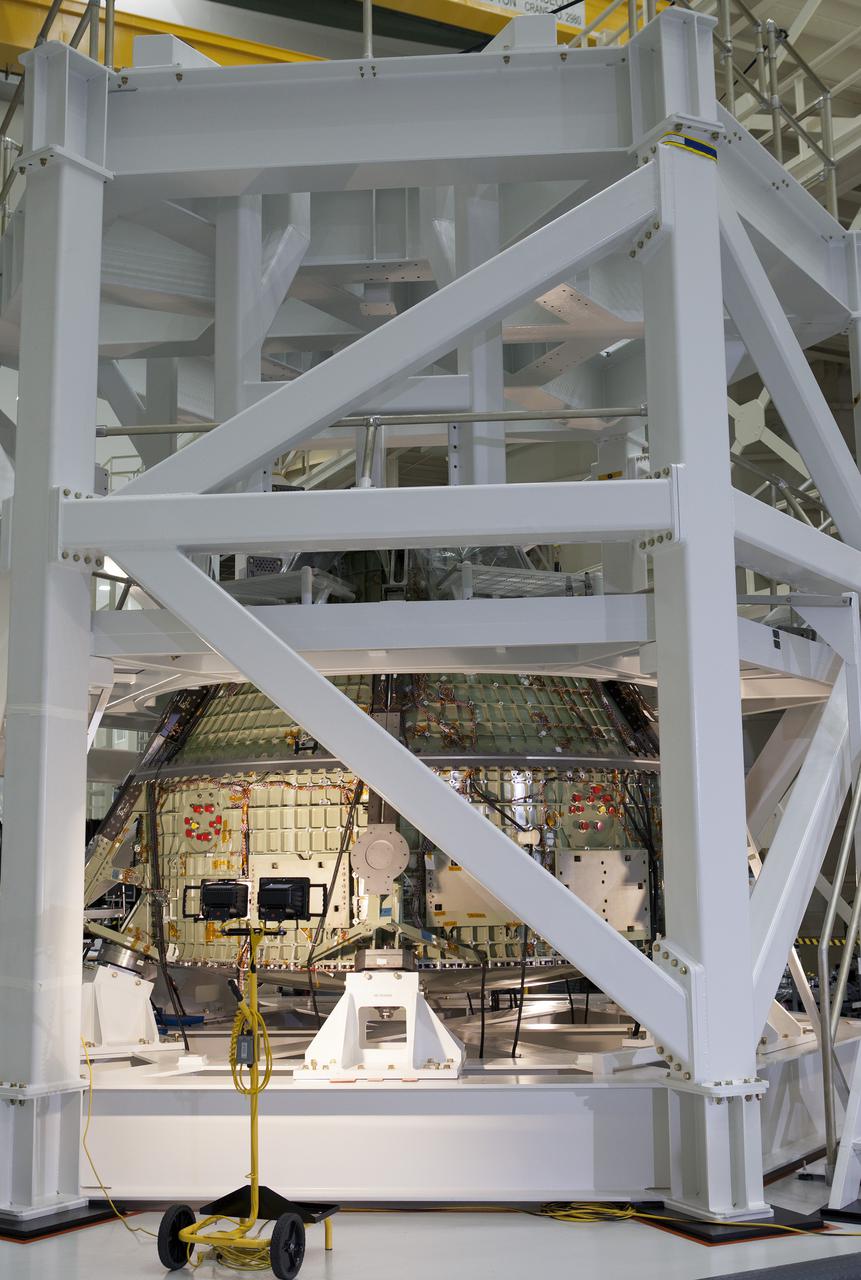
CAPE CANAVERAL, Fla. – In the Operations and Checkout Building OandC at the Kennedy Space Center in Florida, the Orion spacecraft for its first uncrewed mission, Exploration Flight Test-1 EFT-1 in 2014. The Orion is seen in its test stand preparing for a Static Loads test. Launched atop NASA's heavy-lift Space Launch System rocket, Orion is now targeted to take astronauts in a sample return mission to an asteroid as early as 2021. On the third anniversary of President Barack Obama issuing his challenge to NASA to send astronauts to an asteroid, news media representatives were given an opportunity to see up-close the Orion spacecraft which could take astronauts on such a flight. They also heard from key leaders of that effort in Kennedy's OandC where Orion's assembly is taking place. Photo credit: NASA_Kim Shiflett
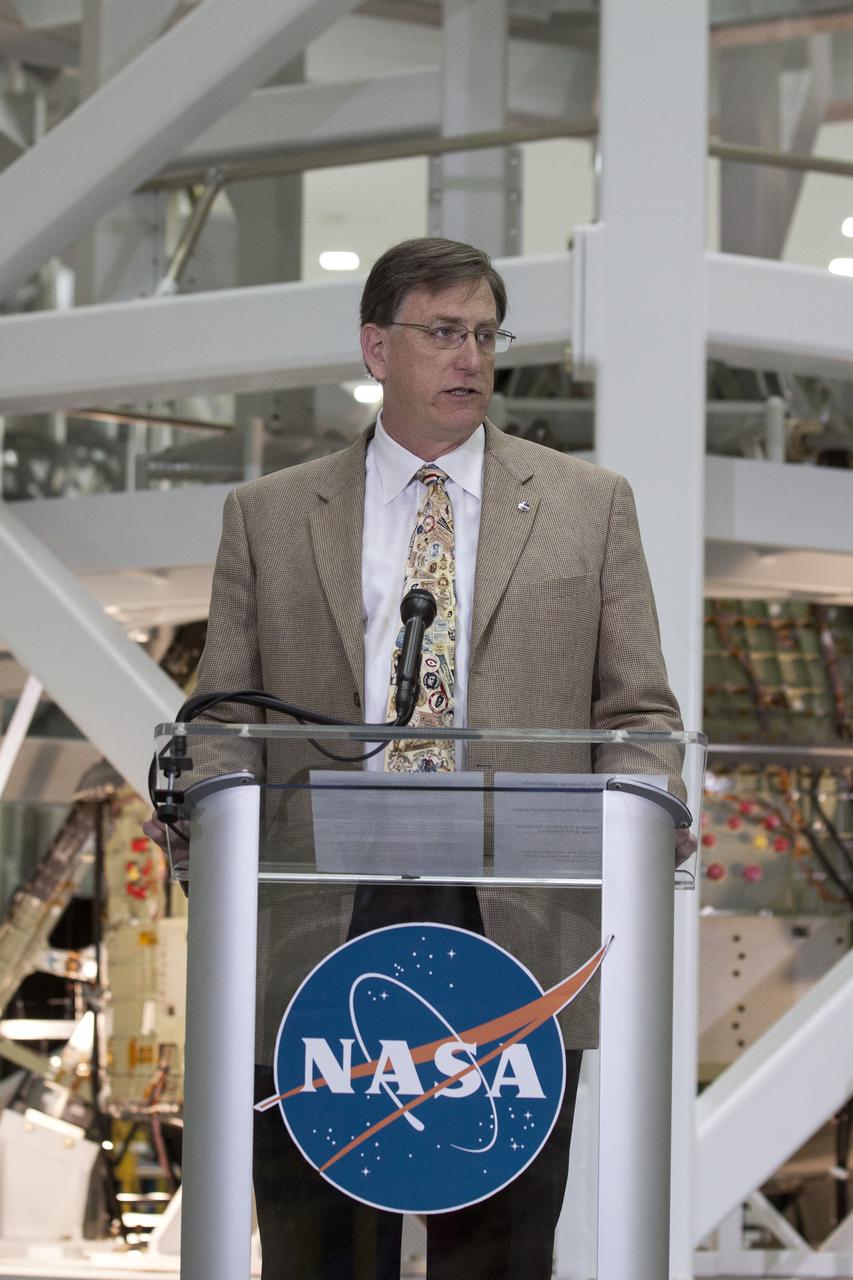
CAPE CANAVERAL, Fla. – In the Operations and Checkout Building OandC at the Kennedy Space Center in Florida, Dan Dumbacher, NASA's deputy associate administrator for Exploration Systems Development, speaks to news media representatives updating progress on preparing the Orion spacecraft for its first uncrewed mission, Exploration Flight Test-1 EFT-1 in 2014. Launched atop NASA's heavy-lift Space Launch System rocket, Orion is now targeted to take astronauts in a sample return mission to an asteroid as early as 2021. On the third anniversary of President Barack Obama issuing his challenge to NASA to send astronauts to an asteroid, news media representatives were given an opportunity to see up-close the Orion spacecraft which could take astronauts on such a flight. They also heard from key leaders of that effort in Kennedy's OandC where Orion's assembly is taking place. Photo credit: NASA_Kim Shiflett
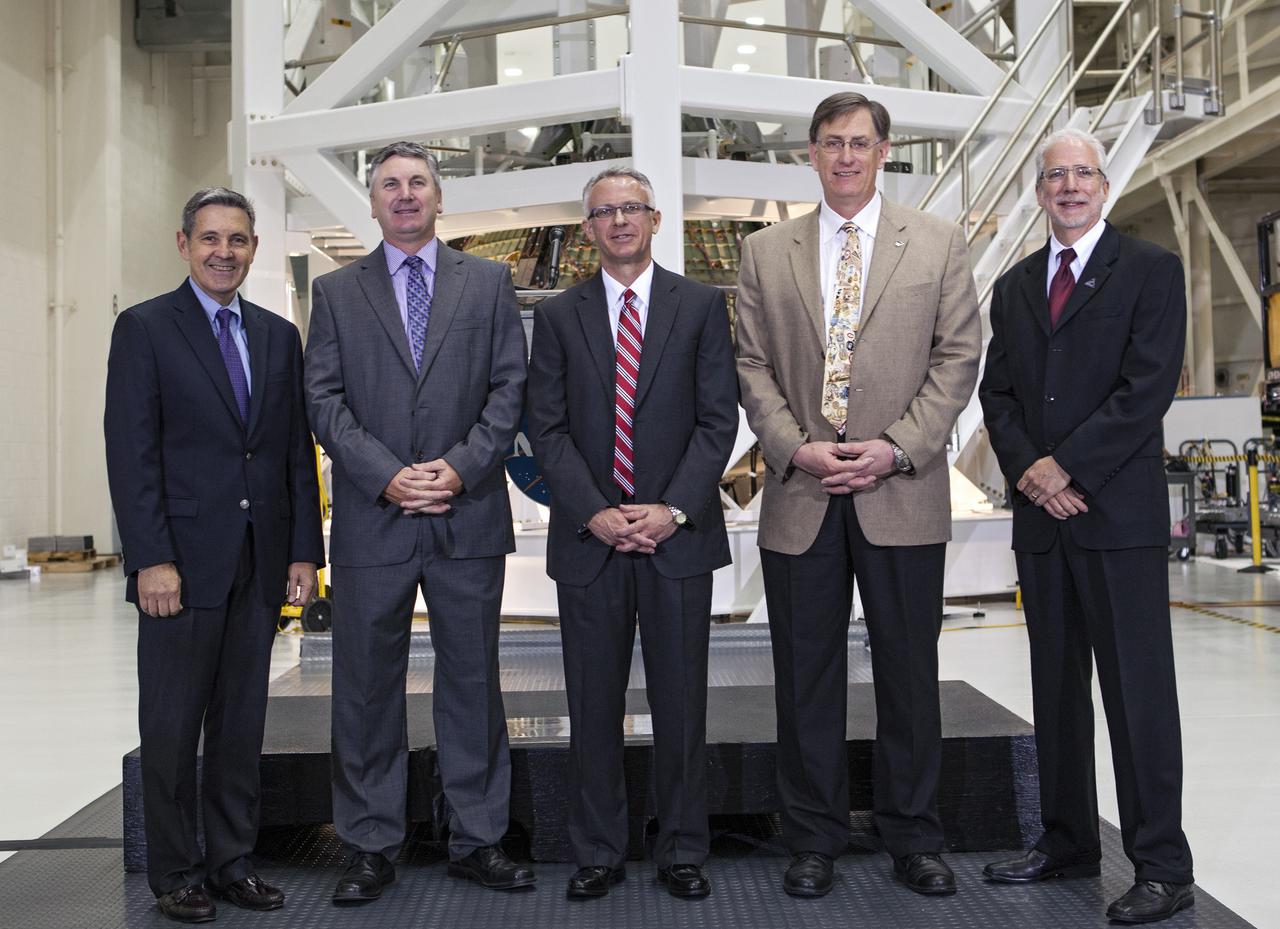
CAPE CANAVERAL, Fla. – In the Operations and Checkout Building OandC at the Kennedy Space Center in Florida, news media representatives were updated progress on preparing the Orion spacecraft for its first uncrewed mission, Exploration Flight Test-1 EFT-1 in 2014. Speakers included, from left, Kennedy Director Bob Cabana Scott Colloredo, chief architect for the Ground Systems Development and Operations Program Keith Hefner, NASA's Space Launch System program planning and control manager Dan Dumbacher, NASA's deputy associate administrator for Exploration Systems Development and Mark Geyer, NASA's Orion program manager. Launched atop NASA's heavy-lift Space Launch System rocket, Orion is now targeted to take astronauts in a sample return mission to an asteroid as early as 2021. On the third anniversary of President Barack Obama issuing his challenge to NASA to send astronauts to an asteroid, news media representatives were given an opportunity to see up-close the Orion spacecraft which could take astronauts on such a flight. They also heard from key leaders of that effort in Kennedy's OandC where Orion's assembly is taking place. Photo credit: NASA_Kim Shiflett
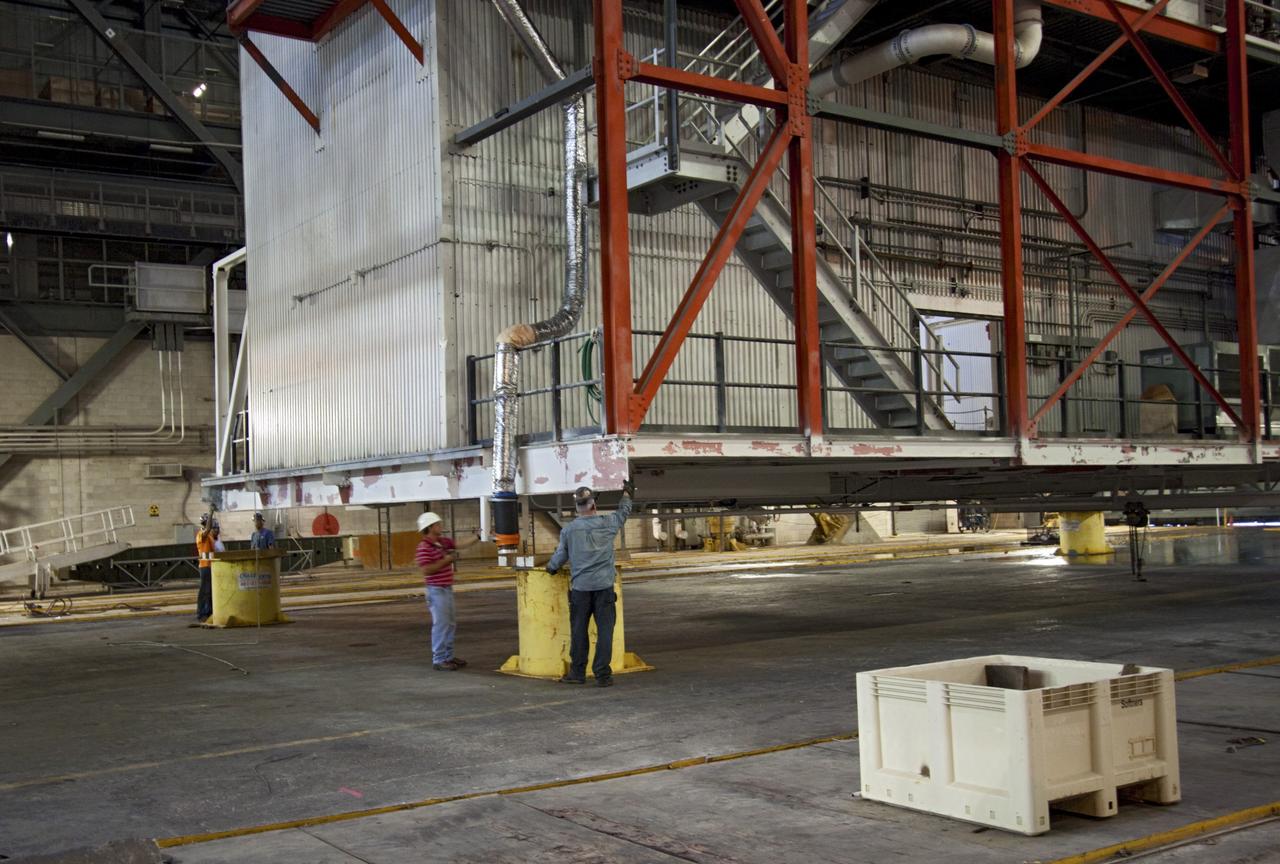
CAPE CANAVERAL, Fla. – As part of NASA's Ground Systems Development and Operations Program at the Kennedy Space Center in Florida, a large space shuttle-era work platform is being positioned on pedestals for removal from high bay 3 of the Vehicle Assembly Building, or VAB. The work is part of a center-wide modernization and refurbishment initiative to accommodate NASA’s Space Launch System and a variety of other spacecraft instead of the whole building supporting one design. The Ground Systems Development and Operations Program is developing the necessary ground systems, infrastructure and operational approaches required to safely process, assemble, transport and launch the next generation of rockets and spacecraft in support of NASA’s exploration objectives. Future work also will replace the antiquated communications, power and vehicle access resources with modern efficient systems. Some of the utilities and systems slated for replacement have been used since the VAB opened in 1965. For more information, visit http://www.nasa.gov/exploration/systems/ground/index.html Photo credit: NASA/Jim Grossmann
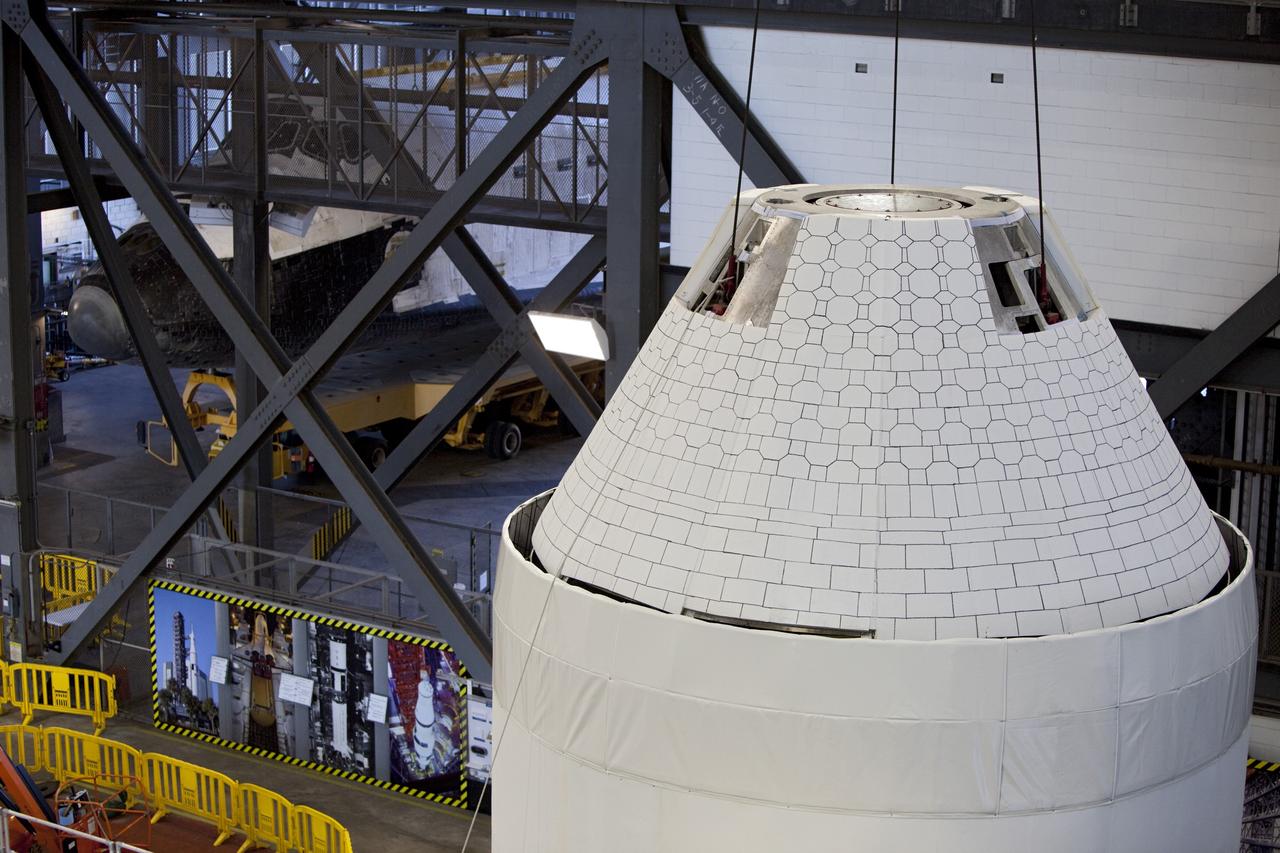
CAPE CANAVERAL, Fla. – An Orion mockup spacecraft atop its service module simulator is lifted in the transfer aisle of the Vehicle Assembly Building, or VAB, at NASA's Kennedy Space Center in Florida. The Orion mockup is exact in details on the outside, but mostly empty on the inside. The work in the VAB is crucial to making sure the designs are accurate. Visible in the background on the left is the space shuttle Atlantis being readied for its move to the Kennedy Space Center Visitor Complex. Orion is the exploration spacecraft designed to carry crews to space beyond low Earth orbit. It will provide emergency abort capability, sustain the crew during the space travel and provide safe re-entry from deep space return velocities. The first unpiloted test flight of the Orion is scheduled to launch in 2014 atop a Delta IV rocket and in 2017 on a Space Launch System rocket. For more information, visit http://www.nasa.gov/orion Photo credit: NASA/ Dmitri Gerondidakis
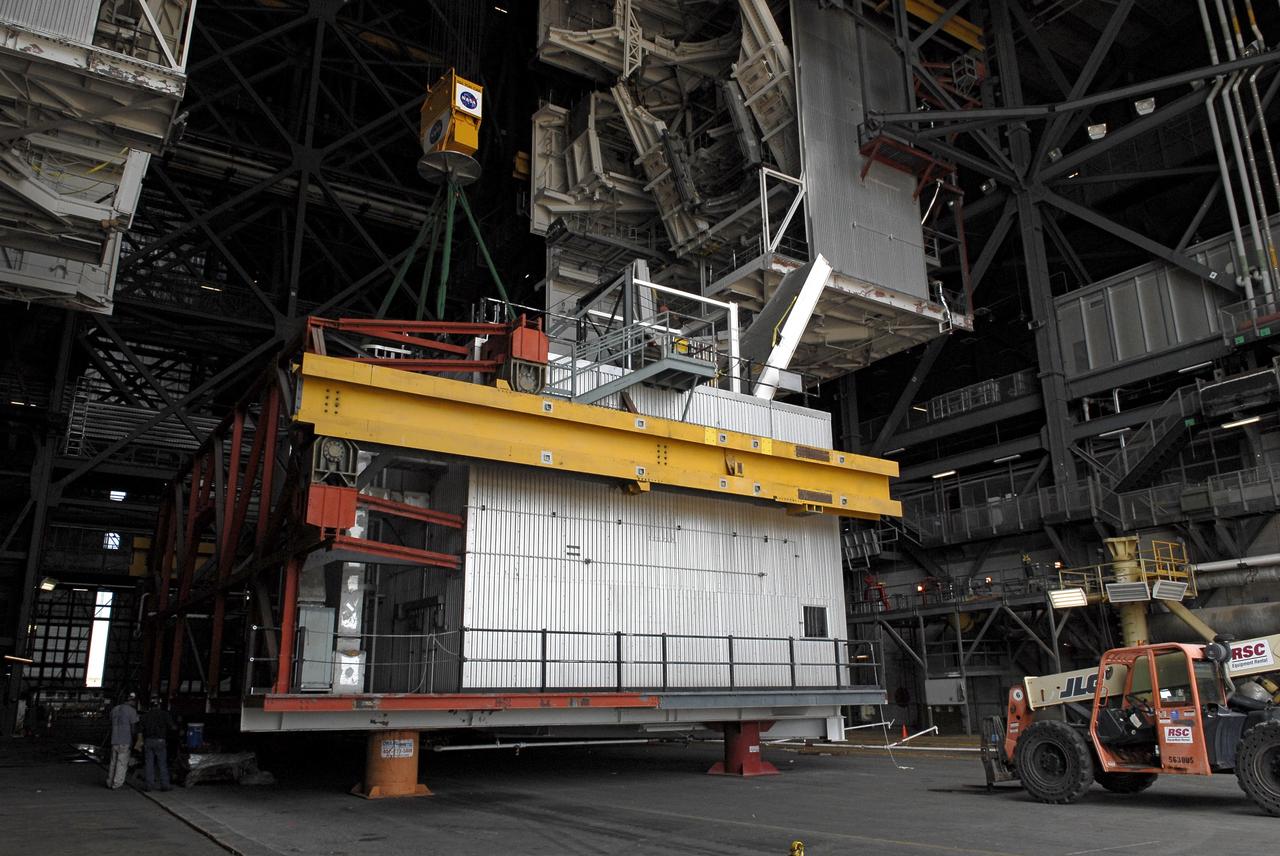
CAPE CANAVERAL, Fla. – As part of NASA's Ground Systems Development and Operations Program at the Kennedy Space Center in Florida, a large space shuttle-era work platform is being removed from high bay 3 of the Vehicle Assembly Building, or VAB. The work is part of a center-wide modernization and refurbishment initiative to accommodate NASA’s Space Launch System and a variety of other spacecraft instead of the whole building supporting one design. The Ground Systems Development and Operations Program is developing the necessary ground systems, infrastructure and operational approaches required to safely process, assemble, transport and launch the next generation of rockets and spacecraft in support of NASA’s exploration objectives. Future work also will replace the antiquated communications, power and vehicle access resources with modern efficient systems. Some of the utilities and systems slated for replacement have been used since the VAB opened in 1965. For more information, visit http://www.nasa.gov/exploration/systems/ground/index.html Photo credit: NASA/ Charisse Nahser