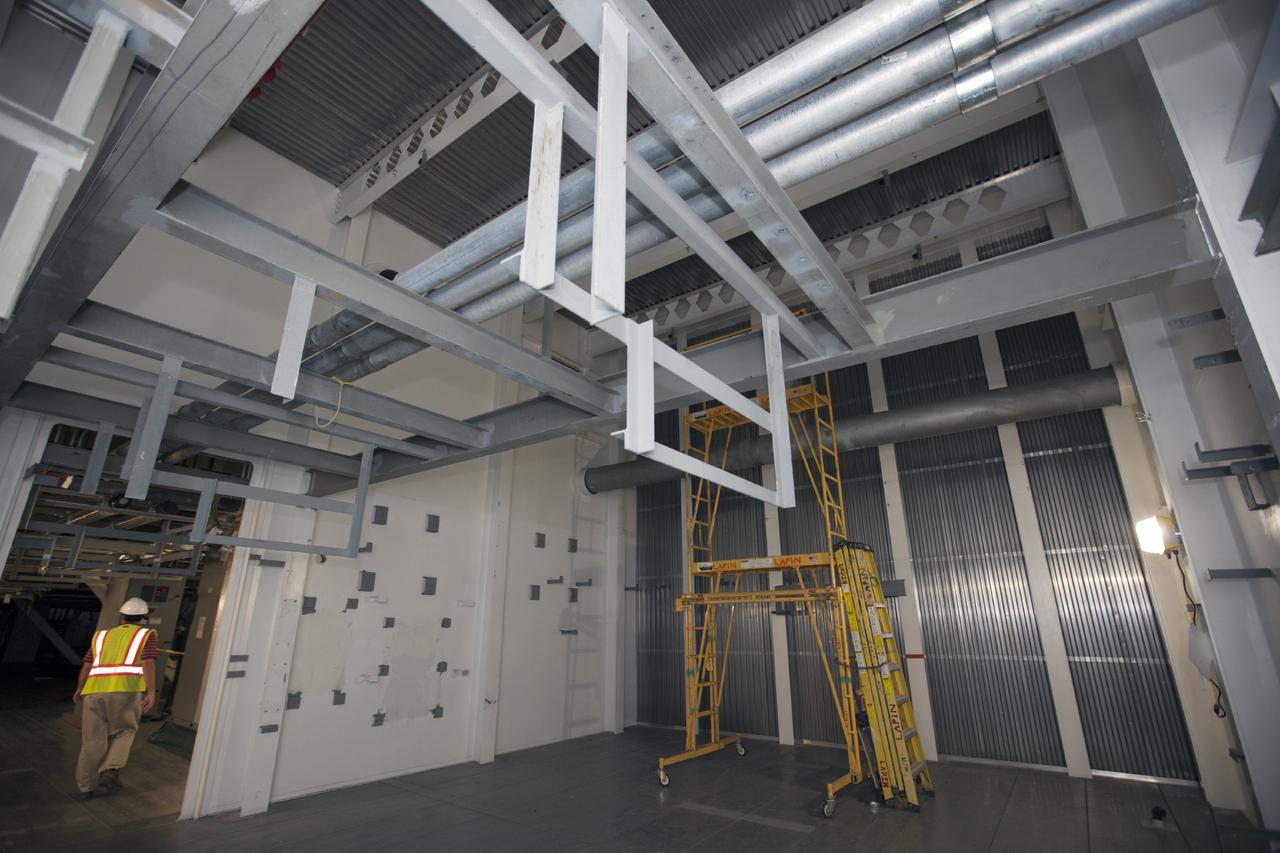
CAPE CANAVERAL, Fla. -- A worker inspects the interior of the mobile launcher, or ML, at the park site adjacent to the Vehicle Assembly Building, or VAB, at NASA's Kennedy Space Center in Florida. Preparations are underway for modifications to begin to the outside of the 355-foot-tall ML structure this fall. NASA’s Ground Systems Development and Operations Program, or GSDO, is preparing the ML to support NASA’s Space Launch System, the heavy-lift rocket that will launch astronauts into deep space on future exploration missions. For more information, visit http://www.nasa.gov/exploration/systems/ground/index.html. Photo credit: NASA/Kim Shiflett
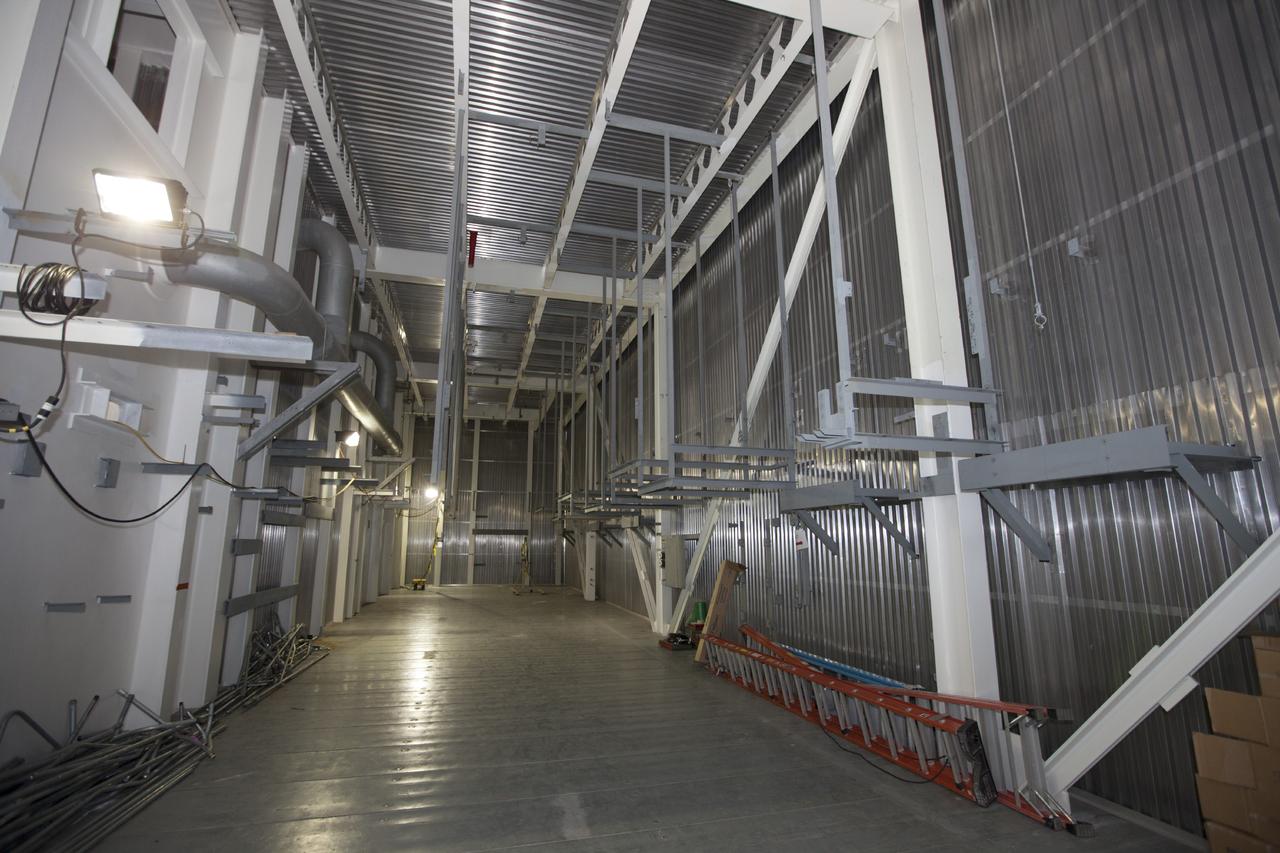
CAPE CANAVERAL, Fla. -- All is quiet and orderly inside the mobile launcher, or ML, at the park site adjacent to the Vehicle Assembly Building, or VAB, at NASA's Kennedy Space Center in Florida. Preparations are underway for modifications to begin to the outside of the 355-foot-tall ML structure this fall. NASA’s Ground Systems Development and Operations Program, or GSDO, is preparing the ML to support NASA’s Space Launch System, the heavy-lift rocket that will launch astronauts into deep space on future exploration missions. For more information, visit http://www.nasa.gov/exploration/systems/ground/index.html. Photo credit: NASA/Kim Shiflett
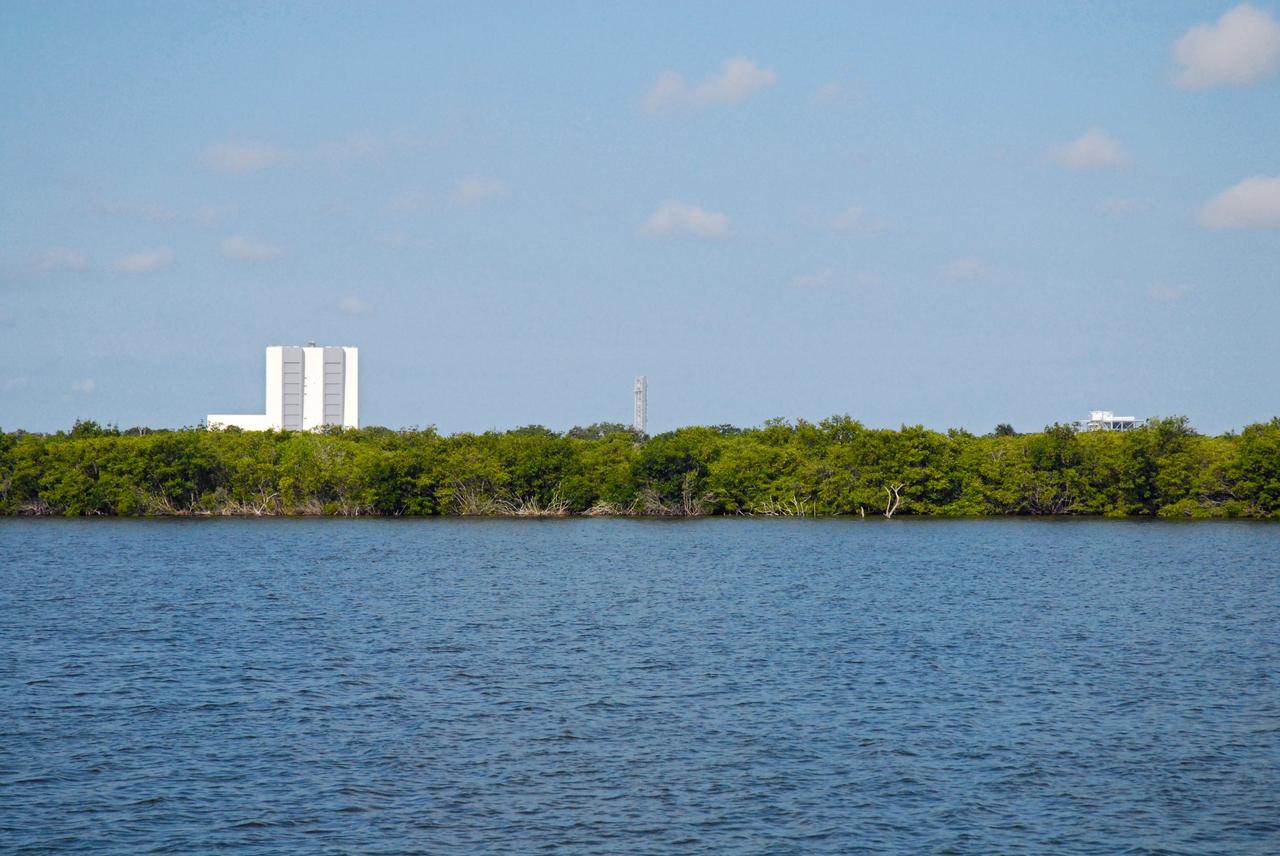
CAPE CANAVERAL, Fla. – The Vehicle Assembly Building, or VAB, and NASA's new mobile launcher, or ML, are seen in the distance during a field-guided boat tour of NASA's Kennedy Space Center in Florida. As part of the center's first-ever Innovation Expo, the tour, called "Living Outdoor Laboratory for Environmental Sustainability," is giving employees the opportunity to see the unique estuarine ecosystems that are protected from development by the presence of Kennedy and the Merritt Island National Wildlife Refuge. The 355-foot-tall ML structure, which took about two years to construct, will be modified by NASA’s Ground Systems Development and Operations, or GSDO, Program to support NASA’s Space Launch System, the heavy-lift rocket that will launch astronauts into deep space on future exploration missions. The diverse and healthy area encompassing about 140,000 acres of central Florida's east coast has been closed to the public for 50 years, allowing the coastal dunes, saltwater estuaries and marshes, freshwater impoundments, scrub, pine flatwoods, and hardwood hammocks to provide habitats for more than 1,000 species of plants and animals. Innovation Expo is showcasing the innovative work taking place throughout the center's facilities and labs to encourage employees to work together to solve future challenges. For more information, visit http://www.nasa.gov/kennedy. Photo credit: NASA
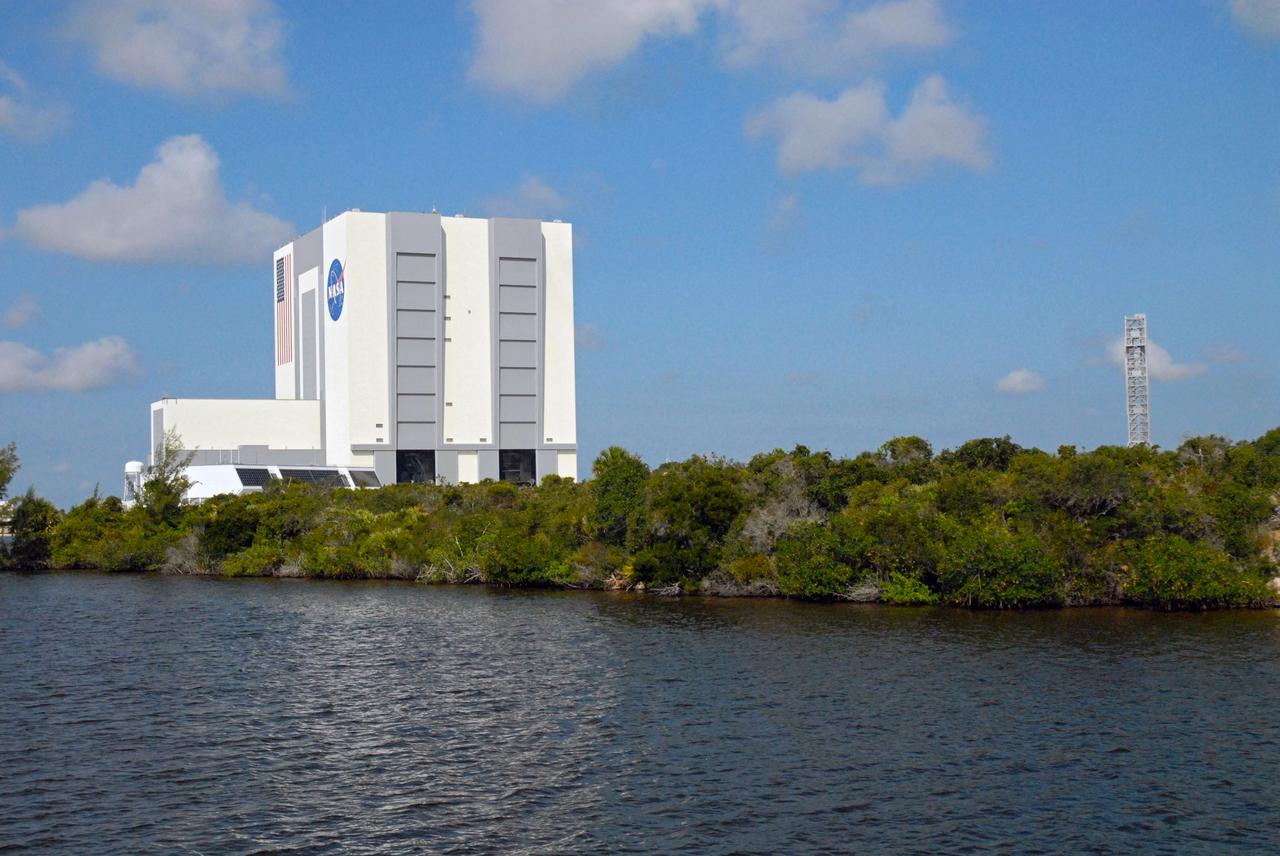
CAPE CANAVERAL, Fla. – The Vehicle Assembly Building, or VAB, and NASA's new mobile launcher, or ML, are seen during a field-guided boat tour of NASA's Kennedy Space Center in Florida. As part of the center's first-ever Innovation Expo, the tour, called "Living Outdoor Laboratory for Environmental Sustainability," is giving employees the opportunity to see the unique estuarine ecosystems that are protected from development by the presence of Kennedy and the Merritt Island National Wildlife Refuge. The 355-foot-tall ML structure, which took about two years to construct, will be modified by NASA’s Ground Systems Development and Operations, or GSDO, Program to support NASA’s Space Launch System, the heavy-lift rocket that will launch astronauts into deep space on future exploration missions. The diverse and healthy area encompassing about 140,000 acres of central Florida's east coast has been closed to the public for 50 years, allowing the coastal dunes, saltwater estuaries and marshes, freshwater impoundments, scrub, pine flatwoods, and hardwood hammocks to provide habitats for more than 1,000 species of plants and animals. Innovation Expo is showcasing the innovative work taking place throughout the center's facilities and labs to encourage employees to work together to solve future challenges. For more information, visit http://www.nasa.gov/kennedy. Photo credit: NASA
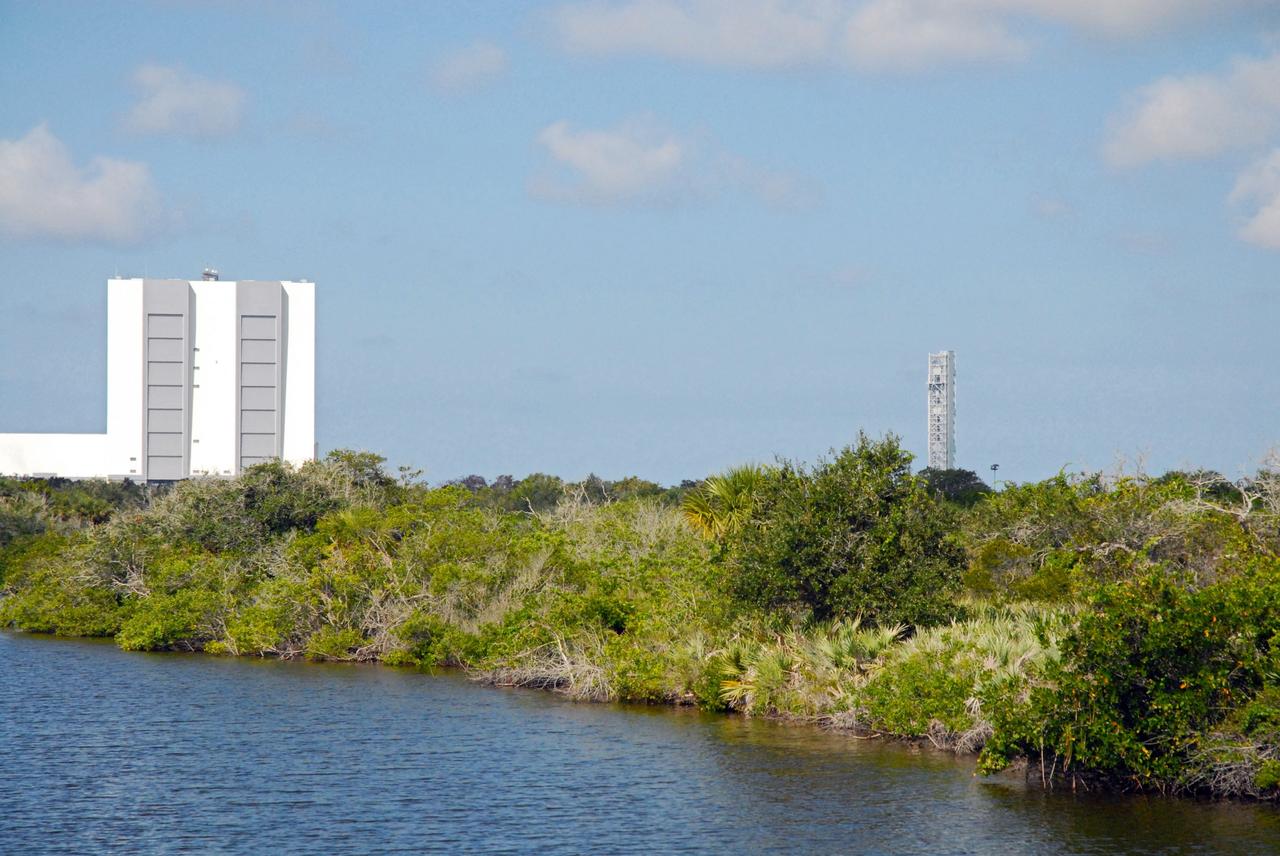
CAPE CANAVERAL, Fla. – The Vehicle Assembly Building, or VAB, and NASA's new mobile launcher, or ML, are seen in the distance during a field-guided boat tour of NASA's Kennedy Space Center in Florida. As part of the center's first-ever Innovation Expo, the tour, called "Living Outdoor Laboratory for Environmental Sustainability," is giving employees the opportunity to see the unique estuarine ecosystems that are protected from development by the presence of Kennedy and the Merritt Island National Wildlife Refuge. The 355-foot-tall ML structure, which took about two years to construct, will be modified by NASA’s Ground Systems Development and Operations, or GSDO, Program to support NASA’s Space Launch System, the heavy-lift rocket that will launch astronauts into deep space on future exploration missions. The diverse and healthy area encompassing about 140,000 acres of central Florida's east coast has been closed to the public for 50 years, allowing the coastal dunes, saltwater estuaries and marshes, freshwater impoundments, scrub, pine flatwoods, and hardwood hammocks to provide habitats for more than 1,000 species of plants and animals. Innovation Expo is showcasing the innovative work taking place throughout the center's facilities and labs to encourage employees to work together to solve future challenges. For more information, visit http://www.nasa.gov/kennedy. Photo credit: NASA
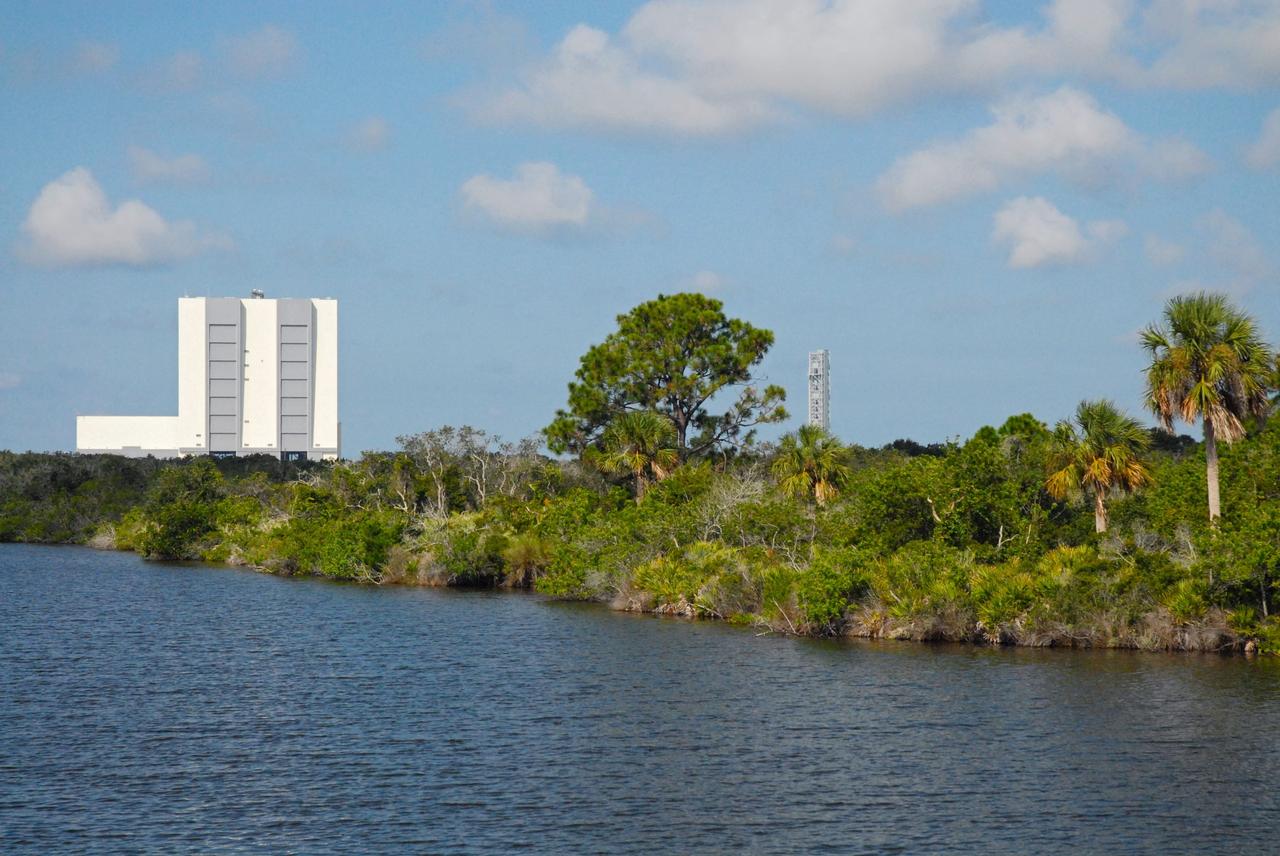
CAPE CANAVERAL, Fla. – The Vehicle Assembly Building, or VAB, and NASA's new mobile launcher, or ML, are seen in the distance during a field-guided boat tour of NASA's Kennedy Space Center in Florida. As part of the center's first-ever Innovation Expo, the tour, called "Living Outdoor Laboratory for Environmental Sustainability," is giving employees the opportunity to see the unique estuarine ecosystems that are protected from development by the presence of Kennedy and the Merritt Island National Wildlife Refuge. The 355-foot-tall ML structure, which took about two years to construct, will be modified by NASA’s Ground Systems Development and Operations, or GSDO, Program to support NASA’s Space Launch System, the heavy-lift rocket that will launch astronauts into deep space on future exploration missions. The diverse and healthy area encompassing about 140,000 acres of central Florida's east coast has been closed to the public for 50 years, allowing the coastal dunes, saltwater estuaries and marshes, freshwater impoundments, scrub, pine flatwoods, and hardwood hammocks to provide habitats for more than 1,000 species of plants and animals. Innovation Expo is showcasing the innovative work taking place throughout the center's facilities and labs to encourage employees to work together to solve future challenges. For more information, visit http://www.nasa.gov/kennedy. Photo credit: NASA
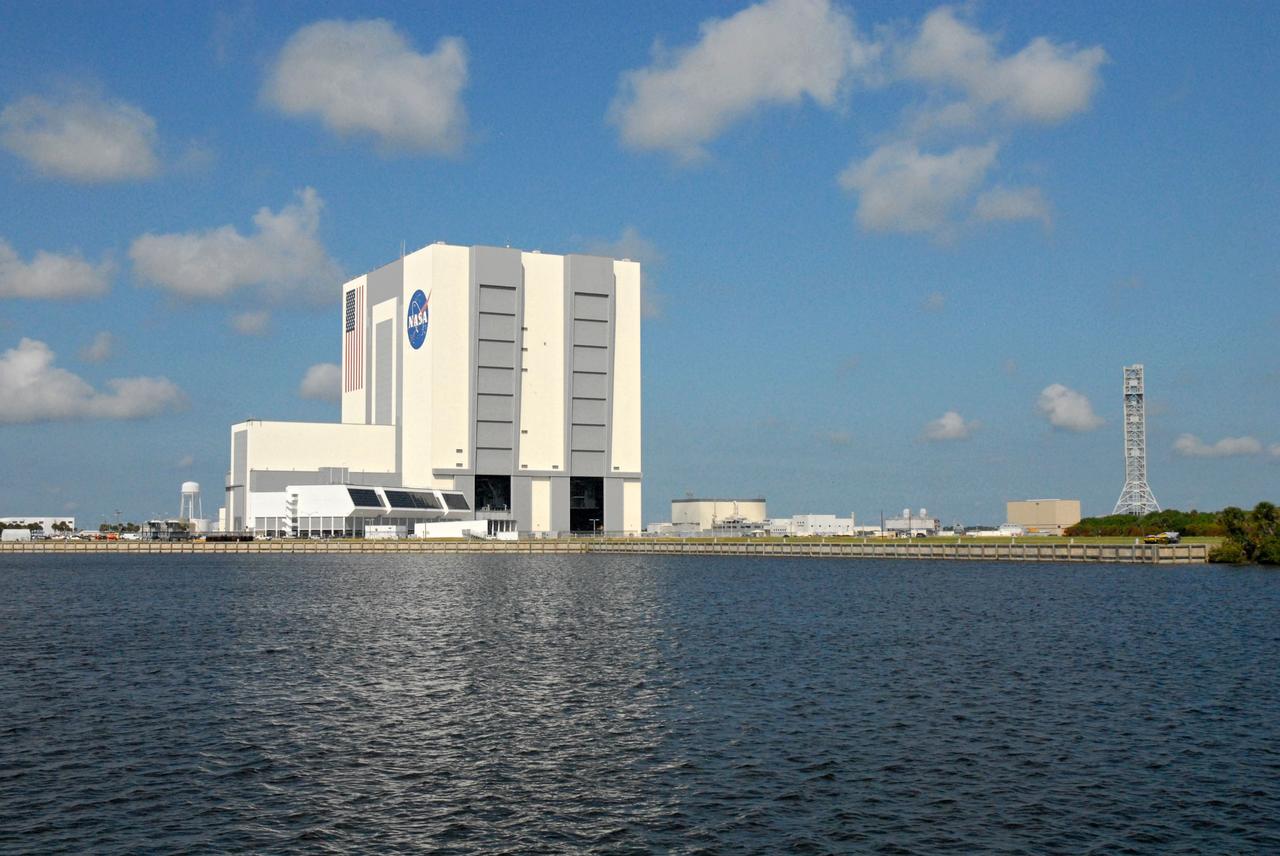
CAPE CANAVERAL, Fla. – The Vehicle Assembly Building, or VAB, and NASA's new mobile launcher, or ML, are seen during a field-guided boat tour of NASA's Kennedy Space Center in Florida. As part of the center's first-ever Innovation Expo, the tour, called "Living Outdoor Laboratory for Environmental Sustainability," is giving employees the opportunity to see the unique estuarine ecosystems that are protected from development by the presence of Kennedy and the Merritt Island National Wildlife Refuge. The 355-foot-tall ML structure, which took about two years to construct, will be modified by NASA’s Ground Systems Development and Operations, or GSDO, Program to support NASA’s Space Launch System, the heavy-lift rocket that will launch astronauts into deep space on future exploration missions. The diverse and healthy area encompassing about 140,000 acres of central Florida's east coast has been closed to the public for 50 years, allowing the coastal dunes, saltwater estuaries and marshes, freshwater impoundments, scrub, pine flatwoods, and hardwood hammocks to provide habitats for more than 1,000 species of plants and animals. Innovation Expo is showcasing the innovative work taking place throughout the center's facilities and labs to encourage employees to work together to solve future challenges. For more information, visit http://www.nasa.gov/kennedy. Photo credit: NASA