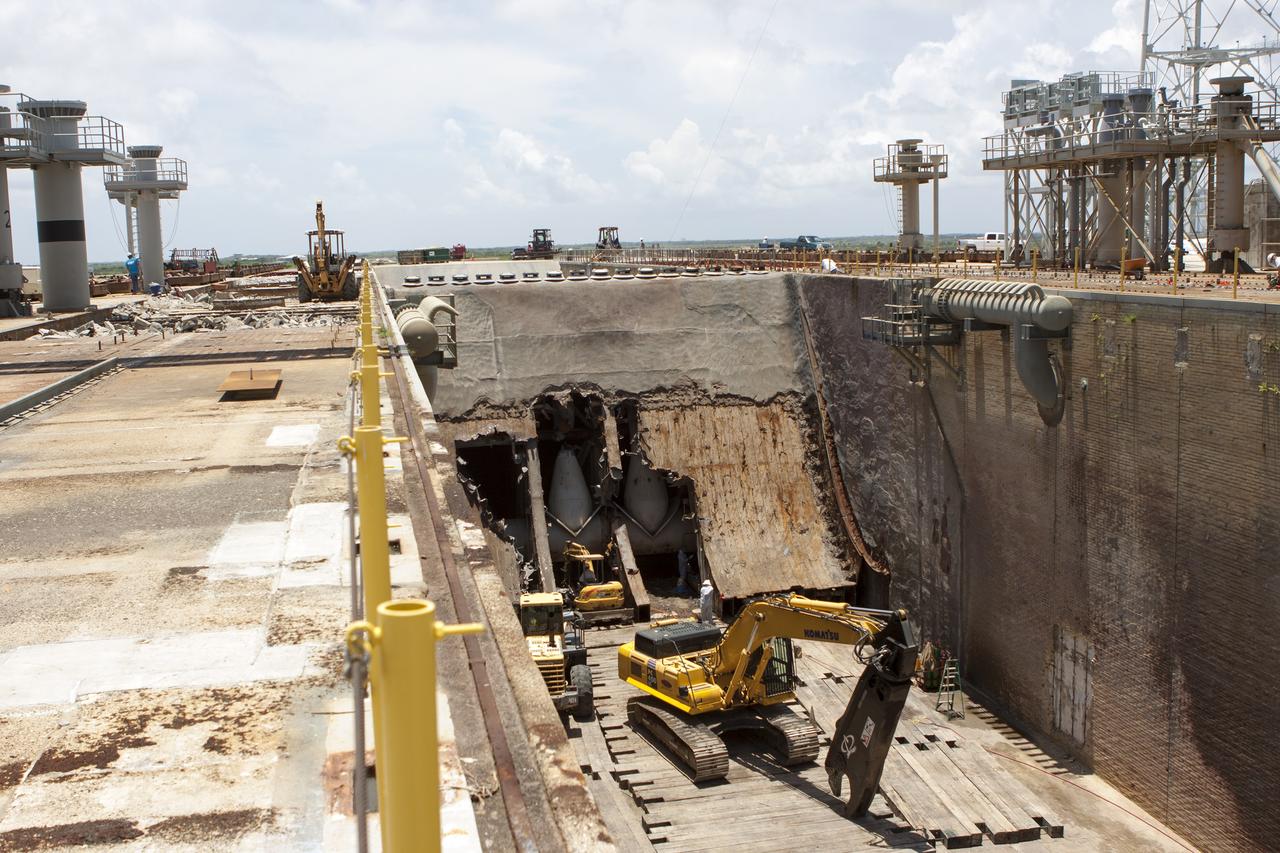
CAPE CANAVERAL, Fla. – At Launch Pad 39B at NASA’s Kennedy Space Center in Florida, workers are removing the flame trench deflector that sits below and between the left and right crawler track panels. Launch Pad 39B is being refurbished to support NASA’s Space Launch System and other launch vehicles. The Ground Systems Development and Operations, or GSDO, Program office at Kennedy is leading the center’s transformation to safely handle a variety of rockets and spacecraft. For more information about GSDO, visit: http://go.nasa.gov/groundsystems. Photo credit: NASA/Jim Grossman
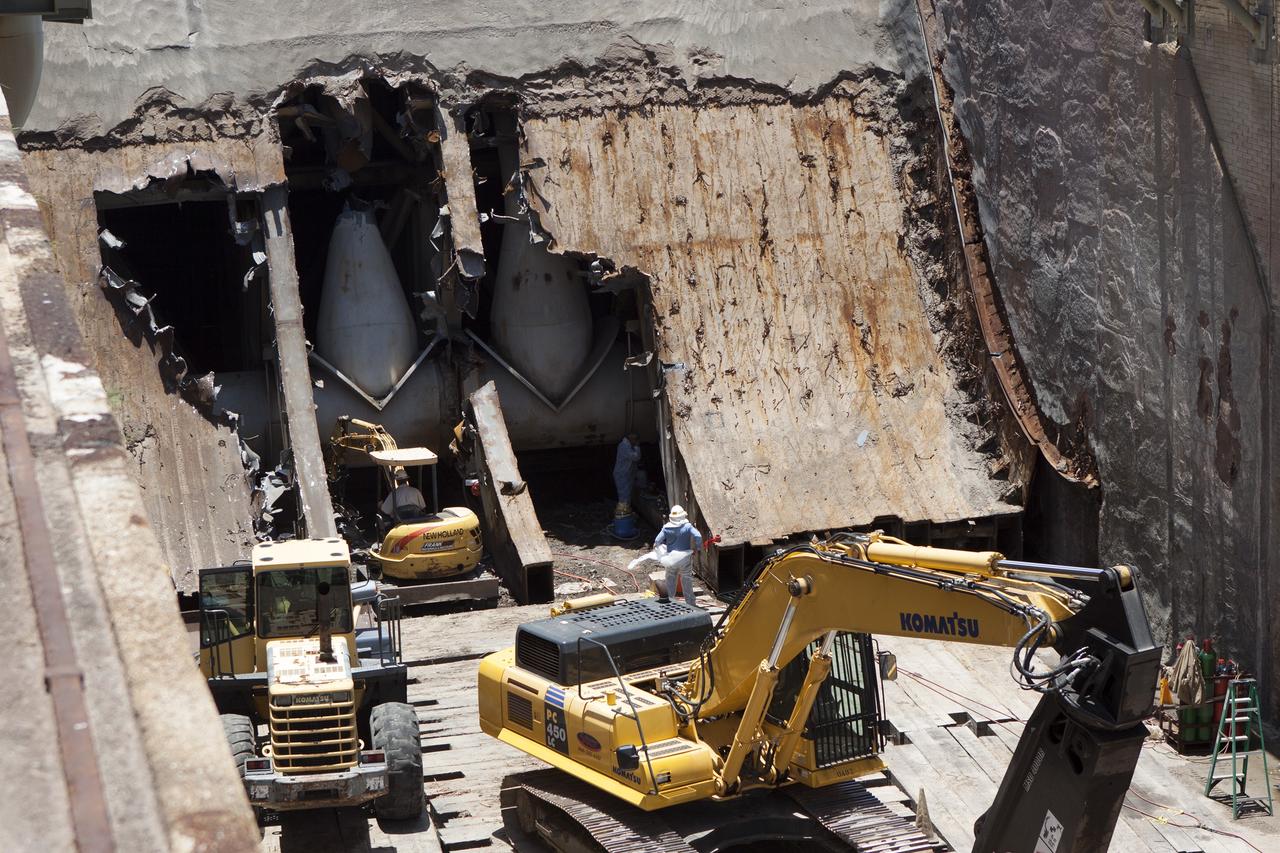
CAPE CANAVERAL, Fla. – At Launch Pad 39B at NASA’s Kennedy Space Center in Florida, workers are removing the flame trench deflector that sits below and between the left and right crawler track panels. Launch Pad 39B is being refurbished to support NASA’s Space Launch System and other launch vehicles. The Ground Systems Development and Operations, or GSDO, Program office at Kennedy is leading the center’s transformation to safely handle a variety of rockets and spacecraft. For more information about GSDO, visit: http://go.nasa.gov/groundsystems. Photo credit: NASA/Jim Grossman
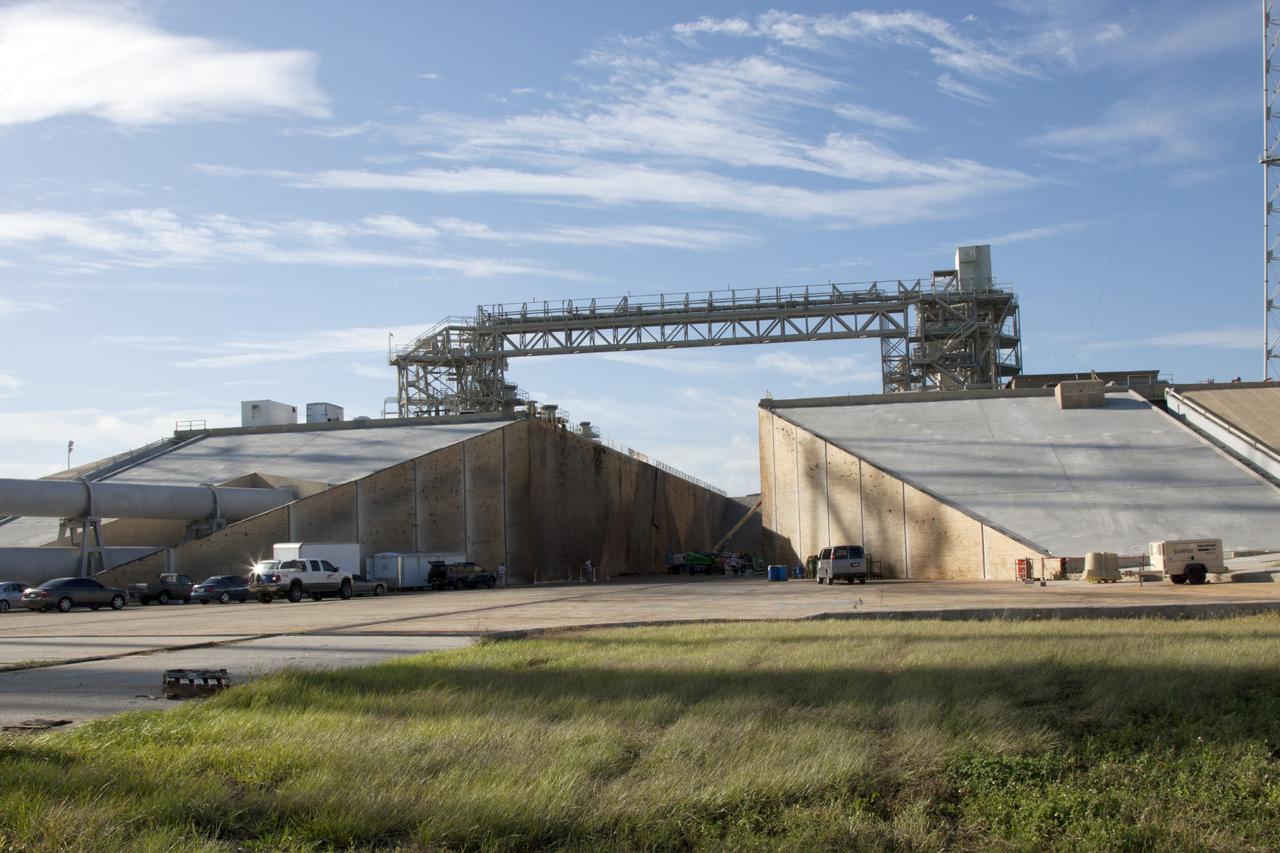
CAPE CANAVERAL, Fla. – At Launch Pad 39B at NASA’s Kennedy Space Center in Florida, the flame trench deflector located below and between the left and right crawlerway tracks has been removed. Pad B is being refurbished to support NASA’s Space Launch System and other launch vehicles. The Ground Systems Development and Operations, or GSDO, Program at Kennedy is leading the center’s transformation to safely handle a variety of rockets and spacecraft. For more information about GSDO, visit: http://go.nasa.gov/groundsystems. Photo credit: NASA/Jim Grossman
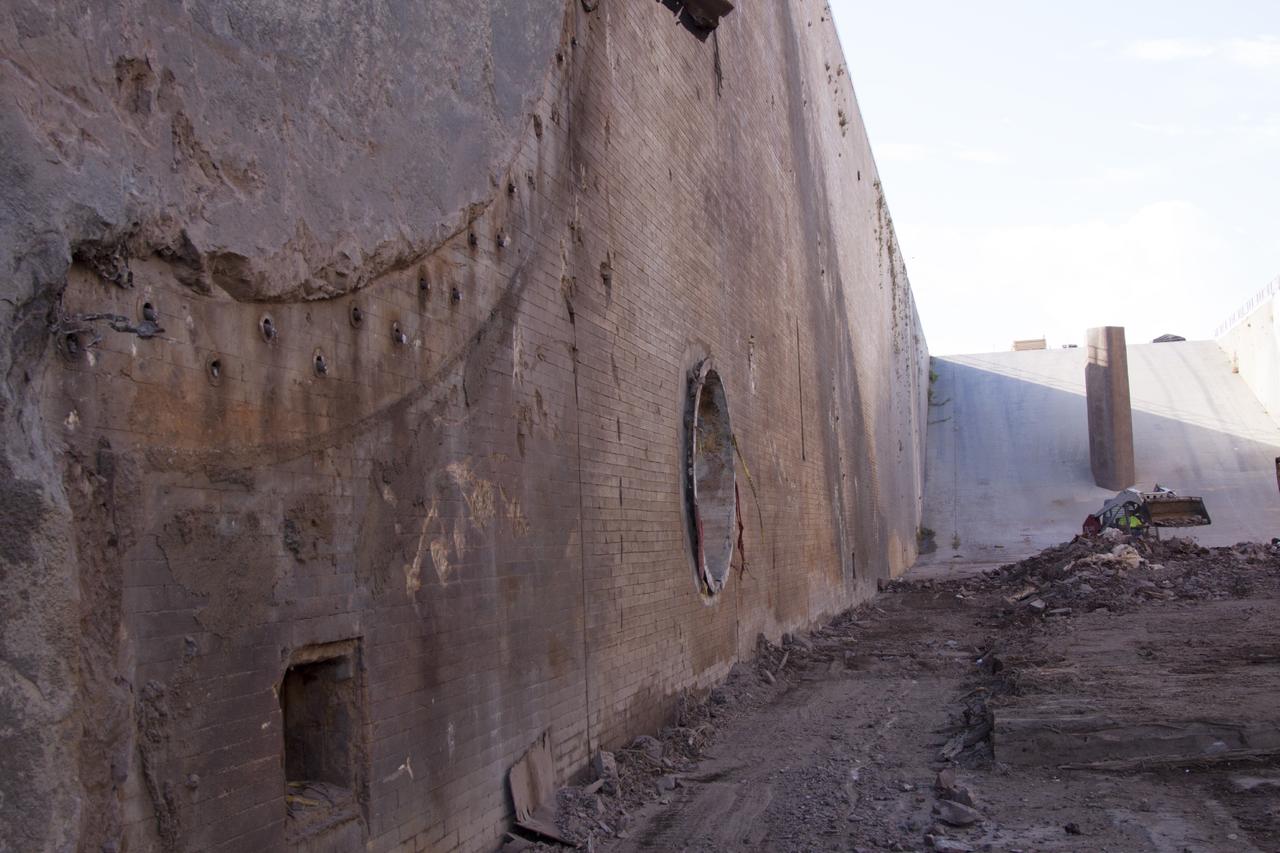
CAPE CANAVERAL, Fla. – At Launch Pad 39B at NASA’s Kennedy Space Center in Florida, the flame trench deflector that was located below and between the left and right crawlerway tracks has been removed. Work will continue to repair or replace the bricks on the walls. Pad B is being refurbished to support NASA’s Space Launch System and other launch vehicles. The Ground Systems Development and Operations, or GSDO, Program at Kennedy is leading the center’s transformation to safely handle a variety of rockets and spacecraft. For more information about GSDO, visit: http://go.nasa.gov/groundsystems. Photo credit: NASA/Jim Grossman
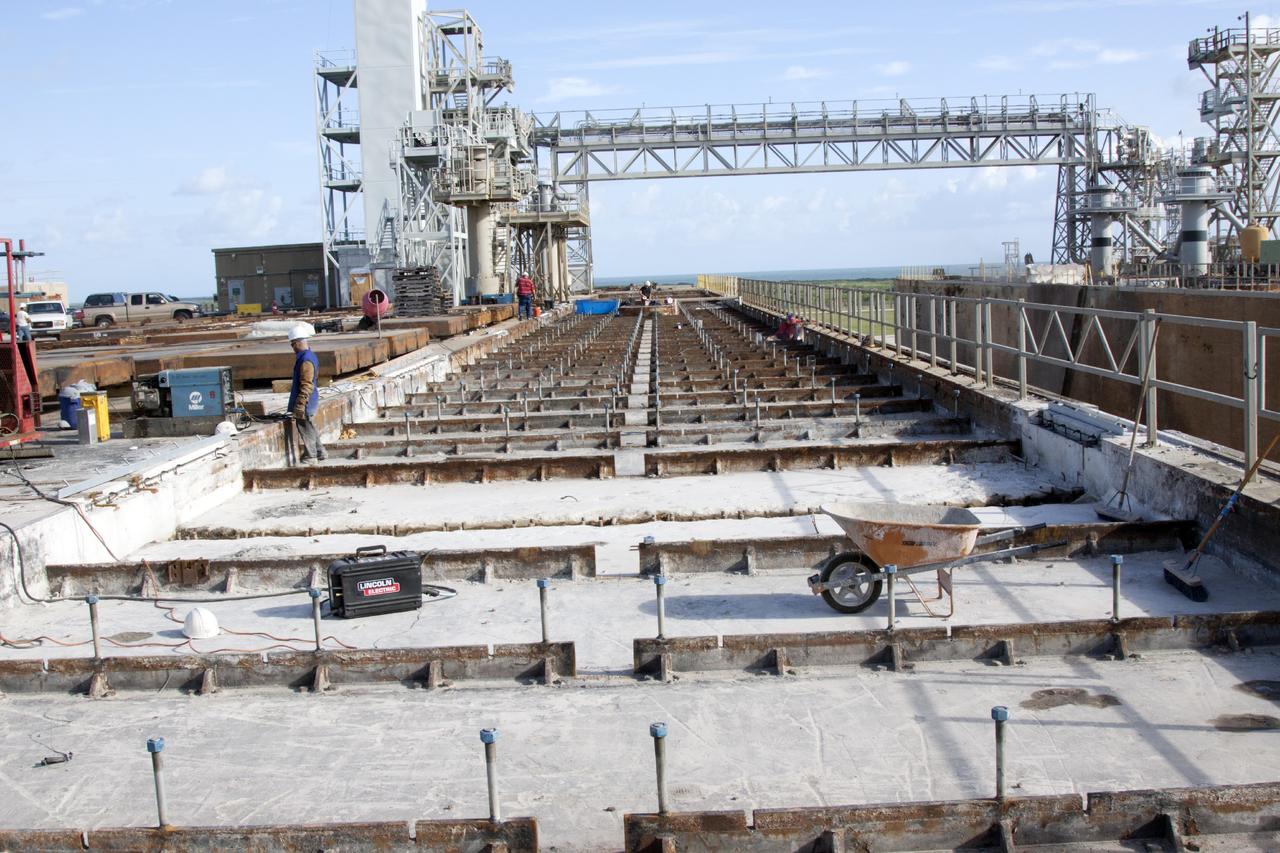
CAPE CANAVERAL, Fla. – At Launch Pad 39B at NASA’s Kennedy Space Center in Florida, the crawler track panels have been removed and construction workers continue to repair the concrete on the surface of the pad. The flame trench deflector that was located below and between the left and right crawlerway tracks has been removed. Pad B is being refurbished to support NASA’s Space Launch System and other launch vehicles. The Ground Systems Development and Operations, or GSDO, Program at Kennedy is leading the center’s transformation to safely handle a variety of rockets and spacecraft. For more information about GSDO, visit: http://go.nasa.gov/groundsystems. Photo credit: NASA/Jim Grossman
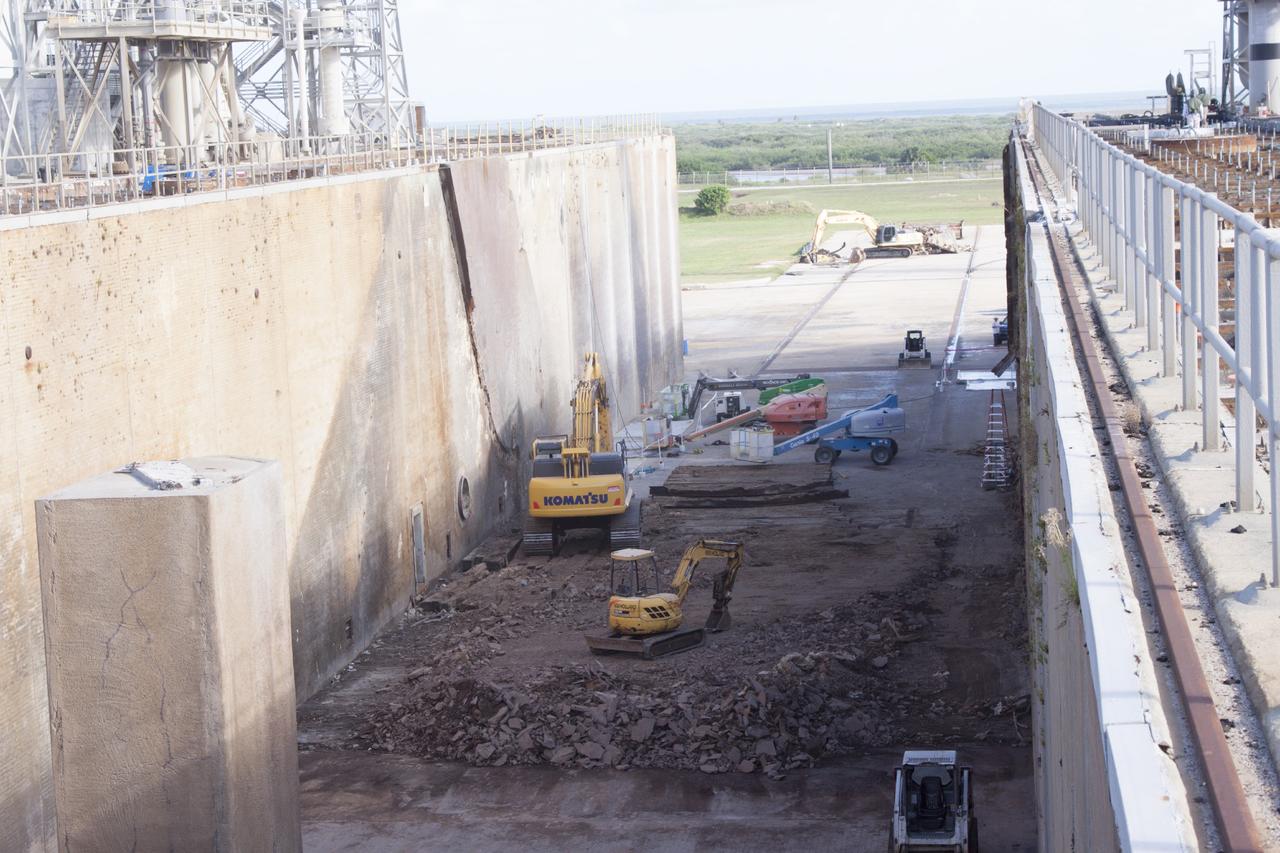
CAPE CANAVERAL, Fla. – At Launch Pad 39B at NASA’s Kennedy Space Center in Florida, the flame trench deflector that was located below and between the left and right crawlerway tracks has been removed. Pad B is being refurbished to support NASA’s Space Launch System and other launch vehicles. The Ground Systems Development and Operations, or GSDO, Program at Kennedy is leading the center’s transformation to safely handle a variety of rockets and spacecraft. For more information about GSDO, visit: http://go.nasa.gov/groundsystems. Photo credit: NASA/Jim Grossman
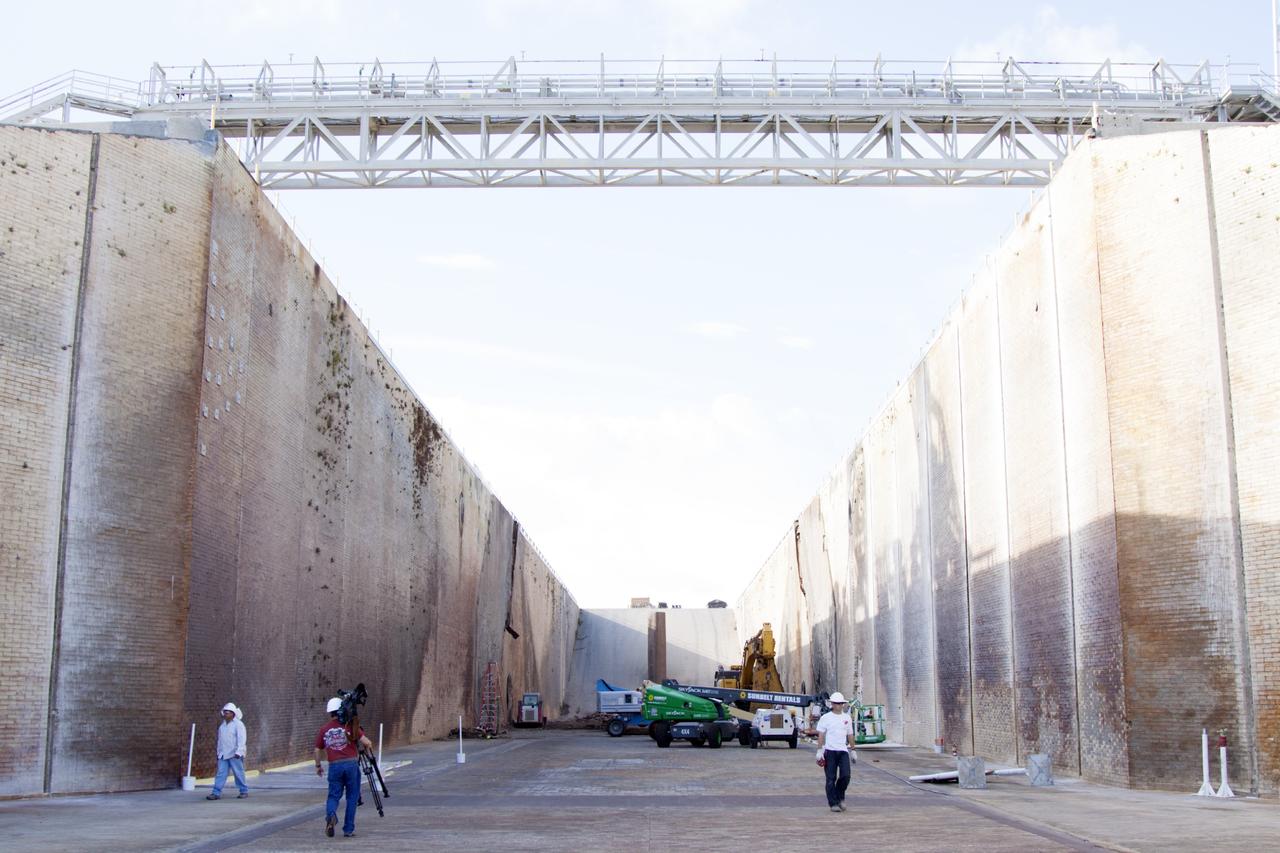
CAPE CANAVERAL, Fla. – At Launch Pad 39B at NASA’s Kennedy Space Center in Florida, the flame trench deflector that was located below and between the left and right crawlerway tracks has been removed. Pad B is being refurbished to support NASA’s Space Launch System and other launch vehicles. The Ground Systems Development and Operations, or GSDO, Program at Kennedy is leading the center’s transformation to safely handle a variety of rockets and spacecraft. For more information about GSDO, visit: http://go.nasa.gov/groundsystems. Photo credit: NASA/Jim Grossman
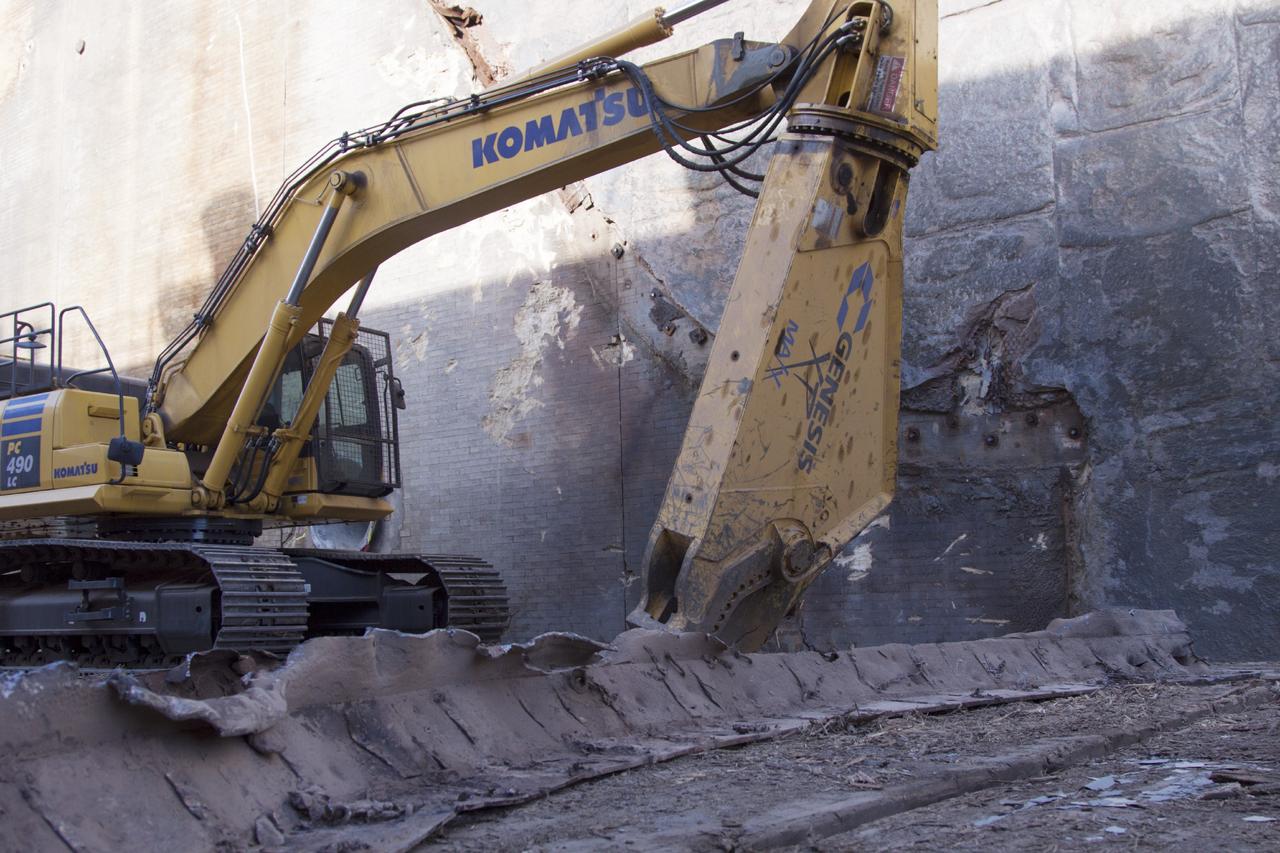
CAPE CANAVERAL, Fla. – At Launch Pad 39B at NASA’s Kennedy Space Center in Florida, a large bulldozer is used to remove the remaining portions of the flame trench deflector that was located below and between the left and right crawlerway tracks. Pad B is being refurbished to support NASA’s Space Launch System and other launch vehicles. The Ground Systems Development and Operations, or GSDO, Program at Kennedy is leading the center’s transformation to safely handle a variety of rockets and spacecraft. For more information about GSDO, visit: http://go.nasa.gov/groundsystems. Photo credit: NASA/Jim Grossman
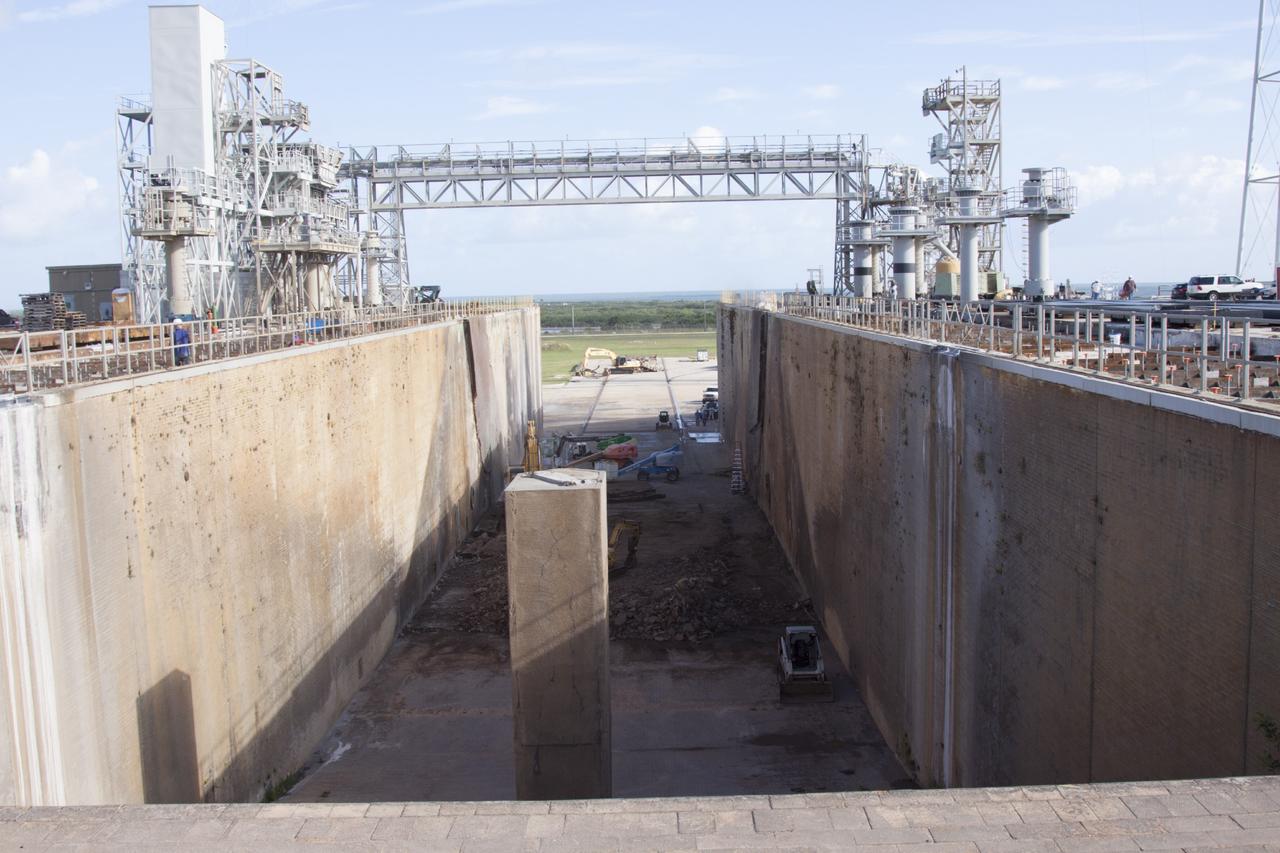
CAPE CANAVERAL, Fla. – At Launch Pad 39B at NASA’s Kennedy Space Center in Florida, the flame trench deflector that was located below and between the left and right crawlerway tracks has been removed. Pad B is being refurbished to support NASA’s Space Launch System and other launch vehicles. The Ground Systems Development and Operations, or GSDO, Program at Kennedy is leading the center’s transformation to safely handle a variety of rockets and spacecraft. For more information about GSDO, visit: http://go.nasa.gov/groundsystems. Photo credit: NASA/Jim Grossman
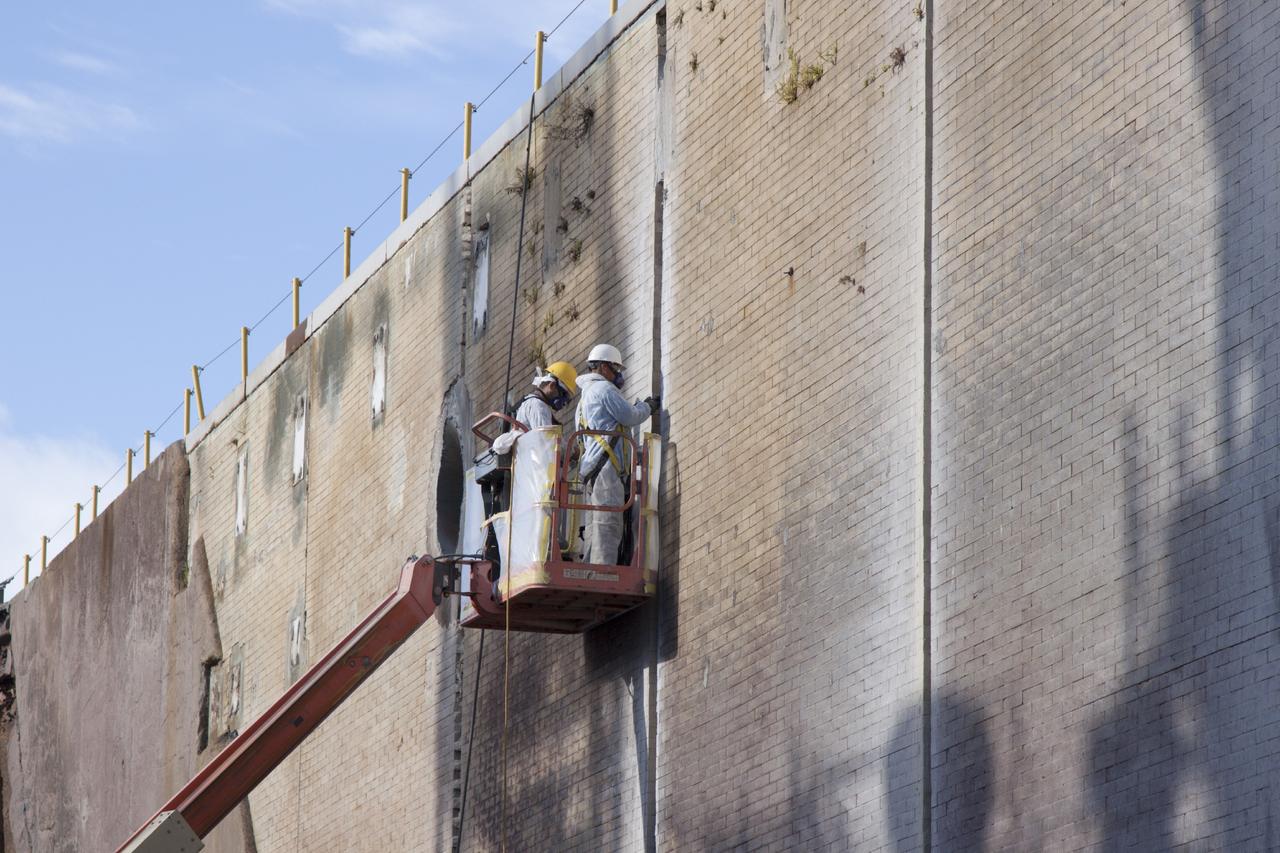
CAPE CANAVERAL, Fla. – At Launch Pad 39B at NASA’s Kennedy Space Center in Florida, construction workers inspect the brick walls of the flame trench area that is located below and between the left and right crawlerway tracks. Pad B is being refurbished to support NASA’s Space Launch System and other launch vehicles. The Ground Systems Development and Operations, or GSDO, Program at Kennedy is leading the center’s transformation to safely handle a variety of rockets and spacecraft. For more information about GSDO, visit: http://go.nasa.gov/groundsystems. Photo credit: NASA/Jim Grossman
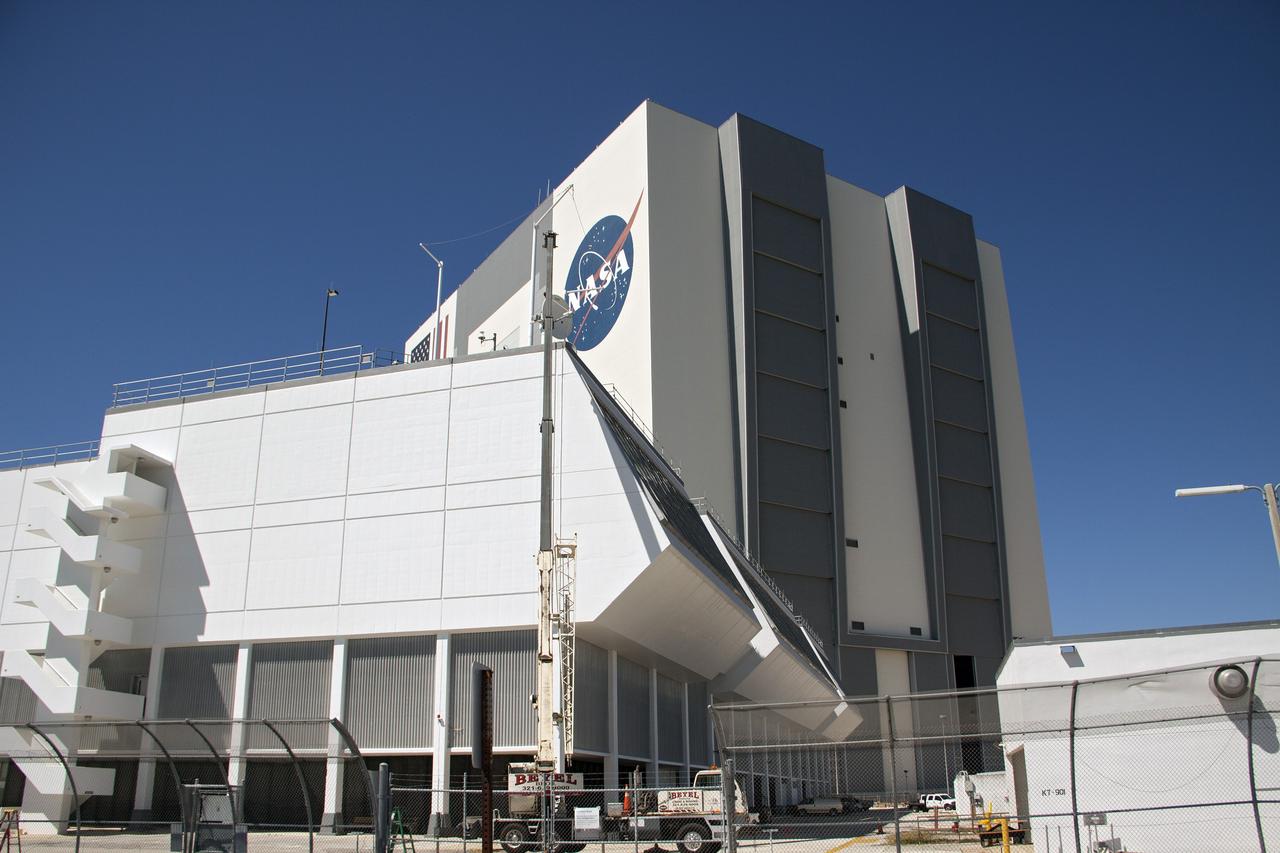
CAPE CANAVERAL, Fla. – A telemetry antenna and tracker camera is attached to the roof of the Launch Control Center, or LCC, in Launch Complex 39 at NASA's Kennedy Space Center in Florida. This antenna and camera system is the first of three to be installed on the LCC roof for the Radio Frequency and Telemetry Station RFTS, which will be used to monitor radio frequency communications from a launch vehicle at Launch Pad 39A or B as well as provide radio frequency relay for a launch vehicle in the Vehicle Assembly Building. The RFTS replaces the shuttle-era communications and tracking labs at Kennedy. The modern RFTS checkout station is designed to primarily support NASA's Space Launch System, or SLS, and Orion spacecraft, but can support multi-user radio frequency tests as the space center transitions to support a variety of rockets and spacecraft. For more information on the modernization efforts at Kennedy, visit the Ground Systems Development and Operations, or GSDO, website at http://go.nasa.gov/groundsystems. Photo credit: NASA/Jim Grossmann
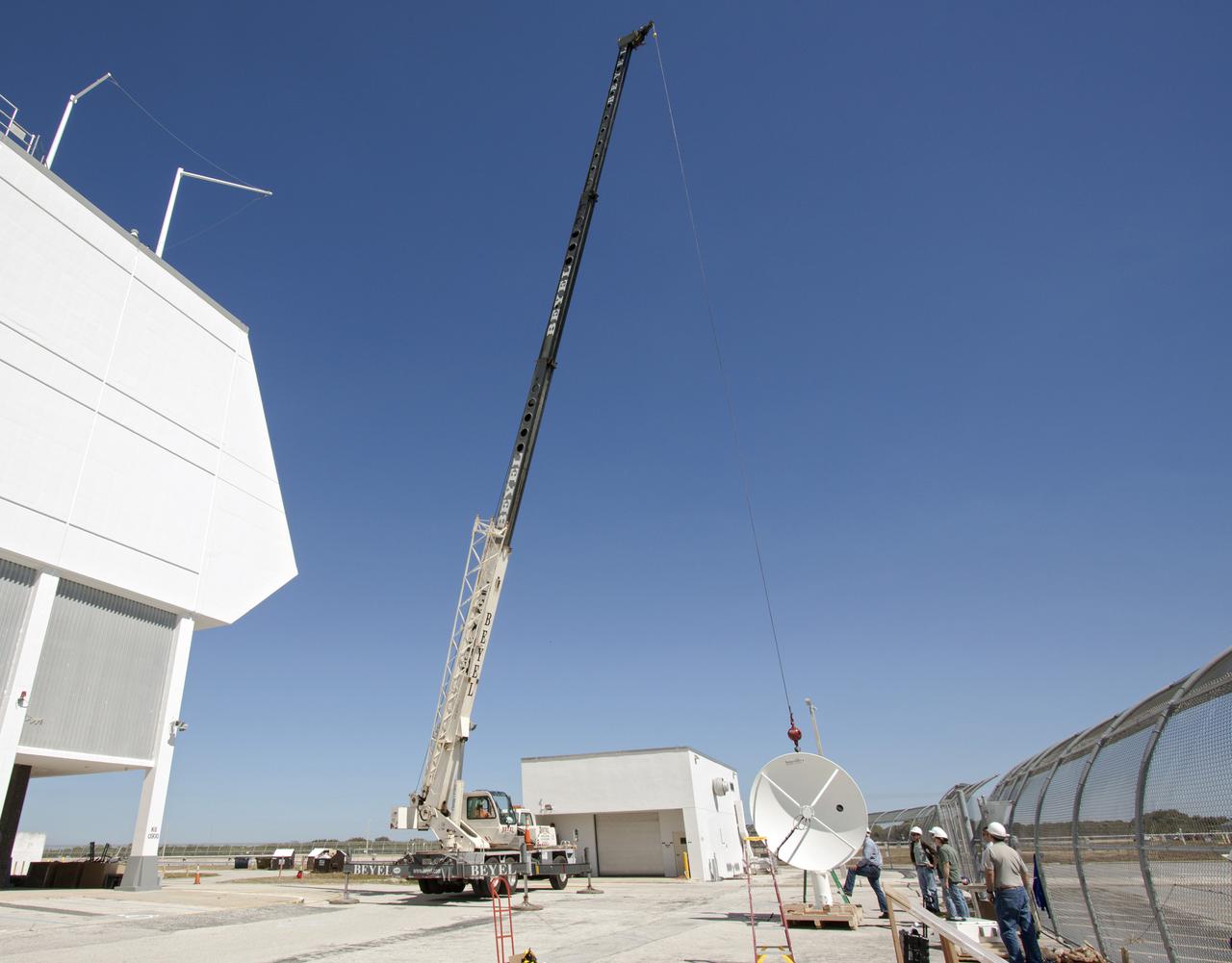
CAPE CANAVERAL, Fla. – Workers use a crane to install a new parabolic telemetry antenna and tracker camera to the roof of the Launch Control Center, or LCC, in Launch Complex 39 at NASA's Kennedy Space Center in Florida. This antenna and camera system is the first of three that will be installed on the LCC roof for the Radio Frequency and Telemetry Station RFTS, which will be used to monitor radio frequency communications from a launch vehicle at Launch Pad 39A or B as well as provide radio frequency relay for a launch vehicle in the Vehicle Assembly Building. The RFTS replaces the shuttle-era communications and tracking labs at Kennedy. The modern RFTS checkout station is designed to primarily support NASA's Space Launch System, or SLS, and Orion spacecraft, but can support multi-user radio frequency tests as the space center transitions to support a variety of rockets and spacecraft. For more information on the modernization efforts at Kennedy, visit the Ground Systems Development and Operations, or GSDO, website at http:__go.nasa.gov_groundsystems. Photo credit: NASA_Jim Grossmann
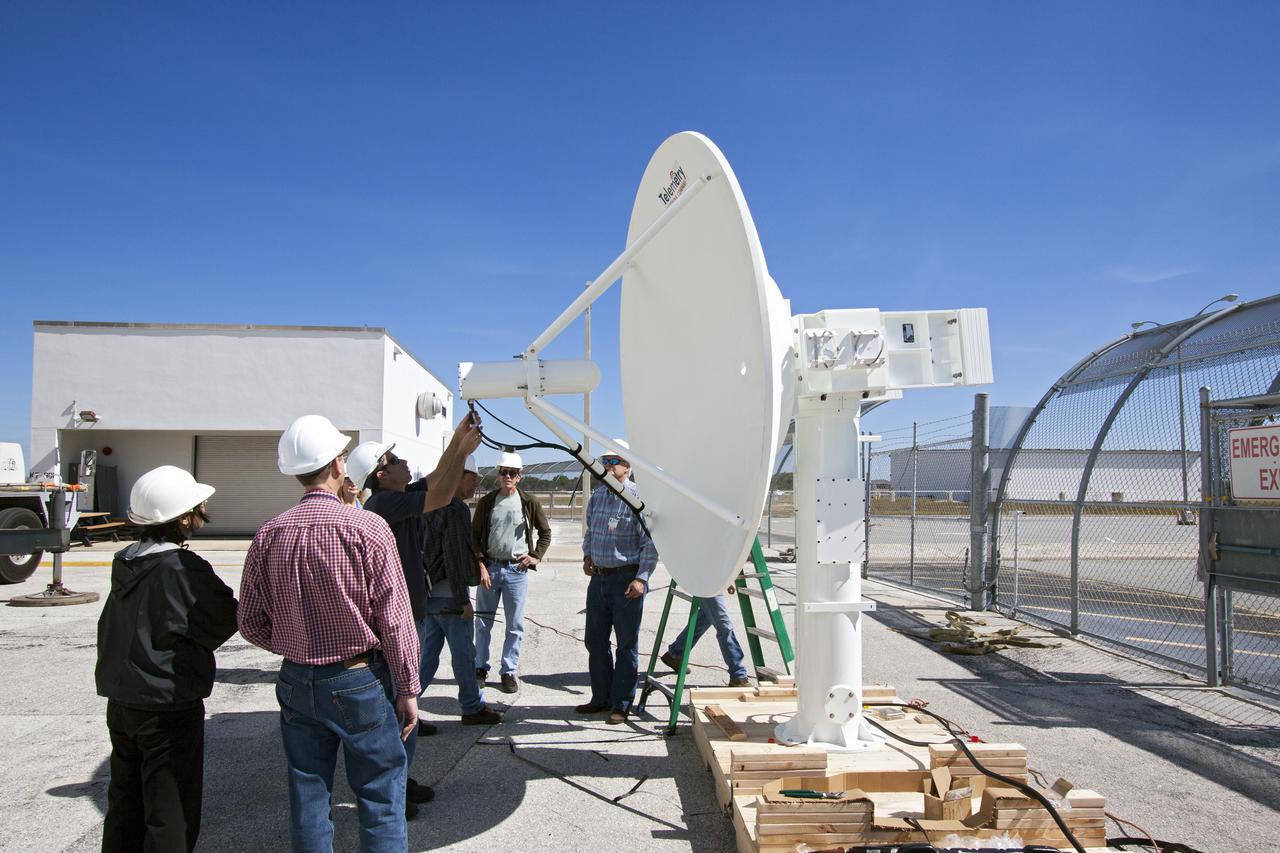
CAPE CANAVERAL, Fla. – Workers prepare to install a new parabolic telemetry antenna and tracker camera to the roof of the Launch Control Center, or LCC, in Launch Complex 39 at NASA's Kennedy Space Center in Florida. This antenna and camera system is the first of three that will be installed on the LCC roof for the Radio Frequency and Telemetry Station RFTS, which will be used to monitor radio frequency communications from a launch vehicle at Launch Pad 39A or B as well as provide radio frequency relay for a launch vehicle in the Vehicle Assembly Building. The RFTS replaces the shuttle-era communications and tracking labs at Kennedy. The modern RFTS checkout station is designed to primarily support NASA's Space Launch System, or SLS, and Orion spacecraft, but can support multi-user radio frequency tests as the space center transitions to support a variety of rockets and spacecraft. For more information on the modernization efforts at Kennedy, visit the Ground Systems Development and Operations, or GSDO, website at http:__go.nasa.gov_groundsystems. Photo credit: NASA_Jim Grossmann
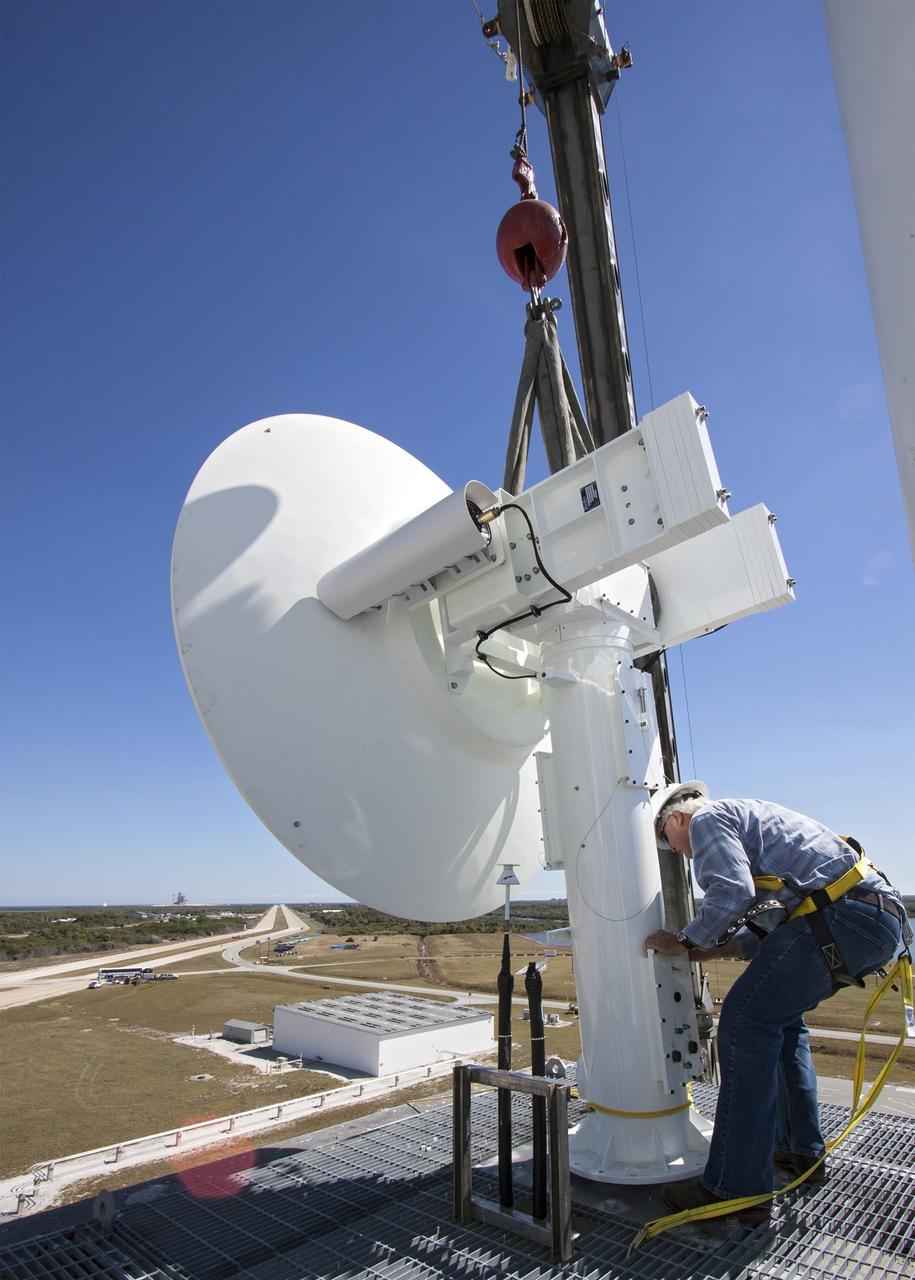
CAPE CANAVERAL, Fla. – With the help of a crane, a worker helps guide a parabolic telemetry antenna and tracker camera to the roof of the Launch Control Center, or LCC, in Launch Complex 39 at NASA's Kennedy Space Center in Florida. This antenna and camera system is the first of three that will be installed on the LCC roof for the Radio Frequency and Telemetry Station RFTS, which will be used to monitor radio frequency communications from a launch vehicle at Launch Pad 39A or B as well as provide radio frequency relay for a launch vehicle in the Vehicle Assembly Building. The RFTS replaces the shuttle-era communications and tracking labs at Kennedy. The modern RFTS checkout station is designed to primarily support NASA's Space Launch System, or SLS, and Orion spacecraft, but can support multi-user radio frequency tests as the space center transitions to support a variety of rockets and spacecraft. For more information on the modernization efforts at Kennedy, visit the Ground Systems Development and Operations, or GSDO, website at http://go.nasa.gov/groundsystems. Photo credit: NASA/Jim Grossmann
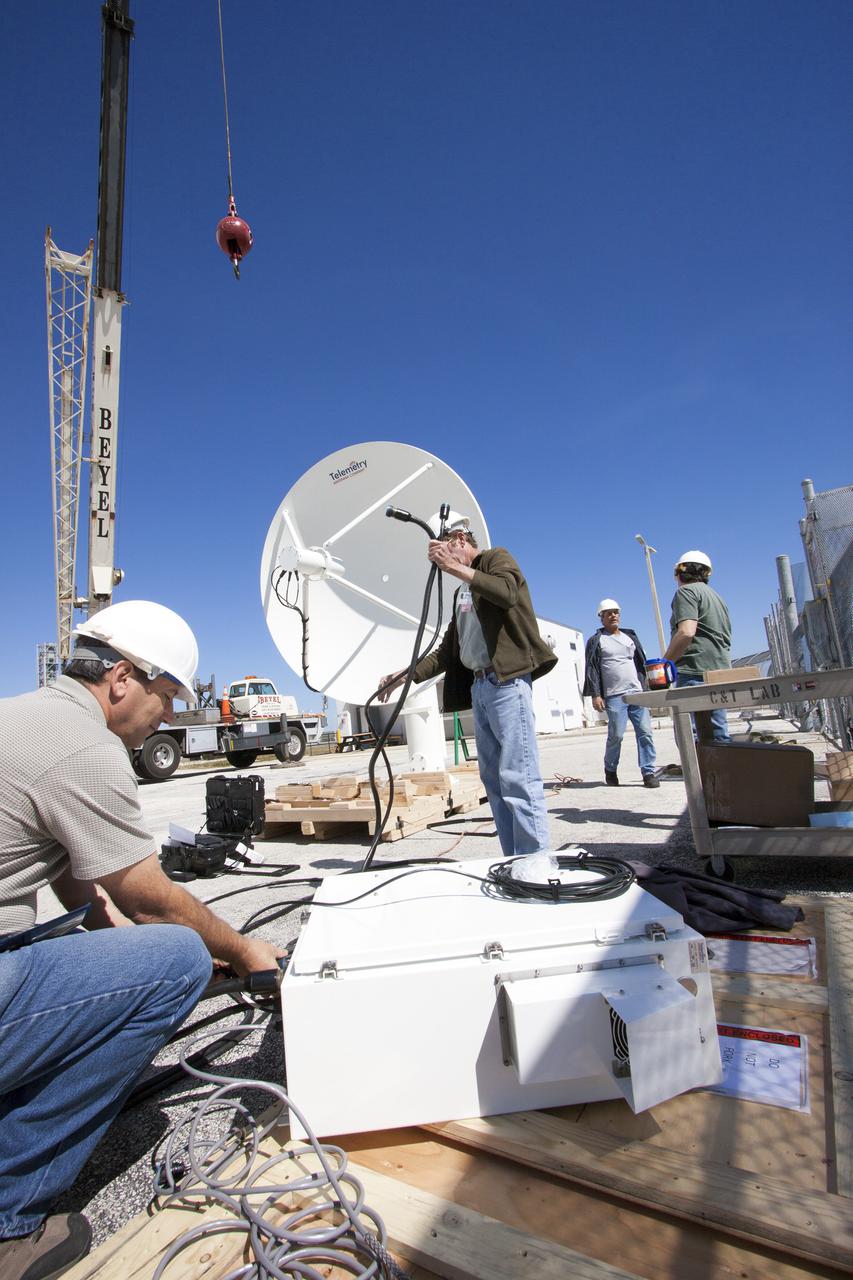
CAPE CANAVERAL, Fla. – Workers prepare to install a new parabolic telemetry antenna and tracker camera via crane to the roof of the Launch Control Center, or LCC, in Launch Complex 39 at NASA's Kennedy Space Center in Florida. This antenna and camera system is the first of three that will be installed on the LCC roof for the Radio Frequency and Telemetry Station RFTS, which will be used to monitor radio frequency communications from a launch vehicle at Launch Pad 39A or B as well as provide radio frequency relay for a launch vehicle in the Vehicle Assembly Building. The RFTS replaces the shuttle-era communications and tracking labs at Kennedy. The modern RFTS checkout station is designed to primarily support NASA's Space Launch System, or SLS, and Orion spacecraft, but can support multi-user radio frequency tests as the space center transitions to support a variety of rockets and spacecraft. For more information on the modernization efforts at Kennedy, visit the Ground Systems Development and Operations, or GSDO, website at http:__go.nasa.gov_groundsystems. Photo credit: NASA_Jim Grossmann
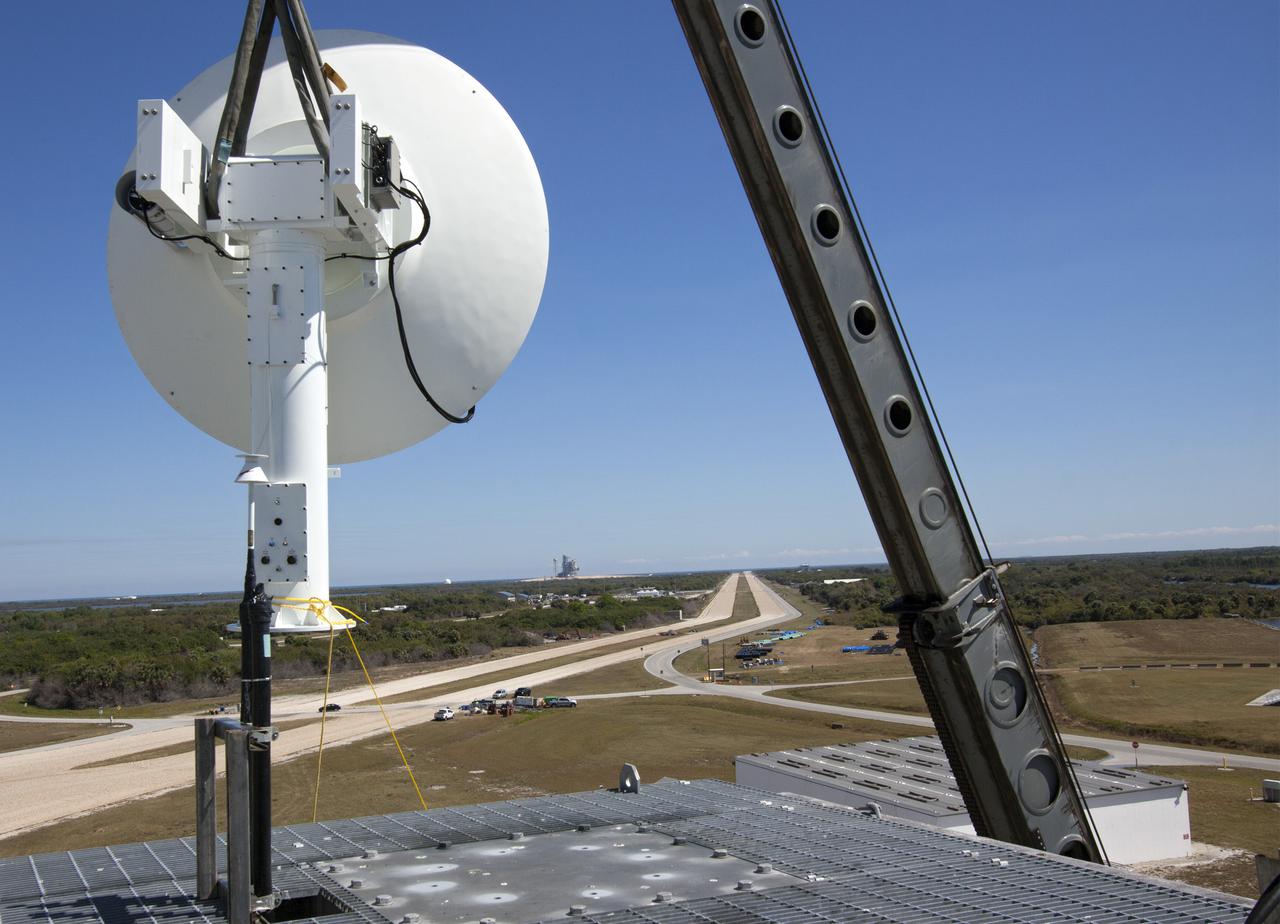
CAPE CANAVERAL, Fla. – A crane lifts a new parabolic telemetry antenna and tracker camera to the roof of the Launch Control Center, or LCC, in Launch Complex 39 at NASA's Kennedy Space Center in Florida. This antenna and camera system is the first of three that will be installed on the LCC roof for the Radio Frequency and Telemetry Station RFTS, which will be used to monitor radio frequency communications from a launch vehicle at Launch Pad 39A or B as well as provide radio frequency relay for a launch vehicle in the Vehicle Assembly Building. The RFTS replaces the shuttle-era communications and tracking labs at Kennedy. The modern RFTS checkout station is designed to primarily support NASA's Space Launch System, or SLS, and Orion spacecraft, but can support multi-user radio frequency tests as the space center transitions to support a variety of rockets and spacecraft. For more information on the modernization efforts at Kennedy, visit the Ground Systems Development and Operations, or GSDO, website at http:__go.nasa.gov_groundsystems. Photo credit: NASA_Jim Grossmann

CAPE CANAVERAL, Fla. – A crane lifts a new parabolic telemetry antenna and tracker camera to the roof of the Launch Control Center, or LCC, in Launch Complex 39 at NASA's Kennedy Space Center in Florida. This antenna and camera system is the first of three that will be installed on the LCC roof for the Radio Frequency and Telemetry Station RFTS, which will be used to monitor radio frequency communications from a launch vehicle at Launch Pad 39A or B as well as provide radio frequency relay for a launch vehicle in the Vehicle Assembly Building. The RFTS replaces the shuttle-era communications and tracking labs at Kennedy. The modern RFTS checkout station is designed to primarily support NASA's Space Launch System, or SLS, and Orion spacecraft, but can support multi-user radio frequency tests as the space center transitions to support a variety of rockets and spacecraft. For more information on the modernization efforts at Kennedy, visit the Ground Systems Development and Operations, or GSDO, website at http:__go.nasa.gov_groundsystems. Photo credit: NASA_Jim Grossmann
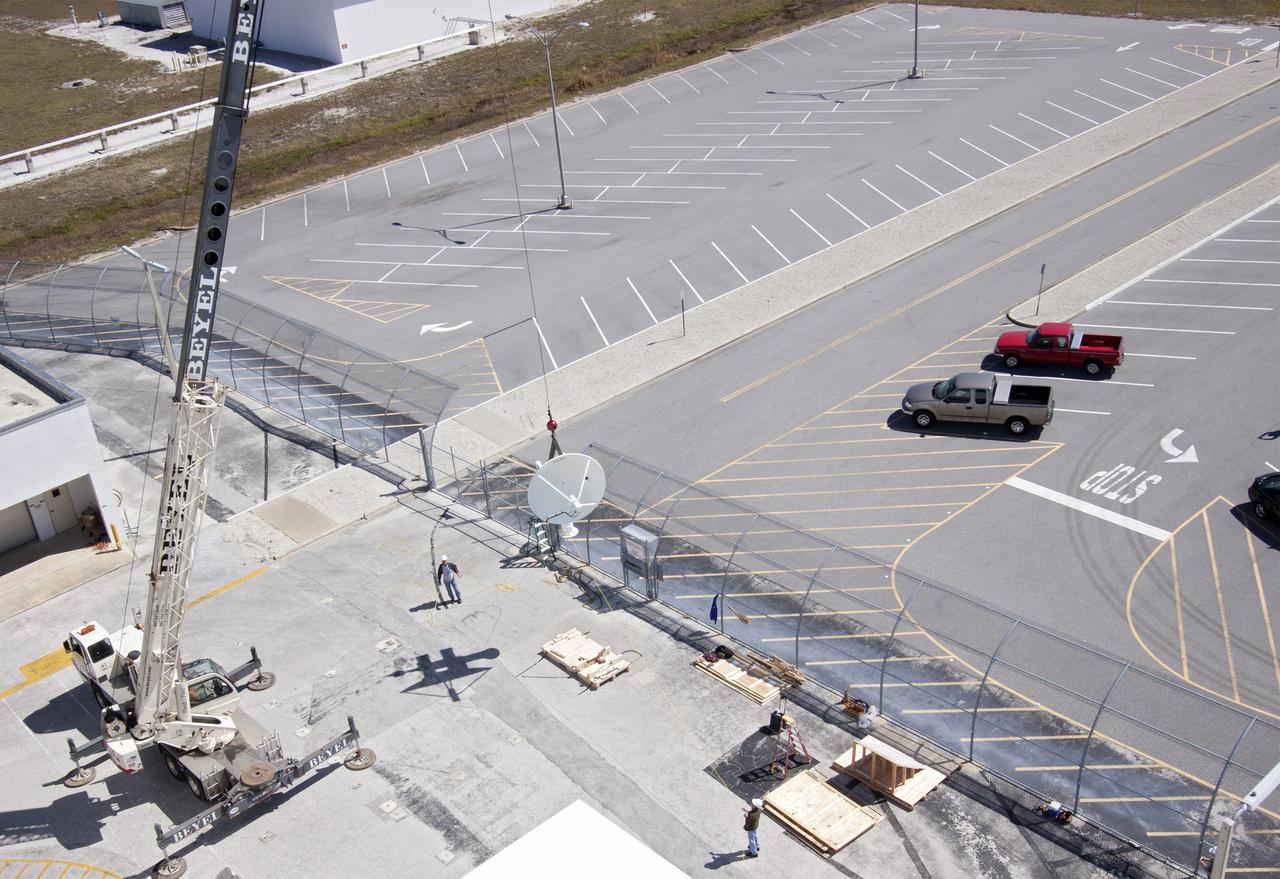
CAPE CANAVERAL, Fla. – Workers use a crane to install a new parabolic telemetry antenna and tracker camera to the roof of the Launch Control Center, or LCC, in Launch Complex 39 at NASA's Kennedy Space Center in Florida. This antenna and camera system is the first of three that will be installed on the LCC roof for the Radio Frequency and Telemetry Station RFTS, which will be used to monitor radio frequency communications from a launch vehicle at Launch Pad 39A or B as well as provide radio frequency relay for a launch vehicle in the Vehicle Assembly Building. The RFTS replaces the shuttle-era communications and tracking labs at Kennedy. The modern RFTS checkout station is designed to primarily support NASA's Space Launch System, or SLS, and Orion spacecraft, but can support multi-user radio frequency tests as the space center transitions to support a variety of rockets and spacecraft. For more information on the modernization efforts at Kennedy, visit the Ground Systems Development and Operations, or GSDO, website at http:__go.nasa.gov_groundsystems. Photo credit: NASA_Jim Grossmann