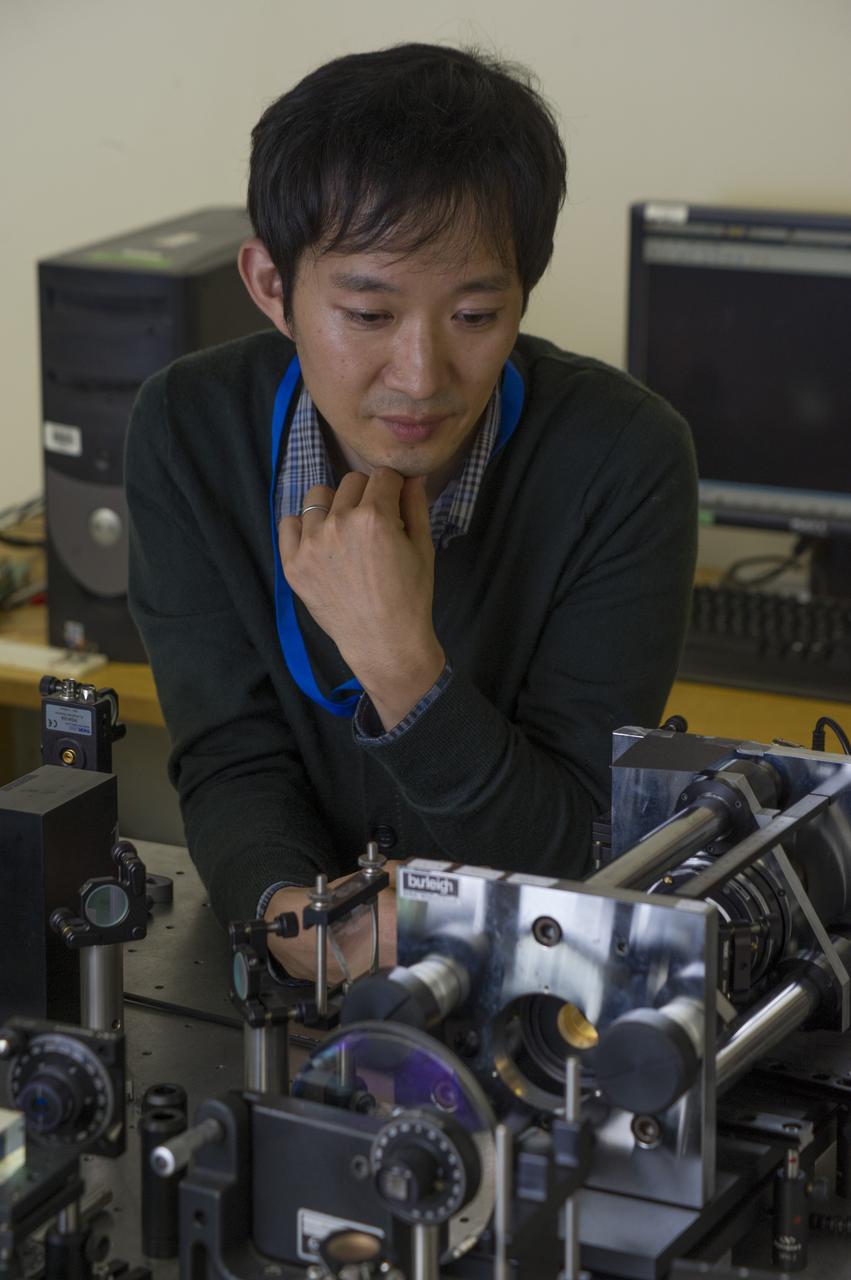
ARMY CONTRACTOR HONGROK CHANG IN THE FAST LIGHT OPTICAL GYROSCOPE LAB
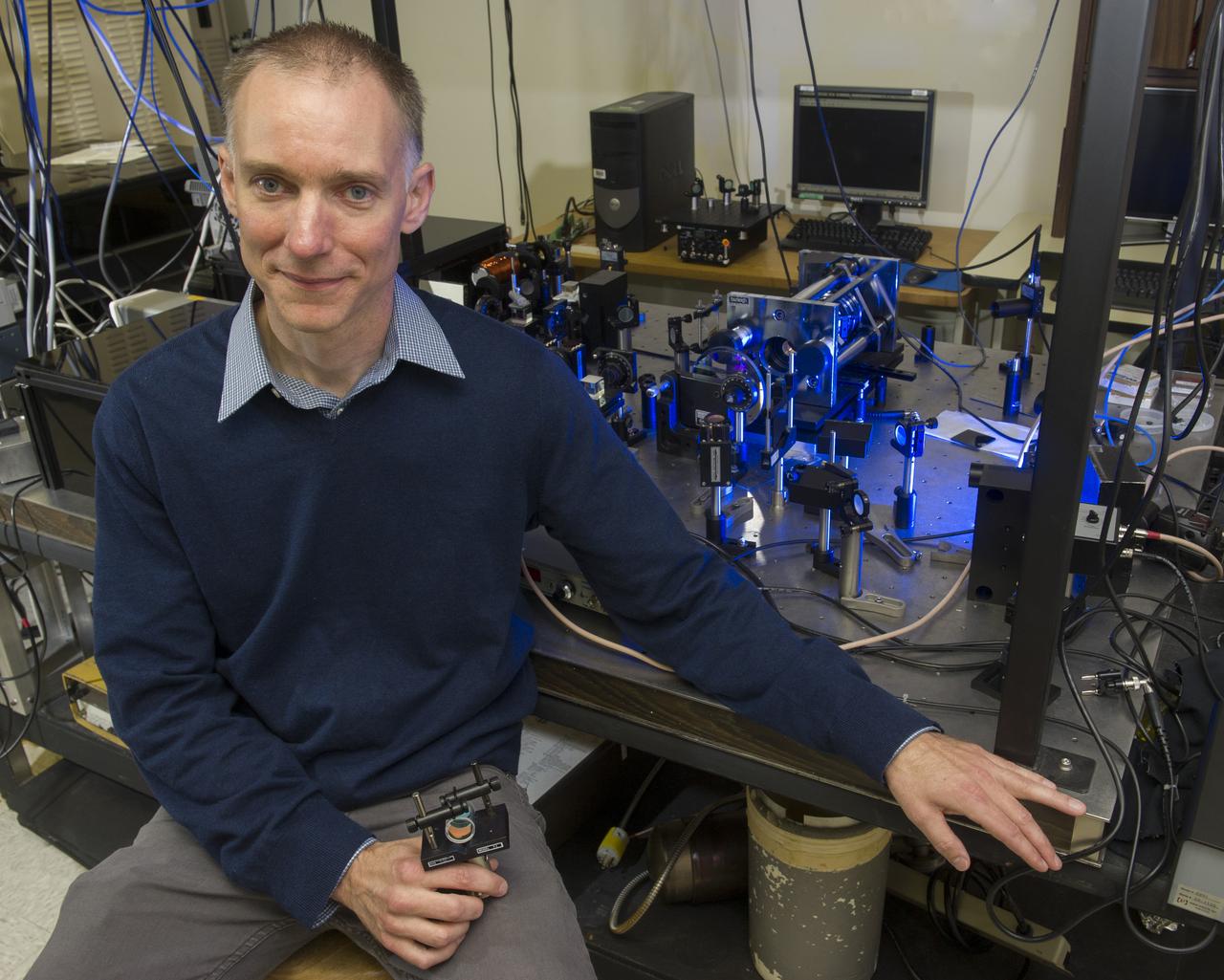
NASA RESEARCHER DR. DAVID SMITH AT NASA’S MARSHALL SPACE FLIGHT CENTER IN HUNTSVILLE, ALA., IS LEADING A THREE-YEAR PROJECT TO REVOLUTIONIZE IN-FLIGHT NAVIGATION SYSTEMS FOR SPACE VEHICLES AND MILITARY AND COMMERCIAL VEHICLES. SMITH AND HIS TEAM SEEK TO REFINE THE HIGHLY SENSITIVE OPTICAL GYROSCOPES THAT DRIVE SPACE VEHICLES’ INERTIAL GUIDANCE SYSTEMS – DELIVERING GYROSCOPES AT LEAST 1,000 TIMES MORE SENSITIVE THAN CURRENT SYSTEMS.

NASA RESEARCHER DR. DAVID SMITH AT NASA’S MARSHALL SPACE FLIGHT CENTER IN HUNTSVILLE, ALA., IS LEADING A THREE-YEAR PROJECT TO REVOLUTIONIZE IN-FLIGHT NAVIGATION SYSTEMS FOR SPACE VEHICLES AND MILITARY AND COMMERCIAL VEHICLES. SMITH AND HIS TEAM SEEK TO REFINE THE HIGHLY SENSITIVE OPTICAL GYROSCOPES THAT DRIVE SPACE VEHICLES’ INERTIAL GUIDANCE SYSTEMS – DELIVERING GYROSCOPES AT LEAST 1,000 TIMES MORE SENSITIVE THAN CURRENT SYSTEMS.
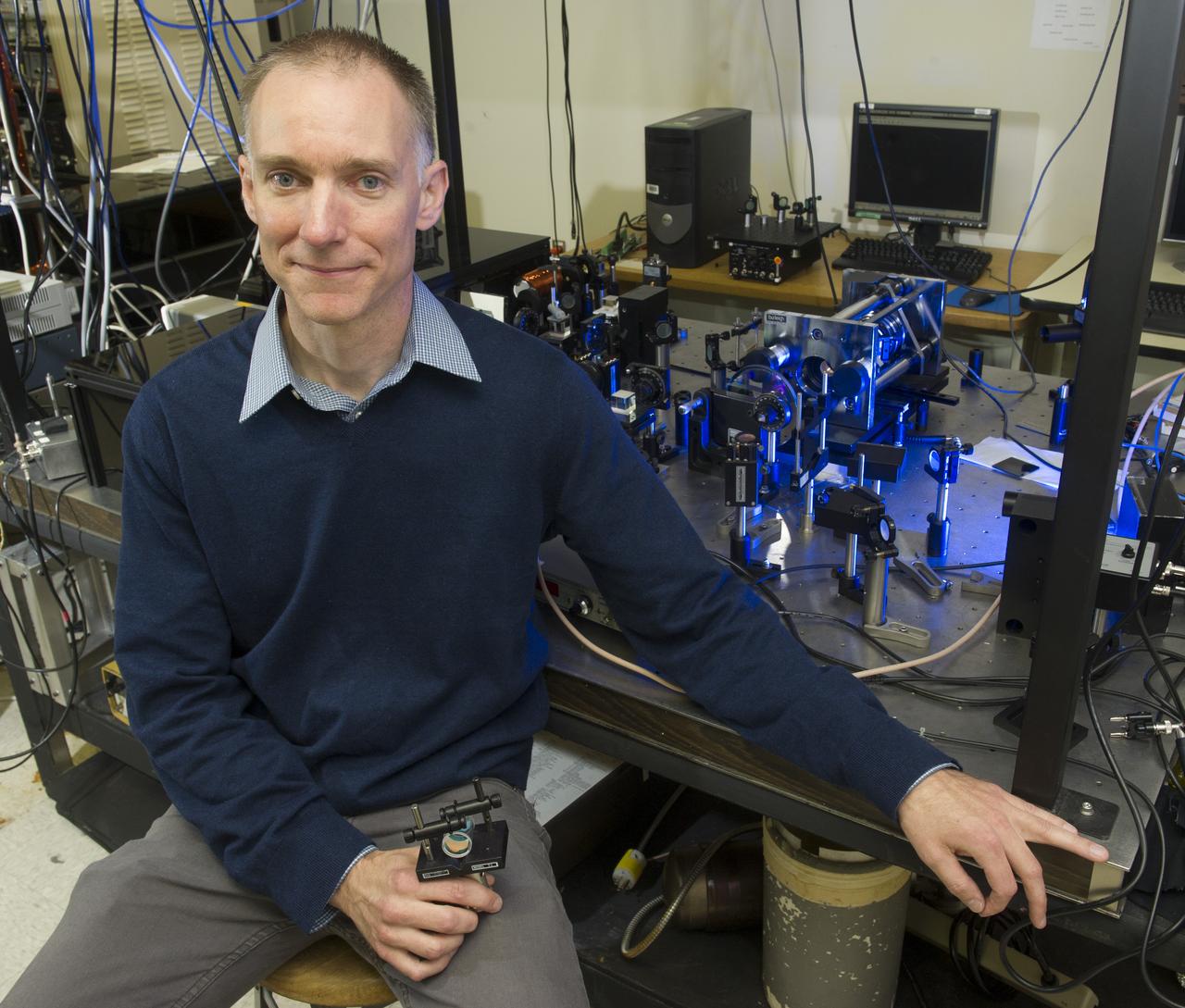
NASA RESEARCHER DR. DAVID SMITH AT NASA’S MARSHALL SPACE FLIGHT CENTER IN HUNTSVILLE, ALA., IS LEADING A THREE-YEAR PROJECT TO REVOLUTIONIZE IN-FLIGHT NAVIGATION SYSTEMS FOR SPACE VEHICLES AND MILITARY AND COMMERCIAL VEHICLES. SMITH AND HIS TEAM SEEK TO REFINE THE HIGHLY SENSITIVE OPTICAL GYROSCOPES THAT DRIVE SPACE VEHICLES’ INERTIAL GUIDANCE SYSTEMS – DELIVERING GYROSCOPES AT LEAST 1,000 TIMES MORE SENSITIVE THAN CURRENT SYSTEMS.
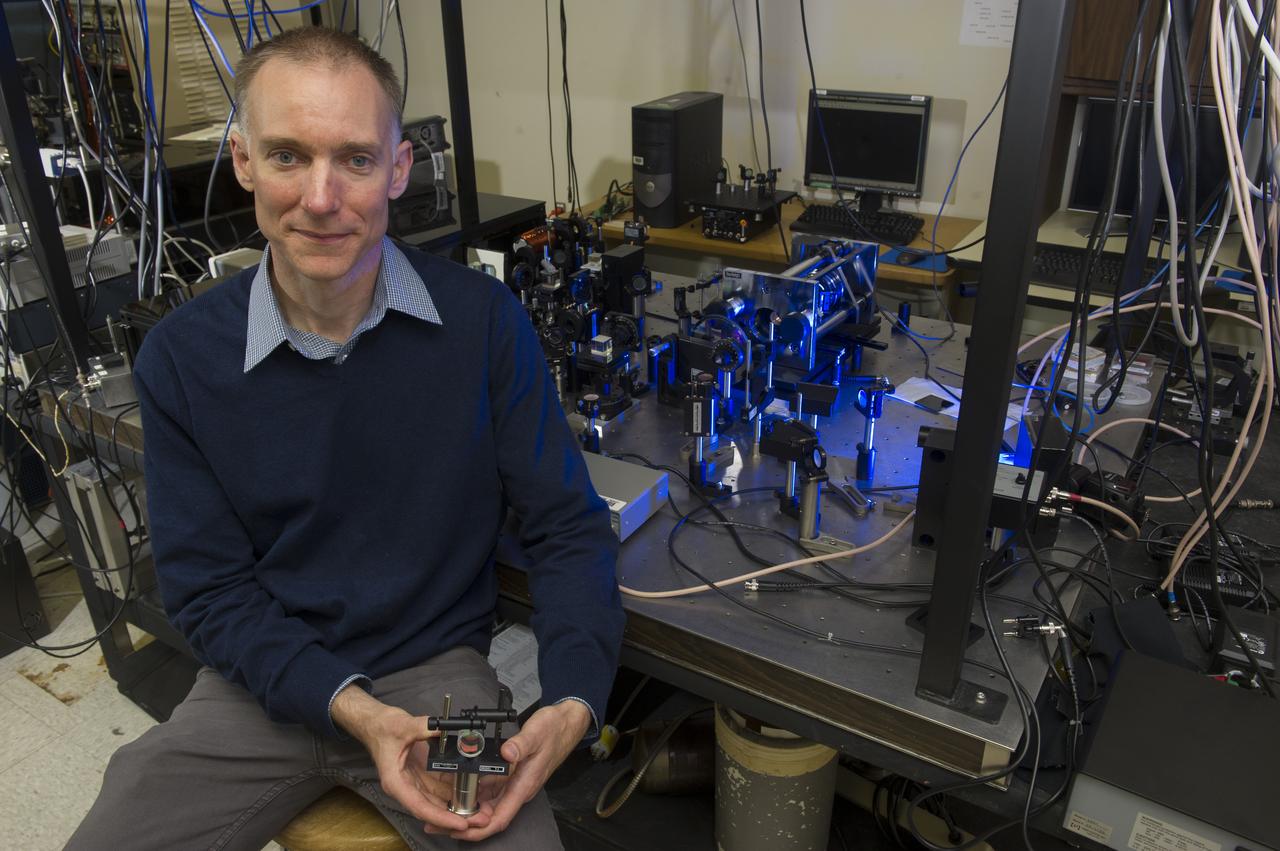
NASA RESEARCHER DR. DAVID SMITH AT NASA’S MARSHALL SPACE FLIGHT CENTER IN HUNTSVILLE, ALA., IS LEADING A THREE-YEAR PROJECT TO REVOLUTIONIZE IN-FLIGHT NAVIGATION SYSTEMS FOR SPACE VEHICLES AND MILITARY AND COMMERCIAL VEHICLES. SMITH AND HIS TEAM SEEK TO REFINE THE HIGHLY SENSITIVE OPTICAL GYROSCOPES THAT DRIVE SPACE VEHICLES’ INERTIAL GUIDANCE SYSTEMS – DELIVERING GYROSCOPES AT LEAST 1,000 TIMES MORE SENSITIVE THAN CURRENT SYSTEMS.
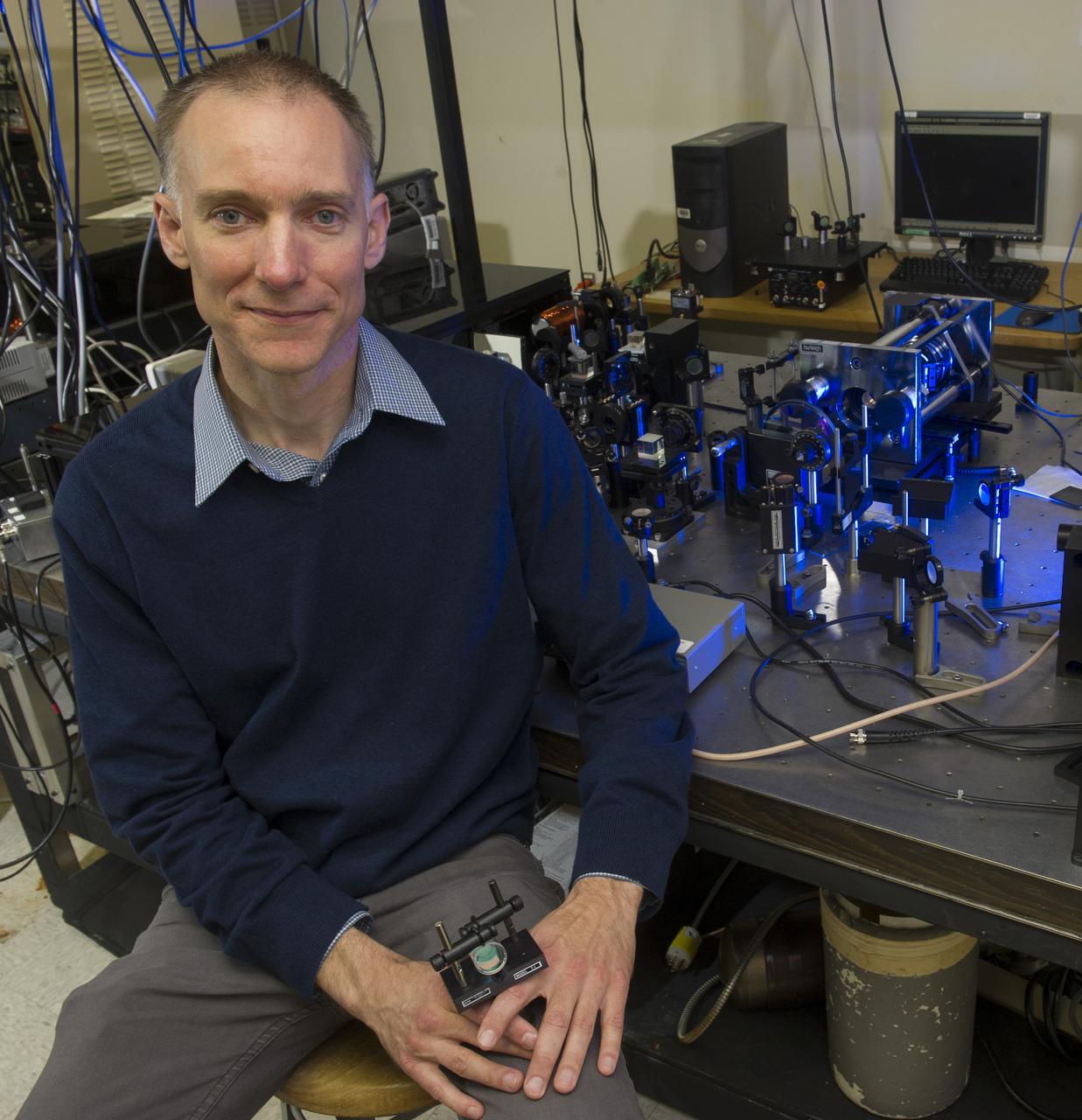
NASA RESEARCHER DR. DAVID SMITH AT NASA’S MARSHALL SPACE FLIGHT CENTER IN HUNTSVILLE, ALA., IS LEADING A THREE-YEAR PROJECT TO REVOLUTIONIZE IN-FLIGHT NAVIGATION SYSTEMS FOR SPACE VEHICLES AND MILITARY AND COMMERCIAL VEHICLES. SMITH AND HIS TEAM SEEK TO REFINE THE HIGHLY SENSITIVE OPTICAL GYROSCOPES THAT DRIVE SPACE VEHICLES’ INERTIAL GUIDANCE SYSTEMS – DELIVERING GYROSCOPES AT LEAST 1,000 TIMES MORE SENSITIVE THAN CURRENT SYSTEMS.
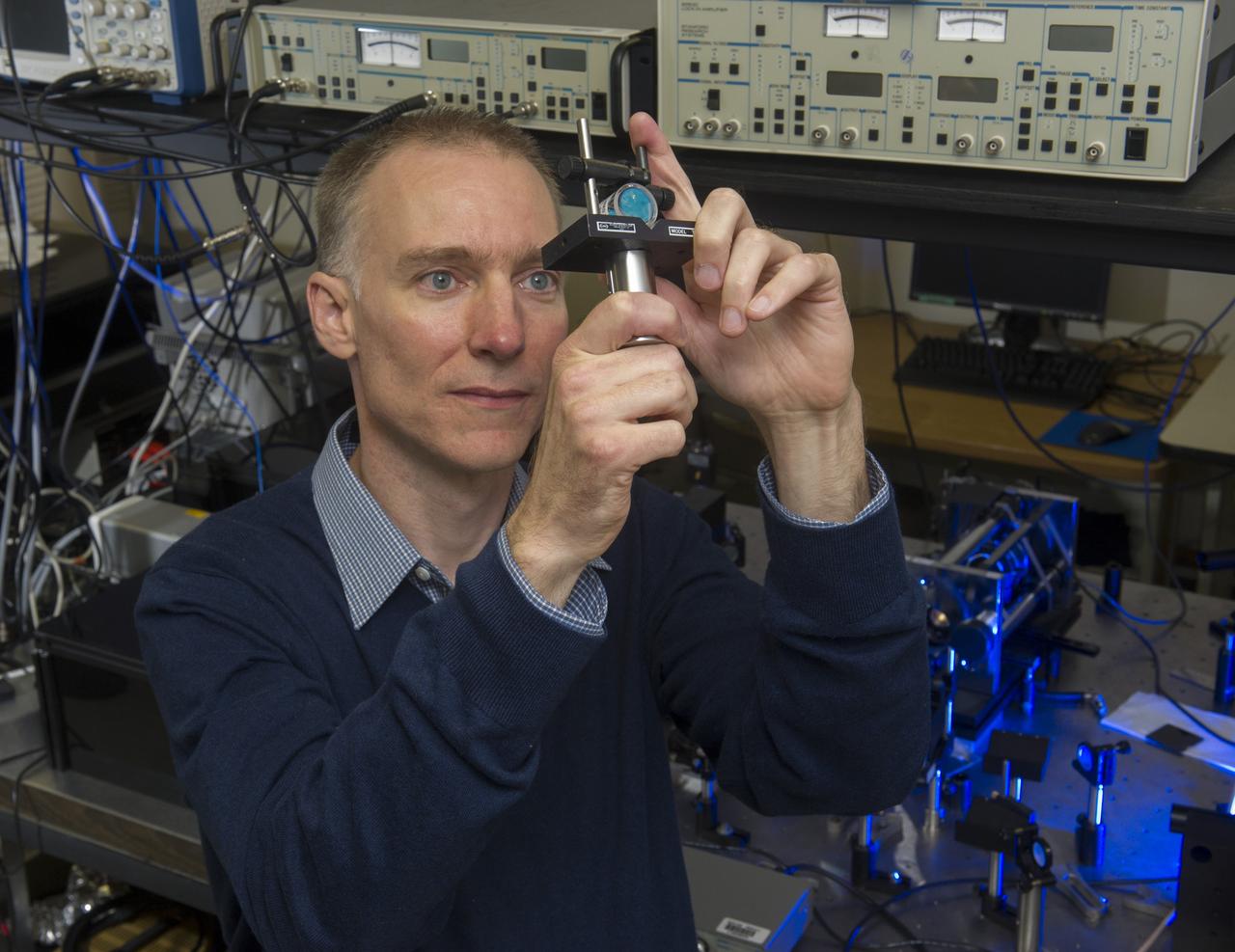
NASA RESEARCHER DR. DAVID SMITH AT NASA’S MARSHALL SPACE FLIGHT CENTER IN HUNTSVILLE, ALA., IS LEADING A THREE-YEAR PROJECT TO REVOLUTIONIZE IN-FLIGHT NAVIGATION SYSTEMS FOR SPACE VEHICLES AND MILITARY AND COMMERCIAL VEHICLES. SMITH AND HIS TEAM SEEK TO REFINE THE HIGHLY SENSITIVE OPTICAL GYROSCOPES THAT DRIVE SPACE VEHICLES’ INERTIAL GUIDANCE SYSTEMS – DELIVERING GYROSCOPES AT LEAST 1,000 TIMES MORE SENSITIVE THAN CURRENT SYSTEMS.

In the Space Station Processing Facility, STS-98 Mission Specialist Marsha Ivins wields a tool on part of the U.S. Lab, Destiny. The crew is checking out equipment inside the lab as part of Crew Equipment Interface Test activities, becoming familiar with equipment it will be handling during the mission. Others in the crew are Commander Ken Cockrell, Pilot Mark Polansky and Mission Specialists Robert Curbeam and Thomas Jones. The mission will be transporting the Lab to the International Space Station with five system racks already installed inside of the module. With delivery of electronics in the lab, electrically powered attitude control for Control Moment Gyroscopes will be activated. The STS-98 launch is scheduled for Jan. 18, 2001
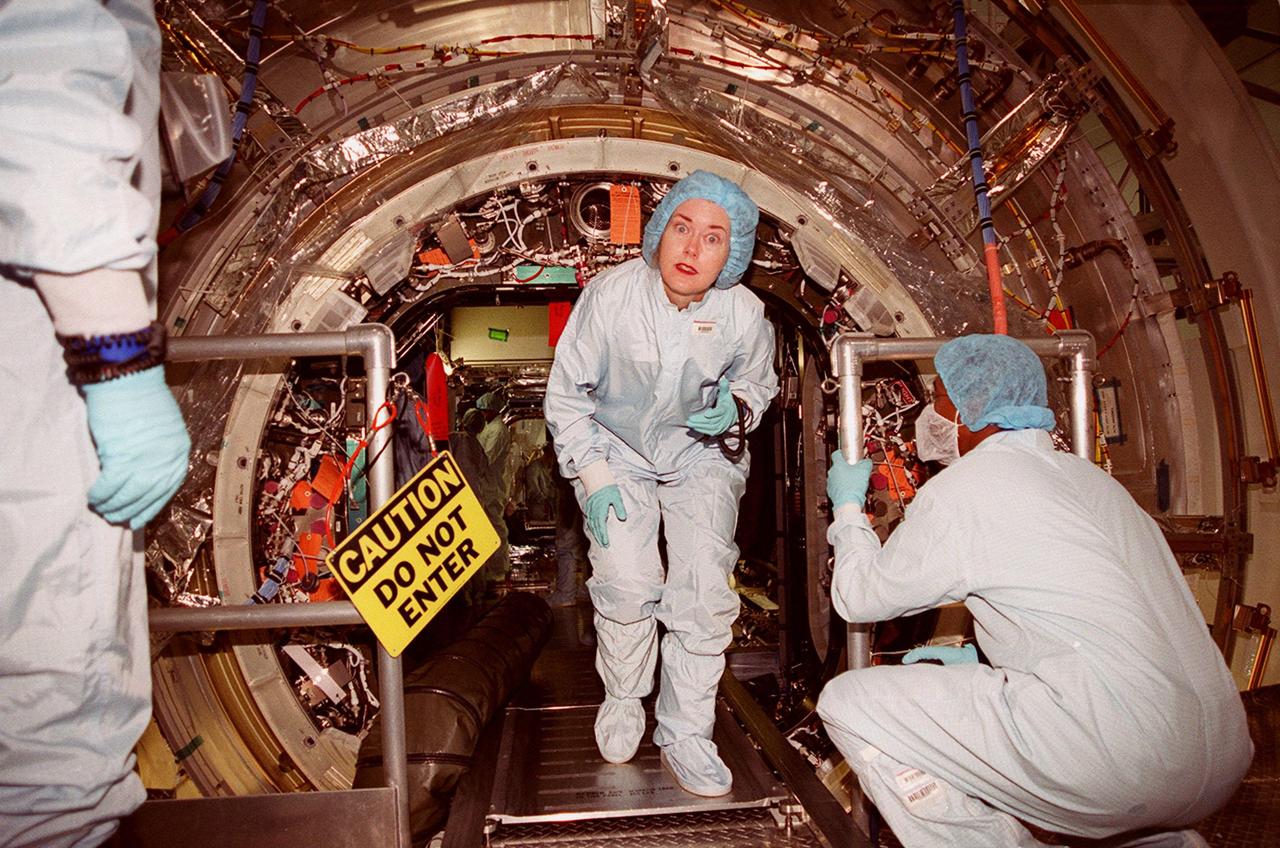
In the Space Station Processing Facility, a worker is surprised by the camera as she exits the U.S. Lab, Destiny. Inside the lab is the STS-98 crew, which is taking part in Crew Equipment Interface Test activities, becoming familiar with equipment it will be handling during the mission. The crew comprises Commander Ken Cockrell, Pilot Mark Polansky and Mission Specialists Robert Curbeam, Thomas Jones and Marsha Ivins. The mission will be transporting the Lab to the International Space Station with five system racks already installed inside of the module. With delivery of electronics in the lab, electrically powered attitude control for Control Moment Gyroscopes will be activated. The STS-98 launch is scheduled for Jan. 18, 2001
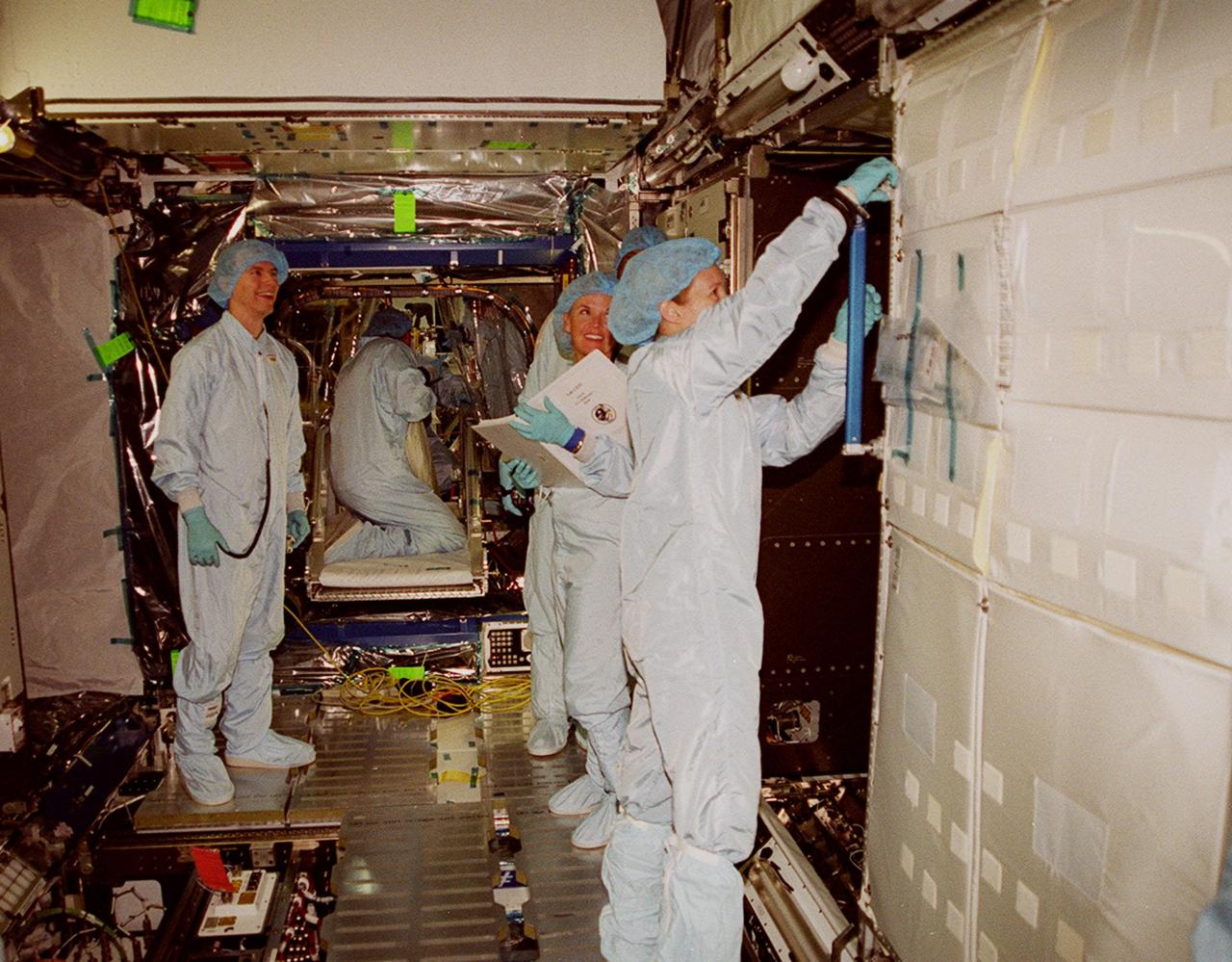
In the Space Station Processing Facility, STS-98 Mission Specialist Marsha Ivins maneuvers a part of the U.S. Lab, Destiny. The crew is checking out equipment inside the lab as part of Crew Equipment Interface Test activities, becoming familiar with equipment it will be handling during the mission. Others in the crew are Commander Ken Cockrell, Pilot Mark Polansky and Mission Specialists Robert Curbeam and Thomas Jones. The mission will be transporting the Lab to the International Space Station with five system racks already installed inside of the module. With delivery of electronics in the lab, electrically powered attitude control for Control Moment Gyroscopes will be activated. The STS-98 launch is scheduled for Jan. 18, 2001
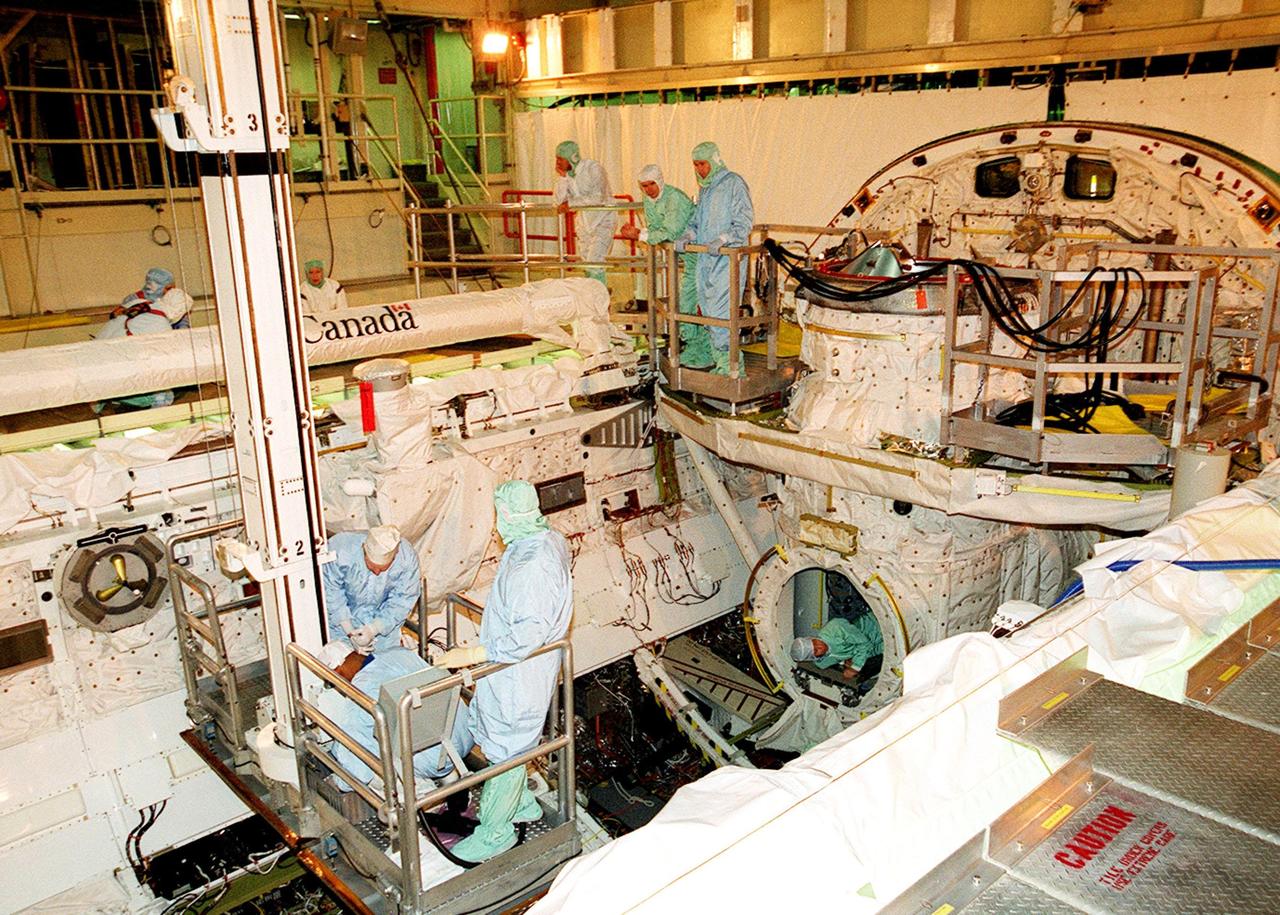
KENNEDY SPACE CENTER, FLA. -- The STS-98 crew looks over components of the equipment already installed in the payload bay of orbiter Atlantis, which is in the Orbiter Processing Facility bay 3. The crew is at KSC for Crew Equipment Interface Test activities. Launch on mission STS-98 is scheduled for Jan. 18, 2001. It will be transporting the U.S. Lab, Destiny, to the International Space Station with five system racks already installed inside of the module. After delivery of electronics in the lab, electrically powered attitude control for Control Moment Gyroscopes will be activated
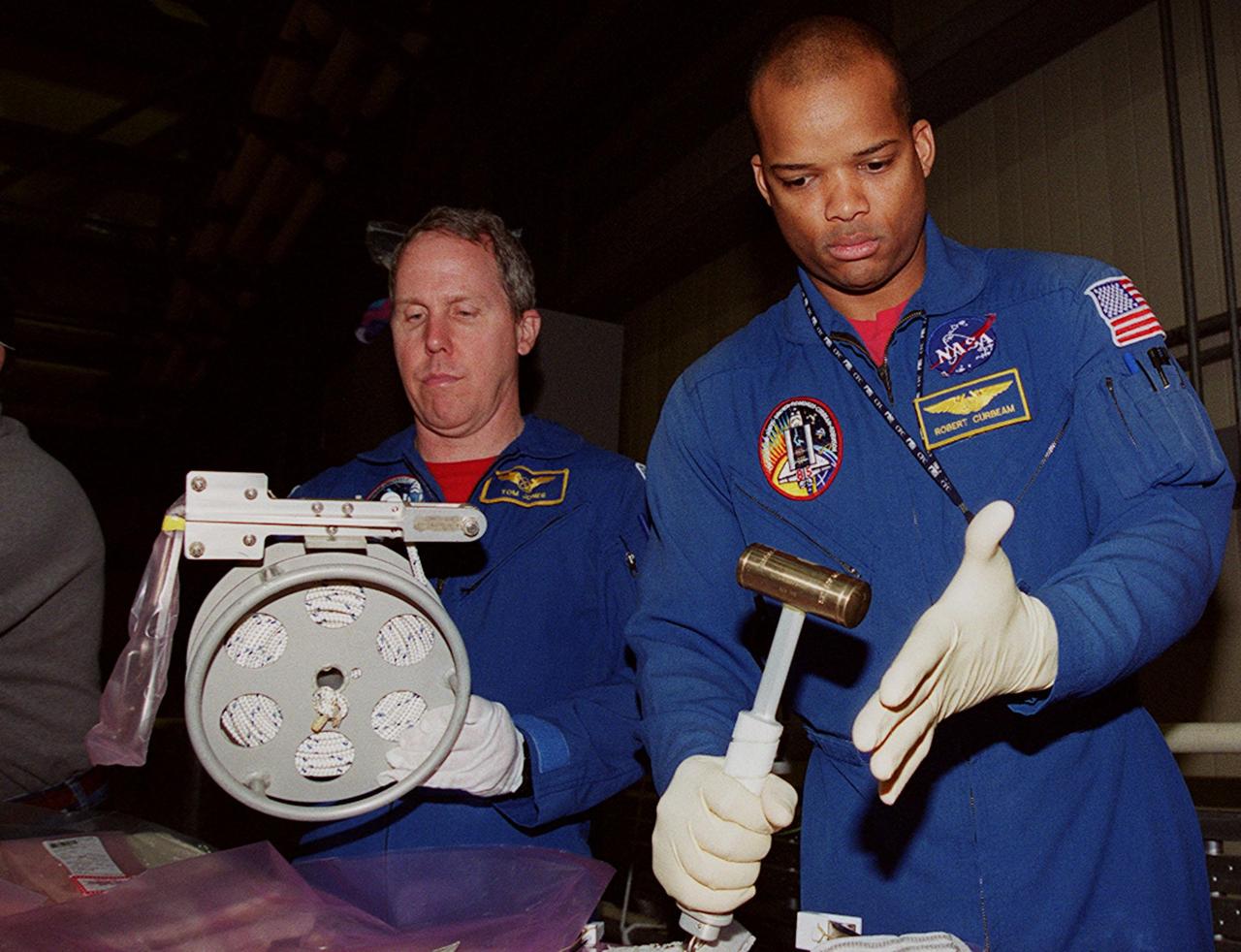
KENNEDY SPACE CENTER, FLA. -- In Orbiter Processing Facility bay 3, STS-98 Mission Specialists Tom Jones and Robert Curbeam test tools that will be used during extravehicular activities (EVA) on their mission. Scheduled for launch Jan. 18, 2001, STS-98 will be transporting the U.S. Lab, Destiny, to the International Space Station with five system racks already installed inside of the module. After delivery of electronics in the lab, electrically powered attitude control for Control Moment Gyroscopes will be activated
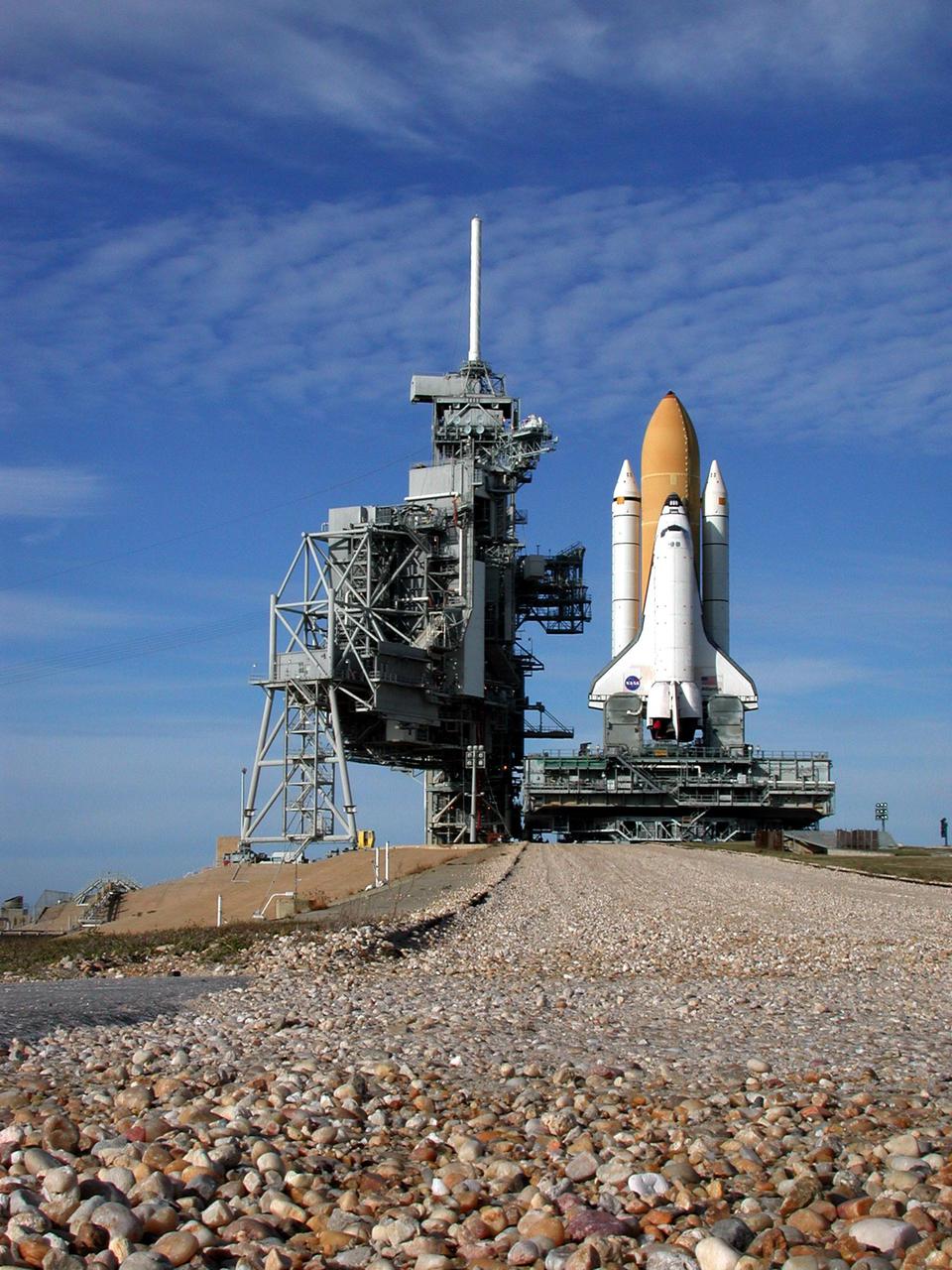
KENNEDY SPACE CENTER, Fla. -- At the top of the incline to Launch Pad 39A, Space Shuttle Atlantis nears the Rotating Service Structure (left). Atlantis will fly on mission STS-98, the seventh construction flight to the International Space Station, carrying the U.S. Laboratory, named Destiny. The lab will have five system racks already installed inside the module. After delivery of electronics in the lab, electrically powered attitude control for Control Moment Gyroscopes will be activated. Atlantis is scheduled for launch no earlier than Jan. 19, 2001, with a crew of five
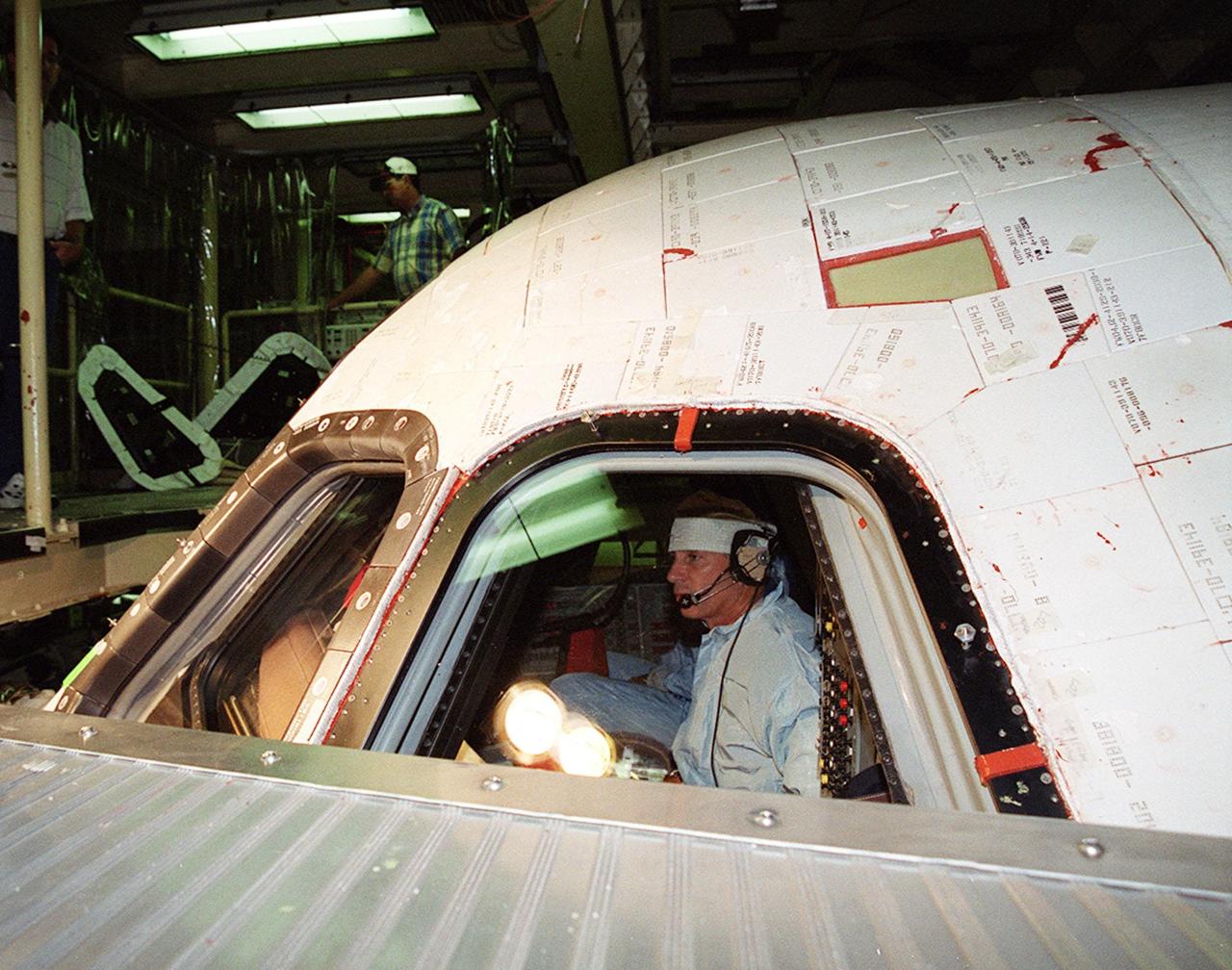
KENNEDY SPACE CENTER, FLA. -- In Orbiter Processing Facility bay 3, STS-98 Commander Ken Cockrell conducts window inspection, checking for leaks, in the cockpit of Atlantis. He and the rest of the crew are at KSC for Crew Equipment Interface Test activities. Launch on mission STS-98 is scheduled for Jan. 18, 2001. It will be transporting the U.S. Lab, Destiny, to the International Space Station with five system racks already installed inside of the module. After delivery of electronics in the lab, electrically powered attitude control for Control Moment Gyroscopes will be activated
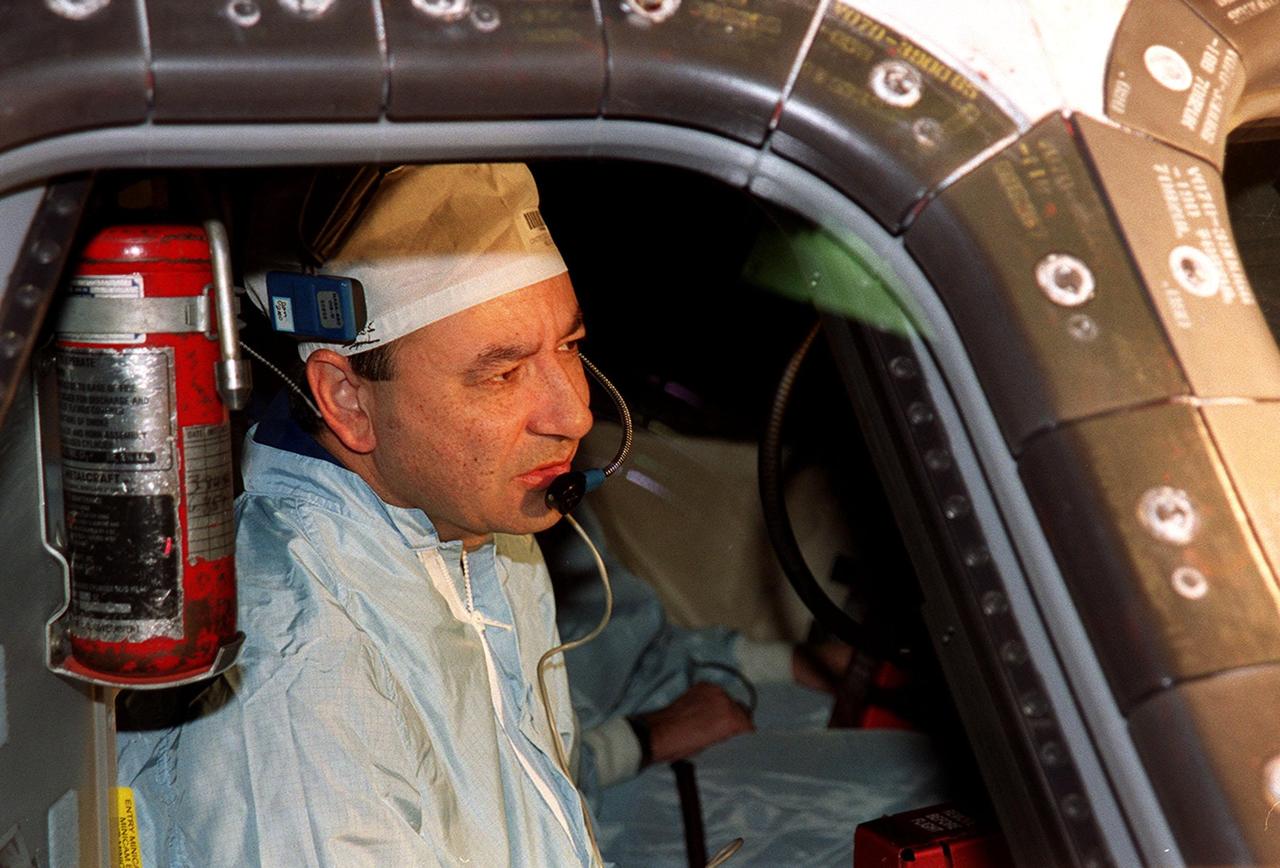
KENNEDY SPACE CENTER, FLA. -- In Orbiter Processing Facility bay 3, STS-98 Pilot Mark Polansky inspects the window in the cockpit of Atlantis. He and the rest of the crew are at KSC for Crew Equipment Interface Test activities. Launch on mission STS-98 is scheduled for Jan. 18, 2001. It will be transporting the U.S. Lab, Destiny, to the International Space Station with five system racks already installed inside of the module. After delivery of electronics in the lab, electrically powered attitude control for Control Moment Gyroscopes will be activated
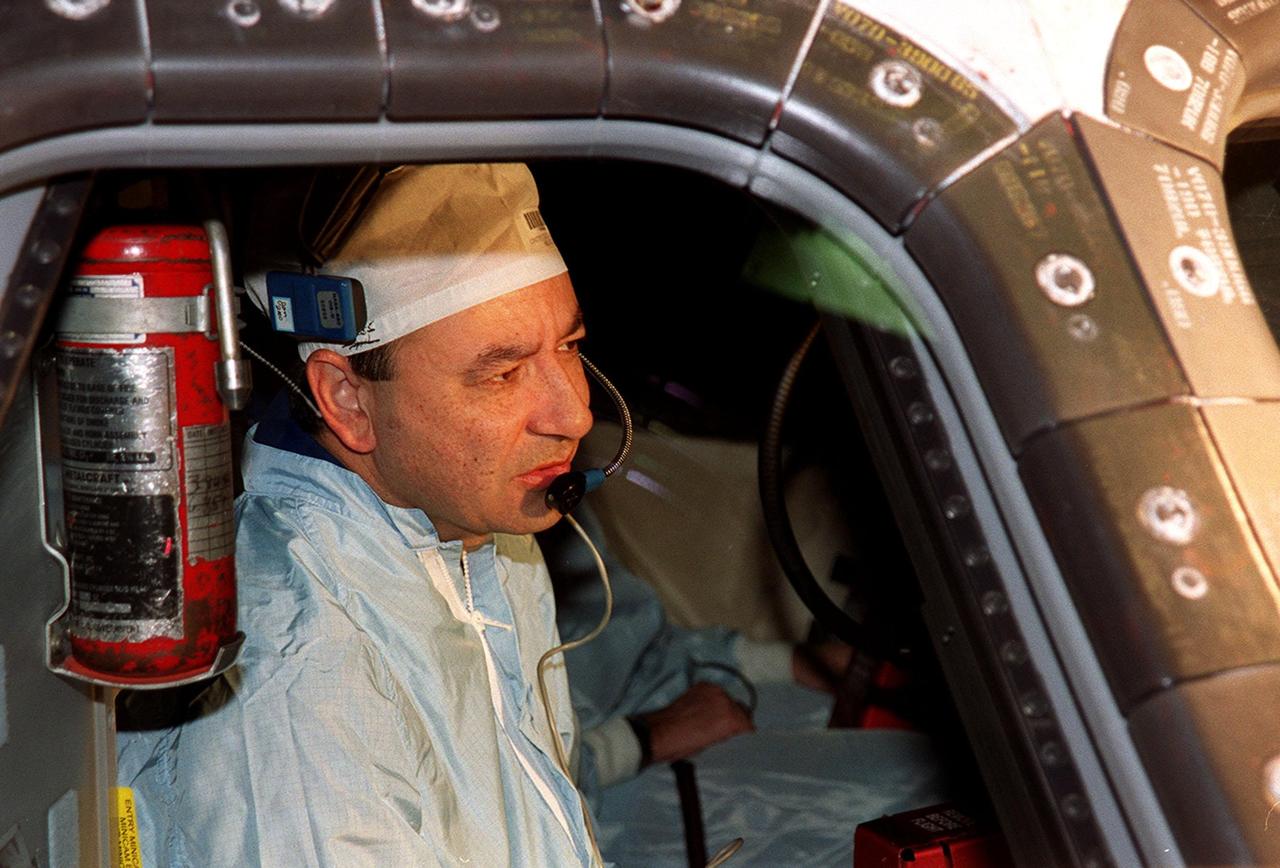
KENNEDY SPACE CENTER, FLA. -- In Orbiter Processing Facility bay 3, STS-98 Pilot Mark Polansky inspects the window in the cockpit of Atlantis. He and the rest of the crew are at KSC for Crew Equipment Interface Test activities. Launch on mission STS-98 is scheduled for Jan. 18, 2001. It will be transporting the U.S. Lab, Destiny, to the International Space Station with five system racks already installed inside of the module. After delivery of electronics in the lab, electrically powered attitude control for Control Moment Gyroscopes will be activated
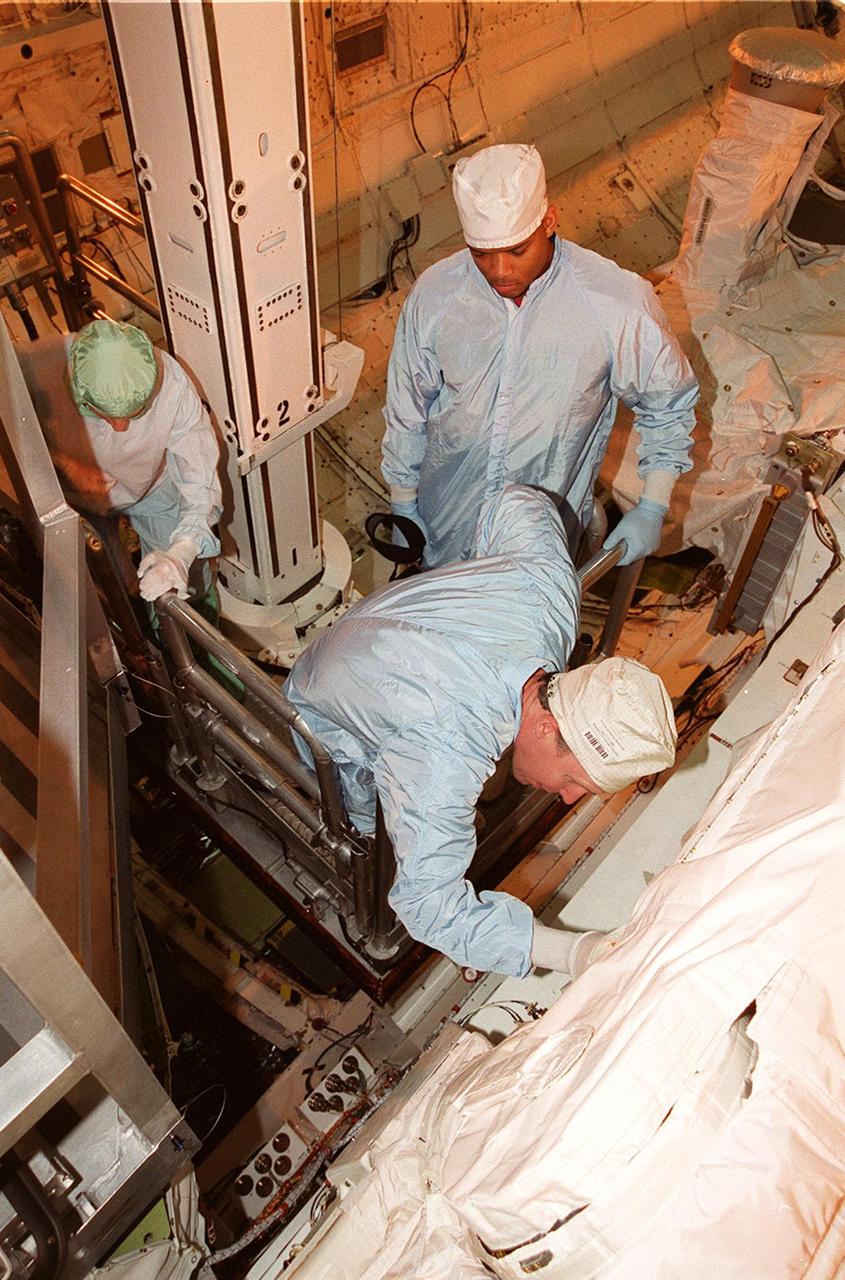
KENNEDY SPACE CENTER, FLA. -- Working on the Orbiter Docking System of orbiter Atlantis are Mission Specialists Tom Jones (leaning over) and Robert Curbeam. They and the rest of the crew are at KSC for Crew Equipment Interface Test activities. Launch on mission STS-98 is scheduled for Jan. 18, 2001. It will be transporting the U.S. Lab, Destiny, to the International Space Station with five system racks already installed inside of the module. After delivery of electronics in the lab, electrically powered attitude control for Control Moment Gyroscopes will be activated
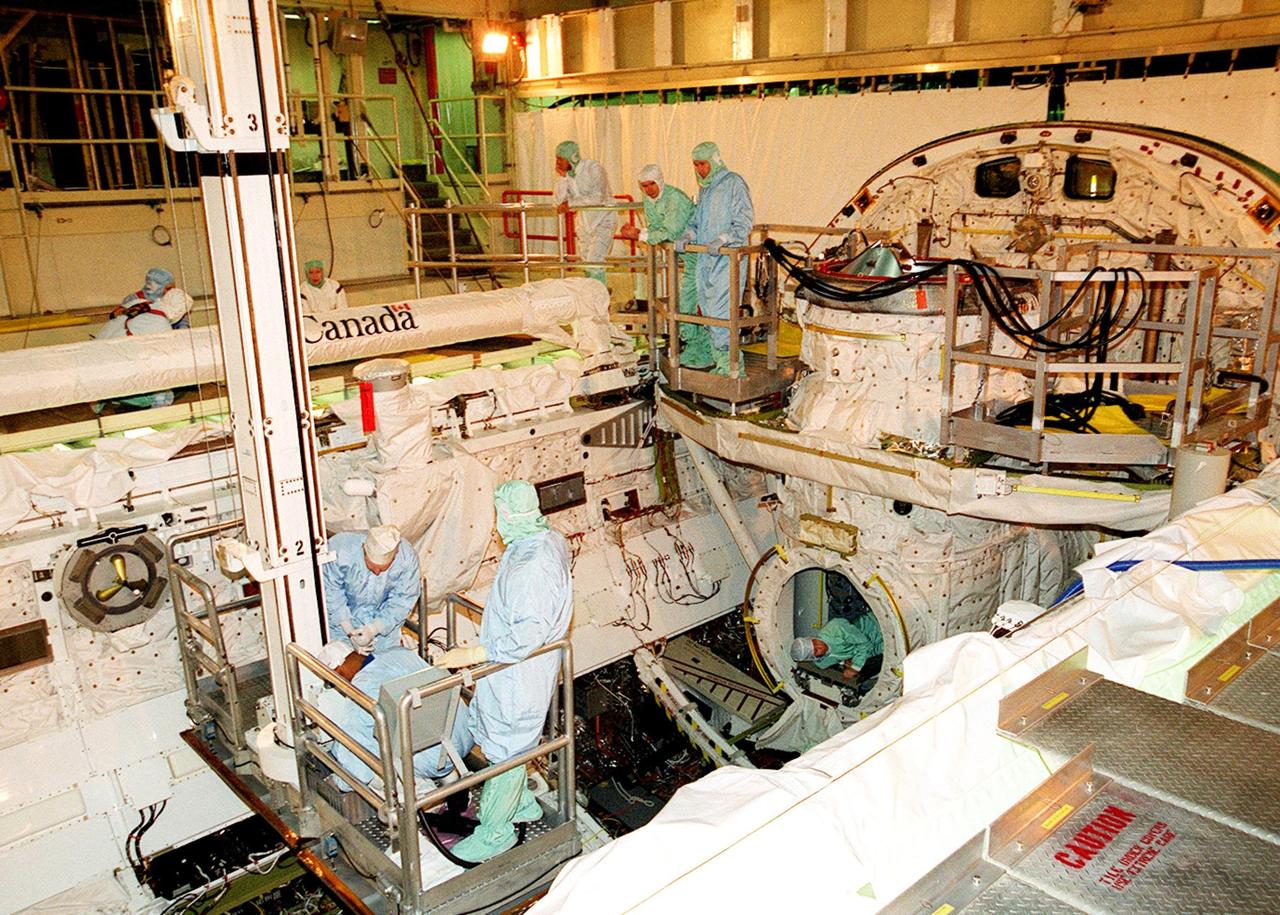
KENNEDY SPACE CENTER, FLA. -- The STS-98 crew looks over components of the equipment already installed in the payload bay of orbiter Atlantis, which is in the Orbiter Processing Facility bay 3. The crew is at KSC for Crew Equipment Interface Test activities. Launch on mission STS-98 is scheduled for Jan. 18, 2001. It will be transporting the U.S. Lab, Destiny, to the International Space Station with five system racks already installed inside of the module. After delivery of electronics in the lab, electrically powered attitude control for Control Moment Gyroscopes will be activated
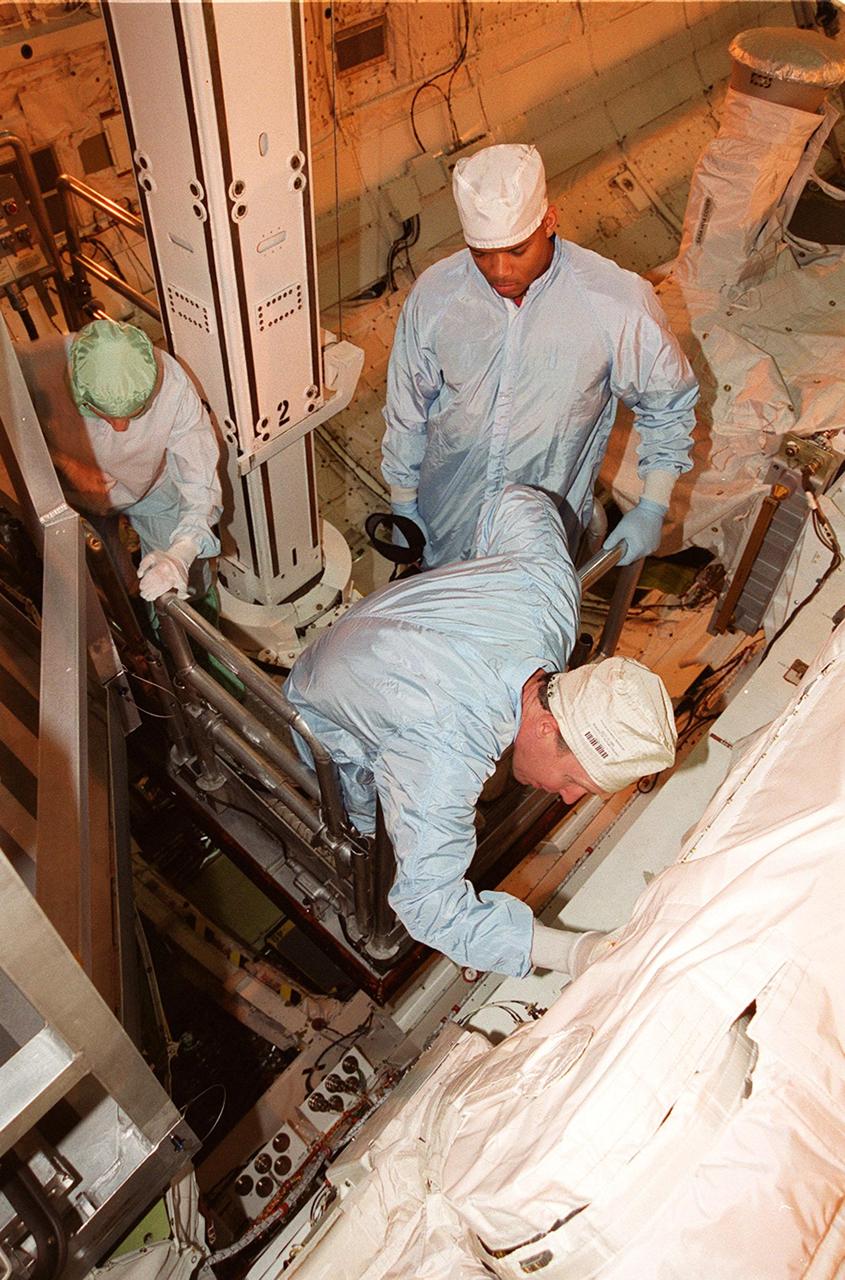
KENNEDY SPACE CENTER, FLA. -- Working on the Orbiter Docking System of orbiter Atlantis are Mission Specialists Tom Jones (leaning over) and Robert Curbeam. They and the rest of the crew are at KSC for Crew Equipment Interface Test activities. Launch on mission STS-98 is scheduled for Jan. 18, 2001. It will be transporting the U.S. Lab, Destiny, to the International Space Station with five system racks already installed inside of the module. After delivery of electronics in the lab, electrically powered attitude control for Control Moment Gyroscopes will be activated
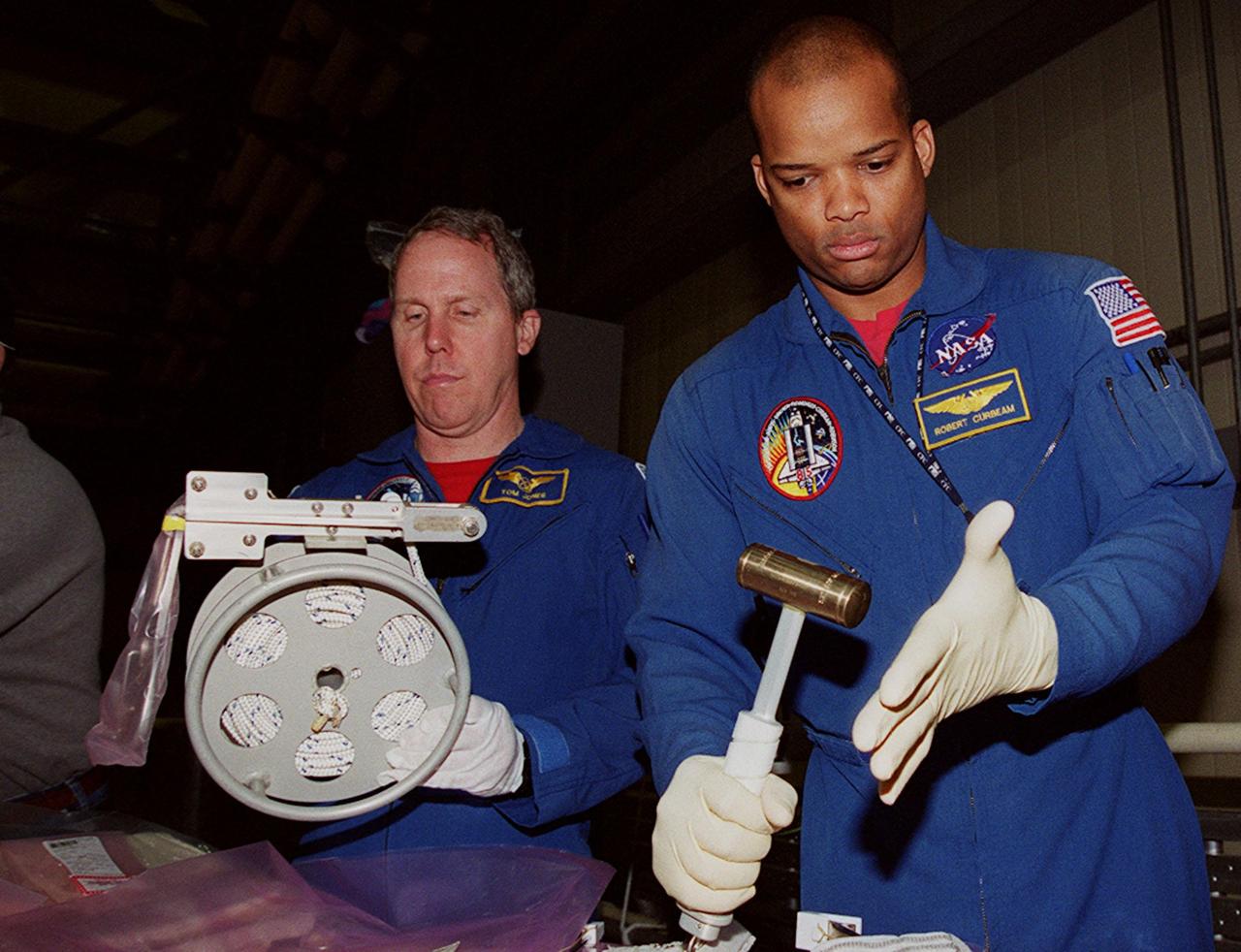
KENNEDY SPACE CENTER, FLA. -- In Orbiter Processing Facility bay 3, STS-98 Mission Specialists Tom Jones and Robert Curbeam test tools that will be used during extravehicular activities (EVA) on their mission. Scheduled for launch Jan. 18, 2001, STS-98 will be transporting the U.S. Lab, Destiny, to the International Space Station with five system racks already installed inside of the module. After delivery of electronics in the lab, electrically powered attitude control for Control Moment Gyroscopes will be activated
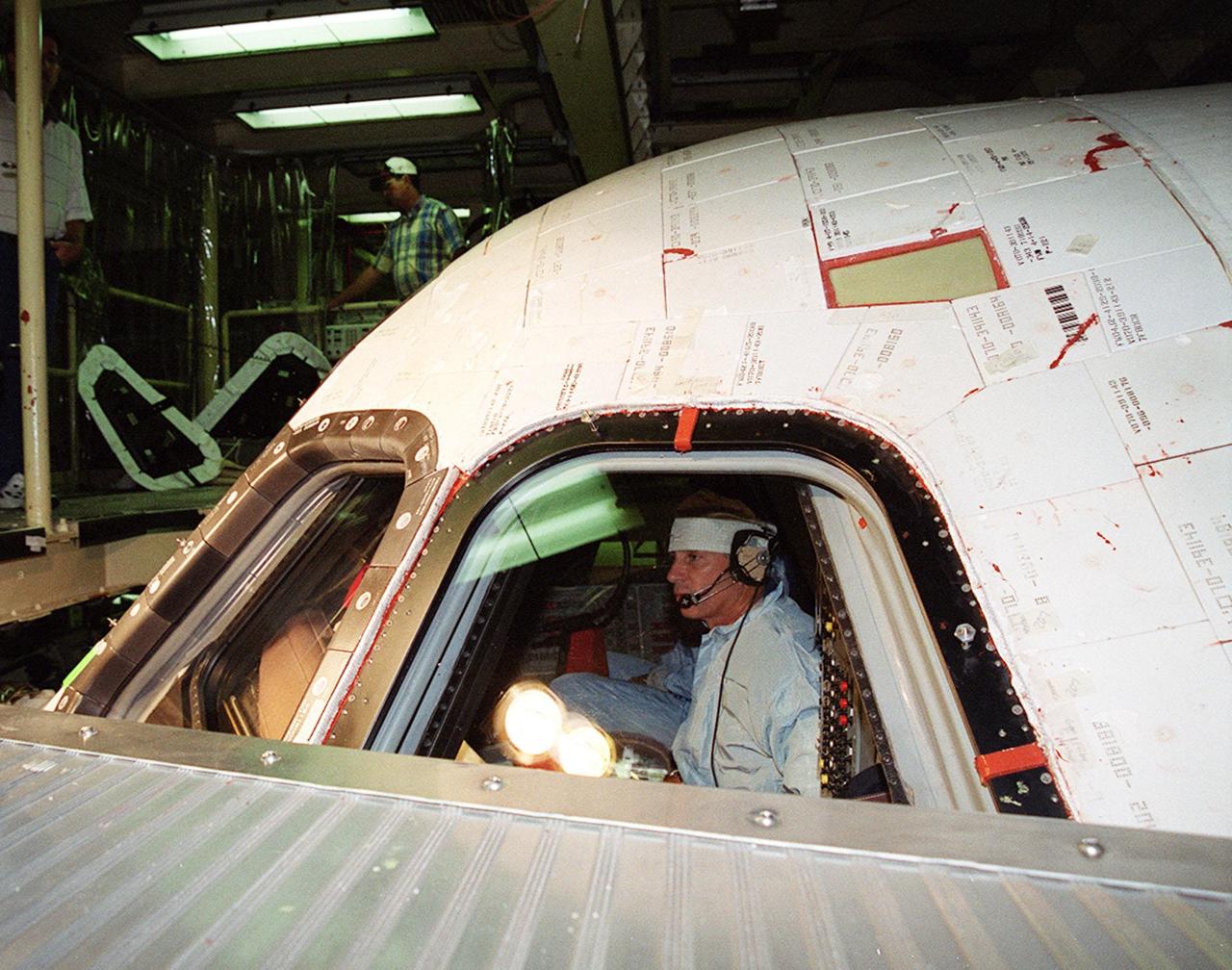
KENNEDY SPACE CENTER, FLA. -- In Orbiter Processing Facility bay 3, STS-98 Commander Ken Cockrell conducts window inspection, checking for leaks, in the cockpit of Atlantis. He and the rest of the crew are at KSC for Crew Equipment Interface Test activities. Launch on mission STS-98 is scheduled for Jan. 18, 2001. It will be transporting the U.S. Lab, Destiny, to the International Space Station with five system racks already installed inside of the module. After delivery of electronics in the lab, electrically powered attitude control for Control Moment Gyroscopes will be activated
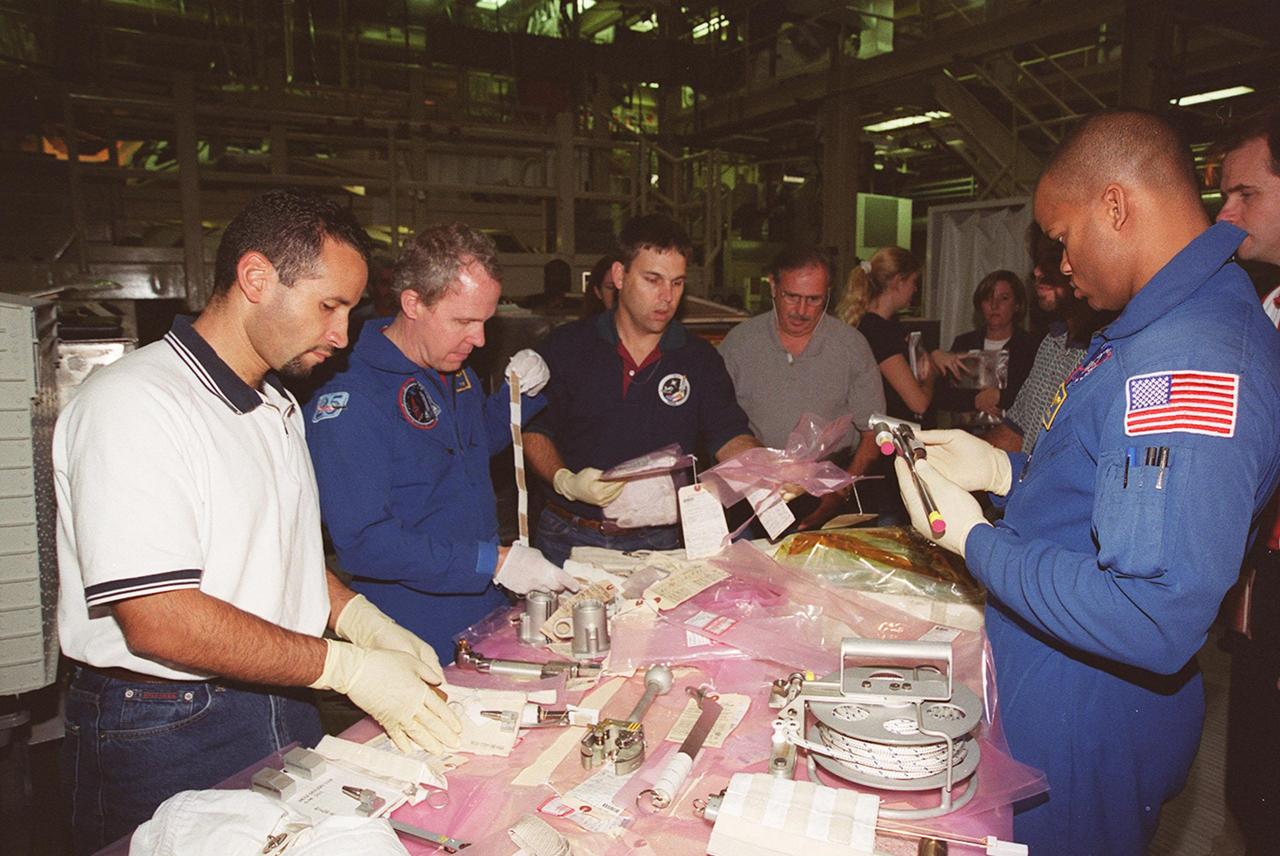
KENNEDY SPACE CENTER, FLA. -- In Orbiter Processing Facility bay 3, STS-98 Mission Specialists Tom Jones (second from left) and Robert Curbeam (right) test tools that will be used during extravehicular activities (EVA) on their mission. Scheduled for launch Jan. 18, 2001, STS-98 will be transporting the U.S. Lab, Destiny, to the International Space Station with five system racks already installed inside of the module. After delivery of electronics in the lab, electrically powered attitude control for Control Moment Gyroscopes will be activated
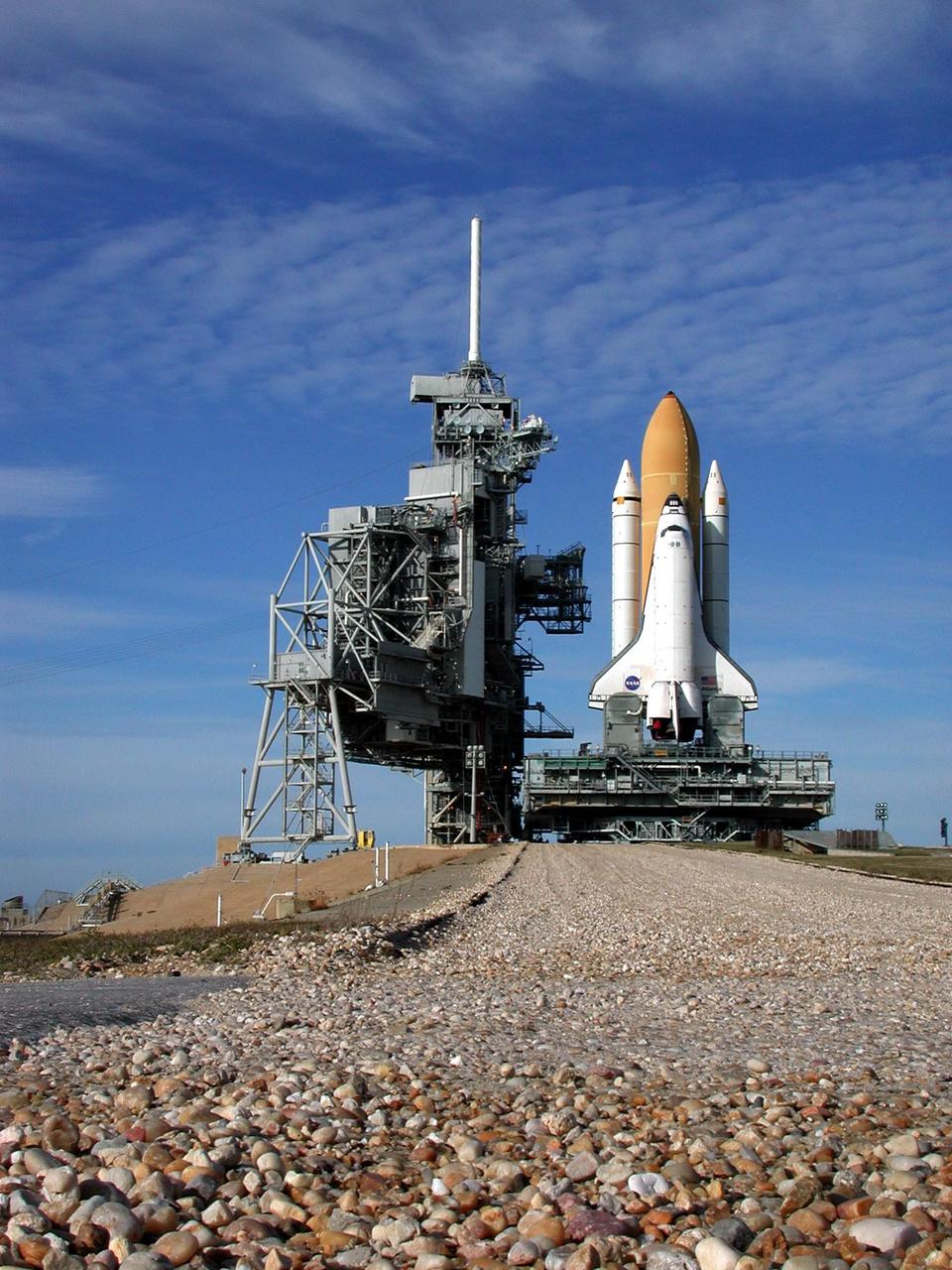
KENNEDY SPACE CENTER, Fla. -- At the top of the incline to Launch Pad 39A, Space Shuttle Atlantis nears the Rotating Service Structure (left). Atlantis will fly on mission STS-98, the seventh construction flight to the International Space Station, carrying the U.S. Laboratory, named Destiny. The lab will have five system racks already installed inside the module. After delivery of electronics in the lab, electrically powered attitude control for Control Moment Gyroscopes will be activated. Atlantis is scheduled for launch no earlier than Jan. 19, 2001, with a crew of five
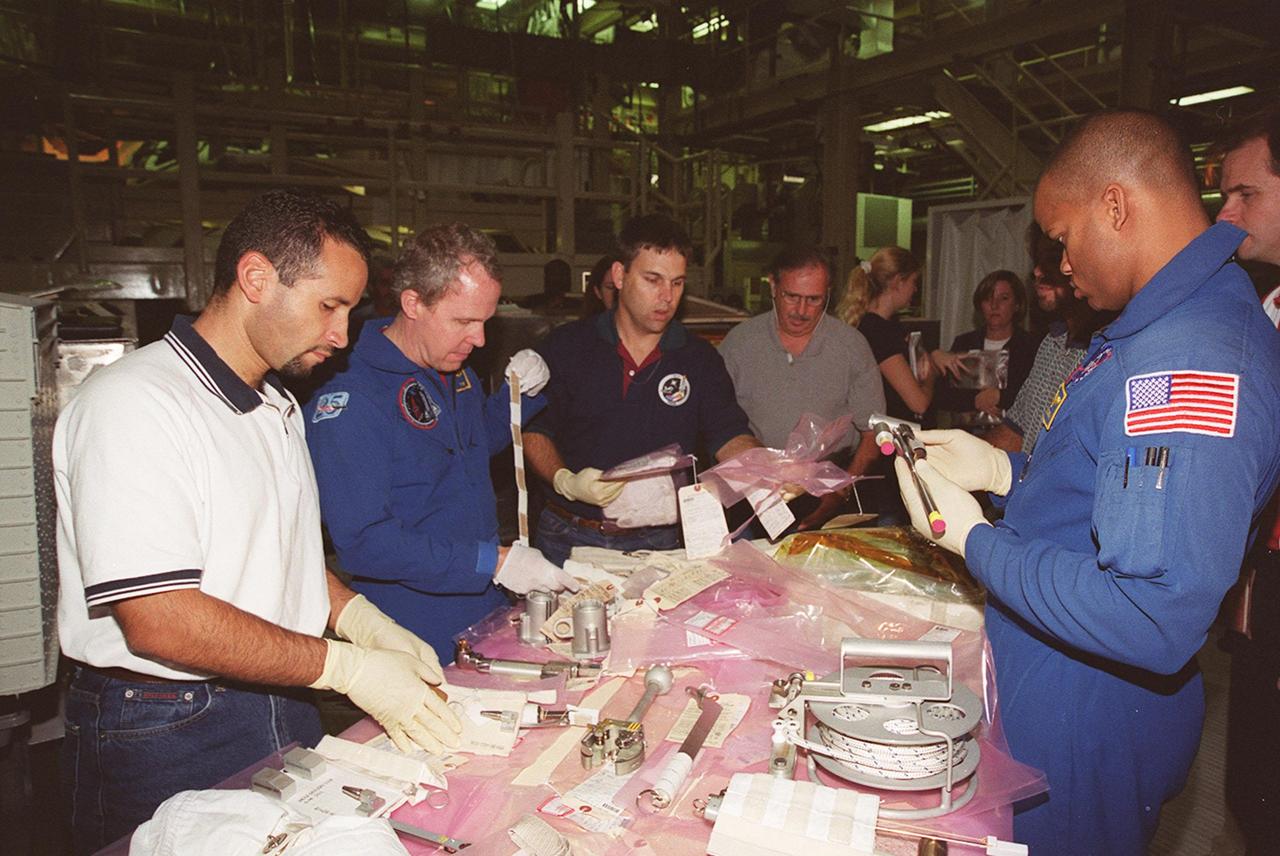
KENNEDY SPACE CENTER, FLA. -- In Orbiter Processing Facility bay 3, STS-98 Mission Specialists Tom Jones (second from left) and Robert Curbeam (right) test tools that will be used during extravehicular activities (EVA) on their mission. Scheduled for launch Jan. 18, 2001, STS-98 will be transporting the U.S. Lab, Destiny, to the International Space Station with five system racks already installed inside of the module. After delivery of electronics in the lab, electrically powered attitude control for Control Moment Gyroscopes will be activated
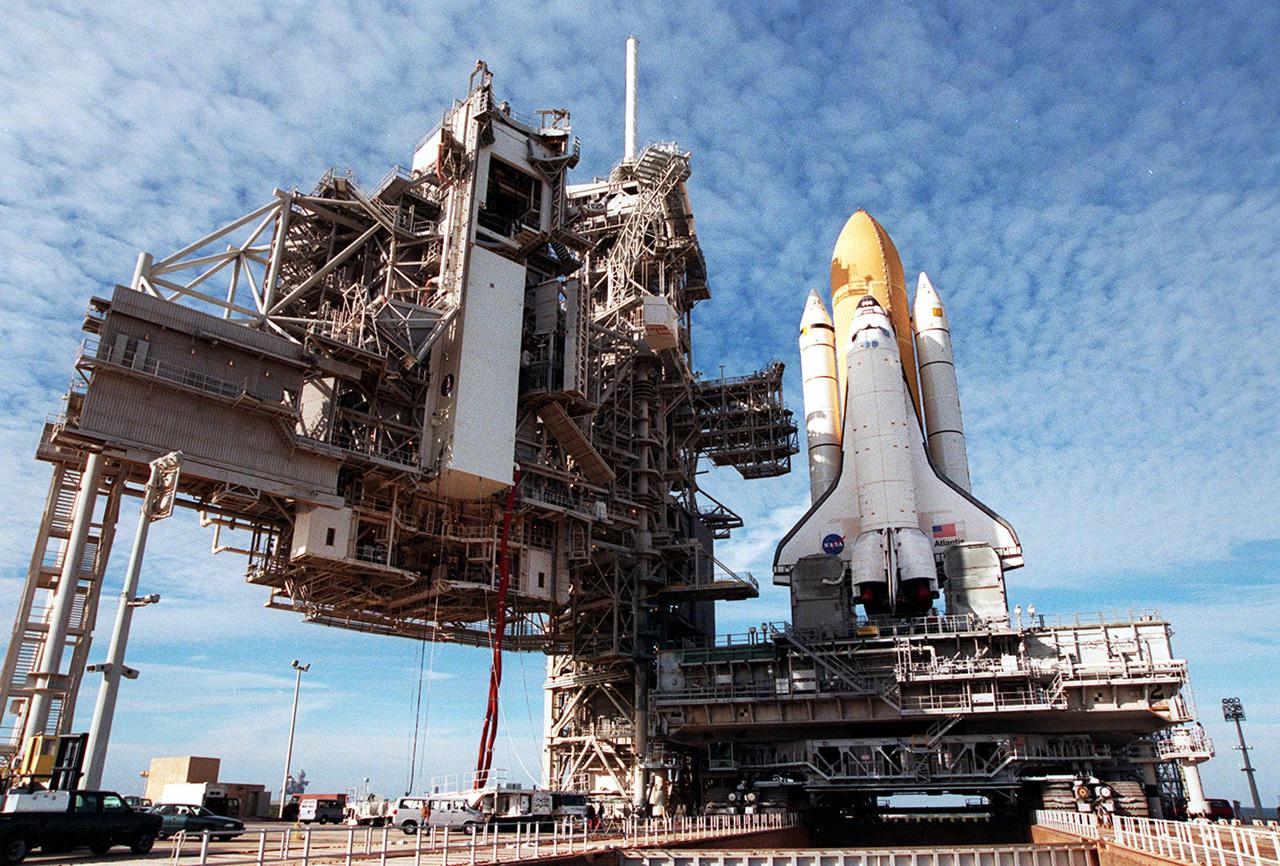
KENNEDY SPACE CENTER, Fla. -- Space Shuttle Atlantis reaches its destination, Launch Pad 39A, for liftoff no earlier than Jan. 19 on mission STS-98. To its immediate left is the Fixed Service Structure, with its 80-foot-tall white lighting mast on top. Further to the left is the Rotating Service Structure, where the white payload canister is being lifted to the Payload Changeout Room. The payload for the mission is the U.S. Lab Destiny, a key element in the construction of the International Space Station. The lab has five system racks for experiments already installed inside the module. After delivery of electronics in the lab, electrically powered attitude control for Control Moment Gyroscopes will be activated
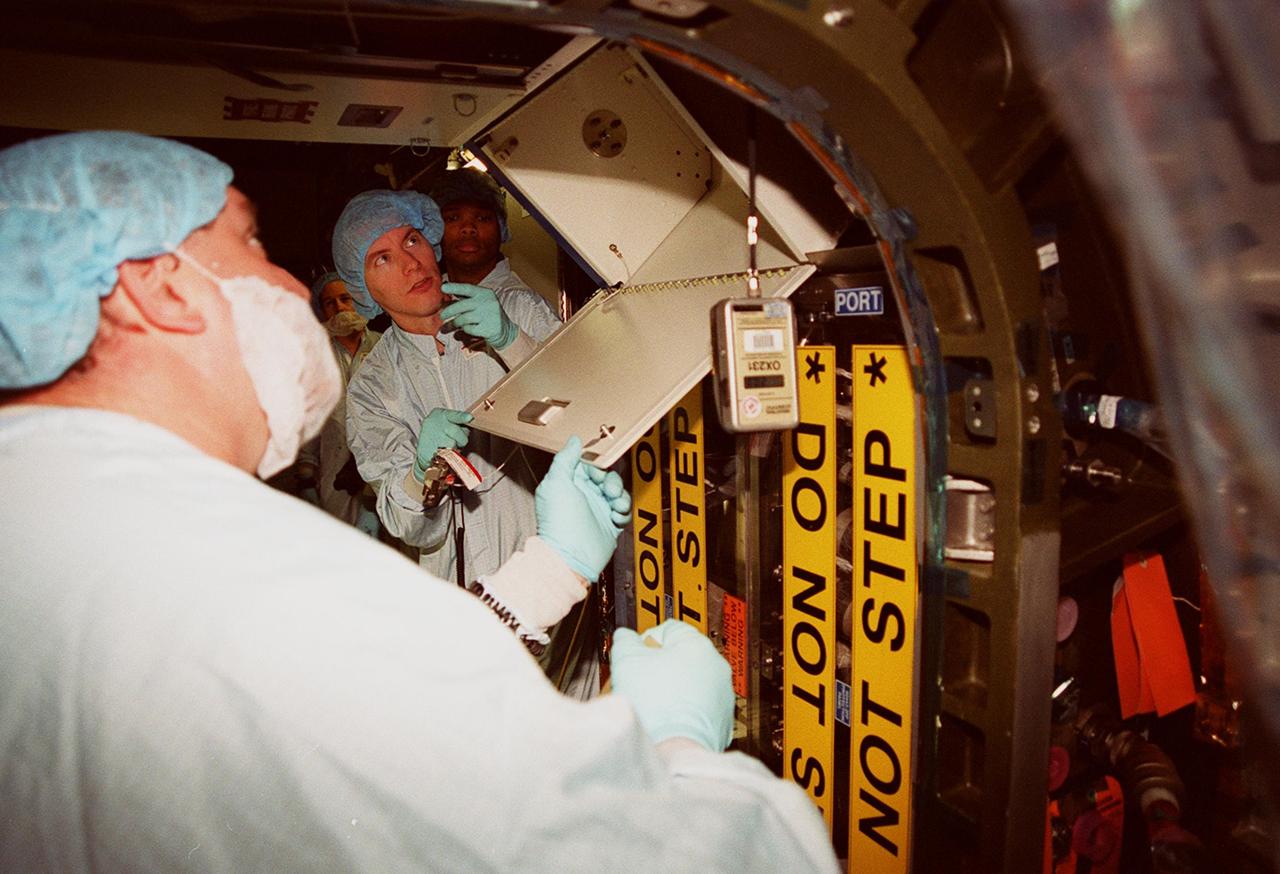
In the Space Station Processing Facility, members of the STS-98 crew check out components inside the U.S. Lab, Destiny, under the watchful eye of trainers. The crew comprises Commander Ken Cockrell, Pilot Mark Polansky and Mission Specialists Robert Curbeam, Thomas Jones and Marsha Ivins. They are taking part in Crew Equipment Interface Test activities, becoming familiar with equipment they will be handling during the mission. The mission will be transporting the Lab to the International Space Station with five system racks already installed inside of the module. With delivery of electronics in the lab, electrically powered attitude control for Control Moment Gyroscopes will be activated. The STS-98 launch is scheduled for Jan. 18, 2001
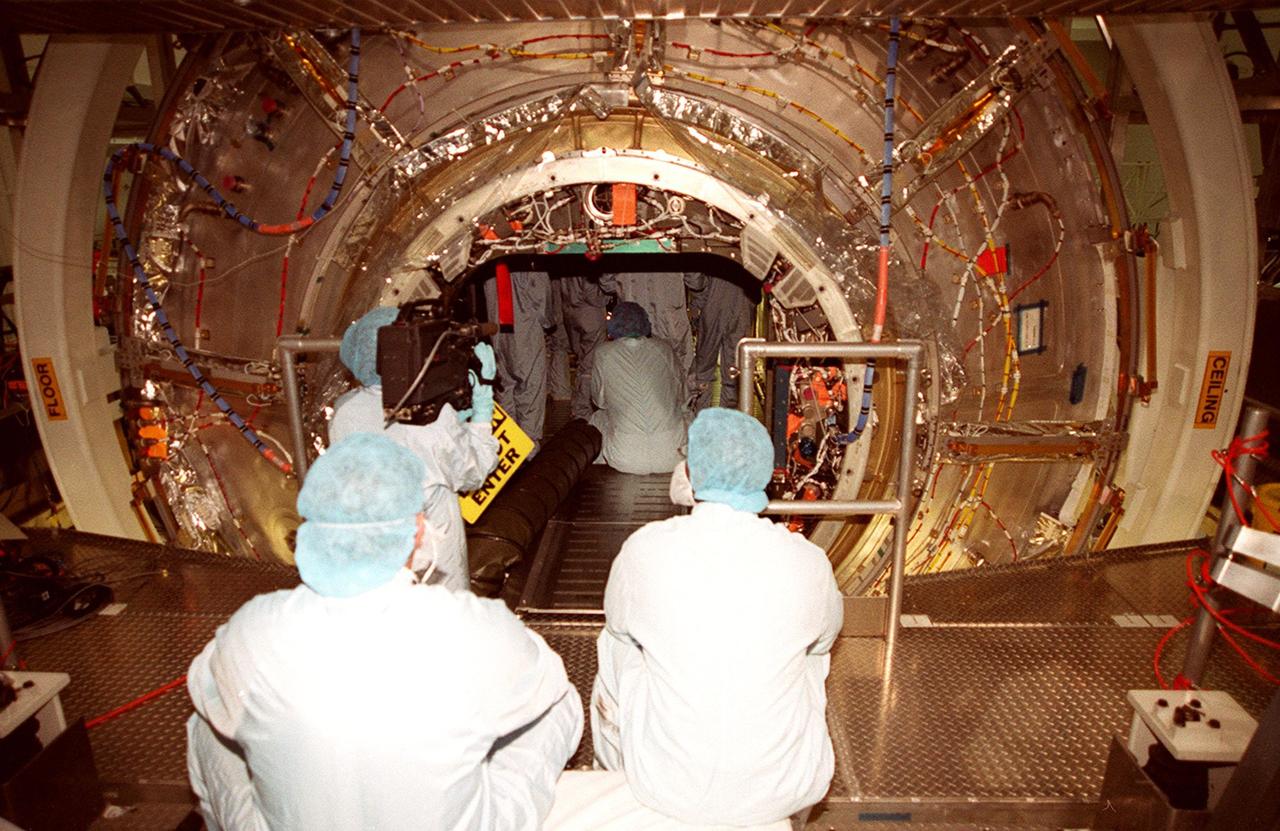
In the Space Station Processing Facility, workers in the foreground watch and wait while members of the STS-98 crew check out the U.S. Lab, Destiny in the background. The crew comprises Commander Ken Cockrell, Pilot Mark Polansky and Mission Specialists Robert Curbeam, Thomas Jones and Marsha Ivins. They are taking part in Crew Equipment Interface Test activities, becoming familiar with equipment they will be handling during the mission. The mission will be transporting the Lab to the International Space Station with five system racks already installed inside of the module. With delivery of electronics in the lab, electrically powered attitude control for Control Moment Gyroscopes will be activated. The STS-98 launch is scheduled for Jan. 18, 2001
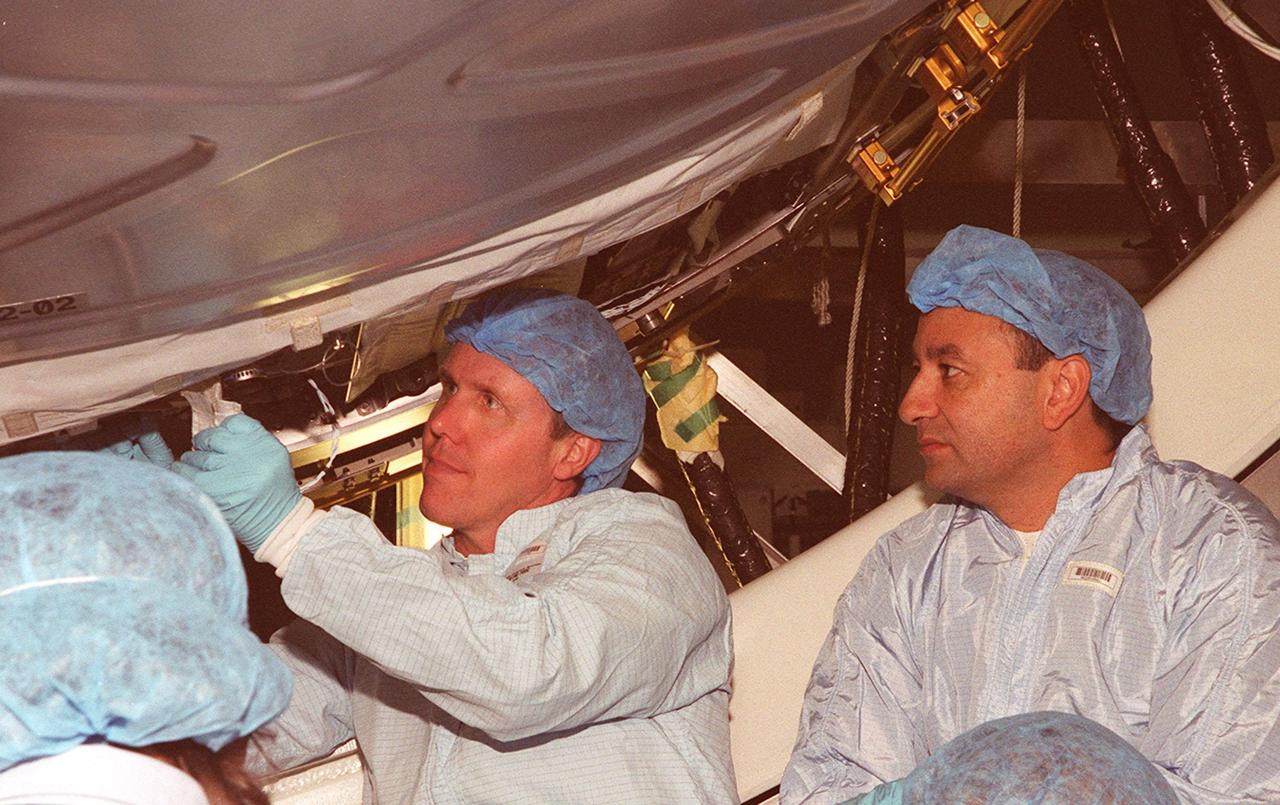
In the Space Station Processing Facility, STS-98 Mission Specialist Thomas Jones works on a part of the U.S. Lab, Destiny. Watching at right is Pilot Mark Polansky. Jones and Polansky, along with other crew members, are taking part in Crew Equipment Interface Test activities to become familiar with equipment they will be handling during the mission. Others in the crew are Commander Ken Cockrell and Mission Specialists Robert Curbeam and Marsha Ivins. The mission will be transporting the Lab to the International Space Station with five system racks already installed inside of the module. With delivery of electronics in the lab, electrically powered attitude control for Control Moment Gyroscopes will be activated. The STS-98 launch is scheduled for Jan. 18, 2001
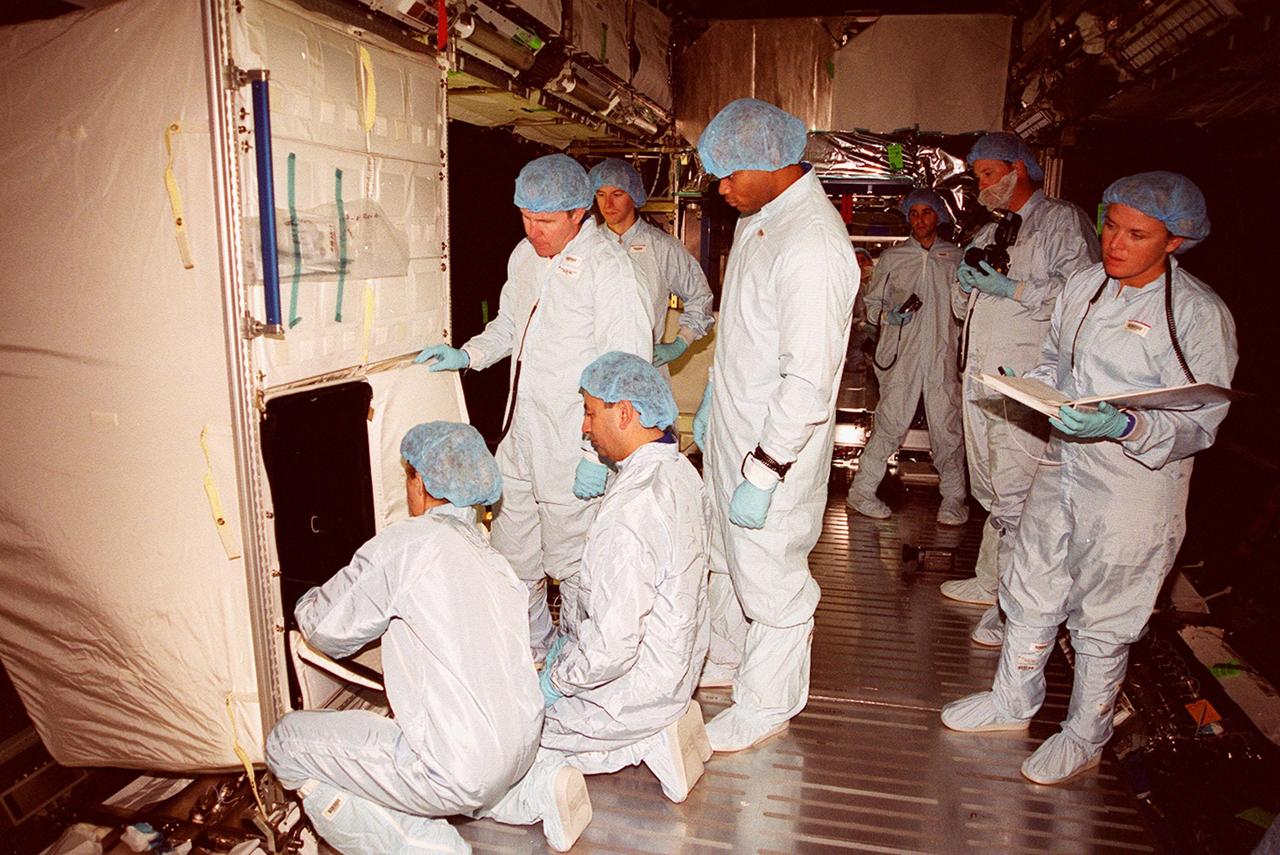
Inside the U.S. Lab, Destiny, members of the STS-98 crew work with technicians (in the background) to learn more about the equipment in the module. They are taking part in Crew Equipment Interface Test activities. At left, back to camera, is Mission Specialist Marsha Ivins. Standing are Mission Specialists Thomas Jones (left) and Robert Curbeam (right). Other crew members not seen are Commander Ken Cockrell and Pilot Mark Polansky. The mission will be transporting the Lab to the International Space Station with five system racks already installed inside of the module. With delivery of electronics in the lab, electrically powered attitude control for Control Moment Gyroscopes will be activated. The STS-98 launch is scheduled for Jan. 18, 2001
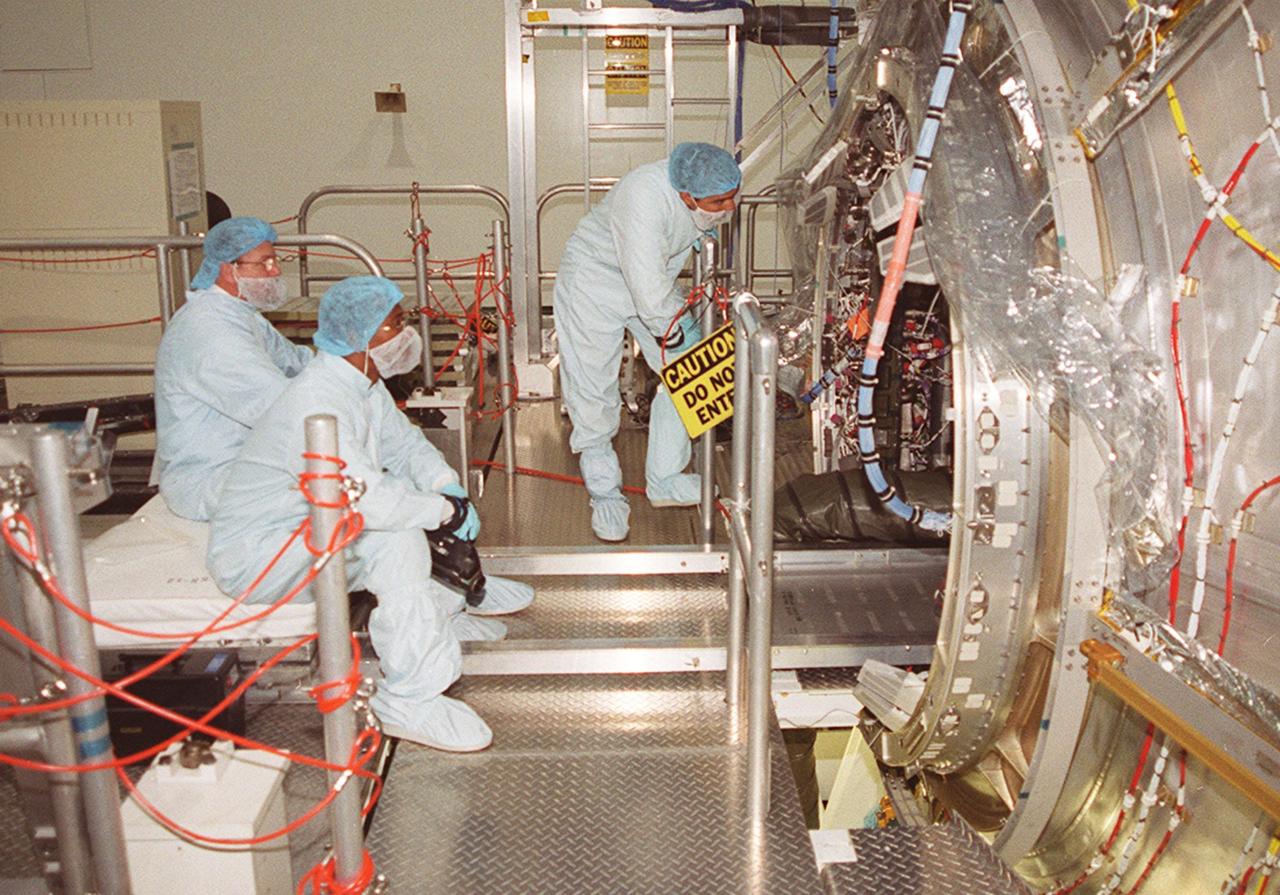
In the Space Station Processing Facility, workers at left watch while members of the STS-98 crew check out equipment inside the U.S. Lab, Destiny (at right). The crew comprises Commander Ken Cockrell, Pilot Mark Polansky and Mission Specialists Robert Curbeam, Thomas Jones and Marsha Ivins. They are taking part in Crew Equipment Interface Test activities, becoming familiar with equipment they will be handling during the mission. The mission will be transporting the Lab to the International Space Station with five system racks already installed inside of the module. With delivery of electronics in the lab, electrically powered attitude control for Control Moment Gyroscopes will be activated. The STS-98 launch is scheduled for Jan. 18, 2001
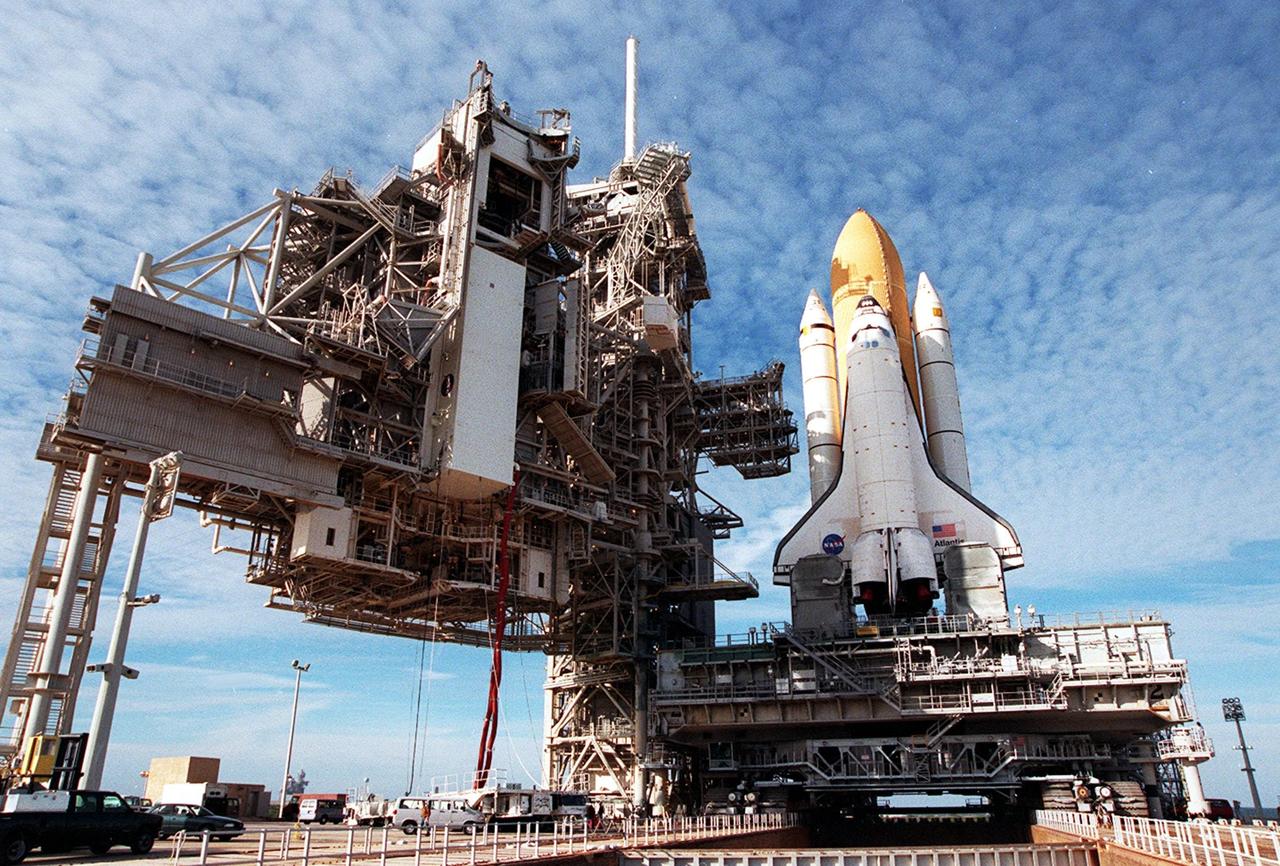
KENNEDY SPACE CENTER, Fla. -- Space Shuttle Atlantis reaches its destination, Launch Pad 39A, for liftoff no earlier than Jan. 19 on mission STS-98. To its immediate left is the Fixed Service Structure, with its 80-foot-tall white lighting mast on top. Further to the left is the Rotating Service Structure, where the white payload canister is being lifted to the Payload Changeout Room. The payload for the mission is the U.S. Lab Destiny, a key element in the construction of the International Space Station. The lab has five system racks for experiments already installed inside the module. After delivery of electronics in the lab, electrically powered attitude control for Control Moment Gyroscopes will be activated
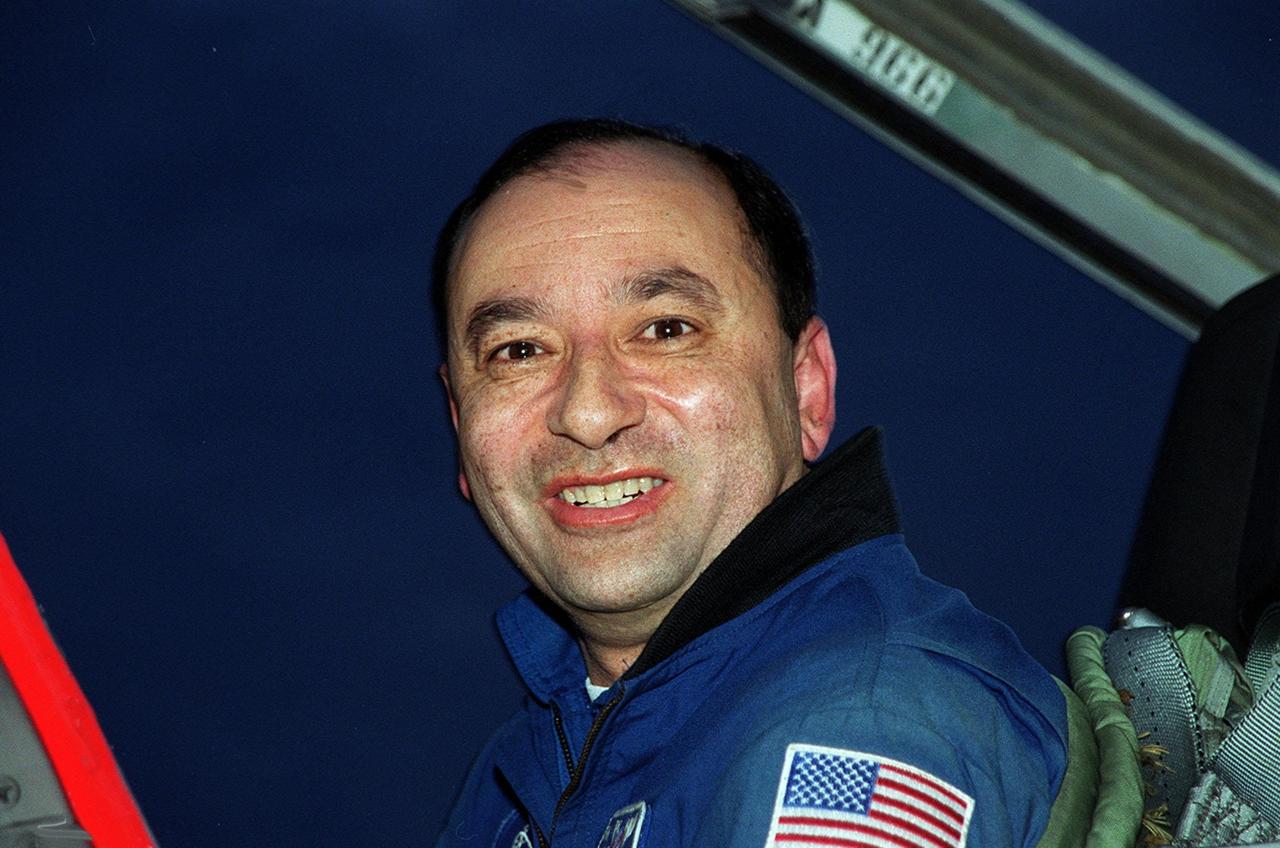
STS-98 Pilot Mark Polansky is pleased to arrive at KSC’s Shuttle Landing Facility for Terminal Countdown Test Activities. In preparation for the Jan. 19 launch, he and the rest of the crew Commander Ken Cockrell and Mission Specialists Robert Curbeam, Thomas Jones and Marsha Ivins will be training in emergency procedures from the pad, checking the payload and taking part in a simulated countdown. The payload for the mission is the U.S. Lab Destiny, a key element in the construction of the International Space Station. The lab has five system racks already installed inside the module. After delivery of electronics in the lab, electrically powered attitude control for Control Moment Gyroscopes will be activated. STS-98 is the seventh construction flight to the ISS.<br
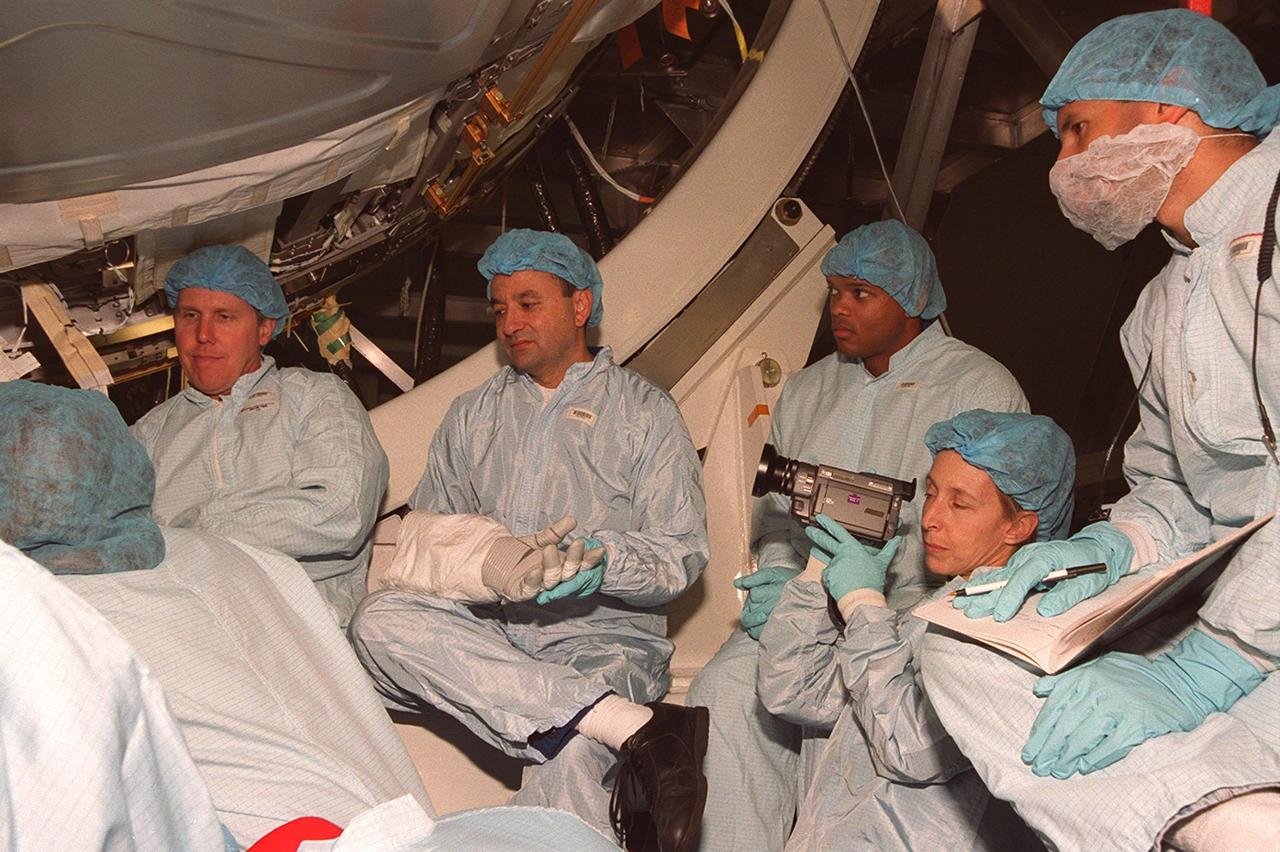
In the Space Station Processing Facility, members of the STS-98 crew, sitting in front of the U.S. Lab, Destiny, listen to a trainer during Crew Equipment Interface Test (CEIT) activities. Seen, left to right, are Mission Specialist Thomas Jones, Pilot Mark Polansky and Mission Specialists Robert Curbeam and Marsha Ivins (with camera). The CEIT allows a crew to become familiar with equipment they will be handling during the mission. With launch scheduled for Jan. 18, 2001, the STS-98 mission will be transporting the Lab to the International Space Station with five system racks already installed inside of the module. After delivery of electronics in the lab, electrically powered attitude control for Control Moment Gyroscopes will be activated
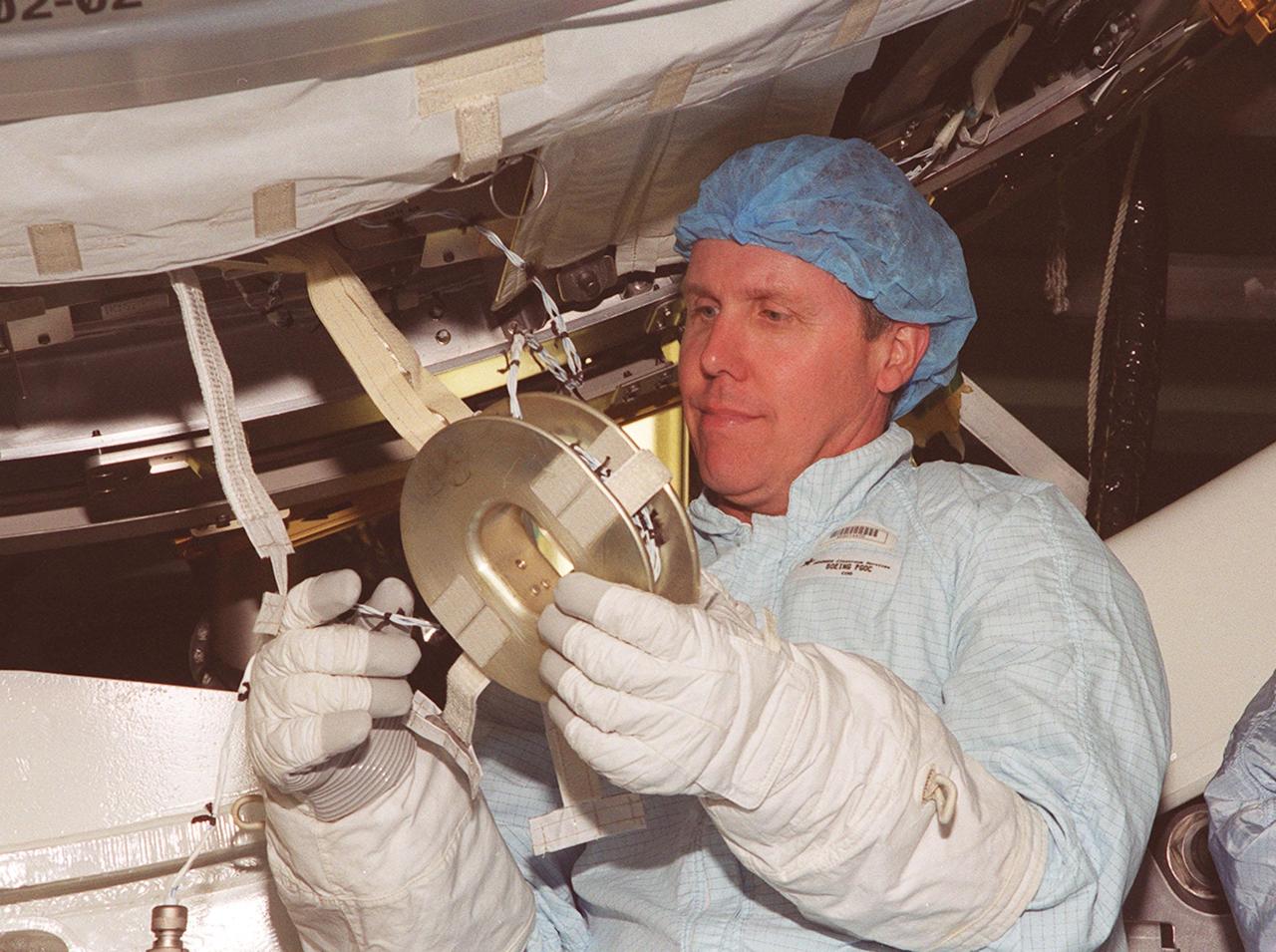
STS-98 Mission Specialist Thomas Jones practices handling a piece of equipment on the U.S. Lab, Destiny, while wearing the gloves he will wear in space. Jones and other crew members are taking part in Crew Equipment Interface Test activities to become familiar with equipment they will be handling during the mission. With launch scheduled for Jan. 18, 2001, the STS-98 mission will be transporting the Lab to the International Space Station with five system racks already installed inside of the module. After delivery of electronics in the lab, electrically powered attitude control for Control Moment Gyroscopes will be activated
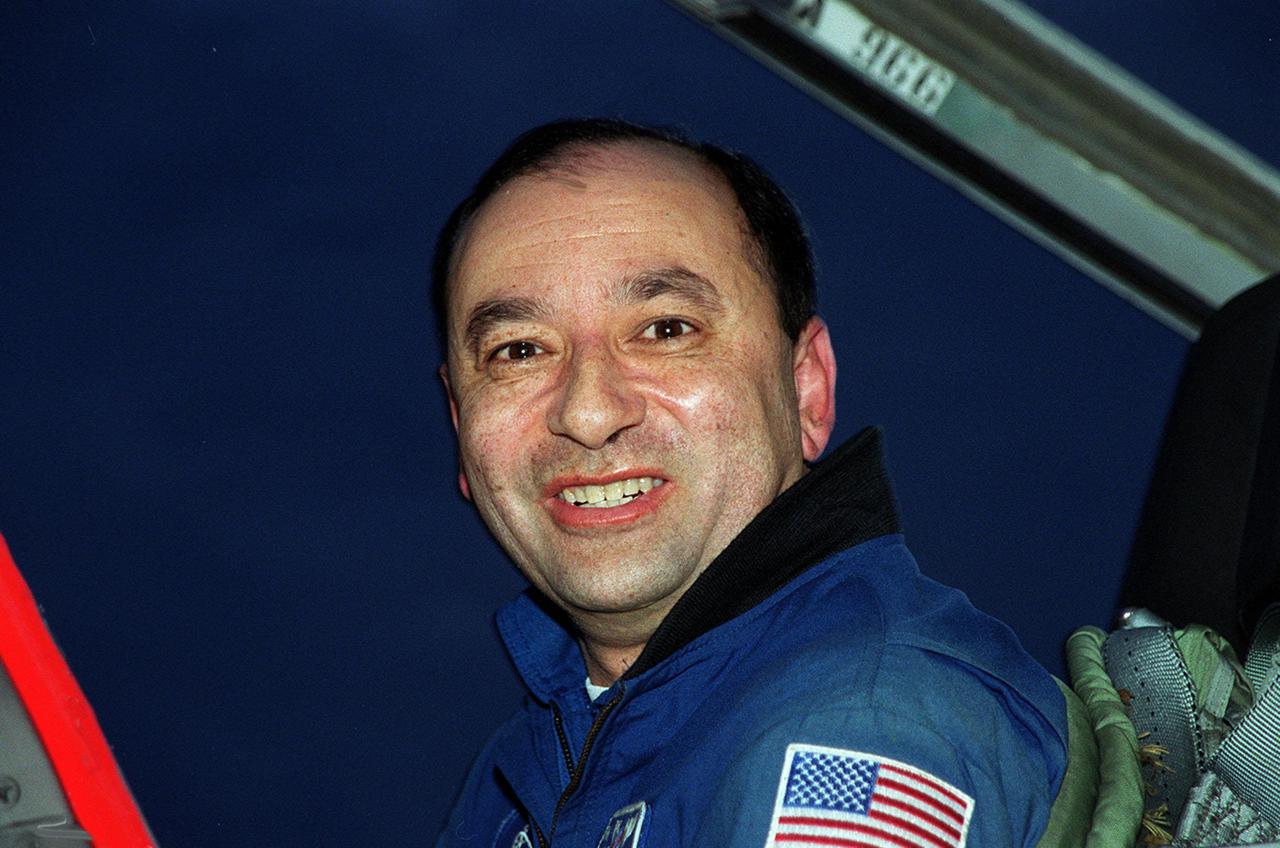
STS-98 Pilot Mark Polansky is pleased to arrive at KSC’s Shuttle Landing Facility for Terminal Countdown Test Activities. In preparation for the Jan. 19 launch, he and the rest of the crew Commander Ken Cockrell and Mission Specialists Robert Curbeam, Thomas Jones and Marsha Ivins will be training in emergency procedures from the pad, checking the payload and taking part in a simulated countdown. The payload for the mission is the U.S. Lab Destiny, a key element in the construction of the International Space Station. The lab has five system racks already installed inside the module. After delivery of electronics in the lab, electrically powered attitude control for Control Moment Gyroscopes will be activated. STS-98 is the seventh construction flight to the ISS.<br
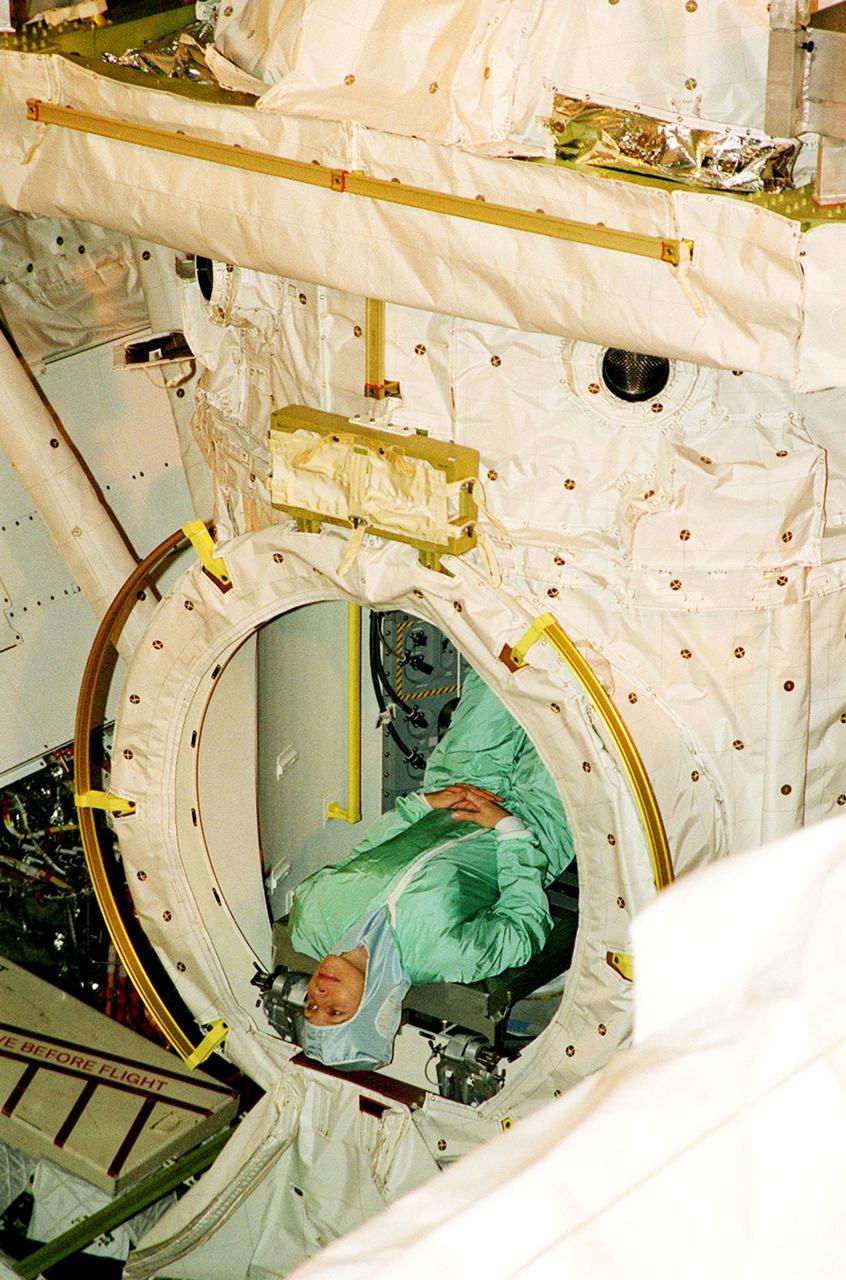
KENNEDY SPACE CENTER, FLA. -- STS-98 Mission Specialist Marsha Ivins takes a topsy-turvy look at the EVA hatch in the Orbiter Docking System, which is already installed in the payload bay of orbiter Atlantis. She and the rest of the crew are at KSC for Crew Equipment Interface Test activities. Launch on mission STS-98 is scheduled for Jan. 18, 2001. It will be transporting the U.S. Lab, Destiny, to the International Space Station with five system racks already installed inside of the module. After delivery of electronics in the lab, electrically powered attitude control for Control Moment Gyroscopes will be activated
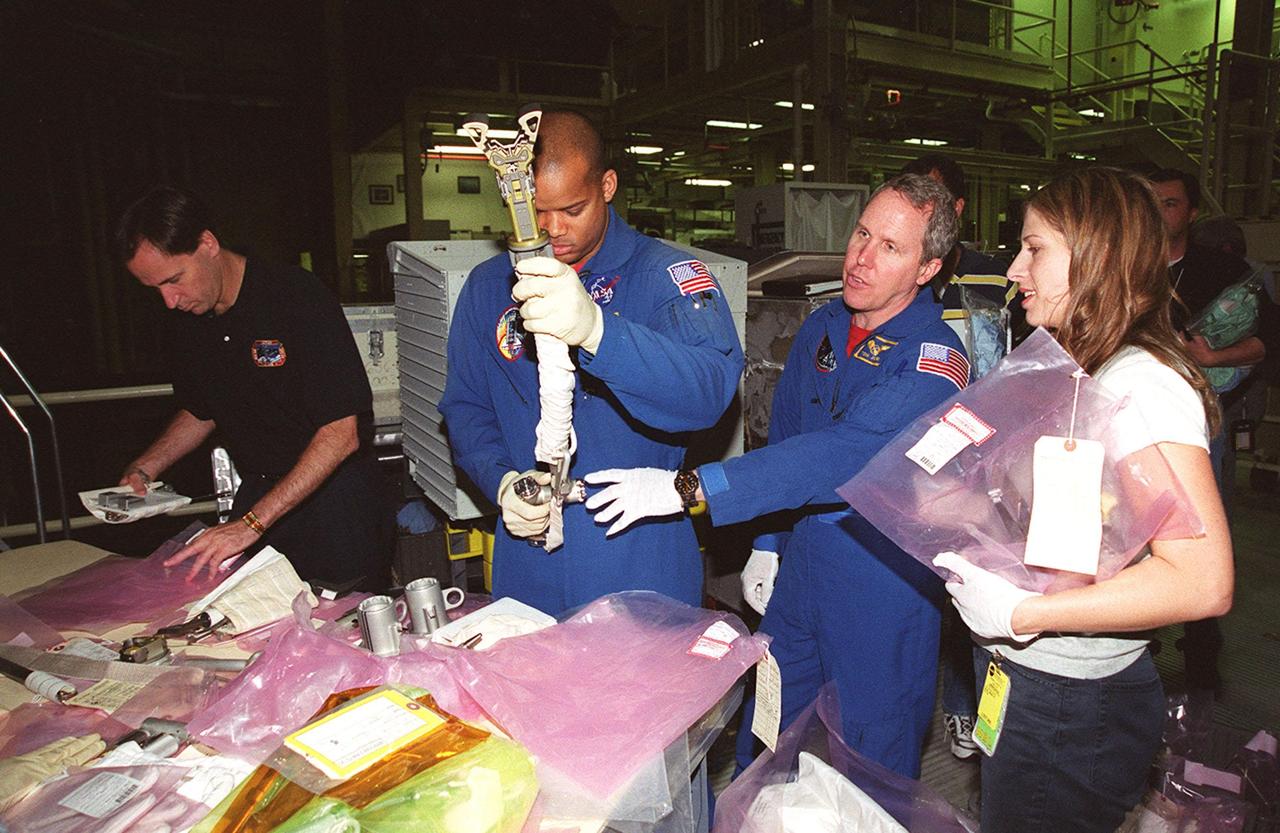
KENNEDY SPACE CENTER, FLA. -- In the Orbiter Processing Facility, STS-98 Mission Specialists Robert Curbeam (center left) and Tom Jones (center right) practice with tools that will be used on extravehicular activities on their mission. The STS-98 crew is at KSC for Crew Equipment Interface Test activities. Launch on mission STS-98 is scheduled for Jan. 18, 2001. It will be transporting the U.S. Lab, Destiny, to the International Space Station with five system racks already installed inside of the module. After delivery of electronics in the lab, electrically powered attitude control for Control Moment Gyroscopes will be activated
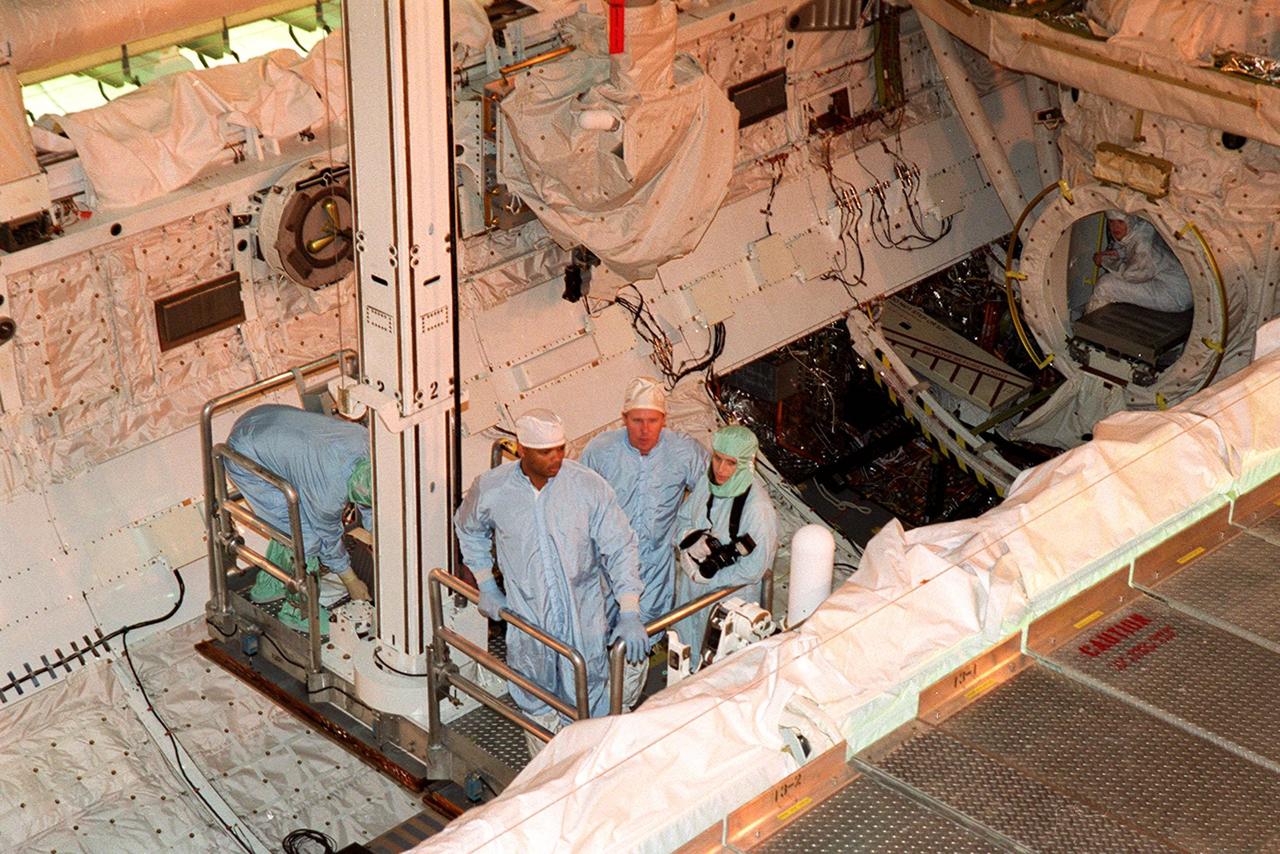
KENNEDY SPACE CENTER, FLA. -- Lowered into the payload bay of the orbiter Atlantis, some of the STS-98 crew (center of the photo) look over part of the payload. From left are Mission Specialists Robert Curbeam, Tom Jones and Marsha Ivins. They and the rest of the crew are at KSC for Crew Equipment Interface Test activities. Launch on mission STS-98 is scheduled for Jan. 18, 2001. It will be transporting the U.S. Lab, Destiny, to the International Space Station with five system racks already installed inside of the module. After delivery of electronics in the lab, electrically powered attitude control for Control Moment Gyroscopes will be activated
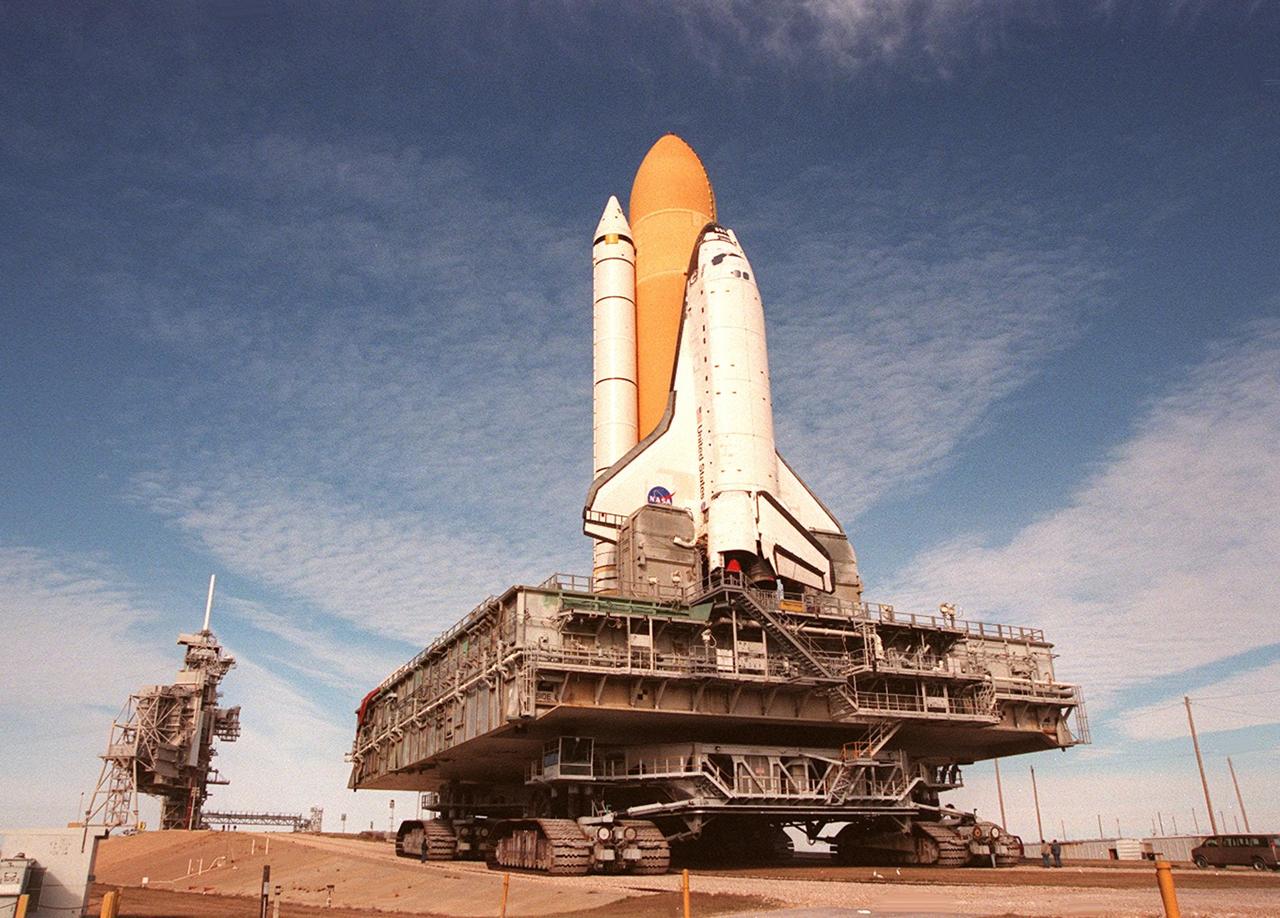
KENNEDY SPACE CENTER, Fla. -- Under wispy white clouds, Space Shuttle Atlantis slowly moves toward the Rotating and Fixed Service Structures on Launch Pad 39A. The 80-foot-tall white lighting mast is seen atop the FSS. Atlantis will fly on mission STS-98, the seventh construction flight to the International Space Station, carrying the U.S. Laboratory, named Destiny. The lab will have five system racks already installed inside the module. After delivery of electronics in the lab, electrically powered attitude control for Control Moment Gyroscopes will be activated. Atlantis is scheduled for launch no earlier than Jan. 19, 2001, with a crew of five
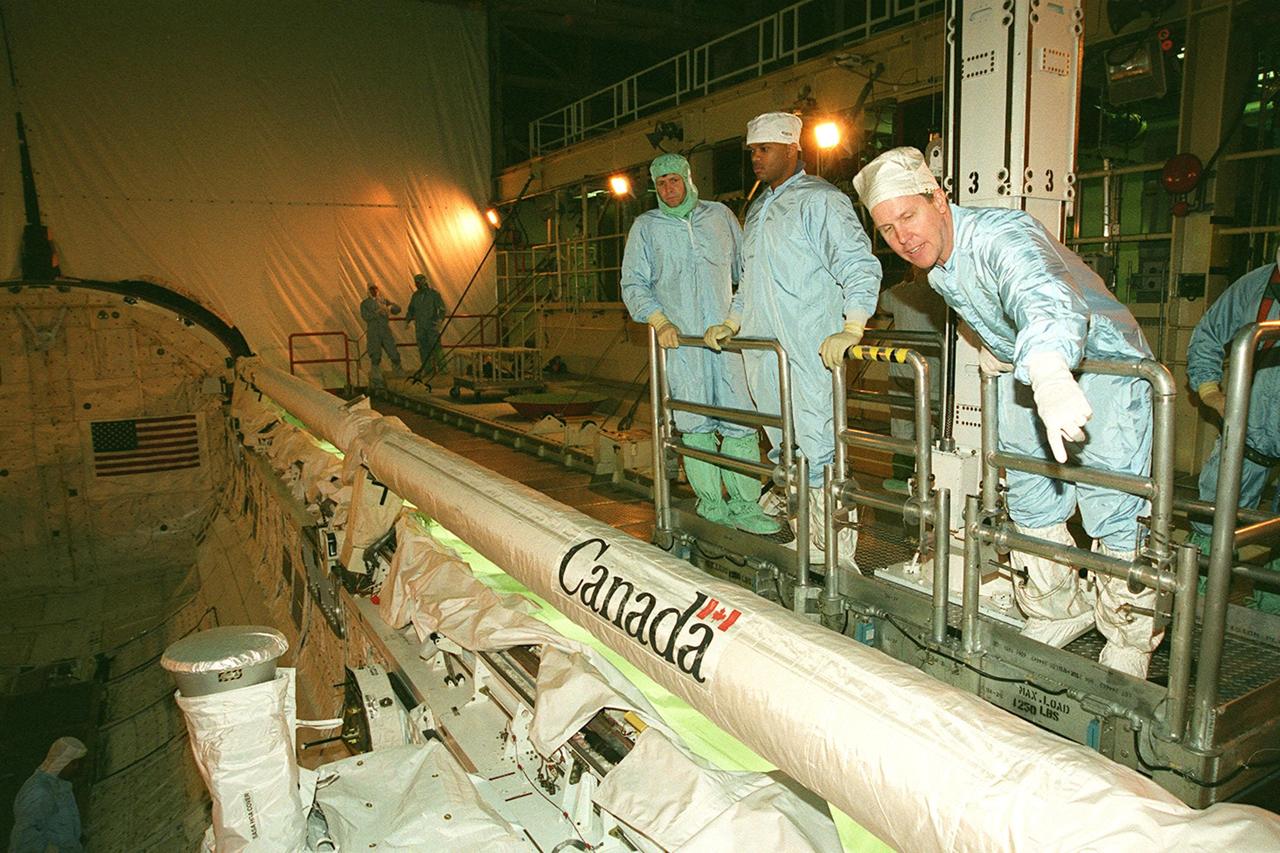
KENNEDY SPACE CENTER, FLA. -- Some of the STS-98 crew look over the Canadian robotic arm in the payload bay of orbiter Atlantis, which is undergoing testing in the Orbiter Processing Facility bay 3. At right, pointing, is Mission Specialist Tom Jones. Second from right is Mission Specialist Robert Curbeam. They and the rest of the crew are at KSC for Crew Equipment Interface Test activities. Launch on mission STS-98 is scheduled for Jan. 18, 2001. It will be transporting the U.S. Lab, Destiny, to the International Space Station with five system racks already installed inside of the module. After delivery of electronics in the lab, electrically powered attitude control for Control Moment Gyroscopes will be activated
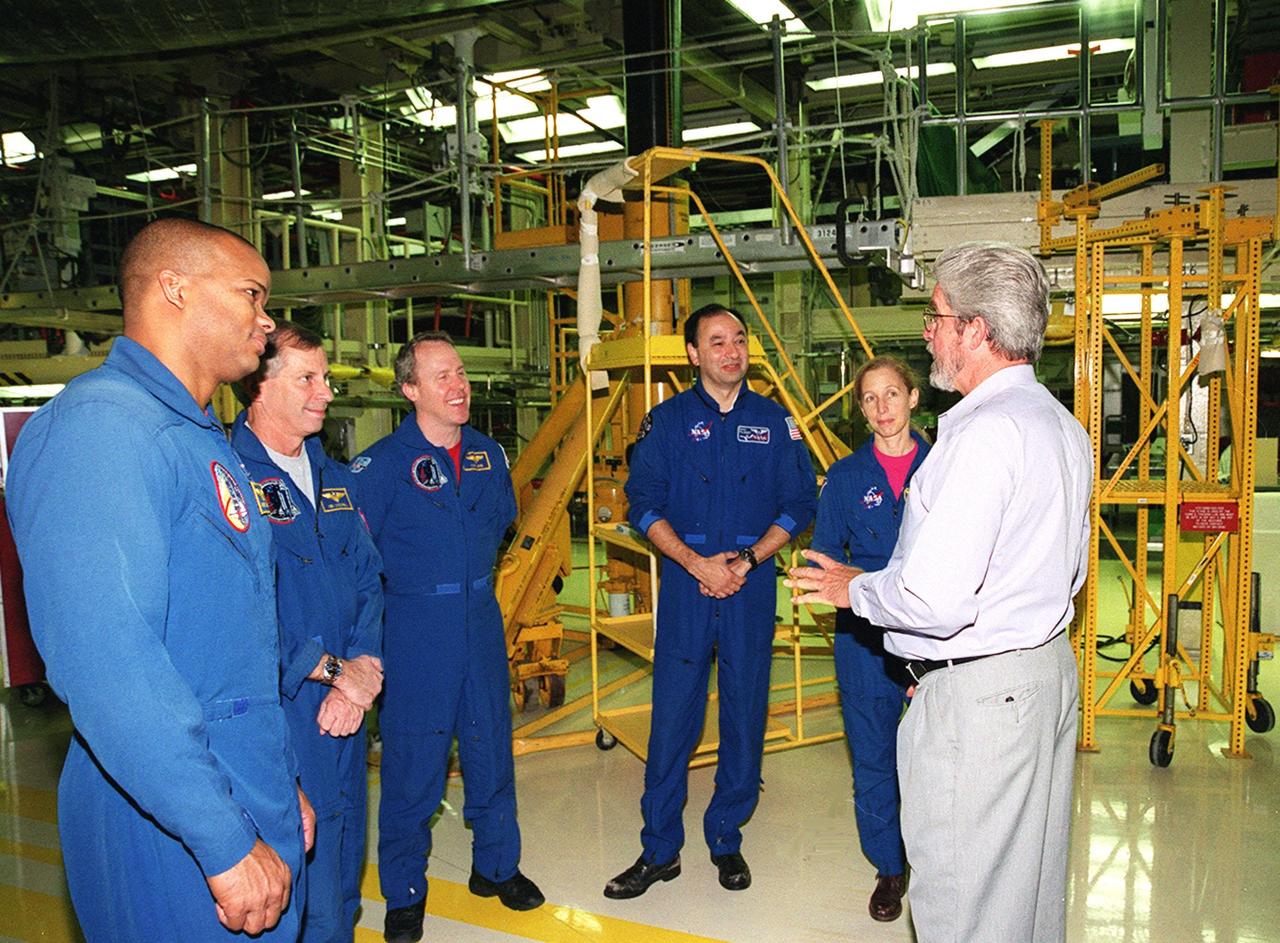
KENNEDY SPACE CENTER, FLA. -- In Orbiter Processing Facility bay 3, the STS-98 crew talks with United Space Alliance worker Larry Oshein (right). Standing left to right are Mission Specialist Robert Curbeam, Commander Ken Cockrell, Mission Specialist Tom Jones, and Mission Specialists Mark Polansky and Marsha Ivins. The crew is at KSC for Crew Equipment Interface Test activities. Launch on mission STS-98 is scheduled for Jan. 18, 2001. It will be transporting the U.S. Lab, Destiny, to the International Space Station with five system racks already installed inside of the module. After delivery of electronics in the lab, electrically powered attitude control for Control Moment Gyroscopes will be activated
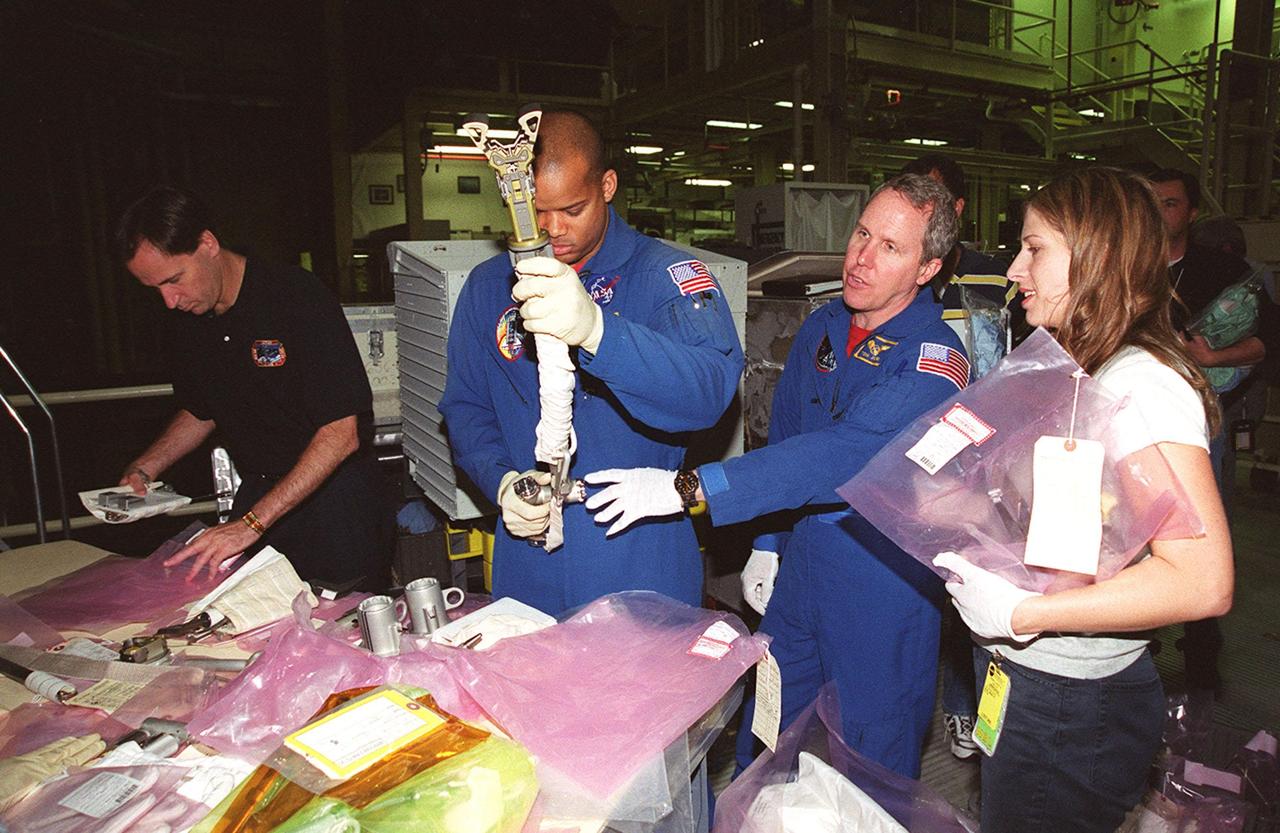
KENNEDY SPACE CENTER, FLA. -- In the Orbiter Processing Facility, STS-98 Mission Specialists Robert Curbeam (center left) and Tom Jones (center right) practice with tools that will be used on extravehicular activities on their mission. The STS-98 crew is at KSC for Crew Equipment Interface Test activities. Launch on mission STS-98 is scheduled for Jan. 18, 2001. It will be transporting the U.S. Lab, Destiny, to the International Space Station with five system racks already installed inside of the module. After delivery of electronics in the lab, electrically powered attitude control for Control Moment Gyroscopes will be activated
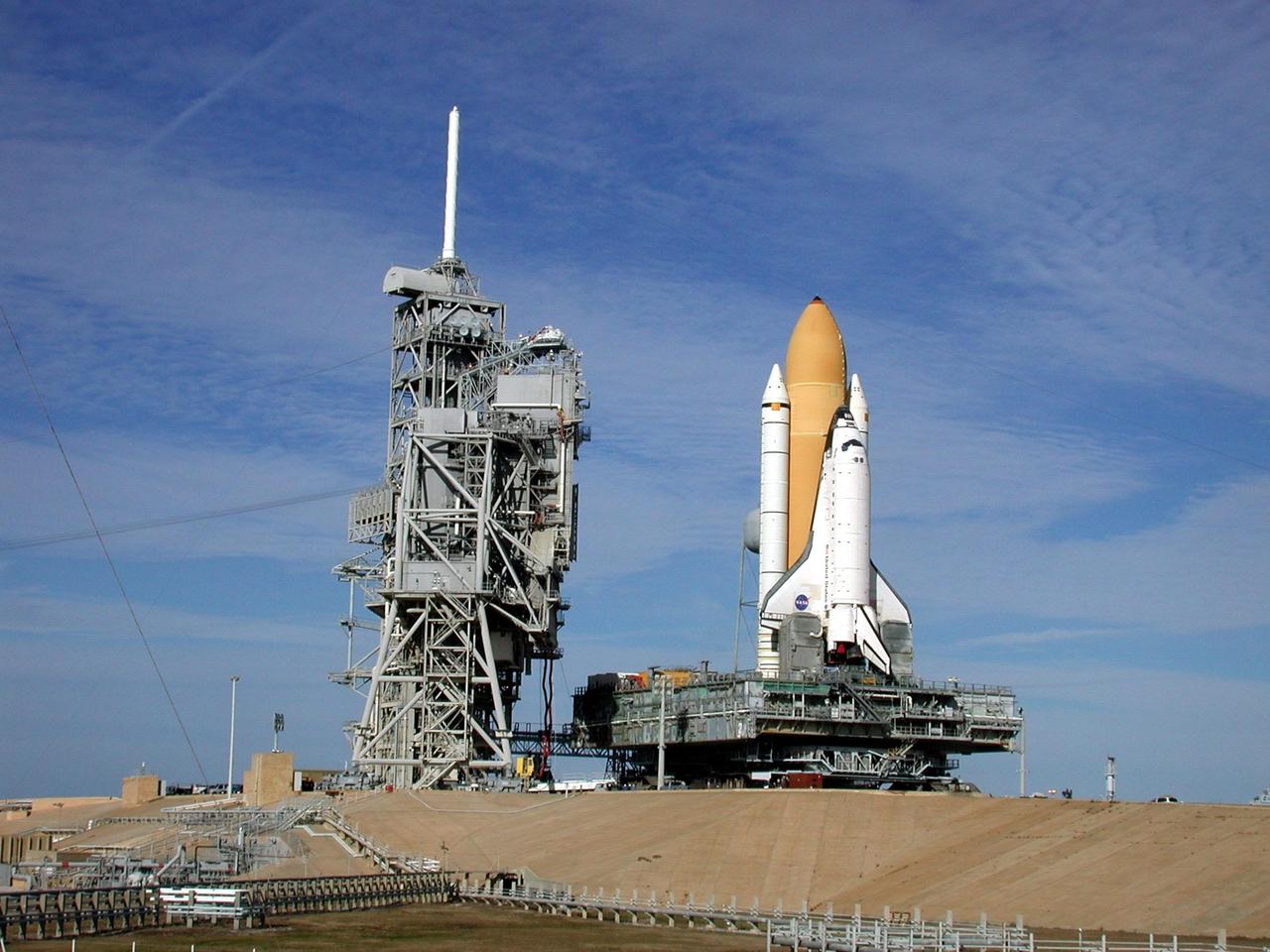
KENNEDY SPACE CENTER, Fla. -- Under wispy white morning clouds, Space Shuttle Atlantis nears the Rotating Service Structure on Launch Pad 39A. Atlantis will fly on mission STS-98, the seventh construction flight to the International Space Station, carrying the U.S. Laboratory, named Destiny. The lab will have five system racks already installed inside the module. After delivery of electronics in the lab, electrically powered attitude control for Control Moment Gyroscopes will be activated. Atlantis is scheduled for launch no earlier than Jan. 19, 2001, with a crew of five
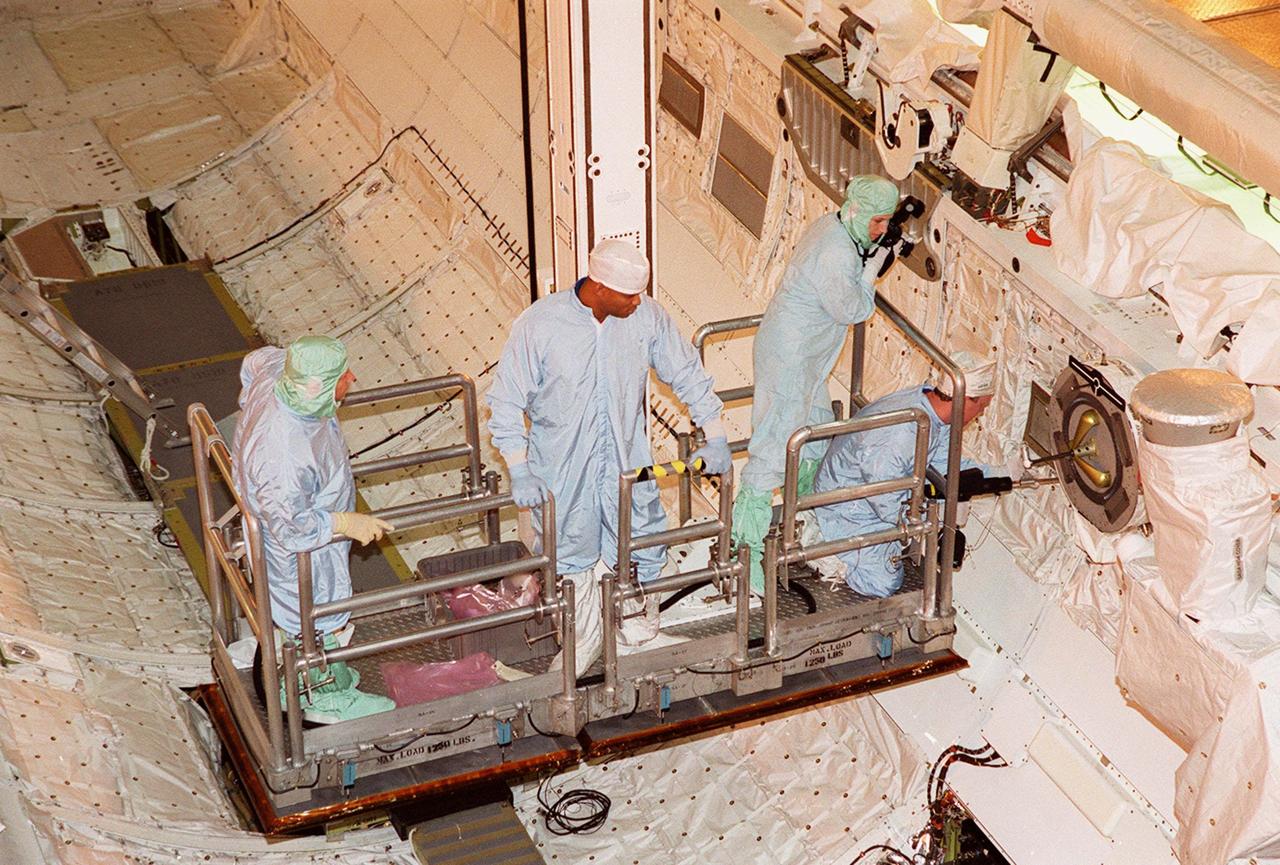
KENNEDY SPACE CENTER, FLA. -- Lowered into the payload bay of the orbiter Atlantis, some of the STS-98 crew look over part of the payload. At center is Mission Specialist Robert Curbeam; at right are Mission Specialists Marsha Ivins (standing) and Tom Jones (kneeling). They and the rest of the crew are at KSC for Crew Equipment Interface Test activities. Launch on mission STS-98 is scheduled for Jan. 18, 2001. It will be transporting the U.S. Lab, Destiny, to the International Space Station with five system racks already installed inside of the module. After delivery of electronics in the lab, electrically powered attitude control for Control Moment Gyroscopes will be activated
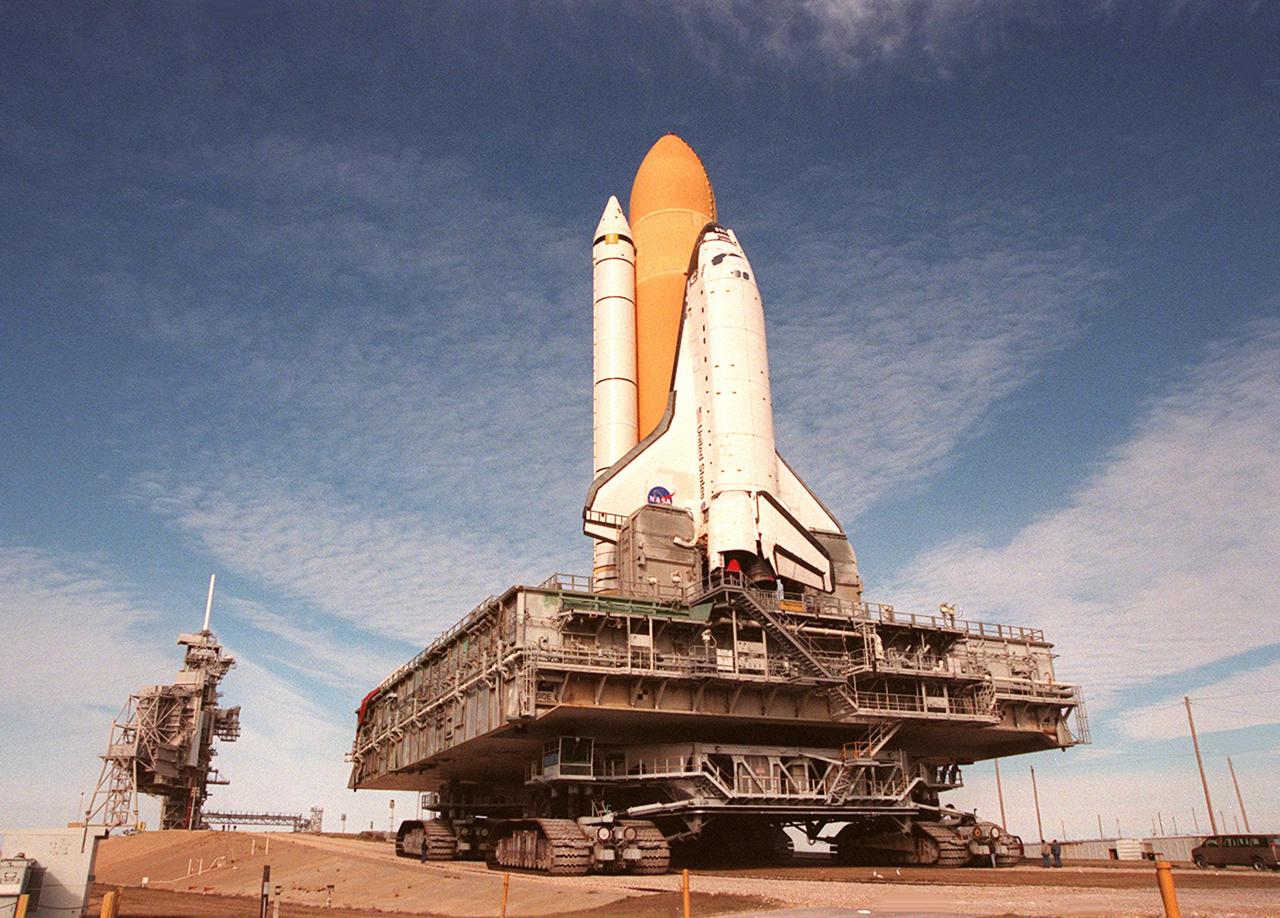
KENNEDY SPACE CENTER, Fla. -- Under wispy white clouds, Space Shuttle Atlantis slowly moves toward the Rotating and Fixed Service Structures on Launch Pad 39A. The 80-foot-tall white lighting mast is seen atop the FSS. Atlantis will fly on mission STS-98, the seventh construction flight to the International Space Station, carrying the U.S. Laboratory, named Destiny. The lab will have five system racks already installed inside the module. After delivery of electronics in the lab, electrically powered attitude control for Control Moment Gyroscopes will be activated. Atlantis is scheduled for launch no earlier than Jan. 19, 2001, with a crew of five
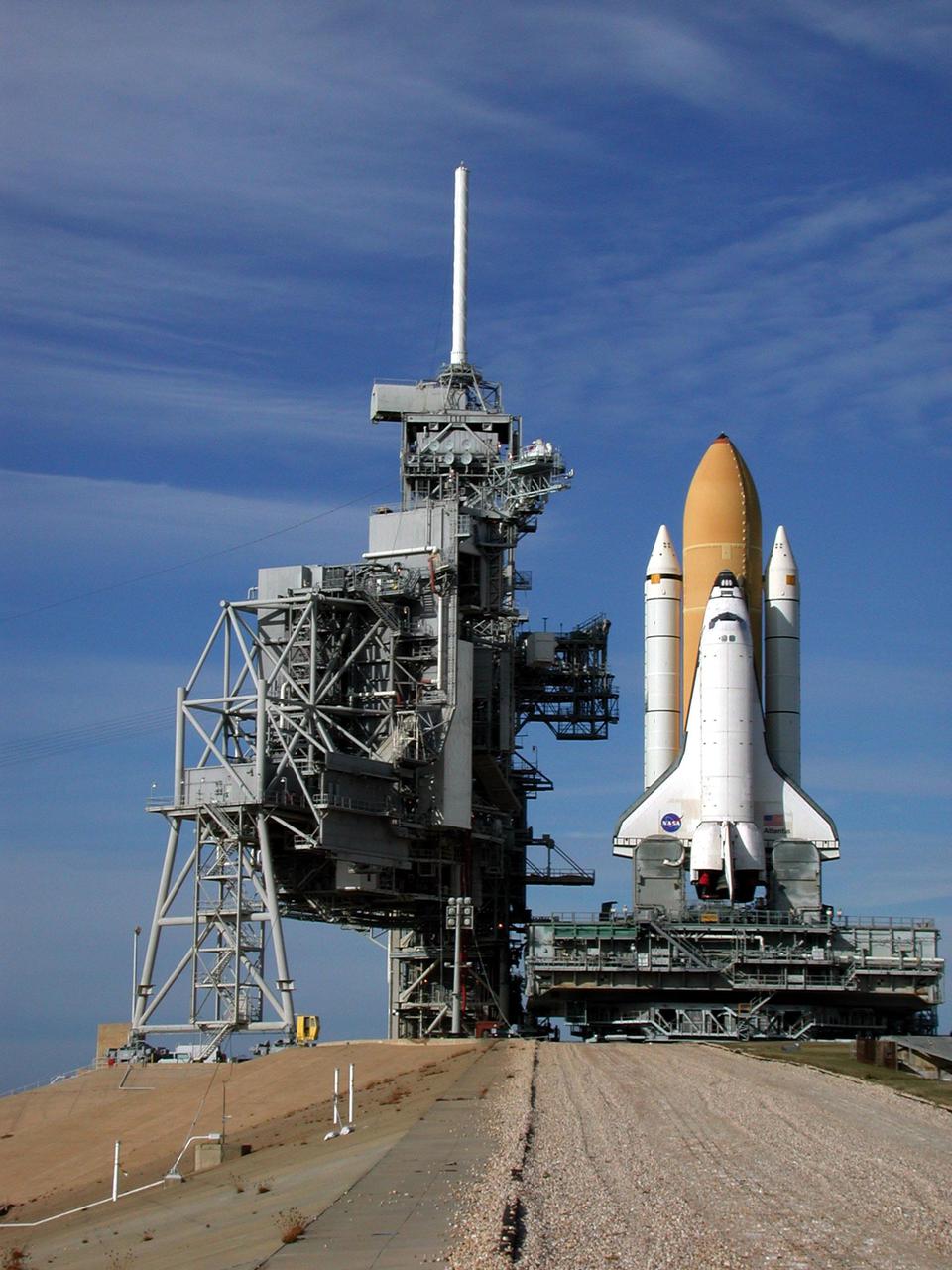
KENNEDY SPACE CENTER, Fla. -- At the top of Launch Pad 39A, Space Shuttle Atlantis closes in on the Rotating Service Structure (left). On the RSS, the payload canister can be seen half way up the structure as it is lifted to the Payload Changeout Room. Atlantis will fly on mission STS-98, the seventh construction flight to the International Space Station, carrying the U.S. Laboratory, named Destiny. The lab will have five system racks already installed inside the module. After delivery of electronics in the lab, electrically powered attitude control for Control Moment Gyroscopes will be activated. Atlantis is scheduled for launch no earlier than Jan. 19, 2001, with a crew of five
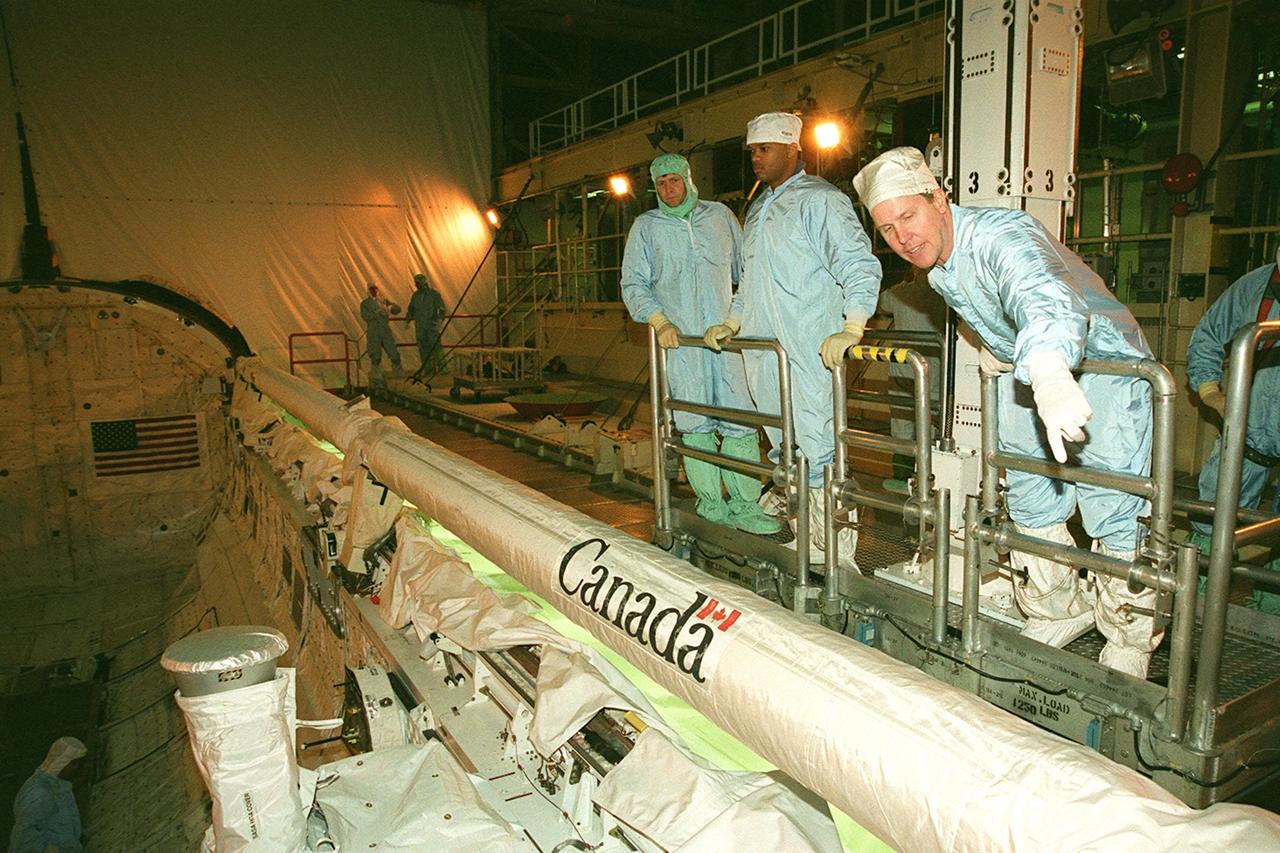
KENNEDY SPACE CENTER, FLA. -- Some of the STS-98 crew look over the Canadian robotic arm in the payload bay of orbiter Atlantis, which is undergoing testing in the Orbiter Processing Facility bay 3. At right, pointing, is Mission Specialist Tom Jones. Second from right is Mission Specialist Robert Curbeam. They and the rest of the crew are at KSC for Crew Equipment Interface Test activities. Launch on mission STS-98 is scheduled for Jan. 18, 2001. It will be transporting the U.S. Lab, Destiny, to the International Space Station with five system racks already installed inside of the module. After delivery of electronics in the lab, electrically powered attitude control for Control Moment Gyroscopes will be activated
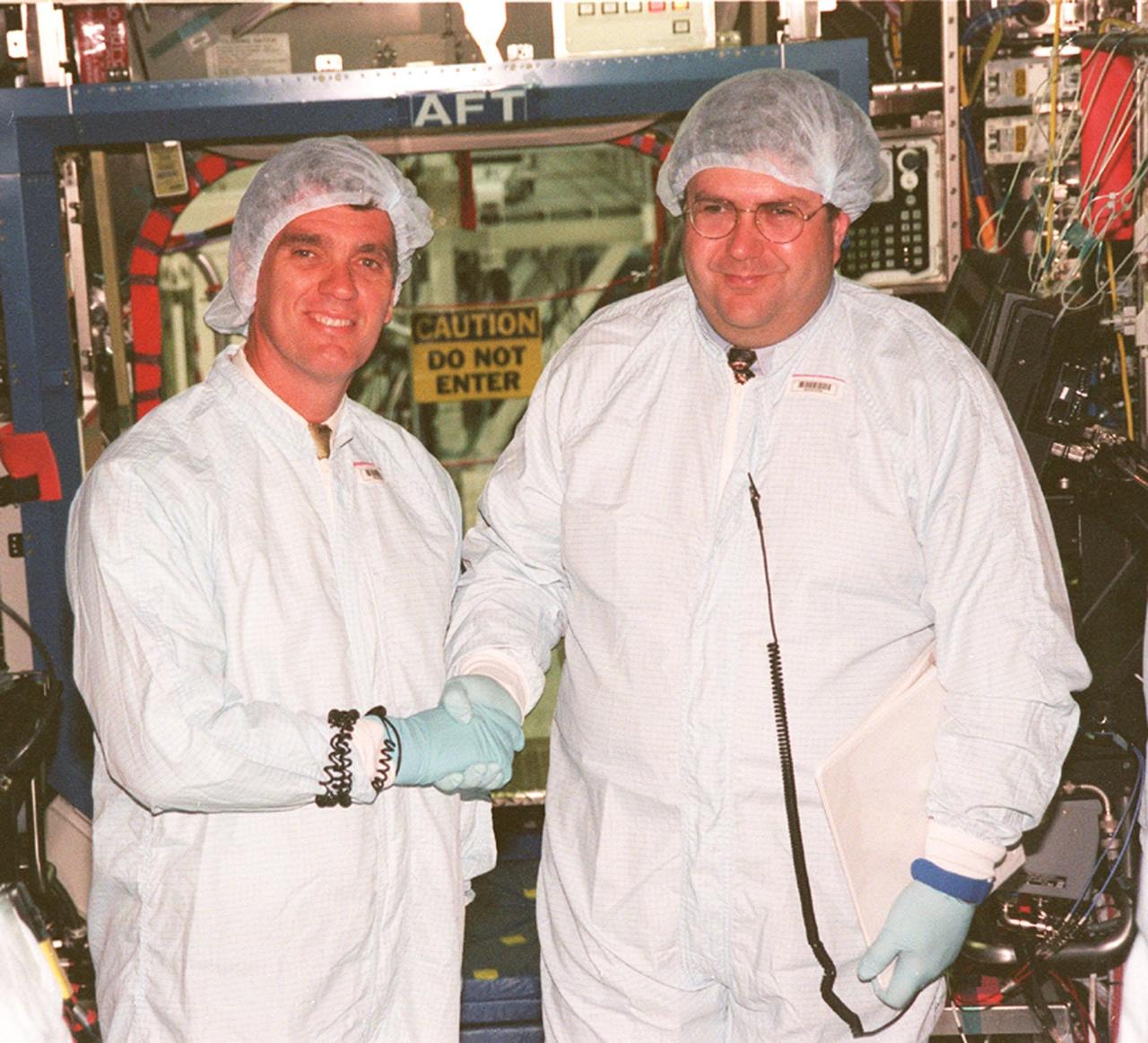
KENNEDY SPACE CENTER, FLA. -- Standing in front of the U.S. Lab, named Destiny, U.S. Rep. Dave Weldon (left) thanks Thomas R. "Randy" Galloway, with the Space Station Hardware Integration Office, for briefing him on the equipment inside the Lab. Weldon is on the House Science Committee and vice chairman of the Space and Aeronautics Subcommittee. Destiny is scheduled to be launched on Space Shuttle Endeavour in early 2000. It will become the centerpiece of scientific research on the ISS, with five equipment racks aboard to provide essential functions for station systems, including high data-rate communications, and to maintain the station's orientation using control gyroscopes launched earlier. Additional equipment and research racks will be installed in the laboratory on subsequent Shuttle flights
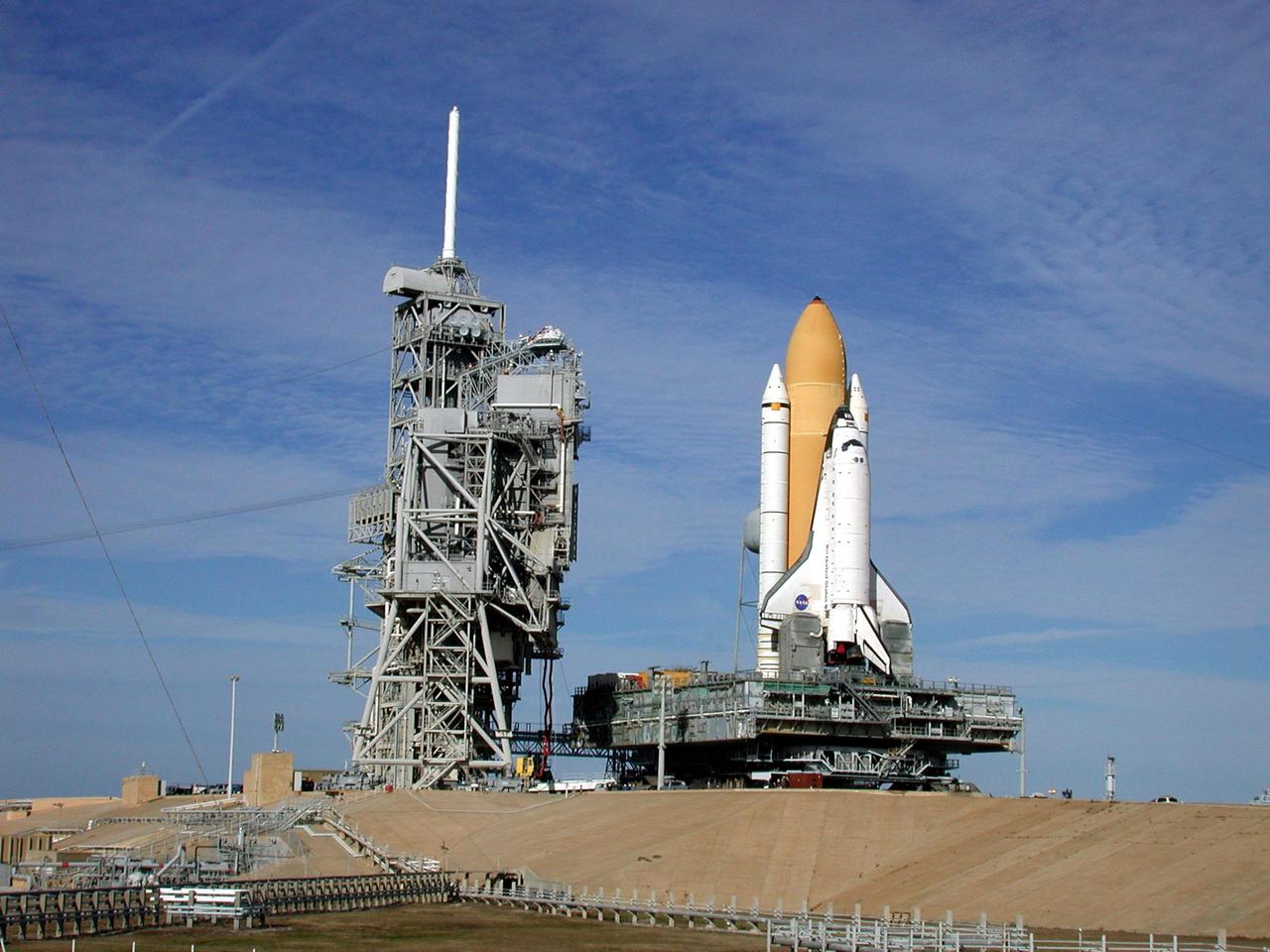
KENNEDY SPACE CENTER, Fla. -- Under wispy white morning clouds, Space Shuttle Atlantis nears the Rotating Service Structure on Launch Pad 39A. Atlantis will fly on mission STS-98, the seventh construction flight to the International Space Station, carrying the U.S. Laboratory, named Destiny. The lab will have five system racks already installed inside the module. After delivery of electronics in the lab, electrically powered attitude control for Control Moment Gyroscopes will be activated. Atlantis is scheduled for launch no earlier than Jan. 19, 2001, with a crew of five
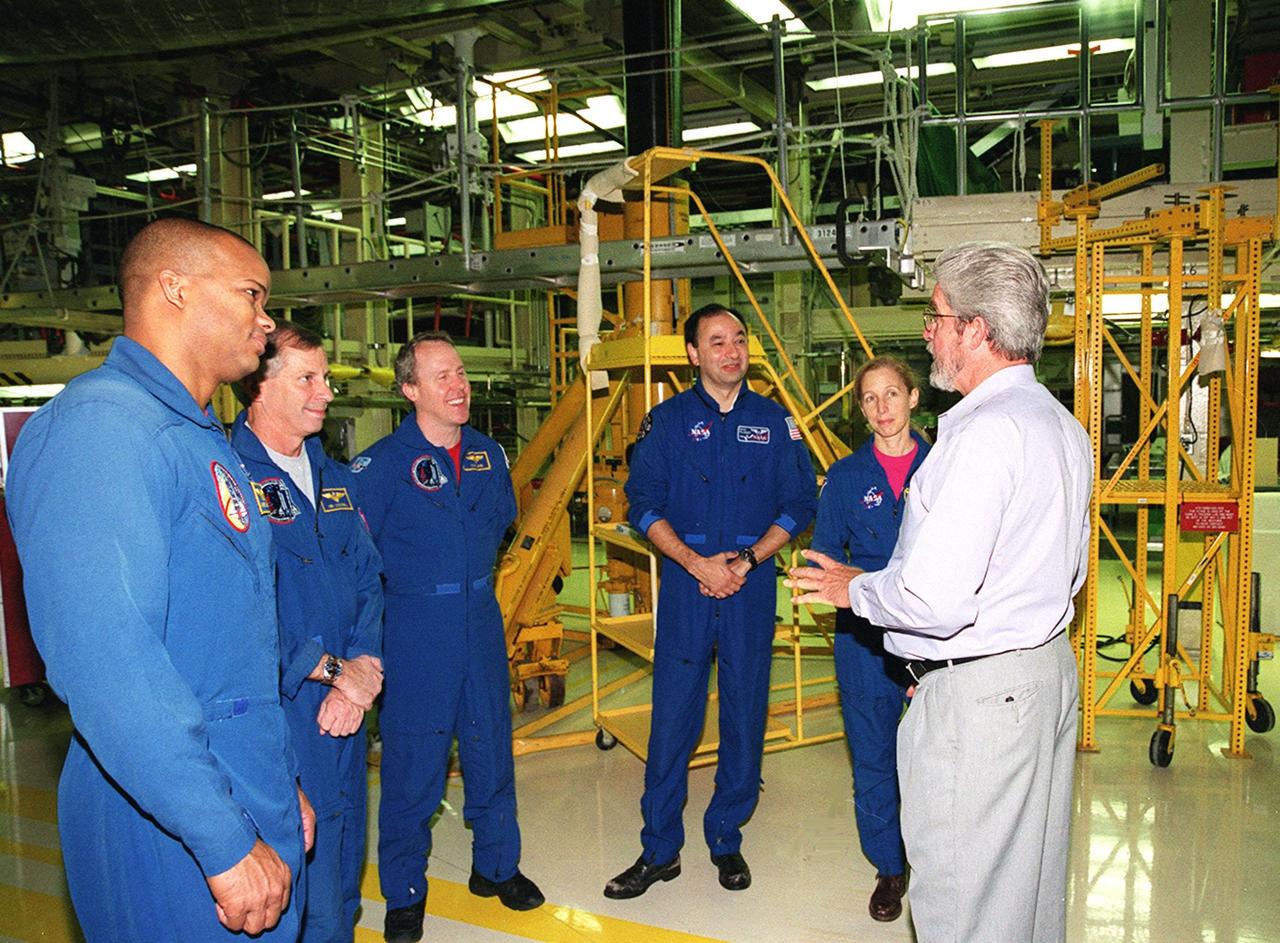
KENNEDY SPACE CENTER, FLA. -- In Orbiter Processing Facility bay 3, the STS-98 crew talks with United Space Alliance worker Larry Oshein (right). Standing left to right are Mission Specialist Robert Curbeam, Commander Ken Cockrell, Mission Specialist Tom Jones, and Mission Specialists Mark Polansky and Marsha Ivins. The crew is at KSC for Crew Equipment Interface Test activities. Launch on mission STS-98 is scheduled for Jan. 18, 2001. It will be transporting the U.S. Lab, Destiny, to the International Space Station with five system racks already installed inside of the module. After delivery of electronics in the lab, electrically powered attitude control for Control Moment Gyroscopes will be activated
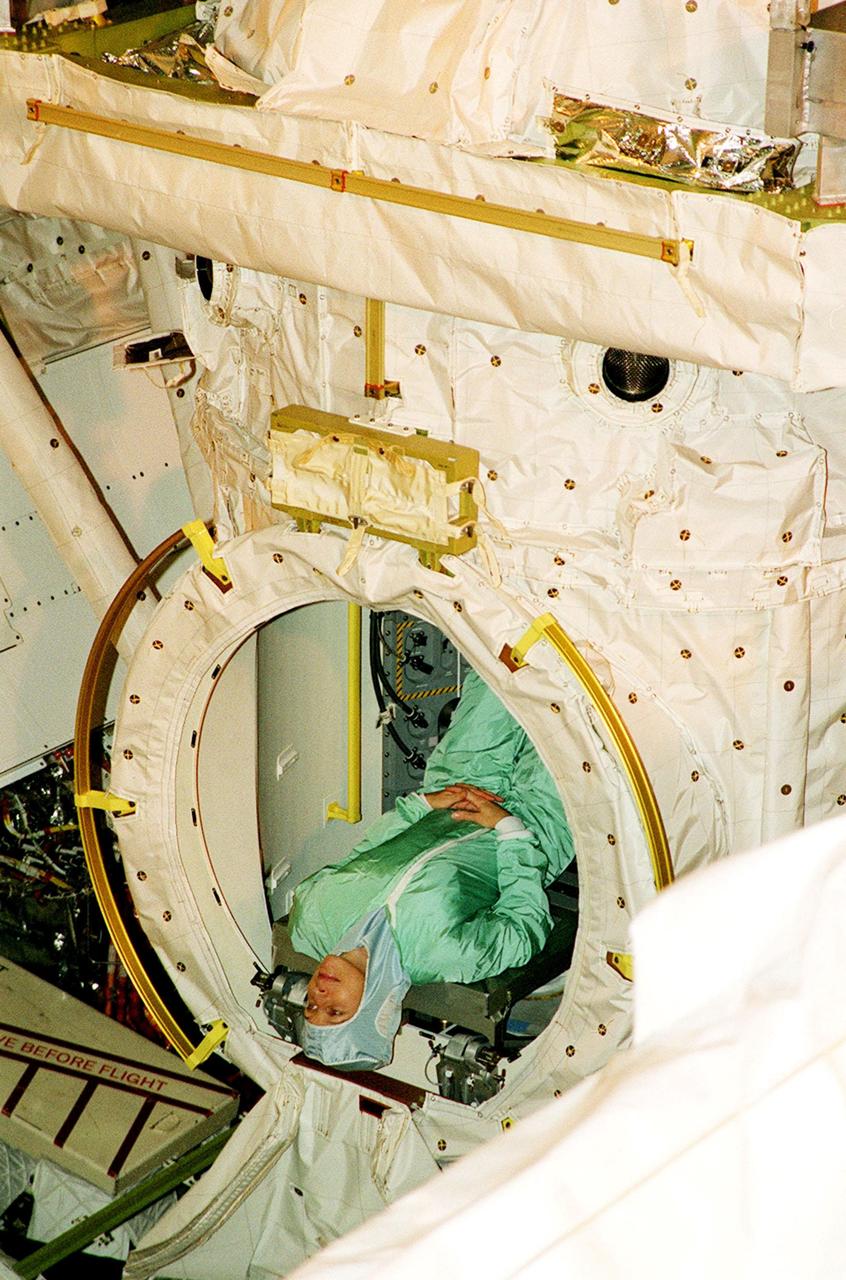
KENNEDY SPACE CENTER, FLA. -- STS-98 Mission Specialist Marsha Ivins takes a topsy-turvy look at the EVA hatch in the Orbiter Docking System, which is already installed in the payload bay of orbiter Atlantis. She and the rest of the crew are at KSC for Crew Equipment Interface Test activities. Launch on mission STS-98 is scheduled for Jan. 18, 2001. It will be transporting the U.S. Lab, Destiny, to the International Space Station with five system racks already installed inside of the module. After delivery of electronics in the lab, electrically powered attitude control for Control Moment Gyroscopes will be activated
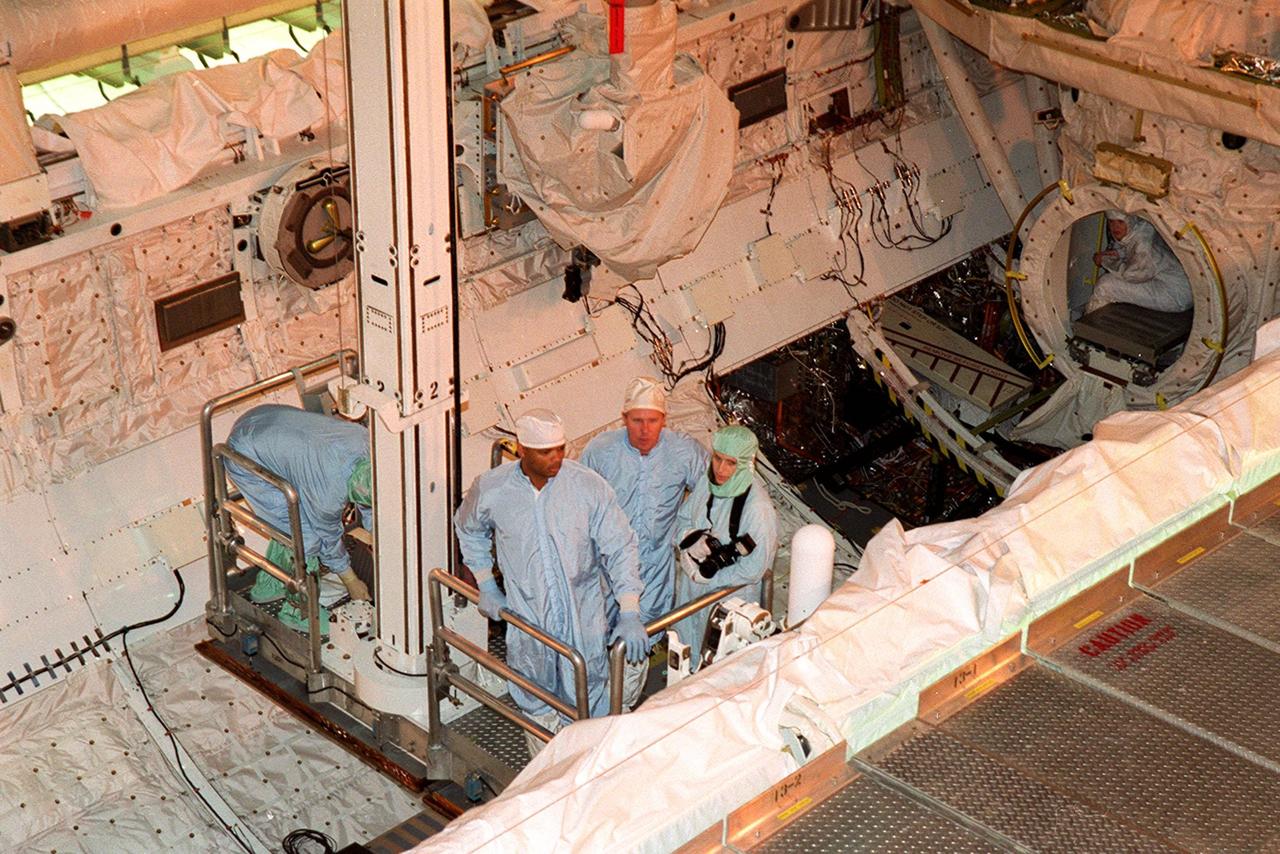
KENNEDY SPACE CENTER, FLA. -- Lowered into the payload bay of the orbiter Atlantis, some of the STS-98 crew (center of the photo) look over part of the payload. From left are Mission Specialists Robert Curbeam, Tom Jones and Marsha Ivins. They and the rest of the crew are at KSC for Crew Equipment Interface Test activities. Launch on mission STS-98 is scheduled for Jan. 18, 2001. It will be transporting the U.S. Lab, Destiny, to the International Space Station with five system racks already installed inside of the module. After delivery of electronics in the lab, electrically powered attitude control for Control Moment Gyroscopes will be activated
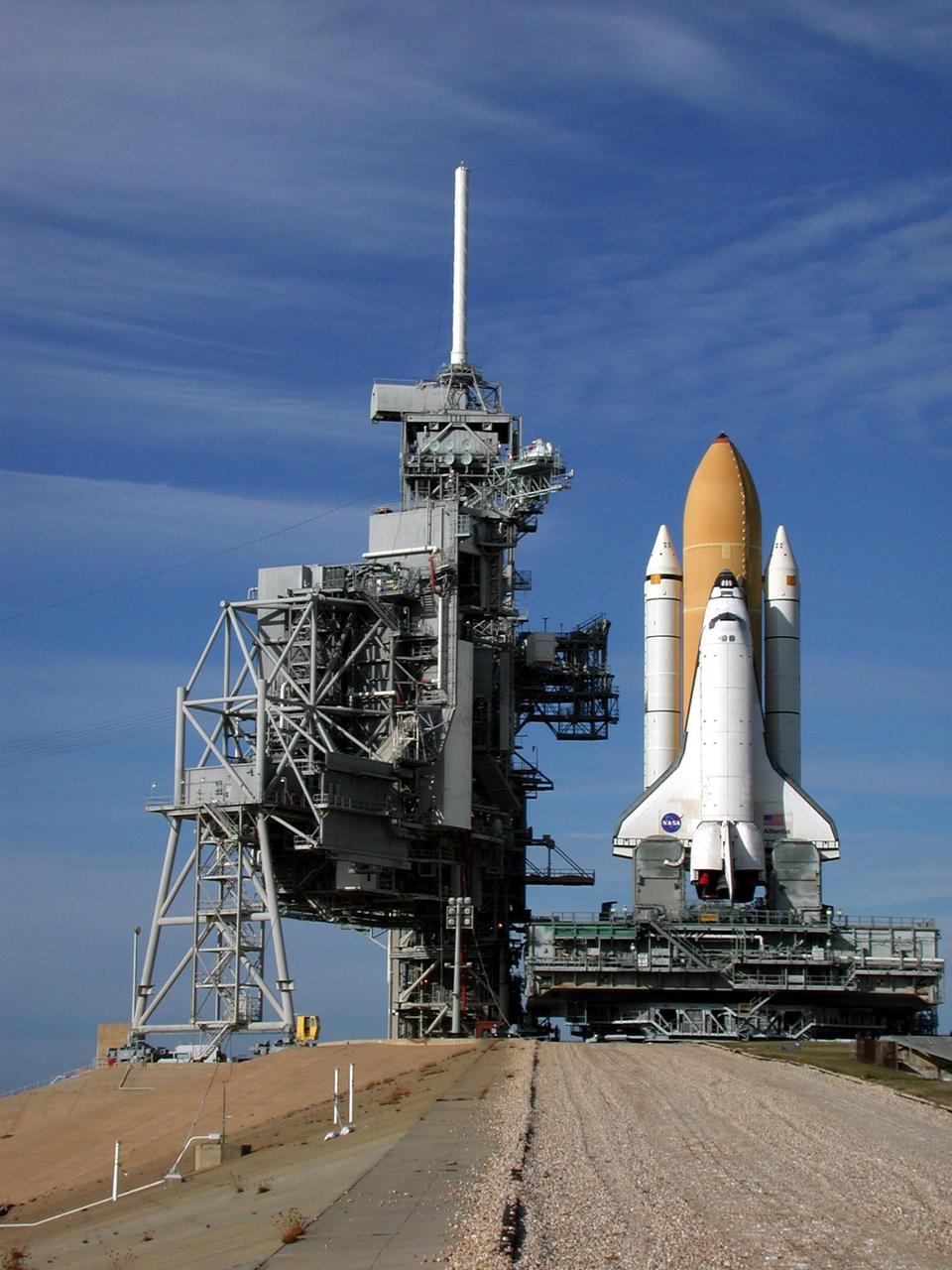
KENNEDY SPACE CENTER, Fla. -- At the top of Launch Pad 39A, Space Shuttle Atlantis closes in on the Rotating Service Structure (left). On the RSS, the payload canister can be seen half way up the structure as it is lifted to the Payload Changeout Room. Atlantis will fly on mission STS-98, the seventh construction flight to the International Space Station, carrying the U.S. Laboratory, named Destiny. The lab will have five system racks already installed inside the module. After delivery of electronics in the lab, electrically powered attitude control for Control Moment Gyroscopes will be activated. Atlantis is scheduled for launch no earlier than Jan. 19, 2001, with a crew of five
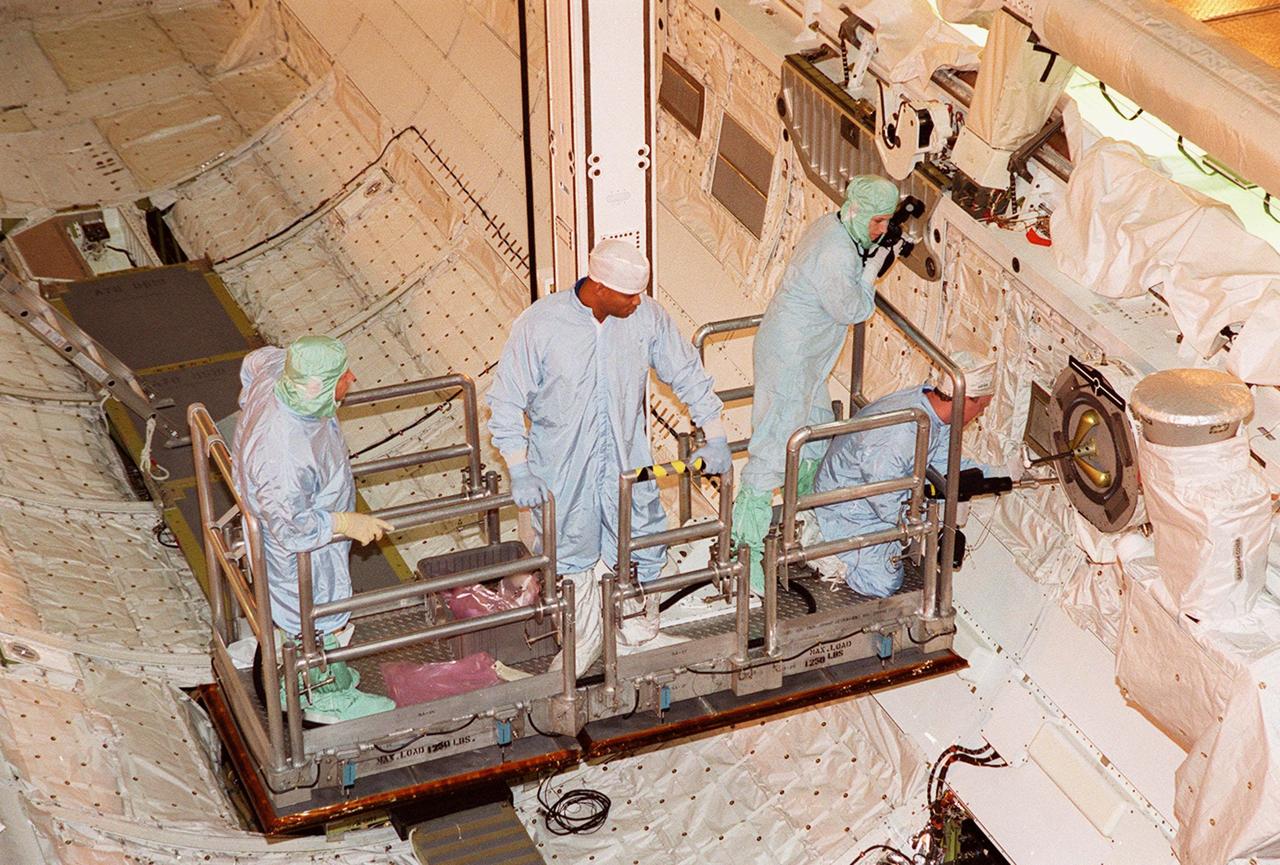
KENNEDY SPACE CENTER, FLA. -- Lowered into the payload bay of the orbiter Atlantis, some of the STS-98 crew look over part of the payload. At center is Mission Specialist Robert Curbeam; at right are Mission Specialists Marsha Ivins (standing) and Tom Jones (kneeling). They and the rest of the crew are at KSC for Crew Equipment Interface Test activities. Launch on mission STS-98 is scheduled for Jan. 18, 2001. It will be transporting the U.S. Lab, Destiny, to the International Space Station with five system racks already installed inside of the module. After delivery of electronics in the lab, electrically powered attitude control for Control Moment Gyroscopes will be activated
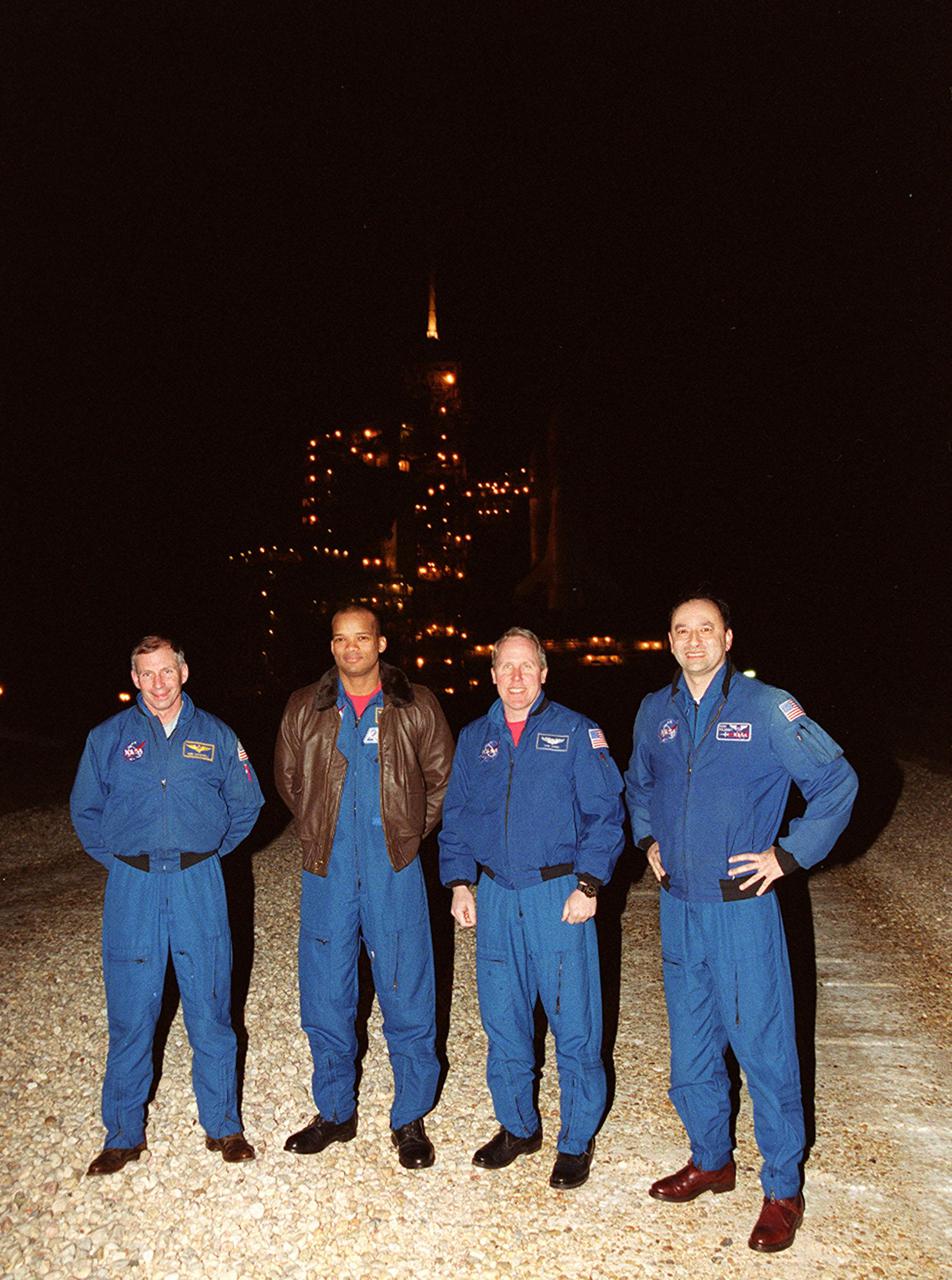
Members of the STS-98 crew pause for a photo after their arrival at KSC. From left, they are Commander Ken Cockrell, Mission Specialists Robert Curbeam and Thomas Jones, and Pilot Mark Polansky. Missing is Mission Specialist Marsha Ivins who was planning to arrive later. The crew is at KSC to take part in Terminal Countdown Test Demonstration activities in preparation for launch. They will be training in emergency procedures from the pad, checking the payload and taking part in a simulated countdown. The payload for the mission is the U.S. Lab Destiny, a key element in the construction of the International Space Station. The lab has five system racks already installed inside the module. After delivery of electronics in the lab, electrically powered attitude control for Control Moment Gyroscopes will be activated. STS-98 is the seventh construction flight to the ISS
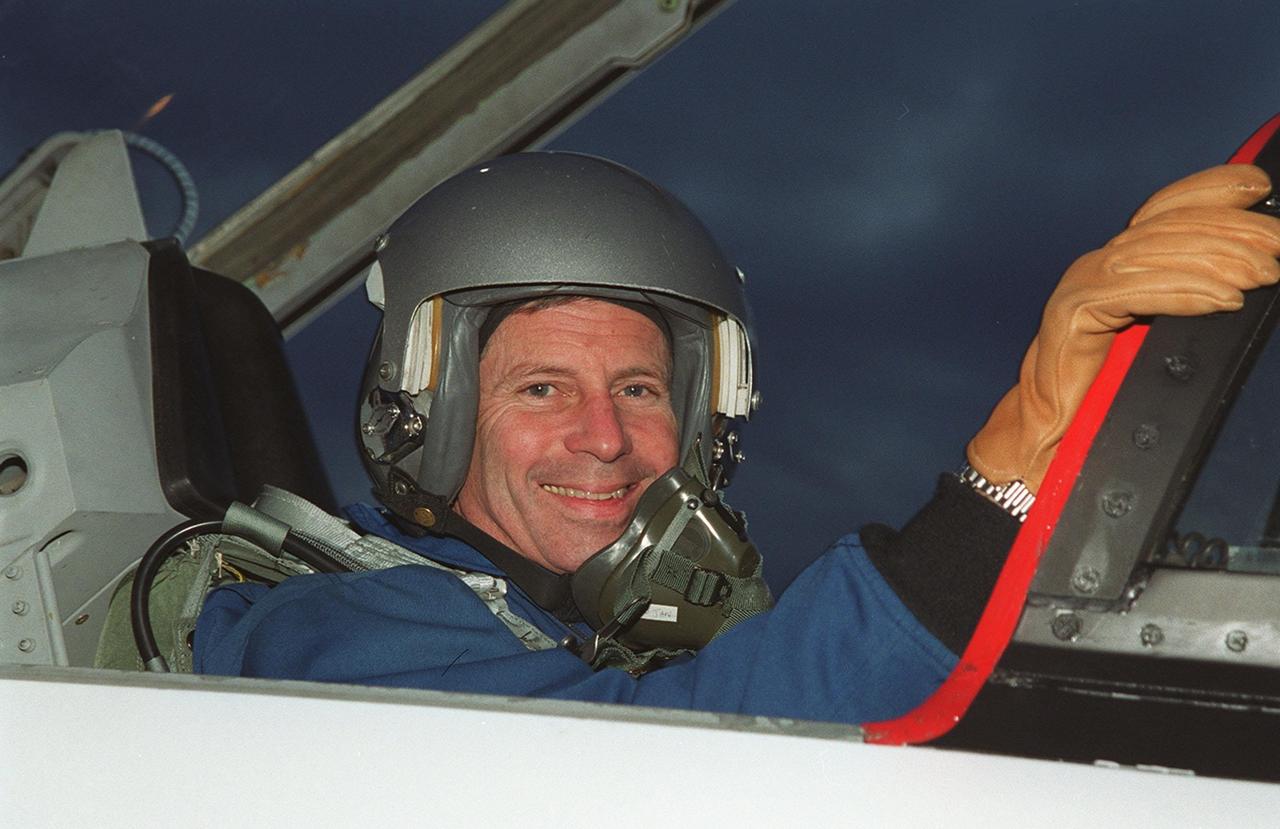
STS-98 Mission Commander shows his pleasure at arriving at KSC’s Shuttle Landing Facility for Terminal Countdown Test Activities. In preparation for the Jan. 19 launch, he and the rest of the crew Pilot Mark Polansky and Mission Specialists Robert Curbeam, Thomas Jones and Marsha Ivins will be training in emergency procedures from the pad, checking the payload and taking part in a simulated countdown. The payload for the mission is the U.S. Lab Destiny, a key element in the construction of the International Space Station. The lab has five system racks already installed inside the module. After delivery of electronics in the lab, electrically powered attitude control for Control Moment Gyroscopes will be activated. STS-98 is the seventh construction flight to the ISS.<br
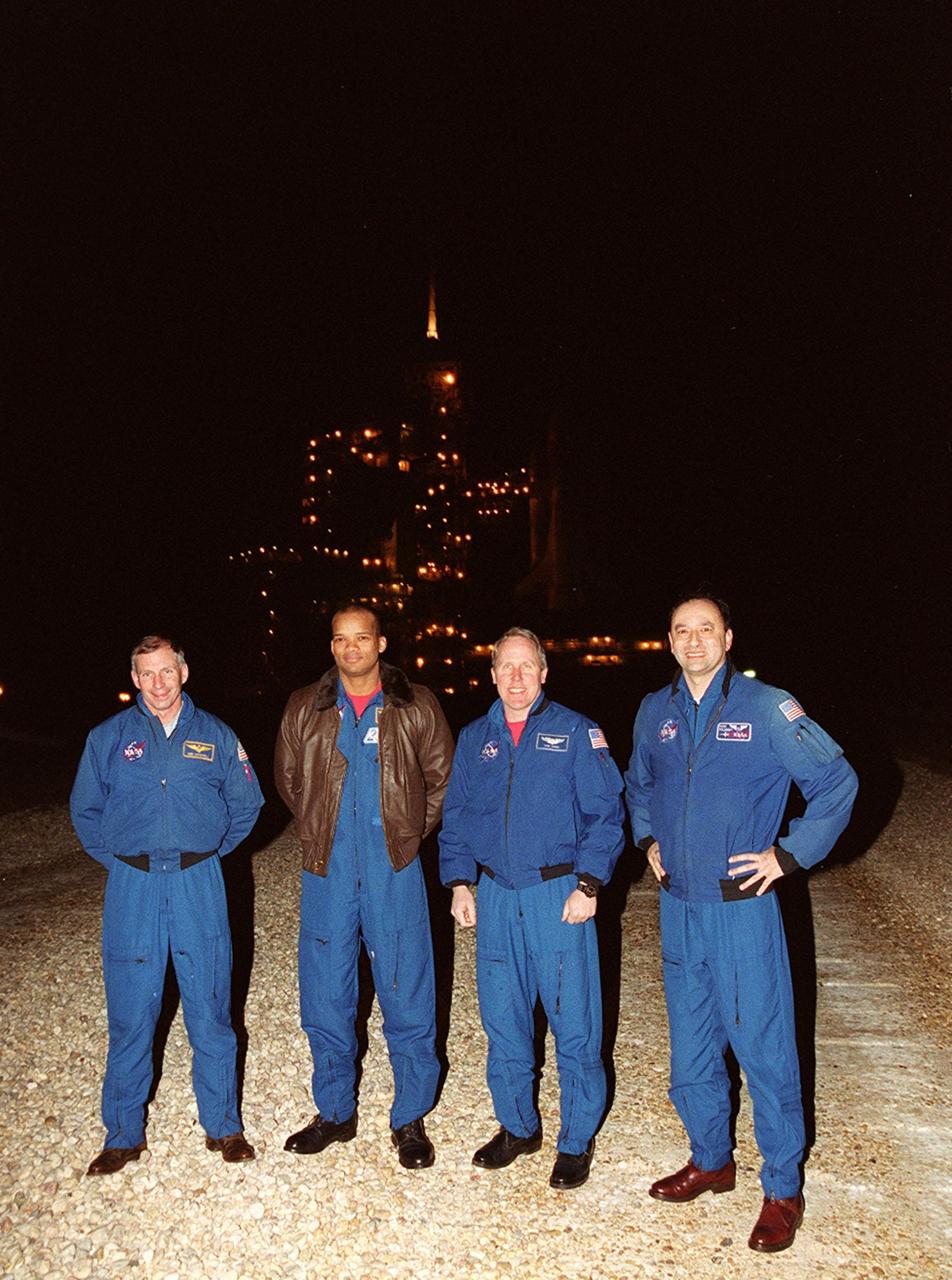
Members of the STS-98 crew pause for a photo after their arrival at KSC. From left, they are Commander Ken Cockrell, Mission Specialists Robert Curbeam and Thomas Jones, and Pilot Mark Polansky. Missing is Mission Specialist Marsha Ivins who was planning to arrive later. The crew is at KSC to take part in Terminal Countdown Test Demonstration activities in preparation for launch. They will be training in emergency procedures from the pad, checking the payload and taking part in a simulated countdown. The payload for the mission is the U.S. Lab Destiny, a key element in the construction of the International Space Station. The lab has five system racks already installed inside the module. After delivery of electronics in the lab, electrically powered attitude control for Control Moment Gyroscopes will be activated. STS-98 is the seventh construction flight to the ISS
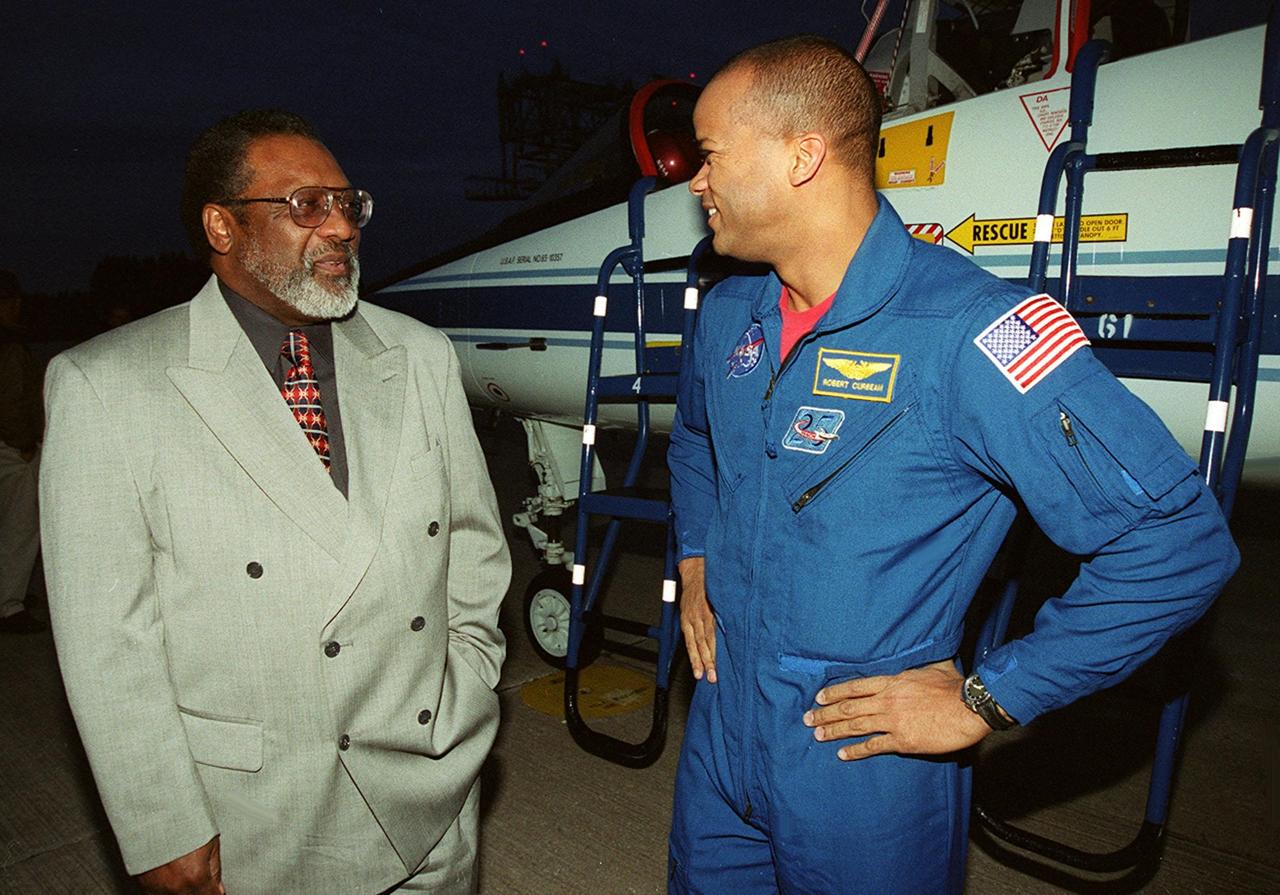
KSC’s Deputy Director James Jennings (left) welcomes STS-98 Mission Specialist Robert Curbeam to KSC. The STS-98 crew Commander Ken Cockrell, Pilot Mark Polansky and Mission Specialists Curbeam, Thomas Jones and Marsha Ivins arrived to take part in Terminal Countdown Test Demonstration activities in preparation for launch. They will be training in emergency procedures from the pad, checking the payload and taking part in a simulated countdown. The payload for the mission is the U.S. Lab Destiny, a key element in the construction of the International Space Station. The lab has five system racks already installed inside the module. After delivery of electronics in the lab, electrically powered attitude control for Control Moment Gyroscopes will be activated. STS-98 is the seventh construction flight to the ISS
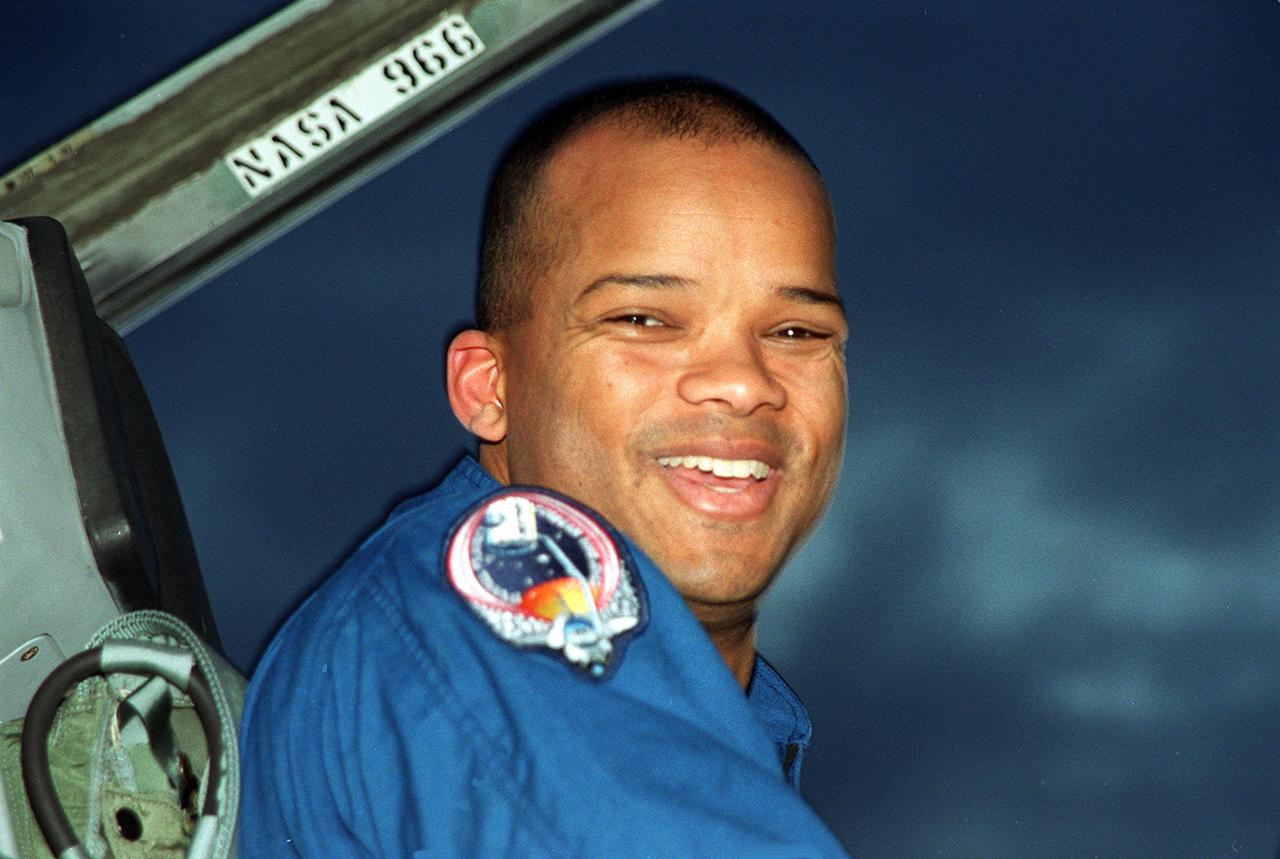
STS-98 Mission Specialist Robert Curbeam grins after his arrival at KSC’s Shuttle Landing Facility for Terminal Countdown Test Activities. In preparation for the Jan. 19 launch, he and the rest of the crew Commander Ken Cockrell, Pilot Mark Polansky and Mission Specialists Thomas Jones and Marsha Ivins will be training in emergency procedures from the pad, checking the payload and taking part in a simulated countdown. The payload for the mission is the U.S. Lab Destiny, a key element in the construction of the International Space Station. The lab has five system racks already installed inside the module. After delivery of electronics in the lab, electrically powered attitude control for Control Moment Gyroscopes will be activated. STS-98 is the seventh construction flight to the ISS.<br
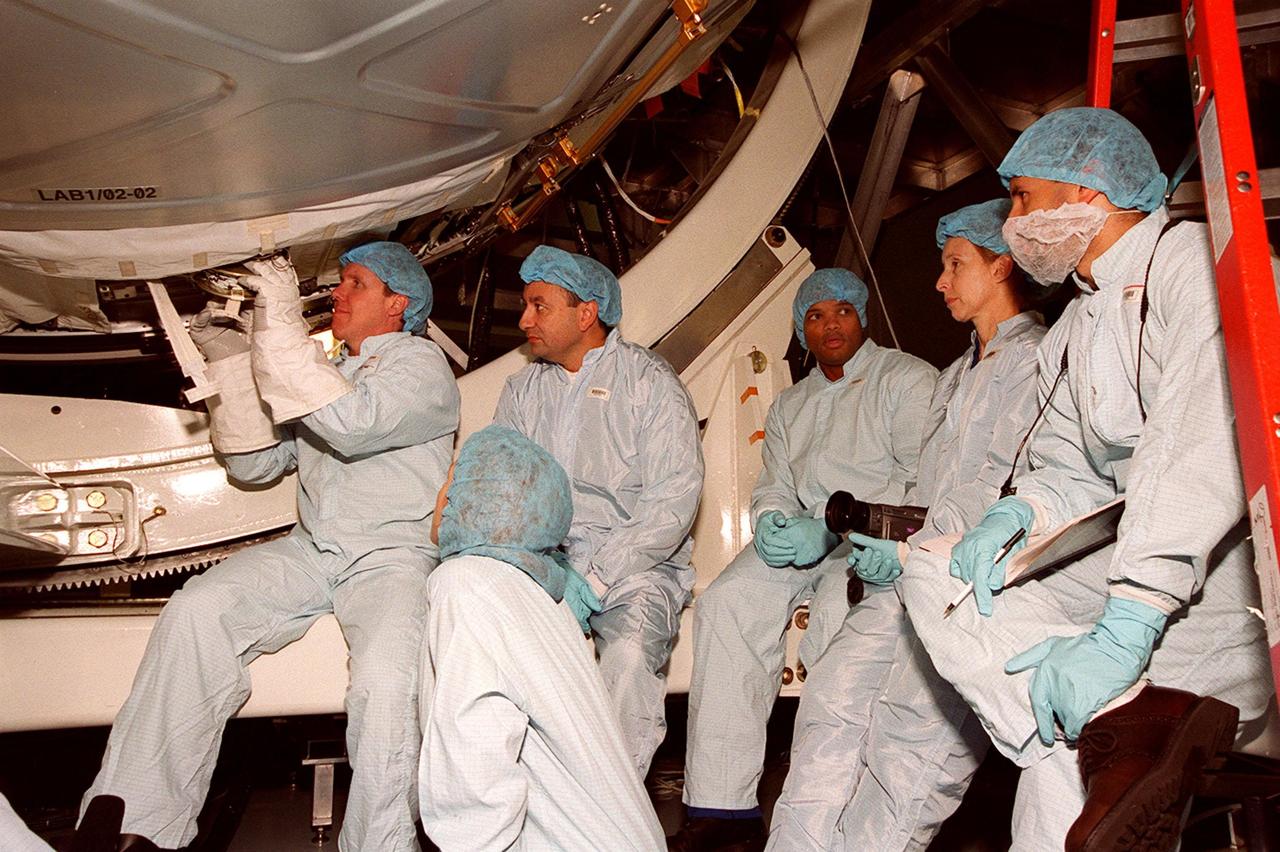
While trainers (bottom and right) look on, STS-98 Mission Specialist Thomas Jones practices handling a piece of equipment on the U.S. Lab, Destiny, while wearing the gloves he will wear in space. Watching next to him are other crew members Pilot Mark Polansky and Mission Specialists Robert Curbeam and Marsha Ivins. They are taking part in Crew Equipment Interface Test activities to become familiar with equipment they will be handling during the mission. With launch scheduled for Jan. 18, 2001, the STS-98 mission will be transporting the Lab to the International Space Station with five system racks already installed inside of the module. After delivery of electronics in the lab, electrically powered attitude control for Control Moment Gyroscopes will be activated
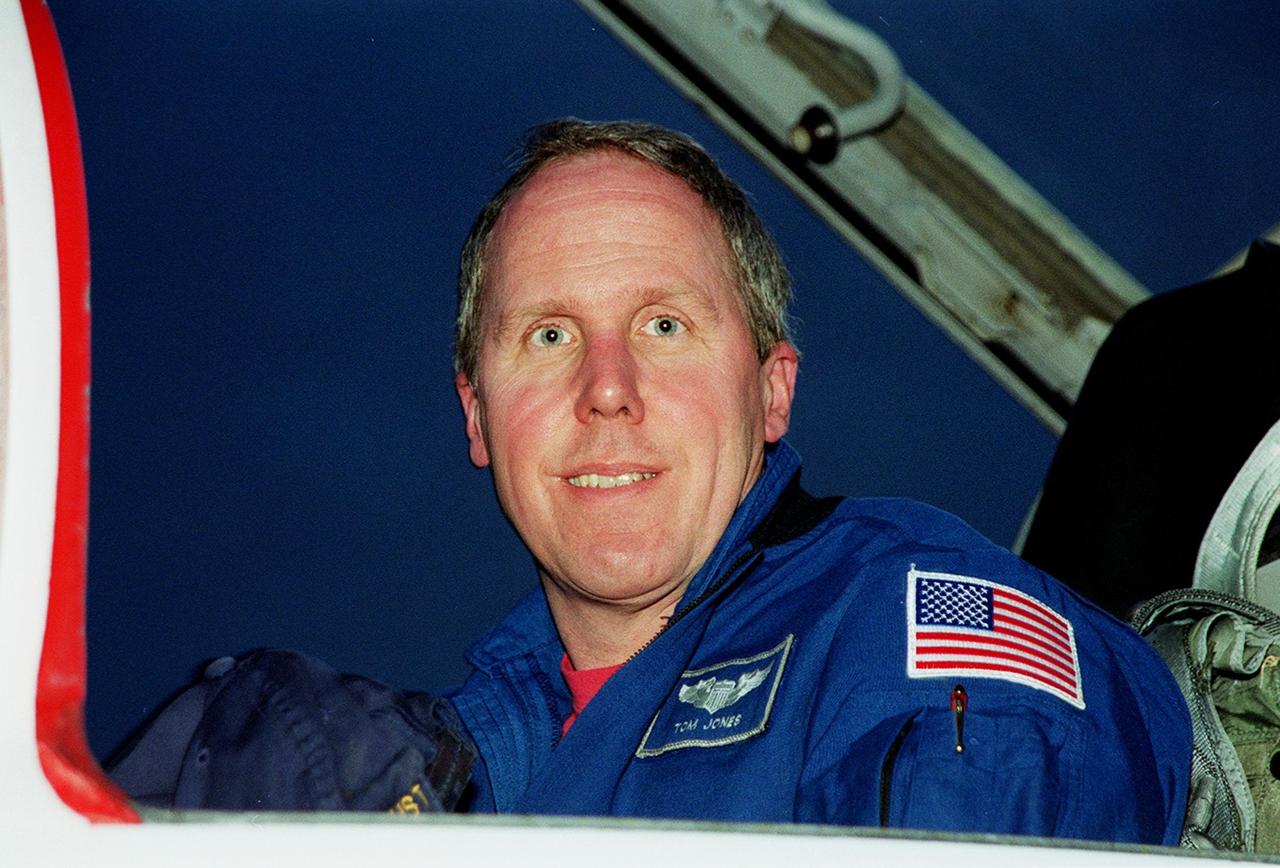
STS-98 Mission Specialist Thomas Jones happily arrives at KSC’s Shuttle Landing Facility for Terminal Countdown Test Activities. In preparation for the Jan. 19 launch, he and the rest of the crew Commander Ken Cockrell, Pilot Mark Polansky and Mission Specialists Robert Curbeam and Marsha Ivins will be training in emergency procedures from the pad, checking the payload and taking part in a simulated countdown. The payload for the mission is the U.S. Lab Destiny, a key element in the construction of the International Space Station. The lab has five system racks already installed inside the module. After delivery of electronics in the lab, electrically powered attitude control for Control Moment Gyroscopes will be activated. STS-98 is the seventh construction flight to the ISS.<br
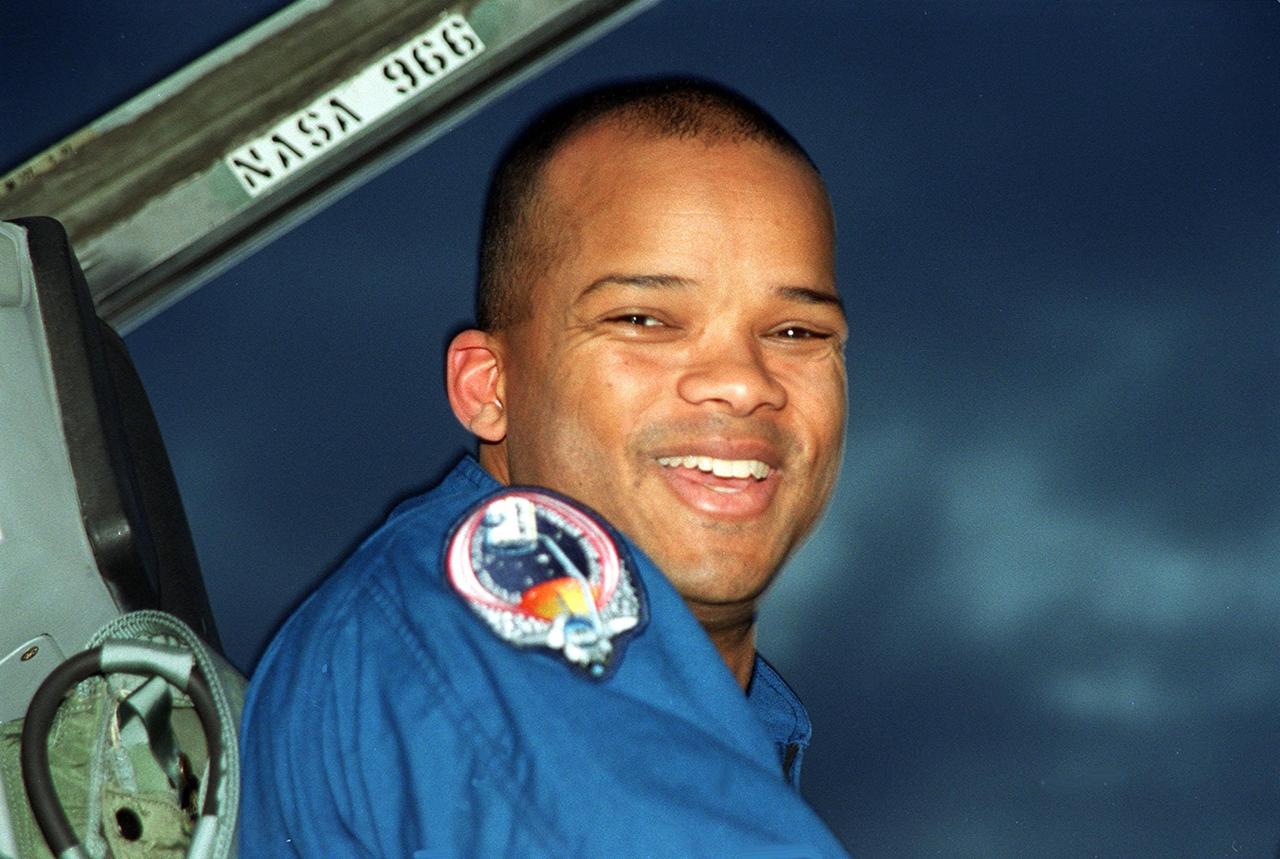
STS-98 Mission Specialist Robert Curbeam grins after his arrival at KSC’s Shuttle Landing Facility for Terminal Countdown Test Activities. In preparation for the Jan. 19 launch, he and the rest of the crew Commander Ken Cockrell, Pilot Mark Polansky and Mission Specialists Thomas Jones and Marsha Ivins will be training in emergency procedures from the pad, checking the payload and taking part in a simulated countdown. The payload for the mission is the U.S. Lab Destiny, a key element in the construction of the International Space Station. The lab has five system racks already installed inside the module. After delivery of electronics in the lab, electrically powered attitude control for Control Moment Gyroscopes will be activated. STS-98 is the seventh construction flight to the ISS.<br
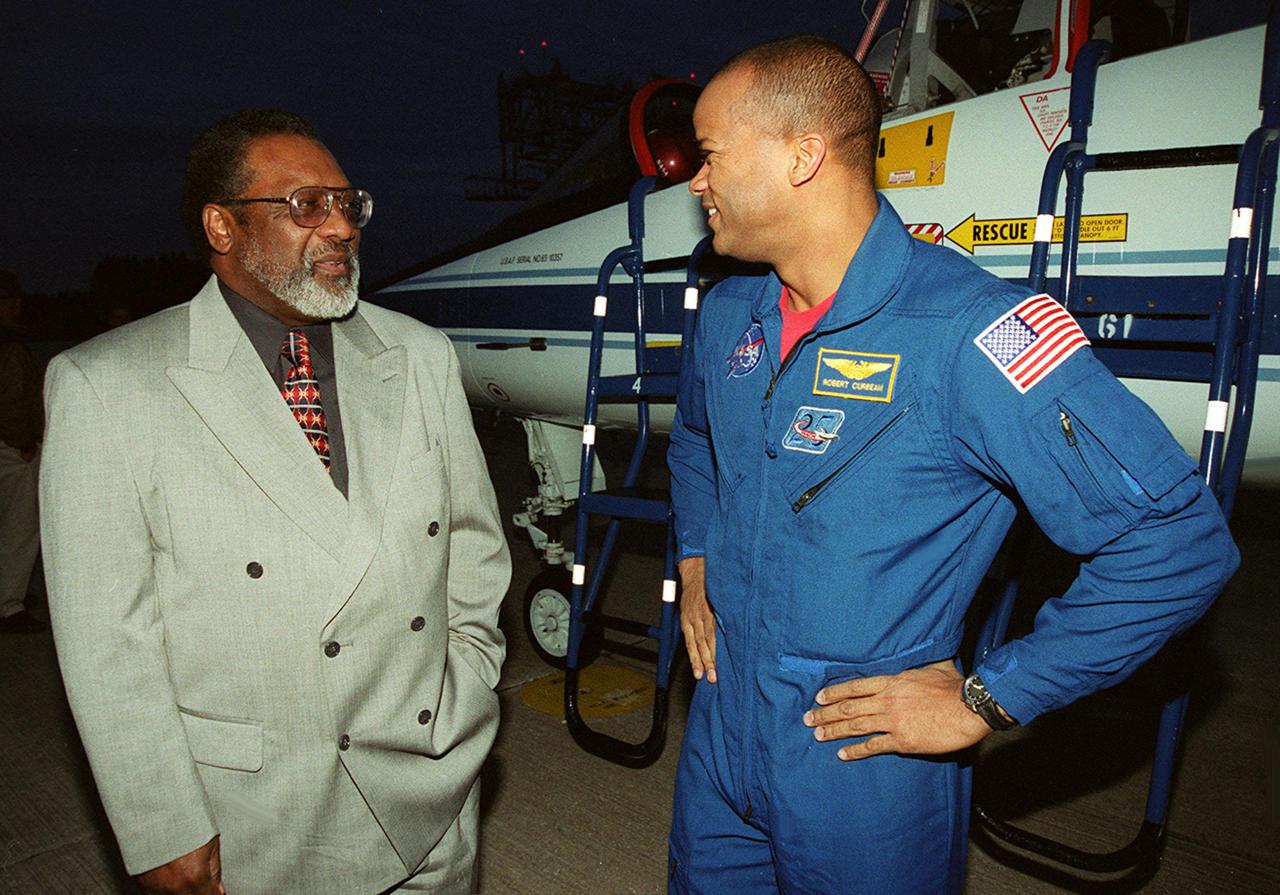
KSC’s Deputy Director James Jennings (left) welcomes STS-98 Mission Specialist Robert Curbeam to KSC. The STS-98 crew Commander Ken Cockrell, Pilot Mark Polansky and Mission Specialists Curbeam, Thomas Jones and Marsha Ivins arrived to take part in Terminal Countdown Test Demonstration activities in preparation for launch. They will be training in emergency procedures from the pad, checking the payload and taking part in a simulated countdown. The payload for the mission is the U.S. Lab Destiny, a key element in the construction of the International Space Station. The lab has five system racks already installed inside the module. After delivery of electronics in the lab, electrically powered attitude control for Control Moment Gyroscopes will be activated. STS-98 is the seventh construction flight to the ISS
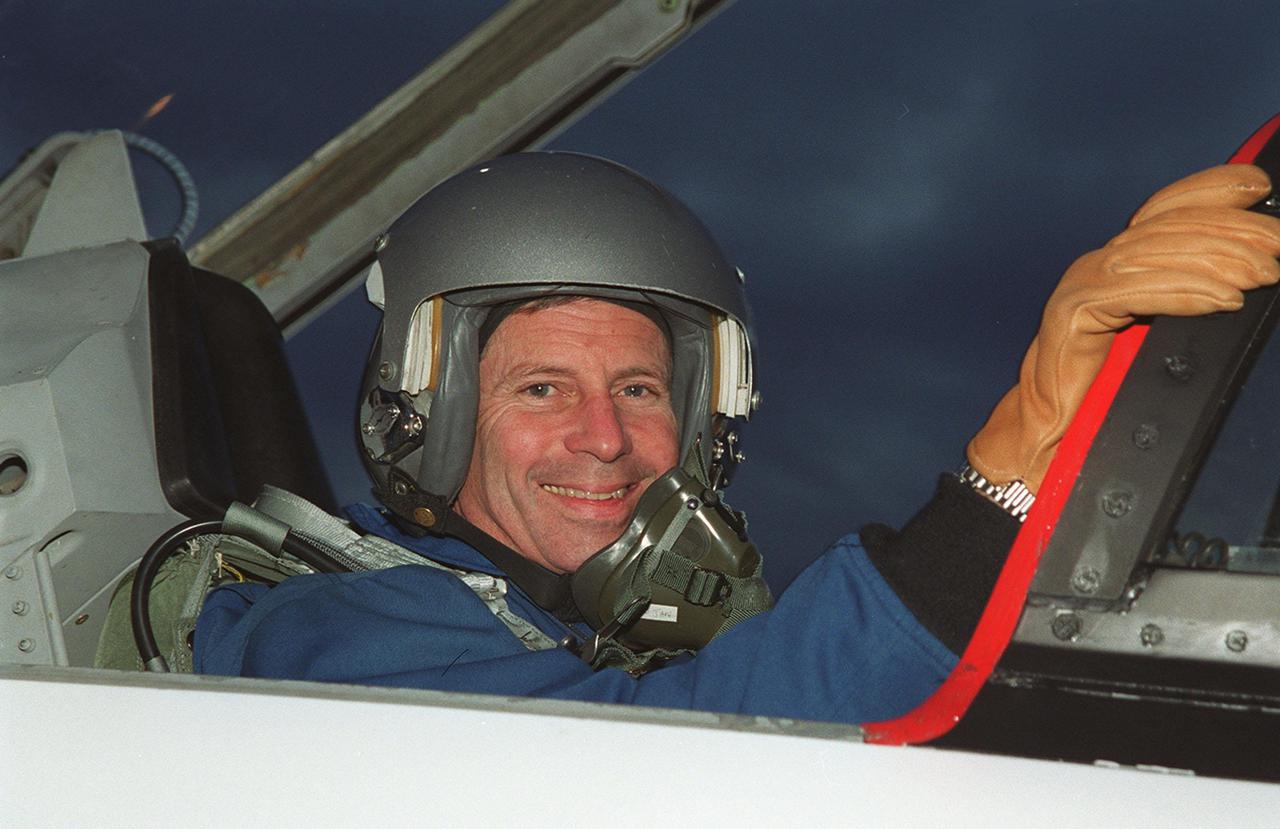
STS-98 Mission Commander shows his pleasure at arriving at KSC’s Shuttle Landing Facility for Terminal Countdown Test Activities. In preparation for the Jan. 19 launch, he and the rest of the crew Pilot Mark Polansky and Mission Specialists Robert Curbeam, Thomas Jones and Marsha Ivins will be training in emergency procedures from the pad, checking the payload and taking part in a simulated countdown. The payload for the mission is the U.S. Lab Destiny, a key element in the construction of the International Space Station. The lab has five system racks already installed inside the module. After delivery of electronics in the lab, electrically powered attitude control for Control Moment Gyroscopes will be activated. STS-98 is the seventh construction flight to the ISS.<br
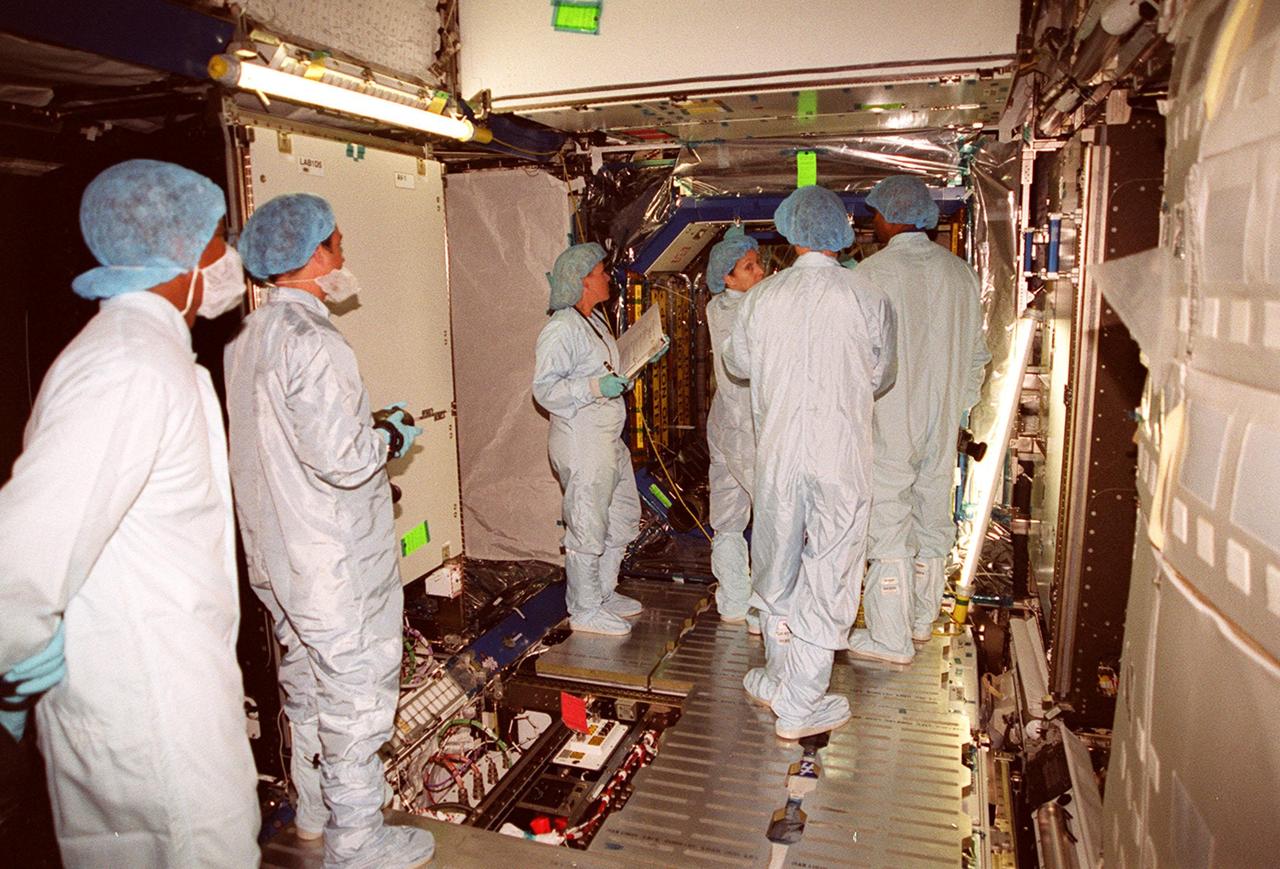
In the Space Station Processing Facility, members of the STS-98 crew check out equipment in the U.S. Lab, Destiny, with the help of workers. In the background, looking over her shoulder, is Mission Specialist Marsha Ivins. Others in the crew are Commander Ken Cockrell, Pilot Mark Polansky and Mission Specialists Robert Curbeam and Thomas Jones. The crew is taking part in Crew Equipment Interface Test activities, becoming familiar with equipment it will be handling during the mission. The mission will be transporting the Lab to the International Space Station with five system racks already installed inside of the module. With delivery of electronics in the lab, electrically powered attitude control for Control Moment Gyroscopes will be activated. The STS-98 launch is scheduled for Jan. 18, 2001
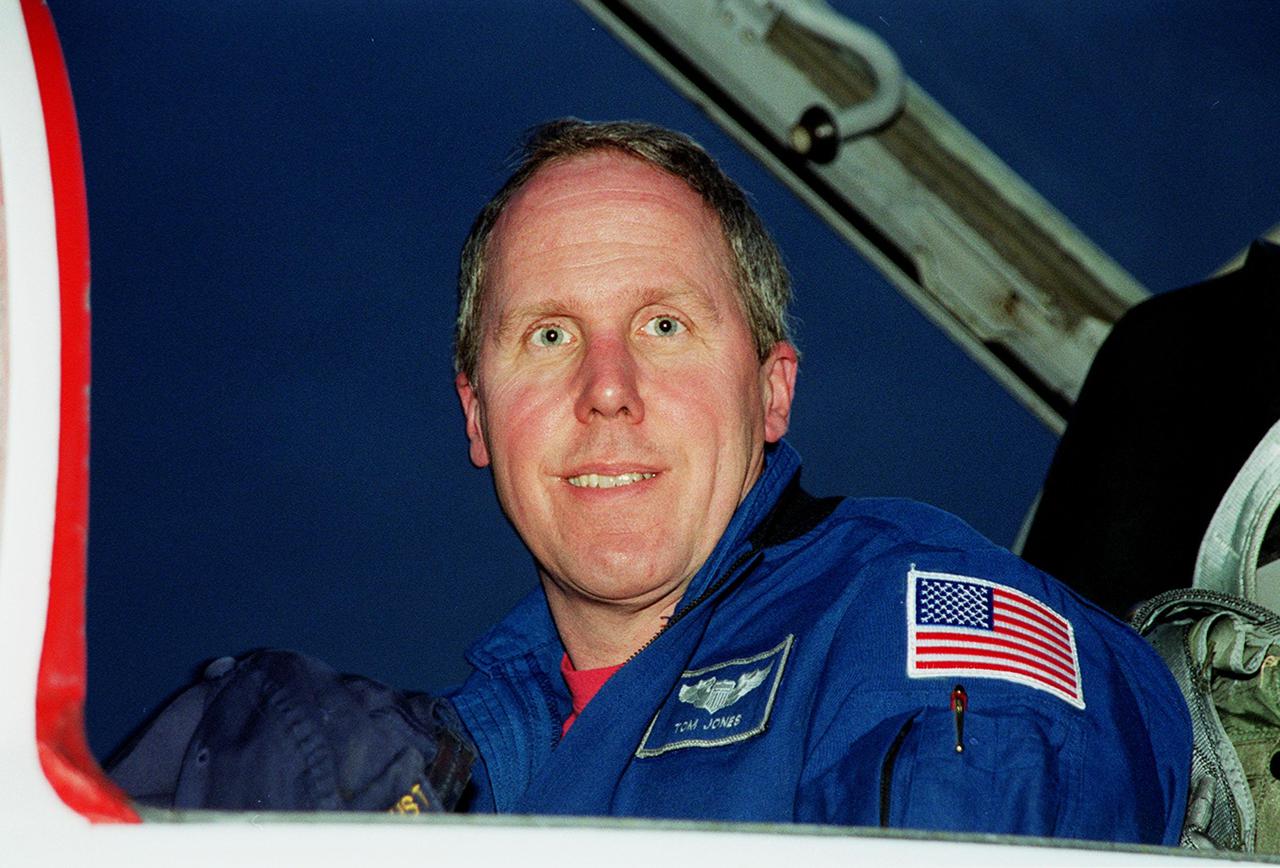
STS-98 Mission Specialist Thomas Jones happily arrives at KSC’s Shuttle Landing Facility for Terminal Countdown Test Activities. In preparation for the Jan. 19 launch, he and the rest of the crew Commander Ken Cockrell, Pilot Mark Polansky and Mission Specialists Robert Curbeam and Marsha Ivins will be training in emergency procedures from the pad, checking the payload and taking part in a simulated countdown. The payload for the mission is the U.S. Lab Destiny, a key element in the construction of the International Space Station. The lab has five system racks already installed inside the module. After delivery of electronics in the lab, electrically powered attitude control for Control Moment Gyroscopes will be activated. STS-98 is the seventh construction flight to the ISS.<br
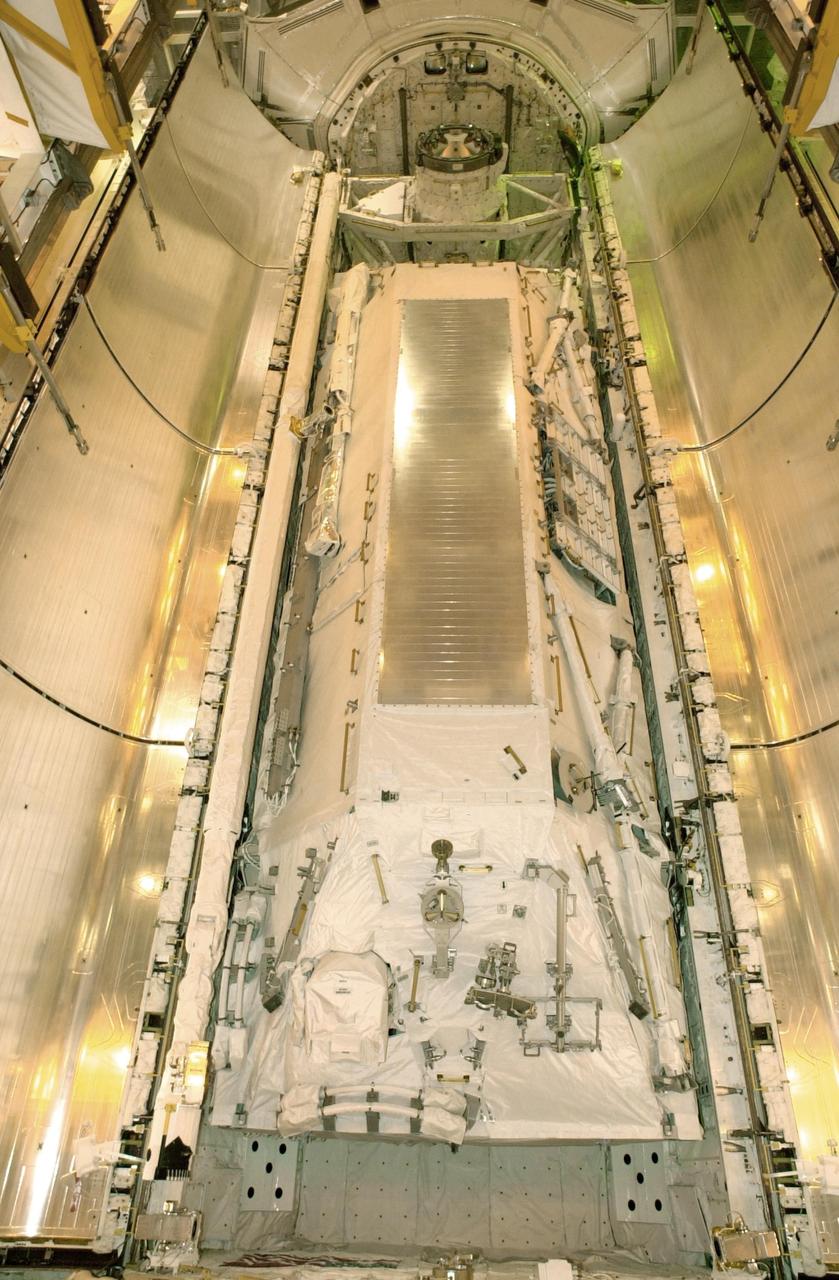
KENNEDY SPACE CENTER, FLA. -- At Launch Pad 39B, Space Shuttle Atlantis' payload bay doors are ready to be closed. The Shuttle payload includes the S0 Integrated Truss Structure (ITS), the Canadian Mobile Transporter, power distribution system modules, a heat pipe radiator for cooling, computers and a pair of rate gyroscopes. The mission is the 13th assembly flight to the ISS and includes four spacewalks to attach the S0 truss to the U.S. Lab Destiny. Launch is scheduled for April 4.
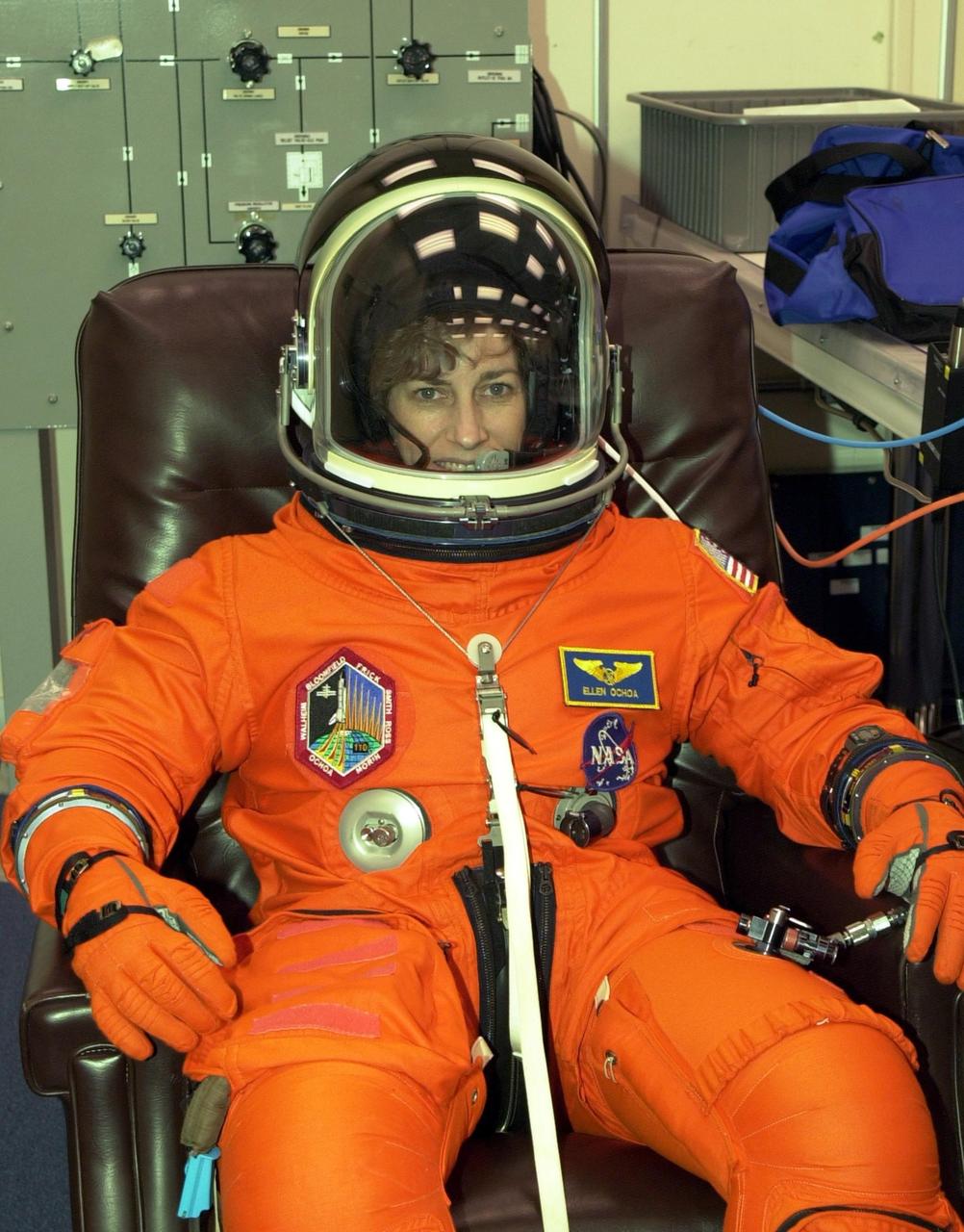
KENNEDY SPACE CENTER, FLA. -- STS-110 Mission Specialist Ellen Ochoa has a final check of her launch and entry suit in preparation for launch April 4. This flight will be her fourth. The STS-110 payload includes the S0 Integrated Truss Structure (ITS), the Canadian Mobile Transporter, power distribution system modules, a heat pipe radiator for cooling, computers and a pair of rate gyroscopes. The 11-day mission is the 13th assembly flight to the ISS and includes four spacewalks to attach the S0 truss to the U.S. Lab Destiny
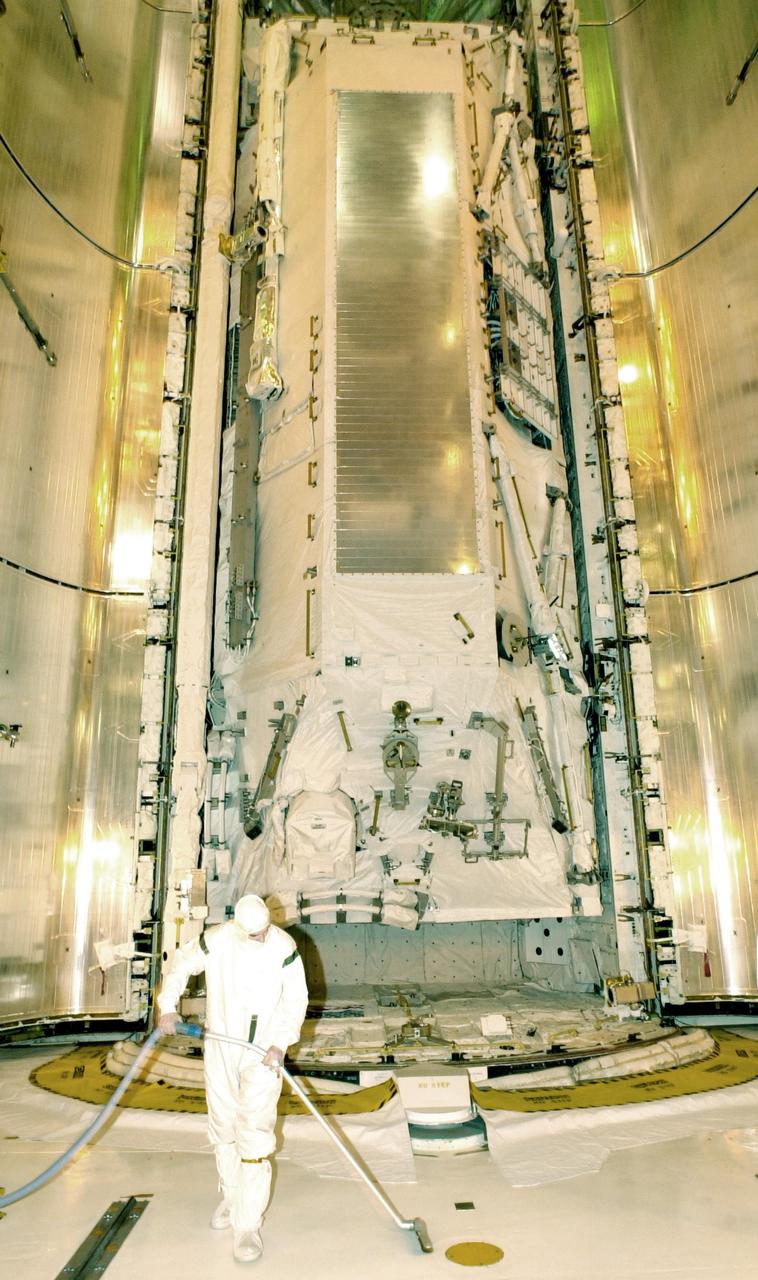
KENNEDY SPACE CENTER, FLA. - A worker at Launch Pad 39B prepares for the closing of Space Shuttle Atlantis' payload bay doors. The Shuttle payload includes the S0 Integrated Truss Structure (ITS), the Canadian Mobile Transporter, power distribution system modules, a heat pipe radiator for cooling, computers and a pair of rate gyroscopes. The mission is the 13th assembly flight to the ISS and includes four spacewalks to attach the S0 truss to the U.S. Lab Destiny. Launch is scheduled for April 4.
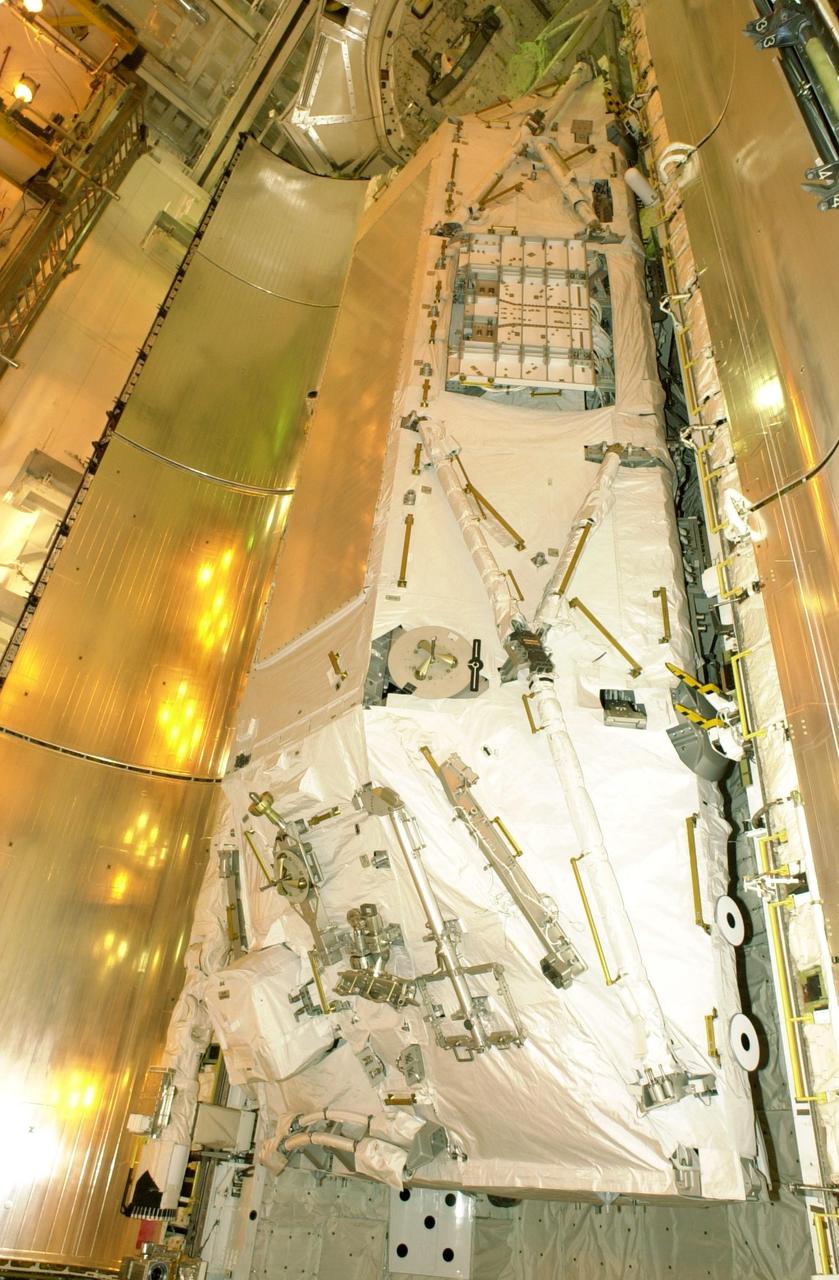
KENNEDY SPACE CENTER, FLA. -- At Launch Pad 39B, Space Shuttle Atlantis' payload bay doors are ready to be closed. The Shuttle payload includes the S0 Integrated Truss Structure (ITS), the Canadian Mobile Transporter, power distribution system modules, a heat pipe radiator for cooling, computers and a pair of rate gyroscopes. The mission is the 13th assembly flight to the ISS and includes four spacewalks to attach the S0 truss to the U.S. Lab Destiny. Launch is scheduled for April 4.
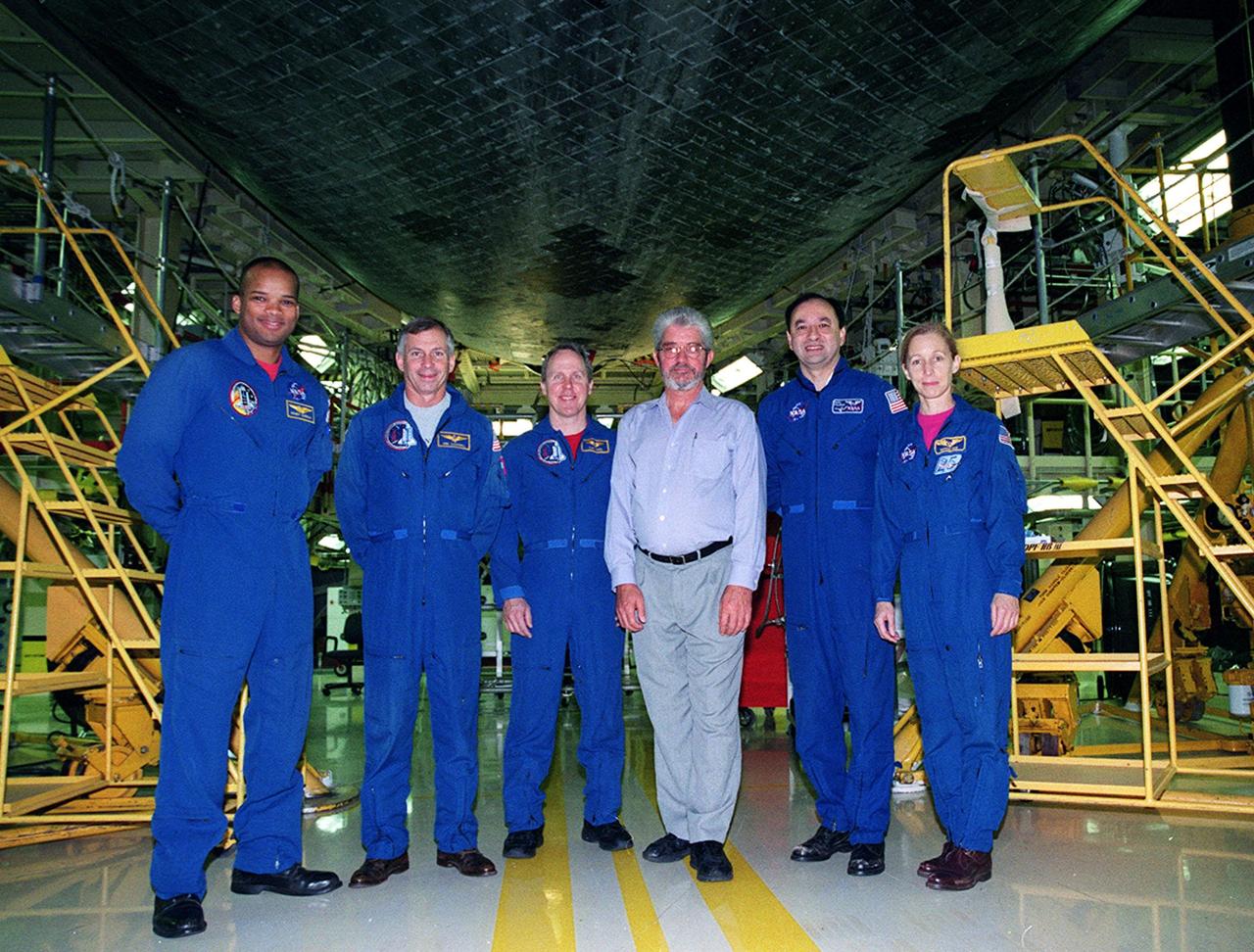
KENNEDY SPACE CENTER, FLA. -- The STS-98 crew, with United Space Alliance worker Larry Oshein (center), poses underneath orbiter Atlantis in Orbiter Processing Facility bay 3. From left, they are Mission Specialist Robert Curbeam, Commander Ken Cockrell, Mission Specialist Tom Jones, Oshein, and Mission Specialists Mark Polansky and Marsha Ivins. The crew is at KSC for Crew Equipment Interface Test activities. Launch of Atlantis on mission STS-98 is scheduled for Jan. 18, 2001. It will be transporting the U.S. Lab, Destiny, to the International Space Station with five system racks already installed inside of the module. After delivery of electronics in the lab, electrically powered attitude control for Control Moment Gyroscopes will be activated
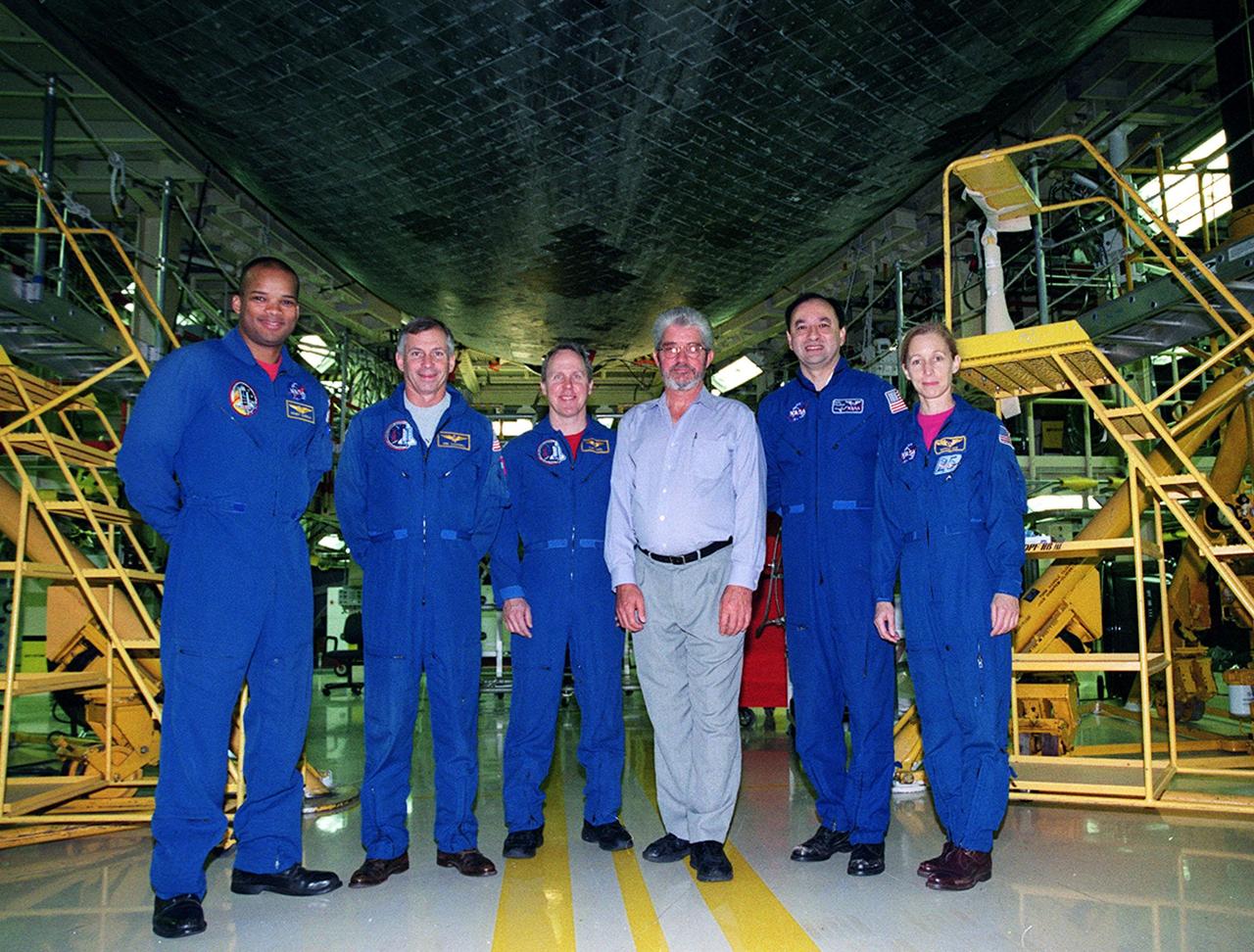
KENNEDY SPACE CENTER, FLA. -- The STS-98 crew, with United Space Alliance worker Larry Oshein (center), poses underneath orbiter Atlantis in Orbiter Processing Facility bay 3. From left, they are Mission Specialist Robert Curbeam, Commander Ken Cockrell, Mission Specialist Tom Jones, Oshein, and Mission Specialists Mark Polansky and Marsha Ivins. The crew is at KSC for Crew Equipment Interface Test activities. Launch of Atlantis on mission STS-98 is scheduled for Jan. 18, 2001. It will be transporting the U.S. Lab, Destiny, to the International Space Station with five system racks already installed inside of the module. After delivery of electronics in the lab, electrically powered attitude control for Control Moment Gyroscopes will be activated
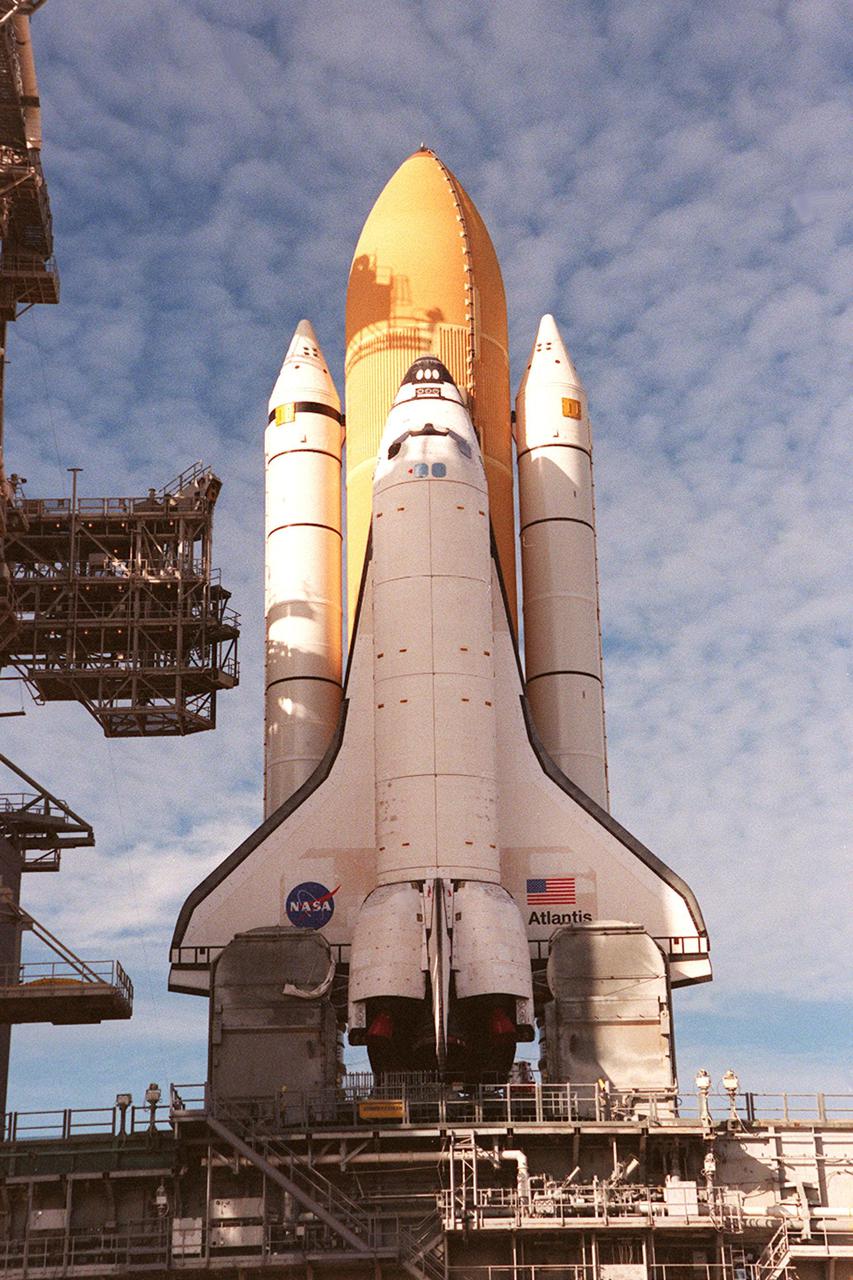
KENNEDY SPACE CENTER, Fla. -- Bright morning sun shines on Space Shuttle Atlantis as it sits on Launch Pad 39A. In front of the wings, on either side of the orbiter are tail service masts, which support the fluid, gas and electrical requirements of the orbiter’s liquid oxygen and liquid hydrogen aft T-0 umbilicals. Atlantis will fly on mission STS-98, the seventh construction flight to the International Space Station, carrying the U.S. Laboratory, named Destiny. The lab has five system racks already installed inside the module. After delivery of electronics in the lab, electrically powered attitude control for Control Moment Gyroscopes will be activated. Atlantis is scheduled for launch no earlier than Jan. 19, 2001, with a crew of five

KENNEDY SPACE CENTER, Fla. -- Daylight glows from behind Space Shuttle Atlantis as it begins rollout to Launch Pad 39A for the second time. An attempt to roll out on Jan. 2 incurred a failed computer processor on the crawler transporter and the Shuttle was returned to the Vehicle Assembly Building using a secondary computer processor on the vehicle. Atlantis will fly on mission STS-98, the seventh construction flight to the International Space Station, carrying the U.S. Laboratory, named Destiny. The lab will have five system racks already installed inside the module. After delivery of electronics in the lab, electrically powered attitude control for Control Moment Gyroscopes will be activated. Atlantis is scheduled for launch no earlier than Jan. 19, 2001, with a crew of five
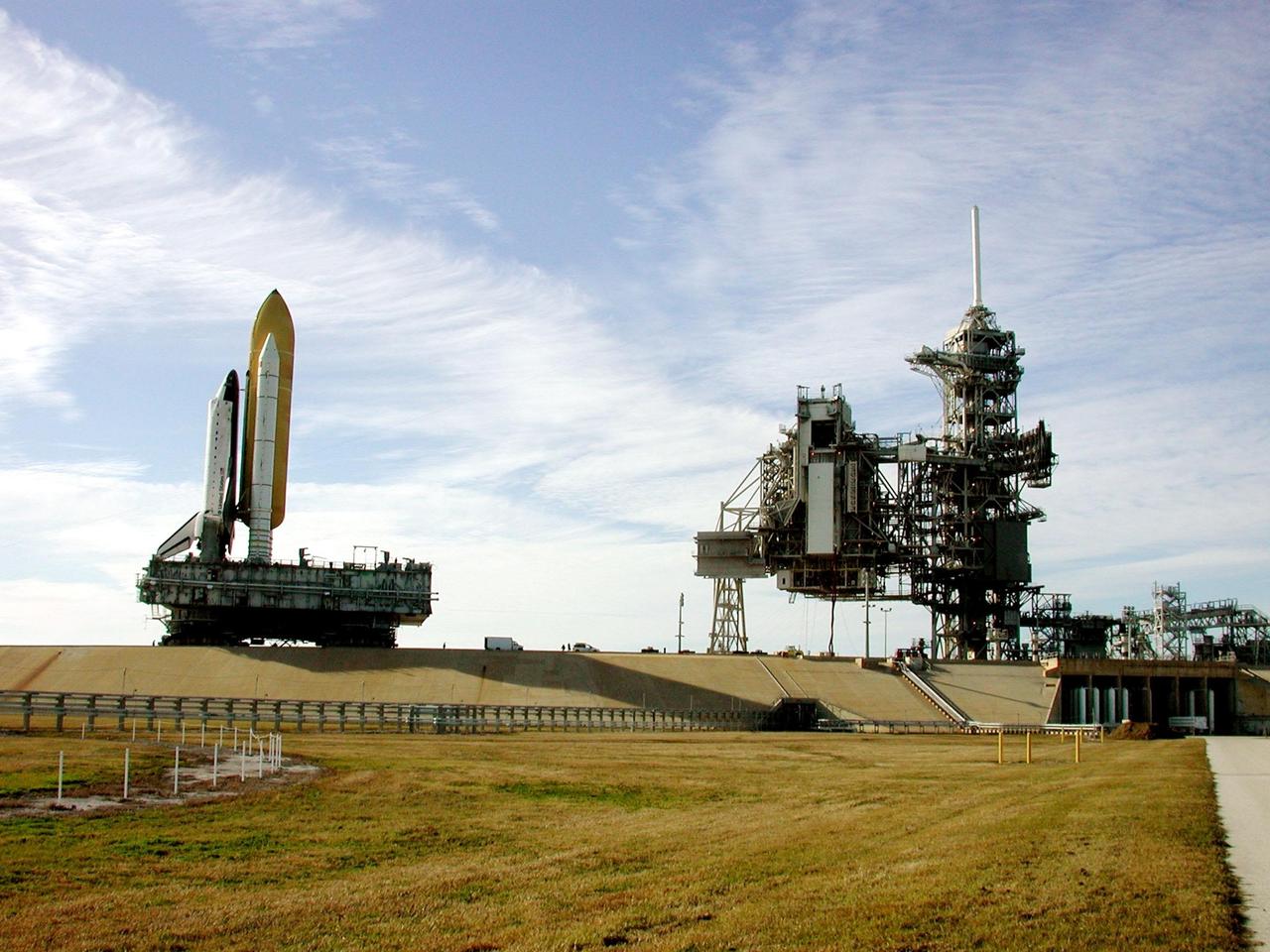
KENNEDY SPACE CENTER, Fla. -- Under wispy white morning clouds, Space Shuttle Atlantis approaches Launch Pad 39A, which shows the Rotating Service Structure open (left) and the Fixed Service Structure (right). At the RSS, the payload canister is being lifted up to the Payload Changeout Room. This is the Shuttle’s second attempt at rollout. Jan. 2 a failed computer processor on the crawler transporter aborted the rollout and the Shuttle was returned to the Vehicle Assembly Building using a secondary computer processor on the vehicle. Atlantis will fly on mission STS-98, the seventh construction flight to the International Space Station, carrying the U.S. Laboratory, named Destiny. The lab will have five system racks already installed inside the module. After delivery of electronics in the lab, electrically powered attitude control for Control Moment Gyroscopes will be activated. Atlantis is scheduled for launch no earlier than Jan. 19, 2001, with a crew of five

KENNEDY SPACE CENTER, Fla. -- Daylight glows from behind Space Shuttle Atlantis as it begins rollout to Launch Pad 39A for the second time. An attempt to roll out on Jan. 2 incurred a failed computer processor on the crawler transporter and the Shuttle was returned to the Vehicle Assembly Building using a secondary computer processor on the vehicle. Atlantis will fly on mission STS-98, the seventh construction flight to the International Space Station, carrying the U.S. Laboratory, named Destiny. The lab will have five system racks already installed inside the module. After delivery of electronics in the lab, electrically powered attitude control for Control Moment Gyroscopes will be activated. Atlantis is scheduled for launch no earlier than Jan. 19, 2001, with a crew of five

KENNEDY SPACE CENTER, Fla. -- Bright morning sun shines on Space Shuttle Atlantis as it sits on Launch Pad 39A. In front of the wings, on either side of the orbiter are tail service masts, which support the fluid, gas and electrical requirements of the orbiter’s liquid oxygen and liquid hydrogen aft T-0 umbilicals. Atlantis will fly on mission STS-98, the seventh construction flight to the International Space Station, carrying the U.S. Laboratory, named Destiny. The lab has five system racks already installed inside the module. After delivery of electronics in the lab, electrically powered attitude control for Control Moment Gyroscopes will be activated. Atlantis is scheduled for launch no earlier than Jan. 19, 2001, with a crew of five
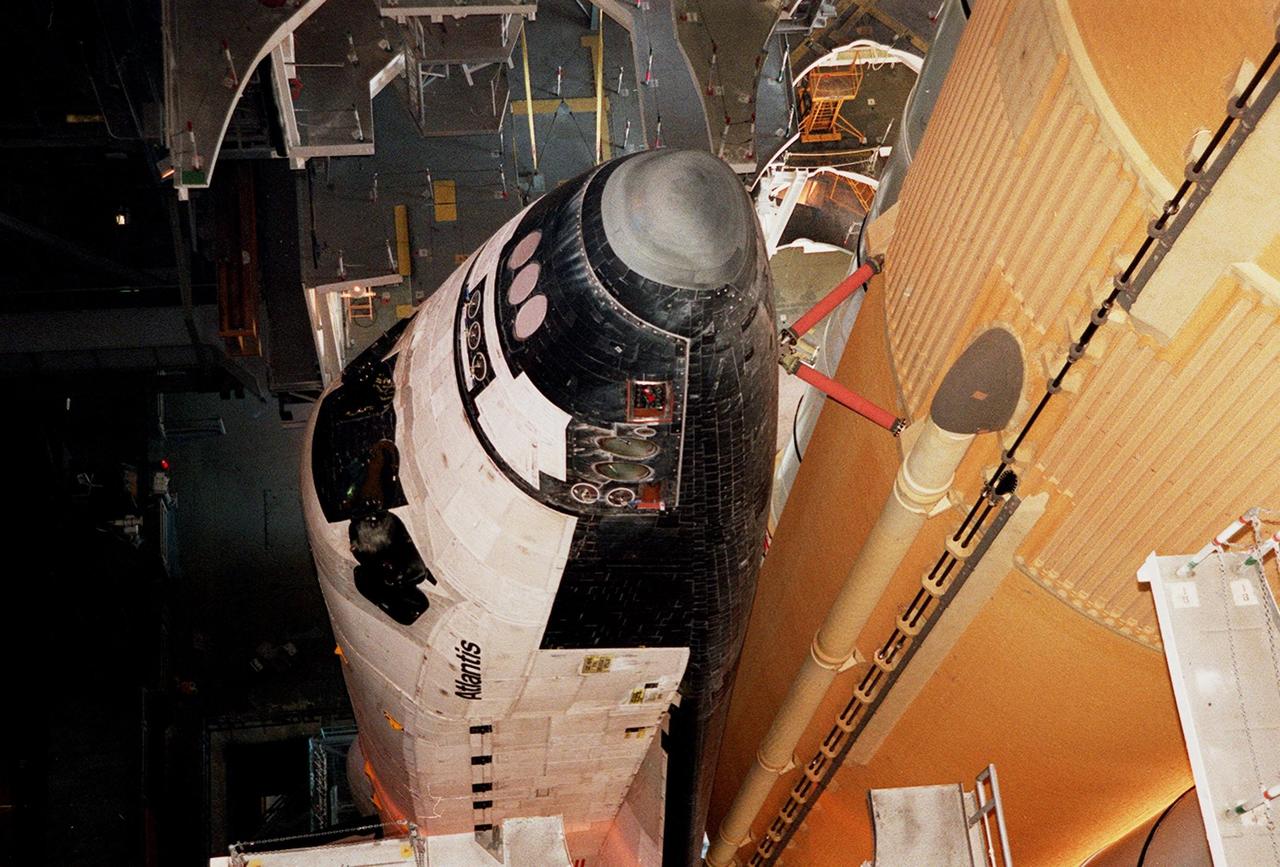
KENNEDY SPACE CENTER, Fla. -- The nose of Atlantis is seen in this closeup, along with the braces that attach it to the external tank at right. Space Shuttle Atlantis is making its second rollout attempt to Launch Pad 39A. An attempt to roll out on Jan. 2 incurred a failed computer processor on the crawler transporter and the Shuttle was returned to the Vehicle Assembly Building using a secondary computer processor on the vehicle. Atlantis will fly on mission STS-98, the seventh construction flight to the International Space Station, carrying the U.S. Laboratory, named Destiny. The lab will have five system racks already installed inside the module. After delivery of electronics in the lab, electrically powered attitude control for Control Moment Gyroscopes will be activated. Atlantis is scheduled for launch no earlier than Jan. 19, 2001, with a crew of five
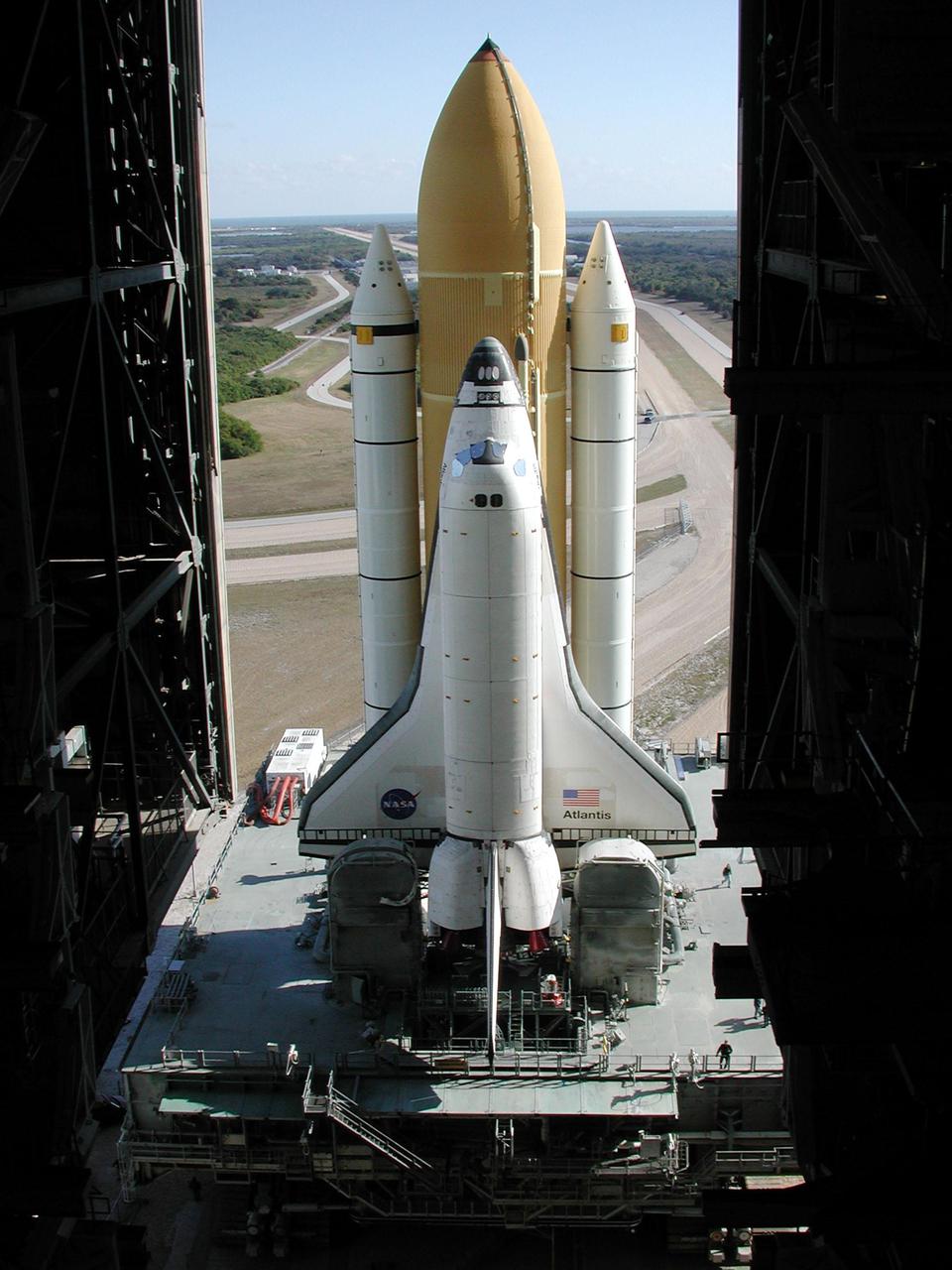
KENNEDY SPACE CENTER, Fla. -- Space Shuttle Atlantis, on its Mobile Launcher Platform, begins rolling through the open doors of the Vehicle Assembly Building to Launch Pad 39A, this time on another crawler transporter. An attempt to roll out on Jan. 2 incurred a failed computer processor on the first crawler transporter. The Shuttle was returned to the VAB using a secondary computer processor on the vehicle. Atlantis will fly on mission STS-98, the seventh construction flight to the International Space Station, carrying the U.S. Laboratory, named Destiny. The lab module will have five system racks already installed inside. After delivery of electronics in the lab, electrically powered attitude control for Control Moment Gyroscopes will be activated. Atlantis is scheduled for launch no earlier than Jan. 19, 2001, with a crew of five
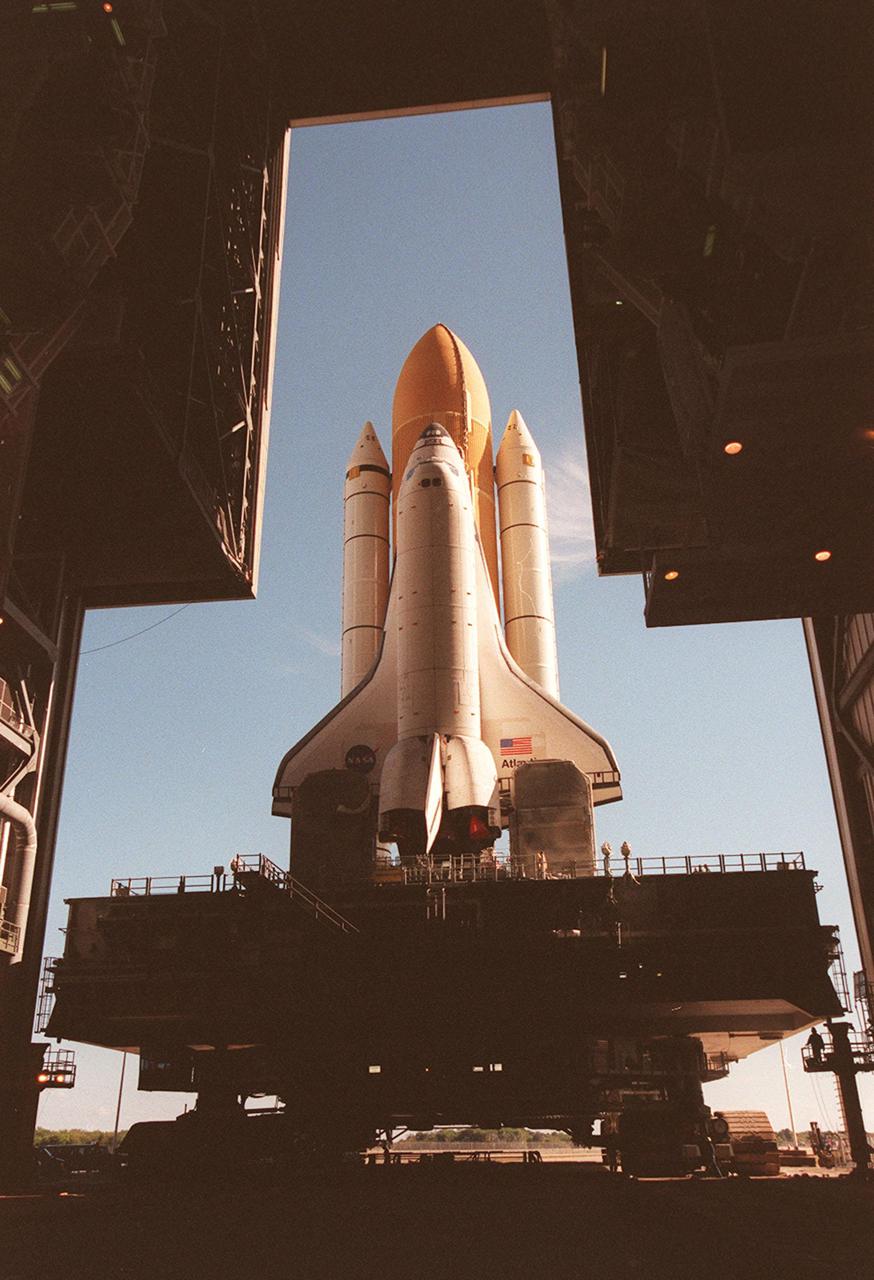
KENNEDY SPACE CENTER, Fla. -- Space Shuttle Atlantis inches its way out the doors of the Vehicle Assembly Building as it begins rolling out to Launch Pad 39A for the second time. An attempt to roll out on Jan. 2 incurred a failed computer processor on the crawler transporter and the Shuttle was returned to the Vehicle Assembly Building using a secondary computer processor on the vehicle. Atlantis will fly on mission STS-98, the seventh construction flight to the International Space Station, carrying the U.S. Laboratory, named Destiny. The lab will have five system racks already installed inside the module. After delivery of electronics in the lab, electrically powered attitude control for Control Moment Gyroscopes will be activated. Atlantis is scheduled for launch no earlier than Jan. 19, 2001, with a crew of five
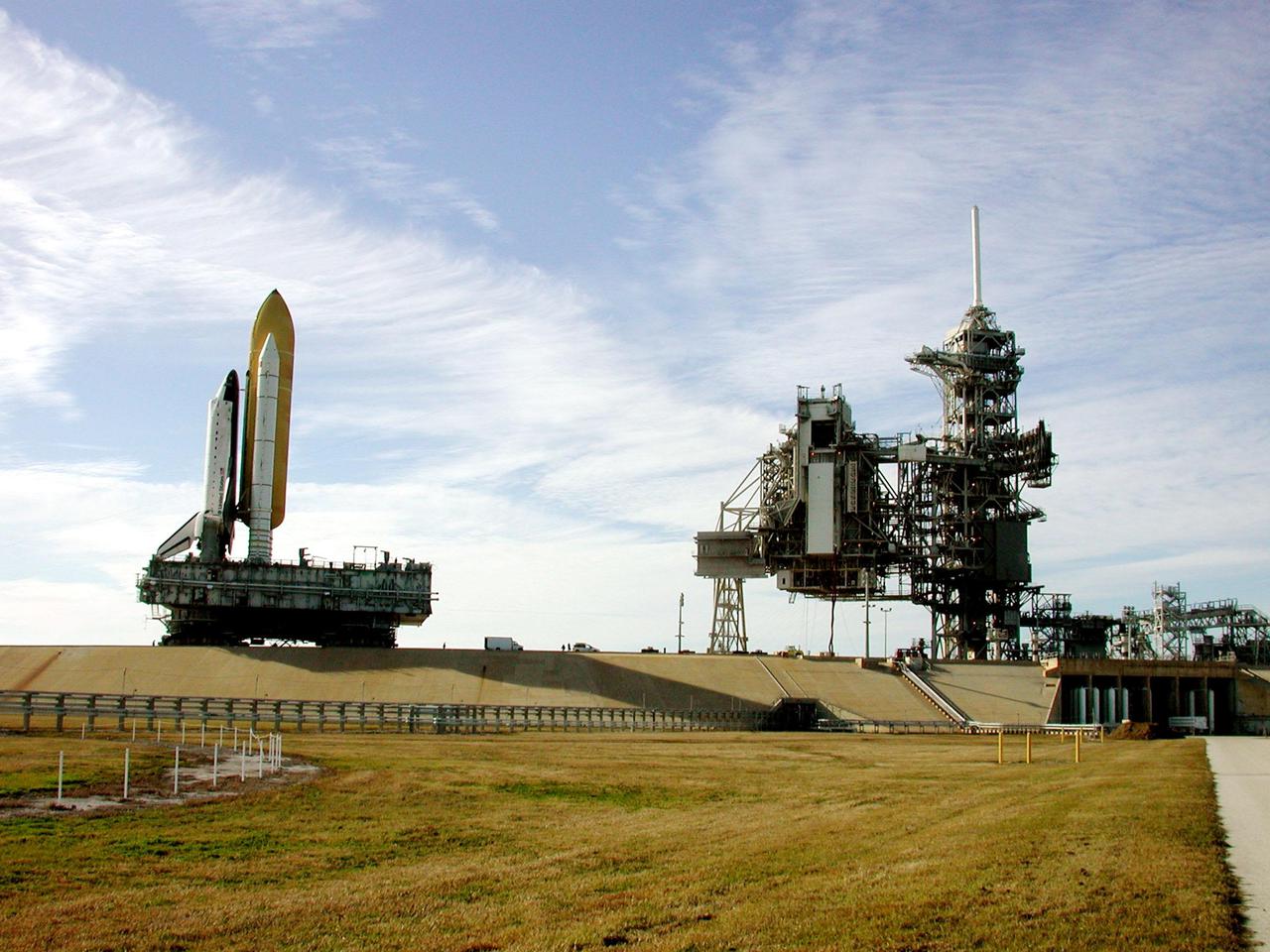
KENNEDY SPACE CENTER, Fla. -- Under wispy white morning clouds, Space Shuttle Atlantis approaches Launch Pad 39A, which shows the Rotating Service Structure open (left) and the Fixed Service Structure (right). At the RSS, the payload canister is being lifted up to the Payload Changeout Room. This is the Shuttle’s second attempt at rollout. Jan. 2 a failed computer processor on the crawler transporter aborted the rollout and the Shuttle was returned to the Vehicle Assembly Building using a secondary computer processor on the vehicle. Atlantis will fly on mission STS-98, the seventh construction flight to the International Space Station, carrying the U.S. Laboratory, named Destiny. The lab will have five system racks already installed inside the module. After delivery of electronics in the lab, electrically powered attitude control for Control Moment Gyroscopes will be activated. Atlantis is scheduled for launch no earlier than Jan. 19, 2001, with a crew of five
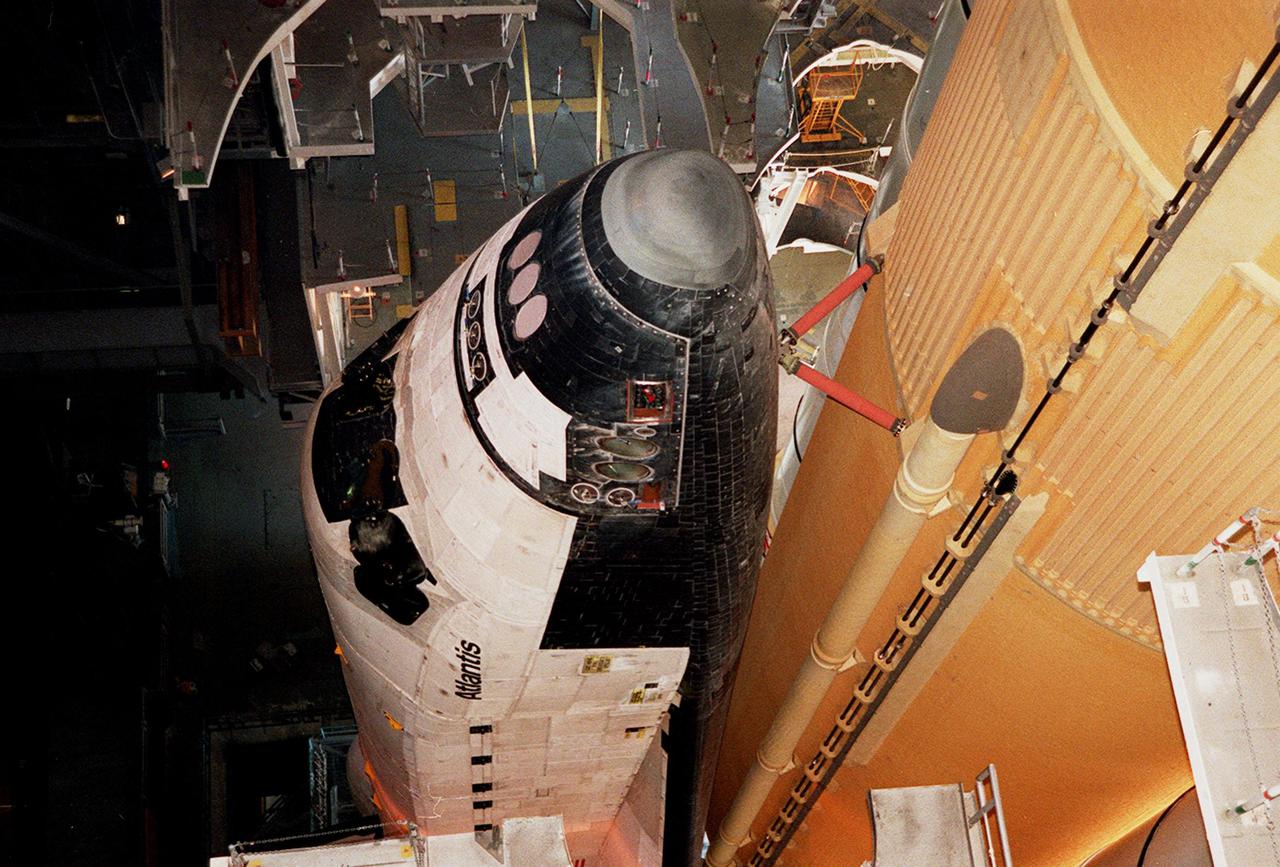
KENNEDY SPACE CENTER, Fla. -- The nose of Atlantis is seen in this closeup, along with the braces that attach it to the external tank at right. Space Shuttle Atlantis is making its second rollout attempt to Launch Pad 39A. An attempt to roll out on Jan. 2 incurred a failed computer processor on the crawler transporter and the Shuttle was returned to the Vehicle Assembly Building using a secondary computer processor on the vehicle. Atlantis will fly on mission STS-98, the seventh construction flight to the International Space Station, carrying the U.S. Laboratory, named Destiny. The lab will have five system racks already installed inside the module. After delivery of electronics in the lab, electrically powered attitude control for Control Moment Gyroscopes will be activated. Atlantis is scheduled for launch no earlier than Jan. 19, 2001, with a crew of five
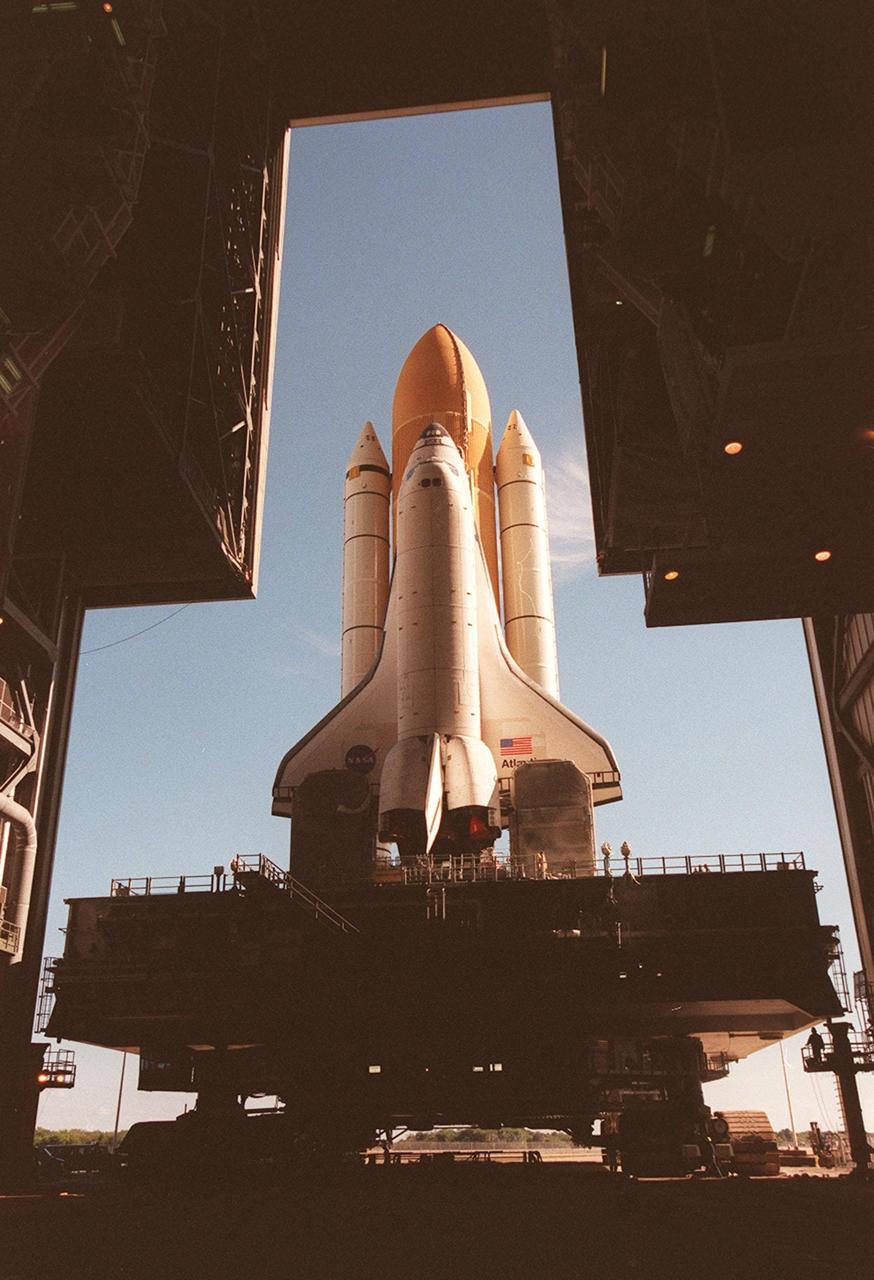
KENNEDY SPACE CENTER, Fla. -- Space Shuttle Atlantis inches its way out the doors of the Vehicle Assembly Building as it begins rolling out to Launch Pad 39A for the second time. An attempt to roll out on Jan. 2 incurred a failed computer processor on the crawler transporter and the Shuttle was returned to the Vehicle Assembly Building using a secondary computer processor on the vehicle. Atlantis will fly on mission STS-98, the seventh construction flight to the International Space Station, carrying the U.S. Laboratory, named Destiny. The lab will have five system racks already installed inside the module. After delivery of electronics in the lab, electrically powered attitude control for Control Moment Gyroscopes will be activated. Atlantis is scheduled for launch no earlier than Jan. 19, 2001, with a crew of five
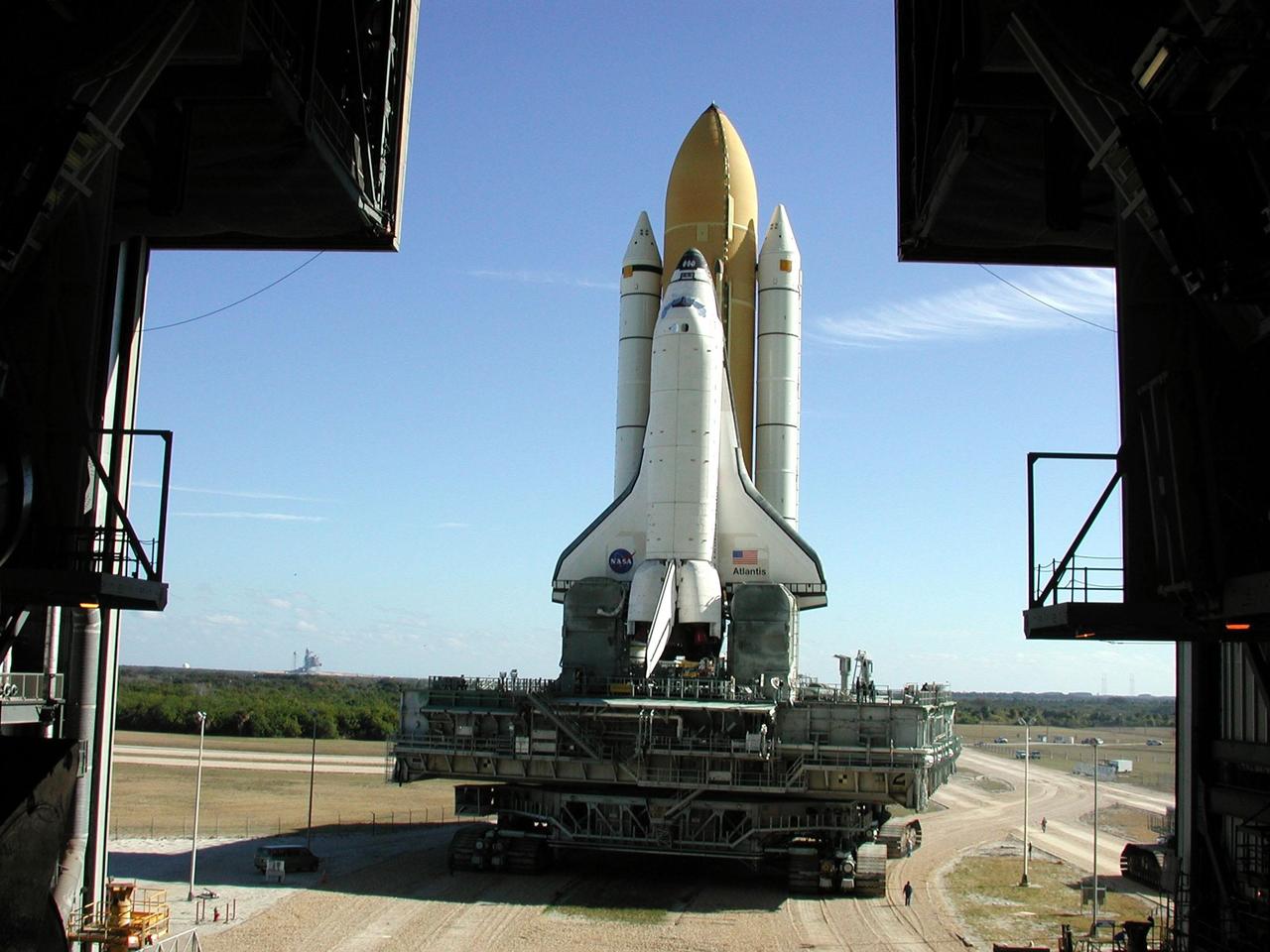
KENNEDY SPACE CENTER, Fla. -- Space Shuttle Atlantis, on its Mobile Launcher Platform, rolls out to Launch Pad 39A for the second time. An attempt to roll out on Jan. 2 incurred a failed computer processor on the first crawler transporter. The Shuttle was returned to the VAB using a secondary computer processor on the vehicle. Atlantis will fly on mission STS-98, the seventh construction flight to the International Space Station, carrying the U.S. Laboratory, named Destiny. The lab module will have five system racks already installed inside. After delivery of electronics in the lab, electrically powered attitude control for Control Moment Gyroscopes will be activated. Atlantis is scheduled for launch no earlier than Jan. 19, 2001, with a crew of five
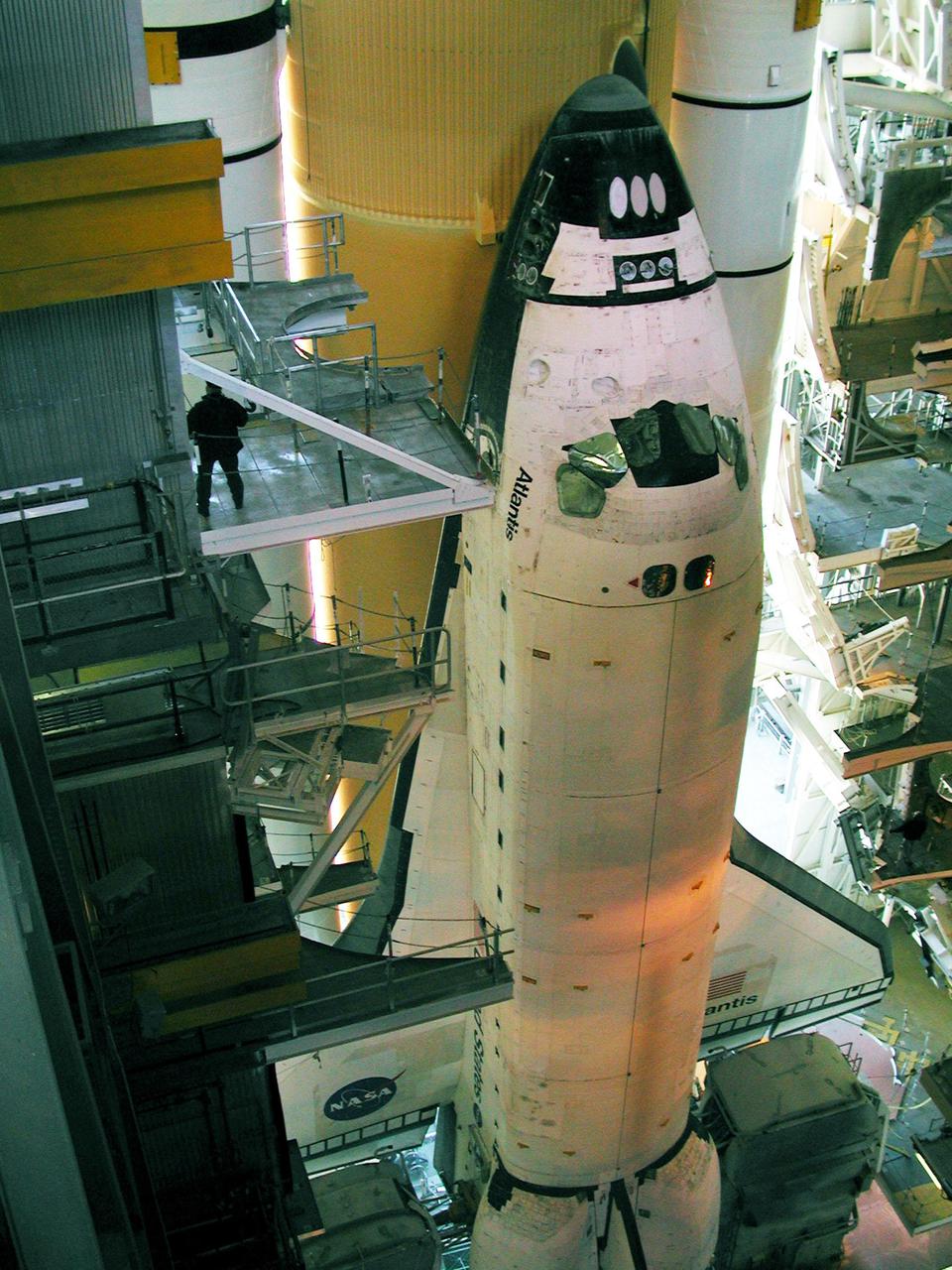
KENNEDY SPACE CENTER, Fla. -- Space Shuttle Atlantis, on its Mobile Launcher Platform, is once again ready to roll out to Launch Pad 39A, this time on another crawler transporter. An attempt to roll out on Jan. 2 incurred a failed computer processor on the first crawler transporter. Using a secondary computer processor on the vehicle, the Shuttle was returned to the Vehicle Assembly Building. Atlantis will fly on mission STS-98, the seventh construction flight to the International Space Station, carrying the U.S. Laboratory, named Destiny. The lab module will have five system racks already installed inside. After delivery of electronics in the lab, electrically powered attitude control for Control Moment Gyroscopes will be activated. Atlantis is scheduled for launch no earlier than Jan. 19, 2001, with a crew of five
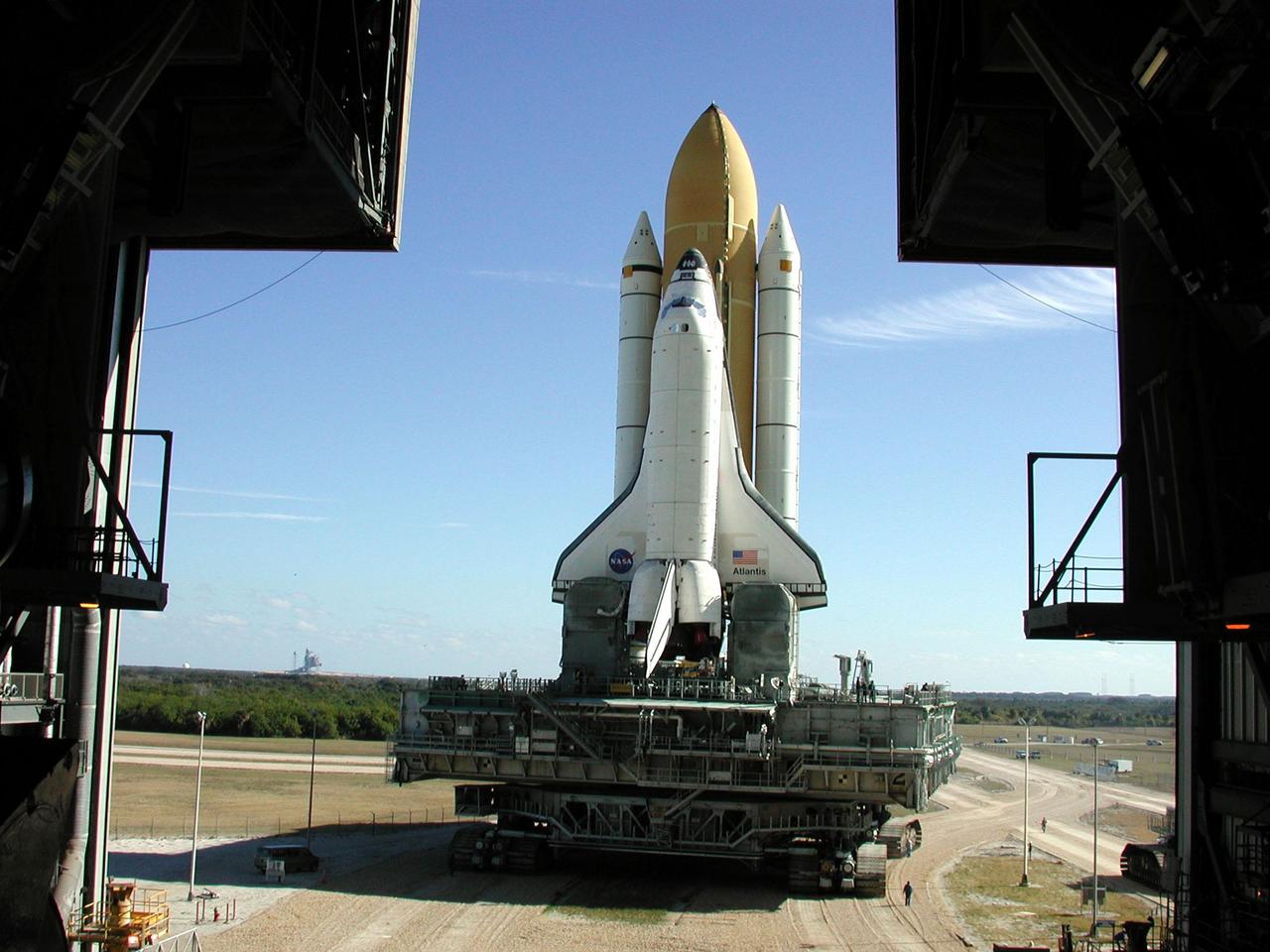
KENNEDY SPACE CENTER, Fla. -- Space Shuttle Atlantis, on its Mobile Launcher Platform, rolls out to Launch Pad 39A for the second time. An attempt to roll out on Jan. 2 incurred a failed computer processor on the first crawler transporter. The Shuttle was returned to the VAB using a secondary computer processor on the vehicle. Atlantis will fly on mission STS-98, the seventh construction flight to the International Space Station, carrying the U.S. Laboratory, named Destiny. The lab module will have five system racks already installed inside. After delivery of electronics in the lab, electrically powered attitude control for Control Moment Gyroscopes will be activated. Atlantis is scheduled for launch no earlier than Jan. 19, 2001, with a crew of five
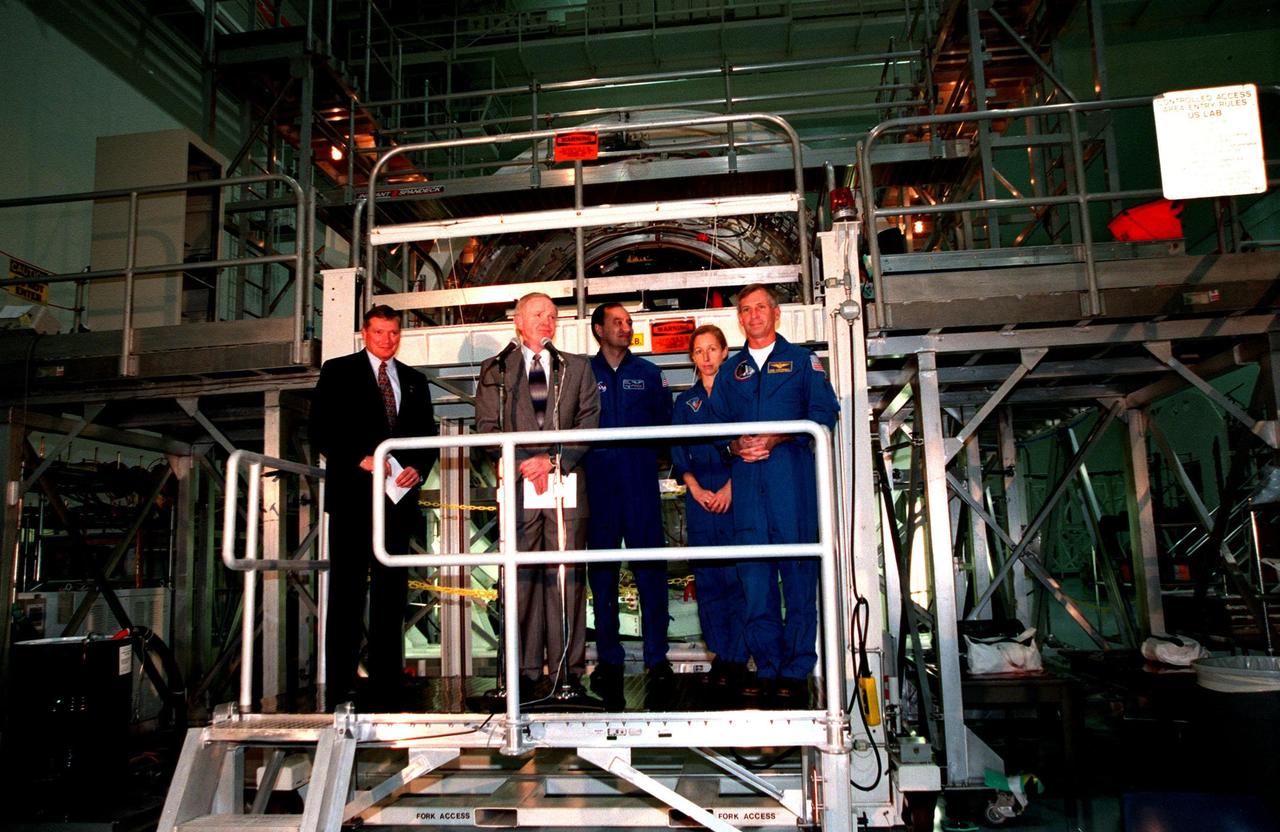
KENNEDY SPACE CENTER, FLA. -- In the Space Station Processing Facility, Center Director Roy Bridges (left), Program Manager of the International Space Station (ISS) Randy Brinkley (second from left) and (right) STS-98 Commander Ken Cockrell applaud the unveiling of the name Destiny given the U.S. Lab module. The lab, which is behind them on a workstand, is scheduled to be launched on Space Shuttle Endeavour in early 2000. It will become the centerpiece of scientific research on the ISS. Cockrell is part of the five-member crew expected to be aboard. The Shuttle will spend six days docked to the station while the laboratory is attached and three space walks are conducted to complete its assembly. The laboratory will be launched with five equipment racks aboard, which will provide essential functions for station systems, including high data-rate communications, and maintain the station's orientation using control gyroscopes launched earlier. Additional equipment and research racks will be installed in the laboratory on subsequent Shuttle flights
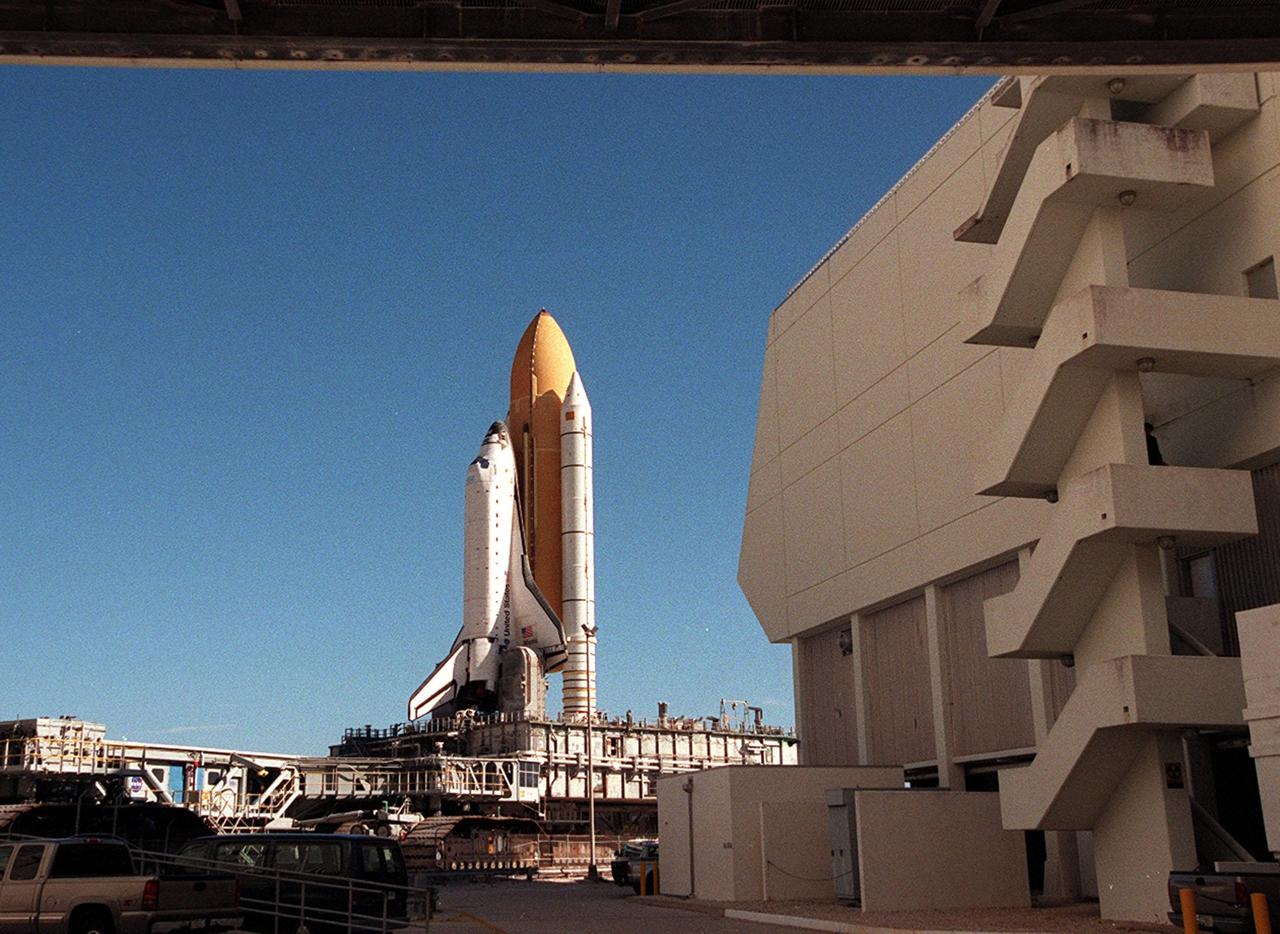
KENNEDY SPACE CENTER, Fla. -- As Space Shuttle Atlantis inches its way to Launch Pad 39A for the second time, it passes the Launch Control Center (right). An attempt to roll out on Jan. 2 incurred a failed computer processor on the crawler transporter and the Shuttle was returned to the Vehicle Assembly Building using a secondary computer processor on the vehicle. Atlantis will fly on mission STS-98, the seventh construction flight to the International Space Station, carrying the U.S. Laboratory, named Destiny. The lab will have five system racks already installed inside the module. After delivery of electronics in the lab, electrically powered attitude control for Control Moment Gyroscopes will be activated. Atlantis is scheduled for launch no earlier than Jan. 19, 2001, with a crew of five
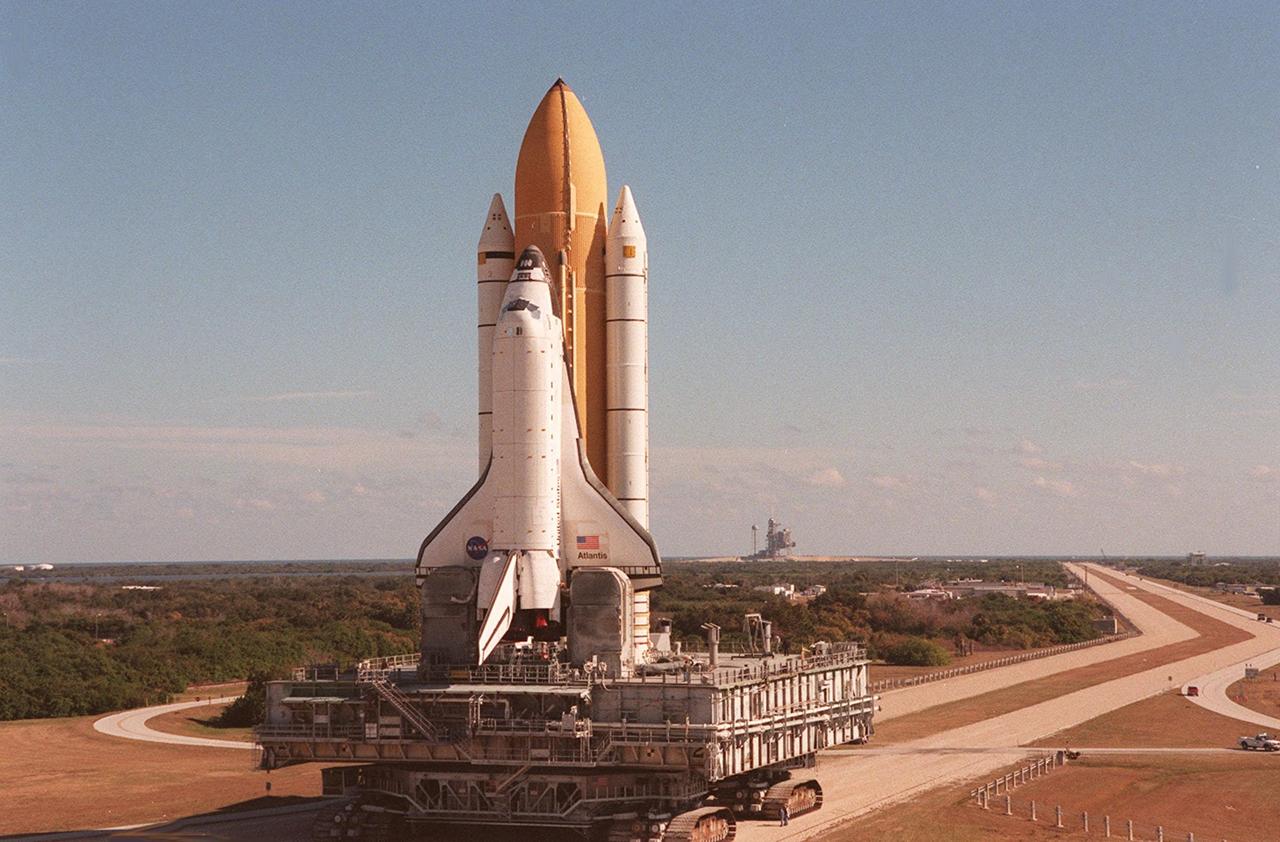
KENNEDY SPACE CENTER, Fla. -- Space Shuttle Atlantis inches its way to Launch Pad 39A for the second time. In the background is the launch pad; the crawlerway leading to it (on the right) extends toward the horizon. An attempt to roll out on Jan. 2 incurred a failed computer processor on the crawler transporter and the Shuttle was returned to the Vehicle Assembly Building using a secondary computer processor on the vehicle. Atlantis will fly on mission STS-98, the seventh construction flight to the International Space Station, carrying the U.S. Laboratory, named Destiny. The lab will have five system racks already installed inside the module. After delivery of electronics in the lab, electrically powered attitude control for Control Moment Gyroscopes will be activated. Atlantis is scheduled for launch no earlier than Jan. 19, 2001, with a crew of five

KENNEDY SPACE CENTER, Fla. -- Space Shuttle Atlantis inches its way to Launch Pad 39A for the second time. In the background is the launch pad; the crawlerway leading to it (on the right) extends toward the horizon. An attempt to roll out on Jan. 2 incurred a failed computer processor on the crawler transporter and the Shuttle was returned to the Vehicle Assembly Building using a secondary computer processor on the vehicle. Atlantis will fly on mission STS-98, the seventh construction flight to the International Space Station, carrying the U.S. Laboratory, named Destiny. The lab will have five system racks already installed inside the module. After delivery of electronics in the lab, electrically powered attitude control for Control Moment Gyroscopes will be activated. Atlantis is scheduled for launch no earlier than Jan. 19, 2001, with a crew of five
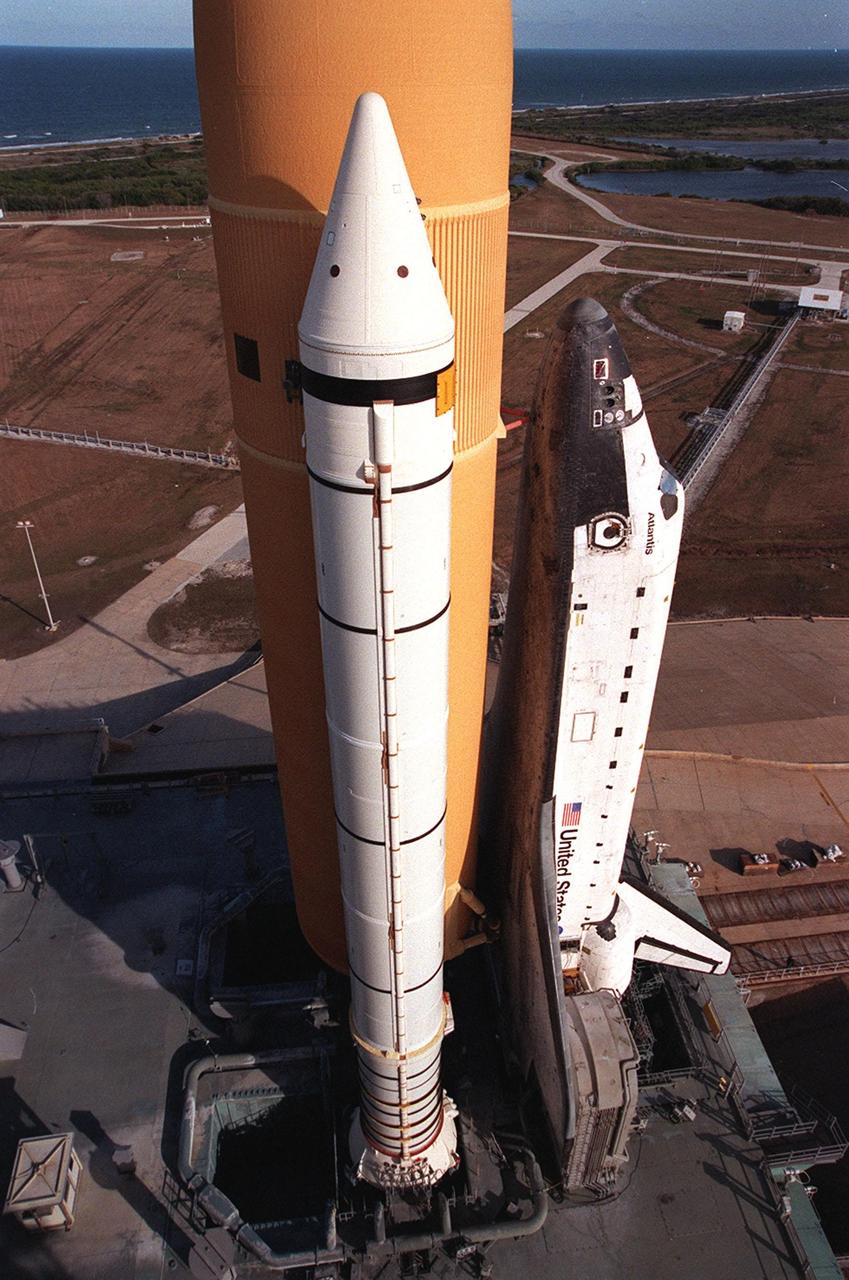
KENNEDY SPACE CENTER, Fla. -- Resting atop the Mobile Launcher Platform, Space Shuttle Atlantis is viewed from a high level on the Fixed Service Structure. Seen is one of its solid rocket boosters and the external tank. Next to the wing of the orbiter is one of two tail service masts, which support the fluid, gas and electrical requirements of the orbiter’s liquid oxygen and liquid hydrogen aft T-0 umbilicals. On the horizon is the Atlantic Ocean. Atlantis will fly on mission STS-98, the seventh construction flight to the International Space Station, carrying the U.S. Laboratory, named Destiny. The lab has five system racks already installed inside the module. After delivery of electronics in the lab, electrically powered attitude control for Control Moment Gyroscopes will be activated. Atlantis is scheduled for launch no earlier than Jan. 19, 2001, with a crew of five
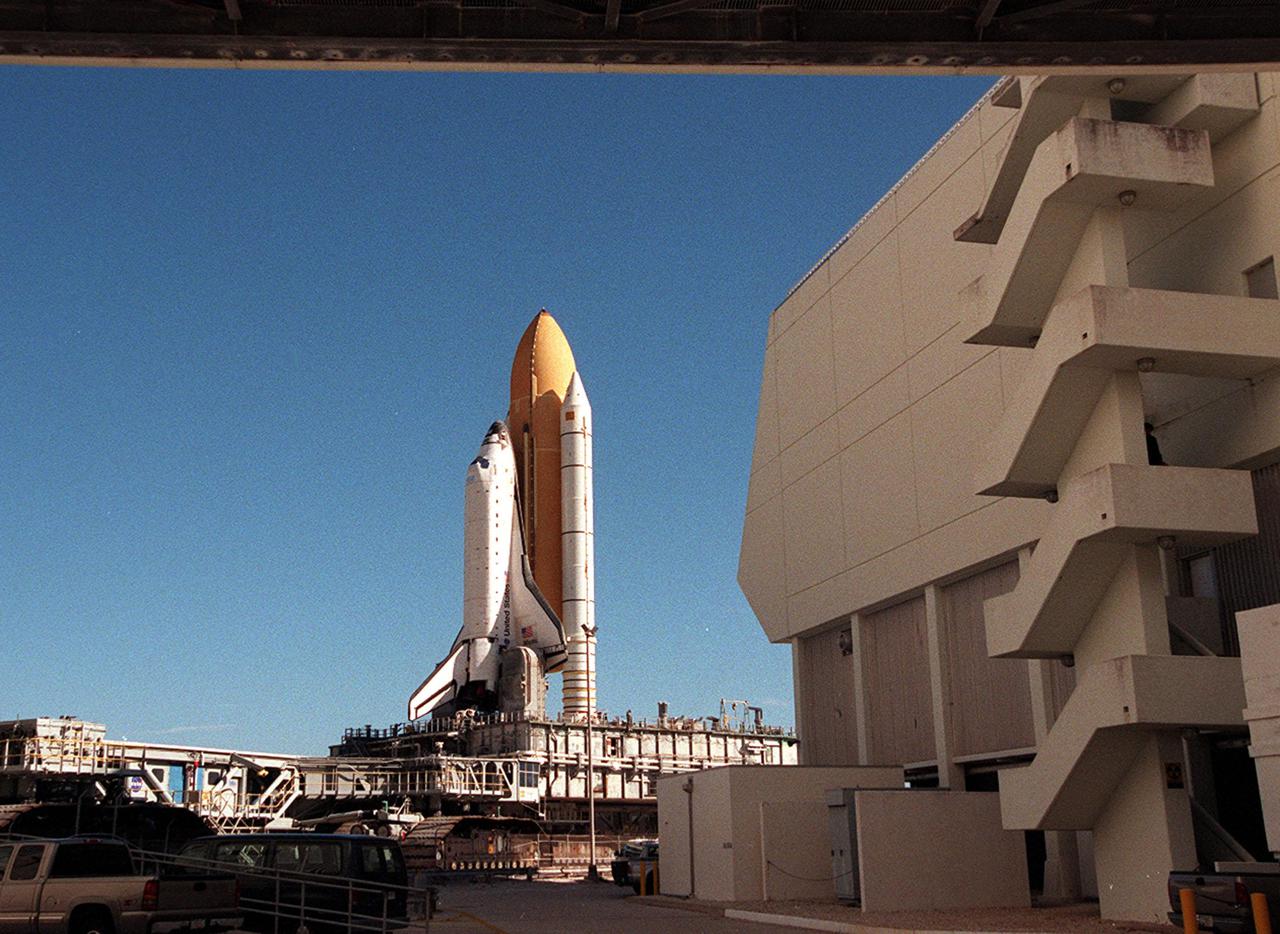
KENNEDY SPACE CENTER, Fla. -- As Space Shuttle Atlantis inches its way to Launch Pad 39A for the second time, it passes the Launch Control Center (right). An attempt to roll out on Jan. 2 incurred a failed computer processor on the crawler transporter and the Shuttle was returned to the Vehicle Assembly Building using a secondary computer processor on the vehicle. Atlantis will fly on mission STS-98, the seventh construction flight to the International Space Station, carrying the U.S. Laboratory, named Destiny. The lab will have five system racks already installed inside the module. After delivery of electronics in the lab, electrically powered attitude control for Control Moment Gyroscopes will be activated. Atlantis is scheduled for launch no earlier than Jan. 19, 2001, with a crew of five
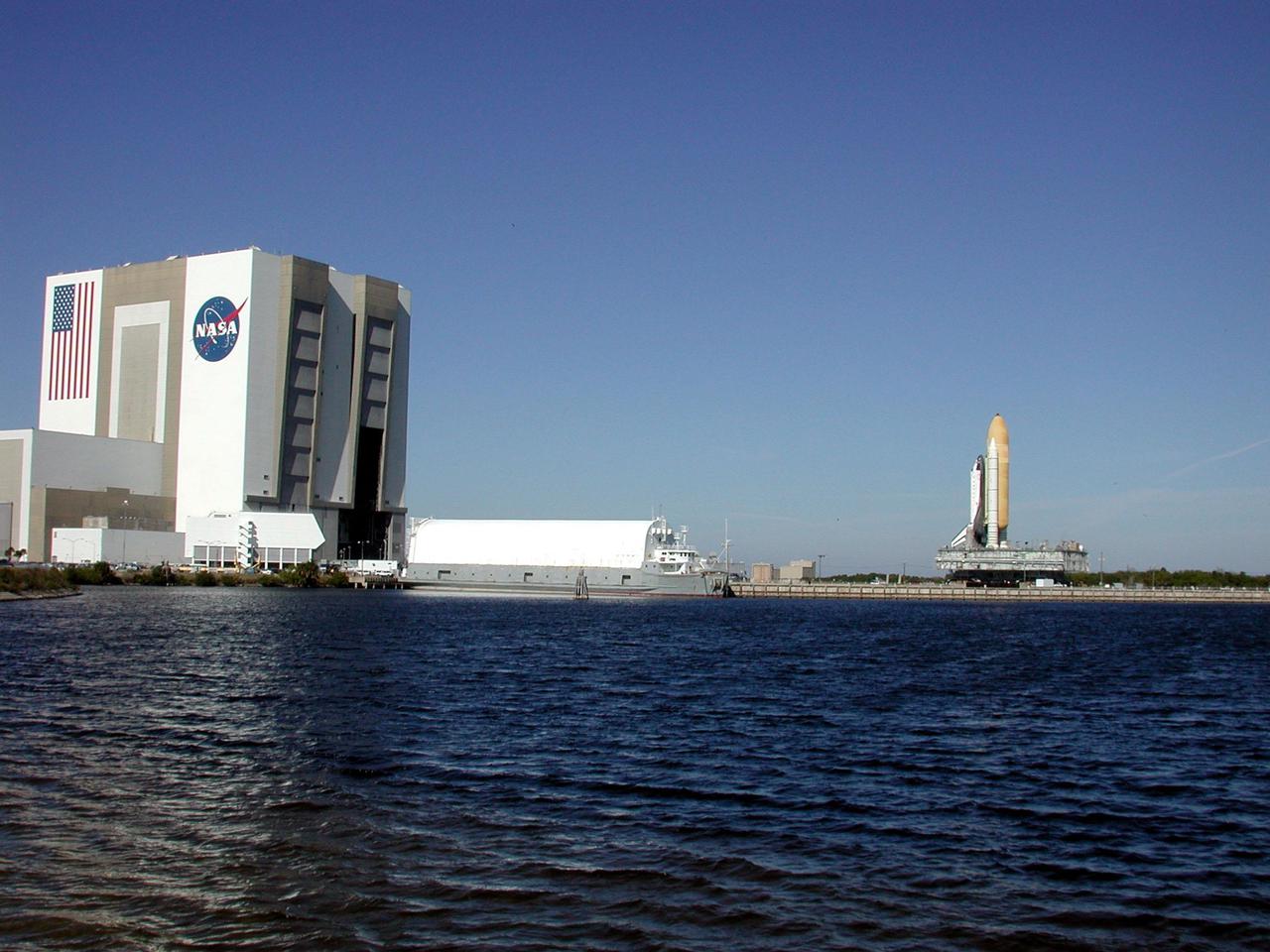
KENNEDY SPACE CENTER, Fla. -- Space Shuttle Atlantis, on its Mobile Launcher Platform, is seen from across the turn basin as it rolls out to Launch Pad 39A for the second time. An attempt to roll out on Jan. 2 incurred a failed computer processor on the first crawler transporter. The Shuttle was returned to the VAB using a secondary computer processor on the vehicle. Atlantis will fly on mission STS-98, the seventh construction flight to the International Space Station, carrying the U.S. Laboratory, named Destiny. The lab module will have five system racks already installed inside. After delivery of electronics in the lab, electrically powered attitude control for Control Moment Gyroscopes will be activated. Atlantis is scheduled for launch no earlier than Jan. 19, 2001, with a crew of five
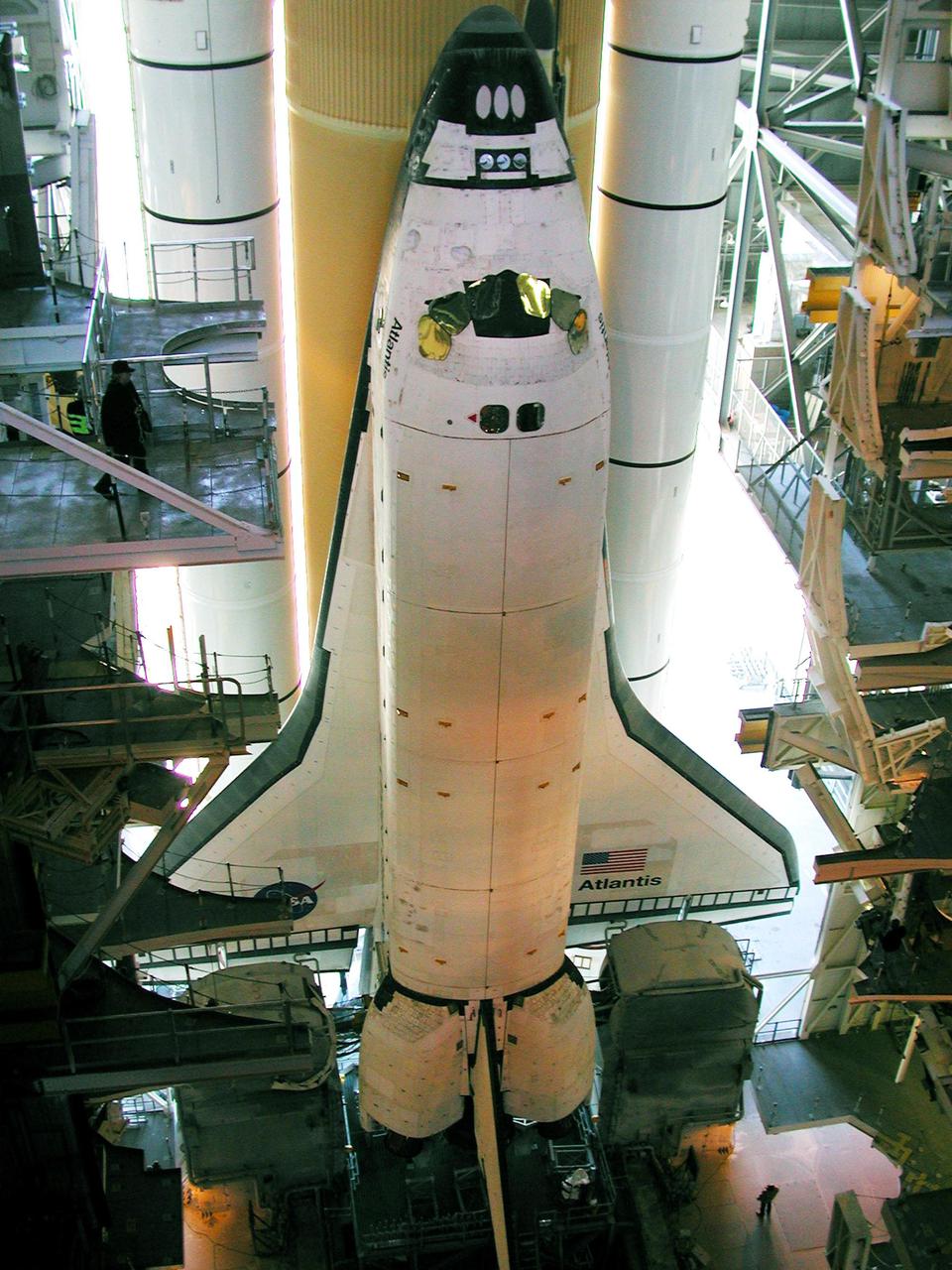
KENNEDY SPACE CENTER, Fla. -- Space Shuttle Atlantis, on its Mobile Launcher Platform, begins to roll out to Launch Pad 39A, this time on another crawler transporter. An attempt to roll out on Jan. 2 incurred a failed computer processor on the first crawler transporter. The Shuttle was returned to the Vehicle Assembly Building Using a secondary computer processor on the vehicle. Atlantis will fly on mission STS-98, the seventh construction flight to the International Space Station, carrying the U.S. Laboratory, named Destiny. The lab module will have five system racks already installed inside. After delivery of electronics in the lab, electrically powered attitude control for Control Moment Gyroscopes will be activated. Atlantis is scheduled for launch no earlier than Jan. 19, 2001, with a crew of five
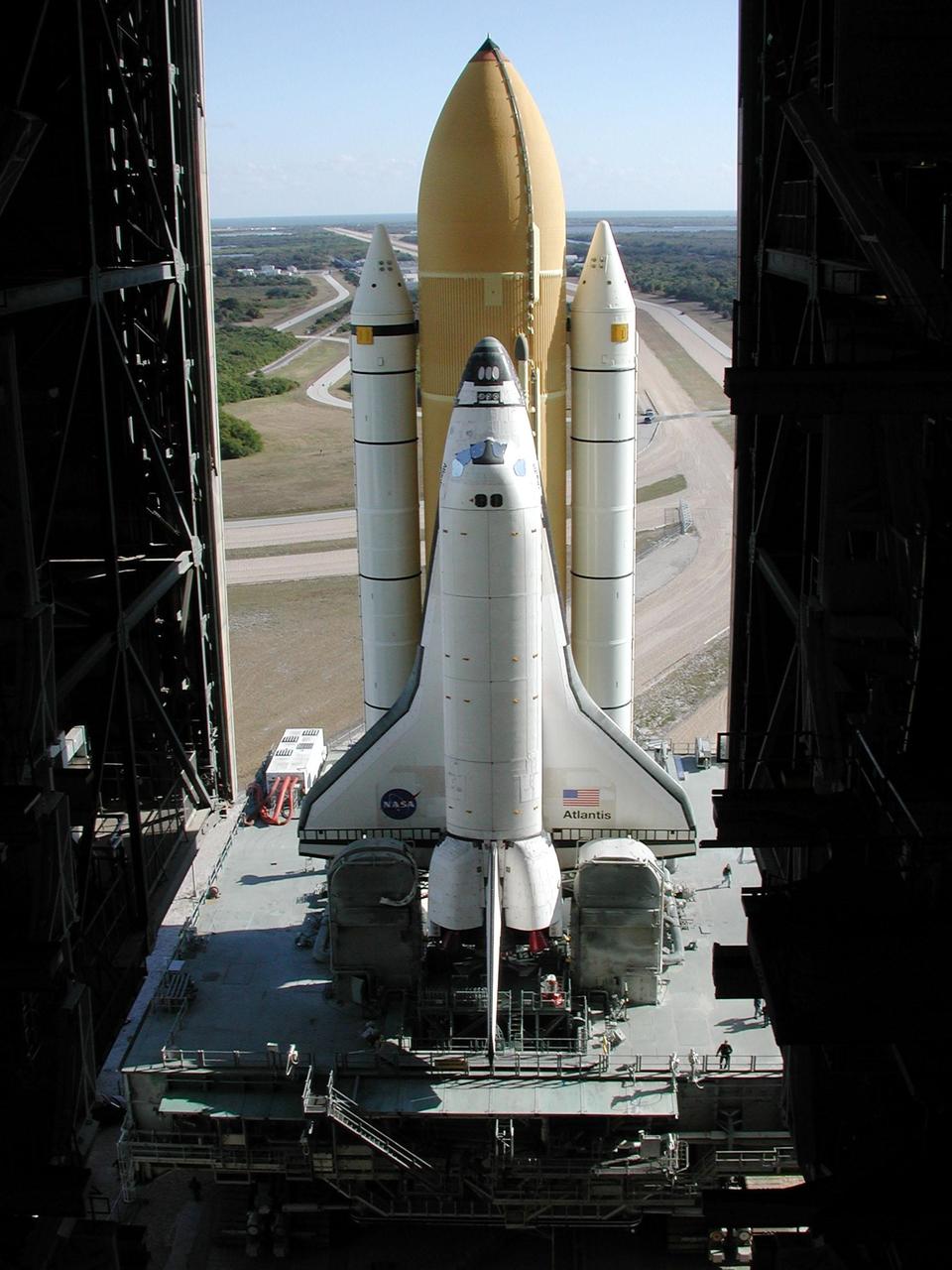
KENNEDY SPACE CENTER, Fla. -- Space Shuttle Atlantis, on its Mobile Launcher Platform, begins rolling through the open doors of the Vehicle Assembly Building to Launch Pad 39A, this time on another crawler transporter. An attempt to roll out on Jan. 2 incurred a failed computer processor on the first crawler transporter. The Shuttle was returned to the VAB using a secondary computer processor on the vehicle. Atlantis will fly on mission STS-98, the seventh construction flight to the International Space Station, carrying the U.S. Laboratory, named Destiny. The lab module will have five system racks already installed inside. After delivery of electronics in the lab, electrically powered attitude control for Control Moment Gyroscopes will be activated. Atlantis is scheduled for launch no earlier than Jan. 19, 2001, with a crew of five
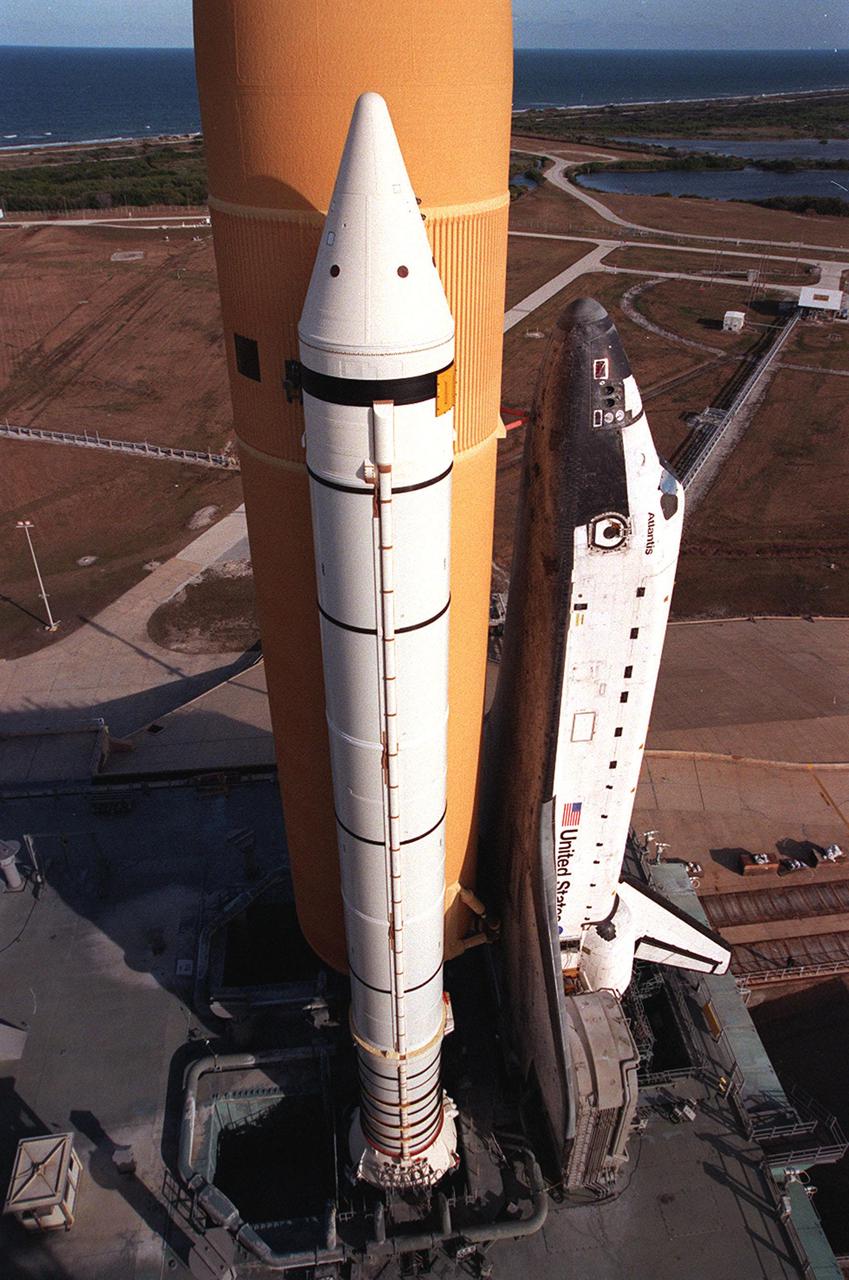
KENNEDY SPACE CENTER, Fla. -- Resting atop the Mobile Launcher Platform, Space Shuttle Atlantis is viewed from a high level on the Fixed Service Structure. Seen is one of its solid rocket boosters and the external tank. Next to the wing of the orbiter is one of two tail service masts, which support the fluid, gas and electrical requirements of the orbiter’s liquid oxygen and liquid hydrogen aft T-0 umbilicals. On the horizon is the Atlantic Ocean. Atlantis will fly on mission STS-98, the seventh construction flight to the International Space Station, carrying the U.S. Laboratory, named Destiny. The lab has five system racks already installed inside the module. After delivery of electronics in the lab, electrically powered attitude control for Control Moment Gyroscopes will be activated. Atlantis is scheduled for launch no earlier than Jan. 19, 2001, with a crew of five
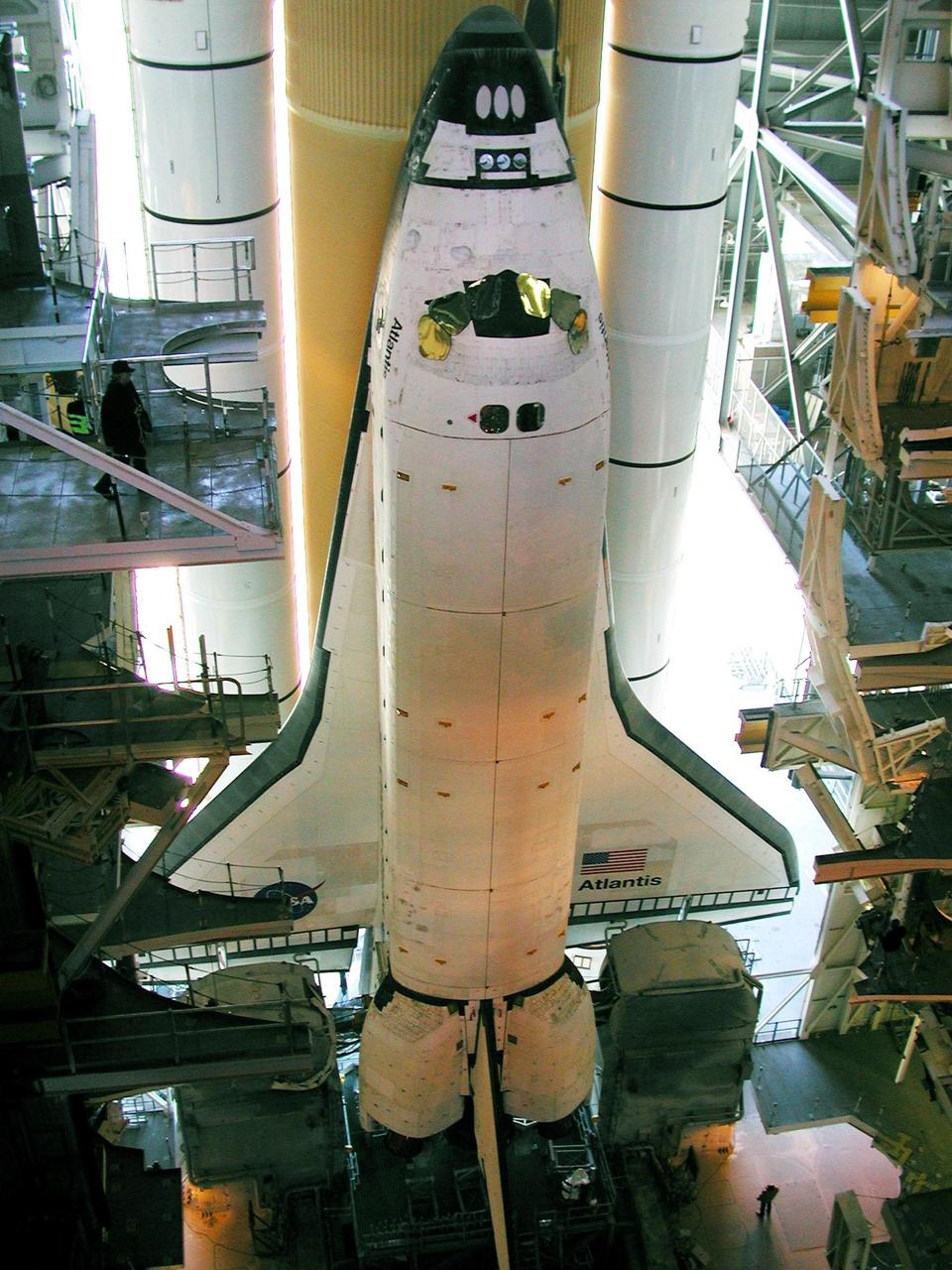
KENNEDY SPACE CENTER, Fla. -- Space Shuttle Atlantis, on its Mobile Launcher Platform, begins to roll out to Launch Pad 39A, this time on another crawler transporter. An attempt to roll out on Jan. 2 incurred a failed computer processor on the first crawler transporter. The Shuttle was returned to the Vehicle Assembly Building Using a secondary computer processor on the vehicle. Atlantis will fly on mission STS-98, the seventh construction flight to the International Space Station, carrying the U.S. Laboratory, named Destiny. The lab module will have five system racks already installed inside. After delivery of electronics in the lab, electrically powered attitude control for Control Moment Gyroscopes will be activated. Atlantis is scheduled for launch no earlier than Jan. 19, 2001, with a crew of five
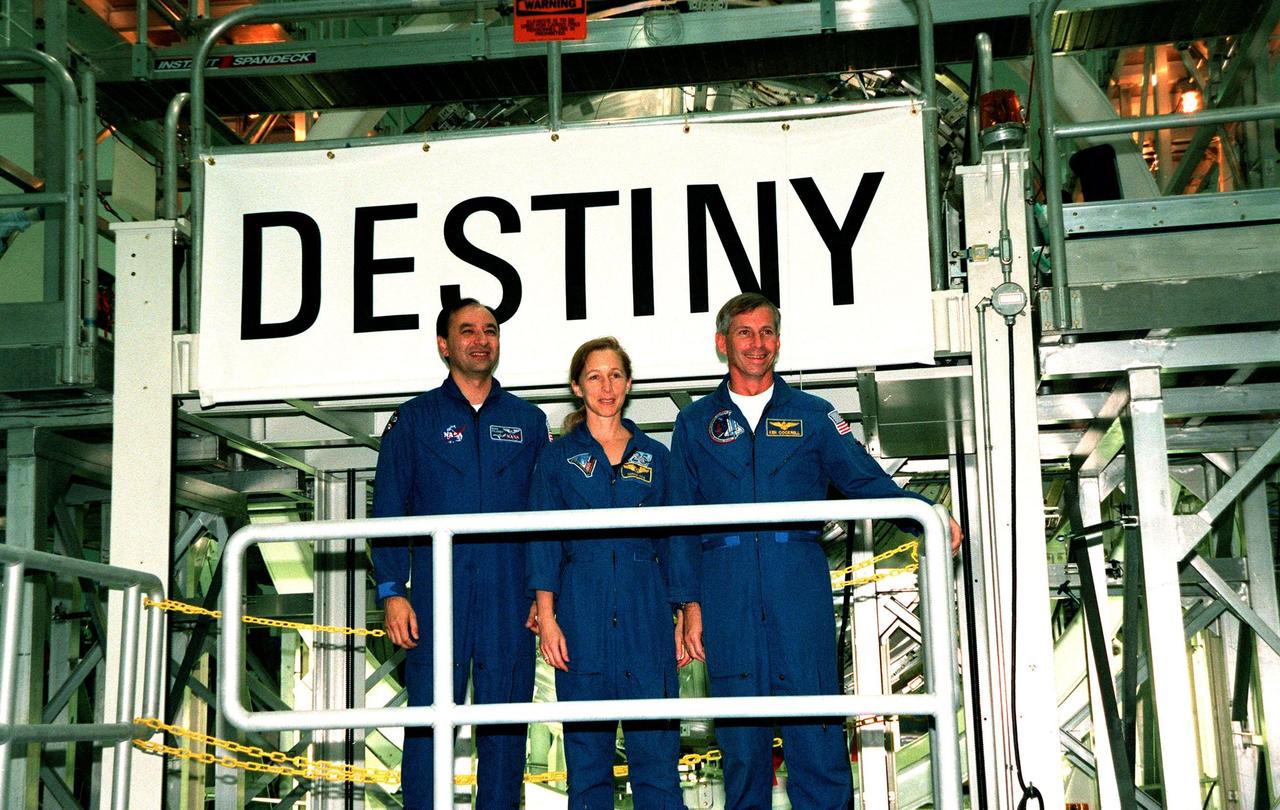
KENNEDY SPACE CENTER, FLA. -- In the Space Station Processing Facility, STS-98 crew members Pilot Mark Polansky, Mission Specialist Marsha Ivins and Commander Ken Cockrell pose underneath the banner revealing the name Destiny given to the U.S. Lab module. They are part of the five-member crew scheduled to carry the lab into space aboard Space Shuttle Endeavour early in the year 2000 where it will become the centerpiece of scientific research on the International Space Station. The Shuttle will spend six days docked to the station while the laboratory is attached and three space walks are conducted to complete its assembly. The laboratory will be launched with five equipment racks aboard, which will provide essential functions for station systems, including high data-rate communications, and maintain the station's orientation using control gyroscopes launched earlier. Additional equipment and research racks will be installed in the laboratory on subsequent Shuttle flights
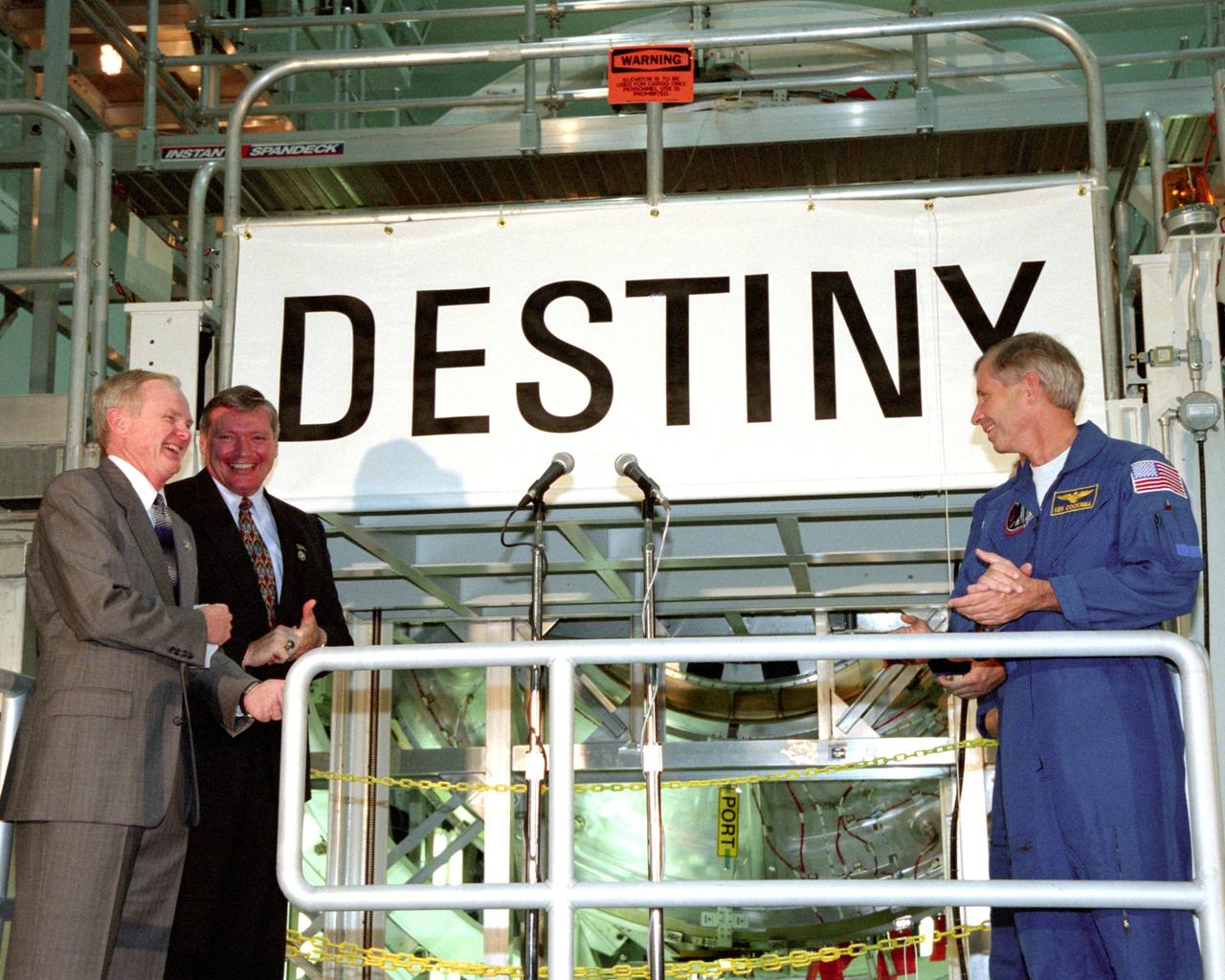
KENNEDY SPACE CENTER, FLA. - In the Space Station Processing Facility, Center Director Roy Bridges (left), Program Manager of the International Space Station (ISS) Randy Brinkley (second from left) and STS-98 Commander Ken Cockrell (right) applaud the unveiling of the name "Destiny" for the U.S. Laboratory module. The lab, which is behnd them on a workstand, is scheduled to be launched on STS-98 on Space Shuttle Endeavour in early 2000. It will become the centerpiece of scientific research on the ISS. The Shuttle will spend six days docked to the Station while the laboratory is attached and three spacewalks are conducted to compete its assembly. The laboratory will be launched with five equipment racks aboard, which will provide essential functions for Station systems, including high data-rate communications, and maintain the Station's orientation using control gyroscopes launched earlier. Additional equipment and research racks will be installed in the laboratory on subsequent Shuttle flights.
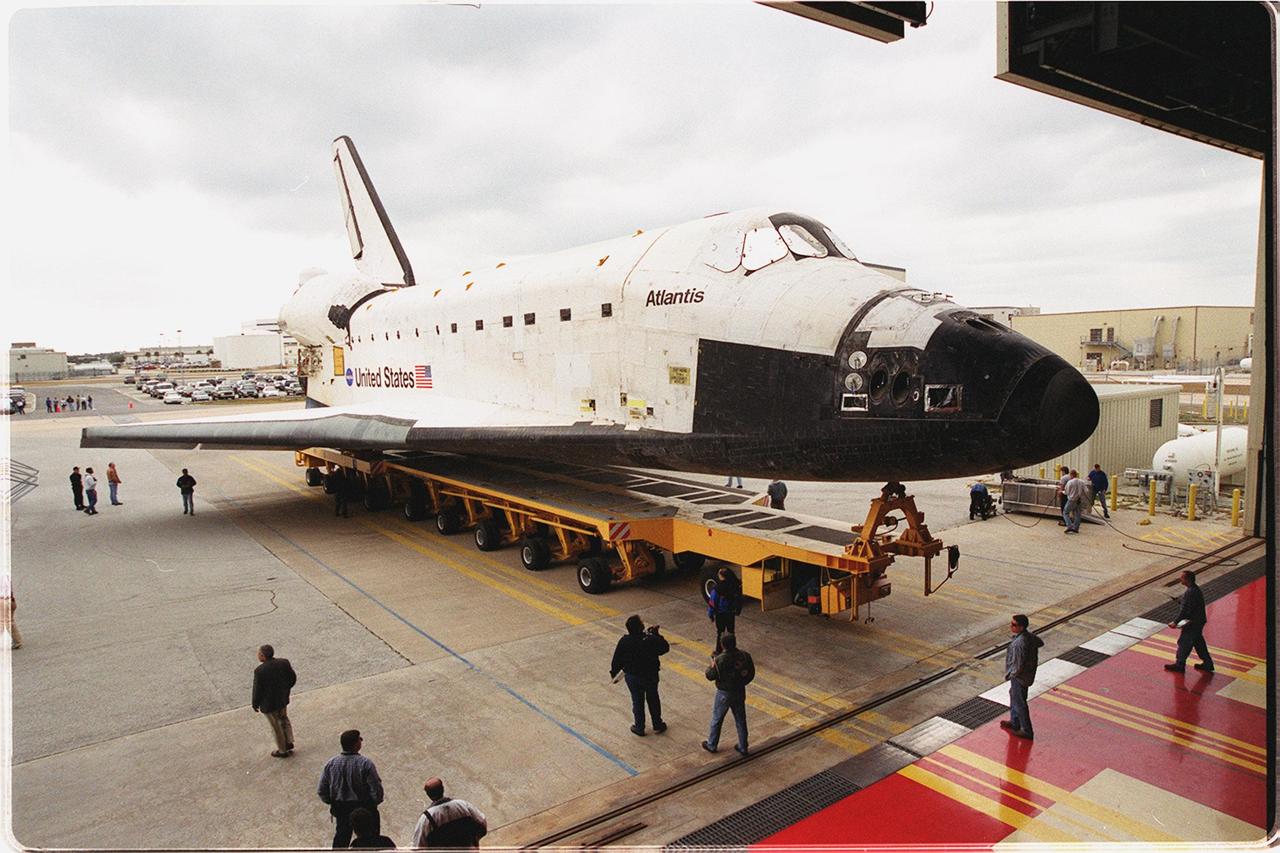
The orbiter Atlantis rolls out of the Orbiter Processing Facility bay 3 on its transporter. It is being transferred to the Vehicle Assembly Building where it will be raised to vertical and lifted up and into high bay 3 for stacking with its external tank and solid rocket boosters. Atlantis will fly on mission STS-98, the seventh construction flight to the International Space Station. The orbiter will carry in its payload bay the U.S. Laboratory, named Destiny, that will have five system racks already installed inside of the module. After delivery of electronics in the lab, electrically powered attitude control for Control Moment Gyroscopes will be activated. Atlantis is scheduled for launch on Jan. 18, 2001, at 2:44 a.m. EST, with a crew of five