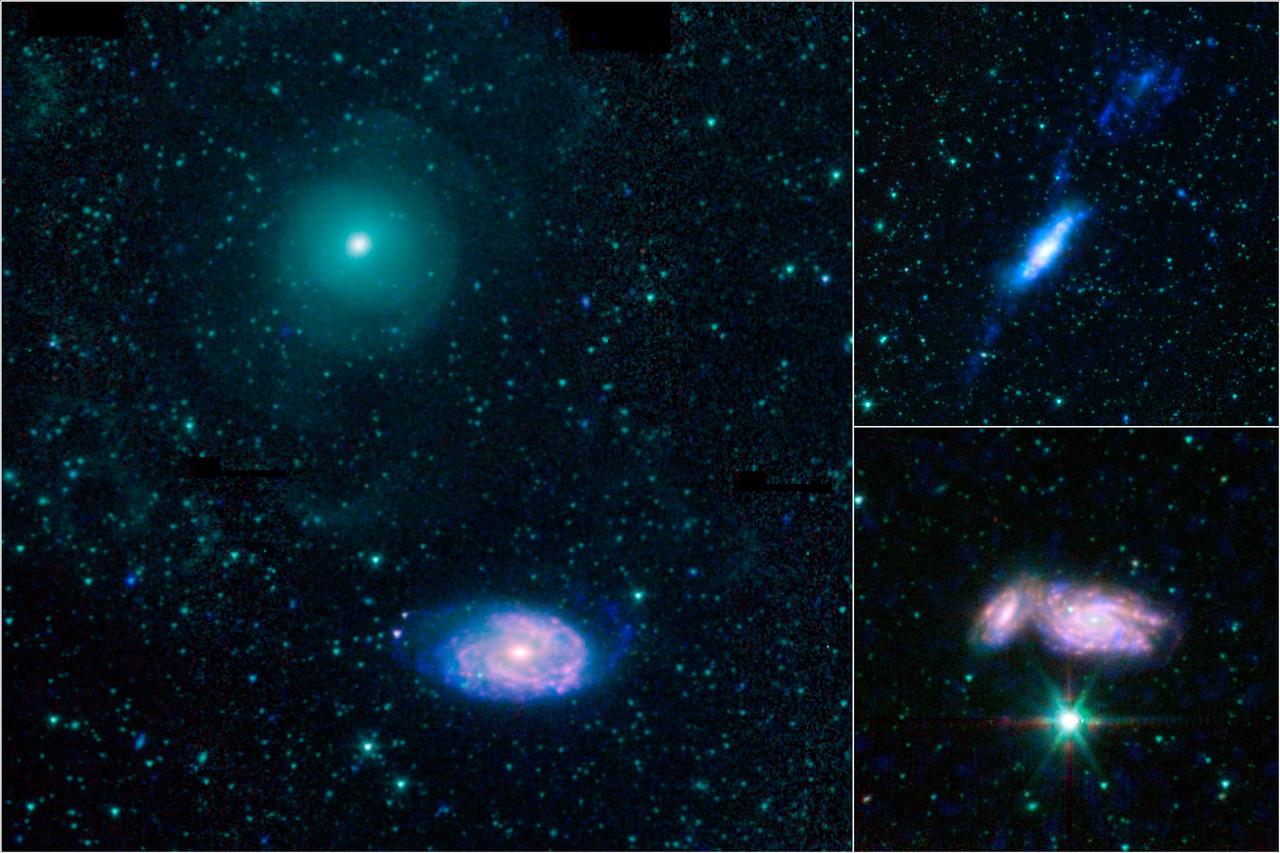
This montage combines observations from NASA Spitzer Space Telescope and NASA Galaxy Evolution Explorer GALEX spacecraft showing three examples of colliding galaxies from a new photo atlas of galactic train wrecks.
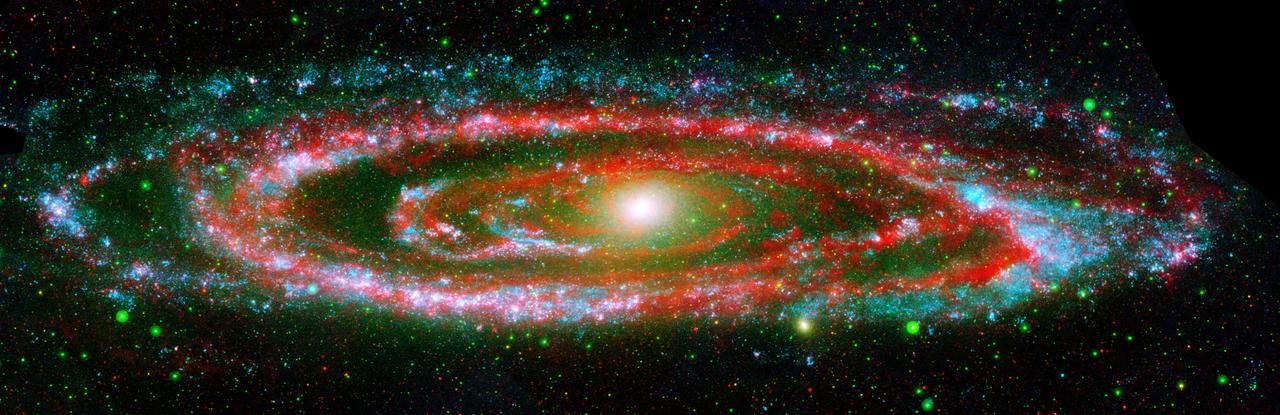
The many personalities of our great galactic neighbor, the Andromeda galaxy, are exposed in this new composite image from NASA Galaxy Evolution Explorer and Spitzer Space Telescope.
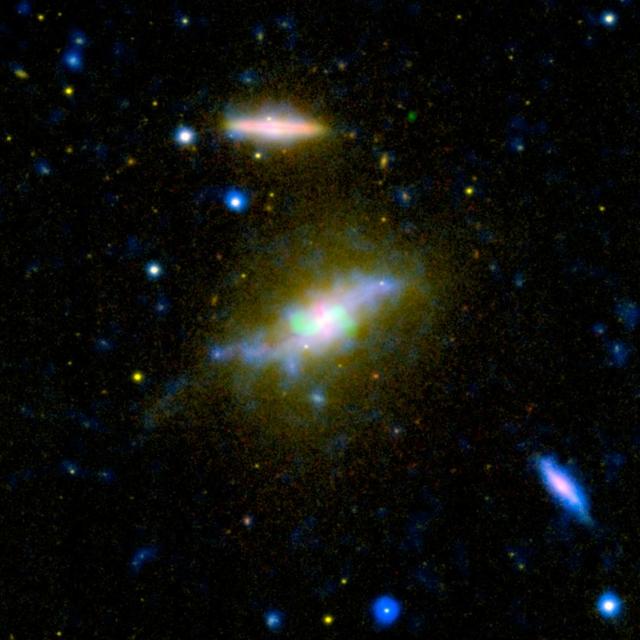
Time is running out for the galaxy NGC 3801, seen in this composite image from NASA Galaxy Evolution Explorer and other instruments combining light from across the spectrum, ranging from ultraviolet to radio.
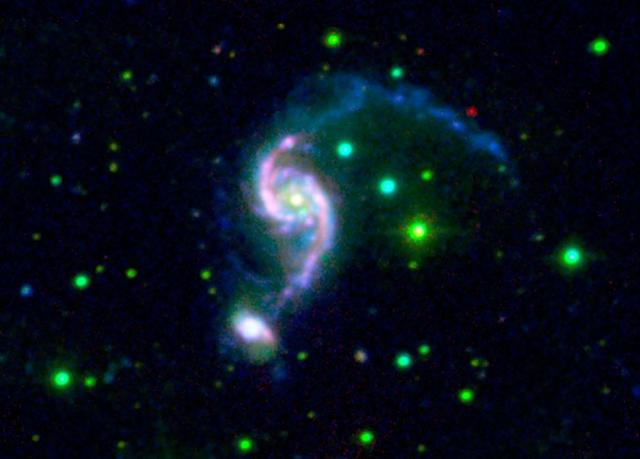
NASA Galaxy Evolution Explorer and Spitzer Space Telescope combined to show a pair of interacting galaxies might be experiencing the galactic equivalent of a mid-life crisis.

This image from NASA Spitzer and GALEX shows the Helix nebula, a dying star throwing a cosmic tantrum. In death, the star dusty outer layers are unraveling into space, glowing from the intense UV radiation being pumped out by the hot stellar core.

This false-color composite image shows the Cartwheel galaxy as seen by NASA Galaxy Evolution Explorer, where the first ripple appears as an ultraviolet-bright blue outer ring.
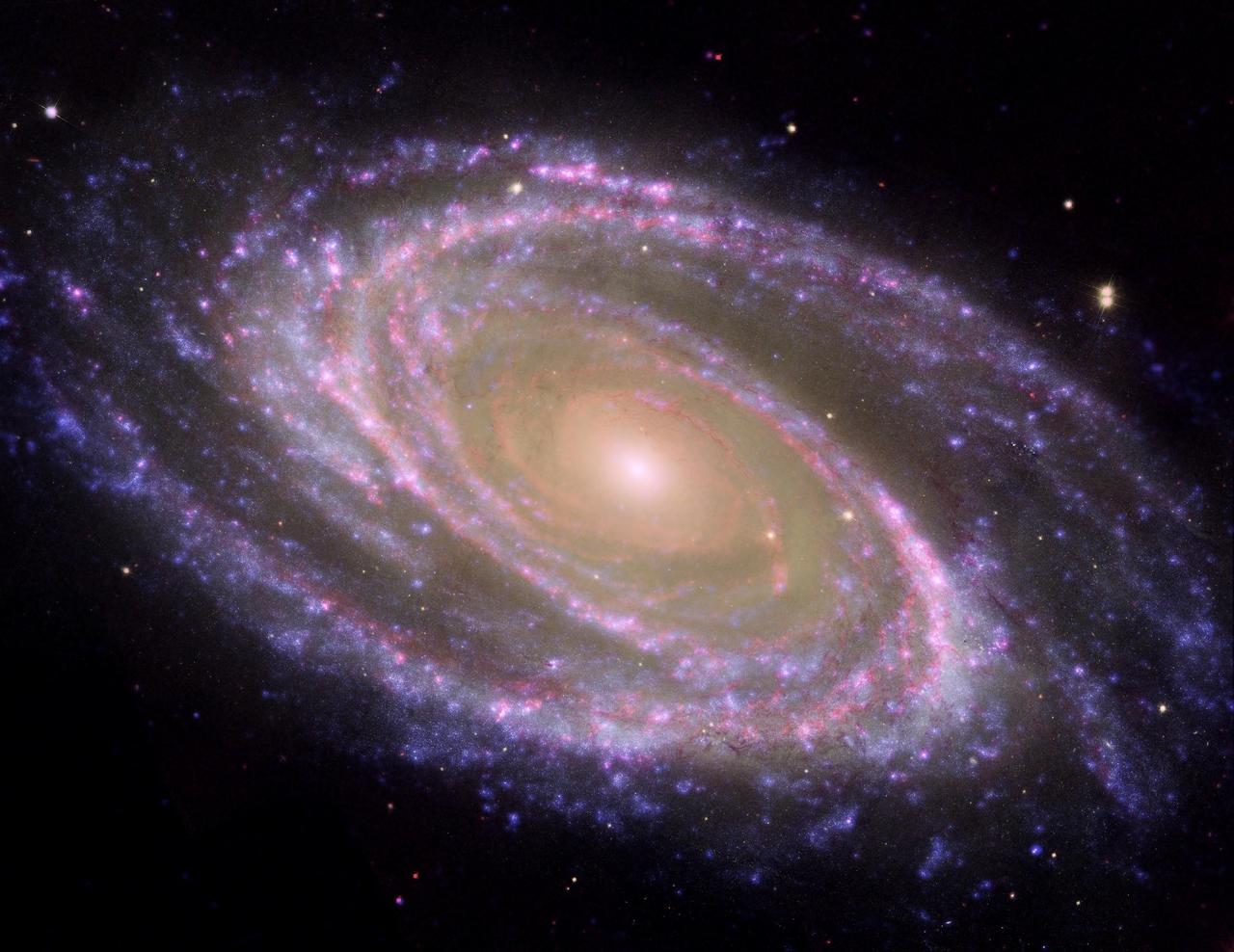
The perfectly picturesque spiral galaxy known as Messier 81, or M81, looks sharp in this new composite from NASA Spitzer and Hubble space telescopes and NASA Galaxy Evolution Explorer.
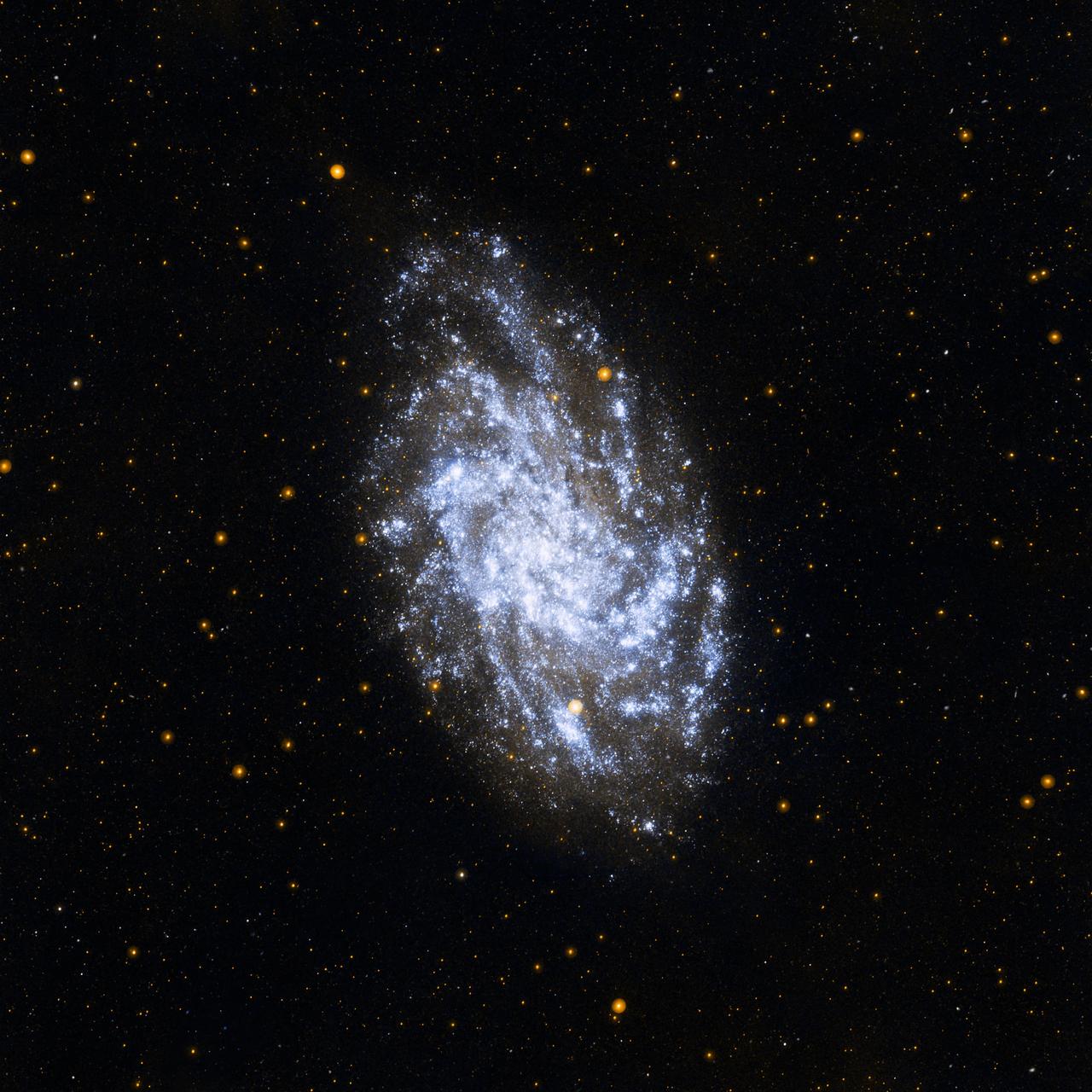
NASA Galaxy Evolution Explorer Mission celebrates its sixth anniversary studying galaxies beyond our Milky Way through its sensitive ultraviolet telescope, the only such far-ultraviolet detector in space. The mission studies the shape, brightness, size and distance of distant galaxies across 10 billion years of cosmic history, giving scientists a wealth of data to help us better understand the origins of the universe. One such object is pictured here, the galaxy NGC598, more commonly known as M33. The image shows a map of the recent star formation history of M33. The bright blue and white areas are where star formation has been extremely active over the past few million years. The patches of yellow and gold are regions where star formation was more active 100 million years ago. In addition, the ultraviolet image shows the most massive young stars in M33. These stars burn their large supply of hydrogen fuel quickly, burning hot and bright while emitting most of their energy at ultraviolet wavelengths. Compared with low-mass stars like our sun, which live for billions of years, these massive stars never reach old age, having a lifespan as short as a few million years. http://photojournal.jpl.nasa.gov/catalog/PIA12000
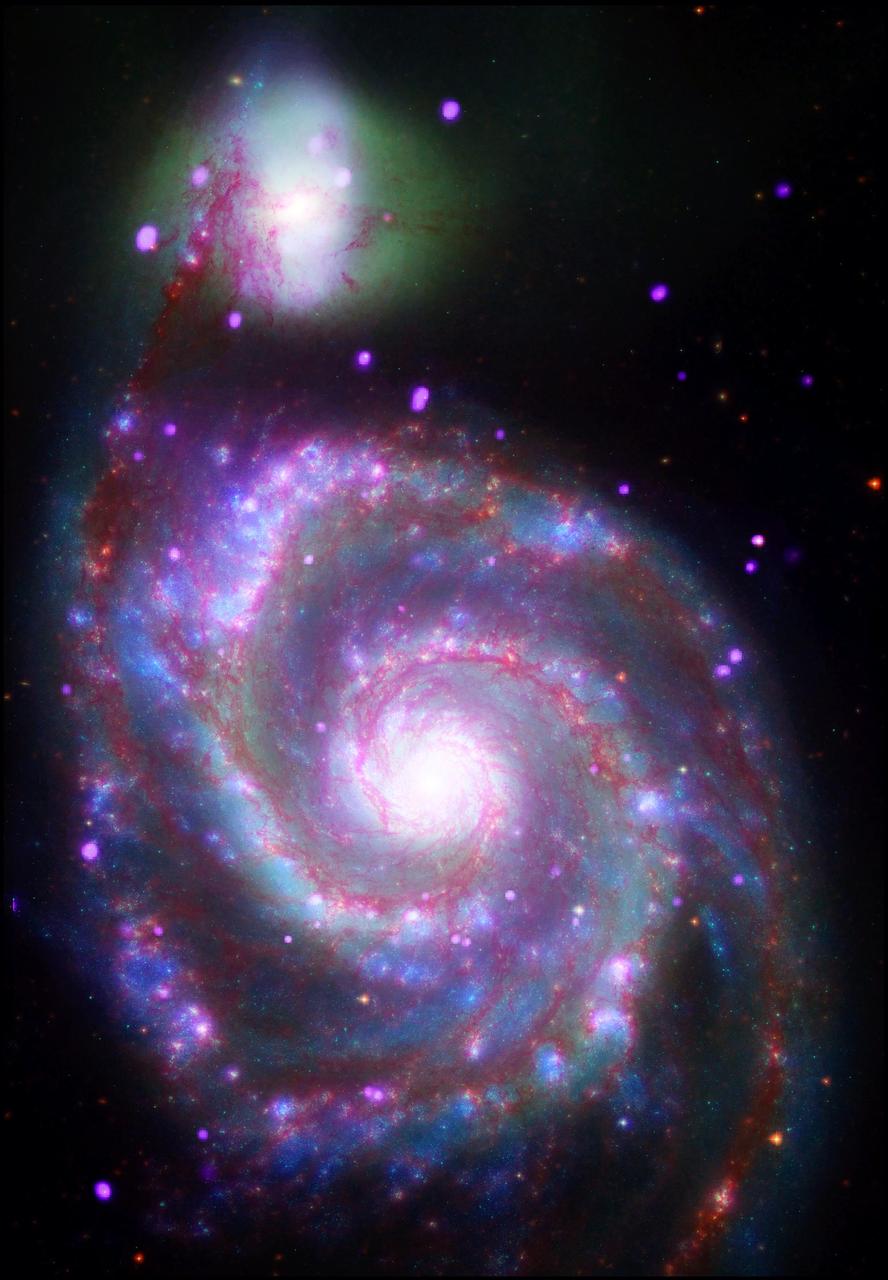
A composite image of M51, also known as the Whirlpool Galaxy, shows the majesty of its structure in a dramatic new way through several of NASA orbiting observatories
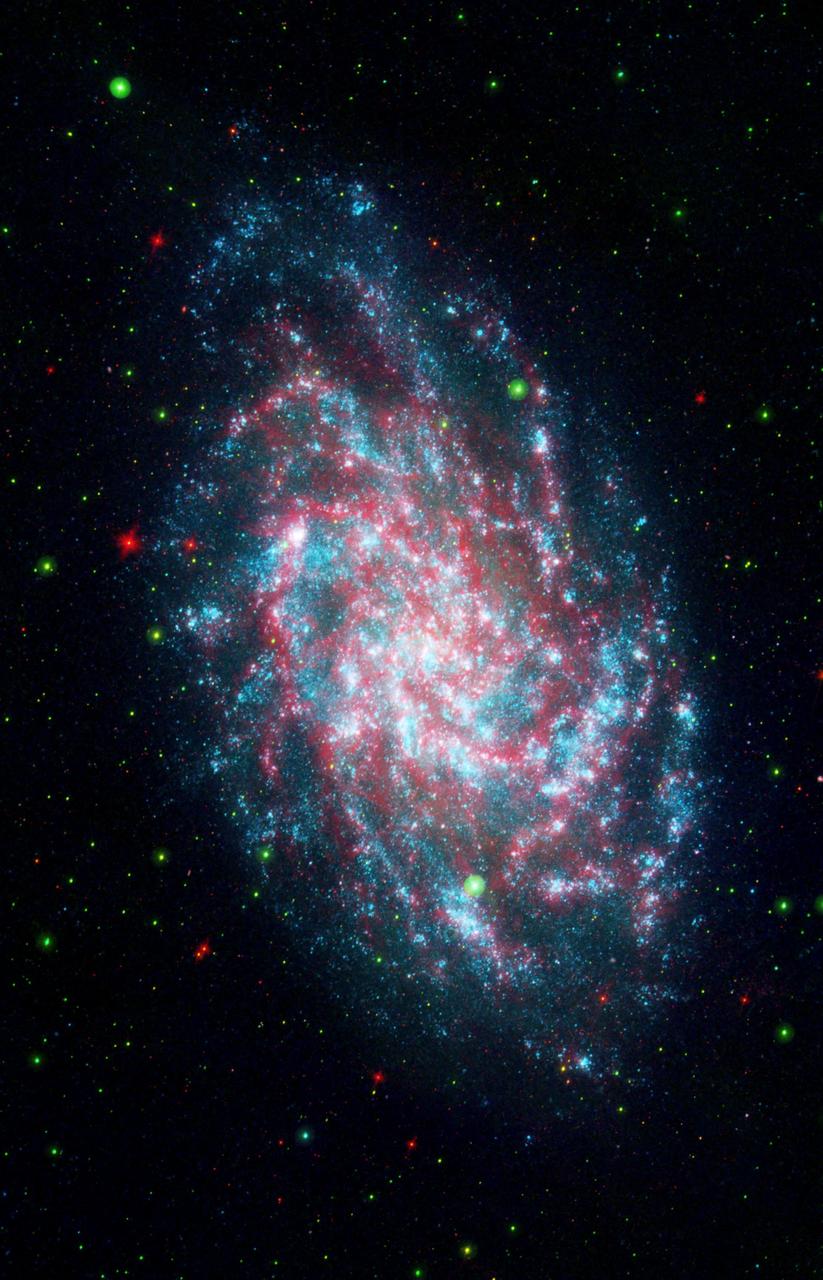
NASA Galaxy Evolution Explorer Mission celebrates its sixth anniversary studying galaxies beyond our Milky Way through its sensitive ultraviolet telescope, the only such far-ultraviolet detector in space. Pictured here, the galaxy NGC598 known as M33. The mission studies the shape, brightness, size and distance of distant galaxies across 10 billion years of cosmic history, giving scientists a wealth of data to help us better understand the origins of the universe. One such object is pictured here, the galaxy NGC598, more commonly known as M33. This image is a blend of the Galaxy Evolution Explorer's M33 image and another taken by NASA's Spitzer Space Telescope. M33, one of our closest galactic neighbors, is about 2.9 million light-years away in the constellation Triangulum, part of what's known as our Local Group of galaxies. Together, the Galaxy Evolution Explorer and Spitzer can see a broad spectrum of sky. Spitzer, for example, can detect mid-infrared radiation from dust that has absorbed young stars' ultraviolet light. That's something the Galaxy Evolution Explorer cannot see. This combined image shows in amazing detail the beautiful and complicated interlacing of the heated dust and young stars. In some regions of M33, dust gathers where there is very little far-ultraviolet light, suggesting that the young stars are obscured or that stars farther away are heating the dust. In some of the outer regions of the galaxy, just the opposite is true: There are plenty of young stars and very little dust. Far-ultraviolet light from young stars glimmers blue, near-ultraviolet light from intermediate age stars glows green, and dust rich in organic molecules burns red. This image is a 3-band composite including far infrared as red. http://photojournal.jpl.nasa.gov/catalog/PIA11998